window.__IS_SSR__=true
window.__INITIAL_STATE__={
"attachmentsReducer": {
"audio_0": {
"type": "attachments",
"id": "audio_0",
"imgSizes": {
"kqedFullSize": {
"file": "https://ww2.kqed.org/news/wp-content/themes/KQED-unified/img/audio_bgs/background0.jpg"
}
}
},
"audio_1": {
"type": "attachments",
"id": "audio_1",
"imgSizes": {
"kqedFullSize": {
"file": "https://ww2.kqed.org/news/wp-content/themes/KQED-unified/img/audio_bgs/background1.jpg"
}
}
},
"audio_2": {
"type": "attachments",
"id": "audio_2",
"imgSizes": {
"kqedFullSize": {
"file": "https://ww2.kqed.org/news/wp-content/themes/KQED-unified/img/audio_bgs/background2.jpg"
}
}
},
"audio_3": {
"type": "attachments",
"id": "audio_3",
"imgSizes": {
"kqedFullSize": {
"file": "https://ww2.kqed.org/news/wp-content/themes/KQED-unified/img/audio_bgs/background3.jpg"
}
}
},
"audio_4": {
"type": "attachments",
"id": "audio_4",
"imgSizes": {
"kqedFullSize": {
"file": "https://ww2.kqed.org/news/wp-content/themes/KQED-unified/img/audio_bgs/background4.jpg"
}
}
},
"placeholder": {
"type": "attachments",
"id": "placeholder",
"imgSizes": {
"thumbnail": {
"file": "https://cdn.kqed.org/wp-content/uploads/2024/12/KQED-Default-Image-816638274-2000x1333-1-160x107.jpg",
"width": 160,
"height": 107,
"mimeType": "image/jpeg"
},
"medium": {
"file": "https://cdn.kqed.org/wp-content/uploads/2024/12/KQED-Default-Image-816638274-2000x1333-1-800x533.jpg",
"width": 800,
"height": 533,
"mimeType": "image/jpeg"
},
"medium_large": {
"file": "https://cdn.kqed.org/wp-content/uploads/2024/12/KQED-Default-Image-816638274-2000x1333-1-768x512.jpg",
"width": 768,
"height": 512,
"mimeType": "image/jpeg"
},
"large": {
"file": "https://cdn.kqed.org/wp-content/uploads/2024/12/KQED-Default-Image-816638274-2000x1333-1-1020x680.jpg",
"width": 1020,
"height": 680,
"mimeType": "image/jpeg"
},
"1536x1536": {
"file": "https://cdn.kqed.org/wp-content/uploads/2024/12/KQED-Default-Image-816638274-2000x1333-1-1536x1024.jpg",
"width": 1536,
"height": 1024,
"mimeType": "image/jpeg"
},
"fd-lrg": {
"file": "https://cdn.kqed.org/wp-content/uploads/2024/12/KQED-Default-Image-816638274-2000x1333-1-1536x1024.jpg",
"width": 1536,
"height": 1024,
"mimeType": "image/jpeg"
},
"fd-med": {
"file": "https://cdn.kqed.org/wp-content/uploads/2024/12/KQED-Default-Image-816638274-2000x1333-1-1020x680.jpg",
"width": 1020,
"height": 680,
"mimeType": "image/jpeg"
},
"fd-sm": {
"file": "https://cdn.kqed.org/wp-content/uploads/2024/12/KQED-Default-Image-816638274-2000x1333-1-800x533.jpg",
"width": 800,
"height": 533,
"mimeType": "image/jpeg"
},
"post-thumbnail": {
"file": "https://cdn.kqed.org/wp-content/uploads/2024/12/KQED-Default-Image-816638274-2000x1333-1-672x372.jpg",
"width": 672,
"height": 372,
"mimeType": "image/jpeg"
},
"twentyfourteen-full-width": {
"file": "https://cdn.kqed.org/wp-content/uploads/2024/12/KQED-Default-Image-816638274-2000x1333-1-1038x576.jpg",
"width": 1038,
"height": 576,
"mimeType": "image/jpeg"
},
"xxsmall": {
"file": "https://cdn.kqed.org/wp-content/uploads/2024/12/KQED-Default-Image-816638274-2000x1333-1-160x107.jpg",
"width": 160,
"height": 107,
"mimeType": "image/jpeg"
},
"xsmall": {
"file": "https://cdn.kqed.org/wp-content/uploads/2024/12/KQED-Default-Image-816638274-2000x1333-1-672x372.jpg",
"width": 672,
"height": 372,
"mimeType": "image/jpeg"
},
"small": {
"file": "https://cdn.kqed.org/wp-content/uploads/2024/12/KQED-Default-Image-816638274-2000x1333-1-672x372.jpg",
"width": 672,
"height": 372,
"mimeType": "image/jpeg"
},
"xlarge": {
"file": "https://cdn.kqed.org/wp-content/uploads/2024/12/KQED-Default-Image-816638274-2000x1333-1-1020x680.jpg",
"width": 1020,
"height": 680,
"mimeType": "image/jpeg"
},
"full-width": {
"file": "https://cdn.kqed.org/wp-content/uploads/2024/12/KQED-Default-Image-816638274-2000x1333-1-1920x1280.jpg",
"width": 1920,
"height": 1280,
"mimeType": "image/jpeg"
},
"guest-author-32": {
"file": "https://cdn.kqed.org/wp-content/uploads/2025/01/KQED-Default-Image-816638274-1333x1333-1-160x160.jpg",
"width": 32,
"height": 32,
"mimeType": "image/jpeg"
},
"guest-author-50": {
"file": "https://cdn.kqed.org/wp-content/uploads/2025/01/KQED-Default-Image-816638274-1333x1333-1-160x160.jpg",
"width": 50,
"height": 50,
"mimeType": "image/jpeg"
},
"guest-author-64": {
"file": "https://cdn.kqed.org/wp-content/uploads/2025/01/KQED-Default-Image-816638274-1333x1333-1-160x160.jpg",
"width": 64,
"height": 64,
"mimeType": "image/jpeg"
},
"guest-author-96": {
"file": "https://cdn.kqed.org/wp-content/uploads/2025/01/KQED-Default-Image-816638274-1333x1333-1-160x160.jpg",
"width": 96,
"height": 96,
"mimeType": "image/jpeg"
},
"guest-author-128": {
"file": "https://cdn.kqed.org/wp-content/uploads/2025/01/KQED-Default-Image-816638274-1333x1333-1-160x160.jpg",
"width": 128,
"height": 128,
"mimeType": "image/jpeg"
},
"detail": {
"file": "https://cdn.kqed.org/wp-content/uploads/2025/01/KQED-Default-Image-816638274-1333x1333-1-160x160.jpg",
"width": 160,
"height": 160,
"mimeType": "image/jpeg"
},
"kqedFullSize": {
"file": "https://cdn.kqed.org/wp-content/uploads/2024/12/KQED-Default-Image-816638274-2000x1333-1.jpg",
"width": 2000,
"height": 1333
}
}
},
"arts_13968853": {
"type": "attachments",
"id": "arts_13968853",
"meta": {
"index": "attachments_1716263798",
"site": "arts",
"id": "13968853",
"found": true
},
"title": "unnamed-4",
"publishDate": 1733167996,
"status": "inherit",
"parent": 13968828,
"modified": 1733168761,
"caption": "The world premiere of the San Francisco Bay Area Theater Company's 2024 production ‘Sign My Name to Freedom,’ about local icon Betty Reid Soskin. SFBATCO was among the small performing arts nonprofits that applied to receive payroll reimbursements from the state.",
"credit": "Alexa 'LexMex' Treviño",
"altTag": null,
"description": null,
"imgSizes": {
"medium": {
"file": "https://cdn.kqed.org/wp-content/uploads/sites/2/2024/12/unnamed-4-800x533.jpg",
"width": 800,
"height": 533,
"mimeType": "image/jpeg"
},
"large": {
"file": "https://cdn.kqed.org/wp-content/uploads/sites/2/2024/12/unnamed-4-1020x680.jpg",
"width": 1020,
"height": 680,
"mimeType": "image/jpeg"
},
"thumbnail": {
"file": "https://cdn.kqed.org/wp-content/uploads/sites/2/2024/12/unnamed-4-160x107.jpg",
"width": 160,
"height": 107,
"mimeType": "image/jpeg"
},
"medium_large": {
"file": "https://cdn.kqed.org/wp-content/uploads/sites/2/2024/12/unnamed-4-768x512.jpg",
"width": 768,
"height": 512,
"mimeType": "image/jpeg"
},
"1536x1536": {
"file": "https://cdn.kqed.org/wp-content/uploads/sites/2/2024/12/unnamed-4-1536x1024.jpg",
"width": 1536,
"height": 1024,
"mimeType": "image/jpeg"
},
"post-thumbnail": {
"file": "https://cdn.kqed.org/wp-content/uploads/sites/2/2024/12/unnamed-4-672x372.jpg",
"width": 672,
"height": 372,
"mimeType": "image/jpeg"
},
"twentyfourteen-full-width": {
"file": "https://cdn.kqed.org/wp-content/uploads/sites/2/2024/12/unnamed-4-1038x576.jpg",
"width": 1038,
"height": 576,
"mimeType": "image/jpeg"
},
"full-width": {
"file": "https://cdn.kqed.org/wp-content/uploads/sites/2/2024/12/unnamed-4-1920x1280.jpg",
"width": 1920,
"height": 1280,
"mimeType": "image/jpeg"
},
"kqedFullSize": {
"file": "https://cdn.kqed.org/wp-content/uploads/sites/2/2024/12/unnamed-4.jpg",
"width": 2000,
"height": 1333
}
},
"isLoading": false,
"fetchFailed": false
},
"arts_13978248": {
"type": "attachments",
"id": "arts_13978248",
"meta": {
"index": "attachments_1716263798",
"site": "arts",
"id": "13978248",
"found": true
},
"title": "250701-OAKLAND ARTS FUNDING PROTEST-MD-06-KQED",
"publishDate": 1751484250,
"status": "inherit",
"parent": 0,
"modified": 1751489567,
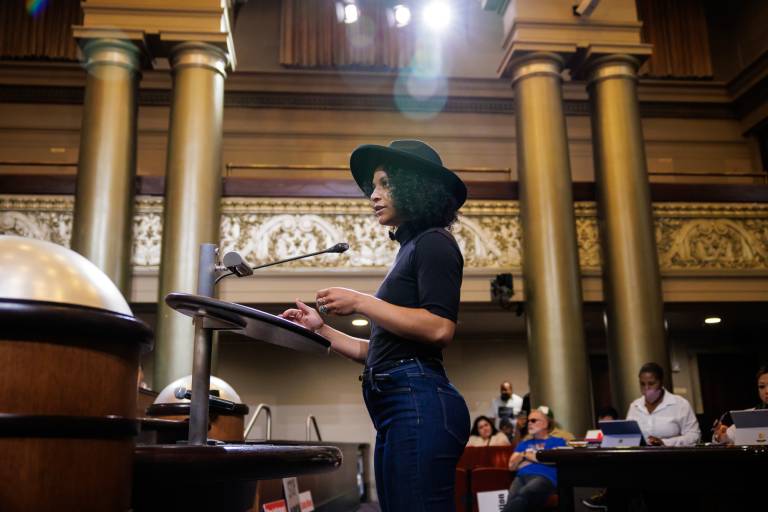
"caption": "Rachel Sanders gives public comment at an Oakland City Council meeting advocating against the elimination of the Cultural Affairs Manager position from the city budget in Oakland on July 1, 2025.",
"credit": "Martin do Nascimento/KQED",
"altTag": null,
"description": null,
"imgSizes": {
"thumbnail": {
"file": "https://cdn.kqed.org/wp-content/uploads/sites/2/2025/07/250701-OAKLAND-ARTS-FUNDING-PROTEST-MD-06-KQED-160x107.jpg",
"width": 160,
"height": 107,
"mimeType": "image/jpeg"
},
"medium_large": {
"file": "https://cdn.kqed.org/wp-content/uploads/sites/2/2025/07/250701-OAKLAND-ARTS-FUNDING-PROTEST-MD-06-KQED-768x512.jpg",
"width": 768,
"height": 512,
"mimeType": "image/jpeg"
},
"1536x1536": {
"file": "https://cdn.kqed.org/wp-content/uploads/sites/2/2025/07/250701-OAKLAND-ARTS-FUNDING-PROTEST-MD-06-KQED-1536x1025.jpg",
"width": 1536,
"height": 1025,
"mimeType": "image/jpeg"
},
"post-thumbnail": {
"file": "https://cdn.kqed.org/wp-content/uploads/sites/2/2025/07/250701-OAKLAND-ARTS-FUNDING-PROTEST-MD-06-KQED-672x372.jpg",
"width": 672,
"height": 372,
"mimeType": "image/jpeg"
},
"twentyfourteen-full-width": {
"file": "https://cdn.kqed.org/wp-content/uploads/sites/2/2025/07/250701-OAKLAND-ARTS-FUNDING-PROTEST-MD-06-KQED-1038x576.jpg",
"width": 1038,
"height": 576,
"mimeType": "image/jpeg"
},
"kqedFullSize": {
"file": "https://cdn.kqed.org/wp-content/uploads/sites/2/2025/07/250701-OAKLAND-ARTS-FUNDING-PROTEST-MD-06-KQED.jpg",
"width": 2000,
"height": 1334
}
},
"isLoading": false,
"fetchFailed": false
},
"arts_13935418": {
"type": "attachments",
"id": "arts_13935418",
"meta": {
"index": "attachments_1716263798",
"site": "arts",
"id": "13935418",
"found": true
},
"parent": 13935406,
"imgSizes": {
"twentyfourteen-full-width": {
"file": "https://ww2.kqed.org/app/uploads/sites/2/2023/09/KQEDLIVE21LaDona-039-1038x576.jpg",
"width": 1038,
"mimeType": "image/jpeg",
"height": 576
},
"thumbnail": {
"file": "https://ww2.kqed.org/app/uploads/sites/2/2023/09/KQEDLIVE21LaDona-039-160x106.jpg",
"width": 160,
"mimeType": "image/jpeg",
"height": 106
},
"post-thumbnail": {
"file": "https://ww2.kqed.org/app/uploads/sites/2/2023/09/KQEDLIVE21LaDona-039-672x372.jpg",
"width": 672,
"mimeType": "image/jpeg",
"height": 372
},
"kqedFullSize": {
"file": "https://ww2.kqed.org/app/uploads/sites/2/2023/09/KQEDLIVE21LaDona-039-scaled.jpg",
"width": 2560,
"height": 1703
},
"2048x2048": {
"file": "https://ww2.kqed.org/app/uploads/sites/2/2023/09/KQEDLIVE21LaDona-039-2048x1363.jpg",
"width": 2048,
"mimeType": "image/jpeg",
"height": 1363
},
"large": {
"file": "https://ww2.kqed.org/app/uploads/sites/2/2023/09/KQEDLIVE21LaDona-039-1020x679.jpg",
"width": 1020,
"mimeType": "image/jpeg",
"height": 679
},
"1536x1536": {
"file": "https://ww2.kqed.org/app/uploads/sites/2/2023/09/KQEDLIVE21LaDona-039-1536x1022.jpg",
"width": 1536,
"mimeType": "image/jpeg",
"height": 1022
},
"full-width": {
"file": "https://ww2.kqed.org/app/uploads/sites/2/2023/09/KQEDLIVE21LaDona-039-1920x1277.jpg",
"width": 1920,
"mimeType": "image/jpeg",
"height": 1277
},
"medium": {
"file": "https://ww2.kqed.org/app/uploads/sites/2/2023/09/KQEDLIVE21LaDona-039-800x532.jpg",
"width": 800,
"mimeType": "image/jpeg",
"height": 532
},
"medium_large": {
"file": "https://ww2.kqed.org/app/uploads/sites/2/2023/09/KQEDLIVE21LaDona-039-768x511.jpg",
"width": 768,
"mimeType": "image/jpeg",
"height": 511
}
},
"publishDate": 1695768256,
"modified": 1695768355,
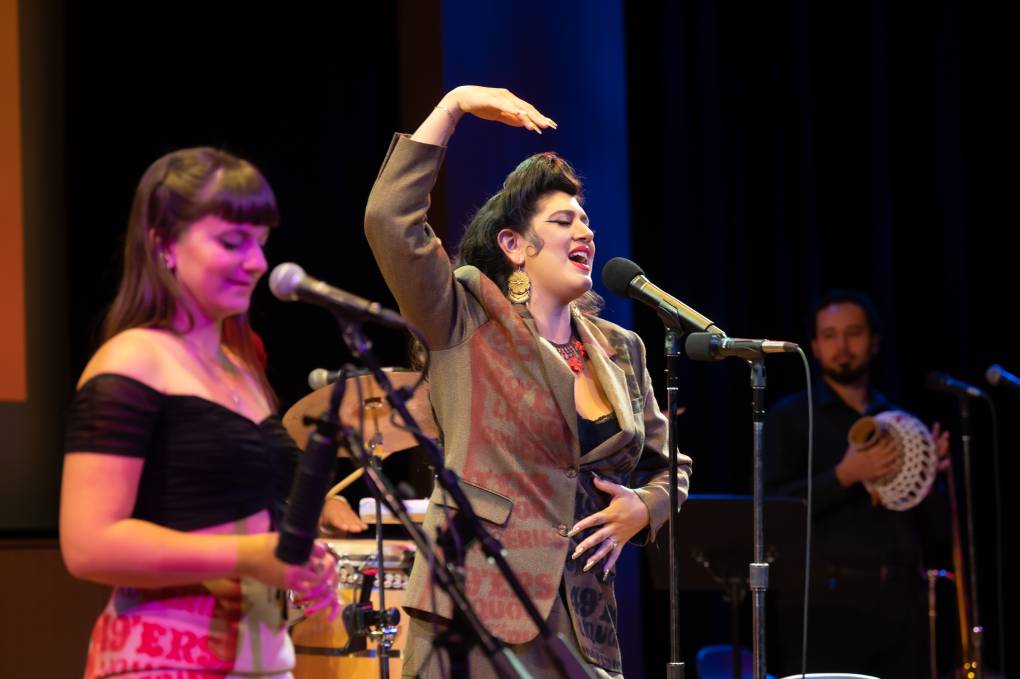
"caption": "La Doña performs at The Commons in KQED's headquarters in 2021. ",
"description": null,
"title": "KQEDLIVE21LaDona-039",
"credit": "Alain McLaughlin for KQED",
"status": "inherit",
"altTag": "La Doña sings on stage next to her saxophonist and bassist.",
"isLoading": false,
"fetchFailed": false
},
"arts_13978156": {
"type": "attachments",
"id": "arts_13978156",
"meta": {
"index": "attachments_1716263798",
"site": "arts",
"id": "13978156",
"found": true
},
"title": "GettyImages-2163980968",
"publishDate": 1751323891,
"status": "inherit",
"parent": 13978141,
"modified": 1751325270,
"caption": "Satomi Matsuzaki of Deerhoof performs at the WOMAD Festival on July 27, 2024, in Malmesbury, England.",
"credit": "C Brandon/Redferns",
"altTag": "A Japanese American woman plays the bass guitar and sings into a microphone",
"description": null,
"imgSizes": {
"thumbnail": {
"file": "https://cdn.kqed.org/wp-content/uploads/sites/2/2025/06/GettyImages-2163980968-160x107.jpg",
"width": 160,
"height": 107,
"mimeType": "image/jpeg"
},
"medium_large": {
"file": "https://cdn.kqed.org/wp-content/uploads/sites/2/2025/06/GettyImages-2163980968-768x513.jpg",
"width": 768,
"height": 513,
"mimeType": "image/jpeg"
},
"1536x1536": {
"file": "https://cdn.kqed.org/wp-content/uploads/sites/2/2025/06/GettyImages-2163980968-1536x1025.jpg",
"width": 1536,
"height": 1025,
"mimeType": "image/jpeg"
},
"post-thumbnail": {
"file": "https://cdn.kqed.org/wp-content/uploads/sites/2/2025/06/GettyImages-2163980968-672x372.jpg",
"width": 672,
"height": 372,
"mimeType": "image/jpeg"
},
"twentyfourteen-full-width": {
"file": "https://cdn.kqed.org/wp-content/uploads/sites/2/2025/06/GettyImages-2163980968-1038x576.jpg",
"width": 1038,
"height": 576,
"mimeType": "image/jpeg"
},
"kqedFullSize": {
"file": "https://cdn.kqed.org/wp-content/uploads/sites/2/2025/06/GettyImages-2163980968.jpg",
"width": 2000,
"height": 1335
}
},
"isLoading": false,
"fetchFailed": false
},
"arts_13906286": {
"type": "attachments",
"id": "arts_13906286",
"meta": {
"index": "attachments_1716263798",
"site": "arts",
"id": "13906286",
"found": true
},
"title": "J.K. Rowling arrives at the U.K. premiere of \"Fantastic Beasts: The Crimes of Grindelwald\" at Cineworld in London on November 13, 2018.",
"publishDate": 1637257322,
"status": "inherit",
"parent": 13906284,
"modified": 1751054492,
"caption": "J.K. Rowling arrives at the U.K. premiere of 'Fantastic Beasts: The Crimes of Grindelwald' at Cineworld in London on Nov. 13, 2018.",
"credit": "John Phillips/Getty Images",
"altTag": null,
"description": null,
"imgSizes": {
"medium": {
"file": "https://cdn.kqed.org/wp-content/uploads/sites/2/2021/11/gettyimages-1067071942_wide-51e3990bc672080e04dc131878d8df89a380b81f-800x450.jpg",
"width": 800,
"height": 450,
"mimeType": "image/jpeg"
},
"large": {
"file": "https://cdn.kqed.org/wp-content/uploads/sites/2/2021/11/gettyimages-1067071942_wide-51e3990bc672080e04dc131878d8df89a380b81f-1020x574.jpg",
"width": 1020,
"height": 574,
"mimeType": "image/jpeg"
},
"thumbnail": {
"file": "https://cdn.kqed.org/wp-content/uploads/sites/2/2021/11/gettyimages-1067071942_wide-51e3990bc672080e04dc131878d8df89a380b81f-160x90.jpg",
"width": 160,
"height": 90,
"mimeType": "image/jpeg"
},
"medium_large": {
"file": "https://cdn.kqed.org/wp-content/uploads/sites/2/2021/11/gettyimages-1067071942_wide-51e3990bc672080e04dc131878d8df89a380b81f-768x432.jpg",
"width": 768,
"height": 432,
"mimeType": "image/jpeg"
},
"1536x1536": {
"file": "https://cdn.kqed.org/wp-content/uploads/sites/2/2021/11/gettyimages-1067071942_wide-51e3990bc672080e04dc131878d8df89a380b81f-1536x864.jpg",
"width": 1536,
"height": 864,
"mimeType": "image/jpeg"
},
"2048x2048": {
"file": "https://cdn.kqed.org/wp-content/uploads/sites/2/2021/11/gettyimages-1067071942_wide-51e3990bc672080e04dc131878d8df89a380b81f-2048x1152.jpg",
"width": 2048,
"height": 1152,
"mimeType": "image/jpeg"
},
"post-thumbnail": {
"file": "https://cdn.kqed.org/wp-content/uploads/sites/2/2021/11/gettyimages-1067071942_wide-51e3990bc672080e04dc131878d8df89a380b81f-672x372.jpg",
"width": 672,
"height": 372,
"mimeType": "image/jpeg"
},
"twentyfourteen-full-width": {
"file": "https://cdn.kqed.org/wp-content/uploads/sites/2/2021/11/gettyimages-1067071942_wide-51e3990bc672080e04dc131878d8df89a380b81f-1038x576.jpg",
"width": 1038,
"height": 576,
"mimeType": "image/jpeg"
},
"full-width": {
"file": "https://cdn.kqed.org/wp-content/uploads/sites/2/2021/11/gettyimages-1067071942_wide-51e3990bc672080e04dc131878d8df89a380b81f-1920x1080.jpg",
"width": 1920,
"height": 1080,
"mimeType": "image/jpeg"
},
"kqedFullSize": {
"file": "https://cdn.kqed.org/wp-content/uploads/sites/2/2021/11/gettyimages-1067071942_wide-51e3990bc672080e04dc131878d8df89a380b81f-scaled.jpg",
"width": 2560,
"height": 1440
}
},
"isLoading": false,
"fetchFailed": false
},
"arts_13978014": {
"type": "attachments",
"id": "arts_13978014",
"meta": {
"index": "attachments_1716263798",
"site": "arts",
"id": "13978014",
"found": true
},
"title": "Nashville Pride 2023",
"publishDate": 1750888463,
"status": "inherit",
"parent": 13978009,
"modified": 1750888508,
"caption": "Saucy Santana performs at Nashville Pride on June 24, 2023. The rapper will headline San Francisco Pride on June 29. ",
"credit": "Jason Kempin/Getty Images",
"altTag": null,
"description": null,
"imgSizes": {
"thumbnail": {
"file": "https://cdn.kqed.org/wp-content/uploads/sites/2/2025/06/GettyImages-1501334621-160x108.jpg",
"width": 160,
"height": 108,
"mimeType": "image/jpeg"
},
"medium_large": {
"file": "https://cdn.kqed.org/wp-content/uploads/sites/2/2025/06/GettyImages-1501334621-768x519.jpg",
"width": 768,
"height": 519,
"mimeType": "image/jpeg"
},
"post-thumbnail": {
"file": "https://cdn.kqed.org/wp-content/uploads/sites/2/2025/06/GettyImages-1501334621-672x372.jpg",
"width": 672,
"height": 372,
"mimeType": "image/jpeg"
},
"twentyfourteen-full-width": {
"file": "https://cdn.kqed.org/wp-content/uploads/sites/2/2025/06/GettyImages-1501334621-1024x576.jpg",
"width": 1024,
"height": 576,
"mimeType": "image/jpeg"
},
"kqedFullSize": {
"file": "https://cdn.kqed.org/wp-content/uploads/sites/2/2025/06/GettyImages-1501334621.jpg",
"width": 1024,
"height": 692
}
},
"isLoading": false,
"fetchFailed": false
},
"arts_13977967": {
"type": "attachments",
"id": "arts_13977967",
"meta": {
"index": "attachments_1716263798",
"site": "arts",
"id": "13977967",
"found": true
},
"title": "Chef Behind Legendary Puerto Rican Takeout Spot",
"publishDate": 1750810764,
"status": "inherit",
"parent": 13977950,
"modified": 1750813543,
"caption": "Chef Eric Rivera, prepares a tray of pollo guisado, a stewed chicken dish, for a catering order at Puerto Rican Street Cuisine in Oakland on Saturday, June 21, 2025. Rivera was one of the co-founders of Borinquen Soul, a beloved takeout restaurant that closed in 2017.",
"credit": "Estefany Gonzalez for KQED",
"altTag": "Chef in a red jacket ladles chicken stew into a large aluminum catering tray.",
"description": null,
"imgSizes": {
"thumbnail": {
"file": "https://cdn.kqed.org/wp-content/uploads/sites/2/2025/06/Puerto-Rican-Street-Cuisine_EG_15_qed-160x107.jpg",
"width": 160,
"height": 107,
"mimeType": "image/jpeg"
},
"medium_large": {
"file": "https://cdn.kqed.org/wp-content/uploads/sites/2/2025/06/Puerto-Rican-Street-Cuisine_EG_15_qed-768x512.jpg",
"width": 768,
"height": 512,
"mimeType": "image/jpeg"
},
"1536x1536": {
"file": "https://cdn.kqed.org/wp-content/uploads/sites/2/2025/06/Puerto-Rican-Street-Cuisine_EG_15_qed-1536x1024.jpg",
"width": 1536,
"height": 1024,
"mimeType": "image/jpeg"
},
"post-thumbnail": {
"file": "https://cdn.kqed.org/wp-content/uploads/sites/2/2025/06/Puerto-Rican-Street-Cuisine_EG_15_qed-672x372.jpg",
"width": 672,
"height": 372,
"mimeType": "image/jpeg"
},
"twentyfourteen-full-width": {
"file": "https://cdn.kqed.org/wp-content/uploads/sites/2/2025/06/Puerto-Rican-Street-Cuisine_EG_15_qed-1038x576.jpg",
"width": 1038,
"height": 576,
"mimeType": "image/jpeg"
},
"kqedFullSize": {
"file": "https://cdn.kqed.org/wp-content/uploads/sites/2/2025/06/Puerto-Rican-Street-Cuisine_EG_15_qed.jpg",
"width": 2000,
"height": 1333
}
},
"isLoading": false,
"fetchFailed": false
},
"arts_13977931": {
"type": "attachments",
"id": "arts_13977931",
"meta": {
"index": "attachments_1716263798",
"site": "arts",
"id": "13977931",
"found": true
},
"title": "GettyImages-2092549669",
"publishDate": 1750793009,
"status": "inherit",
"parent": 13977921,
"modified": 1750793190,
"caption": "The nonprofit Vital Arts is seeking out artists for paid advocacy work in the counties of Alameda, San Francisco, Santa Clara, Contra Costa, San Mateo and Solano.",
"credit": "Jane Tyska/East Bay Times via Getty Images",
"altTag": "The San Francisco skyline as seen from Oakland",
"description": null,
"imgSizes": {
"thumbnail": {
"file": "https://cdn.kqed.org/wp-content/uploads/sites/2/2025/06/GettyImages-2092549669-160x91.jpg",
"width": 160,
"height": 91,
"mimeType": "image/jpeg"
},
"medium_large": {
"file": "https://cdn.kqed.org/wp-content/uploads/sites/2/2025/06/GettyImages-2092549669-768x438.jpg",
"width": 768,
"height": 438,
"mimeType": "image/jpeg"
},
"1536x1536": {
"file": "https://cdn.kqed.org/wp-content/uploads/sites/2/2025/06/GettyImages-2092549669-1536x876.jpg",
"width": 1536,
"height": 876,
"mimeType": "image/jpeg"
},
"post-thumbnail": {
"file": "https://cdn.kqed.org/wp-content/uploads/sites/2/2025/06/GettyImages-2092549669-672x372.jpg",
"width": 672,
"height": 372,
"mimeType": "image/jpeg"
},
"twentyfourteen-full-width": {
"file": "https://cdn.kqed.org/wp-content/uploads/sites/2/2025/06/GettyImages-2092549669-1038x576.jpg",
"width": 1038,
"height": 576,
"mimeType": "image/jpeg"
},
"kqedFullSize": {
"file": "https://cdn.kqed.org/wp-content/uploads/sites/2/2025/06/GettyImages-2092549669.jpg",
"width": 2000,
"height": 1140
}
},
"isLoading": false,
"fetchFailed": false
},
"arts_13976958": {
"type": "attachments",
"id": "arts_13976958",
"meta": {
"index": "attachments_1716263798",
"site": "arts",
"id": "13976958",
"found": true
},
"title": "20250531_FRISCOFOODIESASIANFOOD_GC-9-KQED",
"publishDate": 1748896828,
"status": "inherit",
"parent": 0,
"modified": 1750701517,
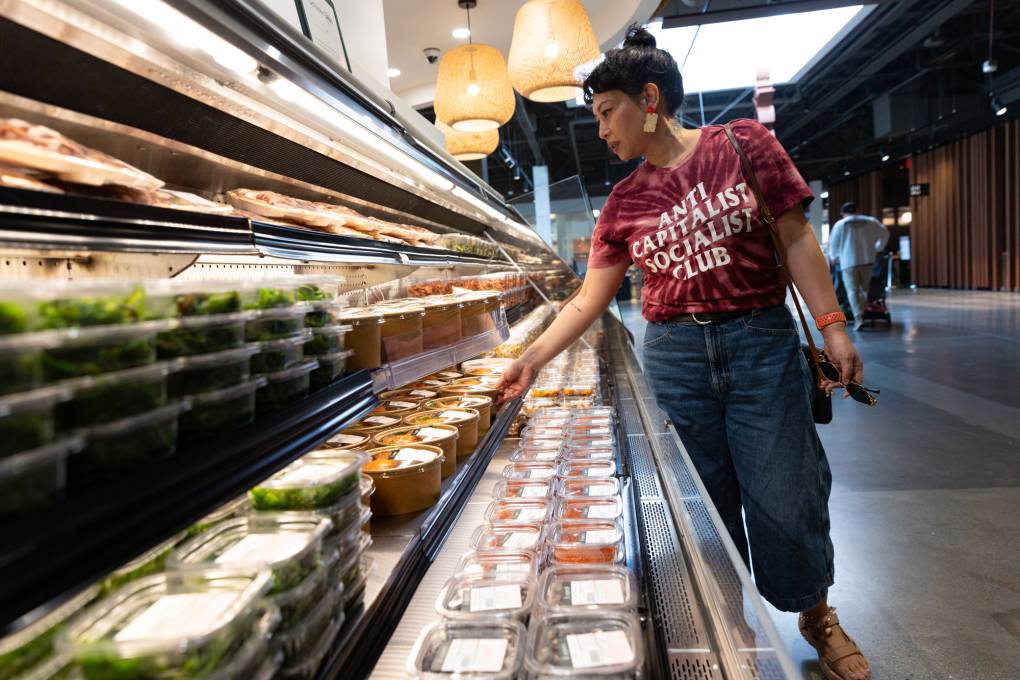
"caption": "Rocky Rivera shops at Jagalchi, a Korean grocery store, in Serramonte Center in Daly City, on May 31, 2025.",
"credit": "Gina Castro/KQED",
"altTag": "A woman browses a refrigerated display case at a high-end Asian grocery store.",
"description": null,
"imgSizes": {
"medium": {
"file": "https://cdn.kqed.org/wp-content/uploads/sites/2/2025/06/20250531_FRISCOFOODIESASIANFOOD_GC-9-KQED-800x533.jpg",
"width": 800,
"height": 533,
"mimeType": "image/jpeg"
},
"large": {
"file": "https://cdn.kqed.org/wp-content/uploads/sites/2/2025/06/20250531_FRISCOFOODIESASIANFOOD_GC-9-KQED-1020x680.jpg",
"width": 1020,
"height": 680,
"mimeType": "image/jpeg"
},
"thumbnail": {
"file": "https://cdn.kqed.org/wp-content/uploads/sites/2/2025/06/20250531_FRISCOFOODIESASIANFOOD_GC-9-KQED-160x107.jpg",
"width": 160,
"height": 107,
"mimeType": "image/jpeg"
},
"medium_large": {
"file": "https://cdn.kqed.org/wp-content/uploads/sites/2/2025/06/20250531_FRISCOFOODIESASIANFOOD_GC-9-KQED-768x512.jpg",
"width": 768,
"height": 512,
"mimeType": "image/jpeg"
},
"1536x1536": {
"file": "https://cdn.kqed.org/wp-content/uploads/sites/2/2025/06/20250531_FRISCOFOODIESASIANFOOD_GC-9-KQED-1536x1024.jpg",
"width": 1536,
"height": 1024,
"mimeType": "image/jpeg"
},
"post-thumbnail": {
"file": "https://cdn.kqed.org/wp-content/uploads/sites/2/2025/06/20250531_FRISCOFOODIESASIANFOOD_GC-9-KQED-672x372.jpg",
"width": 672,
"height": 372,
"mimeType": "image/jpeg"
},
"twentyfourteen-full-width": {
"file": "https://cdn.kqed.org/wp-content/uploads/sites/2/2025/06/20250531_FRISCOFOODIESASIANFOOD_GC-9-KQED-1038x576.jpg",
"width": 1038,
"height": 576,
"mimeType": "image/jpeg"
},
"full-width": {
"file": "https://cdn.kqed.org/wp-content/uploads/sites/2/2025/06/20250531_FRISCOFOODIESASIANFOOD_GC-9-KQED-1920x1280.jpg",
"width": 1920,
"height": 1280,
"mimeType": "image/jpeg"
},
"kqedFullSize": {
"file": "https://cdn.kqed.org/wp-content/uploads/sites/2/2025/06/20250531_FRISCOFOODIESASIANFOOD_GC-9-KQED.jpg",
"width": 2000,
"height": 1333
}
},
"isLoading": false,
"fetchFailed": false
},
"arts_13977828": {
"type": "attachments",
"id": "arts_13977828",
"meta": {
"index": "attachments_1716263798",
"site": "arts",
"id": "13977828",
"found": true
},
"title": "chinatown night market_jason wang",
"publishDate": 1750293624,
"status": "inherit",
"parent": 13963258,
"modified": 1750293723,
"caption": "During the monthly Chinatown Night Market, crowds pack three blocks of Grant Street in San Francisco.",
"credit": "Jason Wang, courtesy of BeChinatown",
"altTag": "Crowded Chinatown street with red lanterns strung up above.",
"description": null,
"imgSizes": {
"thumbnail": {
"file": "https://cdn.kqed.org/wp-content/uploads/sites/2/2024/08/chinatown-night-market_jason-wang-160x90.jpg",
"width": 160,
"height": 90,
"mimeType": "image/jpeg"
},
"medium_large": {
"file": "https://cdn.kqed.org/wp-content/uploads/sites/2/2024/08/chinatown-night-market_jason-wang-768x432.jpg",
"width": 768,
"height": 432,
"mimeType": "image/jpeg"
},
"1536x1536": {
"file": "https://cdn.kqed.org/wp-content/uploads/sites/2/2024/08/chinatown-night-market_jason-wang-1536x864.jpg",
"width": 1536,
"height": 864,
"mimeType": "image/jpeg"
},
"post-thumbnail": {
"file": "https://cdn.kqed.org/wp-content/uploads/sites/2/2024/08/chinatown-night-market_jason-wang-672x372.jpg",
"width": 672,
"height": 372,
"mimeType": "image/jpeg"
},
"twentyfourteen-full-width": {
"file": "https://cdn.kqed.org/wp-content/uploads/sites/2/2024/08/chinatown-night-market_jason-wang-1038x576.jpg",
"width": 1038,
"height": 576,
"mimeType": "image/jpeg"
},
"kqedFullSize": {
"file": "https://cdn.kqed.org/wp-content/uploads/sites/2/2024/08/chinatown-night-market_jason-wang.jpg",
"width": 2000,
"height": 1125
}
},
"isLoading": false,
"fetchFailed": false
},
"arts_13977818": {
"type": "attachments",
"id": "arts_13977818",
"meta": {
"index": "attachments_1716263798",
"site": "arts",
"id": "13977818",
"found": true
},
"title": "Coyote-COVER",
"publishDate": 1750280658,
"status": "inherit",
"parent": 13977806,
"modified": 1750280842,
"caption": "Coyote Media Collective is an upstart, worker-owned news outlet the newsies would totally have gotten behind.",
"credit": "Collage by Sarah Hotchkiss",
"altTag": null,
"description": null,
"imgSizes": {
"thumbnail": {
"file": "https://cdn.kqed.org/wp-content/uploads/sites/2/2025/06/Coyote-COVER-160x81.jpg",
"width": 160,
"height": 81,
"mimeType": "image/jpeg"
},
"medium_large": {
"file": "https://cdn.kqed.org/wp-content/uploads/sites/2/2025/06/Coyote-COVER-768x391.jpg",
"width": 768,
"height": 391,
"mimeType": "image/jpeg"
},
"post-thumbnail": {
"file": "https://cdn.kqed.org/wp-content/uploads/sites/2/2025/06/Coyote-COVER-672x372.jpg",
"width": 672,
"height": 372,
"mimeType": "image/jpeg"
},
"twentyfourteen-full-width": {
"file": "https://cdn.kqed.org/wp-content/uploads/sites/2/2025/06/Coyote-COVER-1038x576.jpg",
"width": 1038,
"height": 576,
"mimeType": "image/jpeg"
},
"kqedFullSize": {
"file": "https://cdn.kqed.org/wp-content/uploads/sites/2/2025/06/Coyote-COVER.jpg",
"width": 1180,
"height": 600
}
},
"isLoading": false,
"fetchFailed": false
},
"arts_13977702": {
"type": "attachments",
"id": "arts_13977702",
"meta": {
"index": "attachments_1716263798",
"site": "arts",
"id": "13977702",
"found": true
},
"title": "glbths_2019-81_03_05_015_DSC_01997667_2013",
"publishDate": 1750110886,
"status": "inherit",
"parent": 13977676,
"modified": 1750111427,
"caption": "A photo from the second-annual Two-Spirit Powwow held at the First Congregational Church Hall in Oakland in 2013. Bay Area American Indian Two-Spirits records.",
"credit": "Courtesy of Gay, Lesbian, Bisexual, Transgender Historical Society",
"altTag": null,
"description": null,
"imgSizes": {
"thumbnail": {
"file": "https://cdn.kqed.org/wp-content/uploads/sites/2/2025/06/glbths_2019-81_03_05_015_DSC_01997667_2013-160x106.jpg",
"width": 160,
"height": 106,
"mimeType": "image/jpeg"
},
"medium_large": {
"file": "https://cdn.kqed.org/wp-content/uploads/sites/2/2025/06/glbths_2019-81_03_05_015_DSC_01997667_2013-768x509.jpg",
"width": 768,
"height": 509,
"mimeType": "image/jpeg"
},
"1536x1536": {
"file": "https://cdn.kqed.org/wp-content/uploads/sites/2/2025/06/glbths_2019-81_03_05_015_DSC_01997667_2013-1536x1018.jpg",
"width": 1536,
"height": 1018,
"mimeType": "image/jpeg"
},
"post-thumbnail": {
"file": "https://cdn.kqed.org/wp-content/uploads/sites/2/2025/06/glbths_2019-81_03_05_015_DSC_01997667_2013-672x372.jpg",
"width": 672,
"height": 372,
"mimeType": "image/jpeg"
},
"twentyfourteen-full-width": {
"file": "https://cdn.kqed.org/wp-content/uploads/sites/2/2025/06/glbths_2019-81_03_05_015_DSC_01997667_2013-1038x576.jpg",
"width": 1038,
"height": 576,
"mimeType": "image/jpeg"
},
"kqedFullSize": {
"file": "https://cdn.kqed.org/wp-content/uploads/sites/2/2025/06/glbths_2019-81_03_05_015_DSC_01997667_2013.jpg",
"width": 2000,
"height": 1326
}
},
"isLoading": false,
"fetchFailed": false
}
},
"audioPlayerReducer": {
"postId": "stream_live",
"isPaused": true,
"isPlaying": false,
"pfsActive": false,
"pledgeModalIsOpen": true,
"playerDrawerIsOpen": false,
"liveAudioPlayStartedAt": 0,
"liveAudioPlayContext": ""
},
"authorsReducer": {
"shotchkiss": {
"type": "authors",
"id": "61",
"meta": {
"index": "authors_1716337520",
"id": "61",
"found": true
},
"name": "Sarah Hotchkiss",
"firstName": "Sarah",
"lastName": "Hotchkiss",
"slug": "shotchkiss",
"email": "shotchkiss@kqed.org",
"display_author_email": true,
"staff_mastheads": [
"arts"
],
"title": "Senior Editor",
"bio": "Sarah Hotchkiss is a San Francisco \u003ca href=\"http://www.sarahhotchkiss.com\">artist\u003c/a> and arts writer. In 2019, she received the Dorothea & Leo Rabkin Foundation grant for visual art journalism and in 2020 she received a Society of Professional Journalists, Northern California award for excellence in arts and culture reporting.",
"avatar": "https://secure.gravatar.com/avatar/bc662df144b3d27fd8b1b6f1c2a420d34e91e53154d411bb7ad353cc8b6cea8d?s=600&d=blank&r=g",
"twitter": null,
"bluesky": null,
"facebook": null,
"instagram": null,
"linkedin": null,
"sites": [
{
"site": "",
"roles": [
"editor"
]
},
{
"site": "arts",
"roles": [
"Contributor",
"administrator"
]
},
{
"site": "artschool",
"roles": [
"administrator"
]
},
{
"site": "news",
"roles": [
"editor"
]
},
{
"site": "pop",
"roles": [
"administrator"
]
},
{
"site": "bayareabites",
"roles": [
"editor"
]
},
{
"site": "spark",
"roles": [
"editor"
]
},
{
"site": "checkplease",
"roles": [
"editor"
]
}
],
"headData": {
"title": "Sarah Hotchkiss | KQED",
"description": "Senior Editor",
"ogImgSrc": "https://secure.gravatar.com/avatar/bc662df144b3d27fd8b1b6f1c2a420d34e91e53154d411bb7ad353cc8b6cea8d?s=600&d=blank&r=g",
"twImgSrc": "https://secure.gravatar.com/avatar/bc662df144b3d27fd8b1b6f1c2a420d34e91e53154d411bb7ad353cc8b6cea8d?s=600&d=blank&r=g"
},
"isLoading": false,
"link": "/author/shotchkiss"
},
"gmeline": {
"type": "authors",
"id": "185",
"meta": {
"index": "authors_1716337520",
"id": "185",
"found": true
},
"name": "Gabe Meline",
"firstName": "Gabe",
"lastName": "Meline",
"slug": "gmeline",
"email": "gmeline@kqed.org",
"display_author_email": true,
"staff_mastheads": [
"arts"
],
"title": "Senior Editor, KQED Arts & Culture",
"bio": "Gabe Meline entered journalism at age 15 making photocopied zines, and has since earned awards from the Edward R. Murrow Awards, the Society for Professional Journalists, the Online Journalism Awards, the Association of Alternative Newsweeklies and the California Newspaper Publishers Association. Prior to KQED, he was the editor of the \u003cem>North Bay Bohemian\u003c/em> and a touring musician. He lives with his wife and daughter in his hometown of Santa Rosa, CA.",
"avatar": "https://secure.gravatar.com/avatar/5bebe57be0d8bc2dd318934feb47299e2d2d10cba28d09d8d7afb389a2ce2bdd?s=600&d=blank&r=g",
"twitter": null,
"bluesky": null,
"facebook": null,
"instagram": null,
"linkedin": null,
"sites": [
{
"site": "",
"roles": [
"editor"
]
},
{
"site": "arts",
"roles": [
"administrator"
]
},
{
"site": "artschool",
"roles": [
"editor"
]
},
{
"site": "news",
"roles": [
"author"
]
},
{
"site": "pop",
"roles": [
"editor"
]
},
{
"site": "bayareabites",
"roles": [
"editor"
]
},
{
"site": "food",
"roles": [
"editor"
]
},
{
"site": "forum",
"roles": [
"administrator"
]
},
{
"site": "liveblog",
"roles": [
"editor"
]
},
{
"site": "hiphop",
"roles": [
"editor"
]
}
],
"headData": {
"title": "Gabe Meline | KQED",
"description": "Senior Editor, KQED Arts & Culture",
"ogImgSrc": "https://secure.gravatar.com/avatar/5bebe57be0d8bc2dd318934feb47299e2d2d10cba28d09d8d7afb389a2ce2bdd?s=600&d=blank&r=g",
"twImgSrc": "https://secure.gravatar.com/avatar/5bebe57be0d8bc2dd318934feb47299e2d2d10cba28d09d8d7afb389a2ce2bdd?s=600&d=blank&r=g"
},
"isLoading": false,
"link": "/author/gmeline"
},
"nvoynovskaya": {
"type": "authors",
"id": "11387",
"meta": {
"index": "authors_1716337520",
"id": "11387",
"found": true
},
"name": "Nastia Voynovskaya",
"firstName": "Nastia",
"lastName": "Voynovskaya",
"slug": "nvoynovskaya",
"email": "nvoynovskaya@kqed.org",
"display_author_email": false,
"staff_mastheads": [
"arts"
],
"title": "Editor and reporter",
"bio": "Nastia Voynovskaya is a reporter, editor and host at KQED Arts & Culture. She's been covering the arts in the Bay Area for over a decade, with a focus on music, queer culture, labor issues and grassroots organizing. She has edited KQED story series such as Trans Bay: A History of San Francisco's Gender-Diverse Community, and co-created KQED's Bay Area hip-hop history project, That's My Word. Nastia's work has been recognized by the Society of Professional Journalists and San Francisco Press Club. She regularly appears on podcasts and radio programs, including NPR's All Songs Considered, and hosts live events where music, culture and conversation meet.",
"avatar": "https://secure.gravatar.com/avatar/5025ee460e5a85d69ca20ea6c6f2f80d7e17795c828f61ea3aecfcd924e9042e?s=600&d=blank&r=g",
"twitter": null,
"bluesky": null,
"facebook": null,
"instagram": "https://www.instagram.com/nananastia/",
"linkedin": null,
"sites": [
{
"site": "",
"roles": [
"editor"
]
},
{
"site": "arts",
"roles": [
"administrator"
]
},
{
"site": "news",
"roles": [
"editor"
]
},
{
"site": "pop",
"roles": [
"administrator"
]
},
{
"site": "bayareabites",
"roles": [
"editor"
]
},
{
"site": "podcasts",
"roles": [
"editor"
]
},
{
"site": "hiphop",
"roles": [
"editor"
]
}
],
"headData": {
"title": "Nastia Voynovskaya | KQED",
"description": "Editor and reporter",
"ogImgSrc": "https://secure.gravatar.com/avatar/5025ee460e5a85d69ca20ea6c6f2f80d7e17795c828f61ea3aecfcd924e9042e?s=600&d=blank&r=g",
"twImgSrc": "https://secure.gravatar.com/avatar/5025ee460e5a85d69ca20ea6c6f2f80d7e17795c828f61ea3aecfcd924e9042e?s=600&d=blank&r=g"
},
"isLoading": false,
"link": "/author/nvoynovskaya"
},
"ltsai": {
"type": "authors",
"id": "11743",
"meta": {
"index": "authors_1716337520",
"id": "11743",
"found": true
},
"name": "Luke Tsai",
"firstName": "Luke",
"lastName": "Tsai",
"slug": "ltsai",
"email": "ltsai@kqed.org",
"display_author_email": true,
"staff_mastheads": [
"arts"
],
"title": "Food Editor",
"bio": "Luke Tsai is KQED's food editor and resident stinky tofu connoisseur. Prior to KQED, he was an editor at Eater SF, \u003cem>San Francisco \u003c/em>magazine, and the \u003cem>East Bay Express\u003c/em>, and his work has also appeared in TASTE, the \u003cem>San Francisco Chronicle\u003c/em>, and the \u003cem>Best Food Writing\u003c/em> anthology. When he isn't writing or editing, you'll find him eating most everything he can get his hands on.",
"avatar": "https://secure.gravatar.com/avatar/1e59b45bf191526e7339d6ba46e33a57b2030d25c27660ecc64ea3cb863e34f7?s=600&d=blank&r=g",
"twitter": "theluketsai",
"bluesky": null,
"facebook": null,
"instagram": null,
"linkedin": null,
"sites": [
{
"site": "",
"roles": [
"editor"
]
},
{
"site": "arts",
"roles": [
"administrator"
]
},
{
"site": "news",
"roles": [
"editor",
"contributor"
]
},
{
"site": "bayareabites",
"roles": [
"editor"
]
},
{
"site": "food",
"roles": [
"editor"
]
}
],
"headData": {
"title": "Luke Tsai | KQED",
"description": "Food Editor",
"ogImgSrc": "https://secure.gravatar.com/avatar/1e59b45bf191526e7339d6ba46e33a57b2030d25c27660ecc64ea3cb863e34f7?s=600&d=blank&r=g",
"twImgSrc": "https://secure.gravatar.com/avatar/1e59b45bf191526e7339d6ba46e33a57b2030d25c27660ecc64ea3cb863e34f7?s=600&d=blank&r=g"
},
"isLoading": false,
"link": "/author/ltsai"
},
"rockyrivera": {
"type": "authors",
"id": "11846",
"meta": {
"index": "authors_1716337520",
"id": "11846",
"found": true
},
"name": "Rocky Rivera",
"firstName": "Rocky",
"lastName": "Rivera",
"slug": "rockyrivera",
"email": "ms.rocky.rivera@gmail.com",
"display_author_email": false,
"staff_mastheads": [],
"title": "KQED Contributor",
"bio": "Rocky Rivera is a journalist, emcee, author and activist from San Francisco. She has released four albums through her label, Beatrock Music, and a ten-volume mixtape series with DJ Roza. She released her first book in 2021, entitled \u003cem>Snakeskin: Essays by Rocky Rivera\u003c/em>. Her latest album dropped in September 2024 and is called \"Long Kiss Goodnight\" with emcee/producer Otayo Dubb. She currently writes the Frisco Foodies column as a love letter to her hometown.",
"avatar": "https://secure.gravatar.com/avatar/946241ee2c59e6040607dfc75240d91b?s=600&d=blank&r=g",
"twitter": null,
"facebook": "https://m.facebook.com/rockyriveramusic",
"instagram": "https://instagram.com/rockyrivera",
"linkedin": "https://www.linkedin.com/in/krishtinedeleon/",
"sites": [
{
"site": "arts",
"roles": [
"author"
]
}
],
"headData": {
"title": "Rocky Rivera | KQED",
"description": "KQED Contributor",
"ogImgSrc": "https://secure.gravatar.com/avatar/946241ee2c59e6040607dfc75240d91b?s=600&d=blank&r=g",
"twImgSrc": "https://secure.gravatar.com/avatar/946241ee2c59e6040607dfc75240d91b?s=600&d=blank&r=g"
},
"isLoading": false,
"link": "/author/rockyrivera"
},
"sfaulise": {
"type": "authors",
"id": "11919",
"meta": {
"index": "authors_1716337520",
"id": "11919",
"found": true
},
"name": "Shannon Faulise",
"firstName": "Shannon",
"lastName": "Faulise",
"slug": "sfaulise",
"email": "sfaulise@kqed.org",
"display_author_email": false,
"staff_mastheads": [],
"title": "Contributor, KQED Arts & Culture",
"bio": "Shannon Faulise is a graduate of the UC Berkeley Graduate School of Journalism, where she concentrated on photojournalism and feature writing. Shannon's photos, audio pieces and written stories have appeared in The Oaklandside, The Redwood City Pulse and KALX. Outside of reporting, Shannon loves kpop, women's sports and concerts. She served as an intern for KQED Arts & Culture in 2024–25.",
"avatar": "https://secure.gravatar.com/avatar/76449df2627a603d6b02f0534ec3c913007029bff4f1c0572071401f9a293a02?s=600&d=blank&r=g",
"twitter": null,
"bluesky": null,
"facebook": null,
"instagram": null,
"linkedin": null,
"sites": [
{
"site": "arts",
"roles": [
"subscriber"
]
}
],
"headData": {
"title": "Shannon Faulise | KQED",
"description": "Contributor, KQED Arts & Culture",
"ogImgSrc": "https://secure.gravatar.com/avatar/76449df2627a603d6b02f0534ec3c913007029bff4f1c0572071401f9a293a02?s=600&d=blank&r=g",
"twImgSrc": "https://secure.gravatar.com/avatar/76449df2627a603d6b02f0534ec3c913007029bff4f1c0572071401f9a293a02?s=600&d=blank&r=g"
},
"isLoading": false,
"link": "/author/sfaulise"
}
},
"pagesReducer": {
"arts_category_news": {
"type": "terms",
"id": "arts_235",
"meta": {
"index": "terms_1716263798",
"site": "arts",
"id": "235",
"score": 10.814938
},
"featImg": null,
"name": "News",
"description": null,
"taxonomy": "category",
"headData": {
"twImgId": null,
"twTitle": null,
"ogTitle": null,
"ogImgId": null,
"twDescription": null,
"description": null,
"title": "News Archives | KQED Arts",
"ogDescription": null
},
"ttid": 236,
"slug": "news",
"isLoading": false,
"title": "News",
"pageMeta": {
"site": "arts",
"WpPageTemplate": "page-topic-editorial",
"currentPage": 21
},
"blocks": [
{
"blockName": "kqed/post-list",
"attrs": {
"layout": "cardArticle2",
"query": "posts/arts?category=news",
"seeMore": false,
"paginated": true,
"page": 21
}
},
{
"blockName": "kqed/ad"
}
]
}
},
"pfsSessionReducer": {},
"postsReducer": {
"stream_live": {
"type": "live",
"id": "stream_live",
"audioUrl": "https://streams.kqed.org/kqedradio",
"title": "Live Stream",
"excerpt": "Live Stream information currently unavailable.",
"link": "/radio",
"featImg": "",
"label": {
"name": "KQED Live",
"link": "/"
}
},
"stream_kqedNewscast": {
"type": "posts",
"id": "stream_kqedNewscast",
"audioUrl": "https://www.kqed.org/.stream/anon/radio/RDnews/newscast.mp3?_=1",
"title": "KQED Newscast",
"featImg": "",
"label": {
"name": "88.5 FM",
"link": "/"
}
},
"arts_13978280": {
"type": "posts",
"id": "arts_13978280",
"meta": {
"index": "posts_1716263798",
"site": "arts",
"id": "13978280",
"score": null,
"sort": [
1751500066000
]
},
"guestAuthors": [],
"slug": "california-restores-peforming-arts-equitable-payroll-fund",
"title": "California Restores $11.5 Million for Small Performing Arts Venues",
"publishDate": 1751500066,
"format": "standard",
"headTitle": "California Restores $11.5 Million for Small Performing Arts Venues | KQED",
"labelTerm": {
"site": "arts"
},
"content": "\u003cp>A series of budget bills signed by the California Legislature on July 1 have restored the $11.5 million \u003ca href=\"https://www.kqed.org/arts/13977084/ca-newsom-state-budget-cuts-performing-arts-equitable-payroll-fund\">Performing Arts Equitable Payroll Fund\u003c/a>, intended to help pay performers and keep small performing arts venues in operation. \u003c/p>\n\u003cp>Governor Gavin Newsom had proposed cutting the fund in his May revision of the state budget, raising alarms for artists, venues and arts advocates. “It is going to potentially decimate small nonprofit performing arts organizations in the state,” Julie Baker, CEO of California Arts Advocates and California for the Arts, told KQED in June.\u003c/p>\n\u003cp>The payroll fund, which only launched this year, is meant to offset the cost of complying with AB5, the 2019 law that requires theaters to treat performing artists as employees rather than independent contractors. Since the law’s enactment, small performing arts groups \u003ca href=\"https://www.kqed.org/arts/13892179/for-some-small-arts-groups-in-ca-adhering-to-labor-law-means-not-paying-artists\">have seen their payroll expenses balloon\u003c/a>.\u003c/p>\n\u003cp>The Equitable Payroll Fund is only available to nonprofits with an adjusted gross revenue under $2 million; organizations submit for reimbursements on their payroll expenses.\u003c/p>\n\u003cp>California Arts Advocates, which announced the reinstatement of the payroll fund in a Tuesday \u003ca href=\"https://www.caartsadvocates.org/news/july-2025-legislative-budget-updates\">press release\u003c/a>, argues there is a clear need for the fund. “Over $40 million in applications were received for the program before it was halted by the Governor’s proposal,” the statement read. “Our future advocacy will focus on securing continued funding for this program.”\u003c/p>\n\u003cp>[ad fullwidth]\u003c/p>\n\u003cp>[aside postID='arts_13975921']This is a sliver of good news in an otherwise devastating year for arts and cultural funding, which saw the Trump administration \u003ca href=\"https://www.kqed.org/arts/13975921/national-endowment-for-the-arts-grant-cancellations\">claw back grants\u003c/a> from the National Endowment for the Arts, the National Endowment for the Humanities, and the Institute of Museum and Library Services.\u003c/p>\n\u003cp>Performing arts venues like The Lab and the San Francisco Bay Area Theater Company, both of which applied for the funding earlier this year, can breathe a small sigh of relief — they now have at least \u003ci>a chance\u003c/i> at receiving payroll subsidies.\u003c/p>\n\u003cp>\u003c/p>\n\u003cp>\u003cem>This story contains reporting by Sara Hossaini.\u003c/em>\u003c/p>\n\n",
"blocks": [],
"excerpt": "Advocates celebrated a small victory as funds to help pay performers were reinstated in the state budget.",
"status": "publish",
"parent": 0,
"modified": 1751500175,
"stats": {
"hasAudio": false,
"hasVideo": false,
"hasChartOrMap": false,
"iframeSrcs": [],
"hasGoogleForm": false,
"hasGallery": false,
"hasHearkenModule": false,
"hasPolis": false,
"paragraphCount": 10,
"wordCount": 333
},
"headData": {
"title": "California Restores Vital Funds for Performing Arts Venues | KQED",
"description": "Advocates celebrated a small victory as funds to help pay performers were reinstated in the state budget.",
"ogTitle": "California Restores $11.5 Million for Small Performing Arts Venues",
"ogDescription": "",
"ogImgId": "",
"twTitle": "California Restores $11.5 Million for Small Performing Arts Venues",
"twDescription": "",
"twImgId": "",
"socialTitle": "California Restores Vital Funds for Performing Arts Venues %%page%% %%sep%% KQED",
"schema": {
"@context": "https://schema.org",
"@type": "Article",
"headline": "California Restores $11.5 Million for Small Performing Arts Venues",
"datePublished": "2025-07-02T16:47:46-07:00",
"dateModified": "2025-07-02T16:49:35-07:00",
"image": "https://cdn.kqed.org/wp-content/uploads/2020/02/KQED-OG-Image@1x.png"
}
},
"primaryCategory": {
"termId": 1,
"slug": "arts",
"name": "Arts"
},
"sticky": false,
"nprStoryId": "kqed-13978280",
"templateType": "standard",
"featuredImageType": "standard",
"excludeFromSiteSearch": "Include",
"articleAge": "0",
"path": "/arts/13978280/california-restores-peforming-arts-equitable-payroll-fund",
"audioTrackLength": null,
"parsedContent": [
{
"type": "contentString",
"content": "\u003cdiv class=\"post-body\">\u003cp>\u003cp>A series of budget bills signed by the California Legislature on July 1 have restored the $11.5 million \u003ca href=\"https://www.kqed.org/arts/13977084/ca-newsom-state-budget-cuts-performing-arts-equitable-payroll-fund\">Performing Arts Equitable Payroll Fund\u003c/a>, intended to help pay performers and keep small performing arts venues in operation. \u003c/p>\n\u003cp>Governor Gavin Newsom had proposed cutting the fund in his May revision of the state budget, raising alarms for artists, venues and arts advocates. “It is going to potentially decimate small nonprofit performing arts organizations in the state,” Julie Baker, CEO of California Arts Advocates and California for the Arts, told KQED in June.\u003c/p>\n\u003cp>The payroll fund, which only launched this year, is meant to offset the cost of complying with AB5, the 2019 law that requires theaters to treat performing artists as employees rather than independent contractors. Since the law’s enactment, small performing arts groups \u003ca href=\"https://www.kqed.org/arts/13892179/for-some-small-arts-groups-in-ca-adhering-to-labor-law-means-not-paying-artists\">have seen their payroll expenses balloon\u003c/a>.\u003c/p>\n\u003cp>The Equitable Payroll Fund is only available to nonprofits with an adjusted gross revenue under $2 million; organizations submit for reimbursements on their payroll expenses.\u003c/p>\n\u003cp>California Arts Advocates, which announced the reinstatement of the payroll fund in a Tuesday \u003ca href=\"https://www.caartsadvocates.org/news/july-2025-legislative-budget-updates\">press release\u003c/a>, argues there is a clear need for the fund. “Over $40 million in applications were received for the program before it was halted by the Governor’s proposal,” the statement read. “Our future advocacy will focus on securing continued funding for this program.”\u003c/p>\n\u003cp>\u003c/p>\u003c/div>",
"attributes": {
"named": {},
"numeric": []
}
},
{
"type": "component",
"content": "",
"name": "ad",
"attributes": {
"named": {
"label": "fullwidth"
},
"numeric": [
"fullwidth"
]
}
},
{
"type": "contentString",
"content": "\u003cdiv class=\"post-body\">\u003cp>\u003c/p>\n\u003cp>\u003c/p>\u003c/div>",
"attributes": {
"named": {},
"numeric": []
}
},
{
"type": "component",
"content": "",
"name": "aside",
"attributes": {
"named": {
"postid": "arts_13975921",
"label": ""
},
"numeric": []
}
},
{
"type": "contentString",
"content": "\u003cdiv class=\"post-body\">\u003cp>This is a sliver of good news in an otherwise devastating year for arts and cultural funding, which saw the Trump administration \u003ca href=\"https://www.kqed.org/arts/13975921/national-endowment-for-the-arts-grant-cancellations\">claw back grants\u003c/a> from the National Endowment for the Arts, the National Endowment for the Humanities, and the Institute of Museum and Library Services.\u003c/p>\n\u003cp>Performing arts venues like The Lab and the San Francisco Bay Area Theater Company, both of which applied for the funding earlier this year, can breathe a small sigh of relief — they now have at least \u003ci>a chance\u003c/i> at receiving payroll subsidies.\u003c/p>\n\u003cp>\u003c/p>\n\u003cp>\u003cem>This story contains reporting by Sara Hossaini.\u003c/em>\u003c/p>\n\n\u003c/div>\u003c/p>",
"attributes": {
"named": {},
"numeric": []
}
}
],
"link": "/arts/13978280/california-restores-peforming-arts-equitable-payroll-fund",
"authors": [
"61"
],
"categories": [
"arts_1",
"arts_235",
"arts_967"
],
"tags": [
"arts_2552",
"arts_1072"
],
"featImg": "arts_13968853",
"label": "arts"
},
"arts_13978209": {
"type": "posts",
"id": "arts_13978209",
"meta": {
"index": "posts_1716263798",
"site": "arts",
"id": "13978209",
"score": null,
"sort": [
1751494260000
]
},
"guestAuthors": [],
"slug": "oakland-arts-budget-cultural-affairs-manager-protests",
"title": "‘Just Makes No Sense’: Protests Continue in Oakland Over Slashed Arts Position",
"publishDate": 1751494260,
"format": "standard",
"headTitle": "‘Just Makes No Sense’: Protests Continue in Oakland Over Slashed Arts Position | KQED",
"labelTerm": {
"site": "arts"
},
"content": "\u003cp>In most American municipalities, the elimination of one management job in city government would hardly garner notice. But Oakland is not most American municipalities, which explains why, at 2:30 p.m. on Tuesday afternoon, more than 30 people had gathered on the steps of City Hall to call for reinstating the staff position of \u003ca href=\"https://www.kqed.org/arts/11976824/oakland-hires-its-first-cultural-affairs-manager\">Cultural Affairs Manager\u003c/a>.\u003c/p>\n\u003cp>“As simply as I can put it, the arts will not get by without this position,” said Cat Brooks, the Oakland artist, activist and previous mayoral candidate. “Anyone who is in the town, lives in the town or loves the town knows that arts and culture is our heartbeat. So if you’re interested in the heartbeat of Oakland, this position matters to you.”\u003c/p>\n\u003cp>It marked the third straight week of organized protests against the elimination of the position in Oakland’s latest budget, which was \u003ca href=\"https://www.kqed.org/news/12043553/alternative-oakland-budget-aims-to-halt-fire-station-closures-boost-police-staffing\">adopted by city council\u003c/a> on June 11. New city expenditures, which cutting the Cultural Affairs Manager would help pay for, include $1.4 million in sideshow prevention, $1 million for the establishment of entertainment zones and an increase to police staffing.\u003c/p>\n\u003cfigure id=\"attachment_13978245\" class=\"wp-caption aligncenter\" style=\"max-width: 2000px\">\u003cimg loading=\"lazy\" decoding=\"async\" class=\"size-full wp-image-13978245\" src=\"https://cdn.kqed.org/wp-content/uploads/sites/2/2025/07/250701-OAKLAND-ARTS-FUNDING-PROTEST-MD-01-KQED.jpg\" alt=\"\" width=\"2000\" height=\"1334\" srcset=\"https://cdn.kqed.org/wp-content/uploads/sites/2/2025/07/250701-OAKLAND-ARTS-FUNDING-PROTEST-MD-01-KQED.jpg 2000w, https://cdn.kqed.org/wp-content/uploads/sites/2/2025/07/250701-OAKLAND-ARTS-FUNDING-PROTEST-MD-01-KQED-160x107.jpg 160w, https://cdn.kqed.org/wp-content/uploads/sites/2/2025/07/250701-OAKLAND-ARTS-FUNDING-PROTEST-MD-01-KQED-768x512.jpg 768w, https://cdn.kqed.org/wp-content/uploads/sites/2/2025/07/250701-OAKLAND-ARTS-FUNDING-PROTEST-MD-01-KQED-1536x1025.jpg 1536w\" sizes=\"auto, (max-width: 2000px) 100vw, 2000px\">\u003cfigcaption class=\"wp-caption-text\">Cat Brooks speaks at a rally outside of Oakland City Hall protesting the elimination of the Cultural Affairs Manager position from the city budget on July 1, 2025. \u003ccite>(Martin do Nascimento/KQED)\u003c/cite>\u003c/figcaption>\u003c/figure>\n\u003cp>Explaining the need for a Cultural Affairs Manager to the average citizen poses a challenge, several attendees noted. It is a city government job, in a place where many artists and musicians are either unconcerned with or directly opposed to city government.\u003c/p>\n\u003cp>“I used to actually be one of those artists who did not really feel like the city had anything to offer me,” said \u003ca href=\"https://www.kqed.org/arts/tag/kev-choice\">Kev Choice\u003c/a>, a musician and educator who \u003ca href=\"https://www.kqed.org/arts/13875113/oakland-appoints-cultural-affairs-commissioners\">joined the Cultural Arts Commission\u003c/a> in 2020.\u003c/p>\n\u003cp>[ad fullwidth]\u003c/p>\n\u003cp>But for artists savvy with grants — or those who get hired or contracted by nonprofits, which is to say nearly all artists in Oakland — the role of a Cultural Affairs Manager provides crucial support. Equal parts advocate, fundraiser, intermediary and ambassador, its impact more than justifies its \u003ca href=\"https://transparentcalifornia.com/salaries/search/?q=roberto+bedoya&y=\">$170,000 annual salary\u003c/a>, attendees on Tuesday said.\u003c/p>\n\u003cfigure id=\"attachment_13978249\" class=\"wp-caption aligncenter\" style=\"max-width: 2000px\">\u003cimg loading=\"lazy\" decoding=\"async\" class=\"size-full wp-image-13978249\" src=\"https://cdn.kqed.org/wp-content/uploads/sites/2/2025/07/250701-OAKLAND-ARTS-FUNDING-PROTEST-MD-09-KQED.jpg\" alt=\"\" width=\"2000\" height=\"1333\" srcset=\"https://cdn.kqed.org/wp-content/uploads/sites/2/2025/07/250701-OAKLAND-ARTS-FUNDING-PROTEST-MD-09-KQED.jpg 2000w, https://cdn.kqed.org/wp-content/uploads/sites/2/2025/07/250701-OAKLAND-ARTS-FUNDING-PROTEST-MD-09-KQED-160x107.jpg 160w, https://cdn.kqed.org/wp-content/uploads/sites/2/2025/07/250701-OAKLAND-ARTS-FUNDING-PROTEST-MD-09-KQED-768x512.jpg 768w, https://cdn.kqed.org/wp-content/uploads/sites/2/2025/07/250701-OAKLAND-ARTS-FUNDING-PROTEST-MD-09-KQED-1536x1024.jpg 1536w\" sizes=\"auto, (max-width: 2000px) 100vw, 2000px\">\u003cfigcaption class=\"wp-caption-text\">Retired Cultural Affairs Manager Roberto Bedoya gives public comment at an Oakland City Council meeting advocating against the elimination of the Cultural Affairs Manager position from the city budget in Oakland on July 1, 2025. \u003ccite>(Martin do Nascimento/KQED)\u003c/cite>\u003c/figcaption>\u003c/figure>\n\u003cp>Most people spoke highly of Roberto Bedoya, the former Cultural Affairs Manager who retired in 2024. Hired in 2016, Bedoya worked as a liaison to other departments, argued against cuts and grant delays, ran the public art program, drafted Oakland’s first-ever cultural plan and, importantly, secured money for the city’s arts and culture sector.\u003c/p>\n\u003cp>After Tuesday’s protest, Bedoya spoke at the city council meeting to note $1.9 million in federal funds and $5 million in public-private partnerships that he had facilitated, and promised that, even in retirement, “I will help you find revenue.” Before he could finish, his microphone was cut off.\u003c/p>\n\u003cp>[aside postID='arts_13957786']The protest and city council meeting on Tuesday stood in stark contrast to the news that, across the Bay, \u003ca href=\"https://www.kqed.org/arts/13978179/san-francisco-artist-grants-sfac-2025-2026\">San Francisco had awarded more than $10 million in grants to artists and arts organizations\u003c/a> just that morning. Vanessa Whang, the chair of Oakland’s Cultural Affairs Commission, said the grants showed that San Francisco’s leaders were being “smart” about their priorities.\u003c/p>\n\u003cp>“Even though they are also facing deficits, they understand an investment in the arts and culture sector is what is going to make the city come back,” Whang said, noting the revenue-generating impact of the arts. “The most positive narrative that we have for Oakland right now is our culture. That’s why we get mentioned in \u003cem>The New York Times\u003c/em>.”\u003c/p>\n\u003cfigure id=\"attachment_13978250\" class=\"wp-caption aligncenter\" style=\"max-width: 2000px\">\u003cimg loading=\"lazy\" decoding=\"async\" class=\"size-full wp-image-13978250\" src=\"https://cdn.kqed.org/wp-content/uploads/sites/2/2025/07/250701-OAKLAND-ARTS-FUNDING-PROTEST-MD-10-KQED.jpg\" alt=\"\" width=\"2000\" height=\"1333\" srcset=\"https://cdn.kqed.org/wp-content/uploads/sites/2/2025/07/250701-OAKLAND-ARTS-FUNDING-PROTEST-MD-10-KQED.jpg 2000w, https://cdn.kqed.org/wp-content/uploads/sites/2/2025/07/250701-OAKLAND-ARTS-FUNDING-PROTEST-MD-10-KQED-160x107.jpg 160w, https://cdn.kqed.org/wp-content/uploads/sites/2/2025/07/250701-OAKLAND-ARTS-FUNDING-PROTEST-MD-10-KQED-768x512.jpg 768w, https://cdn.kqed.org/wp-content/uploads/sites/2/2025/07/250701-OAKLAND-ARTS-FUNDING-PROTEST-MD-10-KQED-1536x1024.jpg 1536w\" sizes=\"auto, (max-width: 2000px) 100vw, 2000px\">\u003cfigcaption class=\"wp-caption-text\">Vaenssa Whang, chair of the Oakland Cultural Affairs Commission, gives public comment at an Oakland City Council meeting advocating against the elimination of the Cultural Affairs Manager position from the city budget in Oakland on July 1, 2025. \u003ccite>(Martin do Nascimento/KQED)\u003c/cite>\u003c/figcaption>\u003c/figure>\n\u003cp>The grants in San Francisco are funded by a hotel tax similar to Oakland’s hotel and lodging tax. Raquel Iglesias, the former cultural funding coordinator who managed the grants program for five years, said that she and Bedoya had urged city administrators to issue grants in 2024 that were delayed, causing the \u003ca href=\"https://www.kqed.org/arts/13957786/oakland-art-and-soul-festival-canceled\">cancellation of events like the annual Art & Soul Festival\u003c/a>.\u003c/p>\n\u003cp>This year, Iglesias said, the Cultural Affairs Divison was given no access to general fund monies for grants. “We had just roughly $180,000 in hotel tax money that we gave out in \u003cem>tiny\u003c/em> grants,” Iglesias explained, adding that she and another staff member had as of last week raised roughly $600,000 from private foundations to backfill the money that the city rescinded for general operating grantees.\u003c/p>\n\u003cp>Oakland Symphony CEO Mieko Hatano, jazz musician and educator John Santos and Living Jazz executive director Lyz Luke joined those who spoke at the council meeting. Oakland Ballet’s artistic director Graham Lustig and Julie Baker, CEO of California Arts Advocates, are among the dozens of others who have urged the city to reinstate the Cultural Affairs Manager position.\u003c/p>\n\u003cfigure id=\"attachment_13978247\" class=\"wp-caption aligncenter\" style=\"max-width: 2000px\">\u003cimg loading=\"lazy\" decoding=\"async\" class=\"size-full wp-image-13978247\" src=\"https://cdn.kqed.org/wp-content/uploads/sites/2/2025/07/250701-OAKLAND-ARTS-FUNDING-PROTEST-MD-04-KQED.jpg\" alt=\"\" width=\"2000\" height=\"1334\" srcset=\"https://cdn.kqed.org/wp-content/uploads/sites/2/2025/07/250701-OAKLAND-ARTS-FUNDING-PROTEST-MD-04-KQED.jpg 2000w, https://cdn.kqed.org/wp-content/uploads/sites/2/2025/07/250701-OAKLAND-ARTS-FUNDING-PROTEST-MD-04-KQED-160x107.jpg 160w, https://cdn.kqed.org/wp-content/uploads/sites/2/2025/07/250701-OAKLAND-ARTS-FUNDING-PROTEST-MD-04-KQED-768x512.jpg 768w, https://cdn.kqed.org/wp-content/uploads/sites/2/2025/07/250701-OAKLAND-ARTS-FUNDING-PROTEST-MD-04-KQED-1536x1025.jpg 1536w\" sizes=\"auto, (max-width: 2000px) 100vw, 2000px\">\u003cfigcaption class=\"wp-caption-text\">Raquel Iglesias (center) attends a rally outside of Oakland City Hall protesting the elimination of the Cultural Affairs Manager position from the city budget on July 1, 2025. \u003ccite>(Martin do Nascimento/KQED)\u003c/cite>\u003c/figcaption>\u003c/figure>\n\u003cp>Even those with no direct income from the arts or the nonprofit world spoke on Tuesday about the importance of art and cultural programs.\u003c/p>\n\u003cp>On the City Hall steps, the activist Minister King X held his phone to the loudspeaker microphone so that William “Will Bop” Edwards, currently incarcerated in Solano State Prison, could address the assembled crowd.\u003c/p>\n\u003cp>[aside postID='arts_13969048']“When I was young, we had places to go. We had things to do that would scare us away from trouble. And with those places that involve art and creativity, it would allow us to meet, learn, and understand our neighbors. So when we grew up, we were less likely to want to shoot and kill people that grew up with us, because we had a prior relationship with them,” Edwards said, before an automated prison announcement came over the phone line to say that the call was being monitored and recorded.\u003c/p>\n\u003cp>The group has vowed to keep protesting every week until the Oakland City Council reinstates the position, said Brooks, who referred to investing in art as a “public safety strategy” that provides revenue and jobs.\u003c/p>\n\u003cp>Rachel Sanders, a dancer and poet who moved to Oakland two years ago, said that in addition to the impact on her own practice, she was dismayed at the budget being pushed through without sufficient time for thorough review by the public, or even certain council members.\u003c/p>\n\u003cp>[ad floatright]\u003c/p>\n\u003cp>“This move just makes no sense, and it feels like a betrayal,” Sanders said. “And that’s personal, you know? So that’s why I’m here.”\u003c/p>\n\n",
"blocks": [],
"excerpt": "For the third week in a row, artists and former city staff called for reinstating a crucial arts role.",
"status": "publish",
"parent": 0,
"modified": 1752089030,
"stats": {
"hasAudio": false,
"hasVideo": false,
"hasChartOrMap": false,
"iframeSrcs": [],
"hasGoogleForm": false,
"hasGallery": false,
"hasHearkenModule": false,
"hasPolis": false,
"paragraphCount": 21,
"wordCount": 1196
},
"headData": {
"title": "‘Just Makes No Sense’: Protests Continue in Oakland Over Slashed Arts Position | KQED",
"description": "For the third week in a row, artists and former city staff called for reinstating a crucial arts role.",
"ogTitle": "",
"ogDescription": "",
"ogImgId": "",
"twTitle": "",
"twDescription": "",
"twImgId": "",
"schema": {
"@context": "https://schema.org",
"@type": "Article",
"headline": "‘Just Makes No Sense’: Protests Continue in Oakland Over Slashed Arts Position",
"datePublished": "2025-07-02T15:11:00-07:00",
"dateModified": "2025-07-09T12:23:50-07:00",
"image": "https://cdn.kqed.org/wp-content/uploads/2020/02/KQED-OG-Image@1x.png"
}
},
"primaryCategory": {
"termId": 1,
"slug": "arts",
"name": "Arts"
},
"sticky": false,
"nprStoryId": "kqed-13978209",
"templateType": "standard",
"featuredImageType": "standard",
"excludeFromSiteSearch": "Include",
"articleAge": "0",
"path": "/arts/13978209/oakland-arts-budget-cultural-affairs-manager-protests",
"audioTrackLength": null,
"parsedContent": [
{
"type": "contentString",
"content": "\u003cdiv class=\"post-body\">\u003cp>\u003cp>In most American municipalities, the elimination of one management job in city government would hardly garner notice. But Oakland is not most American municipalities, which explains why, at 2:30 p.m. on Tuesday afternoon, more than 30 people had gathered on the steps of City Hall to call for reinstating the staff position of \u003ca href=\"https://www.kqed.org/arts/11976824/oakland-hires-its-first-cultural-affairs-manager\">Cultural Affairs Manager\u003c/a>.\u003c/p>\n\u003cp>“As simply as I can put it, the arts will not get by without this position,” said Cat Brooks, the Oakland artist, activist and previous mayoral candidate. “Anyone who is in the town, lives in the town or loves the town knows that arts and culture is our heartbeat. So if you’re interested in the heartbeat of Oakland, this position matters to you.”\u003c/p>\n\u003cp>It marked the third straight week of organized protests against the elimination of the position in Oakland’s latest budget, which was \u003ca href=\"https://www.kqed.org/news/12043553/alternative-oakland-budget-aims-to-halt-fire-station-closures-boost-police-staffing\">adopted by city council\u003c/a> on June 11. New city expenditures, which cutting the Cultural Affairs Manager would help pay for, include $1.4 million in sideshow prevention, $1 million for the establishment of entertainment zones and an increase to police staffing.\u003c/p>\n\u003cfigure id=\"attachment_13978245\" class=\"wp-caption aligncenter\" style=\"max-width: 2000px\">\u003cimg loading=\"lazy\" decoding=\"async\" class=\"size-full wp-image-13978245\" src=\"https://cdn.kqed.org/wp-content/uploads/sites/2/2025/07/250701-OAKLAND-ARTS-FUNDING-PROTEST-MD-01-KQED.jpg\" alt=\"\" width=\"2000\" height=\"1334\" srcset=\"https://cdn.kqed.org/wp-content/uploads/sites/2/2025/07/250701-OAKLAND-ARTS-FUNDING-PROTEST-MD-01-KQED.jpg 2000w, https://cdn.kqed.org/wp-content/uploads/sites/2/2025/07/250701-OAKLAND-ARTS-FUNDING-PROTEST-MD-01-KQED-160x107.jpg 160w, https://cdn.kqed.org/wp-content/uploads/sites/2/2025/07/250701-OAKLAND-ARTS-FUNDING-PROTEST-MD-01-KQED-768x512.jpg 768w, https://cdn.kqed.org/wp-content/uploads/sites/2/2025/07/250701-OAKLAND-ARTS-FUNDING-PROTEST-MD-01-KQED-1536x1025.jpg 1536w\" sizes=\"auto, (max-width: 2000px) 100vw, 2000px\">\u003cfigcaption class=\"wp-caption-text\">Cat Brooks speaks at a rally outside of Oakland City Hall protesting the elimination of the Cultural Affairs Manager position from the city budget on July 1, 2025. \u003ccite>(Martin do Nascimento/KQED)\u003c/cite>\u003c/figcaption>\u003c/figure>\n\u003cp>Explaining the need for a Cultural Affairs Manager to the average citizen poses a challenge, several attendees noted. It is a city government job, in a place where many artists and musicians are either unconcerned with or directly opposed to city government.\u003c/p>\n\u003cp>“I used to actually be one of those artists who did not really feel like the city had anything to offer me,” said \u003ca href=\"https://www.kqed.org/arts/tag/kev-choice\">Kev Choice\u003c/a>, a musician and educator who \u003ca href=\"https://www.kqed.org/arts/13875113/oakland-appoints-cultural-affairs-commissioners\">joined the Cultural Arts Commission\u003c/a> in 2020.\u003c/p>\n\u003cp>\u003c/p>\u003c/div>",
"attributes": {
"named": {},
"numeric": []
}
},
{
"type": "component",
"content": "",
"name": "ad",
"attributes": {
"named": {
"label": "fullwidth"
},
"numeric": [
"fullwidth"
]
}
},
{
"type": "contentString",
"content": "\u003cdiv class=\"post-body\">\u003cp>\u003c/p>\n\u003cp>But for artists savvy with grants — or those who get hired or contracted by nonprofits, which is to say nearly all artists in Oakland — the role of a Cultural Affairs Manager provides crucial support. Equal parts advocate, fundraiser, intermediary and ambassador, its impact more than justifies its \u003ca href=\"https://transparentcalifornia.com/salaries/search/?q=roberto+bedoya&y=\">$170,000 annual salary\u003c/a>, attendees on Tuesday said.\u003c/p>\n\u003cfigure id=\"attachment_13978249\" class=\"wp-caption aligncenter\" style=\"max-width: 2000px\">\u003cimg loading=\"lazy\" decoding=\"async\" class=\"size-full wp-image-13978249\" src=\"https://cdn.kqed.org/wp-content/uploads/sites/2/2025/07/250701-OAKLAND-ARTS-FUNDING-PROTEST-MD-09-KQED.jpg\" alt=\"\" width=\"2000\" height=\"1333\" srcset=\"https://cdn.kqed.org/wp-content/uploads/sites/2/2025/07/250701-OAKLAND-ARTS-FUNDING-PROTEST-MD-09-KQED.jpg 2000w, https://cdn.kqed.org/wp-content/uploads/sites/2/2025/07/250701-OAKLAND-ARTS-FUNDING-PROTEST-MD-09-KQED-160x107.jpg 160w, https://cdn.kqed.org/wp-content/uploads/sites/2/2025/07/250701-OAKLAND-ARTS-FUNDING-PROTEST-MD-09-KQED-768x512.jpg 768w, https://cdn.kqed.org/wp-content/uploads/sites/2/2025/07/250701-OAKLAND-ARTS-FUNDING-PROTEST-MD-09-KQED-1536x1024.jpg 1536w\" sizes=\"auto, (max-width: 2000px) 100vw, 2000px\">\u003cfigcaption class=\"wp-caption-text\">Retired Cultural Affairs Manager Roberto Bedoya gives public comment at an Oakland City Council meeting advocating against the elimination of the Cultural Affairs Manager position from the city budget in Oakland on July 1, 2025. \u003ccite>(Martin do Nascimento/KQED)\u003c/cite>\u003c/figcaption>\u003c/figure>\n\u003cp>Most people spoke highly of Roberto Bedoya, the former Cultural Affairs Manager who retired in 2024. Hired in 2016, Bedoya worked as a liaison to other departments, argued against cuts and grant delays, ran the public art program, drafted Oakland’s first-ever cultural plan and, importantly, secured money for the city’s arts and culture sector.\u003c/p>\n\u003cp>After Tuesday’s protest, Bedoya spoke at the city council meeting to note $1.9 million in federal funds and $5 million in public-private partnerships that he had facilitated, and promised that, even in retirement, “I will help you find revenue.” Before he could finish, his microphone was cut off.\u003c/p>\n\u003cp>\u003c/p>\u003c/div>",
"attributes": {
"named": {},
"numeric": []
}
},
{
"type": "component",
"content": "",
"name": "aside",
"attributes": {
"named": {
"postid": "arts_13957786",
"label": ""
},
"numeric": []
}
},
{
"type": "contentString",
"content": "\u003cdiv class=\"post-body\">\u003cp>The protest and city council meeting on Tuesday stood in stark contrast to the news that, across the Bay, \u003ca href=\"https://www.kqed.org/arts/13978179/san-francisco-artist-grants-sfac-2025-2026\">San Francisco had awarded more than $10 million in grants to artists and arts organizations\u003c/a> just that morning. Vanessa Whang, the chair of Oakland’s Cultural Affairs Commission, said the grants showed that San Francisco’s leaders were being “smart” about their priorities.\u003c/p>\n\u003cp>“Even though they are also facing deficits, they understand an investment in the arts and culture sector is what is going to make the city come back,” Whang said, noting the revenue-generating impact of the arts. “The most positive narrative that we have for Oakland right now is our culture. That’s why we get mentioned in \u003cem>The New York Times\u003c/em>.”\u003c/p>\n\u003cfigure id=\"attachment_13978250\" class=\"wp-caption aligncenter\" style=\"max-width: 2000px\">\u003cimg loading=\"lazy\" decoding=\"async\" class=\"size-full wp-image-13978250\" src=\"https://cdn.kqed.org/wp-content/uploads/sites/2/2025/07/250701-OAKLAND-ARTS-FUNDING-PROTEST-MD-10-KQED.jpg\" alt=\"\" width=\"2000\" height=\"1333\" srcset=\"https://cdn.kqed.org/wp-content/uploads/sites/2/2025/07/250701-OAKLAND-ARTS-FUNDING-PROTEST-MD-10-KQED.jpg 2000w, https://cdn.kqed.org/wp-content/uploads/sites/2/2025/07/250701-OAKLAND-ARTS-FUNDING-PROTEST-MD-10-KQED-160x107.jpg 160w, https://cdn.kqed.org/wp-content/uploads/sites/2/2025/07/250701-OAKLAND-ARTS-FUNDING-PROTEST-MD-10-KQED-768x512.jpg 768w, https://cdn.kqed.org/wp-content/uploads/sites/2/2025/07/250701-OAKLAND-ARTS-FUNDING-PROTEST-MD-10-KQED-1536x1024.jpg 1536w\" sizes=\"auto, (max-width: 2000px) 100vw, 2000px\">\u003cfigcaption class=\"wp-caption-text\">Vaenssa Whang, chair of the Oakland Cultural Affairs Commission, gives public comment at an Oakland City Council meeting advocating against the elimination of the Cultural Affairs Manager position from the city budget in Oakland on July 1, 2025. \u003ccite>(Martin do Nascimento/KQED)\u003c/cite>\u003c/figcaption>\u003c/figure>\n\u003cp>The grants in San Francisco are funded by a hotel tax similar to Oakland’s hotel and lodging tax. Raquel Iglesias, the former cultural funding coordinator who managed the grants program for five years, said that she and Bedoya had urged city administrators to issue grants in 2024 that were delayed, causing the \u003ca href=\"https://www.kqed.org/arts/13957786/oakland-art-and-soul-festival-canceled\">cancellation of events like the annual Art & Soul Festival\u003c/a>.\u003c/p>\n\u003cp>This year, Iglesias said, the Cultural Affairs Divison was given no access to general fund monies for grants. “We had just roughly $180,000 in hotel tax money that we gave out in \u003cem>tiny\u003c/em> grants,” Iglesias explained, adding that she and another staff member had as of last week raised roughly $600,000 from private foundations to backfill the money that the city rescinded for general operating grantees.\u003c/p>\n\u003cp>Oakland Symphony CEO Mieko Hatano, jazz musician and educator John Santos and Living Jazz executive director Lyz Luke joined those who spoke at the council meeting. Oakland Ballet’s artistic director Graham Lustig and Julie Baker, CEO of California Arts Advocates, are among the dozens of others who have urged the city to reinstate the Cultural Affairs Manager position.\u003c/p>\n\u003cfigure id=\"attachment_13978247\" class=\"wp-caption aligncenter\" style=\"max-width: 2000px\">\u003cimg loading=\"lazy\" decoding=\"async\" class=\"size-full wp-image-13978247\" src=\"https://cdn.kqed.org/wp-content/uploads/sites/2/2025/07/250701-OAKLAND-ARTS-FUNDING-PROTEST-MD-04-KQED.jpg\" alt=\"\" width=\"2000\" height=\"1334\" srcset=\"https://cdn.kqed.org/wp-content/uploads/sites/2/2025/07/250701-OAKLAND-ARTS-FUNDING-PROTEST-MD-04-KQED.jpg 2000w, https://cdn.kqed.org/wp-content/uploads/sites/2/2025/07/250701-OAKLAND-ARTS-FUNDING-PROTEST-MD-04-KQED-160x107.jpg 160w, https://cdn.kqed.org/wp-content/uploads/sites/2/2025/07/250701-OAKLAND-ARTS-FUNDING-PROTEST-MD-04-KQED-768x512.jpg 768w, https://cdn.kqed.org/wp-content/uploads/sites/2/2025/07/250701-OAKLAND-ARTS-FUNDING-PROTEST-MD-04-KQED-1536x1025.jpg 1536w\" sizes=\"auto, (max-width: 2000px) 100vw, 2000px\">\u003cfigcaption class=\"wp-caption-text\">Raquel Iglesias (center) attends a rally outside of Oakland City Hall protesting the elimination of the Cultural Affairs Manager position from the city budget on July 1, 2025. \u003ccite>(Martin do Nascimento/KQED)\u003c/cite>\u003c/figcaption>\u003c/figure>\n\u003cp>Even those with no direct income from the arts or the nonprofit world spoke on Tuesday about the importance of art and cultural programs.\u003c/p>\n\u003cp>On the City Hall steps, the activist Minister King X held his phone to the loudspeaker microphone so that William “Will Bop” Edwards, currently incarcerated in Solano State Prison, could address the assembled crowd.\u003c/p>\n\u003cp>\u003c/p>\u003c/div>",
"attributes": {
"named": {},
"numeric": []
}
},
{
"type": "component",
"content": "",
"name": "aside",
"attributes": {
"named": {
"postid": "arts_13969048",
"label": ""
},
"numeric": []
}
},
{
"type": "contentString",
"content": "\u003cdiv class=\"post-body\">\u003cp>“When I was young, we had places to go. We had things to do that would scare us away from trouble. And with those places that involve art and creativity, it would allow us to meet, learn, and understand our neighbors. So when we grew up, we were less likely to want to shoot and kill people that grew up with us, because we had a prior relationship with them,” Edwards said, before an automated prison announcement came over the phone line to say that the call was being monitored and recorded.\u003c/p>\n\u003cp>The group has vowed to keep protesting every week until the Oakland City Council reinstates the position, said Brooks, who referred to investing in art as a “public safety strategy” that provides revenue and jobs.\u003c/p>\n\u003cp>Rachel Sanders, a dancer and poet who moved to Oakland two years ago, said that in addition to the impact on her own practice, she was dismayed at the budget being pushed through without sufficient time for thorough review by the public, or even certain council members.\u003c/p>\n\u003cp>\u003c/p>\u003c/div>",
"attributes": {
"named": {},
"numeric": []
}
},
{
"type": "component",
"content": "",
"name": "ad",
"attributes": {
"named": {
"label": "floatright"
},
"numeric": [
"floatright"
]
}
},
{
"type": "contentString",
"content": "\u003cdiv class=\"post-body\">\u003cp>\u003c/p>\n\u003cp>“This move just makes no sense, and it feels like a betrayal,” Sanders said. “And that’s personal, you know? So that’s why I’m here.”\u003c/p>\n\n\u003c/div>\u003c/p>",
"attributes": {
"named": {},
"numeric": []
}
}
],
"link": "/arts/13978209/oakland-arts-budget-cultural-affairs-manager-protests",
"authors": [
"185"
],
"categories": [
"arts_1",
"arts_235"
],
"tags": [
"arts_2552",
"arts_5945",
"arts_10278",
"arts_3590",
"arts_5371",
"arts_1143",
"arts_5293"
],
"featImg": "arts_13978248",
"label": "arts"
},
"arts_13978179": {
"type": "posts",
"id": "arts_13978179",
"meta": {
"index": "posts_1716263798",
"site": "arts",
"id": "13978179",
"score": null,
"sort": [
1751399653000
]
},
"guestAuthors": [],
"slug": "san-francisco-artist-grants-sfac-2025-2026",
"title": "San Francisco Awards More Than $10 Million to Artists, Arts Orgs",
"publishDate": 1751399653,
"format": "standard",
"headTitle": "San Francisco Awards More Than $10 Million to Artists, Arts Orgs | KQED",
"labelTerm": {
"site": "arts"
},
"content": "\u003cp>The \u003ca href=\"https://www.kqed.org/arts/tag/sfac\">San Francisco Arts Commission\u003c/a> (SFAC) on Tuesday announced a cumulative $10.4 million in \u003ca href=\"https://www.kqed.org/arts/tag/grants\">grants\u003c/a> to 145 artists and arts nonprofits and six cultural centers.\u003c/p>\n\u003cp>The grants include more than $7.5 million in funding for 98 individual artists and 47 arts nonprofit organizations to support performances, documentaries, exhibitions, sculpture, literature, workshops, albums, public events and more. \u003ca href=\"https://cdn.kqed.org/wp-content/uploads/sites/2/2025/07/FY25-SFAC-Grantees-All-Final.pdf\">A full list of grant recipients and their projects can be found here [PDF]\u003c/a>. \u003c/p>\n\u003cp>Nearly $3 million of the grant funding will be spread across six different cultural centers. Those include the African American Art and Culture Complex, the Ruth Williams Bayview Opera House, the Mission Cultural Center for Latino Arts, and SOMArts, along with three “virtual cultural centers”: the Asian Pacific Islander Cultural Center, the American Indian Cultural Center, and the Queer Cultural Center. \u003c/p>\n\u003cp>[aside postID='arts_13975661']The city received 533 grant applications, which were evaluated by 73 peer panelists between January and April of this year. The grants are funded by Proposition E, passed by voters in 2018, which mandates that 1.5% of San Francisco’s 14% hotel tax goes to fund arts and culture initiatives.\u003c/p>\n\u003cp>“Each grant awarded this cycle represents an investment in San Francisco’s vibrant cultural future. We are proud to support so many talented artists and organizations, especially for San Francisco artists whom nearly half are first-time grantees,” said Denise Pate, SFAC’s Director of Community Investments, referring to the grant category for individual artists.\u003c/p>\n\u003cp>[ad fullwidth]\u003c/p>\n\u003cp>The grants come as Mayor Daniel Lurie mounts a visible public comeback for San Francisco, utilizing its arts communities. Free downtown events with DJs and live music are now a regular occurrence, and Lurie has championed relaxed permit restrictions and the city’s \u003ca href=\"https://www.sf.gov/news-mayor-lurie-signs-legislation-creating-five-new-entertainment-zones-across-san-francisco-launches-castro-entertainment-zone\">new entertainment zones\u003c/a> as engines for economic recovery. Lurie also recently announced a restructuring to place SFAC, Grants for the Arts (GFTA), and the San Francisco Film Commission \u003ca href=\"https://www.sfchronicle.com/entertainment/article/sfac-gfta-sffilm-to-unite-20352144.php\">under the same umbrella\u003c/a>. \u003c/p>\n\u003cp>[aside postID='arts_13974119']In a statement, Lurie said that “our arts community brings people from across the world to San Francisco — keeping our arts and cultural institutions strong and vibrant is critical to our economic recovery.” \u003c/p>\n\u003cp>In May, \u003ca href=\"https://www.kqed.org/arts/13975661/national-endowment-for-the-arts-grants-canceled-nonprofits\">the Trump administration canceled National Endowment of the Arts grants nationwide\u003c/a>, including grants for dozens of Bay Area artists and nonprofits. The month prior, the Trump administration \u003ca href=\"https://www.kqed.org/arts/13974246/neh-funding-canceled-grants-california-humanities\">canceled millions of dollars in National Endowment of the Humanities grants\u003c/a>, which also affected many Bay Area artists. \u003c/p>\n\u003cp>\u003c/p>\n\u003cp>Also in April, \u003ca href=\"https://www.kqed.org/arts/13974119/city-of-san-francisco-cancels-14-million-in-dream-keeper-initiative-funding\">the city of San Francisco officially canceled $14.4 million in Dream Keeper Initiative grants\u003c/a> to more than 30 San Francisco-based cultural organizations working in social services and the arts.\u003c/p>\n\n",
"blocks": [],
"excerpt": "The city awarded grants to 145 artists and arts nonprofits during a precarious time for arts funding.",
"status": "publish",
"parent": 0,
"modified": 1751399653,
"stats": {
"hasAudio": false,
"hasVideo": false,
"hasChartOrMap": false,
"iframeSrcs": [],
"hasGoogleForm": false,
"hasGallery": false,
"hasHearkenModule": false,
"hasPolis": false,
"paragraphCount": 11,
"wordCount": 448
},
"headData": {
"title": "SF Awards More Than $10 Million to Artists, Arts Orgs | KQED",
"description": "The city awarded grants to 145 artists and arts nonprofits during a precarious time for arts funding.",
"ogTitle": "San Francisco Awards More Than $10 Million to Artists, Arts Orgs",
"ogDescription": "",
"ogImgId": "",
"twTitle": "San Francisco Awards More Than $10 Million to Artists, Arts Orgs",
"twDescription": "",
"twImgId": "",
"socialTitle": "SF Awards More Than $10 Million to Artists, Arts Orgs %%page%% %%sep%% KQED",
"schema": {
"@context": "https://schema.org",
"@type": "Article",
"headline": "San Francisco Awards More Than $10 Million to Artists, Arts Orgs",
"datePublished": "2025-07-01T12:54:13-07:00",
"dateModified": "2025-07-01T12:54:13-07:00",
"image": "https://cdn.kqed.org/wp-content/uploads/2020/02/KQED-OG-Image@1x.png"
}
},
"primaryCategory": {
"termId": 1,
"slug": "arts",
"name": "Arts"
},
"sticky": false,
"nprStoryId": "kqed-13978179",
"templateType": "standard",
"featuredImageType": "standard",
"excludeFromSiteSearch": "Include",
"articleAge": "0",
"path": "/arts/13978179/san-francisco-artist-grants-sfac-2025-2026",
"audioTrackLength": null,
"parsedContent": [
{
"type": "contentString",
"content": "\u003cdiv class=\"post-body\">\u003cp>\u003cp>The \u003ca href=\"https://www.kqed.org/arts/tag/sfac\">San Francisco Arts Commission\u003c/a> (SFAC) on Tuesday announced a cumulative $10.4 million in \u003ca href=\"https://www.kqed.org/arts/tag/grants\">grants\u003c/a> to 145 artists and arts nonprofits and six cultural centers.\u003c/p>\n\u003cp>The grants include more than $7.5 million in funding for 98 individual artists and 47 arts nonprofit organizations to support performances, documentaries, exhibitions, sculpture, literature, workshops, albums, public events and more. \u003ca href=\"https://cdn.kqed.org/wp-content/uploads/sites/2/2025/07/FY25-SFAC-Grantees-All-Final.pdf\">A full list of grant recipients and their projects can be found here [PDF]\u003c/a>. \u003c/p>\n\u003cp>Nearly $3 million of the grant funding will be spread across six different cultural centers. Those include the African American Art and Culture Complex, the Ruth Williams Bayview Opera House, the Mission Cultural Center for Latino Arts, and SOMArts, along with three “virtual cultural centers”: the Asian Pacific Islander Cultural Center, the American Indian Cultural Center, and the Queer Cultural Center. \u003c/p>\n\u003cp>\u003c/p>\u003c/div>",
"attributes": {
"named": {},
"numeric": []
}
},
{
"type": "component",
"content": "",
"name": "aside",
"attributes": {
"named": {
"postid": "arts_13975661",
"label": ""
},
"numeric": []
}
},
{
"type": "contentString",
"content": "\u003cdiv class=\"post-body\">\u003cp>The city received 533 grant applications, which were evaluated by 73 peer panelists between January and April of this year. The grants are funded by Proposition E, passed by voters in 2018, which mandates that 1.5% of San Francisco’s 14% hotel tax goes to fund arts and culture initiatives.\u003c/p>\n\u003cp>“Each grant awarded this cycle represents an investment in San Francisco’s vibrant cultural future. We are proud to support so many talented artists and organizations, especially for San Francisco artists whom nearly half are first-time grantees,” said Denise Pate, SFAC’s Director of Community Investments, referring to the grant category for individual artists.\u003c/p>\n\u003cp>\u003c/p>\u003c/div>",
"attributes": {
"named": {},
"numeric": []
}
},
{
"type": "component",
"content": "",
"name": "ad",
"attributes": {
"named": {
"label": "fullwidth"
},
"numeric": [
"fullwidth"
]
}
},
{
"type": "contentString",
"content": "\u003cdiv class=\"post-body\">\u003cp>\u003c/p>\n\u003cp>The grants come as Mayor Daniel Lurie mounts a visible public comeback for San Francisco, utilizing its arts communities. Free downtown events with DJs and live music are now a regular occurrence, and Lurie has championed relaxed permit restrictions and the city’s \u003ca href=\"https://www.sf.gov/news-mayor-lurie-signs-legislation-creating-five-new-entertainment-zones-across-san-francisco-launches-castro-entertainment-zone\">new entertainment zones\u003c/a> as engines for economic recovery. Lurie also recently announced a restructuring to place SFAC, Grants for the Arts (GFTA), and the San Francisco Film Commission \u003ca href=\"https://www.sfchronicle.com/entertainment/article/sfac-gfta-sffilm-to-unite-20352144.php\">under the same umbrella\u003c/a>. \u003c/p>\n\u003cp>\u003c/p>\u003c/div>",
"attributes": {
"named": {},
"numeric": []
}
},
{
"type": "component",
"content": "",
"name": "aside",
"attributes": {
"named": {
"postid": "arts_13974119",
"label": ""
},
"numeric": []
}
},
{
"type": "contentString",
"content": "\u003cdiv class=\"post-body\">\u003cp>In a statement, Lurie said that “our arts community brings people from across the world to San Francisco — keeping our arts and cultural institutions strong and vibrant is critical to our economic recovery.” \u003c/p>\n\u003cp>In May, \u003ca href=\"https://www.kqed.org/arts/13975661/national-endowment-for-the-arts-grants-canceled-nonprofits\">the Trump administration canceled National Endowment of the Arts grants nationwide\u003c/a>, including grants for dozens of Bay Area artists and nonprofits. The month prior, the Trump administration \u003ca href=\"https://www.kqed.org/arts/13974246/neh-funding-canceled-grants-california-humanities\">canceled millions of dollars in National Endowment of the Humanities grants\u003c/a>, which also affected many Bay Area artists. \u003c/p>\n\u003cp>\u003c/p>\n\u003cp>Also in April, \u003ca href=\"https://www.kqed.org/arts/13974119/city-of-san-francisco-cancels-14-million-in-dream-keeper-initiative-funding\">the city of San Francisco officially canceled $14.4 million in Dream Keeper Initiative grants\u003c/a> to more than 30 San Francisco-based cultural organizations working in social services and the arts.\u003c/p>\n\n\u003c/div>\u003c/p>",
"attributes": {
"named": {},
"numeric": []
}
}
],
"link": "/arts/13978179/san-francisco-artist-grants-sfac-2025-2026",
"authors": [
"185"
],
"categories": [
"arts_1",
"arts_966",
"arts_74",
"arts_69",
"arts_235",
"arts_967",
"arts_70"
],
"tags": [
"arts_2552",
"arts_10278",
"arts_3590",
"arts_1146",
"arts_1879"
],
"featImg": "arts_13935418",
"label": "arts"
},
"arts_13978141": {
"type": "posts",
"id": "arts_13978141",
"meta": {
"index": "posts_1716263798",
"site": "arts",
"id": "13978141",
"score": null,
"sort": [
1751326301000
]
},
"guestAuthors": [],
"slug": "deerhoof-quits-spotify-daniel-ek-700-million-military-ai-investment",
"title": "SF Band Ditches Spotify Over CEO’s $700M Military AI Investment",
"publishDate": 1751326301,
"format": "standard",
"headTitle": "SF Band Ditches Spotify Over CEO’s $700M Military AI Investment | KQED",
"labelTerm": {
"site": "arts"
},
"content": "\u003cp>Indie band Deerhoof has severed ties with \u003ca href=\"https://www.kqed.org/arts/tag/spotify\">Spotify\u003c/a>, the group announced Monday, citing CEO Daniel Ek’s substantial investments in military AI technology. \u003c/p>\n\u003cp>The angular indie band, which formed in San Francisco in 1994, said in a post on social media that \u003ca href=\"https://www.instagram.com/p/DLhpeEzMMkn/?img_index=1\">it will remove its entire catalog from the streaming platform\u003c/a> upon learning that Ek had led a $700 million round of funding for the European defense company Helsing. The startup develops AI defense software for use in air, land and sea warfare, and manufactures \u003ca href=\"https://helsing.ai/hx-2\">military drones\u003c/a> used in air strikes.\u003c/p>\n\u003cp>[aside postID='arts_13893952']Helsing announced the round of funding via Ek’s venture capital firm Prima Materia in a June 17 press release, which also named Ek as the new chairman of Helsing. \u003c/p>\n\u003cp>“We don’t want our music killing people,” the band’s statement reads. It goes on to call out the billionaire class for using the military as its security detail, the AI military tech sector for testing its products on people in Gaza, and Spotify for being an “already widely hated data-mining scam masquerading as a ‘music company.’”\u003c/p>\n\u003cp>Deerhoof’s current record label, Joyful Noise Recordings, \u003ca href=\"https://www.instagram.com/p/DLh5g5Qs90f/\">issued a statement in support of the band’s decision\u003c/a>, adding that “we too are sickened by the fact that our releases have inadvertently contributed to the global war machine.”\u003c/p>\n\u003cp>[ad fullwidth]\u003c/p>\n\u003cp>Since its inception, Deerhoof has released over 20 albums. No longer formally based in San Francisco, its members now live in various parts of the country. Last month, the band performed a \u003ca href=\"https://www.sfgate.com/sf-culture/article/sf-band-still-worlds-best-20353536.php\">homecoming show at the Rickshaw Stop\u003c/a> in San Francisco.\u003c/p>\n\u003cp>\u003c/p>\n\u003cp>[aside postID='arts_10145479,news_12042653']Read the band’s full statement below.\u003c/p>\n\u003cblockquote>\u003cp>We’re taking Deerhoof off Spotify.\u003c/p>\n\u003cp>“Daniel Ek uses $700 million of his Spotify fortune to become chairman of AI battle tech company” was not a headline we enjoyed reading this week. We don’t want our music killing people. We don’t want our success being tied to AI battle tech.\u003c/p>\n\u003cp>We are privileged that it was a pretty easy decision for us. Spotify only pays a pittance anyway, and we earn a lot more from touring. But we also understand that other artists and labels do rely on Spotify for a bigger chunk of their income, and don’t judge those who can’t make the same move in the short term.\u003c/p>\n\u003cp>AI battle tech is clearly emerging as the hot new big ticket item for the super-rich. It’s increasingly clear that the military and police exist primarily as the security detail for the billionaire class. The more of the killing you can get computers to do, the better your bottom line.\u003c/p>\n\u003cp>Computerized targeting, computerized extermination, computerized destabilization for profit, successfully tested on the people of Gaza, also finally solves the perennial inconvenience to war-makers — it takes human compassion and morality out of the equation.\u003c/p>\n\u003cp>Spotify is flushing itself down the toilet. Eventually artists will want to leave this already widely hated data-mining scam masquerading as a “music company.” It’s creepy for users and crappy for artists. Music-making lasts forever but this or that digital get-rich-quick scheme is sure to become obsolete.\u003c/p>\n\u003cp>One of the claims often made about Spotify is that it theoretically makes one’s music discoverable by anyone who signs up, no matter how remote they may be from the self-proclaimed centers of hipness. But just because someone is far from Western gatekeepers does not mean they lack culture, or need to hear our band. Deerhoof is a small mom and pop operation, and know when enough is enough. We aren’t capitalists, and don’t wish to take over the world. Especially if the price of “discoverability” is letting oligarchs fill the globe with computerized weaponry, we’re going to pass on the supposed benefits.\u003c/p>\n\u003cp>The big picture is this: Our politico-economic system increasingly presents humanity with a hideous fait accompli: Buy from me, vote for me, consume my media, use my service. Yes, it means mass deportation, mass detainment, and mass extermination of those deemed unprofitable by a handful of rich white people living in enclaves protected by AI weaponry. But if you don’t, you cannot have a job. We think this dilemma is coming to a head soon, and we predict that most people aren’t going to take the billionaires’ side.\u003c/p>\n\u003cp>We aren’t sure exactly how soon the takedowns can happen, but it will be as soon as possible. We want to thank our various labels for their support on this tricky decision. The grunt work of pulling content off of Spotify is something they’re now tasked with, and they are sharing the financial hit. We know we are asking them to make a sacrifice, and it means a lot to us.\u003c/p>\u003c/blockquote>\n\n",
"blocks": [],
"excerpt": "Deerhoof will remove its entire catalog from the ‘data-mining scam masquerading as a ‘music company.’’",
"status": "publish",
"parent": 0,
"modified": 1751326301,
"stats": {
"hasAudio": false,
"hasVideo": false,
"hasChartOrMap": false,
"iframeSrcs": [],
"hasGoogleForm": false,
"hasGallery": false,
"hasHearkenModule": false,
"hasPolis": false,
"paragraphCount": 18,
"wordCount": 838
},
"headData": {
"title": "Deerhoof Quits Spotify Over CEO’s Military AI Investment | KQED",
"description": "Deerhoof will remove its entire catalog from the ‘data-mining scam masquerading as a ‘music company.’’",
"ogTitle": "SF Band Ditches Spotify Over CEO’s $700M Military AI Investment",
"ogDescription": "",
"ogImgId": "",
"twTitle": "SF Band Ditches Spotify Over CEO’s $700M Military AI Investment",
"twDescription": "",
"twImgId": "",
"socialTitle": "Deerhoof Quits Spotify Over CEO’s Military AI Investment %%page%% %%sep%% KQED",
"schema": {
"@context": "https://schema.org",
"@type": "Article",
"headline": "SF Band Ditches Spotify Over CEO’s $700M Military AI Investment",
"datePublished": "2025-06-30T16:31:41-07:00",
"dateModified": "2025-06-30T16:31:41-07:00",
"image": "https://cdn.kqed.org/wp-content/uploads/2020/02/KQED-OG-Image@1x.png"
}
},
"primaryCategory": {
"termId": 1,
"slug": "arts",
"name": "Arts"
},
"sticky": false,
"nprStoryId": "kqed-13978141",
"templateType": "standard",
"featuredImageType": "standard",
"excludeFromSiteSearch": "Include",
"articleAge": "0",
"path": "/arts/13978141/deerhoof-quits-spotify-daniel-ek-700-million-military-ai-investment",
"audioTrackLength": null,
"parsedContent": [
{
"type": "contentString",
"content": "\u003cdiv class=\"post-body\">\u003cp>\u003cp>Indie band Deerhoof has severed ties with \u003ca href=\"https://www.kqed.org/arts/tag/spotify\">Spotify\u003c/a>, the group announced Monday, citing CEO Daniel Ek’s substantial investments in military AI technology. \u003c/p>\n\u003cp>The angular indie band, which formed in San Francisco in 1994, said in a post on social media that \u003ca href=\"https://www.instagram.com/p/DLhpeEzMMkn/?img_index=1\">it will remove its entire catalog from the streaming platform\u003c/a> upon learning that Ek had led a $700 million round of funding for the European defense company Helsing. The startup develops AI defense software for use in air, land and sea warfare, and manufactures \u003ca href=\"https://helsing.ai/hx-2\">military drones\u003c/a> used in air strikes.\u003c/p>\n\u003cp>\u003c/p>\u003c/div>",
"attributes": {
"named": {},
"numeric": []
}
},
{
"type": "component",
"content": "",
"name": "aside",
"attributes": {
"named": {
"postid": "arts_13893952",
"label": ""
},
"numeric": []
}
},
{
"type": "contentString",
"content": "\u003cdiv class=\"post-body\">\u003cp>Helsing announced the round of funding via Ek’s venture capital firm Prima Materia in a June 17 press release, which also named Ek as the new chairman of Helsing. \u003c/p>\n\u003cp>“We don’t want our music killing people,” the band’s statement reads. It goes on to call out the billionaire class for using the military as its security detail, the AI military tech sector for testing its products on people in Gaza, and Spotify for being an “already widely hated data-mining scam masquerading as a ‘music company.’”\u003c/p>\n\u003cp>Deerhoof’s current record label, Joyful Noise Recordings, \u003ca href=\"https://www.instagram.com/p/DLh5g5Qs90f/\">issued a statement in support of the band’s decision\u003c/a>, adding that “we too are sickened by the fact that our releases have inadvertently contributed to the global war machine.”\u003c/p>\n\u003cp>\u003c/p>\u003c/div>",
"attributes": {
"named": {},
"numeric": []
}
},
{
"type": "component",
"content": "",
"name": "ad",
"attributes": {
"named": {
"label": "fullwidth"
},
"numeric": [
"fullwidth"
]
}
},
{
"type": "contentString",
"content": "\u003cdiv class=\"post-body\">\u003cp>\u003c/p>\n\u003cp>Since its inception, Deerhoof has released over 20 albums. No longer formally based in San Francisco, its members now live in various parts of the country. Last month, the band performed a \u003ca href=\"https://www.sfgate.com/sf-culture/article/sf-band-still-worlds-best-20353536.php\">homecoming show at the Rickshaw Stop\u003c/a> in San Francisco.\u003c/p>\n\u003cp>\u003c/p>\n\u003cp>\u003c/p>\u003c/div>",
"attributes": {
"named": {},
"numeric": []
}
},
{
"type": "component",
"content": "",
"name": "aside",
"attributes": {
"named": {
"postid": "arts_10145479,news_12042653",
"label": ""
},
"numeric": []
}
},
{
"type": "contentString",
"content": "\u003cdiv class=\"post-body\">\u003cp>Read the band’s full statement below.\u003c/p>\n\u003cblockquote>\u003cp>We’re taking Deerhoof off Spotify.\u003c/p>\n\u003cp>“Daniel Ek uses $700 million of his Spotify fortune to become chairman of AI battle tech company” was not a headline we enjoyed reading this week. We don’t want our music killing people. We don’t want our success being tied to AI battle tech.\u003c/p>\n\u003cp>We are privileged that it was a pretty easy decision for us. Spotify only pays a pittance anyway, and we earn a lot more from touring. But we also understand that other artists and labels do rely on Spotify for a bigger chunk of their income, and don’t judge those who can’t make the same move in the short term.\u003c/p>\n\u003cp>AI battle tech is clearly emerging as the hot new big ticket item for the super-rich. It’s increasingly clear that the military and police exist primarily as the security detail for the billionaire class. The more of the killing you can get computers to do, the better your bottom line.\u003c/p>\n\u003cp>Computerized targeting, computerized extermination, computerized destabilization for profit, successfully tested on the people of Gaza, also finally solves the perennial inconvenience to war-makers — it takes human compassion and morality out of the equation.\u003c/p>\n\u003cp>Spotify is flushing itself down the toilet. Eventually artists will want to leave this already widely hated data-mining scam masquerading as a “music company.” It’s creepy for users and crappy for artists. Music-making lasts forever but this or that digital get-rich-quick scheme is sure to become obsolete.\u003c/p>\n\u003cp>One of the claims often made about Spotify is that it theoretically makes one’s music discoverable by anyone who signs up, no matter how remote they may be from the self-proclaimed centers of hipness. But just because someone is far from Western gatekeepers does not mean they lack culture, or need to hear our band. Deerhoof is a small mom and pop operation, and know when enough is enough. We aren’t capitalists, and don’t wish to take over the world. Especially if the price of “discoverability” is letting oligarchs fill the globe with computerized weaponry, we’re going to pass on the supposed benefits.\u003c/p>\n\u003cp>The big picture is this: Our politico-economic system increasingly presents humanity with a hideous fait accompli: Buy from me, vote for me, consume my media, use my service. Yes, it means mass deportation, mass detainment, and mass extermination of those deemed unprofitable by a handful of rich white people living in enclaves protected by AI weaponry. But if you don’t, you cannot have a job. We think this dilemma is coming to a head soon, and we predict that most people aren’t going to take the billionaires’ side.\u003c/p>\n\u003cp>We aren’t sure exactly how soon the takedowns can happen, but it will be as soon as possible. We want to thank our various labels for their support on this tricky decision. The grunt work of pulling content off of Spotify is something they’re now tasked with, and they are sharing the financial hit. We know we are asking them to make a sacrifice, and it means a lot to us.\u003c/p>\u003c/blockquote>\n\n\u003c/div>\u003c/p>",
"attributes": {
"named": {},
"numeric": []
}
}
],
"link": "/arts/13978141/deerhoof-quits-spotify-daniel-ek-700-million-military-ai-investment",
"authors": [
"185"
],
"categories": [
"arts_1",
"arts_69",
"arts_235"
],
"tags": [
"arts_21788",
"arts_3620",
"arts_1146",
"arts_4136",
"arts_6427"
],
"featImg": "arts_13978156",
"label": "arts"
},
"arts_13978091": {
"type": "posts",
"id": "arts_13978091",
"meta": {
"index": "posts_1716263798",
"site": "arts",
"id": "13978091",
"score": null,
"sort": [
1751050906000
]
},
"guestAuthors": [],
"slug": "sf-bookstore-booksmith-drops-harry-potter-j-k-rowling-anti-trans",
"title": "SF Bookstore Drops ‘Harry Potter’ Over J.K. Rowling’s Anti-Trans Activism",
"publishDate": 1751050906,
"format": "standard",
"headTitle": "SF Bookstore Drops ‘Harry Potter’ Over J.K. Rowling’s Anti-Trans Activism | KQED",
"labelTerm": {
"site": "arts"
},
"content": "\u003cp>If you’re looking for \u003ci>Harry Potter\u003c/i> at the San Francisco bookstore Booksmith, you’ll be met with a disclaimer instead. “In May 2025, author JK Rowling publicly committed to using her private wealth from the \u003ci>Harry Potter\u003c/i> series to develop the ‘JK Rowling Women’s Fund,’” reads a message from the staff posted on the shelf, “an organization dedicated to removing transgender rights ‘in the workplace, in public life, and in protected female spaces.’”\u003c/p>\n\u003cp>Booksmith decided to remove \u003cem>Harry Potter\u003c/em> books from its shelves earlier this month. The staff, who identify themselves as queer people whose “adolescence was shaped by wizards and elves” in \u003ca href=\"https://www.booksmith.com/NotHP\">the statement\u003c/a>, also curated a Rowling-unaffiliated collection of fantasy books called “Wizards, but not That Wizard” both in the store and online.\u003c/p>\n\u003cp>Since 2019, the billionaire author has used her massive platform to speak out against the inclusion of trans women in women’s spaces. Along with regularly referring to trans women as men online, Rowling has spread misinformation about Algerian boxer Imane Khelif, who sued Rowling for alleged cyberharassment.\u003c/p>\n\u003cp>On its website, the J.K. Rowling Women’s Fund says it “offers legal funding support to individuals and organisations fighting to retain women’s sex-based rights.”\u003c/p>\n\u003cp>Booksmith staff are not the first former fans to distance themselves from Rowling over her views. In 2022, U.S. Quidditch and Major League Quidditch — a real-life sport inspired by the fictional game that Potter and his classmates play on broomsticks in the series — rebranded as quadball. [aside postid='arts_13976295']\u003c/p>\n\u003cp>[ad fullwidth]\u003c/p>\n\u003cp>Booksmith’s rebuke comes amid intensified legislative attacks on trans rights in the United States. On June 18, the Supreme Court upheld Tennessee’s ban on gender-affirming care for youth, prompting institutions like Stanford University to \u003ca href=\"https://www.kqed.org/science/1997491/stanford-scales-back-trans-care-for-minors-amid-federal-crackdown\">scale back trans healthcare for minors\u003c/a>. Numerous medical associations such as the \u003ca href=\"https://publications.aap.org/aapnews/news/25340/AAP-reaffirms-gender-affirming-care-policy\">American Academy of Pediatrics\u003c/a> and the \u003ca href=\"https://www.ama-assn.org/press-center/press-releases/ama-states-stop-interfering-health-care-transgender-children\">American Medical Association\u003c/a> have said that gender-affirming care is not only medically necessary, but can save lives.\u003c/p>\n\u003cp>\u003c/p>\n\u003cp>Today, the Supreme Court ruled that schools must allow parents to \u003ca href=\"https://www.theguardian.com/us-news/2025/jun/27/supreme-court-lgbt-book-ban-case-ruling\">opt their children out of storybook readings that feature queer or trans characters\u003c/a>. The ruling comes after \u003ca href=\"https://www.npr.org/2024/04/16/1245037718/book-bans-2023-pen-america\">a surge in book bans in 2024\u003c/a>, largely led by conservative activists aiming to rid schools of books with pro-LGBTQ+ and anti-racist themes.\u003c/p>\n\n",
"blocks": [],
"excerpt": "Booksmith staff said their decision came after Rowling launched a legal fund to ‘retain women’s sex-based rights.’",
"status": "publish",
"parent": 0,
"modified": 1751054511,
"stats": {
"hasAudio": false,
"hasVideo": false,
"hasChartOrMap": false,
"iframeSrcs": [],
"hasGoogleForm": false,
"hasGallery": false,
"hasHearkenModule": false,
"hasPolis": false,
"paragraphCount": 9,
"wordCount": 407
},
"headData": {
"title": "SF Bookstore Drops ‘Harry Potter’ Over J.K. Rowling’s Anti-Trans Activism | KQED",
"description": "Booksmith staff said their decision came after Rowling launched a legal fund to ‘retain women’s sex-based rights.’",
"ogTitle": "",
"ogDescription": "",
"ogImgId": "",
"twTitle": "",
"twDescription": "",
"twImgId": "",
"schema": {
"@context": "https://schema.org",
"@type": "Article",
"headline": "SF Bookstore Drops ‘Harry Potter’ Over J.K. Rowling’s Anti-Trans Activism",
"datePublished": "2025-06-27T12:01:46-07:00",
"dateModified": "2025-06-27T13:01:51-07:00",
"image": "https://cdn.kqed.org/wp-content/uploads/2020/02/KQED-OG-Image@1x.png"
}
},
"primaryCategory": {
"termId": 1,
"slug": "arts",
"name": "Arts"
},
"sticky": false,
"nprStoryId": "kqed-13978091",
"templateType": "standard",
"featuredImageType": "standard",
"excludeFromSiteSearch": "Include",
"articleAge": "0",
"path": "/arts/13978091/sf-bookstore-booksmith-drops-harry-potter-j-k-rowling-anti-trans",
"audioTrackLength": null,
"parsedContent": [
{
"type": "contentString",
"content": "\u003cdiv class=\"post-body\">\u003cp>\u003cp>If you’re looking for \u003ci>Harry Potter\u003c/i> at the San Francisco bookstore Booksmith, you’ll be met with a disclaimer instead. “In May 2025, author JK Rowling publicly committed to using her private wealth from the \u003ci>Harry Potter\u003c/i> series to develop the ‘JK Rowling Women’s Fund,’” reads a message from the staff posted on the shelf, “an organization dedicated to removing transgender rights ‘in the workplace, in public life, and in protected female spaces.’”\u003c/p>\n\u003cp>Booksmith decided to remove \u003cem>Harry Potter\u003c/em> books from its shelves earlier this month. The staff, who identify themselves as queer people whose “adolescence was shaped by wizards and elves” in \u003ca href=\"https://www.booksmith.com/NotHP\">the statement\u003c/a>, also curated a Rowling-unaffiliated collection of fantasy books called “Wizards, but not That Wizard” both in the store and online.\u003c/p>\n\u003cp>Since 2019, the billionaire author has used her massive platform to speak out against the inclusion of trans women in women’s spaces. Along with regularly referring to trans women as men online, Rowling has spread misinformation about Algerian boxer Imane Khelif, who sued Rowling for alleged cyberharassment.\u003c/p>\n\u003cp>On its website, the J.K. Rowling Women’s Fund says it “offers legal funding support to individuals and organisations fighting to retain women’s sex-based rights.”\u003c/p>\n\u003cp>Booksmith staff are not the first former fans to distance themselves from Rowling over her views. In 2022, U.S. Quidditch and Major League Quidditch — a real-life sport inspired by the fictional game that Potter and his classmates play on broomsticks in the series — rebranded as quadball. \u003c/p>\u003c/div>",
"attributes": {
"named": {},
"numeric": []
}
},
{
"type": "component",
"content": "",
"name": "aside",
"attributes": {
"named": {
"postid": "arts_13976295",
"label": ""
},
"numeric": []
}
},
{
"type": "contentString",
"content": "\u003cdiv class=\"post-body\">\u003cp>\u003c/p>\n\u003cp>\u003c/p>\u003c/div>",
"attributes": {
"named": {},
"numeric": []
}
},
{
"type": "component",
"content": "",
"name": "ad",
"attributes": {
"named": {
"label": "fullwidth"
},
"numeric": [
"fullwidth"
]
}
},
{
"type": "contentString",
"content": "\u003cdiv class=\"post-body\">\u003cp>\u003c/p>\n\u003cp>Booksmith’s rebuke comes amid intensified legislative attacks on trans rights in the United States. On June 18, the Supreme Court upheld Tennessee’s ban on gender-affirming care for youth, prompting institutions like Stanford University to \u003ca href=\"https://www.kqed.org/science/1997491/stanford-scales-back-trans-care-for-minors-amid-federal-crackdown\">scale back trans healthcare for minors\u003c/a>. Numerous medical associations such as the \u003ca href=\"https://publications.aap.org/aapnews/news/25340/AAP-reaffirms-gender-affirming-care-policy\">American Academy of Pediatrics\u003c/a> and the \u003ca href=\"https://www.ama-assn.org/press-center/press-releases/ama-states-stop-interfering-health-care-transgender-children\">American Medical Association\u003c/a> have said that gender-affirming care is not only medically necessary, but can save lives.\u003c/p>\n\u003cp>\u003c/p>\n\u003cp>Today, the Supreme Court ruled that schools must allow parents to \u003ca href=\"https://www.theguardian.com/us-news/2025/jun/27/supreme-court-lgbt-book-ban-case-ruling\">opt their children out of storybook readings that feature queer or trans characters\u003c/a>. The ruling comes after \u003ca href=\"https://www.npr.org/2024/04/16/1245037718/book-bans-2023-pen-america\">a surge in book bans in 2024\u003c/a>, largely led by conservative activists aiming to rid schools of books with pro-LGBTQ+ and anti-racist themes.\u003c/p>\n\n\u003c/div>\u003c/p>",
"attributes": {
"named": {},
"numeric": []
}
}
],
"link": "/arts/13978091/sf-bookstore-booksmith-drops-harry-potter-j-k-rowling-anti-trans",
"authors": [
"11387"
],
"categories": [
"arts_1",
"arts_73",
"arts_235"
],
"tags": [
"arts_10278",
"arts_1376",
"arts_702"
],
"featImg": "arts_13906286",
"label": "arts"
},
"arts_13978009": {
"type": "posts",
"id": "arts_13978009",
"meta": {
"index": "posts_1716263798",
"site": "arts",
"id": "13978009",
"score": null,
"sort": [
1750890066000
]
},
"guestAuthors": [],
"slug": "2025-san-francisco-pride-party-guide-lgbtq-queer-events",
"title": "Your 2025 San Francisco Pride Party Guide",
"publishDate": 1750890066,
"format": "standard",
"headTitle": "Your 2025 San Francisco Pride Party Guide | KQED",
"labelTerm": {},
"content": "\u003cp>While \u003ca href=\"https://sfpride.org/\">San Francisco’s official Pride celebration\u003c/a> takes over the Civic Center this weekend (with headlining sets by Michaela Jaé on Saturday and Saucy Santana on Sunday), and Friday’s \u003ca href=\"https://www.transmarch.org/\">Trans March\u003c/a> and Saturday’s \u003ca href=\"https://www.kqed.org/news/12045907/sf-dyke-march-returns-in-full-force-for-pride-weekend-with-inclusivity-at-its-core\">Dyke March\u003c/a> anchor the festivities at Dolores Park, the city will be filled with queer people of every persuasion and revelry on pretty much every corner, all weekend long.\u003c/p>\n\u003cp>To help plan your \u003ca href=\"https://www.kqed.org/arts/tag/pride\">Pride\u003c/a> weekend, we’ve rounded up 10 of the hottest parties worthy of adding to your calendar. Remember to stay hydrated, make sure to check the venues’ Instagrams for deets about other parties throughout the weekend, and as always, bring dollar bills to tip your performers.\u003c/p>\n\u003cfigure id=\"attachment_13915270\" class=\"wp-caption aligncenter\" style=\"max-width: 1920px\">\u003cimg loading=\"lazy\" decoding=\"async\" class=\"size-full wp-image-13915270\" src=\"https://cdn.kqed.org/wp-content/uploads/sites/2/2022/06/RS56905_001_KQED_SFTransMarch_06242022-qut.jpg\" alt=\"\" width=\"1920\" height=\"1278\" srcset=\"https://cdn.kqed.org/wp-content/uploads/sites/2/2022/06/RS56905_001_KQED_SFTransMarch_06242022-qut.jpg 1920w, https://cdn.kqed.org/wp-content/uploads/sites/2/2022/06/RS56905_001_KQED_SFTransMarch_06242022-qut-800x533.jpg 800w, https://cdn.kqed.org/wp-content/uploads/sites/2/2022/06/RS56905_001_KQED_SFTransMarch_06242022-qut-1020x679.jpg 1020w, https://cdn.kqed.org/wp-content/uploads/sites/2/2022/06/RS56905_001_KQED_SFTransMarch_06242022-qut-160x107.jpg 160w, https://cdn.kqed.org/wp-content/uploads/sites/2/2022/06/RS56905_001_KQED_SFTransMarch_06242022-qut-768x511.jpg 768w, https://cdn.kqed.org/wp-content/uploads/sites/2/2022/06/RS56905_001_KQED_SFTransMarch_06242022-qut-1536x1022.jpg 1536w\" sizes=\"auto, (max-width: 1920px) 100vw, 1920px\">\u003cfigcaption class=\"wp-caption-text\">Participants in the Trans March fill Market Street in San Francisco on June 24, 2022. \u003ccite>(Beth LaBerge/KQED)\u003c/cite>\u003c/figcaption>\u003c/figure>\n\u003ch2>\u003ca href=\"https://tockify.com/elriosf2/detail/3895/1751072400000\">Bustin’ Out: Official Trans March Afterparty Against the Prison Industrial Complex\u003c/a>\u003c/h2>\n\u003cp>\u003cem>El Rio, San Francisco\u003c/em>\u003cbr>\n\u003cem>June 27, 6 p.m.–2 a.m.\u003c/em>\u003cbr>\n\u003cem>$30\u003c/em>\u003cbr>\nWith relentless legislative attacks on trans rights underway this year, the Trans March reminds us that Pride has always been a protest. Its official afterparty is a benefit for the \u003ca href=\"https://tgijp.org/\">Transgender Gender-Variant & Intersex Justice Project\u003c/a>, which supports currently and formerly incarcerated trans people. Their work is more crucial than ever as President Trump’s executive order recognizing only two “biological sexes” has relegated trans women to men’s prisons, where they face extreme risk of abuse. DJs Blaize, Based Grace and ASL Princess will get the dance party started at historic queer bar El Rio, known far and wide for its affordable drinks and laid-back patio.\u003c/p>\n\u003cfigure id=\"attachment_13978012\" class=\"wp-caption aligncenter\" style=\"max-width: 1024px\">\u003cimg loading=\"lazy\" decoding=\"async\" class=\"size-full wp-image-13978012\" src=\"https://cdn.kqed.org/wp-content/uploads/sites/2/2025/06/GettyImages-2166374823.jpg\" alt=\"\" width=\"1024\" height=\"683\" srcset=\"https://cdn.kqed.org/wp-content/uploads/sites/2/2025/06/GettyImages-2166374823.jpg 1024w, https://cdn.kqed.org/wp-content/uploads/sites/2/2025/06/GettyImages-2166374823-160x107.jpg 160w, https://cdn.kqed.org/wp-content/uploads/sites/2/2025/06/GettyImages-2166374823-768x512.jpg 768w\" sizes=\"auto, (max-width: 1024px) 100vw, 1024px\">\u003cfigcaption class=\"wp-caption-text\">Miss International Queen contestant Kataluna Enriquez of the USA is wearing her national costume to compete in the national costume category of the Miss International Queen 2024 transgender beauty contest in Bangkok, Thailand, on August 17, 2024. \u003ccite>(nusak Laowilas/NurPhoto via Getty Images)\u003c/cite>\u003c/figcaption>\u003c/figure>\n\u003ch2>\u003ca href=\"https://www.jolenessf.com/events-tickets\">Trans National and UHaul\u003c/a>\u003c/h2>\n\u003cp>\u003cem>Jolene’s and Reverb, San Francisco \u003c/em>\u003cbr>\n\u003cem>June 27, 9 p.m. \u003c/em>\u003cbr>\n\u003cem>$20 and $30, or $40 for both parties\u003c/em>\u003cbr>\nWhen it comes to sexy dance parties for women who love women, Jolene’s is a San Francisco go-to. On Friday, after the Trans March, the bar will host Trans National, with a lineup including DJs Louie El Ser and Artkoi, performer Epiphany Kali, go-go dancers and a special appearance from Kataluna Enriquez, the first trans woman to be crowned Miss USA. Across town at the swanky new club Reverb, Jolene’s will also host a Pride edition of their popular party UHaul with DJs Von Kiss, Livv, Femme A, Mama San, Jacki, Artkoi and Mashallah.\u003c/p>\n\u003cp>https://youtu.be/5Pd3vS1MKT0?si=BXQALiYOH95yKTnM\u003c/p>\n\u003ch2>\u003ca href=\"https://wl.seetickets.us/event/cumbiaton-noche-de-cumbia-y-orgullo/652539?afflky=TheChapel\">Cumbiatón: Noche de Cumbia y Orgullo\u003c/a>\u003c/h2>\n\u003cp>\u003cem>The Chapel, San Francisco\u003c/em>\u003cbr>\n\u003cem>June 27, 9 p.m. \u003c/em>\u003cbr>\n\u003cem>$24\u003c/em>\u003cbr>\nEarlier this month, DJ Sizzle Fantastic spun at KQED’s queer cumbia party for a packed, mostly LGBTQ+ Latinx crowd that beamed ear-to-ear as she remixed classics like Aniceto Molina’s “Cumbia Sampuesana” and “Gasolina” by Daddy Yankee. On Friday, Sizzle brings her Cumbiatón party to the Chapel for a night of sweaty dancing.\u003c/p>\n\u003cfigure id=\"attachment_13915642\" class=\"wp-caption aligncenter\" style=\"max-width: 1920px\">\u003cimg loading=\"lazy\" decoding=\"async\" class=\"size-full wp-image-13915642\" src=\"https://cdn.kqed.org/wp-content/uploads/sites/2/2022/06/IMG_5814.jpg\" alt=\"\" width=\"1920\" height=\"1080\" srcset=\"https://cdn.kqed.org/wp-content/uploads/sites/2/2022/06/IMG_5814.jpg 1920w, https://cdn.kqed.org/wp-content/uploads/sites/2/2022/06/IMG_5814-800x450.jpg 800w, https://cdn.kqed.org/wp-content/uploads/sites/2/2022/06/IMG_5814-1020x574.jpg 1020w, https://cdn.kqed.org/wp-content/uploads/sites/2/2022/06/IMG_5814-160x90.jpg 160w, https://cdn.kqed.org/wp-content/uploads/sites/2/2022/06/IMG_5814-768x432.jpg 768w, https://cdn.kqed.org/wp-content/uploads/sites/2/2022/06/IMG_5814-1536x864.jpg 1536w\" sizes=\"auto, (max-width: 1920px) 100vw, 1920px\">\u003cfigcaption class=\"wp-caption-text\">Black co-founded Club A.B.L.U.N.T. in the early ’90s. \u003ccite>(Katia Ten)\u003c/cite>\u003c/figcaption>\u003c/figure>\n\u003ch2>\u003ca href=\"https://www.eventbrite.com/e/just-us-loud-and-proud-tickets-1397120969429\">Club A.B.L.U.N.T. Presents Just Us\u003c/a>\u003c/h2>\n\u003cp>\u003cem>Monarch, San Francisco\u003c/em>\u003cbr>\n\u003cem>June 27, 10 p.m.\u003cbr>\n$25\u003cbr>\n\u003c/em>In the years since Club A.B.L.U.N.T. started as San Francisco’s first hip-hop party for and by women of color, it’s evolved into an inclusive hub that constantly pushes musical boundaries. Their house music–forward, genre-spanning Pride dance party will feature a headlining DJ set by Maya Margarita, with support from BRIIZV, DJ Ka’lonji, Nina Sol, Blu Moon, Black and Brown Angel, plus pole performances from Divas of Pacifikunt. [aside postid='arts_13977208']\u003c/p>\n\u003ch2>\u003ca href=\"https://www.beauxsf.com/upcoming-brunch-shows\">Little Beaux Brunch\u003c/a>\u003c/h2>\n\u003cp>\u003cem>Beaux, San Francisco \u003c/em>\u003cbr>\n\u003cem>June 28, 12:30 p.m. and 2:30 p.m. \u003c/em>\u003cbr>\n\u003cem>$15\u003c/em>\u003cbr>\nMaybe a daytime rager is more your thing, or maybe you never went to sleep the night before. Either way, Beaux in the Castro is a top destination for drag brunches all weekend long. Their Saturday party still has space available, and features Nami Flare, Pony Bambino, Biddy Bee, Sexxen City and DJ Dakota Pendent. [aside postid='science_1997477']\u003c/p>\n\u003ch2>\u003ca href=\"https://www.eventbrite.com/e/le-femmes-tickets-1406665447219\">Le Femmes\u003c/a>\u003c/h2>\n\u003cp>\u003cem>The Stud, San Francisco\u003c/em>\u003cbr>\n\u003cem>June 28, 9 p.m.\u003c/em>\u003cbr>\n\u003cem>$28\u003c/em>\u003cbr>\nWhile right-wing billionaires attempt to divide and conquer, a united front of dolls, twinks and bimbos has the potential to save the world — or at least put on a great party. That’s the premise of Le Femmes, a drag party starring Britney Smears (the alter-ego of \u003ca href=\"https://www.kqed.org/arts/13970682/soft-core-takes-readers-on-a-delirious-ride-through-sfs-kinky-underground\">\u003ci>Soft Core\u003c/i>\u003c/a> author Brittany Newell), Bettyie Jane, Melanie Sparks and Evian, with DJs Chelsea Starr, Finish Her and Goyo.\u003c/p>\n\u003cp>[ad fullwidth]\u003c/p>\n\u003cp>https://youtu.be/7zgU_mOVInE?si=dCK6c3k0nP0THsLg\u003c/p>\n\u003ch2>\u003ca href=\"https://www.eventbrite.com/e/bearracuda-san-francisco-pride-2025-tickets-1217134665549\">Bearracuda\u003c/a>\u003c/h2>\n\u003cp>\u003cem>Public Works, San Francisco\u003c/em>\u003cbr>\n\u003cem>June 28, 9 p.m.\u003c/em>\u003cbr>\n\u003cem>$36\u003c/em>\u003cbr>\nBearracuda promises 1,000 underwear-clad men at this epic blowout. Across two dance floors, DJs David Harness, Paul Goodyear and Phillip Grasso will supply soulful house and disco beats, and there’s a coat check for your entire outfit should you want to disrobe.\u003c/p>\n\u003cfigure id=\"attachment_13978011\" class=\"wp-caption aligncenter\" style=\"max-width: 1024px\">\u003cimg loading=\"lazy\" decoding=\"async\" class=\"size-full wp-image-13978011\" src=\"https://cdn.kqed.org/wp-content/uploads/sites/2/2025/06/GettyImages-1469110085.jpg\" alt=\"\" width=\"1024\" height=\"683\" srcset=\"https://cdn.kqed.org/wp-content/uploads/sites/2/2025/06/GettyImages-1469110085.jpg 1024w, https://cdn.kqed.org/wp-content/uploads/sites/2/2025/06/GettyImages-1469110085-160x107.jpg 160w, https://cdn.kqed.org/wp-content/uploads/sites/2/2025/06/GettyImages-1469110085-768x512.jpg 768w\" sizes=\"auto, (max-width: 1024px) 100vw, 1024px\">\u003cfigcaption class=\"wp-caption-text\">Courtney Act performs during Live and Proud: Sydney WorldPride Opening Concert on February 24, 2023 in Sydney, Australia. \u003ccite>(Don Arnold/Getty Images)\u003c/cite>\u003c/figcaption>\u003c/figure>\n\u003ch2>\u003ca href=\"https://www.eventbrite.com/e/pride-sunday-w-courtney-act-presented-by-princess-x-oasis-tickets-1338000287879?_eboga=917313238.1750809231\">Princess Pride Sunday with Courtney Act\u003c/a>\u003c/h2>\n\u003cp>\u003cem>Oasis, San Francisco\u003c/em>\u003cbr>\n\u003cem>June 29, 9 p.m.\u003c/em>\u003cbr>\n\u003cem>$23\u003c/em>\u003cbr>\nOne of San Francisco’s most beloved drag parties, Princess, is bringing out the ultra-charismatic \u003ci>RuPaul’s Drag Race\u003c/i> alum Courtney Act for a night of pop-girl lip syncs and reveals. Expect disco, go-gos and drag shows every half hour. [aside postid='news_12044243']\u003c/p>\n\u003ch2>\u003ca href=\"https://wl.seetickets.us/event/queerly-beloved-pride-pussy-riot/646015?afflky=1015Folsom\">Queerly Beloved with Pussy Riot\u003c/a>\u003c/h2>\n\u003cp>\u003cem>1015 Folsom, San Francisco \u003c/em>\u003cbr>\n\u003cem>June 29, 9 p.m.\u003c/em>\u003cbr>\n\u003cem>$49+\u003c/em>\u003cbr>\nPussy Riot’s Nadya Tolokonnikova is a shape-shifting artist who always keeps the struggles for human rights and freedom of expression at the heart of her work. Fresh from her performance piece \u003ci>Police State\u003c/i> at the Los Angeles MOCA, where she recreated her time as a political prisoner in Russia, she arrives in San Francisco for a rare musical performance with support from an all-star roster of DJs that includes Your Mother, Brown Angel and LBXX (who by day works in the education department at KQED).\u003c/p>\n\u003cfigure id=\"attachment_13835555\" class=\"wp-caption aligncenter\" style=\"max-width: 1366px\">\u003cimg loading=\"lazy\" decoding=\"async\" class=\"size-full wp-image-13835555\" src=\"https://cdn.kqed.org/wp-content/uploads/sites/2/2018/06/303A8410.jpg\" alt=\"Evening wear is Juanita MORE!'s specialty.\" width=\"1366\" height=\"2048\" srcset=\"https://cdn.kqed.org/wp-content/uploads/sites/2/2018/06/303A8410.jpg 1366w, https://cdn.kqed.org/wp-content/uploads/sites/2/2018/06/303A8410-160x240.jpg 160w, https://cdn.kqed.org/wp-content/uploads/sites/2/2018/06/303A8410-800x1200.jpg 800w, https://cdn.kqed.org/wp-content/uploads/sites/2/2018/06/303A8410-768x1152.jpg 768w, https://cdn.kqed.org/wp-content/uploads/sites/2/2018/06/303A8410-1020x1530.jpg 1020w, https://cdn.kqed.org/wp-content/uploads/sites/2/2018/06/303A8410-1180x1770.jpg 1180w, https://cdn.kqed.org/wp-content/uploads/sites/2/2018/06/303A8410-960x1440.jpg 960w, https://cdn.kqed.org/wp-content/uploads/sites/2/2018/06/303A8410-240x360.jpg 240w, https://cdn.kqed.org/wp-content/uploads/sites/2/2018/06/303A8410-375x562.jpg 375w, https://cdn.kqed.org/wp-content/uploads/sites/2/2018/06/303A8410-520x780.jpg 520w\" sizes=\"auto, (max-width: 1366px) 100vw, 1366px\">\u003cfigcaption class=\"wp-caption-text\">Juanita MORE! \u003ccite>(Christina Campbell)\u003c/cite>\u003c/figcaption>\u003c/figure>\n\u003ch2>\u003ca href=\"https://juanitamore.com/events/jmpride2023\">Juanita MORE! Pride\u003c/a>\u003c/h2>\n\u003cp>[ad floatright]\u003c/p>\n\u003cp>\u003cem>620 Jones, San Francisco\u003c/em>\u003cbr>\n\u003cem>June 29, 12 p.m.\u003c/em>\u003cbr>\nSan Francisco’s most magnanimous drag star uses her annual Pride day party to raise funds for important causes. This year it’s the Transgender Law Center, a long-standing nonprofit that offers legal services and support. Along with the ACLU and HIV Project, it’s currently suing the Trump administration in order to resume gender-affirming care in prisons.\u003c/p>\n\n",
"blocks": [],
"excerpt": "Drag brunches, queer ragers and parties with a purpose for your weekend calendar. ",
"status": "publish",
"parent": 0,
"modified": 1750960693,
"stats": {
"hasAudio": false,
"hasVideo": false,
"hasChartOrMap": false,
"iframeSrcs": [],
"hasGoogleForm": false,
"hasGallery": false,
"hasHearkenModule": false,
"hasPolis": false,
"paragraphCount": 14,
"wordCount": 1146
},
"headData": {
"title": "Your 2025 San Francisco Pride Party Guide | KQED",
"description": "Drag brunches, queer ragers and parties with a purpose for your weekend calendar. ",
"ogTitle": "",
"ogDescription": "",
"ogImgId": "",
"twTitle": "",
"twDescription": "",
"twImgId": "",
"schema": {
"@context": "https://schema.org",
"@type": "Article",
"headline": "Your 2025 San Francisco Pride Party Guide",
"datePublished": "2025-06-25T15:21:06-07:00",
"dateModified": "2025-06-26T10:58:13-07:00",
"image": "https://cdn.kqed.org/wp-content/uploads/2020/02/KQED-OG-Image@1x.png"
}
},
"primaryCategory": {
"termId": 1,
"slug": "arts",
"name": "Arts"
},
"source": "The Do List",
"sourceUrl": "https://www.kqed.org/thedolist",
"sticky": false,
"nprStoryId": "kqed-13978009",
"templateType": "standard",
"featuredImageType": "standard",
"excludeFromSiteSearch": "Include",
"articleAge": "0",
"path": "/arts/13978009/2025-san-francisco-pride-party-guide-lgbtq-queer-events",
"audioTrackLength": null,
"parsedContent": [
{
"type": "contentString",
"content": "\u003cdiv class=\"post-body\">\u003cp>\u003cp>While \u003ca href=\"https://sfpride.org/\">San Francisco’s official Pride celebration\u003c/a> takes over the Civic Center this weekend (with headlining sets by Michaela Jaé on Saturday and Saucy Santana on Sunday), and Friday’s \u003ca href=\"https://www.transmarch.org/\">Trans March\u003c/a> and Saturday’s \u003ca href=\"https://www.kqed.org/news/12045907/sf-dyke-march-returns-in-full-force-for-pride-weekend-with-inclusivity-at-its-core\">Dyke March\u003c/a> anchor the festivities at Dolores Park, the city will be filled with queer people of every persuasion and revelry on pretty much every corner, all weekend long.\u003c/p>\n\u003cp>To help plan your \u003ca href=\"https://www.kqed.org/arts/tag/pride\">Pride\u003c/a> weekend, we’ve rounded up 10 of the hottest parties worthy of adding to your calendar. Remember to stay hydrated, make sure to check the venues’ Instagrams for deets about other parties throughout the weekend, and as always, bring dollar bills to tip your performers.\u003c/p>\n\u003cfigure id=\"attachment_13915270\" class=\"wp-caption aligncenter\" style=\"max-width: 1920px\">\u003cimg loading=\"lazy\" decoding=\"async\" class=\"size-full wp-image-13915270\" src=\"https://cdn.kqed.org/wp-content/uploads/sites/2/2022/06/RS56905_001_KQED_SFTransMarch_06242022-qut.jpg\" alt=\"\" width=\"1920\" height=\"1278\" srcset=\"https://cdn.kqed.org/wp-content/uploads/sites/2/2022/06/RS56905_001_KQED_SFTransMarch_06242022-qut.jpg 1920w, https://cdn.kqed.org/wp-content/uploads/sites/2/2022/06/RS56905_001_KQED_SFTransMarch_06242022-qut-800x533.jpg 800w, https://cdn.kqed.org/wp-content/uploads/sites/2/2022/06/RS56905_001_KQED_SFTransMarch_06242022-qut-1020x679.jpg 1020w, https://cdn.kqed.org/wp-content/uploads/sites/2/2022/06/RS56905_001_KQED_SFTransMarch_06242022-qut-160x107.jpg 160w, https://cdn.kqed.org/wp-content/uploads/sites/2/2022/06/RS56905_001_KQED_SFTransMarch_06242022-qut-768x511.jpg 768w, https://cdn.kqed.org/wp-content/uploads/sites/2/2022/06/RS56905_001_KQED_SFTransMarch_06242022-qut-1536x1022.jpg 1536w\" sizes=\"auto, (max-width: 1920px) 100vw, 1920px\">\u003cfigcaption class=\"wp-caption-text\">Participants in the Trans March fill Market Street in San Francisco on June 24, 2022. \u003ccite>(Beth LaBerge/KQED)\u003c/cite>\u003c/figcaption>\u003c/figure>\n\u003ch2>\u003ca href=\"https://tockify.com/elriosf2/detail/3895/1751072400000\">Bustin’ Out: Official Trans March Afterparty Against the Prison Industrial Complex\u003c/a>\u003c/h2>\n\u003cp>\u003cem>El Rio, San Francisco\u003c/em>\u003cbr>\n\u003cem>June 27, 6 p.m.–2 a.m.\u003c/em>\u003cbr>\n\u003cem>$30\u003c/em>\u003cbr>\nWith relentless legislative attacks on trans rights underway this year, the Trans March reminds us that Pride has always been a protest. Its official afterparty is a benefit for the \u003ca href=\"https://tgijp.org/\">Transgender Gender-Variant & Intersex Justice Project\u003c/a>, which supports currently and formerly incarcerated trans people. Their work is more crucial than ever as President Trump’s executive order recognizing only two “biological sexes” has relegated trans women to men’s prisons, where they face extreme risk of abuse. DJs Blaize, Based Grace and ASL Princess will get the dance party started at historic queer bar El Rio, known far and wide for its affordable drinks and laid-back patio.\u003c/p>\n\u003cfigure id=\"attachment_13978012\" class=\"wp-caption aligncenter\" style=\"max-width: 1024px\">\u003cimg loading=\"lazy\" decoding=\"async\" class=\"size-full wp-image-13978012\" src=\"https://cdn.kqed.org/wp-content/uploads/sites/2/2025/06/GettyImages-2166374823.jpg\" alt=\"\" width=\"1024\" height=\"683\" srcset=\"https://cdn.kqed.org/wp-content/uploads/sites/2/2025/06/GettyImages-2166374823.jpg 1024w, https://cdn.kqed.org/wp-content/uploads/sites/2/2025/06/GettyImages-2166374823-160x107.jpg 160w, https://cdn.kqed.org/wp-content/uploads/sites/2/2025/06/GettyImages-2166374823-768x512.jpg 768w\" sizes=\"auto, (max-width: 1024px) 100vw, 1024px\">\u003cfigcaption class=\"wp-caption-text\">Miss International Queen contestant Kataluna Enriquez of the USA is wearing her national costume to compete in the national costume category of the Miss International Queen 2024 transgender beauty contest in Bangkok, Thailand, on August 17, 2024. \u003ccite>(nusak Laowilas/NurPhoto via Getty Images)\u003c/cite>\u003c/figcaption>\u003c/figure>\n\u003ch2>\u003ca href=\"https://www.jolenessf.com/events-tickets\">Trans National and UHaul\u003c/a>\u003c/h2>\n\u003cp>\u003cem>Jolene’s and Reverb, San Francisco \u003c/em>\u003cbr>\n\u003cem>June 27, 9 p.m. \u003c/em>\u003cbr>\n\u003cem>$20 and $30, or $40 for both parties\u003c/em>\u003cbr>\nWhen it comes to sexy dance parties for women who love women, Jolene’s is a San Francisco go-to. On Friday, after the Trans March, the bar will host Trans National, with a lineup including DJs Louie El Ser and Artkoi, performer Epiphany Kali, go-go dancers and a special appearance from Kataluna Enriquez, the first trans woman to be crowned Miss USA. Across town at the swanky new club Reverb, Jolene’s will also host a Pride edition of their popular party UHaul with DJs Von Kiss, Livv, Femme A, Mama San, Jacki, Artkoi and Mashallah.\u003c/p>\u003c/p>\u003cp>\u003cspan class='utils-parseShortcode-shortcodes-__youtubeShortcode__embedYoutube'>\n \u003cspan class='utils-parseShortcode-shortcodes-__youtubeShortcode__embedYoutubeInside'>\n \u003ciframe\n loading='lazy'\n class='utils-parseShortcode-shortcodes-__youtubeShortcode__youtubePlayer'\n type='text/html'\n src='//www.youtube.com/embed/5Pd3vS1MKT0'\n title='//www.youtube.com/embed/5Pd3vS1MKT0'\n allowfullscreen='true'\n style='border:0;'>\u003c/iframe>\n \u003c/span>\n \u003c/span>\u003c/p>\u003cp>\u003ch2>\u003ca href=\"https://wl.seetickets.us/event/cumbiaton-noche-de-cumbia-y-orgullo/652539?afflky=TheChapel\">Cumbiatón: Noche de Cumbia y Orgullo\u003c/a>\u003c/h2>\n\u003cp>\u003cem>The Chapel, San Francisco\u003c/em>\u003cbr>\n\u003cem>June 27, 9 p.m. \u003c/em>\u003cbr>\n\u003cem>$24\u003c/em>\u003cbr>\nEarlier this month, DJ Sizzle Fantastic spun at KQED’s queer cumbia party for a packed, mostly LGBTQ+ Latinx crowd that beamed ear-to-ear as she remixed classics like Aniceto Molina’s “Cumbia Sampuesana” and “Gasolina” by Daddy Yankee. On Friday, Sizzle brings her Cumbiatón party to the Chapel for a night of sweaty dancing.\u003c/p>\n\u003cfigure id=\"attachment_13915642\" class=\"wp-caption aligncenter\" style=\"max-width: 1920px\">\u003cimg loading=\"lazy\" decoding=\"async\" class=\"size-full wp-image-13915642\" src=\"https://cdn.kqed.org/wp-content/uploads/sites/2/2022/06/IMG_5814.jpg\" alt=\"\" width=\"1920\" height=\"1080\" srcset=\"https://cdn.kqed.org/wp-content/uploads/sites/2/2022/06/IMG_5814.jpg 1920w, https://cdn.kqed.org/wp-content/uploads/sites/2/2022/06/IMG_5814-800x450.jpg 800w, https://cdn.kqed.org/wp-content/uploads/sites/2/2022/06/IMG_5814-1020x574.jpg 1020w, https://cdn.kqed.org/wp-content/uploads/sites/2/2022/06/IMG_5814-160x90.jpg 160w, https://cdn.kqed.org/wp-content/uploads/sites/2/2022/06/IMG_5814-768x432.jpg 768w, https://cdn.kqed.org/wp-content/uploads/sites/2/2022/06/IMG_5814-1536x864.jpg 1536w\" sizes=\"auto, (max-width: 1920px) 100vw, 1920px\">\u003cfigcaption class=\"wp-caption-text\">Black co-founded Club A.B.L.U.N.T. in the early ’90s. \u003ccite>(Katia Ten)\u003c/cite>\u003c/figcaption>\u003c/figure>\n\u003ch2>\u003ca href=\"https://www.eventbrite.com/e/just-us-loud-and-proud-tickets-1397120969429\">Club A.B.L.U.N.T. Presents Just Us\u003c/a>\u003c/h2>\n\u003cp>\u003cem>Monarch, San Francisco\u003c/em>\u003cbr>\n\u003cem>June 27, 10 p.m.\u003cbr>\n$25\u003cbr>\n\u003c/em>In the years since Club A.B.L.U.N.T. started as San Francisco’s first hip-hop party for and by women of color, it’s evolved into an inclusive hub that constantly pushes musical boundaries. Their house music–forward, genre-spanning Pride dance party will feature a headlining DJ set by Maya Margarita, with support from BRIIZV, DJ Ka’lonji, Nina Sol, Blu Moon, Black and Brown Angel, plus pole performances from Divas of Pacifikunt. \u003c/p>\u003c/div>",
"attributes": {
"named": {},
"numeric": []
}
},
{
"type": "component",
"content": "",
"name": "aside",
"attributes": {
"named": {
"postid": "arts_13977208",
"label": ""
},
"numeric": []
}
},
{
"type": "contentString",
"content": "\u003cdiv class=\"post-body\">\u003cp>\u003c/p>\n\u003ch2>\u003ca href=\"https://www.beauxsf.com/upcoming-brunch-shows\">Little Beaux Brunch\u003c/a>\u003c/h2>\n\u003cp>\u003cem>Beaux, San Francisco \u003c/em>\u003cbr>\n\u003cem>June 28, 12:30 p.m. and 2:30 p.m. \u003c/em>\u003cbr>\n\u003cem>$15\u003c/em>\u003cbr>\nMaybe a daytime rager is more your thing, or maybe you never went to sleep the night before. Either way, Beaux in the Castro is a top destination for drag brunches all weekend long. Their Saturday party still has space available, and features Nami Flare, Pony Bambino, Biddy Bee, Sexxen City and DJ Dakota Pendent. \u003c/p>\u003c/div>",
"attributes": {
"named": {},
"numeric": []
}
},
{
"type": "component",
"content": "",
"name": "aside",
"attributes": {
"named": {
"postid": "science_1997477",
"label": ""
},
"numeric": []
}
},
{
"type": "contentString",
"content": "\u003cdiv class=\"post-body\">\u003cp>\u003c/p>\n\u003ch2>\u003ca href=\"https://www.eventbrite.com/e/le-femmes-tickets-1406665447219\">Le Femmes\u003c/a>\u003c/h2>\n\u003cp>\u003cem>The Stud, San Francisco\u003c/em>\u003cbr>\n\u003cem>June 28, 9 p.m.\u003c/em>\u003cbr>\n\u003cem>$28\u003c/em>\u003cbr>\nWhile right-wing billionaires attempt to divide and conquer, a united front of dolls, twinks and bimbos has the potential to save the world — or at least put on a great party. That’s the premise of Le Femmes, a drag party starring Britney Smears (the alter-ego of \u003ca href=\"https://www.kqed.org/arts/13970682/soft-core-takes-readers-on-a-delirious-ride-through-sfs-kinky-underground\">\u003ci>Soft Core\u003c/i>\u003c/a> author Brittany Newell), Bettyie Jane, Melanie Sparks and Evian, with DJs Chelsea Starr, Finish Her and Goyo.\u003c/p>\n\u003cp>\u003c/p>\u003c/div>",
"attributes": {
"named": {},
"numeric": []
}
},
{
"type": "component",
"content": "",
"name": "ad",
"attributes": {
"named": {
"label": "fullwidth"
},
"numeric": [
"fullwidth"
]
}
},
{
"type": "contentString",
"content": "\u003cdiv class=\"post-body\">\u003cp>\u003c/p>\u003c/p>\u003cp>\u003cspan class='utils-parseShortcode-shortcodes-__youtubeShortcode__embedYoutube'>\n \u003cspan class='utils-parseShortcode-shortcodes-__youtubeShortcode__embedYoutubeInside'>\n \u003ciframe\n loading='lazy'\n class='utils-parseShortcode-shortcodes-__youtubeShortcode__youtubePlayer'\n type='text/html'\n src='//www.youtube.com/embed/7zgU_mOVInE'\n title='//www.youtube.com/embed/7zgU_mOVInE'\n allowfullscreen='true'\n style='border:0;'>\u003c/iframe>\n \u003c/span>\n \u003c/span>\u003c/p>\u003cp>\u003ch2>\u003ca href=\"https://www.eventbrite.com/e/bearracuda-san-francisco-pride-2025-tickets-1217134665549\">Bearracuda\u003c/a>\u003c/h2>\n\u003cp>\u003cem>Public Works, San Francisco\u003c/em>\u003cbr>\n\u003cem>June 28, 9 p.m.\u003c/em>\u003cbr>\n\u003cem>$36\u003c/em>\u003cbr>\nBearracuda promises 1,000 underwear-clad men at this epic blowout. Across two dance floors, DJs David Harness, Paul Goodyear and Phillip Grasso will supply soulful house and disco beats, and there’s a coat check for your entire outfit should you want to disrobe.\u003c/p>\n\u003cfigure id=\"attachment_13978011\" class=\"wp-caption aligncenter\" style=\"max-width: 1024px\">\u003cimg loading=\"lazy\" decoding=\"async\" class=\"size-full wp-image-13978011\" src=\"https://cdn.kqed.org/wp-content/uploads/sites/2/2025/06/GettyImages-1469110085.jpg\" alt=\"\" width=\"1024\" height=\"683\" srcset=\"https://cdn.kqed.org/wp-content/uploads/sites/2/2025/06/GettyImages-1469110085.jpg 1024w, https://cdn.kqed.org/wp-content/uploads/sites/2/2025/06/GettyImages-1469110085-160x107.jpg 160w, https://cdn.kqed.org/wp-content/uploads/sites/2/2025/06/GettyImages-1469110085-768x512.jpg 768w\" sizes=\"auto, (max-width: 1024px) 100vw, 1024px\">\u003cfigcaption class=\"wp-caption-text\">Courtney Act performs during Live and Proud: Sydney WorldPride Opening Concert on February 24, 2023 in Sydney, Australia. \u003ccite>(Don Arnold/Getty Images)\u003c/cite>\u003c/figcaption>\u003c/figure>\n\u003ch2>\u003ca href=\"https://www.eventbrite.com/e/pride-sunday-w-courtney-act-presented-by-princess-x-oasis-tickets-1338000287879?_eboga=917313238.1750809231\">Princess Pride Sunday with Courtney Act\u003c/a>\u003c/h2>\n\u003cp>\u003cem>Oasis, San Francisco\u003c/em>\u003cbr>\n\u003cem>June 29, 9 p.m.\u003c/em>\u003cbr>\n\u003cem>$23\u003c/em>\u003cbr>\nOne of San Francisco’s most beloved drag parties, Princess, is bringing out the ultra-charismatic \u003ci>RuPaul’s Drag Race\u003c/i> alum Courtney Act for a night of pop-girl lip syncs and reveals. Expect disco, go-gos and drag shows every half hour. \u003c/p>\u003c/div>",
"attributes": {
"named": {},
"numeric": []
}
},
{
"type": "component",
"content": "",
"name": "aside",
"attributes": {
"named": {
"postid": "news_12044243",
"label": ""
},
"numeric": []
}
},
{
"type": "contentString",
"content": "\u003cdiv class=\"post-body\">\u003cp>\u003c/p>\n\u003ch2>\u003ca href=\"https://wl.seetickets.us/event/queerly-beloved-pride-pussy-riot/646015?afflky=1015Folsom\">Queerly Beloved with Pussy Riot\u003c/a>\u003c/h2>\n\u003cp>\u003cem>1015 Folsom, San Francisco \u003c/em>\u003cbr>\n\u003cem>June 29, 9 p.m.\u003c/em>\u003cbr>\n\u003cem>$49+\u003c/em>\u003cbr>\nPussy Riot’s Nadya Tolokonnikova is a shape-shifting artist who always keeps the struggles for human rights and freedom of expression at the heart of her work. Fresh from her performance piece \u003ci>Police State\u003c/i> at the Los Angeles MOCA, where she recreated her time as a political prisoner in Russia, she arrives in San Francisco for a rare musical performance with support from an all-star roster of DJs that includes Your Mother, Brown Angel and LBXX (who by day works in the education department at KQED).\u003c/p>\n\u003cfigure id=\"attachment_13835555\" class=\"wp-caption aligncenter\" style=\"max-width: 1366px\">\u003cimg loading=\"lazy\" decoding=\"async\" class=\"size-full wp-image-13835555\" src=\"https://cdn.kqed.org/wp-content/uploads/sites/2/2018/06/303A8410.jpg\" alt=\"Evening wear is Juanita MORE!'s specialty.\" width=\"1366\" height=\"2048\" srcset=\"https://cdn.kqed.org/wp-content/uploads/sites/2/2018/06/303A8410.jpg 1366w, https://cdn.kqed.org/wp-content/uploads/sites/2/2018/06/303A8410-160x240.jpg 160w, https://cdn.kqed.org/wp-content/uploads/sites/2/2018/06/303A8410-800x1200.jpg 800w, https://cdn.kqed.org/wp-content/uploads/sites/2/2018/06/303A8410-768x1152.jpg 768w, https://cdn.kqed.org/wp-content/uploads/sites/2/2018/06/303A8410-1020x1530.jpg 1020w, https://cdn.kqed.org/wp-content/uploads/sites/2/2018/06/303A8410-1180x1770.jpg 1180w, https://cdn.kqed.org/wp-content/uploads/sites/2/2018/06/303A8410-960x1440.jpg 960w, https://cdn.kqed.org/wp-content/uploads/sites/2/2018/06/303A8410-240x360.jpg 240w, https://cdn.kqed.org/wp-content/uploads/sites/2/2018/06/303A8410-375x562.jpg 375w, https://cdn.kqed.org/wp-content/uploads/sites/2/2018/06/303A8410-520x780.jpg 520w\" sizes=\"auto, (max-width: 1366px) 100vw, 1366px\">\u003cfigcaption class=\"wp-caption-text\">Juanita MORE! \u003ccite>(Christina Campbell)\u003c/cite>\u003c/figcaption>\u003c/figure>\n\u003ch2>\u003ca href=\"https://juanitamore.com/events/jmpride2023\">Juanita MORE! Pride\u003c/a>\u003c/h2>\n\u003cp>\u003c/p>\u003c/div>",
"attributes": {
"named": {},
"numeric": []
}
},
{
"type": "component",
"content": "",
"name": "ad",
"attributes": {
"named": {
"label": "floatright"
},
"numeric": [
"floatright"
]
}
},
{
"type": "contentString",
"content": "\u003cdiv class=\"post-body\">\u003cp>\u003c/p>\n\u003cp>\u003cem>620 Jones, San Francisco\u003c/em>\u003cbr>\n\u003cem>June 29, 12 p.m.\u003c/em>\u003cbr>\nSan Francisco’s most magnanimous drag star uses her annual Pride day party to raise funds for important causes. This year it’s the Transgender Law Center, a long-standing nonprofit that offers legal services and support. Along with the ACLU and HIV Project, it’s currently suing the Trump administration in order to resume gender-affirming care in prisons.\u003c/p>\n\n\u003c/div>\u003c/p>",
"attributes": {
"named": {},
"numeric": []
}
}
],
"link": "/arts/13978009/2025-san-francisco-pride-party-guide-lgbtq-queer-events",
"authors": [
"11387"
],
"programs": [
"arts_140"
],
"categories": [
"arts_1",
"arts_235",
"arts_22313"
],
"tags": [
"arts_10278",
"arts_3226",
"arts_5158",
"arts_1146"
],
"featImg": "arts_13978014",
"label": "source_arts_13978009"
},
"arts_13977950": {
"type": "posts",
"id": "arts_13977950",
"meta": {
"index": "posts_1716263798",
"site": "arts",
"id": "13977950",
"score": null,
"sort": [
1750860011000
]
},
"guestAuthors": [],
"slug": "puerto-rican-restaurant-oakland-borinquen-soul-eric-rivera-comeback-santa-rita-jail",
"title": "A Legendary Puerto Rican Chef Reemerges in Oakland — After 5 Years Behind Bars",
"publishDate": 1750860011,
"format": "standard",
"headTitle": "A Legendary Puerto Rican Chef Reemerges in Oakland — After 5 Years Behind Bars | KQED",
"labelTerm": {},
"content": "\u003cp>[dropcap]F[/dropcap]lash back to 2015, when the hottest restaurant in \u003ca href=\"https://www.kqed.org/arts/tag/oakland\">Oakland’s\u003c/a> Dimond District wasn’t a trendy Asian fusion spot, or a Michelin-endorsed palace of fine dining, or a temple to California cuisine. It wasn’t even a proper restaurant, really. Instead, crowds of hungry people would line up inside the Two Star Market liquor store on MacArthur for a taste of slow-roasted pernil, grilled chicken thighs with garlic and caramelized onions, and fragrant, annatto-stained arroz con gandules.\u003c/p>\n\u003cp>The liquor store takeout spot was called \u003ca href=\"https://eastbayexpress.com/borinquen-soul-dishes-out-puerto-rican-grandma-food-inside-an-oakland-convenience-store-2-1/\">Borinquen Soul\u003c/a>, and it specialized in what founders Eric “E” Rivera and Chris Caraballo liked to call “food for the homesick boricua.” At the time, it was the only Puerto Rican restaurant in the East Bay, and even though the place didn’t really have any seating to speak of, it routinely drew customers from as far away as Stockton and San Jose.\u003c/p>\n\u003cp>Then it just kind of disappeared. When Borinquen Soul closed in 2017, the two owners went their separate ways, and Rivera opened a new restaurant, W.E.P.A.!, that lasted less than a year. After that, nothing. Seven years passed without any word from the business. No explanation was ever given for why it had closed.\u003c/p>\n\u003cp>Until a couple of months ago, that is. That was when Rivera, aka Chef E, suddenly reemerged at a little \u003ca href=\"https://www.instagram.com/p/DHb5KNvypBd/\">pop-up takeout window in Vallejo\u003c/a>, where for a short time he was selling the same food I remembered from all those years ago — the same yellow rice flecked with pigeon peas and pimento olives, the ultra-crisp tostones and tangy mayuketchu. And if all goes according to plan, next month Rivera will complete his comeback. He’s opening a new restaurant in East Oakland’s San Antonio neighborhood called \u003ca href=\"https://www.instagram.com/puertoricanstreetcuisine/\">Puerto Rican Street Cuisine\u003c/a> that’ll serve all of the old favorites from Borinquen Soul. It will once again be the only full-fledged Puerto Rican restaurant in Oakland.\u003c/p>\n\u003cfigure id=\"attachment_13977966\" class=\"wp-caption alignnone\" style=\"max-width: 1999px\">\u003cimg loading=\"lazy\" decoding=\"async\" class=\"size-full wp-image-13977966\" src=\"https://cdn.kqed.org/wp-content/uploads/sites/2/2025/06/Puerto-Rican-Street-Cuisine_EG_27_qed.jpg\" alt='Two men stand on the roof of a restaurant holding a large Puerto Rican flag. The sign on the restaurant reads, \"Puerto Rican Street Cuisine.\"' width=\"1999\" height=\"1333\" srcset=\"https://cdn.kqed.org/wp-content/uploads/sites/2/2025/06/Puerto-Rican-Street-Cuisine_EG_27_qed.jpg 1999w, https://cdn.kqed.org/wp-content/uploads/sites/2/2025/06/Puerto-Rican-Street-Cuisine_EG_27_qed-160x107.jpg 160w, https://cdn.kqed.org/wp-content/uploads/sites/2/2025/06/Puerto-Rican-Street-Cuisine_EG_27_qed-768x512.jpg 768w, https://cdn.kqed.org/wp-content/uploads/sites/2/2025/06/Puerto-Rican-Street-Cuisine_EG_27_qed-1536x1024.jpg 1536w\" sizes=\"auto, (max-width: 1999px) 100vw, 1999px\">\u003cfigcaption class=\"wp-caption-text\">Chefs Eric Rivera (center) and Chris Lopez and stand on the roof of the 23rd Avenue restaurant in East Oakland. \u003ccite>(Estefany Gonzalez for KQED)\u003c/cite>\u003c/figcaption>\u003c/figure>\n\u003cp>“This place is going to be an incredible spot in these next few months, where you can just get the best of the best food,” he says.\u003c/p>\n\u003cp>[ad fullwidth]\u003c/p>\n\u003cp>And as it turns out, there was a good reason why Rivera put his business on pause for seven years: He spent most of that time in jail, awaiting trial for a crime he says he didn’t commit.\u003c/p>\n\u003ch2>A Life-Changing Turn of Events\u003c/h2>\n\u003cp>Born and bred in the Bronx, Rivera moved to the Bay Area to live with his aunt when he was a teenager, graduating from Independence High School in San Jose in the early ’90s. Back then, he was an up-and-coming rapper, performing under the name Mookie D. He was a member of the San Jose rap crew \u003ca href=\"https://www.youtube.com/watch?v=N7SMjhzvxQ4\">Red Black & Green\u003c/a>, which put out an EP produced by KutMasta Kurt. He was good friends with \u003ca href=\"https://www.kqed.org/arts/13868241/sway-calloways-free-block-party-celebrates-oaklands-cultural-well\">Sway Calloway\u003c/a>, too, in those early years before Sway became one of the hip-hop world’s most prominent interviewers and tastemakers — Rivera even wound up rapping on one of the first episodes of Sway’s \u003ci>Wake Up Show\u003c/i> on KMEL.\u003c/p>\n\u003cp>After high school, Rivera moved back to New York before returning to the Bay for good in 2008, dabbling in different jobs before he got serious about cooking. He was an amateur MMA fighter for a time and then worked as a strength and conditioning coach for the Oakland Raiders. In 2012, he and fellow Bronx transplant Chris Caraballo officially launched \u003ca href=\"https://www.facebook.com/borinquensoulwepa/\">Borinquen Soul\u003c/a>, initially as a food truck — the very first Puerto Rican food truck in the Bay Area.\u003c/p>\n\u003cp>Back then, Rivera recalls, it was just about impossible to find proper Puerto Rican food in the Bay: “When we came from New York, we got homesick right away. The food here wasn’t hitting home.” He and Caraballo started pulling up to Bay Area nightclubs, blasting loud salsa music from the truck when the clubs were letting out for the night.\u003c/p>\n\u003cfigure id=\"attachment_13977875\" class=\"wp-caption alignnone\" style=\"max-width: 2000px\">\u003cimg loading=\"lazy\" decoding=\"async\" class=\"size-full wp-image-13977875\" src=\"https://cdn.kqed.org/wp-content/uploads/sites/2/2025/06/PUERTO-RICAN-STREET-CUISINE_EG_16-KQED.jpg\" alt=\"\" width=\"2000\" height=\"1333\" srcset=\"https://cdn.kqed.org/wp-content/uploads/sites/2/2025/06/PUERTO-RICAN-STREET-CUISINE_EG_16-KQED.jpg 2000w, https://cdn.kqed.org/wp-content/uploads/sites/2/2025/06/PUERTO-RICAN-STREET-CUISINE_EG_16-KQED-160x107.jpg 160w, https://cdn.kqed.org/wp-content/uploads/sites/2/2025/06/PUERTO-RICAN-STREET-CUISINE_EG_16-KQED-768x512.jpg 768w, https://cdn.kqed.org/wp-content/uploads/sites/2/2025/06/PUERTO-RICAN-STREET-CUISINE_EG_16-KQED-1536x1024.jpg 1536w\" sizes=\"auto, (max-width: 2000px) 100vw, 2000px\">\u003cfigcaption class=\"wp-caption-text\">Rivera prepares a plate of food for workers at the businesses surrounding his restaurant. \u003ccite>(Estefany Gonzalez for KQED)\u003c/cite>\u003c/figcaption>\u003c/figure>\n\u003cp>“It just became an overnight hit,” Rivera says. “People were hitting us up like, ‘Bro, I don’t know how to pronounce your name, but man, that was the best food I ever had!’ It was just the best feeling in the world.”\u003c/p>\n\u003cp>The truck quickly built up a large fan base, which stayed loyal through the business’ remarkable three-year run inside the Two Star Market liquor store, from 2015 to 2017.\u003c/p>\n\u003cp>In many ways, then, the summer of 2018 was the high point of Rivera’s cooking career. Even though he’d closed Borinquen Soul after parting ways with Caraballo, his new restaurant, W.E.P.A.! (Where Everybody Parties At), was already \u003ca href=\"https://eastbayexpress.com/wepa-at-brix-581-rises-from-the-ashes-of-borinquen-soul-2-1/\">making a name for itself\u003c/a> with its menu of homey Puerto Rican dishes served inside a Jack London nightclub. Then came the ultimate validation: In June of that year, W.E.P.A.! got the \u003ca href=\"https://www.youtube.com/watch?v=w1oCNZuaF4I&t=247s\">\u003ci>Diners, Drive-Ins & Dives \u003c/i>treatment\u003c/a>, as the Bleached One himself gave Rivera’s loaded plantains and chicken chicharron mofongo the Flavortown stamp of approval. For a small, relatively unknown restaurant like Rivera’s, that kind of national TV exposure had the potential to be \u003ca href=\"https://www.eater.com/2018/12/20/18150707/guy-fieri-diners-drive-ins-and-dives-good-for-restaurant-business\">life-changing\u003c/a>. “It was like a dream come true, man,” Rivera recalls.\u003c/p>\n\u003cfigure id=\"attachment_13977878\" class=\"wp-caption alignnone\" style=\"max-width: 2000px\">\u003cimg loading=\"lazy\" decoding=\"async\" class=\"size-full wp-image-13977878\" src=\"https://cdn.kqed.org/wp-content/uploads/sites/2/2025/06/PUERTO-RICAN-STREET-CUISINE_EG_23-KQED.jpg\" alt=\"A tray of fried plantains under a heat lamp.\" width=\"2000\" height=\"1333\" srcset=\"https://cdn.kqed.org/wp-content/uploads/sites/2/2025/06/PUERTO-RICAN-STREET-CUISINE_EG_23-KQED.jpg 2000w, https://cdn.kqed.org/wp-content/uploads/sites/2/2025/06/PUERTO-RICAN-STREET-CUISINE_EG_23-KQED-160x107.jpg 160w, https://cdn.kqed.org/wp-content/uploads/sites/2/2025/06/PUERTO-RICAN-STREET-CUISINE_EG_23-KQED-768x512.jpg 768w, https://cdn.kqed.org/wp-content/uploads/sites/2/2025/06/PUERTO-RICAN-STREET-CUISINE_EG_23-KQED-1536x1024.jpg 1536w\" sizes=\"auto, (max-width: 2000px) 100vw, 2000px\">\u003cfigcaption class=\"wp-caption-text\">A tray of tostones and fried sweet plantains kept warm under a heat lamp. \u003ccite>(Estefany Gonzalez for KQED)\u003c/cite>\u003c/figcaption>\u003c/figure>\n\u003cp>Just a month later, that dream turned into a nightmare. Rivera says he was getting ready to open the restaurant on a Thursday afternoon when police officers showed up — without a warrant, he says — and grabbed him in the doorway. Rivera was arrested on a robbery charge and wound up serving five and a half years behind bars for a crime he insists he didn’t commit. He says there was even video evidence that proved he was at his restaurant the night the robbery took place.\u003c/p>\n\u003cp>Rivera eventually signed a plea deal, though, after he’d already been held in Dublin’s \u003ca href=\"https://www.kqed.org/news/11945438/community-and-civil-rights-groups-hold-vigil-and-rally-over-recent-deaths-at-santa-rita-jail\">notoriously dangerous\u003c/a> Santa Rita Jail for four years without a trial. He says Alameda County prosecutors kept finding reasons to postpone the trial — a sign, he believes, that they knew they didn’t have a case. Still, the long years and \u003ca href=\"https://www.kqed.org/news/11918230/grand-jury-major-health-and-safety-violations-at-santa-rita-jail-require-urgent-attention\">awful conditions\u003c/a> in jail had worn him down. Rivera’s mother passed away while he was at Santa Rita. And like many of the inmates there, he spent most of his time in “\u003ca href=\"https://www.aclu.org/news/prisoners-rights/i-spent-16-months-solitary-confinement-and-now-im\">23 and 1\u003c/a>” solitary confinement, trapped inside his own thoughts, allowed outside his cell for only one hour a day. Rivera says prosecutors led him to believe that if he signed the plea agreement, he would be set free right away on time served. Instead, he wound up spending another year and a half in prison.\u003c/p>\n\u003cp>The whole ordeal turned Rivera into something of an activist. Toward the end of his time at Santa Rita, he \u003ca href=\"https://www.ktvu.com/news/protest-at-santa-rita-jail-over-inedible-food-and-sheriffs-profit-on-rising-commissary-prices\">participated in a hunger strike\u003c/a> to protest the inedible, often rat-feces-infested food there (now the subject of a \u003ca href=\"https://clearinghouse.net/case/17341/\">class action lawsuit\u003c/a> that he’s joined). He’s also preparing to file civil lawsuits against both OPD and the California Parole Board.\u003c/p>\n\u003cp>At the same time, Rivera believes his time in prison ultimately helped him to become a better, stronger person. He’d once turned a bit of common Puerto Rican slang — “\u003ca href=\"https://www.newsweek.com/what-wepa-puerto-rico-aid-bill-named-slang-means-cool-704857\">wepa\u003c/a>,” meaning “cool” or “all right!” — into a restaurant concept. One day, while he was in solitary lockdown, a new acronym appeared to him in a vision. Instead of lamenting, “why me,” Rivera spun those letters into a more positive mindset: “Whatever Happens, You Must Embrace.”\u003c/p>\n\u003cp>“I focused on how do I make myself better,” he says. “That’s essentially what happened.”\u003c/p>\n\u003cfigure id=\"attachment_13977872\" class=\"wp-caption alignnone\" style=\"max-width: 2000px\">\u003cimg loading=\"lazy\" decoding=\"async\" class=\"size-full wp-image-13977872\" src=\"https://cdn.kqed.org/wp-content/uploads/sites/2/2025/06/PUERTO-RICAN-STREET-CUISINE_EG_09-KQED.jpg\" alt=\"Pink beans strained in a colander held over a large pot.\" width=\"2000\" height=\"1333\" srcset=\"https://cdn.kqed.org/wp-content/uploads/sites/2/2025/06/PUERTO-RICAN-STREET-CUISINE_EG_09-KQED.jpg 2000w, https://cdn.kqed.org/wp-content/uploads/sites/2/2025/06/PUERTO-RICAN-STREET-CUISINE_EG_09-KQED-160x107.jpg 160w, https://cdn.kqed.org/wp-content/uploads/sites/2/2025/06/PUERTO-RICAN-STREET-CUISINE_EG_09-KQED-768x512.jpg 768w, https://cdn.kqed.org/wp-content/uploads/sites/2/2025/06/PUERTO-RICAN-STREET-CUISINE_EG_09-KQED-1536x1024.jpg 1536w\" sizes=\"auto, (max-width: 2000px) 100vw, 2000px\">\u003cfigcaption class=\"wp-caption-text\">Habichuelas guisa — pink beans stewed in a sofrito base. \u003ccite>(Estefany Gonzalez for KQED)\u003c/cite>\u003c/figcaption>\u003c/figure>\n\u003cp>And, as it turns out, he was able to start cooking again. Rivera says he was put in jail so soon after his feature on \u003ci>Diners, Drive-ins & Dives\u003c/i> that the episode was still airing regularly. When he was transferred to the state prison in Jamestown, a prison officer who had seen the show recognized him and said, “Man, I know you! What are you doing here?” The prison officer wound up recruiting Rivera to cook in the Jamestown prison kitchen, which he agreed to do — feeding 3,000 inmates at a time — as long as they let him make Puerto Rican food. Eventually, he was transferred over to become the head chef at the \u003ca href=\"https://www.cdcr.ca.gov/facility-locator/conservation-camps/ben-lomond/\">Ben Lomond fire camp\u003c/a>, in the Santa Cruz mountains, where he was tasked with cooking for the \u003ca href=\"https://www.kqed.org/news/12021720/californias-reliance-on-incarcerated-firefighters-sparks-debate-over-low-pay-and-dangerous-work\">incarcerated firefighters\u003c/a> assigned to battle the region’s ongoing wildfires.\u003c/p>\n\u003cp>“I was cooking yellow rice. I was cooking carne guisa. We were doing habichuelas guisa,” Rivera says, laughing. “We were giving them the best food they ever had.”\u003c/p>\n\u003ch2>An Improbable Comeback\u003c/h2>\n\u003cp>Since getting out of prison in December of 2023, Rivera says he’s been slowly working his way back into the Bay Area food scene, doing a handful of pop-ups and festivals and picking up catering jobs here and there. The whole time he’s been struck by just how many customers he’s run into who still have fond memories of Borinquen Soul — of snagging a piece of crispy pork skin from the Two Star Market location’s weekend pernil or, even earlier, buying chicken-and-rice plates off the food truck.\u003c/p>\n\u003cp>\u003cspan style=\"font-weight: 400\">\u003cspan style=\"color: #2b2b2b;font-weight: 400\">[aside postID='arts_13972834,arts_13960344,arts_13920581']\u003c/span>\u003c/span>For a tiny liquor store food operation that was only open for three years, Borinquen Soul had an outsized impact on the local food ecosystem. In fact, almost every notable Puerto Rican restaurant or food truck that’s opened in the Bay Area in the past decade has ties to that tiny convenience store kitchen. Anthony Lamboy of Boriqua Kitchen, the Bay Area’s \u003ca href=\"https://www.kqed.org/arts/13960344/puerto-rican-food-truck-boriqua-kitchen-bay-area-richmond\">only active Puerto Rican food truck\u003c/a>, did a stint at Borinquen Soul before branching out to open his own business. Cheo Ortiz, the chef-owner of La Perla, also started out as a cook there before taking over the Two Star Market’s kitchen once Borinquen Soul closed. He eventually expanded La Perla into a full-fledged Puerto Rican restaurant — \u003ca href=\"https://sf.eater.com/2021/2/1/22256408/la-perla-puerto-rican-restaurant-oakland-opening\">Oakland’s only one\u003c/a> until it relocated to Castro Valley \u003ca href=\"https://www.instagram.com/p/DGFfaNdxfJr/?hl=en\">earlier this year\u003c/a>. And Lourdes Marquez-Nau, aka Chef Lulu, of vegan Puerto Rican spot \u003ca href=\"https://www.instagram.com/casaborinquena/\">Casa Borinqueña\u003c/a>, used to work the festival circuit with Rivera during that earlier food truck iteration of Borinquen Soul.\u003c/p>\n\u003cp>Call it the \u003ca href=\"https://www.nba.com/news/gregg-popovich-hall-of-fame-profile-2023\">Greg Popovich coaching tree\u003c/a> of Puerto Rican chefs in the Bay. As Rivera puts it, “Borinquen Soul was a big springboard for a lot of people to do really, really well.”\u003c/p>\n\u003cfigure id=\"attachment_13977873\" class=\"wp-caption alignnone\" style=\"max-width: 2000px\">\u003cimg loading=\"lazy\" decoding=\"async\" class=\"size-full wp-image-13977873\" src=\"https://cdn.kqed.org/wp-content/uploads/sites/2/2025/06/PUERTO-RICAN-STREET-CUISINE_EG_11-KQED.jpg\" alt=\"Two chefs add sliced onions to a big pot of stew.\" width=\"2000\" height=\"1333\" srcset=\"https://cdn.kqed.org/wp-content/uploads/sites/2/2025/06/PUERTO-RICAN-STREET-CUISINE_EG_11-KQED.jpg 2000w, https://cdn.kqed.org/wp-content/uploads/sites/2/2025/06/PUERTO-RICAN-STREET-CUISINE_EG_11-KQED-160x107.jpg 160w, https://cdn.kqed.org/wp-content/uploads/sites/2/2025/06/PUERTO-RICAN-STREET-CUISINE_EG_11-KQED-768x512.jpg 768w, https://cdn.kqed.org/wp-content/uploads/sites/2/2025/06/PUERTO-RICAN-STREET-CUISINE_EG_11-KQED-1536x1024.jpg 1536w\" sizes=\"auto, (max-width: 2000px) 100vw, 2000px\">\u003cfigcaption class=\"wp-caption-text\">Rivera (center) and Lopez work on a big batch of pollo guisado. \u003ccite>(Estefany Gonzalez for KQED)\u003c/cite>\u003c/figcaption>\u003c/figure>\n\u003cp>Rivera says he’s still close with all of those chefs. Just last week, Lamboy came over to the new spot to help him raise a Puerto Rican flag up on the roof. Meanwhile, Marquez-Nau, who just opened a second location of her restaurant \u003ca href=\"https://billypenn.com/2025/06/10/casa-borinquena-philly-vegan-puerto-rican-food-east-kensington/\">in Philadelphia\u003c/a>, recalls that she first got to know Rivera mostly as a customer — she, too, was a homesick New York boriqua who was craving real Puerto Rican food. She wound up helping out with the food truck, and when she decided to open her own business, Rivera came and showed her staff how to make the dough for alpacurrias (stuffed plantain fritters).\u003c/p>\n\u003cp>“He’s like a brother,” Marquez-Nau says. “I will support Eric any way I can.”\u003c/p>\n\u003cp>Rivera’s hope, of course, is that Puerto Rican Street Cuisine will be a similarly impactful restaurant — both for the local East Oakland community as well as the Bay Area’s wider Puerto Rican diaspora. To start, the restaurant will function just as a simple takeout window. He’ll sell all of the big Puerto Rican staples he used to serve at Borinquen Soul: pernil, chicken encebollado, carne guisa, arroz con gandules, empanadas, pasteles, alpacurrias, and both sweet and savory plantains. He’ll serve his signature dishes that \u003ci>Diners, Drive-ins & Dives \u003c/i>made famous, too — the canoa (loaded plantains) and the fried-chicken mofongo.\u003c/p>\n\u003cfigure id=\"attachment_13977879\" class=\"wp-caption alignnone\" style=\"max-width: 2000px\">\u003cimg loading=\"lazy\" decoding=\"async\" class=\"size-full wp-image-13977879\" src=\"https://cdn.kqed.org/wp-content/uploads/sites/2/2025/06/PUERTO-RICAN-STREET-CUISINE_EG_24-KQED.jpg\" alt=\"The back of a red chef's jacket. The text above the palm tree logo reads, "Puerto Rican Street Cuisine."\" width=\"2000\" height=\"1333\" srcset=\"https://cdn.kqed.org/wp-content/uploads/sites/2/2025/06/PUERTO-RICAN-STREET-CUISINE_EG_24-KQED.jpg 2000w, https://cdn.kqed.org/wp-content/uploads/sites/2/2025/06/PUERTO-RICAN-STREET-CUISINE_EG_24-KQED-160x107.jpg 160w, https://cdn.kqed.org/wp-content/uploads/sites/2/2025/06/PUERTO-RICAN-STREET-CUISINE_EG_24-KQED-768x512.jpg 768w, https://cdn.kqed.org/wp-content/uploads/sites/2/2025/06/PUERTO-RICAN-STREET-CUISINE_EG_24-KQED-1536x1024.jpg 1536w\" sizes=\"auto, (max-width: 2000px) 100vw, 2000px\">\u003cfigcaption class=\"wp-caption-text\">Rivera’s custom chef’s jacket. \u003ccite>(Estefany Gonzalez for KQED)\u003c/cite>\u003c/figcaption>\u003c/figure>\n\u003cp>In a couple of months, he hopes to open for dine-in customers as well. There’s also a whole outdoor area in the back that he says is like a “hidden oasis,” where he eventually hopes to host private events, putting to use his custom slow cooker that can roast four pigs at once. And who knows? Eventually he’d like to expand to other locations as well, using his East Oakland flagship as a central hub to train his staff, just as he once taught other inmates to cook when he was the head chef in prison.\u003c/p>\n\u003cp>In some ways, Rivera’s journey to opening this new restaurant seems incredibly improbable after all these years. But he has lived and persevered through so many different lives already — a son of the Bronx, a rapper, a fighter, a coach, a chef, an entrepreneur, a prison activist, and now a chef once again. Who’s to say he’s done reinventing himself?\u003c/p>\n\u003chr>\n\u003cp>[ad floatright]\u003c/p>\n\u003cp>\u003ca href=\"https://www.instagram.com/puertoricanstreetcuisine/\">\u003ci>Puerto Rican Street Cuisine\u003c/i>\u003c/a>\u003ci> will likely have its soft opening around the second week of July at 1430 23rd Ave. in Oakland. To start out, the restaurant will be open for takeout only.\u003c/i>\u003c/p>\n\n",
"blocks": [],
"excerpt": "Borinquen Soul’s Eric Rivera is bringing the arroz con gandules back. ",
"status": "publish",
"parent": 0,
"modified": 1750862730,
"stats": {
"hasAudio": false,
"hasVideo": false,
"hasChartOrMap": false,
"iframeSrcs": [],
"hasGoogleForm": false,
"hasGallery": false,
"hasHearkenModule": false,
"hasPolis": false,
"paragraphCount": 30,
"wordCount": 2372
},
"headData": {
"title": "A Legendary Puerto Rican Chef Returns to Oakland | KQED",
"description": "Borinquen Soul’s Eric Rivera is bringing the arroz con gandules back. ",
"ogTitle": "A Legendary Puerto Rican Chef Reemerges in Oakland — After 5 Years Behind Bars",
"ogDescription": "",
"ogImgId": "",
"twTitle": "A Legendary Puerto Rican Chef Reemerges in Oakland — After 5 Years Behind Bars",
"twDescription": "",
"twImgId": "",
"socialTitle": "A Legendary Puerto Rican Chef Returns to Oakland %%page%% %%sep%% KQED",
"schema": {
"@context": "https://schema.org",
"@type": "Article",
"headline": "A Legendary Puerto Rican Chef Reemerges in Oakland — After 5 Years Behind Bars",
"datePublished": "2025-06-25T07:00:11-07:00",
"dateModified": "2025-06-25T07:45:30-07:00",
"image": "https://cdn.kqed.org/wp-content/uploads/2020/02/KQED-OG-Image@1x.png"
}
},
"source": "Food",
"sourceUrl": "https://www.kqed.org/food",
"sticky": false,
"nprStoryId": "kqed-13977950",
"templateType": "standard",
"featuredImageType": "standard",
"excludeFromSiteSearch": "Include",
"articleAge": "0",
"path": "/arts/13977950/puerto-rican-restaurant-oakland-borinquen-soul-eric-rivera-comeback-santa-rita-jail",
"audioTrackLength": null,
"parsedContent": [
{
"type": "contentString",
"content": "\u003cdiv class=\"post-body\">\u003cp>\u003cp>\u003c/p>\u003cp>\u003cspan class=\"utils-parseShortcode-shortcodes-__dropcapShortcode__dropcap\">F\u003c/span>\u003c/p>\u003cp>lash back to 2015, when the hottest restaurant in \u003ca href=\"https://www.kqed.org/arts/tag/oakland\">Oakland’s\u003c/a> Dimond District wasn’t a trendy Asian fusion spot, or a Michelin-endorsed palace of fine dining, or a temple to California cuisine. It wasn’t even a proper restaurant, really. Instead, crowds of hungry people would line up inside the Two Star Market liquor store on MacArthur for a taste of slow-roasted pernil, grilled chicken thighs with garlic and caramelized onions, and fragrant, annatto-stained arroz con gandules.\u003c/p>\n\u003cp>The liquor store takeout spot was called \u003ca href=\"https://eastbayexpress.com/borinquen-soul-dishes-out-puerto-rican-grandma-food-inside-an-oakland-convenience-store-2-1/\">Borinquen Soul\u003c/a>, and it specialized in what founders Eric “E” Rivera and Chris Caraballo liked to call “food for the homesick boricua.” At the time, it was the only Puerto Rican restaurant in the East Bay, and even though the place didn’t really have any seating to speak of, it routinely drew customers from as far away as Stockton and San Jose.\u003c/p>\n\u003cp>Then it just kind of disappeared. When Borinquen Soul closed in 2017, the two owners went their separate ways, and Rivera opened a new restaurant, W.E.P.A.!, that lasted less than a year. After that, nothing. Seven years passed without any word from the business. No explanation was ever given for why it had closed.\u003c/p>\n\u003cp>Until a couple of months ago, that is. That was when Rivera, aka Chef E, suddenly reemerged at a little \u003ca href=\"https://www.instagram.com/p/DHb5KNvypBd/\">pop-up takeout window in Vallejo\u003c/a>, where for a short time he was selling the same food I remembered from all those years ago — the same yellow rice flecked with pigeon peas and pimento olives, the ultra-crisp tostones and tangy mayuketchu. And if all goes according to plan, next month Rivera will complete his comeback. He’s opening a new restaurant in East Oakland’s San Antonio neighborhood called \u003ca href=\"https://www.instagram.com/puertoricanstreetcuisine/\">Puerto Rican Street Cuisine\u003c/a> that’ll serve all of the old favorites from Borinquen Soul. It will once again be the only full-fledged Puerto Rican restaurant in Oakland.\u003c/p>\n\u003cfigure id=\"attachment_13977966\" class=\"wp-caption alignnone\" style=\"max-width: 1999px\">\u003cimg loading=\"lazy\" decoding=\"async\" class=\"size-full wp-image-13977966\" src=\"https://cdn.kqed.org/wp-content/uploads/sites/2/2025/06/Puerto-Rican-Street-Cuisine_EG_27_qed.jpg\" alt='Two men stand on the roof of a restaurant holding a large Puerto Rican flag. The sign on the restaurant reads, \"Puerto Rican Street Cuisine.\"' width=\"1999\" height=\"1333\" srcset=\"https://cdn.kqed.org/wp-content/uploads/sites/2/2025/06/Puerto-Rican-Street-Cuisine_EG_27_qed.jpg 1999w, https://cdn.kqed.org/wp-content/uploads/sites/2/2025/06/Puerto-Rican-Street-Cuisine_EG_27_qed-160x107.jpg 160w, https://cdn.kqed.org/wp-content/uploads/sites/2/2025/06/Puerto-Rican-Street-Cuisine_EG_27_qed-768x512.jpg 768w, https://cdn.kqed.org/wp-content/uploads/sites/2/2025/06/Puerto-Rican-Street-Cuisine_EG_27_qed-1536x1024.jpg 1536w\" sizes=\"auto, (max-width: 1999px) 100vw, 1999px\">\u003cfigcaption class=\"wp-caption-text\">Chefs Eric Rivera (center) and Chris Lopez and stand on the roof of the 23rd Avenue restaurant in East Oakland. \u003ccite>(Estefany Gonzalez for KQED)\u003c/cite>\u003c/figcaption>\u003c/figure>\n\u003cp>“This place is going to be an incredible spot in these next few months, where you can just get the best of the best food,” he says.\u003c/p>\n\u003cp>\u003c/p>\u003c/div>",
"attributes": {
"named": {},
"numeric": []
}
},
{
"type": "component",
"content": "",
"name": "ad",
"attributes": {
"named": {
"label": "fullwidth"
},
"numeric": [
"fullwidth"
]
}
},
{
"type": "contentString",
"content": "\u003cdiv class=\"post-body\">\u003cp>\u003c/p>\n\u003cp>And as it turns out, there was a good reason why Rivera put his business on pause for seven years: He spent most of that time in jail, awaiting trial for a crime he says he didn’t commit.\u003c/p>\n\u003ch2>A Life-Changing Turn of Events\u003c/h2>\n\u003cp>Born and bred in the Bronx, Rivera moved to the Bay Area to live with his aunt when he was a teenager, graduating from Independence High School in San Jose in the early ’90s. Back then, he was an up-and-coming rapper, performing under the name Mookie D. He was a member of the San Jose rap crew \u003ca href=\"https://www.youtube.com/watch?v=N7SMjhzvxQ4\">Red Black & Green\u003c/a>, which put out an EP produced by KutMasta Kurt. He was good friends with \u003ca href=\"https://www.kqed.org/arts/13868241/sway-calloways-free-block-party-celebrates-oaklands-cultural-well\">Sway Calloway\u003c/a>, too, in those early years before Sway became one of the hip-hop world’s most prominent interviewers and tastemakers — Rivera even wound up rapping on one of the first episodes of Sway’s \u003ci>Wake Up Show\u003c/i> on KMEL.\u003c/p>\n\u003cp>After high school, Rivera moved back to New York before returning to the Bay for good in 2008, dabbling in different jobs before he got serious about cooking. He was an amateur MMA fighter for a time and then worked as a strength and conditioning coach for the Oakland Raiders. In 2012, he and fellow Bronx transplant Chris Caraballo officially launched \u003ca href=\"https://www.facebook.com/borinquensoulwepa/\">Borinquen Soul\u003c/a>, initially as a food truck — the very first Puerto Rican food truck in the Bay Area.\u003c/p>\n\u003cp>Back then, Rivera recalls, it was just about impossible to find proper Puerto Rican food in the Bay: “When we came from New York, we got homesick right away. The food here wasn’t hitting home.” He and Caraballo started pulling up to Bay Area nightclubs, blasting loud salsa music from the truck when the clubs were letting out for the night.\u003c/p>\n\u003cfigure id=\"attachment_13977875\" class=\"wp-caption alignnone\" style=\"max-width: 2000px\">\u003cimg loading=\"lazy\" decoding=\"async\" class=\"size-full wp-image-13977875\" src=\"https://cdn.kqed.org/wp-content/uploads/sites/2/2025/06/PUERTO-RICAN-STREET-CUISINE_EG_16-KQED.jpg\" alt=\"\" width=\"2000\" height=\"1333\" srcset=\"https://cdn.kqed.org/wp-content/uploads/sites/2/2025/06/PUERTO-RICAN-STREET-CUISINE_EG_16-KQED.jpg 2000w, https://cdn.kqed.org/wp-content/uploads/sites/2/2025/06/PUERTO-RICAN-STREET-CUISINE_EG_16-KQED-160x107.jpg 160w, https://cdn.kqed.org/wp-content/uploads/sites/2/2025/06/PUERTO-RICAN-STREET-CUISINE_EG_16-KQED-768x512.jpg 768w, https://cdn.kqed.org/wp-content/uploads/sites/2/2025/06/PUERTO-RICAN-STREET-CUISINE_EG_16-KQED-1536x1024.jpg 1536w\" sizes=\"auto, (max-width: 2000px) 100vw, 2000px\">\u003cfigcaption class=\"wp-caption-text\">Rivera prepares a plate of food for workers at the businesses surrounding his restaurant. \u003ccite>(Estefany Gonzalez for KQED)\u003c/cite>\u003c/figcaption>\u003c/figure>\n\u003cp>“It just became an overnight hit,” Rivera says. “People were hitting us up like, ‘Bro, I don’t know how to pronounce your name, but man, that was the best food I ever had!’ It was just the best feeling in the world.”\u003c/p>\n\u003cp>The truck quickly built up a large fan base, which stayed loyal through the business’ remarkable three-year run inside the Two Star Market liquor store, from 2015 to 2017.\u003c/p>\n\u003cp>In many ways, then, the summer of 2018 was the high point of Rivera’s cooking career. Even though he’d closed Borinquen Soul after parting ways with Caraballo, his new restaurant, W.E.P.A.! (Where Everybody Parties At), was already \u003ca href=\"https://eastbayexpress.com/wepa-at-brix-581-rises-from-the-ashes-of-borinquen-soul-2-1/\">making a name for itself\u003c/a> with its menu of homey Puerto Rican dishes served inside a Jack London nightclub. Then came the ultimate validation: In June of that year, W.E.P.A.! got the \u003ca href=\"https://www.youtube.com/watch?v=w1oCNZuaF4I&t=247s\">\u003ci>Diners, Drive-Ins & Dives \u003c/i>treatment\u003c/a>, as the Bleached One himself gave Rivera’s loaded plantains and chicken chicharron mofongo the Flavortown stamp of approval. For a small, relatively unknown restaurant like Rivera’s, that kind of national TV exposure had the potential to be \u003ca href=\"https://www.eater.com/2018/12/20/18150707/guy-fieri-diners-drive-ins-and-dives-good-for-restaurant-business\">life-changing\u003c/a>. “It was like a dream come true, man,” Rivera recalls.\u003c/p>\n\u003cfigure id=\"attachment_13977878\" class=\"wp-caption alignnone\" style=\"max-width: 2000px\">\u003cimg loading=\"lazy\" decoding=\"async\" class=\"size-full wp-image-13977878\" src=\"https://cdn.kqed.org/wp-content/uploads/sites/2/2025/06/PUERTO-RICAN-STREET-CUISINE_EG_23-KQED.jpg\" alt=\"A tray of fried plantains under a heat lamp.\" width=\"2000\" height=\"1333\" srcset=\"https://cdn.kqed.org/wp-content/uploads/sites/2/2025/06/PUERTO-RICAN-STREET-CUISINE_EG_23-KQED.jpg 2000w, https://cdn.kqed.org/wp-content/uploads/sites/2/2025/06/PUERTO-RICAN-STREET-CUISINE_EG_23-KQED-160x107.jpg 160w, https://cdn.kqed.org/wp-content/uploads/sites/2/2025/06/PUERTO-RICAN-STREET-CUISINE_EG_23-KQED-768x512.jpg 768w, https://cdn.kqed.org/wp-content/uploads/sites/2/2025/06/PUERTO-RICAN-STREET-CUISINE_EG_23-KQED-1536x1024.jpg 1536w\" sizes=\"auto, (max-width: 2000px) 100vw, 2000px\">\u003cfigcaption class=\"wp-caption-text\">A tray of tostones and fried sweet plantains kept warm under a heat lamp. \u003ccite>(Estefany Gonzalez for KQED)\u003c/cite>\u003c/figcaption>\u003c/figure>\n\u003cp>Just a month later, that dream turned into a nightmare. Rivera says he was getting ready to open the restaurant on a Thursday afternoon when police officers showed up — without a warrant, he says — and grabbed him in the doorway. Rivera was arrested on a robbery charge and wound up serving five and a half years behind bars for a crime he insists he didn’t commit. He says there was even video evidence that proved he was at his restaurant the night the robbery took place.\u003c/p>\n\u003cp>Rivera eventually signed a plea deal, though, after he’d already been held in Dublin’s \u003ca href=\"https://www.kqed.org/news/11945438/community-and-civil-rights-groups-hold-vigil-and-rally-over-recent-deaths-at-santa-rita-jail\">notoriously dangerous\u003c/a> Santa Rita Jail for four years without a trial. He says Alameda County prosecutors kept finding reasons to postpone the trial — a sign, he believes, that they knew they didn’t have a case. Still, the long years and \u003ca href=\"https://www.kqed.org/news/11918230/grand-jury-major-health-and-safety-violations-at-santa-rita-jail-require-urgent-attention\">awful conditions\u003c/a> in jail had worn him down. Rivera’s mother passed away while he was at Santa Rita. And like many of the inmates there, he spent most of his time in “\u003ca href=\"https://www.aclu.org/news/prisoners-rights/i-spent-16-months-solitary-confinement-and-now-im\">23 and 1\u003c/a>” solitary confinement, trapped inside his own thoughts, allowed outside his cell for only one hour a day. Rivera says prosecutors led him to believe that if he signed the plea agreement, he would be set free right away on time served. Instead, he wound up spending another year and a half in prison.\u003c/p>\n\u003cp>The whole ordeal turned Rivera into something of an activist. Toward the end of his time at Santa Rita, he \u003ca href=\"https://www.ktvu.com/news/protest-at-santa-rita-jail-over-inedible-food-and-sheriffs-profit-on-rising-commissary-prices\">participated in a hunger strike\u003c/a> to protest the inedible, often rat-feces-infested food there (now the subject of a \u003ca href=\"https://clearinghouse.net/case/17341/\">class action lawsuit\u003c/a> that he’s joined). He’s also preparing to file civil lawsuits against both OPD and the California Parole Board.\u003c/p>\n\u003cp>At the same time, Rivera believes his time in prison ultimately helped him to become a better, stronger person. He’d once turned a bit of common Puerto Rican slang — “\u003ca href=\"https://www.newsweek.com/what-wepa-puerto-rico-aid-bill-named-slang-means-cool-704857\">wepa\u003c/a>,” meaning “cool” or “all right!” — into a restaurant concept. One day, while he was in solitary lockdown, a new acronym appeared to him in a vision. Instead of lamenting, “why me,” Rivera spun those letters into a more positive mindset: “Whatever Happens, You Must Embrace.”\u003c/p>\n\u003cp>“I focused on how do I make myself better,” he says. “That’s essentially what happened.”\u003c/p>\n\u003cfigure id=\"attachment_13977872\" class=\"wp-caption alignnone\" style=\"max-width: 2000px\">\u003cimg loading=\"lazy\" decoding=\"async\" class=\"size-full wp-image-13977872\" src=\"https://cdn.kqed.org/wp-content/uploads/sites/2/2025/06/PUERTO-RICAN-STREET-CUISINE_EG_09-KQED.jpg\" alt=\"Pink beans strained in a colander held over a large pot.\" width=\"2000\" height=\"1333\" srcset=\"https://cdn.kqed.org/wp-content/uploads/sites/2/2025/06/PUERTO-RICAN-STREET-CUISINE_EG_09-KQED.jpg 2000w, https://cdn.kqed.org/wp-content/uploads/sites/2/2025/06/PUERTO-RICAN-STREET-CUISINE_EG_09-KQED-160x107.jpg 160w, https://cdn.kqed.org/wp-content/uploads/sites/2/2025/06/PUERTO-RICAN-STREET-CUISINE_EG_09-KQED-768x512.jpg 768w, https://cdn.kqed.org/wp-content/uploads/sites/2/2025/06/PUERTO-RICAN-STREET-CUISINE_EG_09-KQED-1536x1024.jpg 1536w\" sizes=\"auto, (max-width: 2000px) 100vw, 2000px\">\u003cfigcaption class=\"wp-caption-text\">Habichuelas guisa — pink beans stewed in a sofrito base. \u003ccite>(Estefany Gonzalez for KQED)\u003c/cite>\u003c/figcaption>\u003c/figure>\n\u003cp>And, as it turns out, he was able to start cooking again. Rivera says he was put in jail so soon after his feature on \u003ci>Diners, Drive-ins & Dives\u003c/i> that the episode was still airing regularly. When he was transferred to the state prison in Jamestown, a prison officer who had seen the show recognized him and said, “Man, I know you! What are you doing here?” The prison officer wound up recruiting Rivera to cook in the Jamestown prison kitchen, which he agreed to do — feeding 3,000 inmates at a time — as long as they let him make Puerto Rican food. Eventually, he was transferred over to become the head chef at the \u003ca href=\"https://www.cdcr.ca.gov/facility-locator/conservation-camps/ben-lomond/\">Ben Lomond fire camp\u003c/a>, in the Santa Cruz mountains, where he was tasked with cooking for the \u003ca href=\"https://www.kqed.org/news/12021720/californias-reliance-on-incarcerated-firefighters-sparks-debate-over-low-pay-and-dangerous-work\">incarcerated firefighters\u003c/a> assigned to battle the region’s ongoing wildfires.\u003c/p>\n\u003cp>“I was cooking yellow rice. I was cooking carne guisa. We were doing habichuelas guisa,” Rivera says, laughing. “We were giving them the best food they ever had.”\u003c/p>\n\u003ch2>An Improbable Comeback\u003c/h2>\n\u003cp>Since getting out of prison in December of 2023, Rivera says he’s been slowly working his way back into the Bay Area food scene, doing a handful of pop-ups and festivals and picking up catering jobs here and there. The whole time he’s been struck by just how many customers he’s run into who still have fond memories of Borinquen Soul — of snagging a piece of crispy pork skin from the Two Star Market location’s weekend pernil or, even earlier, buying chicken-and-rice plates off the food truck.\u003c/p>\n\u003cp>\u003cspan style=\"font-weight: 400\">\u003cspan style=\"color: #2b2b2b;font-weight: 400\">\u003c/p>\u003c/div>",
"attributes": {
"named": {},
"numeric": []
}
},
{
"type": "component",
"content": "",
"name": "aside",
"attributes": {
"named": {
"postid": "arts_13972834,arts_13960344,arts_13920581",
"label": ""
},
"numeric": []
}
},
{
"type": "contentString",
"content": "\u003cdiv class=\"post-body\">\u003cp>\u003c/span>\u003c/span>For a tiny liquor store food operation that was only open for three years, Borinquen Soul had an outsized impact on the local food ecosystem. In fact, almost every notable Puerto Rican restaurant or food truck that’s opened in the Bay Area in the past decade has ties to that tiny convenience store kitchen. Anthony Lamboy of Boriqua Kitchen, the Bay Area’s \u003ca href=\"https://www.kqed.org/arts/13960344/puerto-rican-food-truck-boriqua-kitchen-bay-area-richmond\">only active Puerto Rican food truck\u003c/a>, did a stint at Borinquen Soul before branching out to open his own business. Cheo Ortiz, the chef-owner of La Perla, also started out as a cook there before taking over the Two Star Market’s kitchen once Borinquen Soul closed. He eventually expanded La Perla into a full-fledged Puerto Rican restaurant — \u003ca href=\"https://sf.eater.com/2021/2/1/22256408/la-perla-puerto-rican-restaurant-oakland-opening\">Oakland’s only one\u003c/a> until it relocated to Castro Valley \u003ca href=\"https://www.instagram.com/p/DGFfaNdxfJr/?hl=en\">earlier this year\u003c/a>. And Lourdes Marquez-Nau, aka Chef Lulu, of vegan Puerto Rican spot \u003ca href=\"https://www.instagram.com/casaborinquena/\">Casa Borinqueña\u003c/a>, used to work the festival circuit with Rivera during that earlier food truck iteration of Borinquen Soul.\u003c/p>\n\u003cp>Call it the \u003ca href=\"https://www.nba.com/news/gregg-popovich-hall-of-fame-profile-2023\">Greg Popovich coaching tree\u003c/a> of Puerto Rican chefs in the Bay. As Rivera puts it, “Borinquen Soul was a big springboard for a lot of people to do really, really well.”\u003c/p>\n\u003cfigure id=\"attachment_13977873\" class=\"wp-caption alignnone\" style=\"max-width: 2000px\">\u003cimg loading=\"lazy\" decoding=\"async\" class=\"size-full wp-image-13977873\" src=\"https://cdn.kqed.org/wp-content/uploads/sites/2/2025/06/PUERTO-RICAN-STREET-CUISINE_EG_11-KQED.jpg\" alt=\"Two chefs add sliced onions to a big pot of stew.\" width=\"2000\" height=\"1333\" srcset=\"https://cdn.kqed.org/wp-content/uploads/sites/2/2025/06/PUERTO-RICAN-STREET-CUISINE_EG_11-KQED.jpg 2000w, https://cdn.kqed.org/wp-content/uploads/sites/2/2025/06/PUERTO-RICAN-STREET-CUISINE_EG_11-KQED-160x107.jpg 160w, https://cdn.kqed.org/wp-content/uploads/sites/2/2025/06/PUERTO-RICAN-STREET-CUISINE_EG_11-KQED-768x512.jpg 768w, https://cdn.kqed.org/wp-content/uploads/sites/2/2025/06/PUERTO-RICAN-STREET-CUISINE_EG_11-KQED-1536x1024.jpg 1536w\" sizes=\"auto, (max-width: 2000px) 100vw, 2000px\">\u003cfigcaption class=\"wp-caption-text\">Rivera (center) and Lopez work on a big batch of pollo guisado. \u003ccite>(Estefany Gonzalez for KQED)\u003c/cite>\u003c/figcaption>\u003c/figure>\n\u003cp>Rivera says he’s still close with all of those chefs. Just last week, Lamboy came over to the new spot to help him raise a Puerto Rican flag up on the roof. Meanwhile, Marquez-Nau, who just opened a second location of her restaurant \u003ca href=\"https://billypenn.com/2025/06/10/casa-borinquena-philly-vegan-puerto-rican-food-east-kensington/\">in Philadelphia\u003c/a>, recalls that she first got to know Rivera mostly as a customer — she, too, was a homesick New York boriqua who was craving real Puerto Rican food. She wound up helping out with the food truck, and when she decided to open her own business, Rivera came and showed her staff how to make the dough for alpacurrias (stuffed plantain fritters).\u003c/p>\n\u003cp>“He’s like a brother,” Marquez-Nau says. “I will support Eric any way I can.”\u003c/p>\n\u003cp>Rivera’s hope, of course, is that Puerto Rican Street Cuisine will be a similarly impactful restaurant — both for the local East Oakland community as well as the Bay Area’s wider Puerto Rican diaspora. To start, the restaurant will function just as a simple takeout window. He’ll sell all of the big Puerto Rican staples he used to serve at Borinquen Soul: pernil, chicken encebollado, carne guisa, arroz con gandules, empanadas, pasteles, alpacurrias, and both sweet and savory plantains. He’ll serve his signature dishes that \u003ci>Diners, Drive-ins & Dives \u003c/i>made famous, too — the canoa (loaded plantains) and the fried-chicken mofongo.\u003c/p>\n\u003cfigure id=\"attachment_13977879\" class=\"wp-caption alignnone\" style=\"max-width: 2000px\">\u003cimg loading=\"lazy\" decoding=\"async\" class=\"size-full wp-image-13977879\" src=\"https://cdn.kqed.org/wp-content/uploads/sites/2/2025/06/PUERTO-RICAN-STREET-CUISINE_EG_24-KQED.jpg\" alt=\"The back of a red chef's jacket. The text above the palm tree logo reads, "Puerto Rican Street Cuisine."\" width=\"2000\" height=\"1333\" srcset=\"https://cdn.kqed.org/wp-content/uploads/sites/2/2025/06/PUERTO-RICAN-STREET-CUISINE_EG_24-KQED.jpg 2000w, https://cdn.kqed.org/wp-content/uploads/sites/2/2025/06/PUERTO-RICAN-STREET-CUISINE_EG_24-KQED-160x107.jpg 160w, https://cdn.kqed.org/wp-content/uploads/sites/2/2025/06/PUERTO-RICAN-STREET-CUISINE_EG_24-KQED-768x512.jpg 768w, https://cdn.kqed.org/wp-content/uploads/sites/2/2025/06/PUERTO-RICAN-STREET-CUISINE_EG_24-KQED-1536x1024.jpg 1536w\" sizes=\"auto, (max-width: 2000px) 100vw, 2000px\">\u003cfigcaption class=\"wp-caption-text\">Rivera’s custom chef’s jacket. \u003ccite>(Estefany Gonzalez for KQED)\u003c/cite>\u003c/figcaption>\u003c/figure>\n\u003cp>In a couple of months, he hopes to open for dine-in customers as well. There’s also a whole outdoor area in the back that he says is like a “hidden oasis,” where he eventually hopes to host private events, putting to use his custom slow cooker that can roast four pigs at once. And who knows? Eventually he’d like to expand to other locations as well, using his East Oakland flagship as a central hub to train his staff, just as he once taught other inmates to cook when he was the head chef in prison.\u003c/p>\n\u003cp>In some ways, Rivera’s journey to opening this new restaurant seems incredibly improbable after all these years. But he has lived and persevered through so many different lives already — a son of the Bronx, a rapper, a fighter, a coach, a chef, an entrepreneur, a prison activist, and now a chef once again. Who’s to say he’s done reinventing himself?\u003c/p>\n\u003chr>\n\u003cp>\u003c/p>\u003c/div>",
"attributes": {
"named": {},
"numeric": []
}
},
{
"type": "component",
"content": "",
"name": "ad",
"attributes": {
"named": {
"label": "floatright"
},
"numeric": [
"floatright"
]
}
},
{
"type": "contentString",
"content": "\u003cdiv class=\"post-body\">\u003cp>\u003c/p>\n\u003cp>\u003ca href=\"https://www.instagram.com/puertoricanstreetcuisine/\">\u003ci>Puerto Rican Street Cuisine\u003c/i>\u003c/a>\u003ci> will likely have its soft opening around the second week of July at 1430 23rd Ave. in Oakland. To start out, the restaurant will be open for takeout only.\u003c/i>\u003c/p>\n\n\u003c/div>\u003c/p>",
"attributes": {
"named": {},
"numeric": []
}
}
],
"link": "/arts/13977950/puerto-rican-restaurant-oakland-borinquen-soul-eric-rivera-comeback-santa-rita-jail",
"authors": [
"11743"
],
"categories": [
"arts_1",
"arts_12276",
"arts_235"
],
"tags": [
"arts_10278",
"arts_1297",
"arts_1143",
"arts_1526",
"arts_4244"
],
"featImg": "arts_13977967",
"label": "source_arts_13977950"
},
"arts_13977921": {
"type": "posts",
"id": "arts_13977921",
"meta": {
"index": "posts_1716263798",
"site": "arts",
"id": "13977921",
"score": null,
"sort": [
1750793665000
]
},
"guestAuthors": [],
"slug": "bay-area-artist-census-fellowship-vital-arts",
"title": "A Nonprofit Formed After the Ghost Ship Fire Is Paying Artists $100,000 for Advocacy Work",
"publishDate": 1750793665,
"format": "standard",
"headTitle": "A Nonprofit Formed After the Ghost Ship Fire Is Paying Artists $100,000 for Advocacy Work | KQED",
"labelTerm": {
"site": "arts"
},
"content": "\u003cp>It’s been a challenging year so far for artists. In May, the National Endowment for the Arts rescinded grants for \u003ca href=\"https://www.npr.org/2025/05/03/nx-s1-5385888/sweeping-cuts-hit-nea-after-trump-administration-calls-to-eliminate-the-agency\">hundreds of organizations across the country\u003c/a> — including \u003ca href=\"https://www.kqed.org/arts/13975661/national-endowment-for-the-arts-grants-canceled-nonprofits\">dozens in the Bay Area\u003c/a>. In Oakland, the situation is even more dire: the city has \u003ca href=\"https://oaklandside.org/2024/12/19/cultural-grants-wiped-out-by-oakland-budget-cuts/\">wiped out its cultural grants\u003c/a> to help mitigate its budget crisis.\u003c/p>\n\u003cp>Meanwhile, one Bay Area nonprofit is not only encouraging artists to be advocates — it’s paying them for it.\u003c/p>\n\u003cp>On June 23, \u003ca href=\"https://www.vitalarts.org/\">Vital Arts\u003c/a> opened applications for a new initiative called the \u003ca href=\"https://www.vitalarts.org/baac\">Bay Area Artist Census Fellowship\u003c/a>, which will pay six artists $1,000 a month each for 18 months, totaling $108,000, to survey the creative community on its needs, such as housing, health care and fair wages. [aside postid='news_12016292']\u003c/p>\n\u003cp>The Bay Area Artist Census promises to be the most comprehensive survey of its kind in years. In 2015, the \u003ca href=\"https://www.kqed.org/arts/10960748/survey-confirms-market-forces-pushing-artists-out-of-san-francisco\">San Francisco Arts Commission polled 600 artists\u003c/a> in the city and found that over 70% of respondents faced displacement from their workplace, home or both. In the 10-year interim, rising rents, a pandemic and inflation have made the landscape for artists even more difficult.\u003c/p>\n\u003cp>Rather than focusing solely on San Francisco, Bay Area Artist Census is seeking representatives from Alameda, San Francisco, Santa Clara, Contra Costa, San Mateo and Solano counties, plus a project lead. The six artist fellows will collect data, host community events, develop storytelling tools to share their findings and lead a coalition of artists to advocate for policies that would improve their quality of life.\u003c/p>\n\u003cp>[ad fullwidth]\u003c/p>\n\u003cp>The leaders of Vital Arts know what’s at risk when artists don’t have access to safe, affordable places to live and work. The organization was founded by Edwin Bernbaum, \u003ca href=\"https://www.kqed.org/arts/12485152/jonathan-bernbaum\">whose son Jonathan died in the Ghost Ship fire of 2016\u003c/a>; the executive director, \u003ca href=\"https://www.kqed.org/arts/13908910/beast-nest-sicko-sharmi-basu-ghost-ship-ratskin-records\">Sharmi Basu\u003c/a>, lost numerous close friends in the tragedy and has been an advocate for survivors, as well as working artists more broadly, ever since.\u003c/p>\n\u003cp>\u003c/p>\n\u003cp>Applications for the \u003ca href=\"https://www.vitalarts.org/baac\">Bay Area Artist Census Fellowship\u003c/a> are open through July 23.\u003c/p>\n\n",
"blocks": [],
"excerpt": "Vital Arts plans to pay six artists to collect data and push for viable living conditions for creatives.",
"status": "publish",
"parent": 0,
"modified": 1750793665,
"stats": {
"hasAudio": false,
"hasVideo": false,
"hasChartOrMap": false,
"iframeSrcs": [],
"hasGoogleForm": false,
"hasGallery": false,
"hasHearkenModule": false,
"hasPolis": false,
"paragraphCount": 9,
"wordCount": 348
},
"headData": {
"title": "A Nonprofit Formed After the Ghost Ship Fire Is Paying Artists $100,000 for Advocacy Work | KQED",
"description": "Vital Arts plans to pay six artists to collect data and push for viable living conditions for creatives.",
"ogTitle": "",
"ogDescription": "",
"ogImgId": "",
"twTitle": "",
"twDescription": "",
"twImgId": "",
"schema": {
"@context": "https://schema.org",
"@type": "Article",
"headline": "A Nonprofit Formed After the Ghost Ship Fire Is Paying Artists $100,000 for Advocacy Work",
"datePublished": "2025-06-24T12:34:25-07:00",
"dateModified": "2025-06-24T12:34:25-07:00",
"image": "https://cdn.kqed.org/wp-content/uploads/2020/02/KQED-OG-Image@1x.png"
}
},
"sticky": false,
"nprStoryId": "kqed-13977921",
"templateType": "standard",
"featuredImageType": "standard",
"excludeFromSiteSearch": "Include",
"articleAge": "0",
"path": "/arts/13977921/bay-area-artist-census-fellowship-vital-arts",
"audioTrackLength": null,
"parsedContent": [
{
"type": "contentString",
"content": "\u003cdiv class=\"post-body\">\u003cp>\u003cp>It’s been a challenging year so far for artists. In May, the National Endowment for the Arts rescinded grants for \u003ca href=\"https://www.npr.org/2025/05/03/nx-s1-5385888/sweeping-cuts-hit-nea-after-trump-administration-calls-to-eliminate-the-agency\">hundreds of organizations across the country\u003c/a> — including \u003ca href=\"https://www.kqed.org/arts/13975661/national-endowment-for-the-arts-grants-canceled-nonprofits\">dozens in the Bay Area\u003c/a>. In Oakland, the situation is even more dire: the city has \u003ca href=\"https://oaklandside.org/2024/12/19/cultural-grants-wiped-out-by-oakland-budget-cuts/\">wiped out its cultural grants\u003c/a> to help mitigate its budget crisis.\u003c/p>\n\u003cp>Meanwhile, one Bay Area nonprofit is not only encouraging artists to be advocates — it’s paying them for it.\u003c/p>\n\u003cp>On June 23, \u003ca href=\"https://www.vitalarts.org/\">Vital Arts\u003c/a> opened applications for a new initiative called the \u003ca href=\"https://www.vitalarts.org/baac\">Bay Area Artist Census Fellowship\u003c/a>, which will pay six artists $1,000 a month each for 18 months, totaling $108,000, to survey the creative community on its needs, such as housing, health care and fair wages. \u003c/p>\u003c/div>",
"attributes": {
"named": {},
"numeric": []
}
},
{
"type": "component",
"content": "",
"name": "aside",
"attributes": {
"named": {
"postid": "news_12016292",
"label": ""
},
"numeric": []
}
},
{
"type": "contentString",
"content": "\u003cdiv class=\"post-body\">\u003cp>\u003c/p>\n\u003cp>The Bay Area Artist Census promises to be the most comprehensive survey of its kind in years. In 2015, the \u003ca href=\"https://www.kqed.org/arts/10960748/survey-confirms-market-forces-pushing-artists-out-of-san-francisco\">San Francisco Arts Commission polled 600 artists\u003c/a> in the city and found that over 70% of respondents faced displacement from their workplace, home or both. In the 10-year interim, rising rents, a pandemic and inflation have made the landscape for artists even more difficult.\u003c/p>\n\u003cp>Rather than focusing solely on San Francisco, Bay Area Artist Census is seeking representatives from Alameda, San Francisco, Santa Clara, Contra Costa, San Mateo and Solano counties, plus a project lead. The six artist fellows will collect data, host community events, develop storytelling tools to share their findings and lead a coalition of artists to advocate for policies that would improve their quality of life.\u003c/p>\n\u003cp>\u003c/p>\u003c/div>",
"attributes": {
"named": {},
"numeric": []
}
},
{
"type": "component",
"content": "",
"name": "ad",
"attributes": {
"named": {
"label": "fullwidth"
},
"numeric": [
"fullwidth"
]
}
},
{
"type": "contentString",
"content": "\u003cdiv class=\"post-body\">\u003cp>\u003c/p>\n\u003cp>The leaders of Vital Arts know what’s at risk when artists don’t have access to safe, affordable places to live and work. The organization was founded by Edwin Bernbaum, \u003ca href=\"https://www.kqed.org/arts/12485152/jonathan-bernbaum\">whose son Jonathan died in the Ghost Ship fire of 2016\u003c/a>; the executive director, \u003ca href=\"https://www.kqed.org/arts/13908910/beast-nest-sicko-sharmi-basu-ghost-ship-ratskin-records\">Sharmi Basu\u003c/a>, lost numerous close friends in the tragedy and has been an advocate for survivors, as well as working artists more broadly, ever since.\u003c/p>\n\u003cp>\u003c/p>\n\u003cp>Applications for the \u003ca href=\"https://www.vitalarts.org/baac\">Bay Area Artist Census Fellowship\u003c/a> are open through July 23.\u003c/p>\n\n\u003c/div>\u003c/p>",
"attributes": {
"named": {},
"numeric": []
}
}
],
"link": "/arts/13977921/bay-area-artist-census-fellowship-vital-arts",
"authors": [
"11387"
],
"categories": [
"arts_1",
"arts_235"
],
"tags": [
"arts_4516",
"arts_10278",
"arts_4544",
"arts_2639"
],
"featImg": "arts_13977931",
"label": "arts"
},
"arts_13977860": {
"type": "posts",
"id": "arts_13977860",
"meta": {
"index": "posts_1716263798",
"site": "arts",
"id": "13977860",
"score": null,
"sort": [
1750703593000
]
},
"guestAuthors": [],
"slug": "asian-food-bay-area-malls-jagalchi-serramonte-stonestown-westfield-valley-fair",
"title": "Asian Food Is Coming to Save a Mall Near You",
"publishDate": 1750703593,
"format": "standard",
"headTitle": "Asian Food Is Coming to Save a Mall Near You | KQED",
"labelTerm": {},
"content": "\u003cp>[dropcap]F[/dropcap]rom the 1990s golden age of suburban sprawl, one Bay Area mall remains iconic among \u003ca href=\"https://www.kqed.org/arts/tag/filipino\">Filipino\u003c/a> Americans: Serramonte Center in Daly City, aka “Serra-Manila.” Throwback to ‘94, when Jocelyn Enriquez dominated 106.1 KMEL airwaves with her freestyle track “I’ve Been Thinking About You” — the first Pinay from my generation to make it on the radio — and Serramonte was the place to go back-to-school shopping, ask for someone’s pager number, or hard-launch a budding romance by simply holding hands in public.\u003c/p>\n\u003cp>In a time before cell phones and GPS, if you got lost, you always met up at the fountain in the center of the mall, which was so powerful, it gushed up to the skylight like Old Faithful every half hour. During the busy holiday season, \u003ca href=\"https://www.tiktok.com/@danes_panes/video/7472969415697403182?_r=1&_t=ZP-8wuJkYr1Lqh\">it provided a resting place for tired shoppers and grandparents\u003c/a> looking to entertain the kids with a shiny nickel and a wish or two.\u003c/p>\n\u003cp>But nostalgia couldn’t save Serramonte Center. The reality is that malls all over America have been dying for the past 25 years — pummeled by the Great Recession of 2008, mortally wounded by the rise of e-commerce via Amazon. For many of the Bay Area’s struggling malls, the pandemic was their swan song. At Serramonte, when the big box stores like Macy’s and Montgomery Ward started falling like dominoes, it was only a matter of time before the Spencer’s Gifts and Contempo Casuals followed suit. So, for years now, instead of packs of teens roaming the corridors, the mall has sat mostly empty. Its once-popular restaurants, like \u003ca href=\"https://www.sfgate.com/food/history/article/This-Bay-Area-pizza-chain-rose-to-fame-in-the-16378714.php\">Pizza and Pipes\u003c/a> and Elephant Bar or the nearby Peppermill, fell by the wayside.\u003c/p>\n\u003cdiv class=\"mceTemp\">\u003c/div>\n\u003cp>In 2017, the owners even hired consultants to redesign the mall based on feng shui principles, replacing the fountain with Zen-like koi ponds and live turtles on lily pads. None of it made much of a difference.\u003c/p>\n\u003cfigure id=\"attachment_13976955\" class=\"wp-caption alignnone\" style=\"max-width: 2000px\">\u003cimg loading=\"lazy\" decoding=\"async\" class=\"size-full wp-image-13976955\" src=\"https://cdn.kqed.org/wp-content/uploads/sites/2/2025/06/20250531_FRISCOFOODIESASIANFOOD_GC-1-KQED.jpg\" alt='Entrance to a fancy new Korean grocery store. The sign reads, \"Jagalchi.\"' width=\"2000\" height=\"1333\" srcset=\"https://cdn.kqed.org/wp-content/uploads/sites/2/2025/06/20250531_FRISCOFOODIESASIANFOOD_GC-1-KQED.jpg 2000w, https://cdn.kqed.org/wp-content/uploads/sites/2/2025/06/20250531_FRISCOFOODIESASIANFOOD_GC-1-KQED-800x533.jpg 800w, https://cdn.kqed.org/wp-content/uploads/sites/2/2025/06/20250531_FRISCOFOODIESASIANFOOD_GC-1-KQED-1020x680.jpg 1020w, https://cdn.kqed.org/wp-content/uploads/sites/2/2025/06/20250531_FRISCOFOODIESASIANFOOD_GC-1-KQED-160x107.jpg 160w, https://cdn.kqed.org/wp-content/uploads/sites/2/2025/06/20250531_FRISCOFOODIESASIANFOOD_GC-1-KQED-768x512.jpg 768w, https://cdn.kqed.org/wp-content/uploads/sites/2/2025/06/20250531_FRISCOFOODIESASIANFOOD_GC-1-KQED-1536x1024.jpg 1536w, https://cdn.kqed.org/wp-content/uploads/sites/2/2025/06/20250531_FRISCOFOODIESASIANFOOD_GC-1-KQED-1920x1280.jpg 1920w\" sizes=\"auto, (max-width: 2000px) 100vw, 2000px\">\u003cfigcaption class=\"wp-caption-text\">Jagalchi’s arrival marks the beginning of a new — and much more Asian — chapter for Serramonte Center. \u003ccite>(Gina Castro/KQED)\u003c/cite>\u003c/figcaption>\u003c/figure>\n\u003cp>Now, Serramonte Center is hoping to pivot in the same direction as the small handful of Bay Area malls that \u003ci>are\u003c/i> still thriving: It’s going all in on Asian food. Earlier this spring the mall welcomed \u003ca href=\"https://www.instagram.com/jagalchi_official/?hl=en\">Jagalchi\u003c/a>, a glitzy Korean supermarket named after a famous fish market in Busan, sparking long lines in the spot where JCPenney once stood. And for the first time in a long time, it looked like there was hope for Serramonte to plot a comeback.\u003c/p>\n\u003cp>[ad fullwidth]\u003c/p>\n\u003cp>Malls all over the Bay Area – and \u003ca href=\"https://www.nbcnews.com/news/asian-america/asian-malls-us-are-thriving-post-pandemic-bucking-retail-trend-rcna96276\">down in Southern California too\u003c/a> — have followed this same playbook. Stonestown Galleria on the west side of SF was the first place where I noticed it. While the retail apocalypse decimated other malls in the greater San Francisco region, from San Bruno’s ghost town Tanforan Mall to the COVID-crippled San Francisco Centre on Market Street, Stonestown has seen \u003ca href=\"https://www.sfchronicle.com/opinion/article/sf-stonestown-asian-americans-18507747.php\">a resurgence\u003c/a>.\u003c/p>\n\u003cfigure id=\"attachment_13976966\" class=\"wp-caption alignnone\" style=\"max-width: 2000px\">\u003cimg loading=\"lazy\" decoding=\"async\" class=\"size-full wp-image-13976966\" src=\"https://cdn.kqed.org/wp-content/uploads/sites/2/2025/06/20250531_FRISCOFOODIESASIANFOOD_GC-49-KQED.jpg\" alt=\"Shopping carts bunched up at the entrance to a grocery store.\" width=\"2000\" height=\"1333\" srcset=\"https://cdn.kqed.org/wp-content/uploads/sites/2/2025/06/20250531_FRISCOFOODIESASIANFOOD_GC-49-KQED.jpg 2000w, https://cdn.kqed.org/wp-content/uploads/sites/2/2025/06/20250531_FRISCOFOODIESASIANFOOD_GC-49-KQED-800x533.jpg 800w, https://cdn.kqed.org/wp-content/uploads/sites/2/2025/06/20250531_FRISCOFOODIESASIANFOOD_GC-49-KQED-1020x680.jpg 1020w, https://cdn.kqed.org/wp-content/uploads/sites/2/2025/06/20250531_FRISCOFOODIESASIANFOOD_GC-49-KQED-160x107.jpg 160w, https://cdn.kqed.org/wp-content/uploads/sites/2/2025/06/20250531_FRISCOFOODIESASIANFOOD_GC-49-KQED-768x512.jpg 768w, https://cdn.kqed.org/wp-content/uploads/sites/2/2025/06/20250531_FRISCOFOODIESASIANFOOD_GC-49-KQED-1536x1024.jpg 1536w, https://cdn.kqed.org/wp-content/uploads/sites/2/2025/06/20250531_FRISCOFOODIESASIANFOOD_GC-49-KQED-1920x1280.jpg 1920w\" sizes=\"auto, (max-width: 2000px) 100vw, 2000px\">\u003cfigcaption class=\"wp-caption-text\">Shopping carts at the entrance to Jagalchi. \u003ccite>(Gina Castro/KQED)\u003c/cite>\u003c/figcaption>\u003c/figure>\n\u003cp>How did it do it? For starters, when the once-beloved Olive Garden and Chevys moved out, Stonestown didn’t replace them with other similarly generic chain restaurants. Instead, it began to welcome unique Asian specialty shops that served Japanese soufflé pancakes, fresh-made udon and Taiwanese fruit teas. It even added a revolving sushi bar, complete with robot servers, to warp you to Tokyo without the need for a passport. Not only did these new restaurants provide a draw, but the long lines and limited hours at places like Matcha Cafe Maiko gave an air of exclusivity that captured shoppers’ attention.\u003c/p>\n\u003cp>With Asian Americans composing a third of San Francisco’s population, and thanks to Stonestown’s prime location between the Sunset District and SF State, the pivot worked. And we’ve seen other malls follow the same formula: These days, San Jose’s Westfield Valley Fair — probably the most successful mall in the Bay Area — consists almost entirely of restaurants and retail shops geared toward Asian Americans.\u003c/p>\n\u003cfigure id=\"attachment_13976960\" class=\"wp-caption alignnone\" style=\"max-width: 2000px\">\u003cimg loading=\"lazy\" decoding=\"async\" class=\"size-full wp-image-13976960\" src=\"https://cdn.kqed.org/wp-content/uploads/sites/2/2025/06/20250531_FRISCOFOODIESASIANFOOD_GC-26-KQED.jpg\" alt=\"Shoppers inside an upscale Asian bakery.\" width=\"2000\" height=\"1333\" srcset=\"https://cdn.kqed.org/wp-content/uploads/sites/2/2025/06/20250531_FRISCOFOODIESASIANFOOD_GC-26-KQED.jpg 2000w, https://cdn.kqed.org/wp-content/uploads/sites/2/2025/06/20250531_FRISCOFOODIESASIANFOOD_GC-26-KQED-800x533.jpg 800w, https://cdn.kqed.org/wp-content/uploads/sites/2/2025/06/20250531_FRISCOFOODIESASIANFOOD_GC-26-KQED-1020x680.jpg 1020w, https://cdn.kqed.org/wp-content/uploads/sites/2/2025/06/20250531_FRISCOFOODIESASIANFOOD_GC-26-KQED-160x107.jpg 160w, https://cdn.kqed.org/wp-content/uploads/sites/2/2025/06/20250531_FRISCOFOODIESASIANFOOD_GC-26-KQED-768x512.jpg 768w, https://cdn.kqed.org/wp-content/uploads/sites/2/2025/06/20250531_FRISCOFOODIESASIANFOOD_GC-26-KQED-1536x1024.jpg 1536w, https://cdn.kqed.org/wp-content/uploads/sites/2/2025/06/20250531_FRISCOFOODIESASIANFOOD_GC-26-KQED-1920x1280.jpg 1920w\" sizes=\"auto, (max-width: 2000px) 100vw, 2000px\">\u003cfigcaption class=\"wp-caption-text\">Customers shop in Jagalchi’s bakery section. \u003ccite>(Gina Castro/KQED)\u003c/cite>\u003c/figcaption>\u003c/figure>\n\u003cfigure id=\"attachment_13976964\" class=\"wp-caption alignnone\" style=\"max-width: 2000px\">\u003cimg loading=\"lazy\" decoding=\"async\" class=\"size-full wp-image-13976964\" src=\"https://cdn.kqed.org/wp-content/uploads/sites/2/2025/06/20250531_FRISCOFOODIESASIANFOOD_GC-43-KQED.jpg\" alt=\"Grocery store shelves full of different varieties of instant ramen.\" width=\"2000\" height=\"1333\" srcset=\"https://cdn.kqed.org/wp-content/uploads/sites/2/2025/06/20250531_FRISCOFOODIESASIANFOOD_GC-43-KQED.jpg 2000w, https://cdn.kqed.org/wp-content/uploads/sites/2/2025/06/20250531_FRISCOFOODIESASIANFOOD_GC-43-KQED-800x533.jpg 800w, https://cdn.kqed.org/wp-content/uploads/sites/2/2025/06/20250531_FRISCOFOODIESASIANFOOD_GC-43-KQED-1020x680.jpg 1020w, https://cdn.kqed.org/wp-content/uploads/sites/2/2025/06/20250531_FRISCOFOODIESASIANFOOD_GC-43-KQED-160x107.jpg 160w, https://cdn.kqed.org/wp-content/uploads/sites/2/2025/06/20250531_FRISCOFOODIESASIANFOOD_GC-43-KQED-768x512.jpg 768w, https://cdn.kqed.org/wp-content/uploads/sites/2/2025/06/20250531_FRISCOFOODIESASIANFOOD_GC-43-KQED-1536x1024.jpg 1536w, https://cdn.kqed.org/wp-content/uploads/sites/2/2025/06/20250531_FRISCOFOODIESASIANFOOD_GC-43-KQED-1920x1280.jpg 1920w\" sizes=\"auto, (max-width: 2000px) 100vw, 2000px\">\u003cfigcaption class=\"wp-caption-text\">Many different varieties of ramen. \u003ccite>(Gina Castro/KQED)\u003c/cite>\u003c/figcaption>\u003c/figure>\n\u003cp>When I was growing up, Daly City was mainly populated by middle-class Filipino families, who I can proudly say are part of a foodie-obsessed culture. Our geographical proximity to other Asian countries means we can eat Korean BBQ, Singaporean noodles and Vietnamese pho, and wash it down with Thai iced tea — all in the course of a day. Our craving for food is international, and there is no line too long or reservation system too complicated for us to not eventually dominate. So I’m betting that Serramonte Center leaning into its Filipino customers’ insatiable appetite will be the thing that finally makes us get off our couches to pay this old-school, once-forgotten mall another visit.\u003c/p>\n\u003cp>In March, I was invited to Jagalchi’s press preview and got to peruse the aisles sans shoppers, noting what might attract folks from all parts of the Peninsula to its mall location. Though there is no H-Mart-style food court, the supermarket does have a Michelin-pedigreed restaurant onsite and a deli section that offers plenty of samples to try. Each area of the supermarket was spacious, with entire sections dedicated to specialty products that would be relegated to the one “ethnic” aisle at your local Safeway. It wasn’t like Pacific Super on Alemany (RIP), with its cramped aisles and pervasive fishy smell — that was actually my comfort zone.\u003c/p>\n\u003cfigure id=\"attachment_13976957\" class=\"wp-caption alignnone\" style=\"max-width: 2000px\">\u003cimg loading=\"lazy\" decoding=\"async\" class=\"size-full wp-image-13976957\" src=\"https://cdn.kqed.org/wp-content/uploads/sites/2/2025/06/20250531_FRISCOFOODIESASIANFOOD_GC-7-KQED.jpg\" alt=\"A shopper reaches for a package of Kewpie mayonnaise on the grocery store shelf.\" width=\"2000\" height=\"1333\" srcset=\"https://cdn.kqed.org/wp-content/uploads/sites/2/2025/06/20250531_FRISCOFOODIESASIANFOOD_GC-7-KQED.jpg 2000w, https://cdn.kqed.org/wp-content/uploads/sites/2/2025/06/20250531_FRISCOFOODIESASIANFOOD_GC-7-KQED-800x533.jpg 800w, https://cdn.kqed.org/wp-content/uploads/sites/2/2025/06/20250531_FRISCOFOODIESASIANFOOD_GC-7-KQED-1020x680.jpg 1020w, https://cdn.kqed.org/wp-content/uploads/sites/2/2025/06/20250531_FRISCOFOODIESASIANFOOD_GC-7-KQED-160x107.jpg 160w, https://cdn.kqed.org/wp-content/uploads/sites/2/2025/06/20250531_FRISCOFOODIESASIANFOOD_GC-7-KQED-768x512.jpg 768w, https://cdn.kqed.org/wp-content/uploads/sites/2/2025/06/20250531_FRISCOFOODIESASIANFOOD_GC-7-KQED-1536x1024.jpg 1536w, https://cdn.kqed.org/wp-content/uploads/sites/2/2025/06/20250531_FRISCOFOODIESASIANFOOD_GC-7-KQED-1920x1280.jpg 1920w\" sizes=\"auto, (max-width: 2000px) 100vw, 2000px\">\u003cfigcaption class=\"wp-caption-text\">The author reaches for a package of Kewpie mayonnaise. \u003ccite>(Gina Castro/KQED)\u003c/cite>\u003c/figcaption>\u003c/figure>\n\u003cfigure id=\"attachment_13976963\" class=\"wp-caption alignnone\" style=\"max-width: 2000px\">\u003cimg loading=\"lazy\" decoding=\"async\" class=\"size-full wp-image-13976963\" src=\"https://cdn.kqed.org/wp-content/uploads/sites/2/2025/06/20250531_FRISCOFOODIESASIANFOOD_GC-38-KQED.jpg\" alt=\"Packaged grilled eel lunchbox from an Asian grocery store.\" width=\"2000\" height=\"1265\" srcset=\"https://cdn.kqed.org/wp-content/uploads/sites/2/2025/06/20250531_FRISCOFOODIESASIANFOOD_GC-38-KQED.jpg 2000w, https://cdn.kqed.org/wp-content/uploads/sites/2/2025/06/20250531_FRISCOFOODIESASIANFOOD_GC-38-KQED-800x506.jpg 800w, https://cdn.kqed.org/wp-content/uploads/sites/2/2025/06/20250531_FRISCOFOODIESASIANFOOD_GC-38-KQED-1020x645.jpg 1020w, https://cdn.kqed.org/wp-content/uploads/sites/2/2025/06/20250531_FRISCOFOODIESASIANFOOD_GC-38-KQED-160x101.jpg 160w, https://cdn.kqed.org/wp-content/uploads/sites/2/2025/06/20250531_FRISCOFOODIESASIANFOOD_GC-38-KQED-768x486.jpg 768w, https://cdn.kqed.org/wp-content/uploads/sites/2/2025/06/20250531_FRISCOFOODIESASIANFOOD_GC-38-KQED-1536x972.jpg 1536w, https://cdn.kqed.org/wp-content/uploads/sites/2/2025/06/20250531_FRISCOFOODIESASIANFOOD_GC-38-KQED-1920x1214.jpg 1920w\" sizes=\"auto, (max-width: 2000px) 100vw, 2000px\">\u003cfigcaption class=\"wp-caption-text\">Grilled eel dupbap, one of the many prepared meals sold at Jagalchi’s deli section. \u003ccite>(Gina Castro/KQED)\u003c/cite>\u003c/figcaption>\u003c/figure>\n\u003cp>I stuffed my face with free kimbap and bulgogi samples like only an SF public school kid could. Meanwhile, the special press dinner at the sit-down restaurant, POGU, left much to be desired (it was all cold!). So I planned on coming back when Jagalchi was actually open to see how the rest of the mall fared in comparison.\u003c/p>\n\u003cp>\u003cspan style=\"font-weight: 400\">[aside postID='arts_13956683,arts_13974308,arts_13939383']\u003c/span>A couple weekends ago, I pulled up to Serramonte’s food court parking lot and slowly made my way toward the other side of the mall, where Jagalchi was. What I noticed were more and more Asian food businesses I hadn’t seen before. First, I grabbed a still-warm madeleine muffin from Uncle Tetsu, which specializes in Japanese cheesecakes. To its right, a sign advertised the Izumi revolving sushi bar, coming soon. And as I reached the once-famous fountain, I saw it had been replaced by a mochi donut stand, what was left of the fountain now reduced to a mere trickle. The mall is now also home to the Taiwanese bakery chain 85C, a Korean hot dog kiosk and a stand selling trendy Dubai chocolate strawberry cups. And in the mall’s southern wing, where Jagalchi is housed, I was greeted by a huge billboard for the much-heralded Koi Palace dim sum restaurant, which is moving its flagship from its Gellert Boulevard location to the mall next year, nearly doubling its seating capacity.\u003c/p>\n\u003cp>In short, Serramonte’s Asian pivot is already well underway.\u003c/p>\n\u003cp>Even on a regular weekend, Jagalchi was still bustling in comparison to the rest of Serramonte, and for now, foot traffic doesn’t seem to have increased much. Only time will tell if new businesses like the dim sum palace and the revolving sushi restaurant will draw customers to the rest of the mall, the way Stonestown’s specialty food court has.\u003c/p>\n\u003cfigure id=\"attachment_13976959\" class=\"wp-caption alignnone\" style=\"max-width: 2000px\">\u003cimg loading=\"lazy\" decoding=\"async\" class=\"size-full wp-image-13976959\" src=\"https://cdn.kqed.org/wp-content/uploads/sites/2/2025/06/20250531_FRISCOFOODIESASIANFOOD_GC-17-KQED.jpg\" alt=\"A woman sits in a mall foot court holding a madeleine cake.\" width=\"2000\" height=\"1333\" srcset=\"https://cdn.kqed.org/wp-content/uploads/sites/2/2025/06/20250531_FRISCOFOODIESASIANFOOD_GC-17-KQED.jpg 2000w, https://cdn.kqed.org/wp-content/uploads/sites/2/2025/06/20250531_FRISCOFOODIESASIANFOOD_GC-17-KQED-800x533.jpg 800w, https://cdn.kqed.org/wp-content/uploads/sites/2/2025/06/20250531_FRISCOFOODIESASIANFOOD_GC-17-KQED-1020x680.jpg 1020w, https://cdn.kqed.org/wp-content/uploads/sites/2/2025/06/20250531_FRISCOFOODIESASIANFOOD_GC-17-KQED-160x107.jpg 160w, https://cdn.kqed.org/wp-content/uploads/sites/2/2025/06/20250531_FRISCOFOODIESASIANFOOD_GC-17-KQED-768x512.jpg 768w, https://cdn.kqed.org/wp-content/uploads/sites/2/2025/06/20250531_FRISCOFOODIESASIANFOOD_GC-17-KQED-1536x1024.jpg 1536w, https://cdn.kqed.org/wp-content/uploads/sites/2/2025/06/20250531_FRISCOFOODIESASIANFOOD_GC-17-KQED-1920x1280.jpg 1920w\" sizes=\"auto, (max-width: 2000px) 100vw, 2000px\">\u003cfigcaption class=\"wp-caption-text\">The author tries a madeleine from Uncle Tetsu, a Japanese bakery specializing in cheesecake. \u003ccite>(Gina Castro/KQED)\u003c/cite>\u003c/figcaption>\u003c/figure>\n\u003cp>One thing I did miss was the makeshift Sari Sari store that once stood where the mochi donut spot is now — a quaint Filipino snack stand in the center of the mall. With all the new Asian businesses moving in, none of them seem to cater specifically to the Filipino community. Moving forward, it would be nice to see some Fil-Am restaurants or dessert shops geared toward those day-one supporters.\u003c/p>\n\u003cp>Nostalgia aside, it’s clear that at least in the Bay Area, Asian Americans may be one of the last demographics that still loves going to the mall. That shouldn’t come as a surprise. After all, they know how to do malls overseas in Asia, where the air-conditioned mega-complexes and adjoining grocers (and even \u003ca href=\"https://sg.news.yahoo.com/eat-pray-shop-philippines-embraces-mall-worshipping-203010484.html?guccounter=1&guce_referrer=aHR0cHM6Ly93d3cuZ29vZ2xlLmNvbS8&guce_referrer_sig=AQAAAB4A6PUvwqrEZsafK5zrckx99_8qlCUvh_kgR1GxXOKUk147gpiBiujysUm7v9waCCnOaZDTfYB3TEj-jwICJnETE9yxSPXVegjjiwes-P-mbcaIHJZDFgBpe9d9NXUBEuzKRwzeki7AKVIEOXCvIWy8HSmcEr4FM6tlrB9XBwS6\">churches\u003c/a>!) are designed to be a one-stop shop. So this Asian food renaissance seems to be the key to bringing people back to the mall, entire families in tow.\u003c/p>\n\u003cp>The other day I came across an \u003ca href=\"https://www.instagram.com/reel/C6UECwqRuaf/?igsh=NjZiM2M3MzIxNA%3D%3D\">Instagram video about Serramonte Center\u003c/a> that ran down the Asian Dad fashion you can find there, harking back to the mall’s heyday as \u003cem>the\u003c/em> place to be for Filipinos like me. I was happy to be reminded that Serramonte will always have a place in Bay Area lore. May it be restored once again to its former glory — fountain be damned.\u003c/p>\n\u003chr>\n\u003cp>[ad floatright]\u003c/p>\n\u003cp>\u003cem>\u003ca href=\"https://www.kqed.org/arts/13921079/mom-tribute-dia-de-los-muertos-filipino-food-altar-frisco-foodies\">Rocky Rivera\u003c/a> is a journalist, emcee, author and activist from San Francisco. She has released four albums through her label, Beatrock Music, and a ten-volume mixtape series with DJ Roza — her most recent album,\u003c/em> Long Kiss Goodnight\u003cem>, dropped in Sept. 2024\u003c/em>.\u003cem> She released her first book, entitled \u003c/em>Snakeskin: Essays by Rocky Rivera, \u003cem>in 2021\u003c/em>\u003cem>.\u003c/em>\u003c/p>\n\n",
"blocks": [],
"excerpt": "Jagalchi, the glitzy Korean supermarket at Daly City's Serramonte Center, is just the latest example.",
"status": "publish",
"parent": 0,
"modified": 1750785580,
"stats": {
"hasAudio": false,
"hasVideo": false,
"hasChartOrMap": false,
"iframeSrcs": [],
"hasGoogleForm": false,
"hasGallery": false,
"hasHearkenModule": false,
"hasPolis": false,
"paragraphCount": 20,
"wordCount": 1623
},
"headData": {
"title": "Asian Food Is the Only Thing Saving Bay Area Malls | KQED",
"description": "Jagalchi, the glitzy Korean supermarket at Daly City's Serramonte Center, is just the latest example.",
"ogTitle": "Asian Food Is Coming to Save a Mall Near You",
"ogDescription": "",
"ogImgId": "",
"twTitle": "Asian Food Is Coming to Save a Mall Near You",
"twDescription": "",
"twImgId": "",
"socialTitle": "Asian Food Is the Only Thing Saving Bay Area Malls %%page%% %%sep%% KQED",
"schema": {
"@context": "https://schema.org",
"@type": "Article",
"headline": "Asian Food Is Coming to Save a Mall Near You",
"datePublished": "2025-06-23T11:33:13-07:00",
"dateModified": "2025-06-24T10:19:40-07:00",
"image": "https://cdn.kqed.org/wp-content/uploads/2020/02/KQED-OG-Image@1x.png"
}
},
"source": "Frisco Foodies",
"sourceUrl": "https://www.kqed.org/arts/tag/frisco-foodies",
"sticky": false,
"nprStoryId": "kqed-13977860",
"templateType": "standard",
"featuredImageType": "standard",
"excludeFromSiteSearch": "Include",
"articleAge": "0",
"path": "/arts/13977860/asian-food-bay-area-malls-jagalchi-serramonte-stonestown-westfield-valley-fair",
"audioTrackLength": null,
"parsedContent": [
{
"type": "contentString",
"content": "\u003cdiv class=\"post-body\">\u003cp>\u003cp>\u003c/p>\u003cp>\u003cspan class=\"utils-parseShortcode-shortcodes-__dropcapShortcode__dropcap\">F\u003c/span>\u003c/p>\u003cp>rom the 1990s golden age of suburban sprawl, one Bay Area mall remains iconic among \u003ca href=\"https://www.kqed.org/arts/tag/filipino\">Filipino\u003c/a> Americans: Serramonte Center in Daly City, aka “Serra-Manila.” Throwback to ‘94, when Jocelyn Enriquez dominated 106.1 KMEL airwaves with her freestyle track “I’ve Been Thinking About You” — the first Pinay from my generation to make it on the radio — and Serramonte was the place to go back-to-school shopping, ask for someone’s pager number, or hard-launch a budding romance by simply holding hands in public.\u003c/p>\n\u003cp>In a time before cell phones and GPS, if you got lost, you always met up at the fountain in the center of the mall, which was so powerful, it gushed up to the skylight like Old Faithful every half hour. During the busy holiday season, \u003ca href=\"https://www.tiktok.com/@danes_panes/video/7472969415697403182?_r=1&_t=ZP-8wuJkYr1Lqh\">it provided a resting place for tired shoppers and grandparents\u003c/a> looking to entertain the kids with a shiny nickel and a wish or two.\u003c/p>\n\u003cp>But nostalgia couldn’t save Serramonte Center. The reality is that malls all over America have been dying for the past 25 years — pummeled by the Great Recession of 2008, mortally wounded by the rise of e-commerce via Amazon. For many of the Bay Area’s struggling malls, the pandemic was their swan song. At Serramonte, when the big box stores like Macy’s and Montgomery Ward started falling like dominoes, it was only a matter of time before the Spencer’s Gifts and Contempo Casuals followed suit. So, for years now, instead of packs of teens roaming the corridors, the mall has sat mostly empty. Its once-popular restaurants, like \u003ca href=\"https://www.sfgate.com/food/history/article/This-Bay-Area-pizza-chain-rose-to-fame-in-the-16378714.php\">Pizza and Pipes\u003c/a> and Elephant Bar or the nearby Peppermill, fell by the wayside.\u003c/p>\n\u003cdiv class=\"mceTemp\">\u003c/div>\n\u003cp>In 2017, the owners even hired consultants to redesign the mall based on feng shui principles, replacing the fountain with Zen-like koi ponds and live turtles on lily pads. None of it made much of a difference.\u003c/p>\n\u003cfigure id=\"attachment_13976955\" class=\"wp-caption alignnone\" style=\"max-width: 2000px\">\u003cimg loading=\"lazy\" decoding=\"async\" class=\"size-full wp-image-13976955\" src=\"https://cdn.kqed.org/wp-content/uploads/sites/2/2025/06/20250531_FRISCOFOODIESASIANFOOD_GC-1-KQED.jpg\" alt='Entrance to a fancy new Korean grocery store. The sign reads, \"Jagalchi.\"' width=\"2000\" height=\"1333\" srcset=\"https://cdn.kqed.org/wp-content/uploads/sites/2/2025/06/20250531_FRISCOFOODIESASIANFOOD_GC-1-KQED.jpg 2000w, https://cdn.kqed.org/wp-content/uploads/sites/2/2025/06/20250531_FRISCOFOODIESASIANFOOD_GC-1-KQED-800x533.jpg 800w, https://cdn.kqed.org/wp-content/uploads/sites/2/2025/06/20250531_FRISCOFOODIESASIANFOOD_GC-1-KQED-1020x680.jpg 1020w, https://cdn.kqed.org/wp-content/uploads/sites/2/2025/06/20250531_FRISCOFOODIESASIANFOOD_GC-1-KQED-160x107.jpg 160w, https://cdn.kqed.org/wp-content/uploads/sites/2/2025/06/20250531_FRISCOFOODIESASIANFOOD_GC-1-KQED-768x512.jpg 768w, https://cdn.kqed.org/wp-content/uploads/sites/2/2025/06/20250531_FRISCOFOODIESASIANFOOD_GC-1-KQED-1536x1024.jpg 1536w, https://cdn.kqed.org/wp-content/uploads/sites/2/2025/06/20250531_FRISCOFOODIESASIANFOOD_GC-1-KQED-1920x1280.jpg 1920w\" sizes=\"auto, (max-width: 2000px) 100vw, 2000px\">\u003cfigcaption class=\"wp-caption-text\">Jagalchi’s arrival marks the beginning of a new — and much more Asian — chapter for Serramonte Center. \u003ccite>(Gina Castro/KQED)\u003c/cite>\u003c/figcaption>\u003c/figure>\n\u003cp>Now, Serramonte Center is hoping to pivot in the same direction as the small handful of Bay Area malls that \u003ci>are\u003c/i> still thriving: It’s going all in on Asian food. Earlier this spring the mall welcomed \u003ca href=\"https://www.instagram.com/jagalchi_official/?hl=en\">Jagalchi\u003c/a>, a glitzy Korean supermarket named after a famous fish market in Busan, sparking long lines in the spot where JCPenney once stood. And for the first time in a long time, it looked like there was hope for Serramonte to plot a comeback.\u003c/p>\n\u003cp>\u003c/p>\u003c/div>",
"attributes": {
"named": {},
"numeric": []
}
},
{
"type": "component",
"content": "",
"name": "ad",
"attributes": {
"named": {
"label": "fullwidth"
},
"numeric": [
"fullwidth"
]
}
},
{
"type": "contentString",
"content": "\u003cdiv class=\"post-body\">\u003cp>\u003c/p>\n\u003cp>Malls all over the Bay Area – and \u003ca href=\"https://www.nbcnews.com/news/asian-america/asian-malls-us-are-thriving-post-pandemic-bucking-retail-trend-rcna96276\">down in Southern California too\u003c/a> — have followed this same playbook. Stonestown Galleria on the west side of SF was the first place where I noticed it. While the retail apocalypse decimated other malls in the greater San Francisco region, from San Bruno’s ghost town Tanforan Mall to the COVID-crippled San Francisco Centre on Market Street, Stonestown has seen \u003ca href=\"https://www.sfchronicle.com/opinion/article/sf-stonestown-asian-americans-18507747.php\">a resurgence\u003c/a>.\u003c/p>\n\u003cfigure id=\"attachment_13976966\" class=\"wp-caption alignnone\" style=\"max-width: 2000px\">\u003cimg loading=\"lazy\" decoding=\"async\" class=\"size-full wp-image-13976966\" src=\"https://cdn.kqed.org/wp-content/uploads/sites/2/2025/06/20250531_FRISCOFOODIESASIANFOOD_GC-49-KQED.jpg\" alt=\"Shopping carts bunched up at the entrance to a grocery store.\" width=\"2000\" height=\"1333\" srcset=\"https://cdn.kqed.org/wp-content/uploads/sites/2/2025/06/20250531_FRISCOFOODIESASIANFOOD_GC-49-KQED.jpg 2000w, https://cdn.kqed.org/wp-content/uploads/sites/2/2025/06/20250531_FRISCOFOODIESASIANFOOD_GC-49-KQED-800x533.jpg 800w, https://cdn.kqed.org/wp-content/uploads/sites/2/2025/06/20250531_FRISCOFOODIESASIANFOOD_GC-49-KQED-1020x680.jpg 1020w, https://cdn.kqed.org/wp-content/uploads/sites/2/2025/06/20250531_FRISCOFOODIESASIANFOOD_GC-49-KQED-160x107.jpg 160w, https://cdn.kqed.org/wp-content/uploads/sites/2/2025/06/20250531_FRISCOFOODIESASIANFOOD_GC-49-KQED-768x512.jpg 768w, https://cdn.kqed.org/wp-content/uploads/sites/2/2025/06/20250531_FRISCOFOODIESASIANFOOD_GC-49-KQED-1536x1024.jpg 1536w, https://cdn.kqed.org/wp-content/uploads/sites/2/2025/06/20250531_FRISCOFOODIESASIANFOOD_GC-49-KQED-1920x1280.jpg 1920w\" sizes=\"auto, (max-width: 2000px) 100vw, 2000px\">\u003cfigcaption class=\"wp-caption-text\">Shopping carts at the entrance to Jagalchi. \u003ccite>(Gina Castro/KQED)\u003c/cite>\u003c/figcaption>\u003c/figure>\n\u003cp>How did it do it? For starters, when the once-beloved Olive Garden and Chevys moved out, Stonestown didn’t replace them with other similarly generic chain restaurants. Instead, it began to welcome unique Asian specialty shops that served Japanese soufflé pancakes, fresh-made udon and Taiwanese fruit teas. It even added a revolving sushi bar, complete with robot servers, to warp you to Tokyo without the need for a passport. Not only did these new restaurants provide a draw, but the long lines and limited hours at places like Matcha Cafe Maiko gave an air of exclusivity that captured shoppers’ attention.\u003c/p>\n\u003cp>With Asian Americans composing a third of San Francisco’s population, and thanks to Stonestown’s prime location between the Sunset District and SF State, the pivot worked. And we’ve seen other malls follow the same formula: These days, San Jose’s Westfield Valley Fair — probably the most successful mall in the Bay Area — consists almost entirely of restaurants and retail shops geared toward Asian Americans.\u003c/p>\n\u003cfigure id=\"attachment_13976960\" class=\"wp-caption alignnone\" style=\"max-width: 2000px\">\u003cimg loading=\"lazy\" decoding=\"async\" class=\"size-full wp-image-13976960\" src=\"https://cdn.kqed.org/wp-content/uploads/sites/2/2025/06/20250531_FRISCOFOODIESASIANFOOD_GC-26-KQED.jpg\" alt=\"Shoppers inside an upscale Asian bakery.\" width=\"2000\" height=\"1333\" srcset=\"https://cdn.kqed.org/wp-content/uploads/sites/2/2025/06/20250531_FRISCOFOODIESASIANFOOD_GC-26-KQED.jpg 2000w, https://cdn.kqed.org/wp-content/uploads/sites/2/2025/06/20250531_FRISCOFOODIESASIANFOOD_GC-26-KQED-800x533.jpg 800w, https://cdn.kqed.org/wp-content/uploads/sites/2/2025/06/20250531_FRISCOFOODIESASIANFOOD_GC-26-KQED-1020x680.jpg 1020w, https://cdn.kqed.org/wp-content/uploads/sites/2/2025/06/20250531_FRISCOFOODIESASIANFOOD_GC-26-KQED-160x107.jpg 160w, https://cdn.kqed.org/wp-content/uploads/sites/2/2025/06/20250531_FRISCOFOODIESASIANFOOD_GC-26-KQED-768x512.jpg 768w, https://cdn.kqed.org/wp-content/uploads/sites/2/2025/06/20250531_FRISCOFOODIESASIANFOOD_GC-26-KQED-1536x1024.jpg 1536w, https://cdn.kqed.org/wp-content/uploads/sites/2/2025/06/20250531_FRISCOFOODIESASIANFOOD_GC-26-KQED-1920x1280.jpg 1920w\" sizes=\"auto, (max-width: 2000px) 100vw, 2000px\">\u003cfigcaption class=\"wp-caption-text\">Customers shop in Jagalchi’s bakery section. \u003ccite>(Gina Castro/KQED)\u003c/cite>\u003c/figcaption>\u003c/figure>\n\u003cfigure id=\"attachment_13976964\" class=\"wp-caption alignnone\" style=\"max-width: 2000px\">\u003cimg loading=\"lazy\" decoding=\"async\" class=\"size-full wp-image-13976964\" src=\"https://cdn.kqed.org/wp-content/uploads/sites/2/2025/06/20250531_FRISCOFOODIESASIANFOOD_GC-43-KQED.jpg\" alt=\"Grocery store shelves full of different varieties of instant ramen.\" width=\"2000\" height=\"1333\" srcset=\"https://cdn.kqed.org/wp-content/uploads/sites/2/2025/06/20250531_FRISCOFOODIESASIANFOOD_GC-43-KQED.jpg 2000w, https://cdn.kqed.org/wp-content/uploads/sites/2/2025/06/20250531_FRISCOFOODIESASIANFOOD_GC-43-KQED-800x533.jpg 800w, https://cdn.kqed.org/wp-content/uploads/sites/2/2025/06/20250531_FRISCOFOODIESASIANFOOD_GC-43-KQED-1020x680.jpg 1020w, https://cdn.kqed.org/wp-content/uploads/sites/2/2025/06/20250531_FRISCOFOODIESASIANFOOD_GC-43-KQED-160x107.jpg 160w, https://cdn.kqed.org/wp-content/uploads/sites/2/2025/06/20250531_FRISCOFOODIESASIANFOOD_GC-43-KQED-768x512.jpg 768w, https://cdn.kqed.org/wp-content/uploads/sites/2/2025/06/20250531_FRISCOFOODIESASIANFOOD_GC-43-KQED-1536x1024.jpg 1536w, https://cdn.kqed.org/wp-content/uploads/sites/2/2025/06/20250531_FRISCOFOODIESASIANFOOD_GC-43-KQED-1920x1280.jpg 1920w\" sizes=\"auto, (max-width: 2000px) 100vw, 2000px\">\u003cfigcaption class=\"wp-caption-text\">Many different varieties of ramen. \u003ccite>(Gina Castro/KQED)\u003c/cite>\u003c/figcaption>\u003c/figure>\n\u003cp>When I was growing up, Daly City was mainly populated by middle-class Filipino families, who I can proudly say are part of a foodie-obsessed culture. Our geographical proximity to other Asian countries means we can eat Korean BBQ, Singaporean noodles and Vietnamese pho, and wash it down with Thai iced tea — all in the course of a day. Our craving for food is international, and there is no line too long or reservation system too complicated for us to not eventually dominate. So I’m betting that Serramonte Center leaning into its Filipino customers’ insatiable appetite will be the thing that finally makes us get off our couches to pay this old-school, once-forgotten mall another visit.\u003c/p>\n\u003cp>In March, I was invited to Jagalchi’s press preview and got to peruse the aisles sans shoppers, noting what might attract folks from all parts of the Peninsula to its mall location. Though there is no H-Mart-style food court, the supermarket does have a Michelin-pedigreed restaurant onsite and a deli section that offers plenty of samples to try. Each area of the supermarket was spacious, with entire sections dedicated to specialty products that would be relegated to the one “ethnic” aisle at your local Safeway. It wasn’t like Pacific Super on Alemany (RIP), with its cramped aisles and pervasive fishy smell — that was actually my comfort zone.\u003c/p>\n\u003cfigure id=\"attachment_13976957\" class=\"wp-caption alignnone\" style=\"max-width: 2000px\">\u003cimg loading=\"lazy\" decoding=\"async\" class=\"size-full wp-image-13976957\" src=\"https://cdn.kqed.org/wp-content/uploads/sites/2/2025/06/20250531_FRISCOFOODIESASIANFOOD_GC-7-KQED.jpg\" alt=\"A shopper reaches for a package of Kewpie mayonnaise on the grocery store shelf.\" width=\"2000\" height=\"1333\" srcset=\"https://cdn.kqed.org/wp-content/uploads/sites/2/2025/06/20250531_FRISCOFOODIESASIANFOOD_GC-7-KQED.jpg 2000w, https://cdn.kqed.org/wp-content/uploads/sites/2/2025/06/20250531_FRISCOFOODIESASIANFOOD_GC-7-KQED-800x533.jpg 800w, https://cdn.kqed.org/wp-content/uploads/sites/2/2025/06/20250531_FRISCOFOODIESASIANFOOD_GC-7-KQED-1020x680.jpg 1020w, https://cdn.kqed.org/wp-content/uploads/sites/2/2025/06/20250531_FRISCOFOODIESASIANFOOD_GC-7-KQED-160x107.jpg 160w, https://cdn.kqed.org/wp-content/uploads/sites/2/2025/06/20250531_FRISCOFOODIESASIANFOOD_GC-7-KQED-768x512.jpg 768w, https://cdn.kqed.org/wp-content/uploads/sites/2/2025/06/20250531_FRISCOFOODIESASIANFOOD_GC-7-KQED-1536x1024.jpg 1536w, https://cdn.kqed.org/wp-content/uploads/sites/2/2025/06/20250531_FRISCOFOODIESASIANFOOD_GC-7-KQED-1920x1280.jpg 1920w\" sizes=\"auto, (max-width: 2000px) 100vw, 2000px\">\u003cfigcaption class=\"wp-caption-text\">The author reaches for a package of Kewpie mayonnaise. \u003ccite>(Gina Castro/KQED)\u003c/cite>\u003c/figcaption>\u003c/figure>\n\u003cfigure id=\"attachment_13976963\" class=\"wp-caption alignnone\" style=\"max-width: 2000px\">\u003cimg loading=\"lazy\" decoding=\"async\" class=\"size-full wp-image-13976963\" src=\"https://cdn.kqed.org/wp-content/uploads/sites/2/2025/06/20250531_FRISCOFOODIESASIANFOOD_GC-38-KQED.jpg\" alt=\"Packaged grilled eel lunchbox from an Asian grocery store.\" width=\"2000\" height=\"1265\" srcset=\"https://cdn.kqed.org/wp-content/uploads/sites/2/2025/06/20250531_FRISCOFOODIESASIANFOOD_GC-38-KQED.jpg 2000w, https://cdn.kqed.org/wp-content/uploads/sites/2/2025/06/20250531_FRISCOFOODIESASIANFOOD_GC-38-KQED-800x506.jpg 800w, https://cdn.kqed.org/wp-content/uploads/sites/2/2025/06/20250531_FRISCOFOODIESASIANFOOD_GC-38-KQED-1020x645.jpg 1020w, https://cdn.kqed.org/wp-content/uploads/sites/2/2025/06/20250531_FRISCOFOODIESASIANFOOD_GC-38-KQED-160x101.jpg 160w, https://cdn.kqed.org/wp-content/uploads/sites/2/2025/06/20250531_FRISCOFOODIESASIANFOOD_GC-38-KQED-768x486.jpg 768w, https://cdn.kqed.org/wp-content/uploads/sites/2/2025/06/20250531_FRISCOFOODIESASIANFOOD_GC-38-KQED-1536x972.jpg 1536w, https://cdn.kqed.org/wp-content/uploads/sites/2/2025/06/20250531_FRISCOFOODIESASIANFOOD_GC-38-KQED-1920x1214.jpg 1920w\" sizes=\"auto, (max-width: 2000px) 100vw, 2000px\">\u003cfigcaption class=\"wp-caption-text\">Grilled eel dupbap, one of the many prepared meals sold at Jagalchi’s deli section. \u003ccite>(Gina Castro/KQED)\u003c/cite>\u003c/figcaption>\u003c/figure>\n\u003cp>I stuffed my face with free kimbap and bulgogi samples like only an SF public school kid could. Meanwhile, the special press dinner at the sit-down restaurant, POGU, left much to be desired (it was all cold!). So I planned on coming back when Jagalchi was actually open to see how the rest of the mall fared in comparison.\u003c/p>\n\u003cp>\u003cspan style=\"font-weight: 400\">\u003c/p>\u003c/div>",
"attributes": {
"named": {},
"numeric": []
}
},
{
"type": "component",
"content": "",
"name": "aside",
"attributes": {
"named": {
"postid": "arts_13956683,arts_13974308,arts_13939383",
"label": ""
},
"numeric": []
}
},
{
"type": "contentString",
"content": "\u003cdiv class=\"post-body\">\u003cp>\u003c/span>A couple weekends ago, I pulled up to Serramonte’s food court parking lot and slowly made my way toward the other side of the mall, where Jagalchi was. What I noticed were more and more Asian food businesses I hadn’t seen before. First, I grabbed a still-warm madeleine muffin from Uncle Tetsu, which specializes in Japanese cheesecakes. To its right, a sign advertised the Izumi revolving sushi bar, coming soon. And as I reached the once-famous fountain, I saw it had been replaced by a mochi donut stand, what was left of the fountain now reduced to a mere trickle. The mall is now also home to the Taiwanese bakery chain 85C, a Korean hot dog kiosk and a stand selling trendy Dubai chocolate strawberry cups. And in the mall’s southern wing, where Jagalchi is housed, I was greeted by a huge billboard for the much-heralded Koi Palace dim sum restaurant, which is moving its flagship from its Gellert Boulevard location to the mall next year, nearly doubling its seating capacity.\u003c/p>\n\u003cp>In short, Serramonte’s Asian pivot is already well underway.\u003c/p>\n\u003cp>Even on a regular weekend, Jagalchi was still bustling in comparison to the rest of Serramonte, and for now, foot traffic doesn’t seem to have increased much. Only time will tell if new businesses like the dim sum palace and the revolving sushi restaurant will draw customers to the rest of the mall, the way Stonestown’s specialty food court has.\u003c/p>\n\u003cfigure id=\"attachment_13976959\" class=\"wp-caption alignnone\" style=\"max-width: 2000px\">\u003cimg loading=\"lazy\" decoding=\"async\" class=\"size-full wp-image-13976959\" src=\"https://cdn.kqed.org/wp-content/uploads/sites/2/2025/06/20250531_FRISCOFOODIESASIANFOOD_GC-17-KQED.jpg\" alt=\"A woman sits in a mall foot court holding a madeleine cake.\" width=\"2000\" height=\"1333\" srcset=\"https://cdn.kqed.org/wp-content/uploads/sites/2/2025/06/20250531_FRISCOFOODIESASIANFOOD_GC-17-KQED.jpg 2000w, https://cdn.kqed.org/wp-content/uploads/sites/2/2025/06/20250531_FRISCOFOODIESASIANFOOD_GC-17-KQED-800x533.jpg 800w, https://cdn.kqed.org/wp-content/uploads/sites/2/2025/06/20250531_FRISCOFOODIESASIANFOOD_GC-17-KQED-1020x680.jpg 1020w, https://cdn.kqed.org/wp-content/uploads/sites/2/2025/06/20250531_FRISCOFOODIESASIANFOOD_GC-17-KQED-160x107.jpg 160w, https://cdn.kqed.org/wp-content/uploads/sites/2/2025/06/20250531_FRISCOFOODIESASIANFOOD_GC-17-KQED-768x512.jpg 768w, https://cdn.kqed.org/wp-content/uploads/sites/2/2025/06/20250531_FRISCOFOODIESASIANFOOD_GC-17-KQED-1536x1024.jpg 1536w, https://cdn.kqed.org/wp-content/uploads/sites/2/2025/06/20250531_FRISCOFOODIESASIANFOOD_GC-17-KQED-1920x1280.jpg 1920w\" sizes=\"auto, (max-width: 2000px) 100vw, 2000px\">\u003cfigcaption class=\"wp-caption-text\">The author tries a madeleine from Uncle Tetsu, a Japanese bakery specializing in cheesecake. \u003ccite>(Gina Castro/KQED)\u003c/cite>\u003c/figcaption>\u003c/figure>\n\u003cp>One thing I did miss was the makeshift Sari Sari store that once stood where the mochi donut spot is now — a quaint Filipino snack stand in the center of the mall. With all the new Asian businesses moving in, none of them seem to cater specifically to the Filipino community. Moving forward, it would be nice to see some Fil-Am restaurants or dessert shops geared toward those day-one supporters.\u003c/p>\n\u003cp>Nostalgia aside, it’s clear that at least in the Bay Area, Asian Americans may be one of the last demographics that still loves going to the mall. That shouldn’t come as a surprise. After all, they know how to do malls overseas in Asia, where the air-conditioned mega-complexes and adjoining grocers (and even \u003ca href=\"https://sg.news.yahoo.com/eat-pray-shop-philippines-embraces-mall-worshipping-203010484.html?guccounter=1&guce_referrer=aHR0cHM6Ly93d3cuZ29vZ2xlLmNvbS8&guce_referrer_sig=AQAAAB4A6PUvwqrEZsafK5zrckx99_8qlCUvh_kgR1GxXOKUk147gpiBiujysUm7v9waCCnOaZDTfYB3TEj-jwICJnETE9yxSPXVegjjiwes-P-mbcaIHJZDFgBpe9d9NXUBEuzKRwzeki7AKVIEOXCvIWy8HSmcEr4FM6tlrB9XBwS6\">churches\u003c/a>!) are designed to be a one-stop shop. So this Asian food renaissance seems to be the key to bringing people back to the mall, entire families in tow.\u003c/p>\n\u003cp>The other day I came across an \u003ca href=\"https://www.instagram.com/reel/C6UECwqRuaf/?igsh=NjZiM2M3MzIxNA%3D%3D\">Instagram video about Serramonte Center\u003c/a> that ran down the Asian Dad fashion you can find there, harking back to the mall’s heyday as \u003cem>the\u003c/em> place to be for Filipinos like me. I was happy to be reminded that Serramonte will always have a place in Bay Area lore. May it be restored once again to its former glory — fountain be damned.\u003c/p>\n\u003chr>\n\u003cp>\u003c/p>\u003c/div>",
"attributes": {
"named": {},
"numeric": []
}
},
{
"type": "component",
"content": "",
"name": "ad",
"attributes": {
"named": {
"label": "floatright"
},
"numeric": [
"floatright"
]
}
},
{
"type": "contentString",
"content": "\u003cdiv class=\"post-body\">\u003cp>\u003c/p>\n\u003cp>\u003cem>\u003ca href=\"https://www.kqed.org/arts/13921079/mom-tribute-dia-de-los-muertos-filipino-food-altar-frisco-foodies\">Rocky Rivera\u003c/a> is a journalist, emcee, author and activist from San Francisco. She has released four albums through her label, Beatrock Music, and a ten-volume mixtape series with DJ Roza — her most recent album,\u003c/em> Long Kiss Goodnight\u003cem>, dropped in Sept. 2024\u003c/em>.\u003cem> She released her first book, entitled \u003c/em>Snakeskin: Essays by Rocky Rivera, \u003cem>in 2021\u003c/em>\u003cem>.\u003c/em>\u003c/p>\n\n\u003c/div>\u003c/p>",
"attributes": {
"named": {},
"numeric": []
}
}
],
"link": "/arts/13977860/asian-food-bay-area-malls-jagalchi-serramonte-stonestown-westfield-valley-fair",
"authors": [
"11846"
],
"categories": [
"arts_1",
"arts_12276",
"arts_235"
],
"tags": [
"arts_4672",
"arts_2854",
"arts_10278",
"arts_1297",
"arts_18971",
"arts_15803",
"arts_10426",
"arts_822",
"arts_1146"
],
"featImg": "arts_13976958",
"label": "source_arts_13977860"
},
"arts_13963258": {
"type": "posts",
"id": "arts_13963258",
"meta": {
"index": "posts_1716263798",
"site": "arts",
"id": "13963258",
"score": null,
"sort": [
1750378547000
]
},
"guestAuthors": [],
"slug": "best-bay-area-night-markets-summer-2025",
"title": "Bay Area Night Markets Are the Best Place to Taste the World’s Cuisines",
"publishDate": 1750378547,
"format": "standard",
"headTitle": "Bay Area Night Markets Are the Best Place to Taste the World’s Cuisines | KQED",
"labelTerm": {},
"content": "\u003cp>\u003cb>\u003ci>Be sure to check out our full \u003ca href=\"https://www.kqed.org/arts/tag/summer-guide-2025\">2025 Summer Arts Guide to live music, movies, art, theater, festivals and more\u003c/a> in the Bay Area.\u003c/i>\u003c/b>\u003c/p>\n\u003cp>If you’ve ever wandered the back alleyways of a stinky tofu–fragrant Taipei night market, or done a laksa crawl at a Singaporean hawker center, or strolled from yakisoba stall to takoyaki stand amid a sea of yukata at a traditional Japanese summer festival — then you know the\u003ca href=\"https://web.archive.org/web/20171201052033/https://modernluxury.com/san-francisco/story/the-power-of-night-market\"> power of a night market\u003c/a>.\u003c/p>\n\u003cp>And you also probably know: We’ve never really had a street food culture quite like that in the Bay Area, and\u003ca href=\"https://www.sfchronicle.com/opinion/soleilho/article/san-francisco-night-market-food-bureaucracy-19654195.php\"> maybe we never will\u003c/a>. And yet, five years since the start of a pandemic that isolated communities and crippled downtown shopping districts, the night market has emerged as the single most popular antidote to those woes. Loosely modeled after the kinds of late-night, food-centric markets that are ubiquitous through much of Asia, night market events have launched as a way to bring communities together in cities and neighborhoods all across the Bay — from the chilly west end of San Francisco to the vast suburban parking lots of Silicon Valley.\u003c/p>\n\u003cp>This summer, there are some weekends when a dedicated night market enthusiast can hit up two or three of these street food panaceas.\u003ca href=\"https://www.kqed.org/arts/tag/the-midnight-diners\"> Miracle of miracles\u003c/a>, a few of them are even open as late as 10 p.m.\u003c/p>\n\u003cp>And as we head into the heart of the summer, these night markets are some of the best places to taste a sampling of our region’s diverse, multicultural cuisines. Here are nine night markets we’re excited about:\u003c/p>\n\u003ch2>365 Night Market\u003c/h2>\n\u003cp>\u003ci>June 20–21, July 25–26, Aug. 29–30 and Sept. 26–27, 4–10 p.m.\u003c/i>\u003cbr>\n\u003cem>1111 Story Rd., San José (Grand Century Mall parking lot)\u003c/em>\u003c/p>\n\u003cp>[ad fullwidth]\u003c/p>\n\u003cp>Set in the heart of San José’s Little Saigon neighborhood, this market replaces the \u003ca href=\"https://www.kqed.org/arts/13961537/san-jose-night-market-vietnamese-grand-century-mall\">heavily Vietnamese\u003c/a>-inflected one that previously held court in the Grand Century Mall parking lot. For its part, \u003ca href=\"https://www.instagram.com/365nightmarket/?hl=en\">365 Night Market\u003c/a> takes a somewhat more pan-Asian approach but otherwise keeps the same format: Spread across a consecutive Friday and Saturday night each month, the event features 60-some-odd food stalls, live DJ sets, a sprinkling of cultural performances, and carnival games like Plinko and Connect Four. The June 20–21 food lineup includes vendors specializing in Chinese candied fruit skewers, northern-style beef phở, dessert crepes and pandan tiramisu.\u003c/p>\n\u003cfigure id=\"attachment_13977829\" class=\"wp-caption alignnone\" style=\"max-width: 2000px\">\u003cimg loading=\"lazy\" decoding=\"async\" class=\"size-full wp-image-13977829\" src=\"https://cdn.kqed.org/wp-content/uploads/sites/2/2024/08/OyC-Night-Lights.jpg\" alt=\"View of an outdoor beer garden with vintage lowrider cars on display.\" width=\"2000\" height=\"1125\" srcset=\"https://cdn.kqed.org/wp-content/uploads/sites/2/2024/08/OyC-Night-Lights.jpg 2000w, https://cdn.kqed.org/wp-content/uploads/sites/2/2024/08/OyC-Night-Lights-160x90.jpg 160w, https://cdn.kqed.org/wp-content/uploads/sites/2/2024/08/OyC-Night-Lights-768x432.jpg 768w, https://cdn.kqed.org/wp-content/uploads/sites/2/2024/08/OyC-Night-Lights-1536x864.jpg 1536w\" sizes=\"auto, (max-width: 2000px) 100vw, 2000px\">\u003cfigcaption class=\"wp-caption-text\">The Berryessa Night Market’s ‘Oldies y Cerveza’–themed events are a celebration of old soul vinyls and lowrider culture. \u003ccite>(Courtesy of Berryessa Night Market)\u003c/cite>\u003c/figcaption>\u003c/figure>\n\u003ch2>Berryessa Night Market\u003c/h2>\n\u003cp>\u003ci>Fridays, 5–9 p.m., from April through October\u003c/i>\u003ci>\u003cbr>\n\u003c/i>\u003ci>San José Flea Market, 1590 Berryessa Rd., San José\u003c/i>\u003c/p>\n\u003cp>Every Friday through October, the San José Flea Market (aka\u003ca href=\"https://www.kqed.org/arts/13905374/la-pulga-san-jose-flea-market-redevelopment-eulogy\"> La Pulga\u003c/a>) operates a weekly night market at its “Garden at the Flea” beer garden and events space, often with a specific theme. On June 20, for instance, the market will host its annual Kawaii Kpop Night — a celebration of anime, K-pop and J-pop, to go along with a diverse lineup of food vendors serving poke bowls, shaved ice and Mexican-style loaded baked potatoes. Meanwhile, June 27 will be “Oldies y Cerveza” night, a recurring event that celebrates rare soul vinyls, lowriders and cold beer.\u003c/p>\n\u003ch2>Heart of the Richmond Night Market\u003c/h2>\n\u003cp>\u003ci>June 21, July 19, Aug. 16 and Sept. 20, 4–8 p.m.\u003c/i>\u003ci>\u003cbr>\n\u003c/i>\u003ci>Clement Street (between 22nd and 25th Avenues), San Francisco\u003c/i>\u003c/p>\n\u003cp>The Richmond District has long been one of the best dining destinations in San Francisco, between its well-established (if informal) designation as the city’s “New Chinatown,” status as the historical center for the local Russian-speaking communities, and sprinkling of trendy higher-end restaurants. It’s fitting, then, that the neighborhood’s new night market reflects that vibrancy and diversity.\u003c/p>\n\u003cp>The \u003ca href=\"https://heartoftherichmonddistrictnightmarket.com/june-21st-participants/\">June 21 market\u003c/a> will have a special focus on kid-friendly activities like lawn games, Lego and temporary tattoos. Meanwhile the food options play to the neighborhood’s strengths: dim sum, Korean barbecue, ube hand pies, dragon beard candy, ice cream sandwiches and more. All that, plus free cartoons for kids at the 4 Star Theater.\u003c/p>\n\u003cfigure id=\"attachment_13977831\" class=\"wp-caption alignnone\" style=\"max-width: 2000px\">\u003cimg loading=\"lazy\" decoding=\"async\" class=\"size-full wp-image-13977831\" src=\"https://cdn.kqed.org/wp-content/uploads/sites/2/2024/08/chinatown-night-market-fruit_julie-ramsey.jpg\" alt=\"A street vendor sells colorful skewers of candied fruit.\" width=\"2000\" height=\"1333\" srcset=\"https://cdn.kqed.org/wp-content/uploads/sites/2/2024/08/chinatown-night-market-fruit_julie-ramsey.jpg 2000w, https://cdn.kqed.org/wp-content/uploads/sites/2/2024/08/chinatown-night-market-fruit_julie-ramsey-160x107.jpg 160w, https://cdn.kqed.org/wp-content/uploads/sites/2/2024/08/chinatown-night-market-fruit_julie-ramsey-768x512.jpg 768w, https://cdn.kqed.org/wp-content/uploads/sites/2/2024/08/chinatown-night-market-fruit_julie-ramsey-1536x1024.jpg 1536w\" sizes=\"auto, (max-width: 2000px) 100vw, 2000px\">\u003cfigcaption class=\"wp-caption-text\">A street vendor sells tanghulu, or Chinese candied fruit, at the Chinatown Night Market. \u003ccite>(Julie Ramsey, courtesy of BeChinatow )\u003c/cite>\u003c/figcaption>\u003c/figure>\n\u003ch2>Chinatown Night Market\u003c/h2>\n\u003cp>\u003ci>July 11, Aug. 8, Sept. 12, Oct. 10 and Nov. 14, 5:30–9 p.m.\u003c/i>\u003ci>\u003cbr>\n\u003c/i>\u003ci>Grant Avenue (between Sacramento and Jackson), San Francisco\u003c/i>\u003c/p>\n\u003cp>On the tail of several challenging pandemic-era years, San Francisco’s Chinatown now has its own night market, held the second Friday of every month. Hosted by \u003ca href=\"https://bechinatown.weebly.com/\">BeChinatown\u003c/a> and a fleet of hundreds of volunteers, the Chinatown Night Market now regularly packs three full blocks of Grant Avenue with a crowd that includes a large proportion of young people — a priority for Chinatown legacy businesses hoping to connect with the new generation, says BeChinatown president Lily Lo.\u003c/p>\n\u003cp>“People just feel the energy,” says Jonathan Sit, president of the volunteer coalition. “There’s lanterns. There’s karaoke in the street.”\u003c/p>\n\u003cp>Foodwise, the market’s main distinguishing feature is that it’s focused almost entirely on local vendors within Chinatown (“\u003ci>no\u003c/i> food trucks,” Lo stresses), many of which offer special items that they only sell during the night market — fried cheese at the Wong Lee bakery, for instance, or tea eggs at one of the sushi shops. Another difference? The prices are set lower than other street food events, with most vendors offering $5 menu items. Fan favorites include tanghulu (candied fruit), coconut pudding served inside the shell, and Xinjiang-style meat skewers — one of the few items that are grilled fresh on the street.\u003c/p>\n\u003cfigure id=\"attachment_13977836\" class=\"wp-caption alignnone\" style=\"max-width: 2000px\">\u003cimg loading=\"lazy\" decoding=\"async\" class=\"size-full wp-image-13977836\" src=\"https://cdn.kqed.org/wp-content/uploads/sites/2/2024/08/valencia-live_ugur-dursun.jpg\" alt=\"Crowded street party at night.\" width=\"2000\" height=\"1500\" srcset=\"https://cdn.kqed.org/wp-content/uploads/sites/2/2024/08/valencia-live_ugur-dursun.jpg 2000w, https://cdn.kqed.org/wp-content/uploads/sites/2/2024/08/valencia-live_ugur-dursun-160x120.jpg 160w, https://cdn.kqed.org/wp-content/uploads/sites/2/2024/08/valencia-live_ugur-dursun-768x576.jpg 768w, https://cdn.kqed.org/wp-content/uploads/sites/2/2024/08/valencia-live_ugur-dursun-1536x1152.jpg 1536w\" sizes=\"auto, (max-width: 2000px) 100vw, 2000px\">\u003cfigcaption class=\"wp-caption-text\">The Valencia Live! night market takes place every second Thursday of the month. \u003ccite>(Ugur Dursun/KQED)\u003c/cite>\u003c/figcaption>\u003c/figure>\n\u003ch2>Valencia Live!\u003c/h2>\n\u003cp>\u003ci>July 10, Aug. 14, Sept. 11, Oct. 9, 5–10 p.m.\u003c/i>\u003cbr>\n\u003ci>Valencia Street (between 16th and 19th), San Francisco\u003c/i>\u003c/p>\n\u003cp>One of San Francisco’s newest night markets takes place on every second Thursday of the month, with a focus on highlighting local vendors in the Mission. Instead of bringing in outside food trucks or other street vendors, the event is more like a street party that promotes Valencia Street’s existing brick-and-mortar restaurants, many of which set up pop-ups with outdoor dining outside their space. Notably, Valencia Live! is one of three new “entertainment zones” in the city that allow, among other things, \u003ca href=\"https://www.sfchronicle.com/entertainment/article/valencia-street-night-market-20246721.php\">the sale of to-go cocktails\u003c/a>.\u003c/p>\n\u003cfigure id=\"attachment_13963298\" class=\"wp-caption alignnone\" style=\"max-width: 2000px\">\u003cimg loading=\"lazy\" decoding=\"async\" class=\"size-full wp-image-13963298\" src=\"https://cdn.kqed.org/wp-content/uploads/sites/2/2024/08/prescott-1_don-feria.jpg\" alt=\"Asian man in black backwards baseball cap tosses fried rice in a hot wok at an outdoor market.\" width=\"2000\" height=\"1334\" srcset=\"https://cdn.kqed.org/wp-content/uploads/sites/2/2024/08/prescott-1_don-feria.jpg 2000w, https://cdn.kqed.org/wp-content/uploads/sites/2/2024/08/prescott-1_don-feria-800x534.jpg 800w, https://cdn.kqed.org/wp-content/uploads/sites/2/2024/08/prescott-1_don-feria-1020x680.jpg 1020w, https://cdn.kqed.org/wp-content/uploads/sites/2/2024/08/prescott-1_don-feria-160x107.jpg 160w, https://cdn.kqed.org/wp-content/uploads/sites/2/2024/08/prescott-1_don-feria-768x512.jpg 768w, https://cdn.kqed.org/wp-content/uploads/sites/2/2024/08/prescott-1_don-feria-1536x1025.jpg 1536w, https://cdn.kqed.org/wp-content/uploads/sites/2/2024/08/prescott-1_don-feria-1920x1281.jpg 1920w\" sizes=\"auto, (max-width: 2000px) 100vw, 2000px\">\u003cfigcaption class=\"wp-caption-text\">Woo Can Cook’s wok-fried rice is one of the Prescott Night Market’s street food options. \u003ccite>(Don Feria)\u003c/cite>\u003c/figcaption>\u003c/figure>\n\u003ch2>Prescott Night Market\u003c/h2>\n\u003cp>\u003ci>July 24, Aug. 21, Sept. 4 and Oct. 9, 5–9 p.m.\u003c/i>\u003ci>\u003cbr>\n\u003c/i>\u003ci>1620 18th St., Oakland\u003c/i>\u003c/p>\n\u003cp>West Oakland’s popular monthly\u003ca href=\"https://www.westoaklandfarmersmarket.org/nightmarket\"> Thursday night market\u003c/a> packs plenty of Town energy into each four-hour market, starting with a multicultural lineup of food vendors that might, in a given month, sell Cambodian meat skewers, Nigerian jollof, Cubano sandwiches, Taiwanese night market–inspired fried rice, whole roast pig and more. (The exact lineup for this year’s first market in July is still in the works.)\u003c/p>\n\u003cp>Prescott Night Market is located in an increasingly lively stretch of West Oakland, on the same block where an\u003ca href=\"https://www.westoaklandfarmersmarket.org/markethall\"> affiliated food hall\u003c/a> opened earlier this spring and just across the street from the\u003ca href=\"https://www.kqed.org/arts/13960687/oakland-ballers-baseball-summertime-fans\"> Oakland Ballers’ ballpark\u003c/a>, which has created a fortuitous bit of synergy when market nights have coincided with Ballers’ home games.\u003c/p>\n\u003cfigure id=\"attachment_13963302\" class=\"wp-caption alignnone\" style=\"max-width: 2000px\">\u003cimg loading=\"lazy\" decoding=\"async\" class=\"size-full wp-image-13963302\" src=\"https://cdn.kqed.org/wp-content/uploads/sites/2/2024/08/BHANGRA_BEATS_7.12.24_SM-6.jpg\" alt=\"A woman grilling meat skewers over a charcoal grill.\" width=\"2000\" height=\"1334\" srcset=\"https://cdn.kqed.org/wp-content/uploads/sites/2/2024/08/BHANGRA_BEATS_7.12.24_SM-6.jpg 2000w, https://cdn.kqed.org/wp-content/uploads/sites/2/2024/08/BHANGRA_BEATS_7.12.24_SM-6-800x534.jpg 800w, https://cdn.kqed.org/wp-content/uploads/sites/2/2024/08/BHANGRA_BEATS_7.12.24_SM-6-1020x680.jpg 1020w, https://cdn.kqed.org/wp-content/uploads/sites/2/2024/08/BHANGRA_BEATS_7.12.24_SM-6-160x107.jpg 160w, https://cdn.kqed.org/wp-content/uploads/sites/2/2024/08/BHANGRA_BEATS_7.12.24_SM-6-768x512.jpg 768w, https://cdn.kqed.org/wp-content/uploads/sites/2/2024/08/BHANGRA_BEATS_7.12.24_SM-6-1536x1025.jpg 1536w, https://cdn.kqed.org/wp-content/uploads/sites/2/2024/08/BHANGRA_BEATS_7.12.24_SM-6-1920x1281.jpg 1920w\" sizes=\"auto, (max-width: 2000px) 100vw, 2000px\">\u003cfigcaption class=\"wp-caption-text\">Indian barbecue courtesy of Hayward’s Wah Jee Wah. \u003ccite>(Courtesy of Bhangra and Beats)\u003c/cite>\u003c/figcaption>\u003c/figure>\n\u003ch2>Bhangra and Beats Night Market\u003c/h2>\n\u003cp>\u003ci>July 25 and Oct. 24, 5–10 p.m.\u003c/i>\u003ci>\u003cbr>\n\u003c/i>\u003ci>Battery Street at Clay Street, San Francisco\u003c/i>\u003c/p>\n\u003cp>One of downtown San Francisco’s most unique night markets is essentially a massive, rollicking Friday night block party that shines a particular spotlight on South Asian culture — feet-pounding\u003ca href=\"https://nonstopbhangra.com/\"> bhangra folk music and dancing\u003c/a> and, of course, a wide spectrum of street food offerings, including charcoal-grilled meat skewers from Indian barbecue sensation\u003ca href=\"https://www.instagram.com/wahjeewah/?hl=en\"> Wah Jee Wah\u003c/a>, Nepalese momos from \u003ca href=\"https://www.instagram.com/biniskitchen/\">Bini’s Kitchen\u003c/a>, and \u003ca href=\"https://www.kqed.org/arts/13960580/jollof-festival-oakland-west-african-food-competition-nigerian-sierra-leone\">championship-pedigreed Nigerian jollof rice\u003c/a> from Jollof Kitchen.\u003c/p>\n\u003cp>Each edition of\u003ca href=\"https://www.bhangraandbeats.com/\"> Bhangra and Beats\u003c/a> has its own theme. The July night market, for instance, is being billed as a “Summer Block Party.” Meanwhile, October’s market has been designated as the city of San Francisco’s official Diwali celebration.\u003c/p>\n\u003ch2>\u003cb>Millbrae Gateway Night Market\u003c/b>\u003c/h2>\n\u003cp>\u003ci>Aug. 1, Sept. 5, Oct. 3, Nov. 7, Dec. 5, 4–10 p.m.\u003c/i>\u003cbr>\n\u003ci>200 Rollins Rd., Millbrae\u003c/i>\u003c/p>\n\u003cp>The quiet suburb of Millbrae has long been one of the Bay Area’s top destinations for Asian cuisines, so it’s no surprise that the city now has its own \u003ca href=\"https://www.eventbrite.com/e/millbrae-gateway-night-market-tickets-1269974902119\">Asian-style night market\u003c/a>, hosted at the Gateway at Millbrae Station mixed-use complex. The first few markets have featured live music, free yoga classes, axe throwing and, of course, a robust selection of (mostly Asian) street food vendors.\u003c/p>\n\u003cfigure id=\"attachment_13963303\" class=\"wp-caption alignnone\" style=\"max-width: 2000px\">\u003cimg loading=\"lazy\" decoding=\"async\" class=\"size-full wp-image-13963303\" src=\"https://cdn.kqed.org/wp-content/uploads/sites/2/2024/08/cupertino-night-market.jpg\" alt=\"A crowd waits in line at the Liang's Village food stand.\" width=\"2000\" height=\"1333\" srcset=\"https://cdn.kqed.org/wp-content/uploads/sites/2/2024/08/cupertino-night-market.jpg 2000w, https://cdn.kqed.org/wp-content/uploads/sites/2/2024/08/cupertino-night-market-800x533.jpg 800w, https://cdn.kqed.org/wp-content/uploads/sites/2/2024/08/cupertino-night-market-1020x680.jpg 1020w, https://cdn.kqed.org/wp-content/uploads/sites/2/2024/08/cupertino-night-market-160x107.jpg 160w, https://cdn.kqed.org/wp-content/uploads/sites/2/2024/08/cupertino-night-market-768x512.jpg 768w, https://cdn.kqed.org/wp-content/uploads/sites/2/2024/08/cupertino-night-market-1536x1024.jpg 1536w, https://cdn.kqed.org/wp-content/uploads/sites/2/2024/08/cupertino-night-market-1920x1280.jpg 1920w\" sizes=\"auto, (max-width: 2000px) 100vw, 2000px\">\u003cfigcaption class=\"wp-caption-text\">The Liang’s Village Taiwanese food stand at a previous edition of the Cupertino Night Market. \u003ccite>(Courtesy of Cupertino Chamber of Commerce)\u003c/cite>\u003c/figcaption>\u003c/figure>\n\u003ch2>Cupertino Night Market\u003c/h2>\n\u003cp>\u003ci>Aug. 16, 3–10 p.m.\u003c/i>\u003ci>\u003cbr>\n\u003c/i>\u003ci>De Anza College, 21250 Stevens Creek Blvd., Cupertino\u003c/i>\u003c/p>\n\u003cp>\u003ca href=\"https://www.eventbrite.com/e/2025-cupertino-night-market-tickets-1333444200499\">Cupertino’s annual night market\u003c/a> typically features about 20 food vendors. This year’s lineup is still being set, but past participants have included South Bay stalwarts like longtime Taiwanese favorite\u003ca href=\"https://www.instagram.com/liangsvillage/\"> Liang’s Village\u003c/a> and Mexican pizza truck\u003ca href=\"https://www.instagram.com/tlaxiacos/\"> Tlaxiaco’s\u003c/a>.\u003c/p>\n\u003cp>[ad floatright]\u003c/p>\n\u003cp>Fittingly for a Cupertino event, previous editions of the night market have often featured a heavy tech angle, with VR gaming trucks, Tesla test drives and the like — though we’re told organizers are still looking for an electric car sponsor for this year.\u003c/p>\n\n",
"blocks": [],
"excerpt": "This summer, the region’s tastiest food events will be out in the streets.",
"status": "publish",
"parent": 0,
"modified": 1750381583,
"stats": {
"hasAudio": false,
"hasVideo": false,
"hasChartOrMap": false,
"iframeSrcs": [],
"hasGoogleForm": false,
"hasGallery": false,
"hasHearkenModule": false,
"hasPolis": false,
"paragraphCount": 31,
"wordCount": 1689
},
"headData": {
"title": "The Best Bay Area Night Markets to Visit This Summer | KQED",
"description": "This summer, the region’s tastiest food events will be out in the streets.",
"ogTitle": "Bay Area Night Markets Are the Best Place to Taste the World’s Cuisines",
"ogDescription": "",
"ogImgId": "",
"twTitle": "Bay Area Night Markets Are the Best Place to Taste the World’s Cuisines",
"twDescription": "",
"twImgId": "",
"socialTitle": "The Best Bay Area Night Markets to Visit This Summer %%page%% %%sep%% KQED",
"schema": {
"@context": "https://schema.org",
"@type": "Article",
"headline": "Bay Area Night Markets Are the Best Place to Taste the World’s Cuisines",
"datePublished": "2025-06-19T17:15:47-07:00",
"dateModified": "2025-06-19T18:06:23-07:00",
"image": "https://cdn.kqed.org/wp-content/uploads/2020/02/KQED-OG-Image@1x.png"
}
},
"source": "Summer Guide 2025",
"sourceUrl": "https://www.kqed.org/arts/tag/summer-guide-2025",
"sticky": false,
"WpOldSlug": "night-markets-are-bringing-back-bay-area-nightlife-one-neighborhood-at-a-time",
"nprStoryId": "kqed-13963258",
"templateType": "standard",
"featuredImageType": "standard",
"excludeFromSiteSearch": "Include",
"articleAge": "0",
"path": "/arts/13963258/best-bay-area-night-markets-summer-2025",
"audioTrackLength": null,
"parsedContent": [
{
"type": "contentString",
"content": "\u003cdiv class=\"post-body\">\u003cp>\u003cp>\u003cb>\u003ci>Be sure to check out our full \u003ca href=\"https://www.kqed.org/arts/tag/summer-guide-2025\">2025 Summer Arts Guide to live music, movies, art, theater, festivals and more\u003c/a> in the Bay Area.\u003c/i>\u003c/b>\u003c/p>\n\u003cp>If you’ve ever wandered the back alleyways of a stinky tofu–fragrant Taipei night market, or done a laksa crawl at a Singaporean hawker center, or strolled from yakisoba stall to takoyaki stand amid a sea of yukata at a traditional Japanese summer festival — then you know the\u003ca href=\"https://web.archive.org/web/20171201052033/https://modernluxury.com/san-francisco/story/the-power-of-night-market\"> power of a night market\u003c/a>.\u003c/p>\n\u003cp>And you also probably know: We’ve never really had a street food culture quite like that in the Bay Area, and\u003ca href=\"https://www.sfchronicle.com/opinion/soleilho/article/san-francisco-night-market-food-bureaucracy-19654195.php\"> maybe we never will\u003c/a>. And yet, five years since the start of a pandemic that isolated communities and crippled downtown shopping districts, the night market has emerged as the single most popular antidote to those woes. Loosely modeled after the kinds of late-night, food-centric markets that are ubiquitous through much of Asia, night market events have launched as a way to bring communities together in cities and neighborhoods all across the Bay — from the chilly west end of San Francisco to the vast suburban parking lots of Silicon Valley.\u003c/p>\n\u003cp>This summer, there are some weekends when a dedicated night market enthusiast can hit up two or three of these street food panaceas.\u003ca href=\"https://www.kqed.org/arts/tag/the-midnight-diners\"> Miracle of miracles\u003c/a>, a few of them are even open as late as 10 p.m.\u003c/p>\n\u003cp>And as we head into the heart of the summer, these night markets are some of the best places to taste a sampling of our region’s diverse, multicultural cuisines. Here are nine night markets we’re excited about:\u003c/p>\n\u003ch2>365 Night Market\u003c/h2>\n\u003cp>\u003ci>June 20–21, July 25–26, Aug. 29–30 and Sept. 26–27, 4–10 p.m.\u003c/i>\u003cbr>\n\u003cem>1111 Story Rd., San José (Grand Century Mall parking lot)\u003c/em>\u003c/p>\n\u003cp>\u003c/p>\u003c/div>",
"attributes": {
"named": {},
"numeric": []
}
},
{
"type": "component",
"content": "",
"name": "ad",
"attributes": {
"named": {
"label": "fullwidth"
},
"numeric": [
"fullwidth"
]
}
},
{
"type": "contentString",
"content": "\u003cdiv class=\"post-body\">\u003cp>\u003c/p>\n\u003cp>Set in the heart of San José’s Little Saigon neighborhood, this market replaces the \u003ca href=\"https://www.kqed.org/arts/13961537/san-jose-night-market-vietnamese-grand-century-mall\">heavily Vietnamese\u003c/a>-inflected one that previously held court in the Grand Century Mall parking lot. For its part, \u003ca href=\"https://www.instagram.com/365nightmarket/?hl=en\">365 Night Market\u003c/a> takes a somewhat more pan-Asian approach but otherwise keeps the same format: Spread across a consecutive Friday and Saturday night each month, the event features 60-some-odd food stalls, live DJ sets, a sprinkling of cultural performances, and carnival games like Plinko and Connect Four. The June 20–21 food lineup includes vendors specializing in Chinese candied fruit skewers, northern-style beef phở, dessert crepes and pandan tiramisu.\u003c/p>\n\u003cfigure id=\"attachment_13977829\" class=\"wp-caption alignnone\" style=\"max-width: 2000px\">\u003cimg loading=\"lazy\" decoding=\"async\" class=\"size-full wp-image-13977829\" src=\"https://cdn.kqed.org/wp-content/uploads/sites/2/2024/08/OyC-Night-Lights.jpg\" alt=\"View of an outdoor beer garden with vintage lowrider cars on display.\" width=\"2000\" height=\"1125\" srcset=\"https://cdn.kqed.org/wp-content/uploads/sites/2/2024/08/OyC-Night-Lights.jpg 2000w, https://cdn.kqed.org/wp-content/uploads/sites/2/2024/08/OyC-Night-Lights-160x90.jpg 160w, https://cdn.kqed.org/wp-content/uploads/sites/2/2024/08/OyC-Night-Lights-768x432.jpg 768w, https://cdn.kqed.org/wp-content/uploads/sites/2/2024/08/OyC-Night-Lights-1536x864.jpg 1536w\" sizes=\"auto, (max-width: 2000px) 100vw, 2000px\">\u003cfigcaption class=\"wp-caption-text\">The Berryessa Night Market’s ‘Oldies y Cerveza’–themed events are a celebration of old soul vinyls and lowrider culture. \u003ccite>(Courtesy of Berryessa Night Market)\u003c/cite>\u003c/figcaption>\u003c/figure>\n\u003ch2>Berryessa Night Market\u003c/h2>\n\u003cp>\u003ci>Fridays, 5–9 p.m., from April through October\u003c/i>\u003ci>\u003cbr>\n\u003c/i>\u003ci>San José Flea Market, 1590 Berryessa Rd., San José\u003c/i>\u003c/p>\n\u003cp>Every Friday through October, the San José Flea Market (aka\u003ca href=\"https://www.kqed.org/arts/13905374/la-pulga-san-jose-flea-market-redevelopment-eulogy\"> La Pulga\u003c/a>) operates a weekly night market at its “Garden at the Flea” beer garden and events space, often with a specific theme. On June 20, for instance, the market will host its annual Kawaii Kpop Night — a celebration of anime, K-pop and J-pop, to go along with a diverse lineup of food vendors serving poke bowls, shaved ice and Mexican-style loaded baked potatoes. Meanwhile, June 27 will be “Oldies y Cerveza” night, a recurring event that celebrates rare soul vinyls, lowriders and cold beer.\u003c/p>\n\u003ch2>Heart of the Richmond Night Market\u003c/h2>\n\u003cp>\u003ci>June 21, July 19, Aug. 16 and Sept. 20, 4–8 p.m.\u003c/i>\u003ci>\u003cbr>\n\u003c/i>\u003ci>Clement Street (between 22nd and 25th Avenues), San Francisco\u003c/i>\u003c/p>\n\u003cp>The Richmond District has long been one of the best dining destinations in San Francisco, between its well-established (if informal) designation as the city’s “New Chinatown,” status as the historical center for the local Russian-speaking communities, and sprinkling of trendy higher-end restaurants. It’s fitting, then, that the neighborhood’s new night market reflects that vibrancy and diversity.\u003c/p>\n\u003cp>The \u003ca href=\"https://heartoftherichmonddistrictnightmarket.com/june-21st-participants/\">June 21 market\u003c/a> will have a special focus on kid-friendly activities like lawn games, Lego and temporary tattoos. Meanwhile the food options play to the neighborhood’s strengths: dim sum, Korean barbecue, ube hand pies, dragon beard candy, ice cream sandwiches and more. All that, plus free cartoons for kids at the 4 Star Theater.\u003c/p>\n\u003cfigure id=\"attachment_13977831\" class=\"wp-caption alignnone\" style=\"max-width: 2000px\">\u003cimg loading=\"lazy\" decoding=\"async\" class=\"size-full wp-image-13977831\" src=\"https://cdn.kqed.org/wp-content/uploads/sites/2/2024/08/chinatown-night-market-fruit_julie-ramsey.jpg\" alt=\"A street vendor sells colorful skewers of candied fruit.\" width=\"2000\" height=\"1333\" srcset=\"https://cdn.kqed.org/wp-content/uploads/sites/2/2024/08/chinatown-night-market-fruit_julie-ramsey.jpg 2000w, https://cdn.kqed.org/wp-content/uploads/sites/2/2024/08/chinatown-night-market-fruit_julie-ramsey-160x107.jpg 160w, https://cdn.kqed.org/wp-content/uploads/sites/2/2024/08/chinatown-night-market-fruit_julie-ramsey-768x512.jpg 768w, https://cdn.kqed.org/wp-content/uploads/sites/2/2024/08/chinatown-night-market-fruit_julie-ramsey-1536x1024.jpg 1536w\" sizes=\"auto, (max-width: 2000px) 100vw, 2000px\">\u003cfigcaption class=\"wp-caption-text\">A street vendor sells tanghulu, or Chinese candied fruit, at the Chinatown Night Market. \u003ccite>(Julie Ramsey, courtesy of BeChinatow )\u003c/cite>\u003c/figcaption>\u003c/figure>\n\u003ch2>Chinatown Night Market\u003c/h2>\n\u003cp>\u003ci>July 11, Aug. 8, Sept. 12, Oct. 10 and Nov. 14, 5:30–9 p.m.\u003c/i>\u003ci>\u003cbr>\n\u003c/i>\u003ci>Grant Avenue (between Sacramento and Jackson), San Francisco\u003c/i>\u003c/p>\n\u003cp>On the tail of several challenging pandemic-era years, San Francisco’s Chinatown now has its own night market, held the second Friday of every month. Hosted by \u003ca href=\"https://bechinatown.weebly.com/\">BeChinatown\u003c/a> and a fleet of hundreds of volunteers, the Chinatown Night Market now regularly packs three full blocks of Grant Avenue with a crowd that includes a large proportion of young people — a priority for Chinatown legacy businesses hoping to connect with the new generation, says BeChinatown president Lily Lo.\u003c/p>\n\u003cp>“People just feel the energy,” says Jonathan Sit, president of the volunteer coalition. “There’s lanterns. There’s karaoke in the street.”\u003c/p>\n\u003cp>Foodwise, the market’s main distinguishing feature is that it’s focused almost entirely on local vendors within Chinatown (“\u003ci>no\u003c/i> food trucks,” Lo stresses), many of which offer special items that they only sell during the night market — fried cheese at the Wong Lee bakery, for instance, or tea eggs at one of the sushi shops. Another difference? The prices are set lower than other street food events, with most vendors offering $5 menu items. Fan favorites include tanghulu (candied fruit), coconut pudding served inside the shell, and Xinjiang-style meat skewers — one of the few items that are grilled fresh on the street.\u003c/p>\n\u003cfigure id=\"attachment_13977836\" class=\"wp-caption alignnone\" style=\"max-width: 2000px\">\u003cimg loading=\"lazy\" decoding=\"async\" class=\"size-full wp-image-13977836\" src=\"https://cdn.kqed.org/wp-content/uploads/sites/2/2024/08/valencia-live_ugur-dursun.jpg\" alt=\"Crowded street party at night.\" width=\"2000\" height=\"1500\" srcset=\"https://cdn.kqed.org/wp-content/uploads/sites/2/2024/08/valencia-live_ugur-dursun.jpg 2000w, https://cdn.kqed.org/wp-content/uploads/sites/2/2024/08/valencia-live_ugur-dursun-160x120.jpg 160w, https://cdn.kqed.org/wp-content/uploads/sites/2/2024/08/valencia-live_ugur-dursun-768x576.jpg 768w, https://cdn.kqed.org/wp-content/uploads/sites/2/2024/08/valencia-live_ugur-dursun-1536x1152.jpg 1536w\" sizes=\"auto, (max-width: 2000px) 100vw, 2000px\">\u003cfigcaption class=\"wp-caption-text\">The Valencia Live! night market takes place every second Thursday of the month. \u003ccite>(Ugur Dursun/KQED)\u003c/cite>\u003c/figcaption>\u003c/figure>\n\u003ch2>Valencia Live!\u003c/h2>\n\u003cp>\u003ci>July 10, Aug. 14, Sept. 11, Oct. 9, 5–10 p.m.\u003c/i>\u003cbr>\n\u003ci>Valencia Street (between 16th and 19th), San Francisco\u003c/i>\u003c/p>\n\u003cp>One of San Francisco’s newest night markets takes place on every second Thursday of the month, with a focus on highlighting local vendors in the Mission. Instead of bringing in outside food trucks or other street vendors, the event is more like a street party that promotes Valencia Street’s existing brick-and-mortar restaurants, many of which set up pop-ups with outdoor dining outside their space. Notably, Valencia Live! is one of three new “entertainment zones” in the city that allow, among other things, \u003ca href=\"https://www.sfchronicle.com/entertainment/article/valencia-street-night-market-20246721.php\">the sale of to-go cocktails\u003c/a>.\u003c/p>\n\u003cfigure id=\"attachment_13963298\" class=\"wp-caption alignnone\" style=\"max-width: 2000px\">\u003cimg loading=\"lazy\" decoding=\"async\" class=\"size-full wp-image-13963298\" src=\"https://cdn.kqed.org/wp-content/uploads/sites/2/2024/08/prescott-1_don-feria.jpg\" alt=\"Asian man in black backwards baseball cap tosses fried rice in a hot wok at an outdoor market.\" width=\"2000\" height=\"1334\" srcset=\"https://cdn.kqed.org/wp-content/uploads/sites/2/2024/08/prescott-1_don-feria.jpg 2000w, https://cdn.kqed.org/wp-content/uploads/sites/2/2024/08/prescott-1_don-feria-800x534.jpg 800w, https://cdn.kqed.org/wp-content/uploads/sites/2/2024/08/prescott-1_don-feria-1020x680.jpg 1020w, https://cdn.kqed.org/wp-content/uploads/sites/2/2024/08/prescott-1_don-feria-160x107.jpg 160w, https://cdn.kqed.org/wp-content/uploads/sites/2/2024/08/prescott-1_don-feria-768x512.jpg 768w, https://cdn.kqed.org/wp-content/uploads/sites/2/2024/08/prescott-1_don-feria-1536x1025.jpg 1536w, https://cdn.kqed.org/wp-content/uploads/sites/2/2024/08/prescott-1_don-feria-1920x1281.jpg 1920w\" sizes=\"auto, (max-width: 2000px) 100vw, 2000px\">\u003cfigcaption class=\"wp-caption-text\">Woo Can Cook’s wok-fried rice is one of the Prescott Night Market’s street food options. \u003ccite>(Don Feria)\u003c/cite>\u003c/figcaption>\u003c/figure>\n\u003ch2>Prescott Night Market\u003c/h2>\n\u003cp>\u003ci>July 24, Aug. 21, Sept. 4 and Oct. 9, 5–9 p.m.\u003c/i>\u003ci>\u003cbr>\n\u003c/i>\u003ci>1620 18th St., Oakland\u003c/i>\u003c/p>\n\u003cp>West Oakland’s popular monthly\u003ca href=\"https://www.westoaklandfarmersmarket.org/nightmarket\"> Thursday night market\u003c/a> packs plenty of Town energy into each four-hour market, starting with a multicultural lineup of food vendors that might, in a given month, sell Cambodian meat skewers, Nigerian jollof, Cubano sandwiches, Taiwanese night market–inspired fried rice, whole roast pig and more. (The exact lineup for this year’s first market in July is still in the works.)\u003c/p>\n\u003cp>Prescott Night Market is located in an increasingly lively stretch of West Oakland, on the same block where an\u003ca href=\"https://www.westoaklandfarmersmarket.org/markethall\"> affiliated food hall\u003c/a> opened earlier this spring and just across the street from the\u003ca href=\"https://www.kqed.org/arts/13960687/oakland-ballers-baseball-summertime-fans\"> Oakland Ballers’ ballpark\u003c/a>, which has created a fortuitous bit of synergy when market nights have coincided with Ballers’ home games.\u003c/p>\n\u003cfigure id=\"attachment_13963302\" class=\"wp-caption alignnone\" style=\"max-width: 2000px\">\u003cimg loading=\"lazy\" decoding=\"async\" class=\"size-full wp-image-13963302\" src=\"https://cdn.kqed.org/wp-content/uploads/sites/2/2024/08/BHANGRA_BEATS_7.12.24_SM-6.jpg\" alt=\"A woman grilling meat skewers over a charcoal grill.\" width=\"2000\" height=\"1334\" srcset=\"https://cdn.kqed.org/wp-content/uploads/sites/2/2024/08/BHANGRA_BEATS_7.12.24_SM-6.jpg 2000w, https://cdn.kqed.org/wp-content/uploads/sites/2/2024/08/BHANGRA_BEATS_7.12.24_SM-6-800x534.jpg 800w, https://cdn.kqed.org/wp-content/uploads/sites/2/2024/08/BHANGRA_BEATS_7.12.24_SM-6-1020x680.jpg 1020w, https://cdn.kqed.org/wp-content/uploads/sites/2/2024/08/BHANGRA_BEATS_7.12.24_SM-6-160x107.jpg 160w, https://cdn.kqed.org/wp-content/uploads/sites/2/2024/08/BHANGRA_BEATS_7.12.24_SM-6-768x512.jpg 768w, https://cdn.kqed.org/wp-content/uploads/sites/2/2024/08/BHANGRA_BEATS_7.12.24_SM-6-1536x1025.jpg 1536w, https://cdn.kqed.org/wp-content/uploads/sites/2/2024/08/BHANGRA_BEATS_7.12.24_SM-6-1920x1281.jpg 1920w\" sizes=\"auto, (max-width: 2000px) 100vw, 2000px\">\u003cfigcaption class=\"wp-caption-text\">Indian barbecue courtesy of Hayward’s Wah Jee Wah. \u003ccite>(Courtesy of Bhangra and Beats)\u003c/cite>\u003c/figcaption>\u003c/figure>\n\u003ch2>Bhangra and Beats Night Market\u003c/h2>\n\u003cp>\u003ci>July 25 and Oct. 24, 5–10 p.m.\u003c/i>\u003ci>\u003cbr>\n\u003c/i>\u003ci>Battery Street at Clay Street, San Francisco\u003c/i>\u003c/p>\n\u003cp>One of downtown San Francisco’s most unique night markets is essentially a massive, rollicking Friday night block party that shines a particular spotlight on South Asian culture — feet-pounding\u003ca href=\"https://nonstopbhangra.com/\"> bhangra folk music and dancing\u003c/a> and, of course, a wide spectrum of street food offerings, including charcoal-grilled meat skewers from Indian barbecue sensation\u003ca href=\"https://www.instagram.com/wahjeewah/?hl=en\"> Wah Jee Wah\u003c/a>, Nepalese momos from \u003ca href=\"https://www.instagram.com/biniskitchen/\">Bini’s Kitchen\u003c/a>, and \u003ca href=\"https://www.kqed.org/arts/13960580/jollof-festival-oakland-west-african-food-competition-nigerian-sierra-leone\">championship-pedigreed Nigerian jollof rice\u003c/a> from Jollof Kitchen.\u003c/p>\n\u003cp>Each edition of\u003ca href=\"https://www.bhangraandbeats.com/\"> Bhangra and Beats\u003c/a> has its own theme. The July night market, for instance, is being billed as a “Summer Block Party.” Meanwhile, October’s market has been designated as the city of San Francisco’s official Diwali celebration.\u003c/p>\n\u003ch2>\u003cb>Millbrae Gateway Night Market\u003c/b>\u003c/h2>\n\u003cp>\u003ci>Aug. 1, Sept. 5, Oct. 3, Nov. 7, Dec. 5, 4–10 p.m.\u003c/i>\u003cbr>\n\u003ci>200 Rollins Rd., Millbrae\u003c/i>\u003c/p>\n\u003cp>The quiet suburb of Millbrae has long been one of the Bay Area’s top destinations for Asian cuisines, so it’s no surprise that the city now has its own \u003ca href=\"https://www.eventbrite.com/e/millbrae-gateway-night-market-tickets-1269974902119\">Asian-style night market\u003c/a>, hosted at the Gateway at Millbrae Station mixed-use complex. The first few markets have featured live music, free yoga classes, axe throwing and, of course, a robust selection of (mostly Asian) street food vendors.\u003c/p>\n\u003cfigure id=\"attachment_13963303\" class=\"wp-caption alignnone\" style=\"max-width: 2000px\">\u003cimg loading=\"lazy\" decoding=\"async\" class=\"size-full wp-image-13963303\" src=\"https://cdn.kqed.org/wp-content/uploads/sites/2/2024/08/cupertino-night-market.jpg\" alt=\"A crowd waits in line at the Liang's Village food stand.\" width=\"2000\" height=\"1333\" srcset=\"https://cdn.kqed.org/wp-content/uploads/sites/2/2024/08/cupertino-night-market.jpg 2000w, https://cdn.kqed.org/wp-content/uploads/sites/2/2024/08/cupertino-night-market-800x533.jpg 800w, https://cdn.kqed.org/wp-content/uploads/sites/2/2024/08/cupertino-night-market-1020x680.jpg 1020w, https://cdn.kqed.org/wp-content/uploads/sites/2/2024/08/cupertino-night-market-160x107.jpg 160w, https://cdn.kqed.org/wp-content/uploads/sites/2/2024/08/cupertino-night-market-768x512.jpg 768w, https://cdn.kqed.org/wp-content/uploads/sites/2/2024/08/cupertino-night-market-1536x1024.jpg 1536w, https://cdn.kqed.org/wp-content/uploads/sites/2/2024/08/cupertino-night-market-1920x1280.jpg 1920w\" sizes=\"auto, (max-width: 2000px) 100vw, 2000px\">\u003cfigcaption class=\"wp-caption-text\">The Liang’s Village Taiwanese food stand at a previous edition of the Cupertino Night Market. \u003ccite>(Courtesy of Cupertino Chamber of Commerce)\u003c/cite>\u003c/figcaption>\u003c/figure>\n\u003ch2>Cupertino Night Market\u003c/h2>\n\u003cp>\u003ci>Aug. 16, 3–10 p.m.\u003c/i>\u003ci>\u003cbr>\n\u003c/i>\u003ci>De Anza College, 21250 Stevens Creek Blvd., Cupertino\u003c/i>\u003c/p>\n\u003cp>\u003ca href=\"https://www.eventbrite.com/e/2025-cupertino-night-market-tickets-1333444200499\">Cupertino’s annual night market\u003c/a> typically features about 20 food vendors. This year’s lineup is still being set, but past participants have included South Bay stalwarts like longtime Taiwanese favorite\u003ca href=\"https://www.instagram.com/liangsvillage/\"> Liang’s Village\u003c/a> and Mexican pizza truck\u003ca href=\"https://www.instagram.com/tlaxiacos/\"> Tlaxiaco’s\u003c/a>.\u003c/p>\n\u003cp>\u003c/p>\u003c/div>",
"attributes": {
"named": {},
"numeric": []
}
},
{
"type": "component",
"content": "",
"name": "ad",
"attributes": {
"named": {
"label": "floatright"
},
"numeric": [
"floatright"
]
}
},
{
"type": "contentString",
"content": "\u003cdiv class=\"post-body\">\u003cp>\u003c/p>\n\u003cp>Fittingly for a Cupertino event, previous editions of the night market have often featured a heavy tech angle, with VR gaming trucks, Tesla test drives and the like — though we’re told organizers are still looking for an electric car sponsor for this year.\u003c/p>\n\n\u003c/div>\u003c/p>",
"attributes": {
"named": {},
"numeric": []
}
}
],
"link": "/arts/13963258/best-bay-area-night-markets-summer-2025",
"authors": [
"11743"
],
"programs": [
"arts_140"
],
"categories": [
"arts_1",
"arts_12276",
"arts_235"
],
"tags": [
"arts_10278",
"arts_10422",
"arts_1297",
"arts_22196",
"arts_8805",
"arts_22344",
"arts_12982",
"arts_22483",
"arts_585"
],
"featImg": "arts_13977828",
"label": "source_arts_13963258"
},
"arts_13977806": {
"type": "posts",
"id": "arts_13977806",
"meta": {
"index": "posts_1716263798",
"site": "arts",
"id": "13977806",
"score": null,
"sort": [
1750281251000
]
},
"guestAuthors": [],
"slug": "coyote-media-collective-worker-owned-online-news-alt-weekly",
"title": "Extra! Extra! A Fresh Local News Outlet Arrives With a Howl",
"publishDate": 1750281251,
"format": "standard",
"headTitle": "Extra! Extra! A Fresh Local News Outlet Arrives With a Howl | KQED",
"labelTerm": {
"site": "arts"
},
"content": "\u003cp>Last summer, \u003ci>The New York Times\u003c/i> wrote \u003ca href=\"https://www.nytimes.com/2024/08/16/technology/san-francisco-local-news-resurgence.html\">a surprised piece\u003c/a> about the glut of San Francisco news organizations — 27 outlets for a population of 800,000 — at a time when local news is a struggling (some would say dying) business. But among the outlets profiled and lauded for their alternative models, including Gazetteer, the SF Standard and Mission Local, not a single one was a worker-owned cooperative.\u003c/p>\n\u003cp>In retrospect, this is odd, given the Bay Area’s history of collectively owned \u003ca href=\"https://arizmendibakery.com/\">bakeries\u003c/a>, \u003ca href=\"https://www.boxdogbikes.com/\">bike shops\u003c/a> and \u003ca href=\"https://www.adobebooks.com/\">bookstores\u003c/a>. We once even had a worker-owned strip club (RIP \u003ca href=\"https://www.kqed.org/news/109654/the-lusty-ladys-last-dance\">Lusty Lady\u003c/a>).\u003c/p>\n\u003cp>Enter \u003ca href=\"https://givebutter.com/coyotemedia\">Coyote Media Collective\u003c/a>, an upstart news organization in the spirit of the city’s bygone alt weeklies, founded by a team of talented Bay Area journalists intent on “informing the public, \u003ci>and\u003c/i> having fun at the same time.”\u003c/p>\n\u003cp>The 11 founding members — an all-star line-up — will be familiar names to many Bay Area news consumers: Amir Aziz, Nuala Bishari, Alan Chazaro, Reo Eveleth, Estefany Gonzalez, Rahawa Haile, Soleil Ho, Daniel Lavery, Cecilia Lei, Emma Silvers and Supriya Yelimeli. Together, the group has worked for nearly every Bay Area news publication, past and present, including this one.\u003c/p>\n\u003cfigure id=\"attachment_13977821\" class=\"wp-caption aligncenter\" style=\"max-width: 1201px\">\u003cimg loading=\"lazy\" decoding=\"async\" class=\"size-full wp-image-13977821\" src=\"https://cdn.kqed.org/wp-content/uploads/sites/2/2025/06/FUV7hoX1If7wOumgmhzvcov9BVrj1SxElNEXNPwv.png\" alt=\"cartoon coyote drawing and name on lime green background\" width=\"1201\" height=\"631\" srcset=\"https://cdn.kqed.org/wp-content/uploads/sites/2/2025/06/FUV7hoX1If7wOumgmhzvcov9BVrj1SxElNEXNPwv.png 1201w, https://cdn.kqed.org/wp-content/uploads/sites/2/2025/06/FUV7hoX1If7wOumgmhzvcov9BVrj1SxElNEXNPwv-160x84.png 160w, https://cdn.kqed.org/wp-content/uploads/sites/2/2025/06/FUV7hoX1If7wOumgmhzvcov9BVrj1SxElNEXNPwv-768x404.png 768w\" sizes=\"auto, (max-width: 1201px) 100vw, 1201px\">\u003cfigcaption class=\"wp-caption-text\">The Coyote logo, designed by Ace Ty, channels the snarky, chatty energy of bygone alt weeklies. \u003ccite>(Coyote Media Collective)\u003c/cite>\u003c/figcaption>\u003c/figure>\n\u003cp>Their origin story is one of both dissatisfaction and idealism. “I think that almost every disgruntled journalist at one point or another says, ‘Maybe we should launch our own thing,’” says Bishari, who left her position as an opinion columnist at the \u003ci>San Francisco Chronicle\u003c/i> in April to focus on launching Coyote.\u003c/p>\n\u003cp>[ad fullwidth]\u003c/p>\n\u003cp>“It felt like a pipe dream,” she says. “Everybody talks about it, but who actually does it? But once you have Soleil working on something, they are just so dogged in moving things forward.” Over the next few months, they assembled what Bishari describes as a “dream team,” pulling together editors; photographers; audio and video journalists; and an experienced slate of arts and culture, politics, health and homelessness reporters.\u003c/p>\n\u003cp>The collective announced their plans publicly on June 16; two days later they had already raised over 75% of their \u003ca href=\"https://givebutter.com/coyotemedia\">$80,000 launch goal\u003c/a>. Each founding member will have equal ownership and, eventually, equal pay. Content on the site will be free, but membership tiers will allow increased access to the journalists’ work.\u003c/p>\n\u003cp>Bishari says the public enthusiasm has been validating. “Seeing the response from the community and people who are donating money towards this has just been incredible,” she says. “It’s really affirming that this is exactly the type of model and product that people are really desperate for in the Bay Area.”\u003c/p>\n\u003cp>[aside postID='arts_13870628']Nationally, the worker-owned newsroom model is encouraging. Bishari points to sites like \u003ca href=\"https://defector.com/\">Defector\u003c/a>, \u003ca href=\"https://hellgatenyc.com/\">Hell Gate\u003c/a> and the intersectional feminist news site \u003ca href=\"https://theflytrap.beehiiv.com/\">The Flytrap\u003c/a>. These new publications have emerged at a moment when public media is threatened by \u003ca href=\"https://www.kqed.org/news/12044021/house-votes-to-claw-back-1-1-billion-from-public-media\">government funding clawbacks\u003c/a>, nonprofit newsrooms are struggling to tap donors, single-funder operations are subject to the whims of their benefactors, and corporate leadership replaces journalists with \u003ca href=\"https://www.npr.org/2025/05/20/nx-s1-5405022/fake-summer-reading-list-ai\">AI-generated nonsense\u003c/a>. A lean, member-supported operation starts to look downright stable.\u003c/p>\n\u003cp>Coyote plans to go live later this summer, featuring the kind of longform narratives we once saw in alt weekly cover stories. Harking back to the golden age of Craigslist’s Missed Connections, the site will also include a “Meet Cute Market” for those tired of endless swipes on dating apps. The publication will prioritize investigative reporting, arts and culture coverage well beyond the largest Bay Area orgs, and “pointed” opinion columns. Coyote’s tagline is “independent journalism with a BITE!”\u003c/p>\n\u003cp>About that name: it’s a homage to the trickster of Native American culture, but also a nod to Margo St. James’ COYOTE (Call Off Your Old Tired Ethics), a sex-worker’s rights organization that threw the annual Hooker’s Ball in San Francisco and published the newspaper \u003ci>COYOTE HOWLS\u003c/i>. The new collective’s logo, designed by \u003ca href=\"https://eisellety.com/\">Ace Ty\u003c/a>, has some of the lascivious energy of \u003ca href=\"https://www.google.com/search?sca_esv=8a70c10f7ae50c33&rlz=1C5GCEM_enUS1165US1165&q=tex+avery+wolf&udm=2&fbs=AIIjpHxU7SXXniUZfeShr2fp4giZ1Y6MJ25_tmWITc7uy4KIeiAkWG4OlBE2zyCTMjPbGmMNVzzdxBOnCKmP4GlQhWOKEpCNqronls6VY9OEW1LNhIs2E2kXXkNyugaGcXrVBLuhy3O9Idg3OS_2jWUYYEx2G5S9UPGcabKdVQvh7GSXkm1t1KEZOjpFoUo0Uv0Lu82ue_xEjUCbp5M9qU11pySRjhkR2A&sa=X&ved=2ahUKEwiokOXt5fuNAxUxETQIHdOnBKUQtKgLegQIExAB&biw=1340&bih=807&dpr=2\">Tex Avery’s wolf\u003c/a>, with plenty of side-eye to boot.\u003c/p>\n\u003cp>As their pipe dream becomes a reality, Bishari and the Coyote team are excited to pursue the stories that may not have made it past the pitch stage or their former editors’ desks. They know that Bay Area readers are hungry for this type of deeper-dive reporting too.\u003c/p>\n\u003cp>\u003c/p>\n\u003cp>“I’ve seen the way that an obsession with breaking news and with clicks really drives the mission of a newsroom. And both of those things suck up a lot of resources,” Bishari says. “While everyone else is chasing breaking news, we can be lifting up the hood and trying to understand the stories behind those headlines.”\u003c/p>\n\n",
"blocks": [],
"excerpt": "Coyote Media Collective, a worker-owned site staffed by award-winning journalists, will launch this summer.",
"status": "publish",
"parent": 0,
"modified": 1750286507,
"stats": {
"hasAudio": false,
"hasVideo": false,
"hasChartOrMap": false,
"iframeSrcs": [],
"hasGoogleForm": false,
"hasGallery": false,
"hasHearkenModule": false,
"hasPolis": false,
"paragraphCount": 15,
"wordCount": 835
},
"headData": {
"title": "Worker-Owned Local News Outlet to Launch This Summer | KQED",
"description": "Coyote Media Collective, a worker-owned site staffed by award-winning journalists, will launch this summer.",
"ogTitle": "Extra! Extra! A Fresh Local News Outlet Arrives with a Howl",
"ogDescription": "",
"ogImgId": "",
"twTitle": "Extra! Extra! A Fresh Local News Outlet Arrives with a Howl",
"twDescription": "",
"twImgId": "",
"socialTitle": "Worker-Owned Local News Outlet to Launch This Summer %%page%% %%sep%% KQED",
"schema": {
"@context": "https://schema.org",
"@type": "Article",
"headline": "Extra! Extra! A Fresh Local News Outlet Arrives With a Howl",
"datePublished": "2025-06-18T14:14:11-07:00",
"dateModified": "2025-06-18T15:41:47-07:00",
"image": "https://cdn.kqed.org/wp-content/uploads/2020/02/KQED-OG-Image@1x.png"
}
},
"sticky": false,
"nprStoryId": "kqed-13977806",
"templateType": "standard",
"featuredImageType": "standard",
"excludeFromSiteSearch": "Include",
"articleAge": "0",
"path": "/arts/13977806/coyote-media-collective-worker-owned-online-news-alt-weekly",
"audioTrackLength": null,
"parsedContent": [
{
"type": "contentString",
"content": "\u003cdiv class=\"post-body\">\u003cp>\u003cp>Last summer, \u003ci>The New York Times\u003c/i> wrote \u003ca href=\"https://www.nytimes.com/2024/08/16/technology/san-francisco-local-news-resurgence.html\">a surprised piece\u003c/a> about the glut of San Francisco news organizations — 27 outlets for a population of 800,000 — at a time when local news is a struggling (some would say dying) business. But among the outlets profiled and lauded for their alternative models, including Gazetteer, the SF Standard and Mission Local, not a single one was a worker-owned cooperative.\u003c/p>\n\u003cp>In retrospect, this is odd, given the Bay Area’s history of collectively owned \u003ca href=\"https://arizmendibakery.com/\">bakeries\u003c/a>, \u003ca href=\"https://www.boxdogbikes.com/\">bike shops\u003c/a> and \u003ca href=\"https://www.adobebooks.com/\">bookstores\u003c/a>. We once even had a worker-owned strip club (RIP \u003ca href=\"https://www.kqed.org/news/109654/the-lusty-ladys-last-dance\">Lusty Lady\u003c/a>).\u003c/p>\n\u003cp>Enter \u003ca href=\"https://givebutter.com/coyotemedia\">Coyote Media Collective\u003c/a>, an upstart news organization in the spirit of the city’s bygone alt weeklies, founded by a team of talented Bay Area journalists intent on “informing the public, \u003ci>and\u003c/i> having fun at the same time.”\u003c/p>\n\u003cp>The 11 founding members — an all-star line-up — will be familiar names to many Bay Area news consumers: Amir Aziz, Nuala Bishari, Alan Chazaro, Reo Eveleth, Estefany Gonzalez, Rahawa Haile, Soleil Ho, Daniel Lavery, Cecilia Lei, Emma Silvers and Supriya Yelimeli. Together, the group has worked for nearly every Bay Area news publication, past and present, including this one.\u003c/p>\n\u003cfigure id=\"attachment_13977821\" class=\"wp-caption aligncenter\" style=\"max-width: 1201px\">\u003cimg loading=\"lazy\" decoding=\"async\" class=\"size-full wp-image-13977821\" src=\"https://cdn.kqed.org/wp-content/uploads/sites/2/2025/06/FUV7hoX1If7wOumgmhzvcov9BVrj1SxElNEXNPwv.png\" alt=\"cartoon coyote drawing and name on lime green background\" width=\"1201\" height=\"631\" srcset=\"https://cdn.kqed.org/wp-content/uploads/sites/2/2025/06/FUV7hoX1If7wOumgmhzvcov9BVrj1SxElNEXNPwv.png 1201w, https://cdn.kqed.org/wp-content/uploads/sites/2/2025/06/FUV7hoX1If7wOumgmhzvcov9BVrj1SxElNEXNPwv-160x84.png 160w, https://cdn.kqed.org/wp-content/uploads/sites/2/2025/06/FUV7hoX1If7wOumgmhzvcov9BVrj1SxElNEXNPwv-768x404.png 768w\" sizes=\"auto, (max-width: 1201px) 100vw, 1201px\">\u003cfigcaption class=\"wp-caption-text\">The Coyote logo, designed by Ace Ty, channels the snarky, chatty energy of bygone alt weeklies. \u003ccite>(Coyote Media Collective)\u003c/cite>\u003c/figcaption>\u003c/figure>\n\u003cp>Their origin story is one of both dissatisfaction and idealism. “I think that almost every disgruntled journalist at one point or another says, ‘Maybe we should launch our own thing,’” says Bishari, who left her position as an opinion columnist at the \u003ci>San Francisco Chronicle\u003c/i> in April to focus on launching Coyote.\u003c/p>\n\u003cp>\u003c/p>\u003c/div>",
"attributes": {
"named": {},
"numeric": []
}
},
{
"type": "component",
"content": "",
"name": "ad",
"attributes": {
"named": {
"label": "fullwidth"
},
"numeric": [
"fullwidth"
]
}
},
{
"type": "contentString",
"content": "\u003cdiv class=\"post-body\">\u003cp>\u003c/p>\n\u003cp>“It felt like a pipe dream,” she says. “Everybody talks about it, but who actually does it? But once you have Soleil working on something, they are just so dogged in moving things forward.” Over the next few months, they assembled what Bishari describes as a “dream team,” pulling together editors; photographers; audio and video journalists; and an experienced slate of arts and culture, politics, health and homelessness reporters.\u003c/p>\n\u003cp>The collective announced their plans publicly on June 16; two days later they had already raised over 75% of their \u003ca href=\"https://givebutter.com/coyotemedia\">$80,000 launch goal\u003c/a>. Each founding member will have equal ownership and, eventually, equal pay. Content on the site will be free, but membership tiers will allow increased access to the journalists’ work.\u003c/p>\n\u003cp>Bishari says the public enthusiasm has been validating. “Seeing the response from the community and people who are donating money towards this has just been incredible,” she says. “It’s really affirming that this is exactly the type of model and product that people are really desperate for in the Bay Area.”\u003c/p>\n\u003cp>\u003c/p>\u003c/div>",
"attributes": {
"named": {},
"numeric": []
}
},
{
"type": "component",
"content": "",
"name": "aside",
"attributes": {
"named": {
"postid": "arts_13870628",
"label": ""
},
"numeric": []
}
},
{
"type": "contentString",
"content": "\u003cdiv class=\"post-body\">\u003cp>Nationally, the worker-owned newsroom model is encouraging. Bishari points to sites like \u003ca href=\"https://defector.com/\">Defector\u003c/a>, \u003ca href=\"https://hellgatenyc.com/\">Hell Gate\u003c/a> and the intersectional feminist news site \u003ca href=\"https://theflytrap.beehiiv.com/\">The Flytrap\u003c/a>. These new publications have emerged at a moment when public media is threatened by \u003ca href=\"https://www.kqed.org/news/12044021/house-votes-to-claw-back-1-1-billion-from-public-media\">government funding clawbacks\u003c/a>, nonprofit newsrooms are struggling to tap donors, single-funder operations are subject to the whims of their benefactors, and corporate leadership replaces journalists with \u003ca href=\"https://www.npr.org/2025/05/20/nx-s1-5405022/fake-summer-reading-list-ai\">AI-generated nonsense\u003c/a>. A lean, member-supported operation starts to look downright stable.\u003c/p>\n\u003cp>Coyote plans to go live later this summer, featuring the kind of longform narratives we once saw in alt weekly cover stories. Harking back to the golden age of Craigslist’s Missed Connections, the site will also include a “Meet Cute Market” for those tired of endless swipes on dating apps. The publication will prioritize investigative reporting, arts and culture coverage well beyond the largest Bay Area orgs, and “pointed” opinion columns. Coyote’s tagline is “independent journalism with a BITE!”\u003c/p>\n\u003cp>About that name: it’s a homage to the trickster of Native American culture, but also a nod to Margo St. James’ COYOTE (Call Off Your Old Tired Ethics), a sex-worker’s rights organization that threw the annual Hooker’s Ball in San Francisco and published the newspaper \u003ci>COYOTE HOWLS\u003c/i>. The new collective’s logo, designed by \u003ca href=\"https://eisellety.com/\">Ace Ty\u003c/a>, has some of the lascivious energy of \u003ca href=\"https://www.google.com/search?sca_esv=8a70c10f7ae50c33&rlz=1C5GCEM_enUS1165US1165&q=tex+avery+wolf&udm=2&fbs=AIIjpHxU7SXXniUZfeShr2fp4giZ1Y6MJ25_tmWITc7uy4KIeiAkWG4OlBE2zyCTMjPbGmMNVzzdxBOnCKmP4GlQhWOKEpCNqronls6VY9OEW1LNhIs2E2kXXkNyugaGcXrVBLuhy3O9Idg3OS_2jWUYYEx2G5S9UPGcabKdVQvh7GSXkm1t1KEZOjpFoUo0Uv0Lu82ue_xEjUCbp5M9qU11pySRjhkR2A&sa=X&ved=2ahUKEwiokOXt5fuNAxUxETQIHdOnBKUQtKgLegQIExAB&biw=1340&bih=807&dpr=2\">Tex Avery’s wolf\u003c/a>, with plenty of side-eye to boot.\u003c/p>\n\u003cp>As their pipe dream becomes a reality, Bishari and the Coyote team are excited to pursue the stories that may not have made it past the pitch stage or their former editors’ desks. They know that Bay Area readers are hungry for this type of deeper-dive reporting too.\u003c/p>\n\u003cp>\u003c/p>\n\u003cp>“I’ve seen the way that an obsession with breaking news and with clicks really drives the mission of a newsroom. And both of those things suck up a lot of resources,” Bishari says. “While everyone else is chasing breaking news, we can be lifting up the hood and trying to understand the stories behind those headlines.”\u003c/p>\n\n\u003c/div>\u003c/p>",
"attributes": {
"named": {},
"numeric": []
}
}
],
"link": "/arts/13977806/coyote-media-collective-worker-owned-online-news-alt-weekly",
"authors": [
"61"
],
"categories": [
"arts_1",
"arts_235"
],
"tags": [
"arts_13427"
],
"featImg": "arts_13977818",
"label": "arts"
},
"arts_13977676": {
"type": "posts",
"id": "arts_13977676",
"meta": {
"index": "posts_1716263798",
"site": "arts",
"id": "13977676",
"score": null,
"sort": [
1750262427000
]
},
"guestAuthors": [],
"slug": "bay-area-american-indian-two-spirit-powwow-indigenous-history-california",
"title": "How San Francisco’s Two-Spirit Powwow Reclaimed an Indigenous Legacy",
"publishDate": 1750262427,
"format": "standard",
"headTitle": "How San Francisco’s Two-Spirit Powwow Reclaimed an Indigenous Legacy | KQED",
"labelTerm": {
"term": 22492,
"site": "arts"
},
"content": "\u003cp>\u003cstrong>\u003cem>Editor’s note:\u003c/em>\u003c/strong>\u003cem> This story is part of ‘\u003ca href=\"https://www.kqed.org/transhistory\">Trans Bay: A History of San Francisco’s Gender-Diverse Community\u003c/a>.’ From June 9–19, we’re publishing stories about transgender artists and activists who shaped culture from the 1890s to today.\u003c/em>\u003c/p>\n\u003cp>\u003cem>\u003cstrong>Content warning:\u003c/strong> This piece contains descriptions of colonial violence that may be distressing for readers.\u003c/em>\u003c/p>\n\u003cp>Every year, the \u003ca href=\"https://www.baaits.org/2024-powwow/powwow-info\">Bay Area American Indian Two-Spirit Powwow\u003c/a> draws thousands of people to San Francisco, from the Shoshone-Bannock Tribes of Idaho to the Standing Rock Band of North Dakota. Adorned in colorful jingle dresses, ornate beadwork and other regalia, attendees come together to connect with each other and their heritage.\u003c/p>\n\u003cp>\u003ca href=\"https://www.baaits.org/\">Bay Area American Indian Two-Spirits\u003c/a> (BAAITS) is a Mission District group that puts on the gathering. Since the first edition in 2012, the Two-Spirit Powwow has exploded into the largest Indigiqueer event in the U.S., one that allows Indigenous folks the space to reclaim and redefine what it means to be Two-Spirit.\u003c/p>\n\u003cp>The term “Two-Spirit” emerged in the ’90s as a way for queer Indigenous people to express their gender identities, beyond the Western binary of man or woman. Before colonization, different Native cultures throughout the Americas \u003ca href=\"https://www.kqed.org/arts/13845330/5-two-spirit-heroes-who-paved-the-way-for-todays-native-lgbtq-community\">recognized third-gender and gender-variant people\u003c/a> whose social and ceremonial roles varied from tribe to tribe.\u003c/p>\n\u003cp>[ad fullwidth]\u003c/p>\n\u003cp>Today, there is no one singular definition of what it means to identify as Two-Spirit. “When you say Two-Spirit, you know the person’s Indigenous, and you know they have some kind of spiritual practice,” says J Miko Thomas, a.k.a. Landa Lakes, who created the Two-Spirit Powwow with Ruth Villaseñor.\u003c/p>\n\u003cfigure id=\"attachment_13977756\" class=\"wp-caption alignleft\" style=\"max-width: 1168px\">\u003cimg loading=\"lazy\" decoding=\"async\" class=\"size-full wp-image-13977756\" src=\"https://cdn.kqed.org/wp-content/uploads/sites/2/2025/06/IMG_6371-1.jpeg\" alt=\"\" width=\"1168\" height=\"868\" srcset=\"https://cdn.kqed.org/wp-content/uploads/sites/2/2025/06/IMG_6371-1.jpeg 1168w, https://cdn.kqed.org/wp-content/uploads/sites/2/2025/06/IMG_6371-1-160x119.jpeg 160w, https://cdn.kqed.org/wp-content/uploads/sites/2/2025/06/IMG_6371-1-768x571.jpeg 768w\" sizes=\"auto, (max-width: 1168px) 100vw, 1168px\">\u003cfigcaption class=\"wp-caption-text\">Ruth Villaseñor (center) and J Miko Thomas (right) co-founded the Bay Area American Indian Two-Spirit Powwow in 2012. They’re pictured at the 2023 edition with Two-Spirit Powwow coordinator Derek Smith (left). \u003ccite>(Courtesy of J Miko Thomas)\u003c/cite>\u003c/figcaption>\u003c/figure>\n\u003cp>“How we think about gender is really in the middle,” explains Roger Kuhn, a Two-Spirit Poarch Creek psychotherapist who attends the powwow every year. Rather than a binary, or even a gender spectrum with “male” on one end and “female” on the other, “the difference would be if you took that straight line and bent it until those opposing forces were together, a circle.”\u003c/p>\n\u003cp>“You can go up, down, left, right, diagonal, around the circumference,” Kuhn adds, “as opposed to residing on just this binary of man, woman.”\u003c/p>\n\u003cp>At one point, Indigenous notions of gender were nearly lost to history as European colonizers wiped out language and culture related to third-gender and gender-variant people. In California, what little documented history remains was inaccurately written by Spanish missionaries. Now, thanks to BAAITS and other like-minded organizations, today’s Two-Spirit and Indigiqueer people are working to decolonize gender and reclaim their ancestors’ legacies.\u003c/p>\n\u003cp>“Because we don’t have that many elders in the Two-Spirit world,” says Kuhn, “suddenly I felt like I was carrying on this legacy of those that came before me.”\u003c/p>\n\u003cfigure id=\"attachment_13977704\" class=\"wp-caption aligncenter\" style=\"max-width: 2000px\">\u003cimg loading=\"lazy\" decoding=\"async\" class=\"size-full wp-image-13977704\" src=\"https://cdn.kqed.org/wp-content/uploads/sites/2/2025/06/glbths_2019-81_03_05_013_DSC_01417614_2013.jpeg\" alt=\"\" width=\"2000\" height=\"1326\" srcset=\"https://cdn.kqed.org/wp-content/uploads/sites/2/2025/06/glbths_2019-81_03_05_013_DSC_01417614_2013.jpeg 2000w, https://cdn.kqed.org/wp-content/uploads/sites/2/2025/06/glbths_2019-81_03_05_013_DSC_01417614_2013-160x106.jpeg 160w, https://cdn.kqed.org/wp-content/uploads/sites/2/2025/06/glbths_2019-81_03_05_013_DSC_01417614_2013-768x509.jpeg 768w, https://cdn.kqed.org/wp-content/uploads/sites/2/2025/06/glbths_2019-81_03_05_013_DSC_01417614_2013-1536x1018.jpeg 1536w\" sizes=\"auto, (max-width: 2000px) 100vw, 2000px\">\u003cfigcaption class=\"wp-caption-text\">Dancers at the Two-Spirit Powwow in Oakland in 2013. Bay Area American Indian Two-Spirits records. \u003ccite>(Courtesy of Gay, Lesbian, Bisexual, Transgender Historical Society)\u003c/cite>\u003c/figcaption>\u003c/figure>\n\u003ch2>A colonial history of violence and forced assimilation\u003c/h2>\n\u003cp>Little would be known about gender diversity in California if it weren’t for Deborah Miranda, a member of the Ohlone-Costanoan Esselen Nation and a professor at Washington and Lee University. For her 2010 paper “\u003ca href=\"https://read.dukeupress.edu/glq/article-abstract/16/1-2/253/34704/EXTERMINATION-OF-THE-JOYASGendercide-in-Spanish?redirectedFrom=fulltext\">Extermination of the Joyas\u003c/a>,” originally published in \u003cem>GLQ: A Journal of Lesbian and Gay Studies\u003c/em>, Miranda read and translated archival sources from Spanish missions, including correspondence, newspapers, baptismal and death records and testimonies of missionized Indigenous people.[aside postid='arts_13845330']What Miranda discovered after translating the written records of the Spanish was horrific. Third-gender people, she wrote, weren’t just victims of what she described as “passive” tactics of genocide like starvation and disease, but victims of calculated, intentional means of extermination.\u003c/p>\n\u003cp>The Spanish also forced those with gender variance to assimilate by wearing foreign clothing and taking on new names, stripping them of their status and identity in their community. All the while, the Spanish soldiers and priests continuously referred to those with gender variance as “joyas.” (Spanish for “jewels.”)[aside postid='news_11933852']“It seems doubtful that the Spaniards would retain a beautiful name like ‘jewel’ to describe what they saw as the lowest, most bestial segment of the Indian community,” Miranda wrote, “unless it was meant as a kind of sarcasm to enact a sense of power and superiority over the third-gendered people.”\u003c/p>\n\u003cp>“Joyas” was likely not meant to be understood as a complimentary term, but Miranda highlighted that it did genuinely reflect the way pre-contact Indigenous Californians regarded their gender-variant community members. Despite attempts to fully eradicate them and their culture, Miranda wrote, neither the spirit nor spiritual needs of the Indigenous community could be extinguished. Gender-variant Indigenous Californians, she argued, have re-emerged from the attempted gendercide through contemporary Two-Spirit identity.\u003c/p>\n\u003cfigure id=\"attachment_13977705\" class=\"wp-caption aligncenter\" style=\"max-width: 2000px\">\u003cimg loading=\"lazy\" decoding=\"async\" class=\"size-full wp-image-13977705\" src=\"https://cdn.kqed.org/wp-content/uploads/sites/2/2025/06/glbths_2019-81_03_05_003_DSC_036110886_2014.jpeg\" alt=\"\" width=\"2000\" height=\"1326\" srcset=\"https://cdn.kqed.org/wp-content/uploads/sites/2/2025/06/glbths_2019-81_03_05_003_DSC_036110886_2014.jpeg 2000w, https://cdn.kqed.org/wp-content/uploads/sites/2/2025/06/glbths_2019-81_03_05_003_DSC_036110886_2014-160x106.jpeg 160w, https://cdn.kqed.org/wp-content/uploads/sites/2/2025/06/glbths_2019-81_03_05_003_DSC_036110886_2014-768x509.jpeg 768w, https://cdn.kqed.org/wp-content/uploads/sites/2/2025/06/glbths_2019-81_03_05_003_DSC_036110886_2014-1536x1018.jpeg 1536w\" sizes=\"auto, (max-width: 2000px) 100vw, 2000px\">\u003cfigcaption class=\"wp-caption-text\">Attendees at the Two-Spirit Powwow in San Francisco in 2014. Bay Area American Indian Two-Spirits records. \u003ccite>(Courtesy of Gay, Lesbian, Bisexual, Transgender Historical Society)\u003c/cite>\u003c/figcaption>\u003c/figure>\n\u003ch2>Two-Spirit identity today\u003c/h2>\n\u003cp>Because there isn’t a rigid definition or set way to be Two-Spirit, today’s Two-Spirit people are working both as a community and as individuals to define the identity for themselves.\u003c/p>\n\u003cp>“Is Two-Spirit a sacred role? Is Two-Spirit a traditional role?” asks Kuhn, the psychotherapist. “No one has a concrete definition.”\u003c/p>\n\u003cp>“This name, Two-Spirit,” wrote Miranda, “allows the reunion of spiritual and sexual roles into a whole and undivided gender role, a role still needed in human society.” For her, the name Two-Spirit is also a way to recognize one another and remind each other of the cultural and historical responsibility Two-Spirit people bear.\u003c/p>\n\u003cp>“We are still learning what this means,” she wrote. “There has been no one to teach us but ourselves, our research, our stories, and our hearts.”\u003c/p>\n\u003cp>Even the word “Two-Spirit” itself is fairly young, only formally emerging for the first time 35 years ago at an intertribal conference in Winnipeg, Canada. Both Thomas and Kuhn say its history stems from the desire to find an alternative word to “berdache,” an ill-fitting term cultural anthropologists tended to use in the 1980s.\u003c/p>\n\u003cp>Thomas says choosing an English word instead of an Indigenous one was also intentional. “It was coined to be an English word so that it didn’t feel like it was taking too much from a specific culture,” they say.\u003c/p>\n\u003cfigure id=\"attachment_13977707\" class=\"wp-caption aligncenter\" style=\"max-width: 2000px\">\u003cimg loading=\"lazy\" decoding=\"async\" class=\"size-full wp-image-13977707\" src=\"https://cdn.kqed.org/wp-content/uploads/sites/2/2025/06/GLBTHS_2019-81_03_04_003.jpg\" alt=\"\" width=\"2000\" height=\"1350\" srcset=\"https://cdn.kqed.org/wp-content/uploads/sites/2/2025/06/GLBTHS_2019-81_03_04_003.jpg 2000w, https://cdn.kqed.org/wp-content/uploads/sites/2/2025/06/GLBTHS_2019-81_03_04_003-160x108.jpg 160w, https://cdn.kqed.org/wp-content/uploads/sites/2/2025/06/GLBTHS_2019-81_03_04_003-768x518.jpg 768w, https://cdn.kqed.org/wp-content/uploads/sites/2/2025/06/GLBTHS_2019-81_03_04_003-1536x1037.jpg 1536w\" sizes=\"auto, (max-width: 2000px) 100vw, 2000px\">\u003cfigcaption class=\"wp-caption-text\">Members of the Bay Area American Indian Two-Spirits (BAAITS) contingent in the 2008 San Francisco Pride Parade. BAAITS records. \u003ccite>(Courtesy of Gay, Lesbian, Bisexual, Transgender Historical Society)\u003c/cite>\u003c/figcaption>\u003c/figure>\n\u003cp>For example, Kuhn says in Muscogee (Creek) culture, they use the word “ennvrkvpv” (pronounced “in-NUTH-gah-buh”) to describe someone who is Two-Spirit; it’s their word for “Wednesday” or “middle of the week.” Zuni culture uses the word “Lhamana.” Culture to culture, some of these identities also come with unique social, cultural and ceremonial roles, like wearing clothing of the “opposite” sex, and performing tasks or fulfilling roles of the “opposite” gender.\u003c/p>\n\u003cp>It’s not easy to convey what exactly the “opposite” sex and gender is in this context, because using the English language to name and define how multifaceted and complex Two-Spirit identity is can be limiting. For that reason, some Indigenous people have mixed reactions to using English as the unifying language.\u003c/p>\n\u003cp>“Folks will say, ‘but, that’s an English word,’” Kuhn says. “It’s like, well yeah! Because you forced us to speak English.”\u003c/p>\n\u003cp>Others may wonder why the Western concept of trans identity doesn’t equate with Two-Spirit identity. Although gender variance does connect with aspects of trans experience, Two-Spirit identity is wholly unique in the way it defies Western concepts of gender, gender expression and sexual orientation.\u003c/p>\n\u003cp>Of course, adds Kuhn, there are Indigenous people who don’t agree with gender variance or support LGBTQ+ folks. Kuhn sees this as part of the legacy of colonization. “The assimilation tools worked,” Kuhn says.\u003c/p>\n\u003cp>For Kuhn, attending the BAAITS Two-Spirit Powwow is a step towards undoing that damage. He’s been to all but one of the powwows since their inception, and one year was even able to bring his mother along. The powwow has changed over time, but only to become more inclusive. Its dance categories, for example, are de-gendered so people can dance whichever category they feel fits them best.\u003c/p>\n\u003cp>[ad floatright]\u003c/p>\n\u003cp>“It’s a place where you can let go of this colonial haunting that we are all surviving under right now,” Kuhn says. “It’s a healing place.”\u003c/p>\n\n",
"blocks": [],
"excerpt": "California has a pre-colonial history of gender diversity. Today, Two-Spirit people are defining it for themselves.",
"status": "publish",
"parent": 0,
"modified": 1750266357,
"stats": {
"hasAudio": false,
"hasVideo": false,
"hasChartOrMap": false,
"iframeSrcs": [],
"hasGoogleForm": false,
"hasGallery": false,
"hasHearkenModule": false,
"hasPolis": false,
"paragraphCount": 28,
"wordCount": 1569
},
"headData": {
"title": "Bay Area American Indian Two-Spirits Reclaim Their Legacy | KQED",
"description": "California has a pre-colonial history of gender diversity. Today, Two-Spirit people are defining it for themselves.",
"ogTitle": "How San Francisco’s Two-Spirit Powwow Reclaimed an Indigenous Legacy",
"ogDescription": "",
"ogImgId": "",
"twTitle": "How San Francisco’s Two-Spirit Powwow Reclaimed an Indigenous Legacy",
"twDescription": "",
"twImgId": "",
"socialTitle": "Bay Area American Indian Two-Spirits Reclaim Their Legacy %%page%% %%sep%% KQED",
"schema": {
"@context": "https://schema.org",
"@type": "Article",
"headline": "How San Francisco’s Two-Spirit Powwow Reclaimed an Indigenous Legacy",
"datePublished": "2025-06-18T09:00:27-07:00",
"dateModified": "2025-06-18T10:05:57-07:00",
"image": "https://cdn.kqed.org/wp-content/uploads/2020/02/KQED-OG-Image@1x.png"
}
},
"sticky": false,
"nprStoryId": "kqed-13977676",
"templateType": "standard",
"featuredImageType": "standard",
"excludeFromSiteSearch": "Include",
"articleAge": "0",
"path": "/arts/13977676/bay-area-american-indian-two-spirit-powwow-indigenous-history-california",
"audioTrackLength": null,
"parsedContent": [
{
"type": "contentString",
"content": "\u003cdiv class=\"post-body\">\u003cp>\u003cp>\u003cstrong>\u003cem>Editor’s note:\u003c/em>\u003c/strong>\u003cem> This story is part of ‘\u003ca href=\"https://www.kqed.org/transhistory\">Trans Bay: A History of San Francisco’s Gender-Diverse Community\u003c/a>.’ From June 9–19, we’re publishing stories about transgender artists and activists who shaped culture from the 1890s to today.\u003c/em>\u003c/p>\n\u003cp>\u003cem>\u003cstrong>Content warning:\u003c/strong> This piece contains descriptions of colonial violence that may be distressing for readers.\u003c/em>\u003c/p>\n\u003cp>Every year, the \u003ca href=\"https://www.baaits.org/2024-powwow/powwow-info\">Bay Area American Indian Two-Spirit Powwow\u003c/a> draws thousands of people to San Francisco, from the Shoshone-Bannock Tribes of Idaho to the Standing Rock Band of North Dakota. Adorned in colorful jingle dresses, ornate beadwork and other regalia, attendees come together to connect with each other and their heritage.\u003c/p>\n\u003cp>\u003ca href=\"https://www.baaits.org/\">Bay Area American Indian Two-Spirits\u003c/a> (BAAITS) is a Mission District group that puts on the gathering. Since the first edition in 2012, the Two-Spirit Powwow has exploded into the largest Indigiqueer event in the U.S., one that allows Indigenous folks the space to reclaim and redefine what it means to be Two-Spirit.\u003c/p>\n\u003cp>The term “Two-Spirit” emerged in the ’90s as a way for queer Indigenous people to express their gender identities, beyond the Western binary of man or woman. Before colonization, different Native cultures throughout the Americas \u003ca href=\"https://www.kqed.org/arts/13845330/5-two-spirit-heroes-who-paved-the-way-for-todays-native-lgbtq-community\">recognized third-gender and gender-variant people\u003c/a> whose social and ceremonial roles varied from tribe to tribe.\u003c/p>\n\u003cp>\u003c/p>\u003c/div>",
"attributes": {
"named": {},
"numeric": []
}
},
{
"type": "component",
"content": "",
"name": "ad",
"attributes": {
"named": {
"label": "fullwidth"
},
"numeric": [
"fullwidth"
]
}
},
{
"type": "contentString",
"content": "\u003cdiv class=\"post-body\">\u003cp>\u003c/p>\n\u003cp>Today, there is no one singular definition of what it means to identify as Two-Spirit. “When you say Two-Spirit, you know the person’s Indigenous, and you know they have some kind of spiritual practice,” says J Miko Thomas, a.k.a. Landa Lakes, who created the Two-Spirit Powwow with Ruth Villaseñor.\u003c/p>\n\u003cfigure id=\"attachment_13977756\" class=\"wp-caption alignleft\" style=\"max-width: 1168px\">\u003cimg loading=\"lazy\" decoding=\"async\" class=\"size-full wp-image-13977756\" src=\"https://cdn.kqed.org/wp-content/uploads/sites/2/2025/06/IMG_6371-1.jpeg\" alt=\"\" width=\"1168\" height=\"868\" srcset=\"https://cdn.kqed.org/wp-content/uploads/sites/2/2025/06/IMG_6371-1.jpeg 1168w, https://cdn.kqed.org/wp-content/uploads/sites/2/2025/06/IMG_6371-1-160x119.jpeg 160w, https://cdn.kqed.org/wp-content/uploads/sites/2/2025/06/IMG_6371-1-768x571.jpeg 768w\" sizes=\"auto, (max-width: 1168px) 100vw, 1168px\">\u003cfigcaption class=\"wp-caption-text\">Ruth Villaseñor (center) and J Miko Thomas (right) co-founded the Bay Area American Indian Two-Spirit Powwow in 2012. They’re pictured at the 2023 edition with Two-Spirit Powwow coordinator Derek Smith (left). \u003ccite>(Courtesy of J Miko Thomas)\u003c/cite>\u003c/figcaption>\u003c/figure>\n\u003cp>“How we think about gender is really in the middle,” explains Roger Kuhn, a Two-Spirit Poarch Creek psychotherapist who attends the powwow every year. Rather than a binary, or even a gender spectrum with “male” on one end and “female” on the other, “the difference would be if you took that straight line and bent it until those opposing forces were together, a circle.”\u003c/p>\n\u003cp>“You can go up, down, left, right, diagonal, around the circumference,” Kuhn adds, “as opposed to residing on just this binary of man, woman.”\u003c/p>\n\u003cp>At one point, Indigenous notions of gender were nearly lost to history as European colonizers wiped out language and culture related to third-gender and gender-variant people. In California, what little documented history remains was inaccurately written by Spanish missionaries. Now, thanks to BAAITS and other like-minded organizations, today’s Two-Spirit and Indigiqueer people are working to decolonize gender and reclaim their ancestors’ legacies.\u003c/p>\n\u003cp>“Because we don’t have that many elders in the Two-Spirit world,” says Kuhn, “suddenly I felt like I was carrying on this legacy of those that came before me.”\u003c/p>\n\u003cfigure id=\"attachment_13977704\" class=\"wp-caption aligncenter\" style=\"max-width: 2000px\">\u003cimg loading=\"lazy\" decoding=\"async\" class=\"size-full wp-image-13977704\" src=\"https://cdn.kqed.org/wp-content/uploads/sites/2/2025/06/glbths_2019-81_03_05_013_DSC_01417614_2013.jpeg\" alt=\"\" width=\"2000\" height=\"1326\" srcset=\"https://cdn.kqed.org/wp-content/uploads/sites/2/2025/06/glbths_2019-81_03_05_013_DSC_01417614_2013.jpeg 2000w, https://cdn.kqed.org/wp-content/uploads/sites/2/2025/06/glbths_2019-81_03_05_013_DSC_01417614_2013-160x106.jpeg 160w, https://cdn.kqed.org/wp-content/uploads/sites/2/2025/06/glbths_2019-81_03_05_013_DSC_01417614_2013-768x509.jpeg 768w, https://cdn.kqed.org/wp-content/uploads/sites/2/2025/06/glbths_2019-81_03_05_013_DSC_01417614_2013-1536x1018.jpeg 1536w\" sizes=\"auto, (max-width: 2000px) 100vw, 2000px\">\u003cfigcaption class=\"wp-caption-text\">Dancers at the Two-Spirit Powwow in Oakland in 2013. Bay Area American Indian Two-Spirits records. \u003ccite>(Courtesy of Gay, Lesbian, Bisexual, Transgender Historical Society)\u003c/cite>\u003c/figcaption>\u003c/figure>\n\u003ch2>A colonial history of violence and forced assimilation\u003c/h2>\n\u003cp>Little would be known about gender diversity in California if it weren’t for Deborah Miranda, a member of the Ohlone-Costanoan Esselen Nation and a professor at Washington and Lee University. For her 2010 paper “\u003ca href=\"https://read.dukeupress.edu/glq/article-abstract/16/1-2/253/34704/EXTERMINATION-OF-THE-JOYASGendercide-in-Spanish?redirectedFrom=fulltext\">Extermination of the Joyas\u003c/a>,” originally published in \u003cem>GLQ: A Journal of Lesbian and Gay Studies\u003c/em>, Miranda read and translated archival sources from Spanish missions, including correspondence, newspapers, baptismal and death records and testimonies of missionized Indigenous people.\u003c/p>\u003c/div>",
"attributes": {
"named": {},
"numeric": []
}
},
{
"type": "component",
"content": "",
"name": "aside",
"attributes": {
"named": {
"postid": "arts_13845330",
"label": ""
},
"numeric": []
}
},
{
"type": "contentString",
"content": "\u003cdiv class=\"post-body\">\u003cp>What Miranda discovered after translating the written records of the Spanish was horrific. Third-gender people, she wrote, weren’t just victims of what she described as “passive” tactics of genocide like starvation and disease, but victims of calculated, intentional means of extermination.\u003c/p>\n\u003cp>The Spanish also forced those with gender variance to assimilate by wearing foreign clothing and taking on new names, stripping them of their status and identity in their community. All the while, the Spanish soldiers and priests continuously referred to those with gender variance as “joyas.” (Spanish for “jewels.”)\u003c/p>\u003c/div>",
"attributes": {
"named": {},
"numeric": []
}
},
{
"type": "component",
"content": "",
"name": "aside",
"attributes": {
"named": {
"postid": "news_11933852",
"label": ""
},
"numeric": []
}
},
{
"type": "contentString",
"content": "\u003cdiv class=\"post-body\">\u003cp>“It seems doubtful that the Spaniards would retain a beautiful name like ‘jewel’ to describe what they saw as the lowest, most bestial segment of the Indian community,” Miranda wrote, “unless it was meant as a kind of sarcasm to enact a sense of power and superiority over the third-gendered people.”\u003c/p>\n\u003cp>“Joyas” was likely not meant to be understood as a complimentary term, but Miranda highlighted that it did genuinely reflect the way pre-contact Indigenous Californians regarded their gender-variant community members. Despite attempts to fully eradicate them and their culture, Miranda wrote, neither the spirit nor spiritual needs of the Indigenous community could be extinguished. Gender-variant Indigenous Californians, she argued, have re-emerged from the attempted gendercide through contemporary Two-Spirit identity.\u003c/p>\n\u003cfigure id=\"attachment_13977705\" class=\"wp-caption aligncenter\" style=\"max-width: 2000px\">\u003cimg loading=\"lazy\" decoding=\"async\" class=\"size-full wp-image-13977705\" src=\"https://cdn.kqed.org/wp-content/uploads/sites/2/2025/06/glbths_2019-81_03_05_003_DSC_036110886_2014.jpeg\" alt=\"\" width=\"2000\" height=\"1326\" srcset=\"https://cdn.kqed.org/wp-content/uploads/sites/2/2025/06/glbths_2019-81_03_05_003_DSC_036110886_2014.jpeg 2000w, https://cdn.kqed.org/wp-content/uploads/sites/2/2025/06/glbths_2019-81_03_05_003_DSC_036110886_2014-160x106.jpeg 160w, https://cdn.kqed.org/wp-content/uploads/sites/2/2025/06/glbths_2019-81_03_05_003_DSC_036110886_2014-768x509.jpeg 768w, https://cdn.kqed.org/wp-content/uploads/sites/2/2025/06/glbths_2019-81_03_05_003_DSC_036110886_2014-1536x1018.jpeg 1536w\" sizes=\"auto, (max-width: 2000px) 100vw, 2000px\">\u003cfigcaption class=\"wp-caption-text\">Attendees at the Two-Spirit Powwow in San Francisco in 2014. Bay Area American Indian Two-Spirits records. \u003ccite>(Courtesy of Gay, Lesbian, Bisexual, Transgender Historical Society)\u003c/cite>\u003c/figcaption>\u003c/figure>\n\u003ch2>Two-Spirit identity today\u003c/h2>\n\u003cp>Because there isn’t a rigid definition or set way to be Two-Spirit, today’s Two-Spirit people are working both as a community and as individuals to define the identity for themselves.\u003c/p>\n\u003cp>“Is Two-Spirit a sacred role? Is Two-Spirit a traditional role?” asks Kuhn, the psychotherapist. “No one has a concrete definition.”\u003c/p>\n\u003cp>“This name, Two-Spirit,” wrote Miranda, “allows the reunion of spiritual and sexual roles into a whole and undivided gender role, a role still needed in human society.” For her, the name Two-Spirit is also a way to recognize one another and remind each other of the cultural and historical responsibility Two-Spirit people bear.\u003c/p>\n\u003cp>“We are still learning what this means,” she wrote. “There has been no one to teach us but ourselves, our research, our stories, and our hearts.”\u003c/p>\n\u003cp>Even the word “Two-Spirit” itself is fairly young, only formally emerging for the first time 35 years ago at an intertribal conference in Winnipeg, Canada. Both Thomas and Kuhn say its history stems from the desire to find an alternative word to “berdache,” an ill-fitting term cultural anthropologists tended to use in the 1980s.\u003c/p>\n\u003cp>Thomas says choosing an English word instead of an Indigenous one was also intentional. “It was coined to be an English word so that it didn’t feel like it was taking too much from a specific culture,” they say.\u003c/p>\n\u003cfigure id=\"attachment_13977707\" class=\"wp-caption aligncenter\" style=\"max-width: 2000px\">\u003cimg loading=\"lazy\" decoding=\"async\" class=\"size-full wp-image-13977707\" src=\"https://cdn.kqed.org/wp-content/uploads/sites/2/2025/06/GLBTHS_2019-81_03_04_003.jpg\" alt=\"\" width=\"2000\" height=\"1350\" srcset=\"https://cdn.kqed.org/wp-content/uploads/sites/2/2025/06/GLBTHS_2019-81_03_04_003.jpg 2000w, https://cdn.kqed.org/wp-content/uploads/sites/2/2025/06/GLBTHS_2019-81_03_04_003-160x108.jpg 160w, https://cdn.kqed.org/wp-content/uploads/sites/2/2025/06/GLBTHS_2019-81_03_04_003-768x518.jpg 768w, https://cdn.kqed.org/wp-content/uploads/sites/2/2025/06/GLBTHS_2019-81_03_04_003-1536x1037.jpg 1536w\" sizes=\"auto, (max-width: 2000px) 100vw, 2000px\">\u003cfigcaption class=\"wp-caption-text\">Members of the Bay Area American Indian Two-Spirits (BAAITS) contingent in the 2008 San Francisco Pride Parade. BAAITS records. \u003ccite>(Courtesy of Gay, Lesbian, Bisexual, Transgender Historical Society)\u003c/cite>\u003c/figcaption>\u003c/figure>\n\u003cp>For example, Kuhn says in Muscogee (Creek) culture, they use the word “ennvrkvpv” (pronounced “in-NUTH-gah-buh”) to describe someone who is Two-Spirit; it’s their word for “Wednesday” or “middle of the week.” Zuni culture uses the word “Lhamana.” Culture to culture, some of these identities also come with unique social, cultural and ceremonial roles, like wearing clothing of the “opposite” sex, and performing tasks or fulfilling roles of the “opposite” gender.\u003c/p>\n\u003cp>It’s not easy to convey what exactly the “opposite” sex and gender is in this context, because using the English language to name and define how multifaceted and complex Two-Spirit identity is can be limiting. For that reason, some Indigenous people have mixed reactions to using English as the unifying language.\u003c/p>\n\u003cp>“Folks will say, ‘but, that’s an English word,’” Kuhn says. “It’s like, well yeah! Because you forced us to speak English.”\u003c/p>\n\u003cp>Others may wonder why the Western concept of trans identity doesn’t equate with Two-Spirit identity. Although gender variance does connect with aspects of trans experience, Two-Spirit identity is wholly unique in the way it defies Western concepts of gender, gender expression and sexual orientation.\u003c/p>\n\u003cp>Of course, adds Kuhn, there are Indigenous people who don’t agree with gender variance or support LGBTQ+ folks. Kuhn sees this as part of the legacy of colonization. “The assimilation tools worked,” Kuhn says.\u003c/p>\n\u003cp>For Kuhn, attending the BAAITS Two-Spirit Powwow is a step towards undoing that damage. He’s been to all but one of the powwows since their inception, and one year was even able to bring his mother along. The powwow has changed over time, but only to become more inclusive. Its dance categories, for example, are de-gendered so people can dance whichever category they feel fits them best.\u003c/p>\n\u003cp>\u003c/p>\u003c/div>",
"attributes": {
"named": {},
"numeric": []
}
},
{
"type": "component",
"content": "",
"name": "ad",
"attributes": {
"named": {
"label": "floatright"
},
"numeric": [
"floatright"
]
}
},
{
"type": "contentString",
"content": "\u003cdiv class=\"post-body\">\u003cp>\u003c/p>\n\u003cp>“It’s a place where you can let go of this colonial haunting that we are all surviving under right now,” Kuhn says. “It’s a healing place.”\u003c/p>\n\n\u003c/div>\u003c/p>",
"attributes": {
"named": {},
"numeric": []
}
}
],
"link": "/arts/13977676/bay-area-american-indian-two-spirit-powwow-indigenous-history-california",
"authors": [
"11919"
],
"series": [
"arts_22492"
],
"categories": [
"arts_1",
"arts_235"
],
"tags": [
"arts_10278",
"arts_10422",
"arts_7005",
"arts_702",
"arts_22514"
],
"featImg": "arts_13977702",
"label": "arts_22492"
}
},
"podcastsReducer": {
"isFetching": false,
"fetchFailed": false,
"hasFetched": false,
"podcasts": {}
},
"radioProgramsReducer": {
"isFetching": false,
"fetchFailed": false,
"hasFetched": false,
"radioPrograms": {}
},
"radioSearchSegmentsReducer": {},
"programsReducer": {
"all-things-considered": {
"id": "all-things-considered",
"title": "All Things Considered",
"info": "Every weekday, \u003cem>All Things Considered\u003c/em> hosts Robert Siegel, Audie Cornish, Ari Shapiro, and Kelly McEvers present the program's trademark mix of news, interviews, commentaries, reviews, and offbeat features. Michel Martin hosts on the weekends.",
"airtime": "MON-FRI 1pm-2pm, 4:30pm-6:30pm\u003cbr />SAT-SUN 5pm-6pm",
"imageSrc": "https://cdn.kqed.org/wp-content/uploads/2024/04/All-Things-Considered-Podcast-Tile-360x360-1.jpg",
"officialWebsiteLink": "https://www.npr.org/programs/all-things-considered/",
"meta": {
"site": "news",
"source": "npr"
},
"link": "/radio/program/all-things-considered"
},
"american-suburb-podcast": {
"id": "american-suburb-podcast",
"title": "American Suburb: The Podcast",
"tagline": "The flip side of gentrification, told through one town",
"info": "Gentrification is changing cities across America, forcing people from neighborhoods they have long called home. Call them the displaced. Now those priced out of the Bay Area are looking for a better life in an unlikely place. American Suburb follows this migration to one California town along the Delta, 45 miles from San Francisco. But is this once sleepy suburb ready for them?",
"imageSrc": "https://cdn.kqed.org/wp-content/uploads/2024/04/American-Suburb-Podcast-Tile-703x703-1.jpg",
"officialWebsiteLink": "/news/series/american-suburb-podcast",
"meta": {
"site": "news",
"source": "kqed",
"order": 19
},
"link": "/news/series/american-suburb-podcast/",
"subscribe": {
"npr": "https://rpb3r.app.goo.gl/RBrW",
"apple": "https://itunes.apple.com/WebObjects/MZStore.woa/wa/viewPodcast?mt=2&id=1287748328",
"tuneIn": "https://tunein.com/radio/American-Suburb-p1086805/",
"rss": "https://ww2.kqed.org/news/series/american-suburb-podcast/feed/podcast",
"google": "https://podcasts.google.com/feed/aHR0cHM6Ly9mZWVkcy5tZWdhcGhvbmUuZm0vS1FJTkMzMDExODgxNjA5"
}
},
"baycurious": {
"id": "baycurious",
"title": "Bay Curious",
"tagline": "Exploring the Bay Area, one question at a time",
"info": "KQED’s new podcast, Bay Curious, gets to the bottom of the mysteries — both profound and peculiar — that give the Bay Area its unique identity. And we’ll do it with your help! You ask the questions. You decide what Bay Curious investigates. And you join us on the journey to find the answers.",
"imageSrc": "https://cdn.kqed.org/wp-content/uploads/2024/04/Bay-Curious-Podcast-Tile-703x703-1.jpg",
"imageAlt": "KQED Bay Curious",
"officialWebsiteLink": "/news/series/baycurious",
"meta": {
"site": "news",
"source": "kqed",
"order": 3
},
"link": "/podcasts/baycurious",
"subscribe": {
"apple": "https://podcasts.apple.com/us/podcast/bay-curious/id1172473406",
"npr": "https://www.npr.org/podcasts/500557090/bay-curious",
"rss": "https://ww2.kqed.org/news/category/bay-curious-podcast/feed/podcast",
"amazon": "https://music.amazon.com/podcasts/9a90d476-aa04-455d-9a4c-0871ed6216d4/bay-curious",
"stitcher": "https://www.stitcher.com/podcast/kqed/bay-curious",
"spotify": "https://open.spotify.com/show/6O76IdmhixfijmhTZLIJ8k"
}
},
"bbc-world-service": {
"id": "bbc-world-service",
"title": "BBC World Service",
"info": "The day's top stories from BBC News compiled twice daily in the week, once at weekends.",
"airtime": "MON-FRI 9pm-10pm, TUE-FRI 1am-2am",
"imageSrc": "https://cdn.kqed.org/wp-content/uploads/2024/04/BBC-World-Service-Podcast-Tile-360x360-1.jpg",
"officialWebsiteLink": "https://www.bbc.co.uk/sounds/play/live:bbc_world_service",
"meta": {
"site": "news",
"source": "BBC World Service"
},
"link": "/radio/program/bbc-world-service",
"subscribe": {
"apple": "https://itunes.apple.com/us/podcast/global-news-podcast/id135067274?mt=2",
"tuneIn": "https://tunein.com/radio/BBC-World-Service-p455581/",
"rss": "https://podcasts.files.bbci.co.uk/p02nq0gn.rss"
}
},
"californiareport": {
"id": "californiareport",
"title": "The California Report",
"tagline": "California, day by day",
"info": "KQED’s statewide radio news program providing daily coverage of issues, trends and public policy decisions.",
"imageSrc": "https://cdn.kqed.org/wp-content/uploads/2024/04/The-California-Report-Podcast-Tile-703x703-1.jpg",
"imageAlt": "KQED The California Report",
"officialWebsiteLink": "/californiareport",
"meta": {
"site": "news",
"source": "kqed",
"order": 8
},
"link": "/californiareport",
"subscribe": {
"apple": "https://podcasts.apple.com/us/podcast/kqeds-the-california-report/id79681292",
"amazon": "https://music.amazon.com/podcasts/26099305-72af-4542-9dde-ac1807fe36d5/kqed-s-the-california-report",
"npr": "https://www.npr.org/podcasts/432285393/the-california-report",
"stitcher": "https://www.stitcher.com/podcast/kqedfm-kqeds-the-california-report-podcast-8838",
"rss": "https://ww2.kqed.org/news/tag/tcram/feed/podcast"
}
},
"californiareportmagazine": {
"id": "californiareportmagazine",
"title": "The California Report Magazine",
"tagline": "Your state, your stories",
"info": "Every week, The California Report Magazine takes you on a road trip for the ears: to visit the places and meet the people who make California unique. The in-depth storytelling podcast from the California Report.",
"airtime": "FRI 4:30pm-5pm, 6:30pm-7pm, 11pm-11:30pm",
"imageSrc": "https://cdn.kqed.org/wp-content/uploads/2024/04/The-California-Report-Magazine-Podcast-Tile-703x703-1.jpg",
"imageAlt": "KQED The California Report Magazine",
"officialWebsiteLink": "/californiareportmagazine",
"meta": {
"site": "news",
"source": "kqed",
"order": 10
},
"link": "/californiareportmagazine",
"subscribe": {
"apple": "https://podcasts.apple.com/us/podcast/the-california-report-magazine/id1314750545",
"google": "https://podcasts.google.com/feed/aHR0cHM6Ly9mZWVkcy5tZWdhcGhvbmUuZm0vS1FJTkM3NjkwNjk1OTAz",
"npr": "https://www.npr.org/podcasts/564733126/the-california-report-magazine",
"stitcher": "https://www.stitcher.com/podcast/kqed/the-california-report-magazine",
"rss": "https://ww2.kqed.org/news/tag/tcrmag/feed/podcast"
}
},
"city-arts": {
"id": "city-arts",
"title": "City Arts & Lectures",
"info": "A one-hour radio program to hear celebrated writers, artists and thinkers address contemporary ideas and values, often discussing the creative process. Please note: tapes or transcripts are not available",
"imageSrc": "https://ww2.kqed.org/radio/wp-content/uploads/sites/50/2018/05/cityartsandlecture-300x300.jpg",
"officialWebsiteLink": "https://www.cityarts.net/",
"airtime": "SUN 1pm-2pm, TUE 10pm, WED 1am",
"meta": {
"site": "news",
"source": "City Arts & Lectures"
},
"link": "https://www.cityarts.net",
"subscribe": {
"tuneIn": "https://tunein.com/radio/City-Arts-and-Lectures-p692/",
"rss": "https://www.cityarts.net/feed/"
}
},
"closealltabs": {
"id": "closealltabs",
"title": "Close All Tabs",
"tagline": "Your irreverent guide to the trends redefining our world",
"info": "Close All Tabs breaks down how digital culture shapes our world through thoughtful insights and irreverent humor.",
"imageSrc": "https://cdn.kqed.org/wp-content/uploads/2025/02/CAT_2_Tile-scaled.jpg",
"imageAlt": "KQED Close All Tabs",
"officialWebsiteLink": "/podcasts/closealltabs",
"meta": {
"site": "news",
"source": "kqed",
"order": 1
},
"link": "/podcasts/closealltabs",
"subscribe": {
"apple": "https://podcasts.apple.com/us/podcast/close-all-tabs/id214663465",
"rss": "https://feeds.megaphone.fm/KQINC6993880386",
"amazon": "https://music.amazon.com/podcasts/92d9d4ac-67a3-4eed-b10a-fb45d45b1ef2/close-all-tabs",
"spotify": "https://open.spotify.com/show/6LAJFHnGK1pYXYzv6SIol6?si=deb0cae19813417c"
}
},
"code-switch-life-kit": {
"id": "code-switch-life-kit",
"title": "Code Switch / Life Kit",
"info": "\u003cem>Code Switch\u003c/em>, which listeners will hear in the first part of the hour, has fearless and much-needed conversations about race. Hosted by journalists of color, the show tackles the subject of race head-on, exploring how it impacts every part of society — from politics and pop culture to history, sports and more.\u003cbr />\u003cbr />\u003cem>Life Kit\u003c/em>, which will be in the second part of the hour, guides you through spaces and feelings no one prepares you for — from finances to mental health, from workplace microaggressions to imposter syndrome, from relationships to parenting. The show features experts with real world experience and shares their knowledge. Because everyone needs a little help being human.\u003cbr />\u003cbr />\u003ca href=\"https://www.npr.org/podcasts/510312/codeswitch\">\u003cem>Code Switch\u003c/em> offical site and podcast\u003c/a>\u003cbr />\u003ca href=\"https://www.npr.org/lifekit\">\u003cem>Life Kit\u003c/em> offical site and podcast\u003c/a>\u003cbr />",
"airtime": "SUN 9pm-10pm",
"imageSrc": "https://cdn.kqed.org/wp-content/uploads/2024/04/Code-Switch-Life-Kit-Podcast-Tile-360x360-1.jpg",
"meta": {
"site": "radio",
"source": "npr"
},
"link": "/radio/program/code-switch-life-kit",
"subscribe": {
"apple": "https://podcasts.apple.com/podcast/1112190608?mt=2&at=11l79Y&ct=nprdirectory",
"google": "https://podcasts.google.com/feed/aHR0cHM6Ly93d3cubnByLm9yZy9yc3MvcG9kY2FzdC5waHA_aWQ9NTEwMzEy",
"spotify": "https://open.spotify.com/show/3bExJ9JQpkwNhoHvaIIuyV",
"rss": "https://feeds.npr.org/510312/podcast.xml"
}
},
"commonwealth-club": {
"id": "commonwealth-club",
"title": "Commonwealth Club of California Podcast",
"info": "The Commonwealth Club of California is the nation's oldest and largest public affairs forum. As a non-partisan forum, The Club brings to the public airwaves diverse viewpoints on important topics. The Club's weekly radio broadcast - the oldest in the U.S., dating back to 1924 - is carried across the nation on public radio stations and is now podcasting. Our website archive features audio of our recent programs, as well as selected speeches from our long and distinguished history. This podcast feed is usually updated twice a week and is always un-edited.",
"airtime": "THU 10pm, FRI 1am",
"imageSrc": "https://cdn.kqed.org/wp-content/uploads/2024/04/Commonwealth-Club-Podcast-Tile-360x360-1.jpg",
"officialWebsiteLink": "https://www.commonwealthclub.org/podcasts",
"meta": {
"site": "news",
"source": "Commonwealth Club of California"
},
"link": "/radio/program/commonwealth-club",
"subscribe": {
"apple": "https://itunes.apple.com/us/podcast/commonwealth-club-of-california-podcast/id976334034?mt=2",
"google": "https://podcasts.google.com/feed/aHR0cDovL3d3dy5jb21tb253ZWFsdGhjbHViLm9yZy9hdWRpby9wb2RjYXN0L3dlZWtseS54bWw",
"tuneIn": "https://tunein.com/radio/Commonwealth-Club-of-California-p1060/"
}
},
"forum": {
"id": "forum",
"title": "Forum",
"tagline": "The conversation starts here",
"info": "KQED’s live call-in program discussing local, state, national and international issues, as well as in-depth interviews.",
"airtime": "MON-FRI 9am-11am, 10pm-11pm",
"imageSrc": "https://cdn.kqed.org/wp-content/uploads/2024/04/Forum-Podcast-Tile-703x703-1.jpg",
"imageAlt": "KQED Forum with Mina Kim and Alexis Madrigal",
"officialWebsiteLink": "/forum",
"meta": {
"site": "news",
"source": "kqed",
"order": 9
},
"link": "/forum",
"subscribe": {
"apple": "https://podcasts.apple.com/us/podcast/kqeds-forum/id73329719",
"google": "https://podcasts.google.com/feed/aHR0cHM6Ly9mZWVkcy5tZWdhcGhvbmUuZm0vS1FJTkM5NTU3MzgxNjMz",
"npr": "https://www.npr.org/podcasts/432307980/forum",
"stitcher": "https://www.stitcher.com/podcast/kqedfm-kqeds-forum-podcast",
"rss": "https://feeds.megaphone.fm/KQINC9557381633"
}
},
"freakonomics-radio": {
"id": "freakonomics-radio",
"title": "Freakonomics Radio",
"info": "Freakonomics Radio is a one-hour award-winning podcast and public-radio project hosted by Stephen Dubner, with co-author Steve Levitt as a regular guest. It is produced in partnership with WNYC.",
"imageSrc": "https://ww2.kqed.org/news/wp-content/uploads/sites/10/2018/05/freakonomicsRadio.png",
"officialWebsiteLink": "http://freakonomics.com/",
"airtime": "SUN 1am-2am, SAT 3pm-4pm",
"meta": {
"site": "radio",
"source": "WNYC"
},
"link": "/radio/program/freakonomics-radio",
"subscribe": {
"npr": "https://rpb3r.app.goo.gl/4s8b",
"apple": "https://itunes.apple.com/us/podcast/freakonomics-radio/id354668519",
"tuneIn": "https://tunein.com/podcasts/WNYC-Podcasts/Freakonomics-Radio-p272293/",
"rss": "https://feeds.feedburner.com/freakonomicsradio"
}
},
"fresh-air": {
"id": "fresh-air",
"title": "Fresh Air",
"info": "Hosted by Terry Gross, \u003cem>Fresh Air from WHYY\u003c/em> is the Peabody Award-winning weekday magazine of contemporary arts and issues. One of public radio's most popular programs, Fresh Air features intimate conversations with today's biggest luminaries.",
"airtime": "MON-FRI 7pm-8pm",
"imageSrc": "https://cdn.kqed.org/wp-content/uploads/2024/04/Fresh-Air-Podcast-Tile-360x360-1.jpg",
"officialWebsiteLink": "https://www.npr.org/programs/fresh-air/",
"meta": {
"site": "radio",
"source": "npr"
},
"link": "/radio/program/fresh-air",
"subscribe": {
"npr": "https://rpb3r.app.goo.gl/4s8b",
"apple": "https://itunes.apple.com/WebObjects/MZStore.woa/wa/viewPodcast?s=143441&mt=2&id=214089682&at=11l79Y&ct=nprdirectory",
"tuneIn": "https://tunein.com/radio/Fresh-Air-p17/",
"rss": "https://feeds.npr.org/381444908/podcast.xml"
}
},
"here-and-now": {
"id": "here-and-now",
"title": "Here & Now",
"info": "A live production of NPR and WBUR Boston, in collaboration with stations across the country, Here & Now reflects the fluid world of news as it's happening in the middle of the day, with timely, in-depth news, interviews and conversation. Hosted by Robin Young, Jeremy Hobson and Tonya Mosley.",
"airtime": "MON-THU 11am-12pm",
"imageSrc": "https://cdn.kqed.org/wp-content/uploads/2024/04/Here-And-Now-Podcast-Tile-360x360-1.jpg",
"officialWebsiteLink": "http://www.wbur.org/hereandnow",
"meta": {
"site": "news",
"source": "npr"
},
"link": "/radio/program/here-and-now",
"subsdcribe": {
"apple": "https://itunes.apple.com/WebObjects/MZStore.woa/wa/viewPodcast?mt=2&id=426698661",
"tuneIn": "https://tunein.com/radio/Here--Now-p211/",
"rss": "https://feeds.npr.org/510051/podcast.xml"
}
},
"hidden-brain": {
"id": "hidden-brain",
"title": "Hidden Brain",
"info": "Shankar Vedantam uses science and storytelling to reveal the unconscious patterns that drive human behavior, shape our choices and direct our relationships.",
"imageSrc": "https://ww2.kqed.org/radio/wp-content/uploads/sites/50/2018/05/hiddenbrain.jpg",
"officialWebsiteLink": "https://www.npr.org/series/423302056/hidden-brain",
"airtime": "SUN 7pm-8pm",
"meta": {
"site": "news",
"source": "NPR"
},
"link": "/radio/program/hidden-brain",
"subscribe": {
"apple": "https://itunes.apple.com/us/podcast/hidden-brain/id1028908750?mt=2",
"tuneIn": "https://tunein.com/podcasts/Science-Podcasts/Hidden-Brain-p787503/",
"rss": "https://feeds.npr.org/510308/podcast.xml"
}
},
"how-i-built-this": {
"id": "how-i-built-this",
"title": "How I Built This with Guy Raz",
"info": "Guy Raz dives into the stories behind some of the world's best known companies. How I Built This weaves a narrative journey about innovators, entrepreneurs and idealists—and the movements they built.",
"imageSrc": "https://ww2.kqed.org/news/wp-content/uploads/sites/10/2018/05/howIBuiltThis.png",
"officialWebsiteLink": "https://www.npr.org/podcasts/510313/how-i-built-this",
"airtime": "SUN 7:30pm-8pm",
"meta": {
"site": "news",
"source": "npr"
},
"link": "/radio/program/how-i-built-this",
"subscribe": {
"npr": "https://rpb3r.app.goo.gl/3zxy",
"apple": "https://itunes.apple.com/us/podcast/how-i-built-this-with-guy-raz/id1150510297?mt=2",
"tuneIn": "https://tunein.com/podcasts/Arts--Culture-Podcasts/How-I-Built-This-p910896/",
"rss": "https://feeds.npr.org/510313/podcast.xml"
}
},
"hyphenacion": {
"id": "hyphenacion",
"title": "Hyphenación",
"tagline": "Where conversation and cultura meet",
"info": "What kind of no sabo word is Hyphenación? For us, it’s about living within a hyphenation. Like being a third-gen Mexican-American from the Texas border now living that Bay Area Chicano life. Like Xorje! Each week we bring together a couple of hyphenated Latinos to talk all about personal life choices: family, careers, relationships, belonging … everything is on the table. ",
"imageSrc": "https://cdn.kqed.org/wp-content/uploads/2025/03/Hyphenacion_FinalAssets_PodcastTile.png",
"imageAlt": "KQED Hyphenación",
"officialWebsiteLink": "/podcasts/hyphenacion",
"meta": {
"site": "news",
"source": "kqed",
"order": 15
},
"link": "/podcasts/hyphenacion",
"subscribe": {
"apple": "https://podcasts.apple.com/us/podcast/hyphenaci%C3%B3n/id1191591838",
"spotify": "https://open.spotify.com/show/2p3Fifq96nw9BPcmFdIq0o?si=39209f7b25774f38",
"youtube": "https://www.youtube.com/c/kqedarts",
"amazon": "https://music.amazon.com/podcasts/6c3dd23c-93fb-4aab-97ba-1725fa6315f1/hyphenaci%C3%B3n",
"rss": "https://feeds.megaphone.fm/KQINC2275451163"
}
},
"jerrybrown": {
"id": "jerrybrown",
"title": "The Political Mind of Jerry Brown",
"tagline": "Lessons from a lifetime in politics",
"info": "The Political Mind of Jerry Brown brings listeners the wisdom of the former Governor, Mayor, and presidential candidate. Scott Shafer interviewed Brown for more than 40 hours, covering the former governor's life and half-century in the political game – and Brown has some lessons he'd like to share. ",
"imageSrc": "https://cdn.kqed.org/wp-content/uploads/2024/04/The-Political-Mind-of-Jerry-Brown-Podcast-Tile-703x703-1.jpg",
"imageAlt": "KQED The Political Mind of Jerry Brown",
"officialWebsiteLink": "/podcasts/jerrybrown",
"meta": {
"site": "news",
"source": "kqed",
"order": 18
},
"link": "/podcasts/jerrybrown",
"subscribe": {
"npr": "https://www.npr.org/podcasts/790253322/the-political-mind-of-jerry-brown",
"apple": "https://itunes.apple.com/us/podcast/id1492194549",
"rss": "https://ww2.kqed.org/news/series/jerrybrown/feed/podcast/",
"tuneIn": "http://tun.in/pjGcK",
"stitcher": "https://www.stitcher.com/podcast/kqed/the-political-mind-of-jerry-brown",
"spotify": "https://open.spotify.com/show/54C1dmuyFyKMFttY6X2j6r?si=K8SgRCoISNK6ZbjpXrX5-w",
"amazon": "https://music.amazon.com/podcasts/44420f75-3b0e-4301-ab3b-16da6b09e543/the-political-mind-of-jerry-brown"
}
},
"latino-usa": {
"id": "latino-usa",
"title": "Latino USA",
"airtime": "MON 1am-2am, SUN 6pm-7pm",
"info": "Latino USA, the radio journal of news and culture, is the only national, English-language radio program produced from a Latino perspective.",
"imageSrc": "https://ww2.kqed.org/radio/wp-content/uploads/sites/50/2018/04/latinoUsa.jpg",
"officialWebsiteLink": "http://latinousa.org/",
"meta": {
"site": "news",
"source": "npr"
},
"link": "/radio/program/latino-usa",
"subscribe": {
"npr": "https://rpb3r.app.goo.gl/xtTd",
"apple": "https://itunes.apple.com/WebObjects/MZStore.woa/wa/viewPodcast?s=143441&mt=2&id=79681317&at=11l79Y&ct=nprdirectory",
"tuneIn": "https://tunein.com/radio/Latino-USA-p621/",
"rss": "https://feeds.npr.org/510016/podcast.xml"
}
},
"marketplace": {
"id": "marketplace",
"title": "Marketplace",
"info": "Our flagship program, helmed by Kai Ryssdal, examines what the day in money delivered, through stories, conversations, newsworthy numbers and more. Updated Monday through Friday at about 3:30 p.m. PT.",
"airtime": "MON-FRI 4pm-4:30pm, MON-WED 6:30pm-7pm",
"imageSrc": "https://cdn.kqed.org/wp-content/uploads/2024/04/Marketplace-Podcast-Tile-360x360-1.jpg",
"officialWebsiteLink": "https://www.marketplace.org/",
"meta": {
"site": "news",
"source": "American Public Media"
},
"link": "/radio/program/marketplace",
"subscribe": {
"apple": "https://itunes.apple.com/WebObjects/MZStore.woa/wa/viewPodcast?s=143441&mt=2&id=201853034&at=11l79Y&ct=nprdirectory",
"tuneIn": "https://tunein.com/radio/APM-Marketplace-p88/",
"rss": "https://feeds.publicradio.org/public_feeds/marketplace-pm/rss/rss"
}
},
"masters-of-scale": {
"id": "masters-of-scale",
"title": "Masters of Scale",
"info": "Masters of Scale is an original podcast in which LinkedIn co-founder and Greylock Partner Reid Hoffman sets out to describe and prove theories that explain how great entrepreneurs take their companies from zero to a gazillion in ingenious fashion.",
"airtime": "Every other Wednesday June 12 through October 16 at 8pm (repeats Thursdays at 2am)",
"imageSrc": "https://cdn.kqed.org/wp-content/uploads/2024/04/Masters-of-Scale-Podcast-Tile-360x360-1.jpg",
"officialWebsiteLink": "https://mastersofscale.com/",
"meta": {
"site": "radio",
"source": "WaitWhat"
},
"link": "/radio/program/masters-of-scale",
"subscribe": {
"apple": "http://mastersofscale.app.link/",
"rss": "https://rss.art19.com/masters-of-scale"
}
},
"mindshift": {
"id": "mindshift",
"title": "MindShift",
"tagline": "A podcast about the future of learning and how we raise our kids",
"info": "The MindShift podcast explores the innovations in education that are shaping how kids learn. Hosts Ki Sung and Katrina Schwartz introduce listeners to educators, researchers, parents and students who are developing effective ways to improve how kids learn. We cover topics like how fed-up administrators are developing surprising tactics to deal with classroom disruptions; how listening to podcasts are helping kids develop reading skills; the consequences of overparenting; and why interdisciplinary learning can engage students on all ends of the traditional achievement spectrum. This podcast is part of the MindShift education site, a division of KQED News. KQED is an NPR/PBS member station based in San Francisco. You can also visit the MindShift website for episodes and supplemental blog posts or tweet us \u003ca href=\"https://twitter.com/MindShiftKQED\">@MindShiftKQED\u003c/a> or visit us at \u003ca href=\"/mindshift\">MindShift.KQED.org\u003c/a>",
"imageSrc": "https://cdn.kqed.org/wp-content/uploads/2024/04/Mindshift-Podcast-Tile-703x703-1.jpg",
"imageAlt": "KQED MindShift: How We Will Learn",
"officialWebsiteLink": "/mindshift/",
"meta": {
"site": "news",
"source": "kqed",
"order": 12
},
"link": "/podcasts/mindshift",
"subscribe": {
"apple": "https://podcasts.apple.com/us/podcast/mindshift-podcast/id1078765985",
"google": "https://podcasts.google.com/feed/aHR0cHM6Ly9mZWVkcy5tZWdhcGhvbmUuZm0vS1FJTkM1NzY0NjAwNDI5",
"npr": "https://www.npr.org/podcasts/464615685/mind-shift-podcast",
"stitcher": "https://www.stitcher.com/podcast/kqed/stories-teachers-share",
"spotify": "https://open.spotify.com/show/0MxSpNYZKNprFLCl7eEtyx"
}
},
"morning-edition": {
"id": "morning-edition",
"title": "Morning Edition",
"info": "\u003cem>Morning Edition\u003c/em> takes listeners around the country and the world with multi-faceted stories and commentaries every weekday. Hosts Steve Inskeep, David Greene and Rachel Martin bring you the latest breaking news and features to prepare you for the day.",
"airtime": "MON-FRI 3am-9am",
"imageSrc": "https://cdn.kqed.org/wp-content/uploads/2024/04/Morning-Edition-Podcast-Tile-360x360-1.jpg",
"officialWebsiteLink": "https://www.npr.org/programs/morning-edition/",
"meta": {
"site": "news",
"source": "npr"
},
"link": "/radio/program/morning-edition"
},
"onourwatch": {
"id": "onourwatch",
"title": "On Our Watch",
"tagline": "Deeply-reported investigative journalism",
"info": "For decades, the process for how police police themselves has been inconsistent – if not opaque. In some states, like California, these proceedings were completely hidden. After a new police transparency law unsealed scores of internal affairs files, our reporters set out to examine these cases and the shadow world of police discipline. On Our Watch brings listeners into the rooms where officers are questioned and witnesses are interrogated to find out who this system is really protecting. Is it the officers, or the public they've sworn to serve?",
"imageSrc": "https://cdn.kqed.org/wp-content/uploads/2024/04/On-Our-Watch-Podcast-Tile-703x703-1.jpg",
"imageAlt": "On Our Watch from NPR and KQED",
"officialWebsiteLink": "/podcasts/onourwatch",
"meta": {
"site": "news",
"source": "kqed",
"order": 11
},
"link": "/podcasts/onourwatch",
"subscribe": {
"apple": "https://podcasts.apple.com/podcast/id1567098962",
"google": "https://podcasts.google.com/feed/aHR0cHM6Ly9mZWVkcy5ucHIub3JnLzUxMDM2MC9wb2RjYXN0LnhtbD9zYz1nb29nbGVwb2RjYXN0cw",
"npr": "https://rpb3r.app.goo.gl/onourwatch",
"spotify": "https://open.spotify.com/show/0OLWoyizopu6tY1XiuX70x",
"tuneIn": "https://tunein.com/radio/On-Our-Watch-p1436229/",
"stitcher": "https://www.stitcher.com/show/on-our-watch",
"rss": "https://feeds.npr.org/510360/podcast.xml"
}
},
"on-the-media": {
"id": "on-the-media",
"title": "On The Media",
"info": "Our weekly podcast explores how the media 'sausage' is made, casts an incisive eye on fluctuations in the marketplace of ideas, and examines threats to the freedom of information and expression in America and abroad. For one hour a week, the show tries to lift the veil from the process of \"making media,\" especially news media, because it's through that lens that we see the world and the world sees us",
"airtime": "SUN 2pm-3pm, MON 12am-1am",
"imageSrc": "https://ww2.kqed.org/radio/wp-content/uploads/sites/50/2018/04/onTheMedia.png",
"officialWebsiteLink": "https://www.wnycstudios.org/shows/otm",
"meta": {
"site": "news",
"source": "wnyc"
},
"link": "/radio/program/on-the-media",
"subscribe": {
"apple": "https://itunes.apple.com/us/podcast/on-the-media/id73330715?mt=2",
"tuneIn": "https://tunein.com/radio/On-the-Media-p69/",
"rss": "http://feeds.wnyc.org/onthemedia"
}
},
"pbs-newshour": {
"id": "pbs-newshour",
"title": "PBS NewsHour",
"info": "Analysis, background reports and updates from the PBS NewsHour putting today's news in context.",
"airtime": "MON-FRI 3pm-4pm",
"imageSrc": "https://cdn.kqed.org/wp-content/uploads/2024/04/PBS-News-Hour-Podcast-Tile-360x360-1.jpg",
"officialWebsiteLink": "https://www.pbs.org/newshour/",
"meta": {
"site": "news",
"source": "pbs"
},
"link": "/radio/program/pbs-newshour",
"subscribe": {
"apple": "https://itunes.apple.com/us/podcast/pbs-newshour-full-show/id394432287?mt=2",
"tuneIn": "https://tunein.com/radio/PBS-NewsHour---Full-Show-p425698/",
"rss": "https://www.pbs.org/newshour/feeds/rss/podcasts/show"
}
},
"perspectives": {
"id": "perspectives",
"title": "Perspectives",
"tagline": "KQED's series of daily listener commentaries since 1991",
"info": "KQED's series of daily listener commentaries since 1991.",
"imageSrc": "https://cdn.kqed.org/wp-content/uploads/2025/01/Perspectives_Tile_Final.jpg",
"imageAlt": "KQED Perspectives",
"officialWebsiteLink": "/perspectives/",
"meta": {
"site": "radio",
"source": "kqed",
"order": 14
},
"link": "/perspectives",
"subscribe": {
"apple": "https://podcasts.apple.com/us/podcast/id73801135",
"npr": "https://www.npr.org/podcasts/432309616/perspectives",
"rss": "https://ww2.kqed.org/perspectives/category/perspectives/feed/",
"google": "https://podcasts.google.com/feed/aHR0cHM6Ly93dzIua3FlZC5vcmcvcGVyc3BlY3RpdmVzL2NhdGVnb3J5L3BlcnNwZWN0aXZlcy9mZWVkLw"
}
},
"planet-money": {
"id": "planet-money",
"title": "Planet Money",
"info": "The economy explained. Imagine you could call up a friend and say, Meet me at the bar and tell me what's going on with the economy. Now imagine that's actually a fun evening.",
"airtime": "SUN 3pm-4pm",
"imageSrc": "https://ww2.kqed.org/radio/wp-content/uploads/sites/50/2018/04/planetmoney.jpg",
"officialWebsiteLink": "https://www.npr.org/sections/money/",
"meta": {
"site": "news",
"source": "npr"
},
"link": "/radio/program/planet-money",
"subscribe": {
"npr": "https://rpb3r.app.goo.gl/M4f5",
"apple": "https://itunes.apple.com/us/podcast/planet-money/id290783428?mt=2",
"tuneIn": "https://tunein.com/podcasts/Business--Economics-Podcasts/Planet-Money-p164680/",
"rss": "https://feeds.npr.org/510289/podcast.xml"
}
},
"politicalbreakdown": {
"id": "politicalbreakdown",
"title": "Political Breakdown",
"tagline": "Politics from a personal perspective",
"info": "Political Breakdown is a new series that explores the political intersection of California and the nation. Each week hosts Scott Shafer and Marisa Lagos are joined with a new special guest to unpack politics -- with personality — and offer an insider’s glimpse at how politics happens.",
"airtime": "THU 6:30pm-7pm",
"imageSrc": "https://cdn.kqed.org/wp-content/uploads/2024/04/Political-Breakdown-2024-Podcast-Tile-703x703-1.jpg",
"imageAlt": "KQED Political Breakdown",
"officialWebsiteLink": "/podcasts/politicalbreakdown",
"meta": {
"site": "radio",
"source": "kqed",
"order": 5
},
"link": "/podcasts/politicalbreakdown",
"subscribe": {
"apple": "https://podcasts.apple.com/us/podcast/political-breakdown/id1327641087",
"amazon": "https://music.amazon.com/podcasts/e0c2d153-ad36-4c8d-901d-f1da6a724824/political-breakdown",
"npr": "https://www.npr.org/podcasts/572155894/political-breakdown",
"stitcher": "https://www.stitcher.com/podcast/kqed/political-breakdown",
"spotify": "https://open.spotify.com/show/07RVyIjIdk2WDuVehvBMoN",
"rss": "https://ww2.kqed.org/news/tag/political-breakdown/feed/podcast"
}
},
"possible": {
"id": "possible",
"title": "Possible",
"info": "Possible is hosted by entrepreneur Reid Hoffman and writer Aria Finger. Together in Possible, Hoffman and Finger lead enlightening discussions about building a brighter collective future. The show features interviews with visionary guests like Trevor Noah, Sam Altman and Janette Sadik-Khan. Possible paints an optimistic portrait of the world we can create through science, policy, business, art and our shared humanity. It asks: What if everything goes right for once? How can we get there? Each episode also includes a short fiction story generated by advanced AI GPT-4, serving as a thought-provoking springboard to speculate how humanity could leverage technology for good.",
"airtime": "SUN 2pm",
"imageSrc": "https://cdn.kqed.org/wp-content/uploads/2024/04/Possible-Podcast-Tile-360x360-1.jpg",
"officialWebsiteLink": "https://www.possible.fm/",
"meta": {
"site": "news",
"source": "Possible"
},
"link": "/radio/program/possible",
"subscribe": {
"apple": "https://podcasts.apple.com/us/podcast/possible/id1677184070",
"spotify": "https://open.spotify.com/show/730YpdUSNlMyPQwNnyjp4k"
}
},
"pri-the-world": {
"id": "pri-the-world",
"title": "PRI's The World: Latest Edition",
"info": "Each weekday, host Marco Werman and his team of producers bring you the world's most interesting stories in an hour of radio that reminds us just how small our planet really is.",
"airtime": "MON-FRI 2pm-3pm",
"imageSrc": "https://cdn.kqed.org/wp-content/uploads/2024/04/The-World-Podcast-Tile-360x360-1.jpg",
"officialWebsiteLink": "https://www.pri.org/programs/the-world",
"meta": {
"site": "news",
"source": "PRI"
},
"link": "/radio/program/pri-the-world",
"subscribe": {
"apple": "https://itunes.apple.com/us/podcast/pris-the-world-latest-edition/id278196007?mt=2",
"tuneIn": "https://tunein.com/podcasts/News--Politics-Podcasts/PRIs-The-World-p24/",
"rss": "http://feeds.feedburner.com/pri/theworld"
}
},
"radiolab": {
"id": "radiolab",
"title": "Radiolab",
"info": "A two-time Peabody Award-winner, Radiolab is an investigation told through sounds and stories, and centered around one big idea. In the Radiolab world, information sounds like music and science and culture collide. Hosted by Jad Abumrad and Robert Krulwich, the show is designed for listeners who demand skepticism, but appreciate wonder. WNYC Studios is the producer of other leading podcasts including Freakonomics Radio, Death, Sex & Money, On the Media and many more.",
"airtime": "SUN 12am-1am, SAT 2pm-3pm",
"imageSrc": "https://ww2.kqed.org/radio/wp-content/uploads/sites/50/2018/04/radiolab1400.png",
"officialWebsiteLink": "https://www.wnycstudios.org/shows/radiolab/",
"meta": {
"site": "science",
"source": "WNYC"
},
"link": "/radio/program/radiolab",
"subscribe": {
"apple": "https://itunes.apple.com/us/podcast/radiolab/id152249110?mt=2",
"tuneIn": "https://tunein.com/radio/RadioLab-p68032/",
"rss": "https://feeds.wnyc.org/radiolab"
}
},
"reveal": {
"id": "reveal",
"title": "Reveal",
"info": "Created by The Center for Investigative Reporting and PRX, Reveal is public radios first one-hour weekly radio show and podcast dedicated to investigative reporting. Credible, fact based and without a partisan agenda, Reveal combines the power and artistry of driveway moment storytelling with data-rich reporting on critically important issues. The result is stories that inform and inspire, arming our listeners with information to right injustices, hold the powerful accountable and improve lives.Reveal is hosted by Al Letson and showcases the award-winning work of CIR and newsrooms large and small across the nation. In a radio and podcast market crowded with choices, Reveal focuses on important and often surprising stories that illuminate the world for our listeners.",
"airtime": "SAT 4pm-5pm",
"imageSrc": "https://ww2.kqed.org/radio/wp-content/uploads/sites/50/2018/04/reveal300px.png",
"officialWebsiteLink": "https://www.revealnews.org/episodes/",
"meta": {
"site": "news",
"source": "npr"
},
"link": "/radio/program/reveal",
"subscribe": {
"apple": "https://itunes.apple.com/us/podcast/reveal/id886009669",
"tuneIn": "https://tunein.com/radio/Reveal-p679597/",
"rss": "http://feeds.revealradio.org/revealpodcast"
}
},
"rightnowish": {
"id": "rightnowish",
"title": "Rightnowish",
"tagline": "Art is where you find it",
"info": "Rightnowish digs into life in the Bay Area right now… ish. Journalist Pendarvis Harshaw takes us to galleries painted on the sides of liquor stores in West Oakland. We'll dance in warehouses in the Bayview, make smoothies with kids in South Berkeley, and listen to classical music in a 1984 Cutlass Supreme in Richmond. Every week, Pen talks to movers and shakers about how the Bay Area shapes what they create, and how they shape the place we call home.",
"imageSrc": "https://cdn.kqed.org/wp-content/uploads/2024/04/Rightnowish-Podcast-Tile-500x500-1.jpg",
"imageAlt": "KQED Rightnowish with Pendarvis Harshaw",
"officialWebsiteLink": "/podcasts/rightnowish",
"meta": {
"site": "arts",
"source": "kqed",
"order": 16
},
"link": "/podcasts/rightnowish",
"subscribe": {
"npr": "https://www.npr.org/podcasts/721590300/rightnowish",
"rss": "https://ww2.kqed.org/arts/programs/rightnowish/feed/podcast",
"apple": "https://podcasts.apple.com/us/podcast/rightnowish/id1482187648",
"stitcher": "https://www.stitcher.com/podcast/kqed/rightnowish",
"google": "https://podcasts.google.com/feed/aHR0cHM6Ly9mZWVkcy5tZWdhcGhvbmUuZm0vS1FJTkMxMjU5MTY3NDc4",
"spotify": "https://open.spotify.com/show/7kEJuafTzTVan7B78ttz1I"
}
},
"science-friday": {
"id": "science-friday",
"title": "Science Friday",
"info": "Science Friday is a weekly science talk show, broadcast live over public radio stations nationwide. Each week, the show focuses on science topics that are in the news and tries to bring an educated, balanced discussion to bear on the scientific issues at hand. Panels of expert guests join host Ira Flatow, a veteran science journalist, to discuss science and to take questions from listeners during the call-in portion of the program.",
"airtime": "FRI 11am-1pm",
"imageSrc": "https://cdn.kqed.org/wp-content/uploads/2024/04/Science-Friday-Podcast-Tile-360x360-1.jpg",
"officialWebsiteLink": "https://www.wnycstudios.org/shows/science-friday",
"meta": {
"site": "news",
"source": "npr"
},
"link": "/radio/program/science-friday",
"subscribe": {
"apple": "https://itunes.apple.com/WebObjects/MZStore.woa/wa/viewPodcast?s=143441&mt=2&id=73329284&at=11l79Y&ct=nprdirectory",
"tuneIn": "https://tunein.com/radio/Science-Friday-p394/",
"rss": "http://feeds.wnyc.org/science-friday"
}
},
"snap-judgment": {
"id": "snap-judgment",
"title": "Snap Judgment",
"tagline": "Real stories with killer beats",
"info": "The Snap Judgment radio show and podcast mixes real stories with killer beats to produce cinematic, dramatic radio. Snap's musical brand of storytelling dares listeners to see the world through the eyes of another. This is storytelling... with a BEAT!! Snap first aired on public radio stations nationwide in July 2010. Today, Snap Judgment airs on over 450 public radio stations and is brought to the airwaves by KQED & PRX.",
"airtime": "SAT 1pm-2pm, 9pm-10pm",
"imageSrc": "https://cdn.kqed.org/wp-content/uploads/2024/05/Snap-Judgment-Podcast-Tile-703x703-1.jpg",
"imageAlt": "KQED Snap Judgment",
"officialWebsiteLink": "https://snapjudgment.org",
"meta": {
"site": "arts",
"source": "kqed",
"order": 4
},
"link": "https://snapjudgment.org",
"subscribe": {
"apple": "https://podcasts.apple.com/us/podcast/snap-judgment/id283657561",
"npr": "https://www.npr.org/podcasts/449018144/snap-judgment",
"stitcher": "https://www.pandora.com/podcast/snap-judgment/PC:241?source=stitcher-sunset",
"spotify": "https://open.spotify.com/show/3Cct7ZWmxHNAtLgBTqjC5v",
"rss": "https://snap.feed.snapjudgment.org/"
}
},
"soldout": {
"id": "soldout",
"title": "SOLD OUT: Rethinking Housing in America",
"tagline": "A new future for housing",
"info": "Sold Out: Rethinking Housing in America",
"imageSrc": "https://cdn.kqed.org/wp-content/uploads/2024/04/Sold-Out-Podcast-Tile-703x703-1.jpg",
"imageAlt": "KQED Sold Out: Rethinking Housing in America",
"officialWebsiteLink": "/podcasts/soldout",
"meta": {
"site": "news",
"source": "kqed",
"order": 13
},
"link": "/podcasts/soldout",
"subscribe": {
"npr": "https://www.npr.org/podcasts/911586047/s-o-l-d-o-u-t-a-new-future-for-housing",
"apple": "https://podcasts.apple.com/us/podcast/introducing-sold-out-rethinking-housing-in-america/id1531354937",
"rss": "https://feeds.megaphone.fm/soldout",
"spotify": "https://open.spotify.com/show/38dTBSk2ISFoPiyYNoKn1X",
"stitcher": "https://www.stitcher.com/podcast/kqed/sold-out-rethinking-housing-in-america",
"tunein": "https://tunein.com/radio/SOLD-OUT-Rethinking-Housing-in-America-p1365871/"
}
},
"spooked": {
"id": "spooked",
"title": "Spooked",
"tagline": "True-life supernatural stories",
"info": "",
"imageSrc": "https://cdn.kqed.org/wp-content/uploads/2024/10/Spooked-Podcast-Tile-703x703-1.jpg",
"imageAlt": "KQED Spooked",
"officialWebsiteLink": "https://spookedpodcast.org/",
"meta": {
"site": "news",
"source": "kqed",
"order": 7
},
"link": "https://spookedpodcast.org/",
"subscribe": {
"apple": "https://podcasts.apple.com/us/podcast/spooked/id1279361017",
"npr": "https://www.npr.org/podcasts/549547848/snap-judgment-presents-spooked",
"spotify": "https://open.spotify.com/show/76571Rfl3m7PLJQZKQIGCT",
"rss": "https://feeds.simplecast.com/TBotaapn"
}
},
"tech-nation": {
"id": "tech-nation",
"title": "Tech Nation Radio Podcast",
"info": "Tech Nation is a weekly public radio program, hosted by Dr. Moira Gunn. Founded in 1993, it has grown from a simple interview show to a multi-faceted production, featuring conversations with noted technology and science leaders, and a weekly science and technology-related commentary.",
"airtime": "FRI 10pm",
"imageSrc": "https://cdn.kqed.org/wp-content/uploads/2024/04/Tech-Nation-Radio-Podcast-Tile-360x360-1.jpg",
"officialWebsiteLink": "http://technation.podomatic.com/",
"meta": {
"site": "science",
"source": "Tech Nation Media"
},
"link": "/radio/program/tech-nation",
"subscribe": {
"rss": "https://technation.podomatic.com/rss2.xml"
}
},
"ted-radio-hour": {
"id": "ted-radio-hour",
"title": "TED Radio Hour",
"info": "The TED Radio Hour is a journey through fascinating ideas, astonishing inventions, fresh approaches to old problems, and new ways to think and create.",
"airtime": "SUN 3pm-4pm, SAT 10pm-11pm",
"imageSrc": "https://ww2.kqed.org/radio/wp-content/uploads/sites/50/2018/04/tedRadioHour.jpg",
"officialWebsiteLink": "https://www.npr.org/programs/ted-radio-hour/?showDate=2018-06-22",
"meta": {
"site": "news",
"source": "npr"
},
"link": "/radio/program/ted-radio-hour",
"subscribe": {
"npr": "https://rpb3r.app.goo.gl/8vsS",
"apple": "https://itunes.apple.com/WebObjects/MZStore.woa/wa/viewPodcast?s=143441&mt=2&id=523121474&at=11l79Y&ct=nprdirectory",
"tuneIn": "https://tunein.com/radio/TED-Radio-Hour-p418021/",
"rss": "https://feeds.npr.org/510298/podcast.xml"
}
},
"thebay": {
"id": "thebay",
"title": "The Bay",
"tagline": "Local news to keep you rooted",
"info": "Host Devin Katayama walks you through the biggest story of the day with reporters and newsmakers.",
"imageSrc": "https://cdn.kqed.org/wp-content/uploads/2024/04/The-Bay-Podcast-Tile-703x703-1.jpg",
"imageAlt": "KQED The Bay",
"officialWebsiteLink": "/podcasts/thebay",
"meta": {
"site": "radio",
"source": "kqed",
"order": 2
},
"link": "/podcasts/thebay",
"subscribe": {
"apple": "https://podcasts.apple.com/us/podcast/the-bay/id1350043452",
"amazon": "https://music.amazon.com/podcasts/d800ea4c-7a2c-42f2-b861-edaf78a5db0b/the-bay",
"npr": "https://www.npr.org/podcasts/586725995/the-bay",
"stitcher": "https://www.stitcher.com/podcast/kqed/the-bay",
"spotify": "https://open.spotify.com/show/4BIKBKIujizLHlIlBNaAqQ",
"rss": "https://feeds.megaphone.fm/KQINC8259786327"
}
},
"thelatest": {
"id": "thelatest",
"title": "The Latest",
"tagline": "Trusted local news in real time",
"info": "",
"imageSrc": "https://cdn.kqed.org/wp-content/uploads/2025/05/The-Latest-2025-Podcast-Tile-703x703-1.jpg",
"imageAlt": "KQED The Latest",
"officialWebsiteLink": "/thelatest",
"meta": {
"site": "news",
"source": "kqed",
"order": 6
},
"link": "/thelatest",
"subscribe": {
"apple": "https://podcasts.apple.com/us/podcast/the-latest-from-kqed/id1197721799",
"npr": "https://www.npr.org/podcasts/1257949365/the-latest-from-k-q-e-d",
"spotify": "https://open.spotify.com/show/5KIIXMgM9GTi5AepwOYvIZ?si=bd3053fec7244dba",
"rss": "https://feeds.megaphone.fm/KQINC9137121918"
}
},
"theleap": {
"id": "theleap",
"title": "The Leap",
"tagline": "What if you closed your eyes, and jumped?",
"info": "Stories about people making dramatic, risky changes, told by award-winning public radio reporter Judy Campbell.",
"imageSrc": "https://cdn.kqed.org/wp-content/uploads/2024/04/The-Leap-Podcast-Tile-703x703-1.jpg",
"imageAlt": "KQED The Leap",
"officialWebsiteLink": "/podcasts/theleap",
"meta": {
"site": "news",
"source": "kqed",
"order": 17
},
"link": "/podcasts/theleap",
"subscribe": {
"apple": "https://podcasts.apple.com/us/podcast/the-leap/id1046668171",
"npr": "https://www.npr.org/podcasts/447248267/the-leap",
"stitcher": "https://www.stitcher.com/podcast/kqed/the-leap",
"spotify": "https://open.spotify.com/show/3sSlVHHzU0ytLwuGs1SD1U",
"rss": "https://ww2.kqed.org/news/programs/the-leap/feed/podcast"
}
},
"the-moth-radio-hour": {
"id": "the-moth-radio-hour",
"title": "The Moth Radio Hour",
"info": "Since its launch in 1997, The Moth has presented thousands of true stories, told live and without notes, to standing-room-only crowds worldwide. Moth storytellers stand alone, under a spotlight, with only a microphone and a roomful of strangers. The storyteller and the audience embark on a high-wire act of shared experience which is both terrifying and exhilarating. Since 2008, The Moth podcast has featured many of our favorite stories told live on Moth stages around the country. For information on all of our programs and live events, visit themoth.org.",
"airtime": "SAT 8pm-9pm and SUN 11am-12pm",
"imageSrc": "https://ww2.kqed.org/radio/wp-content/uploads/sites/50/2018/04/theMoth.jpg",
"officialWebsiteLink": "https://themoth.org/",
"meta": {
"site": "arts",
"source": "prx"
},
"link": "/radio/program/the-moth-radio-hour",
"subscribe": {
"apple": "https://itunes.apple.com/us/podcast/the-moth-podcast/id275699983?mt=2",
"tuneIn": "https://tunein.com/radio/The-Moth-p273888/",
"rss": "http://feeds.themoth.org/themothpodcast"
}
},
"the-new-yorker-radio-hour": {
"id": "the-new-yorker-radio-hour",
"title": "The New Yorker Radio Hour",
"info": "The New Yorker Radio Hour is a weekly program presented by the magazine's editor, David Remnick, and produced by WNYC Studios and The New Yorker. Each episode features a diverse mix of interviews, profiles, storytelling, and an occasional burst of humor inspired by the magazine, and shaped by its writers, artists, and editors. This isn't a radio version of a magazine, but something all its own, reflecting the rich possibilities of audio storytelling and conversation. Theme music for the show was composed and performed by Merrill Garbus of tUnE-YArDs.",
"airtime": "SAT 10am-11am",
"imageSrc": "https://cdn.kqed.org/wp-content/uploads/2024/04/The-New-Yorker-Podcast-Tile-360x360-1.jpg",
"officialWebsiteLink": "https://www.wnycstudios.org/shows/tnyradiohour",
"meta": {
"site": "arts",
"source": "WNYC"
},
"link": "/radio/program/the-new-yorker-radio-hour",
"subscribe": {
"apple": "https://itunes.apple.com/us/podcast/id1050430296",
"tuneIn": "https://tunein.com/podcasts/WNYC-Podcasts/New-Yorker-Radio-Hour-p803804/",
"rss": "https://feeds.feedburner.com/newyorkerradiohour"
}
},
"the-sam-sanders-show": {
"id": "the-sam-sanders-show",
"title": "The Sam Sanders Show",
"info": "One of public radio's most dynamic voices, Sam Sanders helped launch The NPR Politics Podcast and hosted NPR's hit show It's Been A Minute. Now, the award-winning host returns with something brand new, The Sam Sanders Show. Every week, Sam Sanders and friends dig into the culture that shapes our lives: what's driving the biggest trends, how artists really think, and even the memes you can't stop scrolling past. Sam is beloved for his way of unpacking the world and bringing you up close to fresh currents and engaging conversations. The Sam Sanders Show is smart, funny and always a good time.",
"airtime": "FRI 12-1pm AND SAT 11am-12pm",
"imageSrc": "https://cdn.kqed.org/wp-content/uploads/2025/11/The-Sam-Sanders-Show-Podcast-Tile-400x400-1.jpg",
"officialWebsiteLink": "https://www.kcrw.com/shows/the-sam-sanders-show/latest",
"meta": {
"site": "arts",
"source": "KCRW"
},
"link": "https://www.kcrw.com/shows/the-sam-sanders-show/latest",
"subscribe": {
"rss": "https://feed.cdnstream1.com/zjb/feed/download/ac/28/59/ac28594c-e1d0-4231-8728-61865cdc80e8.xml"
}
},
"the-splendid-table": {
"id": "the-splendid-table",
"title": "The Splendid Table",
"info": "\u003cem>The Splendid Table\u003c/em> hosts our nation's conversations about cooking, sustainability and food culture.",
"imageSrc": "https://cdn.kqed.org/wp-content/uploads/2024/04/The-Splendid-Table-Podcast-Tile-360x360-1.jpg",
"officialWebsiteLink": "https://www.splendidtable.org/",
"airtime": "SUN 10-11 pm",
"meta": {
"site": "radio",
"source": "npr"
},
"link": "/radio/program/the-splendid-table"
},
"this-american-life": {
"id": "this-american-life",
"title": "This American Life",
"info": "This American Life is a weekly public radio show, heard by 2.2 million people on more than 500 stations. Another 2.5 million people download the weekly podcast. It is hosted by Ira Glass, produced in collaboration with Chicago Public Media, delivered to stations by PRX The Public Radio Exchange, and has won all of the major broadcasting awards.",
"airtime": "SAT 12pm-1pm, 7pm-8pm",
"imageSrc": "https://ww2.kqed.org/radio/wp-content/uploads/sites/50/2018/04/thisAmericanLife.png",
"officialWebsiteLink": "https://www.thisamericanlife.org/",
"meta": {
"site": "news",
"source": "wbez"
},
"link": "/radio/program/this-american-life",
"subscribe": {
"apple": "https://itunes.apple.com/WebObjects/MZStore.woa/wa/viewPodcast?s=143441&mt=2&id=201671138&at=11l79Y&ct=nprdirectory",
"rss": "https://www.thisamericanlife.org/podcast/rss.xml"
}
},
"tinydeskradio": {
"id": "tinydeskradio",
"title": "Tiny Desk Radio",
"info": "We're bringing the best of Tiny Desk to the airwaves, only on public radio.",
"airtime": "SUN 8pm and SAT 9pm",
"imageSrc": "https://cdn.kqed.org/wp-content/uploads/2025/04/300x300-For-Member-Station-Logo-Tiny-Desk-Radio-@2x.png",
"officialWebsiteLink": "https://www.npr.org/series/g-s1-52030/tiny-desk-radio",
"meta": {
"site": "news",
"source": "npr"
},
"link": "/radio/program/tinydeskradio",
"subscribe": {
"rss": "https://feeds.npr.org/g-s1-52030/rss.xml"
}
},
"wait-wait-dont-tell-me": {
"id": "wait-wait-dont-tell-me",
"title": "Wait Wait... Don't Tell Me!",
"info": "Peter Sagal and Bill Kurtis host the weekly NPR News quiz show alongside some of the best and brightest news and entertainment personalities.",
"airtime": "SUN 10am-11am, SAT 11am-12pm, SAT 6pm-7pm",
"imageSrc": "https://cdn.kqed.org/wp-content/uploads/2024/04/Wait-Wait-Podcast-Tile-300x300-1.jpg",
"officialWebsiteLink": "https://www.npr.org/programs/wait-wait-dont-tell-me/",
"meta": {
"site": "news",
"source": "npr"
},
"link": "/radio/program/wait-wait-dont-tell-me",
"subscribe": {
"npr": "https://rpb3r.app.goo.gl/Xogv",
"apple": "https://itunes.apple.com/WebObjects/MZStore.woa/wa/viewPodcast?s=143441&mt=2&id=121493804&at=11l79Y&ct=nprdirectory",
"tuneIn": "https://tunein.com/radio/Wait-Wait-Dont-Tell-Me-p46/",
"rss": "https://feeds.npr.org/344098539/podcast.xml"
}
},
"weekend-edition-saturday": {
"id": "weekend-edition-saturday",
"title": "Weekend Edition Saturday",
"info": "Weekend Edition Saturday wraps up the week's news and offers a mix of analysis and features on a wide range of topics, including arts, sports, entertainment, and human interest stories. The two-hour program is hosted by NPR's Peabody Award-winning Scott Simon.",
"airtime": "SAT 5am-10am",
"imageSrc": "https://cdn.kqed.org/wp-content/uploads/2024/04/Weekend-Edition-Podcast-Tile-360x360-1.jpg",
"officialWebsiteLink": "https://www.npr.org/programs/weekend-edition-saturday/",
"meta": {
"site": "news",
"source": "npr"
},
"link": "/radio/program/weekend-edition-saturday"
},
"weekend-edition-sunday": {
"id": "weekend-edition-sunday",
"title": "Weekend Edition Sunday",
"info": "Weekend Edition Sunday features interviews with newsmakers, artists, scientists, politicians, musicians, writers, theologians and historians. The program has covered news events from Nelson Mandela's 1990 release from a South African prison to the capture of Saddam Hussein.",
"airtime": "SUN 5am-10am",
"imageSrc": "https://cdn.kqed.org/wp-content/uploads/2024/04/Weekend-Edition-Podcast-Tile-360x360-1.jpg",
"officialWebsiteLink": "https://www.npr.org/programs/weekend-edition-sunday/",
"meta": {
"site": "news",
"source": "npr"
},
"link": "/radio/program/weekend-edition-sunday"
}
},
"racesReducer": {},
"racesGenElectionReducer": {},
"racesGenElection2026Reducer": {},
"racesGenElection2026PresidentialReducer": {},
"radioSchedulesReducer": {},
"listsReducer": {
"posts/arts?category=news": {
"isFetching": false,
"latestQuery": {
"from": 240,
"size": 12
},
"vitalsOnly": false,
"totalRequested": 12,
"isLoading": false,
"isLoadingMore": true,
"total": {
"value": 3754,
"relation": "eq"
},
"items": [
"arts_13978280",
"arts_13978209",
"arts_13978179",
"arts_13978141",
"arts_13978091",
"arts_13978009",
"arts_13977950",
"arts_13977921",
"arts_13977860",
"arts_13963258",
"arts_13977806",
"arts_13977676"
],
"complete": true
}
},
"recallGuideReducer": {
"intros": {},
"policy": {},
"candidates": {}
},
"savedArticleReducer": {
"articles": [],
"status": {}
},
"newslettersReducer": {
"isFetching": false,
"fetchFailed": false,
"hasFetched": false,
"newsletters": {},
"isSubscribing": false,
"isUnsubscribing": false,
"subscribedNewsletters": {}
},
"termsReducer": {
"about": {
"name": "About",
"type": "terms",
"id": "about",
"slug": "about",
"link": "/about",
"taxonomy": "site"
},
"arts": {
"name": "Arts & Culture",
"grouping": [
"arts",
"pop",
"trulyca"
],
"description": "KQED Arts provides daily in-depth coverage of the Bay Area's music, art, film, performing arts, literature and arts news, as well as cultural commentary and criticism.",
"type": "terms",
"id": "arts",
"slug": "arts",
"link": "/arts",
"taxonomy": "site"
},
"artschool": {
"name": "Art School",
"parent": "arts",
"type": "terms",
"id": "artschool",
"slug": "artschool",
"link": "/artschool",
"taxonomy": "site"
},
"bayareabites": {
"name": "KQED food",
"grouping": [
"food",
"bayareabites",
"checkplease"
],
"parent": "food",
"type": "terms",
"id": "bayareabites",
"slug": "bayareabites",
"link": "/food",
"taxonomy": "site"
},
"bayareahiphop": {
"name": "Bay Area Hiphop",
"type": "terms",
"id": "bayareahiphop",
"slug": "bayareahiphop",
"link": "/bayareahiphop",
"taxonomy": "site"
},
"campaign21": {
"name": "Campaign 21",
"type": "terms",
"id": "campaign21",
"slug": "campaign21",
"link": "/campaign21",
"taxonomy": "site"
},
"careers": {
"name": "Careers",
"type": "terms",
"id": "careers",
"slug": "careers",
"link": "/careers",
"taxonomy": "site"
},
"checkplease": {
"name": "KQED food",
"grouping": [
"food",
"bayareabites",
"checkplease"
],
"parent": "food",
"type": "terms",
"id": "checkplease",
"slug": "checkplease",
"link": "/food",
"taxonomy": "site"
},
"education": {
"name": "Education",
"grouping": [
"education"
],
"type": "terms",
"id": "education",
"slug": "education",
"link": "/education",
"taxonomy": "site"
},
"elections": {
"name": "Elections",
"type": "terms",
"id": "elections",
"slug": "elections",
"link": "/elections",
"taxonomy": "site"
},
"events": {
"name": "Events",
"type": "terms",
"id": "events",
"slug": "events",
"link": "/events",
"taxonomy": "site"
},
"event": {
"name": "Event",
"alias": "events",
"type": "terms",
"id": "event",
"slug": "event",
"link": "/event",
"taxonomy": "site"
},
"filmschoolshorts": {
"name": "Film School Shorts",
"type": "terms",
"id": "filmschoolshorts",
"slug": "filmschoolshorts",
"link": "/filmschoolshorts",
"taxonomy": "site"
},
"food": {
"name": "KQED food",
"grouping": [
"food",
"bayareabites",
"checkplease"
],
"type": "terms",
"id": "food",
"slug": "food",
"link": "/food",
"taxonomy": "site"
},
"forum": {
"name": "Forum",
"relatedContentQuery": "posts/forum?",
"parent": "news",
"type": "terms",
"id": "forum",
"slug": "forum",
"link": "/forum",
"taxonomy": "site"
},
"futureofyou": {
"name": "Future of You",
"grouping": [
"science",
"futureofyou"
],
"parent": "science",
"type": "terms",
"id": "futureofyou",
"slug": "futureofyou",
"link": "/futureofyou",
"taxonomy": "site"
},
"jpepinheart": {
"name": "KQED food",
"relatedContentQuery": "posts/food,bayareabites,checkplease",
"parent": "food",
"type": "terms",
"id": "jpepinheart",
"slug": "jpepinheart",
"link": "/food",
"taxonomy": "site"
},
"liveblog": {
"name": "Live Blog",
"type": "terms",
"id": "liveblog",
"slug": "liveblog",
"link": "/liveblog",
"taxonomy": "site"
},
"livetv": {
"name": "Live TV",
"parent": "tv",
"type": "terms",
"id": "livetv",
"slug": "livetv",
"link": "/livetv",
"taxonomy": "site"
},
"lowdown": {
"name": "The Lowdown",
"relatedContentQuery": "posts/lowdown?",
"parent": "news",
"type": "terms",
"id": "lowdown",
"slug": "lowdown",
"link": "/lowdown",
"taxonomy": "site"
},
"mindshift": {
"name": "Mindshift",
"parent": "news",
"description": "MindShift explores the future of education by highlighting the innovative – and sometimes counterintuitive – ways educators and parents are helping all children succeed.",
"type": "terms",
"id": "mindshift",
"slug": "mindshift",
"link": "/mindshift",
"taxonomy": "site"
},
"news": {
"name": "News",
"grouping": [
"news",
"forum"
],
"type": "terms",
"id": "news",
"slug": "news",
"link": "/news",
"taxonomy": "site"
},
"newsletters": {
"name": "newsletters",
"type": "terms",
"id": "newsletters",
"slug": "newsletters",
"link": "/newsletters",
"taxonomy": "site"
},
"perspectives": {
"name": "Perspectives",
"parent": "radio",
"type": "terms",
"id": "perspectives",
"slug": "perspectives",
"link": "/perspectives",
"taxonomy": "site"
},
"podcasts": {
"name": "Podcasts",
"type": "terms",
"id": "podcasts",
"slug": "podcasts",
"link": "/podcasts",
"taxonomy": "site"
},
"pop": {
"name": "Pop",
"parent": "arts",
"type": "terms",
"id": "pop",
"slug": "pop",
"link": "/pop",
"taxonomy": "site"
},
"pressroom": {
"name": "Pressroom",
"type": "terms",
"id": "pressroom",
"slug": "pressroom",
"link": "/pressroom",
"taxonomy": "site"
},
"quest": {
"name": "Quest",
"parent": "science",
"type": "terms",
"id": "quest",
"slug": "quest",
"link": "/quest",
"taxonomy": "site"
},
"radio": {
"name": "Radio",
"grouping": [
"forum",
"perspectives"
],
"description": "Listen to KQED Public Radio – home of Forum and The California Report – on 88.5 FM in San Francisco, 89.3 FM in Sacramento, 88.3 FM in Santa Rosa and 88.1 FM in Martinez.",
"type": "terms",
"id": "radio",
"slug": "radio",
"link": "/radio",
"taxonomy": "site"
},
"root": {
"name": "KQED",
"image": "https://ww2.kqed.org/app/uploads/2020/02/KQED-OG-Image@1x.png",
"imageWidth": 1200,
"imageHeight": 630,
"headData": {
"title": "KQED | News, Radio, Podcasts, TV | Public Media for Northern California",
"description": "KQED provides public radio, television, and independent reporting on issues that matter to the Bay Area. We’re the NPR and PBS member station for Northern California."
},
"type": "terms",
"id": "root",
"slug": "root",
"link": "/root",
"taxonomy": "site"
},
"science": {
"name": "Science",
"grouping": [
"science",
"futureofyou"
],
"description": "KQED Science brings you award-winning science and environment coverage from the Bay Area and beyond.",
"type": "terms",
"id": "science",
"slug": "science",
"link": "/science",
"taxonomy": "site"
},
"stateofhealth": {
"name": "State of Health",
"parent": "science",
"type": "terms",
"id": "stateofhealth",
"slug": "stateofhealth",
"link": "/stateofhealth",
"taxonomy": "site"
},
"support": {
"name": "Support",
"type": "terms",
"id": "support",
"slug": "support",
"link": "/support",
"taxonomy": "site"
},
"thedolist": {
"name": "The Do List",
"parent": "arts",
"type": "terms",
"id": "thedolist",
"slug": "thedolist",
"link": "/thedolist",
"taxonomy": "site"
},
"trulyca": {
"name": "Truly CA",
"grouping": [
"arts",
"pop",
"trulyca"
],
"parent": "arts",
"type": "terms",
"id": "trulyca",
"slug": "trulyca",
"link": "/trulyca",
"taxonomy": "site"
},
"tv": {
"name": "TV",
"type": "terms",
"id": "tv",
"slug": "tv",
"link": "/tv",
"taxonomy": "site"
},
"voterguide": {
"name": "Voter Guide",
"parent": "elections",
"alias": "elections",
"type": "terms",
"id": "voterguide",
"slug": "voterguide",
"link": "/voterguide",
"taxonomy": "site"
},
"guiaelectoral": {
"name": "Guia Electoral",
"parent": "elections",
"alias": "elections",
"type": "terms",
"id": "guiaelectoral",
"slug": "guiaelectoral",
"link": "/guiaelectoral",
"taxonomy": "site"
},
"arts_category_news": {
"isLoading": true
},
"arts_235": {
"type": "terms",
"id": "arts_235",
"meta": {
"index": "terms_1716263798",
"site": "arts",
"id": "235",
"found": true
},
"relationships": {},
"featImg": null,
"name": "News",
"description": null,
"taxonomy": "category",
"headData": {
"twImgId": null,
"twTitle": null,
"ogTitle": null,
"ogImgId": null,
"twDescription": null,
"description": null,
"title": "News Archives | KQED Arts",
"ogDescription": null
},
"ttid": 236,
"slug": "news",
"isLoading": false,
"link": "/arts/category/news"
},
"source_arts_13978009": {
"type": "terms",
"id": "source_arts_13978009",
"meta": {
"override": true
},
"name": "The Do List",
"link": "https://www.kqed.org/thedolist",
"isLoading": false
},
"source_arts_13977950": {
"type": "terms",
"id": "source_arts_13977950",
"meta": {
"override": true
},
"name": "Food",
"link": "https://www.kqed.org/food",
"isLoading": false
},
"source_arts_13977860": {
"type": "terms",
"id": "source_arts_13977860",
"meta": {
"override": true
},
"name": "Frisco Foodies",
"link": "https://www.kqed.org/arts/tag/frisco-foodies",
"isLoading": false
},
"source_arts_13963258": {
"type": "terms",
"id": "source_arts_13963258",
"meta": {
"override": true
},
"name": "Summer Guide 2025",
"link": "https://www.kqed.org/arts/tag/summer-guide-2025",
"isLoading": false
},
"arts_1": {
"type": "terms",
"id": "arts_1",
"meta": {
"index": "terms_1716263798",
"site": "arts",
"id": "1",
"found": true
},
"relationships": {},
"featImg": null,
"name": "Arts",
"description": null,
"taxonomy": "category",
"headData": {
"twImgId": null,
"twTitle": null,
"ogTitle": null,
"ogImgId": null,
"twDescription": null,
"description": null,
"title": "Arts Archives | KQED Arts",
"ogDescription": null
},
"ttid": 1,
"slug": "arts",
"isLoading": false,
"link": "/arts/category/arts"
},
"arts_967": {
"type": "terms",
"id": "arts_967",
"meta": {
"index": "terms_1716263798",
"site": "arts",
"id": "967",
"found": true
},
"relationships": {},
"featImg": null,
"name": "Theater",
"description": null,
"taxonomy": "category",
"headData": {
"twImgId": null,
"twTitle": null,
"ogTitle": null,
"ogImgId": null,
"twDescription": null,
"description": null,
"title": "Theater Archives | KQED Arts",
"ogDescription": null
},
"ttid": 985,
"slug": "theater",
"isLoading": false,
"link": "/arts/category/theater"
},
"arts_2552": {
"type": "terms",
"id": "arts_2552",
"meta": {
"index": "terms_1716263798",
"site": "arts",
"id": "2552",
"found": true
},
"relationships": {},
"featImg": null,
"name": "Arts Funding",
"description": null,
"taxonomy": "tag",
"headData": {
"twImgId": null,
"twTitle": null,
"ogTitle": null,
"ogImgId": null,
"twDescription": null,
"description": null,
"title": "Arts Funding Archives | KQED Arts",
"ogDescription": null
},
"ttid": 2564,
"slug": "arts-funding",
"isLoading": false,
"link": "/arts/tag/arts-funding"
},
"arts_1072": {
"type": "terms",
"id": "arts_1072",
"meta": {
"index": "terms_1716263798",
"site": "arts",
"id": "1072",
"found": true
},
"relationships": {},
"featImg": null,
"name": "theater",
"description": null,
"taxonomy": "tag",
"headData": {
"twImgId": null,
"twTitle": null,
"ogTitle": null,
"ogImgId": null,
"twDescription": null,
"description": null,
"title": "theater Archives | KQED Arts",
"ogDescription": null
},
"ttid": 1089,
"slug": "theater",
"isLoading": false,
"link": "/arts/tag/theater"
},
"arts_21866": {
"type": "terms",
"id": "arts_21866",
"meta": {
"index": "terms_1716263798",
"site": "arts",
"id": "21866",
"found": true
},
"relationships": {},
"featImg": null,
"name": "Arts and Culture",
"description": null,
"taxonomy": "interest",
"headData": {
"twImgId": null,
"twTitle": null,
"ogTitle": null,
"ogImgId": null,
"twDescription": null,
"description": null,
"title": "Arts and Culture Archives | KQED Arts",
"ogDescription": null
},
"ttid": 21878,
"slug": "arts-and-culture",
"isLoading": false,
"link": "/arts/interest/arts-and-culture"
},
"arts_21868": {
"type": "terms",
"id": "arts_21868",
"meta": {
"index": "terms_1716263798",
"site": "arts",
"id": "21868",
"found": true
},
"relationships": {},
"featImg": null,
"name": "California",
"description": null,
"taxonomy": "interest",
"headData": {
"twImgId": null,
"twTitle": null,
"ogTitle": null,
"ogImgId": null,
"twDescription": null,
"description": null,
"title": "California Archives | KQED Arts",
"ogDescription": null
},
"ttid": 21880,
"slug": "california",
"isLoading": false,
"link": "/arts/interest/california"
},
"arts_21863": {
"type": "terms",
"id": "arts_21863",
"meta": {
"index": "terms_1716263798",
"site": "arts",
"id": "21863",
"found": true
},
"relationships": {},
"featImg": null,
"name": "News",
"description": null,
"taxonomy": "interest",
"headData": {
"twImgId": null,
"twTitle": null,
"ogTitle": null,
"ogImgId": null,
"twDescription": null,
"description": null,
"title": "News Archives | KQED Arts",
"ogDescription": null
},
"ttid": 21875,
"slug": "news",
"isLoading": false,
"link": "/arts/interest/news"
},
"arts_5945": {
"type": "terms",
"id": "arts_5945",
"meta": {
"index": "terms_1716263798",
"site": "arts",
"id": "5945",
"found": true
},
"relationships": {},
"featImg": null,
"name": "cat brooks",
"description": null,
"taxonomy": "tag",
"headData": {
"twImgId": null,
"twTitle": null,
"ogTitle": null,
"ogImgId": null,
"twDescription": null,
"description": null,
"title": "cat brooks Archives | KQED Arts",
"ogDescription": null
},
"ttid": 5957,
"slug": "cat-brooks",
"isLoading": false,
"link": "/arts/tag/cat-brooks"
},
"arts_10278": {
"type": "terms",
"id": "arts_10278",
"meta": {
"index": "terms_1716263798",
"site": "arts",
"id": "10278",
"found": true
},
"relationships": {},
"featImg": null,
"name": "featured-arts",
"description": null,
"taxonomy": "tag",
"headData": {
"twImgId": null,
"twTitle": null,
"ogTitle": null,
"ogImgId": null,
"twDescription": null,
"description": null,
"title": "featured-arts Archives | KQED Arts",
"ogDescription": null
},
"ttid": 10290,
"slug": "featured-arts",
"isLoading": false,
"link": "/arts/tag/featured-arts"
},
"arts_3590": {
"type": "terms",
"id": "arts_3590",
"meta": {
"index": "terms_1716263798",
"site": "arts",
"id": "3590",
"found": true
},
"relationships": {},
"featImg": null,
"name": "grants",
"description": null,
"taxonomy": "tag",
"headData": {
"twImgId": null,
"twTitle": null,
"ogTitle": null,
"ogImgId": null,
"twDescription": null,
"description": null,
"title": "grants Archives | KQED Arts",
"ogDescription": null
},
"ttid": 3602,
"slug": "grants",
"isLoading": false,
"link": "/arts/tag/grants"
},
"arts_5371": {
"type": "terms",
"id": "arts_5371",
"meta": {
"index": "terms_1716263798",
"site": "arts",
"id": "5371",
"found": true
},
"relationships": {},
"featImg": null,
"name": "Kev Choice",
"description": null,
"taxonomy": "tag",
"headData": {
"twImgId": null,
"twTitle": null,
"ogTitle": null,
"ogImgId": null,
"twDescription": null,
"description": null,
"title": "Kev Choice Archives | KQED Arts",
"ogDescription": null
},
"ttid": 5383,
"slug": "kev-choice",
"isLoading": false,
"link": "/arts/tag/kev-choice"
},
"arts_1143": {
"type": "terms",
"id": "arts_1143",
"meta": {
"index": "terms_1716263798",
"site": "arts",
"id": "1143",
"found": true
},
"relationships": {},
"featImg": null,
"name": "Oakland",
"description": null,
"taxonomy": "tag",
"headData": {
"twImgId": null,
"twTitle": null,
"ogTitle": null,
"ogImgId": null,
"twDescription": null,
"description": null,
"title": "Oakland Archives | KQED Arts",
"ogDescription": null
},
"ttid": 692,
"slug": "oakland",
"isLoading": false,
"link": "/arts/tag/oakland"
},
"arts_5293": {
"type": "terms",
"id": "arts_5293",
"meta": {
"index": "terms_1716263798",
"site": "arts",
"id": "5293",
"found": true
},
"relationships": {},
"featImg": null,
"name": "protests",
"description": null,
"taxonomy": "tag",
"headData": {
"twImgId": null,
"twTitle": null,
"ogTitle": null,
"ogImgId": null,
"twDescription": null,
"description": null,
"title": "protests Archives | KQED Arts",
"ogDescription": null
},
"ttid": 5305,
"slug": "protests",
"isLoading": false,
"link": "/arts/tag/protests"
},
"arts_21860": {
"type": "terms",
"id": "arts_21860",
"meta": {
"index": "terms_1716263798",
"site": "arts",
"id": "21860",
"found": true
},
"relationships": {},
"featImg": null,
"name": "Oakland",
"description": null,
"taxonomy": "interest",
"headData": {
"twImgId": null,
"twTitle": null,
"ogTitle": null,
"ogImgId": null,
"twDescription": null,
"description": null,
"title": "Oakland Archives | KQED Arts",
"ogDescription": null
},
"ttid": 21872,
"slug": "oakland",
"isLoading": false,
"link": "/arts/interest/oakland"
},
"arts_966": {
"type": "terms",
"id": "arts_966",
"meta": {
"index": "terms_1716263798",
"site": "arts",
"id": "966",
"found": true
},
"relationships": {},
"featImg": null,
"name": "Dance",
"description": null,
"taxonomy": "category",
"headData": {
"twImgId": null,
"twTitle": null,
"ogTitle": null,
"ogImgId": null,
"twDescription": null,
"description": null,
"title": "Dance Archives | KQED Arts",
"ogDescription": null
},
"ttid": 984,
"slug": "dance",
"isLoading": false,
"link": "/arts/category/dance"
},
"arts_74": {
"type": "terms",
"id": "arts_74",
"meta": {
"index": "terms_1716263798",
"site": "arts",
"id": "74",
"found": true
},
"relationships": {},
"featImg": null,
"name": "Movies",
"description": null,
"taxonomy": "category",
"headData": {
"twImgId": null,
"twTitle": null,
"ogTitle": null,
"ogImgId": null,
"twDescription": null,
"description": null,
"title": "Movies Archives | KQED Arts",
"ogDescription": null
},
"ttid": 75,
"slug": "movies",
"isLoading": false,
"link": "/arts/category/movies"
},
"arts_69": {
"type": "terms",
"id": "arts_69",
"meta": {
"index": "terms_1716263798",
"site": "arts",
"id": "69",
"found": true
},
"relationships": {},
"featImg": null,
"name": "Music",
"description": null,
"taxonomy": "category",
"headData": {
"twImgId": null,
"twTitle": null,
"ogTitle": null,
"ogImgId": null,
"twDescription": null,
"description": null,
"title": "Music Archives | KQED Arts",
"ogDescription": null
},
"ttid": 70,
"slug": "music",
"isLoading": false,
"link": "/arts/category/music"
},
"arts_70": {
"type": "terms",
"id": "arts_70",
"meta": {
"index": "terms_1716263798",
"site": "arts",
"id": "70",
"found": true
},
"relationships": {},
"featImg": null,
"name": "Visual Arts",
"description": null,
"taxonomy": "category",
"headData": {
"twImgId": null,
"twTitle": null,
"ogTitle": null,
"ogImgId": null,
"twDescription": null,
"description": null,
"title": "Visual Arts Archives | KQED Arts",
"ogDescription": null
},
"ttid": 71,
"slug": "visualarts",
"isLoading": false,
"link": "/arts/category/visualarts"
},
"arts_1146": {
"type": "terms",
"id": "arts_1146",
"meta": {
"index": "terms_1716263798",
"site": "arts",
"id": "1146",
"found": true
},
"relationships": {},
"featImg": null,
"name": "San Francisco",
"description": null,
"taxonomy": "tag",
"headData": {
"twImgId": null,
"twTitle": null,
"ogTitle": null,
"ogImgId": null,
"twDescription": null,
"description": null,
"title": "San Francisco Archives | KQED Arts",
"ogDescription": null
},
"ttid": 701,
"slug": "san-francisco",
"isLoading": false,
"link": "/arts/tag/san-francisco"
},
"arts_1879": {
"type": "terms",
"id": "arts_1879",
"meta": {
"index": "terms_1716263798",
"site": "arts",
"id": "1879",
"found": true
},
"relationships": {},
"featImg": null,
"name": "sfac",
"description": null,
"taxonomy": "tag",
"headData": {
"twImgId": null,
"twTitle": null,
"ogTitle": null,
"ogImgId": null,
"twDescription": null,
"description": null,
"title": "sfac Archives | KQED Arts",
"ogDescription": null
},
"ttid": 1891,
"slug": "sfac",
"isLoading": false,
"link": "/arts/tag/sfac"
},
"arts_21859": {
"type": "terms",
"id": "arts_21859",
"meta": {
"index": "terms_1716263798",
"site": "arts",
"id": "21859",
"found": true
},
"relationships": {},
"featImg": null,
"name": "San Francisco",
"description": null,
"taxonomy": "interest",
"headData": {
"twImgId": null,
"twTitle": null,
"ogTitle": null,
"ogImgId": null,
"twDescription": null,
"description": null,
"title": "San Francisco Archives | KQED Arts",
"ogDescription": null
},
"ttid": 21871,
"slug": "san-francisco",
"isLoading": false,
"link": "/arts/interest/san-francisco"
},
"arts_21788": {
"type": "terms",
"id": "arts_21788",
"meta": {
"index": "terms_1716263798",
"site": "arts",
"id": "21788",
"found": true
},
"relationships": {},
"featImg": null,
"name": "indie rock",
"description": null,
"taxonomy": "tag",
"headData": {
"twImgId": null,
"twTitle": null,
"ogTitle": null,
"ogImgId": null,
"twDescription": null,
"description": null,
"title": "indie rock Archives | KQED Arts",
"ogDescription": null
},
"ttid": 21800,
"slug": "indie-rock",
"isLoading": false,
"link": "/arts/tag/indie-rock"
},
"arts_3620": {
"type": "terms",
"id": "arts_3620",
"meta": {
"index": "terms_1716263798",
"site": "arts",
"id": "3620",
"found": true
},
"relationships": {},
"featImg": null,
"name": "music industry",
"description": null,
"taxonomy": "tag",
"headData": {
"twImgId": null,
"twTitle": null,
"ogTitle": null,
"ogImgId": null,
"twDescription": null,
"description": null,
"title": "music industry Archives | KQED Arts",
"ogDescription": null
},
"ttid": 3632,
"slug": "music-industry",
"isLoading": false,
"link": "/arts/tag/music-industry"
},
"arts_4136": {
"type": "terms",
"id": "arts_4136",
"meta": {
"index": "terms_1716263798",
"site": "arts",
"id": "4136",
"found": true
},
"relationships": {},
"featImg": null,
"name": "Spotify",
"description": null,
"taxonomy": "tag",
"headData": {
"twImgId": null,
"twTitle": null,
"ogTitle": null,
"ogImgId": null,
"twDescription": null,
"description": null,
"title": "Spotify Archives | KQED Arts",
"ogDescription": null
},
"ttid": 4148,
"slug": "spotify",
"isLoading": false,
"link": "/arts/tag/spotify"
},
"arts_6427": {
"type": "terms",
"id": "arts_6427",
"meta": {
"index": "terms_1716263798",
"site": "arts",
"id": "6427",
"found": true
},
"relationships": {},
"featImg": null,
"name": "streaming",
"description": null,
"taxonomy": "tag",
"headData": {
"twImgId": null,
"twTitle": null,
"ogTitle": null,
"ogImgId": null,
"twDescription": null,
"description": null,
"title": "streaming Archives | KQED Arts",
"ogDescription": null
},
"ttid": 6439,
"slug": "streaming",
"isLoading": false,
"link": "/arts/tag/streaming"
},
"arts_73": {
"type": "terms",
"id": "arts_73",
"meta": {
"index": "terms_1716263798",
"site": "arts",
"id": "73",
"found": true
},
"relationships": {},
"featImg": null,
"name": "Books",
"description": null,
"taxonomy": "category",
"headData": {
"twImgId": null,
"twTitle": null,
"ogTitle": null,
"ogImgId": null,
"twDescription": null,
"description": null,
"title": "Books Archives | KQED Arts",
"ogDescription": null
},
"ttid": 74,
"slug": "literature",
"isLoading": false,
"link": "/arts/category/literature"
},
"arts_1376": {
"type": "terms",
"id": "arts_1376",
"meta": {
"index": "terms_1716263798",
"site": "arts",
"id": "1376",
"found": true
},
"relationships": {},
"featImg": null,
"name": "Harry Potter",
"description": null,
"taxonomy": "tag",
"headData": {
"twImgId": null,
"twTitle": null,
"ogTitle": null,
"ogImgId": null,
"twDescription": null,
"description": null,
"title": "Harry Potter Archives | KQED Arts",
"ogDescription": null
},
"ttid": 1388,
"slug": "harry-potter",
"isLoading": false,
"link": "/arts/tag/harry-potter"
},
"arts_702": {
"type": "terms",
"id": "arts_702",
"meta": {
"index": "terms_1716263798",
"site": "arts",
"id": "702",
"found": true
},
"relationships": {},
"featImg": null,
"name": "transgender",
"description": null,
"taxonomy": "tag",
"headData": {
"twImgId": null,
"twTitle": null,
"ogTitle": null,
"ogImgId": null,
"twDescription": null,
"description": null,
"title": "transgender Archives | KQED Arts",
"ogDescription": null
},
"ttid": 713,
"slug": "transgender",
"isLoading": false,
"link": "/arts/tag/transgender"
},
"arts_140": {
"type": "terms",
"id": "arts_140",
"meta": {
"index": "terms_1716263798",
"site": "arts",
"id": "140",
"found": true
},
"relationships": {},
"name": "The Do List",
"slug": "the-do-list",
"taxonomy": "program",
"description": null,
"featImg": "https://cdn.kqed.org/wp-content/uploads/sites/2/2015/11/The-Do-LIst-logo-2014-horizontal-015.png",
"headData": {
"title": "The Do List Archives | KQED Arts",
"description": null,
"ogTitle": null,
"ogDescription": null,
"ogImgId": null,
"twTitle": null,
"twDescription": null,
"twImgId": null
},
"ttid": 141,
"isLoading": false,
"link": "/arts/program/the-do-list"
},
"arts_22313": {
"type": "terms",
"id": "arts_22313",
"meta": {
"index": "terms_1716263798",
"site": "arts",
"id": "22313",
"found": true
},
"relationships": {},
"name": "The Do List",
"slug": "the-do-list",
"taxonomy": "category",
"description": null,
"featImg": null,
"headData": {
"title": "The Do List | KQED Arts",
"description": null,
"ogTitle": null,
"ogDescription": null,
"ogImgId": null,
"twTitle": null,
"twDescription": null,
"twImgId": null
},
"ttid": 22325,
"isLoading": false,
"link": "/arts/category/the-do-list"
},
"arts_3226": {
"type": "terms",
"id": "arts_3226",
"meta": {
"index": "terms_1716263798",
"site": "arts",
"id": "3226",
"found": true
},
"relationships": {},
"name": "LGBTQ+",
"slug": "lgbtq",
"taxonomy": "tag",
"description": null,
"featImg": null,
"headData": {
"title": "LGBTQ+ | KQED Arts",
"description": null,
"ogTitle": null,
"ogDescription": null,
"ogImgId": null,
"twTitle": null,
"twDescription": null,
"twImgId": null
},
"ttid": 3238,
"isLoading": false,
"link": "/arts/tag/lgbtq"
},
"arts_5158": {
"type": "terms",
"id": "arts_5158",
"meta": {
"index": "terms_1716263798",
"site": "arts",
"id": "5158",
"found": true
},
"relationships": {},
"name": "Pride",
"slug": "pride",
"taxonomy": "tag",
"description": null,
"featImg": null,
"headData": {
"title": "Pride | KQED Arts",
"description": null,
"ogTitle": null,
"ogDescription": null,
"ogImgId": null,
"twTitle": null,
"twDescription": null,
"twImgId": null
},
"ttid": 5170,
"isLoading": false,
"link": "/arts/tag/pride"
},
"arts_21879": {
"type": "terms",
"id": "arts_21879",
"meta": {
"index": "terms_1716263798",
"site": "arts",
"id": "21879",
"found": true
},
"relationships": {},
"featImg": null,
"name": "Entertainment",
"description": null,
"taxonomy": "interest",
"headData": {
"twImgId": null,
"twTitle": null,
"ogTitle": null,
"ogImgId": null,
"twDescription": null,
"description": null,
"title": "Entertainment Archives | KQED Arts",
"ogDescription": null
},
"ttid": 21891,
"slug": "entertainment",
"isLoading": false,
"link": "/arts/interest/entertainment"
},
"arts_12276": {
"type": "terms",
"id": "arts_12276",
"meta": {
"index": "terms_1716263798",
"site": "arts",
"id": "12276",
"found": true
},
"relationships": {},
"featImg": null,
"name": "Food",
"description": null,
"taxonomy": "category",
"headData": {
"twImgId": null,
"twTitle": null,
"ogTitle": null,
"ogImgId": null,
"twDescription": null,
"description": "Explore the Bay Area culinary scene through KQED's food stories, recipes, dining experiences, and stories from the diverse tastemakers that define the Bay's cuisines.",
"title": "Bay Area Food Archives, Articles, News, and Reviews | KQED",
"ogDescription": null
},
"ttid": 12288,
"slug": "food",
"isLoading": false,
"link": "/arts/category/food"
},
"arts_1297": {
"type": "terms",
"id": "arts_1297",
"meta": {
"index": "terms_1716263798",
"site": "arts",
"id": "1297",
"found": true
},
"relationships": {},
"featImg": null,
"name": "food",
"description": null,
"taxonomy": "tag",
"headData": {
"twImgId": null,
"twTitle": null,
"ogTitle": null,
"ogImgId": null,
"twDescription": null,
"description": null,
"title": "food Archives | KQED Arts",
"ogDescription": null
},
"ttid": 1309,
"slug": "food",
"isLoading": false,
"link": "/arts/tag/food"
},
"arts_1526": {
"type": "terms",
"id": "arts_1526",
"meta": {
"index": "terms_1716263798",
"site": "arts",
"id": "1526",
"found": true
},
"relationships": {},
"featImg": null,
"name": "prison",
"description": null,
"taxonomy": "tag",
"headData": {
"twImgId": null,
"twTitle": null,
"ogTitle": null,
"ogImgId": null,
"twDescription": null,
"description": null,
"title": "prison Archives | KQED Arts",
"ogDescription": null
},
"ttid": 1538,
"slug": "prison",
"isLoading": false,
"link": "/arts/tag/prison"
},
"arts_4244": {
"type": "terms",
"id": "arts_4244",
"meta": {
"index": "terms_1716263798",
"site": "arts",
"id": "4244",
"found": true
},
"relationships": {},
"featImg": null,
"name": "Puerto Rico",
"description": null,
"taxonomy": "tag",
"headData": {
"twImgId": null,
"twTitle": null,
"ogTitle": null,
"ogImgId": null,
"twDescription": null,
"description": null,
"title": "Puerto Rico Archives | KQED Arts",
"ogDescription": null
},
"ttid": 4256,
"slug": "puerto-rico",
"isLoading": false,
"link": "/arts/tag/puerto-rico"
},
"arts_21875": {
"type": "terms",
"id": "arts_21875",
"meta": {
"index": "terms_1716263798",
"site": "arts",
"id": "21875",
"found": true
},
"relationships": {},
"featImg": null,
"name": "Criminal Justice",
"description": null,
"taxonomy": "interest",
"headData": {
"twImgId": null,
"twTitle": null,
"ogTitle": null,
"ogImgId": null,
"twDescription": null,
"description": null,
"title": "Criminal Justice Archives | KQED Arts",
"ogDescription": null
},
"ttid": 21887,
"slug": "criminal-justice",
"isLoading": false,
"link": "/arts/interest/criminal-justice"
},
"arts_21871": {
"type": "terms",
"id": "arts_21871",
"meta": {
"index": "terms_1716263798",
"site": "arts",
"id": "21871",
"found": true
},
"relationships": {},
"featImg": null,
"name": "East Bay",
"description": null,
"taxonomy": "interest",
"headData": {
"twImgId": null,
"twTitle": null,
"ogTitle": null,
"ogImgId": null,
"twDescription": null,
"description": null,
"title": "East Bay Archives | KQED Arts",
"ogDescription": null
},
"ttid": 21883,
"slug": "east-bay",
"isLoading": false,
"link": "/arts/interest/east-bay"
},
"arts_21865": {
"type": "terms",
"id": "arts_21865",
"meta": {
"index": "terms_1716263798",
"site": "arts",
"id": "21865",
"found": true
},
"relationships": {},
"featImg": null,
"name": "Food and Drink",
"description": null,
"taxonomy": "interest",
"headData": {
"twImgId": null,
"twTitle": null,
"ogTitle": null,
"ogImgId": null,
"twDescription": null,
"description": null,
"title": "Food and Drink Archives | KQED Arts",
"ogDescription": null
},
"ttid": 21877,
"slug": "food-and-drink",
"isLoading": false,
"link": "/arts/interest/food-and-drink"
},
"arts_4516": {
"type": "terms",
"id": "arts_4516",
"meta": {
"index": "terms_1716263798",
"site": "arts",
"id": "4516",
"found": true
},
"relationships": {},
"featImg": null,
"name": "bay area artists",
"description": null,
"taxonomy": "tag",
"headData": {
"twImgId": null,
"twTitle": null,
"ogTitle": null,
"ogImgId": null,
"twDescription": null,
"description": null,
"title": "bay area artists Archives | KQED Arts",
"ogDescription": null
},
"ttid": 4528,
"slug": "bay-area-artists",
"isLoading": false,
"link": "/arts/tag/bay-area-artists"
},
"arts_4544": {
"type": "terms",
"id": "arts_4544",
"meta": {
"index": "terms_1716263798",
"site": "arts",
"id": "4544",
"found": true
},
"relationships": {},
"featImg": null,
"name": "Housing",
"description": null,
"taxonomy": "tag",
"headData": {
"twImgId": null,
"twTitle": null,
"ogTitle": null,
"ogImgId": null,
"twDescription": null,
"description": null,
"title": "Housing Archives | KQED Arts",
"ogDescription": null
},
"ttid": 4556,
"slug": "housing",
"isLoading": false,
"link": "/arts/tag/housing"
},
"arts_2639": {
"type": "terms",
"id": "arts_2639",
"meta": {
"index": "terms_1716263798",
"site": "arts",
"id": "2639",
"found": true
},
"relationships": {},
"featImg": null,
"name": "labor",
"description": null,
"taxonomy": "tag",
"headData": {
"twImgId": null,
"twTitle": null,
"ogTitle": null,
"ogImgId": null,
"twDescription": null,
"description": null,
"title": "labor Archives | KQED Arts",
"ogDescription": null
},
"ttid": 2651,
"slug": "labor",
"isLoading": false,
"link": "/arts/tag/labor"
},
"arts_21869": {
"type": "terms",
"id": "arts_21869",
"meta": {
"index": "terms_1716263798",
"site": "arts",
"id": "21869",
"found": true
},
"relationships": {},
"featImg": null,
"name": "Housing",
"description": null,
"taxonomy": "interest",
"headData": {
"twImgId": null,
"twTitle": null,
"ogTitle": null,
"ogImgId": null,
"twDescription": null,
"description": null,
"title": "Housing Archives | KQED Arts",
"ogDescription": null
},
"ttid": 21881,
"slug": "housing",
"isLoading": false,
"link": "/arts/interest/housing"
},
"arts_21873": {
"type": "terms",
"id": "arts_21873",
"meta": {
"index": "terms_1716263798",
"site": "arts",
"id": "21873",
"found": true
},
"relationships": {},
"featImg": null,
"name": "North Bay",
"description": null,
"taxonomy": "interest",
"headData": {
"twImgId": null,
"twTitle": null,
"ogTitle": null,
"ogImgId": null,
"twDescription": null,
"description": null,
"title": "North Bay Archives | KQED Arts",
"ogDescription": null
},
"ttid": 21885,
"slug": "north-bay",
"isLoading": false,
"link": "/arts/interest/north-bay"
},
"arts_21861": {
"type": "terms",
"id": "arts_21861",
"meta": {
"index": "terms_1716263798",
"site": "arts",
"id": "21861",
"found": true
},
"relationships": {},
"featImg": null,
"name": "South Bay",
"description": null,
"taxonomy": "interest",
"headData": {
"twImgId": null,
"twTitle": null,
"ogTitle": null,
"ogImgId": null,
"twDescription": null,
"description": null,
"title": "South Bay Archives | KQED Arts",
"ogDescription": null
},
"ttid": 21873,
"slug": "south-bay",
"isLoading": false,
"link": "/arts/interest/south-bay"
},
"arts_4672": {
"type": "terms",
"id": "arts_4672",
"meta": {
"index": "terms_1716263798",
"site": "arts",
"id": "4672",
"found": true
},
"relationships": {},
"featImg": null,
"name": "Asian American",
"description": null,
"taxonomy": "tag",
"headData": {
"twImgId": null,
"twTitle": null,
"ogTitle": null,
"ogImgId": null,
"twDescription": null,
"description": null,
"title": "Asian American Archives | KQED Arts",
"ogDescription": null
},
"ttid": 4684,
"slug": "asian-american",
"isLoading": false,
"link": "/arts/tag/asian-american"
},
"arts_2854": {
"type": "terms",
"id": "arts_2854",
"meta": {
"index": "terms_1716263798",
"site": "arts",
"id": "2854",
"found": true
},
"relationships": {},
"featImg": null,
"name": "daly city",
"description": null,
"taxonomy": "tag",
"headData": {
"twImgId": null,
"twTitle": null,
"ogTitle": null,
"ogImgId": null,
"twDescription": null,
"description": null,
"title": "daly city Archives | KQED Arts",
"ogDescription": null
},
"ttid": 2866,
"slug": "daly-city",
"isLoading": false,
"link": "/arts/tag/daly-city"
},
"arts_18971": {
"type": "terms",
"id": "arts_18971",
"meta": {
"index": "terms_1716263798",
"site": "arts",
"id": "18971",
"found": true
},
"relationships": {},
"featImg": null,
"name": "frisco foodies",
"description": null,
"taxonomy": "tag",
"headData": {
"twImgId": null,
"twTitle": null,
"ogTitle": null,
"ogImgId": null,
"twDescription": null,
"description": null,
"title": "frisco foodies Archives | KQED Arts",
"ogDescription": null
},
"ttid": 18983,
"slug": "frisco-foodies",
"isLoading": false,
"link": "/arts/tag/frisco-foodies"
},
"arts_15803": {
"type": "terms",
"id": "arts_15803",
"meta": {
"index": "terms_1716263798",
"site": "arts",
"id": "15803",
"found": true
},
"relationships": {},
"featImg": null,
"name": "korean food",
"description": null,
"taxonomy": "tag",
"headData": {
"twImgId": null,
"twTitle": null,
"ogTitle": null,
"ogImgId": null,
"twDescription": null,
"description": null,
"title": "korean food Archives | KQED Arts",
"ogDescription": null
},
"ttid": 15815,
"slug": "korean-food",
"isLoading": false,
"link": "/arts/tag/korean-food"
},
"arts_10426": {
"type": "terms",
"id": "arts_10426",
"meta": {
"index": "terms_1716263798",
"site": "arts",
"id": "10426",
"found": true
},
"relationships": {},
"featImg": null,
"name": "personal essay",
"description": null,
"taxonomy": "tag",
"headData": {
"twImgId": null,
"twTitle": null,
"ogTitle": null,
"ogImgId": null,
"twDescription": null,
"description": null,
"title": "personal essay Archives | KQED Arts",
"ogDescription": null
},
"ttid": 10438,
"slug": "personal-essay",
"isLoading": false,
"link": "/arts/tag/personal-essay"
},
"arts_822": {
"type": "terms",
"id": "arts_822",
"meta": {
"index": "terms_1716263798",
"site": "arts",
"id": "822",
"found": true
},
"relationships": {},
"featImg": null,
"name": "photography",
"description": null,
"taxonomy": "tag",
"headData": {
"twImgId": null,
"twTitle": null,
"ogTitle": null,
"ogImgId": null,
"twDescription": null,
"description": null,
"title": "photography Archives | KQED Arts",
"ogDescription": null
},
"ttid": 840,
"slug": "photography",
"isLoading": false,
"link": "/arts/tag/photography"
},
"arts_21874": {
"type": "terms",
"id": "arts_21874",
"meta": {
"index": "terms_1716263798",
"site": "arts",
"id": "21874",
"found": true
},
"relationships": {},
"featImg": null,
"name": "Peninsula",
"description": null,
"taxonomy": "interest",
"headData": {
"twImgId": null,
"twTitle": null,
"ogTitle": null,
"ogImgId": null,
"twDescription": null,
"description": null,
"title": "Peninsula Archives | KQED Arts",
"ogDescription": null
},
"ttid": 21886,
"slug": "peninsula",
"isLoading": false,
"link": "/arts/interest/peninsula"
},
"arts_10422": {
"type": "terms",
"id": "arts_10422",
"meta": {
"index": "terms_1716263798",
"site": "arts",
"id": "10422",
"found": true
},
"relationships": {},
"featImg": null,
"name": "featured-news",
"description": null,
"taxonomy": "tag",
"headData": {
"twImgId": null,
"twTitle": null,
"ogTitle": null,
"ogImgId": null,
"twDescription": null,
"description": null,
"title": "featured-news Archives | KQED Arts",
"ogDescription": null
},
"ttid": 10434,
"slug": "featured-news",
"isLoading": false,
"link": "/arts/tag/featured-news"
},
"arts_22196": {
"type": "terms",
"id": "arts_22196",
"meta": {
"index": "terms_1716263798",
"site": "arts",
"id": "22196",
"found": true
},
"relationships": {},
"name": "food truck",
"slug": "food-truck",
"taxonomy": "tag",
"description": null,
"featImg": null,
"headData": {
"title": "food truck Archives | KQED Arts",
"description": null,
"ogTitle": null,
"ogDescription": null,
"ogImgId": null,
"twTitle": null,
"twDescription": null,
"twImgId": null
},
"ttid": 22208,
"isLoading": false,
"link": "/arts/tag/food-truck"
},
"arts_8805": {
"type": "terms",
"id": "arts_8805",
"meta": {
"index": "terms_1716263798",
"site": "arts",
"id": "8805",
"found": true
},
"relationships": {},
"featImg": null,
"name": "late night",
"description": null,
"taxonomy": "tag",
"headData": {
"twImgId": null,
"twTitle": null,
"ogTitle": null,
"ogImgId": null,
"twDescription": null,
"description": null,
"title": "late night Archives | KQED Arts",
"ogDescription": null
},
"ttid": 8817,
"slug": "late-night",
"isLoading": false,
"link": "/arts/tag/late-night"
},
"arts_22344": {
"type": "terms",
"id": "arts_22344",
"meta": {
"index": "terms_1716263798",
"site": "arts",
"id": "22344",
"found": true
},
"relationships": {},
"name": "night market",
"slug": "night-market",
"taxonomy": "tag",
"description": null,
"featImg": null,
"headData": {
"title": "night market | KQED Arts",
"description": null,
"ogTitle": null,
"ogDescription": null,
"ogImgId": null,
"twTitle": null,
"twDescription": null,
"twImgId": null
},
"ttid": 22356,
"isLoading": false,
"link": "/arts/tag/night-market"
},
"arts_12982": {
"type": "terms",
"id": "arts_12982",
"meta": {
"index": "terms_1716263798",
"site": "arts",
"id": "12982",
"found": true
},
"relationships": {},
"featImg": null,
"name": "street vendors",
"description": null,
"taxonomy": "tag",
"headData": {
"twImgId": null,
"twTitle": null,
"ogTitle": null,
"ogImgId": null,
"twDescription": null,
"description": null,
"title": "street vendors Archives | KQED Arts",
"ogDescription": null
},
"ttid": 12994,
"slug": "street-vendors",
"isLoading": false,
"link": "/arts/tag/street-vendors"
},
"arts_22483": {
"type": "terms",
"id": "arts_22483",
"meta": {
"index": "terms_1716263798",
"site": "arts",
"id": "22483",
"found": true
},
"relationships": {},
"name": "Bay Area Summer Guide 2025",
"slug": "summer-guide-2025",
"taxonomy": "tag",
"description": "Browse our 2025 Bay Area summer guides, including:\r\n\u003cul>\r\n \t\u003cli>\u003ca href=\"https://www.kqed.org/arts/13975778/summer-concerts-music-festivals-bay-area-san-francisco-napa-oakland\">Concerts and music festivals\u003c/a>\u003c/li>\r\n \t\u003cli>\u003ca href=\"https://www.kqed.org/arts/13976029/summer-movie-guide-2025-film-festivals\">Film festivals and the best movies\u003c/a>\u003c/li>\r\n \t\u003cli>\u003ca href=\"https://www.kqed.org/arts/13976079/best-plays-musicals-summer-bay-area\">Best plays and musicals\u003c/a>\u003c/li>\r\n \t\u003cli>\u003ca href=\"https://www.kqed.org/arts/13976229/visual-art-summer-2025-guide-museums-galleries-shows\">Museum and gallery shows\u003c/a>\u003c/li>\r\n \t\u003cli>\u003ca href=\"https://www.kqed.org/arts/13963258/best-bay-area-night-markets-summer-2025\">Night markets\u003c/a>\u003c/li>\r\n\u003c/ul>\r\nSee below for even more ways to enjoy and enrich your summer.",
"featImg": null,
"headData": {
"title": "Bay Area Summer Guide 2025 | KQED Arts",
"description": "Browse our 2025 Bay Area summer guides, including: summer concerts and music festivals, film festivals and the best movies, plays and musicals & night markets",
"ogTitle": null,
"ogDescription": null,
"ogImgId": null,
"twTitle": null,
"twDescription": null,
"twImgId": null
},
"ttid": 22495,
"isLoading": false,
"link": "/arts/tag/summer-guide-2025"
},
"arts_585": {
"type": "terms",
"id": "arts_585",
"meta": {
"index": "terms_1716263798",
"site": "arts",
"id": "585",
"found": true
},
"relationships": {},
"featImg": null,
"name": "thedolist",
"description": null,
"taxonomy": "tag",
"headData": {
"twImgId": null,
"twTitle": null,
"ogTitle": null,
"ogImgId": null,
"twDescription": null,
"description": null,
"title": "thedolist Archives | KQED Arts",
"ogDescription": null
},
"ttid": 590,
"slug": "thedolist",
"isLoading": false,
"link": "/arts/tag/thedolist"
},
"arts_21870": {
"type": "terms",
"id": "arts_21870",
"meta": {
"index": "terms_1716263798",
"site": "arts",
"id": "21870",
"found": true
},
"relationships": {},
"featImg": null,
"name": "Events",
"description": null,
"taxonomy": "interest",
"headData": {
"twImgId": null,
"twTitle": null,
"ogTitle": null,
"ogImgId": null,
"twDescription": null,
"description": null,
"title": "Events Archives | KQED Arts",
"ogDescription": null
},
"ttid": 21882,
"slug": "events",
"isLoading": false,
"link": "/arts/interest/events"
},
"arts_13427": {
"type": "terms",
"id": "arts_13427",
"meta": {
"index": "terms_1716263798",
"site": "arts",
"id": "13427",
"found": true
},
"relationships": {},
"featImg": null,
"name": "journalism",
"description": null,
"taxonomy": "tag",
"headData": {
"twImgId": null,
"twTitle": null,
"ogTitle": null,
"ogImgId": null,
"twDescription": null,
"description": null,
"title": "journalism Archives | KQED Arts",
"ogDescription": null
},
"ttid": 13439,
"slug": "journalism",
"isLoading": false,
"link": "/arts/tag/journalism"
},
"arts_22492": {
"type": "terms",
"id": "arts_22492",
"meta": {
"index": "terms_1716263798",
"site": "arts",
"id": "22492",
"found": true
},
"relationships": {},
"name": "Trans Bay",
"slug": "trans-bay",
"taxonomy": "series",
"description": null,
"featImg": null,
"headData": {
"title": "Trans Bay | KQED Arts",
"description": null,
"ogTitle": null,
"ogDescription": null,
"ogImgId": null,
"twTitle": null,
"twDescription": null,
"twImgId": null
},
"ttid": 22504,
"isLoading": false,
"link": "/arts/series/trans-bay"
},
"arts_7005": {
"type": "terms",
"id": "arts_7005",
"meta": {
"index": "terms_1716263798",
"site": "arts",
"id": "7005",
"found": true
},
"relationships": {},
"featImg": null,
"name": "Indigenous",
"description": null,
"taxonomy": "tag",
"headData": {
"twImgId": null,
"twTitle": null,
"ogTitle": null,
"ogImgId": null,
"twDescription": null,
"description": null,
"title": "Indigenous Archives | KQED Arts",
"ogDescription": null
},
"ttid": 7017,
"slug": "indigenous",
"isLoading": false,
"link": "/arts/tag/indigenous"
},
"arts_22514": {
"type": "terms",
"id": "arts_22514",
"meta": {
"index": "terms_1716263798",
"site": "arts",
"id": "22514",
"found": true
},
"relationships": {},
"name": "two-spirit",
"slug": "two-spirit",
"taxonomy": "tag",
"description": null,
"featImg": null,
"headData": {
"title": "two-spirit | KQED Arts",
"description": null,
"ogTitle": null,
"ogDescription": null,
"ogImgId": null,
"twTitle": null,
"twDescription": null,
"twImgId": null
},
"ttid": 22526,
"isLoading": false,
"link": "/arts/tag/two-spirit"
}
},
"userPermissionsReducer": {
"wpLoggedIn": false
},
"eventsReducer": {},
"fssReducer": {},
"tvDailyScheduleReducer": {},
"tvWeeklyScheduleReducer": {},
"tvPrimetimeScheduleReducer": {},
"tvMonthlyScheduleReducer": {},
"userAccountReducer": {
"user": {
"email": null,
"emailStatus": "EMAIL_UNVALIDATED",
"loggedStatus": "LOGGED_OUT",
"loggingChecked": false,
"articles": [],
"firstName": null,
"lastName": null,
"phoneNumber": null,
"fetchingMembership": false,
"membershipError": false,
"memberships": [
{
"id": null,
"startDate": null,
"firstName": null,
"lastName": null,
"familyNumber": null,
"memberNumber": null,
"memberSince": null,
"expirationDate": null,
"pfsEligible": false,
"isSustaining": false,
"membershipLevel": "Prospect",
"membershipStatus": "Non Member",
"lastGiftDate": null,
"renewalDate": null,
"lastDonationAmount": null
}
]
},
"authModal": {
"isOpen": false,
"view": "LANDING_VIEW"
},
"error": null
},
"youthMediaReducer": {},
"checkPleaseReducer": {
"filterData": {
"region": {
"key": "Restaurant Region",
"filters": [
"Any Region"
]
},
"cuisine": {
"key": "Restaurant Cuisine",
"filters": [
"Any Cuisine"
]
}
},
"restaurantDataById": {},
"restaurantIdsSorted": [],
"error": null
},
"userAgentReducer": {
"userAgent": "Mozilla/5.0 AppleWebKit/537.36 (KHTML, like Gecko; compatible; ClaudeBot/1.0; +claudebot@anthropic.com)",
"isBot": true
},
"requestOutcomesReducer": {
"notFound": []
}
}