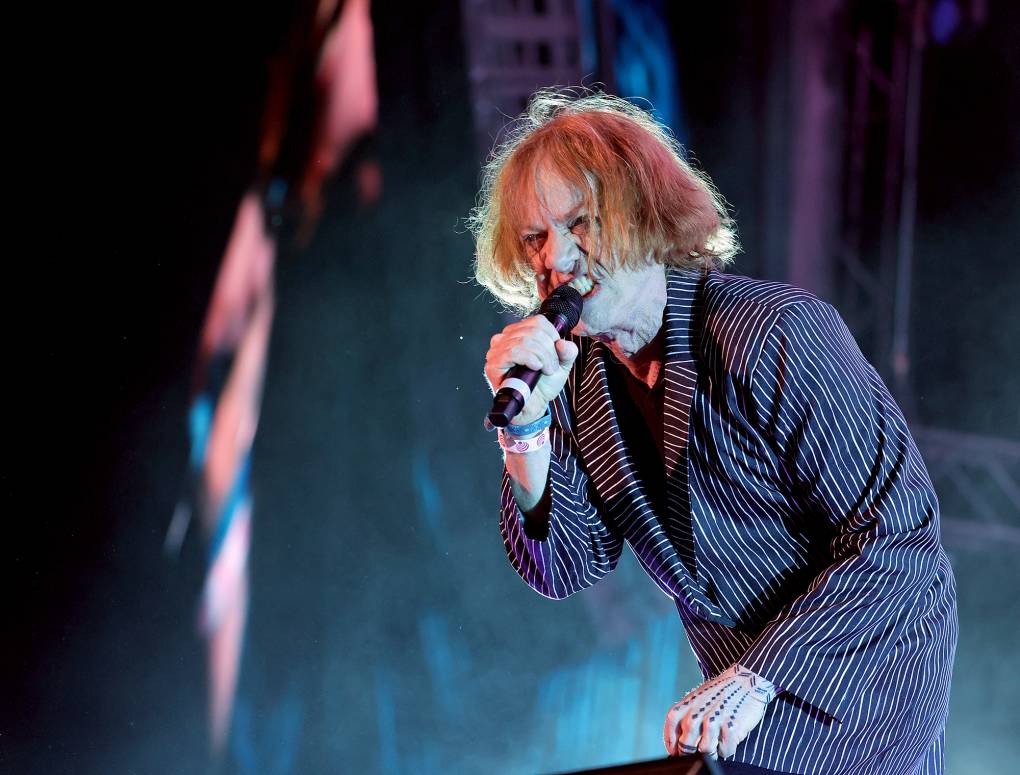
window.__IS_SSR__=true
window.__INITIAL_STATE__={
"attachmentsReducer": {
"audio_0": {
"type": "attachments",
"id": "audio_0",
"imgSizes": {
"kqedFullSize": {
"file": "https://ww2.kqed.org/news/wp-content/themes/KQED-unified/img/audio_bgs/background0.jpg"
}
}
},
"audio_1": {
"type": "attachments",
"id": "audio_1",
"imgSizes": {
"kqedFullSize": {
"file": "https://ww2.kqed.org/news/wp-content/themes/KQED-unified/img/audio_bgs/background1.jpg"
}
}
},
"audio_2": {
"type": "attachments",
"id": "audio_2",
"imgSizes": {
"kqedFullSize": {
"file": "https://ww2.kqed.org/news/wp-content/themes/KQED-unified/img/audio_bgs/background2.jpg"
}
}
},
"audio_3": {
"type": "attachments",
"id": "audio_3",
"imgSizes": {
"kqedFullSize": {
"file": "https://ww2.kqed.org/news/wp-content/themes/KQED-unified/img/audio_bgs/background3.jpg"
}
}
},
"audio_4": {
"type": "attachments",
"id": "audio_4",
"imgSizes": {
"kqedFullSize": {
"file": "https://ww2.kqed.org/news/wp-content/themes/KQED-unified/img/audio_bgs/background4.jpg"
}
}
},
"placeholder": {
"type": "attachments",
"id": "placeholder",
"imgSizes": {
"thumbnail": {
"file": "https://cdn.kqed.org/wp-content/uploads/2024/12/KQED-Default-Image-816638274-2000x1333-1-160x107.jpg",
"width": 160,
"height": 107,
"mimeType": "image/jpeg"
},
"medium": {
"file": "https://cdn.kqed.org/wp-content/uploads/2024/12/KQED-Default-Image-816638274-2000x1333-1-800x533.jpg",
"width": 800,
"height": 533,
"mimeType": "image/jpeg"
},
"medium_large": {
"file": "https://cdn.kqed.org/wp-content/uploads/2024/12/KQED-Default-Image-816638274-2000x1333-1-768x512.jpg",
"width": 768,
"height": 512,
"mimeType": "image/jpeg"
},
"large": {
"file": "https://cdn.kqed.org/wp-content/uploads/2024/12/KQED-Default-Image-816638274-2000x1333-1-1020x680.jpg",
"width": 1020,
"height": 680,
"mimeType": "image/jpeg"
},
"1536x1536": {
"file": "https://cdn.kqed.org/wp-content/uploads/2024/12/KQED-Default-Image-816638274-2000x1333-1-1536x1024.jpg",
"width": 1536,
"height": 1024,
"mimeType": "image/jpeg"
},
"fd-lrg": {
"file": "https://cdn.kqed.org/wp-content/uploads/2024/12/KQED-Default-Image-816638274-2000x1333-1-1536x1024.jpg",
"width": 1536,
"height": 1024,
"mimeType": "image/jpeg"
},
"fd-med": {
"file": "https://cdn.kqed.org/wp-content/uploads/2024/12/KQED-Default-Image-816638274-2000x1333-1-1020x680.jpg",
"width": 1020,
"height": 680,
"mimeType": "image/jpeg"
},
"fd-sm": {
"file": "https://cdn.kqed.org/wp-content/uploads/2024/12/KQED-Default-Image-816638274-2000x1333-1-800x533.jpg",
"width": 800,
"height": 533,
"mimeType": "image/jpeg"
},
"post-thumbnail": {
"file": "https://cdn.kqed.org/wp-content/uploads/2024/12/KQED-Default-Image-816638274-2000x1333-1-672x372.jpg",
"width": 672,
"height": 372,
"mimeType": "image/jpeg"
},
"twentyfourteen-full-width": {
"file": "https://cdn.kqed.org/wp-content/uploads/2024/12/KQED-Default-Image-816638274-2000x1333-1-1038x576.jpg",
"width": 1038,
"height": 576,
"mimeType": "image/jpeg"
},
"xxsmall": {
"file": "https://cdn.kqed.org/wp-content/uploads/2024/12/KQED-Default-Image-816638274-2000x1333-1-160x107.jpg",
"width": 160,
"height": 107,
"mimeType": "image/jpeg"
},
"xsmall": {
"file": "https://cdn.kqed.org/wp-content/uploads/2024/12/KQED-Default-Image-816638274-2000x1333-1-672x372.jpg",
"width": 672,
"height": 372,
"mimeType": "image/jpeg"
},
"small": {
"file": "https://cdn.kqed.org/wp-content/uploads/2024/12/KQED-Default-Image-816638274-2000x1333-1-672x372.jpg",
"width": 672,
"height": 372,
"mimeType": "image/jpeg"
},
"xlarge": {
"file": "https://cdn.kqed.org/wp-content/uploads/2024/12/KQED-Default-Image-816638274-2000x1333-1-1020x680.jpg",
"width": 1020,
"height": 680,
"mimeType": "image/jpeg"
},
"full-width": {
"file": "https://cdn.kqed.org/wp-content/uploads/2024/12/KQED-Default-Image-816638274-2000x1333-1-1920x1280.jpg",
"width": 1920,
"height": 1280,
"mimeType": "image/jpeg"
},
"guest-author-32": {
"file": "https://cdn.kqed.org/wp-content/uploads/2025/01/KQED-Default-Image-816638274-1333x1333-1-160x160.jpg",
"width": 32,
"height": 32,
"mimeType": "image/jpeg"
},
"guest-author-50": {
"file": "https://cdn.kqed.org/wp-content/uploads/2025/01/KQED-Default-Image-816638274-1333x1333-1-160x160.jpg",
"width": 50,
"height": 50,
"mimeType": "image/jpeg"
},
"guest-author-64": {
"file": "https://cdn.kqed.org/wp-content/uploads/2025/01/KQED-Default-Image-816638274-1333x1333-1-160x160.jpg",
"width": 64,
"height": 64,
"mimeType": "image/jpeg"
},
"guest-author-96": {
"file": "https://cdn.kqed.org/wp-content/uploads/2025/01/KQED-Default-Image-816638274-1333x1333-1-160x160.jpg",
"width": 96,
"height": 96,
"mimeType": "image/jpeg"
},
"guest-author-128": {
"file": "https://cdn.kqed.org/wp-content/uploads/2025/01/KQED-Default-Image-816638274-1333x1333-1-160x160.jpg",
"width": 128,
"height": 128,
"mimeType": "image/jpeg"
},
"detail": {
"file": "https://cdn.kqed.org/wp-content/uploads/2025/01/KQED-Default-Image-816638274-1333x1333-1-160x160.jpg",
"width": 160,
"height": 160,
"mimeType": "image/jpeg"
},
"kqedFullSize": {
"file": "https://cdn.kqed.org/wp-content/uploads/2024/12/KQED-Default-Image-816638274-2000x1333-1.jpg",
"width": 2000,
"height": 1333
}
}
},
"arts_13967537": {
"type": "attachments",
"id": "arts_13967537",
"meta": {
"index": "attachments_1716263798",
"site": "arts",
"id": "13967537",
"found": true
},
"title": "GettyImages-1393250499",
"publishDate": 1730400730,
"status": "inherit",
"parent": 13967509,
"modified": 1730400918,
"caption": "Film composer Danny Elfman, seen onstage at Coachella in 2022, was unsure if bringing his movie scores to a large stage would work: ‘I felt like I was walking into a trainwreck of my own design.’",
"credit": "Theo Wargo/Getty Images for Coachella",
"altTag": null,
"description": null,
"imgSizes": {
"medium": {
"file": "https://cdn.kqed.org/wp-content/uploads/sites/2/2024/10/GettyImages-1393250499-800x608.jpg",
"width": 800,
"height": 608,
"mimeType": "image/jpeg"
},
"large": {
"file": "https://cdn.kqed.org/wp-content/uploads/sites/2/2024/10/GettyImages-1393250499-1020x775.jpg",
"width": 1020,
"height": 775,
"mimeType": "image/jpeg"
},
"thumbnail": {
"file": "https://cdn.kqed.org/wp-content/uploads/sites/2/2024/10/GettyImages-1393250499-160x122.jpg",
"width": 160,
"height": 122,
"mimeType": "image/jpeg"
},
"medium_large": {
"file": "https://cdn.kqed.org/wp-content/uploads/sites/2/2024/10/GettyImages-1393250499-768x584.jpg",
"width": 768,
"height": 584,
"mimeType": "image/jpeg"
},
"1536x1536": {
"file": "https://cdn.kqed.org/wp-content/uploads/sites/2/2024/10/GettyImages-1393250499-1536x1167.jpg",
"width": 1536,
"height": 1167,
"mimeType": "image/jpeg"
},
"post-thumbnail": {
"file": "https://cdn.kqed.org/wp-content/uploads/sites/2/2024/10/GettyImages-1393250499-672x372.jpg",
"width": 672,
"height": 372,
"mimeType": "image/jpeg"
},
"twentyfourteen-full-width": {
"file": "https://cdn.kqed.org/wp-content/uploads/sites/2/2024/10/GettyImages-1393250499-1038x576.jpg",
"width": 1038,
"height": 576,
"mimeType": "image/jpeg"
},
"full-width": {
"file": "https://cdn.kqed.org/wp-content/uploads/sites/2/2024/10/GettyImages-1393250499-1920x1459.jpg",
"width": 1920,
"height": 1459,
"mimeType": "image/jpeg"
},
"kqedFullSize": {
"file": "https://cdn.kqed.org/wp-content/uploads/sites/2/2024/10/GettyImages-1393250499.jpg",
"width": 2000,
"height": 1520
}
},
"isLoading": false,
"fetchFailed": false
},
"arts_13967493": {
"type": "attachments",
"id": "arts_13967493",
"meta": {
"index": "attachments_1716263798",
"site": "arts",
"id": "13967493",
"found": true
},
"title": "mac-dre_3",
"publishDate": 1730329356,
"status": "inherit",
"parent": 13967351,
"modified": 1730329555,
"caption": "Twenty years after his death on Nov. 1, 2004, Mac Dre's spirit continues to permeate Bay Area culture like no other.",
"credit": "Illustration by Darren Tu",
"altTag": "A Black man in a pattered button-up shirt, a fashionable hat and dreadlocks looks over his shoulder as the Bay Bridge stretches out in the background against a color-treated sky",
"description": null,
"imgSizes": {
"medium": {
"file": "https://cdn.kqed.org/wp-content/uploads/sites/2/2024/10/mac-dre_3-800x517.jpg",
"width": 800,
"height": 517,
"mimeType": "image/jpeg"
},
"large": {
"file": "https://cdn.kqed.org/wp-content/uploads/sites/2/2024/10/mac-dre_3-1020x659.jpg",
"width": 1020,
"height": 659,
"mimeType": "image/jpeg"
},
"thumbnail": {
"file": "https://cdn.kqed.org/wp-content/uploads/sites/2/2024/10/mac-dre_3-160x103.jpg",
"width": 160,
"height": 103,
"mimeType": "image/jpeg"
},
"medium_large": {
"file": "https://cdn.kqed.org/wp-content/uploads/sites/2/2024/10/mac-dre_3-768x496.jpg",
"width": 768,
"height": 496,
"mimeType": "image/jpeg"
},
"1536x1536": {
"file": "https://cdn.kqed.org/wp-content/uploads/sites/2/2024/10/mac-dre_3-1536x992.jpg",
"width": 1536,
"height": 992,
"mimeType": "image/jpeg"
},
"post-thumbnail": {
"file": "https://cdn.kqed.org/wp-content/uploads/sites/2/2024/10/mac-dre_3-672x372.jpg",
"width": 672,
"height": 372,
"mimeType": "image/jpeg"
},
"twentyfourteen-full-width": {
"file": "https://cdn.kqed.org/wp-content/uploads/sites/2/2024/10/mac-dre_3-1038x576.jpg",
"width": 1038,
"height": 576,
"mimeType": "image/jpeg"
},
"kqedFullSize": {
"file": "https://cdn.kqed.org/wp-content/uploads/sites/2/2024/10/mac-dre_3.jpg",
"width": 1920,
"height": 1240
}
},
"isLoading": false,
"fetchFailed": false
},
"arts_13903425": {
"type": "attachments",
"id": "arts_13903425",
"meta": {
"index": "attachments_1716263798",
"site": "arts",
"id": "13903425",
"found": true
},
"title": "Erykah Badu performs at Lights On Festival at Concord Pavilion on Saturday, Sept. 18, 2021.",
"publishDate": 1632083070,
"status": "inherit",
"parent": 13903394,
"modified": 1730325601,
"caption": "Erykah Badu performs at Lights On Festival at Concord Pavilion on Saturday, Sept. 18, 2021.",
"credit": "Estefany Gonzalez for KQED",
"altTag": null,
"description": "Erykah Badu performs at Lights On Festival at Concord Pavilion on Saturday, Sept. 18, 2021.",
"imgSizes": {
"thumbnail": {
"file": "https://cdn.kqed.org/wp-content/uploads/sites/2/2021/09/D7A5194-160x107.jpg",
"width": 160,
"height": 107,
"mimeType": "image/jpeg"
},
"medium_large": {
"file": "https://cdn.kqed.org/wp-content/uploads/sites/2/2021/09/D7A5194-768x512.jpg",
"width": 768,
"height": 512,
"mimeType": "image/jpeg"
},
"post-thumbnail": {
"file": "https://cdn.kqed.org/wp-content/uploads/sites/2/2021/09/D7A5194-672x372.jpg",
"width": 672,
"height": 372,
"mimeType": "image/jpeg"
},
"kqedFullSize": {
"file": "https://cdn.kqed.org/wp-content/uploads/sites/2/2021/09/D7A5194.jpg",
"width": 800,
"height": 533
}
},
"isLoading": false,
"fetchFailed": false
},
"arts_13967444": {
"type": "attachments",
"id": "arts_13967444",
"meta": {
"index": "attachments_1716263798",
"site": "arts",
"id": "13967444",
"found": true
},
"title": "Allison-and-Urs-photo-by-Kate-Stilley-Steiner",
"publishDate": 1730244188,
"status": "inherit",
"parent": 0,
"modified": 1730244233,
"caption": "Composer and pianist Allison Lovejoy discusses the score of ‘Elijah’s Call’ with Urs Leonhardt Steiner, music director and conductor of the Golden Gate Symphony Orchestra and Chorus. ",
"credit": "Kate Stilley Steiner",
"altTag": null,
"description": null,
"imgSizes": {
"medium": {
"file": "https://cdn.kqed.org/wp-content/uploads/sites/2/2024/10/Allison-and-Urs-photo-by-Kate-Stilley-Steiner-800x600.jpg",
"width": 800,
"height": 600,
"mimeType": "image/jpeg"
},
"large": {
"file": "https://cdn.kqed.org/wp-content/uploads/sites/2/2024/10/Allison-and-Urs-photo-by-Kate-Stilley-Steiner-1020x765.jpg",
"width": 1020,
"height": 765,
"mimeType": "image/jpeg"
},
"thumbnail": {
"file": "https://cdn.kqed.org/wp-content/uploads/sites/2/2024/10/Allison-and-Urs-photo-by-Kate-Stilley-Steiner-160x120.jpg",
"width": 160,
"height": 120,
"mimeType": "image/jpeg"
},
"medium_large": {
"file": "https://cdn.kqed.org/wp-content/uploads/sites/2/2024/10/Allison-and-Urs-photo-by-Kate-Stilley-Steiner-768x576.jpg",
"width": 768,
"height": 576,
"mimeType": "image/jpeg"
},
"1536x1536": {
"file": "https://cdn.kqed.org/wp-content/uploads/sites/2/2024/10/Allison-and-Urs-photo-by-Kate-Stilley-Steiner-1536x1152.jpg",
"width": 1536,
"height": 1152,
"mimeType": "image/jpeg"
},
"post-thumbnail": {
"file": "https://cdn.kqed.org/wp-content/uploads/sites/2/2024/10/Allison-and-Urs-photo-by-Kate-Stilley-Steiner-672x372.jpg",
"width": 672,
"height": 372,
"mimeType": "image/jpeg"
},
"twentyfourteen-full-width": {
"file": "https://cdn.kqed.org/wp-content/uploads/sites/2/2024/10/Allison-and-Urs-photo-by-Kate-Stilley-Steiner-1038x576.jpg",
"width": 1038,
"height": 576,
"mimeType": "image/jpeg"
},
"full-width": {
"file": "https://cdn.kqed.org/wp-content/uploads/sites/2/2024/10/Allison-and-Urs-photo-by-Kate-Stilley-Steiner-1920x1440.jpg",
"width": 1920,
"height": 1440,
"mimeType": "image/jpeg"
},
"kqedFullSize": {
"file": "https://cdn.kqed.org/wp-content/uploads/sites/2/2024/10/Allison-and-Urs-photo-by-Kate-Stilley-Steiner.jpg",
"width": 2000,
"height": 1500
}
},
"isLoading": false,
"fetchFailed": false
},
"arts_13967313": {
"type": "attachments",
"id": "arts_13967313",
"meta": {
"index": "attachments_1716263798",
"site": "arts",
"id": "13967313",
"found": true
},
"title": "Phil Lesh & Friends Perform At Stern Grove",
"publishDate": 1729890021,
"status": "inherit",
"parent": 13967309,
"modified": 1729890066,
"caption": "Phil Lesh performs at the Stern Grove Festival in San Francisco on Aug. 14, 2022.",
"credit": "Steve Jennings/Getty Images",
"altTag": "an older man plays bass on stage while smiling",
"description": null,
"imgSizes": {
"medium": {
"file": "https://cdn.kqed.org/wp-content/uploads/sites/2/2024/10/GettyImages-1414934072-1-800x523.jpg",
"width": 800,
"height": 523,
"mimeType": "image/jpeg"
},
"large": {
"file": "https://cdn.kqed.org/wp-content/uploads/sites/2/2024/10/GettyImages-1414934072-1-1020x667.jpg",
"width": 1020,
"height": 667,
"mimeType": "image/jpeg"
},
"thumbnail": {
"file": "https://cdn.kqed.org/wp-content/uploads/sites/2/2024/10/GettyImages-1414934072-1-160x105.jpg",
"width": 160,
"height": 105,
"mimeType": "image/jpeg"
},
"medium_large": {
"file": "https://cdn.kqed.org/wp-content/uploads/sites/2/2024/10/GettyImages-1414934072-1-768x502.jpg",
"width": 768,
"height": 502,
"mimeType": "image/jpeg"
},
"1536x1536": {
"file": "https://cdn.kqed.org/wp-content/uploads/sites/2/2024/10/GettyImages-1414934072-1-1536x1005.jpg",
"width": 1536,
"height": 1005,
"mimeType": "image/jpeg"
},
"2048x2048": {
"file": "https://cdn.kqed.org/wp-content/uploads/sites/2/2024/10/GettyImages-1414934072-1-2048x1340.jpg",
"width": 2048,
"height": 1340,
"mimeType": "image/jpeg"
},
"post-thumbnail": {
"file": "https://cdn.kqed.org/wp-content/uploads/sites/2/2024/10/GettyImages-1414934072-1-672x372.jpg",
"width": 672,
"height": 372,
"mimeType": "image/jpeg"
},
"twentyfourteen-full-width": {
"file": "https://cdn.kqed.org/wp-content/uploads/sites/2/2024/10/GettyImages-1414934072-1-1038x576.jpg",
"width": 1038,
"height": 576,
"mimeType": "image/jpeg"
},
"full-width": {
"file": "https://cdn.kqed.org/wp-content/uploads/sites/2/2024/10/GettyImages-1414934072-1-1920x1256.jpg",
"width": 1920,
"height": 1256,
"mimeType": "image/jpeg"
},
"kqedFullSize": {
"file": "https://cdn.kqed.org/wp-content/uploads/sites/2/2024/10/GettyImages-1414934072-1-scaled.jpg",
"width": 2560,
"height": 1675
}
},
"isLoading": false,
"fetchFailed": false
},
"arts_13967232": {
"type": "attachments",
"id": "arts_13967232",
"meta": {
"index": "attachments_1716263798",
"site": "arts",
"id": "13967232",
"found": true
},
"title": "_74A5626",
"publishDate": 1729797217,
"status": "inherit",
"parent": 13967202,
"modified": 1729797401,
"caption": "Anja Kampe as Isolde and Simon O'Neill as Tristan in Wagner's ‘Tristan und Isolde.’",
"credit": "Cory Weaver/San Francisco Opera",
"altTag": null,
"description": null,
"imgSizes": {
"medium": {
"file": "https://cdn.kqed.org/wp-content/uploads/sites/2/2024/10/74A5626-800x450.jpg",
"width": 800,
"height": 450,
"mimeType": "image/jpeg"
},
"large": {
"file": "https://cdn.kqed.org/wp-content/uploads/sites/2/2024/10/74A5626-1020x574.jpg",
"width": 1020,
"height": 574,
"mimeType": "image/jpeg"
},
"thumbnail": {
"file": "https://cdn.kqed.org/wp-content/uploads/sites/2/2024/10/74A5626-160x90.jpg",
"width": 160,
"height": 90,
"mimeType": "image/jpeg"
},
"medium_large": {
"file": "https://cdn.kqed.org/wp-content/uploads/sites/2/2024/10/74A5626-768x432.jpg",
"width": 768,
"height": 432,
"mimeType": "image/jpeg"
},
"1536x1536": {
"file": "https://cdn.kqed.org/wp-content/uploads/sites/2/2024/10/74A5626-1536x864.jpg",
"width": 1536,
"height": 864,
"mimeType": "image/jpeg"
},
"post-thumbnail": {
"file": "https://cdn.kqed.org/wp-content/uploads/sites/2/2024/10/74A5626-672x372.jpg",
"width": 672,
"height": 372,
"mimeType": "image/jpeg"
},
"twentyfourteen-full-width": {
"file": "https://cdn.kqed.org/wp-content/uploads/sites/2/2024/10/74A5626-1038x576.jpg",
"width": 1038,
"height": 576,
"mimeType": "image/jpeg"
},
"full-width": {
"file": "https://cdn.kqed.org/wp-content/uploads/sites/2/2024/10/74A5626-1920x1080.jpg",
"width": 1920,
"height": 1080,
"mimeType": "image/jpeg"
},
"kqedFullSize": {
"file": "https://cdn.kqed.org/wp-content/uploads/sites/2/2024/10/74A5626.jpg",
"width": 2000,
"height": 1125
}
},
"isLoading": false,
"fetchFailed": false
},
"arts_13967057": {
"type": "attachments",
"id": "arts_13967057",
"meta": {
"index": "attachments_1716263798",
"site": "arts",
"id": "13967057",
"found": true
},
"title": "20241020-CHARLIXCXFANS-JY-007-KQED",
"publishDate": 1729627884,
"status": "inherit",
"parent": 0,
"modified": 1729721141,
"caption": "Morgan Le, 28, of Eugene, Oregon, poses for a portrait while waiting to attend Charli XCX and Troye Sivan’s Sweat Tour at Chase Center in San Francisco on Sunday, Oct. 20, 2024.",
"credit": "Juliana Yamada for KQED",
"altTag": "A woman wearing neon green boots, sunglasses, a hat and a jacket gives the peace sign with her hand while sitting outside on the ground.",
"description": null,
"imgSizes": {
"medium": {
"file": "https://cdn.kqed.org/wp-content/uploads/sites/2/2024/10/20241020-CHARLIXCXFANS-JY-007-KQED-800x533.jpg",
"width": 800,
"height": 533,
"mimeType": "image/jpeg"
},
"large": {
"file": "https://cdn.kqed.org/wp-content/uploads/sites/2/2024/10/20241020-CHARLIXCXFANS-JY-007-KQED-1020x680.jpg",
"width": 1020,
"height": 680,
"mimeType": "image/jpeg"
},
"thumbnail": {
"file": "https://cdn.kqed.org/wp-content/uploads/sites/2/2024/10/20241020-CHARLIXCXFANS-JY-007-KQED-160x107.jpg",
"width": 160,
"height": 107,
"mimeType": "image/jpeg"
},
"medium_large": {
"file": "https://cdn.kqed.org/wp-content/uploads/sites/2/2024/10/20241020-CHARLIXCXFANS-JY-007-KQED-768x512.jpg",
"width": 768,
"height": 512,
"mimeType": "image/jpeg"
},
"1536x1536": {
"file": "https://cdn.kqed.org/wp-content/uploads/sites/2/2024/10/20241020-CHARLIXCXFANS-JY-007-KQED-1536x1024.jpg",
"width": 1536,
"height": 1024,
"mimeType": "image/jpeg"
},
"post-thumbnail": {
"file": "https://cdn.kqed.org/wp-content/uploads/sites/2/2024/10/20241020-CHARLIXCXFANS-JY-007-KQED-672x372.jpg",
"width": 672,
"height": 372,
"mimeType": "image/jpeg"
},
"twentyfourteen-full-width": {
"file": "https://cdn.kqed.org/wp-content/uploads/sites/2/2024/10/20241020-CHARLIXCXFANS-JY-007-KQED-1038x576.jpg",
"width": 1038,
"height": 576,
"mimeType": "image/jpeg"
},
"full-width": {
"file": "https://cdn.kqed.org/wp-content/uploads/sites/2/2024/10/20241020-CHARLIXCXFANS-JY-007-KQED-1920x1280.jpg",
"width": 1920,
"height": 1280,
"mimeType": "image/jpeg"
},
"kqedFullSize": {
"file": "https://cdn.kqed.org/wp-content/uploads/sites/2/2024/10/20241020-CHARLIXCXFANS-JY-007-KQED.jpg",
"width": 2000,
"height": 1333
}
},
"isLoading": false,
"fetchFailed": false
},
"arts_13967096": {
"type": "attachments",
"id": "arts_13967096",
"meta": {
"index": "attachments_1716263798",
"site": "arts",
"id": "13967096",
"found": true
},
"title": "‘Bird in Kansas City (Live)’ by Charlie Parker.",
"publishDate": 1729703469,
"status": "inherit",
"parent": 13967094,
"modified": 1729703507,
"caption": "‘Bird in Kansas City (Live)’ by Charlie Parker.",
"credit": "Verve Records via AP",
"altTag": "An album cover showing drums and a Black man playing a saxophone.",
"description": null,
"imgSizes": {
"medium": {
"file": "https://cdn.kqed.org/wp-content/uploads/sites/2/2024/10/cp-800x542.png",
"width": 800,
"height": 542,
"mimeType": "image/png"
},
"large": {
"file": "https://cdn.kqed.org/wp-content/uploads/sites/2/2024/10/cp-1020x691.png",
"width": 1020,
"height": 691,
"mimeType": "image/png"
},
"thumbnail": {
"file": "https://cdn.kqed.org/wp-content/uploads/sites/2/2024/10/cp-160x108.png",
"width": 160,
"height": 108,
"mimeType": "image/png"
},
"medium_large": {
"file": "https://cdn.kqed.org/wp-content/uploads/sites/2/2024/10/cp-768x520.png",
"width": 768,
"height": 520,
"mimeType": "image/png"
},
"1536x1536": {
"file": "https://cdn.kqed.org/wp-content/uploads/sites/2/2024/10/cp-1536x1040.png",
"width": 1536,
"height": 1040,
"mimeType": "image/png"
},
"post-thumbnail": {
"file": "https://cdn.kqed.org/wp-content/uploads/sites/2/2024/10/cp-672x372.png",
"width": 672,
"height": 372,
"mimeType": "image/png"
},
"twentyfourteen-full-width": {
"file": "https://cdn.kqed.org/wp-content/uploads/sites/2/2024/10/cp-1038x576.png",
"width": 1038,
"height": 576,
"mimeType": "image/png"
},
"full-width": {
"file": "https://cdn.kqed.org/wp-content/uploads/sites/2/2024/10/cp-1920x1300.png",
"width": 1920,
"height": 1300,
"mimeType": "image/png"
},
"kqedFullSize": {
"file": "https://cdn.kqed.org/wp-content/uploads/sites/2/2024/10/cp.png",
"width": 2000,
"height": 1354
}
},
"isLoading": false,
"fetchFailed": false
},
"arts_13967032": {
"type": "attachments",
"id": "arts_13967032",
"meta": {
"index": "attachments_1716263798",
"site": "arts",
"id": "13967032",
"found": true
},
"title": "paris nights lead",
"publishDate": 1729623125,
"status": "inherit",
"parent": 13967001,
"modified": 1729623187,
"caption": "East Oakland lyricist Paris Nights. ",
"credit": "Courtesy of Paris Nights",
"altTag": "Rapper Paris Nights in front of a microphone outdoors.",
"description": null,
"imgSizes": {
"medium": {
"file": "https://cdn.kqed.org/wp-content/uploads/sites/2/2024/10/paris-nights-lead-800x550.jpg",
"width": 800,
"height": 550,
"mimeType": "image/jpeg"
},
"large": {
"file": "https://cdn.kqed.org/wp-content/uploads/sites/2/2024/10/paris-nights-lead-1020x701.jpg",
"width": 1020,
"height": 701,
"mimeType": "image/jpeg"
},
"thumbnail": {
"file": "https://cdn.kqed.org/wp-content/uploads/sites/2/2024/10/paris-nights-lead-160x110.jpg",
"width": 160,
"height": 110,
"mimeType": "image/jpeg"
},
"medium_large": {
"file": "https://cdn.kqed.org/wp-content/uploads/sites/2/2024/10/paris-nights-lead-768x528.jpg",
"width": 768,
"height": 528,
"mimeType": "image/jpeg"
},
"1536x1536": {
"file": "https://cdn.kqed.org/wp-content/uploads/sites/2/2024/10/paris-nights-lead-1536x1056.jpg",
"width": 1536,
"height": 1056,
"mimeType": "image/jpeg"
},
"post-thumbnail": {
"file": "https://cdn.kqed.org/wp-content/uploads/sites/2/2024/10/paris-nights-lead-672x372.jpg",
"width": 672,
"height": 372,
"mimeType": "image/jpeg"
},
"twentyfourteen-full-width": {
"file": "https://cdn.kqed.org/wp-content/uploads/sites/2/2024/10/paris-nights-lead-1038x576.jpg",
"width": 1038,
"height": 576,
"mimeType": "image/jpeg"
},
"full-width": {
"file": "https://cdn.kqed.org/wp-content/uploads/sites/2/2024/10/paris-nights-lead-1920x1320.jpg",
"width": 1920,
"height": 1320,
"mimeType": "image/jpeg"
},
"kqedFullSize": {
"file": "https://cdn.kqed.org/wp-content/uploads/sites/2/2024/10/paris-nights-lead.jpg",
"width": 2000,
"height": 1375
}
},
"isLoading": false,
"fetchFailed": false
},
"arts_13966906": {
"type": "attachments",
"id": "arts_13966906",
"meta": {
"index": "attachments_1716263798",
"site": "arts",
"id": "13966906",
"found": true
},
"title": "IMG_0524 (1)-Edit",
"publishDate": 1729537590,
"status": "inherit",
"parent": 0,
"modified": 1729537793,
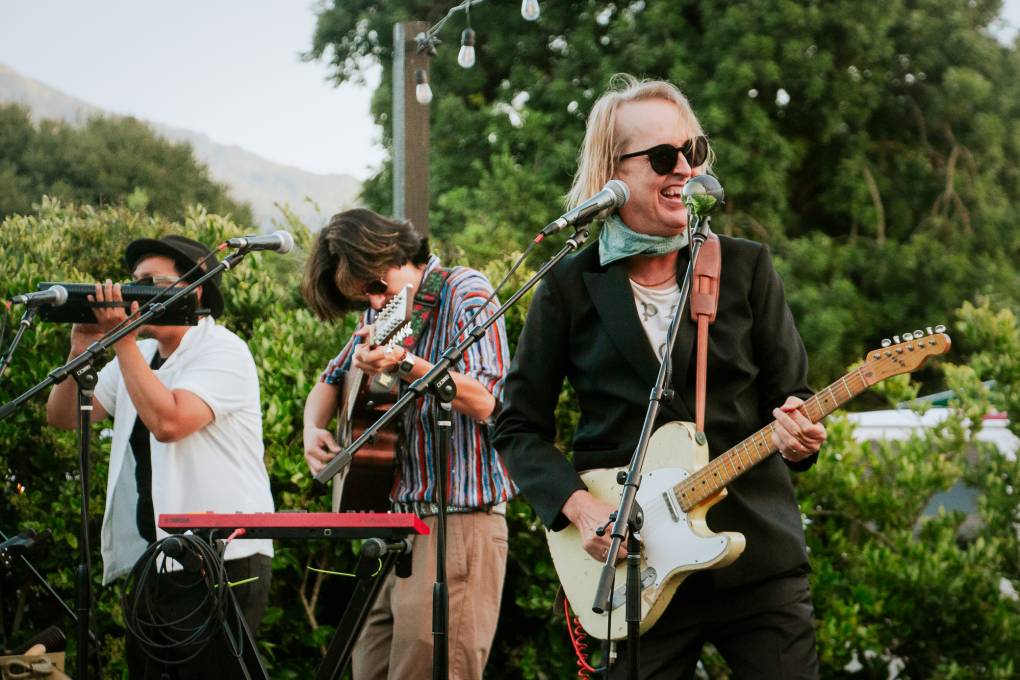
"caption": "Qiensave members Mario Cortez (left) and Alejandro Gomez perform with Chuck Prophet at Folktale Winery in Carmel on Aug. 21, 2024.",
"credit": "Folktale Winery ",
"altTag": "three men play in a band onstage",
"description": null,
"imgSizes": {
"medium": {
"file": "https://cdn.kqed.org/wp-content/uploads/sites/2/2024/10/IMG_0524-1-Edit-800x533.jpg",
"width": 800,
"height": 533,
"mimeType": "image/jpeg"
},
"large": {
"file": "https://cdn.kqed.org/wp-content/uploads/sites/2/2024/10/IMG_0524-1-Edit-1020x680.jpg",
"width": 1020,
"height": 680,
"mimeType": "image/jpeg"
},
"thumbnail": {
"file": "https://cdn.kqed.org/wp-content/uploads/sites/2/2024/10/IMG_0524-1-Edit-160x107.jpg",
"width": 160,
"height": 107,
"mimeType": "image/jpeg"
},
"medium_large": {
"file": "https://cdn.kqed.org/wp-content/uploads/sites/2/2024/10/IMG_0524-1-Edit-768x512.jpg",
"width": 768,
"height": 512,
"mimeType": "image/jpeg"
},
"1536x1536": {
"file": "https://cdn.kqed.org/wp-content/uploads/sites/2/2024/10/IMG_0524-1-Edit-1536x1024.jpg",
"width": 1536,
"height": 1024,
"mimeType": "image/jpeg"
},
"post-thumbnail": {
"file": "https://cdn.kqed.org/wp-content/uploads/sites/2/2024/10/IMG_0524-1-Edit-672x372.jpg",
"width": 672,
"height": 372,
"mimeType": "image/jpeg"
},
"twentyfourteen-full-width": {
"file": "https://cdn.kqed.org/wp-content/uploads/sites/2/2024/10/IMG_0524-1-Edit-1038x576.jpg",
"width": 1038,
"height": 576,
"mimeType": "image/jpeg"
},
"full-width": {
"file": "https://cdn.kqed.org/wp-content/uploads/sites/2/2024/10/IMG_0524-1-Edit-1920x1280.jpg",
"width": 1920,
"height": 1280,
"mimeType": "image/jpeg"
},
"kqedFullSize": {
"file": "https://cdn.kqed.org/wp-content/uploads/sites/2/2024/10/IMG_0524-1-Edit.jpg",
"width": 2000,
"height": 1333
}
},
"isLoading": false,
"fetchFailed": false
},
"arts_13966901": {
"type": "attachments",
"id": "arts_13966901",
"meta": {
"index": "attachments_1716263798",
"site": "arts",
"id": "13966901",
"found": true
},
"title": "Roskilde Festival 2024 - Day 6",
"publishDate": 1729537250,
"status": "inherit",
"parent": 13966893,
"modified": 1729537279,
"caption": "Charli XCX performs at Roskilde Festival 2024 on July 05, 2024 in Roskilde, Denmark. ",
"credit": "Joseph Okpako/WireImage",
"altTag": null,
"description": null,
"imgSizes": {
"medium": {
"file": "https://cdn.kqed.org/wp-content/uploads/sites/2/2024/10/GettyImages-2160833994-800x532.jpg",
"width": 800,
"height": 532,
"mimeType": "image/jpeg"
},
"large": {
"file": "https://cdn.kqed.org/wp-content/uploads/sites/2/2024/10/GettyImages-2160833994-1020x679.jpg",
"width": 1020,
"height": 679,
"mimeType": "image/jpeg"
},
"thumbnail": {
"file": "https://cdn.kqed.org/wp-content/uploads/sites/2/2024/10/GettyImages-2160833994-160x106.jpg",
"width": 160,
"height": 106,
"mimeType": "image/jpeg"
},
"medium_large": {
"file": "https://cdn.kqed.org/wp-content/uploads/sites/2/2024/10/GettyImages-2160833994-768x511.jpg",
"width": 768,
"height": 511,
"mimeType": "image/jpeg"
},
"1536x1536": {
"file": "https://cdn.kqed.org/wp-content/uploads/sites/2/2024/10/GettyImages-2160833994-1536x1022.jpg",
"width": 1536,
"height": 1022,
"mimeType": "image/jpeg"
},
"post-thumbnail": {
"file": "https://cdn.kqed.org/wp-content/uploads/sites/2/2024/10/GettyImages-2160833994-672x372.jpg",
"width": 672,
"height": 372,
"mimeType": "image/jpeg"
},
"twentyfourteen-full-width": {
"file": "https://cdn.kqed.org/wp-content/uploads/sites/2/2024/10/GettyImages-2160833994-1038x576.jpg",
"width": 1038,
"height": 576,
"mimeType": "image/jpeg"
},
"full-width": {
"file": "https://cdn.kqed.org/wp-content/uploads/sites/2/2024/10/GettyImages-2160833994-1920x1278.jpg",
"width": 1920,
"height": 1278,
"mimeType": "image/jpeg"
},
"kqedFullSize": {
"file": "https://cdn.kqed.org/wp-content/uploads/sites/2/2024/10/GettyImages-2160833994.jpg",
"width": 2000,
"height": 1331
}
},
"isLoading": false,
"fetchFailed": false
},
"arts_13966891": {
"type": "attachments",
"id": "arts_13966891",
"meta": {
"index": "attachments_1716263798",
"site": "arts",
"id": "13966891",
"found": true
},
"title": "Singer Barbara Dane, n the University of California at Berkeley campus, May 22, 1965, likely and anti-Vietnam War rally",
"publishDate": 1729534882,
"status": "inherit",
"parent": 13966880,
"modified": 1729534944,
"caption": "Barbara Dane on the UC Berkeley campus in 1965, likely during an anti-Vietnam War rally.",
"credit": "Mike Alexander/San Francisco Chronicle via Getty Images",
"altTag": "woman holding guitar sings into mic in front of large crowd",
"description": null,
"imgSizes": {
"medium": {
"file": "https://cdn.kqed.org/wp-content/uploads/sites/2/2024/10/GettyImages-1211775883-800x477.jpg",
"width": 800,
"height": 477,
"mimeType": "image/jpeg"
},
"large": {
"file": "https://cdn.kqed.org/wp-content/uploads/sites/2/2024/10/GettyImages-1211775883-1020x608.jpg",
"width": 1020,
"height": 608,
"mimeType": "image/jpeg"
},
"thumbnail": {
"file": "https://cdn.kqed.org/wp-content/uploads/sites/2/2024/10/GettyImages-1211775883-160x95.jpg",
"width": 160,
"height": 95,
"mimeType": "image/jpeg"
},
"medium_large": {
"file": "https://cdn.kqed.org/wp-content/uploads/sites/2/2024/10/GettyImages-1211775883-768x458.jpg",
"width": 768,
"height": 458,
"mimeType": "image/jpeg"
},
"1536x1536": {
"file": "https://cdn.kqed.org/wp-content/uploads/sites/2/2024/10/GettyImages-1211775883-1536x916.jpg",
"width": 1536,
"height": 916,
"mimeType": "image/jpeg"
},
"post-thumbnail": {
"file": "https://cdn.kqed.org/wp-content/uploads/sites/2/2024/10/GettyImages-1211775883-672x372.jpg",
"width": 672,
"height": 372,
"mimeType": "image/jpeg"
},
"twentyfourteen-full-width": {
"file": "https://cdn.kqed.org/wp-content/uploads/sites/2/2024/10/GettyImages-1211775883-1038x576.jpg",
"width": 1038,
"height": 576,
"mimeType": "image/jpeg"
},
"kqedFullSize": {
"file": "https://cdn.kqed.org/wp-content/uploads/sites/2/2024/10/GettyImages-1211775883.jpg",
"width": 1664,
"height": 992
}
},
"isLoading": false,
"fetchFailed": false
}
},
"audioPlayerReducer": {
"postId": "stream_live",
"isPaused": true,
"isPlaying": false,
"pfsActive": false,
"pledgeModalIsOpen": true,
"playerDrawerIsOpen": false,
"liveAudioPlayStartedAt": 0,
"liveAudioPlayContext": ""
},
"authorsReducer": {
"byline_arts_13967309": {
"type": "authors",
"id": "byline_arts_13967309",
"meta": {
"override": true
},
"slug": "byline_arts_13967309",
"name": "Isabella Gomez Sarmiento, NPR",
"isLoading": false
},
"byline_arts_13967094": {
"type": "authors",
"id": "byline_arts_13967094",
"meta": {
"override": true
},
"slug": "byline_arts_13967094",
"name": "Steven Wine, Associated Press",
"isLoading": false
},
"gmeline": {
"type": "authors",
"id": "185",
"meta": {
"index": "authors_1716337520",
"id": "185",
"found": true
},
"name": "Gabe Meline",
"firstName": "Gabe",
"lastName": "Meline",
"slug": "gmeline",
"email": "gmeline@kqed.org",
"display_author_email": true,
"staff_mastheads": [
"arts"
],
"title": "Senior Editor, KQED Arts & Culture",
"bio": "Gabe Meline entered journalism at age 15 making photocopied zines, and has since earned awards from the Edward R. Murrow Awards, the Society for Professional Journalists, the Online Journalism Awards, the Association of Alternative Newsweeklies and the California Newspaper Publishers Association. Prior to KQED, he was the editor of the \u003cem>North Bay Bohemian\u003c/em> and a touring musician. He lives with his wife and daughter in his hometown of Santa Rosa, CA.",
"avatar": "https://secure.gravatar.com/avatar/5bebe57be0d8bc2dd318934feb47299e2d2d10cba28d09d8d7afb389a2ce2bdd?s=600&d=blank&r=g",
"twitter": null,
"bluesky": null,
"facebook": null,
"instagram": null,
"linkedin": null,
"sites": [
{
"site": "",
"roles": [
"editor"
]
},
{
"site": "arts",
"roles": [
"administrator"
]
},
{
"site": "artschool",
"roles": [
"editor"
]
},
{
"site": "news",
"roles": [
"author"
]
},
{
"site": "pop",
"roles": [
"editor"
]
},
{
"site": "bayareabites",
"roles": [
"editor"
]
},
{
"site": "food",
"roles": [
"editor"
]
},
{
"site": "forum",
"roles": [
"administrator"
]
},
{
"site": "liveblog",
"roles": [
"editor"
]
},
{
"site": "hiphop",
"roles": [
"editor"
]
}
],
"headData": {
"title": "Gabe Meline | KQED",
"description": "Senior Editor, KQED Arts & Culture",
"ogImgSrc": "https://secure.gravatar.com/avatar/5bebe57be0d8bc2dd318934feb47299e2d2d10cba28d09d8d7afb389a2ce2bdd?s=600&d=blank&r=g",
"twImgSrc": "https://secure.gravatar.com/avatar/5bebe57be0d8bc2dd318934feb47299e2d2d10cba28d09d8d7afb389a2ce2bdd?s=600&d=blank&r=g"
},
"isLoading": false,
"link": "/author/gmeline"
},
"esilvers": {
"type": "authors",
"id": "7237",
"meta": {
"index": "authors_1716337520",
"id": "7237",
"found": true
},
"name": "Emma Silvers",
"firstName": "Emma",
"lastName": "Silvers",
"slug": "esilvers",
"email": "esilvers@kqed.org",
"display_author_email": false,
"staff_mastheads": [],
"title": "KQED Contributor",
"bio": "Emma Silvers is an editor at KQED Arts and a former digital producer at KQED News. Born and raised in the Bay Area, she has previously been an arts and entertainment editor at the \u003cem>San Francisco Chronicle\u003c/em>, \u003cem>SF Weekly\u003c/em> and the \u003cem>San Francisco Bay Guardian.\u003c/em> \u003ca href=\"https://www.emmasilvers.com\">Her work\u003c/a> has also appeared in \u003cem>Rolling Stone\u003c/em>, Pitchfork and \u003cem>Mother Jones\u003c/em>. In 2017 she was the recipient of the Society of Professional Journalists-Northern California's award for arts and culture reporting. In 1993 she \u003ca href=\"https://www.kqed.org/pop/16759/wait-what-my-coworker-was-a-voice-over-hyperventilator-for-jurassic-park\">hyperventilated in \u003cem>Jurassic Park\u003c/em>\u003c/a>.",
"avatar": "https://secure.gravatar.com/avatar/247beada39b88ea5759db1f51dba05cf?s=600&d=blank&r=g",
"twitter": "emmaruthless",
"facebook": null,
"instagram": null,
"linkedin": null,
"sites": [
{
"site": "arts",
"roles": [
"editor"
]
},
{
"site": "news",
"roles": [
"editor"
]
},
{
"site": "pop",
"roles": [
"contributor"
]
},
{
"site": "bayareabites",
"roles": [
"editor"
]
},
{
"site": "food",
"roles": [
"contributor"
]
},
{
"site": "liveblog",
"roles": [
"editor"
]
}
],
"headData": {
"title": "Emma Silvers | KQED",
"description": "KQED Contributor",
"ogImgSrc": "https://secure.gravatar.com/avatar/247beada39b88ea5759db1f51dba05cf?s=600&d=blank&r=g",
"twImgSrc": "https://secure.gravatar.com/avatar/247beada39b88ea5759db1f51dba05cf?s=600&d=blank&r=g"
},
"isLoading": false,
"link": "/author/esilvers"
},
"nvoynovskaya": {
"type": "authors",
"id": "11387",
"meta": {
"index": "authors_1716337520",
"id": "11387",
"found": true
},
"name": "Nastia Voynovskaya",
"firstName": "Nastia",
"lastName": "Voynovskaya",
"slug": "nvoynovskaya",
"email": "nvoynovskaya@kqed.org",
"display_author_email": false,
"staff_mastheads": [
"arts"
],
"title": "Editor and reporter",
"bio": "Nastia Voynovskaya is a reporter, editor and host at KQED Arts & Culture. She's been covering the arts in the Bay Area for over a decade, with a focus on music, queer culture, labor issues and grassroots organizing. She has edited KQED story series such as Trans Bay: A History of San Francisco's Gender-Diverse Community, and co-created KQED's Bay Area hip-hop history project, That's My Word. Nastia's work has been recognized by the Society of Professional Journalists and San Francisco Press Club. She regularly appears on podcasts and radio programs, including NPR's All Songs Considered, and hosts live events where music, culture and conversation meet.",
"avatar": "https://secure.gravatar.com/avatar/5025ee460e5a85d69ca20ea6c6f2f80d7e17795c828f61ea3aecfcd924e9042e?s=600&d=blank&r=g",
"twitter": null,
"bluesky": null,
"facebook": null,
"instagram": "https://www.instagram.com/nananastia/",
"linkedin": null,
"sites": [
{
"site": "",
"roles": [
"editor"
]
},
{
"site": "arts",
"roles": [
"administrator"
]
},
{
"site": "news",
"roles": [
"editor"
]
},
{
"site": "pop",
"roles": [
"administrator"
]
},
{
"site": "bayareabites",
"roles": [
"editor"
]
},
{
"site": "podcasts",
"roles": [
"editor"
]
},
{
"site": "hiphop",
"roles": [
"editor"
]
}
],
"headData": {
"title": "Nastia Voynovskaya | KQED",
"description": "Editor and reporter",
"ogImgSrc": "https://secure.gravatar.com/avatar/5025ee460e5a85d69ca20ea6c6f2f80d7e17795c828f61ea3aecfcd924e9042e?s=600&d=blank&r=g",
"twImgSrc": "https://secure.gravatar.com/avatar/5025ee460e5a85d69ca20ea6c6f2f80d7e17795c828f61ea3aecfcd924e9042e?s=600&d=blank&r=g"
},
"isLoading": false,
"link": "/author/nvoynovskaya"
},
"ogpenn": {
"type": "authors",
"id": "11491",
"meta": {
"index": "authors_1716337520",
"id": "11491",
"found": true
},
"name": "Pendarvis Harshaw",
"firstName": "Pendarvis",
"lastName": "Harshaw",
"slug": "ogpenn",
"email": "ogpenn@gmail.com",
"display_author_email": false,
"staff_mastheads": [
"arts"
],
"title": "Community Engagement Reporter",
"bio": "Pendarvis Harshaw is an educator, host and writer with KQED Arts.",
"avatar": "https://secure.gravatar.com/avatar/972b77ee8e3f346ae2b00622661187fbfabd059b5693bbdc1475ea7a722fd4cd?s=600&d=blank&r=g",
"twitter": null,
"bluesky": null,
"facebook": null,
"instagram": "ogpenn",
"linkedin": null,
"sites": [
{
"site": "arts",
"roles": [
"administrator"
]
},
{
"site": "news",
"roles": [
"editor"
]
},
{
"site": "bayareabites",
"roles": [
"author"
]
},
{
"site": "hiphop",
"roles": [
"editor"
]
}
],
"headData": {
"title": "Pendarvis Harshaw | KQED",
"description": "Community Engagement Reporter",
"ogImgSrc": "https://secure.gravatar.com/avatar/972b77ee8e3f346ae2b00622661187fbfabd059b5693bbdc1475ea7a722fd4cd?s=600&d=blank&r=g",
"twImgSrc": "https://secure.gravatar.com/avatar/972b77ee8e3f346ae2b00622661187fbfabd059b5693bbdc1475ea7a722fd4cd?s=600&d=blank&r=g"
},
"isLoading": false,
"link": "/author/ogpenn"
},
"nkhan": {
"type": "authors",
"id": "11867",
"meta": {
"index": "authors_1716337520",
"id": "11867",
"found": true
},
"name": "Nisa Khan",
"firstName": "Nisa",
"lastName": "Khan",
"slug": "nkhan",
"email": "nkhan@kqed.org",
"display_author_email": false,
"staff_mastheads": [],
"title": "KQED Contributor",
"bio": "Nisa Khan is a reporter for KQED's Audience News Desk. She was formerly a data reporter at Michigan Radio. She earned a Bachelor of Science in Information from the University of Michigan and a Master of Arts in Communication from Stanford University.",
"avatar": "https://secure.gravatar.com/avatar/8720459eef081ff64582b3506b124d58523e80e120704a0cbd9892533c914991?s=600&d=blank&r=g",
"twitter": "mnisakhan",
"bluesky": null,
"facebook": null,
"instagram": null,
"linkedin": null,
"sites": [
{
"site": "arts",
"roles": [
"editor"
]
},
{
"site": "news",
"roles": [
"editor"
]
},
{
"site": "science",
"roles": [
"editor",
"author"
]
},
{
"site": "forum",
"roles": [
"editor"
]
},
{
"site": "liveblog",
"roles": [
"contributor"
]
}
],
"headData": {
"title": "Nisa Khan | KQED",
"description": "KQED Contributor",
"ogImgSrc": "https://secure.gravatar.com/avatar/8720459eef081ff64582b3506b124d58523e80e120704a0cbd9892533c914991?s=600&d=blank&r=g",
"twImgSrc": "https://secure.gravatar.com/avatar/8720459eef081ff64582b3506b124d58523e80e120704a0cbd9892533c914991?s=600&d=blank&r=g"
},
"isLoading": false,
"link": "/author/nkhan"
},
"sfaulise": {
"type": "authors",
"id": "11919",
"meta": {
"index": "authors_1716337520",
"id": "11919",
"found": true
},
"name": "Shannon Faulise",
"firstName": "Shannon",
"lastName": "Faulise",
"slug": "sfaulise",
"email": "sfaulise@kqed.org",
"display_author_email": false,
"staff_mastheads": [],
"title": "Contributor, KQED Arts & Culture",
"bio": "Shannon Faulise is a graduate of the UC Berkeley Graduate School of Journalism, where she concentrated on photojournalism and feature writing. Shannon's photos, audio pieces and written stories have appeared in The Oaklandside, The Redwood City Pulse and KALX. Outside of reporting, Shannon loves kpop, women's sports and concerts. She served as an intern for KQED Arts & Culture in 2024–25.",
"avatar": "https://secure.gravatar.com/avatar/76449df2627a603d6b02f0534ec3c913007029bff4f1c0572071401f9a293a02?s=600&d=blank&r=g",
"twitter": null,
"bluesky": null,
"facebook": null,
"instagram": null,
"linkedin": null,
"sites": [
{
"site": "arts",
"roles": [
"subscriber"
]
}
],
"headData": {
"title": "Shannon Faulise | KQED",
"description": "Contributor, KQED Arts & Culture",
"ogImgSrc": "https://secure.gravatar.com/avatar/76449df2627a603d6b02f0534ec3c913007029bff4f1c0572071401f9a293a02?s=600&d=blank&r=g",
"twImgSrc": "https://secure.gravatar.com/avatar/76449df2627a603d6b02f0534ec3c913007029bff4f1c0572071401f9a293a02?s=600&d=blank&r=g"
},
"isLoading": false,
"link": "/author/sfaulise"
}
},
"pagesReducer": {
"arts_category_music": {
"type": "terms",
"id": "arts_69",
"meta": {
"index": "terms_1716263798",
"site": "arts",
"id": "69",
"score": 10.850678
},
"featImg": null,
"name": "Music",
"description": null,
"taxonomy": "category",
"headData": {
"twImgId": null,
"twTitle": null,
"ogTitle": null,
"ogImgId": null,
"twDescription": null,
"description": null,
"title": "Music Archives | KQED Arts",
"ogDescription": null
},
"ttid": 70,
"slug": "music",
"isLoading": false,
"title": "Music",
"pageMeta": {
"site": "arts",
"WpPageTemplate": "page-topic-editorial",
"currentPage": 40
},
"blocks": [
{
"blockName": "kqed/post-list",
"attrs": {
"layout": "cardArticle2",
"query": "posts/arts?category=music",
"seeMore": false,
"paginated": true,
"page": 40
}
},
{
"blockName": "kqed/ad"
}
]
}
},
"pfsSessionReducer": {},
"postsReducer": {
"stream_live": {
"type": "live",
"id": "stream_live",
"audioUrl": "https://streams.kqed.org/kqedradio",
"title": "Live Stream",
"excerpt": "Live Stream information currently unavailable.",
"link": "/radio",
"featImg": "",
"label": {
"name": "KQED Live",
"link": "/"
}
},
"stream_kqedNewscast": {
"type": "posts",
"id": "stream_kqedNewscast",
"audioUrl": "https://www.kqed.org/.stream/anon/radio/RDnews/newscast.mp3?_=1",
"title": "KQED Newscast",
"featImg": "",
"label": {
"name": "88.5 FM",
"link": "/"
}
},
"arts_13967509": {
"type": "posts",
"id": "arts_13967509",
"meta": {
"index": "posts_1716263798",
"site": "arts",
"id": "13967509",
"score": null,
"sort": [
1730403420000
]
},
"guestAuthors": [],
"slug": "danny-elfman-halloween-interview",
"title": "Danny Elfman on Halloween and His Current Stage Show: ‘It’s Completely Crazy’",
"publishDate": 1730403420,
"format": "standard",
"headTitle": "Danny Elfman on Halloween and His Current Stage Show: ‘It’s Completely Crazy’ | KQED",
"labelTerm": {
"term": 140,
"site": "arts"
},
"content": "\u003cp>As the composer for films like \u003cem>Beetlejuice\u003c/em>, \u003cem>The Nightmare Before Christmas\u003c/em> and \u003cem>Corpse Bride\u003c/em>, Danny Elfman’s name is nearly synonymous with Halloween. And though his most widely known work is probably \u003cem>The Simpsons\u003c/em> theme, “This Is Halloween,” “Tales From the Crypt,” “Dead Man’s Party” and other creepy classics from Elfman’s pen have become a new soundtrack to late October.\u003c/p>\n\u003cp>Before Elfman brings his musical mayhem to the Bay Area \u003ca href=\"https://www.dannyelfman.com/events-posts/fromboingotobatmantobigmessandbeyond2024-nd2n5\">on Sunday, Nov. 3\u003c/a> — a massive show spanning his work with Oingo Boingo, Tim Burton and more — he chatted with KQED about the spooky season, his inspirations and missing his longtime friend Pee-Wee Herman.\u003c/p>\n\u003cp>\u003cem>Interview has been edited for length and clarity. \u003c/em>\u003c/p>\n\u003cp>\u003cstrong>First of all, Happy Halloween — this must really be your time of year. Do you decorate your house? I’m imagining your front yard looking like \u003ca href=\"https://interscope.com/cdn/shop/files/0935F6ED-3EE1-4D23-B54A-2B6AA77D2FF3.jpg?v=1728685910&width=1200\">the album cover of \u003cem>Dead Man’s Party\u003c/em>\u003c/a>. \u003c/strong>\u003c/p>\n\u003cp>It used to! I lived for 17 years in a house in a nice, flat neighborhood. And my son Oliver, as a little kid, he took charge with decorating the house. It was completely done up. He took it really seriously; he called himself a director. We decorated every year.\u003c/p>\n\u003cp>[ad fullwidth]\u003c/p>\n\u003cp>But now I’ve moved and I’m in a house that has all these steps, up the hill, and we don’t get many visitors. It’s kind of sad, you know? But we had some good years of doing the house up every year.\u003c/p>\n\u003cfigure id=\"attachment_13967538\" class=\"wp-caption aligncenter\" style=\"max-width: 2000px\">\u003cimg loading=\"lazy\" decoding=\"async\" class=\"size-full wp-image-13967538\" src=\"https://cdn.kqed.org/wp-content/uploads/sites/2/2024/10/GettyImages-1391884573.jpg\" alt=\"\" width=\"2000\" height=\"1333\" srcset=\"https://cdn.kqed.org/wp-content/uploads/sites/2/2024/10/GettyImages-1391884573.jpg 2000w, https://cdn.kqed.org/wp-content/uploads/sites/2/2024/10/GettyImages-1391884573-800x533.jpg 800w, https://cdn.kqed.org/wp-content/uploads/sites/2/2024/10/GettyImages-1391884573-1020x680.jpg 1020w, https://cdn.kqed.org/wp-content/uploads/sites/2/2024/10/GettyImages-1391884573-160x107.jpg 160w, https://cdn.kqed.org/wp-content/uploads/sites/2/2024/10/GettyImages-1391884573-768x512.jpg 768w, https://cdn.kqed.org/wp-content/uploads/sites/2/2024/10/GettyImages-1391884573-1536x1024.jpg 1536w, https://cdn.kqed.org/wp-content/uploads/sites/2/2024/10/GettyImages-1391884573-1920x1280.jpg 1920w\" sizes=\"(max-width: 2000px) 100vw, 2000px\">\u003cfigcaption class=\"wp-caption-text\">Danny Elfman performs onstage at the 2022 Coachella Valley Music And Arts Festival on April 16, 2022. \u003ccite>(Kevin Mazur/Getty Images for Coachella)\u003c/cite>\u003c/figcaption>\u003c/figure>\n\u003cp>\u003cstrong>Tell me a little bit about what people can expect from these shows you’re doing this weekend. How crazy are they?\u003c/strong>\u003c/p>\n\u003cp>It’s completely crazy. It’s something I put together a couple of years ago for Coachella. I pitched it as this mashup of \u003cem>everything\u003c/em> — old songs, new songs, film stuff — in a way that made no sense whatsoever. Backstage, I felt like I was walking into a trainwreck of my own design, that was going to go off the tracks into a fiery blaze. It just seemed like the worst idea ever. What was I thinking?\u003c/p>\n\u003cp>And I went out there and did it. And I loved it! And then the second weekend, my God, it was like the crowd had doubled. So we just took that short set at Coachella, and this is the longer version of the same thing, with a rock band, a full 60-piece orchestra and a choir behind me. I call it \u003cem>From Boingo to Batman to Big Mess and Beyond\u003c/em>. One third of it is new work; one third of it is my old work from 30, 40 years ago; and one third of it is film work, and it all just jumbles together in a crazy way. It makes no sense whatsoever. But neither do I.\u003c/p>\n\u003cp>[aside postID='arts_13967487']\u003cstrong>Several years ago, after seeing Hans Zimmer and John Carpenter on tour, I thought: \u003ca href=\"https://www.kqed.org/arts/13088812/hans-zimmer-johann-johannsson-review\">Are film composers the new rock stars\u003c/a>? How do you feel about this resurgence of film composers, going on tour and playing big arena shows?\u003c/strong>\u003c/p>\n\u003cp>I started doing it 11 years ago, at the Royal Albert Hall in London, for a retrospective of Tim Burton’s film work. I put together 15 suites. It was my first time singing in almost 20 years. I didn’t know what the reaction was going to be, but it was such a warm response that I decided to keep doing it.\u003c/p>\n\u003cp>There was a point some years later where I saw Hans [Zimmer] backstage, and he goes, “I’m so happy you’re doing this. I’m going to do my own version of it.” And I said, “Great!”\u003c/p>\n\u003cp>I talk with other film composers, like Alexandre Desplat, and I go, “You know, it’s the only way you’re ever going to get a break.” You try to get a holiday, but you’re on a film schedule. The schedule shifts, and you go, “Well, I’ve had this holiday planned for a year,” and they go, “We all have holidays planned, you’re not leaving.” So this was a way to get me out of town, and it’s a \u003cem>contract\u003c/em>, so when you go to a studio and say, “I’m going to be out of town,” they understand that, right? I honestly think it was just a way to get me out of town.\u003c/p>\n\u003cfigure id=\"attachment_13967536\" class=\"wp-caption aligncenter\" style=\"max-width: 2000px\">\u003cimg loading=\"lazy\" decoding=\"async\" class=\"size-full wp-image-13967536\" src=\"https://cdn.kqed.org/wp-content/uploads/sites/2/2024/10/DannyElfman_AmbarNavarro.jpg\" alt=\"A man with red hair and black v-neck t-shirt against a deep red background wearing red sunglasses\" width=\"2000\" height=\"1125\" srcset=\"https://cdn.kqed.org/wp-content/uploads/sites/2/2024/10/DannyElfman_AmbarNavarro.jpg 2000w, https://cdn.kqed.org/wp-content/uploads/sites/2/2024/10/DannyElfman_AmbarNavarro-800x450.jpg 800w, https://cdn.kqed.org/wp-content/uploads/sites/2/2024/10/DannyElfman_AmbarNavarro-1020x574.jpg 1020w, https://cdn.kqed.org/wp-content/uploads/sites/2/2024/10/DannyElfman_AmbarNavarro-160x90.jpg 160w, https://cdn.kqed.org/wp-content/uploads/sites/2/2024/10/DannyElfman_AmbarNavarro-768x432.jpg 768w, https://cdn.kqed.org/wp-content/uploads/sites/2/2024/10/DannyElfman_AmbarNavarro-1536x864.jpg 1536w, https://cdn.kqed.org/wp-content/uploads/sites/2/2024/10/DannyElfman_AmbarNavarro-1920x1080.jpg 1920w\" sizes=\"(max-width: 2000px) 100vw, 2000px\">\u003cfigcaption class=\"wp-caption-text\">Danny Elfman. \u003ccite>(Ambar Navarro)\u003c/cite>\u003c/figcaption>\u003c/figure>\n\u003cp>\u003cstrong>As a film composer, does your brain just start soundtracking random situations you find yourself in real life? Like, are you cracking an egg in the morning and suddenly hear a tuba riff to go along with it?\u003c/strong>\u003c/p>\n\u003cp>Just out of my own head, no. If I’m in the middle of a score and I’m deeply obsessed in it, I will get odd ideas in the middle of the night, or when I’m making breakfast — or more likely, unfortunately, when I’m driving the car.\u003c/p>\n\u003cp>Ideas hit you at the worst possible time. The \u003cem>Batman\u003c/em> theme hit me flying on a 747 — the whole thing slammed into my head and it’s like, “My God, how am I going to remember all this?” And \u003cem>The Simpsons\u003c/em> theme hit me in the car on the way home from meeting Matt Groening, where he showed me a pencil sketch of the opening. I had this concept driving home, and I remember racing home, running down the stairs to my studio, and I couldn’t talk to my wife, couldn’t talk to anybody. It was just like, “Can’t talk, can’t talk! I gotta get this idea down!”\u003c/p>\n\u003cp>[aside postID='arts_13904911']\u003cstrong>I have to ask about Pee-Wee Herman — Paul Reubens — with whom you were so close, personally and professionally. It’s now been over a year since his death. What do you miss the most about him?\u003c/strong>\u003c/p>\n\u003cp>It’s just his spirit. On my birthday, I would get a barrage of crazy little videos all day long. And I love that Paul, Paul as well as Tim, is equally responsible for me having a film career. I didn’t understand that ’til later.\u003c/p>\n\u003cp>Tim knew of my band and we met and hit it off. But Paul had heard the work I’d done five years earlier on a midnight cult film for my brother called \u003cem>Forbidden Zone\u003c/em>. And he wrote my name down and he said, “If I ever do a film, I have to call this guy.” And to my amazement, he kept that piece of paper. Five years later, sitting with Tim, he was like, ‘I have somebody we should call.’ So Paul is very much responsible for me having a 38-year, 110- or 120-film career behind me right now.\u003c/p>\n\u003cp>And I \u003cem>adored\u003c/em> him. Towards the end of his life — I didn’t know was the end of his life — we bonded again when both of our mothers had dementia. It made me so glad to have the few years that I did have, \u003ca href=\"https://youtu.be/9yHQBcUma8I?si=1PVqY5ZznzK_Zh7D&t=124\">with him onstage\u003c/a> doing \u003cem>Nightmare Before Christmas\u003c/em>. But I miss him terribly.\u003c/p>\n\u003chr>\n\u003cp>[ad floatright]\u003c/p>\n\u003cp>\u003cem>Danny Elfman performs ‘From Boingo to Batman to Big Mess and Beyond’ on Sunday, Nov. 3, at the Shoreline Amphitheatre in Mountain View. \u003ca href=\"https://www.dannyelfman.com/events-posts/fromboingotobatmantobigmessandbeyond2024-nd2n5\">Details here\u003c/a>.\u003c/em>\u003c/p>\n\n",
"blocks": [],
"excerpt": "The ‘Beetlejuice’ and ‘Nightmare Before Christmas’ composer talks about his career-spanning tour.",
"status": "publish",
"parent": 0,
"modified": 1730416844,
"stats": {
"hasAudio": false,
"hasVideo": false,
"hasChartOrMap": false,
"iframeSrcs": [],
"hasGoogleForm": false,
"hasGallery": false,
"hasHearkenModule": false,
"hasPolis": false,
"paragraphCount": 23,
"wordCount": 1302
},
"headData": {
"title": "Danny Elfman on Halloween and His Current Stage Show: ‘It’s Completely Crazy’ | KQED",
"description": "The ‘Beetlejuice’ and ‘Nightmare Before Christmas’ composer talks about his career-spanning tour.",
"ogTitle": "",
"ogDescription": "",
"ogImgId": "",
"twTitle": "",
"twDescription": "",
"twImgId": "",
"schema": {
"@context": "https://schema.org",
"@type": "Article",
"headline": "Danny Elfman on Halloween and His Current Stage Show: ‘It’s Completely Crazy’",
"datePublished": "2024-10-31T12:37:00-07:00",
"dateModified": "2024-10-31T16:20:44-07:00",
"image": "https://cdn.kqed.org/wp-content/uploads/2020/02/KQED-OG-Image@1x.png"
}
},
"sticky": false,
"nprStoryId": "kqed-13967509",
"templateType": "standard",
"featuredImageType": "standard",
"excludeFromSiteSearch": "Include",
"articleAge": "0",
"path": "/arts/13967509/danny-elfman-halloween-interview",
"audioTrackLength": null,
"parsedContent": [
{
"type": "contentString",
"content": "\u003cdiv class=\"post-body\">\u003cp>\u003cp>As the composer for films like \u003cem>Beetlejuice\u003c/em>, \u003cem>The Nightmare Before Christmas\u003c/em> and \u003cem>Corpse Bride\u003c/em>, Danny Elfman’s name is nearly synonymous with Halloween. And though his most widely known work is probably \u003cem>The Simpsons\u003c/em> theme, “This Is Halloween,” “Tales From the Crypt,” “Dead Man’s Party” and other creepy classics from Elfman’s pen have become a new soundtrack to late October.\u003c/p>\n\u003cp>Before Elfman brings his musical mayhem to the Bay Area \u003ca href=\"https://www.dannyelfman.com/events-posts/fromboingotobatmantobigmessandbeyond2024-nd2n5\">on Sunday, Nov. 3\u003c/a> — a massive show spanning his work with Oingo Boingo, Tim Burton and more — he chatted with KQED about the spooky season, his inspirations and missing his longtime friend Pee-Wee Herman.\u003c/p>\n\u003cp>\u003cem>Interview has been edited for length and clarity. \u003c/em>\u003c/p>\n\u003cp>\u003cstrong>First of all, Happy Halloween — this must really be your time of year. Do you decorate your house? I’m imagining your front yard looking like \u003ca href=\"https://interscope.com/cdn/shop/files/0935F6ED-3EE1-4D23-B54A-2B6AA77D2FF3.jpg?v=1728685910&width=1200\">the album cover of \u003cem>Dead Man’s Party\u003c/em>\u003c/a>. \u003c/strong>\u003c/p>\n\u003cp>It used to! I lived for 17 years in a house in a nice, flat neighborhood. And my son Oliver, as a little kid, he took charge with decorating the house. It was completely done up. He took it really seriously; he called himself a director. We decorated every year.\u003c/p>\n\u003cp>\u003c/p>\u003c/div>",
"attributes": {
"named": {},
"numeric": []
}
},
{
"type": "component",
"content": "",
"name": "ad",
"attributes": {
"named": {
"label": "fullwidth"
},
"numeric": [
"fullwidth"
]
}
},
{
"type": "contentString",
"content": "\u003cdiv class=\"post-body\">\u003cp>\u003c/p>\n\u003cp>But now I’ve moved and I’m in a house that has all these steps, up the hill, and we don’t get many visitors. It’s kind of sad, you know? But we had some good years of doing the house up every year.\u003c/p>\n\u003cfigure id=\"attachment_13967538\" class=\"wp-caption aligncenter\" style=\"max-width: 2000px\">\u003cimg loading=\"lazy\" decoding=\"async\" class=\"size-full wp-image-13967538\" src=\"https://cdn.kqed.org/wp-content/uploads/sites/2/2024/10/GettyImages-1391884573.jpg\" alt=\"\" width=\"2000\" height=\"1333\" srcset=\"https://cdn.kqed.org/wp-content/uploads/sites/2/2024/10/GettyImages-1391884573.jpg 2000w, https://cdn.kqed.org/wp-content/uploads/sites/2/2024/10/GettyImages-1391884573-800x533.jpg 800w, https://cdn.kqed.org/wp-content/uploads/sites/2/2024/10/GettyImages-1391884573-1020x680.jpg 1020w, https://cdn.kqed.org/wp-content/uploads/sites/2/2024/10/GettyImages-1391884573-160x107.jpg 160w, https://cdn.kqed.org/wp-content/uploads/sites/2/2024/10/GettyImages-1391884573-768x512.jpg 768w, https://cdn.kqed.org/wp-content/uploads/sites/2/2024/10/GettyImages-1391884573-1536x1024.jpg 1536w, https://cdn.kqed.org/wp-content/uploads/sites/2/2024/10/GettyImages-1391884573-1920x1280.jpg 1920w\" sizes=\"(max-width: 2000px) 100vw, 2000px\">\u003cfigcaption class=\"wp-caption-text\">Danny Elfman performs onstage at the 2022 Coachella Valley Music And Arts Festival on April 16, 2022. \u003ccite>(Kevin Mazur/Getty Images for Coachella)\u003c/cite>\u003c/figcaption>\u003c/figure>\n\u003cp>\u003cstrong>Tell me a little bit about what people can expect from these shows you’re doing this weekend. How crazy are they?\u003c/strong>\u003c/p>\n\u003cp>It’s completely crazy. It’s something I put together a couple of years ago for Coachella. I pitched it as this mashup of \u003cem>everything\u003c/em> — old songs, new songs, film stuff — in a way that made no sense whatsoever. Backstage, I felt like I was walking into a trainwreck of my own design, that was going to go off the tracks into a fiery blaze. It just seemed like the worst idea ever. What was I thinking?\u003c/p>\n\u003cp>And I went out there and did it. And I loved it! And then the second weekend, my God, it was like the crowd had doubled. So we just took that short set at Coachella, and this is the longer version of the same thing, with a rock band, a full 60-piece orchestra and a choir behind me. I call it \u003cem>From Boingo to Batman to Big Mess and Beyond\u003c/em>. One third of it is new work; one third of it is my old work from 30, 40 years ago; and one third of it is film work, and it all just jumbles together in a crazy way. It makes no sense whatsoever. But neither do I.\u003c/p>\n\u003cp>\u003c/p>\u003c/div>",
"attributes": {
"named": {},
"numeric": []
}
},
{
"type": "component",
"content": "",
"name": "aside",
"attributes": {
"named": {
"postid": "arts_13967487",
"label": ""
},
"numeric": []
}
},
{
"type": "contentString",
"content": "\u003cdiv class=\"post-body\">\u003cp>\u003cstrong>Several years ago, after seeing Hans Zimmer and John Carpenter on tour, I thought: \u003ca href=\"https://www.kqed.org/arts/13088812/hans-zimmer-johann-johannsson-review\">Are film composers the new rock stars\u003c/a>? How do you feel about this resurgence of film composers, going on tour and playing big arena shows?\u003c/strong>\u003c/p>\n\u003cp>I started doing it 11 years ago, at the Royal Albert Hall in London, for a retrospective of Tim Burton’s film work. I put together 15 suites. It was my first time singing in almost 20 years. I didn’t know what the reaction was going to be, but it was such a warm response that I decided to keep doing it.\u003c/p>\n\u003cp>There was a point some years later where I saw Hans [Zimmer] backstage, and he goes, “I’m so happy you’re doing this. I’m going to do my own version of it.” And I said, “Great!”\u003c/p>\n\u003cp>I talk with other film composers, like Alexandre Desplat, and I go, “You know, it’s the only way you’re ever going to get a break.” You try to get a holiday, but you’re on a film schedule. The schedule shifts, and you go, “Well, I’ve had this holiday planned for a year,” and they go, “We all have holidays planned, you’re not leaving.” So this was a way to get me out of town, and it’s a \u003cem>contract\u003c/em>, so when you go to a studio and say, “I’m going to be out of town,” they understand that, right? I honestly think it was just a way to get me out of town.\u003c/p>\n\u003cfigure id=\"attachment_13967536\" class=\"wp-caption aligncenter\" style=\"max-width: 2000px\">\u003cimg loading=\"lazy\" decoding=\"async\" class=\"size-full wp-image-13967536\" src=\"https://cdn.kqed.org/wp-content/uploads/sites/2/2024/10/DannyElfman_AmbarNavarro.jpg\" alt=\"A man with red hair and black v-neck t-shirt against a deep red background wearing red sunglasses\" width=\"2000\" height=\"1125\" srcset=\"https://cdn.kqed.org/wp-content/uploads/sites/2/2024/10/DannyElfman_AmbarNavarro.jpg 2000w, https://cdn.kqed.org/wp-content/uploads/sites/2/2024/10/DannyElfman_AmbarNavarro-800x450.jpg 800w, https://cdn.kqed.org/wp-content/uploads/sites/2/2024/10/DannyElfman_AmbarNavarro-1020x574.jpg 1020w, https://cdn.kqed.org/wp-content/uploads/sites/2/2024/10/DannyElfman_AmbarNavarro-160x90.jpg 160w, https://cdn.kqed.org/wp-content/uploads/sites/2/2024/10/DannyElfman_AmbarNavarro-768x432.jpg 768w, https://cdn.kqed.org/wp-content/uploads/sites/2/2024/10/DannyElfman_AmbarNavarro-1536x864.jpg 1536w, https://cdn.kqed.org/wp-content/uploads/sites/2/2024/10/DannyElfman_AmbarNavarro-1920x1080.jpg 1920w\" sizes=\"(max-width: 2000px) 100vw, 2000px\">\u003cfigcaption class=\"wp-caption-text\">Danny Elfman. \u003ccite>(Ambar Navarro)\u003c/cite>\u003c/figcaption>\u003c/figure>\n\u003cp>\u003cstrong>As a film composer, does your brain just start soundtracking random situations you find yourself in real life? Like, are you cracking an egg in the morning and suddenly hear a tuba riff to go along with it?\u003c/strong>\u003c/p>\n\u003cp>Just out of my own head, no. If I’m in the middle of a score and I’m deeply obsessed in it, I will get odd ideas in the middle of the night, or when I’m making breakfast — or more likely, unfortunately, when I’m driving the car.\u003c/p>\n\u003cp>Ideas hit you at the worst possible time. The \u003cem>Batman\u003c/em> theme hit me flying on a 747 — the whole thing slammed into my head and it’s like, “My God, how am I going to remember all this?” And \u003cem>The Simpsons\u003c/em> theme hit me in the car on the way home from meeting Matt Groening, where he showed me a pencil sketch of the opening. I had this concept driving home, and I remember racing home, running down the stairs to my studio, and I couldn’t talk to my wife, couldn’t talk to anybody. It was just like, “Can’t talk, can’t talk! I gotta get this idea down!”\u003c/p>\n\u003cp>\u003c/p>\u003c/div>",
"attributes": {
"named": {},
"numeric": []
}
},
{
"type": "component",
"content": "",
"name": "aside",
"attributes": {
"named": {
"postid": "arts_13904911",
"label": ""
},
"numeric": []
}
},
{
"type": "contentString",
"content": "\u003cdiv class=\"post-body\">\u003cp>\u003cstrong>I have to ask about Pee-Wee Herman — Paul Reubens — with whom you were so close, personally and professionally. It’s now been over a year since his death. What do you miss the most about him?\u003c/strong>\u003c/p>\n\u003cp>It’s just his spirit. On my birthday, I would get a barrage of crazy little videos all day long. And I love that Paul, Paul as well as Tim, is equally responsible for me having a film career. I didn’t understand that ’til later.\u003c/p>\n\u003cp>Tim knew of my band and we met and hit it off. But Paul had heard the work I’d done five years earlier on a midnight cult film for my brother called \u003cem>Forbidden Zone\u003c/em>. And he wrote my name down and he said, “If I ever do a film, I have to call this guy.” And to my amazement, he kept that piece of paper. Five years later, sitting with Tim, he was like, ‘I have somebody we should call.’ So Paul is very much responsible for me having a 38-year, 110- or 120-film career behind me right now.\u003c/p>\n\u003cp>And I \u003cem>adored\u003c/em> him. Towards the end of his life — I didn’t know was the end of his life — we bonded again when both of our mothers had dementia. It made me so glad to have the few years that I did have, \u003ca href=\"https://youtu.be/9yHQBcUma8I?si=1PVqY5ZznzK_Zh7D&t=124\">with him onstage\u003c/a> doing \u003cem>Nightmare Before Christmas\u003c/em>. But I miss him terribly.\u003c/p>\n\u003chr>\n\u003cp>\u003c/p>\u003c/div>",
"attributes": {
"named": {},
"numeric": []
}
},
{
"type": "component",
"content": "",
"name": "ad",
"attributes": {
"named": {
"label": "floatright"
},
"numeric": [
"floatright"
]
}
},
{
"type": "contentString",
"content": "\u003cdiv class=\"post-body\">\u003cp>\u003c/p>\n\u003cp>\u003cem>Danny Elfman performs ‘From Boingo to Batman to Big Mess and Beyond’ on Sunday, Nov. 3, at the Shoreline Amphitheatre in Mountain View. \u003ca href=\"https://www.dannyelfman.com/events-posts/fromboingotobatmantobigmessandbeyond2024-nd2n5\">Details here\u003c/a>.\u003c/em>\u003c/p>\n\n\u003c/div>\u003c/p>",
"attributes": {
"named": {},
"numeric": []
}
}
],
"link": "/arts/13967509/danny-elfman-halloween-interview",
"authors": [
"185"
],
"programs": [
"arts_140"
],
"categories": [
"arts_1",
"arts_69",
"arts_22313"
],
"tags": [
"arts_10278",
"arts_3852",
"arts_1206",
"arts_1771",
"arts_585"
],
"featImg": "arts_13967537",
"label": "arts_140"
},
"arts_13967351": {
"type": "posts",
"id": "arts_13967351",
"meta": {
"index": "posts_1716263798",
"site": "arts",
"id": "13967351",
"score": null,
"sort": [
1730332391000
]
},
"guestAuthors": [],
"slug": "mac-dre-20-years-death-furly-ghost-bay-area",
"title": "20 Years After Mac Dre’s Death, the Furly Ghost Still Lingers",
"publishDate": 1730332391,
"format": "standard",
"headTitle": "20 Years After Mac Dre’s Death, the Furly Ghost Still Lingers | KQED",
"labelTerm": {
"site": "arts"
},
"content": "\u003cp>[dropcap]W[/dropcap]hen I ask the security guard at Oakland’s Mountain View Cemetery for directions to Plot 47, he replies, “You lookin’ for Dre?”\u003c/p>\n\u003cp>He’s an older brown-skinned man in a crossing guard vest, sporty sunglasses and an afro protruding from a trucker hat, his hair seasoned by strands of grey. As I talk to the thin, tall, square-shouldered brotha, I wonder: Is this what Mac Dre would’ve looked like had he been able to see elderhood?\u003c/p>\n\u003cp>\u003cimg loading=\"lazy\" decoding=\"async\" class=\"alignright size-thumbnail wp-image-13833985\" src=\"https://ww2.kqed.org/arts/wp-content/uploads/sites/2/2018/05/OGPenn.Cap_-160x184.jpg\" alt=\"\" width=\"160\" height=\"184\" srcset=\"https://cdn.kqed.org/wp-content/uploads/sites/2/2018/05/OGPenn.Cap_-160x184.jpg 160w, https://cdn.kqed.org/wp-content/uploads/sites/2/2018/05/OGPenn.Cap_.jpg 180w\" sizes=\"(max-width: 160px) 100vw, 160px\">As he hands me a map, he says folks always come looking for Mac Dre’s burial site, usually to take pictures and leave tokens of appreciation.\u003c/p>\n\u003cp>Those visitors are about to arrive in large numbers. On Nov. 1, 2004, Mac Dre was shot and killed in Kansas City at age 34. Which means that Friday, Nov. 1, will mark 20 years since his death, and a loss felt in every pocket of the Bay.\u003c/p>\n\u003cp>A week before the anniversary, I get to the gravesite and take in each letter engraved in the mahogany-colored marble headstone. ANDRE ‘MAC DRE’ HICKS.\u003c/p>\n\u003cfigure id=\"attachment_13967460\" class=\"wp-caption aligncenter\" style=\"max-width: 800px\">\u003cimg loading=\"lazy\" decoding=\"async\" class=\"size-medium wp-image-13967460\" src=\"https://cdn.kqed.org/wp-content/uploads/sites/2/2024/10/Mac-Dre-RIP-800x1067.jpg\" alt=\"Mac Dre's headstone, located at Mountain View Cemetery in Oakland. \" width=\"800\" height=\"1067\" srcset=\"https://cdn.kqed.org/wp-content/uploads/sites/2/2024/10/Mac-Dre-RIP-800x1067.jpg 800w, https://cdn.kqed.org/wp-content/uploads/sites/2/2024/10/Mac-Dre-RIP-1020x1360.jpg 1020w, https://cdn.kqed.org/wp-content/uploads/sites/2/2024/10/Mac-Dre-RIP-160x213.jpg 160w, https://cdn.kqed.org/wp-content/uploads/sites/2/2024/10/Mac-Dre-RIP-768x1024.jpg 768w, https://cdn.kqed.org/wp-content/uploads/sites/2/2024/10/Mac-Dre-RIP-1152x1536.jpg 1152w, https://cdn.kqed.org/wp-content/uploads/sites/2/2024/10/Mac-Dre-RIP-1536x2048.jpg 1536w, https://cdn.kqed.org/wp-content/uploads/sites/2/2024/10/Mac-Dre-RIP-scaled.jpg 1920w\" sizes=\"(max-width: 800px) 100vw, 800px\">\u003cfigcaption class=\"wp-caption-text\">Mac Dre’s headstone, located at Mountain View Cemetery in Oakland. \u003ccite>(Pendarvis Harshaw)\u003c/cite>\u003c/figcaption>\u003c/figure>\n\u003cp>The gravesite has character. Two small pinwheels blow in the wind. There’s a couple coins, a piece of quartz and a small figurine of Ernie from Sesame Street. Two feathers stand atop the headstone, and at the center sits a six-inch metallic statuette of Mac Dre on a scooter in a straw hat and stunna shades — a \u003ca href=\"https://www.reddit.com/media?url=https%3A%2F%2Fpreview.redd.it%2Fo4k38u80jc741.jpg%3Fauto%3Dwebp%26s%3D923dc928f710936d8da6933dee7f5a723585bb94\">classic image\u003c/a> of the legend in Hawaii.\u003c/p>\n\u003cp>[ad fullwidth]\u003c/p>\n\u003cp>Born in Oakland on July 5, 1970, Dre grew up in Vallejo and became a proud representative of the Crestside neighborhood. But in reality, he held it down for the entire Bay Area.\u003c/p>\n\u003cp>His decorated rap career spanned 15 years. He recorded album after album, toured continuously and created a subculture within a subculture. His \u003cem>\u003ca href=\"https://www.youtube.com/watch?v=0Lo0aiUxJ34\" target=\"_blank\" rel=\"noopener\">Treal T.V.\u003c/a>\u003c/em> documentary is a cultural cornerstone. And his contributions to our lexicon are undeniable. If the Bay Area had its say, “Thizz” would be in Webster’s Dictionary.\u003c/p>\n\u003cfigure id=\"attachment_13967496\" class=\"wp-caption aligncenter\" style=\"max-width: 1668px\">\u003cimg loading=\"lazy\" decoding=\"async\" class=\"size-full wp-image-13967496\" src=\"https://cdn.kqed.org/wp-content/uploads/sites/2/2024/10/MacDre.NoahHaytin.FINALfinal.png\" alt=\"\" width=\"1668\" height=\"2388\" srcset=\"https://cdn.kqed.org/wp-content/uploads/sites/2/2024/10/MacDre.NoahHaytin.FINALfinal.png 1668w, https://cdn.kqed.org/wp-content/uploads/sites/2/2024/10/MacDre.NoahHaytin.FINALfinal-800x1145.png 800w, https://cdn.kqed.org/wp-content/uploads/sites/2/2024/10/MacDre.NoahHaytin.FINALfinal-1020x1460.png 1020w, https://cdn.kqed.org/wp-content/uploads/sites/2/2024/10/MacDre.NoahHaytin.FINALfinal-160x229.png 160w, https://cdn.kqed.org/wp-content/uploads/sites/2/2024/10/MacDre.NoahHaytin.FINALfinal-768x1100.png 768w, https://cdn.kqed.org/wp-content/uploads/sites/2/2024/10/MacDre.NoahHaytin.FINALfinal-1073x1536.png 1073w, https://cdn.kqed.org/wp-content/uploads/sites/2/2024/10/MacDre.NoahHaytin.FINALfinal-1431x2048.png 1431w\" sizes=\"(max-width: 1668px) 100vw, 1668px\">\u003cfigcaption class=\"wp-caption-text\">(\u003cem>Illustration by Noah Haytin/\u003ca href=\"https://www.instagram.com/noh8tin/\">NOH8TIN\u003c/a>)\u003c/em>\u003c/figcaption>\u003c/figure>\n\u003cp>Despite serving a five-year stint in a federal prison after being charged with conspiracy to commit bank robbery (a trial during which \u003ca href=\"https://www.kqed.org/news/11954252/did-mac-dre-really-go-to-prison-because-of-his-lyrics\" target=\"_blank\" rel=\"noopener\">his lyrics were played for the jury\u003c/a>), Mac Dre had a prolific music career unlike any other.\u003c/p>\n\u003cp>And it’s still going.\u003c/p>\n\u003cp>A decade after his death, aerosol artists \u003ca href=\"https://www.instagram.com/illuminaries/?hl=en\" target=\"_blank\" rel=\"noopener\">The Illuminaries\u003c/a> put up a mural of \u003ca href=\"https://x.com/warriors/status/609932704205766657\">Steph Curry in a classic Thizz face pose\u003c/a> for the NBA Finals in Oakland. Last year, Curry’s company Unanimous Media announced a forthcoming \u003ca href=\"https://www.kqed.org/arts/13935501/steph-curry-mac-dre-documentary-bay-area-hip-hop\" target=\"_blank\" rel=\"noopener\">Mac Dre documentary\u003c/a>.\u003c/p>\n\u003cp>And just last month, NFL star-turned-media personality Marshawn Lynch was in Cuba for Amazon TV’s NFL coverage, where \u003ca href=\"https://www.youtube.com/watch?v=bX2tJKo6wgs\" target=\"_blank\" rel=\"noopener\">he taught locals the Thizz Dance\u003c/a>.\u003c/p>\n\u003cfigure id=\"attachment_13967462\" class=\"wp-caption aligncenter\" style=\"max-width: 800px\">\u003cimg loading=\"lazy\" decoding=\"async\" class=\"size-medium wp-image-13967462\" src=\"https://cdn.kqed.org/wp-content/uploads/sites/2/2024/10/CHbqj0GUcAAFcNa-800x449.jpg\" alt=\"Thizz Face Steph Curry, painted in 2015 on 27th Street and Northgate Avenue in Oakland by The Illuminaries (the mural is no longer standing). \" width=\"800\" height=\"449\" srcset=\"https://cdn.kqed.org/wp-content/uploads/sites/2/2024/10/CHbqj0GUcAAFcNa-800x449.jpg 800w, https://cdn.kqed.org/wp-content/uploads/sites/2/2024/10/CHbqj0GUcAAFcNa-1020x573.jpg 1020w, https://cdn.kqed.org/wp-content/uploads/sites/2/2024/10/CHbqj0GUcAAFcNa-160x90.jpg 160w, https://cdn.kqed.org/wp-content/uploads/sites/2/2024/10/CHbqj0GUcAAFcNa-768x431.jpg 768w, https://cdn.kqed.org/wp-content/uploads/sites/2/2024/10/CHbqj0GUcAAFcNa.jpg 1024w\" sizes=\"(max-width: 800px) 100vw, 800px\">\u003cfigcaption class=\"wp-caption-text\">Thizz Face Steph Curry, painted in 2015 on 27th Street and Northgate Avenue in Oakland by The Illuminaries (the mural is no longer standing). \u003ccite>(Pendarvis Harshaw)\u003c/cite>\u003c/figcaption>\u003c/figure>\n\u003cp>And here I am, two decades after Mac Dre’s death, at his gravesite asking questions to the wind blowing through the pinwheels by his headstone.\u003c/p>\n\u003cp>\u003cem>You know you influenced everything from fashion to media, drug culture to car culture, spoken language to body language, right?\u003c/em>\u003c/p>\n\u003cp>Mac Dre was a man of many aliases — Andre Macassi, Ronald Dregan and more — but I was speaking to “Furl,” a.k.a. “The Furly Ghost.”\u003c/p>\n\u003cp>\u003cem>How did you do it, Furl? How do you become immortal? How do you influence generations of artists? How do you represent a region even after your demise? What does that mean for us? Are we haunted by the ghost of Furl, or are we enchanted by the legacy of a Mac named Dre? \u003c/em>\u003c/p>\n\u003cfigure id=\"attachment_13967465\" class=\"wp-caption aligncenter\" style=\"max-width: 800px\">\u003cimg loading=\"lazy\" decoding=\"async\" class=\"size-medium wp-image-13967465\" src=\"https://cdn.kqed.org/wp-content/uploads/sites/2/2024/10/unnamed-1-800x535.jpg\" alt=\"The image of Mac Dre's 'Ronald Dregan: Dreganomics' album cover is shown in the background, as veteran Vallejo MC B-Legit performs at History of The Bay Day in San Francisco. \" width=\"800\" height=\"535\" srcset=\"https://cdn.kqed.org/wp-content/uploads/sites/2/2024/10/unnamed-1-800x535.jpg 800w, https://cdn.kqed.org/wp-content/uploads/sites/2/2024/10/unnamed-1-1020x682.jpg 1020w, https://cdn.kqed.org/wp-content/uploads/sites/2/2024/10/unnamed-1-160x107.jpg 160w, https://cdn.kqed.org/wp-content/uploads/sites/2/2024/10/unnamed-1-768x513.jpg 768w, https://cdn.kqed.org/wp-content/uploads/sites/2/2024/10/unnamed-1-1536x1027.jpg 1536w, https://cdn.kqed.org/wp-content/uploads/sites/2/2024/10/unnamed-1.jpg 1616w\" sizes=\"(max-width: 800px) 100vw, 800px\">\u003cfigcaption class=\"wp-caption-text\">Mac Dre’s ‘Ronald Dregan’ album cover hovers over veteran Vallejo MC B-Legit at History of The Bay Day in San Francisco. \u003ccite>(Pendarvis Harshaw)\u003c/cite>\u003c/figcaption>\u003c/figure>\n\u003cp>[dropcap]T[/dropcap]he History of The Bay Day, an annual day party organized by podcast production duo, rapper \u003ca href=\"https://www.instagram.com/dregs_one/\" target=\"_blank\" rel=\"noopener\">Dregs One\u003c/a> and audio engineer \u003ca href=\"https://www.instagram.com/deo415/\" target=\"_blank\" rel=\"noopener\">DEO\u003c/a>, is a collage of Bay Area hip-hop culture. Graffiti writers, MCs, media makers and more rub shoulders as panel discussions and live performances take place on the main stage.\u003c/p>\n\u003cp>This year, I walk in with Mac Dre on my mind.\u003c/p>\n\u003cp>\u003cem>Is Furl’s spirit still here? What does Mac Dre mean to fans of Bay Area hip-hop history? Is the lingering presence of “hyphy culture” impeding the progress of current Bay Area rap?\u003c/em>\u003c/p>\n\u003cp>[aside postID='news_11954252']When \u003ca href=\"https://www.instagram.com/djshellheart/\" target=\"_blank\" rel=\"noopener\">\u003cstrong>DJ ShellHeart\u003c/strong>\u003c/a> plays Mac Dre during her events, she says, “it brings the party up to a whole ‘nother level, even in 2024.” Behind her dark-tinted sunglasses, ShellHeart’s eyes widen as she adds, “I get chills talking about it, that’s how I know his spirit is still here.”\u003c/p>\n\u003cp>In the snack line, \u003ca href=\"https://www.theringer.com/authors/logan-murdock\" target=\"_blank\" rel=\"noopener\">\u003cstrong>Logan Murdock\u003c/strong>\u003c/a>, writer for \u003cem>The Ringer\u003c/em> and co-host of \u003cem>The Real Ones\u003c/em>, tells me Mac Dre’s legacy lives on because there were “so many different versions of Dre, just like there are so many different versions of the Bay.” And as far as moving beyond the hyphy era, Murdock urges people to acknowledge the variety of Bay Area artists since Dre’s passing. “Artists like 22nd Jim, AllBlack, SOB x RBE, and others who’ve taken the genre forward,” he says.\u003c/p>\n\u003cfigure id=\"attachment_13930745\" class=\"wp-caption aligncenter\" style=\"max-width: 999px\">\u003cimg loading=\"lazy\" decoding=\"async\" class=\"size-full wp-image-13930745\" src=\"https://cdn.kqed.org/wp-content/uploads/sites/2/2023/06/mac-dre.png\" alt=\"Mac Dre performs on stage in the early 2000s, wearing giant sunglasses, a striped polo shirt and Adidas jacket.\" width=\"999\" height=\"751\" srcset=\"https://cdn.kqed.org/wp-content/uploads/sites/2/2023/06/mac-dre.png 999w, https://cdn.kqed.org/wp-content/uploads/sites/2/2023/06/mac-dre-800x601.png 800w, https://cdn.kqed.org/wp-content/uploads/sites/2/2023/06/mac-dre-160x120.png 160w, https://cdn.kqed.org/wp-content/uploads/sites/2/2023/06/mac-dre-768x577.png 768w\" sizes=\"(max-width: 999px) 100vw, 999px\">\u003cfigcaption class=\"wp-caption-text\">Mac Dre onstage in the early 2000s. \u003ccite>(D-Ray)\u003c/cite>\u003c/figcaption>\u003c/figure>\n\u003cp>I run into producer \u003cstrong>\u003ca href=\"https://www.instagram.com/trackademicks/?hl=en\">\u003cstrong>Trackademicks\u003c/strong>\u003c/a>\u003c/strong>, who compares Dre’s contribution to Bay Area hip-hop to the corn tortilla’s place in Mexican cuisine. “It’s part of our cultural fabric.” And just like there’s so much more to Mexican cuisine, there’s more to Bay Area hip-hop culture. “When folks decide to fixate,” says Trackademicks, “thinking you can only be the corn tortilla, that’s where the problems lie.”\u003c/p>\n\u003cp>As for Mac Dre being a vital ingredient in our cultural roux, \u003ca href=\"https://www.instagram.com/a.m.a.lllllll/\" target=\"_blank\" rel=\"noopener\">\u003cstrong>DJ Amal\u003c/strong>\u003c/a> tells me that “Mac Dre gave us weird. He gave us different. He gave us obscure.” His influence, and the imprint of the hyphy era, is present in new artists both in and out of the Bay, she says. “It’s a reference point, it’s a foundation for a lot of stuff that we do now.”\u003c/p>\n\u003cp>[aside postID='arts_13930686']On the venue’s back patio, \u003ca href=\"https://www.instagram.com/djhholla/\" target=\"_blank\" rel=\"noopener\">DJ H Holla\u003c/a> plays Mac Dre’s “Get Stupid.” Upstairs on the terrace, Oakland-based lyricist \u003ca href=\"https://www.instagram.com/aliasharrief/\" target=\"_blank\" rel=\"noopener\">\u003cstrong>Alia Sharrief\u003c/strong>\u003c/a> doesn’t hesitate to tell me, “Mac Dre is the reason we’re \u003ca href=\"https://genius.com/198388\" target=\"_blank\" rel=\"noopener\">dipped in A.1.\u003c/a>”\u003c/p>\n\u003cp>“People are going to have their positives and negatives as far as impact and music and message,” Sharrief adds, referring to Dre’s promotion of pimping and pandering. “But when it comes to being happy, having heart and soul for the Bay Area… Mac Dre did that. And he still got us feeling ourselves today.”\u003c/p>\n\u003cp>https://www.youtube.com/watch?v=TepB8KXVZIk\u003c/p>\n\u003cp>San Francisco photographer \u003ca href=\"https://www.instagram.com/stson_/\" target=\"_blank\" rel=\"noopener\">\u003cstrong>Stetson Hines\u003c/strong>\u003c/a> notes that Mac Dre’s work brought economic growth. Talking about Dre’s \u003cem>Treal T.V.\u003c/em> and other media endeavors, Hines asks, “You ever think about the \u003ca href=\"https://48hills.org/2022/12/meet-the-videographer-behind-mac-dres-historic-90s-treal-t-v/\" target=\"_blank\" rel=\"noopener\">videographers\u003c/a> and \u003ca href=\"https://www.kqed.org/arts/13951122/d-ray-bay-area-hip-hop-photographer\" target=\"_blank\" rel=\"noopener\">photographers\u003c/a> it created?”\u003c/p>\n\u003cp>Well-known Pittsburg rapper and Mac Dre collaborator \u003ca href=\"https://www.instagram.com/golasoaso/?hl=en\" target=\"_blank\" rel=\"noopener\">\u003cstrong>Husalah\u003c/strong>\u003c/a> says Dre’s spirit has persevered because he represents a fading identity, “the street guys.” Akin to mobsters in Chicago, Husalah says they were once looked down upon, but now they’re celebrated.\u003c/p>\n\u003cp>“It’s an outlaw life,” says Husalah, before going on stage. “We was cutthroats, pirates. Mac Dre was a pirate,” he says, explaining how as free-spirited artists with street ties they’d live freely, eating off of the land, drinking wine and playing their metaphorical “fiddle or violin.”\u003c/p>\n\u003cp>People romanticize artists from the true underground, Husalah says, and “Mac Dre represents one of the most authentic subcultures.”\u003c/p>\n\u003cfigure id=\"attachment_13967501\" class=\"wp-caption aligncenter\" style=\"max-width: 1500px\">\u003cimg loading=\"lazy\" decoding=\"async\" class=\"size-full wp-image-13967501\" src=\"https://cdn.kqed.org/wp-content/uploads/sites/2/2024/10/009_9.jpg\" alt=\"\" width=\"1500\" height=\"1000\" srcset=\"https://cdn.kqed.org/wp-content/uploads/sites/2/2024/10/009_9.jpg 1500w, https://cdn.kqed.org/wp-content/uploads/sites/2/2024/10/009_9-800x533.jpg 800w, https://cdn.kqed.org/wp-content/uploads/sites/2/2024/10/009_9-1020x680.jpg 1020w, https://cdn.kqed.org/wp-content/uploads/sites/2/2024/10/009_9-160x107.jpg 160w, https://cdn.kqed.org/wp-content/uploads/sites/2/2024/10/009_9-768x512.jpg 768w\" sizes=\"(max-width: 1500px) 100vw, 1500px\">\u003cfigcaption class=\"wp-caption-text\">A mural of Mac Dre in Langton Alley in San Francisco, circa 2005. \u003ccite>(Elizabeth Seward)\u003c/cite>\u003c/figcaption>\u003c/figure>\n\u003cp>Before leaving, I talk with rapper, producer and studio engineer \u003ca href=\"https://www.kqed.org/arts/13897503/rapper-and-audio-engineer-xarina-opens-a-studio-of-her-own-in-east-oakland\" target=\"_blank\" rel=\"noopener\">\u003cstrong>Xarina\u003c/strong>\u003c/a>.\u003c/p>\n\u003cp>When asked if she hears Mac Dre’s influence in the rappers she works with, she says matter-of-factly: “I record Mistah F.A.B. … When he feels like rapping like Mac Dre, he will rap like Mac Dre. In 2024.”\u003c/p>\n\u003cp>She adds that other artists — Seiji Oda, LaRussell, and Nef the Pharoah to name a few — have taken aspects of Dre’s style and “flipped it and made it new and fresh.”\u003c/p>\n\u003cp>“He’s hyphy,” Xarina says of Seiji Oda. “But it’s not same hyphy. It’s a refined new hyphy that fits into 2024.”\u003c/p>\n\u003cfigure id=\"attachment_13967464\" class=\"wp-caption aligncenter\" style=\"max-width: 800px\">\u003cimg loading=\"lazy\" decoding=\"async\" class=\"size-medium wp-image-13967464\" src=\"https://cdn.kqed.org/wp-content/uploads/sites/2/2024/10/0-1-800x1185.jpg\" alt=\"Artist Billy Blaze says his image of Mac Dre as the Furly Ghost is one of his most popular illustrations.\" width=\"800\" height=\"1185\" srcset=\"https://cdn.kqed.org/wp-content/uploads/sites/2/2024/10/0-1-800x1185.jpg 800w, https://cdn.kqed.org/wp-content/uploads/sites/2/2024/10/0-1-1020x1511.jpg 1020w, https://cdn.kqed.org/wp-content/uploads/sites/2/2024/10/0-1-160x237.jpg 160w, https://cdn.kqed.org/wp-content/uploads/sites/2/2024/10/0-1-768x1138.jpg 768w, https://cdn.kqed.org/wp-content/uploads/sites/2/2024/10/0-1-1037x1536.jpg 1037w, https://cdn.kqed.org/wp-content/uploads/sites/2/2024/10/0-1.jpg 1061w\" sizes=\"(max-width: 800px) 100vw, 800px\">\u003cfigcaption class=\"wp-caption-text\">Artist Billy Blaze says his image of Mac Dre as the Furly Ghost is one of his most popular illustrations. \u003ccite>(Courtesy of Billy Blaze)\u003c/cite>\u003c/figcaption>\u003c/figure>\n\u003cp>\u003ca href=\"https://www.instagram.com/seijioda/?hl=en\" target=\"_blank\" rel=\"noopener\">\u003cstrong>Seiji Oda\u003c/strong>\u003c/a> is a 26 year-old Japanese and Panamanian guy from Oakland who makes “lo-fi hyphy” music; it’s tranquil yet saucy, and it’s recently gained momentum.\u003c/p>\n\u003cp>After he produced the beat for his latest track, “\u003ca href=\"https://soundcloud.com/seijioda/peaceful\" target=\"_blank\" rel=\"noopener\">Peaceful\u003c/a>,” a friend pointed out that Oda had inadvertently flipped Mac Dre’s “Thizzle Dance” without realizing it.\u003c/p>\n\u003cp>“Intrinsically,” he says, “I heard it and I felt it.”\u003c/p>\n\u003cp>Seiji Oda was just six when Mac Dre was killed, and says he got Mac Dre vibes secondhand from the artists who were popular in the 2010s. “I was listening to \u003ca href=\"https://www.instagram.com/ezalecantseewell/?hl=en\" target=\"_blank\" rel=\"noopener\">Ezale\u003c/a> and \u003ca href=\"https://www.instagram.com/p_lo/?hl=en\" target=\"_blank\" rel=\"noopener\">P-Lo\u003c/a>,” says Seiji Oda during a phone call. He watched their videos, noticing how they embodied aspects of Dre’s music. “The way that it was passed down to us,” says Seiji Oda, “was through that lineage.”\u003c/p>\n\u003cfigure id=\"attachment_13967498\" class=\"wp-caption aligncenter\" style=\"max-width: 1000px\">\u003cimg loading=\"lazy\" decoding=\"async\" class=\"size-full wp-image-13967498\" src=\"https://cdn.kqed.org/wp-content/uploads/sites/2/2024/10/MacDre.YBB_.jpg\" alt=\"\" width=\"1000\" height=\"991\" srcset=\"https://cdn.kqed.org/wp-content/uploads/sites/2/2024/10/MacDre.YBB_.jpg 1000w, https://cdn.kqed.org/wp-content/uploads/sites/2/2024/10/MacDre.YBB_-800x793.jpg 800w, https://cdn.kqed.org/wp-content/uploads/sites/2/2024/10/MacDre.YBB_-160x159.jpg 160w, https://cdn.kqed.org/wp-content/uploads/sites/2/2024/10/MacDre.YBB_-768x761.jpg 768w\" sizes=\"(max-width: 1000px) 100vw, 1000px\">\u003cfigcaption class=\"wp-caption-text\">Mac Dre’s ‘Young Black Brotha,’ recorded around the time he first met Ray Luv. \u003ccite>(Young Black Brotha Records)\u003c/cite>\u003c/figcaption>\u003c/figure>\n\u003cp>Few can speak to Bay Area hip-hop lineage like \u003ca href=\"https://www.instagram.com/therealrayluv/?hl=en\" target=\"_blank\" rel=\"noopener\">\u003cstrong>Ray Luv\u003c/strong>\u003c/a>. Raised in Santa Rosa, as a teen he was close friends with Tupac, as a young adult he had his own career as an MC and nowadays Luv is the COO of Thizz Entertainment, managing Mac Dre’s estate.\u003c/p>\n\u003cp>Luv even has a story of Mac Dre and Tupac sharing the the same space.\u003c/p>\n\u003cp>In high school, Luv and Tupac once cut class to visit a video shoot for a Too Short song featuring Ice Cube. As Luv, Tupac and Shock G of The Digital Underground were being interviewed by famed comedian Mark Curry, Mac Dre arrived.\u003c/p>\n\u003cp>“When Mac Dre got to the door, everybody stopped, and all you heard was ‘Mac Dre!'” exclaims Luv, elevating the pitch in his tone to imitate the guests. “This was a room full of stars and celebrities, but Mac Dre was one of those figures, like Pac in a way; a star among stars.”\u003c/p>\n\u003cfigure id=\"attachment_13886730\" class=\"wp-caption aligncenter\" style=\"max-width: 1198px\">\u003cimg loading=\"lazy\" decoding=\"async\" class=\"size-full wp-image-13886730\" src=\"https://cdn.kqed.org/wp-content/uploads/sites/2/2020/09/Screen-Shot-2020-09-23-at-10.02.09-AM.png\" alt=\"V White and Mac Dre in Big Pimpin' Turf Clothes\" width=\"1198\" height=\"1184\" srcset=\"https://cdn.kqed.org/wp-content/uploads/sites/2/2020/09/Screen-Shot-2020-09-23-at-10.02.09-AM.png 1198w, https://cdn.kqed.org/wp-content/uploads/sites/2/2020/09/Screen-Shot-2020-09-23-at-10.02.09-AM-800x791.png 800w, https://cdn.kqed.org/wp-content/uploads/sites/2/2020/09/Screen-Shot-2020-09-23-at-10.02.09-AM-1020x1008.png 1020w, https://cdn.kqed.org/wp-content/uploads/sites/2/2020/09/Screen-Shot-2020-09-23-at-10.02.09-AM-160x158.png 160w, https://cdn.kqed.org/wp-content/uploads/sites/2/2020/09/Screen-Shot-2020-09-23-at-10.02.09-AM-768x759.png 768w\" sizes=\"(max-width: 1198px) 100vw, 1198px\">\u003cfigcaption class=\"wp-caption-text\">V White and Mac Dre in Big Pimpin’ Turf Clothes. \u003ccite>(Big Printing Archives)\u003c/cite>\u003c/figcaption>\u003c/figure>\n\u003cp>Luv says that these days, Dre’s brand is active, with companies regularly reaching out for potential action figures and hologram collaborations. “Without any marketing or promotion,” adds Luv, “he does millions of streams every month.”\u003c/p>\n\u003cp>Why has Dre’s brand and spirit stood the test of time?\u003c/p>\n\u003cp>“The reason we haven’t, per se, grown past Mac Dre, is because I don’t think that he’s someone to grow past,” says Luv, before remixing an iconic Maya Angelou quote. “People may not remember the words to your songs — they might not remember \u003cem>any\u003c/em> of your songs — but they will always remember the way you made them feel.”\u003c/p>\n\u003cp>And Mac Dre made us feel ourselves.\u003c/p>\n\u003cfigure id=\"attachment_13924556\" class=\"wp-caption aligncenter\" style=\"max-width: 1920px\">\u003cimg loading=\"lazy\" decoding=\"async\" class=\"size-full wp-image-13924556\" src=\"https://cdn.kqed.org/wp-content/uploads/sites/2/2023/01/MacDre.chez_.featured.jpg\" alt=\"a spraypainted mural of the rap artist mac dre\" width=\"1920\" height=\"1080\" srcset=\"https://cdn.kqed.org/wp-content/uploads/sites/2/2023/01/MacDre.chez_.featured.jpg 1920w, https://cdn.kqed.org/wp-content/uploads/sites/2/2023/01/MacDre.chez_.featured-800x450.jpg 800w, https://cdn.kqed.org/wp-content/uploads/sites/2/2023/01/MacDre.chez_.featured-1020x574.jpg 1020w, https://cdn.kqed.org/wp-content/uploads/sites/2/2023/01/MacDre.chez_.featured-160x90.jpg 160w, https://cdn.kqed.org/wp-content/uploads/sites/2/2023/01/MacDre.chez_.featured-768x432.jpg 768w, https://cdn.kqed.org/wp-content/uploads/sites/2/2023/01/MacDre.chez_.featured-1536x864.jpg 1536w\" sizes=\"(max-width: 1920px) 100vw, 1920px\">\u003cfigcaption class=\"wp-caption-text\">A Mac Dre mural on Foothill Boulevard in Oakland by artist Chez. \u003ccite>(Laurence Madrigal/We Were Hyphy)\u003c/cite>\u003c/figcaption>\u003c/figure>\n\u003cp>[dropcap]T[/dropcap]o understand Mac Dre’s impact, I revisited his discography and looked at old photos. I drove around, taking note of murals and stickers with with Mac Dre’s imagery, as well as people wearing Thizz gear. In 2024.\u003c/p>\n\u003cp>I spent time listening to a wide array of artists eager to discuss Dre’s legacy.\u003c/p>\n\u003cp>Famed Oakland-born actor \u003ca href=\"https://daveeddiggs.com/\" target=\"_blank\" rel=\"noopener\">\u003cstrong>Daveed Diggs\u003c/strong>\u003c/a> asserts that Mac Dre “is under-appreciated as a lyricist and as a originator of cadences.” His hip-hop group \u003ca href=\"https://www.instagram.com/clppng/?hl=en\" target=\"_blank\" rel=\"noopener\">clipping.\u003c/a> often uses Mac Dre songs as a reference for a particular feel, Diggs says, and deeper cuts like “Since ’84” and “Me Damac” are some of his favorite Mac Dre tracks.\u003c/p>\n\u003cp>[aside postID='arts_13934874']“If I ever had written a verse as good as any of those,” Diggs testifies, “I would have stopped, I would’ve just stopped.”\u003c/p>\n\u003cp>Angelically hyphy extraterrestrial Frisco native \u003ca href=\"https://www.instagram.com/alienmackitty/\" target=\"_blank\" rel=\"noopener\">Alien Mac Kitty\u003c/a> (AMK) attributes the “Mac” in her name to Mac Dre. In a voice note, she says she carries on that spirit, just as \u003ca href=\"https://www.kqed.org/arts/13928057/alien-mac-kitty-cougnut-daughter-san-francisco-frisco-rap-legacy\" target=\"_blank\" rel=\"noopener\">she carries on the legacy of her late father\u003c/a>, pioneering San Francisco rapper Cougnut. “He and Dre were actually really cool,” says AMK, adding that Mac Dre made everything fun, funky and colorful, in the most respectful way. The underground lyricist says that “Furl is still alive, and his spirit runs through the entire Bay Area renaissance right now.”\u003c/p>\n\u003cp>[ad floatright]\u003c/p>\n\u003cp>The journey — all of the conversations — were worth it. But the answers to my questions were in the soil at Mac Dre’s gravesite all along. The cigarette butts and tiny trinkets, the holistic stones and loose change donated to the patron saint of the hyphy movement. All evidence that Mac Dre’s spirt, the ghost of Furl, is still alive — and it lives in the people.\u003c/p>\n\n",
"blocks": [],
"excerpt": "Mac Dre influenced the Bay Area immeasurably. Twenty years later, we're still enchanted by the Furly Ghost.",
"status": "publish",
"parent": 0,
"modified": 1730382619,
"stats": {
"hasAudio": false,
"hasVideo": true,
"hasChartOrMap": false,
"iframeSrcs": [],
"hasGoogleForm": false,
"hasGallery": false,
"hasHearkenModule": false,
"hasPolis": false,
"paragraphCount": 53,
"wordCount": 2394
},
"headData": {
"title": "20 Years After Mac Dre’s Death, the Furly Ghost Still Lingers | KQED",
"description": "Mac Dre influenced the Bay Area immeasurably. Twenty years later, we're still enchanted by the Furly Ghost.",
"ogTitle": "",
"ogDescription": "",
"ogImgId": "",
"twTitle": "",
"twDescription": "",
"twImgId": "",
"schema": {
"@context": "https://schema.org",
"@type": "Article",
"headline": "20 Years After Mac Dre’s Death, the Furly Ghost Still Lingers",
"datePublished": "2024-10-30T16:53:11-07:00",
"dateModified": "2024-10-31T06:50:19-07:00",
"image": "https://cdn.kqed.org/wp-content/uploads/2020/02/KQED-OG-Image@1x.png"
}
},
"sticky": false,
"nprStoryId": "kqed-13967351",
"templateType": "standard",
"featuredImageType": "standard",
"excludeFromSiteSearch": "Include",
"articleAge": "0",
"path": "/arts/13967351/mac-dre-20-years-death-furly-ghost-bay-area",
"audioTrackLength": null,
"parsedContent": [
{
"type": "contentString",
"content": "\u003cdiv class=\"post-body\">\u003cp>\u003cp>\u003c/p>\u003cp>\u003cspan class=\"utils-parseShortcode-shortcodes-__dropcapShortcode__dropcap\">W\u003c/span>\u003c/p>\u003cp>hen I ask the security guard at Oakland’s Mountain View Cemetery for directions to Plot 47, he replies, “You lookin’ for Dre?”\u003c/p>\n\u003cp>He’s an older brown-skinned man in a crossing guard vest, sporty sunglasses and an afro protruding from a trucker hat, his hair seasoned by strands of grey. As I talk to the thin, tall, square-shouldered brotha, I wonder: Is this what Mac Dre would’ve looked like had he been able to see elderhood?\u003c/p>\n\u003cp>\u003cimg loading=\"lazy\" decoding=\"async\" class=\"alignright size-thumbnail wp-image-13833985\" src=\"https://ww2.kqed.org/arts/wp-content/uploads/sites/2/2018/05/OGPenn.Cap_-160x184.jpg\" alt=\"\" width=\"160\" height=\"184\" srcset=\"https://cdn.kqed.org/wp-content/uploads/sites/2/2018/05/OGPenn.Cap_-160x184.jpg 160w, https://cdn.kqed.org/wp-content/uploads/sites/2/2018/05/OGPenn.Cap_.jpg 180w\" sizes=\"(max-width: 160px) 100vw, 160px\">As he hands me a map, he says folks always come looking for Mac Dre’s burial site, usually to take pictures and leave tokens of appreciation.\u003c/p>\n\u003cp>Those visitors are about to arrive in large numbers. On Nov. 1, 2004, Mac Dre was shot and killed in Kansas City at age 34. Which means that Friday, Nov. 1, will mark 20 years since his death, and a loss felt in every pocket of the Bay.\u003c/p>\n\u003cp>A week before the anniversary, I get to the gravesite and take in each letter engraved in the mahogany-colored marble headstone. ANDRE ‘MAC DRE’ HICKS.\u003c/p>\n\u003cfigure id=\"attachment_13967460\" class=\"wp-caption aligncenter\" style=\"max-width: 800px\">\u003cimg loading=\"lazy\" decoding=\"async\" class=\"size-medium wp-image-13967460\" src=\"https://cdn.kqed.org/wp-content/uploads/sites/2/2024/10/Mac-Dre-RIP-800x1067.jpg\" alt=\"Mac Dre's headstone, located at Mountain View Cemetery in Oakland. \" width=\"800\" height=\"1067\" srcset=\"https://cdn.kqed.org/wp-content/uploads/sites/2/2024/10/Mac-Dre-RIP-800x1067.jpg 800w, https://cdn.kqed.org/wp-content/uploads/sites/2/2024/10/Mac-Dre-RIP-1020x1360.jpg 1020w, https://cdn.kqed.org/wp-content/uploads/sites/2/2024/10/Mac-Dre-RIP-160x213.jpg 160w, https://cdn.kqed.org/wp-content/uploads/sites/2/2024/10/Mac-Dre-RIP-768x1024.jpg 768w, https://cdn.kqed.org/wp-content/uploads/sites/2/2024/10/Mac-Dre-RIP-1152x1536.jpg 1152w, https://cdn.kqed.org/wp-content/uploads/sites/2/2024/10/Mac-Dre-RIP-1536x2048.jpg 1536w, https://cdn.kqed.org/wp-content/uploads/sites/2/2024/10/Mac-Dre-RIP-scaled.jpg 1920w\" sizes=\"(max-width: 800px) 100vw, 800px\">\u003cfigcaption class=\"wp-caption-text\">Mac Dre’s headstone, located at Mountain View Cemetery in Oakland. \u003ccite>(Pendarvis Harshaw)\u003c/cite>\u003c/figcaption>\u003c/figure>\n\u003cp>The gravesite has character. Two small pinwheels blow in the wind. There’s a couple coins, a piece of quartz and a small figurine of Ernie from Sesame Street. Two feathers stand atop the headstone, and at the center sits a six-inch metallic statuette of Mac Dre on a scooter in a straw hat and stunna shades — a \u003ca href=\"https://www.reddit.com/media?url=https%3A%2F%2Fpreview.redd.it%2Fo4k38u80jc741.jpg%3Fauto%3Dwebp%26s%3D923dc928f710936d8da6933dee7f5a723585bb94\">classic image\u003c/a> of the legend in Hawaii.\u003c/p>\n\u003cp>\u003c/p>\u003c/div>",
"attributes": {
"named": {},
"numeric": []
}
},
{
"type": "component",
"content": "",
"name": "ad",
"attributes": {
"named": {
"label": "fullwidth"
},
"numeric": [
"fullwidth"
]
}
},
{
"type": "contentString",
"content": "\u003cdiv class=\"post-body\">\u003cp>\u003c/p>\n\u003cp>Born in Oakland on July 5, 1970, Dre grew up in Vallejo and became a proud representative of the Crestside neighborhood. But in reality, he held it down for the entire Bay Area.\u003c/p>\n\u003cp>His decorated rap career spanned 15 years. He recorded album after album, toured continuously and created a subculture within a subculture. His \u003cem>\u003ca href=\"https://www.youtube.com/watch?v=0Lo0aiUxJ34\" target=\"_blank\" rel=\"noopener\">Treal T.V.\u003c/a>\u003c/em> documentary is a cultural cornerstone. And his contributions to our lexicon are undeniable. If the Bay Area had its say, “Thizz” would be in Webster’s Dictionary.\u003c/p>\n\u003cfigure id=\"attachment_13967496\" class=\"wp-caption aligncenter\" style=\"max-width: 1668px\">\u003cimg loading=\"lazy\" decoding=\"async\" class=\"size-full wp-image-13967496\" src=\"https://cdn.kqed.org/wp-content/uploads/sites/2/2024/10/MacDre.NoahHaytin.FINALfinal.png\" alt=\"\" width=\"1668\" height=\"2388\" srcset=\"https://cdn.kqed.org/wp-content/uploads/sites/2/2024/10/MacDre.NoahHaytin.FINALfinal.png 1668w, https://cdn.kqed.org/wp-content/uploads/sites/2/2024/10/MacDre.NoahHaytin.FINALfinal-800x1145.png 800w, https://cdn.kqed.org/wp-content/uploads/sites/2/2024/10/MacDre.NoahHaytin.FINALfinal-1020x1460.png 1020w, https://cdn.kqed.org/wp-content/uploads/sites/2/2024/10/MacDre.NoahHaytin.FINALfinal-160x229.png 160w, https://cdn.kqed.org/wp-content/uploads/sites/2/2024/10/MacDre.NoahHaytin.FINALfinal-768x1100.png 768w, https://cdn.kqed.org/wp-content/uploads/sites/2/2024/10/MacDre.NoahHaytin.FINALfinal-1073x1536.png 1073w, https://cdn.kqed.org/wp-content/uploads/sites/2/2024/10/MacDre.NoahHaytin.FINALfinal-1431x2048.png 1431w\" sizes=\"(max-width: 1668px) 100vw, 1668px\">\u003cfigcaption class=\"wp-caption-text\">(\u003cem>Illustration by Noah Haytin/\u003ca href=\"https://www.instagram.com/noh8tin/\">NOH8TIN\u003c/a>)\u003c/em>\u003c/figcaption>\u003c/figure>\n\u003cp>Despite serving a five-year stint in a federal prison after being charged with conspiracy to commit bank robbery (a trial during which \u003ca href=\"https://www.kqed.org/news/11954252/did-mac-dre-really-go-to-prison-because-of-his-lyrics\" target=\"_blank\" rel=\"noopener\">his lyrics were played for the jury\u003c/a>), Mac Dre had a prolific music career unlike any other.\u003c/p>\n\u003cp>And it’s still going.\u003c/p>\n\u003cp>A decade after his death, aerosol artists \u003ca href=\"https://www.instagram.com/illuminaries/?hl=en\" target=\"_blank\" rel=\"noopener\">The Illuminaries\u003c/a> put up a mural of \u003ca href=\"https://x.com/warriors/status/609932704205766657\">Steph Curry in a classic Thizz face pose\u003c/a> for the NBA Finals in Oakland. Last year, Curry’s company Unanimous Media announced a forthcoming \u003ca href=\"https://www.kqed.org/arts/13935501/steph-curry-mac-dre-documentary-bay-area-hip-hop\" target=\"_blank\" rel=\"noopener\">Mac Dre documentary\u003c/a>.\u003c/p>\n\u003cp>And just last month, NFL star-turned-media personality Marshawn Lynch was in Cuba for Amazon TV’s NFL coverage, where \u003ca href=\"https://www.youtube.com/watch?v=bX2tJKo6wgs\" target=\"_blank\" rel=\"noopener\">he taught locals the Thizz Dance\u003c/a>.\u003c/p>\n\u003cfigure id=\"attachment_13967462\" class=\"wp-caption aligncenter\" style=\"max-width: 800px\">\u003cimg loading=\"lazy\" decoding=\"async\" class=\"size-medium wp-image-13967462\" src=\"https://cdn.kqed.org/wp-content/uploads/sites/2/2024/10/CHbqj0GUcAAFcNa-800x449.jpg\" alt=\"Thizz Face Steph Curry, painted in 2015 on 27th Street and Northgate Avenue in Oakland by The Illuminaries (the mural is no longer standing). \" width=\"800\" height=\"449\" srcset=\"https://cdn.kqed.org/wp-content/uploads/sites/2/2024/10/CHbqj0GUcAAFcNa-800x449.jpg 800w, https://cdn.kqed.org/wp-content/uploads/sites/2/2024/10/CHbqj0GUcAAFcNa-1020x573.jpg 1020w, https://cdn.kqed.org/wp-content/uploads/sites/2/2024/10/CHbqj0GUcAAFcNa-160x90.jpg 160w, https://cdn.kqed.org/wp-content/uploads/sites/2/2024/10/CHbqj0GUcAAFcNa-768x431.jpg 768w, https://cdn.kqed.org/wp-content/uploads/sites/2/2024/10/CHbqj0GUcAAFcNa.jpg 1024w\" sizes=\"(max-width: 800px) 100vw, 800px\">\u003cfigcaption class=\"wp-caption-text\">Thizz Face Steph Curry, painted in 2015 on 27th Street and Northgate Avenue in Oakland by The Illuminaries (the mural is no longer standing). \u003ccite>(Pendarvis Harshaw)\u003c/cite>\u003c/figcaption>\u003c/figure>\n\u003cp>And here I am, two decades after Mac Dre’s death, at his gravesite asking questions to the wind blowing through the pinwheels by his headstone.\u003c/p>\n\u003cp>\u003cem>You know you influenced everything from fashion to media, drug culture to car culture, spoken language to body language, right?\u003c/em>\u003c/p>\n\u003cp>Mac Dre was a man of many aliases — Andre Macassi, Ronald Dregan and more — but I was speaking to “Furl,” a.k.a. “The Furly Ghost.”\u003c/p>\n\u003cp>\u003cem>How did you do it, Furl? How do you become immortal? How do you influence generations of artists? How do you represent a region even after your demise? What does that mean for us? Are we haunted by the ghost of Furl, or are we enchanted by the legacy of a Mac named Dre? \u003c/em>\u003c/p>\n\u003cfigure id=\"attachment_13967465\" class=\"wp-caption aligncenter\" style=\"max-width: 800px\">\u003cimg loading=\"lazy\" decoding=\"async\" class=\"size-medium wp-image-13967465\" src=\"https://cdn.kqed.org/wp-content/uploads/sites/2/2024/10/unnamed-1-800x535.jpg\" alt=\"The image of Mac Dre's 'Ronald Dregan: Dreganomics' album cover is shown in the background, as veteran Vallejo MC B-Legit performs at History of The Bay Day in San Francisco. \" width=\"800\" height=\"535\" srcset=\"https://cdn.kqed.org/wp-content/uploads/sites/2/2024/10/unnamed-1-800x535.jpg 800w, https://cdn.kqed.org/wp-content/uploads/sites/2/2024/10/unnamed-1-1020x682.jpg 1020w, https://cdn.kqed.org/wp-content/uploads/sites/2/2024/10/unnamed-1-160x107.jpg 160w, https://cdn.kqed.org/wp-content/uploads/sites/2/2024/10/unnamed-1-768x513.jpg 768w, https://cdn.kqed.org/wp-content/uploads/sites/2/2024/10/unnamed-1-1536x1027.jpg 1536w, https://cdn.kqed.org/wp-content/uploads/sites/2/2024/10/unnamed-1.jpg 1616w\" sizes=\"(max-width: 800px) 100vw, 800px\">\u003cfigcaption class=\"wp-caption-text\">Mac Dre’s ‘Ronald Dregan’ album cover hovers over veteran Vallejo MC B-Legit at History of The Bay Day in San Francisco. \u003ccite>(Pendarvis Harshaw)\u003c/cite>\u003c/figcaption>\u003c/figure>\n\u003cp>\u003c/p>\u003cp>\u003cspan class=\"utils-parseShortcode-shortcodes-__dropcapShortcode__dropcap\">T\u003c/span>\u003c/p>\u003cp>he History of The Bay Day, an annual day party organized by podcast production duo, rapper \u003ca href=\"https://www.instagram.com/dregs_one/\" target=\"_blank\" rel=\"noopener\">Dregs One\u003c/a> and audio engineer \u003ca href=\"https://www.instagram.com/deo415/\" target=\"_blank\" rel=\"noopener\">DEO\u003c/a>, is a collage of Bay Area hip-hop culture. Graffiti writers, MCs, media makers and more rub shoulders as panel discussions and live performances take place on the main stage.\u003c/p>\n\u003cp>This year, I walk in with Mac Dre on my mind.\u003c/p>\n\u003cp>\u003cem>Is Furl’s spirit still here? What does Mac Dre mean to fans of Bay Area hip-hop history? Is the lingering presence of “hyphy culture” impeding the progress of current Bay Area rap?\u003c/em>\u003c/p>\n\u003cp>\u003c/p>\u003c/div>",
"attributes": {
"named": {},
"numeric": []
}
},
{
"type": "component",
"content": "",
"name": "aside",
"attributes": {
"named": {
"postid": "news_11954252",
"label": ""
},
"numeric": []
}
},
{
"type": "contentString",
"content": "\u003cdiv class=\"post-body\">\u003cp>When \u003ca href=\"https://www.instagram.com/djshellheart/\" target=\"_blank\" rel=\"noopener\">\u003cstrong>DJ ShellHeart\u003c/strong>\u003c/a> plays Mac Dre during her events, she says, “it brings the party up to a whole ‘nother level, even in 2024.” Behind her dark-tinted sunglasses, ShellHeart’s eyes widen as she adds, “I get chills talking about it, that’s how I know his spirit is still here.”\u003c/p>\n\u003cp>In the snack line, \u003ca href=\"https://www.theringer.com/authors/logan-murdock\" target=\"_blank\" rel=\"noopener\">\u003cstrong>Logan Murdock\u003c/strong>\u003c/a>, writer for \u003cem>The Ringer\u003c/em> and co-host of \u003cem>The Real Ones\u003c/em>, tells me Mac Dre’s legacy lives on because there were “so many different versions of Dre, just like there are so many different versions of the Bay.” And as far as moving beyond the hyphy era, Murdock urges people to acknowledge the variety of Bay Area artists since Dre’s passing. “Artists like 22nd Jim, AllBlack, SOB x RBE, and others who’ve taken the genre forward,” he says.\u003c/p>\n\u003cfigure id=\"attachment_13930745\" class=\"wp-caption aligncenter\" style=\"max-width: 999px\">\u003cimg loading=\"lazy\" decoding=\"async\" class=\"size-full wp-image-13930745\" src=\"https://cdn.kqed.org/wp-content/uploads/sites/2/2023/06/mac-dre.png\" alt=\"Mac Dre performs on stage in the early 2000s, wearing giant sunglasses, a striped polo shirt and Adidas jacket.\" width=\"999\" height=\"751\" srcset=\"https://cdn.kqed.org/wp-content/uploads/sites/2/2023/06/mac-dre.png 999w, https://cdn.kqed.org/wp-content/uploads/sites/2/2023/06/mac-dre-800x601.png 800w, https://cdn.kqed.org/wp-content/uploads/sites/2/2023/06/mac-dre-160x120.png 160w, https://cdn.kqed.org/wp-content/uploads/sites/2/2023/06/mac-dre-768x577.png 768w\" sizes=\"(max-width: 999px) 100vw, 999px\">\u003cfigcaption class=\"wp-caption-text\">Mac Dre onstage in the early 2000s. \u003ccite>(D-Ray)\u003c/cite>\u003c/figcaption>\u003c/figure>\n\u003cp>I run into producer \u003cstrong>\u003ca href=\"https://www.instagram.com/trackademicks/?hl=en\">\u003cstrong>Trackademicks\u003c/strong>\u003c/a>\u003c/strong>, who compares Dre’s contribution to Bay Area hip-hop to the corn tortilla’s place in Mexican cuisine. “It’s part of our cultural fabric.” And just like there’s so much more to Mexican cuisine, there’s more to Bay Area hip-hop culture. “When folks decide to fixate,” says Trackademicks, “thinking you can only be the corn tortilla, that’s where the problems lie.”\u003c/p>\n\u003cp>As for Mac Dre being a vital ingredient in our cultural roux, \u003ca href=\"https://www.instagram.com/a.m.a.lllllll/\" target=\"_blank\" rel=\"noopener\">\u003cstrong>DJ Amal\u003c/strong>\u003c/a> tells me that “Mac Dre gave us weird. He gave us different. He gave us obscure.” His influence, and the imprint of the hyphy era, is present in new artists both in and out of the Bay, she says. “It’s a reference point, it’s a foundation for a lot of stuff that we do now.”\u003c/p>\n\u003cp>\u003c/p>\u003c/div>",
"attributes": {
"named": {},
"numeric": []
}
},
{
"type": "component",
"content": "",
"name": "aside",
"attributes": {
"named": {
"postid": "arts_13930686",
"label": ""
},
"numeric": []
}
},
{
"type": "contentString",
"content": "\u003cdiv class=\"post-body\">\u003cp>On the venue’s back patio, \u003ca href=\"https://www.instagram.com/djhholla/\" target=\"_blank\" rel=\"noopener\">DJ H Holla\u003c/a> plays Mac Dre’s “Get Stupid.” Upstairs on the terrace, Oakland-based lyricist \u003ca href=\"https://www.instagram.com/aliasharrief/\" target=\"_blank\" rel=\"noopener\">\u003cstrong>Alia Sharrief\u003c/strong>\u003c/a> doesn’t hesitate to tell me, “Mac Dre is the reason we’re \u003ca href=\"https://genius.com/198388\" target=\"_blank\" rel=\"noopener\">dipped in A.1.\u003c/a>”\u003c/p>\n\u003cp>“People are going to have their positives and negatives as far as impact and music and message,” Sharrief adds, referring to Dre’s promotion of pimping and pandering. “But when it comes to being happy, having heart and soul for the Bay Area… Mac Dre did that. And he still got us feeling ourselves today.”\u003c/p>\u003c/p>\u003cp>\u003cspan class='utils-parseShortcode-shortcodes-__youtubeShortcode__embedYoutube'>\n \u003cspan class='utils-parseShortcode-shortcodes-__youtubeShortcode__embedYoutubeInside'>\n \u003ciframe\n loading='lazy'\n class='utils-parseShortcode-shortcodes-__youtubeShortcode__youtubePlayer'\n type='text/html'\n src='//www.youtube.com/embed/TepB8KXVZIk'\n title='//www.youtube.com/embed/TepB8KXVZIk'\n allowfullscreen='true'\n style='border:0;'>\u003c/iframe>\n \u003c/span>\n \u003c/span>\u003c/p>\u003cp>\u003cp>San Francisco photographer \u003ca href=\"https://www.instagram.com/stson_/\" target=\"_blank\" rel=\"noopener\">\u003cstrong>Stetson Hines\u003c/strong>\u003c/a> notes that Mac Dre’s work brought economic growth. Talking about Dre’s \u003cem>Treal T.V.\u003c/em> and other media endeavors, Hines asks, “You ever think about the \u003ca href=\"https://48hills.org/2022/12/meet-the-videographer-behind-mac-dres-historic-90s-treal-t-v/\" target=\"_blank\" rel=\"noopener\">videographers\u003c/a> and \u003ca href=\"https://www.kqed.org/arts/13951122/d-ray-bay-area-hip-hop-photographer\" target=\"_blank\" rel=\"noopener\">photographers\u003c/a> it created?”\u003c/p>\n\u003cp>Well-known Pittsburg rapper and Mac Dre collaborator \u003ca href=\"https://www.instagram.com/golasoaso/?hl=en\" target=\"_blank\" rel=\"noopener\">\u003cstrong>Husalah\u003c/strong>\u003c/a> says Dre’s spirit has persevered because he represents a fading identity, “the street guys.” Akin to mobsters in Chicago, Husalah says they were once looked down upon, but now they’re celebrated.\u003c/p>\n\u003cp>“It’s an outlaw life,” says Husalah, before going on stage. “We was cutthroats, pirates. Mac Dre was a pirate,” he says, explaining how as free-spirited artists with street ties they’d live freely, eating off of the land, drinking wine and playing their metaphorical “fiddle or violin.”\u003c/p>\n\u003cp>People romanticize artists from the true underground, Husalah says, and “Mac Dre represents one of the most authentic subcultures.”\u003c/p>\n\u003cfigure id=\"attachment_13967501\" class=\"wp-caption aligncenter\" style=\"max-width: 1500px\">\u003cimg loading=\"lazy\" decoding=\"async\" class=\"size-full wp-image-13967501\" src=\"https://cdn.kqed.org/wp-content/uploads/sites/2/2024/10/009_9.jpg\" alt=\"\" width=\"1500\" height=\"1000\" srcset=\"https://cdn.kqed.org/wp-content/uploads/sites/2/2024/10/009_9.jpg 1500w, https://cdn.kqed.org/wp-content/uploads/sites/2/2024/10/009_9-800x533.jpg 800w, https://cdn.kqed.org/wp-content/uploads/sites/2/2024/10/009_9-1020x680.jpg 1020w, https://cdn.kqed.org/wp-content/uploads/sites/2/2024/10/009_9-160x107.jpg 160w, https://cdn.kqed.org/wp-content/uploads/sites/2/2024/10/009_9-768x512.jpg 768w\" sizes=\"(max-width: 1500px) 100vw, 1500px\">\u003cfigcaption class=\"wp-caption-text\">A mural of Mac Dre in Langton Alley in San Francisco, circa 2005. \u003ccite>(Elizabeth Seward)\u003c/cite>\u003c/figcaption>\u003c/figure>\n\u003cp>Before leaving, I talk with rapper, producer and studio engineer \u003ca href=\"https://www.kqed.org/arts/13897503/rapper-and-audio-engineer-xarina-opens-a-studio-of-her-own-in-east-oakland\" target=\"_blank\" rel=\"noopener\">\u003cstrong>Xarina\u003c/strong>\u003c/a>.\u003c/p>\n\u003cp>When asked if she hears Mac Dre’s influence in the rappers she works with, she says matter-of-factly: “I record Mistah F.A.B. … When he feels like rapping like Mac Dre, he will rap like Mac Dre. In 2024.”\u003c/p>\n\u003cp>She adds that other artists — Seiji Oda, LaRussell, and Nef the Pharoah to name a few — have taken aspects of Dre’s style and “flipped it and made it new and fresh.”\u003c/p>\n\u003cp>“He’s hyphy,” Xarina says of Seiji Oda. “But it’s not same hyphy. It’s a refined new hyphy that fits into 2024.”\u003c/p>\n\u003cfigure id=\"attachment_13967464\" class=\"wp-caption aligncenter\" style=\"max-width: 800px\">\u003cimg loading=\"lazy\" decoding=\"async\" class=\"size-medium wp-image-13967464\" src=\"https://cdn.kqed.org/wp-content/uploads/sites/2/2024/10/0-1-800x1185.jpg\" alt=\"Artist Billy Blaze says his image of Mac Dre as the Furly Ghost is one of his most popular illustrations.\" width=\"800\" height=\"1185\" srcset=\"https://cdn.kqed.org/wp-content/uploads/sites/2/2024/10/0-1-800x1185.jpg 800w, https://cdn.kqed.org/wp-content/uploads/sites/2/2024/10/0-1-1020x1511.jpg 1020w, https://cdn.kqed.org/wp-content/uploads/sites/2/2024/10/0-1-160x237.jpg 160w, https://cdn.kqed.org/wp-content/uploads/sites/2/2024/10/0-1-768x1138.jpg 768w, https://cdn.kqed.org/wp-content/uploads/sites/2/2024/10/0-1-1037x1536.jpg 1037w, https://cdn.kqed.org/wp-content/uploads/sites/2/2024/10/0-1.jpg 1061w\" sizes=\"(max-width: 800px) 100vw, 800px\">\u003cfigcaption class=\"wp-caption-text\">Artist Billy Blaze says his image of Mac Dre as the Furly Ghost is one of his most popular illustrations. \u003ccite>(Courtesy of Billy Blaze)\u003c/cite>\u003c/figcaption>\u003c/figure>\n\u003cp>\u003ca href=\"https://www.instagram.com/seijioda/?hl=en\" target=\"_blank\" rel=\"noopener\">\u003cstrong>Seiji Oda\u003c/strong>\u003c/a> is a 26 year-old Japanese and Panamanian guy from Oakland who makes “lo-fi hyphy” music; it’s tranquil yet saucy, and it’s recently gained momentum.\u003c/p>\n\u003cp>After he produced the beat for his latest track, “\u003ca href=\"https://soundcloud.com/seijioda/peaceful\" target=\"_blank\" rel=\"noopener\">Peaceful\u003c/a>,” a friend pointed out that Oda had inadvertently flipped Mac Dre’s “Thizzle Dance” without realizing it.\u003c/p>\n\u003cp>“Intrinsically,” he says, “I heard it and I felt it.”\u003c/p>\n\u003cp>Seiji Oda was just six when Mac Dre was killed, and says he got Mac Dre vibes secondhand from the artists who were popular in the 2010s. “I was listening to \u003ca href=\"https://www.instagram.com/ezalecantseewell/?hl=en\" target=\"_blank\" rel=\"noopener\">Ezale\u003c/a> and \u003ca href=\"https://www.instagram.com/p_lo/?hl=en\" target=\"_blank\" rel=\"noopener\">P-Lo\u003c/a>,” says Seiji Oda during a phone call. He watched their videos, noticing how they embodied aspects of Dre’s music. “The way that it was passed down to us,” says Seiji Oda, “was through that lineage.”\u003c/p>\n\u003cfigure id=\"attachment_13967498\" class=\"wp-caption aligncenter\" style=\"max-width: 1000px\">\u003cimg loading=\"lazy\" decoding=\"async\" class=\"size-full wp-image-13967498\" src=\"https://cdn.kqed.org/wp-content/uploads/sites/2/2024/10/MacDre.YBB_.jpg\" alt=\"\" width=\"1000\" height=\"991\" srcset=\"https://cdn.kqed.org/wp-content/uploads/sites/2/2024/10/MacDre.YBB_.jpg 1000w, https://cdn.kqed.org/wp-content/uploads/sites/2/2024/10/MacDre.YBB_-800x793.jpg 800w, https://cdn.kqed.org/wp-content/uploads/sites/2/2024/10/MacDre.YBB_-160x159.jpg 160w, https://cdn.kqed.org/wp-content/uploads/sites/2/2024/10/MacDre.YBB_-768x761.jpg 768w\" sizes=\"(max-width: 1000px) 100vw, 1000px\">\u003cfigcaption class=\"wp-caption-text\">Mac Dre’s ‘Young Black Brotha,’ recorded around the time he first met Ray Luv. \u003ccite>(Young Black Brotha Records)\u003c/cite>\u003c/figcaption>\u003c/figure>\n\u003cp>Few can speak to Bay Area hip-hop lineage like \u003ca href=\"https://www.instagram.com/therealrayluv/?hl=en\" target=\"_blank\" rel=\"noopener\">\u003cstrong>Ray Luv\u003c/strong>\u003c/a>. Raised in Santa Rosa, as a teen he was close friends with Tupac, as a young adult he had his own career as an MC and nowadays Luv is the COO of Thizz Entertainment, managing Mac Dre’s estate.\u003c/p>\n\u003cp>Luv even has a story of Mac Dre and Tupac sharing the the same space.\u003c/p>\n\u003cp>In high school, Luv and Tupac once cut class to visit a video shoot for a Too Short song featuring Ice Cube. As Luv, Tupac and Shock G of The Digital Underground were being interviewed by famed comedian Mark Curry, Mac Dre arrived.\u003c/p>\n\u003cp>“When Mac Dre got to the door, everybody stopped, and all you heard was ‘Mac Dre!'” exclaims Luv, elevating the pitch in his tone to imitate the guests. “This was a room full of stars and celebrities, but Mac Dre was one of those figures, like Pac in a way; a star among stars.”\u003c/p>\n\u003cfigure id=\"attachment_13886730\" class=\"wp-caption aligncenter\" style=\"max-width: 1198px\">\u003cimg loading=\"lazy\" decoding=\"async\" class=\"size-full wp-image-13886730\" src=\"https://cdn.kqed.org/wp-content/uploads/sites/2/2020/09/Screen-Shot-2020-09-23-at-10.02.09-AM.png\" alt=\"V White and Mac Dre in Big Pimpin' Turf Clothes\" width=\"1198\" height=\"1184\" srcset=\"https://cdn.kqed.org/wp-content/uploads/sites/2/2020/09/Screen-Shot-2020-09-23-at-10.02.09-AM.png 1198w, https://cdn.kqed.org/wp-content/uploads/sites/2/2020/09/Screen-Shot-2020-09-23-at-10.02.09-AM-800x791.png 800w, https://cdn.kqed.org/wp-content/uploads/sites/2/2020/09/Screen-Shot-2020-09-23-at-10.02.09-AM-1020x1008.png 1020w, https://cdn.kqed.org/wp-content/uploads/sites/2/2020/09/Screen-Shot-2020-09-23-at-10.02.09-AM-160x158.png 160w, https://cdn.kqed.org/wp-content/uploads/sites/2/2020/09/Screen-Shot-2020-09-23-at-10.02.09-AM-768x759.png 768w\" sizes=\"(max-width: 1198px) 100vw, 1198px\">\u003cfigcaption class=\"wp-caption-text\">V White and Mac Dre in Big Pimpin’ Turf Clothes. \u003ccite>(Big Printing Archives)\u003c/cite>\u003c/figcaption>\u003c/figure>\n\u003cp>Luv says that these days, Dre’s brand is active, with companies regularly reaching out for potential action figures and hologram collaborations. “Without any marketing or promotion,” adds Luv, “he does millions of streams every month.”\u003c/p>\n\u003cp>Why has Dre’s brand and spirit stood the test of time?\u003c/p>\n\u003cp>“The reason we haven’t, per se, grown past Mac Dre, is because I don’t think that he’s someone to grow past,” says Luv, before remixing an iconic Maya Angelou quote. “People may not remember the words to your songs — they might not remember \u003cem>any\u003c/em> of your songs — but they will always remember the way you made them feel.”\u003c/p>\n\u003cp>And Mac Dre made us feel ourselves.\u003c/p>\n\u003cfigure id=\"attachment_13924556\" class=\"wp-caption aligncenter\" style=\"max-width: 1920px\">\u003cimg loading=\"lazy\" decoding=\"async\" class=\"size-full wp-image-13924556\" src=\"https://cdn.kqed.org/wp-content/uploads/sites/2/2023/01/MacDre.chez_.featured.jpg\" alt=\"a spraypainted mural of the rap artist mac dre\" width=\"1920\" height=\"1080\" srcset=\"https://cdn.kqed.org/wp-content/uploads/sites/2/2023/01/MacDre.chez_.featured.jpg 1920w, https://cdn.kqed.org/wp-content/uploads/sites/2/2023/01/MacDre.chez_.featured-800x450.jpg 800w, https://cdn.kqed.org/wp-content/uploads/sites/2/2023/01/MacDre.chez_.featured-1020x574.jpg 1020w, https://cdn.kqed.org/wp-content/uploads/sites/2/2023/01/MacDre.chez_.featured-160x90.jpg 160w, https://cdn.kqed.org/wp-content/uploads/sites/2/2023/01/MacDre.chez_.featured-768x432.jpg 768w, https://cdn.kqed.org/wp-content/uploads/sites/2/2023/01/MacDre.chez_.featured-1536x864.jpg 1536w\" sizes=\"(max-width: 1920px) 100vw, 1920px\">\u003cfigcaption class=\"wp-caption-text\">A Mac Dre mural on Foothill Boulevard in Oakland by artist Chez. \u003ccite>(Laurence Madrigal/We Were Hyphy)\u003c/cite>\u003c/figcaption>\u003c/figure>\n\u003cp>\u003c/p>\u003cp>\u003cspan class=\"utils-parseShortcode-shortcodes-__dropcapShortcode__dropcap\">T\u003c/span>\u003c/p>\u003cp>o understand Mac Dre’s impact, I revisited his discography and looked at old photos. I drove around, taking note of murals and stickers with with Mac Dre’s imagery, as well as people wearing Thizz gear. In 2024.\u003c/p>\n\u003cp>I spent time listening to a wide array of artists eager to discuss Dre’s legacy.\u003c/p>\n\u003cp>Famed Oakland-born actor \u003ca href=\"https://daveeddiggs.com/\" target=\"_blank\" rel=\"noopener\">\u003cstrong>Daveed Diggs\u003c/strong>\u003c/a> asserts that Mac Dre “is under-appreciated as a lyricist and as a originator of cadences.” His hip-hop group \u003ca href=\"https://www.instagram.com/clppng/?hl=en\" target=\"_blank\" rel=\"noopener\">clipping.\u003c/a> often uses Mac Dre songs as a reference for a particular feel, Diggs says, and deeper cuts like “Since ’84” and “Me Damac” are some of his favorite Mac Dre tracks.\u003c/p>\n\u003cp>\u003c/p>\u003c/div>",
"attributes": {
"named": {},
"numeric": []
}
},
{
"type": "component",
"content": "",
"name": "aside",
"attributes": {
"named": {
"postid": "arts_13934874",
"label": ""
},
"numeric": []
}
},
{
"type": "contentString",
"content": "\u003cdiv class=\"post-body\">\u003cp>“If I ever had written a verse as good as any of those,” Diggs testifies, “I would have stopped, I would’ve just stopped.”\u003c/p>\n\u003cp>Angelically hyphy extraterrestrial Frisco native \u003ca href=\"https://www.instagram.com/alienmackitty/\" target=\"_blank\" rel=\"noopener\">Alien Mac Kitty\u003c/a> (AMK) attributes the “Mac” in her name to Mac Dre. In a voice note, she says she carries on that spirit, just as \u003ca href=\"https://www.kqed.org/arts/13928057/alien-mac-kitty-cougnut-daughter-san-francisco-frisco-rap-legacy\" target=\"_blank\" rel=\"noopener\">she carries on the legacy of her late father\u003c/a>, pioneering San Francisco rapper Cougnut. “He and Dre were actually really cool,” says AMK, adding that Mac Dre made everything fun, funky and colorful, in the most respectful way. The underground lyricist says that “Furl is still alive, and his spirit runs through the entire Bay Area renaissance right now.”\u003c/p>\n\u003cp>\u003c/p>\u003c/div>",
"attributes": {
"named": {},
"numeric": []
}
},
{
"type": "component",
"content": "",
"name": "ad",
"attributes": {
"named": {
"label": "floatright"
},
"numeric": [
"floatright"
]
}
},
{
"type": "contentString",
"content": "\u003cdiv class=\"post-body\">\u003cp>\u003c/p>\n\u003cp>The journey — all of the conversations — were worth it. But the answers to my questions were in the soil at Mac Dre’s gravesite all along. The cigarette butts and tiny trinkets, the holistic stones and loose change donated to the patron saint of the hyphy movement. All evidence that Mac Dre’s spirt, the ghost of Furl, is still alive — and it lives in the people.\u003c/p>\n\n\u003c/div>\u003c/p>",
"attributes": {
"named": {},
"numeric": []
}
}
],
"link": "/arts/13967351/mac-dre-20-years-death-furly-ghost-bay-area",
"authors": [
"11491"
],
"categories": [
"arts_1",
"arts_69",
"arts_235"
],
"tags": [
"arts_10342",
"arts_10278",
"arts_831",
"arts_6975",
"arts_17464",
"arts_19347"
],
"featImg": "arts_13967493",
"label": "arts"
},
"arts_13967488": {
"type": "posts",
"id": "arts_13967488",
"meta": {
"index": "posts_1716263798",
"site": "arts",
"id": "13967488",
"score": null,
"sort": [
1730331763000
]
},
"guestAuthors": [],
"slug": "san-francisco-hip-hop-month-november-2024",
"title": "SF Hip-Hop Month Rolls Out Concerts, Dance Battles and More",
"publishDate": 1730331763,
"format": "standard",
"headTitle": "SF Hip-Hop Month Rolls Out Concerts, Dance Battles and More | KQED",
"labelTerm": {
"term": 140,
"site": "arts"
},
"content": "\u003cp>November is Hip-Hop History Month — Congress officially designated it last year — and the Bay Area is celebrating how we dance a little different. Starting Nov. 1, the organization \u003ca href=\"https://url.us.m.mimecastprotect.com/s/nfIqCrkYKnfnW234h7fxF4nfhf?domain=sfhiphop.org\">SF Hip-Hop\u003c/a> is rolling out a slate of events that kick off with \u003ca href=\"https://www.ticketmaster.com/event/1C0060D2D2D52EE7\">Hip-Hop Made the Bay\u003c/a>, a celebration of the old school at the SAP Center in San José. Local legends Too Short and RBL Posse will join Bone Thugs-N-Harmony, Ja Rule, Xzibit, DJ Quik, Baby Bash, Tha Dogg Pound and Lighter Shade of Brown.\u003c/p>\n\u003cp>“San Francisco’s always been at the forefront of breaking ground for a lot of new artists,” says Alex Aquino, who co-organized SF Hip-Hop Month with Kamel Jacot-Bell. Aquino points to the local radio station KPOO, which was one of the first to create a hip-hop show in the early ’80s.\u003c/p>\n\u003cp>“I think all these artists that are on those big shows have some San Francisco story of how we embraced them,” he adds.\u003c/p>\n\u003cp>As part of the festivities, Erykah Badu, whose Bay Area concerts always draw an intergenerational crowd in creative outfits, plays \u003ca href=\"https://www.ticketmaster.com/erykah-badu-san-francisco-california-11-16-2024/event/1C006108E7194ACE?\">Bill Graham Civic Auditorium on Nov. 16\u003c/a>. And San Francisco rapper Cellski — who started dancing as a b-boy and strutter as a kid in the ’80s — plays \u003ca href=\"https://sfhiphop.org/events2024/cellski-friends-the-midway-sf\">The Midway with Sacramento’s C-Bo and Oakland’s J Stalin on Nov. 15\u003c/a>. \u003ca href=\"https://www.ticketmaster.com/dave-chappelle-killer-mike-oakland-california-11-23-2024/event/1C006155196B36B2\">Dave Chappelle and Killer Mike\u003c/a> hit Oakland’s Paramount Theatre on Nov. 23, and Cream of Beat dance party arrives at San Francisco’s Great Northern on Nov. 28.\u003c/p>\n\u003cp>“He’s been a hip-hop pioneer since day one here,” says Aquino. “And so we just wanted to make sure that he gets his limelight.”\u003c/p>\n\u003cp>[ad fullwidth]\u003c/p>\n\u003cp>Dance crews from around the globe will showcase their best moves at the 26th annual \u003ca href=\"https://www.sfhiphopdancefest.com/dancefest\">San Francisco International Hip-Hop Dance Fest\u003c/a> Nov. 9–10 at San Francisco’s Palace of Fine Arts. And in San José on Nov. 23, \u003ca href=\"https://www.eventbrite.com/e/style-elements-crew-30th-anniversary-celebration-tickets-1034572804107\">Style Elements Crew\u003c/a> celebrates their 30th anniversary with dance performances and battles.\u003c/p>\n\u003cp>San Francisco Hip-Hop Month also offers a handful of free events. There are two movie nights (\u003ca href=\"https://sfhiphop.org/events2024/blackscalemovienight\">Hype Williams’ crime thriller \u003ci>Belly\u003c/i>\u003c/a> on Nov. 8 at 1121 Polk St. and \u003ca href=\"https://sfhiphop.org/events2024/truemovienight\">Spike Lee’s 1989 comedy-drama \u003ci>Do the Right Thing\u003c/i>\u003c/a> on Nov. 22 at 1409 Haight St.). San Francisco’s Fulton Plaza, right outside of Civic Center BART, will host a \u003ca href=\"https://sfhiphop.org/events2024/all-the-way-live-b-boy-turntablism-showcase-fulton-plaza-sf\">turntablism showcase on Nov. 9\u003c/a>. And SF Hip-Hop Month wraps up on Nov. 29 with a look into the future: a hip-hop and AI panel with an undisclosed lineup of industry experts at The Midway.\u003c/p>\n\u003chr>\n\u003cp>\u003c/p>\n\u003cp>\u003cem>Visit \u003ca href=\"https://www.instagram.com/sf.hiphop/\">SF Hip-Hop on Instagram\u003c/a> for the latest schedule and updates.\u003c/em>\u003c/p>\n\n",
"blocks": [],
"excerpt": "Local legends Too Short, RBL Posse and Cellski are part of the November celebrations. ",
"status": "publish",
"parent": 0,
"modified": 1730405956,
"stats": {
"hasAudio": false,
"hasVideo": false,
"hasChartOrMap": false,
"iframeSrcs": [],
"hasGoogleForm": false,
"hasGallery": false,
"hasHearkenModule": false,
"hasPolis": false,
"paragraphCount": 10,
"wordCount": 476
},
"headData": {
"title": "SF Hip-Hop Month: Concerts, Dance Battles and More | KQED",
"description": "Local legends Too Short, RBL Posse and Cellski are part of the November celebrations. ",
"ogTitle": "SF Hip-Hop Month Rolls Out Concerts, Dance Battles and More",
"ogDescription": "",
"ogImgId": "",
"twTitle": "SF Hip-Hop Month Rolls Out Concerts, Dance Battles and More",
"twDescription": "",
"twImgId": "",
"socialTitle": "SF Hip-Hop Month: Concerts, Dance Battles and More %%page%% %%sep%% KQED",
"schema": {
"@context": "https://schema.org",
"@type": "Article",
"headline": "SF Hip-Hop Month Rolls Out Concerts, Dance Battles and More",
"datePublished": "2024-10-30T16:42:43-07:00",
"dateModified": "2024-10-31T13:19:16-07:00",
"image": "https://cdn.kqed.org/wp-content/uploads/2020/02/KQED-OG-Image@1x.png"
}
},
"sticky": false,
"nprStoryId": "kqed-13967488",
"templateType": "standard",
"featuredImageType": "standard",
"excludeFromSiteSearch": "Include",
"articleAge": "0",
"path": "/arts/13967488/san-francisco-hip-hop-month-november-2024",
"audioTrackLength": null,
"parsedContent": [
{
"type": "contentString",
"content": "\u003cdiv class=\"post-body\">\u003cp>\u003cp>November is Hip-Hop History Month — Congress officially designated it last year — and the Bay Area is celebrating how we dance a little different. Starting Nov. 1, the organization \u003ca href=\"https://url.us.m.mimecastprotect.com/s/nfIqCrkYKnfnW234h7fxF4nfhf?domain=sfhiphop.org\">SF Hip-Hop\u003c/a> is rolling out a slate of events that kick off with \u003ca href=\"https://www.ticketmaster.com/event/1C0060D2D2D52EE7\">Hip-Hop Made the Bay\u003c/a>, a celebration of the old school at the SAP Center in San José. Local legends Too Short and RBL Posse will join Bone Thugs-N-Harmony, Ja Rule, Xzibit, DJ Quik, Baby Bash, Tha Dogg Pound and Lighter Shade of Brown.\u003c/p>\n\u003cp>“San Francisco’s always been at the forefront of breaking ground for a lot of new artists,” says Alex Aquino, who co-organized SF Hip-Hop Month with Kamel Jacot-Bell. Aquino points to the local radio station KPOO, which was one of the first to create a hip-hop show in the early ’80s.\u003c/p>\n\u003cp>“I think all these artists that are on those big shows have some San Francisco story of how we embraced them,” he adds.\u003c/p>\n\u003cp>As part of the festivities, Erykah Badu, whose Bay Area concerts always draw an intergenerational crowd in creative outfits, plays \u003ca href=\"https://www.ticketmaster.com/erykah-badu-san-francisco-california-11-16-2024/event/1C006108E7194ACE?\">Bill Graham Civic Auditorium on Nov. 16\u003c/a>. And San Francisco rapper Cellski — who started dancing as a b-boy and strutter as a kid in the ’80s — plays \u003ca href=\"https://sfhiphop.org/events2024/cellski-friends-the-midway-sf\">The Midway with Sacramento’s C-Bo and Oakland’s J Stalin on Nov. 15\u003c/a>. \u003ca href=\"https://www.ticketmaster.com/dave-chappelle-killer-mike-oakland-california-11-23-2024/event/1C006155196B36B2\">Dave Chappelle and Killer Mike\u003c/a> hit Oakland’s Paramount Theatre on Nov. 23, and Cream of Beat dance party arrives at San Francisco’s Great Northern on Nov. 28.\u003c/p>\n\u003cp>“He’s been a hip-hop pioneer since day one here,” says Aquino. “And so we just wanted to make sure that he gets his limelight.”\u003c/p>\n\u003cp>\u003c/p>\u003c/div>",
"attributes": {
"named": {},
"numeric": []
}
},
{
"type": "component",
"content": "",
"name": "ad",
"attributes": {
"named": {
"label": "fullwidth"
},
"numeric": [
"fullwidth"
]
}
},
{
"type": "contentString",
"content": "\u003cdiv class=\"post-body\">\u003cp>\u003c/p>\n\u003cp>Dance crews from around the globe will showcase their best moves at the 26th annual \u003ca href=\"https://www.sfhiphopdancefest.com/dancefest\">San Francisco International Hip-Hop Dance Fest\u003c/a> Nov. 9–10 at San Francisco’s Palace of Fine Arts. And in San José on Nov. 23, \u003ca href=\"https://www.eventbrite.com/e/style-elements-crew-30th-anniversary-celebration-tickets-1034572804107\">Style Elements Crew\u003c/a> celebrates their 30th anniversary with dance performances and battles.\u003c/p>\n\u003cp>San Francisco Hip-Hop Month also offers a handful of free events. There are two movie nights (\u003ca href=\"https://sfhiphop.org/events2024/blackscalemovienight\">Hype Williams’ crime thriller \u003ci>Belly\u003c/i>\u003c/a> on Nov. 8 at 1121 Polk St. and \u003ca href=\"https://sfhiphop.org/events2024/truemovienight\">Spike Lee’s 1989 comedy-drama \u003ci>Do the Right Thing\u003c/i>\u003c/a> on Nov. 22 at 1409 Haight St.). San Francisco’s Fulton Plaza, right outside of Civic Center BART, will host a \u003ca href=\"https://sfhiphop.org/events2024/all-the-way-live-b-boy-turntablism-showcase-fulton-plaza-sf\">turntablism showcase on Nov. 9\u003c/a>. And SF Hip-Hop Month wraps up on Nov. 29 with a look into the future: a hip-hop and AI panel with an undisclosed lineup of industry experts at The Midway.\u003c/p>\n\u003chr>\n\u003cp>\u003c/p>\n\u003cp>\u003cem>Visit \u003ca href=\"https://www.instagram.com/sf.hiphop/\">SF Hip-Hop on Instagram\u003c/a> for the latest schedule and updates.\u003c/em>\u003c/p>\n\n\u003c/div>\u003c/p>",
"attributes": {
"named": {},
"numeric": []
}
}
],
"link": "/arts/13967488/san-francisco-hip-hop-month-november-2024",
"authors": [
"11387"
],
"programs": [
"arts_140"
],
"categories": [
"arts_1",
"arts_966",
"arts_74",
"arts_69",
"arts_22313"
],
"tags": [
"arts_8505",
"arts_10278",
"arts_585"
],
"featImg": "arts_13903425",
"label": "arts_140"
},
"arts_13967421": {
"type": "posts",
"id": "arts_13967421",
"meta": {
"index": "posts_1716263798",
"site": "arts",
"id": "13967421",
"score": null,
"sort": [
1730246019000
]
},
"guestAuthors": [],
"slug": "elijah-lovejoy-allison-oratorio-elijahs-call-premiere",
"title": "A World-Premiere Oratorio for a Anti-Slavery Abolitionist",
"publishDate": 1730246019,
"format": "standard",
"headTitle": "A World-Premiere Oratorio for a Anti-Slavery Abolitionist | KQED",
"labelTerm": {
"term": 140,
"site": "arts"
},
"content": "\u003cp>A few years ago, the pianist and composer Allison Lovejoy was looking into her family history when a name of a distant relative caught her attention.\u003c/p>\n\u003cp>Elijah Parish Lovejoy, born in 1802 to a deeply spiritual family, was a newspaper editor and devout abolitionist. Decades before the Civil War, Lovejoy received what he referred to as a calling from God to fight for an end to slavery.\u003c/p>\n\u003cp>In Missouri, Lovejoy was warned to stop printing and distributing his anti-slavery materials, and his printing presses were destroyed multiple times. Lovejoy kept replacing them, and continued his work until a pro-slavery mob murdered him in 1837. \u003c/p>\n\u003cp>Allison Lovejoy shared her findings with longtime friend and former San Francisco Poet Laureate Jack Hirschman. Hirschman recognized the Lovejoy name, and asked if she knew about Elijah’s legacy.\u003c/p>\n\u003cp>“I said Jack, yes, I was just reading about him the other night,” Lovejoy tells me today. “I was thinking of writing an opera.”\u003c/p>\n\u003cp>[ad fullwidth]\u003c/p>\n\u003cp>This week, Lovejoy is in rehearsals with the with the Golden Gate Symphony Orchestra and Chorus to premiere her oratorio dedicated to Lovejoy, \u003cem>Elijah’s Call\u003c/em>, on Sunday, Nov. 3 at the Palace of Fine Arts in San Francisco. It’s the culmination of years of work, sparked by a single family discovery, and a desire to honor a fearless ancestor.\u003c/p>\n\u003cfigure id=\"attachment_13967445\" class=\"wp-caption aligncenter\" style=\"max-width: 2000px\">\u003cimg loading=\"lazy\" decoding=\"async\" src=\"https://cdn.kqed.org/wp-content/uploads/sites/2/2024/10/Allison-Lovejoy_Composer_Elijahs-Call_2024_usedforPressRelease.jpg\" alt=\"\" width=\"2000\" height=\"2015\" class=\"size-full wp-image-13967445\" srcset=\"https://cdn.kqed.org/wp-content/uploads/sites/2/2024/10/Allison-Lovejoy_Composer_Elijahs-Call_2024_usedforPressRelease.jpg 2000w, https://cdn.kqed.org/wp-content/uploads/sites/2/2024/10/Allison-Lovejoy_Composer_Elijahs-Call_2024_usedforPressRelease-800x806.jpg 800w, https://cdn.kqed.org/wp-content/uploads/sites/2/2024/10/Allison-Lovejoy_Composer_Elijahs-Call_2024_usedforPressRelease-1020x1028.jpg 1020w, https://cdn.kqed.org/wp-content/uploads/sites/2/2024/10/Allison-Lovejoy_Composer_Elijahs-Call_2024_usedforPressRelease-160x161.jpg 160w, https://cdn.kqed.org/wp-content/uploads/sites/2/2024/10/Allison-Lovejoy_Composer_Elijahs-Call_2024_usedforPressRelease-768x774.jpg 768w, https://cdn.kqed.org/wp-content/uploads/sites/2/2024/10/Allison-Lovejoy_Composer_Elijahs-Call_2024_usedforPressRelease-1525x1536.jpg 1525w, https://cdn.kqed.org/wp-content/uploads/sites/2/2024/10/Allison-Lovejoy_Composer_Elijahs-Call_2024_usedforPressRelease-1920x1934.jpg 1920w\" sizes=\"(max-width: 2000px) 100vw, 2000px\">\u003cfigcaption class=\"wp-caption-text\">Allison Lovejoy. \u003ccite>(Artist Photo)\u003c/cite>\u003c/figcaption>\u003c/figure>\n\u003ch2>An Internal Conflict\u003c/h2>\n\u003cp>Elijah Lovejoy’s mother taught her children to read the Bible. But in early adulthood, Elijah felt lost, waiting for God to show him his life’s calling. Restless, he set out on an incredible journey on foot, walking from his hometown in Maine to what was then the edge of the country: St. Louis, Missouri.\u003c/p>\n\u003cp>It was this internal conflict, Lovejoy says, that would become the starting point for Lovejoy’s work. \u003c/p>\n\u003cp>Needing a librettist, Lovejoy brought in San Francisco writer and historian Gary Kamiya. Together, the two dove head-first into Elijah Lovejoy’s life and career. Kamiya helped select the most significant events of Lovejoy’s life to include; he also wrote lyrics, using Elijah Lovejoy’s words as a guide. \u003c/p>\n\u003cp>“We interpolated quite a few of Elijah Lovejoy’s own writings, as well as statements made by his enemies — political defenders of slavery,” Kamiya tells me. He studied books for added context, as well as family histories written by other relatives.\u003c/p>\n\u003cp>“[There was] a book written by his brothers, Joseph and Owen Lovejoy, called Memoir of the Reverend Elijah P. Lovejoy that has a lot of lengthy quotations, including poems that he wrote,” Kamiya says. \u003c/p>\n\u003cp>Allison Lovejoy, meanwhile, researched the language of the time to better understand Elijah Lovejoy’s rhetoric, and its influences from the era’s church preachers. She also read up on music of the 1820s. “I didn’t want to write in that style,” she says, “but I wanted to understand that sound.” \u003c/p>\n\u003cp>Ultimately, Lovejoy felt that an oratorio, not an opera or a cantata, would best tell Elijah Lovejoy’s story. She was worried, though.\u003c/p>\n\u003cp>“Oratorios sound scary because it sounds very biblical, very intimidating, like Handel’s \u003cem>Messiah\u003c/em>,” she says. “And I said, well then, I can’t call it ‘Elijah.’”\u003c/p>\n\u003cp>She kept thinking about Lovejoy on his long trek to St. Louis, waiting for his life’s calling, and about the moment he’d found that calling in abolition work. The oratorio’s title came to her: \u003cem>Elijah’s Call\u003c/em>.\u003c/p>\n\u003cfigure id=\"attachment_13967443\" class=\"wp-caption aligncenter\" style=\"max-width: 2000px\">\u003cimg loading=\"lazy\" decoding=\"async\" src=\"https://cdn.kqed.org/wp-content/uploads/sites/2/2024/10/Gary-and-Allison-phto-by-Kate-Stilley-Steiner.jpg\" alt=\"\" width=\"2000\" height=\"1500\" class=\"size-full wp-image-13967443\" srcset=\"https://cdn.kqed.org/wp-content/uploads/sites/2/2024/10/Gary-and-Allison-phto-by-Kate-Stilley-Steiner.jpg 2000w, https://cdn.kqed.org/wp-content/uploads/sites/2/2024/10/Gary-and-Allison-phto-by-Kate-Stilley-Steiner-800x600.jpg 800w, https://cdn.kqed.org/wp-content/uploads/sites/2/2024/10/Gary-and-Allison-phto-by-Kate-Stilley-Steiner-1020x765.jpg 1020w, https://cdn.kqed.org/wp-content/uploads/sites/2/2024/10/Gary-and-Allison-phto-by-Kate-Stilley-Steiner-160x120.jpg 160w, https://cdn.kqed.org/wp-content/uploads/sites/2/2024/10/Gary-and-Allison-phto-by-Kate-Stilley-Steiner-768x576.jpg 768w, https://cdn.kqed.org/wp-content/uploads/sites/2/2024/10/Gary-and-Allison-phto-by-Kate-Stilley-Steiner-1536x1152.jpg 1536w, https://cdn.kqed.org/wp-content/uploads/sites/2/2024/10/Gary-and-Allison-phto-by-Kate-Stilley-Steiner-1920x1440.jpg 1920w\" sizes=\"(max-width: 2000px) 100vw, 2000px\">\u003cfigcaption class=\"wp-caption-text\">Gary Kamiya and Allison Lovejoy in rehearsal for ‘Elijah’s Call.’ \u003ccite>(Kate Stilley Steiner)\u003c/cite>\u003c/figcaption>\u003c/figure>\n\u003ch2>A Life Cut Short By a Violent Mob\u003c/h2>\n\u003cp>“The whole thing about ‘the call’ is someone walking, step, step,” Lovejoy says. “A tired person, walking with this constant motor with this ostinato rhythm underneath, so you have a feeling of movement, but then you also have the voices of the chorus like a Greek choir, calling his conscience. ‘What are you going to do? Where are you going?’ And they give him the courage to move forward.” \u003c/p>\n\u003cp>Courage was certainly a necessity for an abolitionist in the slave state of Missouri. As the editor of the \u003cem>St. Louis Observer\u003c/em> in the early to mid-1830s, Elijah Lovejoy published editorials that began as anti-slavery pieces, but over time grew more radical, eventually calling for universal emancipation.\u003c/p>\n\u003cp>As his writings spread, Lovejoy’s enemies grew larger in rank, destroying his presses. Eventually Lovejoy left Missouri for the free state of Illinois and his family’s safety. \u003c/p>\n\u003cp>Settling across the Mississippi River in the town of Alton, Lovejoy ordered a new printing press to begin his work again. When it arrived in 1837, a violent mob formed and stormed the warehouse where the printing press was stored. While trying to stop the mob, Lovejoy was shot and killed. \u003c/p>\n\u003cp>Reviewing the tragic events of Lovejoy’s life and death, Allison Lovejoy thought long and hard on how to best evoke emotion through the oratorio. Lovejoy’s choices of tempo and key are one piece of it.\u003c/p>\n\u003cp>“But in addition to that, it’s dynamic layering and buildup,” she says. To that end, Lovejoy opted to tap a variety of influences for \u003cem>Elijah’s Call\u003c/em>, including Black gospel music. \u003c/p>\n\u003cfigure id=\"attachment_13967430\" class=\"wp-caption aligncenter\" style=\"max-width: 2000px\">\u003cimg loading=\"lazy\" decoding=\"async\" src=\"https://cdn.kqed.org/wp-content/uploads/sites/2/2024/10/ratio3x2_1920_.jpg\" alt=\"\" width=\"2000\" height=\"1333\" class=\"size-full wp-image-13967430\" srcset=\"https://cdn.kqed.org/wp-content/uploads/sites/2/2024/10/ratio3x2_1920_.jpg 2000w, https://cdn.kqed.org/wp-content/uploads/sites/2/2024/10/ratio3x2_1920_-800x533.jpg 800w, https://cdn.kqed.org/wp-content/uploads/sites/2/2024/10/ratio3x2_1920_-1020x680.jpg 1020w, https://cdn.kqed.org/wp-content/uploads/sites/2/2024/10/ratio3x2_1920_-160x107.jpg 160w, https://cdn.kqed.org/wp-content/uploads/sites/2/2024/10/ratio3x2_1920_-768x512.jpg 768w, https://cdn.kqed.org/wp-content/uploads/sites/2/2024/10/ratio3x2_1920_-1536x1024.jpg 1536w, https://cdn.kqed.org/wp-content/uploads/sites/2/2024/10/ratio3x2_1920_-1920x1280.jpg 1920w\" sizes=\"(max-width: 2000px) 100vw, 2000px\">\u003cfigcaption class=\"wp-caption-text\">Walter Riley. \u003ccite>(Courtesy photo)\u003c/cite>\u003c/figcaption>\u003c/figure>\n\u003ch2>The Civil Rights Attorney Joins\u003c/h2>\n\u003cp>Lovejoy’s initial dive into her family history began around 2020, when George Floyd was murdered. Lovejoy saw parallels between Elijah Lovejoy and Floyd — how their murders are part of a larger, intersectional fight for justice and safekeeping of Black lives and those who advocate for them.\u003c/p>\n\u003cp>In choosing the narrator of \u003cem>Elijah’s Call\u003c/em>, then, Lovejoy found a perfect fit in Oakland-based civil rights activist and lawyer Walter Riley. The father of musician and filmmaker Boots Riley and a longtime friend of Lovejoy, Riley was immediately drawn to Elijah Lovejoy’s story. \u003c/p>\n\u003cp>“The idea of fighting slavery … and the history of those folks who were building a movement resonates with me,” he says. “It’s the kind of work I do now: civil rights activism, social justice issues.”\u003c/p>\n\u003cp>When I ask Lovejoy what it’s like working with Riley, she smiles warmly. “It’s wonderful,” she says. “I’ve always admired his insights. His wisdom brings something to the piece that elevates it.” \u003c/p>\n\u003cfigure id=\"attachment_13967446\" class=\"wp-caption aligncenter\" style=\"max-width: 2000px\">\u003cimg loading=\"lazy\" decoding=\"async\" src=\"https://cdn.kqed.org/wp-content/uploads/sites/2/2024/10/Walter-Urs-Allison-and-Mike-_photo-by-Kate-Stilley-Steiner.jpg\" alt=\"\" width=\"2000\" height=\"1500\" class=\"size-full wp-image-13967446\" srcset=\"https://cdn.kqed.org/wp-content/uploads/sites/2/2024/10/Walter-Urs-Allison-and-Mike-_photo-by-Kate-Stilley-Steiner.jpg 2000w, https://cdn.kqed.org/wp-content/uploads/sites/2/2024/10/Walter-Urs-Allison-and-Mike-_photo-by-Kate-Stilley-Steiner-800x600.jpg 800w, https://cdn.kqed.org/wp-content/uploads/sites/2/2024/10/Walter-Urs-Allison-and-Mike-_photo-by-Kate-Stilley-Steiner-1020x765.jpg 1020w, https://cdn.kqed.org/wp-content/uploads/sites/2/2024/10/Walter-Urs-Allison-and-Mike-_photo-by-Kate-Stilley-Steiner-160x120.jpg 160w, https://cdn.kqed.org/wp-content/uploads/sites/2/2024/10/Walter-Urs-Allison-and-Mike-_photo-by-Kate-Stilley-Steiner-768x576.jpg 768w, https://cdn.kqed.org/wp-content/uploads/sites/2/2024/10/Walter-Urs-Allison-and-Mike-_photo-by-Kate-Stilley-Steiner-1536x1152.jpg 1536w, https://cdn.kqed.org/wp-content/uploads/sites/2/2024/10/Walter-Urs-Allison-and-Mike-_photo-by-Kate-Stilley-Steiner-1920x1440.jpg 1920w\" sizes=\"(max-width: 2000px) 100vw, 2000px\">\u003cfigcaption class=\"wp-caption-text\">(L–R, from behind) Walter Riley, Urs Leonhardt Steiner, Michael Desnoyers, Gary Kamiya and Allison Lovejoy in rehearsal with members of the Golden Gate Symphony Orchestra and Chorus for ‘Elijah’s Call.’ \u003ccite>(Kate Stilley Steiner)\u003c/cite>\u003c/figcaption>\u003c/figure>\n\u003ch2>Connecting the Past to the Present\u003c/h2>\n\u003cp>Elijah Lovejoy may not be widely known today, but Lovejoy hopes the oratorio will help change that. For both Lovejoy and Riley, Elijah Lovejoy’s story is directly connected to modern social movements, present-day civil rights efforts, and the language thereof. The phrase “I lit a lamp,” for example, which appears more than once in the oratorio, holds multiple meanings. \u003c/p>\n\u003cp>“I didn’t know that that [phrase] was a symbolic line — the lighting of the lamp of the Underground Railroad,” Lovejoy says. “I use that throughout the oratorio to say, light your lamp, keep it shining.” \u003c/p>\n\u003cp>For Riley, the connection between Elijah Lovejoy and today’s fight for racial justice was instantaneous.\u003c/p>\n\u003cp>“It’s the exact kind of story we see today,” he tells me. “It’s part of the struggle we face. And every time we see an example from history from… the folks who came before us, it’s useful to pay attention to that, and celebrate that, and then maybe we become a more…enlightened society.” He points a finger as he speaks. “That’s what Elijah learned in this story. He learned about and accepted the humanity of these Black folks…but they attacked him and killed him for it.” \u003c/p>\n\u003cp>Before Lovejoy has to head back into dress rehearsal for the oratorio, I ask what she hopes audiences will take away from \u003cem>Elijah’s Call\u003c/em>.\u003c/p>\n\u003cp>“Mainly,” she says, “Inspiration to do the right thing, and inspiration to stand together.” \u003c/p>\n\u003chr>\n\u003cp>[ad floatright]\u003c/p>\n\u003cp>\u003cem>‘Elijah’s Call’ premieres Sunday, Nov. 3, at the Palace of Fine Arts Theatre in San Francisco. Details here. \u003c/em>\u003c/p>\n\n",
"blocks": [],
"excerpt": "A classical piece premiering in San Francisco honors Elijah P. Lovejoy, who was killed for his anti-slavery beliefs.",
"status": "publish",
"parent": 0,
"modified": 1730246019,
"stats": {
"hasAudio": false,
"hasVideo": false,
"hasChartOrMap": false,
"iframeSrcs": [],
"hasGoogleForm": false,
"hasGallery": false,
"hasHearkenModule": false,
"hasPolis": false,
"paragraphCount": 34,
"wordCount": 1450
},
"headData": {
"title": "Allison Lovejoy Premieres New Oratorio ‘Elijah’s Call’ | KQED",
"description": "A classical piece premiering in San Francisco honors Elijah P. Lovejoy, who was killed for his anti-slavery beliefs.",
"ogTitle": "",
"ogDescription": "",
"ogImgId": "",
"twTitle": "",
"twDescription": "",
"twImgId": "",
"socialTitle": "Allison Lovejoy Premieres New Oratorio ‘Elijah’s Call’ %%page%% %%sep%% KQED",
"schema": {
"@context": "https://schema.org",
"@type": "Article",
"headline": "A World-Premiere Oratorio for a Anti-Slavery Abolitionist",
"datePublished": "2024-10-29T16:53:39-07:00",
"dateModified": "2024-10-29T16:53:39-07:00",
"image": "https://cdn.kqed.org/wp-content/uploads/2020/02/KQED-OG-Image@1x.png"
}
},
"sticky": false,
"nprStoryId": "kqed-13967421",
"templateType": "standard",
"featuredImageType": "standard",
"excludeFromSiteSearch": "Include",
"articleAge": "0",
"path": "/arts/13967421/elijah-lovejoy-allison-oratorio-elijahs-call-premiere",
"audioTrackLength": null,
"parsedContent": [
{
"type": "contentString",
"content": "\u003cdiv class=\"post-body\">\u003cp>\u003cp>A few years ago, the pianist and composer Allison Lovejoy was looking into her family history when a name of a distant relative caught her attention.\u003c/p>\n\u003cp>Elijah Parish Lovejoy, born in 1802 to a deeply spiritual family, was a newspaper editor and devout abolitionist. Decades before the Civil War, Lovejoy received what he referred to as a calling from God to fight for an end to slavery.\u003c/p>\n\u003cp>In Missouri, Lovejoy was warned to stop printing and distributing his anti-slavery materials, and his printing presses were destroyed multiple times. Lovejoy kept replacing them, and continued his work until a pro-slavery mob murdered him in 1837. \u003c/p>\n\u003cp>Allison Lovejoy shared her findings with longtime friend and former San Francisco Poet Laureate Jack Hirschman. Hirschman recognized the Lovejoy name, and asked if she knew about Elijah’s legacy.\u003c/p>\n\u003cp>“I said Jack, yes, I was just reading about him the other night,” Lovejoy tells me today. “I was thinking of writing an opera.”\u003c/p>\n\u003cp>\u003c/p>\u003c/div>",
"attributes": {
"named": {},
"numeric": []
}
},
{
"type": "component",
"content": "",
"name": "ad",
"attributes": {
"named": {
"label": "fullwidth"
},
"numeric": [
"fullwidth"
]
}
},
{
"type": "contentString",
"content": "\u003cdiv class=\"post-body\">\u003cp>\u003c/p>\n\u003cp>This week, Lovejoy is in rehearsals with the with the Golden Gate Symphony Orchestra and Chorus to premiere her oratorio dedicated to Lovejoy, \u003cem>Elijah’s Call\u003c/em>, on Sunday, Nov. 3 at the Palace of Fine Arts in San Francisco. It’s the culmination of years of work, sparked by a single family discovery, and a desire to honor a fearless ancestor.\u003c/p>\n\u003cfigure id=\"attachment_13967445\" class=\"wp-caption aligncenter\" style=\"max-width: 2000px\">\u003cimg loading=\"lazy\" decoding=\"async\" src=\"https://cdn.kqed.org/wp-content/uploads/sites/2/2024/10/Allison-Lovejoy_Composer_Elijahs-Call_2024_usedforPressRelease.jpg\" alt=\"\" width=\"2000\" height=\"2015\" class=\"size-full wp-image-13967445\" srcset=\"https://cdn.kqed.org/wp-content/uploads/sites/2/2024/10/Allison-Lovejoy_Composer_Elijahs-Call_2024_usedforPressRelease.jpg 2000w, https://cdn.kqed.org/wp-content/uploads/sites/2/2024/10/Allison-Lovejoy_Composer_Elijahs-Call_2024_usedforPressRelease-800x806.jpg 800w, https://cdn.kqed.org/wp-content/uploads/sites/2/2024/10/Allison-Lovejoy_Composer_Elijahs-Call_2024_usedforPressRelease-1020x1028.jpg 1020w, https://cdn.kqed.org/wp-content/uploads/sites/2/2024/10/Allison-Lovejoy_Composer_Elijahs-Call_2024_usedforPressRelease-160x161.jpg 160w, https://cdn.kqed.org/wp-content/uploads/sites/2/2024/10/Allison-Lovejoy_Composer_Elijahs-Call_2024_usedforPressRelease-768x774.jpg 768w, https://cdn.kqed.org/wp-content/uploads/sites/2/2024/10/Allison-Lovejoy_Composer_Elijahs-Call_2024_usedforPressRelease-1525x1536.jpg 1525w, https://cdn.kqed.org/wp-content/uploads/sites/2/2024/10/Allison-Lovejoy_Composer_Elijahs-Call_2024_usedforPressRelease-1920x1934.jpg 1920w\" sizes=\"(max-width: 2000px) 100vw, 2000px\">\u003cfigcaption class=\"wp-caption-text\">Allison Lovejoy. \u003ccite>(Artist Photo)\u003c/cite>\u003c/figcaption>\u003c/figure>\n\u003ch2>An Internal Conflict\u003c/h2>\n\u003cp>Elijah Lovejoy’s mother taught her children to read the Bible. But in early adulthood, Elijah felt lost, waiting for God to show him his life’s calling. Restless, he set out on an incredible journey on foot, walking from his hometown in Maine to what was then the edge of the country: St. Louis, Missouri.\u003c/p>\n\u003cp>It was this internal conflict, Lovejoy says, that would become the starting point for Lovejoy’s work. \u003c/p>\n\u003cp>Needing a librettist, Lovejoy brought in San Francisco writer and historian Gary Kamiya. Together, the two dove head-first into Elijah Lovejoy’s life and career. Kamiya helped select the most significant events of Lovejoy’s life to include; he also wrote lyrics, using Elijah Lovejoy’s words as a guide. \u003c/p>\n\u003cp>“We interpolated quite a few of Elijah Lovejoy’s own writings, as well as statements made by his enemies — political defenders of slavery,” Kamiya tells me. He studied books for added context, as well as family histories written by other relatives.\u003c/p>\n\u003cp>“[There was] a book written by his brothers, Joseph and Owen Lovejoy, called Memoir of the Reverend Elijah P. Lovejoy that has a lot of lengthy quotations, including poems that he wrote,” Kamiya says. \u003c/p>\n\u003cp>Allison Lovejoy, meanwhile, researched the language of the time to better understand Elijah Lovejoy’s rhetoric, and its influences from the era’s church preachers. She also read up on music of the 1820s. “I didn’t want to write in that style,” she says, “but I wanted to understand that sound.” \u003c/p>\n\u003cp>Ultimately, Lovejoy felt that an oratorio, not an opera or a cantata, would best tell Elijah Lovejoy’s story. She was worried, though.\u003c/p>\n\u003cp>“Oratorios sound scary because it sounds very biblical, very intimidating, like Handel’s \u003cem>Messiah\u003c/em>,” she says. “And I said, well then, I can’t call it ‘Elijah.’”\u003c/p>\n\u003cp>She kept thinking about Lovejoy on his long trek to St. Louis, waiting for his life’s calling, and about the moment he’d found that calling in abolition work. The oratorio’s title came to her: \u003cem>Elijah’s Call\u003c/em>.\u003c/p>\n\u003cfigure id=\"attachment_13967443\" class=\"wp-caption aligncenter\" style=\"max-width: 2000px\">\u003cimg loading=\"lazy\" decoding=\"async\" src=\"https://cdn.kqed.org/wp-content/uploads/sites/2/2024/10/Gary-and-Allison-phto-by-Kate-Stilley-Steiner.jpg\" alt=\"\" width=\"2000\" height=\"1500\" class=\"size-full wp-image-13967443\" srcset=\"https://cdn.kqed.org/wp-content/uploads/sites/2/2024/10/Gary-and-Allison-phto-by-Kate-Stilley-Steiner.jpg 2000w, https://cdn.kqed.org/wp-content/uploads/sites/2/2024/10/Gary-and-Allison-phto-by-Kate-Stilley-Steiner-800x600.jpg 800w, https://cdn.kqed.org/wp-content/uploads/sites/2/2024/10/Gary-and-Allison-phto-by-Kate-Stilley-Steiner-1020x765.jpg 1020w, https://cdn.kqed.org/wp-content/uploads/sites/2/2024/10/Gary-and-Allison-phto-by-Kate-Stilley-Steiner-160x120.jpg 160w, https://cdn.kqed.org/wp-content/uploads/sites/2/2024/10/Gary-and-Allison-phto-by-Kate-Stilley-Steiner-768x576.jpg 768w, https://cdn.kqed.org/wp-content/uploads/sites/2/2024/10/Gary-and-Allison-phto-by-Kate-Stilley-Steiner-1536x1152.jpg 1536w, https://cdn.kqed.org/wp-content/uploads/sites/2/2024/10/Gary-and-Allison-phto-by-Kate-Stilley-Steiner-1920x1440.jpg 1920w\" sizes=\"(max-width: 2000px) 100vw, 2000px\">\u003cfigcaption class=\"wp-caption-text\">Gary Kamiya and Allison Lovejoy in rehearsal for ‘Elijah’s Call.’ \u003ccite>(Kate Stilley Steiner)\u003c/cite>\u003c/figcaption>\u003c/figure>\n\u003ch2>A Life Cut Short By a Violent Mob\u003c/h2>\n\u003cp>“The whole thing about ‘the call’ is someone walking, step, step,” Lovejoy says. “A tired person, walking with this constant motor with this ostinato rhythm underneath, so you have a feeling of movement, but then you also have the voices of the chorus like a Greek choir, calling his conscience. ‘What are you going to do? Where are you going?’ And they give him the courage to move forward.” \u003c/p>\n\u003cp>Courage was certainly a necessity for an abolitionist in the slave state of Missouri. As the editor of the \u003cem>St. Louis Observer\u003c/em> in the early to mid-1830s, Elijah Lovejoy published editorials that began as anti-slavery pieces, but over time grew more radical, eventually calling for universal emancipation.\u003c/p>\n\u003cp>As his writings spread, Lovejoy’s enemies grew larger in rank, destroying his presses. Eventually Lovejoy left Missouri for the free state of Illinois and his family’s safety. \u003c/p>\n\u003cp>Settling across the Mississippi River in the town of Alton, Lovejoy ordered a new printing press to begin his work again. When it arrived in 1837, a violent mob formed and stormed the warehouse where the printing press was stored. While trying to stop the mob, Lovejoy was shot and killed. \u003c/p>\n\u003cp>Reviewing the tragic events of Lovejoy’s life and death, Allison Lovejoy thought long and hard on how to best evoke emotion through the oratorio. Lovejoy’s choices of tempo and key are one piece of it.\u003c/p>\n\u003cp>“But in addition to that, it’s dynamic layering and buildup,” she says. To that end, Lovejoy opted to tap a variety of influences for \u003cem>Elijah’s Call\u003c/em>, including Black gospel music. \u003c/p>\n\u003cfigure id=\"attachment_13967430\" class=\"wp-caption aligncenter\" style=\"max-width: 2000px\">\u003cimg loading=\"lazy\" decoding=\"async\" src=\"https://cdn.kqed.org/wp-content/uploads/sites/2/2024/10/ratio3x2_1920_.jpg\" alt=\"\" width=\"2000\" height=\"1333\" class=\"size-full wp-image-13967430\" srcset=\"https://cdn.kqed.org/wp-content/uploads/sites/2/2024/10/ratio3x2_1920_.jpg 2000w, https://cdn.kqed.org/wp-content/uploads/sites/2/2024/10/ratio3x2_1920_-800x533.jpg 800w, https://cdn.kqed.org/wp-content/uploads/sites/2/2024/10/ratio3x2_1920_-1020x680.jpg 1020w, https://cdn.kqed.org/wp-content/uploads/sites/2/2024/10/ratio3x2_1920_-160x107.jpg 160w, https://cdn.kqed.org/wp-content/uploads/sites/2/2024/10/ratio3x2_1920_-768x512.jpg 768w, https://cdn.kqed.org/wp-content/uploads/sites/2/2024/10/ratio3x2_1920_-1536x1024.jpg 1536w, https://cdn.kqed.org/wp-content/uploads/sites/2/2024/10/ratio3x2_1920_-1920x1280.jpg 1920w\" sizes=\"(max-width: 2000px) 100vw, 2000px\">\u003cfigcaption class=\"wp-caption-text\">Walter Riley. \u003ccite>(Courtesy photo)\u003c/cite>\u003c/figcaption>\u003c/figure>\n\u003ch2>The Civil Rights Attorney Joins\u003c/h2>\n\u003cp>Lovejoy’s initial dive into her family history began around 2020, when George Floyd was murdered. Lovejoy saw parallels between Elijah Lovejoy and Floyd — how their murders are part of a larger, intersectional fight for justice and safekeeping of Black lives and those who advocate for them.\u003c/p>\n\u003cp>In choosing the narrator of \u003cem>Elijah’s Call\u003c/em>, then, Lovejoy found a perfect fit in Oakland-based civil rights activist and lawyer Walter Riley. The father of musician and filmmaker Boots Riley and a longtime friend of Lovejoy, Riley was immediately drawn to Elijah Lovejoy’s story. \u003c/p>\n\u003cp>“The idea of fighting slavery … and the history of those folks who were building a movement resonates with me,” he says. “It’s the kind of work I do now: civil rights activism, social justice issues.”\u003c/p>\n\u003cp>When I ask Lovejoy what it’s like working with Riley, she smiles warmly. “It’s wonderful,” she says. “I’ve always admired his insights. His wisdom brings something to the piece that elevates it.” \u003c/p>\n\u003cfigure id=\"attachment_13967446\" class=\"wp-caption aligncenter\" style=\"max-width: 2000px\">\u003cimg loading=\"lazy\" decoding=\"async\" src=\"https://cdn.kqed.org/wp-content/uploads/sites/2/2024/10/Walter-Urs-Allison-and-Mike-_photo-by-Kate-Stilley-Steiner.jpg\" alt=\"\" width=\"2000\" height=\"1500\" class=\"size-full wp-image-13967446\" srcset=\"https://cdn.kqed.org/wp-content/uploads/sites/2/2024/10/Walter-Urs-Allison-and-Mike-_photo-by-Kate-Stilley-Steiner.jpg 2000w, https://cdn.kqed.org/wp-content/uploads/sites/2/2024/10/Walter-Urs-Allison-and-Mike-_photo-by-Kate-Stilley-Steiner-800x600.jpg 800w, https://cdn.kqed.org/wp-content/uploads/sites/2/2024/10/Walter-Urs-Allison-and-Mike-_photo-by-Kate-Stilley-Steiner-1020x765.jpg 1020w, https://cdn.kqed.org/wp-content/uploads/sites/2/2024/10/Walter-Urs-Allison-and-Mike-_photo-by-Kate-Stilley-Steiner-160x120.jpg 160w, https://cdn.kqed.org/wp-content/uploads/sites/2/2024/10/Walter-Urs-Allison-and-Mike-_photo-by-Kate-Stilley-Steiner-768x576.jpg 768w, https://cdn.kqed.org/wp-content/uploads/sites/2/2024/10/Walter-Urs-Allison-and-Mike-_photo-by-Kate-Stilley-Steiner-1536x1152.jpg 1536w, https://cdn.kqed.org/wp-content/uploads/sites/2/2024/10/Walter-Urs-Allison-and-Mike-_photo-by-Kate-Stilley-Steiner-1920x1440.jpg 1920w\" sizes=\"(max-width: 2000px) 100vw, 2000px\">\u003cfigcaption class=\"wp-caption-text\">(L–R, from behind) Walter Riley, Urs Leonhardt Steiner, Michael Desnoyers, Gary Kamiya and Allison Lovejoy in rehearsal with members of the Golden Gate Symphony Orchestra and Chorus for ‘Elijah’s Call.’ \u003ccite>(Kate Stilley Steiner)\u003c/cite>\u003c/figcaption>\u003c/figure>\n\u003ch2>Connecting the Past to the Present\u003c/h2>\n\u003cp>Elijah Lovejoy may not be widely known today, but Lovejoy hopes the oratorio will help change that. For both Lovejoy and Riley, Elijah Lovejoy’s story is directly connected to modern social movements, present-day civil rights efforts, and the language thereof. The phrase “I lit a lamp,” for example, which appears more than once in the oratorio, holds multiple meanings. \u003c/p>\n\u003cp>“I didn’t know that that [phrase] was a symbolic line — the lighting of the lamp of the Underground Railroad,” Lovejoy says. “I use that throughout the oratorio to say, light your lamp, keep it shining.” \u003c/p>\n\u003cp>For Riley, the connection between Elijah Lovejoy and today’s fight for racial justice was instantaneous.\u003c/p>\n\u003cp>“It’s the exact kind of story we see today,” he tells me. “It’s part of the struggle we face. And every time we see an example from history from… the folks who came before us, it’s useful to pay attention to that, and celebrate that, and then maybe we become a more…enlightened society.” He points a finger as he speaks. “That’s what Elijah learned in this story. He learned about and accepted the humanity of these Black folks…but they attacked him and killed him for it.” \u003c/p>\n\u003cp>Before Lovejoy has to head back into dress rehearsal for the oratorio, I ask what she hopes audiences will take away from \u003cem>Elijah’s Call\u003c/em>.\u003c/p>\n\u003cp>“Mainly,” she says, “Inspiration to do the right thing, and inspiration to stand together.” \u003c/p>\n\u003chr>\n\u003cp>\u003c/p>\u003c/div>",
"attributes": {
"named": {},
"numeric": []
}
},
{
"type": "component",
"content": "",
"name": "ad",
"attributes": {
"named": {
"label": "floatright"
},
"numeric": [
"floatright"
]
}
},
{
"type": "contentString",
"content": "\u003cdiv class=\"post-body\">\u003cp>\u003c/p>\n\u003cp>\u003cem>‘Elijah’s Call’ premieres Sunday, Nov. 3, at the Palace of Fine Arts Theatre in San Francisco. Details here. \u003c/em>\u003c/p>\n\n\u003c/div>\u003c/p>",
"attributes": {
"named": {},
"numeric": []
}
}
],
"link": "/arts/13967421/elijah-lovejoy-allison-oratorio-elijahs-call-premiere",
"authors": [
"11919"
],
"programs": [
"arts_140"
],
"categories": [
"arts_1",
"arts_7862",
"arts_69",
"arts_22313"
],
"tags": [
"arts_1312",
"arts_10278",
"arts_7723",
"arts_585"
],
"featImg": "arts_13967444",
"label": "arts_140"
},
"arts_13967309": {
"type": "posts",
"id": "arts_13967309",
"meta": {
"index": "posts_1716263798",
"site": "arts",
"id": "13967309",
"score": null,
"sort": [
1729890108000
]
},
"guestAuthors": [],
"slug": "the-grateful-dead-bassist-phil-lesh-dies-at-84",
"title": "The Grateful Dead Bassist Phil Lesh Dies at 84",
"publishDate": 1729890108,
"format": "standard",
"headTitle": "The Grateful Dead Bassist Phil Lesh Dies at 84 | KQED",
"labelTerm": {
"site": "arts"
},
"content": "\u003cp>Phil Lesh, bassist and founding member of countercultural rock band The Grateful Dead, has died. He was 84 years old. His family posted the news on Lesh’s official \u003ca href=\"https://www.instagram.com/p/DBjvWcHPbQB/?hl=en\">Instagram page\u003c/a>.\u003c/p>\n\u003cp>Born in Berkeley, Calif., in 1940, Lesh was initially drawn to classical music. He played violin as a child before turning his attention to the trumpet, which he studied throughout high school and his time at the College of San Mateo. In the early ’60s, he met banjo player Jerry Garcia, who later asked him to join his rock band, The Warlocks, as their bassist — an instrument Lesh did not play. He accepted nonetheless, and in 1965, The Grateful Dead was born, with Lesh finding his footing in the improvisation-driven group as he went.[aside postID='arts_13853019']\u003c/p>\n\u003cp>“On a day-to-day basis, the psychic pivot to the Dead is Phil Lesh, the most aggressive purist, the anti-philistine Artist,” wrote Grateful Dead biographer Dennis McNally in his 2002 book \u003cem>A Long Strange Trip: The Inside History of the Grateful Dead.\u003c/em> “It is he who most often and most loudly demands that they dance as closely as possible to the edge of the nearest available precipice. Intellectual, kinetic, intense, he was once nicknamed Reddy Kilowatt in recognition of his high mental and physical velocity.”\u003c/p>\n\u003cfigure class=\"wp-block-image size-large\">\u003cimg decoding=\"async\" class=\"aligncenter\" src=\"https://npr.brightspotcdn.com/dims3/default/strip/false/crop/5541x3704+0+0/resize/1200/quality/75/format/jpeg/?url=http%3A%2F%2Fnpr-brightspot.s3.amazonaws.com%2F90%2F1c%2Fa76b7c8347c3a75954f9bb2305cc%2Fgettyimages-1061690214.jpg\" alt=\"The Grateful Dead bassist Phil Lesh (right), playing with drummer Bill Kreutzmann and lead singer Jerry Garcia in 1970.\">\u003cfigcaption>The Grateful Dead bassist Phil Lesh (right), playing with drummer Bill Kreutzmann and lead singer Jerry Garcia in 1970. \u003ccite> (Michael Ochs Archives/Getty Images | Hulton Archive)\u003c/cite>\u003c/figcaption>\u003c/figure>\n\u003cp>Over the Dead’s decades of musical longevity and reinvention, Lesh went on to sing lead vocals on some of the band’s most memorable songs, including “Box of Rain” off the 1970 album \u003cem>American Beauty\u003c/em>, which he composed alongside longtime Dead lyricist Robert Hunter, and “Unbroken Chain” off 1974’s \u003cem>From the Mars Hotel.\u003c/em>\u003c/p>\n\u003cp>https://www.youtube.com/watch?v=nxjvo4BRf-Y\u003c/p>\n\u003cp>[ad fullwidth]\u003c/p>\n\u003cp>After Garcia’s death in 1995, Lesh reunited with fellow band members Bob Weir and Mickey Hart and keyboardist Bruce Hornsby to tour as The Other Ones, and later, The Dead. He also released albums with his own group, Phil Lesh and Friends, and for a decade operated a popular venue called Terrapin Crossroads in San Rafael. There, Lesh often performed alongside his sons, Grahame and Brian. Though \u003ca href=\"https://datebook.sfchronicle.com/music/grateful-dead-bassists-former-marin-music-venue-listed-for-5-million\">Terrapin closed in 2021\u003c/a>, the Lesh family continued to champion live music in Northern California, most recently organizing a festival called Sunday Daydream, which Lesh headlined this past summer.\u003c/p>\n\u003cp>\u003c/p>\n\u003cp>“I would have to say that music and performing are as essential as food and drink to me, but even more so as I get older,” Lesh told \u003cem>The Marin Independent Journal\u003c/em> in June. “While it can sometimes be more of a challenge physically than it was when I was a young whippersnapper, I’ve found that age brings wisdom, and with that comes musical experience and knowledge that I didn’t have when I was younger.”\u003c/p>\n\n",
"blocks": [],
"excerpt": "Lesh, an original member of America's preeminent jam band, died Friday morning.",
"status": "publish",
"parent": 0,
"modified": 1730134258,
"stats": {
"hasAudio": false,
"hasVideo": true,
"hasChartOrMap": false,
"iframeSrcs": [],
"hasGoogleForm": false,
"hasGallery": false,
"hasHearkenModule": false,
"hasPolis": false,
"paragraphCount": 8,
"wordCount": 502
},
"headData": {
"title": "The Grateful Dead Bassist Phil Lesh Dies at 84 | KQED",
"description": "Lesh, an original member of America's preeminent jam band, died Friday morning.",
"ogTitle": "",
"ogDescription": "",
"ogImgId": "",
"twTitle": "",
"twDescription": "",
"twImgId": "",
"schema": {
"@context": "https://schema.org",
"@type": "Article",
"headline": "The Grateful Dead Bassist Phil Lesh Dies at 84",
"datePublished": "2024-10-25T14:01:48-07:00",
"dateModified": "2024-10-28T09:50:58-07:00",
"image": "https://cdn.kqed.org/wp-content/uploads/2020/02/KQED-OG-Image@1x.png"
}
},
"sticky": false,
"nprByline": "Isabella Gomez Sarmiento, NPR",
"nprStoryId": "1227749378",
"nprHtmlLink": "https://www.npr.org/2024/10/25/1227749378/phil-lesh-grateful-dead-dies",
"nprRetrievedStory": "1",
"nprPubDate": "2024-10-25T16:26:25.092-04:00",
"nprStoryDate": "2024-10-25T16:26:25.092-04:00",
"nprLastModifiedDate": "2024-10-25T16:43:06.434-04:00",
"templateType": "standard",
"featuredImageType": "standard",
"excludeFromSiteSearch": "Include",
"showOnAuthorArchivePages": "No",
"articleAge": "0",
"path": "/arts/13967309/the-grateful-dead-bassist-phil-lesh-dies-at-84",
"audioTrackLength": null,
"parsedContent": [
{
"type": "contentString",
"content": "\u003cdiv class=\"post-body\">\u003cp>\u003cp>Phil Lesh, bassist and founding member of countercultural rock band The Grateful Dead, has died. He was 84 years old. His family posted the news on Lesh’s official \u003ca href=\"https://www.instagram.com/p/DBjvWcHPbQB/?hl=en\">Instagram page\u003c/a>.\u003c/p>\n\u003cp>Born in Berkeley, Calif., in 1940, Lesh was initially drawn to classical music. He played violin as a child before turning his attention to the trumpet, which he studied throughout high school and his time at the College of San Mateo. In the early ’60s, he met banjo player Jerry Garcia, who later asked him to join his rock band, The Warlocks, as their bassist — an instrument Lesh did not play. He accepted nonetheless, and in 1965, The Grateful Dead was born, with Lesh finding his footing in the improvisation-driven group as he went.\u003c/p>\u003c/div>",
"attributes": {
"named": {},
"numeric": []
}
},
{
"type": "component",
"content": "",
"name": "aside",
"attributes": {
"named": {
"postid": "arts_13853019",
"label": ""
},
"numeric": []
}
},
{
"type": "contentString",
"content": "\u003cdiv class=\"post-body\">\u003cp>\u003c/p>\n\u003cp>“On a day-to-day basis, the psychic pivot to the Dead is Phil Lesh, the most aggressive purist, the anti-philistine Artist,” wrote Grateful Dead biographer Dennis McNally in his 2002 book \u003cem>A Long Strange Trip: The Inside History of the Grateful Dead.\u003c/em> “It is he who most often and most loudly demands that they dance as closely as possible to the edge of the nearest available precipice. Intellectual, kinetic, intense, he was once nicknamed Reddy Kilowatt in recognition of his high mental and physical velocity.”\u003c/p>\n\u003cfigure class=\"wp-block-image size-large\">\u003cimg decoding=\"async\" class=\"aligncenter\" src=\"https://npr.brightspotcdn.com/dims3/default/strip/false/crop/5541x3704+0+0/resize/1200/quality/75/format/jpeg/?url=http%3A%2F%2Fnpr-brightspot.s3.amazonaws.com%2F90%2F1c%2Fa76b7c8347c3a75954f9bb2305cc%2Fgettyimages-1061690214.jpg\" alt=\"The Grateful Dead bassist Phil Lesh (right), playing with drummer Bill Kreutzmann and lead singer Jerry Garcia in 1970.\">\u003cfigcaption>The Grateful Dead bassist Phil Lesh (right), playing with drummer Bill Kreutzmann and lead singer Jerry Garcia in 1970. \u003ccite> (Michael Ochs Archives/Getty Images | Hulton Archive)\u003c/cite>\u003c/figcaption>\u003c/figure>\n\u003cp>Over the Dead’s decades of musical longevity and reinvention, Lesh went on to sing lead vocals on some of the band’s most memorable songs, including “Box of Rain” off the 1970 album \u003cem>American Beauty\u003c/em>, which he composed alongside longtime Dead lyricist Robert Hunter, and “Unbroken Chain” off 1974’s \u003cem>From the Mars Hotel.\u003c/em>\u003c/p>\u003c/p>\u003cp>\u003cspan class='utils-parseShortcode-shortcodes-__youtubeShortcode__embedYoutube'>\n \u003cspan class='utils-parseShortcode-shortcodes-__youtubeShortcode__embedYoutubeInside'>\n \u003ciframe\n loading='lazy'\n class='utils-parseShortcode-shortcodes-__youtubeShortcode__youtubePlayer'\n type='text/html'\n src='//www.youtube.com/embed/nxjvo4BRf-Y'\n title='//www.youtube.com/embed/nxjvo4BRf-Y'\n allowfullscreen='true'\n style='border:0;'>\u003c/iframe>\n \u003c/span>\n \u003c/span>\u003c/p>\u003cp>\u003cp>\u003c/p>\u003c/div>",
"attributes": {
"named": {},
"numeric": []
}
},
{
"type": "component",
"content": "",
"name": "ad",
"attributes": {
"named": {
"label": "fullwidth"
},
"numeric": [
"fullwidth"
]
}
},
{
"type": "contentString",
"content": "\u003cdiv class=\"post-body\">\u003cp>\u003c/p>\n\u003cp>After Garcia’s death in 1995, Lesh reunited with fellow band members Bob Weir and Mickey Hart and keyboardist Bruce Hornsby to tour as The Other Ones, and later, The Dead. He also released albums with his own group, Phil Lesh and Friends, and for a decade operated a popular venue called Terrapin Crossroads in San Rafael. There, Lesh often performed alongside his sons, Grahame and Brian. Though \u003ca href=\"https://datebook.sfchronicle.com/music/grateful-dead-bassists-former-marin-music-venue-listed-for-5-million\">Terrapin closed in 2021\u003c/a>, the Lesh family continued to champion live music in Northern California, most recently organizing a festival called Sunday Daydream, which Lesh headlined this past summer.\u003c/p>\n\u003cp>\u003c/p>\n\u003cp>“I would have to say that music and performing are as essential as food and drink to me, but even more so as I get older,” Lesh told \u003cem>The Marin Independent Journal\u003c/em> in June. “While it can sometimes be more of a challenge physically than it was when I was a young whippersnapper, I’ve found that age brings wisdom, and with that comes musical experience and knowledge that I didn’t have when I was younger.”\u003c/p>\n\n\u003c/div>\u003c/p>",
"attributes": {
"named": {},
"numeric": []
}
}
],
"link": "/arts/13967309/the-grateful-dead-bassist-phil-lesh-dies-at-84",
"authors": [
"byline_arts_13967309"
],
"categories": [
"arts_1",
"arts_69",
"arts_235"
],
"tags": [
"arts_1845"
],
"featImg": "arts_13967313",
"label": "arts"
},
"arts_13967202": {
"type": "posts",
"id": "arts_13967202",
"meta": {
"index": "posts_1716263798",
"site": "arts",
"id": "13967202",
"score": null,
"sort": [
1729800169000
]
},
"guestAuthors": [],
"slug": "review-tristan-and-isolde-sf-opera",
"title": "‘Tristan and Isolde’ at SF Opera: An Epic of Love, Death and Yearning",
"publishDate": 1729800169,
"format": "standard",
"headTitle": "‘Tristan and Isolde’ at SF Opera: An Epic of Love, Death and Yearning | KQED",
"labelTerm": {
"term": 140,
"site": "arts"
},
"content": "\u003cp>If you’ve never spent five hours at the opera for a story that would ordinarily take three minutes to tell, are you even living? Enter \u003cem>Tristan and Isolde\u003c/em>, Richard Wagner’s epic, tragic romance, with emphasis on epic — especially if you’re the couple who left the opera house last night at the three-hour mark, the wife muttering, “It’s just so \u003cem>long\u003c/em>.”\u003c/p>\n\u003cp>At San Francisco Opera through Nov. 5, \u003cem>Tristan and Isolde\u003c/em> is long, yes. (\u003ca href=\"https://slippedisc.com/2022/07/four-maestros-die-in-the-same-podium/\">Two conductors have died while conducting it\u003c/a>.) But like Wagner’s other great works, its effect is to warp time itself, stretching one’s mind and prying into the gaps. In \u003cem>Tristan\u003c/em>, what it shovels into those chasms is reams of love, death, and drama. Like a certain candidate’s campaign speeches, its characters ruminate endlessly: about passion, about mortality, about painful yearning, even though the one they yearn for is standing right there, next to them, also inexplicably yearning. \u003c/p>\n\u003cfigure id=\"attachment_13967237\" class=\"wp-caption aligncenter\" style=\"max-width: 2560px\">\u003cimg loading=\"lazy\" decoding=\"async\" src=\"https://cdn.kqed.org/wp-content/uploads/sites/2/2024/10/tristan.dip_-scaled.jpg\" alt=\"\" width=\"2560\" height=\"1896\" class=\"size-full wp-image-13967237\" srcset=\"https://cdn.kqed.org/wp-content/uploads/sites/2/2024/10/tristan.dip_-scaled.jpg 2560w, https://cdn.kqed.org/wp-content/uploads/sites/2/2024/10/tristan.dip_-800x593.jpg 800w, https://cdn.kqed.org/wp-content/uploads/sites/2/2024/10/tristan.dip_-1020x756.jpg 1020w, https://cdn.kqed.org/wp-content/uploads/sites/2/2024/10/tristan.dip_-160x119.jpg 160w, https://cdn.kqed.org/wp-content/uploads/sites/2/2024/10/tristan.dip_-768x569.jpg 768w, https://cdn.kqed.org/wp-content/uploads/sites/2/2024/10/tristan.dip_-1536x1138.jpg 1536w, https://cdn.kqed.org/wp-content/uploads/sites/2/2024/10/tristan.dip_-2048x1517.jpg 2048w, https://cdn.kqed.org/wp-content/uploads/sites/2/2024/10/tristan.dip_-1920x1422.jpg 1920w\" sizes=\"(max-width: 2560px) 100vw, 2560px\">\u003cfigcaption class=\"wp-caption-text\">At left, Annika Schlicht as Brangäne and Anja Kampe as Isolde; at right, Wolfgang Koch as Kurwenal and Simon O’Neill as Tristan. \u003ccite>(Cory Weaver/San Francisco Opera)\u003c/cite>\u003c/figcaption>\u003c/figure>\n\u003cp>If you don’t understand the attraction of this sort of thing, perhaps you never listened to The Smiths, or smoked cloves while bewailing the cruelty of the world with your dour-faced companions. At last night’s performance, halfway through Simon O’Neill’s tour de force in the third act as the dying-in-slow-motion Tristan, I started to think of the 19th-century Wagnerians as the original goth kids, flocking to the Bauhaus concerts of their day. \u003cem>An ardent burning love drives me from the fearful bliss of death\u003c/em>, indeed. \u003c/p>\n\u003cp>In San Francisco, the set for this \u003cem>Tristan\u003c/em> is bare bones; a framed wall hued in blue light signifies a ship, and a lone pruned, silver-painted tree substitutes for a garden. One could say this draws more focus on the performances, and their lengthy monologues that sometimes feel like recital anyway. No single singer steals the show here — Anja Kampe’s Isolde matches O’Neill scene-for-scene, Annika Schlicht (Brangäne) and Wolfgang Koch (Kurwenal) are excellent as their BFFs, and Kwangchul Youn sings King Marke with a strong, regal authority.\u003c/p>\n\u003cfigure id=\"attachment_13967243\" class=\"wp-caption aligncenter\" style=\"max-width: 2560px\">\u003cimg loading=\"lazy\" decoding=\"async\" src=\"https://cdn.kqed.org/wp-content/uploads/sites/2/2024/10/tristan.dip2_-scaled.jpg\" alt=\"\" width=\"2560\" height=\"1896\" class=\"size-full wp-image-13967243\" srcset=\"https://cdn.kqed.org/wp-content/uploads/sites/2/2024/10/tristan.dip2_-scaled.jpg 2560w, https://cdn.kqed.org/wp-content/uploads/sites/2/2024/10/tristan.dip2_-800x593.jpg 800w, https://cdn.kqed.org/wp-content/uploads/sites/2/2024/10/tristan.dip2_-1020x756.jpg 1020w, https://cdn.kqed.org/wp-content/uploads/sites/2/2024/10/tristan.dip2_-160x119.jpg 160w, https://cdn.kqed.org/wp-content/uploads/sites/2/2024/10/tristan.dip2_-768x569.jpg 768w, https://cdn.kqed.org/wp-content/uploads/sites/2/2024/10/tristan.dip2_-1536x1138.jpg 1536w, https://cdn.kqed.org/wp-content/uploads/sites/2/2024/10/tristan.dip2_-2048x1517.jpg 2048w, https://cdn.kqed.org/wp-content/uploads/sites/2/2024/10/tristan.dip2_-1920x1422.jpg 1920w\" sizes=\"(max-width: 2560px) 100vw, 2560px\">\u003cfigcaption class=\"wp-caption-text\">At left, Kwangchul Youn as King Marke; at right, Annika Schlicht as Brangäne. \u003ccite>(Cory Weaver/San Francisco Opera)\u003c/cite>\u003c/figcaption>\u003c/figure>\n\u003cp>At the heart of it all is the music of Wagner, whose melodic approach and chord phrasings persist to this day; I hear them in Bernard Herrmann, McCoy Tyner and Radiohead. Kudos, then, to the orchestra. And can we take a moment to appreciate the gift San Francisco has in Eun Sun Kim at the podium? All the dynamism of the score comes alive under her baton, making it welcome news that she’s \u003ca href=\"https://www.sfopera.com/press/press-releases/ESK-contract-extension\">just signed a five-year extension\u003c/a>. (Fittingly, she’s also committed to doing a Wagner opera each season, including an upcoming \u003cem>Ring\u003c/em> cycle.)\u003c/p>\n\u003cp>[ad fullwidth]\u003c/p>\n\u003cp>And perhaps it’s fine that some people skipped out early last night, like that tired couple I saw after Act II, leaving the diehards to their ritual. At \u003cem>Tristan and Isolde\u003c/em>’s end, as Kampe stood alone, illuminated on a dark stage, singing reverently of sweet breaths and swelling hearts, her crumpled lover at her feet, you could hear a pin drop.\u003c/p>\n\u003chr>\n\u003cp>\u003c/p>\n\u003cp>\u003cem>‘Tristan and Isolde’ runs through Tuesday, Nov. 5, at the War Memorial Opera House in San Francisco. \u003ca href=\"https://www.sfopera.com/operas/tristan-and-isolde/\">Details here\u003c/a>. \u003c/em>\u003c/p>\n\n",
"blocks": [],
"excerpt": "A bare-bones set focuses attention on Wagner’s endless ruminations of passion and yearning.",
"status": "publish",
"parent": 0,
"modified": 1730175327,
"stats": {
"hasAudio": false,
"hasVideo": false,
"hasChartOrMap": false,
"iframeSrcs": [],
"hasGoogleForm": false,
"hasGallery": false,
"hasHearkenModule": false,
"hasPolis": false,
"paragraphCount": 9,
"wordCount": 601
},
"headData": {
"title": "SF Opera’s ‘Tristan and Isolde’: Love, Death and Yearning | KQED",
"description": "A bare-bones set focuses attention on Wagner’s endless ruminations of passion and yearning.",
"ogTitle": "‘Tristan and Isolde’ at SF Opera: An Epic of Love, Death and Yearning",
"ogDescription": "",
"ogImgId": "",
"twTitle": "‘Tristan and Isolde’ at SF Opera: An Epic of Love, Death and Yearning",
"twDescription": "",
"twImgId": "",
"socialTitle": "SF Opera’s ‘Tristan and Isolde’: Love, Death and Yearning %%page%% %%sep%% KQED",
"schema": {
"@context": "https://schema.org",
"@type": "Article",
"headline": "‘Tristan and Isolde’ at SF Opera: An Epic of Love, Death and Yearning",
"datePublished": "2024-10-24T13:02:49-07:00",
"dateModified": "2024-10-28T21:15:27-07:00",
"image": "https://cdn.kqed.org/wp-content/uploads/2020/02/KQED-OG-Image@1x.png"
}
},
"sticky": false,
"nprStoryId": "kqed-13967202",
"templateType": "standard",
"featuredImageType": "standard",
"excludeFromSiteSearch": "Include",
"articleAge": "0",
"path": "/arts/13967202/review-tristan-and-isolde-sf-opera",
"audioTrackLength": null,
"parsedContent": [
{
"type": "contentString",
"content": "\u003cdiv class=\"post-body\">\u003cp>\u003cp>If you’ve never spent five hours at the opera for a story that would ordinarily take three minutes to tell, are you even living? Enter \u003cem>Tristan and Isolde\u003c/em>, Richard Wagner’s epic, tragic romance, with emphasis on epic — especially if you’re the couple who left the opera house last night at the three-hour mark, the wife muttering, “It’s just so \u003cem>long\u003c/em>.”\u003c/p>\n\u003cp>At San Francisco Opera through Nov. 5, \u003cem>Tristan and Isolde\u003c/em> is long, yes. (\u003ca href=\"https://slippedisc.com/2022/07/four-maestros-die-in-the-same-podium/\">Two conductors have died while conducting it\u003c/a>.) But like Wagner’s other great works, its effect is to warp time itself, stretching one’s mind and prying into the gaps. In \u003cem>Tristan\u003c/em>, what it shovels into those chasms is reams of love, death, and drama. Like a certain candidate’s campaign speeches, its characters ruminate endlessly: about passion, about mortality, about painful yearning, even though the one they yearn for is standing right there, next to them, also inexplicably yearning. \u003c/p>\n\u003cfigure id=\"attachment_13967237\" class=\"wp-caption aligncenter\" style=\"max-width: 2560px\">\u003cimg loading=\"lazy\" decoding=\"async\" src=\"https://cdn.kqed.org/wp-content/uploads/sites/2/2024/10/tristan.dip_-scaled.jpg\" alt=\"\" width=\"2560\" height=\"1896\" class=\"size-full wp-image-13967237\" srcset=\"https://cdn.kqed.org/wp-content/uploads/sites/2/2024/10/tristan.dip_-scaled.jpg 2560w, https://cdn.kqed.org/wp-content/uploads/sites/2/2024/10/tristan.dip_-800x593.jpg 800w, https://cdn.kqed.org/wp-content/uploads/sites/2/2024/10/tristan.dip_-1020x756.jpg 1020w, https://cdn.kqed.org/wp-content/uploads/sites/2/2024/10/tristan.dip_-160x119.jpg 160w, https://cdn.kqed.org/wp-content/uploads/sites/2/2024/10/tristan.dip_-768x569.jpg 768w, https://cdn.kqed.org/wp-content/uploads/sites/2/2024/10/tristan.dip_-1536x1138.jpg 1536w, https://cdn.kqed.org/wp-content/uploads/sites/2/2024/10/tristan.dip_-2048x1517.jpg 2048w, https://cdn.kqed.org/wp-content/uploads/sites/2/2024/10/tristan.dip_-1920x1422.jpg 1920w\" sizes=\"(max-width: 2560px) 100vw, 2560px\">\u003cfigcaption class=\"wp-caption-text\">At left, Annika Schlicht as Brangäne and Anja Kampe as Isolde; at right, Wolfgang Koch as Kurwenal and Simon O’Neill as Tristan. \u003ccite>(Cory Weaver/San Francisco Opera)\u003c/cite>\u003c/figcaption>\u003c/figure>\n\u003cp>If you don’t understand the attraction of this sort of thing, perhaps you never listened to The Smiths, or smoked cloves while bewailing the cruelty of the world with your dour-faced companions. At last night’s performance, halfway through Simon O’Neill’s tour de force in the third act as the dying-in-slow-motion Tristan, I started to think of the 19th-century Wagnerians as the original goth kids, flocking to the Bauhaus concerts of their day. \u003cem>An ardent burning love drives me from the fearful bliss of death\u003c/em>, indeed. \u003c/p>\n\u003cp>In San Francisco, the set for this \u003cem>Tristan\u003c/em> is bare bones; a framed wall hued in blue light signifies a ship, and a lone pruned, silver-painted tree substitutes for a garden. One could say this draws more focus on the performances, and their lengthy monologues that sometimes feel like recital anyway. No single singer steals the show here — Anja Kampe’s Isolde matches O’Neill scene-for-scene, Annika Schlicht (Brangäne) and Wolfgang Koch (Kurwenal) are excellent as their BFFs, and Kwangchul Youn sings King Marke with a strong, regal authority.\u003c/p>\n\u003cfigure id=\"attachment_13967243\" class=\"wp-caption aligncenter\" style=\"max-width: 2560px\">\u003cimg loading=\"lazy\" decoding=\"async\" src=\"https://cdn.kqed.org/wp-content/uploads/sites/2/2024/10/tristan.dip2_-scaled.jpg\" alt=\"\" width=\"2560\" height=\"1896\" class=\"size-full wp-image-13967243\" srcset=\"https://cdn.kqed.org/wp-content/uploads/sites/2/2024/10/tristan.dip2_-scaled.jpg 2560w, https://cdn.kqed.org/wp-content/uploads/sites/2/2024/10/tristan.dip2_-800x593.jpg 800w, https://cdn.kqed.org/wp-content/uploads/sites/2/2024/10/tristan.dip2_-1020x756.jpg 1020w, https://cdn.kqed.org/wp-content/uploads/sites/2/2024/10/tristan.dip2_-160x119.jpg 160w, https://cdn.kqed.org/wp-content/uploads/sites/2/2024/10/tristan.dip2_-768x569.jpg 768w, https://cdn.kqed.org/wp-content/uploads/sites/2/2024/10/tristan.dip2_-1536x1138.jpg 1536w, https://cdn.kqed.org/wp-content/uploads/sites/2/2024/10/tristan.dip2_-2048x1517.jpg 2048w, https://cdn.kqed.org/wp-content/uploads/sites/2/2024/10/tristan.dip2_-1920x1422.jpg 1920w\" sizes=\"(max-width: 2560px) 100vw, 2560px\">\u003cfigcaption class=\"wp-caption-text\">At left, Kwangchul Youn as King Marke; at right, Annika Schlicht as Brangäne. \u003ccite>(Cory Weaver/San Francisco Opera)\u003c/cite>\u003c/figcaption>\u003c/figure>\n\u003cp>At the heart of it all is the music of Wagner, whose melodic approach and chord phrasings persist to this day; I hear them in Bernard Herrmann, McCoy Tyner and Radiohead. Kudos, then, to the orchestra. And can we take a moment to appreciate the gift San Francisco has in Eun Sun Kim at the podium? All the dynamism of the score comes alive under her baton, making it welcome news that she’s \u003ca href=\"https://www.sfopera.com/press/press-releases/ESK-contract-extension\">just signed a five-year extension\u003c/a>. (Fittingly, she’s also committed to doing a Wagner opera each season, including an upcoming \u003cem>Ring\u003c/em> cycle.)\u003c/p>\n\u003cp>\u003c/p>\u003c/div>",
"attributes": {
"named": {},
"numeric": []
}
},
{
"type": "component",
"content": "",
"name": "ad",
"attributes": {
"named": {
"label": "fullwidth"
},
"numeric": [
"fullwidth"
]
}
},
{
"type": "contentString",
"content": "\u003cdiv class=\"post-body\">\u003cp>\u003c/p>\n\u003cp>And perhaps it’s fine that some people skipped out early last night, like that tired couple I saw after Act II, leaving the diehards to their ritual. At \u003cem>Tristan and Isolde\u003c/em>’s end, as Kampe stood alone, illuminated on a dark stage, singing reverently of sweet breaths and swelling hearts, her crumpled lover at her feet, you could hear a pin drop.\u003c/p>\n\u003chr>\n\u003cp>\u003c/p>\n\u003cp>\u003cem>‘Tristan and Isolde’ runs through Tuesday, Nov. 5, at the War Memorial Opera House in San Francisco. \u003ca href=\"https://www.sfopera.com/operas/tristan-and-isolde/\">Details here\u003c/a>. \u003c/em>\u003c/p>\n\n\u003c/div>\u003c/p>",
"attributes": {
"named": {},
"numeric": []
}
}
],
"link": "/arts/13967202/review-tristan-and-isolde-sf-opera",
"authors": [
"185"
],
"programs": [
"arts_140"
],
"categories": [
"arts_1",
"arts_69",
"arts_22313"
],
"tags": [
"arts_769",
"arts_1071",
"arts_3316",
"arts_585",
"arts_22171"
],
"featImg": "arts_13967232",
"label": "arts_140"
},
"arts_13967133": {
"type": "posts",
"id": "arts_13967133",
"meta": {
"index": "posts_1716263798",
"site": "arts",
"id": "13967133",
"score": null,
"sort": [
1729780205000
]
},
"guestAuthors": [],
"slug": "charli-xcx-fans-election-2024-harris-trump",
"title": "Charli XCX Said ‘Kamala IS Brat.’ 3 Months On, Do Her Bay Area Fans Agree?",
"publishDate": 1729780205,
"format": "standard",
"headTitle": "Charli XCX Said ‘Kamala IS Brat.’ 3 Months On, Do Her Bay Area Fans Agree? | KQED",
"labelTerm": {},
"content": "\u003cp>\u003ci>This story is part of the KQED series \u003c/i>\u003ca href=\"https://www.kqed.org/fandomvote\">\u003ci>The Fandom Vote\u003c/i>\u003c/a>\u003ci>, exploring the election-year concerns and voting preferences of pop culture fanbases.\u003c/i>\u003c/p>\n\u003cp>[dropcap]E[/dropcap]ven a die-hard Charli XCX fan transported from June 2024 straight to \u003ca href=\"https://www.kqed.org/arts/13966893/charli-xcx-troye-sivan-chase-center-san-francisco-review\">her sold-out San Francisco show last week\u003c/a> could be forgiven for being confused.\u003c/p>\n\u003cp>They wouldn’t be surprised by the stylish warehouse rave fits, of course, almost all of which paid homage to the visuals of \u003ca href=\"https://www.kqed.org/arts/13966893/charli-xcx-troye-sivan-chase-center-san-francisco-review\">Charli XCX’s hyperpop summer album \u003ci>brat\u003c/i>\u003c/a> in neon-matcha green. Or the excitement of the crowd, who packed out the Chase Center to watch the British artist perform alongside Troye Sivan for a night of electropop with deep roots in queer culture.\u003c/p>\n\u003cp>What they would likely \u003ci>not\u003c/i> be able to comprehend: the shirts saying, “\u003ca href=\"https://www.kqed.org/news/11997647/brat-kamala-harris-charli-xcx-coconut-tree-donald-trump\">you think you just fell out of a coconut tree?\u003c/a>” Or “make america brat again.” Or “demo(b)rat.”\u003c/p>\n\u003cfigure id=\"attachment_13967066\" class=\"wp-caption aligncenter\" style=\"max-width: 2000px\">\u003ca href=\"https://cdn.kqed.org/wp-content/uploads/sites/2/2024/10/20241020-CHARLIXCXFANS-JY-026-KQED.jpg\">\u003cimg loading=\"lazy\" decoding=\"async\" class=\"size-full wp-image-13967066\" src=\"https://cdn.kqed.org/wp-content/uploads/sites/2/2024/10/20241020-CHARLIXCXFANS-JY-026-KQED.jpg\" alt=\"A person wearing sun glasses, a scarf wrapped around their head and a t-shirt with a neon green background raises their hands in front of a gate.\" width=\"2000\" height=\"1333\" srcset=\"https://cdn.kqed.org/wp-content/uploads/sites/2/2024/10/20241020-CHARLIXCXFANS-JY-026-KQED.jpg 2000w, https://cdn.kqed.org/wp-content/uploads/sites/2/2024/10/20241020-CHARLIXCXFANS-JY-026-KQED-800x533.jpg 800w, https://cdn.kqed.org/wp-content/uploads/sites/2/2024/10/20241020-CHARLIXCXFANS-JY-026-KQED-1020x680.jpg 1020w, https://cdn.kqed.org/wp-content/uploads/sites/2/2024/10/20241020-CHARLIXCXFANS-JY-026-KQED-160x107.jpg 160w, https://cdn.kqed.org/wp-content/uploads/sites/2/2024/10/20241020-CHARLIXCXFANS-JY-026-KQED-768x512.jpg 768w, https://cdn.kqed.org/wp-content/uploads/sites/2/2024/10/20241020-CHARLIXCXFANS-JY-026-KQED-1536x1024.jpg 1536w, https://cdn.kqed.org/wp-content/uploads/sites/2/2024/10/20241020-CHARLIXCXFANS-JY-026-KQED-1920x1280.jpg 1920w\" sizes=\"(max-width: 2000px) 100vw, 2000px\">\u003c/a>\u003cfigcaption class=\"wp-caption-text\">Manav Guruswami, 18, wears a Charli XCX-themed shirt with a quote from Vice President Kamala Harris while waiting to attend the Sweat Tour at Chase Center in San Francisco. Guruswami thinks the Harris Walz campaign’s use of ‘brat’ is an intelligent marketing campaign for the younger generation of voters. \u003ccite>(Juliana Yamada/KQED)\u003c/cite>\u003c/figcaption>\u003c/figure>\n\u003cp>The reason for this new presence in the Charli XCX fandom? On July 21, President Joe Biden \u003ca href=\"https://www.kqed.org/news/11996483/if-joe-biden-drops-out-kamala-harris-gavin-newsom-democratic-convention\">stepped down\u003c/a> as the Democratic presidential candidate and vice president — and the \u003ca href=\"https://www.kqed.org/news/11901099/remembering-the-rainbow-sign-the-short-but-powerful-reign-of-berkeleys-1970s-black-cultural-center\">Bay Area’s own\u003c/a> — Kamala Harris stepped forward. In the middle of the fever-pitch commentary that followed, the ever-online Charli XCX, riding high amid what had already been dubbed “brat summer,” still somehow managed to dominate the conversation with three words posted to X: “kamala IS brat.”\u003c/p>\n\u003cp>[ad fullwidth]\u003c/p>\n\u003cp>https://twitter.com/charli_xcx/status/1815182384066707861?lang=en\u003c/p>\n\u003cp>From this moment on, the Democratic party sought to leverage \u003ca href=\"https://www.billboard.com/music/music-news/taylor-swift-endorsement-harris-walz-friendship-bracelets-1235772337/\">the endorsement power of the pop girls\u003c/a>, like Charli, and \u003ca href=\"https://www.kqed.org/news/11997449/why-kamala-harris-is-having-a-brat-summer\">co-opt the memes\u003c/a> in pursuit of \u003ca href=\"https://wwd.com/pop-culture/celebrity-news/harriz-walz-camo-hat-1236536392/\">younger voters\u003c/a>.\u003c/p>\n\u003ch2>‘The girls came together’\u003c/h2>\n\u003cp>One of those young voters is 18-year-old Fremont resident Talon Hollestelle. As a fan of Charli XCX’s music since they were 10, courtesy of their older sister, Hollestelle was thrilled that their preferred candidate got the brat approval.\u003c/p>\n\u003cfigure id=\"attachment_13967069\" class=\"wp-caption aligncenter\" style=\"max-width: 2000px\">\u003ca href=\"https://cdn.kqed.org/wp-content/uploads/sites/2/2024/10/20241020-CHARLIXCXFANS-JY-033-KQED.jpg\">\u003cimg loading=\"lazy\" decoding=\"async\" class=\"size-full wp-image-13967069\" src=\"https://cdn.kqed.org/wp-content/uploads/sites/2/2024/10/20241020-CHARLIXCXFANS-JY-033-KQED.jpg\" alt=\"Men and women stand and kneel for a picture. Several of the people are wearing dark and neon green clothing items.\" width=\"2000\" height=\"1333\" srcset=\"https://cdn.kqed.org/wp-content/uploads/sites/2/2024/10/20241020-CHARLIXCXFANS-JY-033-KQED.jpg 2000w, https://cdn.kqed.org/wp-content/uploads/sites/2/2024/10/20241020-CHARLIXCXFANS-JY-033-KQED-800x533.jpg 800w, https://cdn.kqed.org/wp-content/uploads/sites/2/2024/10/20241020-CHARLIXCXFANS-JY-033-KQED-1020x680.jpg 1020w, https://cdn.kqed.org/wp-content/uploads/sites/2/2024/10/20241020-CHARLIXCXFANS-JY-033-KQED-160x107.jpg 160w, https://cdn.kqed.org/wp-content/uploads/sites/2/2024/10/20241020-CHARLIXCXFANS-JY-033-KQED-768x512.jpg 768w, https://cdn.kqed.org/wp-content/uploads/sites/2/2024/10/20241020-CHARLIXCXFANS-JY-033-KQED-1536x1024.jpg 1536w, https://cdn.kqed.org/wp-content/uploads/sites/2/2024/10/20241020-CHARLIXCXFANS-JY-033-KQED-1920x1280.jpg 1920w\" sizes=\"(max-width: 2000px) 100vw, 2000px\">\u003c/a>\u003cfigcaption class=\"wp-caption-text\">From left to right: Charli XCX fans Cameron Rivera, Maryam Almahdi, Jordan Mclean, tushawn, DJ Repose, and Talon Hollestelle pose for a portrait while waiting to attend the Sweat Tour at Chase Center in San Francisco. \u003ccite>(Juliana Yamada/KQED)\u003c/cite>\u003c/figcaption>\u003c/figure>\n\u003cp>“That’s feminism, period. That’s feminism. The girls came together,” Hollestelle said. “I was like, ‘Maybe I should vote for Kamala?’ Which I always said I was going to anyway.”\u003c/p>\n\u003cp>For Hollestelle, Harris is their clear choice for president. While they’re concerned about her support of Israel during \u003ca href=\"https://www.kqed.org/news/tag/gaza\">its yearlong siege of Gaza\u003c/a>, Hollestelle said \u003ca href=\"https://www.kqed.org/news/11917975/with-roe-v-wade-overturned-whats-next-for-our-constitutional-rights\">the 2022 overturning of Roe v. Wade\u003c/a> makes them worried about the future of constitutional rights like marriage equality under a second Trump administration. (This election season, Californians can vote on whether \u003ca href=\"https://www.kqed.org/voterguide/california/proposition-3\">marriage rights for same-sex couples\u003c/a> should be enshrined in the state constitution.)\u003c/p>\n\u003cp>Camillo Cervantes, 22, from San Jose, said he shared this concern for constitutional rights in the U.S. He was particularly worried about how many officials have been \u003ca href=\"https://www.nytimes.com/2022/07/08/us/christian-nationalism-politicians.html\">making decisions based on religious beliefs\u003c/a> instead of research.\u003c/p>\n\u003cfigure id=\"attachment_13967063\" class=\"wp-caption aligncenter\" style=\"max-width: 2000px\">\u003ca href=\"https://cdn.kqed.org/wp-content/uploads/sites/2/2024/10/20241020-CHARLIXCXFANS-JY-019-KQED.jpg\">\u003cimg loading=\"lazy\" decoding=\"async\" class=\"size-full wp-image-13967063\" src=\"https://cdn.kqed.org/wp-content/uploads/sites/2/2024/10/20241020-CHARLIXCXFANS-JY-019-KQED.jpg\" alt='A person wearing sun glasses and a sleeveless black t-shirt that says \"brat\" in sequins poses with an arm up.' width=\"2000\" height=\"1333\" srcset=\"https://cdn.kqed.org/wp-content/uploads/sites/2/2024/10/20241020-CHARLIXCXFANS-JY-019-KQED.jpg 2000w, https://cdn.kqed.org/wp-content/uploads/sites/2/2024/10/20241020-CHARLIXCXFANS-JY-019-KQED-800x533.jpg 800w, https://cdn.kqed.org/wp-content/uploads/sites/2/2024/10/20241020-CHARLIXCXFANS-JY-019-KQED-1020x680.jpg 1020w, https://cdn.kqed.org/wp-content/uploads/sites/2/2024/10/20241020-CHARLIXCXFANS-JY-019-KQED-160x107.jpg 160w, https://cdn.kqed.org/wp-content/uploads/sites/2/2024/10/20241020-CHARLIXCXFANS-JY-019-KQED-768x512.jpg 768w, https://cdn.kqed.org/wp-content/uploads/sites/2/2024/10/20241020-CHARLIXCXFANS-JY-019-KQED-1536x1024.jpg 1536w, https://cdn.kqed.org/wp-content/uploads/sites/2/2024/10/20241020-CHARLIXCXFANS-JY-019-KQED-1920x1280.jpg 1920w\" sizes=\"(max-width: 2000px) 100vw, 2000px\">\u003c/a>\u003cfigcaption class=\"wp-caption-text\">Camillo Cervantes, 22, poses for a portrait while waiting to attend Charli XCX and Troye Sivan’s Sweat Tour. \u003ccite>(Juliana Yamada/KQED)\u003c/cite>\u003c/figcaption>\u003c/figure>\n\u003cp>“I’m not going to knock a religion or anything like that, but I feel like once you incorporate that, it starts to steer away from statistics and science,” Cervantes said. “Topics like abortion, racial injustice, LGBT [rights] — you can talk about it for days, but I feel like we’ve been steered towards … ‘I want to make a law that gets rid of something because I think it’s okay to do that.’”\u003c/p>\n\u003cfigure id=\"attachment_13967064\" class=\"wp-caption aligncenter\" style=\"max-width: 2000px\">\u003ca href=\"https://cdn.kqed.org/wp-content/uploads/sites/2/2024/10/20241020-CHARLIXCXFANS-JY-020-KQED.jpg\">\u003cimg loading=\"lazy\" decoding=\"async\" class=\"size-full wp-image-13967064\" src=\"https://cdn.kqed.org/wp-content/uploads/sites/2/2024/10/20241020-CHARLIXCXFANS-JY-020-KQED.jpg\" alt=\"A closeup image of the word brat shaved onto the back of a person's head.\" width=\"2000\" height=\"1333\" srcset=\"https://cdn.kqed.org/wp-content/uploads/sites/2/2024/10/20241020-CHARLIXCXFANS-JY-020-KQED.jpg 2000w, https://cdn.kqed.org/wp-content/uploads/sites/2/2024/10/20241020-CHARLIXCXFANS-JY-020-KQED-800x533.jpg 800w, https://cdn.kqed.org/wp-content/uploads/sites/2/2024/10/20241020-CHARLIXCXFANS-JY-020-KQED-1020x680.jpg 1020w, https://cdn.kqed.org/wp-content/uploads/sites/2/2024/10/20241020-CHARLIXCXFANS-JY-020-KQED-160x107.jpg 160w, https://cdn.kqed.org/wp-content/uploads/sites/2/2024/10/20241020-CHARLIXCXFANS-JY-020-KQED-768x512.jpg 768w, https://cdn.kqed.org/wp-content/uploads/sites/2/2024/10/20241020-CHARLIXCXFANS-JY-020-KQED-1536x1024.jpg 1536w, https://cdn.kqed.org/wp-content/uploads/sites/2/2024/10/20241020-CHARLIXCXFANS-JY-020-KQED-1920x1280.jpg 1920w\" sizes=\"(max-width: 2000px) 100vw, 2000px\">\u003c/a>\u003cfigcaption class=\"wp-caption-text\">Camillo Cervantes, 22, shaved ‘brat’ onto his head for Charli XCX and Troye Sivan’s Sweat Tour. \u003ccite>(Juliana Yamada/KQED)\u003c/cite>\u003c/figcaption>\u003c/figure>\n\u003cp>Cervantes said that this year’s election — with its \u003ca href=\"https://www.vox.com/2024-elections/378909/election-2024-polls-harris-trump-winning-odds\">too-close-to-tell polling\u003c/a> that has Trump and Harris neck and neck — has been giving him flashbacks to Trump’s 2016 win over Hillary Clinton, who had the popular vote.\u003c/p>\n\u003cp>“We definitely need to get rid of \u003ca href=\"https://www.vox.com/policy-and-politics/2016/11/7/12315574/electoral-college-explained-presidential-elections-2016\">the Electoral College\u003c/a>,” he said. “I feel like it might come down to a situation like that again.”\u003c/p>\n\u003ch2>‘Finally looking at the youths’\u003c/h2>\n\u003cp>Before Biden dropped out of the race this summer, \u003ca href=\"https://apnews.com/article/biden-trump-poll-drop-out-debate-democrats-59eebaca6989985c2bfbf4f72bdfa112\">frustration with his performance among Democratic voters was high\u003c/a>. And many Americans dealt with the news the way they always had: by \u003ca href=\"https://www.vox.com/even-better/23892562/messy-art-posting-through-it-instagram-tiktok\">posting through it\u003c/a>.[aside postID=\"arts_13966893,news_11997647\" label=\"Related Stories\"]\u003c/p>\n\u003cp>Online expressions of fan culture had already \u003ca href=\"https://www.nytimes.com/interactive/2019/09/11/arts/how-fan-culture-is-swallowing-democracy.html\">found its way into American politics\u003c/a>, and when Harris’s candidacy was announced, the memes, edits and fancams instantly turned their attention to the vice president — who had already proved \u003ca href=\"https://www.kqed.org/news/11997647/brat-kamala-harris-charli-xcx-coconut-tree-donald-trump\">a great source for out-of-context online moments\u003c/a>.\u003c/p>\n\u003cp>A wave of enthusiasm lit up left-leaning voters: among them, Charli XCX-themed posts. The same \u003ca href=\"https://www.youtube.com/watch?v=Ol9CCM240Ag\">“365 party girl” music\u003c/a> that had been applied to gymnast \u003ca href=\"https://www.tiktok.com/@georgiasffx/video/7396970749543681288?_r=1&_t=8qlp02gDCtm\">Simone Biles\u003c/a>. \u003ci>It’s Always Sunny in Philadelphia’s \u003c/i>\u003ca href=\"https://www.tiktok.com/t/ZTFXSkWqP/\">Dennis Reynolds\u003c/a>, \u003ci>Sex and the City\u003c/i>’s \u003ca href=\"https://www.tiktok.com/@jillapca4vb/video/7394625783114894625?_r=1&_t=8qlotSWzQh0\">Samantha Jones\u003c/a> and \u003ca href=\"https://www.tiktok.com/t/ZTFCgHSMU/\">\u003ci>The Cat in the Hat\u003c/i>\u003c/a> was now used for \u003ca href=\"https://www.tiktok.com/t/ZTFXSYbw3/\">fancams of Harris\u003c/a>.\u003c/p>\n\u003cblockquote class=\"tiktok-embed\" style=\"max-width: 605px; min-width: 325px;\" cite=\"https://www.tiktok.com/@nbcsnl/video/7427989944993451294\" data-video-id=\"7427989944993451294\">\n\u003csection>\u003ca title=\"@nbcsnl\" href=\"https://www.tiktok.com/@nbcsnl?refer=embed\" target=\"_blank\" rel=\"noopener\">@nbcsnl\u003c/a>\u003ca title=\"♬ original sound - Saturday Night Live - SNL\" href=\"https://www.tiktok.com/music/original-sound-7427989938500537119?refer=embed\" target=\"_blank\" rel=\"noopener\">♬ original sound – Saturday Night Live – SNL\u003c/a>\u003c/section>\n\u003c/blockquote>\n\u003cp>[tiktok]\u003c/p>\n\u003cp>The fact that \u003ca href=\"https://www.kqed.org/news/12009089/how-internet-culture-is-influencing-the-election\">sincerity is hard to decipher online\u003c/a> — and that many of the posters behind the Harris memes may have more \u003ca href=\"https://www.dazeddigital.com/life-culture/article/64914/1/ethel-cain-says-we-are-in-an-irony-epidemic-is-she-right?\">ironic intentions\u003c/a> — has not prevented the Harris campaign pumping out merchandise and images referencing pop stars like \u003ca href=\"https://store.kamalaharris.com/harris-walz-friendship-bracelets/\">Taylor Swift\u003c/a>, \u003ca href=\"https://wwd.com/pop-culture/celebrity-news/harriz-walz-camo-hat-1236536392/\">Chappell Roan\u003c/a>, and most notably, Charli XCX’s \u003ca href=\"https://www.theguardian.com/us-news/article/2024/jul/23/kamala-harris-charli-xcx-brat\">\u003ci>brat\u003c/i>\u003c/a> brand.\u003c/p>\n\u003cp>For her part, 27-year-old San Francisco resident Courtney Kessler said she was excited that the Democrats were “finally looking at the youths.”\u003c/p>\n\u003cfigure id=\"attachment_13967073\" class=\"wp-caption aligncenter\" style=\"max-width: 2000px\">\u003ca href=\"https://cdn.kqed.org/wp-content/uploads/sites/2/2024/10/20241020-CHARLIXCXFANS-JY-043-KQED.jpg\">\u003cimg loading=\"lazy\" decoding=\"async\" class=\"size-full wp-image-13967073\" src=\"https://cdn.kqed.org/wp-content/uploads/sites/2/2024/10/20241020-CHARLIXCXFANS-JY-043-KQED.jpg\" alt=\"A woman wearing a neon green shirt with text and a black skirt stands outside.\" width=\"2000\" height=\"1333\" srcset=\"https://cdn.kqed.org/wp-content/uploads/sites/2/2024/10/20241020-CHARLIXCXFANS-JY-043-KQED.jpg 2000w, https://cdn.kqed.org/wp-content/uploads/sites/2/2024/10/20241020-CHARLIXCXFANS-JY-043-KQED-800x533.jpg 800w, https://cdn.kqed.org/wp-content/uploads/sites/2/2024/10/20241020-CHARLIXCXFANS-JY-043-KQED-1020x680.jpg 1020w, https://cdn.kqed.org/wp-content/uploads/sites/2/2024/10/20241020-CHARLIXCXFANS-JY-043-KQED-160x107.jpg 160w, https://cdn.kqed.org/wp-content/uploads/sites/2/2024/10/20241020-CHARLIXCXFANS-JY-043-KQED-768x512.jpg 768w, https://cdn.kqed.org/wp-content/uploads/sites/2/2024/10/20241020-CHARLIXCXFANS-JY-043-KQED-1536x1024.jpg 1536w, https://cdn.kqed.org/wp-content/uploads/sites/2/2024/10/20241020-CHARLIXCXFANS-JY-043-KQED-1920x1280.jpg 1920w\" sizes=\"(max-width: 2000px) 100vw, 2000px\">\u003c/a>\u003cfigcaption class=\"wp-caption-text\">Courtney Kessler, 27, wears a Charli XCX-themed shirt with a viral quote from Vice President Harris at the Sweat Tour. \u003ccite>(Juliana Yamada/KQED)\u003c/cite>\u003c/figcaption>\u003c/figure>\n\u003cp>“I feel like that’s a big thing that has been missing from a lot of elections,” said Kessler, who cites her major concerns this election as reproductive rights, housing and student loans. She said she was “just really happy” to see the Democrats “modernizing their campaign strategies to actually match the voter population.”\u003c/p>\n\u003cfigure id=\"attachment_13967071\" class=\"wp-caption aligncenter\" style=\"max-width: 2000px\">\u003ca href=\"https://cdn.kqed.org/wp-content/uploads/sites/2/2024/10/20241020-CHARLIXCXFANS-JY-037-KQED.jpg\">\u003cimg loading=\"lazy\" decoding=\"async\" class=\"size-full wp-image-13967071\" src=\"https://cdn.kqed.org/wp-content/uploads/sites/2/2024/10/20241020-CHARLIXCXFANS-JY-037-KQED.jpg\" alt=\"Two white men wearing neon green hats and clothing kiss.\" width=\"2000\" height=\"1333\" srcset=\"https://cdn.kqed.org/wp-content/uploads/sites/2/2024/10/20241020-CHARLIXCXFANS-JY-037-KQED.jpg 2000w, https://cdn.kqed.org/wp-content/uploads/sites/2/2024/10/20241020-CHARLIXCXFANS-JY-037-KQED-800x533.jpg 800w, https://cdn.kqed.org/wp-content/uploads/sites/2/2024/10/20241020-CHARLIXCXFANS-JY-037-KQED-1020x680.jpg 1020w, https://cdn.kqed.org/wp-content/uploads/sites/2/2024/10/20241020-CHARLIXCXFANS-JY-037-KQED-160x107.jpg 160w, https://cdn.kqed.org/wp-content/uploads/sites/2/2024/10/20241020-CHARLIXCXFANS-JY-037-KQED-768x512.jpg 768w, https://cdn.kqed.org/wp-content/uploads/sites/2/2024/10/20241020-CHARLIXCXFANS-JY-037-KQED-1536x1024.jpg 1536w, https://cdn.kqed.org/wp-content/uploads/sites/2/2024/10/20241020-CHARLIXCXFANS-JY-037-KQED-1920x1280.jpg 1920w\" sizes=\"(max-width: 2000px) 100vw, 2000px\">\u003c/a>\u003cfigcaption class=\"wp-caption-text\">Charli XCX fans Eric Oesterle, left, and DJ Rotten Robbie, right, kiss before attending Charli XCX and Troye Sivan’s Sweat Tour. \u003ccite>(Juliana Yamada/KQED)\u003c/cite>\u003c/figcaption>\u003c/figure>\n\u003cp>Charli XCX herself has said \u003ca href=\"https://x.com/xcxsource/status/1843727431640986007?s=46&t=7BBzFwo6eYLzJIVfAlumEQ\">she didn’t expect\u003c/a> her “kamala IS brat” post — something \u003ca href=\"https://www.vulture.com/article/charli-xcx-interview-brat-summer-fall-kamala-harris.html\">she apparently dashed off poolside\u003c/a> as a lighthearted way to welcome Harris to the presidential race — to take off the way it did. Nor for it to result in her \u003ca href=\"https://www.reddit.com/r/charlixcx/comments/1eao8zy/charli_has_made_it_to_fox_news_of_all_places_at/\">interviews about partying\u003c/a> getting dissected on Fox News. But “to be on the right side of democracy, the right side of women’s rights, is hugely important to me,” Charli XCX told \u003ca href=\"https://www.vulture.com/article/charli-xcx-interview-brat-summer-fall-kamala-harris.html\">\u003ci>New York Magazine\u003c/i>\u003c/a>. “I’m happy to help to prevent democracy from failing forever.”\u003c/p>\n\u003cfigure id=\"attachment_13967058\" class=\"wp-caption aligncenter\" style=\"max-width: 2000px\">\u003ca href=\"https://cdn.kqed.org/wp-content/uploads/sites/2/2024/10/20241020-CHARLIXCXFANS-JY-009-KQED.jpg\">\u003cimg loading=\"lazy\" decoding=\"async\" class=\"size-full wp-image-13967058\" src=\"https://cdn.kqed.org/wp-content/uploads/sites/2/2024/10/20241020-CHARLIXCXFANS-JY-009-KQED.jpg\" alt=\"A woman shows her nails that are painted neon green with letters and is wearing a neon green coat.\" width=\"2000\" height=\"1333\" srcset=\"https://cdn.kqed.org/wp-content/uploads/sites/2/2024/10/20241020-CHARLIXCXFANS-JY-009-KQED.jpg 2000w, https://cdn.kqed.org/wp-content/uploads/sites/2/2024/10/20241020-CHARLIXCXFANS-JY-009-KQED-800x533.jpg 800w, https://cdn.kqed.org/wp-content/uploads/sites/2/2024/10/20241020-CHARLIXCXFANS-JY-009-KQED-1020x680.jpg 1020w, https://cdn.kqed.org/wp-content/uploads/sites/2/2024/10/20241020-CHARLIXCXFANS-JY-009-KQED-160x107.jpg 160w, https://cdn.kqed.org/wp-content/uploads/sites/2/2024/10/20241020-CHARLIXCXFANS-JY-009-KQED-768x512.jpg 768w, https://cdn.kqed.org/wp-content/uploads/sites/2/2024/10/20241020-CHARLIXCXFANS-JY-009-KQED-1536x1024.jpg 1536w, https://cdn.kqed.org/wp-content/uploads/sites/2/2024/10/20241020-CHARLIXCXFANS-JY-009-KQED-1920x1280.jpg 1920w\" sizes=\"(max-width: 2000px) 100vw, 2000px\">\u003c/a>\u003cfigcaption class=\"wp-caption-text\">Morgan Le, 28, of Eugene, Oregon, shows off his ‘brat’ themed nails while waiting to attend Charli XCX and Troye Sivan’s Sweat Tour. \u003ccite>(Juliana Yamada/KQED)\u003c/cite>\u003c/figcaption>\u003c/figure>\n\u003cp>Texas resident Adam Xavier Vega, 20, said they found the brat-Harris combination to be “really fun.”\u003c/p>\n\u003cp>“I’ve been a fan of Charli for so long,” they said. “So just seeing how much of an impact she can make on politics and stuff is just insane.”\u003c/p>\n\u003cfigure id=\"attachment_13967060\" class=\"wp-caption aligncenter\" style=\"max-width: 2000px\">\u003ca href=\"https://cdn.kqed.org/wp-content/uploads/sites/2/2024/10/20241020-CHARLIXCXFANS-JY-014-KQED.jpg\">\u003cimg loading=\"lazy\" decoding=\"async\" class=\"size-full wp-image-13967060\" src=\"https://cdn.kqed.org/wp-content/uploads/sites/2/2024/10/20241020-CHARLIXCXFANS-JY-014-KQED.jpg\" alt='A man wearing neon green clothing poses for a portrait outside while holding a vinyl album that says \"brat.\"' width=\"2000\" height=\"1333\" srcset=\"https://cdn.kqed.org/wp-content/uploads/sites/2/2024/10/20241020-CHARLIXCXFANS-JY-014-KQED.jpg 2000w, https://cdn.kqed.org/wp-content/uploads/sites/2/2024/10/20241020-CHARLIXCXFANS-JY-014-KQED-800x533.jpg 800w, https://cdn.kqed.org/wp-content/uploads/sites/2/2024/10/20241020-CHARLIXCXFANS-JY-014-KQED-1020x680.jpg 1020w, https://cdn.kqed.org/wp-content/uploads/sites/2/2024/10/20241020-CHARLIXCXFANS-JY-014-KQED-160x107.jpg 160w, https://cdn.kqed.org/wp-content/uploads/sites/2/2024/10/20241020-CHARLIXCXFANS-JY-014-KQED-768x512.jpg 768w, https://cdn.kqed.org/wp-content/uploads/sites/2/2024/10/20241020-CHARLIXCXFANS-JY-014-KQED-1536x1024.jpg 1536w, https://cdn.kqed.org/wp-content/uploads/sites/2/2024/10/20241020-CHARLIXCXFANS-JY-014-KQED-1920x1280.jpg 1920w\" sizes=\"(max-width: 2000px) 100vw, 2000px\">\u003c/a>\u003cfigcaption class=\"wp-caption-text\">Adam Xavier Vega, 20, of Nacogdoches, Texas, poses for a portrait with their ‘brat’ LP while waiting to attend Charli XCX and Troye Sivan’s Sweat Tour. \u003ccite>(Juliana Yamada/KQED)\u003c/cite>\u003c/figcaption>\u003c/figure>\n\u003cp>Vega — who said they were most worried about marginalized people and lower-income families in the outcome of the election — said that it’s “very helpful” for an artist like Charli XCX to support “a candidate who’s actually trying to help.”\u003c/p>\n\u003cp>“I feel like a lot of her fans are like these lower-tier people who listen to her music and think it’s very inspiring,” Vega said. “Because that’s me.”\u003c/p>\n\u003cp>https://twitter.com/moistbreezy/status/1815906620943286528\u003c/p>\n\u003cp>San Francisco resident Kajal Dharmar, 22, said that not only had they become more interested in the election once Harris entered the race, but they’d since observed just how much pop stars were impacting the election — including Taylor Swift’s endorsement of Harris, which led to \u003ca href=\"https://www.reuters.com/fact-check/clicks-taylor-swifts-voter-registration-link-misinterpreted-online-2024-09-13/\">a spike in visits to a voter registration website\u003c/a>.\u003c/p>\n\u003cp>The Harris campaign “did a really good job of targeting the people that were my age and making content that was specifically geared towards us,” Dharmar said, noting that her reaction was, “Okay, this isn’t ugly, cringey, millennial content.”\u003c/p>\n\u003cp>https://twitter.com/aherman2006/status/1815226190770160070\u003c/p>\n\u003cp>This Very Online approach “was actually something that made me laugh a little bit,” she said. “Which I was not expecting from a political campaign at all.”\u003c/p>\n\u003cfigure id=\"attachment_13967059\" class=\"wp-caption aligncenter\" style=\"max-width: 2000px\">\u003ca href=\"https://cdn.kqed.org/wp-content/uploads/sites/2/2024/10/20241020-CHARLIXCXFANS-JY-010-KQED.jpg\">\u003cimg loading=\"lazy\" decoding=\"async\" class=\"size-full wp-image-13967059\" src=\"https://cdn.kqed.org/wp-content/uploads/sites/2/2024/10/20241020-CHARLIXCXFANS-JY-010-KQED.jpg\" alt=\"Two women stand next to each other. The woman on the left has her hair wrapped in a dark green scarf and is wearing a black jacket. The woman on the right has on a red tank top and a purple lanyard hangs from their necks.\" width=\"2000\" height=\"1333\" srcset=\"https://cdn.kqed.org/wp-content/uploads/sites/2/2024/10/20241020-CHARLIXCXFANS-JY-010-KQED.jpg 2000w, https://cdn.kqed.org/wp-content/uploads/sites/2/2024/10/20241020-CHARLIXCXFANS-JY-010-KQED-800x533.jpg 800w, https://cdn.kqed.org/wp-content/uploads/sites/2/2024/10/20241020-CHARLIXCXFANS-JY-010-KQED-1020x680.jpg 1020w, https://cdn.kqed.org/wp-content/uploads/sites/2/2024/10/20241020-CHARLIXCXFANS-JY-010-KQED-160x107.jpg 160w, https://cdn.kqed.org/wp-content/uploads/sites/2/2024/10/20241020-CHARLIXCXFANS-JY-010-KQED-768x512.jpg 768w, https://cdn.kqed.org/wp-content/uploads/sites/2/2024/10/20241020-CHARLIXCXFANS-JY-010-KQED-1536x1024.jpg 1536w, https://cdn.kqed.org/wp-content/uploads/sites/2/2024/10/20241020-CHARLIXCXFANS-JY-010-KQED-1920x1280.jpg 1920w\" sizes=\"(max-width: 2000px) 100vw, 2000px\">\u003c/a>\u003cfigcaption class=\"wp-caption-text\">Khadijah Rashid, 20, and Kajal Dharmar, 22, pose for a portrait while waiting to attend Charli XCX and Troye Sivan’s Sweat Tour. \u003ccite>(Juliana Yamada/KQED)\u003c/cite>\u003c/figcaption>\u003c/figure>\n\u003ch2>‘I guess that’s the game’\u003c/h2>\n\u003cp>However, Khadijah Rashid, 20, was a little more perplexed. “I was really confused because [Charli XCX is] not American,” she laughed. “And so I was like, ‘What possessed you to make a comment on the American presidential candidate?’”\u003c/p>\n\u003cp>Rashid, who traveled from Illinois for the San Francisco show and who lists climate change and environmental sustainability as her voting priorities, noted that the \u003ca href=\"https://www.michiganpublic.org/politics-government/2024-09-09/a-new-poll-finds-a-surprising-presidential-choice-for-muslim-american-voters-in-michigan\">Democratic Party lost many Muslim voters this year\u003c/a>. Swing states like Michigan have a large Muslim population that has been \u003ca href=\"https://www.npr.org/2024/09/19/nx-s1-5115867/muslim-voters-say-they-dont-feel-understood-or-welcomed-by-republicans-or-democrats\">vocal over the siege in Gaza, and the United States’ role in supporting Israel\u003c/a>.[aside label=\"From the 2024 Voter Guide\" link1='https://www.kqed.org/voterguide/president,Learn about the U.S. Presidential Election' hero=https://cdn.kqed.org/wp-content/uploads/sites/80/2024/09/Aside-Presidential-2024-General-Election-1200x1200-1.png]\u003c/p>\n\u003cp>“A really large part of my Muslim community is planning on voting independent for the presidential election,” Rashid said — adding that this shouldn’t come across as a surprise to elected officials.\u003c/p>\n\u003cp>From her experience in reaching out to her representatives and senators in Illinois, she said they knew exactly why Muslim voters were upset. “I don’t think that there’s anything for me to say that they don’t already know,” she said.\u003c/p>\n\u003cp>Among \u003ca href=\"https://www.newsweek.com/hasan-piker-comments-kamala-harris-election-campaign-strategy-1970819\">some left-leaning voters\u003c/a> who support Palestinians and immigrant rights, excitement for Harris began to wane around \u003ca href=\"https://apnews.com/article/uncommitted-palestinian-convention-harris-918812eb0e19b9669f8b9b9cd88c6360\">her speech at the Democratic National Convention\u003c/a>. For them, there was a feeling her policies had strayed \u003ca href=\"https://www.vox.com/politics/378977/kamala-harris-loses-trump-2024-election-democratic-party\">too close to the center\u003c/a> of the political spectrum.\u003c/p>\n\u003cp>One of those voters, 19-year-old San Francisco resident Grey Davila, said they were trying not to think about the election, uneasy about the idea of Trump winning. At the same time, they said they weren’t happy \u003ca href=\"https://www.vox.com/politics/378478/harris-immigration-border-progressive-agenda-2024-election\">with either side’s stated policies on immigration\u003c/a>.\u003c/p>\n\u003cfigure id=\"attachment_13967056\" class=\"wp-caption aligncenter\" style=\"max-width: 2000px\">\u003ca href=\"https://cdn.kqed.org/wp-content/uploads/sites/2/2024/10/20241020-CHARLIXCXFANS-JY-003-KQED.jpg\">\u003cimg loading=\"lazy\" decoding=\"async\" class=\"size-full wp-image-13967056\" src=\"https://cdn.kqed.org/wp-content/uploads/sites/2/2024/10/20241020-CHARLIXCXFANS-JY-003-KQED.jpg\" alt='A white man with glasses and a necklace poses wearing a white undershirt that says \"brat.\"' width=\"2000\" height=\"1333\" srcset=\"https://cdn.kqed.org/wp-content/uploads/sites/2/2024/10/20241020-CHARLIXCXFANS-JY-003-KQED.jpg 2000w, https://cdn.kqed.org/wp-content/uploads/sites/2/2024/10/20241020-CHARLIXCXFANS-JY-003-KQED-800x533.jpg 800w, https://cdn.kqed.org/wp-content/uploads/sites/2/2024/10/20241020-CHARLIXCXFANS-JY-003-KQED-1020x680.jpg 1020w, https://cdn.kqed.org/wp-content/uploads/sites/2/2024/10/20241020-CHARLIXCXFANS-JY-003-KQED-160x107.jpg 160w, https://cdn.kqed.org/wp-content/uploads/sites/2/2024/10/20241020-CHARLIXCXFANS-JY-003-KQED-768x512.jpg 768w, https://cdn.kqed.org/wp-content/uploads/sites/2/2024/10/20241020-CHARLIXCXFANS-JY-003-KQED-1536x1024.jpg 1536w, https://cdn.kqed.org/wp-content/uploads/sites/2/2024/10/20241020-CHARLIXCXFANS-JY-003-KQED-1920x1280.jpg 1920w\" sizes=\"(max-width: 2000px) 100vw, 2000px\">\u003c/a>\u003cfigcaption class=\"wp-caption-text\">Grey Davila, 19, of San Francisco, poses for a portrait while waiting to attend the Sweat Tour. \u003ccite>(Juliana Yamada/KQED)\u003c/cite>\u003c/figcaption>\u003c/figure>\n\u003cp>“It doesn’t sit with me,” they said. Undocumented people and immigrants are “trying to get here to escape persecution or war in their countries. And it’s really messed up how both parties have made this twisted perception of immigration.”\u003c/p>\n\u003cp>Oakland resident Jules Michicich, 26, who wore a black button-up with a lime green clerical collar, with the Charli XCX lyric \u003ca href=\"https://www.youtube.com/watch?v=FTIvFD7TCVg\">‘jesus christ on a plastic sign\u003c/a>’ on their back — was similarly anxious but checked out.\u003c/p>\n\u003cfigure id=\"attachment_13967061\" class=\"wp-caption aligncenter\" style=\"max-width: 2000px\">\u003ca href=\"https://cdn.kqed.org/wp-content/uploads/sites/2/2024/10/20241020-CHARLIXCXFANS-JY-015-KQED.jpg\">\u003cimg loading=\"lazy\" decoding=\"async\" class=\"size-full wp-image-13967061\" src=\"https://cdn.kqed.org/wp-content/uploads/sites/2/2024/10/20241020-CHARLIXCXFANS-JY-015-KQED.jpg\" alt=\"A person wearing glasses and a priest's uniform leans against a guard rail with people behind them.\" width=\"2000\" height=\"1333\" srcset=\"https://cdn.kqed.org/wp-content/uploads/sites/2/2024/10/20241020-CHARLIXCXFANS-JY-015-KQED.jpg 2000w, https://cdn.kqed.org/wp-content/uploads/sites/2/2024/10/20241020-CHARLIXCXFANS-JY-015-KQED-800x533.jpg 800w, https://cdn.kqed.org/wp-content/uploads/sites/2/2024/10/20241020-CHARLIXCXFANS-JY-015-KQED-1020x680.jpg 1020w, https://cdn.kqed.org/wp-content/uploads/sites/2/2024/10/20241020-CHARLIXCXFANS-JY-015-KQED-160x107.jpg 160w, https://cdn.kqed.org/wp-content/uploads/sites/2/2024/10/20241020-CHARLIXCXFANS-JY-015-KQED-768x512.jpg 768w, https://cdn.kqed.org/wp-content/uploads/sites/2/2024/10/20241020-CHARLIXCXFANS-JY-015-KQED-1536x1024.jpg 1536w, https://cdn.kqed.org/wp-content/uploads/sites/2/2024/10/20241020-CHARLIXCXFANS-JY-015-KQED-1920x1280.jpg 1920w\" sizes=\"(max-width: 2000px) 100vw, 2000px\">\u003c/a>\u003cfigcaption class=\"wp-caption-text\">Jules Michicich, 26, poses for a portrait while waiting in line for Charli XCX and Troye Sivan’s Sweat Tour. \u003ccite>(Juliana Yamada/KQED)\u003c/cite>\u003c/figcaption>\u003c/figure>\n\u003cp>They said that in the absence of “a pro-Palestine candidate,” they were nonetheless “hoping that if we elect Democrats, that we can at least put pressure on the Democratic Party to take a more progressive stance on certain issues.”\u003c/p>\n\u003cp>“The Democrats aren’t very left,” Michicich said. “We’re not very progressive and maybe haven’t been for a minute. But there isn’t really a great option when you are critical of the United States as an imperialist state.”\u003c/p>\n\u003cfigure id=\"attachment_13967062\" class=\"wp-caption aligncenter\" style=\"max-width: 1333px\">\u003ca href=\"https://cdn.kqed.org/wp-content/uploads/sites/2/2024/10/20241020-CHARLIXCXFANS-JY-018-KQED.jpg\">\u003cimg loading=\"lazy\" decoding=\"async\" class=\"size-full wp-image-13967062\" src=\"https://cdn.kqed.org/wp-content/uploads/sites/2/2024/10/20241020-CHARLIXCXFANS-JY-018-KQED.jpg\" alt=\"A person wearing a black shirt has a neon green sign on their back with text and an image of a man nailed to a cross.\" width=\"1333\" height=\"2000\" srcset=\"https://cdn.kqed.org/wp-content/uploads/sites/2/2024/10/20241020-CHARLIXCXFANS-JY-018-KQED.jpg 1333w, https://cdn.kqed.org/wp-content/uploads/sites/2/2024/10/20241020-CHARLIXCXFANS-JY-018-KQED-800x1200.jpg 800w, https://cdn.kqed.org/wp-content/uploads/sites/2/2024/10/20241020-CHARLIXCXFANS-JY-018-KQED-1020x1530.jpg 1020w, https://cdn.kqed.org/wp-content/uploads/sites/2/2024/10/20241020-CHARLIXCXFANS-JY-018-KQED-160x240.jpg 160w, https://cdn.kqed.org/wp-content/uploads/sites/2/2024/10/20241020-CHARLIXCXFANS-JY-018-KQED-768x1152.jpg 768w, https://cdn.kqed.org/wp-content/uploads/sites/2/2024/10/20241020-CHARLIXCXFANS-JY-018-KQED-1024x1536.jpg 1024w\" sizes=\"(max-width: 1333px) 100vw, 1333px\">\u003c/a>\u003cfigcaption class=\"wp-caption-text\">Jules Michicich, 26, poses for a portrait while waiting in line for Charli XCX and Troye Sivan’s Sweat Tour. \u003ccite>(Juliana Yamada/KQED)\u003c/cite>\u003c/figcaption>\u003c/figure>\n\u003cp>Unlike others, Michicich said they weren’t impressed or swayed by the Harris/brat memes — especially as they were “probably going to vote for” Harris anyway.\u003c/p>\n\u003cp>“It’s a little cringy, of course. I feel like most presidential campaign moves are,” Michicich said. They found it “a little disturbing” that establishments like the Democratic Party were trying to “meme themselves” as part of American politics.\u003c/p>\n\u003cp>“I guess that’s the game,” they said.\u003c/p>\n\u003cp>Walnut Creek resident Isaiah Wrice, 24, said that they were also most concerned over the siege of Gaza — but the support both Harris and Trump had expressed for Israel “makes it very hard for me as a voter to decide who I’m going to vote for.”\u003c/p>\n\u003cp>“Neither of them align with where I align with on the issues,” they said.\u003c/p>\n\u003cfigure id=\"attachment_13967067\" class=\"wp-caption aligncenter\" style=\"max-width: 2000px\">\u003ca href=\"https://cdn.kqed.org/wp-content/uploads/sites/2/2024/10/20241020-CHARLIXCXFANS-JY-029-KQED.jpg\">\u003cimg loading=\"lazy\" decoding=\"async\" class=\"size-full wp-image-13967067\" src=\"https://cdn.kqed.org/wp-content/uploads/sites/2/2024/10/20241020-CHARLIXCXFANS-JY-029-KQED.jpg\" alt=\"A black man wearing a ripped t-shirt and white elbow covers leans against a guard rail with people behind him.\" width=\"2000\" height=\"1333\" srcset=\"https://cdn.kqed.org/wp-content/uploads/sites/2/2024/10/20241020-CHARLIXCXFANS-JY-029-KQED.jpg 2000w, https://cdn.kqed.org/wp-content/uploads/sites/2/2024/10/20241020-CHARLIXCXFANS-JY-029-KQED-800x533.jpg 800w, https://cdn.kqed.org/wp-content/uploads/sites/2/2024/10/20241020-CHARLIXCXFANS-JY-029-KQED-1020x680.jpg 1020w, https://cdn.kqed.org/wp-content/uploads/sites/2/2024/10/20241020-CHARLIXCXFANS-JY-029-KQED-160x107.jpg 160w, https://cdn.kqed.org/wp-content/uploads/sites/2/2024/10/20241020-CHARLIXCXFANS-JY-029-KQED-768x512.jpg 768w, https://cdn.kqed.org/wp-content/uploads/sites/2/2024/10/20241020-CHARLIXCXFANS-JY-029-KQED-1536x1024.jpg 1536w, https://cdn.kqed.org/wp-content/uploads/sites/2/2024/10/20241020-CHARLIXCXFANS-JY-029-KQED-1920x1280.jpg 1920w\" sizes=\"(max-width: 2000px) 100vw, 2000px\">\u003c/a>\u003cfigcaption class=\"wp-caption-text\">Isaiah Wrice, 24, poses for a portrait while waiting in line for Charli XCX and Troye Sivan’s Sweat Tour at Chase Center in San Francisco on Sunday, Oct. 20, 2024. Wrice, of Walnut Creek, feels strongly about voting in local elections rather than the presidential election as a California resident. \u003ccite>(Juliana Yamada/KQED)\u003c/cite>\u003c/figcaption>\u003c/figure>\n\u003cp>While Wrice said they usually feel safer as a California resident, they are worried about the impact of a Trump presidency on people in red states — and were particularly alarmed by \u003ca href=\"https://www.kqed.org/news/11998288/what-is-project-2025-donald-trump-heritage-foundation-director-steps-down\">Project 2025\u003c/a>.\u003c/p>\n\u003cp>“All of these federal regulation groups that allow us to function as a society — they’re trying to break them down,” they said. “That’s very scary because that is something that would affect my life here.”\u003c/p>\n\u003cp>Knowing California is a blue state that will almost certainly vote in favor of Harris, Wrice said, “I honestly don’t even know if I’m going to vote for president.”\u003c/p>\n\u003cp>[ad floatright]\u003c/p>\n\u003cp>“I’m much more focused on my local and state elections where I can make some more impact,” they said.\u003c/p>\n\n",
"blocks": [],
"excerpt": "Fans of the British pop star weighed in on the election at the Sweat Tour stop at Chase Center.",
"status": "publish",
"parent": 0,
"modified": 1730129698,
"stats": {
"hasAudio": false,
"hasVideo": false,
"hasChartOrMap": false,
"iframeSrcs": [],
"hasGoogleForm": false,
"hasGallery": false,
"hasHearkenModule": false,
"hasPolis": false,
"paragraphCount": 49,
"wordCount": 2546
},
"headData": {
"title": "Charli XCX Said ‘Kamala IS Brat.’ 3 Months On, Do Her Bay Area Fans Agree? | KQED",
"description": "Fans of the British pop star weighed in on the election at the Sweat Tour stop at Chase Center.",
"ogTitle": "",
"ogDescription": "",
"ogImgId": "",
"twTitle": "",
"twDescription": "",
"twImgId": "",
"schema": {
"@context": "https://schema.org",
"@type": "Article",
"headline": "Charli XCX Said ‘Kamala IS Brat.’ 3 Months On, Do Her Bay Area Fans Agree?",
"datePublished": "2024-10-24T07:30:05-07:00",
"dateModified": "2024-10-28T08:34:58-07:00",
"image": "https://cdn.kqed.org/wp-content/uploads/2020/02/KQED-OG-Image@1x.png"
}
},
"source": "The Fandom Vote",
"sourceUrl": "https://www.kqed.org/fandomvote",
"audioUrl": "https://traffic.omny.fm/d/clips/0af137ef-751e-4b19-a055-aaef00d2d578/ffca7e9f-6831-41c5-bcaf-aaef00f5a073/b699cc62-b0b5-4c27-b1bd-b21101864bf3/audio.mp3",
"sticky": false,
"nprStoryId": "kqed-13967133",
"templateType": "standard",
"featuredImageType": "standard",
"excludeFromSiteSearch": "Include",
"articleAge": "0",
"path": "/arts/13967133/charli-xcx-fans-election-2024-harris-trump",
"audioTrackLength": null,
"parsedContent": [
{
"type": "contentString",
"content": "\u003cdiv class=\"post-body\">\u003cp>\u003cp>\u003ci>This story is part of the KQED series \u003c/i>\u003ca href=\"https://www.kqed.org/fandomvote\">\u003ci>The Fandom Vote\u003c/i>\u003c/a>\u003ci>, exploring the election-year concerns and voting preferences of pop culture fanbases.\u003c/i>\u003c/p>\n\u003cp>\u003c/p>\u003cp>\u003cspan class=\"utils-parseShortcode-shortcodes-__dropcapShortcode__dropcap\">E\u003c/span>\u003c/p>\u003cp>ven a die-hard Charli XCX fan transported from June 2024 straight to \u003ca href=\"https://www.kqed.org/arts/13966893/charli-xcx-troye-sivan-chase-center-san-francisco-review\">her sold-out San Francisco show last week\u003c/a> could be forgiven for being confused.\u003c/p>\n\u003cp>They wouldn’t be surprised by the stylish warehouse rave fits, of course, almost all of which paid homage to the visuals of \u003ca href=\"https://www.kqed.org/arts/13966893/charli-xcx-troye-sivan-chase-center-san-francisco-review\">Charli XCX’s hyperpop summer album \u003ci>brat\u003c/i>\u003c/a> in neon-matcha green. Or the excitement of the crowd, who packed out the Chase Center to watch the British artist perform alongside Troye Sivan for a night of electropop with deep roots in queer culture.\u003c/p>\n\u003cp>What they would likely \u003ci>not\u003c/i> be able to comprehend: the shirts saying, “\u003ca href=\"https://www.kqed.org/news/11997647/brat-kamala-harris-charli-xcx-coconut-tree-donald-trump\">you think you just fell out of a coconut tree?\u003c/a>” Or “make america brat again.” Or “demo(b)rat.”\u003c/p>\n\u003cfigure id=\"attachment_13967066\" class=\"wp-caption aligncenter\" style=\"max-width: 2000px\">\u003ca href=\"https://cdn.kqed.org/wp-content/uploads/sites/2/2024/10/20241020-CHARLIXCXFANS-JY-026-KQED.jpg\">\u003cimg loading=\"lazy\" decoding=\"async\" class=\"size-full wp-image-13967066\" src=\"https://cdn.kqed.org/wp-content/uploads/sites/2/2024/10/20241020-CHARLIXCXFANS-JY-026-KQED.jpg\" alt=\"A person wearing sun glasses, a scarf wrapped around their head and a t-shirt with a neon green background raises their hands in front of a gate.\" width=\"2000\" height=\"1333\" srcset=\"https://cdn.kqed.org/wp-content/uploads/sites/2/2024/10/20241020-CHARLIXCXFANS-JY-026-KQED.jpg 2000w, https://cdn.kqed.org/wp-content/uploads/sites/2/2024/10/20241020-CHARLIXCXFANS-JY-026-KQED-800x533.jpg 800w, https://cdn.kqed.org/wp-content/uploads/sites/2/2024/10/20241020-CHARLIXCXFANS-JY-026-KQED-1020x680.jpg 1020w, https://cdn.kqed.org/wp-content/uploads/sites/2/2024/10/20241020-CHARLIXCXFANS-JY-026-KQED-160x107.jpg 160w, https://cdn.kqed.org/wp-content/uploads/sites/2/2024/10/20241020-CHARLIXCXFANS-JY-026-KQED-768x512.jpg 768w, https://cdn.kqed.org/wp-content/uploads/sites/2/2024/10/20241020-CHARLIXCXFANS-JY-026-KQED-1536x1024.jpg 1536w, https://cdn.kqed.org/wp-content/uploads/sites/2/2024/10/20241020-CHARLIXCXFANS-JY-026-KQED-1920x1280.jpg 1920w\" sizes=\"(max-width: 2000px) 100vw, 2000px\">\u003c/a>\u003cfigcaption class=\"wp-caption-text\">Manav Guruswami, 18, wears a Charli XCX-themed shirt with a quote from Vice President Kamala Harris while waiting to attend the Sweat Tour at Chase Center in San Francisco. Guruswami thinks the Harris Walz campaign’s use of ‘brat’ is an intelligent marketing campaign for the younger generation of voters. \u003ccite>(Juliana Yamada/KQED)\u003c/cite>\u003c/figcaption>\u003c/figure>\n\u003cp>The reason for this new presence in the Charli XCX fandom? On July 21, President Joe Biden \u003ca href=\"https://www.kqed.org/news/11996483/if-joe-biden-drops-out-kamala-harris-gavin-newsom-democratic-convention\">stepped down\u003c/a> as the Democratic presidential candidate and vice president — and the \u003ca href=\"https://www.kqed.org/news/11901099/remembering-the-rainbow-sign-the-short-but-powerful-reign-of-berkeleys-1970s-black-cultural-center\">Bay Area’s own\u003c/a> — Kamala Harris stepped forward. In the middle of the fever-pitch commentary that followed, the ever-online Charli XCX, riding high amid what had already been dubbed “brat summer,” still somehow managed to dominate the conversation with three words posted to X: “kamala IS brat.”\u003c/p>\n\u003cp>\u003c/p>\u003c/div>",
"attributes": {
"named": {},
"numeric": []
}
},
{
"type": "component",
"content": "",
"name": "ad",
"attributes": {
"named": {
"label": "fullwidth"
},
"numeric": [
"fullwidth"
]
}
},
{
"type": "contentString",
"content": "\u003cdiv class=\"post-body\">\u003cp>\u003c/p>\u003c/p>\u003c/div>",
"attributes": {
"named": {},
"numeric": []
}
},
{
"type": "component",
"content": "",
"name": "singleTwitterStatus",
"attributes": {
"named": {
"id": "1815182384066707861"
},
"numeric": []
}
},
{
"type": "contentString",
"content": "\u003cdiv class=\"post-body\">\u003cp>\n\u003cp>From this moment on, the Democratic party sought to leverage \u003ca href=\"https://www.billboard.com/music/music-news/taylor-swift-endorsement-harris-walz-friendship-bracelets-1235772337/\">the endorsement power of the pop girls\u003c/a>, like Charli, and \u003ca href=\"https://www.kqed.org/news/11997449/why-kamala-harris-is-having-a-brat-summer\">co-opt the memes\u003c/a> in pursuit of \u003ca href=\"https://wwd.com/pop-culture/celebrity-news/harriz-walz-camo-hat-1236536392/\">younger voters\u003c/a>.\u003c/p>\n\u003ch2>‘The girls came together’\u003c/h2>\n\u003cp>One of those young voters is 18-year-old Fremont resident Talon Hollestelle. As a fan of Charli XCX’s music since they were 10, courtesy of their older sister, Hollestelle was thrilled that their preferred candidate got the brat approval.\u003c/p>\n\u003cfigure id=\"attachment_13967069\" class=\"wp-caption aligncenter\" style=\"max-width: 2000px\">\u003ca href=\"https://cdn.kqed.org/wp-content/uploads/sites/2/2024/10/20241020-CHARLIXCXFANS-JY-033-KQED.jpg\">\u003cimg loading=\"lazy\" decoding=\"async\" class=\"size-full wp-image-13967069\" src=\"https://cdn.kqed.org/wp-content/uploads/sites/2/2024/10/20241020-CHARLIXCXFANS-JY-033-KQED.jpg\" alt=\"Men and women stand and kneel for a picture. Several of the people are wearing dark and neon green clothing items.\" width=\"2000\" height=\"1333\" srcset=\"https://cdn.kqed.org/wp-content/uploads/sites/2/2024/10/20241020-CHARLIXCXFANS-JY-033-KQED.jpg 2000w, https://cdn.kqed.org/wp-content/uploads/sites/2/2024/10/20241020-CHARLIXCXFANS-JY-033-KQED-800x533.jpg 800w, https://cdn.kqed.org/wp-content/uploads/sites/2/2024/10/20241020-CHARLIXCXFANS-JY-033-KQED-1020x680.jpg 1020w, https://cdn.kqed.org/wp-content/uploads/sites/2/2024/10/20241020-CHARLIXCXFANS-JY-033-KQED-160x107.jpg 160w, https://cdn.kqed.org/wp-content/uploads/sites/2/2024/10/20241020-CHARLIXCXFANS-JY-033-KQED-768x512.jpg 768w, https://cdn.kqed.org/wp-content/uploads/sites/2/2024/10/20241020-CHARLIXCXFANS-JY-033-KQED-1536x1024.jpg 1536w, https://cdn.kqed.org/wp-content/uploads/sites/2/2024/10/20241020-CHARLIXCXFANS-JY-033-KQED-1920x1280.jpg 1920w\" sizes=\"(max-width: 2000px) 100vw, 2000px\">\u003c/a>\u003cfigcaption class=\"wp-caption-text\">From left to right: Charli XCX fans Cameron Rivera, Maryam Almahdi, Jordan Mclean, tushawn, DJ Repose, and Talon Hollestelle pose for a portrait while waiting to attend the Sweat Tour at Chase Center in San Francisco. \u003ccite>(Juliana Yamada/KQED)\u003c/cite>\u003c/figcaption>\u003c/figure>\n\u003cp>“That’s feminism, period. That’s feminism. The girls came together,” Hollestelle said. “I was like, ‘Maybe I should vote for Kamala?’ Which I always said I was going to anyway.”\u003c/p>\n\u003cp>For Hollestelle, Harris is their clear choice for president. While they’re concerned about her support of Israel during \u003ca href=\"https://www.kqed.org/news/tag/gaza\">its yearlong siege of Gaza\u003c/a>, Hollestelle said \u003ca href=\"https://www.kqed.org/news/11917975/with-roe-v-wade-overturned-whats-next-for-our-constitutional-rights\">the 2022 overturning of Roe v. Wade\u003c/a> makes them worried about the future of constitutional rights like marriage equality under a second Trump administration. (This election season, Californians can vote on whether \u003ca href=\"https://www.kqed.org/voterguide/california/proposition-3\">marriage rights for same-sex couples\u003c/a> should be enshrined in the state constitution.)\u003c/p>\n\u003cp>Camillo Cervantes, 22, from San Jose, said he shared this concern for constitutional rights in the U.S. He was particularly worried about how many officials have been \u003ca href=\"https://www.nytimes.com/2022/07/08/us/christian-nationalism-politicians.html\">making decisions based on religious beliefs\u003c/a> instead of research.\u003c/p>\n\u003cfigure id=\"attachment_13967063\" class=\"wp-caption aligncenter\" style=\"max-width: 2000px\">\u003ca href=\"https://cdn.kqed.org/wp-content/uploads/sites/2/2024/10/20241020-CHARLIXCXFANS-JY-019-KQED.jpg\">\u003cimg loading=\"lazy\" decoding=\"async\" class=\"size-full wp-image-13967063\" src=\"https://cdn.kqed.org/wp-content/uploads/sites/2/2024/10/20241020-CHARLIXCXFANS-JY-019-KQED.jpg\" alt='A person wearing sun glasses and a sleeveless black t-shirt that says \"brat\" in sequins poses with an arm up.' width=\"2000\" height=\"1333\" srcset=\"https://cdn.kqed.org/wp-content/uploads/sites/2/2024/10/20241020-CHARLIXCXFANS-JY-019-KQED.jpg 2000w, https://cdn.kqed.org/wp-content/uploads/sites/2/2024/10/20241020-CHARLIXCXFANS-JY-019-KQED-800x533.jpg 800w, https://cdn.kqed.org/wp-content/uploads/sites/2/2024/10/20241020-CHARLIXCXFANS-JY-019-KQED-1020x680.jpg 1020w, https://cdn.kqed.org/wp-content/uploads/sites/2/2024/10/20241020-CHARLIXCXFANS-JY-019-KQED-160x107.jpg 160w, https://cdn.kqed.org/wp-content/uploads/sites/2/2024/10/20241020-CHARLIXCXFANS-JY-019-KQED-768x512.jpg 768w, https://cdn.kqed.org/wp-content/uploads/sites/2/2024/10/20241020-CHARLIXCXFANS-JY-019-KQED-1536x1024.jpg 1536w, https://cdn.kqed.org/wp-content/uploads/sites/2/2024/10/20241020-CHARLIXCXFANS-JY-019-KQED-1920x1280.jpg 1920w\" sizes=\"(max-width: 2000px) 100vw, 2000px\">\u003c/a>\u003cfigcaption class=\"wp-caption-text\">Camillo Cervantes, 22, poses for a portrait while waiting to attend Charli XCX and Troye Sivan’s Sweat Tour. \u003ccite>(Juliana Yamada/KQED)\u003c/cite>\u003c/figcaption>\u003c/figure>\n\u003cp>“I’m not going to knock a religion or anything like that, but I feel like once you incorporate that, it starts to steer away from statistics and science,” Cervantes said. “Topics like abortion, racial injustice, LGBT [rights] — you can talk about it for days, but I feel like we’ve been steered towards … ‘I want to make a law that gets rid of something because I think it’s okay to do that.’”\u003c/p>\n\u003cfigure id=\"attachment_13967064\" class=\"wp-caption aligncenter\" style=\"max-width: 2000px\">\u003ca href=\"https://cdn.kqed.org/wp-content/uploads/sites/2/2024/10/20241020-CHARLIXCXFANS-JY-020-KQED.jpg\">\u003cimg loading=\"lazy\" decoding=\"async\" class=\"size-full wp-image-13967064\" src=\"https://cdn.kqed.org/wp-content/uploads/sites/2/2024/10/20241020-CHARLIXCXFANS-JY-020-KQED.jpg\" alt=\"A closeup image of the word brat shaved onto the back of a person's head.\" width=\"2000\" height=\"1333\" srcset=\"https://cdn.kqed.org/wp-content/uploads/sites/2/2024/10/20241020-CHARLIXCXFANS-JY-020-KQED.jpg 2000w, https://cdn.kqed.org/wp-content/uploads/sites/2/2024/10/20241020-CHARLIXCXFANS-JY-020-KQED-800x533.jpg 800w, https://cdn.kqed.org/wp-content/uploads/sites/2/2024/10/20241020-CHARLIXCXFANS-JY-020-KQED-1020x680.jpg 1020w, https://cdn.kqed.org/wp-content/uploads/sites/2/2024/10/20241020-CHARLIXCXFANS-JY-020-KQED-160x107.jpg 160w, https://cdn.kqed.org/wp-content/uploads/sites/2/2024/10/20241020-CHARLIXCXFANS-JY-020-KQED-768x512.jpg 768w, https://cdn.kqed.org/wp-content/uploads/sites/2/2024/10/20241020-CHARLIXCXFANS-JY-020-KQED-1536x1024.jpg 1536w, https://cdn.kqed.org/wp-content/uploads/sites/2/2024/10/20241020-CHARLIXCXFANS-JY-020-KQED-1920x1280.jpg 1920w\" sizes=\"(max-width: 2000px) 100vw, 2000px\">\u003c/a>\u003cfigcaption class=\"wp-caption-text\">Camillo Cervantes, 22, shaved ‘brat’ onto his head for Charli XCX and Troye Sivan’s Sweat Tour. \u003ccite>(Juliana Yamada/KQED)\u003c/cite>\u003c/figcaption>\u003c/figure>\n\u003cp>Cervantes said that this year’s election — with its \u003ca href=\"https://www.vox.com/2024-elections/378909/election-2024-polls-harris-trump-winning-odds\">too-close-to-tell polling\u003c/a> that has Trump and Harris neck and neck — has been giving him flashbacks to Trump’s 2016 win over Hillary Clinton, who had the popular vote.\u003c/p>\n\u003cp>“We definitely need to get rid of \u003ca href=\"https://www.vox.com/policy-and-politics/2016/11/7/12315574/electoral-college-explained-presidential-elections-2016\">the Electoral College\u003c/a>,” he said. “I feel like it might come down to a situation like that again.”\u003c/p>\n\u003ch2>‘Finally looking at the youths’\u003c/h2>\n\u003cp>Before Biden dropped out of the race this summer, \u003ca href=\"https://apnews.com/article/biden-trump-poll-drop-out-debate-democrats-59eebaca6989985c2bfbf4f72bdfa112\">frustration with his performance among Democratic voters was high\u003c/a>. And many Americans dealt with the news the way they always had: by \u003ca href=\"https://www.vox.com/even-better/23892562/messy-art-posting-through-it-instagram-tiktok\">posting through it\u003c/a>.\u003c/p>\u003c/div>",
"attributes": {
"named": {},
"numeric": []
}
},
{
"type": "component",
"content": "",
"name": "aside",
"attributes": {
"named": {
"postid": "arts_13966893,news_11997647",
"label": "Related Stories "
},
"numeric": []
}
},
{
"type": "contentString",
"content": "\u003cdiv class=\"post-body\">\u003cp>\u003c/p>\n\u003cp>Online expressions of fan culture had already \u003ca href=\"https://www.nytimes.com/interactive/2019/09/11/arts/how-fan-culture-is-swallowing-democracy.html\">found its way into American politics\u003c/a>, and when Harris’s candidacy was announced, the memes, edits and fancams instantly turned their attention to the vice president — who had already proved \u003ca href=\"https://www.kqed.org/news/11997647/brat-kamala-harris-charli-xcx-coconut-tree-donald-trump\">a great source for out-of-context online moments\u003c/a>.\u003c/p>\n\u003cp>A wave of enthusiasm lit up left-leaning voters: among them, Charli XCX-themed posts. The same \u003ca href=\"https://www.youtube.com/watch?v=Ol9CCM240Ag\">“365 party girl” music\u003c/a> that had been applied to gymnast \u003ca href=\"https://www.tiktok.com/@georgiasffx/video/7396970749543681288?_r=1&_t=8qlp02gDCtm\">Simone Biles\u003c/a>. \u003ci>It’s Always Sunny in Philadelphia’s \u003c/i>\u003ca href=\"https://www.tiktok.com/t/ZTFXSkWqP/\">Dennis Reynolds\u003c/a>, \u003ci>Sex and the City\u003c/i>’s \u003ca href=\"https://www.tiktok.com/@jillapca4vb/video/7394625783114894625?_r=1&_t=8qlotSWzQh0\">Samantha Jones\u003c/a> and \u003ca href=\"https://www.tiktok.com/t/ZTFCgHSMU/\">\u003ci>The Cat in the Hat\u003c/i>\u003c/a> was now used for \u003ca href=\"https://www.tiktok.com/t/ZTFXSYbw3/\">fancams of Harris\u003c/a>.\u003c/p>\n\u003cblockquote class=\"tiktok-embed\" style=\"max-width: 605px; min-width: 325px;\" cite=\"https://www.tiktok.com/@nbcsnl/video/7427989944993451294\" data-video-id=\"7427989944993451294\">\n\u003csection>\u003ca title=\"@nbcsnl\" href=\"https://www.tiktok.com/@nbcsnl?refer=embed\" target=\"_blank\" rel=\"noopener\">@nbcsnl\u003c/a>\u003ca title=\"♬ original sound - Saturday Night Live - SNL\" href=\"https://www.tiktok.com/music/original-sound-7427989938500537119?refer=embed\" target=\"_blank\" rel=\"noopener\">♬ original sound – Saturday Night Live – SNL\u003c/a>\u003c/section>\n\u003c/blockquote>\n\u003cp>\u003c/p>\u003c/div>",
"attributes": {
"named": {},
"numeric": []
}
},
{
"type": "component",
"content": "",
"name": "tiktok",
"attributes": {
"named": {
"label": ""
},
"numeric": []
}
},
{
"type": "contentString",
"content": "\u003cdiv class=\"post-body\">\u003cp>\u003c/p>\n\u003cp>The fact that \u003ca href=\"https://www.kqed.org/news/12009089/how-internet-culture-is-influencing-the-election\">sincerity is hard to decipher online\u003c/a> — and that many of the posters behind the Harris memes may have more \u003ca href=\"https://www.dazeddigital.com/life-culture/article/64914/1/ethel-cain-says-we-are-in-an-irony-epidemic-is-she-right?\">ironic intentions\u003c/a> — has not prevented the Harris campaign pumping out merchandise and images referencing pop stars like \u003ca href=\"https://store.kamalaharris.com/harris-walz-friendship-bracelets/\">Taylor Swift\u003c/a>, \u003ca href=\"https://wwd.com/pop-culture/celebrity-news/harriz-walz-camo-hat-1236536392/\">Chappell Roan\u003c/a>, and most notably, Charli XCX’s \u003ca href=\"https://www.theguardian.com/us-news/article/2024/jul/23/kamala-harris-charli-xcx-brat\">\u003ci>brat\u003c/i>\u003c/a> brand.\u003c/p>\n\u003cp>For her part, 27-year-old San Francisco resident Courtney Kessler said she was excited that the Democrats were “finally looking at the youths.”\u003c/p>\n\u003cfigure id=\"attachment_13967073\" class=\"wp-caption aligncenter\" style=\"max-width: 2000px\">\u003ca href=\"https://cdn.kqed.org/wp-content/uploads/sites/2/2024/10/20241020-CHARLIXCXFANS-JY-043-KQED.jpg\">\u003cimg loading=\"lazy\" decoding=\"async\" class=\"size-full wp-image-13967073\" src=\"https://cdn.kqed.org/wp-content/uploads/sites/2/2024/10/20241020-CHARLIXCXFANS-JY-043-KQED.jpg\" alt=\"A woman wearing a neon green shirt with text and a black skirt stands outside.\" width=\"2000\" height=\"1333\" srcset=\"https://cdn.kqed.org/wp-content/uploads/sites/2/2024/10/20241020-CHARLIXCXFANS-JY-043-KQED.jpg 2000w, https://cdn.kqed.org/wp-content/uploads/sites/2/2024/10/20241020-CHARLIXCXFANS-JY-043-KQED-800x533.jpg 800w, https://cdn.kqed.org/wp-content/uploads/sites/2/2024/10/20241020-CHARLIXCXFANS-JY-043-KQED-1020x680.jpg 1020w, https://cdn.kqed.org/wp-content/uploads/sites/2/2024/10/20241020-CHARLIXCXFANS-JY-043-KQED-160x107.jpg 160w, https://cdn.kqed.org/wp-content/uploads/sites/2/2024/10/20241020-CHARLIXCXFANS-JY-043-KQED-768x512.jpg 768w, https://cdn.kqed.org/wp-content/uploads/sites/2/2024/10/20241020-CHARLIXCXFANS-JY-043-KQED-1536x1024.jpg 1536w, https://cdn.kqed.org/wp-content/uploads/sites/2/2024/10/20241020-CHARLIXCXFANS-JY-043-KQED-1920x1280.jpg 1920w\" sizes=\"(max-width: 2000px) 100vw, 2000px\">\u003c/a>\u003cfigcaption class=\"wp-caption-text\">Courtney Kessler, 27, wears a Charli XCX-themed shirt with a viral quote from Vice President Harris at the Sweat Tour. \u003ccite>(Juliana Yamada/KQED)\u003c/cite>\u003c/figcaption>\u003c/figure>\n\u003cp>“I feel like that’s a big thing that has been missing from a lot of elections,” said Kessler, who cites her major concerns this election as reproductive rights, housing and student loans. She said she was “just really happy” to see the Democrats “modernizing their campaign strategies to actually match the voter population.”\u003c/p>\n\u003cfigure id=\"attachment_13967071\" class=\"wp-caption aligncenter\" style=\"max-width: 2000px\">\u003ca href=\"https://cdn.kqed.org/wp-content/uploads/sites/2/2024/10/20241020-CHARLIXCXFANS-JY-037-KQED.jpg\">\u003cimg loading=\"lazy\" decoding=\"async\" class=\"size-full wp-image-13967071\" src=\"https://cdn.kqed.org/wp-content/uploads/sites/2/2024/10/20241020-CHARLIXCXFANS-JY-037-KQED.jpg\" alt=\"Two white men wearing neon green hats and clothing kiss.\" width=\"2000\" height=\"1333\" srcset=\"https://cdn.kqed.org/wp-content/uploads/sites/2/2024/10/20241020-CHARLIXCXFANS-JY-037-KQED.jpg 2000w, https://cdn.kqed.org/wp-content/uploads/sites/2/2024/10/20241020-CHARLIXCXFANS-JY-037-KQED-800x533.jpg 800w, https://cdn.kqed.org/wp-content/uploads/sites/2/2024/10/20241020-CHARLIXCXFANS-JY-037-KQED-1020x680.jpg 1020w, https://cdn.kqed.org/wp-content/uploads/sites/2/2024/10/20241020-CHARLIXCXFANS-JY-037-KQED-160x107.jpg 160w, https://cdn.kqed.org/wp-content/uploads/sites/2/2024/10/20241020-CHARLIXCXFANS-JY-037-KQED-768x512.jpg 768w, https://cdn.kqed.org/wp-content/uploads/sites/2/2024/10/20241020-CHARLIXCXFANS-JY-037-KQED-1536x1024.jpg 1536w, https://cdn.kqed.org/wp-content/uploads/sites/2/2024/10/20241020-CHARLIXCXFANS-JY-037-KQED-1920x1280.jpg 1920w\" sizes=\"(max-width: 2000px) 100vw, 2000px\">\u003c/a>\u003cfigcaption class=\"wp-caption-text\">Charli XCX fans Eric Oesterle, left, and DJ Rotten Robbie, right, kiss before attending Charli XCX and Troye Sivan’s Sweat Tour. \u003ccite>(Juliana Yamada/KQED)\u003c/cite>\u003c/figcaption>\u003c/figure>\n\u003cp>Charli XCX herself has said \u003ca href=\"https://x.com/xcxsource/status/1843727431640986007?s=46&t=7BBzFwo6eYLzJIVfAlumEQ\">she didn’t expect\u003c/a> her “kamala IS brat” post — something \u003ca href=\"https://www.vulture.com/article/charli-xcx-interview-brat-summer-fall-kamala-harris.html\">she apparently dashed off poolside\u003c/a> as a lighthearted way to welcome Harris to the presidential race — to take off the way it did. Nor for it to result in her \u003ca href=\"https://www.reddit.com/r/charlixcx/comments/1eao8zy/charli_has_made_it_to_fox_news_of_all_places_at/\">interviews about partying\u003c/a> getting dissected on Fox News. But “to be on the right side of democracy, the right side of women’s rights, is hugely important to me,” Charli XCX told \u003ca href=\"https://www.vulture.com/article/charli-xcx-interview-brat-summer-fall-kamala-harris.html\">\u003ci>New York Magazine\u003c/i>\u003c/a>. “I’m happy to help to prevent democracy from failing forever.”\u003c/p>\n\u003cfigure id=\"attachment_13967058\" class=\"wp-caption aligncenter\" style=\"max-width: 2000px\">\u003ca href=\"https://cdn.kqed.org/wp-content/uploads/sites/2/2024/10/20241020-CHARLIXCXFANS-JY-009-KQED.jpg\">\u003cimg loading=\"lazy\" decoding=\"async\" class=\"size-full wp-image-13967058\" src=\"https://cdn.kqed.org/wp-content/uploads/sites/2/2024/10/20241020-CHARLIXCXFANS-JY-009-KQED.jpg\" alt=\"A woman shows her nails that are painted neon green with letters and is wearing a neon green coat.\" width=\"2000\" height=\"1333\" srcset=\"https://cdn.kqed.org/wp-content/uploads/sites/2/2024/10/20241020-CHARLIXCXFANS-JY-009-KQED.jpg 2000w, https://cdn.kqed.org/wp-content/uploads/sites/2/2024/10/20241020-CHARLIXCXFANS-JY-009-KQED-800x533.jpg 800w, https://cdn.kqed.org/wp-content/uploads/sites/2/2024/10/20241020-CHARLIXCXFANS-JY-009-KQED-1020x680.jpg 1020w, https://cdn.kqed.org/wp-content/uploads/sites/2/2024/10/20241020-CHARLIXCXFANS-JY-009-KQED-160x107.jpg 160w, https://cdn.kqed.org/wp-content/uploads/sites/2/2024/10/20241020-CHARLIXCXFANS-JY-009-KQED-768x512.jpg 768w, https://cdn.kqed.org/wp-content/uploads/sites/2/2024/10/20241020-CHARLIXCXFANS-JY-009-KQED-1536x1024.jpg 1536w, https://cdn.kqed.org/wp-content/uploads/sites/2/2024/10/20241020-CHARLIXCXFANS-JY-009-KQED-1920x1280.jpg 1920w\" sizes=\"(max-width: 2000px) 100vw, 2000px\">\u003c/a>\u003cfigcaption class=\"wp-caption-text\">Morgan Le, 28, of Eugene, Oregon, shows off his ‘brat’ themed nails while waiting to attend Charli XCX and Troye Sivan’s Sweat Tour. \u003ccite>(Juliana Yamada/KQED)\u003c/cite>\u003c/figcaption>\u003c/figure>\n\u003cp>Texas resident Adam Xavier Vega, 20, said they found the brat-Harris combination to be “really fun.”\u003c/p>\n\u003cp>“I’ve been a fan of Charli for so long,” they said. “So just seeing how much of an impact she can make on politics and stuff is just insane.”\u003c/p>\n\u003cfigure id=\"attachment_13967060\" class=\"wp-caption aligncenter\" style=\"max-width: 2000px\">\u003ca href=\"https://cdn.kqed.org/wp-content/uploads/sites/2/2024/10/20241020-CHARLIXCXFANS-JY-014-KQED.jpg\">\u003cimg loading=\"lazy\" decoding=\"async\" class=\"size-full wp-image-13967060\" src=\"https://cdn.kqed.org/wp-content/uploads/sites/2/2024/10/20241020-CHARLIXCXFANS-JY-014-KQED.jpg\" alt='A man wearing neon green clothing poses for a portrait outside while holding a vinyl album that says \"brat.\"' width=\"2000\" height=\"1333\" srcset=\"https://cdn.kqed.org/wp-content/uploads/sites/2/2024/10/20241020-CHARLIXCXFANS-JY-014-KQED.jpg 2000w, https://cdn.kqed.org/wp-content/uploads/sites/2/2024/10/20241020-CHARLIXCXFANS-JY-014-KQED-800x533.jpg 800w, https://cdn.kqed.org/wp-content/uploads/sites/2/2024/10/20241020-CHARLIXCXFANS-JY-014-KQED-1020x680.jpg 1020w, https://cdn.kqed.org/wp-content/uploads/sites/2/2024/10/20241020-CHARLIXCXFANS-JY-014-KQED-160x107.jpg 160w, https://cdn.kqed.org/wp-content/uploads/sites/2/2024/10/20241020-CHARLIXCXFANS-JY-014-KQED-768x512.jpg 768w, https://cdn.kqed.org/wp-content/uploads/sites/2/2024/10/20241020-CHARLIXCXFANS-JY-014-KQED-1536x1024.jpg 1536w, https://cdn.kqed.org/wp-content/uploads/sites/2/2024/10/20241020-CHARLIXCXFANS-JY-014-KQED-1920x1280.jpg 1920w\" sizes=\"(max-width: 2000px) 100vw, 2000px\">\u003c/a>\u003cfigcaption class=\"wp-caption-text\">Adam Xavier Vega, 20, of Nacogdoches, Texas, poses for a portrait with their ‘brat’ LP while waiting to attend Charli XCX and Troye Sivan’s Sweat Tour. \u003ccite>(Juliana Yamada/KQED)\u003c/cite>\u003c/figcaption>\u003c/figure>\n\u003cp>Vega — who said they were most worried about marginalized people and lower-income families in the outcome of the election — said that it’s “very helpful” for an artist like Charli XCX to support “a candidate who’s actually trying to help.”\u003c/p>\n\u003cp>“I feel like a lot of her fans are like these lower-tier people who listen to her music and think it’s very inspiring,” Vega said. “Because that’s me.”\u003c/p>\u003c/p>\u003c/div>",
"attributes": {
"named": {},
"numeric": []
}
},
{
"type": "component",
"content": "",
"name": "singleTwitterStatus",
"attributes": {
"named": {
"id": "1815906620943286528"
},
"numeric": []
}
},
{
"type": "contentString",
"content": "\u003cdiv class=\"post-body\">\u003cp>\n\u003cp>San Francisco resident Kajal Dharmar, 22, said that not only had they become more interested in the election once Harris entered the race, but they’d since observed just how much pop stars were impacting the election — including Taylor Swift’s endorsement of Harris, which led to \u003ca href=\"https://www.reuters.com/fact-check/clicks-taylor-swifts-voter-registration-link-misinterpreted-online-2024-09-13/\">a spike in visits to a voter registration website\u003c/a>.\u003c/p>\n\u003cp>The Harris campaign “did a really good job of targeting the people that were my age and making content that was specifically geared towards us,” Dharmar said, noting that her reaction was, “Okay, this isn’t ugly, cringey, millennial content.”\u003c/p>\u003c/p>\u003c/div>",
"attributes": {
"named": {},
"numeric": []
}
},
{
"type": "component",
"content": "",
"name": "singleTwitterStatus",
"attributes": {
"named": {
"id": "1815226190770160070"
},
"numeric": []
}
},
{
"type": "contentString",
"content": "\u003cdiv class=\"post-body\">\u003cp>\n\u003cp>This Very Online approach “was actually something that made me laugh a little bit,” she said. “Which I was not expecting from a political campaign at all.”\u003c/p>\n\u003cfigure id=\"attachment_13967059\" class=\"wp-caption aligncenter\" style=\"max-width: 2000px\">\u003ca href=\"https://cdn.kqed.org/wp-content/uploads/sites/2/2024/10/20241020-CHARLIXCXFANS-JY-010-KQED.jpg\">\u003cimg loading=\"lazy\" decoding=\"async\" class=\"size-full wp-image-13967059\" src=\"https://cdn.kqed.org/wp-content/uploads/sites/2/2024/10/20241020-CHARLIXCXFANS-JY-010-KQED.jpg\" alt=\"Two women stand next to each other. The woman on the left has her hair wrapped in a dark green scarf and is wearing a black jacket. The woman on the right has on a red tank top and a purple lanyard hangs from their necks.\" width=\"2000\" height=\"1333\" srcset=\"https://cdn.kqed.org/wp-content/uploads/sites/2/2024/10/20241020-CHARLIXCXFANS-JY-010-KQED.jpg 2000w, https://cdn.kqed.org/wp-content/uploads/sites/2/2024/10/20241020-CHARLIXCXFANS-JY-010-KQED-800x533.jpg 800w, https://cdn.kqed.org/wp-content/uploads/sites/2/2024/10/20241020-CHARLIXCXFANS-JY-010-KQED-1020x680.jpg 1020w, https://cdn.kqed.org/wp-content/uploads/sites/2/2024/10/20241020-CHARLIXCXFANS-JY-010-KQED-160x107.jpg 160w, https://cdn.kqed.org/wp-content/uploads/sites/2/2024/10/20241020-CHARLIXCXFANS-JY-010-KQED-768x512.jpg 768w, https://cdn.kqed.org/wp-content/uploads/sites/2/2024/10/20241020-CHARLIXCXFANS-JY-010-KQED-1536x1024.jpg 1536w, https://cdn.kqed.org/wp-content/uploads/sites/2/2024/10/20241020-CHARLIXCXFANS-JY-010-KQED-1920x1280.jpg 1920w\" sizes=\"(max-width: 2000px) 100vw, 2000px\">\u003c/a>\u003cfigcaption class=\"wp-caption-text\">Khadijah Rashid, 20, and Kajal Dharmar, 22, pose for a portrait while waiting to attend Charli XCX and Troye Sivan’s Sweat Tour. \u003ccite>(Juliana Yamada/KQED)\u003c/cite>\u003c/figcaption>\u003c/figure>\n\u003ch2>‘I guess that’s the game’\u003c/h2>\n\u003cp>However, Khadijah Rashid, 20, was a little more perplexed. “I was really confused because [Charli XCX is] not American,” she laughed. “And so I was like, ‘What possessed you to make a comment on the American presidential candidate?’”\u003c/p>\n\u003cp>Rashid, who traveled from Illinois for the San Francisco show and who lists climate change and environmental sustainability as her voting priorities, noted that the \u003ca href=\"https://www.michiganpublic.org/politics-government/2024-09-09/a-new-poll-finds-a-surprising-presidential-choice-for-muslim-american-voters-in-michigan\">Democratic Party lost many Muslim voters this year\u003c/a>. Swing states like Michigan have a large Muslim population that has been \u003ca href=\"https://www.npr.org/2024/09/19/nx-s1-5115867/muslim-voters-say-they-dont-feel-understood-or-welcomed-by-republicans-or-democrats\">vocal over the siege in Gaza, and the United States’ role in supporting Israel\u003c/a>.\u003c/p>\u003c/div>",
"attributes": {
"named": {},
"numeric": []
}
},
{
"type": "component",
"content": "",
"name": "aside",
"attributes": {
"named": {
"label": "From the 2024 Voter Guide ",
"link1": "https://www.kqed.org/voterguide/president,Learn about the U.S. Presidential Election",
"hero": "https://cdn.kqed.org/wp-content/uploads/sites/80/2024/09/Aside-Presidential-2024-General-Election-1200x1200-1.png"
},
"numeric": []
}
},
{
"type": "contentString",
"content": "\u003cdiv class=\"post-body\">\u003cp>\u003c/p>\n\u003cp>“A really large part of my Muslim community is planning on voting independent for the presidential election,” Rashid said — adding that this shouldn’t come across as a surprise to elected officials.\u003c/p>\n\u003cp>From her experience in reaching out to her representatives and senators in Illinois, she said they knew exactly why Muslim voters were upset. “I don’t think that there’s anything for me to say that they don’t already know,” she said.\u003c/p>\n\u003cp>Among \u003ca href=\"https://www.newsweek.com/hasan-piker-comments-kamala-harris-election-campaign-strategy-1970819\">some left-leaning voters\u003c/a> who support Palestinians and immigrant rights, excitement for Harris began to wane around \u003ca href=\"https://apnews.com/article/uncommitted-palestinian-convention-harris-918812eb0e19b9669f8b9b9cd88c6360\">her speech at the Democratic National Convention\u003c/a>. For them, there was a feeling her policies had strayed \u003ca href=\"https://www.vox.com/politics/378977/kamala-harris-loses-trump-2024-election-democratic-party\">too close to the center\u003c/a> of the political spectrum.\u003c/p>\n\u003cp>One of those voters, 19-year-old San Francisco resident Grey Davila, said they were trying not to think about the election, uneasy about the idea of Trump winning. At the same time, they said they weren’t happy \u003ca href=\"https://www.vox.com/politics/378478/harris-immigration-border-progressive-agenda-2024-election\">with either side’s stated policies on immigration\u003c/a>.\u003c/p>\n\u003cfigure id=\"attachment_13967056\" class=\"wp-caption aligncenter\" style=\"max-width: 2000px\">\u003ca href=\"https://cdn.kqed.org/wp-content/uploads/sites/2/2024/10/20241020-CHARLIXCXFANS-JY-003-KQED.jpg\">\u003cimg loading=\"lazy\" decoding=\"async\" class=\"size-full wp-image-13967056\" src=\"https://cdn.kqed.org/wp-content/uploads/sites/2/2024/10/20241020-CHARLIXCXFANS-JY-003-KQED.jpg\" alt='A white man with glasses and a necklace poses wearing a white undershirt that says \"brat.\"' width=\"2000\" height=\"1333\" srcset=\"https://cdn.kqed.org/wp-content/uploads/sites/2/2024/10/20241020-CHARLIXCXFANS-JY-003-KQED.jpg 2000w, https://cdn.kqed.org/wp-content/uploads/sites/2/2024/10/20241020-CHARLIXCXFANS-JY-003-KQED-800x533.jpg 800w, https://cdn.kqed.org/wp-content/uploads/sites/2/2024/10/20241020-CHARLIXCXFANS-JY-003-KQED-1020x680.jpg 1020w, https://cdn.kqed.org/wp-content/uploads/sites/2/2024/10/20241020-CHARLIXCXFANS-JY-003-KQED-160x107.jpg 160w, https://cdn.kqed.org/wp-content/uploads/sites/2/2024/10/20241020-CHARLIXCXFANS-JY-003-KQED-768x512.jpg 768w, https://cdn.kqed.org/wp-content/uploads/sites/2/2024/10/20241020-CHARLIXCXFANS-JY-003-KQED-1536x1024.jpg 1536w, https://cdn.kqed.org/wp-content/uploads/sites/2/2024/10/20241020-CHARLIXCXFANS-JY-003-KQED-1920x1280.jpg 1920w\" sizes=\"(max-width: 2000px) 100vw, 2000px\">\u003c/a>\u003cfigcaption class=\"wp-caption-text\">Grey Davila, 19, of San Francisco, poses for a portrait while waiting to attend the Sweat Tour. \u003ccite>(Juliana Yamada/KQED)\u003c/cite>\u003c/figcaption>\u003c/figure>\n\u003cp>“It doesn’t sit with me,” they said. Undocumented people and immigrants are “trying to get here to escape persecution or war in their countries. And it’s really messed up how both parties have made this twisted perception of immigration.”\u003c/p>\n\u003cp>Oakland resident Jules Michicich, 26, who wore a black button-up with a lime green clerical collar, with the Charli XCX lyric \u003ca href=\"https://www.youtube.com/watch?v=FTIvFD7TCVg\">‘jesus christ on a plastic sign\u003c/a>’ on their back — was similarly anxious but checked out.\u003c/p>\n\u003cfigure id=\"attachment_13967061\" class=\"wp-caption aligncenter\" style=\"max-width: 2000px\">\u003ca href=\"https://cdn.kqed.org/wp-content/uploads/sites/2/2024/10/20241020-CHARLIXCXFANS-JY-015-KQED.jpg\">\u003cimg loading=\"lazy\" decoding=\"async\" class=\"size-full wp-image-13967061\" src=\"https://cdn.kqed.org/wp-content/uploads/sites/2/2024/10/20241020-CHARLIXCXFANS-JY-015-KQED.jpg\" alt=\"A person wearing glasses and a priest's uniform leans against a guard rail with people behind them.\" width=\"2000\" height=\"1333\" srcset=\"https://cdn.kqed.org/wp-content/uploads/sites/2/2024/10/20241020-CHARLIXCXFANS-JY-015-KQED.jpg 2000w, https://cdn.kqed.org/wp-content/uploads/sites/2/2024/10/20241020-CHARLIXCXFANS-JY-015-KQED-800x533.jpg 800w, https://cdn.kqed.org/wp-content/uploads/sites/2/2024/10/20241020-CHARLIXCXFANS-JY-015-KQED-1020x680.jpg 1020w, https://cdn.kqed.org/wp-content/uploads/sites/2/2024/10/20241020-CHARLIXCXFANS-JY-015-KQED-160x107.jpg 160w, https://cdn.kqed.org/wp-content/uploads/sites/2/2024/10/20241020-CHARLIXCXFANS-JY-015-KQED-768x512.jpg 768w, https://cdn.kqed.org/wp-content/uploads/sites/2/2024/10/20241020-CHARLIXCXFANS-JY-015-KQED-1536x1024.jpg 1536w, https://cdn.kqed.org/wp-content/uploads/sites/2/2024/10/20241020-CHARLIXCXFANS-JY-015-KQED-1920x1280.jpg 1920w\" sizes=\"(max-width: 2000px) 100vw, 2000px\">\u003c/a>\u003cfigcaption class=\"wp-caption-text\">Jules Michicich, 26, poses for a portrait while waiting in line for Charli XCX and Troye Sivan’s Sweat Tour. \u003ccite>(Juliana Yamada/KQED)\u003c/cite>\u003c/figcaption>\u003c/figure>\n\u003cp>They said that in the absence of “a pro-Palestine candidate,” they were nonetheless “hoping that if we elect Democrats, that we can at least put pressure on the Democratic Party to take a more progressive stance on certain issues.”\u003c/p>\n\u003cp>“The Democrats aren’t very left,” Michicich said. “We’re not very progressive and maybe haven’t been for a minute. But there isn’t really a great option when you are critical of the United States as an imperialist state.”\u003c/p>\n\u003cfigure id=\"attachment_13967062\" class=\"wp-caption aligncenter\" style=\"max-width: 1333px\">\u003ca href=\"https://cdn.kqed.org/wp-content/uploads/sites/2/2024/10/20241020-CHARLIXCXFANS-JY-018-KQED.jpg\">\u003cimg loading=\"lazy\" decoding=\"async\" class=\"size-full wp-image-13967062\" src=\"https://cdn.kqed.org/wp-content/uploads/sites/2/2024/10/20241020-CHARLIXCXFANS-JY-018-KQED.jpg\" alt=\"A person wearing a black shirt has a neon green sign on their back with text and an image of a man nailed to a cross.\" width=\"1333\" height=\"2000\" srcset=\"https://cdn.kqed.org/wp-content/uploads/sites/2/2024/10/20241020-CHARLIXCXFANS-JY-018-KQED.jpg 1333w, https://cdn.kqed.org/wp-content/uploads/sites/2/2024/10/20241020-CHARLIXCXFANS-JY-018-KQED-800x1200.jpg 800w, https://cdn.kqed.org/wp-content/uploads/sites/2/2024/10/20241020-CHARLIXCXFANS-JY-018-KQED-1020x1530.jpg 1020w, https://cdn.kqed.org/wp-content/uploads/sites/2/2024/10/20241020-CHARLIXCXFANS-JY-018-KQED-160x240.jpg 160w, https://cdn.kqed.org/wp-content/uploads/sites/2/2024/10/20241020-CHARLIXCXFANS-JY-018-KQED-768x1152.jpg 768w, https://cdn.kqed.org/wp-content/uploads/sites/2/2024/10/20241020-CHARLIXCXFANS-JY-018-KQED-1024x1536.jpg 1024w\" sizes=\"(max-width: 1333px) 100vw, 1333px\">\u003c/a>\u003cfigcaption class=\"wp-caption-text\">Jules Michicich, 26, poses for a portrait while waiting in line for Charli XCX and Troye Sivan’s Sweat Tour. \u003ccite>(Juliana Yamada/KQED)\u003c/cite>\u003c/figcaption>\u003c/figure>\n\u003cp>Unlike others, Michicich said they weren’t impressed or swayed by the Harris/brat memes — especially as they were “probably going to vote for” Harris anyway.\u003c/p>\n\u003cp>“It’s a little cringy, of course. I feel like most presidential campaign moves are,” Michicich said. They found it “a little disturbing” that establishments like the Democratic Party were trying to “meme themselves” as part of American politics.\u003c/p>\n\u003cp>“I guess that’s the game,” they said.\u003c/p>\n\u003cp>Walnut Creek resident Isaiah Wrice, 24, said that they were also most concerned over the siege of Gaza — but the support both Harris and Trump had expressed for Israel “makes it very hard for me as a voter to decide who I’m going to vote for.”\u003c/p>\n\u003cp>“Neither of them align with where I align with on the issues,” they said.\u003c/p>\n\u003cfigure id=\"attachment_13967067\" class=\"wp-caption aligncenter\" style=\"max-width: 2000px\">\u003ca href=\"https://cdn.kqed.org/wp-content/uploads/sites/2/2024/10/20241020-CHARLIXCXFANS-JY-029-KQED.jpg\">\u003cimg loading=\"lazy\" decoding=\"async\" class=\"size-full wp-image-13967067\" src=\"https://cdn.kqed.org/wp-content/uploads/sites/2/2024/10/20241020-CHARLIXCXFANS-JY-029-KQED.jpg\" alt=\"A black man wearing a ripped t-shirt and white elbow covers leans against a guard rail with people behind him.\" width=\"2000\" height=\"1333\" srcset=\"https://cdn.kqed.org/wp-content/uploads/sites/2/2024/10/20241020-CHARLIXCXFANS-JY-029-KQED.jpg 2000w, https://cdn.kqed.org/wp-content/uploads/sites/2/2024/10/20241020-CHARLIXCXFANS-JY-029-KQED-800x533.jpg 800w, https://cdn.kqed.org/wp-content/uploads/sites/2/2024/10/20241020-CHARLIXCXFANS-JY-029-KQED-1020x680.jpg 1020w, https://cdn.kqed.org/wp-content/uploads/sites/2/2024/10/20241020-CHARLIXCXFANS-JY-029-KQED-160x107.jpg 160w, https://cdn.kqed.org/wp-content/uploads/sites/2/2024/10/20241020-CHARLIXCXFANS-JY-029-KQED-768x512.jpg 768w, https://cdn.kqed.org/wp-content/uploads/sites/2/2024/10/20241020-CHARLIXCXFANS-JY-029-KQED-1536x1024.jpg 1536w, https://cdn.kqed.org/wp-content/uploads/sites/2/2024/10/20241020-CHARLIXCXFANS-JY-029-KQED-1920x1280.jpg 1920w\" sizes=\"(max-width: 2000px) 100vw, 2000px\">\u003c/a>\u003cfigcaption class=\"wp-caption-text\">Isaiah Wrice, 24, poses for a portrait while waiting in line for Charli XCX and Troye Sivan’s Sweat Tour at Chase Center in San Francisco on Sunday, Oct. 20, 2024. Wrice, of Walnut Creek, feels strongly about voting in local elections rather than the presidential election as a California resident. \u003ccite>(Juliana Yamada/KQED)\u003c/cite>\u003c/figcaption>\u003c/figure>\n\u003cp>While Wrice said they usually feel safer as a California resident, they are worried about the impact of a Trump presidency on people in red states — and were particularly alarmed by \u003ca href=\"https://www.kqed.org/news/11998288/what-is-project-2025-donald-trump-heritage-foundation-director-steps-down\">Project 2025\u003c/a>.\u003c/p>\n\u003cp>“All of these federal regulation groups that allow us to function as a society — they’re trying to break them down,” they said. “That’s very scary because that is something that would affect my life here.”\u003c/p>\n\u003cp>Knowing California is a blue state that will almost certainly vote in favor of Harris, Wrice said, “I honestly don’t even know if I’m going to vote for president.”\u003c/p>\n\u003cp>\u003c/p>\u003c/div>",
"attributes": {
"named": {},
"numeric": []
}
},
{
"type": "component",
"content": "",
"name": "ad",
"attributes": {
"named": {
"label": "floatright"
},
"numeric": [
"floatright"
]
}
},
{
"type": "contentString",
"content": "\u003cdiv class=\"post-body\">\u003cp>\u003c/p>\n\u003cp>“I’m much more focused on my local and state elections where I can make some more impact,” they said.\u003c/p>\n\n\u003c/div>\u003c/p>",
"attributes": {
"named": {},
"numeric": []
}
}
],
"link": "/arts/13967133/charli-xcx-fans-election-2024-harris-trump",
"authors": [
"11867"
],
"series": [
"arts_22318"
],
"categories": [
"arts_1",
"arts_69",
"arts_235"
],
"tags": [
"arts_10342",
"arts_22277",
"arts_22227",
"arts_10422",
"arts_7072",
"arts_22224",
"arts_8501"
],
"featImg": "arts_13967057",
"label": "source_arts_13967133"
},
"arts_13967094": {
"type": "posts",
"id": "arts_13967094",
"meta": {
"index": "posts_1716263798",
"site": "arts",
"id": "13967094",
"score": null,
"sort": [
1729703904000
]
},
"guestAuthors": [],
"slug": "rare-recordings-on-bird-in-kansas-city-capture-charlie-parkers-playful-mood",
"title": "Rare Recordings on ‘Bird in Kansas City’ Capture Charlie Parker’s Playful Mood",
"publishDate": 1729703904,
"format": "aside",
"headTitle": "Rare Recordings on ‘Bird in Kansas City’ Capture Charlie Parker’s Playful Mood | KQED",
"labelTerm": {
"term": 140,
"site": "arts"
},
"content": "\u003cfigure id=\"attachment_13967095\" class=\"wp-caption aligncenter\" style=\"max-width: 2000px\">\u003cimg loading=\"lazy\" decoding=\"async\" class=\"size-full wp-image-13967095\" src=\"https://cdn.kqed.org/wp-content/uploads/sites/2/2024/10/verve-recs-via-ap.png\" alt=\"An album cover showing drums and a Black man playing a saxophone.\" width=\"2000\" height=\"2000\" srcset=\"https://cdn.kqed.org/wp-content/uploads/sites/2/2024/10/verve-recs-via-ap.png 2000w, https://cdn.kqed.org/wp-content/uploads/sites/2/2024/10/verve-recs-via-ap-800x800.png 800w, https://cdn.kqed.org/wp-content/uploads/sites/2/2024/10/verve-recs-via-ap-1020x1020.png 1020w, https://cdn.kqed.org/wp-content/uploads/sites/2/2024/10/verve-recs-via-ap-160x160.png 160w, https://cdn.kqed.org/wp-content/uploads/sites/2/2024/10/verve-recs-via-ap-768x768.png 768w, https://cdn.kqed.org/wp-content/uploads/sites/2/2024/10/verve-recs-via-ap-1536x1536.png 1536w, https://cdn.kqed.org/wp-content/uploads/sites/2/2024/10/verve-recs-via-ap-1920x1920.png 1920w\" sizes=\"(max-width: 2000px) 100vw, 2000px\">\u003cfigcaption class=\"wp-caption-text\">‘Bird in Kansas City (Live)’ by Charlie Parker. \u003ccite>(Verve Records via AP)\u003c/cite>\u003c/figcaption>\u003c/figure>\n\u003cp>Listening to Charlie Parker’s saxophone gymnastics on a new album of rare recordings is like watching Simone Biles stretch during warmups.\u003c/p>\n\u003cp>A new collection, \u003cem>Bird in Kansas City\u003c/em> captures Parker’s grace and greatness in casual settings. On 13 cuts recorded in his hometown from 1941 to 1951, the bebop pioneer’s playing is largely informal and relaxed, yet still Olympian.\u003c/p>\n\u003cp>[aside postid='arts_13966868']The material, much of it never heard before, includes two sets of private recordings with local musicians made during breaks in his travels and concludes with two unreleased songs with the Jay McShann Band. The album will be released Friday.\u003c/p>\n\u003cp>Parker solos from start to finish on each of the private recordings, and he’s in fine form, ideas pouring through the sort of improbable improvisations that tested the limits of his instrument — and jazz. There’s some crackle and hiss in the recordings, and his rhythm section can be difficult to hear, but Bird’s alto sax comes through loud and clear.\u003c/p>\n\u003cp>He experiments with energetic embellishments and long, elaborate phrases never to be repeated. He doesn’t always stick the landing, but it’s virtuosity at high velocity, and his melodic invention still startles.\u003c/p>\n\u003cp>[ad fullwidth]\u003c/p>\n\u003cp>Parker’s playful mood makes the performances especially appealing. He’s liable to insert scale practice or quotes from other tunes. On “Body and Soul (Phil Baxter Version),” he plays the same note 17 times in a row, and leaves others in the room laughing. That performance is one of seven captured via a portable wire recorder in 1951 during a late-night jam session at a friend’s home, with unknown accompanists on bass and drums.\u003c/p>\n\u003cp>[aside postid='arts_13967001']Also included are four cuts from a studio session arranged by a friend in 1944, when Parker was with the Billy Eckstine Band. Bird is joined by drummer Edward “Little Phil” Phillips and guitarist Efferge Ware, and his playing is especially effortless and even mellow. He makes longtime staple “Cherokee” sound new on the album’s Vic Damone version, delves into hot club jazz on “I’ve Found a New Baby,” and renders an especially romantic reading of “My Heart Tells Me.”\u003c/p>\n\u003cp>The cuts with McShann from 1941 seem tacked on. The stodgy performances haven’t aged well, and the band sounds remote, although Parker’s solo on “I’m Getting Sentimental Over You” is worth a careful listen.\u003c/p>\n\u003cp>Judges may not give \u003cem>Bird in Kansas City\u003c/em> a perfect score of 10, but it’s still a welcome addition to Parker’s monumental catalog.\u003c/p>\n\u003chr>\n\u003cp>\u003c/p>\n\u003cp>\u003cem>‘Bird in Kansas City (Live)’ by Charlie Parker is released on Oct. 25, 2024, via Verve.\u003c/em>\u003c/p>\n\n",
"blocks": [],
"excerpt": "A new collection captures Parker’s greatness in casual settings, via 13 cuts recorded in his hometown between 1941 and 1951.",
"status": "publish",
"parent": 0,
"modified": 1729704090,
"stats": {
"hasAudio": false,
"hasVideo": false,
"hasChartOrMap": false,
"iframeSrcs": [],
"hasGoogleForm": false,
"hasGallery": false,
"hasHearkenModule": false,
"hasPolis": false,
"paragraphCount": 12,
"wordCount": 490
},
"headData": {
"title": "Album Review: ‘Bird in Kansas City (Live)’ by Charlie Parker | KQED",
"description": "A new collection captures Parker’s greatness in casual settings, via 13 cuts recorded in his hometown between 1941 and 1951.",
"ogTitle": "Rare Recordings on ‘Bird in Kansas City’ Capture Charlie Parker’s Playful Mood",
"ogDescription": "",
"ogImgId": "",
"twTitle": "Rare Recordings on ‘Bird in Kansas City’ Capture Charlie Parker’s Playful Mood",
"twDescription": "",
"twImgId": "",
"socialTitle": "Album Review: ‘Bird in Kansas City (Live)’ by Charlie Parker %%page%% %%sep%% KQED",
"schema": {
"@context": "https://schema.org",
"@type": "Article",
"headline": "Rare Recordings on ‘Bird in Kansas City’ Capture Charlie Parker’s Playful Mood",
"datePublished": "2024-10-23T10:18:24-07:00",
"dateModified": "2024-10-23T10:21:30-07:00",
"image": "https://cdn.kqed.org/wp-content/uploads/2020/02/KQED-OG-Image@1x.png"
}
},
"sticky": false,
"nprByline": "Steven Wine, Associated Press",
"nprStoryId": "kqed-13967094",
"templateType": "standard",
"featuredImageType": "standard",
"excludeFromSiteSearch": "Include",
"showOnAuthorArchivePages": "No",
"articleAge": "0",
"path": "/arts/13967094/rare-recordings-on-bird-in-kansas-city-capture-charlie-parkers-playful-mood",
"audioTrackLength": null,
"parsedContent": [
{
"type": "contentString",
"content": "\u003cdiv class=\"post-body\">\u003cp>\u003cfigure id=\"attachment_13967095\" class=\"wp-caption aligncenter\" style=\"max-width: 2000px\">\u003cimg loading=\"lazy\" decoding=\"async\" class=\"size-full wp-image-13967095\" src=\"https://cdn.kqed.org/wp-content/uploads/sites/2/2024/10/verve-recs-via-ap.png\" alt=\"An album cover showing drums and a Black man playing a saxophone.\" width=\"2000\" height=\"2000\" srcset=\"https://cdn.kqed.org/wp-content/uploads/sites/2/2024/10/verve-recs-via-ap.png 2000w, https://cdn.kqed.org/wp-content/uploads/sites/2/2024/10/verve-recs-via-ap-800x800.png 800w, https://cdn.kqed.org/wp-content/uploads/sites/2/2024/10/verve-recs-via-ap-1020x1020.png 1020w, https://cdn.kqed.org/wp-content/uploads/sites/2/2024/10/verve-recs-via-ap-160x160.png 160w, https://cdn.kqed.org/wp-content/uploads/sites/2/2024/10/verve-recs-via-ap-768x768.png 768w, https://cdn.kqed.org/wp-content/uploads/sites/2/2024/10/verve-recs-via-ap-1536x1536.png 1536w, https://cdn.kqed.org/wp-content/uploads/sites/2/2024/10/verve-recs-via-ap-1920x1920.png 1920w\" sizes=\"(max-width: 2000px) 100vw, 2000px\">\u003cfigcaption class=\"wp-caption-text\">‘Bird in Kansas City (Live)’ by Charlie Parker. \u003ccite>(Verve Records via AP)\u003c/cite>\u003c/figcaption>\u003c/figure>\n\u003cp>Listening to Charlie Parker’s saxophone gymnastics on a new album of rare recordings is like watching Simone Biles stretch during warmups.\u003c/p>\n\u003cp>A new collection, \u003cem>Bird in Kansas City\u003c/em> captures Parker’s grace and greatness in casual settings. On 13 cuts recorded in his hometown from 1941 to 1951, the bebop pioneer’s playing is largely informal and relaxed, yet still Olympian.\u003c/p>\n\u003cp>\u003c/p>\u003c/div>",
"attributes": {
"named": {},
"numeric": []
}
},
{
"type": "component",
"content": "",
"name": "aside",
"attributes": {
"named": {
"postid": "arts_13966868",
"label": ""
},
"numeric": []
}
},
{
"type": "contentString",
"content": "\u003cdiv class=\"post-body\">\u003cp>The material, much of it never heard before, includes two sets of private recordings with local musicians made during breaks in his travels and concludes with two unreleased songs with the Jay McShann Band. The album will be released Friday.\u003c/p>\n\u003cp>Parker solos from start to finish on each of the private recordings, and he’s in fine form, ideas pouring through the sort of improbable improvisations that tested the limits of his instrument — and jazz. There’s some crackle and hiss in the recordings, and his rhythm section can be difficult to hear, but Bird’s alto sax comes through loud and clear.\u003c/p>\n\u003cp>He experiments with energetic embellishments and long, elaborate phrases never to be repeated. He doesn’t always stick the landing, but it’s virtuosity at high velocity, and his melodic invention still startles.\u003c/p>\n\u003cp>\u003c/p>\u003c/div>",
"attributes": {
"named": {},
"numeric": []
}
},
{
"type": "component",
"content": "",
"name": "ad",
"attributes": {
"named": {
"label": "fullwidth"
},
"numeric": [
"fullwidth"
]
}
},
{
"type": "contentString",
"content": "\u003cdiv class=\"post-body\">\u003cp>\u003c/p>\n\u003cp>Parker’s playful mood makes the performances especially appealing. He’s liable to insert scale practice or quotes from other tunes. On “Body and Soul (Phil Baxter Version),” he plays the same note 17 times in a row, and leaves others in the room laughing. That performance is one of seven captured via a portable wire recorder in 1951 during a late-night jam session at a friend’s home, with unknown accompanists on bass and drums.\u003c/p>\n\u003cp>\u003c/p>\u003c/div>",
"attributes": {
"named": {},
"numeric": []
}
},
{
"type": "component",
"content": "",
"name": "aside",
"attributes": {
"named": {
"postid": "arts_13967001",
"label": ""
},
"numeric": []
}
},
{
"type": "contentString",
"content": "\u003cdiv class=\"post-body\">\u003cp>Also included are four cuts from a studio session arranged by a friend in 1944, when Parker was with the Billy Eckstine Band. Bird is joined by drummer Edward “Little Phil” Phillips and guitarist Efferge Ware, and his playing is especially effortless and even mellow. He makes longtime staple “Cherokee” sound new on the album’s Vic Damone version, delves into hot club jazz on “I’ve Found a New Baby,” and renders an especially romantic reading of “My Heart Tells Me.”\u003c/p>\n\u003cp>The cuts with McShann from 1941 seem tacked on. The stodgy performances haven’t aged well, and the band sounds remote, although Parker’s solo on “I’m Getting Sentimental Over You” is worth a careful listen.\u003c/p>\n\u003cp>Judges may not give \u003cem>Bird in Kansas City\u003c/em> a perfect score of 10, but it’s still a welcome addition to Parker’s monumental catalog.\u003c/p>\n\u003chr>\n\u003cp>\u003c/p>\n\u003cp>\u003cem>‘Bird in Kansas City (Live)’ by Charlie Parker is released on Oct. 25, 2024, via Verve.\u003c/em>\u003c/p>\n\n\u003c/div>\u003c/p>",
"attributes": {
"named": {},
"numeric": []
}
}
],
"link": "/arts/13967094/rare-recordings-on-bird-in-kansas-city-capture-charlie-parkers-playful-mood",
"authors": [
"byline_arts_13967094"
],
"programs": [
"arts_140"
],
"categories": [
"arts_1",
"arts_69",
"arts_75",
"arts_22313"
],
"tags": [
"arts_1420",
"arts_769",
"arts_585"
],
"featImg": "arts_13967096",
"label": "arts_140"
},
"arts_13967001": {
"type": "posts",
"id": "arts_13967001",
"meta": {
"index": "posts_1716263798",
"site": "arts",
"id": "13967001",
"score": null,
"sort": [
1729626341000
]
},
"guestAuthors": [],
"slug": "paris-nights-east-oakland-rapper-videos-90s-throwbacks",
"title": "East Oakland Rapper Paris Nights Brings Back That ’90s Feel",
"publishDate": 1729626341,
"format": "standard",
"headTitle": "East Oakland Rapper Paris Nights Brings Back That ’90s Feel | KQED",
"labelTerm": {
"term": 140,
"site": "arts"
},
"content": "\u003cp>For anyone questioning whether the next generation will pick up the baton of quality hip-hop music — with clever lyrics, dope beats and fly music videos — look no further than East Oakland’s \u003ca href=\"https://www.instagram.com/paris.nights/?hl=en\" target=\"_blank\" rel=\"noopener\">Paris Nights\u003c/a>.\u003c/p>\n\u003cp>Nights, who’s scheduled to headline \u003ca href=\"https://yoshis.com/events/buy-tickets/daboydame-playtoomuch-presents-paris-nights-feat-nique/detail?fbclid=PAZXh0bgNhZW0CMTEAAaYhpM3JWBkeZlgXV1aHE-oYBETBVc6xUCKMS1PhfrmdOdkOTReIoAe27IY_aem_HXxpFDYZUMRe8Vf-66fYhg\" target=\"_blank\" rel=\"noopener\">at Yoshi’s in Oakland on Nov. 5\u003c/a>, is setting the internet ablaze with her original verses and short video renditions of classic R&B and hip-hop tracks.\u003c/p>\n\u003cp>In one video, she sits on a staircase as she drops bars over the beat to \u003ca href=\"https://www.youtube.com/watch?v=Ka5ZRdszKlo\" target=\"_blank\" rel=\"noopener\">Keith Sweat’s “Make It Last Forever.”\u003c/a> In another, she floats over the instrumental to \u003ca href=\"https://www.youtube.com/watch?v=6W60kx6VA0E\" target=\"_blank\" rel=\"noopener\">Lauryn Hill’s “Ex-Factor” \u003c/a>as she reads a book under a palm tree at Oakland’s Eastshore Park.\u003c/p>\n\u003cp>\u003ca href=\"https://www.youtube.com/watch?v=uopc9JIbmSw\" target=\"_blank\" rel=\"noopener\">Nights’ version of D’Angelo’s “Lady”\u003c/a> features her dressed in her finest neo-soul-inspired earth tone turtleneck and hat, standing in a downtown Oakland BART station while spitting bars about how this guy needs to recognize that she’s the one.\u003c/p>\n\u003cp>https://www.youtube.com/watch?v=Qok5Rcn4rq4\u003c/p>\n\u003cp>[ad fullwidth]\u003c/p>\n\u003cp>In \u003ca href=\"https://www.youtube.com/watch?v=Qok5Rcn4rq4\" target=\"_blank\" rel=\"noopener\">her version of Jay-Z’s “Excuse Me Miss,”\u003c/a> Nights brings us back to the turn of the millennium. Styled in an argyle sweater vest, glasses, box braids and skirt, she sits on bleachers at a park as she breaks a portable CD player out of her backpack. She then proceeds to spit lyrics about a lavish lifestyle over The Neptunes’ multi-platinum production.\u003c/p>\n\u003cp>Of all of the videos she’s posted so far, \u003ca href=\"https://www.youtube.com/watch?v=ZZiNf2OnfJE\" target=\"_blank\" rel=\"noopener\">Nights’ version of DMX’s “How’s It Going Down”\u003c/a> has garnered the most attention. With hundreds of thousands of views across multiple platforms, she clearly tapped into something that the people like.\u003c/p>\n\u003cp>“With the DMX freestyle,” says Nights during a recent call, “I kind of switched it up a little bit by incorporating more acting.” She says she was intentional about bringing more of “a cinematic feel” to the production.\u003c/p>\n\u003cp>The video opens with the instrumental thumping as the words “Oakland, CA 1998” appear on the screen. Nights, standing at a corner on the cusp of Oakland’s Chinatown, recites a verse full of clever cadences and nimble rhyme schemes. While the bars are one thing, the aesthetic of the video is where she wins: Donning big bamboo earrings and a pair of baggy jeans, she uses a pay phone to act as if the verse is a message to a man on the other end of the line. The music video is even shot with a darkened filter, creating moody lighting similar to that of the original video, directed by Hype Williams.\u003c/p>\n\u003cp>https://www.youtube.com/watch?v=ZZiNf2OnfJE\u003c/p>\n\u003cp>Nights was a baby when many of her reference tracks dropped, but through the guidance of her mother, she’s been set on the right path. And now with her own music, Nights is looking to be a continuation of that vibe.\u003c/p>\n\u003cp>“I just want to bring them back to a time that felt good for them,” Nights says, referring to folks who miss the music of the late ’90s and early ’00s. “Back when it wasn’t just about Instagram or social media in general, when it was just a fun time.”\u003c/p>\n\u003cp>A student of the game since she was a child, Nights looked up to \u003ca href=\"https://www.kqed.org/arts/13953284/nicki-minaj-review-oakland-arena-pink-friday-2-tour\">Nicki Minaj’s\u003c/a> music when she was in 5th grade . Aware of other women in the rap game — Lil Kim, Foxy Brown, Eve and others who predated Minaj — Nights fell in love with Nicki’s rhyme patterns and voice inflections.\u003c/p>\n\u003cp>In fact, Nights wrote her very first rap to the sound of “Dear Old Nicki,” off Minaj’s \u003cem>Pink Friday\u003c/em> album.\u003c/p>\n\u003cp>Now 26, Nights sees that by paying homage to the people who influenced her she can explore another layer of her own artistry. And the listeners appreciate her doing so. \u003cspan style=\"font-weight: 400\">“\u003c/span>I found a way to kind of grab the audience’s attention,” says Nights, “by showing them another piece of me.”\u003c/p>\n\u003cp>After dropping her 2022 solo album of all original music, titled \u003ca href=\"https://open.spotify.com/album/4KG4dClU4DmUtGr9cAzAHX\" target=\"_blank\" rel=\"noopener\">\u003cem>Thank Me Now\u003c/em>\u003c/a>, and putting out two mixtape projects in subsequent years (\u003ca href=\"https://open.spotify.com/album/1i8NsFPXIr4mJ1vljxFrJt?si=snY-8fg-RjS-MFdi4DdAvg\" target=\"_blank\" rel=\"noopener\">Full Package: Act I\u003c/a> in 2023 and \u003ca href=\"https://open.spotify.com/album/7b8f4dCFRTPXc0YL0zjuEn\" target=\"_blank\" rel=\"noopener\">Full Package: Act II\u003c/a> earlier this year), Nights is on the verge of dropping more tracks for her fans.\u003c/p>\n\u003cp>“We have another Full Package: Act III,” she says. “We don’t have a specific [release] date yet, but it’s done.\u003ci>“\u003c/i>\u003c/p>\n\u003cp>https://www.youtube.com/watch?v=u_PkmlAeS9g\u003c/p>\n\u003cp>As buzz around her name grows, Nights’ layers of talent continue to show. Earlier this year she performed her original song “\u003ca href=\"https://www.youtube.com/watch?v=Mh9yu9UV-5I\" target=\"_blank\" rel=\"noopener\">From, Your Daughter”\u003c/a> on the major music video platform On The Radar. A month later she was featured on the song and in the movie-like music video for DaBoyDame’s \u003ca href=\"https://www.youtube.com/watch?v=fl5KlkyCxts\" target=\"_blank\" rel=\"noopener\">“Grand Finale”\u003c/a> track, alongside E-40, Symba and Chippass.\u003c/p>\n\u003cp>\u003cspan style=\"font-weight: 400\">\u003cspan style=\"color: #2b2b2b;font-weight: 400\">[aside postID='arts_13966594,arts_13953284,arts_13934715']\u003c/span>\u003c/span>A proud product of East Oakland and well connected to her Bay Area community, Nights isn’t hesitant to point out that her sound isn’t the norm for this region.\u003c/p>\n\u003cp>With a combination of a gravelly delivery, punchy lyrics and clever similes, mixed with fly fashion and fully fleshed out concepts for music videos, Nights says, “I’m showing them there’s different versions of an Oakland girl. We don’t just all sound the same.”\u003c/p>\n\u003cp>Very clear on how she’s moving as an artist, Nights adds, “I’m opening people’s ears, just showing people that you can be different.”\u003c/p>\n\u003chr>\n\u003cp>\u003c/p>\n\u003cp>\u003cem>Paris Nights will perform at Yoshi’s in Oakland on Nov. 5. For tickets and info, \u003ca href=\"https://yoshis.com/events/buy-tickets/daboydame-playtoomuch-presents-paris-nights-feat-nique/detail?fbclid=PAZXh0bgNhZW0CMTEAAaYhpM3JWBkeZlgXV1aHE-oYBETBVc6xUCKMS1PhfrmdOdkOTReIoAe27IY_aem_HXxpFDYZUMRe8Vf-66fYhg\" target=\"_blank\" rel=\"noopener\">click here\u003c/a>. \u003c/em>\u003c/p>\n\n",
"blocks": [],
"excerpt": "She'll perform at Yoshi's in Oakland on November 5.",
"status": "publish",
"parent": 0,
"modified": 1729626341,
"stats": {
"hasAudio": false,
"hasVideo": true,
"hasChartOrMap": false,
"iframeSrcs": [],
"hasGoogleForm": false,
"hasGallery": false,
"hasHearkenModule": false,
"hasPolis": false,
"paragraphCount": 22,
"wordCount": 1009
},
"headData": {
"title": "East Oakland Rapper Paris Nights Brings Back That ’90s Feel | KQED",
"description": "She'll perform at Yoshi's in Oakland on November 5.",
"ogTitle": "",
"ogDescription": "",
"ogImgId": "",
"twTitle": "",
"twDescription": "",
"twImgId": "",
"schema": {
"@context": "https://schema.org",
"@type": "Article",
"headline": "East Oakland Rapper Paris Nights Brings Back That ’90s Feel",
"datePublished": "2024-10-22T12:45:41-07:00",
"dateModified": "2024-10-22T12:45:41-07:00",
"image": "https://cdn.kqed.org/wp-content/uploads/2020/02/KQED-OG-Image@1x.png"
}
},
"sticky": false,
"nprStoryId": "kqed-13967001",
"excludeFromSiteSearch": "Include",
"articleAge": "0",
"path": "/arts/13967001/paris-nights-east-oakland-rapper-videos-90s-throwbacks",
"audioTrackLength": null,
"parsedContent": [
{
"type": "contentString",
"content": "\u003cdiv class=\"post-body\">\u003cp>\u003cp>For anyone questioning whether the next generation will pick up the baton of quality hip-hop music — with clever lyrics, dope beats and fly music videos — look no further than East Oakland’s \u003ca href=\"https://www.instagram.com/paris.nights/?hl=en\" target=\"_blank\" rel=\"noopener\">Paris Nights\u003c/a>.\u003c/p>\n\u003cp>Nights, who’s scheduled to headline \u003ca href=\"https://yoshis.com/events/buy-tickets/daboydame-playtoomuch-presents-paris-nights-feat-nique/detail?fbclid=PAZXh0bgNhZW0CMTEAAaYhpM3JWBkeZlgXV1aHE-oYBETBVc6xUCKMS1PhfrmdOdkOTReIoAe27IY_aem_HXxpFDYZUMRe8Vf-66fYhg\" target=\"_blank\" rel=\"noopener\">at Yoshi’s in Oakland on Nov. 5\u003c/a>, is setting the internet ablaze with her original verses and short video renditions of classic R&B and hip-hop tracks.\u003c/p>\n\u003cp>In one video, she sits on a staircase as she drops bars over the beat to \u003ca href=\"https://www.youtube.com/watch?v=Ka5ZRdszKlo\" target=\"_blank\" rel=\"noopener\">Keith Sweat’s “Make It Last Forever.”\u003c/a> In another, she floats over the instrumental to \u003ca href=\"https://www.youtube.com/watch?v=6W60kx6VA0E\" target=\"_blank\" rel=\"noopener\">Lauryn Hill’s “Ex-Factor” \u003c/a>as she reads a book under a palm tree at Oakland’s Eastshore Park.\u003c/p>\n\u003cp>\u003ca href=\"https://www.youtube.com/watch?v=uopc9JIbmSw\" target=\"_blank\" rel=\"noopener\">Nights’ version of D’Angelo’s “Lady”\u003c/a> features her dressed in her finest neo-soul-inspired earth tone turtleneck and hat, standing in a downtown Oakland BART station while spitting bars about how this guy needs to recognize that she’s the one.\u003c/p>\u003c/p>\u003cp>\u003cspan class='utils-parseShortcode-shortcodes-__youtubeShortcode__embedYoutube'>\n \u003cspan class='utils-parseShortcode-shortcodes-__youtubeShortcode__embedYoutubeInside'>\n \u003ciframe\n loading='lazy'\n class='utils-parseShortcode-shortcodes-__youtubeShortcode__youtubePlayer'\n type='text/html'\n src='//www.youtube.com/embed/Qok5Rcn4rq4'\n title='//www.youtube.com/embed/Qok5Rcn4rq4'\n allowfullscreen='true'\n style='border:0;'>\u003c/iframe>\n \u003c/span>\n \u003c/span>\u003c/p>\u003cp>\u003cp>\u003c/p>\u003c/div>",
"attributes": {
"named": {},
"numeric": []
}
},
{
"type": "component",
"content": "",
"name": "ad",
"attributes": {
"named": {
"label": "fullwidth"
},
"numeric": [
"fullwidth"
]
}
},
{
"type": "contentString",
"content": "\u003cdiv class=\"post-body\">\u003cp>\u003c/p>\n\u003cp>In \u003ca href=\"https://www.youtube.com/watch?v=Qok5Rcn4rq4\" target=\"_blank\" rel=\"noopener\">her version of Jay-Z’s “Excuse Me Miss,”\u003c/a> Nights brings us back to the turn of the millennium. Styled in an argyle sweater vest, glasses, box braids and skirt, she sits on bleachers at a park as she breaks a portable CD player out of her backpack. She then proceeds to spit lyrics about a lavish lifestyle over The Neptunes’ multi-platinum production.\u003c/p>\n\u003cp>Of all of the videos she’s posted so far, \u003ca href=\"https://www.youtube.com/watch?v=ZZiNf2OnfJE\" target=\"_blank\" rel=\"noopener\">Nights’ version of DMX’s “How’s It Going Down”\u003c/a> has garnered the most attention. With hundreds of thousands of views across multiple platforms, she clearly tapped into something that the people like.\u003c/p>\n\u003cp>“With the DMX freestyle,” says Nights during a recent call, “I kind of switched it up a little bit by incorporating more acting.” She says she was intentional about bringing more of “a cinematic feel” to the production.\u003c/p>\n\u003cp>The video opens with the instrumental thumping as the words “Oakland, CA 1998” appear on the screen. Nights, standing at a corner on the cusp of Oakland’s Chinatown, recites a verse full of clever cadences and nimble rhyme schemes. While the bars are one thing, the aesthetic of the video is where she wins: Donning big bamboo earrings and a pair of baggy jeans, she uses a pay phone to act as if the verse is a message to a man on the other end of the line. The music video is even shot with a darkened filter, creating moody lighting similar to that of the original video, directed by Hype Williams.\u003c/p>\u003c/p>\u003cp>\u003cspan class='utils-parseShortcode-shortcodes-__youtubeShortcode__embedYoutube'>\n \u003cspan class='utils-parseShortcode-shortcodes-__youtubeShortcode__embedYoutubeInside'>\n \u003ciframe\n loading='lazy'\n class='utils-parseShortcode-shortcodes-__youtubeShortcode__youtubePlayer'\n type='text/html'\n src='//www.youtube.com/embed/ZZiNf2OnfJE'\n title='//www.youtube.com/embed/ZZiNf2OnfJE'\n allowfullscreen='true'\n style='border:0;'>\u003c/iframe>\n \u003c/span>\n \u003c/span>\u003c/p>\u003cp>\u003cp>Nights was a baby when many of her reference tracks dropped, but through the guidance of her mother, she’s been set on the right path. And now with her own music, Nights is looking to be a continuation of that vibe.\u003c/p>\n\u003cp>“I just want to bring them back to a time that felt good for them,” Nights says, referring to folks who miss the music of the late ’90s and early ’00s. “Back when it wasn’t just about Instagram or social media in general, when it was just a fun time.”\u003c/p>\n\u003cp>A student of the game since she was a child, Nights looked up to \u003ca href=\"https://www.kqed.org/arts/13953284/nicki-minaj-review-oakland-arena-pink-friday-2-tour\">Nicki Minaj’s\u003c/a> music when she was in 5th grade . Aware of other women in the rap game — Lil Kim, Foxy Brown, Eve and others who predated Minaj — Nights fell in love with Nicki’s rhyme patterns and voice inflections.\u003c/p>\n\u003cp>In fact, Nights wrote her very first rap to the sound of “Dear Old Nicki,” off Minaj’s \u003cem>Pink Friday\u003c/em> album.\u003c/p>\n\u003cp>Now 26, Nights sees that by paying homage to the people who influenced her she can explore another layer of her own artistry. And the listeners appreciate her doing so. \u003cspan style=\"font-weight: 400\">“\u003c/span>I found a way to kind of grab the audience’s attention,” says Nights, “by showing them another piece of me.”\u003c/p>\n\u003cp>After dropping her 2022 solo album of all original music, titled \u003ca href=\"https://open.spotify.com/album/4KG4dClU4DmUtGr9cAzAHX\" target=\"_blank\" rel=\"noopener\">\u003cem>Thank Me Now\u003c/em>\u003c/a>, and putting out two mixtape projects in subsequent years (\u003ca href=\"https://open.spotify.com/album/1i8NsFPXIr4mJ1vljxFrJt?si=snY-8fg-RjS-MFdi4DdAvg\" target=\"_blank\" rel=\"noopener\">Full Package: Act I\u003c/a> in 2023 and \u003ca href=\"https://open.spotify.com/album/7b8f4dCFRTPXc0YL0zjuEn\" target=\"_blank\" rel=\"noopener\">Full Package: Act II\u003c/a> earlier this year), Nights is on the verge of dropping more tracks for her fans.\u003c/p>\n\u003cp>“We have another Full Package: Act III,” she says. “We don’t have a specific [release] date yet, but it’s done.\u003ci>“\u003c/i>\u003c/p>\u003c/p>\u003cp>\u003cspan class='utils-parseShortcode-shortcodes-__youtubeShortcode__embedYoutube'>\n \u003cspan class='utils-parseShortcode-shortcodes-__youtubeShortcode__embedYoutubeInside'>\n \u003ciframe\n loading='lazy'\n class='utils-parseShortcode-shortcodes-__youtubeShortcode__youtubePlayer'\n type='text/html'\n src='//www.youtube.com/embed/u_PkmlAeS9g'\n title='//www.youtube.com/embed/u_PkmlAeS9g'\n allowfullscreen='true'\n style='border:0;'>\u003c/iframe>\n \u003c/span>\n \u003c/span>\u003c/p>\u003cp>\u003cp>As buzz around her name grows, Nights’ layers of talent continue to show. Earlier this year she performed her original song “\u003ca href=\"https://www.youtube.com/watch?v=Mh9yu9UV-5I\" target=\"_blank\" rel=\"noopener\">From, Your Daughter”\u003c/a> on the major music video platform On The Radar. A month later she was featured on the song and in the movie-like music video for DaBoyDame’s \u003ca href=\"https://www.youtube.com/watch?v=fl5KlkyCxts\" target=\"_blank\" rel=\"noopener\">“Grand Finale”\u003c/a> track, alongside E-40, Symba and Chippass.\u003c/p>\n\u003cp>\u003cspan style=\"font-weight: 400\">\u003cspan style=\"color: #2b2b2b;font-weight: 400\">\u003c/p>\u003c/div>",
"attributes": {
"named": {},
"numeric": []
}
},
{
"type": "component",
"content": "",
"name": "aside",
"attributes": {
"named": {
"postid": "arts_13966594,arts_13953284,arts_13934715",
"label": ""
},
"numeric": []
}
},
{
"type": "contentString",
"content": "\u003cdiv class=\"post-body\">\u003cp>\u003c/span>\u003c/span>A proud product of East Oakland and well connected to her Bay Area community, Nights isn’t hesitant to point out that her sound isn’t the norm for this region.\u003c/p>\n\u003cp>With a combination of a gravelly delivery, punchy lyrics and clever similes, mixed with fly fashion and fully fleshed out concepts for music videos, Nights says, “I’m showing them there’s different versions of an Oakland girl. We don’t just all sound the same.”\u003c/p>\n\u003cp>Very clear on how she’s moving as an artist, Nights adds, “I’m opening people’s ears, just showing people that you can be different.”\u003c/p>\n\u003chr>\n\u003cp>\u003c/p>\n\u003cp>\u003cem>Paris Nights will perform at Yoshi’s in Oakland on Nov. 5. For tickets and info, \u003ca href=\"https://yoshis.com/events/buy-tickets/daboydame-playtoomuch-presents-paris-nights-feat-nique/detail?fbclid=PAZXh0bgNhZW0CMTEAAaYhpM3JWBkeZlgXV1aHE-oYBETBVc6xUCKMS1PhfrmdOdkOTReIoAe27IY_aem_HXxpFDYZUMRe8Vf-66fYhg\" target=\"_blank\" rel=\"noopener\">click here\u003c/a>. \u003c/em>\u003c/p>\n\n\u003c/div>\u003c/p>",
"attributes": {
"named": {},
"numeric": []
}
}
],
"link": "/arts/13967001/paris-nights-east-oakland-rapper-videos-90s-throwbacks",
"authors": [
"11491"
],
"programs": [
"arts_140"
],
"categories": [
"arts_1",
"arts_69",
"arts_22313"
],
"tags": [
"arts_5397",
"arts_5016",
"arts_10278",
"arts_3070",
"arts_21987",
"arts_585",
"arts_20141"
],
"featImg": "arts_13967032",
"label": "arts_140"
},
"arts_13966868": {
"type": "posts",
"id": "arts_13966868",
"meta": {
"index": "posts_1716263798",
"site": "arts",
"id": "13966868",
"score": null,
"sort": [
1729602046000
]
},
"guestAuthors": [],
"slug": "chuck-prophet-and-his-cumbia-shoes-wake-the-dead",
"title": "Chuck Prophet’s Music Has Never Felt More Alive",
"publishDate": 1729602046,
"format": "standard",
"headTitle": "Chuck Prophet’s Music Has Never Felt More Alive | KQED",
"labelTerm": {
"term": 140,
"site": "arts"
},
"content": "\u003cp>For two weeks in March of 2022, \u003ca href=\"http://www.chuckprophet.com\">Chuck Prophet\u003c/a> didn’t know if he would live to see the end of the year.\u003c/p>\n\u003cp>Days earlier, the musician was gearing up for an international tour — one that had already been rescheduled three times due to COVID. He’d released a full-length in 2020, but hadn’t yet taken it on the road, and the acclaimed San Francisco rocker was excited to get out there.\u003c/p>\n\u003cp>Instead, after a routine checkup, doctors discovered a mass in his upper intestine. “Mr. Prophet, you’re not going anywhere,” he remembers one physician telling him. It was clearly cancer. But determining which kind required a type of scan that Kaiser couldn’t schedule for 12 long days.\u003c/p>\n\u003cp>[aside postID='arts_11428541']“It blindsided me,” says Prophet, 61. While he waited to learn his fate, he turned to music to distract him from fear. He’d been getting into Latin dance music for the last few years, so he listened to a lot of that. And then he wrote a song.\u003c/p>\n\u003cp>Two and a half years later, after surgery, chemotherapy and immunotherapy for stage-four lymphoma, Prophet is in full remission. Sitting at a Mission District coffee shop on a warm October afternoon, he is yet again gearing up for an international tour. “One Lie for Me, One for You,” the song he wrote during that two-week purgatory, is now a tender cowboy lullaby, undercut by both dread and acceptance, with lyrics about plunging into “dangerous waters” ahead.\u003c/p>\n\u003cp>It’s track 8 of 11 on Prophet’s new record \u003cem>Wake the Dead\u003c/em>, an album that drives headlong into the songwriter’s dark night of the soul with an unlikely companion riding shotgun: cumbia.\u003c/p>\n\u003cfigure id=\"attachment_13966904\" class=\"wp-caption aligncenter\" style=\"max-width: 2560px\">\u003ca href=\"https://cdn.kqed.org/wp-content/uploads/sites/2/2024/10/CD4T3830_Credit-Kory-Thibeault-scaled.jpg\">\u003cimg loading=\"lazy\" decoding=\"async\" class=\"size-full wp-image-13966904\" src=\"https://cdn.kqed.org/wp-content/uploads/sites/2/2024/10/CD4T3830_Credit-Kory-Thibeault-scaled.jpg\" alt=\"a band of six men wearing sunglasses posed for a portrait\" width=\"2560\" height=\"2367\" srcset=\"https://cdn.kqed.org/wp-content/uploads/sites/2/2024/10/CD4T3830_Credit-Kory-Thibeault-scaled.jpg 2560w, https://cdn.kqed.org/wp-content/uploads/sites/2/2024/10/CD4T3830_Credit-Kory-Thibeault-800x740.jpg 800w, https://cdn.kqed.org/wp-content/uploads/sites/2/2024/10/CD4T3830_Credit-Kory-Thibeault-1020x943.jpg 1020w, https://cdn.kqed.org/wp-content/uploads/sites/2/2024/10/CD4T3830_Credit-Kory-Thibeault-160x148.jpg 160w, https://cdn.kqed.org/wp-content/uploads/sites/2/2024/10/CD4T3830_Credit-Kory-Thibeault-768x710.jpg 768w, https://cdn.kqed.org/wp-content/uploads/sites/2/2024/10/CD4T3830_Credit-Kory-Thibeault-1536x1420.jpg 1536w, https://cdn.kqed.org/wp-content/uploads/sites/2/2024/10/CD4T3830_Credit-Kory-Thibeault-2048x1894.jpg 2048w, https://cdn.kqed.org/wp-content/uploads/sites/2/2024/10/CD4T3830_Credit-Kory-Thibeault-1920x1775.jpg 1920w\" sizes=\"(max-width: 2560px) 100vw, 2560px\">\u003c/a>\u003cfigcaption class=\"wp-caption-text\">Chuck Prophet and His Cumbia Shoes includes (left to right) James DePrato, Joaquin Zamudia Garcia, Alejandro Gomez, Chuck Prophet, Vicente Rodriguez and Mario Cortez. \u003ccite>(Kory Thibeault)\u003c/cite>\u003c/figcaption>\u003c/figure>\n\u003cp>The album, out Oct. 25, sees Prophet collaborating with \u003ca href=\"https://qiensavemusic.com/home/\">¿Qiensave?\u003c/a>, a Salinas-based band of brothers whose sound enchanted Prophet when he first heard them back in 2022. As soon as his health allowed, he began driving from his home in the Duboce Triangle to their place near Salinas to jam. Eventually, they all headed into an Oakland studio to record, intermingling with the usual suspects — including Prophet’s wife, keyboardist/vocalist Stephanie Finch — in his longtime band, the Mission Express.\u003c/p>\n\u003cp>The result is an adventurous, soulful project that deftly balances darkness and hope, shot through with the unmistakable energy of a veteran musician having more fun than he has in years. Longtime followers of Prophet’s work (his wide, loyal fanbase includes Bruce Springsteen, Lucinda Williams and Stephen King) will find plenty that’s familiar here. A storyteller at heart, he retains his usual dry wit and wistfulness over warm, jangly guitar, with tinges of rockabilly and surf punk.\u003c/p>\n\u003cp>But from the opening notes of the title track, clave rhythms, accordion and a Farfisa organ announce that this will not be your standard Americana record. “Gonna wake the dead, get ‘em on their feet,” Prophet sings slyly over rhythmic Latin percussion.\u003c/p>\n\u003cp>At the handful of live shows he’s played with this new band (“Chuck Prophet and His Cumbia Shoes”), people do something Prophet hasn’t always seen at his shows. They do get on their feet, immediately, and they dance.\u003c/p>\n\u003cp>https://www.youtube.com/watch?v=lmEpztGvPsY\u003c/p>\n\u003ch2>A different musical vocabulary\u003c/h2>\n\u003cp>The first time Prophet really “got” cumbia was around Hardly Strictly Bluegrass weekend, in October 2019. He and a few musicians who were in town for the festival played at the Make Out Room, and afterwards, a DJ started setting up for a staple at the tiny club. It was cumbia night.\u003c/p>\n\u003cp>“Me and the guys and Stephanie were all sitting in one of those Naugahyde booths, we’d stacked our stuff up, and they started playing this music — it was really loud with the subs and bass and everything,” he recalls. His drummer, Vicente Rodriguez, began showing Stephanie some dance moves. “I was watching them, listening to this music, and it was just one of those things, like: \u003cem>This is amazing.\u003c/em>”\u003c/p>\n\u003cp>Stuck at home during the early days of the pandemic, he threw himself into learning about the genre, but it was after his diagnosis that everything converged. He started collecting records, going to shows. He drove to Modesto to see the psych-punk-cumbia outfit \u003ca href=\"https://valleywolf.bandcamp.com/\">Valley Wolf,\u003c/a> and fell in love with the atmosphere.\u003c/p>\n\u003cfigure id=\"attachment_13966944\" class=\"wp-caption aligncenter\" style=\"max-width: 2560px\">\u003ca href=\"https://cdn.kqed.org/wp-content/uploads/sites/2/2024/10/20241006_203623-1-scaled.jpg\">\u003cimg loading=\"lazy\" decoding=\"async\" class=\"size-full wp-image-13966944\" src=\"https://cdn.kqed.org/wp-content/uploads/sites/2/2024/10/20241006_203623-1-scaled.jpg\" alt=\"a band performs onstage in pink and blue lighting\" width=\"2560\" height=\"2258\" srcset=\"https://cdn.kqed.org/wp-content/uploads/sites/2/2024/10/20241006_203623-1-scaled.jpg 2560w, https://cdn.kqed.org/wp-content/uploads/sites/2/2024/10/20241006_203623-1-800x706.jpg 800w, https://cdn.kqed.org/wp-content/uploads/sites/2/2024/10/20241006_203623-1-1020x900.jpg 1020w, https://cdn.kqed.org/wp-content/uploads/sites/2/2024/10/20241006_203623-1-160x141.jpg 160w, https://cdn.kqed.org/wp-content/uploads/sites/2/2024/10/20241006_203623-1-768x677.jpg 768w, https://cdn.kqed.org/wp-content/uploads/sites/2/2024/10/20241006_203623-1-1536x1355.jpg 1536w, https://cdn.kqed.org/wp-content/uploads/sites/2/2024/10/20241006_203623-1-2048x1806.jpg 2048w, https://cdn.kqed.org/wp-content/uploads/sites/2/2024/10/20241006_203623-1-1920x1694.jpg 1920w\" sizes=\"(max-width: 2560px) 100vw, 2560px\">\u003c/a>\u003cfigcaption class=\"wp-caption-text\">Chuck Prophet and His Cumbia Shoes perform at the Great American Music Hall on Oct. 6, 2024. \u003ccite>(Daniel Strickland)\u003c/cite>\u003c/figcaption>\u003c/figure>\n\u003cp>“The crowd is not just standing there, watching the band,” he says. “They’re not shoegazing. \u003cem>Everyone’s\u003c/em> dancing. They’re partying. It’s Miller time.” Like with punk rock, he says, the hijinks in the crowd are just as lively and important as what’s happening onstage. “It kind of erases the line between the stage and the audience.”\u003c/p>\n\u003cp>Enter ¿Qiensave?, a cumbia urbana group that’s built a following in the West Coast’s Latin music and festival circuit since 2009. Hearing from Prophet was initially a little surprising, says Alejandro “Flaco” Gomez, who plays lead guitar and sings in the band. But Prophet’s curiosity was genuine, and he had an obvious desire to learn. He shared some new songs he’d written, and asked if they wanted to jam.\u003c/p>\n\u003cp>“He’s a man who does his research,” says Gomez, recalling the first few times Prophet drove out to play with the band. “And I appreciated his enthusiasm. He was excited to hear our interpretation of his music, and to bring his songs somewhere they had never been before. I mean, that’s how you innovate.”\u003c/p>\n\u003cp>https://www.youtube.com/watch?v=edGzfjSBDks\u003c/p>\n\u003cp>A year later, the band was piling into 25th Street Recording in Oakland alongside the Mission Express. Gomez has been a working musician for over a decade; he releases his own music, which blends cumbia and boleros with more modern rock and pop sounds, under the name \u003ca href=\"https://www.flacoeljandro.com/\">Flaco el Jandro\u003c/a>. He’s no stranger to collaboration.\u003c/p>\n\u003cp>But “to have a collaboration where it was two groups of musicians that have never met or interacted, who come from completely different musical worlds and use different musical vocabulary?” says the musician. “That was exciting. I’ve never done anything like that in my life.”\u003c/p>\n\u003ch2>‘Cumbia is for everybody’\u003c/h2>\n\u003cp>It’s a week before his tour kicks off in Seattle, and Prophet is shopping at \u003ca href=\"https://www.kqed.org/arts/13931586/discodelic-brings-latin-vinyl-home-to-the-mission-district\">Discodelic\u003c/a>, the tiny Latin vinyl store on 24th street. He’s brought a list of Latin American psych-rock albums he wants to check out, like \u003cem>Rise of the Melted Eagle\u003c/em>, by Los Tabanos Experience, and \u003cem>Gran Muro de Coma\u003c/em>, by La Iglesia Atomica.\u003c/p>\n\u003cp>“This place is pretty hip,” he murmurs as he thumbs through records, eventually selecting a few to listen to on the store’s turntable. “Not a ton of reissues.”\u003c/p>\n\u003cfigure id=\"attachment_13966693\" class=\"wp-caption aligncenter\" style=\"max-width: 2000px\">\u003ca href=\"https://cdn.kqed.org/wp-content/uploads/sites/2/2024/10/241015-CHUCKPROPHET-12-BL-KQED.jpg\">\u003cimg loading=\"lazy\" decoding=\"async\" class=\"size-full wp-image-13966693\" src=\"https://cdn.kqed.org/wp-content/uploads/sites/2/2024/10/241015-CHUCKPROPHET-12-BL-KQED.jpg\" alt=\"\" width=\"2000\" height=\"1333\" srcset=\"https://cdn.kqed.org/wp-content/uploads/sites/2/2024/10/241015-CHUCKPROPHET-12-BL-KQED.jpg 2000w, https://cdn.kqed.org/wp-content/uploads/sites/2/2024/10/241015-CHUCKPROPHET-12-BL-KQED-800x533.jpg 800w, https://cdn.kqed.org/wp-content/uploads/sites/2/2024/10/241015-CHUCKPROPHET-12-BL-KQED-1020x680.jpg 1020w, https://cdn.kqed.org/wp-content/uploads/sites/2/2024/10/241015-CHUCKPROPHET-12-BL-KQED-160x107.jpg 160w, https://cdn.kqed.org/wp-content/uploads/sites/2/2024/10/241015-CHUCKPROPHET-12-BL-KQED-768x512.jpg 768w, https://cdn.kqed.org/wp-content/uploads/sites/2/2024/10/241015-CHUCKPROPHET-12-BL-KQED-1536x1024.jpg 1536w, https://cdn.kqed.org/wp-content/uploads/sites/2/2024/10/241015-CHUCKPROPHET-12-BL-KQED-1920x1280.jpg 1920w\" sizes=\"(max-width: 2000px) 100vw, 2000px\">\u003c/a>\u003cfigcaption class=\"wp-caption-text\">Musician Chuck Prophet shops for records at Discodelic in the Mission District of San Francisco on Oct. 15, 2024. \u003ccite>(Beth LaBerge/KQED)\u003c/cite>\u003c/figcaption>\u003c/figure>\n\u003cp>There is, of course, an elephant in the record shop: the question of when appreciation becomes appropriation.\u003c/p>\n\u003cp>¿Qiensave?’s Gomez says he knows what it’s like to feel tokenized in the music industry. But with Prophet, it’s been an ongoing conversation filled with respect: “To me, cumbia is for everybody,” he says. “Music is for everybody. So if you inject your respect and appreciation into it, and that shows through the art, then I don’t see anything wrong with it … cultural exchange, fusion, that’s how art and music grow and progress.”\u003c/p>\n\u003cp>Prophet reconciled any hesitation through enthusiastic co-signs from his collaborators. “There are always reasons not to do something,” he says, “but I know who I’m playing with.” On \u003cem>Wake the Dead\u003c/em>, that includes Prophet’s old friend \u003ca href=\"https://www.alejandroescovedo.com/\">Alejandro Escovedo\u003c/a>, formerly of groundbreaking San Francisco punk band the Nuns, who co-wrote and rips some beautiful guitar harmonies on “Sally Was a Cop.”\u003c/p>\n\u003cp>[ad fullwidth]\u003c/p>\n\u003cp>And Adrian Quesada of Black Pumas, who grew up steeped in Latin music, helped Prophet get over his sense that he wasn’t playing cumbia the right way.\u003c/p>\n\u003cp>“He said, ‘Pay no attention to the clave police.’ Which was his way of saying, if it feels good, it feels good, don’t worry about being correct,” says Prophet. He also looks to how the Clash incorporated reggae, which of course did not originate in their culture. “When I hear ‘Police and Thieves,’ I’m like, these guys don’t know what they’re doing. And it’s never bothered me!”\u003c/p>\n\u003cp>And then there’s this: When an art form helps comfort and guide you through the darkest time in your life, the suggestion that it’s problematic to practice that art might feel downright cruel.\u003c/p>\n\u003cfigure id=\"attachment_13966695\" class=\"wp-caption aligncenter\" style=\"max-width: 2000px\">\u003ca href=\"https://cdn.kqed.org/wp-content/uploads/sites/2/2024/10/241015-CHUCKPROPHET-36-BL-KQED.jpg\">\u003cimg loading=\"lazy\" decoding=\"async\" class=\"size-full wp-image-13966695\" src=\"https://cdn.kqed.org/wp-content/uploads/sites/2/2024/10/241015-CHUCKPROPHET-36-BL-KQED.jpg\" alt=\"\" width=\"2000\" height=\"1333\" srcset=\"https://cdn.kqed.org/wp-content/uploads/sites/2/2024/10/241015-CHUCKPROPHET-36-BL-KQED.jpg 2000w, https://cdn.kqed.org/wp-content/uploads/sites/2/2024/10/241015-CHUCKPROPHET-36-BL-KQED-800x533.jpg 800w, https://cdn.kqed.org/wp-content/uploads/sites/2/2024/10/241015-CHUCKPROPHET-36-BL-KQED-1020x680.jpg 1020w, https://cdn.kqed.org/wp-content/uploads/sites/2/2024/10/241015-CHUCKPROPHET-36-BL-KQED-160x107.jpg 160w, https://cdn.kqed.org/wp-content/uploads/sites/2/2024/10/241015-CHUCKPROPHET-36-BL-KQED-768x512.jpg 768w, https://cdn.kqed.org/wp-content/uploads/sites/2/2024/10/241015-CHUCKPROPHET-36-BL-KQED-1536x1024.jpg 1536w, https://cdn.kqed.org/wp-content/uploads/sites/2/2024/10/241015-CHUCKPROPHET-36-BL-KQED-1920x1280.jpg 1920w\" sizes=\"(max-width: 2000px) 100vw, 2000px\">\u003c/a>\u003cfigcaption class=\"wp-caption-text\">Musician Chuck Prophet stands on 24th Street in the Mission District of San Francisco on Oct. 15, 2024. \u003ccite>(Beth LaBerge/KQED)\u003c/cite>\u003c/figcaption>\u003c/figure>\n\u003cp>Sometimes, lately, Prophet forgets he even had cancer. He doesn’t identify as the kind of person who goes around with a cancer story. “I’m not that guy,” he says. He’s always been lucky, he adds with a smile.\u003c/p>\n\u003cp>He still feels that way. But it’s undeniable that there’s something weightier in his voice now.\u003c/p>\n\u003cp>“It’s a good day to walk on water,” he sings in the album’s final moments. “It’s a good day to swallow your pride. It’s a good day to call your mother. It’s a good day to be alive.”\u003c/p>\n\u003chr>\n\u003cp>\u003cem>‘Wake the Dead’ is released on Friday, Oct. 25. Chuck Prophet and His Cumbia Shoes play at 5 p.m. that day at \u003ca href=\"https://www.amoeba.com/live-shows/upcoming/detail-2926/\">Amoeba Music\u003c/a> in Berkeley. After a European tour, the band plays a homecoming show on Saturday, Dec. 28, at \u003ca href=\"https://wl.seetickets.us/event/chuck-prophet-and-his-cumbia-shoes/622284?afflky=TheChapel\">The Chapel\u003c/a> in San Francisco.\u003c/em>\u003c/p>\n\u003cp>[ad floatright]\u003c/p>\n",
"blocks": [],
"excerpt": "On ‘Wake the Dead,’ the prolific San Francisco rocker grapples with cancer and falls in love with cumbia.",
"status": "publish",
"parent": 0,
"modified": 1730129632,
"stats": {
"hasAudio": false,
"hasVideo": true,
"hasChartOrMap": false,
"iframeSrcs": [],
"hasGoogleForm": false,
"hasGallery": false,
"hasHearkenModule": false,
"hasPolis": false,
"paragraphCount": 32,
"wordCount": 1773
},
"headData": {
"title": "Chuck Prophet’s Music Has Never Felt More Alive | KQED",
"description": "On ‘Wake the Dead,’ the prolific San Francisco rocker grapples with cancer and falls in love with cumbia.",
"ogTitle": "",
"ogDescription": "",
"ogImgId": "",
"twTitle": "",
"twDescription": "",
"twImgId": "",
"schema": {
"@context": "https://schema.org",
"@type": "Article",
"headline": "Chuck Prophet’s Music Has Never Felt More Alive",
"datePublished": "2024-10-22T06:00:46-07:00",
"dateModified": "2024-10-28T08:33:52-07:00",
"image": "https://cdn.kqed.org/wp-content/uploads/2020/02/KQED-OG-Image@1x.png"
}
},
"sticky": false,
"nprStoryId": "kqed-13966868",
"templateType": "standard",
"featuredImageType": "standard",
"excludeFromSiteSearch": "Include",
"articleAge": "0",
"path": "/arts/13966868/chuck-prophet-and-his-cumbia-shoes-wake-the-dead",
"audioTrackLength": null,
"parsedContent": [
{
"type": "contentString",
"content": "\u003cdiv class=\"post-body\">\u003cp>\u003cp>For two weeks in March of 2022, \u003ca href=\"http://www.chuckprophet.com\">Chuck Prophet\u003c/a> didn’t know if he would live to see the end of the year.\u003c/p>\n\u003cp>Days earlier, the musician was gearing up for an international tour — one that had already been rescheduled three times due to COVID. He’d released a full-length in 2020, but hadn’t yet taken it on the road, and the acclaimed San Francisco rocker was excited to get out there.\u003c/p>\n\u003cp>Instead, after a routine checkup, doctors discovered a mass in his upper intestine. “Mr. Prophet, you’re not going anywhere,” he remembers one physician telling him. It was clearly cancer. But determining which kind required a type of scan that Kaiser couldn’t schedule for 12 long days.\u003c/p>\n\u003cp>\u003c/p>\u003c/div>",
"attributes": {
"named": {},
"numeric": []
}
},
{
"type": "component",
"content": "",
"name": "aside",
"attributes": {
"named": {
"postid": "arts_11428541",
"label": ""
},
"numeric": []
}
},
{
"type": "contentString",
"content": "\u003cdiv class=\"post-body\">\u003cp>“It blindsided me,” says Prophet, 61. While he waited to learn his fate, he turned to music to distract him from fear. He’d been getting into Latin dance music for the last few years, so he listened to a lot of that. And then he wrote a song.\u003c/p>\n\u003cp>Two and a half years later, after surgery, chemotherapy and immunotherapy for stage-four lymphoma, Prophet is in full remission. Sitting at a Mission District coffee shop on a warm October afternoon, he is yet again gearing up for an international tour. “One Lie for Me, One for You,” the song he wrote during that two-week purgatory, is now a tender cowboy lullaby, undercut by both dread and acceptance, with lyrics about plunging into “dangerous waters” ahead.\u003c/p>\n\u003cp>It’s track 8 of 11 on Prophet’s new record \u003cem>Wake the Dead\u003c/em>, an album that drives headlong into the songwriter’s dark night of the soul with an unlikely companion riding shotgun: cumbia.\u003c/p>\n\u003cfigure id=\"attachment_13966904\" class=\"wp-caption aligncenter\" style=\"max-width: 2560px\">\u003ca href=\"https://cdn.kqed.org/wp-content/uploads/sites/2/2024/10/CD4T3830_Credit-Kory-Thibeault-scaled.jpg\">\u003cimg loading=\"lazy\" decoding=\"async\" class=\"size-full wp-image-13966904\" src=\"https://cdn.kqed.org/wp-content/uploads/sites/2/2024/10/CD4T3830_Credit-Kory-Thibeault-scaled.jpg\" alt=\"a band of six men wearing sunglasses posed for a portrait\" width=\"2560\" height=\"2367\" srcset=\"https://cdn.kqed.org/wp-content/uploads/sites/2/2024/10/CD4T3830_Credit-Kory-Thibeault-scaled.jpg 2560w, https://cdn.kqed.org/wp-content/uploads/sites/2/2024/10/CD4T3830_Credit-Kory-Thibeault-800x740.jpg 800w, https://cdn.kqed.org/wp-content/uploads/sites/2/2024/10/CD4T3830_Credit-Kory-Thibeault-1020x943.jpg 1020w, https://cdn.kqed.org/wp-content/uploads/sites/2/2024/10/CD4T3830_Credit-Kory-Thibeault-160x148.jpg 160w, https://cdn.kqed.org/wp-content/uploads/sites/2/2024/10/CD4T3830_Credit-Kory-Thibeault-768x710.jpg 768w, https://cdn.kqed.org/wp-content/uploads/sites/2/2024/10/CD4T3830_Credit-Kory-Thibeault-1536x1420.jpg 1536w, https://cdn.kqed.org/wp-content/uploads/sites/2/2024/10/CD4T3830_Credit-Kory-Thibeault-2048x1894.jpg 2048w, https://cdn.kqed.org/wp-content/uploads/sites/2/2024/10/CD4T3830_Credit-Kory-Thibeault-1920x1775.jpg 1920w\" sizes=\"(max-width: 2560px) 100vw, 2560px\">\u003c/a>\u003cfigcaption class=\"wp-caption-text\">Chuck Prophet and His Cumbia Shoes includes (left to right) James DePrato, Joaquin Zamudia Garcia, Alejandro Gomez, Chuck Prophet, Vicente Rodriguez and Mario Cortez. \u003ccite>(Kory Thibeault)\u003c/cite>\u003c/figcaption>\u003c/figure>\n\u003cp>The album, out Oct. 25, sees Prophet collaborating with \u003ca href=\"https://qiensavemusic.com/home/\">¿Qiensave?\u003c/a>, a Salinas-based band of brothers whose sound enchanted Prophet when he first heard them back in 2022. As soon as his health allowed, he began driving from his home in the Duboce Triangle to their place near Salinas to jam. Eventually, they all headed into an Oakland studio to record, intermingling with the usual suspects — including Prophet’s wife, keyboardist/vocalist Stephanie Finch — in his longtime band, the Mission Express.\u003c/p>\n\u003cp>The result is an adventurous, soulful project that deftly balances darkness and hope, shot through with the unmistakable energy of a veteran musician having more fun than he has in years. Longtime followers of Prophet’s work (his wide, loyal fanbase includes Bruce Springsteen, Lucinda Williams and Stephen King) will find plenty that’s familiar here. A storyteller at heart, he retains his usual dry wit and wistfulness over warm, jangly guitar, with tinges of rockabilly and surf punk.\u003c/p>\n\u003cp>But from the opening notes of the title track, clave rhythms, accordion and a Farfisa organ announce that this will not be your standard Americana record. “Gonna wake the dead, get ‘em on their feet,” Prophet sings slyly over rhythmic Latin percussion.\u003c/p>\n\u003cp>At the handful of live shows he’s played with this new band (“Chuck Prophet and His Cumbia Shoes”), people do something Prophet hasn’t always seen at his shows. They do get on their feet, immediately, and they dance.\u003c/p>\u003c/p>\u003cp>\u003cspan class='utils-parseShortcode-shortcodes-__youtubeShortcode__embedYoutube'>\n \u003cspan class='utils-parseShortcode-shortcodes-__youtubeShortcode__embedYoutubeInside'>\n \u003ciframe\n loading='lazy'\n class='utils-parseShortcode-shortcodes-__youtubeShortcode__youtubePlayer'\n type='text/html'\n src='//www.youtube.com/embed/lmEpztGvPsY'\n title='//www.youtube.com/embed/lmEpztGvPsY'\n allowfullscreen='true'\n style='border:0;'>\u003c/iframe>\n \u003c/span>\n \u003c/span>\u003c/p>\u003cp>\u003ch2>A different musical vocabulary\u003c/h2>\n\u003cp>The first time Prophet really “got” cumbia was around Hardly Strictly Bluegrass weekend, in October 2019. He and a few musicians who were in town for the festival played at the Make Out Room, and afterwards, a DJ started setting up for a staple at the tiny club. It was cumbia night.\u003c/p>\n\u003cp>“Me and the guys and Stephanie were all sitting in one of those Naugahyde booths, we’d stacked our stuff up, and they started playing this music — it was really loud with the subs and bass and everything,” he recalls. His drummer, Vicente Rodriguez, began showing Stephanie some dance moves. “I was watching them, listening to this music, and it was just one of those things, like: \u003cem>This is amazing.\u003c/em>”\u003c/p>\n\u003cp>Stuck at home during the early days of the pandemic, he threw himself into learning about the genre, but it was after his diagnosis that everything converged. He started collecting records, going to shows. He drove to Modesto to see the psych-punk-cumbia outfit \u003ca href=\"https://valleywolf.bandcamp.com/\">Valley Wolf,\u003c/a> and fell in love with the atmosphere.\u003c/p>\n\u003cfigure id=\"attachment_13966944\" class=\"wp-caption aligncenter\" style=\"max-width: 2560px\">\u003ca href=\"https://cdn.kqed.org/wp-content/uploads/sites/2/2024/10/20241006_203623-1-scaled.jpg\">\u003cimg loading=\"lazy\" decoding=\"async\" class=\"size-full wp-image-13966944\" src=\"https://cdn.kqed.org/wp-content/uploads/sites/2/2024/10/20241006_203623-1-scaled.jpg\" alt=\"a band performs onstage in pink and blue lighting\" width=\"2560\" height=\"2258\" srcset=\"https://cdn.kqed.org/wp-content/uploads/sites/2/2024/10/20241006_203623-1-scaled.jpg 2560w, https://cdn.kqed.org/wp-content/uploads/sites/2/2024/10/20241006_203623-1-800x706.jpg 800w, https://cdn.kqed.org/wp-content/uploads/sites/2/2024/10/20241006_203623-1-1020x900.jpg 1020w, https://cdn.kqed.org/wp-content/uploads/sites/2/2024/10/20241006_203623-1-160x141.jpg 160w, https://cdn.kqed.org/wp-content/uploads/sites/2/2024/10/20241006_203623-1-768x677.jpg 768w, https://cdn.kqed.org/wp-content/uploads/sites/2/2024/10/20241006_203623-1-1536x1355.jpg 1536w, https://cdn.kqed.org/wp-content/uploads/sites/2/2024/10/20241006_203623-1-2048x1806.jpg 2048w, https://cdn.kqed.org/wp-content/uploads/sites/2/2024/10/20241006_203623-1-1920x1694.jpg 1920w\" sizes=\"(max-width: 2560px) 100vw, 2560px\">\u003c/a>\u003cfigcaption class=\"wp-caption-text\">Chuck Prophet and His Cumbia Shoes perform at the Great American Music Hall on Oct. 6, 2024. \u003ccite>(Daniel Strickland)\u003c/cite>\u003c/figcaption>\u003c/figure>\n\u003cp>“The crowd is not just standing there, watching the band,” he says. “They’re not shoegazing. \u003cem>Everyone’s\u003c/em> dancing. They’re partying. It’s Miller time.” Like with punk rock, he says, the hijinks in the crowd are just as lively and important as what’s happening onstage. “It kind of erases the line between the stage and the audience.”\u003c/p>\n\u003cp>Enter ¿Qiensave?, a cumbia urbana group that’s built a following in the West Coast’s Latin music and festival circuit since 2009. Hearing from Prophet was initially a little surprising, says Alejandro “Flaco” Gomez, who plays lead guitar and sings in the band. But Prophet’s curiosity was genuine, and he had an obvious desire to learn. He shared some new songs he’d written, and asked if they wanted to jam.\u003c/p>\n\u003cp>“He’s a man who does his research,” says Gomez, recalling the first few times Prophet drove out to play with the band. “And I appreciated his enthusiasm. He was excited to hear our interpretation of his music, and to bring his songs somewhere they had never been before. I mean, that’s how you innovate.”\u003c/p>\u003c/p>\u003cp>\u003cspan class='utils-parseShortcode-shortcodes-__youtubeShortcode__embedYoutube'>\n \u003cspan class='utils-parseShortcode-shortcodes-__youtubeShortcode__embedYoutubeInside'>\n \u003ciframe\n loading='lazy'\n class='utils-parseShortcode-shortcodes-__youtubeShortcode__youtubePlayer'\n type='text/html'\n src='//www.youtube.com/embed/edGzfjSBDks'\n title='//www.youtube.com/embed/edGzfjSBDks'\n allowfullscreen='true'\n style='border:0;'>\u003c/iframe>\n \u003c/span>\n \u003c/span>\u003c/p>\u003cp>\u003cp>A year later, the band was piling into 25th Street Recording in Oakland alongside the Mission Express. Gomez has been a working musician for over a decade; he releases his own music, which blends cumbia and boleros with more modern rock and pop sounds, under the name \u003ca href=\"https://www.flacoeljandro.com/\">Flaco el Jandro\u003c/a>. He’s no stranger to collaboration.\u003c/p>\n\u003cp>But “to have a collaboration where it was two groups of musicians that have never met or interacted, who come from completely different musical worlds and use different musical vocabulary?” says the musician. “That was exciting. I’ve never done anything like that in my life.”\u003c/p>\n\u003ch2>‘Cumbia is for everybody’\u003c/h2>\n\u003cp>It’s a week before his tour kicks off in Seattle, and Prophet is shopping at \u003ca href=\"https://www.kqed.org/arts/13931586/discodelic-brings-latin-vinyl-home-to-the-mission-district\">Discodelic\u003c/a>, the tiny Latin vinyl store on 24th street. He’s brought a list of Latin American psych-rock albums he wants to check out, like \u003cem>Rise of the Melted Eagle\u003c/em>, by Los Tabanos Experience, and \u003cem>Gran Muro de Coma\u003c/em>, by La Iglesia Atomica.\u003c/p>\n\u003cp>“This place is pretty hip,” he murmurs as he thumbs through records, eventually selecting a few to listen to on the store’s turntable. “Not a ton of reissues.”\u003c/p>\n\u003cfigure id=\"attachment_13966693\" class=\"wp-caption aligncenter\" style=\"max-width: 2000px\">\u003ca href=\"https://cdn.kqed.org/wp-content/uploads/sites/2/2024/10/241015-CHUCKPROPHET-12-BL-KQED.jpg\">\u003cimg loading=\"lazy\" decoding=\"async\" class=\"size-full wp-image-13966693\" src=\"https://cdn.kqed.org/wp-content/uploads/sites/2/2024/10/241015-CHUCKPROPHET-12-BL-KQED.jpg\" alt=\"\" width=\"2000\" height=\"1333\" srcset=\"https://cdn.kqed.org/wp-content/uploads/sites/2/2024/10/241015-CHUCKPROPHET-12-BL-KQED.jpg 2000w, https://cdn.kqed.org/wp-content/uploads/sites/2/2024/10/241015-CHUCKPROPHET-12-BL-KQED-800x533.jpg 800w, https://cdn.kqed.org/wp-content/uploads/sites/2/2024/10/241015-CHUCKPROPHET-12-BL-KQED-1020x680.jpg 1020w, https://cdn.kqed.org/wp-content/uploads/sites/2/2024/10/241015-CHUCKPROPHET-12-BL-KQED-160x107.jpg 160w, https://cdn.kqed.org/wp-content/uploads/sites/2/2024/10/241015-CHUCKPROPHET-12-BL-KQED-768x512.jpg 768w, https://cdn.kqed.org/wp-content/uploads/sites/2/2024/10/241015-CHUCKPROPHET-12-BL-KQED-1536x1024.jpg 1536w, https://cdn.kqed.org/wp-content/uploads/sites/2/2024/10/241015-CHUCKPROPHET-12-BL-KQED-1920x1280.jpg 1920w\" sizes=\"(max-width: 2000px) 100vw, 2000px\">\u003c/a>\u003cfigcaption class=\"wp-caption-text\">Musician Chuck Prophet shops for records at Discodelic in the Mission District of San Francisco on Oct. 15, 2024. \u003ccite>(Beth LaBerge/KQED)\u003c/cite>\u003c/figcaption>\u003c/figure>\n\u003cp>There is, of course, an elephant in the record shop: the question of when appreciation becomes appropriation.\u003c/p>\n\u003cp>¿Qiensave?’s Gomez says he knows what it’s like to feel tokenized in the music industry. But with Prophet, it’s been an ongoing conversation filled with respect: “To me, cumbia is for everybody,” he says. “Music is for everybody. So if you inject your respect and appreciation into it, and that shows through the art, then I don’t see anything wrong with it … cultural exchange, fusion, that’s how art and music grow and progress.”\u003c/p>\n\u003cp>Prophet reconciled any hesitation through enthusiastic co-signs from his collaborators. “There are always reasons not to do something,” he says, “but I know who I’m playing with.” On \u003cem>Wake the Dead\u003c/em>, that includes Prophet’s old friend \u003ca href=\"https://www.alejandroescovedo.com/\">Alejandro Escovedo\u003c/a>, formerly of groundbreaking San Francisco punk band the Nuns, who co-wrote and rips some beautiful guitar harmonies on “Sally Was a Cop.”\u003c/p>\n\u003cp>\u003c/p>\u003c/div>",
"attributes": {
"named": {},
"numeric": []
}
},
{
"type": "component",
"content": "",
"name": "ad",
"attributes": {
"named": {
"label": "fullwidth"
},
"numeric": [
"fullwidth"
]
}
},
{
"type": "contentString",
"content": "\u003cdiv class=\"post-body\">\u003cp>\u003c/p>\n\u003cp>And Adrian Quesada of Black Pumas, who grew up steeped in Latin music, helped Prophet get over his sense that he wasn’t playing cumbia the right way.\u003c/p>\n\u003cp>“He said, ‘Pay no attention to the clave police.’ Which was his way of saying, if it feels good, it feels good, don’t worry about being correct,” says Prophet. He also looks to how the Clash incorporated reggae, which of course did not originate in their culture. “When I hear ‘Police and Thieves,’ I’m like, these guys don’t know what they’re doing. And it’s never bothered me!”\u003c/p>\n\u003cp>And then there’s this: When an art form helps comfort and guide you through the darkest time in your life, the suggestion that it’s problematic to practice that art might feel downright cruel.\u003c/p>\n\u003cfigure id=\"attachment_13966695\" class=\"wp-caption aligncenter\" style=\"max-width: 2000px\">\u003ca href=\"https://cdn.kqed.org/wp-content/uploads/sites/2/2024/10/241015-CHUCKPROPHET-36-BL-KQED.jpg\">\u003cimg loading=\"lazy\" decoding=\"async\" class=\"size-full wp-image-13966695\" src=\"https://cdn.kqed.org/wp-content/uploads/sites/2/2024/10/241015-CHUCKPROPHET-36-BL-KQED.jpg\" alt=\"\" width=\"2000\" height=\"1333\" srcset=\"https://cdn.kqed.org/wp-content/uploads/sites/2/2024/10/241015-CHUCKPROPHET-36-BL-KQED.jpg 2000w, https://cdn.kqed.org/wp-content/uploads/sites/2/2024/10/241015-CHUCKPROPHET-36-BL-KQED-800x533.jpg 800w, https://cdn.kqed.org/wp-content/uploads/sites/2/2024/10/241015-CHUCKPROPHET-36-BL-KQED-1020x680.jpg 1020w, https://cdn.kqed.org/wp-content/uploads/sites/2/2024/10/241015-CHUCKPROPHET-36-BL-KQED-160x107.jpg 160w, https://cdn.kqed.org/wp-content/uploads/sites/2/2024/10/241015-CHUCKPROPHET-36-BL-KQED-768x512.jpg 768w, https://cdn.kqed.org/wp-content/uploads/sites/2/2024/10/241015-CHUCKPROPHET-36-BL-KQED-1536x1024.jpg 1536w, https://cdn.kqed.org/wp-content/uploads/sites/2/2024/10/241015-CHUCKPROPHET-36-BL-KQED-1920x1280.jpg 1920w\" sizes=\"(max-width: 2000px) 100vw, 2000px\">\u003c/a>\u003cfigcaption class=\"wp-caption-text\">Musician Chuck Prophet stands on 24th Street in the Mission District of San Francisco on Oct. 15, 2024. \u003ccite>(Beth LaBerge/KQED)\u003c/cite>\u003c/figcaption>\u003c/figure>\n\u003cp>Sometimes, lately, Prophet forgets he even had cancer. He doesn’t identify as the kind of person who goes around with a cancer story. “I’m not that guy,” he says. He’s always been lucky, he adds with a smile.\u003c/p>\n\u003cp>He still feels that way. But it’s undeniable that there’s something weightier in his voice now.\u003c/p>\n\u003cp>“It’s a good day to walk on water,” he sings in the album’s final moments. “It’s a good day to swallow your pride. It’s a good day to call your mother. It’s a good day to be alive.”\u003c/p>\n\u003chr>\n\u003cp>\u003cem>‘Wake the Dead’ is released on Friday, Oct. 25. Chuck Prophet and His Cumbia Shoes play at 5 p.m. that day at \u003ca href=\"https://www.amoeba.com/live-shows/upcoming/detail-2926/\">Amoeba Music\u003c/a> in Berkeley. After a European tour, the band plays a homecoming show on Saturday, Dec. 28, at \u003ca href=\"https://wl.seetickets.us/event/chuck-prophet-and-his-cumbia-shoes/622284?afflky=TheChapel\">The Chapel\u003c/a> in San Francisco.\u003c/em>\u003c/p>\n\u003cp>\u003c/p>\u003c/div>",
"attributes": {
"named": {},
"numeric": []
}
},
{
"type": "component",
"content": "",
"name": "ad",
"attributes": {
"named": {
"label": "floatright"
},
"numeric": [
"floatright"
]
}
},
{
"type": "contentString",
"content": "\u003cdiv class=\"post-body\">\u003cp>\u003c/p>\n\u003c/div>\u003c/p>",
"attributes": {
"named": {},
"numeric": []
}
}
],
"link": "/arts/13966868/chuck-prophet-and-his-cumbia-shoes-wake-the-dead",
"authors": [
"7237"
],
"programs": [
"arts_140"
],
"categories": [
"arts_1",
"arts_69"
],
"tags": [
"arts_22355",
"arts_10342",
"arts_10278",
"arts_2519",
"arts_1257",
"arts_585"
],
"featImg": "arts_13966906",
"label": "arts_140"
},
"arts_13966893": {
"type": "posts",
"id": "arts_13966893",
"meta": {
"index": "posts_1716263798",
"site": "arts",
"id": "13966893",
"score": null,
"sort": [
1729538065000
]
},
"guestAuthors": [],
"slug": "charli-xcx-troye-sivan-chase-center-san-francisco-review",
"title": "Charli XCX’s Pop Genius Was in Sharp Focus in San Francisco",
"publishDate": 1729538065,
"format": "standard",
"headTitle": "Charli XCX’s Pop Genius Was in Sharp Focus in San Francisco | KQED",
"labelTerm": {
"site": "arts"
},
"content": "\u003cp>In a white dress, Charli XCX lightly swayed on the small stage while performing “Stay Away.” The crowd of 500 had come, curious to see the new British sensation who had broken through as a songwriter on Icona Pop’s “I Love It.” Her original ’80s-tinged, gothy pop showed individuality and \u003cspan style=\"font-weight: 400\">—\u003c/span> importantly for a 21-year-old on her first U.S. tour \u003cspan style=\"font-weight: 400\">—\u003c/span> potential.\u003c/p>\n\u003cp>Obviously, this wasn’t the Sweat tour with Charli XCX and Troye Sivan at the Chase Center, but rather Charli XCX’s first-ever Bay Area show at the San Francisco club Slim’s in 2013. I’d gone to it enamored with her debut album \u003cem>True Romance\u003c/em>; she joked with the crowd, gave it her all, and in lieu of a deep catalog, covered Bow Wow Wow’s “I Want Candy.” The whole thing was charming, unpolished and promising.\u003c/p>\n\u003cp>Eleven years and seven albums later, that promise reached its apex Sunday night as Charli dominated a very, very sold-out crowd of 20,000 in San Francisco, still riding high on \u003ca href=\"https://x.com/chartscharli/status/1848226339981038054\">this year’s dominant \u003cem>brat\u003c/em>\u003c/a>. She’s also graciously chosen to lend her clout to Sivan, a tour co-headliner on paper but a junior-league colleague in spirit, whose songs are fine but pale in close comparison to his tour partner.\u003c/p>\n\u003cfigure id=\"attachment_13966898\" class=\"wp-caption aligncenter\" style=\"max-width: 640px\">\u003cimg loading=\"lazy\" decoding=\"async\" class=\"size-full wp-image-13966898\" src=\"https://cdn.kqed.org/wp-content/uploads/sites/2/2024/10/IMG_0581.jpg\" alt=\"\" width=\"640\" height=\"640\" srcset=\"https://cdn.kqed.org/wp-content/uploads/sites/2/2024/10/IMG_0581.jpg 640w, https://cdn.kqed.org/wp-content/uploads/sites/2/2024/10/IMG_0581-160x160.jpg 160w\" sizes=\"(max-width: 640px) 100vw, 640px\">\u003cfigcaption class=\"wp-caption-text\">Charli XCX on her first U.S. tour at Slim’s in San Francisco in 2013. \u003ccite>(Gabe Meline/KQED)\u003c/cite>\u003c/figcaption>\u003c/figure>\n\u003cp>Ask any one of the \u003ca href=\"https://www.colorbook.io/hexcolors/view/8ACE00\">#8ACE00 green\u003c/a>-bedecked fans last night in “Gay Son” or “Thot Daughter” shirts to explain brat summer, and they’ll riff on a rotation of themes: living each night like it’s your last, looking extremely hot, going out and getting high with friends and strangers and being young and in love with the world. Which is to say, every teenage summer since modern times, except this year, \u003ca href=\"https://www.vox.com/the-goods/2019/7/12/20690515/hot-girl-summer-meme-define-explained\">like those before her\u003c/a>, Charli’s been able to soundtrack — and siphon — the horniest season.\u003c/p>\n\u003cp>That soundtrack sounded downright celestial Sunday night in a high-energy performance drawing heavily from \u003cem>brat\u003c/em>. “Club Classics,” “Von Dutch” and highlight “Sympathy Is a Knife” boomed with authority as Charli danced like a glitching \u003cem>Street Fighter\u003c/em> character on molly around the stage’s bare-scaffolding aesthetics of a warehouse rave. Whether playing to the camera beneath the stage’s transparent catwalk or reaching to fans over the furthest corners of its railings, Charli painted a canvas of the album that I’d always pictured when listening to it, minus any big gimmicks, pyrotechnics or backup dancers.\u003c/p>\n\u003cfigure id=\"attachment_13966902\" class=\"wp-caption aligncenter\" style=\"max-width: 2000px\">\u003cimg loading=\"lazy\" decoding=\"async\" class=\"size-full wp-image-13966902\" src=\"https://cdn.kqed.org/wp-content/uploads/sites/2/2024/10/GettyImages-2174224055.jpg\" alt=\"\" width=\"2000\" height=\"2500\" srcset=\"https://cdn.kqed.org/wp-content/uploads/sites/2/2024/10/GettyImages-2174224055.jpg 2000w, https://cdn.kqed.org/wp-content/uploads/sites/2/2024/10/GettyImages-2174224055-800x1000.jpg 800w, https://cdn.kqed.org/wp-content/uploads/sites/2/2024/10/GettyImages-2174224055-1020x1275.jpg 1020w, https://cdn.kqed.org/wp-content/uploads/sites/2/2024/10/GettyImages-2174224055-160x200.jpg 160w, https://cdn.kqed.org/wp-content/uploads/sites/2/2024/10/GettyImages-2174224055-768x960.jpg 768w, https://cdn.kqed.org/wp-content/uploads/sites/2/2024/10/GettyImages-2174224055-1229x1536.jpg 1229w, https://cdn.kqed.org/wp-content/uploads/sites/2/2024/10/GettyImages-2174224055-1638x2048.jpg 1638w, https://cdn.kqed.org/wp-content/uploads/sites/2/2024/10/GettyImages-2174224055-1920x2400.jpg 1920w\" sizes=\"(max-width: 2000px) 100vw, 2000px\">\u003cfigcaption class=\"wp-caption-text\">Charli XCX performs during the sold-out Sweat tour stop at Madison Square Garden on September 23, 2024 in New York City. \u003ccite>(Rich Fury/MSG/Getty Images for MSG Entertainment Holdings, LLC)\u003c/cite>\u003c/figcaption>\u003c/figure>\n\u003cp>“Apple” got its viral dance moment with a group of fans on the jumbotron, “Vroom Vroom” and “I Love It” got the crowd pumped and deluxe edition track “Spring Breakers” was a nice surprise. But it was during “Girl, So Confusing” that I noticed the crowd singing along to the verses louder and more passionately than the chorus, a testament to Charli’s focus as a songwriter, and her ability to connect.\u003c/p>\n\u003cp>[ad fullwidth]\u003c/p>\n\u003cp>Sivan’s appeal is a little more inexplicable, juxtaposed as it is on the Sweat tour with Charli’s pop genius. All of the edges that Charli leaves jagged and honest, he sands off. With undulating choreography and undeniable sexiness, his performances of hits like “Youth” and “One of Your Girls” drove the crowd into a frenzy. Writhing on the satin sheets of an onstage bed, making out with his backup dancers, country two-stepping in chaps and a Stetson: Sivan knew the playbook for connecting with a very gay crowd.\u003c/p>\n\u003cfigure id=\"attachment_13966899\" class=\"wp-caption aligncenter\" style=\"max-width: 1708px\">\u003cimg loading=\"lazy\" decoding=\"async\" class=\"size-full wp-image-13966899\" src=\"https://cdn.kqed.org/wp-content/uploads/sites/2/2024/10/FG3A4962-scaled.jpg\" alt=\"\" width=\"1708\" height=\"2560\" srcset=\"https://cdn.kqed.org/wp-content/uploads/sites/2/2024/10/FG3A4962-scaled.jpg 1708w, https://cdn.kqed.org/wp-content/uploads/sites/2/2024/10/FG3A4962-800x1199.jpg 800w, https://cdn.kqed.org/wp-content/uploads/sites/2/2024/10/FG3A4962-1020x1529.jpg 1020w, https://cdn.kqed.org/wp-content/uploads/sites/2/2024/10/FG3A4962-160x240.jpg 160w, https://cdn.kqed.org/wp-content/uploads/sites/2/2024/10/FG3A4962-768x1151.jpg 768w, https://cdn.kqed.org/wp-content/uploads/sites/2/2024/10/FG3A4962-1025x1536.jpg 1025w, https://cdn.kqed.org/wp-content/uploads/sites/2/2024/10/FG3A4962-1366x2048.jpg 1366w, https://cdn.kqed.org/wp-content/uploads/sites/2/2024/10/FG3A4962-1920x2879.jpg 1920w\" sizes=\"(max-width: 1708px) 100vw, 1708px\">\u003cfigcaption class=\"wp-caption-text\">Troye Sivan performs at Viejas Arena in San Diego on Oct. 18, 2024 as part of his Sweat tour with Charli XCX. \u003ccite>(Live Nation)\u003c/cite>\u003c/figcaption>\u003c/figure>\n\u003cp>But take away the early YouTube fame, the gyrations of his backup dancers and the brilliance of his music videos, and what you’ve got is playlist music that might make for a decent 3 p.m. slot on the Twin Peaks stage at Outside Lands.\u003c/p>\n\u003cp>Sivan’s singing is limited (“Rager teenager!” came off like a monotone Drake melody; other songs’ higher notes were handled by a backing track), and his stage patter consisted mostly of saying the words “San Francisco” as many times as possible. Checking my notebook from last night, I found myself writing “He has the range of a fencepost and the stage presence of a wet receipt on the sidewalk.”\u003c/p>\n\u003cfigure id=\"attachment_13966900\" class=\"wp-caption aligncenter\" style=\"max-width: 2000px\">\u003cimg loading=\"lazy\" decoding=\"async\" class=\"size-full wp-image-13966900\" src=\"https://cdn.kqed.org/wp-content/uploads/sites/2/2024/10/GettyImages-2159614515.jpg\" alt=\"\" width=\"2000\" height=\"1205\" srcset=\"https://cdn.kqed.org/wp-content/uploads/sites/2/2024/10/GettyImages-2159614515.jpg 2000w, https://cdn.kqed.org/wp-content/uploads/sites/2/2024/10/GettyImages-2159614515-800x482.jpg 800w, https://cdn.kqed.org/wp-content/uploads/sites/2/2024/10/GettyImages-2159614515-1020x615.jpg 1020w, https://cdn.kqed.org/wp-content/uploads/sites/2/2024/10/GettyImages-2159614515-160x96.jpg 160w, https://cdn.kqed.org/wp-content/uploads/sites/2/2024/10/GettyImages-2159614515-768x463.jpg 768w, https://cdn.kqed.org/wp-content/uploads/sites/2/2024/10/GettyImages-2159614515-1536x925.jpg 1536w, https://cdn.kqed.org/wp-content/uploads/sites/2/2024/10/GettyImages-2159614515-1920x1157.jpg 1920w\" sizes=\"(max-width: 2000px) 100vw, 2000px\">\u003cfigcaption class=\"wp-caption-text\">Charli XCX joins Troye Sivan on stage during the Something to Give Each Other Tour at OVO Arena Wembley on June 27, 2024 in London, England. \u003ccite>(Katja Ogrin/Redferns)\u003c/cite>\u003c/figcaption>\u003c/figure>\n\u003cp>That’s harsh, I admit. (You might have gotten an opposing view if Charli and Troye’s tour publicists \u003ca href=\"https://x.com/supermarke/status/1847327677356896373\">didn’t ridiculously deny press requests\u003c/a> from Bay Area queer journalists.) But Charli wasn’t always such a hypnotizing artist either. After that first San Francisco show at Slim’s, it took years and no small amount of risk-taking, of experimenting and sometimes failing, to refine her singular voice as a writer, singer and performer. Sivan is a perfectly fine avatar, but I don’t know if he’ll be adventurous enough to try similar risks, and that’s what it will take for him to fully come into his own as an artist.\u003c/p>\n\u003cp>\u003c/p>\n\u003cp>Summertime is over, anyway, but you’d never guess it from the rapt crowd last night, screaming and dancing and on their feet for the entire 90 minutes, even during the ballad “Track 10” or during set-change lulls. After performing “1999” together, and a closing duet of the “Talk Talk” remix, Charli and Sivan bid farewell to the sea of green, and it spilled out into the street flush with rapture and, yes, sweat.\u003c/p>\n\n",
"blocks": [],
"excerpt": "At Chase Center, her raw lyrics, not gimmicks, enraptured the crowd. The same can't be said for Troye Sivan.",
"status": "publish",
"parent": 0,
"modified": 1729561239,
"stats": {
"hasAudio": false,
"hasVideo": false,
"hasChartOrMap": false,
"iframeSrcs": [],
"hasGoogleForm": false,
"hasGallery": false,
"hasHearkenModule": false,
"hasPolis": false,
"paragraphCount": 13,
"wordCount": 1054
},
"headData": {
"title": "Review: Charli XCX at the Chase Center in San Francisco | KQED",
"description": "At Chase Center, her raw lyrics, not gimmicks, enraptured the crowd. The same can't be said for Troye Sivan.",
"ogTitle": "Charli XCX's Pop Genius Was in Sharp Focus in San Francisco",
"ogDescription": "",
"ogImgId": "",
"twTitle": "Charli XCX's Pop Genius Was in Sharp Focus in San Francisco",
"twDescription": "",
"twImgId": "",
"socialTitle": "Review: Charli XCX at the Chase Center in San Francisco %%page%% %%sep%% KQED",
"schema": {
"@context": "https://schema.org",
"@type": "Article",
"headline": "Charli XCX’s Pop Genius Was in Sharp Focus in San Francisco",
"datePublished": "2024-10-21T12:14:25-07:00",
"dateModified": "2024-10-21T18:40:39-07:00",
"image": "https://cdn.kqed.org/wp-content/uploads/2020/02/KQED-OG-Image@1x.png"
}
},
"sticky": false,
"nprStoryId": "kqed-13966893",
"templateType": "standard",
"featuredImageType": "standard",
"excludeFromSiteSearch": "Include",
"articleAge": "0",
"path": "/arts/13966893/charli-xcx-troye-sivan-chase-center-san-francisco-review",
"audioTrackLength": null,
"parsedContent": [
{
"type": "contentString",
"content": "\u003cdiv class=\"post-body\">\u003cp>\u003cp>In a white dress, Charli XCX lightly swayed on the small stage while performing “Stay Away.” The crowd of 500 had come, curious to see the new British sensation who had broken through as a songwriter on Icona Pop’s “I Love It.” Her original ’80s-tinged, gothy pop showed individuality and \u003cspan style=\"font-weight: 400\">—\u003c/span> importantly for a 21-year-old on her first U.S. tour \u003cspan style=\"font-weight: 400\">—\u003c/span> potential.\u003c/p>\n\u003cp>Obviously, this wasn’t the Sweat tour with Charli XCX and Troye Sivan at the Chase Center, but rather Charli XCX’s first-ever Bay Area show at the San Francisco club Slim’s in 2013. I’d gone to it enamored with her debut album \u003cem>True Romance\u003c/em>; she joked with the crowd, gave it her all, and in lieu of a deep catalog, covered Bow Wow Wow’s “I Want Candy.” The whole thing was charming, unpolished and promising.\u003c/p>\n\u003cp>Eleven years and seven albums later, that promise reached its apex Sunday night as Charli dominated a very, very sold-out crowd of 20,000 in San Francisco, still riding high on \u003ca href=\"https://x.com/chartscharli/status/1848226339981038054\">this year’s dominant \u003cem>brat\u003c/em>\u003c/a>. She’s also graciously chosen to lend her clout to Sivan, a tour co-headliner on paper but a junior-league colleague in spirit, whose songs are fine but pale in close comparison to his tour partner.\u003c/p>\n\u003cfigure id=\"attachment_13966898\" class=\"wp-caption aligncenter\" style=\"max-width: 640px\">\u003cimg loading=\"lazy\" decoding=\"async\" class=\"size-full wp-image-13966898\" src=\"https://cdn.kqed.org/wp-content/uploads/sites/2/2024/10/IMG_0581.jpg\" alt=\"\" width=\"640\" height=\"640\" srcset=\"https://cdn.kqed.org/wp-content/uploads/sites/2/2024/10/IMG_0581.jpg 640w, https://cdn.kqed.org/wp-content/uploads/sites/2/2024/10/IMG_0581-160x160.jpg 160w\" sizes=\"(max-width: 640px) 100vw, 640px\">\u003cfigcaption class=\"wp-caption-text\">Charli XCX on her first U.S. tour at Slim’s in San Francisco in 2013. \u003ccite>(Gabe Meline/KQED)\u003c/cite>\u003c/figcaption>\u003c/figure>\n\u003cp>Ask any one of the \u003ca href=\"https://www.colorbook.io/hexcolors/view/8ACE00\">#8ACE00 green\u003c/a>-bedecked fans last night in “Gay Son” or “Thot Daughter” shirts to explain brat summer, and they’ll riff on a rotation of themes: living each night like it’s your last, looking extremely hot, going out and getting high with friends and strangers and being young and in love with the world. Which is to say, every teenage summer since modern times, except this year, \u003ca href=\"https://www.vox.com/the-goods/2019/7/12/20690515/hot-girl-summer-meme-define-explained\">like those before her\u003c/a>, Charli’s been able to soundtrack — and siphon — the horniest season.\u003c/p>\n\u003cp>That soundtrack sounded downright celestial Sunday night in a high-energy performance drawing heavily from \u003cem>brat\u003c/em>. “Club Classics,” “Von Dutch” and highlight “Sympathy Is a Knife” boomed with authority as Charli danced like a glitching \u003cem>Street Fighter\u003c/em> character on molly around the stage’s bare-scaffolding aesthetics of a warehouse rave. Whether playing to the camera beneath the stage’s transparent catwalk or reaching to fans over the furthest corners of its railings, Charli painted a canvas of the album that I’d always pictured when listening to it, minus any big gimmicks, pyrotechnics or backup dancers.\u003c/p>\n\u003cfigure id=\"attachment_13966902\" class=\"wp-caption aligncenter\" style=\"max-width: 2000px\">\u003cimg loading=\"lazy\" decoding=\"async\" class=\"size-full wp-image-13966902\" src=\"https://cdn.kqed.org/wp-content/uploads/sites/2/2024/10/GettyImages-2174224055.jpg\" alt=\"\" width=\"2000\" height=\"2500\" srcset=\"https://cdn.kqed.org/wp-content/uploads/sites/2/2024/10/GettyImages-2174224055.jpg 2000w, https://cdn.kqed.org/wp-content/uploads/sites/2/2024/10/GettyImages-2174224055-800x1000.jpg 800w, https://cdn.kqed.org/wp-content/uploads/sites/2/2024/10/GettyImages-2174224055-1020x1275.jpg 1020w, https://cdn.kqed.org/wp-content/uploads/sites/2/2024/10/GettyImages-2174224055-160x200.jpg 160w, https://cdn.kqed.org/wp-content/uploads/sites/2/2024/10/GettyImages-2174224055-768x960.jpg 768w, https://cdn.kqed.org/wp-content/uploads/sites/2/2024/10/GettyImages-2174224055-1229x1536.jpg 1229w, https://cdn.kqed.org/wp-content/uploads/sites/2/2024/10/GettyImages-2174224055-1638x2048.jpg 1638w, https://cdn.kqed.org/wp-content/uploads/sites/2/2024/10/GettyImages-2174224055-1920x2400.jpg 1920w\" sizes=\"(max-width: 2000px) 100vw, 2000px\">\u003cfigcaption class=\"wp-caption-text\">Charli XCX performs during the sold-out Sweat tour stop at Madison Square Garden on September 23, 2024 in New York City. \u003ccite>(Rich Fury/MSG/Getty Images for MSG Entertainment Holdings, LLC)\u003c/cite>\u003c/figcaption>\u003c/figure>\n\u003cp>“Apple” got its viral dance moment with a group of fans on the jumbotron, “Vroom Vroom” and “I Love It” got the crowd pumped and deluxe edition track “Spring Breakers” was a nice surprise. But it was during “Girl, So Confusing” that I noticed the crowd singing along to the verses louder and more passionately than the chorus, a testament to Charli’s focus as a songwriter, and her ability to connect.\u003c/p>\n\u003cp>\u003c/p>\u003c/div>",
"attributes": {
"named": {},
"numeric": []
}
},
{
"type": "component",
"content": "",
"name": "ad",
"attributes": {
"named": {
"label": "fullwidth"
},
"numeric": [
"fullwidth"
]
}
},
{
"type": "contentString",
"content": "\u003cdiv class=\"post-body\">\u003cp>\u003c/p>\n\u003cp>Sivan’s appeal is a little more inexplicable, juxtaposed as it is on the Sweat tour with Charli’s pop genius. All of the edges that Charli leaves jagged and honest, he sands off. With undulating choreography and undeniable sexiness, his performances of hits like “Youth” and “One of Your Girls” drove the crowd into a frenzy. Writhing on the satin sheets of an onstage bed, making out with his backup dancers, country two-stepping in chaps and a Stetson: Sivan knew the playbook for connecting with a very gay crowd.\u003c/p>\n\u003cfigure id=\"attachment_13966899\" class=\"wp-caption aligncenter\" style=\"max-width: 1708px\">\u003cimg loading=\"lazy\" decoding=\"async\" class=\"size-full wp-image-13966899\" src=\"https://cdn.kqed.org/wp-content/uploads/sites/2/2024/10/FG3A4962-scaled.jpg\" alt=\"\" width=\"1708\" height=\"2560\" srcset=\"https://cdn.kqed.org/wp-content/uploads/sites/2/2024/10/FG3A4962-scaled.jpg 1708w, https://cdn.kqed.org/wp-content/uploads/sites/2/2024/10/FG3A4962-800x1199.jpg 800w, https://cdn.kqed.org/wp-content/uploads/sites/2/2024/10/FG3A4962-1020x1529.jpg 1020w, https://cdn.kqed.org/wp-content/uploads/sites/2/2024/10/FG3A4962-160x240.jpg 160w, https://cdn.kqed.org/wp-content/uploads/sites/2/2024/10/FG3A4962-768x1151.jpg 768w, https://cdn.kqed.org/wp-content/uploads/sites/2/2024/10/FG3A4962-1025x1536.jpg 1025w, https://cdn.kqed.org/wp-content/uploads/sites/2/2024/10/FG3A4962-1366x2048.jpg 1366w, https://cdn.kqed.org/wp-content/uploads/sites/2/2024/10/FG3A4962-1920x2879.jpg 1920w\" sizes=\"(max-width: 1708px) 100vw, 1708px\">\u003cfigcaption class=\"wp-caption-text\">Troye Sivan performs at Viejas Arena in San Diego on Oct. 18, 2024 as part of his Sweat tour with Charli XCX. \u003ccite>(Live Nation)\u003c/cite>\u003c/figcaption>\u003c/figure>\n\u003cp>But take away the early YouTube fame, the gyrations of his backup dancers and the brilliance of his music videos, and what you’ve got is playlist music that might make for a decent 3 p.m. slot on the Twin Peaks stage at Outside Lands.\u003c/p>\n\u003cp>Sivan’s singing is limited (“Rager teenager!” came off like a monotone Drake melody; other songs’ higher notes were handled by a backing track), and his stage patter consisted mostly of saying the words “San Francisco” as many times as possible. Checking my notebook from last night, I found myself writing “He has the range of a fencepost and the stage presence of a wet receipt on the sidewalk.”\u003c/p>\n\u003cfigure id=\"attachment_13966900\" class=\"wp-caption aligncenter\" style=\"max-width: 2000px\">\u003cimg loading=\"lazy\" decoding=\"async\" class=\"size-full wp-image-13966900\" src=\"https://cdn.kqed.org/wp-content/uploads/sites/2/2024/10/GettyImages-2159614515.jpg\" alt=\"\" width=\"2000\" height=\"1205\" srcset=\"https://cdn.kqed.org/wp-content/uploads/sites/2/2024/10/GettyImages-2159614515.jpg 2000w, https://cdn.kqed.org/wp-content/uploads/sites/2/2024/10/GettyImages-2159614515-800x482.jpg 800w, https://cdn.kqed.org/wp-content/uploads/sites/2/2024/10/GettyImages-2159614515-1020x615.jpg 1020w, https://cdn.kqed.org/wp-content/uploads/sites/2/2024/10/GettyImages-2159614515-160x96.jpg 160w, https://cdn.kqed.org/wp-content/uploads/sites/2/2024/10/GettyImages-2159614515-768x463.jpg 768w, https://cdn.kqed.org/wp-content/uploads/sites/2/2024/10/GettyImages-2159614515-1536x925.jpg 1536w, https://cdn.kqed.org/wp-content/uploads/sites/2/2024/10/GettyImages-2159614515-1920x1157.jpg 1920w\" sizes=\"(max-width: 2000px) 100vw, 2000px\">\u003cfigcaption class=\"wp-caption-text\">Charli XCX joins Troye Sivan on stage during the Something to Give Each Other Tour at OVO Arena Wembley on June 27, 2024 in London, England. \u003ccite>(Katja Ogrin/Redferns)\u003c/cite>\u003c/figcaption>\u003c/figure>\n\u003cp>That’s harsh, I admit. (You might have gotten an opposing view if Charli and Troye’s tour publicists \u003ca href=\"https://x.com/supermarke/status/1847327677356896373\">didn’t ridiculously deny press requests\u003c/a> from Bay Area queer journalists.) But Charli wasn’t always such a hypnotizing artist either. After that first San Francisco show at Slim’s, it took years and no small amount of risk-taking, of experimenting and sometimes failing, to refine her singular voice as a writer, singer and performer. Sivan is a perfectly fine avatar, but I don’t know if he’ll be adventurous enough to try similar risks, and that’s what it will take for him to fully come into his own as an artist.\u003c/p>\n\u003cp>\u003c/p>\n\u003cp>Summertime is over, anyway, but you’d never guess it from the rapt crowd last night, screaming and dancing and on their feet for the entire 90 minutes, even during the ballad “Track 10” or during set-change lulls. After performing “1999” together, and a closing duet of the “Talk Talk” remix, Charli and Sivan bid farewell to the sea of green, and it spilled out into the street flush with rapture and, yes, sweat.\u003c/p>\n\n\u003c/div>\u003c/p>",
"attributes": {
"named": {},
"numeric": []
}
}
],
"link": "/arts/13966893/charli-xcx-troye-sivan-chase-center-san-francisco-review",
"authors": [
"185"
],
"categories": [
"arts_1",
"arts_69"
],
"tags": [
"arts_6926",
"arts_10278",
"arts_769"
],
"featImg": "arts_13966901",
"label": "arts"
},
"arts_13966880": {
"type": "posts",
"id": "arts_13966880",
"meta": {
"index": "posts_1716263798",
"site": "arts",
"id": "13966880",
"score": null,
"sort": [
1729535022000
]
},
"guestAuthors": [],
"slug": "barbara-dane-musician-revolutionary-causes-dies-at-97",
"title": "Barbara Dane, Singer and Champion of Revolutionary Causes, Dies at 97",
"publishDate": 1729535022,
"format": "standard",
"headTitle": "Barbara Dane, Singer and Champion of Revolutionary Causes, Dies at 97 | KQED",
"labelTerm": {
"site": "arts"
},
"content": "\u003cp>Barbara Dane, a jazz, blues and folk music giant who tirelessly championed social justice movements from around the world, died of heart failure in her Oakland home on Oct. 20 at age 97, her daughter Nina Menendez told the \u003ca href=\"https://www.sfchronicle.com/entertainment/article/barbara-dane-indomitable-blues-jazz-singer-dead-19850203.php\">\u003cem>San Francisco Chronicle\u003c/em>\u003c/a>.\u003c/p>\n\u003cp>Praised for her rich voice, Dane was known not only for singing with Louis Armstrong and Muddy Waters, but also for founding Paredon Records with her husband, music scholar and activist Irwin Silber. From 1970 to 1985, the label put out over 50 albums that addressed racial justice, feminism and anti-imperialism, giving a platform to activist artists from Cuba, Palestine, Puerto Rico, Mexico, Greece, the United States and many other places. Their work is now archived in Smithsonian Folkways.\u003c/p>\n\u003cp>“I saw that whenever the movement in a particular country was strong, there was an emerging music to go with it,” Dane told \u003ca href=\"https://www.nytimes.com/2021/02/10/arts/music/barbara-dane-paredon-records.html\">\u003cem>The New York Times\u003c/em> in 2021\u003c/a>. “It struck me that this stuff needed to be heard in the voices of the people who wrote the songs.”\u003c/p>\n\u003cp>Instead of following a conventional path to fame, the Detroit-born Dane began her career as a teenager in the 1940s singing at protests. “Why would I want to stand in front of a band with a low-cut dress singing stupid words when I could be singing for workers who are on strike?” she said in the \u003cem>Times\u003c/em> interview about her career beginnings. “It didn’t seem like a good bargain to me.”\u003c/p>\n\u003cp>Dane relocated to San Francisco that decade and became a star of the local post-World War II jazz and blues scene, which also launched the careers of Etta James and \u003ca href=\"https://www.kqed.org/arts/13934476/8-over-80-sugar-pie-desanto\">Sugar Pie DeSanto\u003c/a>. She made her debut as a recording artist with her 1957 album, \u003cem>Trouble in Mind\u003c/em>. As a white artist, she defied convention by touring with Black musicians like Willie Dixon and Memphis Slim during segregation. In 1961, Dane opened her own club in San Francisco’s North Beach, Sugar Hill.\u003c/p>\n\u003cp>[ad fullwidth]\u003c/p>\n\u003cp>“Even in this business the way it is now, there really isn’t anyone that accomplished as much as she did, in terms of breaking barriers and standing up for what she believed in,” \u003ca href=\"https://www.npr.org/2011/03/14/134532146/barbara-dane-a-versatile-voice-with-a-political-purpose\">Bonnie Raitt told NPR in 2011\u003c/a>. “She’s always been a role model and a hero of mine, musically and politically.”\u003c/p>\n\u003cp>From the 1940s, Dane was involved in leftist politics and joined the Communist Party, from which she was later expelled in the 1950s for undisclosed reasons. She continued to identify as a socialist. In 1966, she became the first singer from the U.S. to perform in post-revolutionary Cuba. In the 1970s, she dedicated herself to performing at anti-Vietnam War rallies, and released her album \u003ci>I Hate the Capitalist System\u003c/i> in 1973.\u003c/p>\n\u003cp>Dane was one of the many artists whom the FBI surveilled because of their activism, and her FBI file later became source material for her 2022 autobiography, \u003ci>This Bell Still Rings: My Life of Defiance and Song\u003c/i>, where she revealed that she suspected her first husband, Rolf Cahn, of feeding the FBI information about her.\u003c/p>\n\u003cp>Dane continued to be active well into her 90s. In addition to publishing her book, she continued to perform and appeared in a 2023 documentary about her life, \u003ca href=\"https://www.imdb.com/title/tt32394267/?ref_=tt_mv_close\">\u003ci>The Nine Lives of Barbara Dane\u003c/i>\u003c/a>, which is currently on the international film festival circuit.\u003c/p>\n\u003cp>\u003c/p>\n\u003cp>She is survived by her children Jesse Cahn, Pablo Menendez and Nina Menendez, and grandson Osamu Menendez (all of whom are musicians), and three great-grandchildren. According to the \u003cem>San Francisco Chronicle\u003c/em>, a memorial will be announced in the spring.\u003c/p>\n\n",
"blocks": [],
"excerpt": "Since the 1940s, the powerhouse vocalist used her music to support racial justice and socialist movements. ",
"status": "publish",
"parent": 0,
"modified": 1729535022,
"stats": {
"hasAudio": false,
"hasVideo": false,
"hasChartOrMap": false,
"iframeSrcs": [],
"hasGoogleForm": false,
"hasGallery": false,
"hasHearkenModule": false,
"hasPolis": false,
"paragraphCount": 12,
"wordCount": 614
},
"headData": {
"title": "Barbara Dane, Singer and Champion of Revolutionary Causes, Dies at 97 | KQED",
"description": "Since the 1940s, the powerhouse vocalist used her music to support racial justice and socialist movements. ",
"ogTitle": "",
"ogDescription": "",
"ogImgId": "",
"twTitle": "",
"twDescription": "",
"twImgId": "",
"schema": {
"@context": "https://schema.org",
"@type": "Article",
"headline": "Barbara Dane, Singer and Champion of Revolutionary Causes, Dies at 97",
"datePublished": "2024-10-21T11:23:42-07:00",
"dateModified": "2024-10-21T11:23:42-07:00",
"image": "https://cdn.kqed.org/wp-content/uploads/2020/02/KQED-OG-Image@1x.png"
}
},
"sticky": false,
"nprStoryId": "kqed-13966880",
"templateType": "standard",
"featuredImageType": "standard",
"excludeFromSiteSearch": "Include",
"articleAge": "0",
"path": "/arts/13966880/barbara-dane-musician-revolutionary-causes-dies-at-97",
"audioTrackLength": null,
"parsedContent": [
{
"type": "contentString",
"content": "\u003cdiv class=\"post-body\">\u003cp>\u003cp>Barbara Dane, a jazz, blues and folk music giant who tirelessly championed social justice movements from around the world, died of heart failure in her Oakland home on Oct. 20 at age 97, her daughter Nina Menendez told the \u003ca href=\"https://www.sfchronicle.com/entertainment/article/barbara-dane-indomitable-blues-jazz-singer-dead-19850203.php\">\u003cem>San Francisco Chronicle\u003c/em>\u003c/a>.\u003c/p>\n\u003cp>Praised for her rich voice, Dane was known not only for singing with Louis Armstrong and Muddy Waters, but also for founding Paredon Records with her husband, music scholar and activist Irwin Silber. From 1970 to 1985, the label put out over 50 albums that addressed racial justice, feminism and anti-imperialism, giving a platform to activist artists from Cuba, Palestine, Puerto Rico, Mexico, Greece, the United States and many other places. Their work is now archived in Smithsonian Folkways.\u003c/p>\n\u003cp>“I saw that whenever the movement in a particular country was strong, there was an emerging music to go with it,” Dane told \u003ca href=\"https://www.nytimes.com/2021/02/10/arts/music/barbara-dane-paredon-records.html\">\u003cem>The New York Times\u003c/em> in 2021\u003c/a>. “It struck me that this stuff needed to be heard in the voices of the people who wrote the songs.”\u003c/p>\n\u003cp>Instead of following a conventional path to fame, the Detroit-born Dane began her career as a teenager in the 1940s singing at protests. “Why would I want to stand in front of a band with a low-cut dress singing stupid words when I could be singing for workers who are on strike?” she said in the \u003cem>Times\u003c/em> interview about her career beginnings. “It didn’t seem like a good bargain to me.”\u003c/p>\n\u003cp>Dane relocated to San Francisco that decade and became a star of the local post-World War II jazz and blues scene, which also launched the careers of Etta James and \u003ca href=\"https://www.kqed.org/arts/13934476/8-over-80-sugar-pie-desanto\">Sugar Pie DeSanto\u003c/a>. She made her debut as a recording artist with her 1957 album, \u003cem>Trouble in Mind\u003c/em>. As a white artist, she defied convention by touring with Black musicians like Willie Dixon and Memphis Slim during segregation. In 1961, Dane opened her own club in San Francisco’s North Beach, Sugar Hill.\u003c/p>\n\u003cp>\u003c/p>\u003c/div>",
"attributes": {
"named": {},
"numeric": []
}
},
{
"type": "component",
"content": "",
"name": "ad",
"attributes": {
"named": {
"label": "fullwidth"
},
"numeric": [
"fullwidth"
]
}
},
{
"type": "contentString",
"content": "\u003cdiv class=\"post-body\">\u003cp>\u003c/p>\n\u003cp>“Even in this business the way it is now, there really isn’t anyone that accomplished as much as she did, in terms of breaking barriers and standing up for what she believed in,” \u003ca href=\"https://www.npr.org/2011/03/14/134532146/barbara-dane-a-versatile-voice-with-a-political-purpose\">Bonnie Raitt told NPR in 2011\u003c/a>. “She’s always been a role model and a hero of mine, musically and politically.”\u003c/p>\n\u003cp>From the 1940s, Dane was involved in leftist politics and joined the Communist Party, from which she was later expelled in the 1950s for undisclosed reasons. She continued to identify as a socialist. In 1966, she became the first singer from the U.S. to perform in post-revolutionary Cuba. In the 1970s, she dedicated herself to performing at anti-Vietnam War rallies, and released her album \u003ci>I Hate the Capitalist System\u003c/i> in 1973.\u003c/p>\n\u003cp>Dane was one of the many artists whom the FBI surveilled because of their activism, and her FBI file later became source material for her 2022 autobiography, \u003ci>This Bell Still Rings: My Life of Defiance and Song\u003c/i>, where she revealed that she suspected her first husband, Rolf Cahn, of feeding the FBI information about her.\u003c/p>\n\u003cp>Dane continued to be active well into her 90s. In addition to publishing her book, she continued to perform and appeared in a 2023 documentary about her life, \u003ca href=\"https://www.imdb.com/title/tt32394267/?ref_=tt_mv_close\">\u003ci>The Nine Lives of Barbara Dane\u003c/i>\u003c/a>, which is currently on the international film festival circuit.\u003c/p>\n\u003cp>\u003c/p>\n\u003cp>She is survived by her children Jesse Cahn, Pablo Menendez and Nina Menendez, and grandson Osamu Menendez (all of whom are musicians), and three great-grandchildren. According to the \u003cem>San Francisco Chronicle\u003c/em>, a memorial will be announced in the spring.\u003c/p>\n\n\u003c/div>\u003c/p>",
"attributes": {
"named": {},
"numeric": []
}
}
],
"link": "/arts/13966880/barbara-dane-musician-revolutionary-causes-dies-at-97",
"authors": [
"11387"
],
"categories": [
"arts_1",
"arts_69",
"arts_1564"
],
"tags": [
"arts_10278"
],
"featImg": "arts_13966891",
"label": "arts"
}
},
"podcastsReducer": {
"isFetching": false,
"fetchFailed": false,
"hasFetched": false,
"podcasts": {}
},
"radioProgramsReducer": {
"isFetching": false,
"fetchFailed": false,
"hasFetched": false,
"radioPrograms": {}
},
"radioSearchSegmentsReducer": {},
"programsReducer": {
"all-things-considered": {
"id": "all-things-considered",
"title": "All Things Considered",
"info": "Every weekday, \u003cem>All Things Considered\u003c/em> hosts Robert Siegel, Audie Cornish, Ari Shapiro, and Kelly McEvers present the program's trademark mix of news, interviews, commentaries, reviews, and offbeat features. Michel Martin hosts on the weekends.",
"airtime": "MON-FRI 1pm-2pm, 4:30pm-6:30pm\u003cbr />SAT-SUN 5pm-6pm",
"imageSrc": "https://cdn.kqed.org/wp-content/uploads/2024/04/All-Things-Considered-Podcast-Tile-360x360-1.jpg",
"officialWebsiteLink": "https://www.npr.org/programs/all-things-considered/",
"meta": {
"site": "news",
"source": "npr"
},
"link": "/radio/program/all-things-considered"
},
"american-suburb-podcast": {
"id": "american-suburb-podcast",
"title": "American Suburb: The Podcast",
"tagline": "The flip side of gentrification, told through one town",
"info": "Gentrification is changing cities across America, forcing people from neighborhoods they have long called home. Call them the displaced. Now those priced out of the Bay Area are looking for a better life in an unlikely place. American Suburb follows this migration to one California town along the Delta, 45 miles from San Francisco. But is this once sleepy suburb ready for them?",
"imageSrc": "https://cdn.kqed.org/wp-content/uploads/2024/04/American-Suburb-Podcast-Tile-703x703-1.jpg",
"officialWebsiteLink": "/news/series/american-suburb-podcast",
"meta": {
"site": "news",
"source": "kqed",
"order": 19
},
"link": "/news/series/american-suburb-podcast/",
"subscribe": {
"npr": "https://rpb3r.app.goo.gl/RBrW",
"apple": "https://itunes.apple.com/WebObjects/MZStore.woa/wa/viewPodcast?mt=2&id=1287748328",
"tuneIn": "https://tunein.com/radio/American-Suburb-p1086805/",
"rss": "https://ww2.kqed.org/news/series/american-suburb-podcast/feed/podcast",
"google": "https://podcasts.google.com/feed/aHR0cHM6Ly9mZWVkcy5tZWdhcGhvbmUuZm0vS1FJTkMzMDExODgxNjA5"
}
},
"baycurious": {
"id": "baycurious",
"title": "Bay Curious",
"tagline": "Exploring the Bay Area, one question at a time",
"info": "KQED’s new podcast, Bay Curious, gets to the bottom of the mysteries — both profound and peculiar — that give the Bay Area its unique identity. And we’ll do it with your help! You ask the questions. You decide what Bay Curious investigates. And you join us on the journey to find the answers.",
"imageSrc": "https://cdn.kqed.org/wp-content/uploads/2024/04/Bay-Curious-Podcast-Tile-703x703-1.jpg",
"imageAlt": "KQED Bay Curious",
"officialWebsiteLink": "/news/series/baycurious",
"meta": {
"site": "news",
"source": "kqed",
"order": 3
},
"link": "/podcasts/baycurious",
"subscribe": {
"apple": "https://podcasts.apple.com/us/podcast/bay-curious/id1172473406",
"npr": "https://www.npr.org/podcasts/500557090/bay-curious",
"rss": "https://ww2.kqed.org/news/category/bay-curious-podcast/feed/podcast",
"amazon": "https://music.amazon.com/podcasts/9a90d476-aa04-455d-9a4c-0871ed6216d4/bay-curious",
"stitcher": "https://www.stitcher.com/podcast/kqed/bay-curious",
"spotify": "https://open.spotify.com/show/6O76IdmhixfijmhTZLIJ8k"
}
},
"bbc-world-service": {
"id": "bbc-world-service",
"title": "BBC World Service",
"info": "The day's top stories from BBC News compiled twice daily in the week, once at weekends.",
"airtime": "MON-FRI 9pm-10pm, TUE-FRI 1am-2am",
"imageSrc": "https://cdn.kqed.org/wp-content/uploads/2024/04/BBC-World-Service-Podcast-Tile-360x360-1.jpg",
"officialWebsiteLink": "https://www.bbc.co.uk/sounds/play/live:bbc_world_service",
"meta": {
"site": "news",
"source": "BBC World Service"
},
"link": "/radio/program/bbc-world-service",
"subscribe": {
"apple": "https://itunes.apple.com/us/podcast/global-news-podcast/id135067274?mt=2",
"tuneIn": "https://tunein.com/radio/BBC-World-Service-p455581/",
"rss": "https://podcasts.files.bbci.co.uk/p02nq0gn.rss"
}
},
"californiareport": {
"id": "californiareport",
"title": "The California Report",
"tagline": "California, day by day",
"info": "KQED’s statewide radio news program providing daily coverage of issues, trends and public policy decisions.",
"imageSrc": "https://cdn.kqed.org/wp-content/uploads/2024/04/The-California-Report-Podcast-Tile-703x703-1.jpg",
"imageAlt": "KQED The California Report",
"officialWebsiteLink": "/californiareport",
"meta": {
"site": "news",
"source": "kqed",
"order": 8
},
"link": "/californiareport",
"subscribe": {
"apple": "https://podcasts.apple.com/us/podcast/kqeds-the-california-report/id79681292",
"amazon": "https://music.amazon.com/podcasts/26099305-72af-4542-9dde-ac1807fe36d5/kqed-s-the-california-report",
"npr": "https://www.npr.org/podcasts/432285393/the-california-report",
"stitcher": "https://www.stitcher.com/podcast/kqedfm-kqeds-the-california-report-podcast-8838",
"rss": "https://ww2.kqed.org/news/tag/tcram/feed/podcast"
}
},
"californiareportmagazine": {
"id": "californiareportmagazine",
"title": "The California Report Magazine",
"tagline": "Your state, your stories",
"info": "Every week, The California Report Magazine takes you on a road trip for the ears: to visit the places and meet the people who make California unique. The in-depth storytelling podcast from the California Report.",
"airtime": "FRI 4:30pm-5pm, 6:30pm-7pm, 11pm-11:30pm",
"imageSrc": "https://cdn.kqed.org/wp-content/uploads/2024/04/The-California-Report-Magazine-Podcast-Tile-703x703-1.jpg",
"imageAlt": "KQED The California Report Magazine",
"officialWebsiteLink": "/californiareportmagazine",
"meta": {
"site": "news",
"source": "kqed",
"order": 10
},
"link": "/californiareportmagazine",
"subscribe": {
"apple": "https://podcasts.apple.com/us/podcast/the-california-report-magazine/id1314750545",
"google": "https://podcasts.google.com/feed/aHR0cHM6Ly9mZWVkcy5tZWdhcGhvbmUuZm0vS1FJTkM3NjkwNjk1OTAz",
"npr": "https://www.npr.org/podcasts/564733126/the-california-report-magazine",
"stitcher": "https://www.stitcher.com/podcast/kqed/the-california-report-magazine",
"rss": "https://ww2.kqed.org/news/tag/tcrmag/feed/podcast"
}
},
"city-arts": {
"id": "city-arts",
"title": "City Arts & Lectures",
"info": "A one-hour radio program to hear celebrated writers, artists and thinkers address contemporary ideas and values, often discussing the creative process. Please note: tapes or transcripts are not available",
"imageSrc": "https://ww2.kqed.org/radio/wp-content/uploads/sites/50/2018/05/cityartsandlecture-300x300.jpg",
"officialWebsiteLink": "https://www.cityarts.net/",
"airtime": "SUN 1pm-2pm, TUE 10pm, WED 1am",
"meta": {
"site": "news",
"source": "City Arts & Lectures"
},
"link": "https://www.cityarts.net",
"subscribe": {
"tuneIn": "https://tunein.com/radio/City-Arts-and-Lectures-p692/",
"rss": "https://www.cityarts.net/feed/"
}
},
"closealltabs": {
"id": "closealltabs",
"title": "Close All Tabs",
"tagline": "Your irreverent guide to the trends redefining our world",
"info": "Close All Tabs breaks down how digital culture shapes our world through thoughtful insights and irreverent humor.",
"imageSrc": "https://cdn.kqed.org/wp-content/uploads/2025/02/CAT_2_Tile-scaled.jpg",
"imageAlt": "KQED Close All Tabs",
"officialWebsiteLink": "/podcasts/closealltabs",
"meta": {
"site": "news",
"source": "kqed",
"order": 1
},
"link": "/podcasts/closealltabs",
"subscribe": {
"apple": "https://podcasts.apple.com/us/podcast/close-all-tabs/id214663465",
"rss": "https://feeds.megaphone.fm/KQINC6993880386",
"amazon": "https://music.amazon.com/podcasts/92d9d4ac-67a3-4eed-b10a-fb45d45b1ef2/close-all-tabs",
"spotify": "https://open.spotify.com/show/6LAJFHnGK1pYXYzv6SIol6?si=deb0cae19813417c"
}
},
"code-switch-life-kit": {
"id": "code-switch-life-kit",
"title": "Code Switch / Life Kit",
"info": "\u003cem>Code Switch\u003c/em>, which listeners will hear in the first part of the hour, has fearless and much-needed conversations about race. Hosted by journalists of color, the show tackles the subject of race head-on, exploring how it impacts every part of society — from politics and pop culture to history, sports and more.\u003cbr />\u003cbr />\u003cem>Life Kit\u003c/em>, which will be in the second part of the hour, guides you through spaces and feelings no one prepares you for — from finances to mental health, from workplace microaggressions to imposter syndrome, from relationships to parenting. The show features experts with real world experience and shares their knowledge. Because everyone needs a little help being human.\u003cbr />\u003cbr />\u003ca href=\"https://www.npr.org/podcasts/510312/codeswitch\">\u003cem>Code Switch\u003c/em> offical site and podcast\u003c/a>\u003cbr />\u003ca href=\"https://www.npr.org/lifekit\">\u003cem>Life Kit\u003c/em> offical site and podcast\u003c/a>\u003cbr />",
"airtime": "SUN 9pm-10pm",
"imageSrc": "https://cdn.kqed.org/wp-content/uploads/2024/04/Code-Switch-Life-Kit-Podcast-Tile-360x360-1.jpg",
"meta": {
"site": "radio",
"source": "npr"
},
"link": "/radio/program/code-switch-life-kit",
"subscribe": {
"apple": "https://podcasts.apple.com/podcast/1112190608?mt=2&at=11l79Y&ct=nprdirectory",
"google": "https://podcasts.google.com/feed/aHR0cHM6Ly93d3cubnByLm9yZy9yc3MvcG9kY2FzdC5waHA_aWQ9NTEwMzEy",
"spotify": "https://open.spotify.com/show/3bExJ9JQpkwNhoHvaIIuyV",
"rss": "https://feeds.npr.org/510312/podcast.xml"
}
},
"commonwealth-club": {
"id": "commonwealth-club",
"title": "Commonwealth Club of California Podcast",
"info": "The Commonwealth Club of California is the nation's oldest and largest public affairs forum. As a non-partisan forum, The Club brings to the public airwaves diverse viewpoints on important topics. The Club's weekly radio broadcast - the oldest in the U.S., dating back to 1924 - is carried across the nation on public radio stations and is now podcasting. Our website archive features audio of our recent programs, as well as selected speeches from our long and distinguished history. This podcast feed is usually updated twice a week and is always un-edited.",
"airtime": "THU 10pm, FRI 1am",
"imageSrc": "https://cdn.kqed.org/wp-content/uploads/2024/04/Commonwealth-Club-Podcast-Tile-360x360-1.jpg",
"officialWebsiteLink": "https://www.commonwealthclub.org/podcasts",
"meta": {
"site": "news",
"source": "Commonwealth Club of California"
},
"link": "/radio/program/commonwealth-club",
"subscribe": {
"apple": "https://itunes.apple.com/us/podcast/commonwealth-club-of-california-podcast/id976334034?mt=2",
"google": "https://podcasts.google.com/feed/aHR0cDovL3d3dy5jb21tb253ZWFsdGhjbHViLm9yZy9hdWRpby9wb2RjYXN0L3dlZWtseS54bWw",
"tuneIn": "https://tunein.com/radio/Commonwealth-Club-of-California-p1060/"
}
},
"forum": {
"id": "forum",
"title": "Forum",
"tagline": "The conversation starts here",
"info": "KQED’s live call-in program discussing local, state, national and international issues, as well as in-depth interviews.",
"airtime": "MON-FRI 9am-11am, 10pm-11pm",
"imageSrc": "https://cdn.kqed.org/wp-content/uploads/2024/04/Forum-Podcast-Tile-703x703-1.jpg",
"imageAlt": "KQED Forum with Mina Kim and Alexis Madrigal",
"officialWebsiteLink": "/forum",
"meta": {
"site": "news",
"source": "kqed",
"order": 9
},
"link": "/forum",
"subscribe": {
"apple": "https://podcasts.apple.com/us/podcast/kqeds-forum/id73329719",
"google": "https://podcasts.google.com/feed/aHR0cHM6Ly9mZWVkcy5tZWdhcGhvbmUuZm0vS1FJTkM5NTU3MzgxNjMz",
"npr": "https://www.npr.org/podcasts/432307980/forum",
"stitcher": "https://www.stitcher.com/podcast/kqedfm-kqeds-forum-podcast",
"rss": "https://feeds.megaphone.fm/KQINC9557381633"
}
},
"freakonomics-radio": {
"id": "freakonomics-radio",
"title": "Freakonomics Radio",
"info": "Freakonomics Radio is a one-hour award-winning podcast and public-radio project hosted by Stephen Dubner, with co-author Steve Levitt as a regular guest. It is produced in partnership with WNYC.",
"imageSrc": "https://ww2.kqed.org/news/wp-content/uploads/sites/10/2018/05/freakonomicsRadio.png",
"officialWebsiteLink": "http://freakonomics.com/",
"airtime": "SUN 1am-2am, SAT 3pm-4pm",
"meta": {
"site": "radio",
"source": "WNYC"
},
"link": "/radio/program/freakonomics-radio",
"subscribe": {
"npr": "https://rpb3r.app.goo.gl/4s8b",
"apple": "https://itunes.apple.com/us/podcast/freakonomics-radio/id354668519",
"tuneIn": "https://tunein.com/podcasts/WNYC-Podcasts/Freakonomics-Radio-p272293/",
"rss": "https://feeds.feedburner.com/freakonomicsradio"
}
},
"fresh-air": {
"id": "fresh-air",
"title": "Fresh Air",
"info": "Hosted by Terry Gross, \u003cem>Fresh Air from WHYY\u003c/em> is the Peabody Award-winning weekday magazine of contemporary arts and issues. One of public radio's most popular programs, Fresh Air features intimate conversations with today's biggest luminaries.",
"airtime": "MON-FRI 7pm-8pm",
"imageSrc": "https://cdn.kqed.org/wp-content/uploads/2024/04/Fresh-Air-Podcast-Tile-360x360-1.jpg",
"officialWebsiteLink": "https://www.npr.org/programs/fresh-air/",
"meta": {
"site": "radio",
"source": "npr"
},
"link": "/radio/program/fresh-air",
"subscribe": {
"npr": "https://rpb3r.app.goo.gl/4s8b",
"apple": "https://itunes.apple.com/WebObjects/MZStore.woa/wa/viewPodcast?s=143441&mt=2&id=214089682&at=11l79Y&ct=nprdirectory",
"tuneIn": "https://tunein.com/radio/Fresh-Air-p17/",
"rss": "https://feeds.npr.org/381444908/podcast.xml"
}
},
"here-and-now": {
"id": "here-and-now",
"title": "Here & Now",
"info": "A live production of NPR and WBUR Boston, in collaboration with stations across the country, Here & Now reflects the fluid world of news as it's happening in the middle of the day, with timely, in-depth news, interviews and conversation. Hosted by Robin Young, Jeremy Hobson and Tonya Mosley.",
"airtime": "MON-THU 11am-12pm",
"imageSrc": "https://cdn.kqed.org/wp-content/uploads/2024/04/Here-And-Now-Podcast-Tile-360x360-1.jpg",
"officialWebsiteLink": "http://www.wbur.org/hereandnow",
"meta": {
"site": "news",
"source": "npr"
},
"link": "/radio/program/here-and-now",
"subsdcribe": {
"apple": "https://itunes.apple.com/WebObjects/MZStore.woa/wa/viewPodcast?mt=2&id=426698661",
"tuneIn": "https://tunein.com/radio/Here--Now-p211/",
"rss": "https://feeds.npr.org/510051/podcast.xml"
}
},
"hidden-brain": {
"id": "hidden-brain",
"title": "Hidden Brain",
"info": "Shankar Vedantam uses science and storytelling to reveal the unconscious patterns that drive human behavior, shape our choices and direct our relationships.",
"imageSrc": "https://ww2.kqed.org/radio/wp-content/uploads/sites/50/2018/05/hiddenbrain.jpg",
"officialWebsiteLink": "https://www.npr.org/series/423302056/hidden-brain",
"airtime": "SUN 7pm-8pm",
"meta": {
"site": "news",
"source": "NPR"
},
"link": "/radio/program/hidden-brain",
"subscribe": {
"apple": "https://itunes.apple.com/us/podcast/hidden-brain/id1028908750?mt=2",
"tuneIn": "https://tunein.com/podcasts/Science-Podcasts/Hidden-Brain-p787503/",
"rss": "https://feeds.npr.org/510308/podcast.xml"
}
},
"how-i-built-this": {
"id": "how-i-built-this",
"title": "How I Built This with Guy Raz",
"info": "Guy Raz dives into the stories behind some of the world's best known companies. How I Built This weaves a narrative journey about innovators, entrepreneurs and idealists—and the movements they built.",
"imageSrc": "https://ww2.kqed.org/news/wp-content/uploads/sites/10/2018/05/howIBuiltThis.png",
"officialWebsiteLink": "https://www.npr.org/podcasts/510313/how-i-built-this",
"airtime": "SUN 7:30pm-8pm",
"meta": {
"site": "news",
"source": "npr"
},
"link": "/radio/program/how-i-built-this",
"subscribe": {
"npr": "https://rpb3r.app.goo.gl/3zxy",
"apple": "https://itunes.apple.com/us/podcast/how-i-built-this-with-guy-raz/id1150510297?mt=2",
"tuneIn": "https://tunein.com/podcasts/Arts--Culture-Podcasts/How-I-Built-This-p910896/",
"rss": "https://feeds.npr.org/510313/podcast.xml"
}
},
"hyphenacion": {
"id": "hyphenacion",
"title": "Hyphenación",
"tagline": "Where conversation and cultura meet",
"info": "What kind of no sabo word is Hyphenación? For us, it’s about living within a hyphenation. Like being a third-gen Mexican-American from the Texas border now living that Bay Area Chicano life. Like Xorje! Each week we bring together a couple of hyphenated Latinos to talk all about personal life choices: family, careers, relationships, belonging … everything is on the table. ",
"imageSrc": "https://cdn.kqed.org/wp-content/uploads/2025/03/Hyphenacion_FinalAssets_PodcastTile.png",
"imageAlt": "KQED Hyphenación",
"officialWebsiteLink": "/podcasts/hyphenacion",
"meta": {
"site": "news",
"source": "kqed",
"order": 15
},
"link": "/podcasts/hyphenacion",
"subscribe": {
"apple": "https://podcasts.apple.com/us/podcast/hyphenaci%C3%B3n/id1191591838",
"spotify": "https://open.spotify.com/show/2p3Fifq96nw9BPcmFdIq0o?si=39209f7b25774f38",
"youtube": "https://www.youtube.com/c/kqedarts",
"amazon": "https://music.amazon.com/podcasts/6c3dd23c-93fb-4aab-97ba-1725fa6315f1/hyphenaci%C3%B3n",
"rss": "https://feeds.megaphone.fm/KQINC2275451163"
}
},
"jerrybrown": {
"id": "jerrybrown",
"title": "The Political Mind of Jerry Brown",
"tagline": "Lessons from a lifetime in politics",
"info": "The Political Mind of Jerry Brown brings listeners the wisdom of the former Governor, Mayor, and presidential candidate. Scott Shafer interviewed Brown for more than 40 hours, covering the former governor's life and half-century in the political game – and Brown has some lessons he'd like to share. ",
"imageSrc": "https://cdn.kqed.org/wp-content/uploads/2024/04/The-Political-Mind-of-Jerry-Brown-Podcast-Tile-703x703-1.jpg",
"imageAlt": "KQED The Political Mind of Jerry Brown",
"officialWebsiteLink": "/podcasts/jerrybrown",
"meta": {
"site": "news",
"source": "kqed",
"order": 18
},
"link": "/podcasts/jerrybrown",
"subscribe": {
"npr": "https://www.npr.org/podcasts/790253322/the-political-mind-of-jerry-brown",
"apple": "https://itunes.apple.com/us/podcast/id1492194549",
"rss": "https://ww2.kqed.org/news/series/jerrybrown/feed/podcast/",
"tuneIn": "http://tun.in/pjGcK",
"stitcher": "https://www.stitcher.com/podcast/kqed/the-political-mind-of-jerry-brown",
"spotify": "https://open.spotify.com/show/54C1dmuyFyKMFttY6X2j6r?si=K8SgRCoISNK6ZbjpXrX5-w",
"amazon": "https://music.amazon.com/podcasts/44420f75-3b0e-4301-ab3b-16da6b09e543/the-political-mind-of-jerry-brown"
}
},
"latino-usa": {
"id": "latino-usa",
"title": "Latino USA",
"airtime": "MON 1am-2am, SUN 6pm-7pm",
"info": "Latino USA, the radio journal of news and culture, is the only national, English-language radio program produced from a Latino perspective.",
"imageSrc": "https://ww2.kqed.org/radio/wp-content/uploads/sites/50/2018/04/latinoUsa.jpg",
"officialWebsiteLink": "http://latinousa.org/",
"meta": {
"site": "news",
"source": "npr"
},
"link": "/radio/program/latino-usa",
"subscribe": {
"npr": "https://rpb3r.app.goo.gl/xtTd",
"apple": "https://itunes.apple.com/WebObjects/MZStore.woa/wa/viewPodcast?s=143441&mt=2&id=79681317&at=11l79Y&ct=nprdirectory",
"tuneIn": "https://tunein.com/radio/Latino-USA-p621/",
"rss": "https://feeds.npr.org/510016/podcast.xml"
}
},
"marketplace": {
"id": "marketplace",
"title": "Marketplace",
"info": "Our flagship program, helmed by Kai Ryssdal, examines what the day in money delivered, through stories, conversations, newsworthy numbers and more. Updated Monday through Friday at about 3:30 p.m. PT.",
"airtime": "MON-FRI 4pm-4:30pm, MON-WED 6:30pm-7pm",
"imageSrc": "https://cdn.kqed.org/wp-content/uploads/2024/04/Marketplace-Podcast-Tile-360x360-1.jpg",
"officialWebsiteLink": "https://www.marketplace.org/",
"meta": {
"site": "news",
"source": "American Public Media"
},
"link": "/radio/program/marketplace",
"subscribe": {
"apple": "https://itunes.apple.com/WebObjects/MZStore.woa/wa/viewPodcast?s=143441&mt=2&id=201853034&at=11l79Y&ct=nprdirectory",
"tuneIn": "https://tunein.com/radio/APM-Marketplace-p88/",
"rss": "https://feeds.publicradio.org/public_feeds/marketplace-pm/rss/rss"
}
},
"masters-of-scale": {
"id": "masters-of-scale",
"title": "Masters of Scale",
"info": "Masters of Scale is an original podcast in which LinkedIn co-founder and Greylock Partner Reid Hoffman sets out to describe and prove theories that explain how great entrepreneurs take their companies from zero to a gazillion in ingenious fashion.",
"airtime": "Every other Wednesday June 12 through October 16 at 8pm (repeats Thursdays at 2am)",
"imageSrc": "https://cdn.kqed.org/wp-content/uploads/2024/04/Masters-of-Scale-Podcast-Tile-360x360-1.jpg",
"officialWebsiteLink": "https://mastersofscale.com/",
"meta": {
"site": "radio",
"source": "WaitWhat"
},
"link": "/radio/program/masters-of-scale",
"subscribe": {
"apple": "http://mastersofscale.app.link/",
"rss": "https://rss.art19.com/masters-of-scale"
}
},
"mindshift": {
"id": "mindshift",
"title": "MindShift",
"tagline": "A podcast about the future of learning and how we raise our kids",
"info": "The MindShift podcast explores the innovations in education that are shaping how kids learn. Hosts Ki Sung and Katrina Schwartz introduce listeners to educators, researchers, parents and students who are developing effective ways to improve how kids learn. We cover topics like how fed-up administrators are developing surprising tactics to deal with classroom disruptions; how listening to podcasts are helping kids develop reading skills; the consequences of overparenting; and why interdisciplinary learning can engage students on all ends of the traditional achievement spectrum. This podcast is part of the MindShift education site, a division of KQED News. KQED is an NPR/PBS member station based in San Francisco. You can also visit the MindShift website for episodes and supplemental blog posts or tweet us \u003ca href=\"https://twitter.com/MindShiftKQED\">@MindShiftKQED\u003c/a> or visit us at \u003ca href=\"/mindshift\">MindShift.KQED.org\u003c/a>",
"imageSrc": "https://cdn.kqed.org/wp-content/uploads/2024/04/Mindshift-Podcast-Tile-703x703-1.jpg",
"imageAlt": "KQED MindShift: How We Will Learn",
"officialWebsiteLink": "/mindshift/",
"meta": {
"site": "news",
"source": "kqed",
"order": 12
},
"link": "/podcasts/mindshift",
"subscribe": {
"apple": "https://podcasts.apple.com/us/podcast/mindshift-podcast/id1078765985",
"google": "https://podcasts.google.com/feed/aHR0cHM6Ly9mZWVkcy5tZWdhcGhvbmUuZm0vS1FJTkM1NzY0NjAwNDI5",
"npr": "https://www.npr.org/podcasts/464615685/mind-shift-podcast",
"stitcher": "https://www.stitcher.com/podcast/kqed/stories-teachers-share",
"spotify": "https://open.spotify.com/show/0MxSpNYZKNprFLCl7eEtyx"
}
},
"morning-edition": {
"id": "morning-edition",
"title": "Morning Edition",
"info": "\u003cem>Morning Edition\u003c/em> takes listeners around the country and the world with multi-faceted stories and commentaries every weekday. Hosts Steve Inskeep, David Greene and Rachel Martin bring you the latest breaking news and features to prepare you for the day.",
"airtime": "MON-FRI 3am-9am",
"imageSrc": "https://cdn.kqed.org/wp-content/uploads/2024/04/Morning-Edition-Podcast-Tile-360x360-1.jpg",
"officialWebsiteLink": "https://www.npr.org/programs/morning-edition/",
"meta": {
"site": "news",
"source": "npr"
},
"link": "/radio/program/morning-edition"
},
"onourwatch": {
"id": "onourwatch",
"title": "On Our Watch",
"tagline": "Deeply-reported investigative journalism",
"info": "For decades, the process for how police police themselves has been inconsistent – if not opaque. In some states, like California, these proceedings were completely hidden. After a new police transparency law unsealed scores of internal affairs files, our reporters set out to examine these cases and the shadow world of police discipline. On Our Watch brings listeners into the rooms where officers are questioned and witnesses are interrogated to find out who this system is really protecting. Is it the officers, or the public they've sworn to serve?",
"imageSrc": "https://cdn.kqed.org/wp-content/uploads/2024/04/On-Our-Watch-Podcast-Tile-703x703-1.jpg",
"imageAlt": "On Our Watch from NPR and KQED",
"officialWebsiteLink": "/podcasts/onourwatch",
"meta": {
"site": "news",
"source": "kqed",
"order": 11
},
"link": "/podcasts/onourwatch",
"subscribe": {
"apple": "https://podcasts.apple.com/podcast/id1567098962",
"google": "https://podcasts.google.com/feed/aHR0cHM6Ly9mZWVkcy5ucHIub3JnLzUxMDM2MC9wb2RjYXN0LnhtbD9zYz1nb29nbGVwb2RjYXN0cw",
"npr": "https://rpb3r.app.goo.gl/onourwatch",
"spotify": "https://open.spotify.com/show/0OLWoyizopu6tY1XiuX70x",
"tuneIn": "https://tunein.com/radio/On-Our-Watch-p1436229/",
"stitcher": "https://www.stitcher.com/show/on-our-watch",
"rss": "https://feeds.npr.org/510360/podcast.xml"
}
},
"on-the-media": {
"id": "on-the-media",
"title": "On The Media",
"info": "Our weekly podcast explores how the media 'sausage' is made, casts an incisive eye on fluctuations in the marketplace of ideas, and examines threats to the freedom of information and expression in America and abroad. For one hour a week, the show tries to lift the veil from the process of \"making media,\" especially news media, because it's through that lens that we see the world and the world sees us",
"airtime": "SUN 2pm-3pm, MON 12am-1am",
"imageSrc": "https://ww2.kqed.org/radio/wp-content/uploads/sites/50/2018/04/onTheMedia.png",
"officialWebsiteLink": "https://www.wnycstudios.org/shows/otm",
"meta": {
"site": "news",
"source": "wnyc"
},
"link": "/radio/program/on-the-media",
"subscribe": {
"apple": "https://itunes.apple.com/us/podcast/on-the-media/id73330715?mt=2",
"tuneIn": "https://tunein.com/radio/On-the-Media-p69/",
"rss": "http://feeds.wnyc.org/onthemedia"
}
},
"pbs-newshour": {
"id": "pbs-newshour",
"title": "PBS NewsHour",
"info": "Analysis, background reports and updates from the PBS NewsHour putting today's news in context.",
"airtime": "MON-FRI 3pm-4pm",
"imageSrc": "https://cdn.kqed.org/wp-content/uploads/2024/04/PBS-News-Hour-Podcast-Tile-360x360-1.jpg",
"officialWebsiteLink": "https://www.pbs.org/newshour/",
"meta": {
"site": "news",
"source": "pbs"
},
"link": "/radio/program/pbs-newshour",
"subscribe": {
"apple": "https://itunes.apple.com/us/podcast/pbs-newshour-full-show/id394432287?mt=2",
"tuneIn": "https://tunein.com/radio/PBS-NewsHour---Full-Show-p425698/",
"rss": "https://www.pbs.org/newshour/feeds/rss/podcasts/show"
}
},
"perspectives": {
"id": "perspectives",
"title": "Perspectives",
"tagline": "KQED's series of daily listener commentaries since 1991",
"info": "KQED's series of daily listener commentaries since 1991.",
"imageSrc": "https://cdn.kqed.org/wp-content/uploads/2025/01/Perspectives_Tile_Final.jpg",
"imageAlt": "KQED Perspectives",
"officialWebsiteLink": "/perspectives/",
"meta": {
"site": "radio",
"source": "kqed",
"order": 14
},
"link": "/perspectives",
"subscribe": {
"apple": "https://podcasts.apple.com/us/podcast/id73801135",
"npr": "https://www.npr.org/podcasts/432309616/perspectives",
"rss": "https://ww2.kqed.org/perspectives/category/perspectives/feed/",
"google": "https://podcasts.google.com/feed/aHR0cHM6Ly93dzIua3FlZC5vcmcvcGVyc3BlY3RpdmVzL2NhdGVnb3J5L3BlcnNwZWN0aXZlcy9mZWVkLw"
}
},
"planet-money": {
"id": "planet-money",
"title": "Planet Money",
"info": "The economy explained. Imagine you could call up a friend and say, Meet me at the bar and tell me what's going on with the economy. Now imagine that's actually a fun evening.",
"airtime": "SUN 3pm-4pm",
"imageSrc": "https://ww2.kqed.org/radio/wp-content/uploads/sites/50/2018/04/planetmoney.jpg",
"officialWebsiteLink": "https://www.npr.org/sections/money/",
"meta": {
"site": "news",
"source": "npr"
},
"link": "/radio/program/planet-money",
"subscribe": {
"npr": "https://rpb3r.app.goo.gl/M4f5",
"apple": "https://itunes.apple.com/us/podcast/planet-money/id290783428?mt=2",
"tuneIn": "https://tunein.com/podcasts/Business--Economics-Podcasts/Planet-Money-p164680/",
"rss": "https://feeds.npr.org/510289/podcast.xml"
}
},
"politicalbreakdown": {
"id": "politicalbreakdown",
"title": "Political Breakdown",
"tagline": "Politics from a personal perspective",
"info": "Political Breakdown is a new series that explores the political intersection of California and the nation. Each week hosts Scott Shafer and Marisa Lagos are joined with a new special guest to unpack politics -- with personality — and offer an insider’s glimpse at how politics happens.",
"airtime": "THU 6:30pm-7pm",
"imageSrc": "https://cdn.kqed.org/wp-content/uploads/2024/04/Political-Breakdown-2024-Podcast-Tile-703x703-1.jpg",
"imageAlt": "KQED Political Breakdown",
"officialWebsiteLink": "/podcasts/politicalbreakdown",
"meta": {
"site": "radio",
"source": "kqed",
"order": 5
},
"link": "/podcasts/politicalbreakdown",
"subscribe": {
"apple": "https://podcasts.apple.com/us/podcast/political-breakdown/id1327641087",
"amazon": "https://music.amazon.com/podcasts/e0c2d153-ad36-4c8d-901d-f1da6a724824/political-breakdown",
"npr": "https://www.npr.org/podcasts/572155894/political-breakdown",
"stitcher": "https://www.stitcher.com/podcast/kqed/political-breakdown",
"spotify": "https://open.spotify.com/show/07RVyIjIdk2WDuVehvBMoN",
"rss": "https://ww2.kqed.org/news/tag/political-breakdown/feed/podcast"
}
},
"possible": {
"id": "possible",
"title": "Possible",
"info": "Possible is hosted by entrepreneur Reid Hoffman and writer Aria Finger. Together in Possible, Hoffman and Finger lead enlightening discussions about building a brighter collective future. The show features interviews with visionary guests like Trevor Noah, Sam Altman and Janette Sadik-Khan. Possible paints an optimistic portrait of the world we can create through science, policy, business, art and our shared humanity. It asks: What if everything goes right for once? How can we get there? Each episode also includes a short fiction story generated by advanced AI GPT-4, serving as a thought-provoking springboard to speculate how humanity could leverage technology for good.",
"airtime": "SUN 2pm",
"imageSrc": "https://cdn.kqed.org/wp-content/uploads/2024/04/Possible-Podcast-Tile-360x360-1.jpg",
"officialWebsiteLink": "https://www.possible.fm/",
"meta": {
"site": "news",
"source": "Possible"
},
"link": "/radio/program/possible",
"subscribe": {
"apple": "https://podcasts.apple.com/us/podcast/possible/id1677184070",
"spotify": "https://open.spotify.com/show/730YpdUSNlMyPQwNnyjp4k"
}
},
"pri-the-world": {
"id": "pri-the-world",
"title": "PRI's The World: Latest Edition",
"info": "Each weekday, host Marco Werman and his team of producers bring you the world's most interesting stories in an hour of radio that reminds us just how small our planet really is.",
"airtime": "MON-FRI 2pm-3pm",
"imageSrc": "https://cdn.kqed.org/wp-content/uploads/2024/04/The-World-Podcast-Tile-360x360-1.jpg",
"officialWebsiteLink": "https://www.pri.org/programs/the-world",
"meta": {
"site": "news",
"source": "PRI"
},
"link": "/radio/program/pri-the-world",
"subscribe": {
"apple": "https://itunes.apple.com/us/podcast/pris-the-world-latest-edition/id278196007?mt=2",
"tuneIn": "https://tunein.com/podcasts/News--Politics-Podcasts/PRIs-The-World-p24/",
"rss": "http://feeds.feedburner.com/pri/theworld"
}
},
"radiolab": {
"id": "radiolab",
"title": "Radiolab",
"info": "A two-time Peabody Award-winner, Radiolab is an investigation told through sounds and stories, and centered around one big idea. In the Radiolab world, information sounds like music and science and culture collide. Hosted by Jad Abumrad and Robert Krulwich, the show is designed for listeners who demand skepticism, but appreciate wonder. WNYC Studios is the producer of other leading podcasts including Freakonomics Radio, Death, Sex & Money, On the Media and many more.",
"airtime": "SUN 12am-1am, SAT 2pm-3pm",
"imageSrc": "https://ww2.kqed.org/radio/wp-content/uploads/sites/50/2018/04/radiolab1400.png",
"officialWebsiteLink": "https://www.wnycstudios.org/shows/radiolab/",
"meta": {
"site": "science",
"source": "WNYC"
},
"link": "/radio/program/radiolab",
"subscribe": {
"apple": "https://itunes.apple.com/us/podcast/radiolab/id152249110?mt=2",
"tuneIn": "https://tunein.com/radio/RadioLab-p68032/",
"rss": "https://feeds.wnyc.org/radiolab"
}
},
"reveal": {
"id": "reveal",
"title": "Reveal",
"info": "Created by The Center for Investigative Reporting and PRX, Reveal is public radios first one-hour weekly radio show and podcast dedicated to investigative reporting. Credible, fact based and without a partisan agenda, Reveal combines the power and artistry of driveway moment storytelling with data-rich reporting on critically important issues. The result is stories that inform and inspire, arming our listeners with information to right injustices, hold the powerful accountable and improve lives.Reveal is hosted by Al Letson and showcases the award-winning work of CIR and newsrooms large and small across the nation. In a radio and podcast market crowded with choices, Reveal focuses on important and often surprising stories that illuminate the world for our listeners.",
"airtime": "SAT 4pm-5pm",
"imageSrc": "https://ww2.kqed.org/radio/wp-content/uploads/sites/50/2018/04/reveal300px.png",
"officialWebsiteLink": "https://www.revealnews.org/episodes/",
"meta": {
"site": "news",
"source": "npr"
},
"link": "/radio/program/reveal",
"subscribe": {
"apple": "https://itunes.apple.com/us/podcast/reveal/id886009669",
"tuneIn": "https://tunein.com/radio/Reveal-p679597/",
"rss": "http://feeds.revealradio.org/revealpodcast"
}
},
"rightnowish": {
"id": "rightnowish",
"title": "Rightnowish",
"tagline": "Art is where you find it",
"info": "Rightnowish digs into life in the Bay Area right now… ish. Journalist Pendarvis Harshaw takes us to galleries painted on the sides of liquor stores in West Oakland. We'll dance in warehouses in the Bayview, make smoothies with kids in South Berkeley, and listen to classical music in a 1984 Cutlass Supreme in Richmond. Every week, Pen talks to movers and shakers about how the Bay Area shapes what they create, and how they shape the place we call home.",
"imageSrc": "https://cdn.kqed.org/wp-content/uploads/2024/04/Rightnowish-Podcast-Tile-500x500-1.jpg",
"imageAlt": "KQED Rightnowish with Pendarvis Harshaw",
"officialWebsiteLink": "/podcasts/rightnowish",
"meta": {
"site": "arts",
"source": "kqed",
"order": 16
},
"link": "/podcasts/rightnowish",
"subscribe": {
"npr": "https://www.npr.org/podcasts/721590300/rightnowish",
"rss": "https://ww2.kqed.org/arts/programs/rightnowish/feed/podcast",
"apple": "https://podcasts.apple.com/us/podcast/rightnowish/id1482187648",
"stitcher": "https://www.stitcher.com/podcast/kqed/rightnowish",
"google": "https://podcasts.google.com/feed/aHR0cHM6Ly9mZWVkcy5tZWdhcGhvbmUuZm0vS1FJTkMxMjU5MTY3NDc4",
"spotify": "https://open.spotify.com/show/7kEJuafTzTVan7B78ttz1I"
}
},
"science-friday": {
"id": "science-friday",
"title": "Science Friday",
"info": "Science Friday is a weekly science talk show, broadcast live over public radio stations nationwide. Each week, the show focuses on science topics that are in the news and tries to bring an educated, balanced discussion to bear on the scientific issues at hand. Panels of expert guests join host Ira Flatow, a veteran science journalist, to discuss science and to take questions from listeners during the call-in portion of the program.",
"airtime": "FRI 11am-1pm",
"imageSrc": "https://cdn.kqed.org/wp-content/uploads/2024/04/Science-Friday-Podcast-Tile-360x360-1.jpg",
"officialWebsiteLink": "https://www.wnycstudios.org/shows/science-friday",
"meta": {
"site": "news",
"source": "npr"
},
"link": "/radio/program/science-friday",
"subscribe": {
"apple": "https://itunes.apple.com/WebObjects/MZStore.woa/wa/viewPodcast?s=143441&mt=2&id=73329284&at=11l79Y&ct=nprdirectory",
"tuneIn": "https://tunein.com/radio/Science-Friday-p394/",
"rss": "http://feeds.wnyc.org/science-friday"
}
},
"snap-judgment": {
"id": "snap-judgment",
"title": "Snap Judgment",
"tagline": "Real stories with killer beats",
"info": "The Snap Judgment radio show and podcast mixes real stories with killer beats to produce cinematic, dramatic radio. Snap's musical brand of storytelling dares listeners to see the world through the eyes of another. This is storytelling... with a BEAT!! Snap first aired on public radio stations nationwide in July 2010. Today, Snap Judgment airs on over 450 public radio stations and is brought to the airwaves by KQED & PRX.",
"airtime": "SAT 1pm-2pm, 9pm-10pm",
"imageSrc": "https://cdn.kqed.org/wp-content/uploads/2024/05/Snap-Judgment-Podcast-Tile-703x703-1.jpg",
"imageAlt": "KQED Snap Judgment",
"officialWebsiteLink": "https://snapjudgment.org",
"meta": {
"site": "arts",
"source": "kqed",
"order": 4
},
"link": "https://snapjudgment.org",
"subscribe": {
"apple": "https://podcasts.apple.com/us/podcast/snap-judgment/id283657561",
"npr": "https://www.npr.org/podcasts/449018144/snap-judgment",
"stitcher": "https://www.pandora.com/podcast/snap-judgment/PC:241?source=stitcher-sunset",
"spotify": "https://open.spotify.com/show/3Cct7ZWmxHNAtLgBTqjC5v",
"rss": "https://snap.feed.snapjudgment.org/"
}
},
"soldout": {
"id": "soldout",
"title": "SOLD OUT: Rethinking Housing in America",
"tagline": "A new future for housing",
"info": "Sold Out: Rethinking Housing in America",
"imageSrc": "https://cdn.kqed.org/wp-content/uploads/2024/04/Sold-Out-Podcast-Tile-703x703-1.jpg",
"imageAlt": "KQED Sold Out: Rethinking Housing in America",
"officialWebsiteLink": "/podcasts/soldout",
"meta": {
"site": "news",
"source": "kqed",
"order": 13
},
"link": "/podcasts/soldout",
"subscribe": {
"npr": "https://www.npr.org/podcasts/911586047/s-o-l-d-o-u-t-a-new-future-for-housing",
"apple": "https://podcasts.apple.com/us/podcast/introducing-sold-out-rethinking-housing-in-america/id1531354937",
"rss": "https://feeds.megaphone.fm/soldout",
"spotify": "https://open.spotify.com/show/38dTBSk2ISFoPiyYNoKn1X",
"stitcher": "https://www.stitcher.com/podcast/kqed/sold-out-rethinking-housing-in-america",
"tunein": "https://tunein.com/radio/SOLD-OUT-Rethinking-Housing-in-America-p1365871/"
}
},
"spooked": {
"id": "spooked",
"title": "Spooked",
"tagline": "True-life supernatural stories",
"info": "",
"imageSrc": "https://cdn.kqed.org/wp-content/uploads/2024/10/Spooked-Podcast-Tile-703x703-1.jpg",
"imageAlt": "KQED Spooked",
"officialWebsiteLink": "https://spookedpodcast.org/",
"meta": {
"site": "news",
"source": "kqed",
"order": 7
},
"link": "https://spookedpodcast.org/",
"subscribe": {
"apple": "https://podcasts.apple.com/us/podcast/spooked/id1279361017",
"npr": "https://www.npr.org/podcasts/549547848/snap-judgment-presents-spooked",
"spotify": "https://open.spotify.com/show/76571Rfl3m7PLJQZKQIGCT",
"rss": "https://feeds.simplecast.com/TBotaapn"
}
},
"tech-nation": {
"id": "tech-nation",
"title": "Tech Nation Radio Podcast",
"info": "Tech Nation is a weekly public radio program, hosted by Dr. Moira Gunn. Founded in 1993, it has grown from a simple interview show to a multi-faceted production, featuring conversations with noted technology and science leaders, and a weekly science and technology-related commentary.",
"airtime": "FRI 10pm",
"imageSrc": "https://cdn.kqed.org/wp-content/uploads/2024/04/Tech-Nation-Radio-Podcast-Tile-360x360-1.jpg",
"officialWebsiteLink": "http://technation.podomatic.com/",
"meta": {
"site": "science",
"source": "Tech Nation Media"
},
"link": "/radio/program/tech-nation",
"subscribe": {
"rss": "https://technation.podomatic.com/rss2.xml"
}
},
"ted-radio-hour": {
"id": "ted-radio-hour",
"title": "TED Radio Hour",
"info": "The TED Radio Hour is a journey through fascinating ideas, astonishing inventions, fresh approaches to old problems, and new ways to think and create.",
"airtime": "SUN 3pm-4pm, SAT 10pm-11pm",
"imageSrc": "https://ww2.kqed.org/radio/wp-content/uploads/sites/50/2018/04/tedRadioHour.jpg",
"officialWebsiteLink": "https://www.npr.org/programs/ted-radio-hour/?showDate=2018-06-22",
"meta": {
"site": "news",
"source": "npr"
},
"link": "/radio/program/ted-radio-hour",
"subscribe": {
"npr": "https://rpb3r.app.goo.gl/8vsS",
"apple": "https://itunes.apple.com/WebObjects/MZStore.woa/wa/viewPodcast?s=143441&mt=2&id=523121474&at=11l79Y&ct=nprdirectory",
"tuneIn": "https://tunein.com/radio/TED-Radio-Hour-p418021/",
"rss": "https://feeds.npr.org/510298/podcast.xml"
}
},
"thebay": {
"id": "thebay",
"title": "The Bay",
"tagline": "Local news to keep you rooted",
"info": "Host Devin Katayama walks you through the biggest story of the day with reporters and newsmakers.",
"imageSrc": "https://cdn.kqed.org/wp-content/uploads/2024/04/The-Bay-Podcast-Tile-703x703-1.jpg",
"imageAlt": "KQED The Bay",
"officialWebsiteLink": "/podcasts/thebay",
"meta": {
"site": "radio",
"source": "kqed",
"order": 2
},
"link": "/podcasts/thebay",
"subscribe": {
"apple": "https://podcasts.apple.com/us/podcast/the-bay/id1350043452",
"amazon": "https://music.amazon.com/podcasts/d800ea4c-7a2c-42f2-b861-edaf78a5db0b/the-bay",
"npr": "https://www.npr.org/podcasts/586725995/the-bay",
"stitcher": "https://www.stitcher.com/podcast/kqed/the-bay",
"spotify": "https://open.spotify.com/show/4BIKBKIujizLHlIlBNaAqQ",
"rss": "https://feeds.megaphone.fm/KQINC8259786327"
}
},
"thelatest": {
"id": "thelatest",
"title": "The Latest",
"tagline": "Trusted local news in real time",
"info": "",
"imageSrc": "https://cdn.kqed.org/wp-content/uploads/2025/05/The-Latest-2025-Podcast-Tile-703x703-1.jpg",
"imageAlt": "KQED The Latest",
"officialWebsiteLink": "/thelatest",
"meta": {
"site": "news",
"source": "kqed",
"order": 6
},
"link": "/thelatest",
"subscribe": {
"apple": "https://podcasts.apple.com/us/podcast/the-latest-from-kqed/id1197721799",
"npr": "https://www.npr.org/podcasts/1257949365/the-latest-from-k-q-e-d",
"spotify": "https://open.spotify.com/show/5KIIXMgM9GTi5AepwOYvIZ?si=bd3053fec7244dba",
"rss": "https://feeds.megaphone.fm/KQINC9137121918"
}
},
"theleap": {
"id": "theleap",
"title": "The Leap",
"tagline": "What if you closed your eyes, and jumped?",
"info": "Stories about people making dramatic, risky changes, told by award-winning public radio reporter Judy Campbell.",
"imageSrc": "https://cdn.kqed.org/wp-content/uploads/2024/04/The-Leap-Podcast-Tile-703x703-1.jpg",
"imageAlt": "KQED The Leap",
"officialWebsiteLink": "/podcasts/theleap",
"meta": {
"site": "news",
"source": "kqed",
"order": 17
},
"link": "/podcasts/theleap",
"subscribe": {
"apple": "https://podcasts.apple.com/us/podcast/the-leap/id1046668171",
"npr": "https://www.npr.org/podcasts/447248267/the-leap",
"stitcher": "https://www.stitcher.com/podcast/kqed/the-leap",
"spotify": "https://open.spotify.com/show/3sSlVHHzU0ytLwuGs1SD1U",
"rss": "https://ww2.kqed.org/news/programs/the-leap/feed/podcast"
}
},
"the-moth-radio-hour": {
"id": "the-moth-radio-hour",
"title": "The Moth Radio Hour",
"info": "Since its launch in 1997, The Moth has presented thousands of true stories, told live and without notes, to standing-room-only crowds worldwide. Moth storytellers stand alone, under a spotlight, with only a microphone and a roomful of strangers. The storyteller and the audience embark on a high-wire act of shared experience which is both terrifying and exhilarating. Since 2008, The Moth podcast has featured many of our favorite stories told live on Moth stages around the country. For information on all of our programs and live events, visit themoth.org.",
"airtime": "SAT 8pm-9pm and SUN 11am-12pm",
"imageSrc": "https://ww2.kqed.org/radio/wp-content/uploads/sites/50/2018/04/theMoth.jpg",
"officialWebsiteLink": "https://themoth.org/",
"meta": {
"site": "arts",
"source": "prx"
},
"link": "/radio/program/the-moth-radio-hour",
"subscribe": {
"apple": "https://itunes.apple.com/us/podcast/the-moth-podcast/id275699983?mt=2",
"tuneIn": "https://tunein.com/radio/The-Moth-p273888/",
"rss": "http://feeds.themoth.org/themothpodcast"
}
},
"the-new-yorker-radio-hour": {
"id": "the-new-yorker-radio-hour",
"title": "The New Yorker Radio Hour",
"info": "The New Yorker Radio Hour is a weekly program presented by the magazine's editor, David Remnick, and produced by WNYC Studios and The New Yorker. Each episode features a diverse mix of interviews, profiles, storytelling, and an occasional burst of humor inspired by the magazine, and shaped by its writers, artists, and editors. This isn't a radio version of a magazine, but something all its own, reflecting the rich possibilities of audio storytelling and conversation. Theme music for the show was composed and performed by Merrill Garbus of tUnE-YArDs.",
"airtime": "SAT 10am-11am",
"imageSrc": "https://cdn.kqed.org/wp-content/uploads/2024/04/The-New-Yorker-Podcast-Tile-360x360-1.jpg",
"officialWebsiteLink": "https://www.wnycstudios.org/shows/tnyradiohour",
"meta": {
"site": "arts",
"source": "WNYC"
},
"link": "/radio/program/the-new-yorker-radio-hour",
"subscribe": {
"apple": "https://itunes.apple.com/us/podcast/id1050430296",
"tuneIn": "https://tunein.com/podcasts/WNYC-Podcasts/New-Yorker-Radio-Hour-p803804/",
"rss": "https://feeds.feedburner.com/newyorkerradiohour"
}
},
"the-sam-sanders-show": {
"id": "the-sam-sanders-show",
"title": "The Sam Sanders Show",
"info": "One of public radio's most dynamic voices, Sam Sanders helped launch The NPR Politics Podcast and hosted NPR's hit show It's Been A Minute. Now, the award-winning host returns with something brand new, The Sam Sanders Show. Every week, Sam Sanders and friends dig into the culture that shapes our lives: what's driving the biggest trends, how artists really think, and even the memes you can't stop scrolling past. Sam is beloved for his way of unpacking the world and bringing you up close to fresh currents and engaging conversations. The Sam Sanders Show is smart, funny and always a good time.",
"airtime": "FRI 12-1pm AND SAT 11am-12pm",
"imageSrc": "https://cdn.kqed.org/wp-content/uploads/2025/11/The-Sam-Sanders-Show-Podcast-Tile-400x400-1.jpg",
"officialWebsiteLink": "https://www.kcrw.com/shows/the-sam-sanders-show/latest",
"meta": {
"site": "arts",
"source": "KCRW"
},
"link": "https://www.kcrw.com/shows/the-sam-sanders-show/latest",
"subscribe": {
"rss": "https://feed.cdnstream1.com/zjb/feed/download/ac/28/59/ac28594c-e1d0-4231-8728-61865cdc80e8.xml"
}
},
"the-splendid-table": {
"id": "the-splendid-table",
"title": "The Splendid Table",
"info": "\u003cem>The Splendid Table\u003c/em> hosts our nation's conversations about cooking, sustainability and food culture.",
"imageSrc": "https://cdn.kqed.org/wp-content/uploads/2024/04/The-Splendid-Table-Podcast-Tile-360x360-1.jpg",
"officialWebsiteLink": "https://www.splendidtable.org/",
"airtime": "SUN 10-11 pm",
"meta": {
"site": "radio",
"source": "npr"
},
"link": "/radio/program/the-splendid-table"
},
"this-american-life": {
"id": "this-american-life",
"title": "This American Life",
"info": "This American Life is a weekly public radio show, heard by 2.2 million people on more than 500 stations. Another 2.5 million people download the weekly podcast. It is hosted by Ira Glass, produced in collaboration with Chicago Public Media, delivered to stations by PRX The Public Radio Exchange, and has won all of the major broadcasting awards.",
"airtime": "SAT 12pm-1pm, 7pm-8pm",
"imageSrc": "https://ww2.kqed.org/radio/wp-content/uploads/sites/50/2018/04/thisAmericanLife.png",
"officialWebsiteLink": "https://www.thisamericanlife.org/",
"meta": {
"site": "news",
"source": "wbez"
},
"link": "/radio/program/this-american-life",
"subscribe": {
"apple": "https://itunes.apple.com/WebObjects/MZStore.woa/wa/viewPodcast?s=143441&mt=2&id=201671138&at=11l79Y&ct=nprdirectory",
"rss": "https://www.thisamericanlife.org/podcast/rss.xml"
}
},
"tinydeskradio": {
"id": "tinydeskradio",
"title": "Tiny Desk Radio",
"info": "We're bringing the best of Tiny Desk to the airwaves, only on public radio.",
"airtime": "SUN 8pm and SAT 9pm",
"imageSrc": "https://cdn.kqed.org/wp-content/uploads/2025/04/300x300-For-Member-Station-Logo-Tiny-Desk-Radio-@2x.png",
"officialWebsiteLink": "https://www.npr.org/series/g-s1-52030/tiny-desk-radio",
"meta": {
"site": "news",
"source": "npr"
},
"link": "/radio/program/tinydeskradio",
"subscribe": {
"rss": "https://feeds.npr.org/g-s1-52030/rss.xml"
}
},
"wait-wait-dont-tell-me": {
"id": "wait-wait-dont-tell-me",
"title": "Wait Wait... Don't Tell Me!",
"info": "Peter Sagal and Bill Kurtis host the weekly NPR News quiz show alongside some of the best and brightest news and entertainment personalities.",
"airtime": "SUN 10am-11am, SAT 11am-12pm, SAT 6pm-7pm",
"imageSrc": "https://cdn.kqed.org/wp-content/uploads/2024/04/Wait-Wait-Podcast-Tile-300x300-1.jpg",
"officialWebsiteLink": "https://www.npr.org/programs/wait-wait-dont-tell-me/",
"meta": {
"site": "news",
"source": "npr"
},
"link": "/radio/program/wait-wait-dont-tell-me",
"subscribe": {
"npr": "https://rpb3r.app.goo.gl/Xogv",
"apple": "https://itunes.apple.com/WebObjects/MZStore.woa/wa/viewPodcast?s=143441&mt=2&id=121493804&at=11l79Y&ct=nprdirectory",
"tuneIn": "https://tunein.com/radio/Wait-Wait-Dont-Tell-Me-p46/",
"rss": "https://feeds.npr.org/344098539/podcast.xml"
}
},
"weekend-edition-saturday": {
"id": "weekend-edition-saturday",
"title": "Weekend Edition Saturday",
"info": "Weekend Edition Saturday wraps up the week's news and offers a mix of analysis and features on a wide range of topics, including arts, sports, entertainment, and human interest stories. The two-hour program is hosted by NPR's Peabody Award-winning Scott Simon.",
"airtime": "SAT 5am-10am",
"imageSrc": "https://cdn.kqed.org/wp-content/uploads/2024/04/Weekend-Edition-Podcast-Tile-360x360-1.jpg",
"officialWebsiteLink": "https://www.npr.org/programs/weekend-edition-saturday/",
"meta": {
"site": "news",
"source": "npr"
},
"link": "/radio/program/weekend-edition-saturday"
},
"weekend-edition-sunday": {
"id": "weekend-edition-sunday",
"title": "Weekend Edition Sunday",
"info": "Weekend Edition Sunday features interviews with newsmakers, artists, scientists, politicians, musicians, writers, theologians and historians. The program has covered news events from Nelson Mandela's 1990 release from a South African prison to the capture of Saddam Hussein.",
"airtime": "SUN 5am-10am",
"imageSrc": "https://cdn.kqed.org/wp-content/uploads/2024/04/Weekend-Edition-Podcast-Tile-360x360-1.jpg",
"officialWebsiteLink": "https://www.npr.org/programs/weekend-edition-sunday/",
"meta": {
"site": "news",
"source": "npr"
},
"link": "/radio/program/weekend-edition-sunday"
}
},
"racesReducer": {},
"racesGenElectionReducer": {},
"racesGenElection2026Reducer": {},
"radioSchedulesReducer": {},
"listsReducer": {
"posts/arts?category=music": {
"isFetching": false,
"latestQuery": {
"from": 468,
"size": 12
},
"vitalsOnly": false,
"totalRequested": 12,
"isLoading": false,
"isLoadingMore": true,
"total": {
"value": 4928,
"relation": "eq"
},
"items": [
"arts_13967509",
"arts_13967351",
"arts_13967488",
"arts_13967421",
"arts_13967309",
"arts_13967202",
"arts_13967133",
"arts_13967094",
"arts_13967001",
"arts_13966868",
"arts_13966893",
"arts_13966880"
],
"complete": true
}
},
"recallGuideReducer": {
"intros": {},
"policy": {},
"candidates": {}
},
"savedArticleReducer": {
"articles": [],
"status": {}
},
"newslettersReducer": {
"isFetching": false,
"fetchFailed": false,
"hasFetched": false,
"newsletters": {},
"isSubscribing": false,
"isUnsubscribing": false,
"subscribedNewsletters": {}
},
"termsReducer": {
"about": {
"name": "About",
"type": "terms",
"id": "about",
"slug": "about",
"link": "/about",
"taxonomy": "site"
},
"arts": {
"name": "Arts & Culture",
"grouping": [
"arts",
"pop",
"trulyca"
],
"description": "KQED Arts provides daily in-depth coverage of the Bay Area's music, art, film, performing arts, literature and arts news, as well as cultural commentary and criticism.",
"type": "terms",
"id": "arts",
"slug": "arts",
"link": "/arts",
"taxonomy": "site"
},
"artschool": {
"name": "Art School",
"parent": "arts",
"type": "terms",
"id": "artschool",
"slug": "artschool",
"link": "/artschool",
"taxonomy": "site"
},
"bayareabites": {
"name": "KQED food",
"grouping": [
"food",
"bayareabites",
"checkplease"
],
"parent": "food",
"type": "terms",
"id": "bayareabites",
"slug": "bayareabites",
"link": "/food",
"taxonomy": "site"
},
"bayareahiphop": {
"name": "Bay Area Hiphop",
"type": "terms",
"id": "bayareahiphop",
"slug": "bayareahiphop",
"link": "/bayareahiphop",
"taxonomy": "site"
},
"campaign21": {
"name": "Campaign 21",
"type": "terms",
"id": "campaign21",
"slug": "campaign21",
"link": "/campaign21",
"taxonomy": "site"
},
"careers": {
"name": "Careers",
"type": "terms",
"id": "careers",
"slug": "careers",
"link": "/careers",
"taxonomy": "site"
},
"checkplease": {
"name": "KQED food",
"grouping": [
"food",
"bayareabites",
"checkplease"
],
"parent": "food",
"type": "terms",
"id": "checkplease",
"slug": "checkplease",
"link": "/food",
"taxonomy": "site"
},
"education": {
"name": "Education",
"grouping": [
"education"
],
"type": "terms",
"id": "education",
"slug": "education",
"link": "/education",
"taxonomy": "site"
},
"elections": {
"name": "Elections",
"type": "terms",
"id": "elections",
"slug": "elections",
"link": "/elections",
"taxonomy": "site"
},
"events": {
"name": "Events",
"type": "terms",
"id": "events",
"slug": "events",
"link": "/events",
"taxonomy": "site"
},
"event": {
"name": "Event",
"alias": "events",
"type": "terms",
"id": "event",
"slug": "event",
"link": "/event",
"taxonomy": "site"
},
"filmschoolshorts": {
"name": "Film School Shorts",
"type": "terms",
"id": "filmschoolshorts",
"slug": "filmschoolshorts",
"link": "/filmschoolshorts",
"taxonomy": "site"
},
"food": {
"name": "KQED food",
"grouping": [
"food",
"bayareabites",
"checkplease"
],
"type": "terms",
"id": "food",
"slug": "food",
"link": "/food",
"taxonomy": "site"
},
"forum": {
"name": "Forum",
"relatedContentQuery": "posts/forum?",
"parent": "news",
"type": "terms",
"id": "forum",
"slug": "forum",
"link": "/forum",
"taxonomy": "site"
},
"futureofyou": {
"name": "Future of You",
"grouping": [
"science",
"futureofyou"
],
"parent": "science",
"type": "terms",
"id": "futureofyou",
"slug": "futureofyou",
"link": "/futureofyou",
"taxonomy": "site"
},
"jpepinheart": {
"name": "KQED food",
"relatedContentQuery": "posts/food,bayareabites,checkplease",
"parent": "food",
"type": "terms",
"id": "jpepinheart",
"slug": "jpepinheart",
"link": "/food",
"taxonomy": "site"
},
"liveblog": {
"name": "Live Blog",
"type": "terms",
"id": "liveblog",
"slug": "liveblog",
"link": "/liveblog",
"taxonomy": "site"
},
"livetv": {
"name": "Live TV",
"parent": "tv",
"type": "terms",
"id": "livetv",
"slug": "livetv",
"link": "/livetv",
"taxonomy": "site"
},
"lowdown": {
"name": "The Lowdown",
"relatedContentQuery": "posts/lowdown?",
"parent": "news",
"type": "terms",
"id": "lowdown",
"slug": "lowdown",
"link": "/lowdown",
"taxonomy": "site"
},
"mindshift": {
"name": "Mindshift",
"parent": "news",
"description": "MindShift explores the future of education by highlighting the innovative – and sometimes counterintuitive – ways educators and parents are helping all children succeed.",
"type": "terms",
"id": "mindshift",
"slug": "mindshift",
"link": "/mindshift",
"taxonomy": "site"
},
"news": {
"name": "News",
"grouping": [
"news",
"forum"
],
"type": "terms",
"id": "news",
"slug": "news",
"link": "/news",
"taxonomy": "site"
},
"newsletters": {
"name": "newsletters",
"type": "terms",
"id": "newsletters",
"slug": "newsletters",
"link": "/newsletters",
"taxonomy": "site"
},
"perspectives": {
"name": "Perspectives",
"parent": "radio",
"type": "terms",
"id": "perspectives",
"slug": "perspectives",
"link": "/perspectives",
"taxonomy": "site"
},
"podcasts": {
"name": "Podcasts",
"type": "terms",
"id": "podcasts",
"slug": "podcasts",
"link": "/podcasts",
"taxonomy": "site"
},
"pop": {
"name": "Pop",
"parent": "arts",
"type": "terms",
"id": "pop",
"slug": "pop",
"link": "/pop",
"taxonomy": "site"
},
"pressroom": {
"name": "Pressroom",
"type": "terms",
"id": "pressroom",
"slug": "pressroom",
"link": "/pressroom",
"taxonomy": "site"
},
"quest": {
"name": "Quest",
"parent": "science",
"type": "terms",
"id": "quest",
"slug": "quest",
"link": "/quest",
"taxonomy": "site"
},
"radio": {
"name": "Radio",
"grouping": [
"forum",
"perspectives"
],
"description": "Listen to KQED Public Radio – home of Forum and The California Report – on 88.5 FM in San Francisco, 89.3 FM in Sacramento, 88.3 FM in Santa Rosa and 88.1 FM in Martinez.",
"type": "terms",
"id": "radio",
"slug": "radio",
"link": "/radio",
"taxonomy": "site"
},
"root": {
"name": "KQED",
"image": "https://ww2.kqed.org/app/uploads/2020/02/KQED-OG-Image@1x.png",
"imageWidth": 1200,
"imageHeight": 630,
"headData": {
"title": "KQED | News, Radio, Podcasts, TV | Public Media for Northern California",
"description": "KQED provides public radio, television, and independent reporting on issues that matter to the Bay Area. We’re the NPR and PBS member station for Northern California."
},
"type": "terms",
"id": "root",
"slug": "root",
"link": "/root",
"taxonomy": "site"
},
"science": {
"name": "Science",
"grouping": [
"science",
"futureofyou"
],
"description": "KQED Science brings you award-winning science and environment coverage from the Bay Area and beyond.",
"type": "terms",
"id": "science",
"slug": "science",
"link": "/science",
"taxonomy": "site"
},
"stateofhealth": {
"name": "State of Health",
"parent": "science",
"type": "terms",
"id": "stateofhealth",
"slug": "stateofhealth",
"link": "/stateofhealth",
"taxonomy": "site"
},
"support": {
"name": "Support",
"type": "terms",
"id": "support",
"slug": "support",
"link": "/support",
"taxonomy": "site"
},
"thedolist": {
"name": "The Do List",
"parent": "arts",
"type": "terms",
"id": "thedolist",
"slug": "thedolist",
"link": "/thedolist",
"taxonomy": "site"
},
"trulyca": {
"name": "Truly CA",
"grouping": [
"arts",
"pop",
"trulyca"
],
"parent": "arts",
"type": "terms",
"id": "trulyca",
"slug": "trulyca",
"link": "/trulyca",
"taxonomy": "site"
},
"tv": {
"name": "TV",
"type": "terms",
"id": "tv",
"slug": "tv",
"link": "/tv",
"taxonomy": "site"
},
"voterguide": {
"name": "Voter Guide",
"parent": "elections",
"alias": "elections",
"type": "terms",
"id": "voterguide",
"slug": "voterguide",
"link": "/voterguide",
"taxonomy": "site"
},
"guiaelectoral": {
"name": "Guia Electoral",
"parent": "elections",
"alias": "elections",
"type": "terms",
"id": "guiaelectoral",
"slug": "guiaelectoral",
"link": "/guiaelectoral",
"taxonomy": "site"
},
"arts_category_music": {
"isLoading": true
},
"arts_69": {
"type": "terms",
"id": "arts_69",
"meta": {
"index": "terms_1716263798",
"site": "arts",
"id": "69",
"found": true
},
"relationships": {},
"featImg": null,
"name": "Music",
"description": null,
"taxonomy": "category",
"headData": {
"twImgId": null,
"twTitle": null,
"ogTitle": null,
"ogImgId": null,
"twDescription": null,
"description": null,
"title": "Music Archives | KQED Arts",
"ogDescription": null
},
"ttid": 70,
"slug": "music",
"isLoading": false,
"link": "/arts/category/music"
},
"source_arts_13967133": {
"type": "terms",
"id": "source_arts_13967133",
"meta": {
"override": true
},
"name": "The Fandom Vote",
"link": "https://www.kqed.org/fandomvote",
"isLoading": false
},
"arts_140": {
"type": "terms",
"id": "arts_140",
"meta": {
"index": "terms_1716263798",
"site": "arts",
"id": "140",
"found": true
},
"relationships": {},
"name": "The Do List",
"slug": "the-do-list",
"taxonomy": "program",
"description": null,
"featImg": "https://cdn.kqed.org/wp-content/uploads/sites/2/2015/11/The-Do-LIst-logo-2014-horizontal-015.png",
"headData": {
"title": "The Do List Archives | KQED Arts",
"description": null,
"ogTitle": null,
"ogDescription": null,
"ogImgId": null,
"twTitle": null,
"twDescription": null,
"twImgId": null
},
"ttid": 141,
"isLoading": false,
"link": "/arts/program/the-do-list"
},
"arts_1": {
"type": "terms",
"id": "arts_1",
"meta": {
"index": "terms_1716263798",
"site": "arts",
"id": "1",
"found": true
},
"relationships": {},
"featImg": null,
"name": "Arts",
"description": null,
"taxonomy": "category",
"headData": {
"twImgId": null,
"twTitle": null,
"ogTitle": null,
"ogImgId": null,
"twDescription": null,
"description": null,
"title": "Arts Archives | KQED Arts",
"ogDescription": null
},
"ttid": 1,
"slug": "arts",
"isLoading": false,
"link": "/arts/category/arts"
},
"arts_22313": {
"type": "terms",
"id": "arts_22313",
"meta": {
"index": "terms_1716263798",
"site": "arts",
"id": "22313",
"found": true
},
"relationships": {},
"name": "The Do List",
"slug": "the-do-list",
"taxonomy": "category",
"description": null,
"featImg": null,
"headData": {
"title": "The Do List | KQED Arts",
"description": null,
"ogTitle": null,
"ogDescription": null,
"ogImgId": null,
"twTitle": null,
"twDescription": null,
"twImgId": null
},
"ttid": 22325,
"isLoading": false,
"link": "/arts/category/the-do-list"
},
"arts_10278": {
"type": "terms",
"id": "arts_10278",
"meta": {
"index": "terms_1716263798",
"site": "arts",
"id": "10278",
"found": true
},
"relationships": {},
"featImg": null,
"name": "featured-arts",
"description": null,
"taxonomy": "tag",
"headData": {
"twImgId": null,
"twTitle": null,
"ogTitle": null,
"ogImgId": null,
"twDescription": null,
"description": null,
"title": "featured-arts Archives | KQED Arts",
"ogDescription": null
},
"ttid": 10290,
"slug": "featured-arts",
"isLoading": false,
"link": "/arts/tag/featured-arts"
},
"arts_3852": {
"type": "terms",
"id": "arts_3852",
"meta": {
"index": "terms_1716263798",
"site": "arts",
"id": "3852",
"found": true
},
"relationships": {},
"featImg": null,
"name": "filmmaking",
"description": null,
"taxonomy": "tag",
"headData": {
"twImgId": null,
"twTitle": null,
"ogTitle": null,
"ogImgId": null,
"twDescription": null,
"description": null,
"title": "filmmaking Archives | KQED Arts",
"ogDescription": null
},
"ttid": 3864,
"slug": "filmmaking",
"isLoading": false,
"link": "/arts/tag/filmmaking"
},
"arts_1206": {
"type": "terms",
"id": "arts_1206",
"meta": {
"index": "terms_1716263798",
"site": "arts",
"id": "1206",
"found": true
},
"relationships": {},
"featImg": null,
"name": "halloween",
"description": null,
"taxonomy": "tag",
"headData": {
"twImgId": null,
"twTitle": null,
"ogTitle": null,
"ogImgId": null,
"twDescription": null,
"description": null,
"title": "halloween Archives | KQED Arts",
"ogDescription": null
},
"ttid": 1218,
"slug": "halloween",
"isLoading": false,
"link": "/arts/tag/halloween"
},
"arts_1771": {
"type": "terms",
"id": "arts_1771",
"meta": {
"index": "terms_1716263798",
"site": "arts",
"id": "1771",
"found": true
},
"relationships": {},
"featImg": null,
"name": "soundtracks",
"description": null,
"taxonomy": "tag",
"headData": {
"twImgId": null,
"twTitle": null,
"ogTitle": null,
"ogImgId": null,
"twDescription": null,
"description": null,
"title": "soundtracks Archives | KQED Arts",
"ogDescription": null
},
"ttid": 1783,
"slug": "soundtracks",
"isLoading": false,
"link": "/arts/tag/soundtracks"
},
"arts_585": {
"type": "terms",
"id": "arts_585",
"meta": {
"index": "terms_1716263798",
"site": "arts",
"id": "585",
"found": true
},
"relationships": {},
"featImg": null,
"name": "thedolist",
"description": null,
"taxonomy": "tag",
"headData": {
"twImgId": null,
"twTitle": null,
"ogTitle": null,
"ogImgId": null,
"twDescription": null,
"description": null,
"title": "thedolist Archives | KQED Arts",
"ogDescription": null
},
"ttid": 590,
"slug": "thedolist",
"isLoading": false,
"link": "/arts/tag/thedolist"
},
"arts_21866": {
"type": "terms",
"id": "arts_21866",
"meta": {
"index": "terms_1716263798",
"site": "arts",
"id": "21866",
"found": true
},
"relationships": {},
"featImg": null,
"name": "Arts and Culture",
"description": null,
"taxonomy": "interest",
"headData": {
"twImgId": null,
"twTitle": null,
"ogTitle": null,
"ogImgId": null,
"twDescription": null,
"description": null,
"title": "Arts and Culture Archives | KQED Arts",
"ogDescription": null
},
"ttid": 21878,
"slug": "arts-and-culture",
"isLoading": false,
"link": "/arts/interest/arts-and-culture"
},
"arts_21879": {
"type": "terms",
"id": "arts_21879",
"meta": {
"index": "terms_1716263798",
"site": "arts",
"id": "21879",
"found": true
},
"relationships": {},
"featImg": null,
"name": "Entertainment",
"description": null,
"taxonomy": "interest",
"headData": {
"twImgId": null,
"twTitle": null,
"ogTitle": null,
"ogImgId": null,
"twDescription": null,
"description": null,
"title": "Entertainment Archives | KQED Arts",
"ogDescription": null
},
"ttid": 21891,
"slug": "entertainment",
"isLoading": false,
"link": "/arts/interest/entertainment"
},
"arts_21870": {
"type": "terms",
"id": "arts_21870",
"meta": {
"index": "terms_1716263798",
"site": "arts",
"id": "21870",
"found": true
},
"relationships": {},
"featImg": null,
"name": "Events",
"description": null,
"taxonomy": "interest",
"headData": {
"twImgId": null,
"twTitle": null,
"ogTitle": null,
"ogImgId": null,
"twDescription": null,
"description": null,
"title": "Events Archives | KQED Arts",
"ogDescription": null
},
"ttid": 21882,
"slug": "events",
"isLoading": false,
"link": "/arts/interest/events"
},
"arts_21861": {
"type": "terms",
"id": "arts_21861",
"meta": {
"index": "terms_1716263798",
"site": "arts",
"id": "21861",
"found": true
},
"relationships": {},
"featImg": null,
"name": "South Bay",
"description": null,
"taxonomy": "interest",
"headData": {
"twImgId": null,
"twTitle": null,
"ogTitle": null,
"ogImgId": null,
"twDescription": null,
"description": null,
"title": "South Bay Archives | KQED Arts",
"ogDescription": null
},
"ttid": 21873,
"slug": "south-bay",
"isLoading": false,
"link": "/arts/interest/south-bay"
},
"arts_235": {
"type": "terms",
"id": "arts_235",
"meta": {
"index": "terms_1716263798",
"site": "arts",
"id": "235",
"found": true
},
"relationships": {},
"featImg": null,
"name": "News",
"description": null,
"taxonomy": "category",
"headData": {
"twImgId": null,
"twTitle": null,
"ogTitle": null,
"ogImgId": null,
"twDescription": null,
"description": null,
"title": "News Archives | KQED Arts",
"ogDescription": null
},
"ttid": 236,
"slug": "news",
"isLoading": false,
"link": "/arts/category/news"
},
"arts_10342": {
"type": "terms",
"id": "arts_10342",
"meta": {
"index": "terms_1716263798",
"site": "arts",
"id": "10342",
"found": true
},
"relationships": {},
"featImg": null,
"name": "editorspick",
"description": null,
"taxonomy": "tag",
"headData": {
"twImgId": null,
"twTitle": null,
"ogTitle": null,
"ogImgId": null,
"twDescription": null,
"description": null,
"title": "editorspick Archives | KQED Arts",
"ogDescription": null
},
"ttid": 10354,
"slug": "editorspick",
"isLoading": false,
"link": "/arts/tag/editorspick"
},
"arts_831": {
"type": "terms",
"id": "arts_831",
"meta": {
"index": "terms_1716263798",
"site": "arts",
"id": "831",
"found": true
},
"relationships": {},
"featImg": null,
"name": "Hip Hop",
"description": null,
"taxonomy": "tag",
"headData": {
"twImgId": null,
"twTitle": null,
"socialTitle": "Fresh Off the Streets: Get Amped by the Bay's Hottest Hip-Hop Stories",
"ogTitle": null,
"ogImgId": null,
"twDescription": null,
"description": "Discover rising stars, hidden gems, and live events that'll keep your head nodding. Find your next favorite local hip hop artist right here.",
"metaRobotsNoIndex": "index",
"title": "Fresh Off the Streets: Get Amped by the Bay's Hottest Hip-Hop Stories",
"ogDescription": null
},
"ttid": 849,
"slug": "hip-hop",
"isLoading": false,
"link": "/arts/tag/hip-hop"
},
"arts_6975": {
"type": "terms",
"id": "arts_6975",
"meta": {
"index": "terms_1716263798",
"site": "arts",
"id": "6975",
"found": true
},
"relationships": {},
"featImg": null,
"name": "Hyphy",
"description": null,
"taxonomy": "tag",
"headData": {
"twImgId": null,
"twTitle": null,
"ogTitle": null,
"ogImgId": null,
"twDescription": null,
"description": null,
"title": "Hyphy Archives | KQED Arts",
"ogDescription": null
},
"ttid": 6987,
"slug": "hyphy",
"isLoading": false,
"link": "/arts/tag/hyphy"
},
"arts_17464": {
"type": "terms",
"id": "arts_17464",
"meta": {
"index": "terms_1716263798",
"site": "arts",
"id": "17464",
"found": true
},
"relationships": {},
"featImg": null,
"name": "Mac Dre",
"description": null,
"taxonomy": "tag",
"headData": {
"twImgId": null,
"twTitle": null,
"ogTitle": null,
"ogImgId": null,
"twDescription": null,
"description": null,
"title": "Mac Dre Archives | KQED Arts",
"ogDescription": null
},
"ttid": 17476,
"slug": "mac-dre",
"isLoading": false,
"link": "/arts/tag/mac-dre"
},
"arts_19347": {
"type": "terms",
"id": "arts_19347",
"meta": {
"index": "terms_1716263798",
"site": "arts",
"id": "19347",
"found": true
},
"relationships": {},
"featImg": null,
"name": "tmw-latest",
"description": null,
"taxonomy": "tag",
"headData": {
"twImgId": null,
"twTitle": null,
"ogTitle": null,
"ogImgId": null,
"twDescription": null,
"description": null,
"title": "tmw-latest Archives | KQED Arts",
"ogDescription": null
},
"ttid": 19359,
"slug": "tmw-latest",
"isLoading": false,
"link": "/arts/tag/tmw-latest"
},
"arts_21871": {
"type": "terms",
"id": "arts_21871",
"meta": {
"index": "terms_1716263798",
"site": "arts",
"id": "21871",
"found": true
},
"relationships": {},
"featImg": null,
"name": "East Bay",
"description": null,
"taxonomy": "interest",
"headData": {
"twImgId": null,
"twTitle": null,
"ogTitle": null,
"ogImgId": null,
"twDescription": null,
"description": null,
"title": "East Bay Archives | KQED Arts",
"ogDescription": null
},
"ttid": 21883,
"slug": "east-bay",
"isLoading": false,
"link": "/arts/interest/east-bay"
},
"arts_21873": {
"type": "terms",
"id": "arts_21873",
"meta": {
"index": "terms_1716263798",
"site": "arts",
"id": "21873",
"found": true
},
"relationships": {},
"featImg": null,
"name": "North Bay",
"description": null,
"taxonomy": "interest",
"headData": {
"twImgId": null,
"twTitle": null,
"ogTitle": null,
"ogImgId": null,
"twDescription": null,
"description": null,
"title": "North Bay Archives | KQED Arts",
"ogDescription": null
},
"ttid": 21885,
"slug": "north-bay",
"isLoading": false,
"link": "/arts/interest/north-bay"
},
"arts_21860": {
"type": "terms",
"id": "arts_21860",
"meta": {
"index": "terms_1716263798",
"site": "arts",
"id": "21860",
"found": true
},
"relationships": {},
"featImg": null,
"name": "Oakland",
"description": null,
"taxonomy": "interest",
"headData": {
"twImgId": null,
"twTitle": null,
"ogTitle": null,
"ogImgId": null,
"twDescription": null,
"description": null,
"title": "Oakland Archives | KQED Arts",
"ogDescription": null
},
"ttid": 21872,
"slug": "oakland",
"isLoading": false,
"link": "/arts/interest/oakland"
},
"arts_966": {
"type": "terms",
"id": "arts_966",
"meta": {
"index": "terms_1716263798",
"site": "arts",
"id": "966",
"found": true
},
"relationships": {},
"featImg": null,
"name": "Dance",
"description": null,
"taxonomy": "category",
"headData": {
"twImgId": null,
"twTitle": null,
"ogTitle": null,
"ogImgId": null,
"twDescription": null,
"description": null,
"title": "Dance Archives | KQED Arts",
"ogDescription": null
},
"ttid": 984,
"slug": "dance",
"isLoading": false,
"link": "/arts/category/dance"
},
"arts_74": {
"type": "terms",
"id": "arts_74",
"meta": {
"index": "terms_1716263798",
"site": "arts",
"id": "74",
"found": true
},
"relationships": {},
"featImg": null,
"name": "Movies",
"description": null,
"taxonomy": "category",
"headData": {
"twImgId": null,
"twTitle": null,
"ogTitle": null,
"ogImgId": null,
"twDescription": null,
"description": null,
"title": "Movies Archives | KQED Arts",
"ogDescription": null
},
"ttid": 75,
"slug": "movies",
"isLoading": false,
"link": "/arts/category/movies"
},
"arts_8505": {
"type": "terms",
"id": "arts_8505",
"meta": {
"index": "terms_1716263798",
"site": "arts",
"id": "8505",
"found": true
},
"relationships": {},
"featImg": null,
"name": "bay area hip-hop",
"description": null,
"taxonomy": "tag",
"headData": {
"twImgId": null,
"twTitle": null,
"ogTitle": null,
"ogImgId": null,
"twDescription": null,
"description": null,
"title": "bay area hip-hop Archives | KQED Arts",
"ogDescription": null
},
"ttid": 8517,
"slug": "bay-area-hip-hop",
"isLoading": false,
"link": "/arts/tag/bay-area-hip-hop"
},
"arts_21859": {
"type": "terms",
"id": "arts_21859",
"meta": {
"index": "terms_1716263798",
"site": "arts",
"id": "21859",
"found": true
},
"relationships": {},
"featImg": null,
"name": "San Francisco",
"description": null,
"taxonomy": "interest",
"headData": {
"twImgId": null,
"twTitle": null,
"ogTitle": null,
"ogImgId": null,
"twDescription": null,
"description": null,
"title": "San Francisco Archives | KQED Arts",
"ogDescription": null
},
"ttid": 21871,
"slug": "san-francisco",
"isLoading": false,
"link": "/arts/interest/san-francisco"
},
"arts_7862": {
"type": "terms",
"id": "arts_7862",
"meta": {
"index": "terms_1716263798",
"site": "arts",
"id": "7862",
"found": true
},
"relationships": {},
"featImg": null,
"name": "History",
"description": null,
"taxonomy": "category",
"headData": {
"twImgId": null,
"twTitle": null,
"ogTitle": null,
"ogImgId": null,
"twDescription": null,
"description": null,
"title": "History Archives | KQED Arts",
"ogDescription": null
},
"ttid": 7874,
"slug": "history",
"isLoading": false,
"link": "/arts/category/history"
},
"arts_1312": {
"type": "terms",
"id": "arts_1312",
"meta": {
"index": "terms_1716263798",
"site": "arts",
"id": "1312",
"found": true
},
"relationships": {},
"featImg": null,
"name": "classical music",
"description": null,
"taxonomy": "tag",
"headData": {
"twImgId": null,
"twTitle": null,
"socialTitle": "From Symphony Hall to Hidden Gems: Bay Area's Classical Music Stories",
"ogTitle": null,
"ogImgId": null,
"twDescription": null,
"description": "Immerse yourself in the Bay Area's rich classical music world! KQED brings you news, educational resources, and event listings.",
"metaRobotsNoIndex": "index",
"title": "From Symphony Hall to Hidden Gems: Bay Area's Classical Music Stories",
"ogDescription": null
},
"ttid": 1324,
"slug": "classical-music",
"isLoading": false,
"link": "/arts/tag/classical-music"
},
"arts_7723": {
"type": "terms",
"id": "arts_7723",
"meta": {
"index": "terms_1716263798",
"site": "arts",
"id": "7723",
"found": true
},
"relationships": {},
"featImg": null,
"name": "slavery",
"description": null,
"taxonomy": "tag",
"headData": {
"twImgId": null,
"twTitle": null,
"ogTitle": null,
"ogImgId": null,
"twDescription": null,
"description": null,
"title": "slavery Archives | KQED Arts",
"ogDescription": null
},
"ttid": 7735,
"slug": "slavery",
"isLoading": false,
"link": "/arts/tag/slavery"
},
"arts_1845": {
"type": "terms",
"id": "arts_1845",
"meta": {
"index": "terms_1716263798",
"site": "arts",
"id": "1845",
"found": true
},
"relationships": {},
"featImg": null,
"name": "Grateful Dead",
"description": null,
"taxonomy": "tag",
"headData": {
"twImgId": null,
"twTitle": null,
"ogTitle": null,
"ogImgId": null,
"twDescription": null,
"description": null,
"title": "Grateful Dead Archives | KQED Arts",
"ogDescription": null
},
"ttid": 1857,
"slug": "grateful-dead",
"isLoading": false,
"link": "/arts/tag/grateful-dead"
},
"arts_769": {
"type": "terms",
"id": "arts_769",
"meta": {
"index": "terms_1716263798",
"site": "arts",
"id": "769",
"found": true
},
"relationships": {},
"featImg": null,
"name": "review",
"description": null,
"taxonomy": "tag",
"headData": {
"twImgId": null,
"twTitle": null,
"ogTitle": null,
"ogImgId": null,
"twDescription": null,
"description": null,
"title": "review Archives | KQED Arts",
"ogDescription": null
},
"ttid": 787,
"slug": "review",
"isLoading": false,
"link": "/arts/tag/review"
},
"arts_1071": {
"type": "terms",
"id": "arts_1071",
"meta": {
"index": "terms_1716263798",
"site": "arts",
"id": "1071",
"found": true
},
"relationships": {},
"featImg": null,
"name": "San Francisco Opera",
"description": null,
"taxonomy": "tag",
"headData": {
"twImgId": null,
"twTitle": null,
"ogTitle": null,
"ogImgId": null,
"twDescription": null,
"description": null,
"title": "San Francisco Opera Archives | KQED Arts",
"ogDescription": null
},
"ttid": 1088,
"slug": "san-francisco-opera",
"isLoading": false,
"link": "/arts/tag/san-francisco-opera"
},
"arts_3316": {
"type": "terms",
"id": "arts_3316",
"meta": {
"index": "terms_1716263798",
"site": "arts",
"id": "3316",
"found": true
},
"relationships": {},
"featImg": null,
"name": "SF Opera",
"description": null,
"taxonomy": "tag",
"headData": {
"twImgId": null,
"twTitle": null,
"ogTitle": null,
"ogImgId": null,
"twDescription": null,
"description": null,
"title": "SF Opera Archives | KQED Arts",
"ogDescription": null
},
"ttid": 3328,
"slug": "sf-opera",
"isLoading": false,
"link": "/arts/tag/sf-opera"
},
"arts_22171": {
"type": "terms",
"id": "arts_22171",
"meta": {
"index": "terms_1716263798",
"site": "arts",
"id": "22171",
"found": true
},
"relationships": {},
"name": "war memorial opera house",
"slug": "war-memorial-opera-house",
"taxonomy": "tag",
"description": null,
"featImg": null,
"headData": {
"title": "war memorial opera house Archives | KQED Arts",
"description": null,
"ogTitle": null,
"ogDescription": null,
"ogImgId": null,
"twTitle": null,
"twDescription": null,
"twImgId": null
},
"ttid": 22183,
"isLoading": false,
"link": "/arts/tag/war-memorial-opera-house"
},
"arts_22318": {
"type": "terms",
"id": "arts_22318",
"meta": {
"index": "terms_1716263798",
"site": "arts",
"id": "22318",
"found": true
},
"relationships": {},
"name": "The Fandom Vote",
"slug": "the-fandom-vote",
"taxonomy": "series",
"description": null,
"featImg": null,
"headData": {
"title": "The Fandom Vote | KQED Arts",
"description": null,
"ogTitle": null,
"ogDescription": null,
"ogImgId": null,
"twTitle": null,
"twDescription": null,
"twImgId": null
},
"ttid": 22330,
"isLoading": false,
"link": "/arts/series/the-fandom-vote"
},
"arts_22277": {
"type": "terms",
"id": "arts_22277",
"meta": {
"index": "terms_1716263798",
"site": "arts",
"id": "22277",
"found": true
},
"relationships": {},
"name": "election 2024",
"slug": "election-2024",
"taxonomy": "tag",
"description": null,
"featImg": null,
"headData": {
"title": "election 2024 | KQED Arts",
"description": null,
"ogTitle": null,
"ogDescription": null,
"ogImgId": null,
"twTitle": null,
"twDescription": null,
"twImgId": null
},
"ttid": 22289,
"isLoading": false,
"link": "/arts/tag/election-2024"
},
"arts_22227": {
"type": "terms",
"id": "arts_22227",
"meta": {
"index": "terms_1716263798",
"site": "arts",
"id": "22227",
"found": true
},
"relationships": {},
"name": "fandomvote",
"slug": "fandomvote",
"taxonomy": "tag",
"description": null,
"featImg": null,
"headData": {
"title": "fandomvote Archives | KQED Arts",
"description": null,
"ogTitle": null,
"ogDescription": null,
"ogImgId": null,
"twTitle": null,
"twDescription": null,
"twImgId": null
},
"ttid": 22239,
"isLoading": false,
"link": "/arts/tag/fandomvote"
},
"arts_10422": {
"type": "terms",
"id": "arts_10422",
"meta": {
"index": "terms_1716263798",
"site": "arts",
"id": "10422",
"found": true
},
"relationships": {},
"featImg": null,
"name": "featured-news",
"description": null,
"taxonomy": "tag",
"headData": {
"twImgId": null,
"twTitle": null,
"ogTitle": null,
"ogImgId": null,
"twDescription": null,
"description": null,
"title": "featured-news Archives | KQED Arts",
"ogDescription": null
},
"ttid": 10434,
"slug": "featured-news",
"isLoading": false,
"link": "/arts/tag/featured-news"
},
"arts_7072": {
"type": "terms",
"id": "arts_7072",
"meta": {
"index": "terms_1716263798",
"site": "arts",
"id": "7072",
"found": true
},
"relationships": {},
"featImg": null,
"name": "joe biden",
"description": null,
"taxonomy": "tag",
"headData": {
"twImgId": null,
"twTitle": null,
"ogTitle": null,
"ogImgId": null,
"twDescription": null,
"description": null,
"title": "joe biden Archives | KQED Arts",
"ogDescription": null
},
"ttid": 7084,
"slug": "joe-biden",
"isLoading": false,
"link": "/arts/tag/joe-biden"
},
"arts_22224": {
"type": "terms",
"id": "arts_22224",
"meta": {
"index": "terms_1716263798",
"site": "arts",
"id": "22224",
"found": true
},
"relationships": {},
"name": "kamala harris",
"slug": "kamala-harris",
"taxonomy": "tag",
"description": null,
"featImg": null,
"headData": {
"title": "kamala harris Archives | KQED Arts",
"description": null,
"ogTitle": null,
"ogDescription": null,
"ogImgId": null,
"twTitle": null,
"twDescription": null,
"twImgId": null
},
"ttid": 22236,
"isLoading": false,
"link": "/arts/tag/kamala-harris"
},
"arts_8501": {
"type": "terms",
"id": "arts_8501",
"meta": {
"index": "terms_1716263798",
"site": "arts",
"id": "8501",
"found": true
},
"relationships": {},
"featImg": null,
"name": "religion",
"description": null,
"taxonomy": "tag",
"headData": {
"twImgId": null,
"twTitle": null,
"ogTitle": null,
"ogImgId": null,
"twDescription": null,
"description": null,
"title": "religion Archives | KQED Arts",
"ogDescription": null
},
"ttid": 8513,
"slug": "religion",
"isLoading": false,
"link": "/arts/tag/religion"
},
"arts_21863": {
"type": "terms",
"id": "arts_21863",
"meta": {
"index": "terms_1716263798",
"site": "arts",
"id": "21863",
"found": true
},
"relationships": {},
"featImg": null,
"name": "News",
"description": null,
"taxonomy": "interest",
"headData": {
"twImgId": null,
"twTitle": null,
"ogTitle": null,
"ogImgId": null,
"twDescription": null,
"description": null,
"title": "News Archives | KQED Arts",
"ogDescription": null
},
"ttid": 21875,
"slug": "news",
"isLoading": false,
"link": "/arts/interest/news"
},
"arts_75": {
"type": "terms",
"id": "arts_75",
"meta": {
"index": "terms_1716263798",
"site": "arts",
"id": "75",
"found": true
},
"relationships": {},
"featImg": null,
"name": "Pop Culture",
"description": null,
"taxonomy": "category",
"headData": {
"twImgId": null,
"twTitle": null,
"ogTitle": null,
"ogImgId": null,
"twDescription": null,
"description": null,
"title": "Pop Culture Archives | KQED Arts",
"ogDescription": null
},
"ttid": 76,
"slug": "popculture",
"isLoading": false,
"link": "/arts/category/popculture"
},
"arts_1420": {
"type": "terms",
"id": "arts_1420",
"meta": {
"index": "terms_1716263798",
"site": "arts",
"id": "1420",
"found": true
},
"relationships": {},
"featImg": null,
"name": "jazz",
"description": null,
"taxonomy": "tag",
"headData": {
"twImgId": null,
"twTitle": null,
"ogTitle": null,
"ogImgId": null,
"twDescription": null,
"description": null,
"title": "jazz Archives | KQED Arts",
"ogDescription": null
},
"ttid": 1432,
"slug": "jazz",
"isLoading": false,
"link": "/arts/tag/jazz"
},
"arts_5397": {
"type": "terms",
"id": "arts_5397",
"meta": {
"index": "terms_1716263798",
"site": "arts",
"id": "5397",
"found": true
},
"relationships": {},
"featImg": null,
"name": "bay area rap",
"description": null,
"taxonomy": "tag",
"headData": {
"twImgId": null,
"twTitle": null,
"ogTitle": null,
"ogImgId": null,
"twDescription": null,
"description": null,
"title": "bay area rap Archives | KQED Arts",
"ogDescription": null
},
"ttid": 5409,
"slug": "bay-area-rap",
"isLoading": false,
"link": "/arts/tag/bay-area-rap"
},
"arts_5016": {
"type": "terms",
"id": "arts_5016",
"meta": {
"index": "terms_1716263798",
"site": "arts",
"id": "5016",
"found": true
},
"relationships": {},
"featImg": null,
"name": "east oakland",
"description": null,
"taxonomy": "tag",
"headData": {
"twImgId": null,
"twTitle": null,
"ogTitle": null,
"ogImgId": null,
"twDescription": null,
"description": null,
"title": "east oakland Archives | KQED Arts",
"ogDescription": null
},
"ttid": 5028,
"slug": "east-oakland",
"isLoading": false,
"link": "/arts/tag/east-oakland"
},
"arts_3070": {
"type": "terms",
"id": "arts_3070",
"meta": {
"index": "terms_1716263798",
"site": "arts",
"id": "3070",
"found": true
},
"relationships": {},
"featImg": null,
"name": "Jay Z",
"description": null,
"taxonomy": "tag",
"headData": {
"twImgId": null,
"twTitle": null,
"ogTitle": null,
"ogImgId": null,
"twDescription": null,
"description": null,
"title": "Jay Z Archives | KQED Arts",
"ogDescription": null
},
"ttid": 3082,
"slug": "jay-z",
"isLoading": false,
"link": "/arts/tag/jay-z"
},
"arts_21987": {
"type": "terms",
"id": "arts_21987",
"meta": {
"index": "terms_1716263798",
"site": "arts",
"id": "21987",
"found": true
},
"relationships": {},
"featImg": null,
"name": "nicki minaj",
"description": null,
"taxonomy": "tag",
"headData": {
"twImgId": null,
"twTitle": null,
"ogTitle": null,
"ogImgId": null,
"twDescription": null,
"description": null,
"title": "nicki minaj Archives | KQED Arts",
"ogDescription": null
},
"ttid": 21999,
"slug": "nicki-minaj",
"isLoading": false,
"link": "/arts/tag/nicki-minaj"
},
"arts_20141": {
"type": "terms",
"id": "arts_20141",
"meta": {
"index": "terms_1716263798",
"site": "arts",
"id": "20141",
"found": true
},
"relationships": {},
"featImg": null,
"name": "women in hip-hop",
"description": null,
"taxonomy": "tag",
"headData": {
"twImgId": null,
"twTitle": null,
"ogTitle": null,
"ogImgId": null,
"twDescription": null,
"description": null,
"title": "women in hip-hop Archives | KQED Arts",
"ogDescription": null
},
"ttid": 20153,
"slug": "women-in-hip-hop",
"isLoading": false,
"link": "/arts/tag/women-in-hip-hop"
},
"arts_22355": {
"type": "terms",
"id": "arts_22355",
"meta": {
"index": "terms_1716263798",
"site": "arts",
"id": "22355",
"found": true
},
"relationships": {},
"name": "cumbia",
"slug": "cumbia",
"taxonomy": "tag",
"description": null,
"featImg": null,
"headData": {
"title": "cumbia | KQED Arts",
"description": null,
"ogTitle": null,
"ogDescription": null,
"ogImgId": null,
"twTitle": null,
"twDescription": null,
"twImgId": null
},
"ttid": 22367,
"isLoading": false,
"link": "/arts/tag/cumbia"
},
"arts_2519": {
"type": "terms",
"id": "arts_2519",
"meta": {
"index": "terms_1716263798",
"site": "arts",
"id": "2519",
"found": true
},
"relationships": {},
"featImg": null,
"name": "Latin music",
"description": null,
"taxonomy": "tag",
"headData": {
"twImgId": null,
"twTitle": null,
"ogTitle": null,
"ogImgId": null,
"twDescription": null,
"description": null,
"title": "Latin music Archives | KQED Arts",
"ogDescription": null
},
"ttid": 2531,
"slug": "latin-music",
"isLoading": false,
"link": "/arts/tag/latin-music"
},
"arts_1257": {
"type": "terms",
"id": "arts_1257",
"meta": {
"index": "terms_1716263798",
"site": "arts",
"id": "1257",
"found": true
},
"relationships": {},
"featImg": null,
"name": "Mission District",
"description": null,
"taxonomy": "tag",
"headData": {
"twImgId": null,
"twTitle": null,
"ogTitle": null,
"ogImgId": null,
"twDescription": null,
"description": null,
"title": "Mission District Archives | KQED Arts",
"ogDescription": null
},
"ttid": 1269,
"slug": "mission-district",
"isLoading": false,
"link": "/arts/tag/mission-district"
},
"arts_21868": {
"type": "terms",
"id": "arts_21868",
"meta": {
"index": "terms_1716263798",
"site": "arts",
"id": "21868",
"found": true
},
"relationships": {},
"featImg": null,
"name": "California",
"description": null,
"taxonomy": "interest",
"headData": {
"twImgId": null,
"twTitle": null,
"ogTitle": null,
"ogImgId": null,
"twDescription": null,
"description": null,
"title": "California Archives | KQED Arts",
"ogDescription": null
},
"ttid": 21880,
"slug": "california",
"isLoading": false,
"link": "/arts/interest/california"
},
"arts_6926": {
"type": "terms",
"id": "arts_6926",
"meta": {
"index": "terms_1716263798",
"site": "arts",
"id": "6926",
"found": true
},
"relationships": {},
"featImg": null,
"name": "chase center",
"description": null,
"taxonomy": "tag",
"headData": {
"twImgId": null,
"twTitle": null,
"ogTitle": null,
"ogImgId": null,
"twDescription": null,
"description": null,
"title": "chase center Archives | KQED Arts",
"ogDescription": null
},
"ttid": 6938,
"slug": "chase-center",
"isLoading": false,
"link": "/arts/tag/chase-center"
},
"arts_1564": {
"type": "terms",
"id": "arts_1564",
"meta": {
"index": "terms_1716263798",
"site": "arts",
"id": "1564",
"found": true
},
"relationships": {},
"featImg": null,
"name": "Remembrance",
"description": null,
"taxonomy": "category",
"headData": {
"twImgId": null,
"twTitle": null,
"ogTitle": null,
"ogImgId": null,
"twDescription": null,
"description": null,
"title": "Remembrance Archives | KQED Arts",
"ogDescription": null
},
"ttid": 1576,
"slug": "remembrance",
"isLoading": false,
"link": "/arts/category/remembrance"
}
},
"userPermissionsReducer": {
"wpLoggedIn": false
},
"eventsReducer": {},
"fssReducer": {},
"tvDailyScheduleReducer": {},
"tvWeeklyScheduleReducer": {},
"tvPrimetimeScheduleReducer": {},
"tvMonthlyScheduleReducer": {},
"userAccountReducer": {
"user": {
"email": null,
"emailStatus": "EMAIL_UNVALIDATED",
"loggedStatus": "LOGGED_OUT",
"loggingChecked": false,
"articles": [],
"firstName": null,
"lastName": null,
"phoneNumber": null,
"fetchingMembership": false,
"membershipError": false,
"memberships": [
{
"id": null,
"startDate": null,
"firstName": null,
"lastName": null,
"familyNumber": null,
"memberNumber": null,
"memberSince": null,
"expirationDate": null,
"pfsEligible": false,
"isSustaining": false,
"membershipLevel": "Prospect",
"membershipStatus": "Non Member",
"lastGiftDate": null,
"renewalDate": null,
"lastDonationAmount": null
}
]
},
"authModal": {
"isOpen": false,
"view": "LANDING_VIEW"
},
"error": null
},
"youthMediaReducer": {},
"checkPleaseReducer": {
"filterData": {
"region": {
"key": "Restaurant Region",
"filters": [
"Any Region"
]
},
"cuisine": {
"key": "Restaurant Cuisine",
"filters": [
"Any Cuisine"
]
}
},
"restaurantDataById": {},
"restaurantIdsSorted": [],
"error": null
},
"userAgentReducer": {
"userAgent": "Mozilla/5.0 AppleWebKit/537.36 (KHTML, like Gecko; compatible; ClaudeBot/1.0; +claudebot@anthropic.com)",
"isBot": true
},
"requestOutcomesReducer": {
"notFound": []
}
}