window.__IS_SSR__=true
window.__INITIAL_STATE__={
"attachmentsReducer": {
"audio_0": {
"type": "attachments",
"id": "audio_0",
"imgSizes": {
"kqedFullSize": {
"file": "https://ww2.kqed.org/news/wp-content/themes/KQED-unified/img/audio_bgs/background0.jpg"
}
}
},
"audio_1": {
"type": "attachments",
"id": "audio_1",
"imgSizes": {
"kqedFullSize": {
"file": "https://ww2.kqed.org/news/wp-content/themes/KQED-unified/img/audio_bgs/background1.jpg"
}
}
},
"audio_2": {
"type": "attachments",
"id": "audio_2",
"imgSizes": {
"kqedFullSize": {
"file": "https://ww2.kqed.org/news/wp-content/themes/KQED-unified/img/audio_bgs/background2.jpg"
}
}
},
"audio_3": {
"type": "attachments",
"id": "audio_3",
"imgSizes": {
"kqedFullSize": {
"file": "https://ww2.kqed.org/news/wp-content/themes/KQED-unified/img/audio_bgs/background3.jpg"
}
}
},
"audio_4": {
"type": "attachments",
"id": "audio_4",
"imgSizes": {
"kqedFullSize": {
"file": "https://ww2.kqed.org/news/wp-content/themes/KQED-unified/img/audio_bgs/background4.jpg"
}
}
},
"placeholder": {
"type": "attachments",
"id": "placeholder",
"imgSizes": {
"thumbnail": {
"file": "https://cdn.kqed.org/wp-content/uploads/2024/12/KQED-Default-Image-816638274-2000x1333-1-160x107.jpg",
"width": 160,
"height": 107,
"mimeType": "image/jpeg"
},
"medium": {
"file": "https://cdn.kqed.org/wp-content/uploads/2024/12/KQED-Default-Image-816638274-2000x1333-1-800x533.jpg",
"width": 800,
"height": 533,
"mimeType": "image/jpeg"
},
"medium_large": {
"file": "https://cdn.kqed.org/wp-content/uploads/2024/12/KQED-Default-Image-816638274-2000x1333-1-768x512.jpg",
"width": 768,
"height": 512,
"mimeType": "image/jpeg"
},
"large": {
"file": "https://cdn.kqed.org/wp-content/uploads/2024/12/KQED-Default-Image-816638274-2000x1333-1-1020x680.jpg",
"width": 1020,
"height": 680,
"mimeType": "image/jpeg"
},
"1536x1536": {
"file": "https://cdn.kqed.org/wp-content/uploads/2024/12/KQED-Default-Image-816638274-2000x1333-1-1536x1024.jpg",
"width": 1536,
"height": 1024,
"mimeType": "image/jpeg"
},
"fd-lrg": {
"file": "https://cdn.kqed.org/wp-content/uploads/2024/12/KQED-Default-Image-816638274-2000x1333-1-1536x1024.jpg",
"width": 1536,
"height": 1024,
"mimeType": "image/jpeg"
},
"fd-med": {
"file": "https://cdn.kqed.org/wp-content/uploads/2024/12/KQED-Default-Image-816638274-2000x1333-1-1020x680.jpg",
"width": 1020,
"height": 680,
"mimeType": "image/jpeg"
},
"fd-sm": {
"file": "https://cdn.kqed.org/wp-content/uploads/2024/12/KQED-Default-Image-816638274-2000x1333-1-800x533.jpg",
"width": 800,
"height": 533,
"mimeType": "image/jpeg"
},
"post-thumbnail": {
"file": "https://cdn.kqed.org/wp-content/uploads/2024/12/KQED-Default-Image-816638274-2000x1333-1-672x372.jpg",
"width": 672,
"height": 372,
"mimeType": "image/jpeg"
},
"twentyfourteen-full-width": {
"file": "https://cdn.kqed.org/wp-content/uploads/2024/12/KQED-Default-Image-816638274-2000x1333-1-1038x576.jpg",
"width": 1038,
"height": 576,
"mimeType": "image/jpeg"
},
"xxsmall": {
"file": "https://cdn.kqed.org/wp-content/uploads/2024/12/KQED-Default-Image-816638274-2000x1333-1-160x107.jpg",
"width": 160,
"height": 107,
"mimeType": "image/jpeg"
},
"xsmall": {
"file": "https://cdn.kqed.org/wp-content/uploads/2024/12/KQED-Default-Image-816638274-2000x1333-1-672x372.jpg",
"width": 672,
"height": 372,
"mimeType": "image/jpeg"
},
"small": {
"file": "https://cdn.kqed.org/wp-content/uploads/2024/12/KQED-Default-Image-816638274-2000x1333-1-672x372.jpg",
"width": 672,
"height": 372,
"mimeType": "image/jpeg"
},
"xlarge": {
"file": "https://cdn.kqed.org/wp-content/uploads/2024/12/KQED-Default-Image-816638274-2000x1333-1-1020x680.jpg",
"width": 1020,
"height": 680,
"mimeType": "image/jpeg"
},
"full-width": {
"file": "https://cdn.kqed.org/wp-content/uploads/2024/12/KQED-Default-Image-816638274-2000x1333-1-1920x1280.jpg",
"width": 1920,
"height": 1280,
"mimeType": "image/jpeg"
},
"guest-author-32": {
"file": "https://cdn.kqed.org/wp-content/uploads/2025/01/KQED-Default-Image-816638274-1333x1333-1-160x160.jpg",
"width": 32,
"height": 32,
"mimeType": "image/jpeg"
},
"guest-author-50": {
"file": "https://cdn.kqed.org/wp-content/uploads/2025/01/KQED-Default-Image-816638274-1333x1333-1-160x160.jpg",
"width": 50,
"height": 50,
"mimeType": "image/jpeg"
},
"guest-author-64": {
"file": "https://cdn.kqed.org/wp-content/uploads/2025/01/KQED-Default-Image-816638274-1333x1333-1-160x160.jpg",
"width": 64,
"height": 64,
"mimeType": "image/jpeg"
},
"guest-author-96": {
"file": "https://cdn.kqed.org/wp-content/uploads/2025/01/KQED-Default-Image-816638274-1333x1333-1-160x160.jpg",
"width": 96,
"height": 96,
"mimeType": "image/jpeg"
},
"guest-author-128": {
"file": "https://cdn.kqed.org/wp-content/uploads/2025/01/KQED-Default-Image-816638274-1333x1333-1-160x160.jpg",
"width": 128,
"height": 128,
"mimeType": "image/jpeg"
},
"detail": {
"file": "https://cdn.kqed.org/wp-content/uploads/2025/01/KQED-Default-Image-816638274-1333x1333-1-160x160.jpg",
"width": 160,
"height": 160,
"mimeType": "image/jpeg"
},
"kqedFullSize": {
"file": "https://cdn.kqed.org/wp-content/uploads/2024/12/KQED-Default-Image-816638274-2000x1333-1.jpg",
"width": 2000,
"height": 1333
}
}
},
"arts_13068140": {
"type": "attachments",
"id": "arts_13068140",
"meta": {
"index": "attachments_1716263798",
"site": "arts",
"id": "13068140",
"found": true
},
"parent": 13068139,
"imgSizes": {
"small": {
"file": "https://ww2.kqed.org/app/uploads/sites/2/2017/04/artem_k-984a7c3a457bfe27dfc965b6889bd442cfc539e2-e1492463667723-520x332.jpg",
"width": 520,
"mimeType": "image/jpeg",
"height": 332
},
"twentyfourteen-full-width": {
"file": "https://ww2.kqed.org/app/uploads/sites/2/2017/04/artem_k-984a7c3a457bfe27dfc965b6889bd442cfc539e2-e1492463667723-978x576.jpg",
"width": 978,
"mimeType": "image/jpeg",
"height": 576
},
"thumbnail": {
"file": "https://ww2.kqed.org/app/uploads/sites/2/2017/04/artem_k-984a7c3a457bfe27dfc965b6889bd442cfc539e2-e1492463667723-160x102.jpg",
"width": 160,
"mimeType": "image/jpeg",
"height": 102
},
"fd-sm": {
"file": "https://ww2.kqed.org/app/uploads/sites/2/2017/04/artem_k-984a7c3a457bfe27dfc965b6889bd442cfc539e2-e1492463667723-960x613.jpg",
"width": 960,
"mimeType": "image/jpeg",
"height": 613
},
"post-thumbnail": {
"file": "https://ww2.kqed.org/app/uploads/sites/2/2017/04/artem_k-984a7c3a457bfe27dfc965b6889bd442cfc539e2-e1492463667723-672x372.jpg",
"width": 672,
"mimeType": "image/jpeg",
"height": 372
},
"xsmall": {
"file": "https://ww2.kqed.org/app/uploads/sites/2/2017/04/artem_k-984a7c3a457bfe27dfc965b6889bd442cfc539e2-e1492463667723-375x239.jpg",
"width": 375,
"mimeType": "image/jpeg",
"height": 239
},
"kqedFullSize": {
"file": "https://ww2.kqed.org/app/uploads/sites/2/2017/04/artem_k-984a7c3a457bfe27dfc965b6889bd442cfc539e2-e1492463667723.jpg",
"width": 978,
"height": 624
},
"guest-author-50": {
"file": "https://ww2.kqed.org/app/uploads/sites/2/2017/04/artem_k-984a7c3a457bfe27dfc965b6889bd442cfc539e2-e1492463667723-50x50.jpg",
"width": 50,
"mimeType": "image/jpeg",
"height": 50
},
"guest-author-96": {
"file": "https://ww2.kqed.org/app/uploads/sites/2/2017/04/artem_k-984a7c3a457bfe27dfc965b6889bd442cfc539e2-e1492463667723-96x96.jpg",
"width": 96,
"mimeType": "image/jpeg",
"height": 96
},
"medium": {
"file": "https://ww2.kqed.org/app/uploads/sites/2/2017/04/artem_k-984a7c3a457bfe27dfc965b6889bd442cfc539e2-e1492463667723-800x510.jpg",
"width": 800,
"mimeType": "image/jpeg",
"height": 510
},
"guest-author-64": {
"file": "https://ww2.kqed.org/app/uploads/sites/2/2017/04/artem_k-984a7c3a457bfe27dfc965b6889bd442cfc539e2-e1492463667723-64x64.jpg",
"width": 64,
"mimeType": "image/jpeg",
"height": 64
},
"guest-author-32": {
"file": "https://ww2.kqed.org/app/uploads/sites/2/2017/04/artem_k-984a7c3a457bfe27dfc965b6889bd442cfc539e2-e1492463667723-32x32.jpg",
"width": 32,
"mimeType": "image/jpeg",
"height": 32
},
"detail": {
"file": "https://ww2.kqed.org/app/uploads/sites/2/2017/04/artem_k-984a7c3a457bfe27dfc965b6889bd442cfc539e2-e1492463667723-150x150.jpg",
"width": 150,
"mimeType": "image/jpeg",
"height": 150
},
"medium_large": {
"file": "https://ww2.kqed.org/app/uploads/sites/2/2017/04/artem_k-984a7c3a457bfe27dfc965b6889bd442cfc539e2-e1492463667723-768x490.jpg",
"width": 768,
"mimeType": "image/jpeg",
"height": 490
},
"guest-author-128": {
"file": "https://ww2.kqed.org/app/uploads/sites/2/2017/04/artem_k-984a7c3a457bfe27dfc965b6889bd442cfc539e2-e1492463667723-128x128.jpg",
"width": 128,
"mimeType": "image/jpeg",
"height": 128
},
"xxsmall": {
"file": "https://ww2.kqed.org/app/uploads/sites/2/2017/04/artem_k-984a7c3a457bfe27dfc965b6889bd442cfc539e2-e1492463667723-240x153.jpg",
"width": 240,
"mimeType": "image/jpeg",
"height": 153
}
},
"publishDate": 1492463189,
"modified": 1492463624,
"caption": "Violinist Artem Kolesov, in the coming-out video he published on YouTube.",
"description": "Violinist Artem Kolesov, in the coming-out video he published on YouTube.",
"title": "Violinist Artem Kolesov, in the coming-out video he published on YouTube.",
"credit": "Courtesy of the artist",
"status": "inherit",
"isLoading": false,
"fetchFailed": false
},
"arts_13067709": {
"type": "attachments",
"id": "arts_13067709",
"meta": {
"index": "attachments_1716263798",
"site": "arts",
"id": "13067709",
"found": true
},
"parent": 13067279,
"imgSizes": {
"small": {
"file": "https://ww2.kqed.org/app/uploads/sites/2/2017/04/2bc150884ee191271b87d37fd62406fa-e1492456047853-520x299.jpg",
"width": 520,
"mimeType": "image/jpeg",
"height": 299
},
"twentyfourteen-full-width": {
"file": "https://ww2.kqed.org/app/uploads/sites/2/2017/04/2bc150884ee191271b87d37fd62406fa-e1492456047853-1038x576.jpg",
"width": 1038,
"mimeType": "image/jpeg",
"height": 576
},
"thumbnail": {
"file": "https://ww2.kqed.org/app/uploads/sites/2/2017/04/2bc150884ee191271b87d37fd62406fa-e1492456047853-160x92.jpg",
"width": 160,
"mimeType": "image/jpeg",
"height": 92
},
"fd-sm": {
"file": "https://ww2.kqed.org/app/uploads/sites/2/2017/04/2bc150884ee191271b87d37fd62406fa-e1492456047853-960x552.jpg",
"width": 960,
"mimeType": "image/jpeg",
"height": 552
},
"post-thumbnail": {
"file": "https://ww2.kqed.org/app/uploads/sites/2/2017/04/2bc150884ee191271b87d37fd62406fa-e1492456047853-672x372.jpg",
"width": 672,
"mimeType": "image/jpeg",
"height": 372
},
"xsmall": {
"file": "https://ww2.kqed.org/app/uploads/sites/2/2017/04/2bc150884ee191271b87d37fd62406fa-e1492456047853-375x216.jpg",
"width": 375,
"mimeType": "image/jpeg",
"height": 216
},
"kqedFullSize": {
"file": "https://ww2.kqed.org/app/uploads/sites/2/2017/04/2bc150884ee191271b87d37fd62406fa-e1492456047853.jpg",
"width": 1200,
"height": 690
},
"large": {
"file": "https://ww2.kqed.org/app/uploads/sites/2/2017/04/2bc150884ee191271b87d37fd62406fa-e1492456047853-1020x587.jpg",
"width": 1020,
"mimeType": "image/jpeg",
"height": 587
},
"xlarge": {
"file": "https://ww2.kqed.org/app/uploads/sites/2/2017/04/2bc150884ee191271b87d37fd62406fa-e1492456047853-1180x679.jpg",
"width": 1180,
"mimeType": "image/jpeg",
"height": 679
},
"guest-author-50": {
"file": "https://ww2.kqed.org/app/uploads/sites/2/2017/04/2bc150884ee191271b87d37fd62406fa-e1492456047853-50x50.jpg",
"width": 50,
"mimeType": "image/jpeg",
"height": 50
},
"guest-author-96": {
"file": "https://ww2.kqed.org/app/uploads/sites/2/2017/04/2bc150884ee191271b87d37fd62406fa-e1492456047853-96x96.jpg",
"width": 96,
"mimeType": "image/jpeg",
"height": 96
},
"medium": {
"file": "https://ww2.kqed.org/app/uploads/sites/2/2017/04/2bc150884ee191271b87d37fd62406fa-e1492456047853-800x460.jpg",
"width": 800,
"mimeType": "image/jpeg",
"height": 460
},
"guest-author-64": {
"file": "https://ww2.kqed.org/app/uploads/sites/2/2017/04/2bc150884ee191271b87d37fd62406fa-e1492456047853-64x64.jpg",
"width": 64,
"mimeType": "image/jpeg",
"height": 64
},
"guest-author-32": {
"file": "https://ww2.kqed.org/app/uploads/sites/2/2017/04/2bc150884ee191271b87d37fd62406fa-e1492456047853-32x32.jpg",
"width": 32,
"mimeType": "image/jpeg",
"height": 32
},
"fd-med": {
"file": "https://ww2.kqed.org/app/uploads/sites/2/2017/04/2bc150884ee191271b87d37fd62406fa-e1492456047853-1180x679.jpg",
"width": 1180,
"mimeType": "image/jpeg",
"height": 679
},
"detail": {
"file": "https://ww2.kqed.org/app/uploads/sites/2/2017/04/2bc150884ee191271b87d37fd62406fa-e1492456047853-150x150.jpg",
"width": 150,
"mimeType": "image/jpeg",
"height": 150
},
"medium_large": {
"file": "https://ww2.kqed.org/app/uploads/sites/2/2017/04/2bc150884ee191271b87d37fd62406fa-e1492456047853-768x442.jpg",
"width": 768,
"mimeType": "image/jpeg",
"height": 442
},
"guest-author-128": {
"file": "https://ww2.kqed.org/app/uploads/sites/2/2017/04/2bc150884ee191271b87d37fd62406fa-e1492456047853-128x128.jpg",
"width": 128,
"mimeType": "image/jpeg",
"height": 128
},
"xxsmall": {
"file": "https://ww2.kqed.org/app/uploads/sites/2/2017/04/2bc150884ee191271b87d37fd62406fa-e1492456047853-240x138.jpg",
"width": 240,
"mimeType": "image/jpeg",
"height": 138
}
},
"publishDate": 1492455465,
"modified": 1492455961,
"caption": "Norah Jones performs at Austin City Limits in 2008.",
"description": null,
"title": "2bc150884ee191271b87d37fd62406fa",
"credit": "PBS",
"status": "inherit",
"isLoading": false,
"fetchFailed": false
},
"news_11407672": {
"type": "attachments",
"id": "news_11407672",
"meta": {
"index": "attachments_1716263798",
"site": "news",
"id": "11407672",
"found": true
},
"parent": 11407606,
"imgSizes": {
"small": {
"file": "https://ww2.kqed.org/app/uploads/sites/10/2017/04/Masters_Blue_Skylight_Cover-520x475.png",
"width": 520,
"mimeType": "image/png",
"height": 475
},
"twentyfourteen-full-width": {
"file": "https://ww2.kqed.org/app/uploads/sites/10/2017/04/Masters_Blue_Skylight_Cover-836x576.png",
"width": 836,
"mimeType": "image/png",
"height": 576
},
"thumbnail": {
"file": "https://ww2.kqed.org/app/uploads/sites/10/2017/04/Masters_Blue_Skylight_Cover-160x146.png",
"width": 160,
"mimeType": "image/png",
"height": 146
},
"post-thumbnail": {
"file": "https://ww2.kqed.org/app/uploads/sites/10/2017/04/Masters_Blue_Skylight_Cover-672x372.png",
"width": 672,
"mimeType": "image/png",
"height": 372
},
"xsmall": {
"file": "https://ww2.kqed.org/app/uploads/sites/10/2017/04/Masters_Blue_Skylight_Cover-375x342.png",
"width": 375,
"mimeType": "image/png",
"height": 342
},
"kqedFullSize": {
"file": "https://ww2.kqed.org/app/uploads/sites/10/2017/04/Masters_Blue_Skylight_Cover.png",
"width": 836,
"height": 763
},
"guest-author-50": {
"file": "https://ww2.kqed.org/app/uploads/sites/10/2017/04/Masters_Blue_Skylight_Cover-50x50.png",
"width": 50,
"mimeType": "image/png",
"height": 50
},
"guest-author-96": {
"file": "https://ww2.kqed.org/app/uploads/sites/10/2017/04/Masters_Blue_Skylight_Cover-96x96.png",
"width": 96,
"mimeType": "image/png",
"height": 96
},
"medium": {
"file": "https://ww2.kqed.org/app/uploads/sites/10/2017/04/Masters_Blue_Skylight_Cover-800x730.png",
"width": 800,
"mimeType": "image/png",
"height": 730
},
"guest-author-64": {
"file": "https://ww2.kqed.org/app/uploads/sites/10/2017/04/Masters_Blue_Skylight_Cover-64x64.png",
"width": 64,
"mimeType": "image/png",
"height": 64
},
"guest-author-32": {
"file": "https://ww2.kqed.org/app/uploads/sites/10/2017/04/Masters_Blue_Skylight_Cover-32x32.png",
"width": 32,
"mimeType": "image/png",
"height": 32
},
"detail": {
"file": "https://ww2.kqed.org/app/uploads/sites/10/2017/04/Masters_Blue_Skylight_Cover-150x150.png",
"width": 150,
"mimeType": "image/png",
"height": 150
},
"guest-author-128": {
"file": "https://ww2.kqed.org/app/uploads/sites/10/2017/04/Masters_Blue_Skylight_Cover-128x128.png",
"width": 128,
"mimeType": "image/png",
"height": 128
},
"xxsmall": {
"file": "https://ww2.kqed.org/app/uploads/sites/10/2017/04/Masters_Blue_Skylight_Cover-240x219.png",
"width": 240,
"mimeType": "image/png",
"height": 219
}
},
"publishDate": 1492149643,
"modified": 1492149643,
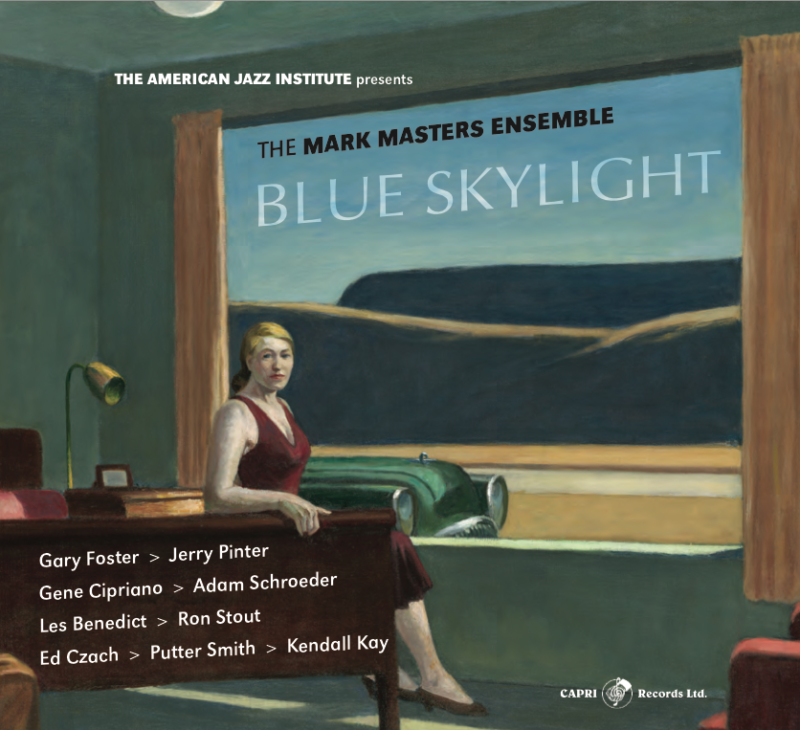
"caption": null,
"description": null,
"title": "Masters_Blue_Skylight_Cover",
"credit": null,
"status": "inherit",
"isLoading": false,
"fetchFailed": false
},
"arts_13053336": {
"type": "attachments",
"id": "arts_13053336",
"meta": {
"index": "attachments_1716263798",
"site": "arts",
"id": "13053336",
"found": true
},
"parent": 13053335,
"imgSizes": {
"small": {
"file": "https://ww2.kqed.org/app/uploads/sites/2/2017/04/gettyimages-621734352_wide-0f8df78b82b77e46230a56b8c910ddb525dca43d-520x292.jpg",
"width": 520,
"mimeType": "image/jpeg",
"height": 292
},
"twentyfourteen-full-width": {
"file": "https://ww2.kqed.org/app/uploads/sites/2/2017/04/gettyimages-621734352_wide-0f8df78b82b77e46230a56b8c910ddb525dca43d-1038x576.jpg",
"width": 1038,
"mimeType": "image/jpeg",
"height": 576
},
"thumbnail": {
"file": "https://ww2.kqed.org/app/uploads/sites/2/2017/04/gettyimages-621734352_wide-0f8df78b82b77e46230a56b8c910ddb525dca43d-160x90.jpg",
"width": 160,
"mimeType": "image/jpeg",
"height": 90
},
"fd-sm": {
"file": "https://ww2.kqed.org/app/uploads/sites/2/2017/04/gettyimages-621734352_wide-0f8df78b82b77e46230a56b8c910ddb525dca43d-960x540.jpg",
"width": 960,
"mimeType": "image/jpeg",
"height": 540
},
"post-thumbnail": {
"file": "https://ww2.kqed.org/app/uploads/sites/2/2017/04/gettyimages-621734352_wide-0f8df78b82b77e46230a56b8c910ddb525dca43d-672x372.jpg",
"width": 672,
"mimeType": "image/jpeg",
"height": 372
},
"xsmall": {
"file": "https://ww2.kqed.org/app/uploads/sites/2/2017/04/gettyimages-621734352_wide-0f8df78b82b77e46230a56b8c910ddb525dca43d-375x211.jpg",
"width": 375,
"mimeType": "image/jpeg",
"height": 211
},
"kqedFullSize": {
"file": "https://ww2.kqed.org/app/uploads/sites/2/2017/04/gettyimages-621734352_wide-0f8df78b82b77e46230a56b8c910ddb525dca43d.jpg",
"width": 2048,
"height": 1152
},
"large": {
"file": "https://ww2.kqed.org/app/uploads/sites/2/2017/04/gettyimages-621734352_wide-0f8df78b82b77e46230a56b8c910ddb525dca43d-1020x574.jpg",
"width": 1020,
"mimeType": "image/jpeg",
"height": 574
},
"xlarge": {
"file": "https://ww2.kqed.org/app/uploads/sites/2/2017/04/gettyimages-621734352_wide-0f8df78b82b77e46230a56b8c910ddb525dca43d-1180x664.jpg",
"width": 1180,
"mimeType": "image/jpeg",
"height": 664
},
"guest-author-50": {
"file": "https://ww2.kqed.org/app/uploads/sites/2/2017/04/gettyimages-621734352_wide-0f8df78b82b77e46230a56b8c910ddb525dca43d-50x50.jpg",
"width": 50,
"mimeType": "image/jpeg",
"height": 50
},
"guest-author-96": {
"file": "https://ww2.kqed.org/app/uploads/sites/2/2017/04/gettyimages-621734352_wide-0f8df78b82b77e46230a56b8c910ddb525dca43d-96x96.jpg",
"width": 96,
"mimeType": "image/jpeg",
"height": 96
},
"medium": {
"file": "https://ww2.kqed.org/app/uploads/sites/2/2017/04/gettyimages-621734352_wide-0f8df78b82b77e46230a56b8c910ddb525dca43d-800x450.jpg",
"width": 800,
"mimeType": "image/jpeg",
"height": 450
},
"guest-author-64": {
"file": "https://ww2.kqed.org/app/uploads/sites/2/2017/04/gettyimages-621734352_wide-0f8df78b82b77e46230a56b8c910ddb525dca43d-64x64.jpg",
"width": 64,
"mimeType": "image/jpeg",
"height": 64
},
"guest-author-32": {
"file": "https://ww2.kqed.org/app/uploads/sites/2/2017/04/gettyimages-621734352_wide-0f8df78b82b77e46230a56b8c910ddb525dca43d-32x32.jpg",
"width": 32,
"mimeType": "image/jpeg",
"height": 32
},
"fd-lrg": {
"file": "https://ww2.kqed.org/app/uploads/sites/2/2017/04/gettyimages-621734352_wide-0f8df78b82b77e46230a56b8c910ddb525dca43d-1920x1080.jpg",
"width": 1920,
"mimeType": "image/jpeg",
"height": 1080
},
"fd-med": {
"file": "https://ww2.kqed.org/app/uploads/sites/2/2017/04/gettyimages-621734352_wide-0f8df78b82b77e46230a56b8c910ddb525dca43d-1180x664.jpg",
"width": 1180,
"mimeType": "image/jpeg",
"height": 664
},
"full-width": {
"file": "https://ww2.kqed.org/app/uploads/sites/2/2017/04/gettyimages-621734352_wide-0f8df78b82b77e46230a56b8c910ddb525dca43d-1920x1080.jpg",
"width": 1920,
"mimeType": "image/jpeg",
"height": 1080
},
"detail": {
"file": "https://ww2.kqed.org/app/uploads/sites/2/2017/04/gettyimages-621734352_wide-0f8df78b82b77e46230a56b8c910ddb525dca43d-150x150.jpg",
"width": 150,
"mimeType": "image/jpeg",
"height": 150
},
"medium_large": {
"file": "https://ww2.kqed.org/app/uploads/sites/2/2017/04/gettyimages-621734352_wide-0f8df78b82b77e46230a56b8c910ddb525dca43d-768x432.jpg",
"width": 768,
"mimeType": "image/jpeg",
"height": 432
},
"guest-author-128": {
"file": "https://ww2.kqed.org/app/uploads/sites/2/2017/04/gettyimages-621734352_wide-0f8df78b82b77e46230a56b8c910ddb525dca43d-128x128.jpg",
"width": 128,
"mimeType": "image/jpeg",
"height": 128
},
"xxsmall": {
"file": "https://ww2.kqed.org/app/uploads/sites/2/2017/04/gettyimages-621734352_wide-0f8df78b82b77e46230a56b8c910ddb525dca43d-240x135.jpg",
"width": 240,
"mimeType": "image/jpeg",
"height": 135
}
},
"publishDate": 1492209247,
"modified": 1492209734,
"caption": "The J Geils Band celebrates the release of its single 'Centerfold' at the Uptown Theater in Chicago, Ill. on November 19, 1981.",
"description": "The J Geils Band celebrates the release of its single 'Centerfold' at the Uptown Theater in Chicago, Ill. on November 19, 198",
"title": "The J Geils Band celebrates the release of its single 'Centerfold' at the Uptown Theater in Chicago, Ill. on November 19, 1981.",
"credit": "Photo: Paul Natkin/Getty Images",
"status": "inherit",
"isLoading": false,
"fetchFailed": false
},
"arts_13048196": {
"type": "attachments",
"id": "arts_13048196",
"meta": {
"index": "attachments_1716263798",
"site": "arts",
"id": "13048196",
"found": true
},
"parent": 13047110,
"imgSizes": {
"small": {
"file": "https://ww2.kqed.org/app/uploads/sites/2/2017/04/jelliott-e1492125056958-520x312.jpg",
"width": 520,
"mimeType": "image/jpeg",
"height": 312
},
"twentyfourteen-full-width": {
"file": "https://ww2.kqed.org/app/uploads/sites/2/2017/04/jelliott-e1492125056958-960x576.jpg",
"width": 960,
"mimeType": "image/jpeg",
"height": 576
},
"thumbnail": {
"file": "https://ww2.kqed.org/app/uploads/sites/2/2017/04/jelliott-e1492125056958-160x96.jpg",
"width": 160,
"mimeType": "image/jpeg",
"height": 96
},
"fd-sm": {
"file": "https://ww2.kqed.org/app/uploads/sites/2/2017/04/jelliott-e1492125056958-960x576.jpg",
"width": 960,
"mimeType": "image/jpeg",
"height": 576
},
"post-thumbnail": {
"file": "https://ww2.kqed.org/app/uploads/sites/2/2017/04/jelliott-e1492125056958-672x372.jpg",
"width": 672,
"mimeType": "image/jpeg",
"height": 372
},
"xsmall": {
"file": "https://ww2.kqed.org/app/uploads/sites/2/2017/04/jelliott-e1492125056958-375x225.jpg",
"width": 375,
"mimeType": "image/jpeg",
"height": 225
},
"kqedFullSize": {
"file": "https://ww2.kqed.org/app/uploads/sites/2/2017/04/jelliott-e1492125056958.jpg",
"width": 960,
"height": 576
},
"guest-author-50": {
"file": "https://ww2.kqed.org/app/uploads/sites/2/2017/04/jelliott-e1492125056958-50x50.jpg",
"width": 50,
"mimeType": "image/jpeg",
"height": 50
},
"guest-author-96": {
"file": "https://ww2.kqed.org/app/uploads/sites/2/2017/04/jelliott-e1492125056958-96x96.jpg",
"width": 96,
"mimeType": "image/jpeg",
"height": 96
},
"medium": {
"file": "https://ww2.kqed.org/app/uploads/sites/2/2017/04/jelliott-e1492125056958-800x480.jpg",
"width": 800,
"mimeType": "image/jpeg",
"height": 480
},
"guest-author-64": {
"file": "https://ww2.kqed.org/app/uploads/sites/2/2017/04/jelliott-e1492125056958-64x64.jpg",
"width": 64,
"mimeType": "image/jpeg",
"height": 64
},
"guest-author-32": {
"file": "https://ww2.kqed.org/app/uploads/sites/2/2017/04/jelliott-e1492125056958-32x32.jpg",
"width": 32,
"mimeType": "image/jpeg",
"height": 32
},
"detail": {
"file": "https://ww2.kqed.org/app/uploads/sites/2/2017/04/jelliott-e1492125056958-150x150.jpg",
"width": 150,
"mimeType": "image/jpeg",
"height": 150
},
"medium_large": {
"file": "https://ww2.kqed.org/app/uploads/sites/2/2017/04/jelliott-e1492125056958-768x461.jpg",
"width": 768,
"mimeType": "image/jpeg",
"height": 461
},
"guest-author-128": {
"file": "https://ww2.kqed.org/app/uploads/sites/2/2017/04/jelliott-e1492125056958-128x128.jpg",
"width": 128,
"mimeType": "image/jpeg",
"height": 128
},
"xxsmall": {
"file": "https://ww2.kqed.org/app/uploads/sites/2/2017/04/jelliott-e1492125056958-240x144.jpg",
"width": 240,
"mimeType": "image/jpeg",
"height": 144
}
},
"publishDate": 1492125008,
"modified": 1492125033,
"caption": "John Elliott",
"description": null,
"title": "jelliott",
"credit": "Meredith Mashburn Photography",
"status": "inherit",
"isLoading": false,
"fetchFailed": false
},
"arts_13052008": {
"type": "attachments",
"id": "arts_13052008",
"meta": {
"index": "attachments_1716263798",
"site": "arts",
"id": "13052008",
"found": true
},
"parent": 13052007,
"imgSizes": {
"small": {
"file": "https://ww2.kqed.org/app/uploads/sites/2/2017/04/Whitney-for-Do-List-e1492190181557-520x293.jpg",
"width": 520,
"mimeType": "image/jpeg",
"height": 293
},
"twentyfourteen-full-width": {
"file": "https://ww2.kqed.org/app/uploads/sites/2/2017/04/Whitney-for-Do-List-960x576.jpg",
"width": 960,
"mimeType": "image/jpeg",
"height": 576
},
"thumbnail": {
"file": "https://ww2.kqed.org/app/uploads/sites/2/2017/04/Whitney-for-Do-List-e1492190181557-160x90.jpg",
"width": 160,
"mimeType": "image/jpeg",
"height": 90
},
"fd-sm": {
"file": "https://ww2.kqed.org/app/uploads/sites/2/2017/04/Whitney-for-Do-List-e1492190181557-960x540.jpg",
"width": 960,
"mimeType": "image/jpeg",
"height": 540
},
"post-thumbnail": {
"file": "https://ww2.kqed.org/app/uploads/sites/2/2017/04/Whitney-for-Do-List-e1492190181557-672x372.jpg",
"width": 672,
"mimeType": "image/jpeg",
"height": 372
},
"xsmall": {
"file": "https://ww2.kqed.org/app/uploads/sites/2/2017/04/Whitney-for-Do-List-e1492190181557-375x211.jpg",
"width": 375,
"mimeType": "image/jpeg",
"height": 211
},
"kqedFullSize": {
"file": "https://ww2.kqed.org/app/uploads/sites/2/2017/04/Whitney-for-Do-List-e1492190181557.jpg",
"width": 960,
"height": 540
},
"guest-author-50": {
"file": "https://ww2.kqed.org/app/uploads/sites/2/2017/04/Whitney-for-Do-List-e1492190181557-50x50.jpg",
"width": 50,
"mimeType": "image/jpeg",
"height": 50
},
"guest-author-96": {
"file": "https://ww2.kqed.org/app/uploads/sites/2/2017/04/Whitney-for-Do-List-e1492190181557-96x96.jpg",
"width": 96,
"mimeType": "image/jpeg",
"height": 96
},
"medium": {
"file": "https://ww2.kqed.org/app/uploads/sites/2/2017/04/Whitney-for-Do-List-e1492190181557-800x450.jpg",
"width": 800,
"mimeType": "image/jpeg",
"height": 450
},
"guest-author-64": {
"file": "https://ww2.kqed.org/app/uploads/sites/2/2017/04/Whitney-for-Do-List-e1492190181557-64x64.jpg",
"width": 64,
"mimeType": "image/jpeg",
"height": 64
},
"guest-author-32": {
"file": "https://ww2.kqed.org/app/uploads/sites/2/2017/04/Whitney-for-Do-List-e1492190181557-32x32.jpg",
"width": 32,
"mimeType": "image/jpeg",
"height": 32
},
"detail": {
"file": "https://ww2.kqed.org/app/uploads/sites/2/2017/04/Whitney-for-Do-List-e1492190181557-150x150.jpg",
"width": 150,
"mimeType": "image/jpeg",
"height": 150
},
"medium_large": {
"file": "https://ww2.kqed.org/app/uploads/sites/2/2017/04/Whitney-for-Do-List-e1492190181557-768x432.jpg",
"width": 768,
"mimeType": "image/jpeg",
"height": 432
},
"guest-author-128": {
"file": "https://ww2.kqed.org/app/uploads/sites/2/2017/04/Whitney-for-Do-List-e1492190181557-128x128.jpg",
"width": 128,
"mimeType": "image/jpeg",
"height": 128
},
"xxsmall": {
"file": "https://ww2.kqed.org/app/uploads/sites/2/2017/04/Whitney-for-Do-List-e1492190181557-240x135.jpg",
"width": 240,
"mimeType": "image/jpeg",
"height": 135
}
},
"publishDate": 1492190070,
"modified": 1492190155,
"caption": "Whitney plays Sonoma's Gundlach Bundschu Winery April 14 and then SF's Independent April 17-19",
"description": "Whitney plays Sonoma's Gundlach Bundschu Winery April 14 and then SF's Independent April 17-19",
"title": "Whitney plays Sonoma's Gundlach Bundschu Winery April 14 and then SF's Independent April 17-19",
"credit": "Photo: Courtesy of Whitney",
"status": "inherit",
"isLoading": false,
"fetchFailed": false
},
"arts_13053333": {
"type": "attachments",
"id": "arts_13053333",
"meta": {
"index": "attachments_1716263798",
"site": "arts",
"id": "13053333",
"found": true
},
"parent": 13047109,
"imgSizes": {
"small": {
"file": "https://ww2.kqed.org/app/uploads/sites/2/2017/04/Whitney-2-for-do-list-e1492209074218-520x293.jpg",
"width": 520,
"mimeType": "image/jpeg",
"height": 293
},
"twentyfourteen-full-width": {
"file": "https://ww2.kqed.org/app/uploads/sites/2/2017/04/Whitney-2-for-do-list-e1492209074218-1038x576.jpg",
"width": 1038,
"mimeType": "image/jpeg",
"height": 576
},
"thumbnail": {
"file": "https://ww2.kqed.org/app/uploads/sites/2/2017/04/Whitney-2-for-do-list-e1492209074218-160x90.jpg",
"width": 160,
"mimeType": "image/jpeg",
"height": 90
},
"fd-sm": {
"file": "https://ww2.kqed.org/app/uploads/sites/2/2017/04/Whitney-2-for-do-list-e1492209074218-960x540.jpg",
"width": 960,
"mimeType": "image/jpeg",
"height": 540
},
"post-thumbnail": {
"file": "https://ww2.kqed.org/app/uploads/sites/2/2017/04/Whitney-2-for-do-list-e1492209074218-672x372.jpg",
"width": 672,
"mimeType": "image/jpeg",
"height": 372
},
"xsmall": {
"file": "https://ww2.kqed.org/app/uploads/sites/2/2017/04/Whitney-2-for-do-list-e1492209074218-375x211.jpg",
"width": 375,
"mimeType": "image/jpeg",
"height": 211
},
"kqedFullSize": {
"file": "https://ww2.kqed.org/app/uploads/sites/2/2017/04/Whitney-2-for-do-list-e1492209074218.jpg",
"width": 2037,
"height": 1146
},
"large": {
"file": "https://ww2.kqed.org/app/uploads/sites/2/2017/04/Whitney-2-for-do-list-e1492209074218-1020x574.jpg",
"width": 1020,
"mimeType": "image/jpeg",
"height": 574
},
"xlarge": {
"file": "https://ww2.kqed.org/app/uploads/sites/2/2017/04/Whitney-2-for-do-list-e1492209074218-1180x664.jpg",
"width": 1180,
"mimeType": "image/jpeg",
"height": 664
},
"guest-author-50": {
"file": "https://ww2.kqed.org/app/uploads/sites/2/2017/04/Whitney-2-for-do-list-e1492209074218-50x50.jpg",
"width": 50,
"mimeType": "image/jpeg",
"height": 50
},
"guest-author-96": {
"file": "https://ww2.kqed.org/app/uploads/sites/2/2017/04/Whitney-2-for-do-list-e1492209074218-96x96.jpg",
"width": 96,
"mimeType": "image/jpeg",
"height": 96
},
"medium": {
"file": "https://ww2.kqed.org/app/uploads/sites/2/2017/04/Whitney-2-for-do-list-e1492209074218-800x450.jpg",
"width": 800,
"mimeType": "image/jpeg",
"height": 450
},
"guest-author-64": {
"file": "https://ww2.kqed.org/app/uploads/sites/2/2017/04/Whitney-2-for-do-list-e1492209074218-64x64.jpg",
"width": 64,
"mimeType": "image/jpeg",
"height": 64
},
"guest-author-32": {
"file": "https://ww2.kqed.org/app/uploads/sites/2/2017/04/Whitney-2-for-do-list-e1492209074218-32x32.jpg",
"width": 32,
"mimeType": "image/jpeg",
"height": 32
},
"fd-lrg": {
"file": "https://ww2.kqed.org/app/uploads/sites/2/2017/04/Whitney-2-for-do-list-e1492209074218-1920x1080.jpg",
"width": 1920,
"mimeType": "image/jpeg",
"height": 1080
},
"fd-med": {
"file": "https://ww2.kqed.org/app/uploads/sites/2/2017/04/Whitney-2-for-do-list-e1492209074218-1180x664.jpg",
"width": 1180,
"mimeType": "image/jpeg",
"height": 664
},
"full-width": {
"file": "https://ww2.kqed.org/app/uploads/sites/2/2017/04/Whitney-2-for-do-list-e1492209074218-1920x1080.jpg",
"width": 1920,
"mimeType": "image/jpeg",
"height": 1080
},
"detail": {
"file": "https://ww2.kqed.org/app/uploads/sites/2/2017/04/Whitney-2-for-do-list-e1492209074218-150x150.jpg",
"width": 150,
"mimeType": "image/jpeg",
"height": 150
},
"medium_large": {
"file": "https://ww2.kqed.org/app/uploads/sites/2/2017/04/Whitney-2-for-do-list-e1492209074218-768x432.jpg",
"width": 768,
"mimeType": "image/jpeg",
"height": 432
},
"guest-author-128": {
"file": "https://ww2.kqed.org/app/uploads/sites/2/2017/04/Whitney-2-for-do-list-e1492209074218-128x128.jpg",
"width": 128,
"mimeType": "image/jpeg",
"height": 128
},
"xxsmall": {
"file": "https://ww2.kqed.org/app/uploads/sites/2/2017/04/Whitney-2-for-do-list-e1492209074218-240x135.jpg",
"width": 240,
"mimeType": "image/jpeg",
"height": 135
}
},
"publishDate": 1492208923,
"modified": 1492209013,
"caption": "Whitney plays a Bay Area sandwich, with Sonoma's Gundlach Bundschu Winery April 14 and then The Independent April 17-19 with Coachella in between",
"description": "Whitney plays a Bay Area sandwich, with Sonoma's Gundlach Bundschu Winery April 14 and then The Independent April 17-19 with Coachella in between",
"title": "Whitney plays a Bay Area sandwich, with Sonoma's Gundlach Bundschu Winery April 14 and then The Independent April 17-19 with Coachella in between",
"credit": "Photo: Courtesy of Whitney",
"status": "inherit",
"isLoading": false,
"fetchFailed": false
},
"arts_13047323": {
"type": "attachments",
"id": "arts_13047323",
"meta": {
"index": "attachments_1716263798",
"site": "arts",
"id": "13047323",
"found": true
},
"parent": 13047322,
"imgSizes": {
"small": {
"file": "https://ww2.kqed.org/app/uploads/sites/2/2017/04/synalpheus-pinkfloydi-full-res-by-arthur-anker_wide-9c2af54d2e3fbd8ff5ce32b94126b3a7cbf54066-520x292.jpg",
"width": 520,
"mimeType": "image/jpeg",
"height": 292
},
"twentyfourteen-full-width": {
"file": "https://ww2.kqed.org/app/uploads/sites/2/2017/04/synalpheus-pinkfloydi-full-res-by-arthur-anker_wide-9c2af54d2e3fbd8ff5ce32b94126b3a7cbf54066-1038x576.jpg",
"width": 1038,
"mimeType": "image/jpeg",
"height": 576
},
"thumbnail": {
"file": "https://ww2.kqed.org/app/uploads/sites/2/2017/04/synalpheus-pinkfloydi-full-res-by-arthur-anker_wide-9c2af54d2e3fbd8ff5ce32b94126b3a7cbf54066-160x90.jpg",
"width": 160,
"mimeType": "image/jpeg",
"height": 90
},
"fd-sm": {
"file": "https://ww2.kqed.org/app/uploads/sites/2/2017/04/synalpheus-pinkfloydi-full-res-by-arthur-anker_wide-9c2af54d2e3fbd8ff5ce32b94126b3a7cbf54066-960x540.jpg",
"width": 960,
"mimeType": "image/jpeg",
"height": 540
},
"post-thumbnail": {
"file": "https://ww2.kqed.org/app/uploads/sites/2/2017/04/synalpheus-pinkfloydi-full-res-by-arthur-anker_wide-9c2af54d2e3fbd8ff5ce32b94126b3a7cbf54066-672x372.jpg",
"width": 672,
"mimeType": "image/jpeg",
"height": 372
},
"xsmall": {
"file": "https://ww2.kqed.org/app/uploads/sites/2/2017/04/synalpheus-pinkfloydi-full-res-by-arthur-anker_wide-9c2af54d2e3fbd8ff5ce32b94126b3a7cbf54066-375x211.jpg",
"width": 375,
"mimeType": "image/jpeg",
"height": 211
},
"kqedFullSize": {
"file": "https://ww2.kqed.org/app/uploads/sites/2/2017/04/synalpheus-pinkfloydi-full-res-by-arthur-anker_wide-9c2af54d2e3fbd8ff5ce32b94126b3a7cbf54066.jpg",
"width": 2048,
"height": 1152
},
"large": {
"file": "https://ww2.kqed.org/app/uploads/sites/2/2017/04/synalpheus-pinkfloydi-full-res-by-arthur-anker_wide-9c2af54d2e3fbd8ff5ce32b94126b3a7cbf54066-1020x574.jpg",
"width": 1020,
"mimeType": "image/jpeg",
"height": 574
},
"xlarge": {
"file": "https://ww2.kqed.org/app/uploads/sites/2/2017/04/synalpheus-pinkfloydi-full-res-by-arthur-anker_wide-9c2af54d2e3fbd8ff5ce32b94126b3a7cbf54066-1180x664.jpg",
"width": 1180,
"mimeType": "image/jpeg",
"height": 664
},
"guest-author-50": {
"file": "https://ww2.kqed.org/app/uploads/sites/2/2017/04/synalpheus-pinkfloydi-full-res-by-arthur-anker_wide-9c2af54d2e3fbd8ff5ce32b94126b3a7cbf54066-50x50.jpg",
"width": 50,
"mimeType": "image/jpeg",
"height": 50
},
"guest-author-96": {
"file": "https://ww2.kqed.org/app/uploads/sites/2/2017/04/synalpheus-pinkfloydi-full-res-by-arthur-anker_wide-9c2af54d2e3fbd8ff5ce32b94126b3a7cbf54066-96x96.jpg",
"width": 96,
"mimeType": "image/jpeg",
"height": 96
},
"medium": {
"file": "https://ww2.kqed.org/app/uploads/sites/2/2017/04/synalpheus-pinkfloydi-full-res-by-arthur-anker_wide-9c2af54d2e3fbd8ff5ce32b94126b3a7cbf54066-800x450.jpg",
"width": 800,
"mimeType": "image/jpeg",
"height": 450
},
"guest-author-64": {
"file": "https://ww2.kqed.org/app/uploads/sites/2/2017/04/synalpheus-pinkfloydi-full-res-by-arthur-anker_wide-9c2af54d2e3fbd8ff5ce32b94126b3a7cbf54066-64x64.jpg",
"width": 64,
"mimeType": "image/jpeg",
"height": 64
},
"guest-author-32": {
"file": "https://ww2.kqed.org/app/uploads/sites/2/2017/04/synalpheus-pinkfloydi-full-res-by-arthur-anker_wide-9c2af54d2e3fbd8ff5ce32b94126b3a7cbf54066-32x32.jpg",
"width": 32,
"mimeType": "image/jpeg",
"height": 32
},
"fd-lrg": {
"file": "https://ww2.kqed.org/app/uploads/sites/2/2017/04/synalpheus-pinkfloydi-full-res-by-arthur-anker_wide-9c2af54d2e3fbd8ff5ce32b94126b3a7cbf54066-1920x1080.jpg",
"width": 1920,
"mimeType": "image/jpeg",
"height": 1080
},
"fd-med": {
"file": "https://ww2.kqed.org/app/uploads/sites/2/2017/04/synalpheus-pinkfloydi-full-res-by-arthur-anker_wide-9c2af54d2e3fbd8ff5ce32b94126b3a7cbf54066-1180x664.jpg",
"width": 1180,
"mimeType": "image/jpeg",
"height": 664
},
"full-width": {
"file": "https://ww2.kqed.org/app/uploads/sites/2/2017/04/synalpheus-pinkfloydi-full-res-by-arthur-anker_wide-9c2af54d2e3fbd8ff5ce32b94126b3a7cbf54066-1920x1080.jpg",
"width": 1920,
"mimeType": "image/jpeg",
"height": 1080
},
"detail": {
"file": "https://ww2.kqed.org/app/uploads/sites/2/2017/04/synalpheus-pinkfloydi-full-res-by-arthur-anker_wide-9c2af54d2e3fbd8ff5ce32b94126b3a7cbf54066-150x150.jpg",
"width": 150,
"mimeType": "image/jpeg",
"height": 150
},
"medium_large": {
"file": "https://ww2.kqed.org/app/uploads/sites/2/2017/04/synalpheus-pinkfloydi-full-res-by-arthur-anker_wide-9c2af54d2e3fbd8ff5ce32b94126b3a7cbf54066-768x432.jpg",
"width": 768,
"mimeType": "image/jpeg",
"height": 432
},
"guest-author-128": {
"file": "https://ww2.kqed.org/app/uploads/sites/2/2017/04/synalpheus-pinkfloydi-full-res-by-arthur-anker_wide-9c2af54d2e3fbd8ff5ce32b94126b3a7cbf54066-128x128.jpg",
"width": 128,
"mimeType": "image/jpeg",
"height": 128
},
"xxsmall": {
"file": "https://ww2.kqed.org/app/uploads/sites/2/2017/04/synalpheus-pinkfloydi-full-res-by-arthur-anker_wide-9c2af54d2e3fbd8ff5ce32b94126b3a7cbf54066-240x135.jpg",
"width": 240,
"mimeType": "image/jpeg",
"height": 135
}
},
"publishDate": 1492109438,
"modified": 1492109519,
"caption": "Synalpheus pinkfloydi, which was recently named after the band Pink Floyd, for the distinctive coloration of its claw.",
"description": "Synalpheus pinkfloydi, which was recently named after the band Pink Floyd, for the distinctive coloration of its claw.",
"title": "Synalpheus pinkfloydi, which was recently named after the band Pink Floyd, for the distinctive coloration of its claw.",
"credit": "Arthur Anker",
"status": "inherit",
"isLoading": false,
"fetchFailed": false
},
"arts_13049471": {
"type": "attachments",
"id": "arts_13049471",
"meta": {
"index": "attachments_1716263798",
"site": "arts",
"id": "13049471",
"found": true
},
"parent": 13038360,
"imgSizes": {
"small": {
"file": "https://ww2.kqed.org/app/uploads/sites/2/2017/04/NewZalduaPost-520x293.gif",
"width": 520,
"mimeType": "image/gif",
"height": 293
},
"thumbnail": {
"file": "https://ww2.kqed.org/app/uploads/sites/2/2017/04/NewZalduaPost-160x90.gif",
"width": 160,
"mimeType": "image/gif",
"height": 90
},
"post-thumbnail": {
"file": "https://ww2.kqed.org/app/uploads/sites/2/2017/04/NewZalduaPost-672x372.gif",
"width": 672,
"mimeType": "image/gif",
"height": 372
},
"xsmall": {
"file": "https://ww2.kqed.org/app/uploads/sites/2/2017/04/NewZalduaPost-375x212.gif",
"width": 375,
"mimeType": "image/gif",
"height": 212
},
"kqedFullSize": {
"file": "https://ww2.kqed.org/app/uploads/sites/2/2017/04/NewZalduaPost.gif",
"width": 808,
"height": 456
},
"guest-author-50": {
"file": "https://ww2.kqed.org/app/uploads/sites/2/2017/04/NewZalduaPost-50x50.gif",
"width": 50,
"mimeType": "image/gif",
"height": 50
},
"guest-author-96": {
"file": "https://ww2.kqed.org/app/uploads/sites/2/2017/04/NewZalduaPost-96x96.gif",
"width": 96,
"mimeType": "image/gif",
"height": 96
},
"medium": {
"file": "https://ww2.kqed.org/app/uploads/sites/2/2017/04/NewZalduaPost-800x451.gif",
"width": 800,
"mimeType": "image/gif",
"height": 451
},
"guest-author-64": {
"file": "https://ww2.kqed.org/app/uploads/sites/2/2017/04/NewZalduaPost-64x64.gif",
"width": 64,
"mimeType": "image/gif",
"height": 64
},
"guest-author-32": {
"file": "https://ww2.kqed.org/app/uploads/sites/2/2017/04/NewZalduaPost-32x32.gif",
"width": 32,
"mimeType": "image/gif",
"height": 32
},
"detail": {
"file": "https://ww2.kqed.org/app/uploads/sites/2/2017/04/NewZalduaPost-150x150.gif",
"width": 150,
"mimeType": "image/gif",
"height": 150
},
"medium_large": {
"file": "https://ww2.kqed.org/app/uploads/sites/2/2017/04/NewZalduaPost-768x433.gif",
"width": 768,
"mimeType": "image/gif",
"height": 433
},
"guest-author-128": {
"file": "https://ww2.kqed.org/app/uploads/sites/2/2017/04/NewZalduaPost-128x128.gif",
"width": 128,
"mimeType": "image/gif",
"height": 128
},
"xxsmall": {
"file": "https://ww2.kqed.org/app/uploads/sites/2/2017/04/NewZalduaPost-240x135.gif",
"width": 240,
"mimeType": "image/gif",
"height": 135
}
},
"publishDate": 1492146701,
"modified": 1492146721,
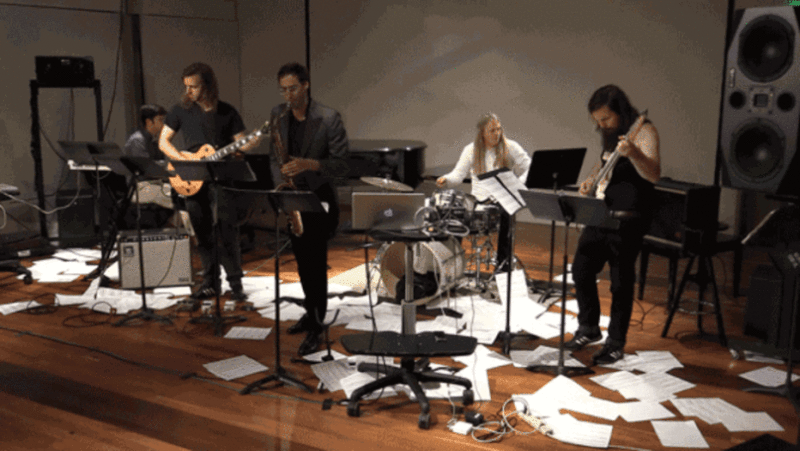
"caption": "The Happy Valley Band in action, performing sheet music of computer algorithms.",
"description": "The Happy Valley Band in action, performing sheet music of computer algorithms.",
"title": "NewZalduaPost",
"credit": "Courtesy Happy Valley Band",
"status": "inherit",
"isLoading": false,
"fetchFailed": false
},
"arts_13042307": {
"type": "attachments",
"id": "arts_13042307",
"meta": {
"index": "attachments_1716263798",
"site": "arts",
"id": "13042307",
"found": true
},
"parent": 13039627,
"imgSizes": {
"small": {
"file": "https://ww2.kqed.org/app/uploads/sites/2/2017/04/1086-Deyoung-COVER-520x293.jpg",
"width": 520,
"mimeType": "image/jpeg",
"height": 293
},
"twentyfourteen-full-width": {
"file": "https://ww2.kqed.org/app/uploads/sites/2/2017/04/1086-Deyoung-COVER-1038x576.jpg",
"width": 1038,
"mimeType": "image/jpeg",
"height": 576
},
"thumbnail": {
"file": "https://ww2.kqed.org/app/uploads/sites/2/2017/04/1086-Deyoung-COVER-160x90.jpg",
"width": 160,
"mimeType": "image/jpeg",
"height": 90
},
"fd-sm": {
"file": "https://ww2.kqed.org/app/uploads/sites/2/2017/04/1086-Deyoung-COVER-960x540.jpg",
"width": 960,
"mimeType": "image/jpeg",
"height": 540
},
"post-thumbnail": {
"file": "https://ww2.kqed.org/app/uploads/sites/2/2017/04/1086-Deyoung-COVER-672x372.jpg",
"width": 672,
"mimeType": "image/jpeg",
"height": 372
},
"xsmall": {
"file": "https://ww2.kqed.org/app/uploads/sites/2/2017/04/1086-Deyoung-COVER-375x211.jpg",
"width": 375,
"mimeType": "image/jpeg",
"height": 211
},
"kqedFullSize": {
"file": "https://ww2.kqed.org/app/uploads/sites/2/2017/04/1086-Deyoung-COVER.jpg",
"width": 1920,
"height": 1080
},
"large": {
"file": "https://ww2.kqed.org/app/uploads/sites/2/2017/04/1086-Deyoung-COVER-1020x574.jpg",
"width": 1020,
"mimeType": "image/jpeg",
"height": 574
},
"xlarge": {
"file": "https://ww2.kqed.org/app/uploads/sites/2/2017/04/1086-Deyoung-COVER-1180x664.jpg",
"width": 1180,
"mimeType": "image/jpeg",
"height": 664
},
"guest-author-50": {
"file": "https://ww2.kqed.org/app/uploads/sites/2/2017/04/1086-Deyoung-COVER-50x50.jpg",
"width": 50,
"mimeType": "image/jpeg",
"height": 50
},
"guest-author-96": {
"file": "https://ww2.kqed.org/app/uploads/sites/2/2017/04/1086-Deyoung-COVER-96x96.jpg",
"width": 96,
"mimeType": "image/jpeg",
"height": 96
},
"medium": {
"file": "https://ww2.kqed.org/app/uploads/sites/2/2017/04/1086-Deyoung-COVER-800x450.jpg",
"width": 800,
"mimeType": "image/jpeg",
"height": 450
},
"guest-author-64": {
"file": "https://ww2.kqed.org/app/uploads/sites/2/2017/04/1086-Deyoung-COVER-64x64.jpg",
"width": 64,
"mimeType": "image/jpeg",
"height": 64
},
"guest-author-32": {
"file": "https://ww2.kqed.org/app/uploads/sites/2/2017/04/1086-Deyoung-COVER-32x32.jpg",
"width": 32,
"mimeType": "image/jpeg",
"height": 32
},
"fd-lrg": {
"file": "https://ww2.kqed.org/app/uploads/sites/2/2017/04/1086-Deyoung-COVER-1920x1080.jpg",
"width": 1920,
"mimeType": "image/jpeg",
"height": 1080
},
"fd-med": {
"file": "https://ww2.kqed.org/app/uploads/sites/2/2017/04/1086-Deyoung-COVER-1180x664.jpg",
"width": 1180,
"mimeType": "image/jpeg",
"height": 664
},
"full-width": {
"file": "https://ww2.kqed.org/app/uploads/sites/2/2017/04/1086-Deyoung-COVER-1920x1080.jpg",
"width": 1920,
"mimeType": "image/jpeg",
"height": 1080
},
"detail": {
"file": "https://ww2.kqed.org/app/uploads/sites/2/2017/04/1086-Deyoung-COVER-150x150.jpg",
"width": 150,
"mimeType": "image/jpeg",
"height": 150
},
"medium_large": {
"file": "https://ww2.kqed.org/app/uploads/sites/2/2017/04/1086-Deyoung-COVER-768x432.jpg",
"width": 768,
"mimeType": "image/jpeg",
"height": 432
},
"guest-author-128": {
"file": "https://ww2.kqed.org/app/uploads/sites/2/2017/04/1086-Deyoung-COVER-128x128.jpg",
"width": 128,
"mimeType": "image/jpeg",
"height": 128
},
"xxsmall": {
"file": "https://ww2.kqed.org/app/uploads/sites/2/2017/04/1086-Deyoung-COVER-240x135.jpg",
"width": 240,
"mimeType": "image/jpeg",
"height": 135
}
},
"publishDate": 1492022385,
"modified": 1492022438,
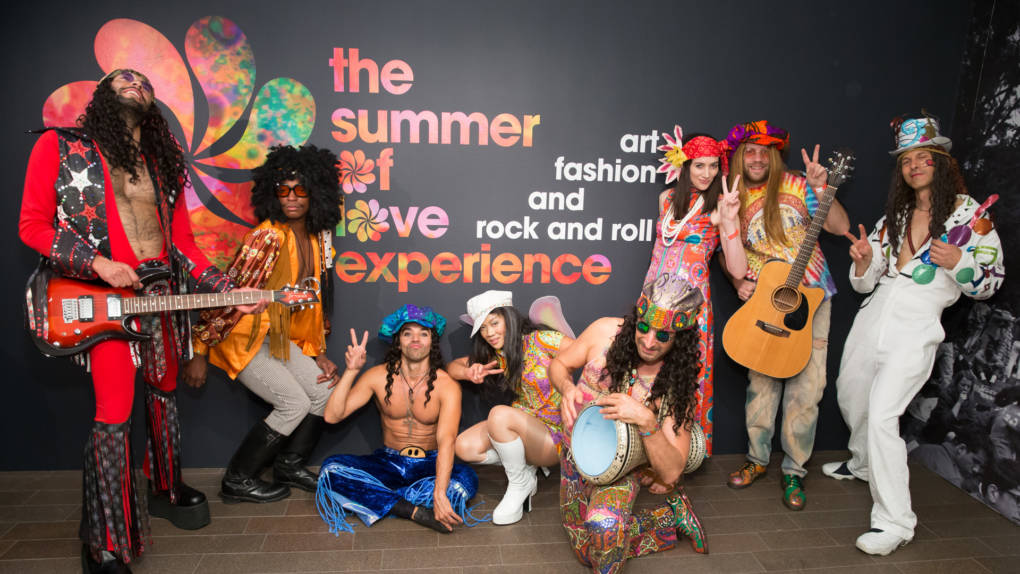
"caption": "Performers at 'The Summer of Love Experience' donor reception at de Young Museum.",
"description": "Performers at 'The Summer of Love Experience' donor reception at de Young Museum.",
"title": "The Summer of Love Experience Donor Reception",
"credit": "Devlin Shand for Drew Altizer Photography",
"status": "inherit",
"isLoading": false,
"fetchFailed": false
},
"arts_13033554": {
"type": "attachments",
"id": "arts_13033554",
"meta": {
"index": "attachments_1716263798",
"site": "arts",
"id": "13033554",
"found": true
},
"parent": 13033553,
"imgSizes": {
"small": {
"file": "https://ww2.kqed.org/app/uploads/sites/2/2017/04/gettyimages-627861200_wide-25e0e4111d418ddcf0e8afc4914989519cff83eb-520x292.jpg",
"width": 520,
"mimeType": "image/jpeg",
"height": 292
},
"twentyfourteen-full-width": {
"file": "https://ww2.kqed.org/app/uploads/sites/2/2017/04/gettyimages-627861200_wide-25e0e4111d418ddcf0e8afc4914989519cff83eb-1038x576.jpg",
"width": 1038,
"mimeType": "image/jpeg",
"height": 576
},
"thumbnail": {
"file": "https://ww2.kqed.org/app/uploads/sites/2/2017/04/gettyimages-627861200_wide-25e0e4111d418ddcf0e8afc4914989519cff83eb-160x90.jpg",
"width": 160,
"mimeType": "image/jpeg",
"height": 90
},
"fd-sm": {
"file": "https://ww2.kqed.org/app/uploads/sites/2/2017/04/gettyimages-627861200_wide-25e0e4111d418ddcf0e8afc4914989519cff83eb-960x540.jpg",
"width": 960,
"mimeType": "image/jpeg",
"height": 540
},
"post-thumbnail": {
"file": "https://ww2.kqed.org/app/uploads/sites/2/2017/04/gettyimages-627861200_wide-25e0e4111d418ddcf0e8afc4914989519cff83eb-672x372.jpg",
"width": 672,
"mimeType": "image/jpeg",
"height": 372
},
"xsmall": {
"file": "https://ww2.kqed.org/app/uploads/sites/2/2017/04/gettyimages-627861200_wide-25e0e4111d418ddcf0e8afc4914989519cff83eb-375x211.jpg",
"width": 375,
"mimeType": "image/jpeg",
"height": 211
},
"kqedFullSize": {
"file": "https://ww2.kqed.org/app/uploads/sites/2/2017/04/gettyimages-627861200_wide-25e0e4111d418ddcf0e8afc4914989519cff83eb.jpg",
"width": 2048,
"height": 1152
},
"large": {
"file": "https://ww2.kqed.org/app/uploads/sites/2/2017/04/gettyimages-627861200_wide-25e0e4111d418ddcf0e8afc4914989519cff83eb-1020x574.jpg",
"width": 1020,
"mimeType": "image/jpeg",
"height": 574
},
"xlarge": {
"file": "https://ww2.kqed.org/app/uploads/sites/2/2017/04/gettyimages-627861200_wide-25e0e4111d418ddcf0e8afc4914989519cff83eb-1180x664.jpg",
"width": 1180,
"mimeType": "image/jpeg",
"height": 664
},
"guest-author-50": {
"file": "https://ww2.kqed.org/app/uploads/sites/2/2017/04/gettyimages-627861200_wide-25e0e4111d418ddcf0e8afc4914989519cff83eb-50x50.jpg",
"width": 50,
"mimeType": "image/jpeg",
"height": 50
},
"guest-author-96": {
"file": "https://ww2.kqed.org/app/uploads/sites/2/2017/04/gettyimages-627861200_wide-25e0e4111d418ddcf0e8afc4914989519cff83eb-96x96.jpg",
"width": 96,
"mimeType": "image/jpeg",
"height": 96
},
"medium": {
"file": "https://ww2.kqed.org/app/uploads/sites/2/2017/04/gettyimages-627861200_wide-25e0e4111d418ddcf0e8afc4914989519cff83eb-800x450.jpg",
"width": 800,
"mimeType": "image/jpeg",
"height": 450
},
"guest-author-64": {
"file": "https://ww2.kqed.org/app/uploads/sites/2/2017/04/gettyimages-627861200_wide-25e0e4111d418ddcf0e8afc4914989519cff83eb-64x64.jpg",
"width": 64,
"mimeType": "image/jpeg",
"height": 64
},
"guest-author-32": {
"file": "https://ww2.kqed.org/app/uploads/sites/2/2017/04/gettyimages-627861200_wide-25e0e4111d418ddcf0e8afc4914989519cff83eb-32x32.jpg",
"width": 32,
"mimeType": "image/jpeg",
"height": 32
},
"fd-lrg": {
"file": "https://ww2.kqed.org/app/uploads/sites/2/2017/04/gettyimages-627861200_wide-25e0e4111d418ddcf0e8afc4914989519cff83eb-1920x1080.jpg",
"width": 1920,
"mimeType": "image/jpeg",
"height": 1080
},
"fd-med": {
"file": "https://ww2.kqed.org/app/uploads/sites/2/2017/04/gettyimages-627861200_wide-25e0e4111d418ddcf0e8afc4914989519cff83eb-1180x664.jpg",
"width": 1180,
"mimeType": "image/jpeg",
"height": 664
},
"full-width": {
"file": "https://ww2.kqed.org/app/uploads/sites/2/2017/04/gettyimages-627861200_wide-25e0e4111d418ddcf0e8afc4914989519cff83eb-1920x1080.jpg",
"width": 1920,
"mimeType": "image/jpeg",
"height": 1080
},
"detail": {
"file": "https://ww2.kqed.org/app/uploads/sites/2/2017/04/gettyimages-627861200_wide-25e0e4111d418ddcf0e8afc4914989519cff83eb-150x150.jpg",
"width": 150,
"mimeType": "image/jpeg",
"height": 150
},
"medium_large": {
"file": "https://ww2.kqed.org/app/uploads/sites/2/2017/04/gettyimages-627861200_wide-25e0e4111d418ddcf0e8afc4914989519cff83eb-768x432.jpg",
"width": 768,
"mimeType": "image/jpeg",
"height": 432
},
"guest-author-128": {
"file": "https://ww2.kqed.org/app/uploads/sites/2/2017/04/gettyimages-627861200_wide-25e0e4111d418ddcf0e8afc4914989519cff83eb-128x128.jpg",
"width": 128,
"mimeType": "image/jpeg",
"height": 128
},
"xxsmall": {
"file": "https://ww2.kqed.org/app/uploads/sites/2/2017/04/gettyimages-627861200_wide-25e0e4111d418ddcf0e8afc4914989519cff83eb-240x135.jpg",
"width": 240,
"mimeType": "image/jpeg",
"height": 135
}
},
"publishDate": 1491870936,
"modified": 1491870936,
"caption": null,
"description": "Firefighters and medics near the site of the Ghost Ship underground arts venue in Oakland, Ca., after a fire claimed the lives of at least thirty-six people. The \u003cem>East Bay Times\u003c/em> won a Pulitzer for its reporting around the tra",
"title": "Firefighters and medics near the site of the Ghost Ship underground arts venue in Oakland, Ca., after a fire claimed the lives of at least thirty-six people. The East Bay Times won a Pulitzer for its reporting around the tragedy.",
"credit": null,
"status": "inherit",
"isLoading": false,
"fetchFailed": false
},
"arts_13033340": {
"type": "attachments",
"id": "arts_13033340",
"meta": {
"index": "attachments_1716263798",
"site": "arts",
"id": "13033340",
"found": true
},
"parent": 13033338,
"imgSizes": {
"small": {
"file": "https://ww2.kqed.org/app/uploads/sites/2/2017/04/Beatles-BBC-e1491869991477-520x280.jpg",
"width": 520,
"mimeType": "image/jpeg",
"height": 280
},
"twentyfourteen-full-width": {
"file": "https://ww2.kqed.org/app/uploads/sites/2/2017/04/Beatles-BBC-1000x576.jpg",
"width": 1000,
"mimeType": "image/jpeg",
"height": 576
},
"thumbnail": {
"file": "https://ww2.kqed.org/app/uploads/sites/2/2017/04/Beatles-BBC-e1491869991477-160x86.jpg",
"width": 160,
"mimeType": "image/jpeg",
"height": 86
},
"fd-sm": {
"file": "https://ww2.kqed.org/app/uploads/sites/2/2017/04/Beatles-BBC-e1491869991477-960x517.jpg",
"width": 960,
"mimeType": "image/jpeg",
"height": 517
},
"post-thumbnail": {
"file": "https://ww2.kqed.org/app/uploads/sites/2/2017/04/Beatles-BBC-e1491869991477-672x372.jpg",
"width": 672,
"mimeType": "image/jpeg",
"height": 372
},
"xsmall": {
"file": "https://ww2.kqed.org/app/uploads/sites/2/2017/04/Beatles-BBC-e1491869991477-375x202.jpg",
"width": 375,
"mimeType": "image/jpeg",
"height": 202
},
"kqedFullSize": {
"file": "https://ww2.kqed.org/app/uploads/sites/2/2017/04/Beatles-BBC-e1491869991477.jpg",
"width": 975,
"height": 525
},
"guest-author-50": {
"file": "https://ww2.kqed.org/app/uploads/sites/2/2017/04/Beatles-BBC-e1491869991477-50x50.jpg",
"width": 50,
"mimeType": "image/jpeg",
"height": 50
},
"guest-author-96": {
"file": "https://ww2.kqed.org/app/uploads/sites/2/2017/04/Beatles-BBC-e1491869991477-96x96.jpg",
"width": 96,
"mimeType": "image/jpeg",
"height": 96
},
"medium": {
"file": "https://ww2.kqed.org/app/uploads/sites/2/2017/04/Beatles-BBC-e1491869991477-800x431.jpg",
"width": 800,
"mimeType": "image/jpeg",
"height": 431
},
"guest-author-64": {
"file": "https://ww2.kqed.org/app/uploads/sites/2/2017/04/Beatles-BBC-e1491869991477-64x64.jpg",
"width": 64,
"mimeType": "image/jpeg",
"height": 64
},
"guest-author-32": {
"file": "https://ww2.kqed.org/app/uploads/sites/2/2017/04/Beatles-BBC-e1491869991477-32x32.jpg",
"width": 32,
"mimeType": "image/jpeg",
"height": 32
},
"detail": {
"file": "https://ww2.kqed.org/app/uploads/sites/2/2017/04/Beatles-BBC-e1491869991477-150x150.jpg",
"width": 150,
"mimeType": "image/jpeg",
"height": 150
},
"medium_large": {
"file": "https://ww2.kqed.org/app/uploads/sites/2/2017/04/Beatles-BBC-e1491869991477-768x414.jpg",
"width": 768,
"mimeType": "image/jpeg",
"height": 414
},
"guest-author-128": {
"file": "https://ww2.kqed.org/app/uploads/sites/2/2017/04/Beatles-BBC-e1491869991477-128x128.jpg",
"width": 128,
"mimeType": "image/jpeg",
"height": 128
},
"xxsmall": {
"file": "https://ww2.kqed.org/app/uploads/sites/2/2017/04/Beatles-BBC-e1491869991477-240x129.jpg",
"width": 240,
"mimeType": "image/jpeg",
"height": 129
}
},
"publishDate": 1491869858,
"modified": 1491869960,
"caption": "The Beatles in the BBC studios in June of 1967",
"description": "The Beatles in the BBC studios in June of 1967",
"title": "The Beatles in the BBC studios in June of 1967",
"credit": "Photo: Courtesy of The Beatles and the BBC",
"status": "inherit",
"isLoading": false,
"fetchFailed": false
}
},
"audioPlayerReducer": {
"postId": "stream_live",
"isPaused": true,
"isPlaying": false,
"pfsActive": false,
"pledgeModalIsOpen": true,
"playerDrawerIsOpen": false,
"liveAudioPlayStartedAt": 0,
"liveAudioPlayContext": ""
},
"authorsReducer": {
"byline_arts_13068139": {
"type": "authors",
"id": "byline_arts_13068139",
"meta": {
"override": true
},
"slug": "byline_arts_13068139",
"name": "Anastasia Tsioulcas",
"isLoading": false
},
"byline_arts_13053335": {
"type": "authors",
"id": "byline_arts_13053335",
"meta": {
"override": true
},
"slug": "byline_arts_13053335",
"name": "Jason Roth",
"isLoading": false
},
"byline_arts_13047322": {
"type": "authors",
"id": "byline_arts_13047322",
"meta": {
"override": true
},
"slug": "byline_arts_13047322",
"name": "Robin Hilton",
"isLoading": false
},
"byline_arts_13033553": {
"type": "authors",
"id": "byline_arts_13033553",
"meta": {
"override": true
},
"slug": "byline_arts_13033553",
"name": "Andrew Flanagan",
"isLoading": false
},
"cmusiker": {
"type": "authors",
"id": "32",
"meta": {
"index": "authors_1716337520",
"id": "32",
"found": true
},
"name": "Cy Musiker",
"firstName": "Cy",
"lastName": "Musiker",
"slug": "cmusiker",
"email": "cmusiker@kqed.org",
"display_author_email": false,
"staff_mastheads": [],
"title": "KQED Contributor",
"bio": "Cy Musiker is a former co-host of The Do List and a former reporter covering the arts for KQED News and The California Report. He loves live performance, especially great theater, jazz, roots music, anything by Mahler. Cy has an MJ from UC Berkeley's School of Journalism, and got his BA from Hampshire College. His work has been recognized by the Society for Professional Journalists with their Sigma Delta Chi Award for Public Service in Journalism. When he can, Cy likes to swim in Tomales Bay, run with his dog in the East Bay Hills, and hike the Sierra.",
"avatar": "https://secure.gravatar.com/avatar/05eaba5c5696ce8f062e4ea2df428a43?s=600&d=blank&r=g",
"twitter": null,
"facebook": null,
"instagram": null,
"linkedin": null,
"sites": [
{
"site": "arts",
"roles": [
"Contributor",
"subscriber"
]
},
{
"site": "news",
"roles": [
"author"
]
},
{
"site": "bayareabites",
"roles": [
"contributor"
]
}
],
"headData": {
"title": "Cy Musiker | KQED",
"description": "KQED Contributor",
"ogImgSrc": "https://secure.gravatar.com/avatar/05eaba5c5696ce8f062e4ea2df428a43?s=600&d=blank&r=g",
"twImgSrc": "https://secure.gravatar.com/avatar/05eaba5c5696ce8f062e4ea2df428a43?s=600&d=blank&r=g"
},
"isLoading": false,
"link": "/author/cmusiker"
},
"shotchkiss": {
"type": "authors",
"id": "61",
"meta": {
"index": "authors_1716337520",
"id": "61",
"found": true
},
"name": "Sarah Hotchkiss",
"firstName": "Sarah",
"lastName": "Hotchkiss",
"slug": "shotchkiss",
"email": "shotchkiss@kqed.org",
"display_author_email": true,
"staff_mastheads": [
"arts"
],
"title": "Senior Editor",
"bio": "Sarah Hotchkiss is a San Francisco \u003ca href=\"http://www.sarahhotchkiss.com\">artist\u003c/a> and arts writer. In 2019, she received the Dorothea & Leo Rabkin Foundation grant for visual art journalism and in 2020 she received a Society of Professional Journalists, Northern California award for excellence in arts and culture reporting.",
"avatar": "https://secure.gravatar.com/avatar/bc662df144b3d27fd8b1b6f1c2a420d34e91e53154d411bb7ad353cc8b6cea8d?s=600&d=blank&r=g",
"twitter": null,
"bluesky": null,
"facebook": null,
"instagram": null,
"linkedin": null,
"sites": [
{
"site": "",
"roles": [
"editor"
]
},
{
"site": "arts",
"roles": [
"Contributor",
"administrator"
]
},
{
"site": "artschool",
"roles": [
"administrator"
]
},
{
"site": "news",
"roles": [
"editor"
]
},
{
"site": "pop",
"roles": [
"administrator"
]
},
{
"site": "bayareabites",
"roles": [
"editor"
]
},
{
"site": "spark",
"roles": [
"editor"
]
},
{
"site": "checkplease",
"roles": [
"editor"
]
}
],
"headData": {
"title": "Sarah Hotchkiss | KQED",
"description": "Senior Editor",
"ogImgSrc": "https://secure.gravatar.com/avatar/bc662df144b3d27fd8b1b6f1c2a420d34e91e53154d411bb7ad353cc8b6cea8d?s=600&d=blank&r=g",
"twImgSrc": "https://secure.gravatar.com/avatar/bc662df144b3d27fd8b1b6f1c2a420d34e91e53154d411bb7ad353cc8b6cea8d?s=600&d=blank&r=g"
},
"isLoading": false,
"link": "/author/shotchkiss"
},
"agilbert": {
"type": "authors",
"id": "86",
"meta": {
"index": "authors_1716337520",
"id": "86",
"found": true
},
"name": "Andrew Gilbert",
"firstName": "Andrew",
"lastName": "Gilbert",
"slug": "agilbert",
"email": "jazzscribe@aol.com",
"display_author_email": false,
"staff_mastheads": [],
"title": "KQED Contributor",
"bio": "A Los Angeles native based in the Berkeley area since 1996, Andrew Gilbert covers jazz, international music and dance for KQED's \u003ci>California Report, \u003c/i>the\u003ci> Mercury News\u003c/i>, \u003ci>San Francisco Chronicle\u003c/i>, \u003ci>Berkeleyside.com\u003c/i>, and other publications. He is available for weddings and bar and bat mitzvahs. #jazzscribe",
"avatar": "https://secure.gravatar.com/avatar/d7bcafdbefdd39e9a68f88724ca616eb4e7a5a6bff9cdfb62de652a1e1751471?s=600&d=blank&r=g",
"twitter": null,
"bluesky": null,
"facebook": null,
"instagram": null,
"linkedin": null,
"sites": [
{
"site": "arts",
"roles": [
"Contributor",
"author"
]
},
{
"site": "news",
"roles": [
"author"
]
}
],
"headData": {
"title": "Andrew Gilbert | KQED",
"description": "KQED Contributor",
"ogImgSrc": "https://secure.gravatar.com/avatar/d7bcafdbefdd39e9a68f88724ca616eb4e7a5a6bff9cdfb62de652a1e1751471?s=600&d=blank&r=g",
"twImgSrc": "https://secure.gravatar.com/avatar/d7bcafdbefdd39e9a68f88724ca616eb4e7a5a6bff9cdfb62de652a1e1751471?s=600&d=blank&r=g"
},
"isLoading": false,
"link": "/author/agilbert"
},
"esilvers": {
"type": "authors",
"id": "7237",
"meta": {
"index": "authors_1716337520",
"id": "7237",
"found": true
},
"name": "Emma Silvers",
"firstName": "Emma",
"lastName": "Silvers",
"slug": "esilvers",
"email": "esilvers@kqed.org",
"display_author_email": false,
"staff_mastheads": [],
"title": "KQED Contributor",
"bio": "Emma Silvers is an editor at KQED Arts and a former digital producer at KQED News. Born and raised in the Bay Area, she has previously been an arts and entertainment editor at the \u003cem>San Francisco Chronicle\u003c/em>, \u003cem>SF Weekly\u003c/em> and the \u003cem>San Francisco Bay Guardian.\u003c/em> \u003ca href=\"https://www.emmasilvers.com\">Her work\u003c/a> has also appeared in \u003cem>Rolling Stone\u003c/em>, Pitchfork and \u003cem>Mother Jones\u003c/em>. In 2017 she was the recipient of the Society of Professional Journalists-Northern California's award for arts and culture reporting. In 1993 she \u003ca href=\"https://www.kqed.org/pop/16759/wait-what-my-coworker-was-a-voice-over-hyperventilator-for-jurassic-park\">hyperventilated in \u003cem>Jurassic Park\u003c/em>\u003c/a>.",
"avatar": "https://secure.gravatar.com/avatar/247beada39b88ea5759db1f51dba05cf?s=600&d=blank&r=g",
"twitter": "emmaruthless",
"facebook": null,
"instagram": null,
"linkedin": null,
"sites": [
{
"site": "arts",
"roles": [
"editor"
]
},
{
"site": "news",
"roles": [
"editor"
]
},
{
"site": "pop",
"roles": [
"contributor"
]
},
{
"site": "bayareabites",
"roles": [
"editor"
]
},
{
"site": "food",
"roles": [
"contributor"
]
},
{
"site": "liveblog",
"roles": [
"editor"
]
}
],
"headData": {
"title": "Emma Silvers | KQED",
"description": "KQED Contributor",
"ogImgSrc": "https://secure.gravatar.com/avatar/247beada39b88ea5759db1f51dba05cf?s=600&d=blank&r=g",
"twImgSrc": "https://secure.gravatar.com/avatar/247beada39b88ea5759db1f51dba05cf?s=600&d=blank&r=g"
},
"isLoading": false,
"link": "/author/esilvers"
},
"czaldua": {
"type": "authors",
"id": "11317",
"meta": {
"index": "authors_1716337520",
"id": "11317",
"found": true
},
"name": "Chris Zaldua",
"firstName": "Chris",
"lastName": "Zaldua",
"slug": "czaldua",
"email": "czaldua@gmail.com",
"display_author_email": false,
"staff_mastheads": [],
"title": null,
"bio": null,
"avatar": "https://secure.gravatar.com/avatar/007fbd3dbdb5c40175ead4098e89f3b6?s=600&d=blank&r=g",
"twitter": null,
"facebook": null,
"instagram": null,
"linkedin": null,
"sites": [
{
"site": "arts",
"roles": [
"author"
]
}
],
"headData": {
"title": "Chris Zaldua | KQED",
"description": null,
"ogImgSrc": "https://secure.gravatar.com/avatar/007fbd3dbdb5c40175ead4098e89f3b6?s=600&d=blank&r=g",
"twImgSrc": "https://secure.gravatar.com/avatar/007fbd3dbdb5c40175ead4098e89f3b6?s=600&d=blank&r=g"
},
"isLoading": false,
"link": "/author/czaldua"
}
},
"pagesReducer": {
"arts_category_music": {
"type": "terms",
"id": "arts_69",
"meta": {
"index": "terms_1716263798",
"site": "arts",
"id": "69",
"score": 10.851818
},
"featImg": null,
"name": "Music",
"description": null,
"taxonomy": "category",
"headData": {
"twImgId": null,
"twTitle": null,
"ogTitle": null,
"ogImgId": null,
"twDescription": null,
"description": null,
"title": "Music Archives | KQED Arts",
"ogDescription": null
},
"ttid": 70,
"slug": "music",
"isLoading": false,
"title": "Music",
"pageMeta": {
"site": "arts",
"WpPageTemplate": "page-topic-editorial",
"currentPage": 239
},
"blocks": [
{
"blockName": "kqed/post-list",
"attrs": {
"layout": "cardArticle2",
"query": "posts/arts?category=music",
"seeMore": false,
"paginated": true,
"page": 239
}
},
{
"blockName": "kqed/ad"
}
]
}
},
"pfsSessionReducer": {},
"postsReducer": {
"stream_live": {
"type": "live",
"id": "stream_live",
"audioUrl": "https://streams.kqed.org/kqedradio",
"title": "Live Stream",
"excerpt": "Live Stream information currently unavailable.",
"link": "/radio",
"featImg": "",
"label": {
"name": "KQED Live",
"link": "/"
}
},
"stream_kqedNewscast": {
"type": "posts",
"id": "stream_kqedNewscast",
"audioUrl": "https://www.kqed.org/.stream/anon/radio/RDnews/newscast.mp3?_=1",
"title": "KQED Newscast",
"featImg": "",
"label": {
"name": "88.5 FM",
"link": "/"
}
},
"arts_13068139": {
"type": "posts",
"id": "arts_13068139",
"meta": {
"index": "posts_1716263798",
"site": "arts",
"id": "13068139",
"score": null,
"sort": [
1492463770000
]
},
"guestAuthors": [],
"slug": "after-coming-out-as-gay-a-russian-violinists-new-reality",
"title": "After Coming Out as Gay, a Russian Violinist's New Reality",
"publishDate": 1492463770,
"format": "video",
"headTitle": "After Coming Out as Gay, a Russian Violinist’s New Reality | KQED",
"labelTerm": {
"term": 137,
"site": "arts"
},
"content": "\u003cp>A 23-year-old, Russian-born violinist named Artem Kolesov is capturing international attention after posting a YouTube video in which he comes out as gay.\u003c/p>\n\u003cp>The son of two Pentecostal pastors in a small town an hour away from Moscow, Kolesov says that he has struggled for most of his life to reconcile his sexual orientation with his Christian beliefs and his family’s views. “In my family,” Kolesov says in his video, “I often heard that all gays should be destroyed, that they should be bombed, and that if anyone in our family turns out to be gay, my family should kill them with their bare hands.”\u003c/p>\n\u003cp>In the video, Kolesov also recounts wrenching episodes from throughout his life. At age seven, he prayed that he would die before his mother found out that he liked boys. He also endured physical and sexual abuse from one of his brothers, who threatened to out him to his parents if Kolesov told anyone about the abuse, and later attempted suicide several times.\u003c/p>\n\u003cp>Growing up, he says, “I never heard anything good about gay people. All I knew was that gays are the people who everyone should hate. I was scared because I knew that I was gay. I didn’t know anyone who I could talk to about it. It seemed that I was the only gay person in Russia.”\u003c/p>\n\u003cp>The violinist made his video as part of the Russian \u003ca href=\"https://www.facebook.com/children.404\" target=\"_blank\" rel=\"noopener\">“Children-404”\u003c/a> project, which invites teenagers to share their stories and discuss LGBT issues in Russia. In most of their photos and videos, participants shield their identities by holding up a “Children-404” sign in front of their faces.\u003c/p>\n\u003cp>[ad fullwidth]\u003c/p>\n\u003cp>Instead of creating an anonymous contribution, Kolesov chose to share his name and face, to let fellow LGBT youth in Russia feel less isolated. He recorded the video in Russian, but also provided English subtitles. “We don’t come out for heterosexual people to know,” he says in his video, which he published on March 29. “We don’t come out for the ones who hate us to know. We shout and make as much noise as possible just so other people like us who are scared and can’t be themselves would know that they are not a mistake and they are not alone.”\u003c/p>\n\u003cp>Formerly based in Canada, Kolesov now lives in Chicago, where he is first violinist in the \u003ca href=\"https://www.facebook.com/yasquartet/\" target=\"_blank\" rel=\"noopener\">Yas Quartet\u003c/a>, which is in residence at Roosevelt University’s Chicago College of Performing Arts. Last summer, his ensemble took third prize in the Chamber Division at the Schoenfeld International String Competition which was held in Harbin, China.\u003c/p>\n\u003cp>https://www.youtube.com/watch?v=EOiKvuXQsSg\u003c/p>\n\u003cp>In his video, Kolesov contrasts his family’s pleasure in his musical accomplishments with their reaction to his coming out. “They are ashamed to have a gay son and brother,” he says. “They wish that this part of my identity didn’t exist. Interesting that my family is proud of me for being a violinist, and is so ashamed of me for being gay, though both of these are parts of my identity.”\u003c/p>\n\u003cp>In the aftermath of releasing his video, Kolesov told \u003cem>\u003ca href=\"https://www.buzzfeed.com/patrickstrudwick/this-is-what-happened-when-a-young-russian-came-out-as-gay\" target=\"_blank\" rel=\"noopener\">BuzzFeed\u003c/a> \u003c/em>that he’s already begun to experience the impact of his decision to come out so publicly. He has received many positive messages from friends and strangers alike, but he said that he is afraid of being arrested if he returns to Russia, under enforcement of a vaguely worded but broad \u003ca href=\"http://www.npr.org/2014/02/08/273768829/when-it-comes-to-human-rights-is-russia-moving-backward\" target=\"_blank\" rel=\"noopener\">“anti-gay propaganda”\u003c/a> law. Earlier this month, there were \u003ca href=\"http://kosu.org/post/gay-men-chechnya-rounded-tortured-and-killed-report\" target=\"_blank\" rel=\"noopener\">reports\u003c/a> that more than 100 gay men in Chechnya were arrested and tortured, with some of them reportedly killed by police. (Authorities have denied both the arrests and the deaths.)\u003c/p>\n\u003cp>\u003c/p>\n\u003cp>Kolesov is also not currently on speaking terms with his relatives, and told \u003cem>BuzzFeed\u003c/em>, “Even if I go back to Russia, I’m not sure I would be feeling completely safe with my own family.” \u003c/p>\n\u003cdiv class=\"fullattribution\">Copyright 2017 NPR. To see more, visit http://www.npr.org/.\u003cimg decoding=\"async\" src=\"https://www.google-analytics.com/__utm.gif?utmac=UA-5828686-4&utmdt=After+Coming+Out+As+Gay%2C+A+Russian+Violinist%27s+New+Reality&utme=8(APIKey)9(MDAxOTAwOTE4MDEyMTkxMDAzNjczZDljZA004)\">\u003c/div>\n\n",
"blocks": [],
"excerpt": "After publishing a video made to help other Russian LGBT youth feel less isolated, Artem Kolesov has received supportive messages from all over the world. But he's also facing threats of violence.",
"status": "publish",
"parent": 0,
"modified": 1726785677,
"stats": {
"hasAudio": false,
"hasVideo": true,
"hasChartOrMap": false,
"iframeSrcs": [],
"hasGoogleForm": false,
"hasGallery": false,
"hasHearkenModule": false,
"hasPolis": false,
"paragraphCount": 12,
"wordCount": 698
},
"headData": {
"title": "After Coming Out as Gay, a Russian Violinist's New Reality | KQED",
"description": "After publishing a video made to help other Russian LGBT youth feel less isolated, Artem Kolesov has received supportive messages from all over the world. But he's also facing threats of violence.",
"ogTitle": "",
"ogDescription": "",
"ogImgId": "",
"twTitle": "",
"twDescription": "",
"twImgId": "",
"schema": {
"@context": "https://schema.org",
"@type": "Article",
"headline": "After Coming Out as Gay, a Russian Violinist's New Reality",
"datePublished": "2017-04-17T14:16:10-07:00",
"dateModified": "2024-09-19T15:41:17-07:00",
"image": "https://cdn.kqed.org/wp-content/uploads/2020/02/KQED-OG-Image@1x.png"
}
},
"videoEmbed": "https://www.youtube.com/watch?v=ljY3o3tVgic",
"sticky": false,
"nprByline": "Anastasia Tsioulcas",
"nprImageAgency": "Courtesy of the artist",
"nprStoryId": "524348587",
"nprApiLink": "http://api.npr.org/query?id=524348587&apiKey=MDAxOTAwOTE4MDEyMTkxMDAzNjczZDljZA004",
"nprHtmlLink": "http://www.npr.org/sections/deceptivecadence/2017/04/17/524348587/after-coming-out-as-gay-a-russian-violinists-new-reality?ft=nprml&f=524348587",
"nprRetrievedStory": "1",
"nprPubDate": "Mon, 17 Apr 2017 12:26:00 -0400",
"nprStoryDate": "Mon, 17 Apr 2017 12:26:00 -0400",
"nprLastModifiedDate": "Mon, 17 Apr 2017 12:27:02 -0400",
"path": "/arts/13068139/after-coming-out-as-gay-a-russian-violinists-new-reality",
"audioTrackLength": null,
"parsedContent": [
{
"type": "contentString",
"content": "\u003cdiv class=\"post-body\">\u003cp>\u003cp>A 23-year-old, Russian-born violinist named Artem Kolesov is capturing international attention after posting a YouTube video in which he comes out as gay.\u003c/p>\n\u003cp>The son of two Pentecostal pastors in a small town an hour away from Moscow, Kolesov says that he has struggled for most of his life to reconcile his sexual orientation with his Christian beliefs and his family’s views. “In my family,” Kolesov says in his video, “I often heard that all gays should be destroyed, that they should be bombed, and that if anyone in our family turns out to be gay, my family should kill them with their bare hands.”\u003c/p>\n\u003cp>In the video, Kolesov also recounts wrenching episodes from throughout his life. At age seven, he prayed that he would die before his mother found out that he liked boys. He also endured physical and sexual abuse from one of his brothers, who threatened to out him to his parents if Kolesov told anyone about the abuse, and later attempted suicide several times.\u003c/p>\n\u003cp>Growing up, he says, “I never heard anything good about gay people. All I knew was that gays are the people who everyone should hate. I was scared because I knew that I was gay. I didn’t know anyone who I could talk to about it. It seemed that I was the only gay person in Russia.”\u003c/p>\n\u003cp>The violinist made his video as part of the Russian \u003ca href=\"https://www.facebook.com/children.404\" target=\"_blank\" rel=\"noopener\">“Children-404”\u003c/a> project, which invites teenagers to share their stories and discuss LGBT issues in Russia. In most of their photos and videos, participants shield their identities by holding up a “Children-404” sign in front of their faces.\u003c/p>\n\u003cp>\u003c/p>\u003c/div>",
"attributes": {
"named": {},
"numeric": []
}
},
{
"type": "component",
"content": "",
"name": "ad",
"attributes": {
"named": {
"label": "fullwidth"
},
"numeric": [
"fullwidth"
]
}
},
{
"type": "contentString",
"content": "\u003cdiv class=\"post-body\">\u003cp>\u003c/p>\n\u003cp>Instead of creating an anonymous contribution, Kolesov chose to share his name and face, to let fellow LGBT youth in Russia feel less isolated. He recorded the video in Russian, but also provided English subtitles. “We don’t come out for heterosexual people to know,” he says in his video, which he published on March 29. “We don’t come out for the ones who hate us to know. We shout and make as much noise as possible just so other people like us who are scared and can’t be themselves would know that they are not a mistake and they are not alone.”\u003c/p>\n\u003cp>Formerly based in Canada, Kolesov now lives in Chicago, where he is first violinist in the \u003ca href=\"https://www.facebook.com/yasquartet/\" target=\"_blank\" rel=\"noopener\">Yas Quartet\u003c/a>, which is in residence at Roosevelt University’s Chicago College of Performing Arts. Last summer, his ensemble took third prize in the Chamber Division at the Schoenfeld International String Competition which was held in Harbin, China.\u003c/p>\u003c/p>\u003cp>\u003cspan class='utils-parseShortcode-shortcodes-__youtubeShortcode__embedYoutube'>\n \u003cspan class='utils-parseShortcode-shortcodes-__youtubeShortcode__embedYoutubeInside'>\n \u003ciframe\n loading='lazy'\n class='utils-parseShortcode-shortcodes-__youtubeShortcode__youtubePlayer'\n type='text/html'\n src='//www.youtube.com/embed/EOiKvuXQsSg'\n title='//www.youtube.com/embed/EOiKvuXQsSg'\n allowfullscreen='true'\n style='border:0;'>\u003c/iframe>\n \u003c/span>\n \u003c/span>\u003c/p>\u003cp>\u003cp>In his video, Kolesov contrasts his family’s pleasure in his musical accomplishments with their reaction to his coming out. “They are ashamed to have a gay son and brother,” he says. “They wish that this part of my identity didn’t exist. Interesting that my family is proud of me for being a violinist, and is so ashamed of me for being gay, though both of these are parts of my identity.”\u003c/p>\n\u003cp>In the aftermath of releasing his video, Kolesov told \u003cem>\u003ca href=\"https://www.buzzfeed.com/patrickstrudwick/this-is-what-happened-when-a-young-russian-came-out-as-gay\" target=\"_blank\" rel=\"noopener\">BuzzFeed\u003c/a> \u003c/em>that he’s already begun to experience the impact of his decision to come out so publicly. He has received many positive messages from friends and strangers alike, but he said that he is afraid of being arrested if he returns to Russia, under enforcement of a vaguely worded but broad \u003ca href=\"http://www.npr.org/2014/02/08/273768829/when-it-comes-to-human-rights-is-russia-moving-backward\" target=\"_blank\" rel=\"noopener\">“anti-gay propaganda”\u003c/a> law. Earlier this month, there were \u003ca href=\"http://kosu.org/post/gay-men-chechnya-rounded-tortured-and-killed-report\" target=\"_blank\" rel=\"noopener\">reports\u003c/a> that more than 100 gay men in Chechnya were arrested and tortured, with some of them reportedly killed by police. (Authorities have denied both the arrests and the deaths.)\u003c/p>\n\u003cp>\u003c/p>\n\u003cp>Kolesov is also not currently on speaking terms with his relatives, and told \u003cem>BuzzFeed\u003c/em>, “Even if I go back to Russia, I’m not sure I would be feeling completely safe with my own family.” \u003c/p>\n\u003cdiv class=\"fullattribution\">Copyright 2017 NPR. To see more, visit http://www.npr.org/.\u003cimg decoding=\"async\" src=\"https://www.google-analytics.com/__utm.gif?utmac=UA-5828686-4&utmdt=After+Coming+Out+As+Gay%2C+A+Russian+Violinist%27s+New+Reality&utme=8(APIKey)9(MDAxOTAwOTE4MDEyMTkxMDAzNjczZDljZA004)\">\u003c/div>\n\n\u003c/div>\u003c/p>",
"attributes": {
"named": {},
"numeric": []
}
}
],
"link": "/arts/13068139/after-coming-out-as-gay-a-russian-violinists-new-reality",
"authors": [
"byline_arts_13068139"
],
"categories": [
"arts_69",
"arts_235"
],
"tags": [
"arts_1448",
"arts_596"
],
"affiliates": [
"arts_137"
],
"featImg": "arts_13068140",
"label": "arts_137"
},
"arts_13067279": {
"type": "posts",
"id": "arts_13067279",
"meta": {
"index": "posts_1716263798",
"site": "arts",
"id": "13067279",
"score": null,
"sort": [
1492455728000
]
},
"parent": 0,
"labelTerm": {
"site": "arts"
},
"blocks": [],
"publishDate": 1492455728,
"format": "standard",
"title": "Monterey Pop At 50: Norah Jones, Phil Lesh, Jack Johnson, Father John Misty Top Anniversary Show Lineup",
"headTitle": "Monterey Pop At 50: Norah Jones, Phil Lesh, Jack Johnson, Father John Misty Top Anniversary Show Lineup | KQED",
"content": "\u003cp>In June of 1967, a music festival was held at the Monterey County Fairgrounds that would later come to be seen as a pivotal moment in rock ‘n’ roll. Everyone was there: Jimi Hendrix, Janis Joplin, The Who, The Grateful Dead, Otis Redding. Drawing attendees from all over the country, the Monterey International Pop Festival was emblematic of the Summer of Love, and its influence was lasting — music historians would later describe the impact it had not only on the festivals that followed, namely Woodstock two summers later, but on the music business at large.\u003c/p>\n\u003cp>Fifty years later, the Bay Area is gearing up to fete that fateful summer in ways large and small. (\u003ca href=\"https://ww2.kqed.org/arts/2017/04/12/de-young-summer-of-love-50th-anniversary/\" target=\"_blank\" rel=\"noopener\">Read our review of the de Young’s offering\u003c/a>\u003ca href=\"https://ww2.kqed.org/arts/2017/04/12/de-young-summer-of-love-50th-anniversary/\" target=\"_blank\" rel=\"noopener\">, which mostly brought up new questions for us, here.\u003c/a>) But as \u003ca href=\"https://ww2.kqed.org/arts/2017/02/17/san-franciscos-summer-of-love-concert-hits-major-hurdle/\" target=\"_blank\" rel=\"noopener\">plans to hold a free concert in Golden Gate Park have hit administrative hurdles,\u003c/a> a new musical centerpiece for the summer of 2017 may have emerged: \u003ca href=\"https://montereypopfestival50.com/\" target=\"_blank\" rel=\"noopener\">Monterey Pop 50\u003c/a>. Check out the full lineup below.\u003c/p>\n\u003cp>\u003ca href=\"https://ww2.kqed.org/arts/wp-content/uploads/sites/2/2017/04/unnamed-1.jpg\">\u003cimg loading=\"lazy\" decoding=\"async\" class=\"aligncenter size-full wp-image-13067490\" src=\"https://ww2.kqed.org/arts/wp-content/uploads/sites/2/2017/04/unnamed-1.jpg\" alt=\"unnamed-1\" width=\"600\" height=\"800\" srcset=\"https://cdn.kqed.org/wp-content/uploads/sites/2/2017/04/unnamed-1.jpg 600w, https://cdn.kqed.org/wp-content/uploads/sites/2/2017/04/unnamed-1-160x213.jpg 160w, https://cdn.kqed.org/wp-content/uploads/sites/2/2017/04/unnamed-1-240x320.jpg 240w, https://cdn.kqed.org/wp-content/uploads/sites/2/2017/04/unnamed-1-375x500.jpg 375w, https://cdn.kqed.org/wp-content/uploads/sites/2/2017/04/unnamed-1-520x693.jpg 520w\" sizes=\"(max-width: 600px) 100vw, 600px\">\u003c/a>\u003c/p>\n\u003cp>The festival, organized by Another Planet Entertainment and Goldenvoice, will take place from June 16 through 18 at the Monterey County Fairgrounds. The lineup includes both veterans (like your cool uncle who runs a music venue up in Marin, Phil Lesh) and younger performers (like Nicki Bluhm, a musical descendant of all things Joni and Janis) who have “taken inspiration from talent and performances from the original version in 1967,” according to a press release. “Some performers will pay homage to those who came before them with a set of their own songs, as well as a nod to the artists from the original lineup.” The inclusion of Norah Jones, whose dad Ravi Shankar performed at the original, is a nice touch indeed.\u003c/p>\n\u003cp>Lou Adler, one of the organizers of the 1967 festival, had this to say: “The Monterey International Pop Festival cannot be duplicated but can be celebrated and will be, by the performers and the attendees at the 50th Anniversary festival.”\u003c/p>\n\u003cp>[ad fullwidth]\u003c/p>\n\u003cp>You heard the man: Never duplicated, often celebrated. \u003ca href=\"https://montereypopfestival50.com/tickets/\" target=\"_blank\" rel=\"noopener\">Tickets, price TBA, go on sale Friday, April 21 right here\u003c/a>.\u003c/p>\n\u003cp>\u003cspan style=\"text-decoration: underline\">\u003cstrong>Monterey Pop Festival 50\u003c/strong>\u003c/span>\u003c/p>\n\u003cp>\u003c/p>\n\u003cp>\u003cb>Booker T. Stax Revue\u003cbr>\nCharles Bradley & His Extraordinaires\u003cbr>\nDr. Dog\u003cbr>\nEric Burdon & The Animals\u003cbr>\nFather John Misty\u003cbr>\nGary Clark Jr.\u003cbr>\nHiss Golden Messenger\u003cbr>\nJack Johnson\u003cbr>\nJackie Greene\u003cbr>\nJacob Banks\u003cbr>\nJamtown feat. Cisco Adler\u003cbr>\nDonavon Frankenreiter and G. Love\u003cbr>\nJim James\u003cbr>\nKurt Vile & The Violators\u003cbr>\nLanghorne Slim & The Law\u003cbr>\nLeon Bridges\u003cbr>\nNicki Bluhm & Dirty Dozen Brass Band\u003cbr>\nNorah Jones\u003cbr>\nNorth Mississippi Allstars\u003cbr>\nPhil Lesh & The Terrapin Family Band\u003cbr>\nRegina Spektor\u003cbr>\nSara Watkins\u003cbr>\nThe Head and the Heart\u003c/b>\u003c/p>\n\n",
"stats": {
"hasVideo": false,
"hasChartOrMap": false,
"hasAudio": false,
"hasPolis": false,
"wordCount": 463,
"hasGoogleForm": false,
"hasGallery": false,
"hasHearkenModule": false,
"iframeSrcs": [],
"paragraphCount": 10
},
"modified": 1705030932,
"excerpt": "It's been 50 years since Jimi Hendrix lit his guitar on fire in Monterey . Maybe Father John Misty will figure out a way to do it ironically?!",
"headData": {
"twImgId": "",
"twTitle": "",
"ogTitle": "",
"ogImgId": "",
"twDescription": "",
"description": "It's been 50 years since Jimi Hendrix lit his guitar on fire in Monterey . Maybe Father John Misty will figure out a way to do it ironically?!",
"title": "Monterey Pop At 50: Norah Jones, Phil Lesh, Jack Johnson, Father John Misty Top Anniversary Show Lineup | KQED",
"ogDescription": "",
"schema": {
"@context": "https://schema.org",
"@type": "Article",
"headline": "Monterey Pop At 50: Norah Jones, Phil Lesh, Jack Johnson, Father John Misty Top Anniversary Show Lineup",
"datePublished": "2017-04-17T12:02:08-07:00",
"dateModified": "2024-01-11T19:42:12-08:00",
"image": "https://cdn.kqed.org/wp-content/uploads/2020/02/KQED-OG-Image@1x.png"
}
},
"guestAuthors": [],
"slug": "monterey-pop-at-50-norah-jones-phil-lesh-jack-johnson-father-john-misty-top-anniversary-show-lineup",
"status": "publish",
"sticky": false,
"path": "/arts/13067279/monterey-pop-at-50-norah-jones-phil-lesh-jack-johnson-father-john-misty-top-anniversary-show-lineup",
"audioTrackLength": null,
"parsedContent": [
{
"type": "contentString",
"content": "\u003cdiv class=\"post-body\">\u003cp>\u003cp>In June of 1967, a music festival was held at the Monterey County Fairgrounds that would later come to be seen as a pivotal moment in rock ‘n’ roll. Everyone was there: Jimi Hendrix, Janis Joplin, The Who, The Grateful Dead, Otis Redding. Drawing attendees from all over the country, the Monterey International Pop Festival was emblematic of the Summer of Love, and its influence was lasting — music historians would later describe the impact it had not only on the festivals that followed, namely Woodstock two summers later, but on the music business at large.\u003c/p>\n\u003cp>Fifty years later, the Bay Area is gearing up to fete that fateful summer in ways large and small. (\u003ca href=\"https://ww2.kqed.org/arts/2017/04/12/de-young-summer-of-love-50th-anniversary/\" target=\"_blank\" rel=\"noopener\">Read our review of the de Young’s offering\u003c/a>\u003ca href=\"https://ww2.kqed.org/arts/2017/04/12/de-young-summer-of-love-50th-anniversary/\" target=\"_blank\" rel=\"noopener\">, which mostly brought up new questions for us, here.\u003c/a>) But as \u003ca href=\"https://ww2.kqed.org/arts/2017/02/17/san-franciscos-summer-of-love-concert-hits-major-hurdle/\" target=\"_blank\" rel=\"noopener\">plans to hold a free concert in Golden Gate Park have hit administrative hurdles,\u003c/a> a new musical centerpiece for the summer of 2017 may have emerged: \u003ca href=\"https://montereypopfestival50.com/\" target=\"_blank\" rel=\"noopener\">Monterey Pop 50\u003c/a>. Check out the full lineup below.\u003c/p>\n\u003cp>\u003ca href=\"https://ww2.kqed.org/arts/wp-content/uploads/sites/2/2017/04/unnamed-1.jpg\">\u003cimg loading=\"lazy\" decoding=\"async\" class=\"aligncenter size-full wp-image-13067490\" src=\"https://ww2.kqed.org/arts/wp-content/uploads/sites/2/2017/04/unnamed-1.jpg\" alt=\"unnamed-1\" width=\"600\" height=\"800\" srcset=\"https://cdn.kqed.org/wp-content/uploads/sites/2/2017/04/unnamed-1.jpg 600w, https://cdn.kqed.org/wp-content/uploads/sites/2/2017/04/unnamed-1-160x213.jpg 160w, https://cdn.kqed.org/wp-content/uploads/sites/2/2017/04/unnamed-1-240x320.jpg 240w, https://cdn.kqed.org/wp-content/uploads/sites/2/2017/04/unnamed-1-375x500.jpg 375w, https://cdn.kqed.org/wp-content/uploads/sites/2/2017/04/unnamed-1-520x693.jpg 520w\" sizes=\"(max-width: 600px) 100vw, 600px\">\u003c/a>\u003c/p>\n\u003cp>The festival, organized by Another Planet Entertainment and Goldenvoice, will take place from June 16 through 18 at the Monterey County Fairgrounds. The lineup includes both veterans (like your cool uncle who runs a music venue up in Marin, Phil Lesh) and younger performers (like Nicki Bluhm, a musical descendant of all things Joni and Janis) who have “taken inspiration from talent and performances from the original version in 1967,” according to a press release. “Some performers will pay homage to those who came before them with a set of their own songs, as well as a nod to the artists from the original lineup.” The inclusion of Norah Jones, whose dad Ravi Shankar performed at the original, is a nice touch indeed.\u003c/p>\n\u003cp>Lou Adler, one of the organizers of the 1967 festival, had this to say: “The Monterey International Pop Festival cannot be duplicated but can be celebrated and will be, by the performers and the attendees at the 50th Anniversary festival.”\u003c/p>\n\u003cp>\u003c/p>\u003c/div>",
"attributes": {
"named": {},
"numeric": []
}
},
{
"type": "component",
"content": "",
"name": "ad",
"attributes": {
"named": {
"label": "fullwidth"
},
"numeric": [
"fullwidth"
]
}
},
{
"type": "contentString",
"content": "\u003cdiv class=\"post-body\">\u003cp>\u003c/p>\n\u003cp>You heard the man: Never duplicated, often celebrated. \u003ca href=\"https://montereypopfestival50.com/tickets/\" target=\"_blank\" rel=\"noopener\">Tickets, price TBA, go on sale Friday, April 21 right here\u003c/a>.\u003c/p>\n\u003cp>\u003cspan style=\"text-decoration: underline\">\u003cstrong>Monterey Pop Festival 50\u003c/strong>\u003c/span>\u003c/p>\n\u003cp>\u003c/p>\n\u003cp>\u003cb>Booker T. Stax Revue\u003cbr>\nCharles Bradley & His Extraordinaires\u003cbr>\nDr. Dog\u003cbr>\nEric Burdon & The Animals\u003cbr>\nFather John Misty\u003cbr>\nGary Clark Jr.\u003cbr>\nHiss Golden Messenger\u003cbr>\nJack Johnson\u003cbr>\nJackie Greene\u003cbr>\nJacob Banks\u003cbr>\nJamtown feat. Cisco Adler\u003cbr>\nDonavon Frankenreiter and G. Love\u003cbr>\nJim James\u003cbr>\nKurt Vile & The Violators\u003cbr>\nLanghorne Slim & The Law\u003cbr>\nLeon Bridges\u003cbr>\nNicki Bluhm & Dirty Dozen Brass Band\u003cbr>\nNorah Jones\u003cbr>\nNorth Mississippi Allstars\u003cbr>\nPhil Lesh & The Terrapin Family Band\u003cbr>\nRegina Spektor\u003cbr>\nSara Watkins\u003cbr>\nThe Head and the Heart\u003c/b>\u003c/p>\n\n\u003c/div>\u003c/p>",
"attributes": {
"named": {},
"numeric": []
}
}
],
"link": "/arts/13067279/monterey-pop-at-50-norah-jones-phil-lesh-jack-johnson-father-john-misty-top-anniversary-show-lineup",
"authors": [
"7237"
],
"categories": [
"arts_69",
"arts_235"
],
"tags": [
"arts_10589",
"arts_1694",
"arts_596",
"arts_1761"
],
"featImg": "arts_13067709",
"label": "arts"
},
"news_11407606": {
"type": "posts",
"id": "news_11407606",
"meta": {
"index": "posts_1716263798",
"site": "news",
"id": "11407606",
"score": null,
"sort": [
1492383624000
]
},
"parent": 0,
"labelTerm": {
"site": "news",
"term": 72
},
"blocks": [],
"publishDate": 1492383624,
"format": "audio",
"disqusTitle": "New Releases from SFJAZZ Collective and Mark Masters Offer Fresh Takes on Jazz Giants",
"title": "New Releases from SFJAZZ Collective and Mark Masters Offer Fresh Takes on Jazz Giants",
"headTitle": "The California Report | KQED News",
"content": "\u003cp>No matter how you slice it, jazz is a tough business.\u003c/p>\n\u003cp>For the vast majority of musicians, presenting new music -- whether in concert or via recordings -- requires self-exploitation, particularly if the ensemble features more than a handful of players. Two extraordinary California bands recently released albums that make a compelling case for different nonprofit models.\u003c/p>\n\u003ch2>Mark Masters Ensemble\u003c/h2>\n\u003cp>Pasadena-based \u003ca href=\"http://caprirecords.com/artists/mark-masters\">arranger Mark Masters\u003c/a> has kept his variably sized Mark Masters Ensemble together for some two decades under the auspices of the nonprofit \u003ca href=\"http://www.amjazzin.com\">American Jazz Institute\u003c/a>. Over the years he’s released a series of stellar albums for Capri Records, each one featuring his arrangements focusing on a particular body of music.\u003c/p>\n\u003cp>He tackled “Porgy and Bess” on a \u003ca href=\"https://www.allaboutjazz.com/porgy-and-bess-redefined-review-by-john-kelman.php\" target=\"_blank\">2005 album\u003c/a> and the music of Walter Becker and Donald Fagan on 2013’s \u003cem>Everything You Did, \u003c/em>which both featured tenor sax great \u003ca href=\"http://www.billyharper.com/\" target=\"_blank\">Billy Harper\u003c/a> and trumpeter \u003ca href=\"https://www.timhagans.com/\" target=\"_blank\">Tim Hagans\u003c/a>. On 2008’s \u003cem>Farewell Walter Dewey Redman, \u003c/em> Masters expanded seven tunes by the tenor saxophone titan \u003ca href=\"http://www.nytimes.com/2006/09/04/arts/music/04redman.html\" target=\"_blank\">Dewey Redman\u003c/a> for a 16-piece ensemble featuring a cast of world-class Southern California players and special guests Tim Hagans and alto saxophonist \u003ca href=\"http://oliverlake.net/\" target=\"_blank\">Oliver Lake\u003c/a>.\u003c/p>\n\u003cp>Masters’ new album \u003cem>Blue Skylight,\u003c/em> which focuses on the music of Gerry Mulligan and Charles Mingus, is something of a departure. He’s slimmed the ensemble down to seven pieces, and instead of bringing in several guest stars he showcases his core of estimable L.A. players, like the great alto saxophonist Gary Foster and veteran bassist Putter Smith.\u003c/p>\n\u003cp>[ad fullwidth]\u003c/p>\n\u003cp>As subjects go, it’s an intriguing pairing, with Mulligan, the baritone saxophonist, known for his cool contrapuntal lines and Mingus, the ferocious bassist, associated with volcanic energy. He finds plenty of common ground between them, for instance pairing Mingus’ paean “Duke Ellington’s Sounds of Love” with Mulligan’s love letter to Ellington’s essential collaborator Billy Strayhorn, “Strayhorn 2” (a luscious ballad feature for baritone saxophonist Adam Schroeder).\u003c/p>\n\u003cp>In jazz, arranging is as much a creative act as composing. These tunes aren’t covers the way we think of a pop or rock band playing another act’s song. Each one bears the imprint of Masters’ mind. Part of what makes him such an invaluable interpreter is his keen ear for overlooked treasures, like his compressed version of Mingus’ ecstatic salute “So Long Eric,” and Mulligan’s elegant tribute to Charlie Parker “Birds of a Feather,” (a piece from a 1958 Gene Krupa album).\u003c/p>\n\u003ch2>SFJAZZ Collective\u003c/h2>\n\u003cp>\u003cimg class=\"alignnone size-medium wp-image-11407673\" src=\"https://ww2.kqed.org/news/wp-content/uploads/sites/10/2017/04/SFJAZZ_Miles_3000x3000_RGB-800x800.jpeg\" alt=\"SFJAZZ_Miles_3000x3000_RGB\" width=\"800\" height=\"800\" srcset=\"https://ww2.kqed.org/app/uploads/sites/10/2017/04/SFJAZZ_Miles_3000x3000_RGB-800x800.jpeg 800w, https://ww2.kqed.org/app/uploads/sites/10/2017/04/SFJAZZ_Miles_3000x3000_RGB-160x160.jpeg 160w, https://ww2.kqed.org/app/uploads/sites/10/2017/04/SFJAZZ_Miles_3000x3000_RGB-1020x1020.jpeg 1020w, https://ww2.kqed.org/app/uploads/sites/10/2017/04/SFJAZZ_Miles_3000x3000_RGB-1920x1920.jpeg 1920w, https://ww2.kqed.org/app/uploads/sites/10/2017/04/SFJAZZ_Miles_3000x3000_RGB-1180x1180.jpeg 1180w, https://ww2.kqed.org/app/uploads/sites/10/2017/04/SFJAZZ_Miles_3000x3000_RGB-960x960.jpeg 960w, https://ww2.kqed.org/app/uploads/sites/10/2017/04/SFJAZZ_Miles_3000x3000_RGB-240x240.jpeg 240w, https://ww2.kqed.org/app/uploads/sites/10/2017/04/SFJAZZ_Miles_3000x3000_RGB-375x375.jpeg 375w, https://ww2.kqed.org/app/uploads/sites/10/2017/04/SFJAZZ_Miles_3000x3000_RGB-520x520.jpeg 520w, https://ww2.kqed.org/app/uploads/sites/10/2017/04/SFJAZZ_Miles_3000x3000_RGB-32x32.jpeg 32w, https://ww2.kqed.org/app/uploads/sites/10/2017/04/SFJAZZ_Miles_3000x3000_RGB-50x50.jpeg 50w, https://ww2.kqed.org/app/uploads/sites/10/2017/04/SFJAZZ_Miles_3000x3000_RGB-64x64.jpeg 64w, https://ww2.kqed.org/app/uploads/sites/10/2017/04/SFJAZZ_Miles_3000x3000_RGB-96x96.jpeg 96w, https://ww2.kqed.org/app/uploads/sites/10/2017/04/SFJAZZ_Miles_3000x3000_RGB-128x128.jpeg 128w, https://ww2.kqed.org/app/uploads/sites/10/2017/04/SFJAZZ_Miles_3000x3000_RGB-150x150.jpeg 150w\" sizes=\"(max-width: 800px) 100vw, 800px\">\u003c/p>\n\u003cp>Where the Mark Masters Ensemble reflects the vision of one man, the \u003ca href=\"https://sfjazz.org/sfjazzcollective\">SFJAZZ Collective\u003c/a> is a group that’s thrived by sharing responsibilities. An all-star eight-piece band that’s run by the Bay Area jazz organization SFJAZZ, the collective chooses a composer every year, and each member arranges a tune by that artist (past seasons have explored the music of composers such as McCoy Tyner, Horace Silver, Stevie Wonder, and John Coltrane). Every player is also commissioned to write an original piece for the ensemble, and each year the organization releases a live album documenting some of those pieces.\u003c/p>\n\u003cp>For the 2016 season the collective focused on the music of Miles Davis, and the new double album, \u003cem>The Music of Miles Davis and Original Compositions, \u003c/em> features one disc of the trumpeter's music and one disc of original compositions. Following up on 2015’s consistently winning \u003cem>The Music of Michael Jackson and Original Compositions \u003c/em>(which features the same personnel), the new album goes from strength to strength. Some of Davis’ best known pieces get cleverly refurbished, like trumpeter Sean Jones’ atmospheric arrangement of “So What.”\u003c/p>\n\u003cp>Davis’ electric work is too often overlooked as a source for interesting material, and it’s thrilling to hear how drummer Obed Calvaire fills out the harmonies on the sinewy “Bitches Brew,” a seminal piece of jazz-rock fusion, and trombonist Robin Eubanks' celestial take on “Tutu” (by bassist Marcus Miller). My favorite track is by alto saxophonist Miguel Zenón, the only founding member of the collective still in the fold. In his hands, the mysterious tune “Nardis” sounds like a rave from a Bulgarian wedding.\u003c/p>\n\u003cp>\u003c/p>\n\u003cp>The disc of originals is nearly as engaging. High points include tenor saxophonist David Sanchez’s achingly beautiful “Canto,” vibraphonist Warren Wolf’s sassy blues waltz “In the Heat of the Night,” and trumpeter Sean Jones’ tribute to a founding SFJAZZ Collective member, “Hutcherson’s Hug,” a warmly lyrical evocation of vibraphone legend Bobby Hutcherson, who \u003ca href=\"http://www.npr.org/2016/08/16/490226783/bobby-hutcherson-jazz-vibraphone-modernist-has-died\" target=\"_blank\">died last year\u003c/a>. Beautifully recorded at the SFJazz Center’s Minor Auditorium by Jeff Cressman, who also produced the album, the collective’s 12th release makes an indisputable case for the ongoing vitality of this group and the repertory-and-originals concept on which it was founded.\u003c/p>\n\n",
"disqusIdentifier": "11407606 https://ww2.kqed.org/news/?p=11407606",
"disqusUrl": "https://ww2.kqed.org/news/2017/04/16/new-releases-from-sfjazz-collective-and-mark-masters-offer-fresh-takes-on-jazz-giants/",
"stats": {
"hasVideo": false,
"hasChartOrMap": false,
"hasAudio": false,
"hasPolis": false,
"wordCount": 842,
"hasGoogleForm": false,
"hasGallery": false,
"hasHearkenModule": false,
"iframeSrcs": [],
"paragraphCount": 14
},
"modified": 1492469024,
"excerpt": "Jazz critic Andrew Gilbert reviews two new releases that recast music from jazz masters.",
"headData": {
"twImgId": "",
"twTitle": "",
"ogTitle": "",
"ogImgId": "",
"twDescription": "",
"description": "Jazz critic Andrew Gilbert reviews two new releases that recast music from jazz masters.",
"title": "New Releases from SFJAZZ Collective and Mark Masters Offer Fresh Takes on Jazz Giants | KQED",
"ogDescription": "",
"schema": {
"@context": "https://schema.org",
"@type": "NewsArticle",
"headline": "New Releases from SFJAZZ Collective and Mark Masters Offer Fresh Takes on Jazz Giants",
"datePublished": "2017-04-16T16:00:24-07:00",
"dateModified": "2017-04-17T15:43:44-07:00",
"image": "https://cdn.kqed.org/wp-content/uploads/2020/02/KQED-OG-Image@1x.png",
"isAccessibleForFree": "True",
"publisher": {
"@type": "NewsMediaOrganization",
"@id": "https://www.kqed.org/#organization",
"name": "KQED",
"logo": "https://cdn.kqed.org/wp-content/uploads/2020/02/KQED-OG-Image@1x.png",
"url": "https://www.kqed.org",
"sameAs": [
"https://www.facebook.com/KQED",
"https://twitter.com/KQED",
"https://www.instagram.com/kqed/",
"https://www.tiktok.com/@kqedofficial",
"https://www.linkedin.com/company/kqed",
"https://www.youtube.com/channel/UCeC0IOo7i1P_61zVUWbJ4nw"
]
}
}
},
"guestAuthors": [],
"slug": "new-releases-from-sfjazz-collective-and-mark-masters-offer-fresh-takes-on-jazz-giants",
"status": "publish",
"audioUrl": "http://www.kqed.org/.stream/anon/radio/tcrmag/2017/04/2017-04-14d-tcrmag.mp3",
"guestFields": "0",
"path": "/news/11407606/new-releases-from-sfjazz-collective-and-mark-masters-offer-fresh-takes-on-jazz-giants",
"audioTrackLength": null,
"parsedContent": [
{
"type": "contentString",
"content": "\u003cdiv class=\"post-body\">\u003cp>\u003cp>No matter how you slice it, jazz is a tough business.\u003c/p>\n\u003cp>For the vast majority of musicians, presenting new music -- whether in concert or via recordings -- requires self-exploitation, particularly if the ensemble features more than a handful of players. Two extraordinary California bands recently released albums that make a compelling case for different nonprofit models.\u003c/p>\n\u003ch2>Mark Masters Ensemble\u003c/h2>\n\u003cp>Pasadena-based \u003ca href=\"http://caprirecords.com/artists/mark-masters\">arranger Mark Masters\u003c/a> has kept his variably sized Mark Masters Ensemble together for some two decades under the auspices of the nonprofit \u003ca href=\"http://www.amjazzin.com\">American Jazz Institute\u003c/a>. Over the years he’s released a series of stellar albums for Capri Records, each one featuring his arrangements focusing on a particular body of music.\u003c/p>\n\u003cp>He tackled “Porgy and Bess” on a \u003ca href=\"https://www.allaboutjazz.com/porgy-and-bess-redefined-review-by-john-kelman.php\" target=\"_blank\">2005 album\u003c/a> and the music of Walter Becker and Donald Fagan on 2013’s \u003cem>Everything You Did, \u003c/em>which both featured tenor sax great \u003ca href=\"http://www.billyharper.com/\" target=\"_blank\">Billy Harper\u003c/a> and trumpeter \u003ca href=\"https://www.timhagans.com/\" target=\"_blank\">Tim Hagans\u003c/a>. On 2008’s \u003cem>Farewell Walter Dewey Redman, \u003c/em> Masters expanded seven tunes by the tenor saxophone titan \u003ca href=\"http://www.nytimes.com/2006/09/04/arts/music/04redman.html\" target=\"_blank\">Dewey Redman\u003c/a> for a 16-piece ensemble featuring a cast of world-class Southern California players and special guests Tim Hagans and alto saxophonist \u003ca href=\"http://oliverlake.net/\" target=\"_blank\">Oliver Lake\u003c/a>.\u003c/p>\n\u003cp>Masters’ new album \u003cem>Blue Skylight,\u003c/em> which focuses on the music of Gerry Mulligan and Charles Mingus, is something of a departure. He’s slimmed the ensemble down to seven pieces, and instead of bringing in several guest stars he showcases his core of estimable L.A. players, like the great alto saxophonist Gary Foster and veteran bassist Putter Smith.\u003c/p>\n\u003cp>\u003c/p>\u003c/div>",
"attributes": {
"named": {},
"numeric": []
}
},
{
"type": "component",
"content": "",
"name": "ad",
"attributes": {
"named": {
"label": "fullwidth"
},
"numeric": [
"fullwidth"
]
}
},
{
"type": "contentString",
"content": "\u003cdiv class=\"post-body\">\u003cp>\u003c/p>\n\u003cp>As subjects go, it’s an intriguing pairing, with Mulligan, the baritone saxophonist, known for his cool contrapuntal lines and Mingus, the ferocious bassist, associated with volcanic energy. He finds plenty of common ground between them, for instance pairing Mingus’ paean “Duke Ellington’s Sounds of Love” with Mulligan’s love letter to Ellington’s essential collaborator Billy Strayhorn, “Strayhorn 2” (a luscious ballad feature for baritone saxophonist Adam Schroeder).\u003c/p>\n\u003cp>In jazz, arranging is as much a creative act as composing. These tunes aren’t covers the way we think of a pop or rock band playing another act’s song. Each one bears the imprint of Masters’ mind. Part of what makes him such an invaluable interpreter is his keen ear for overlooked treasures, like his compressed version of Mingus’ ecstatic salute “So Long Eric,” and Mulligan’s elegant tribute to Charlie Parker “Birds of a Feather,” (a piece from a 1958 Gene Krupa album).\u003c/p>\n\u003ch2>SFJAZZ Collective\u003c/h2>\n\u003cp>\u003cimg class=\"alignnone size-medium wp-image-11407673\" src=\"https://ww2.kqed.org/news/wp-content/uploads/sites/10/2017/04/SFJAZZ_Miles_3000x3000_RGB-800x800.jpeg\" alt=\"SFJAZZ_Miles_3000x3000_RGB\" width=\"800\" height=\"800\" srcset=\"https://ww2.kqed.org/app/uploads/sites/10/2017/04/SFJAZZ_Miles_3000x3000_RGB-800x800.jpeg 800w, https://ww2.kqed.org/app/uploads/sites/10/2017/04/SFJAZZ_Miles_3000x3000_RGB-160x160.jpeg 160w, https://ww2.kqed.org/app/uploads/sites/10/2017/04/SFJAZZ_Miles_3000x3000_RGB-1020x1020.jpeg 1020w, https://ww2.kqed.org/app/uploads/sites/10/2017/04/SFJAZZ_Miles_3000x3000_RGB-1920x1920.jpeg 1920w, https://ww2.kqed.org/app/uploads/sites/10/2017/04/SFJAZZ_Miles_3000x3000_RGB-1180x1180.jpeg 1180w, https://ww2.kqed.org/app/uploads/sites/10/2017/04/SFJAZZ_Miles_3000x3000_RGB-960x960.jpeg 960w, https://ww2.kqed.org/app/uploads/sites/10/2017/04/SFJAZZ_Miles_3000x3000_RGB-240x240.jpeg 240w, https://ww2.kqed.org/app/uploads/sites/10/2017/04/SFJAZZ_Miles_3000x3000_RGB-375x375.jpeg 375w, https://ww2.kqed.org/app/uploads/sites/10/2017/04/SFJAZZ_Miles_3000x3000_RGB-520x520.jpeg 520w, https://ww2.kqed.org/app/uploads/sites/10/2017/04/SFJAZZ_Miles_3000x3000_RGB-32x32.jpeg 32w, https://ww2.kqed.org/app/uploads/sites/10/2017/04/SFJAZZ_Miles_3000x3000_RGB-50x50.jpeg 50w, https://ww2.kqed.org/app/uploads/sites/10/2017/04/SFJAZZ_Miles_3000x3000_RGB-64x64.jpeg 64w, https://ww2.kqed.org/app/uploads/sites/10/2017/04/SFJAZZ_Miles_3000x3000_RGB-96x96.jpeg 96w, https://ww2.kqed.org/app/uploads/sites/10/2017/04/SFJAZZ_Miles_3000x3000_RGB-128x128.jpeg 128w, https://ww2.kqed.org/app/uploads/sites/10/2017/04/SFJAZZ_Miles_3000x3000_RGB-150x150.jpeg 150w\" sizes=\"(max-width: 800px) 100vw, 800px\">\u003c/p>\n\u003cp>Where the Mark Masters Ensemble reflects the vision of one man, the \u003ca href=\"https://sfjazz.org/sfjazzcollective\">SFJAZZ Collective\u003c/a> is a group that’s thrived by sharing responsibilities. An all-star eight-piece band that’s run by the Bay Area jazz organization SFJAZZ, the collective chooses a composer every year, and each member arranges a tune by that artist (past seasons have explored the music of composers such as McCoy Tyner, Horace Silver, Stevie Wonder, and John Coltrane). Every player is also commissioned to write an original piece for the ensemble, and each year the organization releases a live album documenting some of those pieces.\u003c/p>\n\u003cp>For the 2016 season the collective focused on the music of Miles Davis, and the new double album, \u003cem>The Music of Miles Davis and Original Compositions, \u003c/em> features one disc of the trumpeter's music and one disc of original compositions. Following up on 2015’s consistently winning \u003cem>The Music of Michael Jackson and Original Compositions \u003c/em>(which features the same personnel), the new album goes from strength to strength. Some of Davis’ best known pieces get cleverly refurbished, like trumpeter Sean Jones’ atmospheric arrangement of “So What.”\u003c/p>\n\u003cp>Davis’ electric work is too often overlooked as a source for interesting material, and it’s thrilling to hear how drummer Obed Calvaire fills out the harmonies on the sinewy “Bitches Brew,” a seminal piece of jazz-rock fusion, and trombonist Robin Eubanks' celestial take on “Tutu” (by bassist Marcus Miller). My favorite track is by alto saxophonist Miguel Zenón, the only founding member of the collective still in the fold. In his hands, the mysterious tune “Nardis” sounds like a rave from a Bulgarian wedding.\u003c/p>\n\u003cp>\u003c/p>\n\u003cp>The disc of originals is nearly as engaging. High points include tenor saxophonist David Sanchez’s achingly beautiful “Canto,” vibraphonist Warren Wolf’s sassy blues waltz “In the Heat of the Night,” and trumpeter Sean Jones’ tribute to a founding SFJAZZ Collective member, “Hutcherson’s Hug,” a warmly lyrical evocation of vibraphone legend Bobby Hutcherson, who \u003ca href=\"http://www.npr.org/2016/08/16/490226783/bobby-hutcherson-jazz-vibraphone-modernist-has-died\" target=\"_blank\">died last year\u003c/a>. Beautifully recorded at the SFJazz Center’s Minor Auditorium by Jeff Cressman, who also produced the album, the collective’s 12th release makes an indisputable case for the ongoing vitality of this group and the repertory-and-originals concept on which it was founded.\u003c/p>\n\n\u003c/div>\u003c/p>",
"attributes": {
"named": {},
"numeric": []
}
}
],
"link": "/news/11407606/new-releases-from-sfjazz-collective-and-mark-masters-offer-fresh-takes-on-jazz-giants",
"authors": [
"86"
],
"programs": [
"news_72"
],
"categories": [
"news_223"
],
"tags": [
"news_3771",
"news_17051",
"news_17286"
],
"featImg": "news_11407672",
"label": "news_72"
},
"arts_13053335": {
"type": "posts",
"id": "arts_13053335",
"meta": {
"index": "posts_1716263798",
"site": "arts",
"id": "13053335",
"score": null,
"sort": [
1492268425000
]
},
"parent": 0,
"labelTerm": {
"site": "arts",
"term": 137
},
"blocks": [],
"publishDate": 1492268425,
"format": "image",
"title": "The J. Geils Band's Greatest Hit Illustrates a Strange, Transitional Moment in Pop",
"headTitle": "The J. Geils Band’s Greatest Hit Illustrates a Strange, Transitional Moment in Pop | KQED",
"content": "\u003cp>J. Geils Band co-founder and guitarist John “Jay” Geils, Jr. \u003ca href=\"http://www.npr.org/sections/therecord/2017/04/11/523489861/john-geils-guitarist-of-the-j-geils-band-dies-at-71\">passed away on Tuesday\u003c/a> at age 71 in Groton, Massachusetts, an hour’s drive northwest of Boston. His namesake group has in the days since been fondly remembered for its decade-straddling career and its unlikely journey from Boston bar-rock heroes to ’80s hit-makers. But there’s one song, from the band’s 1981 album \u003cem>Freeze Frame\u003c/em>, that truly embodies the seismic musical and cultural shifts, and the links, between the classic rock and MTV eras for both the band and the world at large.\u003c/p>\n\u003cp>The year of \u003cem>Freeze\u003c/em> \u003cem>Frame\u003c/em>‘s release, the number-one pop song in America was “Bette Davis Eyes” by Kim Carnes, who had been knocking around since the early ’70s to middling success. The song had been an obscure album track for \u003ca href=\"http://www.npr.org/artists/127541820/jackie-deshannon\">Jackie DeShannon\u003c/a>, who co-wrote and recorded the country-swing original in 1974. But Kim Carnes’ slick synthesizer arrangement made it a massive hit — and a harbinger of changes to come.\u003c/p>\n\u003cp>Despite what calendars may claim, the 1980s really started in 1981 for pop music. Although the year’s top hits read like a \u003cem>\u003ca href=\"https://en.wikipedia.org/wiki/The_Midnight_Special_(TV_series)\">Midnight Special\u003c/a>\u003c/em> hangover of ’70s stalwarts like \u003ca href=\"http://www.npr.org/books/authors/162314124/kenny-rogers\">Kenny Rogers\u003c/a>, Ronnie Milsap, and \u003ca href=\"http://www.npr.org/artists/113226616/barbra-streisand\">Barbra Streisand\u003c/a>, those artists were, somewhat sadly, dinosaurs obliviously awaiting the new-wave asteroid that had already entered the atmosphere in the form of new names like The Police and \u003ca href=\"http://www.npr.org/artists/15510458/devo\">Devo\u003c/a>.\u003c/p>\n\u003cp>Those most likely to survive the blast quickly adopted the new decade’s trademark synthetic sound, for better or worse. The most egregiously ’80s studio affectation — next to gratuitous synths and crappy sax solos – was the wholesale over-production of drums, which were suddenly engaged in a frantic race to be as monotonous and absurdly loud as possible. Compared to the faithful way drums were recorded in the ’70s, it sounded like people were keeping time with anti-aircraft guns.\u003c/p>\n\u003cp>Geils’ fellow soul-loving ’70s rockers \u003ca href=\"http://www.npr.org/artists/15757261/hall-oates\">Hall & Oates\u003c/a> reached the zenith when the duo made rock’s concussive new sonic order the theme of their video for 1984’s “Out of Touch,” from an album entitled \u003cem>Big Bam Boom\u003c/em>, in which the drums \u003cem>literally\u003c/em> steamroll over the band.\u003c/p>\n\u003cp>[ad fullwidth]\u003c/p>\n\u003cp>https://youtu.be/D00M2KZH1J0\u003c/p>\n\u003cp>What would become the J. Geils Band originally formed in Boston the mid-’60s as an acoustic blues trio, later adding two members including new frontman Peter Wolf, a former WBCN radio DJ. What resulted was a sweaty, harmonica-fueled, bar-tested R&B machine that set the local club scene on its ear with incendiary live shows and earned it the tag “The American Stones” just before fellow Bostonians \u003ca href=\"http://www.npr.org/artists/129085773/aerosmith\">Aerosmith\u003c/a> wrestled it away.\u003c/p>\n\u003cp>In 1970, the band signed to Atlantic Records and soon became one of America’s most successful touring outfits on the strength of its increasingly airtight, powerful live shows. Over the next decade the band would release a string of R&B-driven top-40 singles, none of which would crack the top 10, seemingly unable to replicate the energy and excitement of their live performance.\u003c/p>\n\u003cp>https://youtu.be/Mq79uJ58eAM\u003c/p>\n\u003cp>Just when it seemed that history would brand it as nothing more than an above-par \u003cem>Animal House\u003c/em>-style party band following the disappointing chart stall of 1980’s “Love Stinks” at No. 32, along came “Centerfold.”\u003c/p>\n\u003cp>“Centerfold” was unique on many levels — not the least of which being its distinction as the first chart-topping single about softcore pornography to be released by a band that counts someone named Magic Dick among its members. It was the first of two huge crossover pop hits from the group’s 1981 album \u003cem>Freeze Frame\u003c/em>, which marked the band’s first foray into the poppy, new-wavey songcraft and slick production style that ’80s hits demanded. As a result, the album was as off-putting to old fans as it was rapturously received by what must have been a startling magnitude of new ones.\u003c/p>\n\u003cp>Beyond possessing the requisite synth and drum excess, “Centerfold” perfectly encapsulated the moment by crashing the new decade’s charts with one tentative foot in ’80s pop and one tenuously, but still credibly, lodged in their R&B roots, in the fleeting moments before heritage bands would be displaced by \u003ca href=\"https://i.ytimg.com/vi/aqw4e3e3Lk8/maxresdefault.jpg\" target=\"_blank\" rel=\"noopener\">Men Without Hats\u003c/a>.\u003c/p>\n\u003cfigure id=\"attachment_13053337\" class=\"wp-caption aligncenter\" style=\"max-width: 800px\">\u003cimg loading=\"lazy\" decoding=\"async\" src=\"https://ww2.kqed.org/arts/wp-content/uploads/sites/2/2017/04/gettyimages-117211300_wide-1ce67075ce5d8fbc08036ba73a9f23d88d2ae699-800x450.jpg\" alt=\"Richard 'Magic Dick' Salwitz onstage at Candlestick Park in San Francisco, California on October 17, 1981.\" width=\"800\" height=\"450\" class=\"size-medium wp-image-13053337\" srcset=\"https://cdn.kqed.org/wp-content/uploads/sites/2/2017/04/gettyimages-117211300_wide-1ce67075ce5d8fbc08036ba73a9f23d88d2ae699-800x450.jpg 800w, https://cdn.kqed.org/wp-content/uploads/sites/2/2017/04/gettyimages-117211300_wide-1ce67075ce5d8fbc08036ba73a9f23d88d2ae699-160x90.jpg 160w, https://cdn.kqed.org/wp-content/uploads/sites/2/2017/04/gettyimages-117211300_wide-1ce67075ce5d8fbc08036ba73a9f23d88d2ae699-768x432.jpg 768w, https://cdn.kqed.org/wp-content/uploads/sites/2/2017/04/gettyimages-117211300_wide-1ce67075ce5d8fbc08036ba73a9f23d88d2ae699-1020x574.jpg 1020w, https://cdn.kqed.org/wp-content/uploads/sites/2/2017/04/gettyimages-117211300_wide-1ce67075ce5d8fbc08036ba73a9f23d88d2ae699-1920x1080.jpg 1920w, https://cdn.kqed.org/wp-content/uploads/sites/2/2017/04/gettyimages-117211300_wide-1ce67075ce5d8fbc08036ba73a9f23d88d2ae699-1180x664.jpg 1180w, https://cdn.kqed.org/wp-content/uploads/sites/2/2017/04/gettyimages-117211300_wide-1ce67075ce5d8fbc08036ba73a9f23d88d2ae699-960x540.jpg 960w, https://cdn.kqed.org/wp-content/uploads/sites/2/2017/04/gettyimages-117211300_wide-1ce67075ce5d8fbc08036ba73a9f23d88d2ae699-240x135.jpg 240w, https://cdn.kqed.org/wp-content/uploads/sites/2/2017/04/gettyimages-117211300_wide-1ce67075ce5d8fbc08036ba73a9f23d88d2ae699-375x211.jpg 375w, https://cdn.kqed.org/wp-content/uploads/sites/2/2017/04/gettyimages-117211300_wide-1ce67075ce5d8fbc08036ba73a9f23d88d2ae699-520x292.jpg 520w, https://cdn.kqed.org/wp-content/uploads/sites/2/2017/04/gettyimages-117211300_wide-1ce67075ce5d8fbc08036ba73a9f23d88d2ae699.jpg 2048w\" sizes=\"(max-width: 800px) 100vw, 800px\">\u003cfigcaption class=\"wp-caption-text\">Richard ‘Magic Dick’ Salwitz onstage at Candlestick Park in San Francisco, California on October 17, 1981. \u003ccite>(Photo: Larry Hulst/Getty Images)\u003c/cite>\u003c/figcaption>\u003c/figure>\n\u003cp>Peter Wolf’s unmistakable Bronx-accented Motown rasp left no doubt that “Centerfold” was a J. Geils song, but the famously nimble guitar playing of the band’s namesake, which breezily traversed from blues to jazz to funk, had been reduced to power-riffing over the chorus. And, unlike the road-tested ’70s catalog, “Centerfold” appeared to be a studio concoction, completely absent from their live sets until after the release of \u003cem>Freeze\u003c/em> \u003cem>Frame\u003c/em>. Ironically, but perhaps inevitably, the band’s breakthrough hit was the one that sounded the least like its legendary live show.\u003c/p>\n\u003cp>1981 was also, of course, the year that MTV launched, just two months before the release of \u003cem>Freeze Frame\u003c/em>. The good news for the fledgling network’s founders was that they’d convinced enough local cable operators to carry the channel to launch. The bad news was they had 24 hours of airtime to fill and little to fill it with.\u003c/p>\n\u003cp>Music videos were not yet commonplace in the U.S., as they were in Europe, and MTV’s most-played videos from its debut year shows a list clearly influenced by availability more than popularity. Like the year’s top pop songs, the MTV of 1981 was heavily populated by artists warily leaning into the fourth and final turn of their career — Cliff Richard, Rupert Hines, April Wine — but lightly peppered with burgeoning new-wave artists like The Cars and Robin Lane.\u003c/p>\n\u003cp>By the end of ’82, all eyes (at least in cities where MTV was available) had turned to music videos, which had very quickly become a requisite to pop success. And a second British Invasion was underway, prompted by a glut of available videos by U.K. new-wave bands and MTV’s insatiable need to obtain more grist for the mill, bringing us Flock of Seagulls, The Human League, and other exponents of severe haircuts.\u003c/p>\n\u003cp>It was a time when majority-bearded warhorse Texas boogie-rock trios woke up one morning to find themselves video stars. But for every ZZ Top there was a Billy Squier, whose spasmodic dancing atop pink satin sheets in the video for “Rock Me Tonight” looked like he was passing kidney stones in a brothel, singlehandedly wiping out his past, present, and future audiences in one neon-hued stroke.\u003c/p>\n\u003cp>https://youtu.be/WZvl2aqIyNg\u003c/p>\n\u003cp>Geils threw their hat in the MTV ring with “Centerfold,” ending up as one of 1982’s most-played videos. Like the song, the video neatly straddled the band’s two eras, with Peter Wolf reprising his stage role as the cool, jive-talking kid from Hebrew school with a great record collection and exactly three dance moves — but now set at a very progressive school where girls, unprompted, do synchronized dance routines in lingerie. Existing somewhere between a ’50s teensploitation flick and Robert Palmer’s \u003ca href=\"https://www.youtube.com/watch?v=XcATvu5f9vE\">dystopian fem-bot future\u003c/a>, it was a perfect manifestation of the song and the cultural moment.\u003c/p>\n\u003cp>https://youtu.be/BqDjMZKf-wg\u003c/p>\n\u003cp>“Centerfold” brought the J. Geils Band the stardom it had sought for a decade and a half, sitting atop the pop charts for a mind-boggling six weeks and sending \u003cem>Freeze Frame\u003c/em> to the top of the Billboard 200.\u003c/p>\n\u003cp>But it was also – following the three-act narrative arc established by “Behind the Music” — the first step in the band’s undoing, with ego clashes (Jay Geils’ backbenching in the service of power pop couldn’t have helped) and infighting leading to Wolf’s departure in 1983 and the group disbanding in 1984 after one Wolf-less album.\u003c/p>\n\u003cp>[ad floatright]\u003c/p>\n\u003cp>But in music, as is generally the case, when one window closes another invariably opens. Huey Lewis must have literally pole-vaulted out of bed, sensing the opportunity. \u003c/p>\n\u003cdiv class=\"fullattribution\">Copyright 2017 NPR. To see more, visit http://www.npr.org/.\u003cimg decoding=\"async\" src=\"https://www.google-analytics.com/__utm.gif?utmac=UA-5828686-4&utmdt=The+J.+Geils+Band%27s+Greatest+Hit+Illustrates+A+Strange%2C+Transitional+Moment+In+Pop&utme=8(APIKey)9(MDAxOTAwOTE4MDEyMTkxMDAzNjczZDljZA004)\">\u003c/div>\n\n",
"stats": {
"hasVideo": false,
"hasChartOrMap": false,
"hasAudio": false,
"hasPolis": false,
"wordCount": 1449,
"hasGoogleForm": false,
"hasGallery": false,
"hasHearkenModule": false,
"iframeSrcs": [],
"paragraphCount": 21
},
"modified": 1705030945,
"excerpt": "The death this week of J. Geils Band co-founder and guitarist Jay Geils prompts a look back at the strange, between-worlds year of music in which the group cemented its legacy.",
"headData": {
"twImgId": "",
"twTitle": "",
"ogTitle": "",
"ogImgId": "",
"twDescription": "",
"description": "The death this week of J. Geils Band co-founder and guitarist Jay Geils prompts a look back at the strange, between-worlds year of music in which the group cemented its legacy.",
"title": "The J. Geils Band's Greatest Hit Illustrates a Strange, Transitional Moment in Pop | KQED",
"ogDescription": "",
"schema": {
"@context": "https://schema.org",
"@type": "Article",
"headline": "The J. Geils Band's Greatest Hit Illustrates a Strange, Transitional Moment in Pop",
"datePublished": "2017-04-15T08:00:25-07:00",
"dateModified": "2024-01-11T19:42:25-08:00",
"image": "https://cdn.kqed.org/wp-content/uploads/2020/02/KQED-OG-Image@1x.png"
}
},
"guestAuthors": [],
"slug": "the-j-geils-bands-greatest-hit-illustrates-a-strange-transitional-moment-in-pop",
"status": "publish",
"nprApiLink": "http://api.npr.org/query?id=523909295&apiKey=MDAxOTAwOTE4MDEyMTkxMDAzNjczZDljZA004",
"nprByline": "Jason Roth",
"nprStoryDate": "Fri, 14 Apr 2017 09:49:00 -0400",
"nprLastModifiedDate": "Fri, 14 Apr 2017 13:38:31 -0400",
"sticky": false,
"nprHtmlLink": "http://www.npr.org/sections/therecord/2017/04/14/523909295/the-j-geils-bands-greatest-hit-illustrates-a-strange-transitional-moment-in-pop?ft=nprml&f=523909295",
"nprImageAgency": "Getty Images",
"nprImageCredit": "Paul Natkin",
"nprStoryId": "523909295",
"nprRetrievedStory": "1",
"nprPubDate": "Fri, 14 Apr 2017 13:38:00 -0400",
"path": "/arts/13053335/the-j-geils-bands-greatest-hit-illustrates-a-strange-transitional-moment-in-pop",
"audioTrackLength": null,
"parsedContent": [
{
"type": "contentString",
"content": "\u003cdiv class=\"post-body\">\u003cp>\u003cp>J. Geils Band co-founder and guitarist John “Jay” Geils, Jr. \u003ca href=\"http://www.npr.org/sections/therecord/2017/04/11/523489861/john-geils-guitarist-of-the-j-geils-band-dies-at-71\">passed away on Tuesday\u003c/a> at age 71 in Groton, Massachusetts, an hour’s drive northwest of Boston. His namesake group has in the days since been fondly remembered for its decade-straddling career and its unlikely journey from Boston bar-rock heroes to ’80s hit-makers. But there’s one song, from the band’s 1981 album \u003cem>Freeze Frame\u003c/em>, that truly embodies the seismic musical and cultural shifts, and the links, between the classic rock and MTV eras for both the band and the world at large.\u003c/p>\n\u003cp>The year of \u003cem>Freeze\u003c/em> \u003cem>Frame\u003c/em>‘s release, the number-one pop song in America was “Bette Davis Eyes” by Kim Carnes, who had been knocking around since the early ’70s to middling success. The song had been an obscure album track for \u003ca href=\"http://www.npr.org/artists/127541820/jackie-deshannon\">Jackie DeShannon\u003c/a>, who co-wrote and recorded the country-swing original in 1974. But Kim Carnes’ slick synthesizer arrangement made it a massive hit — and a harbinger of changes to come.\u003c/p>\n\u003cp>Despite what calendars may claim, the 1980s really started in 1981 for pop music. Although the year’s top hits read like a \u003cem>\u003ca href=\"https://en.wikipedia.org/wiki/The_Midnight_Special_(TV_series)\">Midnight Special\u003c/a>\u003c/em> hangover of ’70s stalwarts like \u003ca href=\"http://www.npr.org/books/authors/162314124/kenny-rogers\">Kenny Rogers\u003c/a>, Ronnie Milsap, and \u003ca href=\"http://www.npr.org/artists/113226616/barbra-streisand\">Barbra Streisand\u003c/a>, those artists were, somewhat sadly, dinosaurs obliviously awaiting the new-wave asteroid that had already entered the atmosphere in the form of new names like The Police and \u003ca href=\"http://www.npr.org/artists/15510458/devo\">Devo\u003c/a>.\u003c/p>\n\u003cp>Those most likely to survive the blast quickly adopted the new decade’s trademark synthetic sound, for better or worse. The most egregiously ’80s studio affectation — next to gratuitous synths and crappy sax solos – was the wholesale over-production of drums, which were suddenly engaged in a frantic race to be as monotonous and absurdly loud as possible. Compared to the faithful way drums were recorded in the ’70s, it sounded like people were keeping time with anti-aircraft guns.\u003c/p>\n\u003cp>Geils’ fellow soul-loving ’70s rockers \u003ca href=\"http://www.npr.org/artists/15757261/hall-oates\">Hall & Oates\u003c/a> reached the zenith when the duo made rock’s concussive new sonic order the theme of their video for 1984’s “Out of Touch,” from an album entitled \u003cem>Big Bam Boom\u003c/em>, in which the drums \u003cem>literally\u003c/em> steamroll over the band.\u003c/p>\n\u003cp>\u003c/p>\u003c/div>",
"attributes": {
"named": {},
"numeric": []
}
},
{
"type": "component",
"content": "",
"name": "ad",
"attributes": {
"named": {
"label": "fullwidth"
},
"numeric": [
"fullwidth"
]
}
},
{
"type": "contentString",
"content": "\u003cdiv class=\"post-body\">\u003cp>\u003c/p>\u003c/p>\u003cp>\u003cspan class='utils-parseShortcode-shortcodes-__youtubeShortcode__embedYoutube'>\n \u003cspan class='utils-parseShortcode-shortcodes-__youtubeShortcode__embedYoutubeInside'>\n \u003ciframe\n loading='lazy'\n class='utils-parseShortcode-shortcodes-__youtubeShortcode__youtubePlayer'\n type='text/html'\n src='//www.youtube.com/embed/D00M2KZH1J0'\n title='//www.youtube.com/embed/D00M2KZH1J0'\n allowfullscreen='true'\n style='border:0;'>\u003c/iframe>\n \u003c/span>\n \u003c/span>\u003c/p>\u003cp>\u003cp>What would become the J. Geils Band originally formed in Boston the mid-’60s as an acoustic blues trio, later adding two members including new frontman Peter Wolf, a former WBCN radio DJ. What resulted was a sweaty, harmonica-fueled, bar-tested R&B machine that set the local club scene on its ear with incendiary live shows and earned it the tag “The American Stones” just before fellow Bostonians \u003ca href=\"http://www.npr.org/artists/129085773/aerosmith\">Aerosmith\u003c/a> wrestled it away.\u003c/p>\n\u003cp>In 1970, the band signed to Atlantic Records and soon became one of America’s most successful touring outfits on the strength of its increasingly airtight, powerful live shows. Over the next decade the band would release a string of R&B-driven top-40 singles, none of which would crack the top 10, seemingly unable to replicate the energy and excitement of their live performance.\u003c/p>\u003c/p>\u003cp>\u003cspan class='utils-parseShortcode-shortcodes-__youtubeShortcode__embedYoutube'>\n \u003cspan class='utils-parseShortcode-shortcodes-__youtubeShortcode__embedYoutubeInside'>\n \u003ciframe\n loading='lazy'\n class='utils-parseShortcode-shortcodes-__youtubeShortcode__youtubePlayer'\n type='text/html'\n src='//www.youtube.com/embed/Mq79uJ58eAM'\n title='//www.youtube.com/embed/Mq79uJ58eAM'\n allowfullscreen='true'\n style='border:0;'>\u003c/iframe>\n \u003c/span>\n \u003c/span>\u003c/p>\u003cp>\u003cp>Just when it seemed that history would brand it as nothing more than an above-par \u003cem>Animal House\u003c/em>-style party band following the disappointing chart stall of 1980’s “Love Stinks” at No. 32, along came “Centerfold.”\u003c/p>\n\u003cp>“Centerfold” was unique on many levels — not the least of which being its distinction as the first chart-topping single about softcore pornography to be released by a band that counts someone named Magic Dick among its members. It was the first of two huge crossover pop hits from the group’s 1981 album \u003cem>Freeze Frame\u003c/em>, which marked the band’s first foray into the poppy, new-wavey songcraft and slick production style that ’80s hits demanded. As a result, the album was as off-putting to old fans as it was rapturously received by what must have been a startling magnitude of new ones.\u003c/p>\n\u003cp>Beyond possessing the requisite synth and drum excess, “Centerfold” perfectly encapsulated the moment by crashing the new decade’s charts with one tentative foot in ’80s pop and one tenuously, but still credibly, lodged in their R&B roots, in the fleeting moments before heritage bands would be displaced by \u003ca href=\"https://i.ytimg.com/vi/aqw4e3e3Lk8/maxresdefault.jpg\" target=\"_blank\" rel=\"noopener\">Men Without Hats\u003c/a>.\u003c/p>\n\u003cfigure id=\"attachment_13053337\" class=\"wp-caption aligncenter\" style=\"max-width: 800px\">\u003cimg loading=\"lazy\" decoding=\"async\" src=\"https://ww2.kqed.org/arts/wp-content/uploads/sites/2/2017/04/gettyimages-117211300_wide-1ce67075ce5d8fbc08036ba73a9f23d88d2ae699-800x450.jpg\" alt=\"Richard 'Magic Dick' Salwitz onstage at Candlestick Park in San Francisco, California on October 17, 1981.\" width=\"800\" height=\"450\" class=\"size-medium wp-image-13053337\" srcset=\"https://cdn.kqed.org/wp-content/uploads/sites/2/2017/04/gettyimages-117211300_wide-1ce67075ce5d8fbc08036ba73a9f23d88d2ae699-800x450.jpg 800w, https://cdn.kqed.org/wp-content/uploads/sites/2/2017/04/gettyimages-117211300_wide-1ce67075ce5d8fbc08036ba73a9f23d88d2ae699-160x90.jpg 160w, https://cdn.kqed.org/wp-content/uploads/sites/2/2017/04/gettyimages-117211300_wide-1ce67075ce5d8fbc08036ba73a9f23d88d2ae699-768x432.jpg 768w, https://cdn.kqed.org/wp-content/uploads/sites/2/2017/04/gettyimages-117211300_wide-1ce67075ce5d8fbc08036ba73a9f23d88d2ae699-1020x574.jpg 1020w, https://cdn.kqed.org/wp-content/uploads/sites/2/2017/04/gettyimages-117211300_wide-1ce67075ce5d8fbc08036ba73a9f23d88d2ae699-1920x1080.jpg 1920w, https://cdn.kqed.org/wp-content/uploads/sites/2/2017/04/gettyimages-117211300_wide-1ce67075ce5d8fbc08036ba73a9f23d88d2ae699-1180x664.jpg 1180w, https://cdn.kqed.org/wp-content/uploads/sites/2/2017/04/gettyimages-117211300_wide-1ce67075ce5d8fbc08036ba73a9f23d88d2ae699-960x540.jpg 960w, https://cdn.kqed.org/wp-content/uploads/sites/2/2017/04/gettyimages-117211300_wide-1ce67075ce5d8fbc08036ba73a9f23d88d2ae699-240x135.jpg 240w, https://cdn.kqed.org/wp-content/uploads/sites/2/2017/04/gettyimages-117211300_wide-1ce67075ce5d8fbc08036ba73a9f23d88d2ae699-375x211.jpg 375w, https://cdn.kqed.org/wp-content/uploads/sites/2/2017/04/gettyimages-117211300_wide-1ce67075ce5d8fbc08036ba73a9f23d88d2ae699-520x292.jpg 520w, https://cdn.kqed.org/wp-content/uploads/sites/2/2017/04/gettyimages-117211300_wide-1ce67075ce5d8fbc08036ba73a9f23d88d2ae699.jpg 2048w\" sizes=\"(max-width: 800px) 100vw, 800px\">\u003cfigcaption class=\"wp-caption-text\">Richard ‘Magic Dick’ Salwitz onstage at Candlestick Park in San Francisco, California on October 17, 1981. \u003ccite>(Photo: Larry Hulst/Getty Images)\u003c/cite>\u003c/figcaption>\u003c/figure>\n\u003cp>Peter Wolf’s unmistakable Bronx-accented Motown rasp left no doubt that “Centerfold” was a J. Geils song, but the famously nimble guitar playing of the band’s namesake, which breezily traversed from blues to jazz to funk, had been reduced to power-riffing over the chorus. And, unlike the road-tested ’70s catalog, “Centerfold” appeared to be a studio concoction, completely absent from their live sets until after the release of \u003cem>Freeze\u003c/em> \u003cem>Frame\u003c/em>. Ironically, but perhaps inevitably, the band’s breakthrough hit was the one that sounded the least like its legendary live show.\u003c/p>\n\u003cp>1981 was also, of course, the year that MTV launched, just two months before the release of \u003cem>Freeze Frame\u003c/em>. The good news for the fledgling network’s founders was that they’d convinced enough local cable operators to carry the channel to launch. The bad news was they had 24 hours of airtime to fill and little to fill it with.\u003c/p>\n\u003cp>Music videos were not yet commonplace in the U.S., as they were in Europe, and MTV’s most-played videos from its debut year shows a list clearly influenced by availability more than popularity. Like the year’s top pop songs, the MTV of 1981 was heavily populated by artists warily leaning into the fourth and final turn of their career — Cliff Richard, Rupert Hines, April Wine — but lightly peppered with burgeoning new-wave artists like The Cars and Robin Lane.\u003c/p>\n\u003cp>By the end of ’82, all eyes (at least in cities where MTV was available) had turned to music videos, which had very quickly become a requisite to pop success. And a second British Invasion was underway, prompted by a glut of available videos by U.K. new-wave bands and MTV’s insatiable need to obtain more grist for the mill, bringing us Flock of Seagulls, The Human League, and other exponents of severe haircuts.\u003c/p>\n\u003cp>It was a time when majority-bearded warhorse Texas boogie-rock trios woke up one morning to find themselves video stars. But for every ZZ Top there was a Billy Squier, whose spasmodic dancing atop pink satin sheets in the video for “Rock Me Tonight” looked like he was passing kidney stones in a brothel, singlehandedly wiping out his past, present, and future audiences in one neon-hued stroke.\u003c/p>\u003c/p>\u003cp>\u003cspan class='utils-parseShortcode-shortcodes-__youtubeShortcode__embedYoutube'>\n \u003cspan class='utils-parseShortcode-shortcodes-__youtubeShortcode__embedYoutubeInside'>\n \u003ciframe\n loading='lazy'\n class='utils-parseShortcode-shortcodes-__youtubeShortcode__youtubePlayer'\n type='text/html'\n src='//www.youtube.com/embed/WZvl2aqIyNg'\n title='//www.youtube.com/embed/WZvl2aqIyNg'\n allowfullscreen='true'\n style='border:0;'>\u003c/iframe>\n \u003c/span>\n \u003c/span>\u003c/p>\u003cp>\u003cp>Geils threw their hat in the MTV ring with “Centerfold,” ending up as one of 1982’s most-played videos. Like the song, the video neatly straddled the band’s two eras, with Peter Wolf reprising his stage role as the cool, jive-talking kid from Hebrew school with a great record collection and exactly three dance moves — but now set at a very progressive school where girls, unprompted, do synchronized dance routines in lingerie. Existing somewhere between a ’50s teensploitation flick and Robert Palmer’s \u003ca href=\"https://www.youtube.com/watch?v=XcATvu5f9vE\">dystopian fem-bot future\u003c/a>, it was a perfect manifestation of the song and the cultural moment.\u003c/p>\u003c/p>\u003cp>\u003cspan class='utils-parseShortcode-shortcodes-__youtubeShortcode__embedYoutube'>\n \u003cspan class='utils-parseShortcode-shortcodes-__youtubeShortcode__embedYoutubeInside'>\n \u003ciframe\n loading='lazy'\n class='utils-parseShortcode-shortcodes-__youtubeShortcode__youtubePlayer'\n type='text/html'\n src='//www.youtube.com/embed/BqDjMZKf-wg'\n title='//www.youtube.com/embed/BqDjMZKf-wg'\n allowfullscreen='true'\n style='border:0;'>\u003c/iframe>\n \u003c/span>\n \u003c/span>\u003c/p>\u003cp>\u003cp>“Centerfold” brought the J. Geils Band the stardom it had sought for a decade and a half, sitting atop the pop charts for a mind-boggling six weeks and sending \u003cem>Freeze Frame\u003c/em> to the top of the Billboard 200.\u003c/p>\n\u003cp>But it was also – following the three-act narrative arc established by “Behind the Music” — the first step in the band’s undoing, with ego clashes (Jay Geils’ backbenching in the service of power pop couldn’t have helped) and infighting leading to Wolf’s departure in 1983 and the group disbanding in 1984 after one Wolf-less album.\u003c/p>\n\u003cp>\u003c/p>\u003c/div>",
"attributes": {
"named": {},
"numeric": []
}
},
{
"type": "component",
"content": "",
"name": "ad",
"attributes": {
"named": {
"label": "floatright"
},
"numeric": [
"floatright"
]
}
},
{
"type": "contentString",
"content": "\u003cdiv class=\"post-body\">\u003cp>\u003c/p>\n\u003cp>But in music, as is generally the case, when one window closes another invariably opens. Huey Lewis must have literally pole-vaulted out of bed, sensing the opportunity. \u003c/p>\n\u003cdiv class=\"fullattribution\">Copyright 2017 NPR. To see more, visit http://www.npr.org/.\u003cimg decoding=\"async\" src=\"https://www.google-analytics.com/__utm.gif?utmac=UA-5828686-4&utmdt=The+J.+Geils+Band%27s+Greatest+Hit+Illustrates+A+Strange%2C+Transitional+Moment+In+Pop&utme=8(APIKey)9(MDAxOTAwOTE4MDEyMTkxMDAzNjczZDljZA004)\">\u003c/div>\n\n\u003c/div>\u003c/p>",
"attributes": {
"named": {},
"numeric": []
}
}
],
"link": "/arts/13053335/the-j-geils-bands-greatest-hit-illustrates-a-strange-transitional-moment-in-pop",
"authors": [
"byline_arts_13053335"
],
"categories": [
"arts_69"
],
"tags": [
"arts_991",
"arts_1118",
"arts_596"
],
"affiliates": [
"arts_137"
],
"featImg": "arts_13053336",
"label": "arts_137"
},
"arts_13047110": {
"type": "posts",
"id": "arts_13047110",
"meta": {
"index": "posts_1716263798",
"site": "arts",
"id": "13047110",
"score": null,
"sort": [
1492196440000
]
},
"parent": 0,
"labelTerm": {
"site": "arts"
},
"blocks": [],
"publishDate": 1492196440,
"format": "standard",
"title": "On John Elliott's 'The Art Of the Deal,' a Young Trump Is the Real Wolf of Wall Street",
"headTitle": "On John Elliott’s ‘The Art Of the Deal,’ a Young Trump Is the Real Wolf of Wall Street | KQED",
"content": "\u003cp>\u003cem>Ed. note: As long as humans have been making music, it’s been used as a form of protest. Each week, as part of KQED Arts’ 100 Days project, \u003ca href=\"https://ww2.kqed.org/arts/2017/01/18/first-100-days-art-in-the-age-of-trump/\" target=\"_blank\" rel=\"noopener\">documenting artists’ responses to our new administration\u003c/a>, we’ll be posting a new song that responds to our current political climate.\u003c/em>\u003c/p>\n\u003cp>\u003ca href=\"http://thehereafterishere.com\" target=\"_blank\" rel=\"noopener\">John Elliott\u003c/a> is the only person I know who, in October of 2016, unequivocally believed Donald Trump would be elected president. I heard him state it calmly a few times, including once at a party full of fellow Bay Area musicians. Everyone laughed nervously, or shuddered for a moment, then changed the subject.\u003c/p>\n\u003cp>“I knew Hillary Clinton would lose, no matter who she faced,” he says today, simply, when asked for an explanation of his prescience. A Minnesota native who’s lived in California since the turn of the millennium, Elliott is a songwriter’s songwriter: known for his wry, literate storytelling and wordplay, accompanying himself simply on guitar or piano, there’s something a little bit mystical about how powerfully he holds a room’s attention.\u003c/p>\n\u003cp>Certain of the election’s outcome, Elliott spent the early evening hours on election night on a bike ride in the Outer Sunset, not checking his phone, taking in “the end of the era.” And, though he wasn’t pleased with the night’s conclusions, he says, “I won several bets.”\u003c/p>\n\u003cp>\u003ca href=\"https://ww2.kqed.org/arts/wp-content/uploads/sites/2/2017/04/trump-book-cover.jpg\">\u003cimg loading=\"lazy\" decoding=\"async\" class=\"aligncenter size-full wp-image-13048415\" src=\"https://ww2.kqed.org/arts/wp-content/uploads/sites/2/2017/04/trump-book-cover.jpg\" alt=\"trump-book-cover\" width=\"480\" height=\"786\" srcset=\"https://cdn.kqed.org/wp-content/uploads/sites/2/2017/04/trump-book-cover.jpg 480w, https://cdn.kqed.org/wp-content/uploads/sites/2/2017/04/trump-book-cover-160x262.jpg 160w, https://cdn.kqed.org/wp-content/uploads/sites/2/2017/04/trump-book-cover-240x393.jpg 240w, https://cdn.kqed.org/wp-content/uploads/sites/2/2017/04/trump-book-cover-375x614.jpg 375w\" sizes=\"(max-width: 480px) 100vw, 480px\">\u003c/a>\u003c/p>\n\u003cp>[ad fullwidth]\u003c/p>\n\u003cp>Perhaps it’s unsurprising, then, that while some of us were assuming we’d never have to think about Trump again after Nov. 8, Elliott was pondering the president’s past in preparation for the future. Taking its name from Trump’s 1987 memoir/business how-to — the very book Pres. Trump cited during the campaign as \u003ca href=\"http://www.msnbc.com/all-in/watch/donald-trumps-favorite-book-505029187689\" target=\"_blank\" rel=\"noopener\">his second-favorite book, after The Bible\u003c/a> — Elliott’s song “The Art of the Deal” appeared on a seven-track song cycle the singer issued in October, called \u003cem>\u003ca href=\"https://www.patreon.com/posts/it-doesnt-matter-7040769\" target=\"_blank\" rel=\"noopener\">It Doesn’t Matter\u003c/a>. \u003c/em>(Other song titles include “The Most Qualified Candidate In History,” “Diminishing Numbers” and “ISIS.”)\u003c/p>\n\u003cp>“This song was a three-minute stream of consciousness improvisation and it was done,” says Elliott, “but I watched hours of Republican primaries to get there.”\u003c/p>\n\u003cp>http://media.virbcdn.com/songs/originals/fc/1681b0a107c1f7b1-TheArtOfTheDeal.mp3\u003c/p>\n\u003cp>With the election in the rearview mirror and Pres. Trump’s priorities unfurling in policy decisions nearly every day, the wheelin’-and-dealin’ business tycoon that Elliott describes on the “The Art of the Deal” seems less cartoonish and more worthy of consideration; a person who boasts about valuing money, arm candy, and ostentatious displays of luxury in the 1980s does not, shall we say, become an entirely different person by 2017. So far, being given an enormous amount of power doesn’t seem to temper these tendencies either (go figure).\u003c/p>\n\u003cp>Following the election, Elliott says studying American history has helped add some context and perspective about how we got here.\u003c/p>\n\u003cp>“The population of the United States when the Constitution was signed was 4 million. Today it is 318 million. We need to upgrade our system software. We need a new Constitutional Convention. Let’s get together and see what we can figure out.”\u003c/p>\n\u003cp>And in the meantime?\u003c/p>\n\u003cp>“This is not normal and it is not acceptable. Read the poem on the Statue of Liberty. To dissent is patriotic,” says Elliott. “Anyone with a platform, including musicians, should keep talking about it and not shut up.”\u003c/p>\n\u003cp>\u003cem>John Elliott has a new record forthcoming in July. Until then, here’s my favorite song of his recorded live:\u003c/em>\u003c/p>\n\u003cp>https://www.youtube.com/watch?v=iWOFPqeBuZU\u003c/p>\n\u003cp>\u003c/p>\n\u003cp>\u003cimg loading=\"lazy\" decoding=\"async\" class=\"aligncenter size-full wp-image-12127869\" src=\"https://ww2.kqed.org/arts/wp-content/uploads/sites/2/2016/09/Q.Logo_.Break_.jpg\" alt=\"Q.Logo.Break\" width=\"800\" height=\"78\" srcset=\"https://cdn.kqed.org/wp-content/uploads/sites/2/2016/09/Q.Logo_.Break_.jpg 800w, https://cdn.kqed.org/wp-content/uploads/sites/2/2016/09/Q.Logo_.Break_-400x39.jpg 400w, https://cdn.kqed.org/wp-content/uploads/sites/2/2016/09/Q.Logo_.Break_-768x75.jpg 768w\" sizes=\"(max-width: 800px) 100vw, 800px\">\u003c/p>\n\n",
"stats": {
"hasVideo": true,
"hasChartOrMap": false,
"hasAudio": false,
"hasPolis": false,
"wordCount": 659,
"hasGoogleForm": false,
"hasGallery": false,
"hasHearkenModule": false,
"iframeSrcs": [],
"paragraphCount": 16
},
"modified": 1705030955,
"excerpt": "'The art of the deal / Do some Quaaludes and steal...'",
"headData": {
"twImgId": "",
"twTitle": "",
"ogTitle": "",
"ogImgId": "",
"twDescription": "",
"description": "'The art of the deal / Do some Quaaludes and steal...'",
"title": "On John Elliott's 'The Art Of the Deal,' a Young Trump Is the Real Wolf of Wall Street | KQED",
"ogDescription": "",
"schema": {
"@context": "https://schema.org",
"@type": "Article",
"headline": "On John Elliott's 'The Art Of the Deal,' a Young Trump Is the Real Wolf of Wall Street",
"datePublished": "2017-04-14T12:00:40-07:00",
"dateModified": "2024-01-11T19:42:35-08:00",
"image": "https://cdn.kqed.org/wp-content/uploads/2020/02/KQED-OG-Image@1x.png"
}
},
"guestAuthors": [],
"slug": "on-john-elliotts-the-art-of-the-deal-a-young-trump-is-the-real-wolf-of-wall-street",
"status": "publish",
"sticky": false,
"path": "/arts/13047110/on-john-elliotts-the-art-of-the-deal-a-young-trump-is-the-real-wolf-of-wall-street",
"audioTrackLength": null,
"parsedContent": [
{
"type": "contentString",
"content": "\u003cdiv class=\"post-body\">\u003cp>\u003cp>\u003cem>Ed. note: As long as humans have been making music, it’s been used as a form of protest. Each week, as part of KQED Arts’ 100 Days project, \u003ca href=\"https://ww2.kqed.org/arts/2017/01/18/first-100-days-art-in-the-age-of-trump/\" target=\"_blank\" rel=\"noopener\">documenting artists’ responses to our new administration\u003c/a>, we’ll be posting a new song that responds to our current political climate.\u003c/em>\u003c/p>\n\u003cp>\u003ca href=\"http://thehereafterishere.com\" target=\"_blank\" rel=\"noopener\">John Elliott\u003c/a> is the only person I know who, in October of 2016, unequivocally believed Donald Trump would be elected president. I heard him state it calmly a few times, including once at a party full of fellow Bay Area musicians. Everyone laughed nervously, or shuddered for a moment, then changed the subject.\u003c/p>\n\u003cp>“I knew Hillary Clinton would lose, no matter who she faced,” he says today, simply, when asked for an explanation of his prescience. A Minnesota native who’s lived in California since the turn of the millennium, Elliott is a songwriter’s songwriter: known for his wry, literate storytelling and wordplay, accompanying himself simply on guitar or piano, there’s something a little bit mystical about how powerfully he holds a room’s attention.\u003c/p>\n\u003cp>Certain of the election’s outcome, Elliott spent the early evening hours on election night on a bike ride in the Outer Sunset, not checking his phone, taking in “the end of the era.” And, though he wasn’t pleased with the night’s conclusions, he says, “I won several bets.”\u003c/p>\n\u003cp>\u003ca href=\"https://ww2.kqed.org/arts/wp-content/uploads/sites/2/2017/04/trump-book-cover.jpg\">\u003cimg loading=\"lazy\" decoding=\"async\" class=\"aligncenter size-full wp-image-13048415\" src=\"https://ww2.kqed.org/arts/wp-content/uploads/sites/2/2017/04/trump-book-cover.jpg\" alt=\"trump-book-cover\" width=\"480\" height=\"786\" srcset=\"https://cdn.kqed.org/wp-content/uploads/sites/2/2017/04/trump-book-cover.jpg 480w, https://cdn.kqed.org/wp-content/uploads/sites/2/2017/04/trump-book-cover-160x262.jpg 160w, https://cdn.kqed.org/wp-content/uploads/sites/2/2017/04/trump-book-cover-240x393.jpg 240w, https://cdn.kqed.org/wp-content/uploads/sites/2/2017/04/trump-book-cover-375x614.jpg 375w\" sizes=\"(max-width: 480px) 100vw, 480px\">\u003c/a>\u003c/p>\n\u003cp>\u003c/p>\u003c/div>",
"attributes": {
"named": {},
"numeric": []
}
},
{
"type": "component",
"content": "",
"name": "ad",
"attributes": {
"named": {
"label": "fullwidth"
},
"numeric": [
"fullwidth"
]
}
},
{
"type": "contentString",
"content": "\u003cdiv class=\"post-body\">\u003cp>\u003c/p>\n\u003cp>Perhaps it’s unsurprising, then, that while some of us were assuming we’d never have to think about Trump again after Nov. 8, Elliott was pondering the president’s past in preparation for the future. Taking its name from Trump’s 1987 memoir/business how-to — the very book Pres. Trump cited during the campaign as \u003ca href=\"http://www.msnbc.com/all-in/watch/donald-trumps-favorite-book-505029187689\" target=\"_blank\" rel=\"noopener\">his second-favorite book, after The Bible\u003c/a> — Elliott’s song “The Art of the Deal” appeared on a seven-track song cycle the singer issued in October, called \u003cem>\u003ca href=\"https://www.patreon.com/posts/it-doesnt-matter-7040769\" target=\"_blank\" rel=\"noopener\">It Doesn’t Matter\u003c/a>. \u003c/em>(Other song titles include “The Most Qualified Candidate In History,” “Diminishing Numbers” and “ISIS.”)\u003c/p>\n\u003cp>“This song was a three-minute stream of consciousness improvisation and it was done,” says Elliott, “but I watched hours of Republican primaries to get there.”\u003c/p>\n\u003cp>http://media.virbcdn.com/songs/originals/fc/1681b0a107c1f7b1-TheArtOfTheDeal.mp3\u003c/p>\n\u003cp>With the election in the rearview mirror and Pres. Trump’s priorities unfurling in policy decisions nearly every day, the wheelin’-and-dealin’ business tycoon that Elliott describes on the “The Art of the Deal” seems less cartoonish and more worthy of consideration; a person who boasts about valuing money, arm candy, and ostentatious displays of luxury in the 1980s does not, shall we say, become an entirely different person by 2017. So far, being given an enormous amount of power doesn’t seem to temper these tendencies either (go figure).\u003c/p>\n\u003cp>Following the election, Elliott says studying American history has helped add some context and perspective about how we got here.\u003c/p>\n\u003cp>“The population of the United States when the Constitution was signed was 4 million. Today it is 318 million. We need to upgrade our system software. We need a new Constitutional Convention. Let’s get together and see what we can figure out.”\u003c/p>\n\u003cp>And in the meantime?\u003c/p>\n\u003cp>“This is not normal and it is not acceptable. Read the poem on the Statue of Liberty. To dissent is patriotic,” says Elliott. “Anyone with a platform, including musicians, should keep talking about it and not shut up.”\u003c/p>\n\u003cp>\u003cem>John Elliott has a new record forthcoming in July. Until then, here’s my favorite song of his recorded live:\u003c/em>\u003c/p>\u003c/p>\u003cp>\u003cspan class='utils-parseShortcode-shortcodes-__youtubeShortcode__embedYoutube'>\n \u003cspan class='utils-parseShortcode-shortcodes-__youtubeShortcode__embedYoutubeInside'>\n \u003ciframe\n loading='lazy'\n class='utils-parseShortcode-shortcodes-__youtubeShortcode__youtubePlayer'\n type='text/html'\n src='//www.youtube.com/embed/iWOFPqeBuZU'\n title='//www.youtube.com/embed/iWOFPqeBuZU'\n allowfullscreen='true'\n style='border:0;'>\u003c/iframe>\n \u003c/span>\n \u003c/span>\u003c/p>\u003cp>\u003cp>\u003c/p>\n\u003cp>\u003cimg loading=\"lazy\" decoding=\"async\" class=\"aligncenter size-full wp-image-12127869\" src=\"https://ww2.kqed.org/arts/wp-content/uploads/sites/2/2016/09/Q.Logo_.Break_.jpg\" alt=\"Q.Logo.Break\" width=\"800\" height=\"78\" srcset=\"https://cdn.kqed.org/wp-content/uploads/sites/2/2016/09/Q.Logo_.Break_.jpg 800w, https://cdn.kqed.org/wp-content/uploads/sites/2/2016/09/Q.Logo_.Break_-400x39.jpg 400w, https://cdn.kqed.org/wp-content/uploads/sites/2/2016/09/Q.Logo_.Break_-768x75.jpg 768w\" sizes=\"(max-width: 800px) 100vw, 800px\">\u003c/p>\n\n\u003c/div>\u003c/p>",
"attributes": {
"named": {},
"numeric": []
}
}
],
"link": "/arts/13047110/on-john-elliotts-the-art-of-the-deal-a-young-trump-is-the-real-wolf-of-wall-street",
"authors": [
"7237"
],
"categories": [
"arts_69"
],
"tags": [
"arts_1642",
"arts_1620",
"arts_1118",
"arts_2415",
"arts_596"
],
"featImg": "arts_13048196",
"label": "arts"
},
"arts_13052007": {
"type": "posts",
"id": "arts_13052007",
"meta": {
"index": "posts_1716263798",
"site": "arts",
"id": "13052007",
"score": null,
"sort": [
1492190758000
]
},
"guestAuthors": [],
"slug": "seeing-whitney-without-trucking-down-to-coachella",
"title": "Seeing Whitney Without Trucking Down to Coachella",
"publishDate": 1492190758,
"format": "video",
"headTitle": "Seeing Whitney Without Trucking Down to Coachella | KQED",
"labelTerm": {
"term": 140,
"site": "arts"
},
"content": "\u003cp>\u003ca href=\"http://www.whitneytheband.com/\" target=\"_blank\" rel=\"noopener\">Whitney\u003c/a> is from Chicago, but their laid-back, country-soul sound (credit partly due to drummer Julien Erlich’s falsetto) sounds entirely Californian. Band leaders Max Kakacek (Smith Westerns) and Erlich (Unknown Mortal Orchestra) formed the band when they found they could write beautiful music together. They’re so hot that they’re playing Coachella, but they’re stopping first at \u003ca href=\"http://www.gunbun.com/\" target=\"_blank\" rel=\"noopener\">Gundlach-Bundschu Winery\u003c/a> on Friday, April 14, in Sonoma (a great, intimate venue), and they’re back in the Bay Area at \u003ca href=\"http://www.theindependentsf.com/\" target=\"_blank\" rel=\"noopener\">The Independent \u003c/a>in San Francisco for three nights, April 17–19. Details for the Gundlach-Bundschu \u003ca href=\"http://gunbun.ticketfly.com/\" target=\"_blank\" rel=\"noopener\">show are here\u003c/a>. And you’ll find details for the Independent \u003ca href=\"http://www.theindependentsf.com/event/1415791-whitney-san-francisco/\" target=\"_blank\" rel=\"noopener\">show here\u003c/a>, though you’ve have to get lucky. The Independent shows are sold out.\u003c/p>\n\u003cp>[ad fullwidth]\u003c/p>\u003cp>\u003c/p>\n",
"blocks": [],
"excerpt": null,
"status": "publish",
"parent": 0,
"modified": 1726770906,
"stats": {
"hasAudio": false,
"hasVideo": false,
"hasChartOrMap": false,
"iframeSrcs": [],
"hasGoogleForm": false,
"hasGallery": false,
"hasHearkenModule": false,
"hasPolis": false,
"paragraphCount": 3,
"wordCount": 136
},
"headData": {
"title": "Seeing Whitney Without Trucking Down to Coachella | KQED",
"description": "Whitney is from Chicago, but their laid-back, country-soul sound (credit partly due to drummer Julien Erlich's falsetto) sounds entirely Californian. Band leaders Max Kakacek (Smith Westerns) and Erlich (Unknown Mortal Orchestra) formed the band when they found they could write beautiful music together. They're so hot that they're playing Coachella, but they're stopping first at Gundlach-Bundschu Winery on Friday, April 14, in Sonoma (a great, intimate venue), and they’re back in the Bay Area at The Independent in San Francisco for three nights, April 17–19. Details for the Gundlach-Bundschu show are here. And you'll find details for the Independent show here,",
"ogTitle": "",
"ogDescription": "",
"ogImgId": "",
"twTitle": "",
"twDescription": "",
"twImgId": "",
"schema": {
"@context": "https://schema.org",
"@type": "Article",
"headline": "Seeing Whitney Without Trucking Down to Coachella",
"datePublished": "2017-04-14T10:25:58-07:00",
"dateModified": "2024-09-19T11:35:06-07:00",
"image": "https://cdn.kqed.org/wp-content/uploads/2020/02/KQED-OG-Image@1x.png"
}
},
"videoEmbed": "https://www.youtube.com/watch?v=CGKN6qiDqnk",
"sticky": false,
"path": "/arts/13052007/seeing-whitney-without-trucking-down-to-coachella",
"audioTrackLength": null,
"parsedContent": [
{
"type": "contentString",
"content": "\u003cdiv class=\"post-body\">\u003cp>\u003cp>\u003ca href=\"http://www.whitneytheband.com/\" target=\"_blank\" rel=\"noopener\">Whitney\u003c/a> is from Chicago, but their laid-back, country-soul sound (credit partly due to drummer Julien Erlich’s falsetto) sounds entirely Californian. Band leaders Max Kakacek (Smith Westerns) and Erlich (Unknown Mortal Orchestra) formed the band when they found they could write beautiful music together. They’re so hot that they’re playing Coachella, but they’re stopping first at \u003ca href=\"http://www.gunbun.com/\" target=\"_blank\" rel=\"noopener\">Gundlach-Bundschu Winery\u003c/a> on Friday, April 14, in Sonoma (a great, intimate venue), and they’re back in the Bay Area at \u003ca href=\"http://www.theindependentsf.com/\" target=\"_blank\" rel=\"noopener\">The Independent \u003c/a>in San Francisco for three nights, April 17–19. Details for the Gundlach-Bundschu \u003ca href=\"http://gunbun.ticketfly.com/\" target=\"_blank\" rel=\"noopener\">show are here\u003c/a>. And you’ll find details for the Independent \u003ca href=\"http://www.theindependentsf.com/event/1415791-whitney-san-francisco/\" target=\"_blank\" rel=\"noopener\">show here\u003c/a>, though you’ve have to get lucky. The Independent shows are sold out.\u003c/p>\n\u003cp>\u003c/p>\u003c/div>",
"attributes": {
"named": {},
"numeric": []
}
},
{
"type": "component",
"content": "",
"name": "ad",
"attributes": {
"named": {
"label": "fullwidth"
},
"numeric": [
"fullwidth"
]
}
},
{
"type": "contentString",
"content": "\u003cdiv class=\"post-body\">\u003cp>\u003c/p>\u003cp>\u003c/p>\n\u003c/div>\u003c/p>",
"attributes": {
"named": {},
"numeric": []
}
}
],
"link": "/arts/13052007/seeing-whitney-without-trucking-down-to-coachella",
"authors": [
"32"
],
"programs": [
"arts_140"
],
"categories": [
"arts_1",
"arts_69"
],
"featImg": "arts_13052008",
"label": "arts_140"
},
"arts_13047109": {
"type": "posts",
"id": "arts_13047109",
"meta": {
"index": "posts_1716263798",
"site": "arts",
"id": "13047109",
"score": null,
"sort": [
1492128619000
]
},
"parent": 0,
"labelTerm": {
"site": "arts",
"term": 140
},
"blocks": [],
"publishDate": 1492128619,
"format": "audio",
"title": "Cy and David's Picks: Tenting in London with Occupy, Prison Pen Pals, and Broken Hearts in Paris",
"headTitle": "Cy and David’s Picks: Tenting in London with Occupy, Prison Pen Pals, and Broken Hearts in Paris | KQED",
"content": "\u003ch4>\u003cstrong>KQED’s Cy Musiker and David Wiegand share their picks for great events around the Bay Area this week.\u003c/strong>\u003c/h4>\n\u003cp>The arts seem \u003ca href=\"https://ww2.kqed.org/arts/2017/01/18/first-100-days-art-in-the-age-of-trump/\" target=\"_blank\" rel=\"noopener\">more socially conscious and relevant than ever\u003c/a> under President Donald Trump. This week we feature a play about Occupy protests in London, as well as an art show about the prison-industrial complex. For a shout-out, we’ve added Rupa and the April Fishes doing a fundraiser for Indian tribes working to restore threatened salmon runs in California — a timely issue as the President works to \u003ca href=\"https://www.nytimes.com/2017/04/10/climate/trump-epa-budget-cuts.html?rref=collection%2Ftimestopic%2FEnvironmental%20Protection%20Agency&action=click&contentCollection=timestopics®ion=stream&module=stream_unit&version=latest&contentPlacement=4&pgtype=collection\" target=\"_blank\" rel=\"noopener\">cripple the Environmental Protection Agency\u003c/a>. Details for \u003ca href=\"https://lapena.org/event/2nd-annual-run-4-salmon-panel-benefit-show/\" target=\"_blank\" rel=\"noopener\">Rupa’s show at La Peña in Berkeley on April 14 are here\u003c/a>. Now on with rest of the show.\u003c/p>\n\u003cfigure id=\"attachment_13047327\" class=\"wp-caption aligncenter\" style=\"max-width: 800px\">\u003cimg loading=\"lazy\" decoding=\"async\" class=\"size-medium wp-image-13047327\" src=\"https://ww2.kqed.org/arts/wp-content/uploads/sites/2/2017/04/Mario-Ayala-Bitch-Im-a-Dog-e1492109751729-800x892.jpg\" alt=\"Mario Ayala‘s painting "Bitch, I'm a Dog" is in his show Pen Pal at Ever Gold at the Minnesota Street Galleries\" width=\"800\" height=\"892\" srcset=\"https://cdn.kqed.org/wp-content/uploads/sites/2/2017/04/Mario-Ayala-Bitch-Im-a-Dog-e1492109751729-800x892.jpg 800w, https://cdn.kqed.org/wp-content/uploads/sites/2/2017/04/Mario-Ayala-Bitch-Im-a-Dog-e1492109751729-160x178.jpg 160w, https://cdn.kqed.org/wp-content/uploads/sites/2/2017/04/Mario-Ayala-Bitch-Im-a-Dog-e1492109751729-768x857.jpg 768w, https://cdn.kqed.org/wp-content/uploads/sites/2/2017/04/Mario-Ayala-Bitch-Im-a-Dog-e1492109751729-1020x1138.jpg 1020w, https://cdn.kqed.org/wp-content/uploads/sites/2/2017/04/Mario-Ayala-Bitch-Im-a-Dog-e1492109751729-1180x1316.jpg 1180w, https://cdn.kqed.org/wp-content/uploads/sites/2/2017/04/Mario-Ayala-Bitch-Im-a-Dog-e1492109751729-960x1071.jpg 960w, https://cdn.kqed.org/wp-content/uploads/sites/2/2017/04/Mario-Ayala-Bitch-Im-a-Dog-e1492109751729-240x268.jpg 240w, https://cdn.kqed.org/wp-content/uploads/sites/2/2017/04/Mario-Ayala-Bitch-Im-a-Dog-e1492109751729-375x418.jpg 375w, https://cdn.kqed.org/wp-content/uploads/sites/2/2017/04/Mario-Ayala-Bitch-Im-a-Dog-e1492109751729-520x580.jpg 520w, https://cdn.kqed.org/wp-content/uploads/sites/2/2017/04/Mario-Ayala-Bitch-Im-a-Dog-e1492109751729.jpg 1638w\" sizes=\"(max-width: 800px) 100vw, 800px\">\u003cfigcaption class=\"wp-caption-text\">Mario Ayala’s painting ‘Bitch, I’m a Dog’ is in his show ‘Pen Pal,’ at Ever Gold at the Minnesota Street Galleries. \u003ccite>(Photo: Courtesy of Mario Ayala)\u003c/cite>\u003c/figcaption>\u003c/figure>\n\u003cp>\u003cstrong>April 13–May 13\u003c/strong>: Mario Ayala is a young painter from Los Angeles with a small but very worthy exhibit called \u003cem>Pen Pal\u003c/em>, about the American penal system. It features three paintings and stationery designed by Ayala, so that gallery goers can become pen pals with prisoners at San Quentin. Ayala was a student at the pricey San Francisco Art Institute, and he told me about how he and his dog were homeless part of the time he was studying art. “It was tough,” he told me by phone from Los Angeles. “I was always working when I was there. But I think it was great, I had a lot of support from friends and the school as well to continue my education and to finish and get a degree. And friends that fed me and housed me when they could.” Details \u003ca href=\"http://minnesotastreetproject.com/exhibitions/1275-minnesota-st/mario-ayala-pen-pal\" target=\"_blank\" rel=\"noopener\">are here\u003c/a> for Mario Ayala’s show \u003cem>Pen Pal \u003c/em>at Ever Gold at the Minnesota Street Galleries in San Francisco’s Dogpatch through May 13.\u003c/p>\n\u003cfigure id=\"attachment_13047320\" class=\"wp-caption aligncenter\" style=\"max-width: 800px\">\u003cimg loading=\"lazy\" decoding=\"async\" class=\"size-medium wp-image-13047320\" src=\"https://ww2.kqed.org/arts/wp-content/uploads/sites/2/2017/04/San-Joses-La-Boheme-04-2017-e1492108528734-800x492.jpg\" alt=\"Kirk Dougherty (Rodolfo) and Sylvia Lee (Mimi) star in San Jose Operas new production of La bohème\" width=\"800\" height=\"492\" srcset=\"https://cdn.kqed.org/wp-content/uploads/sites/2/2017/04/San-Joses-La-Boheme-04-2017-e1492108528734-800x492.jpg 800w, https://cdn.kqed.org/wp-content/uploads/sites/2/2017/04/San-Joses-La-Boheme-04-2017-e1492108528734-160x98.jpg 160w, https://cdn.kqed.org/wp-content/uploads/sites/2/2017/04/San-Joses-La-Boheme-04-2017-e1492108528734-768x472.jpg 768w, https://cdn.kqed.org/wp-content/uploads/sites/2/2017/04/San-Joses-La-Boheme-04-2017-e1492108528734-1020x627.jpg 1020w, https://cdn.kqed.org/wp-content/uploads/sites/2/2017/04/San-Joses-La-Boheme-04-2017-e1492108528734-1920x1180.jpg 1920w, https://cdn.kqed.org/wp-content/uploads/sites/2/2017/04/San-Joses-La-Boheme-04-2017-e1492108528734-1180x725.jpg 1180w, https://cdn.kqed.org/wp-content/uploads/sites/2/2017/04/San-Joses-La-Boheme-04-2017-e1492108528734-960x590.jpg 960w, https://cdn.kqed.org/wp-content/uploads/sites/2/2017/04/San-Joses-La-Boheme-04-2017-e1492108528734-240x148.jpg 240w, https://cdn.kqed.org/wp-content/uploads/sites/2/2017/04/San-Joses-La-Boheme-04-2017-e1492108528734-375x231.jpg 375w, https://cdn.kqed.org/wp-content/uploads/sites/2/2017/04/San-Joses-La-Boheme-04-2017-e1492108528734-520x320.jpg 520w, https://cdn.kqed.org/wp-content/uploads/sites/2/2017/04/San-Joses-La-Boheme-04-2017-e1492108528734.jpg 2048w\" sizes=\"(max-width: 800px) 100vw, 800px\">\u003cfigcaption class=\"wp-caption-text\">Kirk Dougherty (Rodolfo) and Sylvia Lee (Mimi) star in San Jose Operas new production of ‘La Bohème.’ \u003ccite>(Photo: )\u003c/cite>\u003c/figcaption>\u003c/figure>\n\u003cp>\u003cstrong>April 15–30\u003c/strong>: Mimi and Rodolfo first met on stage 121 years ago, at the premiere of \u003ca href=\"https://en.wikipedia.org/wiki/La_boh%C3%A8me\" target=\"_blank\" rel=\"noopener\">Puccini’s \u003cem>La Bohème\u003c/em>\u003c/a>. The story of a penniless but beautiful seamstress who meets an equally penniless but handsome poet seems very contemporary, considering how many in the Bay Area are trying to survive in the gig economy. \u003ca href=\"https://www.operasj.org/\" target=\"_blank\" rel=\"noopener\">Opera San Jose\u003c/a>’s Sylvie Lee and Julie Adams alternate as Mimi, and Kirk Dougherty plays Rodolfo, in this new version set just after World War I in a Paris that is also home to Nijinsky, Igor Stravinsky, Pablo Picasso and Coco Chanel. This is a perfect opera for first-timers and buffs alike, because the songs are dazzling, and the story will make you laugh — and then break your heart. Details for \u003ca href=\"https://www.operasj.org/production/la-boheme/\" target=\"_blank\" rel=\"noopener\">San Jose Opera’s La Bohème are here.\u003c/a>\u003c/p>\n\u003cp>https://www.youtube.com/watch?v=LSnL5g4LSSc\u003c/p>\n\u003cp>\u003cstrong>April 20–23\u003c/strong>: Joe Henderson was born 80 years ago, so SFJAZZ has a terrific reason to offer a series of shows honoring Henderson — who died in San Francisco in 2001 — by recreating four of his classic albums. All the better that four of the Bay Area’s best saxophonists are doing these fresh takes. Dayna Stephens opens the fest with a recreation of Henderson’s \u003cem>Power to the People \u003c/em>\u003ca href=\"https://sfjazz.org/events/2016-17/0420/hotplate\" target=\"_blank\" rel=\"noopener\">on Thursday, April 20\u003c/a>, then Patrick Wolff does \u003cem>Our Thing\u003c/em> on Friday, \u003ca href=\"https://sfjazz.org/events/2016-17/0421/hotplate\" target=\"_blank\" rel=\"noopener\">April 21\u003c/a>. The great Howard Wiley recreates \u003cem>Lush Life\u003c/em> on Saturday, \u003ca href=\"https://sfjazz.org/events/2016-17/0422/hotplate\" target=\"_blank\" rel=\"noopener\">April 22\u003c/a>, and then Mad Duran performs tunes from Henderson’s 1966 Blue Note session \u003cem>Inner Urge on Sunday, \u003c/em>on \u003ca href=\"https://sfjazz.org/events/2016-17/0423/hotplate\" target=\"_blank\" rel=\"noopener\">April 23\u003c/a>. You can’t go wrong no matter what night you go. More details \u003ca href=\"https://sfjazz.org/events/2016-17/0420/hotplate\" target=\"_blank\" rel=\"noopener\">here\u003c/a>.\u003c/p>\n\u003cp>[ad fullwidth]\u003c/p>\n\u003cp>https://www.youtube.com/watch?v=PoE86LE8NUo\u003c/p>\n\u003cp>\u003cstrong>April 14–May 14\u003c/strong>: The ideals of the \u003ca href=\"http://www.occupy.com/\" target=\"_blank\" rel=\"noopener\">Occupy movement\u003c/a>, with its central thesis of standing up for the 99 percent, are alive and well in today’s anti-President Trump resistance. So this seems a good time for the play \u003cem>Temple\u003c/em> by Steve Waters, which examines the legal and ethical issues Occupy raised for city and religious leaders when protesters camped out in front of the beloved St. Paul’s Cathedral in London. \u003cem>Temple\u003c/em>, a recent hit at \u003ca href=\"https://www.theguardian.com/stage/2015/may/28/the-temple-review-simon-russell-beale-donmar-warehouse-st-pauls\" target=\"_blank\" rel=\"noopener\">London’s Donmar Warehouse\u003c/a>, features a terrific cast with Paul Whitworth, a longtime leader at Shakespeare Santa Cruz; the promethean Sharon Lockwood; and Lontyne Mbele-Mbong, who was excellent last year at the Aurora in \u003cem>Breakfast with Mugabe\u003c/em>. Details for the show at Berkeley’s Aurora Theatre are \u003ca href=\"https://www.auroratheatre.org/index.php?option=com_theatre&view=show&id=133\" target=\"_blank\" rel=\"noopener\">here\u003c/a>.\u003c/p>\n\u003cp>https://www.youtube.com/watch?v=CGKN6qiDqnk\u003c/p>\n\u003cp>\u003cstrong>April 14 & 17–19\u003c/strong>: \u003ca href=\"http://www.whitneytheband.com/\" target=\"_blank\" rel=\"noopener\">Whitney\u003c/a> is a band from Chicago, but their laid-back, country-soul sound (credit partly due to drummer Julien Erlich’s falsetto) sounds entirely Californian. Band leaders Max Kakacek (Smith Westerns) and Erlich (Unknown Mortal Orchestra) formed the band when they found they could write beautiful music together. They’re so hot that they’re playing Coachella, but they’re stopping first at Gundlach-Bundschu Winery on Friday, April 14, in Sonoma (a great, intimate venue), and they’re back in the Bay Area at the Independent in San Francisco for three nights, April 17–19. Details for the Gundlach-Bundschu show are\u003ca href=\"http://here\" target=\"_blank\" rel=\"noopener\"> here\u003c/a>. And you’ll find details for the Independent show\u003ca href=\"http://www.theindependentsf.com/event/1415791-whitney-san-francisco/\" target=\"_blank\" rel=\"noopener\"> here.\u003c/a>\u003c/p>\n\u003cp>https://www.youtube.com/watch?v=X4Q7d0CtYyk\u003c/p>\n\u003cp>\u003cstrong>April 14\u003c/strong>: One more shoutout from David. He’s intrigued by the music of electronic music artist Victor Fenton, also known as \u003ca href=\"https://www.facebook.com/frenchkiwijuice/\" target=\"_blank\" rel=\"noopener\">FKJ\u003c/a>. The acronym means French Kiwi Juice (of course), a reference to Fenton’s French and New Zealand heritage. The music is just as eclectic. Details for FKJ’s show at the Warfield on Friday are \u003ca href=\"http://www.axs.com/events/331665/fkj-tickets?skin=warfield&src=AEGLIVE_WWRFLSFO022715VEN001\" target=\"_blank\" rel=\"noopener\">here\u003c/a>.\u003c/p>\n\u003cp>\u003c/p>\n\u003cp>\u003cimg loading=\"lazy\" decoding=\"async\" class=\"aligncenter size-full wp-image-12904247\" src=\"https://ww2.kqed.org/arts/wp-content/uploads/sites/2/2017/03/Q.Logo_.Break_-400x39.jpg\" alt=\"Q.Logo_.Break_-400x39\" width=\"400\" height=\"39\" srcset=\"https://cdn.kqed.org/wp-content/uploads/sites/2/2017/03/Q.Logo_.Break_-400x39.jpg 400w, https://cdn.kqed.org/wp-content/uploads/sites/2/2017/03/Q.Logo_.Break_-400x39-160x16.jpg 160w, https://cdn.kqed.org/wp-content/uploads/sites/2/2017/03/Q.Logo_.Break_-400x39-240x23.jpg 240w, https://cdn.kqed.org/wp-content/uploads/sites/2/2017/03/Q.Logo_.Break_-400x39-375x37.jpg 375w\" sizes=\"(max-width: 400px) 100vw, 400px\">\u003c/p>\n\n",
"stats": {
"hasVideo": true,
"hasChartOrMap": false,
"hasAudio": false,
"hasPolis": false,
"wordCount": 1000,
"hasGoogleForm": false,
"hasGallery": false,
"hasHearkenModule": false,
"iframeSrcs": [],
"paragraphCount": 10
},
"modified": 1705030961,
"excerpt": "The Do List's picks this week include a play about Occupy in London, paintings to inspire prison pen pals, and seeing Whitney without flying to Coachella.",
"headData": {
"twImgId": "",
"twTitle": "",
"ogTitle": "",
"ogImgId": "",
"twDescription": "",
"description": "The Do List's picks this week include a play about Occupy in London, paintings to inspire prison pen pals, and seeing Whitney without flying to Coachella.",
"title": "Cy and David's Picks: Tenting in London with Occupy, Prison Pen Pals, and Broken Hearts in Paris | KQED",
"ogDescription": "",
"schema": {
"@context": "https://schema.org",
"@type": "Article",
"headline": "Cy and David's Picks: Tenting in London with Occupy, Prison Pen Pals, and Broken Hearts in Paris",
"datePublished": "2017-04-13T17:10:19-07:00",
"dateModified": "2024-01-11T19:42:41-08:00",
"image": "https://cdn.kqed.org/wp-content/uploads/2020/02/KQED-OG-Image@1x.png"
}
},
"guestAuthors": [],
"slug": "cy-and-davids-picks-tenting-in-london-with-occupy-prison-pen-pals-and-broken-hearts-in-paris",
"status": "publish",
"audioUrl": "https://www.kqed.org/.stream/anon/radio//2017/04/TheDoListforApril14thPrisonPenPalstentingwithOccupyWhitneywithoutCoachella.mp3",
"sticky": false,
"guestFields": "0",
"path": "/arts/13047109/cy-and-davids-picks-tenting-in-london-with-occupy-prison-pen-pals-and-broken-hearts-in-paris",
"audioDuration": 429000,
"audioTrackLength": null,
"parsedContent": [
{
"type": "contentString",
"content": "\u003cdiv class=\"post-body\">\u003cp>\u003ch4>\u003cstrong>KQED’s Cy Musiker and David Wiegand share their picks for great events around the Bay Area this week.\u003c/strong>\u003c/h4>\n\u003cp>The arts seem \u003ca href=\"https://ww2.kqed.org/arts/2017/01/18/first-100-days-art-in-the-age-of-trump/\" target=\"_blank\" rel=\"noopener\">more socially conscious and relevant than ever\u003c/a> under President Donald Trump. This week we feature a play about Occupy protests in London, as well as an art show about the prison-industrial complex. For a shout-out, we’ve added Rupa and the April Fishes doing a fundraiser for Indian tribes working to restore threatened salmon runs in California — a timely issue as the President works to \u003ca href=\"https://www.nytimes.com/2017/04/10/climate/trump-epa-budget-cuts.html?rref=collection%2Ftimestopic%2FEnvironmental%20Protection%20Agency&action=click&contentCollection=timestopics®ion=stream&module=stream_unit&version=latest&contentPlacement=4&pgtype=collection\" target=\"_blank\" rel=\"noopener\">cripple the Environmental Protection Agency\u003c/a>. Details for \u003ca href=\"https://lapena.org/event/2nd-annual-run-4-salmon-panel-benefit-show/\" target=\"_blank\" rel=\"noopener\">Rupa’s show at La Peña in Berkeley on April 14 are here\u003c/a>. Now on with rest of the show.\u003c/p>\n\u003cfigure id=\"attachment_13047327\" class=\"wp-caption aligncenter\" style=\"max-width: 800px\">\u003cimg loading=\"lazy\" decoding=\"async\" class=\"size-medium wp-image-13047327\" src=\"https://ww2.kqed.org/arts/wp-content/uploads/sites/2/2017/04/Mario-Ayala-Bitch-Im-a-Dog-e1492109751729-800x892.jpg\" alt=\"Mario Ayala‘s painting "Bitch, I'm a Dog" is in his show Pen Pal at Ever Gold at the Minnesota Street Galleries\" width=\"800\" height=\"892\" srcset=\"https://cdn.kqed.org/wp-content/uploads/sites/2/2017/04/Mario-Ayala-Bitch-Im-a-Dog-e1492109751729-800x892.jpg 800w, https://cdn.kqed.org/wp-content/uploads/sites/2/2017/04/Mario-Ayala-Bitch-Im-a-Dog-e1492109751729-160x178.jpg 160w, https://cdn.kqed.org/wp-content/uploads/sites/2/2017/04/Mario-Ayala-Bitch-Im-a-Dog-e1492109751729-768x857.jpg 768w, https://cdn.kqed.org/wp-content/uploads/sites/2/2017/04/Mario-Ayala-Bitch-Im-a-Dog-e1492109751729-1020x1138.jpg 1020w, https://cdn.kqed.org/wp-content/uploads/sites/2/2017/04/Mario-Ayala-Bitch-Im-a-Dog-e1492109751729-1180x1316.jpg 1180w, https://cdn.kqed.org/wp-content/uploads/sites/2/2017/04/Mario-Ayala-Bitch-Im-a-Dog-e1492109751729-960x1071.jpg 960w, https://cdn.kqed.org/wp-content/uploads/sites/2/2017/04/Mario-Ayala-Bitch-Im-a-Dog-e1492109751729-240x268.jpg 240w, https://cdn.kqed.org/wp-content/uploads/sites/2/2017/04/Mario-Ayala-Bitch-Im-a-Dog-e1492109751729-375x418.jpg 375w, https://cdn.kqed.org/wp-content/uploads/sites/2/2017/04/Mario-Ayala-Bitch-Im-a-Dog-e1492109751729-520x580.jpg 520w, https://cdn.kqed.org/wp-content/uploads/sites/2/2017/04/Mario-Ayala-Bitch-Im-a-Dog-e1492109751729.jpg 1638w\" sizes=\"(max-width: 800px) 100vw, 800px\">\u003cfigcaption class=\"wp-caption-text\">Mario Ayala’s painting ‘Bitch, I’m a Dog’ is in his show ‘Pen Pal,’ at Ever Gold at the Minnesota Street Galleries. \u003ccite>(Photo: Courtesy of Mario Ayala)\u003c/cite>\u003c/figcaption>\u003c/figure>\n\u003cp>\u003cstrong>April 13–May 13\u003c/strong>: Mario Ayala is a young painter from Los Angeles with a small but very worthy exhibit called \u003cem>Pen Pal\u003c/em>, about the American penal system. It features three paintings and stationery designed by Ayala, so that gallery goers can become pen pals with prisoners at San Quentin. Ayala was a student at the pricey San Francisco Art Institute, and he told me about how he and his dog were homeless part of the time he was studying art. “It was tough,” he told me by phone from Los Angeles. “I was always working when I was there. But I think it was great, I had a lot of support from friends and the school as well to continue my education and to finish and get a degree. And friends that fed me and housed me when they could.” Details \u003ca href=\"http://minnesotastreetproject.com/exhibitions/1275-minnesota-st/mario-ayala-pen-pal\" target=\"_blank\" rel=\"noopener\">are here\u003c/a> for Mario Ayala’s show \u003cem>Pen Pal \u003c/em>at Ever Gold at the Minnesota Street Galleries in San Francisco’s Dogpatch through May 13.\u003c/p>\n\u003cfigure id=\"attachment_13047320\" class=\"wp-caption aligncenter\" style=\"max-width: 800px\">\u003cimg loading=\"lazy\" decoding=\"async\" class=\"size-medium wp-image-13047320\" src=\"https://ww2.kqed.org/arts/wp-content/uploads/sites/2/2017/04/San-Joses-La-Boheme-04-2017-e1492108528734-800x492.jpg\" alt=\"Kirk Dougherty (Rodolfo) and Sylvia Lee (Mimi) star in San Jose Operas new production of La bohème\" width=\"800\" height=\"492\" srcset=\"https://cdn.kqed.org/wp-content/uploads/sites/2/2017/04/San-Joses-La-Boheme-04-2017-e1492108528734-800x492.jpg 800w, https://cdn.kqed.org/wp-content/uploads/sites/2/2017/04/San-Joses-La-Boheme-04-2017-e1492108528734-160x98.jpg 160w, https://cdn.kqed.org/wp-content/uploads/sites/2/2017/04/San-Joses-La-Boheme-04-2017-e1492108528734-768x472.jpg 768w, https://cdn.kqed.org/wp-content/uploads/sites/2/2017/04/San-Joses-La-Boheme-04-2017-e1492108528734-1020x627.jpg 1020w, https://cdn.kqed.org/wp-content/uploads/sites/2/2017/04/San-Joses-La-Boheme-04-2017-e1492108528734-1920x1180.jpg 1920w, https://cdn.kqed.org/wp-content/uploads/sites/2/2017/04/San-Joses-La-Boheme-04-2017-e1492108528734-1180x725.jpg 1180w, https://cdn.kqed.org/wp-content/uploads/sites/2/2017/04/San-Joses-La-Boheme-04-2017-e1492108528734-960x590.jpg 960w, https://cdn.kqed.org/wp-content/uploads/sites/2/2017/04/San-Joses-La-Boheme-04-2017-e1492108528734-240x148.jpg 240w, https://cdn.kqed.org/wp-content/uploads/sites/2/2017/04/San-Joses-La-Boheme-04-2017-e1492108528734-375x231.jpg 375w, https://cdn.kqed.org/wp-content/uploads/sites/2/2017/04/San-Joses-La-Boheme-04-2017-e1492108528734-520x320.jpg 520w, https://cdn.kqed.org/wp-content/uploads/sites/2/2017/04/San-Joses-La-Boheme-04-2017-e1492108528734.jpg 2048w\" sizes=\"(max-width: 800px) 100vw, 800px\">\u003cfigcaption class=\"wp-caption-text\">Kirk Dougherty (Rodolfo) and Sylvia Lee (Mimi) star in San Jose Operas new production of ‘La Bohème.’ \u003ccite>(Photo: )\u003c/cite>\u003c/figcaption>\u003c/figure>\n\u003cp>\u003cstrong>April 15–30\u003c/strong>: Mimi and Rodolfo first met on stage 121 years ago, at the premiere of \u003ca href=\"https://en.wikipedia.org/wiki/La_boh%C3%A8me\" target=\"_blank\" rel=\"noopener\">Puccini’s \u003cem>La Bohème\u003c/em>\u003c/a>. The story of a penniless but beautiful seamstress who meets an equally penniless but handsome poet seems very contemporary, considering how many in the Bay Area are trying to survive in the gig economy. \u003ca href=\"https://www.operasj.org/\" target=\"_blank\" rel=\"noopener\">Opera San Jose\u003c/a>’s Sylvie Lee and Julie Adams alternate as Mimi, and Kirk Dougherty plays Rodolfo, in this new version set just after World War I in a Paris that is also home to Nijinsky, Igor Stravinsky, Pablo Picasso and Coco Chanel. This is a perfect opera for first-timers and buffs alike, because the songs are dazzling, and the story will make you laugh — and then break your heart. Details for \u003ca href=\"https://www.operasj.org/production/la-boheme/\" target=\"_blank\" rel=\"noopener\">San Jose Opera’s La Bohème are here.\u003c/a>\u003c/p>\u003c/p>\u003cp>\u003cspan class='utils-parseShortcode-shortcodes-__youtubeShortcode__embedYoutube'>\n \u003cspan class='utils-parseShortcode-shortcodes-__youtubeShortcode__embedYoutubeInside'>\n \u003ciframe\n loading='lazy'\n class='utils-parseShortcode-shortcodes-__youtubeShortcode__youtubePlayer'\n type='text/html'\n src='//www.youtube.com/embed/LSnL5g4LSSc'\n title='//www.youtube.com/embed/LSnL5g4LSSc'\n allowfullscreen='true'\n style='border:0;'>\u003c/iframe>\n \u003c/span>\n \u003c/span>\u003c/p>\u003cp>\u003cp>\u003cstrong>April 20–23\u003c/strong>: Joe Henderson was born 80 years ago, so SFJAZZ has a terrific reason to offer a series of shows honoring Henderson — who died in San Francisco in 2001 — by recreating four of his classic albums. All the better that four of the Bay Area’s best saxophonists are doing these fresh takes. Dayna Stephens opens the fest with a recreation of Henderson’s \u003cem>Power to the People \u003c/em>\u003ca href=\"https://sfjazz.org/events/2016-17/0420/hotplate\" target=\"_blank\" rel=\"noopener\">on Thursday, April 20\u003c/a>, then Patrick Wolff does \u003cem>Our Thing\u003c/em> on Friday, \u003ca href=\"https://sfjazz.org/events/2016-17/0421/hotplate\" target=\"_blank\" rel=\"noopener\">April 21\u003c/a>. The great Howard Wiley recreates \u003cem>Lush Life\u003c/em> on Saturday, \u003ca href=\"https://sfjazz.org/events/2016-17/0422/hotplate\" target=\"_blank\" rel=\"noopener\">April 22\u003c/a>, and then Mad Duran performs tunes from Henderson’s 1966 Blue Note session \u003cem>Inner Urge on Sunday, \u003c/em>on \u003ca href=\"https://sfjazz.org/events/2016-17/0423/hotplate\" target=\"_blank\" rel=\"noopener\">April 23\u003c/a>. You can’t go wrong no matter what night you go. More details \u003ca href=\"https://sfjazz.org/events/2016-17/0420/hotplate\" target=\"_blank\" rel=\"noopener\">here\u003c/a>.\u003c/p>\n\u003cp>\u003c/p>\u003c/div>",
"attributes": {
"named": {},
"numeric": []
}
},
{
"type": "component",
"content": "",
"name": "ad",
"attributes": {
"named": {
"label": "fullwidth"
},
"numeric": [
"fullwidth"
]
}
},
{
"type": "contentString",
"content": "\u003cdiv class=\"post-body\">\u003cp>\u003c/p>\u003c/p>\u003cp>\u003cspan class='utils-parseShortcode-shortcodes-__youtubeShortcode__embedYoutube'>\n \u003cspan class='utils-parseShortcode-shortcodes-__youtubeShortcode__embedYoutubeInside'>\n \u003ciframe\n loading='lazy'\n class='utils-parseShortcode-shortcodes-__youtubeShortcode__youtubePlayer'\n type='text/html'\n src='//www.youtube.com/embed/PoE86LE8NUo'\n title='//www.youtube.com/embed/PoE86LE8NUo'\n allowfullscreen='true'\n style='border:0;'>\u003c/iframe>\n \u003c/span>\n \u003c/span>\u003c/p>\u003cp>\u003cp>\u003cstrong>April 14–May 14\u003c/strong>: The ideals of the \u003ca href=\"http://www.occupy.com/\" target=\"_blank\" rel=\"noopener\">Occupy movement\u003c/a>, with its central thesis of standing up for the 99 percent, are alive and well in today’s anti-President Trump resistance. So this seems a good time for the play \u003cem>Temple\u003c/em> by Steve Waters, which examines the legal and ethical issues Occupy raised for city and religious leaders when protesters camped out in front of the beloved St. Paul’s Cathedral in London. \u003cem>Temple\u003c/em>, a recent hit at \u003ca href=\"https://www.theguardian.com/stage/2015/may/28/the-temple-review-simon-russell-beale-donmar-warehouse-st-pauls\" target=\"_blank\" rel=\"noopener\">London’s Donmar Warehouse\u003c/a>, features a terrific cast with Paul Whitworth, a longtime leader at Shakespeare Santa Cruz; the promethean Sharon Lockwood; and Lontyne Mbele-Mbong, who was excellent last year at the Aurora in \u003cem>Breakfast with Mugabe\u003c/em>. Details for the show at Berkeley’s Aurora Theatre are \u003ca href=\"https://www.auroratheatre.org/index.php?option=com_theatre&view=show&id=133\" target=\"_blank\" rel=\"noopener\">here\u003c/a>.\u003c/p>\u003c/p>\u003cp>\u003cspan class='utils-parseShortcode-shortcodes-__youtubeShortcode__embedYoutube'>\n \u003cspan class='utils-parseShortcode-shortcodes-__youtubeShortcode__embedYoutubeInside'>\n \u003ciframe\n loading='lazy'\n class='utils-parseShortcode-shortcodes-__youtubeShortcode__youtubePlayer'\n type='text/html'\n src='//www.youtube.com/embed/CGKN6qiDqnk'\n title='//www.youtube.com/embed/CGKN6qiDqnk'\n allowfullscreen='true'\n style='border:0;'>\u003c/iframe>\n \u003c/span>\n \u003c/span>\u003c/p>\u003cp>\u003cp>\u003cstrong>April 14 & 17–19\u003c/strong>: \u003ca href=\"http://www.whitneytheband.com/\" target=\"_blank\" rel=\"noopener\">Whitney\u003c/a> is a band from Chicago, but their laid-back, country-soul sound (credit partly due to drummer Julien Erlich’s falsetto) sounds entirely Californian. Band leaders Max Kakacek (Smith Westerns) and Erlich (Unknown Mortal Orchestra) formed the band when they found they could write beautiful music together. They’re so hot that they’re playing Coachella, but they’re stopping first at Gundlach-Bundschu Winery on Friday, April 14, in Sonoma (a great, intimate venue), and they’re back in the Bay Area at the Independent in San Francisco for three nights, April 17–19. Details for the Gundlach-Bundschu show are\u003ca href=\"http://here\" target=\"_blank\" rel=\"noopener\"> here\u003c/a>. And you’ll find details for the Independent show\u003ca href=\"http://www.theindependentsf.com/event/1415791-whitney-san-francisco/\" target=\"_blank\" rel=\"noopener\"> here.\u003c/a>\u003c/p>\u003c/p>\u003cp>\u003cspan class='utils-parseShortcode-shortcodes-__youtubeShortcode__embedYoutube'>\n \u003cspan class='utils-parseShortcode-shortcodes-__youtubeShortcode__embedYoutubeInside'>\n \u003ciframe\n loading='lazy'\n class='utils-parseShortcode-shortcodes-__youtubeShortcode__youtubePlayer'\n type='text/html'\n src='//www.youtube.com/embed/X4Q7d0CtYyk'\n title='//www.youtube.com/embed/X4Q7d0CtYyk'\n allowfullscreen='true'\n style='border:0;'>\u003c/iframe>\n \u003c/span>\n \u003c/span>\u003c/p>\u003cp>\u003cp>\u003cstrong>April 14\u003c/strong>: One more shoutout from David. He’s intrigued by the music of electronic music artist Victor Fenton, also known as \u003ca href=\"https://www.facebook.com/frenchkiwijuice/\" target=\"_blank\" rel=\"noopener\">FKJ\u003c/a>. The acronym means French Kiwi Juice (of course), a reference to Fenton’s French and New Zealand heritage. The music is just as eclectic. Details for FKJ’s show at the Warfield on Friday are \u003ca href=\"http://www.axs.com/events/331665/fkj-tickets?skin=warfield&src=AEGLIVE_WWRFLSFO022715VEN001\" target=\"_blank\" rel=\"noopener\">here\u003c/a>.\u003c/p>\n\u003cp>\u003c/p>\n\u003cp>\u003cimg loading=\"lazy\" decoding=\"async\" class=\"aligncenter size-full wp-image-12904247\" src=\"https://ww2.kqed.org/arts/wp-content/uploads/sites/2/2017/03/Q.Logo_.Break_-400x39.jpg\" alt=\"Q.Logo_.Break_-400x39\" width=\"400\" height=\"39\" srcset=\"https://cdn.kqed.org/wp-content/uploads/sites/2/2017/03/Q.Logo_.Break_-400x39.jpg 400w, https://cdn.kqed.org/wp-content/uploads/sites/2/2017/03/Q.Logo_.Break_-400x39-160x16.jpg 160w, https://cdn.kqed.org/wp-content/uploads/sites/2/2017/03/Q.Logo_.Break_-400x39-240x23.jpg 240w, https://cdn.kqed.org/wp-content/uploads/sites/2/2017/03/Q.Logo_.Break_-400x39-375x37.jpg 375w\" sizes=\"(max-width: 400px) 100vw, 400px\">\u003c/p>\n\n\u003c/div>\u003c/p>",
"attributes": {
"named": {},
"numeric": []
}
}
],
"link": "/arts/13047109/cy-and-davids-picks-tenting-in-london-with-occupy-prison-pen-pals-and-broken-hearts-in-paris",
"authors": [
"32"
],
"programs": [
"arts_140"
],
"categories": [
"arts_69",
"arts_235",
"arts_967",
"arts_70"
],
"tags": [
"arts_1118",
"arts_596",
"arts_626"
],
"featImg": "arts_13053333",
"label": "arts_140"
},
"arts_13047322": {
"type": "posts",
"id": "arts_13047322",
"meta": {
"index": "posts_1716263798",
"site": "arts",
"id": "13047322",
"score": null,
"sort": [
1492109544000
]
},
"parent": 0,
"labelTerm": {
"site": "arts"
},
"blocks": [],
"publishDate": 1492109544,
"format": "standard",
"title": "A Shrimp That Can Kill With Sound Is Named After Pink Floyd",
"headTitle": "A Shrimp That Can Kill With Sound Is Named After Pink Floyd | KQED",
"content": "\u003cp>Legend has it that the band \u003ca href=\"http://www.npr.org/artists/15221280/pink-floyd\">Pink Floyd\u003c/a> once played so loudly at a show that the sheer volume had killed all the fish in a nearby pond.\u003c/p>\n\u003cp>Now there’s a new species of shrimp, named after Pink Floyd, that can kill fish by making a loud noise. Synalpheus pinkfloydi rapidly opens then snaps closed its large claw, creating a sound that can reach up to 210 decibels — louder than a typical rock concert and loud enough to kill small fish nearby.\u003c/p>\n\u003cp>It turns out, however, that its new name has nothing to do with that urban myth about Pink Floyd’s volume. Dr. Sammy DeGrave, head of research at Oxford University Museum of Natural History, says the inspiration for the shrimp’s name was really the color of its claw: pink. “The reference is to the line, ‘By the way, which one of you is Pink?’ from the song ‘Have A Cigar’,” DeGrave told NPR when reached over the phone. “The story is when Pink Floyd first went to America, people thought one of the band members was actually named Pink. A reporter asked, ‘Which one of you is pink?” so that’s what stuck in our mind and that’s where [the name] came from.”\u003c/p>\n\u003cp>DeGrave said he’d never heard the story about the deathly loud Pink Floyd concert. “Yeah,” he says, “that doesn’t really sound possible.”\u003c/p>\n\u003cp>He’s probably right. The story has endured over the years in no small part because of Nicholas Schaffner, who wrote the biography \u003cem>A Saucerful Of Secrets: The Pink Floyd Odyssey\u003c/em>. In describing a 1971 show at London’s Crystal Palace, Schaffner says, “The performance climaxed with the emergence of a fifty-foot inflatable octopus, shrouded in dry ice, from the little lake separating the audience from the stage, while fireworks exploded overhead. Unfortunately, the music’s volume was such that the real fish in the lake expired from the trauma.” The more likely cause of death, in retrospect, was the dry ice the band dumped in the water, and the underwater explosive flares used to inflate the Octopus.\u003c/p>\n\u003cp>[ad fullwidth]\u003c/p>\n\u003cp>\u003c/p>\n\u003cp>This isn’t the first time Dr. DeGrave and his colleagues have named crustaceans after their favorite bands — there’s another species of shrimp named Elephantis Jaggerai, after \u003ca href=\"http://www.npr.org/artists/15403019/the-rolling-stones\">Rolling Stones\u003c/a> frontman Mick Jagger.\u003c/p>\n\u003cdiv class=\"fullattribution\">Copyright 2017 NPR. To see more, visit http://www.npr.org/.\u003cimg decoding=\"async\" src=\"https://www.google-analytics.com/__utm.gif?utmac=UA-5828686-4&utmdt=A+Shrimp+That+Can+Kill+With+Sound+Is+Named+After+Pink+Floyd&utme=8(APIKey)9(MDAxOTAwOTE4MDEyMTkxMDAzNjczZDljZA004)\">\u003c/div>\n\n",
"stats": {
"hasVideo": false,
"hasChartOrMap": false,
"hasAudio": false,
"hasPolis": false,
"wordCount": 427,
"hasGoogleForm": false,
"hasGallery": false,
"hasHearkenModule": false,
"iframeSrcs": [],
"paragraphCount": 8
},
"modified": 1705030966,
"excerpt": "Synalpheus pinkfloydi can rapidly open and snap close its large claw, creating a sound that can reach up to 210 decibels, louder than a typical rock concert, and loud enough to kill small fish nearby.",
"headData": {
"twImgId": "",
"twTitle": "",
"ogTitle": "",
"ogImgId": "",
"twDescription": "",
"description": "Synalpheus pinkfloydi can rapidly open and snap close its large claw, creating a sound that can reach up to 210 decibels, louder than a typical rock concert, and loud enough to kill small fish nearby.",
"title": "A Shrimp That Can Kill With Sound Is Named After Pink Floyd | KQED",
"ogDescription": "",
"schema": {
"@context": "https://schema.org",
"@type": "Article",
"headline": "A Shrimp That Can Kill With Sound Is Named After Pink Floyd",
"datePublished": "2017-04-13T11:52:24-07:00",
"dateModified": "2024-01-11T19:42:46-08:00",
"image": "https://cdn.kqed.org/wp-content/uploads/2020/02/KQED-OG-Image@1x.png"
}
},
"guestAuthors": [],
"slug": "a-shrimp-that-can-kill-with-sound-is-named-after-pink-floyd",
"status": "publish",
"nprApiLink": "http://api.npr.org/query?id=523577797&apiKey=MDAxOTAwOTE4MDEyMTkxMDAzNjczZDljZA004",
"nprByline": "Robin Hilton",
"nprStoryDate": "Wed, 12 Apr 2017 11:17:00 -0400",
"nprLastModifiedDate": "Thu, 13 Apr 2017 09:20:06 -0400",
"sticky": false,
"nprHtmlLink": "http://www.npr.org/sections/allsongs/2017/04/12/523577797/a-shrimp-that-can-kill-with-sound-is-named-after-pink-floyd?ft=nprml&f=523577797",
"nprImageAgency": "Courtesy of Sammy De Grave and Oxford University",
"nprImageCredit": "Arthur Anker",
"nprStoryId": "523577797",
"nprRetrievedStory": "1",
"nprPubDate": "Thu, 13 Apr 2017 09:20:00 -0400",
"path": "/arts/13047322/a-shrimp-that-can-kill-with-sound-is-named-after-pink-floyd",
"audioTrackLength": null,
"parsedContent": [
{
"type": "contentString",
"content": "\u003cdiv class=\"post-body\">\u003cp>\u003cp>Legend has it that the band \u003ca href=\"http://www.npr.org/artists/15221280/pink-floyd\">Pink Floyd\u003c/a> once played so loudly at a show that the sheer volume had killed all the fish in a nearby pond.\u003c/p>\n\u003cp>Now there’s a new species of shrimp, named after Pink Floyd, that can kill fish by making a loud noise. Synalpheus pinkfloydi rapidly opens then snaps closed its large claw, creating a sound that can reach up to 210 decibels — louder than a typical rock concert and loud enough to kill small fish nearby.\u003c/p>\n\u003cp>It turns out, however, that its new name has nothing to do with that urban myth about Pink Floyd’s volume. Dr. Sammy DeGrave, head of research at Oxford University Museum of Natural History, says the inspiration for the shrimp’s name was really the color of its claw: pink. “The reference is to the line, ‘By the way, which one of you is Pink?’ from the song ‘Have A Cigar’,” DeGrave told NPR when reached over the phone. “The story is when Pink Floyd first went to America, people thought one of the band members was actually named Pink. A reporter asked, ‘Which one of you is pink?” so that’s what stuck in our mind and that’s where [the name] came from.”\u003c/p>\n\u003cp>DeGrave said he’d never heard the story about the deathly loud Pink Floyd concert. “Yeah,” he says, “that doesn’t really sound possible.”\u003c/p>\n\u003cp>He’s probably right. The story has endured over the years in no small part because of Nicholas Schaffner, who wrote the biography \u003cem>A Saucerful Of Secrets: The Pink Floyd Odyssey\u003c/em>. In describing a 1971 show at London’s Crystal Palace, Schaffner says, “The performance climaxed with the emergence of a fifty-foot inflatable octopus, shrouded in dry ice, from the little lake separating the audience from the stage, while fireworks exploded overhead. Unfortunately, the music’s volume was such that the real fish in the lake expired from the trauma.” The more likely cause of death, in retrospect, was the dry ice the band dumped in the water, and the underwater explosive flares used to inflate the Octopus.\u003c/p>\n\u003cp>\u003c/p>\u003c/div>",
"attributes": {
"named": {},
"numeric": []
}
},
{
"type": "component",
"content": "",
"name": "ad",
"attributes": {
"named": {
"label": "fullwidth"
},
"numeric": [
"fullwidth"
]
}
},
{
"type": "contentString",
"content": "\u003cdiv class=\"post-body\">\u003cp>\u003c/p>\n\u003cp>\u003c/p>\n\u003cp>This isn’t the first time Dr. DeGrave and his colleagues have named crustaceans after their favorite bands — there’s another species of shrimp named Elephantis Jaggerai, after \u003ca href=\"http://www.npr.org/artists/15403019/the-rolling-stones\">Rolling Stones\u003c/a> frontman Mick Jagger.\u003c/p>\n\u003cdiv class=\"fullattribution\">Copyright 2017 NPR. To see more, visit http://www.npr.org/.\u003cimg decoding=\"async\" src=\"https://www.google-analytics.com/__utm.gif?utmac=UA-5828686-4&utmdt=A+Shrimp+That+Can+Kill+With+Sound+Is+Named+After+Pink+Floyd&utme=8(APIKey)9(MDAxOTAwOTE4MDEyMTkxMDAzNjczZDljZA004)\">\u003c/div>\n\n\u003c/div>\u003c/p>",
"attributes": {
"named": {},
"numeric": []
}
}
],
"link": "/arts/13047322/a-shrimp-that-can-kill-with-sound-is-named-after-pink-floyd",
"authors": [
"byline_arts_13047322"
],
"categories": [
"arts_69",
"arts_75"
],
"featImg": "arts_13047323",
"label": "arts"
},
"arts_13038360": {
"type": "posts",
"id": "arts_13038360",
"meta": {
"index": "posts_1716263798",
"site": "arts",
"id": "13038360",
"score": null,
"sort": [
1492048823000
]
},
"guestAuthors": [],
"slug": "you-with-the-violin-sight-read-these-computer-algorithms",
"title": "You, With the Violin! Sight-Read These Computer Algorithms!",
"publishDate": 1492048823,
"format": "standard",
"headTitle": "You, With the Violin! Sight-Read These Computer Algorithms! | KQED",
"labelTerm": {
"site": "arts"
},
"content": "\u003cp>\u003cem>Signal From Noise is a bimonthly column from DJ, underground music aficionado and writer Chris Zaldua. This week he brings us a roundup of notable new releases. \u003c/em>\u003c/p>\n\u003ch3>The Happy Valley Band, ‘Organvm Perceptvs’\u003c/h3>\n\u003cp>\u003cstrong>(Indexical)\u003c/strong>\u003c/p>\n\u003cp>After listening to The Happy Valley Band’s \u003cem>Organvm Perceptvs\u003c/em> in its entirety, I can’t help but wonder: if someone bought this record sound unheard, took it home, and listened to it — how would their face look afterward?\u003c/p>\n\u003cp>In truth, I’m not sure if I’ve ever wondered that about any other record before. And I’m not sure I’ve ever heard another record quite like it, either.\u003c/p>\n\u003cp>https://vimeo.com/170204430\u003c/p>\n\u003cp>[ad fullwidth]\u003c/p>\n\u003cp>What is it, then? According to its press release,\u003cem> Organvm Perceptvs\u003c/em> is “a virtuosic decomposition and reconstruction of the Great American Songbook performed by a core quintet augmented by New York’s best freelance contemporary classical musicians.” In other words: Great musicians playing great songs — badly.\u003c/p>\n\u003cp>That’s a slightly uncharitable reading. The actual process involved in the construction of this record is a great deal more complicated — so much so, in fact, that it is accompanied by a 12-page suite of liner notes detailing the whole process. To make a long story short: David Kant, the Happy Valley Band’s “bandleader” or “composer,” designed his own home-grown computer software which algorithmically reduces pop music to its constituent parts, then transcribes those constituent parts as sheet music — so human musicians can play them.\u003c/p>\n\u003cp>The disjointedness and losses of translation inherent in this process are what make \u003cem>Organvm Perceptvs\u003c/em> such a — “unique,” let’s say — listen. The process is a good deal more complicated than I let on here, and entails some interesting, valuable philosophical conundrums, particularly with respect to notions of authorship, authenticity, and the role of computers in music-making as music-making becomes increasingly more technologically esoteric.\u003c/p>\n\u003cp>https://indexical.bandcamp.com/track/its-a-mans-mans-mans-world\u003c/p>\n\u003cp>And yet: The resultant music is bad. Quite bad. To this listener, it is like nails on a chalkboard. (Actually, nails on a chalkboard sounds much better to me; what does it mean that I prefer pure cacophony to off-time, off-kilter pop music?) I cannot in good conscience say I will ever listen to this record again, except to play as a parlor trick or to quickly put an end to a party that’s gone on for too long. That seems its chief accomplishment; this record is awful, even exquisitely so. It is long (and rich) in ideas but woefully short in execution — by design. Whether or not that makes it worth owning — well, your mileage may vary.\u003c/p>\n\u003cp>\u003cem>The Happy Valley Band performs live with Wobbly on Wednesday, April 26 at the Center for New Music in San Francisco. \u003ca href=\"http://centerfornewmusic.com/calendar/indexical-presents-happy-valley-band-and-wobbly/\" target=\"_blank\" rel=\"noopener\">Tickets ($10 – $15) and more info here. \u003c/a>\u003c/em>\u003c/p>\n\u003cp>\u003cimg loading=\"lazy\" decoding=\"async\" src=\"https://ww2.kqed.org/arts/wp-content/uploads/sites/2/2016/06/Turntable.Break_-800x60.jpg\" alt=\"Turntable.Break\" width=\"800\" height=\"60\" class=\"aligncenter size-medium wp-image-11687704\" srcset=\"https://cdn.kqed.org/wp-content/uploads/sites/2/2016/06/Turntable.Break_.jpg 800w, https://cdn.kqed.org/wp-content/uploads/sites/2/2016/06/Turntable.Break_-400x30.jpg 400w, https://cdn.kqed.org/wp-content/uploads/sites/2/2016/06/Turntable.Break_-768x58.jpg 768w\" sizes=\"(max-width: 800px) 100vw, 800px\">\u003c/p>\n\u003ch3>KNXVES, “Civilized” / “Reasons Pt. 2”\u003c/h3>\n\u003cp>\u003cstrong>(Self-released)\u003c/strong>\u003c/p>\n\u003cp>Last year, I received some new music in my inbox that stood out from all the rest: it was catchy, dissonant, and soulful at once, tied together by a chunky, corroded breakbeat. Called “Reasons Pt. 2,” it came courtesy of young Oakland-by-way-of-LA artist KNXVES, and it’s been bouncing around various parts of my brain since I first heard it.\u003c/p>\n\u003cp>https://soundcloud.com/knxves/reasons-pt2\u003c/p>\n\u003cp>Fast forward many months later, and a new email from KNXVES lands in my inbox: he’s released a new tune, “Civilized.” It sounds different from “Reasons Pt. 2” — it’s milder, more introspective, and less concerned with rhythm — but it’s clearly the work of the same talented artist.\u003c/p>\n\u003cp>KNXVES describes his music as “post-soul,” which in this world — where everything bleeds into each other and commingles without end — seems as fine a description as any. The “post-” is key: KNXVES’ music is rooted in soul, particularly apparent in the rich emotional tenor of his vocals, but he’s clearly concerned with a whole lot more. “Reasons Pt. 2” is steeped in trip-hop, the chunky breakbeat calling back to the golden days of Mo’ Wax. “Civilized” pushes farther out, all but abandoning beats altogether and incorporating glitchy vocal effects that makes the whole thing sound not unlike Oval playing with soul.\u003c/p>\n\u003cp>https://www.youtube.com/watch?v=8HnWVwuKquE\u003c/p>\n\u003cp>On the face of it, it seems silly to review these tunes — their combined runtime lasts hardly more than five minutes. But a YouTube video and a SoundCloud upload are the contemporary equivalent of a 7″ single, and more importantly, both of these songs are superb and leave me aching to hear more. And that, in today’s age of bombardment and profusion, is a rare feeling indeed.\u003c/p>\n\u003cp>\u003cimg loading=\"lazy\" decoding=\"async\" src=\"https://ww2.kqed.org/arts/wp-content/uploads/sites/2/2016/06/Turntable.Break_-800x60.jpg\" alt=\"Turntable.Break\" width=\"800\" height=\"60\" class=\"aligncenter size-medium wp-image-11687704\" srcset=\"https://cdn.kqed.org/wp-content/uploads/sites/2/2016/06/Turntable.Break_.jpg 800w, https://cdn.kqed.org/wp-content/uploads/sites/2/2016/06/Turntable.Break_-400x30.jpg 400w, https://cdn.kqed.org/wp-content/uploads/sites/2/2016/06/Turntable.Break_-768x58.jpg 768w\" sizes=\"(max-width: 800px) 100vw, 800px\">\u003c/p>\n\u003ch3>Rays, \u003cem>Rays\u003c/em>\u003c/h3>\n\u003cp>\u003cstrong>(Trouble In Mind)\u003c/strong>\u003c/p>\n\u003cp>As someone who consumes an inordinate amount of high-falutin’, high-concept music designed to tickle the brain-stem, a certain part of me craves raw, direct, straight-to-the-vein records that make no bones about what they are or what sound they’re after: records without pretension or shame. Which is precisely what the new self-titled debut LP from Oakland-based band Rays is, and precisely why I like it so much.\u003c/p>\n\u003cp>https://soundcloud.com/troubleinmind/rays-theatre-of-lunacy-trouble-in-mind-records\u003c/p>\n\u003cp>Rays is a rock band, or a punk band, or a post-punk band. More accurately, that doesn’t really matter and isn’t the point anyway — Rays do not strike me as a band particularly concerned with identity. Across 11 songs and about 30 minutes, Rays strum guitars, slam drum skins, and sing along — sometimes out of key, sometimes not — with an energy and exuberance that few besides the adolescent, the blithe, and the blessed can match.\u003c/p>\n\u003cp>The vocals, dissonant as they are, were a sticking point for me at first. It’s easy to read them as lazy or careless; on my first listen-through, I was taken aback, in fact. But on my second, third, and subsequent listens, my uncertainty became acceptance and then endearment. I allowed myself to accept the rock. And this album rocks.\u003c/p>\n\u003cp>https://soundcloud.com/troubleinmind/rays-lost\u003c/p>\n\u003cp>Impressively, Rays manage to flit through a suite of styles on such a short, sweet record. The opening salvo, “Attic,” is pure, unfiltered West Coast garage rock. “Lost in a Cage” is playful, even a bit surf-y. “Pain and Sorrow” is plaintive as its name. And “Theatre of Lunacy,” my favorite tune on the record, is post-punk bliss, taking pages from the European playbook.\u003c/p>\n\u003cp>There’s no bullshit on this record. What you hear is what you get. Sometimes, that’s exactly what you need.\u003c/p>\n\u003cp>\u003cem>Rays performs Monday, April 17 at El Rio in San Francisco. \u003ca href=\"http://www.elriosf.com\" target=\"_blank\" rel=\"noopener\">Tickets ($5) and more info here. \u003c/a>\u003c/em>\u003c/p>\n\u003cp>\u003cimg loading=\"lazy\" decoding=\"async\" class=\"aligncenter size-full wp-image-12127869\" src=\"https://ww2.kqed.org/arts/wp-content/uploads/sites/2/2016/09/Q.Logo_.Break_.jpg\" alt=\"Q.Logo.Break\" width=\"800\" height=\"78\" srcset=\"https://cdn.kqed.org/wp-content/uploads/sites/2/2016/09/Q.Logo_.Break_.jpg 800w, https://cdn.kqed.org/wp-content/uploads/sites/2/2016/09/Q.Logo_.Break_-400x39.jpg 400w, https://cdn.kqed.org/wp-content/uploads/sites/2/2016/09/Q.Logo_.Break_-768x75.jpg 768w\" sizes=\"(max-width: 800px) 100vw, 800px\">\u003c/p>\n\u003cp>[ad floatright]\u003c/p>\n\u003cp>\u003cem>Chris Zaldua is a writer and DJ living in San Francisco. \u003ca href=\"mailto:czaldua@gmail.com\" target=\"_blank\" rel=\"noopener\">Email him here\u003c/a>. \u003c/em>\u003c/p>\n\n",
"blocks": [],
"excerpt": "The Happy Valley Band performs a crazed Google-translate version of hit songs in San Francisco on April 26; also, new albums from KNXVES and Rays.",
"status": "publish",
"parent": 0,
"modified": 1726702789,
"stats": {
"hasAudio": true,
"hasVideo": true,
"hasChartOrMap": false,
"iframeSrcs": [],
"hasGoogleForm": false,
"hasGallery": false,
"hasHearkenModule": false,
"hasPolis": false,
"paragraphCount": 27,
"wordCount": 1220
},
"headData": {
"title": "You, With the Violin! Sight-Read These Computer Algorithms! | KQED",
"description": "The Happy Valley Band performs a crazed Google-translate version of hit songs in San Francisco on April 26; also, new albums from KNXVES and Rays.",
"ogTitle": "",
"ogDescription": "",
"ogImgId": "",
"twTitle": "",
"twDescription": "",
"twImgId": "",
"schema": {
"@context": "https://schema.org",
"@type": "Article",
"headline": "You, With the Violin! Sight-Read These Computer Algorithms!",
"datePublished": "2017-04-12T19:00:23-07:00",
"dateModified": "2024-09-18T16:39:49-07:00",
"image": "https://cdn.kqed.org/wp-content/uploads/2020/02/KQED-OG-Image@1x.png"
}
},
"sticky": false,
"path": "/arts/13038360/you-with-the-violin-sight-read-these-computer-algorithms",
"audioTrackLength": null,
"parsedContent": [
{
"type": "contentString",
"content": "\u003cdiv class=\"post-body\">\u003cp>\u003cp>\u003cem>Signal From Noise is a bimonthly column from DJ, underground music aficionado and writer Chris Zaldua. This week he brings us a roundup of notable new releases. \u003c/em>\u003c/p>\n\u003ch3>The Happy Valley Band, ‘Organvm Perceptvs’\u003c/h3>\n\u003cp>\u003cstrong>(Indexical)\u003c/strong>\u003c/p>\n\u003cp>After listening to The Happy Valley Band’s \u003cem>Organvm Perceptvs\u003c/em> in its entirety, I can’t help but wonder: if someone bought this record sound unheard, took it home, and listened to it — how would their face look afterward?\u003c/p>\n\u003cp>In truth, I’m not sure if I’ve ever wondered that about any other record before. And I’m not sure I’ve ever heard another record quite like it, either.\u003c/p>\u003c/p>\u003c/div>",
"attributes": {
"named": {},
"numeric": []
}
},
{
"type": "component",
"content": "",
"name": "vimeoLink",
"attributes": {
"named": {
"vimeoId": "170204430"
},
"numeric": []
}
},
{
"type": "contentString",
"content": "\u003cdiv class=\"post-body\">\u003cp>\u003cp>\u003c/p>\u003c/div>",
"attributes": {
"named": {},
"numeric": []
}
},
{
"type": "component",
"content": "",
"name": "ad",
"attributes": {
"named": {
"label": "fullwidth"
},
"numeric": [
"fullwidth"
]
}
},
{
"type": "contentString",
"content": "\u003cdiv class=\"post-body\">\u003cp>\u003c/p>\n\u003cp>What is it, then? According to its press release,\u003cem> Organvm Perceptvs\u003c/em> is “a virtuosic decomposition and reconstruction of the Great American Songbook performed by a core quintet augmented by New York’s best freelance contemporary classical musicians.” In other words: Great musicians playing great songs — badly.\u003c/p>\n\u003cp>That’s a slightly uncharitable reading. The actual process involved in the construction of this record is a great deal more complicated — so much so, in fact, that it is accompanied by a 12-page suite of liner notes detailing the whole process. To make a long story short: David Kant, the Happy Valley Band’s “bandleader” or “composer,” designed his own home-grown computer software which algorithmically reduces pop music to its constituent parts, then transcribes those constituent parts as sheet music — so human musicians can play them.\u003c/p>\n\u003cp>The disjointedness and losses of translation inherent in this process are what make \u003cem>Organvm Perceptvs\u003c/em> such a — “unique,” let’s say — listen. The process is a good deal more complicated than I let on here, and entails some interesting, valuable philosophical conundrums, particularly with respect to notions of authorship, authenticity, and the role of computers in music-making as music-making becomes increasingly more technologically esoteric.\u003c/p>\n\u003cp>https://indexical.bandcamp.com/track/its-a-mans-mans-mans-world\u003c/p>\n\u003cp>And yet: The resultant music is bad. Quite bad. To this listener, it is like nails on a chalkboard. (Actually, nails on a chalkboard sounds much better to me; what does it mean that I prefer pure cacophony to off-time, off-kilter pop music?) I cannot in good conscience say I will ever listen to this record again, except to play as a parlor trick or to quickly put an end to a party that’s gone on for too long. That seems its chief accomplishment; this record is awful, even exquisitely so. It is long (and rich) in ideas but woefully short in execution — by design. Whether or not that makes it worth owning — well, your mileage may vary.\u003c/p>\n\u003cp>\u003cem>The Happy Valley Band performs live with Wobbly on Wednesday, April 26 at the Center for New Music in San Francisco. \u003ca href=\"http://centerfornewmusic.com/calendar/indexical-presents-happy-valley-band-and-wobbly/\" target=\"_blank\" rel=\"noopener\">Tickets ($10 – $15) and more info here. \u003c/a>\u003c/em>\u003c/p>\n\u003cp>\u003cimg loading=\"lazy\" decoding=\"async\" src=\"https://ww2.kqed.org/arts/wp-content/uploads/sites/2/2016/06/Turntable.Break_-800x60.jpg\" alt=\"Turntable.Break\" width=\"800\" height=\"60\" class=\"aligncenter size-medium wp-image-11687704\" srcset=\"https://cdn.kqed.org/wp-content/uploads/sites/2/2016/06/Turntable.Break_.jpg 800w, https://cdn.kqed.org/wp-content/uploads/sites/2/2016/06/Turntable.Break_-400x30.jpg 400w, https://cdn.kqed.org/wp-content/uploads/sites/2/2016/06/Turntable.Break_-768x58.jpg 768w\" sizes=\"(max-width: 800px) 100vw, 800px\">\u003c/p>\n\u003ch3>KNXVES, “Civilized” / “Reasons Pt. 2”\u003c/h3>\n\u003cp>\u003cstrong>(Self-released)\u003c/strong>\u003c/p>\n\u003cp>Last year, I received some new music in my inbox that stood out from all the rest: it was catchy, dissonant, and soulful at once, tied together by a chunky, corroded breakbeat. Called “Reasons Pt. 2,” it came courtesy of young Oakland-by-way-of-LA artist KNXVES, and it’s been bouncing around various parts of my brain since I first heard it.\u003c/p>\n\u003cp>https://soundcloud.com/knxves/reasons-pt2\u003c/p>\n\u003cp>Fast forward many months later, and a new email from KNXVES lands in my inbox: he’s released a new tune, “Civilized.” It sounds different from “Reasons Pt. 2” — it’s milder, more introspective, and less concerned with rhythm — but it’s clearly the work of the same talented artist.\u003c/p>\n\u003cp>KNXVES describes his music as “post-soul,” which in this world — where everything bleeds into each other and commingles without end — seems as fine a description as any. The “post-” is key: KNXVES’ music is rooted in soul, particularly apparent in the rich emotional tenor of his vocals, but he’s clearly concerned with a whole lot more. “Reasons Pt. 2” is steeped in trip-hop, the chunky breakbeat calling back to the golden days of Mo’ Wax. “Civilized” pushes farther out, all but abandoning beats altogether and incorporating glitchy vocal effects that makes the whole thing sound not unlike Oval playing with soul.\u003c/p>\u003c/p>\u003cp>\u003cspan class='utils-parseShortcode-shortcodes-__youtubeShortcode__embedYoutube'>\n \u003cspan class='utils-parseShortcode-shortcodes-__youtubeShortcode__embedYoutubeInside'>\n \u003ciframe\n loading='lazy'\n class='utils-parseShortcode-shortcodes-__youtubeShortcode__youtubePlayer'\n type='text/html'\n src='//www.youtube.com/embed/8HnWVwuKquE'\n title='//www.youtube.com/embed/8HnWVwuKquE'\n allowfullscreen='true'\n style='border:0;'>\u003c/iframe>\n \u003c/span>\n \u003c/span>\u003c/p>\u003cp>\u003cp>On the face of it, it seems silly to review these tunes — their combined runtime lasts hardly more than five minutes. But a YouTube video and a SoundCloud upload are the contemporary equivalent of a 7″ single, and more importantly, both of these songs are superb and leave me aching to hear more. And that, in today’s age of bombardment and profusion, is a rare feeling indeed.\u003c/p>\n\u003cp>\u003cimg loading=\"lazy\" decoding=\"async\" src=\"https://ww2.kqed.org/arts/wp-content/uploads/sites/2/2016/06/Turntable.Break_-800x60.jpg\" alt=\"Turntable.Break\" width=\"800\" height=\"60\" class=\"aligncenter size-medium wp-image-11687704\" srcset=\"https://cdn.kqed.org/wp-content/uploads/sites/2/2016/06/Turntable.Break_.jpg 800w, https://cdn.kqed.org/wp-content/uploads/sites/2/2016/06/Turntable.Break_-400x30.jpg 400w, https://cdn.kqed.org/wp-content/uploads/sites/2/2016/06/Turntable.Break_-768x58.jpg 768w\" sizes=\"(max-width: 800px) 100vw, 800px\">\u003c/p>\n\u003ch3>Rays, \u003cem>Rays\u003c/em>\u003c/h3>\n\u003cp>\u003cstrong>(Trouble In Mind)\u003c/strong>\u003c/p>\n\u003cp>As someone who consumes an inordinate amount of high-falutin’, high-concept music designed to tickle the brain-stem, a certain part of me craves raw, direct, straight-to-the-vein records that make no bones about what they are or what sound they’re after: records without pretension or shame. Which is precisely what the new self-titled debut LP from Oakland-based band Rays is, and precisely why I like it so much.\u003c/p>\n\u003cp>https://soundcloud.com/troubleinmind/rays-theatre-of-lunacy-trouble-in-mind-records\u003c/p>\n\u003cp>Rays is a rock band, or a punk band, or a post-punk band. More accurately, that doesn’t really matter and isn’t the point anyway — Rays do not strike me as a band particularly concerned with identity. Across 11 songs and about 30 minutes, Rays strum guitars, slam drum skins, and sing along — sometimes out of key, sometimes not — with an energy and exuberance that few besides the adolescent, the blithe, and the blessed can match.\u003c/p>\n\u003cp>The vocals, dissonant as they are, were a sticking point for me at first. It’s easy to read them as lazy or careless; on my first listen-through, I was taken aback, in fact. But on my second, third, and subsequent listens, my uncertainty became acceptance and then endearment. I allowed myself to accept the rock. And this album rocks.\u003c/p>\n\u003cp>https://soundcloud.com/troubleinmind/rays-lost\u003c/p>\n\u003cp>Impressively, Rays manage to flit through a suite of styles on such a short, sweet record. The opening salvo, “Attic,” is pure, unfiltered West Coast garage rock. “Lost in a Cage” is playful, even a bit surf-y. “Pain and Sorrow” is plaintive as its name. And “Theatre of Lunacy,” my favorite tune on the record, is post-punk bliss, taking pages from the European playbook.\u003c/p>\n\u003cp>There’s no bullshit on this record. What you hear is what you get. Sometimes, that’s exactly what you need.\u003c/p>\n\u003cp>\u003cem>Rays performs Monday, April 17 at El Rio in San Francisco. \u003ca href=\"http://www.elriosf.com\" target=\"_blank\" rel=\"noopener\">Tickets ($5) and more info here. \u003c/a>\u003c/em>\u003c/p>\n\u003cp>\u003cimg loading=\"lazy\" decoding=\"async\" class=\"aligncenter size-full wp-image-12127869\" src=\"https://ww2.kqed.org/arts/wp-content/uploads/sites/2/2016/09/Q.Logo_.Break_.jpg\" alt=\"Q.Logo.Break\" width=\"800\" height=\"78\" srcset=\"https://cdn.kqed.org/wp-content/uploads/sites/2/2016/09/Q.Logo_.Break_.jpg 800w, https://cdn.kqed.org/wp-content/uploads/sites/2/2016/09/Q.Logo_.Break_-400x39.jpg 400w, https://cdn.kqed.org/wp-content/uploads/sites/2/2016/09/Q.Logo_.Break_-768x75.jpg 768w\" sizes=\"(max-width: 800px) 100vw, 800px\">\u003c/p>\n\u003cp>\u003c/p>\u003c/div>",
"attributes": {
"named": {},
"numeric": []
}
},
{
"type": "component",
"content": "",
"name": "ad",
"attributes": {
"named": {
"label": "floatright"
},
"numeric": [
"floatright"
]
}
},
{
"type": "contentString",
"content": "\u003cdiv class=\"post-body\">\u003cp>\u003c/p>\n\u003cp>\u003cem>Chris Zaldua is a writer and DJ living in San Francisco. \u003ca href=\"mailto:czaldua@gmail.com\" target=\"_blank\" rel=\"noopener\">Email him here\u003c/a>. \u003c/em>\u003c/p>\n\n\u003c/div>\u003c/p>",
"attributes": {
"named": {},
"numeric": []
}
}
],
"link": "/arts/13038360/you-with-the-violin-sight-read-these-computer-algorithms",
"authors": [
"11317"
],
"categories": [
"arts_69"
],
"featImg": "arts_13049471",
"label": "arts"
},
"arts_13039627": {
"type": "posts",
"id": "arts_13039627",
"meta": {
"index": "posts_1716263798",
"site": "arts",
"id": "13039627",
"score": null,
"sort": [
1492030784000
]
},
"guestAuthors": [],
"slug": "de-young-summer-of-love-50th-anniversary",
"title": "At the de Young, the 'Summer of Love Experience' Is a Broken Record",
"publishDate": 1492030784,
"format": "image",
"headTitle": "At the de Young, the ‘Summer of Love Experience’ Is a Broken Record | KQED",
"labelTerm": {
"site": "arts"
},
"content": "\u003cp>It was a stormy evening on Thursday, April 6, but inside the lobby of the \u003ca href=\"https://deyoung.famsf.org/\" target=\"_blank\" rel=\"noopener noreferrer\">de Young Museum\u003c/a>, a warm glow emanated from lava lamps propped on the makeshift bar. Large, flower-adorned peace signs topped a pair of appetizer tables (pita and hummus, couscous salads, goblets of shrimp) while an ambiguous psychedelic tribute band—decked out in bell-bottoms, colorful vests and questionable Afro wigs—swayed on platforms and played bongos in front of a neon-lit wall.\u003c/p>\n\u003cp>Yes, this was the press preview/donor reception for the museum’s new exhibit celebrating the 50th anniversary of the Summer of Love. \u003ca href=\"https://deyoung.famsf.org/summer-love-art-fashion-and-rock-roll\" target=\"_blank\" rel=\"noopener noreferrer\">\u003ci>The Summer of Love Experience: Art, Fashion, and Rock & Roll\u003c/i>\u003c/a>, on view now through Aug. 20, is the kind of programming every San Francisco institution is apparently required to produce by law (a.k.a. a strong promotion from \u003ca href=\"http://www.sftravel.com/summer-love-2017\" target=\"_blank\" rel=\"noopener noreferrer\">the city’s tourism bureau\u003c/a>) during the summer of 2017. Haven’t you heard? There are concerts, talks, and photo shows. There’s a \u003ca href=\"https://magicbussf.com/tour/anniversary-summer-of-love/\" target=\"_blank\" rel=\"noopener noreferrer\">Magic Bus Experience\u003c/a>. There’s an ongoing \u003ca href=\"http://summerof.love/event/love-boutique-opening-reception-penthouse-five-inside-neiman-marcus-union-square/\" target=\"_blank\" rel=\"noopener noreferrer\">’60s fashion boutique at the Neiman Marcus penthouse in Union Square\u003c/a>.\u003c/p>\n\u003cfigure id=\"attachment_13042303\" class=\"wp-caption aligncenter\" style=\"max-width: 1200px\">\u003cimg loading=\"lazy\" decoding=\"async\" class=\"size-full wp-image-13042303\" src=\"https://ww2.kqed.org/arts/wp-content/uploads/sites/2/2017/04/0864-Deyoung-170406_1200.jpg\" alt=\"Performers "protesting" at 'The Summer of Love Experience' donor reception at de Young Museum.\" width=\"1200\" height=\"800\" srcset=\"https://cdn.kqed.org/wp-content/uploads/sites/2/2017/04/0864-Deyoung-170406_1200.jpg 1200w, https://cdn.kqed.org/wp-content/uploads/sites/2/2017/04/0864-Deyoung-170406_1200-160x107.jpg 160w, https://cdn.kqed.org/wp-content/uploads/sites/2/2017/04/0864-Deyoung-170406_1200-800x533.jpg 800w, https://cdn.kqed.org/wp-content/uploads/sites/2/2017/04/0864-Deyoung-170406_1200-768x512.jpg 768w, https://cdn.kqed.org/wp-content/uploads/sites/2/2017/04/0864-Deyoung-170406_1200-1020x680.jpg 1020w, https://cdn.kqed.org/wp-content/uploads/sites/2/2017/04/0864-Deyoung-170406_1200-1180x787.jpg 1180w, https://cdn.kqed.org/wp-content/uploads/sites/2/2017/04/0864-Deyoung-170406_1200-960x640.jpg 960w, https://cdn.kqed.org/wp-content/uploads/sites/2/2017/04/0864-Deyoung-170406_1200-240x160.jpg 240w, https://cdn.kqed.org/wp-content/uploads/sites/2/2017/04/0864-Deyoung-170406_1200-375x250.jpg 375w, https://cdn.kqed.org/wp-content/uploads/sites/2/2017/04/0864-Deyoung-170406_1200-520x347.jpg 520w\" sizes=\"auto, (max-width: 1200px) 100vw, 1200px\">\u003cfigcaption class=\"wp-caption-text\">Performers “protesting” at ‘The Summer of Love Experience’ donor reception at de Young Museum. \u003ccite>(Devlin Shand for Drew Altizer Photography)\u003c/cite>\u003c/figcaption>\u003c/figure>\n\u003cp>And, for an hour or so on Thursday night at the de Young—as the band turned into a team of cutesy, costumed “protesters” who picked up “Make Love Not War” signs and paraded groovily through the party with their bongos \u003ci>at the precise moment\u003c/i> every journalist in the room got a push notification announcing the U.S. had just launched missiles into Syria—there was a degree of tone-deafness that bordered on surreal. It was, in fact, the perfect encapsulation of the entire exhibition’s myopia.\u003c/p>\n\u003cp>Let’s get one thing out of the way: We are not convinced any of this summer’s grand re-telling is necessary. As California natives in our early 30s, we’ve grown up in the persistent shadow of the Summer of Love, a specter of San Francisco in the sixties as sacred text—the prophets Jerry Garcia, Ken Kesey and Bill Graham untouchable in their retroactive glory. These people, and this era, are not lacking memorialization: the stories of the Haight-Ashbury, the Human Be-In, the drugs, the free love—they have been told many times, by many people, in books and movies and American history courses.\u003c/p>\n\u003cfigure id=\"attachment_13042313\" class=\"wp-caption aligncenter\" style=\"max-width: 1200px\">\u003cimg loading=\"lazy\" decoding=\"async\" class=\"size-full wp-image-13042313\" src=\"https://ww2.kqed.org/arts/wp-content/uploads/sites/2/2017/04/2017_DEY_SOL_Exhibition_Install_V59_1200.jpg\" alt=\"Installation view of Haight Street Gallery in 'The Summer of Love Experience.'\" width=\"1200\" height=\"900\" srcset=\"https://cdn.kqed.org/wp-content/uploads/sites/2/2017/04/2017_DEY_SOL_Exhibition_Install_V59_1200.jpg 1200w, https://cdn.kqed.org/wp-content/uploads/sites/2/2017/04/2017_DEY_SOL_Exhibition_Install_V59_1200-160x120.jpg 160w, https://cdn.kqed.org/wp-content/uploads/sites/2/2017/04/2017_DEY_SOL_Exhibition_Install_V59_1200-800x600.jpg 800w, https://cdn.kqed.org/wp-content/uploads/sites/2/2017/04/2017_DEY_SOL_Exhibition_Install_V59_1200-768x576.jpg 768w, https://cdn.kqed.org/wp-content/uploads/sites/2/2017/04/2017_DEY_SOL_Exhibition_Install_V59_1200-1020x765.jpg 1020w, https://cdn.kqed.org/wp-content/uploads/sites/2/2017/04/2017_DEY_SOL_Exhibition_Install_V59_1200-1180x885.jpg 1180w, https://cdn.kqed.org/wp-content/uploads/sites/2/2017/04/2017_DEY_SOL_Exhibition_Install_V59_1200-960x720.jpg 960w, https://cdn.kqed.org/wp-content/uploads/sites/2/2017/04/2017_DEY_SOL_Exhibition_Install_V59_1200-240x180.jpg 240w, https://cdn.kqed.org/wp-content/uploads/sites/2/2017/04/2017_DEY_SOL_Exhibition_Install_V59_1200-375x281.jpg 375w, https://cdn.kqed.org/wp-content/uploads/sites/2/2017/04/2017_DEY_SOL_Exhibition_Install_V59_1200-520x390.jpg 520w\" sizes=\"auto, (max-width: 1200px) 100vw, 1200px\">\u003cfigcaption class=\"wp-caption-text\">Installation view of Haight Street Gallery in ‘The Summer of Love Experience.’ \u003ccite>(Courtesy of FAMSF)\u003c/cite>\u003c/figcaption>\u003c/figure>\n\u003cp>The way yet another rehashing might justify itself, then, is by adding something new to this fairly recent history. (See BAMPFA’s excellent \u003ci>\u003ca href=\"https://ww2.kqed.org/arts/2017/02/28/at-bampfa-hippie-modernism-proves-the-fight-for-utopia-is-far-from-over/\" target=\"_blank\" rel=\"noopener noreferrer\">Hippie Modernism: The Struggle for Utopia\u003c/a>\u003c/i>, for example.) Give us an exhibit that offers a clear-eyed critique of what truthfully was a brief social experiment, notes its shortcomings along with its joys. Give us context. At the very least, give us some intellectual honesty: an exploration of what really happened, who it affected, why it ended, and how it shaped the San Francisco (and United States) we currently inhabit.\u003c/p>\n\u003cp>[ad fullwidth]\u003c/p>\n\u003cp>Perhaps some of this summer’s yet-unopened exhibits will offer this. \u003ci>The Summer of Love Experience\u003c/i> at the de Young does not.\u003c/p>\n\u003cfigure id=\"attachment_13042304\" class=\"wp-caption aligncenter\" style=\"max-width: 1200px\">\u003cimg loading=\"lazy\" decoding=\"async\" class=\"size-full wp-image-13042304\" src=\"https://ww2.kqed.org/arts/wp-content/uploads/sites/2/2017/04/1202-DeYoung-170406_1200.jpg\" alt=\"A museum-goer inside Bill Ham's 'Kinetic Light Painting, 2016-2017.\" width=\"1200\" height=\"800\" srcset=\"https://cdn.kqed.org/wp-content/uploads/sites/2/2017/04/1202-DeYoung-170406_1200.jpg 1200w, https://cdn.kqed.org/wp-content/uploads/sites/2/2017/04/1202-DeYoung-170406_1200-160x107.jpg 160w, https://cdn.kqed.org/wp-content/uploads/sites/2/2017/04/1202-DeYoung-170406_1200-800x533.jpg 800w, https://cdn.kqed.org/wp-content/uploads/sites/2/2017/04/1202-DeYoung-170406_1200-768x512.jpg 768w, https://cdn.kqed.org/wp-content/uploads/sites/2/2017/04/1202-DeYoung-170406_1200-1020x680.jpg 1020w, https://cdn.kqed.org/wp-content/uploads/sites/2/2017/04/1202-DeYoung-170406_1200-1180x787.jpg 1180w, https://cdn.kqed.org/wp-content/uploads/sites/2/2017/04/1202-DeYoung-170406_1200-960x640.jpg 960w, https://cdn.kqed.org/wp-content/uploads/sites/2/2017/04/1202-DeYoung-170406_1200-240x160.jpg 240w, https://cdn.kqed.org/wp-content/uploads/sites/2/2017/04/1202-DeYoung-170406_1200-375x250.jpg 375w, https://cdn.kqed.org/wp-content/uploads/sites/2/2017/04/1202-DeYoung-170406_1200-520x347.jpg 520w\" sizes=\"auto, (max-width: 1200px) 100vw, 1200px\">\u003cfigcaption class=\"wp-caption-text\">A museum-goer inside Bill Ham’s ‘Kinetic Light Painting, 2016-2017. \u003ccite>(Drew Altizer Photography)\u003c/cite>\u003c/figcaption>\u003c/figure>\n\u003cp>What it does provide is a bright, colorful celebration of the aesthetics of the time period, and if you are fascinated by those, as many will be, by all means go see it. Over the long, weaving course of 10 galleries—including one selfie-ready space designed by liquid light show veteran Bill Ham—we get psychedelic rock show posters on top of posters, a giant bedspread once intended for Grateful Dead guitarist Bob Weir, record sleeves, book covers, and pins (so many pins). Somehow overwhelming without diving beneath the surface of the era’s aesthetics, the show seems intent on proving it’s possible to have, at the same time, too much and not enough.\u003c/p>\n\u003cp>We’ll allow there are interesting artifacts to behold: The collection of nearly 150 posters and handbills from Bay Area music venues anchors the exhibition, and many of them are indeed beautiful. The area devoted to demonstrating the lithographic process by which they were made is also worthwhile; Stanley Mouse, Wes Wilson and their compatriots from this era of poster art deserve all the recognition they’ve received over the past 50 years.\u003c/p>\n\u003cfigure id=\"attachment_13042306\" class=\"wp-caption aligncenter\" style=\"max-width: 1200px\">\u003cimg loading=\"lazy\" decoding=\"async\" class=\"size-full wp-image-13042306\" src=\"https://ww2.kqed.org/arts/wp-content/uploads/sites/2/2017/04/Schnepf_Summer-of-Love_1200.jpg\" alt=\"Left: Bob Schnepf, 'Summer of Love/City of San Francisco,' 1967. Right: Victor Moscoso, Pablo Ferro film advertisement, 1967.\" width=\"1200\" height=\"802\" srcset=\"https://cdn.kqed.org/wp-content/uploads/sites/2/2017/04/Schnepf_Summer-of-Love_1200.jpg 1200w, https://cdn.kqed.org/wp-content/uploads/sites/2/2017/04/Schnepf_Summer-of-Love_1200-160x107.jpg 160w, https://cdn.kqed.org/wp-content/uploads/sites/2/2017/04/Schnepf_Summer-of-Love_1200-800x535.jpg 800w, https://cdn.kqed.org/wp-content/uploads/sites/2/2017/04/Schnepf_Summer-of-Love_1200-768x513.jpg 768w, https://cdn.kqed.org/wp-content/uploads/sites/2/2017/04/Schnepf_Summer-of-Love_1200-1020x682.jpg 1020w, https://cdn.kqed.org/wp-content/uploads/sites/2/2017/04/Schnepf_Summer-of-Love_1200-1180x789.jpg 1180w, https://cdn.kqed.org/wp-content/uploads/sites/2/2017/04/Schnepf_Summer-of-Love_1200-960x642.jpg 960w, https://cdn.kqed.org/wp-content/uploads/sites/2/2017/04/Schnepf_Summer-of-Love_1200-240x160.jpg 240w, https://cdn.kqed.org/wp-content/uploads/sites/2/2017/04/Schnepf_Summer-of-Love_1200-375x251.jpg 375w, https://cdn.kqed.org/wp-content/uploads/sites/2/2017/04/Schnepf_Summer-of-Love_1200-520x348.jpg 520w\" sizes=\"auto, (max-width: 1200px) 100vw, 1200px\">\u003cfigcaption class=\"wp-caption-text\">Left: Bob Schnepf, ‘Summer of Love/City of San Francisco,’ 1967. Right: Victor Moscoso, Pablo Ferro film advertisement, 1967. \u003ccite>(Courtesy of FAMSF)\u003c/cite>\u003c/figcaption>\u003c/figure>\n\u003cp>But after reading a short explanation of \u003ca href=\"https://ww2.kqed.org/arts/2016/11/10/hyde-street-rock-how-wally-heider-and-the-tenderloin-shaped-the-san-francisco-sound/\" target=\"_blank\" rel=\"noopener noreferrer\">The San Francisco Sound\u003c/a>, one is also left with the feeling that we’re being asked (yet again) to revere this era for the sake of reverence, in the name of pure rose-colored folklore, and in the dullest kind of vacuum. Sure, the Grateful Dead and Jefferson Airplane have come to represent not just a musical moment but a tribe, a lifestyle. Can we discuss what came after? What bands they influenced, or even what they stood for? Where can their nonconformist message still be felt in present-day San Francisco, where capitalism run amok has made it difficult if not impossible for artists to survive? Put bluntly: \u003cem>Why are we still talking about this\u003c/em>? If it’s for reasons other than to tickle donors and tourists who came of age during this period and will smile fondly at the memories, please show us those.\u003c/p>\n\u003cp>In the meantime: Right this way, please. We have Jerry Garcia’s hat.\u003c/p>\n\u003cp>\u003ci>The Summer of Love Experience\u003c/i> does devote a considerable amount of floorspace to the era’s clothing designers and trends, a welcome bit of tangibility in an otherwise ephemera-filled exhibition. Mannequins sport customized jeans, maxi peasant dresses and Native American-inspired leather fringe; Birgitta Bjerke’s crocheted work is a standout. Behind this vitrine—drumroll please—we even have the companion piece to Garcia’s Uncle Sam headgear: Janis Joplin’s handbag, intricately embroidered by Linda Gravenites.\u003c/p>\n\u003cfigure id=\"attachment_13042314\" class=\"wp-caption aligncenter\" style=\"max-width: 1200px\">\u003cimg loading=\"lazy\" decoding=\"async\" class=\"size-full wp-image-13042314\" src=\"https://ww2.kqed.org/arts/wp-content/uploads/sites/2/2017/04/L16_56_6_2_V5_8_1200.jpg\" alt=\"Linda Gravenites, Handbag, ca. 1967.\" width=\"1200\" height=\"1883\" srcset=\"https://cdn.kqed.org/wp-content/uploads/sites/2/2017/04/L16_56_6_2_V5_8_1200.jpg 1200w, https://cdn.kqed.org/wp-content/uploads/sites/2/2017/04/L16_56_6_2_V5_8_1200-160x251.jpg 160w, https://cdn.kqed.org/wp-content/uploads/sites/2/2017/04/L16_56_6_2_V5_8_1200-800x1255.jpg 800w, https://cdn.kqed.org/wp-content/uploads/sites/2/2017/04/L16_56_6_2_V5_8_1200-768x1205.jpg 768w, https://cdn.kqed.org/wp-content/uploads/sites/2/2017/04/L16_56_6_2_V5_8_1200-1020x1601.jpg 1020w, https://cdn.kqed.org/wp-content/uploads/sites/2/2017/04/L16_56_6_2_V5_8_1200-1180x1852.jpg 1180w, https://cdn.kqed.org/wp-content/uploads/sites/2/2017/04/L16_56_6_2_V5_8_1200-960x1506.jpg 960w, https://cdn.kqed.org/wp-content/uploads/sites/2/2017/04/L16_56_6_2_V5_8_1200-240x377.jpg 240w, https://cdn.kqed.org/wp-content/uploads/sites/2/2017/04/L16_56_6_2_V5_8_1200-375x588.jpg 375w, https://cdn.kqed.org/wp-content/uploads/sites/2/2017/04/L16_56_6_2_V5_8_1200-520x816.jpg 520w\" sizes=\"auto, (max-width: 1200px) 100vw, 1200px\">\u003cfigcaption class=\"wp-caption-text\">Linda Gravenites, Handbag, ca. 1967. \u003ccite>(Courtesy of FAMSF)\u003c/cite>\u003c/figcaption>\u003c/figure>\n\u003cp>But in these textiles, another missed opportunity: The exhibition catalog mentions the San Francisco Redevelopment Agency’s 1960s campaign to destroy the historically black Fillmore neighborhood—but only in the context of the boon this displacement provided to the city’s thrift stores, and hence, to the hippies fashioning creative costumes from flea market finds. Really. In the exhibition itself, this shameful “urban renewal” in the Fillmore bears no mention. (Also in the catalog but not in the show: the draft-dodging origins of tie-dye at the Haight’s Free Store, explored in Detour’s immersive \u003ca href=\"https://ww2.kqed.org/arts/2016/01/13/haight-ashbury-peter-coyote-tour/\" target=\"_blank\" rel=\"noopener noreferrer\">Haight-Ashbury Walking Tour\u003c/a>.)\u003c/p>\n\u003cp>The final gallery, before the exhibition empties into \u003ci>The Summer of Love Experience\u003c/i> gift shop, tries to sum up the politics of the era in a grab-bag of issues: the Black Panthers, the Pill, Vietnam War protests, draft resistance, sex positivity. If it’s intended to be a summation, a nod to the era’s enduring legacy and a connecting thread to the present, the result is tepid at best—especially with the wall text’s vague rah-rah claim that “fifty years later, government policies resulting from such interventions render a way of life in the West that would have been unimaginable to all but the surest of sixties visionaries.” This final gallery would have benefited from a few more pieces and a lot more breathing room, especially considering the overwhelming whiteness and maleness of the characters we’ve been taught to celebrate from this time period in San Francisco’s history—none of whom receive substantial critique in the preceding rooms.\u003c/p>\n\u003cfigure id=\"attachment_13042305\" class=\"wp-caption aligncenter\" style=\"max-width: 1200px\">\u003cimg loading=\"lazy\" decoding=\"async\" class=\"size-full wp-image-13042305\" src=\"https://ww2.kqed.org/arts/wp-content/uploads/sites/2/2017/04/L16_56_15_1_V1_8_1200.jpg\" alt=\"Birgitta Bjerke (100% Birgitta), 'Pioneer,' ca. 1972-1973.\" width=\"1200\" height=\"959\" srcset=\"https://cdn.kqed.org/wp-content/uploads/sites/2/2017/04/L16_56_15_1_V1_8_1200.jpg 1200w, https://cdn.kqed.org/wp-content/uploads/sites/2/2017/04/L16_56_15_1_V1_8_1200-160x128.jpg 160w, https://cdn.kqed.org/wp-content/uploads/sites/2/2017/04/L16_56_15_1_V1_8_1200-800x639.jpg 800w, https://cdn.kqed.org/wp-content/uploads/sites/2/2017/04/L16_56_15_1_V1_8_1200-768x614.jpg 768w, https://cdn.kqed.org/wp-content/uploads/sites/2/2017/04/L16_56_15_1_V1_8_1200-1020x815.jpg 1020w, https://cdn.kqed.org/wp-content/uploads/sites/2/2017/04/L16_56_15_1_V1_8_1200-1180x943.jpg 1180w, https://cdn.kqed.org/wp-content/uploads/sites/2/2017/04/L16_56_15_1_V1_8_1200-960x767.jpg 960w, https://cdn.kqed.org/wp-content/uploads/sites/2/2017/04/L16_56_15_1_V1_8_1200-240x192.jpg 240w, https://cdn.kqed.org/wp-content/uploads/sites/2/2017/04/L16_56_15_1_V1_8_1200-375x300.jpg 375w, https://cdn.kqed.org/wp-content/uploads/sites/2/2017/04/L16_56_15_1_V1_8_1200-520x416.jpg 520w\" sizes=\"auto, (max-width: 1200px) 100vw, 1200px\">\u003cfigcaption class=\"wp-caption-text\">Birgitta Bjerke (100% Birgitta), ‘Pioneer,’ ca. 1972-1973. \u003ccite>(Courtesy of FAMSF)\u003c/cite>\u003c/figcaption>\u003c/figure>\n\u003cp>The Panthers, in particular—who had, by the summer of 1967, opened a storefront in Oakland, published their Ten-Point Program, and garnered national attention for entering the California State Assembly carrying guns to protest the Mulford Act—are represented only by a handful of Ruth Marion Baruch and Pirkle Jones photographs, unless we missed something. The movement was far better represented in the \u003ca href=\"http://museumca.org/gallery/all-power-people-black-panthers-50\" target=\"_blank\" rel=\"noopener noreferrer\">Oakland Museum of California’s sprawling and comprehensive 2016 exhibit\u003c/a>.\u003c/p>\n\u003cp>Back upstairs on Thursday night, the party—“anti-war protesters” and all—was just getting going. While attendees drank lime green Midori-and-tequila cocktails labeled “battery acid” to the sounds of “White Rabbit,” we asked one of the sign-carrying protesters if he was, in fact, pulling double duty as part of the band. The be-wigged gentleman, carrying light-up bowling pins, answered, “We’re all in the band called life, man.”\u003c/p>\n\u003cp>Near the exit, a de Young employee handed us each a bright Gerbera daisy. Then we made our way through the rain and wind to the faux street signs marking the entrance to the building—each one noting an “intersection” of the past and present: hippie and hipster, free love and marriage equality. A strong gust whipped the flowers from our hands right about then, which was fine. There were new notifications on our phones to check. Likely, there was something fresh worth protesting.\u003c/p>\n\u003cp>\u003cimg loading=\"lazy\" decoding=\"async\" class=\"aligncenter size-full wp-image-12127869\" src=\"https://ww2.kqed.org/arts/wp-content/uploads/sites/2/2016/09/Q.Logo_.Break_.jpg\" alt=\"Q.Logo.Break\" width=\"800\" height=\"78\" srcset=\"https://cdn.kqed.org/wp-content/uploads/sites/2/2016/09/Q.Logo_.Break_.jpg 800w, https://cdn.kqed.org/wp-content/uploads/sites/2/2016/09/Q.Logo_.Break_-400x39.jpg 400w, https://cdn.kqed.org/wp-content/uploads/sites/2/2016/09/Q.Logo_.Break_-768x75.jpg 768w\" sizes=\"auto, (max-width: 800px) 100vw, 800px\">\u003c/p>\n\u003cp>[ad floatright]\u003c/p>\n\u003cp>\u003ci>‘The Summer of Love Experience: Art, Fashion, and Rock & Roll’ is on view at San Francisco’s de Young Museum through Aug. 20. For tickets and more information, \u003ca href=\"https://deyoung.famsf.org/summer-love-art-fashion-and-rock-roll\" target=\"_blank\" rel=\"noopener noreferrer\">click here\u003c/a>.\u003c/i>\u003c/p>\n\n",
"blocks": [],
"excerpt": "In honor of the Summer of Love's 50th anniversary, the museum rehashes surface-level aesthetics, fashion and ephemera from 1967 — with barely any connection to today.",
"status": "publish",
"parent": 0,
"modified": 1753208817,
"stats": {
"hasAudio": false,
"hasVideo": false,
"hasChartOrMap": false,
"iframeSrcs": [],
"hasGoogleForm": false,
"hasGallery": false,
"hasHearkenModule": false,
"hasPolis": false,
"paragraphCount": 20,
"wordCount": 1656
},
"headData": {
"title": "At the de Young, the 'Summer of Love Experience' Is a Broken Record | KQED",
"description": "In honor of the Summer of Love's 50th anniversary, the museum rehashes surface-level aesthetics, fashion and ephemera from 1967 — with barely any connection to today.",
"ogTitle": "",
"ogDescription": "",
"ogImgId": "",
"twTitle": "",
"twDescription": "",
"twImgId": "",
"schema": {
"@context": "https://schema.org",
"@type": "Article",
"headline": "At the de Young, the 'Summer of Love Experience' Is a Broken Record",
"datePublished": "2017-04-12T13:59:44-07:00",
"dateModified": "2025-07-22T11:26:57-07:00",
"image": "https://cdn.kqed.org/wp-content/uploads/2020/02/KQED-OG-Image@1x.png"
}
},
"sticky": false,
"templateType": "standard",
"featuredImageType": "standard",
"excludeFromSiteSearch": "Include",
"path": "/arts/13039627/de-young-summer-of-love-50th-anniversary",
"audioTrackLength": null,
"parsedContent": [
{
"type": "contentString",
"content": "\u003cdiv class=\"post-body\">\u003cp>\u003cp>It was a stormy evening on Thursday, April 6, but inside the lobby of the \u003ca href=\"https://deyoung.famsf.org/\" target=\"_blank\" rel=\"noopener noreferrer\">de Young Museum\u003c/a>, a warm glow emanated from lava lamps propped on the makeshift bar. Large, flower-adorned peace signs topped a pair of appetizer tables (pita and hummus, couscous salads, goblets of shrimp) while an ambiguous psychedelic tribute band—decked out in bell-bottoms, colorful vests and questionable Afro wigs—swayed on platforms and played bongos in front of a neon-lit wall.\u003c/p>\n\u003cp>Yes, this was the press preview/donor reception for the museum’s new exhibit celebrating the 50th anniversary of the Summer of Love. \u003ca href=\"https://deyoung.famsf.org/summer-love-art-fashion-and-rock-roll\" target=\"_blank\" rel=\"noopener noreferrer\">\u003ci>The Summer of Love Experience: Art, Fashion, and Rock & Roll\u003c/i>\u003c/a>, on view now through Aug. 20, is the kind of programming every San Francisco institution is apparently required to produce by law (a.k.a. a strong promotion from \u003ca href=\"http://www.sftravel.com/summer-love-2017\" target=\"_blank\" rel=\"noopener noreferrer\">the city’s tourism bureau\u003c/a>) during the summer of 2017. Haven’t you heard? There are concerts, talks, and photo shows. There’s a \u003ca href=\"https://magicbussf.com/tour/anniversary-summer-of-love/\" target=\"_blank\" rel=\"noopener noreferrer\">Magic Bus Experience\u003c/a>. There’s an ongoing \u003ca href=\"http://summerof.love/event/love-boutique-opening-reception-penthouse-five-inside-neiman-marcus-union-square/\" target=\"_blank\" rel=\"noopener noreferrer\">’60s fashion boutique at the Neiman Marcus penthouse in Union Square\u003c/a>.\u003c/p>\n\u003cfigure id=\"attachment_13042303\" class=\"wp-caption aligncenter\" style=\"max-width: 1200px\">\u003cimg loading=\"lazy\" decoding=\"async\" class=\"size-full wp-image-13042303\" src=\"https://ww2.kqed.org/arts/wp-content/uploads/sites/2/2017/04/0864-Deyoung-170406_1200.jpg\" alt=\"Performers "protesting" at 'The Summer of Love Experience' donor reception at de Young Museum.\" width=\"1200\" height=\"800\" srcset=\"https://cdn.kqed.org/wp-content/uploads/sites/2/2017/04/0864-Deyoung-170406_1200.jpg 1200w, https://cdn.kqed.org/wp-content/uploads/sites/2/2017/04/0864-Deyoung-170406_1200-160x107.jpg 160w, https://cdn.kqed.org/wp-content/uploads/sites/2/2017/04/0864-Deyoung-170406_1200-800x533.jpg 800w, https://cdn.kqed.org/wp-content/uploads/sites/2/2017/04/0864-Deyoung-170406_1200-768x512.jpg 768w, https://cdn.kqed.org/wp-content/uploads/sites/2/2017/04/0864-Deyoung-170406_1200-1020x680.jpg 1020w, https://cdn.kqed.org/wp-content/uploads/sites/2/2017/04/0864-Deyoung-170406_1200-1180x787.jpg 1180w, https://cdn.kqed.org/wp-content/uploads/sites/2/2017/04/0864-Deyoung-170406_1200-960x640.jpg 960w, https://cdn.kqed.org/wp-content/uploads/sites/2/2017/04/0864-Deyoung-170406_1200-240x160.jpg 240w, https://cdn.kqed.org/wp-content/uploads/sites/2/2017/04/0864-Deyoung-170406_1200-375x250.jpg 375w, https://cdn.kqed.org/wp-content/uploads/sites/2/2017/04/0864-Deyoung-170406_1200-520x347.jpg 520w\" sizes=\"auto, (max-width: 1200px) 100vw, 1200px\">\u003cfigcaption class=\"wp-caption-text\">Performers “protesting” at ‘The Summer of Love Experience’ donor reception at de Young Museum. \u003ccite>(Devlin Shand for Drew Altizer Photography)\u003c/cite>\u003c/figcaption>\u003c/figure>\n\u003cp>And, for an hour or so on Thursday night at the de Young—as the band turned into a team of cutesy, costumed “protesters” who picked up “Make Love Not War” signs and paraded groovily through the party with their bongos \u003ci>at the precise moment\u003c/i> every journalist in the room got a push notification announcing the U.S. had just launched missiles into Syria—there was a degree of tone-deafness that bordered on surreal. It was, in fact, the perfect encapsulation of the entire exhibition’s myopia.\u003c/p>\n\u003cp>Let’s get one thing out of the way: We are not convinced any of this summer’s grand re-telling is necessary. As California natives in our early 30s, we’ve grown up in the persistent shadow of the Summer of Love, a specter of San Francisco in the sixties as sacred text—the prophets Jerry Garcia, Ken Kesey and Bill Graham untouchable in their retroactive glory. These people, and this era, are not lacking memorialization: the stories of the Haight-Ashbury, the Human Be-In, the drugs, the free love—they have been told many times, by many people, in books and movies and American history courses.\u003c/p>\n\u003cfigure id=\"attachment_13042313\" class=\"wp-caption aligncenter\" style=\"max-width: 1200px\">\u003cimg loading=\"lazy\" decoding=\"async\" class=\"size-full wp-image-13042313\" src=\"https://ww2.kqed.org/arts/wp-content/uploads/sites/2/2017/04/2017_DEY_SOL_Exhibition_Install_V59_1200.jpg\" alt=\"Installation view of Haight Street Gallery in 'The Summer of Love Experience.'\" width=\"1200\" height=\"900\" srcset=\"https://cdn.kqed.org/wp-content/uploads/sites/2/2017/04/2017_DEY_SOL_Exhibition_Install_V59_1200.jpg 1200w, https://cdn.kqed.org/wp-content/uploads/sites/2/2017/04/2017_DEY_SOL_Exhibition_Install_V59_1200-160x120.jpg 160w, https://cdn.kqed.org/wp-content/uploads/sites/2/2017/04/2017_DEY_SOL_Exhibition_Install_V59_1200-800x600.jpg 800w, https://cdn.kqed.org/wp-content/uploads/sites/2/2017/04/2017_DEY_SOL_Exhibition_Install_V59_1200-768x576.jpg 768w, https://cdn.kqed.org/wp-content/uploads/sites/2/2017/04/2017_DEY_SOL_Exhibition_Install_V59_1200-1020x765.jpg 1020w, https://cdn.kqed.org/wp-content/uploads/sites/2/2017/04/2017_DEY_SOL_Exhibition_Install_V59_1200-1180x885.jpg 1180w, https://cdn.kqed.org/wp-content/uploads/sites/2/2017/04/2017_DEY_SOL_Exhibition_Install_V59_1200-960x720.jpg 960w, https://cdn.kqed.org/wp-content/uploads/sites/2/2017/04/2017_DEY_SOL_Exhibition_Install_V59_1200-240x180.jpg 240w, https://cdn.kqed.org/wp-content/uploads/sites/2/2017/04/2017_DEY_SOL_Exhibition_Install_V59_1200-375x281.jpg 375w, https://cdn.kqed.org/wp-content/uploads/sites/2/2017/04/2017_DEY_SOL_Exhibition_Install_V59_1200-520x390.jpg 520w\" sizes=\"auto, (max-width: 1200px) 100vw, 1200px\">\u003cfigcaption class=\"wp-caption-text\">Installation view of Haight Street Gallery in ‘The Summer of Love Experience.’ \u003ccite>(Courtesy of FAMSF)\u003c/cite>\u003c/figcaption>\u003c/figure>\n\u003cp>The way yet another rehashing might justify itself, then, is by adding something new to this fairly recent history. (See BAMPFA’s excellent \u003ci>\u003ca href=\"https://ww2.kqed.org/arts/2017/02/28/at-bampfa-hippie-modernism-proves-the-fight-for-utopia-is-far-from-over/\" target=\"_blank\" rel=\"noopener noreferrer\">Hippie Modernism: The Struggle for Utopia\u003c/a>\u003c/i>, for example.) Give us an exhibit that offers a clear-eyed critique of what truthfully was a brief social experiment, notes its shortcomings along with its joys. Give us context. At the very least, give us some intellectual honesty: an exploration of what really happened, who it affected, why it ended, and how it shaped the San Francisco (and United States) we currently inhabit.\u003c/p>\n\u003cp>\u003c/p>\u003c/div>",
"attributes": {
"named": {},
"numeric": []
}
},
{
"type": "component",
"content": "",
"name": "ad",
"attributes": {
"named": {
"label": "fullwidth"
},
"numeric": [
"fullwidth"
]
}
},
{
"type": "contentString",
"content": "\u003cdiv class=\"post-body\">\u003cp>\u003c/p>\n\u003cp>Perhaps some of this summer’s yet-unopened exhibits will offer this. \u003ci>The Summer of Love Experience\u003c/i> at the de Young does not.\u003c/p>\n\u003cfigure id=\"attachment_13042304\" class=\"wp-caption aligncenter\" style=\"max-width: 1200px\">\u003cimg loading=\"lazy\" decoding=\"async\" class=\"size-full wp-image-13042304\" src=\"https://ww2.kqed.org/arts/wp-content/uploads/sites/2/2017/04/1202-DeYoung-170406_1200.jpg\" alt=\"A museum-goer inside Bill Ham's 'Kinetic Light Painting, 2016-2017.\" width=\"1200\" height=\"800\" srcset=\"https://cdn.kqed.org/wp-content/uploads/sites/2/2017/04/1202-DeYoung-170406_1200.jpg 1200w, https://cdn.kqed.org/wp-content/uploads/sites/2/2017/04/1202-DeYoung-170406_1200-160x107.jpg 160w, https://cdn.kqed.org/wp-content/uploads/sites/2/2017/04/1202-DeYoung-170406_1200-800x533.jpg 800w, https://cdn.kqed.org/wp-content/uploads/sites/2/2017/04/1202-DeYoung-170406_1200-768x512.jpg 768w, https://cdn.kqed.org/wp-content/uploads/sites/2/2017/04/1202-DeYoung-170406_1200-1020x680.jpg 1020w, https://cdn.kqed.org/wp-content/uploads/sites/2/2017/04/1202-DeYoung-170406_1200-1180x787.jpg 1180w, https://cdn.kqed.org/wp-content/uploads/sites/2/2017/04/1202-DeYoung-170406_1200-960x640.jpg 960w, https://cdn.kqed.org/wp-content/uploads/sites/2/2017/04/1202-DeYoung-170406_1200-240x160.jpg 240w, https://cdn.kqed.org/wp-content/uploads/sites/2/2017/04/1202-DeYoung-170406_1200-375x250.jpg 375w, https://cdn.kqed.org/wp-content/uploads/sites/2/2017/04/1202-DeYoung-170406_1200-520x347.jpg 520w\" sizes=\"auto, (max-width: 1200px) 100vw, 1200px\">\u003cfigcaption class=\"wp-caption-text\">A museum-goer inside Bill Ham’s ‘Kinetic Light Painting, 2016-2017. \u003ccite>(Drew Altizer Photography)\u003c/cite>\u003c/figcaption>\u003c/figure>\n\u003cp>What it does provide is a bright, colorful celebration of the aesthetics of the time period, and if you are fascinated by those, as many will be, by all means go see it. Over the long, weaving course of 10 galleries—including one selfie-ready space designed by liquid light show veteran Bill Ham—we get psychedelic rock show posters on top of posters, a giant bedspread once intended for Grateful Dead guitarist Bob Weir, record sleeves, book covers, and pins (so many pins). Somehow overwhelming without diving beneath the surface of the era’s aesthetics, the show seems intent on proving it’s possible to have, at the same time, too much and not enough.\u003c/p>\n\u003cp>We’ll allow there are interesting artifacts to behold: The collection of nearly 150 posters and handbills from Bay Area music venues anchors the exhibition, and many of them are indeed beautiful. The area devoted to demonstrating the lithographic process by which they were made is also worthwhile; Stanley Mouse, Wes Wilson and their compatriots from this era of poster art deserve all the recognition they’ve received over the past 50 years.\u003c/p>\n\u003cfigure id=\"attachment_13042306\" class=\"wp-caption aligncenter\" style=\"max-width: 1200px\">\u003cimg loading=\"lazy\" decoding=\"async\" class=\"size-full wp-image-13042306\" src=\"https://ww2.kqed.org/arts/wp-content/uploads/sites/2/2017/04/Schnepf_Summer-of-Love_1200.jpg\" alt=\"Left: Bob Schnepf, 'Summer of Love/City of San Francisco,' 1967. Right: Victor Moscoso, Pablo Ferro film advertisement, 1967.\" width=\"1200\" height=\"802\" srcset=\"https://cdn.kqed.org/wp-content/uploads/sites/2/2017/04/Schnepf_Summer-of-Love_1200.jpg 1200w, https://cdn.kqed.org/wp-content/uploads/sites/2/2017/04/Schnepf_Summer-of-Love_1200-160x107.jpg 160w, https://cdn.kqed.org/wp-content/uploads/sites/2/2017/04/Schnepf_Summer-of-Love_1200-800x535.jpg 800w, https://cdn.kqed.org/wp-content/uploads/sites/2/2017/04/Schnepf_Summer-of-Love_1200-768x513.jpg 768w, https://cdn.kqed.org/wp-content/uploads/sites/2/2017/04/Schnepf_Summer-of-Love_1200-1020x682.jpg 1020w, https://cdn.kqed.org/wp-content/uploads/sites/2/2017/04/Schnepf_Summer-of-Love_1200-1180x789.jpg 1180w, https://cdn.kqed.org/wp-content/uploads/sites/2/2017/04/Schnepf_Summer-of-Love_1200-960x642.jpg 960w, https://cdn.kqed.org/wp-content/uploads/sites/2/2017/04/Schnepf_Summer-of-Love_1200-240x160.jpg 240w, https://cdn.kqed.org/wp-content/uploads/sites/2/2017/04/Schnepf_Summer-of-Love_1200-375x251.jpg 375w, https://cdn.kqed.org/wp-content/uploads/sites/2/2017/04/Schnepf_Summer-of-Love_1200-520x348.jpg 520w\" sizes=\"auto, (max-width: 1200px) 100vw, 1200px\">\u003cfigcaption class=\"wp-caption-text\">Left: Bob Schnepf, ‘Summer of Love/City of San Francisco,’ 1967. Right: Victor Moscoso, Pablo Ferro film advertisement, 1967. \u003ccite>(Courtesy of FAMSF)\u003c/cite>\u003c/figcaption>\u003c/figure>\n\u003cp>But after reading a short explanation of \u003ca href=\"https://ww2.kqed.org/arts/2016/11/10/hyde-street-rock-how-wally-heider-and-the-tenderloin-shaped-the-san-francisco-sound/\" target=\"_blank\" rel=\"noopener noreferrer\">The San Francisco Sound\u003c/a>, one is also left with the feeling that we’re being asked (yet again) to revere this era for the sake of reverence, in the name of pure rose-colored folklore, and in the dullest kind of vacuum. Sure, the Grateful Dead and Jefferson Airplane have come to represent not just a musical moment but a tribe, a lifestyle. Can we discuss what came after? What bands they influenced, or even what they stood for? Where can their nonconformist message still be felt in present-day San Francisco, where capitalism run amok has made it difficult if not impossible for artists to survive? Put bluntly: \u003cem>Why are we still talking about this\u003c/em>? If it’s for reasons other than to tickle donors and tourists who came of age during this period and will smile fondly at the memories, please show us those.\u003c/p>\n\u003cp>In the meantime: Right this way, please. We have Jerry Garcia’s hat.\u003c/p>\n\u003cp>\u003ci>The Summer of Love Experience\u003c/i> does devote a considerable amount of floorspace to the era’s clothing designers and trends, a welcome bit of tangibility in an otherwise ephemera-filled exhibition. Mannequins sport customized jeans, maxi peasant dresses and Native American-inspired leather fringe; Birgitta Bjerke’s crocheted work is a standout. Behind this vitrine—drumroll please—we even have the companion piece to Garcia’s Uncle Sam headgear: Janis Joplin’s handbag, intricately embroidered by Linda Gravenites.\u003c/p>\n\u003cfigure id=\"attachment_13042314\" class=\"wp-caption aligncenter\" style=\"max-width: 1200px\">\u003cimg loading=\"lazy\" decoding=\"async\" class=\"size-full wp-image-13042314\" src=\"https://ww2.kqed.org/arts/wp-content/uploads/sites/2/2017/04/L16_56_6_2_V5_8_1200.jpg\" alt=\"Linda Gravenites, Handbag, ca. 1967.\" width=\"1200\" height=\"1883\" srcset=\"https://cdn.kqed.org/wp-content/uploads/sites/2/2017/04/L16_56_6_2_V5_8_1200.jpg 1200w, https://cdn.kqed.org/wp-content/uploads/sites/2/2017/04/L16_56_6_2_V5_8_1200-160x251.jpg 160w, https://cdn.kqed.org/wp-content/uploads/sites/2/2017/04/L16_56_6_2_V5_8_1200-800x1255.jpg 800w, https://cdn.kqed.org/wp-content/uploads/sites/2/2017/04/L16_56_6_2_V5_8_1200-768x1205.jpg 768w, https://cdn.kqed.org/wp-content/uploads/sites/2/2017/04/L16_56_6_2_V5_8_1200-1020x1601.jpg 1020w, https://cdn.kqed.org/wp-content/uploads/sites/2/2017/04/L16_56_6_2_V5_8_1200-1180x1852.jpg 1180w, https://cdn.kqed.org/wp-content/uploads/sites/2/2017/04/L16_56_6_2_V5_8_1200-960x1506.jpg 960w, https://cdn.kqed.org/wp-content/uploads/sites/2/2017/04/L16_56_6_2_V5_8_1200-240x377.jpg 240w, https://cdn.kqed.org/wp-content/uploads/sites/2/2017/04/L16_56_6_2_V5_8_1200-375x588.jpg 375w, https://cdn.kqed.org/wp-content/uploads/sites/2/2017/04/L16_56_6_2_V5_8_1200-520x816.jpg 520w\" sizes=\"auto, (max-width: 1200px) 100vw, 1200px\">\u003cfigcaption class=\"wp-caption-text\">Linda Gravenites, Handbag, ca. 1967. \u003ccite>(Courtesy of FAMSF)\u003c/cite>\u003c/figcaption>\u003c/figure>\n\u003cp>But in these textiles, another missed opportunity: The exhibition catalog mentions the San Francisco Redevelopment Agency’s 1960s campaign to destroy the historically black Fillmore neighborhood—but only in the context of the boon this displacement provided to the city’s thrift stores, and hence, to the hippies fashioning creative costumes from flea market finds. Really. In the exhibition itself, this shameful “urban renewal” in the Fillmore bears no mention. (Also in the catalog but not in the show: the draft-dodging origins of tie-dye at the Haight’s Free Store, explored in Detour’s immersive \u003ca href=\"https://ww2.kqed.org/arts/2016/01/13/haight-ashbury-peter-coyote-tour/\" target=\"_blank\" rel=\"noopener noreferrer\">Haight-Ashbury Walking Tour\u003c/a>.)\u003c/p>\n\u003cp>The final gallery, before the exhibition empties into \u003ci>The Summer of Love Experience\u003c/i> gift shop, tries to sum up the politics of the era in a grab-bag of issues: the Black Panthers, the Pill, Vietnam War protests, draft resistance, sex positivity. If it’s intended to be a summation, a nod to the era’s enduring legacy and a connecting thread to the present, the result is tepid at best—especially with the wall text’s vague rah-rah claim that “fifty years later, government policies resulting from such interventions render a way of life in the West that would have been unimaginable to all but the surest of sixties visionaries.” This final gallery would have benefited from a few more pieces and a lot more breathing room, especially considering the overwhelming whiteness and maleness of the characters we’ve been taught to celebrate from this time period in San Francisco’s history—none of whom receive substantial critique in the preceding rooms.\u003c/p>\n\u003cfigure id=\"attachment_13042305\" class=\"wp-caption aligncenter\" style=\"max-width: 1200px\">\u003cimg loading=\"lazy\" decoding=\"async\" class=\"size-full wp-image-13042305\" src=\"https://ww2.kqed.org/arts/wp-content/uploads/sites/2/2017/04/L16_56_15_1_V1_8_1200.jpg\" alt=\"Birgitta Bjerke (100% Birgitta), 'Pioneer,' ca. 1972-1973.\" width=\"1200\" height=\"959\" srcset=\"https://cdn.kqed.org/wp-content/uploads/sites/2/2017/04/L16_56_15_1_V1_8_1200.jpg 1200w, https://cdn.kqed.org/wp-content/uploads/sites/2/2017/04/L16_56_15_1_V1_8_1200-160x128.jpg 160w, https://cdn.kqed.org/wp-content/uploads/sites/2/2017/04/L16_56_15_1_V1_8_1200-800x639.jpg 800w, https://cdn.kqed.org/wp-content/uploads/sites/2/2017/04/L16_56_15_1_V1_8_1200-768x614.jpg 768w, https://cdn.kqed.org/wp-content/uploads/sites/2/2017/04/L16_56_15_1_V1_8_1200-1020x815.jpg 1020w, https://cdn.kqed.org/wp-content/uploads/sites/2/2017/04/L16_56_15_1_V1_8_1200-1180x943.jpg 1180w, https://cdn.kqed.org/wp-content/uploads/sites/2/2017/04/L16_56_15_1_V1_8_1200-960x767.jpg 960w, https://cdn.kqed.org/wp-content/uploads/sites/2/2017/04/L16_56_15_1_V1_8_1200-240x192.jpg 240w, https://cdn.kqed.org/wp-content/uploads/sites/2/2017/04/L16_56_15_1_V1_8_1200-375x300.jpg 375w, https://cdn.kqed.org/wp-content/uploads/sites/2/2017/04/L16_56_15_1_V1_8_1200-520x416.jpg 520w\" sizes=\"auto, (max-width: 1200px) 100vw, 1200px\">\u003cfigcaption class=\"wp-caption-text\">Birgitta Bjerke (100% Birgitta), ‘Pioneer,’ ca. 1972-1973. \u003ccite>(Courtesy of FAMSF)\u003c/cite>\u003c/figcaption>\u003c/figure>\n\u003cp>The Panthers, in particular—who had, by the summer of 1967, opened a storefront in Oakland, published their Ten-Point Program, and garnered national attention for entering the California State Assembly carrying guns to protest the Mulford Act—are represented only by a handful of Ruth Marion Baruch and Pirkle Jones photographs, unless we missed something. The movement was far better represented in the \u003ca href=\"http://museumca.org/gallery/all-power-people-black-panthers-50\" target=\"_blank\" rel=\"noopener noreferrer\">Oakland Museum of California’s sprawling and comprehensive 2016 exhibit\u003c/a>.\u003c/p>\n\u003cp>Back upstairs on Thursday night, the party—“anti-war protesters” and all—was just getting going. While attendees drank lime green Midori-and-tequila cocktails labeled “battery acid” to the sounds of “White Rabbit,” we asked one of the sign-carrying protesters if he was, in fact, pulling double duty as part of the band. The be-wigged gentleman, carrying light-up bowling pins, answered, “We’re all in the band called life, man.”\u003c/p>\n\u003cp>Near the exit, a de Young employee handed us each a bright Gerbera daisy. Then we made our way through the rain and wind to the faux street signs marking the entrance to the building—each one noting an “intersection” of the past and present: hippie and hipster, free love and marriage equality. A strong gust whipped the flowers from our hands right about then, which was fine. There were new notifications on our phones to check. Likely, there was something fresh worth protesting.\u003c/p>\n\u003cp>\u003cimg loading=\"lazy\" decoding=\"async\" class=\"aligncenter size-full wp-image-12127869\" src=\"https://ww2.kqed.org/arts/wp-content/uploads/sites/2/2016/09/Q.Logo_.Break_.jpg\" alt=\"Q.Logo.Break\" width=\"800\" height=\"78\" srcset=\"https://cdn.kqed.org/wp-content/uploads/sites/2/2016/09/Q.Logo_.Break_.jpg 800w, https://cdn.kqed.org/wp-content/uploads/sites/2/2016/09/Q.Logo_.Break_-400x39.jpg 400w, https://cdn.kqed.org/wp-content/uploads/sites/2/2016/09/Q.Logo_.Break_-768x75.jpg 768w\" sizes=\"auto, (max-width: 800px) 100vw, 800px\">\u003c/p>\n\u003cp>\u003c/p>\u003c/div>",
"attributes": {
"named": {},
"numeric": []
}
},
{
"type": "component",
"content": "",
"name": "ad",
"attributes": {
"named": {
"label": "floatright"
},
"numeric": [
"floatright"
]
}
},
{
"type": "contentString",
"content": "\u003cdiv class=\"post-body\">\u003cp>\u003c/p>\n\u003cp>\u003ci>‘The Summer of Love Experience: Art, Fashion, and Rock & Roll’ is on view at San Francisco’s de Young Museum through Aug. 20. For tickets and more information, \u003ca href=\"https://deyoung.famsf.org/summer-love-art-fashion-and-rock-roll\" target=\"_blank\" rel=\"noopener noreferrer\">click here\u003c/a>.\u003c/i>\u003c/p>\n\n\u003c/div>\u003c/p>",
"attributes": {
"named": {},
"numeric": []
}
}
],
"link": "/arts/13039627/de-young-summer-of-love-50th-anniversary",
"authors": [
"7237",
"61"
],
"categories": [
"arts_76",
"arts_69",
"arts_70"
],
"tags": [
"arts_5426",
"arts_1346",
"arts_1210",
"arts_1118",
"arts_1845",
"arts_1846",
"arts_6387",
"arts_596",
"arts_769",
"arts_1146",
"arts_1761",
"arts_2996",
"arts_2473"
],
"featImg": "arts_13042307",
"label": "arts"
},
"arts_13033553": {
"type": "posts",
"id": "arts_13033553",
"meta": {
"index": "posts_1716263798",
"site": "arts",
"id": "13033553",
"score": null,
"sort": [
1491871857000
]
},
"parent": 0,
"labelTerm": {
"site": "arts",
"term": 137
},
"blocks": [],
"publishDate": 1491871857,
"format": "standard",
"title": "East Bay Times Wins Pulitzer for Reporting on Ghost Ship Fire",
"headTitle": "East Bay Times Wins Pulitzer for Reporting on Ghost Ship Fire | KQED",
"content": "\u003cblockquote>\n\u003cp>\u003cem>A massive fire at a Fruitvale district live work space has reportedly left an unconfirmed number of people dead died at an East Oakland work space, authorities said.\u003c/em>\u003c/p>\n\u003cp>\u003cem>The fire apparently broke out about 11:30 p.m. in the 1300 block of 31st Avenue.\u003c/em>\u003c/p>\n\u003cp>\u003cem>No other information was immediately available.\u003c/em>\u003c/p>\n\u003cp>\u003cem>Check back for updates.\u003c/em>\u003c/p>\n\u003c/blockquote>\n\u003cp>So began the\u003cem> \u003c/em>\u003ca href=\"http://extras.mercurynews.com/ghostship/dayone/#Fifth\" target=\"_blank\" rel=\"noopener\">\u003cem>East Bay Times\u003c/em>‘ coverage\u003c/a>, at 4:13 on the morning of Dec. 3, 2016 of a fire in Oakland. We would later learn the fire, which took place at a dense underground art space called “Ghost Ship,” had taken 36 lives. Today, the paper’s coverage of the disaster \u003ca href=\"http://www.pulitzer.org/winners/staff-27\" target=\"_blank\" rel=\"noopener\">won a Pulitzer Prize for Breaking News Reporting\u003c/a>.\u003c/p>\n\u003cp>For 19 hours and 27 minutes following that initial publication — at 53 words, including typos — the\u003cem> East Bay Times\u003c/em> expanded its story before ending the day with 1,388 hard-reported words. The first paragraph of the final version of the story reads:\u003c/p>\n\u003cblockquote>\n\u003cp>\u003cem>Doomed partygoers trapped on the second floor of a crudely converted warehouse screamed, “Help us! Help us!” as one of the deadliest structure fires in Oakland’s history ripped through a tinderbox of makeshift living spaces and a labyrinth cluttered with art late Friday night, killing at least nine people and possibly dozens more.\u003c/em>\u003c/p>\n\u003c/blockquote>\n\u003cp>Its coverage that day and in those that followed, including first-person accounts of the fire and a memorial to the victims, helped generate conversations worldwide both about local officials’ culpability in Ghost Ship’s lack of safety precautions to the wider responsibility of do-it-yourself and underground art spaces to monitor themselves.\u003c/p>\n\u003cp>As the Pulitzer committee explained, \u003cem>The East Bay Times \u003c/em>won for its “relentless coverage of the ‘Ghost Ship’ fire, which killed 36 people at a warehouse party, and for reporting after the tragedy that exposed the city’s failure to take actions that might have prevented it.” \u003c/p>\n\u003cdiv class=\"fullattribution\">Copyright 2017 NPR. To see more, visit http://www.npr.org/.\u003cimg decoding=\"async\" src=\"https://www.google-analytics.com/__utm.gif?utmac=UA-5828686-4&utmdt=East+Bay+Times+Wins+Pulitzer+For+Reporting+On+Ghost+Ship+Fire&utme=8(APIKey)9(MDAxOTAwOTE4MDEyMTkxMDAzNjczZDljZA004)\">\u003c/div>\n\u003cp>[ad fullwidth]\u003c/p>\u003cp>\u003c/p>\n",
"stats": {
"hasVideo": false,
"hasChartOrMap": false,
"hasAudio": false,
"hasPolis": false,
"wordCount": 342,
"hasGoogleForm": false,
"hasGallery": false,
"hasHearkenModule": false,
"iframeSrcs": [],
"paragraphCount": 11
},
"modified": 1705030994,
"excerpt": "Coverage of the December fire that killed 36 people in an Oakland, Calif. warehouse and DIY venue during a dance party won the Pulitzer for Breaking News Reporting.",
"headData": {
"twImgId": "",
"twTitle": "",
"ogTitle": "",
"ogImgId": "",
"twDescription": "",
"description": "Coverage of the December fire that killed 36 people in an Oakland, Calif. warehouse and DIY venue during a dance party won the Pulitzer for Breaking News Reporting.",
"title": "East Bay Times Wins Pulitzer for Reporting on Ghost Ship Fire | KQED",
"ogDescription": "",
"schema": {
"@context": "https://schema.org",
"@type": "Article",
"headline": "East Bay Times Wins Pulitzer for Reporting on Ghost Ship Fire",
"datePublished": "2017-04-10T17:50:57-07:00",
"dateModified": "2024-01-11T19:43:14-08:00",
"image": "https://cdn.kqed.org/wp-content/uploads/2020/02/KQED-OG-Image@1x.png"
}
},
"guestAuthors": [],
"slug": "east-bay-times-wins-pulitzer-for-reporting-on-ghost-ship-fire",
"status": "publish",
"nprApiLink": "http://api.npr.org/query?id=523324382&apiKey=MDAxOTAwOTE4MDEyMTkxMDAzNjczZDljZA004",
"nprByline": "Andrew Flanagan",
"nprStoryDate": "Mon, 10 Apr 2017 18:30:48 -0400",
"nprLastModifiedDate": "Mon, 10 Apr 2017 18:30:48 -0400",
"sticky": false,
"nprHtmlLink": "http://www.npr.org/sections/therecord/2017/04/10/523324382/east-bay-times-wins-pulitzer-for-reporting-on-ghost-ship-fire?ft=nprml&f=523324382",
"nprImageAgency": "Getty Images",
"nprImageCredit": "Anadolu Agency",
"nprStoryId": "523324382",
"nprRetrievedStory": "1",
"nprPubDate": "Mon, 10 Apr 2017 18:30:00 -0400",
"path": "/arts/13033553/east-bay-times-wins-pulitzer-for-reporting-on-ghost-ship-fire",
"audioTrackLength": null,
"parsedContent": [
{
"type": "contentString",
"content": "\u003cdiv class=\"post-body\">\u003cp>\u003cblockquote>\n\u003cp>\u003cem>A massive fire at a Fruitvale district live work space has reportedly left an unconfirmed number of people dead died at an East Oakland work space, authorities said.\u003c/em>\u003c/p>\n\u003cp>\u003cem>The fire apparently broke out about 11:30 p.m. in the 1300 block of 31st Avenue.\u003c/em>\u003c/p>\n\u003cp>\u003cem>No other information was immediately available.\u003c/em>\u003c/p>\n\u003cp>\u003cem>Check back for updates.\u003c/em>\u003c/p>\n\u003c/blockquote>\n\u003cp>So began the\u003cem> \u003c/em>\u003ca href=\"http://extras.mercurynews.com/ghostship/dayone/#Fifth\" target=\"_blank\" rel=\"noopener\">\u003cem>East Bay Times\u003c/em>‘ coverage\u003c/a>, at 4:13 on the morning of Dec. 3, 2016 of a fire in Oakland. We would later learn the fire, which took place at a dense underground art space called “Ghost Ship,” had taken 36 lives. Today, the paper’s coverage of the disaster \u003ca href=\"http://www.pulitzer.org/winners/staff-27\" target=\"_blank\" rel=\"noopener\">won a Pulitzer Prize for Breaking News Reporting\u003c/a>.\u003c/p>\n\u003cp>For 19 hours and 27 minutes following that initial publication — at 53 words, including typos — the\u003cem> East Bay Times\u003c/em> expanded its story before ending the day with 1,388 hard-reported words. The first paragraph of the final version of the story reads:\u003c/p>\n\u003cblockquote>\n\u003cp>\u003cem>Doomed partygoers trapped on the second floor of a crudely converted warehouse screamed, “Help us! Help us!” as one of the deadliest structure fires in Oakland’s history ripped through a tinderbox of makeshift living spaces and a labyrinth cluttered with art late Friday night, killing at least nine people and possibly dozens more.\u003c/em>\u003c/p>\n\u003c/blockquote>\n\u003cp>Its coverage that day and in those that followed, including first-person accounts of the fire and a memorial to the victims, helped generate conversations worldwide both about local officials’ culpability in Ghost Ship’s lack of safety precautions to the wider responsibility of do-it-yourself and underground art spaces to monitor themselves.\u003c/p>\n\u003cp>As the Pulitzer committee explained, \u003cem>The East Bay Times \u003c/em>won for its “relentless coverage of the ‘Ghost Ship’ fire, which killed 36 people at a warehouse party, and for reporting after the tragedy that exposed the city’s failure to take actions that might have prevented it.” \u003c/p>\n\u003cdiv class=\"fullattribution\">Copyright 2017 NPR. To see more, visit http://www.npr.org/.\u003cimg decoding=\"async\" src=\"https://www.google-analytics.com/__utm.gif?utmac=UA-5828686-4&utmdt=East+Bay+Times+Wins+Pulitzer+For+Reporting+On+Ghost+Ship+Fire&utme=8(APIKey)9(MDAxOTAwOTE4MDEyMTkxMDAzNjczZDljZA004)\">\u003c/div>\n\u003cp>\u003c/p>\u003c/div>",
"attributes": {
"named": {},
"numeric": []
}
},
{
"type": "component",
"content": "",
"name": "ad",
"attributes": {
"named": {
"label": "fullwidth"
},
"numeric": [
"fullwidth"
]
}
},
{
"type": "contentString",
"content": "\u003cdiv class=\"post-body\">\u003cp>\u003c/p>\u003cp>\u003c/p>\n\u003c/div>\u003c/p>",
"attributes": {
"named": {},
"numeric": []
}
}
],
"link": "/arts/13033553/east-bay-times-wins-pulitzer-for-reporting-on-ghost-ship-fire",
"authors": [
"byline_arts_13033553"
],
"categories": [
"arts_69",
"arts_235"
],
"tags": [
"arts_1627",
"arts_596"
],
"affiliates": [
"arts_137"
],
"featImg": "arts_13033554",
"label": "arts_137"
},
"arts_13033338": {
"type": "posts",
"id": "arts_13033338",
"meta": {
"index": "posts_1716263798",
"site": "arts",
"id": "13033338",
"score": null,
"sort": [
1491871798000
]
},
"guestAuthors": [],
"slug": "bbc-kills-50th-anniversary-celebration-of-beatles-love-simulcast",
"title": "BBC Kills 50th Anniversary Celebration of Beatles \"Love\" Simulcast",
"publishDate": 1491871798,
"format": "standard",
"headTitle": "BBC Kills 50th Anniversary Celebration of Beatles “Love” Simulcast | KQED",
"labelTerm": {
"site": "arts"
},
"content": "\u003cp>\u003ca href=\"http://www.bbc.com/\" target=\"_blank\" rel=\"noopener\">The BBC \u003c/a>has pulled the plug on a TV special celebrating the 50th Anniversary of the first worldwide simulcast, during which the \u003ca href=\"http://www.thebeatles.com/feature/our-world-global-satellite-broadcast\" target=\"_blank\" rel=\"noopener\">Beatles premiered the song “All You Need Is Love.\u003c/a>” And the cancellation threatens a San Francisco component of the project, produced by the \u003ca href=\"https://www.thehipestore.com/\" target=\"_blank\" rel=\"noopener\">Antenna Theater\u003c/a>.\u003c/p>\n\u003cp>On June 25, the BBC was planning to air several three-minute segments from dozens of cities around the world, including London, Venice, Italy, and San Francisco. For the videos, local arts producers would create visual spectacles on the theme of love.\u003c/p>\n\u003cp>Chris Hardman, founder and artistic director of San Francisco’s Antenna Theater, was planning San Francisco’s contribution: a live video stream in which two planes would sky-write a heart over the Golden Gate Bridge while local choruses sang the iconic Beatles’ song from a fleet of boats on the San Francisco Bay. \u003c/p>\n\u003cp>“The timing,” Hardman said Monday, “was perfect, with the anniversary of the Summer of Love.”\u003c/p>\n\u003cp>https://www.youtube.com/watch?v=t5ze_e4R9QY\u003c/p>\n\u003cp>[ad fullwidth]\u003c/p>\n\u003cp>“The last time I talked to them, the word was full steam ahead, green light,” Hardman said. “And then three days ago we got an email from the BBC saying, ‘We’re just not going to do it.’”\u003c/p>\n\u003cp>In the email, Guy Freeman, BBC’s Editor of Special Events and Formats, wrote that many of the collaborating producers were optimistic about the project but were having trouble “securing funding.” With the deadline for the show nine weeks away, the BBC had to face the “harsh reality of needing to be able to guarantee world-class content suitable for live, prime time broadcasting. And so with a heavy heart we feel that we have no choice but to put this project on hold now.”\u003c/p>\n\u003cp>Hardman said he was almost done producing a Kickstarter video to raise the needed funds for the extravaganza, with a budget he estimated at somewhere between $10,000 and $50,000. Hardman said he’s already raised $5,000, enough for one skywriter.\u003c/p>\n\u003cp>“I’ll have to push the video off,” Hardman said, “but we just don’t want to close this down. I believe there’s just a lot of people who would say, ‘please can I sing “All You Need is Love,” so the world can hear my voice instead of this screaming war noise that our government is producing every minute of the day.’”\u003c/p>\n\u003cp>\u003c/p>\n\u003cp>KQED was briefly in negotiation to play some part in the San Francisco production, before dropping out over concerns about cost and logistics.\u003c/p>\n\n",
"blocks": [],
"excerpt": "The BBC is killing plans for a worldwide broadcast, including a San Francisco component, celebrating the Beatles song \"All You Need is Love,\"",
"status": "publish",
"parent": 0,
"modified": 1726707603,
"stats": {
"hasAudio": false,
"hasVideo": true,
"hasChartOrMap": false,
"iframeSrcs": [],
"hasGoogleForm": false,
"hasGallery": false,
"hasHearkenModule": false,
"hasPolis": false,
"paragraphCount": 11,
"wordCount": 454
},
"headData": {
"title": "BBC Kills 50th Anniversary Celebration of Beatles \"Love\" Simulcast | KQED",
"description": "The BBC is killing plans for a worldwide broadcast, including a San Francisco component, celebrating the Beatles song "All You Need is Love,"",
"ogTitle": "",
"ogDescription": "",
"ogImgId": "",
"twTitle": "",
"twDescription": "",
"twImgId": "",
"schema": {
"@context": "https://schema.org",
"@type": "Article",
"headline": "BBC Kills 50th Anniversary Celebration of Beatles \"Love\" Simulcast",
"datePublished": "2017-04-10T17:49:58-07:00",
"dateModified": "2024-09-18T18:00:03-07:00",
"image": "https://cdn.kqed.org/wp-content/uploads/2020/02/KQED-OG-Image@1x.png"
}
},
"sticky": false,
"path": "/arts/13033338/bbc-kills-50th-anniversary-celebration-of-beatles-love-simulcast",
"audioTrackLength": null,
"parsedContent": [
{
"type": "contentString",
"content": "\u003cdiv class=\"post-body\">\u003cp>\u003cp>\u003ca href=\"http://www.bbc.com/\" target=\"_blank\" rel=\"noopener\">The BBC \u003c/a>has pulled the plug on a TV special celebrating the 50th Anniversary of the first worldwide simulcast, during which the \u003ca href=\"http://www.thebeatles.com/feature/our-world-global-satellite-broadcast\" target=\"_blank\" rel=\"noopener\">Beatles premiered the song “All You Need Is Love.\u003c/a>” And the cancellation threatens a San Francisco component of the project, produced by the \u003ca href=\"https://www.thehipestore.com/\" target=\"_blank\" rel=\"noopener\">Antenna Theater\u003c/a>.\u003c/p>\n\u003cp>On June 25, the BBC was planning to air several three-minute segments from dozens of cities around the world, including London, Venice, Italy, and San Francisco. For the videos, local arts producers would create visual spectacles on the theme of love.\u003c/p>\n\u003cp>Chris Hardman, founder and artistic director of San Francisco’s Antenna Theater, was planning San Francisco’s contribution: a live video stream in which two planes would sky-write a heart over the Golden Gate Bridge while local choruses sang the iconic Beatles’ song from a fleet of boats on the San Francisco Bay. \u003c/p>\n\u003cp>“The timing,” Hardman said Monday, “was perfect, with the anniversary of the Summer of Love.”\u003c/p>\u003c/p>\u003cp>\u003cspan class='utils-parseShortcode-shortcodes-__youtubeShortcode__embedYoutube'>\n \u003cspan class='utils-parseShortcode-shortcodes-__youtubeShortcode__embedYoutubeInside'>\n \u003ciframe\n loading='lazy'\n class='utils-parseShortcode-shortcodes-__youtubeShortcode__youtubePlayer'\n type='text/html'\n src='//www.youtube.com/embed/t5ze_e4R9QY'\n title='//www.youtube.com/embed/t5ze_e4R9QY'\n allowfullscreen='true'\n style='border:0;'>\u003c/iframe>\n \u003c/span>\n \u003c/span>\u003c/p>\u003cp>\u003cp>\u003c/p>\u003c/div>",
"attributes": {
"named": {},
"numeric": []
}
},
{
"type": "component",
"content": "",
"name": "ad",
"attributes": {
"named": {
"label": "fullwidth"
},
"numeric": [
"fullwidth"
]
}
},
{
"type": "contentString",
"content": "\u003cdiv class=\"post-body\">\u003cp>\u003c/p>\n\u003cp>“The last time I talked to them, the word was full steam ahead, green light,” Hardman said. “And then three days ago we got an email from the BBC saying, ‘We’re just not going to do it.’”\u003c/p>\n\u003cp>In the email, Guy Freeman, BBC’s Editor of Special Events and Formats, wrote that many of the collaborating producers were optimistic about the project but were having trouble “securing funding.” With the deadline for the show nine weeks away, the BBC had to face the “harsh reality of needing to be able to guarantee world-class content suitable for live, prime time broadcasting. And so with a heavy heart we feel that we have no choice but to put this project on hold now.”\u003c/p>\n\u003cp>Hardman said he was almost done producing a Kickstarter video to raise the needed funds for the extravaganza, with a budget he estimated at somewhere between $10,000 and $50,000. Hardman said he’s already raised $5,000, enough for one skywriter.\u003c/p>\n\u003cp>“I’ll have to push the video off,” Hardman said, “but we just don’t want to close this down. I believe there’s just a lot of people who would say, ‘please can I sing “All You Need is Love,” so the world can hear my voice instead of this screaming war noise that our government is producing every minute of the day.’”\u003c/p>\n\u003cp>\u003c/p>\n\u003cp>KQED was briefly in negotiation to play some part in the San Francisco production, before dropping out over concerns about cost and logistics.\u003c/p>\n\n\u003c/div>\u003c/p>",
"attributes": {
"named": {},
"numeric": []
}
}
],
"link": "/arts/13033338/bbc-kills-50th-anniversary-celebration-of-beatles-love-simulcast",
"authors": [
"32"
],
"categories": [
"arts_69",
"arts_235",
"arts_990"
],
"tags": [
"arts_1448",
"arts_746",
"arts_596"
],
"featImg": "arts_13033340",
"label": "arts"
}
},
"podcastsReducer": {
"isFetching": false,
"fetchFailed": false,
"hasFetched": false,
"podcasts": {}
},
"radioProgramsReducer": {
"isFetching": false,
"fetchFailed": false,
"hasFetched": false,
"radioPrograms": {}
},
"radioSearchSegmentsReducer": {},
"programsReducer": {
"all-things-considered": {
"id": "all-things-considered",
"title": "All Things Considered",
"info": "Every weekday, \u003cem>All Things Considered\u003c/em> hosts Robert Siegel, Audie Cornish, Ari Shapiro, and Kelly McEvers present the program's trademark mix of news, interviews, commentaries, reviews, and offbeat features. Michel Martin hosts on the weekends.",
"airtime": "MON-FRI 1pm-2pm, 4:30pm-6:30pm\u003cbr />SAT-SUN 5pm-6pm",
"imageSrc": "https://cdn.kqed.org/wp-content/uploads/2024/04/All-Things-Considered-Podcast-Tile-360x360-1.jpg",
"officialWebsiteLink": "https://www.npr.org/programs/all-things-considered/",
"meta": {
"site": "news",
"source": "npr"
},
"link": "/radio/program/all-things-considered"
},
"american-suburb-podcast": {
"id": "american-suburb-podcast",
"title": "American Suburb: The Podcast",
"tagline": "The flip side of gentrification, told through one town",
"info": "Gentrification is changing cities across America, forcing people from neighborhoods they have long called home. Call them the displaced. Now those priced out of the Bay Area are looking for a better life in an unlikely place. American Suburb follows this migration to one California town along the Delta, 45 miles from San Francisco. But is this once sleepy suburb ready for them?",
"imageSrc": "https://cdn.kqed.org/wp-content/uploads/2024/04/American-Suburb-Podcast-Tile-703x703-1.jpg",
"officialWebsiteLink": "/news/series/american-suburb-podcast",
"meta": {
"site": "news",
"source": "kqed",
"order": 19
},
"link": "/news/series/american-suburb-podcast/",
"subscribe": {
"npr": "https://rpb3r.app.goo.gl/RBrW",
"apple": "https://itunes.apple.com/WebObjects/MZStore.woa/wa/viewPodcast?mt=2&id=1287748328",
"tuneIn": "https://tunein.com/radio/American-Suburb-p1086805/",
"rss": "https://ww2.kqed.org/news/series/american-suburb-podcast/feed/podcast",
"google": "https://podcasts.google.com/feed/aHR0cHM6Ly9mZWVkcy5tZWdhcGhvbmUuZm0vS1FJTkMzMDExODgxNjA5"
}
},
"baycurious": {
"id": "baycurious",
"title": "Bay Curious",
"tagline": "Exploring the Bay Area, one question at a time",
"info": "KQED’s new podcast, Bay Curious, gets to the bottom of the mysteries — both profound and peculiar — that give the Bay Area its unique identity. And we’ll do it with your help! You ask the questions. You decide what Bay Curious investigates. And you join us on the journey to find the answers.",
"imageSrc": "https://cdn.kqed.org/wp-content/uploads/2024/04/Bay-Curious-Podcast-Tile-703x703-1.jpg",
"imageAlt": "KQED Bay Curious",
"officialWebsiteLink": "/news/series/baycurious",
"meta": {
"site": "news",
"source": "kqed",
"order": 3
},
"link": "/podcasts/baycurious",
"subscribe": {
"apple": "https://podcasts.apple.com/us/podcast/bay-curious/id1172473406",
"npr": "https://www.npr.org/podcasts/500557090/bay-curious",
"rss": "https://ww2.kqed.org/news/category/bay-curious-podcast/feed/podcast",
"amazon": "https://music.amazon.com/podcasts/9a90d476-aa04-455d-9a4c-0871ed6216d4/bay-curious",
"stitcher": "https://www.stitcher.com/podcast/kqed/bay-curious",
"spotify": "https://open.spotify.com/show/6O76IdmhixfijmhTZLIJ8k"
}
},
"bbc-world-service": {
"id": "bbc-world-service",
"title": "BBC World Service",
"info": "The day's top stories from BBC News compiled twice daily in the week, once at weekends.",
"airtime": "MON-FRI 9pm-10pm, TUE-FRI 1am-2am",
"imageSrc": "https://cdn.kqed.org/wp-content/uploads/2024/04/BBC-World-Service-Podcast-Tile-360x360-1.jpg",
"officialWebsiteLink": "https://www.bbc.co.uk/sounds/play/live:bbc_world_service",
"meta": {
"site": "news",
"source": "BBC World Service"
},
"link": "/radio/program/bbc-world-service",
"subscribe": {
"apple": "https://itunes.apple.com/us/podcast/global-news-podcast/id135067274?mt=2",
"tuneIn": "https://tunein.com/radio/BBC-World-Service-p455581/",
"rss": "https://podcasts.files.bbci.co.uk/p02nq0gn.rss"
}
},
"californiareport": {
"id": "californiareport",
"title": "The California Report",
"tagline": "California, day by day",
"info": "KQED’s statewide radio news program providing daily coverage of issues, trends and public policy decisions.",
"imageSrc": "https://cdn.kqed.org/wp-content/uploads/2024/04/The-California-Report-Podcast-Tile-703x703-1.jpg",
"imageAlt": "KQED The California Report",
"officialWebsiteLink": "/californiareport",
"meta": {
"site": "news",
"source": "kqed",
"order": 8
},
"link": "/californiareport",
"subscribe": {
"apple": "https://podcasts.apple.com/us/podcast/kqeds-the-california-report/id79681292",
"amazon": "https://music.amazon.com/podcasts/26099305-72af-4542-9dde-ac1807fe36d5/kqed-s-the-california-report",
"npr": "https://www.npr.org/podcasts/432285393/the-california-report",
"stitcher": "https://www.stitcher.com/podcast/kqedfm-kqeds-the-california-report-podcast-8838",
"rss": "https://ww2.kqed.org/news/tag/tcram/feed/podcast"
}
},
"californiareportmagazine": {
"id": "californiareportmagazine",
"title": "The California Report Magazine",
"tagline": "Your state, your stories",
"info": "Every week, The California Report Magazine takes you on a road trip for the ears: to visit the places and meet the people who make California unique. The in-depth storytelling podcast from the California Report.",
"airtime": "FRI 4:30pm-5pm, 6:30pm-7pm, 11pm-11:30pm",
"imageSrc": "https://cdn.kqed.org/wp-content/uploads/2024/04/The-California-Report-Magazine-Podcast-Tile-703x703-1.jpg",
"imageAlt": "KQED The California Report Magazine",
"officialWebsiteLink": "/californiareportmagazine",
"meta": {
"site": "news",
"source": "kqed",
"order": 10
},
"link": "/californiareportmagazine",
"subscribe": {
"apple": "https://podcasts.apple.com/us/podcast/the-california-report-magazine/id1314750545",
"google": "https://podcasts.google.com/feed/aHR0cHM6Ly9mZWVkcy5tZWdhcGhvbmUuZm0vS1FJTkM3NjkwNjk1OTAz",
"npr": "https://www.npr.org/podcasts/564733126/the-california-report-magazine",
"stitcher": "https://www.stitcher.com/podcast/kqed/the-california-report-magazine",
"rss": "https://ww2.kqed.org/news/tag/tcrmag/feed/podcast"
}
},
"city-arts": {
"id": "city-arts",
"title": "City Arts & Lectures",
"info": "A one-hour radio program to hear celebrated writers, artists and thinkers address contemporary ideas and values, often discussing the creative process. Please note: tapes or transcripts are not available",
"imageSrc": "https://ww2.kqed.org/radio/wp-content/uploads/sites/50/2018/05/cityartsandlecture-300x300.jpg",
"officialWebsiteLink": "https://www.cityarts.net/",
"airtime": "SUN 1pm-2pm, TUE 10pm, WED 1am",
"meta": {
"site": "news",
"source": "City Arts & Lectures"
},
"link": "https://www.cityarts.net",
"subscribe": {
"tuneIn": "https://tunein.com/radio/City-Arts-and-Lectures-p692/",
"rss": "https://www.cityarts.net/feed/"
}
},
"closealltabs": {
"id": "closealltabs",
"title": "Close All Tabs",
"tagline": "Your irreverent guide to the trends redefining our world",
"info": "Close All Tabs breaks down how digital culture shapes our world through thoughtful insights and irreverent humor.",
"imageSrc": "https://cdn.kqed.org/wp-content/uploads/2025/02/CAT_2_Tile-scaled.jpg",
"imageAlt": "KQED Close All Tabs",
"officialWebsiteLink": "/podcasts/closealltabs",
"meta": {
"site": "news",
"source": "kqed",
"order": 1
},
"link": "/podcasts/closealltabs",
"subscribe": {
"apple": "https://podcasts.apple.com/us/podcast/close-all-tabs/id214663465",
"rss": "https://feeds.megaphone.fm/KQINC6993880386",
"amazon": "https://music.amazon.com/podcasts/92d9d4ac-67a3-4eed-b10a-fb45d45b1ef2/close-all-tabs",
"spotify": "https://open.spotify.com/show/6LAJFHnGK1pYXYzv6SIol6?si=deb0cae19813417c"
}
},
"code-switch-life-kit": {
"id": "code-switch-life-kit",
"title": "Code Switch / Life Kit",
"info": "\u003cem>Code Switch\u003c/em>, which listeners will hear in the first part of the hour, has fearless and much-needed conversations about race. Hosted by journalists of color, the show tackles the subject of race head-on, exploring how it impacts every part of society — from politics and pop culture to history, sports and more.\u003cbr />\u003cbr />\u003cem>Life Kit\u003c/em>, which will be in the second part of the hour, guides you through spaces and feelings no one prepares you for — from finances to mental health, from workplace microaggressions to imposter syndrome, from relationships to parenting. The show features experts with real world experience and shares their knowledge. Because everyone needs a little help being human.\u003cbr />\u003cbr />\u003ca href=\"https://www.npr.org/podcasts/510312/codeswitch\">\u003cem>Code Switch\u003c/em> offical site and podcast\u003c/a>\u003cbr />\u003ca href=\"https://www.npr.org/lifekit\">\u003cem>Life Kit\u003c/em> offical site and podcast\u003c/a>\u003cbr />",
"airtime": "SUN 9pm-10pm",
"imageSrc": "https://cdn.kqed.org/wp-content/uploads/2024/04/Code-Switch-Life-Kit-Podcast-Tile-360x360-1.jpg",
"meta": {
"site": "radio",
"source": "npr"
},
"link": "/radio/program/code-switch-life-kit",
"subscribe": {
"apple": "https://podcasts.apple.com/podcast/1112190608?mt=2&at=11l79Y&ct=nprdirectory",
"google": "https://podcasts.google.com/feed/aHR0cHM6Ly93d3cubnByLm9yZy9yc3MvcG9kY2FzdC5waHA_aWQ9NTEwMzEy",
"spotify": "https://open.spotify.com/show/3bExJ9JQpkwNhoHvaIIuyV",
"rss": "https://feeds.npr.org/510312/podcast.xml"
}
},
"commonwealth-club": {
"id": "commonwealth-club",
"title": "Commonwealth Club of California Podcast",
"info": "The Commonwealth Club of California is the nation's oldest and largest public affairs forum. As a non-partisan forum, The Club brings to the public airwaves diverse viewpoints on important topics. The Club's weekly radio broadcast - the oldest in the U.S., dating back to 1924 - is carried across the nation on public radio stations and is now podcasting. Our website archive features audio of our recent programs, as well as selected speeches from our long and distinguished history. This podcast feed is usually updated twice a week and is always un-edited.",
"airtime": "THU 10pm, FRI 1am",
"imageSrc": "https://cdn.kqed.org/wp-content/uploads/2024/04/Commonwealth-Club-Podcast-Tile-360x360-1.jpg",
"officialWebsiteLink": "https://www.commonwealthclub.org/podcasts",
"meta": {
"site": "news",
"source": "Commonwealth Club of California"
},
"link": "/radio/program/commonwealth-club",
"subscribe": {
"apple": "https://itunes.apple.com/us/podcast/commonwealth-club-of-california-podcast/id976334034?mt=2",
"google": "https://podcasts.google.com/feed/aHR0cDovL3d3dy5jb21tb253ZWFsdGhjbHViLm9yZy9hdWRpby9wb2RjYXN0L3dlZWtseS54bWw",
"tuneIn": "https://tunein.com/radio/Commonwealth-Club-of-California-p1060/"
}
},
"forum": {
"id": "forum",
"title": "Forum",
"tagline": "The conversation starts here",
"info": "KQED’s live call-in program discussing local, state, national and international issues, as well as in-depth interviews.",
"airtime": "MON-FRI 9am-11am, 10pm-11pm",
"imageSrc": "https://cdn.kqed.org/wp-content/uploads/2024/04/Forum-Podcast-Tile-703x703-1.jpg",
"imageAlt": "KQED Forum with Mina Kim and Alexis Madrigal",
"officialWebsiteLink": "/forum",
"meta": {
"site": "news",
"source": "kqed",
"order": 9
},
"link": "/forum",
"subscribe": {
"apple": "https://podcasts.apple.com/us/podcast/kqeds-forum/id73329719",
"google": "https://podcasts.google.com/feed/aHR0cHM6Ly9mZWVkcy5tZWdhcGhvbmUuZm0vS1FJTkM5NTU3MzgxNjMz",
"npr": "https://www.npr.org/podcasts/432307980/forum",
"stitcher": "https://www.stitcher.com/podcast/kqedfm-kqeds-forum-podcast",
"rss": "https://feeds.megaphone.fm/KQINC9557381633"
}
},
"freakonomics-radio": {
"id": "freakonomics-radio",
"title": "Freakonomics Radio",
"info": "Freakonomics Radio is a one-hour award-winning podcast and public-radio project hosted by Stephen Dubner, with co-author Steve Levitt as a regular guest. It is produced in partnership with WNYC.",
"imageSrc": "https://ww2.kqed.org/news/wp-content/uploads/sites/10/2018/05/freakonomicsRadio.png",
"officialWebsiteLink": "http://freakonomics.com/",
"airtime": "SUN 1am-2am, SAT 3pm-4pm",
"meta": {
"site": "radio",
"source": "WNYC"
},
"link": "/radio/program/freakonomics-radio",
"subscribe": {
"npr": "https://rpb3r.app.goo.gl/4s8b",
"apple": "https://itunes.apple.com/us/podcast/freakonomics-radio/id354668519",
"tuneIn": "https://tunein.com/podcasts/WNYC-Podcasts/Freakonomics-Radio-p272293/",
"rss": "https://feeds.feedburner.com/freakonomicsradio"
}
},
"fresh-air": {
"id": "fresh-air",
"title": "Fresh Air",
"info": "Hosted by Terry Gross, \u003cem>Fresh Air from WHYY\u003c/em> is the Peabody Award-winning weekday magazine of contemporary arts and issues. One of public radio's most popular programs, Fresh Air features intimate conversations with today's biggest luminaries.",
"airtime": "MON-FRI 7pm-8pm",
"imageSrc": "https://cdn.kqed.org/wp-content/uploads/2024/04/Fresh-Air-Podcast-Tile-360x360-1.jpg",
"officialWebsiteLink": "https://www.npr.org/programs/fresh-air/",
"meta": {
"site": "radio",
"source": "npr"
},
"link": "/radio/program/fresh-air",
"subscribe": {
"npr": "https://rpb3r.app.goo.gl/4s8b",
"apple": "https://itunes.apple.com/WebObjects/MZStore.woa/wa/viewPodcast?s=143441&mt=2&id=214089682&at=11l79Y&ct=nprdirectory",
"tuneIn": "https://tunein.com/radio/Fresh-Air-p17/",
"rss": "https://feeds.npr.org/381444908/podcast.xml"
}
},
"here-and-now": {
"id": "here-and-now",
"title": "Here & Now",
"info": "A live production of NPR and WBUR Boston, in collaboration with stations across the country, Here & Now reflects the fluid world of news as it's happening in the middle of the day, with timely, in-depth news, interviews and conversation. Hosted by Robin Young, Jeremy Hobson and Tonya Mosley.",
"airtime": "MON-THU 11am-12pm",
"imageSrc": "https://cdn.kqed.org/wp-content/uploads/2024/04/Here-And-Now-Podcast-Tile-360x360-1.jpg",
"officialWebsiteLink": "http://www.wbur.org/hereandnow",
"meta": {
"site": "news",
"source": "npr"
},
"link": "/radio/program/here-and-now",
"subsdcribe": {
"apple": "https://itunes.apple.com/WebObjects/MZStore.woa/wa/viewPodcast?mt=2&id=426698661",
"tuneIn": "https://tunein.com/radio/Here--Now-p211/",
"rss": "https://feeds.npr.org/510051/podcast.xml"
}
},
"hidden-brain": {
"id": "hidden-brain",
"title": "Hidden Brain",
"info": "Shankar Vedantam uses science and storytelling to reveal the unconscious patterns that drive human behavior, shape our choices and direct our relationships.",
"imageSrc": "https://ww2.kqed.org/radio/wp-content/uploads/sites/50/2018/05/hiddenbrain.jpg",
"officialWebsiteLink": "https://www.npr.org/series/423302056/hidden-brain",
"airtime": "SUN 7pm-8pm",
"meta": {
"site": "news",
"source": "NPR"
},
"link": "/radio/program/hidden-brain",
"subscribe": {
"apple": "https://itunes.apple.com/us/podcast/hidden-brain/id1028908750?mt=2",
"tuneIn": "https://tunein.com/podcasts/Science-Podcasts/Hidden-Brain-p787503/",
"rss": "https://feeds.npr.org/510308/podcast.xml"
}
},
"how-i-built-this": {
"id": "how-i-built-this",
"title": "How I Built This with Guy Raz",
"info": "Guy Raz dives into the stories behind some of the world's best known companies. How I Built This weaves a narrative journey about innovators, entrepreneurs and idealists—and the movements they built.",
"imageSrc": "https://ww2.kqed.org/news/wp-content/uploads/sites/10/2018/05/howIBuiltThis.png",
"officialWebsiteLink": "https://www.npr.org/podcasts/510313/how-i-built-this",
"airtime": "SUN 7:30pm-8pm",
"meta": {
"site": "news",
"source": "npr"
},
"link": "/radio/program/how-i-built-this",
"subscribe": {
"npr": "https://rpb3r.app.goo.gl/3zxy",
"apple": "https://itunes.apple.com/us/podcast/how-i-built-this-with-guy-raz/id1150510297?mt=2",
"tuneIn": "https://tunein.com/podcasts/Arts--Culture-Podcasts/How-I-Built-This-p910896/",
"rss": "https://feeds.npr.org/510313/podcast.xml"
}
},
"hyphenacion": {
"id": "hyphenacion",
"title": "Hyphenación",
"tagline": "Where conversation and cultura meet",
"info": "What kind of no sabo word is Hyphenación? For us, it’s about living within a hyphenation. Like being a third-gen Mexican-American from the Texas border now living that Bay Area Chicano life. Like Xorje! Each week we bring together a couple of hyphenated Latinos to talk all about personal life choices: family, careers, relationships, belonging … everything is on the table. ",
"imageSrc": "https://cdn.kqed.org/wp-content/uploads/2025/03/Hyphenacion_FinalAssets_PodcastTile.png",
"imageAlt": "KQED Hyphenación",
"officialWebsiteLink": "/podcasts/hyphenacion",
"meta": {
"site": "news",
"source": "kqed",
"order": 15
},
"link": "/podcasts/hyphenacion",
"subscribe": {
"apple": "https://podcasts.apple.com/us/podcast/hyphenaci%C3%B3n/id1191591838",
"spotify": "https://open.spotify.com/show/2p3Fifq96nw9BPcmFdIq0o?si=39209f7b25774f38",
"youtube": "https://www.youtube.com/c/kqedarts",
"amazon": "https://music.amazon.com/podcasts/6c3dd23c-93fb-4aab-97ba-1725fa6315f1/hyphenaci%C3%B3n",
"rss": "https://feeds.megaphone.fm/KQINC2275451163"
}
},
"jerrybrown": {
"id": "jerrybrown",
"title": "The Political Mind of Jerry Brown",
"tagline": "Lessons from a lifetime in politics",
"info": "The Political Mind of Jerry Brown brings listeners the wisdom of the former Governor, Mayor, and presidential candidate. Scott Shafer interviewed Brown for more than 40 hours, covering the former governor's life and half-century in the political game – and Brown has some lessons he'd like to share. ",
"imageSrc": "https://cdn.kqed.org/wp-content/uploads/2024/04/The-Political-Mind-of-Jerry-Brown-Podcast-Tile-703x703-1.jpg",
"imageAlt": "KQED The Political Mind of Jerry Brown",
"officialWebsiteLink": "/podcasts/jerrybrown",
"meta": {
"site": "news",
"source": "kqed",
"order": 18
},
"link": "/podcasts/jerrybrown",
"subscribe": {
"npr": "https://www.npr.org/podcasts/790253322/the-political-mind-of-jerry-brown",
"apple": "https://itunes.apple.com/us/podcast/id1492194549",
"rss": "https://ww2.kqed.org/news/series/jerrybrown/feed/podcast/",
"tuneIn": "http://tun.in/pjGcK",
"stitcher": "https://www.stitcher.com/podcast/kqed/the-political-mind-of-jerry-brown",
"spotify": "https://open.spotify.com/show/54C1dmuyFyKMFttY6X2j6r?si=K8SgRCoISNK6ZbjpXrX5-w",
"amazon": "https://music.amazon.com/podcasts/44420f75-3b0e-4301-ab3b-16da6b09e543/the-political-mind-of-jerry-brown"
}
},
"latino-usa": {
"id": "latino-usa",
"title": "Latino USA",
"airtime": "MON 1am-2am, SUN 6pm-7pm",
"info": "Latino USA, the radio journal of news and culture, is the only national, English-language radio program produced from a Latino perspective.",
"imageSrc": "https://ww2.kqed.org/radio/wp-content/uploads/sites/50/2018/04/latinoUsa.jpg",
"officialWebsiteLink": "http://latinousa.org/",
"meta": {
"site": "news",
"source": "npr"
},
"link": "/radio/program/latino-usa",
"subscribe": {
"npr": "https://rpb3r.app.goo.gl/xtTd",
"apple": "https://itunes.apple.com/WebObjects/MZStore.woa/wa/viewPodcast?s=143441&mt=2&id=79681317&at=11l79Y&ct=nprdirectory",
"tuneIn": "https://tunein.com/radio/Latino-USA-p621/",
"rss": "https://feeds.npr.org/510016/podcast.xml"
}
},
"marketplace": {
"id": "marketplace",
"title": "Marketplace",
"info": "Our flagship program, helmed by Kai Ryssdal, examines what the day in money delivered, through stories, conversations, newsworthy numbers and more. Updated Monday through Friday at about 3:30 p.m. PT.",
"airtime": "MON-FRI 4pm-4:30pm, MON-WED 6:30pm-7pm",
"imageSrc": "https://cdn.kqed.org/wp-content/uploads/2024/04/Marketplace-Podcast-Tile-360x360-1.jpg",
"officialWebsiteLink": "https://www.marketplace.org/",
"meta": {
"site": "news",
"source": "American Public Media"
},
"link": "/radio/program/marketplace",
"subscribe": {
"apple": "https://itunes.apple.com/WebObjects/MZStore.woa/wa/viewPodcast?s=143441&mt=2&id=201853034&at=11l79Y&ct=nprdirectory",
"tuneIn": "https://tunein.com/radio/APM-Marketplace-p88/",
"rss": "https://feeds.publicradio.org/public_feeds/marketplace-pm/rss/rss"
}
},
"masters-of-scale": {
"id": "masters-of-scale",
"title": "Masters of Scale",
"info": "Masters of Scale is an original podcast in which LinkedIn co-founder and Greylock Partner Reid Hoffman sets out to describe and prove theories that explain how great entrepreneurs take their companies from zero to a gazillion in ingenious fashion.",
"airtime": "Every other Wednesday June 12 through October 16 at 8pm (repeats Thursdays at 2am)",
"imageSrc": "https://cdn.kqed.org/wp-content/uploads/2024/04/Masters-of-Scale-Podcast-Tile-360x360-1.jpg",
"officialWebsiteLink": "https://mastersofscale.com/",
"meta": {
"site": "radio",
"source": "WaitWhat"
},
"link": "/radio/program/masters-of-scale",
"subscribe": {
"apple": "http://mastersofscale.app.link/",
"rss": "https://rss.art19.com/masters-of-scale"
}
},
"mindshift": {
"id": "mindshift",
"title": "MindShift",
"tagline": "A podcast about the future of learning and how we raise our kids",
"info": "The MindShift podcast explores the innovations in education that are shaping how kids learn. Hosts Ki Sung and Katrina Schwartz introduce listeners to educators, researchers, parents and students who are developing effective ways to improve how kids learn. We cover topics like how fed-up administrators are developing surprising tactics to deal with classroom disruptions; how listening to podcasts are helping kids develop reading skills; the consequences of overparenting; and why interdisciplinary learning can engage students on all ends of the traditional achievement spectrum. This podcast is part of the MindShift education site, a division of KQED News. KQED is an NPR/PBS member station based in San Francisco. You can also visit the MindShift website for episodes and supplemental blog posts or tweet us \u003ca href=\"https://twitter.com/MindShiftKQED\">@MindShiftKQED\u003c/a> or visit us at \u003ca href=\"/mindshift\">MindShift.KQED.org\u003c/a>",
"imageSrc": "https://cdn.kqed.org/wp-content/uploads/2024/04/Mindshift-Podcast-Tile-703x703-1.jpg",
"imageAlt": "KQED MindShift: How We Will Learn",
"officialWebsiteLink": "/mindshift/",
"meta": {
"site": "news",
"source": "kqed",
"order": 12
},
"link": "/podcasts/mindshift",
"subscribe": {
"apple": "https://podcasts.apple.com/us/podcast/mindshift-podcast/id1078765985",
"google": "https://podcasts.google.com/feed/aHR0cHM6Ly9mZWVkcy5tZWdhcGhvbmUuZm0vS1FJTkM1NzY0NjAwNDI5",
"npr": "https://www.npr.org/podcasts/464615685/mind-shift-podcast",
"stitcher": "https://www.stitcher.com/podcast/kqed/stories-teachers-share",
"spotify": "https://open.spotify.com/show/0MxSpNYZKNprFLCl7eEtyx"
}
},
"morning-edition": {
"id": "morning-edition",
"title": "Morning Edition",
"info": "\u003cem>Morning Edition\u003c/em> takes listeners around the country and the world with multi-faceted stories and commentaries every weekday. Hosts Steve Inskeep, David Greene and Rachel Martin bring you the latest breaking news and features to prepare you for the day.",
"airtime": "MON-FRI 3am-9am",
"imageSrc": "https://cdn.kqed.org/wp-content/uploads/2024/04/Morning-Edition-Podcast-Tile-360x360-1.jpg",
"officialWebsiteLink": "https://www.npr.org/programs/morning-edition/",
"meta": {
"site": "news",
"source": "npr"
},
"link": "/radio/program/morning-edition"
},
"onourwatch": {
"id": "onourwatch",
"title": "On Our Watch",
"tagline": "Deeply-reported investigative journalism",
"info": "For decades, the process for how police police themselves has been inconsistent – if not opaque. In some states, like California, these proceedings were completely hidden. After a new police transparency law unsealed scores of internal affairs files, our reporters set out to examine these cases and the shadow world of police discipline. On Our Watch brings listeners into the rooms where officers are questioned and witnesses are interrogated to find out who this system is really protecting. Is it the officers, or the public they've sworn to serve?",
"imageSrc": "https://cdn.kqed.org/wp-content/uploads/2024/04/On-Our-Watch-Podcast-Tile-703x703-1.jpg",
"imageAlt": "On Our Watch from NPR and KQED",
"officialWebsiteLink": "/podcasts/onourwatch",
"meta": {
"site": "news",
"source": "kqed",
"order": 11
},
"link": "/podcasts/onourwatch",
"subscribe": {
"apple": "https://podcasts.apple.com/podcast/id1567098962",
"google": "https://podcasts.google.com/feed/aHR0cHM6Ly9mZWVkcy5ucHIub3JnLzUxMDM2MC9wb2RjYXN0LnhtbD9zYz1nb29nbGVwb2RjYXN0cw",
"npr": "https://rpb3r.app.goo.gl/onourwatch",
"spotify": "https://open.spotify.com/show/0OLWoyizopu6tY1XiuX70x",
"tuneIn": "https://tunein.com/radio/On-Our-Watch-p1436229/",
"stitcher": "https://www.stitcher.com/show/on-our-watch",
"rss": "https://feeds.npr.org/510360/podcast.xml"
}
},
"on-the-media": {
"id": "on-the-media",
"title": "On The Media",
"info": "Our weekly podcast explores how the media 'sausage' is made, casts an incisive eye on fluctuations in the marketplace of ideas, and examines threats to the freedom of information and expression in America and abroad. For one hour a week, the show tries to lift the veil from the process of \"making media,\" especially news media, because it's through that lens that we see the world and the world sees us",
"airtime": "SUN 2pm-3pm, MON 12am-1am",
"imageSrc": "https://ww2.kqed.org/radio/wp-content/uploads/sites/50/2018/04/onTheMedia.png",
"officialWebsiteLink": "https://www.wnycstudios.org/shows/otm",
"meta": {
"site": "news",
"source": "wnyc"
},
"link": "/radio/program/on-the-media",
"subscribe": {
"apple": "https://itunes.apple.com/us/podcast/on-the-media/id73330715?mt=2",
"tuneIn": "https://tunein.com/radio/On-the-Media-p69/",
"rss": "http://feeds.wnyc.org/onthemedia"
}
},
"pbs-newshour": {
"id": "pbs-newshour",
"title": "PBS NewsHour",
"info": "Analysis, background reports and updates from the PBS NewsHour putting today's news in context.",
"airtime": "MON-FRI 3pm-4pm",
"imageSrc": "https://cdn.kqed.org/wp-content/uploads/2024/04/PBS-News-Hour-Podcast-Tile-360x360-1.jpg",
"officialWebsiteLink": "https://www.pbs.org/newshour/",
"meta": {
"site": "news",
"source": "pbs"
},
"link": "/radio/program/pbs-newshour",
"subscribe": {
"apple": "https://itunes.apple.com/us/podcast/pbs-newshour-full-show/id394432287?mt=2",
"tuneIn": "https://tunein.com/radio/PBS-NewsHour---Full-Show-p425698/",
"rss": "https://www.pbs.org/newshour/feeds/rss/podcasts/show"
}
},
"perspectives": {
"id": "perspectives",
"title": "Perspectives",
"tagline": "KQED's series of daily listener commentaries since 1991",
"info": "KQED's series of daily listener commentaries since 1991.",
"imageSrc": "https://cdn.kqed.org/wp-content/uploads/2025/01/Perspectives_Tile_Final.jpg",
"imageAlt": "KQED Perspectives",
"officialWebsiteLink": "/perspectives/",
"meta": {
"site": "radio",
"source": "kqed",
"order": 14
},
"link": "/perspectives",
"subscribe": {
"apple": "https://podcasts.apple.com/us/podcast/id73801135",
"npr": "https://www.npr.org/podcasts/432309616/perspectives",
"rss": "https://ww2.kqed.org/perspectives/category/perspectives/feed/",
"google": "https://podcasts.google.com/feed/aHR0cHM6Ly93dzIua3FlZC5vcmcvcGVyc3BlY3RpdmVzL2NhdGVnb3J5L3BlcnNwZWN0aXZlcy9mZWVkLw"
}
},
"planet-money": {
"id": "planet-money",
"title": "Planet Money",
"info": "The economy explained. Imagine you could call up a friend and say, Meet me at the bar and tell me what's going on with the economy. Now imagine that's actually a fun evening.",
"airtime": "SUN 3pm-4pm",
"imageSrc": "https://ww2.kqed.org/radio/wp-content/uploads/sites/50/2018/04/planetmoney.jpg",
"officialWebsiteLink": "https://www.npr.org/sections/money/",
"meta": {
"site": "news",
"source": "npr"
},
"link": "/radio/program/planet-money",
"subscribe": {
"npr": "https://rpb3r.app.goo.gl/M4f5",
"apple": "https://itunes.apple.com/us/podcast/planet-money/id290783428?mt=2",
"tuneIn": "https://tunein.com/podcasts/Business--Economics-Podcasts/Planet-Money-p164680/",
"rss": "https://feeds.npr.org/510289/podcast.xml"
}
},
"politicalbreakdown": {
"id": "politicalbreakdown",
"title": "Political Breakdown",
"tagline": "Politics from a personal perspective",
"info": "Political Breakdown is a new series that explores the political intersection of California and the nation. Each week hosts Scott Shafer and Marisa Lagos are joined with a new special guest to unpack politics -- with personality — and offer an insider’s glimpse at how politics happens.",
"airtime": "THU 6:30pm-7pm",
"imageSrc": "https://cdn.kqed.org/wp-content/uploads/2024/04/Political-Breakdown-2024-Podcast-Tile-703x703-1.jpg",
"imageAlt": "KQED Political Breakdown",
"officialWebsiteLink": "/podcasts/politicalbreakdown",
"meta": {
"site": "radio",
"source": "kqed",
"order": 5
},
"link": "/podcasts/politicalbreakdown",
"subscribe": {
"apple": "https://podcasts.apple.com/us/podcast/political-breakdown/id1327641087",
"amazon": "https://music.amazon.com/podcasts/e0c2d153-ad36-4c8d-901d-f1da6a724824/political-breakdown",
"npr": "https://www.npr.org/podcasts/572155894/political-breakdown",
"stitcher": "https://www.stitcher.com/podcast/kqed/political-breakdown",
"spotify": "https://open.spotify.com/show/07RVyIjIdk2WDuVehvBMoN",
"rss": "https://ww2.kqed.org/news/tag/political-breakdown/feed/podcast"
}
},
"possible": {
"id": "possible",
"title": "Possible",
"info": "Possible is hosted by entrepreneur Reid Hoffman and writer Aria Finger. Together in Possible, Hoffman and Finger lead enlightening discussions about building a brighter collective future. The show features interviews with visionary guests like Trevor Noah, Sam Altman and Janette Sadik-Khan. Possible paints an optimistic portrait of the world we can create through science, policy, business, art and our shared humanity. It asks: What if everything goes right for once? How can we get there? Each episode also includes a short fiction story generated by advanced AI GPT-4, serving as a thought-provoking springboard to speculate how humanity could leverage technology for good.",
"airtime": "SUN 2pm",
"imageSrc": "https://cdn.kqed.org/wp-content/uploads/2024/04/Possible-Podcast-Tile-360x360-1.jpg",
"officialWebsiteLink": "https://www.possible.fm/",
"meta": {
"site": "news",
"source": "Possible"
},
"link": "/radio/program/possible",
"subscribe": {
"apple": "https://podcasts.apple.com/us/podcast/possible/id1677184070",
"spotify": "https://open.spotify.com/show/730YpdUSNlMyPQwNnyjp4k"
}
},
"pri-the-world": {
"id": "pri-the-world",
"title": "PRI's The World: Latest Edition",
"info": "Each weekday, host Marco Werman and his team of producers bring you the world's most interesting stories in an hour of radio that reminds us just how small our planet really is.",
"airtime": "MON-FRI 2pm-3pm",
"imageSrc": "https://cdn.kqed.org/wp-content/uploads/2024/04/The-World-Podcast-Tile-360x360-1.jpg",
"officialWebsiteLink": "https://www.pri.org/programs/the-world",
"meta": {
"site": "news",
"source": "PRI"
},
"link": "/radio/program/pri-the-world",
"subscribe": {
"apple": "https://itunes.apple.com/us/podcast/pris-the-world-latest-edition/id278196007?mt=2",
"tuneIn": "https://tunein.com/podcasts/News--Politics-Podcasts/PRIs-The-World-p24/",
"rss": "http://feeds.feedburner.com/pri/theworld"
}
},
"radiolab": {
"id": "radiolab",
"title": "Radiolab",
"info": "A two-time Peabody Award-winner, Radiolab is an investigation told through sounds and stories, and centered around one big idea. In the Radiolab world, information sounds like music and science and culture collide. Hosted by Jad Abumrad and Robert Krulwich, the show is designed for listeners who demand skepticism, but appreciate wonder. WNYC Studios is the producer of other leading podcasts including Freakonomics Radio, Death, Sex & Money, On the Media and many more.",
"airtime": "SUN 12am-1am, SAT 2pm-3pm",
"imageSrc": "https://ww2.kqed.org/radio/wp-content/uploads/sites/50/2018/04/radiolab1400.png",
"officialWebsiteLink": "https://www.wnycstudios.org/shows/radiolab/",
"meta": {
"site": "science",
"source": "WNYC"
},
"link": "/radio/program/radiolab",
"subscribe": {
"apple": "https://itunes.apple.com/us/podcast/radiolab/id152249110?mt=2",
"tuneIn": "https://tunein.com/radio/RadioLab-p68032/",
"rss": "https://feeds.wnyc.org/radiolab"
}
},
"reveal": {
"id": "reveal",
"title": "Reveal",
"info": "Created by The Center for Investigative Reporting and PRX, Reveal is public radios first one-hour weekly radio show and podcast dedicated to investigative reporting. Credible, fact based and without a partisan agenda, Reveal combines the power and artistry of driveway moment storytelling with data-rich reporting on critically important issues. The result is stories that inform and inspire, arming our listeners with information to right injustices, hold the powerful accountable and improve lives.Reveal is hosted by Al Letson and showcases the award-winning work of CIR and newsrooms large and small across the nation. In a radio and podcast market crowded with choices, Reveal focuses on important and often surprising stories that illuminate the world for our listeners.",
"airtime": "SAT 4pm-5pm",
"imageSrc": "https://ww2.kqed.org/radio/wp-content/uploads/sites/50/2018/04/reveal300px.png",
"officialWebsiteLink": "https://www.revealnews.org/episodes/",
"meta": {
"site": "news",
"source": "npr"
},
"link": "/radio/program/reveal",
"subscribe": {
"apple": "https://itunes.apple.com/us/podcast/reveal/id886009669",
"tuneIn": "https://tunein.com/radio/Reveal-p679597/",
"rss": "http://feeds.revealradio.org/revealpodcast"
}
},
"rightnowish": {
"id": "rightnowish",
"title": "Rightnowish",
"tagline": "Art is where you find it",
"info": "Rightnowish digs into life in the Bay Area right now… ish. Journalist Pendarvis Harshaw takes us to galleries painted on the sides of liquor stores in West Oakland. We'll dance in warehouses in the Bayview, make smoothies with kids in South Berkeley, and listen to classical music in a 1984 Cutlass Supreme in Richmond. Every week, Pen talks to movers and shakers about how the Bay Area shapes what they create, and how they shape the place we call home.",
"imageSrc": "https://cdn.kqed.org/wp-content/uploads/2024/04/Rightnowish-Podcast-Tile-500x500-1.jpg",
"imageAlt": "KQED Rightnowish with Pendarvis Harshaw",
"officialWebsiteLink": "/podcasts/rightnowish",
"meta": {
"site": "arts",
"source": "kqed",
"order": 16
},
"link": "/podcasts/rightnowish",
"subscribe": {
"npr": "https://www.npr.org/podcasts/721590300/rightnowish",
"rss": "https://ww2.kqed.org/arts/programs/rightnowish/feed/podcast",
"apple": "https://podcasts.apple.com/us/podcast/rightnowish/id1482187648",
"stitcher": "https://www.stitcher.com/podcast/kqed/rightnowish",
"google": "https://podcasts.google.com/feed/aHR0cHM6Ly9mZWVkcy5tZWdhcGhvbmUuZm0vS1FJTkMxMjU5MTY3NDc4",
"spotify": "https://open.spotify.com/show/7kEJuafTzTVan7B78ttz1I"
}
},
"science-friday": {
"id": "science-friday",
"title": "Science Friday",
"info": "Science Friday is a weekly science talk show, broadcast live over public radio stations nationwide. Each week, the show focuses on science topics that are in the news and tries to bring an educated, balanced discussion to bear on the scientific issues at hand. Panels of expert guests join host Ira Flatow, a veteran science journalist, to discuss science and to take questions from listeners during the call-in portion of the program.",
"airtime": "FRI 11am-1pm",
"imageSrc": "https://cdn.kqed.org/wp-content/uploads/2024/04/Science-Friday-Podcast-Tile-360x360-1.jpg",
"officialWebsiteLink": "https://www.wnycstudios.org/shows/science-friday",
"meta": {
"site": "news",
"source": "npr"
},
"link": "/radio/program/science-friday",
"subscribe": {
"apple": "https://itunes.apple.com/WebObjects/MZStore.woa/wa/viewPodcast?s=143441&mt=2&id=73329284&at=11l79Y&ct=nprdirectory",
"tuneIn": "https://tunein.com/radio/Science-Friday-p394/",
"rss": "http://feeds.wnyc.org/science-friday"
}
},
"snap-judgment": {
"id": "snap-judgment",
"title": "Snap Judgment",
"tagline": "Real stories with killer beats",
"info": "The Snap Judgment radio show and podcast mixes real stories with killer beats to produce cinematic, dramatic radio. Snap's musical brand of storytelling dares listeners to see the world through the eyes of another. This is storytelling... with a BEAT!! Snap first aired on public radio stations nationwide in July 2010. Today, Snap Judgment airs on over 450 public radio stations and is brought to the airwaves by KQED & PRX.",
"airtime": "SAT 1pm-2pm, 9pm-10pm",
"imageSrc": "https://cdn.kqed.org/wp-content/uploads/2024/05/Snap-Judgment-Podcast-Tile-703x703-1.jpg",
"imageAlt": "KQED Snap Judgment",
"officialWebsiteLink": "https://snapjudgment.org",
"meta": {
"site": "arts",
"source": "kqed",
"order": 4
},
"link": "https://snapjudgment.org",
"subscribe": {
"apple": "https://podcasts.apple.com/us/podcast/snap-judgment/id283657561",
"npr": "https://www.npr.org/podcasts/449018144/snap-judgment",
"stitcher": "https://www.pandora.com/podcast/snap-judgment/PC:241?source=stitcher-sunset",
"spotify": "https://open.spotify.com/show/3Cct7ZWmxHNAtLgBTqjC5v",
"rss": "https://snap.feed.snapjudgment.org/"
}
},
"soldout": {
"id": "soldout",
"title": "SOLD OUT: Rethinking Housing in America",
"tagline": "A new future for housing",
"info": "Sold Out: Rethinking Housing in America",
"imageSrc": "https://cdn.kqed.org/wp-content/uploads/2024/04/Sold-Out-Podcast-Tile-703x703-1.jpg",
"imageAlt": "KQED Sold Out: Rethinking Housing in America",
"officialWebsiteLink": "/podcasts/soldout",
"meta": {
"site": "news",
"source": "kqed",
"order": 13
},
"link": "/podcasts/soldout",
"subscribe": {
"npr": "https://www.npr.org/podcasts/911586047/s-o-l-d-o-u-t-a-new-future-for-housing",
"apple": "https://podcasts.apple.com/us/podcast/introducing-sold-out-rethinking-housing-in-america/id1531354937",
"rss": "https://feeds.megaphone.fm/soldout",
"spotify": "https://open.spotify.com/show/38dTBSk2ISFoPiyYNoKn1X",
"stitcher": "https://www.stitcher.com/podcast/kqed/sold-out-rethinking-housing-in-america",
"tunein": "https://tunein.com/radio/SOLD-OUT-Rethinking-Housing-in-America-p1365871/"
}
},
"spooked": {
"id": "spooked",
"title": "Spooked",
"tagline": "True-life supernatural stories",
"info": "",
"imageSrc": "https://cdn.kqed.org/wp-content/uploads/2024/10/Spooked-Podcast-Tile-703x703-1.jpg",
"imageAlt": "KQED Spooked",
"officialWebsiteLink": "https://spookedpodcast.org/",
"meta": {
"site": "news",
"source": "kqed",
"order": 7
},
"link": "https://spookedpodcast.org/",
"subscribe": {
"apple": "https://podcasts.apple.com/us/podcast/spooked/id1279361017",
"npr": "https://www.npr.org/podcasts/549547848/snap-judgment-presents-spooked",
"spotify": "https://open.spotify.com/show/76571Rfl3m7PLJQZKQIGCT",
"rss": "https://feeds.simplecast.com/TBotaapn"
}
},
"tech-nation": {
"id": "tech-nation",
"title": "Tech Nation Radio Podcast",
"info": "Tech Nation is a weekly public radio program, hosted by Dr. Moira Gunn. Founded in 1993, it has grown from a simple interview show to a multi-faceted production, featuring conversations with noted technology and science leaders, and a weekly science and technology-related commentary.",
"airtime": "FRI 10pm",
"imageSrc": "https://cdn.kqed.org/wp-content/uploads/2024/04/Tech-Nation-Radio-Podcast-Tile-360x360-1.jpg",
"officialWebsiteLink": "http://technation.podomatic.com/",
"meta": {
"site": "science",
"source": "Tech Nation Media"
},
"link": "/radio/program/tech-nation",
"subscribe": {
"rss": "https://technation.podomatic.com/rss2.xml"
}
},
"ted-radio-hour": {
"id": "ted-radio-hour",
"title": "TED Radio Hour",
"info": "The TED Radio Hour is a journey through fascinating ideas, astonishing inventions, fresh approaches to old problems, and new ways to think and create.",
"airtime": "SUN 3pm-4pm, SAT 10pm-11pm",
"imageSrc": "https://ww2.kqed.org/radio/wp-content/uploads/sites/50/2018/04/tedRadioHour.jpg",
"officialWebsiteLink": "https://www.npr.org/programs/ted-radio-hour/?showDate=2018-06-22",
"meta": {
"site": "news",
"source": "npr"
},
"link": "/radio/program/ted-radio-hour",
"subscribe": {
"npr": "https://rpb3r.app.goo.gl/8vsS",
"apple": "https://itunes.apple.com/WebObjects/MZStore.woa/wa/viewPodcast?s=143441&mt=2&id=523121474&at=11l79Y&ct=nprdirectory",
"tuneIn": "https://tunein.com/radio/TED-Radio-Hour-p418021/",
"rss": "https://feeds.npr.org/510298/podcast.xml"
}
},
"thebay": {
"id": "thebay",
"title": "The Bay",
"tagline": "Local news to keep you rooted",
"info": "Host Devin Katayama walks you through the biggest story of the day with reporters and newsmakers.",
"imageSrc": "https://cdn.kqed.org/wp-content/uploads/2024/04/The-Bay-Podcast-Tile-703x703-1.jpg",
"imageAlt": "KQED The Bay",
"officialWebsiteLink": "/podcasts/thebay",
"meta": {
"site": "radio",
"source": "kqed",
"order": 2
},
"link": "/podcasts/thebay",
"subscribe": {
"apple": "https://podcasts.apple.com/us/podcast/the-bay/id1350043452",
"amazon": "https://music.amazon.com/podcasts/d800ea4c-7a2c-42f2-b861-edaf78a5db0b/the-bay",
"npr": "https://www.npr.org/podcasts/586725995/the-bay",
"stitcher": "https://www.stitcher.com/podcast/kqed/the-bay",
"spotify": "https://open.spotify.com/show/4BIKBKIujizLHlIlBNaAqQ",
"rss": "https://feeds.megaphone.fm/KQINC8259786327"
}
},
"thelatest": {
"id": "thelatest",
"title": "The Latest",
"tagline": "Trusted local news in real time",
"info": "",
"imageSrc": "https://cdn.kqed.org/wp-content/uploads/2025/05/The-Latest-2025-Podcast-Tile-703x703-1.jpg",
"imageAlt": "KQED The Latest",
"officialWebsiteLink": "/thelatest",
"meta": {
"site": "news",
"source": "kqed",
"order": 6
},
"link": "/thelatest",
"subscribe": {
"apple": "https://podcasts.apple.com/us/podcast/the-latest-from-kqed/id1197721799",
"npr": "https://www.npr.org/podcasts/1257949365/the-latest-from-k-q-e-d",
"spotify": "https://open.spotify.com/show/5KIIXMgM9GTi5AepwOYvIZ?si=bd3053fec7244dba",
"rss": "https://feeds.megaphone.fm/KQINC9137121918"
}
},
"theleap": {
"id": "theleap",
"title": "The Leap",
"tagline": "What if you closed your eyes, and jumped?",
"info": "Stories about people making dramatic, risky changes, told by award-winning public radio reporter Judy Campbell.",
"imageSrc": "https://cdn.kqed.org/wp-content/uploads/2024/04/The-Leap-Podcast-Tile-703x703-1.jpg",
"imageAlt": "KQED The Leap",
"officialWebsiteLink": "/podcasts/theleap",
"meta": {
"site": "news",
"source": "kqed",
"order": 17
},
"link": "/podcasts/theleap",
"subscribe": {
"apple": "https://podcasts.apple.com/us/podcast/the-leap/id1046668171",
"npr": "https://www.npr.org/podcasts/447248267/the-leap",
"stitcher": "https://www.stitcher.com/podcast/kqed/the-leap",
"spotify": "https://open.spotify.com/show/3sSlVHHzU0ytLwuGs1SD1U",
"rss": "https://ww2.kqed.org/news/programs/the-leap/feed/podcast"
}
},
"the-moth-radio-hour": {
"id": "the-moth-radio-hour",
"title": "The Moth Radio Hour",
"info": "Since its launch in 1997, The Moth has presented thousands of true stories, told live and without notes, to standing-room-only crowds worldwide. Moth storytellers stand alone, under a spotlight, with only a microphone and a roomful of strangers. The storyteller and the audience embark on a high-wire act of shared experience which is both terrifying and exhilarating. Since 2008, The Moth podcast has featured many of our favorite stories told live on Moth stages around the country. For information on all of our programs and live events, visit themoth.org.",
"airtime": "SAT 8pm-9pm and SUN 11am-12pm",
"imageSrc": "https://ww2.kqed.org/radio/wp-content/uploads/sites/50/2018/04/theMoth.jpg",
"officialWebsiteLink": "https://themoth.org/",
"meta": {
"site": "arts",
"source": "prx"
},
"link": "/radio/program/the-moth-radio-hour",
"subscribe": {
"apple": "https://itunes.apple.com/us/podcast/the-moth-podcast/id275699983?mt=2",
"tuneIn": "https://tunein.com/radio/The-Moth-p273888/",
"rss": "http://feeds.themoth.org/themothpodcast"
}
},
"the-new-yorker-radio-hour": {
"id": "the-new-yorker-radio-hour",
"title": "The New Yorker Radio Hour",
"info": "The New Yorker Radio Hour is a weekly program presented by the magazine's editor, David Remnick, and produced by WNYC Studios and The New Yorker. Each episode features a diverse mix of interviews, profiles, storytelling, and an occasional burst of humor inspired by the magazine, and shaped by its writers, artists, and editors. This isn't a radio version of a magazine, but something all its own, reflecting the rich possibilities of audio storytelling and conversation. Theme music for the show was composed and performed by Merrill Garbus of tUnE-YArDs.",
"airtime": "SAT 10am-11am",
"imageSrc": "https://cdn.kqed.org/wp-content/uploads/2024/04/The-New-Yorker-Podcast-Tile-360x360-1.jpg",
"officialWebsiteLink": "https://www.wnycstudios.org/shows/tnyradiohour",
"meta": {
"site": "arts",
"source": "WNYC"
},
"link": "/radio/program/the-new-yorker-radio-hour",
"subscribe": {
"apple": "https://itunes.apple.com/us/podcast/id1050430296",
"tuneIn": "https://tunein.com/podcasts/WNYC-Podcasts/New-Yorker-Radio-Hour-p803804/",
"rss": "https://feeds.feedburner.com/newyorkerradiohour"
}
},
"the-sam-sanders-show": {
"id": "the-sam-sanders-show",
"title": "The Sam Sanders Show",
"info": "One of public radio's most dynamic voices, Sam Sanders helped launch The NPR Politics Podcast and hosted NPR's hit show It's Been A Minute. Now, the award-winning host returns with something brand new, The Sam Sanders Show. Every week, Sam Sanders and friends dig into the culture that shapes our lives: what's driving the biggest trends, how artists really think, and even the memes you can't stop scrolling past. Sam is beloved for his way of unpacking the world and bringing you up close to fresh currents and engaging conversations. The Sam Sanders Show is smart, funny and always a good time.",
"airtime": "FRI 12-1pm AND SAT 11am-12pm",
"imageSrc": "https://cdn.kqed.org/wp-content/uploads/2025/11/The-Sam-Sanders-Show-Podcast-Tile-400x400-1.jpg",
"officialWebsiteLink": "https://www.kcrw.com/shows/the-sam-sanders-show/latest",
"meta": {
"site": "arts",
"source": "KCRW"
},
"link": "https://www.kcrw.com/shows/the-sam-sanders-show/latest",
"subscribe": {
"rss": "https://feed.cdnstream1.com/zjb/feed/download/ac/28/59/ac28594c-e1d0-4231-8728-61865cdc80e8.xml"
}
},
"the-splendid-table": {
"id": "the-splendid-table",
"title": "The Splendid Table",
"info": "\u003cem>The Splendid Table\u003c/em> hosts our nation's conversations about cooking, sustainability and food culture.",
"imageSrc": "https://cdn.kqed.org/wp-content/uploads/2024/04/The-Splendid-Table-Podcast-Tile-360x360-1.jpg",
"officialWebsiteLink": "https://www.splendidtable.org/",
"airtime": "SUN 10-11 pm",
"meta": {
"site": "radio",
"source": "npr"
},
"link": "/radio/program/the-splendid-table"
},
"this-american-life": {
"id": "this-american-life",
"title": "This American Life",
"info": "This American Life is a weekly public radio show, heard by 2.2 million people on more than 500 stations. Another 2.5 million people download the weekly podcast. It is hosted by Ira Glass, produced in collaboration with Chicago Public Media, delivered to stations by PRX The Public Radio Exchange, and has won all of the major broadcasting awards.",
"airtime": "SAT 12pm-1pm, 7pm-8pm",
"imageSrc": "https://ww2.kqed.org/radio/wp-content/uploads/sites/50/2018/04/thisAmericanLife.png",
"officialWebsiteLink": "https://www.thisamericanlife.org/",
"meta": {
"site": "news",
"source": "wbez"
},
"link": "/radio/program/this-american-life",
"subscribe": {
"apple": "https://itunes.apple.com/WebObjects/MZStore.woa/wa/viewPodcast?s=143441&mt=2&id=201671138&at=11l79Y&ct=nprdirectory",
"rss": "https://www.thisamericanlife.org/podcast/rss.xml"
}
},
"tinydeskradio": {
"id": "tinydeskradio",
"title": "Tiny Desk Radio",
"info": "We're bringing the best of Tiny Desk to the airwaves, only on public radio.",
"airtime": "SUN 8pm and SAT 9pm",
"imageSrc": "https://cdn.kqed.org/wp-content/uploads/2025/04/300x300-For-Member-Station-Logo-Tiny-Desk-Radio-@2x.png",
"officialWebsiteLink": "https://www.npr.org/series/g-s1-52030/tiny-desk-radio",
"meta": {
"site": "news",
"source": "npr"
},
"link": "/radio/program/tinydeskradio",
"subscribe": {
"rss": "https://feeds.npr.org/g-s1-52030/rss.xml"
}
},
"wait-wait-dont-tell-me": {
"id": "wait-wait-dont-tell-me",
"title": "Wait Wait... Don't Tell Me!",
"info": "Peter Sagal and Bill Kurtis host the weekly NPR News quiz show alongside some of the best and brightest news and entertainment personalities.",
"airtime": "SUN 10am-11am, SAT 11am-12pm, SAT 6pm-7pm",
"imageSrc": "https://cdn.kqed.org/wp-content/uploads/2024/04/Wait-Wait-Podcast-Tile-300x300-1.jpg",
"officialWebsiteLink": "https://www.npr.org/programs/wait-wait-dont-tell-me/",
"meta": {
"site": "news",
"source": "npr"
},
"link": "/radio/program/wait-wait-dont-tell-me",
"subscribe": {
"npr": "https://rpb3r.app.goo.gl/Xogv",
"apple": "https://itunes.apple.com/WebObjects/MZStore.woa/wa/viewPodcast?s=143441&mt=2&id=121493804&at=11l79Y&ct=nprdirectory",
"tuneIn": "https://tunein.com/radio/Wait-Wait-Dont-Tell-Me-p46/",
"rss": "https://feeds.npr.org/344098539/podcast.xml"
}
},
"weekend-edition-saturday": {
"id": "weekend-edition-saturday",
"title": "Weekend Edition Saturday",
"info": "Weekend Edition Saturday wraps up the week's news and offers a mix of analysis and features on a wide range of topics, including arts, sports, entertainment, and human interest stories. The two-hour program is hosted by NPR's Peabody Award-winning Scott Simon.",
"airtime": "SAT 5am-10am",
"imageSrc": "https://cdn.kqed.org/wp-content/uploads/2024/04/Weekend-Edition-Podcast-Tile-360x360-1.jpg",
"officialWebsiteLink": "https://www.npr.org/programs/weekend-edition-saturday/",
"meta": {
"site": "news",
"source": "npr"
},
"link": "/radio/program/weekend-edition-saturday"
},
"weekend-edition-sunday": {
"id": "weekend-edition-sunday",
"title": "Weekend Edition Sunday",
"info": "Weekend Edition Sunday features interviews with newsmakers, artists, scientists, politicians, musicians, writers, theologians and historians. The program has covered news events from Nelson Mandela's 1990 release from a South African prison to the capture of Saddam Hussein.",
"airtime": "SUN 5am-10am",
"imageSrc": "https://cdn.kqed.org/wp-content/uploads/2024/04/Weekend-Edition-Podcast-Tile-360x360-1.jpg",
"officialWebsiteLink": "https://www.npr.org/programs/weekend-edition-sunday/",
"meta": {
"site": "news",
"source": "npr"
},
"link": "/radio/program/weekend-edition-sunday"
}
},
"racesReducer": {},
"racesGenElectionReducer": {},
"racesGenElection2026Reducer": {},
"racesGenElection2026PresidentialReducer": {},
"radioSchedulesReducer": {},
"listsReducer": {
"posts/arts?category=music": {
"isFetching": false,
"latestQuery": {
"from": 2856,
"size": 12
},
"vitalsOnly": false,
"totalRequested": 12,
"isLoading": false,
"isLoadingMore": true,
"total": {
"value": 4933,
"relation": "eq"
},
"items": [
"arts_13068139",
"arts_13067279",
"news_11407606",
"arts_13053335",
"arts_13047110",
"arts_13052007",
"arts_13047109",
"arts_13047322",
"arts_13038360",
"arts_13039627",
"arts_13033553",
"arts_13033338"
],
"complete": true
}
},
"recallGuideReducer": {
"intros": {},
"policy": {},
"candidates": {}
},
"savedArticleReducer": {
"articles": [],
"status": {}
},
"newslettersReducer": {
"isFetching": false,
"fetchFailed": false,
"hasFetched": false,
"newsletters": {},
"isSubscribing": false,
"isUnsubscribing": false,
"subscribedNewsletters": {}
},
"termsReducer": {
"about": {
"name": "About",
"type": "terms",
"id": "about",
"slug": "about",
"link": "/about",
"taxonomy": "site"
},
"arts": {
"name": "Arts & Culture",
"grouping": [
"arts",
"pop",
"trulyca"
],
"description": "KQED Arts provides daily in-depth coverage of the Bay Area's music, art, film, performing arts, literature and arts news, as well as cultural commentary and criticism.",
"type": "terms",
"id": "arts",
"slug": "arts",
"link": "/arts",
"taxonomy": "site"
},
"artschool": {
"name": "Art School",
"parent": "arts",
"type": "terms",
"id": "artschool",
"slug": "artschool",
"link": "/artschool",
"taxonomy": "site"
},
"bayareabites": {
"name": "KQED food",
"grouping": [
"food",
"bayareabites",
"checkplease"
],
"parent": "food",
"type": "terms",
"id": "bayareabites",
"slug": "bayareabites",
"link": "/food",
"taxonomy": "site"
},
"bayareahiphop": {
"name": "Bay Area Hiphop",
"type": "terms",
"id": "bayareahiphop",
"slug": "bayareahiphop",
"link": "/bayareahiphop",
"taxonomy": "site"
},
"campaign21": {
"name": "Campaign 21",
"type": "terms",
"id": "campaign21",
"slug": "campaign21",
"link": "/campaign21",
"taxonomy": "site"
},
"careers": {
"name": "Careers",
"type": "terms",
"id": "careers",
"slug": "careers",
"link": "/careers",
"taxonomy": "site"
},
"checkplease": {
"name": "KQED food",
"grouping": [
"food",
"bayareabites",
"checkplease"
],
"parent": "food",
"type": "terms",
"id": "checkplease",
"slug": "checkplease",
"link": "/food",
"taxonomy": "site"
},
"education": {
"name": "Education",
"grouping": [
"education"
],
"type": "terms",
"id": "education",
"slug": "education",
"link": "/education",
"taxonomy": "site"
},
"elections": {
"name": "Elections",
"type": "terms",
"id": "elections",
"slug": "elections",
"link": "/elections",
"taxonomy": "site"
},
"events": {
"name": "Events",
"type": "terms",
"id": "events",
"slug": "events",
"link": "/events",
"taxonomy": "site"
},
"event": {
"name": "Event",
"alias": "events",
"type": "terms",
"id": "event",
"slug": "event",
"link": "/event",
"taxonomy": "site"
},
"filmschoolshorts": {
"name": "Film School Shorts",
"type": "terms",
"id": "filmschoolshorts",
"slug": "filmschoolshorts",
"link": "/filmschoolshorts",
"taxonomy": "site"
},
"food": {
"name": "KQED food",
"grouping": [
"food",
"bayareabites",
"checkplease"
],
"type": "terms",
"id": "food",
"slug": "food",
"link": "/food",
"taxonomy": "site"
},
"forum": {
"name": "Forum",
"relatedContentQuery": "posts/forum?",
"parent": "news",
"type": "terms",
"id": "forum",
"slug": "forum",
"link": "/forum",
"taxonomy": "site"
},
"futureofyou": {
"name": "Future of You",
"grouping": [
"science",
"futureofyou"
],
"parent": "science",
"type": "terms",
"id": "futureofyou",
"slug": "futureofyou",
"link": "/futureofyou",
"taxonomy": "site"
},
"jpepinheart": {
"name": "KQED food",
"relatedContentQuery": "posts/food,bayareabites,checkplease",
"parent": "food",
"type": "terms",
"id": "jpepinheart",
"slug": "jpepinheart",
"link": "/food",
"taxonomy": "site"
},
"liveblog": {
"name": "Live Blog",
"type": "terms",
"id": "liveblog",
"slug": "liveblog",
"link": "/liveblog",
"taxonomy": "site"
},
"livetv": {
"name": "Live TV",
"parent": "tv",
"type": "terms",
"id": "livetv",
"slug": "livetv",
"link": "/livetv",
"taxonomy": "site"
},
"lowdown": {
"name": "The Lowdown",
"relatedContentQuery": "posts/lowdown?",
"parent": "news",
"type": "terms",
"id": "lowdown",
"slug": "lowdown",
"link": "/lowdown",
"taxonomy": "site"
},
"mindshift": {
"name": "Mindshift",
"parent": "news",
"description": "MindShift explores the future of education by highlighting the innovative – and sometimes counterintuitive – ways educators and parents are helping all children succeed.",
"type": "terms",
"id": "mindshift",
"slug": "mindshift",
"link": "/mindshift",
"taxonomy": "site"
},
"news": {
"name": "News",
"grouping": [
"news",
"forum"
],
"type": "terms",
"id": "news",
"slug": "news",
"link": "/news",
"taxonomy": "site"
},
"newsletters": {
"name": "newsletters",
"type": "terms",
"id": "newsletters",
"slug": "newsletters",
"link": "/newsletters",
"taxonomy": "site"
},
"perspectives": {
"name": "Perspectives",
"parent": "radio",
"type": "terms",
"id": "perspectives",
"slug": "perspectives",
"link": "/perspectives",
"taxonomy": "site"
},
"podcasts": {
"name": "Podcasts",
"type": "terms",
"id": "podcasts",
"slug": "podcasts",
"link": "/podcasts",
"taxonomy": "site"
},
"pop": {
"name": "Pop",
"parent": "arts",
"type": "terms",
"id": "pop",
"slug": "pop",
"link": "/pop",
"taxonomy": "site"
},
"pressroom": {
"name": "Pressroom",
"type": "terms",
"id": "pressroom",
"slug": "pressroom",
"link": "/pressroom",
"taxonomy": "site"
},
"quest": {
"name": "Quest",
"parent": "science",
"type": "terms",
"id": "quest",
"slug": "quest",
"link": "/quest",
"taxonomy": "site"
},
"radio": {
"name": "Radio",
"grouping": [
"forum",
"perspectives"
],
"description": "Listen to KQED Public Radio – home of Forum and The California Report – on 88.5 FM in San Francisco, 89.3 FM in Sacramento, 88.3 FM in Santa Rosa and 88.1 FM in Martinez.",
"type": "terms",
"id": "radio",
"slug": "radio",
"link": "/radio",
"taxonomy": "site"
},
"root": {
"name": "KQED",
"image": "https://ww2.kqed.org/app/uploads/2020/02/KQED-OG-Image@1x.png",
"imageWidth": 1200,
"imageHeight": 630,
"headData": {
"title": "KQED | News, Radio, Podcasts, TV | Public Media for Northern California",
"description": "KQED provides public radio, television, and independent reporting on issues that matter to the Bay Area. We’re the NPR and PBS member station for Northern California."
},
"type": "terms",
"id": "root",
"slug": "root",
"link": "/root",
"taxonomy": "site"
},
"science": {
"name": "Science",
"grouping": [
"science",
"futureofyou"
],
"description": "KQED Science brings you award-winning science and environment coverage from the Bay Area and beyond.",
"type": "terms",
"id": "science",
"slug": "science",
"link": "/science",
"taxonomy": "site"
},
"stateofhealth": {
"name": "State of Health",
"parent": "science",
"type": "terms",
"id": "stateofhealth",
"slug": "stateofhealth",
"link": "/stateofhealth",
"taxonomy": "site"
},
"support": {
"name": "Support",
"type": "terms",
"id": "support",
"slug": "support",
"link": "/support",
"taxonomy": "site"
},
"thedolist": {
"name": "The Do List",
"parent": "arts",
"type": "terms",
"id": "thedolist",
"slug": "thedolist",
"link": "/thedolist",
"taxonomy": "site"
},
"trulyca": {
"name": "Truly CA",
"grouping": [
"arts",
"pop",
"trulyca"
],
"parent": "arts",
"type": "terms",
"id": "trulyca",
"slug": "trulyca",
"link": "/trulyca",
"taxonomy": "site"
},
"tv": {
"name": "TV",
"type": "terms",
"id": "tv",
"slug": "tv",
"link": "/tv",
"taxonomy": "site"
},
"voterguide": {
"name": "Voter Guide",
"parent": "elections",
"alias": "elections",
"type": "terms",
"id": "voterguide",
"slug": "voterguide",
"link": "/voterguide",
"taxonomy": "site"
},
"guiaelectoral": {
"name": "Guia Electoral",
"parent": "elections",
"alias": "elections",
"type": "terms",
"id": "guiaelectoral",
"slug": "guiaelectoral",
"link": "/guiaelectoral",
"taxonomy": "site"
},
"arts_category_music": {
"isLoading": true
},
"arts_69": {
"type": "terms",
"id": "arts_69",
"meta": {
"index": "terms_1716263798",
"site": "arts",
"id": "69",
"found": true
},
"relationships": {},
"featImg": null,
"name": "Music",
"description": null,
"taxonomy": "category",
"headData": {
"twImgId": null,
"twTitle": null,
"ogTitle": null,
"ogImgId": null,
"twDescription": null,
"description": null,
"title": "Music Archives | KQED Arts",
"ogDescription": null
},
"ttid": 70,
"slug": "music",
"isLoading": false,
"link": "/arts/category/music"
},
"arts_235": {
"type": "terms",
"id": "arts_235",
"meta": {
"index": "terms_1716263798",
"site": "arts",
"id": "235",
"found": true
},
"relationships": {},
"featImg": null,
"name": "News",
"description": null,
"taxonomy": "category",
"headData": {
"twImgId": null,
"twTitle": null,
"ogTitle": null,
"ogImgId": null,
"twDescription": null,
"description": null,
"title": "News Archives | KQED Arts",
"ogDescription": null
},
"ttid": 236,
"slug": "news",
"isLoading": false,
"link": "/arts/category/news"
},
"arts_1448": {
"type": "terms",
"id": "arts_1448",
"meta": {
"index": "terms_1716263798",
"site": "arts",
"id": "1448",
"found": true
},
"relationships": {},
"featImg": null,
"name": "art wire",
"description": null,
"taxonomy": "tag",
"headData": {
"twImgId": null,
"twTitle": null,
"ogTitle": null,
"ogImgId": null,
"twDescription": null,
"description": null,
"title": "art wire Archives | KQED Arts",
"ogDescription": null
},
"ttid": 1460,
"slug": "art-wire",
"isLoading": false,
"link": "/arts/tag/art-wire"
},
"arts_596": {
"type": "terms",
"id": "arts_596",
"meta": {
"index": "terms_1716263798",
"site": "arts",
"id": "596",
"found": true
},
"relationships": {},
"featImg": null,
"name": "ntv",
"description": null,
"taxonomy": "tag",
"headData": {
"twImgId": null,
"twTitle": null,
"ogTitle": null,
"ogImgId": null,
"twDescription": null,
"description": null,
"title": "ntv Archives | KQED Arts",
"ogDescription": null
},
"ttid": 602,
"slug": "ntv",
"isLoading": false,
"link": "/arts/tag/ntv"
},
"arts_137": {
"type": "terms",
"id": "arts_137",
"meta": {
"index": "terms_1716263798",
"site": "arts",
"id": "137",
"found": true
},
"relationships": {},
"featImg": "https://ww2.kqed.org/app/uploads/sites/2/2014/04/logo-npr-lg1.png",
"name": "NPR",
"description": null,
"taxonomy": "affiliate",
"headData": {
"twImgId": null,
"twTitle": null,
"ogTitle": null,
"ogImgId": null,
"twDescription": null,
"description": null,
"title": "NPR Archives | KQED Arts",
"ogDescription": null
},
"ttid": 138,
"slug": "npr",
"isLoading": false,
"link": "/arts/affiliate/npr"
},
"arts_10589": {
"type": "terms",
"id": "arts_10589",
"meta": {
"index": "terms_1716263798",
"site": "arts",
"id": "10589",
"found": true
},
"relationships": {},
"featImg": null,
"name": "&Music",
"description": null,
"taxonomy": "tag",
"headData": {
"twImgId": null,
"twTitle": null,
"ogTitle": null,
"ogImgId": null,
"twDescription": null,
"description": null,
"title": "&Music Archives | KQED Arts",
"ogDescription": null
},
"ttid": 10601,
"slug": "music",
"isLoading": false,
"link": "/arts/tag/music"
},
"arts_1694": {
"type": "terms",
"id": "arts_1694",
"meta": {
"index": "terms_1716263798",
"site": "arts",
"id": "1694",
"found": true
},
"relationships": {},
"featImg": null,
"name": "music festivals",
"description": null,
"taxonomy": "tag",
"headData": {
"twImgId": null,
"twTitle": null,
"ogTitle": null,
"ogImgId": null,
"twDescription": null,
"description": null,
"title": "music festivals Archives | KQED Arts",
"ogDescription": null
},
"ttid": 1706,
"slug": "music-festivals",
"isLoading": false,
"link": "/arts/tag/music-festivals"
},
"arts_1761": {
"type": "terms",
"id": "arts_1761",
"meta": {
"index": "terms_1716263798",
"site": "arts",
"id": "1761",
"found": true
},
"relationships": {},
"featImg": null,
"name": "summer of love",
"description": null,
"taxonomy": "tag",
"headData": {
"twImgId": null,
"twTitle": null,
"ogTitle": null,
"ogImgId": null,
"twDescription": null,
"description": null,
"title": "summer of love Archives | KQED Arts",
"ogDescription": null
},
"ttid": 1773,
"slug": "summer-of-love",
"isLoading": false,
"link": "/arts/tag/summer-of-love"
},
"news_72": {
"type": "terms",
"id": "news_72",
"meta": {
"index": "terms_1716263798",
"site": "news",
"id": "72",
"found": true
},
"relationships": {},
"featImg": "https://ww2.kqed.org/app/uploads/sites/10/2014/10/TCR-2-Logo-Web-Banners-03.png",
"name": "The California Report",
"description": null,
"taxonomy": "program",
"headData": {
"twImgId": null,
"twTitle": null,
"ogTitle": null,
"ogImgId": null,
"twDescription": null,
"description": null,
"title": "The California Report Archives | KQED News",
"ogDescription": null
},
"ttid": 6969,
"slug": "the-california-report",
"isLoading": false,
"link": "/news/program/the-california-report"
},
"news_223": {
"type": "terms",
"id": "news_223",
"meta": {
"index": "terms_1716263798",
"site": "news",
"id": "223",
"found": true
},
"relationships": {},
"featImg": null,
"name": "Arts and Culture",
"description": null,
"taxonomy": "category",
"headData": {
"twImgId": null,
"twTitle": null,
"ogTitle": null,
"ogImgId": null,
"twDescription": null,
"description": null,
"title": "Arts and Culture Archives | KQED News",
"ogDescription": null
},
"ttid": 231,
"slug": "arts-and-culture",
"isLoading": false,
"link": "/news/category/arts-and-culture"
},
"news_3771": {
"type": "terms",
"id": "news_3771",
"meta": {
"index": "terms_1716263798",
"site": "news",
"id": "3771",
"found": true
},
"relationships": {},
"featImg": null,
"name": "jazz",
"description": null,
"taxonomy": "tag",
"headData": {
"twImgId": null,
"twTitle": null,
"ogTitle": null,
"ogImgId": null,
"twDescription": null,
"description": null,
"title": "jazz Archives | KQED News",
"ogDescription": null
},
"ttid": 3789,
"slug": "jazz",
"isLoading": false,
"link": "/news/tag/jazz"
},
"news_17051": {
"type": "terms",
"id": "news_17051",
"meta": {
"index": "terms_1716263798",
"site": "news",
"id": "17051",
"found": true
},
"relationships": {},
"featImg": null,
"name": "Music Review",
"description": null,
"taxonomy": "tag",
"headData": {
"twImgId": null,
"twTitle": null,
"ogTitle": null,
"ogImgId": null,
"twDescription": null,
"description": null,
"title": "Music Review Archives | KQED News",
"ogDescription": null
},
"ttid": 17079,
"slug": "music-review",
"isLoading": false,
"link": "/news/tag/music-review"
},
"news_17286": {
"type": "terms",
"id": "news_17286",
"meta": {
"index": "terms_1716263798",
"site": "news",
"id": "17286",
"found": true
},
"relationships": {},
"featImg": null,
"name": "tcr",
"description": null,
"taxonomy": "tag",
"headData": {
"twImgId": null,
"twTitle": null,
"ogTitle": null,
"ogImgId": null,
"twDescription": null,
"description": null,
"title": "tcr Archives | KQED News",
"ogDescription": null
},
"ttid": 17318,
"slug": "tcr",
"isLoading": false,
"link": "/news/tag/tcr"
},
"arts_991": {
"type": "terms",
"id": "arts_991",
"meta": {
"index": "terms_1716263798",
"site": "arts",
"id": "991",
"found": true
},
"relationships": {},
"featImg": null,
"name": "Essay",
"description": null,
"taxonomy": "tag",
"headData": {
"twImgId": null,
"twTitle": null,
"ogTitle": null,
"ogImgId": null,
"twDescription": null,
"description": null,
"title": "Essay Archives | KQED Arts",
"ogDescription": null
},
"ttid": 1009,
"slug": "essay",
"isLoading": false,
"link": "/arts/tag/essay"
},
"arts_1118": {
"type": "terms",
"id": "arts_1118",
"meta": {
"index": "terms_1716263798",
"site": "arts",
"id": "1118",
"found": true
},
"relationships": {},
"featImg": null,
"name": "featured",
"description": null,
"taxonomy": "tag",
"headData": {
"twImgId": null,
"twTitle": null,
"ogTitle": null,
"ogImgId": null,
"twDescription": null,
"description": null,
"title": "featured Archives | KQED Arts",
"ogDescription": null
},
"ttid": 1135,
"slug": "featured",
"isLoading": false,
"link": "/arts/tag/featured"
},
"arts_1642": {
"type": "terms",
"id": "arts_1642",
"meta": {
"index": "terms_1716263798",
"site": "arts",
"id": "1642",
"found": true
},
"relationships": {},
"featImg": null,
"name": "#100daysart",
"description": null,
"taxonomy": "tag",
"headData": {
"twImgId": null,
"twTitle": null,
"ogTitle": null,
"ogImgId": null,
"twDescription": null,
"description": null,
"title": "#100daysart Archives | KQED Arts",
"ogDescription": null
},
"ttid": 1654,
"slug": "100daysart",
"isLoading": false,
"link": "/arts/tag/100daysart"
},
"arts_1620": {
"type": "terms",
"id": "arts_1620",
"meta": {
"index": "terms_1716263798",
"site": "arts",
"id": "1620",
"found": true
},
"relationships": {},
"featImg": null,
"name": "100 Days",
"description": null,
"taxonomy": "tag",
"headData": {
"twImgId": null,
"twTitle": null,
"ogTitle": null,
"ogImgId": null,
"twDescription": null,
"description": null,
"title": "100 Days Archives | KQED Arts",
"ogDescription": null
},
"ttid": 1632,
"slug": "100-days",
"isLoading": false,
"link": "/arts/tag/100-days"
},
"arts_2415": {
"type": "terms",
"id": "arts_2415",
"meta": {
"index": "terms_1716263798",
"site": "arts",
"id": "2415",
"found": true
},
"relationships": {},
"featImg": null,
"name": "folk music",
"description": null,
"taxonomy": "tag",
"headData": {
"twImgId": null,
"twTitle": null,
"ogTitle": null,
"ogImgId": null,
"twDescription": null,
"description": null,
"title": "folk music Archives | KQED Arts",
"ogDescription": null
},
"ttid": 2427,
"slug": "folk-music",
"isLoading": false,
"link": "/arts/tag/folk-music"
},
"arts_140": {
"type": "terms",
"id": "arts_140",
"meta": {
"index": "terms_1716263798",
"site": "arts",
"id": "140",
"found": true
},
"relationships": {},
"name": "The Do List",
"slug": "the-do-list",
"taxonomy": "program",
"description": null,
"featImg": "https://cdn.kqed.org/wp-content/uploads/sites/2/2015/11/The-Do-LIst-logo-2014-horizontal-015.png",
"headData": {
"title": "The Do List Archives | KQED Arts",
"description": null,
"ogTitle": null,
"ogDescription": null,
"ogImgId": null,
"twTitle": null,
"twDescription": null,
"twImgId": null
},
"ttid": 141,
"isLoading": false,
"link": "/arts/program/the-do-list"
},
"arts_1": {
"type": "terms",
"id": "arts_1",
"meta": {
"index": "terms_1716263798",
"site": "arts",
"id": "1",
"found": true
},
"relationships": {},
"featImg": null,
"name": "Arts",
"description": null,
"taxonomy": "category",
"headData": {
"twImgId": null,
"twTitle": null,
"ogTitle": null,
"ogImgId": null,
"twDescription": null,
"description": null,
"title": "Arts Archives | KQED Arts",
"ogDescription": null
},
"ttid": 1,
"slug": "arts",
"isLoading": false,
"link": "/arts/category/arts"
},
"arts_967": {
"type": "terms",
"id": "arts_967",
"meta": {
"index": "terms_1716263798",
"site": "arts",
"id": "967",
"found": true
},
"relationships": {},
"featImg": null,
"name": "Theater",
"description": null,
"taxonomy": "category",
"headData": {
"twImgId": null,
"twTitle": null,
"ogTitle": null,
"ogImgId": null,
"twDescription": null,
"description": null,
"title": "Theater Archives | KQED Arts",
"ogDescription": null
},
"ttid": 985,
"slug": "theater",
"isLoading": false,
"link": "/arts/category/theater"
},
"arts_70": {
"type": "terms",
"id": "arts_70",
"meta": {
"index": "terms_1716263798",
"site": "arts",
"id": "70",
"found": true
},
"relationships": {},
"featImg": null,
"name": "Visual Arts",
"description": null,
"taxonomy": "category",
"headData": {
"twImgId": null,
"twTitle": null,
"ogTitle": null,
"ogImgId": null,
"twDescription": null,
"description": null,
"title": "Visual Arts Archives | KQED Arts",
"ogDescription": null
},
"ttid": 71,
"slug": "visualarts",
"isLoading": false,
"link": "/arts/category/visualarts"
},
"arts_626": {
"type": "terms",
"id": "arts_626",
"meta": {
"index": "terms_1716263798",
"site": "arts",
"id": "626",
"found": true
},
"relationships": {},
"featImg": null,
"name": "the-do-list-featured",
"description": null,
"taxonomy": "tag",
"headData": {
"twImgId": null,
"twTitle": null,
"ogTitle": null,
"ogImgId": null,
"twDescription": null,
"description": null,
"title": "the-do-list-featured Archives | KQED Arts",
"ogDescription": null
},
"ttid": 634,
"slug": "the-do-list-featured",
"isLoading": false,
"link": "/arts/tag/the-do-list-featured"
},
"arts_75": {
"type": "terms",
"id": "arts_75",
"meta": {
"index": "terms_1716263798",
"site": "arts",
"id": "75",
"found": true
},
"relationships": {},
"featImg": null,
"name": "Pop Culture",
"description": null,
"taxonomy": "category",
"headData": {
"twImgId": null,
"twTitle": null,
"ogTitle": null,
"ogImgId": null,
"twDescription": null,
"description": null,
"title": "Pop Culture Archives | KQED Arts",
"ogDescription": null
},
"ttid": 76,
"slug": "popculture",
"isLoading": false,
"link": "/arts/category/popculture"
},
"arts_76": {
"type": "terms",
"id": "arts_76",
"meta": {
"index": "terms_1716263798",
"site": "arts",
"id": "76",
"found": true
},
"relationships": {},
"featImg": null,
"name": "Fashion/Design",
"description": null,
"taxonomy": "category",
"headData": {
"twImgId": null,
"twTitle": null,
"ogTitle": null,
"ogImgId": null,
"twDescription": null,
"description": null,
"title": "Fashion/Design Archives | KQED Arts",
"ogDescription": null
},
"ttid": 77,
"slug": "design",
"isLoading": false,
"link": "/arts/category/design"
},
"arts_5426": {
"type": "terms",
"id": "arts_5426",
"meta": {
"index": "terms_1716263798",
"site": "arts",
"id": "5426",
"found": true
},
"relationships": {},
"name": "1960s",
"slug": "1960s",
"taxonomy": "tag",
"description": null,
"featImg": null,
"headData": {
"title": "1960s | KQED Arts",
"description": null,
"ogTitle": null,
"ogDescription": null,
"ogImgId": null,
"twTitle": null,
"twDescription": null,
"twImgId": null
},
"ttid": 5438,
"isLoading": false,
"link": "/arts/tag/1960s"
},
"arts_1346": {
"type": "terms",
"id": "arts_1346",
"meta": {
"index": "terms_1716263798",
"site": "arts",
"id": "1346",
"found": true
},
"relationships": {},
"featImg": null,
"name": "Black Panthers",
"description": null,
"taxonomy": "tag",
"headData": {
"twImgId": null,
"twTitle": null,
"ogTitle": null,
"ogImgId": null,
"twDescription": null,
"description": null,
"title": "Black Panthers Archives | KQED Arts",
"ogDescription": null
},
"ttid": 1358,
"slug": "black-panthers",
"isLoading": false,
"link": "/arts/tag/black-panthers"
},
"arts_1210": {
"type": "terms",
"id": "arts_1210",
"meta": {
"index": "terms_1716263798",
"site": "arts",
"id": "1210",
"found": true
},
"relationships": {},
"featImg": null,
"name": "de Young Museum",
"description": null,
"taxonomy": "tag",
"headData": {
"twImgId": null,
"twTitle": null,
"ogTitle": null,
"ogImgId": null,
"twDescription": null,
"description": null,
"title": "de Young Museum Archives | KQED Arts",
"ogDescription": null
},
"ttid": 1222,
"slug": "de-young-museum",
"isLoading": false,
"link": "/arts/tag/de-young-museum"
},
"arts_1845": {
"type": "terms",
"id": "arts_1845",
"meta": {
"index": "terms_1716263798",
"site": "arts",
"id": "1845",
"found": true
},
"relationships": {},
"featImg": null,
"name": "Grateful Dead",
"description": null,
"taxonomy": "tag",
"headData": {
"twImgId": null,
"twTitle": null,
"ogTitle": null,
"ogImgId": null,
"twDescription": null,
"description": null,
"title": "Grateful Dead Archives | KQED Arts",
"ogDescription": null
},
"ttid": 1857,
"slug": "grateful-dead",
"isLoading": false,
"link": "/arts/tag/grateful-dead"
},
"arts_1846": {
"type": "terms",
"id": "arts_1846",
"meta": {
"index": "terms_1716263798",
"site": "arts",
"id": "1846",
"found": true
},
"relationships": {},
"featImg": null,
"name": "Janis Joplin",
"description": null,
"taxonomy": "tag",
"headData": {
"twImgId": null,
"twTitle": null,
"ogTitle": null,
"ogImgId": null,
"twDescription": null,
"description": null,
"title": "Janis Joplin Archives | KQED Arts",
"ogDescription": null
},
"ttid": 1858,
"slug": "janis-joplin",
"isLoading": false,
"link": "/arts/tag/janis-joplin"
},
"arts_6387": {
"type": "terms",
"id": "arts_6387",
"meta": {
"index": "terms_1716263798",
"site": "arts",
"id": "6387",
"found": true
},
"relationships": {},
"featImg": null,
"name": "music venues",
"description": null,
"taxonomy": "tag",
"headData": {
"twImgId": null,
"twTitle": null,
"ogTitle": null,
"ogImgId": null,
"twDescription": null,
"description": null,
"title": "music venues Archives | KQED Arts",
"ogDescription": null
},
"ttid": 6399,
"slug": "music-venues",
"isLoading": false,
"link": "/arts/tag/music-venues"
},
"arts_769": {
"type": "terms",
"id": "arts_769",
"meta": {
"index": "terms_1716263798",
"site": "arts",
"id": "769",
"found": true
},
"relationships": {},
"featImg": null,
"name": "review",
"description": null,
"taxonomy": "tag",
"headData": {
"twImgId": null,
"twTitle": null,
"ogTitle": null,
"ogImgId": null,
"twDescription": null,
"description": null,
"title": "review Archives | KQED Arts",
"ogDescription": null
},
"ttid": 787,
"slug": "review",
"isLoading": false,
"link": "/arts/tag/review"
},
"arts_1146": {
"type": "terms",
"id": "arts_1146",
"meta": {
"index": "terms_1716263798",
"site": "arts",
"id": "1146",
"found": true
},
"relationships": {},
"featImg": null,
"name": "San Francisco",
"description": null,
"taxonomy": "tag",
"headData": {
"twImgId": null,
"twTitle": null,
"ogTitle": null,
"ogImgId": null,
"twDescription": null,
"description": null,
"title": "San Francisco Archives | KQED Arts",
"ogDescription": null
},
"ttid": 701,
"slug": "san-francisco",
"isLoading": false,
"link": "/arts/tag/san-francisco"
},
"arts_2996": {
"type": "terms",
"id": "arts_2996",
"meta": {
"index": "terms_1716263798",
"site": "arts",
"id": "2996",
"found": true
},
"relationships": {},
"featImg": null,
"name": "the fillmore",
"description": null,
"taxonomy": "tag",
"headData": {
"twImgId": null,
"twTitle": null,
"ogTitle": null,
"ogImgId": null,
"twDescription": null,
"description": null,
"title": "the fillmore Archives | KQED Arts",
"ogDescription": null
},
"ttid": 3008,
"slug": "the-fillmore",
"isLoading": false,
"link": "/arts/tag/the-fillmore"
},
"arts_2473": {
"type": "terms",
"id": "arts_2473",
"meta": {
"index": "terms_1716263798",
"site": "arts",
"id": "2473",
"found": true
},
"relationships": {},
"featImg": null,
"name": "Vietnam",
"description": null,
"taxonomy": "tag",
"headData": {
"twImgId": null,
"twTitle": null,
"ogTitle": null,
"ogImgId": null,
"twDescription": null,
"description": null,
"title": "Vietnam Archives | KQED Arts",
"ogDescription": null
},
"ttid": 2485,
"slug": "vietnam",
"isLoading": false,
"link": "/arts/tag/vietnam"
},
"arts_1627": {
"type": "terms",
"id": "arts_1627",
"meta": {
"index": "terms_1716263798",
"site": "arts",
"id": "1627",
"found": true
},
"relationships": {},
"featImg": null,
"name": "Ghost Ship fire",
"description": null,
"taxonomy": "tag",
"headData": {
"twImgId": null,
"twTitle": null,
"ogTitle": null,
"ogImgId": null,
"twDescription": null,
"description": null,
"title": "Ghost Ship fire Archives | KQED Arts",
"ogDescription": null
},
"ttid": 1639,
"slug": "ghost-ship-fire",
"isLoading": false,
"link": "/arts/tag/ghost-ship-fire"
},
"arts_990": {
"type": "terms",
"id": "arts_990",
"meta": {
"index": "terms_1716263798",
"site": "arts",
"id": "990",
"found": true
},
"relationships": {},
"featImg": null,
"name": "TV",
"description": null,
"taxonomy": "category",
"headData": {
"twImgId": null,
"twTitle": null,
"ogTitle": null,
"ogImgId": null,
"twDescription": null,
"description": null,
"title": "TV Archives | KQED Arts",
"ogDescription": null
},
"ttid": 1008,
"slug": "tv",
"isLoading": false,
"link": "/arts/category/tv"
},
"arts_746": {
"type": "terms",
"id": "arts_746",
"meta": {
"index": "terms_1716263798",
"site": "arts",
"id": "746",
"found": true
},
"relationships": {},
"featImg": null,
"name": "news",
"description": null,
"taxonomy": "tag",
"headData": {
"twImgId": null,
"twTitle": null,
"ogTitle": null,
"ogImgId": null,
"twDescription": null,
"description": null,
"title": "news Archives | KQED Arts",
"ogDescription": null
},
"ttid": 764,
"slug": "news-2",
"isLoading": false,
"link": "/arts/tag/news-2"
}
},
"userPermissionsReducer": {
"wpLoggedIn": false
},
"eventsReducer": {},
"fssReducer": {},
"tvDailyScheduleReducer": {},
"tvWeeklyScheduleReducer": {},
"tvPrimetimeScheduleReducer": {},
"tvMonthlyScheduleReducer": {},
"userAccountReducer": {
"user": {
"email": null,
"emailStatus": "EMAIL_UNVALIDATED",
"loggedStatus": "LOGGED_OUT",
"loggingChecked": false,
"articles": [],
"firstName": null,
"lastName": null,
"phoneNumber": null,
"fetchingMembership": false,
"membershipError": false,
"memberships": [
{
"id": null,
"startDate": null,
"firstName": null,
"lastName": null,
"familyNumber": null,
"memberNumber": null,
"memberSince": null,
"expirationDate": null,
"pfsEligible": false,
"isSustaining": false,
"membershipLevel": "Prospect",
"membershipStatus": "Non Member",
"lastGiftDate": null,
"renewalDate": null,
"lastDonationAmount": null
}
]
},
"authModal": {
"isOpen": false,
"view": "LANDING_VIEW"
},
"error": null
},
"youthMediaReducer": {},
"checkPleaseReducer": {
"filterData": {
"region": {
"key": "Restaurant Region",
"filters": [
"Any Region"
]
},
"cuisine": {
"key": "Restaurant Cuisine",
"filters": [
"Any Cuisine"
]
}
},
"restaurantDataById": {},
"restaurantIdsSorted": [],
"error": null
},
"userAgentReducer": {
"userAgent": "Mozilla/5.0 AppleWebKit/537.36 (KHTML, like Gecko; compatible; ClaudeBot/1.0; +claudebot@anthropic.com)",
"isBot": true
},
"requestOutcomesReducer": {
"notFound": []
}
}