window.__IS_SSR__=true
window.__INITIAL_STATE__={
"attachmentsReducer": {
"audio_0": {
"type": "attachments",
"id": "audio_0",
"imgSizes": {
"kqedFullSize": {
"file": "https://ww2.kqed.org/news/wp-content/themes/KQED-unified/img/audio_bgs/background0.jpg"
}
}
},
"audio_1": {
"type": "attachments",
"id": "audio_1",
"imgSizes": {
"kqedFullSize": {
"file": "https://ww2.kqed.org/news/wp-content/themes/KQED-unified/img/audio_bgs/background1.jpg"
}
}
},
"audio_2": {
"type": "attachments",
"id": "audio_2",
"imgSizes": {
"kqedFullSize": {
"file": "https://ww2.kqed.org/news/wp-content/themes/KQED-unified/img/audio_bgs/background2.jpg"
}
}
},
"audio_3": {
"type": "attachments",
"id": "audio_3",
"imgSizes": {
"kqedFullSize": {
"file": "https://ww2.kqed.org/news/wp-content/themes/KQED-unified/img/audio_bgs/background3.jpg"
}
}
},
"audio_4": {
"type": "attachments",
"id": "audio_4",
"imgSizes": {
"kqedFullSize": {
"file": "https://ww2.kqed.org/news/wp-content/themes/KQED-unified/img/audio_bgs/background4.jpg"
}
}
},
"placeholder": {
"type": "attachments",
"id": "placeholder",
"imgSizes": {
"thumbnail": {
"file": "https://cdn.kqed.org/wp-content/uploads/2024/12/KQED-Default-Image-816638274-2000x1333-1-160x107.jpg",
"width": 160,
"height": 107,
"mimeType": "image/jpeg"
},
"medium": {
"file": "https://cdn.kqed.org/wp-content/uploads/2024/12/KQED-Default-Image-816638274-2000x1333-1-800x533.jpg",
"width": 800,
"height": 533,
"mimeType": "image/jpeg"
},
"medium_large": {
"file": "https://cdn.kqed.org/wp-content/uploads/2024/12/KQED-Default-Image-816638274-2000x1333-1-768x512.jpg",
"width": 768,
"height": 512,
"mimeType": "image/jpeg"
},
"large": {
"file": "https://cdn.kqed.org/wp-content/uploads/2024/12/KQED-Default-Image-816638274-2000x1333-1-1020x680.jpg",
"width": 1020,
"height": 680,
"mimeType": "image/jpeg"
},
"1536x1536": {
"file": "https://cdn.kqed.org/wp-content/uploads/2024/12/KQED-Default-Image-816638274-2000x1333-1-1536x1024.jpg",
"width": 1536,
"height": 1024,
"mimeType": "image/jpeg"
},
"fd-lrg": {
"file": "https://cdn.kqed.org/wp-content/uploads/2024/12/KQED-Default-Image-816638274-2000x1333-1-1536x1024.jpg",
"width": 1536,
"height": 1024,
"mimeType": "image/jpeg"
},
"fd-med": {
"file": "https://cdn.kqed.org/wp-content/uploads/2024/12/KQED-Default-Image-816638274-2000x1333-1-1020x680.jpg",
"width": 1020,
"height": 680,
"mimeType": "image/jpeg"
},
"fd-sm": {
"file": "https://cdn.kqed.org/wp-content/uploads/2024/12/KQED-Default-Image-816638274-2000x1333-1-800x533.jpg",
"width": 800,
"height": 533,
"mimeType": "image/jpeg"
},
"post-thumbnail": {
"file": "https://cdn.kqed.org/wp-content/uploads/2024/12/KQED-Default-Image-816638274-2000x1333-1-672x372.jpg",
"width": 672,
"height": 372,
"mimeType": "image/jpeg"
},
"twentyfourteen-full-width": {
"file": "https://cdn.kqed.org/wp-content/uploads/2024/12/KQED-Default-Image-816638274-2000x1333-1-1038x576.jpg",
"width": 1038,
"height": 576,
"mimeType": "image/jpeg"
},
"xxsmall": {
"file": "https://cdn.kqed.org/wp-content/uploads/2024/12/KQED-Default-Image-816638274-2000x1333-1-160x107.jpg",
"width": 160,
"height": 107,
"mimeType": "image/jpeg"
},
"xsmall": {
"file": "https://cdn.kqed.org/wp-content/uploads/2024/12/KQED-Default-Image-816638274-2000x1333-1-672x372.jpg",
"width": 672,
"height": 372,
"mimeType": "image/jpeg"
},
"small": {
"file": "https://cdn.kqed.org/wp-content/uploads/2024/12/KQED-Default-Image-816638274-2000x1333-1-672x372.jpg",
"width": 672,
"height": 372,
"mimeType": "image/jpeg"
},
"xlarge": {
"file": "https://cdn.kqed.org/wp-content/uploads/2024/12/KQED-Default-Image-816638274-2000x1333-1-1020x680.jpg",
"width": 1020,
"height": 680,
"mimeType": "image/jpeg"
},
"full-width": {
"file": "https://cdn.kqed.org/wp-content/uploads/2024/12/KQED-Default-Image-816638274-2000x1333-1-1920x1280.jpg",
"width": 1920,
"height": 1280,
"mimeType": "image/jpeg"
},
"guest-author-32": {
"file": "https://cdn.kqed.org/wp-content/uploads/2025/01/KQED-Default-Image-816638274-1333x1333-1-160x160.jpg",
"width": 32,
"height": 32,
"mimeType": "image/jpeg"
},
"guest-author-50": {
"file": "https://cdn.kqed.org/wp-content/uploads/2025/01/KQED-Default-Image-816638274-1333x1333-1-160x160.jpg",
"width": 50,
"height": 50,
"mimeType": "image/jpeg"
},
"guest-author-64": {
"file": "https://cdn.kqed.org/wp-content/uploads/2025/01/KQED-Default-Image-816638274-1333x1333-1-160x160.jpg",
"width": 64,
"height": 64,
"mimeType": "image/jpeg"
},
"guest-author-96": {
"file": "https://cdn.kqed.org/wp-content/uploads/2025/01/KQED-Default-Image-816638274-1333x1333-1-160x160.jpg",
"width": 96,
"height": 96,
"mimeType": "image/jpeg"
},
"guest-author-128": {
"file": "https://cdn.kqed.org/wp-content/uploads/2025/01/KQED-Default-Image-816638274-1333x1333-1-160x160.jpg",
"width": 128,
"height": 128,
"mimeType": "image/jpeg"
},
"detail": {
"file": "https://cdn.kqed.org/wp-content/uploads/2025/01/KQED-Default-Image-816638274-1333x1333-1-160x160.jpg",
"width": 160,
"height": 160,
"mimeType": "image/jpeg"
},
"kqedFullSize": {
"file": "https://cdn.kqed.org/wp-content/uploads/2024/12/KQED-Default-Image-816638274-2000x1333-1.jpg",
"width": 2000,
"height": 1333
}
}
},
"arts_13847092": {
"type": "attachments",
"id": "arts_13847092",
"meta": {
"index": "attachments_1716263798",
"site": "arts",
"id": "13847092",
"found": true
},
"parent": 13847074,
"imgSizes": {
"thumbnail": {
"file": "https://ww2.kqed.org/app/uploads/sites/2/2018/12/12-16-2017-HomeAlone_1-160x90.jpg",
"width": 160,
"mimeType": "image/jpeg",
"height": 90
},
"post-thumbnail": {
"file": "https://ww2.kqed.org/app/uploads/sites/2/2018/12/12-16-2017-HomeAlone_1-672x372.jpg",
"width": 672,
"mimeType": "image/jpeg",
"height": 372
},
"kqedFullSize": {
"file": "https://ww2.kqed.org/app/uploads/sites/2/2018/12/12-16-2017-HomeAlone_1.jpg",
"width": 1000,
"height": 563
},
"guest-author-50": {
"file": "https://ww2.kqed.org/app/uploads/sites/2/2018/12/12-16-2017-HomeAlone_1-50x50.jpg",
"width": 50,
"mimeType": "image/jpeg",
"height": 50
},
"guest-author-96": {
"file": "https://ww2.kqed.org/app/uploads/sites/2/2018/12/12-16-2017-HomeAlone_1-96x96.jpg",
"width": 96,
"mimeType": "image/jpeg",
"height": 96
},
"medium": {
"file": "https://ww2.kqed.org/app/uploads/sites/2/2018/12/12-16-2017-HomeAlone_1-800x450.jpg",
"width": 800,
"mimeType": "image/jpeg",
"height": 450
},
"guest-author-64": {
"file": "https://ww2.kqed.org/app/uploads/sites/2/2018/12/12-16-2017-HomeAlone_1-64x64.jpg",
"width": 64,
"mimeType": "image/jpeg",
"height": 64
},
"detail": {
"file": "https://ww2.kqed.org/app/uploads/sites/2/2018/12/12-16-2017-HomeAlone_1-150x150.jpg",
"width": 150,
"mimeType": "image/jpeg",
"height": 150
},
"guest-author-32": {
"file": "https://ww2.kqed.org/app/uploads/sites/2/2018/12/12-16-2017-HomeAlone_1-32x32.jpg",
"width": 32,
"mimeType": "image/jpeg",
"height": 32
},
"medium_large": {
"file": "https://ww2.kqed.org/app/uploads/sites/2/2018/12/12-16-2017-HomeAlone_1-768x432.jpg",
"width": 768,
"mimeType": "image/jpeg",
"height": 432
},
"guest-author-128": {
"file": "https://ww2.kqed.org/app/uploads/sites/2/2018/12/12-16-2017-HomeAlone_1-128x128.jpg",
"width": 128,
"mimeType": "image/jpeg",
"height": 128
}
},
"publishDate": 1544647211,
"modified": 1544647337,
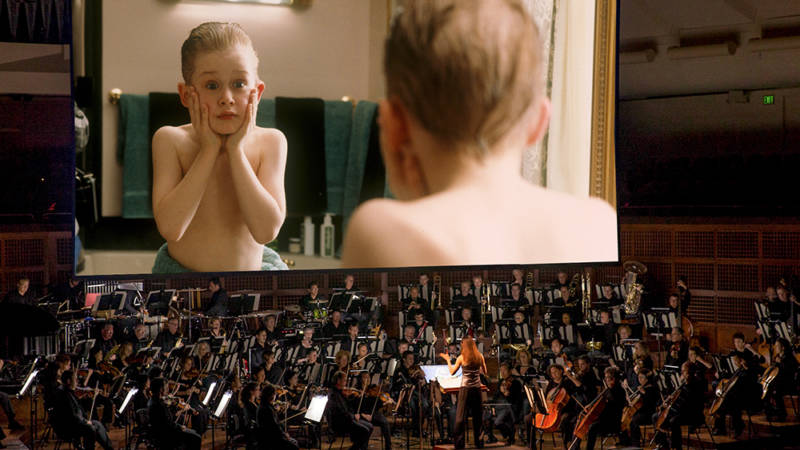
"caption": "The San Francisco Symphony performs a live score of 'Home Alone' Dec. 19-21 at Davies Symphony Hall. ",
"description": "The San Francisco Symphony performs a live score of 'Home Alone' Dec. 19-21 at Davies Symphony Hall. ",
"title": "12-16-2017-HomeAlone_1",
"credit": "20th Century Fox/SF Symphony",
"status": "inherit",
"isLoading": false,
"fetchFailed": false
},
"arts_13847041": {
"type": "attachments",
"id": "arts_13847041",
"meta": {
"index": "attachments_1716263798",
"site": "arts",
"id": "13847041",
"found": true
},
"parent": 13847024,
"imgSizes": {
"twentyfourteen-full-width": {
"file": "https://ww2.kqed.org/app/uploads/sites/2/2018/12/rose-droll-cropped-1038x576.jpg",
"width": 1038,
"mimeType": "image/jpeg",
"height": 576
},
"thumbnail": {
"file": "https://ww2.kqed.org/app/uploads/sites/2/2018/12/rose-droll-cropped-160x90.jpg",
"width": 160,
"mimeType": "image/jpeg",
"height": 90
},
"post-thumbnail": {
"file": "https://ww2.kqed.org/app/uploads/sites/2/2018/12/rose-droll-cropped-672x372.jpg",
"width": 672,
"mimeType": "image/jpeg",
"height": 372
},
"kqedFullSize": {
"file": "https://ww2.kqed.org/app/uploads/sites/2/2018/12/rose-droll-cropped.jpg",
"width": 1200,
"height": 675
},
"large": {
"file": "https://ww2.kqed.org/app/uploads/sites/2/2018/12/rose-droll-cropped-1020x574.jpg",
"width": 1020,
"mimeType": "image/jpeg",
"height": 574
},
"complete_open_graph": {
"file": "https://ww2.kqed.org/app/uploads/sites/2/2018/12/rose-droll-cropped-1200x675.jpg",
"width": 1200,
"mimeType": "image/jpeg",
"height": 675
},
"guest-author-50": {
"file": "https://ww2.kqed.org/app/uploads/sites/2/2018/12/rose-droll-cropped-50x50.jpg",
"width": 50,
"mimeType": "image/jpeg",
"height": 50
},
"guest-author-96": {
"file": "https://ww2.kqed.org/app/uploads/sites/2/2018/12/rose-droll-cropped-96x96.jpg",
"width": 96,
"mimeType": "image/jpeg",
"height": 96
},
"medium": {
"file": "https://ww2.kqed.org/app/uploads/sites/2/2018/12/rose-droll-cropped-800x450.jpg",
"width": 800,
"mimeType": "image/jpeg",
"height": 450
},
"guest-author-64": {
"file": "https://ww2.kqed.org/app/uploads/sites/2/2018/12/rose-droll-cropped-64x64.jpg",
"width": 64,
"mimeType": "image/jpeg",
"height": 64
},
"guest-author-32": {
"file": "https://ww2.kqed.org/app/uploads/sites/2/2018/12/rose-droll-cropped-32x32.jpg",
"width": 32,
"mimeType": "image/jpeg",
"height": 32
},
"detail": {
"file": "https://ww2.kqed.org/app/uploads/sites/2/2018/12/rose-droll-cropped-150x150.jpg",
"width": 150,
"mimeType": "image/jpeg",
"height": 150
},
"medium_large": {
"file": "https://ww2.kqed.org/app/uploads/sites/2/2018/12/rose-droll-cropped-768x432.jpg",
"width": 768,
"mimeType": "image/jpeg",
"height": 432
},
"guest-author-128": {
"file": "https://ww2.kqed.org/app/uploads/sites/2/2018/12/rose-droll-cropped-128x128.jpg",
"width": 128,
"mimeType": "image/jpeg",
"height": 128
}
},
"publishDate": 1544578910,
"modified": 1544578910,
"caption": null,
"description": null,
"title": "rose droll cropped",
"credit": null,
"status": "inherit",
"isLoading": false,
"fetchFailed": false
},
"arts_13835346": {
"type": "attachments",
"id": "arts_13835346",
"meta": {
"index": "attachments_1716263798",
"site": "arts",
"id": "13835346",
"found": true
},
"parent": 0,
"imgSizes": {
"small": {
"file": "https://ww2.kqed.org/app/uploads/sites/2/2018/06/MG_5623-1-520x293.jpg",
"width": 520,
"mimeType": "image/jpeg",
"height": 293
},
"twentyfourteen-full-width": {
"file": "https://ww2.kqed.org/app/uploads/sites/2/2018/06/MG_5623-1-1038x576.jpg",
"width": 1038,
"mimeType": "image/jpeg",
"height": 576
},
"thumbnail": {
"file": "https://ww2.kqed.org/app/uploads/sites/2/2018/06/MG_5623-1-160x90.jpg",
"width": 160,
"mimeType": "image/jpeg",
"height": 90
},
"fd-sm": {
"file": "https://ww2.kqed.org/app/uploads/sites/2/2018/06/MG_5623-1-960x540.jpg",
"width": 960,
"mimeType": "image/jpeg",
"height": 540
},
"post-thumbnail": {
"file": "https://ww2.kqed.org/app/uploads/sites/2/2018/06/MG_5623-1-672x372.jpg",
"width": 672,
"mimeType": "image/jpeg",
"height": 372
},
"xsmall": {
"file": "https://ww2.kqed.org/app/uploads/sites/2/2018/06/MG_5623-1-375x211.jpg",
"width": 375,
"mimeType": "image/jpeg",
"height": 211
},
"kqedFullSize": {
"file": "https://ww2.kqed.org/app/uploads/sites/2/2018/06/MG_5623-1.jpg",
"width": 1920,
"height": 1080
},
"large": {
"file": "https://ww2.kqed.org/app/uploads/sites/2/2018/06/MG_5623-1-1020x574.jpg",
"width": 1020,
"mimeType": "image/jpeg",
"height": 574
},
"xlarge": {
"file": "https://ww2.kqed.org/app/uploads/sites/2/2018/06/MG_5623-1-1180x664.jpg",
"width": 1180,
"mimeType": "image/jpeg",
"height": 664
},
"complete_open_graph": {
"file": "https://ww2.kqed.org/app/uploads/sites/2/2018/06/MG_5623-1-1200x675.jpg",
"width": 1200,
"mimeType": "image/jpeg",
"height": 675
},
"guest-author-50": {
"file": "https://ww2.kqed.org/app/uploads/sites/2/2018/06/MG_5623-1-50x50.jpg",
"width": 50,
"mimeType": "image/jpeg",
"height": 50
},
"guest-author-96": {
"file": "https://ww2.kqed.org/app/uploads/sites/2/2018/06/MG_5623-1-96x96.jpg",
"width": 96,
"mimeType": "image/jpeg",
"height": 96
},
"medium": {
"file": "https://ww2.kqed.org/app/uploads/sites/2/2018/06/MG_5623-1-800x450.jpg",
"width": 800,
"mimeType": "image/jpeg",
"height": 450
},
"guest-author-64": {
"file": "https://ww2.kqed.org/app/uploads/sites/2/2018/06/MG_5623-1-64x64.jpg",
"width": 64,
"mimeType": "image/jpeg",
"height": 64
},
"guest-author-32": {
"file": "https://ww2.kqed.org/app/uploads/sites/2/2018/06/MG_5623-1-32x32.jpg",
"width": 32,
"mimeType": "image/jpeg",
"height": 32
},
"fd-lrg": {
"file": "https://ww2.kqed.org/app/uploads/sites/2/2018/06/MG_5623-1-1920x1080.jpg",
"width": 1920,
"mimeType": "image/jpeg",
"height": 1080
},
"fd-med": {
"file": "https://ww2.kqed.org/app/uploads/sites/2/2018/06/MG_5623-1-1180x664.jpg",
"width": 1180,
"mimeType": "image/jpeg",
"height": 664
},
"full-width": {
"file": "https://ww2.kqed.org/app/uploads/sites/2/2018/06/MG_5623-1-1920x1080.jpg",
"width": 1920,
"mimeType": "image/jpeg",
"height": 1080
},
"detail": {
"file": "https://ww2.kqed.org/app/uploads/sites/2/2018/06/MG_5623-1-150x150.jpg",
"width": 150,
"mimeType": "image/jpeg",
"height": 150
},
"medium_large": {
"file": "https://ww2.kqed.org/app/uploads/sites/2/2018/06/MG_5623-1-768x432.jpg",
"width": 768,
"mimeType": "image/jpeg",
"height": 432
},
"guest-author-128": {
"file": "https://ww2.kqed.org/app/uploads/sites/2/2018/06/MG_5623-1-128x128.jpg",
"width": 128,
"mimeType": "image/jpeg",
"height": 128
},
"xxsmall": {
"file": "https://ww2.kqed.org/app/uploads/sites/2/2018/06/MG_5623-1-240x135.jpg",
"width": 240,
"mimeType": "image/jpeg",
"height": 135
}
},
"publishDate": 1529347738,
"modified": 1529349841,
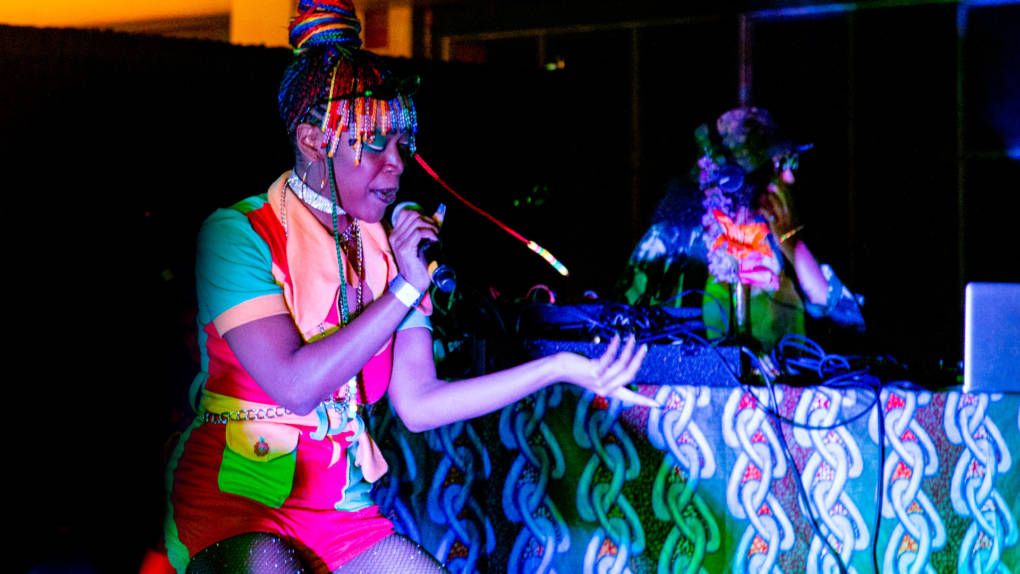
"caption": "Bbymutha plays FEELS 6 at The Craneway Pavilion in Richmond on Saturday, June 16. (Estefany Gonzalez)",
"description": "Bbymutha plays FEELS 6 at The Craneway Pavilion in Richmond on Saturday, June 16. (Estefany Gonzalez)",
"title": "Possible Main",
"credit": null,
"status": "inherit",
"isLoading": false,
"fetchFailed": false
},
"arts_13846954": {
"type": "attachments",
"id": "arts_13846954",
"meta": {
"index": "attachments_1716263798",
"site": "arts",
"id": "13846954",
"found": true
},
"parent": 13846754,
"imgSizes": {
"twentyfourteen-full-width": {
"file": "https://ww2.kqed.org/app/uploads/sites/2/2018/12/JamieZ.dna_2-1038x576.jpg",
"width": 1038,
"mimeType": "image/jpeg",
"height": 576
},
"thumbnail": {
"file": "https://ww2.kqed.org/app/uploads/sites/2/2018/12/JamieZ.dna_2-160x90.jpg",
"width": 160,
"mimeType": "image/jpeg",
"height": 90
},
"post-thumbnail": {
"file": "https://ww2.kqed.org/app/uploads/sites/2/2018/12/JamieZ.dna_2-672x372.jpg",
"width": 672,
"mimeType": "image/jpeg",
"height": 372
},
"kqedFullSize": {
"file": "https://ww2.kqed.org/app/uploads/sites/2/2018/12/JamieZ.dna_2.jpg",
"width": 1920,
"height": 1080
},
"large": {
"file": "https://ww2.kqed.org/app/uploads/sites/2/2018/12/JamieZ.dna_2-1020x574.jpg",
"width": 1020,
"mimeType": "image/jpeg",
"height": 574
},
"complete_open_graph": {
"file": "https://ww2.kqed.org/app/uploads/sites/2/2018/12/JamieZ.dna_2-1200x675.jpg",
"width": 1200,
"mimeType": "image/jpeg",
"height": 675
},
"guest-author-50": {
"file": "https://ww2.kqed.org/app/uploads/sites/2/2018/12/JamieZ.dna_2-50x50.jpg",
"width": 50,
"mimeType": "image/jpeg",
"height": 50
},
"guest-author-96": {
"file": "https://ww2.kqed.org/app/uploads/sites/2/2018/12/JamieZ.dna_2-96x96.jpg",
"width": 96,
"mimeType": "image/jpeg",
"height": 96
},
"medium": {
"file": "https://ww2.kqed.org/app/uploads/sites/2/2018/12/JamieZ.dna_2-800x450.jpg",
"width": 800,
"mimeType": "image/jpeg",
"height": 450
},
"guest-author-64": {
"file": "https://ww2.kqed.org/app/uploads/sites/2/2018/12/JamieZ.dna_2-64x64.jpg",
"width": 64,
"mimeType": "image/jpeg",
"height": 64
},
"guest-author-32": {
"file": "https://ww2.kqed.org/app/uploads/sites/2/2018/12/JamieZ.dna_2-32x32.jpg",
"width": 32,
"mimeType": "image/jpeg",
"height": 32
},
"full-width": {
"file": "https://ww2.kqed.org/app/uploads/sites/2/2018/12/JamieZ.dna_2-1920x1080.jpg",
"width": 1920,
"mimeType": "image/jpeg",
"height": 1080
},
"detail": {
"file": "https://ww2.kqed.org/app/uploads/sites/2/2018/12/JamieZ.dna_2-150x150.jpg",
"width": 150,
"mimeType": "image/jpeg",
"height": 150
},
"medium_large": {
"file": "https://ww2.kqed.org/app/uploads/sites/2/2018/12/JamieZ.dna_2-768x432.jpg",
"width": 768,
"mimeType": "image/jpeg",
"height": 432
},
"guest-author-128": {
"file": "https://ww2.kqed.org/app/uploads/sites/2/2018/12/JamieZ.dna_2-128x128.jpg",
"width": 128,
"mimeType": "image/jpeg",
"height": 128
}
},
"publishDate": 1544560104,
"modified": 1544560138,
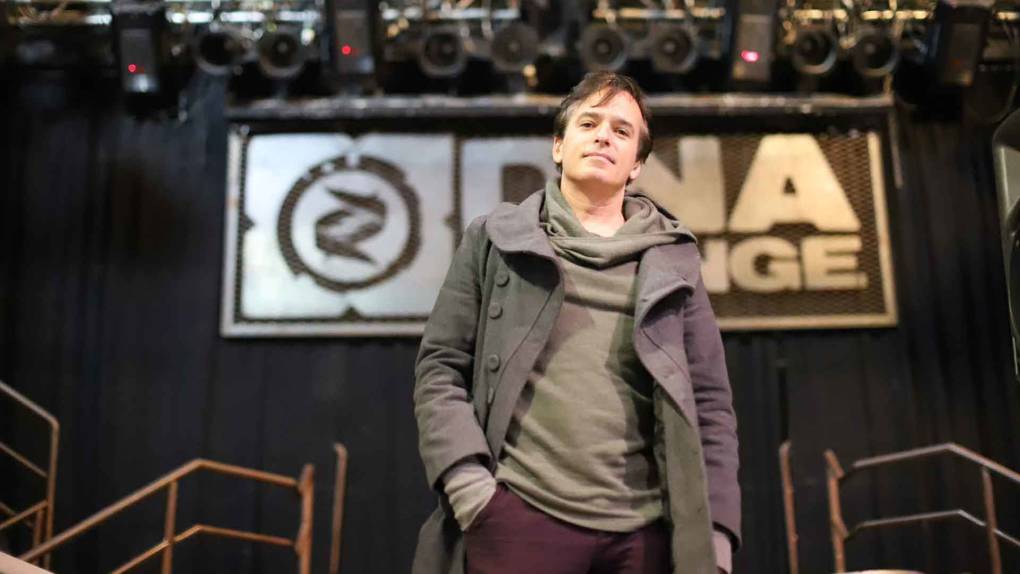
"caption": "Jamie Zawinski, the owner of DNA Lounge, wrote a blog post about corporate promoters' expansion in San Francisco.",
"description": "Jamie Zawinski, the owner of DNA Lounge, wrote a blog post about corporate promoters' expansion in San Francisco.",
"title": "JamieZ.dna_2",
"credit": "Sam Lefebvre/KQED",
"status": "inherit",
"isLoading": false,
"fetchFailed": false
},
"arts_13846917": {
"type": "attachments",
"id": "arts_13846917",
"meta": {
"index": "attachments_1716263798",
"site": "arts",
"id": "13846917",
"found": true
},
"parent": 13846895,
"imgSizes": {
"small": {
"file": "https://ww2.kqed.org/app/uploads/sites/2/2018/12/gilberto-1-520x293.jpg",
"width": 520,
"mimeType": "image/jpeg",
"height": 293
},
"twentyfourteen-full-width": {
"file": "https://ww2.kqed.org/app/uploads/sites/2/2018/12/gilberto-1-1038x576.jpg",
"width": 1038,
"mimeType": "image/jpeg",
"height": 576
},
"thumbnail": {
"file": "https://ww2.kqed.org/app/uploads/sites/2/2018/12/gilberto-1-160x90.jpg",
"width": 160,
"mimeType": "image/jpeg",
"height": 90
},
"fd-sm": {
"file": "https://ww2.kqed.org/app/uploads/sites/2/2018/12/gilberto-1-960x540.jpg",
"width": 960,
"mimeType": "image/jpeg",
"height": 540
},
"post-thumbnail": {
"file": "https://ww2.kqed.org/app/uploads/sites/2/2018/12/gilberto-1-672x372.jpg",
"width": 672,
"mimeType": "image/jpeg",
"height": 372
},
"xsmall": {
"file": "https://ww2.kqed.org/app/uploads/sites/2/2018/12/gilberto-1-375x211.jpg",
"width": 375,
"mimeType": "image/jpeg",
"height": 211
},
"kqedFullSize": {
"file": "https://ww2.kqed.org/app/uploads/sites/2/2018/12/gilberto-1.jpg",
"width": 1191,
"height": 670
},
"large": {
"file": "https://ww2.kqed.org/app/uploads/sites/2/2018/12/gilberto-1-1020x574.jpg",
"width": 1020,
"mimeType": "image/jpeg",
"height": 574
},
"xlarge": {
"file": "https://ww2.kqed.org/app/uploads/sites/2/2018/12/gilberto-1-1180x664.jpg",
"width": 1180,
"mimeType": "image/jpeg",
"height": 664
},
"guest-author-50": {
"file": "https://ww2.kqed.org/app/uploads/sites/2/2018/12/gilberto-1-50x50.jpg",
"width": 50,
"mimeType": "image/jpeg",
"height": 50
},
"guest-author-96": {
"file": "https://ww2.kqed.org/app/uploads/sites/2/2018/12/gilberto-1-96x96.jpg",
"width": 96,
"mimeType": "image/jpeg",
"height": 96
},
"medium": {
"file": "https://ww2.kqed.org/app/uploads/sites/2/2018/12/gilberto-1-800x450.jpg",
"width": 800,
"mimeType": "image/jpeg",
"height": 450
},
"guest-author-64": {
"file": "https://ww2.kqed.org/app/uploads/sites/2/2018/12/gilberto-1-64x64.jpg",
"width": 64,
"mimeType": "image/jpeg",
"height": 64
},
"guest-author-32": {
"file": "https://ww2.kqed.org/app/uploads/sites/2/2018/12/gilberto-1-32x32.jpg",
"width": 32,
"mimeType": "image/jpeg",
"height": 32
},
"fd-med": {
"file": "https://ww2.kqed.org/app/uploads/sites/2/2018/12/gilberto-1-1180x664.jpg",
"width": 1180,
"mimeType": "image/jpeg",
"height": 664
},
"detail": {
"file": "https://ww2.kqed.org/app/uploads/sites/2/2018/12/gilberto-1-150x150.jpg",
"width": 150,
"mimeType": "image/jpeg",
"height": 150
},
"medium_large": {
"file": "https://ww2.kqed.org/app/uploads/sites/2/2018/12/gilberto-1-768x432.jpg",
"width": 768,
"mimeType": "image/jpeg",
"height": 432
},
"guest-author-128": {
"file": "https://ww2.kqed.org/app/uploads/sites/2/2018/12/gilberto-1-128x128.jpg",
"width": 128,
"mimeType": "image/jpeg",
"height": 128
},
"xxsmall": {
"file": "https://ww2.kqed.org/app/uploads/sites/2/2018/12/gilberto-1-240x135.jpg",
"width": 240,
"mimeType": "image/jpeg",
"height": 135
}
},
"publishDate": 1544545716,
"modified": 1544545716,
"caption": null,
"description": null,
"title": "gilberto",
"credit": null,
"status": "inherit",
"isLoading": false,
"fetchFailed": false
},
"arts_13846886": {
"type": "attachments",
"id": "arts_13846886",
"meta": {
"index": "attachments_1716263798",
"site": "arts",
"id": "13846886",
"found": true
},
"parent": 13846693,
"imgSizes": {
"twentyfourteen-full-width": {
"file": "https://ww2.kqed.org/app/uploads/sites/2/2018/12/albums-collage-1038x576.jpg",
"width": 1038,
"mimeType": "image/jpeg",
"height": 576
},
"thumbnail": {
"file": "https://ww2.kqed.org/app/uploads/sites/2/2018/12/albums-collage-160x107.jpg",
"width": 160,
"mimeType": "image/jpeg",
"height": 107
},
"post-thumbnail": {
"file": "https://ww2.kqed.org/app/uploads/sites/2/2018/12/albums-collage-672x372.jpg",
"width": 672,
"mimeType": "image/jpeg",
"height": 372
},
"kqedFullSize": {
"file": "https://ww2.kqed.org/app/uploads/sites/2/2018/12/albums-collage.jpg",
"width": 1621,
"height": 1080
},
"large": {
"file": "https://ww2.kqed.org/app/uploads/sites/2/2018/12/albums-collage-1020x680.jpg",
"width": 1020,
"mimeType": "image/jpeg",
"height": 680
},
"complete_open_graph": {
"file": "https://ww2.kqed.org/app/uploads/sites/2/2018/12/albums-collage-1200x800.jpg",
"width": 1200,
"mimeType": "image/jpeg",
"height": 800
},
"guest-author-50": {
"file": "https://ww2.kqed.org/app/uploads/sites/2/2018/12/albums-collage-50x50.jpg",
"width": 50,
"mimeType": "image/jpeg",
"height": 50
},
"guest-author-96": {
"file": "https://ww2.kqed.org/app/uploads/sites/2/2018/12/albums-collage-96x96.jpg",
"width": 96,
"mimeType": "image/jpeg",
"height": 96
},
"medium": {
"file": "https://ww2.kqed.org/app/uploads/sites/2/2018/12/albums-collage-800x533.jpg",
"width": 800,
"mimeType": "image/jpeg",
"height": 533
},
"guest-author-64": {
"file": "https://ww2.kqed.org/app/uploads/sites/2/2018/12/albums-collage-64x64.jpg",
"width": 64,
"mimeType": "image/jpeg",
"height": 64
},
"guest-author-32": {
"file": "https://ww2.kqed.org/app/uploads/sites/2/2018/12/albums-collage-32x32.jpg",
"width": 32,
"mimeType": "image/jpeg",
"height": 32
},
"detail": {
"file": "https://ww2.kqed.org/app/uploads/sites/2/2018/12/albums-collage-150x150.jpg",
"width": 150,
"mimeType": "image/jpeg",
"height": 150
},
"medium_large": {
"file": "https://ww2.kqed.org/app/uploads/sites/2/2018/12/albums-collage-768x512.jpg",
"width": 768,
"mimeType": "image/jpeg",
"height": 512
},
"guest-author-128": {
"file": "https://ww2.kqed.org/app/uploads/sites/2/2018/12/albums-collage-128x128.jpg",
"width": 128,
"mimeType": "image/jpeg",
"height": 128
}
},
"publishDate": 1544488886,
"modified": 1544488886,
"caption": null,
"description": null,
"title": "albums collage",
"credit": null,
"status": "inherit",
"isLoading": false,
"fetchFailed": false
},
"arts_13846574": {
"type": "attachments",
"id": "arts_13846574",
"meta": {
"index": "attachments_1716263798",
"site": "arts",
"id": "13846574",
"found": true
},
"parent": 13846539,
"imgSizes": {
"thumbnail": {
"file": "https://ww2.kqed.org/app/uploads/sites/2/2018/12/prezi-do-better-cropped-160x90.jpg",
"width": 160,
"mimeType": "image/jpeg",
"height": 90
},
"kqedFullSize": {
"file": "https://ww2.kqed.org/app/uploads/sites/2/2018/12/prezi-do-better-cropped.jpg",
"width": 630,
"height": 354
},
"guest-author-50": {
"file": "https://ww2.kqed.org/app/uploads/sites/2/2018/12/prezi-do-better-cropped-50x50.jpg",
"width": 50,
"mimeType": "image/jpeg",
"height": 50
},
"guest-author-96": {
"file": "https://ww2.kqed.org/app/uploads/sites/2/2018/12/prezi-do-better-cropped-96x96.jpg",
"width": 96,
"mimeType": "image/jpeg",
"height": 96
},
"guest-author-64": {
"file": "https://ww2.kqed.org/app/uploads/sites/2/2018/12/prezi-do-better-cropped-64x64.jpg",
"width": 64,
"mimeType": "image/jpeg",
"height": 64
},
"detail": {
"file": "https://ww2.kqed.org/app/uploads/sites/2/2018/12/prezi-do-better-cropped-150x150.jpg",
"width": 150,
"mimeType": "image/jpeg",
"height": 150
},
"guest-author-32": {
"file": "https://ww2.kqed.org/app/uploads/sites/2/2018/12/prezi-do-better-cropped-32x32.jpg",
"width": 32,
"mimeType": "image/jpeg",
"height": 32
},
"guest-author-128": {
"file": "https://ww2.kqed.org/app/uploads/sites/2/2018/12/prezi-do-better-cropped-128x128.jpg",
"width": 128,
"mimeType": "image/jpeg",
"height": 128
}
},
"publishDate": 1544141081,
"modified": 1544141081,
"caption": null,
"description": null,
"title": "prezi do better cropped",
"credit": null,
"status": "inherit",
"isLoading": false,
"fetchFailed": false
},
"arts_13846731": {
"type": "attachments",
"id": "arts_13846731",
"meta": {
"index": "attachments_1716263798",
"site": "arts",
"id": "13846731",
"found": true
},
"parent": 13846730,
"imgSizes": {
"small": {
"file": "https://ww2.kqed.org/app/uploads/sites/2/2018/12/RS34389_IMG_1684-qut-520x379.jpg",
"width": 520,
"mimeType": "image/jpeg",
"height": 379
},
"twentyfourteen-full-width": {
"file": "https://ww2.kqed.org/app/uploads/sites/2/2018/12/RS34389_IMG_1684-qut-1038x576.jpg",
"width": 1038,
"mimeType": "image/jpeg",
"height": 576
},
"thumbnail": {
"file": "https://ww2.kqed.org/app/uploads/sites/2/2018/12/RS34389_IMG_1684-qut-160x117.jpg",
"width": 160,
"mimeType": "image/jpeg",
"height": 117
},
"fd-sm": {
"file": "https://ww2.kqed.org/app/uploads/sites/2/2018/12/RS34389_IMG_1684-qut-960x700.jpg",
"width": 960,
"mimeType": "image/jpeg",
"height": 700
},
"post-thumbnail": {
"file": "https://ww2.kqed.org/app/uploads/sites/2/2018/12/RS34389_IMG_1684-qut-672x372.jpg",
"width": 672,
"mimeType": "image/jpeg",
"height": 372
},
"xsmall": {
"file": "https://ww2.kqed.org/app/uploads/sites/2/2018/12/RS34389_IMG_1684-qut-375x273.jpg",
"width": 375,
"mimeType": "image/jpeg",
"height": 273
},
"kqedFullSize": {
"file": "https://ww2.kqed.org/app/uploads/sites/2/2018/12/RS34389_IMG_1684-qut.jpg",
"width": 1920,
"height": 1399
},
"large": {
"file": "https://ww2.kqed.org/app/uploads/sites/2/2018/12/RS34389_IMG_1684-qut-1020x743.jpg",
"width": 1020,
"mimeType": "image/jpeg",
"height": 743
},
"xlarge": {
"file": "https://ww2.kqed.org/app/uploads/sites/2/2018/12/RS34389_IMG_1684-qut-1180x860.jpg",
"width": 1180,
"mimeType": "image/jpeg",
"height": 860
},
"complete_open_graph": {
"file": "https://ww2.kqed.org/app/uploads/sites/2/2018/12/RS34389_IMG_1684-qut-1200x874.jpg",
"width": 1200,
"mimeType": "image/jpeg",
"height": 874
},
"guest-author-50": {
"file": "https://ww2.kqed.org/app/uploads/sites/2/2018/12/RS34389_IMG_1684-qut-50x50.jpg",
"width": 50,
"mimeType": "image/jpeg",
"height": 50
},
"guest-author-96": {
"file": "https://ww2.kqed.org/app/uploads/sites/2/2018/12/RS34389_IMG_1684-qut-96x96.jpg",
"width": 96,
"mimeType": "image/jpeg",
"height": 96
},
"medium": {
"file": "https://ww2.kqed.org/app/uploads/sites/2/2018/12/RS34389_IMG_1684-qut-800x583.jpg",
"width": 800,
"mimeType": "image/jpeg",
"height": 583
},
"guest-author-64": {
"file": "https://ww2.kqed.org/app/uploads/sites/2/2018/12/RS34389_IMG_1684-qut-64x64.jpg",
"width": 64,
"mimeType": "image/jpeg",
"height": 64
},
"guest-author-32": {
"file": "https://ww2.kqed.org/app/uploads/sites/2/2018/12/RS34389_IMG_1684-qut-32x32.jpg",
"width": 32,
"mimeType": "image/jpeg",
"height": 32
},
"fd-lrg": {
"file": "https://ww2.kqed.org/app/uploads/sites/2/2018/12/RS34389_IMG_1684-qut-1920x1399.jpg",
"width": 1920,
"mimeType": "image/jpeg",
"height": 1399
},
"fd-med": {
"file": "https://ww2.kqed.org/app/uploads/sites/2/2018/12/RS34389_IMG_1684-qut-1180x860.jpg",
"width": 1180,
"mimeType": "image/jpeg",
"height": 860
},
"full-width": {
"file": "https://ww2.kqed.org/app/uploads/sites/2/2018/12/RS34389_IMG_1684-qut-1920x1399.jpg",
"width": 1920,
"mimeType": "image/jpeg",
"height": 1399
},
"detail": {
"file": "https://ww2.kqed.org/app/uploads/sites/2/2018/12/RS34389_IMG_1684-qut-150x150.jpg",
"width": 150,
"mimeType": "image/jpeg",
"height": 150
},
"medium_large": {
"file": "https://ww2.kqed.org/app/uploads/sites/2/2018/12/RS34389_IMG_1684-qut-768x560.jpg",
"width": 768,
"mimeType": "image/jpeg",
"height": 560
},
"guest-author-128": {
"file": "https://ww2.kqed.org/app/uploads/sites/2/2018/12/RS34389_IMG_1684-qut-128x128.jpg",
"width": 128,
"mimeType": "image/jpeg",
"height": 128
},
"xxsmall": {
"file": "https://ww2.kqed.org/app/uploads/sites/2/2018/12/RS34389_IMG_1684-qut-240x175.jpg",
"width": 240,
"mimeType": "image/jpeg",
"height": 175
}
},
"publishDate": 1544300922,
"modified": 1544371121,
"caption": "It's for real, now. Nathaniel Smith and Miykael Goodwin have a band name now, Cold Weather Sons, and a professionally produced single, One of These Days. The song is a lament for the town lost to the Camp Fire in 2018.",
"description": "It's for real, now. Nathaniel Smith and Miykael Goodwin have a band name now, Cold Weather Sons, and a professionally produced single, One of These Days. The song is a lament for the town lost to the Camp Fire in 2018.",
"title": "RS34389_IMG_1684-qut",
"credit": "Courtesy of Cold Weather Sons",
"status": "inherit",
"isLoading": false,
"fetchFailed": false
},
"arts_13846672": {
"type": "attachments",
"id": "arts_13846672",
"meta": {
"index": "attachments_1716263798",
"site": "arts",
"id": "13846672",
"found": true
},
"parent": 13846668,
"imgSizes": {
"small": {
"file": "https://ww2.kqed.org/app/uploads/sites/2/2018/12/GettyImages-800232432-520x293.jpg",
"width": 520,
"mimeType": "image/jpeg",
"height": 293
},
"twentyfourteen-full-width": {
"file": "https://ww2.kqed.org/app/uploads/sites/2/2018/12/GettyImages-800232432-1038x576.jpg",
"width": 1038,
"mimeType": "image/jpeg",
"height": 576
},
"thumbnail": {
"file": "https://ww2.kqed.org/app/uploads/sites/2/2018/12/GettyImages-800232432-160x90.jpg",
"width": 160,
"mimeType": "image/jpeg",
"height": 90
},
"fd-sm": {
"file": "https://ww2.kqed.org/app/uploads/sites/2/2018/12/GettyImages-800232432-960x540.jpg",
"width": 960,
"mimeType": "image/jpeg",
"height": 540
},
"post-thumbnail": {
"file": "https://ww2.kqed.org/app/uploads/sites/2/2018/12/GettyImages-800232432-672x372.jpg",
"width": 672,
"mimeType": "image/jpeg",
"height": 372
},
"xsmall": {
"file": "https://ww2.kqed.org/app/uploads/sites/2/2018/12/GettyImages-800232432-375x211.jpg",
"width": 375,
"mimeType": "image/jpeg",
"height": 211
},
"kqedFullSize": {
"file": "https://ww2.kqed.org/app/uploads/sites/2/2018/12/GettyImages-800232432.jpg",
"width": 1920,
"height": 1080
},
"large": {
"file": "https://ww2.kqed.org/app/uploads/sites/2/2018/12/GettyImages-800232432-1020x574.jpg",
"width": 1020,
"mimeType": "image/jpeg",
"height": 574
},
"xlarge": {
"file": "https://ww2.kqed.org/app/uploads/sites/2/2018/12/GettyImages-800232432-1180x664.jpg",
"width": 1180,
"mimeType": "image/jpeg",
"height": 664
},
"complete_open_graph": {
"file": "https://ww2.kqed.org/app/uploads/sites/2/2018/12/GettyImages-800232432-1200x675.jpg",
"width": 1200,
"mimeType": "image/jpeg",
"height": 675
},
"guest-author-50": {
"file": "https://ww2.kqed.org/app/uploads/sites/2/2018/12/GettyImages-800232432-50x50.jpg",
"width": 50,
"mimeType": "image/jpeg",
"height": 50
},
"guest-author-96": {
"file": "https://ww2.kqed.org/app/uploads/sites/2/2018/12/GettyImages-800232432-96x96.jpg",
"width": 96,
"mimeType": "image/jpeg",
"height": 96
},
"medium": {
"file": "https://ww2.kqed.org/app/uploads/sites/2/2018/12/GettyImages-800232432-800x450.jpg",
"width": 800,
"mimeType": "image/jpeg",
"height": 450
},
"guest-author-64": {
"file": "https://ww2.kqed.org/app/uploads/sites/2/2018/12/GettyImages-800232432-64x64.jpg",
"width": 64,
"mimeType": "image/jpeg",
"height": 64
},
"guest-author-32": {
"file": "https://ww2.kqed.org/app/uploads/sites/2/2018/12/GettyImages-800232432-32x32.jpg",
"width": 32,
"mimeType": "image/jpeg",
"height": 32
},
"fd-lrg": {
"file": "https://ww2.kqed.org/app/uploads/sites/2/2018/12/GettyImages-800232432-1920x1080.jpg",
"width": 1920,
"mimeType": "image/jpeg",
"height": 1080
},
"fd-med": {
"file": "https://ww2.kqed.org/app/uploads/sites/2/2018/12/GettyImages-800232432-1180x664.jpg",
"width": 1180,
"mimeType": "image/jpeg",
"height": 664
},
"full-width": {
"file": "https://ww2.kqed.org/app/uploads/sites/2/2018/12/GettyImages-800232432-1920x1080.jpg",
"width": 1920,
"mimeType": "image/jpeg",
"height": 1080
},
"detail": {
"file": "https://ww2.kqed.org/app/uploads/sites/2/2018/12/GettyImages-800232432-150x150.jpg",
"width": 150,
"mimeType": "image/jpeg",
"height": 150
},
"medium_large": {
"file": "https://ww2.kqed.org/app/uploads/sites/2/2018/12/GettyImages-800232432-768x432.jpg",
"width": 768,
"mimeType": "image/jpeg",
"height": 432
},
"guest-author-128": {
"file": "https://ww2.kqed.org/app/uploads/sites/2/2018/12/GettyImages-800232432-128x128.jpg",
"width": 128,
"mimeType": "image/jpeg",
"height": 128
},
"xxsmall": {
"file": "https://ww2.kqed.org/app/uploads/sites/2/2018/12/GettyImages-800232432-240x135.jpg",
"width": 240,
"mimeType": "image/jpeg",
"height": 135
}
},
"publishDate": 1544212246,
"modified": 1544212307,
"caption": "H.E.R. performs onstage at night two of the STAPLES Center Concert during the 2017 BET Experience at LA Live on June 23, 2017 in Los Angeles, California. ",
"description": "H.E.R. performs onstage at night two of the STAPLES Center Concert during the 2017 BET Experience at LA Live on June 23, 2017 in Los Angeles, California. ",
"title": "2017 BET Experience - STAPLES Center Concert Presented By Coca-Cola - Night 2",
"credit": " Bennett Raglin/Getty Images for BET",
"status": "inherit",
"isLoading": false,
"fetchFailed": false
},
"arts_13846571": {
"type": "attachments",
"id": "arts_13846571",
"meta": {
"index": "attachments_1716263798",
"site": "arts",
"id": "13846571",
"found": true
},
"parent": 13846544,
"imgSizes": {
"twentyfourteen-full-width": {
"file": "https://ww2.kqed.org/app/uploads/sites/2/2018/12/adrenochrome-1-1038x576.jpg",
"width": 1038,
"mimeType": "image/jpeg",
"height": 576
},
"thumbnail": {
"file": "https://ww2.kqed.org/app/uploads/sites/2/2018/12/adrenochrome-1-160x90.jpg",
"width": 160,
"mimeType": "image/jpeg",
"height": 90
},
"post-thumbnail": {
"file": "https://ww2.kqed.org/app/uploads/sites/2/2018/12/adrenochrome-1-672x372.jpg",
"width": 672,
"mimeType": "image/jpeg",
"height": 372
},
"kqedFullSize": {
"file": "https://ww2.kqed.org/app/uploads/sites/2/2018/12/adrenochrome-1.jpg",
"width": 1197,
"height": 673
},
"large": {
"file": "https://ww2.kqed.org/app/uploads/sites/2/2018/12/adrenochrome-1-1020x573.jpg",
"width": 1020,
"mimeType": "image/jpeg",
"height": 573
},
"guest-author-50": {
"file": "https://ww2.kqed.org/app/uploads/sites/2/2018/12/adrenochrome-1-50x50.jpg",
"width": 50,
"mimeType": "image/jpeg",
"height": 50
},
"guest-author-96": {
"file": "https://ww2.kqed.org/app/uploads/sites/2/2018/12/adrenochrome-1-96x96.jpg",
"width": 96,
"mimeType": "image/jpeg",
"height": 96
},
"medium": {
"file": "https://ww2.kqed.org/app/uploads/sites/2/2018/12/adrenochrome-1-800x450.jpg",
"width": 800,
"mimeType": "image/jpeg",
"height": 450
},
"guest-author-64": {
"file": "https://ww2.kqed.org/app/uploads/sites/2/2018/12/adrenochrome-1-64x64.jpg",
"width": 64,
"mimeType": "image/jpeg",
"height": 64
},
"guest-author-32": {
"file": "https://ww2.kqed.org/app/uploads/sites/2/2018/12/adrenochrome-1-32x32.jpg",
"width": 32,
"mimeType": "image/jpeg",
"height": 32
},
"detail": {
"file": "https://ww2.kqed.org/app/uploads/sites/2/2018/12/adrenochrome-1-150x150.jpg",
"width": 150,
"mimeType": "image/jpeg",
"height": 150
},
"medium_large": {
"file": "https://ww2.kqed.org/app/uploads/sites/2/2018/12/adrenochrome-1-768x432.jpg",
"width": 768,
"mimeType": "image/jpeg",
"height": 432
},
"guest-author-128": {
"file": "https://ww2.kqed.org/app/uploads/sites/2/2018/12/adrenochrome-1-128x128.jpg",
"width": 128,
"mimeType": "image/jpeg",
"height": 128
}
},
"publishDate": 1544140558,
"modified": 1544140558,
"caption": null,
"description": null,
"title": "adrenochrome",
"credit": null,
"status": "inherit",
"isLoading": false,
"fetchFailed": false
},
"arts_13846588": {
"type": "attachments",
"id": "arts_13846588",
"meta": {
"index": "attachments_1716263798",
"site": "arts",
"id": "13846588",
"found": true
},
"parent": 13846535,
"imgSizes": {
"small": {
"file": "https://ww2.kqed.org/app/uploads/sites/2/2018/12/EsaPekka.MAINREV-520x293.jpg",
"width": 520,
"mimeType": "image/jpeg",
"height": 293
},
"twentyfourteen-full-width": {
"file": "https://ww2.kqed.org/app/uploads/sites/2/2018/12/EsaPekka.MAINREV-1038x576.jpg",
"width": 1038,
"mimeType": "image/jpeg",
"height": 576
},
"thumbnail": {
"file": "https://ww2.kqed.org/app/uploads/sites/2/2018/12/EsaPekka.MAINREV-160x90.jpg",
"width": 160,
"mimeType": "image/jpeg",
"height": 90
},
"fd-sm": {
"file": "https://ww2.kqed.org/app/uploads/sites/2/2018/12/EsaPekka.MAINREV-960x540.jpg",
"width": 960,
"mimeType": "image/jpeg",
"height": 540
},
"post-thumbnail": {
"file": "https://ww2.kqed.org/app/uploads/sites/2/2018/12/EsaPekka.MAINREV-672x372.jpg",
"width": 672,
"mimeType": "image/jpeg",
"height": 372
},
"xsmall": {
"file": "https://ww2.kqed.org/app/uploads/sites/2/2018/12/EsaPekka.MAINREV-375x211.jpg",
"width": 375,
"mimeType": "image/jpeg",
"height": 211
},
"kqedFullSize": {
"file": "https://ww2.kqed.org/app/uploads/sites/2/2018/12/EsaPekka.MAINREV.jpg",
"width": 1920,
"height": 1080
},
"large": {
"file": "https://ww2.kqed.org/app/uploads/sites/2/2018/12/EsaPekka.MAINREV-1020x574.jpg",
"width": 1020,
"mimeType": "image/jpeg",
"height": 574
},
"xlarge": {
"file": "https://ww2.kqed.org/app/uploads/sites/2/2018/12/EsaPekka.MAINREV-1180x664.jpg",
"width": 1180,
"mimeType": "image/jpeg",
"height": 664
},
"complete_open_graph": {
"file": "https://ww2.kqed.org/app/uploads/sites/2/2018/12/EsaPekka.MAINREV-1200x675.jpg",
"width": 1200,
"mimeType": "image/jpeg",
"height": 675
},
"guest-author-50": {
"file": "https://ww2.kqed.org/app/uploads/sites/2/2018/12/EsaPekka.MAINREV-50x50.jpg",
"width": 50,
"mimeType": "image/jpeg",
"height": 50
},
"guest-author-96": {
"file": "https://ww2.kqed.org/app/uploads/sites/2/2018/12/EsaPekka.MAINREV-96x96.jpg",
"width": 96,
"mimeType": "image/jpeg",
"height": 96
},
"medium": {
"file": "https://ww2.kqed.org/app/uploads/sites/2/2018/12/EsaPekka.MAINREV-800x450.jpg",
"width": 800,
"mimeType": "image/jpeg",
"height": 450
},
"guest-author-64": {
"file": "https://ww2.kqed.org/app/uploads/sites/2/2018/12/EsaPekka.MAINREV-64x64.jpg",
"width": 64,
"mimeType": "image/jpeg",
"height": 64
},
"guest-author-32": {
"file": "https://ww2.kqed.org/app/uploads/sites/2/2018/12/EsaPekka.MAINREV-32x32.jpg",
"width": 32,
"mimeType": "image/jpeg",
"height": 32
},
"fd-lrg": {
"file": "https://ww2.kqed.org/app/uploads/sites/2/2018/12/EsaPekka.MAINREV-1920x1080.jpg",
"width": 1920,
"mimeType": "image/jpeg",
"height": 1080
},
"fd-med": {
"file": "https://ww2.kqed.org/app/uploads/sites/2/2018/12/EsaPekka.MAINREV-1180x664.jpg",
"width": 1180,
"mimeType": "image/jpeg",
"height": 664
},
"full-width": {
"file": "https://ww2.kqed.org/app/uploads/sites/2/2018/12/EsaPekka.MAINREV-1920x1080.jpg",
"width": 1920,
"mimeType": "image/jpeg",
"height": 1080
},
"detail": {
"file": "https://ww2.kqed.org/app/uploads/sites/2/2018/12/EsaPekka.MAINREV-150x150.jpg",
"width": 150,
"mimeType": "image/jpeg",
"height": 150
},
"medium_large": {
"file": "https://ww2.kqed.org/app/uploads/sites/2/2018/12/EsaPekka.MAINREV-768x432.jpg",
"width": 768,
"mimeType": "image/jpeg",
"height": 432
},
"guest-author-128": {
"file": "https://ww2.kqed.org/app/uploads/sites/2/2018/12/EsaPekka.MAINREV-128x128.jpg",
"width": 128,
"mimeType": "image/jpeg",
"height": 128
},
"xxsmall": {
"file": "https://ww2.kqed.org/app/uploads/sites/2/2018/12/EsaPekka.MAINREV-240x135.jpg",
"width": 240,
"mimeType": "image/jpeg",
"height": 135
}
},
"publishDate": 1544143454,
"modified": 1544143487,
"caption": "Esa-Pekka Salonen accepts his appointment as new Music Director of the San Francisco Symphony at a welcome party, Dec. 5, 2018.",
"description": "Esa-Pekka Salonen accepts his appointment as new Music Director of the San Francisco Symphony at a welcome party, Dec. 5, 2018.",
"title": "EsaPekka.MAINREV",
"credit": "Gabe Meline/KQED",
"status": "inherit",
"isLoading": false,
"fetchFailed": false
},
"arts_13846559": {
"type": "attachments",
"id": "arts_13846559",
"meta": {
"index": "attachments_1716263798",
"site": "arts",
"id": "13846559",
"found": true
},
"parent": 13846529,
"imgSizes": {
"thumbnail": {
"file": "https://ww2.kqed.org/app/uploads/sites/2/2018/12/TylerHOlmes-160x100.jpg",
"width": 160,
"mimeType": "image/jpeg",
"height": 100
},
"post-thumbnail": {
"file": "https://ww2.kqed.org/app/uploads/sites/2/2018/12/TylerHOlmes-672x372.jpg",
"width": 672,
"mimeType": "image/jpeg",
"height": 372
},
"kqedFullSize": {
"file": "https://ww2.kqed.org/app/uploads/sites/2/2018/12/TylerHOlmes.jpg",
"width": 800,
"height": 500
},
"guest-author-50": {
"file": "https://ww2.kqed.org/app/uploads/sites/2/2018/12/TylerHOlmes-50x50.jpg",
"width": 50,
"mimeType": "image/jpeg",
"height": 50
},
"guest-author-96": {
"file": "https://ww2.kqed.org/app/uploads/sites/2/2018/12/TylerHOlmes-96x96.jpg",
"width": 96,
"mimeType": "image/jpeg",
"height": 96
},
"medium": {
"file": "https://ww2.kqed.org/app/uploads/sites/2/2018/12/TylerHOlmes-800x500.jpg",
"width": 800,
"mimeType": "image/jpeg",
"height": 500
},
"guest-author-64": {
"file": "https://ww2.kqed.org/app/uploads/sites/2/2018/12/TylerHOlmes-64x64.jpg",
"width": 64,
"mimeType": "image/jpeg",
"height": 64
},
"detail": {
"file": "https://ww2.kqed.org/app/uploads/sites/2/2018/12/TylerHOlmes-150x150.jpg",
"width": 150,
"mimeType": "image/jpeg",
"height": 150
},
"guest-author-32": {
"file": "https://ww2.kqed.org/app/uploads/sites/2/2018/12/TylerHOlmes-32x32.jpg",
"width": 32,
"mimeType": "image/jpeg",
"height": 32
},
"medium_large": {
"file": "https://ww2.kqed.org/app/uploads/sites/2/2018/12/TylerHOlmes-768x480.jpg",
"width": 768,
"mimeType": "image/jpeg",
"height": 480
},
"guest-author-128": {
"file": "https://ww2.kqed.org/app/uploads/sites/2/2018/12/TylerHOlmes-128x128.jpg",
"width": 128,
"mimeType": "image/jpeg",
"height": 128
}
},
"publishDate": 1544138009,
"modified": 1544138063,
"caption": "Tyler Holmes.",
"description": "Tyler Holmes.",
"title": "TylerHOlmes",
"credit": "Nastia Voynovskaya",
"status": "inherit",
"isLoading": false,
"fetchFailed": false
}
},
"audioPlayerReducer": {
"postId": "stream_live",
"isPaused": true,
"isPlaying": false,
"pfsActive": false,
"pledgeModalIsOpen": true,
"playerDrawerIsOpen": false,
"liveAudioPlayStartedAt": 0,
"liveAudioPlayContext": ""
},
"authorsReducer": {
"byline_arts_13846895": {
"type": "authors",
"id": "byline_arts_13846895",
"meta": {
"override": true
},
"slug": "byline_arts_13846895",
"name": "Azucena Rasilla",
"isLoading": false
},
"kqedarts": {
"type": "authors",
"id": "92",
"meta": {
"index": "authors_1716337520",
"id": "92",
"found": true
},
"name": "KQED Arts",
"firstName": "KQED",
"lastName": "Arts",
"slug": "kqedarts",
"email": "arts@kqed.org",
"display_author_email": false,
"staff_mastheads": [],
"title": "KQED Staff",
"bio": null,
"avatar": "https://secure.gravatar.com/avatar/321c9ebfeb7736f9e55366a6d3399ab0?s=600&d=blank&r=g",
"twitter": null,
"facebook": null,
"instagram": "https://www.instagram.com/kqed_arts/",
"linkedin": null,
"sites": [
{
"site": "arts",
"roles": [
"contributor"
]
},
{
"site": "pop",
"roles": [
"contributor"
]
},
{
"site": "science",
"roles": [
"author"
]
},
{
"site": "food",
"roles": [
"contributor"
]
}
],
"headData": {
"title": "KQED Arts | KQED",
"description": "KQED Staff",
"ogImgSrc": "https://secure.gravatar.com/avatar/321c9ebfeb7736f9e55366a6d3399ab0?s=600&d=blank&r=g",
"twImgSrc": "https://secure.gravatar.com/avatar/321c9ebfeb7736f9e55366a6d3399ab0?s=600&d=blank&r=g"
},
"isLoading": false,
"link": "/author/kqedarts"
},
"gmeline": {
"type": "authors",
"id": "185",
"meta": {
"index": "authors_1716337520",
"id": "185",
"found": true
},
"name": "Gabe Meline",
"firstName": "Gabe",
"lastName": "Meline",
"slug": "gmeline",
"email": "gmeline@kqed.org",
"display_author_email": true,
"staff_mastheads": [
"arts"
],
"title": "Senior Editor, KQED Arts & Culture",
"bio": "Gabe Meline entered journalism at age 15 making photocopied zines, and has since earned awards from the Edward R. Murrow Awards, the Society for Professional Journalists, the Online Journalism Awards, the Association of Alternative Newsweeklies and the California Newspaper Publishers Association. Prior to KQED, he was the editor of the \u003cem>North Bay Bohemian\u003c/em> and a touring musician. He lives with his wife and daughter in his hometown of Santa Rosa, CA.",
"avatar": "https://secure.gravatar.com/avatar/5bebe57be0d8bc2dd318934feb47299e2d2d10cba28d09d8d7afb389a2ce2bdd?s=600&d=blank&r=g",
"twitter": null,
"bluesky": null,
"facebook": null,
"instagram": null,
"linkedin": null,
"sites": [
{
"site": "",
"roles": [
"editor"
]
},
{
"site": "arts",
"roles": [
"administrator"
]
},
{
"site": "artschool",
"roles": [
"editor"
]
},
{
"site": "news",
"roles": [
"author"
]
},
{
"site": "pop",
"roles": [
"editor"
]
},
{
"site": "bayareabites",
"roles": [
"editor"
]
},
{
"site": "food",
"roles": [
"editor"
]
},
{
"site": "forum",
"roles": [
"administrator"
]
},
{
"site": "liveblog",
"roles": [
"editor"
]
},
{
"site": "hiphop",
"roles": [
"editor"
]
}
],
"headData": {
"title": "Gabe Meline | KQED",
"description": "Senior Editor, KQED Arts & Culture",
"ogImgSrc": "https://secure.gravatar.com/avatar/5bebe57be0d8bc2dd318934feb47299e2d2d10cba28d09d8d7afb389a2ce2bdd?s=600&d=blank&r=g",
"twImgSrc": "https://secure.gravatar.com/avatar/5bebe57be0d8bc2dd318934feb47299e2d2d10cba28d09d8d7afb389a2ce2bdd?s=600&d=blank&r=g"
},
"isLoading": false,
"link": "/author/gmeline"
},
"rachael-myrow": {
"type": "authors",
"id": "251",
"meta": {
"index": "authors_1716337520",
"id": "251",
"found": true
},
"name": "Rachael Myrow",
"firstName": "Rachael",
"lastName": "Myrow",
"slug": "rachael-myrow",
"email": "rmyrow@kqed.org",
"display_author_email": true,
"staff_mastheads": [
"news"
],
"title": "Senior Editor of KQED's Silicon Valley News Desk",
"bio": "• I write and edit stories about how Silicon Valley power and policies shape everyday life in California. I’m also passionate about making Bay Area history and culture more accessible to a broad public. • I’ve been a journalist for most of my life, starting in high school with The Franklin Press in Los Angeles, where I grew up. While earning my first degree in English at UC Berkeley, I got my start in public radio at KALX-FM. After completing a second degree in journalism at Cal, I landed my first professional job at Marketplace, then moved on to KPCC (now LAist), and then KQED, where I hosted The California Report for more than seven years. • My reporting has appeared on NPR, The World, WBUR’s \u003ci>Here & Now\u003c/i>, and the BBC. I also guest host for KQED’s \u003ci>Forum\u003c/i>, as well as the Commonwealth Club in San Francisco. • I speak periodically on media, democracy and technology issues, and do voiceover work for documentaries and educational video projects. • Outside of the studio, you'll find me hiking Bay Area trails and whipping up Insta-ready meals in my kitchen. • I do not accept gifts, money, or favors from anyone connected to my reporting, I don't pay people for information, and I do not support or donate to political causes. • I strive to treat the people I report on with fairness, honesty, and respect. I also recognize there are often multiple sides to a story and work to verify information through multiple sources and documentation. If I get something wrong, I correct it.",
"avatar": "https://secure.gravatar.com/avatar/3ed8a3c5f26025e4a805ba634cda8cd764906b97438a6d9ce216b044e340da4e?s=600&d=blank&r=g",
"twitter": "rachaelmyrow",
"bluesky": null,
"facebook": null,
"instagram": null,
"linkedin": "https://www.linkedin.com/in/rachaelmyrow/",
"sites": [
{
"site": "arts",
"roles": [
"administrator"
]
},
{
"site": "news",
"roles": [
"edit_others_posts",
"editor"
]
},
{
"site": "futureofyou",
"roles": [
"editor"
]
},
{
"site": "bayareabites",
"roles": [
"editor"
]
},
{
"site": "stateofhealth",
"roles": [
"editor"
]
},
{
"site": "science",
"roles": [
"editor"
]
},
{
"site": "food",
"roles": [
"editor"
]
},
{
"site": "forum",
"roles": [
"editor"
]
},
{
"site": "liveblog",
"roles": [
"author"
]
}
],
"headData": {
"title": "Rachael Myrow | KQED",
"description": "Senior Editor of KQED's Silicon Valley News Desk",
"ogImgSrc": "https://secure.gravatar.com/avatar/3ed8a3c5f26025e4a805ba634cda8cd764906b97438a6d9ce216b044e340da4e?s=600&d=blank&r=g",
"twImgSrc": "https://secure.gravatar.com/avatar/3ed8a3c5f26025e4a805ba634cda8cd764906b97438a6d9ce216b044e340da4e?s=600&d=blank&r=g"
},
"isLoading": false,
"link": "/author/rachael-myrow"
},
"slefebvre": {
"type": "authors",
"id": "11091",
"meta": {
"index": "authors_1716337520",
"id": "11091",
"found": true
},
"name": "Sam Lefebvre",
"firstName": "Sam",
"lastName": "Lefebvre",
"slug": "slefebvre",
"email": "sdlefebvre@gmail.com",
"display_author_email": false,
"staff_mastheads": [],
"title": "KQED Contributor",
"bio": "Sam Lefebvre is an award-winning reporter at KQED Arts. He has worked as an editor and columnist at the \u003cem>East Bay Express\u003c/em>, \u003cem>SF Weekly \u003c/em>and Impose Magazine, and his journalism and criticism has appeared in \u003cem>The New York Times\u003c/em>, the Guardian and Pitchfork.",
"avatar": "https://secure.gravatar.com/avatar/49d39b42930b77fb13784ddd9fa63fe780666b71bf289368509dba576b64e69b?s=600&d=blank&r=g",
"twitter": "Lefebvre_Sam",
"bluesky": null,
"facebook": null,
"instagram": null,
"linkedin": null,
"sites": [
{
"site": "arts",
"roles": [
"subscriber"
]
},
{
"site": "news",
"roles": [
"author"
]
}
],
"headData": {
"title": "Sam Lefebvre | KQED",
"description": "KQED Contributor",
"ogImgSrc": "https://secure.gravatar.com/avatar/49d39b42930b77fb13784ddd9fa63fe780666b71bf289368509dba576b64e69b?s=600&d=blank&r=g",
"twImgSrc": "https://secure.gravatar.com/avatar/49d39b42930b77fb13784ddd9fa63fe780666b71bf289368509dba576b64e69b?s=600&d=blank&r=g"
},
"isLoading": false,
"link": "/author/slefebvre"
},
"nvoynovskaya": {
"type": "authors",
"id": "11387",
"meta": {
"index": "authors_1716337520",
"id": "11387",
"found": true
},
"name": "Nastia Voynovskaya",
"firstName": "Nastia",
"lastName": "Voynovskaya",
"slug": "nvoynovskaya",
"email": "nvoynovskaya@kqed.org",
"display_author_email": false,
"staff_mastheads": [
"arts"
],
"title": "Editor and reporter",
"bio": "Nastia Voynovskaya is a reporter, editor and host at KQED Arts & Culture. She's been covering the arts in the Bay Area for over a decade, with a focus on music, queer culture, labor issues and grassroots organizing. She has edited KQED story series such as Trans Bay: A History of San Francisco's Gender-Diverse Community, and co-created KQED's Bay Area hip-hop history project, That's My Word. Nastia's work has been recognized by the Society of Professional Journalists and San Francisco Press Club. She regularly appears on podcasts and radio programs, including NPR's All Songs Considered, and hosts live events where music, culture and conversation meet.",
"avatar": "https://secure.gravatar.com/avatar/5025ee460e5a85d69ca20ea6c6f2f80d7e17795c828f61ea3aecfcd924e9042e?s=600&d=blank&r=g",
"twitter": null,
"bluesky": null,
"facebook": null,
"instagram": "https://www.instagram.com/nananastia/",
"linkedin": null,
"sites": [
{
"site": "",
"roles": [
"editor"
]
},
{
"site": "arts",
"roles": [
"administrator"
]
},
{
"site": "news",
"roles": [
"editor"
]
},
{
"site": "pop",
"roles": [
"administrator"
]
},
{
"site": "bayareabites",
"roles": [
"editor"
]
},
{
"site": "podcasts",
"roles": [
"editor"
]
},
{
"site": "hiphop",
"roles": [
"editor"
]
}
],
"headData": {
"title": "Nastia Voynovskaya | KQED",
"description": "Editor and reporter",
"ogImgSrc": "https://secure.gravatar.com/avatar/5025ee460e5a85d69ca20ea6c6f2f80d7e17795c828f61ea3aecfcd924e9042e?s=600&d=blank&r=g",
"twImgSrc": "https://secure.gravatar.com/avatar/5025ee460e5a85d69ca20ea6c6f2f80d7e17795c828f61ea3aecfcd924e9042e?s=600&d=blank&r=g"
},
"isLoading": false,
"link": "/author/nvoynovskaya"
},
"edayu": {
"type": "authors",
"id": "11391",
"meta": {
"index": "authors_1716337520",
"id": "11391",
"found": true
},
"name": "Eda Yu",
"firstName": "Eda",
"lastName": "Yu",
"slug": "edayu",
"email": "eda.cyu@gmail.com",
"display_author_email": false,
"staff_mastheads": [],
"title": "KQED Contributor",
"bio": "Eda Yu is a freelance writer and arts and culture journalist born and raised in Los Angeles, California. Her work centers the intersection of culture and identity, and her writing has appeared on platforms like VICE, Paper Magazine, and Complex. Follow her latest on Instagram and Twitter @edacyu.",
"avatar": "https://secure.gravatar.com/avatar/6dac2abe6c01e7b538d29f9c902136eb?s=600&d=blank&r=g",
"twitter": null,
"facebook": null,
"instagram": "https://www.instagram.com/edacyu/",
"linkedin": null,
"sites": [
{
"site": "arts",
"roles": [
"contributor"
]
}
],
"headData": {
"title": "Eda Yu | KQED",
"description": "KQED Contributor",
"ogImgSrc": "https://secure.gravatar.com/avatar/6dac2abe6c01e7b538d29f9c902136eb?s=600&d=blank&r=g",
"twImgSrc": "https://secure.gravatar.com/avatar/6dac2abe6c01e7b538d29f9c902136eb?s=600&d=blank&r=g"
},
"isLoading": false,
"link": "/author/edayu"
},
"ngluckstern": {
"type": "authors",
"id": "11497",
"meta": {
"index": "authors_1716337520",
"id": "11497",
"found": true
},
"name": "Nicole Gluckstern",
"firstName": "Nicole",
"lastName": "Gluckstern",
"slug": "ngluckstern",
"email": "gluckstern.nicole@gmail.com",
"display_author_email": false,
"staff_mastheads": [],
"title": "KQED Contributor",
"bio": null,
"avatar": "https://secure.gravatar.com/avatar/2c3d593194017bfe811a998ad03140909de330b22abebf4889e1a564ce5b3495?s=600&d=blank&r=g",
"twitter": null,
"bluesky": null,
"facebook": null,
"instagram": null,
"linkedin": null,
"sites": [
{
"site": "arts",
"roles": [
"contributor"
]
}
],
"headData": {
"title": "Nicole Gluckstern | KQED",
"description": "KQED Contributor",
"ogImgSrc": "https://secure.gravatar.com/avatar/2c3d593194017bfe811a998ad03140909de330b22abebf4889e1a564ce5b3495?s=600&d=blank&r=g",
"twImgSrc": "https://secure.gravatar.com/avatar/2c3d593194017bfe811a998ad03140909de330b22abebf4889e1a564ce5b3495?s=600&d=blank&r=g"
},
"isLoading": false,
"link": "/author/ngluckstern"
},
"mreeves": {
"type": "authors",
"id": "11855",
"meta": {
"index": "authors_1716337520",
"id": "11855",
"found": true
},
"name": "Mosi Reeves",
"firstName": "Mosi",
"lastName": "Reeves",
"slug": "mreeves",
"email": "infamous30@gmail.com",
"display_author_email": false,
"staff_mastheads": [],
"title": "KQED Contributor",
"bio": "Mosi Reeves is a journalist and cultural critic based in Oakland, California. In addition to KQED, his work has appeared in \u003cem>Rolling Stone\u003c/em>, \u003cem>The Wire\u003c/em>, Pitchfork, \u003cem>Billboard\u003c/em>, and Grammy.com.",
"avatar": "https://secure.gravatar.com/avatar/6f376003ca1cf7a873edc107f5f331f1?s=600&d=blank&r=g",
"twitter": null,
"facebook": null,
"instagram": null,
"linkedin": null,
"sites": [
{
"site": "arts",
"roles": [
"contributor"
]
},
{
"site": "pop",
"roles": [
"contributor"
]
}
],
"headData": {
"title": "Mosi Reeves | KQED",
"description": "KQED Contributor",
"ogImgSrc": "https://secure.gravatar.com/avatar/6f376003ca1cf7a873edc107f5f331f1?s=600&d=blank&r=g",
"twImgSrc": "https://secure.gravatar.com/avatar/6f376003ca1cf7a873edc107f5f331f1?s=600&d=blank&r=g"
},
"isLoading": false,
"link": "/author/mreeves"
}
},
"pagesReducer": {
"arts_category_music": {
"type": "terms",
"id": "arts_69",
"meta": {
"index": "terms_1716263798",
"site": "arts",
"id": "69",
"score": 10.85186
},
"featImg": null,
"name": "Music",
"description": null,
"taxonomy": "category",
"headData": {
"twImgId": null,
"twTitle": null,
"ogTitle": null,
"ogImgId": null,
"twDescription": null,
"description": null,
"title": "Music Archives | KQED Arts",
"ogDescription": null
},
"ttid": 70,
"slug": "music",
"isLoading": false,
"title": "Music",
"pageMeta": {
"site": "arts",
"WpPageTemplate": "page-topic-editorial",
"currentPage": 164
},
"blocks": [
{
"blockName": "kqed/post-list",
"attrs": {
"layout": "cardArticle2",
"query": "posts/arts?category=music",
"seeMore": false,
"paginated": true,
"page": 164
}
},
{
"blockName": "kqed/ad"
}
]
}
},
"pfsSessionReducer": {},
"postsReducer": {
"stream_live": {
"type": "live",
"id": "stream_live",
"audioUrl": "https://streams.kqed.org/kqedradio",
"title": "Live Stream",
"excerpt": "Live Stream information currently unavailable.",
"link": "/radio",
"featImg": "",
"label": {
"name": "KQED Live",
"link": "/"
}
},
"stream_kqedNewscast": {
"type": "posts",
"id": "stream_kqedNewscast",
"audioUrl": "https://www.kqed.org/.stream/anon/radio/RDnews/newscast.mp3?_=1",
"title": "KQED Newscast",
"featImg": "",
"label": {
"name": "88.5 FM",
"link": "/"
}
},
"arts_13847074": {
"type": "posts",
"id": "arts_13847074",
"meta": {
"index": "posts_1716263798",
"site": "arts",
"id": "13847074",
"score": null,
"sort": [
1544647680000
]
},
"parent": 0,
"labelTerm": {
"site": "arts",
"term": 140
},
"blocks": [],
"publishDate": 1544647680,
"format": "standard",
"title": "Cue Holiday Nostalgia: SF Symphony Performs Live Score of 'Home Alone'",
"headTitle": "Cue Holiday Nostalgia: SF Symphony Performs Live Score of ‘Home Alone’ | KQED",
"content": "\u003cp>\u003cem>Home Alone\u003c/em>, about an eight-year-old boy who defends his house from burglars when his family forgets to take him on vacation, is the highest-grossing holiday movie of all time for a reason. With its slapstick humor and adorable performance by Macaulay Culkin, it celebrates the ingenuity and creativity of children amid a dreary adult world, reminding us that a kid-like curiosity and humor can help us navigate life’s challenges.\u003c/p>\n\u003cp>Since its 1990 release, \u003cem>Home Alone\u003c/em> became a timeless classic with inter-generational appeal, and sources with children tell me that elementary school kids are still into it these days. Which is why the \u003ca href=\"https://www.sfsymphony.org/Buy-Tickets/2018-19/Holiday-Home-Alone.aspx\" target=\"_blank\" rel=\"noopener\">San Francisco Symphony’s \u003cem>Home Alone\u003c/em> screening\u003c/a>, with a live performance of the Academy Award-winning soundtrack, makes for perfect family-friendly holiday entertainment.\u003c/p>\n\u003cp>For the live score, the world-class orchestra collaborates with the Young Women’s Choral Projects of San Francisco, Ragazzi Boys Chorus and San Francisco Symphony Chorus, with Randall Craig Fleischer as conductor. Screenings take place at Davies Symphony Hall on Dec. 19–21. Details \u003ca href=\"https://www.sfsymphony.org/Buy-Tickets/2018-19/Holiday-Home-Alone.aspx\" target=\"_blank\" rel=\"noopener\">here\u003c/a>.\u003c/p>\n\u003cp>https://youtu.be/jEDaVHmw7r4\u003c/p>\n\u003cp>[ad fullwidth]\u003c/p>\u003cp>\u003c/p>\n",
"stats": {
"hasVideo": false,
"hasChartOrMap": false,
"hasAudio": false,
"hasPolis": false,
"wordCount": 189,
"hasGoogleForm": false,
"hasGallery": false,
"hasHearkenModule": false,
"iframeSrcs": [],
"paragraphCount": 5
},
"modified": 1705026869,
"excerpt": "The world-class orchestra collaborates with three children's choruses for a screening and live score. ",
"headData": {
"twImgId": "",
"twTitle": "",
"ogTitle": "",
"ogImgId": "",
"twDescription": "",
"description": "The world-class orchestra collaborates with three children's choruses for a screening and live score. ",
"title": "Cue Holiday Nostalgia: SF Symphony Performs Live Score of 'Home Alone' | KQED",
"ogDescription": "",
"schema": {
"@context": "https://schema.org",
"@type": "Article",
"headline": "Cue Holiday Nostalgia: SF Symphony Performs Live Score of 'Home Alone'",
"datePublished": "2018-12-12T12:48:00-08:00",
"dateModified": "2024-01-11T18:34:29-08:00",
"image": "https://cdn.kqed.org/wp-content/uploads/2020/02/KQED-OG-Image@1x.png"
}
},
"guestAuthors": [],
"slug": "cue-holiday-nostalgia-sf-symphony-performs-live-score-of-home-alone",
"status": "publish",
"sticky": false,
"path": "/arts/13847074/cue-holiday-nostalgia-sf-symphony-performs-live-score-of-home-alone",
"audioTrackLength": null,
"parsedContent": [
{
"type": "contentString",
"content": "\u003cdiv class=\"post-body\">\u003cp>\u003cp>\u003cem>Home Alone\u003c/em>, about an eight-year-old boy who defends his house from burglars when his family forgets to take him on vacation, is the highest-grossing holiday movie of all time for a reason. With its slapstick humor and adorable performance by Macaulay Culkin, it celebrates the ingenuity and creativity of children amid a dreary adult world, reminding us that a kid-like curiosity and humor can help us navigate life’s challenges.\u003c/p>\n\u003cp>Since its 1990 release, \u003cem>Home Alone\u003c/em> became a timeless classic with inter-generational appeal, and sources with children tell me that elementary school kids are still into it these days. Which is why the \u003ca href=\"https://www.sfsymphony.org/Buy-Tickets/2018-19/Holiday-Home-Alone.aspx\" target=\"_blank\" rel=\"noopener\">San Francisco Symphony’s \u003cem>Home Alone\u003c/em> screening\u003c/a>, with a live performance of the Academy Award-winning soundtrack, makes for perfect family-friendly holiday entertainment.\u003c/p>\n\u003cp>For the live score, the world-class orchestra collaborates with the Young Women’s Choral Projects of San Francisco, Ragazzi Boys Chorus and San Francisco Symphony Chorus, with Randall Craig Fleischer as conductor. Screenings take place at Davies Symphony Hall on Dec. 19–21. Details \u003ca href=\"https://www.sfsymphony.org/Buy-Tickets/2018-19/Holiday-Home-Alone.aspx\" target=\"_blank\" rel=\"noopener\">here\u003c/a>.\u003c/p>\u003c/p>\u003cp>\u003cspan class='utils-parseShortcode-shortcodes-__youtubeShortcode__embedYoutube'>\n \u003cspan class='utils-parseShortcode-shortcodes-__youtubeShortcode__embedYoutubeInside'>\n \u003ciframe\n loading='lazy'\n class='utils-parseShortcode-shortcodes-__youtubeShortcode__youtubePlayer'\n type='text/html'\n src='//www.youtube.com/embed/jEDaVHmw7r4'\n title='//www.youtube.com/embed/jEDaVHmw7r4'\n allowfullscreen='true'\n style='border:0;'>\u003c/iframe>\n \u003c/span>\n \u003c/span>\u003c/p>\u003cp>\u003cp>\u003c/p>\u003c/div>",
"attributes": {
"named": {},
"numeric": []
}
},
{
"type": "component",
"content": "",
"name": "ad",
"attributes": {
"named": {
"label": "fullwidth"
},
"numeric": [
"fullwidth"
]
}
},
{
"type": "contentString",
"content": "\u003cdiv class=\"post-body\">\u003cp>\u003c/p>\u003cp>\u003c/p>\n\u003c/div>\u003c/p>",
"attributes": {
"named": {},
"numeric": []
}
}
],
"link": "/arts/13847074/cue-holiday-nostalgia-sf-symphony-performs-live-score-of-home-alone",
"authors": [
"11387"
],
"programs": [
"arts_140"
],
"categories": [
"arts_69"
],
"tags": [
"arts_3388",
"arts_977",
"arts_3247",
"arts_1367",
"arts_1334"
],
"featImg": "arts_13847092",
"label": "arts_140"
},
"arts_13847024": {
"type": "posts",
"id": "arts_13847024",
"meta": {
"index": "posts_1716263798",
"site": "arts",
"id": "13847024",
"score": null,
"sort": [
1544644807000
]
},
"guestAuthors": [],
"slug": "the-10-best-bay-area-albums-of-2018-rose-droll-your-dog",
"title": "The 10 Best Bay Area Albums of 2018: Rose Droll, 'Your Dog'",
"publishDate": 1544644807,
"format": "aside",
"headTitle": "The 10 Best Bay Area Albums of 2018: Rose Droll, ‘Your Dog’ | KQED",
"labelTerm": {
"site": "arts"
},
"content": "\u003cfigure id=\"attachment_13847040\" class=\"wp-caption alignright\" style=\"max-width: 800px\">\u003cimg loading=\"lazy\" decoding=\"async\" class=\"size-medium wp-image-13847040\" src=\"https://ww2.kqed.org/arts/wp-content/uploads/sites/2/2018/12/rose-droll-800x800.jpg\" alt=\"Rose Droll, 'Your Dog.'\" width=\"800\" height=\"800\" srcset=\"https://cdn.kqed.org/wp-content/uploads/sites/2/2018/12/rose-droll-800x800.jpg 800w, https://cdn.kqed.org/wp-content/uploads/sites/2/2018/12/rose-droll-160x160.jpg 160w, https://cdn.kqed.org/wp-content/uploads/sites/2/2018/12/rose-droll-768x768.jpg 768w, https://cdn.kqed.org/wp-content/uploads/sites/2/2018/12/rose-droll-1020x1020.jpg 1020w, https://cdn.kqed.org/wp-content/uploads/sites/2/2018/12/rose-droll-1180x1180.jpg 1180w, https://cdn.kqed.org/wp-content/uploads/sites/2/2018/12/rose-droll-960x960.jpg 960w, https://cdn.kqed.org/wp-content/uploads/sites/2/2018/12/rose-droll-240x240.jpg 240w, https://cdn.kqed.org/wp-content/uploads/sites/2/2018/12/rose-droll-375x375.jpg 375w, https://cdn.kqed.org/wp-content/uploads/sites/2/2018/12/rose-droll-520x520.jpg 520w, https://cdn.kqed.org/wp-content/uploads/sites/2/2018/12/rose-droll-32x32.jpg 32w, https://cdn.kqed.org/wp-content/uploads/sites/2/2018/12/rose-droll-50x50.jpg 50w, https://cdn.kqed.org/wp-content/uploads/sites/2/2018/12/rose-droll-64x64.jpg 64w, https://cdn.kqed.org/wp-content/uploads/sites/2/2018/12/rose-droll-96x96.jpg 96w, https://cdn.kqed.org/wp-content/uploads/sites/2/2018/12/rose-droll-128x128.jpg 128w, https://cdn.kqed.org/wp-content/uploads/sites/2/2018/12/rose-droll-150x150.jpg 150w, https://cdn.kqed.org/wp-content/uploads/sites/2/2018/12/rose-droll.jpg 1200w\" sizes=\"(max-width: 800px) 100vw, 800px\" />\u003cfigcaption class=\"wp-caption-text\">Rose Droll, ‘Your Dog.’\u003c/figcaption>\u003c/figure>\n\u003cp>\u003cem>We’re posting our favorite Bay Area albums of 2018 every weekday through Dec. 14. \u003ca href=\"https://www.kqed.org/arts/tag/best-bay-area-albums-2018\" target=\"_blank\" rel=\"noopener\">Check here\u003c/a> to see who else made the list.\u003c/em>\u003c/p>\n\u003cp>One of the strangest and most thrilling records to emerge from the Bay Area’s indie rock scene this year, Rose Droll’s \u003cem>Your Dog\u003c/em> (Father/Daughter Records) is an economic album born of necessity.\u003c/p>\n\u003cp>Droll found herself with too many lyrics to fit into a melody, so she developed a whispery, spoken-word style of rapping that recalls folky genre-benders like Beck and Regina Spektor. Because she lived in a thin-walled apartment with roommates during \u003cem>Your Dog\u003c/em>‘s creation, she couldn’t write the album with the assistance of a drum kit or amps: instead, the dominant instrument became her acoustic guitar, played in a percussive style that utilizes the \u003cem>thump\u003c/em> of Droll’s palm and the \u003cem>shing \u003c/em>of her fingers sliding down the strings.\u003c/p>\n\u003cp>\u003c!-- iframe plugin v.4.3 wordpress.org/plugins/iframe/ -->\u003cbr />\n\u003ciframe loading=\"lazy\" style=\"border: 0; width: 100%; height: 120px;\" src=\"https://bandcamp.com/EmbeddedPlayer/album=1784071394/size=large/bgcol=ffffff/linkcol=0687f5/tracklist=false/artwork=small/transparent=true/\" 0=\"seamless\" width=\"100%\" height=\"500\" scrolling=\"yes\" class=\"iframe-class\" frameborder=\"0\">\u003c/iframe>\u003c/p>\n\u003cp>Droll’s intriguing style of beat-driven, bedroom folk-rock parses her coming-of-age move to San Francisco from Modesto, leaving her devout, Christian community behind and discovering herself through art and love. “Hush,” which starts with a chorus of “This little light of mine,” hits the hardest beat change since Travis Scott’s “Sicko Mode” as Droll delivers a hurried verse to a lover who can’t get their shit together. Her whispered confessions feel intimate, beckoning the listener to lean in closer. [contextly_sidebar id=”jbsIwpjUsZ4cWJMOY1GETzbzjT0WhBXk”]\u003c/p>\n\u003cp>Droll, who played all the instruments on \u003cem>Your Dog\u003c/em>, including cello, glockenspiel and piano, is the type of multi-instrumentalist who moves with an inherent musicality. Her gifts for melody are most apparent on “Happy Kitten” and “Fat Duck,” where she breaks from the dense blocks of words and gives her raspy singing voice space to breath. “I don’t have money for the things I think I need / And it takes too much to think of you and me,” she sings on “Happy Kitten” before launching into a yearning, open-throated chorus that tugs at the heartstrings. [contextly_sidebar id=”9oFKz3H3WCB29f6wz81BeNDQiBeVQ0jL”]\u003c/p>\n\u003cp>At a time when much of pop music feels like fast fashion, Droll takes a refreshingly homespun approach, and she impresses with what she’s able to accomplish with little assistance. \u003cem>Your Dog \u003c/em>strikes a delicate balance of D.I.Y. and polish, and flexes Droll’s quiet yet mighty powers as a songwriter and producer.\u003c/p>\n\u003cp>[ad fullwidth]\u003c/p>\n\u003cp>[ad floatright]\u003c/p>\n",
"blocks": [],
"excerpt": "'Your Dog' strikes a delicate balance of D.I.Y. and polished, and flexes Droll's quiet yet mighty powers as a songwriter and producer.",
"status": "publish",
"parent": 0,
"modified": 1726703142,
"stats": {
"hasAudio": false,
"hasVideo": false,
"hasChartOrMap": true,
"iframeSrcs": [
"https://bandcamp.com/EmbeddedPlayer/album=1784071394/size=large/bgcol=ffffff/linkcol=0687f5/tracklist=false/artwork=small/transparent=true/"
],
"hasGoogleForm": false,
"hasGallery": false,
"hasHearkenModule": false,
"hasPolis": false,
"paragraphCount": 9,
"wordCount": 437
},
"headData": {
"title": "The 10 Best Bay Area Albums of 2018: Rose Droll, 'Your Dog' | KQED",
"description": "'Your Dog' strikes a delicate balance of D.I.Y. and polished, and flexes Droll's quiet yet mighty powers as a songwriter and producer.",
"ogTitle": "",
"ogDescription": "",
"ogImgId": "",
"twTitle": "",
"twDescription": "",
"twImgId": "",
"schema": {
"@context": "https://schema.org",
"@type": "Article",
"headline": "The 10 Best Bay Area Albums of 2018: Rose Droll, 'Your Dog'",
"datePublished": "2018-12-12T12:00:07-08:00",
"dateModified": "2024-09-18T16:45:42-07:00",
"image": "https://cdn.kqed.org/wp-content/uploads/2020/02/KQED-OG-Image@1x.png"
}
},
"sticky": false,
"path": "/arts/13847024/the-10-best-bay-area-albums-of-2018-rose-droll-your-dog",
"audioTrackLength": null,
"parsedContent": [
{
"type": "contentString",
"content": "\u003cdiv class=\"post-body\">\u003cp>\u003cfigure id=\"attachment_13847040\" class=\"wp-caption alignright\" style=\"max-width: 800px\">\u003cimg loading=\"lazy\" decoding=\"async\" class=\"size-medium wp-image-13847040\" src=\"https://ww2.kqed.org/arts/wp-content/uploads/sites/2/2018/12/rose-droll-800x800.jpg\" alt=\"Rose Droll, 'Your Dog.'\" width=\"800\" height=\"800\" srcset=\"https://cdn.kqed.org/wp-content/uploads/sites/2/2018/12/rose-droll-800x800.jpg 800w, https://cdn.kqed.org/wp-content/uploads/sites/2/2018/12/rose-droll-160x160.jpg 160w, https://cdn.kqed.org/wp-content/uploads/sites/2/2018/12/rose-droll-768x768.jpg 768w, https://cdn.kqed.org/wp-content/uploads/sites/2/2018/12/rose-droll-1020x1020.jpg 1020w, https://cdn.kqed.org/wp-content/uploads/sites/2/2018/12/rose-droll-1180x1180.jpg 1180w, https://cdn.kqed.org/wp-content/uploads/sites/2/2018/12/rose-droll-960x960.jpg 960w, https://cdn.kqed.org/wp-content/uploads/sites/2/2018/12/rose-droll-240x240.jpg 240w, https://cdn.kqed.org/wp-content/uploads/sites/2/2018/12/rose-droll-375x375.jpg 375w, https://cdn.kqed.org/wp-content/uploads/sites/2/2018/12/rose-droll-520x520.jpg 520w, https://cdn.kqed.org/wp-content/uploads/sites/2/2018/12/rose-droll-32x32.jpg 32w, https://cdn.kqed.org/wp-content/uploads/sites/2/2018/12/rose-droll-50x50.jpg 50w, https://cdn.kqed.org/wp-content/uploads/sites/2/2018/12/rose-droll-64x64.jpg 64w, https://cdn.kqed.org/wp-content/uploads/sites/2/2018/12/rose-droll-96x96.jpg 96w, https://cdn.kqed.org/wp-content/uploads/sites/2/2018/12/rose-droll-128x128.jpg 128w, https://cdn.kqed.org/wp-content/uploads/sites/2/2018/12/rose-droll-150x150.jpg 150w, https://cdn.kqed.org/wp-content/uploads/sites/2/2018/12/rose-droll.jpg 1200w\" sizes=\"(max-width: 800px) 100vw, 800px\" />\u003cfigcaption class=\"wp-caption-text\">Rose Droll, ‘Your Dog.’\u003c/figcaption>\u003c/figure>\n\u003cp>\u003cem>We’re posting our favorite Bay Area albums of 2018 every weekday through Dec. 14. \u003ca href=\"https://www.kqed.org/arts/tag/best-bay-area-albums-2018\" target=\"_blank\" rel=\"noopener\">Check here\u003c/a> to see who else made the list.\u003c/em>\u003c/p>\n\u003cp>One of the strangest and most thrilling records to emerge from the Bay Area’s indie rock scene this year, Rose Droll’s \u003cem>Your Dog\u003c/em> (Father/Daughter Records) is an economic album born of necessity.\u003c/p>\n\u003cp>Droll found herself with too many lyrics to fit into a melody, so she developed a whispery, spoken-word style of rapping that recalls folky genre-benders like Beck and Regina Spektor. Because she lived in a thin-walled apartment with roommates during \u003cem>Your Dog\u003c/em>‘s creation, she couldn’t write the album with the assistance of a drum kit or amps: instead, the dominant instrument became her acoustic guitar, played in a percussive style that utilizes the \u003cem>thump\u003c/em> of Droll’s palm and the \u003cem>shing \u003c/em>of her fingers sliding down the strings.\u003c/p>\n\u003cp>\u003c!-- iframe plugin v.4.3 wordpress.org/plugins/iframe/ -->\u003cbr />\n\u003ciframe loading=\"lazy\" style=\"border: 0; width: 100%; height: 120px;\" src=\"https://bandcamp.com/EmbeddedPlayer/album=1784071394/size=large/bgcol=ffffff/linkcol=0687f5/tracklist=false/artwork=small/transparent=true/\" 0=\"seamless\" width=\"100%\" height=\"500\" scrolling=\"yes\" class=\"iframe-class\" frameborder=\"0\">\u003c/iframe>\u003c/p>\n\u003cp>Droll’s intriguing style of beat-driven, bedroom folk-rock parses her coming-of-age move to San Francisco from Modesto, leaving her devout, Christian community behind and discovering herself through art and love. “Hush,” which starts with a chorus of “This little light of mine,” hits the hardest beat change since Travis Scott’s “Sicko Mode” as Droll delivers a hurried verse to a lover who can’t get their shit together. Her whispered confessions feel intimate, beckoning the listener to lean in closer. \u003c/p>\u003cp>\u003c/p>\u003cp>\u003c/p>\n\u003cp>Droll, who played all the instruments on \u003cem>Your Dog\u003c/em>, including cello, glockenspiel and piano, is the type of multi-instrumentalist who moves with an inherent musicality. Her gifts for melody are most apparent on “Happy Kitten” and “Fat Duck,” where she breaks from the dense blocks of words and gives her raspy singing voice space to breath. “I don’t have money for the things I think I need / And it takes too much to think of you and me,” she sings on “Happy Kitten” before launching into a yearning, open-throated chorus that tugs at the heartstrings. \u003c/p>\u003cp>\u003c/p>\u003cp>\u003c/p>\n\u003cp>At a time when much of pop music feels like fast fashion, Droll takes a refreshingly homespun approach, and she impresses with what she’s able to accomplish with little assistance. \u003cem>Your Dog \u003c/em>strikes a delicate balance of D.I.Y. and polish, and flexes Droll’s quiet yet mighty powers as a songwriter and producer.\u003c/p>\n\u003cp>\u003c/p>\u003c/div>",
"attributes": {
"named": {},
"numeric": []
}
},
{
"type": "component",
"content": "",
"name": "ad",
"attributes": {
"named": {
"label": "fullwidth"
},
"numeric": [
"fullwidth"
]
}
},
{
"type": "contentString",
"content": "\u003cdiv class=\"post-body\">\u003cp>\u003c/p>\n\u003cp>\u003c/p>\u003c/div>",
"attributes": {
"named": {},
"numeric": []
}
},
{
"type": "component",
"content": "",
"name": "ad",
"attributes": {
"named": {
"label": "floatright"
},
"numeric": [
"floatright"
]
}
},
{
"type": "contentString",
"content": "\u003cdiv class=\"post-body\">\u003cp>\u003c/p>\n\u003c/div>\u003c/p>",
"attributes": {
"named": {},
"numeric": []
}
}
],
"link": "/arts/13847024/the-10-best-bay-area-albums-of-2018-rose-droll-your-dog",
"authors": [
"11387"
],
"categories": [
"arts_69"
],
"tags": [
"arts_2415",
"arts_21788",
"arts_596",
"arts_6140"
],
"featImg": "arts_13847041",
"label": "arts"
},
"arts_13846952": {
"type": "posts",
"id": "arts_13846952",
"meta": {
"index": "posts_1716263798",
"site": "arts",
"id": "13846952",
"score": null,
"sort": [
1544630455000
]
},
"guestAuthors": [],
"slug": "how-2018s-most-exciting-female-rappers-broke-the-vixen-mold",
"title": "How 2018's Most Exciting Female Rappers Broke the Vixen Mold",
"publishDate": 1544630455,
"format": "image",
"headTitle": "How 2018’s Most Exciting Female Rappers Broke the Vixen Mold | KQED",
"labelTerm": {
"site": "arts"
},
"content": "\u003cp>“I-I-I like bad bitches who be ragin’,” Rico Nasty half-raps, half-roars on “\u003ca href=\"https://www.youtube.com/watch?v=91QQqfr1qzE\" target=\"_blank\" rel=\"noopener\">Rage\u003c/a>,” the penultimate track of her 2018 release, \u003cem>Nasty\u003c/em>. The album’s lead single brims with nu-metal influence and the screamo flow of Trap Lavigne—Rico Nasty’s punk alter ego—solidifying \u003cem>Nasty\u003c/em>‘s place as one of the hardest rap records of the year.\u003c/p>\n\u003cp>Rico’s unabashed confidence and inventive approach have earned her a young, diverse fan base, and, with her harsh, rambunctious style, she’s secured her place as one of the year’s strongest breakout artists. She was featured as one of \u003ca href=\"https://www.billboard.com/articles/columns/hip-hop/8092669/hip-hop-rb-artists-to-watch-in-2018\" target=\"_blank\" rel=\"noopener\">Billboard’s 10 Hip-Hop and R&B Artists to Watch in 2018\u003c/a>, landed a \u003ca href=\"https://www.thefader.com/2018/06/07/rico-nasty-cover-story-interview\" target=\"_blank\" rel=\"noopener\">\u003cem>Fader\u003c/em> cover story\u003c/a> and played multiple sold-out shows on her nationwide \u003cem>Nasty\u003c/em> tour. On Dec. 14, she’s slated to play the festival Rolling Loud Los Angeles alongside Cardi B, Lil Uzi Vert and other chart-topping artists.\u003c/p>\n\u003cp>And, in 2018, Rico wasn’t alone in her rise.\u003c/p>\n\u003cp>Right now, a critical mass of up-and-coming artists is transforming what it means to be a female rapper. With lyrics and aesthetics that break from the vixen archetype of predecessors like Lil Kim and Nicki Minaj, artists such as \u003ca href=\"https://soundcloud.com/rico_nasty\" target=\"_blank\" rel=\"noopener\">Rico Nasty\u003c/a>, \u003ca href=\"https://soundcloud.com/bbymutha\" target=\"_blank\" rel=\"noopener\">BbyMutha\u003c/a>, \u003ca href=\"https://soundcloud.com/junglepussy\" target=\"_blank\" rel=\"noopener\">Junglepussy\u003c/a>, \u003ca href=\"https://soundcloud.com/princessnokia92\" target=\"_blank\" rel=\"noopener\">Princess Nokia\u003c/a>, \u003ca href=\"https://soundcloud.com/tierrawhack\" target=\"_blank\" rel=\"noopener\">Tierra Whack\u003c/a> and \u003ca href=\"https://soundcloud.com/leikeli47\" target=\"_blank\" rel=\"noopener\">Leikeli47\u003c/a> represent a new wave of progressive, rebellious women injecting the masculine genre with a much-needed variety of perspectives and creative approaches. [contextly_sidebar id=”YUTHRcn8mYdCKBorVSxSNbWBxW8mG6E0″]\u003c/p>\n\u003cp>Many of the year’s breakout artists veered away from how female rappers have historically approached sexuality. BbyMutha, for instance, released three tough-as-nails mixtapes that challenge the notion that a single mother of four can’t be sexy. When rapping about her bisexuality, the rapper refrains from pandering to the male gaze; rather, she portrays sexual encounters with both men and women as life experiences that have shaped her identity. Similarly, Junglepussy’s inner world as a narrator—not what she can do sexually for others—takes center stage on her album \u003ca href=\"https://open.spotify.com/album/0y90zPTTH3i18Qerg2mB2e\" target=\"_blank\" rel=\"noopener\">\u003cem>JP3\u003c/em>\u003c/a>, where sex is one aspect of a lifestyle that prioritizes JP’s pleasure and health.\u003c/p>\n\u003cp>[ad fullwidth]\u003c/p>\n\u003cp>Some of 2018’s strongest releases by female rappers, however, barely touched sexuality at all, focusing instead on cultivating colorful personas and rich, fictional worlds. Tierra Whack’s critically acclaimed debut, \u003ca href=\"https://youtu.be/EOTebhPy04g\" target=\"_blank\" rel=\"noopener\">\u003cem>Whack World\u003c/em>\u003c/a>, drew a captive audience with its playful, imaginative tone. Whack reconfigured the album format for the social media age with 15 bite-sized, one-minute songs that each feel like a world of their own, positing one brief and quirky scenario before stopping mid-breath to move onto the next.\u003c/p>\n\u003cp>https://youtu.be/EOTebhPy04g\u003c/p>\n\u003cp>Following the success of 2017’s \u003cem>1992\u003c/em>, Princess Nokia’s \u003ca href=\"https://soundcloud.com/princessnokia92/sets/a-girl-cried-red-1\" target=\"_blank\" rel=\"noopener\">\u003cem>A Girl Cried Red\u003c/em>\u003c/a> indulged the artist’s emo alter ego. And the mysterious Leikeli47, who typically wears a ski mask to hide her face, exudes a tough-girl femininity in her last release, \u003ca href=\"https://soundcloud.com/leikeli47/sets/acrylic-1\" target=\"_blank\" rel=\"noopener\">\u003cem>Acrylic\u003c/em>\u003c/a>. With interludes that ground \u003cem>Acrylic\u003c/em>—fittingly—in a nail shop, the album conveys the feeling of an intimate girl-talk session as Leikeli plots to get her money and respect up.\u003c/p>\n\u003cp>Importantly, the women rapping in 2018 succeeded without the cosigns of influential male peers. In previous decades, Lil Kim was part of Notorious B.I.G.’s Junior M.A.F.I.A.; Nicki Minaj rose alongside Drake under Lil Wayne’s Cash Money; Missy Elliott started on a songwriting team with Timbaland; and Eve was Ruff Ryders’ first lady. But in 2018, Cardi B became the first female rapper with multiple No. 1 singles, dispelling the notion that, in order to make it, you need to be the one girl in an all-male crew. As Cardi \u003ca href=\"https://hellogiggles.com/reviews-coverage/music/all-the-times-cardi-b-broke-records/\" target=\"_blank\" rel=\"noopener\">dominated the charts\u003c/a> throughout 2018, she opened the door for a plethora of women to rise up in the indie rap scene without male cosigns. [contextly_sidebar id=”zXsyjf5iskLbSpL314xpBc2FEGbmmjnl”]\u003c/p>\n\u003cp>Still, certain stereotypes persist and continue to detract from the notable success of the female rap community. Cardi B’s online and in-person beef with Nicki Minaj, for instance, only served to bolster the long-standing stereotype that there can only be one queen of rap. The ongoing beefs among rising rappers Kash Doll, Asian Doll and Cuban Doll—overlooking the appropriative nature of their names for the purpose of this article—have also marred the otherwise wonderful shift in rap’s patriarchal paradigm with petty in-fighting. [contextly_sidebar id=”c8yobbdCMS3VOo70xtqEkHnzNge12CTD”]\u003c/p>\n\u003cp>Regardless, it’s undeniable that 2018 has proven to be a groundbreaking year for female rappers—both emerging and established. By bringing brazen honesty and nuanced storytelling to the forefront of their work, these women have broken many of the stereotypes that plague the music industry. The fight is far from over, but these women have laid the groundwork—like the women before them—for new artists to come and continue this work.\u003c/p>\n\u003cp>\u003c/p>\n\u003cp>And, if Rico has it her way, they’ll be rebels who aren’t afraid to let the world feel their rage.\u003c/p>\n\n",
"blocks": [],
"excerpt": "The year's strongest rap releases saw women injecting the masculine genre with fresh perspectives and nuanced storytelling. ",
"status": "publish",
"parent": 0,
"modified": 1726703147,
"stats": {
"hasAudio": false,
"hasVideo": false,
"hasChartOrMap": false,
"iframeSrcs": [],
"hasGoogleForm": false,
"hasGallery": false,
"hasHearkenModule": false,
"hasPolis": false,
"paragraphCount": 13,
"wordCount": 882
},
"headData": {
"title": "How 2018's Most Exciting Female Rappers Broke the Vixen Mold | KQED",
"description": "The year's strongest rap releases saw women injecting the masculine genre with fresh perspectives and nuanced storytelling. ",
"ogTitle": "",
"ogDescription": "",
"ogImgId": "",
"twTitle": "",
"twDescription": "",
"twImgId": "",
"schema": {
"@context": "https://schema.org",
"@type": "Article",
"headline": "How 2018's Most Exciting Female Rappers Broke the Vixen Mold",
"datePublished": "2018-12-12T08:00:55-08:00",
"dateModified": "2024-09-18T16:45:47-07:00",
"image": "https://cdn.kqed.org/wp-content/uploads/2020/02/KQED-OG-Image@1x.png"
}
},
"sticky": false,
"path": "/arts/13846952/how-2018s-most-exciting-female-rappers-broke-the-vixen-mold",
"audioTrackLength": null,
"parsedContent": [
{
"type": "contentString",
"content": "\u003cdiv class=\"post-body\">\u003cp>\u003cp>“I-I-I like bad bitches who be ragin’,” Rico Nasty half-raps, half-roars on “\u003ca href=\"https://www.youtube.com/watch?v=91QQqfr1qzE\" target=\"_blank\" rel=\"noopener\">Rage\u003c/a>,” the penultimate track of her 2018 release, \u003cem>Nasty\u003c/em>. The album’s lead single brims with nu-metal influence and the screamo flow of Trap Lavigne—Rico Nasty’s punk alter ego—solidifying \u003cem>Nasty\u003c/em>‘s place as one of the hardest rap records of the year.\u003c/p>\n\u003cp>Rico’s unabashed confidence and inventive approach have earned her a young, diverse fan base, and, with her harsh, rambunctious style, she’s secured her place as one of the year’s strongest breakout artists. She was featured as one of \u003ca href=\"https://www.billboard.com/articles/columns/hip-hop/8092669/hip-hop-rb-artists-to-watch-in-2018\" target=\"_blank\" rel=\"noopener\">Billboard’s 10 Hip-Hop and R&B Artists to Watch in 2018\u003c/a>, landed a \u003ca href=\"https://www.thefader.com/2018/06/07/rico-nasty-cover-story-interview\" target=\"_blank\" rel=\"noopener\">\u003cem>Fader\u003c/em> cover story\u003c/a> and played multiple sold-out shows on her nationwide \u003cem>Nasty\u003c/em> tour. On Dec. 14, she’s slated to play the festival Rolling Loud Los Angeles alongside Cardi B, Lil Uzi Vert and other chart-topping artists.\u003c/p>\n\u003cp>And, in 2018, Rico wasn’t alone in her rise.\u003c/p>\n\u003cp>Right now, a critical mass of up-and-coming artists is transforming what it means to be a female rapper. With lyrics and aesthetics that break from the vixen archetype of predecessors like Lil Kim and Nicki Minaj, artists such as \u003ca href=\"https://soundcloud.com/rico_nasty\" target=\"_blank\" rel=\"noopener\">Rico Nasty\u003c/a>, \u003ca href=\"https://soundcloud.com/bbymutha\" target=\"_blank\" rel=\"noopener\">BbyMutha\u003c/a>, \u003ca href=\"https://soundcloud.com/junglepussy\" target=\"_blank\" rel=\"noopener\">Junglepussy\u003c/a>, \u003ca href=\"https://soundcloud.com/princessnokia92\" target=\"_blank\" rel=\"noopener\">Princess Nokia\u003c/a>, \u003ca href=\"https://soundcloud.com/tierrawhack\" target=\"_blank\" rel=\"noopener\">Tierra Whack\u003c/a> and \u003ca href=\"https://soundcloud.com/leikeli47\" target=\"_blank\" rel=\"noopener\">Leikeli47\u003c/a> represent a new wave of progressive, rebellious women injecting the masculine genre with a much-needed variety of perspectives and creative approaches. \u003c/p>\u003cp>\u003c/p>\u003cp>\u003c/p>\n\u003cp>Many of the year’s breakout artists veered away from how female rappers have historically approached sexuality. BbyMutha, for instance, released three tough-as-nails mixtapes that challenge the notion that a single mother of four can’t be sexy. When rapping about her bisexuality, the rapper refrains from pandering to the male gaze; rather, she portrays sexual encounters with both men and women as life experiences that have shaped her identity. Similarly, Junglepussy’s inner world as a narrator—not what she can do sexually for others—takes center stage on her album \u003ca href=\"https://open.spotify.com/album/0y90zPTTH3i18Qerg2mB2e\" target=\"_blank\" rel=\"noopener\">\u003cem>JP3\u003c/em>\u003c/a>, where sex is one aspect of a lifestyle that prioritizes JP’s pleasure and health.\u003c/p>\n\u003cp>\u003c/p>\u003c/div>",
"attributes": {
"named": {},
"numeric": []
}
},
{
"type": "component",
"content": "",
"name": "ad",
"attributes": {
"named": {
"label": "fullwidth"
},
"numeric": [
"fullwidth"
]
}
},
{
"type": "contentString",
"content": "\u003cdiv class=\"post-body\">\u003cp>\u003c/p>\n\u003cp>Some of 2018’s strongest releases by female rappers, however, barely touched sexuality at all, focusing instead on cultivating colorful personas and rich, fictional worlds. Tierra Whack’s critically acclaimed debut, \u003ca href=\"https://youtu.be/EOTebhPy04g\" target=\"_blank\" rel=\"noopener\">\u003cem>Whack World\u003c/em>\u003c/a>, drew a captive audience with its playful, imaginative tone. Whack reconfigured the album format for the social media age with 15 bite-sized, one-minute songs that each feel like a world of their own, positing one brief and quirky scenario before stopping mid-breath to move onto the next.\u003c/p>\u003c/p>\u003cp>\u003cspan class='utils-parseShortcode-shortcodes-__youtubeShortcode__embedYoutube'>\n \u003cspan class='utils-parseShortcode-shortcodes-__youtubeShortcode__embedYoutubeInside'>\n \u003ciframe\n loading='lazy'\n class='utils-parseShortcode-shortcodes-__youtubeShortcode__youtubePlayer'\n type='text/html'\n src='//www.youtube.com/embed/EOTebhPy04g'\n title='//www.youtube.com/embed/EOTebhPy04g'\n allowfullscreen='true'\n style='border:0;'>\u003c/iframe>\n \u003c/span>\n \u003c/span>\u003c/p>\u003cp>\u003cp>Following the success of 2017’s \u003cem>1992\u003c/em>, Princess Nokia’s \u003ca href=\"https://soundcloud.com/princessnokia92/sets/a-girl-cried-red-1\" target=\"_blank\" rel=\"noopener\">\u003cem>A Girl Cried Red\u003c/em>\u003c/a> indulged the artist’s emo alter ego. And the mysterious Leikeli47, who typically wears a ski mask to hide her face, exudes a tough-girl femininity in her last release, \u003ca href=\"https://soundcloud.com/leikeli47/sets/acrylic-1\" target=\"_blank\" rel=\"noopener\">\u003cem>Acrylic\u003c/em>\u003c/a>. With interludes that ground \u003cem>Acrylic\u003c/em>—fittingly—in a nail shop, the album conveys the feeling of an intimate girl-talk session as Leikeli plots to get her money and respect up.\u003c/p>\n\u003cp>Importantly, the women rapping in 2018 succeeded without the cosigns of influential male peers. In previous decades, Lil Kim was part of Notorious B.I.G.’s Junior M.A.F.I.A.; Nicki Minaj rose alongside Drake under Lil Wayne’s Cash Money; Missy Elliott started on a songwriting team with Timbaland; and Eve was Ruff Ryders’ first lady. But in 2018, Cardi B became the first female rapper with multiple No. 1 singles, dispelling the notion that, in order to make it, you need to be the one girl in an all-male crew. As Cardi \u003ca href=\"https://hellogiggles.com/reviews-coverage/music/all-the-times-cardi-b-broke-records/\" target=\"_blank\" rel=\"noopener\">dominated the charts\u003c/a> throughout 2018, she opened the door for a plethora of women to rise up in the indie rap scene without male cosigns. \u003c/p>\u003cp>\u003c/p>\u003cp>\u003c/p>\n\u003cp>Still, certain stereotypes persist and continue to detract from the notable success of the female rap community. Cardi B’s online and in-person beef with Nicki Minaj, for instance, only served to bolster the long-standing stereotype that there can only be one queen of rap. The ongoing beefs among rising rappers Kash Doll, Asian Doll and Cuban Doll—overlooking the appropriative nature of their names for the purpose of this article—have also marred the otherwise wonderful shift in rap’s patriarchal paradigm with petty in-fighting. \u003c/p>\u003cp>\u003c/p>\u003cp>\u003c/p>\n\u003cp>Regardless, it’s undeniable that 2018 has proven to be a groundbreaking year for female rappers—both emerging and established. By bringing brazen honesty and nuanced storytelling to the forefront of their work, these women have broken many of the stereotypes that plague the music industry. The fight is far from over, but these women have laid the groundwork—like the women before them—for new artists to come and continue this work.\u003c/p>\n\u003cp>\u003c/p>\n\u003cp>And, if Rico has it her way, they’ll be rebels who aren’t afraid to let the world feel their rage.\u003c/p>\n\n\u003c/div>\u003c/p>",
"attributes": {
"named": {},
"numeric": []
}
}
],
"link": "/arts/13846952/how-2018s-most-exciting-female-rappers-broke-the-vixen-mold",
"authors": [
"11391",
"11387"
],
"categories": [
"arts_69"
],
"tags": [
"arts_6226",
"arts_11323",
"arts_1118",
"arts_831",
"arts_596",
"arts_974"
],
"featImg": "arts_13835346",
"label": "arts"
},
"arts_13846754": {
"type": "posts",
"id": "arts_13846754",
"meta": {
"index": "posts_1716263798",
"site": "arts",
"id": "13846754",
"score": null,
"sort": [
1544559839000
]
},
"guestAuthors": [],
"slug": "in-2018-corporate-monotony-seized-san-francisco-music-venues",
"title": "In 2018, Corporate Monotony Seized San Francisco Music Venues",
"publishDate": 1544559839,
"format": "standard",
"headTitle": "In 2018, Corporate Monotony Seized San Francisco Music Venues | KQED",
"labelTerm": {
"site": "arts"
},
"content": "\u003cp>When news broke in January of corporate promoter Goldenvoice assuming control of booking concerts at both Slim’s and the Great American Music Hall, Jamie Zawinski was dismayed. The DNA Lounge owner had long looked to Slim’s, his neighbor on 11th Street in SoMa, as a model independent music venue in San Francisco. “They were the example,” he said of the 500-capacity club founded in 1988. “If Slim’s can’t make it work anymore, who can?”\u003c/p>\n\u003cp>Zawinski also realized that few people, not even his own employees, knew the extent of local music venues’ corporate consolidation, or of its effects on the remaining independents.\u003c/p>\n\u003cp>In a \u003ca href=\"https://www.dnalounge.com/backstage/log/2018/01/31.html\">blog post\u003c/a>, Zawinski tallied the rooms controlled by Goldenvoice, Live Nation and local competitor Another Planet Entertainment, arguing that the companies’ “vertically integrated” club and festival holdings, along with ticketing services, provides a monopolistic advantage. Zawinski also included a list of 18 independently owned and operated clubs, hoping to encourage readers to patronize venues that aren’t what he recently called “fronts for chains.” [contextly_sidebar id=”ZMlm6piZqqTvtCF9CH62CaDbK8rKOpHO”]\u003c/p>\n\u003cp>But less than a year later, three of those 18 independent clubs have shuttered or announced impending closure. (The co-owner of another, Brick & Mortar Music Hall, was \u003ca href=\"https://www.eastbayexpress.com/SevenDays/archives/2018/06/14/jason-perkins-of-parish-entertainment-group-dubbed-valenciavigilante-accused-of-accosting-homeless-man\">accused\u003c/a> of threatening and assaulting homeless people.) The closures of the Hemlock Tavern, Elbo Room and Mezzanine all involve plans for redevelopment—the latter venue’s landlord plainly \u003ca href=\"https://www.kqed.org/arts/13845305/san-francisco-nightclub-mezzanine-will-close-in-2019-after-16-years\">told\u003c/a> KQED that Mezzanine doesn’t earn him as much as offices.\u003c/p>\n\u003cfigure id=\"attachment_13816998\" class=\"wp-caption aligncenter\" style=\"max-width: 800px\">\u003cimg loading=\"lazy\" decoding=\"async\" class=\"size-medium wp-image-13816998\" src=\"https://ww2.kqed.org/arts/wp-content/uploads/sites/2/2017/12/Hemlock_Banners194-1024x926-800x450.jpg\" alt=\"The longtime bar and live rock venue is being sold to a developer with plans to reopen a new, unrelated 'Hemlock Tavern.'\" width=\"800\" height=\"450\" srcset=\"https://cdn.kqed.org/wp-content/uploads/sites/2/2017/12/Hemlock_Banners194-1024x926-800x450.jpg 800w, https://cdn.kqed.org/wp-content/uploads/sites/2/2017/12/Hemlock_Banners194-1024x926-160x90.jpg 160w, https://cdn.kqed.org/wp-content/uploads/sites/2/2017/12/Hemlock_Banners194-1024x926-768x432.jpg 768w, https://cdn.kqed.org/wp-content/uploads/sites/2/2017/12/Hemlock_Banners194-1024x926-1020x574.jpg 1020w, https://cdn.kqed.org/wp-content/uploads/sites/2/2017/12/Hemlock_Banners194-1024x926-960x540.jpg 960w, https://cdn.kqed.org/wp-content/uploads/sites/2/2017/12/Hemlock_Banners194-1024x926.jpg 1024w, https://cdn.kqed.org/wp-content/uploads/sites/2/2017/12/Hemlock_Banners194-1024x926-240x135.jpg 240w, https://cdn.kqed.org/wp-content/uploads/sites/2/2017/12/Hemlock_Banners194-1024x926-375x211.jpg 375w, https://cdn.kqed.org/wp-content/uploads/sites/2/2017/12/Hemlock_Banners194-1024x926-520x293.jpg 520w\" sizes=\"(max-width: 800px) 100vw, 800px\">\u003cfigcaption class=\"wp-caption-text\">The longtime bar and live rock venue is being sold to a developer with plans to reopen a new, unrelated ‘Hemlock Tavern.’ \u003ccite>(Courtesy Hemlock Tavern)\u003c/cite>\u003c/figcaption>\u003c/figure>\n\u003cp>To Zawinski, Slim’s and GAMH ceding to Goldenvoice is practically the loss of two civic treasures. Other industry figures agree, lamenting the takeover as if the venues had shut down outright.\u003c/p>\n\u003cp>[ad fullwidth]\u003c/p>\n\u003cp>It isn’t that San Franciscans aren’t interested in concerts; corporate promoters taking over clubs and launching new festivals itself illustrates tremendous demand. But stakeholders say the erosion of the independent venue ecosystem, which follows the virtual disappearance of the city’s underground DIY spaces, diminishes the concert experience for attendee and performer alike. [contextly_sidebar id=”B5Qqcmv9noLlwMFVR5jPGj5XhaR6wgY2″]\u003c/p>\n\u003cp>In San Francisco, the 1960s counterculture pioneered multimedia concerts, presaged the modern music festival, and birthed the nationally recognized Bill Graham Presents, which trained a generation of local promoters. Today, though, Live Nation owns what was once Graham’s flagship venue, The Fillmore. And Slim’s and the Great American, long booked by a Graham protégé, are run by a company, Goldenvoice, whose corporate parent is owned by a \u003ca href=\"https://pitchfork.com/news/coachella-co-owners-latest-charitable-filing-shows-deep-anti-lgbtq-ties/\">right-wing philanthropist\u003c/a>.\u003c/p>\n\u003cp>Goldenvoice and Live Nation’s diversified businesses—the latter made $2.1 billion in ticketing \u003cem>fees\u003c/em> last year alone, according to its shareholder report—are so anticompetitive, they’ve prompted criticism from legislators on antitrust grounds. Artists, too, have cried foul: In the 2000s, indie singer-songwriter Conor Oberst of Bright Eyes boycotted venues affiliated with Live Nation predecessor Clear Channel.\u003c/p>\n\u003cfigure id=\"attachment_13846930\" class=\"wp-caption aligncenter\" style=\"max-width: 789px\">\u003cimg loading=\"lazy\" decoding=\"async\" class=\"size-full wp-image-13846930\" src=\"https://ww2.kqed.org/arts/wp-content/uploads/sites/2/2018/12/Great_American_Music_Hall_April_1976.jpg\" alt=\"This year Goldenvoice assumed control of booking at the Great American Music Hall, seen here in the 1970s.\" width=\"789\" height=\"675\" srcset=\"https://cdn.kqed.org/wp-content/uploads/sites/2/2018/12/Great_American_Music_Hall_April_1976.jpg 789w, https://cdn.kqed.org/wp-content/uploads/sites/2/2018/12/Great_American_Music_Hall_April_1976-160x137.jpg 160w, https://cdn.kqed.org/wp-content/uploads/sites/2/2018/12/Great_American_Music_Hall_April_1976-768x657.jpg 768w\" sizes=\"(max-width: 789px) 100vw, 789px\">\u003cfigcaption class=\"wp-caption-text\">This year Goldenvoice assumed control of booking at the Great American Music Hall, seen here in the 1970s. \u003ccite>(Wikimedia Commons)\u003c/cite>\u003c/figcaption>\u003c/figure>\n\u003cp>With national venue infrastructures, the companies can book entire tours, or entice groups away from competitors with the possibility of future festival appearances, effectively shutting out independents such as DNA Lounge. For example, Zawinski said he lost an act he’d booked several times previously to what he called a “corporate-owned” venue just a week before we spoke. “They reluctantly made it clear it was about getting a shot at a festival,” he said.\u003c/p>\n\u003cp>Undercutting independent venues’ in-house talent buyers also tends to deprive show-goers of a well-curated slate of local openers, not to mention lessening all-local lineups. As a talent-buyer since 2002, Anthony Bedard built the Hemlock’s reputation as a rocker haunt, and early last year he landed a job booking the Great American Music Hall. This past year, though, he lost both gigs: first after Goldenvoice’s GAMH partnership, and then ahead of the Hemlock’s demolition.\u003c/p>\n\u003cfigure id=\"attachment_10746787\" class=\"wp-caption aligncenter\" style=\"max-width: 800px\">\u003cimg loading=\"lazy\" decoding=\"async\" class=\"size-medium wp-image-10746787\" src=\"https://ww2.kqed.org/arts/wp-content/uploads/sites/2/2015/06/TonyBedardMain-800x450.jpg\" alt=\"Anthony Bedard booked the Hemlock Tavern for 16 years. \" width=\"800\" height=\"450\" srcset=\"https://cdn.kqed.org/wp-content/uploads/sites/2/2015/06/TonyBedardMain-800x450.jpg 800w, https://cdn.kqed.org/wp-content/uploads/sites/2/2015/06/TonyBedardMain-400x225.jpg 400w, https://cdn.kqed.org/wp-content/uploads/sites/2/2015/06/TonyBedardMain-1180x664.jpg 1180w, https://cdn.kqed.org/wp-content/uploads/sites/2/2015/06/TonyBedardMain-960x540.jpg 960w, https://cdn.kqed.org/wp-content/uploads/sites/2/2015/06/TonyBedardMain.jpg 1400w\" sizes=\"(max-width: 800px) 100vw, 800px\">\u003cfigcaption class=\"wp-caption-text\">Anthony Bedard booked the Hemlock Tavern for 16 years. \u003ccite>(Julie Michelle)\u003c/cite>\u003c/figcaption>\u003c/figure>\n\u003cp>Bedard’s work is inflected with fandom. At the Hemlock, he took risks promoting emerging or underground acts, building a record of ear-to-the-street discernment and prescience that landed him roles at Great American, however short lived, and Hardly Strictly Bluegrass.\u003c/p>\n\u003cp>His corporate successors at Great American Music Hall, by contrast, aren’t even pretending to support grassroots music scenes in San Francisco. Earlier this year \u003ca href=\"https://www.eastbayexpress.com/oakland/will-corporations-ruin-live-music-in-the-bay-area/Content?oid=14129707\">I asked Danny Bell\u003c/a>, a Goldenvoice talent buyer in San Francisco, if Great American patrons should expect the sort of local programming that Bedard brought to the venue.\u003c/p>\n\u003cp>“Is it a priority? It’s tough to say,” Bell said. “I think it just naturally happens.”\u003c/p>\n\u003cp>In Chicago, local club owners recently rallied to oppose the inclusion of several Live Nation-run venues in a new waterfront development, saying city tax incentives on the project effectively subsidized their corporate competitors. Bedard and Zawinski aren’t sure political organizing is a solution. “Even if a venue is thriving, there’s the looming question of how much more the landlord can make by redeveloping the property,” Bedard said. “It’s bigger than the music industry.” [contextly_sidebar id=”nTimG1VOgOCzHFYgnzRjwmQgTsdDMHVj”]\u003c/p>\n\u003cp>Even the San Francisco Entertainment Commission, a government body tasked with regulating and promoting nightlife, sounds defeated by the cascade of closures and corporatization. Discussing news of Mezzanine’s ouster at a hearing last month, the commissioners bemoaned “greed,” and wondered if some other city officials could “put some pressure on the landlord.”\u003c/p>\n\u003cfigure id=\"attachment_13831544\" class=\"wp-caption aligncenter\" style=\"max-width: 800px\">\u003cimg loading=\"lazy\" decoding=\"async\" class=\"size-medium wp-image-13831544\" src=\"https://ww2.kqed.org/arts/wp-content/uploads/sites/2/2018/05/MG_8562-1-800x533.jpg\" alt=\"The crowd at Mezzanine on May 5 during night three of the 2018 Mutek festival.\" width=\"800\" height=\"533\" srcset=\"https://cdn.kqed.org/wp-content/uploads/sites/2/2018/05/MG_8562-1.jpg 800w, https://cdn.kqed.org/wp-content/uploads/sites/2/2018/05/MG_8562-1-160x107.jpg 160w, https://cdn.kqed.org/wp-content/uploads/sites/2/2018/05/MG_8562-1-768x512.jpg 768w, https://cdn.kqed.org/wp-content/uploads/sites/2/2018/05/MG_8562-1-240x160.jpg 240w, https://cdn.kqed.org/wp-content/uploads/sites/2/2018/05/MG_8562-1-375x250.jpg 375w, https://cdn.kqed.org/wp-content/uploads/sites/2/2018/05/MG_8562-1-520x346.jpg 520w\" sizes=\"(max-width: 800px) 100vw, 800px\">\u003cfigcaption class=\"wp-caption-text\">The crowd at Mezzanine on May 5 during night three of the 2018 Mutek festival. \u003ccite>(Estefany Gonzalez)\u003c/cite>\u003c/figcaption>\u003c/figure>\n\u003cp>For music venue success stories, you’d have to expand the definition of “music venue” to accommodate the broader performing arts. Counterpulse, the Center for New Music, The Lab (which is currently \u003ca href=\"http://www.sfexaminer.com/mission-nonprofit-seeks-buy-historic-redstone-building-keep-tenants-place/\">rallying\u003c/a> to buy its building), and the Grand Theater have all opened or reopened since 2013, and this past year provided crucial outlets for improvised, experimental, and electronic music. But their shared nonprofit status, involving heavy reliance on grant support, illustrates the difficulty of subsisting on a traditional mix of ticket and drink sales.\u003c/p>\n\u003cp>There are reasons for optimism. Noise Pop, the booking outfit with close ties to Another Planet, will bring dozens of shows to independent venues—including the Swedish American Hall, Rickshaw Stop and Bottom of the Hill—as part of its decentralized annual festival in February and March. And Bedard, rebounding from the loss of two jobs, months ago launched Talent Moat, bringing choice lineups to independent venues including Thee Parkside, the Chapel and the Knockout.\u003c/p>\n\u003cp>[ad floatright]\u003c/p>\n\u003cp>But for another in-house talent buyer position, Bedard had to make the bittersweet transition to the East Bay. (Likewise, the Elbo Room this year opened an Oakland location.) He recently started booking the Ivy Room in Albany, where the new ownership’s enthusiasm, along with the service-industry worker clientele, reminds him of the Hemlock in the mid-2000s. “The takeover hasn’t done me in,” he said. “My shows hit the calendar in January.”\u003c/p>\n\n",
"blocks": [],
"excerpt": "Independent venues continue to struggle, diminishing concerts for attendees and performers.",
"status": "publish",
"parent": 0,
"modified": 1726703153,
"stats": {
"hasAudio": false,
"hasVideo": false,
"hasChartOrMap": false,
"iframeSrcs": [],
"hasGoogleForm": false,
"hasGallery": false,
"hasHearkenModule": false,
"hasPolis": false,
"paragraphCount": 20,
"wordCount": 1264
},
"headData": {
"title": "In 2018, Corporate Monotony Seized San Francisco Music Venues | KQED",
"description": "Independent venues continue to struggle, diminishing concerts for attendees and performers.",
"ogTitle": "",
"ogDescription": "",
"ogImgId": "",
"twTitle": "",
"twDescription": "",
"twImgId": "",
"schema": {
"@context": "https://schema.org",
"@type": "Article",
"headline": "In 2018, Corporate Monotony Seized San Francisco Music Venues",
"datePublished": "2018-12-11T12:23:59-08:00",
"dateModified": "2024-09-18T16:45:53-07:00",
"image": "https://cdn.kqed.org/wp-content/uploads/2020/02/KQED-OG-Image@1x.png"
}
},
"audioUrl": "https://od1.kqed.org/anon.kqed/radio/thebay/2019/03/LocalMusicFINAL1.mp3",
"sticky": false,
"audioTrackLength": 577,
"path": "/arts/13846754/in-2018-corporate-monotony-seized-san-francisco-music-venues",
"parsedContent": [
{
"type": "contentString",
"content": "\u003cdiv class=\"post-body\">\u003cp>\u003cp>When news broke in January of corporate promoter Goldenvoice assuming control of booking concerts at both Slim’s and the Great American Music Hall, Jamie Zawinski was dismayed. The DNA Lounge owner had long looked to Slim’s, his neighbor on 11th Street in SoMa, as a model independent music venue in San Francisco. “They were the example,” he said of the 500-capacity club founded in 1988. “If Slim’s can’t make it work anymore, who can?”\u003c/p>\n\u003cp>Zawinski also realized that few people, not even his own employees, knew the extent of local music venues’ corporate consolidation, or of its effects on the remaining independents.\u003c/p>\n\u003cp>In a \u003ca href=\"https://www.dnalounge.com/backstage/log/2018/01/31.html\">blog post\u003c/a>, Zawinski tallied the rooms controlled by Goldenvoice, Live Nation and local competitor Another Planet Entertainment, arguing that the companies’ “vertically integrated” club and festival holdings, along with ticketing services, provides a monopolistic advantage. Zawinski also included a list of 18 independently owned and operated clubs, hoping to encourage readers to patronize venues that aren’t what he recently called “fronts for chains.” \u003c/p>\u003cp>\u003c/p>\u003cp>\u003c/p>\n\u003cp>But less than a year later, three of those 18 independent clubs have shuttered or announced impending closure. (The co-owner of another, Brick & Mortar Music Hall, was \u003ca href=\"https://www.eastbayexpress.com/SevenDays/archives/2018/06/14/jason-perkins-of-parish-entertainment-group-dubbed-valenciavigilante-accused-of-accosting-homeless-man\">accused\u003c/a> of threatening and assaulting homeless people.) The closures of the Hemlock Tavern, Elbo Room and Mezzanine all involve plans for redevelopment—the latter venue’s landlord plainly \u003ca href=\"https://www.kqed.org/arts/13845305/san-francisco-nightclub-mezzanine-will-close-in-2019-after-16-years\">told\u003c/a> KQED that Mezzanine doesn’t earn him as much as offices.\u003c/p>\n\u003cfigure id=\"attachment_13816998\" class=\"wp-caption aligncenter\" style=\"max-width: 800px\">\u003cimg loading=\"lazy\" decoding=\"async\" class=\"size-medium wp-image-13816998\" src=\"https://ww2.kqed.org/arts/wp-content/uploads/sites/2/2017/12/Hemlock_Banners194-1024x926-800x450.jpg\" alt=\"The longtime bar and live rock venue is being sold to a developer with plans to reopen a new, unrelated 'Hemlock Tavern.'\" width=\"800\" height=\"450\" srcset=\"https://cdn.kqed.org/wp-content/uploads/sites/2/2017/12/Hemlock_Banners194-1024x926-800x450.jpg 800w, https://cdn.kqed.org/wp-content/uploads/sites/2/2017/12/Hemlock_Banners194-1024x926-160x90.jpg 160w, https://cdn.kqed.org/wp-content/uploads/sites/2/2017/12/Hemlock_Banners194-1024x926-768x432.jpg 768w, https://cdn.kqed.org/wp-content/uploads/sites/2/2017/12/Hemlock_Banners194-1024x926-1020x574.jpg 1020w, https://cdn.kqed.org/wp-content/uploads/sites/2/2017/12/Hemlock_Banners194-1024x926-960x540.jpg 960w, https://cdn.kqed.org/wp-content/uploads/sites/2/2017/12/Hemlock_Banners194-1024x926.jpg 1024w, https://cdn.kqed.org/wp-content/uploads/sites/2/2017/12/Hemlock_Banners194-1024x926-240x135.jpg 240w, https://cdn.kqed.org/wp-content/uploads/sites/2/2017/12/Hemlock_Banners194-1024x926-375x211.jpg 375w, https://cdn.kqed.org/wp-content/uploads/sites/2/2017/12/Hemlock_Banners194-1024x926-520x293.jpg 520w\" sizes=\"(max-width: 800px) 100vw, 800px\">\u003cfigcaption class=\"wp-caption-text\">The longtime bar and live rock venue is being sold to a developer with plans to reopen a new, unrelated ‘Hemlock Tavern.’ \u003ccite>(Courtesy Hemlock Tavern)\u003c/cite>\u003c/figcaption>\u003c/figure>\n\u003cp>To Zawinski, Slim’s and GAMH ceding to Goldenvoice is practically the loss of two civic treasures. Other industry figures agree, lamenting the takeover as if the venues had shut down outright.\u003c/p>\n\u003cp>\u003c/p>\u003c/div>",
"attributes": {
"named": {},
"numeric": []
}
},
{
"type": "component",
"content": "",
"name": "ad",
"attributes": {
"named": {
"label": "fullwidth"
},
"numeric": [
"fullwidth"
]
}
},
{
"type": "contentString",
"content": "\u003cdiv class=\"post-body\">\u003cp>\u003c/p>\n\u003cp>It isn’t that San Franciscans aren’t interested in concerts; corporate promoters taking over clubs and launching new festivals itself illustrates tremendous demand. But stakeholders say the erosion of the independent venue ecosystem, which follows the virtual disappearance of the city’s underground DIY spaces, diminishes the concert experience for attendee and performer alike. \u003c/p>\u003cp>\u003c/p>\u003cp>\u003c/p>\n\u003cp>In San Francisco, the 1960s counterculture pioneered multimedia concerts, presaged the modern music festival, and birthed the nationally recognized Bill Graham Presents, which trained a generation of local promoters. Today, though, Live Nation owns what was once Graham’s flagship venue, The Fillmore. And Slim’s and the Great American, long booked by a Graham protégé, are run by a company, Goldenvoice, whose corporate parent is owned by a \u003ca href=\"https://pitchfork.com/news/coachella-co-owners-latest-charitable-filing-shows-deep-anti-lgbtq-ties/\">right-wing philanthropist\u003c/a>.\u003c/p>\n\u003cp>Goldenvoice and Live Nation’s diversified businesses—the latter made $2.1 billion in ticketing \u003cem>fees\u003c/em> last year alone, according to its shareholder report—are so anticompetitive, they’ve prompted criticism from legislators on antitrust grounds. Artists, too, have cried foul: In the 2000s, indie singer-songwriter Conor Oberst of Bright Eyes boycotted venues affiliated with Live Nation predecessor Clear Channel.\u003c/p>\n\u003cfigure id=\"attachment_13846930\" class=\"wp-caption aligncenter\" style=\"max-width: 789px\">\u003cimg loading=\"lazy\" decoding=\"async\" class=\"size-full wp-image-13846930\" src=\"https://ww2.kqed.org/arts/wp-content/uploads/sites/2/2018/12/Great_American_Music_Hall_April_1976.jpg\" alt=\"This year Goldenvoice assumed control of booking at the Great American Music Hall, seen here in the 1970s.\" width=\"789\" height=\"675\" srcset=\"https://cdn.kqed.org/wp-content/uploads/sites/2/2018/12/Great_American_Music_Hall_April_1976.jpg 789w, https://cdn.kqed.org/wp-content/uploads/sites/2/2018/12/Great_American_Music_Hall_April_1976-160x137.jpg 160w, https://cdn.kqed.org/wp-content/uploads/sites/2/2018/12/Great_American_Music_Hall_April_1976-768x657.jpg 768w\" sizes=\"(max-width: 789px) 100vw, 789px\">\u003cfigcaption class=\"wp-caption-text\">This year Goldenvoice assumed control of booking at the Great American Music Hall, seen here in the 1970s. \u003ccite>(Wikimedia Commons)\u003c/cite>\u003c/figcaption>\u003c/figure>\n\u003cp>With national venue infrastructures, the companies can book entire tours, or entice groups away from competitors with the possibility of future festival appearances, effectively shutting out independents such as DNA Lounge. For example, Zawinski said he lost an act he’d booked several times previously to what he called a “corporate-owned” venue just a week before we spoke. “They reluctantly made it clear it was about getting a shot at a festival,” he said.\u003c/p>\n\u003cp>Undercutting independent venues’ in-house talent buyers also tends to deprive show-goers of a well-curated slate of local openers, not to mention lessening all-local lineups. As a talent-buyer since 2002, Anthony Bedard built the Hemlock’s reputation as a rocker haunt, and early last year he landed a job booking the Great American Music Hall. This past year, though, he lost both gigs: first after Goldenvoice’s GAMH partnership, and then ahead of the Hemlock’s demolition.\u003c/p>\n\u003cfigure id=\"attachment_10746787\" class=\"wp-caption aligncenter\" style=\"max-width: 800px\">\u003cimg loading=\"lazy\" decoding=\"async\" class=\"size-medium wp-image-10746787\" src=\"https://ww2.kqed.org/arts/wp-content/uploads/sites/2/2015/06/TonyBedardMain-800x450.jpg\" alt=\"Anthony Bedard booked the Hemlock Tavern for 16 years. \" width=\"800\" height=\"450\" srcset=\"https://cdn.kqed.org/wp-content/uploads/sites/2/2015/06/TonyBedardMain-800x450.jpg 800w, https://cdn.kqed.org/wp-content/uploads/sites/2/2015/06/TonyBedardMain-400x225.jpg 400w, https://cdn.kqed.org/wp-content/uploads/sites/2/2015/06/TonyBedardMain-1180x664.jpg 1180w, https://cdn.kqed.org/wp-content/uploads/sites/2/2015/06/TonyBedardMain-960x540.jpg 960w, https://cdn.kqed.org/wp-content/uploads/sites/2/2015/06/TonyBedardMain.jpg 1400w\" sizes=\"(max-width: 800px) 100vw, 800px\">\u003cfigcaption class=\"wp-caption-text\">Anthony Bedard booked the Hemlock Tavern for 16 years. \u003ccite>(Julie Michelle)\u003c/cite>\u003c/figcaption>\u003c/figure>\n\u003cp>Bedard’s work is inflected with fandom. At the Hemlock, he took risks promoting emerging or underground acts, building a record of ear-to-the-street discernment and prescience that landed him roles at Great American, however short lived, and Hardly Strictly Bluegrass.\u003c/p>\n\u003cp>His corporate successors at Great American Music Hall, by contrast, aren’t even pretending to support grassroots music scenes in San Francisco. Earlier this year \u003ca href=\"https://www.eastbayexpress.com/oakland/will-corporations-ruin-live-music-in-the-bay-area/Content?oid=14129707\">I asked Danny Bell\u003c/a>, a Goldenvoice talent buyer in San Francisco, if Great American patrons should expect the sort of local programming that Bedard brought to the venue.\u003c/p>\n\u003cp>“Is it a priority? It’s tough to say,” Bell said. “I think it just naturally happens.”\u003c/p>\n\u003cp>In Chicago, local club owners recently rallied to oppose the inclusion of several Live Nation-run venues in a new waterfront development, saying city tax incentives on the project effectively subsidized their corporate competitors. Bedard and Zawinski aren’t sure political organizing is a solution. “Even if a venue is thriving, there’s the looming question of how much more the landlord can make by redeveloping the property,” Bedard said. “It’s bigger than the music industry.” \u003c/p>\u003cp>\u003c/p>\u003cp>\u003c/p>\n\u003cp>Even the San Francisco Entertainment Commission, a government body tasked with regulating and promoting nightlife, sounds defeated by the cascade of closures and corporatization. Discussing news of Mezzanine’s ouster at a hearing last month, the commissioners bemoaned “greed,” and wondered if some other city officials could “put some pressure on the landlord.”\u003c/p>\n\u003cfigure id=\"attachment_13831544\" class=\"wp-caption aligncenter\" style=\"max-width: 800px\">\u003cimg loading=\"lazy\" decoding=\"async\" class=\"size-medium wp-image-13831544\" src=\"https://ww2.kqed.org/arts/wp-content/uploads/sites/2/2018/05/MG_8562-1-800x533.jpg\" alt=\"The crowd at Mezzanine on May 5 during night three of the 2018 Mutek festival.\" width=\"800\" height=\"533\" srcset=\"https://cdn.kqed.org/wp-content/uploads/sites/2/2018/05/MG_8562-1.jpg 800w, https://cdn.kqed.org/wp-content/uploads/sites/2/2018/05/MG_8562-1-160x107.jpg 160w, https://cdn.kqed.org/wp-content/uploads/sites/2/2018/05/MG_8562-1-768x512.jpg 768w, https://cdn.kqed.org/wp-content/uploads/sites/2/2018/05/MG_8562-1-240x160.jpg 240w, https://cdn.kqed.org/wp-content/uploads/sites/2/2018/05/MG_8562-1-375x250.jpg 375w, https://cdn.kqed.org/wp-content/uploads/sites/2/2018/05/MG_8562-1-520x346.jpg 520w\" sizes=\"(max-width: 800px) 100vw, 800px\">\u003cfigcaption class=\"wp-caption-text\">The crowd at Mezzanine on May 5 during night three of the 2018 Mutek festival. \u003ccite>(Estefany Gonzalez)\u003c/cite>\u003c/figcaption>\u003c/figure>\n\u003cp>For music venue success stories, you’d have to expand the definition of “music venue” to accommodate the broader performing arts. Counterpulse, the Center for New Music, The Lab (which is currently \u003ca href=\"http://www.sfexaminer.com/mission-nonprofit-seeks-buy-historic-redstone-building-keep-tenants-place/\">rallying\u003c/a> to buy its building), and the Grand Theater have all opened or reopened since 2013, and this past year provided crucial outlets for improvised, experimental, and electronic music. But their shared nonprofit status, involving heavy reliance on grant support, illustrates the difficulty of subsisting on a traditional mix of ticket and drink sales.\u003c/p>\n\u003cp>There are reasons for optimism. Noise Pop, the booking outfit with close ties to Another Planet, will bring dozens of shows to independent venues—including the Swedish American Hall, Rickshaw Stop and Bottom of the Hill—as part of its decentralized annual festival in February and March. And Bedard, rebounding from the loss of two jobs, months ago launched Talent Moat, bringing choice lineups to independent venues including Thee Parkside, the Chapel and the Knockout.\u003c/p>\n\u003cp>\u003c/p>\u003c/div>",
"attributes": {
"named": {},
"numeric": []
}
},
{
"type": "component",
"content": "",
"name": "ad",
"attributes": {
"named": {
"label": "floatright"
},
"numeric": [
"floatright"
]
}
},
{
"type": "contentString",
"content": "\u003cdiv class=\"post-body\">\u003cp>\u003c/p>\n\u003cp>But for another in-house talent buyer position, Bedard had to make the bittersweet transition to the East Bay. (Likewise, the Elbo Room this year opened an Oakland location.) He recently started booking the Ivy Room in Albany, where the new ownership’s enthusiasm, along with the service-industry worker clientele, reminds him of the Hemlock in the mid-2000s. “The takeover hasn’t done me in,” he said. “My shows hit the calendar in January.”\u003c/p>\n\n\u003c/div>\u003c/p>",
"attributes": {
"named": {},
"numeric": []
}
}
],
"link": "/arts/13846754/in-2018-corporate-monotony-seized-san-francisco-music-venues",
"authors": [
"11091"
],
"categories": [
"arts_1",
"arts_69"
],
"tags": [
"arts_6192",
"arts_1118",
"arts_3875",
"arts_2187",
"arts_3219",
"arts_746",
"arts_596"
],
"featImg": "arts_13846954",
"label": "arts"
},
"arts_13846895": {
"type": "posts",
"id": "arts_13846895",
"meta": {
"index": "posts_1716263798",
"site": "arts",
"id": "13846895",
"score": null,
"sort": [
1544545752000
]
},
"guestAuthors": [],
"slug": "the-10-best-bay-area-albums-of-2018-gilberto-rodriguez-y-los-intocables-sabor-maracuya-desnuda",
"title": "The 10 Best Bay Area Albums of 2018: Gilberto Rodriguez y Los Intocables, 'Sabor Maracuyá Desnuda'",
"publishDate": 1544545752,
"format": "aside",
"headTitle": "The 10 Best Bay Area Albums of 2018: Gilberto Rodriguez y Los Intocables, ‘Sabor Maracuyá Desnuda’ | KQED",
"labelTerm": {
"site": "arts"
},
"content": "\u003cp>\u003cimg loading=\"lazy\" decoding=\"async\" class=\"alignright size-medium wp-image-13846901\" src=\"https://ww2.kqed.org/arts/wp-content/uploads/sites/2/2018/12/gilberto-800x806.jpg\" alt=\"\" width=\"800\" height=\"806\" srcset=\"https://cdn.kqed.org/wp-content/uploads/sites/2/2018/12/gilberto-800x806.jpg 800w, https://cdn.kqed.org/wp-content/uploads/sites/2/2018/12/gilberto-160x161.jpg 160w, https://cdn.kqed.org/wp-content/uploads/sites/2/2018/12/gilberto-768x774.jpg 768w, https://cdn.kqed.org/wp-content/uploads/sites/2/2018/12/gilberto-1020x1028.jpg 1020w, https://cdn.kqed.org/wp-content/uploads/sites/2/2018/12/gilberto.jpg 1191w, https://cdn.kqed.org/wp-content/uploads/sites/2/2018/12/gilberto-1180x1189.jpg 1180w, https://cdn.kqed.org/wp-content/uploads/sites/2/2018/12/gilberto-960x967.jpg 960w, https://cdn.kqed.org/wp-content/uploads/sites/2/2018/12/gilberto-240x242.jpg 240w, https://cdn.kqed.org/wp-content/uploads/sites/2/2018/12/gilberto-375x378.jpg 375w, https://cdn.kqed.org/wp-content/uploads/sites/2/2018/12/gilberto-520x524.jpg 520w, https://cdn.kqed.org/wp-content/uploads/sites/2/2018/12/gilberto-32x32.jpg 32w, https://cdn.kqed.org/wp-content/uploads/sites/2/2018/12/gilberto-50x50.jpg 50w, https://cdn.kqed.org/wp-content/uploads/sites/2/2018/12/gilberto-64x64.jpg 64w, https://cdn.kqed.org/wp-content/uploads/sites/2/2018/12/gilberto-96x96.jpg 96w, https://cdn.kqed.org/wp-content/uploads/sites/2/2018/12/gilberto-128x128.jpg 128w, https://cdn.kqed.org/wp-content/uploads/sites/2/2018/12/gilberto-150x150.jpg 150w\" sizes=\"(max-width: 800px) 100vw, 800px\" />\u003c/p>\n\u003cp>\u003cem>We’re posting our favorite Bay Area albums of 2018 every weekday through Dec. 14. Check \u003ca href=\"https://www.kqed.org/arts/tag/best-bay-area-albums-2018\" target=\"_blank\" rel=\"noopener\">here\u003c/a> to see who else made the list.\u003c/em>\u003c/p>\n\u003cp>Listening to \u003ca href=\"https://gilbertorodriguez.bandcamp.com/album/sabor-maracuy-desnuda\" target=\"_blank\" rel=\"noopener\">Gilberto Rodriguez y Los Intocables\u003c/a>, one can’t help but wonder what kinds of old souls are hiding within these young musicians fusing Chicano soul and Afro-Caribbean sounds steeped in 1960s San Francisco.\u003c/p>\n\u003cp>Some might be familiar with Gilberto Rodriguez, one-third of San Francisco psychedelic cumbia band Almas Fronterizas. With help from Ahkeel Mestayer on percussion, Ruben Sandoval on keys, and brothers Carlos and Jorge Rodriguez on trumpets, Rodriguez’ \u003cem>Sabor Maracuyá Desnuda\u003c/em> (\u003cem>Taste of Naked Passionfruit\u003c/em>) cultivates an unsuspected fusion of sounds that represents his and his bandmates’ diverse musical upbringings. For Rodriguez, that includes blues from West Oakland; Central American sounds heard in East Oakland; the drum circles he participated in with Native Americans; and Afro-Indigenous sounds and poetry heard in San Francisco.\u003c/p>\n\u003cp>\u003c!-- iframe plugin v.4.3 wordpress.org/plugins/iframe/ -->\u003cbr />\n\u003ciframe loading=\"lazy\" style=\"border: 0; width: 100%; height: 120px;\" src=\"https://bandcamp.com/EmbeddedPlayer/album=261647053/size=large/bgcol=ffffff/linkcol=0687f5/tracklist=false/artwork=small/transparent=true/\" 0=\"seamless\" width=\"100%\" height=\"500\" scrolling=\"yes\" class=\"iframe-class\" frameborder=\"0\">\u003c/iframe>\u003c/p>\n\u003cp>Take the track “Bahiá Caliente” (The Hot Bay), which pays homage to the Bay Area, featuring guest vocals from Ilia Correa Sepulveda, who plays in Las Bomberas De La Bahia, an all-women bomba ensemble. Taking cues from Puerto Rican bomba, an interactive collaboration between dancers, percussionists and singers, “Bahía Caliente” melodiously blends the conga drums and the güiro, a hand-held percussion instrument, with Rodriguez’ soft, raspy vocals and sprightly trumpet riffs. [contextly_sidebar id=”37m4on0oz8kKndcMToSo2781HovhFkMp”]\u003c/p>\n\u003cp>Rodriguez’ lyrics, sung mostly in Spanish, are minimalist yet evocative. For the first five minutes of “Entre Las Estrellas,” for instance, all you hear is the interplay of the percussion instruments and a simple yet beautiful chanting. If the remaining five minutes had no lyrics, it wouldn’t matter. But then Rodriguez’ vocals come in: “Los intocables se encuentran en las estrellas / Los intocables se encuentran con ella” (“The untouchables live among the stars / The untouchables live with her”). [contextly_sidebar id=”0m3GnlimGaTLeexmp4BlwgZXKLAK2uHU”]\u003c/p>\n\u003cp>Gilberto Rodriguez y Los Intocables’ debut LP \u003cem>Sabor Maracuyá Desnuda\u003c/em> submerges the senses with an experimental, poetic synthesis of sounds that might be foreign to your ears but is worth listening to from beginning to end.\u003c/p>\n\u003cp>[ad fullwidth]\u003cbr />\n[ad floatright]\u003c/p>\n",
"blocks": [],
"excerpt": "Rodriguez' inventive fusion of Latin soul and Afro-Caribbean percussion captivates with its deep grooves.",
"status": "publish",
"parent": 0,
"modified": 1726703161,
"stats": {
"hasAudio": false,
"hasVideo": false,
"hasChartOrMap": true,
"iframeSrcs": [
"https://bandcamp.com/EmbeddedPlayer/album=261647053/size=large/bgcol=ffffff/linkcol=0687f5/tracklist=false/artwork=small/transparent=true/"
],
"hasGoogleForm": false,
"hasGallery": false,
"hasHearkenModule": false,
"hasPolis": false,
"paragraphCount": 9,
"wordCount": 374
},
"headData": {
"title": "The 10 Best Bay Area Albums of 2018: Gilberto Rodriguez y Los Intocables, 'Sabor Maracuyá Desnuda' | KQED",
"description": "Rodriguez' inventive fusion of Latin soul and Afro-Caribbean percussion captivates with its deep grooves.",
"ogTitle": "",
"ogDescription": "",
"ogImgId": "",
"twTitle": "",
"twDescription": "",
"twImgId": "",
"schema": {
"@context": "https://schema.org",
"@type": "Article",
"headline": "The 10 Best Bay Area Albums of 2018: Gilberto Rodriguez y Los Intocables, 'Sabor Maracuyá Desnuda'",
"datePublished": "2018-12-11T08:29:12-08:00",
"dateModified": "2024-09-18T16:46:01-07:00",
"image": "https://cdn.kqed.org/wp-content/uploads/2020/02/KQED-OG-Image@1x.png"
}
},
"sticky": false,
"nprByline": "Azucena Rasilla",
"path": "/arts/13846895/the-10-best-bay-area-albums-of-2018-gilberto-rodriguez-y-los-intocables-sabor-maracuya-desnuda",
"audioTrackLength": null,
"parsedContent": [
{
"type": "contentString",
"content": "\u003cdiv class=\"post-body\">\u003cp>\u003cp>\u003cimg loading=\"lazy\" decoding=\"async\" class=\"alignright size-medium wp-image-13846901\" src=\"https://ww2.kqed.org/arts/wp-content/uploads/sites/2/2018/12/gilberto-800x806.jpg\" alt=\"\" width=\"800\" height=\"806\" srcset=\"https://cdn.kqed.org/wp-content/uploads/sites/2/2018/12/gilberto-800x806.jpg 800w, https://cdn.kqed.org/wp-content/uploads/sites/2/2018/12/gilberto-160x161.jpg 160w, https://cdn.kqed.org/wp-content/uploads/sites/2/2018/12/gilberto-768x774.jpg 768w, https://cdn.kqed.org/wp-content/uploads/sites/2/2018/12/gilberto-1020x1028.jpg 1020w, https://cdn.kqed.org/wp-content/uploads/sites/2/2018/12/gilberto.jpg 1191w, https://cdn.kqed.org/wp-content/uploads/sites/2/2018/12/gilberto-1180x1189.jpg 1180w, https://cdn.kqed.org/wp-content/uploads/sites/2/2018/12/gilberto-960x967.jpg 960w, https://cdn.kqed.org/wp-content/uploads/sites/2/2018/12/gilberto-240x242.jpg 240w, https://cdn.kqed.org/wp-content/uploads/sites/2/2018/12/gilberto-375x378.jpg 375w, https://cdn.kqed.org/wp-content/uploads/sites/2/2018/12/gilberto-520x524.jpg 520w, https://cdn.kqed.org/wp-content/uploads/sites/2/2018/12/gilberto-32x32.jpg 32w, https://cdn.kqed.org/wp-content/uploads/sites/2/2018/12/gilberto-50x50.jpg 50w, https://cdn.kqed.org/wp-content/uploads/sites/2/2018/12/gilberto-64x64.jpg 64w, https://cdn.kqed.org/wp-content/uploads/sites/2/2018/12/gilberto-96x96.jpg 96w, https://cdn.kqed.org/wp-content/uploads/sites/2/2018/12/gilberto-128x128.jpg 128w, https://cdn.kqed.org/wp-content/uploads/sites/2/2018/12/gilberto-150x150.jpg 150w\" sizes=\"(max-width: 800px) 100vw, 800px\" />\u003c/p>\n\u003cp>\u003cem>We’re posting our favorite Bay Area albums of 2018 every weekday through Dec. 14. Check \u003ca href=\"https://www.kqed.org/arts/tag/best-bay-area-albums-2018\" target=\"_blank\" rel=\"noopener\">here\u003c/a> to see who else made the list.\u003c/em>\u003c/p>\n\u003cp>Listening to \u003ca href=\"https://gilbertorodriguez.bandcamp.com/album/sabor-maracuy-desnuda\" target=\"_blank\" rel=\"noopener\">Gilberto Rodriguez y Los Intocables\u003c/a>, one can’t help but wonder what kinds of old souls are hiding within these young musicians fusing Chicano soul and Afro-Caribbean sounds steeped in 1960s San Francisco.\u003c/p>\n\u003cp>Some might be familiar with Gilberto Rodriguez, one-third of San Francisco psychedelic cumbia band Almas Fronterizas. With help from Ahkeel Mestayer on percussion, Ruben Sandoval on keys, and brothers Carlos and Jorge Rodriguez on trumpets, Rodriguez’ \u003cem>Sabor Maracuyá Desnuda\u003c/em> (\u003cem>Taste of Naked Passionfruit\u003c/em>) cultivates an unsuspected fusion of sounds that represents his and his bandmates’ diverse musical upbringings. For Rodriguez, that includes blues from West Oakland; Central American sounds heard in East Oakland; the drum circles he participated in with Native Americans; and Afro-Indigenous sounds and poetry heard in San Francisco.\u003c/p>\n\u003cp>\u003c!-- iframe plugin v.4.3 wordpress.org/plugins/iframe/ -->\u003cbr />\n\u003ciframe loading=\"lazy\" style=\"border: 0; width: 100%; height: 120px;\" src=\"https://bandcamp.com/EmbeddedPlayer/album=261647053/size=large/bgcol=ffffff/linkcol=0687f5/tracklist=false/artwork=small/transparent=true/\" 0=\"seamless\" width=\"100%\" height=\"500\" scrolling=\"yes\" class=\"iframe-class\" frameborder=\"0\">\u003c/iframe>\u003c/p>\n\u003cp>Take the track “Bahiá Caliente” (The Hot Bay), which pays homage to the Bay Area, featuring guest vocals from Ilia Correa Sepulveda, who plays in Las Bomberas De La Bahia, an all-women bomba ensemble. Taking cues from Puerto Rican bomba, an interactive collaboration between dancers, percussionists and singers, “Bahía Caliente” melodiously blends the conga drums and the güiro, a hand-held percussion instrument, with Rodriguez’ soft, raspy vocals and sprightly trumpet riffs. \u003c/p>\u003cp>\u003c/p>\u003cp>\u003c/p>\n\u003cp>Rodriguez’ lyrics, sung mostly in Spanish, are minimalist yet evocative. For the first five minutes of “Entre Las Estrellas,” for instance, all you hear is the interplay of the percussion instruments and a simple yet beautiful chanting. If the remaining five minutes had no lyrics, it wouldn’t matter. But then Rodriguez’ vocals come in: “Los intocables se encuentran en las estrellas / Los intocables se encuentran con ella” (“The untouchables live among the stars / The untouchables live with her”). \u003c/p>\u003cp>\u003c/p>\u003cp>\u003c/p>\n\u003cp>Gilberto Rodriguez y Los Intocables’ debut LP \u003cem>Sabor Maracuyá Desnuda\u003c/em> submerges the senses with an experimental, poetic synthesis of sounds that might be foreign to your ears but is worth listening to from beginning to end.\u003c/p>\n\u003cp>\u003c/p>\u003c/div>",
"attributes": {
"named": {},
"numeric": []
}
},
{
"type": "component",
"content": "",
"name": "ad",
"attributes": {
"named": {
"label": "fullwidth"
},
"numeric": [
"fullwidth"
]
}
},
{
"type": "contentString",
"content": "\u003cdiv class=\"post-body\">\u003cp>\u003cbr />\n\u003c/p>\u003c/div>",
"attributes": {
"named": {},
"numeric": []
}
},
{
"type": "component",
"content": "",
"name": "ad",
"attributes": {
"named": {
"label": "floatright"
},
"numeric": [
"floatright"
]
}
},
{
"type": "contentString",
"content": "\u003cdiv class=\"post-body\">\u003cp>\u003c/p>\n\u003c/div>\u003c/p>",
"attributes": {
"named": {},
"numeric": []
}
}
],
"link": "/arts/13846895/the-10-best-bay-area-albums-of-2018-gilberto-rodriguez-y-los-intocables-sabor-maracuya-desnuda",
"authors": [
"byline_arts_13846895"
],
"categories": [
"arts_69"
],
"tags": [
"arts_1118",
"arts_2519",
"arts_596",
"arts_6140"
],
"featImg": "arts_13846917",
"label": "arts"
},
"arts_13846693": {
"type": "posts",
"id": "arts_13846693",
"meta": {
"index": "posts_1716263798",
"site": "arts",
"id": "13846693",
"score": null,
"sort": [
1544489593000
]
},
"guestAuthors": [],
"slug": "listen-kqed-arts-top-20-albums-of-2018",
"title": "Listen: KQED Arts' Top 20 Albums of 2018",
"publishDate": 1544489593,
"format": "standard",
"headTitle": "Listen: KQED Arts’ Top 20 Albums of 2018 | KQED",
"labelTerm": {
"site": "arts"
},
"content": "\u003cp>\u003cem>With year-end list season in full swing at media outlets across the country, KQED Arts is dedicating our top 20 national and international albums list to projects that didn’t reign over the Billboard charts or mainstream publications. Some of our picks celebrate works that made widespread impact, but most of them highlight lesser-known yet worthy releases. Of course, many of our favorite albums were local. For our favorite Bay Area releases of 2018, click \u003ca href=\"https://www.kqed.org/arts/tag/best-bay-area-albums-2018\" target=\"_blank\" rel=\"noopener\">here\u003c/a>.\u003c/em>\u003c/p>\n\u003cp>https://youtu.be/HRggdDV-dBc\u003c/p>\n\u003ch3>Best Album to Feed the Spirit of Global Resistance\u003c/h3>\n\u003cp>\u003cstrong>Seun Kuti & Egypt 80, \u003cem>Black Times \u003c/em>(Strut)\u003c/strong>\u003c/p>\n\u003cp>When Nigerian Afrobeat pioneer Fela Kuti passed away in 1997, his son Seun Kuti inherited his virtuosic ensemble Egypt 80 at 14 years old. No pressure, right? With his latest release, \u003cem>Black Times\u003c/em>, Fela’s youngest son reminds us that the revolutionary spirit of the Kuti family is still necessary for 2018’s political battles, and that what they do remarkably well is communicate political messages through jubilant, danceable music without dumbing them down \u003cem>or\u003c/em> coming across as preachy. With florid explosions of horns and hip-shaking congas, Seun Kuti rails against environment-destroying corporations and champions the 99 percent. His dad spoke out against human rights abuses in Nigeria, but Seun Kuti has a far-reaching message for a globalized world.\u003cem>—Nastia Voynovskaya\u003c/em>\u003c/p>\n\u003cp>https://youtu.be/pJKOaVjfHus\u003c/p>\n\u003ch3>Best Album to Preserve an Endangered Language\u003c/h3>\n\u003cp>\u003cstrong>Jeremy Dutcher, \u003cem>Wolastoqiyik Lintuwakonawa \u003c/em>(Fontana North)\u003c/strong>\u003c/p>\n\u003cp>[ad fullwidth]\u003c/p>\n\u003cp>Though we love to make jokes about Canada’s politeness and handsome prime minister, Americans often forget that our northern neighbor’s colonial history parallels our own. In the past few years, more and more indigenous artists have been claiming a seat at the table, including pianist and singer Jeremy Dutcher. The recipient of 2018’s Polaris Prize, Dutcher spent five years writing \u003cem>Wolastoqiyik Lintuwakonawa (Our Maliseet Songs)\u003c/em> in Wolastoq, his people’s language that only has around 100 speakers. \u003cem>Wolastoqiyik Lintuwakonawa\u003c/em> is a swooning work of operatic grace, a delicate historical document and a massive middle finger to those that would tell him to “get over it.”\u003cem>—Jody Amable\u003c/em>\u003c/p>\n\u003cp>https://youtu.be/e8g7A7LAO_o\u003c/p>\n\u003ch3>Best Reminder that Multi-Instrumentalists are Super Heroes\u003c/h3>\n\u003cp>\u003cstrong>Kadhja Bonet, \u003cem>Childqueen \u003c/em>(Fat Possum Records)\u003c/strong>\u003c/p>\n\u003cp>The fiercely intelligent Kadhja Bonet wrote, produced, mixed and performed almost every aspect of \u003cem>Childqueen\u003c/em>‘s ten tracks (plus cover art) with a painstaking attention to detail. The resulting work—drawing on soul, R&B and disco with choral and symphonic influences—is threaded with Bonet’s delicate vocals and swollen with a restrained power. \u003cem>Childqueen\u003c/em> masters that thin line between mainstream accessibility and a music geek’s delight, creating a work so fresh it defies all categorization. Bonus: if the album leaves you craving more, she also released a short EP of its outtakes.\u003cem>—Annie Bacon\u003c/em>\u003c/p>\n\u003cp>https://www.youtube.com/watch?v=91QQqfr1qzE\u003c/p>\n\u003ch3>Best Album to Channel Your Rage\u003c/h3>\n\u003cp>\u003cstrong>Rico Nasty, \u003cem>Nasty \u003c/em>(Sugar Trap)\u003c/strong>\u003c/p>\n\u003cp>With family separations at the border, a major housing crisis and a patriarchal display at the Supreme Court confirmation hearing, there was plenty to be angry about in 2018. For this rage, Rico Nasty’s firecracker of an album, \u003cem>Nasty\u003c/em>, offers a balm. With the delivery of a drill sergeant, Nasty funnels her anger and insecurities through the growls of nu-metal stalwarts like Korn and Slipknot (“Rage,” “Trust Issues”), and empowered braggadocio of female rappers past (“Countin’ Up,” “Bitch I’m Nasty”). “Nasty” reveals the healing power of fury, and it feels so good.\u003cem>—Montse Reyes\u003c/em>\u003c/p>\n\u003cp>https://youtu.be/9f5zD7ZSNpQ\u003c/p>\n\u003ch3>Best Album for Cruising in a Vintage Cadillac\u003c/h3>\n\u003cp>\u003cstrong>Kali Uchis, \u003cem>Isolation\u003c/em> (Universal)\u003c/strong>\u003c/p>\n\u003cp>\u003cem>Isolation\u003c/em> is Kali Uchis’ strongest project since the self-released mixtape that launched her into indie stardom, \u003cem>Drunken Babble\u003c/em>. Rather than sticking to the lo-fi R&B style that first caught listeners’ attention (which, let’s face it, would be so 2012), Uchis’ major-label debut hones in on the vintage, low-rider oldies-inspired sound the Colombian-American singer has been grasping at for years. With assists from Bootsy Collins and The Internet’s Steve Lacy, Uchis infuses her songwriting with a funky, danceable backbeat that harks back to 1970s Chicano soul, with lyrics that speak to young women striving to get out from under toxic relationships and other forms of patriachy.\u003cem>—Nastia Voynovskaya\u003c/em>\u003c/p>\n\u003cp>https://youtu.be/es9-P1SOeHU\u003c/p>\n\u003ch3>Best Album for People Who Live on the Internet\u003c/h3>\n\u003cp>\u003cstrong>Sophie, \u003cem>Oil of Every Pearl’s Un-Insides \u003c/em>(MSMSMSM/Future Classic)\u003c/strong>\u003c/p>\n\u003cp>This year—OK, let’s be real, the last few millennia—men have been acting a damn fool, to put it kindly. Blasting SOPHIE’s spectacularly queer album is the perfect way to drown out the sound of all that entitled macho rage. So much of popular music these days is paint-by-numbers and risk-averse, but SOPHIE takes the traditional form of a pop song and gives it a makeover with a chainsaw. Ever wonder what an elephant exorcism taking place in a nightclub 100 years from now might sound like? Listen to “Ponyboy.” What about the experience of gobbling up a pack of sour straws laced with acid? Get hyper with “Immaterial.” A helium balloon on fire? Enjoy the squeaky destruction of “Faceshopping,” about social media and plastic surgery. The album is manic, surreal, challenging and kind of scary, but that’s because it’s doing something new, and that’s what keeps me going back for another hit.\u003cem>—Emmanuel Hapsis\u003c/em>\u003c/p>\n\u003cp>https://youtu.be/EOTebhPy04g\u003c/p>\n\u003ch3>Best Album to Fuel a Creative Spree\u003c/h3>\n\u003cp>\u003cstrong>Tierra Whack, \u003cem>Whack World \u003c/em>(Self-Released)\u003c/strong>\u003c/p>\n\u003cp>My only complaint about Tierra Whack’s debut is that I want more! Comprised of 15 one-minute tracks, \u003cem>Whack World\u003c/em> is a feat of imagination and brevity during a year when rap’s most-streamed albums (looking at you, Migos, Drake and Rae Sremmurd) were stuffed with throw-away songs that dimmed their brightest moments. In her bite-sized format, Whack shows off her penchant for writing in a variety of genres. On the sexy, R&B track “Bite It,” she makes a statement on how female artists are more often appreciated for their aesthetics than their ingenuity; with “Pet Cemetery,” she eulogizes a dead friend with a silly yet heart-rending play on the cliche “all dogs go to heaven.” The only problem is, each song ends just as you get ready to sing along.\u003cem>—Nastia Voynovskaya\u003c/em>\u003c/p>\n\u003cp>https://youtu.be/zI11XRzGRKQ\u003c/p>\n\u003ch3>Best Album To Remind Us That Good People Still Exist\u003c/h3>\n\u003cp>\u003cstrong>Courtney Marie Andrews, \u003cem>May Your Kindness Remain \u003c/em>(Fat Possum Records)\u003c/strong>\u003c/p>\n\u003cp>Once a backup singer for Jimmy Eat World, country-leaning folk singer/songwriter Courtney Marie Andrews wouldn’t have found her way on a winding career path were it not for the altruism of the people she’s met along the way. With the country charm of “Kindness of Strangers,” the blues keys of “Border” and the gospel soul of the album’s title track, Andrews’ \u003cem>May Your Kindness Remain\u003c/em> tells her story brilliantly at every turn. Here’s to hoping we can all move through life as tenderly as this singer with a heart-melting voice.\u003cem>—Adrian Spinelli\u003c/em>\u003c/p>\n\u003cp>https://youtu.be/LdyabrdFMC8\u003c/p>\n\u003ch3>Best Album to Turn Arcade Games into Revelations\u003c/h3>\n\u003cp>\u003cstrong>Kamasi Washington,\u003cem> Heaven and Earth \u003c/em>(Young Turks)\u003c/strong>\u003c/p>\n\u003cp>Kamasi Washington’s \u003cem>Heaven and Earth\u003c/em> is boundless. The virtuosic jazz saxophonist and his band, the West Coast Get Down, maneuver listeners through space, time and place seamlessly on the 144-minute double album. Washington takes us to Los Angeles for some G-funk on “Street Fighter Mas,” reinterprets a classic Bruce Lee theme on “Fists of Fury,” beckons us to church on “Will You Sing?” and ventures south with the bossa nova-tinged “Vi Lua Vi Sol.” The result is a transcendent album that finds its home in the space between the terrestrial and divine.\u003cem>—Montse Reyes\u003c/em>\u003c/p>\n\u003cp>https://youtu.be/42XXZvrnHbM\u003c/p>\n\u003ch3>Most Likely to Start a Mosh Pit\u003c/h3>\n\u003cp>\u003cstrong>Courtney Barnett, \u003cem>Tell Me How You Really Feel \u003c/em>(Marathon Artists/Mom+Pop)\u003c/strong>\u003c/p>\n\u003cp>If Barnett’s 2015 debut, \u003cem>Sometimes I Sit and Think, and Sometimes I Just Sit\u003c/em>, was a house party specifically designed to make sparks fly between unsuspecting guests, \u003cem>Tell Me How You Really Feel\u003c/em> is the hangover and awkward social consequences that unfold the next day. It’s the heartrending sound of an ex-fly on the wall, grappling with the discomfort and paranoia of suddenly being the center of attention. Barnett’s smart inner monologue was the thing that launched her to fame in the first place. Here, she turns the wry observations on herself to remind listeners to be careful what they wish for. The final result is surprising and moving.\u003cem>—Rae Alexandra\u003c/em>\u003c/p>\n\u003cp>https://youtu.be/vz9-pXuvFEU\u003c/p>\n\u003ch3>Best Reminder That Everyone Needs an Editor\u003c/h3>\n\u003cp>\u003cstrong>Vince Staples, \u003cem>FM! \u003c/em>(Def Jam)\u003c/strong>\u003c/p>\n\u003cp>As rap albums grow increasingly bloated, Vince Staples’ \u003cem>FM!\u003c/em> makes a case for concision. Framed as a mock broadcast of the nationally-syndicated radio show \u003cem>Big Boy’s Neighborhood\u003c/em> and produced by Kenny Beats and Hagler, \u003cem>FM!\u003c/em> captures the buoyancy of summertime alongside the casual and stark ubiquity of death in Staples’ Long Beach. “Summertime in the LB wild / We gon’ party till the sun or the guns come out,” he raps on “Feels like Summer,” setting the tone for the 22-minute record. The album is brief but mighty, a feat only accomplished by a wordsmith as economic and skilled as Staples.\u003cem>—Montse Reyes\u003c/em>\u003c/p>\n\u003cp>https://youtu.be/oOAgB44MI3Q\u003c/p>\n\u003ch3>Best Album for Flossing Out Your Poor Oversaturated Brain\u003c/h3>\n\u003cp>\u003cstrong>Autechre, \u003cem>NTS Sessions \u003c/em>(Warp Records)\u003c/strong>\u003c/p>\n\u003cp>It almost shouldn’t have been an album. \u003ci>NTS Sessions\u003c/i>, the hefty 8-hour release from UK electronic duo Autechre, debuted as an online radio premiere in April. However, this isn’t a box set collection of throwaways or B-sides, but rather an invigorating, rich marathon of sound designed as a linear narrative, with its own set of climaxes and comedowns. This is all the more impressive having been generated in the algorithmic software \u003ca href=\"https://youtu.be/dkf87DJhG-4?t=3m4s\" target=\"_blank\" rel=\"noopener\">Max/MSP\u003c/a>; I’m normally a naysayer of AI compositon and its ability to convey emotion, but Autechre have trained their software closer to a human than anything else I’ve heard. Above all, \u003ci>NTS Sessions\u003c/i> is an 8-hour cleanse for the ears and brain—a useful thing amid the information static of 2018. —\u003ci>Gabe Meline\u003c/i>\u003c/p>\n\u003cp>https://youtu.be/MIyUHkTSfLM\u003c/p>\n\u003ch3>Best Album to Accompany a Psychedelic Trip\u003c/h3>\n\u003cp>\u003cstrong>Kikagaku Moyo, \u003cem>Masana Temples \u003c/em>(Guruguru Brain)\u003c/strong>\u003c/p>\n\u003cp>Flipping on \u003cem>Masana Temples\u003c/em>, the fourth LP from Japanese psych-rock band Kikagaku Moyo, I’m transported back to a bean bag chair in a college dorm room, my mind in euphoric bliss. “Dripping Sun” feels like felt-coated black light posters are swirling in a hallucination alongside cowbells, wah pedals and Go Kurosawa’s soft vocals. “Majupose” sounds like Stereolab re-incarnated in Japanese. Released on Amsterdam’s Guruguru Brain label, the kaleidoscopic explorations of Masana Temples are nothing short of high-grade stuff.\u003cem>—Adrian Spinelli\u003c/em>\u003c/p>\n\u003cp>https://youtu.be/OaFymywIT7M\u003c/p>\n\u003ch3>Best Album For Throwing a Middle Finger Up to the Patriarchy\u003c/h3>\n\u003cp>\u003cstrong>Alice Bag, \u003cem>Blueprint \u003c/em>(Don Giovanni Records)\u003c/strong>\u003c/p>\n\u003cp>Outspoken Chicana activist and feminist punk icon Alice Bag digs into her roots and serves up a potent antidote for apathy with \u003cem>Blueprint\u003c/em>. “77” rallies for women everywhere to mobilize towards fair wages (white women make 77 cents to the white man’s dollar while Latinas earn closer to 53). On “Se Cree Joven,” Bag casts off all expectations about how she should look, talk and act at her age with a bouncy, buzzing mantra proclaiming self-love: “Whether I’m 15 or 100 / I’m going to be myself / Because this is how I feel good.” With balladic undertones, \u003cem>Blueprint’\u003c/em>s final track lyrically illustrates the Chicano Moratorium protest and ultimate clash with the police on Aug. 29, 1970: “You say justice is color blind / I know you’re lying” and “White justice doesn’t work for me / White justice is a travesty / White justice just isn’t, just isn’t just.” If there’s anything you take away from this album, one message is crystal clear: “It’s time for change.”\u003cem>—Lina Blanco\u003c/em>\u003c/p>\n\u003cp>https://youtu.be/rzgw0XldTC0\u003c/p>\n\u003ch3>Best Album to Demonstrate Reggaeton’s Staying Power in Pop\u003c/h3>\n\u003cp>\u003cstrong>J Balvin, \u003cem>Vibras \u003c/em>(Universal Music Latino)\u003c/strong>\u003c/p>\n\u003cp>The international success of Luis Fonsi and Daddy Yankee’s “Despacito” gave rise to the wave of Latinx artists taking over into the Anglo market. Such is the case with Colombian reggaeton singer J Balvin, whose \u003cem>Vibras\u003c/em> album proved that Latinx artists can vie for American pop stardom without releasing an album in English. Even Beyoncé wanted in on this Colombian reggaeton-pop fusion, joining J Balvin on the remix of lead single “Mi Gente.” \u003cem>Vibras\u003c/em> recently won the Latin Grammy for best urban music album, and J Balvin is repaving the glory days of this Afro-Caribbean sound.\u003cem>—Azucena Rasilla\u003c/em>\u003c/p>\n\u003cp>https://youtu.be/qooWnw5rEcI\u003c/p>\n\u003ch3>Best Album to Help Overcome Heartbreak\u003c/h3>\n\u003cp>\u003cstrong>Mitski, \u003cem>Be the Cowboy \u003c/em>(Dead Oceans)\u003c/strong>\u003c/p>\n\u003cp>Have you ever been completely leveled by love? Mitski has too. \u003cem>On Be The Cowboy\u003c/em>, Mitski ditches romantic banalities and sends her fuzzy guitars to the back in favor of exploring a broader pop landscape and the devastation wrought by handing over your heart to someone. Here, Mitski is insatiable, diving head first into the wreckage of her feelings and relationships. Playing it cool isn’t an option. Rather, she’s gutted as pleads for her lover’s presence (“Geyser,” “Come into the Water”), resigns to her loneliness (“Nobody,” “Lonesome Love”) and falls apart (“Pink in the Night”). Her love is as ardent and abjectly desirous as it is isolating.\u003cem>—Montse Reyes\u003c/em>\u003c/p>\n\u003cp>https://youtu.be/1Iom3PA_JaY\u003c/p>\n\u003ch3>Best Album to Remind Us of History’s Lessons\u003c/h3>\n\u003cp>\u003cstrong>Tiffany Austin, \u003cem>Unbroken\u003c/em> (Con Alma Music)\u003c/strong>\u003c/p>\n\u003cp>No single album can encompass the breadth and depth of the African-American experience, but jazz vocalist Tiffany Austin’s \u003cem>Unbroken\u003c/em> offers a kaleidoscopic soul-steeped sojourn into the sounds that have long nourished and sustained black communities. Redolent of church pews and juke joints, protests, late-night slow dances and jam sessions, Austin’s warm and welcoming voice infuses every song with wisdom and grace. With original pieces that stand up effectively next to the standards, she’s well-served by a superlative cast, including an insuperable New York rhythm section featuring pianist Cyrus Chestnut, bassist Rodney Whitaker and drummer Carl Allen.\u003cem>—Andrew Gilbert\u003c/em>\u003c/p>\n\u003cp>https://youtu.be/kjEC49hTitI\u003c/p>\n\u003ch3>Best Pissed-off-at-the-Presidency Album\u003c/h3>\n\u003cp>\u003cstrong>Ministry, \u003cem>AmeriKKKant\u003c/em> (Nuclear Blast)\u003c/strong>\u003c/p>\n\u003cp>Sometimes you want music to match an angry mood, and for days when your dark cloud is specifically political in nature, Ministry’s 14th studio album, \u003cem>AmeriKKKant\u003c/em>, provides the perfect soundtrack. Tightly-wound, appropriately aggressive and full of musical surprises—such as the opening track’s quivering, nervy strings building to the throb-and-squeal of “The Twilight Zone”—AmeriKKKant lays to rest that old canard about people naturally growing more conservative as they grow older. Ministry frontman Al Jourgenson has definitely not mellowed in his elder years, and his outrage is true to form.\u003cem>—Nicole Gluckstern\u003c/em>\u003c/p>\n\u003cp>https://youtu.be/Mru9GG3ur9U\u003c/p>\n\u003ch3>Best Album for Dancing the Pain Away\u003c/h3>\n\u003cp>\u003cstrong>Robyn, \u003cem>Honey \u003c/em>(Embassy One)\u003c/strong>\u003c/p>\n\u003cp>Forget Carmen San Diego—the pressing question of the past eight years has been, where in the world is Robyn?! Now we have our answer: she was in a lab cooking up slow-burn bops to put us in our feelings (“Baby Forgive Me,” “Send to Robyn Immediately”). Since her last solo release, \u003cem>Body Talk\u003c/em>, Robyn has been through a lot of heartbreak, including a romantic breakup and the death of a close collaborator. Much of her new work feels battle-tested, like a scab falling off. \u003cem>Honey\u003c/em> isn’t the sweaty spin around the dance floor we expected, but it’s the deep groove we needed.\u003cem>—Emmanuel Hapsis\u003c/em>\u003c/p>\n\u003cp>https://www.youtube.com/watch?v=YYfvzo331Pg\u003c/p>\n\u003ch3>Best Album for Jamming Out at Home in Your Socks\u003c/h3>\n\u003cp>\u003cstrong>Francis and the Lights, \u003cem>Just for Us \u003c/em>(KTTF)\u003c/strong>\u003c/p>\n\u003cp>[ad floatright]\u003c/p>\n\u003cp>True, Francis and the Lights’ third full-length album came out in 2017. But if an album’s released on Dec. 29, does it really belong to that year? \u003ci>Just For Us\u003c/i> was the soundtrack of my 2018—a mostly contemplative synth-pop soundtrack punctuated by light, dancey numbers worthy of home-alone-in-your-socks moves. Clear communication got harder (“Breaking Up”); nostalgia was ruled out on “Back in Time” (in which Francis states, “That’s not the way time goes”); and I reconsidered self-driving cars (“Cruise”). \u003ci>Just For Us\u003c/i> kept me looking forward in a year I couldn’t be happier to leave behind.\u003cem>—Sarah Hotchkiss\u003c/em>\u003c/p>\n\n",
"blocks": [],
"excerpt": "Japanese psychedelia, political Afrobeat, queer pop and more. ",
"status": "publish",
"parent": 0,
"modified": 1726703168,
"stats": {
"hasAudio": false,
"hasVideo": true,
"hasChartOrMap": false,
"iframeSrcs": [],
"hasGoogleForm": false,
"hasGallery": false,
"hasHearkenModule": false,
"hasPolis": false,
"paragraphCount": 43,
"wordCount": 2963
},
"headData": {
"title": "Listen: KQED Arts' Top 20 Albums of 2018 | KQED",
"description": "Japanese psychedelia, political Afrobeat, queer pop and more. ",
"ogTitle": "",
"ogDescription": "",
"ogImgId": "",
"twTitle": "",
"twDescription": "",
"twImgId": "",
"schema": {
"@context": "https://schema.org",
"@type": "Article",
"headline": "Listen: KQED Arts' Top 20 Albums of 2018",
"datePublished": "2018-12-10T16:53:13-08:00",
"dateModified": "2024-09-18T16:46:08-07:00",
"image": "https://cdn.kqed.org/wp-content/uploads/2020/02/KQED-OG-Image@1x.png"
}
},
"sticky": false,
"path": "/arts/13846693/listen-kqed-arts-top-20-albums-of-2018",
"audioTrackLength": null,
"parsedContent": [
{
"type": "contentString",
"content": "\u003cdiv class=\"post-body\">\u003cp>\u003cp>\u003cem>With year-end list season in full swing at media outlets across the country, KQED Arts is dedicating our top 20 national and international albums list to projects that didn’t reign over the Billboard charts or mainstream publications. Some of our picks celebrate works that made widespread impact, but most of them highlight lesser-known yet worthy releases. Of course, many of our favorite albums were local. For our favorite Bay Area releases of 2018, click \u003ca href=\"https://www.kqed.org/arts/tag/best-bay-area-albums-2018\" target=\"_blank\" rel=\"noopener\">here\u003c/a>.\u003c/em>\u003c/p>\u003c/p>\u003cp>\u003cspan class='utils-parseShortcode-shortcodes-__youtubeShortcode__embedYoutube'>\n \u003cspan class='utils-parseShortcode-shortcodes-__youtubeShortcode__embedYoutubeInside'>\n \u003ciframe\n loading='lazy'\n class='utils-parseShortcode-shortcodes-__youtubeShortcode__youtubePlayer'\n type='text/html'\n src='//www.youtube.com/embed/HRggdDV-dBc'\n title='//www.youtube.com/embed/HRggdDV-dBc'\n allowfullscreen='true'\n style='border:0;'>\u003c/iframe>\n \u003c/span>\n \u003c/span>\u003c/p>\u003cp>\u003ch3>Best Album to Feed the Spirit of Global Resistance\u003c/h3>\n\u003cp>\u003cstrong>Seun Kuti & Egypt 80, \u003cem>Black Times \u003c/em>(Strut)\u003c/strong>\u003c/p>\n\u003cp>When Nigerian Afrobeat pioneer Fela Kuti passed away in 1997, his son Seun Kuti inherited his virtuosic ensemble Egypt 80 at 14 years old. No pressure, right? With his latest release, \u003cem>Black Times\u003c/em>, Fela’s youngest son reminds us that the revolutionary spirit of the Kuti family is still necessary for 2018’s political battles, and that what they do remarkably well is communicate political messages through jubilant, danceable music without dumbing them down \u003cem>or\u003c/em> coming across as preachy. With florid explosions of horns and hip-shaking congas, Seun Kuti rails against environment-destroying corporations and champions the 99 percent. His dad spoke out against human rights abuses in Nigeria, but Seun Kuti has a far-reaching message for a globalized world.\u003cem>—Nastia Voynovskaya\u003c/em>\u003c/p>\u003c/p>\u003cp>\u003cspan class='utils-parseShortcode-shortcodes-__youtubeShortcode__embedYoutube'>\n \u003cspan class='utils-parseShortcode-shortcodes-__youtubeShortcode__embedYoutubeInside'>\n \u003ciframe\n loading='lazy'\n class='utils-parseShortcode-shortcodes-__youtubeShortcode__youtubePlayer'\n type='text/html'\n src='//www.youtube.com/embed/pJKOaVjfHus'\n title='//www.youtube.com/embed/pJKOaVjfHus'\n allowfullscreen='true'\n style='border:0;'>\u003c/iframe>\n \u003c/span>\n \u003c/span>\u003c/p>\u003cp>\u003ch3>Best Album to Preserve an Endangered Language\u003c/h3>\n\u003cp>\u003cstrong>Jeremy Dutcher, \u003cem>Wolastoqiyik Lintuwakonawa \u003c/em>(Fontana North)\u003c/strong>\u003c/p>\n\u003cp>\u003c/p>\u003c/div>",
"attributes": {
"named": {},
"numeric": []
}
},
{
"type": "component",
"content": "",
"name": "ad",
"attributes": {
"named": {
"label": "fullwidth"
},
"numeric": [
"fullwidth"
]
}
},
{
"type": "contentString",
"content": "\u003cdiv class=\"post-body\">\u003cp>\u003c/p>\n\u003cp>Though we love to make jokes about Canada’s politeness and handsome prime minister, Americans often forget that our northern neighbor’s colonial history parallels our own. In the past few years, more and more indigenous artists have been claiming a seat at the table, including pianist and singer Jeremy Dutcher. The recipient of 2018’s Polaris Prize, Dutcher spent five years writing \u003cem>Wolastoqiyik Lintuwakonawa (Our Maliseet Songs)\u003c/em> in Wolastoq, his people’s language that only has around 100 speakers. \u003cem>Wolastoqiyik Lintuwakonawa\u003c/em> is a swooning work of operatic grace, a delicate historical document and a massive middle finger to those that would tell him to “get over it.”\u003cem>—Jody Amable\u003c/em>\u003c/p>\u003c/p>\u003cp>\u003cspan class='utils-parseShortcode-shortcodes-__youtubeShortcode__embedYoutube'>\n \u003cspan class='utils-parseShortcode-shortcodes-__youtubeShortcode__embedYoutubeInside'>\n \u003ciframe\n loading='lazy'\n class='utils-parseShortcode-shortcodes-__youtubeShortcode__youtubePlayer'\n type='text/html'\n src='//www.youtube.com/embed/e8g7A7LAO_o'\n title='//www.youtube.com/embed/e8g7A7LAO_o'\n allowfullscreen='true'\n style='border:0;'>\u003c/iframe>\n \u003c/span>\n \u003c/span>\u003c/p>\u003cp>\u003ch3>Best Reminder that Multi-Instrumentalists are Super Heroes\u003c/h3>\n\u003cp>\u003cstrong>Kadhja Bonet, \u003cem>Childqueen \u003c/em>(Fat Possum Records)\u003c/strong>\u003c/p>\n\u003cp>The fiercely intelligent Kadhja Bonet wrote, produced, mixed and performed almost every aspect of \u003cem>Childqueen\u003c/em>‘s ten tracks (plus cover art) with a painstaking attention to detail. The resulting work—drawing on soul, R&B and disco with choral and symphonic influences—is threaded with Bonet’s delicate vocals and swollen with a restrained power. \u003cem>Childqueen\u003c/em> masters that thin line between mainstream accessibility and a music geek’s delight, creating a work so fresh it defies all categorization. Bonus: if the album leaves you craving more, she also released a short EP of its outtakes.\u003cem>—Annie Bacon\u003c/em>\u003c/p>\u003c/p>\u003cp>\u003cspan class='utils-parseShortcode-shortcodes-__youtubeShortcode__embedYoutube'>\n \u003cspan class='utils-parseShortcode-shortcodes-__youtubeShortcode__embedYoutubeInside'>\n \u003ciframe\n loading='lazy'\n class='utils-parseShortcode-shortcodes-__youtubeShortcode__youtubePlayer'\n type='text/html'\n src='//www.youtube.com/embed/91QQqfr1qzE'\n title='//www.youtube.com/embed/91QQqfr1qzE'\n allowfullscreen='true'\n style='border:0;'>\u003c/iframe>\n \u003c/span>\n \u003c/span>\u003c/p>\u003cp>\u003ch3>Best Album to Channel Your Rage\u003c/h3>\n\u003cp>\u003cstrong>Rico Nasty, \u003cem>Nasty \u003c/em>(Sugar Trap)\u003c/strong>\u003c/p>\n\u003cp>With family separations at the border, a major housing crisis and a patriarchal display at the Supreme Court confirmation hearing, there was plenty to be angry about in 2018. For this rage, Rico Nasty’s firecracker of an album, \u003cem>Nasty\u003c/em>, offers a balm. With the delivery of a drill sergeant, Nasty funnels her anger and insecurities through the growls of nu-metal stalwarts like Korn and Slipknot (“Rage,” “Trust Issues”), and empowered braggadocio of female rappers past (“Countin’ Up,” “Bitch I’m Nasty”). “Nasty” reveals the healing power of fury, and it feels so good.\u003cem>—Montse Reyes\u003c/em>\u003c/p>\u003c/p>\u003cp>\u003cspan class='utils-parseShortcode-shortcodes-__youtubeShortcode__embedYoutube'>\n \u003cspan class='utils-parseShortcode-shortcodes-__youtubeShortcode__embedYoutubeInside'>\n \u003ciframe\n loading='lazy'\n class='utils-parseShortcode-shortcodes-__youtubeShortcode__youtubePlayer'\n type='text/html'\n src='//www.youtube.com/embed/9f5zD7ZSNpQ'\n title='//www.youtube.com/embed/9f5zD7ZSNpQ'\n allowfullscreen='true'\n style='border:0;'>\u003c/iframe>\n \u003c/span>\n \u003c/span>\u003c/p>\u003cp>\u003ch3>Best Album for Cruising in a Vintage Cadillac\u003c/h3>\n\u003cp>\u003cstrong>Kali Uchis, \u003cem>Isolation\u003c/em> (Universal)\u003c/strong>\u003c/p>\n\u003cp>\u003cem>Isolation\u003c/em> is Kali Uchis’ strongest project since the self-released mixtape that launched her into indie stardom, \u003cem>Drunken Babble\u003c/em>. Rather than sticking to the lo-fi R&B style that first caught listeners’ attention (which, let’s face it, would be so 2012), Uchis’ major-label debut hones in on the vintage, low-rider oldies-inspired sound the Colombian-American singer has been grasping at for years. With assists from Bootsy Collins and The Internet’s Steve Lacy, Uchis infuses her songwriting with a funky, danceable backbeat that harks back to 1970s Chicano soul, with lyrics that speak to young women striving to get out from under toxic relationships and other forms of patriachy.\u003cem>—Nastia Voynovskaya\u003c/em>\u003c/p>\u003c/p>\u003cp>\u003cspan class='utils-parseShortcode-shortcodes-__youtubeShortcode__embedYoutube'>\n \u003cspan class='utils-parseShortcode-shortcodes-__youtubeShortcode__embedYoutubeInside'>\n \u003ciframe\n loading='lazy'\n class='utils-parseShortcode-shortcodes-__youtubeShortcode__youtubePlayer'\n type='text/html'\n src='//www.youtube.com/embed/es9-P1SOeHU'\n title='//www.youtube.com/embed/es9-P1SOeHU'\n allowfullscreen='true'\n style='border:0;'>\u003c/iframe>\n \u003c/span>\n \u003c/span>\u003c/p>\u003cp>\u003ch3>Best Album for People Who Live on the Internet\u003c/h3>\n\u003cp>\u003cstrong>Sophie, \u003cem>Oil of Every Pearl’s Un-Insides \u003c/em>(MSMSMSM/Future Classic)\u003c/strong>\u003c/p>\n\u003cp>This year—OK, let’s be real, the last few millennia—men have been acting a damn fool, to put it kindly. Blasting SOPHIE’s spectacularly queer album is the perfect way to drown out the sound of all that entitled macho rage. So much of popular music these days is paint-by-numbers and risk-averse, but SOPHIE takes the traditional form of a pop song and gives it a makeover with a chainsaw. Ever wonder what an elephant exorcism taking place in a nightclub 100 years from now might sound like? Listen to “Ponyboy.” What about the experience of gobbling up a pack of sour straws laced with acid? Get hyper with “Immaterial.” A helium balloon on fire? Enjoy the squeaky destruction of “Faceshopping,” about social media and plastic surgery. The album is manic, surreal, challenging and kind of scary, but that’s because it’s doing something new, and that’s what keeps me going back for another hit.\u003cem>—Emmanuel Hapsis\u003c/em>\u003c/p>\u003c/p>\u003cp>\u003cspan class='utils-parseShortcode-shortcodes-__youtubeShortcode__embedYoutube'>\n \u003cspan class='utils-parseShortcode-shortcodes-__youtubeShortcode__embedYoutubeInside'>\n \u003ciframe\n loading='lazy'\n class='utils-parseShortcode-shortcodes-__youtubeShortcode__youtubePlayer'\n type='text/html'\n src='//www.youtube.com/embed/EOTebhPy04g'\n title='//www.youtube.com/embed/EOTebhPy04g'\n allowfullscreen='true'\n style='border:0;'>\u003c/iframe>\n \u003c/span>\n \u003c/span>\u003c/p>\u003cp>\u003ch3>Best Album to Fuel a Creative Spree\u003c/h3>\n\u003cp>\u003cstrong>Tierra Whack, \u003cem>Whack World \u003c/em>(Self-Released)\u003c/strong>\u003c/p>\n\u003cp>My only complaint about Tierra Whack’s debut is that I want more! Comprised of 15 one-minute tracks, \u003cem>Whack World\u003c/em> is a feat of imagination and brevity during a year when rap’s most-streamed albums (looking at you, Migos, Drake and Rae Sremmurd) were stuffed with throw-away songs that dimmed their brightest moments. In her bite-sized format, Whack shows off her penchant for writing in a variety of genres. On the sexy, R&B track “Bite It,” she makes a statement on how female artists are more often appreciated for their aesthetics than their ingenuity; with “Pet Cemetery,” she eulogizes a dead friend with a silly yet heart-rending play on the cliche “all dogs go to heaven.” The only problem is, each song ends just as you get ready to sing along.\u003cem>—Nastia Voynovskaya\u003c/em>\u003c/p>\u003c/p>\u003cp>\u003cspan class='utils-parseShortcode-shortcodes-__youtubeShortcode__embedYoutube'>\n \u003cspan class='utils-parseShortcode-shortcodes-__youtubeShortcode__embedYoutubeInside'>\n \u003ciframe\n loading='lazy'\n class='utils-parseShortcode-shortcodes-__youtubeShortcode__youtubePlayer'\n type='text/html'\n src='//www.youtube.com/embed/zI11XRzGRKQ'\n title='//www.youtube.com/embed/zI11XRzGRKQ'\n allowfullscreen='true'\n style='border:0;'>\u003c/iframe>\n \u003c/span>\n \u003c/span>\u003c/p>\u003cp>\u003ch3>Best Album To Remind Us That Good People Still Exist\u003c/h3>\n\u003cp>\u003cstrong>Courtney Marie Andrews, \u003cem>May Your Kindness Remain \u003c/em>(Fat Possum Records)\u003c/strong>\u003c/p>\n\u003cp>Once a backup singer for Jimmy Eat World, country-leaning folk singer/songwriter Courtney Marie Andrews wouldn’t have found her way on a winding career path were it not for the altruism of the people she’s met along the way. With the country charm of “Kindness of Strangers,” the blues keys of “Border” and the gospel soul of the album’s title track, Andrews’ \u003cem>May Your Kindness Remain\u003c/em> tells her story brilliantly at every turn. Here’s to hoping we can all move through life as tenderly as this singer with a heart-melting voice.\u003cem>—Adrian Spinelli\u003c/em>\u003c/p>\u003c/p>\u003cp>\u003cspan class='utils-parseShortcode-shortcodes-__youtubeShortcode__embedYoutube'>\n \u003cspan class='utils-parseShortcode-shortcodes-__youtubeShortcode__embedYoutubeInside'>\n \u003ciframe\n loading='lazy'\n class='utils-parseShortcode-shortcodes-__youtubeShortcode__youtubePlayer'\n type='text/html'\n src='//www.youtube.com/embed/LdyabrdFMC8'\n title='//www.youtube.com/embed/LdyabrdFMC8'\n allowfullscreen='true'\n style='border:0;'>\u003c/iframe>\n \u003c/span>\n \u003c/span>\u003c/p>\u003cp>\u003ch3>Best Album to Turn Arcade Games into Revelations\u003c/h3>\n\u003cp>\u003cstrong>Kamasi Washington,\u003cem> Heaven and Earth \u003c/em>(Young Turks)\u003c/strong>\u003c/p>\n\u003cp>Kamasi Washington’s \u003cem>Heaven and Earth\u003c/em> is boundless. The virtuosic jazz saxophonist and his band, the West Coast Get Down, maneuver listeners through space, time and place seamlessly on the 144-minute double album. Washington takes us to Los Angeles for some G-funk on “Street Fighter Mas,” reinterprets a classic Bruce Lee theme on “Fists of Fury,” beckons us to church on “Will You Sing?” and ventures south with the bossa nova-tinged “Vi Lua Vi Sol.” The result is a transcendent album that finds its home in the space between the terrestrial and divine.\u003cem>—Montse Reyes\u003c/em>\u003c/p>\u003c/p>\u003cp>\u003cspan class='utils-parseShortcode-shortcodes-__youtubeShortcode__embedYoutube'>\n \u003cspan class='utils-parseShortcode-shortcodes-__youtubeShortcode__embedYoutubeInside'>\n \u003ciframe\n loading='lazy'\n class='utils-parseShortcode-shortcodes-__youtubeShortcode__youtubePlayer'\n type='text/html'\n src='//www.youtube.com/embed/42XXZvrnHbM'\n title='//www.youtube.com/embed/42XXZvrnHbM'\n allowfullscreen='true'\n style='border:0;'>\u003c/iframe>\n \u003c/span>\n \u003c/span>\u003c/p>\u003cp>\u003ch3>Most Likely to Start a Mosh Pit\u003c/h3>\n\u003cp>\u003cstrong>Courtney Barnett, \u003cem>Tell Me How You Really Feel \u003c/em>(Marathon Artists/Mom+Pop)\u003c/strong>\u003c/p>\n\u003cp>If Barnett’s 2015 debut, \u003cem>Sometimes I Sit and Think, and Sometimes I Just Sit\u003c/em>, was a house party specifically designed to make sparks fly between unsuspecting guests, \u003cem>Tell Me How You Really Feel\u003c/em> is the hangover and awkward social consequences that unfold the next day. It’s the heartrending sound of an ex-fly on the wall, grappling with the discomfort and paranoia of suddenly being the center of attention. Barnett’s smart inner monologue was the thing that launched her to fame in the first place. Here, she turns the wry observations on herself to remind listeners to be careful what they wish for. The final result is surprising and moving.\u003cem>—Rae Alexandra\u003c/em>\u003c/p>\u003c/p>\u003cp>\u003cspan class='utils-parseShortcode-shortcodes-__youtubeShortcode__embedYoutube'>\n \u003cspan class='utils-parseShortcode-shortcodes-__youtubeShortcode__embedYoutubeInside'>\n \u003ciframe\n loading='lazy'\n class='utils-parseShortcode-shortcodes-__youtubeShortcode__youtubePlayer'\n type='text/html'\n src='//www.youtube.com/embed/vz9-pXuvFEU'\n title='//www.youtube.com/embed/vz9-pXuvFEU'\n allowfullscreen='true'\n style='border:0;'>\u003c/iframe>\n \u003c/span>\n \u003c/span>\u003c/p>\u003cp>\u003ch3>Best Reminder That Everyone Needs an Editor\u003c/h3>\n\u003cp>\u003cstrong>Vince Staples, \u003cem>FM! \u003c/em>(Def Jam)\u003c/strong>\u003c/p>\n\u003cp>As rap albums grow increasingly bloated, Vince Staples’ \u003cem>FM!\u003c/em> makes a case for concision. Framed as a mock broadcast of the nationally-syndicated radio show \u003cem>Big Boy’s Neighborhood\u003c/em> and produced by Kenny Beats and Hagler, \u003cem>FM!\u003c/em> captures the buoyancy of summertime alongside the casual and stark ubiquity of death in Staples’ Long Beach. “Summertime in the LB wild / We gon’ party till the sun or the guns come out,” he raps on “Feels like Summer,” setting the tone for the 22-minute record. The album is brief but mighty, a feat only accomplished by a wordsmith as economic and skilled as Staples.\u003cem>—Montse Reyes\u003c/em>\u003c/p>\u003c/p>\u003cp>\u003cspan class='utils-parseShortcode-shortcodes-__youtubeShortcode__embedYoutube'>\n \u003cspan class='utils-parseShortcode-shortcodes-__youtubeShortcode__embedYoutubeInside'>\n \u003ciframe\n loading='lazy'\n class='utils-parseShortcode-shortcodes-__youtubeShortcode__youtubePlayer'\n type='text/html'\n src='//www.youtube.com/embed/oOAgB44MI3Q'\n title='//www.youtube.com/embed/oOAgB44MI3Q'\n allowfullscreen='true'\n style='border:0;'>\u003c/iframe>\n \u003c/span>\n \u003c/span>\u003c/p>\u003cp>\u003ch3>Best Album for Flossing Out Your Poor Oversaturated Brain\u003c/h3>\n\u003cp>\u003cstrong>Autechre, \u003cem>NTS Sessions \u003c/em>(Warp Records)\u003c/strong>\u003c/p>\n\u003cp>It almost shouldn’t have been an album. \u003ci>NTS Sessions\u003c/i>, the hefty 8-hour release from UK electronic duo Autechre, debuted as an online radio premiere in April. However, this isn’t a box set collection of throwaways or B-sides, but rather an invigorating, rich marathon of sound designed as a linear narrative, with its own set of climaxes and comedowns. This is all the more impressive having been generated in the algorithmic software \u003ca href=\"https://youtu.be/dkf87DJhG-4?t=3m4s\" target=\"_blank\" rel=\"noopener\">Max/MSP\u003c/a>; I’m normally a naysayer of AI compositon and its ability to convey emotion, but Autechre have trained their software closer to a human than anything else I’ve heard. Above all, \u003ci>NTS Sessions\u003c/i> is an 8-hour cleanse for the ears and brain—a useful thing amid the information static of 2018. —\u003ci>Gabe Meline\u003c/i>\u003c/p>\u003c/p>\u003cp>\u003cspan class='utils-parseShortcode-shortcodes-__youtubeShortcode__embedYoutube'>\n \u003cspan class='utils-parseShortcode-shortcodes-__youtubeShortcode__embedYoutubeInside'>\n \u003ciframe\n loading='lazy'\n class='utils-parseShortcode-shortcodes-__youtubeShortcode__youtubePlayer'\n type='text/html'\n src='//www.youtube.com/embed/MIyUHkTSfLM'\n title='//www.youtube.com/embed/MIyUHkTSfLM'\n allowfullscreen='true'\n style='border:0;'>\u003c/iframe>\n \u003c/span>\n \u003c/span>\u003c/p>\u003cp>\u003ch3>Best Album to Accompany a Psychedelic Trip\u003c/h3>\n\u003cp>\u003cstrong>Kikagaku Moyo, \u003cem>Masana Temples \u003c/em>(Guruguru Brain)\u003c/strong>\u003c/p>\n\u003cp>Flipping on \u003cem>Masana Temples\u003c/em>, the fourth LP from Japanese psych-rock band Kikagaku Moyo, I’m transported back to a bean bag chair in a college dorm room, my mind in euphoric bliss. “Dripping Sun” feels like felt-coated black light posters are swirling in a hallucination alongside cowbells, wah pedals and Go Kurosawa’s soft vocals. “Majupose” sounds like Stereolab re-incarnated in Japanese. Released on Amsterdam’s Guruguru Brain label, the kaleidoscopic explorations of Masana Temples are nothing short of high-grade stuff.\u003cem>—Adrian Spinelli\u003c/em>\u003c/p>\u003c/p>\u003cp>\u003cspan class='utils-parseShortcode-shortcodes-__youtubeShortcode__embedYoutube'>\n \u003cspan class='utils-parseShortcode-shortcodes-__youtubeShortcode__embedYoutubeInside'>\n \u003ciframe\n loading='lazy'\n class='utils-parseShortcode-shortcodes-__youtubeShortcode__youtubePlayer'\n type='text/html'\n src='//www.youtube.com/embed/OaFymywIT7M'\n title='//www.youtube.com/embed/OaFymywIT7M'\n allowfullscreen='true'\n style='border:0;'>\u003c/iframe>\n \u003c/span>\n \u003c/span>\u003c/p>\u003cp>\u003ch3>Best Album For Throwing a Middle Finger Up to the Patriarchy\u003c/h3>\n\u003cp>\u003cstrong>Alice Bag, \u003cem>Blueprint \u003c/em>(Don Giovanni Records)\u003c/strong>\u003c/p>\n\u003cp>Outspoken Chicana activist and feminist punk icon Alice Bag digs into her roots and serves up a potent antidote for apathy with \u003cem>Blueprint\u003c/em>. “77” rallies for women everywhere to mobilize towards fair wages (white women make 77 cents to the white man’s dollar while Latinas earn closer to 53). On “Se Cree Joven,” Bag casts off all expectations about how she should look, talk and act at her age with a bouncy, buzzing mantra proclaiming self-love: “Whether I’m 15 or 100 / I’m going to be myself / Because this is how I feel good.” With balladic undertones, \u003cem>Blueprint’\u003c/em>s final track lyrically illustrates the Chicano Moratorium protest and ultimate clash with the police on Aug. 29, 1970: “You say justice is color blind / I know you’re lying” and “White justice doesn’t work for me / White justice is a travesty / White justice just isn’t, just isn’t just.” If there’s anything you take away from this album, one message is crystal clear: “It’s time for change.”\u003cem>—Lina Blanco\u003c/em>\u003c/p>\u003c/p>\u003cp>\u003cspan class='utils-parseShortcode-shortcodes-__youtubeShortcode__embedYoutube'>\n \u003cspan class='utils-parseShortcode-shortcodes-__youtubeShortcode__embedYoutubeInside'>\n \u003ciframe\n loading='lazy'\n class='utils-parseShortcode-shortcodes-__youtubeShortcode__youtubePlayer'\n type='text/html'\n src='//www.youtube.com/embed/rzgw0XldTC0'\n title='//www.youtube.com/embed/rzgw0XldTC0'\n allowfullscreen='true'\n style='border:0;'>\u003c/iframe>\n \u003c/span>\n \u003c/span>\u003c/p>\u003cp>\u003ch3>Best Album to Demonstrate Reggaeton’s Staying Power in Pop\u003c/h3>\n\u003cp>\u003cstrong>J Balvin, \u003cem>Vibras \u003c/em>(Universal Music Latino)\u003c/strong>\u003c/p>\n\u003cp>The international success of Luis Fonsi and Daddy Yankee’s “Despacito” gave rise to the wave of Latinx artists taking over into the Anglo market. Such is the case with Colombian reggaeton singer J Balvin, whose \u003cem>Vibras\u003c/em> album proved that Latinx artists can vie for American pop stardom without releasing an album in English. Even Beyoncé wanted in on this Colombian reggaeton-pop fusion, joining J Balvin on the remix of lead single “Mi Gente.” \u003cem>Vibras\u003c/em> recently won the Latin Grammy for best urban music album, and J Balvin is repaving the glory days of this Afro-Caribbean sound.\u003cem>—Azucena Rasilla\u003c/em>\u003c/p>\u003c/p>\u003cp>\u003cspan class='utils-parseShortcode-shortcodes-__youtubeShortcode__embedYoutube'>\n \u003cspan class='utils-parseShortcode-shortcodes-__youtubeShortcode__embedYoutubeInside'>\n \u003ciframe\n loading='lazy'\n class='utils-parseShortcode-shortcodes-__youtubeShortcode__youtubePlayer'\n type='text/html'\n src='//www.youtube.com/embed/qooWnw5rEcI'\n title='//www.youtube.com/embed/qooWnw5rEcI'\n allowfullscreen='true'\n style='border:0;'>\u003c/iframe>\n \u003c/span>\n \u003c/span>\u003c/p>\u003cp>\u003ch3>Best Album to Help Overcome Heartbreak\u003c/h3>\n\u003cp>\u003cstrong>Mitski, \u003cem>Be the Cowboy \u003c/em>(Dead Oceans)\u003c/strong>\u003c/p>\n\u003cp>Have you ever been completely leveled by love? Mitski has too. \u003cem>On Be The Cowboy\u003c/em>, Mitski ditches romantic banalities and sends her fuzzy guitars to the back in favor of exploring a broader pop landscape and the devastation wrought by handing over your heart to someone. Here, Mitski is insatiable, diving head first into the wreckage of her feelings and relationships. Playing it cool isn’t an option. Rather, she’s gutted as pleads for her lover’s presence (“Geyser,” “Come into the Water”), resigns to her loneliness (“Nobody,” “Lonesome Love”) and falls apart (“Pink in the Night”). Her love is as ardent and abjectly desirous as it is isolating.\u003cem>—Montse Reyes\u003c/em>\u003c/p>\u003c/p>\u003cp>\u003cspan class='utils-parseShortcode-shortcodes-__youtubeShortcode__embedYoutube'>\n \u003cspan class='utils-parseShortcode-shortcodes-__youtubeShortcode__embedYoutubeInside'>\n \u003ciframe\n loading='lazy'\n class='utils-parseShortcode-shortcodes-__youtubeShortcode__youtubePlayer'\n type='text/html'\n src='//www.youtube.com/embed/1Iom3PA_JaY'\n title='//www.youtube.com/embed/1Iom3PA_JaY'\n allowfullscreen='true'\n style='border:0;'>\u003c/iframe>\n \u003c/span>\n \u003c/span>\u003c/p>\u003cp>\u003ch3>Best Album to Remind Us of History’s Lessons\u003c/h3>\n\u003cp>\u003cstrong>Tiffany Austin, \u003cem>Unbroken\u003c/em> (Con Alma Music)\u003c/strong>\u003c/p>\n\u003cp>No single album can encompass the breadth and depth of the African-American experience, but jazz vocalist Tiffany Austin’s \u003cem>Unbroken\u003c/em> offers a kaleidoscopic soul-steeped sojourn into the sounds that have long nourished and sustained black communities. Redolent of church pews and juke joints, protests, late-night slow dances and jam sessions, Austin’s warm and welcoming voice infuses every song with wisdom and grace. With original pieces that stand up effectively next to the standards, she’s well-served by a superlative cast, including an insuperable New York rhythm section featuring pianist Cyrus Chestnut, bassist Rodney Whitaker and drummer Carl Allen.\u003cem>—Andrew Gilbert\u003c/em>\u003c/p>\u003c/p>\u003cp>\u003cspan class='utils-parseShortcode-shortcodes-__youtubeShortcode__embedYoutube'>\n \u003cspan class='utils-parseShortcode-shortcodes-__youtubeShortcode__embedYoutubeInside'>\n \u003ciframe\n loading='lazy'\n class='utils-parseShortcode-shortcodes-__youtubeShortcode__youtubePlayer'\n type='text/html'\n src='//www.youtube.com/embed/kjEC49hTitI'\n title='//www.youtube.com/embed/kjEC49hTitI'\n allowfullscreen='true'\n style='border:0;'>\u003c/iframe>\n \u003c/span>\n \u003c/span>\u003c/p>\u003cp>\u003ch3>Best Pissed-off-at-the-Presidency Album\u003c/h3>\n\u003cp>\u003cstrong>Ministry, \u003cem>AmeriKKKant\u003c/em> (Nuclear Blast)\u003c/strong>\u003c/p>\n\u003cp>Sometimes you want music to match an angry mood, and for days when your dark cloud is specifically political in nature, Ministry’s 14th studio album, \u003cem>AmeriKKKant\u003c/em>, provides the perfect soundtrack. Tightly-wound, appropriately aggressive and full of musical surprises—such as the opening track’s quivering, nervy strings building to the throb-and-squeal of “The Twilight Zone”—AmeriKKKant lays to rest that old canard about people naturally growing more conservative as they grow older. Ministry frontman Al Jourgenson has definitely not mellowed in his elder years, and his outrage is true to form.\u003cem>—Nicole Gluckstern\u003c/em>\u003c/p>\u003c/p>\u003cp>\u003cspan class='utils-parseShortcode-shortcodes-__youtubeShortcode__embedYoutube'>\n \u003cspan class='utils-parseShortcode-shortcodes-__youtubeShortcode__embedYoutubeInside'>\n \u003ciframe\n loading='lazy'\n class='utils-parseShortcode-shortcodes-__youtubeShortcode__youtubePlayer'\n type='text/html'\n src='//www.youtube.com/embed/Mru9GG3ur9U'\n title='//www.youtube.com/embed/Mru9GG3ur9U'\n allowfullscreen='true'\n style='border:0;'>\u003c/iframe>\n \u003c/span>\n \u003c/span>\u003c/p>\u003cp>\u003ch3>Best Album for Dancing the Pain Away\u003c/h3>\n\u003cp>\u003cstrong>Robyn, \u003cem>Honey \u003c/em>(Embassy One)\u003c/strong>\u003c/p>\n\u003cp>Forget Carmen San Diego—the pressing question of the past eight years has been, where in the world is Robyn?! Now we have our answer: she was in a lab cooking up slow-burn bops to put us in our feelings (“Baby Forgive Me,” “Send to Robyn Immediately”). Since her last solo release, \u003cem>Body Talk\u003c/em>, Robyn has been through a lot of heartbreak, including a romantic breakup and the death of a close collaborator. Much of her new work feels battle-tested, like a scab falling off. \u003cem>Honey\u003c/em> isn’t the sweaty spin around the dance floor we expected, but it’s the deep groove we needed.\u003cem>—Emmanuel Hapsis\u003c/em>\u003c/p>\u003c/p>\u003cp>\u003cspan class='utils-parseShortcode-shortcodes-__youtubeShortcode__embedYoutube'>\n \u003cspan class='utils-parseShortcode-shortcodes-__youtubeShortcode__embedYoutubeInside'>\n \u003ciframe\n loading='lazy'\n class='utils-parseShortcode-shortcodes-__youtubeShortcode__youtubePlayer'\n type='text/html'\n src='//www.youtube.com/embed/YYfvzo331Pg'\n title='//www.youtube.com/embed/YYfvzo331Pg'\n allowfullscreen='true'\n style='border:0;'>\u003c/iframe>\n \u003c/span>\n \u003c/span>\u003c/p>\u003cp>\u003ch3>Best Album for Jamming Out at Home in Your Socks\u003c/h3>\n\u003cp>\u003cstrong>Francis and the Lights, \u003cem>Just for Us \u003c/em>(KTTF)\u003c/strong>\u003c/p>\n\u003cp>\u003c/p>\u003c/div>",
"attributes": {
"named": {},
"numeric": []
}
},
{
"type": "component",
"content": "",
"name": "ad",
"attributes": {
"named": {
"label": "floatright"
},
"numeric": [
"floatright"
]
}
},
{
"type": "contentString",
"content": "\u003cdiv class=\"post-body\">\u003cp>\u003c/p>\n\u003cp>True, Francis and the Lights’ third full-length album came out in 2017. But if an album’s released on Dec. 29, does it really belong to that year? \u003ci>Just For Us\u003c/i> was the soundtrack of my 2018—a mostly contemplative synth-pop soundtrack punctuated by light, dancey numbers worthy of home-alone-in-your-socks moves. Clear communication got harder (“Breaking Up”); nostalgia was ruled out on “Back in Time” (in which Francis states, “That’s not the way time goes”); and I reconsidered self-driving cars (“Cruise”). \u003ci>Just For Us\u003c/i> kept me looking forward in a year I couldn’t be happier to leave behind.\u003cem>—Sarah Hotchkiss\u003c/em>\u003c/p>\n\n\u003c/div>\u003c/p>",
"attributes": {
"named": {},
"numeric": []
}
}
],
"link": "/arts/13846693/listen-kqed-arts-top-20-albums-of-2018",
"authors": [
"92"
],
"categories": [
"arts_69"
],
"tags": [
"arts_1118",
"arts_831",
"arts_1420",
"arts_2519",
"arts_596",
"arts_6012",
"arts_20228"
],
"featImg": "arts_13846886",
"label": "arts"
},
"arts_13846539": {
"type": "posts",
"id": "arts_13846539",
"meta": {
"index": "posts_1716263798",
"site": "arts",
"id": "13846539",
"score": null,
"sort": [
1544457651000
]
},
"guestAuthors": [],
"slug": "the-10-best-bay-area-albums-of-2018-prezi-do-better",
"title": "The 10 Best Bay Area Albums of 2018: Prezi, 'Do Better'",
"publishDate": 1544457651,
"format": "aside",
"headTitle": "The 10 Best Bay Area Albums of 2018: Prezi, ‘Do Better’ | KQED",
"labelTerm": {
"site": "arts"
},
"content": "\u003cp>\u003cimg loading=\"lazy\" decoding=\"async\" class=\"alignright size-full wp-image-13846576\" src=\"https://ww2.kqed.org/arts/wp-content/uploads/sites/2/2018/12/prezi-do-better.jpg\" alt=\"\" width=\"630\" height=\"630\" srcset=\"https://cdn.kqed.org/wp-content/uploads/sites/2/2018/12/prezi-do-better.jpg 630w, https://cdn.kqed.org/wp-content/uploads/sites/2/2018/12/prezi-do-better-160x160.jpg 160w, https://cdn.kqed.org/wp-content/uploads/sites/2/2018/12/prezi-do-better-32x32.jpg 32w, https://cdn.kqed.org/wp-content/uploads/sites/2/2018/12/prezi-do-better-50x50.jpg 50w, https://cdn.kqed.org/wp-content/uploads/sites/2/2018/12/prezi-do-better-64x64.jpg 64w, https://cdn.kqed.org/wp-content/uploads/sites/2/2018/12/prezi-do-better-96x96.jpg 96w, https://cdn.kqed.org/wp-content/uploads/sites/2/2018/12/prezi-do-better-128x128.jpg 128w, https://cdn.kqed.org/wp-content/uploads/sites/2/2018/12/prezi-do-better-150x150.jpg 150w\" sizes=\"(max-width: 630px) 100vw, 630px\" />\u003c/p>\n\u003cp>\u003cem>We’re posting our favorite Bay Area albums of 2018 every weekday through Dec. 14. \u003ca href=\"https://www.kqed.org/arts/tag/best-bay-area-albums-2018\" target=\"_blank\" rel=\"noopener\">Check here\u003c/a> to see who else made the list.\u003c/em>\u003c/p>\n\u003cp>In the fall of 2017, \u003ca href=\"https://soundcloud.com/prezimusic\" target=\"_blank\" rel=\"noopener\">Prezi’s\u003c/a> “Do Better” emerged from the undercurrents of Bay Area rap to become a regional hit, logging 5 million YouTube views and airplay on 106.1 KMEL. Much of its power lies in the Hunters Point rapper’s anxiously sung chorus: “Family tellin’ me to do better / I’m a do better.” Delivering his verses over a thumping mid-tempo beat that matches his world-weary words, Prezi encapsulated the life of a 26-year-old who’s been in and out of jail and fallen prey to his worst impulses, and also personified anyone who struggles to rise above their day-to-day circumstances with a measure of grace. It was a poetic expression of personal trials and tribulations that felt universal.\u003c/p>\n\u003cp>Released in January, Prezi’s subsequent \u003cem>Do Better\u003c/em> album builds on that breakout single with a sound full of slapping, block-hugging mob music. Oddly, he never returns to the anxious mid-range singing voice he deployed for that transcendent title track (although the album includes a high-profile “Do Better” remix with Philthy Rich, OMB Peezy and Mozzy). [contextly_sidebar id=”FftNeH3xYC1N4Er4KqncPzRzfjiaBkyd”]\u003c/p>\n\u003cp>Instead, Prezi relies on a grizzled, sand-papery flow for tracks like “Come & Go,” where he raps over an arrangement of ominous keys, “These streets taught me never trust a soul.” Much of it sounds like pure venting, a chance for him to release his frustrations about friends who “claim to fight for me, never took a punch” and women who thought he was ugly until he established a viable music career. But he sets aside some tenderness for “Family,” a warmly melodic collaboration with Mozzy and singer Tree Thomas. “Long way up out the projects, just wanna make my mama proud / Head to the sky, like ‘If Grams could just see me now,'” he raps, then adds a shout-out for his daughter’s mom, whose “loyalty was never a question.” [contextly_sidebar id=”ABosYc7S2LHRF5jGQTfviJhfVP4oZ1rh”]\u003c/p>\n\u003cp>Throughout \u003cem>Do Better\u003c/em>, Prezi taps into a rich vein of Northern California hip-hop that commemorates the struggle to find a better way of life, and is unapologetic about the means—criminal or otherwise—that one uses to reach that goal. Prezi’s grit and hustle may make him the “president” of a neighborhood often marked by civic neglect, but even in the wider realm of street rap, it has also brought him an inarguable breakthrough, one of the best singles in recent memory and a promising full-length debut. He’s here now.\u003c/p>\n\u003cp>\u003c!-- iframe plugin v.4.3 wordpress.org/plugins/iframe/ -->\u003cbr />\n\u003ciframe loading=\"lazy\" src=\"https://open.spotify.com/embed/album/2UpcGeI8kxbeRkxUJBAEY3\" width=\"300\" height=\"380\" frameborder=\"0\" allowtransparency=\"true\" allow=\"encrypted-media\" scrolling=\"yes\" class=\"iframe-class\">\u003c/iframe>\u003c/p>\n\u003cp>[ad fullwidth]\u003cbr />\n[ad floatright]\u003c/p>\n",
"blocks": [],
"excerpt": "Prezi's debut personifies those who struggle to rise above their day-to-day circumstances. ",
"status": "publish",
"parent": 0,
"modified": 1726703175,
"stats": {
"hasAudio": false,
"hasVideo": false,
"hasChartOrMap": false,
"iframeSrcs": [],
"hasGoogleForm": false,
"hasGallery": false,
"hasHearkenModule": false,
"hasPolis": false,
"paragraphCount": 8,
"wordCount": 479
},
"headData": {
"title": "The 10 Best Bay Area Albums of 2018: Prezi, 'Do Better' | KQED",
"description": "Prezi's debut personifies those who struggle to rise above their day-to-day circumstances. ",
"ogTitle": "",
"ogDescription": "",
"ogImgId": "",
"twTitle": "",
"twDescription": "",
"twImgId": "",
"schema": {
"@context": "https://schema.org",
"@type": "Article",
"headline": "The 10 Best Bay Area Albums of 2018: Prezi, 'Do Better'",
"datePublished": "2018-12-10T08:00:51-08:00",
"dateModified": "2024-09-18T16:46:15-07:00",
"image": "https://cdn.kqed.org/wp-content/uploads/2020/02/KQED-OG-Image@1x.png"
}
},
"sticky": false,
"templateType": "standard",
"featuredImageType": "standard",
"excludeFromSiteSearch": "Include",
"articleAge": "0",
"path": "/arts/13846539/the-10-best-bay-area-albums-of-2018-prezi-do-better",
"audioTrackLength": null,
"parsedContent": [
{
"type": "contentString",
"content": "\u003cdiv class=\"post-body\">\u003cp>\u003cp>\u003cimg loading=\"lazy\" decoding=\"async\" class=\"alignright size-full wp-image-13846576\" src=\"https://ww2.kqed.org/arts/wp-content/uploads/sites/2/2018/12/prezi-do-better.jpg\" alt=\"\" width=\"630\" height=\"630\" srcset=\"https://cdn.kqed.org/wp-content/uploads/sites/2/2018/12/prezi-do-better.jpg 630w, https://cdn.kqed.org/wp-content/uploads/sites/2/2018/12/prezi-do-better-160x160.jpg 160w, https://cdn.kqed.org/wp-content/uploads/sites/2/2018/12/prezi-do-better-32x32.jpg 32w, https://cdn.kqed.org/wp-content/uploads/sites/2/2018/12/prezi-do-better-50x50.jpg 50w, https://cdn.kqed.org/wp-content/uploads/sites/2/2018/12/prezi-do-better-64x64.jpg 64w, https://cdn.kqed.org/wp-content/uploads/sites/2/2018/12/prezi-do-better-96x96.jpg 96w, https://cdn.kqed.org/wp-content/uploads/sites/2/2018/12/prezi-do-better-128x128.jpg 128w, https://cdn.kqed.org/wp-content/uploads/sites/2/2018/12/prezi-do-better-150x150.jpg 150w\" sizes=\"(max-width: 630px) 100vw, 630px\" />\u003c/p>\n\u003cp>\u003cem>We’re posting our favorite Bay Area albums of 2018 every weekday through Dec. 14. \u003ca href=\"https://www.kqed.org/arts/tag/best-bay-area-albums-2018\" target=\"_blank\" rel=\"noopener\">Check here\u003c/a> to see who else made the list.\u003c/em>\u003c/p>\n\u003cp>In the fall of 2017, \u003ca href=\"https://soundcloud.com/prezimusic\" target=\"_blank\" rel=\"noopener\">Prezi’s\u003c/a> “Do Better” emerged from the undercurrents of Bay Area rap to become a regional hit, logging 5 million YouTube views and airplay on 106.1 KMEL. Much of its power lies in the Hunters Point rapper’s anxiously sung chorus: “Family tellin’ me to do better / I’m a do better.” Delivering his verses over a thumping mid-tempo beat that matches his world-weary words, Prezi encapsulated the life of a 26-year-old who’s been in and out of jail and fallen prey to his worst impulses, and also personified anyone who struggles to rise above their day-to-day circumstances with a measure of grace. It was a poetic expression of personal trials and tribulations that felt universal.\u003c/p>\n\u003cp>Released in January, Prezi’s subsequent \u003cem>Do Better\u003c/em> album builds on that breakout single with a sound full of slapping, block-hugging mob music. Oddly, he never returns to the anxious mid-range singing voice he deployed for that transcendent title track (although the album includes a high-profile “Do Better” remix with Philthy Rich, OMB Peezy and Mozzy). \u003c/p>\u003cp>\u003c/p>\u003cp>\u003c/p>\n\u003cp>Instead, Prezi relies on a grizzled, sand-papery flow for tracks like “Come & Go,” where he raps over an arrangement of ominous keys, “These streets taught me never trust a soul.” Much of it sounds like pure venting, a chance for him to release his frustrations about friends who “claim to fight for me, never took a punch” and women who thought he was ugly until he established a viable music career. But he sets aside some tenderness for “Family,” a warmly melodic collaboration with Mozzy and singer Tree Thomas. “Long way up out the projects, just wanna make my mama proud / Head to the sky, like ‘If Grams could just see me now,'” he raps, then adds a shout-out for his daughter’s mom, whose “loyalty was never a question.” \u003c/p>\u003cp>\u003c/p>\u003cp>\u003c/p>\n\u003cp>Throughout \u003cem>Do Better\u003c/em>, Prezi taps into a rich vein of Northern California hip-hop that commemorates the struggle to find a better way of life, and is unapologetic about the means—criminal or otherwise—that one uses to reach that goal. Prezi’s grit and hustle may make him the “president” of a neighborhood often marked by civic neglect, but even in the wider realm of street rap, it has also brought him an inarguable breakthrough, one of the best singles in recent memory and a promising full-length debut. He’s here now.\u003c/p>\n\u003cp>\u003c!-- iframe plugin v.4.3 wordpress.org/plugins/iframe/ -->\u003cbr />\n\u003ciframe loading=\"lazy\" src=\"https://open.spotify.com/embed/album/2UpcGeI8kxbeRkxUJBAEY3\" width=\"300\" height=\"380\" frameborder=\"0\" allowtransparency=\"true\" allow=\"encrypted-media\" scrolling=\"yes\" class=\"iframe-class\">\u003c/iframe>\u003c/p>\n\u003cp>\u003c/p>\u003c/div>",
"attributes": {
"named": {},
"numeric": []
}
},
{
"type": "component",
"content": "",
"name": "ad",
"attributes": {
"named": {
"label": "fullwidth"
},
"numeric": [
"fullwidth"
]
}
},
{
"type": "contentString",
"content": "\u003cdiv class=\"post-body\">\u003cp>\u003cbr />\n\u003c/p>\u003c/div>",
"attributes": {
"named": {},
"numeric": []
}
},
{
"type": "component",
"content": "",
"name": "ad",
"attributes": {
"named": {
"label": "floatright"
},
"numeric": [
"floatright"
]
}
},
{
"type": "contentString",
"content": "\u003cdiv class=\"post-body\">\u003cp>\u003c/p>\n\u003c/div>\u003c/p>",
"attributes": {
"named": {},
"numeric": []
}
}
],
"link": "/arts/13846539/the-10-best-bay-area-albums-of-2018-prezi-do-better",
"authors": [
"11855"
],
"categories": [
"arts_69"
],
"tags": [
"arts_1118",
"arts_831",
"arts_4017",
"arts_596",
"arts_974",
"arts_6140"
],
"featImg": "arts_13846574",
"label": "arts"
},
"arts_13846730": {
"type": "posts",
"id": "arts_13846730",
"meta": {
"index": "posts_1716263798",
"site": "arts",
"id": "13846730",
"score": null,
"sort": [
1544369447000
]
},
"parent": 0,
"labelTerm": {
"site": "arts"
},
"blocks": [],
"publishDate": 1544369447,
"format": "audio",
"title": "Love Song to Paradise Goes From Viral Hit to Nashville Studio Single",
"headTitle": "Love Song to Paradise Goes From Viral Hit to Nashville Studio Single | KQED",
"content": "\u003cp>In the early days after the Camp Fire, we told you about a \u003ca href=\"https://www.kqed.org/arts/13845560/after-the-camp-fire-two-locals-write-a-love-song-to-paradise\" target=\"_blank\" rel=\"noopener\">couple of musicians from Paradise\u003c/a> who wrote a love song to their home town that went viral online. They were gifted professional studio time in Nashville two week ago, and now they’ve \u003ca href=\"https://itunes.apple.com/us/album/one-of-these-days-single/1446346865\" target=\"_blank\" rel=\"noopener\">released the results\u003c/a>.\u003c/p>\n\u003cp>When Nathaniel Smith and Miykael Goodwin of \u003ca href=\"https://www.facebook.com/ColdWeatherSons/\" target=\"_blank\" rel=\"noopener\">Cold Weather Sons\u003c/a> first wrote “One of These Days,” they were just two guys on two acoustic guitars, one of them gifted to Smith after he lost everything in the Camp Fire.\u003c/p>\n\u003cp>Like others forced to evacuate, Smith got his first look at the rubble last week.\u003c/p>\n\u003cp>\u003c!-- iframe plugin v.4.3 wordpress.org/plugins/iframe/ -->\u003cbr>\n\u003ciframe loading=\"lazy\" style=\"border: none; overflow: hidden;\" src=\"https://www.facebook.com/plugins/video.php?href=https%3A%2F%2Fwww.facebook.com%2Fnate.smith.3344%2Fvideos%2F10213320978195788%2F&show_text=0&width=267\" width=\"267\" height=\"476\" frameborder=\"0\" scrolling=\"no\" allowfullscreen=\"allowfullscreen\" class=\"iframe-class\">\u003c/iframe>\u003c/p>\n\u003cp>The 33-year-old tried his luck in Nashville for three years awhile back. “I was an assigned song writer there with \u003ca href=\"https://centricitymusic.com\" target=\"_blank\" rel=\"noopener\">Centricity Music\u003c/a>.”\u003c/p>\n\u003cp>[ad fullwidth]\u003c/p>\n\u003cp>As word of his situation spread on social media, Smith heard from \u003ca href=\"http://Chuck%20Butler\" target=\"_blank\" rel=\"noopener\">Chuck Butler\u003c/a> and \u003ca href=\"http://www.joelbruyere.com\" target=\"_blank\" rel=\"noopener\">Joël Bruyere\u003c/a> that a studio date awaited him and Goodwin if they could make it to Nashville. Goodwin’s family came up with the airfare.\u003c/p>\n\u003cp>“It was really emotional for me because I haven’t been back in nine or 10 years since I left,” Smith said.\u003c/p>\n\u003cp>Goodwin said they got good counsel at the mixing board: “Less is more.” He added the heart of the song is still there. It’s a fully produced track with drums and keyboards and electric guitars, but the vocals are the main point. “It’s about the message of the song, really,” he said.\u003c/p>\n\u003cfigure id=\"attachment_13846733\" class=\"wp-caption aligncenter\" style=\"max-width: 680px\">\u003cimg loading=\"lazy\" decoding=\"async\" class=\"size-full wp-image-13846733\" src=\"https://ww2.kqed.org/arts/wp-content/uploads/sites/2/2018/12/RS34387_46917579_10215133495069924_7443451586967240704_n.jpeg\" alt=\"Miykael Goodwin feeling jazzed as he works on a professional studio production of One of These Days in Nashville.\" width=\"680\" height=\"749\" srcset=\"https://cdn.kqed.org/wp-content/uploads/sites/2/2018/12/RS34387_46917579_10215133495069924_7443451586967240704_n.jpeg 680w, https://cdn.kqed.org/wp-content/uploads/sites/2/2018/12/RS34387_46917579_10215133495069924_7443451586967240704_n-160x176.jpeg 160w\" sizes=\"(max-width: 680px) 100vw, 680px\">\u003cfigcaption class=\"wp-caption-text\">Miykael Goodwin feeling jazzed as he works on a professional studio production of One of These Days in Nashville. \u003ccite>(Photo: Courtesy of Cold Weather Sons)\u003c/cite>\u003c/figcaption>\u003c/figure>\n\u003cp>Goodwin lives in Chico now, but he grew up in Paradise and said nearly all of his school buddies either lost their homes or know people who have. “Who knows what the future holds?” he said, although his hope is that the town will rebuild.\u003c/p>\n\u003cp>Soon you’ll be able to hear “One of These Days” on Amazon, iTunes, Spotify. The men intend to donate the proceeds to Camp Fire victims once they meet with an accountant and figure out how.\u003c/p>\n\u003cp>\u003c/p>\n\u003cp>Smith qualifies as a refugee. He’s living with his dad in Chico now, and he’s got a \u003ca href=\"https://www.gofundme.com/help-nate-start-over?fbclid=IwAR2IlyaKC5Oztx9nu8B9Xmqwzj5JHMDFTzDM_R34rzfcIF-ishA0GN1bQS4\" target=\"_blank\" rel=\"noopener\">GoFundMe\u003c/a> page up in hopes of raising enough money to buy an acoustic \u003cem>electric\u003c/em> guitar for the benefit concerts they’re preparing to perform at in the coming months.\u003c/p>\n\u003cfigure id=\"attachment_13846732\" class=\"wp-caption aligncenter\" style=\"max-width: 800px\">\u003cimg loading=\"lazy\" decoding=\"async\" class=\"size-medium wp-image-13846732\" src=\"https://ww2.kqed.org/arts/wp-content/uploads/sites/2/2018/12/RS34386_7-qut-800x800.jpg\" alt=\"That backdrop is what's left of Nathaniel Smith's home in Paradise, California.\" width=\"800\" height=\"800\" srcset=\"https://cdn.kqed.org/wp-content/uploads/sites/2/2018/12/RS34386_7-qut-800x800.jpg 800w, https://cdn.kqed.org/wp-content/uploads/sites/2/2018/12/RS34386_7-qut-160x160.jpg 160w, https://cdn.kqed.org/wp-content/uploads/sites/2/2018/12/RS34386_7-qut-768x768.jpg 768w, https://cdn.kqed.org/wp-content/uploads/sites/2/2018/12/RS34386_7-qut-1020x1020.jpg 1020w, https://cdn.kqed.org/wp-content/uploads/sites/2/2018/12/RS34386_7-qut-1200x1200.jpg 1200w, https://cdn.kqed.org/wp-content/uploads/sites/2/2018/12/RS34386_7-qut.jpg 1920w, https://cdn.kqed.org/wp-content/uploads/sites/2/2018/12/RS34386_7-qut-1180x1180.jpg 1180w, https://cdn.kqed.org/wp-content/uploads/sites/2/2018/12/RS34386_7-qut-960x960.jpg 960w, https://cdn.kqed.org/wp-content/uploads/sites/2/2018/12/RS34386_7-qut-240x240.jpg 240w, https://cdn.kqed.org/wp-content/uploads/sites/2/2018/12/RS34386_7-qut-375x375.jpg 375w, https://cdn.kqed.org/wp-content/uploads/sites/2/2018/12/RS34386_7-qut-520x520.jpg 520w, https://cdn.kqed.org/wp-content/uploads/sites/2/2018/12/RS34386_7-qut-32x32.jpg 32w, https://cdn.kqed.org/wp-content/uploads/sites/2/2018/12/RS34386_7-qut-50x50.jpg 50w, https://cdn.kqed.org/wp-content/uploads/sites/2/2018/12/RS34386_7-qut-64x64.jpg 64w, https://cdn.kqed.org/wp-content/uploads/sites/2/2018/12/RS34386_7-qut-96x96.jpg 96w, https://cdn.kqed.org/wp-content/uploads/sites/2/2018/12/RS34386_7-qut-128x128.jpg 128w, https://cdn.kqed.org/wp-content/uploads/sites/2/2018/12/RS34386_7-qut-150x150.jpg 150w\" sizes=\"(max-width: 800px) 100vw, 800px\">\u003cfigcaption class=\"wp-caption-text\">That backdrop is what’s left of Nathaniel Smith’s home in Paradise, California. \u003ccite>(Photo: Courtesy of Cold Weather Sons)\u003c/cite>\u003c/figcaption>\u003c/figure>\n\n",
"stats": {
"hasVideo": false,
"hasChartOrMap": false,
"hasAudio": false,
"hasPolis": false,
"wordCount": 447,
"hasGoogleForm": false,
"hasGallery": false,
"hasHearkenModule": false,
"iframeSrcs": [],
"paragraphCount": 13
},
"modified": 1705026889,
"excerpt": "A new Nashville version of Cold Weather Sons' lament for Paradise launches as a fundraising vehicle for Camp Fire Victims",
"headData": {
"twImgId": "",
"twTitle": "",
"ogTitle": "",
"ogImgId": "",
"twDescription": "",
"description": "A new Nashville version of Cold Weather Sons' lament for Paradise launches as a fundraising vehicle for Camp Fire Victims",
"title": "Love Song to Paradise Goes From Viral Hit to Nashville Studio Single | KQED",
"ogDescription": "",
"schema": {
"@context": "https://schema.org",
"@type": "Article",
"headline": "Love Song to Paradise Goes From Viral Hit to Nashville Studio Single",
"datePublished": "2018-12-09T07:30:47-08:00",
"dateModified": "2024-01-11T18:34:49-08:00",
"image": "https://cdn.kqed.org/wp-content/uploads/2020/02/KQED-OG-Image@1x.png"
}
},
"guestAuthors": [],
"slug": "love-song-to-paradise-goes-from-viral-hit-to-nashville-studio-single",
"status": "publish",
"audioUrl": "https://www.kqed.org/.stream/anon/radio/RDnews/2018/12/MyrowParadiseMusic.mp3",
"sticky": false,
"audioTrackLength": 117,
"path": "/arts/13846730/love-song-to-paradise-goes-from-viral-hit-to-nashville-studio-single",
"parsedContent": [
{
"type": "contentString",
"content": "\u003cdiv class=\"post-body\">\u003cp>\u003cp>In the early days after the Camp Fire, we told you about a \u003ca href=\"https://www.kqed.org/arts/13845560/after-the-camp-fire-two-locals-write-a-love-song-to-paradise\" target=\"_blank\" rel=\"noopener\">couple of musicians from Paradise\u003c/a> who wrote a love song to their home town that went viral online. They were gifted professional studio time in Nashville two week ago, and now they’ve \u003ca href=\"https://itunes.apple.com/us/album/one-of-these-days-single/1446346865\" target=\"_blank\" rel=\"noopener\">released the results\u003c/a>.\u003c/p>\n\u003cp>When Nathaniel Smith and Miykael Goodwin of \u003ca href=\"https://www.facebook.com/ColdWeatherSons/\" target=\"_blank\" rel=\"noopener\">Cold Weather Sons\u003c/a> first wrote “One of These Days,” they were just two guys on two acoustic guitars, one of them gifted to Smith after he lost everything in the Camp Fire.\u003c/p>\n\u003cp>Like others forced to evacuate, Smith got his first look at the rubble last week.\u003c/p>\n\u003cp>\u003c!-- iframe plugin v.4.3 wordpress.org/plugins/iframe/ -->\u003cbr>\n\u003ciframe loading=\"lazy\" style=\"border: none; overflow: hidden;\" src=\"https://www.facebook.com/plugins/video.php?href=https%3A%2F%2Fwww.facebook.com%2Fnate.smith.3344%2Fvideos%2F10213320978195788%2F&show_text=0&width=267\" width=\"267\" height=\"476\" frameborder=\"0\" scrolling=\"no\" allowfullscreen=\"allowfullscreen\" class=\"iframe-class\">\u003c/iframe>\u003c/p>\n\u003cp>The 33-year-old tried his luck in Nashville for three years awhile back. “I was an assigned song writer there with \u003ca href=\"https://centricitymusic.com\" target=\"_blank\" rel=\"noopener\">Centricity Music\u003c/a>.”\u003c/p>\n\u003cp>\u003c/p>\u003c/div>",
"attributes": {
"named": {},
"numeric": []
}
},
{
"type": "component",
"content": "",
"name": "ad",
"attributes": {
"named": {
"label": "fullwidth"
},
"numeric": [
"fullwidth"
]
}
},
{
"type": "contentString",
"content": "\u003cdiv class=\"post-body\">\u003cp>\u003c/p>\n\u003cp>As word of his situation spread on social media, Smith heard from \u003ca href=\"http://Chuck%20Butler\" target=\"_blank\" rel=\"noopener\">Chuck Butler\u003c/a> and \u003ca href=\"http://www.joelbruyere.com\" target=\"_blank\" rel=\"noopener\">Joël Bruyere\u003c/a> that a studio date awaited him and Goodwin if they could make it to Nashville. Goodwin’s family came up with the airfare.\u003c/p>\n\u003cp>“It was really emotional for me because I haven’t been back in nine or 10 years since I left,” Smith said.\u003c/p>\n\u003cp>Goodwin said they got good counsel at the mixing board: “Less is more.” He added the heart of the song is still there. It’s a fully produced track with drums and keyboards and electric guitars, but the vocals are the main point. “It’s about the message of the song, really,” he said.\u003c/p>\n\u003cfigure id=\"attachment_13846733\" class=\"wp-caption aligncenter\" style=\"max-width: 680px\">\u003cimg loading=\"lazy\" decoding=\"async\" class=\"size-full wp-image-13846733\" src=\"https://ww2.kqed.org/arts/wp-content/uploads/sites/2/2018/12/RS34387_46917579_10215133495069924_7443451586967240704_n.jpeg\" alt=\"Miykael Goodwin feeling jazzed as he works on a professional studio production of One of These Days in Nashville.\" width=\"680\" height=\"749\" srcset=\"https://cdn.kqed.org/wp-content/uploads/sites/2/2018/12/RS34387_46917579_10215133495069924_7443451586967240704_n.jpeg 680w, https://cdn.kqed.org/wp-content/uploads/sites/2/2018/12/RS34387_46917579_10215133495069924_7443451586967240704_n-160x176.jpeg 160w\" sizes=\"(max-width: 680px) 100vw, 680px\">\u003cfigcaption class=\"wp-caption-text\">Miykael Goodwin feeling jazzed as he works on a professional studio production of One of These Days in Nashville. \u003ccite>(Photo: Courtesy of Cold Weather Sons)\u003c/cite>\u003c/figcaption>\u003c/figure>\n\u003cp>Goodwin lives in Chico now, but he grew up in Paradise and said nearly all of his school buddies either lost their homes or know people who have. “Who knows what the future holds?” he said, although his hope is that the town will rebuild.\u003c/p>\n\u003cp>Soon you’ll be able to hear “One of These Days” on Amazon, iTunes, Spotify. The men intend to donate the proceeds to Camp Fire victims once they meet with an accountant and figure out how.\u003c/p>\n\u003cp>\u003c/p>\n\u003cp>Smith qualifies as a refugee. He’s living with his dad in Chico now, and he’s got a \u003ca href=\"https://www.gofundme.com/help-nate-start-over?fbclid=IwAR2IlyaKC5Oztx9nu8B9Xmqwzj5JHMDFTzDM_R34rzfcIF-ishA0GN1bQS4\" target=\"_blank\" rel=\"noopener\">GoFundMe\u003c/a> page up in hopes of raising enough money to buy an acoustic \u003cem>electric\u003c/em> guitar for the benefit concerts they’re preparing to perform at in the coming months.\u003c/p>\n\u003cfigure id=\"attachment_13846732\" class=\"wp-caption aligncenter\" style=\"max-width: 800px\">\u003cimg loading=\"lazy\" decoding=\"async\" class=\"size-medium wp-image-13846732\" src=\"https://ww2.kqed.org/arts/wp-content/uploads/sites/2/2018/12/RS34386_7-qut-800x800.jpg\" alt=\"That backdrop is what's left of Nathaniel Smith's home in Paradise, California.\" width=\"800\" height=\"800\" srcset=\"https://cdn.kqed.org/wp-content/uploads/sites/2/2018/12/RS34386_7-qut-800x800.jpg 800w, https://cdn.kqed.org/wp-content/uploads/sites/2/2018/12/RS34386_7-qut-160x160.jpg 160w, https://cdn.kqed.org/wp-content/uploads/sites/2/2018/12/RS34386_7-qut-768x768.jpg 768w, https://cdn.kqed.org/wp-content/uploads/sites/2/2018/12/RS34386_7-qut-1020x1020.jpg 1020w, https://cdn.kqed.org/wp-content/uploads/sites/2/2018/12/RS34386_7-qut-1200x1200.jpg 1200w, https://cdn.kqed.org/wp-content/uploads/sites/2/2018/12/RS34386_7-qut.jpg 1920w, https://cdn.kqed.org/wp-content/uploads/sites/2/2018/12/RS34386_7-qut-1180x1180.jpg 1180w, https://cdn.kqed.org/wp-content/uploads/sites/2/2018/12/RS34386_7-qut-960x960.jpg 960w, https://cdn.kqed.org/wp-content/uploads/sites/2/2018/12/RS34386_7-qut-240x240.jpg 240w, https://cdn.kqed.org/wp-content/uploads/sites/2/2018/12/RS34386_7-qut-375x375.jpg 375w, https://cdn.kqed.org/wp-content/uploads/sites/2/2018/12/RS34386_7-qut-520x520.jpg 520w, https://cdn.kqed.org/wp-content/uploads/sites/2/2018/12/RS34386_7-qut-32x32.jpg 32w, https://cdn.kqed.org/wp-content/uploads/sites/2/2018/12/RS34386_7-qut-50x50.jpg 50w, https://cdn.kqed.org/wp-content/uploads/sites/2/2018/12/RS34386_7-qut-64x64.jpg 64w, https://cdn.kqed.org/wp-content/uploads/sites/2/2018/12/RS34386_7-qut-96x96.jpg 96w, https://cdn.kqed.org/wp-content/uploads/sites/2/2018/12/RS34386_7-qut-128x128.jpg 128w, https://cdn.kqed.org/wp-content/uploads/sites/2/2018/12/RS34386_7-qut-150x150.jpg 150w\" sizes=\"(max-width: 800px) 100vw, 800px\">\u003cfigcaption class=\"wp-caption-text\">That backdrop is what’s left of Nathaniel Smith’s home in Paradise, California. \u003ccite>(Photo: Courtesy of Cold Weather Sons)\u003c/cite>\u003c/figcaption>\u003c/figure>\n\n\u003c/div>\u003c/p>",
"attributes": {
"named": {},
"numeric": []
}
}
],
"link": "/arts/13846730/love-song-to-paradise-goes-from-viral-hit-to-nashville-studio-single",
"authors": [
"251"
],
"categories": [
"arts_69",
"arts_235"
],
"tags": [
"arts_5983",
"arts_1118",
"arts_596",
"arts_6064",
"arts_4642"
],
"featImg": "arts_13846731",
"label": "arts"
},
"arts_13846668": {
"type": "posts",
"id": "arts_13846668",
"meta": {
"index": "posts_1716263798",
"site": "arts",
"id": "13846668",
"score": null,
"sort": [
1544213970000
]
},
"parent": 0,
"labelTerm": {
"site": "arts"
},
"blocks": [],
"publishDate": 1544213970,
"format": "image",
"title": "Vallejo-Raised Singer H.E.R. Snags 5 Grammy Nominations",
"headTitle": "Vallejo-Raised Singer H.E.R. Snags 5 Grammy Nominations | KQED",
"content": "\u003cp>Little personal information is out there about R&B singer H.E.R., who, until recently, didn’t show her face in her videos or promo materials.\u003c/p>\n\u003cp>The mysterious Vallejo-raised singer, born Gabi Wilson, got her first record deal at age 14. Now 21 years old, she’s become a critical darling since releasing her self-titled EPs \u003cem>H.E.R. Volume 1\u003c/em> and \u003cem>Volume 2\u003c/em> in 2016 and ’17. She counts Rihanna, Alicia Keys, Usher and \u003ca href=\"https://twitter.com/hermusicx/status/898295477858295808?lang=en\" target=\"_blank\" rel=\"noopener\">E-40\u003c/a> among her fans. Since her debut, H.E.R. has snagged two No. 1 singles on Billboard’s adult R&B chart, “Focus” and “Best Part” featuring fellow rising R&B star Daniel Caesar, and supported Bryson Tiller and Chris Brown on tour.\u003c/p>\n\u003cp>H.E.R., whose smoky voice and wise-beyond-her-years lyrics have drawn comparisons to Lauryn Hill, can now add five Grammy nominations to her impressive resume. The \u003ca href=\"https://www.grammy.com/grammys/news/2019-grammy-awards-complete-nominations-list\" target=\"_blank\" rel=\"noopener\">slate of 2019 contenders\u003c/a>, announced Friday, has her up for album of the year, best new artist, best R&B performance, best R&B song and best R&B album. H.E.R. told Billboard that the album of the year nomination— where she’s up against heavy-hitters Cardi B, Drake and Post Malone—surprised her the most. It’s for her self-titled album (RCA), comprised of songs from those earlier \u003cem>Volume 1\u003c/em> and \u003cem>Volume 2\u003c/em> EPs.\u003c/p>\n\u003cp>Discussing the spontaneous nature of the project, she she told \u003ca href=\"https://www.billboard.com/articles/news/grammys/8489232/her-talks-5-grammy-nominations-staying-true-to-herself-people-just\" target=\"_blank\" rel=\"noopener\">Billboard\u003c/a>: “It was literally a ‘It’s time for me to drop music. I finally realized who I was. Let me just see what happens’ [kind of thing]. Then, two years later, a sold-out tour and five Grammy nominations.”\u003c/p>\n\u003cp>We’ll be rooting for H.E.R. when the Grammy Awards air on Feb. 10. Check out the full list of 2019 nominees \u003ca href=\"https://www.grammy.com/grammys/news/2019-grammy-awards-complete-nominations-list\" target=\"_blank\" rel=\"noopener\">here\u003c/a>.\u003c/p>\n\u003cp>[ad fullwidth]\u003c/p>\n\u003cp>https://youtu.be/Z5ze4CUAkE8\u003c/p>\n\u003cp>\u003c/p>\n\u003cp> \u003c/p>\n\n",
"stats": {
"hasVideo": false,
"hasChartOrMap": false,
"hasAudio": false,
"hasPolis": false,
"wordCount": 338,
"hasGoogleForm": false,
"hasGallery": false,
"hasHearkenModule": false,
"iframeSrcs": [],
"paragraphCount": 7
},
"modified": 1705026893,
"excerpt": "A former child prodigy, she's up for album of the year, best new artist, best R&B performance, best R&B song and best R&B album.",
"headData": {
"twImgId": "",
"twTitle": "",
"ogTitle": "",
"ogImgId": "",
"twDescription": "",
"description": "A former child prodigy, she's up for album of the year, best new artist, best R&B performance, best R&B song and best R&B album.",
"title": "Vallejo-Raised Singer H.E.R. Snags 5 Grammy Nominations | KQED",
"ogDescription": "",
"schema": {
"@context": "https://schema.org",
"@type": "Article",
"headline": "Vallejo-Raised Singer H.E.R. Snags 5 Grammy Nominations",
"datePublished": "2018-12-07T12:19:30-08:00",
"dateModified": "2024-01-11T18:34:53-08:00",
"image": "https://cdn.kqed.org/wp-content/uploads/2020/02/KQED-OG-Image@1x.png"
}
},
"guestAuthors": [],
"slug": "vallejo-raised-h-e-r-snags-5-grammy-nominations",
"status": "publish",
"sticky": false,
"path": "/arts/13846668/vallejo-raised-h-e-r-snags-5-grammy-nominations",
"audioTrackLength": null,
"parsedContent": [
{
"type": "contentString",
"content": "\u003cdiv class=\"post-body\">\u003cp>\u003cp>Little personal information is out there about R&B singer H.E.R., who, until recently, didn’t show her face in her videos or promo materials.\u003c/p>\n\u003cp>The mysterious Vallejo-raised singer, born Gabi Wilson, got her first record deal at age 14. Now 21 years old, she’s become a critical darling since releasing her self-titled EPs \u003cem>H.E.R. Volume 1\u003c/em> and \u003cem>Volume 2\u003c/em> in 2016 and ’17. She counts Rihanna, Alicia Keys, Usher and \u003ca href=\"https://twitter.com/hermusicx/status/898295477858295808?lang=en\" target=\"_blank\" rel=\"noopener\">E-40\u003c/a> among her fans. Since her debut, H.E.R. has snagged two No. 1 singles on Billboard’s adult R&B chart, “Focus” and “Best Part” featuring fellow rising R&B star Daniel Caesar, and supported Bryson Tiller and Chris Brown on tour.\u003c/p>\n\u003cp>H.E.R., whose smoky voice and wise-beyond-her-years lyrics have drawn comparisons to Lauryn Hill, can now add five Grammy nominations to her impressive resume. The \u003ca href=\"https://www.grammy.com/grammys/news/2019-grammy-awards-complete-nominations-list\" target=\"_blank\" rel=\"noopener\">slate of 2019 contenders\u003c/a>, announced Friday, has her up for album of the year, best new artist, best R&B performance, best R&B song and best R&B album. H.E.R. told Billboard that the album of the year nomination— where she’s up against heavy-hitters Cardi B, Drake and Post Malone—surprised her the most. It’s for her self-titled album (RCA), comprised of songs from those earlier \u003cem>Volume 1\u003c/em> and \u003cem>Volume 2\u003c/em> EPs.\u003c/p>\n\u003cp>Discussing the spontaneous nature of the project, she she told \u003ca href=\"https://www.billboard.com/articles/news/grammys/8489232/her-talks-5-grammy-nominations-staying-true-to-herself-people-just\" target=\"_blank\" rel=\"noopener\">Billboard\u003c/a>: “It was literally a ‘It’s time for me to drop music. I finally realized who I was. Let me just see what happens’ [kind of thing]. Then, two years later, a sold-out tour and five Grammy nominations.”\u003c/p>\n\u003cp>We’ll be rooting for H.E.R. when the Grammy Awards air on Feb. 10. Check out the full list of 2019 nominees \u003ca href=\"https://www.grammy.com/grammys/news/2019-grammy-awards-complete-nominations-list\" target=\"_blank\" rel=\"noopener\">here\u003c/a>.\u003c/p>\n\u003cp>\u003c/p>\u003c/div>",
"attributes": {
"named": {},
"numeric": []
}
},
{
"type": "component",
"content": "",
"name": "ad",
"attributes": {
"named": {
"label": "fullwidth"
},
"numeric": [
"fullwidth"
]
}
},
{
"type": "contentString",
"content": "\u003cdiv class=\"post-body\">\u003cp>\u003c/p>\u003c/p>\u003cp>\u003cspan class='utils-parseShortcode-shortcodes-__youtubeShortcode__embedYoutube'>\n \u003cspan class='utils-parseShortcode-shortcodes-__youtubeShortcode__embedYoutubeInside'>\n \u003ciframe\n loading='lazy'\n class='utils-parseShortcode-shortcodes-__youtubeShortcode__youtubePlayer'\n type='text/html'\n src='//www.youtube.com/embed/Z5ze4CUAkE8'\n title='//www.youtube.com/embed/Z5ze4CUAkE8'\n allowfullscreen='true'\n style='border:0;'>\u003c/iframe>\n \u003c/span>\n \u003c/span>\u003c/p>\u003cp>\u003cp>\u003c/p>\n\u003cp> \u003c/p>\n\n\u003c/div>\u003c/p>",
"attributes": {
"named": {},
"numeric": []
}
}
],
"link": "/arts/13846668/vallejo-raised-h-e-r-snags-5-grammy-nominations",
"authors": [
"11387"
],
"categories": [
"arts_69",
"arts_235"
],
"tags": [
"arts_1118",
"arts_1685",
"arts_6187",
"arts_831",
"arts_924"
],
"featImg": "arts_13846672",
"label": "arts"
},
"arts_13846544": {
"type": "posts",
"id": "arts_13846544",
"meta": {
"index": "posts_1716263798",
"site": "arts",
"id": "13846544",
"score": null,
"sort": [
1544198443000
]
},
"guestAuthors": [],
"slug": "the-10-best-bay-area-albums-of-2018-adrenochrome-buzz-or-howl-sessions",
"title": "The 10 Best Bay Area Albums of 2018: Adrenochrome, 'Buzz or Howl Sessions'",
"publishDate": 1544198443,
"format": "aside",
"headTitle": "The 10 Best Bay Area Albums of 2018: Adrenochrome, ‘Buzz or Howl Sessions’ | KQED",
"labelTerm": {
"site": "arts"
},
"content": "\u003cfigure id=\"attachment_13846546\" class=\"wp-caption alignright\" style=\"max-width: 800px\">\u003cimg loading=\"lazy\" decoding=\"async\" class=\"size-medium wp-image-13846546\" src=\"https://ww2.kqed.org/arts/wp-content/uploads/sites/2/2018/12/adrenochrome-800x802.jpg\" alt=\"Adrenochrome, 'Buzz or Howl Sessions.' \" width=\"800\" height=\"802\" srcset=\"https://cdn.kqed.org/wp-content/uploads/sites/2/2018/12/adrenochrome-800x802.jpg 800w, https://cdn.kqed.org/wp-content/uploads/sites/2/2018/12/adrenochrome-160x160.jpg 160w, https://cdn.kqed.org/wp-content/uploads/sites/2/2018/12/adrenochrome-768x770.jpg 768w, https://cdn.kqed.org/wp-content/uploads/sites/2/2018/12/adrenochrome-1020x1023.jpg 1020w, https://cdn.kqed.org/wp-content/uploads/sites/2/2018/12/adrenochrome.jpg 1197w, https://cdn.kqed.org/wp-content/uploads/sites/2/2018/12/adrenochrome-32x32.jpg 32w, https://cdn.kqed.org/wp-content/uploads/sites/2/2018/12/adrenochrome-50x50.jpg 50w, https://cdn.kqed.org/wp-content/uploads/sites/2/2018/12/adrenochrome-64x64.jpg 64w, https://cdn.kqed.org/wp-content/uploads/sites/2/2018/12/adrenochrome-96x96.jpg 96w, https://cdn.kqed.org/wp-content/uploads/sites/2/2018/12/adrenochrome-128x128.jpg 128w, https://cdn.kqed.org/wp-content/uploads/sites/2/2018/12/adrenochrome-150x150.jpg 150w\" sizes=\"(max-width: 800px) 100vw, 800px\" />\u003cfigcaption class=\"wp-caption-text\">Adrenochrome, ‘Buzz or Howl Sessions.’\u003c/figcaption>\u003c/figure>\n\u003cp>\u003cem>We’re posting our favorite Bay Area albums of 2018 every weekday through Dec. 14. \u003ca href=\"https://www.kqed.org/arts/tag/best-bay-area-albums-2018\" target=\"_blank\" rel=\"noopener\">Check here\u003c/a> to see who else made the list.\u003c/em>\u003c/p>\n\u003cp>Oakland’s \u003ca href=\"https://adrenochromeoakland.bandcamp.com\" target=\"_blank\" rel=\"noopener\">Adrenonchrome\u003c/a> is a modern-day post-punk supergroup comprised of members from local bands such as False Figure, Ötzi, and Cruz de Navajas. Their debut album, \u003cem>Buzz and Howl Sessions \u003c/em>(Near Dark Records), is a six-track deathrock explosion clocking in at under 17 minutes. The rapid-fire EP is both a sharp shock to the system and a magickal mystery tour of the sacred and arcane.\u003c/p>\n\u003cp>\u003c!-- iframe plugin v.4.3 wordpress.org/plugins/iframe/ -->\u003cbr />\n\u003ciframe loading=\"lazy\" style=\"border: 0; width: 100%; height: 120px;\" src=\"https://bandcamp.com/EmbeddedPlayer/album=2453273291/size=large/bgcol=ffffff/linkcol=0687f5/tracklist=false/artwork=small/transparent=true/\" 0=\"seamless\" width=\"100%\" height=\"500\" scrolling=\"yes\" class=\"iframe-class\" frameborder=\"0\">\u003c/iframe>\u003c/p>\n\u003cp>With Brianne Hanshaw’s fierce drums as a driving force, Alex Rivas’ looming bass lines anchor the project and Andres Ruiz’ pinwheeling guitar riffs launch it into the stratosphere. Adrenochrome draws influence from decades of gothic gloom. You might hear traces of old Bauhaus in the bass line one moment and Christian Death in the guitar the next. Adrenochrome’s lead vocalist (and founder of Near Dark Records), Gina Marie, maintains a gravely howl mixed low, lending the music a rough-edged texture. [contextly_sidebar id=”eM9rsp6FSQwdyPWVViIVRCcJ4bQmFVx5″]\u003c/p>\n\u003cp>Lyrically, the songs hew closely to the somber themes favored by the still-strong darkwave and dark punk scene embedded in Oakland. With the downcast “shadows of a forgotten time” in “Fool’s Paradise” and the frenetic struggle against mind control in “Shattered Frames,” Adrenochrome’s explorations give voice to the rage and frustration of the nonconformist class, without devolving too deeply into the outright maudlin.\u003c/p>\n\u003cp>A recurring theme (if themes can be said to recur in a 16-minute album!) is that of magick, which, like deathrock, has been enjoying something of an East Bay revival. Two songs, “Celebration” and “Burn Away,” can be received as transmissions from this realm. Co-written with Akiko Sampson—co-founder of Ötzi, Gina Marie’s other band—both unambiguously describe states of ritual and revelation. Each embrace the forces outside of us that contribute to the power within—a power that pushes us to bravely face the future without abandoning the past.\u003c/p>\n\u003cp>https://youtu.be/a4xMJZa96wM\u003c/p>\n\u003cp>[ad fullwidth]\u003cbr />\n[ad floatright]\u003c/p>\n",
"blocks": [],
"excerpt": "The post-punk EP is both a sharp shock to the system and a magickal mystery tour of the sacred and arcane.",
"status": "publish",
"parent": 0,
"modified": 1726703180,
"stats": {
"hasAudio": false,
"hasVideo": false,
"hasChartOrMap": true,
"iframeSrcs": [
"https://bandcamp.com/EmbeddedPlayer/album=2453273291/size=large/bgcol=ffffff/linkcol=0687f5/tracklist=false/artwork=small/transparent=true/"
],
"hasGoogleForm": false,
"hasGallery": false,
"hasHearkenModule": false,
"hasPolis": false,
"paragraphCount": 7,
"wordCount": 367
},
"headData": {
"title": "The 10 Best Bay Area Albums of 2018: Adrenochrome, 'Buzz or Howl Sessions' | KQED",
"description": "The post-punk EP is both a sharp shock to the system and a magickal mystery tour of the sacred and arcane.",
"ogTitle": "",
"ogDescription": "",
"ogImgId": "",
"twTitle": "",
"twDescription": "",
"twImgId": "",
"schema": {
"@context": "https://schema.org",
"@type": "Article",
"headline": "The 10 Best Bay Area Albums of 2018: Adrenochrome, 'Buzz or Howl Sessions'",
"datePublished": "2018-12-07T08:00:43-08:00",
"dateModified": "2024-09-18T16:46:20-07:00",
"image": "https://cdn.kqed.org/wp-content/uploads/2020/02/KQED-OG-Image@1x.png"
}
},
"sticky": false,
"path": "/arts/13846544/the-10-best-bay-area-albums-of-2018-adrenochrome-buzz-or-howl-sessions",
"audioTrackLength": null,
"parsedContent": [
{
"type": "contentString",
"content": "\u003cdiv class=\"post-body\">\u003cp>\u003cfigure id=\"attachment_13846546\" class=\"wp-caption alignright\" style=\"max-width: 800px\">\u003cimg loading=\"lazy\" decoding=\"async\" class=\"size-medium wp-image-13846546\" src=\"https://ww2.kqed.org/arts/wp-content/uploads/sites/2/2018/12/adrenochrome-800x802.jpg\" alt=\"Adrenochrome, 'Buzz or Howl Sessions.' \" width=\"800\" height=\"802\" srcset=\"https://cdn.kqed.org/wp-content/uploads/sites/2/2018/12/adrenochrome-800x802.jpg 800w, https://cdn.kqed.org/wp-content/uploads/sites/2/2018/12/adrenochrome-160x160.jpg 160w, https://cdn.kqed.org/wp-content/uploads/sites/2/2018/12/adrenochrome-768x770.jpg 768w, https://cdn.kqed.org/wp-content/uploads/sites/2/2018/12/adrenochrome-1020x1023.jpg 1020w, https://cdn.kqed.org/wp-content/uploads/sites/2/2018/12/adrenochrome.jpg 1197w, https://cdn.kqed.org/wp-content/uploads/sites/2/2018/12/adrenochrome-32x32.jpg 32w, https://cdn.kqed.org/wp-content/uploads/sites/2/2018/12/adrenochrome-50x50.jpg 50w, https://cdn.kqed.org/wp-content/uploads/sites/2/2018/12/adrenochrome-64x64.jpg 64w, https://cdn.kqed.org/wp-content/uploads/sites/2/2018/12/adrenochrome-96x96.jpg 96w, https://cdn.kqed.org/wp-content/uploads/sites/2/2018/12/adrenochrome-128x128.jpg 128w, https://cdn.kqed.org/wp-content/uploads/sites/2/2018/12/adrenochrome-150x150.jpg 150w\" sizes=\"(max-width: 800px) 100vw, 800px\" />\u003cfigcaption class=\"wp-caption-text\">Adrenochrome, ‘Buzz or Howl Sessions.’\u003c/figcaption>\u003c/figure>\n\u003cp>\u003cem>We’re posting our favorite Bay Area albums of 2018 every weekday through Dec. 14. \u003ca href=\"https://www.kqed.org/arts/tag/best-bay-area-albums-2018\" target=\"_blank\" rel=\"noopener\">Check here\u003c/a> to see who else made the list.\u003c/em>\u003c/p>\n\u003cp>Oakland’s \u003ca href=\"https://adrenochromeoakland.bandcamp.com\" target=\"_blank\" rel=\"noopener\">Adrenonchrome\u003c/a> is a modern-day post-punk supergroup comprised of members from local bands such as False Figure, Ötzi, and Cruz de Navajas. Their debut album, \u003cem>Buzz and Howl Sessions \u003c/em>(Near Dark Records), is a six-track deathrock explosion clocking in at under 17 minutes. The rapid-fire EP is both a sharp shock to the system and a magickal mystery tour of the sacred and arcane.\u003c/p>\n\u003cp>\u003c!-- iframe plugin v.4.3 wordpress.org/plugins/iframe/ -->\u003cbr />\n\u003ciframe loading=\"lazy\" style=\"border: 0; width: 100%; height: 120px;\" src=\"https://bandcamp.com/EmbeddedPlayer/album=2453273291/size=large/bgcol=ffffff/linkcol=0687f5/tracklist=false/artwork=small/transparent=true/\" 0=\"seamless\" width=\"100%\" height=\"500\" scrolling=\"yes\" class=\"iframe-class\" frameborder=\"0\">\u003c/iframe>\u003c/p>\n\u003cp>With Brianne Hanshaw’s fierce drums as a driving force, Alex Rivas’ looming bass lines anchor the project and Andres Ruiz’ pinwheeling guitar riffs launch it into the stratosphere. Adrenochrome draws influence from decades of gothic gloom. You might hear traces of old Bauhaus in the bass line one moment and Christian Death in the guitar the next. Adrenochrome’s lead vocalist (and founder of Near Dark Records), Gina Marie, maintains a gravely howl mixed low, lending the music a rough-edged texture. \u003c/p>\u003cp>\u003c/p>\u003cp>\u003c/p>\n\u003cp>Lyrically, the songs hew closely to the somber themes favored by the still-strong darkwave and dark punk scene embedded in Oakland. With the downcast “shadows of a forgotten time” in “Fool’s Paradise” and the frenetic struggle against mind control in “Shattered Frames,” Adrenochrome’s explorations give voice to the rage and frustration of the nonconformist class, without devolving too deeply into the outright maudlin.\u003c/p>\n\u003cp>A recurring theme (if themes can be said to recur in a 16-minute album!) is that of magick, which, like deathrock, has been enjoying something of an East Bay revival. Two songs, “Celebration” and “Burn Away,” can be received as transmissions from this realm. Co-written with Akiko Sampson—co-founder of Ötzi, Gina Marie’s other band—both unambiguously describe states of ritual and revelation. Each embrace the forces outside of us that contribute to the power within—a power that pushes us to bravely face the future without abandoning the past.\u003c/p>\u003c/p>\u003cp>\u003cspan class='utils-parseShortcode-shortcodes-__youtubeShortcode__embedYoutube'>\n \u003cspan class='utils-parseShortcode-shortcodes-__youtubeShortcode__embedYoutubeInside'>\n \u003ciframe\n loading='lazy'\n class='utils-parseShortcode-shortcodes-__youtubeShortcode__youtubePlayer'\n type='text/html'\n src='//www.youtube.com/embed/a4xMJZa96wM'\n title='//www.youtube.com/embed/a4xMJZa96wM'\n allowfullscreen='true'\n style='border:0;'>\u003c/iframe>\n \u003c/span>\n \u003c/span>\u003c/p>\u003cp>\u003cp>\u003c/p>\u003c/div>",
"attributes": {
"named": {},
"numeric": []
}
},
{
"type": "component",
"content": "",
"name": "ad",
"attributes": {
"named": {
"label": "fullwidth"
},
"numeric": [
"fullwidth"
]
}
},
{
"type": "contentString",
"content": "\u003cdiv class=\"post-body\">\u003cp>\u003cbr />\n\u003c/p>\u003c/div>",
"attributes": {
"named": {},
"numeric": []
}
},
{
"type": "component",
"content": "",
"name": "ad",
"attributes": {
"named": {
"label": "floatright"
},
"numeric": [
"floatright"
]
}
},
{
"type": "contentString",
"content": "\u003cdiv class=\"post-body\">\u003cp>\u003c/p>\n\u003c/div>\u003c/p>",
"attributes": {
"named": {},
"numeric": []
}
}
],
"link": "/arts/13846544/the-10-best-bay-area-albums-of-2018-adrenochrome-buzz-or-howl-sessions",
"authors": [
"11497"
],
"categories": [
"arts_69"
],
"tags": [
"arts_1501",
"arts_1118",
"arts_596",
"arts_913",
"arts_905",
"arts_6140"
],
"featImg": "arts_13846571",
"label": "arts"
},
"arts_13846535": {
"type": "posts",
"id": "arts_13846535",
"meta": {
"index": "posts_1716263798",
"site": "arts",
"id": "13846535",
"score": null,
"sort": [
1544144270000
]
},
"parent": 0,
"labelTerm": {
"site": "arts"
},
"blocks": [],
"publishDate": 1544144270,
"format": "image",
"title": "It's Esa-Pekka's City—Eventually",
"headTitle": "It’s Esa-Pekka’s City—Eventually | KQED",
"content": "\u003cp>\u003cspan style=\"font-size: 4.6875em;float: left;line-height: 0.733em;padding: 0.05em 0.1em 0 0;font-family: times, serif, georgia\">E\u003c/span>sa-Pekka Salonen has never had a Mission District burrito, he tells me. Nor has he ever been to a Giants game.\u003c/p>\n\u003cp>But Salonen, who signed his contract as the new Music Director of the San Francisco Symphony just an hour before we met, appears laying in wait to make San Francisco \u003cem>his\u003c/em> city.\u003c/p>\n\u003cp>He’ll keep residence here, he says. He wants to get to know the opera, the museums, the theater in the city.\u003c/p>\n\u003cp>“And I also want to start a dialogue with artists,” he says, “who work more within the sort of anti-establishment part of the arts life.”\u003c/p>\n\u003cp>Courting the anti-establishment is a goal I don’t think I’ve ever heard a conductor utter; many people view the symphony itself as the epitome of “establishment.” And on the surface, Salonen is an establishment choice: he’s an older white man, with a safe, proven track record.\u003c/p>\n\u003cp>[ad fullwidth]\u003c/p>\n\u003cp>But there’s a quiet, almost mischievous vibe about Salonen, one that he chalks up to his Finnish blood, and one that feels ready to explode with radical ideas. He’s just got to get his bearings first.\u003c/p>\n\u003cfigure id=\"attachment_13846583\" class=\"wp-caption aligncenter\" style=\"max-width: 800px\">\u003cimg loading=\"lazy\" decoding=\"async\" class=\"size-medium wp-image-13846583\" src=\"https://ww2.kqed.org/arts/wp-content/uploads/sites/2/2018/12/EsaPekka.Group_-800x566.jpg\" alt=\"(L–R) Christian Reif, Julia Bullock, Esa-Pekka Salonen and Mark Hansen at Salonen's welcome party, Dec. 5, 2018.\" width=\"800\" height=\"566\" srcset=\"https://cdn.kqed.org/wp-content/uploads/sites/2/2018/12/EsaPekka.Group_-800x566.jpg 800w, https://cdn.kqed.org/wp-content/uploads/sites/2/2018/12/EsaPekka.Group_-160x113.jpg 160w, https://cdn.kqed.org/wp-content/uploads/sites/2/2018/12/EsaPekka.Group_-768x544.jpg 768w, https://cdn.kqed.org/wp-content/uploads/sites/2/2018/12/EsaPekka.Group_-1020x722.jpg 1020w, https://cdn.kqed.org/wp-content/uploads/sites/2/2018/12/EsaPekka.Group_-1200x849.jpg 1200w, https://cdn.kqed.org/wp-content/uploads/sites/2/2018/12/EsaPekka.Group_.jpg 1920w\" sizes=\"(max-width: 800px) 100vw, 800px\">\u003cfigcaption class=\"wp-caption-text\">(L–R) Christian Reif, Julia Bullock, Esa-Pekka Salonen and Mark Hansen at Salonen’s welcome party, Dec. 5, 2018. \u003ccite>(Gabe Meline/KQED)\u003c/cite>\u003c/figcaption>\u003c/figure>\n\u003cp>\u003cspan style=\"font-size: 4.6875em;float: left;line-height: 0.733em;padding: 0.05em 0.1em 0 0;font-family: times, serif, georgia\">S\u003c/span>an Francisco is certainly ready to show him around. During his official welcome party last night at SoundBox, a video screened with personalized welcomes from luminaries like Mayor London Breed, Warriors coach Steve Kerr, composer John Adams and SFMOMA director Neal Benezra.\u003c/p>\n\u003cp>Also part of the welcomes was Jerome Guillen, from Tesla. Which brings up one of two big ancillary discussions around Salonen’s appointment, concerning the tech sector and the ways Salonen might engage with it. (No doubt the Symphony’s fundraising team is excited for a tech-leaning director; there’s more money than ever in the Bay Area, but with less of it, proportionally, going to the arts.) The \u003cem>New York Times\u003c/em> headline on his appointment called him a “disrupter,” and later noted that after his appointment he quickly met with Carol Reiley, an AI entrepreneur and roboticist.\u003c/p>\n\u003cp>[contextly_sidebar id=”Mju6mMj1kH2pdm6tqMQ2ResaTNO0P6Sv”]\u003c/p>\n\u003cp>I found Reiley at the welcome party, and asked what the two had up their sleeve. Would we one day walk into Davies Symphony Hall, be handed a virtual reality headset, and listen to robots playing AI-generated compositions while following along on an app?\u003c/p>\n\u003cp>Reiley laughed. “What I \u003cem>don’t\u003c/em> think we want is something that’s gimmicky,” she said. “Something that’s thoughtful, that helps us understand how humans communicate, especially nonverbally. We’re not interested in people’s experiences at the symphony becoming a sideshow.”\u003c/p>\n\u003cfigure id=\"attachment_13846582\" class=\"wp-caption aligncenter\" style=\"max-width: 800px\">\u003cimg loading=\"lazy\" decoding=\"async\" class=\"size-medium wp-image-13846582\" src=\"https://ww2.kqed.org/arts/wp-content/uploads/sites/2/2018/12/CarolReiley-800x533.jpg\" alt=\"Carol Reiley at Esa-Pekka Salonen's welcome party to the San Francisco Symphony, Dec. 5, 2018.\" width=\"800\" height=\"533\" srcset=\"https://cdn.kqed.org/wp-content/uploads/sites/2/2018/12/CarolReiley-800x533.jpg 800w, https://cdn.kqed.org/wp-content/uploads/sites/2/2018/12/CarolReiley-160x107.jpg 160w, https://cdn.kqed.org/wp-content/uploads/sites/2/2018/12/CarolReiley-768x512.jpg 768w, https://cdn.kqed.org/wp-content/uploads/sites/2/2018/12/CarolReiley-1020x680.jpg 1020w, https://cdn.kqed.org/wp-content/uploads/sites/2/2018/12/CarolReiley-1200x800.jpg 1200w, https://cdn.kqed.org/wp-content/uploads/sites/2/2018/12/CarolReiley.jpg 1920w\" sizes=\"(max-width: 800px) 100vw, 800px\">\u003cfigcaption class=\"wp-caption-text\">Carol Reiley at Esa-Pekka Salonen’s welcome party to the San Francisco Symphony, Dec. 5, 2018. \u003ccite>(Gabe Meline/KQED)\u003c/cite>\u003c/figcaption>\u003c/figure>\n\u003cp>Reiley and Salonen had never met until his appointment, when he asked for someone in the Bay Area with AI experience. The San Francisco Symphony would be a willing and able playground for experimentation—one look at their Soundbox series tells you as much. But what that means for performances remains to be seen; Reiley didn’t rule out tech augmenting the physical live performance of music, or being involved with “the data behind music and composing,” which sounds like a delicate balancing act.\u003c/p>\n\u003cp>Onstage last night, Salonen got a laugh when he emphasized his commitment to “live musicians, playing in front of a live audience… conducted by a live conductor, \u003cem>hopefully\u003c/em>.” Mentions of tech and disruption peppered welcome speeches by the Symphony’s executives seated around him.\u003c/p>\n\u003cp>“One interesting thing [Salonen] said when we met was that classical music hasn’t really changed since Beethoven’s day,” Reiley told me, “and then you have this other field of AI, which is disrupting itself every year or two. So how can AI really create the next art movement, or change something fundamental about classical music without changing what is pure?”\u003c/p>\n\u003cfigure id=\"attachment_13846584\" class=\"wp-caption aligncenter\" style=\"max-width: 800px\">\u003cimg loading=\"lazy\" decoding=\"async\" class=\"size-medium wp-image-13846584\" src=\"https://ww2.kqed.org/arts/wp-content/uploads/sites/2/2018/12/EsaPekka.Big_-800x533.jpg\" alt=\"Esa-Pekka Salonen accepts his appointment as new Music Director of the San Francisco Symphony at a welcome party, Dec. 5, 2018.\" width=\"800\" height=\"533\" srcset=\"https://cdn.kqed.org/wp-content/uploads/sites/2/2018/12/EsaPekka.Big_-800x533.jpg 800w, https://cdn.kqed.org/wp-content/uploads/sites/2/2018/12/EsaPekka.Big_-160x107.jpg 160w, https://cdn.kqed.org/wp-content/uploads/sites/2/2018/12/EsaPekka.Big_-768x512.jpg 768w, https://cdn.kqed.org/wp-content/uploads/sites/2/2018/12/EsaPekka.Big_-1020x680.jpg 1020w, https://cdn.kqed.org/wp-content/uploads/sites/2/2018/12/EsaPekka.Big_-1200x800.jpg 1200w, https://cdn.kqed.org/wp-content/uploads/sites/2/2018/12/EsaPekka.Big_.jpg 1920w\" sizes=\"(max-width: 800px) 100vw, 800px\">\u003cfigcaption class=\"wp-caption-text\">Esa-Pekka Salonen accepts his appointment as new Music Director of the San Francisco Symphony at a welcome party, Dec. 5, 2018. \u003ccite>(Gabe Meline/KQED)\u003c/cite>\u003c/figcaption>\u003c/figure>\n\u003cp>\u003cspan style=\"font-size: 4.6875em;float: left;line-height: 0.733em;padding: 0.05em 0.1em 0 0;font-family: times, serif, georgia\">T\u003c/span>he other ancillary conversation around Salonen’s appointment is the fact that the San Francisco Symphony has chosen another older white man to lead the orchestra. This isn’t just uber-woke hysterics; it’s an issue regularly discussed by the country’s leading top classical critics, and by arts leaders in general. The San Francisco Symphony itself even has a diversity committee.\u003c/p>\n\u003cp>When we talked, Salonen openly addressed the issue. “I’m fully aware of the fact that I’m an old, white guy who deals with an art form that has deep European roots and is essentially something that was imported to this country 150 years ago,” said Salonen.\u003c/p>\n\u003cp>As KQED’s Chloe Veltman \u003ca href=\"https://www.kqed.org/arts/13846403/esa-pekka-salonen-appointed-music-director-at-sf-symphony\" target=\"_blank\" rel=\"noopener noreferrer\">reported yesterday\u003c/a>, both Michael Morgan of the Oakland Symphony and Jessica Bejarano of the San Francisco Civic Symphony hailed Salonen’s experience and vision, and expressed that the problem of diversity in the arts is bigger than one orchestra’s selection board or one orchestra’s music director. Morgan, an African American, asked bluntly, “Who would the diverse choice be?”\u003c/p>\n\u003cfigure id=\"attachment_13846585\" class=\"wp-caption aligncenter\" style=\"max-width: 800px\">\u003cimg loading=\"lazy\" decoding=\"async\" class=\"size-medium wp-image-13846585\" src=\"https://ww2.kqed.org/arts/wp-content/uploads/sites/2/2018/12/KaitlynAureliaSmith-800x533.jpg\" alt=\"Kaitlyn Aurelia Smith performs at the San Francisco Symphony's welcome party for Esa-Pekka Salonen, Dec. 5, 2018.\" width=\"800\" height=\"533\" srcset=\"https://cdn.kqed.org/wp-content/uploads/sites/2/2018/12/KaitlynAureliaSmith-800x533.jpg 800w, https://cdn.kqed.org/wp-content/uploads/sites/2/2018/12/KaitlynAureliaSmith-160x107.jpg 160w, https://cdn.kqed.org/wp-content/uploads/sites/2/2018/12/KaitlynAureliaSmith-768x512.jpg 768w, https://cdn.kqed.org/wp-content/uploads/sites/2/2018/12/KaitlynAureliaSmith-1020x680.jpg 1020w, https://cdn.kqed.org/wp-content/uploads/sites/2/2018/12/KaitlynAureliaSmith-1200x800.jpg 1200w, https://cdn.kqed.org/wp-content/uploads/sites/2/2018/12/KaitlynAureliaSmith.jpg 1920w\" sizes=\"(max-width: 800px) 100vw, 800px\">\u003cfigcaption class=\"wp-caption-text\">Kaitlyn Aurelia Smith performs at the San Francisco Symphony’s welcome party for Esa-Pekka Salonen, Dec. 5, 2018. \u003ccite>(Gabe Meline/KQED)\u003c/cite>\u003c/figcaption>\u003c/figure>\n\u003cp>In other words, it’s a systemic pipeline issue in classical music. And one Salonen appears eager to help fix with an eight-member brain trust of collaborative partners he’s assembled—including soprano Julia Bullock and jazz bassist and composer Esperanza Spalding, both African-American women. (Reiley, of Asian descent, is part of the group as well.) When I chatted with newspaper critics, classical radio hosts and fans at the party last night, the consensus was that of the older white men the Symphony could have chosen, Salonen is the most willing to change the system from within.\u003c/p>\n\u003cp>“I’m fully invested in trying to widen the horizon of this organization,” he said in yesterday’s interview, “not only in terms of reaching out to segments of the audience that that haven’t been coming to the concerts frequently, but also trying to develop the actual artistic content of the orchestra and the institution in such a way that the community would feel that the orchestra is doing something more relevant in their lives.”\u003c/p>\n\u003cfigure id=\"attachment_13846594\" class=\"wp-caption aligncenter\" style=\"max-width: 800px\">\u003cimg loading=\"lazy\" decoding=\"async\" class=\"size-medium wp-image-13846594\" src=\"https://ww2.kqed.org/arts/wp-content/uploads/sites/2/2018/12/pekka-800x642.jpg\" alt=\"Esa-Pekka Salonen accepts his appointment as new Music Director of the San Francisco Symphony at a welcome party, Dec. 5, 2018.\" width=\"800\" height=\"642\" srcset=\"https://cdn.kqed.org/wp-content/uploads/sites/2/2018/12/pekka.jpg 800w, https://cdn.kqed.org/wp-content/uploads/sites/2/2018/12/pekka-160x128.jpg 160w, https://cdn.kqed.org/wp-content/uploads/sites/2/2018/12/pekka-768x616.jpg 768w, https://cdn.kqed.org/wp-content/uploads/sites/2/2018/12/pekka-240x193.jpg 240w, https://cdn.kqed.org/wp-content/uploads/sites/2/2018/12/pekka-375x301.jpg 375w, https://cdn.kqed.org/wp-content/uploads/sites/2/2018/12/pekka-520x417.jpg 520w\" sizes=\"(max-width: 800px) 100vw, 800px\">\u003cfigcaption class=\"wp-caption-text\">Esa-Pekka Salonen accepts his appointment as new Music Director of the San Francisco Symphony at a welcome party, Dec. 5, 2018. \u003ccite>(Gabe Meline/KQED)\u003c/cite>\u003c/figcaption>\u003c/figure>\n\u003cp>Salonen has an interesting nature about him, the kind that finds value in wonderment and strength in admitting blind spots. At the announcement party, he said on stage, of leading an orchestra, “I’ve been doing this for a long time, and I still don’t understand how it works, in a physical sense.”\u003c/p>\n\u003cp>That’s the sort of thing outgoing director Michael Tilson Thomas might say for effect, but you can tell Salonen means it. And, as he declared last night, just before raising a gin and tonic to his new position, “I want to have fun… I don’t mind hard work, but I want to have fun too.”\u003c/p>\n\u003cp>Someone, please: take this guy out for a burrito and a baseball game.\u003c/p>\n\u003cp>[ad floatright]\u003c/p>\n\u003cp>\u003cimg loading=\"lazy\" decoding=\"async\" class=\"aligncenter size-medium wp-image-12127869\" src=\"https://ww2.kqed.org/arts/wp-content/uploads/sites/2/2016/09/Q.Logo_.Break_-800x78.jpg\" alt=\"\" width=\"800\" height=\"78\" srcset=\"https://cdn.kqed.org/wp-content/uploads/sites/2/2016/09/Q.Logo_.Break_.jpg 800w, https://cdn.kqed.org/wp-content/uploads/sites/2/2016/09/Q.Logo_.Break_-400x39.jpg 400w, https://cdn.kqed.org/wp-content/uploads/sites/2/2016/09/Q.Logo_.Break_-768x75.jpg 768w\" sizes=\"(max-width: 800px) 100vw, 800px\">\u003c/p>\n\n",
"stats": {
"hasVideo": false,
"hasChartOrMap": false,
"hasAudio": false,
"hasPolis": false,
"wordCount": 1285,
"hasGoogleForm": false,
"hasGallery": false,
"hasHearkenModule": false,
"iframeSrcs": [],
"paragraphCount": 25
},
"modified": 1705026899,
"excerpt": "A new director is brought in at the San Francisco Symphony, with talk of tech and diversity all around.",
"headData": {
"twImgId": "",
"twTitle": "",
"ogTitle": "",
"ogImgId": "",
"twDescription": "",
"description": "A new director is brought in at the San Francisco Symphony, with talk of tech and diversity all around.",
"title": "It's Esa-Pekka's City—Eventually | KQED",
"ogDescription": "",
"schema": {
"@context": "https://schema.org",
"@type": "Article",
"headline": "It's Esa-Pekka's City—Eventually",
"datePublished": "2018-12-06T16:57:50-08:00",
"dateModified": "2024-01-11T18:34:59-08:00",
"image": "https://cdn.kqed.org/wp-content/uploads/2020/02/KQED-OG-Image@1x.png"
}
},
"guestAuthors": [],
"slug": "its-esa-pekkas-city-eventually",
"status": "publish",
"templateType": "standard",
"excludeFromSiteSearch": "Include",
"featuredImageType": "standard",
"sticky": false,
"articleAge": "0",
"path": "/arts/13846535/its-esa-pekkas-city-eventually",
"audioTrackLength": null,
"parsedContent": [
{
"type": "contentString",
"content": "\u003cdiv class=\"post-body\">\u003cp>\u003cp>\u003cspan style=\"font-size: 4.6875em;float: left;line-height: 0.733em;padding: 0.05em 0.1em 0 0;font-family: times, serif, georgia\">E\u003c/span>sa-Pekka Salonen has never had a Mission District burrito, he tells me. Nor has he ever been to a Giants game.\u003c/p>\n\u003cp>But Salonen, who signed his contract as the new Music Director of the San Francisco Symphony just an hour before we met, appears laying in wait to make San Francisco \u003cem>his\u003c/em> city.\u003c/p>\n\u003cp>He’ll keep residence here, he says. He wants to get to know the opera, the museums, the theater in the city.\u003c/p>\n\u003cp>“And I also want to start a dialogue with artists,” he says, “who work more within the sort of anti-establishment part of the arts life.”\u003c/p>\n\u003cp>Courting the anti-establishment is a goal I don’t think I’ve ever heard a conductor utter; many people view the symphony itself as the epitome of “establishment.” And on the surface, Salonen is an establishment choice: he’s an older white man, with a safe, proven track record.\u003c/p>\n\u003cp>\u003c/p>\u003c/div>",
"attributes": {
"named": {},
"numeric": []
}
},
{
"type": "component",
"content": "",
"name": "ad",
"attributes": {
"named": {
"label": "fullwidth"
},
"numeric": [
"fullwidth"
]
}
},
{
"type": "contentString",
"content": "\u003cdiv class=\"post-body\">\u003cp>\u003c/p>\n\u003cp>But there’s a quiet, almost mischievous vibe about Salonen, one that he chalks up to his Finnish blood, and one that feels ready to explode with radical ideas. He’s just got to get his bearings first.\u003c/p>\n\u003cfigure id=\"attachment_13846583\" class=\"wp-caption aligncenter\" style=\"max-width: 800px\">\u003cimg loading=\"lazy\" decoding=\"async\" class=\"size-medium wp-image-13846583\" src=\"https://ww2.kqed.org/arts/wp-content/uploads/sites/2/2018/12/EsaPekka.Group_-800x566.jpg\" alt=\"(L–R) Christian Reif, Julia Bullock, Esa-Pekka Salonen and Mark Hansen at Salonen's welcome party, Dec. 5, 2018.\" width=\"800\" height=\"566\" srcset=\"https://cdn.kqed.org/wp-content/uploads/sites/2/2018/12/EsaPekka.Group_-800x566.jpg 800w, https://cdn.kqed.org/wp-content/uploads/sites/2/2018/12/EsaPekka.Group_-160x113.jpg 160w, https://cdn.kqed.org/wp-content/uploads/sites/2/2018/12/EsaPekka.Group_-768x544.jpg 768w, https://cdn.kqed.org/wp-content/uploads/sites/2/2018/12/EsaPekka.Group_-1020x722.jpg 1020w, https://cdn.kqed.org/wp-content/uploads/sites/2/2018/12/EsaPekka.Group_-1200x849.jpg 1200w, https://cdn.kqed.org/wp-content/uploads/sites/2/2018/12/EsaPekka.Group_.jpg 1920w\" sizes=\"(max-width: 800px) 100vw, 800px\">\u003cfigcaption class=\"wp-caption-text\">(L–R) Christian Reif, Julia Bullock, Esa-Pekka Salonen and Mark Hansen at Salonen’s welcome party, Dec. 5, 2018. \u003ccite>(Gabe Meline/KQED)\u003c/cite>\u003c/figcaption>\u003c/figure>\n\u003cp>\u003cspan style=\"font-size: 4.6875em;float: left;line-height: 0.733em;padding: 0.05em 0.1em 0 0;font-family: times, serif, georgia\">S\u003c/span>an Francisco is certainly ready to show him around. During his official welcome party last night at SoundBox, a video screened with personalized welcomes from luminaries like Mayor London Breed, Warriors coach Steve Kerr, composer John Adams and SFMOMA director Neal Benezra.\u003c/p>\n\u003cp>Also part of the welcomes was Jerome Guillen, from Tesla. Which brings up one of two big ancillary discussions around Salonen’s appointment, concerning the tech sector and the ways Salonen might engage with it. (No doubt the Symphony’s fundraising team is excited for a tech-leaning director; there’s more money than ever in the Bay Area, but with less of it, proportionally, going to the arts.) The \u003cem>New York Times\u003c/em> headline on his appointment called him a “disrupter,” and later noted that after his appointment he quickly met with Carol Reiley, an AI entrepreneur and roboticist.\u003c/p>\n\u003cp>\u003c/p>\u003cp>\u003c/p>\u003cp>\u003c/p>\n\u003cp>I found Reiley at the welcome party, and asked what the two had up their sleeve. Would we one day walk into Davies Symphony Hall, be handed a virtual reality headset, and listen to robots playing AI-generated compositions while following along on an app?\u003c/p>\n\u003cp>Reiley laughed. “What I \u003cem>don’t\u003c/em> think we want is something that’s gimmicky,” she said. “Something that’s thoughtful, that helps us understand how humans communicate, especially nonverbally. We’re not interested in people’s experiences at the symphony becoming a sideshow.”\u003c/p>\n\u003cfigure id=\"attachment_13846582\" class=\"wp-caption aligncenter\" style=\"max-width: 800px\">\u003cimg loading=\"lazy\" decoding=\"async\" class=\"size-medium wp-image-13846582\" src=\"https://ww2.kqed.org/arts/wp-content/uploads/sites/2/2018/12/CarolReiley-800x533.jpg\" alt=\"Carol Reiley at Esa-Pekka Salonen's welcome party to the San Francisco Symphony, Dec. 5, 2018.\" width=\"800\" height=\"533\" srcset=\"https://cdn.kqed.org/wp-content/uploads/sites/2/2018/12/CarolReiley-800x533.jpg 800w, https://cdn.kqed.org/wp-content/uploads/sites/2/2018/12/CarolReiley-160x107.jpg 160w, https://cdn.kqed.org/wp-content/uploads/sites/2/2018/12/CarolReiley-768x512.jpg 768w, https://cdn.kqed.org/wp-content/uploads/sites/2/2018/12/CarolReiley-1020x680.jpg 1020w, https://cdn.kqed.org/wp-content/uploads/sites/2/2018/12/CarolReiley-1200x800.jpg 1200w, https://cdn.kqed.org/wp-content/uploads/sites/2/2018/12/CarolReiley.jpg 1920w\" sizes=\"(max-width: 800px) 100vw, 800px\">\u003cfigcaption class=\"wp-caption-text\">Carol Reiley at Esa-Pekka Salonen’s welcome party to the San Francisco Symphony, Dec. 5, 2018. \u003ccite>(Gabe Meline/KQED)\u003c/cite>\u003c/figcaption>\u003c/figure>\n\u003cp>Reiley and Salonen had never met until his appointment, when he asked for someone in the Bay Area with AI experience. The San Francisco Symphony would be a willing and able playground for experimentation—one look at their Soundbox series tells you as much. But what that means for performances remains to be seen; Reiley didn’t rule out tech augmenting the physical live performance of music, or being involved with “the data behind music and composing,” which sounds like a delicate balancing act.\u003c/p>\n\u003cp>Onstage last night, Salonen got a laugh when he emphasized his commitment to “live musicians, playing in front of a live audience… conducted by a live conductor, \u003cem>hopefully\u003c/em>.” Mentions of tech and disruption peppered welcome speeches by the Symphony’s executives seated around him.\u003c/p>\n\u003cp>“One interesting thing [Salonen] said when we met was that classical music hasn’t really changed since Beethoven’s day,” Reiley told me, “and then you have this other field of AI, which is disrupting itself every year or two. So how can AI really create the next art movement, or change something fundamental about classical music without changing what is pure?”\u003c/p>\n\u003cfigure id=\"attachment_13846584\" class=\"wp-caption aligncenter\" style=\"max-width: 800px\">\u003cimg loading=\"lazy\" decoding=\"async\" class=\"size-medium wp-image-13846584\" src=\"https://ww2.kqed.org/arts/wp-content/uploads/sites/2/2018/12/EsaPekka.Big_-800x533.jpg\" alt=\"Esa-Pekka Salonen accepts his appointment as new Music Director of the San Francisco Symphony at a welcome party, Dec. 5, 2018.\" width=\"800\" height=\"533\" srcset=\"https://cdn.kqed.org/wp-content/uploads/sites/2/2018/12/EsaPekka.Big_-800x533.jpg 800w, https://cdn.kqed.org/wp-content/uploads/sites/2/2018/12/EsaPekka.Big_-160x107.jpg 160w, https://cdn.kqed.org/wp-content/uploads/sites/2/2018/12/EsaPekka.Big_-768x512.jpg 768w, https://cdn.kqed.org/wp-content/uploads/sites/2/2018/12/EsaPekka.Big_-1020x680.jpg 1020w, https://cdn.kqed.org/wp-content/uploads/sites/2/2018/12/EsaPekka.Big_-1200x800.jpg 1200w, https://cdn.kqed.org/wp-content/uploads/sites/2/2018/12/EsaPekka.Big_.jpg 1920w\" sizes=\"(max-width: 800px) 100vw, 800px\">\u003cfigcaption class=\"wp-caption-text\">Esa-Pekka Salonen accepts his appointment as new Music Director of the San Francisco Symphony at a welcome party, Dec. 5, 2018. \u003ccite>(Gabe Meline/KQED)\u003c/cite>\u003c/figcaption>\u003c/figure>\n\u003cp>\u003cspan style=\"font-size: 4.6875em;float: left;line-height: 0.733em;padding: 0.05em 0.1em 0 0;font-family: times, serif, georgia\">T\u003c/span>he other ancillary conversation around Salonen’s appointment is the fact that the San Francisco Symphony has chosen another older white man to lead the orchestra. This isn’t just uber-woke hysterics; it’s an issue regularly discussed by the country’s leading top classical critics, and by arts leaders in general. The San Francisco Symphony itself even has a diversity committee.\u003c/p>\n\u003cp>When we talked, Salonen openly addressed the issue. “I’m fully aware of the fact that I’m an old, white guy who deals with an art form that has deep European roots and is essentially something that was imported to this country 150 years ago,” said Salonen.\u003c/p>\n\u003cp>As KQED’s Chloe Veltman \u003ca href=\"https://www.kqed.org/arts/13846403/esa-pekka-salonen-appointed-music-director-at-sf-symphony\" target=\"_blank\" rel=\"noopener noreferrer\">reported yesterday\u003c/a>, both Michael Morgan of the Oakland Symphony and Jessica Bejarano of the San Francisco Civic Symphony hailed Salonen’s experience and vision, and expressed that the problem of diversity in the arts is bigger than one orchestra’s selection board or one orchestra’s music director. Morgan, an African American, asked bluntly, “Who would the diverse choice be?”\u003c/p>\n\u003cfigure id=\"attachment_13846585\" class=\"wp-caption aligncenter\" style=\"max-width: 800px\">\u003cimg loading=\"lazy\" decoding=\"async\" class=\"size-medium wp-image-13846585\" src=\"https://ww2.kqed.org/arts/wp-content/uploads/sites/2/2018/12/KaitlynAureliaSmith-800x533.jpg\" alt=\"Kaitlyn Aurelia Smith performs at the San Francisco Symphony's welcome party for Esa-Pekka Salonen, Dec. 5, 2018.\" width=\"800\" height=\"533\" srcset=\"https://cdn.kqed.org/wp-content/uploads/sites/2/2018/12/KaitlynAureliaSmith-800x533.jpg 800w, https://cdn.kqed.org/wp-content/uploads/sites/2/2018/12/KaitlynAureliaSmith-160x107.jpg 160w, https://cdn.kqed.org/wp-content/uploads/sites/2/2018/12/KaitlynAureliaSmith-768x512.jpg 768w, https://cdn.kqed.org/wp-content/uploads/sites/2/2018/12/KaitlynAureliaSmith-1020x680.jpg 1020w, https://cdn.kqed.org/wp-content/uploads/sites/2/2018/12/KaitlynAureliaSmith-1200x800.jpg 1200w, https://cdn.kqed.org/wp-content/uploads/sites/2/2018/12/KaitlynAureliaSmith.jpg 1920w\" sizes=\"(max-width: 800px) 100vw, 800px\">\u003cfigcaption class=\"wp-caption-text\">Kaitlyn Aurelia Smith performs at the San Francisco Symphony’s welcome party for Esa-Pekka Salonen, Dec. 5, 2018. \u003ccite>(Gabe Meline/KQED)\u003c/cite>\u003c/figcaption>\u003c/figure>\n\u003cp>In other words, it’s a systemic pipeline issue in classical music. And one Salonen appears eager to help fix with an eight-member brain trust of collaborative partners he’s assembled—including soprano Julia Bullock and jazz bassist and composer Esperanza Spalding, both African-American women. (Reiley, of Asian descent, is part of the group as well.) When I chatted with newspaper critics, classical radio hosts and fans at the party last night, the consensus was that of the older white men the Symphony could have chosen, Salonen is the most willing to change the system from within.\u003c/p>\n\u003cp>“I’m fully invested in trying to widen the horizon of this organization,” he said in yesterday’s interview, “not only in terms of reaching out to segments of the audience that that haven’t been coming to the concerts frequently, but also trying to develop the actual artistic content of the orchestra and the institution in such a way that the community would feel that the orchestra is doing something more relevant in their lives.”\u003c/p>\n\u003cfigure id=\"attachment_13846594\" class=\"wp-caption aligncenter\" style=\"max-width: 800px\">\u003cimg loading=\"lazy\" decoding=\"async\" class=\"size-medium wp-image-13846594\" src=\"https://ww2.kqed.org/arts/wp-content/uploads/sites/2/2018/12/pekka-800x642.jpg\" alt=\"Esa-Pekka Salonen accepts his appointment as new Music Director of the San Francisco Symphony at a welcome party, Dec. 5, 2018.\" width=\"800\" height=\"642\" srcset=\"https://cdn.kqed.org/wp-content/uploads/sites/2/2018/12/pekka.jpg 800w, https://cdn.kqed.org/wp-content/uploads/sites/2/2018/12/pekka-160x128.jpg 160w, https://cdn.kqed.org/wp-content/uploads/sites/2/2018/12/pekka-768x616.jpg 768w, https://cdn.kqed.org/wp-content/uploads/sites/2/2018/12/pekka-240x193.jpg 240w, https://cdn.kqed.org/wp-content/uploads/sites/2/2018/12/pekka-375x301.jpg 375w, https://cdn.kqed.org/wp-content/uploads/sites/2/2018/12/pekka-520x417.jpg 520w\" sizes=\"(max-width: 800px) 100vw, 800px\">\u003cfigcaption class=\"wp-caption-text\">Esa-Pekka Salonen accepts his appointment as new Music Director of the San Francisco Symphony at a welcome party, Dec. 5, 2018. \u003ccite>(Gabe Meline/KQED)\u003c/cite>\u003c/figcaption>\u003c/figure>\n\u003cp>Salonen has an interesting nature about him, the kind that finds value in wonderment and strength in admitting blind spots. At the announcement party, he said on stage, of leading an orchestra, “I’ve been doing this for a long time, and I still don’t understand how it works, in a physical sense.”\u003c/p>\n\u003cp>That’s the sort of thing outgoing director Michael Tilson Thomas might say for effect, but you can tell Salonen means it. And, as he declared last night, just before raising a gin and tonic to his new position, “I want to have fun… I don’t mind hard work, but I want to have fun too.”\u003c/p>\n\u003cp>Someone, please: take this guy out for a burrito and a baseball game.\u003c/p>\n\u003cp>\u003c/p>\u003c/div>",
"attributes": {
"named": {},
"numeric": []
}
},
{
"type": "component",
"content": "",
"name": "ad",
"attributes": {
"named": {
"label": "floatright"
},
"numeric": [
"floatright"
]
}
},
{
"type": "contentString",
"content": "\u003cdiv class=\"post-body\">\u003cp>\u003c/p>\n\u003cp>\u003cimg loading=\"lazy\" decoding=\"async\" class=\"aligncenter size-medium wp-image-12127869\" src=\"https://ww2.kqed.org/arts/wp-content/uploads/sites/2/2016/09/Q.Logo_.Break_-800x78.jpg\" alt=\"\" width=\"800\" height=\"78\" srcset=\"https://cdn.kqed.org/wp-content/uploads/sites/2/2016/09/Q.Logo_.Break_.jpg 800w, https://cdn.kqed.org/wp-content/uploads/sites/2/2016/09/Q.Logo_.Break_-400x39.jpg 400w, https://cdn.kqed.org/wp-content/uploads/sites/2/2016/09/Q.Logo_.Break_-768x75.jpg 768w\" sizes=\"(max-width: 800px) 100vw, 800px\">\u003c/p>\n\n\u003c/div>\u003c/p>",
"attributes": {
"named": {},
"numeric": []
}
}
],
"link": "/arts/13846535/its-esa-pekkas-city-eventually",
"authors": [
"185"
],
"categories": [
"arts_2303",
"arts_69"
],
"tags": [
"arts_15393",
"arts_1312",
"arts_2767",
"arts_6180",
"arts_596",
"arts_1367"
],
"featImg": "arts_13846588",
"label": "arts"
},
"arts_13846529": {
"type": "posts",
"id": "arts_13846529",
"meta": {
"index": "posts_1716263798",
"site": "arts",
"id": "13846529",
"score": null,
"sort": [
1544126074000
]
},
"parent": 0,
"labelTerm": {
"site": "arts",
"term": 140
},
"blocks": [],
"publishDate": 1544126074,
"format": "standard",
"title": "Experimental Music Festival Stasis Benefits ‘Hybrid’ Series at Pro Arts",
"headTitle": "Experimental Music Festival Stasis Benefits ‘Hybrid’ Series at Pro Arts | KQED",
"content": "\u003cp>Since 2016, downtown Oakland gallery Pro Arts has become a staple venue for experimental electronic music and multimedia performance through its Hybrid series. Organizer Michael Daddona, who runs Ratskin Records, is well connected to local and touring artists operating in the murky intersections of noise and video, techno and performance art. But with fewer underground venues to host such gigs in Oakland, he’s found a fitting alternative at Pro Arts.\u003c/p>\n\u003cp>\u003ca href=\"https://proartsgallery.org/event/stasis-a-festival-of-sound-performance-video-art/\">Stasis: A Festival of Sound, Performance, Video & Art\u003c/a>, occurring this weekend at the nonprofit gallery, is at once a benefit for Hybrid and a celebration of the scenes it lifts up and serves. With nearly 40 musical or multimedia acts (many familiar from the Ratskin roster), along with film and video screenings and a visual art market, Stasis opens a wide window onto the margins of experimental electronic music in Oakland. \u003c/p>\n\u003cp>\u003ca href=\"http://ratskinrecords.bandcamp.com/album/pantheon-of-me\">\"Pantheon Of Me\" by SPELLLING\u003c/a>\u003c/p>\n\u003cp>Sunday, after a daytime art market, promises the record-release event for Spellling’s stirring debut full-length \u003cem>Pantheon of Me\u003c/em>, which Ratskin is reissuing on vinyl and cassette following its initial self-release last year. It comes ahead of a potential breakout moment for Berkeley songwriter Tia Cabral, whose follow-up album as Spellling is due February on high-profile New York indie Sacred Bones Records. Main support, meanwhile, is avant-pop artist \u003ca href=\"https://www.kqed.org/arts/13814982/tyler-holmes-is-here-for-your-inner-freak\">Tyler Holmes\u003c/a>.\u003c/p>\n\u003cp>Friday and Saturday performers include synthesizer-oriented soloists Beast Nest and Lance Hill, multimedia performance vehicles Wizard Apprentice and Lexagon, noise projects Head Boggle and Bran (…) Pos, and underground fixtures Burmese and \u003ca href=\"https://www.kqed.org/arts/11550707/wrecking-the-patriarchy-with-oakland-reggaeton-duo-las-sucias\">Las Sucias\u003c/a>. Tickets are $9 a day, or $25 for a three-day pass. Find the full lineup \u003ca href=\"https://www.facebook.com/events/674307272972443/\">here\u003c/a>.\u003c/p>\n\u003cp>[ad fullwidth]\u003c/p>\u003cp>\u003c/p>\n",
"stats": {
"hasVideo": false,
"hasChartOrMap": false,
"hasAudio": false,
"hasPolis": false,
"wordCount": 280,
"hasGoogleForm": false,
"hasGallery": false,
"hasHearkenModule": false,
"iframeSrcs": [],
"paragraphCount": 7
},
"modified": 1705026901,
"excerpt": "The festival features artists working in the murky intersections of noise and video, techno and performance art. ",
"headData": {
"twImgId": "",
"twTitle": "",
"ogTitle": "",
"ogImgId": "",
"twDescription": "",
"description": "The festival features artists working in the murky intersections of noise and video, techno and performance art. ",
"title": "Experimental Music Festival Stasis Benefits ‘Hybrid’ Series at Pro Arts | KQED",
"ogDescription": "",
"schema": {
"@context": "https://schema.org",
"@type": "Article",
"headline": "Experimental Music Festival Stasis Benefits ‘Hybrid’ Series at Pro Arts",
"datePublished": "2018-12-06T11:54:34-08:00",
"dateModified": "2024-01-11T18:35:01-08:00",
"image": "https://cdn.kqed.org/wp-content/uploads/2020/02/KQED-OG-Image@1x.png"
}
},
"guestAuthors": [],
"slug": "experimental-music-festival-stasis-benefits-hybrid-series-at-pro-arts",
"status": "publish",
"sticky": false,
"path": "/arts/13846529/experimental-music-festival-stasis-benefits-hybrid-series-at-pro-arts",
"audioTrackLength": null,
"parsedContent": [
{
"type": "contentString",
"content": "\u003cdiv class=\"post-body\">\u003cp>\u003cp>Since 2016, downtown Oakland gallery Pro Arts has become a staple venue for experimental electronic music and multimedia performance through its Hybrid series. Organizer Michael Daddona, who runs Ratskin Records, is well connected to local and touring artists operating in the murky intersections of noise and video, techno and performance art. But with fewer underground venues to host such gigs in Oakland, he’s found a fitting alternative at Pro Arts.\u003c/p>\n\u003cp>\u003ca href=\"https://proartsgallery.org/event/stasis-a-festival-of-sound-performance-video-art/\">Stasis: A Festival of Sound, Performance, Video & Art\u003c/a>, occurring this weekend at the nonprofit gallery, is at once a benefit for Hybrid and a celebration of the scenes it lifts up and serves. With nearly 40 musical or multimedia acts (many familiar from the Ratskin roster), along with film and video screenings and a visual art market, Stasis opens a wide window onto the margins of experimental electronic music in Oakland. \u003c/p>\n\u003cp>\u003ca href=\"http://ratskinrecords.bandcamp.com/album/pantheon-of-me\">\"Pantheon Of Me\" by SPELLLING\u003c/a>\u003c/p>\n\u003cp>Sunday, after a daytime art market, promises the record-release event for Spellling’s stirring debut full-length \u003cem>Pantheon of Me\u003c/em>, which Ratskin is reissuing on vinyl and cassette following its initial self-release last year. It comes ahead of a potential breakout moment for Berkeley songwriter Tia Cabral, whose follow-up album as Spellling is due February on high-profile New York indie Sacred Bones Records. Main support, meanwhile, is avant-pop artist \u003ca href=\"https://www.kqed.org/arts/13814982/tyler-holmes-is-here-for-your-inner-freak\">Tyler Holmes\u003c/a>.\u003c/p>\n\u003cp>Friday and Saturday performers include synthesizer-oriented soloists Beast Nest and Lance Hill, multimedia performance vehicles Wizard Apprentice and Lexagon, noise projects Head Boggle and Bran (…) Pos, and underground fixtures Burmese and \u003ca href=\"https://www.kqed.org/arts/11550707/wrecking-the-patriarchy-with-oakland-reggaeton-duo-las-sucias\">Las Sucias\u003c/a>. Tickets are $9 a day, or $25 for a three-day pass. Find the full lineup \u003ca href=\"https://www.facebook.com/events/674307272972443/\">here\u003c/a>.\u003c/p>\n\u003cp>\u003c/p>\u003c/div>",
"attributes": {
"named": {},
"numeric": []
}
},
{
"type": "component",
"content": "",
"name": "ad",
"attributes": {
"named": {
"label": "fullwidth"
},
"numeric": [
"fullwidth"
]
}
},
{
"type": "contentString",
"content": "\u003cdiv class=\"post-body\">\u003cp>\u003c/p>\u003cp>\u003c/p>\n\u003c/div>\u003c/p>",
"attributes": {
"named": {},
"numeric": []
}
}
],
"link": "/arts/13846529/experimental-music-festival-stasis-benefits-hybrid-series-at-pro-arts",
"authors": [
"11091"
],
"programs": [
"arts_140"
],
"categories": [
"arts_1",
"arts_69"
],
"tags": [
"arts_1118",
"arts_3649",
"arts_596",
"arts_3140",
"arts_2021",
"arts_3139"
],
"featImg": "arts_13846559",
"label": "arts_140"
}
},
"podcastsReducer": {
"isFetching": false,
"fetchFailed": false,
"hasFetched": false,
"podcasts": {}
},
"radioProgramsReducer": {
"isFetching": false,
"fetchFailed": false,
"hasFetched": false,
"radioPrograms": {}
},
"radioSearchSegmentsReducer": {},
"programsReducer": {
"all-things-considered": {
"id": "all-things-considered",
"title": "All Things Considered",
"info": "Every weekday, \u003cem>All Things Considered\u003c/em> hosts Robert Siegel, Audie Cornish, Ari Shapiro, and Kelly McEvers present the program's trademark mix of news, interviews, commentaries, reviews, and offbeat features. Michel Martin hosts on the weekends.",
"airtime": "MON-FRI 1pm-2pm, 4:30pm-6:30pm\u003cbr />SAT-SUN 5pm-6pm",
"imageSrc": "https://cdn.kqed.org/wp-content/uploads/2024/04/All-Things-Considered-Podcast-Tile-360x360-1.jpg",
"officialWebsiteLink": "https://www.npr.org/programs/all-things-considered/",
"meta": {
"site": "news",
"source": "npr"
},
"link": "/radio/program/all-things-considered"
},
"american-suburb-podcast": {
"id": "american-suburb-podcast",
"title": "American Suburb: The Podcast",
"tagline": "The flip side of gentrification, told through one town",
"info": "Gentrification is changing cities across America, forcing people from neighborhoods they have long called home. Call them the displaced. Now those priced out of the Bay Area are looking for a better life in an unlikely place. American Suburb follows this migration to one California town along the Delta, 45 miles from San Francisco. But is this once sleepy suburb ready for them?",
"imageSrc": "https://cdn.kqed.org/wp-content/uploads/2024/04/American-Suburb-Podcast-Tile-703x703-1.jpg",
"officialWebsiteLink": "/news/series/american-suburb-podcast",
"meta": {
"site": "news",
"source": "kqed",
"order": 19
},
"link": "/news/series/american-suburb-podcast/",
"subscribe": {
"npr": "https://rpb3r.app.goo.gl/RBrW",
"apple": "https://itunes.apple.com/WebObjects/MZStore.woa/wa/viewPodcast?mt=2&id=1287748328",
"tuneIn": "https://tunein.com/radio/American-Suburb-p1086805/",
"rss": "https://ww2.kqed.org/news/series/american-suburb-podcast/feed/podcast",
"google": "https://podcasts.google.com/feed/aHR0cHM6Ly9mZWVkcy5tZWdhcGhvbmUuZm0vS1FJTkMzMDExODgxNjA5"
}
},
"baycurious": {
"id": "baycurious",
"title": "Bay Curious",
"tagline": "Exploring the Bay Area, one question at a time",
"info": "KQED’s new podcast, Bay Curious, gets to the bottom of the mysteries — both profound and peculiar — that give the Bay Area its unique identity. And we’ll do it with your help! You ask the questions. You decide what Bay Curious investigates. And you join us on the journey to find the answers.",
"imageSrc": "https://cdn.kqed.org/wp-content/uploads/2024/04/Bay-Curious-Podcast-Tile-703x703-1.jpg",
"imageAlt": "KQED Bay Curious",
"officialWebsiteLink": "/news/series/baycurious",
"meta": {
"site": "news",
"source": "kqed",
"order": 3
},
"link": "/podcasts/baycurious",
"subscribe": {
"apple": "https://podcasts.apple.com/us/podcast/bay-curious/id1172473406",
"npr": "https://www.npr.org/podcasts/500557090/bay-curious",
"rss": "https://ww2.kqed.org/news/category/bay-curious-podcast/feed/podcast",
"amazon": "https://music.amazon.com/podcasts/9a90d476-aa04-455d-9a4c-0871ed6216d4/bay-curious",
"stitcher": "https://www.stitcher.com/podcast/kqed/bay-curious",
"spotify": "https://open.spotify.com/show/6O76IdmhixfijmhTZLIJ8k"
}
},
"bbc-world-service": {
"id": "bbc-world-service",
"title": "BBC World Service",
"info": "The day's top stories from BBC News compiled twice daily in the week, once at weekends.",
"airtime": "MON-FRI 9pm-10pm, TUE-FRI 1am-2am",
"imageSrc": "https://cdn.kqed.org/wp-content/uploads/2024/04/BBC-World-Service-Podcast-Tile-360x360-1.jpg",
"officialWebsiteLink": "https://www.bbc.co.uk/sounds/play/live:bbc_world_service",
"meta": {
"site": "news",
"source": "BBC World Service"
},
"link": "/radio/program/bbc-world-service",
"subscribe": {
"apple": "https://itunes.apple.com/us/podcast/global-news-podcast/id135067274?mt=2",
"tuneIn": "https://tunein.com/radio/BBC-World-Service-p455581/",
"rss": "https://podcasts.files.bbci.co.uk/p02nq0gn.rss"
}
},
"californiareport": {
"id": "californiareport",
"title": "The California Report",
"tagline": "California, day by day",
"info": "KQED’s statewide radio news program providing daily coverage of issues, trends and public policy decisions.",
"imageSrc": "https://cdn.kqed.org/wp-content/uploads/2024/04/The-California-Report-Podcast-Tile-703x703-1.jpg",
"imageAlt": "KQED The California Report",
"officialWebsiteLink": "/californiareport",
"meta": {
"site": "news",
"source": "kqed",
"order": 8
},
"link": "/californiareport",
"subscribe": {
"apple": "https://podcasts.apple.com/us/podcast/kqeds-the-california-report/id79681292",
"amazon": "https://music.amazon.com/podcasts/26099305-72af-4542-9dde-ac1807fe36d5/kqed-s-the-california-report",
"npr": "https://www.npr.org/podcasts/432285393/the-california-report",
"stitcher": "https://www.stitcher.com/podcast/kqedfm-kqeds-the-california-report-podcast-8838",
"rss": "https://ww2.kqed.org/news/tag/tcram/feed/podcast"
}
},
"californiareportmagazine": {
"id": "californiareportmagazine",
"title": "The California Report Magazine",
"tagline": "Your state, your stories",
"info": "Every week, The California Report Magazine takes you on a road trip for the ears: to visit the places and meet the people who make California unique. The in-depth storytelling podcast from the California Report.",
"airtime": "FRI 4:30pm-5pm, 6:30pm-7pm, 11pm-11:30pm",
"imageSrc": "https://cdn.kqed.org/wp-content/uploads/2024/04/The-California-Report-Magazine-Podcast-Tile-703x703-1.jpg",
"imageAlt": "KQED The California Report Magazine",
"officialWebsiteLink": "/californiareportmagazine",
"meta": {
"site": "news",
"source": "kqed",
"order": 10
},
"link": "/californiareportmagazine",
"subscribe": {
"apple": "https://podcasts.apple.com/us/podcast/the-california-report-magazine/id1314750545",
"google": "https://podcasts.google.com/feed/aHR0cHM6Ly9mZWVkcy5tZWdhcGhvbmUuZm0vS1FJTkM3NjkwNjk1OTAz",
"npr": "https://www.npr.org/podcasts/564733126/the-california-report-magazine",
"stitcher": "https://www.stitcher.com/podcast/kqed/the-california-report-magazine",
"rss": "https://ww2.kqed.org/news/tag/tcrmag/feed/podcast"
}
},
"city-arts": {
"id": "city-arts",
"title": "City Arts & Lectures",
"info": "A one-hour radio program to hear celebrated writers, artists and thinkers address contemporary ideas and values, often discussing the creative process. Please note: tapes or transcripts are not available",
"imageSrc": "https://ww2.kqed.org/radio/wp-content/uploads/sites/50/2018/05/cityartsandlecture-300x300.jpg",
"officialWebsiteLink": "https://www.cityarts.net/",
"airtime": "SUN 1pm-2pm, TUE 10pm, WED 1am",
"meta": {
"site": "news",
"source": "City Arts & Lectures"
},
"link": "https://www.cityarts.net",
"subscribe": {
"tuneIn": "https://tunein.com/radio/City-Arts-and-Lectures-p692/",
"rss": "https://www.cityarts.net/feed/"
}
},
"closealltabs": {
"id": "closealltabs",
"title": "Close All Tabs",
"tagline": "Your irreverent guide to the trends redefining our world",
"info": "Close All Tabs breaks down how digital culture shapes our world through thoughtful insights and irreverent humor.",
"imageSrc": "https://cdn.kqed.org/wp-content/uploads/2025/02/CAT_2_Tile-scaled.jpg",
"imageAlt": "KQED Close All Tabs",
"officialWebsiteLink": "/podcasts/closealltabs",
"meta": {
"site": "news",
"source": "kqed",
"order": 1
},
"link": "/podcasts/closealltabs",
"subscribe": {
"apple": "https://podcasts.apple.com/us/podcast/close-all-tabs/id214663465",
"rss": "https://feeds.megaphone.fm/KQINC6993880386",
"amazon": "https://music.amazon.com/podcasts/92d9d4ac-67a3-4eed-b10a-fb45d45b1ef2/close-all-tabs",
"spotify": "https://open.spotify.com/show/6LAJFHnGK1pYXYzv6SIol6?si=deb0cae19813417c"
}
},
"code-switch-life-kit": {
"id": "code-switch-life-kit",
"title": "Code Switch / Life Kit",
"info": "\u003cem>Code Switch\u003c/em>, which listeners will hear in the first part of the hour, has fearless and much-needed conversations about race. Hosted by journalists of color, the show tackles the subject of race head-on, exploring how it impacts every part of society — from politics and pop culture to history, sports and more.\u003cbr />\u003cbr />\u003cem>Life Kit\u003c/em>, which will be in the second part of the hour, guides you through spaces and feelings no one prepares you for — from finances to mental health, from workplace microaggressions to imposter syndrome, from relationships to parenting. The show features experts with real world experience and shares their knowledge. Because everyone needs a little help being human.\u003cbr />\u003cbr />\u003ca href=\"https://www.npr.org/podcasts/510312/codeswitch\">\u003cem>Code Switch\u003c/em> offical site and podcast\u003c/a>\u003cbr />\u003ca href=\"https://www.npr.org/lifekit\">\u003cem>Life Kit\u003c/em> offical site and podcast\u003c/a>\u003cbr />",
"airtime": "SUN 9pm-10pm",
"imageSrc": "https://cdn.kqed.org/wp-content/uploads/2024/04/Code-Switch-Life-Kit-Podcast-Tile-360x360-1.jpg",
"meta": {
"site": "radio",
"source": "npr"
},
"link": "/radio/program/code-switch-life-kit",
"subscribe": {
"apple": "https://podcasts.apple.com/podcast/1112190608?mt=2&at=11l79Y&ct=nprdirectory",
"google": "https://podcasts.google.com/feed/aHR0cHM6Ly93d3cubnByLm9yZy9yc3MvcG9kY2FzdC5waHA_aWQ9NTEwMzEy",
"spotify": "https://open.spotify.com/show/3bExJ9JQpkwNhoHvaIIuyV",
"rss": "https://feeds.npr.org/510312/podcast.xml"
}
},
"commonwealth-club": {
"id": "commonwealth-club",
"title": "Commonwealth Club of California Podcast",
"info": "The Commonwealth Club of California is the nation's oldest and largest public affairs forum. As a non-partisan forum, The Club brings to the public airwaves diverse viewpoints on important topics. The Club's weekly radio broadcast - the oldest in the U.S., dating back to 1924 - is carried across the nation on public radio stations and is now podcasting. Our website archive features audio of our recent programs, as well as selected speeches from our long and distinguished history. This podcast feed is usually updated twice a week and is always un-edited.",
"airtime": "THU 10pm, FRI 1am",
"imageSrc": "https://cdn.kqed.org/wp-content/uploads/2024/04/Commonwealth-Club-Podcast-Tile-360x360-1.jpg",
"officialWebsiteLink": "https://www.commonwealthclub.org/podcasts",
"meta": {
"site": "news",
"source": "Commonwealth Club of California"
},
"link": "/radio/program/commonwealth-club",
"subscribe": {
"apple": "https://itunes.apple.com/us/podcast/commonwealth-club-of-california-podcast/id976334034?mt=2",
"google": "https://podcasts.google.com/feed/aHR0cDovL3d3dy5jb21tb253ZWFsdGhjbHViLm9yZy9hdWRpby9wb2RjYXN0L3dlZWtseS54bWw",
"tuneIn": "https://tunein.com/radio/Commonwealth-Club-of-California-p1060/"
}
},
"forum": {
"id": "forum",
"title": "Forum",
"tagline": "The conversation starts here",
"info": "KQED’s live call-in program discussing local, state, national and international issues, as well as in-depth interviews.",
"airtime": "MON-FRI 9am-11am, 10pm-11pm",
"imageSrc": "https://cdn.kqed.org/wp-content/uploads/2024/04/Forum-Podcast-Tile-703x703-1.jpg",
"imageAlt": "KQED Forum with Mina Kim and Alexis Madrigal",
"officialWebsiteLink": "/forum",
"meta": {
"site": "news",
"source": "kqed",
"order": 9
},
"link": "/forum",
"subscribe": {
"apple": "https://podcasts.apple.com/us/podcast/kqeds-forum/id73329719",
"google": "https://podcasts.google.com/feed/aHR0cHM6Ly9mZWVkcy5tZWdhcGhvbmUuZm0vS1FJTkM5NTU3MzgxNjMz",
"npr": "https://www.npr.org/podcasts/432307980/forum",
"stitcher": "https://www.stitcher.com/podcast/kqedfm-kqeds-forum-podcast",
"rss": "https://feeds.megaphone.fm/KQINC9557381633"
}
},
"freakonomics-radio": {
"id": "freakonomics-radio",
"title": "Freakonomics Radio",
"info": "Freakonomics Radio is a one-hour award-winning podcast and public-radio project hosted by Stephen Dubner, with co-author Steve Levitt as a regular guest. It is produced in partnership with WNYC.",
"imageSrc": "https://ww2.kqed.org/news/wp-content/uploads/sites/10/2018/05/freakonomicsRadio.png",
"officialWebsiteLink": "http://freakonomics.com/",
"airtime": "SUN 1am-2am, SAT 3pm-4pm",
"meta": {
"site": "radio",
"source": "WNYC"
},
"link": "/radio/program/freakonomics-radio",
"subscribe": {
"npr": "https://rpb3r.app.goo.gl/4s8b",
"apple": "https://itunes.apple.com/us/podcast/freakonomics-radio/id354668519",
"tuneIn": "https://tunein.com/podcasts/WNYC-Podcasts/Freakonomics-Radio-p272293/",
"rss": "https://feeds.feedburner.com/freakonomicsradio"
}
},
"fresh-air": {
"id": "fresh-air",
"title": "Fresh Air",
"info": "Hosted by Terry Gross, \u003cem>Fresh Air from WHYY\u003c/em> is the Peabody Award-winning weekday magazine of contemporary arts and issues. One of public radio's most popular programs, Fresh Air features intimate conversations with today's biggest luminaries.",
"airtime": "MON-FRI 7pm-8pm",
"imageSrc": "https://cdn.kqed.org/wp-content/uploads/2024/04/Fresh-Air-Podcast-Tile-360x360-1.jpg",
"officialWebsiteLink": "https://www.npr.org/programs/fresh-air/",
"meta": {
"site": "radio",
"source": "npr"
},
"link": "/radio/program/fresh-air",
"subscribe": {
"npr": "https://rpb3r.app.goo.gl/4s8b",
"apple": "https://itunes.apple.com/WebObjects/MZStore.woa/wa/viewPodcast?s=143441&mt=2&id=214089682&at=11l79Y&ct=nprdirectory",
"tuneIn": "https://tunein.com/radio/Fresh-Air-p17/",
"rss": "https://feeds.npr.org/381444908/podcast.xml"
}
},
"here-and-now": {
"id": "here-and-now",
"title": "Here & Now",
"info": "A live production of NPR and WBUR Boston, in collaboration with stations across the country, Here & Now reflects the fluid world of news as it's happening in the middle of the day, with timely, in-depth news, interviews and conversation. Hosted by Robin Young, Jeremy Hobson and Tonya Mosley.",
"airtime": "MON-THU 11am-12pm",
"imageSrc": "https://cdn.kqed.org/wp-content/uploads/2024/04/Here-And-Now-Podcast-Tile-360x360-1.jpg",
"officialWebsiteLink": "http://www.wbur.org/hereandnow",
"meta": {
"site": "news",
"source": "npr"
},
"link": "/radio/program/here-and-now",
"subsdcribe": {
"apple": "https://itunes.apple.com/WebObjects/MZStore.woa/wa/viewPodcast?mt=2&id=426698661",
"tuneIn": "https://tunein.com/radio/Here--Now-p211/",
"rss": "https://feeds.npr.org/510051/podcast.xml"
}
},
"hidden-brain": {
"id": "hidden-brain",
"title": "Hidden Brain",
"info": "Shankar Vedantam uses science and storytelling to reveal the unconscious patterns that drive human behavior, shape our choices and direct our relationships.",
"imageSrc": "https://ww2.kqed.org/radio/wp-content/uploads/sites/50/2018/05/hiddenbrain.jpg",
"officialWebsiteLink": "https://www.npr.org/series/423302056/hidden-brain",
"airtime": "SUN 7pm-8pm",
"meta": {
"site": "news",
"source": "NPR"
},
"link": "/radio/program/hidden-brain",
"subscribe": {
"apple": "https://itunes.apple.com/us/podcast/hidden-brain/id1028908750?mt=2",
"tuneIn": "https://tunein.com/podcasts/Science-Podcasts/Hidden-Brain-p787503/",
"rss": "https://feeds.npr.org/510308/podcast.xml"
}
},
"how-i-built-this": {
"id": "how-i-built-this",
"title": "How I Built This with Guy Raz",
"info": "Guy Raz dives into the stories behind some of the world's best known companies. How I Built This weaves a narrative journey about innovators, entrepreneurs and idealists—and the movements they built.",
"imageSrc": "https://ww2.kqed.org/news/wp-content/uploads/sites/10/2018/05/howIBuiltThis.png",
"officialWebsiteLink": "https://www.npr.org/podcasts/510313/how-i-built-this",
"airtime": "SUN 7:30pm-8pm",
"meta": {
"site": "news",
"source": "npr"
},
"link": "/radio/program/how-i-built-this",
"subscribe": {
"npr": "https://rpb3r.app.goo.gl/3zxy",
"apple": "https://itunes.apple.com/us/podcast/how-i-built-this-with-guy-raz/id1150510297?mt=2",
"tuneIn": "https://tunein.com/podcasts/Arts--Culture-Podcasts/How-I-Built-This-p910896/",
"rss": "https://feeds.npr.org/510313/podcast.xml"
}
},
"hyphenacion": {
"id": "hyphenacion",
"title": "Hyphenación",
"tagline": "Where conversation and cultura meet",
"info": "What kind of no sabo word is Hyphenación? For us, it’s about living within a hyphenation. Like being a third-gen Mexican-American from the Texas border now living that Bay Area Chicano life. Like Xorje! Each week we bring together a couple of hyphenated Latinos to talk all about personal life choices: family, careers, relationships, belonging … everything is on the table. ",
"imageSrc": "https://cdn.kqed.org/wp-content/uploads/2025/03/Hyphenacion_FinalAssets_PodcastTile.png",
"imageAlt": "KQED Hyphenación",
"officialWebsiteLink": "/podcasts/hyphenacion",
"meta": {
"site": "news",
"source": "kqed",
"order": 15
},
"link": "/podcasts/hyphenacion",
"subscribe": {
"apple": "https://podcasts.apple.com/us/podcast/hyphenaci%C3%B3n/id1191591838",
"spotify": "https://open.spotify.com/show/2p3Fifq96nw9BPcmFdIq0o?si=39209f7b25774f38",
"youtube": "https://www.youtube.com/c/kqedarts",
"amazon": "https://music.amazon.com/podcasts/6c3dd23c-93fb-4aab-97ba-1725fa6315f1/hyphenaci%C3%B3n",
"rss": "https://feeds.megaphone.fm/KQINC2275451163"
}
},
"jerrybrown": {
"id": "jerrybrown",
"title": "The Political Mind of Jerry Brown",
"tagline": "Lessons from a lifetime in politics",
"info": "The Political Mind of Jerry Brown brings listeners the wisdom of the former Governor, Mayor, and presidential candidate. Scott Shafer interviewed Brown for more than 40 hours, covering the former governor's life and half-century in the political game – and Brown has some lessons he'd like to share. ",
"imageSrc": "https://cdn.kqed.org/wp-content/uploads/2024/04/The-Political-Mind-of-Jerry-Brown-Podcast-Tile-703x703-1.jpg",
"imageAlt": "KQED The Political Mind of Jerry Brown",
"officialWebsiteLink": "/podcasts/jerrybrown",
"meta": {
"site": "news",
"source": "kqed",
"order": 18
},
"link": "/podcasts/jerrybrown",
"subscribe": {
"npr": "https://www.npr.org/podcasts/790253322/the-political-mind-of-jerry-brown",
"apple": "https://itunes.apple.com/us/podcast/id1492194549",
"rss": "https://ww2.kqed.org/news/series/jerrybrown/feed/podcast/",
"tuneIn": "http://tun.in/pjGcK",
"stitcher": "https://www.stitcher.com/podcast/kqed/the-political-mind-of-jerry-brown",
"spotify": "https://open.spotify.com/show/54C1dmuyFyKMFttY6X2j6r?si=K8SgRCoISNK6ZbjpXrX5-w",
"amazon": "https://music.amazon.com/podcasts/44420f75-3b0e-4301-ab3b-16da6b09e543/the-political-mind-of-jerry-brown"
}
},
"latino-usa": {
"id": "latino-usa",
"title": "Latino USA",
"airtime": "MON 1am-2am, SUN 6pm-7pm",
"info": "Latino USA, the radio journal of news and culture, is the only national, English-language radio program produced from a Latino perspective.",
"imageSrc": "https://ww2.kqed.org/radio/wp-content/uploads/sites/50/2018/04/latinoUsa.jpg",
"officialWebsiteLink": "http://latinousa.org/",
"meta": {
"site": "news",
"source": "npr"
},
"link": "/radio/program/latino-usa",
"subscribe": {
"npr": "https://rpb3r.app.goo.gl/xtTd",
"apple": "https://itunes.apple.com/WebObjects/MZStore.woa/wa/viewPodcast?s=143441&mt=2&id=79681317&at=11l79Y&ct=nprdirectory",
"tuneIn": "https://tunein.com/radio/Latino-USA-p621/",
"rss": "https://feeds.npr.org/510016/podcast.xml"
}
},
"marketplace": {
"id": "marketplace",
"title": "Marketplace",
"info": "Our flagship program, helmed by Kai Ryssdal, examines what the day in money delivered, through stories, conversations, newsworthy numbers and more. Updated Monday through Friday at about 3:30 p.m. PT.",
"airtime": "MON-FRI 4pm-4:30pm, MON-WED 6:30pm-7pm",
"imageSrc": "https://cdn.kqed.org/wp-content/uploads/2024/04/Marketplace-Podcast-Tile-360x360-1.jpg",
"officialWebsiteLink": "https://www.marketplace.org/",
"meta": {
"site": "news",
"source": "American Public Media"
},
"link": "/radio/program/marketplace",
"subscribe": {
"apple": "https://itunes.apple.com/WebObjects/MZStore.woa/wa/viewPodcast?s=143441&mt=2&id=201853034&at=11l79Y&ct=nprdirectory",
"tuneIn": "https://tunein.com/radio/APM-Marketplace-p88/",
"rss": "https://feeds.publicradio.org/public_feeds/marketplace-pm/rss/rss"
}
},
"masters-of-scale": {
"id": "masters-of-scale",
"title": "Masters of Scale",
"info": "Masters of Scale is an original podcast in which LinkedIn co-founder and Greylock Partner Reid Hoffman sets out to describe and prove theories that explain how great entrepreneurs take their companies from zero to a gazillion in ingenious fashion.",
"airtime": "Every other Wednesday June 12 through October 16 at 8pm (repeats Thursdays at 2am)",
"imageSrc": "https://cdn.kqed.org/wp-content/uploads/2024/04/Masters-of-Scale-Podcast-Tile-360x360-1.jpg",
"officialWebsiteLink": "https://mastersofscale.com/",
"meta": {
"site": "radio",
"source": "WaitWhat"
},
"link": "/radio/program/masters-of-scale",
"subscribe": {
"apple": "http://mastersofscale.app.link/",
"rss": "https://rss.art19.com/masters-of-scale"
}
},
"mindshift": {
"id": "mindshift",
"title": "MindShift",
"tagline": "A podcast about the future of learning and how we raise our kids",
"info": "The MindShift podcast explores the innovations in education that are shaping how kids learn. Hosts Ki Sung and Katrina Schwartz introduce listeners to educators, researchers, parents and students who are developing effective ways to improve how kids learn. We cover topics like how fed-up administrators are developing surprising tactics to deal with classroom disruptions; how listening to podcasts are helping kids develop reading skills; the consequences of overparenting; and why interdisciplinary learning can engage students on all ends of the traditional achievement spectrum. This podcast is part of the MindShift education site, a division of KQED News. KQED is an NPR/PBS member station based in San Francisco. You can also visit the MindShift website for episodes and supplemental blog posts or tweet us \u003ca href=\"https://twitter.com/MindShiftKQED\">@MindShiftKQED\u003c/a> or visit us at \u003ca href=\"/mindshift\">MindShift.KQED.org\u003c/a>",
"imageSrc": "https://cdn.kqed.org/wp-content/uploads/2024/04/Mindshift-Podcast-Tile-703x703-1.jpg",
"imageAlt": "KQED MindShift: How We Will Learn",
"officialWebsiteLink": "/mindshift/",
"meta": {
"site": "news",
"source": "kqed",
"order": 12
},
"link": "/podcasts/mindshift",
"subscribe": {
"apple": "https://podcasts.apple.com/us/podcast/mindshift-podcast/id1078765985",
"google": "https://podcasts.google.com/feed/aHR0cHM6Ly9mZWVkcy5tZWdhcGhvbmUuZm0vS1FJTkM1NzY0NjAwNDI5",
"npr": "https://www.npr.org/podcasts/464615685/mind-shift-podcast",
"stitcher": "https://www.stitcher.com/podcast/kqed/stories-teachers-share",
"spotify": "https://open.spotify.com/show/0MxSpNYZKNprFLCl7eEtyx"
}
},
"morning-edition": {
"id": "morning-edition",
"title": "Morning Edition",
"info": "\u003cem>Morning Edition\u003c/em> takes listeners around the country and the world with multi-faceted stories and commentaries every weekday. Hosts Steve Inskeep, David Greene and Rachel Martin bring you the latest breaking news and features to prepare you for the day.",
"airtime": "MON-FRI 3am-9am",
"imageSrc": "https://cdn.kqed.org/wp-content/uploads/2024/04/Morning-Edition-Podcast-Tile-360x360-1.jpg",
"officialWebsiteLink": "https://www.npr.org/programs/morning-edition/",
"meta": {
"site": "news",
"source": "npr"
},
"link": "/radio/program/morning-edition"
},
"onourwatch": {
"id": "onourwatch",
"title": "On Our Watch",
"tagline": "Deeply-reported investigative journalism",
"info": "For decades, the process for how police police themselves has been inconsistent – if not opaque. In some states, like California, these proceedings were completely hidden. After a new police transparency law unsealed scores of internal affairs files, our reporters set out to examine these cases and the shadow world of police discipline. On Our Watch brings listeners into the rooms where officers are questioned and witnesses are interrogated to find out who this system is really protecting. Is it the officers, or the public they've sworn to serve?",
"imageSrc": "https://cdn.kqed.org/wp-content/uploads/2024/04/On-Our-Watch-Podcast-Tile-703x703-1.jpg",
"imageAlt": "On Our Watch from NPR and KQED",
"officialWebsiteLink": "/podcasts/onourwatch",
"meta": {
"site": "news",
"source": "kqed",
"order": 11
},
"link": "/podcasts/onourwatch",
"subscribe": {
"apple": "https://podcasts.apple.com/podcast/id1567098962",
"google": "https://podcasts.google.com/feed/aHR0cHM6Ly9mZWVkcy5ucHIub3JnLzUxMDM2MC9wb2RjYXN0LnhtbD9zYz1nb29nbGVwb2RjYXN0cw",
"npr": "https://rpb3r.app.goo.gl/onourwatch",
"spotify": "https://open.spotify.com/show/0OLWoyizopu6tY1XiuX70x",
"tuneIn": "https://tunein.com/radio/On-Our-Watch-p1436229/",
"stitcher": "https://www.stitcher.com/show/on-our-watch",
"rss": "https://feeds.npr.org/510360/podcast.xml"
}
},
"on-the-media": {
"id": "on-the-media",
"title": "On The Media",
"info": "Our weekly podcast explores how the media 'sausage' is made, casts an incisive eye on fluctuations in the marketplace of ideas, and examines threats to the freedom of information and expression in America and abroad. For one hour a week, the show tries to lift the veil from the process of \"making media,\" especially news media, because it's through that lens that we see the world and the world sees us",
"airtime": "SUN 2pm-3pm, MON 12am-1am",
"imageSrc": "https://ww2.kqed.org/radio/wp-content/uploads/sites/50/2018/04/onTheMedia.png",
"officialWebsiteLink": "https://www.wnycstudios.org/shows/otm",
"meta": {
"site": "news",
"source": "wnyc"
},
"link": "/radio/program/on-the-media",
"subscribe": {
"apple": "https://itunes.apple.com/us/podcast/on-the-media/id73330715?mt=2",
"tuneIn": "https://tunein.com/radio/On-the-Media-p69/",
"rss": "http://feeds.wnyc.org/onthemedia"
}
},
"pbs-newshour": {
"id": "pbs-newshour",
"title": "PBS NewsHour",
"info": "Analysis, background reports and updates from the PBS NewsHour putting today's news in context.",
"airtime": "MON-FRI 3pm-4pm",
"imageSrc": "https://cdn.kqed.org/wp-content/uploads/2024/04/PBS-News-Hour-Podcast-Tile-360x360-1.jpg",
"officialWebsiteLink": "https://www.pbs.org/newshour/",
"meta": {
"site": "news",
"source": "pbs"
},
"link": "/radio/program/pbs-newshour",
"subscribe": {
"apple": "https://itunes.apple.com/us/podcast/pbs-newshour-full-show/id394432287?mt=2",
"tuneIn": "https://tunein.com/radio/PBS-NewsHour---Full-Show-p425698/",
"rss": "https://www.pbs.org/newshour/feeds/rss/podcasts/show"
}
},
"perspectives": {
"id": "perspectives",
"title": "Perspectives",
"tagline": "KQED's series of daily listener commentaries since 1991",
"info": "KQED's series of daily listener commentaries since 1991.",
"imageSrc": "https://cdn.kqed.org/wp-content/uploads/2025/01/Perspectives_Tile_Final.jpg",
"imageAlt": "KQED Perspectives",
"officialWebsiteLink": "/perspectives/",
"meta": {
"site": "radio",
"source": "kqed",
"order": 14
},
"link": "/perspectives",
"subscribe": {
"apple": "https://podcasts.apple.com/us/podcast/id73801135",
"npr": "https://www.npr.org/podcasts/432309616/perspectives",
"rss": "https://ww2.kqed.org/perspectives/category/perspectives/feed/",
"google": "https://podcasts.google.com/feed/aHR0cHM6Ly93dzIua3FlZC5vcmcvcGVyc3BlY3RpdmVzL2NhdGVnb3J5L3BlcnNwZWN0aXZlcy9mZWVkLw"
}
},
"planet-money": {
"id": "planet-money",
"title": "Planet Money",
"info": "The economy explained. Imagine you could call up a friend and say, Meet me at the bar and tell me what's going on with the economy. Now imagine that's actually a fun evening.",
"airtime": "SUN 3pm-4pm",
"imageSrc": "https://ww2.kqed.org/radio/wp-content/uploads/sites/50/2018/04/planetmoney.jpg",
"officialWebsiteLink": "https://www.npr.org/sections/money/",
"meta": {
"site": "news",
"source": "npr"
},
"link": "/radio/program/planet-money",
"subscribe": {
"npr": "https://rpb3r.app.goo.gl/M4f5",
"apple": "https://itunes.apple.com/us/podcast/planet-money/id290783428?mt=2",
"tuneIn": "https://tunein.com/podcasts/Business--Economics-Podcasts/Planet-Money-p164680/",
"rss": "https://feeds.npr.org/510289/podcast.xml"
}
},
"politicalbreakdown": {
"id": "politicalbreakdown",
"title": "Political Breakdown",
"tagline": "Politics from a personal perspective",
"info": "Political Breakdown is a new series that explores the political intersection of California and the nation. Each week hosts Scott Shafer and Marisa Lagos are joined with a new special guest to unpack politics -- with personality — and offer an insider’s glimpse at how politics happens.",
"airtime": "THU 6:30pm-7pm",
"imageSrc": "https://cdn.kqed.org/wp-content/uploads/2024/04/Political-Breakdown-2024-Podcast-Tile-703x703-1.jpg",
"imageAlt": "KQED Political Breakdown",
"officialWebsiteLink": "/podcasts/politicalbreakdown",
"meta": {
"site": "radio",
"source": "kqed",
"order": 5
},
"link": "/podcasts/politicalbreakdown",
"subscribe": {
"apple": "https://podcasts.apple.com/us/podcast/political-breakdown/id1327641087",
"amazon": "https://music.amazon.com/podcasts/e0c2d153-ad36-4c8d-901d-f1da6a724824/political-breakdown",
"npr": "https://www.npr.org/podcasts/572155894/political-breakdown",
"stitcher": "https://www.stitcher.com/podcast/kqed/political-breakdown",
"spotify": "https://open.spotify.com/show/07RVyIjIdk2WDuVehvBMoN",
"rss": "https://ww2.kqed.org/news/tag/political-breakdown/feed/podcast"
}
},
"possible": {
"id": "possible",
"title": "Possible",
"info": "Possible is hosted by entrepreneur Reid Hoffman and writer Aria Finger. Together in Possible, Hoffman and Finger lead enlightening discussions about building a brighter collective future. The show features interviews with visionary guests like Trevor Noah, Sam Altman and Janette Sadik-Khan. Possible paints an optimistic portrait of the world we can create through science, policy, business, art and our shared humanity. It asks: What if everything goes right for once? How can we get there? Each episode also includes a short fiction story generated by advanced AI GPT-4, serving as a thought-provoking springboard to speculate how humanity could leverage technology for good.",
"airtime": "SUN 2pm",
"imageSrc": "https://cdn.kqed.org/wp-content/uploads/2024/04/Possible-Podcast-Tile-360x360-1.jpg",
"officialWebsiteLink": "https://www.possible.fm/",
"meta": {
"site": "news",
"source": "Possible"
},
"link": "/radio/program/possible",
"subscribe": {
"apple": "https://podcasts.apple.com/us/podcast/possible/id1677184070",
"spotify": "https://open.spotify.com/show/730YpdUSNlMyPQwNnyjp4k"
}
},
"pri-the-world": {
"id": "pri-the-world",
"title": "PRI's The World: Latest Edition",
"info": "Each weekday, host Marco Werman and his team of producers bring you the world's most interesting stories in an hour of radio that reminds us just how small our planet really is.",
"airtime": "MON-FRI 2pm-3pm",
"imageSrc": "https://cdn.kqed.org/wp-content/uploads/2024/04/The-World-Podcast-Tile-360x360-1.jpg",
"officialWebsiteLink": "https://www.pri.org/programs/the-world",
"meta": {
"site": "news",
"source": "PRI"
},
"link": "/radio/program/pri-the-world",
"subscribe": {
"apple": "https://itunes.apple.com/us/podcast/pris-the-world-latest-edition/id278196007?mt=2",
"tuneIn": "https://tunein.com/podcasts/News--Politics-Podcasts/PRIs-The-World-p24/",
"rss": "http://feeds.feedburner.com/pri/theworld"
}
},
"radiolab": {
"id": "radiolab",
"title": "Radiolab",
"info": "A two-time Peabody Award-winner, Radiolab is an investigation told through sounds and stories, and centered around one big idea. In the Radiolab world, information sounds like music and science and culture collide. Hosted by Jad Abumrad and Robert Krulwich, the show is designed for listeners who demand skepticism, but appreciate wonder. WNYC Studios is the producer of other leading podcasts including Freakonomics Radio, Death, Sex & Money, On the Media and many more.",
"airtime": "SUN 12am-1am, SAT 2pm-3pm",
"imageSrc": "https://ww2.kqed.org/radio/wp-content/uploads/sites/50/2018/04/radiolab1400.png",
"officialWebsiteLink": "https://www.wnycstudios.org/shows/radiolab/",
"meta": {
"site": "science",
"source": "WNYC"
},
"link": "/radio/program/radiolab",
"subscribe": {
"apple": "https://itunes.apple.com/us/podcast/radiolab/id152249110?mt=2",
"tuneIn": "https://tunein.com/radio/RadioLab-p68032/",
"rss": "https://feeds.wnyc.org/radiolab"
}
},
"reveal": {
"id": "reveal",
"title": "Reveal",
"info": "Created by The Center for Investigative Reporting and PRX, Reveal is public radios first one-hour weekly radio show and podcast dedicated to investigative reporting. Credible, fact based and without a partisan agenda, Reveal combines the power and artistry of driveway moment storytelling with data-rich reporting on critically important issues. The result is stories that inform and inspire, arming our listeners with information to right injustices, hold the powerful accountable and improve lives.Reveal is hosted by Al Letson and showcases the award-winning work of CIR and newsrooms large and small across the nation. In a radio and podcast market crowded with choices, Reveal focuses on important and often surprising stories that illuminate the world for our listeners.",
"airtime": "SAT 4pm-5pm",
"imageSrc": "https://ww2.kqed.org/radio/wp-content/uploads/sites/50/2018/04/reveal300px.png",
"officialWebsiteLink": "https://www.revealnews.org/episodes/",
"meta": {
"site": "news",
"source": "npr"
},
"link": "/radio/program/reveal",
"subscribe": {
"apple": "https://itunes.apple.com/us/podcast/reveal/id886009669",
"tuneIn": "https://tunein.com/radio/Reveal-p679597/",
"rss": "http://feeds.revealradio.org/revealpodcast"
}
},
"rightnowish": {
"id": "rightnowish",
"title": "Rightnowish",
"tagline": "Art is where you find it",
"info": "Rightnowish digs into life in the Bay Area right now… ish. Journalist Pendarvis Harshaw takes us to galleries painted on the sides of liquor stores in West Oakland. We'll dance in warehouses in the Bayview, make smoothies with kids in South Berkeley, and listen to classical music in a 1984 Cutlass Supreme in Richmond. Every week, Pen talks to movers and shakers about how the Bay Area shapes what they create, and how they shape the place we call home.",
"imageSrc": "https://cdn.kqed.org/wp-content/uploads/2024/04/Rightnowish-Podcast-Tile-500x500-1.jpg",
"imageAlt": "KQED Rightnowish with Pendarvis Harshaw",
"officialWebsiteLink": "/podcasts/rightnowish",
"meta": {
"site": "arts",
"source": "kqed",
"order": 16
},
"link": "/podcasts/rightnowish",
"subscribe": {
"npr": "https://www.npr.org/podcasts/721590300/rightnowish",
"rss": "https://ww2.kqed.org/arts/programs/rightnowish/feed/podcast",
"apple": "https://podcasts.apple.com/us/podcast/rightnowish/id1482187648",
"stitcher": "https://www.stitcher.com/podcast/kqed/rightnowish",
"google": "https://podcasts.google.com/feed/aHR0cHM6Ly9mZWVkcy5tZWdhcGhvbmUuZm0vS1FJTkMxMjU5MTY3NDc4",
"spotify": "https://open.spotify.com/show/7kEJuafTzTVan7B78ttz1I"
}
},
"science-friday": {
"id": "science-friday",
"title": "Science Friday",
"info": "Science Friday is a weekly science talk show, broadcast live over public radio stations nationwide. Each week, the show focuses on science topics that are in the news and tries to bring an educated, balanced discussion to bear on the scientific issues at hand. Panels of expert guests join host Ira Flatow, a veteran science journalist, to discuss science and to take questions from listeners during the call-in portion of the program.",
"airtime": "FRI 11am-1pm",
"imageSrc": "https://cdn.kqed.org/wp-content/uploads/2024/04/Science-Friday-Podcast-Tile-360x360-1.jpg",
"officialWebsiteLink": "https://www.wnycstudios.org/shows/science-friday",
"meta": {
"site": "news",
"source": "npr"
},
"link": "/radio/program/science-friday",
"subscribe": {
"apple": "https://itunes.apple.com/WebObjects/MZStore.woa/wa/viewPodcast?s=143441&mt=2&id=73329284&at=11l79Y&ct=nprdirectory",
"tuneIn": "https://tunein.com/radio/Science-Friday-p394/",
"rss": "http://feeds.wnyc.org/science-friday"
}
},
"snap-judgment": {
"id": "snap-judgment",
"title": "Snap Judgment",
"tagline": "Real stories with killer beats",
"info": "The Snap Judgment radio show and podcast mixes real stories with killer beats to produce cinematic, dramatic radio. Snap's musical brand of storytelling dares listeners to see the world through the eyes of another. This is storytelling... with a BEAT!! Snap first aired on public radio stations nationwide in July 2010. Today, Snap Judgment airs on over 450 public radio stations and is brought to the airwaves by KQED & PRX.",
"airtime": "SAT 1pm-2pm, 9pm-10pm",
"imageSrc": "https://cdn.kqed.org/wp-content/uploads/2024/05/Snap-Judgment-Podcast-Tile-703x703-1.jpg",
"imageAlt": "KQED Snap Judgment",
"officialWebsiteLink": "https://snapjudgment.org",
"meta": {
"site": "arts",
"source": "kqed",
"order": 4
},
"link": "https://snapjudgment.org",
"subscribe": {
"apple": "https://podcasts.apple.com/us/podcast/snap-judgment/id283657561",
"npr": "https://www.npr.org/podcasts/449018144/snap-judgment",
"stitcher": "https://www.pandora.com/podcast/snap-judgment/PC:241?source=stitcher-sunset",
"spotify": "https://open.spotify.com/show/3Cct7ZWmxHNAtLgBTqjC5v",
"rss": "https://snap.feed.snapjudgment.org/"
}
},
"soldout": {
"id": "soldout",
"title": "SOLD OUT: Rethinking Housing in America",
"tagline": "A new future for housing",
"info": "Sold Out: Rethinking Housing in America",
"imageSrc": "https://cdn.kqed.org/wp-content/uploads/2024/04/Sold-Out-Podcast-Tile-703x703-1.jpg",
"imageAlt": "KQED Sold Out: Rethinking Housing in America",
"officialWebsiteLink": "/podcasts/soldout",
"meta": {
"site": "news",
"source": "kqed",
"order": 13
},
"link": "/podcasts/soldout",
"subscribe": {
"npr": "https://www.npr.org/podcasts/911586047/s-o-l-d-o-u-t-a-new-future-for-housing",
"apple": "https://podcasts.apple.com/us/podcast/introducing-sold-out-rethinking-housing-in-america/id1531354937",
"rss": "https://feeds.megaphone.fm/soldout",
"spotify": "https://open.spotify.com/show/38dTBSk2ISFoPiyYNoKn1X",
"stitcher": "https://www.stitcher.com/podcast/kqed/sold-out-rethinking-housing-in-america",
"tunein": "https://tunein.com/radio/SOLD-OUT-Rethinking-Housing-in-America-p1365871/"
}
},
"spooked": {
"id": "spooked",
"title": "Spooked",
"tagline": "True-life supernatural stories",
"info": "",
"imageSrc": "https://cdn.kqed.org/wp-content/uploads/2024/10/Spooked-Podcast-Tile-703x703-1.jpg",
"imageAlt": "KQED Spooked",
"officialWebsiteLink": "https://spookedpodcast.org/",
"meta": {
"site": "news",
"source": "kqed",
"order": 7
},
"link": "https://spookedpodcast.org/",
"subscribe": {
"apple": "https://podcasts.apple.com/us/podcast/spooked/id1279361017",
"npr": "https://www.npr.org/podcasts/549547848/snap-judgment-presents-spooked",
"spotify": "https://open.spotify.com/show/76571Rfl3m7PLJQZKQIGCT",
"rss": "https://feeds.simplecast.com/TBotaapn"
}
},
"tech-nation": {
"id": "tech-nation",
"title": "Tech Nation Radio Podcast",
"info": "Tech Nation is a weekly public radio program, hosted by Dr. Moira Gunn. Founded in 1993, it has grown from a simple interview show to a multi-faceted production, featuring conversations with noted technology and science leaders, and a weekly science and technology-related commentary.",
"airtime": "FRI 10pm",
"imageSrc": "https://cdn.kqed.org/wp-content/uploads/2024/04/Tech-Nation-Radio-Podcast-Tile-360x360-1.jpg",
"officialWebsiteLink": "http://technation.podomatic.com/",
"meta": {
"site": "science",
"source": "Tech Nation Media"
},
"link": "/radio/program/tech-nation",
"subscribe": {
"rss": "https://technation.podomatic.com/rss2.xml"
}
},
"ted-radio-hour": {
"id": "ted-radio-hour",
"title": "TED Radio Hour",
"info": "The TED Radio Hour is a journey through fascinating ideas, astonishing inventions, fresh approaches to old problems, and new ways to think and create.",
"airtime": "SUN 3pm-4pm, SAT 10pm-11pm",
"imageSrc": "https://ww2.kqed.org/radio/wp-content/uploads/sites/50/2018/04/tedRadioHour.jpg",
"officialWebsiteLink": "https://www.npr.org/programs/ted-radio-hour/?showDate=2018-06-22",
"meta": {
"site": "news",
"source": "npr"
},
"link": "/radio/program/ted-radio-hour",
"subscribe": {
"npr": "https://rpb3r.app.goo.gl/8vsS",
"apple": "https://itunes.apple.com/WebObjects/MZStore.woa/wa/viewPodcast?s=143441&mt=2&id=523121474&at=11l79Y&ct=nprdirectory",
"tuneIn": "https://tunein.com/radio/TED-Radio-Hour-p418021/",
"rss": "https://feeds.npr.org/510298/podcast.xml"
}
},
"thebay": {
"id": "thebay",
"title": "The Bay",
"tagline": "Local news to keep you rooted",
"info": "Host Devin Katayama walks you through the biggest story of the day with reporters and newsmakers.",
"imageSrc": "https://cdn.kqed.org/wp-content/uploads/2024/04/The-Bay-Podcast-Tile-703x703-1.jpg",
"imageAlt": "KQED The Bay",
"officialWebsiteLink": "/podcasts/thebay",
"meta": {
"site": "radio",
"source": "kqed",
"order": 2
},
"link": "/podcasts/thebay",
"subscribe": {
"apple": "https://podcasts.apple.com/us/podcast/the-bay/id1350043452",
"amazon": "https://music.amazon.com/podcasts/d800ea4c-7a2c-42f2-b861-edaf78a5db0b/the-bay",
"npr": "https://www.npr.org/podcasts/586725995/the-bay",
"stitcher": "https://www.stitcher.com/podcast/kqed/the-bay",
"spotify": "https://open.spotify.com/show/4BIKBKIujizLHlIlBNaAqQ",
"rss": "https://feeds.megaphone.fm/KQINC8259786327"
}
},
"thelatest": {
"id": "thelatest",
"title": "The Latest",
"tagline": "Trusted local news in real time",
"info": "",
"imageSrc": "https://cdn.kqed.org/wp-content/uploads/2025/05/The-Latest-2025-Podcast-Tile-703x703-1.jpg",
"imageAlt": "KQED The Latest",
"officialWebsiteLink": "/thelatest",
"meta": {
"site": "news",
"source": "kqed",
"order": 6
},
"link": "/thelatest",
"subscribe": {
"apple": "https://podcasts.apple.com/us/podcast/the-latest-from-kqed/id1197721799",
"npr": "https://www.npr.org/podcasts/1257949365/the-latest-from-k-q-e-d",
"spotify": "https://open.spotify.com/show/5KIIXMgM9GTi5AepwOYvIZ?si=bd3053fec7244dba",
"rss": "https://feeds.megaphone.fm/KQINC9137121918"
}
},
"theleap": {
"id": "theleap",
"title": "The Leap",
"tagline": "What if you closed your eyes, and jumped?",
"info": "Stories about people making dramatic, risky changes, told by award-winning public radio reporter Judy Campbell.",
"imageSrc": "https://cdn.kqed.org/wp-content/uploads/2024/04/The-Leap-Podcast-Tile-703x703-1.jpg",
"imageAlt": "KQED The Leap",
"officialWebsiteLink": "/podcasts/theleap",
"meta": {
"site": "news",
"source": "kqed",
"order": 17
},
"link": "/podcasts/theleap",
"subscribe": {
"apple": "https://podcasts.apple.com/us/podcast/the-leap/id1046668171",
"npr": "https://www.npr.org/podcasts/447248267/the-leap",
"stitcher": "https://www.stitcher.com/podcast/kqed/the-leap",
"spotify": "https://open.spotify.com/show/3sSlVHHzU0ytLwuGs1SD1U",
"rss": "https://ww2.kqed.org/news/programs/the-leap/feed/podcast"
}
},
"the-moth-radio-hour": {
"id": "the-moth-radio-hour",
"title": "The Moth Radio Hour",
"info": "Since its launch in 1997, The Moth has presented thousands of true stories, told live and without notes, to standing-room-only crowds worldwide. Moth storytellers stand alone, under a spotlight, with only a microphone and a roomful of strangers. The storyteller and the audience embark on a high-wire act of shared experience which is both terrifying and exhilarating. Since 2008, The Moth podcast has featured many of our favorite stories told live on Moth stages around the country. For information on all of our programs and live events, visit themoth.org.",
"airtime": "SAT 8pm-9pm and SUN 11am-12pm",
"imageSrc": "https://ww2.kqed.org/radio/wp-content/uploads/sites/50/2018/04/theMoth.jpg",
"officialWebsiteLink": "https://themoth.org/",
"meta": {
"site": "arts",
"source": "prx"
},
"link": "/radio/program/the-moth-radio-hour",
"subscribe": {
"apple": "https://itunes.apple.com/us/podcast/the-moth-podcast/id275699983?mt=2",
"tuneIn": "https://tunein.com/radio/The-Moth-p273888/",
"rss": "http://feeds.themoth.org/themothpodcast"
}
},
"the-new-yorker-radio-hour": {
"id": "the-new-yorker-radio-hour",
"title": "The New Yorker Radio Hour",
"info": "The New Yorker Radio Hour is a weekly program presented by the magazine's editor, David Remnick, and produced by WNYC Studios and The New Yorker. Each episode features a diverse mix of interviews, profiles, storytelling, and an occasional burst of humor inspired by the magazine, and shaped by its writers, artists, and editors. This isn't a radio version of a magazine, but something all its own, reflecting the rich possibilities of audio storytelling and conversation. Theme music for the show was composed and performed by Merrill Garbus of tUnE-YArDs.",
"airtime": "SAT 10am-11am",
"imageSrc": "https://cdn.kqed.org/wp-content/uploads/2024/04/The-New-Yorker-Podcast-Tile-360x360-1.jpg",
"officialWebsiteLink": "https://www.wnycstudios.org/shows/tnyradiohour",
"meta": {
"site": "arts",
"source": "WNYC"
},
"link": "/radio/program/the-new-yorker-radio-hour",
"subscribe": {
"apple": "https://itunes.apple.com/us/podcast/id1050430296",
"tuneIn": "https://tunein.com/podcasts/WNYC-Podcasts/New-Yorker-Radio-Hour-p803804/",
"rss": "https://feeds.feedburner.com/newyorkerradiohour"
}
},
"the-sam-sanders-show": {
"id": "the-sam-sanders-show",
"title": "The Sam Sanders Show",
"info": "One of public radio's most dynamic voices, Sam Sanders helped launch The NPR Politics Podcast and hosted NPR's hit show It's Been A Minute. Now, the award-winning host returns with something brand new, The Sam Sanders Show. Every week, Sam Sanders and friends dig into the culture that shapes our lives: what's driving the biggest trends, how artists really think, and even the memes you can't stop scrolling past. Sam is beloved for his way of unpacking the world and bringing you up close to fresh currents and engaging conversations. The Sam Sanders Show is smart, funny and always a good time.",
"airtime": "FRI 12-1pm AND SAT 11am-12pm",
"imageSrc": "https://cdn.kqed.org/wp-content/uploads/2025/11/The-Sam-Sanders-Show-Podcast-Tile-400x400-1.jpg",
"officialWebsiteLink": "https://www.kcrw.com/shows/the-sam-sanders-show/latest",
"meta": {
"site": "arts",
"source": "KCRW"
},
"link": "https://www.kcrw.com/shows/the-sam-sanders-show/latest",
"subscribe": {
"rss": "https://feed.cdnstream1.com/zjb/feed/download/ac/28/59/ac28594c-e1d0-4231-8728-61865cdc80e8.xml"
}
},
"the-splendid-table": {
"id": "the-splendid-table",
"title": "The Splendid Table",
"info": "\u003cem>The Splendid Table\u003c/em> hosts our nation's conversations about cooking, sustainability and food culture.",
"imageSrc": "https://cdn.kqed.org/wp-content/uploads/2024/04/The-Splendid-Table-Podcast-Tile-360x360-1.jpg",
"officialWebsiteLink": "https://www.splendidtable.org/",
"airtime": "SUN 10-11 pm",
"meta": {
"site": "radio",
"source": "npr"
},
"link": "/radio/program/the-splendid-table"
},
"this-american-life": {
"id": "this-american-life",
"title": "This American Life",
"info": "This American Life is a weekly public radio show, heard by 2.2 million people on more than 500 stations. Another 2.5 million people download the weekly podcast. It is hosted by Ira Glass, produced in collaboration with Chicago Public Media, delivered to stations by PRX The Public Radio Exchange, and has won all of the major broadcasting awards.",
"airtime": "SAT 12pm-1pm, 7pm-8pm",
"imageSrc": "https://ww2.kqed.org/radio/wp-content/uploads/sites/50/2018/04/thisAmericanLife.png",
"officialWebsiteLink": "https://www.thisamericanlife.org/",
"meta": {
"site": "news",
"source": "wbez"
},
"link": "/radio/program/this-american-life",
"subscribe": {
"apple": "https://itunes.apple.com/WebObjects/MZStore.woa/wa/viewPodcast?s=143441&mt=2&id=201671138&at=11l79Y&ct=nprdirectory",
"rss": "https://www.thisamericanlife.org/podcast/rss.xml"
}
},
"tinydeskradio": {
"id": "tinydeskradio",
"title": "Tiny Desk Radio",
"info": "We're bringing the best of Tiny Desk to the airwaves, only on public radio.",
"airtime": "SUN 8pm and SAT 9pm",
"imageSrc": "https://cdn.kqed.org/wp-content/uploads/2025/04/300x300-For-Member-Station-Logo-Tiny-Desk-Radio-@2x.png",
"officialWebsiteLink": "https://www.npr.org/series/g-s1-52030/tiny-desk-radio",
"meta": {
"site": "news",
"source": "npr"
},
"link": "/radio/program/tinydeskradio",
"subscribe": {
"rss": "https://feeds.npr.org/g-s1-52030/rss.xml"
}
},
"wait-wait-dont-tell-me": {
"id": "wait-wait-dont-tell-me",
"title": "Wait Wait... Don't Tell Me!",
"info": "Peter Sagal and Bill Kurtis host the weekly NPR News quiz show alongside some of the best and brightest news and entertainment personalities.",
"airtime": "SUN 10am-11am, SAT 11am-12pm, SAT 6pm-7pm",
"imageSrc": "https://cdn.kqed.org/wp-content/uploads/2024/04/Wait-Wait-Podcast-Tile-300x300-1.jpg",
"officialWebsiteLink": "https://www.npr.org/programs/wait-wait-dont-tell-me/",
"meta": {
"site": "news",
"source": "npr"
},
"link": "/radio/program/wait-wait-dont-tell-me",
"subscribe": {
"npr": "https://rpb3r.app.goo.gl/Xogv",
"apple": "https://itunes.apple.com/WebObjects/MZStore.woa/wa/viewPodcast?s=143441&mt=2&id=121493804&at=11l79Y&ct=nprdirectory",
"tuneIn": "https://tunein.com/radio/Wait-Wait-Dont-Tell-Me-p46/",
"rss": "https://feeds.npr.org/344098539/podcast.xml"
}
},
"weekend-edition-saturday": {
"id": "weekend-edition-saturday",
"title": "Weekend Edition Saturday",
"info": "Weekend Edition Saturday wraps up the week's news and offers a mix of analysis and features on a wide range of topics, including arts, sports, entertainment, and human interest stories. The two-hour program is hosted by NPR's Peabody Award-winning Scott Simon.",
"airtime": "SAT 5am-10am",
"imageSrc": "https://cdn.kqed.org/wp-content/uploads/2024/04/Weekend-Edition-Podcast-Tile-360x360-1.jpg",
"officialWebsiteLink": "https://www.npr.org/programs/weekend-edition-saturday/",
"meta": {
"site": "news",
"source": "npr"
},
"link": "/radio/program/weekend-edition-saturday"
},
"weekend-edition-sunday": {
"id": "weekend-edition-sunday",
"title": "Weekend Edition Sunday",
"info": "Weekend Edition Sunday features interviews with newsmakers, artists, scientists, politicians, musicians, writers, theologians and historians. The program has covered news events from Nelson Mandela's 1990 release from a South African prison to the capture of Saddam Hussein.",
"airtime": "SUN 5am-10am",
"imageSrc": "https://cdn.kqed.org/wp-content/uploads/2024/04/Weekend-Edition-Podcast-Tile-360x360-1.jpg",
"officialWebsiteLink": "https://www.npr.org/programs/weekend-edition-sunday/",
"meta": {
"site": "news",
"source": "npr"
},
"link": "/radio/program/weekend-edition-sunday"
}
},
"racesReducer": {},
"racesGenElectionReducer": {},
"racesGenElection2026Reducer": {},
"racesGenElection2026PresidentialReducer": {},
"radioSchedulesReducer": {},
"listsReducer": {
"posts/arts?category=music": {
"isFetching": false,
"latestQuery": {
"from": 1956,
"size": 12
},
"vitalsOnly": false,
"totalRequested": 12,
"isLoading": false,
"isLoadingMore": true,
"total": {
"value": 4934,
"relation": "eq"
},
"items": [
"arts_13847074",
"arts_13847024",
"arts_13846952",
"arts_13846754",
"arts_13846895",
"arts_13846693",
"arts_13846539",
"arts_13846730",
"arts_13846668",
"arts_13846544",
"arts_13846535",
"arts_13846529"
],
"complete": true
}
},
"recallGuideReducer": {
"intros": {},
"policy": {},
"candidates": {}
},
"savedArticleReducer": {
"articles": [],
"status": {}
},
"newslettersReducer": {
"isFetching": false,
"fetchFailed": false,
"hasFetched": false,
"newsletters": {},
"isSubscribing": false,
"isUnsubscribing": false,
"subscribedNewsletters": {}
},
"termsReducer": {
"about": {
"name": "About",
"type": "terms",
"id": "about",
"slug": "about",
"link": "/about",
"taxonomy": "site"
},
"arts": {
"name": "Arts & Culture",
"grouping": [
"arts",
"pop",
"trulyca"
],
"description": "KQED Arts provides daily in-depth coverage of the Bay Area's music, art, film, performing arts, literature and arts news, as well as cultural commentary and criticism.",
"type": "terms",
"id": "arts",
"slug": "arts",
"link": "/arts",
"taxonomy": "site"
},
"artschool": {
"name": "Art School",
"parent": "arts",
"type": "terms",
"id": "artschool",
"slug": "artschool",
"link": "/artschool",
"taxonomy": "site"
},
"bayareabites": {
"name": "KQED food",
"grouping": [
"food",
"bayareabites",
"checkplease"
],
"parent": "food",
"type": "terms",
"id": "bayareabites",
"slug": "bayareabites",
"link": "/food",
"taxonomy": "site"
},
"bayareahiphop": {
"name": "Bay Area Hiphop",
"type": "terms",
"id": "bayareahiphop",
"slug": "bayareahiphop",
"link": "/bayareahiphop",
"taxonomy": "site"
},
"campaign21": {
"name": "Campaign 21",
"type": "terms",
"id": "campaign21",
"slug": "campaign21",
"link": "/campaign21",
"taxonomy": "site"
},
"careers": {
"name": "Careers",
"type": "terms",
"id": "careers",
"slug": "careers",
"link": "/careers",
"taxonomy": "site"
},
"checkplease": {
"name": "KQED food",
"grouping": [
"food",
"bayareabites",
"checkplease"
],
"parent": "food",
"type": "terms",
"id": "checkplease",
"slug": "checkplease",
"link": "/food",
"taxonomy": "site"
},
"education": {
"name": "Education",
"grouping": [
"education"
],
"type": "terms",
"id": "education",
"slug": "education",
"link": "/education",
"taxonomy": "site"
},
"elections": {
"name": "Elections",
"type": "terms",
"id": "elections",
"slug": "elections",
"link": "/elections",
"taxonomy": "site"
},
"events": {
"name": "Events",
"type": "terms",
"id": "events",
"slug": "events",
"link": "/events",
"taxonomy": "site"
},
"event": {
"name": "Event",
"alias": "events",
"type": "terms",
"id": "event",
"slug": "event",
"link": "/event",
"taxonomy": "site"
},
"filmschoolshorts": {
"name": "Film School Shorts",
"type": "terms",
"id": "filmschoolshorts",
"slug": "filmschoolshorts",
"link": "/filmschoolshorts",
"taxonomy": "site"
},
"food": {
"name": "KQED food",
"grouping": [
"food",
"bayareabites",
"checkplease"
],
"type": "terms",
"id": "food",
"slug": "food",
"link": "/food",
"taxonomy": "site"
},
"forum": {
"name": "Forum",
"relatedContentQuery": "posts/forum?",
"parent": "news",
"type": "terms",
"id": "forum",
"slug": "forum",
"link": "/forum",
"taxonomy": "site"
},
"futureofyou": {
"name": "Future of You",
"grouping": [
"science",
"futureofyou"
],
"parent": "science",
"type": "terms",
"id": "futureofyou",
"slug": "futureofyou",
"link": "/futureofyou",
"taxonomy": "site"
},
"jpepinheart": {
"name": "KQED food",
"relatedContentQuery": "posts/food,bayareabites,checkplease",
"parent": "food",
"type": "terms",
"id": "jpepinheart",
"slug": "jpepinheart",
"link": "/food",
"taxonomy": "site"
},
"liveblog": {
"name": "Live Blog",
"type": "terms",
"id": "liveblog",
"slug": "liveblog",
"link": "/liveblog",
"taxonomy": "site"
},
"livetv": {
"name": "Live TV",
"parent": "tv",
"type": "terms",
"id": "livetv",
"slug": "livetv",
"link": "/livetv",
"taxonomy": "site"
},
"lowdown": {
"name": "The Lowdown",
"relatedContentQuery": "posts/lowdown?",
"parent": "news",
"type": "terms",
"id": "lowdown",
"slug": "lowdown",
"link": "/lowdown",
"taxonomy": "site"
},
"mindshift": {
"name": "Mindshift",
"parent": "news",
"description": "MindShift explores the future of education by highlighting the innovative – and sometimes counterintuitive – ways educators and parents are helping all children succeed.",
"type": "terms",
"id": "mindshift",
"slug": "mindshift",
"link": "/mindshift",
"taxonomy": "site"
},
"news": {
"name": "News",
"grouping": [
"news",
"forum"
],
"type": "terms",
"id": "news",
"slug": "news",
"link": "/news",
"taxonomy": "site"
},
"newsletters": {
"name": "newsletters",
"type": "terms",
"id": "newsletters",
"slug": "newsletters",
"link": "/newsletters",
"taxonomy": "site"
},
"perspectives": {
"name": "Perspectives",
"parent": "radio",
"type": "terms",
"id": "perspectives",
"slug": "perspectives",
"link": "/perspectives",
"taxonomy": "site"
},
"podcasts": {
"name": "Podcasts",
"type": "terms",
"id": "podcasts",
"slug": "podcasts",
"link": "/podcasts",
"taxonomy": "site"
},
"pop": {
"name": "Pop",
"parent": "arts",
"type": "terms",
"id": "pop",
"slug": "pop",
"link": "/pop",
"taxonomy": "site"
},
"pressroom": {
"name": "Pressroom",
"type": "terms",
"id": "pressroom",
"slug": "pressroom",
"link": "/pressroom",
"taxonomy": "site"
},
"quest": {
"name": "Quest",
"parent": "science",
"type": "terms",
"id": "quest",
"slug": "quest",
"link": "/quest",
"taxonomy": "site"
},
"radio": {
"name": "Radio",
"grouping": [
"forum",
"perspectives"
],
"description": "Listen to KQED Public Radio – home of Forum and The California Report – on 88.5 FM in San Francisco, 89.3 FM in Sacramento, 88.3 FM in Santa Rosa and 88.1 FM in Martinez.",
"type": "terms",
"id": "radio",
"slug": "radio",
"link": "/radio",
"taxonomy": "site"
},
"root": {
"name": "KQED",
"image": "https://ww2.kqed.org/app/uploads/2020/02/KQED-OG-Image@1x.png",
"imageWidth": 1200,
"imageHeight": 630,
"headData": {
"title": "KQED | News, Radio, Podcasts, TV | Public Media for Northern California",
"description": "KQED provides public radio, television, and independent reporting on issues that matter to the Bay Area. We’re the NPR and PBS member station for Northern California."
},
"type": "terms",
"id": "root",
"slug": "root",
"link": "/root",
"taxonomy": "site"
},
"science": {
"name": "Science",
"grouping": [
"science",
"futureofyou"
],
"description": "KQED Science brings you award-winning science and environment coverage from the Bay Area and beyond.",
"type": "terms",
"id": "science",
"slug": "science",
"link": "/science",
"taxonomy": "site"
},
"stateofhealth": {
"name": "State of Health",
"parent": "science",
"type": "terms",
"id": "stateofhealth",
"slug": "stateofhealth",
"link": "/stateofhealth",
"taxonomy": "site"
},
"support": {
"name": "Support",
"type": "terms",
"id": "support",
"slug": "support",
"link": "/support",
"taxonomy": "site"
},
"thedolist": {
"name": "The Do List",
"parent": "arts",
"type": "terms",
"id": "thedolist",
"slug": "thedolist",
"link": "/thedolist",
"taxonomy": "site"
},
"trulyca": {
"name": "Truly CA",
"grouping": [
"arts",
"pop",
"trulyca"
],
"parent": "arts",
"type": "terms",
"id": "trulyca",
"slug": "trulyca",
"link": "/trulyca",
"taxonomy": "site"
},
"tv": {
"name": "TV",
"type": "terms",
"id": "tv",
"slug": "tv",
"link": "/tv",
"taxonomy": "site"
},
"voterguide": {
"name": "Voter Guide",
"parent": "elections",
"alias": "elections",
"type": "terms",
"id": "voterguide",
"slug": "voterguide",
"link": "/voterguide",
"taxonomy": "site"
},
"guiaelectoral": {
"name": "Guia Electoral",
"parent": "elections",
"alias": "elections",
"type": "terms",
"id": "guiaelectoral",
"slug": "guiaelectoral",
"link": "/guiaelectoral",
"taxonomy": "site"
},
"arts_category_music": {
"isLoading": true
},
"arts_69": {
"type": "terms",
"id": "arts_69",
"meta": {
"index": "terms_1716263798",
"site": "arts",
"id": "69",
"found": true
},
"relationships": {},
"featImg": null,
"name": "Music",
"description": null,
"taxonomy": "category",
"headData": {
"twImgId": null,
"twTitle": null,
"ogTitle": null,
"ogImgId": null,
"twDescription": null,
"description": null,
"title": "Music Archives | KQED Arts",
"ogDescription": null
},
"ttid": 70,
"slug": "music",
"isLoading": false,
"link": "/arts/category/music"
},
"arts_140": {
"type": "terms",
"id": "arts_140",
"meta": {
"index": "terms_1716263798",
"site": "arts",
"id": "140",
"found": true
},
"relationships": {},
"name": "The Do List",
"slug": "the-do-list",
"taxonomy": "program",
"description": null,
"featImg": "https://cdn.kqed.org/wp-content/uploads/sites/2/2015/11/The-Do-LIst-logo-2014-horizontal-015.png",
"headData": {
"title": "The Do List Archives | KQED Arts",
"description": null,
"ogTitle": null,
"ogDescription": null,
"ogImgId": null,
"twTitle": null,
"twDescription": null,
"twImgId": null
},
"ttid": 141,
"isLoading": false,
"link": "/arts/program/the-do-list"
},
"arts_3388": {
"type": "terms",
"id": "arts_3388",
"meta": {
"index": "terms_1716263798",
"site": "arts",
"id": "3388",
"found": true
},
"relationships": {},
"featImg": null,
"name": "christmas",
"description": null,
"taxonomy": "tag",
"headData": {
"twImgId": null,
"twTitle": null,
"ogTitle": null,
"ogImgId": null,
"twDescription": null,
"description": null,
"title": "christmas Archives | KQED Arts",
"ogDescription": null
},
"ttid": 3400,
"slug": "christmas",
"isLoading": false,
"link": "/arts/tag/christmas"
},
"arts_977": {
"type": "terms",
"id": "arts_977",
"meta": {
"index": "terms_1716263798",
"site": "arts",
"id": "977",
"found": true
},
"relationships": {},
"name": "Film",
"slug": "film",
"taxonomy": "tag",
"description": null,
"featImg": null,
"headData": {
"title": "Film Archives | KQED Arts",
"description": null,
"ogTitle": null,
"ogDescription": null,
"ogImgId": null,
"twTitle": null,
"twDescription": null,
"twImgId": null
},
"ttid": 995,
"isLoading": false,
"link": "/arts/tag/film"
},
"arts_3247": {
"type": "terms",
"id": "arts_3247",
"meta": {
"index": "terms_1716263798",
"site": "arts",
"id": "3247",
"found": true
},
"relationships": {},
"featImg": null,
"name": "holidays",
"description": null,
"taxonomy": "tag",
"headData": {
"twImgId": null,
"twTitle": null,
"ogTitle": null,
"ogImgId": null,
"twDescription": null,
"description": null,
"title": "holidays Archives | KQED Arts",
"ogDescription": null
},
"ttid": 3259,
"slug": "holidays",
"isLoading": false,
"link": "/arts/tag/holidays"
},
"arts_1367": {
"type": "terms",
"id": "arts_1367",
"meta": {
"index": "terms_1716263798",
"site": "arts",
"id": "1367",
"found": true
},
"relationships": {},
"featImg": null,
"name": "San Francisco Symphony",
"description": null,
"taxonomy": "tag",
"headData": {
"twImgId": null,
"twTitle": null,
"ogTitle": null,
"ogImgId": null,
"twDescription": null,
"description": null,
"title": "San Francisco Symphony Archives | KQED Arts",
"ogDescription": null
},
"ttid": 1379,
"slug": "san-francisco-symphony",
"isLoading": false,
"link": "/arts/tag/san-francisco-symphony"
},
"arts_1334": {
"type": "terms",
"id": "arts_1334",
"meta": {
"index": "terms_1716263798",
"site": "arts",
"id": "1334",
"found": true
},
"relationships": {},
"featImg": null,
"name": "the do list",
"description": null,
"taxonomy": "tag",
"headData": {
"twImgId": null,
"twTitle": null,
"ogTitle": null,
"ogImgId": null,
"twDescription": null,
"description": null,
"title": "the do list Archives | KQED Arts",
"ogDescription": null
},
"ttid": 1346,
"slug": "the-do-list",
"isLoading": false,
"link": "/arts/tag/the-do-list"
},
"arts_2415": {
"type": "terms",
"id": "arts_2415",
"meta": {
"index": "terms_1716263798",
"site": "arts",
"id": "2415",
"found": true
},
"relationships": {},
"featImg": null,
"name": "folk music",
"description": null,
"taxonomy": "tag",
"headData": {
"twImgId": null,
"twTitle": null,
"ogTitle": null,
"ogImgId": null,
"twDescription": null,
"description": null,
"title": "folk music Archives | KQED Arts",
"ogDescription": null
},
"ttid": 2427,
"slug": "folk-music",
"isLoading": false,
"link": "/arts/tag/folk-music"
},
"arts_21788": {
"type": "terms",
"id": "arts_21788",
"meta": {
"index": "terms_1716263798",
"site": "arts",
"id": "21788",
"found": true
},
"relationships": {},
"featImg": null,
"name": "indie rock",
"description": null,
"taxonomy": "tag",
"headData": {
"twImgId": null,
"twTitle": null,
"ogTitle": null,
"ogImgId": null,
"twDescription": null,
"description": null,
"title": "indie rock Archives | KQED Arts",
"ogDescription": null
},
"ttid": 21800,
"slug": "indie-rock",
"isLoading": false,
"link": "/arts/tag/indie-rock"
},
"arts_596": {
"type": "terms",
"id": "arts_596",
"meta": {
"index": "terms_1716263798",
"site": "arts",
"id": "596",
"found": true
},
"relationships": {},
"featImg": null,
"name": "ntv",
"description": null,
"taxonomy": "tag",
"headData": {
"twImgId": null,
"twTitle": null,
"ogTitle": null,
"ogImgId": null,
"twDescription": null,
"description": null,
"title": "ntv Archives | KQED Arts",
"ogDescription": null
},
"ttid": 602,
"slug": "ntv",
"isLoading": false,
"link": "/arts/tag/ntv"
},
"arts_6140": {
"type": "terms",
"id": "arts_6140",
"meta": {
"index": "terms_1716263798",
"site": "arts",
"id": "6140",
"found": true
},
"relationships": {},
"featImg": null,
"name": "The Best Bay Area Albums of 2018",
"description": null,
"taxonomy": "tag",
"headData": {
"twImgId": null,
"twTitle": null,
"ogTitle": null,
"ogImgId": null,
"twDescription": null,
"description": null,
"title": "The Best Bay Area Albums of 2018 Archives | KQED Arts",
"ogDescription": null
},
"ttid": 6152,
"slug": "best-bay-area-albums-2018",
"isLoading": false,
"link": "/arts/tag/best-bay-area-albums-2018"
},
"arts_6226": {
"type": "terms",
"id": "arts_6226",
"meta": {
"index": "terms_1716263798",
"site": "arts",
"id": "6226",
"found": true
},
"relationships": {},
"featImg": null,
"name": "cardi b",
"description": null,
"taxonomy": "tag",
"headData": {
"twImgId": null,
"twTitle": null,
"ogTitle": null,
"ogImgId": null,
"twDescription": null,
"description": null,
"title": "cardi b Archives | KQED Arts",
"ogDescription": null
},
"ttid": 6238,
"slug": "cardi-b",
"isLoading": false,
"link": "/arts/tag/cardi-b"
},
"arts_11323": {
"type": "terms",
"id": "arts_11323",
"meta": {
"index": "terms_1716263798",
"site": "arts",
"id": "11323",
"found": true
},
"relationships": {},
"featImg": null,
"name": "celebrities",
"description": null,
"taxonomy": "tag",
"headData": {
"twImgId": null,
"twTitle": null,
"ogTitle": null,
"ogImgId": null,
"twDescription": null,
"description": null,
"title": "celebrities Archives | KQED Arts",
"ogDescription": null
},
"ttid": 11335,
"slug": "celebrities",
"isLoading": false,
"link": "/arts/tag/celebrities"
},
"arts_1118": {
"type": "terms",
"id": "arts_1118",
"meta": {
"index": "terms_1716263798",
"site": "arts",
"id": "1118",
"found": true
},
"relationships": {},
"featImg": null,
"name": "featured",
"description": null,
"taxonomy": "tag",
"headData": {
"twImgId": null,
"twTitle": null,
"ogTitle": null,
"ogImgId": null,
"twDescription": null,
"description": null,
"title": "featured Archives | KQED Arts",
"ogDescription": null
},
"ttid": 1135,
"slug": "featured",
"isLoading": false,
"link": "/arts/tag/featured"
},
"arts_831": {
"type": "terms",
"id": "arts_831",
"meta": {
"index": "terms_1716263798",
"site": "arts",
"id": "831",
"found": true
},
"relationships": {},
"featImg": null,
"name": "Hip Hop",
"description": null,
"taxonomy": "tag",
"headData": {
"twImgId": null,
"twTitle": null,
"socialTitle": "Fresh Off the Streets: Get Amped by the Bay's Hottest Hip-Hop Stories",
"ogTitle": null,
"ogImgId": null,
"twDescription": null,
"description": "Discover rising stars, hidden gems, and live events that'll keep your head nodding. Find your next favorite local hip hop artist right here.",
"metaRobotsNoIndex": "index",
"title": "Fresh Off the Streets: Get Amped by the Bay's Hottest Hip-Hop Stories",
"ogDescription": null
},
"ttid": 849,
"slug": "hip-hop",
"isLoading": false,
"link": "/arts/tag/hip-hop"
},
"arts_974": {
"type": "terms",
"id": "arts_974",
"meta": {
"index": "terms_1716263798",
"site": "arts",
"id": "974",
"found": true
},
"relationships": {},
"featImg": null,
"name": "rap",
"description": null,
"taxonomy": "tag",
"headData": {
"twImgId": null,
"twTitle": null,
"ogTitle": null,
"ogImgId": null,
"twDescription": null,
"description": null,
"title": "rap Archives | KQED Arts",
"ogDescription": null
},
"ttid": 992,
"slug": "rap",
"isLoading": false,
"link": "/arts/tag/rap"
},
"arts_1": {
"type": "terms",
"id": "arts_1",
"meta": {
"index": "terms_1716263798",
"site": "arts",
"id": "1",
"found": true
},
"relationships": {},
"featImg": null,
"name": "Arts",
"description": null,
"taxonomy": "category",
"headData": {
"twImgId": null,
"twTitle": null,
"ogTitle": null,
"ogImgId": null,
"twDescription": null,
"description": null,
"title": "Arts Archives | KQED Arts",
"ogDescription": null
},
"ttid": 1,
"slug": "arts",
"isLoading": false,
"link": "/arts/category/arts"
},
"arts_6192": {
"type": "terms",
"id": "arts_6192",
"meta": {
"index": "terms_1716263798",
"site": "arts",
"id": "6192",
"found": true
},
"relationships": {},
"featImg": null,
"name": "another planet entertainment",
"description": null,
"taxonomy": "tag",
"headData": {
"twImgId": null,
"twTitle": null,
"ogTitle": null,
"ogImgId": null,
"twDescription": null,
"description": null,
"title": "another planet entertainment Archives | KQED Arts",
"ogDescription": null
},
"ttid": 6204,
"slug": "another-planet-entertainment",
"isLoading": false,
"link": "/arts/tag/another-planet-entertainment"
},
"arts_3875": {
"type": "terms",
"id": "arts_3875",
"meta": {
"index": "terms_1716263798",
"site": "arts",
"id": "3875",
"found": true
},
"relationships": {},
"featImg": null,
"name": "Goldenvoice",
"description": null,
"taxonomy": "tag",
"headData": {
"twImgId": null,
"twTitle": null,
"ogTitle": null,
"ogImgId": null,
"twDescription": null,
"description": null,
"title": "Goldenvoice Archives | KQED Arts",
"ogDescription": null
},
"ttid": 3887,
"slug": "goldenvoice",
"isLoading": false,
"link": "/arts/tag/goldenvoice"
},
"arts_2187": {
"type": "terms",
"id": "arts_2187",
"meta": {
"index": "terms_1716263798",
"site": "arts",
"id": "2187",
"found": true
},
"relationships": {},
"featImg": null,
"name": "Great American Music Hall",
"description": null,
"taxonomy": "tag",
"headData": {
"twImgId": null,
"twTitle": null,
"ogTitle": null,
"ogImgId": null,
"twDescription": null,
"description": null,
"title": "Great American Music Hall Archives | KQED Arts",
"ogDescription": null
},
"ttid": 2199,
"slug": "great-american-music-hall",
"isLoading": false,
"link": "/arts/tag/great-american-music-hall"
},
"arts_3219": {
"type": "terms",
"id": "arts_3219",
"meta": {
"index": "terms_1716263798",
"site": "arts",
"id": "3219",
"found": true
},
"relationships": {},
"featImg": null,
"name": "Live Nation",
"description": null,
"taxonomy": "tag",
"headData": {
"twImgId": null,
"twTitle": null,
"ogTitle": null,
"ogImgId": null,
"twDescription": null,
"description": null,
"title": "Live Nation Archives | KQED Arts",
"ogDescription": null
},
"ttid": 3231,
"slug": "live-nation",
"isLoading": false,
"link": "/arts/tag/live-nation"
},
"arts_746": {
"type": "terms",
"id": "arts_746",
"meta": {
"index": "terms_1716263798",
"site": "arts",
"id": "746",
"found": true
},
"relationships": {},
"featImg": null,
"name": "news",
"description": null,
"taxonomy": "tag",
"headData": {
"twImgId": null,
"twTitle": null,
"ogTitle": null,
"ogImgId": null,
"twDescription": null,
"description": null,
"title": "news Archives | KQED Arts",
"ogDescription": null
},
"ttid": 764,
"slug": "news-2",
"isLoading": false,
"link": "/arts/tag/news-2"
},
"arts_2519": {
"type": "terms",
"id": "arts_2519",
"meta": {
"index": "terms_1716263798",
"site": "arts",
"id": "2519",
"found": true
},
"relationships": {},
"featImg": null,
"name": "Latin music",
"description": null,
"taxonomy": "tag",
"headData": {
"twImgId": null,
"twTitle": null,
"ogTitle": null,
"ogImgId": null,
"twDescription": null,
"description": null,
"title": "Latin music Archives | KQED Arts",
"ogDescription": null
},
"ttid": 2531,
"slug": "latin-music",
"isLoading": false,
"link": "/arts/tag/latin-music"
},
"arts_1420": {
"type": "terms",
"id": "arts_1420",
"meta": {
"index": "terms_1716263798",
"site": "arts",
"id": "1420",
"found": true
},
"relationships": {},
"featImg": null,
"name": "jazz",
"description": null,
"taxonomy": "tag",
"headData": {
"twImgId": null,
"twTitle": null,
"ogTitle": null,
"ogImgId": null,
"twDescription": null,
"description": null,
"title": "jazz Archives | KQED Arts",
"ogDescription": null
},
"ttid": 1432,
"slug": "jazz",
"isLoading": false,
"link": "/arts/tag/jazz"
},
"arts_6012": {
"type": "terms",
"id": "arts_6012",
"meta": {
"index": "terms_1716263798",
"site": "arts",
"id": "6012",
"found": true
},
"relationships": {},
"featImg": null,
"name": "pop music",
"description": null,
"taxonomy": "tag",
"headData": {
"twImgId": null,
"twTitle": null,
"ogTitle": null,
"ogImgId": null,
"twDescription": null,
"description": null,
"title": "pop music Archives | KQED Arts",
"ogDescription": null
},
"ttid": 6024,
"slug": "pop-music",
"isLoading": false,
"link": "/arts/tag/pop-music"
},
"arts_20228": {
"type": "terms",
"id": "arts_20228",
"meta": {
"index": "terms_1716263798",
"site": "arts",
"id": "20228",
"found": true
},
"relationships": {},
"featImg": null,
"name": "world music",
"description": null,
"taxonomy": "tag",
"headData": {
"twImgId": null,
"twTitle": null,
"ogTitle": null,
"ogImgId": null,
"twDescription": null,
"description": null,
"title": "world music Archives | KQED Arts",
"ogDescription": null
},
"ttid": 20240,
"slug": "world-music",
"isLoading": false,
"link": "/arts/tag/world-music"
},
"arts_4017": {
"type": "terms",
"id": "arts_4017",
"meta": {
"index": "terms_1716263798",
"site": "arts",
"id": "4017",
"found": true
},
"relationships": {},
"featImg": null,
"name": "hunters point",
"description": null,
"taxonomy": "tag",
"headData": {
"twImgId": null,
"twTitle": null,
"ogTitle": null,
"ogImgId": null,
"twDescription": null,
"description": null,
"title": "hunters point Archives | KQED Arts",
"ogDescription": null
},
"ttid": 4029,
"slug": "hunters-point",
"isLoading": false,
"link": "/arts/tag/hunters-point"
},
"arts_235": {
"type": "terms",
"id": "arts_235",
"meta": {
"index": "terms_1716263798",
"site": "arts",
"id": "235",
"found": true
},
"relationships": {},
"featImg": null,
"name": "News",
"description": null,
"taxonomy": "category",
"headData": {
"twImgId": null,
"twTitle": null,
"ogTitle": null,
"ogImgId": null,
"twDescription": null,
"description": null,
"title": "News Archives | KQED Arts",
"ogDescription": null
},
"ttid": 236,
"slug": "news",
"isLoading": false,
"link": "/arts/category/news"
},
"arts_5983": {
"type": "terms",
"id": "arts_5983",
"meta": {
"index": "terms_1716263798",
"site": "arts",
"id": "5983",
"found": true
},
"relationships": {},
"featImg": null,
"name": "camp fire",
"description": null,
"taxonomy": "tag",
"headData": {
"twImgId": null,
"twTitle": null,
"ogTitle": null,
"ogImgId": null,
"twDescription": null,
"description": null,
"title": "camp fire Archives | KQED Arts",
"ogDescription": null
},
"ttid": 5995,
"slug": "camp-fire",
"isLoading": false,
"link": "/arts/tag/camp-fire"
},
"arts_6064": {
"type": "terms",
"id": "arts_6064",
"meta": {
"index": "terms_1716263798",
"site": "arts",
"id": "6064",
"found": true
},
"relationships": {},
"featImg": null,
"name": "Paradise",
"description": null,
"taxonomy": "tag",
"headData": {
"twImgId": null,
"twTitle": null,
"ogTitle": null,
"ogImgId": null,
"twDescription": null,
"description": null,
"title": "Paradise Archives | KQED Arts",
"ogDescription": null
},
"ttid": 6076,
"slug": "paradise",
"isLoading": false,
"link": "/arts/tag/paradise"
},
"arts_4642": {
"type": "terms",
"id": "arts_4642",
"meta": {
"index": "terms_1716263798",
"site": "arts",
"id": "4642",
"found": true
},
"relationships": {},
"featImg": null,
"name": "Rachael Myrow",
"description": null,
"taxonomy": "tag",
"headData": {
"twImgId": null,
"twTitle": null,
"ogTitle": null,
"ogImgId": null,
"twDescription": null,
"description": null,
"title": "Rachael Myrow Archives | KQED Arts",
"ogDescription": null
},
"ttid": 4654,
"slug": "rachael-myrow",
"isLoading": false,
"link": "/arts/tag/rachael-myrow"
},
"arts_1685": {
"type": "terms",
"id": "arts_1685",
"meta": {
"index": "terms_1716263798",
"site": "arts",
"id": "1685",
"found": true
},
"relationships": {},
"featImg": null,
"name": "grammys",
"description": null,
"taxonomy": "tag",
"headData": {
"twImgId": null,
"twTitle": null,
"ogTitle": null,
"ogImgId": null,
"twDescription": null,
"description": null,
"title": "grammys Archives | KQED Arts",
"ogDescription": null
},
"ttid": 1697,
"slug": "grammys",
"isLoading": false,
"link": "/arts/tag/grammys"
},
"arts_6187": {
"type": "terms",
"id": "arts_6187",
"meta": {
"index": "terms_1716263798",
"site": "arts",
"id": "6187",
"found": true
},
"relationships": {},
"featImg": null,
"name": "h.e.r.",
"description": null,
"taxonomy": "tag",
"headData": {
"twImgId": null,
"twTitle": null,
"ogTitle": null,
"ogImgId": null,
"twDescription": null,
"description": null,
"title": "h.e.r. Archives | KQED Arts",
"ogDescription": null
},
"ttid": 6199,
"slug": "h-e-r",
"isLoading": false,
"link": "/arts/tag/h-e-r"
},
"arts_924": {
"type": "terms",
"id": "arts_924",
"meta": {
"index": "terms_1716263798",
"site": "arts",
"id": "924",
"found": true
},
"relationships": {},
"featImg": null,
"name": "R&B",
"description": null,
"taxonomy": "tag",
"headData": {
"twImgId": null,
"twTitle": null,
"ogTitle": null,
"ogImgId": null,
"twDescription": null,
"description": null,
"title": "R&B Archives | KQED Arts",
"ogDescription": null
},
"ttid": 942,
"slug": "rb",
"isLoading": false,
"link": "/arts/tag/rb"
},
"arts_1501": {
"type": "terms",
"id": "arts_1501",
"meta": {
"index": "terms_1716263798",
"site": "arts",
"id": "1501",
"found": true
},
"relationships": {},
"featImg": null,
"name": "electronic music",
"description": null,
"taxonomy": "tag",
"headData": {
"twImgId": null,
"twTitle": null,
"ogTitle": null,
"ogImgId": null,
"twDescription": null,
"description": null,
"title": "electronic music Archives | KQED Arts",
"ogDescription": null
},
"ttid": 1513,
"slug": "electronic-music",
"isLoading": false,
"link": "/arts/tag/electronic-music"
},
"arts_913": {
"type": "terms",
"id": "arts_913",
"meta": {
"index": "terms_1716263798",
"site": "arts",
"id": "913",
"found": true
},
"relationships": {},
"featImg": null,
"name": "punk",
"description": null,
"taxonomy": "tag",
"headData": {
"twImgId": null,
"twTitle": null,
"ogTitle": null,
"ogImgId": null,
"twDescription": null,
"description": null,
"title": "punk Archives | KQED Arts",
"ogDescription": null
},
"ttid": 931,
"slug": "punk",
"isLoading": false,
"link": "/arts/tag/punk"
},
"arts_905": {
"type": "terms",
"id": "arts_905",
"meta": {
"index": "terms_1716263798",
"site": "arts",
"id": "905",
"found": true
},
"relationships": {},
"featImg": null,
"name": "rock",
"description": null,
"taxonomy": "tag",
"headData": {
"twImgId": null,
"twTitle": null,
"ogTitle": null,
"ogImgId": null,
"twDescription": null,
"description": null,
"title": "rock Archives | KQED Arts",
"ogDescription": null
},
"ttid": 923,
"slug": "rock",
"isLoading": false,
"link": "/arts/tag/rock"
},
"arts_2303": {
"type": "terms",
"id": "arts_2303",
"meta": {
"index": "terms_1716263798",
"site": "arts",
"id": "2303",
"found": true
},
"relationships": {},
"featImg": null,
"name": "Commentary",
"description": null,
"taxonomy": "category",
"headData": {
"twImgId": null,
"twTitle": null,
"ogTitle": null,
"ogImgId": null,
"twDescription": null,
"description": null,
"title": "Commentary Archives | KQED Arts",
"ogDescription": null
},
"ttid": 2315,
"slug": "commentary",
"isLoading": false,
"link": "/arts/category/commentary"
},
"arts_15393": {
"type": "terms",
"id": "arts_15393",
"meta": {
"index": "terms_1716263798",
"site": "arts",
"id": "15393",
"found": true
},
"relationships": {},
"featImg": null,
"name": "classical",
"description": null,
"taxonomy": "tag",
"headData": {
"twImgId": null,
"twTitle": null,
"ogTitle": null,
"ogImgId": null,
"twDescription": null,
"description": null,
"title": "classical Archives | KQED Arts",
"ogDescription": null
},
"ttid": 15405,
"slug": "classical",
"isLoading": false,
"link": "/arts/tag/classical"
},
"arts_1312": {
"type": "terms",
"id": "arts_1312",
"meta": {
"index": "terms_1716263798",
"site": "arts",
"id": "1312",
"found": true
},
"relationships": {},
"featImg": null,
"name": "classical music",
"description": null,
"taxonomy": "tag",
"headData": {
"twImgId": null,
"twTitle": null,
"socialTitle": "From Symphony Hall to Hidden Gems: Bay Area's Classical Music Stories",
"ogTitle": null,
"ogImgId": null,
"twDescription": null,
"description": "Immerse yourself in the Bay Area's rich classical music world! KQED brings you news, educational resources, and event listings.",
"metaRobotsNoIndex": "index",
"title": "From Symphony Hall to Hidden Gems: Bay Area's Classical Music Stories",
"ogDescription": null
},
"ttid": 1324,
"slug": "classical-music",
"isLoading": false,
"link": "/arts/tag/classical-music"
},
"arts_2767": {
"type": "terms",
"id": "arts_2767",
"meta": {
"index": "terms_1716263798",
"site": "arts",
"id": "2767",
"found": true
},
"relationships": {},
"featImg": null,
"name": "commentary",
"description": null,
"taxonomy": "tag",
"headData": {
"twImgId": null,
"twTitle": null,
"ogTitle": null,
"ogImgId": null,
"twDescription": null,
"description": null,
"title": "commentary Archives | KQED Arts",
"ogDescription": null
},
"ttid": 2779,
"slug": "commentary",
"isLoading": false,
"link": "/arts/tag/commentary"
},
"arts_6180": {
"type": "terms",
"id": "arts_6180",
"meta": {
"index": "terms_1716263798",
"site": "arts",
"id": "6180",
"found": true
},
"relationships": {},
"featImg": null,
"name": "esa-pekka salonen",
"description": null,
"taxonomy": "tag",
"headData": {
"twImgId": null,
"twTitle": null,
"ogTitle": null,
"ogImgId": null,
"twDescription": null,
"description": null,
"title": "esa-pekka salonen Archives | KQED Arts",
"ogDescription": null
},
"ttid": 6192,
"slug": "esa-pekka-salonen",
"isLoading": false,
"link": "/arts/tag/esa-pekka-salonen"
},
"arts_3649": {
"type": "terms",
"id": "arts_3649",
"meta": {
"index": "terms_1716263798",
"site": "arts",
"id": "3649",
"found": true
},
"relationships": {},
"featImg": null,
"name": "galleries",
"description": null,
"taxonomy": "tag",
"headData": {
"twImgId": null,
"twTitle": null,
"ogTitle": null,
"ogImgId": null,
"twDescription": null,
"description": null,
"title": "galleries Archives | KQED Arts",
"ogDescription": null
},
"ttid": 3661,
"slug": "galleries",
"isLoading": false,
"link": "/arts/tag/galleries"
},
"arts_3140": {
"type": "terms",
"id": "arts_3140",
"meta": {
"index": "terms_1716263798",
"site": "arts",
"id": "3140",
"found": true
},
"relationships": {},
"featImg": null,
"name": "Ratskin Records",
"description": null,
"taxonomy": "tag",
"headData": {
"twImgId": null,
"twTitle": null,
"ogTitle": null,
"ogImgId": null,
"twDescription": null,
"description": null,
"title": "Ratskin Records Archives | KQED Arts",
"ogDescription": null
},
"ttid": 3152,
"slug": "ratskin-records",
"isLoading": false,
"link": "/arts/tag/ratskin-records"
},
"arts_2021": {
"type": "terms",
"id": "arts_2021",
"meta": {
"index": "terms_1716263798",
"site": "arts",
"id": "2021",
"found": true
},
"relationships": {},
"featImg": null,
"name": "spellling",
"description": null,
"taxonomy": "tag",
"headData": {
"twImgId": null,
"twTitle": null,
"ogTitle": null,
"ogImgId": null,
"twDescription": null,
"description": null,
"title": "spellling Archives | KQED Arts",
"ogDescription": null
},
"ttid": 2033,
"slug": "spellling",
"isLoading": false,
"link": "/arts/tag/spellling"
},
"arts_3139": {
"type": "terms",
"id": "arts_3139",
"meta": {
"index": "terms_1716263798",
"site": "arts",
"id": "3139",
"found": true
},
"relationships": {},
"featImg": null,
"name": "Tyler Holmes",
"description": null,
"taxonomy": "tag",
"headData": {
"twImgId": null,
"twTitle": null,
"ogTitle": null,
"ogImgId": null,
"twDescription": null,
"description": null,
"title": "Tyler Holmes Archives | KQED Arts",
"ogDescription": null
},
"ttid": 3151,
"slug": "tyler-holmes",
"isLoading": false,
"link": "/arts/tag/tyler-holmes"
}
},
"userPermissionsReducer": {
"wpLoggedIn": false
},
"eventsReducer": {},
"fssReducer": {},
"tvDailyScheduleReducer": {},
"tvWeeklyScheduleReducer": {},
"tvPrimetimeScheduleReducer": {},
"tvMonthlyScheduleReducer": {},
"userAccountReducer": {
"user": {
"email": null,
"emailStatus": "EMAIL_UNVALIDATED",
"loggedStatus": "LOGGED_OUT",
"loggingChecked": false,
"articles": [],
"firstName": null,
"lastName": null,
"phoneNumber": null,
"fetchingMembership": false,
"membershipError": false,
"memberships": [
{
"id": null,
"startDate": null,
"firstName": null,
"lastName": null,
"familyNumber": null,
"memberNumber": null,
"memberSince": null,
"expirationDate": null,
"pfsEligible": false,
"isSustaining": false,
"membershipLevel": "Prospect",
"membershipStatus": "Non Member",
"lastGiftDate": null,
"renewalDate": null,
"lastDonationAmount": null
}
]
},
"authModal": {
"isOpen": false,
"view": "LANDING_VIEW"
},
"error": null
},
"youthMediaReducer": {},
"checkPleaseReducer": {
"filterData": {
"region": {
"key": "Restaurant Region",
"filters": [
"Any Region"
]
},
"cuisine": {
"key": "Restaurant Cuisine",
"filters": [
"Any Cuisine"
]
}
},
"restaurantDataById": {},
"restaurantIdsSorted": [],
"error": null
},
"userAgentReducer": {
"userAgent": "Mozilla/5.0 AppleWebKit/537.36 (KHTML, like Gecko; compatible; ClaudeBot/1.0; +claudebot@anthropic.com)",
"isBot": true
},
"requestOutcomesReducer": {
"notFound": []
}
}