window.__IS_SSR__=true
window.__INITIAL_STATE__={
"attachmentsReducer": {
"audio_0": {
"type": "attachments",
"id": "audio_0",
"imgSizes": {
"kqedFullSize": {
"file": "https://ww2.kqed.org/news/wp-content/themes/KQED-unified/img/audio_bgs/background0.jpg"
}
}
},
"audio_1": {
"type": "attachments",
"id": "audio_1",
"imgSizes": {
"kqedFullSize": {
"file": "https://ww2.kqed.org/news/wp-content/themes/KQED-unified/img/audio_bgs/background1.jpg"
}
}
},
"audio_2": {
"type": "attachments",
"id": "audio_2",
"imgSizes": {
"kqedFullSize": {
"file": "https://ww2.kqed.org/news/wp-content/themes/KQED-unified/img/audio_bgs/background2.jpg"
}
}
},
"audio_3": {
"type": "attachments",
"id": "audio_3",
"imgSizes": {
"kqedFullSize": {
"file": "https://ww2.kqed.org/news/wp-content/themes/KQED-unified/img/audio_bgs/background3.jpg"
}
}
},
"audio_4": {
"type": "attachments",
"id": "audio_4",
"imgSizes": {
"kqedFullSize": {
"file": "https://ww2.kqed.org/news/wp-content/themes/KQED-unified/img/audio_bgs/background4.jpg"
}
}
},
"placeholder": {
"type": "attachments",
"id": "placeholder",
"imgSizes": {
"thumbnail": {
"file": "https://cdn.kqed.org/wp-content/uploads/2024/12/KQED-Default-Image-816638274-2000x1333-1-160x107.jpg",
"width": 160,
"height": 107,
"mimeType": "image/jpeg"
},
"medium": {
"file": "https://cdn.kqed.org/wp-content/uploads/2024/12/KQED-Default-Image-816638274-2000x1333-1-800x533.jpg",
"width": 800,
"height": 533,
"mimeType": "image/jpeg"
},
"medium_large": {
"file": "https://cdn.kqed.org/wp-content/uploads/2024/12/KQED-Default-Image-816638274-2000x1333-1-768x512.jpg",
"width": 768,
"height": 512,
"mimeType": "image/jpeg"
},
"large": {
"file": "https://cdn.kqed.org/wp-content/uploads/2024/12/KQED-Default-Image-816638274-2000x1333-1-1020x680.jpg",
"width": 1020,
"height": 680,
"mimeType": "image/jpeg"
},
"1536x1536": {
"file": "https://cdn.kqed.org/wp-content/uploads/2024/12/KQED-Default-Image-816638274-2000x1333-1-1536x1024.jpg",
"width": 1536,
"height": 1024,
"mimeType": "image/jpeg"
},
"fd-lrg": {
"file": "https://cdn.kqed.org/wp-content/uploads/2024/12/KQED-Default-Image-816638274-2000x1333-1-1536x1024.jpg",
"width": 1536,
"height": 1024,
"mimeType": "image/jpeg"
},
"fd-med": {
"file": "https://cdn.kqed.org/wp-content/uploads/2024/12/KQED-Default-Image-816638274-2000x1333-1-1020x680.jpg",
"width": 1020,
"height": 680,
"mimeType": "image/jpeg"
},
"fd-sm": {
"file": "https://cdn.kqed.org/wp-content/uploads/2024/12/KQED-Default-Image-816638274-2000x1333-1-800x533.jpg",
"width": 800,
"height": 533,
"mimeType": "image/jpeg"
},
"post-thumbnail": {
"file": "https://cdn.kqed.org/wp-content/uploads/2024/12/KQED-Default-Image-816638274-2000x1333-1-672x372.jpg",
"width": 672,
"height": 372,
"mimeType": "image/jpeg"
},
"twentyfourteen-full-width": {
"file": "https://cdn.kqed.org/wp-content/uploads/2024/12/KQED-Default-Image-816638274-2000x1333-1-1038x576.jpg",
"width": 1038,
"height": 576,
"mimeType": "image/jpeg"
},
"xxsmall": {
"file": "https://cdn.kqed.org/wp-content/uploads/2024/12/KQED-Default-Image-816638274-2000x1333-1-160x107.jpg",
"width": 160,
"height": 107,
"mimeType": "image/jpeg"
},
"xsmall": {
"file": "https://cdn.kqed.org/wp-content/uploads/2024/12/KQED-Default-Image-816638274-2000x1333-1-672x372.jpg",
"width": 672,
"height": 372,
"mimeType": "image/jpeg"
},
"small": {
"file": "https://cdn.kqed.org/wp-content/uploads/2024/12/KQED-Default-Image-816638274-2000x1333-1-672x372.jpg",
"width": 672,
"height": 372,
"mimeType": "image/jpeg"
},
"xlarge": {
"file": "https://cdn.kqed.org/wp-content/uploads/2024/12/KQED-Default-Image-816638274-2000x1333-1-1020x680.jpg",
"width": 1020,
"height": 680,
"mimeType": "image/jpeg"
},
"full-width": {
"file": "https://cdn.kqed.org/wp-content/uploads/2024/12/KQED-Default-Image-816638274-2000x1333-1-1920x1280.jpg",
"width": 1920,
"height": 1280,
"mimeType": "image/jpeg"
},
"guest-author-32": {
"file": "https://cdn.kqed.org/wp-content/uploads/2025/01/KQED-Default-Image-816638274-1333x1333-1-160x160.jpg",
"width": 32,
"height": 32,
"mimeType": "image/jpeg"
},
"guest-author-50": {
"file": "https://cdn.kqed.org/wp-content/uploads/2025/01/KQED-Default-Image-816638274-1333x1333-1-160x160.jpg",
"width": 50,
"height": 50,
"mimeType": "image/jpeg"
},
"guest-author-64": {
"file": "https://cdn.kqed.org/wp-content/uploads/2025/01/KQED-Default-Image-816638274-1333x1333-1-160x160.jpg",
"width": 64,
"height": 64,
"mimeType": "image/jpeg"
},
"guest-author-96": {
"file": "https://cdn.kqed.org/wp-content/uploads/2025/01/KQED-Default-Image-816638274-1333x1333-1-160x160.jpg",
"width": 96,
"height": 96,
"mimeType": "image/jpeg"
},
"guest-author-128": {
"file": "https://cdn.kqed.org/wp-content/uploads/2025/01/KQED-Default-Image-816638274-1333x1333-1-160x160.jpg",
"width": 128,
"height": 128,
"mimeType": "image/jpeg"
},
"detail": {
"file": "https://cdn.kqed.org/wp-content/uploads/2025/01/KQED-Default-Image-816638274-1333x1333-1-160x160.jpg",
"width": 160,
"height": 160,
"mimeType": "image/jpeg"
},
"kqedFullSize": {
"file": "https://cdn.kqed.org/wp-content/uploads/2024/12/KQED-Default-Image-816638274-2000x1333-1.jpg",
"width": 2000,
"height": 1333
}
}
},
"arts_10299980": {
"type": "attachments",
"id": "arts_10299980",
"meta": {
"index": "attachments_1716263798",
"site": "arts",
"id": "10299980",
"found": true
},
"parent": 10299611,
"imgSizes": {
"twentyfourteen-full-width": {
"file": "https://ww2.kqed.org/app/uploads/sites/2/2015/01/Daniel-Handler-by-Meredith-Heuer-e1447712241117-1038x576.jpg",
"width": 1038,
"mimeType": "image/jpeg",
"height": 576
},
"thumbnail": {
"file": "https://ww2.kqed.org/app/uploads/sites/2/2015/01/Daniel-Handler-by-Meredith-Heuer-e1447712241117-400x225.jpg",
"width": 400,
"mimeType": "image/jpeg",
"height": 225
},
"post-thumbnail": {
"file": "https://ww2.kqed.org/app/uploads/sites/2/2015/01/Daniel-Handler-by-Meredith-Heuer-e1447712241117-672x372.jpg",
"width": 672,
"mimeType": "image/jpeg",
"height": 372
},
"fd-sm": {
"file": "https://ww2.kqed.org/app/uploads/sites/2/2015/01/Daniel-Handler-by-Meredith-Heuer-e1447712241117-960x540.jpg",
"width": 960,
"mimeType": "image/jpeg",
"height": 540
},
"kqedFullSize": {
"file": "https://ww2.kqed.org/app/uploads/sites/2/2015/01/Daniel-Handler-by-Meredith-Heuer-e1447712241117.jpg",
"width": 4831,
"height": 2717
},
"large": {
"file": "https://ww2.kqed.org/app/uploads/sites/2/2015/01/Daniel-Handler-by-Meredith-Heuer-e1447712241117-1180x664.jpg",
"width": 1180,
"mimeType": "image/jpeg",
"height": 664
},
"guest-author-96": {
"file": "https://ww2.kqed.org/app/uploads/sites/2/2015/01/Daniel-Handler-by-Meredith-Heuer-e1447712241117-96x96.jpg",
"width": 96,
"mimeType": "image/jpeg",
"height": 96
},
"medium": {
"file": "https://ww2.kqed.org/app/uploads/sites/2/2015/01/Daniel-Handler-by-Meredith-Heuer-e1447712241117-800x450.jpg",
"width": 800,
"mimeType": "image/jpeg",
"height": 450
},
"guest-author-64": {
"file": "https://ww2.kqed.org/app/uploads/sites/2/2015/01/Daniel-Handler-by-Meredith-Heuer-e1447712241117-64x64.jpg",
"width": 64,
"mimeType": "image/jpeg",
"height": 64
},
"guest-author-32": {
"file": "https://ww2.kqed.org/app/uploads/sites/2/2015/01/Daniel-Handler-by-Meredith-Heuer-e1447712241117-32x32.jpg",
"width": 32,
"mimeType": "image/jpeg",
"height": 32
},
"fd-lrg": {
"file": "https://ww2.kqed.org/app/uploads/sites/2/2015/01/Daniel-Handler-by-Meredith-Heuer-e1447712241117-1920x1080.jpg",
"width": 1920,
"mimeType": "image/jpeg",
"height": 1080
},
"fd-med": {
"file": "https://ww2.kqed.org/app/uploads/sites/2/2015/01/Daniel-Handler-by-Meredith-Heuer-e1447712241117-1180x664.jpg",
"width": 1180,
"mimeType": "image/jpeg",
"height": 664
},
"detail": {
"file": "https://ww2.kqed.org/app/uploads/sites/2/2015/01/Daniel-Handler-by-Meredith-Heuer-e1447712241117-75x75.jpg",
"width": 75,
"mimeType": "image/jpeg",
"height": 75
},
"guest-author-128": {
"file": "https://ww2.kqed.org/app/uploads/sites/2/2015/01/Daniel-Handler-by-Meredith-Heuer-e1447712241117-128x128.jpg",
"width": 128,
"mimeType": "image/jpeg",
"height": 128
}
},
"publishDate": 1421186173,
"modified": 1447712283,
"caption": "Author Daniel Handler",
"description": "Author Daniel Handler",
"title": "Daniel Handler by Meredith Heuer",
"credit": "Photo: Meredith Heuer",
"status": "inherit",
"isLoading": false,
"fetchFailed": false
},
"arts_11085511": {
"type": "attachments",
"id": "arts_11085511",
"meta": {
"index": "attachments_1716263798",
"site": "arts",
"id": "11085511",
"found": true
},
"parent": 11085411,
"imgSizes": {
"twentyfourteen-full-width": {
"file": "https://ww2.kqed.org/app/uploads/sites/2/2015/11/Rosenthal.ROOFTOP-922x576.jpg",
"width": 922,
"mimeType": "image/jpeg",
"height": 576
},
"thumbnail": {
"file": "https://ww2.kqed.org/app/uploads/sites/2/2015/11/Rosenthal.ROOFTOP-400x250.jpg",
"width": 400,
"mimeType": "image/jpeg",
"height": 250
},
"post-thumbnail": {
"file": "https://ww2.kqed.org/app/uploads/sites/2/2015/11/Rosenthal.ROOFTOP-672x372.jpg",
"width": 672,
"mimeType": "image/jpeg",
"height": 372
},
"kqedFullSize": {
"file": "https://ww2.kqed.org/app/uploads/sites/2/2015/11/Rosenthal.ROOFTOP.jpg",
"width": 922,
"height": 576
},
"guest-author-96": {
"file": "https://ww2.kqed.org/app/uploads/sites/2/2015/11/Rosenthal.ROOFTOP-96x96.jpg",
"width": 96,
"mimeType": "image/jpeg",
"height": 96
},
"medium": {
"file": "https://ww2.kqed.org/app/uploads/sites/2/2015/11/Rosenthal.ROOFTOP-800x500.jpg",
"width": 800,
"mimeType": "image/jpeg",
"height": 500
},
"guest-author-64": {
"file": "https://ww2.kqed.org/app/uploads/sites/2/2015/11/Rosenthal.ROOFTOP-64x64.jpg",
"width": 64,
"mimeType": "image/jpeg",
"height": 64
},
"detail": {
"file": "https://ww2.kqed.org/app/uploads/sites/2/2015/11/Rosenthal.ROOFTOP-75x75.jpg",
"width": 75,
"mimeType": "image/jpeg",
"height": 75
},
"guest-author-32": {
"file": "https://ww2.kqed.org/app/uploads/sites/2/2015/11/Rosenthal.ROOFTOP-32x32.jpg",
"width": 32,
"mimeType": "image/jpeg",
"height": 32
},
"guest-author-128": {
"file": "https://ww2.kqed.org/app/uploads/sites/2/2015/11/Rosenthal.ROOFTOP-128x128.jpg",
"width": 128,
"mimeType": "image/jpeg",
"height": 128
}
},
"publishDate": 1447657957,
"modified": 1447658073,
"caption": "Josh Rosenthal finds, and reissues, the unheard music of America. ",
"description": "Josh Rosenthal finds, and reissues, the unheard music of America. ",
"title": "Rosenthal.ROOFTOP",
"credit": null,
"status": "inherit",
"isLoading": false,
"fetchFailed": false
},
"arts_11061930": {
"type": "attachments",
"id": "arts_11061930",
"meta": {
"index": "attachments_1716263798",
"site": "arts",
"id": "11061930",
"found": true
},
"parent": 11061832,
"imgSizes": {
"twentyfourteen-full-width": {
"file": "https://ww2.kqed.org/app/uploads/sites/2/2015/11/HowardZinn-BookFair-e1447401029393-1038x576.jpg",
"width": 1038,
"mimeType": "image/jpeg",
"height": 576
},
"thumbnail": {
"file": "https://ww2.kqed.org/app/uploads/sites/2/2015/11/HowardZinn-BookFair-e1447401029393-400x226.jpg",
"width": 400,
"mimeType": "image/jpeg",
"height": 226
},
"fd-sm": {
"file": "https://ww2.kqed.org/app/uploads/sites/2/2015/11/HowardZinn-BookFair-e1447401029393-960x541.jpg",
"width": 960,
"mimeType": "image/jpeg",
"height": 541
},
"post-thumbnail": {
"file": "https://ww2.kqed.org/app/uploads/sites/2/2015/11/HowardZinn-BookFair-e1447401029393-672x372.jpg",
"width": 672,
"mimeType": "image/jpeg",
"height": 372
},
"kqedFullSize": {
"file": "https://ww2.kqed.org/app/uploads/sites/2/2015/11/HowardZinn-BookFair-e1447401029393.jpg",
"width": 1843,
"height": 1039
},
"large": {
"file": "https://ww2.kqed.org/app/uploads/sites/2/2015/11/HowardZinn-BookFair-e1447401029393-1180x665.jpg",
"width": 1180,
"mimeType": "image/jpeg",
"height": 665
},
"guest-author-96": {
"file": "https://ww2.kqed.org/app/uploads/sites/2/2015/11/HowardZinn-BookFair-e1447401029393-96x96.jpg",
"width": 96,
"mimeType": "image/jpeg",
"height": 96
},
"medium": {
"file": "https://ww2.kqed.org/app/uploads/sites/2/2015/11/HowardZinn-BookFair-e1447401029393-800x451.jpg",
"width": 800,
"mimeType": "image/jpeg",
"height": 451
},
"guest-author-64": {
"file": "https://ww2.kqed.org/app/uploads/sites/2/2015/11/HowardZinn-BookFair-e1447401029393-64x64.jpg",
"width": 64,
"mimeType": "image/jpeg",
"height": 64
},
"guest-author-32": {
"file": "https://ww2.kqed.org/app/uploads/sites/2/2015/11/HowardZinn-BookFair-e1447401029393-32x32.jpg",
"width": 32,
"mimeType": "image/jpeg",
"height": 32
},
"fd-lrg": {
"file": "https://ww2.kqed.org/app/uploads/sites/2/2015/11/HowardZinn-BookFair-1920x1920.jpg",
"width": 1920,
"mimeType": "image/jpeg",
"height": 1920
},
"fd-med": {
"file": "https://ww2.kqed.org/app/uploads/sites/2/2015/11/HowardZinn-BookFair-e1447401029393-1180x665.jpg",
"width": 1180,
"mimeType": "image/jpeg",
"height": 665
},
"detail": {
"file": "https://ww2.kqed.org/app/uploads/sites/2/2015/11/HowardZinn-BookFair-e1447401029393-75x75.jpg",
"width": 75,
"mimeType": "image/jpeg",
"height": 75
},
"guest-author-128": {
"file": "https://ww2.kqed.org/app/uploads/sites/2/2015/11/HowardZinn-BookFair-e1447401029393-128x128.jpg",
"width": 128,
"mimeType": "image/jpeg",
"height": 128
}
},
"publishDate": 1446845838,
"modified": 1447114004,
"caption": "The Howard Zinn Book Fair, a celebration of people's history past, present, and future will take place on Saturday and Sunday, Nov. 15 and 16 at City College of San San Francisco, Mission Campus from 10-6pm.",
"description": "The Howard Zinn Book Fair",
"title": "HowardZinn-BookFair",
"credit": "Courtesy: Howard Zinn Book Fair",
"status": "inherit",
"isLoading": false,
"fetchFailed": false
},
"arts_11062033": {
"type": "attachments",
"id": "arts_11062033",
"meta": {
"index": "attachments_1716263798",
"site": "arts",
"id": "11062033",
"found": true
},
"parent": 11061931,
"imgSizes": {
"twentyfourteen-full-width": {
"file": "https://ww2.kqed.org/app/uploads/sites/2/2015/11/Malcolm-Margolin-e1447016002793-1038x576.jpg",
"width": 1038,
"mimeType": "image/jpeg",
"height": 576
},
"thumbnail": {
"file": "https://ww2.kqed.org/app/uploads/sites/2/2015/11/Malcolm-Margolin-e1447016002793-400x226.jpg",
"width": 400,
"mimeType": "image/jpeg",
"height": 226
},
"fd-sm": {
"file": "https://ww2.kqed.org/app/uploads/sites/2/2015/11/Malcolm-Margolin-e1447016002793-960x541.jpg",
"width": 960,
"mimeType": "image/jpeg",
"height": 541
},
"post-thumbnail": {
"file": "https://ww2.kqed.org/app/uploads/sites/2/2015/11/Malcolm-Margolin-e1447016002793-672x372.jpg",
"width": 672,
"mimeType": "image/jpeg",
"height": 372
},
"kqedFullSize": {
"file": "https://ww2.kqed.org/app/uploads/sites/2/2015/11/Malcolm-Margolin-e1447016028674.jpg",
"width": 1920,
"height": 1083
},
"large": {
"file": "https://ww2.kqed.org/app/uploads/sites/2/2015/11/Malcolm-Margolin-e1447016002793-1180x666.jpg",
"width": 1180,
"mimeType": "image/jpeg",
"height": 666
},
"guest-author-96": {
"file": "https://ww2.kqed.org/app/uploads/sites/2/2015/11/Malcolm-Margolin-e1447016002793-96x96.jpg",
"width": 96,
"mimeType": "image/jpeg",
"height": 96
},
"medium": {
"file": "https://ww2.kqed.org/app/uploads/sites/2/2015/11/Malcolm-Margolin-e1447016002793-800x451.jpg",
"width": 800,
"mimeType": "image/jpeg",
"height": 451
},
"guest-author-64": {
"file": "https://ww2.kqed.org/app/uploads/sites/2/2015/11/Malcolm-Margolin-e1447016002793-64x64.jpg",
"width": 64,
"mimeType": "image/jpeg",
"height": 64
},
"guest-author-32": {
"file": "https://ww2.kqed.org/app/uploads/sites/2/2015/11/Malcolm-Margolin-e1447016002793-32x32.jpg",
"width": 32,
"mimeType": "image/jpeg",
"height": 32
},
"fd-lrg": {
"file": "https://ww2.kqed.org/app/uploads/sites/2/2015/11/Malcolm-Margolin-e1447016002793-1920x1083.jpg",
"width": 1920,
"mimeType": "image/jpeg",
"height": 1083
},
"fd-med": {
"file": "https://ww2.kqed.org/app/uploads/sites/2/2015/11/Malcolm-Margolin-e1447016002793-1180x666.jpg",
"width": 1180,
"mimeType": "image/jpeg",
"height": 666
},
"detail": {
"file": "https://ww2.kqed.org/app/uploads/sites/2/2015/11/Malcolm-Margolin-e1447016002793-75x75.jpg",
"width": 75,
"mimeType": "image/jpeg",
"height": 75
},
"guest-author-128": {
"file": "https://ww2.kqed.org/app/uploads/sites/2/2015/11/Malcolm-Margolin-e1447016002793-128x128.jpg",
"width": 128,
"mimeType": "image/jpeg",
"height": 128
}
},
"publishDate": 1446848563,
"modified": 1447016021,
"caption": "Heyday Publisher Malcolm Margolin",
"description": "Heyday Publisher Malcolm Margolin",
"title": "Heyday Publisher Malcolm Margolin",
"credit": "Photo: Cy Musiker",
"status": "inherit",
"isLoading": false,
"fetchFailed": false
},
"arts_11066187": {
"type": "attachments",
"id": "arts_11066187",
"meta": {
"index": "attachments_1716263798",
"site": "arts",
"id": "11066187",
"found": true
},
"parent": 11066185,
"imgSizes": {
"twentyfourteen-full-width": {
"file": "https://ww2.kqed.org/app/uploads/sites/2/2015/11/MindyMAIN-1038x576.jpg",
"width": 1038,
"mimeType": "image/jpeg",
"height": 576
},
"thumbnail": {
"file": "https://ww2.kqed.org/app/uploads/sites/2/2015/11/MindyMAIN-400x225.jpg",
"width": 400,
"mimeType": "image/jpeg",
"height": 225
},
"fd-sm": {
"file": "https://ww2.kqed.org/app/uploads/sites/2/2015/11/MindyMAIN-960x540.jpg",
"width": 960,
"mimeType": "image/jpeg",
"height": 540
},
"post-thumbnail": {
"file": "https://ww2.kqed.org/app/uploads/sites/2/2015/11/MindyMAIN-672x372.jpg",
"width": 672,
"mimeType": "image/jpeg",
"height": 372
},
"kqedFullSize": {
"file": "https://ww2.kqed.org/app/uploads/sites/2/2015/11/MindyMAIN.jpg",
"width": 1920,
"height": 1080
},
"large": {
"file": "https://ww2.kqed.org/app/uploads/sites/2/2015/11/MindyMAIN-1180x664.jpg",
"width": 1180,
"mimeType": "image/jpeg",
"height": 664
},
"guest-author-96": {
"file": "https://ww2.kqed.org/app/uploads/sites/2/2015/11/MindyMAIN-96x96.jpg",
"width": 96,
"mimeType": "image/jpeg",
"height": 96
},
"medium": {
"file": "https://ww2.kqed.org/app/uploads/sites/2/2015/11/MindyMAIN-800x450.jpg",
"width": 800,
"mimeType": "image/jpeg",
"height": 450
},
"guest-author-64": {
"file": "https://ww2.kqed.org/app/uploads/sites/2/2015/11/MindyMAIN-64x64.jpg",
"width": 64,
"mimeType": "image/jpeg",
"height": 64
},
"guest-author-32": {
"file": "https://ww2.kqed.org/app/uploads/sites/2/2015/11/MindyMAIN-32x32.jpg",
"width": 32,
"mimeType": "image/jpeg",
"height": 32
},
"fd-lrg": {
"file": "https://ww2.kqed.org/app/uploads/sites/2/2015/11/MindyMAIN-1920x1080.jpg",
"width": 1920,
"mimeType": "image/jpeg",
"height": 1080
},
"fd-med": {
"file": "https://ww2.kqed.org/app/uploads/sites/2/2015/11/MindyMAIN-1180x664.jpg",
"width": 1180,
"mimeType": "image/jpeg",
"height": 664
},
"detail": {
"file": "https://ww2.kqed.org/app/uploads/sites/2/2015/11/MindyMAIN-75x75.jpg",
"width": 75,
"mimeType": "image/jpeg",
"height": 75
},
"guest-author-128": {
"file": "https://ww2.kqed.org/app/uploads/sites/2/2015/11/MindyMAIN-128x128.jpg",
"width": 128,
"mimeType": "image/jpeg",
"height": 128
}
},
"publishDate": 1447008856,
"modified": 1447009266,
"caption": "Mindy Kaling with Michael Lewis at the Nourse Theater, Nov. 7, 2015.",
"description": "Mindy Kaling with Michael Lewis at the Nourse Theater, Nov. 7, 2015.",
"title": "MindyMAIN",
"credit": "Joanie Barberian",
"status": "inherit",
"isLoading": false,
"fetchFailed": false
},
"bayareabites_102997": {
"type": "attachments",
"id": "bayareabites_102997",
"meta": {
"index": "attachments_1716263798",
"site": "bayareabites",
"id": "102997",
"found": true
},
"parent": 102996,
"imgSizes": {
"twentyfourteen-full-width": {
"file": "https://ww2.kqed.org/app/uploads/sites/24/2015/11/gettyimages-2667800-0419d9d916a3f0bcfb40103d684acb437c368c36-1038x576.jpg",
"width": 1038,
"mimeType": "image/jpeg",
"height": 576
},
"thumbnail": {
"file": "https://ww2.kqed.org/app/uploads/sites/24/2015/11/gettyimages-2667800-0419d9d916a3f0bcfb40103d684acb437c368c36-400x300.jpg",
"width": 400,
"mimeType": "image/jpeg",
"height": 300
},
"fd-sm": {
"file": "https://ww2.kqed.org/app/uploads/sites/24/2015/11/gettyimages-2667800-0419d9d916a3f0bcfb40103d684acb437c368c36-960x720.jpg",
"width": 960,
"mimeType": "image/jpeg",
"height": 720
},
"post-thumbnail": {
"file": "https://ww2.kqed.org/app/uploads/sites/24/2015/11/gettyimages-2667800-0419d9d916a3f0bcfb40103d684acb437c368c36-672x372.jpg",
"width": 672,
"mimeType": "image/jpeg",
"height": 372
},
"kqedFullSize": {
"file": "https://ww2.kqed.org/app/uploads/sites/24/2015/11/gettyimages-2667800-0419d9d916a3f0bcfb40103d684acb437c368c36.jpg",
"width": 3393,
"height": 2544
},
"large": {
"file": "https://ww2.kqed.org/app/uploads/sites/24/2015/11/gettyimages-2667800-0419d9d916a3f0bcfb40103d684acb437c368c36-1440x1080.jpg",
"width": 1440,
"mimeType": "image/jpeg",
"height": 1080
},
"guest-author-96": {
"file": "https://ww2.kqed.org/app/uploads/sites/24/2015/11/gettyimages-2667800-0419d9d916a3f0bcfb40103d684acb437c368c36-96x96.jpg",
"width": 96,
"mimeType": "image/jpeg",
"height": 96
},
"medium": {
"file": "https://ww2.kqed.org/app/uploads/sites/24/2015/11/gettyimages-2667800-0419d9d916a3f0bcfb40103d684acb437c368c36-800x600.jpg",
"width": 800,
"mimeType": "image/jpeg",
"height": 600
},
"guest-author-64": {
"file": "https://ww2.kqed.org/app/uploads/sites/24/2015/11/gettyimages-2667800-0419d9d916a3f0bcfb40103d684acb437c368c36-64x64.jpg",
"width": 64,
"mimeType": "image/jpeg",
"height": 64
},
"guest-author-32": {
"file": "https://ww2.kqed.org/app/uploads/sites/24/2015/11/gettyimages-2667800-0419d9d916a3f0bcfb40103d684acb437c368c36-32x32.jpg",
"width": 32,
"mimeType": "image/jpeg",
"height": 32
},
"cat_post_thumb_sizecategory-posts-2": {
"file": "https://ww2.kqed.org/app/uploads/sites/24/2015/11/gettyimages-2667800-0419d9d916a3f0bcfb40103d684acb437c368c36-150x150.jpg",
"width": 150,
"mimeType": "image/jpeg",
"height": 150
},
"fd-lrg": {
"file": "https://ww2.kqed.org/app/uploads/sites/24/2015/11/gettyimages-2667800-0419d9d916a3f0bcfb40103d684acb437c368c36-1920x1440.jpg",
"width": 1920,
"mimeType": "image/jpeg",
"height": 1440
},
"fd-med": {
"file": "https://ww2.kqed.org/app/uploads/sites/24/2015/11/gettyimages-2667800-0419d9d916a3f0bcfb40103d684acb437c368c36-1180x885.jpg",
"width": 1180,
"mimeType": "image/jpeg",
"height": 885
},
"detail": {
"file": "https://ww2.kqed.org/app/uploads/sites/24/2015/11/gettyimages-2667800-0419d9d916a3f0bcfb40103d684acb437c368c36-75x75.jpg",
"width": 75,
"mimeType": "image/jpeg",
"height": 75
},
"guest-author-128": {
"file": "https://ww2.kqed.org/app/uploads/sites/24/2015/11/gettyimages-2667800-0419d9d916a3f0bcfb40103d684acb437c368c36-128x128.jpg",
"width": 128,
"mimeType": "image/jpeg",
"height": 128
}
},
"publishDate": 1446773659,
"modified": 1446781299,
"caption": "Members of the women's suffrage movement prepare to march on New York's Wall Street in 1913, armed with leaflets and slogans demanding the vote for women.",
"description": "Members of the women's suffrage movement prepare to march on New York's Wall Street in 1913, armed with leaflets and slogans demanding the vote for women.",
"title": "Members of the women's suffrage movement prepare to march on New York's Wall Street in 1913, armed with leaflets and slogans demanding the vote for women.",
"credit": "Paul Thompson/Getty Images",
"status": "inherit",
"isLoading": false,
"fetchFailed": false
},
"arts_11049567": {
"type": "attachments",
"id": "arts_11049567",
"meta": {
"index": "attachments_1716263798",
"site": "arts",
"id": "11049567",
"found": true
},
"parent": 0,
"imgSizes": {
"thumbnail": {
"file": "https://ww2.kqed.org/app/uploads/sites/2/2015/10/CB.MAIN_-400x225.jpg",
"width": 400,
"mimeType": "image/jpeg",
"height": 225
},
"fd-sm": {
"file": "https://ww2.kqed.org/app/uploads/sites/2/2015/10/CB.MAIN_-960x540.jpg",
"width": 960,
"mimeType": "image/jpeg",
"height": 540
},
"post-thumbnail": {
"file": "https://ww2.kqed.org/app/uploads/sites/2/2015/10/CB.MAIN_-672x372.jpg",
"width": 672,
"mimeType": "image/jpeg",
"height": 372
},
"kqedFullSize": {
"file": "https://ww2.kqed.org/app/uploads/sites/2/2015/10/CB.MAIN_.jpg",
"width": 960,
"height": 540
},
"guest-author-96": {
"file": "https://ww2.kqed.org/app/uploads/sites/2/2015/10/CB.MAIN_-96x96.jpg",
"width": 96,
"mimeType": "image/jpeg",
"height": 96
},
"medium": {
"file": "https://ww2.kqed.org/app/uploads/sites/2/2015/10/CB.MAIN_-800x450.jpg",
"width": 800,
"mimeType": "image/jpeg",
"height": 450
},
"guest-author-64": {
"file": "https://ww2.kqed.org/app/uploads/sites/2/2015/10/CB.MAIN_-64x64.jpg",
"width": 64,
"mimeType": "image/jpeg",
"height": 64
},
"detail": {
"file": "https://ww2.kqed.org/app/uploads/sites/2/2015/10/CB.MAIN_-75x75.jpg",
"width": 75,
"mimeType": "image/jpeg",
"height": 75
},
"guest-author-32": {
"file": "https://ww2.kqed.org/app/uploads/sites/2/2015/10/CB.MAIN_-32x32.jpg",
"width": 32,
"mimeType": "image/jpeg",
"height": 32
},
"guest-author-128": {
"file": "https://ww2.kqed.org/app/uploads/sites/2/2015/10/CB.MAIN_-128x128.jpg",
"width": 128,
"mimeType": "image/jpeg",
"height": 128
}
},
"publishDate": 1446356793,
"modified": 1446356825,
"caption": "Carrie Brownstein. (Photo courtesy Penguin / Random House)",
"description": "Carrie Brownstein. (Photo courtesy Penguin / Random House)",
"title": "CB.MAIN",
"credit": null,
"status": "inherit",
"isLoading": false,
"fetchFailed": false
},
"bayareabites_102713": {
"type": "attachments",
"id": "bayareabites_102713",
"meta": {
"index": "attachments_1716263798",
"site": "bayareabites",
"id": "102713",
"found": true
},
"parent": 102711,
"imgSizes": {
"twentyfourteen-full-width": {
"file": "https://ww2.kqed.org/app/uploads/sites/24/2015/10/cooking-pricestandar_custom-657c32fb5da9027e9da875451346ca82c3af8291-1010x576.jpg",
"width": 1010,
"mimeType": "image/jpeg",
"height": 576
},
"thumbnail": {
"file": "https://ww2.kqed.org/app/uploads/sites/24/2015/10/cooking-pricestandar_custom-657c32fb5da9027e9da875451346ca82c3af8291-400x266.jpg",
"width": 400,
"mimeType": "image/jpeg",
"height": 266
},
"fd-sm": {
"file": "https://ww2.kqed.org/app/uploads/sites/24/2015/10/cooking-pricestandar_custom-657c32fb5da9027e9da875451346ca82c3af8291-960x639.jpg",
"width": 960,
"mimeType": "image/jpeg",
"height": 639
},
"post-thumbnail": {
"file": "https://ww2.kqed.org/app/uploads/sites/24/2015/10/cooking-pricestandar_custom-657c32fb5da9027e9da875451346ca82c3af8291-672x372.jpg",
"width": 672,
"mimeType": "image/jpeg",
"height": 372
},
"kqedFullSize": {
"file": "https://ww2.kqed.org/app/uploads/sites/24/2015/10/cooking-pricestandar_custom-657c32fb5da9027e9da875451346ca82c3af8291.jpg",
"width": 1010,
"height": 672
},
"cat_post_thumb_sizecategory-posts-2": {
"file": "https://ww2.kqed.org/app/uploads/sites/24/2015/10/cooking-pricestandar_custom-657c32fb5da9027e9da875451346ca82c3af8291-150x150.jpg",
"width": 150,
"mimeType": "image/jpeg",
"height": 150
},
"guest-author-96": {
"file": "https://ww2.kqed.org/app/uploads/sites/24/2015/10/cooking-pricestandar_custom-657c32fb5da9027e9da875451346ca82c3af8291-96x96.jpg",
"width": 96,
"mimeType": "image/jpeg",
"height": 96
},
"medium": {
"file": "https://ww2.kqed.org/app/uploads/sites/24/2015/10/cooking-pricestandar_custom-657c32fb5da9027e9da875451346ca82c3af8291-800x532.jpg",
"width": 800,
"mimeType": "image/jpeg",
"height": 532
},
"guest-author-64": {
"file": "https://ww2.kqed.org/app/uploads/sites/24/2015/10/cooking-pricestandar_custom-657c32fb5da9027e9da875451346ca82c3af8291-64x64.jpg",
"width": 64,
"mimeType": "image/jpeg",
"height": 64
},
"detail": {
"file": "https://ww2.kqed.org/app/uploads/sites/24/2015/10/cooking-pricestandar_custom-657c32fb5da9027e9da875451346ca82c3af8291-75x75.jpg",
"width": 75,
"mimeType": "image/jpeg",
"height": 75
},
"guest-author-32": {
"file": "https://ww2.kqed.org/app/uploads/sites/24/2015/10/cooking-pricestandar_custom-657c32fb5da9027e9da875451346ca82c3af8291-32x32.jpg",
"width": 32,
"mimeType": "image/jpeg",
"height": 32
},
"guest-author-128": {
"file": "https://ww2.kqed.org/app/uploads/sites/24/2015/10/cooking-pricestandar_custom-657c32fb5da9027e9da875451346ca82c3af8291-128x128.jpg",
"width": 128,
"mimeType": "image/jpeg",
"height": 128
}
},
"publishDate": 1446243375,
"modified": 1446244852,
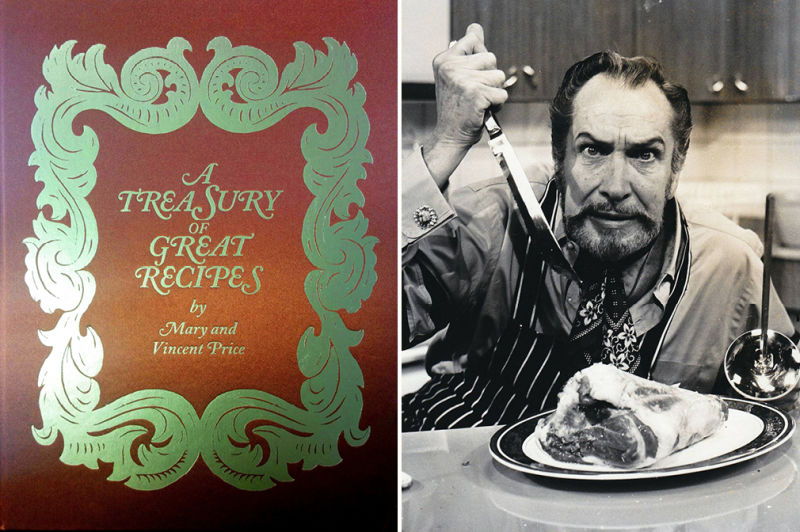
"caption": "Famous horror film actor Vincent Price also co-wrote a best-selling cookbook in the 1960s with his then-wife, Mary. The original cover of the book, A Treasury Of Great Recipes, is seen at left. It's just been reissued.",
"description": "Famous horror film actor Vincent Price also co-wrote a best-selling cookbook in the 1960s with his then-wife, Mary. The original cover of the book, \u003cem>A Treasury Of Great Recipes,\u003c/em> is seen at left. It's just been reissued.",
"title": "Famous horror film actor Vincent Price also co-wrote a best-selling cookbook in the 1960s with his then-wife, Mary. The original cover of the book, A Treasury Of Great Recipes, is seen at left. It's just been reissued.",
"credit": "William Claxton/A Treasury of Great Recipes; Price Family Trust",
"status": "inherit",
"isLoading": false,
"fetchFailed": false
},
"pop_18781": {
"type": "attachments",
"id": "pop_18781",
"meta": {
"index": "attachments_1716263798",
"site": "pop",
"id": "18781",
"found": true
},
"parent": 18780,
"imgSizes": {
"thumbnail": {
"file": "https://ww2.kqed.org/app/uploads/sites/12/2015/10/goose-400x225.jpg",
"width": 400,
"mimeType": "image/jpeg",
"height": 225
},
"post-thumbnail": {
"file": "https://ww2.kqed.org/app/uploads/sites/12/2015/10/goose-672x372.jpg",
"width": 672,
"mimeType": "image/jpeg",
"height": 372
},
"kqedFullSize": {
"file": "https://ww2.kqed.org/app/uploads/sites/12/2015/10/goose.jpg",
"width": 800,
"height": 450
},
"guest-author-96": {
"file": "https://ww2.kqed.org/app/uploads/sites/12/2015/10/goose-96x96.jpg",
"width": 96,
"mimeType": "image/jpeg",
"height": 96
},
"medium": {
"file": "https://ww2.kqed.org/app/uploads/sites/12/2015/10/goose-800x450.jpg",
"width": 800,
"mimeType": "image/jpeg",
"height": 450
},
"guest-author-64": {
"file": "https://ww2.kqed.org/app/uploads/sites/12/2015/10/goose-64x64.jpg",
"width": 64,
"mimeType": "image/jpeg",
"height": 64
},
"detail": {
"file": "https://ww2.kqed.org/app/uploads/sites/12/2015/10/goose-75x75.jpg",
"width": 75,
"mimeType": "image/jpeg",
"height": 75
},
"guest-author-32": {
"file": "https://ww2.kqed.org/app/uploads/sites/12/2015/10/goose-32x32.jpg",
"width": 32,
"mimeType": "image/jpeg",
"height": 32
},
"guest-author-128": {
"file": "https://ww2.kqed.org/app/uploads/sites/12/2015/10/goose-128x128.jpg",
"width": 128,
"mimeType": "image/jpeg",
"height": 128
}
},
"publishDate": 1446108184,
"modified": 1446108184,
"caption": null,
"description": null,
"title": "goose",
"credit": null,
"status": "inherit",
"isLoading": false,
"fetchFailed": false
},
"arts_11029727": {
"type": "attachments",
"id": "arts_11029727",
"meta": {
"index": "attachments_1716263798",
"site": "arts",
"id": "11029727",
"found": true
},
"parent": 11029726,
"imgSizes": {
"twentyfourteen-full-width": {
"file": "https://ww2.kqed.org/app/uploads/sites/2/2015/10/TundraHeadShot-nologo-6x9-1038x576.jpg",
"width": 1038,
"mimeType": "image/jpeg",
"height": 576
},
"thumbnail": {
"file": "https://ww2.kqed.org/app/uploads/sites/2/2015/10/TundraHeadShot-nologo-6x9-400x267.jpg",
"width": 400,
"mimeType": "image/jpeg",
"height": 267
},
"fd-sm": {
"file": "https://ww2.kqed.org/app/uploads/sites/2/2015/10/TundraHeadShot-nologo-6x9-960x640.jpg",
"width": 960,
"mimeType": "image/jpeg",
"height": 640
},
"post-thumbnail": {
"file": "https://ww2.kqed.org/app/uploads/sites/2/2015/10/TundraHeadShot-nologo-6x9-672x372.jpg",
"width": 672,
"mimeType": "image/jpeg",
"height": 372
},
"kqedFullSize": {
"file": "https://ww2.kqed.org/app/uploads/sites/2/2015/10/TundraHeadShot-nologo-6x9-e1445633206413.jpg",
"width": 1080,
"height": 720
},
"large": {
"file": "https://ww2.kqed.org/app/uploads/sites/2/2015/10/TundraHeadShot-nologo-6x9-1180x787.jpg",
"width": 1180,
"mimeType": "image/jpeg",
"height": 787
},
"guest-author-96": {
"file": "https://ww2.kqed.org/app/uploads/sites/2/2015/10/TundraHeadShot-nologo-6x9-96x96.jpg",
"width": 96,
"mimeType": "image/jpeg",
"height": 96
},
"medium": {
"file": "https://ww2.kqed.org/app/uploads/sites/2/2015/10/TundraHeadShot-nologo-6x9-800x533.jpg",
"width": 800,
"mimeType": "image/jpeg",
"height": 533
},
"guest-author-64": {
"file": "https://ww2.kqed.org/app/uploads/sites/2/2015/10/TundraHeadShot-nologo-6x9-64x64.jpg",
"width": 64,
"mimeType": "image/jpeg",
"height": 64
},
"guest-author-32": {
"file": "https://ww2.kqed.org/app/uploads/sites/2/2015/10/TundraHeadShot-nologo-6x9-32x32.jpg",
"width": 32,
"mimeType": "image/jpeg",
"height": 32
},
"fd-lrg": {
"file": "https://ww2.kqed.org/app/uploads/sites/2/2015/10/TundraHeadShot-nologo-6x9-1920x1280.jpg",
"width": 1920,
"mimeType": "image/jpeg",
"height": 1280
},
"fd-med": {
"file": "https://ww2.kqed.org/app/uploads/sites/2/2015/10/TundraHeadShot-nologo-6x9-1180x787.jpg",
"width": 1180,
"mimeType": "image/jpeg",
"height": 787
},
"detail": {
"file": "https://ww2.kqed.org/app/uploads/sites/2/2015/10/TundraHeadShot-nologo-6x9-75x75.jpg",
"width": 75,
"mimeType": "image/jpeg",
"height": 75
},
"guest-author-128": {
"file": "https://ww2.kqed.org/app/uploads/sites/2/2015/10/TundraHeadShot-nologo-6x9-128x128.jpg",
"width": 128,
"mimeType": "image/jpeg",
"height": 128
}
},
"publishDate": 1445633021,
"modified": 1445992173,
"caption": "Oakland environmental journalist Jason Mark, whose new book explores the state of wilderness in the Anthropocene. (Photo: Micah Baird )",
"description": "Oakland environmental journalist Jason Mark, whose new book explores the state of wilderness in the Anthropocene. ",
"title": "TundraHeadShot-nologo-6x9",
"credit": null,
"status": "inherit",
"isLoading": false,
"fetchFailed": false
},
"arts_11009801": {
"type": "attachments",
"id": "arts_11009801",
"meta": {
"index": "attachments_1716263798",
"site": "arts",
"id": "11009801",
"found": true
},
"parent": 11009719,
"imgSizes": {
"thumbnail": {
"file": "https://ww2.kqed.org/app/uploads/sites/2/2015/10/ElvisCostelloMAIN-400x225.jpg",
"width": 400,
"mimeType": "image/jpeg",
"height": 225
},
"post-thumbnail": {
"file": "https://ww2.kqed.org/app/uploads/sites/2/2015/10/ElvisCostelloMAIN-672x372.jpg",
"width": 672,
"mimeType": "image/jpeg",
"height": 372
},
"kqedFullSize": {
"file": "https://ww2.kqed.org/app/uploads/sites/2/2015/10/ElvisCostelloMAIN.jpg",
"width": 890,
"height": 501
},
"guest-author-96": {
"file": "https://ww2.kqed.org/app/uploads/sites/2/2015/10/ElvisCostelloMAIN-96x96.jpg",
"width": 96,
"mimeType": "image/jpeg",
"height": 96
},
"medium": {
"file": "https://ww2.kqed.org/app/uploads/sites/2/2015/10/ElvisCostelloMAIN-800x450.jpg",
"width": 800,
"mimeType": "image/jpeg",
"height": 450
},
"guest-author-64": {
"file": "https://ww2.kqed.org/app/uploads/sites/2/2015/10/ElvisCostelloMAIN-64x64.jpg",
"width": 64,
"mimeType": "image/jpeg",
"height": 64
},
"detail": {
"file": "https://ww2.kqed.org/app/uploads/sites/2/2015/10/ElvisCostelloMAIN-75x75.jpg",
"width": 75,
"mimeType": "image/jpeg",
"height": 75
},
"guest-author-32": {
"file": "https://ww2.kqed.org/app/uploads/sites/2/2015/10/ElvisCostelloMAIN-32x32.jpg",
"width": 32,
"mimeType": "image/jpeg",
"height": 32
},
"guest-author-128": {
"file": "https://ww2.kqed.org/app/uploads/sites/2/2015/10/ElvisCostelloMAIN-128x128.jpg",
"width": 128,
"mimeType": "image/jpeg",
"height": 128
}
},
"publishDate": 1444778919,
"modified": 1444778964,
"caption": "Detail from the cover of Elvis Costello's new memoir, 'Unfaithful Music & Disappearing Ink.'",
"description": "Detail from the cover of Elvis Costello's new memoir, 'Unfaithful Music & Disappearing Ink.'",
"title": "ElvisCostelloMAIN",
"credit": null,
"status": "inherit",
"isLoading": false,
"fetchFailed": false
},
"arts_11001881": {
"type": "attachments",
"id": "arts_11001881",
"meta": {
"index": "attachments_1716263798",
"site": "arts",
"id": "11001881",
"found": true
},
"parent": 11001878,
"imgSizes": {
"twentyfourteen-full-width": {
"file": "https://ww2.kqed.org/app/uploads/sites/2/2015/10/TheCoup_sanseri_TreasureIsland2012_084-1-1038x576.jpg",
"width": 1038,
"mimeType": "image/jpeg",
"height": 576
},
"thumbnail": {
"file": "https://ww2.kqed.org/app/uploads/sites/2/2015/10/TheCoup_sanseri_TreasureIsland2012_084-1-e1459984832157-400x225.jpg",
"width": 400,
"mimeType": "image/jpeg",
"height": 225
},
"fd-sm": {
"file": "https://ww2.kqed.org/app/uploads/sites/2/2015/10/TheCoup_sanseri_TreasureIsland2012_084-1-e1459984832157-960x540.jpg",
"width": 960,
"mimeType": "image/jpeg",
"height": 540
},
"post-thumbnail": {
"file": "https://ww2.kqed.org/app/uploads/sites/2/2015/10/TheCoup_sanseri_TreasureIsland2012_084-1-e1459984832157-672x372.jpg",
"width": 672,
"mimeType": "image/jpeg",
"height": 372
},
"kqedFullSize": {
"file": "https://ww2.kqed.org/app/uploads/sites/2/2015/10/TheCoup_sanseri_TreasureIsland2012_084-1-e1459984832157.jpg",
"width": 1000,
"height": 562
},
"large": {
"file": "https://ww2.kqed.org/app/uploads/sites/2/2015/10/TheCoup_sanseri_TreasureIsland2012_084-1-1180x787.jpg",
"width": 1180,
"mimeType": "image/jpeg",
"height": 787
},
"guest-author-96": {
"file": "https://ww2.kqed.org/app/uploads/sites/2/2015/10/TheCoup_sanseri_TreasureIsland2012_084-1-e1459984832157-96x96.jpg",
"width": 96,
"mimeType": "image/jpeg",
"height": 96
},
"medium": {
"file": "https://ww2.kqed.org/app/uploads/sites/2/2015/10/TheCoup_sanseri_TreasureIsland2012_084-1-e1459984832157-800x450.jpg",
"width": 800,
"mimeType": "image/jpeg",
"height": 450
},
"guest-author-64": {
"file": "https://ww2.kqed.org/app/uploads/sites/2/2015/10/TheCoup_sanseri_TreasureIsland2012_084-1-e1459984832157-64x64.jpg",
"width": 64,
"mimeType": "image/jpeg",
"height": 64
},
"guest-author-32": {
"file": "https://ww2.kqed.org/app/uploads/sites/2/2015/10/TheCoup_sanseri_TreasureIsland2012_084-1-e1459984832157-32x32.jpg",
"width": 32,
"mimeType": "image/jpeg",
"height": 32
},
"fd-med": {
"file": "https://ww2.kqed.org/app/uploads/sites/2/2015/10/TheCoup_sanseri_TreasureIsland2012_084-1-1180x787.jpg",
"width": 1180,
"mimeType": "image/jpeg",
"height": 787
},
"detail": {
"file": "https://ww2.kqed.org/app/uploads/sites/2/2015/10/TheCoup_sanseri_TreasureIsland2012_084-1-e1459984832157-75x75.jpg",
"width": 75,
"mimeType": "image/jpeg",
"height": 75
},
"guest-author-128": {
"file": "https://ww2.kqed.org/app/uploads/sites/2/2015/10/TheCoup_sanseri_TreasureIsland2012_084-1-e1459984832157-128x128.jpg",
"width": 128,
"mimeType": "image/jpeg",
"height": 128
},
"medium_large": {
"file": "https://ww2.kqed.org/app/uploads/sites/2/2015/10/TheCoup_sanseri_TreasureIsland2012_084-1-e1459984832157-768x432.jpg",
"width": 768,
"mimeType": "image/jpeg",
"height": 432
}
},
"publishDate": 1444265484,
"modified": 1501112898,
"caption": "Boots Riley is the director of 'Sorry to Bother You'. The movie is currently being shot on location in Oakland and features Patton Oswalt and Danny Glover, among other stars.",
"description": "Boots Riley is the director of 'Sorry to Bother You'. The movie is currently being shot on location in Oakland and features Patton Oswalt and Danny Glover, among other stars.",
"title": "TheCoup_sanseri_TreasureIsland2012_084-1",
"credit": "Photo: Josh Sanseri",
"status": "inherit",
"isLoading": false,
"fetchFailed": false
}
},
"audioPlayerReducer": {
"postId": "stream_live",
"isPaused": true,
"isPlaying": false,
"pfsActive": false,
"pledgeModalIsOpen": true,
"playerDrawerIsOpen": false,
"liveAudioPlayStartedAt": 0,
"liveAudioPlayContext": ""
},
"authorsReducer": {
"byline_arts_11087075": {
"type": "authors",
"id": "byline_arts_11087075",
"meta": {
"override": true
},
"slug": "byline_arts_11087075",
"name": "Associated Press",
"isLoading": false
},
"byline_bayareabites_102996": {
"type": "authors",
"id": "byline_bayareabites_102996",
"meta": {
"override": true
},
"slug": "byline_bayareabites_102996",
"name": "Nina Martyris, \u003ca href=\"https://ww2.kqed.org/bayareabites/author/nprfood/\">NPR Food\u003c/a>",
"isLoading": false
},
"byline_arts_11049570": {
"type": "authors",
"id": "byline_arts_11049570",
"meta": {
"override": true
},
"slug": "byline_arts_11049570",
"name": "Jennifer Maerz",
"isLoading": false
},
"byline_bayareabites_102711": {
"type": "authors",
"id": "byline_bayareabites_102711",
"meta": {
"override": true
},
"slug": "byline_bayareabites_102711",
"name": "Mandalit del Barco, \u003ca href=\"https://ww2.kqed.org/bayareabites/author/nprfood/\">NPR Food\u003c/a>",
"isLoading": false
},
"byline_arts_11009719": {
"type": "authors",
"id": "byline_arts_11009719",
"meta": {
"override": true
},
"slug": "byline_arts_11009719",
"name": "NPR Staff / Kelly McEvers",
"isLoading": false
},
"ehapsis": {
"type": "authors",
"id": "27",
"meta": {
"index": "authors_1716337520",
"id": "27",
"found": true
},
"name": "Emmanuel Hapsis",
"firstName": "Emmanuel",
"lastName": "Hapsis",
"slug": "ehapsis",
"email": "ehapsis@kqed.org",
"display_author_email": false,
"staff_mastheads": [],
"title": "KQED Contributor",
"bio": "Emmanuel Hapsis is the creator and editor of KQED Pop and also the host of \u003cem>\u003ca href=\"https://itunes.apple.com/us/podcast/the-cooler/id1041117499?mt=2\">The Cooler\u003c/a>\u003c/em>. He studied creative writing at University of Maryland and went on to receive his MFA in the field from California College of the Arts. In his free time, he sings his heart out at karaoke.",
"avatar": "https://secure.gravatar.com/avatar/6302b6f7ef8b2dcd3acd9e2c6bc570b7?s=600&d=blank&r=g",
"twitter": "xcusemybeauty",
"facebook": null,
"instagram": null,
"linkedin": null,
"sites": [
{
"site": "arts",
"roles": [
"Contributor",
"subscriber"
]
},
{
"site": "pop",
"roles": [
"contributor"
]
}
],
"headData": {
"title": "Emmanuel Hapsis | KQED",
"description": "KQED Contributor",
"ogImgSrc": "https://secure.gravatar.com/avatar/6302b6f7ef8b2dcd3acd9e2c6bc570b7?s=600&d=blank&r=g",
"twImgSrc": "https://secure.gravatar.com/avatar/6302b6f7ef8b2dcd3acd9e2c6bc570b7?s=600&d=blank&r=g"
},
"isLoading": false,
"link": "/author/ehapsis"
},
"cmusiker": {
"type": "authors",
"id": "32",
"meta": {
"index": "authors_1716337520",
"id": "32",
"found": true
},
"name": "Cy Musiker",
"firstName": "Cy",
"lastName": "Musiker",
"slug": "cmusiker",
"email": "cmusiker@kqed.org",
"display_author_email": false,
"staff_mastheads": [],
"title": "KQED Contributor",
"bio": "Cy Musiker is a former co-host of The Do List and a former reporter covering the arts for KQED News and The California Report. He loves live performance, especially great theater, jazz, roots music, anything by Mahler. Cy has an MJ from UC Berkeley's School of Journalism, and got his BA from Hampshire College. His work has been recognized by the Society for Professional Journalists with their Sigma Delta Chi Award for Public Service in Journalism. When he can, Cy likes to swim in Tomales Bay, run with his dog in the East Bay Hills, and hike the Sierra.",
"avatar": "https://secure.gravatar.com/avatar/05eaba5c5696ce8f062e4ea2df428a43?s=600&d=blank&r=g",
"twitter": null,
"facebook": null,
"instagram": null,
"linkedin": null,
"sites": [
{
"site": "arts",
"roles": [
"Contributor",
"subscriber"
]
},
{
"site": "news",
"roles": [
"author"
]
},
{
"site": "bayareabites",
"roles": [
"contributor"
]
}
],
"headData": {
"title": "Cy Musiker | KQED",
"description": "KQED Contributor",
"ogImgSrc": "https://secure.gravatar.com/avatar/05eaba5c5696ce8f062e4ea2df428a43?s=600&d=blank&r=g",
"twImgSrc": "https://secure.gravatar.com/avatar/05eaba5c5696ce8f062e4ea2df428a43?s=600&d=blank&r=g"
},
"isLoading": false,
"link": "/author/cmusiker"
},
"gmeline": {
"type": "authors",
"id": "185",
"meta": {
"index": "authors_1716337520",
"id": "185",
"found": true
},
"name": "Gabe Meline",
"firstName": "Gabe",
"lastName": "Meline",
"slug": "gmeline",
"email": "gmeline@kqed.org",
"display_author_email": true,
"staff_mastheads": [
"arts"
],
"title": "Senior Editor, KQED Arts & Culture",
"bio": "Gabe Meline entered journalism at age 15 making photocopied zines, and has since earned awards from the Edward R. Murrow Awards, the Society for Professional Journalists, the Online Journalism Awards, the Association of Alternative Newsweeklies and the California Newspaper Publishers Association. Prior to KQED, he was the editor of the \u003cem>North Bay Bohemian\u003c/em> and a touring musician. He lives with his wife and daughter in his hometown of Santa Rosa, CA.",
"avatar": "https://secure.gravatar.com/avatar/5bebe57be0d8bc2dd318934feb47299e2d2d10cba28d09d8d7afb389a2ce2bdd?s=600&d=blank&r=g",
"twitter": null,
"bluesky": null,
"facebook": null,
"instagram": null,
"linkedin": null,
"sites": [
{
"site": "",
"roles": [
"editor"
]
},
{
"site": "arts",
"roles": [
"administrator"
]
},
{
"site": "artschool",
"roles": [
"editor"
]
},
{
"site": "news",
"roles": [
"author"
]
},
{
"site": "pop",
"roles": [
"editor"
]
},
{
"site": "bayareabites",
"roles": [
"editor"
]
},
{
"site": "food",
"roles": [
"editor"
]
},
{
"site": "forum",
"roles": [
"administrator"
]
},
{
"site": "liveblog",
"roles": [
"editor"
]
},
{
"site": "hiphop",
"roles": [
"editor"
]
}
],
"headData": {
"title": "Gabe Meline | KQED",
"description": "Senior Editor, KQED Arts & Culture",
"ogImgSrc": "https://secure.gravatar.com/avatar/5bebe57be0d8bc2dd318934feb47299e2d2d10cba28d09d8d7afb389a2ce2bdd?s=600&d=blank&r=g",
"twImgSrc": "https://secure.gravatar.com/avatar/5bebe57be0d8bc2dd318934feb47299e2d2d10cba28d09d8d7afb389a2ce2bdd?s=600&d=blank&r=g"
},
"isLoading": false,
"link": "/author/gmeline"
},
"lclark": {
"type": "authors",
"id": "3224",
"meta": {
"index": "authors_1716337520",
"id": "3224",
"found": true
},
"name": "Leilani Clark",
"firstName": "Leilani",
"lastName": "Clark",
"slug": "lclark",
"email": "clark.leil@gmail.com",
"display_author_email": false,
"staff_mastheads": [],
"title": null,
"bio": "Leilani Clark writes about books for KQED Arts. Her writing has been published at Mother Jones, The Guardian, Civil Eats, Time Magazine, Food & Wine, Edible Marin & Wine Country, and The Rumpus. She is the editor of Made Local magazine in Sonoma County. Find her on Twitter \u003ca href=\"https://twitter.com/leilclark\">@leilclark\u003c/a>.",
"avatar": "https://secure.gravatar.com/avatar/7f691fdc52ed2e3f4cf164d1f4ec0889?s=600&d=blank&r=g",
"twitter": null,
"facebook": null,
"instagram": null,
"linkedin": null,
"sites": [
{
"site": "arts",
"roles": [
"contributor"
]
},
{
"site": "bayareabites",
"roles": [
"contributor"
]
},
{
"site": "food",
"roles": [
"contributor"
]
}
],
"headData": {
"title": "Leilani Clark | KQED",
"description": null,
"ogImgSrc": "https://secure.gravatar.com/avatar/7f691fdc52ed2e3f4cf164d1f4ec0889?s=600&d=blank&r=g",
"twImgSrc": "https://secure.gravatar.com/avatar/7f691fdc52ed2e3f4cf164d1f4ec0889?s=600&d=blank&r=g"
},
"isLoading": false,
"link": "/author/lclark"
},
"lakshmi": {
"type": "authors",
"id": "3245",
"meta": {
"index": "authors_1716337520",
"id": "3245",
"found": true
},
"name": "Lakshmi Sarah",
"firstName": "Lakshmi",
"lastName": "Sarah",
"slug": "lakshmi",
"email": "lakisarah@gmail.com",
"display_author_email": false,
"staff_mastheads": [],
"title": null,
"bio": "Born and raised in California, Lakshmi is an educator and journalist with a focus on South Asia, gender, race and the arts. Over the past few years, she has worked with newspapers, radio and magazines from Botswana to Los Angeles. She has written and produced for various audiences, including Mic, Global Voices, Al Jazeera Online, AJ+ and KQED Arts. Lakshmi is a graduate of Pitzer College where she studied Global Communications and Studio Arts.",
"avatar": "https://secure.gravatar.com/avatar/30f520a9238d29ba9187c2a405e0f85d?s=600&d=blank&r=g",
"twitter": "lakitalki",
"facebook": null,
"instagram": null,
"linkedin": null,
"sites": [
{
"site": "arts",
"roles": [
"editor"
]
},
{
"site": "pop",
"roles": [
"contributor"
]
},
{
"site": "science",
"roles": [
"editor"
]
}
],
"headData": {
"title": "Lakshmi Sarah | KQED",
"description": null,
"ogImgSrc": "https://secure.gravatar.com/avatar/30f520a9238d29ba9187c2a405e0f85d?s=600&d=blank&r=g",
"twImgSrc": "https://secure.gravatar.com/avatar/30f520a9238d29ba9187c2a405e0f85d?s=600&d=blank&r=g"
},
"isLoading": false,
"link": "/author/lakshmi"
},
"slefebvre": {
"type": "authors",
"id": "11091",
"meta": {
"index": "authors_1716337520",
"id": "11091",
"found": true
},
"name": "Sam Lefebvre",
"firstName": "Sam",
"lastName": "Lefebvre",
"slug": "slefebvre",
"email": "sdlefebvre@gmail.com",
"display_author_email": false,
"staff_mastheads": [],
"title": "KQED Contributor",
"bio": "Sam Lefebvre is an award-winning reporter at KQED Arts. He has worked as an editor and columnist at the \u003cem>East Bay Express\u003c/em>, \u003cem>SF Weekly \u003c/em>and Impose Magazine, and his journalism and criticism has appeared in \u003cem>The New York Times\u003c/em>, the Guardian and Pitchfork.",
"avatar": "https://secure.gravatar.com/avatar/49d39b42930b77fb13784ddd9fa63fe780666b71bf289368509dba576b64e69b?s=600&d=blank&r=g",
"twitter": "Lefebvre_Sam",
"bluesky": null,
"facebook": null,
"instagram": null,
"linkedin": null,
"sites": [
{
"site": "arts",
"roles": [
"subscriber"
]
},
{
"site": "news",
"roles": [
"author"
]
}
],
"headData": {
"title": "Sam Lefebvre | KQED",
"description": "KQED Contributor",
"ogImgSrc": "https://secure.gravatar.com/avatar/49d39b42930b77fb13784ddd9fa63fe780666b71bf289368509dba576b64e69b?s=600&d=blank&r=g",
"twImgSrc": "https://secure.gravatar.com/avatar/49d39b42930b77fb13784ddd9fa63fe780666b71bf289368509dba576b64e69b?s=600&d=blank&r=g"
},
"isLoading": false,
"link": "/author/slefebvre"
}
},
"pagesReducer": {
"arts_category_literature": {
"type": "terms",
"id": "arts_73",
"meta": {
"index": "terms_1716263798",
"site": "arts",
"id": "73",
"score": 12.797771
},
"featImg": null,
"name": "Books",
"description": null,
"taxonomy": "category",
"headData": {
"twImgId": null,
"twTitle": null,
"ogTitle": null,
"ogImgId": null,
"twDescription": null,
"description": null,
"title": "Books Archives | KQED Arts",
"ogDescription": null
},
"ttid": 74,
"slug": "literature",
"isLoading": false,
"title": "Books",
"pageMeta": {
"site": "arts",
"WpPageTemplate": "page-topic-editorial",
"currentPage": 94
},
"blocks": [
{
"blockName": "kqed/post-list",
"attrs": {
"layout": "cardArticle2",
"query": "posts/arts?category=literature",
"seeMore": false,
"paginated": true,
"page": 94
}
},
{
"blockName": "kqed/ad"
}
]
}
},
"pfsSessionReducer": {},
"postsReducer": {
"stream_live": {
"type": "live",
"id": "stream_live",
"audioUrl": "https://streams.kqed.org/kqedradio",
"title": "Live Stream",
"excerpt": "Live Stream information currently unavailable.",
"link": "/radio",
"featImg": "",
"label": {
"name": "KQED Live",
"link": "/"
}
},
"stream_kqedNewscast": {
"type": "posts",
"id": "stream_kqedNewscast",
"audioUrl": "https://www.kqed.org/.stream/anon/radio/RDnews/newscast.mp3?_=1",
"title": "KQED Newscast",
"featImg": "",
"label": {
"name": "88.5 FM",
"link": "/"
}
},
"arts_11087075": {
"type": "posts",
"id": "arts_11087075",
"meta": {
"index": "posts_1716263798",
"site": "arts",
"id": "11087075",
"score": null,
"sort": [
1447712289000
]
},
"guestAuthors": [],
"slug": "lemony-snicket-author-to-judge-colleges-literary-contest",
"title": "Lemony Snicket Author to Judge College's Literary Contest",
"publishDate": 1447712289,
"format": "standard",
"headTitle": "Lemony Snicket Author to Judge College’s Literary Contest | KQED",
"labelTerm": {
"site": "arts"
},
"content": "\u003cp>Lemony Snicket is ready to critique your writing.\u003c/p>\n\u003cp>San Francisco-based Children’s book author Daniel Handler, who uses the pen name Lemony Snicket, will judge a literary contest offered by Cogswell College. The private school is located in the Silicon Valley city of San Jose, California.\u003c/p>\n\u003cp>The “COG: Page to Screen Awards” is an open competition, the college said Monday. COG is the name of the school’s newly launched multimedia publication.\u003c/p>\n\u003cp>Unpublished short stories and creative nonfiction submissions up to 7,000 words will be accepted now through March 31, with the winner to be announced in May. The winning piece will be adapted by the college’s digital art and animation students, possibly as a short animated film or graphic novel.\u003c/p>\n\u003cp>In a statement, Handler slyly compared a literary contest to a full moon, which he said “turns a small number of people into werewolves.”\u003c/p>\n\u003cp>[ad fullwidth]\u003c/p>\n\u003cp>\u003c/p>\n\u003cp>\u003cem>A Series of Unfortunate Events\u003c/em> is a series of 13 children’s novels by Handler.\u003c/p>\n\n",
"blocks": [],
"excerpt": null,
"status": "publish",
"parent": 0,
"modified": 1726763989,
"stats": {
"hasAudio": false,
"hasVideo": false,
"hasChartOrMap": false,
"iframeSrcs": [],
"hasGoogleForm": false,
"hasGallery": false,
"hasHearkenModule": false,
"hasPolis": false,
"paragraphCount": 8,
"wordCount": 173
},
"headData": {
"title": "Lemony Snicket Author to Judge College's Literary Contest | KQED",
"description": "Lemony Snicket is ready to critique your writing. San Francisco-based Children's book author Daniel Handler, who uses the pen name Lemony Snicket, will judge a literary contest offered by Cogswell College. The private school is located in the Silicon Valley city of San Jose, California. The "COG: Page to Screen Awards" is an open competition, the college said Monday. COG is the name of the school's newly launched multimedia publication. Unpublished short stories and creative nonfiction submissions up to 7,000 words will be accepted now through March 31, with the winner to be announced in May. The winning piece will",
"ogTitle": "",
"ogDescription": "",
"ogImgId": "",
"twTitle": "",
"twDescription": "",
"twImgId": "",
"schema": {
"@context": "https://schema.org",
"@type": "Article",
"headline": "Lemony Snicket Author to Judge College's Literary Contest",
"datePublished": "2015-11-16T14:18:09-08:00",
"dateModified": "2024-09-19T09:39:49-07:00",
"image": "https://cdn.kqed.org/wp-content/uploads/2020/02/KQED-OG-Image@1x.png"
}
},
"sticky": false,
"nprByline": "Associated Press",
"path": "/arts/11087075/lemony-snicket-author-to-judge-colleges-literary-contest",
"audioTrackLength": null,
"parsedContent": [
{
"type": "contentString",
"content": "\u003cdiv class=\"post-body\">\u003cp>\u003cp>Lemony Snicket is ready to critique your writing.\u003c/p>\n\u003cp>San Francisco-based Children’s book author Daniel Handler, who uses the pen name Lemony Snicket, will judge a literary contest offered by Cogswell College. The private school is located in the Silicon Valley city of San Jose, California.\u003c/p>\n\u003cp>The “COG: Page to Screen Awards” is an open competition, the college said Monday. COG is the name of the school’s newly launched multimedia publication.\u003c/p>\n\u003cp>Unpublished short stories and creative nonfiction submissions up to 7,000 words will be accepted now through March 31, with the winner to be announced in May. The winning piece will be adapted by the college’s digital art and animation students, possibly as a short animated film or graphic novel.\u003c/p>\n\u003cp>In a statement, Handler slyly compared a literary contest to a full moon, which he said “turns a small number of people into werewolves.”\u003c/p>\n\u003cp>\u003c/p>\u003c/div>",
"attributes": {
"named": {},
"numeric": []
}
},
{
"type": "component",
"content": "",
"name": "ad",
"attributes": {
"named": {
"label": "fullwidth"
},
"numeric": [
"fullwidth"
]
}
},
{
"type": "contentString",
"content": "\u003cdiv class=\"post-body\">\u003cp>\u003c/p>\n\u003cp>\u003c/p>\n\u003cp>\u003cem>A Series of Unfortunate Events\u003c/em> is a series of 13 children’s novels by Handler.\u003c/p>\n\n\u003c/div>\u003c/p>",
"attributes": {
"named": {},
"numeric": []
}
}
],
"link": "/arts/11087075/lemony-snicket-author-to-judge-colleges-literary-contest",
"authors": [
"byline_arts_11087075"
],
"categories": [
"arts_73",
"arts_235"
],
"tags": [
"arts_1254"
],
"featImg": "arts_10299980",
"label": "arts"
},
"arts_11085411": {
"type": "posts",
"id": "arts_11085411",
"meta": {
"index": "posts_1716263798",
"site": "arts",
"id": "11085411",
"score": null,
"sort": [
1447704024000
]
},
"parent": 0,
"labelTerm": {
"site": "arts"
},
"blocks": [],
"publishDate": 1447704024,
"format": "standard",
"title": "Josh Rosenthal Elevates Music From the Margins in Deeply Personal New Book",
"headTitle": "Josh Rosenthal Elevates Music From the Margins in Deeply Personal New Book | KQED",
"content": "\u003cp>In 1989, Josh Rosenthal was the music director of a college radio station in Albany, NY, determined to lure Elvis Costello onto his show. But Rosenthal’s contact at Costello’s label, Warner Bros., stonewalled him. Unfazed, Rosenthal went direct, entreating the songwriter with a note and a cache of cassettes delivered to his hotel. Costello personally accepted. Rosenthal sent a limo. The Warner rep, impressed by Rosenthal’s audacity, planted him in a publicity position at Columbia Records straight out of college, effectively poaching the young record man from A&M Records — where he had another job offer.\u003c/p>\n\u003cp>It’s a pivotal scene from Rosenthal’s first book, \u003cem>The Record Store of the Mind\u003c/em>, a collection of memoir and reportage that meditates on both major-label machinery and marginal, unsung artists alike. Rosenthal ate latkes with Lou Reed and garnered gold records for his part in reviving bluesmen and breaking rappers in the same fiscal quarter. And yet, those gold plaques live in the closet; \u003cem>The Record Store of the Mind\u003c/em> privileges the quiet euphoria of listening. It tells the stories of artists such as Dino Valente and Smoke Dawson, figures largely forgotten until Rosenthal lent his ear and a belated platform with Tompkins Square, the Grammy-award winning label he founded in 2005 after a decade at Sony. \u003c/p>\n\u003cp>Self-published, Rosenthal’s book physically evokes the homespun records he writes about. The title — spilt across the cover in crayola-psych lettering — is clunky in a way that signals deeply personal exhibition and charming ambivalence towards commercial conventions. And for a book that considers the trend of quasi-communard folkies appearing on album covers with their babies, the cover imagery’s origin is rather apt. \u003c/p>\n\u003cp>“My younger daughter said she drew me a book cover for my birthday present,” Rosenthal says, seated beside the Presidio Officers Club fireplace on a recent afternoon. “I had an idea already, so I said, ‘Oh, that’s nice,’ but then she showed it me and I went ‘You win, that’s the cover.’”\u003c/p>\n\u003cp>And in the introduction — a Bay Area record store flyover and a paean to physical media — it’s his daughter who poses the book’s central question. Impatient with her dad, surely, she wonders aloud, “How do you know what you’re looking for?”\u003c/p>\n\u003cfigure id=\"attachment_11085616\" class=\"wp-caption alignright\" style=\"max-width: 640px\">\u003cimg loading=\"lazy\" decoding=\"async\" src=\"http://ww2.kqed.org/arts/wp-content/uploads/sites/2/2015/11/RosenthalCOVER-776x1180.jpg\" alt=\"'The Record Store of the Mind' cover art.\" width=\"640\" height=\"973\" class=\"size-large wp-image-11085616\" srcset=\"https://cdn.kqed.org/wp-content/uploads/sites/2/2015/11/RosenthalCOVER-776x1180.jpg 776w, https://cdn.kqed.org/wp-content/uploads/sites/2/2015/11/RosenthalCOVER-400x609.jpg 400w, https://cdn.kqed.org/wp-content/uploads/sites/2/2015/11/RosenthalCOVER-394x600.jpg 394w, https://cdn.kqed.org/wp-content/uploads/sites/2/2015/11/RosenthalCOVER-1180x1795.jpg 1180w, https://cdn.kqed.org/wp-content/uploads/sites/2/2015/11/RosenthalCOVER-960x1461.jpg 960w, https://cdn.kqed.org/wp-content/uploads/sites/2/2015/11/RosenthalCOVER.jpg 1400w\" sizes=\"(max-width: 640px) 100vw, 640px\">\u003cfigcaption class=\"wp-caption-text\">‘The Record Store of the Mind’ cover art.\u003c/figcaption>\u003c/figure>\n\u003cp>Rosenthal, 48, grew up in Syosset, Long Island — the origin of Lou Reed and Billy Joel, to the pride of the author and his peers, and where he first discovered the profound power of stray pop hits on the radio. “1970s soft-rock songs — mushy, overwrought — helped me locate my heart,” he writes, countering notions of pop as shallow or plastic with an argument that young people glimpse real, “romantic love” through the pathos of a snappy chorus and the majesty of melody. Rosenthal says that his close childhood friend, the filmmaker Judd Apatow, drew upon their shared upbringing for his cult TV series \u003cem>Freaks & Geeks\u003c/em>, celebrated for its unusually keen sensitivity to the pangs of adolescence. \u003c/p>\n\u003cp>[ad fullwidth]\u003c/p>\n\u003cp>College radio and internships led to an entrenched major-label career, concluding with Sony. He witnessed the industry’s lavish decadence, grappled with the cultural realignment brought by hip-hop and indie rock, and then rode out the great millennial unraveling. By 2005, he says, “The whole atmosphere was getting very corporate… so I started tinkering in my spare time with what would become [Tompkins Square’s] first title, \u003cem>Imaginational Anthem\u003c/em>.”\u003c/p>\n\u003cp>A compilation of solo guitar stylists now expanded to several installments, \u003cem>Imaginational Anthem Vol. 1\u003c/em> features artists such as Max Ochs, John Fahey and Sandy Bull. “I had no real intent to start a label,” he says, but fortune and friends intervened. NPR kissed the title, for one, and he snared very favorable distribution through an old industry contact. Christened Tompkins Square after the historic park by his home in New York, Rosenthal’s unheard-of label moved several thousand units of a niche instrumental compilation. It was a coup. As he recalls, “I batted a thousand right there.”\u003c/p>\n\u003cp>Moreover, Rosenthal remembers that he was simply so “totally intoxicated” by producing the compilation — by unspooling dormant tapes and unearthing old stories — that Tompkins Square began hurtling towards the celebrated, decade-old label that it is today. “I got addicted,” he says. “It was bigger than me.”\u003c/p>\n\u003cp>\u003cem>Record Store of the Mind\u003c/em>’s “Raccoon Records” chapter typifies Rosenthal’s diligence as a listener and an archivist. It’s about 1960s hitmakers the Youngbloods (“Get Together”), and the rural North Bay idyll of Inverness, where a cast of country-rock bandleaders, free-jazz players and psych-folk enigmas congregated in the early 1970s. Rosenthal reconstructs the milieu in doting detail, and coolly parses its recorded output, most of which failed to find the audience that Tompkins Square would later provide, decades later, with reissues.\u003c/p>\n\u003cp>In sum, however, the chapter is also about Rosenthal’s move to San Francisco in 2011 and, as he writes, “connecting with my adoptive city [and] tapping into a lost era that I try to conjure — yes, romanticize — and seek to commune with.” \u003c/p>\n\u003cp> \u003c/p>\n\u003cp>\u003c/p>\n\u003cp>\u003cem>Josh Rosenthal reads and discusses ‘The Record Store of the Mind’ with a musical performance by Richard Osborn on Wednesday, Nov. 18, at Green Apple Books on Clement St. in San Francisco. 7pm; free. \u003ca href=\"http://www.greenapplebooks.com/event/clement-josh-rosenthal-guitarist-richard-osborn\" target=\"_blank\" rel=\"noopener\">Details here\u003c/a>.\u003cbr>\n\u003c/em>\u003c/p>\n\n",
"stats": {
"hasVideo": false,
"hasChartOrMap": false,
"hasAudio": false,
"hasPolis": false,
"wordCount": 964,
"hasGoogleForm": false,
"hasGallery": false,
"hasHearkenModule": false,
"iframeSrcs": [],
"paragraphCount": 14
},
"modified": 1705045935,
"excerpt": "'The Record Store of the Mind' chronicles a life well-spent in college radio, major labels, and ultimately unearthing and reissuing the work of important musicians. ",
"headData": {
"twImgId": "",
"twTitle": "",
"ogTitle": "",
"ogImgId": "",
"twDescription": "",
"description": "'The Record Store of the Mind' chronicles a life well-spent in college radio, major labels, and ultimately unearthing and reissuing the work of important musicians. ",
"title": "Josh Rosenthal Elevates Music From the Margins in Deeply Personal New Book | KQED",
"ogDescription": "",
"schema": {
"@context": "https://schema.org",
"@type": "Article",
"headline": "Josh Rosenthal Elevates Music From the Margins in Deeply Personal New Book",
"datePublished": "2015-11-16T12:00:24-08:00",
"dateModified": "2024-01-11T23:52:15-08:00",
"image": "https://cdn.kqed.org/wp-content/uploads/2020/02/KQED-OG-Image@1x.png"
}
},
"guestAuthors": [],
"slug": "josh-rosenthal-elevates-music-from-the-margins-in-deeply-personal-new-book",
"status": "publish",
"sticky": false,
"path": "/arts/11085411/josh-rosenthal-elevates-music-from-the-margins-in-deeply-personal-new-book",
"audioTrackLength": null,
"parsedContent": [
{
"type": "contentString",
"content": "\u003cdiv class=\"post-body\">\u003cp>\u003cp>In 1989, Josh Rosenthal was the music director of a college radio station in Albany, NY, determined to lure Elvis Costello onto his show. But Rosenthal’s contact at Costello’s label, Warner Bros., stonewalled him. Unfazed, Rosenthal went direct, entreating the songwriter with a note and a cache of cassettes delivered to his hotel. Costello personally accepted. Rosenthal sent a limo. The Warner rep, impressed by Rosenthal’s audacity, planted him in a publicity position at Columbia Records straight out of college, effectively poaching the young record man from A&M Records — where he had another job offer.\u003c/p>\n\u003cp>It’s a pivotal scene from Rosenthal’s first book, \u003cem>The Record Store of the Mind\u003c/em>, a collection of memoir and reportage that meditates on both major-label machinery and marginal, unsung artists alike. Rosenthal ate latkes with Lou Reed and garnered gold records for his part in reviving bluesmen and breaking rappers in the same fiscal quarter. And yet, those gold plaques live in the closet; \u003cem>The Record Store of the Mind\u003c/em> privileges the quiet euphoria of listening. It tells the stories of artists such as Dino Valente and Smoke Dawson, figures largely forgotten until Rosenthal lent his ear and a belated platform with Tompkins Square, the Grammy-award winning label he founded in 2005 after a decade at Sony. \u003c/p>\n\u003cp>Self-published, Rosenthal’s book physically evokes the homespun records he writes about. The title — spilt across the cover in crayola-psych lettering — is clunky in a way that signals deeply personal exhibition and charming ambivalence towards commercial conventions. And for a book that considers the trend of quasi-communard folkies appearing on album covers with their babies, the cover imagery’s origin is rather apt. \u003c/p>\n\u003cp>“My younger daughter said she drew me a book cover for my birthday present,” Rosenthal says, seated beside the Presidio Officers Club fireplace on a recent afternoon. “I had an idea already, so I said, ‘Oh, that’s nice,’ but then she showed it me and I went ‘You win, that’s the cover.’”\u003c/p>\n\u003cp>And in the introduction — a Bay Area record store flyover and a paean to physical media — it’s his daughter who poses the book’s central question. Impatient with her dad, surely, she wonders aloud, “How do you know what you’re looking for?”\u003c/p>\n\u003cfigure id=\"attachment_11085616\" class=\"wp-caption alignright\" style=\"max-width: 640px\">\u003cimg loading=\"lazy\" decoding=\"async\" src=\"http://ww2.kqed.org/arts/wp-content/uploads/sites/2/2015/11/RosenthalCOVER-776x1180.jpg\" alt=\"'The Record Store of the Mind' cover art.\" width=\"640\" height=\"973\" class=\"size-large wp-image-11085616\" srcset=\"https://cdn.kqed.org/wp-content/uploads/sites/2/2015/11/RosenthalCOVER-776x1180.jpg 776w, https://cdn.kqed.org/wp-content/uploads/sites/2/2015/11/RosenthalCOVER-400x609.jpg 400w, https://cdn.kqed.org/wp-content/uploads/sites/2/2015/11/RosenthalCOVER-394x600.jpg 394w, https://cdn.kqed.org/wp-content/uploads/sites/2/2015/11/RosenthalCOVER-1180x1795.jpg 1180w, https://cdn.kqed.org/wp-content/uploads/sites/2/2015/11/RosenthalCOVER-960x1461.jpg 960w, https://cdn.kqed.org/wp-content/uploads/sites/2/2015/11/RosenthalCOVER.jpg 1400w\" sizes=\"(max-width: 640px) 100vw, 640px\">\u003cfigcaption class=\"wp-caption-text\">‘The Record Store of the Mind’ cover art.\u003c/figcaption>\u003c/figure>\n\u003cp>Rosenthal, 48, grew up in Syosset, Long Island — the origin of Lou Reed and Billy Joel, to the pride of the author and his peers, and where he first discovered the profound power of stray pop hits on the radio. “1970s soft-rock songs — mushy, overwrought — helped me locate my heart,” he writes, countering notions of pop as shallow or plastic with an argument that young people glimpse real, “romantic love” through the pathos of a snappy chorus and the majesty of melody. Rosenthal says that his close childhood friend, the filmmaker Judd Apatow, drew upon their shared upbringing for his cult TV series \u003cem>Freaks & Geeks\u003c/em>, celebrated for its unusually keen sensitivity to the pangs of adolescence. \u003c/p>\n\u003cp>\u003c/p>\u003c/div>",
"attributes": {
"named": {},
"numeric": []
}
},
{
"type": "component",
"content": "",
"name": "ad",
"attributes": {
"named": {
"label": "fullwidth"
},
"numeric": [
"fullwidth"
]
}
},
{
"type": "contentString",
"content": "\u003cdiv class=\"post-body\">\u003cp>\u003c/p>\n\u003cp>College radio and internships led to an entrenched major-label career, concluding with Sony. He witnessed the industry’s lavish decadence, grappled with the cultural realignment brought by hip-hop and indie rock, and then rode out the great millennial unraveling. By 2005, he says, “The whole atmosphere was getting very corporate… so I started tinkering in my spare time with what would become [Tompkins Square’s] first title, \u003cem>Imaginational Anthem\u003c/em>.”\u003c/p>\n\u003cp>A compilation of solo guitar stylists now expanded to several installments, \u003cem>Imaginational Anthem Vol. 1\u003c/em> features artists such as Max Ochs, John Fahey and Sandy Bull. “I had no real intent to start a label,” he says, but fortune and friends intervened. NPR kissed the title, for one, and he snared very favorable distribution through an old industry contact. Christened Tompkins Square after the historic park by his home in New York, Rosenthal’s unheard-of label moved several thousand units of a niche instrumental compilation. It was a coup. As he recalls, “I batted a thousand right there.”\u003c/p>\n\u003cp>Moreover, Rosenthal remembers that he was simply so “totally intoxicated” by producing the compilation — by unspooling dormant tapes and unearthing old stories — that Tompkins Square began hurtling towards the celebrated, decade-old label that it is today. “I got addicted,” he says. “It was bigger than me.”\u003c/p>\n\u003cp>\u003cem>Record Store of the Mind\u003c/em>’s “Raccoon Records” chapter typifies Rosenthal’s diligence as a listener and an archivist. It’s about 1960s hitmakers the Youngbloods (“Get Together”), and the rural North Bay idyll of Inverness, where a cast of country-rock bandleaders, free-jazz players and psych-folk enigmas congregated in the early 1970s. Rosenthal reconstructs the milieu in doting detail, and coolly parses its recorded output, most of which failed to find the audience that Tompkins Square would later provide, decades later, with reissues.\u003c/p>\n\u003cp>In sum, however, the chapter is also about Rosenthal’s move to San Francisco in 2011 and, as he writes, “connecting with my adoptive city [and] tapping into a lost era that I try to conjure — yes, romanticize — and seek to commune with.” \u003c/p>\n\u003cp> \u003c/p>\n\u003cp>\u003c/p>\n\u003cp>\u003cem>Josh Rosenthal reads and discusses ‘The Record Store of the Mind’ with a musical performance by Richard Osborn on Wednesday, Nov. 18, at Green Apple Books on Clement St. in San Francisco. 7pm; free. \u003ca href=\"http://www.greenapplebooks.com/event/clement-josh-rosenthal-guitarist-richard-osborn\" target=\"_blank\" rel=\"noopener\">Details here\u003c/a>.\u003cbr>\n\u003c/em>\u003c/p>\n\n\u003c/div>\u003c/p>",
"attributes": {
"named": {},
"numeric": []
}
}
],
"link": "/arts/11085411/josh-rosenthal-elevates-music-from-the-margins-in-deeply-personal-new-book",
"authors": [
"11091"
],
"categories": [
"arts_73",
"arts_69"
],
"tags": [
"arts_1118",
"arts_596"
],
"featImg": "arts_11085511",
"label": "arts"
},
"arts_11061832": {
"type": "posts",
"id": "arts_11061832",
"meta": {
"index": "posts_1716263798",
"site": "arts",
"id": "11061832",
"score": null,
"sort": [
1447099217000
]
},
"parent": 0,
"labelTerm": {
"site": "arts",
"term": 140
},
"blocks": [],
"publishDate": 1447099217,
"format": "standard",
"title": "Word to the Word: Books for the People",
"headTitle": "Word to the Word: Books for the People | KQED",
"content": "\u003cp>Remember Howard Zinn? The historian, activist and playwright died in 2010, but he left behind a powerful legacy — a way of thinking, writing and being that encourages people to think beyond the dominant narratives. Zinn would’ve encouraged those in the Bay Area to look beyond the tech-obsessed bubble, deeper into the margins, and to focus on people who exist in the spaces between and outside of history books. In an attempt to go beyond the world of start-ups, white men, instant gratification and Instagram, Zinn encourages us to think of the people.\u003c/p>\n\u003cp>With this in mind, we’ve collected some upcoming book events “for the people” — to celebrate and give thanks for those who have paved the way forward:\u003c/p>\n\u003cp>\u003cimg loading=\"lazy\" decoding=\"async\" class=\"size-large wp-image-11061934 aligncenter\" src=\"http://ww2.kqed.org/arts/wp-content/uploads/sites/2/2015/11/TanwiNandini_WebsiteCover-1180x787.jpg\" alt=\"TanwiNandini_WebsiteCover\" width=\"640\" height=\"427\" srcset=\"https://cdn.kqed.org/wp-content/uploads/sites/2/2015/11/TanwiNandini_WebsiteCover-1180x787.jpg 1180w, https://cdn.kqed.org/wp-content/uploads/sites/2/2015/11/TanwiNandini_WebsiteCover-400x267.jpg 400w, https://cdn.kqed.org/wp-content/uploads/sites/2/2015/11/TanwiNandini_WebsiteCover-800x533.jpg 800w, https://cdn.kqed.org/wp-content/uploads/sites/2/2015/11/TanwiNandini_WebsiteCover-1920x1280.jpg 1920w, https://cdn.kqed.org/wp-content/uploads/sites/2/2015/11/TanwiNandini_WebsiteCover-960x640.jpg 960w\" sizes=\"(max-width: 640px) 100vw, 640px\">\u003c/p>\n\u003cp>\u003cstrong>Wednesday, Nov. 11:\u003c/strong>\u003ca href=\"http://www.tanwinandini.com/\">\u003cstrong> Queer Diaspora \u003c/strong>\u003c/a>\u003cstrong>at \u003c/strong>\u003cstrong>Pegasus Books, Berkeley\u003c/strong>\u003cstrong>.\u003c/strong>\u003ca href=\"http://www.tanwinandini.com/\">\u003cstrong> \u003c/strong>Tanwi Nandini Islam\u003c/a> will read from her new novel \u003cem>Bright Lines.\u003c/em> Islam, who started writing as a second grader in Missouri, says she “can’t not write,” when there’s a story or character she can’t stop thinking about, “it’s time to begin getting that on the page.”\u003c/p>\n\u003cp>Islam is on a national tour of 10 cities with her book, which was 10 years in the making. \u003cem>Bright Lines\u003c/em> is an attempt to bring Bangladeshi stories to the forefront. “I think there’s space for a novel that explores the lives of young, queer, diasporic people in the context of history, place, nature and war,” she says.\u003c/p>\n\u003cp>[ad fullwidth]\u003c/p>\n\u003cp>As author Genevieve Valentine says in her \u003ca href=\"http://www.npr.org/2015/08/13/431243573/a-house-thats-not-a-home-in-bright-lines\">review\u003c/a>, “Bright Lines at its best becomes just what it sets out to be: An understated queer coming-of-age, a study of how much work it is to be a family, and a snapshot of a disappearing Brooklyn, set against the ghosts of the past, and a search for home.”\u003c/p>\n\u003cp>Islam will be joined at Pegasus books with guest reader Nayomi Munaweera, author of the novel Island of a Thousand Mirrors. For a taste to get you pumped read this \u003ca href=\"http://hyphenmagazine.com/blog/archive/2015/08/august-lit-excerpt-bright-lines-tanwi-nandini-islam\" target=\"_blank\" rel=\"noopener\">excerpt\u003c/a> courtesy of Hyphen magazine.\u003c/p>\n\u003cp>\u003cstrong>Thursday, Nov. 12: \u003ca href=\"https://www.facebook.com/events/1061007250585620/\" target=\"_blank\" rel=\"noopener\">Gay Poets Dead and Alive at \u003c/a>\u003ca href=\"https://www.facebook.com/events/1061007250585620/\" target=\"_blank\" rel=\"noopener\">The San Francisco Public Library.\u003c/a> \u003c/strong>In this first of a two-part series, Gay Ancestors Project hosts “5+5 Gay Poets Dead and Alive.” This event will feature five local poets — Bruce Snider, Wonder Dave, Roberto F. Santiago, Joshua Merchant and Joe Wadlington — reading their own work along with the poetry of five gay icons. The short series is organized and curated by Bob Guter, creator of the online Web zine \u003cem>Bent: A Journal of Crip/Gay Voices\u003c/em>, and hosted by Baruch Porras-Hernandez, a San Francisco based writer, performer and storyteller.\u003c/p>\n\u003cp>\u003cstrong>Sunday, Nov. 15:\u003ca href=\"http://howardzinnbookfair.com/program/\" target=\"_blank\" rel=\"noopener\"> Writing as Liberation at City College of San Francisco, Mission Campus.\u003c/a> \u003c/strong>While there’s a plethora of events during the Howard Zinn Book Fair, a few that are truly worth getting out of your pajamas for are “\u003ca href=\"https://www.facebook.com/events/926175517475321/\" target=\"_blank\" rel=\"noopener\">Not Your Bro\u003c/a>” and “Creative Writing as Liberatory Education.”\u003c/p>\n\u003cp>WritersCorps writers-in-residence Sandra García Rivera, Annie Rovzar, and Harold Terezón will discuss how writing can be used as an educational tool. They will also share their teaching experiences, educational methods and using interactivity and non-traditional practices as way of teaching.\u003c/p>\n\u003cp>\u003ca href=\"http://ww2.kqed.org/arts/wp-content/uploads/sites/2/2015/11/Not-Your-Bro.jpg\">\u003cimg loading=\"lazy\" decoding=\"async\" class=\"size-large wp-image-11061933 alignright\" src=\"http://ww2.kqed.org/arts/wp-content/uploads/sites/2/2015/11/Not-Your-Bro-912x1180.jpg\" alt=\"Not-Your-Bro\" width=\"640\" height=\"828\" srcset=\"https://cdn.kqed.org/wp-content/uploads/sites/2/2015/11/Not-Your-Bro-912x1180.jpg 912w, https://cdn.kqed.org/wp-content/uploads/sites/2/2015/11/Not-Your-Bro-400x518.jpg 400w, https://cdn.kqed.org/wp-content/uploads/sites/2/2015/11/Not-Your-Bro-463x600.jpg 463w, https://cdn.kqed.org/wp-content/uploads/sites/2/2015/11/Not-Your-Bro-1180x1528.jpg 1180w, https://cdn.kqed.org/wp-content/uploads/sites/2/2015/11/Not-Your-Bro-960x1243.jpg 960w, https://cdn.kqed.org/wp-content/uploads/sites/2/2015/11/Not-Your-Bro.jpg 1582w\" sizes=\"(max-width: 640px) 100vw, 640px\">\u003c/a>\u003c/p>\n\u003cp>\u003cstrong>\u003ca href=\"https://www.facebook.com/events/926175517475321/\">“Not Your Bro”\u003c/a>: \u003c/strong>The concept of masculinity is in a state of flux. Beyond manspreading and mansplaining, male-identified writers are “redefining, reclaiming, and remixing masculinity,” as the panel description says. The group features writers in the process of deconstructing their own internal patriarchy by asking difficult questions such as: What happens when we foster nurturing friendships with other men? Moderated by author and environmentalist Rebecca Solnit, panelists will include Joe Loya, author of The Man Who Outgrew His Prison Cell: Confessions of a Bank Robber, slam-poet Wonder Dave, poet and filmmaker Joel Landmine and zine writer Tomas Moniz among others.\u003c/p>\n\u003cfigure id=\"attachment_11064580\" class=\"wp-caption alignright\" style=\"max-width: 800px\">\u003ca href=\"http://ww2.kqed.org/arts/wp-content/uploads/sites/2/2015/11/0-All-covers-clear-background.png\">\u003cimg loading=\"lazy\" decoding=\"async\" class=\"size-medium wp-image-11064580\" src=\"http://ww2.kqed.org/arts/wp-content/uploads/sites/2/2015/11/0-All-covers-clear-background-800x485.png\" alt=\"Image courtesy of the Jeff Sheng. His book, Fearless, featuring over 200 LGBT athletes is available at FearlessBookstore.com\" width=\"800\" height=\"485\" srcset=\"https://cdn.kqed.org/wp-content/uploads/sites/2/2015/11/0-All-covers-clear-background-800x485.png 800w, https://cdn.kqed.org/wp-content/uploads/sites/2/2015/11/0-All-covers-clear-background-400x243.png 400w, https://cdn.kqed.org/wp-content/uploads/sites/2/2015/11/0-All-covers-clear-background-1180x715.png 1180w, https://cdn.kqed.org/wp-content/uploads/sites/2/2015/11/0-All-covers-clear-background-1920x1164.png 1920w, https://cdn.kqed.org/wp-content/uploads/sites/2/2015/11/0-All-covers-clear-background-960x582.png 960w\" sizes=\"(max-width: 800px) 100vw, 800px\">\u003c/a>\u003cfigcaption class=\"wp-caption-text\">Images courtesy of the Jeff Sheng. His book, Fearless, featuring over 200 LGBT athletes is available at FearlessBookstore.com\u003c/figcaption>\u003c/figure>\n\u003cp>\u003cstrong>Tuesday, Nov. 17: Fearless Photography at Kissick Auditorium, Stanford University. \u003c/strong>As a graduate fellow in Sociology at Stanford, \u003ca href=\"http://www.jeffsheng.com/\">Jeff Sheng\u003c/a> is a photographer and artist. Much of his work has chronicled the 21st century LGBT rights movement. At this event, Jeff Sheng will talk about his new book, \u003ca href=\"http://gender.stanford.edu/events/fearless-portraits-lgbt-student-athletes\">Fearless: Portraits of LGBT Student Athletes\u003c/a>. He’ll discuss some of the rationale behind photographing over 200 LGBT student athletes and the power of the image as a tool for social change. Sheng’s photograph’s have been show at over seventy venues, including college campuses as well as ESPN headquarters.\u003c/p>\n\u003cp>\u003c/p>\n\u003cp>[contextly_auto_sidebar id=”BJV8dysqBIq28vAb65qhqx6hzJWWvGOZ”]\u003c/p>\n\n",
"stats": {
"hasVideo": false,
"hasChartOrMap": false,
"hasAudio": false,
"hasPolis": false,
"wordCount": 814,
"hasGoogleForm": false,
"hasGallery": false,
"hasHearkenModule": false,
"iframeSrcs": [],
"paragraphCount": 16
},
"modified": 1705046002,
"excerpt": "Upcoming literary affairs that dig deeper into the margins -- shining a spotlight on the people who exist in the spaces between and outside of history books.",
"headData": {
"twImgId": "",
"twTitle": "",
"ogTitle": "",
"ogImgId": "",
"twDescription": "",
"description": "Upcoming literary affairs that dig deeper into the margins -- shining a spotlight on the people who exist in the spaces between and outside of history books.",
"title": "Word to the Word: Books for the People | KQED",
"ogDescription": "",
"schema": {
"@context": "https://schema.org",
"@type": "Article",
"headline": "Word to the Word: Books for the People",
"datePublished": "2015-11-09T12:00:17-08:00",
"dateModified": "2024-01-11T23:53:22-08:00",
"image": "https://cdn.kqed.org/wp-content/uploads/2020/02/KQED-OG-Image@1x.png"
}
},
"guestAuthors": [],
"slug": "word-to-the-word-books-for-the-people",
"status": "publish",
"sticky": false,
"path": "/arts/11061832/word-to-the-word-books-for-the-people",
"audioTrackLength": null,
"parsedContent": [
{
"type": "contentString",
"content": "\u003cdiv class=\"post-body\">\u003cp>\u003cp>Remember Howard Zinn? The historian, activist and playwright died in 2010, but he left behind a powerful legacy — a way of thinking, writing and being that encourages people to think beyond the dominant narratives. Zinn would’ve encouraged those in the Bay Area to look beyond the tech-obsessed bubble, deeper into the margins, and to focus on people who exist in the spaces between and outside of history books. In an attempt to go beyond the world of start-ups, white men, instant gratification and Instagram, Zinn encourages us to think of the people.\u003c/p>\n\u003cp>With this in mind, we’ve collected some upcoming book events “for the people” — to celebrate and give thanks for those who have paved the way forward:\u003c/p>\n\u003cp>\u003cimg loading=\"lazy\" decoding=\"async\" class=\"size-large wp-image-11061934 aligncenter\" src=\"http://ww2.kqed.org/arts/wp-content/uploads/sites/2/2015/11/TanwiNandini_WebsiteCover-1180x787.jpg\" alt=\"TanwiNandini_WebsiteCover\" width=\"640\" height=\"427\" srcset=\"https://cdn.kqed.org/wp-content/uploads/sites/2/2015/11/TanwiNandini_WebsiteCover-1180x787.jpg 1180w, https://cdn.kqed.org/wp-content/uploads/sites/2/2015/11/TanwiNandini_WebsiteCover-400x267.jpg 400w, https://cdn.kqed.org/wp-content/uploads/sites/2/2015/11/TanwiNandini_WebsiteCover-800x533.jpg 800w, https://cdn.kqed.org/wp-content/uploads/sites/2/2015/11/TanwiNandini_WebsiteCover-1920x1280.jpg 1920w, https://cdn.kqed.org/wp-content/uploads/sites/2/2015/11/TanwiNandini_WebsiteCover-960x640.jpg 960w\" sizes=\"(max-width: 640px) 100vw, 640px\">\u003c/p>\n\u003cp>\u003cstrong>Wednesday, Nov. 11:\u003c/strong>\u003ca href=\"http://www.tanwinandini.com/\">\u003cstrong> Queer Diaspora \u003c/strong>\u003c/a>\u003cstrong>at \u003c/strong>\u003cstrong>Pegasus Books, Berkeley\u003c/strong>\u003cstrong>.\u003c/strong>\u003ca href=\"http://www.tanwinandini.com/\">\u003cstrong> \u003c/strong>Tanwi Nandini Islam\u003c/a> will read from her new novel \u003cem>Bright Lines.\u003c/em> Islam, who started writing as a second grader in Missouri, says she “can’t not write,” when there’s a story or character she can’t stop thinking about, “it’s time to begin getting that on the page.”\u003c/p>\n\u003cp>Islam is on a national tour of 10 cities with her book, which was 10 years in the making. \u003cem>Bright Lines\u003c/em> is an attempt to bring Bangladeshi stories to the forefront. “I think there’s space for a novel that explores the lives of young, queer, diasporic people in the context of history, place, nature and war,” she says.\u003c/p>\n\u003cp>\u003c/p>\u003c/div>",
"attributes": {
"named": {},
"numeric": []
}
},
{
"type": "component",
"content": "",
"name": "ad",
"attributes": {
"named": {
"label": "fullwidth"
},
"numeric": [
"fullwidth"
]
}
},
{
"type": "contentString",
"content": "\u003cdiv class=\"post-body\">\u003cp>\u003c/p>\n\u003cp>As author Genevieve Valentine says in her \u003ca href=\"http://www.npr.org/2015/08/13/431243573/a-house-thats-not-a-home-in-bright-lines\">review\u003c/a>, “Bright Lines at its best becomes just what it sets out to be: An understated queer coming-of-age, a study of how much work it is to be a family, and a snapshot of a disappearing Brooklyn, set against the ghosts of the past, and a search for home.”\u003c/p>\n\u003cp>Islam will be joined at Pegasus books with guest reader Nayomi Munaweera, author of the novel Island of a Thousand Mirrors. For a taste to get you pumped read this \u003ca href=\"http://hyphenmagazine.com/blog/archive/2015/08/august-lit-excerpt-bright-lines-tanwi-nandini-islam\" target=\"_blank\" rel=\"noopener\">excerpt\u003c/a> courtesy of Hyphen magazine.\u003c/p>\n\u003cp>\u003cstrong>Thursday, Nov. 12: \u003ca href=\"https://www.facebook.com/events/1061007250585620/\" target=\"_blank\" rel=\"noopener\">Gay Poets Dead and Alive at \u003c/a>\u003ca href=\"https://www.facebook.com/events/1061007250585620/\" target=\"_blank\" rel=\"noopener\">The San Francisco Public Library.\u003c/a> \u003c/strong>In this first of a two-part series, Gay Ancestors Project hosts “5+5 Gay Poets Dead and Alive.” This event will feature five local poets — Bruce Snider, Wonder Dave, Roberto F. Santiago, Joshua Merchant and Joe Wadlington — reading their own work along with the poetry of five gay icons. The short series is organized and curated by Bob Guter, creator of the online Web zine \u003cem>Bent: A Journal of Crip/Gay Voices\u003c/em>, and hosted by Baruch Porras-Hernandez, a San Francisco based writer, performer and storyteller.\u003c/p>\n\u003cp>\u003cstrong>Sunday, Nov. 15:\u003ca href=\"http://howardzinnbookfair.com/program/\" target=\"_blank\" rel=\"noopener\"> Writing as Liberation at City College of San Francisco, Mission Campus.\u003c/a> \u003c/strong>While there’s a plethora of events during the Howard Zinn Book Fair, a few that are truly worth getting out of your pajamas for are “\u003ca href=\"https://www.facebook.com/events/926175517475321/\" target=\"_blank\" rel=\"noopener\">Not Your Bro\u003c/a>” and “Creative Writing as Liberatory Education.”\u003c/p>\n\u003cp>WritersCorps writers-in-residence Sandra García Rivera, Annie Rovzar, and Harold Terezón will discuss how writing can be used as an educational tool. They will also share their teaching experiences, educational methods and using interactivity and non-traditional practices as way of teaching.\u003c/p>\n\u003cp>\u003ca href=\"http://ww2.kqed.org/arts/wp-content/uploads/sites/2/2015/11/Not-Your-Bro.jpg\">\u003cimg loading=\"lazy\" decoding=\"async\" class=\"size-large wp-image-11061933 alignright\" src=\"http://ww2.kqed.org/arts/wp-content/uploads/sites/2/2015/11/Not-Your-Bro-912x1180.jpg\" alt=\"Not-Your-Bro\" width=\"640\" height=\"828\" srcset=\"https://cdn.kqed.org/wp-content/uploads/sites/2/2015/11/Not-Your-Bro-912x1180.jpg 912w, https://cdn.kqed.org/wp-content/uploads/sites/2/2015/11/Not-Your-Bro-400x518.jpg 400w, https://cdn.kqed.org/wp-content/uploads/sites/2/2015/11/Not-Your-Bro-463x600.jpg 463w, https://cdn.kqed.org/wp-content/uploads/sites/2/2015/11/Not-Your-Bro-1180x1528.jpg 1180w, https://cdn.kqed.org/wp-content/uploads/sites/2/2015/11/Not-Your-Bro-960x1243.jpg 960w, https://cdn.kqed.org/wp-content/uploads/sites/2/2015/11/Not-Your-Bro.jpg 1582w\" sizes=\"(max-width: 640px) 100vw, 640px\">\u003c/a>\u003c/p>\n\u003cp>\u003cstrong>\u003ca href=\"https://www.facebook.com/events/926175517475321/\">“Not Your Bro”\u003c/a>: \u003c/strong>The concept of masculinity is in a state of flux. Beyond manspreading and mansplaining, male-identified writers are “redefining, reclaiming, and remixing masculinity,” as the panel description says. The group features writers in the process of deconstructing their own internal patriarchy by asking difficult questions such as: What happens when we foster nurturing friendships with other men? Moderated by author and environmentalist Rebecca Solnit, panelists will include Joe Loya, author of The Man Who Outgrew His Prison Cell: Confessions of a Bank Robber, slam-poet Wonder Dave, poet and filmmaker Joel Landmine and zine writer Tomas Moniz among others.\u003c/p>\n\u003cfigure id=\"attachment_11064580\" class=\"wp-caption alignright\" style=\"max-width: 800px\">\u003ca href=\"http://ww2.kqed.org/arts/wp-content/uploads/sites/2/2015/11/0-All-covers-clear-background.png\">\u003cimg loading=\"lazy\" decoding=\"async\" class=\"size-medium wp-image-11064580\" src=\"http://ww2.kqed.org/arts/wp-content/uploads/sites/2/2015/11/0-All-covers-clear-background-800x485.png\" alt=\"Image courtesy of the Jeff Sheng. His book, Fearless, featuring over 200 LGBT athletes is available at FearlessBookstore.com\" width=\"800\" height=\"485\" srcset=\"https://cdn.kqed.org/wp-content/uploads/sites/2/2015/11/0-All-covers-clear-background-800x485.png 800w, https://cdn.kqed.org/wp-content/uploads/sites/2/2015/11/0-All-covers-clear-background-400x243.png 400w, https://cdn.kqed.org/wp-content/uploads/sites/2/2015/11/0-All-covers-clear-background-1180x715.png 1180w, https://cdn.kqed.org/wp-content/uploads/sites/2/2015/11/0-All-covers-clear-background-1920x1164.png 1920w, https://cdn.kqed.org/wp-content/uploads/sites/2/2015/11/0-All-covers-clear-background-960x582.png 960w\" sizes=\"(max-width: 800px) 100vw, 800px\">\u003c/a>\u003cfigcaption class=\"wp-caption-text\">Images courtesy of the Jeff Sheng. His book, Fearless, featuring over 200 LGBT athletes is available at FearlessBookstore.com\u003c/figcaption>\u003c/figure>\n\u003cp>\u003cstrong>Tuesday, Nov. 17: Fearless Photography at Kissick Auditorium, Stanford University. \u003c/strong>As a graduate fellow in Sociology at Stanford, \u003ca href=\"http://www.jeffsheng.com/\">Jeff Sheng\u003c/a> is a photographer and artist. Much of his work has chronicled the 21st century LGBT rights movement. At this event, Jeff Sheng will talk about his new book, \u003ca href=\"http://gender.stanford.edu/events/fearless-portraits-lgbt-student-athletes\">Fearless: Portraits of LGBT Student Athletes\u003c/a>. He’ll discuss some of the rationale behind photographing over 200 LGBT student athletes and the power of the image as a tool for social change. Sheng’s photograph’s have been show at over seventy venues, including college campuses as well as ESPN headquarters.\u003c/p>\n\u003cp>\u003c/p>\n\u003cp>[contextly_auto_sidebar id=”BJV8dysqBIq28vAb65qhqx6hzJWWvGOZ”]\u003c/p>\n\n\u003c/div>\u003c/p>",
"attributes": {
"named": {},
"numeric": []
}
}
],
"link": "/arts/11061832/word-to-the-word-books-for-the-people",
"authors": [
"3245"
],
"programs": [
"arts_140"
],
"categories": [
"arts_73"
],
"tags": [
"arts_1118",
"arts_596"
],
"featImg": "arts_11061930",
"label": "arts_140"
},
"arts_11061931": {
"type": "posts",
"id": "arts_11061931",
"meta": {
"index": "posts_1716263798",
"site": "arts",
"id": "11061931",
"score": null,
"sort": [
1447084802000
]
},
"guestAuthors": [],
"slug": "berkeley-writers-novel-about-ecological-utopia-was-ahead-of-its-time",
"title": "Berkeley Author Predicted our Tools for Ecological Preservation 40 Years Ago",
"publishDate": 1447084802,
"format": "standard",
"headTitle": "Berkeley Author Predicted our Tools for Ecological Preservation 40 Years Ago | KQED",
"labelTerm": {
"site": "arts"
},
"content": "\u003cp>Forty years ago Berkeley writer Ernest Callenbach self-published \u003ca href=\"https://en.wikipedia.org/wiki/Ecotopia\" target=\"_blank\" rel=\"noopener\">\u003cem>Ecotopia\u003c/em>,\u003c/a> a book about sex drugs, and sustainability, a kind of ecological hippie novel.\u003c/p>\n\u003cp>Callenbach imagined a future in which Northern California, Oregon, and Washington violently secede from the US to form a new country where cars are mostly banned in favor of bicycles, buses and trains, and everyone recycles.\u003cimg loading=\"lazy\" decoding=\"async\" class=\"alignright size-large wp-image-11062036\" src=\"http://ww2.kqed.org/arts/wp-content/uploads/sites/2/2015/11/Ecotopia-Bantam-Cover.jpg\" alt=\"Ecotopia Bantam Cover\" width=\"213\" height=\"350\">\u003c/p>\n\u003cp>\u003cem>Ecotopia\u003c/em> has become a cult classic, selling nearly a million copies in nine languages, and this past weekend \u003ca href=\"http://eight.ucsc.edu/news-events/news/utopian-dreaming-conference.html\" target=\"_blank\" rel=\"noopener\">UC Santa Cruz hosted a conference \u003c/a>on the book (and on the University’s own 50th anniversary).\u003c/p>\n\u003cp>Callenbach was a Berkeley resident and an editor UC Press. But he grew up on a chicken farm in Pennsylvania where if anything broke, it got fixed or recycled. And he was both entranced by the radical lifestyles of Berkeley in the 1970’s, and appalled at the waste in the booming consumer economy.\u003c/p>\n\u003cp>“This is how \u003cem>Ecotopia\u003c/em> began. As a garbage problem,” recalls Malcolm Margolin, Callenbach’s friend and the publisher at Berkeley’s \u003ca href=\"https://heydaybooks.com/\" target=\"_blank\" rel=\"noopener\">Heyday Press\u003c/a>, which recently issued a \u003ca href=\"https://heydaybooks.com/book/ecotopia/\" target=\"_blank\" rel=\"noopener\">40th anniversary edition of the book.\u003c/a>\u003c/p>\n\u003cp>[ad fullwidth]\u003c/p>\n\u003cp>[soundcloud url=”https://api.soundcloud.com/tracks/231924340″ params=”color=ff5500&auto_play=false&hide_related=false&show_comments=true&show_user=true&show_reposts=false” width=”100%” height=”166″ iframe=”true” /]\u003c/p>\n\u003cp>“And out of that pragmatic technical concern, grew this whole book of other practices,” Margolin added.\u003c/p>\n\u003cp>\u003cb>Sustainability\u003c/b>\u003c/p>\n\u003cp>The novel is made of columns and diary entries from New York City reporter Will Weston, the first American to enter \u003cem>Ecotopia\u003c/em> after it seceded and closed its borders with the US.\u003c/p>\n\u003cp>Weston is slowly seduced by the country’s sustainable ethic and a woman he meets there. It’s hoaky, and more tract than novel. But as a report on an experiment in urban sustainability, \u003cem>Ecotopia\u003c/em> is often quite prophetic.\u003c/p>\n\u003cp>Weston depicts San Francisco’s Market Street as a pedestrian mall studded with parklets (\u003ca href=\"http://www.sfgate.com/bayarea/article/Turns-onto-Market-Street-by-private-cars-barred-6434413.php\" target=\"_blank\" rel=\"noopener\">not so different from the Market Street of today\u003c/a>), where bike sharing is common. Even the Los Angeles City Council recently approved \u003ca href=\"http://www.latimes.com/local/lanow/la-me-ln-mobility-plan-20150811-story.html\" target=\"_blank\" rel=\"noopener\">major improvements to the city’s bike lanes\u003c/a>. People belong to \u003ca href=\"http://www.localharvest.org/csa/\" target=\"_blank\" rel=\"noopener\">CSA’\u003c/a>s and make a fetish of eating locally grown foods. And they recycle everything.\u003c/p>\n\u003cfigure id=\"attachment_11062037\" class=\"wp-caption alignright\" style=\"max-width: 640px\">\u003ca href=\"http://ww2.kqed.org/arts/wp-content/uploads/sites/2/2015/11/Sandpipers-on-an-East-Bay-Wetland-001-e1447060428173.jpg\">\u003cimg loading=\"lazy\" decoding=\"async\" class=\"size-large wp-image-11062037\" src=\"http://ww2.kqed.org/arts/wp-content/uploads/sites/2/2015/11/Sandpipers-on-an-East-Bay-Wetland-001-1180x885.jpg\" alt=\"Sandpipers on an East Bay Wetland\" width=\"640\" height=\"480\">\u003c/a>\u003cfigcaption class=\"wp-caption-text\">Sandpipers on an East Bay Wetland \u003ccite>(Photo: Cy Musiker)\u003c/cite>\u003c/figcaption>\u003c/figure>\n\u003cp>Which sounds familiar to anyone in a state where garbage trucks pick up \u003ca href=\"http://www.greenwaste.com/sites/default/files/pdfs/RecycleGuide_SantaCruzCounty_Residential_July2011.pdf\" target=\"_blank\" rel=\"noopener\">three bins: one for recycling, one for green waste, and one for landfill\u003c/a>.\u003c/p>\n\u003cp>“It was the beginning of recycling,” Margolin said of the mid-1970’s, “which you don’t feel now because it’s become an ordinary thing. But back then it was a wonderment.”\u003c/p>\n\u003cp>The book also depicts a \u003ca href=\"http://www.mercurynews.com/ci_18927046\" target=\"_blank\" rel=\"noopener\">rejuvenated San Francisco Bay,\u003c/a> a leap of faith in 1975, when cities and factories were just beginning to treat their sewerage and runoff.\u003c/p>\n\u003cp>“And people from that time — I was there — remember when fires were burning here, garbage fires. The bay was continually being encroached on,” said Ken Brower, a writer, board member at Friends of The Earth, and son of the famed environmental activist David Brower.\u003c/p>\n\u003cfigure id=\"attachment_11062038\" class=\"wp-caption alignright\" style=\"max-width: 640px\">\u003ca href=\"http://ww2.kqed.org/arts/wp-content/uploads/sites/2/2015/11/Ken-Brower-on-the-shores-of-SF-Bay.jpg\">\u003cimg loading=\"lazy\" decoding=\"async\" class=\"size-large wp-image-11062038\" src=\"http://ww2.kqed.org/arts/wp-content/uploads/sites/2/2015/11/Ken-Brower-on-the-shores-of-SF-Bay-1180x821.jpg\" alt=\"Ken Brower at Chavez Park in Berkeley\" width=\"640\" height=\"445\" srcset=\"https://cdn.kqed.org/wp-content/uploads/sites/2/2015/11/Ken-Brower-on-the-shores-of-SF-Bay-1180x821.jpg 1180w, https://cdn.kqed.org/wp-content/uploads/sites/2/2015/11/Ken-Brower-on-the-shores-of-SF-Bay-400x278.jpg 400w, https://cdn.kqed.org/wp-content/uploads/sites/2/2015/11/Ken-Brower-on-the-shores-of-SF-Bay-800x557.jpg 800w, https://cdn.kqed.org/wp-content/uploads/sites/2/2015/11/Ken-Brower-on-the-shores-of-SF-Bay-1920x1336.jpg 1920w, https://cdn.kqed.org/wp-content/uploads/sites/2/2015/11/Ken-Brower-on-the-shores-of-SF-Bay-960x668.jpg 960w\" sizes=\"(max-width: 640px) 100vw, 640px\">\u003c/a>\u003cfigcaption class=\"wp-caption-text\">Ken Brower at Chavez Park in Berkeley \u003ccite>(Cy Musiker)\u003c/cite>\u003c/figcaption>\u003c/figure>\n\u003cp>The former dump is now one of Brower’s favorite spots for bird watching, And there are\u003ca href=\"http://www.mercurynews.com/news/ci_29008935/san-francisco-bay:-bird-populations-doubled-since-2003-in-vast-salt-pond-restoration-area\" target=\"_blank\" rel=\"noopener\"> new efforts to reclaim bay salt ponds for birds and fish.\u003c/a>\u003c/p>\n\u003cp>\u003cb>Still a Possibility?\u003c/b>\u003c/p>\n\u003cp>In Callenbach’s \u003cem>Ecotopia\u003c/em>, high speed trains link cities at 225 miles-an-hour.\u003c/p>\n\u003cp>That idea is still in the \u003ca href=\"http://www.hsr.ca.gov/\" target=\"_blank\" rel=\"noopener\">planning stages in California\u003c/a>, but I rode an on time Amtrak train, up to Davis to talk to Science Fiction writer \u003ca href=\"http://kimstanleyrobinson.info/\" target=\"_blank\" rel=\"noopener\">Kim Stanley Robinson\u003c/a>, who spoke at the UC Santa Cruz conference. Robinson has crafted his own fictional ecotopias, most notably in Pacific Edge, set in Orange County in 2065.\u003c/p>\n\u003cfigure id=\"attachment_11062041\" class=\"wp-caption alignright\" style=\"max-width: 783px\">\u003ca href=\"http://ww2.kqed.org/arts/wp-content/uploads/sites/2/2015/11/Whole-Earth-Catalog-e1446850105619.gif\">\u003cimg loading=\"lazy\" decoding=\"async\" class=\"size-full wp-image-11062041\" src=\"http://ww2.kqed.org/arts/wp-content/uploads/sites/2/2015/11/Whole-Earth-Catalog-e1446850105619.gif\" alt=\"Whole Earth Catalog\" width=\"783\" height=\"816\">\u003c/a>\u003cfigcaption class=\"wp-caption-text\">Whole Earth Catalog\u003c/figcaption>\u003c/figure>\n\u003cp>He said \u003cem>Ecotopia\u003c/em> was part of a wave of Utopian writing in the 70’s, along with books like \u003ca href=\"http://www.amazon.com/Small-Is-Beautiful-Economics-Mattered/dp/0060916303\" target=\"_blank\" rel=\"noopener\">EF Schumacher’s S\u003cem>mall is Beautiful\u003c/em>\u003c/a>, and Stewart Brand’s \u003ca href=\"http://www.wholeearth.com/index.php\" target=\"_blank\" rel=\"noopener\">\u003cem>The Whole Earth Catalog\u003c/em>\u003c/a>.\u003c/p>\n\u003cp>“Essentially the hippies of the 60’s were growing up,” Robinson said over coffee, “they were having kids, getting jobs. And the question became how do we live.”\u003c/p>\n\u003cp>But Robinson thinks boomer optimism has soured into millennial pessimism when it comes to climate change and the economy, as evidenced by the dystopian fictions of today, like the \u003ca href=\"http://www.suzannecollinsbooks.com/\" target=\"_blank\" rel=\"noopener\">Hunger Games\u003c/a>.\u003c/p>\n\u003cp>“Right now young people are feeling scared and pessimistic about their future prospects,” said Robinson. “And this is like a giant warning signal that society is going wrong and we have to pay attention.”\u003c/p>\n\u003cfigure id=\"attachment_11062040\" class=\"wp-caption alignright\" style=\"max-width: 640px\">\u003ca href=\"http://ww2.kqed.org/arts/wp-content/uploads/sites/2/2015/11/Kim-Stanley-Robinson-e1446849873306.jpg\">\u003cimg loading=\"lazy\" decoding=\"async\" class=\"size-large wp-image-11062040\" src=\"http://ww2.kqed.org/arts/wp-content/uploads/sites/2/2015/11/Kim-Stanley-Robinson-e1446849873306-1180x1010.jpg\" alt=\"Kim Stanley Robinson\" width=\"640\" height=\"548\" srcset=\"https://cdn.kqed.org/wp-content/uploads/sites/2/2015/11/Kim-Stanley-Robinson-e1446849873306-1180x1010.jpg 1180w, https://cdn.kqed.org/wp-content/uploads/sites/2/2015/11/Kim-Stanley-Robinson-e1446849873306-400x343.jpg 400w, https://cdn.kqed.org/wp-content/uploads/sites/2/2015/11/Kim-Stanley-Robinson-e1446849873306-701x600.jpg 701w, https://cdn.kqed.org/wp-content/uploads/sites/2/2015/11/Kim-Stanley-Robinson-e1446849873306-960x822.jpg 960w, https://cdn.kqed.org/wp-content/uploads/sites/2/2015/11/Kim-Stanley-Robinson-e1446849873306.jpg 1357w\" sizes=\"(max-width: 640px) 100vw, 640px\">\u003c/a>\u003cfigcaption class=\"wp-caption-text\">Kim Stanley Robinson \u003ccite>(Courtesy: Kim Stanley Robinson)\u003c/cite>\u003c/figcaption>\u003c/figure>\n\u003cp>The book seems hopelessly romantic in its vision of an equitable worker-owned economy, and Ecotopia’s ban on cars seems an impossible dream for anyone stuck in the traffic gridlock common on California roads north and south.\u003c/p>\n\u003cp>\u003cb>Not a Perfect World\u003c/b>\u003c/p>\n\u003cp>Associate Professor of Sociology \u003ca href=\"http://sociology.ucsc.edu/faculty/singleton.php?&singleton=true&cruz_id=miriam\" target=\"_blank\" rel=\"noopener\">Miriam Greenberg\u003c/a> assigns \u003cem>Ecotopia\u003c/em> for a class she teaches UC Santa Cruz, and helped conceive the conference this weekend.\u003c/p>\n\u003cp>She notes \u003cem>Ecotopia\u003c/em>’s vision of a perfect world has some serious blind spots on race and gender.\u003c/p>\n\u003cp>“Black people in Ecotopia are not only segregated in (what Callenbach calls) Soul City,” Greenberg said, “they choose to self-segregate themselves.”\u003c/p>\n\u003cp>And Greenberg says the book offends many of women students with its depiction of gender roles.\u003c/p>\n\u003cp>“This is a world where women seem constantly available for men’s pleasure,” Greenberg said, “and this is conveniently because women are depicted as sexually uninhibited.”\u003c/p>\n\u003cp>But even some of the book’s sharpest critics say, don’t judge Callenbach by his biases, or by how much of \u003cem>Ecotopia\u003c/em> came true.\u003c/p>\n\u003cp>Publisher Malcolm Margolin said that \u003cem>Ecotopia\u003c/em> is worth re-reading because it gave the world a hopeful vision of the future, one still worth striving for.\u003c/p>\n\u003cp>“I think what we have to keep alive in the human imagination is this sense the world can be a better place.” Margolin said. “There’s this marvelous line in \u003cem>Ecotopia\u003c/em>, where someone says, ‘we don’t strive to be perfect. We strive to be okay on the average.’ And I think we have to preserve that sense.”\u003c/p>\n\u003cp>[ad floatright]\u003c/p>\n\u003cp>\u003ci>A timeline of influential, ecological sci fi books that came before and after \u003cb>Ecotopia\u003c/b>:\u003c/i>\u003c/p>\n\u003cdiv class=\"callout\">\n\u003c/div>\n\n",
"blocks": [],
"excerpt": "Ernest Callenbach's self-published book about sex, drugs and sustainability continues to influence writers today.",
"status": "publish",
"parent": 0,
"modified": 1726788344,
"stats": {
"hasAudio": false,
"hasVideo": false,
"hasChartOrMap": false,
"iframeSrcs": [],
"hasGoogleForm": false,
"hasGallery": false,
"hasHearkenModule": false,
"hasPolis": false,
"paragraphCount": 36,
"wordCount": 1098
},
"headData": {
"title": "Berkeley Author Predicted our Tools for Ecological Preservation 40 Years Ago | KQED",
"description": "Ernest Callenbach's self-published book about sex, drugs and sustainability continues to influence writers today.",
"ogTitle": "",
"ogDescription": "",
"ogImgId": "",
"twTitle": "",
"twDescription": "",
"twImgId": "",
"schema": {
"@context": "https://schema.org",
"@type": "Article",
"headline": "Berkeley Author Predicted our Tools for Ecological Preservation 40 Years Ago",
"datePublished": "2015-11-09T08:00:02-08:00",
"dateModified": "2024-09-19T16:25:44-07:00",
"image": "https://cdn.kqed.org/wp-content/uploads/2020/02/KQED-OG-Image@1x.png"
}
},
"sticky": false,
"path": "/arts/11061931/berkeley-writers-novel-about-ecological-utopia-was-ahead-of-its-time",
"audioTrackLength": null,
"parsedContent": [
{
"type": "contentString",
"content": "\u003cdiv class=\"post-body\">\u003cp>\u003cp>Forty years ago Berkeley writer Ernest Callenbach self-published \u003ca href=\"https://en.wikipedia.org/wiki/Ecotopia\" target=\"_blank\" rel=\"noopener\">\u003cem>Ecotopia\u003c/em>,\u003c/a> a book about sex drugs, and sustainability, a kind of ecological hippie novel.\u003c/p>\n\u003cp>Callenbach imagined a future in which Northern California, Oregon, and Washington violently secede from the US to form a new country where cars are mostly banned in favor of bicycles, buses and trains, and everyone recycles.\u003cimg loading=\"lazy\" decoding=\"async\" class=\"alignright size-large wp-image-11062036\" src=\"http://ww2.kqed.org/arts/wp-content/uploads/sites/2/2015/11/Ecotopia-Bantam-Cover.jpg\" alt=\"Ecotopia Bantam Cover\" width=\"213\" height=\"350\">\u003c/p>\n\u003cp>\u003cem>Ecotopia\u003c/em> has become a cult classic, selling nearly a million copies in nine languages, and this past weekend \u003ca href=\"http://eight.ucsc.edu/news-events/news/utopian-dreaming-conference.html\" target=\"_blank\" rel=\"noopener\">UC Santa Cruz hosted a conference \u003c/a>on the book (and on the University’s own 50th anniversary).\u003c/p>\n\u003cp>Callenbach was a Berkeley resident and an editor UC Press. But he grew up on a chicken farm in Pennsylvania where if anything broke, it got fixed or recycled. And he was both entranced by the radical lifestyles of Berkeley in the 1970’s, and appalled at the waste in the booming consumer economy.\u003c/p>\n\u003cp>“This is how \u003cem>Ecotopia\u003c/em> began. As a garbage problem,” recalls Malcolm Margolin, Callenbach’s friend and the publisher at Berkeley’s \u003ca href=\"https://heydaybooks.com/\" target=\"_blank\" rel=\"noopener\">Heyday Press\u003c/a>, which recently issued a \u003ca href=\"https://heydaybooks.com/book/ecotopia/\" target=\"_blank\" rel=\"noopener\">40th anniversary edition of the book.\u003c/a>\u003c/p>\n\u003cp>\u003c/p>\u003c/div>",
"attributes": {
"named": {},
"numeric": []
}
},
{
"type": "component",
"content": "",
"name": "ad",
"attributes": {
"named": {
"label": "fullwidth"
},
"numeric": [
"fullwidth"
]
}
},
{
"type": "contentString",
"content": "\u003cdiv class=\"post-body\">\u003cp>\u003c/p>\n\u003cp>\u003c/p>\u003cp>\u003cdiv class='utils-parseShortcode-shortcodes-__shortcodes__shortcodeWrapper'>\n \u003ciframe width='”100%”' height='”166″'\n scrolling='no' frameborder='no'\n src='https://w.soundcloud.com/player/?url=”https://api.soundcloud.com/tracks/231924340″&visual=true&”color=ff5500&auto_play=false&hide_related=false&show_comments=true&show_user=true&show_reposts=false”'\n title='”https://api.soundcloud.com/tracks/231924340″'>\n \u003c/iframe>\n \u003c/div>\u003c/p>\u003cp>\u003c/p>\n\u003cp>“And out of that pragmatic technical concern, grew this whole book of other practices,” Margolin added.\u003c/p>\n\u003cp>\u003cb>Sustainability\u003c/b>\u003c/p>\n\u003cp>The novel is made of columns and diary entries from New York City reporter Will Weston, the first American to enter \u003cem>Ecotopia\u003c/em> after it seceded and closed its borders with the US.\u003c/p>\n\u003cp>Weston is slowly seduced by the country’s sustainable ethic and a woman he meets there. It’s hoaky, and more tract than novel. But as a report on an experiment in urban sustainability, \u003cem>Ecotopia\u003c/em> is often quite prophetic.\u003c/p>\n\u003cp>Weston depicts San Francisco’s Market Street as a pedestrian mall studded with parklets (\u003ca href=\"http://www.sfgate.com/bayarea/article/Turns-onto-Market-Street-by-private-cars-barred-6434413.php\" target=\"_blank\" rel=\"noopener\">not so different from the Market Street of today\u003c/a>), where bike sharing is common. Even the Los Angeles City Council recently approved \u003ca href=\"http://www.latimes.com/local/lanow/la-me-ln-mobility-plan-20150811-story.html\" target=\"_blank\" rel=\"noopener\">major improvements to the city’s bike lanes\u003c/a>. People belong to \u003ca href=\"http://www.localharvest.org/csa/\" target=\"_blank\" rel=\"noopener\">CSA’\u003c/a>s and make a fetish of eating locally grown foods. And they recycle everything.\u003c/p>\n\u003cfigure id=\"attachment_11062037\" class=\"wp-caption alignright\" style=\"max-width: 640px\">\u003ca href=\"http://ww2.kqed.org/arts/wp-content/uploads/sites/2/2015/11/Sandpipers-on-an-East-Bay-Wetland-001-e1447060428173.jpg\">\u003cimg loading=\"lazy\" decoding=\"async\" class=\"size-large wp-image-11062037\" src=\"http://ww2.kqed.org/arts/wp-content/uploads/sites/2/2015/11/Sandpipers-on-an-East-Bay-Wetland-001-1180x885.jpg\" alt=\"Sandpipers on an East Bay Wetland\" width=\"640\" height=\"480\">\u003c/a>\u003cfigcaption class=\"wp-caption-text\">Sandpipers on an East Bay Wetland \u003ccite>(Photo: Cy Musiker)\u003c/cite>\u003c/figcaption>\u003c/figure>\n\u003cp>Which sounds familiar to anyone in a state where garbage trucks pick up \u003ca href=\"http://www.greenwaste.com/sites/default/files/pdfs/RecycleGuide_SantaCruzCounty_Residential_July2011.pdf\" target=\"_blank\" rel=\"noopener\">three bins: one for recycling, one for green waste, and one for landfill\u003c/a>.\u003c/p>\n\u003cp>“It was the beginning of recycling,” Margolin said of the mid-1970’s, “which you don’t feel now because it’s become an ordinary thing. But back then it was a wonderment.”\u003c/p>\n\u003cp>The book also depicts a \u003ca href=\"http://www.mercurynews.com/ci_18927046\" target=\"_blank\" rel=\"noopener\">rejuvenated San Francisco Bay,\u003c/a> a leap of faith in 1975, when cities and factories were just beginning to treat their sewerage and runoff.\u003c/p>\n\u003cp>“And people from that time — I was there — remember when fires were burning here, garbage fires. The bay was continually being encroached on,” said Ken Brower, a writer, board member at Friends of The Earth, and son of the famed environmental activist David Brower.\u003c/p>\n\u003cfigure id=\"attachment_11062038\" class=\"wp-caption alignright\" style=\"max-width: 640px\">\u003ca href=\"http://ww2.kqed.org/arts/wp-content/uploads/sites/2/2015/11/Ken-Brower-on-the-shores-of-SF-Bay.jpg\">\u003cimg loading=\"lazy\" decoding=\"async\" class=\"size-large wp-image-11062038\" src=\"http://ww2.kqed.org/arts/wp-content/uploads/sites/2/2015/11/Ken-Brower-on-the-shores-of-SF-Bay-1180x821.jpg\" alt=\"Ken Brower at Chavez Park in Berkeley\" width=\"640\" height=\"445\" srcset=\"https://cdn.kqed.org/wp-content/uploads/sites/2/2015/11/Ken-Brower-on-the-shores-of-SF-Bay-1180x821.jpg 1180w, https://cdn.kqed.org/wp-content/uploads/sites/2/2015/11/Ken-Brower-on-the-shores-of-SF-Bay-400x278.jpg 400w, https://cdn.kqed.org/wp-content/uploads/sites/2/2015/11/Ken-Brower-on-the-shores-of-SF-Bay-800x557.jpg 800w, https://cdn.kqed.org/wp-content/uploads/sites/2/2015/11/Ken-Brower-on-the-shores-of-SF-Bay-1920x1336.jpg 1920w, https://cdn.kqed.org/wp-content/uploads/sites/2/2015/11/Ken-Brower-on-the-shores-of-SF-Bay-960x668.jpg 960w\" sizes=\"(max-width: 640px) 100vw, 640px\">\u003c/a>\u003cfigcaption class=\"wp-caption-text\">Ken Brower at Chavez Park in Berkeley \u003ccite>(Cy Musiker)\u003c/cite>\u003c/figcaption>\u003c/figure>\n\u003cp>The former dump is now one of Brower’s favorite spots for bird watching, And there are\u003ca href=\"http://www.mercurynews.com/news/ci_29008935/san-francisco-bay:-bird-populations-doubled-since-2003-in-vast-salt-pond-restoration-area\" target=\"_blank\" rel=\"noopener\"> new efforts to reclaim bay salt ponds for birds and fish.\u003c/a>\u003c/p>\n\u003cp>\u003cb>Still a Possibility?\u003c/b>\u003c/p>\n\u003cp>In Callenbach’s \u003cem>Ecotopia\u003c/em>, high speed trains link cities at 225 miles-an-hour.\u003c/p>\n\u003cp>That idea is still in the \u003ca href=\"http://www.hsr.ca.gov/\" target=\"_blank\" rel=\"noopener\">planning stages in California\u003c/a>, but I rode an on time Amtrak train, up to Davis to talk to Science Fiction writer \u003ca href=\"http://kimstanleyrobinson.info/\" target=\"_blank\" rel=\"noopener\">Kim Stanley Robinson\u003c/a>, who spoke at the UC Santa Cruz conference. Robinson has crafted his own fictional ecotopias, most notably in Pacific Edge, set in Orange County in 2065.\u003c/p>\n\u003cfigure id=\"attachment_11062041\" class=\"wp-caption alignright\" style=\"max-width: 783px\">\u003ca href=\"http://ww2.kqed.org/arts/wp-content/uploads/sites/2/2015/11/Whole-Earth-Catalog-e1446850105619.gif\">\u003cimg loading=\"lazy\" decoding=\"async\" class=\"size-full wp-image-11062041\" src=\"http://ww2.kqed.org/arts/wp-content/uploads/sites/2/2015/11/Whole-Earth-Catalog-e1446850105619.gif\" alt=\"Whole Earth Catalog\" width=\"783\" height=\"816\">\u003c/a>\u003cfigcaption class=\"wp-caption-text\">Whole Earth Catalog\u003c/figcaption>\u003c/figure>\n\u003cp>He said \u003cem>Ecotopia\u003c/em> was part of a wave of Utopian writing in the 70’s, along with books like \u003ca href=\"http://www.amazon.com/Small-Is-Beautiful-Economics-Mattered/dp/0060916303\" target=\"_blank\" rel=\"noopener\">EF Schumacher’s S\u003cem>mall is Beautiful\u003c/em>\u003c/a>, and Stewart Brand’s \u003ca href=\"http://www.wholeearth.com/index.php\" target=\"_blank\" rel=\"noopener\">\u003cem>The Whole Earth Catalog\u003c/em>\u003c/a>.\u003c/p>\n\u003cp>“Essentially the hippies of the 60’s were growing up,” Robinson said over coffee, “they were having kids, getting jobs. And the question became how do we live.”\u003c/p>\n\u003cp>But Robinson thinks boomer optimism has soured into millennial pessimism when it comes to climate change and the economy, as evidenced by the dystopian fictions of today, like the \u003ca href=\"http://www.suzannecollinsbooks.com/\" target=\"_blank\" rel=\"noopener\">Hunger Games\u003c/a>.\u003c/p>\n\u003cp>“Right now young people are feeling scared and pessimistic about their future prospects,” said Robinson. “And this is like a giant warning signal that society is going wrong and we have to pay attention.”\u003c/p>\n\u003cfigure id=\"attachment_11062040\" class=\"wp-caption alignright\" style=\"max-width: 640px\">\u003ca href=\"http://ww2.kqed.org/arts/wp-content/uploads/sites/2/2015/11/Kim-Stanley-Robinson-e1446849873306.jpg\">\u003cimg loading=\"lazy\" decoding=\"async\" class=\"size-large wp-image-11062040\" src=\"http://ww2.kqed.org/arts/wp-content/uploads/sites/2/2015/11/Kim-Stanley-Robinson-e1446849873306-1180x1010.jpg\" alt=\"Kim Stanley Robinson\" width=\"640\" height=\"548\" srcset=\"https://cdn.kqed.org/wp-content/uploads/sites/2/2015/11/Kim-Stanley-Robinson-e1446849873306-1180x1010.jpg 1180w, https://cdn.kqed.org/wp-content/uploads/sites/2/2015/11/Kim-Stanley-Robinson-e1446849873306-400x343.jpg 400w, https://cdn.kqed.org/wp-content/uploads/sites/2/2015/11/Kim-Stanley-Robinson-e1446849873306-701x600.jpg 701w, https://cdn.kqed.org/wp-content/uploads/sites/2/2015/11/Kim-Stanley-Robinson-e1446849873306-960x822.jpg 960w, https://cdn.kqed.org/wp-content/uploads/sites/2/2015/11/Kim-Stanley-Robinson-e1446849873306.jpg 1357w\" sizes=\"(max-width: 640px) 100vw, 640px\">\u003c/a>\u003cfigcaption class=\"wp-caption-text\">Kim Stanley Robinson \u003ccite>(Courtesy: Kim Stanley Robinson)\u003c/cite>\u003c/figcaption>\u003c/figure>\n\u003cp>The book seems hopelessly romantic in its vision of an equitable worker-owned economy, and Ecotopia’s ban on cars seems an impossible dream for anyone stuck in the traffic gridlock common on California roads north and south.\u003c/p>\n\u003cp>\u003cb>Not a Perfect World\u003c/b>\u003c/p>\n\u003cp>Associate Professor of Sociology \u003ca href=\"http://sociology.ucsc.edu/faculty/singleton.php?&singleton=true&cruz_id=miriam\" target=\"_blank\" rel=\"noopener\">Miriam Greenberg\u003c/a> assigns \u003cem>Ecotopia\u003c/em> for a class she teaches UC Santa Cruz, and helped conceive the conference this weekend.\u003c/p>\n\u003cp>She notes \u003cem>Ecotopia\u003c/em>’s vision of a perfect world has some serious blind spots on race and gender.\u003c/p>\n\u003cp>“Black people in Ecotopia are not only segregated in (what Callenbach calls) Soul City,” Greenberg said, “they choose to self-segregate themselves.”\u003c/p>\n\u003cp>And Greenberg says the book offends many of women students with its depiction of gender roles.\u003c/p>\n\u003cp>“This is a world where women seem constantly available for men’s pleasure,” Greenberg said, “and this is conveniently because women are depicted as sexually uninhibited.”\u003c/p>\n\u003cp>But even some of the book’s sharpest critics say, don’t judge Callenbach by his biases, or by how much of \u003cem>Ecotopia\u003c/em> came true.\u003c/p>\n\u003cp>Publisher Malcolm Margolin said that \u003cem>Ecotopia\u003c/em> is worth re-reading because it gave the world a hopeful vision of the future, one still worth striving for.\u003c/p>\n\u003cp>“I think what we have to keep alive in the human imagination is this sense the world can be a better place.” Margolin said. “There’s this marvelous line in \u003cem>Ecotopia\u003c/em>, where someone says, ‘we don’t strive to be perfect. We strive to be okay on the average.’ And I think we have to preserve that sense.”\u003c/p>\n\u003cp>\u003c/p>\u003c/div>",
"attributes": {
"named": {},
"numeric": []
}
},
{
"type": "component",
"content": "",
"name": "ad",
"attributes": {
"named": {
"label": "floatright"
},
"numeric": [
"floatright"
]
}
},
{
"type": "contentString",
"content": "\u003cdiv class=\"post-body\">\u003cp>\u003c/p>\n\u003cp>\u003ci>A timeline of influential, ecological sci fi books that came before and after \u003cb>Ecotopia\u003c/b>:\u003c/i>\u003c/p>\n\u003cdiv class=\"callout\">\n\u003c/div>\n\n\u003c/div>\u003c/p>",
"attributes": {
"named": {},
"numeric": []
}
}
],
"link": "/arts/11061931/berkeley-writers-novel-about-ecological-utopia-was-ahead-of-its-time",
"authors": [
"32"
],
"categories": [
"arts_73",
"arts_235",
"arts_75"
],
"tags": [
"arts_1119",
"arts_1118",
"arts_596"
],
"featImg": "arts_11062033",
"label": "arts"
},
"arts_11066185": {
"type": "posts",
"id": "arts_11066185",
"meta": {
"index": "posts_1716263798",
"site": "arts",
"id": "11066185",
"score": null,
"sort": [
1447010134000
]
},
"parent": 0,
"labelTerm": {
"site": "arts"
},
"blocks": [],
"publishDate": 1447010134,
"format": "image",
"title": "The Five Smartest Things Mindy Kaling Said Last Night",
"headTitle": "The Five Smartest Things Mindy Kaling Said Last Night | KQED",
"content": "\u003cp>Mindy Kaling wants to be more personal. In the introduction to her latest book, \u003cem>Why Not Me?\u003c/em>, the writer and actor explains that “If my childhood, teens and twenties were about wanting people to like me, now I want people to know me.”\u003c/p>\n\u003cp>On Saturday night, in conversation with author Michael Lewis at City Arts & Lectures in San Francisco, that openness was on full display to a sold-out house. Kaling spoke of her desire to have kids, ribbed Lewis on his defense of Woody Allen and even fielded a question about writers’ inside jokes from surprise guest B.J. Novak. Along the way, Kaling dispensed smart, self-aware anecdotes and advice. Here’s a quick sample.\u003c/p>\n\u003cfigure id=\"attachment_11066189\" class=\"wp-caption alignright\" style=\"max-width: 800px\">\u003cimg loading=\"lazy\" decoding=\"async\" src=\"http://ww2.kqed.org/arts/wp-content/uploads/sites/2/2015/11/Mindy2-800x600.jpg\" alt=\"Michael Lewis and Mindy Kaling (L-R) in conversation at City Arts & Lectures.\" width=\"800\" height=\"600\" class=\"size-medium wp-image-11066189\" srcset=\"https://cdn.kqed.org/wp-content/uploads/sites/2/2015/11/Mindy2-800x600.jpg 800w, https://cdn.kqed.org/wp-content/uploads/sites/2/2015/11/Mindy2-400x300.jpg 400w, https://cdn.kqed.org/wp-content/uploads/sites/2/2015/11/Mindy2-960x720.jpg 960w, https://cdn.kqed.org/wp-content/uploads/sites/2/2015/11/Mindy2.jpg 1100w\" sizes=\"(max-width: 800px) 100vw, 800px\">\u003cfigcaption class=\"wp-caption-text\">Michael Lewis and Mindy Kaling (L-R) in conversation at City Arts & Lectures. \u003ccite>(Joanie Barberian)\u003c/cite>\u003c/figcaption>\u003c/figure>\n\u003cp>\u003cstrong>On advice for aspiring actors:\u003c/strong>\u003c/p>\n\u003cp>“Here’s the thing — this is for young women, and it seems like there’s a lot of young women here — you can’t expect encouragement. You might be lucky, and have nice parents – I was born very lucky, and I had that – but you can’t expect it at all. The encouragement you have to find is within you, in that little fire that everyone’s always trying to put out. And you’re like, ‘Ah, no, it’s still there. I still wanna do it, and I’m gonna do it.’ So getting used to people encouraging you? You can’t get hooked on that, because it will not come until much, much later, after you’ve proved it yourself. That seems like a bummer thing to say, but it’s true. I mean, when you’re a chubby Indian kid with a haircut that’s like a boy’s, sitting in the classroom, and you say you want to be a leading lady in your own plays, any reasonable person would be like, ‘Eehhh… I’d revise your ambitions.'”\u003c/p>\n\u003cp>\u003cstrong>On the impetus to write, and the obligation to be funny:\u003c/strong>\u003c/p>\n\u003cp>[ad fullwidth]\u003c/p>\n\u003cp>“When I’m writing, I think I’m more motivated by injustice than I am about being funny. So I have a story that later maybe \u003cem>is\u003c/em> funny, but is about a time when I felt I was treated unfairly. That’s very easy to write down, because as you know, it’s very easy to go on a rant about a time when you felt mistreated. And then later, you have to look at it and go, ‘OK, will anyone care about this? Is this actually something that’s relatable?’ Then it’s like decorating a Christmas tree — you put some jokes and observations on it, after you feel like it has a spine. That’s how I write when I feel passionately about something.”\u003c/p>\n\u003cfigure id=\"attachment_11066190\" class=\"wp-caption alignright\" style=\"max-width: 800px\">\u003cimg loading=\"lazy\" decoding=\"async\" src=\"http://ww2.kqed.org/arts/wp-content/uploads/sites/2/2015/11/BJNovak-800x600.jpg\" alt=\"Surprise guest B.J. Novak asks Mindy Kaling a question at the Nourse Theater.\" width=\"800\" height=\"600\" class=\"size-medium wp-image-11066190\" srcset=\"https://cdn.kqed.org/wp-content/uploads/sites/2/2015/11/BJNovak-800x600.jpg 800w, https://cdn.kqed.org/wp-content/uploads/sites/2/2015/11/BJNovak-400x300.jpg 400w, https://cdn.kqed.org/wp-content/uploads/sites/2/2015/11/BJNovak-1180x885.jpg 1180w, https://cdn.kqed.org/wp-content/uploads/sites/2/2015/11/BJNovak.jpg 1920w, https://cdn.kqed.org/wp-content/uploads/sites/2/2015/11/BJNovak-960x720.jpg 960w\" sizes=\"(max-width: 800px) 100vw, 800px\">\u003cfigcaption class=\"wp-caption-text\">Surprise guest B.J. Novak asks Mindy Kaling a question at the Nourse Theater. \u003ccite>(Joanie Barberian)\u003c/cite>\u003c/figcaption>\u003c/figure>\n\u003cp>\u003cstrong>On being recognized for her talent instead of her demographic:\u003c/strong>\u003c/p>\n\u003cp>“Because I’m Indian, and because I am a woman, I become part of a very small group – at this point, I think there’s about three of us who have big shows, which is in itself something that needs to change. But the issue, and the reason I say things like that, is that I believe I can compete with white men. Nothing makes me happier than feeling recognition from people who are my demographic; I cherish that, and I think it’s to be welcomed. It feels very gratifying to me. And yet I don’t want to self-categorize my work into a group that’s smaller than I can compete with.”\u003c/p>\n\u003cp>\u003cstrong>On advice for those entering college and the adult world:\u003c/strong>\u003c/p>\n\u003cp>“I’ve never given this advice before, but I think it could be useful. When I was in high school, I did not date a lot — surprise, surprise — and later, it helped me get into a good school… but I think that it would have been good for me to care more about that, or explore it more, or try to get my heart broken in high school. Because what it did later is in my 20s, and even in some of my 30s, I became so boy-crazy. I’m too susceptible to handsomeness. I’m too responsive to what a good-looking guy wants to say to me. I think if I had just a little more more experience when I was younger, I wouldn’t care so much about what Ashton Kutcher wants to say to me at a party. Most of my advice is always just to study and study and work hard, but honestly, you \u003cem>should\u003c/em> have growing pains.”\u003c/p>\n\u003cp>\u003cstrong>On the question ‘You describe yourself as a competitive, bookish nerd, yet you love fashion, gossip, small talk and romantic movies. How do you reconcile these two seemingly contradictory sides of yourself?’\u003c/strong>\u003c/p>\n\u003cp>\u003c/p>\n\u003cp>“You know, I have always thought that was so unfair, and uncool. I think of myself as a smart person, I love to read, I keep up on global events and have political views. But because I am sometimes traditionally girly, or I like traditional girly things, that’s seen as anti-intellectual. I look at the way the show is perceived, or the way the book is perceived — that it’s easy to do, or it’s like picking up an issue of \u003cem>US Weekly\u003c/em>. But it’s not.”\u003c/p>\n\n",
"stats": {
"hasVideo": false,
"hasChartOrMap": false,
"hasAudio": false,
"hasPolis": false,
"wordCount": 964,
"hasGoogleForm": false,
"hasGallery": false,
"hasHearkenModule": false,
"iframeSrcs": [],
"paragraphCount": 14
},
"modified": 1705046007,
"excerpt": "In conversation with Michael Lewis at City Arts & Lectures, the writer and actor dispensed smart, self-aware anecdotes and advice to a sold-out crowd.",
"headData": {
"twImgId": "",
"twTitle": "",
"ogTitle": "",
"ogImgId": "",
"twDescription": "",
"description": "In conversation with Michael Lewis at City Arts & Lectures, the writer and actor dispensed smart, self-aware anecdotes and advice to a sold-out crowd.",
"title": "The Five Smartest Things Mindy Kaling Said Last Night | KQED",
"ogDescription": "",
"schema": {
"@context": "https://schema.org",
"@type": "Article",
"headline": "The Five Smartest Things Mindy Kaling Said Last Night",
"datePublished": "2015-11-08T11:15:34-08:00",
"dateModified": "2024-01-11T23:53:27-08:00",
"image": "https://cdn.kqed.org/wp-content/uploads/2020/02/KQED-OG-Image@1x.png"
}
},
"guestAuthors": [],
"slug": "the-five-smartest-things-mindy-kaling-said-last-night",
"status": "publish",
"sticky": false,
"path": "/arts/11066185/the-five-smartest-things-mindy-kaling-said-last-night",
"audioTrackLength": null,
"parsedContent": [
{
"type": "contentString",
"content": "\u003cdiv class=\"post-body\">\u003cp>\u003cp>Mindy Kaling wants to be more personal. In the introduction to her latest book, \u003cem>Why Not Me?\u003c/em>, the writer and actor explains that “If my childhood, teens and twenties were about wanting people to like me, now I want people to know me.”\u003c/p>\n\u003cp>On Saturday night, in conversation with author Michael Lewis at City Arts & Lectures in San Francisco, that openness was on full display to a sold-out house. Kaling spoke of her desire to have kids, ribbed Lewis on his defense of Woody Allen and even fielded a question about writers’ inside jokes from surprise guest B.J. Novak. Along the way, Kaling dispensed smart, self-aware anecdotes and advice. Here’s a quick sample.\u003c/p>\n\u003cfigure id=\"attachment_11066189\" class=\"wp-caption alignright\" style=\"max-width: 800px\">\u003cimg loading=\"lazy\" decoding=\"async\" src=\"http://ww2.kqed.org/arts/wp-content/uploads/sites/2/2015/11/Mindy2-800x600.jpg\" alt=\"Michael Lewis and Mindy Kaling (L-R) in conversation at City Arts & Lectures.\" width=\"800\" height=\"600\" class=\"size-medium wp-image-11066189\" srcset=\"https://cdn.kqed.org/wp-content/uploads/sites/2/2015/11/Mindy2-800x600.jpg 800w, https://cdn.kqed.org/wp-content/uploads/sites/2/2015/11/Mindy2-400x300.jpg 400w, https://cdn.kqed.org/wp-content/uploads/sites/2/2015/11/Mindy2-960x720.jpg 960w, https://cdn.kqed.org/wp-content/uploads/sites/2/2015/11/Mindy2.jpg 1100w\" sizes=\"(max-width: 800px) 100vw, 800px\">\u003cfigcaption class=\"wp-caption-text\">Michael Lewis and Mindy Kaling (L-R) in conversation at City Arts & Lectures. \u003ccite>(Joanie Barberian)\u003c/cite>\u003c/figcaption>\u003c/figure>\n\u003cp>\u003cstrong>On advice for aspiring actors:\u003c/strong>\u003c/p>\n\u003cp>“Here’s the thing — this is for young women, and it seems like there’s a lot of young women here — you can’t expect encouragement. You might be lucky, and have nice parents – I was born very lucky, and I had that – but you can’t expect it at all. The encouragement you have to find is within you, in that little fire that everyone’s always trying to put out. And you’re like, ‘Ah, no, it’s still there. I still wanna do it, and I’m gonna do it.’ So getting used to people encouraging you? You can’t get hooked on that, because it will not come until much, much later, after you’ve proved it yourself. That seems like a bummer thing to say, but it’s true. I mean, when you’re a chubby Indian kid with a haircut that’s like a boy’s, sitting in the classroom, and you say you want to be a leading lady in your own plays, any reasonable person would be like, ‘Eehhh… I’d revise your ambitions.'”\u003c/p>\n\u003cp>\u003cstrong>On the impetus to write, and the obligation to be funny:\u003c/strong>\u003c/p>\n\u003cp>\u003c/p>\u003c/div>",
"attributes": {
"named": {},
"numeric": []
}
},
{
"type": "component",
"content": "",
"name": "ad",
"attributes": {
"named": {
"label": "fullwidth"
},
"numeric": [
"fullwidth"
]
}
},
{
"type": "contentString",
"content": "\u003cdiv class=\"post-body\">\u003cp>\u003c/p>\n\u003cp>“When I’m writing, I think I’m more motivated by injustice than I am about being funny. So I have a story that later maybe \u003cem>is\u003c/em> funny, but is about a time when I felt I was treated unfairly. That’s very easy to write down, because as you know, it’s very easy to go on a rant about a time when you felt mistreated. And then later, you have to look at it and go, ‘OK, will anyone care about this? Is this actually something that’s relatable?’ Then it’s like decorating a Christmas tree — you put some jokes and observations on it, after you feel like it has a spine. That’s how I write when I feel passionately about something.”\u003c/p>\n\u003cfigure id=\"attachment_11066190\" class=\"wp-caption alignright\" style=\"max-width: 800px\">\u003cimg loading=\"lazy\" decoding=\"async\" src=\"http://ww2.kqed.org/arts/wp-content/uploads/sites/2/2015/11/BJNovak-800x600.jpg\" alt=\"Surprise guest B.J. Novak asks Mindy Kaling a question at the Nourse Theater.\" width=\"800\" height=\"600\" class=\"size-medium wp-image-11066190\" srcset=\"https://cdn.kqed.org/wp-content/uploads/sites/2/2015/11/BJNovak-800x600.jpg 800w, https://cdn.kqed.org/wp-content/uploads/sites/2/2015/11/BJNovak-400x300.jpg 400w, https://cdn.kqed.org/wp-content/uploads/sites/2/2015/11/BJNovak-1180x885.jpg 1180w, https://cdn.kqed.org/wp-content/uploads/sites/2/2015/11/BJNovak.jpg 1920w, https://cdn.kqed.org/wp-content/uploads/sites/2/2015/11/BJNovak-960x720.jpg 960w\" sizes=\"(max-width: 800px) 100vw, 800px\">\u003cfigcaption class=\"wp-caption-text\">Surprise guest B.J. Novak asks Mindy Kaling a question at the Nourse Theater. \u003ccite>(Joanie Barberian)\u003c/cite>\u003c/figcaption>\u003c/figure>\n\u003cp>\u003cstrong>On being recognized for her talent instead of her demographic:\u003c/strong>\u003c/p>\n\u003cp>“Because I’m Indian, and because I am a woman, I become part of a very small group – at this point, I think there’s about three of us who have big shows, which is in itself something that needs to change. But the issue, and the reason I say things like that, is that I believe I can compete with white men. Nothing makes me happier than feeling recognition from people who are my demographic; I cherish that, and I think it’s to be welcomed. It feels very gratifying to me. And yet I don’t want to self-categorize my work into a group that’s smaller than I can compete with.”\u003c/p>\n\u003cp>\u003cstrong>On advice for those entering college and the adult world:\u003c/strong>\u003c/p>\n\u003cp>“I’ve never given this advice before, but I think it could be useful. When I was in high school, I did not date a lot — surprise, surprise — and later, it helped me get into a good school… but I think that it would have been good for me to care more about that, or explore it more, or try to get my heart broken in high school. Because what it did later is in my 20s, and even in some of my 30s, I became so boy-crazy. I’m too susceptible to handsomeness. I’m too responsive to what a good-looking guy wants to say to me. I think if I had just a little more more experience when I was younger, I wouldn’t care so much about what Ashton Kutcher wants to say to me at a party. Most of my advice is always just to study and study and work hard, but honestly, you \u003cem>should\u003c/em> have growing pains.”\u003c/p>\n\u003cp>\u003cstrong>On the question ‘You describe yourself as a competitive, bookish nerd, yet you love fashion, gossip, small talk and romantic movies. How do you reconcile these two seemingly contradictory sides of yourself?’\u003c/strong>\u003c/p>\n\u003cp>\u003c/p>\n\u003cp>“You know, I have always thought that was so unfair, and uncool. I think of myself as a smart person, I love to read, I keep up on global events and have political views. But because I am sometimes traditionally girly, or I like traditional girly things, that’s seen as anti-intellectual. I look at the way the show is perceived, or the way the book is perceived — that it’s easy to do, or it’s like picking up an issue of \u003cem>US Weekly\u003c/em>. But it’s not.”\u003c/p>\n\n\u003c/div>\u003c/p>",
"attributes": {
"named": {},
"numeric": []
}
}
],
"link": "/arts/11066185/the-five-smartest-things-mindy-kaling-said-last-night",
"authors": [
"185"
],
"categories": [
"arts_73",
"arts_968",
"arts_990"
],
"tags": [
"arts_1118",
"arts_596",
"arts_989"
],
"featImg": "arts_11066187",
"label": "arts"
},
"bayareabites_102996": {
"type": "posts",
"id": "bayareabites_102996",
"meta": {
"index": "posts_1716263798",
"site": "bayareabites",
"id": "102996",
"score": null,
"sort": [
1446836431000
]
},
"parent": 0,
"labelTerm": {
"site": "bayareabites"
},
"blocks": [],
"publishDate": 1446836431,
"format": "standard",
"disqusTitle": "How Suffragists Used Cookbooks As A Recipe For Subversion",
"title": "How Suffragists Used Cookbooks As A Recipe For Subversion",
"headTitle": "Bay Area Bites | KQED Food",
"content": "\u003cp>In the new Meryl Streep period movie \u003cem>Suffragette\u003c/em>, Englishwomen march on the streets, smash shop windows and stage sit-ins to demand the vote. Less well-known is that across the pond, a less cinematic resistance was being staged via that most humble vehicle: the cookbook.\u003c/p>\n\u003cp>Between 1886, when the first American suffragist cookbook was published, and 1920, when the 19th Amendment to the U.S. Constitution granted women the right to vote, there were at least a half-dozen cookbooks published by suffragette associations in the country.\u003c/p>\n\u003cp>These books were the descendants of the post-Civil War charity cookbooks, published to raise funds for war victims and church-related issues.\u003c/p>\n\u003cp>The suffrage cookbooks came garnished with propaganda for the Great Cause: the fight for getting women the right to vote. Recipes ranged from basic guidelines on brewing tea and boiling rice, to epicurean ones for Almond Parfait and the ever-popular \u003ca href=\"http://www.saveur.com/article/Recipes/Lady-Baltimore-Cake-\">Lady Baltimore Cake\u003c/a>, a layered Southern confection draped in boiled meringue frosting. Occasionally, there was a startling entry, such as that for Emergency Salad: one-tenth of an onion and nine-tenths of an apple with any salad dressing. But the bulk comprised a soothing flow of soups, gravies, breads, roasts, pies, omelets, salads, pickles and puddings.\u003c/p>\n\u003cp>Today, some might ask: What were feminists doing printing cookbooks? Wasn't their whole movement aimed at empowering women beyond home and hearth?\u003c/p>\n\u003cp>[ad fullwidth]\u003c/p>\n\u003cp>\"Women used what they knew, what they could to champion their causes,\" eminent culinary archivist Jan Longone explained during a 2008\u003ca href=\"http://lecb.physics.lsa.umich.edu/wl/carma/2008/20080921-clements/20080921-umwlcd0011-150544/flash.html\"> lecture \u003c/a>at the University of Michigan, where she is adjunct curator of the \u003ca href=\"http://clements.umich.edu/longone-archive.php\">Janice Bluestein Longone Culinary Archive\u003c/a>. \"If that meant baking a cake or cooking a dinner or writing a cookbook, they did that. I need not remind the audience that for most of the 19th century, a woman had no control over her own money, her own children, her own destiny.\"\u003c/p>\n\u003cfigure id=\"attachment_103023\" class=\"wp-caption alignright\" style=\"max-width: 426px\">\u003cimg src=\"http://ww2.kqed.org/bayareabites/wp-content/uploads/sites/24/2015/11/book43_cover_custom-b9ce0dc3eac54f9c7c18ffe409a2667cfc654be4-s600-c85.jpg\" alt='Cover of The Woman Suffrage Cook Book, published in 1886. Hattie Burr, the editor, noted proudly that \"among the contributors are many who are eminent in their professions as teachers, lecturers, physicians, ministers, and authors — whose names are household words in the land.\"' width=\"426\" height=\"652\" class=\"size-full wp-image-103023\" srcset=\"https://ww2.kqed.org/app/uploads/sites/24/2015/11/book43_cover_custom-b9ce0dc3eac54f9c7c18ffe409a2667cfc654be4-s600-c85.jpg 426w, https://ww2.kqed.org/app/uploads/sites/24/2015/11/book43_cover_custom-b9ce0dc3eac54f9c7c18ffe409a2667cfc654be4-s600-c85-400x612.jpg 400w\" sizes=\"(max-width: 426px) 100vw, 426px\">\u003cfigcaption class=\"wp-caption-text\">Cover of \u003ca href=\"http://digital.lib.msu.edu/projects/cookbooks/html/books/book_43.cfm\" target=\"_blank\">The Woman Suffrage Cook Book\u003c/a>, published in 1886. Hattie Burr, the editor, noted proudly that \"among the contributors are many who are eminent in their professions as teachers, lecturers, physicians, ministers, and authors — whose names are household words in the land.\" \u003ccite>(Special Collections/Michigan State University Libraries)\u003c/cite>\u003c/figcaption>\u003c/figure>\n\u003cp>But, as Longone points out, these cookbooks were also a strategic rebuttal to the snide jokes and hurtful innuendo directed against suffragists, who were painted as neglectful mothers and kitchen-hating harridans, busy politicking while their children starved. The assertion these books sought to buttress was that \"good cooking and sure voting went hand in hand,\" to quote the 1909 \u003cem>Washington Women's Cook Book\u003c/em>, which opened with the couplet:\u003c/p>\n\u003cblockquote>\n\u003cp>Give us the vote and we will cook\u003cbr> The Better for a wide outlook\u003c/p>\n\u003c/blockquote>\n\u003cp>On Dec. 13, 1886, America's first suffragist cookbook, \u003cem>The Woman's Suffrage Cook Book\u003c/em>, was launched on a drizzly but sold-out evening at a fundraiser at the Boston music hall. The hall was decorated with a white banner bearing the Massachusetts Woman Suffrage Association motto, \"Male and female created He them, and gave them dominion.\"\u003c/p>\n\u003cp>Members included the novelist Louisa May Alcott, who would become the first woman registered to vote in Concord. Though she hadn't contributed a recipe, Alcott had just published \u003cem>Jo's Boys\u003c/em>, the final book of her \u003cem>Little Women\u003c/em> series, into which she had slipped in a droll description of a statue of Minerva, the goddess of wisdom, sporting a \"Women's Rights\" slogan on her shield and a helmet ornamented with \"a tiny pestle and mortar\" — a divine nod to the compatibility between cooking and voting.\u003c/p>\n\u003cp>Recipes were contributed by regular housewives who carried a \"Mrs.\" before their name, as well as a parade of prominent suffragists who didn't.\u003c/p>\n\u003cp>Irish Stew, for instance, came courtesy of Cora Scott Pond, a militant prohibitionist (she declined fermented communion wine) and real-estate investor who had refused to wear a corset starting at the age of 16.\u003c/p>\n\u003cp>Chicago obstetrician and gynecologist Alice Bunker Stockham, the fifth woman to become a licensed doctor in the U.S., sent in an elaborate recipe for Coraline Cake, which called for the cake to be split and infused with strawberry or raspberry juice, then filled with boiled custard to make a sort of \"French pie.\"\u003c/p>\n\u003cp>Dr. Stockham was anti-alcohol and anti-corset but — extraordinarily for her time – pro-masturbation. She publicly endorsed it as healthy for both men and women. Her unorthodox stand positioned her as the antithesis to Sylvester Graham, the Presbyterian reformer who believed \u003ca href=\"http://www.theatlantic.com/health/archive/2014/01/looking-to-quell-sexual-urges-consider-the-graham-cracker/282769/\">rich food inflamed sexual appetite\u003c/a>, and who invented the Graham cracker (made with unrefined flour) to help Americans tame their sexual desires. By the Rev. Graham's standards, the Coraline Cake was positively orgiastic.\u003cstrong>\u003c/strong>\u003c/p>\n\u003cp>Julia A. Kellogg, star student of novelist Henry James' father, contributed a veal sausage recipe. Though Henry James Sr. was in favor of universal suffrage, he forecast that \"women wouldn't avail themselves of it when it was granted.\" When Kellogg disagreed, they quarreled, according to Alfred Habegger's \u003cem>Henry James\u003c/em> \u003cem>and the 'Woman Business.'\u003c/em>\u003c/p>\n\u003cfigure id=\"attachment_103025\" class=\"wp-caption alignright\" style=\"max-width: 400px\">\u003cimg src=\"http://ww2.kqed.org/bayareabites/wp-content/uploads/sites/24/2015/11/alice_stockham_custom-2589fd7eff1c32458ac3c1bdfca9d65a5699672f-s600-c85-400x601.jpg\" alt=\"Among those contributing to the first suffragist cookbook, published in 1886, was Alice Bunker Stockham, a Chicago obstetrician and gynecologist who sent in an elaborate recipe for Coraline Cake. Stockham was anti-alcohol and anti-corset but — extraordinarily for her time — pro-masturbation.\" width=\"400\" height=\"601\" class=\"size-thumbnail wp-image-103025\" srcset=\"https://ww2.kqed.org/app/uploads/sites/24/2015/11/alice_stockham_custom-2589fd7eff1c32458ac3c1bdfca9d65a5699672f-s600-c85-400x601.jpg 400w, https://ww2.kqed.org/app/uploads/sites/24/2015/11/alice_stockham_custom-2589fd7eff1c32458ac3c1bdfca9d65a5699672f-s600-c85.jpg 600w\" sizes=\"(max-width: 400px) 100vw, 400px\">\u003cfigcaption class=\"wp-caption-text\">Among those contributing to the first suffragist cookbook, published in 1886, was Alice Bunker Stockham, a Chicago obstetrician and gynecologist who sent in an elaborate recipe for Coraline Cake. Stockham was anti-alcohol and anti-corset but — extraordinarily for her time — pro-masturbation. \u003ccite>(Wikimedia Commons)\u003c/cite>\u003c/figcaption>\u003c/figure>\n\u003cp>Anna Ella Carroll,\u003cstrong> \u003c/strong>a political writer\u003cstrong> \u003c/strong>from Maryland\u003cstrong> \u003c/strong>who freed her slaves when Abraham Lincoln was elected president, and who advised him during the Civil War, sent in gruesomely explicit advice for Terrapin Soup. (\u003ca href=\"http://www.saveur.com/history-of-turtle-soup-hunting\" target=\"_blank\">Turtle soup \u003c/a>was once an American delicacy.)\u003c/p>\n\u003cp>\"Decidedly, the terrapin has to be killed before cooking, and the killing is no easy matter,\" she wrote. \"The head must be cut off, and, as the sight is peculiarly acute, the cook must exercise great ingenuity in concealing the weapon.\" The decapitated terrapin was then to be \"boiled until the feet can be easily pulled off.\"\u003c/p>\n\u003cp>Sold at fairs, bazaars and women's exchanges, these cookbooks not only raised funds for the suffrage movement, says Longone, but also\u003cstrong> \u003c/strong>helped women network, and gain new skills in the fields of publishing, advertising and sales.\u003c/p>\n\u003cp>In 1891, the Equal Suffrage Association of Rockford, Ill., published \u003cem>The Holiday Gift Cook Book\u003c/em>. At the time, the state's constitutional law stated: \"Idiots, lunatics, paupers, felons and women shall not be entitled to vote.\"\u003c/p>\n\u003cfigure id=\"attachment_103000\" class=\"wp-caption alignnone\" style=\"max-width: 3391px\">\u003cimg src=\"http://ww2.kqed.org/bayareabites/wp-content/uploads/sites/24/2015/11/gettyimages-3087723-6ab5c755bc28e45d96b6bda2d442a4a53d4be0db.jpg\" alt=\"Martha Gruening, a suffragist leader, distributes literature on the movement to passersby in New York City, circa 1912. She later earned a law degree from New York University and was active in the civil rights movement.\" width=\"3391\" height=\"2546\" class=\"size-full wp-image-103000\" srcset=\"https://ww2.kqed.org/app/uploads/sites/24/2015/11/gettyimages-3087723-6ab5c755bc28e45d96b6bda2d442a4a53d4be0db.jpg 3391w, https://ww2.kqed.org/app/uploads/sites/24/2015/11/gettyimages-3087723-6ab5c755bc28e45d96b6bda2d442a4a53d4be0db-400x300.jpg 400w, https://ww2.kqed.org/app/uploads/sites/24/2015/11/gettyimages-3087723-6ab5c755bc28e45d96b6bda2d442a4a53d4be0db-800x601.jpg 800w, https://ww2.kqed.org/app/uploads/sites/24/2015/11/gettyimages-3087723-6ab5c755bc28e45d96b6bda2d442a4a53d4be0db-1440x1081.jpg 1440w, https://ww2.kqed.org/app/uploads/sites/24/2015/11/gettyimages-3087723-6ab5c755bc28e45d96b6bda2d442a4a53d4be0db-1180x886.jpg 1180w, https://ww2.kqed.org/app/uploads/sites/24/2015/11/gettyimages-3087723-6ab5c755bc28e45d96b6bda2d442a4a53d4be0db-960x721.jpg 960w\" sizes=\"(max-width: 3391px) 100vw, 3391px\">\u003cfigcaption class=\"wp-caption-text\">Martha Gruening, a suffragist leader, distributes literature on the movement to passersby in New York City, circa 1912. She later earned a law degree from New York University and was active in the civil rights movement. \u003ccite>(Paul Thompson/Getty Images)\u003c/cite>\u003c/figcaption>\u003c/figure>\n\u003cp>Recipes were interspersed with pro-suffrage quotes by famous people such as British politician William Gladstone and abolitionist author Harriet Beecher Stowe. \"Of these, the most poignant plea is that of Clara Barton, founder of the American Red Cross,\" says Longone.\u003c/p>\n\u003cp>Barton, a legendary Civil War nurse known as the \"Angel of the Battlefield,\" wrote, \"When you were sick and wounded I toiled for you on the battlefield. Because of my work for you, I ask your aid. I ask the ballot for myself and my sex. As I stood by you, I pray you stand by me and mine.\"\u003c/p>\n\u003cp>Perhaps the most fascinating of these cookbooks came from Pittsburgh in 1915. \u003cem>The Suffrage Cook Book \u003c/em>was a sumptuous cake layered with recipes, celebrity endorsements, photographs and saucy jokes.\u003c/p>\n\u003cp>The blue cover featured a silhouette of Uncle Sam piloting the ship of state with a wheel that has only 12.5 spokes. \"The 12 spokes were for those states where women could vote before the 19th Amendment — all Western states,\" explained Longone. \"The half-spoke was for Illinois, which, at the time, allowed women to vote only in school board elections.\"\u003c/p>\n\u003cfigure id=\"attachment_103001\" class=\"wp-caption alignright\" style=\"max-width: 400px\">\u003cimg src=\"http://ww2.kqed.org/bayareabites/wp-content/uploads/sites/24/2015/11/10311203585_bd98a36878_o_enl-870e544e75e397d8c75fcc2ee955c2d873c88a80-400x368.jpg\" alt=\"Recipes from the Woman Suffrage Cook Book, including one for "Graham Bread" attributed to Harriet Beecher Stowe, the author of Uncle Tom's Cabin. Beecher Stowe's sister Isabella Beecher Hooker was a founder of the National Woman Suffrage Association.\" width=\"400\" height=\"368\" class=\"size-thumbnail wp-image-103001\" srcset=\"https://ww2.kqed.org/app/uploads/sites/24/2015/11/10311203585_bd98a36878_o_enl-870e544e75e397d8c75fcc2ee955c2d873c88a80-400x368.jpg 400w, https://ww2.kqed.org/app/uploads/sites/24/2015/11/10311203585_bd98a36878_o_enl-870e544e75e397d8c75fcc2ee955c2d873c88a80-800x736.jpg 800w, https://ww2.kqed.org/app/uploads/sites/24/2015/11/10311203585_bd98a36878_o_enl-870e544e75e397d8c75fcc2ee955c2d873c88a80-1440x1326.jpg 1440w, https://ww2.kqed.org/app/uploads/sites/24/2015/11/10311203585_bd98a36878_o_enl-870e544e75e397d8c75fcc2ee955c2d873c88a80-1180x1086.jpg 1180w, https://ww2.kqed.org/app/uploads/sites/24/2015/11/10311203585_bd98a36878_o_enl-870e544e75e397d8c75fcc2ee955c2d873c88a80-960x884.jpg 960w\" sizes=\"(max-width: 400px) 100vw, 400px\">\u003cfigcaption class=\"wp-caption-text\">Recipes from the Woman Suffrage Cook Book, including one for \"Graham Bread\" attributed to Harriet Beecher Stowe, the author of Uncle Tom's Cabin. Beecher Stowe's sister Isabella Beecher Hooker was a founder of the National Woman Suffrage Association. \u003ccite>(Schlesinger Library/Flickr)\u003c/cite>\u003c/figcaption>\u003c/figure>\n\u003cp>Its pages were sprinkled with recipes carrying playful titles like \"Hymen Cake,\" \"Mother's Election Cake,\" \"Suffrage Salad Dressing,\" \"Suffrage Angel Cake\" and \"Parliament Gingerbread (With apologies to the English Suffragists).\" There were satirical recipes, too, such as \"Pie for a Suffragist's Doubting Husband,\" whose ingredients made for a doleful litany:\u003c/p>\n\u003cblockquote>\n\u003cp>1 qt. milk human kindness\u003cbr> 8 reasons:\u003cbr> War\u003cbr> White Slavery\u003cbr> Child Labor\u003cbr> 8,000,000 Working Women\u003cbr> Bad Roads\u003cbr> Poisonous Water\u003cbr> Impure Food\u003c/p>\n\u003cp>Mix the crust with tact and velvet gloves, using no sarcasm, especially with the upper crust. Upper crusts must be handled with extreme care, for they quickly sour if manipulated roughly.\u003c/p>\n\u003c/blockquote>\n\u003cp>Another recipe, for \"Anti's Favorite Hash\" — \"anti\" being shorthand for those against the Great Cause — called for a generous handful of injustice, a pound of truth thoroughly mangled, a little vitriol for tang, and a string of nonsense to be stirred with a sharp knife.\u003c/p>\n\u003cp>The contributors were all women, apart from a few celebrity male feminists like writer Jack London, who sent in two recipes: roast duck (\"the plucked bird should be stuffed with a tight handful of plain raw celery\"), and a version of stuffed celery, which called for Roquefort cheese, softened with butter and sherry, to be \"squeezed into the troughs\" of the celery sticks.\u003c/p>\n\u003cp>Exhibiting political savvy, \u003cem>The Suffrage Cook Book's \u003c/em>editor, Mrs. L.O. Kleber, had invited endorsements from governors of eight states that had passed female suffrage laws (Wyoming, Arizona, California, Kansas, Idaho, Illinois, Washington and Oregon). These eminences were fulsome in their praise of women as intelligent, diligent and patriotic voters — but only up to a point.\u003c/p>\n\u003cp>As Idaho Gov. Moses Alexander wrote: \"The impression that Woman Suffrage inspires an ambition in women to seek and hold public office is altogether wrong. The contrary is true.\"\u003c/p>\n\u003cp>Hillary Clinton, Nancy Pelosi, Jan Brewer, Nikki Haley and a host of other women would surely chuckle at that. \u003c/p>\n\u003cp>[ad floatright]\u003c/p>\n\u003cp>\u003cem>Copyright 2015 \u003ca href=\"http://www.npr.org/\">NPR\u003c/a>.\u003c/em>\u003c/p>\n\n",
"disqusIdentifier": "102996 http://ww2.kqed.org/bayareabites/?p=102996",
"disqusUrl": "https://ww2.kqed.org/bayareabites/2015/11/06/how-suffragists-used-cookbooks-as-a-recipe-for-subversion/",
"stats": {
"hasVideo": false,
"hasChartOrMap": false,
"hasAudio": false,
"hasPolis": false,
"wordCount": 1664,
"hasGoogleForm": false,
"hasGallery": false,
"hasHearkenModule": false,
"iframeSrcs": [],
"paragraphCount": 34
},
"modified": 1446837852,
"excerpt": "Women seeking the right to vote published the cookbooks both to raise funds for their cause — and as a strategic rebuttal to those who painted them as neglectful mothers and kitchen-hating harridans.",
"headData": {
"twImgId": "",
"twTitle": "",
"ogTitle": "",
"ogImgId": "",
"twDescription": "",
"description": "Women seeking the right to vote published the cookbooks both to raise funds for their cause — and as a strategic rebuttal to those who painted them as neglectful mothers and kitchen-hating harridans.",
"title": "How Suffragists Used Cookbooks As A Recipe For Subversion | KQED",
"ogDescription": "",
"schema": {
"@context": "https://schema.org",
"@type": "Article",
"headline": "How Suffragists Used Cookbooks As A Recipe For Subversion",
"datePublished": "2015-11-06T11:00:31-08:00",
"dateModified": "2015-11-06T11:24:12-08:00",
"image": "https://cdn.kqed.org/wp-content/uploads/2020/02/KQED-OG-Image@1x.png"
}
},
"guestAuthors": [],
"slug": "how-suffragists-used-cookbooks-as-a-recipe-for-subversion",
"status": "publish",
"nprApiLink": "http://api.npr.org/query?id=454246666&apiKey=MDAxOTAwOTE4MDEyMTkxMDAzNjczZDljZA004",
"nprByline": "Nina Martyris, \u003ca href=\"https://ww2.kqed.org/bayareabites/author/nprfood/\">NPR Food\u003c/a>",
"nprStoryDate": "Thu, 05 Nov 2015 11:25:00 -0500",
"nprLastModifiedDate": "Thu, 05 Nov 2015 14:40:50 -0500",
"nprHtmlLink": "http://www.npr.org/sections/thesalt/2015/11/05/454246666/how-suffragists-used-cookbooks-as-a-recipe-for-subversion?ft=nprml&f=454246666",
"nprStoryId": "454246666",
"nprRetrievedStory": "1",
"nprPubDate": "Thu, 05 Nov 2015 14:40:00 -0500",
"path": "/bayareabites/102996/how-suffragists-used-cookbooks-as-a-recipe-for-subversion",
"audioTrackLength": null,
"parsedContent": [
{
"type": "contentString",
"content": "\u003cdiv class=\"post-body\">\u003cp>\u003cp>In the new Meryl Streep period movie \u003cem>Suffragette\u003c/em>, Englishwomen march on the streets, smash shop windows and stage sit-ins to demand the vote. Less well-known is that across the pond, a less cinematic resistance was being staged via that most humble vehicle: the cookbook.\u003c/p>\n\u003cp>Between 1886, when the first American suffragist cookbook was published, and 1920, when the 19th Amendment to the U.S. Constitution granted women the right to vote, there were at least a half-dozen cookbooks published by suffragette associations in the country.\u003c/p>\n\u003cp>These books were the descendants of the post-Civil War charity cookbooks, published to raise funds for war victims and church-related issues.\u003c/p>\n\u003cp>The suffrage cookbooks came garnished with propaganda for the Great Cause: the fight for getting women the right to vote. Recipes ranged from basic guidelines on brewing tea and boiling rice, to epicurean ones for Almond Parfait and the ever-popular \u003ca href=\"http://www.saveur.com/article/Recipes/Lady-Baltimore-Cake-\">Lady Baltimore Cake\u003c/a>, a layered Southern confection draped in boiled meringue frosting. Occasionally, there was a startling entry, such as that for Emergency Salad: one-tenth of an onion and nine-tenths of an apple with any salad dressing. But the bulk comprised a soothing flow of soups, gravies, breads, roasts, pies, omelets, salads, pickles and puddings.\u003c/p>\n\u003cp>Today, some might ask: What were feminists doing printing cookbooks? Wasn't their whole movement aimed at empowering women beyond home and hearth?\u003c/p>\n\u003cp>\u003c/p>\u003c/div>",
"attributes": {
"named": {},
"numeric": []
}
},
{
"type": "component",
"content": "",
"name": "ad",
"attributes": {
"named": {
"label": "fullwidth"
},
"numeric": [
"fullwidth"
]
}
},
{
"type": "contentString",
"content": "\u003cdiv class=\"post-body\">\u003cp>\u003c/p>\n\u003cp>\"Women used what they knew, what they could to champion their causes,\" eminent culinary archivist Jan Longone explained during a 2008\u003ca href=\"http://lecb.physics.lsa.umich.edu/wl/carma/2008/20080921-clements/20080921-umwlcd0011-150544/flash.html\"> lecture \u003c/a>at the University of Michigan, where she is adjunct curator of the \u003ca href=\"http://clements.umich.edu/longone-archive.php\">Janice Bluestein Longone Culinary Archive\u003c/a>. \"If that meant baking a cake or cooking a dinner or writing a cookbook, they did that. I need not remind the audience that for most of the 19th century, a woman had no control over her own money, her own children, her own destiny.\"\u003c/p>\n\u003cfigure id=\"attachment_103023\" class=\"wp-caption alignright\" style=\"max-width: 426px\">\u003cimg src=\"http://ww2.kqed.org/bayareabites/wp-content/uploads/sites/24/2015/11/book43_cover_custom-b9ce0dc3eac54f9c7c18ffe409a2667cfc654be4-s600-c85.jpg\" alt='Cover of The Woman Suffrage Cook Book, published in 1886. Hattie Burr, the editor, noted proudly that \"among the contributors are many who are eminent in their professions as teachers, lecturers, physicians, ministers, and authors — whose names are household words in the land.\"' width=\"426\" height=\"652\" class=\"size-full wp-image-103023\" srcset=\"https://ww2.kqed.org/app/uploads/sites/24/2015/11/book43_cover_custom-b9ce0dc3eac54f9c7c18ffe409a2667cfc654be4-s600-c85.jpg 426w, https://ww2.kqed.org/app/uploads/sites/24/2015/11/book43_cover_custom-b9ce0dc3eac54f9c7c18ffe409a2667cfc654be4-s600-c85-400x612.jpg 400w\" sizes=\"(max-width: 426px) 100vw, 426px\">\u003cfigcaption class=\"wp-caption-text\">Cover of \u003ca href=\"http://digital.lib.msu.edu/projects/cookbooks/html/books/book_43.cfm\" target=\"_blank\">The Woman Suffrage Cook Book\u003c/a>, published in 1886. Hattie Burr, the editor, noted proudly that \"among the contributors are many who are eminent in their professions as teachers, lecturers, physicians, ministers, and authors — whose names are household words in the land.\" \u003ccite>(Special Collections/Michigan State University Libraries)\u003c/cite>\u003c/figcaption>\u003c/figure>\n\u003cp>But, as Longone points out, these cookbooks were also a strategic rebuttal to the snide jokes and hurtful innuendo directed against suffragists, who were painted as neglectful mothers and kitchen-hating harridans, busy politicking while their children starved. The assertion these books sought to buttress was that \"good cooking and sure voting went hand in hand,\" to quote the 1909 \u003cem>Washington Women's Cook Book\u003c/em>, which opened with the couplet:\u003c/p>\n\u003cblockquote>\n\u003cp>Give us the vote and we will cook\u003cbr> The Better for a wide outlook\u003c/p>\n\u003c/blockquote>\n\u003cp>On Dec. 13, 1886, America's first suffragist cookbook, \u003cem>The Woman's Suffrage Cook Book\u003c/em>, was launched on a drizzly but sold-out evening at a fundraiser at the Boston music hall. The hall was decorated with a white banner bearing the Massachusetts Woman Suffrage Association motto, \"Male and female created He them, and gave them dominion.\"\u003c/p>\n\u003cp>Members included the novelist Louisa May Alcott, who would become the first woman registered to vote in Concord. Though she hadn't contributed a recipe, Alcott had just published \u003cem>Jo's Boys\u003c/em>, the final book of her \u003cem>Little Women\u003c/em> series, into which she had slipped in a droll description of a statue of Minerva, the goddess of wisdom, sporting a \"Women's Rights\" slogan on her shield and a helmet ornamented with \"a tiny pestle and mortar\" — a divine nod to the compatibility between cooking and voting.\u003c/p>\n\u003cp>Recipes were contributed by regular housewives who carried a \"Mrs.\" before their name, as well as a parade of prominent suffragists who didn't.\u003c/p>\n\u003cp>Irish Stew, for instance, came courtesy of Cora Scott Pond, a militant prohibitionist (she declined fermented communion wine) and real-estate investor who had refused to wear a corset starting at the age of 16.\u003c/p>\n\u003cp>Chicago obstetrician and gynecologist Alice Bunker Stockham, the fifth woman to become a licensed doctor in the U.S., sent in an elaborate recipe for Coraline Cake, which called for the cake to be split and infused with strawberry or raspberry juice, then filled with boiled custard to make a sort of \"French pie.\"\u003c/p>\n\u003cp>Dr. Stockham was anti-alcohol and anti-corset but — extraordinarily for her time – pro-masturbation. She publicly endorsed it as healthy for both men and women. Her unorthodox stand positioned her as the antithesis to Sylvester Graham, the Presbyterian reformer who believed \u003ca href=\"http://www.theatlantic.com/health/archive/2014/01/looking-to-quell-sexual-urges-consider-the-graham-cracker/282769/\">rich food inflamed sexual appetite\u003c/a>, and who invented the Graham cracker (made with unrefined flour) to help Americans tame their sexual desires. By the Rev. Graham's standards, the Coraline Cake was positively orgiastic.\u003cstrong>\u003c/strong>\u003c/p>\n\u003cp>Julia A. Kellogg, star student of novelist Henry James' father, contributed a veal sausage recipe. Though Henry James Sr. was in favor of universal suffrage, he forecast that \"women wouldn't avail themselves of it when it was granted.\" When Kellogg disagreed, they quarreled, according to Alfred Habegger's \u003cem>Henry James\u003c/em> \u003cem>and the 'Woman Business.'\u003c/em>\u003c/p>\n\u003cfigure id=\"attachment_103025\" class=\"wp-caption alignright\" style=\"max-width: 400px\">\u003cimg src=\"http://ww2.kqed.org/bayareabites/wp-content/uploads/sites/24/2015/11/alice_stockham_custom-2589fd7eff1c32458ac3c1bdfca9d65a5699672f-s600-c85-400x601.jpg\" alt=\"Among those contributing to the first suffragist cookbook, published in 1886, was Alice Bunker Stockham, a Chicago obstetrician and gynecologist who sent in an elaborate recipe for Coraline Cake. Stockham was anti-alcohol and anti-corset but — extraordinarily for her time — pro-masturbation.\" width=\"400\" height=\"601\" class=\"size-thumbnail wp-image-103025\" srcset=\"https://ww2.kqed.org/app/uploads/sites/24/2015/11/alice_stockham_custom-2589fd7eff1c32458ac3c1bdfca9d65a5699672f-s600-c85-400x601.jpg 400w, https://ww2.kqed.org/app/uploads/sites/24/2015/11/alice_stockham_custom-2589fd7eff1c32458ac3c1bdfca9d65a5699672f-s600-c85.jpg 600w\" sizes=\"(max-width: 400px) 100vw, 400px\">\u003cfigcaption class=\"wp-caption-text\">Among those contributing to the first suffragist cookbook, published in 1886, was Alice Bunker Stockham, a Chicago obstetrician and gynecologist who sent in an elaborate recipe for Coraline Cake. Stockham was anti-alcohol and anti-corset but — extraordinarily for her time — pro-masturbation. \u003ccite>(Wikimedia Commons)\u003c/cite>\u003c/figcaption>\u003c/figure>\n\u003cp>Anna Ella Carroll,\u003cstrong> \u003c/strong>a political writer\u003cstrong> \u003c/strong>from Maryland\u003cstrong> \u003c/strong>who freed her slaves when Abraham Lincoln was elected president, and who advised him during the Civil War, sent in gruesomely explicit advice for Terrapin Soup. (\u003ca href=\"http://www.saveur.com/history-of-turtle-soup-hunting\" target=\"_blank\">Turtle soup \u003c/a>was once an American delicacy.)\u003c/p>\n\u003cp>\"Decidedly, the terrapin has to be killed before cooking, and the killing is no easy matter,\" she wrote. \"The head must be cut off, and, as the sight is peculiarly acute, the cook must exercise great ingenuity in concealing the weapon.\" The decapitated terrapin was then to be \"boiled until the feet can be easily pulled off.\"\u003c/p>\n\u003cp>Sold at fairs, bazaars and women's exchanges, these cookbooks not only raised funds for the suffrage movement, says Longone, but also\u003cstrong> \u003c/strong>helped women network, and gain new skills in the fields of publishing, advertising and sales.\u003c/p>\n\u003cp>In 1891, the Equal Suffrage Association of Rockford, Ill., published \u003cem>The Holiday Gift Cook Book\u003c/em>. At the time, the state's constitutional law stated: \"Idiots, lunatics, paupers, felons and women shall not be entitled to vote.\"\u003c/p>\n\u003cfigure id=\"attachment_103000\" class=\"wp-caption alignnone\" style=\"max-width: 3391px\">\u003cimg src=\"http://ww2.kqed.org/bayareabites/wp-content/uploads/sites/24/2015/11/gettyimages-3087723-6ab5c755bc28e45d96b6bda2d442a4a53d4be0db.jpg\" alt=\"Martha Gruening, a suffragist leader, distributes literature on the movement to passersby in New York City, circa 1912. She later earned a law degree from New York University and was active in the civil rights movement.\" width=\"3391\" height=\"2546\" class=\"size-full wp-image-103000\" srcset=\"https://ww2.kqed.org/app/uploads/sites/24/2015/11/gettyimages-3087723-6ab5c755bc28e45d96b6bda2d442a4a53d4be0db.jpg 3391w, https://ww2.kqed.org/app/uploads/sites/24/2015/11/gettyimages-3087723-6ab5c755bc28e45d96b6bda2d442a4a53d4be0db-400x300.jpg 400w, https://ww2.kqed.org/app/uploads/sites/24/2015/11/gettyimages-3087723-6ab5c755bc28e45d96b6bda2d442a4a53d4be0db-800x601.jpg 800w, https://ww2.kqed.org/app/uploads/sites/24/2015/11/gettyimages-3087723-6ab5c755bc28e45d96b6bda2d442a4a53d4be0db-1440x1081.jpg 1440w, https://ww2.kqed.org/app/uploads/sites/24/2015/11/gettyimages-3087723-6ab5c755bc28e45d96b6bda2d442a4a53d4be0db-1180x886.jpg 1180w, https://ww2.kqed.org/app/uploads/sites/24/2015/11/gettyimages-3087723-6ab5c755bc28e45d96b6bda2d442a4a53d4be0db-960x721.jpg 960w\" sizes=\"(max-width: 3391px) 100vw, 3391px\">\u003cfigcaption class=\"wp-caption-text\">Martha Gruening, a suffragist leader, distributes literature on the movement to passersby in New York City, circa 1912. She later earned a law degree from New York University and was active in the civil rights movement. \u003ccite>(Paul Thompson/Getty Images)\u003c/cite>\u003c/figcaption>\u003c/figure>\n\u003cp>Recipes were interspersed with pro-suffrage quotes by famous people such as British politician William Gladstone and abolitionist author Harriet Beecher Stowe. \"Of these, the most poignant plea is that of Clara Barton, founder of the American Red Cross,\" says Longone.\u003c/p>\n\u003cp>Barton, a legendary Civil War nurse known as the \"Angel of the Battlefield,\" wrote, \"When you were sick and wounded I toiled for you on the battlefield. Because of my work for you, I ask your aid. I ask the ballot for myself and my sex. As I stood by you, I pray you stand by me and mine.\"\u003c/p>\n\u003cp>Perhaps the most fascinating of these cookbooks came from Pittsburgh in 1915. \u003cem>The Suffrage Cook Book \u003c/em>was a sumptuous cake layered with recipes, celebrity endorsements, photographs and saucy jokes.\u003c/p>\n\u003cp>The blue cover featured a silhouette of Uncle Sam piloting the ship of state with a wheel that has only 12.5 spokes. \"The 12 spokes were for those states where women could vote before the 19th Amendment — all Western states,\" explained Longone. \"The half-spoke was for Illinois, which, at the time, allowed women to vote only in school board elections.\"\u003c/p>\n\u003cfigure id=\"attachment_103001\" class=\"wp-caption alignright\" style=\"max-width: 400px\">\u003cimg src=\"http://ww2.kqed.org/bayareabites/wp-content/uploads/sites/24/2015/11/10311203585_bd98a36878_o_enl-870e544e75e397d8c75fcc2ee955c2d873c88a80-400x368.jpg\" alt=\"Recipes from the Woman Suffrage Cook Book, including one for "Graham Bread" attributed to Harriet Beecher Stowe, the author of Uncle Tom's Cabin. Beecher Stowe's sister Isabella Beecher Hooker was a founder of the National Woman Suffrage Association.\" width=\"400\" height=\"368\" class=\"size-thumbnail wp-image-103001\" srcset=\"https://ww2.kqed.org/app/uploads/sites/24/2015/11/10311203585_bd98a36878_o_enl-870e544e75e397d8c75fcc2ee955c2d873c88a80-400x368.jpg 400w, https://ww2.kqed.org/app/uploads/sites/24/2015/11/10311203585_bd98a36878_o_enl-870e544e75e397d8c75fcc2ee955c2d873c88a80-800x736.jpg 800w, https://ww2.kqed.org/app/uploads/sites/24/2015/11/10311203585_bd98a36878_o_enl-870e544e75e397d8c75fcc2ee955c2d873c88a80-1440x1326.jpg 1440w, https://ww2.kqed.org/app/uploads/sites/24/2015/11/10311203585_bd98a36878_o_enl-870e544e75e397d8c75fcc2ee955c2d873c88a80-1180x1086.jpg 1180w, https://ww2.kqed.org/app/uploads/sites/24/2015/11/10311203585_bd98a36878_o_enl-870e544e75e397d8c75fcc2ee955c2d873c88a80-960x884.jpg 960w\" sizes=\"(max-width: 400px) 100vw, 400px\">\u003cfigcaption class=\"wp-caption-text\">Recipes from the Woman Suffrage Cook Book, including one for \"Graham Bread\" attributed to Harriet Beecher Stowe, the author of Uncle Tom's Cabin. Beecher Stowe's sister Isabella Beecher Hooker was a founder of the National Woman Suffrage Association. \u003ccite>(Schlesinger Library/Flickr)\u003c/cite>\u003c/figcaption>\u003c/figure>\n\u003cp>Its pages were sprinkled with recipes carrying playful titles like \"Hymen Cake,\" \"Mother's Election Cake,\" \"Suffrage Salad Dressing,\" \"Suffrage Angel Cake\" and \"Parliament Gingerbread (With apologies to the English Suffragists).\" There were satirical recipes, too, such as \"Pie for a Suffragist's Doubting Husband,\" whose ingredients made for a doleful litany:\u003c/p>\n\u003cblockquote>\n\u003cp>1 qt. milk human kindness\u003cbr> 8 reasons:\u003cbr> War\u003cbr> White Slavery\u003cbr> Child Labor\u003cbr> 8,000,000 Working Women\u003cbr> Bad Roads\u003cbr> Poisonous Water\u003cbr> Impure Food\u003c/p>\n\u003cp>Mix the crust with tact and velvet gloves, using no sarcasm, especially with the upper crust. Upper crusts must be handled with extreme care, for they quickly sour if manipulated roughly.\u003c/p>\n\u003c/blockquote>\n\u003cp>Another recipe, for \"Anti's Favorite Hash\" — \"anti\" being shorthand for those against the Great Cause — called for a generous handful of injustice, a pound of truth thoroughly mangled, a little vitriol for tang, and a string of nonsense to be stirred with a sharp knife.\u003c/p>\n\u003cp>The contributors were all women, apart from a few celebrity male feminists like writer Jack London, who sent in two recipes: roast duck (\"the plucked bird should be stuffed with a tight handful of plain raw celery\"), and a version of stuffed celery, which called for Roquefort cheese, softened with butter and sherry, to be \"squeezed into the troughs\" of the celery sticks.\u003c/p>\n\u003cp>Exhibiting political savvy, \u003cem>The Suffrage Cook Book's \u003c/em>editor, Mrs. L.O. Kleber, had invited endorsements from governors of eight states that had passed female suffrage laws (Wyoming, Arizona, California, Kansas, Idaho, Illinois, Washington and Oregon). These eminences were fulsome in their praise of women as intelligent, diligent and patriotic voters — but only up to a point.\u003c/p>\n\u003cp>As Idaho Gov. Moses Alexander wrote: \"The impression that Woman Suffrage inspires an ambition in women to seek and hold public office is altogether wrong. The contrary is true.\"\u003c/p>\n\u003cp>Hillary Clinton, Nancy Pelosi, Jan Brewer, Nikki Haley and a host of other women would surely chuckle at that. \u003c/p>\n\u003cp>\u003c/p>\u003c/div>",
"attributes": {
"named": {},
"numeric": []
}
},
{
"type": "component",
"content": "",
"name": "ad",
"attributes": {
"named": {
"label": "floatright"
},
"numeric": [
"floatright"
]
}
},
{
"type": "contentString",
"content": "\u003cdiv class=\"post-body\">\u003cp>\u003c/p>\n\u003cp>\u003cem>Copyright 2015 \u003ca href=\"http://www.npr.org/\">NPR\u003c/a>.\u003c/em>\u003c/p>\n\n\u003c/div>\u003c/p>",
"attributes": {
"named": {},
"numeric": []
}
}
],
"link": "/bayareabites/102996/how-suffragists-used-cookbooks-as-a-recipe-for-subversion",
"authors": [
"byline_bayareabites_102996"
],
"categories": [
"bayareabites_2254",
"bayareabites_588",
"bayareabites_2090",
"bayareabites_10916",
"bayareabites_2035"
],
"tags": [
"bayareabites_112",
"bayareabites_15045",
"bayareabites_15046",
"bayareabites_1608",
"bayareabites_128",
"bayareabites_14738",
"bayareabites_15047",
"bayareabites_15043",
"bayareabites_15044",
"bayareabites_15049",
"bayareabites_15048"
],
"featImg": "bayareabites_102997",
"label": "bayareabites"
},
"arts_11049570": {
"type": "posts",
"id": "arts_11049570",
"meta": {
"index": "posts_1716263798",
"site": "arts",
"id": "11049570",
"score": null,
"sort": [
1446393630000
]
},
"parent": 0,
"labelTerm": {
"site": "arts"
},
"blocks": [],
"publishDate": 1446393630,
"format": "standard",
"title": "From the Margins to the Mainstream: Carrie Brownstein's Riveting Memoir",
"headTitle": "From the Margins to the Mainstream: Carrie Brownstein’s Riveting Memoir | KQED",
"content": "\u003cp>The best music memoirs operate as more than simply extended liner notes for nerdy completists — they also reveal the deeper emotional struggles driving artists from the margins to the mainstream. These transcendent narratives intimately map the psyches of cultural trailblazers such as Patti Smith, with the revealing \u003cem>M Train\u003c/em> and \u003cem>Just Kids\u003c/em>, or Sonic Youth’s Kim Gordon, who chronicled her rise from experimental artist to festival headliner in this year’s excellent memoir, \u003cem>Girl in a Band\u003c/em>. Now Carrie Brownstein enters the world of fearless rock memoirists with her beautifully written literary debut, \u003cem>Hunger Makes Me a Modern Girl\u003c/em>.\u003c/p>\n\u003cp>Brownstein possesses an enviable array of talents. She’s the co-frontwoman of the acclaimed Northwest rock trio Sleater-Kinney, whose ardent feminist anthems propelled the group from its Olympia roots to an international stage. She’s also the co-creator/co-star of the Emmy-nominated series \u003cem>Portlandia\u003c/em>, the IFC comedy steeped in hipster satire, and has a recurring role on the Amazon series \u003cem>Transparent\u003c/em>. She’s become a cultural critic as well over the past decade, sharpening her elegant prose as a \u003ca href=\"http://www.npr.org/series/129083641/the-best-of-monitor-mix-by-carrie-brownstein\" target=\"_blank\" rel=\"noopener\">columnist for NPR\u003c/a>. But the recurring theme in Brownstein’s memoir isn’t her many accomplishments; it’s the more interesting story of an anguished misfit battling to constantly calibrate her place in the world. \u003c/p>\n\u003cfigure id=\"attachment_11049568\" class=\"wp-caption alignright\" style=\"max-width: 806px\">\u003cimg loading=\"lazy\" decoding=\"async\" src=\"http://ww2.kqed.org/arts/wp-content/uploads/sites/2/2015/10/CB.HungerCover.jpg\" alt=\"'Hunger Makes Me a Modern Girl.' (Penguin/Random House)\" width=\"806\" height=\"1217\" class=\"size-full wp-image-11049568\" srcset=\"https://cdn.kqed.org/wp-content/uploads/sites/2/2015/10/CB.HungerCover.jpg 806w, https://cdn.kqed.org/wp-content/uploads/sites/2/2015/10/CB.HungerCover-400x604.jpg 400w, https://cdn.kqed.org/wp-content/uploads/sites/2/2015/10/CB.HungerCover-397x600.jpg 397w, https://cdn.kqed.org/wp-content/uploads/sites/2/2015/10/CB.HungerCover-781x1180.jpg 781w\" sizes=\"(max-width: 806px) 100vw, 806px\">\u003cfigcaption class=\"wp-caption-text\">‘Hunger Makes Me a Modern Girl.’ (Penguin/Random House)\u003c/figcaption>\u003c/figure>\n\u003cp>Brownstein’s struggle for visibility began at home in the suburbs of Seattle, where her parents’ personal crises subsumed their daughter’s needs. Take, for example, this passage on her mother, a woman she describes as becoming increasingly absorbed by anorexia: \u003c/p>\n\u003cblockquote>\u003cp>She was retreating from the world, a slow-motion magic trick. Meanwhile I was getting louder, angrier, wilder. I experimented with early forms of my own amplification — of self, of voice, of fury — while my mother’s volume was turned down lower and lower.\u003c/p>\u003c/blockquote>\n\u003cp>And then there’s her father, a man about whom she knew very little, despite growing up with him. He disappeared into a closeted life, awkwardly coming out to his daughter very in his 50s in a scene she describes as “typical, like he was just a sidekick in his own life, a shadow.”\u003c/p>\n\u003cp>Part One of \u003cem>Hunger\u003c/em> sets the groundwork that Brownstein needed constant validation from new audiences. She’s occasionally self-mocking when she writes of her grabs for attention, but humor doesn’t drive her storytelling as much as self-awareness. The blunt, reflective tone is fitting for a book that doesn’t encompass Brownstein’s years as a comedic actress (or even her work with the band Wild Flag). \u003cem>Hunger\u003c/em> is a chronological memoir bookended by the implosion of Sleater-Kinney, with a short epilogue on the subsequent reformation of the band in more recent years. In Part Two, Brownstein gives the detailed explanations fans would expect about the stories behind the group’s songs, tours, romantic tensions, and recording sessions. But even these memories serve to underscore the underlying needing to be heard when you exist on the fringes of your family and your music scene. \u003c/p>\n\u003cfigure id=\"attachment_10618726\" class=\"wp-caption alignright\" style=\"max-width: 640px\">\u003cimg loading=\"lazy\" decoding=\"async\" src=\"http://ww2.kqed.org/arts/wp-content/uploads/sites/2/2015/05/CB1.jpg\" alt=\"Carrie Brownstein of Sleater-Kinney at the Masonic. May 2, 2015. (Photo: Gabe Meline)\" width=\"640\" height=\"457\" class=\"size-full wp-image-10618726\" srcset=\"https://cdn.kqed.org/wp-content/uploads/sites/2/2015/05/CB1.jpg 640w, https://cdn.kqed.org/wp-content/uploads/sites/2/2015/05/CB1-400x286.jpg 400w\" sizes=\"(max-width: 640px) 100vw, 640px\">\u003cfigcaption class=\"wp-caption-text\">Carrie Brownstein of Sleater-Kinney at the Masonic. May 2, 2015. (Photo: Gabe Meline)\u003c/figcaption>\u003c/figure>\n\u003cp>It’s a fitting format for a book about a band that was passionately pushing up against societal constraints, and whose members were acutely aware of where they stood in the ’90s, especially against the reigning “slacker rock” performed by men like Beck, Rivers Cuomo of Weezer, and Stephen Malkmus of Pavement. Brownstein has a particularly poignant passage on this topic after calling out this trio of rock gods.\u003c/p>\n\u003cp>[ad fullwidth]\u003c/p>\n\u003cp>“Entitlement is a precarious place from which to create or perform,” she writes of the affected “slacker” apathy. “It projects the idea that you have nothing to prove, nothing to claim, nothing to show but self-satisfaction, a smug boredom… I don’t understand how someone would not push, challenge, or at least be present, how anyone could get onstage and not give \u003cem>everything\u003c/em>.”\u003c/p>\n\u003cp>In Sleater-Kinney, Brownstein gave so much that her body retreated into anxiety-driven illness towards the end of the group’s first run. She’d come down with hives, shingles, or panic attacks, and would have to suffer through or give up on tour. \u003c/p>\n\u003cp>In the end, we know both Brownstein and her renowned band persevered. And though \u003cem>Hunger\u003c/em> explores the gaping sadness caused by her insatiable need to be noticed, the memoir also proves it ultimately lead to much greater artistic strides.\u003c/p>\n\u003cp> \u003c/p>\n\u003cp>\u003c/p>\n\u003cp>\u003cem>Carrie Brownstein is in conversation with Dave Eggers on Wednesday, Nov. 4, at the San Francisco Jewish Community Center. The show is sold out, but the public is invited to watch the 8pm livestream of the interview at jccsf.org/ondemand.\u003c/em>\u003c/p>\n\n",
"stats": {
"hasVideo": false,
"hasChartOrMap": false,
"hasAudio": false,
"hasPolis": false,
"wordCount": 828,
"hasGoogleForm": false,
"hasGallery": false,
"hasHearkenModule": false,
"iframeSrcs": [],
"paragraphCount": 13
},
"modified": 1705046053,
"excerpt": "In 'Hunger Makes Me a Modern Girl,' the Sleater-Kinney and 'Portlania' star reflects on her early need for acceptance, the anorexia and closeted sexuality of her parents, and the trajectory of her music.",
"headData": {
"twImgId": "",
"twTitle": "",
"ogTitle": "",
"ogImgId": "",
"twDescription": "",
"description": "In 'Hunger Makes Me a Modern Girl,' the Sleater-Kinney and 'Portlania' star reflects on her early need for acceptance, the anorexia and closeted sexuality of her parents, and the trajectory of her music.",
"title": "From the Margins to the Mainstream: Carrie Brownstein's Riveting Memoir | KQED",
"ogDescription": "",
"schema": {
"@context": "https://schema.org",
"@type": "Article",
"headline": "From the Margins to the Mainstream: Carrie Brownstein's Riveting Memoir",
"datePublished": "2015-11-01T08:00:30-08:00",
"dateModified": "2024-01-11T23:54:13-08:00",
"image": "https://cdn.kqed.org/wp-content/uploads/2020/02/KQED-OG-Image@1x.png"
}
},
"guestAuthors": [],
"slug": "from-the-margins-to-the-mainstream-carrie-brownsteins-hunger-makes-me-a-modern-girl",
"status": "publish",
"nprByline": "Jennifer Maerz",
"sticky": false,
"path": "/arts/11049570/from-the-margins-to-the-mainstream-carrie-brownsteins-hunger-makes-me-a-modern-girl",
"audioTrackLength": null,
"parsedContent": [
{
"type": "contentString",
"content": "\u003cdiv class=\"post-body\">\u003cp>\u003cp>The best music memoirs operate as more than simply extended liner notes for nerdy completists — they also reveal the deeper emotional struggles driving artists from the margins to the mainstream. These transcendent narratives intimately map the psyches of cultural trailblazers such as Patti Smith, with the revealing \u003cem>M Train\u003c/em> and \u003cem>Just Kids\u003c/em>, or Sonic Youth’s Kim Gordon, who chronicled her rise from experimental artist to festival headliner in this year’s excellent memoir, \u003cem>Girl in a Band\u003c/em>. Now Carrie Brownstein enters the world of fearless rock memoirists with her beautifully written literary debut, \u003cem>Hunger Makes Me a Modern Girl\u003c/em>.\u003c/p>\n\u003cp>Brownstein possesses an enviable array of talents. She’s the co-frontwoman of the acclaimed Northwest rock trio Sleater-Kinney, whose ardent feminist anthems propelled the group from its Olympia roots to an international stage. She’s also the co-creator/co-star of the Emmy-nominated series \u003cem>Portlandia\u003c/em>, the IFC comedy steeped in hipster satire, and has a recurring role on the Amazon series \u003cem>Transparent\u003c/em>. She’s become a cultural critic as well over the past decade, sharpening her elegant prose as a \u003ca href=\"http://www.npr.org/series/129083641/the-best-of-monitor-mix-by-carrie-brownstein\" target=\"_blank\" rel=\"noopener\">columnist for NPR\u003c/a>. But the recurring theme in Brownstein’s memoir isn’t her many accomplishments; it’s the more interesting story of an anguished misfit battling to constantly calibrate her place in the world. \u003c/p>\n\u003cfigure id=\"attachment_11049568\" class=\"wp-caption alignright\" style=\"max-width: 806px\">\u003cimg loading=\"lazy\" decoding=\"async\" src=\"http://ww2.kqed.org/arts/wp-content/uploads/sites/2/2015/10/CB.HungerCover.jpg\" alt=\"'Hunger Makes Me a Modern Girl.' (Penguin/Random House)\" width=\"806\" height=\"1217\" class=\"size-full wp-image-11049568\" srcset=\"https://cdn.kqed.org/wp-content/uploads/sites/2/2015/10/CB.HungerCover.jpg 806w, https://cdn.kqed.org/wp-content/uploads/sites/2/2015/10/CB.HungerCover-400x604.jpg 400w, https://cdn.kqed.org/wp-content/uploads/sites/2/2015/10/CB.HungerCover-397x600.jpg 397w, https://cdn.kqed.org/wp-content/uploads/sites/2/2015/10/CB.HungerCover-781x1180.jpg 781w\" sizes=\"(max-width: 806px) 100vw, 806px\">\u003cfigcaption class=\"wp-caption-text\">‘Hunger Makes Me a Modern Girl.’ (Penguin/Random House)\u003c/figcaption>\u003c/figure>\n\u003cp>Brownstein’s struggle for visibility began at home in the suburbs of Seattle, where her parents’ personal crises subsumed their daughter’s needs. Take, for example, this passage on her mother, a woman she describes as becoming increasingly absorbed by anorexia: \u003c/p>\n\u003cblockquote>\u003cp>She was retreating from the world, a slow-motion magic trick. Meanwhile I was getting louder, angrier, wilder. I experimented with early forms of my own amplification — of self, of voice, of fury — while my mother’s volume was turned down lower and lower.\u003c/p>\u003c/blockquote>\n\u003cp>And then there’s her father, a man about whom she knew very little, despite growing up with him. He disappeared into a closeted life, awkwardly coming out to his daughter very in his 50s in a scene she describes as “typical, like he was just a sidekick in his own life, a shadow.”\u003c/p>\n\u003cp>Part One of \u003cem>Hunger\u003c/em> sets the groundwork that Brownstein needed constant validation from new audiences. She’s occasionally self-mocking when she writes of her grabs for attention, but humor doesn’t drive her storytelling as much as self-awareness. The blunt, reflective tone is fitting for a book that doesn’t encompass Brownstein’s years as a comedic actress (or even her work with the band Wild Flag). \u003cem>Hunger\u003c/em> is a chronological memoir bookended by the implosion of Sleater-Kinney, with a short epilogue on the subsequent reformation of the band in more recent years. In Part Two, Brownstein gives the detailed explanations fans would expect about the stories behind the group’s songs, tours, romantic tensions, and recording sessions. But even these memories serve to underscore the underlying needing to be heard when you exist on the fringes of your family and your music scene. \u003c/p>\n\u003cfigure id=\"attachment_10618726\" class=\"wp-caption alignright\" style=\"max-width: 640px\">\u003cimg loading=\"lazy\" decoding=\"async\" src=\"http://ww2.kqed.org/arts/wp-content/uploads/sites/2/2015/05/CB1.jpg\" alt=\"Carrie Brownstein of Sleater-Kinney at the Masonic. May 2, 2015. (Photo: Gabe Meline)\" width=\"640\" height=\"457\" class=\"size-full wp-image-10618726\" srcset=\"https://cdn.kqed.org/wp-content/uploads/sites/2/2015/05/CB1.jpg 640w, https://cdn.kqed.org/wp-content/uploads/sites/2/2015/05/CB1-400x286.jpg 400w\" sizes=\"(max-width: 640px) 100vw, 640px\">\u003cfigcaption class=\"wp-caption-text\">Carrie Brownstein of Sleater-Kinney at the Masonic. May 2, 2015. (Photo: Gabe Meline)\u003c/figcaption>\u003c/figure>\n\u003cp>It’s a fitting format for a book about a band that was passionately pushing up against societal constraints, and whose members were acutely aware of where they stood in the ’90s, especially against the reigning “slacker rock” performed by men like Beck, Rivers Cuomo of Weezer, and Stephen Malkmus of Pavement. Brownstein has a particularly poignant passage on this topic after calling out this trio of rock gods.\u003c/p>\n\u003cp>\u003c/p>\u003c/div>",
"attributes": {
"named": {},
"numeric": []
}
},
{
"type": "component",
"content": "",
"name": "ad",
"attributes": {
"named": {
"label": "fullwidth"
},
"numeric": [
"fullwidth"
]
}
},
{
"type": "contentString",
"content": "\u003cdiv class=\"post-body\">\u003cp>\u003c/p>\n\u003cp>“Entitlement is a precarious place from which to create or perform,” she writes of the affected “slacker” apathy. “It projects the idea that you have nothing to prove, nothing to claim, nothing to show but self-satisfaction, a smug boredom… I don’t understand how someone would not push, challenge, or at least be present, how anyone could get onstage and not give \u003cem>everything\u003c/em>.”\u003c/p>\n\u003cp>In Sleater-Kinney, Brownstein gave so much that her body retreated into anxiety-driven illness towards the end of the group’s first run. She’d come down with hives, shingles, or panic attacks, and would have to suffer through or give up on tour. \u003c/p>\n\u003cp>In the end, we know both Brownstein and her renowned band persevered. And though \u003cem>Hunger\u003c/em> explores the gaping sadness caused by her insatiable need to be noticed, the memoir also proves it ultimately lead to much greater artistic strides.\u003c/p>\n\u003cp> \u003c/p>\n\u003cp>\u003c/p>\n\u003cp>\u003cem>Carrie Brownstein is in conversation with Dave Eggers on Wednesday, Nov. 4, at the San Francisco Jewish Community Center. The show is sold out, but the public is invited to watch the 8pm livestream of the interview at jccsf.org/ondemand.\u003c/em>\u003c/p>\n\n\u003c/div>\u003c/p>",
"attributes": {
"named": {},
"numeric": []
}
}
],
"link": "/arts/11049570/from-the-margins-to-the-mainstream-carrie-brownsteins-hunger-makes-me-a-modern-girl",
"authors": [
"byline_arts_11049570"
],
"categories": [
"arts_73",
"arts_69"
],
"tags": [
"arts_1118",
"arts_596",
"arts_769"
],
"featImg": "arts_11049567",
"label": "arts"
},
"bayareabites_102711": {
"type": "posts",
"id": "bayareabites_102711",
"meta": {
"index": "posts_1716263798",
"site": "bayareabites",
"id": "102711",
"score": null,
"sort": [
1446245236000
]
},
"parent": 0,
"labelTerm": {},
"blocks": [],
"publishDate": 1446245236,
"format": "standard",
"disqusTitle": "So Good You'll Scream? A Cookbook From Horror Icon Vincent Price",
"title": "So Good You'll Scream? A Cookbook From Horror Icon Vincent Price",
"headTitle": "Bay Area Bites | KQED Food",
"content": "\u003cp>\u003cstrong>Listen to the Story on Morning Edition:\u003c/strong>\u003cbr>\nhttp://pd.npr.org/anon.npr-mp3/npr/me/2015/10/20151030_me_so_good_youll_scream_a_cookbook_from_horror_icon_vincent_price.mp3\u003c/p>\n\u003cp>The late Vincent Price was a horror film icon. With perfect elocution, he delivered creepy invitations to haunted houses in such movies as \u003cem>House of Wax\u003c/em> (1953) and \u003cem>House on Haunted Hill\u003c/em> (1959). He was a regular on TV's \u003cem>Hollywood Squares\u003c/em> and a villain on the 1960s TV series \u003cem>Batman\u003c/em>. Price's deep voice narrated Michael Jackson's 1982 music video for \"Thriller\" and was an inspiration to director Tim Burton. But Price was also a foodie.\u003c/p>\n\u003cfigure id=\"attachment_102721\" class=\"wp-caption alignright\" style=\"max-width: 400px\">\u003ca href=\"http://www.npr.org/books/titles/452937269/a-treasury-of-great-recipes-famous-specialties-of-the-worlds-foremost-restaurant\">\u003cimg class=\"size-full wp-image-102721\" src=\"http://ww2.kqed.org/bayareabites/wp-content/uploads/sites/24/2015/10/vincentprice-book.jpg\" alt=\"A Treasury of Great Recipes Famous Specialties of the World's Foremost Restaurants Adapted for the American Kitchen by Vincent Price, Mary Price and Wolfgang Puck\" width=\"400\" height=\"520\">\u003c/a>\u003cfigcaption class=\"wp-caption-text\">A Treasury of Great Recipes\u003cbr>Famous Specialties of the World's Foremost Restaurants Adapted for the American Kitchen\u003cbr>by Vincent Price, Mary Price and Wolfgang Puck\u003c/figcaption>\u003c/figure>\n\u003cp>\"He had an omnivorous appetite for life and for food,\" says Victoria Price of her father, who was also an art collector and consultant who founded an art museum in California. (He encouraged people to buy works of art by Pablo Picasso and other modern masters from Sears.)\u003c/p>\n\u003cp>Price and his second wife, Mary, were such food connoisseurs that in 1965, they wrote a best-selling cookbook, \u003cem>A Treasury of Great Recipes.\u003c/em> It's been out of print until now. Victoria helped get the book reissued for its 50th anniversary, with a preface by chef Wolfgang Puck.\u003c/p>\n\u003cp>Victoria Price remembers her father spending hours perfecting creme brulee, and hosting lavish dinner parties at his Beverly Hills mansion. She writes of her mother, a costume designer, creating the perfect atmospheres for the parties: She once copper-glazed an entire set of dishes for one meal.\u003c/p>\n\u003cp>[ad fullwidth]\u003c/p>\n\u003cp>\"She was Martha Stewart way before Martha Stewart,\" Price told NPR. \"And then my dad was the ultimate convivial host and just pure joy. Everybody wanted to come to a dinner party. But their dinner parties weren't about the A-list. Their dinner parties were people they loved.\"\u003c/p>\n\u003cp>Their guests included Hollywood producers, artists, comedian Fanny Brice's son, Grace Kelly's publicist, even a young actor by the name of Dennis Hopper. And what the Prices served was just as eclectic — from recipes they'd gathered as they traveled the world. Their cookbook includes dishes from some of the most famous restaurants in Europe, the U.S. and Mexico.\u003c/p>\n\u003cfigure id=\"attachment_102723\" class=\"wp-caption aligncenter\" style=\"max-width: 800px\">\u003cimg class=\"size-full wp-image-102723\" src=\"http://ww2.kqed.org/bayareabites/wp-content/uploads/sites/24/2015/10/vincentprice-cookbook-recipes.jpg\" alt=\"The Prices' cookbook included recipes for Whitehall Club Chocolate Roll and Soufflé au Grande Marnier, photographed by artist Tosh Matsumoto.\" width=\"800\" height=\"531\" srcset=\"https://ww2.kqed.org/app/uploads/sites/24/2015/10/vincentprice-cookbook-recipes.jpg 800w, https://ww2.kqed.org/app/uploads/sites/24/2015/10/vincentprice-cookbook-recipes-400x266.jpg 400w\" sizes=\"(max-width: 800px) 100vw, 800px\">\u003cfigcaption class=\"wp-caption-text\">The Prices' cookbook included recipes for Whitehall Club Chocolate Roll and Soufflé au Grande Marnier, photographed by artist Tosh Matsumoto. \u003ccite>(Tosh Matsumoto/A Treasury of Great Recipes)\u003c/cite>\u003c/figcaption>\u003c/figure>\n\u003cp>\"If you eat some of these recipes one too many times, I think your cholesterol level might just go ballistic. There's a lot of butter; there's a lot of heavy cream. But the ones that are people's favorites are actually pretty easy to make, and they're kind of classic,\" says Price.\u003c/p>\n\u003cp>The cookbook includes Mad Men-era recipes, old menus, the original typeface and the original photos by jazz photographer \u003ca href=\"http://www.williamclaxton.com/\">William Claxton\u003c/a>, \u003cem>Life\u003c/em> magazine's Eliot Elisofon, and artist Tosh Matsumoto. The images feature sumptuous spreads and waiters from legendary restaurants around the world. There's stuffed trout from \u003ca href=\"http://www.lapyramide.com/?lang=en\">La Pyramide\u003c/a> in Lyon, France; gazpacho Andaluz from the Sobrino de Botin in Madrid (considered the oldest restaurant in the world); frog's legs polonaise from Sardi's in New York.\u003c/p>\n\u003cp>Price says her folks also believed that gourmet was not just for the elite and that ambience was everything. So they also included recipes for French toast, which they used to eat on the Santa Fe train from LA to New Mexico, and hot dogs, like the kind they relished while watching the Dodgers play baseball.\u003c/p>\n\u003cp>Vincent and Mary both liked to cook, as they told TV's \u003cem>This is Your Life\u003c/em> in 1973. \"We each have our specialties,\" Mary admitted. \"So together we add up to be one pretty good cook.\"\u003c/p>\n\u003cp>The Prices divorced that same year. But their cookbook has remained a collectible classic.\u003c/p>\n\u003cp>Victoria Price says for years, chefs have treasured the book, and many readers have told her about how much they've loved to cook from it, often given as a wedding gift.\u003c/p>\n\u003cp>Price can still remember having to curtsy at her parents' dinner parties. And she recalls her father's wicked sense of humor. With NPR, she shared one Halloween memory, of going house to house in Beverly Hills: \"My dad would accompany us, and would jump out of bushes and scare the owners of the house,\" she says. \"So we got the treat and they got the trick.\"\u003c/p>\n\u003cp>With his cookbook in print again, Vincent Price lives on.\u003c/p>\n\u003cp>\u003c/p>\n\u003cp>\u003cem>Copyright 2015 \u003ca href=\"http://www.npr.org/\" target=\"_blank\" rel=\"noopener\">NPR\u003c/a>.\u003c/em>\u003c/p>\n\n",
"disqusIdentifier": "102711 http://ww2.kqed.org/bayareabites/?p=102711",
"disqusUrl": "https://ww2.kqed.org/bayareabites/2015/10/30/so-good-youll-scream-a-cookbook-from-horror-icon-vincent-price/",
"stats": {
"hasVideo": false,
"hasChartOrMap": false,
"hasAudio": false,
"hasPolis": false,
"wordCount": 760,
"hasGoogleForm": false,
"hasGallery": false,
"hasHearkenModule": false,
"iframeSrcs": [],
"paragraphCount": 18
},
"modified": 1570571953,
"excerpt": "\u003cem>A Treasury of Great Recipes,\u003c/em> by the famed horror film actor, was out of print for decades until this month. It turns out, Price was also a foodie with an \"omnivorous appetite,\" his daughter tells us.",
"headData": {
"twImgId": "",
"twTitle": "",
"ogTitle": "",
"ogImgId": "",
"twDescription": "",
"description": "A Treasury of Great Recipes, by the famed horror film actor, was out of print for decades until this month. It turns out, Price was also a foodie with an "omnivorous appetite," his daughter tells us.",
"title": "So Good You'll Scream? A Cookbook From Horror Icon Vincent Price | KQED",
"ogDescription": "",
"schema": {
"@context": "https://schema.org",
"@type": "Article",
"headline": "So Good You'll Scream? A Cookbook From Horror Icon Vincent Price",
"datePublished": "2015-10-30T15:47:16-07:00",
"dateModified": "2019-10-08T14:59:13-07:00",
"image": "https://cdn.kqed.org/wp-content/uploads/2020/02/KQED-OG-Image@1x.png"
}
},
"guestAuthors": [],
"slug": "so-good-youll-scream-a-cookbook-from-horror-icon-vincent-price",
"status": "publish",
"nprApiLink": "http://api.npr.org/query?id=452660436&apiKey=MDAxOTAwOTE4MDEyMTkxMDAzNjczZDljZA004",
"nprStoryDate": "Fri, 30 Oct 2015 05:21:00 -0400",
"nprLastModifiedDate": "Fri, 30 Oct 2015 16:37:38 -0400",
"nprHtmlLink": "http://www.npr.org/sections/thesalt/2015/10/30/452660436/back-from-the-dead-horror-icon-vincent-price-s-cookbook-revived?ft=nprml&f=452660436",
"nprAudio": "http://pd.npr.org/anon.npr-mp3/npr/me/2015/10/20151030_me_so_good_youll_scream_a_cookbook_from_horror_icon_vincent_price.mp3?orgId=1&topicId=1053&d=207&p=3&story=452660436&t=progseg&e=453061266&seg=20&ft=nprml&f=452660436",
"source": "Cookbook",
"nprAudioM3u": "http://api.npr.org/m3u/1453072684-1a53ff.m3u?orgId=1&topicId=1053&d=207&p=3&story=452660436&t=progseg&e=453061266&seg=20&ft=nprml&f=452660436",
"nprStoryId": "452660436",
"sourceUrl": "https://ww2.kqed.org/bayareabites/category/books-and-magazines/cookbooks/",
"nprByline": "Mandalit del Barco, \u003ca href=\"https://ww2.kqed.org/bayareabites/author/nprfood/\">NPR Food\u003c/a>",
"nprRetrievedStory": "1",
"nprPubDate": "Fri, 30 Oct 2015 16:37:00 -0400",
"path": "/bayareabites/102711/so-good-youll-scream-a-cookbook-from-horror-icon-vincent-price",
"audioUrl": "http://pd.npr.org/anon.npr-mp3/npr/me/2015/10/20151030_me_so_good_youll_scream_a_cookbook_from_horror_icon_vincent_price.mp3",
"audioDuration": null,
"audioTrackLength": null,
"parsedContent": [
{
"type": "contentString",
"content": "\u003cdiv class=\"post-body\">\u003cp>\u003cp>\u003cstrong>Listen to the Story on Morning Edition:\u003c/strong>\u003cbr>\nhttp://pd.npr.org/anon.npr-mp3/npr/me/2015/10/20151030_me_so_good_youll_scream_a_cookbook_from_horror_icon_vincent_price.mp3\u003c/p>\n\u003cp>The late Vincent Price was a horror film icon. With perfect elocution, he delivered creepy invitations to haunted houses in such movies as \u003cem>House of Wax\u003c/em> (1953) and \u003cem>House on Haunted Hill\u003c/em> (1959). He was a regular on TV's \u003cem>Hollywood Squares\u003c/em> and a villain on the 1960s TV series \u003cem>Batman\u003c/em>. Price's deep voice narrated Michael Jackson's 1982 music video for \"Thriller\" and was an inspiration to director Tim Burton. But Price was also a foodie.\u003c/p>\n\u003cfigure id=\"attachment_102721\" class=\"wp-caption alignright\" style=\"max-width: 400px\">\u003ca href=\"http://www.npr.org/books/titles/452937269/a-treasury-of-great-recipes-famous-specialties-of-the-worlds-foremost-restaurant\">\u003cimg class=\"size-full wp-image-102721\" src=\"http://ww2.kqed.org/bayareabites/wp-content/uploads/sites/24/2015/10/vincentprice-book.jpg\" alt=\"A Treasury of Great Recipes Famous Specialties of the World's Foremost Restaurants Adapted for the American Kitchen by Vincent Price, Mary Price and Wolfgang Puck\" width=\"400\" height=\"520\">\u003c/a>\u003cfigcaption class=\"wp-caption-text\">A Treasury of Great Recipes\u003cbr>Famous Specialties of the World's Foremost Restaurants Adapted for the American Kitchen\u003cbr>by Vincent Price, Mary Price and Wolfgang Puck\u003c/figcaption>\u003c/figure>\n\u003cp>\"He had an omnivorous appetite for life and for food,\" says Victoria Price of her father, who was also an art collector and consultant who founded an art museum in California. (He encouraged people to buy works of art by Pablo Picasso and other modern masters from Sears.)\u003c/p>\n\u003cp>Price and his second wife, Mary, were such food connoisseurs that in 1965, they wrote a best-selling cookbook, \u003cem>A Treasury of Great Recipes.\u003c/em> It's been out of print until now. Victoria helped get the book reissued for its 50th anniversary, with a preface by chef Wolfgang Puck.\u003c/p>\n\u003cp>Victoria Price remembers her father spending hours perfecting creme brulee, and hosting lavish dinner parties at his Beverly Hills mansion. She writes of her mother, a costume designer, creating the perfect atmospheres for the parties: She once copper-glazed an entire set of dishes for one meal.\u003c/p>\n\u003cp>\u003c/p>\u003c/div>",
"attributes": {
"named": {},
"numeric": []
}
},
{
"type": "component",
"content": "",
"name": "ad",
"attributes": {
"named": {
"label": "fullwidth"
},
"numeric": [
"fullwidth"
]
}
},
{
"type": "contentString",
"content": "\u003cdiv class=\"post-body\">\u003cp>\u003c/p>\n\u003cp>\"She was Martha Stewart way before Martha Stewart,\" Price told NPR. \"And then my dad was the ultimate convivial host and just pure joy. Everybody wanted to come to a dinner party. But their dinner parties weren't about the A-list. Their dinner parties were people they loved.\"\u003c/p>\n\u003cp>Their guests included Hollywood producers, artists, comedian Fanny Brice's son, Grace Kelly's publicist, even a young actor by the name of Dennis Hopper. And what the Prices served was just as eclectic — from recipes they'd gathered as they traveled the world. Their cookbook includes dishes from some of the most famous restaurants in Europe, the U.S. and Mexico.\u003c/p>\n\u003cfigure id=\"attachment_102723\" class=\"wp-caption aligncenter\" style=\"max-width: 800px\">\u003cimg class=\"size-full wp-image-102723\" src=\"http://ww2.kqed.org/bayareabites/wp-content/uploads/sites/24/2015/10/vincentprice-cookbook-recipes.jpg\" alt=\"The Prices' cookbook included recipes for Whitehall Club Chocolate Roll and Soufflé au Grande Marnier, photographed by artist Tosh Matsumoto.\" width=\"800\" height=\"531\" srcset=\"https://ww2.kqed.org/app/uploads/sites/24/2015/10/vincentprice-cookbook-recipes.jpg 800w, https://ww2.kqed.org/app/uploads/sites/24/2015/10/vincentprice-cookbook-recipes-400x266.jpg 400w\" sizes=\"(max-width: 800px) 100vw, 800px\">\u003cfigcaption class=\"wp-caption-text\">The Prices' cookbook included recipes for Whitehall Club Chocolate Roll and Soufflé au Grande Marnier, photographed by artist Tosh Matsumoto. \u003ccite>(Tosh Matsumoto/A Treasury of Great Recipes)\u003c/cite>\u003c/figcaption>\u003c/figure>\n\u003cp>\"If you eat some of these recipes one too many times, I think your cholesterol level might just go ballistic. There's a lot of butter; there's a lot of heavy cream. But the ones that are people's favorites are actually pretty easy to make, and they're kind of classic,\" says Price.\u003c/p>\n\u003cp>The cookbook includes Mad Men-era recipes, old menus, the original typeface and the original photos by jazz photographer \u003ca href=\"http://www.williamclaxton.com/\">William Claxton\u003c/a>, \u003cem>Life\u003c/em> magazine's Eliot Elisofon, and artist Tosh Matsumoto. The images feature sumptuous spreads and waiters from legendary restaurants around the world. There's stuffed trout from \u003ca href=\"http://www.lapyramide.com/?lang=en\">La Pyramide\u003c/a> in Lyon, France; gazpacho Andaluz from the Sobrino de Botin in Madrid (considered the oldest restaurant in the world); frog's legs polonaise from Sardi's in New York.\u003c/p>\n\u003cp>Price says her folks also believed that gourmet was not just for the elite and that ambience was everything. So they also included recipes for French toast, which they used to eat on the Santa Fe train from LA to New Mexico, and hot dogs, like the kind they relished while watching the Dodgers play baseball.\u003c/p>\n\u003cp>Vincent and Mary both liked to cook, as they told TV's \u003cem>This is Your Life\u003c/em> in 1973. \"We each have our specialties,\" Mary admitted. \"So together we add up to be one pretty good cook.\"\u003c/p>\n\u003cp>The Prices divorced that same year. But their cookbook has remained a collectible classic.\u003c/p>\n\u003cp>Victoria Price says for years, chefs have treasured the book, and many readers have told her about how much they've loved to cook from it, often given as a wedding gift.\u003c/p>\n\u003cp>Price can still remember having to curtsy at her parents' dinner parties. And she recalls her father's wicked sense of humor. With NPR, she shared one Halloween memory, of going house to house in Beverly Hills: \"My dad would accompany us, and would jump out of bushes and scare the owners of the house,\" she says. \"So we got the treat and they got the trick.\"\u003c/p>\n\u003cp>With his cookbook in print again, Vincent Price lives on.\u003c/p>\n\u003cp>\u003c/p>\n\u003cp>\u003cem>Copyright 2015 \u003ca href=\"http://www.npr.org/\" target=\"_blank\" rel=\"noopener\">NPR\u003c/a>.\u003c/em>\u003c/p>\n\n\u003c/div>\u003c/p>",
"attributes": {
"named": {},
"numeric": []
}
}
],
"link": "/bayareabites/102711/so-good-youll-scream-a-cookbook-from-horror-icon-vincent-price",
"authors": [
"byline_bayareabites_102711"
],
"categories": [
"bayareabites_2254",
"bayareabites_588",
"bayareabites_11028",
"bayareabites_2407",
"bayareabites_2090",
"bayareabites_12550",
"bayareabites_10916",
"bayareabites_34",
"bayareabites_12",
"bayareabites_1593"
],
"tags": [
"bayareabites_112",
"bayareabites_41",
"bayareabites_1223",
"bayareabites_14738",
"bayareabites_492"
],
"featImg": "bayareabites_102713",
"label": "source_bayareabites_102711"
},
"pop_18780": {
"type": "posts",
"id": "pop_18780",
"meta": {
"index": "posts_1716263798",
"site": "pop",
"id": "18780",
"score": null,
"sort": [
1446108349000
]
},
"parent": 0,
"labelTerm": {
"site": "pop"
},
"blocks": [],
"publishDate": 1446108349,
"format": "standard",
"disqusTitle": "QUIZ: Match the 'Goosebumps' / 'Fear Street' Title with Its Teaser",
"title": "QUIZ: Match the 'Goosebumps' / 'Fear Street' Title with Its Teaser",
"headTitle": "KQED Pop | KQED Arts",
"content": "\u003cp>\u003c!-- iframe plugin v.4.3 wordpress.org/plugins/iframe/ -->\u003cbr>\n\u003ciframe width=\"100%\" height=\"166\" scrolling=\"no\" frameborder=\"no\" src=\"https://w.soundcloud.com/player/?url=https%3A//api.soundcloud.com/tracks/230664179&color=ff5500&auto_play=false&hide_related=false&show_comments=true&show_user=true&show_reposts=false\" class=\"iframe-class\">\u003c/iframe>\u003c/p>\n\u003cp>With the release of \u003cem>Goosebumps\u003c/em>, the movie, there has been renewed interest in R. L. Stine's '90s teen horror series. But for some of us, the love for \u003cem>Goosebumps\u003c/em> and \u003cem>Fear Street\u003c/em> has never really left. Where else can you find possessed cats, serial killers dressed as Santa and evil hamsters? (The answer is nowhere.) The best way to relive how ridiculous these books are is by rereading them. Second best? Taking this quiz, which highlights how outlandish some of the book cover teasers are. Good luck!\u003c/p>\n\u003cp>\u003c!-- iframe plugin v.4.3 wordpress.org/plugins/iframe/ -->\u003cbr>\n\u003ciframe id=\"quizWidget-120743\" width=\"100%\" height=\"700px\" frameborder=\"0\" border=\"none\" src=\"https://app.qzzr.com/quiz/120743/widget\" scrolling=\"yes\" class=\"iframe-class\">\u003c/iframe>\u003c/p>\n\u003cp>[ad fullwidth]\u003c/p>\u003cp>\u003c/p>\n",
"disqusIdentifier": "18780 http://ww2.kqed.org/pop/?p=18780",
"disqusUrl": "https://ww2.kqed.org/pop/2015/10/29/quiz-match-the-goosebumps-fear-street-title-with-its-teaser/",
"stats": {
"hasVideo": false,
"hasChartOrMap": false,
"hasAudio": true,
"hasPolis": false,
"wordCount": 91,
"hasGoogleForm": false,
"hasGallery": false,
"hasHearkenModule": false,
"iframeSrcs": [],
"paragraphCount": 5
},
"modified": 1477513469,
"excerpt": "How well do you remember R. L. Stine's teen horror books?",
"headData": {
"twImgId": "",
"twTitle": "",
"ogTitle": "",
"ogImgId": "",
"twDescription": "",
"description": "How well do you remember R. L. Stine's teen horror books?",
"title": "QUIZ: Match the 'Goosebumps' / 'Fear Street' Title with Its Teaser | KQED",
"ogDescription": "",
"schema": {
"@context": "https://schema.org",
"@type": "Article",
"headline": "QUIZ: Match the 'Goosebumps' / 'Fear Street' Title with Its Teaser",
"datePublished": "2015-10-29T01:45:49-07:00",
"dateModified": "2016-10-26T13:24:29-07:00",
"image": "https://cdn.kqed.org/wp-content/uploads/2020/02/KQED-OG-Image@1x.png"
}
},
"guestAuthors": [],
"slug": "quiz-match-the-goosebumps-fear-street-title-with-its-teaser",
"status": "publish",
"path": "/pop/18780/quiz-match-the-goosebumps-fear-street-title-with-its-teaser",
"audioTrackLength": null,
"parsedContent": [
{
"type": "contentString",
"content": "\u003cdiv class=\"post-body\">\u003cp>\u003cp>\u003c!-- iframe plugin v.4.3 wordpress.org/plugins/iframe/ -->\u003cbr>\n\u003ciframe width=\"100%\" height=\"166\" scrolling=\"no\" frameborder=\"no\" src=\"https://w.soundcloud.com/player/?url=https%3A//api.soundcloud.com/tracks/230664179&color=ff5500&auto_play=false&hide_related=false&show_comments=true&show_user=true&show_reposts=false\" class=\"iframe-class\">\u003c/iframe>\u003c/p>\n\u003cp>With the release of \u003cem>Goosebumps\u003c/em>, the movie, there has been renewed interest in R. L. Stine's '90s teen horror series. But for some of us, the love for \u003cem>Goosebumps\u003c/em> and \u003cem>Fear Street\u003c/em> has never really left. Where else can you find possessed cats, serial killers dressed as Santa and evil hamsters? (The answer is nowhere.) The best way to relive how ridiculous these books are is by rereading them. Second best? Taking this quiz, which highlights how outlandish some of the book cover teasers are. Good luck!\u003c/p>\n\u003cp>\u003c!-- iframe plugin v.4.3 wordpress.org/plugins/iframe/ -->\u003cbr>\n\u003ciframe id=\"quizWidget-120743\" width=\"100%\" height=\"700px\" frameborder=\"0\" border=\"none\" src=\"https://app.qzzr.com/quiz/120743/widget\" scrolling=\"yes\" class=\"iframe-class\">\u003c/iframe>\u003c/p>\n\u003cp>\u003c/p>\u003c/div>",
"attributes": {
"named": {},
"numeric": []
}
},
{
"type": "component",
"content": "",
"name": "ad",
"attributes": {
"named": {
"label": "fullwidth"
},
"numeric": [
"fullwidth"
]
}
},
{
"type": "contentString",
"content": "\u003cdiv class=\"post-body\">\u003cp>\u003c/p>\u003cp>\u003c/p>\n\u003c/div>\u003c/p>",
"attributes": {
"named": {},
"numeric": []
}
}
],
"link": "/pop/18780/quiz-match-the-goosebumps-fear-street-title-with-its-teaser",
"authors": [
"27"
],
"categories": [
"pop_1548"
],
"tags": [
"pop_646",
"pop_2792",
"pop_2863"
],
"featImg": "pop_18781",
"label": "pop"
},
"arts_11029726": {
"type": "posts",
"id": "arts_11029726",
"meta": {
"index": "posts_1716263798",
"site": "arts",
"id": "11029726",
"score": null,
"sort": [
1446069626000
]
},
"guestAuthors": [],
"slug": "satellites-in-the-high-country-mills-college-book-art-program-threatened-and-upcoming-book-events",
"title": "'Satellites in the High Country,' Mills College Book Art Program Threatened, and Upcoming Book Events",
"publishDate": 1446069626,
"format": "standard",
"headTitle": "‘Satellites in the High Country,’ Mills College Book Art Program Threatened, and Upcoming Book Events | KQED",
"labelTerm": {
"site": "arts"
},
"content": "\u003ch3>Review: ‘Satellites in the High Country,’ by Jason Mark\u003c/h3>\n\u003cp>Teddy Roosevelt, the former U.S. president who reinvented himself as a rugged outdoors man, once described the wolf as the “beast of waste and desolation.” On reading \u003ca href=\"https://www.islandpress.org/book/satellites-in-the-high-country\">\u003cem>Satellites in the High Country: Searching for the Wild in the Age of Man\u003c/em>\u003c/a> by environmental journalist Jason Mark, it’s obvious that humanity’s destructive influence on the natural world far outweighs any waste and desolation caused by the poor, maligned wolf. It’s also clear that humans need the wilderness, and everything it entails, now more than ever before.\u003c/p>\n\u003cp>Mark arrived at the writing of the book — a collection of essays about our conflicted relationship to the wild in the \u003ca href=\"http://www.smithsonianmag.com/science-nature/what-is-the-anthropocene-and-are-we-in-it-164801414/?no-ist\">Anthropocene\u003c/a> epoch — on impeccable credentials. Recently announced as the new editor of \u003ca href=\"http://sierraclub.org/sierra\">Sierra Magazine\u003c/a>, he’s also the cofounder of \u003ca href=\"http://www.alemanyfarm.org/\">Alemany Farm\u003c/a>, a 3.5-acre organic farm in southeast San Francisco. Mark, who lives in Oakland, is an avid backpacker, lover of wilderness, and a “committed pastoralist.”\u003c/p>\n\u003cp>This background lends a certain levity to an issue that often stirs up heated arguments. Essentially, by the book’s end, Mark arrives at the argument that the wild (or nature, or wilderness, however you call it) would thrive best if self-willed, uncontrolled, and allowed to change and evolve as it may, even if that means losing species along the way. “A renewed respect for the wild can check the delusion that somehow it has become humans’ responsibility to take control of everything and every place,” he writes in “Bewildered.”\u003c/p>\n\u003cp>\u003ca href=\"http://ww2.kqed.org/arts/wp-content/uploads/sites/2/2015/10/MarkCover-r03b-e1445884508954.jpg\">\u003cimg loading=\"lazy\" decoding=\"async\" class=\"alignleft wp-image-11036434\" src=\"http://ww2.kqed.org/arts/wp-content/uploads/sites/2/2015/10/MarkCover-r03b-e1445884508954.jpg\" alt=\"MarkCover-r03b\" width=\"234\" height=\"351\">\u003c/a>Mark journeys from the Black Hills, a contested place of massive spiritual importance for the Lakota of the Pine Ridge Reservation in South Dakota; to the Gila Wilderness, where wolves are tracked and monitored to within an inch of their lives by conservationists; to the ancient Olympic Wilderness, where the author struggles in vain to find one place in the U.S. that might remain untouched by human industrial presence. Through it all, he does a nice job of balancing historical fact and sociopolitical commentary with poetic passages that celebrate the breathtaking beauty of the natural world.\u003c/p>\n\u003cp>In the Eagle’s Nest Wilderness, streams spill “down mountainsides like braids of silk.” When Mark spends the night in the Gila Wilderness in Arizona, stars “appear hung in three dimensions, crystals dropped into a net of dark matter.” During a pit stop at spring-fed Aravaipa Creek, he describes how the canyon “begins with heavy slabs of dark-red shale at the bottom, prickly pear, and patches of gray bursage and brittle brush. It’s a world of heat and thorn and rock. A whole universe exists just below.”\u003c/p>\n\u003cp>[ad fullwidth]\u003c/p>\n\u003cp>In a section about the Stone Age Living Project, run by a weather-worn middle-aged woman named Lynx, Mark makes purses out of the bone and skin of deer forelegs, learns how to start a fire by rubbing two sticks together, and studies the basics of primitive shelter building — including the making of glue from pine pitch and deer hide. His final meal at the end of the one-week immersion course held in Washington’s Eastern Cascades involves foraged wild foods like venison steaks, mallow, dandelion and nasturtium salad and hawthorn berry cakes. “I loved every minute of it,” writes Mark. “But I couldn’t get away from the thought that Paleo living is an impossible model for humanity today.” With the world global population at its current scale (seven billion people), if everyone started foraging for wild foods and killing deer for purses, before too long there wouldn’t be anything left.\u003c/p>\n\u003cp>In the end, Marks concludes that only further human domestication can save the world’s remaining truly wild spaces — and in the U.S., that’s only about 2.7 percent of the contiguous land mass.\u003c/p>\n\u003cblockquote>\u003cp>To share space with wild plants and animals will require that we shrink humanity’s footprint. This means, among other things, that we’ll need to have fewer babies and finally find a way to slow and reverse human population growth. We’ll have to staunch our ceaseless consumption of the planet’s resources, returning to the old ethic that valued craftsmanship over quantity. Most of us will have to live in cities, and those cities will have to become denser and taller. We’ll have to ditch the convenience of cars for the camaraderie of bike and train. At the same time, we’ll have to further intensify our agriculture and grow more food on less land.\u003c/p>\u003c/blockquote>\n\u003cp>Only that way can we coexist as living creatures with trees, polar bears, moss, lichen, rivers, foxes, bears, Redwoods, and yes, even the big bad wolf — who deserves, as Mark might argue, to live on this planet just as well as its closest Alpha predator… big, bad, extractive man.\u003c/p>\n\u003cp>Jason Mark appears at\u003ca href=\"http://www.copperfieldsbooks.com/event/jason-mark\"> Copperfield’s Books \u003c/a>in Sebastopol on Nov. 14.\u003c/p>\n\u003cp>\u003ca href=\"http://ww2.kqed.org/arts/wp-content/uploads/sites/2/2015/08/Spine.jpg\">\u003cimg loading=\"lazy\" decoding=\"async\" class=\"alignleft size-full wp-image-10905230\" src=\"http://ww2.kqed.org/arts/wp-content/uploads/sites/2/2015/08/Spine.jpg\" alt=\"Spine\" width=\"800\" height=\"42\" srcset=\"https://cdn.kqed.org/wp-content/uploads/sites/2/2015/08/Spine.jpg 800w, https://cdn.kqed.org/wp-content/uploads/sites/2/2015/08/Spine-400x21.jpg 400w\" sizes=\"(max-width: 800px) 100vw, 800px\">\u003c/a>\u003c/p>\n\u003ch3>Mills College Considers Shuttering Book Art\u003cbr>\n\u003c/h3>\n\u003cp>Reports of the analog book’s demise may be heavily exaggerated, but at Mills College in Oakland, the Book Arts program could soon go the way of the dinosaur. On October 20, students and staff got word that the 35-year-old Book Art Program might be cut within the next month. The program offers the only MFA in Book Arts and Creative Writing in the U.S., where students take classes in printmaking, bookbinding, letterpress, typography, and publishing. Graduates have gone on to teach at art schools, become printmakers, and bookbinders.\u003c/p>\n\u003cfigure id=\"attachment_11029805\" class=\"wp-caption alignright\" style=\"max-width: 500px\">\u003cimg loading=\"lazy\" decoding=\"async\" src=\"http://ww2.kqed.org/arts/wp-content/uploads/sites/2/2015/10/tumblr_nwjdo8Ay0H1rdkecho1_500.jpg\" alt=\"Beck Levy and Isabel Duffy (in the background) work on the presses at Mills College. (Photo: Jess Heaney)\" width=\"500\" height=\"375\" class=\"size-full wp-image-11029805\" srcset=\"https://cdn.kqed.org/wp-content/uploads/sites/2/2015/10/tumblr_nwjdo8Ay0H1rdkecho1_500.jpg 500w, https://cdn.kqed.org/wp-content/uploads/sites/2/2015/10/tumblr_nwjdo8Ay0H1rdkecho1_500-400x300.jpg 400w\" sizes=\"(max-width: 500px) 100vw, 500px\">\u003cfigcaption class=\"wp-caption-text\">Beck Levy and Isabel Duffy (in the background) work on the presses at Mills College. (Photo: Jess Heaney)\u003c/figcaption>\u003c/figure>\n\u003cp>In a statement to KQED, Provost and Dean of the Faculty Sharon Washington said the following:\u003c/p>\n\u003cblockquote>\u003cp>It’s standard for colleges to regularly re-examine their curriculum and Mills is no exception. We are taking this opportunity to transform our core curriculum and offer innovative and flexible programs to prepare our students for the 21st century. Part of the process of building a contemporary curriculum is to examine existing programs. A number of considerations are currently on the table and being reviewed by faculty including the possible closure of Book Art. However, as has been stated in a number of open forums and in written communications, no final decisions have been made. We are still in the process of collaborating with faculty and students about the best way to build a contemporary liberal arts education with flexible programs and curriculum that will distinguish us as a college and serve our students well into the next century.\u003c/p>\u003c/blockquote>\n\u003cp>In an open letter, Department Chair Kathleen Walkup noted that the undergraduate Book Art program is “experiencing full classes and robust enrollment,” and questioned why it’s being targeted by an administration that recently professed a desire for more innovative and interdisciplinary degree programs. She went on to say that the program had been targeted because its two main faculty members hold positions that are not tenured, making them vulnerable to elimination. “We believe the college is making a seriously shortsighted and senseless mistake,” she added. Other students and alumni have similarly accused the college of prioritizing business-oriented programs over a unique curriculum. Since the announcement, students have started a \u003ca href=\"http://savemillsbookart.tumblr.com/\">blog\u003c/a> with testimonies and examples of how students have used their degrees out in the greater world. “Book Art is the jewel of Mills College and cutting it is a betrayal of the school’s identity,” writes one student. It remains to be seen whether that jewel will continue to shine.\u003c/p>\n\u003cp>\u003ca href=\"http://ww2.kqed.org/arts/wp-content/uploads/sites/2/2015/08/Spine.jpg\">\u003cimg loading=\"lazy\" decoding=\"async\" class=\"alignleft size-full wp-image-10905230\" src=\"http://ww2.kqed.org/arts/wp-content/uploads/sites/2/2015/08/Spine.jpg\" alt=\"Spine\" width=\"800\" height=\"42\" srcset=\"https://cdn.kqed.org/wp-content/uploads/sites/2/2015/08/Spine.jpg 800w, https://cdn.kqed.org/wp-content/uploads/sites/2/2015/08/Spine-400x21.jpg 400w\" sizes=\"(max-width: 800px) 100vw, 800px\">\u003c/a>\u003c/p>\n\u003ch3>Bay Area Book Events: Oct. 28 – Nov. 10\u003c/h3>\n\u003cp>[ad floatright]\u003c/p>\n\u003cp>The sheer amount of great literary events on any given week in the Bay Area never ceases to amaze. In \u003cem>The Born Frees: Writing with the Girls of Gugulethu\u003c/em>,journalist \u003cstrong>Kimberly Burge\u003c/strong> writes about teaching writing to a group of girls in South Africa who are part of the Born Frees, the first generation of black South Africans born after apartheid. “The lives of these girls embodied the complicated and brutal history of their country, its present struggles, and all the promise it yet holds,” writes Burge, who \u003ca href=\"http://www.ggpbooks.com/event/kimberly-burge-born-frees-writing-girls-gugulethu-conversation-alex-green-montclair\">appears at\u003c/a> A Great Good Place of Books on Nov. 1 and at the San Francisco Theological Seminary in Marin on Nov. 5… \u003cstrong>Ian Svenonious\u003c/strong>, former \u003ca href=\"http://www.washingtonpost.com/news/style/wp/2014/05/08/how-the-sassiest-boy-in-america-became-the-most-interesting-man-in-rock-and-roll/\" target=\"_blank\" rel=\"noopener\">Sassiest Boy in America\u003c/a> and frontman for legendary D.C. bands Nation of Ulysses and the Make-Up \u003ca href=\"http://www.dieselbookstore.com/event/oakland-ian-f-svenonious-discusses-and-signs-censorship-now\">comes to\u003c/a> Diesel Bookstore in Oakland on Nov. 3. His new essay collection, \u003cem>Censorship Now\u003c/em>, is wild with subject matter, including Ikea, Marion Barry, Christian pornography, hoarding, tipping in restaurants, and, yes, the role of sugar in empire-building… \u003cstrong>Sandra Cisneros\u003c/strong>, Latina icon and author of the beautiful and essential \u003cem>House on Mango Street\u003c/em> \u003ca href=\"http://ww2.kqed.org/arts/wp-content/uploads/sites/2/2015/10/9780385351331.jpg\">\u003cimg loading=\"lazy\" decoding=\"async\" class=\" wp-image-11029899 alignright\" src=\"http://ww2.kqed.org/arts/wp-content/uploads/sites/2/2015/10/9780385351331.jpg\" alt=\"9780385351331\" width=\"164\" height=\"243\">\u003c/a>\u003ca href=\"http://Sandra%20Cisneros:%20http://www.brownpapertickets.com/event/2142486\">appears at the First Congregational Church of Berkeley\u003c/a> on Nov. 3, presented by KPFA. She reads and discusses her new memoir, \u003ca href=\"http://www.penguinrandomhouse.com/books/231846/a-house-of-my-own-by-sandra-cisneros/\">\u003cem>A House of My Own: Stories From My Life\u003c/em>… \u003c/a> \u003cstrong>Isabel Allende\u003c/strong> will be in \u003ca href=\"http://www.cityarts.net/event/isabel-allende/\">conversation\u003c/a> with Rose Aguilar as part of the City Arts & Lectures series on Nov. 5. Allende’s new, sure-to-be-epic novel \u003ca href=\"http://books.simonandschuster.com/The-Japanese-Lover/Isabel-Allende/9781501116971\">\u003cem>The Japanese Lover\u003c/em>\u003c/a> is released in early November… The iconoclastic and brilliant novelist \u003cstrong>Mary Gaitskill\u003c/strong> makes her \u003ca href=\"http://www.pw.org/literary_events/mary_gaitskills_the_mare\">only California appearance\u003c/a> on Nov. 8 at Green Apple Books on the Park, where she reads from her new novel, \u003cem>The Mare\u003c/em>.\u003c/p>\n\n",
"blocks": [],
"excerpt": "Leilani Clark reviews the new book by Oakland-based environmental journalist Jason Mark and reports on the possible end of Mills College's Book Art program.",
"status": "publish",
"parent": 0,
"modified": 1726700566,
"stats": {
"hasAudio": false,
"hasVideo": false,
"hasChartOrMap": false,
"iframeSrcs": [],
"hasGoogleForm": false,
"hasGallery": false,
"hasHearkenModule": false,
"hasPolis": false,
"paragraphCount": 19,
"wordCount": 1621
},
"headData": {
"title": "'Satellites in the High Country,' Mills College Book Art Program Threatened, and Upcoming Book Events | KQED",
"description": "Leilani Clark reviews the new book by Oakland-based environmental journalist Jason Mark and reports on the possible end of Mills College's Book Art program.",
"ogTitle": "",
"ogDescription": "",
"ogImgId": "",
"twTitle": "",
"twDescription": "",
"twImgId": "",
"schema": {
"@context": "https://schema.org",
"@type": "Article",
"headline": "'Satellites in the High Country,' Mills College Book Art Program Threatened, and Upcoming Book Events",
"datePublished": "2015-10-28T15:00:26-07:00",
"dateModified": "2024-09-18T16:02:46-07:00",
"image": "https://cdn.kqed.org/wp-content/uploads/2020/02/KQED-OG-Image@1x.png"
}
},
"sticky": false,
"path": "/arts/11029726/satellites-in-the-high-country-mills-college-book-art-program-threatened-and-upcoming-book-events",
"audioTrackLength": null,
"parsedContent": [
{
"type": "contentString",
"content": "\u003cdiv class=\"post-body\">\u003cp>\u003ch3>Review: ‘Satellites in the High Country,’ by Jason Mark\u003c/h3>\n\u003cp>Teddy Roosevelt, the former U.S. president who reinvented himself as a rugged outdoors man, once described the wolf as the “beast of waste and desolation.” On reading \u003ca href=\"https://www.islandpress.org/book/satellites-in-the-high-country\">\u003cem>Satellites in the High Country: Searching for the Wild in the Age of Man\u003c/em>\u003c/a> by environmental journalist Jason Mark, it’s obvious that humanity’s destructive influence on the natural world far outweighs any waste and desolation caused by the poor, maligned wolf. It’s also clear that humans need the wilderness, and everything it entails, now more than ever before.\u003c/p>\n\u003cp>Mark arrived at the writing of the book — a collection of essays about our conflicted relationship to the wild in the \u003ca href=\"http://www.smithsonianmag.com/science-nature/what-is-the-anthropocene-and-are-we-in-it-164801414/?no-ist\">Anthropocene\u003c/a> epoch — on impeccable credentials. Recently announced as the new editor of \u003ca href=\"http://sierraclub.org/sierra\">Sierra Magazine\u003c/a>, he’s also the cofounder of \u003ca href=\"http://www.alemanyfarm.org/\">Alemany Farm\u003c/a>, a 3.5-acre organic farm in southeast San Francisco. Mark, who lives in Oakland, is an avid backpacker, lover of wilderness, and a “committed pastoralist.”\u003c/p>\n\u003cp>This background lends a certain levity to an issue that often stirs up heated arguments. Essentially, by the book’s end, Mark arrives at the argument that the wild (or nature, or wilderness, however you call it) would thrive best if self-willed, uncontrolled, and allowed to change and evolve as it may, even if that means losing species along the way. “A renewed respect for the wild can check the delusion that somehow it has become humans’ responsibility to take control of everything and every place,” he writes in “Bewildered.”\u003c/p>\n\u003cp>\u003ca href=\"http://ww2.kqed.org/arts/wp-content/uploads/sites/2/2015/10/MarkCover-r03b-e1445884508954.jpg\">\u003cimg loading=\"lazy\" decoding=\"async\" class=\"alignleft wp-image-11036434\" src=\"http://ww2.kqed.org/arts/wp-content/uploads/sites/2/2015/10/MarkCover-r03b-e1445884508954.jpg\" alt=\"MarkCover-r03b\" width=\"234\" height=\"351\">\u003c/a>Mark journeys from the Black Hills, a contested place of massive spiritual importance for the Lakota of the Pine Ridge Reservation in South Dakota; to the Gila Wilderness, where wolves are tracked and monitored to within an inch of their lives by conservationists; to the ancient Olympic Wilderness, where the author struggles in vain to find one place in the U.S. that might remain untouched by human industrial presence. Through it all, he does a nice job of balancing historical fact and sociopolitical commentary with poetic passages that celebrate the breathtaking beauty of the natural world.\u003c/p>\n\u003cp>In the Eagle’s Nest Wilderness, streams spill “down mountainsides like braids of silk.” When Mark spends the night in the Gila Wilderness in Arizona, stars “appear hung in three dimensions, crystals dropped into a net of dark matter.” During a pit stop at spring-fed Aravaipa Creek, he describes how the canyon “begins with heavy slabs of dark-red shale at the bottom, prickly pear, and patches of gray bursage and brittle brush. It’s a world of heat and thorn and rock. A whole universe exists just below.”\u003c/p>\n\u003cp>\u003c/p>\u003c/div>",
"attributes": {
"named": {},
"numeric": []
}
},
{
"type": "component",
"content": "",
"name": "ad",
"attributes": {
"named": {
"label": "fullwidth"
},
"numeric": [
"fullwidth"
]
}
},
{
"type": "contentString",
"content": "\u003cdiv class=\"post-body\">\u003cp>\u003c/p>\n\u003cp>In a section about the Stone Age Living Project, run by a weather-worn middle-aged woman named Lynx, Mark makes purses out of the bone and skin of deer forelegs, learns how to start a fire by rubbing two sticks together, and studies the basics of primitive shelter building — including the making of glue from pine pitch and deer hide. His final meal at the end of the one-week immersion course held in Washington’s Eastern Cascades involves foraged wild foods like venison steaks, mallow, dandelion and nasturtium salad and hawthorn berry cakes. “I loved every minute of it,” writes Mark. “But I couldn’t get away from the thought that Paleo living is an impossible model for humanity today.” With the world global population at its current scale (seven billion people), if everyone started foraging for wild foods and killing deer for purses, before too long there wouldn’t be anything left.\u003c/p>\n\u003cp>In the end, Marks concludes that only further human domestication can save the world’s remaining truly wild spaces — and in the U.S., that’s only about 2.7 percent of the contiguous land mass.\u003c/p>\n\u003cblockquote>\u003cp>To share space with wild plants and animals will require that we shrink humanity’s footprint. This means, among other things, that we’ll need to have fewer babies and finally find a way to slow and reverse human population growth. We’ll have to staunch our ceaseless consumption of the planet’s resources, returning to the old ethic that valued craftsmanship over quantity. Most of us will have to live in cities, and those cities will have to become denser and taller. We’ll have to ditch the convenience of cars for the camaraderie of bike and train. At the same time, we’ll have to further intensify our agriculture and grow more food on less land.\u003c/p>\u003c/blockquote>\n\u003cp>Only that way can we coexist as living creatures with trees, polar bears, moss, lichen, rivers, foxes, bears, Redwoods, and yes, even the big bad wolf — who deserves, as Mark might argue, to live on this planet just as well as its closest Alpha predator… big, bad, extractive man.\u003c/p>\n\u003cp>Jason Mark appears at\u003ca href=\"http://www.copperfieldsbooks.com/event/jason-mark\"> Copperfield’s Books \u003c/a>in Sebastopol on Nov. 14.\u003c/p>\n\u003cp>\u003ca href=\"http://ww2.kqed.org/arts/wp-content/uploads/sites/2/2015/08/Spine.jpg\">\u003cimg loading=\"lazy\" decoding=\"async\" class=\"alignleft size-full wp-image-10905230\" src=\"http://ww2.kqed.org/arts/wp-content/uploads/sites/2/2015/08/Spine.jpg\" alt=\"Spine\" width=\"800\" height=\"42\" srcset=\"https://cdn.kqed.org/wp-content/uploads/sites/2/2015/08/Spine.jpg 800w, https://cdn.kqed.org/wp-content/uploads/sites/2/2015/08/Spine-400x21.jpg 400w\" sizes=\"(max-width: 800px) 100vw, 800px\">\u003c/a>\u003c/p>\n\u003ch3>Mills College Considers Shuttering Book Art\u003cbr>\n\u003c/h3>\n\u003cp>Reports of the analog book’s demise may be heavily exaggerated, but at Mills College in Oakland, the Book Arts program could soon go the way of the dinosaur. On October 20, students and staff got word that the 35-year-old Book Art Program might be cut within the next month. The program offers the only MFA in Book Arts and Creative Writing in the U.S., where students take classes in printmaking, bookbinding, letterpress, typography, and publishing. Graduates have gone on to teach at art schools, become printmakers, and bookbinders.\u003c/p>\n\u003cfigure id=\"attachment_11029805\" class=\"wp-caption alignright\" style=\"max-width: 500px\">\u003cimg loading=\"lazy\" decoding=\"async\" src=\"http://ww2.kqed.org/arts/wp-content/uploads/sites/2/2015/10/tumblr_nwjdo8Ay0H1rdkecho1_500.jpg\" alt=\"Beck Levy and Isabel Duffy (in the background) work on the presses at Mills College. (Photo: Jess Heaney)\" width=\"500\" height=\"375\" class=\"size-full wp-image-11029805\" srcset=\"https://cdn.kqed.org/wp-content/uploads/sites/2/2015/10/tumblr_nwjdo8Ay0H1rdkecho1_500.jpg 500w, https://cdn.kqed.org/wp-content/uploads/sites/2/2015/10/tumblr_nwjdo8Ay0H1rdkecho1_500-400x300.jpg 400w\" sizes=\"(max-width: 500px) 100vw, 500px\">\u003cfigcaption class=\"wp-caption-text\">Beck Levy and Isabel Duffy (in the background) work on the presses at Mills College. (Photo: Jess Heaney)\u003c/figcaption>\u003c/figure>\n\u003cp>In a statement to KQED, Provost and Dean of the Faculty Sharon Washington said the following:\u003c/p>\n\u003cblockquote>\u003cp>It’s standard for colleges to regularly re-examine their curriculum and Mills is no exception. We are taking this opportunity to transform our core curriculum and offer innovative and flexible programs to prepare our students for the 21st century. Part of the process of building a contemporary curriculum is to examine existing programs. A number of considerations are currently on the table and being reviewed by faculty including the possible closure of Book Art. However, as has been stated in a number of open forums and in written communications, no final decisions have been made. We are still in the process of collaborating with faculty and students about the best way to build a contemporary liberal arts education with flexible programs and curriculum that will distinguish us as a college and serve our students well into the next century.\u003c/p>\u003c/blockquote>\n\u003cp>In an open letter, Department Chair Kathleen Walkup noted that the undergraduate Book Art program is “experiencing full classes and robust enrollment,” and questioned why it’s being targeted by an administration that recently professed a desire for more innovative and interdisciplinary degree programs. She went on to say that the program had been targeted because its two main faculty members hold positions that are not tenured, making them vulnerable to elimination. “We believe the college is making a seriously shortsighted and senseless mistake,” she added. Other students and alumni have similarly accused the college of prioritizing business-oriented programs over a unique curriculum. Since the announcement, students have started a \u003ca href=\"http://savemillsbookart.tumblr.com/\">blog\u003c/a> with testimonies and examples of how students have used their degrees out in the greater world. “Book Art is the jewel of Mills College and cutting it is a betrayal of the school’s identity,” writes one student. It remains to be seen whether that jewel will continue to shine.\u003c/p>\n\u003cp>\u003ca href=\"http://ww2.kqed.org/arts/wp-content/uploads/sites/2/2015/08/Spine.jpg\">\u003cimg loading=\"lazy\" decoding=\"async\" class=\"alignleft size-full wp-image-10905230\" src=\"http://ww2.kqed.org/arts/wp-content/uploads/sites/2/2015/08/Spine.jpg\" alt=\"Spine\" width=\"800\" height=\"42\" srcset=\"https://cdn.kqed.org/wp-content/uploads/sites/2/2015/08/Spine.jpg 800w, https://cdn.kqed.org/wp-content/uploads/sites/2/2015/08/Spine-400x21.jpg 400w\" sizes=\"(max-width: 800px) 100vw, 800px\">\u003c/a>\u003c/p>\n\u003ch3>Bay Area Book Events: Oct. 28 – Nov. 10\u003c/h3>\n\u003cp>\u003c/p>\u003c/div>",
"attributes": {
"named": {},
"numeric": []
}
},
{
"type": "component",
"content": "",
"name": "ad",
"attributes": {
"named": {
"label": "floatright"
},
"numeric": [
"floatright"
]
}
},
{
"type": "contentString",
"content": "\u003cdiv class=\"post-body\">\u003cp>\u003c/p>\n\u003cp>The sheer amount of great literary events on any given week in the Bay Area never ceases to amaze. In \u003cem>The Born Frees: Writing with the Girls of Gugulethu\u003c/em>,journalist \u003cstrong>Kimberly Burge\u003c/strong> writes about teaching writing to a group of girls in South Africa who are part of the Born Frees, the first generation of black South Africans born after apartheid. “The lives of these girls embodied the complicated and brutal history of their country, its present struggles, and all the promise it yet holds,” writes Burge, who \u003ca href=\"http://www.ggpbooks.com/event/kimberly-burge-born-frees-writing-girls-gugulethu-conversation-alex-green-montclair\">appears at\u003c/a> A Great Good Place of Books on Nov. 1 and at the San Francisco Theological Seminary in Marin on Nov. 5… \u003cstrong>Ian Svenonious\u003c/strong>, former \u003ca href=\"http://www.washingtonpost.com/news/style/wp/2014/05/08/how-the-sassiest-boy-in-america-became-the-most-interesting-man-in-rock-and-roll/\" target=\"_blank\" rel=\"noopener\">Sassiest Boy in America\u003c/a> and frontman for legendary D.C. bands Nation of Ulysses and the Make-Up \u003ca href=\"http://www.dieselbookstore.com/event/oakland-ian-f-svenonious-discusses-and-signs-censorship-now\">comes to\u003c/a> Diesel Bookstore in Oakland on Nov. 3. His new essay collection, \u003cem>Censorship Now\u003c/em>, is wild with subject matter, including Ikea, Marion Barry, Christian pornography, hoarding, tipping in restaurants, and, yes, the role of sugar in empire-building… \u003cstrong>Sandra Cisneros\u003c/strong>, Latina icon and author of the beautiful and essential \u003cem>House on Mango Street\u003c/em> \u003ca href=\"http://ww2.kqed.org/arts/wp-content/uploads/sites/2/2015/10/9780385351331.jpg\">\u003cimg loading=\"lazy\" decoding=\"async\" class=\" wp-image-11029899 alignright\" src=\"http://ww2.kqed.org/arts/wp-content/uploads/sites/2/2015/10/9780385351331.jpg\" alt=\"9780385351331\" width=\"164\" height=\"243\">\u003c/a>\u003ca href=\"http://Sandra%20Cisneros:%20http://www.brownpapertickets.com/event/2142486\">appears at the First Congregational Church of Berkeley\u003c/a> on Nov. 3, presented by KPFA. She reads and discusses her new memoir, \u003ca href=\"http://www.penguinrandomhouse.com/books/231846/a-house-of-my-own-by-sandra-cisneros/\">\u003cem>A House of My Own: Stories From My Life\u003c/em>… \u003c/a> \u003cstrong>Isabel Allende\u003c/strong> will be in \u003ca href=\"http://www.cityarts.net/event/isabel-allende/\">conversation\u003c/a> with Rose Aguilar as part of the City Arts & Lectures series on Nov. 5. Allende’s new, sure-to-be-epic novel \u003ca href=\"http://books.simonandschuster.com/The-Japanese-Lover/Isabel-Allende/9781501116971\">\u003cem>The Japanese Lover\u003c/em>\u003c/a> is released in early November… The iconoclastic and brilliant novelist \u003cstrong>Mary Gaitskill\u003c/strong> makes her \u003ca href=\"http://www.pw.org/literary_events/mary_gaitskills_the_mare\">only California appearance\u003c/a> on Nov. 8 at Green Apple Books on the Park, where she reads from her new novel, \u003cem>The Mare\u003c/em>.\u003c/p>\n\n\u003c/div>\u003c/p>",
"attributes": {
"named": {},
"numeric": []
}
}
],
"link": "/arts/11029726/satellites-in-the-high-country-mills-college-book-art-program-threatened-and-upcoming-book-events",
"authors": [
"3224"
],
"categories": [
"arts_73"
],
"tags": [
"arts_1118",
"arts_596",
"arts_1234"
],
"featImg": "arts_11029727",
"label": "arts"
},
"arts_11009719": {
"type": "posts",
"id": "arts_11009719",
"meta": {
"index": "posts_1716263798",
"site": "arts",
"id": "11009719",
"score": null,
"sort": [
1444860033000
]
},
"parent": 0,
"labelTerm": {
"site": "arts",
"term": 137
},
"blocks": [],
"publishDate": 1444860033,
"format": "standard",
"title": "Elvis Costello: 'There Is No Absolute Right And Wrong About Music'",
"headTitle": "Elvis Costello: ‘There Is No Absolute Right And Wrong About Music’ | KQED",
"content": "\u003cp>When Declan Patrick MacManus was just 7, his father — a musician of Irish descent, with thick glasses and tousled black hair — left home. The boy grew up to be \u003ca href=\"http://www.npr.org/artists/15045892/elvis-costello\">Elvis Costello\u003c/a>, and throughout his career-spanning 674-page memoir, \u003cem>Unfaithful Music & Disappearing Ink,\u003c/em> the singer-songwriter grapples with that relationship and the parallels in their lives.\u003c/p>\n\u003cp>Costello and NPR’s Kelly McEvers recently discussed those familial similarities, the gap in his teeth and why Lorne Michaels will probably take the truth of Costello’s infamous \u003cem>Saturday Night Live\u003c/em> performance to his grave.\u003c/p>\n\u003cp>\u003cstrong>Both you and your dad wear glasses. At one point, you’re wearing the same kind of boots. You borrow his equipment. You know, his tape recorder, and at one point —\u003cbr>\u003c/strong>\u003c/p>\n\u003cp>I was just a thief, really. That’s the truth of it. [Both laugh.]\u003c/p>\n\u003cp>\u003cstrong>At one point, you guys are even living in the same building. He’s remarried and you’re married, and you’re living up and downstairs from each other.\u003c/strong>\u003c/p>\n\u003cp>[ad fullwidth]\u003c/p>\n\u003cp>That’s right.\u003c/p>\n\u003cp>\u003cstrong>So you’re together a lot.\u003c/strong>\u003c/p>\n\u003cp>Actually, you know, the poignant thing about it is, towards the end of his life, he enjoyed the robust health of a man who knew about the restorative powers of Bushmills whiskey, and never took an aspirin until he was about 79 and then developed Parkinson’s. And when he was in his last illness, I sat and tried to talk to him and keep him in the present, because dementia was developing rapidly. And when I actually tried to recall our times together, I ran out of experiences very quickly. In fact, I may have written all of them down in the book. That’s how few there were.\u003c/p>\n\u003cp>\u003cstrong>There’s a chapter in the book that’s called “Unfaithful Music,” and that’s part of the title of this book. This chapter is about that great song of yours, “\u003ca href=\"https://www.youtube.com/watch?v=C9GlC9GyF4Y\" target=\"_blank\" rel=\"noopener\">Alison\u003c/a>,” and I was wondering if you could read Page 187. There’s two short paragraphs.\u003c/strong>\u003c/p>\n\u003cp>“I believed that ‘Alison’ was a work of fiction taking the sad face of a beautiful girl glimpsed by chance and imagining her life unraveling before her. It was a premonition, my fear that I would not be faithful, or that my disbelief in happy endings would lead me to kill the love that I had longed for.”\u003c/p>\n\u003cp>\u003cstrong>So, you have said that the sad face of this beautiful girl was somebody you saw in a supermarket.\u003c/strong>\u003c/p>\n\u003cp>That — I just supposed I had a momentary crush on this girl, but in a way, the song became a premonition of my own ability to be constant.\u003cstrong>\u003c/strong>\u003c/p>\n\u003cp>\u003cstrong>I mean, basically, you’re talking about being unfaithful to your wife; to your family?\u003c/strong>\u003c/p>\n\u003cp>Yes.\u003c/p>\n\u003cp>\u003cstrong>Yeah, and your dad wasn’t faithful, either.\u003c/strong>\u003c/p>\n\u003cp>No.\u003c/p>\n\u003cp>\u003cstrong>Do you think that in some ways you were bound to be like him?\u003c/strong>\u003c/p>\n\u003cp>No, I really don’t. That makes it less forgivable, because I don’t — I’m not inclined to say, “Like father, like son,” or that because I came from a gently broken home that I would inevitably break one up myself. I can acknowledge what’s in the past. You can’t go back and change it.\u003c/p>\n\u003cp>\u003cstrong>So, this was the late ’70s and you were making this very, in some ways, very catchy pop music. But there was, of course, a lot of other stuff going on in the ’70s in music with punk and rock. You weren’t necessarily the glamorous type — you weren’t doing the Ziggy Stardust shiny-jumpsuit thing.\u003c/strong>\u003c/p>\n\u003cp>I worked for Elizabeth Arden for a while.\u003c/p>\n\u003cp>\u003cstrong>Yes, you did!\u003c/strong>\u003c/p>\n\u003cp>I did for several years, and I could get cheap lipstick and cheap mascara, and I still never made it in glam rock.\u003c/p>\n\u003cp>\u003cstrong>[Laughs.] So, I mean, you did later get cast as the angry type.\u003c/strong>\u003c/p>\n\u003cp>I’ve explained that very clearly in the book.\u003c/p>\n\u003cp>\u003cstrong>You have.\u003c/strong>\u003c/p>\n\u003cp>I have. It’s because I have a gap in my teeth. And although this makes people such as Jerry Lewis and Jane Birkin sex symbols, it just makes me sound aggressive. A lot of air gets pressed out between that gap, and it makes everything I say sound like a provocation or a threat, and quite often — I mean, that’s really true. I’m making a joke, obviously, because there were things in the songs that I said emphatically and things I meant, and there was just something about my face that made people think they read them this way. And I certainly didn’t help myself by going along to my couple early interviews very drunk.\u003c/p>\n\u003cp>http://youtu.be/D8caBUVjWvA\u003c/p>\n\u003cp>\u003cstrong>You know, I think Americans might remember you — the sort of angry you — from an episode in 1977. You were appearing on \u003cem>Saturday Night Live;\u003c/em> you were supposed to play your latest single called “Less than Zero,” but then you played “Radio Radio.”\u003c/strong>\u003c/p>\n\u003cp>My argument was not really with \u003cem>SNL;\u003c/em> my argument was with my own record company, because they were just going on at me to do this song. And I said, “I’m not sure people even know what this song is about in America, because it was written about very specific English circumstances.” I had a brand-new song ready to go that I thought was the one we should play — and I did play — and because I didn’t tell the producers about it, it was a little bit of a stink, as they say. A kerfuffle. And we were told we would never work on American television again. There was a period where I didn’t appear on TV in America — about three years. It was 12 years before Lorne Michaels let me back in the building.\u003c/p>\n\u003cp>\u003cstrong>We read somewhere that Lorne Michaels was giving you the finger from the booth. Is that true?\u003c/strong>\u003c/p>\n\u003cp>I’m not going to say that’s true. Bill Murray told me that at the 25th-anniversary party. He said, “Don’t let Lorne tell you he was in on the joke. I remember him doing that.” So I’m not saying it; Bill is saying it. Lorne can take it up with Bill. I don’t know.\u003c/p>\n\u003cp>\u003cstrong>Your dad, he died in 2011. He had Parkinson’s, and then he had a brain tumor, and you write in the book that at one point you thought you couldn’t bear to write any more songs if you couldn’t play them for your father.\u003c/strong>\u003c/p>\n\u003cp>No, not write them so much as record them, because it was the taking the record home. I always used to like playing the record and seeing what he took out of it. He would always listen in and find the center of it for him, and I was always encouraged by that, because I know there is no one way to listen. There is no absolute right and wrong about music.\u003c/p>\n\u003cp>\u003cstrong>So, you write that you couldn’t record another song if you couldn’t play it —\u003c/strong>\u003c/p>\n\u003cp>[ad floatright]\u003c/p>\n\u003cp>No, not for a while. No. And then I stumbled into a recording collaboration with \u003ca href=\"http://www.npr.org/artists/15121130/the-roots\">The Roots\u003c/a> and \u003ca href=\"http://www.npr.org/2013/09/22/224505408/questlove-and-elvis-costello-on-writing-together\">the oddest thing happened\u003c/a>: Quest[love] and a keyboard player who plays with The Roots sometimes, Ray Angry, sent me a composition, and within an hour or so I had written this song called “A Puppet Has Cut His Strings,” which was almost like a moment-by-moment recitation of my dad’s passing. And I told myself I wasn’t ready to write about that, or I would never write about it, but it just came out. In the end, music was playing in the room when my father left this earth, and I suppose that something that I returned to throughout the book [is] thinking about how music has served me as being my companion. It’s got me into all kinds of trouble, but also got me all sorts of things, as well; all sorts of experiences that I wouldn’t trade. \u003c/p>\n\n",
"stats": {
"hasVideo": false,
"hasChartOrMap": false,
"hasAudio": false,
"hasPolis": false,
"wordCount": 1414,
"hasGoogleForm": false,
"hasGallery": false,
"hasHearkenModule": false,
"iframeSrcs": [],
"paragraphCount": 36
},
"modified": 1705046179,
"excerpt": "Throughout his memoir, 'Unfaithful Music & Disappearing Ink,' Costello grapples with parallels to his father's life. ",
"headData": {
"twImgId": "",
"twTitle": "",
"ogTitle": "",
"ogImgId": "",
"twDescription": "",
"description": "Throughout his memoir, 'Unfaithful Music & Disappearing Ink,' Costello grapples with parallels to his father's life. ",
"title": "Elvis Costello: 'There Is No Absolute Right And Wrong About Music' | KQED",
"ogDescription": "",
"schema": {
"@context": "https://schema.org",
"@type": "Article",
"headline": "Elvis Costello: 'There Is No Absolute Right And Wrong About Music'",
"datePublished": "2015-10-14T15:00:33-07:00",
"dateModified": "2024-01-11T23:56:19-08:00",
"image": "https://cdn.kqed.org/wp-content/uploads/2020/02/KQED-OG-Image@1x.png"
}
},
"guestAuthors": [],
"slug": "elvis-costello-there-is-no-absolute-right-and-wrong-about-music",
"status": "publish",
"nprApiLink": "http://api.npr.org/query?id=447225480&apiKey=MDAxOTAwOTE4MDEyMTkxMDAzNjczZDljZA004",
"nprByline": "NPR Staff / Kelly McEvers",
"nprStoryDate": "Tue, 13 Oct 2015 15:53:00 -0400",
"nprLastModifiedDate": "Tue, 13 Oct 2015 19:05:41 -0400",
"sticky": false,
"nprHtmlLink": "http://www.npr.org/2015/10/13/447225480/elvis-costello-there-is-no-absolute-right-and-wrong-about-music?ft=nprml&f=447225480",
"nprAudio": "http://pd.npr.org/anon.npr-mp3/npr/atc/2015/10/20151013_atc_elvis_costello_there_is_no_absolute_right_and_wrong_about_music_.mp3?orgId=1&topicId=1039&aggIds=100920965&d=479&p=2&story=447225480&t=progseg&e=448226619&seg=21&ft=nprml&f=447225480",
"nprAudioM3u": "http://api.npr.org/m3u/1448379080-49d819.m3u?orgId=1&topicId=1039&aggIds=100920965&d=479&p=2&story=447225480&t=progseg&e=448226619&seg=21&ft=nprml&f=447225480",
"nprStoryId": "447225480",
"nprRetrievedStory": "1",
"nprPubDate": "Tue, 13 Oct 2015 19:05:00 -0400",
"path": "/arts/11009719/elvis-costello-there-is-no-absolute-right-and-wrong-about-music",
"audioUrl": "http://pd.npr.org/anon.npr-mp3/npr/atc/2015/10/20151013_atc_elvis_costello_there_is_no_absolute_right_and_wrong_about_music_.mp3?orgId=1&topicId=1039&aggIds=100920965&d=479&p=2&story=447225480&t=progseg&e=448226619&seg=21&ft=nprml&f=447225480",
"audioTrackLength": null,
"parsedContent": [
{
"type": "contentString",
"content": "\u003cdiv class=\"post-body\">\u003cp>\u003cp>When Declan Patrick MacManus was just 7, his father — a musician of Irish descent, with thick glasses and tousled black hair — left home. The boy grew up to be \u003ca href=\"http://www.npr.org/artists/15045892/elvis-costello\">Elvis Costello\u003c/a>, and throughout his career-spanning 674-page memoir, \u003cem>Unfaithful Music & Disappearing Ink,\u003c/em> the singer-songwriter grapples with that relationship and the parallels in their lives.\u003c/p>\n\u003cp>Costello and NPR’s Kelly McEvers recently discussed those familial similarities, the gap in his teeth and why Lorne Michaels will probably take the truth of Costello’s infamous \u003cem>Saturday Night Live\u003c/em> performance to his grave.\u003c/p>\n\u003cp>\u003cstrong>Both you and your dad wear glasses. At one point, you’re wearing the same kind of boots. You borrow his equipment. You know, his tape recorder, and at one point —\u003cbr>\u003c/strong>\u003c/p>\n\u003cp>I was just a thief, really. That’s the truth of it. [Both laugh.]\u003c/p>\n\u003cp>\u003cstrong>At one point, you guys are even living in the same building. He’s remarried and you’re married, and you’re living up and downstairs from each other.\u003c/strong>\u003c/p>\n\u003cp>\u003c/p>\u003c/div>",
"attributes": {
"named": {},
"numeric": []
}
},
{
"type": "component",
"content": "",
"name": "ad",
"attributes": {
"named": {
"label": "fullwidth"
},
"numeric": [
"fullwidth"
]
}
},
{
"type": "contentString",
"content": "\u003cdiv class=\"post-body\">\u003cp>\u003c/p>\n\u003cp>That’s right.\u003c/p>\n\u003cp>\u003cstrong>So you’re together a lot.\u003c/strong>\u003c/p>\n\u003cp>Actually, you know, the poignant thing about it is, towards the end of his life, he enjoyed the robust health of a man who knew about the restorative powers of Bushmills whiskey, and never took an aspirin until he was about 79 and then developed Parkinson’s. And when he was in his last illness, I sat and tried to talk to him and keep him in the present, because dementia was developing rapidly. And when I actually tried to recall our times together, I ran out of experiences very quickly. In fact, I may have written all of them down in the book. That’s how few there were.\u003c/p>\n\u003cp>\u003cstrong>There’s a chapter in the book that’s called “Unfaithful Music,” and that’s part of the title of this book. This chapter is about that great song of yours, “\u003ca href=\"https://www.youtube.com/watch?v=C9GlC9GyF4Y\" target=\"_blank\" rel=\"noopener\">Alison\u003c/a>,” and I was wondering if you could read Page 187. There’s two short paragraphs.\u003c/strong>\u003c/p>\n\u003cp>“I believed that ‘Alison’ was a work of fiction taking the sad face of a beautiful girl glimpsed by chance and imagining her life unraveling before her. It was a premonition, my fear that I would not be faithful, or that my disbelief in happy endings would lead me to kill the love that I had longed for.”\u003c/p>\n\u003cp>\u003cstrong>So, you have said that the sad face of this beautiful girl was somebody you saw in a supermarket.\u003c/strong>\u003c/p>\n\u003cp>That — I just supposed I had a momentary crush on this girl, but in a way, the song became a premonition of my own ability to be constant.\u003cstrong>\u003c/strong>\u003c/p>\n\u003cp>\u003cstrong>I mean, basically, you’re talking about being unfaithful to your wife; to your family?\u003c/strong>\u003c/p>\n\u003cp>Yes.\u003c/p>\n\u003cp>\u003cstrong>Yeah, and your dad wasn’t faithful, either.\u003c/strong>\u003c/p>\n\u003cp>No.\u003c/p>\n\u003cp>\u003cstrong>Do you think that in some ways you were bound to be like him?\u003c/strong>\u003c/p>\n\u003cp>No, I really don’t. That makes it less forgivable, because I don’t — I’m not inclined to say, “Like father, like son,” or that because I came from a gently broken home that I would inevitably break one up myself. I can acknowledge what’s in the past. You can’t go back and change it.\u003c/p>\n\u003cp>\u003cstrong>So, this was the late ’70s and you were making this very, in some ways, very catchy pop music. But there was, of course, a lot of other stuff going on in the ’70s in music with punk and rock. You weren’t necessarily the glamorous type — you weren’t doing the Ziggy Stardust shiny-jumpsuit thing.\u003c/strong>\u003c/p>\n\u003cp>I worked for Elizabeth Arden for a while.\u003c/p>\n\u003cp>\u003cstrong>Yes, you did!\u003c/strong>\u003c/p>\n\u003cp>I did for several years, and I could get cheap lipstick and cheap mascara, and I still never made it in glam rock.\u003c/p>\n\u003cp>\u003cstrong>[Laughs.] So, I mean, you did later get cast as the angry type.\u003c/strong>\u003c/p>\n\u003cp>I’ve explained that very clearly in the book.\u003c/p>\n\u003cp>\u003cstrong>You have.\u003c/strong>\u003c/p>\n\u003cp>I have. It’s because I have a gap in my teeth. And although this makes people such as Jerry Lewis and Jane Birkin sex symbols, it just makes me sound aggressive. A lot of air gets pressed out between that gap, and it makes everything I say sound like a provocation or a threat, and quite often — I mean, that’s really true. I’m making a joke, obviously, because there were things in the songs that I said emphatically and things I meant, and there was just something about my face that made people think they read them this way. And I certainly didn’t help myself by going along to my couple early interviews very drunk.\u003c/p>\u003c/p>\u003cp>\u003cspan class='utils-parseShortcode-shortcodes-__youtubeShortcode__embedYoutube'>\n \u003cspan class='utils-parseShortcode-shortcodes-__youtubeShortcode__embedYoutubeInside'>\n \u003ciframe\n loading='lazy'\n class='utils-parseShortcode-shortcodes-__youtubeShortcode__youtubePlayer'\n type='text/html'\n src='//www.youtube.com/embed/D8caBUVjWvA'\n title='//www.youtube.com/embed/D8caBUVjWvA'\n allowfullscreen='true'\n style='border:0;'>\u003c/iframe>\n \u003c/span>\n \u003c/span>\u003c/p>\u003cp>\u003cp>\u003cstrong>You know, I think Americans might remember you — the sort of angry you — from an episode in 1977. You were appearing on \u003cem>Saturday Night Live;\u003c/em> you were supposed to play your latest single called “Less than Zero,” but then you played “Radio Radio.”\u003c/strong>\u003c/p>\n\u003cp>My argument was not really with \u003cem>SNL;\u003c/em> my argument was with my own record company, because they were just going on at me to do this song. And I said, “I’m not sure people even know what this song is about in America, because it was written about very specific English circumstances.” I had a brand-new song ready to go that I thought was the one we should play — and I did play — and because I didn’t tell the producers about it, it was a little bit of a stink, as they say. A kerfuffle. And we were told we would never work on American television again. There was a period where I didn’t appear on TV in America — about three years. It was 12 years before Lorne Michaels let me back in the building.\u003c/p>\n\u003cp>\u003cstrong>We read somewhere that Lorne Michaels was giving you the finger from the booth. Is that true?\u003c/strong>\u003c/p>\n\u003cp>I’m not going to say that’s true. Bill Murray told me that at the 25th-anniversary party. He said, “Don’t let Lorne tell you he was in on the joke. I remember him doing that.” So I’m not saying it; Bill is saying it. Lorne can take it up with Bill. I don’t know.\u003c/p>\n\u003cp>\u003cstrong>Your dad, he died in 2011. He had Parkinson’s, and then he had a brain tumor, and you write in the book that at one point you thought you couldn’t bear to write any more songs if you couldn’t play them for your father.\u003c/strong>\u003c/p>\n\u003cp>No, not write them so much as record them, because it was the taking the record home. I always used to like playing the record and seeing what he took out of it. He would always listen in and find the center of it for him, and I was always encouraged by that, because I know there is no one way to listen. There is no absolute right and wrong about music.\u003c/p>\n\u003cp>\u003cstrong>So, you write that you couldn’t record another song if you couldn’t play it —\u003c/strong>\u003c/p>\n\u003cp>\u003c/p>\u003c/div>",
"attributes": {
"named": {},
"numeric": []
}
},
{
"type": "component",
"content": "",
"name": "ad",
"attributes": {
"named": {
"label": "floatright"
},
"numeric": [
"floatright"
]
}
},
{
"type": "contentString",
"content": "\u003cdiv class=\"post-body\">\u003cp>\u003c/p>\n\u003cp>No, not for a while. No. And then I stumbled into a recording collaboration with \u003ca href=\"http://www.npr.org/artists/15121130/the-roots\">The Roots\u003c/a> and \u003ca href=\"http://www.npr.org/2013/09/22/224505408/questlove-and-elvis-costello-on-writing-together\">the oddest thing happened\u003c/a>: Quest[love] and a keyboard player who plays with The Roots sometimes, Ray Angry, sent me a composition, and within an hour or so I had written this song called “A Puppet Has Cut His Strings,” which was almost like a moment-by-moment recitation of my dad’s passing. And I told myself I wasn’t ready to write about that, or I would never write about it, but it just came out. In the end, music was playing in the room when my father left this earth, and I suppose that something that I returned to throughout the book [is] thinking about how music has served me as being my companion. It’s got me into all kinds of trouble, but also got me all sorts of things, as well; all sorts of experiences that I wouldn’t trade. \u003c/p>\n\n\u003c/div>\u003c/p>",
"attributes": {
"named": {},
"numeric": []
}
}
],
"link": "/arts/11009719/elvis-costello-there-is-no-absolute-right-and-wrong-about-music",
"authors": [
"byline_arts_11009719"
],
"categories": [
"arts_73",
"arts_69"
],
"tags": [
"arts_1118",
"arts_596"
],
"affiliates": [
"arts_137"
],
"featImg": "arts_11009801",
"label": "arts_137"
},
"arts_11001878": {
"type": "posts",
"id": "arts_11001878",
"meta": {
"index": "posts_1716263798",
"site": "arts",
"id": "11001878",
"score": null,
"sort": [
1444762830000
]
},
"guestAuthors": [],
"slug": "the-entropy-of-bones-and-boots-riley-nayomi-munaweera-at-litquake",
"title": "'The Entropy of Bones,' and Boots Riley, Nayomi Munaweera at Litquake",
"publishDate": 1444762830,
"format": "standard",
"headTitle": "‘The Entropy of Bones,’ and Boots Riley, Nayomi Munaweera at Litquake | KQED",
"labelTerm": {
"site": "arts"
},
"content": "\u003ch3>Review: ‘The Entropy of Bones’ by Ayize Jama-Everett\u003c/h3>\n\u003cp>One of the most interesting aspects of a superhero is their superpower itself. Spiderman’s superpower is the ability to walk up surfaces no human can traverse. For Quicksilver, it’s the ability to move and react at the speed of light. For Chabi, the heroine at the heart of \u003cem>The Entropy of Bones\u003c/em>, the latest work of sci-fi from Bay Area novelist Ayize Jama-Everett, it’s the ability to use the entropy of bones to disarm opponents. Like the author’s previous books, \u003cem>The Liminal People\u003c/em> and \u003cem>The Liminal War\u003c/em>, this new work, published by Small Beer Press in September, is concerned with the battle between good and evil, spearheaded by the Liminal people — a race of humans with supreme strength — who have the given ability, if they choose to employ it, to defend and protect humanity.\u003c/p>\n\u003cp>\u003cimg loading=\"lazy\" decoding=\"async\" src=\"http://ww2.kqed.org/arts/wp-content/uploads/sites/2/2015/10/DDDB3A15-702E-4DEA-BFC8-4B8B679EF5D5Img400.jpg\" alt=\"{DDDB3A15-702E-4DEA-BFC8-4B8B679EF5D5}Img400\" width=\"300\" height=\"400\" class=\"alignright size-full wp-image-11006819\">\u003c/p>\n\u003cp>From the opening page it’s clear that Chabi, as a Liminal, is no ordinary teenager. She’s just completed a run from Sausalito, where she lives on a houseboat with her mother, to Napa — a cool 60 or so miles. Chabi runs the distance in half a day, cuts through the mountains, and then makes it to Calistoga in another three hours. She supplements the epic runs with swims from Larkspur to the Oakland harbor. Jama-Everett lives in the Bay Area and he uses locations across Northern California to strong effect. Aside from Calistoga, Chabi fights battles in Mendocino, Oakland, San Jose, and in the city proper. The reluctant teenaged superhero is nearly impossible to defeat in a fight, thanks to training from her adopted mentor, the possibly sinister and mysterious Narayana, a drunk warrior from India. Through it all, and despite uncanny physical displays of power, Chabi doesn’t realize that she’s a superhero, part of her scrappy charm.\u003c/p>\n\u003cp>Chabi breaks the mold for superheroes in more ways than one. She begins fight training with Narayana, while still in high school. She is Mongolian on her father’s side and Black on her mother’s side. She loves dubstep with an obsessive, almost propulsive force, and spends nights out at clubs dancing as a portal into bliss. And she’s got a sense of humor, with a strong voice that permeates the book and moves the narrative forward.\u003c/p>\n\u003cp>After Narayana disappears, Chabi is lost, though the hole in her life opens up opportunity to develop a better relationship with her mother, who has gone from drunk to sober in the course of a few years. Chabi is a hired gun, the muscle for a marijuana operation outside of Calistoga. Little does Chabi know the brothers that own the operation, out of a desire to make a load of cash, are going to pull her into a shady underworld populated by a tribe of Alters who want nothing more than the total destruction of humankind. This tribe, of course, is headquartered at a swanky, creepy hotel deep in the heart of San Francisco.\u003c/p>\n\u003cp>[ad fullwidth]\u003c/p>\n\u003cp>When Chabi meets A.C., a superhero with the power to travel on the back of the wind, she learns all about the seductive powers of the Alters. The warning is doubly meaningful since Chabi has discovered her kryptonite in Rice, the son of a powerful hotel magnate, thrower of rambunctious parties, and an Alter with an energy that she finds addictive.\u003c/p>\n\u003cp>“They are oxymorons. Creations of entropy. They exist… their sole purpose… is to hurry humanity to its eventual entropic end. To join with the cold of the universe,” A.C. warns Chabi. “It’s not evil I’m talking about. Evil exists to corrupt, pervert, transform. It can actually be useful in some cases. I’m talking entropy. The end of all things.”\u003c/p>\n\u003cp>Luckily, if the end of all things is a possibility, having a superhero around at least offers some modicum of comfort. If that superhero happens to be a twenty-something, old school hip-hop and dubstep-loving, half-Mongolian and half-Black woman who lives on a rusted old houseboat in Sausalito, all the better.\u003c/p>\n\u003cp>\u003cimg loading=\"lazy\" decoding=\"async\" src=\"http://ww2.kqed.org/arts/wp-content/uploads/sites/2/2015/08/Spine.jpg\" alt=\"Spine\" width=\"800\" height=\"42\" class=\"aligncenter size-full wp-image-10905230\" srcset=\"https://cdn.kqed.org/wp-content/uploads/sites/2/2015/08/Spine.jpg 800w, https://cdn.kqed.org/wp-content/uploads/sites/2/2015/08/Spine-400x21.jpg 400w\" sizes=\"(max-width: 800px) 100vw, 800px\">\u003c/p>\n\u003ch3>Boots Riley at Litquake\u003c/h3>\n\u003cp>Boots Riley always speaks his mind. The radical Oakland rapper, activist, and leader of the Coup is unabashedly political, a refreshing stance in this day of apolitical pop stars with more interest in crass consumerism than much else. So it’s appropriate that Haymarket Books, named for the \u003ca href=\"http://www.britannica.com/event/Haymarket-Riot\">Haymarket Riot\u003c/a> of 1886, recently published \u003cem>Tell Homeland Security — We Are the Bomb: Collected Lyrics and Writings\u003c/em>, the complete collection of Riley’s lyrics introduced by oral interviews in which Riley explains the thought process behind nearly every song in the Coup’s catalog. \u003ca href=\"http://ww2.kqed.org/arts/wp-content/uploads/sites/2/2015/10/images.jpg\">\u003cimg loading=\"lazy\" decoding=\"async\" class=\"size-full wp-image-11006755 alignright\" src=\"http://ww2.kqed.org/arts/wp-content/uploads/sites/2/2015/10/images.jpg\" alt=\"images\" width=\"224\" height=\"225\" srcset=\"https://cdn.kqed.org/wp-content/uploads/sites/2/2015/10/images.jpg 224w, https://cdn.kqed.org/wp-content/uploads/sites/2/2015/10/images-32x32.jpg 32w, https://cdn.kqed.org/wp-content/uploads/sites/2/2015/10/images-64x64.jpg 64w, https://cdn.kqed.org/wp-content/uploads/sites/2/2015/10/images-96x96.jpg 96w, https://cdn.kqed.org/wp-content/uploads/sites/2/2015/10/images-128x128.jpg 128w, https://cdn.kqed.org/wp-content/uploads/sites/2/2015/10/images-75x75.jpg 75w\" sizes=\"(max-width: 224px) 100vw, 224px\">\u003c/a>The intros are pleasantly casual, and feel a bit like you’re just kicking back with Riley while he relays the stories behind the songs. He also reveals a diverse range of influences: from literary icons like Michael Ondaatje, Salmon Rushdie, and Pablo Neruda, to Occupy Oakland, and, of course, Prince.\u003c/p>\n\u003cp>On songs like “\u003ca href=\"https://www.youtube.com/watch?v=RQthFDpYCys\">Five Million Ways to Kill a CEO\u003c/a>,” from 2001’s \u003cem>Party Music\u003c/em>, Riley strikes a powerful balance between class awareness, sharp critiques of capitalism, and bombastic, danceable deep funk beats. “Often people see the title, and they picture a vicious attack on the system,” says Riley in the book. “I don’t know, it’s up to you to say whether this is a vicious attack on the system. I clearly do not like the system of capitalism, and to make it clear, would like there to be a world in which the people democratically control the profits they create, and that would be communism, socialism, whatever you want to call it. But ‘5 Million Ways to Kill a CEO,’ if you look at the last verse, I list 5 million ways to kill a CEO, and it’s basically them being killed by their own greed.”\u003c/p>\n\u003cp>Boots Riley \u003ca href=\"http://www.litquake.org/events/boots-riley-tell-homeland-security%E2%80%94we-are-bomb\">appears\u003c/a> at Litquake on Oct. 15, in conversation with writer Adam Mansbach (who wrote the intro to \u003cem>Tell Homeland Security\u003c/em>), and comic W. Kamau Bell.\u003c/p>\n\u003cp>\u003cimg loading=\"lazy\" decoding=\"async\" src=\"http://ww2.kqed.org/arts/wp-content/uploads/sites/2/2015/08/Spine.jpg\" alt=\"Spine\" width=\"800\" height=\"42\" class=\"aligncenter size-full wp-image-10905230\" srcset=\"https://cdn.kqed.org/wp-content/uploads/sites/2/2015/08/Spine.jpg 800w, https://cdn.kqed.org/wp-content/uploads/sites/2/2015/08/Spine-400x21.jpg 400w\" sizes=\"(max-width: 800px) 100vw, 800px\">\u003c/p>\n\u003ch3>My Bookish Bay Area with Nayomi Munaweera\u003c/h3>\n\u003cp>\u003ca href=\"http://ww2.kqed.org/arts/wp-content/uploads/sites/2/2015/10/Nayomi-Munaweera-e1444266412897.jpg\">\u003cimg loading=\"lazy\" decoding=\"async\" class=\"alignleft size-full wp-image-11001885\" src=\"http://ww2.kqed.org/arts/wp-content/uploads/sites/2/2015/10/Nayomi-Munaweera-e1444266412897.jpg\" alt=\"Nayomi Munaweera\" width=\"600\" height=\"400\">\u003c/a>\u003c/p>\n\u003cp>With just one novel under her belt, novelist Nayomi Munaweera has already racked up many accolades. Her debut \u003cem>Island of a Thousand Mirrors\u003c/em> won the 2013 Commonwealth Literary Prize for Asia and received high praise from the \u003cem>New York Times\u003c/em>. She appears at two Litquake events this week: \u003ca href=\"http://www.litquake.org/events/consciousness-past-night-historical-fiction\">A Night of Historical Fiction\u003c/a> on Oct. 15 and \u003ca href=\"http://www.litquake.org/events/hazel-all-stars\">Hazel All-Stars\u003c/a> at Lit Crawl on Oct. 17.\u003c/p>\n\u003cp>\u003cstrong>How long have you lived in the Bay Area and what city do you live in?\u003c/strong>\u003c/p>\n\u003cp>I’ve lived in the Bay since 2001 when I escaped from LA. I’m in the Temescal District of Oakland now.\u003c/p>\n\u003cp>\u003cstrong>Where have you found writing and story inspiration in the bay?\u003c/strong>\u003c/p>\n\u003cp>My second novel \u003cem>What Lies Between Us \u003c/em>is very much a San Francisco novel. It’s out in February 2016. A large part of the book is inspired by this very beautiful and sometimes cold place we call home.\u003c/p>\n\u003cp>\u003cstrong>What are some of your favorite local bookstores and why?\u003c/strong>\u003c/p>\n\u003cp>I love Walden Books, Half Priced Books, Mrs. Dalloway’s, Diesel, Moe’s, Pegasus and of course City Lights. They all have such character — what’s not to love? When I first moved to the Bay as a young inspiring writer I spent hours in Moe’s. These felt like sacred hours and I always walked out of there with the sense of having lost time in the most wonderful way. I’m launching the second novel at City Lights which is absolutely thrilling to me.\u003c/p>\n\u003cp>\u003cstrong>Do you have a favorite cafe or someplace that you like to go to write?\u003c/strong>\u003c/p>\n\u003cp>I write at either Farley’s East or Arbor. I write at home a lot but when that gets too lonely and I’ve been talking to myself too long these are the places I end up. The coffee’s pretty mediocre but the sense of being around people doing interesting things is necessary.\u003c/p>\n\u003cp>\u003cstrong>Any favorite Bay Area writers? \u003c/strong>\u003c/p>\n\u003cp>Alice Walker’s around. I’ve been lucky enough to be at meditation classes she’s taught at the East Bay Meditation Center. Maxine Hong Kingston teaches at Berkeley. These are my favorites.\u003c/p>\n\u003cp>\u003cstrong>Favorite books that take place in Northern California/Bay Area?\u003c/strong>\u003c/p>\n\u003cp>Micheal Ondatjee’s \u003cem>Divisadero.\u003c/em> Especially as I was living quite close to the street when I read it.\u003c/p>\n\u003cp>\u003cstrong>Is there any bit of local literary lore that you find particularly interesting?\u003c/strong>\u003c/p>\n\u003cp>[ad floatright]\u003c/p>\n\u003cp>Not specifically, but it’s exciting to live in a place where people are constantly pushing the creative envelope in a thousand different ways. This is a place where anything is possible, where culture is created for the country and for the world, and I just adore being around all that explosive energy.\u003c/p>\n\n",
"blocks": [],
"excerpt": "Litquake abounds, and Boots Riley's new book is an insight into his creative process with the Coup; also, Nayomi Munaweera runs down her favorite literary spots in the Bay Area, and Ayize Jama-Everett's newest novel shines.",
"status": "publish",
"parent": 0,
"modified": 1726700572,
"stats": {
"hasAudio": false,
"hasVideo": false,
"hasChartOrMap": false,
"iframeSrcs": [],
"hasGoogleForm": false,
"hasGallery": false,
"hasHearkenModule": false,
"hasPolis": false,
"paragraphCount": 31,
"wordCount": 1535
},
"headData": {
"title": "'The Entropy of Bones,' and Boots Riley, Nayomi Munaweera at Litquake | KQED",
"description": "Litquake abounds, and Boots Riley's new book is an insight into his creative process with the Coup; also, Nayomi Munaweera runs down her favorite literary spots in the Bay Area, and Ayize Jama-Everett's newest novel shines.",
"ogTitle": "",
"ogDescription": "",
"ogImgId": "",
"twTitle": "",
"twDescription": "",
"twImgId": "",
"schema": {
"@context": "https://schema.org",
"@type": "Article",
"headline": "'The Entropy of Bones,' and Boots Riley, Nayomi Munaweera at Litquake",
"datePublished": "2015-10-13T12:00:30-07:00",
"dateModified": "2024-09-18T16:02:52-07:00",
"image": "https://cdn.kqed.org/wp-content/uploads/2020/02/KQED-OG-Image@1x.png"
}
},
"sticky": false,
"path": "/arts/11001878/the-entropy-of-bones-and-boots-riley-nayomi-munaweera-at-litquake",
"audioTrackLength": null,
"parsedContent": [
{
"type": "contentString",
"content": "\u003cdiv class=\"post-body\">\u003cp>\u003ch3>Review: ‘The Entropy of Bones’ by Ayize Jama-Everett\u003c/h3>\n\u003cp>One of the most interesting aspects of a superhero is their superpower itself. Spiderman’s superpower is the ability to walk up surfaces no human can traverse. For Quicksilver, it’s the ability to move and react at the speed of light. For Chabi, the heroine at the heart of \u003cem>The Entropy of Bones\u003c/em>, the latest work of sci-fi from Bay Area novelist Ayize Jama-Everett, it’s the ability to use the entropy of bones to disarm opponents. Like the author’s previous books, \u003cem>The Liminal People\u003c/em> and \u003cem>The Liminal War\u003c/em>, this new work, published by Small Beer Press in September, is concerned with the battle between good and evil, spearheaded by the Liminal people — a race of humans with supreme strength — who have the given ability, if they choose to employ it, to defend and protect humanity.\u003c/p>\n\u003cp>\u003cimg loading=\"lazy\" decoding=\"async\" src=\"http://ww2.kqed.org/arts/wp-content/uploads/sites/2/2015/10/DDDB3A15-702E-4DEA-BFC8-4B8B679EF5D5Img400.jpg\" alt=\"{DDDB3A15-702E-4DEA-BFC8-4B8B679EF5D5}Img400\" width=\"300\" height=\"400\" class=\"alignright size-full wp-image-11006819\">\u003c/p>\n\u003cp>From the opening page it’s clear that Chabi, as a Liminal, is no ordinary teenager. She’s just completed a run from Sausalito, where she lives on a houseboat with her mother, to Napa — a cool 60 or so miles. Chabi runs the distance in half a day, cuts through the mountains, and then makes it to Calistoga in another three hours. She supplements the epic runs with swims from Larkspur to the Oakland harbor. Jama-Everett lives in the Bay Area and he uses locations across Northern California to strong effect. Aside from Calistoga, Chabi fights battles in Mendocino, Oakland, San Jose, and in the city proper. The reluctant teenaged superhero is nearly impossible to defeat in a fight, thanks to training from her adopted mentor, the possibly sinister and mysterious Narayana, a drunk warrior from India. Through it all, and despite uncanny physical displays of power, Chabi doesn’t realize that she’s a superhero, part of her scrappy charm.\u003c/p>\n\u003cp>Chabi breaks the mold for superheroes in more ways than one. She begins fight training with Narayana, while still in high school. She is Mongolian on her father’s side and Black on her mother’s side. She loves dubstep with an obsessive, almost propulsive force, and spends nights out at clubs dancing as a portal into bliss. And she’s got a sense of humor, with a strong voice that permeates the book and moves the narrative forward.\u003c/p>\n\u003cp>After Narayana disappears, Chabi is lost, though the hole in her life opens up opportunity to develop a better relationship with her mother, who has gone from drunk to sober in the course of a few years. Chabi is a hired gun, the muscle for a marijuana operation outside of Calistoga. Little does Chabi know the brothers that own the operation, out of a desire to make a load of cash, are going to pull her into a shady underworld populated by a tribe of Alters who want nothing more than the total destruction of humankind. This tribe, of course, is headquartered at a swanky, creepy hotel deep in the heart of San Francisco.\u003c/p>\n\u003cp>\u003c/p>\u003c/div>",
"attributes": {
"named": {},
"numeric": []
}
},
{
"type": "component",
"content": "",
"name": "ad",
"attributes": {
"named": {
"label": "fullwidth"
},
"numeric": [
"fullwidth"
]
}
},
{
"type": "contentString",
"content": "\u003cdiv class=\"post-body\">\u003cp>\u003c/p>\n\u003cp>When Chabi meets A.C., a superhero with the power to travel on the back of the wind, she learns all about the seductive powers of the Alters. The warning is doubly meaningful since Chabi has discovered her kryptonite in Rice, the son of a powerful hotel magnate, thrower of rambunctious parties, and an Alter with an energy that she finds addictive.\u003c/p>\n\u003cp>“They are oxymorons. Creations of entropy. They exist… their sole purpose… is to hurry humanity to its eventual entropic end. To join with the cold of the universe,” A.C. warns Chabi. “It’s not evil I’m talking about. Evil exists to corrupt, pervert, transform. It can actually be useful in some cases. I’m talking entropy. The end of all things.”\u003c/p>\n\u003cp>Luckily, if the end of all things is a possibility, having a superhero around at least offers some modicum of comfort. If that superhero happens to be a twenty-something, old school hip-hop and dubstep-loving, half-Mongolian and half-Black woman who lives on a rusted old houseboat in Sausalito, all the better.\u003c/p>\n\u003cp>\u003cimg loading=\"lazy\" decoding=\"async\" src=\"http://ww2.kqed.org/arts/wp-content/uploads/sites/2/2015/08/Spine.jpg\" alt=\"Spine\" width=\"800\" height=\"42\" class=\"aligncenter size-full wp-image-10905230\" srcset=\"https://cdn.kqed.org/wp-content/uploads/sites/2/2015/08/Spine.jpg 800w, https://cdn.kqed.org/wp-content/uploads/sites/2/2015/08/Spine-400x21.jpg 400w\" sizes=\"(max-width: 800px) 100vw, 800px\">\u003c/p>\n\u003ch3>Boots Riley at Litquake\u003c/h3>\n\u003cp>Boots Riley always speaks his mind. The radical Oakland rapper, activist, and leader of the Coup is unabashedly political, a refreshing stance in this day of apolitical pop stars with more interest in crass consumerism than much else. So it’s appropriate that Haymarket Books, named for the \u003ca href=\"http://www.britannica.com/event/Haymarket-Riot\">Haymarket Riot\u003c/a> of 1886, recently published \u003cem>Tell Homeland Security — We Are the Bomb: Collected Lyrics and Writings\u003c/em>, the complete collection of Riley’s lyrics introduced by oral interviews in which Riley explains the thought process behind nearly every song in the Coup’s catalog. \u003ca href=\"http://ww2.kqed.org/arts/wp-content/uploads/sites/2/2015/10/images.jpg\">\u003cimg loading=\"lazy\" decoding=\"async\" class=\"size-full wp-image-11006755 alignright\" src=\"http://ww2.kqed.org/arts/wp-content/uploads/sites/2/2015/10/images.jpg\" alt=\"images\" width=\"224\" height=\"225\" srcset=\"https://cdn.kqed.org/wp-content/uploads/sites/2/2015/10/images.jpg 224w, https://cdn.kqed.org/wp-content/uploads/sites/2/2015/10/images-32x32.jpg 32w, https://cdn.kqed.org/wp-content/uploads/sites/2/2015/10/images-64x64.jpg 64w, https://cdn.kqed.org/wp-content/uploads/sites/2/2015/10/images-96x96.jpg 96w, https://cdn.kqed.org/wp-content/uploads/sites/2/2015/10/images-128x128.jpg 128w, https://cdn.kqed.org/wp-content/uploads/sites/2/2015/10/images-75x75.jpg 75w\" sizes=\"(max-width: 224px) 100vw, 224px\">\u003c/a>The intros are pleasantly casual, and feel a bit like you’re just kicking back with Riley while he relays the stories behind the songs. He also reveals a diverse range of influences: from literary icons like Michael Ondaatje, Salmon Rushdie, and Pablo Neruda, to Occupy Oakland, and, of course, Prince.\u003c/p>\n\u003cp>On songs like “\u003ca href=\"https://www.youtube.com/watch?v=RQthFDpYCys\">Five Million Ways to Kill a CEO\u003c/a>,” from 2001’s \u003cem>Party Music\u003c/em>, Riley strikes a powerful balance between class awareness, sharp critiques of capitalism, and bombastic, danceable deep funk beats. “Often people see the title, and they picture a vicious attack on the system,” says Riley in the book. “I don’t know, it’s up to you to say whether this is a vicious attack on the system. I clearly do not like the system of capitalism, and to make it clear, would like there to be a world in which the people democratically control the profits they create, and that would be communism, socialism, whatever you want to call it. But ‘5 Million Ways to Kill a CEO,’ if you look at the last verse, I list 5 million ways to kill a CEO, and it’s basically them being killed by their own greed.”\u003c/p>\n\u003cp>Boots Riley \u003ca href=\"http://www.litquake.org/events/boots-riley-tell-homeland-security%E2%80%94we-are-bomb\">appears\u003c/a> at Litquake on Oct. 15, in conversation with writer Adam Mansbach (who wrote the intro to \u003cem>Tell Homeland Security\u003c/em>), and comic W. Kamau Bell.\u003c/p>\n\u003cp>\u003cimg loading=\"lazy\" decoding=\"async\" src=\"http://ww2.kqed.org/arts/wp-content/uploads/sites/2/2015/08/Spine.jpg\" alt=\"Spine\" width=\"800\" height=\"42\" class=\"aligncenter size-full wp-image-10905230\" srcset=\"https://cdn.kqed.org/wp-content/uploads/sites/2/2015/08/Spine.jpg 800w, https://cdn.kqed.org/wp-content/uploads/sites/2/2015/08/Spine-400x21.jpg 400w\" sizes=\"(max-width: 800px) 100vw, 800px\">\u003c/p>\n\u003ch3>My Bookish Bay Area with Nayomi Munaweera\u003c/h3>\n\u003cp>\u003ca href=\"http://ww2.kqed.org/arts/wp-content/uploads/sites/2/2015/10/Nayomi-Munaweera-e1444266412897.jpg\">\u003cimg loading=\"lazy\" decoding=\"async\" class=\"alignleft size-full wp-image-11001885\" src=\"http://ww2.kqed.org/arts/wp-content/uploads/sites/2/2015/10/Nayomi-Munaweera-e1444266412897.jpg\" alt=\"Nayomi Munaweera\" width=\"600\" height=\"400\">\u003c/a>\u003c/p>\n\u003cp>With just one novel under her belt, novelist Nayomi Munaweera has already racked up many accolades. Her debut \u003cem>Island of a Thousand Mirrors\u003c/em> won the 2013 Commonwealth Literary Prize for Asia and received high praise from the \u003cem>New York Times\u003c/em>. She appears at two Litquake events this week: \u003ca href=\"http://www.litquake.org/events/consciousness-past-night-historical-fiction\">A Night of Historical Fiction\u003c/a> on Oct. 15 and \u003ca href=\"http://www.litquake.org/events/hazel-all-stars\">Hazel All-Stars\u003c/a> at Lit Crawl on Oct. 17.\u003c/p>\n\u003cp>\u003cstrong>How long have you lived in the Bay Area and what city do you live in?\u003c/strong>\u003c/p>\n\u003cp>I’ve lived in the Bay since 2001 when I escaped from LA. I’m in the Temescal District of Oakland now.\u003c/p>\n\u003cp>\u003cstrong>Where have you found writing and story inspiration in the bay?\u003c/strong>\u003c/p>\n\u003cp>My second novel \u003cem>What Lies Between Us \u003c/em>is very much a San Francisco novel. It’s out in February 2016. A large part of the book is inspired by this very beautiful and sometimes cold place we call home.\u003c/p>\n\u003cp>\u003cstrong>What are some of your favorite local bookstores and why?\u003c/strong>\u003c/p>\n\u003cp>I love Walden Books, Half Priced Books, Mrs. Dalloway’s, Diesel, Moe’s, Pegasus and of course City Lights. They all have such character — what’s not to love? When I first moved to the Bay as a young inspiring writer I spent hours in Moe’s. These felt like sacred hours and I always walked out of there with the sense of having lost time in the most wonderful way. I’m launching the second novel at City Lights which is absolutely thrilling to me.\u003c/p>\n\u003cp>\u003cstrong>Do you have a favorite cafe or someplace that you like to go to write?\u003c/strong>\u003c/p>\n\u003cp>I write at either Farley’s East or Arbor. I write at home a lot but when that gets too lonely and I’ve been talking to myself too long these are the places I end up. The coffee’s pretty mediocre but the sense of being around people doing interesting things is necessary.\u003c/p>\n\u003cp>\u003cstrong>Any favorite Bay Area writers? \u003c/strong>\u003c/p>\n\u003cp>Alice Walker’s around. I’ve been lucky enough to be at meditation classes she’s taught at the East Bay Meditation Center. Maxine Hong Kingston teaches at Berkeley. These are my favorites.\u003c/p>\n\u003cp>\u003cstrong>Favorite books that take place in Northern California/Bay Area?\u003c/strong>\u003c/p>\n\u003cp>Micheal Ondatjee’s \u003cem>Divisadero.\u003c/em> Especially as I was living quite close to the street when I read it.\u003c/p>\n\u003cp>\u003cstrong>Is there any bit of local literary lore that you find particularly interesting?\u003c/strong>\u003c/p>\n\u003cp>\u003c/p>\u003c/div>",
"attributes": {
"named": {},
"numeric": []
}
},
{
"type": "component",
"content": "",
"name": "ad",
"attributes": {
"named": {
"label": "floatright"
},
"numeric": [
"floatright"
]
}
},
{
"type": "contentString",
"content": "\u003cdiv class=\"post-body\">\u003cp>\u003c/p>\n\u003cp>Not specifically, but it’s exciting to live in a place where people are constantly pushing the creative envelope in a thousand different ways. This is a place where anything is possible, where culture is created for the country and for the world, and I just adore being around all that explosive energy.\u003c/p>\n\n\u003c/div>\u003c/p>",
"attributes": {
"named": {},
"numeric": []
}
}
],
"link": "/arts/11001878/the-entropy-of-bones-and-boots-riley-nayomi-munaweera-at-litquake",
"authors": [
"3224"
],
"categories": [
"arts_73"
],
"tags": [
"arts_928",
"arts_1118",
"arts_596"
],
"featImg": "arts_11001881",
"label": "arts"
}
},
"podcastsReducer": {
"isFetching": false,
"fetchFailed": false,
"hasFetched": false,
"podcasts": {}
},
"radioProgramsReducer": {
"isFetching": false,
"fetchFailed": false,
"hasFetched": false,
"radioPrograms": {}
},
"radioSearchSegmentsReducer": {},
"programsReducer": {
"all-things-considered": {
"id": "all-things-considered",
"title": "All Things Considered",
"info": "Every weekday, \u003cem>All Things Considered\u003c/em> hosts Robert Siegel, Audie Cornish, Ari Shapiro, and Kelly McEvers present the program's trademark mix of news, interviews, commentaries, reviews, and offbeat features. Michel Martin hosts on the weekends.",
"airtime": "MON-FRI 1pm-2pm, 4:30pm-6:30pm\u003cbr />SAT-SUN 5pm-6pm",
"imageSrc": "https://cdn.kqed.org/wp-content/uploads/2024/04/All-Things-Considered-Podcast-Tile-360x360-1.jpg",
"officialWebsiteLink": "https://www.npr.org/programs/all-things-considered/",
"meta": {
"site": "news",
"source": "npr"
},
"link": "/radio/program/all-things-considered"
},
"american-suburb-podcast": {
"id": "american-suburb-podcast",
"title": "American Suburb: The Podcast",
"tagline": "The flip side of gentrification, told through one town",
"info": "Gentrification is changing cities across America, forcing people from neighborhoods they have long called home. Call them the displaced. Now those priced out of the Bay Area are looking for a better life in an unlikely place. American Suburb follows this migration to one California town along the Delta, 45 miles from San Francisco. But is this once sleepy suburb ready for them?",
"imageSrc": "https://cdn.kqed.org/wp-content/uploads/2024/04/American-Suburb-Podcast-Tile-703x703-1.jpg",
"officialWebsiteLink": "/news/series/american-suburb-podcast",
"meta": {
"site": "news",
"source": "kqed",
"order": 19
},
"link": "/news/series/american-suburb-podcast/",
"subscribe": {
"npr": "https://rpb3r.app.goo.gl/RBrW",
"apple": "https://itunes.apple.com/WebObjects/MZStore.woa/wa/viewPodcast?mt=2&id=1287748328",
"tuneIn": "https://tunein.com/radio/American-Suburb-p1086805/",
"rss": "https://ww2.kqed.org/news/series/american-suburb-podcast/feed/podcast",
"google": "https://podcasts.google.com/feed/aHR0cHM6Ly9mZWVkcy5tZWdhcGhvbmUuZm0vS1FJTkMzMDExODgxNjA5"
}
},
"baycurious": {
"id": "baycurious",
"title": "Bay Curious",
"tagline": "Exploring the Bay Area, one question at a time",
"info": "KQED’s new podcast, Bay Curious, gets to the bottom of the mysteries — both profound and peculiar — that give the Bay Area its unique identity. And we’ll do it with your help! You ask the questions. You decide what Bay Curious investigates. And you join us on the journey to find the answers.",
"imageSrc": "https://cdn.kqed.org/wp-content/uploads/2024/04/Bay-Curious-Podcast-Tile-703x703-1.jpg",
"imageAlt": "KQED Bay Curious",
"officialWebsiteLink": "/news/series/baycurious",
"meta": {
"site": "news",
"source": "kqed",
"order": 3
},
"link": "/podcasts/baycurious",
"subscribe": {
"apple": "https://podcasts.apple.com/us/podcast/bay-curious/id1172473406",
"npr": "https://www.npr.org/podcasts/500557090/bay-curious",
"rss": "https://ww2.kqed.org/news/category/bay-curious-podcast/feed/podcast",
"amazon": "https://music.amazon.com/podcasts/9a90d476-aa04-455d-9a4c-0871ed6216d4/bay-curious",
"stitcher": "https://www.stitcher.com/podcast/kqed/bay-curious",
"spotify": "https://open.spotify.com/show/6O76IdmhixfijmhTZLIJ8k"
}
},
"bbc-world-service": {
"id": "bbc-world-service",
"title": "BBC World Service",
"info": "The day's top stories from BBC News compiled twice daily in the week, once at weekends.",
"airtime": "MON-FRI 9pm-10pm, TUE-FRI 1am-2am",
"imageSrc": "https://cdn.kqed.org/wp-content/uploads/2024/04/BBC-World-Service-Podcast-Tile-360x360-1.jpg",
"officialWebsiteLink": "https://www.bbc.co.uk/sounds/play/live:bbc_world_service",
"meta": {
"site": "news",
"source": "BBC World Service"
},
"link": "/radio/program/bbc-world-service",
"subscribe": {
"apple": "https://itunes.apple.com/us/podcast/global-news-podcast/id135067274?mt=2",
"tuneIn": "https://tunein.com/radio/BBC-World-Service-p455581/",
"rss": "https://podcasts.files.bbci.co.uk/p02nq0gn.rss"
}
},
"californiareport": {
"id": "californiareport",
"title": "The California Report",
"tagline": "California, day by day",
"info": "KQED’s statewide radio news program providing daily coverage of issues, trends and public policy decisions.",
"imageSrc": "https://cdn.kqed.org/wp-content/uploads/2024/04/The-California-Report-Podcast-Tile-703x703-1.jpg",
"imageAlt": "KQED The California Report",
"officialWebsiteLink": "/californiareport",
"meta": {
"site": "news",
"source": "kqed",
"order": 8
},
"link": "/californiareport",
"subscribe": {
"apple": "https://podcasts.apple.com/us/podcast/kqeds-the-california-report/id79681292",
"amazon": "https://music.amazon.com/podcasts/26099305-72af-4542-9dde-ac1807fe36d5/kqed-s-the-california-report",
"npr": "https://www.npr.org/podcasts/432285393/the-california-report",
"stitcher": "https://www.stitcher.com/podcast/kqedfm-kqeds-the-california-report-podcast-8838",
"rss": "https://ww2.kqed.org/news/tag/tcram/feed/podcast"
}
},
"californiareportmagazine": {
"id": "californiareportmagazine",
"title": "The California Report Magazine",
"tagline": "Your state, your stories",
"info": "Every week, The California Report Magazine takes you on a road trip for the ears: to visit the places and meet the people who make California unique. The in-depth storytelling podcast from the California Report.",
"airtime": "FRI 4:30pm-5pm, 6:30pm-7pm, 11pm-11:30pm",
"imageSrc": "https://cdn.kqed.org/wp-content/uploads/2024/04/The-California-Report-Magazine-Podcast-Tile-703x703-1.jpg",
"imageAlt": "KQED The California Report Magazine",
"officialWebsiteLink": "/californiareportmagazine",
"meta": {
"site": "news",
"source": "kqed",
"order": 10
},
"link": "/californiareportmagazine",
"subscribe": {
"apple": "https://podcasts.apple.com/us/podcast/the-california-report-magazine/id1314750545",
"google": "https://podcasts.google.com/feed/aHR0cHM6Ly9mZWVkcy5tZWdhcGhvbmUuZm0vS1FJTkM3NjkwNjk1OTAz",
"npr": "https://www.npr.org/podcasts/564733126/the-california-report-magazine",
"stitcher": "https://www.stitcher.com/podcast/kqed/the-california-report-magazine",
"rss": "https://ww2.kqed.org/news/tag/tcrmag/feed/podcast"
}
},
"city-arts": {
"id": "city-arts",
"title": "City Arts & Lectures",
"info": "A one-hour radio program to hear celebrated writers, artists and thinkers address contemporary ideas and values, often discussing the creative process. Please note: tapes or transcripts are not available",
"imageSrc": "https://ww2.kqed.org/radio/wp-content/uploads/sites/50/2018/05/cityartsandlecture-300x300.jpg",
"officialWebsiteLink": "https://www.cityarts.net/",
"airtime": "SUN 1pm-2pm, TUE 10pm, WED 1am",
"meta": {
"site": "news",
"source": "City Arts & Lectures"
},
"link": "https://www.cityarts.net",
"subscribe": {
"tuneIn": "https://tunein.com/radio/City-Arts-and-Lectures-p692/",
"rss": "https://www.cityarts.net/feed/"
}
},
"closealltabs": {
"id": "closealltabs",
"title": "Close All Tabs",
"tagline": "Your irreverent guide to the trends redefining our world",
"info": "Close All Tabs breaks down how digital culture shapes our world through thoughtful insights and irreverent humor.",
"imageSrc": "https://cdn.kqed.org/wp-content/uploads/2025/02/CAT_2_Tile-scaled.jpg",
"imageAlt": "KQED Close All Tabs",
"officialWebsiteLink": "/podcasts/closealltabs",
"meta": {
"site": "news",
"source": "kqed",
"order": 1
},
"link": "/podcasts/closealltabs",
"subscribe": {
"apple": "https://podcasts.apple.com/us/podcast/close-all-tabs/id214663465",
"rss": "https://feeds.megaphone.fm/KQINC6993880386",
"amazon": "https://music.amazon.com/podcasts/92d9d4ac-67a3-4eed-b10a-fb45d45b1ef2/close-all-tabs",
"spotify": "https://open.spotify.com/show/6LAJFHnGK1pYXYzv6SIol6?si=deb0cae19813417c"
}
},
"code-switch-life-kit": {
"id": "code-switch-life-kit",
"title": "Code Switch / Life Kit",
"info": "\u003cem>Code Switch\u003c/em>, which listeners will hear in the first part of the hour, has fearless and much-needed conversations about race. Hosted by journalists of color, the show tackles the subject of race head-on, exploring how it impacts every part of society — from politics and pop culture to history, sports and more.\u003cbr />\u003cbr />\u003cem>Life Kit\u003c/em>, which will be in the second part of the hour, guides you through spaces and feelings no one prepares you for — from finances to mental health, from workplace microaggressions to imposter syndrome, from relationships to parenting. The show features experts with real world experience and shares their knowledge. Because everyone needs a little help being human.\u003cbr />\u003cbr />\u003ca href=\"https://www.npr.org/podcasts/510312/codeswitch\">\u003cem>Code Switch\u003c/em> offical site and podcast\u003c/a>\u003cbr />\u003ca href=\"https://www.npr.org/lifekit\">\u003cem>Life Kit\u003c/em> offical site and podcast\u003c/a>\u003cbr />",
"airtime": "SUN 9pm-10pm",
"imageSrc": "https://cdn.kqed.org/wp-content/uploads/2024/04/Code-Switch-Life-Kit-Podcast-Tile-360x360-1.jpg",
"meta": {
"site": "radio",
"source": "npr"
},
"link": "/radio/program/code-switch-life-kit",
"subscribe": {
"apple": "https://podcasts.apple.com/podcast/1112190608?mt=2&at=11l79Y&ct=nprdirectory",
"google": "https://podcasts.google.com/feed/aHR0cHM6Ly93d3cubnByLm9yZy9yc3MvcG9kY2FzdC5waHA_aWQ9NTEwMzEy",
"spotify": "https://open.spotify.com/show/3bExJ9JQpkwNhoHvaIIuyV",
"rss": "https://feeds.npr.org/510312/podcast.xml"
}
},
"commonwealth-club": {
"id": "commonwealth-club",
"title": "Commonwealth Club of California Podcast",
"info": "The Commonwealth Club of California is the nation's oldest and largest public affairs forum. As a non-partisan forum, The Club brings to the public airwaves diverse viewpoints on important topics. The Club's weekly radio broadcast - the oldest in the U.S., dating back to 1924 - is carried across the nation on public radio stations and is now podcasting. Our website archive features audio of our recent programs, as well as selected speeches from our long and distinguished history. This podcast feed is usually updated twice a week and is always un-edited.",
"airtime": "THU 10pm, FRI 1am",
"imageSrc": "https://cdn.kqed.org/wp-content/uploads/2024/04/Commonwealth-Club-Podcast-Tile-360x360-1.jpg",
"officialWebsiteLink": "https://www.commonwealthclub.org/podcasts",
"meta": {
"site": "news",
"source": "Commonwealth Club of California"
},
"link": "/radio/program/commonwealth-club",
"subscribe": {
"apple": "https://itunes.apple.com/us/podcast/commonwealth-club-of-california-podcast/id976334034?mt=2",
"google": "https://podcasts.google.com/feed/aHR0cDovL3d3dy5jb21tb253ZWFsdGhjbHViLm9yZy9hdWRpby9wb2RjYXN0L3dlZWtseS54bWw",
"tuneIn": "https://tunein.com/radio/Commonwealth-Club-of-California-p1060/"
}
},
"forum": {
"id": "forum",
"title": "Forum",
"tagline": "The conversation starts here",
"info": "KQED’s live call-in program discussing local, state, national and international issues, as well as in-depth interviews.",
"airtime": "MON-FRI 9am-11am, 10pm-11pm",
"imageSrc": "https://cdn.kqed.org/wp-content/uploads/2024/04/Forum-Podcast-Tile-703x703-1.jpg",
"imageAlt": "KQED Forum with Mina Kim and Alexis Madrigal",
"officialWebsiteLink": "/forum",
"meta": {
"site": "news",
"source": "kqed",
"order": 9
},
"link": "/forum",
"subscribe": {
"apple": "https://podcasts.apple.com/us/podcast/kqeds-forum/id73329719",
"google": "https://podcasts.google.com/feed/aHR0cHM6Ly9mZWVkcy5tZWdhcGhvbmUuZm0vS1FJTkM5NTU3MzgxNjMz",
"npr": "https://www.npr.org/podcasts/432307980/forum",
"stitcher": "https://www.stitcher.com/podcast/kqedfm-kqeds-forum-podcast",
"rss": "https://feeds.megaphone.fm/KQINC9557381633"
}
},
"freakonomics-radio": {
"id": "freakonomics-radio",
"title": "Freakonomics Radio",
"info": "Freakonomics Radio is a one-hour award-winning podcast and public-radio project hosted by Stephen Dubner, with co-author Steve Levitt as a regular guest. It is produced in partnership with WNYC.",
"imageSrc": "https://ww2.kqed.org/news/wp-content/uploads/sites/10/2018/05/freakonomicsRadio.png",
"officialWebsiteLink": "http://freakonomics.com/",
"airtime": "SUN 1am-2am, SAT 3pm-4pm",
"meta": {
"site": "radio",
"source": "WNYC"
},
"link": "/radio/program/freakonomics-radio",
"subscribe": {
"npr": "https://rpb3r.app.goo.gl/4s8b",
"apple": "https://itunes.apple.com/us/podcast/freakonomics-radio/id354668519",
"tuneIn": "https://tunein.com/podcasts/WNYC-Podcasts/Freakonomics-Radio-p272293/",
"rss": "https://feeds.feedburner.com/freakonomicsradio"
}
},
"fresh-air": {
"id": "fresh-air",
"title": "Fresh Air",
"info": "Hosted by Terry Gross, \u003cem>Fresh Air from WHYY\u003c/em> is the Peabody Award-winning weekday magazine of contemporary arts and issues. One of public radio's most popular programs, Fresh Air features intimate conversations with today's biggest luminaries.",
"airtime": "MON-FRI 7pm-8pm",
"imageSrc": "https://cdn.kqed.org/wp-content/uploads/2024/04/Fresh-Air-Podcast-Tile-360x360-1.jpg",
"officialWebsiteLink": "https://www.npr.org/programs/fresh-air/",
"meta": {
"site": "radio",
"source": "npr"
},
"link": "/radio/program/fresh-air",
"subscribe": {
"npr": "https://rpb3r.app.goo.gl/4s8b",
"apple": "https://itunes.apple.com/WebObjects/MZStore.woa/wa/viewPodcast?s=143441&mt=2&id=214089682&at=11l79Y&ct=nprdirectory",
"tuneIn": "https://tunein.com/radio/Fresh-Air-p17/",
"rss": "https://feeds.npr.org/381444908/podcast.xml"
}
},
"here-and-now": {
"id": "here-and-now",
"title": "Here & Now",
"info": "A live production of NPR and WBUR Boston, in collaboration with stations across the country, Here & Now reflects the fluid world of news as it's happening in the middle of the day, with timely, in-depth news, interviews and conversation. Hosted by Robin Young, Jeremy Hobson and Tonya Mosley.",
"airtime": "MON-THU 11am-12pm",
"imageSrc": "https://cdn.kqed.org/wp-content/uploads/2024/04/Here-And-Now-Podcast-Tile-360x360-1.jpg",
"officialWebsiteLink": "http://www.wbur.org/hereandnow",
"meta": {
"site": "news",
"source": "npr"
},
"link": "/radio/program/here-and-now",
"subsdcribe": {
"apple": "https://itunes.apple.com/WebObjects/MZStore.woa/wa/viewPodcast?mt=2&id=426698661",
"tuneIn": "https://tunein.com/radio/Here--Now-p211/",
"rss": "https://feeds.npr.org/510051/podcast.xml"
}
},
"hidden-brain": {
"id": "hidden-brain",
"title": "Hidden Brain",
"info": "Shankar Vedantam uses science and storytelling to reveal the unconscious patterns that drive human behavior, shape our choices and direct our relationships.",
"imageSrc": "https://ww2.kqed.org/radio/wp-content/uploads/sites/50/2018/05/hiddenbrain.jpg",
"officialWebsiteLink": "https://www.npr.org/series/423302056/hidden-brain",
"airtime": "SUN 7pm-8pm",
"meta": {
"site": "news",
"source": "NPR"
},
"link": "/radio/program/hidden-brain",
"subscribe": {
"apple": "https://itunes.apple.com/us/podcast/hidden-brain/id1028908750?mt=2",
"tuneIn": "https://tunein.com/podcasts/Science-Podcasts/Hidden-Brain-p787503/",
"rss": "https://feeds.npr.org/510308/podcast.xml"
}
},
"how-i-built-this": {
"id": "how-i-built-this",
"title": "How I Built This with Guy Raz",
"info": "Guy Raz dives into the stories behind some of the world's best known companies. How I Built This weaves a narrative journey about innovators, entrepreneurs and idealists—and the movements they built.",
"imageSrc": "https://ww2.kqed.org/news/wp-content/uploads/sites/10/2018/05/howIBuiltThis.png",
"officialWebsiteLink": "https://www.npr.org/podcasts/510313/how-i-built-this",
"airtime": "SUN 7:30pm-8pm",
"meta": {
"site": "news",
"source": "npr"
},
"link": "/radio/program/how-i-built-this",
"subscribe": {
"npr": "https://rpb3r.app.goo.gl/3zxy",
"apple": "https://itunes.apple.com/us/podcast/how-i-built-this-with-guy-raz/id1150510297?mt=2",
"tuneIn": "https://tunein.com/podcasts/Arts--Culture-Podcasts/How-I-Built-This-p910896/",
"rss": "https://feeds.npr.org/510313/podcast.xml"
}
},
"hyphenacion": {
"id": "hyphenacion",
"title": "Hyphenación",
"tagline": "Where conversation and cultura meet",
"info": "What kind of no sabo word is Hyphenación? For us, it’s about living within a hyphenation. Like being a third-gen Mexican-American from the Texas border now living that Bay Area Chicano life. Like Xorje! Each week we bring together a couple of hyphenated Latinos to talk all about personal life choices: family, careers, relationships, belonging … everything is on the table. ",
"imageSrc": "https://cdn.kqed.org/wp-content/uploads/2025/03/Hyphenacion_FinalAssets_PodcastTile.png",
"imageAlt": "KQED Hyphenación",
"officialWebsiteLink": "/podcasts/hyphenacion",
"meta": {
"site": "news",
"source": "kqed",
"order": 15
},
"link": "/podcasts/hyphenacion",
"subscribe": {
"apple": "https://podcasts.apple.com/us/podcast/hyphenaci%C3%B3n/id1191591838",
"spotify": "https://open.spotify.com/show/2p3Fifq96nw9BPcmFdIq0o?si=39209f7b25774f38",
"youtube": "https://www.youtube.com/c/kqedarts",
"amazon": "https://music.amazon.com/podcasts/6c3dd23c-93fb-4aab-97ba-1725fa6315f1/hyphenaci%C3%B3n",
"rss": "https://feeds.megaphone.fm/KQINC2275451163"
}
},
"jerrybrown": {
"id": "jerrybrown",
"title": "The Political Mind of Jerry Brown",
"tagline": "Lessons from a lifetime in politics",
"info": "The Political Mind of Jerry Brown brings listeners the wisdom of the former Governor, Mayor, and presidential candidate. Scott Shafer interviewed Brown for more than 40 hours, covering the former governor's life and half-century in the political game – and Brown has some lessons he'd like to share. ",
"imageSrc": "https://cdn.kqed.org/wp-content/uploads/2024/04/The-Political-Mind-of-Jerry-Brown-Podcast-Tile-703x703-1.jpg",
"imageAlt": "KQED The Political Mind of Jerry Brown",
"officialWebsiteLink": "/podcasts/jerrybrown",
"meta": {
"site": "news",
"source": "kqed",
"order": 18
},
"link": "/podcasts/jerrybrown",
"subscribe": {
"npr": "https://www.npr.org/podcasts/790253322/the-political-mind-of-jerry-brown",
"apple": "https://itunes.apple.com/us/podcast/id1492194549",
"rss": "https://ww2.kqed.org/news/series/jerrybrown/feed/podcast/",
"tuneIn": "http://tun.in/pjGcK",
"stitcher": "https://www.stitcher.com/podcast/kqed/the-political-mind-of-jerry-brown",
"spotify": "https://open.spotify.com/show/54C1dmuyFyKMFttY6X2j6r?si=K8SgRCoISNK6ZbjpXrX5-w",
"amazon": "https://music.amazon.com/podcasts/44420f75-3b0e-4301-ab3b-16da6b09e543/the-political-mind-of-jerry-brown"
}
},
"latino-usa": {
"id": "latino-usa",
"title": "Latino USA",
"airtime": "MON 1am-2am, SUN 6pm-7pm",
"info": "Latino USA, the radio journal of news and culture, is the only national, English-language radio program produced from a Latino perspective.",
"imageSrc": "https://ww2.kqed.org/radio/wp-content/uploads/sites/50/2018/04/latinoUsa.jpg",
"officialWebsiteLink": "http://latinousa.org/",
"meta": {
"site": "news",
"source": "npr"
},
"link": "/radio/program/latino-usa",
"subscribe": {
"npr": "https://rpb3r.app.goo.gl/xtTd",
"apple": "https://itunes.apple.com/WebObjects/MZStore.woa/wa/viewPodcast?s=143441&mt=2&id=79681317&at=11l79Y&ct=nprdirectory",
"tuneIn": "https://tunein.com/radio/Latino-USA-p621/",
"rss": "https://feeds.npr.org/510016/podcast.xml"
}
},
"marketplace": {
"id": "marketplace",
"title": "Marketplace",
"info": "Our flagship program, helmed by Kai Ryssdal, examines what the day in money delivered, through stories, conversations, newsworthy numbers and more. Updated Monday through Friday at about 3:30 p.m. PT.",
"airtime": "MON-FRI 4pm-4:30pm, MON-WED 6:30pm-7pm",
"imageSrc": "https://cdn.kqed.org/wp-content/uploads/2024/04/Marketplace-Podcast-Tile-360x360-1.jpg",
"officialWebsiteLink": "https://www.marketplace.org/",
"meta": {
"site": "news",
"source": "American Public Media"
},
"link": "/radio/program/marketplace",
"subscribe": {
"apple": "https://itunes.apple.com/WebObjects/MZStore.woa/wa/viewPodcast?s=143441&mt=2&id=201853034&at=11l79Y&ct=nprdirectory",
"tuneIn": "https://tunein.com/radio/APM-Marketplace-p88/",
"rss": "https://feeds.publicradio.org/public_feeds/marketplace-pm/rss/rss"
}
},
"masters-of-scale": {
"id": "masters-of-scale",
"title": "Masters of Scale",
"info": "Masters of Scale is an original podcast in which LinkedIn co-founder and Greylock Partner Reid Hoffman sets out to describe and prove theories that explain how great entrepreneurs take their companies from zero to a gazillion in ingenious fashion.",
"airtime": "Every other Wednesday June 12 through October 16 at 8pm (repeats Thursdays at 2am)",
"imageSrc": "https://cdn.kqed.org/wp-content/uploads/2024/04/Masters-of-Scale-Podcast-Tile-360x360-1.jpg",
"officialWebsiteLink": "https://mastersofscale.com/",
"meta": {
"site": "radio",
"source": "WaitWhat"
},
"link": "/radio/program/masters-of-scale",
"subscribe": {
"apple": "http://mastersofscale.app.link/",
"rss": "https://rss.art19.com/masters-of-scale"
}
},
"mindshift": {
"id": "mindshift",
"title": "MindShift",
"tagline": "A podcast about the future of learning and how we raise our kids",
"info": "The MindShift podcast explores the innovations in education that are shaping how kids learn. Hosts Ki Sung and Katrina Schwartz introduce listeners to educators, researchers, parents and students who are developing effective ways to improve how kids learn. We cover topics like how fed-up administrators are developing surprising tactics to deal with classroom disruptions; how listening to podcasts are helping kids develop reading skills; the consequences of overparenting; and why interdisciplinary learning can engage students on all ends of the traditional achievement spectrum. This podcast is part of the MindShift education site, a division of KQED News. KQED is an NPR/PBS member station based in San Francisco. You can also visit the MindShift website for episodes and supplemental blog posts or tweet us \u003ca href=\"https://twitter.com/MindShiftKQED\">@MindShiftKQED\u003c/a> or visit us at \u003ca href=\"/mindshift\">MindShift.KQED.org\u003c/a>",
"imageSrc": "https://cdn.kqed.org/wp-content/uploads/2024/04/Mindshift-Podcast-Tile-703x703-1.jpg",
"imageAlt": "KQED MindShift: How We Will Learn",
"officialWebsiteLink": "/mindshift/",
"meta": {
"site": "news",
"source": "kqed",
"order": 12
},
"link": "/podcasts/mindshift",
"subscribe": {
"apple": "https://podcasts.apple.com/us/podcast/mindshift-podcast/id1078765985",
"google": "https://podcasts.google.com/feed/aHR0cHM6Ly9mZWVkcy5tZWdhcGhvbmUuZm0vS1FJTkM1NzY0NjAwNDI5",
"npr": "https://www.npr.org/podcasts/464615685/mind-shift-podcast",
"stitcher": "https://www.stitcher.com/podcast/kqed/stories-teachers-share",
"spotify": "https://open.spotify.com/show/0MxSpNYZKNprFLCl7eEtyx"
}
},
"morning-edition": {
"id": "morning-edition",
"title": "Morning Edition",
"info": "\u003cem>Morning Edition\u003c/em> takes listeners around the country and the world with multi-faceted stories and commentaries every weekday. Hosts Steve Inskeep, David Greene and Rachel Martin bring you the latest breaking news and features to prepare you for the day.",
"airtime": "MON-FRI 3am-9am",
"imageSrc": "https://cdn.kqed.org/wp-content/uploads/2024/04/Morning-Edition-Podcast-Tile-360x360-1.jpg",
"officialWebsiteLink": "https://www.npr.org/programs/morning-edition/",
"meta": {
"site": "news",
"source": "npr"
},
"link": "/radio/program/morning-edition"
},
"onourwatch": {
"id": "onourwatch",
"title": "On Our Watch",
"tagline": "Deeply-reported investigative journalism",
"info": "For decades, the process for how police police themselves has been inconsistent – if not opaque. In some states, like California, these proceedings were completely hidden. After a new police transparency law unsealed scores of internal affairs files, our reporters set out to examine these cases and the shadow world of police discipline. On Our Watch brings listeners into the rooms where officers are questioned and witnesses are interrogated to find out who this system is really protecting. Is it the officers, or the public they've sworn to serve?",
"imageSrc": "https://cdn.kqed.org/wp-content/uploads/2024/04/On-Our-Watch-Podcast-Tile-703x703-1.jpg",
"imageAlt": "On Our Watch from NPR and KQED",
"officialWebsiteLink": "/podcasts/onourwatch",
"meta": {
"site": "news",
"source": "kqed",
"order": 11
},
"link": "/podcasts/onourwatch",
"subscribe": {
"apple": "https://podcasts.apple.com/podcast/id1567098962",
"google": "https://podcasts.google.com/feed/aHR0cHM6Ly9mZWVkcy5ucHIub3JnLzUxMDM2MC9wb2RjYXN0LnhtbD9zYz1nb29nbGVwb2RjYXN0cw",
"npr": "https://rpb3r.app.goo.gl/onourwatch",
"spotify": "https://open.spotify.com/show/0OLWoyizopu6tY1XiuX70x",
"tuneIn": "https://tunein.com/radio/On-Our-Watch-p1436229/",
"stitcher": "https://www.stitcher.com/show/on-our-watch",
"rss": "https://feeds.npr.org/510360/podcast.xml"
}
},
"on-the-media": {
"id": "on-the-media",
"title": "On The Media",
"info": "Our weekly podcast explores how the media 'sausage' is made, casts an incisive eye on fluctuations in the marketplace of ideas, and examines threats to the freedom of information and expression in America and abroad. For one hour a week, the show tries to lift the veil from the process of \"making media,\" especially news media, because it's through that lens that we see the world and the world sees us",
"airtime": "SUN 2pm-3pm, MON 12am-1am",
"imageSrc": "https://ww2.kqed.org/radio/wp-content/uploads/sites/50/2018/04/onTheMedia.png",
"officialWebsiteLink": "https://www.wnycstudios.org/shows/otm",
"meta": {
"site": "news",
"source": "wnyc"
},
"link": "/radio/program/on-the-media",
"subscribe": {
"apple": "https://itunes.apple.com/us/podcast/on-the-media/id73330715?mt=2",
"tuneIn": "https://tunein.com/radio/On-the-Media-p69/",
"rss": "http://feeds.wnyc.org/onthemedia"
}
},
"pbs-newshour": {
"id": "pbs-newshour",
"title": "PBS NewsHour",
"info": "Analysis, background reports and updates from the PBS NewsHour putting today's news in context.",
"airtime": "MON-FRI 3pm-4pm",
"imageSrc": "https://cdn.kqed.org/wp-content/uploads/2024/04/PBS-News-Hour-Podcast-Tile-360x360-1.jpg",
"officialWebsiteLink": "https://www.pbs.org/newshour/",
"meta": {
"site": "news",
"source": "pbs"
},
"link": "/radio/program/pbs-newshour",
"subscribe": {
"apple": "https://itunes.apple.com/us/podcast/pbs-newshour-full-show/id394432287?mt=2",
"tuneIn": "https://tunein.com/radio/PBS-NewsHour---Full-Show-p425698/",
"rss": "https://www.pbs.org/newshour/feeds/rss/podcasts/show"
}
},
"perspectives": {
"id": "perspectives",
"title": "Perspectives",
"tagline": "KQED's series of daily listener commentaries since 1991",
"info": "KQED's series of daily listener commentaries since 1991.",
"imageSrc": "https://cdn.kqed.org/wp-content/uploads/2025/01/Perspectives_Tile_Final.jpg",
"imageAlt": "KQED Perspectives",
"officialWebsiteLink": "/perspectives/",
"meta": {
"site": "radio",
"source": "kqed",
"order": 14
},
"link": "/perspectives",
"subscribe": {
"apple": "https://podcasts.apple.com/us/podcast/id73801135",
"npr": "https://www.npr.org/podcasts/432309616/perspectives",
"rss": "https://ww2.kqed.org/perspectives/category/perspectives/feed/",
"google": "https://podcasts.google.com/feed/aHR0cHM6Ly93dzIua3FlZC5vcmcvcGVyc3BlY3RpdmVzL2NhdGVnb3J5L3BlcnNwZWN0aXZlcy9mZWVkLw"
}
},
"planet-money": {
"id": "planet-money",
"title": "Planet Money",
"info": "The economy explained. Imagine you could call up a friend and say, Meet me at the bar and tell me what's going on with the economy. Now imagine that's actually a fun evening.",
"airtime": "SUN 3pm-4pm",
"imageSrc": "https://ww2.kqed.org/radio/wp-content/uploads/sites/50/2018/04/planetmoney.jpg",
"officialWebsiteLink": "https://www.npr.org/sections/money/",
"meta": {
"site": "news",
"source": "npr"
},
"link": "/radio/program/planet-money",
"subscribe": {
"npr": "https://rpb3r.app.goo.gl/M4f5",
"apple": "https://itunes.apple.com/us/podcast/planet-money/id290783428?mt=2",
"tuneIn": "https://tunein.com/podcasts/Business--Economics-Podcasts/Planet-Money-p164680/",
"rss": "https://feeds.npr.org/510289/podcast.xml"
}
},
"politicalbreakdown": {
"id": "politicalbreakdown",
"title": "Political Breakdown",
"tagline": "Politics from a personal perspective",
"info": "Political Breakdown is a new series that explores the political intersection of California and the nation. Each week hosts Scott Shafer and Marisa Lagos are joined with a new special guest to unpack politics -- with personality — and offer an insider’s glimpse at how politics happens.",
"airtime": "THU 6:30pm-7pm",
"imageSrc": "https://cdn.kqed.org/wp-content/uploads/2024/04/Political-Breakdown-2024-Podcast-Tile-703x703-1.jpg",
"imageAlt": "KQED Political Breakdown",
"officialWebsiteLink": "/podcasts/politicalbreakdown",
"meta": {
"site": "radio",
"source": "kqed",
"order": 5
},
"link": "/podcasts/politicalbreakdown",
"subscribe": {
"apple": "https://podcasts.apple.com/us/podcast/political-breakdown/id1327641087",
"amazon": "https://music.amazon.com/podcasts/e0c2d153-ad36-4c8d-901d-f1da6a724824/political-breakdown",
"npr": "https://www.npr.org/podcasts/572155894/political-breakdown",
"stitcher": "https://www.stitcher.com/podcast/kqed/political-breakdown",
"spotify": "https://open.spotify.com/show/07RVyIjIdk2WDuVehvBMoN",
"rss": "https://ww2.kqed.org/news/tag/political-breakdown/feed/podcast"
}
},
"possible": {
"id": "possible",
"title": "Possible",
"info": "Possible is hosted by entrepreneur Reid Hoffman and writer Aria Finger. Together in Possible, Hoffman and Finger lead enlightening discussions about building a brighter collective future. The show features interviews with visionary guests like Trevor Noah, Sam Altman and Janette Sadik-Khan. Possible paints an optimistic portrait of the world we can create through science, policy, business, art and our shared humanity. It asks: What if everything goes right for once? How can we get there? Each episode also includes a short fiction story generated by advanced AI GPT-4, serving as a thought-provoking springboard to speculate how humanity could leverage technology for good.",
"airtime": "SUN 2pm",
"imageSrc": "https://cdn.kqed.org/wp-content/uploads/2024/04/Possible-Podcast-Tile-360x360-1.jpg",
"officialWebsiteLink": "https://www.possible.fm/",
"meta": {
"site": "news",
"source": "Possible"
},
"link": "/radio/program/possible",
"subscribe": {
"apple": "https://podcasts.apple.com/us/podcast/possible/id1677184070",
"spotify": "https://open.spotify.com/show/730YpdUSNlMyPQwNnyjp4k"
}
},
"pri-the-world": {
"id": "pri-the-world",
"title": "PRI's The World: Latest Edition",
"info": "Each weekday, host Marco Werman and his team of producers bring you the world's most interesting stories in an hour of radio that reminds us just how small our planet really is.",
"airtime": "MON-FRI 2pm-3pm",
"imageSrc": "https://cdn.kqed.org/wp-content/uploads/2024/04/The-World-Podcast-Tile-360x360-1.jpg",
"officialWebsiteLink": "https://www.pri.org/programs/the-world",
"meta": {
"site": "news",
"source": "PRI"
},
"link": "/radio/program/pri-the-world",
"subscribe": {
"apple": "https://itunes.apple.com/us/podcast/pris-the-world-latest-edition/id278196007?mt=2",
"tuneIn": "https://tunein.com/podcasts/News--Politics-Podcasts/PRIs-The-World-p24/",
"rss": "http://feeds.feedburner.com/pri/theworld"
}
},
"radiolab": {
"id": "radiolab",
"title": "Radiolab",
"info": "A two-time Peabody Award-winner, Radiolab is an investigation told through sounds and stories, and centered around one big idea. In the Radiolab world, information sounds like music and science and culture collide. Hosted by Jad Abumrad and Robert Krulwich, the show is designed for listeners who demand skepticism, but appreciate wonder. WNYC Studios is the producer of other leading podcasts including Freakonomics Radio, Death, Sex & Money, On the Media and many more.",
"airtime": "SUN 12am-1am, SAT 2pm-3pm",
"imageSrc": "https://ww2.kqed.org/radio/wp-content/uploads/sites/50/2018/04/radiolab1400.png",
"officialWebsiteLink": "https://www.wnycstudios.org/shows/radiolab/",
"meta": {
"site": "science",
"source": "WNYC"
},
"link": "/radio/program/radiolab",
"subscribe": {
"apple": "https://itunes.apple.com/us/podcast/radiolab/id152249110?mt=2",
"tuneIn": "https://tunein.com/radio/RadioLab-p68032/",
"rss": "https://feeds.wnyc.org/radiolab"
}
},
"reveal": {
"id": "reveal",
"title": "Reveal",
"info": "Created by The Center for Investigative Reporting and PRX, Reveal is public radios first one-hour weekly radio show and podcast dedicated to investigative reporting. Credible, fact based and without a partisan agenda, Reveal combines the power and artistry of driveway moment storytelling with data-rich reporting on critically important issues. The result is stories that inform and inspire, arming our listeners with information to right injustices, hold the powerful accountable and improve lives.Reveal is hosted by Al Letson and showcases the award-winning work of CIR and newsrooms large and small across the nation. In a radio and podcast market crowded with choices, Reveal focuses on important and often surprising stories that illuminate the world for our listeners.",
"airtime": "SAT 4pm-5pm",
"imageSrc": "https://ww2.kqed.org/radio/wp-content/uploads/sites/50/2018/04/reveal300px.png",
"officialWebsiteLink": "https://www.revealnews.org/episodes/",
"meta": {
"site": "news",
"source": "npr"
},
"link": "/radio/program/reveal",
"subscribe": {
"apple": "https://itunes.apple.com/us/podcast/reveal/id886009669",
"tuneIn": "https://tunein.com/radio/Reveal-p679597/",
"rss": "http://feeds.revealradio.org/revealpodcast"
}
},
"rightnowish": {
"id": "rightnowish",
"title": "Rightnowish",
"tagline": "Art is where you find it",
"info": "Rightnowish digs into life in the Bay Area right now… ish. Journalist Pendarvis Harshaw takes us to galleries painted on the sides of liquor stores in West Oakland. We'll dance in warehouses in the Bayview, make smoothies with kids in South Berkeley, and listen to classical music in a 1984 Cutlass Supreme in Richmond. Every week, Pen talks to movers and shakers about how the Bay Area shapes what they create, and how they shape the place we call home.",
"imageSrc": "https://cdn.kqed.org/wp-content/uploads/2024/04/Rightnowish-Podcast-Tile-500x500-1.jpg",
"imageAlt": "KQED Rightnowish with Pendarvis Harshaw",
"officialWebsiteLink": "/podcasts/rightnowish",
"meta": {
"site": "arts",
"source": "kqed",
"order": 16
},
"link": "/podcasts/rightnowish",
"subscribe": {
"npr": "https://www.npr.org/podcasts/721590300/rightnowish",
"rss": "https://ww2.kqed.org/arts/programs/rightnowish/feed/podcast",
"apple": "https://podcasts.apple.com/us/podcast/rightnowish/id1482187648",
"stitcher": "https://www.stitcher.com/podcast/kqed/rightnowish",
"google": "https://podcasts.google.com/feed/aHR0cHM6Ly9mZWVkcy5tZWdhcGhvbmUuZm0vS1FJTkMxMjU5MTY3NDc4",
"spotify": "https://open.spotify.com/show/7kEJuafTzTVan7B78ttz1I"
}
},
"science-friday": {
"id": "science-friday",
"title": "Science Friday",
"info": "Science Friday is a weekly science talk show, broadcast live over public radio stations nationwide. Each week, the show focuses on science topics that are in the news and tries to bring an educated, balanced discussion to bear on the scientific issues at hand. Panels of expert guests join host Ira Flatow, a veteran science journalist, to discuss science and to take questions from listeners during the call-in portion of the program.",
"airtime": "FRI 11am-1pm",
"imageSrc": "https://cdn.kqed.org/wp-content/uploads/2024/04/Science-Friday-Podcast-Tile-360x360-1.jpg",
"officialWebsiteLink": "https://www.wnycstudios.org/shows/science-friday",
"meta": {
"site": "news",
"source": "npr"
},
"link": "/radio/program/science-friday",
"subscribe": {
"apple": "https://itunes.apple.com/WebObjects/MZStore.woa/wa/viewPodcast?s=143441&mt=2&id=73329284&at=11l79Y&ct=nprdirectory",
"tuneIn": "https://tunein.com/radio/Science-Friday-p394/",
"rss": "http://feeds.wnyc.org/science-friday"
}
},
"snap-judgment": {
"id": "snap-judgment",
"title": "Snap Judgment",
"tagline": "Real stories with killer beats",
"info": "The Snap Judgment radio show and podcast mixes real stories with killer beats to produce cinematic, dramatic radio. Snap's musical brand of storytelling dares listeners to see the world through the eyes of another. This is storytelling... with a BEAT!! Snap first aired on public radio stations nationwide in July 2010. Today, Snap Judgment airs on over 450 public radio stations and is brought to the airwaves by KQED & PRX.",
"airtime": "SAT 1pm-2pm, 9pm-10pm",
"imageSrc": "https://cdn.kqed.org/wp-content/uploads/2024/05/Snap-Judgment-Podcast-Tile-703x703-1.jpg",
"imageAlt": "KQED Snap Judgment",
"officialWebsiteLink": "https://snapjudgment.org",
"meta": {
"site": "arts",
"source": "kqed",
"order": 4
},
"link": "https://snapjudgment.org",
"subscribe": {
"apple": "https://podcasts.apple.com/us/podcast/snap-judgment/id283657561",
"npr": "https://www.npr.org/podcasts/449018144/snap-judgment",
"stitcher": "https://www.pandora.com/podcast/snap-judgment/PC:241?source=stitcher-sunset",
"spotify": "https://open.spotify.com/show/3Cct7ZWmxHNAtLgBTqjC5v",
"rss": "https://snap.feed.snapjudgment.org/"
}
},
"soldout": {
"id": "soldout",
"title": "SOLD OUT: Rethinking Housing in America",
"tagline": "A new future for housing",
"info": "Sold Out: Rethinking Housing in America",
"imageSrc": "https://cdn.kqed.org/wp-content/uploads/2024/04/Sold-Out-Podcast-Tile-703x703-1.jpg",
"imageAlt": "KQED Sold Out: Rethinking Housing in America",
"officialWebsiteLink": "/podcasts/soldout",
"meta": {
"site": "news",
"source": "kqed",
"order": 13
},
"link": "/podcasts/soldout",
"subscribe": {
"npr": "https://www.npr.org/podcasts/911586047/s-o-l-d-o-u-t-a-new-future-for-housing",
"apple": "https://podcasts.apple.com/us/podcast/introducing-sold-out-rethinking-housing-in-america/id1531354937",
"rss": "https://feeds.megaphone.fm/soldout",
"spotify": "https://open.spotify.com/show/38dTBSk2ISFoPiyYNoKn1X",
"stitcher": "https://www.stitcher.com/podcast/kqed/sold-out-rethinking-housing-in-america",
"tunein": "https://tunein.com/radio/SOLD-OUT-Rethinking-Housing-in-America-p1365871/"
}
},
"spooked": {
"id": "spooked",
"title": "Spooked",
"tagline": "True-life supernatural stories",
"info": "",
"imageSrc": "https://cdn.kqed.org/wp-content/uploads/2024/10/Spooked-Podcast-Tile-703x703-1.jpg",
"imageAlt": "KQED Spooked",
"officialWebsiteLink": "https://spookedpodcast.org/",
"meta": {
"site": "news",
"source": "kqed",
"order": 7
},
"link": "https://spookedpodcast.org/",
"subscribe": {
"apple": "https://podcasts.apple.com/us/podcast/spooked/id1279361017",
"npr": "https://www.npr.org/podcasts/549547848/snap-judgment-presents-spooked",
"spotify": "https://open.spotify.com/show/76571Rfl3m7PLJQZKQIGCT",
"rss": "https://feeds.simplecast.com/TBotaapn"
}
},
"tech-nation": {
"id": "tech-nation",
"title": "Tech Nation Radio Podcast",
"info": "Tech Nation is a weekly public radio program, hosted by Dr. Moira Gunn. Founded in 1993, it has grown from a simple interview show to a multi-faceted production, featuring conversations with noted technology and science leaders, and a weekly science and technology-related commentary.",
"airtime": "FRI 10pm",
"imageSrc": "https://cdn.kqed.org/wp-content/uploads/2024/04/Tech-Nation-Radio-Podcast-Tile-360x360-1.jpg",
"officialWebsiteLink": "http://technation.podomatic.com/",
"meta": {
"site": "science",
"source": "Tech Nation Media"
},
"link": "/radio/program/tech-nation",
"subscribe": {
"rss": "https://technation.podomatic.com/rss2.xml"
}
},
"ted-radio-hour": {
"id": "ted-radio-hour",
"title": "TED Radio Hour",
"info": "The TED Radio Hour is a journey through fascinating ideas, astonishing inventions, fresh approaches to old problems, and new ways to think and create.",
"airtime": "SUN 3pm-4pm, SAT 10pm-11pm",
"imageSrc": "https://ww2.kqed.org/radio/wp-content/uploads/sites/50/2018/04/tedRadioHour.jpg",
"officialWebsiteLink": "https://www.npr.org/programs/ted-radio-hour/?showDate=2018-06-22",
"meta": {
"site": "news",
"source": "npr"
},
"link": "/radio/program/ted-radio-hour",
"subscribe": {
"npr": "https://rpb3r.app.goo.gl/8vsS",
"apple": "https://itunes.apple.com/WebObjects/MZStore.woa/wa/viewPodcast?s=143441&mt=2&id=523121474&at=11l79Y&ct=nprdirectory",
"tuneIn": "https://tunein.com/radio/TED-Radio-Hour-p418021/",
"rss": "https://feeds.npr.org/510298/podcast.xml"
}
},
"thebay": {
"id": "thebay",
"title": "The Bay",
"tagline": "Local news to keep you rooted",
"info": "Host Devin Katayama walks you through the biggest story of the day with reporters and newsmakers.",
"imageSrc": "https://cdn.kqed.org/wp-content/uploads/2024/04/The-Bay-Podcast-Tile-703x703-1.jpg",
"imageAlt": "KQED The Bay",
"officialWebsiteLink": "/podcasts/thebay",
"meta": {
"site": "radio",
"source": "kqed",
"order": 2
},
"link": "/podcasts/thebay",
"subscribe": {
"apple": "https://podcasts.apple.com/us/podcast/the-bay/id1350043452",
"amazon": "https://music.amazon.com/podcasts/d800ea4c-7a2c-42f2-b861-edaf78a5db0b/the-bay",
"npr": "https://www.npr.org/podcasts/586725995/the-bay",
"stitcher": "https://www.stitcher.com/podcast/kqed/the-bay",
"spotify": "https://open.spotify.com/show/4BIKBKIujizLHlIlBNaAqQ",
"rss": "https://feeds.megaphone.fm/KQINC8259786327"
}
},
"thelatest": {
"id": "thelatest",
"title": "The Latest",
"tagline": "Trusted local news in real time",
"info": "",
"imageSrc": "https://cdn.kqed.org/wp-content/uploads/2025/05/The-Latest-2025-Podcast-Tile-703x703-1.jpg",
"imageAlt": "KQED The Latest",
"officialWebsiteLink": "/thelatest",
"meta": {
"site": "news",
"source": "kqed",
"order": 6
},
"link": "/thelatest",
"subscribe": {
"apple": "https://podcasts.apple.com/us/podcast/the-latest-from-kqed/id1197721799",
"npr": "https://www.npr.org/podcasts/1257949365/the-latest-from-k-q-e-d",
"spotify": "https://open.spotify.com/show/5KIIXMgM9GTi5AepwOYvIZ?si=bd3053fec7244dba",
"rss": "https://feeds.megaphone.fm/KQINC9137121918"
}
},
"theleap": {
"id": "theleap",
"title": "The Leap",
"tagline": "What if you closed your eyes, and jumped?",
"info": "Stories about people making dramatic, risky changes, told by award-winning public radio reporter Judy Campbell.",
"imageSrc": "https://cdn.kqed.org/wp-content/uploads/2024/04/The-Leap-Podcast-Tile-703x703-1.jpg",
"imageAlt": "KQED The Leap",
"officialWebsiteLink": "/podcasts/theleap",
"meta": {
"site": "news",
"source": "kqed",
"order": 17
},
"link": "/podcasts/theleap",
"subscribe": {
"apple": "https://podcasts.apple.com/us/podcast/the-leap/id1046668171",
"npr": "https://www.npr.org/podcasts/447248267/the-leap",
"stitcher": "https://www.stitcher.com/podcast/kqed/the-leap",
"spotify": "https://open.spotify.com/show/3sSlVHHzU0ytLwuGs1SD1U",
"rss": "https://ww2.kqed.org/news/programs/the-leap/feed/podcast"
}
},
"the-moth-radio-hour": {
"id": "the-moth-radio-hour",
"title": "The Moth Radio Hour",
"info": "Since its launch in 1997, The Moth has presented thousands of true stories, told live and without notes, to standing-room-only crowds worldwide. Moth storytellers stand alone, under a spotlight, with only a microphone and a roomful of strangers. The storyteller and the audience embark on a high-wire act of shared experience which is both terrifying and exhilarating. Since 2008, The Moth podcast has featured many of our favorite stories told live on Moth stages around the country. For information on all of our programs and live events, visit themoth.org.",
"airtime": "SAT 8pm-9pm and SUN 11am-12pm",
"imageSrc": "https://ww2.kqed.org/radio/wp-content/uploads/sites/50/2018/04/theMoth.jpg",
"officialWebsiteLink": "https://themoth.org/",
"meta": {
"site": "arts",
"source": "prx"
},
"link": "/radio/program/the-moth-radio-hour",
"subscribe": {
"apple": "https://itunes.apple.com/us/podcast/the-moth-podcast/id275699983?mt=2",
"tuneIn": "https://tunein.com/radio/The-Moth-p273888/",
"rss": "http://feeds.themoth.org/themothpodcast"
}
},
"the-new-yorker-radio-hour": {
"id": "the-new-yorker-radio-hour",
"title": "The New Yorker Radio Hour",
"info": "The New Yorker Radio Hour is a weekly program presented by the magazine's editor, David Remnick, and produced by WNYC Studios and The New Yorker. Each episode features a diverse mix of interviews, profiles, storytelling, and an occasional burst of humor inspired by the magazine, and shaped by its writers, artists, and editors. This isn't a radio version of a magazine, but something all its own, reflecting the rich possibilities of audio storytelling and conversation. Theme music for the show was composed and performed by Merrill Garbus of tUnE-YArDs.",
"airtime": "SAT 10am-11am",
"imageSrc": "https://cdn.kqed.org/wp-content/uploads/2024/04/The-New-Yorker-Podcast-Tile-360x360-1.jpg",
"officialWebsiteLink": "https://www.wnycstudios.org/shows/tnyradiohour",
"meta": {
"site": "arts",
"source": "WNYC"
},
"link": "/radio/program/the-new-yorker-radio-hour",
"subscribe": {
"apple": "https://itunes.apple.com/us/podcast/id1050430296",
"tuneIn": "https://tunein.com/podcasts/WNYC-Podcasts/New-Yorker-Radio-Hour-p803804/",
"rss": "https://feeds.feedburner.com/newyorkerradiohour"
}
},
"the-sam-sanders-show": {
"id": "the-sam-sanders-show",
"title": "The Sam Sanders Show",
"info": "One of public radio's most dynamic voices, Sam Sanders helped launch The NPR Politics Podcast and hosted NPR's hit show It's Been A Minute. Now, the award-winning host returns with something brand new, The Sam Sanders Show. Every week, Sam Sanders and friends dig into the culture that shapes our lives: what's driving the biggest trends, how artists really think, and even the memes you can't stop scrolling past. Sam is beloved for his way of unpacking the world and bringing you up close to fresh currents and engaging conversations. The Sam Sanders Show is smart, funny and always a good time.",
"airtime": "FRI 12-1pm AND SAT 11am-12pm",
"imageSrc": "https://cdn.kqed.org/wp-content/uploads/2025/11/The-Sam-Sanders-Show-Podcast-Tile-400x400-1.jpg",
"officialWebsiteLink": "https://www.kcrw.com/shows/the-sam-sanders-show/latest",
"meta": {
"site": "arts",
"source": "KCRW"
},
"link": "https://www.kcrw.com/shows/the-sam-sanders-show/latest",
"subscribe": {
"rss": "https://feed.cdnstream1.com/zjb/feed/download/ac/28/59/ac28594c-e1d0-4231-8728-61865cdc80e8.xml"
}
},
"the-splendid-table": {
"id": "the-splendid-table",
"title": "The Splendid Table",
"info": "\u003cem>The Splendid Table\u003c/em> hosts our nation's conversations about cooking, sustainability and food culture.",
"imageSrc": "https://cdn.kqed.org/wp-content/uploads/2024/04/The-Splendid-Table-Podcast-Tile-360x360-1.jpg",
"officialWebsiteLink": "https://www.splendidtable.org/",
"airtime": "SUN 10-11 pm",
"meta": {
"site": "radio",
"source": "npr"
},
"link": "/radio/program/the-splendid-table"
},
"this-american-life": {
"id": "this-american-life",
"title": "This American Life",
"info": "This American Life is a weekly public radio show, heard by 2.2 million people on more than 500 stations. Another 2.5 million people download the weekly podcast. It is hosted by Ira Glass, produced in collaboration with Chicago Public Media, delivered to stations by PRX The Public Radio Exchange, and has won all of the major broadcasting awards.",
"airtime": "SAT 12pm-1pm, 7pm-8pm",
"imageSrc": "https://ww2.kqed.org/radio/wp-content/uploads/sites/50/2018/04/thisAmericanLife.png",
"officialWebsiteLink": "https://www.thisamericanlife.org/",
"meta": {
"site": "news",
"source": "wbez"
},
"link": "/radio/program/this-american-life",
"subscribe": {
"apple": "https://itunes.apple.com/WebObjects/MZStore.woa/wa/viewPodcast?s=143441&mt=2&id=201671138&at=11l79Y&ct=nprdirectory",
"rss": "https://www.thisamericanlife.org/podcast/rss.xml"
}
},
"tinydeskradio": {
"id": "tinydeskradio",
"title": "Tiny Desk Radio",
"info": "We're bringing the best of Tiny Desk to the airwaves, only on public radio.",
"airtime": "SUN 8pm and SAT 9pm",
"imageSrc": "https://cdn.kqed.org/wp-content/uploads/2025/04/300x300-For-Member-Station-Logo-Tiny-Desk-Radio-@2x.png",
"officialWebsiteLink": "https://www.npr.org/series/g-s1-52030/tiny-desk-radio",
"meta": {
"site": "news",
"source": "npr"
},
"link": "/radio/program/tinydeskradio",
"subscribe": {
"rss": "https://feeds.npr.org/g-s1-52030/rss.xml"
}
},
"wait-wait-dont-tell-me": {
"id": "wait-wait-dont-tell-me",
"title": "Wait Wait... Don't Tell Me!",
"info": "Peter Sagal and Bill Kurtis host the weekly NPR News quiz show alongside some of the best and brightest news and entertainment personalities.",
"airtime": "SUN 10am-11am, SAT 11am-12pm, SAT 6pm-7pm",
"imageSrc": "https://cdn.kqed.org/wp-content/uploads/2024/04/Wait-Wait-Podcast-Tile-300x300-1.jpg",
"officialWebsiteLink": "https://www.npr.org/programs/wait-wait-dont-tell-me/",
"meta": {
"site": "news",
"source": "npr"
},
"link": "/radio/program/wait-wait-dont-tell-me",
"subscribe": {
"npr": "https://rpb3r.app.goo.gl/Xogv",
"apple": "https://itunes.apple.com/WebObjects/MZStore.woa/wa/viewPodcast?s=143441&mt=2&id=121493804&at=11l79Y&ct=nprdirectory",
"tuneIn": "https://tunein.com/radio/Wait-Wait-Dont-Tell-Me-p46/",
"rss": "https://feeds.npr.org/344098539/podcast.xml"
}
},
"weekend-edition-saturday": {
"id": "weekend-edition-saturday",
"title": "Weekend Edition Saturday",
"info": "Weekend Edition Saturday wraps up the week's news and offers a mix of analysis and features on a wide range of topics, including arts, sports, entertainment, and human interest stories. The two-hour program is hosted by NPR's Peabody Award-winning Scott Simon.",
"airtime": "SAT 5am-10am",
"imageSrc": "https://cdn.kqed.org/wp-content/uploads/2024/04/Weekend-Edition-Podcast-Tile-360x360-1.jpg",
"officialWebsiteLink": "https://www.npr.org/programs/weekend-edition-saturday/",
"meta": {
"site": "news",
"source": "npr"
},
"link": "/radio/program/weekend-edition-saturday"
},
"weekend-edition-sunday": {
"id": "weekend-edition-sunday",
"title": "Weekend Edition Sunday",
"info": "Weekend Edition Sunday features interviews with newsmakers, artists, scientists, politicians, musicians, writers, theologians and historians. The program has covered news events from Nelson Mandela's 1990 release from a South African prison to the capture of Saddam Hussein.",
"airtime": "SUN 5am-10am",
"imageSrc": "https://cdn.kqed.org/wp-content/uploads/2024/04/Weekend-Edition-Podcast-Tile-360x360-1.jpg",
"officialWebsiteLink": "https://www.npr.org/programs/weekend-edition-sunday/",
"meta": {
"site": "news",
"source": "npr"
},
"link": "/radio/program/weekend-edition-sunday"
}
},
"racesReducer": {},
"racesGenElectionReducer": {},
"racesGenElection2026Reducer": {},
"racesGenElection2026PresidentialReducer": {},
"radioSchedulesReducer": {},
"listsReducer": {
"posts/arts?category=literature": {
"isFetching": false,
"latestQuery": {
"from": 1116,
"size": 12
},
"vitalsOnly": false,
"totalRequested": 12,
"isLoading": false,
"isLoadingMore": true,
"total": {
"value": 1928,
"relation": "eq"
},
"items": [
"arts_11087075",
"arts_11085411",
"arts_11061832",
"arts_11061931",
"arts_11066185",
"bayareabites_102996",
"arts_11049570",
"bayareabites_102711",
"pop_18780",
"arts_11029726",
"arts_11009719",
"arts_11001878"
],
"complete": true
}
},
"recallGuideReducer": {
"intros": {},
"policy": {},
"candidates": {}
},
"savedArticleReducer": {
"articles": [],
"status": {}
},
"newslettersReducer": {
"isFetching": false,
"fetchFailed": false,
"hasFetched": false,
"newsletters": {},
"isSubscribing": false,
"isUnsubscribing": false,
"subscribedNewsletters": {}
},
"termsReducer": {
"about": {
"name": "About",
"type": "terms",
"id": "about",
"slug": "about",
"link": "/about",
"taxonomy": "site"
},
"arts": {
"name": "Arts & Culture",
"grouping": [
"arts",
"pop",
"trulyca"
],
"description": "KQED Arts provides daily in-depth coverage of the Bay Area's music, art, film, performing arts, literature and arts news, as well as cultural commentary and criticism.",
"type": "terms",
"id": "arts",
"slug": "arts",
"link": "/arts",
"taxonomy": "site"
},
"artschool": {
"name": "Art School",
"parent": "arts",
"type": "terms",
"id": "artschool",
"slug": "artschool",
"link": "/artschool",
"taxonomy": "site"
},
"bayareabites": {
"name": "KQED food",
"grouping": [
"food",
"bayareabites",
"checkplease"
],
"parent": "food",
"type": "terms",
"id": "bayareabites",
"slug": "bayareabites",
"link": "/food",
"taxonomy": "site"
},
"bayareahiphop": {
"name": "Bay Area Hiphop",
"type": "terms",
"id": "bayareahiphop",
"slug": "bayareahiphop",
"link": "/bayareahiphop",
"taxonomy": "site"
},
"campaign21": {
"name": "Campaign 21",
"type": "terms",
"id": "campaign21",
"slug": "campaign21",
"link": "/campaign21",
"taxonomy": "site"
},
"careers": {
"name": "Careers",
"type": "terms",
"id": "careers",
"slug": "careers",
"link": "/careers",
"taxonomy": "site"
},
"checkplease": {
"name": "KQED food",
"grouping": [
"food",
"bayareabites",
"checkplease"
],
"parent": "food",
"type": "terms",
"id": "checkplease",
"slug": "checkplease",
"link": "/food",
"taxonomy": "site"
},
"education": {
"name": "Education",
"grouping": [
"education"
],
"type": "terms",
"id": "education",
"slug": "education",
"link": "/education",
"taxonomy": "site"
},
"elections": {
"name": "Elections",
"type": "terms",
"id": "elections",
"slug": "elections",
"link": "/elections",
"taxonomy": "site"
},
"events": {
"name": "Events",
"type": "terms",
"id": "events",
"slug": "events",
"link": "/events",
"taxonomy": "site"
},
"event": {
"name": "Event",
"alias": "events",
"type": "terms",
"id": "event",
"slug": "event",
"link": "/event",
"taxonomy": "site"
},
"filmschoolshorts": {
"name": "Film School Shorts",
"type": "terms",
"id": "filmschoolshorts",
"slug": "filmschoolshorts",
"link": "/filmschoolshorts",
"taxonomy": "site"
},
"food": {
"name": "KQED food",
"grouping": [
"food",
"bayareabites",
"checkplease"
],
"type": "terms",
"id": "food",
"slug": "food",
"link": "/food",
"taxonomy": "site"
},
"forum": {
"name": "Forum",
"relatedContentQuery": "posts/forum?",
"parent": "news",
"type": "terms",
"id": "forum",
"slug": "forum",
"link": "/forum",
"taxonomy": "site"
},
"futureofyou": {
"name": "Future of You",
"grouping": [
"science",
"futureofyou"
],
"parent": "science",
"type": "terms",
"id": "futureofyou",
"slug": "futureofyou",
"link": "/futureofyou",
"taxonomy": "site"
},
"jpepinheart": {
"name": "KQED food",
"relatedContentQuery": "posts/food,bayareabites,checkplease",
"parent": "food",
"type": "terms",
"id": "jpepinheart",
"slug": "jpepinheart",
"link": "/food",
"taxonomy": "site"
},
"liveblog": {
"name": "Live Blog",
"type": "terms",
"id": "liveblog",
"slug": "liveblog",
"link": "/liveblog",
"taxonomy": "site"
},
"livetv": {
"name": "Live TV",
"parent": "tv",
"type": "terms",
"id": "livetv",
"slug": "livetv",
"link": "/livetv",
"taxonomy": "site"
},
"lowdown": {
"name": "The Lowdown",
"relatedContentQuery": "posts/lowdown?",
"parent": "news",
"type": "terms",
"id": "lowdown",
"slug": "lowdown",
"link": "/lowdown",
"taxonomy": "site"
},
"mindshift": {
"name": "Mindshift",
"parent": "news",
"description": "MindShift explores the future of education by highlighting the innovative – and sometimes counterintuitive – ways educators and parents are helping all children succeed.",
"type": "terms",
"id": "mindshift",
"slug": "mindshift",
"link": "/mindshift",
"taxonomy": "site"
},
"news": {
"name": "News",
"grouping": [
"news",
"forum"
],
"type": "terms",
"id": "news",
"slug": "news",
"link": "/news",
"taxonomy": "site"
},
"newsletters": {
"name": "newsletters",
"type": "terms",
"id": "newsletters",
"slug": "newsletters",
"link": "/newsletters",
"taxonomy": "site"
},
"perspectives": {
"name": "Perspectives",
"parent": "radio",
"type": "terms",
"id": "perspectives",
"slug": "perspectives",
"link": "/perspectives",
"taxonomy": "site"
},
"podcasts": {
"name": "Podcasts",
"type": "terms",
"id": "podcasts",
"slug": "podcasts",
"link": "/podcasts",
"taxonomy": "site"
},
"pop": {
"name": "Pop",
"parent": "arts",
"type": "terms",
"id": "pop",
"slug": "pop",
"link": "/pop",
"taxonomy": "site"
},
"pressroom": {
"name": "Pressroom",
"type": "terms",
"id": "pressroom",
"slug": "pressroom",
"link": "/pressroom",
"taxonomy": "site"
},
"quest": {
"name": "Quest",
"parent": "science",
"type": "terms",
"id": "quest",
"slug": "quest",
"link": "/quest",
"taxonomy": "site"
},
"radio": {
"name": "Radio",
"grouping": [
"forum",
"perspectives"
],
"description": "Listen to KQED Public Radio – home of Forum and The California Report – on 88.5 FM in San Francisco, 89.3 FM in Sacramento, 88.3 FM in Santa Rosa and 88.1 FM in Martinez.",
"type": "terms",
"id": "radio",
"slug": "radio",
"link": "/radio",
"taxonomy": "site"
},
"root": {
"name": "KQED",
"image": "https://ww2.kqed.org/app/uploads/2020/02/KQED-OG-Image@1x.png",
"imageWidth": 1200,
"imageHeight": 630,
"headData": {
"title": "KQED | News, Radio, Podcasts, TV | Public Media for Northern California",
"description": "KQED provides public radio, television, and independent reporting on issues that matter to the Bay Area. We’re the NPR and PBS member station for Northern California."
},
"type": "terms",
"id": "root",
"slug": "root",
"link": "/root",
"taxonomy": "site"
},
"science": {
"name": "Science",
"grouping": [
"science",
"futureofyou"
],
"description": "KQED Science brings you award-winning science and environment coverage from the Bay Area and beyond.",
"type": "terms",
"id": "science",
"slug": "science",
"link": "/science",
"taxonomy": "site"
},
"stateofhealth": {
"name": "State of Health",
"parent": "science",
"type": "terms",
"id": "stateofhealth",
"slug": "stateofhealth",
"link": "/stateofhealth",
"taxonomy": "site"
},
"support": {
"name": "Support",
"type": "terms",
"id": "support",
"slug": "support",
"link": "/support",
"taxonomy": "site"
},
"thedolist": {
"name": "The Do List",
"parent": "arts",
"type": "terms",
"id": "thedolist",
"slug": "thedolist",
"link": "/thedolist",
"taxonomy": "site"
},
"trulyca": {
"name": "Truly CA",
"grouping": [
"arts",
"pop",
"trulyca"
],
"parent": "arts",
"type": "terms",
"id": "trulyca",
"slug": "trulyca",
"link": "/trulyca",
"taxonomy": "site"
},
"tv": {
"name": "TV",
"type": "terms",
"id": "tv",
"slug": "tv",
"link": "/tv",
"taxonomy": "site"
},
"voterguide": {
"name": "Voter Guide",
"parent": "elections",
"alias": "elections",
"type": "terms",
"id": "voterguide",
"slug": "voterguide",
"link": "/voterguide",
"taxonomy": "site"
},
"guiaelectoral": {
"name": "Guia Electoral",
"parent": "elections",
"alias": "elections",
"type": "terms",
"id": "guiaelectoral",
"slug": "guiaelectoral",
"link": "/guiaelectoral",
"taxonomy": "site"
},
"arts_category_literature": {
"isLoading": true
},
"arts_73": {
"type": "terms",
"id": "arts_73",
"meta": {
"index": "terms_1716263798",
"site": "arts",
"id": "73",
"found": true
},
"relationships": {},
"featImg": null,
"name": "Books",
"description": null,
"taxonomy": "category",
"headData": {
"twImgId": null,
"twTitle": null,
"ogTitle": null,
"ogImgId": null,
"twDescription": null,
"description": null,
"title": "Books Archives | KQED Arts",
"ogDescription": null
},
"ttid": 74,
"slug": "literature",
"isLoading": false,
"link": "/arts/category/literature"
},
"source_bayareabites_102711": {
"type": "terms",
"id": "source_bayareabites_102711",
"meta": {
"override": true
},
"name": "Cookbook",
"link": "https://ww2.kqed.org/bayareabites/category/books-and-magazines/cookbooks/",
"isLoading": false
},
"arts_235": {
"type": "terms",
"id": "arts_235",
"meta": {
"index": "terms_1716263798",
"site": "arts",
"id": "235",
"found": true
},
"relationships": {},
"featImg": null,
"name": "News",
"description": null,
"taxonomy": "category",
"headData": {
"twImgId": null,
"twTitle": null,
"ogTitle": null,
"ogImgId": null,
"twDescription": null,
"description": null,
"title": "News Archives | KQED Arts",
"ogDescription": null
},
"ttid": 236,
"slug": "news",
"isLoading": false,
"link": "/arts/category/news"
},
"arts_1254": {
"type": "terms",
"id": "arts_1254",
"meta": {
"index": "terms_1716263798",
"site": "arts",
"id": "1254",
"found": true
},
"relationships": {},
"featImg": null,
"name": "exclude",
"description": null,
"taxonomy": "tag",
"headData": {
"twImgId": null,
"twTitle": null,
"ogTitle": null,
"ogImgId": null,
"twDescription": null,
"description": null,
"title": "exclude Archives | KQED Arts",
"ogDescription": null
},
"ttid": 1266,
"slug": "exclude",
"isLoading": false,
"link": "/arts/tag/exclude"
},
"arts_69": {
"type": "terms",
"id": "arts_69",
"meta": {
"index": "terms_1716263798",
"site": "arts",
"id": "69",
"found": true
},
"relationships": {},
"featImg": null,
"name": "Music",
"description": null,
"taxonomy": "category",
"headData": {
"twImgId": null,
"twTitle": null,
"ogTitle": null,
"ogImgId": null,
"twDescription": null,
"description": null,
"title": "Music Archives | KQED Arts",
"ogDescription": null
},
"ttid": 70,
"slug": "music",
"isLoading": false,
"link": "/arts/category/music"
},
"arts_1118": {
"type": "terms",
"id": "arts_1118",
"meta": {
"index": "terms_1716263798",
"site": "arts",
"id": "1118",
"found": true
},
"relationships": {},
"featImg": null,
"name": "featured",
"description": null,
"taxonomy": "tag",
"headData": {
"twImgId": null,
"twTitle": null,
"ogTitle": null,
"ogImgId": null,
"twDescription": null,
"description": null,
"title": "featured Archives | KQED Arts",
"ogDescription": null
},
"ttid": 1135,
"slug": "featured",
"isLoading": false,
"link": "/arts/tag/featured"
},
"arts_596": {
"type": "terms",
"id": "arts_596",
"meta": {
"index": "terms_1716263798",
"site": "arts",
"id": "596",
"found": true
},
"relationships": {},
"featImg": null,
"name": "ntv",
"description": null,
"taxonomy": "tag",
"headData": {
"twImgId": null,
"twTitle": null,
"ogTitle": null,
"ogImgId": null,
"twDescription": null,
"description": null,
"title": "ntv Archives | KQED Arts",
"ogDescription": null
},
"ttid": 602,
"slug": "ntv",
"isLoading": false,
"link": "/arts/tag/ntv"
},
"arts_140": {
"type": "terms",
"id": "arts_140",
"meta": {
"index": "terms_1716263798",
"site": "arts",
"id": "140",
"found": true
},
"relationships": {},
"name": "The Do List",
"slug": "the-do-list",
"taxonomy": "program",
"description": null,
"featImg": "https://cdn.kqed.org/wp-content/uploads/sites/2/2015/11/The-Do-LIst-logo-2014-horizontal-015.png",
"headData": {
"title": "The Do List Archives | KQED Arts",
"description": null,
"ogTitle": null,
"ogDescription": null,
"ogImgId": null,
"twTitle": null,
"twDescription": null,
"twImgId": null
},
"ttid": 141,
"isLoading": false,
"link": "/arts/program/the-do-list"
},
"arts_75": {
"type": "terms",
"id": "arts_75",
"meta": {
"index": "terms_1716263798",
"site": "arts",
"id": "75",
"found": true
},
"relationships": {},
"featImg": null,
"name": "Pop Culture",
"description": null,
"taxonomy": "category",
"headData": {
"twImgId": null,
"twTitle": null,
"ogTitle": null,
"ogImgId": null,
"twDescription": null,
"description": null,
"title": "Pop Culture Archives | KQED Arts",
"ogDescription": null
},
"ttid": 76,
"slug": "popculture",
"isLoading": false,
"link": "/arts/category/popculture"
},
"arts_1119": {
"type": "terms",
"id": "arts_1119",
"meta": {
"index": "terms_1716263798",
"site": "arts",
"id": "1119",
"found": true
},
"relationships": {},
"featImg": null,
"name": "feature",
"description": null,
"taxonomy": "tag",
"headData": {
"twImgId": null,
"twTitle": null,
"ogTitle": null,
"ogImgId": null,
"twDescription": null,
"description": null,
"title": "feature Archives | KQED Arts",
"ogDescription": null
},
"ttid": 1136,
"slug": "feature",
"isLoading": false,
"link": "/arts/tag/feature"
},
"arts_968": {
"type": "terms",
"id": "arts_968",
"meta": {
"index": "terms_1716263798",
"site": "arts",
"id": "968",
"found": true
},
"relationships": {},
"featImg": null,
"name": "Comedy",
"description": null,
"taxonomy": "category",
"headData": {
"twImgId": null,
"twTitle": null,
"ogTitle": null,
"ogImgId": null,
"twDescription": null,
"description": null,
"title": "Comedy Archives | KQED Arts",
"ogDescription": null
},
"ttid": 986,
"slug": "comedy",
"isLoading": false,
"link": "/arts/category/comedy"
},
"arts_990": {
"type": "terms",
"id": "arts_990",
"meta": {
"index": "terms_1716263798",
"site": "arts",
"id": "990",
"found": true
},
"relationships": {},
"featImg": null,
"name": "TV",
"description": null,
"taxonomy": "category",
"headData": {
"twImgId": null,
"twTitle": null,
"ogTitle": null,
"ogImgId": null,
"twDescription": null,
"description": null,
"title": "TV Archives | KQED Arts",
"ogDescription": null
},
"ttid": 1008,
"slug": "tv",
"isLoading": false,
"link": "/arts/category/tv"
},
"arts_989": {
"type": "terms",
"id": "arts_989",
"meta": {
"index": "terms_1716263798",
"site": "arts",
"id": "989",
"found": true
},
"relationships": {},
"featImg": null,
"name": "Q&A",
"description": null,
"taxonomy": "tag",
"headData": {
"twImgId": null,
"twTitle": null,
"ogTitle": null,
"ogImgId": null,
"twDescription": null,
"description": null,
"title": "Q&A Archives | KQED Arts",
"ogDescription": null
},
"ttid": 1007,
"slug": "qa",
"isLoading": false,
"link": "/arts/tag/qa"
},
"bayareabites_2254": {
"type": "terms",
"id": "bayareabites_2254",
"meta": {
"index": "terms_1716263798",
"site": "bayareabites",
"id": "2254",
"found": true
},
"relationships": {},
"featImg": null,
"name": "books, magazines, newspapers",
"description": null,
"taxonomy": "category",
"headData": {
"twImgId": null,
"twTitle": null,
"ogTitle": null,
"ogImgId": null,
"twDescription": null,
"description": null,
"title": "books, magazines, newspapers Archives | KQED Bay Area Bites",
"ogDescription": null
},
"ttid": 11,
"slug": "books-and-magazines",
"isLoading": false,
"link": "/bayareabites/category/books-and-magazines"
},
"bayareabites_588": {
"type": "terms",
"id": "bayareabites_588",
"meta": {
"index": "terms_1716263798",
"site": "bayareabites",
"id": "588",
"found": true
},
"relationships": {},
"featImg": null,
"name": "cookbooks",
"description": null,
"taxonomy": "category",
"headData": {
"twImgId": null,
"twTitle": null,
"ogTitle": null,
"ogImgId": null,
"twDescription": null,
"description": null,
"title": "cookbooks Archives | KQED Bay Area Bites",
"ogDescription": null
},
"ttid": 76,
"slug": "cookbooks",
"isLoading": false,
"link": "/bayareabites/category/cookbooks"
},
"bayareabites_2090": {
"type": "terms",
"id": "bayareabites_2090",
"meta": {
"index": "terms_1716263798",
"site": "bayareabites",
"id": "2090",
"found": true
},
"relationships": {},
"featImg": null,
"name": "food history and celebrities",
"description": null,
"taxonomy": "category",
"headData": {
"twImgId": null,
"twTitle": null,
"ogTitle": null,
"ogImgId": null,
"twDescription": null,
"description": null,
"title": "food history and celebrities Archives | KQED Bay Area Bites",
"ogDescription": null
},
"ttid": 1561,
"slug": "food-history-and-celebrities",
"isLoading": false,
"link": "/bayareabites/category/food-history-and-celebrities"
},
"bayareabites_10916": {
"type": "terms",
"id": "bayareabites_10916",
"meta": {
"index": "terms_1716263798",
"site": "bayareabites",
"id": "10916",
"found": true
},
"relationships": {},
"featImg": null,
"name": "NPR food",
"description": null,
"taxonomy": "category",
"headData": {
"twImgId": null,
"twTitle": null,
"ogTitle": null,
"ogImgId": null,
"twDescription": null,
"description": null,
"title": "NPR food Archives | KQED Bay Area Bites",
"ogDescription": null
},
"ttid": 5375,
"slug": "npr-food",
"isLoading": false,
"link": "/bayareabites/category/npr-food"
},
"bayareabites_2035": {
"type": "terms",
"id": "bayareabites_2035",
"meta": {
"index": "terms_1716263798",
"site": "bayareabites",
"id": "2035",
"found": true
},
"relationships": {},
"featImg": null,
"name": "politics, activism, food safety",
"description": null,
"taxonomy": "category",
"headData": {
"twImgId": null,
"twTitle": null,
"ogTitle": null,
"ogImgId": null,
"twDescription": null,
"description": null,
"title": "politics, activism, food safety Archives | KQED Bay Area Bites",
"ogDescription": null
},
"ttid": 943,
"slug": "politics-activism-food-safety",
"isLoading": false,
"link": "/bayareabites/category/politics-activism-food-safety"
},
"bayareabites_112": {
"type": "terms",
"id": "bayareabites_112",
"meta": {
"index": "terms_1716263798",
"site": "bayareabites",
"id": "112",
"found": true
},
"relationships": {},
"featImg": null,
"name": "cookbook",
"description": null,
"taxonomy": "tag",
"headData": {
"twImgId": null,
"twTitle": null,
"ogTitle": null,
"ogImgId": null,
"twDescription": null,
"description": null,
"title": "cookbook Archives | KQED Bay Area Bites",
"ogDescription": null
},
"ttid": 786,
"slug": "cookbook",
"isLoading": false,
"link": "/bayareabites/tag/cookbook"
},
"bayareabites_15045": {
"type": "terms",
"id": "bayareabites_15045",
"meta": {
"index": "terms_1716263798",
"site": "bayareabites",
"id": "15045",
"found": true
},
"relationships": {},
"featImg": null,
"name": "feminism",
"description": null,
"taxonomy": "tag",
"headData": {
"twImgId": null,
"twTitle": null,
"ogTitle": null,
"ogImgId": null,
"twDescription": null,
"description": null,
"title": "feminism Archives | KQED Bay Area Bites",
"ogDescription": null
},
"ttid": 99375,
"slug": "feminism",
"isLoading": false,
"link": "/bayareabites/tag/feminism"
},
"bayareabites_15046": {
"type": "terms",
"id": "bayareabites_15046",
"meta": {
"index": "terms_1716263798",
"site": "bayareabites",
"id": "15046",
"found": true
},
"relationships": {},
"featImg": null,
"name": "feminists",
"description": null,
"taxonomy": "tag",
"headData": {
"twImgId": null,
"twTitle": null,
"ogTitle": null,
"ogImgId": null,
"twDescription": null,
"description": null,
"title": "feminists Archives | KQED Bay Area Bites",
"ogDescription": null
},
"ttid": 99376,
"slug": "feminists",
"isLoading": false,
"link": "/bayareabites/tag/feminists"
},
"bayareabites_1608": {
"type": "terms",
"id": "bayareabites_1608",
"meta": {
"index": "terms_1716263798",
"site": "bayareabites",
"id": "1608",
"found": true
},
"relationships": {},
"featImg": null,
"name": "food history",
"description": null,
"taxonomy": "tag",
"headData": {
"twImgId": null,
"twTitle": null,
"ogTitle": null,
"ogImgId": null,
"twDescription": null,
"description": null,
"title": "food history Archives | KQED Bay Area Bites",
"ogDescription": null
},
"ttid": 1310,
"slug": "food-history",
"isLoading": false,
"link": "/bayareabites/tag/food-history"
},
"bayareabites_128": {
"type": "terms",
"id": "bayareabites_128",
"meta": {
"index": "terms_1716263798",
"site": "bayareabites",
"id": "128",
"found": true
},
"relationships": {},
"featImg": null,
"name": "history",
"description": null,
"taxonomy": "tag",
"headData": {
"twImgId": null,
"twTitle": null,
"ogTitle": null,
"ogImgId": null,
"twDescription": null,
"description": null,
"title": "history Archives | KQED Bay Area Bites",
"ogDescription": null
},
"ttid": 92,
"slug": "history",
"isLoading": false,
"link": "/bayareabites/tag/history"
},
"bayareabites_14738": {
"type": "terms",
"id": "bayareabites_14738",
"meta": {
"index": "terms_1716263798",
"site": "bayareabites",
"id": "14738",
"found": true
},
"relationships": {},
"featImg": null,
"name": "recipes",
"description": null,
"taxonomy": "tag",
"headData": {
"twImgId": null,
"twTitle": null,
"ogTitle": null,
"ogImgId": null,
"twDescription": null,
"description": null,
"title": "recipes Archives | KQED Bay Area Bites",
"ogDescription": null
},
"ttid": 831,
"slug": "recipes",
"isLoading": false,
"link": "/bayareabites/tag/recipes"
},
"bayareabites_15047": {
"type": "terms",
"id": "bayareabites_15047",
"meta": {
"index": "terms_1716263798",
"site": "bayareabites",
"id": "15047",
"found": true
},
"relationships": {},
"featImg": null,
"name": "suffrage",
"description": null,
"taxonomy": "tag",
"headData": {
"twImgId": null,
"twTitle": null,
"ogTitle": null,
"ogImgId": null,
"twDescription": null,
"description": null,
"title": "suffrage Archives | KQED Bay Area Bites",
"ogDescription": null
},
"ttid": 99377,
"slug": "suffrage",
"isLoading": false,
"link": "/bayareabites/tag/suffrage"
},
"bayareabites_15043": {
"type": "terms",
"id": "bayareabites_15043",
"meta": {
"index": "terms_1716263798",
"site": "bayareabites",
"id": "15043",
"found": true
},
"relationships": {},
"featImg": null,
"name": "suffragettes",
"description": null,
"taxonomy": "tag",
"headData": {
"twImgId": null,
"twTitle": null,
"ogTitle": null,
"ogImgId": null,
"twDescription": null,
"description": null,
"title": "suffragettes Archives | KQED Bay Area Bites",
"ogDescription": null
},
"ttid": 99373,
"slug": "suffragettes",
"isLoading": false,
"link": "/bayareabites/tag/suffragettes"
},
"bayareabites_15044": {
"type": "terms",
"id": "bayareabites_15044",
"meta": {
"index": "terms_1716263798",
"site": "bayareabites",
"id": "15044",
"found": true
},
"relationships": {},
"featImg": null,
"name": "Suffragists",
"description": null,
"taxonomy": "tag",
"headData": {
"twImgId": null,
"twTitle": null,
"ogTitle": null,
"ogImgId": null,
"twDescription": null,
"description": null,
"title": "Suffragists Archives | KQED Bay Area Bites",
"ogDescription": null
},
"ttid": 99374,
"slug": "suffragists",
"isLoading": false,
"link": "/bayareabites/tag/suffragists"
},
"bayareabites_15049": {
"type": "terms",
"id": "bayareabites_15049",
"meta": {
"index": "terms_1716263798",
"site": "bayareabites",
"id": "15049",
"found": true
},
"relationships": {},
"featImg": null,
"name": "women",
"description": null,
"taxonomy": "tag",
"headData": {
"twImgId": null,
"twTitle": null,
"ogTitle": null,
"ogImgId": null,
"twDescription": null,
"description": null,
"title": "women Archives | KQED Bay Area Bites",
"ogDescription": null
},
"ttid": 99379,
"slug": "women",
"isLoading": false,
"link": "/bayareabites/tag/women"
},
"bayareabites_15048": {
"type": "terms",
"id": "bayareabites_15048",
"meta": {
"index": "terms_1716263798",
"site": "bayareabites",
"id": "15048",
"found": true
},
"relationships": {},
"featImg": null,
"name": "women's rights",
"description": null,
"taxonomy": "tag",
"headData": {
"twImgId": null,
"twTitle": null,
"ogTitle": null,
"ogImgId": null,
"twDescription": null,
"description": null,
"title": "women's rights Archives | KQED Bay Area Bites",
"ogDescription": null
},
"ttid": 99378,
"slug": "womens-rights",
"isLoading": false,
"link": "/bayareabites/tag/womens-rights"
},
"arts_769": {
"type": "terms",
"id": "arts_769",
"meta": {
"index": "terms_1716263798",
"site": "arts",
"id": "769",
"found": true
},
"relationships": {},
"featImg": null,
"name": "review",
"description": null,
"taxonomy": "tag",
"headData": {
"twImgId": null,
"twTitle": null,
"ogTitle": null,
"ogImgId": null,
"twDescription": null,
"description": null,
"title": "review Archives | KQED Arts",
"ogDescription": null
},
"ttid": 787,
"slug": "review",
"isLoading": false,
"link": "/arts/tag/review"
},
"bayareabites_11028": {
"type": "terms",
"id": "bayareabites_11028",
"meta": {
"index": "terms_1716263798",
"site": "bayareabites",
"id": "11028",
"found": true
},
"relationships": {},
"featImg": null,
"name": "food art",
"description": null,
"taxonomy": "category",
"headData": {
"twImgId": null,
"twTitle": null,
"ogTitle": null,
"ogImgId": null,
"twDescription": null,
"description": null,
"title": "food art Archives | KQED Bay Area Bites",
"ogDescription": null
},
"ttid": 7736,
"slug": "food-art",
"isLoading": false,
"link": "/bayareabites/category/food-art"
},
"bayareabites_2407": {
"type": "terms",
"id": "bayareabites_2407",
"meta": {
"index": "terms_1716263798",
"site": "bayareabites",
"id": "2407",
"found": true
},
"relationships": {},
"featImg": null,
"name": "food art, writing, music, dance",
"description": null,
"taxonomy": "category",
"headData": {
"twImgId": null,
"twTitle": null,
"ogTitle": null,
"ogImgId": null,
"twDescription": null,
"description": null,
"title": "food art, writing, music, dance Archives | KQED Bay Area Bites",
"ogDescription": null
},
"ttid": 941,
"slug": "food-art-writing-music",
"isLoading": false,
"link": "/bayareabites/category/food-art-writing-music"
},
"bayareabites_12550": {
"type": "terms",
"id": "bayareabites_12550",
"meta": {
"index": "terms_1716263798",
"site": "bayareabites",
"id": "12550",
"found": true
},
"relationships": {},
"featImg": null,
"name": "holiday recipes",
"description": null,
"taxonomy": "category",
"headData": {
"twImgId": null,
"twTitle": null,
"ogTitle": null,
"ogImgId": null,
"twDescription": null,
"description": null,
"title": "holiday recipes Archives | KQED Bay Area Bites",
"ogDescription": null
},
"ttid": 7013,
"slug": "holiday-recipes",
"isLoading": false,
"link": "/bayareabites/category/holiday-recipes"
},
"bayareabites_34": {
"type": "terms",
"id": "bayareabites_34",
"meta": {
"index": "terms_1716263798",
"site": "bayareabites",
"id": "34",
"found": true
},
"relationships": {},
"featImg": null,
"name": "radio",
"description": null,
"taxonomy": "category",
"headData": {
"twImgId": null,
"twTitle": null,
"ogTitle": null,
"ogImgId": null,
"twDescription": null,
"description": null,
"title": "radio Archives | KQED Bay Area Bites",
"ogDescription": null
},
"ttid": 1158,
"slug": "radio",
"isLoading": false,
"link": "/bayareabites/category/radio"
},
"bayareabites_12": {
"type": "terms",
"id": "bayareabites_12",
"meta": {
"index": "terms_1716263798",
"site": "bayareabites",
"id": "12",
"found": true
},
"relationships": {},
"featImg": null,
"name": "recipes",
"description": null,
"taxonomy": "category",
"headData": {
"twImgId": null,
"twTitle": null,
"ogTitle": null,
"ogImgId": null,
"twDescription": null,
"description": null,
"title": "recipes Archives | KQED Bay Area Bites",
"ogDescription": null
},
"ttid": 10,
"slug": "recipes",
"isLoading": false,
"link": "/bayareabites/category/recipes"
},
"bayareabites_1593": {
"type": "terms",
"id": "bayareabites_1593",
"meta": {
"index": "terms_1716263798",
"site": "bayareabites",
"id": "1593",
"found": true
},
"relationships": {},
"featImg": null,
"name": "tv, film, video, photography",
"description": null,
"taxonomy": "category",
"headData": {
"twImgId": null,
"twTitle": null,
"ogTitle": null,
"ogImgId": null,
"twDescription": null,
"description": null,
"title": "tv, film, video, photography Archives | KQED Bay Area Bites",
"ogDescription": null
},
"ttid": 9,
"slug": "tv-film-video",
"isLoading": false,
"link": "/bayareabites/category/tv-film-video"
},
"bayareabites_41": {
"type": "terms",
"id": "bayareabites_41",
"meta": {
"index": "terms_1716263798",
"site": "bayareabites",
"id": "41",
"found": true
},
"relationships": {},
"featImg": null,
"name": "halloween",
"description": null,
"taxonomy": "tag",
"headData": {
"twImgId": null,
"twTitle": null,
"ogTitle": null,
"ogImgId": null,
"twDescription": null,
"description": null,
"title": "halloween Archives | KQED Bay Area Bites",
"ogDescription": null
},
"ttid": 3,
"slug": "halloween",
"isLoading": false,
"link": "/bayareabites/tag/halloween"
},
"bayareabites_1223": {
"type": "terms",
"id": "bayareabites_1223",
"meta": {
"index": "terms_1716263798",
"site": "bayareabites",
"id": "1223",
"found": true
},
"relationships": {},
"featImg": null,
"name": "movies",
"description": null,
"taxonomy": "tag",
"headData": {
"twImgId": null,
"twTitle": null,
"ogTitle": null,
"ogImgId": null,
"twDescription": null,
"description": null,
"title": "movies Archives | KQED Bay Area Bites",
"ogDescription": null
},
"ttid": 1079,
"slug": "movies",
"isLoading": false,
"link": "/bayareabites/tag/movies"
},
"bayareabites_492": {
"type": "terms",
"id": "bayareabites_492",
"meta": {
"index": "terms_1716263798",
"site": "bayareabites",
"id": "492",
"found": true
},
"relationships": {},
"featImg": null,
"name": "vincent price",
"description": null,
"taxonomy": "tag",
"headData": {
"twImgId": null,
"twTitle": null,
"ogTitle": null,
"ogImgId": null,
"twDescription": null,
"description": null,
"title": "vincent price Archives | KQED Bay Area Bites",
"ogDescription": null
},
"ttid": 457,
"slug": "vincent-price",
"isLoading": false,
"link": "/bayareabites/tag/vincent-price"
},
"pop_1548": {
"type": "terms",
"id": "pop_1548",
"meta": {
"index": "terms_1716263798",
"site": "pop",
"id": "1548",
"found": true
},
"relationships": {},
"featImg": null,
"name": "Books",
"description": null,
"taxonomy": "category",
"headData": {
"twImgId": null,
"twTitle": null,
"ogTitle": null,
"ogImgId": null,
"twDescription": null,
"description": null,
"title": "Books Archives | KQED Arts",
"ogDescription": null
},
"ttid": 1552,
"slug": "books-2",
"isLoading": false,
"link": "/pop/category/books-2"
},
"pop_646": {
"type": "terms",
"id": "pop_646",
"meta": {
"index": "terms_1716263798",
"site": "pop",
"id": "646",
"found": true
},
"relationships": {},
"featImg": null,
"name": "1990s",
"description": null,
"taxonomy": "tag",
"headData": {
"twImgId": null,
"twTitle": null,
"ogTitle": null,
"ogImgId": null,
"twDescription": null,
"description": null,
"title": "1990s Archives | KQED Arts",
"ogDescription": null
},
"ttid": 647,
"slug": "1990s",
"isLoading": false,
"link": "/pop/tag/1990s"
},
"pop_2792": {
"type": "terms",
"id": "pop_2792",
"meta": {
"index": "terms_1716263798",
"site": "pop",
"id": "2792",
"found": true
},
"relationships": {},
"featImg": null,
"name": "Halloween",
"description": null,
"taxonomy": "tag",
"headData": {
"twImgId": null,
"twTitle": null,
"ogTitle": null,
"ogImgId": null,
"twDescription": null,
"description": null,
"title": "Halloween Archives | KQED Arts",
"ogDescription": null
},
"ttid": 1278,
"slug": "halloween",
"isLoading": false,
"link": "/pop/tag/halloween"
},
"pop_2863": {
"type": "terms",
"id": "pop_2863",
"meta": {
"index": "terms_1716263798",
"site": "pop",
"id": "2863",
"found": true
},
"relationships": {},
"featImg": null,
"name": "quiz",
"description": null,
"taxonomy": "tag",
"headData": {
"twImgId": null,
"twTitle": null,
"ogTitle": null,
"ogImgId": null,
"twDescription": null,
"description": null,
"title": "quiz Archives | KQED Arts",
"ogDescription": null
},
"ttid": 2863,
"slug": "quiz",
"isLoading": false,
"link": "/pop/tag/quiz"
},
"arts_1234": {
"type": "terms",
"id": "arts_1234",
"meta": {
"index": "terms_1716263798",
"site": "arts",
"id": "1234",
"found": true
},
"relationships": {},
"featImg": null,
"name": "the spine",
"description": null,
"taxonomy": "tag",
"headData": {
"twImgId": null,
"twTitle": null,
"ogTitle": null,
"ogImgId": null,
"twDescription": null,
"description": null,
"title": "the spine Archives | KQED Arts",
"ogDescription": null
},
"ttid": 1246,
"slug": "the-spine",
"isLoading": false,
"link": "/arts/tag/the-spine"
},
"arts_137": {
"type": "terms",
"id": "arts_137",
"meta": {
"index": "terms_1716263798",
"site": "arts",
"id": "137",
"found": true
},
"relationships": {},
"featImg": "https://ww2.kqed.org/app/uploads/sites/2/2014/04/logo-npr-lg1.png",
"name": "NPR",
"description": null,
"taxonomy": "affiliate",
"headData": {
"twImgId": null,
"twTitle": null,
"ogTitle": null,
"ogImgId": null,
"twDescription": null,
"description": null,
"title": "NPR Archives | KQED Arts",
"ogDescription": null
},
"ttid": 138,
"slug": "npr",
"isLoading": false,
"link": "/arts/affiliate/npr"
},
"arts_928": {
"type": "terms",
"id": "arts_928",
"meta": {
"index": "terms_1716263798",
"site": "arts",
"id": "928",
"found": true
},
"relationships": {},
"featImg": null,
"name": "books",
"description": null,
"taxonomy": "tag",
"headData": {
"twImgId": null,
"twTitle": null,
"ogTitle": null,
"ogImgId": null,
"twDescription": null,
"description": null,
"title": "books Archives | KQED Arts",
"ogDescription": null
},
"ttid": 946,
"slug": "books",
"isLoading": false,
"link": "/arts/tag/books"
}
},
"userPermissionsReducer": {
"wpLoggedIn": false
},
"eventsReducer": {},
"fssReducer": {},
"tvDailyScheduleReducer": {},
"tvWeeklyScheduleReducer": {},
"tvPrimetimeScheduleReducer": {},
"tvMonthlyScheduleReducer": {},
"userAccountReducer": {
"user": {
"email": null,
"emailStatus": "EMAIL_UNVALIDATED",
"loggedStatus": "LOGGED_OUT",
"loggingChecked": false,
"articles": [],
"firstName": null,
"lastName": null,
"phoneNumber": null,
"fetchingMembership": false,
"membershipError": false,
"memberships": [
{
"id": null,
"startDate": null,
"firstName": null,
"lastName": null,
"familyNumber": null,
"memberNumber": null,
"memberSince": null,
"expirationDate": null,
"pfsEligible": false,
"isSustaining": false,
"membershipLevel": "Prospect",
"membershipStatus": "Non Member",
"lastGiftDate": null,
"renewalDate": null,
"lastDonationAmount": null
}
]
},
"authModal": {
"isOpen": false,
"view": "LANDING_VIEW"
},
"error": null
},
"youthMediaReducer": {},
"checkPleaseReducer": {
"filterData": {
"region": {
"key": "Restaurant Region",
"filters": [
"Any Region"
]
},
"cuisine": {
"key": "Restaurant Cuisine",
"filters": [
"Any Cuisine"
]
}
},
"restaurantDataById": {},
"restaurantIdsSorted": [],
"error": null
},
"userAgentReducer": {
"userAgent": "Mozilla/5.0 AppleWebKit/537.36 (KHTML, like Gecko; compatible; ClaudeBot/1.0; +claudebot@anthropic.com)",
"isBot": true
},
"requestOutcomesReducer": {
"notFound": []
}
}