window.__IS_SSR__=true
window.__INITIAL_STATE__={
"attachmentsReducer": {
"audio_0": {
"type": "attachments",
"id": "audio_0",
"imgSizes": {
"kqedFullSize": {
"file": "https://ww2.kqed.org/news/wp-content/themes/KQED-unified/img/audio_bgs/background0.jpg"
}
}
},
"audio_1": {
"type": "attachments",
"id": "audio_1",
"imgSizes": {
"kqedFullSize": {
"file": "https://ww2.kqed.org/news/wp-content/themes/KQED-unified/img/audio_bgs/background1.jpg"
}
}
},
"audio_2": {
"type": "attachments",
"id": "audio_2",
"imgSizes": {
"kqedFullSize": {
"file": "https://ww2.kqed.org/news/wp-content/themes/KQED-unified/img/audio_bgs/background2.jpg"
}
}
},
"audio_3": {
"type": "attachments",
"id": "audio_3",
"imgSizes": {
"kqedFullSize": {
"file": "https://ww2.kqed.org/news/wp-content/themes/KQED-unified/img/audio_bgs/background3.jpg"
}
}
},
"audio_4": {
"type": "attachments",
"id": "audio_4",
"imgSizes": {
"kqedFullSize": {
"file": "https://ww2.kqed.org/news/wp-content/themes/KQED-unified/img/audio_bgs/background4.jpg"
}
}
},
"placeholder": {
"type": "attachments",
"id": "placeholder",
"imgSizes": {
"thumbnail": {
"file": "https://cdn.kqed.org/wp-content/uploads/2024/12/KQED-Default-Image-816638274-2000x1333-1-160x107.jpg",
"width": 160,
"height": 107,
"mimeType": "image/jpeg"
},
"medium": {
"file": "https://cdn.kqed.org/wp-content/uploads/2024/12/KQED-Default-Image-816638274-2000x1333-1-800x533.jpg",
"width": 800,
"height": 533,
"mimeType": "image/jpeg"
},
"medium_large": {
"file": "https://cdn.kqed.org/wp-content/uploads/2024/12/KQED-Default-Image-816638274-2000x1333-1-768x512.jpg",
"width": 768,
"height": 512,
"mimeType": "image/jpeg"
},
"large": {
"file": "https://cdn.kqed.org/wp-content/uploads/2024/12/KQED-Default-Image-816638274-2000x1333-1-1020x680.jpg",
"width": 1020,
"height": 680,
"mimeType": "image/jpeg"
},
"1536x1536": {
"file": "https://cdn.kqed.org/wp-content/uploads/2024/12/KQED-Default-Image-816638274-2000x1333-1-1536x1024.jpg",
"width": 1536,
"height": 1024,
"mimeType": "image/jpeg"
},
"fd-lrg": {
"file": "https://cdn.kqed.org/wp-content/uploads/2024/12/KQED-Default-Image-816638274-2000x1333-1-1536x1024.jpg",
"width": 1536,
"height": 1024,
"mimeType": "image/jpeg"
},
"fd-med": {
"file": "https://cdn.kqed.org/wp-content/uploads/2024/12/KQED-Default-Image-816638274-2000x1333-1-1020x680.jpg",
"width": 1020,
"height": 680,
"mimeType": "image/jpeg"
},
"fd-sm": {
"file": "https://cdn.kqed.org/wp-content/uploads/2024/12/KQED-Default-Image-816638274-2000x1333-1-800x533.jpg",
"width": 800,
"height": 533,
"mimeType": "image/jpeg"
},
"post-thumbnail": {
"file": "https://cdn.kqed.org/wp-content/uploads/2024/12/KQED-Default-Image-816638274-2000x1333-1-672x372.jpg",
"width": 672,
"height": 372,
"mimeType": "image/jpeg"
},
"twentyfourteen-full-width": {
"file": "https://cdn.kqed.org/wp-content/uploads/2024/12/KQED-Default-Image-816638274-2000x1333-1-1038x576.jpg",
"width": 1038,
"height": 576,
"mimeType": "image/jpeg"
},
"xxsmall": {
"file": "https://cdn.kqed.org/wp-content/uploads/2024/12/KQED-Default-Image-816638274-2000x1333-1-160x107.jpg",
"width": 160,
"height": 107,
"mimeType": "image/jpeg"
},
"xsmall": {
"file": "https://cdn.kqed.org/wp-content/uploads/2024/12/KQED-Default-Image-816638274-2000x1333-1-672x372.jpg",
"width": 672,
"height": 372,
"mimeType": "image/jpeg"
},
"small": {
"file": "https://cdn.kqed.org/wp-content/uploads/2024/12/KQED-Default-Image-816638274-2000x1333-1-672x372.jpg",
"width": 672,
"height": 372,
"mimeType": "image/jpeg"
},
"xlarge": {
"file": "https://cdn.kqed.org/wp-content/uploads/2024/12/KQED-Default-Image-816638274-2000x1333-1-1020x680.jpg",
"width": 1020,
"height": 680,
"mimeType": "image/jpeg"
},
"full-width": {
"file": "https://cdn.kqed.org/wp-content/uploads/2024/12/KQED-Default-Image-816638274-2000x1333-1-1920x1280.jpg",
"width": 1920,
"height": 1280,
"mimeType": "image/jpeg"
},
"guest-author-32": {
"file": "https://cdn.kqed.org/wp-content/uploads/2025/01/KQED-Default-Image-816638274-1333x1333-1-160x160.jpg",
"width": 32,
"height": 32,
"mimeType": "image/jpeg"
},
"guest-author-50": {
"file": "https://cdn.kqed.org/wp-content/uploads/2025/01/KQED-Default-Image-816638274-1333x1333-1-160x160.jpg",
"width": 50,
"height": 50,
"mimeType": "image/jpeg"
},
"guest-author-64": {
"file": "https://cdn.kqed.org/wp-content/uploads/2025/01/KQED-Default-Image-816638274-1333x1333-1-160x160.jpg",
"width": 64,
"height": 64,
"mimeType": "image/jpeg"
},
"guest-author-96": {
"file": "https://cdn.kqed.org/wp-content/uploads/2025/01/KQED-Default-Image-816638274-1333x1333-1-160x160.jpg",
"width": 96,
"height": 96,
"mimeType": "image/jpeg"
},
"guest-author-128": {
"file": "https://cdn.kqed.org/wp-content/uploads/2025/01/KQED-Default-Image-816638274-1333x1333-1-160x160.jpg",
"width": 128,
"height": 128,
"mimeType": "image/jpeg"
},
"detail": {
"file": "https://cdn.kqed.org/wp-content/uploads/2025/01/KQED-Default-Image-816638274-1333x1333-1-160x160.jpg",
"width": 160,
"height": 160,
"mimeType": "image/jpeg"
},
"kqedFullSize": {
"file": "https://cdn.kqed.org/wp-content/uploads/2024/12/KQED-Default-Image-816638274-2000x1333-1.jpg",
"width": 2000,
"height": 1333
}
}
},
"arts_13847696": {
"type": "attachments",
"id": "arts_13847696",
"meta": {
"index": "attachments_1716263798",
"site": "arts",
"id": "13847696",
"found": true
},
"parent": 13847646,
"imgSizes": {
"small": {
"file": "https://ww2.kqed.org/app/uploads/sites/2/2018/12/Madamn-Burnz-1-520x293.jpg",
"width": 520,
"mimeType": "image/jpeg",
"height": 293
},
"twentyfourteen-full-width": {
"file": "https://ww2.kqed.org/app/uploads/sites/2/2018/12/Madamn-Burnz-1-1038x576.jpg",
"width": 1038,
"mimeType": "image/jpeg",
"height": 576
},
"thumbnail": {
"file": "https://ww2.kqed.org/app/uploads/sites/2/2018/12/Madamn-Burnz-1-160x90.jpg",
"width": 160,
"mimeType": "image/jpeg",
"height": 90
},
"fd-sm": {
"file": "https://ww2.kqed.org/app/uploads/sites/2/2018/12/Madamn-Burnz-1-960x540.jpg",
"width": 960,
"mimeType": "image/jpeg",
"height": 540
},
"post-thumbnail": {
"file": "https://ww2.kqed.org/app/uploads/sites/2/2018/12/Madamn-Burnz-1-672x372.jpg",
"width": 672,
"mimeType": "image/jpeg",
"height": 372
},
"xsmall": {
"file": "https://ww2.kqed.org/app/uploads/sites/2/2018/12/Madamn-Burnz-1-375x211.jpg",
"width": 375,
"mimeType": "image/jpeg",
"height": 211
},
"kqedFullSize": {
"file": "https://ww2.kqed.org/app/uploads/sites/2/2018/12/Madamn-Burnz-1.jpg",
"width": 2048,
"height": 1152
},
"large": {
"file": "https://ww2.kqed.org/app/uploads/sites/2/2018/12/Madamn-Burnz-1-1020x574.jpg",
"width": 1020,
"mimeType": "image/jpeg",
"height": 574
},
"xlarge": {
"file": "https://ww2.kqed.org/app/uploads/sites/2/2018/12/Madamn-Burnz-1-1180x664.jpg",
"width": 1180,
"mimeType": "image/jpeg",
"height": 664
},
"complete_open_graph": {
"file": "https://ww2.kqed.org/app/uploads/sites/2/2018/12/Madamn-Burnz-1-1200x675.jpg",
"width": 1200,
"mimeType": "image/jpeg",
"height": 675
},
"guest-author-50": {
"file": "https://ww2.kqed.org/app/uploads/sites/2/2018/12/Madamn-Burnz-1-50x50.jpg",
"width": 50,
"mimeType": "image/jpeg",
"height": 50
},
"guest-author-96": {
"file": "https://ww2.kqed.org/app/uploads/sites/2/2018/12/Madamn-Burnz-1-96x96.jpg",
"width": 96,
"mimeType": "image/jpeg",
"height": 96
},
"medium": {
"file": "https://ww2.kqed.org/app/uploads/sites/2/2018/12/Madamn-Burnz-1-800x450.jpg",
"width": 800,
"mimeType": "image/jpeg",
"height": 450
},
"guest-author-64": {
"file": "https://ww2.kqed.org/app/uploads/sites/2/2018/12/Madamn-Burnz-1-64x64.jpg",
"width": 64,
"mimeType": "image/jpeg",
"height": 64
},
"guest-author-32": {
"file": "https://ww2.kqed.org/app/uploads/sites/2/2018/12/Madamn-Burnz-1-32x32.jpg",
"width": 32,
"mimeType": "image/jpeg",
"height": 32
},
"fd-lrg": {
"file": "https://ww2.kqed.org/app/uploads/sites/2/2018/12/Madamn-Burnz-1-1920x1080.jpg",
"width": 1920,
"mimeType": "image/jpeg",
"height": 1080
},
"fd-med": {
"file": "https://ww2.kqed.org/app/uploads/sites/2/2018/12/Madamn-Burnz-1-1180x664.jpg",
"width": 1180,
"mimeType": "image/jpeg",
"height": 664
},
"full-width": {
"file": "https://ww2.kqed.org/app/uploads/sites/2/2018/12/Madamn-Burnz-1-1920x1080.jpg",
"width": 1920,
"mimeType": "image/jpeg",
"height": 1080
},
"detail": {
"file": "https://ww2.kqed.org/app/uploads/sites/2/2018/12/Madamn-Burnz-1-150x150.jpg",
"width": 150,
"mimeType": "image/jpeg",
"height": 150
},
"medium_large": {
"file": "https://ww2.kqed.org/app/uploads/sites/2/2018/12/Madamn-Burnz-1-768x432.jpg",
"width": 768,
"mimeType": "image/jpeg",
"height": 432
},
"guest-author-128": {
"file": "https://ww2.kqed.org/app/uploads/sites/2/2018/12/Madamn-Burnz-1-128x128.jpg",
"width": 128,
"mimeType": "image/jpeg",
"height": 128
},
"xxsmall": {
"file": "https://ww2.kqed.org/app/uploads/sites/2/2018/12/Madamn-Burnz-1-240x135.jpg",
"width": 240,
"mimeType": "image/jpeg",
"height": 135
}
},
"publishDate": 1545939796,
"modified": 1545939835,
"caption": "Madamn Burnz founded dance studio and events space Skyhigh Odditorium in 2012.",
"description": "Madamn Burnz founded dance studio and events space Skyhigh Odditorium in 2012.",
"title": "Madamn Burnz",
"credit": "Sam Lefebvre/KQED",
"status": "inherit",
"isLoading": false,
"fetchFailed": false
},
"arts_13847094": {
"type": "attachments",
"id": "arts_13847094",
"meta": {
"index": "attachments_1716263798",
"site": "arts",
"id": "13847094",
"found": true
},
"parent": 13846816,
"imgSizes": {
"small": {
"file": "https://ww2.kqed.org/app/uploads/sites/2/2018/12/Counterpulse.MAIN_-520x293.jpg",
"width": 520,
"mimeType": "image/jpeg",
"height": 293
},
"twentyfourteen-full-width": {
"file": "https://ww2.kqed.org/app/uploads/sites/2/2018/12/Counterpulse.MAIN_-1038x576.jpg",
"width": 1038,
"mimeType": "image/jpeg",
"height": 576
},
"thumbnail": {
"file": "https://ww2.kqed.org/app/uploads/sites/2/2018/12/Counterpulse.MAIN_-160x90.jpg",
"width": 160,
"mimeType": "image/jpeg",
"height": 90
},
"fd-sm": {
"file": "https://ww2.kqed.org/app/uploads/sites/2/2018/12/Counterpulse.MAIN_-960x540.jpg",
"width": 960,
"mimeType": "image/jpeg",
"height": 540
},
"post-thumbnail": {
"file": "https://ww2.kqed.org/app/uploads/sites/2/2018/12/Counterpulse.MAIN_-672x372.jpg",
"width": 672,
"mimeType": "image/jpeg",
"height": 372
},
"xsmall": {
"file": "https://ww2.kqed.org/app/uploads/sites/2/2018/12/Counterpulse.MAIN_-375x211.jpg",
"width": 375,
"mimeType": "image/jpeg",
"height": 211
},
"kqedFullSize": {
"file": "https://ww2.kqed.org/app/uploads/sites/2/2018/12/Counterpulse.MAIN_.jpg",
"width": 1920,
"height": 1080
},
"large": {
"file": "https://ww2.kqed.org/app/uploads/sites/2/2018/12/Counterpulse.MAIN_-1020x574.jpg",
"width": 1020,
"mimeType": "image/jpeg",
"height": 574
},
"xlarge": {
"file": "https://ww2.kqed.org/app/uploads/sites/2/2018/12/Counterpulse.MAIN_-1180x664.jpg",
"width": 1180,
"mimeType": "image/jpeg",
"height": 664
},
"complete_open_graph": {
"file": "https://ww2.kqed.org/app/uploads/sites/2/2018/12/Counterpulse.MAIN_-1200x675.jpg",
"width": 1200,
"mimeType": "image/jpeg",
"height": 675
},
"guest-author-50": {
"file": "https://ww2.kqed.org/app/uploads/sites/2/2018/12/Counterpulse.MAIN_-50x50.jpg",
"width": 50,
"mimeType": "image/jpeg",
"height": 50
},
"guest-author-96": {
"file": "https://ww2.kqed.org/app/uploads/sites/2/2018/12/Counterpulse.MAIN_-96x96.jpg",
"width": 96,
"mimeType": "image/jpeg",
"height": 96
},
"medium": {
"file": "https://ww2.kqed.org/app/uploads/sites/2/2018/12/Counterpulse.MAIN_-800x450.jpg",
"width": 800,
"mimeType": "image/jpeg",
"height": 450
},
"guest-author-64": {
"file": "https://ww2.kqed.org/app/uploads/sites/2/2018/12/Counterpulse.MAIN_-64x64.jpg",
"width": 64,
"mimeType": "image/jpeg",
"height": 64
},
"guest-author-32": {
"file": "https://ww2.kqed.org/app/uploads/sites/2/2018/12/Counterpulse.MAIN_-32x32.jpg",
"width": 32,
"mimeType": "image/jpeg",
"height": 32
},
"fd-lrg": {
"file": "https://ww2.kqed.org/app/uploads/sites/2/2018/12/Counterpulse.MAIN_-1920x1080.jpg",
"width": 1920,
"mimeType": "image/jpeg",
"height": 1080
},
"fd-med": {
"file": "https://ww2.kqed.org/app/uploads/sites/2/2018/12/Counterpulse.MAIN_-1180x664.jpg",
"width": 1180,
"mimeType": "image/jpeg",
"height": 664
},
"full-width": {
"file": "https://ww2.kqed.org/app/uploads/sites/2/2018/12/Counterpulse.MAIN_-1920x1080.jpg",
"width": 1920,
"mimeType": "image/jpeg",
"height": 1080
},
"detail": {
"file": "https://ww2.kqed.org/app/uploads/sites/2/2018/12/Counterpulse.MAIN_-150x150.jpg",
"width": 150,
"mimeType": "image/jpeg",
"height": 150
},
"medium_large": {
"file": "https://ww2.kqed.org/app/uploads/sites/2/2018/12/Counterpulse.MAIN_-768x432.jpg",
"width": 768,
"mimeType": "image/jpeg",
"height": 432
},
"guest-author-128": {
"file": "https://ww2.kqed.org/app/uploads/sites/2/2018/12/Counterpulse.MAIN_-128x128.jpg",
"width": 128,
"mimeType": "image/jpeg",
"height": 128
},
"xxsmall": {
"file": "https://ww2.kqed.org/app/uploads/sites/2/2018/12/Counterpulse.MAIN_-240x135.jpg",
"width": 240,
"mimeType": "image/jpeg",
"height": 135
}
},
"publishDate": 1544647607,
"modified": 1544647657,
"caption": "Karaoke number with Melissa Lewis (center) in 'I Dreamed Bruce Lee was My Father.'",
"description": "Karaoke number with Melissa Lewis (center) in 'I Dreamed Bruce Lee was My Father.'",
"title": "Counterpulse.MAIN",
"credit": "Robbie Sweeny",
"status": "inherit",
"isLoading": false,
"fetchFailed": false
},
"arts_13845270": {
"type": "attachments",
"id": "arts_13845270",
"meta": {
"index": "attachments_1716263798",
"site": "arts",
"id": "13845270",
"found": true
},
"parent": 13845269,
"imgSizes": {
"small": {
"file": "https://ww2.kqed.org/app/uploads/sites/2/2018/11/XUXA_COVER-520x292.jpg",
"width": 520,
"mimeType": "image/jpeg",
"height": 292
},
"thumbnail": {
"file": "https://ww2.kqed.org/app/uploads/sites/2/2018/11/XUXA_COVER-160x90.jpg",
"width": 160,
"mimeType": "image/jpeg",
"height": 90
},
"fd-sm": {
"file": "https://ww2.kqed.org/app/uploads/sites/2/2018/11/XUXA_COVER-960x540.jpg",
"width": 960,
"mimeType": "image/jpeg",
"height": 540
},
"post-thumbnail": {
"file": "https://ww2.kqed.org/app/uploads/sites/2/2018/11/XUXA_COVER-672x372.jpg",
"width": 672,
"mimeType": "image/jpeg",
"height": 372
},
"xsmall": {
"file": "https://ww2.kqed.org/app/uploads/sites/2/2018/11/XUXA_COVER-375x211.jpg",
"width": 375,
"mimeType": "image/jpeg",
"height": 211
},
"kqedFullSize": {
"file": "https://ww2.kqed.org/app/uploads/sites/2/2018/11/XUXA_COVER.jpg",
"width": 991,
"height": 557
},
"guest-author-50": {
"file": "https://ww2.kqed.org/app/uploads/sites/2/2018/11/XUXA_COVER-50x50.jpg",
"width": 50,
"mimeType": "image/jpeg",
"height": 50
},
"guest-author-96": {
"file": "https://ww2.kqed.org/app/uploads/sites/2/2018/11/XUXA_COVER-96x96.jpg",
"width": 96,
"mimeType": "image/jpeg",
"height": 96
},
"medium": {
"file": "https://ww2.kqed.org/app/uploads/sites/2/2018/11/XUXA_COVER-800x450.jpg",
"width": 800,
"mimeType": "image/jpeg",
"height": 450
},
"guest-author-64": {
"file": "https://ww2.kqed.org/app/uploads/sites/2/2018/11/XUXA_COVER-64x64.jpg",
"width": 64,
"mimeType": "image/jpeg",
"height": 64
},
"guest-author-32": {
"file": "https://ww2.kqed.org/app/uploads/sites/2/2018/11/XUXA_COVER-32x32.jpg",
"width": 32,
"mimeType": "image/jpeg",
"height": 32
},
"detail": {
"file": "https://ww2.kqed.org/app/uploads/sites/2/2018/11/XUXA_COVER-150x150.jpg",
"width": 150,
"mimeType": "image/jpeg",
"height": 150
},
"medium_large": {
"file": "https://ww2.kqed.org/app/uploads/sites/2/2018/11/XUXA_COVER-768x432.jpg",
"width": 768,
"mimeType": "image/jpeg",
"height": 432
},
"guest-author-128": {
"file": "https://ww2.kqed.org/app/uploads/sites/2/2018/11/XUXA_COVER-128x128.jpg",
"width": 128,
"mimeType": "image/jpeg",
"height": 128
},
"xxsmall": {
"file": "https://ww2.kqed.org/app/uploads/sites/2/2018/11/XUXA_COVER-240x135.jpg",
"width": 240,
"mimeType": "image/jpeg",
"height": 135
}
},
"publishDate": 1542672624,
"modified": 1542675556,
"caption": "Sofía Córdova, Detail from 'Study for A Body Reorganized.'",
"description": "Sofía Córdova, Detail from 'Study for A Body Reorganized.'",
"title": "XUXA_COVER",
"credit": "Courtesy of the artist",
"status": "inherit",
"isLoading": false,
"fetchFailed": false
},
"arts_13844419": {
"type": "attachments",
"id": "arts_13844419",
"meta": {
"index": "attachments_1716263798",
"site": "arts",
"id": "13844419",
"found": true
},
"parent": 13844417,
"imgSizes": {
"small": {
"file": "https://ww2.kqed.org/app/uploads/sites/2/2018/11/Ed-Mock-courtesy-Frameline-520x293.jpg",
"width": 520,
"mimeType": "image/jpeg",
"height": 293
},
"thumbnail": {
"file": "https://ww2.kqed.org/app/uploads/sites/2/2018/11/Ed-Mock-courtesy-Frameline-160x90.jpg",
"width": 160,
"mimeType": "image/jpeg",
"height": 90
},
"post-thumbnail": {
"file": "https://ww2.kqed.org/app/uploads/sites/2/2018/11/Ed-Mock-courtesy-Frameline-672x372.jpg",
"width": 672,
"mimeType": "image/jpeg",
"height": 372
},
"xsmall": {
"file": "https://ww2.kqed.org/app/uploads/sites/2/2018/11/Ed-Mock-courtesy-Frameline-375x211.jpg",
"width": 375,
"mimeType": "image/jpeg",
"height": 211
},
"kqedFullSize": {
"file": "https://ww2.kqed.org/app/uploads/sites/2/2018/11/Ed-Mock-courtesy-Frameline.jpg",
"width": 940,
"height": 529
},
"guest-author-50": {
"file": "https://ww2.kqed.org/app/uploads/sites/2/2018/11/Ed-Mock-courtesy-Frameline-50x50.jpg",
"width": 50,
"mimeType": "image/jpeg",
"height": 50
},
"guest-author-96": {
"file": "https://ww2.kqed.org/app/uploads/sites/2/2018/11/Ed-Mock-courtesy-Frameline-96x96.jpg",
"width": 96,
"mimeType": "image/jpeg",
"height": 96
},
"medium": {
"file": "https://ww2.kqed.org/app/uploads/sites/2/2018/11/Ed-Mock-courtesy-Frameline-800x450.jpg",
"width": 800,
"mimeType": "image/jpeg",
"height": 450
},
"guest-author-64": {
"file": "https://ww2.kqed.org/app/uploads/sites/2/2018/11/Ed-Mock-courtesy-Frameline-64x64.jpg",
"width": 64,
"mimeType": "image/jpeg",
"height": 64
},
"guest-author-32": {
"file": "https://ww2.kqed.org/app/uploads/sites/2/2018/11/Ed-Mock-courtesy-Frameline-32x32.jpg",
"width": 32,
"mimeType": "image/jpeg",
"height": 32
},
"detail": {
"file": "https://ww2.kqed.org/app/uploads/sites/2/2018/11/Ed-Mock-courtesy-Frameline-150x150.jpg",
"width": 150,
"mimeType": "image/jpeg",
"height": 150
},
"medium_large": {
"file": "https://ww2.kqed.org/app/uploads/sites/2/2018/11/Ed-Mock-courtesy-Frameline-768x432.jpg",
"width": 768,
"mimeType": "image/jpeg",
"height": 432
},
"guest-author-128": {
"file": "https://ww2.kqed.org/app/uploads/sites/2/2018/11/Ed-Mock-courtesy-Frameline-128x128.jpg",
"width": 128,
"mimeType": "image/jpeg",
"height": 128
},
"xxsmall": {
"file": "https://ww2.kqed.org/app/uploads/sites/2/2018/11/Ed-Mock-courtesy-Frameline-240x135.jpg",
"width": 240,
"mimeType": "image/jpeg",
"height": 135
}
},
"publishDate": 1541534819,
"modified": 1541534873,
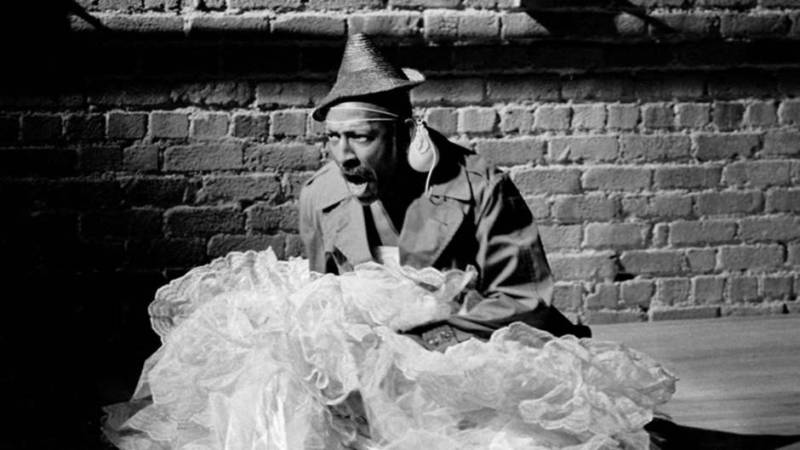
"caption": "San Francisco dancer and instructor Ed Mock is the subject of a documentary by Brontez Purnell. ",
"description": "San Francisco dancer and instructor Ed Mock is the subject of a documentary by Brontez Purnell. ",
"title": "Ed Mock courtesy Frameline",
"credit": "Courtesy Frameline ",
"status": "inherit",
"isLoading": false,
"fetchFailed": false
},
"arts_13843870": {
"type": "attachments",
"id": "arts_13843870",
"meta": {
"index": "attachments_1716263798",
"site": "arts",
"id": "13843870",
"found": true
},
"parent": 13843662,
"imgSizes": {
"small": {
"file": "https://ww2.kqed.org/app/uploads/sites/2/2018/10/BobbiJeneSMith.MAIN_-520x293.jpg",
"width": 520,
"mimeType": "image/jpeg",
"height": 293
},
"twentyfourteen-full-width": {
"file": "https://ww2.kqed.org/app/uploads/sites/2/2018/10/BobbiJeneSMith.MAIN_-1038x576.jpg",
"width": 1038,
"mimeType": "image/jpeg",
"height": 576
},
"thumbnail": {
"file": "https://ww2.kqed.org/app/uploads/sites/2/2018/10/BobbiJeneSMith.MAIN_-160x90.jpg",
"width": 160,
"mimeType": "image/jpeg",
"height": 90
},
"fd-sm": {
"file": "https://ww2.kqed.org/app/uploads/sites/2/2018/10/BobbiJeneSMith.MAIN_-960x540.jpg",
"width": 960,
"mimeType": "image/jpeg",
"height": 540
},
"post-thumbnail": {
"file": "https://ww2.kqed.org/app/uploads/sites/2/2018/10/BobbiJeneSMith.MAIN_-672x372.jpg",
"width": 672,
"mimeType": "image/jpeg",
"height": 372
},
"xsmall": {
"file": "https://ww2.kqed.org/app/uploads/sites/2/2018/10/BobbiJeneSMith.MAIN_-375x211.jpg",
"width": 375,
"mimeType": "image/jpeg",
"height": 211
},
"kqedFullSize": {
"file": "https://ww2.kqed.org/app/uploads/sites/2/2018/10/BobbiJeneSMith.MAIN_.jpg",
"width": 1920,
"height": 1080
},
"large": {
"file": "https://ww2.kqed.org/app/uploads/sites/2/2018/10/BobbiJeneSMith.MAIN_-1020x574.jpg",
"width": 1020,
"mimeType": "image/jpeg",
"height": 574
},
"xlarge": {
"file": "https://ww2.kqed.org/app/uploads/sites/2/2018/10/BobbiJeneSMith.MAIN_-1180x664.jpg",
"width": 1180,
"mimeType": "image/jpeg",
"height": 664
},
"complete_open_graph": {
"file": "https://ww2.kqed.org/app/uploads/sites/2/2018/10/BobbiJeneSMith.MAIN_-1200x675.jpg",
"width": 1200,
"mimeType": "image/jpeg",
"height": 675
},
"guest-author-50": {
"file": "https://ww2.kqed.org/app/uploads/sites/2/2018/10/BobbiJeneSMith.MAIN_-50x50.jpg",
"width": 50,
"mimeType": "image/jpeg",
"height": 50
},
"guest-author-96": {
"file": "https://ww2.kqed.org/app/uploads/sites/2/2018/10/BobbiJeneSMith.MAIN_-96x96.jpg",
"width": 96,
"mimeType": "image/jpeg",
"height": 96
},
"medium": {
"file": "https://ww2.kqed.org/app/uploads/sites/2/2018/10/BobbiJeneSMith.MAIN_-800x450.jpg",
"width": 800,
"mimeType": "image/jpeg",
"height": 450
},
"guest-author-64": {
"file": "https://ww2.kqed.org/app/uploads/sites/2/2018/10/BobbiJeneSMith.MAIN_-64x64.jpg",
"width": 64,
"mimeType": "image/jpeg",
"height": 64
},
"guest-author-32": {
"file": "https://ww2.kqed.org/app/uploads/sites/2/2018/10/BobbiJeneSMith.MAIN_-32x32.jpg",
"width": 32,
"mimeType": "image/jpeg",
"height": 32
},
"fd-lrg": {
"file": "https://ww2.kqed.org/app/uploads/sites/2/2018/10/BobbiJeneSMith.MAIN_-1920x1080.jpg",
"width": 1920,
"mimeType": "image/jpeg",
"height": 1080
},
"fd-med": {
"file": "https://ww2.kqed.org/app/uploads/sites/2/2018/10/BobbiJeneSMith.MAIN_-1180x664.jpg",
"width": 1180,
"mimeType": "image/jpeg",
"height": 664
},
"full-width": {
"file": "https://ww2.kqed.org/app/uploads/sites/2/2018/10/BobbiJeneSMith.MAIN_-1920x1080.jpg",
"width": 1920,
"mimeType": "image/jpeg",
"height": 1080
},
"detail": {
"file": "https://ww2.kqed.org/app/uploads/sites/2/2018/10/BobbiJeneSMith.MAIN_-150x150.jpg",
"width": 150,
"mimeType": "image/jpeg",
"height": 150
},
"medium_large": {
"file": "https://ww2.kqed.org/app/uploads/sites/2/2018/10/BobbiJeneSMith.MAIN_-768x432.jpg",
"width": 768,
"mimeType": "image/jpeg",
"height": 432
},
"guest-author-128": {
"file": "https://ww2.kqed.org/app/uploads/sites/2/2018/10/BobbiJeneSMith.MAIN_-128x128.jpg",
"width": 128,
"mimeType": "image/jpeg",
"height": 128
},
"xxsmall": {
"file": "https://ww2.kqed.org/app/uploads/sites/2/2018/10/BobbiJeneSMith.MAIN_-240x135.jpg",
"width": 240,
"mimeType": "image/jpeg",
"height": 135
}
},
"publishDate": 1540852819,
"modified": 1540852854,
"caption": "Or Meir Schraiber and Bobbi Jene Smith in 'With Care.' ",
"description": "Or Meir Schraiber and Bobbi Jene Smith in 'With Care.' ",
"title": "BobbiJeneSMith.MAIN",
"credit": "Matthew Placek",
"status": "inherit",
"isLoading": false,
"fetchFailed": false
},
"arts_13843864": {
"type": "attachments",
"id": "arts_13843864",
"meta": {
"index": "attachments_1716263798",
"site": "arts",
"id": "13843864",
"found": true
},
"parent": 13843822,
"imgSizes": {
"small": {
"file": "https://ww2.kqed.org/app/uploads/sites/2/2018/10/indiaSky.REV_-520x293.jpg",
"width": 520,
"mimeType": "image/jpeg",
"height": 293
},
"twentyfourteen-full-width": {
"file": "https://ww2.kqed.org/app/uploads/sites/2/2018/10/indiaSky.REV_-1038x576.jpg",
"width": 1038,
"mimeType": "image/jpeg",
"height": 576
},
"thumbnail": {
"file": "https://ww2.kqed.org/app/uploads/sites/2/2018/10/indiaSky.REV_-160x90.jpg",
"width": 160,
"mimeType": "image/jpeg",
"height": 90
},
"fd-sm": {
"file": "https://ww2.kqed.org/app/uploads/sites/2/2018/10/indiaSky.REV_-960x540.jpg",
"width": 960,
"mimeType": "image/jpeg",
"height": 540
},
"post-thumbnail": {
"file": "https://ww2.kqed.org/app/uploads/sites/2/2018/10/indiaSky.REV_-672x372.jpg",
"width": 672,
"mimeType": "image/jpeg",
"height": 372
},
"xsmall": {
"file": "https://ww2.kqed.org/app/uploads/sites/2/2018/10/indiaSky.REV_-375x211.jpg",
"width": 375,
"mimeType": "image/jpeg",
"height": 211
},
"kqedFullSize": {
"file": "https://ww2.kqed.org/app/uploads/sites/2/2018/10/indiaSky.REV_.jpg",
"width": 1100,
"height": 619
},
"large": {
"file": "https://ww2.kqed.org/app/uploads/sites/2/2018/10/indiaSky.REV_-1020x574.jpg",
"width": 1020,
"mimeType": "image/jpeg",
"height": 574
},
"guest-author-50": {
"file": "https://ww2.kqed.org/app/uploads/sites/2/2018/10/indiaSky.REV_-50x50.jpg",
"width": 50,
"mimeType": "image/jpeg",
"height": 50
},
"guest-author-96": {
"file": "https://ww2.kqed.org/app/uploads/sites/2/2018/10/indiaSky.REV_-96x96.jpg",
"width": 96,
"mimeType": "image/jpeg",
"height": 96
},
"medium": {
"file": "https://ww2.kqed.org/app/uploads/sites/2/2018/10/indiaSky.REV_-800x450.jpg",
"width": 800,
"mimeType": "image/jpeg",
"height": 450
},
"guest-author-64": {
"file": "https://ww2.kqed.org/app/uploads/sites/2/2018/10/indiaSky.REV_-64x64.jpg",
"width": 64,
"mimeType": "image/jpeg",
"height": 64
},
"guest-author-32": {
"file": "https://ww2.kqed.org/app/uploads/sites/2/2018/10/indiaSky.REV_-32x32.jpg",
"width": 32,
"mimeType": "image/jpeg",
"height": 32
},
"detail": {
"file": "https://ww2.kqed.org/app/uploads/sites/2/2018/10/indiaSky.REV_-150x150.jpg",
"width": 150,
"mimeType": "image/jpeg",
"height": 150
},
"medium_large": {
"file": "https://ww2.kqed.org/app/uploads/sites/2/2018/10/indiaSky.REV_-768x432.jpg",
"width": 768,
"mimeType": "image/jpeg",
"height": 432
},
"guest-author-128": {
"file": "https://ww2.kqed.org/app/uploads/sites/2/2018/10/indiaSky.REV_-128x128.jpg",
"width": 128,
"mimeType": "image/jpeg",
"height": 128
},
"xxsmall": {
"file": "https://ww2.kqed.org/app/uploads/sites/2/2018/10/indiaSky.REV_-240x135.jpg",
"width": 240,
"mimeType": "image/jpeg",
"height": 135
}
},
"publishDate": 1540850416,
"modified": 1540850444,
"caption": "Circus artist India Sky Davis seeks inspiration for an upcoming project while on a whale-watching tour on the San Francisco Bay.",
"description": "Circus artist India Sky Davis seeks inspiration for an upcoming project while on a whale-watching tour on the San Francisco Bay.",
"title": "indiaSky.REV",
"credit": "Chloe Veltman/KQED",
"status": "inherit",
"isLoading": false,
"fetchFailed": false
},
"arts_13842281": {
"type": "attachments",
"id": "arts_13842281",
"meta": {
"index": "attachments_1716263798",
"site": "arts",
"id": "13842281",
"found": true
},
"parent": 13842165,
"imgSizes": {
"small": {
"file": "https://ww2.kqed.org/app/uploads/sites/2/2018/10/PictureBayview.DelvisFrinon-520x293.jpg",
"width": 520,
"mimeType": "image/jpeg",
"height": 293
},
"twentyfourteen-full-width": {
"file": "https://ww2.kqed.org/app/uploads/sites/2/2018/10/PictureBayview.DelvisFrinon-1038x576.jpg",
"width": 1038,
"mimeType": "image/jpeg",
"height": 576
},
"thumbnail": {
"file": "https://ww2.kqed.org/app/uploads/sites/2/2018/10/PictureBayview.DelvisFrinon-160x90.jpg",
"width": 160,
"mimeType": "image/jpeg",
"height": 90
},
"fd-sm": {
"file": "https://ww2.kqed.org/app/uploads/sites/2/2018/10/PictureBayview.DelvisFrinon-960x540.jpg",
"width": 960,
"mimeType": "image/jpeg",
"height": 540
},
"post-thumbnail": {
"file": "https://ww2.kqed.org/app/uploads/sites/2/2018/10/PictureBayview.DelvisFrinon-672x372.jpg",
"width": 672,
"mimeType": "image/jpeg",
"height": 372
},
"xsmall": {
"file": "https://ww2.kqed.org/app/uploads/sites/2/2018/10/PictureBayview.DelvisFrinon-375x211.jpg",
"width": 375,
"mimeType": "image/jpeg",
"height": 211
},
"kqedFullSize": {
"file": "https://ww2.kqed.org/app/uploads/sites/2/2018/10/PictureBayview.DelvisFrinon.jpg",
"width": 1920,
"height": 1080
},
"large": {
"file": "https://ww2.kqed.org/app/uploads/sites/2/2018/10/PictureBayview.DelvisFrinon-1020x574.jpg",
"width": 1020,
"mimeType": "image/jpeg",
"height": 574
},
"xlarge": {
"file": "https://ww2.kqed.org/app/uploads/sites/2/2018/10/PictureBayview.DelvisFrinon-1180x664.jpg",
"width": 1180,
"mimeType": "image/jpeg",
"height": 664
},
"complete_open_graph": {
"file": "https://ww2.kqed.org/app/uploads/sites/2/2018/10/PictureBayview.DelvisFrinon-1200x675.jpg",
"width": 1200,
"mimeType": "image/jpeg",
"height": 675
},
"guest-author-50": {
"file": "https://ww2.kqed.org/app/uploads/sites/2/2018/10/PictureBayview.DelvisFrinon-50x50.jpg",
"width": 50,
"mimeType": "image/jpeg",
"height": 50
},
"guest-author-96": {
"file": "https://ww2.kqed.org/app/uploads/sites/2/2018/10/PictureBayview.DelvisFrinon-96x96.jpg",
"width": 96,
"mimeType": "image/jpeg",
"height": 96
},
"medium": {
"file": "https://ww2.kqed.org/app/uploads/sites/2/2018/10/PictureBayview.DelvisFrinon-800x450.jpg",
"width": 800,
"mimeType": "image/jpeg",
"height": 450
},
"guest-author-64": {
"file": "https://ww2.kqed.org/app/uploads/sites/2/2018/10/PictureBayview.DelvisFrinon-64x64.jpg",
"width": 64,
"mimeType": "image/jpeg",
"height": 64
},
"guest-author-32": {
"file": "https://ww2.kqed.org/app/uploads/sites/2/2018/10/PictureBayview.DelvisFrinon-32x32.jpg",
"width": 32,
"mimeType": "image/jpeg",
"height": 32
},
"fd-lrg": {
"file": "https://ww2.kqed.org/app/uploads/sites/2/2018/10/PictureBayview.DelvisFrinon-1920x1080.jpg",
"width": 1920,
"mimeType": "image/jpeg",
"height": 1080
},
"fd-med": {
"file": "https://ww2.kqed.org/app/uploads/sites/2/2018/10/PictureBayview.DelvisFrinon-1180x664.jpg",
"width": 1180,
"mimeType": "image/jpeg",
"height": 664
},
"full-width": {
"file": "https://ww2.kqed.org/app/uploads/sites/2/2018/10/PictureBayview.DelvisFrinon-1920x1080.jpg",
"width": 1920,
"mimeType": "image/jpeg",
"height": 1080
},
"detail": {
"file": "https://ww2.kqed.org/app/uploads/sites/2/2018/10/PictureBayview.DelvisFrinon-150x150.jpg",
"width": 150,
"mimeType": "image/jpeg",
"height": 150
},
"medium_large": {
"file": "https://ww2.kqed.org/app/uploads/sites/2/2018/10/PictureBayview.DelvisFrinon-768x432.jpg",
"width": 768,
"mimeType": "image/jpeg",
"height": 432
},
"guest-author-128": {
"file": "https://ww2.kqed.org/app/uploads/sites/2/2018/10/PictureBayview.DelvisFrinon-128x128.jpg",
"width": 128,
"mimeType": "image/jpeg",
"height": 128
},
"xxsmall": {
"file": "https://ww2.kqed.org/app/uploads/sites/2/2018/10/PictureBayview.DelvisFrinon-240x135.jpg",
"width": 240,
"mimeType": "image/jpeg",
"height": 135
}
},
"publishDate": 1539041944,
"modified": 1539041978,
"caption": "Delvis Friñon in 'Picture Bayview Hunters Point.'",
"description": "Delvis Friñon in 'Picture Bayview Hunters Point.'",
"title": "PictureBayview.DelvisFrinon",
"credit": "Kegan Marling",
"status": "inherit",
"isLoading": false,
"fetchFailed": false
},
"arts_13841246": {
"type": "attachments",
"id": "arts_13841246",
"meta": {
"index": "attachments_1716263798",
"site": "arts",
"id": "13841246",
"found": true
},
"parent": 13841139,
"imgSizes": {
"small": {
"file": "https://ww2.kqed.org/app/uploads/sites/2/2018/09/Yi-Ting-Gama-Hsu-photo-courtesy-of-LLD-520x293.jpeg",
"width": 520,
"mimeType": "image/jpeg",
"height": 293
},
"twentyfourteen-full-width": {
"file": "https://ww2.kqed.org/app/uploads/sites/2/2018/09/Yi-Ting-Gama-Hsu-photo-courtesy-of-LLD-1038x576.jpeg",
"width": 1038,
"mimeType": "image/jpeg",
"height": 576
},
"thumbnail": {
"file": "https://ww2.kqed.org/app/uploads/sites/2/2018/09/Yi-Ting-Gama-Hsu-photo-courtesy-of-LLD-160x90.jpeg",
"width": 160,
"mimeType": "image/jpeg",
"height": 90
},
"fd-sm": {
"file": "https://ww2.kqed.org/app/uploads/sites/2/2018/09/Yi-Ting-Gama-Hsu-photo-courtesy-of-LLD-960x540.jpeg",
"width": 960,
"mimeType": "image/jpeg",
"height": 540
},
"post-thumbnail": {
"file": "https://ww2.kqed.org/app/uploads/sites/2/2018/09/Yi-Ting-Gama-Hsu-photo-courtesy-of-LLD-672x372.jpeg",
"width": 672,
"mimeType": "image/jpeg",
"height": 372
},
"xsmall": {
"file": "https://ww2.kqed.org/app/uploads/sites/2/2018/09/Yi-Ting-Gama-Hsu-photo-courtesy-of-LLD-375x211.jpeg",
"width": 375,
"mimeType": "image/jpeg",
"height": 211
},
"kqedFullSize": {
"file": "https://ww2.kqed.org/app/uploads/sites/2/2018/09/Yi-Ting-Gama-Hsu-photo-courtesy-of-LLD.jpeg",
"width": 2048,
"height": 1152
},
"large": {
"file": "https://ww2.kqed.org/app/uploads/sites/2/2018/09/Yi-Ting-Gama-Hsu-photo-courtesy-of-LLD-1020x574.jpeg",
"width": 1020,
"mimeType": "image/jpeg",
"height": 574
},
"xlarge": {
"file": "https://ww2.kqed.org/app/uploads/sites/2/2018/09/Yi-Ting-Gama-Hsu-photo-courtesy-of-LLD-1180x664.jpeg",
"width": 1180,
"mimeType": "image/jpeg",
"height": 664
},
"complete_open_graph": {
"file": "https://ww2.kqed.org/app/uploads/sites/2/2018/09/Yi-Ting-Gama-Hsu-photo-courtesy-of-LLD-1200x675.jpeg",
"width": 1200,
"mimeType": "image/jpeg",
"height": 675
},
"guest-author-50": {
"file": "https://ww2.kqed.org/app/uploads/sites/2/2018/09/Yi-Ting-Gama-Hsu-photo-courtesy-of-LLD-50x50.jpeg",
"width": 50,
"mimeType": "image/jpeg",
"height": 50
},
"guest-author-96": {
"file": "https://ww2.kqed.org/app/uploads/sites/2/2018/09/Yi-Ting-Gama-Hsu-photo-courtesy-of-LLD-96x96.jpeg",
"width": 96,
"mimeType": "image/jpeg",
"height": 96
},
"medium": {
"file": "https://ww2.kqed.org/app/uploads/sites/2/2018/09/Yi-Ting-Gama-Hsu-photo-courtesy-of-LLD-800x450.jpeg",
"width": 800,
"mimeType": "image/jpeg",
"height": 450
},
"guest-author-64": {
"file": "https://ww2.kqed.org/app/uploads/sites/2/2018/09/Yi-Ting-Gama-Hsu-photo-courtesy-of-LLD-64x64.jpeg",
"width": 64,
"mimeType": "image/jpeg",
"height": 64
},
"guest-author-32": {
"file": "https://ww2.kqed.org/app/uploads/sites/2/2018/09/Yi-Ting-Gama-Hsu-photo-courtesy-of-LLD-32x32.jpeg",
"width": 32,
"mimeType": "image/jpeg",
"height": 32
},
"fd-lrg": {
"file": "https://ww2.kqed.org/app/uploads/sites/2/2018/09/Yi-Ting-Gama-Hsu-photo-courtesy-of-LLD-1920x1080.jpeg",
"width": 1920,
"mimeType": "image/jpeg",
"height": 1080
},
"fd-med": {
"file": "https://ww2.kqed.org/app/uploads/sites/2/2018/09/Yi-Ting-Gama-Hsu-photo-courtesy-of-LLD-1180x664.jpeg",
"width": 1180,
"mimeType": "image/jpeg",
"height": 664
},
"full-width": {
"file": "https://ww2.kqed.org/app/uploads/sites/2/2018/09/Yi-Ting-Gama-Hsu-photo-courtesy-of-LLD-1920x1080.jpeg",
"width": 1920,
"mimeType": "image/jpeg",
"height": 1080
},
"detail": {
"file": "https://ww2.kqed.org/app/uploads/sites/2/2018/09/Yi-Ting-Gama-Hsu-photo-courtesy-of-LLD-150x150.jpeg",
"width": 150,
"mimeType": "image/jpeg",
"height": 150
},
"medium_large": {
"file": "https://ww2.kqed.org/app/uploads/sites/2/2018/09/Yi-Ting-Gama-Hsu-photo-courtesy-of-LLD-768x432.jpeg",
"width": 768,
"mimeType": "image/jpeg",
"height": 432
},
"guest-author-128": {
"file": "https://ww2.kqed.org/app/uploads/sites/2/2018/09/Yi-Ting-Gama-Hsu-photo-courtesy-of-LLD-128x128.jpeg",
"width": 128,
"mimeType": "image/jpeg",
"height": 128
},
"xxsmall": {
"file": "https://ww2.kqed.org/app/uploads/sites/2/2018/09/Yi-Ting-Gama-Hsu-photo-courtesy-of-LLD-240x135.jpeg",
"width": 240,
"mimeType": "image/jpeg",
"height": 135
}
},
"publishDate": 1537407064,
"modified": 1538465896,
"caption": "Yi-Ting (Gama) Hsu in Lenora Lee's 'Beneath the Surface.'",
"description": "Yi-Ting (Gama) Hsu in Lenora Lee's 'Beneath the Surface.'",
"title": "Yi-Ting (Gama) Hsu, photo courtesy of LLD",
"credit": "Courtesy Lenora Lee Dance",
"status": "inherit",
"isLoading": false,
"fetchFailed": false
},
"arts_13840312": {
"type": "attachments",
"id": "arts_13840312",
"meta": {
"index": "attachments_1716263798",
"site": "arts",
"id": "13840312",
"found": true
},
"parent": 13840309,
"imgSizes": {
"small": {
"file": "https://ww2.kqed.org/app/uploads/sites/2/2018/09/KQED_Rexy_Amaral_Graham_Holoch_4_COVER-520x293.jpg",
"width": 520,
"mimeType": "image/jpeg",
"height": 293
},
"twentyfourteen-full-width": {
"file": "https://ww2.kqed.org/app/uploads/sites/2/2018/09/KQED_Rexy_Amaral_Graham_Holoch_4_COVER-1038x576.jpg",
"width": 1038,
"mimeType": "image/jpeg",
"height": 576
},
"thumbnail": {
"file": "https://ww2.kqed.org/app/uploads/sites/2/2018/09/KQED_Rexy_Amaral_Graham_Holoch_4_COVER-160x90.jpg",
"width": 160,
"mimeType": "image/jpeg",
"height": 90
},
"fd-sm": {
"file": "https://ww2.kqed.org/app/uploads/sites/2/2018/09/KQED_Rexy_Amaral_Graham_Holoch_4_COVER-960x540.jpg",
"width": 960,
"mimeType": "image/jpeg",
"height": 540
},
"post-thumbnail": {
"file": "https://ww2.kqed.org/app/uploads/sites/2/2018/09/KQED_Rexy_Amaral_Graham_Holoch_4_COVER-672x372.jpg",
"width": 672,
"mimeType": "image/jpeg",
"height": 372
},
"xsmall": {
"file": "https://ww2.kqed.org/app/uploads/sites/2/2018/09/KQED_Rexy_Amaral_Graham_Holoch_4_COVER-375x211.jpg",
"width": 375,
"mimeType": "image/jpeg",
"height": 211
},
"kqedFullSize": {
"file": "https://ww2.kqed.org/app/uploads/sites/2/2018/09/KQED_Rexy_Amaral_Graham_Holoch_4_COVER.jpg",
"width": 1920,
"height": 1080
},
"large": {
"file": "https://ww2.kqed.org/app/uploads/sites/2/2018/09/KQED_Rexy_Amaral_Graham_Holoch_4_COVER-1020x574.jpg",
"width": 1020,
"mimeType": "image/jpeg",
"height": 574
},
"xlarge": {
"file": "https://ww2.kqed.org/app/uploads/sites/2/2018/09/KQED_Rexy_Amaral_Graham_Holoch_4_COVER-1180x664.jpg",
"width": 1180,
"mimeType": "image/jpeg",
"height": 664
},
"complete_open_graph": {
"file": "https://ww2.kqed.org/app/uploads/sites/2/2018/09/KQED_Rexy_Amaral_Graham_Holoch_4_COVER-1200x675.jpg",
"width": 1200,
"mimeType": "image/jpeg",
"height": 675
},
"guest-author-50": {
"file": "https://ww2.kqed.org/app/uploads/sites/2/2018/09/KQED_Rexy_Amaral_Graham_Holoch_4_COVER-50x50.jpg",
"width": 50,
"mimeType": "image/jpeg",
"height": 50
},
"guest-author-96": {
"file": "https://ww2.kqed.org/app/uploads/sites/2/2018/09/KQED_Rexy_Amaral_Graham_Holoch_4_COVER-96x96.jpg",
"width": 96,
"mimeType": "image/jpeg",
"height": 96
},
"medium": {
"file": "https://ww2.kqed.org/app/uploads/sites/2/2018/09/KQED_Rexy_Amaral_Graham_Holoch_4_COVER-800x450.jpg",
"width": 800,
"mimeType": "image/jpeg",
"height": 450
},
"guest-author-64": {
"file": "https://ww2.kqed.org/app/uploads/sites/2/2018/09/KQED_Rexy_Amaral_Graham_Holoch_4_COVER-64x64.jpg",
"width": 64,
"mimeType": "image/jpeg",
"height": 64
},
"guest-author-32": {
"file": "https://ww2.kqed.org/app/uploads/sites/2/2018/09/KQED_Rexy_Amaral_Graham_Holoch_4_COVER-32x32.jpg",
"width": 32,
"mimeType": "image/jpeg",
"height": 32
},
"fd-lrg": {
"file": "https://ww2.kqed.org/app/uploads/sites/2/2018/09/KQED_Rexy_Amaral_Graham_Holoch_4_COVER-1920x1080.jpg",
"width": 1920,
"mimeType": "image/jpeg",
"height": 1080
},
"fd-med": {
"file": "https://ww2.kqed.org/app/uploads/sites/2/2018/09/KQED_Rexy_Amaral_Graham_Holoch_4_COVER-1180x664.jpg",
"width": 1180,
"mimeType": "image/jpeg",
"height": 664
},
"full-width": {
"file": "https://ww2.kqed.org/app/uploads/sites/2/2018/09/KQED_Rexy_Amaral_Graham_Holoch_4_COVER-1920x1080.jpg",
"width": 1920,
"mimeType": "image/jpeg",
"height": 1080
},
"detail": {
"file": "https://ww2.kqed.org/app/uploads/sites/2/2018/09/KQED_Rexy_Amaral_Graham_Holoch_4_COVER-150x150.jpg",
"width": 150,
"mimeType": "image/jpeg",
"height": 150
},
"medium_large": {
"file": "https://ww2.kqed.org/app/uploads/sites/2/2018/09/KQED_Rexy_Amaral_Graham_Holoch_4_COVER-768x432.jpg",
"width": 768,
"mimeType": "image/jpeg",
"height": 432
},
"guest-author-128": {
"file": "https://ww2.kqed.org/app/uploads/sites/2/2018/09/KQED_Rexy_Amaral_Graham_Holoch_4_COVER-128x128.jpg",
"width": 128,
"mimeType": "image/jpeg",
"height": 128
},
"xxsmall": {
"file": "https://ww2.kqed.org/app/uploads/sites/2/2018/09/KQED_Rexy_Amaral_Graham_Holoch_4_COVER-240x135.jpg",
"width": 240,
"mimeType": "image/jpeg",
"height": 135
}
},
"publishDate": 1536103335,
"modified": 1536104600,
"caption": "The One and Only Rexy at San Francisco's City Hall.",
"description": "The One and Only Rexy at San Francisco's City Hall.",
"title": "KQED_Rexy_Amaral_Graham_Holoch_4_COVER",
"credit": "Graham Holoch/KQED",
"status": "inherit",
"isLoading": false,
"fetchFailed": false
},
"arts_13840335": {
"type": "attachments",
"id": "arts_13840335",
"meta": {
"index": "attachments_1716263798",
"site": "arts",
"id": "13840335",
"found": true
},
"parent": 13840328,
"imgSizes": {
"small": {
"file": "https://ww2.kqed.org/app/uploads/sites/2/2018/09/GlennMcCoy.Feat_-520x293.jpg",
"width": 520,
"mimeType": "image/jpeg",
"height": 293
},
"thumbnail": {
"file": "https://ww2.kqed.org/app/uploads/sites/2/2018/09/GlennMcCoy.Feat_-160x90.jpg",
"width": 160,
"mimeType": "image/jpeg",
"height": 90
},
"post-thumbnail": {
"file": "https://ww2.kqed.org/app/uploads/sites/2/2018/09/GlennMcCoy.Feat_-672x372.jpg",
"width": 672,
"mimeType": "image/jpeg",
"height": 372
},
"xsmall": {
"file": "https://ww2.kqed.org/app/uploads/sites/2/2018/09/GlennMcCoy.Feat_-375x211.jpg",
"width": 375,
"mimeType": "image/jpeg",
"height": 211
},
"kqedFullSize": {
"file": "https://ww2.kqed.org/app/uploads/sites/2/2018/09/GlennMcCoy.Feat_.jpg",
"width": 800,
"height": 451
},
"guest-author-50": {
"file": "https://ww2.kqed.org/app/uploads/sites/2/2018/09/GlennMcCoy.Feat_-50x50.jpg",
"width": 50,
"mimeType": "image/jpeg",
"height": 50
},
"guest-author-96": {
"file": "https://ww2.kqed.org/app/uploads/sites/2/2018/09/GlennMcCoy.Feat_-96x96.jpg",
"width": 96,
"mimeType": "image/jpeg",
"height": 96
},
"medium": {
"file": "https://ww2.kqed.org/app/uploads/sites/2/2018/09/GlennMcCoy.Feat_-800x451.jpg",
"width": 800,
"mimeType": "image/jpeg",
"height": 451
},
"guest-author-64": {
"file": "https://ww2.kqed.org/app/uploads/sites/2/2018/09/GlennMcCoy.Feat_-64x64.jpg",
"width": 64,
"mimeType": "image/jpeg",
"height": 64
},
"guest-author-32": {
"file": "https://ww2.kqed.org/app/uploads/sites/2/2018/09/GlennMcCoy.Feat_-32x32.jpg",
"width": 32,
"mimeType": "image/jpeg",
"height": 32
},
"detail": {
"file": "https://ww2.kqed.org/app/uploads/sites/2/2018/09/GlennMcCoy.Feat_-150x150.jpg",
"width": 150,
"mimeType": "image/jpeg",
"height": 150
},
"medium_large": {
"file": "https://ww2.kqed.org/app/uploads/sites/2/2018/09/GlennMcCoy.Feat_-768x433.jpg",
"width": 768,
"mimeType": "image/jpeg",
"height": 433
},
"guest-author-128": {
"file": "https://ww2.kqed.org/app/uploads/sites/2/2018/09/GlennMcCoy.Feat_-128x128.jpg",
"width": 128,
"mimeType": "image/jpeg",
"height": 128
},
"xxsmall": {
"file": "https://ww2.kqed.org/app/uploads/sites/2/2018/09/GlennMcCoy.Feat_-240x135.jpg",
"width": 240,
"mimeType": "image/jpeg",
"height": 135
}
},
"publishDate": 1536107915,
"modified": 1536107937,
"caption": "Glenn McCoy is retiring after 31 years with the San Francisco Ballet. ",
"description": "Glenn McCoy is retiring after 31 years with the San Francisco Ballet. ",
"title": "GlennMcCoy.Feat",
"credit": "Chris Hardy",
"status": "inherit",
"isLoading": false,
"fetchFailed": false
},
"arts_13839492": {
"type": "attachments",
"id": "arts_13839492",
"meta": {
"index": "attachments_1716263798",
"site": "arts",
"id": "13839492",
"found": true
},
"parent": 0,
"imgSizes": {
"small": {
"file": "https://ww2.kqed.org/app/uploads/sites/2/2018/08/ATSmith_header2-520x293.jpg",
"width": 520,
"mimeType": "image/jpeg",
"height": 293
},
"twentyfourteen-full-width": {
"file": "https://ww2.kqed.org/app/uploads/sites/2/2018/08/ATSmith_header2-1038x576.jpg",
"width": 1038,
"mimeType": "image/jpeg",
"height": 576
},
"thumbnail": {
"file": "https://ww2.kqed.org/app/uploads/sites/2/2018/08/ATSmith_header2-160x90.jpg",
"width": 160,
"mimeType": "image/jpeg",
"height": 90
},
"fd-sm": {
"file": "https://ww2.kqed.org/app/uploads/sites/2/2018/08/ATSmith_header2-960x540.jpg",
"width": 960,
"mimeType": "image/jpeg",
"height": 540
},
"post-thumbnail": {
"file": "https://ww2.kqed.org/app/uploads/sites/2/2018/08/ATSmith_header2-672x372.jpg",
"width": 672,
"mimeType": "image/jpeg",
"height": 372
},
"xsmall": {
"file": "https://ww2.kqed.org/app/uploads/sites/2/2018/08/ATSmith_header2-375x211.jpg",
"width": 375,
"mimeType": "image/jpeg",
"height": 211
},
"kqedFullSize": {
"file": "https://ww2.kqed.org/app/uploads/sites/2/2018/08/ATSmith_header2.jpg",
"width": 1920,
"height": 1080
},
"large": {
"file": "https://ww2.kqed.org/app/uploads/sites/2/2018/08/ATSmith_header2-1020x574.jpg",
"width": 1020,
"mimeType": "image/jpeg",
"height": 574
},
"xlarge": {
"file": "https://ww2.kqed.org/app/uploads/sites/2/2018/08/ATSmith_header2-1180x664.jpg",
"width": 1180,
"mimeType": "image/jpeg",
"height": 664
},
"complete_open_graph": {
"file": "https://ww2.kqed.org/app/uploads/sites/2/2018/08/ATSmith_header2-1200x675.jpg",
"width": 1200,
"mimeType": "image/jpeg",
"height": 675
},
"guest-author-50": {
"file": "https://ww2.kqed.org/app/uploads/sites/2/2018/08/ATSmith_header2-50x50.jpg",
"width": 50,
"mimeType": "image/jpeg",
"height": 50
},
"guest-author-96": {
"file": "https://ww2.kqed.org/app/uploads/sites/2/2018/08/ATSmith_header2-96x96.jpg",
"width": 96,
"mimeType": "image/jpeg",
"height": 96
},
"medium": {
"file": "https://ww2.kqed.org/app/uploads/sites/2/2018/08/ATSmith_header2-800x450.jpg",
"width": 800,
"mimeType": "image/jpeg",
"height": 450
},
"guest-author-64": {
"file": "https://ww2.kqed.org/app/uploads/sites/2/2018/08/ATSmith_header2-64x64.jpg",
"width": 64,
"mimeType": "image/jpeg",
"height": 64
},
"guest-author-32": {
"file": "https://ww2.kqed.org/app/uploads/sites/2/2018/08/ATSmith_header2-32x32.jpg",
"width": 32,
"mimeType": "image/jpeg",
"height": 32
},
"fd-lrg": {
"file": "https://ww2.kqed.org/app/uploads/sites/2/2018/08/ATSmith_header2-1920x1080.jpg",
"width": 1920,
"mimeType": "image/jpeg",
"height": 1080
},
"fd-med": {
"file": "https://ww2.kqed.org/app/uploads/sites/2/2018/08/ATSmith_header2-1180x664.jpg",
"width": 1180,
"mimeType": "image/jpeg",
"height": 664
},
"full-width": {
"file": "https://ww2.kqed.org/app/uploads/sites/2/2018/08/ATSmith_header2-1920x1080.jpg",
"width": 1920,
"mimeType": "image/jpeg",
"height": 1080
},
"detail": {
"file": "https://ww2.kqed.org/app/uploads/sites/2/2018/08/ATSmith_header2-150x150.jpg",
"width": 150,
"mimeType": "image/jpeg",
"height": 150
},
"medium_large": {
"file": "https://ww2.kqed.org/app/uploads/sites/2/2018/08/ATSmith_header2-768x432.jpg",
"width": 768,
"mimeType": "image/jpeg",
"height": 432
},
"guest-author-128": {
"file": "https://ww2.kqed.org/app/uploads/sites/2/2018/08/ATSmith_header2-128x128.jpg",
"width": 128,
"mimeType": "image/jpeg",
"height": 128
},
"xxsmall": {
"file": "https://ww2.kqed.org/app/uploads/sites/2/2018/08/ATSmith_header2-240x135.jpg",
"width": 240,
"mimeType": "image/jpeg",
"height": 135
}
},
"publishDate": 1534885241,
"modified": 1534885392,
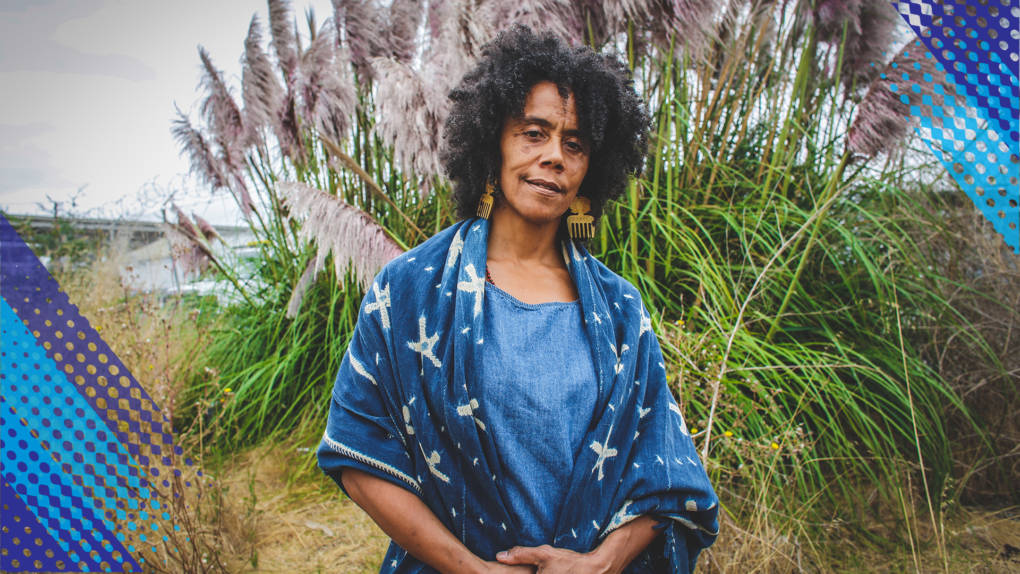
"caption": "Amara Tabor Smith. ",
"description": "Amara Tabor Smith. ",
"title": "ATSmith_header2",
"credit": "Jean Melesaine",
"status": "inherit",
"isLoading": false,
"fetchFailed": false
},
"arts_13837405": {
"type": "attachments",
"id": "arts_13837405",
"meta": {
"index": "attachments_1716263798",
"site": "arts",
"id": "13837405",
"found": true
},
"parent": 13837387,
"imgSizes": {
"small": {
"file": "https://ww2.kqed.org/app/uploads/sites/2/2018/07/RS31959_Shakti_01-2-qut-520x347.jpg",
"width": 520,
"mimeType": "image/jpeg",
"height": 347
},
"twentyfourteen-full-width": {
"file": "https://ww2.kqed.org/app/uploads/sites/2/2018/07/RS31959_Shakti_01-2-qut-1038x576.jpg",
"width": 1038,
"mimeType": "image/jpeg",
"height": 576
},
"thumbnail": {
"file": "https://ww2.kqed.org/app/uploads/sites/2/2018/07/RS31959_Shakti_01-2-qut-160x107.jpg",
"width": 160,
"mimeType": "image/jpeg",
"height": 107
},
"fd-sm": {
"file": "https://ww2.kqed.org/app/uploads/sites/2/2018/07/RS31959_Shakti_01-2-qut-960x640.jpg",
"width": 960,
"mimeType": "image/jpeg",
"height": 640
},
"post-thumbnail": {
"file": "https://ww2.kqed.org/app/uploads/sites/2/2018/07/RS31959_Shakti_01-2-qut-672x372.jpg",
"width": 672,
"mimeType": "image/jpeg",
"height": 372
},
"xsmall": {
"file": "https://ww2.kqed.org/app/uploads/sites/2/2018/07/RS31959_Shakti_01-2-qut-375x250.jpg",
"width": 375,
"mimeType": "image/jpeg",
"height": 250
},
"kqedFullSize": {
"file": "https://ww2.kqed.org/app/uploads/sites/2/2018/07/RS31959_Shakti_01-2-qut.jpg",
"width": 1920,
"height": 1280
},
"large": {
"file": "https://ww2.kqed.org/app/uploads/sites/2/2018/07/RS31959_Shakti_01-2-qut-1020x680.jpg",
"width": 1020,
"mimeType": "image/jpeg",
"height": 680
},
"xlarge": {
"file": "https://ww2.kqed.org/app/uploads/sites/2/2018/07/RS31959_Shakti_01-2-qut-1180x787.jpg",
"width": 1180,
"mimeType": "image/jpeg",
"height": 787
},
"complete_open_graph": {
"file": "https://ww2.kqed.org/app/uploads/sites/2/2018/07/RS31959_Shakti_01-2-qut-1200x800.jpg",
"width": 1200,
"mimeType": "image/jpeg",
"height": 800
},
"guest-author-50": {
"file": "https://ww2.kqed.org/app/uploads/sites/2/2018/07/RS31959_Shakti_01-2-qut-50x50.jpg",
"width": 50,
"mimeType": "image/jpeg",
"height": 50
},
"guest-author-96": {
"file": "https://ww2.kqed.org/app/uploads/sites/2/2018/07/RS31959_Shakti_01-2-qut-96x96.jpg",
"width": 96,
"mimeType": "image/jpeg",
"height": 96
},
"medium": {
"file": "https://ww2.kqed.org/app/uploads/sites/2/2018/07/RS31959_Shakti_01-2-qut-800x533.jpg",
"width": 800,
"mimeType": "image/jpeg",
"height": 533
},
"guest-author-64": {
"file": "https://ww2.kqed.org/app/uploads/sites/2/2018/07/RS31959_Shakti_01-2-qut-64x64.jpg",
"width": 64,
"mimeType": "image/jpeg",
"height": 64
},
"guest-author-32": {
"file": "https://ww2.kqed.org/app/uploads/sites/2/2018/07/RS31959_Shakti_01-2-qut-32x32.jpg",
"width": 32,
"mimeType": "image/jpeg",
"height": 32
},
"fd-lrg": {
"file": "https://ww2.kqed.org/app/uploads/sites/2/2018/07/RS31959_Shakti_01-2-qut-1920x1280.jpg",
"width": 1920,
"mimeType": "image/jpeg",
"height": 1280
},
"fd-med": {
"file": "https://ww2.kqed.org/app/uploads/sites/2/2018/07/RS31959_Shakti_01-2-qut-1180x787.jpg",
"width": 1180,
"mimeType": "image/jpeg",
"height": 787
},
"full-width": {
"file": "https://ww2.kqed.org/app/uploads/sites/2/2018/07/RS31959_Shakti_01-2-qut-1920x1280.jpg",
"width": 1920,
"mimeType": "image/jpeg",
"height": 1280
},
"detail": {
"file": "https://ww2.kqed.org/app/uploads/sites/2/2018/07/RS31959_Shakti_01-2-qut-150x150.jpg",
"width": 150,
"mimeType": "image/jpeg",
"height": 150
},
"medium_large": {
"file": "https://ww2.kqed.org/app/uploads/sites/2/2018/07/RS31959_Shakti_01-2-qut-768x512.jpg",
"width": 768,
"mimeType": "image/jpeg",
"height": 512
},
"guest-author-128": {
"file": "https://ww2.kqed.org/app/uploads/sites/2/2018/07/RS31959_Shakti_01-2-qut-128x128.jpg",
"width": 128,
"mimeType": "image/jpeg",
"height": 128
},
"xxsmall": {
"file": "https://ww2.kqed.org/app/uploads/sites/2/2018/07/RS31959_Shakti_01-2-qut-240x160.jpg",
"width": 240,
"mimeType": "image/jpeg",
"height": 160
}
},
"publishDate": 1532052620,
"modified": 1532052665,
"caption": "Urmila Vudali, who dances in both the Bharatanatyam and Western contemporary segments of Divine Feminine Shakti Shekinah put on by Sangam Arts, says, \"There are so many similarities [between the two forms], just by the way that we communicate rhythm and expression.\"",
"description": "Urmila Vudali, who dances in both the Bharatanatyam and Western contemporary segments of Divine Feminine Shakti Shekinah put on by Sangam Arts, says, \"There are so many similarities [between the two forms], just by the way that we communicate rhythm and expression.\"",
"title": "Urmila Vudali",
"credit": "Photo: Courtesy of Swagato Basumallick",
"status": "inherit",
"isLoading": false,
"fetchFailed": false
}
},
"audioPlayerReducer": {
"postId": "stream_live",
"isPaused": true,
"isPlaying": false,
"pfsActive": false,
"pledgeModalIsOpen": true,
"playerDrawerIsOpen": false,
"liveAudioPlayStartedAt": 0,
"liveAudioPlayContext": ""
},
"authorsReducer": {
"shotchkiss": {
"type": "authors",
"id": "61",
"meta": {
"index": "authors_1716337520",
"id": "61",
"found": true
},
"name": "Sarah Hotchkiss",
"firstName": "Sarah",
"lastName": "Hotchkiss",
"slug": "shotchkiss",
"email": "shotchkiss@kqed.org",
"display_author_email": true,
"staff_mastheads": [
"arts"
],
"title": "Senior Editor",
"bio": "Sarah Hotchkiss is a San Francisco \u003ca href=\"http://www.sarahhotchkiss.com\">artist\u003c/a> and arts writer. In 2019, she received the Dorothea & Leo Rabkin Foundation grant for visual art journalism and in 2020 she received a Society of Professional Journalists, Northern California award for excellence in arts and culture reporting.",
"avatar": "https://secure.gravatar.com/avatar/bc662df144b3d27fd8b1b6f1c2a420d34e91e53154d411bb7ad353cc8b6cea8d?s=600&d=blank&r=g",
"twitter": null,
"bluesky": null,
"facebook": null,
"instagram": null,
"linkedin": null,
"sites": [
{
"site": "",
"roles": [
"editor"
]
},
{
"site": "arts",
"roles": [
"Contributor",
"administrator"
]
},
{
"site": "artschool",
"roles": [
"administrator"
]
},
{
"site": "news",
"roles": [
"editor"
]
},
{
"site": "pop",
"roles": [
"administrator"
]
},
{
"site": "bayareabites",
"roles": [
"editor"
]
},
{
"site": "spark",
"roles": [
"editor"
]
},
{
"site": "checkplease",
"roles": [
"editor"
]
}
],
"headData": {
"title": "Sarah Hotchkiss | KQED",
"description": "Senior Editor",
"ogImgSrc": "https://secure.gravatar.com/avatar/bc662df144b3d27fd8b1b6f1c2a420d34e91e53154d411bb7ad353cc8b6cea8d?s=600&d=blank&r=g",
"twImgSrc": "https://secure.gravatar.com/avatar/bc662df144b3d27fd8b1b6f1c2a420d34e91e53154d411bb7ad353cc8b6cea8d?s=600&d=blank&r=g"
},
"isLoading": false,
"link": "/author/shotchkiss"
},
"rachael-myrow": {
"type": "authors",
"id": "251",
"meta": {
"index": "authors_1716337520",
"id": "251",
"found": true
},
"name": "Rachael Myrow",
"firstName": "Rachael",
"lastName": "Myrow",
"slug": "rachael-myrow",
"email": "rmyrow@kqed.org",
"display_author_email": true,
"staff_mastheads": [
"news"
],
"title": "Senior Editor of KQED's Silicon Valley News Desk",
"bio": "• I write and edit stories about how Silicon Valley power and policies shape everyday life in California. I’m also passionate about making Bay Area history and culture more accessible to a broad public. • I’ve been a journalist for most of my life, starting in high school with The Franklin Press in Los Angeles, where I grew up. While earning my first degree in English at UC Berkeley, I got my start in public radio at KALX-FM. After completing a second degree in journalism at Cal, I landed my first professional job at Marketplace, then moved on to KPCC (now LAist), and then KQED, where I hosted The California Report for more than seven years. • My reporting has appeared on NPR, The World, WBUR’s \u003ci>Here & Now\u003c/i>, and the BBC. I also guest host for KQED’s \u003ci>Forum\u003c/i>, as well as the Commonwealth Club in San Francisco. • I speak periodically on media, democracy and technology issues, and do voiceover work for documentaries and educational video projects. • Outside of the studio, you'll find me hiking Bay Area trails and whipping up Insta-ready meals in my kitchen. • I do not accept gifts, money, or favors from anyone connected to my reporting, I don't pay people for information, and I do not support or donate to political causes. • I strive to treat the people I report on with fairness, honesty, and respect. I also recognize there are often multiple sides to a story and work to verify information through multiple sources and documentation. If I get something wrong, I correct it.",
"avatar": "https://secure.gravatar.com/avatar/3ed8a3c5f26025e4a805ba634cda8cd764906b97438a6d9ce216b044e340da4e?s=600&d=blank&r=g",
"twitter": "rachaelmyrow",
"bluesky": null,
"facebook": null,
"instagram": null,
"linkedin": "https://www.linkedin.com/in/rachaelmyrow/",
"sites": [
{
"site": "arts",
"roles": [
"administrator"
]
},
{
"site": "news",
"roles": [
"edit_others_posts",
"editor"
]
},
{
"site": "futureofyou",
"roles": [
"editor"
]
},
{
"site": "bayareabites",
"roles": [
"editor"
]
},
{
"site": "stateofhealth",
"roles": [
"editor"
]
},
{
"site": "science",
"roles": [
"editor"
]
},
{
"site": "food",
"roles": [
"editor"
]
},
{
"site": "forum",
"roles": [
"editor"
]
},
{
"site": "liveblog",
"roles": [
"author"
]
}
],
"headData": {
"title": "Rachael Myrow | KQED",
"description": "Senior Editor of KQED's Silicon Valley News Desk",
"ogImgSrc": "https://secure.gravatar.com/avatar/3ed8a3c5f26025e4a805ba634cda8cd764906b97438a6d9ce216b044e340da4e?s=600&d=blank&r=g",
"twImgSrc": "https://secure.gravatar.com/avatar/3ed8a3c5f26025e4a805ba634cda8cd764906b97438a6d9ce216b044e340da4e?s=600&d=blank&r=g"
},
"isLoading": false,
"link": "/author/rachael-myrow"
},
"cveltman": {
"type": "authors",
"id": "8608",
"meta": {
"index": "authors_1716337520",
"id": "8608",
"found": true
},
"name": "Chloe Veltman",
"firstName": "Chloe",
"lastName": "Veltman",
"slug": "cveltman",
"email": "cveltman@kqed.org",
"display_author_email": true,
"staff_mastheads": [],
"title": "Arts and Culture Reporter",
"bio": "Chloe Veltman is a former arts and culture reporter for KQED. Prior to joining the organization, she launched and led the arts bureau at Colorado Public Radio, served as the Bay Area's culture columnist for the New York Times, and was the founder, host and executive producer of VoiceBox, a national award-winning weekly podcast/radio show and live events series all about the human voice. Chloe is the recipient of numerous prizes, grants and fellowships including a Webby Award for her work on interactive storytelling, both the John S Knight Journalism Fellowship and Humanities Center Fellowship at Stanford University, the Sundance Arts Writing Fellowship and a Library of Congress Research Fellowship. She is the author of the book \"On Acting\" and has appeared as a guest lecturer at Yale University and the San Francisco Conservatory of Music among other institutions. She holds a BA in english literature from King's College, Cambridge, and a Masters in Dramaturgy from the Central School of Speech and Drama/Harvard Institute for Advanced Theater Training.\r\n\u003ca href=\"https://www.chloeveltman.com\">www.chloeveltman.com\u003c/a>",
"avatar": "https://secure.gravatar.com/avatar/55403394b00a1ddab683952c2eb2cf85?s=600&d=blank&r=g",
"twitter": "chloeveltman",
"facebook": null,
"instagram": null,
"linkedin": null,
"sites": [
{
"site": "arts",
"roles": []
},
{
"site": "news",
"roles": [
"author"
]
},
{
"site": "pop",
"roles": [
"editor"
]
},
{
"site": "science",
"roles": []
}
],
"headData": {
"title": "Chloe Veltman | KQED",
"description": "Arts and Culture Reporter",
"ogImgSrc": "https://secure.gravatar.com/avatar/55403394b00a1ddab683952c2eb2cf85?s=600&d=blank&r=g",
"twImgSrc": "https://secure.gravatar.com/avatar/55403394b00a1ddab683952c2eb2cf85?s=600&d=blank&r=g"
},
"isLoading": false,
"link": "/author/cveltman"
},
"slefebvre": {
"type": "authors",
"id": "11091",
"meta": {
"index": "authors_1716337520",
"id": "11091",
"found": true
},
"name": "Sam Lefebvre",
"firstName": "Sam",
"lastName": "Lefebvre",
"slug": "slefebvre",
"email": "sdlefebvre@gmail.com",
"display_author_email": false,
"staff_mastheads": [],
"title": "KQED Contributor",
"bio": "Sam Lefebvre is an award-winning reporter at KQED Arts. He has worked as an editor and columnist at the \u003cem>East Bay Express\u003c/em>, \u003cem>SF Weekly \u003c/em>and Impose Magazine, and his journalism and criticism has appeared in \u003cem>The New York Times\u003c/em>, the Guardian and Pitchfork.",
"avatar": "https://secure.gravatar.com/avatar/49d39b42930b77fb13784ddd9fa63fe780666b71bf289368509dba576b64e69b?s=600&d=blank&r=g",
"twitter": "Lefebvre_Sam",
"bluesky": null,
"facebook": null,
"instagram": null,
"linkedin": null,
"sites": [
{
"site": "arts",
"roles": [
"subscriber"
]
},
{
"site": "news",
"roles": [
"author"
]
}
],
"headData": {
"title": "Sam Lefebvre | KQED",
"description": "KQED Contributor",
"ogImgSrc": "https://secure.gravatar.com/avatar/49d39b42930b77fb13784ddd9fa63fe780666b71bf289368509dba576b64e69b?s=600&d=blank&r=g",
"twImgSrc": "https://secure.gravatar.com/avatar/49d39b42930b77fb13784ddd9fa63fe780666b71bf289368509dba576b64e69b?s=600&d=blank&r=g"
},
"isLoading": false,
"link": "/author/slefebvre"
},
"cescoda": {
"type": "authors",
"id": "11206",
"meta": {
"index": "authors_1716337520",
"id": "11206",
"found": true
},
"name": "Carla Escoda",
"firstName": "Carla",
"lastName": "Escoda",
"slug": "cescoda",
"email": "ballettothepeople@gmail.com",
"display_author_email": false,
"staff_mastheads": [],
"title": null,
"bio": "Carla can most often be found in theatres, airports and on airplanes, writing about dance and the arts for various websites whenever she can find wi-fi. Her blog Ballet to the People<\u003ca href=\"http://ballettothepeople.com/\" target=\"_blank\" rel=\"noreferrer\">http://\u003cwbr />ballettothepeople.com\u003c/a>> has become a street corner where dance-lovers enjoy loitering and plotting the revolution which will renew the populist roots of ballet.\r\n\u003cspan class=\"im\">\r\nIn her previous lives, Carla worked in scientific research, then in project finance in Asia. Prior to that, she trained as a ballet and modern dancer, and performed with the Yaledancers while getting her undergraduate degrees in Engineering and Applied Science and French Literature, and her graduate degree in Engineering.\u003c/span>",
"avatar": "https://secure.gravatar.com/avatar/3a012eb3749d4353e3e28aab414dd815?s=600&d=blank&r=g",
"twitter": null,
"facebook": null,
"instagram": null,
"linkedin": null,
"sites": [
{
"site": "arts",
"roles": [
"author"
]
}
],
"headData": {
"title": "Carla Escoda | KQED",
"description": null,
"ogImgSrc": "https://secure.gravatar.com/avatar/3a012eb3749d4353e3e28aab414dd815?s=600&d=blank&r=g",
"twImgSrc": "https://secure.gravatar.com/avatar/3a012eb3749d4353e3e28aab414dd815?s=600&d=blank&r=g"
},
"isLoading": false,
"link": "/author/cescoda"
},
"ngluckstern": {
"type": "authors",
"id": "11497",
"meta": {
"index": "authors_1716337520",
"id": "11497",
"found": true
},
"name": "Nicole Gluckstern",
"firstName": "Nicole",
"lastName": "Gluckstern",
"slug": "ngluckstern",
"email": "gluckstern.nicole@gmail.com",
"display_author_email": false,
"staff_mastheads": [],
"title": "KQED Contributor",
"bio": null,
"avatar": "https://secure.gravatar.com/avatar/2c3d593194017bfe811a998ad03140909de330b22abebf4889e1a564ce5b3495?s=600&d=blank&r=g",
"twitter": null,
"bluesky": null,
"facebook": null,
"instagram": null,
"linkedin": null,
"sites": [
{
"site": "arts",
"roles": [
"contributor"
]
}
],
"headData": {
"title": "Nicole Gluckstern | KQED",
"description": "KQED Contributor",
"ogImgSrc": "https://secure.gravatar.com/avatar/2c3d593194017bfe811a998ad03140909de330b22abebf4889e1a564ce5b3495?s=600&d=blank&r=g",
"twImgSrc": "https://secure.gravatar.com/avatar/2c3d593194017bfe811a998ad03140909de330b22abebf4889e1a564ce5b3495?s=600&d=blank&r=g"
},
"isLoading": false,
"link": "/author/ngluckstern"
},
"akrigbaum": {
"type": "authors",
"id": "11510",
"meta": {
"index": "authors_1716337520",
"id": "11510",
"found": true
},
"name": "Ashleyanne Krigbaum",
"firstName": "Ashleyanne",
"lastName": "Krigbaum",
"slug": "akrigbaum",
"email": "akrigbaum@kqed.org",
"display_author_email": false,
"staff_mastheads": [
"news"
],
"title": "Producer, Rightnowish",
"bio": "Ashleyanne Krigbaum is the producer of \u003cem>\u003ca href=\"http://kqed.org/rightnowish\">Rightnowish\u003c/a>\u003c/em>. \u003cem> \u003c/em>She has also made podcasts for Noise Pop, Salon, and award-winning audio tours for SFMOMA, Smithsonian, and the de Young Museum. From 2015 to 2018, she was an announcer and local host of NPR's\u003cem> All Things Considered\u003c/em> at KALW. When she's not making podcasts, she's DJing vinyl at dance parties around the Bay Area.",
"avatar": "https://secure.gravatar.com/avatar/b2293d2c51dd71bb43202016faa0892d?s=600&d=blank&r=g",
"twitter": "wambamash",
"facebook": null,
"instagram": null,
"linkedin": null,
"sites": [
{
"site": "arts",
"roles": [
"subscriber"
]
},
{
"site": "news",
"roles": [
"editor"
]
}
],
"headData": {
"title": "Ashleyanne Krigbaum | KQED",
"description": "Producer, Rightnowish",
"ogImgSrc": "https://secure.gravatar.com/avatar/b2293d2c51dd71bb43202016faa0892d?s=600&d=blank&r=g",
"twImgSrc": "https://secure.gravatar.com/avatar/b2293d2c51dd71bb43202016faa0892d?s=600&d=blank&r=g"
},
"isLoading": false,
"link": "/author/akrigbaum"
}
},
"pagesReducer": {
"arts_category_dance": {
"type": "terms",
"id": "arts_966",
"meta": {
"index": "terms_1716263798",
"site": "arts",
"id": "966",
"score": 12.286901
},
"featImg": null,
"name": "Dance",
"description": null,
"taxonomy": "category",
"headData": {
"twImgId": null,
"twTitle": null,
"ogTitle": null,
"ogImgId": null,
"twDescription": null,
"description": null,
"title": "Dance Archives | KQED Arts",
"ogDescription": null
},
"ttid": 984,
"slug": "dance",
"isLoading": false,
"title": "Dance",
"pageMeta": {
"site": "arts",
"WpPageTemplate": "page-topic-editorial",
"currentPage": 15
},
"blocks": [
{
"blockName": "kqed/post-list",
"attrs": {
"layout": "cardArticle2",
"query": "posts/arts?category=dance",
"seeMore": false,
"paginated": true,
"page": 15
}
},
{
"blockName": "kqed/ad"
}
]
}
},
"pfsSessionReducer": {},
"postsReducer": {
"stream_live": {
"type": "live",
"id": "stream_live",
"audioUrl": "https://streams.kqed.org/kqedradio",
"title": "Live Stream",
"excerpt": "Live Stream information currently unavailable.",
"link": "/radio",
"featImg": "",
"label": {
"name": "KQED Live",
"link": "/"
}
},
"stream_kqedNewscast": {
"type": "posts",
"id": "stream_kqedNewscast",
"audioUrl": "https://www.kqed.org/.stream/anon/radio/RDnews/newscast.mp3?_=1",
"title": "KQED Newscast",
"featImg": "",
"label": {
"name": "88.5 FM",
"link": "/"
}
},
"arts_13847646": {
"type": "posts",
"id": "arts_13847646",
"meta": {
"index": "posts_1716263798",
"site": "arts",
"id": "13847646",
"score": null,
"sort": [
1545940843000
]
},
"guestAuthors": [],
"slug": "uc-berkeley-art-professor-displaces-dance-studio-to-create-new-art-space",
"title": "UC Berkeley Art Professor Displaces Dance Studio to Create New Art Space",
"publishDate": 1545940843,
"format": "standard",
"headTitle": "UC Berkeley Art Professor Displaces Dance Studio to Create New Art Space | KQED",
"labelTerm": {
"site": "arts"
},
"content": "\u003cp>On November 1, a couple dozen artists, gallerists and nonprofit workers gathered to collaboratively envision an empty West Oakland building as a community art space.\u003c/p>\n\u003cp>There were speeches from property co-owner Shannon Jackson, a professor and the associate vice chancellor of arts and design at UC Berkeley, and employees of Community Arts Stabilization Trust (CAST), a nonprofit focused on the cultural sector. Attendees brainstormed in groups, responding to prompts such as, “What do you imagine being here?”\u003c/p>\n\u003cp>The event, hosted by CAST and Shannon and Jacqueline Jackson, was billed “Reimagining the Noodle Factory,” a reference to the property’s 2000s incarnation as a live-work complex and underground events space. But pieces of paper taped to the entrance obscured a sign for its tenant of the past six years, Skyhigh Odditorium. All night, the dance studio went conspicuously unmentioned.\u003c/p>\n\u003cfigure id=\"attachment_13847690\" class=\"wp-caption aligncenter\" style=\"max-width: 800px\">\u003cimg loading=\"lazy\" decoding=\"async\" src=\"https://ww2.kqed.org/arts/wp-content/uploads/sites/2/2018/12/Noodle-Factory-paper-obsures-Skyhigh-hours-1-800x533.jpg\" alt=\"A piece of paper taped to the entrance of the Noodle Factory obscured a sign for its most recent tenant, Skyhigh Odditorium.\" width=\"800\" height=\"533\" class=\"size-medium wp-image-13847690\" srcset=\"https://cdn.kqed.org/wp-content/uploads/sites/2/2018/12/Noodle-Factory-paper-obsures-Skyhigh-hours-1-800x533.jpg 800w, https://cdn.kqed.org/wp-content/uploads/sites/2/2018/12/Noodle-Factory-paper-obsures-Skyhigh-hours-1-160x107.jpg 160w, https://cdn.kqed.org/wp-content/uploads/sites/2/2018/12/Noodle-Factory-paper-obsures-Skyhigh-hours-1-768x512.jpg 768w, https://cdn.kqed.org/wp-content/uploads/sites/2/2018/12/Noodle-Factory-paper-obsures-Skyhigh-hours-1-1020x680.jpg 1020w, https://cdn.kqed.org/wp-content/uploads/sites/2/2018/12/Noodle-Factory-paper-obsures-Skyhigh-hours-1-1200x800.jpg 1200w, https://cdn.kqed.org/wp-content/uploads/sites/2/2018/12/Noodle-Factory-paper-obsures-Skyhigh-hours-1-1920x1280.jpg 1920w, https://cdn.kqed.org/wp-content/uploads/sites/2/2018/12/Noodle-Factory-paper-obsures-Skyhigh-hours-1-1180x787.jpg 1180w, https://cdn.kqed.org/wp-content/uploads/sites/2/2018/12/Noodle-Factory-paper-obsures-Skyhigh-hours-1-960x640.jpg 960w, https://cdn.kqed.org/wp-content/uploads/sites/2/2018/12/Noodle-Factory-paper-obsures-Skyhigh-hours-1-240x160.jpg 240w, https://cdn.kqed.org/wp-content/uploads/sites/2/2018/12/Noodle-Factory-paper-obsures-Skyhigh-hours-1-375x250.jpg 375w, https://cdn.kqed.org/wp-content/uploads/sites/2/2018/12/Noodle-Factory-paper-obsures-Skyhigh-hours-1-520x347.jpg 520w, https://cdn.kqed.org/wp-content/uploads/sites/2/2018/12/Noodle-Factory-paper-obsures-Skyhigh-hours-1.jpg 2048w\" sizes=\"(max-width: 800px) 100vw, 800px\">\u003cfigcaption class=\"wp-caption-text\">A piece of paper taped to the entrance of the Noodle Factory obscured a sign for its most recent tenant, Skyhigh Odditorium. \u003ccite>(Sam Lefebvre/KQED)\u003c/cite>\u003c/figcaption>\u003c/figure>\n\u003cp>The omission troubled Thomas Dolan, a live-work architect and advocate who’d visited Skyhigh as a safety consultant early last year. During the event, he worried that he’d been asked to reimagine an art space built on the back of another’s displacement. So he approached Jackson to ask about Skyhigh. \u003c/p>\n\u003cp>“She just told me it didn’t work out,” he recalled.\u003c/p>\n\u003cp>[ad fullwidth]\u003c/p>\n\u003cp>Skyhigh Odditorium had been displaced three months prior, after the Jacksons, who bought the building last year, declined to renew its lease. (Jacqueline Jackson, Shannon Jackson’s business partner, is a North Bay realtor.) Skyhigh founder Madamn Burnz said the Jacksons’ property managers explained to her that the new owners planned to create an art space.\u003c/p>\n\u003cp>“I was extremely confused,” Burnz said. “What did they think we’d been doing there for six years?”\u003c/p>\n\u003cp>Burnz and a handful of Skyhigh instructors \u003ca href=\"http://skyhighodditorium.com/classes/\" target=\"_blank\" rel=\"noopener noreferrer\">offered classes\u003c/a> such as aerial and pole dancing to more than 60 students weekly in addition to hosting public events. There were offices and prop and music studios as well as a performance space. Now Burnz teaches out of a shared studio nearby.\u003c/p>\n\u003cfigure id=\"attachment_13847680\" class=\"wp-caption aligncenter\" style=\"max-width: 800px\">\u003cimg loading=\"lazy\" decoding=\"async\" src=\"https://ww2.kqed.org/arts/wp-content/uploads/sites/2/2018/12/CAST-Facebook-Post-Noodle-Factory-800x567.jpg\" alt='San Francisco nonprofit Community Arts Stabilization Trust co-hosted \"Reimagining the Noodle Factory.\"' width=\"800\" height=\"567\" class=\"size-medium wp-image-13847680\" srcset=\"https://cdn.kqed.org/wp-content/uploads/sites/2/2018/12/CAST-Facebook-Post-Noodle-Factory-800x567.jpg 800w, https://cdn.kqed.org/wp-content/uploads/sites/2/2018/12/CAST-Facebook-Post-Noodle-Factory-160x113.jpg 160w, https://cdn.kqed.org/wp-content/uploads/sites/2/2018/12/CAST-Facebook-Post-Noodle-Factory-768x545.jpg 768w, https://cdn.kqed.org/wp-content/uploads/sites/2/2018/12/CAST-Facebook-Post-Noodle-Factory-1020x723.jpg 1020w, https://cdn.kqed.org/wp-content/uploads/sites/2/2018/12/CAST-Facebook-Post-Noodle-Factory-1200x851.jpg 1200w, https://cdn.kqed.org/wp-content/uploads/sites/2/2018/12/CAST-Facebook-Post-Noodle-Factory.jpg 1241w\" sizes=\"(max-width: 800px) 100vw, 800px\">\u003cfigcaption class=\"wp-caption-text\">San Francisco nonprofit Community Arts Stabilization Trust co-hosted “Reimagining the Noodle Factory.”\u003c/figcaption>\u003c/figure>\n\u003cp>Lease termination after a property transaction isn’t unusual, especially with the intense demand for commercial space in Oakland. But Jackson doesn’t have a real-estate speculator’s credentials: she’s an extensively published \u003ca href=\"http://tdps.berkeley.edu/people/shannon-jackson/\" target=\"_blank\" rel=\"noopener noreferrer\">scholar\u003c/a> of art and social change with \u003ca href=\"https://krfoundation.org/rainin-foundation-awards-500000-public-art-projects/\" target=\"_blank\" rel=\"noopener noreferrer\">close ties\u003c/a> to culture funders such as the Kenneth Rainin Foundation, which supports CAST.\u003c/p>\n\u003cp>\u003ca href=\"https://cast-sf.org/\" target=\"_blank\" rel=\"noopener noreferrer\">CAST\u003c/a> is known for developing property for arts uses. For example, the nonprofit offers subsidized rent with the option to buy to San Francisco organizations including Counterpulse and Luggage Store Gallery. CAST is also the City of Oakland’s partner in the grant initiative “Keeping Space,” and is currently working with officials to acquire property in Oakland for a multi-tenant arts and culture hub.\u003c/p>\n\u003cp>Burnz could understand being evicted by a baldly profit-seeking landlord. Instead she’s left wondering why a professional culture booster deemed her business undeserving of its longtime home. The reimagining event, with its cultural stabilization pretense, struck Burnz as a case of buzzwords belied by actions: Skyhigh Odditorium’s displacement involved some of the very same people now claiming to work for artists in Oakland.\u003c/p>\n\u003cfigure id=\"attachment_13847687\" class=\"wp-caption aligncenter\" style=\"max-width: 800px\">\u003cimg loading=\"lazy\" decoding=\"async\" src=\"https://ww2.kqed.org/arts/wp-content/uploads/sites/2/2018/12/Skyhigh-Odditorium-courtesy-Skyhigh-800x600.jpg\" alt=\"Before its displacement, Skyhigh Odditorium offered classes such as aerial and pole dancing to more than 60 people weekly.\" width=\"800\" height=\"600\" class=\"size-medium wp-image-13847687\" srcset=\"https://cdn.kqed.org/wp-content/uploads/sites/2/2018/12/Skyhigh-Odditorium-courtesy-Skyhigh-800x600.jpg 800w, https://cdn.kqed.org/wp-content/uploads/sites/2/2018/12/Skyhigh-Odditorium-courtesy-Skyhigh-160x120.jpg 160w, https://cdn.kqed.org/wp-content/uploads/sites/2/2018/12/Skyhigh-Odditorium-courtesy-Skyhigh-768x576.jpg 768w, https://cdn.kqed.org/wp-content/uploads/sites/2/2018/12/Skyhigh-Odditorium-courtesy-Skyhigh-1020x765.jpg 1020w, https://cdn.kqed.org/wp-content/uploads/sites/2/2018/12/Skyhigh-Odditorium-courtesy-Skyhigh-1200x900.jpg 1200w, https://cdn.kqed.org/wp-content/uploads/sites/2/2018/12/Skyhigh-Odditorium-courtesy-Skyhigh.jpg 1632w\" sizes=\"(max-width: 800px) 100vw, 800px\">\u003cfigcaption class=\"wp-caption-text\">Before its displacement, Skyhigh Odditorium offered classes such as aerial and pole dancing to more than 60 people weekly. \u003ccite>(Courtesy Skyhigh Odditorium)\u003c/cite>\u003c/figcaption>\u003c/figure>\n\u003cp>CAST toured Skyhigh the week Burnz learned her lease wouldn’t be renewed. But Owen Levin, the nonprofit’s director of finance and operations, said CAST wasn’t involved in Jackson’s decision to displace Skyhigh. “CAST is not interested in evicting any artist from any space, and we’re not interested in helping any artist get displaced,” Levin said.\u003c/p>\n\u003cp>CAST’s obligation to Jackson, he continued, was limited to the meeting, but Levin left open the possibility of helping her find new tenants going forward. \u003c/p>\n\u003cp>“It’s not clear to me that it’d be of greater benefit to anyone for us not to work with the landlord,” he said.\u003c/p>\n\u003cp>Shannon Jackson declined multiple interview requests for this article. “We purchased the property with a specific mission about how we planned to use the space,” she wrote in an email. “Our goals for the Noodle Factory partnerships are to support arts and culture in the neighborhood the region, while also adhering to codes for health, fire and safety.”\u003c/p>\n\u003cp>Previous owners of the two-story building at 26th and Union streets harbored similar ambitions.\u003c/p>\n\u003cfigure id=\"attachment_13847685\" class=\"wp-caption aligncenter\" style=\"max-width: 800px\">\u003cimg loading=\"lazy\" decoding=\"async\" src=\"https://ww2.kqed.org/arts/wp-content/uploads/sites/2/2018/12/Noodle-Factory-2-800x533.jpg\" alt=\"The Northern California Land Trust spent millions renovating the building.\" width=\"800\" height=\"533\" class=\"size-medium wp-image-13847685\" srcset=\"https://cdn.kqed.org/wp-content/uploads/sites/2/2018/12/Noodle-Factory-2-800x533.jpg 800w, https://cdn.kqed.org/wp-content/uploads/sites/2/2018/12/Noodle-Factory-2-160x107.jpg 160w, https://cdn.kqed.org/wp-content/uploads/sites/2/2018/12/Noodle-Factory-2-768x512.jpg 768w, https://cdn.kqed.org/wp-content/uploads/sites/2/2018/12/Noodle-Factory-2-1020x680.jpg 1020w, https://cdn.kqed.org/wp-content/uploads/sites/2/2018/12/Noodle-Factory-2-1200x800.jpg 1200w, https://cdn.kqed.org/wp-content/uploads/sites/2/2018/12/Noodle-Factory-2-1920x1280.jpg 1920w, https://cdn.kqed.org/wp-content/uploads/sites/2/2018/12/Noodle-Factory-2-1180x787.jpg 1180w, https://cdn.kqed.org/wp-content/uploads/sites/2/2018/12/Noodle-Factory-2-960x640.jpg 960w, https://cdn.kqed.org/wp-content/uploads/sites/2/2018/12/Noodle-Factory-2-240x160.jpg 240w, https://cdn.kqed.org/wp-content/uploads/sites/2/2018/12/Noodle-Factory-2-375x250.jpg 375w, https://cdn.kqed.org/wp-content/uploads/sites/2/2018/12/Noodle-Factory-2-520x347.jpg 520w, https://cdn.kqed.org/wp-content/uploads/sites/2/2018/12/Noodle-Factory-2.jpg 2048w\" sizes=\"(max-width: 800px) 100vw, 800px\">\u003cfigcaption class=\"wp-caption-text\">The Northern California Land Trust spent millions renovating the building. \u003ccite>(Sam Lefebvre/KQED)\u003c/cite>\u003c/figcaption>\u003c/figure>\n\u003cp>Dana Harrison, a financier-turned-Burning Man Project employee, bought the property in 1999, and it became a \u003ca href=\"https://www.eastbayexpress.com/oakland/noodling-around/Content?oid=1091408\">regular venue\u003c/a> for underground parties as well as a residence to as many as 30 people. Daunted by the task of bringing the 19,000 square foot building to code, though, she bequeathed it to the Northern California Land Trust in 2005.\u003c/p>\n\u003cp>The land trust spent millions renovating the building, converting it into 11 live-work condos in addition to the 2,000 square foot performance space with a mezzanine and offices. Using an affordable housing stewardship model, the land trust marketed the units to low-income artists who would benefit from the onsite rehearsal and performance space. [contextly_sidebar id=”oRkcEOpH9R82LCxTdkDbAJiHd0tcqnDt”]\u003c/p>\n\u003cp>But the development \u003ca href=\"https://www.eastbayexpress.com/oakland/regaining-trust/Content?oid=2959560\">unraveled\u003c/a> after the subprime mortgage crisis, and in 2010 the property went into foreclosure. The land trust filed for bankruptcy, and in 2011 it sold the building to San Francisco real-estate firm Urban Green Investments. When Burnz leased the performance and office unit for Skyhigh in 2012, it was a neglected storage area. \u003c/p>\n\u003cp>Burnz, 35, whose given name is Laiya Baraka, landed in the Bay Area after traveling with a fire-eating troupe, and launched Skyhigh to accommodate her business as an instructor in aerial dancing and other circus arts. Early on, she redid the dilapidated floors and discarded truckloads of garbage. Eventually she subleased workspace to other artists.\u003c/p>\n\u003cp>Burnz got along with Urban Green. After three years, she signed a new lease, and the landlord installed a new kitchen. After the Jacksons bought the property last January for $3,730,000, Burnz was at first heartened to learn Shannon is a performing arts scholar. But the two of them never met. In a Mar. 1, 2018 email, a Lapham Company property manager told Burnz that the owners “are not interested in renewing your lease.”\u003c/p>\n\u003cfigure id=\"attachment_13847689\" class=\"wp-caption aligncenter\" style=\"max-width: 800px\">\u003cimg loading=\"lazy\" decoding=\"async\" src=\"https://ww2.kqed.org/arts/wp-content/uploads/sites/2/2018/12/Madamn-Burnz-Skyhigh-Odditorium-Founder-Sam-Lefebvre-1-800x533.jpg\" alt=\"Madamn Burnz now teaches out of shared studio near the former site of Skyhigh Odditorium.\" width=\"800\" height=\"533\" class=\"size-medium wp-image-13847689\" srcset=\"https://cdn.kqed.org/wp-content/uploads/sites/2/2018/12/Madamn-Burnz-Skyhigh-Odditorium-Founder-Sam-Lefebvre-1-800x533.jpg 800w, https://cdn.kqed.org/wp-content/uploads/sites/2/2018/12/Madamn-Burnz-Skyhigh-Odditorium-Founder-Sam-Lefebvre-1-160x107.jpg 160w, https://cdn.kqed.org/wp-content/uploads/sites/2/2018/12/Madamn-Burnz-Skyhigh-Odditorium-Founder-Sam-Lefebvre-1-768x512.jpg 768w, https://cdn.kqed.org/wp-content/uploads/sites/2/2018/12/Madamn-Burnz-Skyhigh-Odditorium-Founder-Sam-Lefebvre-1-1020x680.jpg 1020w, https://cdn.kqed.org/wp-content/uploads/sites/2/2018/12/Madamn-Burnz-Skyhigh-Odditorium-Founder-Sam-Lefebvre-1-1200x800.jpg 1200w, https://cdn.kqed.org/wp-content/uploads/sites/2/2018/12/Madamn-Burnz-Skyhigh-Odditorium-Founder-Sam-Lefebvre-1-1920x1280.jpg 1920w, https://cdn.kqed.org/wp-content/uploads/sites/2/2018/12/Madamn-Burnz-Skyhigh-Odditorium-Founder-Sam-Lefebvre-1.jpg 2048w\" sizes=\"(max-width: 800px) 100vw, 800px\">\u003cfigcaption class=\"wp-caption-text\">Madamn Burnz now teaches out of shared studio near the former site of Skyhigh Odditorium. \u003ccite>(Sam Lefebvre/KQED)\u003c/cite>\u003c/figcaption>\u003c/figure>\n\u003cp>Burnz solicited dozens of letters of support for Skyhigh, but the owners weren’t persuaded. (The live-work tenants in other units weren’t affected by the transition.) She unsuccessfully tried to find a comparable, similarly affordable space for her business. As the end of her lease drew near, she sought an extension. Through a lawyer, Jackson offered an additional month—at twice the rent. Burnz declined, and moved out July 1.\u003c/p>\n\u003cp>CAST’s community engagement and real-estate development staff toured the building on Mar. 7, but Levin said they had misgivings about the situation, and told Jackson as well as Burnz that they weren’t going to be involved. “They needed to work it out,” he said.\u003c/p>\n\u003cp>But once Skyhigh was gone, he continued, CAST agreed to “consult on the imagining.”\u003c/p>\n\u003cp>[ad floatright]\u003c/p>\n\u003cp>Burnz only learned CAST was once again working with Jackson the night of the reimagining event in November, when she drove by and saw nonprofit staff talking to her former property managers outside the building. “I saw a balloon, and I was actually excited that someone had rented it for a party,” she said. “And then my heart sunk.”\u003c/p>\n\n",
"blocks": [],
"excerpt": "Shannon Jackson bought a West Oakland building with plans to create an art space, but displaced another art space in the process. ",
"status": "publish",
"parent": 0,
"modified": 1726704807,
"stats": {
"hasAudio": false,
"hasVideo": false,
"hasChartOrMap": false,
"iframeSrcs": [],
"hasGoogleForm": false,
"hasGallery": false,
"hasHearkenModule": false,
"hasPolis": false,
"paragraphCount": 27,
"wordCount": 1356
},
"headData": {
"title": "UC Berkeley Art Professor Displaces Dance Studio to Create New Art Space | KQED",
"description": "Shannon Jackson bought a West Oakland building with plans to create an art space, but displaced another art space in the process. ",
"ogTitle": "",
"ogDescription": "",
"ogImgId": "",
"twTitle": "",
"twDescription": "",
"twImgId": "",
"schema": {
"@context": "https://schema.org",
"@type": "Article",
"headline": "UC Berkeley Art Professor Displaces Dance Studio to Create New Art Space",
"datePublished": "2018-12-27T12:00:43-08:00",
"dateModified": "2024-09-18T17:13:27-07:00",
"image": "https://cdn.kqed.org/wp-content/uploads/2020/02/KQED-OG-Image@1x.png"
}
},
"sticky": false,
"templateType": "standard",
"featuredImageType": "standard",
"excludeFromSiteSearch": "Include",
"path": "/arts/13847646/uc-berkeley-art-professor-displaces-dance-studio-to-create-new-art-space",
"audioTrackLength": null,
"parsedContent": [
{
"type": "contentString",
"content": "\u003cdiv class=\"post-body\">\u003cp>\u003cp>On November 1, a couple dozen artists, gallerists and nonprofit workers gathered to collaboratively envision an empty West Oakland building as a community art space.\u003c/p>\n\u003cp>There were speeches from property co-owner Shannon Jackson, a professor and the associate vice chancellor of arts and design at UC Berkeley, and employees of Community Arts Stabilization Trust (CAST), a nonprofit focused on the cultural sector. Attendees brainstormed in groups, responding to prompts such as, “What do you imagine being here?”\u003c/p>\n\u003cp>The event, hosted by CAST and Shannon and Jacqueline Jackson, was billed “Reimagining the Noodle Factory,” a reference to the property’s 2000s incarnation as a live-work complex and underground events space. But pieces of paper taped to the entrance obscured a sign for its tenant of the past six years, Skyhigh Odditorium. All night, the dance studio went conspicuously unmentioned.\u003c/p>\n\u003cfigure id=\"attachment_13847690\" class=\"wp-caption aligncenter\" style=\"max-width: 800px\">\u003cimg loading=\"lazy\" decoding=\"async\" src=\"https://ww2.kqed.org/arts/wp-content/uploads/sites/2/2018/12/Noodle-Factory-paper-obsures-Skyhigh-hours-1-800x533.jpg\" alt=\"A piece of paper taped to the entrance of the Noodle Factory obscured a sign for its most recent tenant, Skyhigh Odditorium.\" width=\"800\" height=\"533\" class=\"size-medium wp-image-13847690\" srcset=\"https://cdn.kqed.org/wp-content/uploads/sites/2/2018/12/Noodle-Factory-paper-obsures-Skyhigh-hours-1-800x533.jpg 800w, https://cdn.kqed.org/wp-content/uploads/sites/2/2018/12/Noodle-Factory-paper-obsures-Skyhigh-hours-1-160x107.jpg 160w, https://cdn.kqed.org/wp-content/uploads/sites/2/2018/12/Noodle-Factory-paper-obsures-Skyhigh-hours-1-768x512.jpg 768w, https://cdn.kqed.org/wp-content/uploads/sites/2/2018/12/Noodle-Factory-paper-obsures-Skyhigh-hours-1-1020x680.jpg 1020w, https://cdn.kqed.org/wp-content/uploads/sites/2/2018/12/Noodle-Factory-paper-obsures-Skyhigh-hours-1-1200x800.jpg 1200w, https://cdn.kqed.org/wp-content/uploads/sites/2/2018/12/Noodle-Factory-paper-obsures-Skyhigh-hours-1-1920x1280.jpg 1920w, https://cdn.kqed.org/wp-content/uploads/sites/2/2018/12/Noodle-Factory-paper-obsures-Skyhigh-hours-1-1180x787.jpg 1180w, https://cdn.kqed.org/wp-content/uploads/sites/2/2018/12/Noodle-Factory-paper-obsures-Skyhigh-hours-1-960x640.jpg 960w, https://cdn.kqed.org/wp-content/uploads/sites/2/2018/12/Noodle-Factory-paper-obsures-Skyhigh-hours-1-240x160.jpg 240w, https://cdn.kqed.org/wp-content/uploads/sites/2/2018/12/Noodle-Factory-paper-obsures-Skyhigh-hours-1-375x250.jpg 375w, https://cdn.kqed.org/wp-content/uploads/sites/2/2018/12/Noodle-Factory-paper-obsures-Skyhigh-hours-1-520x347.jpg 520w, https://cdn.kqed.org/wp-content/uploads/sites/2/2018/12/Noodle-Factory-paper-obsures-Skyhigh-hours-1.jpg 2048w\" sizes=\"(max-width: 800px) 100vw, 800px\">\u003cfigcaption class=\"wp-caption-text\">A piece of paper taped to the entrance of the Noodle Factory obscured a sign for its most recent tenant, Skyhigh Odditorium. \u003ccite>(Sam Lefebvre/KQED)\u003c/cite>\u003c/figcaption>\u003c/figure>\n\u003cp>The omission troubled Thomas Dolan, a live-work architect and advocate who’d visited Skyhigh as a safety consultant early last year. During the event, he worried that he’d been asked to reimagine an art space built on the back of another’s displacement. So he approached Jackson to ask about Skyhigh. \u003c/p>\n\u003cp>“She just told me it didn’t work out,” he recalled.\u003c/p>\n\u003cp>\u003c/p>\u003c/div>",
"attributes": {
"named": {},
"numeric": []
}
},
{
"type": "component",
"content": "",
"name": "ad",
"attributes": {
"named": {
"label": "fullwidth"
},
"numeric": [
"fullwidth"
]
}
},
{
"type": "contentString",
"content": "\u003cdiv class=\"post-body\">\u003cp>\u003c/p>\n\u003cp>Skyhigh Odditorium had been displaced three months prior, after the Jacksons, who bought the building last year, declined to renew its lease. (Jacqueline Jackson, Shannon Jackson’s business partner, is a North Bay realtor.) Skyhigh founder Madamn Burnz said the Jacksons’ property managers explained to her that the new owners planned to create an art space.\u003c/p>\n\u003cp>“I was extremely confused,” Burnz said. “What did they think we’d been doing there for six years?”\u003c/p>\n\u003cp>Burnz and a handful of Skyhigh instructors \u003ca href=\"http://skyhighodditorium.com/classes/\" target=\"_blank\" rel=\"noopener noreferrer\">offered classes\u003c/a> such as aerial and pole dancing to more than 60 students weekly in addition to hosting public events. There were offices and prop and music studios as well as a performance space. Now Burnz teaches out of a shared studio nearby.\u003c/p>\n\u003cfigure id=\"attachment_13847680\" class=\"wp-caption aligncenter\" style=\"max-width: 800px\">\u003cimg loading=\"lazy\" decoding=\"async\" src=\"https://ww2.kqed.org/arts/wp-content/uploads/sites/2/2018/12/CAST-Facebook-Post-Noodle-Factory-800x567.jpg\" alt='San Francisco nonprofit Community Arts Stabilization Trust co-hosted \"Reimagining the Noodle Factory.\"' width=\"800\" height=\"567\" class=\"size-medium wp-image-13847680\" srcset=\"https://cdn.kqed.org/wp-content/uploads/sites/2/2018/12/CAST-Facebook-Post-Noodle-Factory-800x567.jpg 800w, https://cdn.kqed.org/wp-content/uploads/sites/2/2018/12/CAST-Facebook-Post-Noodle-Factory-160x113.jpg 160w, https://cdn.kqed.org/wp-content/uploads/sites/2/2018/12/CAST-Facebook-Post-Noodle-Factory-768x545.jpg 768w, https://cdn.kqed.org/wp-content/uploads/sites/2/2018/12/CAST-Facebook-Post-Noodle-Factory-1020x723.jpg 1020w, https://cdn.kqed.org/wp-content/uploads/sites/2/2018/12/CAST-Facebook-Post-Noodle-Factory-1200x851.jpg 1200w, https://cdn.kqed.org/wp-content/uploads/sites/2/2018/12/CAST-Facebook-Post-Noodle-Factory.jpg 1241w\" sizes=\"(max-width: 800px) 100vw, 800px\">\u003cfigcaption class=\"wp-caption-text\">San Francisco nonprofit Community Arts Stabilization Trust co-hosted “Reimagining the Noodle Factory.”\u003c/figcaption>\u003c/figure>\n\u003cp>Lease termination after a property transaction isn’t unusual, especially with the intense demand for commercial space in Oakland. But Jackson doesn’t have a real-estate speculator’s credentials: she’s an extensively published \u003ca href=\"http://tdps.berkeley.edu/people/shannon-jackson/\" target=\"_blank\" rel=\"noopener noreferrer\">scholar\u003c/a> of art and social change with \u003ca href=\"https://krfoundation.org/rainin-foundation-awards-500000-public-art-projects/\" target=\"_blank\" rel=\"noopener noreferrer\">close ties\u003c/a> to culture funders such as the Kenneth Rainin Foundation, which supports CAST.\u003c/p>\n\u003cp>\u003ca href=\"https://cast-sf.org/\" target=\"_blank\" rel=\"noopener noreferrer\">CAST\u003c/a> is known for developing property for arts uses. For example, the nonprofit offers subsidized rent with the option to buy to San Francisco organizations including Counterpulse and Luggage Store Gallery. CAST is also the City of Oakland’s partner in the grant initiative “Keeping Space,” and is currently working with officials to acquire property in Oakland for a multi-tenant arts and culture hub.\u003c/p>\n\u003cp>Burnz could understand being evicted by a baldly profit-seeking landlord. Instead she’s left wondering why a professional culture booster deemed her business undeserving of its longtime home. The reimagining event, with its cultural stabilization pretense, struck Burnz as a case of buzzwords belied by actions: Skyhigh Odditorium’s displacement involved some of the very same people now claiming to work for artists in Oakland.\u003c/p>\n\u003cfigure id=\"attachment_13847687\" class=\"wp-caption aligncenter\" style=\"max-width: 800px\">\u003cimg loading=\"lazy\" decoding=\"async\" src=\"https://ww2.kqed.org/arts/wp-content/uploads/sites/2/2018/12/Skyhigh-Odditorium-courtesy-Skyhigh-800x600.jpg\" alt=\"Before its displacement, Skyhigh Odditorium offered classes such as aerial and pole dancing to more than 60 people weekly.\" width=\"800\" height=\"600\" class=\"size-medium wp-image-13847687\" srcset=\"https://cdn.kqed.org/wp-content/uploads/sites/2/2018/12/Skyhigh-Odditorium-courtesy-Skyhigh-800x600.jpg 800w, https://cdn.kqed.org/wp-content/uploads/sites/2/2018/12/Skyhigh-Odditorium-courtesy-Skyhigh-160x120.jpg 160w, https://cdn.kqed.org/wp-content/uploads/sites/2/2018/12/Skyhigh-Odditorium-courtesy-Skyhigh-768x576.jpg 768w, https://cdn.kqed.org/wp-content/uploads/sites/2/2018/12/Skyhigh-Odditorium-courtesy-Skyhigh-1020x765.jpg 1020w, https://cdn.kqed.org/wp-content/uploads/sites/2/2018/12/Skyhigh-Odditorium-courtesy-Skyhigh-1200x900.jpg 1200w, https://cdn.kqed.org/wp-content/uploads/sites/2/2018/12/Skyhigh-Odditorium-courtesy-Skyhigh.jpg 1632w\" sizes=\"(max-width: 800px) 100vw, 800px\">\u003cfigcaption class=\"wp-caption-text\">Before its displacement, Skyhigh Odditorium offered classes such as aerial and pole dancing to more than 60 people weekly. \u003ccite>(Courtesy Skyhigh Odditorium)\u003c/cite>\u003c/figcaption>\u003c/figure>\n\u003cp>CAST toured Skyhigh the week Burnz learned her lease wouldn’t be renewed. But Owen Levin, the nonprofit’s director of finance and operations, said CAST wasn’t involved in Jackson’s decision to displace Skyhigh. “CAST is not interested in evicting any artist from any space, and we’re not interested in helping any artist get displaced,” Levin said.\u003c/p>\n\u003cp>CAST’s obligation to Jackson, he continued, was limited to the meeting, but Levin left open the possibility of helping her find new tenants going forward. \u003c/p>\n\u003cp>“It’s not clear to me that it’d be of greater benefit to anyone for us not to work with the landlord,” he said.\u003c/p>\n\u003cp>Shannon Jackson declined multiple interview requests for this article. “We purchased the property with a specific mission about how we planned to use the space,” she wrote in an email. “Our goals for the Noodle Factory partnerships are to support arts and culture in the neighborhood the region, while also adhering to codes for health, fire and safety.”\u003c/p>\n\u003cp>Previous owners of the two-story building at 26th and Union streets harbored similar ambitions.\u003c/p>\n\u003cfigure id=\"attachment_13847685\" class=\"wp-caption aligncenter\" style=\"max-width: 800px\">\u003cimg loading=\"lazy\" decoding=\"async\" src=\"https://ww2.kqed.org/arts/wp-content/uploads/sites/2/2018/12/Noodle-Factory-2-800x533.jpg\" alt=\"The Northern California Land Trust spent millions renovating the building.\" width=\"800\" height=\"533\" class=\"size-medium wp-image-13847685\" srcset=\"https://cdn.kqed.org/wp-content/uploads/sites/2/2018/12/Noodle-Factory-2-800x533.jpg 800w, https://cdn.kqed.org/wp-content/uploads/sites/2/2018/12/Noodle-Factory-2-160x107.jpg 160w, https://cdn.kqed.org/wp-content/uploads/sites/2/2018/12/Noodle-Factory-2-768x512.jpg 768w, https://cdn.kqed.org/wp-content/uploads/sites/2/2018/12/Noodle-Factory-2-1020x680.jpg 1020w, https://cdn.kqed.org/wp-content/uploads/sites/2/2018/12/Noodle-Factory-2-1200x800.jpg 1200w, https://cdn.kqed.org/wp-content/uploads/sites/2/2018/12/Noodle-Factory-2-1920x1280.jpg 1920w, https://cdn.kqed.org/wp-content/uploads/sites/2/2018/12/Noodle-Factory-2-1180x787.jpg 1180w, https://cdn.kqed.org/wp-content/uploads/sites/2/2018/12/Noodle-Factory-2-960x640.jpg 960w, https://cdn.kqed.org/wp-content/uploads/sites/2/2018/12/Noodle-Factory-2-240x160.jpg 240w, https://cdn.kqed.org/wp-content/uploads/sites/2/2018/12/Noodle-Factory-2-375x250.jpg 375w, https://cdn.kqed.org/wp-content/uploads/sites/2/2018/12/Noodle-Factory-2-520x347.jpg 520w, https://cdn.kqed.org/wp-content/uploads/sites/2/2018/12/Noodle-Factory-2.jpg 2048w\" sizes=\"(max-width: 800px) 100vw, 800px\">\u003cfigcaption class=\"wp-caption-text\">The Northern California Land Trust spent millions renovating the building. \u003ccite>(Sam Lefebvre/KQED)\u003c/cite>\u003c/figcaption>\u003c/figure>\n\u003cp>Dana Harrison, a financier-turned-Burning Man Project employee, bought the property in 1999, and it became a \u003ca href=\"https://www.eastbayexpress.com/oakland/noodling-around/Content?oid=1091408\">regular venue\u003c/a> for underground parties as well as a residence to as many as 30 people. Daunted by the task of bringing the 19,000 square foot building to code, though, she bequeathed it to the Northern California Land Trust in 2005.\u003c/p>\n\u003cp>The land trust spent millions renovating the building, converting it into 11 live-work condos in addition to the 2,000 square foot performance space with a mezzanine and offices. Using an affordable housing stewardship model, the land trust marketed the units to low-income artists who would benefit from the onsite rehearsal and performance space. \u003c/p>\u003cp>\u003c/p>\u003cp>\u003c/p>\n\u003cp>But the development \u003ca href=\"https://www.eastbayexpress.com/oakland/regaining-trust/Content?oid=2959560\">unraveled\u003c/a> after the subprime mortgage crisis, and in 2010 the property went into foreclosure. The land trust filed for bankruptcy, and in 2011 it sold the building to San Francisco real-estate firm Urban Green Investments. When Burnz leased the performance and office unit for Skyhigh in 2012, it was a neglected storage area. \u003c/p>\n\u003cp>Burnz, 35, whose given name is Laiya Baraka, landed in the Bay Area after traveling with a fire-eating troupe, and launched Skyhigh to accommodate her business as an instructor in aerial dancing and other circus arts. Early on, she redid the dilapidated floors and discarded truckloads of garbage. Eventually she subleased workspace to other artists.\u003c/p>\n\u003cp>Burnz got along with Urban Green. After three years, she signed a new lease, and the landlord installed a new kitchen. After the Jacksons bought the property last January for $3,730,000, Burnz was at first heartened to learn Shannon is a performing arts scholar. But the two of them never met. In a Mar. 1, 2018 email, a Lapham Company property manager told Burnz that the owners “are not interested in renewing your lease.”\u003c/p>\n\u003cfigure id=\"attachment_13847689\" class=\"wp-caption aligncenter\" style=\"max-width: 800px\">\u003cimg loading=\"lazy\" decoding=\"async\" src=\"https://ww2.kqed.org/arts/wp-content/uploads/sites/2/2018/12/Madamn-Burnz-Skyhigh-Odditorium-Founder-Sam-Lefebvre-1-800x533.jpg\" alt=\"Madamn Burnz now teaches out of shared studio near the former site of Skyhigh Odditorium.\" width=\"800\" height=\"533\" class=\"size-medium wp-image-13847689\" srcset=\"https://cdn.kqed.org/wp-content/uploads/sites/2/2018/12/Madamn-Burnz-Skyhigh-Odditorium-Founder-Sam-Lefebvre-1-800x533.jpg 800w, https://cdn.kqed.org/wp-content/uploads/sites/2/2018/12/Madamn-Burnz-Skyhigh-Odditorium-Founder-Sam-Lefebvre-1-160x107.jpg 160w, https://cdn.kqed.org/wp-content/uploads/sites/2/2018/12/Madamn-Burnz-Skyhigh-Odditorium-Founder-Sam-Lefebvre-1-768x512.jpg 768w, https://cdn.kqed.org/wp-content/uploads/sites/2/2018/12/Madamn-Burnz-Skyhigh-Odditorium-Founder-Sam-Lefebvre-1-1020x680.jpg 1020w, https://cdn.kqed.org/wp-content/uploads/sites/2/2018/12/Madamn-Burnz-Skyhigh-Odditorium-Founder-Sam-Lefebvre-1-1200x800.jpg 1200w, https://cdn.kqed.org/wp-content/uploads/sites/2/2018/12/Madamn-Burnz-Skyhigh-Odditorium-Founder-Sam-Lefebvre-1-1920x1280.jpg 1920w, https://cdn.kqed.org/wp-content/uploads/sites/2/2018/12/Madamn-Burnz-Skyhigh-Odditorium-Founder-Sam-Lefebvre-1.jpg 2048w\" sizes=\"(max-width: 800px) 100vw, 800px\">\u003cfigcaption class=\"wp-caption-text\">Madamn Burnz now teaches out of shared studio near the former site of Skyhigh Odditorium. \u003ccite>(Sam Lefebvre/KQED)\u003c/cite>\u003c/figcaption>\u003c/figure>\n\u003cp>Burnz solicited dozens of letters of support for Skyhigh, but the owners weren’t persuaded. (The live-work tenants in other units weren’t affected by the transition.) She unsuccessfully tried to find a comparable, similarly affordable space for her business. As the end of her lease drew near, she sought an extension. Through a lawyer, Jackson offered an additional month—at twice the rent. Burnz declined, and moved out July 1.\u003c/p>\n\u003cp>CAST’s community engagement and real-estate development staff toured the building on Mar. 7, but Levin said they had misgivings about the situation, and told Jackson as well as Burnz that they weren’t going to be involved. “They needed to work it out,” he said.\u003c/p>\n\u003cp>But once Skyhigh was gone, he continued, CAST agreed to “consult on the imagining.”\u003c/p>\n\u003cp>\u003c/p>\u003c/div>",
"attributes": {
"named": {},
"numeric": []
}
},
{
"type": "component",
"content": "",
"name": "ad",
"attributes": {
"named": {
"label": "floatright"
},
"numeric": [
"floatright"
]
}
},
{
"type": "contentString",
"content": "\u003cdiv class=\"post-body\">\u003cp>\u003c/p>\n\u003cp>Burnz only learned CAST was once again working with Jackson the night of the reimagining event in November, when she drove by and saw nonprofit staff talking to her former property managers outside the building. “I saw a balloon, and I was actually excited that someone had rented it for a party,” she said. “And then my heart sunk.”\u003c/p>\n\n\u003c/div>\u003c/p>",
"attributes": {
"named": {},
"numeric": []
}
}
],
"link": "/arts/13847646/uc-berkeley-art-professor-displaces-dance-studio-to-create-new-art-space",
"authors": [
"11091"
],
"categories": [
"arts_1",
"arts_966",
"arts_235"
],
"tags": [
"arts_5914",
"arts_1118",
"arts_3590",
"arts_746",
"arts_596"
],
"featImg": "arts_13847696",
"label": "arts"
},
"arts_13846816": {
"type": "posts",
"id": "arts_13846816",
"meta": {
"index": "posts_1716263798",
"site": "arts",
"id": "13846816",
"score": null,
"sort": [
1544648426000
]
},
"parent": 0,
"labelTerm": {
"site": "arts"
},
"blocks": [],
"publishDate": 1544648426,
"format": "image",
"title": "Two Shows at CounterPulse Offer Nuanced Portrait of Asian-American Identity",
"headTitle": "Two Shows at CounterPulse Offer Nuanced Portrait of Asian-American Identity | KQED",
"content": "\u003cp>\u003cspan style=\"font-size: 4.6875em;float: left;line-height: 0.733em;padding: 0.05em 0.1em 0 0;font-family: times, serif, georgia\">I\u003c/span>t’s the sound of water that you notice first, walking into the mainstage space at CounterPulse. The gurgle of a flowing river, the persistent chatter of birds, the crunch of gravel. A voiceover describes the setting as it is now—“brown and overgrown…no place for bougie hipsters”—and as it was when Santa Cruz’ last Chinatown lined the San Lorenzo river: a litany of hands, bodies, and children playing in the river.\u003c/p>\n\u003cp>With that introduction, a woman (Cynthia Ling Lee) in denim overalls and plaid shirt from an earlier century begins to play too, leaping across and splashing in the imaginary water, her body ably capturing the unselfconsciousness of a small child.\u003c/p>\n\u003cfigure id=\"attachment_13847071\" class=\"wp-caption aligncenter\" style=\"max-width: 800px\">\u003cimg loading=\"lazy\" decoding=\"async\" class=\"size-medium wp-image-13847071\" src=\"https://ww2.kqed.org/arts/wp-content/uploads/sites/2/2018/12/CounterPulse_LostChinatownsDuet_credit_RobbieSweeny-800x450.jpg\" alt=\"\" width=\"800\" height=\"450\">\u003cfigcaption class=\"wp-caption-text\">Cynthia Ling Lee and Clarissa Dyas at play in ‘Lost Chinatowns’ at CounterPulse. \u003ccite>(Robbie Sweeny)\u003c/cite>\u003c/figcaption>\u003c/figure>\n\u003cp>But as with childhood, such idyll cannot last forever. With the introduction of a second dancer, the equally expressive Clarissa Dyas, the piece shifts tonally. As they skip across the stage they sing “Ten Little Chinamen,” mirroring each other, lightly mocking each other, feigning an innocence over the outrageous lyrics we can’t believe. An ominous rumble from Anna Friz’ soundscape weights the atmosphere as two more performers (Lynn Huang and Zoe Huey) enter the stage and help to bring Lee down in a cruel game.\u003c/p>\n\u003cfigure id=\"attachment_13847065\" class=\"wp-caption aligncenter\" style=\"max-width: 800px\">\u003cimg loading=\"lazy\" decoding=\"async\" class=\"size-medium wp-image-13847065\" src=\"https://ww2.kqed.org/arts/wp-content/uploads/sites/2/2018/12/CounterPulse_LostChinatowns_quartet_credit_RobbieSweeny-800x432.jpg\" alt=\"\" width=\"800\" height=\"432\">\u003cfigcaption class=\"wp-caption-text\">Zoe Huey, Cynthia Ling Lee, Lynn Huang, and Clarissa Dyas in ‘Lost Chinatowns’ at CounterPulse. \u003ccite>(Robbie Sweeny)\u003c/cite>\u003c/figcaption>\u003c/figure>\n\u003cp>By turns playful, melancholy, and unflinching, \u003cem>Lost Chinatowns\u003c/em>—one of two pieces in CounterPulse’s \u003ca href=\"http://counterpulse.org/performing-diaspora/\" target=\"_blank\" rel=\"noopener\">Performing Diaspora\u003c/a> series—explores a forgotten history of the Chinese inhabitants of Santa Cruz, hidden in plain sight along the banks of the San Lorenzo river.\u003c/p>\n\u003cp>A professor of dance at UC Santa Cruz, Lee first became aware of the erasure of Santa Cruz’s Chinese community when she tried to buy food for cooking and couldn’t find the ingredients she needed. Home to four successive Chinatowns between 1860 and 1955, Santa Cruz has preserved little trace of its former inhabitants, to the point that not even an Asian grocery store survives. Lee’s initial frustration became an artistic inquiry, which led her to explore the San Lorenzo River, the virulent anti-immigrant language of the courts and politicians over the centuries, the poetry of the migrants, and the photographic essays of George Lee. Directed by herself and Shyamala Moorty, \u003cem>Lost Chinatowns\u003c/em> offers a space for reflection and reckoning, revealing the ways the past continues to inform the modern day.\u003c/p>\n\u003cfigure id=\"attachment_13847070\" class=\"wp-caption aligncenter\" style=\"max-width: 800px\">\u003cimg loading=\"lazy\" decoding=\"async\" class=\"size-medium wp-image-13847070\" src=\"https://ww2.kqed.org/arts/wp-content/uploads/sites/2/2018/12/CounterPulse_LostChinatowns_Bowls_credit_RobbieSweeney-800x364.jpg\" alt=\"\" width=\"800\" height=\"364\">\u003cfigcaption class=\"wp-caption-text\">Zoe Huey, Cynthia Ling Lee, Clarissa Dyas, and Lynn Huang using dishes as percussion instruments in ‘Lost Chinatowns.’ \u003ccite>(Robbie Sweeny)\u003c/cite>\u003c/figcaption>\u003c/figure>\n\u003cp>\u003cspan style=\"font-size: 4.6875em;float: left;line-height: 0.733em;padding: 0.05em 0.1em 0 0;font-family: times, serif, georgia\">H\u003c/span>ere are some fast facts about Bruce Lee. One of his legs was shorter than the other. He once won a cha-cha dancing competition. He had his underarm sweat glands surgically removed. His childhood nickname was “never-sit-still.”\u003c/p>\n\u003cp>[ad fullwidth]\u003c/p>\n\u003cp>In Melissa Lewis’ \u003cem>I Dreamed Bruce Lee was My Father\u003c/em>, the mythology of one of the United States’ first Asian-American superstars is deconstructed and examined. In Lewis’ multimedia collaboration, three performers (Lewis, Kim Ip, and Nina Wu) pay homage to the man without making him a martyr. By turns humorous (as when they swoon theatrically together as they intone their muses’ name) and heartfelt (as when Lewis dons sparring guards and demands loudly to fight, isolated by a pool of light), \u003cem>I Dreamed Bruce Lee was My Father\u003c/em> imbues hero worship with humanity—and humanity with heroism.\u003c/p>\n\u003cfigure id=\"attachment_13847068\" class=\"wp-caption aligncenter\" style=\"max-width: 800px\">\u003cimg loading=\"lazy\" decoding=\"async\" class=\"size-medium wp-image-13847068\" src=\"https://ww2.kqed.org/arts/wp-content/uploads/sites/2/2018/12/CounterPulse_MelissaLewis_credit_RobbieSweeney-800x533.jpg\" alt=\"\" width=\"800\" height=\"533\">\u003cfigcaption class=\"wp-caption-text\">Melissa Lewis is ready to fight in ‘I Dreamed Bruce Lee was My Father.’ \u003ccite>(Robbie Sweeny)\u003c/cite>\u003c/figcaption>\u003c/figure>\n\u003cp>An online interview with Lewis, herself of mixed-race heritage, reveals that she really did have a dream in which she and Bruce Lee puttered around the house in a series of mundane activities, just as if they were a father and daughter going about their day. From this first glimpse of Lee’s human side and her feeling of connection to it, a performance piece evolved. Incorporating martial arts technique, Chinese opera makeup, drag, a raucous karaoke segment, movie clips, video games, an elaborate memorial shrine, and a lyrical ode to a buffed-out cardboard-cutout Bruce Lee, the piece virtually explodes with ideas.\u003c/p>\n\u003cfigure id=\"attachment_13847063\" class=\"wp-caption aligncenter\" style=\"max-width: 800px\">\u003cimg loading=\"lazy\" decoding=\"async\" class=\"size-medium wp-image-13847063\" src=\"https://ww2.kqed.org/arts/wp-content/uploads/sites/2/2018/12/CounterPulse_HiKick_credit_RobbieSweeney-800x533.jpg\" alt=\"\" width=\"800\" height=\"533\">\u003cfigcaption class=\"wp-caption-text\">Melissa Lewis, Nina Wu, and Kim Ip in ‘I Dreamed Bruce Lee was My Father’ at CounterPulse. \u003ccite>(Robbie Sweeny)\u003c/cite>\u003c/figcaption>\u003c/figure>\n\u003cp>Some of those ideas don’t entirely cohere. At one point Wu tells Lee that she is in awe of him “but not without criticism,” never elucidating those critiques. During the karaoke number, the racism underpinning the song “Kung-Fu Fighting” is taken to task briefly—but it doesn’t lead to a greater revelation of the persistence of outmoded stereotypes. We get the soundbite, but not the deep dive.\u003c/p>\n\u003cp>Taken together, though, the two pieces complement each other admirably. Although developed separately, they work in tandem to cover over 150 years of Asian-American identity in one short hour: from the anonymous migrant poets of the 1800s, to the mixed martial arts aficionados of today.\u003c/p>\n\u003cfigure id=\"attachment_13847067\" class=\"wp-caption aligncenter\" style=\"max-width: 800px\">\u003cimg loading=\"lazy\" decoding=\"async\" class=\"size-medium wp-image-13847067\" src=\"https://ww2.kqed.org/arts/wp-content/uploads/sites/2/2018/12/CounterPulse_NinaWu_MelissaLewis_KimIp_credit_RobbieSweeny-800x493.jpg\" alt=\"\" width=\"800\" height=\"493\">\u003cfigcaption class=\"wp-caption-text\">Nina Wu, Melissa Lewis, and Kim Ip in ‘I Dreamed Bruce Lee was My Father’ at CounterPulse. \u003ccite>(Robbie Sweeny)\u003c/cite>\u003c/figcaption>\u003c/figure>\n\u003cp>CounterPulse has long been a home for passionate and politicized explorations of societal frameworks, and their Performing Diaspora residency encourages artists working in traditional mediums to explore their artistic heritage for a modern audience. Grappling with big picture questions of identity, erasure, and evolution, Performing Diaspora is for everyone who dares to ask those questions for which no single answer exists.\u003c/p>\n\u003cp>\u003cimg loading=\"lazy\" decoding=\"async\" class=\"aligncenter size-medium wp-image-12127869\" src=\"https://ww2.kqed.org/arts/wp-content/uploads/sites/2/2016/09/Q.Logo_.Break_-800x78.jpg\" alt=\"\" width=\"800\" height=\"78\" srcset=\"https://cdn.kqed.org/wp-content/uploads/sites/2/2016/09/Q.Logo_.Break_.jpg 800w, https://cdn.kqed.org/wp-content/uploads/sites/2/2016/09/Q.Logo_.Break_-400x39.jpg 400w, https://cdn.kqed.org/wp-content/uploads/sites/2/2016/09/Q.Logo_.Break_-768x75.jpg 768w\" sizes=\"(max-width: 800px) 100vw, 800px\">\u003c/p>\n\u003cp>\u003c/p>\n\u003cp>\u003cem>‘Lost Chinatowns’ and ‘I Dreamed Bruce Lee was My Father’ continue Dec. 13–15 at CounterPulse in San Francisco. \u003ca href=\"http://counterpulse.org/event/performing-diaspora-2018/\" target=\"_blank\" rel=\"noopener\">Details here\u003c/a>.\u003c/em>\u003c/p>\n\n",
"stats": {
"hasVideo": false,
"hasChartOrMap": false,
"hasAudio": false,
"hasPolis": false,
"wordCount": 974,
"hasGoogleForm": false,
"hasGallery": false,
"hasHearkenModule": false,
"iframeSrcs": [],
"paragraphCount": 15
},
"modified": 1705026867,
"excerpt": "'I Dreamed Bruce Lee was My Father' and 'Lost Chinatowns' grapple with big picture questions of identity, erasure, and evolution.",
"headData": {
"twImgId": "",
"twTitle": "",
"ogTitle": "",
"ogImgId": "",
"twDescription": "",
"description": "'I Dreamed Bruce Lee was My Father' and 'Lost Chinatowns' grapple with big picture questions of identity, erasure, and evolution.",
"title": "Two Shows at CounterPulse Offer Nuanced Portrait of Asian-American Identity | KQED",
"ogDescription": "",
"schema": {
"@context": "https://schema.org",
"@type": "Article",
"headline": "Two Shows at CounterPulse Offer Nuanced Portrait of Asian-American Identity",
"datePublished": "2018-12-12T13:00:26-08:00",
"dateModified": "2024-01-11T18:34:27-08:00",
"image": "https://cdn.kqed.org/wp-content/uploads/2020/02/KQED-OG-Image@1x.png"
}
},
"guestAuthors": [],
"slug": "two-shows-at-counterpulse-offer-nuanced-portrait-of-asian-american-identity",
"status": "publish",
"sticky": false,
"path": "/arts/13846816/two-shows-at-counterpulse-offer-nuanced-portrait-of-asian-american-identity",
"audioTrackLength": null,
"parsedContent": [
{
"type": "contentString",
"content": "\u003cdiv class=\"post-body\">\u003cp>\u003cp>\u003cspan style=\"font-size: 4.6875em;float: left;line-height: 0.733em;padding: 0.05em 0.1em 0 0;font-family: times, serif, georgia\">I\u003c/span>t’s the sound of water that you notice first, walking into the mainstage space at CounterPulse. The gurgle of a flowing river, the persistent chatter of birds, the crunch of gravel. A voiceover describes the setting as it is now—“brown and overgrown…no place for bougie hipsters”—and as it was when Santa Cruz’ last Chinatown lined the San Lorenzo river: a litany of hands, bodies, and children playing in the river.\u003c/p>\n\u003cp>With that introduction, a woman (Cynthia Ling Lee) in denim overalls and plaid shirt from an earlier century begins to play too, leaping across and splashing in the imaginary water, her body ably capturing the unselfconsciousness of a small child.\u003c/p>\n\u003cfigure id=\"attachment_13847071\" class=\"wp-caption aligncenter\" style=\"max-width: 800px\">\u003cimg loading=\"lazy\" decoding=\"async\" class=\"size-medium wp-image-13847071\" src=\"https://ww2.kqed.org/arts/wp-content/uploads/sites/2/2018/12/CounterPulse_LostChinatownsDuet_credit_RobbieSweeny-800x450.jpg\" alt=\"\" width=\"800\" height=\"450\">\u003cfigcaption class=\"wp-caption-text\">Cynthia Ling Lee and Clarissa Dyas at play in ‘Lost Chinatowns’ at CounterPulse. \u003ccite>(Robbie Sweeny)\u003c/cite>\u003c/figcaption>\u003c/figure>\n\u003cp>But as with childhood, such idyll cannot last forever. With the introduction of a second dancer, the equally expressive Clarissa Dyas, the piece shifts tonally. As they skip across the stage they sing “Ten Little Chinamen,” mirroring each other, lightly mocking each other, feigning an innocence over the outrageous lyrics we can’t believe. An ominous rumble from Anna Friz’ soundscape weights the atmosphere as two more performers (Lynn Huang and Zoe Huey) enter the stage and help to bring Lee down in a cruel game.\u003c/p>\n\u003cfigure id=\"attachment_13847065\" class=\"wp-caption aligncenter\" style=\"max-width: 800px\">\u003cimg loading=\"lazy\" decoding=\"async\" class=\"size-medium wp-image-13847065\" src=\"https://ww2.kqed.org/arts/wp-content/uploads/sites/2/2018/12/CounterPulse_LostChinatowns_quartet_credit_RobbieSweeny-800x432.jpg\" alt=\"\" width=\"800\" height=\"432\">\u003cfigcaption class=\"wp-caption-text\">Zoe Huey, Cynthia Ling Lee, Lynn Huang, and Clarissa Dyas in ‘Lost Chinatowns’ at CounterPulse. \u003ccite>(Robbie Sweeny)\u003c/cite>\u003c/figcaption>\u003c/figure>\n\u003cp>By turns playful, melancholy, and unflinching, \u003cem>Lost Chinatowns\u003c/em>—one of two pieces in CounterPulse’s \u003ca href=\"http://counterpulse.org/performing-diaspora/\" target=\"_blank\" rel=\"noopener\">Performing Diaspora\u003c/a> series—explores a forgotten history of the Chinese inhabitants of Santa Cruz, hidden in plain sight along the banks of the San Lorenzo river.\u003c/p>\n\u003cp>A professor of dance at UC Santa Cruz, Lee first became aware of the erasure of Santa Cruz’s Chinese community when she tried to buy food for cooking and couldn’t find the ingredients she needed. Home to four successive Chinatowns between 1860 and 1955, Santa Cruz has preserved little trace of its former inhabitants, to the point that not even an Asian grocery store survives. Lee’s initial frustration became an artistic inquiry, which led her to explore the San Lorenzo River, the virulent anti-immigrant language of the courts and politicians over the centuries, the poetry of the migrants, and the photographic essays of George Lee. Directed by herself and Shyamala Moorty, \u003cem>Lost Chinatowns\u003c/em> offers a space for reflection and reckoning, revealing the ways the past continues to inform the modern day.\u003c/p>\n\u003cfigure id=\"attachment_13847070\" class=\"wp-caption aligncenter\" style=\"max-width: 800px\">\u003cimg loading=\"lazy\" decoding=\"async\" class=\"size-medium wp-image-13847070\" src=\"https://ww2.kqed.org/arts/wp-content/uploads/sites/2/2018/12/CounterPulse_LostChinatowns_Bowls_credit_RobbieSweeney-800x364.jpg\" alt=\"\" width=\"800\" height=\"364\">\u003cfigcaption class=\"wp-caption-text\">Zoe Huey, Cynthia Ling Lee, Clarissa Dyas, and Lynn Huang using dishes as percussion instruments in ‘Lost Chinatowns.’ \u003ccite>(Robbie Sweeny)\u003c/cite>\u003c/figcaption>\u003c/figure>\n\u003cp>\u003cspan style=\"font-size: 4.6875em;float: left;line-height: 0.733em;padding: 0.05em 0.1em 0 0;font-family: times, serif, georgia\">H\u003c/span>ere are some fast facts about Bruce Lee. One of his legs was shorter than the other. He once won a cha-cha dancing competition. He had his underarm sweat glands surgically removed. His childhood nickname was “never-sit-still.”\u003c/p>\n\u003cp>\u003c/p>\u003c/div>",
"attributes": {
"named": {},
"numeric": []
}
},
{
"type": "component",
"content": "",
"name": "ad",
"attributes": {
"named": {
"label": "fullwidth"
},
"numeric": [
"fullwidth"
]
}
},
{
"type": "contentString",
"content": "\u003cdiv class=\"post-body\">\u003cp>\u003c/p>\n\u003cp>In Melissa Lewis’ \u003cem>I Dreamed Bruce Lee was My Father\u003c/em>, the mythology of one of the United States’ first Asian-American superstars is deconstructed and examined. In Lewis’ multimedia collaboration, three performers (Lewis, Kim Ip, and Nina Wu) pay homage to the man without making him a martyr. By turns humorous (as when they swoon theatrically together as they intone their muses’ name) and heartfelt (as when Lewis dons sparring guards and demands loudly to fight, isolated by a pool of light), \u003cem>I Dreamed Bruce Lee was My Father\u003c/em> imbues hero worship with humanity—and humanity with heroism.\u003c/p>\n\u003cfigure id=\"attachment_13847068\" class=\"wp-caption aligncenter\" style=\"max-width: 800px\">\u003cimg loading=\"lazy\" decoding=\"async\" class=\"size-medium wp-image-13847068\" src=\"https://ww2.kqed.org/arts/wp-content/uploads/sites/2/2018/12/CounterPulse_MelissaLewis_credit_RobbieSweeney-800x533.jpg\" alt=\"\" width=\"800\" height=\"533\">\u003cfigcaption class=\"wp-caption-text\">Melissa Lewis is ready to fight in ‘I Dreamed Bruce Lee was My Father.’ \u003ccite>(Robbie Sweeny)\u003c/cite>\u003c/figcaption>\u003c/figure>\n\u003cp>An online interview with Lewis, herself of mixed-race heritage, reveals that she really did have a dream in which she and Bruce Lee puttered around the house in a series of mundane activities, just as if they were a father and daughter going about their day. From this first glimpse of Lee’s human side and her feeling of connection to it, a performance piece evolved. Incorporating martial arts technique, Chinese opera makeup, drag, a raucous karaoke segment, movie clips, video games, an elaborate memorial shrine, and a lyrical ode to a buffed-out cardboard-cutout Bruce Lee, the piece virtually explodes with ideas.\u003c/p>\n\u003cfigure id=\"attachment_13847063\" class=\"wp-caption aligncenter\" style=\"max-width: 800px\">\u003cimg loading=\"lazy\" decoding=\"async\" class=\"size-medium wp-image-13847063\" src=\"https://ww2.kqed.org/arts/wp-content/uploads/sites/2/2018/12/CounterPulse_HiKick_credit_RobbieSweeney-800x533.jpg\" alt=\"\" width=\"800\" height=\"533\">\u003cfigcaption class=\"wp-caption-text\">Melissa Lewis, Nina Wu, and Kim Ip in ‘I Dreamed Bruce Lee was My Father’ at CounterPulse. \u003ccite>(Robbie Sweeny)\u003c/cite>\u003c/figcaption>\u003c/figure>\n\u003cp>Some of those ideas don’t entirely cohere. At one point Wu tells Lee that she is in awe of him “but not without criticism,” never elucidating those critiques. During the karaoke number, the racism underpinning the song “Kung-Fu Fighting” is taken to task briefly—but it doesn’t lead to a greater revelation of the persistence of outmoded stereotypes. We get the soundbite, but not the deep dive.\u003c/p>\n\u003cp>Taken together, though, the two pieces complement each other admirably. Although developed separately, they work in tandem to cover over 150 years of Asian-American identity in one short hour: from the anonymous migrant poets of the 1800s, to the mixed martial arts aficionados of today.\u003c/p>\n\u003cfigure id=\"attachment_13847067\" class=\"wp-caption aligncenter\" style=\"max-width: 800px\">\u003cimg loading=\"lazy\" decoding=\"async\" class=\"size-medium wp-image-13847067\" src=\"https://ww2.kqed.org/arts/wp-content/uploads/sites/2/2018/12/CounterPulse_NinaWu_MelissaLewis_KimIp_credit_RobbieSweeny-800x493.jpg\" alt=\"\" width=\"800\" height=\"493\">\u003cfigcaption class=\"wp-caption-text\">Nina Wu, Melissa Lewis, and Kim Ip in ‘I Dreamed Bruce Lee was My Father’ at CounterPulse. \u003ccite>(Robbie Sweeny)\u003c/cite>\u003c/figcaption>\u003c/figure>\n\u003cp>CounterPulse has long been a home for passionate and politicized explorations of societal frameworks, and their Performing Diaspora residency encourages artists working in traditional mediums to explore their artistic heritage for a modern audience. Grappling with big picture questions of identity, erasure, and evolution, Performing Diaspora is for everyone who dares to ask those questions for which no single answer exists.\u003c/p>\n\u003cp>\u003cimg loading=\"lazy\" decoding=\"async\" class=\"aligncenter size-medium wp-image-12127869\" src=\"https://ww2.kqed.org/arts/wp-content/uploads/sites/2/2016/09/Q.Logo_.Break_-800x78.jpg\" alt=\"\" width=\"800\" height=\"78\" srcset=\"https://cdn.kqed.org/wp-content/uploads/sites/2/2016/09/Q.Logo_.Break_.jpg 800w, https://cdn.kqed.org/wp-content/uploads/sites/2/2016/09/Q.Logo_.Break_-400x39.jpg 400w, https://cdn.kqed.org/wp-content/uploads/sites/2/2016/09/Q.Logo_.Break_-768x75.jpg 768w\" sizes=\"(max-width: 800px) 100vw, 800px\">\u003c/p>\n\u003cp>\u003c/p>\n\u003cp>\u003cem>‘Lost Chinatowns’ and ‘I Dreamed Bruce Lee was My Father’ continue Dec. 13–15 at CounterPulse in San Francisco. \u003ca href=\"http://counterpulse.org/event/performing-diaspora-2018/\" target=\"_blank\" rel=\"noopener\">Details here\u003c/a>.\u003c/em>\u003c/p>\n\n\u003c/div>\u003c/p>",
"attributes": {
"named": {},
"numeric": []
}
}
],
"link": "/arts/13846816/two-shows-at-counterpulse-offer-nuanced-portrait-of-asian-american-identity",
"authors": [
"11497"
],
"categories": [
"arts_966",
"arts_967"
],
"tags": [
"arts_4672",
"arts_1018",
"arts_1118",
"arts_596"
],
"featImg": "arts_13847094",
"label": "arts"
},
"arts_13845269": {
"type": "posts",
"id": "arts_13845269",
"meta": {
"index": "posts_1716263798",
"site": "arts",
"id": "13845269",
"score": null,
"sort": [
1542729643000
]
},
"parent": 0,
"labelTerm": {
"site": "arts",
"term": 140
},
"blocks": [],
"publishDate": 1542729643,
"format": "standard",
"title": "Xuxa Santamaria Remixes Immigrant Sounds Under the Dome of City Hall",
"headTitle": "Xuxa Santamaria Remixes Immigrant Sounds Under the Dome of City Hall | KQED",
"content": "\u003cp>If you’ve waited for a bus along Market Street at any point this year, you’ve likely noticed the 2018 Art on Market Street Poster Series, courtesy of the San Francisco Arts Commission, is dedicated to the theme of “sanctuary.” And if you somehow didn’t notice Miguel Arzabe, Rodney Ewing, Weston Teruya and, soon, Sofia Córdova’s posters, now you know where to look. \u003c/p>\n\u003cp>Over the past 11 months, the artists have addressed the subject in a variety of ways: \u003ca href=\"https://www.sfartscommission.org/our-role-impact/press-room/press-release/artists-explore-what-it-means-be-sanctuary-city\" rel=\"noopener\" target=\"_blank\">Arzabe\u003c/a> physically wove together posters from different political movements and cultural events in San Francisco history; \u003ca href=\"https://www.sfartscommission.org/our-role-impact/press-room/press-release/debate-about-sanctuary-cities-artist-rodney-ewing-brings\" rel=\"noopener\" target=\"_blank\">Ewing\u003c/a> layered official and unofficial pieces of documentation from immigrants’ life stories; and \u003ca href=\"https://www.sfartscommission.org/our-role-impact/press-room/press-release/local-artist-weston-teruya-explores-importance-reslience\" rel=\"noopener\" target=\"_blank\">Teruya\u003c/a> collaborated with Bay Area artists to create sculptural talismans that invoke moments of solidarity and intersectionality. \u003c/p>\n\u003cp>In conjunction with her forthcoming designs, on Monday, Nov. 26, starting at 7pm, \u003ca href=\"https://www.sofiacordova.com/\" rel=\"noopener\" target=\"_blank\">Córdova\u003c/a> and Matthew Gonzalez Kirkland (who collaborate musically under the moniker \u003ca href=\"https://soundcloud.com/xuxasantamaria\" rel=\"noopener\" target=\"_blank\">Xuxa Santamaria\u003c/a>), perform a half-hour experimental score titled \u003ci>\u003ca href=\"https://www.sfartscommission.org/calendar/xuxa-santamaria-song4sanctuary\" rel=\"noopener\" target=\"_blank\">Song4Sanctuary\u003c/a>\u003c/i> in the cavernous rotunda of San Francisco’s City Hall.\u003c/p>\n\u003cp>Pulling from the popular music of immigrant diasporas that benefit from San Francisco’s sanctuary-city status, Xuxa Santamaria’s performance is complemented by movement from Oakland-based dancer Stephanie Hewett. Audio recorded from Bay Area radio stations include snippets of disk-jockey chatter, music and advertising, recreating and remixing the sonic space inhabited by various immigrant communities in the city’s most potent architectural symbol. \u003c/p>\n\u003cp>Fittingly, the event is \u003ca href=\"https://www.sfartscommission.org/calendar/xuxa-santamaria-song4sanctuary\" rel=\"noopener\" target=\"_blank\">free and open to all\u003c/a>.\u003c/p>\n\u003cp>[ad fullwidth]\u003c/p>\u003cp>\u003c/p>\n",
"stats": {
"hasVideo": false,
"hasChartOrMap": false,
"hasAudio": false,
"hasPolis": false,
"wordCount": 264,
"hasGoogleForm": false,
"hasGallery": false,
"hasHearkenModule": false,
"iframeSrcs": [],
"paragraphCount": 7
},
"modified": 1705026996,
"excerpt": "The musical collaboration between artists Sofia Córdova and Matthew Gonzalez Kirkland fills the rotunda with sounds pulled from local diasporic radio stations. ",
"headData": {
"twImgId": "",
"twTitle": "",
"ogTitle": "",
"ogImgId": "",
"twDescription": "",
"description": "The musical collaboration between artists Sofia Córdova and Matthew Gonzalez Kirkland fills the rotunda with sounds pulled from local diasporic radio stations. ",
"title": "Xuxa Santamaria Remixes Immigrant Sounds Under the Dome of City Hall | KQED",
"ogDescription": "",
"schema": {
"@context": "https://schema.org",
"@type": "Article",
"headline": "Xuxa Santamaria Remixes Immigrant Sounds Under the Dome of City Hall",
"datePublished": "2018-11-20T08:00:43-08:00",
"dateModified": "2024-01-11T18:36:36-08:00",
"image": "https://cdn.kqed.org/wp-content/uploads/2020/02/KQED-OG-Image@1x.png"
}
},
"guestAuthors": [],
"slug": "xuxa-santamaria-remixes-immigrant-sounds-under-the-dome-of-city-hall",
"status": "publish",
"sticky": false,
"path": "/arts/13845269/xuxa-santamaria-remixes-immigrant-sounds-under-the-dome-of-city-hall",
"audioTrackLength": null,
"parsedContent": [
{
"type": "contentString",
"content": "\u003cdiv class=\"post-body\">\u003cp>\u003cp>If you’ve waited for a bus along Market Street at any point this year, you’ve likely noticed the 2018 Art on Market Street Poster Series, courtesy of the San Francisco Arts Commission, is dedicated to the theme of “sanctuary.” And if you somehow didn’t notice Miguel Arzabe, Rodney Ewing, Weston Teruya and, soon, Sofia Córdova’s posters, now you know where to look. \u003c/p>\n\u003cp>Over the past 11 months, the artists have addressed the subject in a variety of ways: \u003ca href=\"https://www.sfartscommission.org/our-role-impact/press-room/press-release/artists-explore-what-it-means-be-sanctuary-city\" rel=\"noopener\" target=\"_blank\">Arzabe\u003c/a> physically wove together posters from different political movements and cultural events in San Francisco history; \u003ca href=\"https://www.sfartscommission.org/our-role-impact/press-room/press-release/debate-about-sanctuary-cities-artist-rodney-ewing-brings\" rel=\"noopener\" target=\"_blank\">Ewing\u003c/a> layered official and unofficial pieces of documentation from immigrants’ life stories; and \u003ca href=\"https://www.sfartscommission.org/our-role-impact/press-room/press-release/local-artist-weston-teruya-explores-importance-reslience\" rel=\"noopener\" target=\"_blank\">Teruya\u003c/a> collaborated with Bay Area artists to create sculptural talismans that invoke moments of solidarity and intersectionality. \u003c/p>\n\u003cp>In conjunction with her forthcoming designs, on Monday, Nov. 26, starting at 7pm, \u003ca href=\"https://www.sofiacordova.com/\" rel=\"noopener\" target=\"_blank\">Córdova\u003c/a> and Matthew Gonzalez Kirkland (who collaborate musically under the moniker \u003ca href=\"https://soundcloud.com/xuxasantamaria\" rel=\"noopener\" target=\"_blank\">Xuxa Santamaria\u003c/a>), perform a half-hour experimental score titled \u003ci>\u003ca href=\"https://www.sfartscommission.org/calendar/xuxa-santamaria-song4sanctuary\" rel=\"noopener\" target=\"_blank\">Song4Sanctuary\u003c/a>\u003c/i> in the cavernous rotunda of San Francisco’s City Hall.\u003c/p>\n\u003cp>Pulling from the popular music of immigrant diasporas that benefit from San Francisco’s sanctuary-city status, Xuxa Santamaria’s performance is complemented by movement from Oakland-based dancer Stephanie Hewett. Audio recorded from Bay Area radio stations include snippets of disk-jockey chatter, music and advertising, recreating and remixing the sonic space inhabited by various immigrant communities in the city’s most potent architectural symbol. \u003c/p>\n\u003cp>Fittingly, the event is \u003ca href=\"https://www.sfartscommission.org/calendar/xuxa-santamaria-song4sanctuary\" rel=\"noopener\" target=\"_blank\">free and open to all\u003c/a>.\u003c/p>\n\u003cp>\u003c/p>\u003c/div>",
"attributes": {
"named": {},
"numeric": []
}
},
{
"type": "component",
"content": "",
"name": "ad",
"attributes": {
"named": {
"label": "fullwidth"
},
"numeric": [
"fullwidth"
]
}
},
{
"type": "contentString",
"content": "\u003cdiv class=\"post-body\">\u003cp>\u003c/p>\u003cp>\u003c/p>\n\u003c/div>\u003c/p>",
"attributes": {
"named": {},
"numeric": []
}
}
],
"link": "/arts/13845269/xuxa-santamaria-remixes-immigrant-sounds-under-the-dome-of-city-hall",
"authors": [
"61"
],
"programs": [
"arts_140"
],
"categories": [
"arts_966",
"arts_69",
"arts_70"
],
"tags": [
"arts_1501",
"arts_1118",
"arts_5826",
"arts_1879",
"arts_901"
],
"featImg": "arts_13845270",
"label": "arts_140"
},
"arts_13844417": {
"type": "posts",
"id": "arts_13844417",
"meta": {
"index": "posts_1716263798",
"site": "arts",
"id": "13844417",
"score": null,
"sort": [
1541692844000
]
},
"parent": 0,
"labelTerm": {
"site": "arts",
"term": 140
},
"blocks": [],
"publishDate": 1541692844,
"format": "standard",
"title": "Ed Mock, Late San Francisco Dance Legend, Lives on in Documentary",
"headTitle": "Ed Mock, Late San Francisco Dance Legend, Lives on in Documentary | KQED",
"content": "\u003cp>In 2013, Amara Tabor-Smith organized a site-specific performance series honoring her late mentor, the San Francisco dancer and instructor Ed Mock. One of the participants was the artist and writer Brontez Purnell, who was awed to learn of another gay, black man with a bold vision of movement and performance who’d thrived and toiled in the Bay Area until his untimely death of AIDS-related illness in 1986. Purnell decided to continue Tabor-Smith’s campaign highlighting Mock’s legacy with a documentary, \u003ci>Unstoppable Feat: The Dances of Ed Mock\u003c/i>. Part biography and part tribute, with archival footage, reminiscences from collaborators and new realizations of Mock’s work, the film also became a personal journey for Purnell, exemplifying the unique perspective artists bring to the secret histories of their predecessors. \u003c/p>\n\u003cp>“As a gay man, as a black man, it was really comforting to know that I had an ancestor,” Purnell says in the trailer to his film, which screens Thursday, Nov. 15 at the Landmark Piedmont Theatre in Oakland. “We’re still looking for maps, we’re still trying to map out our history, our present, and so many of our stories were lost with the AIDS epidemic.”\u003c/p>\n\u003cp>Billed as a free encore to the \u003ca href=\"https://www.frameline.org/festival\">Frameline\u003c/a> LGBTQ film festival, admission to the screening is first come, first served.\u003c/p>\n\u003cp>[youtube https://www.youtube.com/watch?v=omlWtPvfzsk]\u003c/p>\n\u003cp>[ad fullwidth]\u003c/p>\u003cp>\u003c/p>\n",
"stats": {
"hasVideo": true,
"hasChartOrMap": false,
"hasAudio": false,
"hasPolis": false,
"wordCount": 241,
"hasGoogleForm": false,
"hasGallery": false,
"hasHearkenModule": false,
"iframeSrcs": [],
"paragraphCount": 6
},
"modified": 1705027042,
"excerpt": null,
"headData": {
"twImgId": "",
"twTitle": "",
"ogTitle": "",
"ogImgId": "",
"twDescription": "",
"description": "In 2013, Amara Tabor-Smith organized a site-specific performance series honoring her late mentor, the San Francisco dancer and instructor Ed Mock. One of the participants was the artist and writer Brontez Purnell, who was awed to learn of another gay, black man with a bold vision of movement and performance who'd thrived and toiled in",
"title": "Ed Mock, Late San Francisco Dance Legend, Lives on in Documentary | KQED",
"ogDescription": "",
"schema": {
"@context": "https://schema.org",
"@type": "Article",
"headline": "Ed Mock, Late San Francisco Dance Legend, Lives on in Documentary",
"datePublished": "2018-11-08T08:00:44-08:00",
"dateModified": "2024-01-11T18:37:22-08:00",
"image": "https://cdn.kqed.org/wp-content/uploads/2020/02/KQED-OG-Image@1x.png"
}
},
"guestAuthors": [],
"slug": "ed-mock-late-san-francisco-dance-legend-lives-on-in-documentary",
"status": "publish",
"sticky": false,
"path": "/arts/13844417/ed-mock-late-san-francisco-dance-legend-lives-on-in-documentary",
"audioTrackLength": null,
"parsedContent": [
{
"type": "contentString",
"content": "\u003cdiv class=\"post-body\">\u003cp>\u003cp>In 2013, Amara Tabor-Smith organized a site-specific performance series honoring her late mentor, the San Francisco dancer and instructor Ed Mock. One of the participants was the artist and writer Brontez Purnell, who was awed to learn of another gay, black man with a bold vision of movement and performance who’d thrived and toiled in the Bay Area until his untimely death of AIDS-related illness in 1986. Purnell decided to continue Tabor-Smith’s campaign highlighting Mock’s legacy with a documentary, \u003ci>Unstoppable Feat: The Dances of Ed Mock\u003c/i>. Part biography and part tribute, with archival footage, reminiscences from collaborators and new realizations of Mock’s work, the film also became a personal journey for Purnell, exemplifying the unique perspective artists bring to the secret histories of their predecessors. \u003c/p>\n\u003cp>“As a gay man, as a black man, it was really comforting to know that I had an ancestor,” Purnell says in the trailer to his film, which screens Thursday, Nov. 15 at the Landmark Piedmont Theatre in Oakland. “We’re still looking for maps, we’re still trying to map out our history, our present, and so many of our stories were lost with the AIDS epidemic.”\u003c/p>\n\u003cp>Billed as a free encore to the \u003ca href=\"https://www.frameline.org/festival\">Frameline\u003c/a> LGBTQ film festival, admission to the screening is first come, first served.\u003c/p>\n\u003cp>\u003c/p>\u003cp>\u003cspan class='utils-parseShortcode-shortcodes-__youtubeShortcode__embedYoutube'>\n \u003cspan class='utils-parseShortcode-shortcodes-__youtubeShortcode__embedYoutubeInside'>\n \u003ciframe\n loading='lazy'\n class='utils-parseShortcode-shortcodes-__youtubeShortcode__youtubePlayer'\n type='text/html'\n src='//www.youtube.com/embed/omlWtPvfzsk'\n title='//www.youtube.com/embed/omlWtPvfzsk'\n allowfullscreen='true'\n style='border:0;'>\u003c/iframe>\n \u003c/span>\n \u003c/span>\u003c/p>\u003cp>\u003c/p>\n\u003cp>\u003c/p>\u003c/div>",
"attributes": {
"named": {},
"numeric": []
}
},
{
"type": "component",
"content": "",
"name": "ad",
"attributes": {
"named": {
"label": "fullwidth"
},
"numeric": [
"fullwidth"
]
}
},
{
"type": "contentString",
"content": "\u003cdiv class=\"post-body\">\u003cp>\u003c/p>\u003cp>\u003c/p>\n\u003c/div>\u003c/p>",
"attributes": {
"named": {},
"numeric": []
}
}
],
"link": "/arts/13844417/ed-mock-late-san-francisco-dance-legend-lives-on-in-documentary",
"authors": [
"11091"
],
"programs": [
"arts_140"
],
"categories": [
"arts_1",
"arts_966"
],
"tags": [
"arts_3713",
"arts_1831",
"arts_879",
"arts_977"
],
"featImg": "arts_13844419",
"label": "arts_140"
},
"arts_13843662": {
"type": "posts",
"id": "arts_13843662",
"meta": {
"index": "posts_1716263798",
"site": "arts",
"id": "13843662",
"score": null,
"sort": [
1540857647000
]
},
"parent": 0,
"labelTerm": {
"site": "arts"
},
"blocks": [],
"publishDate": 1540857647,
"format": "image",
"title": "Bobbi Jene Smith, No Stranger to Extremes, on New Work ‘With Care’",
"headTitle": "Bobbi Jene Smith, No Stranger to Extremes, on New Work ‘With Care’ | KQED",
"content": "\u003cp>Bobbi Jene Smith has amassed serious frequent flyer miles on her journey through the dance world.\u003c/p>\n\u003cp>The Iowa-born, Juilliard-trained dancer-choreographer decamped to Tel Aviv at age 21 to join the renowned Batsheva Dance Company. After 10 years as a Batsheva mainstay, and still at the peak of her performing abilities, she made the wrenching decision to return to the U.S. to find her own voice as a dance-maker. On Nov. 1, Smith unveils \u003ca href=\"https://odc.dance/WithCare\" target=\"_blank\" rel=\"noopener\">\u003cem>With Care\u003c/em>\u003c/a>, her second evening-length work at San Francisco’s ODC Theatre. (Her first, called \u003cem>A Study in Effort\u003c/em>, made its West Coast debut there last fall.)\u003c/p>\n\u003cp>Smith is hardly the first dancer to make the career leap to choreographer. But rarely is this transition documented in the sort of frank and intimate detail traced by filmmaker Elvira Lind in her film \u003ca href=\"http://bobbijene.oscilloscope.net\" target=\"_blank\" rel=\"noopener\">\u003cem>Bobbi Jene\u003c/em>\u003c/a>, released in 2017. Lind captured the dancer’s emotional struggle of not only leaving the company that had become her home, but negotiating a long-distance relationship with her boyfriend, Or Meir Schraiber—another Batsheva dancer, 10 years her junior. Metaphors for Smith’s struggle played out in clips of her extraordinarily powerful dancing; in the film, she is seen both in the work of Ohad Naharin, Batsheva’s legendary founder, and as she hammers out her own choreography for what would become \u003cem>A Study in Effort\u003c/em>. A decade of working in Gaga, Naharin’s signature dance technique, is evident in the extremes of jaggedness and fluidity that characterize Smith’s movement.\u003c/p>\n\u003cp>https://www.youtube.com/watch?v=EyKlh18eg-I\u003c/p>\n\u003cp>The quietly explosive documentary thrust Smith into the limelight. Much ink has been spilt over the nudity in her work, and a scene in which she reveals the effort required to achieve orgasm while grappling with a large sandbag.\u003c/p>\n\u003cp>[ad fullwidth]\u003c/p>\n\u003cp>Yet the single most revealing scene in the documentary revolves around effort of a different nature. On a handball court, Smith battles a concrete wall, pushing and straining to move it, the effort causing her slender frame to convulse. Later in the film those movements reappear in a dance, as Smith pushes furiously against an invisible barrier. Without a physical wall, the movement transforms from something mildly comical into something profound and heroic.\u003c/p>\n\u003cfigure id=\"attachment_13843670\" class=\"wp-caption aligncenter\" style=\"max-width: 800px\">\u003cimg loading=\"lazy\" decoding=\"async\" src=\"https://ww2.kqed.org/arts/wp-content/uploads/sites/2/2018/10/Or-Meir-Schraiber-and-Bobbi-Jene-Smith-for-With-Care.-Photo-by-Matthew-Placek-1-800x533.jpg\" alt=\"Or Meir Schraiber and Bobbi Jene Smith in 'With Care.' \" width=\"800\" height=\"533\" class=\"size-medium wp-image-13843670\" srcset=\"https://cdn.kqed.org/wp-content/uploads/sites/2/2018/10/Or-Meir-Schraiber-and-Bobbi-Jene-Smith-for-With-Care.-Photo-by-Matthew-Placek-1-800x533.jpg 800w, https://cdn.kqed.org/wp-content/uploads/sites/2/2018/10/Or-Meir-Schraiber-and-Bobbi-Jene-Smith-for-With-Care.-Photo-by-Matthew-Placek-1-160x107.jpg 160w, https://cdn.kqed.org/wp-content/uploads/sites/2/2018/10/Or-Meir-Schraiber-and-Bobbi-Jene-Smith-for-With-Care.-Photo-by-Matthew-Placek-1-768x512.jpg 768w, https://cdn.kqed.org/wp-content/uploads/sites/2/2018/10/Or-Meir-Schraiber-and-Bobbi-Jene-Smith-for-With-Care.-Photo-by-Matthew-Placek-1-1020x680.jpg 1020w, https://cdn.kqed.org/wp-content/uploads/sites/2/2018/10/Or-Meir-Schraiber-and-Bobbi-Jene-Smith-for-With-Care.-Photo-by-Matthew-Placek-1-1200x800.jpg 1200w, https://cdn.kqed.org/wp-content/uploads/sites/2/2018/10/Or-Meir-Schraiber-and-Bobbi-Jene-Smith-for-With-Care.-Photo-by-Matthew-Placek-1-1920x1280.jpg 1920w, https://cdn.kqed.org/wp-content/uploads/sites/2/2018/10/Or-Meir-Schraiber-and-Bobbi-Jene-Smith-for-With-Care.-Photo-by-Matthew-Placek-1-1180x787.jpg 1180w, https://cdn.kqed.org/wp-content/uploads/sites/2/2018/10/Or-Meir-Schraiber-and-Bobbi-Jene-Smith-for-With-Care.-Photo-by-Matthew-Placek-1-960x640.jpg 960w, https://cdn.kqed.org/wp-content/uploads/sites/2/2018/10/Or-Meir-Schraiber-and-Bobbi-Jene-Smith-for-With-Care.-Photo-by-Matthew-Placek-1-240x160.jpg 240w, https://cdn.kqed.org/wp-content/uploads/sites/2/2018/10/Or-Meir-Schraiber-and-Bobbi-Jene-Smith-for-With-Care.-Photo-by-Matthew-Placek-1-375x250.jpg 375w, https://cdn.kqed.org/wp-content/uploads/sites/2/2018/10/Or-Meir-Schraiber-and-Bobbi-Jene-Smith-for-With-Care.-Photo-by-Matthew-Placek-1-520x347.jpg 520w, https://cdn.kqed.org/wp-content/uploads/sites/2/2018/10/Or-Meir-Schraiber-and-Bobbi-Jene-Smith-for-With-Care.-Photo-by-Matthew-Placek-1.jpg 2048w\" sizes=\"(max-width: 800px) 100vw, 800px\">\u003cfigcaption class=\"wp-caption-text\">Or Meir Schraiber and Bobbi Jene Smith in ‘With Care.’ \u003ccite>(Matthew Placek)\u003c/cite>\u003c/figcaption>\u003c/figure>\n\u003cp>I caught up with Smith in New York City, her new home base, earlier this month. I asked her about the reactions to Lind’s documentary.\u003c/p>\n\u003cp>“When you put something vulnerable and exposing out in the world, either people will feel like they want to take care, to hold you and protect you,” she replied, cupping her hands together expressively, “or they will be indifferent.”\u003c/p>\n\u003cp>I wondered about the boundaries she’s crossed onstage—the nudity, and sex—especially now, at a time when charges of \u003ca href=\"https://www.diggitmagazine.com/papers/wetoo-what-dancers-talk-about-when-they-talk-about-sexism\" target=\"_blank\" rel=\"noopener\">misogyny\u003c/a> and \u003ca href=\"https://www.dancemagazine.com/metoo-dance-2569127206.html\" target=\"_blank\" rel=\"noopener\">harassment\u003c/a> are rocking the dance world. One \u003ca href=\"https://www.nytimes.com/2018/10/03/arts/dance/new-york-city-ballet-metoo.html\" target=\"_blank\" rel=\"noopener\">lawsuit\u003c/a> currently pending against New York City Ballet alleges that company management has fostered a “fraternity-like atmosphere” in which male dancers and a donor shared naked photographs of female dancers without their knowledge or consent. These are female dancers who have lost control over how their bodies, the finely-honed instruments of their profession, are seen. And then there’s Smith, very much in control of how her body is seen. Have these circumstances colored the way she thinks about her work?\u003c/p>\n\u003cp>“If anything,” she said, “I think it adds more fuel to the fire to do what I do, it makes me want to share it even more… For instance, with the sandbag, and the pleasure—it’s a comment on this society wanting to see women sexy, wanting to see pleasure. But what does that actually look like? Pleasure doesn’t look sexy, it might not look pretty. It might actually look more like something else. Wanting to say something about that comes from wanting to show strength, wanting to show that the female body—the human body—can be strong and vulnerable, delicate and powerful at the same time. And something that might seem ugly or vulgar can be the most beautiful.”\u003c/p>\n\u003cp>Is her work then in the nature of a protest, I asked? “No, it’s not a protest. It’s a poem. It’s a prayer.”\u003c/p>\n\u003cp>https://vimeo.com/296098076\u003c/p>\n\u003cp>\u003cem>With Care\u003c/em>, running Nov. 1–3 at ODC, features a quartet of Smith, Schraiber (now her husband), co-creator and violinist Keir GoGwilt, and violinist Miranda Cuckson. The idea sprung from the final ‘effort’ in \u003cem>A Study on Effort\u003c/em>, the ‘effort of taking care.’\u003c/p>\n\u003cp>In the course of their investigations, two characters whom they call the wounded spirit and the caretaker “kind of just appeared.” Smith and GoGwilt harvested stories from Oliver Sacks’ writings, including his accounts of \u003ca href=\"https://www.oliversacks.com/books-by-oliver-sacks/awakenings/\" target=\"_blank\" rel=\"noopener\">sleeping sickness\u003c/a>.\u003c/p>\n\u003cp>They were also struck by the tale of a woman “who would lose her identity because she would care too much. She would give and give and give and then she would have these bouts, these fugue states in which she would completely lose her sense of herself.”\u003c/p>\n\u003cfigure id=\"attachment_13843671\" class=\"wp-caption alignnone\" style=\"max-width: 800px\">\u003cimg loading=\"lazy\" decoding=\"async\" class=\"size-medium wp-image-13843671\" src=\"https://ww2.kqed.org/arts/wp-content/uploads/sites/2/2018/10/Keir-GoGwilt-and-Bobbi-Jene-Smith-rehearsing-for-With-Care.-Photo-by-Andrew-Rogers_ODC-2-800x760.jpg\" alt=\"\" width=\"800\" height=\"760\" srcset=\"https://cdn.kqed.org/wp-content/uploads/sites/2/2018/10/Keir-GoGwilt-and-Bobbi-Jene-Smith-rehearsing-for-With-Care.-Photo-by-Andrew-Rogers_ODC-2-800x760.jpg 800w, https://cdn.kqed.org/wp-content/uploads/sites/2/2018/10/Keir-GoGwilt-and-Bobbi-Jene-Smith-rehearsing-for-With-Care.-Photo-by-Andrew-Rogers_ODC-2-160x152.jpg 160w, https://cdn.kqed.org/wp-content/uploads/sites/2/2018/10/Keir-GoGwilt-and-Bobbi-Jene-Smith-rehearsing-for-With-Care.-Photo-by-Andrew-Rogers_ODC-2-768x730.jpg 768w, https://cdn.kqed.org/wp-content/uploads/sites/2/2018/10/Keir-GoGwilt-and-Bobbi-Jene-Smith-rehearsing-for-With-Care.-Photo-by-Andrew-Rogers_ODC-2-1020x969.jpg 1020w, https://cdn.kqed.org/wp-content/uploads/sites/2/2018/10/Keir-GoGwilt-and-Bobbi-Jene-Smith-rehearsing-for-With-Care.-Photo-by-Andrew-Rogers_ODC-2-1200x1140.jpg 1200w, https://cdn.kqed.org/wp-content/uploads/sites/2/2018/10/Keir-GoGwilt-and-Bobbi-Jene-Smith-rehearsing-for-With-Care.-Photo-by-Andrew-Rogers_ODC-2-1920x1825.jpg 1920w, https://cdn.kqed.org/wp-content/uploads/sites/2/2018/10/Keir-GoGwilt-and-Bobbi-Jene-Smith-rehearsing-for-With-Care.-Photo-by-Andrew-Rogers_ODC-2-1180x1121.jpg 1180w, https://cdn.kqed.org/wp-content/uploads/sites/2/2018/10/Keir-GoGwilt-and-Bobbi-Jene-Smith-rehearsing-for-With-Care.-Photo-by-Andrew-Rogers_ODC-2-960x912.jpg 960w, https://cdn.kqed.org/wp-content/uploads/sites/2/2018/10/Keir-GoGwilt-and-Bobbi-Jene-Smith-rehearsing-for-With-Care.-Photo-by-Andrew-Rogers_ODC-2-240x228.jpg 240w, https://cdn.kqed.org/wp-content/uploads/sites/2/2018/10/Keir-GoGwilt-and-Bobbi-Jene-Smith-rehearsing-for-With-Care.-Photo-by-Andrew-Rogers_ODC-2-375x356.jpg 375w, https://cdn.kqed.org/wp-content/uploads/sites/2/2018/10/Keir-GoGwilt-and-Bobbi-Jene-Smith-rehearsing-for-With-Care.-Photo-by-Andrew-Rogers_ODC-2-520x494.jpg 520w, https://cdn.kqed.org/wp-content/uploads/sites/2/2018/10/Keir-GoGwilt-and-Bobbi-Jene-Smith-rehearsing-for-With-Care.-Photo-by-Andrew-Rogers_ODC-2.jpg 2048w\" sizes=\"(max-width: 800px) 100vw, 800px\">\u003cfigcaption class=\"wp-caption-text\">Keir GoGwilt and Bobbi Jene Smith rehearsing ‘With Care.’ (Andrew Rogers)\u003c/figcaption>\u003c/figure>\n\u003cp>In order to show care, Smith thought, “we have to also show the lack of care. The destruction and the mania and the loss and vacancy and all those things that call for care.”\u003c/p>\n\u003cp>“Then it kind of went into—how do we fix what is already broken? How do we fix something that we know will be broken again?”\u003c/p>\n\u003cp>With two dancers and two musicians sharing the stage, the creative process was described by Smith as “trying to find where we meet, where the dance and the music are one. [The musicians] are not just accompaniment, they are dancers, too.” (All four artists belong to the \u003ca href=\"https://runningamoc.org/about/\" target=\"_blank\" rel=\"noopener\">American Modern Opera Company\u003c/a>, a collective of artists dismantling the traditional divide between music and theater.)\u003c/p>\n\u003cfigure id=\"attachment_13843672\" class=\"wp-caption alignnone\" style=\"max-width: 800px\">\u003cimg loading=\"lazy\" decoding=\"async\" class=\"size-medium wp-image-13843672\" src=\"https://ww2.kqed.org/arts/wp-content/uploads/sites/2/2018/10/Keir-GoGwilt-and-Bobbi-Jene-Smith-rehearsing-for-With-Care.-Photo-by-Andrew-Rogers_ODC-3-800x704.jpg\" alt=\"\" width=\"800\" height=\"704\" srcset=\"https://cdn.kqed.org/wp-content/uploads/sites/2/2018/10/Keir-GoGwilt-and-Bobbi-Jene-Smith-rehearsing-for-With-Care.-Photo-by-Andrew-Rogers_ODC-3-800x704.jpg 800w, https://cdn.kqed.org/wp-content/uploads/sites/2/2018/10/Keir-GoGwilt-and-Bobbi-Jene-Smith-rehearsing-for-With-Care.-Photo-by-Andrew-Rogers_ODC-3-160x141.jpg 160w, https://cdn.kqed.org/wp-content/uploads/sites/2/2018/10/Keir-GoGwilt-and-Bobbi-Jene-Smith-rehearsing-for-With-Care.-Photo-by-Andrew-Rogers_ODC-3-768x676.jpg 768w, https://cdn.kqed.org/wp-content/uploads/sites/2/2018/10/Keir-GoGwilt-and-Bobbi-Jene-Smith-rehearsing-for-With-Care.-Photo-by-Andrew-Rogers_ODC-3-1020x898.jpg 1020w, https://cdn.kqed.org/wp-content/uploads/sites/2/2018/10/Keir-GoGwilt-and-Bobbi-Jene-Smith-rehearsing-for-With-Care.-Photo-by-Andrew-Rogers_ODC-3-1200x1057.jpg 1200w, https://cdn.kqed.org/wp-content/uploads/sites/2/2018/10/Keir-GoGwilt-and-Bobbi-Jene-Smith-rehearsing-for-With-Care.-Photo-by-Andrew-Rogers_ODC-3-1920x1691.jpg 1920w, https://cdn.kqed.org/wp-content/uploads/sites/2/2018/10/Keir-GoGwilt-and-Bobbi-Jene-Smith-rehearsing-for-With-Care.-Photo-by-Andrew-Rogers_ODC-3-1180x1039.jpg 1180w, https://cdn.kqed.org/wp-content/uploads/sites/2/2018/10/Keir-GoGwilt-and-Bobbi-Jene-Smith-rehearsing-for-With-Care.-Photo-by-Andrew-Rogers_ODC-3-960x845.jpg 960w, https://cdn.kqed.org/wp-content/uploads/sites/2/2018/10/Keir-GoGwilt-and-Bobbi-Jene-Smith-rehearsing-for-With-Care.-Photo-by-Andrew-Rogers_ODC-3-240x211.jpg 240w, https://cdn.kqed.org/wp-content/uploads/sites/2/2018/10/Keir-GoGwilt-and-Bobbi-Jene-Smith-rehearsing-for-With-Care.-Photo-by-Andrew-Rogers_ODC-3-375x330.jpg 375w, https://cdn.kqed.org/wp-content/uploads/sites/2/2018/10/Keir-GoGwilt-and-Bobbi-Jene-Smith-rehearsing-for-With-Care.-Photo-by-Andrew-Rogers_ODC-3-520x458.jpg 520w, https://cdn.kqed.org/wp-content/uploads/sites/2/2018/10/Keir-GoGwilt-and-Bobbi-Jene-Smith-rehearsing-for-With-Care.-Photo-by-Andrew-Rogers_ODC-3.jpg 2048w\" sizes=\"(max-width: 800px) 100vw, 800px\">\u003cfigcaption class=\"wp-caption-text\">Keir GoGwilt and Bobbi Jene Smith rehearsing ‘With Care.’ (Andrew Rogers)\u003c/figcaption>\u003c/figure>\n\u003cp>Were there times, I wondered, when the violinists would say ‘That feels good,’ but Smith would think ‘No, it’s not?’\u003c/p>\n\u003cp>“Yeah. And there were times when I would do something and Keir would say ‘that doesn’t feel right.’ But physically, it does, to me. Dancers work so instinctually. And musicians work from a different place. How do those different entry points make something bigger, and not just collide?”\u003c/p>\n\u003cp>\u003cimg loading=\"lazy\" decoding=\"async\" src=\"https://ww2.kqed.org/arts/wp-content/uploads/sites/2/2016/09/Q.Logo_.Break_-800x78.jpg\" alt=\"\" width=\"800\" height=\"78\" class=\"aligncenter size-medium wp-image-12127869\" srcset=\"https://cdn.kqed.org/wp-content/uploads/sites/2/2016/09/Q.Logo_.Break_.jpg 800w, https://cdn.kqed.org/wp-content/uploads/sites/2/2016/09/Q.Logo_.Break_-400x39.jpg 400w, https://cdn.kqed.org/wp-content/uploads/sites/2/2016/09/Q.Logo_.Break_-768x75.jpg 768w\" sizes=\"(max-width: 800px) 100vw, 800px\">\u003c/p>\n\u003cp>[ad floatright]\u003c/p>\n\u003cp>\u003cem>‘With Care’ runs Nov. 1–3 at San Francisco’s ODC Theatre. \u003ca href=\"https://odc.dance/WithCare\" target=\"_blank\" rel=\"noopener\">Details here\u003c/a>.\u003c/em>\u003c/p>\n\n",
"stats": {
"hasVideo": true,
"hasChartOrMap": false,
"hasAudio": false,
"hasPolis": false,
"wordCount": 1151,
"hasGoogleForm": false,
"hasGallery": false,
"hasHearkenModule": false,
"iframeSrcs": [],
"paragraphCount": 22
},
"modified": 1705027074,
"excerpt": "The dancer-choreographer known for nudity, orgasms and physical extremes ",
"headData": {
"twImgId": "",
"twTitle": "",
"ogTitle": "",
"ogImgId": "",
"twDescription": "",
"description": "The dancer-choreographer known for nudity, orgasms and physical extremes ",
"title": "Bobbi Jene Smith, No Stranger to Extremes, on New Work ‘With Care’ | KQED",
"ogDescription": "",
"schema": {
"@context": "https://schema.org",
"@type": "Article",
"headline": "Bobbi Jene Smith, No Stranger to Extremes, on New Work ‘With Care’",
"datePublished": "2018-10-29T17:00:47-07:00",
"dateModified": "2024-01-11T18:37:54-08:00",
"image": "https://cdn.kqed.org/wp-content/uploads/2020/02/KQED-OG-Image@1x.png"
}
},
"guestAuthors": [],
"slug": "bobbi-jene-smith-no-stranger-to-extremes-on-new-work-with-care",
"status": "publish",
"sticky": false,
"path": "/arts/13843662/bobbi-jene-smith-no-stranger-to-extremes-on-new-work-with-care",
"audioTrackLength": null,
"parsedContent": [
{
"type": "contentString",
"content": "\u003cdiv class=\"post-body\">\u003cp>\u003cp>Bobbi Jene Smith has amassed serious frequent flyer miles on her journey through the dance world.\u003c/p>\n\u003cp>The Iowa-born, Juilliard-trained dancer-choreographer decamped to Tel Aviv at age 21 to join the renowned Batsheva Dance Company. After 10 years as a Batsheva mainstay, and still at the peak of her performing abilities, she made the wrenching decision to return to the U.S. to find her own voice as a dance-maker. On Nov. 1, Smith unveils \u003ca href=\"https://odc.dance/WithCare\" target=\"_blank\" rel=\"noopener\">\u003cem>With Care\u003c/em>\u003c/a>, her second evening-length work at San Francisco’s ODC Theatre. (Her first, called \u003cem>A Study in Effort\u003c/em>, made its West Coast debut there last fall.)\u003c/p>\n\u003cp>Smith is hardly the first dancer to make the career leap to choreographer. But rarely is this transition documented in the sort of frank and intimate detail traced by filmmaker Elvira Lind in her film \u003ca href=\"http://bobbijene.oscilloscope.net\" target=\"_blank\" rel=\"noopener\">\u003cem>Bobbi Jene\u003c/em>\u003c/a>, released in 2017. Lind captured the dancer’s emotional struggle of not only leaving the company that had become her home, but negotiating a long-distance relationship with her boyfriend, Or Meir Schraiber—another Batsheva dancer, 10 years her junior. Metaphors for Smith’s struggle played out in clips of her extraordinarily powerful dancing; in the film, she is seen both in the work of Ohad Naharin, Batsheva’s legendary founder, and as she hammers out her own choreography for what would become \u003cem>A Study in Effort\u003c/em>. A decade of working in Gaga, Naharin’s signature dance technique, is evident in the extremes of jaggedness and fluidity that characterize Smith’s movement.\u003c/p>\u003c/p>\u003cp>\u003cspan class='utils-parseShortcode-shortcodes-__youtubeShortcode__embedYoutube'>\n \u003cspan class='utils-parseShortcode-shortcodes-__youtubeShortcode__embedYoutubeInside'>\n \u003ciframe\n loading='lazy'\n class='utils-parseShortcode-shortcodes-__youtubeShortcode__youtubePlayer'\n type='text/html'\n src='//www.youtube.com/embed/EyKlh18eg-I'\n title='//www.youtube.com/embed/EyKlh18eg-I'\n allowfullscreen='true'\n style='border:0;'>\u003c/iframe>\n \u003c/span>\n \u003c/span>\u003c/p>\u003cp>\u003cp>The quietly explosive documentary thrust Smith into the limelight. Much ink has been spilt over the nudity in her work, and a scene in which she reveals the effort required to achieve orgasm while grappling with a large sandbag.\u003c/p>\n\u003cp>\u003c/p>\u003c/div>",
"attributes": {
"named": {},
"numeric": []
}
},
{
"type": "component",
"content": "",
"name": "ad",
"attributes": {
"named": {
"label": "fullwidth"
},
"numeric": [
"fullwidth"
]
}
},
{
"type": "contentString",
"content": "\u003cdiv class=\"post-body\">\u003cp>\u003c/p>\n\u003cp>Yet the single most revealing scene in the documentary revolves around effort of a different nature. On a handball court, Smith battles a concrete wall, pushing and straining to move it, the effort causing her slender frame to convulse. Later in the film those movements reappear in a dance, as Smith pushes furiously against an invisible barrier. Without a physical wall, the movement transforms from something mildly comical into something profound and heroic.\u003c/p>\n\u003cfigure id=\"attachment_13843670\" class=\"wp-caption aligncenter\" style=\"max-width: 800px\">\u003cimg loading=\"lazy\" decoding=\"async\" src=\"https://ww2.kqed.org/arts/wp-content/uploads/sites/2/2018/10/Or-Meir-Schraiber-and-Bobbi-Jene-Smith-for-With-Care.-Photo-by-Matthew-Placek-1-800x533.jpg\" alt=\"Or Meir Schraiber and Bobbi Jene Smith in 'With Care.' \" width=\"800\" height=\"533\" class=\"size-medium wp-image-13843670\" srcset=\"https://cdn.kqed.org/wp-content/uploads/sites/2/2018/10/Or-Meir-Schraiber-and-Bobbi-Jene-Smith-for-With-Care.-Photo-by-Matthew-Placek-1-800x533.jpg 800w, https://cdn.kqed.org/wp-content/uploads/sites/2/2018/10/Or-Meir-Schraiber-and-Bobbi-Jene-Smith-for-With-Care.-Photo-by-Matthew-Placek-1-160x107.jpg 160w, https://cdn.kqed.org/wp-content/uploads/sites/2/2018/10/Or-Meir-Schraiber-and-Bobbi-Jene-Smith-for-With-Care.-Photo-by-Matthew-Placek-1-768x512.jpg 768w, https://cdn.kqed.org/wp-content/uploads/sites/2/2018/10/Or-Meir-Schraiber-and-Bobbi-Jene-Smith-for-With-Care.-Photo-by-Matthew-Placek-1-1020x680.jpg 1020w, https://cdn.kqed.org/wp-content/uploads/sites/2/2018/10/Or-Meir-Schraiber-and-Bobbi-Jene-Smith-for-With-Care.-Photo-by-Matthew-Placek-1-1200x800.jpg 1200w, https://cdn.kqed.org/wp-content/uploads/sites/2/2018/10/Or-Meir-Schraiber-and-Bobbi-Jene-Smith-for-With-Care.-Photo-by-Matthew-Placek-1-1920x1280.jpg 1920w, https://cdn.kqed.org/wp-content/uploads/sites/2/2018/10/Or-Meir-Schraiber-and-Bobbi-Jene-Smith-for-With-Care.-Photo-by-Matthew-Placek-1-1180x787.jpg 1180w, https://cdn.kqed.org/wp-content/uploads/sites/2/2018/10/Or-Meir-Schraiber-and-Bobbi-Jene-Smith-for-With-Care.-Photo-by-Matthew-Placek-1-960x640.jpg 960w, https://cdn.kqed.org/wp-content/uploads/sites/2/2018/10/Or-Meir-Schraiber-and-Bobbi-Jene-Smith-for-With-Care.-Photo-by-Matthew-Placek-1-240x160.jpg 240w, https://cdn.kqed.org/wp-content/uploads/sites/2/2018/10/Or-Meir-Schraiber-and-Bobbi-Jene-Smith-for-With-Care.-Photo-by-Matthew-Placek-1-375x250.jpg 375w, https://cdn.kqed.org/wp-content/uploads/sites/2/2018/10/Or-Meir-Schraiber-and-Bobbi-Jene-Smith-for-With-Care.-Photo-by-Matthew-Placek-1-520x347.jpg 520w, https://cdn.kqed.org/wp-content/uploads/sites/2/2018/10/Or-Meir-Schraiber-and-Bobbi-Jene-Smith-for-With-Care.-Photo-by-Matthew-Placek-1.jpg 2048w\" sizes=\"(max-width: 800px) 100vw, 800px\">\u003cfigcaption class=\"wp-caption-text\">Or Meir Schraiber and Bobbi Jene Smith in ‘With Care.’ \u003ccite>(Matthew Placek)\u003c/cite>\u003c/figcaption>\u003c/figure>\n\u003cp>I caught up with Smith in New York City, her new home base, earlier this month. I asked her about the reactions to Lind’s documentary.\u003c/p>\n\u003cp>“When you put something vulnerable and exposing out in the world, either people will feel like they want to take care, to hold you and protect you,” she replied, cupping her hands together expressively, “or they will be indifferent.”\u003c/p>\n\u003cp>I wondered about the boundaries she’s crossed onstage—the nudity, and sex—especially now, at a time when charges of \u003ca href=\"https://www.diggitmagazine.com/papers/wetoo-what-dancers-talk-about-when-they-talk-about-sexism\" target=\"_blank\" rel=\"noopener\">misogyny\u003c/a> and \u003ca href=\"https://www.dancemagazine.com/metoo-dance-2569127206.html\" target=\"_blank\" rel=\"noopener\">harassment\u003c/a> are rocking the dance world. One \u003ca href=\"https://www.nytimes.com/2018/10/03/arts/dance/new-york-city-ballet-metoo.html\" target=\"_blank\" rel=\"noopener\">lawsuit\u003c/a> currently pending against New York City Ballet alleges that company management has fostered a “fraternity-like atmosphere” in which male dancers and a donor shared naked photographs of female dancers without their knowledge or consent. These are female dancers who have lost control over how their bodies, the finely-honed instruments of their profession, are seen. And then there’s Smith, very much in control of how her body is seen. Have these circumstances colored the way she thinks about her work?\u003c/p>\n\u003cp>“If anything,” she said, “I think it adds more fuel to the fire to do what I do, it makes me want to share it even more… For instance, with the sandbag, and the pleasure—it’s a comment on this society wanting to see women sexy, wanting to see pleasure. But what does that actually look like? Pleasure doesn’t look sexy, it might not look pretty. It might actually look more like something else. Wanting to say something about that comes from wanting to show strength, wanting to show that the female body—the human body—can be strong and vulnerable, delicate and powerful at the same time. And something that might seem ugly or vulgar can be the most beautiful.”\u003c/p>\n\u003cp>Is her work then in the nature of a protest, I asked? “No, it’s not a protest. It’s a poem. It’s a prayer.”\u003c/p>\u003c/p>\u003c/div>",
"attributes": {
"named": {},
"numeric": []
}
},
{
"type": "component",
"content": "",
"name": "vimeoLink",
"attributes": {
"named": {
"vimeoId": "296098076"
},
"numeric": []
}
},
{
"type": "contentString",
"content": "\u003cdiv class=\"post-body\">\u003cp>\u003cp>\u003cem>With Care\u003c/em>, running Nov. 1–3 at ODC, features a quartet of Smith, Schraiber (now her husband), co-creator and violinist Keir GoGwilt, and violinist Miranda Cuckson. The idea sprung from the final ‘effort’ in \u003cem>A Study on Effort\u003c/em>, the ‘effort of taking care.’\u003c/p>\n\u003cp>In the course of their investigations, two characters whom they call the wounded spirit and the caretaker “kind of just appeared.” Smith and GoGwilt harvested stories from Oliver Sacks’ writings, including his accounts of \u003ca href=\"https://www.oliversacks.com/books-by-oliver-sacks/awakenings/\" target=\"_blank\" rel=\"noopener\">sleeping sickness\u003c/a>.\u003c/p>\n\u003cp>They were also struck by the tale of a woman “who would lose her identity because she would care too much. She would give and give and give and then she would have these bouts, these fugue states in which she would completely lose her sense of herself.”\u003c/p>\n\u003cfigure id=\"attachment_13843671\" class=\"wp-caption alignnone\" style=\"max-width: 800px\">\u003cimg loading=\"lazy\" decoding=\"async\" class=\"size-medium wp-image-13843671\" src=\"https://ww2.kqed.org/arts/wp-content/uploads/sites/2/2018/10/Keir-GoGwilt-and-Bobbi-Jene-Smith-rehearsing-for-With-Care.-Photo-by-Andrew-Rogers_ODC-2-800x760.jpg\" alt=\"\" width=\"800\" height=\"760\" srcset=\"https://cdn.kqed.org/wp-content/uploads/sites/2/2018/10/Keir-GoGwilt-and-Bobbi-Jene-Smith-rehearsing-for-With-Care.-Photo-by-Andrew-Rogers_ODC-2-800x760.jpg 800w, https://cdn.kqed.org/wp-content/uploads/sites/2/2018/10/Keir-GoGwilt-and-Bobbi-Jene-Smith-rehearsing-for-With-Care.-Photo-by-Andrew-Rogers_ODC-2-160x152.jpg 160w, https://cdn.kqed.org/wp-content/uploads/sites/2/2018/10/Keir-GoGwilt-and-Bobbi-Jene-Smith-rehearsing-for-With-Care.-Photo-by-Andrew-Rogers_ODC-2-768x730.jpg 768w, https://cdn.kqed.org/wp-content/uploads/sites/2/2018/10/Keir-GoGwilt-and-Bobbi-Jene-Smith-rehearsing-for-With-Care.-Photo-by-Andrew-Rogers_ODC-2-1020x969.jpg 1020w, https://cdn.kqed.org/wp-content/uploads/sites/2/2018/10/Keir-GoGwilt-and-Bobbi-Jene-Smith-rehearsing-for-With-Care.-Photo-by-Andrew-Rogers_ODC-2-1200x1140.jpg 1200w, https://cdn.kqed.org/wp-content/uploads/sites/2/2018/10/Keir-GoGwilt-and-Bobbi-Jene-Smith-rehearsing-for-With-Care.-Photo-by-Andrew-Rogers_ODC-2-1920x1825.jpg 1920w, https://cdn.kqed.org/wp-content/uploads/sites/2/2018/10/Keir-GoGwilt-and-Bobbi-Jene-Smith-rehearsing-for-With-Care.-Photo-by-Andrew-Rogers_ODC-2-1180x1121.jpg 1180w, https://cdn.kqed.org/wp-content/uploads/sites/2/2018/10/Keir-GoGwilt-and-Bobbi-Jene-Smith-rehearsing-for-With-Care.-Photo-by-Andrew-Rogers_ODC-2-960x912.jpg 960w, https://cdn.kqed.org/wp-content/uploads/sites/2/2018/10/Keir-GoGwilt-and-Bobbi-Jene-Smith-rehearsing-for-With-Care.-Photo-by-Andrew-Rogers_ODC-2-240x228.jpg 240w, https://cdn.kqed.org/wp-content/uploads/sites/2/2018/10/Keir-GoGwilt-and-Bobbi-Jene-Smith-rehearsing-for-With-Care.-Photo-by-Andrew-Rogers_ODC-2-375x356.jpg 375w, https://cdn.kqed.org/wp-content/uploads/sites/2/2018/10/Keir-GoGwilt-and-Bobbi-Jene-Smith-rehearsing-for-With-Care.-Photo-by-Andrew-Rogers_ODC-2-520x494.jpg 520w, https://cdn.kqed.org/wp-content/uploads/sites/2/2018/10/Keir-GoGwilt-and-Bobbi-Jene-Smith-rehearsing-for-With-Care.-Photo-by-Andrew-Rogers_ODC-2.jpg 2048w\" sizes=\"(max-width: 800px) 100vw, 800px\">\u003cfigcaption class=\"wp-caption-text\">Keir GoGwilt and Bobbi Jene Smith rehearsing ‘With Care.’ (Andrew Rogers)\u003c/figcaption>\u003c/figure>\n\u003cp>In order to show care, Smith thought, “we have to also show the lack of care. The destruction and the mania and the loss and vacancy and all those things that call for care.”\u003c/p>\n\u003cp>“Then it kind of went into—how do we fix what is already broken? How do we fix something that we know will be broken again?”\u003c/p>\n\u003cp>With two dancers and two musicians sharing the stage, the creative process was described by Smith as “trying to find where we meet, where the dance and the music are one. [The musicians] are not just accompaniment, they are dancers, too.” (All four artists belong to the \u003ca href=\"https://runningamoc.org/about/\" target=\"_blank\" rel=\"noopener\">American Modern Opera Company\u003c/a>, a collective of artists dismantling the traditional divide between music and theater.)\u003c/p>\n\u003cfigure id=\"attachment_13843672\" class=\"wp-caption alignnone\" style=\"max-width: 800px\">\u003cimg loading=\"lazy\" decoding=\"async\" class=\"size-medium wp-image-13843672\" src=\"https://ww2.kqed.org/arts/wp-content/uploads/sites/2/2018/10/Keir-GoGwilt-and-Bobbi-Jene-Smith-rehearsing-for-With-Care.-Photo-by-Andrew-Rogers_ODC-3-800x704.jpg\" alt=\"\" width=\"800\" height=\"704\" srcset=\"https://cdn.kqed.org/wp-content/uploads/sites/2/2018/10/Keir-GoGwilt-and-Bobbi-Jene-Smith-rehearsing-for-With-Care.-Photo-by-Andrew-Rogers_ODC-3-800x704.jpg 800w, https://cdn.kqed.org/wp-content/uploads/sites/2/2018/10/Keir-GoGwilt-and-Bobbi-Jene-Smith-rehearsing-for-With-Care.-Photo-by-Andrew-Rogers_ODC-3-160x141.jpg 160w, https://cdn.kqed.org/wp-content/uploads/sites/2/2018/10/Keir-GoGwilt-and-Bobbi-Jene-Smith-rehearsing-for-With-Care.-Photo-by-Andrew-Rogers_ODC-3-768x676.jpg 768w, https://cdn.kqed.org/wp-content/uploads/sites/2/2018/10/Keir-GoGwilt-and-Bobbi-Jene-Smith-rehearsing-for-With-Care.-Photo-by-Andrew-Rogers_ODC-3-1020x898.jpg 1020w, https://cdn.kqed.org/wp-content/uploads/sites/2/2018/10/Keir-GoGwilt-and-Bobbi-Jene-Smith-rehearsing-for-With-Care.-Photo-by-Andrew-Rogers_ODC-3-1200x1057.jpg 1200w, https://cdn.kqed.org/wp-content/uploads/sites/2/2018/10/Keir-GoGwilt-and-Bobbi-Jene-Smith-rehearsing-for-With-Care.-Photo-by-Andrew-Rogers_ODC-3-1920x1691.jpg 1920w, https://cdn.kqed.org/wp-content/uploads/sites/2/2018/10/Keir-GoGwilt-and-Bobbi-Jene-Smith-rehearsing-for-With-Care.-Photo-by-Andrew-Rogers_ODC-3-1180x1039.jpg 1180w, https://cdn.kqed.org/wp-content/uploads/sites/2/2018/10/Keir-GoGwilt-and-Bobbi-Jene-Smith-rehearsing-for-With-Care.-Photo-by-Andrew-Rogers_ODC-3-960x845.jpg 960w, https://cdn.kqed.org/wp-content/uploads/sites/2/2018/10/Keir-GoGwilt-and-Bobbi-Jene-Smith-rehearsing-for-With-Care.-Photo-by-Andrew-Rogers_ODC-3-240x211.jpg 240w, https://cdn.kqed.org/wp-content/uploads/sites/2/2018/10/Keir-GoGwilt-and-Bobbi-Jene-Smith-rehearsing-for-With-Care.-Photo-by-Andrew-Rogers_ODC-3-375x330.jpg 375w, https://cdn.kqed.org/wp-content/uploads/sites/2/2018/10/Keir-GoGwilt-and-Bobbi-Jene-Smith-rehearsing-for-With-Care.-Photo-by-Andrew-Rogers_ODC-3-520x458.jpg 520w, https://cdn.kqed.org/wp-content/uploads/sites/2/2018/10/Keir-GoGwilt-and-Bobbi-Jene-Smith-rehearsing-for-With-Care.-Photo-by-Andrew-Rogers_ODC-3.jpg 2048w\" sizes=\"(max-width: 800px) 100vw, 800px\">\u003cfigcaption class=\"wp-caption-text\">Keir GoGwilt and Bobbi Jene Smith rehearsing ‘With Care.’ (Andrew Rogers)\u003c/figcaption>\u003c/figure>\n\u003cp>Were there times, I wondered, when the violinists would say ‘That feels good,’ but Smith would think ‘No, it’s not?’\u003c/p>\n\u003cp>“Yeah. And there were times when I would do something and Keir would say ‘that doesn’t feel right.’ But physically, it does, to me. Dancers work so instinctually. And musicians work from a different place. How do those different entry points make something bigger, and not just collide?”\u003c/p>\n\u003cp>\u003cimg loading=\"lazy\" decoding=\"async\" src=\"https://ww2.kqed.org/arts/wp-content/uploads/sites/2/2016/09/Q.Logo_.Break_-800x78.jpg\" alt=\"\" width=\"800\" height=\"78\" class=\"aligncenter size-medium wp-image-12127869\" srcset=\"https://cdn.kqed.org/wp-content/uploads/sites/2/2016/09/Q.Logo_.Break_.jpg 800w, https://cdn.kqed.org/wp-content/uploads/sites/2/2016/09/Q.Logo_.Break_-400x39.jpg 400w, https://cdn.kqed.org/wp-content/uploads/sites/2/2016/09/Q.Logo_.Break_-768x75.jpg 768w\" sizes=\"(max-width: 800px) 100vw, 800px\">\u003c/p>\n\u003cp>\u003c/p>\u003c/div>",
"attributes": {
"named": {},
"numeric": []
}
},
{
"type": "component",
"content": "",
"name": "ad",
"attributes": {
"named": {
"label": "floatright"
},
"numeric": [
"floatright"
]
}
},
{
"type": "contentString",
"content": "\u003cdiv class=\"post-body\">\u003cp>\u003c/p>\n\u003cp>\u003cem>‘With Care’ runs Nov. 1–3 at San Francisco’s ODC Theatre. \u003ca href=\"https://odc.dance/WithCare\" target=\"_blank\" rel=\"noopener\">Details here\u003c/a>.\u003c/em>\u003c/p>\n\n\u003c/div>\u003c/p>",
"attributes": {
"named": {},
"numeric": []
}
}
],
"link": "/arts/13843662/bobbi-jene-smith-no-stranger-to-extremes-on-new-work-with-care",
"authors": [
"11206"
],
"categories": [
"arts_966"
],
"tags": [
"arts_1118",
"arts_596",
"arts_1406"
],
"featImg": "arts_13843870",
"label": "arts"
},
"arts_13843822": {
"type": "posts",
"id": "arts_13843822",
"meta": {
"index": "posts_1716263798",
"site": "arts",
"id": "13843822",
"score": null,
"sort": [
1540850572000
]
},
"guestAuthors": [],
"slug": "bay-brilliant-culture-date-no-1-whale-watching-with-india-sky-davis",
"title": "Bay Brilliant 'Culture Date' No. 1: Whale Watching with India Sky Davis",
"publishDate": 1540850572,
"format": "audio",
"headTitle": "Bay Brilliant ‘Culture Date’ No. 1: Whale Watching with India Sky Davis | KQED",
"labelTerm": {
"site": "arts"
},
"content": "\u003cp class=\"p1\">\u003cspan class=\"s1\">Welcome to the first chapter of KQED Arts’ special, five-part Bay Brilliant audio series of Culture Dates!\u003c/span>\u003c/p>\n\u003cp class=\"p1\">\u003cspan class=\"s1\">Over the next few weeks, join KQED reporter Chloe Veltman and producer Ashleyanne Krigbaum as they head out on a variety of cultural adventures around the Bay Area with a handful of this year’s Bay Brilliant honorees.\u003c/span>\u003c/p>\n\u003cp class=\"p1\">\u003cspan class=\"s1\">This week: \u003ca href=\"https://www.kqed.org/arts/13839026/bay-brilliant-india-sky-davis\">\u003cspan class=\"s2\">India Sky Davis\u003c/span>\u003c/a>, the artistic director and co-founder of \u003ca href=\"https://www.facebook.com/topsyturvycircus/\">\u003cspan class=\"s2\">Topsy Turvy Queer Circus\u003c/span>\u003c/a>, goes searching for inspiration from the sea on a whale watching tour. \u003c/span>\u003c/p>\n\u003cp class=\"p1\">\u003cspan class=\"s1\">Click the play button above to listen to India and Chloe discuss how the movements of sea life play a role in Davis’s choreography—while they search the waves to spot a whale.\u003c/span>\u003c/p>\n\u003cp>\u003cimg loading=\"lazy\" decoding=\"async\" src=\"https://ww2.kqed.org/arts/wp-content/uploads/sites/2/2016/09/Q.Logo_.Break_-800x78.jpg\" alt=\"\" width=\"800\" height=\"78\" class=\"aligncenter size-medium wp-image-12127869\" srcset=\"https://cdn.kqed.org/wp-content/uploads/sites/2/2016/09/Q.Logo_.Break_.jpg 800w, https://cdn.kqed.org/wp-content/uploads/sites/2/2016/09/Q.Logo_.Break_-400x39.jpg 400w, https://cdn.kqed.org/wp-content/uploads/sites/2/2016/09/Q.Logo_.Break_-768x75.jpg 768w\" sizes=\"(max-width: 800px) 100vw, 800px\">\u003c/p>\n\u003cp>[ad fullwidth]\u003c/p>\n\u003cp>\u003c/p>\n\u003cp>\u003cem>India Sky Davis performs Thursday, Nov. 1, at the \u003ca href=\"https://www.eventbrite.com/e/ritual-laboratories-night-show-tickets-51435748709\">Ritual Laboratories Night Show\u003c/a> at Red Bay Coffee Roastery & Bar in Oakland.\u003c/em>\u003c/p>\n\n",
"blocks": [],
"excerpt": "The Bay Area circus artist and KQED's Chloe Veltman go whale watching to discuss the natural world and India's artistic life. ",
"status": "publish",
"parent": 0,
"modified": 1726770921,
"stats": {
"hasAudio": false,
"hasVideo": false,
"hasChartOrMap": false,
"iframeSrcs": [],
"hasGoogleForm": false,
"hasGallery": false,
"hasHearkenModule": false,
"hasPolis": false,
"paragraphCount": 4,
"wordCount": 149
},
"headData": {
"title": "Bay Brilliant 'Culture Date' No. 1: Whale Watching with India Sky Davis | KQED",
"description": "The Bay Area circus artist and KQED's Chloe Veltman go whale watching to discuss the natural world and India's artistic life. ",
"ogTitle": "",
"ogDescription": "",
"ogImgId": "",
"twTitle": "",
"twDescription": "",
"twImgId": "",
"schema": {
"@context": "https://schema.org",
"@type": "Article",
"headline": "Bay Brilliant 'Culture Date' No. 1: Whale Watching with India Sky Davis",
"datePublished": "2018-10-29T15:02:52-07:00",
"dateModified": "2024-09-19T11:35:21-07:00",
"image": "https://cdn.kqed.org/wp-content/uploads/2020/02/KQED-OG-Image@1x.png"
}
},
"audioUrl": "https://www.kqed.org/.stream/anon/radio/RDnews/2018/10/VeltmanIndiaSkyDavis.mp3",
"sticky": false,
"audioTrackLength": 232,
"path": "/arts/13843822/bay-brilliant-culture-date-no-1-whale-watching-with-india-sky-davis",
"parsedContent": [
{
"type": "contentString",
"content": "\u003cdiv class=\"post-body\">\u003cp>\u003cp class=\"p1\">\u003cspan class=\"s1\">Welcome to the first chapter of KQED Arts’ special, five-part Bay Brilliant audio series of Culture Dates!\u003c/span>\u003c/p>\n\u003cp class=\"p1\">\u003cspan class=\"s1\">Over the next few weeks, join KQED reporter Chloe Veltman and producer Ashleyanne Krigbaum as they head out on a variety of cultural adventures around the Bay Area with a handful of this year’s Bay Brilliant honorees.\u003c/span>\u003c/p>\n\u003cp class=\"p1\">\u003cspan class=\"s1\">This week: \u003ca href=\"https://www.kqed.org/arts/13839026/bay-brilliant-india-sky-davis\">\u003cspan class=\"s2\">India Sky Davis\u003c/span>\u003c/a>, the artistic director and co-founder of \u003ca href=\"https://www.facebook.com/topsyturvycircus/\">\u003cspan class=\"s2\">Topsy Turvy Queer Circus\u003c/span>\u003c/a>, goes searching for inspiration from the sea on a whale watching tour. \u003c/span>\u003c/p>\n\u003cp class=\"p1\">\u003cspan class=\"s1\">Click the play button above to listen to India and Chloe discuss how the movements of sea life play a role in Davis’s choreography—while they search the waves to spot a whale.\u003c/span>\u003c/p>\n\u003cp>\u003cimg loading=\"lazy\" decoding=\"async\" src=\"https://ww2.kqed.org/arts/wp-content/uploads/sites/2/2016/09/Q.Logo_.Break_-800x78.jpg\" alt=\"\" width=\"800\" height=\"78\" class=\"aligncenter size-medium wp-image-12127869\" srcset=\"https://cdn.kqed.org/wp-content/uploads/sites/2/2016/09/Q.Logo_.Break_.jpg 800w, https://cdn.kqed.org/wp-content/uploads/sites/2/2016/09/Q.Logo_.Break_-400x39.jpg 400w, https://cdn.kqed.org/wp-content/uploads/sites/2/2016/09/Q.Logo_.Break_-768x75.jpg 768w\" sizes=\"(max-width: 800px) 100vw, 800px\">\u003c/p>\n\u003cp>\u003c/p>\u003c/div>",
"attributes": {
"named": {},
"numeric": []
}
},
{
"type": "component",
"content": "",
"name": "ad",
"attributes": {
"named": {
"label": "fullwidth"
},
"numeric": [
"fullwidth"
]
}
},
{
"type": "contentString",
"content": "\u003cdiv class=\"post-body\">\u003cp>\u003c/p>\n\u003cp>\u003c/p>\n\u003cp>\u003cem>India Sky Davis performs Thursday, Nov. 1, at the \u003ca href=\"https://www.eventbrite.com/e/ritual-laboratories-night-show-tickets-51435748709\">Ritual Laboratories Night Show\u003c/a> at Red Bay Coffee Roastery & Bar in Oakland.\u003c/em>\u003c/p>\n\n\u003c/div>\u003c/p>",
"attributes": {
"named": {},
"numeric": []
}
}
],
"link": "/arts/13843822/bay-brilliant-culture-date-no-1-whale-watching-with-india-sky-davis",
"authors": [
"8608",
"11510"
],
"categories": [
"arts_1",
"arts_966",
"arts_235"
],
"tags": [
"arts_5449",
"arts_1118",
"arts_596"
],
"featImg": "arts_13843864",
"label": "arts"
},
"arts_13842165": {
"type": "posts",
"id": "arts_13842165",
"meta": {
"index": "posts_1716263798",
"site": "arts",
"id": "13842165",
"score": null,
"sort": [
1539097234000
]
},
"parent": 0,
"labelTerm": {
"site": "arts"
},
"blocks": [],
"publishDate": 1539097234,
"format": "image",
"title": "A Dance Tribute to Bayview-Hunters Point's History",
"headTitle": "A Dance Tribute to Bayview-Hunters Point’s History | KQED",
"content": "\u003cp>The renaissance of the Bayview-Hunters Point neighborhood has been a long time coming. And it may have just gotten longer, with the recent discovery of radioactive material missed in the \u003ca href=\"http://www.sfweekly.com/topstories/toxic-relationship-the-fraud-at-hunters-point/\" target=\"_blank\" rel=\"noopener\">controversial\u003c/a> 20-year, \u003ca href=\"https://archives.sfweekly.com/sanfrancisco/chairman-willie-willie-browns-not-so-secret-connection-to-the-hunters-point-project/Content?oid=2826740\" target=\"_blank\" rel=\"noopener\">$1 billion\u003c/a> EPA Superfund cleanup of the Hunters Point naval shipyard. The \u003ca href=\"https://www.sfchronicle.com/bayarea/article/Radioactive-object-found-near-homes-at-Hunters-13228476.php#photo-16163671\" target=\"_blank\" rel=\"noopener\">unearthing of a radium marker\u003c/a>—a remnant of the shipyard’s use as a decontamination site for nuclear warships and a secret military lab for testing biological and chemical weapons—prompted renewed calls from community activists to delay the area’s \u003ca href=\"https://www.sfchronicle.com/science/article/Housing-blooms-at-last-at-once-toxic-Hunters-6314858.php#photo-8118383\" target=\"_blank\" rel=\"noopener\">massive redevelopment plans\u003c/a>.\u003c/p>\n\u003cp>In this charged environment, choreographer Joanna Haigood unveils \u003ca href=\"http://zaccho.org/?picture_about\" target=\"_blank\" rel=\"noopener\">\u003cem>Picture Bayview Hunters Point\u003c/em>\u003c/a>, a work for \u003ca href=\"http://zaccho.org\" target=\"_blank\" rel=\"noopener\">Zaccho Dance Theatre\u003c/a> that unites aerial dance, video and music. Anchoring the piece are voices of local residents telling family histories of migration and individual dreams for their long-ravaged community.\u003c/p>\n\u003cp>\u003cem>Picture Bayview Hunters Point \u003c/em>takes place in and around the \u003ca href=\"http://bvoh.org\" target=\"_blank\" rel=\"noopener\">Bayview Opera House\u003c/a>, a historic \u003ca href=\"http://bvoh.org/wp-content/uploads/2017/07/HistoryOfRuthWilliamsMemorialTheatre.pdf\" target=\"_blank\" rel=\"noopener\">gathering place\u003c/a> for the community since the late 19th century. In 1966, the theater became ground zero for \u003ca href=\"https://modernluxury.com/san-francisco/story/the-fire-last-time\" target=\"_blank\" rel=\"noopener\">a social uprising\u003c/a> that prompted the largest mobilization of police and National Guard in San Francisco since World War II. Triggered by the police shooting of Matthew Johnson, Jr., a black teenager, the unrest evinced longstanding frustrations in the community that was—and still is—San Francisco’s largest African-American neighborhood. Over several days, the police responded with disproportionate force, at one point spraying machine-gun fire into the opera house while children were sheltered there. This tragic episode is one of several watershed moments in the neighborhood’s history evoked in \u003cem>Picture Bayview Hunters Point\u003c/em>.\u003c/p>\n\u003cfigure id=\"attachment_13842173\" class=\"wp-caption aligncenter\" style=\"max-width: 800px\">\u003cimg loading=\"lazy\" decoding=\"async\" src=\"https://ww2.kqed.org/arts/wp-content/uploads/sites/2/2018/10/Delvis-Fri%C3%B1on-in-Picture-Bayview-Hunters-Point-by-Zaccho-Dance-Theatre-KeganMarling_180917_5037-2-800x533.jpg\" alt=\"Delvis Friñon in 'Picture Bayview Hunters Point.' \" width=\"800\" height=\"533\" class=\"size-medium wp-image-13842173\" srcset=\"https://cdn.kqed.org/wp-content/uploads/sites/2/2018/10/Delvis-Friñon-in-Picture-Bayview-Hunters-Point-by-Zaccho-Dance-Theatre-KeganMarling_180917_5037-2-800x533.jpg 800w, https://cdn.kqed.org/wp-content/uploads/sites/2/2018/10/Delvis-Friñon-in-Picture-Bayview-Hunters-Point-by-Zaccho-Dance-Theatre-KeganMarling_180917_5037-2-160x107.jpg 160w, https://cdn.kqed.org/wp-content/uploads/sites/2/2018/10/Delvis-Friñon-in-Picture-Bayview-Hunters-Point-by-Zaccho-Dance-Theatre-KeganMarling_180917_5037-2-768x512.jpg 768w, https://cdn.kqed.org/wp-content/uploads/sites/2/2018/10/Delvis-Friñon-in-Picture-Bayview-Hunters-Point-by-Zaccho-Dance-Theatre-KeganMarling_180917_5037-2-1020x680.jpg 1020w, https://cdn.kqed.org/wp-content/uploads/sites/2/2018/10/Delvis-Friñon-in-Picture-Bayview-Hunters-Point-by-Zaccho-Dance-Theatre-KeganMarling_180917_5037-2-1200x800.jpg 1200w, https://cdn.kqed.org/wp-content/uploads/sites/2/2018/10/Delvis-Friñon-in-Picture-Bayview-Hunters-Point-by-Zaccho-Dance-Theatre-KeganMarling_180917_5037-2-1920x1280.jpg 1920w, https://cdn.kqed.org/wp-content/uploads/sites/2/2018/10/Delvis-Friñon-in-Picture-Bayview-Hunters-Point-by-Zaccho-Dance-Theatre-KeganMarling_180917_5037-2-1180x787.jpg 1180w, https://cdn.kqed.org/wp-content/uploads/sites/2/2018/10/Delvis-Friñon-in-Picture-Bayview-Hunters-Point-by-Zaccho-Dance-Theatre-KeganMarling_180917_5037-2-960x640.jpg 960w, https://cdn.kqed.org/wp-content/uploads/sites/2/2018/10/Delvis-Friñon-in-Picture-Bayview-Hunters-Point-by-Zaccho-Dance-Theatre-KeganMarling_180917_5037-2-240x160.jpg 240w, https://cdn.kqed.org/wp-content/uploads/sites/2/2018/10/Delvis-Friñon-in-Picture-Bayview-Hunters-Point-by-Zaccho-Dance-Theatre-KeganMarling_180917_5037-2-375x250.jpg 375w, https://cdn.kqed.org/wp-content/uploads/sites/2/2018/10/Delvis-Friñon-in-Picture-Bayview-Hunters-Point-by-Zaccho-Dance-Theatre-KeganMarling_180917_5037-2-520x347.jpg 520w, https://cdn.kqed.org/wp-content/uploads/sites/2/2018/10/Delvis-Friñon-in-Picture-Bayview-Hunters-Point-by-Zaccho-Dance-Theatre-KeganMarling_180917_5037-2.jpg 2048w\" sizes=\"(max-width: 800px) 100vw, 800px\">\u003cfigcaption class=\"wp-caption-text\">Delvis Friñon in ‘Picture Bayview Hunters Point.’ \u003ccite>(Kegan Marling)\u003c/cite>\u003c/figcaption>\u003c/figure>\n\u003cp>Despite claims that the police had been fired upon first, Haigood reminded me, nobody found guns in the opera house. Hundreds of arrests were made on charges of involvement in what was termed a “civil disturbance.”\u003c/p>\n\u003cp>“When you look at the impact [of the police shooting of teenager Matthew Johnson],” Haigood noted, “it’s very similar to what is happening all over the country, like Ferguson. We are trying to hold [these more recent shootings] with this one historic event… So, when you see and hear this story, it sounds very familiar. It sounds like it happened yesterday.”\u003c/p>\n\u003cp>[ad fullwidth]\u003c/p>\n\u003cp>I had come to Zaccho’s expansive studio in an industrial space in Bayview to watch Haigood take her cast of 13 through rehearsal of a scene in which the dancers maneuver immense blocks of wood with improbable grace and dexterity. They were, almost literally, building a house. The labor of the ensemble was peppered with brief solos performed atop the blocks—some of the solos seemingly fueled by wrath, others by a buoyant optimism.\u003c/p>\n\u003cp>The soundtrack for this section will be “a bit of a mash-up,” Haigood explained. Artist-composer Walter Kitundu is masterminding the score. “Some of the sampling is from the Bayview hip-hop group \u003ca href=\"https://www.passionweiss.com/2018/02/27/rbl-posse-untold-story/\" target=\"_blank\" rel=\"noopener\">RBL Posse\u003c/a>, their famous piece called ‘Don’t Give Me No Bammer Weed.’ The rest of the soundtrack is built on the voices [of community members], built on a lot of different material.”\u003c/p>\n\u003cfigure id=\"attachment_13842171\" class=\"wp-caption aligncenter\" style=\"max-width: 800px\">\u003cimg loading=\"lazy\" decoding=\"async\" src=\"https://ww2.kqed.org/arts/wp-content/uploads/sites/2/2018/10/l-to-r-Adonis-Martin-Delvis-Fri%C3%B1on-Jos%C3%A9-Abad-Antoine-Hunter-front-Jarrel-Phillips-in-Picture-Bayview-Hunters-Point-by-Zaccho-Dance-Theatre-KeganMarling_180917_4864-2-800x1200.jpg\" alt=\"(L–R) Adonis Martin, Delvis Friñon, José Abad, Antoine Hunter and (front) Jarrel Phillips in Joanna Haigood's 'Picture Bayview Hunters Point' for Zaccho Dance Theatre. \" width=\"800\" height=\"1200\" class=\"size-medium wp-image-13842171\" srcset=\"https://cdn.kqed.org/wp-content/uploads/sites/2/2018/10/l-to-r-Adonis-Martin-Delvis-Friñon-José-Abad-Antoine-Hunter-front-Jarrel-Phillips-in-Picture-Bayview-Hunters-Point-by-Zaccho-Dance-Theatre-KeganMarling_180917_4864-2-800x1200.jpg 800w, https://cdn.kqed.org/wp-content/uploads/sites/2/2018/10/l-to-r-Adonis-Martin-Delvis-Friñon-José-Abad-Antoine-Hunter-front-Jarrel-Phillips-in-Picture-Bayview-Hunters-Point-by-Zaccho-Dance-Theatre-KeganMarling_180917_4864-2-160x240.jpg 160w, https://cdn.kqed.org/wp-content/uploads/sites/2/2018/10/l-to-r-Adonis-Martin-Delvis-Friñon-José-Abad-Antoine-Hunter-front-Jarrel-Phillips-in-Picture-Bayview-Hunters-Point-by-Zaccho-Dance-Theatre-KeganMarling_180917_4864-2-768x1152.jpg 768w, https://cdn.kqed.org/wp-content/uploads/sites/2/2018/10/l-to-r-Adonis-Martin-Delvis-Friñon-José-Abad-Antoine-Hunter-front-Jarrel-Phillips-in-Picture-Bayview-Hunters-Point-by-Zaccho-Dance-Theatre-KeganMarling_180917_4864-2-1020x1530.jpg 1020w, https://cdn.kqed.org/wp-content/uploads/sites/2/2018/10/l-to-r-Adonis-Martin-Delvis-Friñon-José-Abad-Antoine-Hunter-front-Jarrel-Phillips-in-Picture-Bayview-Hunters-Point-by-Zaccho-Dance-Theatre-KeganMarling_180917_4864-2-1180x1770.jpg 1180w, https://cdn.kqed.org/wp-content/uploads/sites/2/2018/10/l-to-r-Adonis-Martin-Delvis-Friñon-José-Abad-Antoine-Hunter-front-Jarrel-Phillips-in-Picture-Bayview-Hunters-Point-by-Zaccho-Dance-Theatre-KeganMarling_180917_4864-2-960x1440.jpg 960w, https://cdn.kqed.org/wp-content/uploads/sites/2/2018/10/l-to-r-Adonis-Martin-Delvis-Friñon-José-Abad-Antoine-Hunter-front-Jarrel-Phillips-in-Picture-Bayview-Hunters-Point-by-Zaccho-Dance-Theatre-KeganMarling_180917_4864-2-240x360.jpg 240w, https://cdn.kqed.org/wp-content/uploads/sites/2/2018/10/l-to-r-Adonis-Martin-Delvis-Friñon-José-Abad-Antoine-Hunter-front-Jarrel-Phillips-in-Picture-Bayview-Hunters-Point-by-Zaccho-Dance-Theatre-KeganMarling_180917_4864-2-375x563.jpg 375w, https://cdn.kqed.org/wp-content/uploads/sites/2/2018/10/l-to-r-Adonis-Martin-Delvis-Friñon-José-Abad-Antoine-Hunter-front-Jarrel-Phillips-in-Picture-Bayview-Hunters-Point-by-Zaccho-Dance-Theatre-KeganMarling_180917_4864-2-520x780.jpg 520w, https://cdn.kqed.org/wp-content/uploads/sites/2/2018/10/l-to-r-Adonis-Martin-Delvis-Friñon-José-Abad-Antoine-Hunter-front-Jarrel-Phillips-in-Picture-Bayview-Hunters-Point-by-Zaccho-Dance-Theatre-KeganMarling_180917_4864-2.jpg 1365w\" sizes=\"(max-width: 800px) 100vw, 800px\">\u003cfigcaption class=\"wp-caption-text\">(L–R) Adonis Martin, Delvis Friñon, José Abad, Antoine Hunter and (front) Jarrel Phillips in Joanna Haigood’s ‘Picture Bayview Hunters Point’ for Zaccho Dance Theatre. \u003ccite>(Kegan Marling)\u003c/cite>\u003c/figcaption>\u003c/figure>\n\u003cp>\u003cem>Picture Bayview Hunters Point \u003c/em>starts by honoring the native Ohlone people who first inhabited the windswept point. It then takes us through the waves of African American migration from the South as the shipyard boomed in the early 1940s, then through the shipyard’s decline and eventual closure in the 1970s, and finally to the present dilemma over redevelopment.\u003c/p>\n\u003cp>In the piece, Haigood explains, she has attempted to show “the struggles—with unemployment, the influx of drugs, racism, all kinds of things that are impacting the community—and then all of the work that people are doing to try to shift those things, the activism in the community. So those two things are kind of balanced… to show the resilience of the community.”\u003c/p>\n\u003cp>\u003cem>Picture Bayview Hunters Point \u003c/em>is the last in a trilogy that has zig-zagged from Minneapolis in 2000 (\u003ca href=\"http://visualarts.walkerart.org/oracles/details.wac?id=1863&title=Lexicon\" target=\"_blank\" rel=\"noopener\">\u003cem>Picture Powderhorn\u003c/em>\u003c/a>), to Brooklyn in 2002 (\u003ca href=\"https://www.nytimes.com/2002/08/18/arts/dance-way-up-high-soaring-floating-diving-dancing.html\" target=\"_blank\" rel=\"noopener\">\u003cem>Picture Red Hook\u003c/em>\u003c/a>.)\u003c/p>\n\u003cp>https://vimeo.com/172886001\u003c/p>\n\u003cp>While all three are portraits of inner-city communities grappling with wrenching change, \u003cem>Picture Bayview Hunters Point \u003c/em>is additionally a salute to the community where Haigood and Zaccho Dance have made their home for 28 years.\u003c/p>\n\u003cp>As the audience accompanies the dancers on their journey through time, Haigood says her aim is “to try to humanize. What often happens in a city that is divided—this is the last black neighborhood in a city that isn’t as integrated as people think, and so the Bayview is ‘over there,’ and what happens over there is portrayed in the media in a particular way. But in fact, it’s much more nuanced.”\u003c/p>\n\u003cp>Local residents have told her they’d like to clear up “this misperception that we are not like other people. Because we are just like you—we bleed, our hearts beat, we have families, we love our children. So, the picture is not abstract: once you hear all these people talking, you have a sense of this deeper humanity. It’s real people doing things that we all do, who need things that we all need.”\u003c/p>\n\u003cfigure id=\"attachment_13842187\" class=\"wp-caption alignnone\" style=\"max-width: 800px\">\u003cimg loading=\"lazy\" decoding=\"async\" class=\"size-medium wp-image-13842187\" src=\"https://ww2.kqed.org/arts/wp-content/uploads/sites/2/2018/10/KeganMarling_180917_4674-800x1200.jpg\" alt=\"\" width=\"800\" height=\"1200\" srcset=\"https://cdn.kqed.org/wp-content/uploads/sites/2/2018/10/KeganMarling_180917_4674-800x1200.jpg 800w, https://cdn.kqed.org/wp-content/uploads/sites/2/2018/10/KeganMarling_180917_4674-160x240.jpg 160w, https://cdn.kqed.org/wp-content/uploads/sites/2/2018/10/KeganMarling_180917_4674-768x1152.jpg 768w, https://cdn.kqed.org/wp-content/uploads/sites/2/2018/10/KeganMarling_180917_4674-1020x1530.jpg 1020w, https://cdn.kqed.org/wp-content/uploads/sites/2/2018/10/KeganMarling_180917_4674-1920x2880.jpg 1920w, https://cdn.kqed.org/wp-content/uploads/sites/2/2018/10/KeganMarling_180917_4674-1180x1770.jpg 1180w, https://cdn.kqed.org/wp-content/uploads/sites/2/2018/10/KeganMarling_180917_4674-960x1440.jpg 960w, https://cdn.kqed.org/wp-content/uploads/sites/2/2018/10/KeganMarling_180917_4674-240x360.jpg 240w, https://cdn.kqed.org/wp-content/uploads/sites/2/2018/10/KeganMarling_180917_4674-375x563.jpg 375w, https://cdn.kqed.org/wp-content/uploads/sites/2/2018/10/KeganMarling_180917_4674-520x780.jpg 520w, https://cdn.kqed.org/wp-content/uploads/sites/2/2018/10/KeganMarling_180917_4674.jpg 1365w\" sizes=\"(max-width: 800px) 100vw, 800px\">\u003cfigcaption class=\"wp-caption-text\">Lydia Clinton and Delvis Friñon in ‘Picture Bayview Hunters Point.’ (Photo: Kegan Marling)\u003c/figcaption>\u003c/figure>\n\u003cp>That troubling radium marker dug up just a few weeks ago on the site of a spanking new condo development was one of a multitude of devices painted with radioactive radium-226, once used by the Navy to light up ship decks and other areas around the base at night. Today, artists like Haigood, with collaborators Kitundu and video artist Mary Ellen Strom, are illuminating the neighborhood with dance—and hopefully creating an uproar of an entirely different sort.\u003c/p>\n\u003cp>\u003cimg loading=\"lazy\" decoding=\"async\" src=\"https://ww2.kqed.org/arts/wp-content/uploads/sites/2/2016/09/Q.Logo_.Break_-800x78.jpg\" alt=\"\" width=\"800\" height=\"78\" class=\"aligncenter size-medium wp-image-12127869\" srcset=\"https://cdn.kqed.org/wp-content/uploads/sites/2/2016/09/Q.Logo_.Break_.jpg 800w, https://cdn.kqed.org/wp-content/uploads/sites/2/2016/09/Q.Logo_.Break_-400x39.jpg 400w, https://cdn.kqed.org/wp-content/uploads/sites/2/2016/09/Q.Logo_.Break_-768x75.jpg 768w\" sizes=\"(max-width: 800px) 100vw, 800px\">\u003c/p>\n\u003cp>\u003c/p>\n\u003cp>\u003cem>‘Picture Bayview Hunters Point’ runs Oct. 11–21 at the Bayview Opera House. Details and free tickets \u003ca href=\"http://zaccho.org/?picture_about\" target=\"_blank\" rel=\"noopener\">here\u003c/a>.\u003c/em>\u003c/p>\n\n",
"stats": {
"hasVideo": false,
"hasChartOrMap": false,
"hasAudio": false,
"hasPolis": false,
"wordCount": 1067,
"hasGoogleForm": false,
"hasGallery": false,
"hasHearkenModule": false,
"iframeSrcs": [],
"paragraphCount": 18
},
"modified": 1705027165,
"excerpt": "Joanna Haigood and Zaccho Dance Theatre honor neighborhood history with 'Picture Bayview Hunters Point.'",
"headData": {
"twImgId": "",
"twTitle": "",
"ogTitle": "",
"ogImgId": "",
"twDescription": "",
"description": "Joanna Haigood and Zaccho Dance Theatre honor neighborhood history with 'Picture Bayview Hunters Point.'",
"title": "A Dance Tribute to Bayview-Hunters Point's History | KQED",
"ogDescription": "",
"schema": {
"@context": "https://schema.org",
"@type": "Article",
"headline": "A Dance Tribute to Bayview-Hunters Point's History",
"datePublished": "2018-10-09T08:00:34-07:00",
"dateModified": "2024-01-11T18:39:25-08:00",
"image": "https://cdn.kqed.org/wp-content/uploads/2020/02/KQED-OG-Image@1x.png"
}
},
"guestAuthors": [],
"slug": "a-dance-tribute-to-bayview-hunters-points-history",
"status": "publish",
"sticky": false,
"path": "/arts/13842165/a-dance-tribute-to-bayview-hunters-points-history",
"audioTrackLength": null,
"parsedContent": [
{
"type": "contentString",
"content": "\u003cdiv class=\"post-body\">\u003cp>\u003cp>The renaissance of the Bayview-Hunters Point neighborhood has been a long time coming. And it may have just gotten longer, with the recent discovery of radioactive material missed in the \u003ca href=\"http://www.sfweekly.com/topstories/toxic-relationship-the-fraud-at-hunters-point/\" target=\"_blank\" rel=\"noopener\">controversial\u003c/a> 20-year, \u003ca href=\"https://archives.sfweekly.com/sanfrancisco/chairman-willie-willie-browns-not-so-secret-connection-to-the-hunters-point-project/Content?oid=2826740\" target=\"_blank\" rel=\"noopener\">$1 billion\u003c/a> EPA Superfund cleanup of the Hunters Point naval shipyard. The \u003ca href=\"https://www.sfchronicle.com/bayarea/article/Radioactive-object-found-near-homes-at-Hunters-13228476.php#photo-16163671\" target=\"_blank\" rel=\"noopener\">unearthing of a radium marker\u003c/a>—a remnant of the shipyard’s use as a decontamination site for nuclear warships and a secret military lab for testing biological and chemical weapons—prompted renewed calls from community activists to delay the area’s \u003ca href=\"https://www.sfchronicle.com/science/article/Housing-blooms-at-last-at-once-toxic-Hunters-6314858.php#photo-8118383\" target=\"_blank\" rel=\"noopener\">massive redevelopment plans\u003c/a>.\u003c/p>\n\u003cp>In this charged environment, choreographer Joanna Haigood unveils \u003ca href=\"http://zaccho.org/?picture_about\" target=\"_blank\" rel=\"noopener\">\u003cem>Picture Bayview Hunters Point\u003c/em>\u003c/a>, a work for \u003ca href=\"http://zaccho.org\" target=\"_blank\" rel=\"noopener\">Zaccho Dance Theatre\u003c/a> that unites aerial dance, video and music. Anchoring the piece are voices of local residents telling family histories of migration and individual dreams for their long-ravaged community.\u003c/p>\n\u003cp>\u003cem>Picture Bayview Hunters Point \u003c/em>takes place in and around the \u003ca href=\"http://bvoh.org\" target=\"_blank\" rel=\"noopener\">Bayview Opera House\u003c/a>, a historic \u003ca href=\"http://bvoh.org/wp-content/uploads/2017/07/HistoryOfRuthWilliamsMemorialTheatre.pdf\" target=\"_blank\" rel=\"noopener\">gathering place\u003c/a> for the community since the late 19th century. In 1966, the theater became ground zero for \u003ca href=\"https://modernluxury.com/san-francisco/story/the-fire-last-time\" target=\"_blank\" rel=\"noopener\">a social uprising\u003c/a> that prompted the largest mobilization of police and National Guard in San Francisco since World War II. Triggered by the police shooting of Matthew Johnson, Jr., a black teenager, the unrest evinced longstanding frustrations in the community that was—and still is—San Francisco’s largest African-American neighborhood. Over several days, the police responded with disproportionate force, at one point spraying machine-gun fire into the opera house while children were sheltered there. This tragic episode is one of several watershed moments in the neighborhood’s history evoked in \u003cem>Picture Bayview Hunters Point\u003c/em>.\u003c/p>\n\u003cfigure id=\"attachment_13842173\" class=\"wp-caption aligncenter\" style=\"max-width: 800px\">\u003cimg loading=\"lazy\" decoding=\"async\" src=\"https://ww2.kqed.org/arts/wp-content/uploads/sites/2/2018/10/Delvis-Fri%C3%B1on-in-Picture-Bayview-Hunters-Point-by-Zaccho-Dance-Theatre-KeganMarling_180917_5037-2-800x533.jpg\" alt=\"Delvis Friñon in 'Picture Bayview Hunters Point.' \" width=\"800\" height=\"533\" class=\"size-medium wp-image-13842173\" srcset=\"https://cdn.kqed.org/wp-content/uploads/sites/2/2018/10/Delvis-Friñon-in-Picture-Bayview-Hunters-Point-by-Zaccho-Dance-Theatre-KeganMarling_180917_5037-2-800x533.jpg 800w, https://cdn.kqed.org/wp-content/uploads/sites/2/2018/10/Delvis-Friñon-in-Picture-Bayview-Hunters-Point-by-Zaccho-Dance-Theatre-KeganMarling_180917_5037-2-160x107.jpg 160w, https://cdn.kqed.org/wp-content/uploads/sites/2/2018/10/Delvis-Friñon-in-Picture-Bayview-Hunters-Point-by-Zaccho-Dance-Theatre-KeganMarling_180917_5037-2-768x512.jpg 768w, https://cdn.kqed.org/wp-content/uploads/sites/2/2018/10/Delvis-Friñon-in-Picture-Bayview-Hunters-Point-by-Zaccho-Dance-Theatre-KeganMarling_180917_5037-2-1020x680.jpg 1020w, https://cdn.kqed.org/wp-content/uploads/sites/2/2018/10/Delvis-Friñon-in-Picture-Bayview-Hunters-Point-by-Zaccho-Dance-Theatre-KeganMarling_180917_5037-2-1200x800.jpg 1200w, https://cdn.kqed.org/wp-content/uploads/sites/2/2018/10/Delvis-Friñon-in-Picture-Bayview-Hunters-Point-by-Zaccho-Dance-Theatre-KeganMarling_180917_5037-2-1920x1280.jpg 1920w, https://cdn.kqed.org/wp-content/uploads/sites/2/2018/10/Delvis-Friñon-in-Picture-Bayview-Hunters-Point-by-Zaccho-Dance-Theatre-KeganMarling_180917_5037-2-1180x787.jpg 1180w, https://cdn.kqed.org/wp-content/uploads/sites/2/2018/10/Delvis-Friñon-in-Picture-Bayview-Hunters-Point-by-Zaccho-Dance-Theatre-KeganMarling_180917_5037-2-960x640.jpg 960w, https://cdn.kqed.org/wp-content/uploads/sites/2/2018/10/Delvis-Friñon-in-Picture-Bayview-Hunters-Point-by-Zaccho-Dance-Theatre-KeganMarling_180917_5037-2-240x160.jpg 240w, https://cdn.kqed.org/wp-content/uploads/sites/2/2018/10/Delvis-Friñon-in-Picture-Bayview-Hunters-Point-by-Zaccho-Dance-Theatre-KeganMarling_180917_5037-2-375x250.jpg 375w, https://cdn.kqed.org/wp-content/uploads/sites/2/2018/10/Delvis-Friñon-in-Picture-Bayview-Hunters-Point-by-Zaccho-Dance-Theatre-KeganMarling_180917_5037-2-520x347.jpg 520w, https://cdn.kqed.org/wp-content/uploads/sites/2/2018/10/Delvis-Friñon-in-Picture-Bayview-Hunters-Point-by-Zaccho-Dance-Theatre-KeganMarling_180917_5037-2.jpg 2048w\" sizes=\"(max-width: 800px) 100vw, 800px\">\u003cfigcaption class=\"wp-caption-text\">Delvis Friñon in ‘Picture Bayview Hunters Point.’ \u003ccite>(Kegan Marling)\u003c/cite>\u003c/figcaption>\u003c/figure>\n\u003cp>Despite claims that the police had been fired upon first, Haigood reminded me, nobody found guns in the opera house. Hundreds of arrests were made on charges of involvement in what was termed a “civil disturbance.”\u003c/p>\n\u003cp>“When you look at the impact [of the police shooting of teenager Matthew Johnson],” Haigood noted, “it’s very similar to what is happening all over the country, like Ferguson. We are trying to hold [these more recent shootings] with this one historic event… So, when you see and hear this story, it sounds very familiar. It sounds like it happened yesterday.”\u003c/p>\n\u003cp>\u003c/p>\u003c/div>",
"attributes": {
"named": {},
"numeric": []
}
},
{
"type": "component",
"content": "",
"name": "ad",
"attributes": {
"named": {
"label": "fullwidth"
},
"numeric": [
"fullwidth"
]
}
},
{
"type": "contentString",
"content": "\u003cdiv class=\"post-body\">\u003cp>\u003c/p>\n\u003cp>I had come to Zaccho’s expansive studio in an industrial space in Bayview to watch Haigood take her cast of 13 through rehearsal of a scene in which the dancers maneuver immense blocks of wood with improbable grace and dexterity. They were, almost literally, building a house. The labor of the ensemble was peppered with brief solos performed atop the blocks—some of the solos seemingly fueled by wrath, others by a buoyant optimism.\u003c/p>\n\u003cp>The soundtrack for this section will be “a bit of a mash-up,” Haigood explained. Artist-composer Walter Kitundu is masterminding the score. “Some of the sampling is from the Bayview hip-hop group \u003ca href=\"https://www.passionweiss.com/2018/02/27/rbl-posse-untold-story/\" target=\"_blank\" rel=\"noopener\">RBL Posse\u003c/a>, their famous piece called ‘Don’t Give Me No Bammer Weed.’ The rest of the soundtrack is built on the voices [of community members], built on a lot of different material.”\u003c/p>\n\u003cfigure id=\"attachment_13842171\" class=\"wp-caption aligncenter\" style=\"max-width: 800px\">\u003cimg loading=\"lazy\" decoding=\"async\" src=\"https://ww2.kqed.org/arts/wp-content/uploads/sites/2/2018/10/l-to-r-Adonis-Martin-Delvis-Fri%C3%B1on-Jos%C3%A9-Abad-Antoine-Hunter-front-Jarrel-Phillips-in-Picture-Bayview-Hunters-Point-by-Zaccho-Dance-Theatre-KeganMarling_180917_4864-2-800x1200.jpg\" alt=\"(L–R) Adonis Martin, Delvis Friñon, José Abad, Antoine Hunter and (front) Jarrel Phillips in Joanna Haigood's 'Picture Bayview Hunters Point' for Zaccho Dance Theatre. \" width=\"800\" height=\"1200\" class=\"size-medium wp-image-13842171\" srcset=\"https://cdn.kqed.org/wp-content/uploads/sites/2/2018/10/l-to-r-Adonis-Martin-Delvis-Friñon-José-Abad-Antoine-Hunter-front-Jarrel-Phillips-in-Picture-Bayview-Hunters-Point-by-Zaccho-Dance-Theatre-KeganMarling_180917_4864-2-800x1200.jpg 800w, https://cdn.kqed.org/wp-content/uploads/sites/2/2018/10/l-to-r-Adonis-Martin-Delvis-Friñon-José-Abad-Antoine-Hunter-front-Jarrel-Phillips-in-Picture-Bayview-Hunters-Point-by-Zaccho-Dance-Theatre-KeganMarling_180917_4864-2-160x240.jpg 160w, https://cdn.kqed.org/wp-content/uploads/sites/2/2018/10/l-to-r-Adonis-Martin-Delvis-Friñon-José-Abad-Antoine-Hunter-front-Jarrel-Phillips-in-Picture-Bayview-Hunters-Point-by-Zaccho-Dance-Theatre-KeganMarling_180917_4864-2-768x1152.jpg 768w, https://cdn.kqed.org/wp-content/uploads/sites/2/2018/10/l-to-r-Adonis-Martin-Delvis-Friñon-José-Abad-Antoine-Hunter-front-Jarrel-Phillips-in-Picture-Bayview-Hunters-Point-by-Zaccho-Dance-Theatre-KeganMarling_180917_4864-2-1020x1530.jpg 1020w, https://cdn.kqed.org/wp-content/uploads/sites/2/2018/10/l-to-r-Adonis-Martin-Delvis-Friñon-José-Abad-Antoine-Hunter-front-Jarrel-Phillips-in-Picture-Bayview-Hunters-Point-by-Zaccho-Dance-Theatre-KeganMarling_180917_4864-2-1180x1770.jpg 1180w, https://cdn.kqed.org/wp-content/uploads/sites/2/2018/10/l-to-r-Adonis-Martin-Delvis-Friñon-José-Abad-Antoine-Hunter-front-Jarrel-Phillips-in-Picture-Bayview-Hunters-Point-by-Zaccho-Dance-Theatre-KeganMarling_180917_4864-2-960x1440.jpg 960w, https://cdn.kqed.org/wp-content/uploads/sites/2/2018/10/l-to-r-Adonis-Martin-Delvis-Friñon-José-Abad-Antoine-Hunter-front-Jarrel-Phillips-in-Picture-Bayview-Hunters-Point-by-Zaccho-Dance-Theatre-KeganMarling_180917_4864-2-240x360.jpg 240w, https://cdn.kqed.org/wp-content/uploads/sites/2/2018/10/l-to-r-Adonis-Martin-Delvis-Friñon-José-Abad-Antoine-Hunter-front-Jarrel-Phillips-in-Picture-Bayview-Hunters-Point-by-Zaccho-Dance-Theatre-KeganMarling_180917_4864-2-375x563.jpg 375w, https://cdn.kqed.org/wp-content/uploads/sites/2/2018/10/l-to-r-Adonis-Martin-Delvis-Friñon-José-Abad-Antoine-Hunter-front-Jarrel-Phillips-in-Picture-Bayview-Hunters-Point-by-Zaccho-Dance-Theatre-KeganMarling_180917_4864-2-520x780.jpg 520w, https://cdn.kqed.org/wp-content/uploads/sites/2/2018/10/l-to-r-Adonis-Martin-Delvis-Friñon-José-Abad-Antoine-Hunter-front-Jarrel-Phillips-in-Picture-Bayview-Hunters-Point-by-Zaccho-Dance-Theatre-KeganMarling_180917_4864-2.jpg 1365w\" sizes=\"(max-width: 800px) 100vw, 800px\">\u003cfigcaption class=\"wp-caption-text\">(L–R) Adonis Martin, Delvis Friñon, José Abad, Antoine Hunter and (front) Jarrel Phillips in Joanna Haigood’s ‘Picture Bayview Hunters Point’ for Zaccho Dance Theatre. \u003ccite>(Kegan Marling)\u003c/cite>\u003c/figcaption>\u003c/figure>\n\u003cp>\u003cem>Picture Bayview Hunters Point \u003c/em>starts by honoring the native Ohlone people who first inhabited the windswept point. It then takes us through the waves of African American migration from the South as the shipyard boomed in the early 1940s, then through the shipyard’s decline and eventual closure in the 1970s, and finally to the present dilemma over redevelopment.\u003c/p>\n\u003cp>In the piece, Haigood explains, she has attempted to show “the struggles—with unemployment, the influx of drugs, racism, all kinds of things that are impacting the community—and then all of the work that people are doing to try to shift those things, the activism in the community. So those two things are kind of balanced… to show the resilience of the community.”\u003c/p>\n\u003cp>\u003cem>Picture Bayview Hunters Point \u003c/em>is the last in a trilogy that has zig-zagged from Minneapolis in 2000 (\u003ca href=\"http://visualarts.walkerart.org/oracles/details.wac?id=1863&title=Lexicon\" target=\"_blank\" rel=\"noopener\">\u003cem>Picture Powderhorn\u003c/em>\u003c/a>), to Brooklyn in 2002 (\u003ca href=\"https://www.nytimes.com/2002/08/18/arts/dance-way-up-high-soaring-floating-diving-dancing.html\" target=\"_blank\" rel=\"noopener\">\u003cem>Picture Red Hook\u003c/em>\u003c/a>.)\u003c/p>\u003c/p>\u003c/div>",
"attributes": {
"named": {},
"numeric": []
}
},
{
"type": "component",
"content": "",
"name": "vimeoLink",
"attributes": {
"named": {
"vimeoId": "172886001"
},
"numeric": []
}
},
{
"type": "contentString",
"content": "\u003cdiv class=\"post-body\">\u003cp>\u003cp>While all three are portraits of inner-city communities grappling with wrenching change, \u003cem>Picture Bayview Hunters Point \u003c/em>is additionally a salute to the community where Haigood and Zaccho Dance have made their home for 28 years.\u003c/p>\n\u003cp>As the audience accompanies the dancers on their journey through time, Haigood says her aim is “to try to humanize. What often happens in a city that is divided—this is the last black neighborhood in a city that isn’t as integrated as people think, and so the Bayview is ‘over there,’ and what happens over there is portrayed in the media in a particular way. But in fact, it’s much more nuanced.”\u003c/p>\n\u003cp>Local residents have told her they’d like to clear up “this misperception that we are not like other people. Because we are just like you—we bleed, our hearts beat, we have families, we love our children. So, the picture is not abstract: once you hear all these people talking, you have a sense of this deeper humanity. It’s real people doing things that we all do, who need things that we all need.”\u003c/p>\n\u003cfigure id=\"attachment_13842187\" class=\"wp-caption alignnone\" style=\"max-width: 800px\">\u003cimg loading=\"lazy\" decoding=\"async\" class=\"size-medium wp-image-13842187\" src=\"https://ww2.kqed.org/arts/wp-content/uploads/sites/2/2018/10/KeganMarling_180917_4674-800x1200.jpg\" alt=\"\" width=\"800\" height=\"1200\" srcset=\"https://cdn.kqed.org/wp-content/uploads/sites/2/2018/10/KeganMarling_180917_4674-800x1200.jpg 800w, https://cdn.kqed.org/wp-content/uploads/sites/2/2018/10/KeganMarling_180917_4674-160x240.jpg 160w, https://cdn.kqed.org/wp-content/uploads/sites/2/2018/10/KeganMarling_180917_4674-768x1152.jpg 768w, https://cdn.kqed.org/wp-content/uploads/sites/2/2018/10/KeganMarling_180917_4674-1020x1530.jpg 1020w, https://cdn.kqed.org/wp-content/uploads/sites/2/2018/10/KeganMarling_180917_4674-1920x2880.jpg 1920w, https://cdn.kqed.org/wp-content/uploads/sites/2/2018/10/KeganMarling_180917_4674-1180x1770.jpg 1180w, https://cdn.kqed.org/wp-content/uploads/sites/2/2018/10/KeganMarling_180917_4674-960x1440.jpg 960w, https://cdn.kqed.org/wp-content/uploads/sites/2/2018/10/KeganMarling_180917_4674-240x360.jpg 240w, https://cdn.kqed.org/wp-content/uploads/sites/2/2018/10/KeganMarling_180917_4674-375x563.jpg 375w, https://cdn.kqed.org/wp-content/uploads/sites/2/2018/10/KeganMarling_180917_4674-520x780.jpg 520w, https://cdn.kqed.org/wp-content/uploads/sites/2/2018/10/KeganMarling_180917_4674.jpg 1365w\" sizes=\"(max-width: 800px) 100vw, 800px\">\u003cfigcaption class=\"wp-caption-text\">Lydia Clinton and Delvis Friñon in ‘Picture Bayview Hunters Point.’ (Photo: Kegan Marling)\u003c/figcaption>\u003c/figure>\n\u003cp>That troubling radium marker dug up just a few weeks ago on the site of a spanking new condo development was one of a multitude of devices painted with radioactive radium-226, once used by the Navy to light up ship decks and other areas around the base at night. Today, artists like Haigood, with collaborators Kitundu and video artist Mary Ellen Strom, are illuminating the neighborhood with dance—and hopefully creating an uproar of an entirely different sort.\u003c/p>\n\u003cp>\u003cimg loading=\"lazy\" decoding=\"async\" src=\"https://ww2.kqed.org/arts/wp-content/uploads/sites/2/2016/09/Q.Logo_.Break_-800x78.jpg\" alt=\"\" width=\"800\" height=\"78\" class=\"aligncenter size-medium wp-image-12127869\" srcset=\"https://cdn.kqed.org/wp-content/uploads/sites/2/2016/09/Q.Logo_.Break_.jpg 800w, https://cdn.kqed.org/wp-content/uploads/sites/2/2016/09/Q.Logo_.Break_-400x39.jpg 400w, https://cdn.kqed.org/wp-content/uploads/sites/2/2016/09/Q.Logo_.Break_-768x75.jpg 768w\" sizes=\"(max-width: 800px) 100vw, 800px\">\u003c/p>\n\u003cp>\u003c/p>\n\u003cp>\u003cem>‘Picture Bayview Hunters Point’ runs Oct. 11–21 at the Bayview Opera House. Details and free tickets \u003ca href=\"http://zaccho.org/?picture_about\" target=\"_blank\" rel=\"noopener\">here\u003c/a>.\u003c/em>\u003c/p>\n\n\u003c/div>\u003c/p>",
"attributes": {
"named": {},
"numeric": []
}
}
],
"link": "/arts/13842165/a-dance-tribute-to-bayview-hunters-points-history",
"authors": [
"11206"
],
"categories": [
"arts_966"
],
"tags": [
"arts_4018",
"arts_879",
"arts_1118",
"arts_4017",
"arts_596"
],
"featImg": "arts_13842281",
"label": "arts"
},
"arts_13841139": {
"type": "posts",
"id": "arts_13841139",
"meta": {
"index": "posts_1716263798",
"site": "arts",
"id": "13841139",
"score": null,
"sort": [
1538492418000
]
},
"parent": 0,
"labelTerm": {
"site": "arts"
},
"blocks": [],
"publishDate": 1538492418,
"format": "standard",
"title": "Lenora Lee Explores a Watery Domain in 'Beneath the Surface'",
"headTitle": "Lenora Lee Explores a Watery Domain in ‘Beneath the Surface’ | KQED",
"content": "\u003cp>On a muggy evening in August, I hung out at the pristine pool at the Chinatown YMCA watching dancers SanSan Kwan, Yi-Ting (Gama) Hsu, Hien Huynh, and Johnny Nguyen make waves in rehearsal for Lenora Lee’s latest multimedia production, titled \u003ca href=\"http://www.lenoraleedance.com/2018/04/world-premiere-of-beneath-the-surface-10-6-10-14-18/\" target=\"_blank\" rel=\"noopener\">\u003cem>Beneath the Surface\u003c/em>\u003c/a>.\u003c/p>\n\u003cp>A voice on the soundtrack reported that it had been “24 years, one month, 16 days.” Then, dreamlike video sequences, projected against a tile wall, thrust us seemingly back in time for a series of flashbacks in a mysterious protagonist’s life. Meanwhile, ordinary time flashed by on an enormous red digital clock at one end of the pool while an imposing pace clock at the other end hinted at the inexorable daily grind.\u003c/p>\n\u003cp>I showed up deliberately knowing nothing about the impetus for the piece. But as it unfolded, I spun my own narrative from the fragments of spoken text and the poetic grappling of the dancers—on video, live on the pool deck, and underwater. Emotions were amplified by the haunting sounds of electric bass, taiko drums, gongs and other instruments, punctuated by the low drone of the pool filter and by the ripples and splashes made by the dancers—who would either glide silently from the pool deck into the water or hit the surface with thunderous crashes.\u003c/p>\n\u003cfigure id=\"attachment_13841979\" class=\"wp-caption aligncenter\" style=\"max-width: 800px\">\u003cimg loading=\"lazy\" decoding=\"async\" src=\"https://ww2.kqed.org/arts/wp-content/uploads/sites/2/2018/09/LenoraLee.MAIN_-800x450.jpg\" alt=\"SanSan Kwan & Hien Huynh of Lenora Lee Dance in the world premiere of Lenora Lee's 'Beneath the Surface.'\" width=\"800\" height=\"450\" class=\"size-medium wp-image-13841979\" srcset=\"https://cdn.kqed.org/wp-content/uploads/sites/2/2018/09/LenoraLee.MAIN_-800x450.jpg 800w, https://cdn.kqed.org/wp-content/uploads/sites/2/2018/09/LenoraLee.MAIN_-160x90.jpg 160w, https://cdn.kqed.org/wp-content/uploads/sites/2/2018/09/LenoraLee.MAIN_-768x432.jpg 768w, https://cdn.kqed.org/wp-content/uploads/sites/2/2018/09/LenoraLee.MAIN_-1020x574.jpg 1020w, https://cdn.kqed.org/wp-content/uploads/sites/2/2018/09/LenoraLee.MAIN_-1200x675.jpg 1200w, https://cdn.kqed.org/wp-content/uploads/sites/2/2018/09/LenoraLee.MAIN_.jpg 1920w, https://cdn.kqed.org/wp-content/uploads/sites/2/2018/09/LenoraLee.MAIN_-1180x664.jpg 1180w, https://cdn.kqed.org/wp-content/uploads/sites/2/2018/09/LenoraLee.MAIN_-960x540.jpg 960w, https://cdn.kqed.org/wp-content/uploads/sites/2/2018/09/LenoraLee.MAIN_-240x135.jpg 240w, https://cdn.kqed.org/wp-content/uploads/sites/2/2018/09/LenoraLee.MAIN_-375x211.jpg 375w, https://cdn.kqed.org/wp-content/uploads/sites/2/2018/09/LenoraLee.MAIN_-520x293.jpg 520w\" sizes=\"(max-width: 800px) 100vw, 800px\">\u003cfigcaption class=\"wp-caption-text\">SanSan Kwan & Hien Huynh of Lenora Lee Dance in the world premiere of Lenora Lee’s ‘Beneath the Surface.’ \u003ccite>(Robbie Sweeny)\u003c/cite>\u003c/figcaption>\u003c/figure>\n\u003cp>Although Lee has flirted with underwater video footage for other dance projects, this is her first piece created specifically for water.\u003c/p>\n\u003cp>Years ago, Lee had developed a back injury and, more recently, experimented with swimming as a form of rehab. Lessons at the Chinatown YMCA pool sparked a curiosity about water as a medium for her art, in which she has moored dance, music, spoken word and video to sites that have historic, architectural or civic meaning. Around that time, she was creating \u003ca href=\"http://www.ktvu.com/community/234120868-video\" target=\"_blank\" rel=\"noopener\">a piece about Chinese immigration\u003c/a>, set on Angel Island. One of the performers she brought into that piece was \u003ca href=\"http://www.goodradioshows.org/peaceTalksL98.htm\" target=\"_blank\" rel=\"noopener\">Carl Irons\u003c/a>, a writer, poet and political science graduate of San Francisco State University who runs a nonprofit and who advocates for term-to-life prisoners. Irons himself had \u003ca href=\"https://www.nytimes.com/2005/10/02/us/to-more-inmates-life-term-means-dying-behind-bars.html\" rel=\"noopener\" target=\"_blank\">served 24 years\u003c/a>, mostly at San Quentin, and after being paroled in 2009 made his way through City College of San Francisco and enrolled at SFSU.\u003c/p>\n\u003cp>[ad fullwidth]\u003c/p>\n\u003cp>As Lee’s resolve to make an underwater dance grew, so did her friendship with Irons. “It felt like the right time to ask him about his experiences,” she said. Irons, who had participated in a performance project while at San Quentin, told me that his roles in two of Lee’s works (he also had a brief turn as a dishonest cop in \u003ca href=\"https://www.kqed.org/arts/12124795/lenora-lee-tells-story-of-historic-cameron-house-through-dance\" target=\"_blank\" rel=\"noopener\">a piece set in Cameron House\u003c/a>) were “great fun.” But he was astonished to find out that his own story had provided creative fuel for Lee’s new work. Anchoring the soundtrack to lines from an interview that she taped with Irons, Lee gave the words to dancer Hien Huynh to record, roped in longtime collaborator Tatsu Aoki to craft a score, got the Chinatown YMCA to lend her their pool, and threw her dancers into the deep end.\u003c/p>\n\u003cp>“I did not select the theme in relation to water,” Lee explained, “but I felt that the two were coming together at the same time.”\u003c/p>\n\u003cfigure id=\"attachment_13841244\" class=\"wp-caption alignnone\" style=\"max-width: 800px\">\u003cimg loading=\"lazy\" decoding=\"async\" class=\"wp-image-13841244 size-medium\" src=\"https://ww2.kqed.org/arts/wp-content/uploads/sites/2/2018/09/DSC04494-800x963.jpg\" alt=\"\" width=\"800\" height=\"963\" srcset=\"https://cdn.kqed.org/wp-content/uploads/sites/2/2018/09/DSC04494-800x963.jpg 800w, https://cdn.kqed.org/wp-content/uploads/sites/2/2018/09/DSC04494-160x193.jpg 160w, https://cdn.kqed.org/wp-content/uploads/sites/2/2018/09/DSC04494-768x924.jpg 768w, https://cdn.kqed.org/wp-content/uploads/sites/2/2018/09/DSC04494-1020x1227.jpg 1020w, https://cdn.kqed.org/wp-content/uploads/sites/2/2018/09/DSC04494-997x1200.jpg 997w, https://cdn.kqed.org/wp-content/uploads/sites/2/2018/09/DSC04494-1920x2310.jpg 1920w, https://cdn.kqed.org/wp-content/uploads/sites/2/2018/09/DSC04494-1180x1420.jpg 1180w, https://cdn.kqed.org/wp-content/uploads/sites/2/2018/09/DSC04494-960x1155.jpg 960w, https://cdn.kqed.org/wp-content/uploads/sites/2/2018/09/DSC04494-240x289.jpg 240w, https://cdn.kqed.org/wp-content/uploads/sites/2/2018/09/DSC04494-375x451.jpg 375w, https://cdn.kqed.org/wp-content/uploads/sites/2/2018/09/DSC04494-520x626.jpg 520w, https://cdn.kqed.org/wp-content/uploads/sites/2/2018/09/DSC04494.jpg 1702w\" sizes=\"(max-width: 800px) 100vw, 800px\">\u003cfigcaption class=\"wp-caption-text\">Johnny Nguyen & Hien Huynh in Lenora Lee’s ‘Beneath the Surface.’ Photo: Robbie Sweeny.\u003c/figcaption>\u003c/figure>\n\u003cp>At one point in the recorded soundtrack, Huynh, the dancer who voices Irons’ words, says he felt “something akin to survivor’s guilt. Most of my closest friends were lifers and I was among the first of them to be released.” References in the soundtrack to Irons’ journey to prison and his subsequent release are revealing but scant. It seems inevitable that each observer will extract a different narrative from the multi-layered dreamscape, architected by Lee and a team that includes media designer Olivia Ting and accomplished swimmer and in-water consultant Edward Goo.\u003c/p>\n\u003cp>Lee has been making \u003ca href=\"https://www.pbs.org/newshour/arts/san-francisco-dance-troupe-bears-witness-to-history-of-human-trafficking\" target=\"_blank\" rel=\"noopener\">site-specific work\u003c/a>, often around themes of social justice, since her college days. In this latest collaboration, she said cast and crew “shared in the excitement of working in a new three-dimensional medium, and have treasured this opportunity to increase our capacity to be creative in the environment of water, the source of life, of healing, of that which we cannot control, and at times a source of destruction.”\u003c/p>\n\u003cfigure id=\"attachment_13841245\" class=\"wp-caption alignnone\" style=\"max-width: 800px\">\u003cimg loading=\"lazy\" decoding=\"async\" class=\"wp-image-13841245 size-medium\" src=\"https://ww2.kqed.org/arts/wp-content/uploads/sites/2/2018/09/DSC03666-800x533.jpg\" alt=\"\" width=\"800\" height=\"533\" srcset=\"https://cdn.kqed.org/wp-content/uploads/sites/2/2018/09/DSC03666-800x533.jpg 800w, https://cdn.kqed.org/wp-content/uploads/sites/2/2018/09/DSC03666-160x107.jpg 160w, https://cdn.kqed.org/wp-content/uploads/sites/2/2018/09/DSC03666-768x512.jpg 768w, https://cdn.kqed.org/wp-content/uploads/sites/2/2018/09/DSC03666-1020x680.jpg 1020w, https://cdn.kqed.org/wp-content/uploads/sites/2/2018/09/DSC03666-1200x800.jpg 1200w, https://cdn.kqed.org/wp-content/uploads/sites/2/2018/09/DSC03666-1920x1280.jpg 1920w, https://cdn.kqed.org/wp-content/uploads/sites/2/2018/09/DSC03666-1180x787.jpg 1180w, https://cdn.kqed.org/wp-content/uploads/sites/2/2018/09/DSC03666-960x640.jpg 960w, https://cdn.kqed.org/wp-content/uploads/sites/2/2018/09/DSC03666-240x160.jpg 240w, https://cdn.kqed.org/wp-content/uploads/sites/2/2018/09/DSC03666-375x250.jpg 375w, https://cdn.kqed.org/wp-content/uploads/sites/2/2018/09/DSC03666-520x347.jpg 520w, https://cdn.kqed.org/wp-content/uploads/sites/2/2018/09/DSC03666.jpg 2048w\" sizes=\"(max-width: 800px) 100vw, 800px\">\u003cfigcaption class=\"wp-caption-text\">Hien Huynh in Lenora Lee’s Beneath the Surface. Photo: Robbie Sweeny.\u003c/figcaption>\u003c/figure>\n\u003cp>Maximizing the space for an audience on the pool deck meant that, during rehearsal, we were inches from the dancers at times, water eddying at our feet—an experience that felt more freeing than watching dance stuffed into a proscenium theater. At one point my eye was caught by the rows of children’s life jackets neatly hung on the wall, and signs in English and Chinese with instructions for CPR. I glanced over at a young man in the YMCA staff’s signature red T-shirt that identified him as a lifeguard. He seemed relaxed and yet intent on the swimmers in the pool, for this was his job. And then it struck me that the rest of us—spectators at a dance—are lifeguards, too, in our own way, looking out for artists who often push themselves to physical and mental extremes to make these works of ineffable beauty and provocation.\u003c/p>\n\u003cfigure id=\"attachment_13841247\" class=\"wp-caption alignnone\" style=\"max-width: 800px\">\u003cimg loading=\"lazy\" decoding=\"async\" class=\"wp-image-13841247 size-medium\" src=\"https://ww2.kqed.org/arts/wp-content/uploads/sites/2/2018/09/DSC04942-800x814.jpg\" alt=\"\" width=\"800\" height=\"814\" srcset=\"https://cdn.kqed.org/wp-content/uploads/sites/2/2018/09/DSC04942-800x814.jpg 800w, https://cdn.kqed.org/wp-content/uploads/sites/2/2018/09/DSC04942-160x163.jpg 160w, https://cdn.kqed.org/wp-content/uploads/sites/2/2018/09/DSC04942-768x782.jpg 768w, https://cdn.kqed.org/wp-content/uploads/sites/2/2018/09/DSC04942-1020x1038.jpg 1020w, https://cdn.kqed.org/wp-content/uploads/sites/2/2018/09/DSC04942-1179x1200.jpg 1179w, https://cdn.kqed.org/wp-content/uploads/sites/2/2018/09/DSC04942-1920x1955.jpg 1920w, https://cdn.kqed.org/wp-content/uploads/sites/2/2018/09/DSC04942-1180x1201.jpg 1180w, https://cdn.kqed.org/wp-content/uploads/sites/2/2018/09/DSC04942-960x977.jpg 960w, https://cdn.kqed.org/wp-content/uploads/sites/2/2018/09/DSC04942-240x244.jpg 240w, https://cdn.kqed.org/wp-content/uploads/sites/2/2018/09/DSC04942-375x382.jpg 375w, https://cdn.kqed.org/wp-content/uploads/sites/2/2018/09/DSC04942-520x529.jpg 520w, https://cdn.kqed.org/wp-content/uploads/sites/2/2018/09/DSC04942-32x32.jpg 32w, https://cdn.kqed.org/wp-content/uploads/sites/2/2018/09/DSC04942-50x50.jpg 50w, https://cdn.kqed.org/wp-content/uploads/sites/2/2018/09/DSC04942-64x64.jpg 64w, https://cdn.kqed.org/wp-content/uploads/sites/2/2018/09/DSC04942.jpg 2012w\" sizes=\"(max-width: 800px) 100vw, 800px\">\u003cfigcaption class=\"wp-caption-text\">Hien Huynh & Johnny Nguyen in Lenora Lee’s ‘Beneath the Surface.’ Photo: Robbie Sweeny.\u003c/figcaption>\u003c/figure>\n\u003cp>\u003c/p>\n\u003cp>\u003cem>‘Beneath the Surface’ runs Oct 6-7 and Oct 13-14 at the YMCA of San Francisco Chinatown Branch. \u003ca href=\"https://www.eventbrite.com/e/beneath-the-surface-tickets-47879615218\" target=\"_blank\" rel=\"noopener\">Details here\u003c/a>.\u003c/em>\u003c/p>\n\n",
"stats": {
"hasVideo": false,
"hasChartOrMap": false,
"hasAudio": false,
"hasPolis": false,
"wordCount": 997,
"hasGoogleForm": false,
"hasGallery": false,
"hasHearkenModule": false,
"iframeSrcs": [],
"paragraphCount": 13
},
"modified": 1705027182,
"excerpt": "At the Chinatown YMCA pool in San Francisco, Lee's newest production weds underwater dance with evocations of prison life. ",
"headData": {
"twImgId": "",
"twTitle": "",
"ogTitle": "",
"ogImgId": "",
"twDescription": "",
"description": "At the Chinatown YMCA pool in San Francisco, Lee's newest production weds underwater dance with evocations of prison life. ",
"title": "Lenora Lee Explores a Watery Domain in 'Beneath the Surface' | KQED",
"ogDescription": "",
"schema": {
"@context": "https://schema.org",
"@type": "Article",
"headline": "Lenora Lee Explores a Watery Domain in 'Beneath the Surface'",
"datePublished": "2018-10-02T08:00:18-07:00",
"dateModified": "2024-01-11T18:39:42-08:00",
"image": "https://cdn.kqed.org/wp-content/uploads/2020/02/KQED-OG-Image@1x.png"
}
},
"guestAuthors": [],
"slug": "lenora-lee-explores-a-watery-domain-in-beneath-the-surface",
"status": "publish",
"sticky": false,
"path": "/arts/13841139/lenora-lee-explores-a-watery-domain-in-beneath-the-surface",
"audioTrackLength": null,
"parsedContent": [
{
"type": "contentString",
"content": "\u003cdiv class=\"post-body\">\u003cp>\u003cp>On a muggy evening in August, I hung out at the pristine pool at the Chinatown YMCA watching dancers SanSan Kwan, Yi-Ting (Gama) Hsu, Hien Huynh, and Johnny Nguyen make waves in rehearsal for Lenora Lee’s latest multimedia production, titled \u003ca href=\"http://www.lenoraleedance.com/2018/04/world-premiere-of-beneath-the-surface-10-6-10-14-18/\" target=\"_blank\" rel=\"noopener\">\u003cem>Beneath the Surface\u003c/em>\u003c/a>.\u003c/p>\n\u003cp>A voice on the soundtrack reported that it had been “24 years, one month, 16 days.” Then, dreamlike video sequences, projected against a tile wall, thrust us seemingly back in time for a series of flashbacks in a mysterious protagonist’s life. Meanwhile, ordinary time flashed by on an enormous red digital clock at one end of the pool while an imposing pace clock at the other end hinted at the inexorable daily grind.\u003c/p>\n\u003cp>I showed up deliberately knowing nothing about the impetus for the piece. But as it unfolded, I spun my own narrative from the fragments of spoken text and the poetic grappling of the dancers—on video, live on the pool deck, and underwater. Emotions were amplified by the haunting sounds of electric bass, taiko drums, gongs and other instruments, punctuated by the low drone of the pool filter and by the ripples and splashes made by the dancers—who would either glide silently from the pool deck into the water or hit the surface with thunderous crashes.\u003c/p>\n\u003cfigure id=\"attachment_13841979\" class=\"wp-caption aligncenter\" style=\"max-width: 800px\">\u003cimg loading=\"lazy\" decoding=\"async\" src=\"https://ww2.kqed.org/arts/wp-content/uploads/sites/2/2018/09/LenoraLee.MAIN_-800x450.jpg\" alt=\"SanSan Kwan & Hien Huynh of Lenora Lee Dance in the world premiere of Lenora Lee's 'Beneath the Surface.'\" width=\"800\" height=\"450\" class=\"size-medium wp-image-13841979\" srcset=\"https://cdn.kqed.org/wp-content/uploads/sites/2/2018/09/LenoraLee.MAIN_-800x450.jpg 800w, https://cdn.kqed.org/wp-content/uploads/sites/2/2018/09/LenoraLee.MAIN_-160x90.jpg 160w, https://cdn.kqed.org/wp-content/uploads/sites/2/2018/09/LenoraLee.MAIN_-768x432.jpg 768w, https://cdn.kqed.org/wp-content/uploads/sites/2/2018/09/LenoraLee.MAIN_-1020x574.jpg 1020w, https://cdn.kqed.org/wp-content/uploads/sites/2/2018/09/LenoraLee.MAIN_-1200x675.jpg 1200w, https://cdn.kqed.org/wp-content/uploads/sites/2/2018/09/LenoraLee.MAIN_.jpg 1920w, https://cdn.kqed.org/wp-content/uploads/sites/2/2018/09/LenoraLee.MAIN_-1180x664.jpg 1180w, https://cdn.kqed.org/wp-content/uploads/sites/2/2018/09/LenoraLee.MAIN_-960x540.jpg 960w, https://cdn.kqed.org/wp-content/uploads/sites/2/2018/09/LenoraLee.MAIN_-240x135.jpg 240w, https://cdn.kqed.org/wp-content/uploads/sites/2/2018/09/LenoraLee.MAIN_-375x211.jpg 375w, https://cdn.kqed.org/wp-content/uploads/sites/2/2018/09/LenoraLee.MAIN_-520x293.jpg 520w\" sizes=\"(max-width: 800px) 100vw, 800px\">\u003cfigcaption class=\"wp-caption-text\">SanSan Kwan & Hien Huynh of Lenora Lee Dance in the world premiere of Lenora Lee’s ‘Beneath the Surface.’ \u003ccite>(Robbie Sweeny)\u003c/cite>\u003c/figcaption>\u003c/figure>\n\u003cp>Although Lee has flirted with underwater video footage for other dance projects, this is her first piece created specifically for water.\u003c/p>\n\u003cp>Years ago, Lee had developed a back injury and, more recently, experimented with swimming as a form of rehab. Lessons at the Chinatown YMCA pool sparked a curiosity about water as a medium for her art, in which she has moored dance, music, spoken word and video to sites that have historic, architectural or civic meaning. Around that time, she was creating \u003ca href=\"http://www.ktvu.com/community/234120868-video\" target=\"_blank\" rel=\"noopener\">a piece about Chinese immigration\u003c/a>, set on Angel Island. One of the performers she brought into that piece was \u003ca href=\"http://www.goodradioshows.org/peaceTalksL98.htm\" target=\"_blank\" rel=\"noopener\">Carl Irons\u003c/a>, a writer, poet and political science graduate of San Francisco State University who runs a nonprofit and who advocates for term-to-life prisoners. Irons himself had \u003ca href=\"https://www.nytimes.com/2005/10/02/us/to-more-inmates-life-term-means-dying-behind-bars.html\" rel=\"noopener\" target=\"_blank\">served 24 years\u003c/a>, mostly at San Quentin, and after being paroled in 2009 made his way through City College of San Francisco and enrolled at SFSU.\u003c/p>\n\u003cp>\u003c/p>\u003c/div>",
"attributes": {
"named": {},
"numeric": []
}
},
{
"type": "component",
"content": "",
"name": "ad",
"attributes": {
"named": {
"label": "fullwidth"
},
"numeric": [
"fullwidth"
]
}
},
{
"type": "contentString",
"content": "\u003cdiv class=\"post-body\">\u003cp>\u003c/p>\n\u003cp>As Lee’s resolve to make an underwater dance grew, so did her friendship with Irons. “It felt like the right time to ask him about his experiences,” she said. Irons, who had participated in a performance project while at San Quentin, told me that his roles in two of Lee’s works (he also had a brief turn as a dishonest cop in \u003ca href=\"https://www.kqed.org/arts/12124795/lenora-lee-tells-story-of-historic-cameron-house-through-dance\" target=\"_blank\" rel=\"noopener\">a piece set in Cameron House\u003c/a>) were “great fun.” But he was astonished to find out that his own story had provided creative fuel for Lee’s new work. Anchoring the soundtrack to lines from an interview that she taped with Irons, Lee gave the words to dancer Hien Huynh to record, roped in longtime collaborator Tatsu Aoki to craft a score, got the Chinatown YMCA to lend her their pool, and threw her dancers into the deep end.\u003c/p>\n\u003cp>“I did not select the theme in relation to water,” Lee explained, “but I felt that the two were coming together at the same time.”\u003c/p>\n\u003cfigure id=\"attachment_13841244\" class=\"wp-caption alignnone\" style=\"max-width: 800px\">\u003cimg loading=\"lazy\" decoding=\"async\" class=\"wp-image-13841244 size-medium\" src=\"https://ww2.kqed.org/arts/wp-content/uploads/sites/2/2018/09/DSC04494-800x963.jpg\" alt=\"\" width=\"800\" height=\"963\" srcset=\"https://cdn.kqed.org/wp-content/uploads/sites/2/2018/09/DSC04494-800x963.jpg 800w, https://cdn.kqed.org/wp-content/uploads/sites/2/2018/09/DSC04494-160x193.jpg 160w, https://cdn.kqed.org/wp-content/uploads/sites/2/2018/09/DSC04494-768x924.jpg 768w, https://cdn.kqed.org/wp-content/uploads/sites/2/2018/09/DSC04494-1020x1227.jpg 1020w, https://cdn.kqed.org/wp-content/uploads/sites/2/2018/09/DSC04494-997x1200.jpg 997w, https://cdn.kqed.org/wp-content/uploads/sites/2/2018/09/DSC04494-1920x2310.jpg 1920w, https://cdn.kqed.org/wp-content/uploads/sites/2/2018/09/DSC04494-1180x1420.jpg 1180w, https://cdn.kqed.org/wp-content/uploads/sites/2/2018/09/DSC04494-960x1155.jpg 960w, https://cdn.kqed.org/wp-content/uploads/sites/2/2018/09/DSC04494-240x289.jpg 240w, https://cdn.kqed.org/wp-content/uploads/sites/2/2018/09/DSC04494-375x451.jpg 375w, https://cdn.kqed.org/wp-content/uploads/sites/2/2018/09/DSC04494-520x626.jpg 520w, https://cdn.kqed.org/wp-content/uploads/sites/2/2018/09/DSC04494.jpg 1702w\" sizes=\"(max-width: 800px) 100vw, 800px\">\u003cfigcaption class=\"wp-caption-text\">Johnny Nguyen & Hien Huynh in Lenora Lee’s ‘Beneath the Surface.’ Photo: Robbie Sweeny.\u003c/figcaption>\u003c/figure>\n\u003cp>At one point in the recorded soundtrack, Huynh, the dancer who voices Irons’ words, says he felt “something akin to survivor’s guilt. Most of my closest friends were lifers and I was among the first of them to be released.” References in the soundtrack to Irons’ journey to prison and his subsequent release are revealing but scant. It seems inevitable that each observer will extract a different narrative from the multi-layered dreamscape, architected by Lee and a team that includes media designer Olivia Ting and accomplished swimmer and in-water consultant Edward Goo.\u003c/p>\n\u003cp>Lee has been making \u003ca href=\"https://www.pbs.org/newshour/arts/san-francisco-dance-troupe-bears-witness-to-history-of-human-trafficking\" target=\"_blank\" rel=\"noopener\">site-specific work\u003c/a>, often around themes of social justice, since her college days. In this latest collaboration, she said cast and crew “shared in the excitement of working in a new three-dimensional medium, and have treasured this opportunity to increase our capacity to be creative in the environment of water, the source of life, of healing, of that which we cannot control, and at times a source of destruction.”\u003c/p>\n\u003cfigure id=\"attachment_13841245\" class=\"wp-caption alignnone\" style=\"max-width: 800px\">\u003cimg loading=\"lazy\" decoding=\"async\" class=\"wp-image-13841245 size-medium\" src=\"https://ww2.kqed.org/arts/wp-content/uploads/sites/2/2018/09/DSC03666-800x533.jpg\" alt=\"\" width=\"800\" height=\"533\" srcset=\"https://cdn.kqed.org/wp-content/uploads/sites/2/2018/09/DSC03666-800x533.jpg 800w, https://cdn.kqed.org/wp-content/uploads/sites/2/2018/09/DSC03666-160x107.jpg 160w, https://cdn.kqed.org/wp-content/uploads/sites/2/2018/09/DSC03666-768x512.jpg 768w, https://cdn.kqed.org/wp-content/uploads/sites/2/2018/09/DSC03666-1020x680.jpg 1020w, https://cdn.kqed.org/wp-content/uploads/sites/2/2018/09/DSC03666-1200x800.jpg 1200w, https://cdn.kqed.org/wp-content/uploads/sites/2/2018/09/DSC03666-1920x1280.jpg 1920w, https://cdn.kqed.org/wp-content/uploads/sites/2/2018/09/DSC03666-1180x787.jpg 1180w, https://cdn.kqed.org/wp-content/uploads/sites/2/2018/09/DSC03666-960x640.jpg 960w, https://cdn.kqed.org/wp-content/uploads/sites/2/2018/09/DSC03666-240x160.jpg 240w, https://cdn.kqed.org/wp-content/uploads/sites/2/2018/09/DSC03666-375x250.jpg 375w, https://cdn.kqed.org/wp-content/uploads/sites/2/2018/09/DSC03666-520x347.jpg 520w, https://cdn.kqed.org/wp-content/uploads/sites/2/2018/09/DSC03666.jpg 2048w\" sizes=\"(max-width: 800px) 100vw, 800px\">\u003cfigcaption class=\"wp-caption-text\">Hien Huynh in Lenora Lee’s Beneath the Surface. Photo: Robbie Sweeny.\u003c/figcaption>\u003c/figure>\n\u003cp>Maximizing the space for an audience on the pool deck meant that, during rehearsal, we were inches from the dancers at times, water eddying at our feet—an experience that felt more freeing than watching dance stuffed into a proscenium theater. At one point my eye was caught by the rows of children’s life jackets neatly hung on the wall, and signs in English and Chinese with instructions for CPR. I glanced over at a young man in the YMCA staff’s signature red T-shirt that identified him as a lifeguard. He seemed relaxed and yet intent on the swimmers in the pool, for this was his job. And then it struck me that the rest of us—spectators at a dance—are lifeguards, too, in our own way, looking out for artists who often push themselves to physical and mental extremes to make these works of ineffable beauty and provocation.\u003c/p>\n\u003cfigure id=\"attachment_13841247\" class=\"wp-caption alignnone\" style=\"max-width: 800px\">\u003cimg loading=\"lazy\" decoding=\"async\" class=\"wp-image-13841247 size-medium\" src=\"https://ww2.kqed.org/arts/wp-content/uploads/sites/2/2018/09/DSC04942-800x814.jpg\" alt=\"\" width=\"800\" height=\"814\" srcset=\"https://cdn.kqed.org/wp-content/uploads/sites/2/2018/09/DSC04942-800x814.jpg 800w, https://cdn.kqed.org/wp-content/uploads/sites/2/2018/09/DSC04942-160x163.jpg 160w, https://cdn.kqed.org/wp-content/uploads/sites/2/2018/09/DSC04942-768x782.jpg 768w, https://cdn.kqed.org/wp-content/uploads/sites/2/2018/09/DSC04942-1020x1038.jpg 1020w, https://cdn.kqed.org/wp-content/uploads/sites/2/2018/09/DSC04942-1179x1200.jpg 1179w, https://cdn.kqed.org/wp-content/uploads/sites/2/2018/09/DSC04942-1920x1955.jpg 1920w, https://cdn.kqed.org/wp-content/uploads/sites/2/2018/09/DSC04942-1180x1201.jpg 1180w, https://cdn.kqed.org/wp-content/uploads/sites/2/2018/09/DSC04942-960x977.jpg 960w, https://cdn.kqed.org/wp-content/uploads/sites/2/2018/09/DSC04942-240x244.jpg 240w, https://cdn.kqed.org/wp-content/uploads/sites/2/2018/09/DSC04942-375x382.jpg 375w, https://cdn.kqed.org/wp-content/uploads/sites/2/2018/09/DSC04942-520x529.jpg 520w, https://cdn.kqed.org/wp-content/uploads/sites/2/2018/09/DSC04942-32x32.jpg 32w, https://cdn.kqed.org/wp-content/uploads/sites/2/2018/09/DSC04942-50x50.jpg 50w, https://cdn.kqed.org/wp-content/uploads/sites/2/2018/09/DSC04942-64x64.jpg 64w, https://cdn.kqed.org/wp-content/uploads/sites/2/2018/09/DSC04942.jpg 2012w\" sizes=\"(max-width: 800px) 100vw, 800px\">\u003cfigcaption class=\"wp-caption-text\">Hien Huynh & Johnny Nguyen in Lenora Lee’s ‘Beneath the Surface.’ Photo: Robbie Sweeny.\u003c/figcaption>\u003c/figure>\n\u003cp>\u003c/p>\n\u003cp>\u003cem>‘Beneath the Surface’ runs Oct 6-7 and Oct 13-14 at the YMCA of San Francisco Chinatown Branch. \u003ca href=\"https://www.eventbrite.com/e/beneath-the-surface-tickets-47879615218\" target=\"_blank\" rel=\"noopener\">Details here\u003c/a>.\u003c/em>\u003c/p>\n\n\u003c/div>\u003c/p>",
"attributes": {
"named": {},
"numeric": []
}
}
],
"link": "/arts/13841139/lenora-lee-explores-a-watery-domain-in-beneath-the-surface",
"authors": [
"11206"
],
"categories": [
"arts_966"
],
"tags": [
"arts_879",
"arts_1118",
"arts_596",
"arts_769"
],
"featImg": "arts_13841246",
"label": "arts"
},
"arts_13840309": {
"type": "posts",
"id": "arts_13840309",
"meta": {
"index": "posts_1716263798",
"site": "arts",
"id": "13840309",
"score": null,
"sort": [
1536174042000
]
},
"guestAuthors": [],
"slug": "for-the-one-and-only-rexy-the-best-is-yet-to-come",
"title": "For The One and Only Rexy, the Best is Yet to Come",
"publishDate": 1536174042,
"format": "image",
"headTitle": "For The One and Only Rexy, the Best is Yet to Come | KQED",
"labelTerm": {
"site": "arts"
},
"content": "\u003cp>Rexy Tapia may have the best coming out story I’ve ever heard. \u003c/p>\n\u003cp>It’s the late aughts at Horace Mann Middle School. On stage, she’s reading a poem announcing her sexual orientation to her classmates at one of the school’s first-ever pride assemblies. The Lady Gaga look-alike contest is about to begin. And then a fairy drag uncle appears. \u003c/p>\n\u003cp>That is, a classmate’s uncle (who also happens to be a drag queen) finds Rexy backstage and in a whirlwind of activity, puts her into a wig, pooh-poohs her dress, pulls a different sparkly gown over her head and pushes the first-time drag queen through the curtain as the strains of “Born This Way” fill the room. \u003c/p>\n\u003cp>“It wasn’t planned, I didn’t even know it was happening until it happened,” she tells me.\u003c/p>\n\u003cp>She came out as gay and did drag for the first time, all in the span of one middle-school assembly? “Does anyone else have a story like that?” I ask the now-21-year-old.\u003c/p>\n\u003cp>[ad fullwidth]\u003c/p>\n\u003cp>“I don’t think so!” Rexy sing-songs back to me. And that wouldn’t be her only coming out story either—she came out as transgender after high school.\u003c/p>\n\u003cfigure id=\"attachment_13840316\" class=\"wp-caption aligncenter\" style=\"max-width: 1200px\">\u003cimg loading=\"lazy\" decoding=\"async\" src=\"https://ww2.kqed.org/arts/wp-content/uploads/sites/2/2018/09/KQED_Rexy_Amaral_Graham_Holoch_6_1200.jpg\" alt=\"The One and Only Rexy.\" width=\"1200\" height=\"801\" class=\"size-full wp-image-13840316\" srcset=\"https://cdn.kqed.org/wp-content/uploads/sites/2/2018/09/KQED_Rexy_Amaral_Graham_Holoch_6_1200.jpg 1200w, https://cdn.kqed.org/wp-content/uploads/sites/2/2018/09/KQED_Rexy_Amaral_Graham_Holoch_6_1200-160x107.jpg 160w, https://cdn.kqed.org/wp-content/uploads/sites/2/2018/09/KQED_Rexy_Amaral_Graham_Holoch_6_1200-800x534.jpg 800w, https://cdn.kqed.org/wp-content/uploads/sites/2/2018/09/KQED_Rexy_Amaral_Graham_Holoch_6_1200-768x513.jpg 768w, https://cdn.kqed.org/wp-content/uploads/sites/2/2018/09/KQED_Rexy_Amaral_Graham_Holoch_6_1200-1020x681.jpg 1020w, https://cdn.kqed.org/wp-content/uploads/sites/2/2018/09/KQED_Rexy_Amaral_Graham_Holoch_6_1200-1180x788.jpg 1180w, https://cdn.kqed.org/wp-content/uploads/sites/2/2018/09/KQED_Rexy_Amaral_Graham_Holoch_6_1200-960x641.jpg 960w, https://cdn.kqed.org/wp-content/uploads/sites/2/2018/09/KQED_Rexy_Amaral_Graham_Holoch_6_1200-240x160.jpg 240w, https://cdn.kqed.org/wp-content/uploads/sites/2/2018/09/KQED_Rexy_Amaral_Graham_Holoch_6_1200-375x250.jpg 375w, https://cdn.kqed.org/wp-content/uploads/sites/2/2018/09/KQED_Rexy_Amaral_Graham_Holoch_6_1200-520x347.jpg 520w\" sizes=\"(max-width: 1200px) 100vw, 1200px\">\u003cfigcaption class=\"wp-caption-text\">The One and Only Rexy. \u003ccite>(Graham Holoch/KQED)\u003c/cite>\u003c/figcaption>\u003c/figure>\n\u003cp>The One and Only Rexy, as she’s known in drag circles, really is one of a kind. When she talks about herself, her life and her causes, she is unceasingly optimistic. Today she works for the \u003ca href=\"https://www.gsanetwork.org/\" rel=\"noopener\" target=\"_blank\">GSA Network\u003c/a> as a Northern California youth organizer, teaching future generations of LGBTQ youth and their allies how to build coalitions, fight oppression and demand their rights. She’s the drag mother of The One and Only House, ushering four drag daughters, some still in their teens, onto the scene. And she’s the co-founder of \u003ca href=\"https://www.facebook.com/events/212805929321783/\" rel=\"noopener\" target=\"_blank\">DragTivism\u003c/a>, a mentorship program that teaches trans and queer youth about the radical power of drag. \u003c/p>\n\u003cp>“I think Rexy is an unapologetic queer leader. And she has been since the first day I knew her,” says Taica Hsu, a math and computer science teacher at Mission High School who also performs drag as Honda Hybrid. After Horace Mann, Rexy spent a year at Ruth Asawa San Francisco School of The Arts. But while she found the school gay-friendly, it was, she says, “not very trans-friendly.”\u003c/p>\n\u003cp>“I was very truant at the beginning of high school,” Rexy remembers. Part of what brought her to Mission High School at the start of her sophomore year was the school’s GSA, which put on a drag show that Rexy attended while she was still at SOTA. Mission is also the spiritual home of \u003ca href=\"https://www.queensofthecastro.com/\" rel=\"noopener\" target=\"_blank\">Queens of the Castro\u003c/a>, a group of drag performers—including Hsu—who mentor, empower and support LGBTQ youth, put on drag shows and raise money for \u003ca href=\"https://www.queensofthecastro.com/scholarships/\" rel=\"noopener\" target=\"_blank\">scholarships\u003c/a>. (Since the group started in 2011, they’ve awarded over $75,000 in $2,000 increments to queer students and young adults.)\u003c/p>\n\u003cp>At Mission, Rexy joined the GSA (serving as president for her junior and senior years) and the principal’s advisory council, becoming a vocal advocate for not just queer and ESL students (she was born in Mexico and until recently, was undocumented), but the student population as a whole. “She really stood up for safe space and respect and brought people together in a magical and loving way,” Hsu remembers. “It made our school a better place for everyone. She taught teachers and students alike how to be allies.” \u003c/p>\n\u003cp>And within that hard-won safe space, Rexy was figuring out her own identity. “I first started thinking about myself as a gay boy who did drag,” Rexy says. “And it was because of drag that I found my trans identity.” \u003c/p>\n\u003cfigure id=\"attachment_13840317\" class=\"wp-caption aligncenter\" style=\"max-width: 1200px\">\u003cimg loading=\"lazy\" decoding=\"async\" src=\"https://ww2.kqed.org/arts/wp-content/uploads/sites/2/2018/09/KQED_Rexy_Amaral_Graham_Holoch_3_1200.jpg\" alt=\"Rexy strikes a pose at City Hall.\" width=\"1200\" height=\"801\" class=\"size-full wp-image-13840317\" srcset=\"https://cdn.kqed.org/wp-content/uploads/sites/2/2018/09/KQED_Rexy_Amaral_Graham_Holoch_3_1200.jpg 1200w, https://cdn.kqed.org/wp-content/uploads/sites/2/2018/09/KQED_Rexy_Amaral_Graham_Holoch_3_1200-160x107.jpg 160w, https://cdn.kqed.org/wp-content/uploads/sites/2/2018/09/KQED_Rexy_Amaral_Graham_Holoch_3_1200-800x534.jpg 800w, https://cdn.kqed.org/wp-content/uploads/sites/2/2018/09/KQED_Rexy_Amaral_Graham_Holoch_3_1200-768x513.jpg 768w, https://cdn.kqed.org/wp-content/uploads/sites/2/2018/09/KQED_Rexy_Amaral_Graham_Holoch_3_1200-1020x681.jpg 1020w, https://cdn.kqed.org/wp-content/uploads/sites/2/2018/09/KQED_Rexy_Amaral_Graham_Holoch_3_1200-1180x788.jpg 1180w, https://cdn.kqed.org/wp-content/uploads/sites/2/2018/09/KQED_Rexy_Amaral_Graham_Holoch_3_1200-960x641.jpg 960w, https://cdn.kqed.org/wp-content/uploads/sites/2/2018/09/KQED_Rexy_Amaral_Graham_Holoch_3_1200-240x160.jpg 240w, https://cdn.kqed.org/wp-content/uploads/sites/2/2018/09/KQED_Rexy_Amaral_Graham_Holoch_3_1200-375x250.jpg 375w, https://cdn.kqed.org/wp-content/uploads/sites/2/2018/09/KQED_Rexy_Amaral_Graham_Holoch_3_1200-520x347.jpg 520w\" sizes=\"(max-width: 1200px) 100vw, 1200px\">\u003cfigcaption class=\"wp-caption-text\">Rexy strikes a pose at City Hall. \u003ccite>(Graham Holoch/KQED)\u003c/cite>\u003c/figcaption>\u003c/figure>\n\u003cp>“Eventually I started dressing up to go to school. Whenever I wanted to feel really good I’d go in drag,” she says. After graduating from high school in 2015, she took a step back and looked at the role drag was playing in her life. “I was like, ‘Why am I always in drag? Why do I feel the best in drag?’ Being in my most feminine state helped me feel better about my gender and myself,” she says. “And so I came out as trans.” \u003c/p>\n\u003cp>Onstage as The One and Only, Rexy is still Rexy, just with the volume turned up. “She’s very unapologetic, radical, very sexually liberated, very body-positive,” Rexy says. “Very trans, but like also kind of old school. I do love old school drag pageants and big hair, glitter and beautiful gowns, high heels, corset, padding, all the shenanigans. But I also love a good old number where it’s like a piece of duct tape and a prayer.”\u003c/p>\n\u003cp>Her commitment to performing, no matter what the circumstances, even won her the title of Miss Royal Baby from the \u003ca href=\"https://www.sfducal.org/reigning-court\" rel=\"noopener\" target=\"_blank\">Grand Ducal Council of San Francisco\u003c/a> last year. Still too young to enter the bar and perform, Rexy decided to do it anyway—just outside on the sidewalk. “People saw me through the window. And then, the bar’s kind of empty because everyone’s outside and strangers are stopping to watch,” she says. \u003c/p>\n\u003cfigure id=\"attachment_13840314\" class=\"wp-caption aligncenter\" style=\"max-width: 1200px\">\u003cimg loading=\"lazy\" decoding=\"async\" src=\"https://ww2.kqed.org/arts/wp-content/uploads/sites/2/2018/09/KQED_Rexy_Amaral_Graham_Holoch_2_1200.jpg\" alt=\"Rexy at and the stanchions at City Hall.\" width=\"1200\" height=\"801\" class=\"size-full wp-image-13840314\" srcset=\"https://cdn.kqed.org/wp-content/uploads/sites/2/2018/09/KQED_Rexy_Amaral_Graham_Holoch_2_1200.jpg 1200w, https://cdn.kqed.org/wp-content/uploads/sites/2/2018/09/KQED_Rexy_Amaral_Graham_Holoch_2_1200-160x107.jpg 160w, https://cdn.kqed.org/wp-content/uploads/sites/2/2018/09/KQED_Rexy_Amaral_Graham_Holoch_2_1200-800x534.jpg 800w, https://cdn.kqed.org/wp-content/uploads/sites/2/2018/09/KQED_Rexy_Amaral_Graham_Holoch_2_1200-768x513.jpg 768w, https://cdn.kqed.org/wp-content/uploads/sites/2/2018/09/KQED_Rexy_Amaral_Graham_Holoch_2_1200-1020x681.jpg 1020w, https://cdn.kqed.org/wp-content/uploads/sites/2/2018/09/KQED_Rexy_Amaral_Graham_Holoch_2_1200-1180x788.jpg 1180w, https://cdn.kqed.org/wp-content/uploads/sites/2/2018/09/KQED_Rexy_Amaral_Graham_Holoch_2_1200-960x641.jpg 960w, https://cdn.kqed.org/wp-content/uploads/sites/2/2018/09/KQED_Rexy_Amaral_Graham_Holoch_2_1200-240x160.jpg 240w, https://cdn.kqed.org/wp-content/uploads/sites/2/2018/09/KQED_Rexy_Amaral_Graham_Holoch_2_1200-375x250.jpg 375w, https://cdn.kqed.org/wp-content/uploads/sites/2/2018/09/KQED_Rexy_Amaral_Graham_Holoch_2_1200-520x347.jpg 520w\" sizes=\"(max-width: 1200px) 100vw, 1200px\">\u003cfigcaption class=\"wp-caption-text\">Rexy at and the stanchions at City Hall. \u003ccite>(Graham Holoch/KQED)\u003c/cite>\u003c/figcaption>\u003c/figure>\n\u003cp>For Rexy, drag isn’t just a form of entertainment, it’s about rebellion and visibility. This is the framework for DragTivism, co-founded with Grace Towers, one of the drag performers behind Queens of the Castro, which held a three-day event at the San Francisco LGBT Center in late June. In the workshops, the organizers use the steps of getting into drag as metaphors for building an effective activist movement.\u003c/p>\n\u003cp>“Drag is out there and everyone’s doing it and it can be whatever,” Rexy says, “but for me it’s very important to bring it back to why drag is so vital to the movement, thinking back to Stonewall and Compton’s Cafeteria. Those movements were started by trans women and drag queens. If it wasn’t for femininity, we wouldn’t be anywhere.”\u003c/p>\n\u003cp>Recent gains for the LGBTQ population, like gay marriage, Rexy says, are just little parts of a larger ongoing movement. “We’re in a space right now where we still need to be resilient.”\u003c/p>\n\u003cp>When asked about her goals for the future, Rexy has a two-point answer, because of course she does. “One thing that I’m really working on and I want to make happen as soon as possible is a queer Latinx-specific party that’s ongoing. Not just once in a blue moon, but like an ongoing, weekly night.”\u003c/p>\n\u003cp>And? “I want to have a drag youth show.” She remembers Ain’t Mama’s Drag, an all-ages, no-cover show that used to happen at the now-closed Mission club Balançoire. “I want to bring that back. And bring it back on a day that’s not like a Monday or a Tuesday, but a weekend. Where youth can go and have fun and not be pressured to sneak into a club or drink or do drugs. Where they can just go and dance and have fun and express themselves.”\u003c/p>\n\u003cp>It sounds like, as Rexy says about her own drag performances, “the best is yet to come.” \u003c/p>\n\u003cp>[ad floatright]\u003c/p>\n\u003cp>\u003cimg loading=\"lazy\" decoding=\"async\" src=\"https://ww2.kqed.org/arts/wp-content/uploads/sites/2/2018/06/Compact_Logo_Break.jpg\" alt=\"\" width=\"800\" height=\"78\" class=\"aligncenter size-full wp-image-13835025\" srcset=\"https://cdn.kqed.org/wp-content/uploads/sites/2/2018/06/Compact_Logo_Break.jpg 800w, https://cdn.kqed.org/wp-content/uploads/sites/2/2018/06/Compact_Logo_Break-160x16.jpg 160w, https://cdn.kqed.org/wp-content/uploads/sites/2/2018/06/Compact_Logo_Break-768x75.jpg 768w, https://cdn.kqed.org/wp-content/uploads/sites/2/2018/06/Compact_Logo_Break-240x23.jpg 240w, https://cdn.kqed.org/wp-content/uploads/sites/2/2018/06/Compact_Logo_Break-375x37.jpg 375w, https://cdn.kqed.org/wp-content/uploads/sites/2/2018/06/Compact_Logo_Break-520x51.jpg 520w\" sizes=\"(max-width: 800px) 100vw, 800px\">\u003c/p>\n\n",
"blocks": [],
"excerpt": "The 21-year-old trans activist and drag performer connects today's drag to a legacy of rebellion and resistance. ",
"status": "publish",
"parent": 0,
"modified": 1726704226,
"stats": {
"hasAudio": false,
"hasVideo": false,
"hasChartOrMap": false,
"iframeSrcs": [],
"hasGoogleForm": false,
"hasGallery": false,
"hasHearkenModule": false,
"hasPolis": false,
"paragraphCount": 23,
"wordCount": 1324
},
"headData": {
"title": "For The One and Only Rexy, the Best is Yet to Come | KQED",
"description": "The 21-year-old trans activist and drag performer connects today's drag to a legacy of rebellion and resistance. ",
"ogTitle": "",
"ogDescription": "",
"ogImgId": "",
"twTitle": "",
"twDescription": "",
"twImgId": "",
"schema": {
"@context": "https://schema.org",
"@type": "Article",
"headline": "For The One and Only Rexy, the Best is Yet to Come",
"datePublished": "2018-09-05T12:00:42-07:00",
"dateModified": "2024-09-18T17:03:46-07:00",
"image": "https://cdn.kqed.org/wp-content/uploads/2020/02/KQED-OG-Image@1x.png"
}
},
"sticky": false,
"path": "/arts/13840309/for-the-one-and-only-rexy-the-best-is-yet-to-come",
"audioTrackLength": null,
"parsedContent": [
{
"type": "contentString",
"content": "\u003cdiv class=\"post-body\">\u003cp>\u003cp>Rexy Tapia may have the best coming out story I’ve ever heard. \u003c/p>\n\u003cp>It’s the late aughts at Horace Mann Middle School. On stage, she’s reading a poem announcing her sexual orientation to her classmates at one of the school’s first-ever pride assemblies. The Lady Gaga look-alike contest is about to begin. And then a fairy drag uncle appears. \u003c/p>\n\u003cp>That is, a classmate’s uncle (who also happens to be a drag queen) finds Rexy backstage and in a whirlwind of activity, puts her into a wig, pooh-poohs her dress, pulls a different sparkly gown over her head and pushes the first-time drag queen through the curtain as the strains of “Born This Way” fill the room. \u003c/p>\n\u003cp>“It wasn’t planned, I didn’t even know it was happening until it happened,” she tells me.\u003c/p>\n\u003cp>She came out as gay and did drag for the first time, all in the span of one middle-school assembly? “Does anyone else have a story like that?” I ask the now-21-year-old.\u003c/p>\n\u003cp>\u003c/p>\u003c/div>",
"attributes": {
"named": {},
"numeric": []
}
},
{
"type": "component",
"content": "",
"name": "ad",
"attributes": {
"named": {
"label": "fullwidth"
},
"numeric": [
"fullwidth"
]
}
},
{
"type": "contentString",
"content": "\u003cdiv class=\"post-body\">\u003cp>\u003c/p>\n\u003cp>“I don’t think so!” Rexy sing-songs back to me. And that wouldn’t be her only coming out story either—she came out as transgender after high school.\u003c/p>\n\u003cfigure id=\"attachment_13840316\" class=\"wp-caption aligncenter\" style=\"max-width: 1200px\">\u003cimg loading=\"lazy\" decoding=\"async\" src=\"https://ww2.kqed.org/arts/wp-content/uploads/sites/2/2018/09/KQED_Rexy_Amaral_Graham_Holoch_6_1200.jpg\" alt=\"The One and Only Rexy.\" width=\"1200\" height=\"801\" class=\"size-full wp-image-13840316\" srcset=\"https://cdn.kqed.org/wp-content/uploads/sites/2/2018/09/KQED_Rexy_Amaral_Graham_Holoch_6_1200.jpg 1200w, https://cdn.kqed.org/wp-content/uploads/sites/2/2018/09/KQED_Rexy_Amaral_Graham_Holoch_6_1200-160x107.jpg 160w, https://cdn.kqed.org/wp-content/uploads/sites/2/2018/09/KQED_Rexy_Amaral_Graham_Holoch_6_1200-800x534.jpg 800w, https://cdn.kqed.org/wp-content/uploads/sites/2/2018/09/KQED_Rexy_Amaral_Graham_Holoch_6_1200-768x513.jpg 768w, https://cdn.kqed.org/wp-content/uploads/sites/2/2018/09/KQED_Rexy_Amaral_Graham_Holoch_6_1200-1020x681.jpg 1020w, https://cdn.kqed.org/wp-content/uploads/sites/2/2018/09/KQED_Rexy_Amaral_Graham_Holoch_6_1200-1180x788.jpg 1180w, https://cdn.kqed.org/wp-content/uploads/sites/2/2018/09/KQED_Rexy_Amaral_Graham_Holoch_6_1200-960x641.jpg 960w, https://cdn.kqed.org/wp-content/uploads/sites/2/2018/09/KQED_Rexy_Amaral_Graham_Holoch_6_1200-240x160.jpg 240w, https://cdn.kqed.org/wp-content/uploads/sites/2/2018/09/KQED_Rexy_Amaral_Graham_Holoch_6_1200-375x250.jpg 375w, https://cdn.kqed.org/wp-content/uploads/sites/2/2018/09/KQED_Rexy_Amaral_Graham_Holoch_6_1200-520x347.jpg 520w\" sizes=\"(max-width: 1200px) 100vw, 1200px\">\u003cfigcaption class=\"wp-caption-text\">The One and Only Rexy. \u003ccite>(Graham Holoch/KQED)\u003c/cite>\u003c/figcaption>\u003c/figure>\n\u003cp>The One and Only Rexy, as she’s known in drag circles, really is one of a kind. When she talks about herself, her life and her causes, she is unceasingly optimistic. Today she works for the \u003ca href=\"https://www.gsanetwork.org/\" rel=\"noopener\" target=\"_blank\">GSA Network\u003c/a> as a Northern California youth organizer, teaching future generations of LGBTQ youth and their allies how to build coalitions, fight oppression and demand their rights. She’s the drag mother of The One and Only House, ushering four drag daughters, some still in their teens, onto the scene. And she’s the co-founder of \u003ca href=\"https://www.facebook.com/events/212805929321783/\" rel=\"noopener\" target=\"_blank\">DragTivism\u003c/a>, a mentorship program that teaches trans and queer youth about the radical power of drag. \u003c/p>\n\u003cp>“I think Rexy is an unapologetic queer leader. And she has been since the first day I knew her,” says Taica Hsu, a math and computer science teacher at Mission High School who also performs drag as Honda Hybrid. After Horace Mann, Rexy spent a year at Ruth Asawa San Francisco School of The Arts. But while she found the school gay-friendly, it was, she says, “not very trans-friendly.”\u003c/p>\n\u003cp>“I was very truant at the beginning of high school,” Rexy remembers. Part of what brought her to Mission High School at the start of her sophomore year was the school’s GSA, which put on a drag show that Rexy attended while she was still at SOTA. Mission is also the spiritual home of \u003ca href=\"https://www.queensofthecastro.com/\" rel=\"noopener\" target=\"_blank\">Queens of the Castro\u003c/a>, a group of drag performers—including Hsu—who mentor, empower and support LGBTQ youth, put on drag shows and raise money for \u003ca href=\"https://www.queensofthecastro.com/scholarships/\" rel=\"noopener\" target=\"_blank\">scholarships\u003c/a>. (Since the group started in 2011, they’ve awarded over $75,000 in $2,000 increments to queer students and young adults.)\u003c/p>\n\u003cp>At Mission, Rexy joined the GSA (serving as president for her junior and senior years) and the principal’s advisory council, becoming a vocal advocate for not just queer and ESL students (she was born in Mexico and until recently, was undocumented), but the student population as a whole. “She really stood up for safe space and respect and brought people together in a magical and loving way,” Hsu remembers. “It made our school a better place for everyone. She taught teachers and students alike how to be allies.” \u003c/p>\n\u003cp>And within that hard-won safe space, Rexy was figuring out her own identity. “I first started thinking about myself as a gay boy who did drag,” Rexy says. “And it was because of drag that I found my trans identity.” \u003c/p>\n\u003cfigure id=\"attachment_13840317\" class=\"wp-caption aligncenter\" style=\"max-width: 1200px\">\u003cimg loading=\"lazy\" decoding=\"async\" src=\"https://ww2.kqed.org/arts/wp-content/uploads/sites/2/2018/09/KQED_Rexy_Amaral_Graham_Holoch_3_1200.jpg\" alt=\"Rexy strikes a pose at City Hall.\" width=\"1200\" height=\"801\" class=\"size-full wp-image-13840317\" srcset=\"https://cdn.kqed.org/wp-content/uploads/sites/2/2018/09/KQED_Rexy_Amaral_Graham_Holoch_3_1200.jpg 1200w, https://cdn.kqed.org/wp-content/uploads/sites/2/2018/09/KQED_Rexy_Amaral_Graham_Holoch_3_1200-160x107.jpg 160w, https://cdn.kqed.org/wp-content/uploads/sites/2/2018/09/KQED_Rexy_Amaral_Graham_Holoch_3_1200-800x534.jpg 800w, https://cdn.kqed.org/wp-content/uploads/sites/2/2018/09/KQED_Rexy_Amaral_Graham_Holoch_3_1200-768x513.jpg 768w, https://cdn.kqed.org/wp-content/uploads/sites/2/2018/09/KQED_Rexy_Amaral_Graham_Holoch_3_1200-1020x681.jpg 1020w, https://cdn.kqed.org/wp-content/uploads/sites/2/2018/09/KQED_Rexy_Amaral_Graham_Holoch_3_1200-1180x788.jpg 1180w, https://cdn.kqed.org/wp-content/uploads/sites/2/2018/09/KQED_Rexy_Amaral_Graham_Holoch_3_1200-960x641.jpg 960w, https://cdn.kqed.org/wp-content/uploads/sites/2/2018/09/KQED_Rexy_Amaral_Graham_Holoch_3_1200-240x160.jpg 240w, https://cdn.kqed.org/wp-content/uploads/sites/2/2018/09/KQED_Rexy_Amaral_Graham_Holoch_3_1200-375x250.jpg 375w, https://cdn.kqed.org/wp-content/uploads/sites/2/2018/09/KQED_Rexy_Amaral_Graham_Holoch_3_1200-520x347.jpg 520w\" sizes=\"(max-width: 1200px) 100vw, 1200px\">\u003cfigcaption class=\"wp-caption-text\">Rexy strikes a pose at City Hall. \u003ccite>(Graham Holoch/KQED)\u003c/cite>\u003c/figcaption>\u003c/figure>\n\u003cp>“Eventually I started dressing up to go to school. Whenever I wanted to feel really good I’d go in drag,” she says. After graduating from high school in 2015, she took a step back and looked at the role drag was playing in her life. “I was like, ‘Why am I always in drag? Why do I feel the best in drag?’ Being in my most feminine state helped me feel better about my gender and myself,” she says. “And so I came out as trans.” \u003c/p>\n\u003cp>Onstage as The One and Only, Rexy is still Rexy, just with the volume turned up. “She’s very unapologetic, radical, very sexually liberated, very body-positive,” Rexy says. “Very trans, but like also kind of old school. I do love old school drag pageants and big hair, glitter and beautiful gowns, high heels, corset, padding, all the shenanigans. But I also love a good old number where it’s like a piece of duct tape and a prayer.”\u003c/p>\n\u003cp>Her commitment to performing, no matter what the circumstances, even won her the title of Miss Royal Baby from the \u003ca href=\"https://www.sfducal.org/reigning-court\" rel=\"noopener\" target=\"_blank\">Grand Ducal Council of San Francisco\u003c/a> last year. Still too young to enter the bar and perform, Rexy decided to do it anyway—just outside on the sidewalk. “People saw me through the window. And then, the bar’s kind of empty because everyone’s outside and strangers are stopping to watch,” she says. \u003c/p>\n\u003cfigure id=\"attachment_13840314\" class=\"wp-caption aligncenter\" style=\"max-width: 1200px\">\u003cimg loading=\"lazy\" decoding=\"async\" src=\"https://ww2.kqed.org/arts/wp-content/uploads/sites/2/2018/09/KQED_Rexy_Amaral_Graham_Holoch_2_1200.jpg\" alt=\"Rexy at and the stanchions at City Hall.\" width=\"1200\" height=\"801\" class=\"size-full wp-image-13840314\" srcset=\"https://cdn.kqed.org/wp-content/uploads/sites/2/2018/09/KQED_Rexy_Amaral_Graham_Holoch_2_1200.jpg 1200w, https://cdn.kqed.org/wp-content/uploads/sites/2/2018/09/KQED_Rexy_Amaral_Graham_Holoch_2_1200-160x107.jpg 160w, https://cdn.kqed.org/wp-content/uploads/sites/2/2018/09/KQED_Rexy_Amaral_Graham_Holoch_2_1200-800x534.jpg 800w, https://cdn.kqed.org/wp-content/uploads/sites/2/2018/09/KQED_Rexy_Amaral_Graham_Holoch_2_1200-768x513.jpg 768w, https://cdn.kqed.org/wp-content/uploads/sites/2/2018/09/KQED_Rexy_Amaral_Graham_Holoch_2_1200-1020x681.jpg 1020w, https://cdn.kqed.org/wp-content/uploads/sites/2/2018/09/KQED_Rexy_Amaral_Graham_Holoch_2_1200-1180x788.jpg 1180w, https://cdn.kqed.org/wp-content/uploads/sites/2/2018/09/KQED_Rexy_Amaral_Graham_Holoch_2_1200-960x641.jpg 960w, https://cdn.kqed.org/wp-content/uploads/sites/2/2018/09/KQED_Rexy_Amaral_Graham_Holoch_2_1200-240x160.jpg 240w, https://cdn.kqed.org/wp-content/uploads/sites/2/2018/09/KQED_Rexy_Amaral_Graham_Holoch_2_1200-375x250.jpg 375w, https://cdn.kqed.org/wp-content/uploads/sites/2/2018/09/KQED_Rexy_Amaral_Graham_Holoch_2_1200-520x347.jpg 520w\" sizes=\"(max-width: 1200px) 100vw, 1200px\">\u003cfigcaption class=\"wp-caption-text\">Rexy at and the stanchions at City Hall. \u003ccite>(Graham Holoch/KQED)\u003c/cite>\u003c/figcaption>\u003c/figure>\n\u003cp>For Rexy, drag isn’t just a form of entertainment, it’s about rebellion and visibility. This is the framework for DragTivism, co-founded with Grace Towers, one of the drag performers behind Queens of the Castro, which held a three-day event at the San Francisco LGBT Center in late June. In the workshops, the organizers use the steps of getting into drag as metaphors for building an effective activist movement.\u003c/p>\n\u003cp>“Drag is out there and everyone’s doing it and it can be whatever,” Rexy says, “but for me it’s very important to bring it back to why drag is so vital to the movement, thinking back to Stonewall and Compton’s Cafeteria. Those movements were started by trans women and drag queens. If it wasn’t for femininity, we wouldn’t be anywhere.”\u003c/p>\n\u003cp>Recent gains for the LGBTQ population, like gay marriage, Rexy says, are just little parts of a larger ongoing movement. “We’re in a space right now where we still need to be resilient.”\u003c/p>\n\u003cp>When asked about her goals for the future, Rexy has a two-point answer, because of course she does. “One thing that I’m really working on and I want to make happen as soon as possible is a queer Latinx-specific party that’s ongoing. Not just once in a blue moon, but like an ongoing, weekly night.”\u003c/p>\n\u003cp>And? “I want to have a drag youth show.” She remembers Ain’t Mama’s Drag, an all-ages, no-cover show that used to happen at the now-closed Mission club Balançoire. “I want to bring that back. And bring it back on a day that’s not like a Monday or a Tuesday, but a weekend. Where youth can go and have fun and not be pressured to sneak into a club or drink or do drugs. Where they can just go and dance and have fun and express themselves.”\u003c/p>\n\u003cp>It sounds like, as Rexy says about her own drag performances, “the best is yet to come.” \u003c/p>\n\u003cp>\u003c/p>\u003c/div>",
"attributes": {
"named": {},
"numeric": []
}
},
{
"type": "component",
"content": "",
"name": "ad",
"attributes": {
"named": {
"label": "floatright"
},
"numeric": [
"floatright"
]
}
},
{
"type": "contentString",
"content": "\u003cdiv class=\"post-body\">\u003cp>\u003c/p>\n\u003cp>\u003cimg loading=\"lazy\" decoding=\"async\" src=\"https://ww2.kqed.org/arts/wp-content/uploads/sites/2/2018/06/Compact_Logo_Break.jpg\" alt=\"\" width=\"800\" height=\"78\" class=\"aligncenter size-full wp-image-13835025\" srcset=\"https://cdn.kqed.org/wp-content/uploads/sites/2/2018/06/Compact_Logo_Break.jpg 800w, https://cdn.kqed.org/wp-content/uploads/sites/2/2018/06/Compact_Logo_Break-160x16.jpg 160w, https://cdn.kqed.org/wp-content/uploads/sites/2/2018/06/Compact_Logo_Break-768x75.jpg 768w, https://cdn.kqed.org/wp-content/uploads/sites/2/2018/06/Compact_Logo_Break-240x23.jpg 240w, https://cdn.kqed.org/wp-content/uploads/sites/2/2018/06/Compact_Logo_Break-375x37.jpg 375w, https://cdn.kqed.org/wp-content/uploads/sites/2/2018/06/Compact_Logo_Break-520x51.jpg 520w\" sizes=\"(max-width: 800px) 100vw, 800px\">\u003c/p>\n\n\u003c/div>\u003c/p>",
"attributes": {
"named": {},
"numeric": []
}
}
],
"link": "/arts/13840309/for-the-one-and-only-rexy-the-best-is-yet-to-come",
"authors": [
"61"
],
"categories": [
"arts_1",
"arts_966"
],
"tags": [
"arts_3547",
"arts_5133",
"arts_1556",
"arts_1119",
"arts_1118",
"arts_596"
],
"featImg": "arts_13840312",
"label": "arts"
},
"arts_13840328": {
"type": "posts",
"id": "arts_13840328",
"meta": {
"index": "posts_1716263798",
"site": "arts",
"id": "13840328",
"score": null,
"sort": [
1536109228000
]
},
"guestAuthors": [],
"slug": "san-francisco-ballet-executive-director-glenn-mccoy-to-retire-after-31-years",
"title": "San Francisco Ballet Executive Director Glenn McCoy to Retire After 31 Years",
"publishDate": 1536109228,
"format": "aside",
"headTitle": "San Francisco Ballet Executive Director Glenn McCoy to Retire After 31 Years | KQED",
"labelTerm": {
"site": "arts"
},
"content": "\u003cfigure id=\"attachment_13840330\" class=\"wp-caption aligncenter\" style=\"max-width: 641px\">\u003cimg loading=\"lazy\" decoding=\"async\" src=\"https://ww2.kqed.org/arts/wp-content/uploads/sites/2/2018/09/San-Francisco-Ballet_McCOY-Glenn_-Color_Web-800.jpg\" alt=\"Glenn McCoy is retiring after 31 years with the San Francisco Ballet.\" width=\"641\" height=\"800\" class=\"size-full wp-image-13840330\" srcset=\"https://cdn.kqed.org/wp-content/uploads/sites/2/2018/09/San-Francisco-Ballet_McCOY-Glenn_-Color_Web-800.jpg 641w, https://cdn.kqed.org/wp-content/uploads/sites/2/2018/09/San-Francisco-Ballet_McCOY-Glenn_-Color_Web-800-160x200.jpg 160w, https://cdn.kqed.org/wp-content/uploads/sites/2/2018/09/San-Francisco-Ballet_McCOY-Glenn_-Color_Web-800-240x300.jpg 240w, https://cdn.kqed.org/wp-content/uploads/sites/2/2018/09/San-Francisco-Ballet_McCOY-Glenn_-Color_Web-800-375x468.jpg 375w, https://cdn.kqed.org/wp-content/uploads/sites/2/2018/09/San-Francisco-Ballet_McCOY-Glenn_-Color_Web-800-520x649.jpg 520w\" sizes=\"(max-width: 641px) 100vw, 641px\">\u003cfigcaption class=\"wp-caption-text\">Glenn McCoy is retiring after 31 years with the San Francisco Ballet. \u003ccite>(Chris Hardy)\u003c/cite>\u003c/figcaption>\u003c/figure>\n\u003cp>Glenn McCoy, executive director of the San Francisco Ballet, will retire following the 2019 season, the company announced Tuesday. \u003c/p>\n\u003cp>McCoy is \u003ca href=\"https://www.sfgate.com/entertainment/article/Glenn-McCoy-runs-the-business-of-San-Francisco-3297500.php\">credited\u003c/a> with guiding the company through the recession and into a new era of fiscal health. He’s been with the ballet for 31 years, the past 16 years as executive director. \u003c/p>\n\u003cp>In a statement, McCoy said simply of his departure, “The time has come for me to step aside.” He plans to move to Sonoma. \u003c/p>\n\u003cp>San Francisco Ballet Artistic Director Helgi Tomasson, who’s led the esteemed company creatively since 1985, said of McCoy in a statement, “His talent for financial and operational management has enabled me to focus on the company’s repertory and provided the freedom to implement my artistic vision for the Ballet.” \u003c/p>\n\u003cp>Carl Pascarella, chair of the ballet’s board of trustees, also commended McCoy’s leadership. “The company is organizationally stronger than ever and just finished its best year financially and artistically in its 85-year history,” he said in a statement.\u003c/p>\n\u003cp>[ad fullwidth]\u003c/p>\n\u003cp>\u003c/p>\n\u003cp>McCoy joined the San Francisco Ballet, known as the country’s oldest professional company, in 1987 and held posts including company manager, general manager, and managing director before becoming executive director in 2002. He will remain director through the 2019 season while the ballet seeks a replacement. \u003c/p>\n\n",
"blocks": [],
"excerpt": "“The time has come for me to step aside,” McCoy said in a statement.",
"status": "publish",
"parent": 0,
"modified": 1726704893,
"stats": {
"hasAudio": false,
"hasVideo": false,
"hasChartOrMap": false,
"iframeSrcs": [],
"hasGoogleForm": false,
"hasGallery": false,
"hasHearkenModule": false,
"hasPolis": false,
"paragraphCount": 8,
"wordCount": 244
},
"headData": {
"title": "San Francisco Ballet Executive Director Glenn McCoy to Retire After 31 Years | KQED",
"description": "“The time has come for me to step aside,” McCoy said in a statement.",
"ogTitle": "",
"ogDescription": "",
"ogImgId": "",
"twTitle": "",
"twDescription": "",
"twImgId": "",
"schema": {
"@context": "https://schema.org",
"@type": "Article",
"headline": "San Francisco Ballet Executive Director Glenn McCoy to Retire After 31 Years",
"datePublished": "2018-09-04T18:00:28-07:00",
"dateModified": "2024-09-18T17:14:53-07:00",
"image": "https://cdn.kqed.org/wp-content/uploads/2020/02/KQED-OG-Image@1x.png"
}
},
"sticky": false,
"path": "/arts/13840328/san-francisco-ballet-executive-director-glenn-mccoy-to-retire-after-31-years",
"audioTrackLength": null,
"parsedContent": [
{
"type": "contentString",
"content": "\u003cdiv class=\"post-body\">\u003cp>\u003cfigure id=\"attachment_13840330\" class=\"wp-caption aligncenter\" style=\"max-width: 641px\">\u003cimg loading=\"lazy\" decoding=\"async\" src=\"https://ww2.kqed.org/arts/wp-content/uploads/sites/2/2018/09/San-Francisco-Ballet_McCOY-Glenn_-Color_Web-800.jpg\" alt=\"Glenn McCoy is retiring after 31 years with the San Francisco Ballet.\" width=\"641\" height=\"800\" class=\"size-full wp-image-13840330\" srcset=\"https://cdn.kqed.org/wp-content/uploads/sites/2/2018/09/San-Francisco-Ballet_McCOY-Glenn_-Color_Web-800.jpg 641w, https://cdn.kqed.org/wp-content/uploads/sites/2/2018/09/San-Francisco-Ballet_McCOY-Glenn_-Color_Web-800-160x200.jpg 160w, https://cdn.kqed.org/wp-content/uploads/sites/2/2018/09/San-Francisco-Ballet_McCOY-Glenn_-Color_Web-800-240x300.jpg 240w, https://cdn.kqed.org/wp-content/uploads/sites/2/2018/09/San-Francisco-Ballet_McCOY-Glenn_-Color_Web-800-375x468.jpg 375w, https://cdn.kqed.org/wp-content/uploads/sites/2/2018/09/San-Francisco-Ballet_McCOY-Glenn_-Color_Web-800-520x649.jpg 520w\" sizes=\"(max-width: 641px) 100vw, 641px\">\u003cfigcaption class=\"wp-caption-text\">Glenn McCoy is retiring after 31 years with the San Francisco Ballet. \u003ccite>(Chris Hardy)\u003c/cite>\u003c/figcaption>\u003c/figure>\n\u003cp>Glenn McCoy, executive director of the San Francisco Ballet, will retire following the 2019 season, the company announced Tuesday. \u003c/p>\n\u003cp>McCoy is \u003ca href=\"https://www.sfgate.com/entertainment/article/Glenn-McCoy-runs-the-business-of-San-Francisco-3297500.php\">credited\u003c/a> with guiding the company through the recession and into a new era of fiscal health. He’s been with the ballet for 31 years, the past 16 years as executive director. \u003c/p>\n\u003cp>In a statement, McCoy said simply of his departure, “The time has come for me to step aside.” He plans to move to Sonoma. \u003c/p>\n\u003cp>San Francisco Ballet Artistic Director Helgi Tomasson, who’s led the esteemed company creatively since 1985, said of McCoy in a statement, “His talent for financial and operational management has enabled me to focus on the company’s repertory and provided the freedom to implement my artistic vision for the Ballet.” \u003c/p>\n\u003cp>Carl Pascarella, chair of the ballet’s board of trustees, also commended McCoy’s leadership. “The company is organizationally stronger than ever and just finished its best year financially and artistically in its 85-year history,” he said in a statement.\u003c/p>\n\u003cp>\u003c/p>\u003c/div>",
"attributes": {
"named": {},
"numeric": []
}
},
{
"type": "component",
"content": "",
"name": "ad",
"attributes": {
"named": {
"label": "fullwidth"
},
"numeric": [
"fullwidth"
]
}
},
{
"type": "contentString",
"content": "\u003cdiv class=\"post-body\">\u003cp>\u003c/p>\n\u003cp>\u003c/p>\n\u003cp>McCoy joined the San Francisco Ballet, known as the country’s oldest professional company, in 1987 and held posts including company manager, general manager, and managing director before becoming executive director in 2002. He will remain director through the 2019 season while the ballet seeks a replacement. \u003c/p>\n\n\u003c/div>\u003c/p>",
"attributes": {
"named": {},
"numeric": []
}
}
],
"link": "/arts/13840328/san-francisco-ballet-executive-director-glenn-mccoy-to-retire-after-31-years",
"authors": [
"11091"
],
"categories": [
"arts_966",
"arts_235"
],
"tags": [
"arts_879",
"arts_1118",
"arts_746",
"arts_596",
"arts_1643"
],
"featImg": "arts_13840335",
"label": "arts"
},
"arts_13839514": {
"type": "posts",
"id": "arts_13839514",
"meta": {
"index": "posts_1716263798",
"site": "arts",
"id": "13839514",
"score": null,
"sort": [
1535050853000
]
},
"guestAuthors": [],
"slug": "bay-brilliant-amara-tabor-smith",
"title": "Bay Brilliant: Amara Tabor-Smith",
"publishDate": 1535050853,
"format": "image",
"headTitle": "Bay Brilliant: Amara Tabor-Smith | KQED",
"labelTerm": {
"site": "arts"
},
"content": "\u003cp>\u003cem>Welcome to KQED Arts’ \u003ca href=\"https://www.kqed.org/arts/tag/bay-brilliant\">Bay Brilliant\u003c/a>, a series celebrating 10 local artists, creatives and makers who are pushing boundaries in 2018. Driven by passion for their own disciplines—music, dance, theater, visual art, performance, writing, illustration and more—these artists are true vanguards paving the way in their respective communities.\u003c/em>\u003c/p>\n\u003cp>One evening last March, dozens of black women sat in a circle in a downtown Oakland gallery to be blessed and encouraged to rest. Some wept, while others deeply exhaled. Onlookers hummed in unison. Then the women went to a private boarding house outfitted for further relaxation. \u003c/p>\n\u003cp>The scene was one part of “Black Women Dreaming: A Ritual Rest,” the 11th “episode” in multi-site performance series \u003cem>House/Full of BlackWomen\u003c/em>, which Ellen Sebastian Chang created with local dancer-choreographer Amara Tabor-Smith. The series, intended to address displacement, well-being, and sex trafficking of black women and girls in Oakland, exemplifies what Smith calls her politically pointed, spiritually infused “afro-futurist conjure art.” \u003c/p>\n\u003cp>Smith, 53, leads \u003ca href=\"http://www.deepwatersdance.com/\">Deep Waters Dance Theater\u003c/a>, a performance art ensemble centering ritual and folklore in its examination of issues facing people of color and the environment. In recent years, the Oakland artist and UC Berkeley lecturer’s work has increasingly foregrounded her spiritual practice as a Yoruba priest.\u003c/p>\n\u003cp>Read on as Tabor-Smith discusses collaboration as cultivation, preferring grocery stores to dance studios, and the enduring influence of her early mentor and teacher, the late dancer-choreographer Ed Mock. \u003c/p>\n\u003cfigure id=\"attachment_13839494\" class=\"wp-caption aligncenter\" style=\"max-width: 800px\">\u003cimg loading=\"lazy\" decoding=\"async\" src=\"https://ww2.kqed.org/arts/wp-content/uploads/sites/2/2018/08/ATSmith_horiz2-800x571.jpg\" alt=\"Amara Tabor Smith.\" width=\"800\" height=\"571\" class=\"size-medium wp-image-13839494\" srcset=\"https://cdn.kqed.org/wp-content/uploads/sites/2/2018/08/ATSmith_horiz2-800x571.jpg 800w, https://cdn.kqed.org/wp-content/uploads/sites/2/2018/08/ATSmith_horiz2-160x114.jpg 160w, https://cdn.kqed.org/wp-content/uploads/sites/2/2018/08/ATSmith_horiz2-768x549.jpg 768w, https://cdn.kqed.org/wp-content/uploads/sites/2/2018/08/ATSmith_horiz2-1020x729.jpg 1020w, https://cdn.kqed.org/wp-content/uploads/sites/2/2018/08/ATSmith_horiz2-1200x857.jpg 1200w, https://cdn.kqed.org/wp-content/uploads/sites/2/2018/08/ATSmith_horiz2-1180x843.jpg 1180w, https://cdn.kqed.org/wp-content/uploads/sites/2/2018/08/ATSmith_horiz2-960x686.jpg 960w, https://cdn.kqed.org/wp-content/uploads/sites/2/2018/08/ATSmith_horiz2-240x171.jpg 240w, https://cdn.kqed.org/wp-content/uploads/sites/2/2018/08/ATSmith_horiz2-375x268.jpg 375w, https://cdn.kqed.org/wp-content/uploads/sites/2/2018/08/ATSmith_horiz2-520x371.jpg 520w, https://cdn.kqed.org/wp-content/uploads/sites/2/2018/08/ATSmith_horiz2.jpg 1512w\" sizes=\"(max-width: 800px) 100vw, 800px\">\u003cfigcaption class=\"wp-caption-text\">The politically charged dancer-choreographer discusses her ‘afro-futurist conjecture art.’ \u003ccite>(Jean Melesaine)\u003c/cite>\u003c/figcaption>\u003c/figure>\n\u003cp>\u003cstrong>How was \u003cem>House/Full of BlackWomen\u003c/em> like or unlike any other project in your career?\u003c/strong>\u003c/p>\n\u003cp>[ad fullwidth]\u003c/p>\n\u003cp>First what I’ll say is that it isn’t behind me. It moved from being a two-year project to a five-year project. Whether due to grants, funding, or project goals, as artists we’re often dictated by the calendar, the clock. I really wanted to give myself and the women I would be collaborating with time to explore, discover, to be in process, and to cultivate larger community and trust. \u003c/p>\n\u003cp>The more that I got to know folks, and the issues, and delved deeper into the issues facing black women, not just myself and collaborators, but a larger community of black women, the more I realized, “Oh, this is gonna take time.” I say “cultivate” and not “build” because cultivation, like farming, like anything, needs attention, needs time, and needs seasons. My work is rooted in ritual, and something doesn’t become ritual without time, and without practice and dedication.\u003c/p>\n\u003cp>\u003cstrong>To a lot of artists, the prospect of a five- or even two-year project probably sounds luxurious. What advice do you have for artists attempting projects of that scope?\u003c/strong>\u003c/p>\n\u003cp>It’s about cultivating relationships, and that directly contradicts the ways we get socialized as artists, where we’re in competition with each other for resources, and therefore we’re alienated from each other. We’ll talk about wanting to make connection, but we’re also being really guarded because we’re under this idea of there’s only a few resources for a few people. But if we say, “No, it’s more important that I take time with this work,” and believe in it—it may not be easy, and the hustle is the hustle, but you help shift the culture that says five years is luxurious.\u003c/p>\n\u003cfigure id=\"attachment_13839498\" class=\"wp-caption alignnone\" style=\"max-width: 800px\">\u003cimg loading=\"lazy\" decoding=\"async\" src=\"https://ww2.kqed.org/arts/wp-content/uploads/sites/2/2018/08/ATSmith_vert3-800x1120.jpg\" alt=\"Amara Tabor Smith.\" width=\"800\" height=\"1120\" class=\"size-medium wp-image-13839498\" srcset=\"https://cdn.kqed.org/wp-content/uploads/sites/2/2018/08/ATSmith_vert3-800x1120.jpg 800w, https://cdn.kqed.org/wp-content/uploads/sites/2/2018/08/ATSmith_vert3-160x224.jpg 160w, https://cdn.kqed.org/wp-content/uploads/sites/2/2018/08/ATSmith_vert3-768x1075.jpg 768w, https://cdn.kqed.org/wp-content/uploads/sites/2/2018/08/ATSmith_vert3-1020x1428.jpg 1020w, https://cdn.kqed.org/wp-content/uploads/sites/2/2018/08/ATSmith_vert3-857x1200.jpg 857w, https://cdn.kqed.org/wp-content/uploads/sites/2/2018/08/ATSmith_vert3-960x1344.jpg 960w, https://cdn.kqed.org/wp-content/uploads/sites/2/2018/08/ATSmith_vert3-240x336.jpg 240w, https://cdn.kqed.org/wp-content/uploads/sites/2/2018/08/ATSmith_vert3-375x525.jpg 375w, https://cdn.kqed.org/wp-content/uploads/sites/2/2018/08/ATSmith_vert3-520x728.jpg 520w, https://cdn.kqed.org/wp-content/uploads/sites/2/2018/08/ATSmith_vert3.jpg 1080w\" sizes=\"(max-width: 800px) 100vw, 800px\">\u003cfigcaption class=\"wp-caption-text\">Amara Tabor Smith. \u003ccite>(Jean Melesaine)\u003c/cite>\u003c/figcaption>\u003c/figure>\n\u003cp>\u003cstrong>You grew up in San Francisco. Can you talk about your early life, and how you discovered dance and choreography?\u003c/strong>\u003c/p>\n\u003cp>I was born and raised in San Francisco. I started dancing as a teenager, a really young teenager. I studied with a very beloved dance figure whose name was Ed Mock. I’ve always credited him for why I became a dancer and dance maker. Ed was this phenomenal dancer, improviser, and really a Griot movement artist. I would say he raised me. I always say he was like my father in dance. \u003c/p>\n\u003cp>I remember walking into his studio, which was on 32 Page Street, and going into this room full of dancers all stretching on the floor—brick wall, wood floor—and I felt magic in the room. Then when he walked into the room to start class, I had this experience where, just being in his presence, I felt like I was seeing God. That’s how I felt, and I was never one to idolize anyone.\u003c/p>\n\u003cp>Then I started studying with him. I was in awe of him. I was afraid of him. I had such reverence and respect for him. The way that he would conjure the spirit of a character that he was dancing was much more the way of an improviser. Even though he choreographed movement on his dancers, he never choreographed movement for himself. Those two things really stuck with me.\u003c/p>\n\u003cp>\u003cstrong>Your \u003ca href=\"http://www.deepwatersdance.com/portfolio/hemovedswiftly/\">series conjuring Ed Mock\u003c/a> gave his legacy a lot more visibility, and it inspired Brontez Purnell to continue this project of honoring and remembering him. What would you say to other artists who’d like their work to similarly highlight secret histories of local culture?\u003c/strong> \u003c/p>\n\u003cp>That’s such an interesting question. I would say listen to the streets. If you’re not from the Bay, get to know people who’ve been here. Ask yourself why. So there’s a hidden history in San Francisco—what is it about that history that calls you? What is it about that energy that’s calling you? Listen to that, and be guided by it. Making that piece for Ed was the first time that I integrated my spiritual practice more profoundly into my artwork. It was really about listening. I prayed to Ed, and I said, “Tell me the piece you want me to make.” I just listened, and I trusted. \u003c/p>\n\u003cp>So I say that there are the obvious histories that will be in the forefront, that have to do with the people that had more visibility, for whatever reason. But I say for someone who really wants to look at the hidden history, listen. Go to the places. Go to the places and scratch the surface. And give yourself time that’s not just about the research where you go into the libraries and you go into the archives, but also when you go sit in the cafes where said histories took place, or where said people visited. If you go and sit in with the people and listen to the concrete, they’ll talk. \u003c/p>\n\u003cfigure id=\"attachment_13839493\" class=\"wp-caption aligncenter\" style=\"max-width: 800px\">\u003cimg loading=\"lazy\" decoding=\"async\" src=\"https://ww2.kqed.org/arts/wp-content/uploads/sites/2/2018/08/ATSmith_horiz-800x571.jpg\" alt=\"Amara Tabor Smith.\" width=\"800\" height=\"571\" class=\"size-medium wp-image-13839493\" srcset=\"https://cdn.kqed.org/wp-content/uploads/sites/2/2018/08/ATSmith_horiz-800x571.jpg 800w, https://cdn.kqed.org/wp-content/uploads/sites/2/2018/08/ATSmith_horiz-160x114.jpg 160w, https://cdn.kqed.org/wp-content/uploads/sites/2/2018/08/ATSmith_horiz-768x549.jpg 768w, https://cdn.kqed.org/wp-content/uploads/sites/2/2018/08/ATSmith_horiz-1020x729.jpg 1020w, https://cdn.kqed.org/wp-content/uploads/sites/2/2018/08/ATSmith_horiz-1200x857.jpg 1200w, https://cdn.kqed.org/wp-content/uploads/sites/2/2018/08/ATSmith_horiz-1180x843.jpg 1180w, https://cdn.kqed.org/wp-content/uploads/sites/2/2018/08/ATSmith_horiz-960x686.jpg 960w, https://cdn.kqed.org/wp-content/uploads/sites/2/2018/08/ATSmith_horiz-240x171.jpg 240w, https://cdn.kqed.org/wp-content/uploads/sites/2/2018/08/ATSmith_horiz-375x268.jpg 375w, https://cdn.kqed.org/wp-content/uploads/sites/2/2018/08/ATSmith_horiz-520x371.jpg 520w, https://cdn.kqed.org/wp-content/uploads/sites/2/2018/08/ATSmith_horiz.jpg 1512w\" sizes=\"(max-width: 800px) 100vw, 800px\">\u003cfigcaption class=\"wp-caption-text\">Amara Tabor Smith. \u003ccite>(Jean Melesaine)\u003c/cite>\u003c/figcaption>\u003c/figure>\n\u003cp>\u003cstrong>You mentioned your spiritual practice—how did you begin incorporating that into your work, particularly the Yoruba tradition? \u003c/strong>\u003c/p>\n\u003cp>I am a priest in the Yoruba tradition, and my spiritual practice has always been the underpinning of my work. Icons and figures have always presented themselves in my work, but more subversively, not necessarily on the surface. Partly that was because I felt like I didn’t want my spirituality to be seen as a dogma guiding my art. I wanted to keep that separate, and did so for a long time. But that felt disingenuous. There came a point where I felt like there was something missing. I didn’t know what it was, and then the opportunity came to make the piece for Ed. \u003c/p>\n\u003cp>I remember thinking, “You know, if I’m gonna do this, I really need to conjure him. And If I’m gonna conjure him, I’ve gotta use techniques that I use in my spiritual practice, which are about sitting with the dead.” You know, being in what you might call a séance. Kind of having rehearsals function as a kind of séance, and that requires that the performers participate. It was like I recognized through the making of the work that this was the piece that was missing in my work all these years, the need to incorporate spiritual ritual more prominently in my work. \u003c/p>\n\u003cp>\u003cstrong>It sounds like you’re saying there was sort of a stigma attached to spiritually centered art.\u003c/strong>\u003c/p>\n\u003cp>Totally. It’s only been recently that people who are actually engaging in ritual in their art-making practices have become more accepted. Before, people would be like, “What? What are you doing?” And there would be questions about this idea of, again, it coming from a sort of stereotypical Christian perspective of putting spirituality in your work, meaning that it’s religious.\u003c/p>\n\u003cfigure id=\"attachment_13839501\" class=\"wp-caption alignnone\" style=\"max-width: 800px\">\u003cimg loading=\"lazy\" decoding=\"async\" src=\"https://ww2.kqed.org/arts/wp-content/uploads/sites/2/2018/08/ATSmith_vert5-800x1205.jpg\" alt=\"Amara Tabor Smith.\" width=\"800\" height=\"1205\" class=\"size-medium wp-image-13839501\" srcset=\"https://cdn.kqed.org/wp-content/uploads/sites/2/2018/08/ATSmith_vert5-800x1205.jpg 800w, https://cdn.kqed.org/wp-content/uploads/sites/2/2018/08/ATSmith_vert5-160x241.jpg 160w, https://cdn.kqed.org/wp-content/uploads/sites/2/2018/08/ATSmith_vert5-768x1157.jpg 768w, https://cdn.kqed.org/wp-content/uploads/sites/2/2018/08/ATSmith_vert5-797x1200.jpg 797w, https://cdn.kqed.org/wp-content/uploads/sites/2/2018/08/ATSmith_vert5-960x1446.jpg 960w, https://cdn.kqed.org/wp-content/uploads/sites/2/2018/08/ATSmith_vert5-240x361.jpg 240w, https://cdn.kqed.org/wp-content/uploads/sites/2/2018/08/ATSmith_vert5-375x565.jpg 375w, https://cdn.kqed.org/wp-content/uploads/sites/2/2018/08/ATSmith_vert5-520x783.jpg 520w, https://cdn.kqed.org/wp-content/uploads/sites/2/2018/08/ATSmith_vert5.jpg 1004w\" sizes=\"(max-width: 800px) 100vw, 800px\">\u003cfigcaption class=\"wp-caption-text\">Amara Tabor-Smith. \u003ccite>(Jean Melesaine)\u003c/cite>\u003c/figcaption>\u003c/figure>\n\u003cp>\u003cstrong>A lot of your work is site-specific or outdoors. How and why did you get interested in moving dance away from the theater and the stage? \u003c/strong>\u003c/p>\n\u003cp>I feel more at home in environments outside of the theater. It’s not that I don’t make work in the theater at all, but I feel like the site work has given me more inspiration. Part of it is that my approach to site-based work is that your site is a character. Your site is a part of the story, is a character, an active environment. So I don’t use a street as if it’s a stage. It’s a collaborator.\u003c/p>\n\u003cp>I can go into a studio to make choreography and feel completely blank. Whereas I can be in the aisle of a supermarket and be more inspired to move my body because I’m stimulated by the energies, the people, the vegetables, the story that’s in that space. That’s just what feeds me.\u003c/p>\n\u003cp>\u003cstrong>To circle back to House/Full of BlackWomen, what’s next for that project? \u003c/strong>\u003c/p>\n\u003cp>Part of the reason that I wanted to continue this work is that we do ritual processions, and the procession work is rooted in sort of shifting the vibration of the topics that we are dealing with: displacement and the sex trafficking of black women and girls in Oakland. I’m less interested in educating people through the work, and more in shifting the vibration of the issues.\u003c/p>\n\u003cp>One of the ways we’ve done that is to do ritual processions down the streets of Oakland. Each time we’ve done one there’s been a shift. The hope is that the women who’ve been collaborating on the processions will continue them. To think of founding a society of black women who are dedicated to these processions to end trafficking and displacement, it becomes ritual, a neo-folk tradition. What might it look like for these processions to occur in Oakland for 30, 40, 100 years? \u003c/p>\n\u003cp>\u003cimg loading=\"lazy\" decoding=\"async\" src=\"https://ww2.kqed.org/arts/wp-content/uploads/sites/2/2016/09/Q.Logo_.Break_-800x78.jpg\" alt=\"\" width=\"800\" height=\"78\" class=\"aligncenter size-medium wp-image-12127869\" srcset=\"https://cdn.kqed.org/wp-content/uploads/sites/2/2016/09/Q.Logo_.Break_.jpg 800w, https://cdn.kqed.org/wp-content/uploads/sites/2/2016/09/Q.Logo_.Break_-400x39.jpg 400w, https://cdn.kqed.org/wp-content/uploads/sites/2/2016/09/Q.Logo_.Break_-768x75.jpg 768w\" sizes=\"(max-width: 800px) 100vw, 800px\">\u003c/p>\n\u003cp>[ad floatright]\u003c/p>\n\u003cp>\u003cem>Learn more about Amara Tabor-Smith \u003ca href=\"http://www.deepwatersdance.com/\" rel=\"noopener\" target=\"_blank\">here\u003c/a>.\u003c/em>\u003c/p>\n\n",
"blocks": [],
"excerpt": "A master of what she calls 'afro-futurist conjecture art,' Amara Tabor-Smith discusses her spiritual approach to dance-making and choreography.",
"status": "publish",
"parent": 0,
"modified": 1726770997,
"stats": {
"hasAudio": false,
"hasVideo": false,
"hasChartOrMap": false,
"iframeSrcs": [],
"hasGoogleForm": false,
"hasGallery": false,
"hasHearkenModule": false,
"hasPolis": false,
"paragraphCount": 32,
"wordCount": 1832
},
"headData": {
"title": "Bay Brilliant: Amara Tabor-Smith | KQED",
"description": "A master of what she calls 'afro-futurist conjecture art,' Amara Tabor-Smith discusses her spiritual approach to dance-making and choreography.",
"ogTitle": "",
"ogDescription": "",
"ogImgId": "",
"twTitle": "",
"twDescription": "",
"twImgId": "",
"schema": {
"@context": "https://schema.org",
"@type": "Article",
"headline": "Bay Brilliant: Amara Tabor-Smith",
"datePublished": "2018-08-23T12:00:53-07:00",
"dateModified": "2024-09-19T11:36:37-07:00",
"image": "https://cdn.kqed.org/wp-content/uploads/2020/02/KQED-OG-Image@1x.png"
}
},
"sticky": false,
"path": "/arts/13839514/bay-brilliant-amara-tabor-smith",
"audioTrackLength": null,
"parsedContent": [
{
"type": "contentString",
"content": "\u003cdiv class=\"post-body\">\u003cp>\u003cp>\u003cem>Welcome to KQED Arts’ \u003ca href=\"https://www.kqed.org/arts/tag/bay-brilliant\">Bay Brilliant\u003c/a>, a series celebrating 10 local artists, creatives and makers who are pushing boundaries in 2018. Driven by passion for their own disciplines—music, dance, theater, visual art, performance, writing, illustration and more—these artists are true vanguards paving the way in their respective communities.\u003c/em>\u003c/p>\n\u003cp>One evening last March, dozens of black women sat in a circle in a downtown Oakland gallery to be blessed and encouraged to rest. Some wept, while others deeply exhaled. Onlookers hummed in unison. Then the women went to a private boarding house outfitted for further relaxation. \u003c/p>\n\u003cp>The scene was one part of “Black Women Dreaming: A Ritual Rest,” the 11th “episode” in multi-site performance series \u003cem>House/Full of BlackWomen\u003c/em>, which Ellen Sebastian Chang created with local dancer-choreographer Amara Tabor-Smith. The series, intended to address displacement, well-being, and sex trafficking of black women and girls in Oakland, exemplifies what Smith calls her politically pointed, spiritually infused “afro-futurist conjure art.” \u003c/p>\n\u003cp>Smith, 53, leads \u003ca href=\"http://www.deepwatersdance.com/\">Deep Waters Dance Theater\u003c/a>, a performance art ensemble centering ritual and folklore in its examination of issues facing people of color and the environment. In recent years, the Oakland artist and UC Berkeley lecturer’s work has increasingly foregrounded her spiritual practice as a Yoruba priest.\u003c/p>\n\u003cp>Read on as Tabor-Smith discusses collaboration as cultivation, preferring grocery stores to dance studios, and the enduring influence of her early mentor and teacher, the late dancer-choreographer Ed Mock. \u003c/p>\n\u003cfigure id=\"attachment_13839494\" class=\"wp-caption aligncenter\" style=\"max-width: 800px\">\u003cimg loading=\"lazy\" decoding=\"async\" src=\"https://ww2.kqed.org/arts/wp-content/uploads/sites/2/2018/08/ATSmith_horiz2-800x571.jpg\" alt=\"Amara Tabor Smith.\" width=\"800\" height=\"571\" class=\"size-medium wp-image-13839494\" srcset=\"https://cdn.kqed.org/wp-content/uploads/sites/2/2018/08/ATSmith_horiz2-800x571.jpg 800w, https://cdn.kqed.org/wp-content/uploads/sites/2/2018/08/ATSmith_horiz2-160x114.jpg 160w, https://cdn.kqed.org/wp-content/uploads/sites/2/2018/08/ATSmith_horiz2-768x549.jpg 768w, https://cdn.kqed.org/wp-content/uploads/sites/2/2018/08/ATSmith_horiz2-1020x729.jpg 1020w, https://cdn.kqed.org/wp-content/uploads/sites/2/2018/08/ATSmith_horiz2-1200x857.jpg 1200w, https://cdn.kqed.org/wp-content/uploads/sites/2/2018/08/ATSmith_horiz2-1180x843.jpg 1180w, https://cdn.kqed.org/wp-content/uploads/sites/2/2018/08/ATSmith_horiz2-960x686.jpg 960w, https://cdn.kqed.org/wp-content/uploads/sites/2/2018/08/ATSmith_horiz2-240x171.jpg 240w, https://cdn.kqed.org/wp-content/uploads/sites/2/2018/08/ATSmith_horiz2-375x268.jpg 375w, https://cdn.kqed.org/wp-content/uploads/sites/2/2018/08/ATSmith_horiz2-520x371.jpg 520w, https://cdn.kqed.org/wp-content/uploads/sites/2/2018/08/ATSmith_horiz2.jpg 1512w\" sizes=\"(max-width: 800px) 100vw, 800px\">\u003cfigcaption class=\"wp-caption-text\">The politically charged dancer-choreographer discusses her ‘afro-futurist conjecture art.’ \u003ccite>(Jean Melesaine)\u003c/cite>\u003c/figcaption>\u003c/figure>\n\u003cp>\u003cstrong>How was \u003cem>House/Full of BlackWomen\u003c/em> like or unlike any other project in your career?\u003c/strong>\u003c/p>\n\u003cp>\u003c/p>\u003c/div>",
"attributes": {
"named": {},
"numeric": []
}
},
{
"type": "component",
"content": "",
"name": "ad",
"attributes": {
"named": {
"label": "fullwidth"
},
"numeric": [
"fullwidth"
]
}
},
{
"type": "contentString",
"content": "\u003cdiv class=\"post-body\">\u003cp>\u003c/p>\n\u003cp>First what I’ll say is that it isn’t behind me. It moved from being a two-year project to a five-year project. Whether due to grants, funding, or project goals, as artists we’re often dictated by the calendar, the clock. I really wanted to give myself and the women I would be collaborating with time to explore, discover, to be in process, and to cultivate larger community and trust. \u003c/p>\n\u003cp>The more that I got to know folks, and the issues, and delved deeper into the issues facing black women, not just myself and collaborators, but a larger community of black women, the more I realized, “Oh, this is gonna take time.” I say “cultivate” and not “build” because cultivation, like farming, like anything, needs attention, needs time, and needs seasons. My work is rooted in ritual, and something doesn’t become ritual without time, and without practice and dedication.\u003c/p>\n\u003cp>\u003cstrong>To a lot of artists, the prospect of a five- or even two-year project probably sounds luxurious. What advice do you have for artists attempting projects of that scope?\u003c/strong>\u003c/p>\n\u003cp>It’s about cultivating relationships, and that directly contradicts the ways we get socialized as artists, where we’re in competition with each other for resources, and therefore we’re alienated from each other. We’ll talk about wanting to make connection, but we’re also being really guarded because we’re under this idea of there’s only a few resources for a few people. But if we say, “No, it’s more important that I take time with this work,” and believe in it—it may not be easy, and the hustle is the hustle, but you help shift the culture that says five years is luxurious.\u003c/p>\n\u003cfigure id=\"attachment_13839498\" class=\"wp-caption alignnone\" style=\"max-width: 800px\">\u003cimg loading=\"lazy\" decoding=\"async\" src=\"https://ww2.kqed.org/arts/wp-content/uploads/sites/2/2018/08/ATSmith_vert3-800x1120.jpg\" alt=\"Amara Tabor Smith.\" width=\"800\" height=\"1120\" class=\"size-medium wp-image-13839498\" srcset=\"https://cdn.kqed.org/wp-content/uploads/sites/2/2018/08/ATSmith_vert3-800x1120.jpg 800w, https://cdn.kqed.org/wp-content/uploads/sites/2/2018/08/ATSmith_vert3-160x224.jpg 160w, https://cdn.kqed.org/wp-content/uploads/sites/2/2018/08/ATSmith_vert3-768x1075.jpg 768w, https://cdn.kqed.org/wp-content/uploads/sites/2/2018/08/ATSmith_vert3-1020x1428.jpg 1020w, https://cdn.kqed.org/wp-content/uploads/sites/2/2018/08/ATSmith_vert3-857x1200.jpg 857w, https://cdn.kqed.org/wp-content/uploads/sites/2/2018/08/ATSmith_vert3-960x1344.jpg 960w, https://cdn.kqed.org/wp-content/uploads/sites/2/2018/08/ATSmith_vert3-240x336.jpg 240w, https://cdn.kqed.org/wp-content/uploads/sites/2/2018/08/ATSmith_vert3-375x525.jpg 375w, https://cdn.kqed.org/wp-content/uploads/sites/2/2018/08/ATSmith_vert3-520x728.jpg 520w, https://cdn.kqed.org/wp-content/uploads/sites/2/2018/08/ATSmith_vert3.jpg 1080w\" sizes=\"(max-width: 800px) 100vw, 800px\">\u003cfigcaption class=\"wp-caption-text\">Amara Tabor Smith. \u003ccite>(Jean Melesaine)\u003c/cite>\u003c/figcaption>\u003c/figure>\n\u003cp>\u003cstrong>You grew up in San Francisco. Can you talk about your early life, and how you discovered dance and choreography?\u003c/strong>\u003c/p>\n\u003cp>I was born and raised in San Francisco. I started dancing as a teenager, a really young teenager. I studied with a very beloved dance figure whose name was Ed Mock. I’ve always credited him for why I became a dancer and dance maker. Ed was this phenomenal dancer, improviser, and really a Griot movement artist. I would say he raised me. I always say he was like my father in dance. \u003c/p>\n\u003cp>I remember walking into his studio, which was on 32 Page Street, and going into this room full of dancers all stretching on the floor—brick wall, wood floor—and I felt magic in the room. Then when he walked into the room to start class, I had this experience where, just being in his presence, I felt like I was seeing God. That’s how I felt, and I was never one to idolize anyone.\u003c/p>\n\u003cp>Then I started studying with him. I was in awe of him. I was afraid of him. I had such reverence and respect for him. The way that he would conjure the spirit of a character that he was dancing was much more the way of an improviser. Even though he choreographed movement on his dancers, he never choreographed movement for himself. Those two things really stuck with me.\u003c/p>\n\u003cp>\u003cstrong>Your \u003ca href=\"http://www.deepwatersdance.com/portfolio/hemovedswiftly/\">series conjuring Ed Mock\u003c/a> gave his legacy a lot more visibility, and it inspired Brontez Purnell to continue this project of honoring and remembering him. What would you say to other artists who’d like their work to similarly highlight secret histories of local culture?\u003c/strong> \u003c/p>\n\u003cp>That’s such an interesting question. I would say listen to the streets. If you’re not from the Bay, get to know people who’ve been here. Ask yourself why. So there’s a hidden history in San Francisco—what is it about that history that calls you? What is it about that energy that’s calling you? Listen to that, and be guided by it. Making that piece for Ed was the first time that I integrated my spiritual practice more profoundly into my artwork. It was really about listening. I prayed to Ed, and I said, “Tell me the piece you want me to make.” I just listened, and I trusted. \u003c/p>\n\u003cp>So I say that there are the obvious histories that will be in the forefront, that have to do with the people that had more visibility, for whatever reason. But I say for someone who really wants to look at the hidden history, listen. Go to the places. Go to the places and scratch the surface. And give yourself time that’s not just about the research where you go into the libraries and you go into the archives, but also when you go sit in the cafes where said histories took place, or where said people visited. If you go and sit in with the people and listen to the concrete, they’ll talk. \u003c/p>\n\u003cfigure id=\"attachment_13839493\" class=\"wp-caption aligncenter\" style=\"max-width: 800px\">\u003cimg loading=\"lazy\" decoding=\"async\" src=\"https://ww2.kqed.org/arts/wp-content/uploads/sites/2/2018/08/ATSmith_horiz-800x571.jpg\" alt=\"Amara Tabor Smith.\" width=\"800\" height=\"571\" class=\"size-medium wp-image-13839493\" srcset=\"https://cdn.kqed.org/wp-content/uploads/sites/2/2018/08/ATSmith_horiz-800x571.jpg 800w, https://cdn.kqed.org/wp-content/uploads/sites/2/2018/08/ATSmith_horiz-160x114.jpg 160w, https://cdn.kqed.org/wp-content/uploads/sites/2/2018/08/ATSmith_horiz-768x549.jpg 768w, https://cdn.kqed.org/wp-content/uploads/sites/2/2018/08/ATSmith_horiz-1020x729.jpg 1020w, https://cdn.kqed.org/wp-content/uploads/sites/2/2018/08/ATSmith_horiz-1200x857.jpg 1200w, https://cdn.kqed.org/wp-content/uploads/sites/2/2018/08/ATSmith_horiz-1180x843.jpg 1180w, https://cdn.kqed.org/wp-content/uploads/sites/2/2018/08/ATSmith_horiz-960x686.jpg 960w, https://cdn.kqed.org/wp-content/uploads/sites/2/2018/08/ATSmith_horiz-240x171.jpg 240w, https://cdn.kqed.org/wp-content/uploads/sites/2/2018/08/ATSmith_horiz-375x268.jpg 375w, https://cdn.kqed.org/wp-content/uploads/sites/2/2018/08/ATSmith_horiz-520x371.jpg 520w, https://cdn.kqed.org/wp-content/uploads/sites/2/2018/08/ATSmith_horiz.jpg 1512w\" sizes=\"(max-width: 800px) 100vw, 800px\">\u003cfigcaption class=\"wp-caption-text\">Amara Tabor Smith. \u003ccite>(Jean Melesaine)\u003c/cite>\u003c/figcaption>\u003c/figure>\n\u003cp>\u003cstrong>You mentioned your spiritual practice—how did you begin incorporating that into your work, particularly the Yoruba tradition? \u003c/strong>\u003c/p>\n\u003cp>I am a priest in the Yoruba tradition, and my spiritual practice has always been the underpinning of my work. Icons and figures have always presented themselves in my work, but more subversively, not necessarily on the surface. Partly that was because I felt like I didn’t want my spirituality to be seen as a dogma guiding my art. I wanted to keep that separate, and did so for a long time. But that felt disingenuous. There came a point where I felt like there was something missing. I didn’t know what it was, and then the opportunity came to make the piece for Ed. \u003c/p>\n\u003cp>I remember thinking, “You know, if I’m gonna do this, I really need to conjure him. And If I’m gonna conjure him, I’ve gotta use techniques that I use in my spiritual practice, which are about sitting with the dead.” You know, being in what you might call a séance. Kind of having rehearsals function as a kind of séance, and that requires that the performers participate. It was like I recognized through the making of the work that this was the piece that was missing in my work all these years, the need to incorporate spiritual ritual more prominently in my work. \u003c/p>\n\u003cp>\u003cstrong>It sounds like you’re saying there was sort of a stigma attached to spiritually centered art.\u003c/strong>\u003c/p>\n\u003cp>Totally. It’s only been recently that people who are actually engaging in ritual in their art-making practices have become more accepted. Before, people would be like, “What? What are you doing?” And there would be questions about this idea of, again, it coming from a sort of stereotypical Christian perspective of putting spirituality in your work, meaning that it’s religious.\u003c/p>\n\u003cfigure id=\"attachment_13839501\" class=\"wp-caption alignnone\" style=\"max-width: 800px\">\u003cimg loading=\"lazy\" decoding=\"async\" src=\"https://ww2.kqed.org/arts/wp-content/uploads/sites/2/2018/08/ATSmith_vert5-800x1205.jpg\" alt=\"Amara Tabor Smith.\" width=\"800\" height=\"1205\" class=\"size-medium wp-image-13839501\" srcset=\"https://cdn.kqed.org/wp-content/uploads/sites/2/2018/08/ATSmith_vert5-800x1205.jpg 800w, https://cdn.kqed.org/wp-content/uploads/sites/2/2018/08/ATSmith_vert5-160x241.jpg 160w, https://cdn.kqed.org/wp-content/uploads/sites/2/2018/08/ATSmith_vert5-768x1157.jpg 768w, https://cdn.kqed.org/wp-content/uploads/sites/2/2018/08/ATSmith_vert5-797x1200.jpg 797w, https://cdn.kqed.org/wp-content/uploads/sites/2/2018/08/ATSmith_vert5-960x1446.jpg 960w, https://cdn.kqed.org/wp-content/uploads/sites/2/2018/08/ATSmith_vert5-240x361.jpg 240w, https://cdn.kqed.org/wp-content/uploads/sites/2/2018/08/ATSmith_vert5-375x565.jpg 375w, https://cdn.kqed.org/wp-content/uploads/sites/2/2018/08/ATSmith_vert5-520x783.jpg 520w, https://cdn.kqed.org/wp-content/uploads/sites/2/2018/08/ATSmith_vert5.jpg 1004w\" sizes=\"(max-width: 800px) 100vw, 800px\">\u003cfigcaption class=\"wp-caption-text\">Amara Tabor-Smith. \u003ccite>(Jean Melesaine)\u003c/cite>\u003c/figcaption>\u003c/figure>\n\u003cp>\u003cstrong>A lot of your work is site-specific or outdoors. How and why did you get interested in moving dance away from the theater and the stage? \u003c/strong>\u003c/p>\n\u003cp>I feel more at home in environments outside of the theater. It’s not that I don’t make work in the theater at all, but I feel like the site work has given me more inspiration. Part of it is that my approach to site-based work is that your site is a character. Your site is a part of the story, is a character, an active environment. So I don’t use a street as if it’s a stage. It’s a collaborator.\u003c/p>\n\u003cp>I can go into a studio to make choreography and feel completely blank. Whereas I can be in the aisle of a supermarket and be more inspired to move my body because I’m stimulated by the energies, the people, the vegetables, the story that’s in that space. That’s just what feeds me.\u003c/p>\n\u003cp>\u003cstrong>To circle back to House/Full of BlackWomen, what’s next for that project? \u003c/strong>\u003c/p>\n\u003cp>Part of the reason that I wanted to continue this work is that we do ritual processions, and the procession work is rooted in sort of shifting the vibration of the topics that we are dealing with: displacement and the sex trafficking of black women and girls in Oakland. I’m less interested in educating people through the work, and more in shifting the vibration of the issues.\u003c/p>\n\u003cp>One of the ways we’ve done that is to do ritual processions down the streets of Oakland. Each time we’ve done one there’s been a shift. The hope is that the women who’ve been collaborating on the processions will continue them. To think of founding a society of black women who are dedicated to these processions to end trafficking and displacement, it becomes ritual, a neo-folk tradition. What might it look like for these processions to occur in Oakland for 30, 40, 100 years? \u003c/p>\n\u003cp>\u003cimg loading=\"lazy\" decoding=\"async\" src=\"https://ww2.kqed.org/arts/wp-content/uploads/sites/2/2016/09/Q.Logo_.Break_-800x78.jpg\" alt=\"\" width=\"800\" height=\"78\" class=\"aligncenter size-medium wp-image-12127869\" srcset=\"https://cdn.kqed.org/wp-content/uploads/sites/2/2016/09/Q.Logo_.Break_.jpg 800w, https://cdn.kqed.org/wp-content/uploads/sites/2/2016/09/Q.Logo_.Break_-400x39.jpg 400w, https://cdn.kqed.org/wp-content/uploads/sites/2/2016/09/Q.Logo_.Break_-768x75.jpg 768w\" sizes=\"(max-width: 800px) 100vw, 800px\">\u003c/p>\n\u003cp>\u003c/p>\u003c/div>",
"attributes": {
"named": {},
"numeric": []
}
},
{
"type": "component",
"content": "",
"name": "ad",
"attributes": {
"named": {
"label": "floatright"
},
"numeric": [
"floatright"
]
}
},
{
"type": "contentString",
"content": "\u003cdiv class=\"post-body\">\u003cp>\u003c/p>\n\u003cp>\u003cem>Learn more about Amara Tabor-Smith \u003ca href=\"http://www.deepwatersdance.com/\" rel=\"noopener\" target=\"_blank\">here\u003c/a>.\u003c/em>\u003c/p>\n\n\u003c/div>\u003c/p>",
"attributes": {
"named": {},
"numeric": []
}
}
],
"link": "/arts/13839514/bay-brilliant-amara-tabor-smith",
"authors": [
"11091"
],
"categories": [
"arts_966"
],
"tags": [
"arts_3713",
"arts_5449",
"arts_879",
"arts_1118",
"arts_596"
],
"featImg": "arts_13839492",
"label": "arts"
},
"arts_13837387": {
"type": "posts",
"id": "arts_13837387",
"meta": {
"index": "posts_1716263798",
"site": "arts",
"id": "13837387",
"score": null,
"sort": [
1532178019000
]
},
"guestAuthors": [],
"slug": "bridging-disparate-artistic-traditions-to-find-what-unites-people-in-the-bay-area",
"title": "Bridging Disparate Artistic Traditions to Find What Unites People in the Bay Area",
"publishDate": 1532178019,
"format": "audio",
"headTitle": "Bridging Disparate Artistic Traditions to Find What Unites People in the Bay Area | KQED",
"labelTerm": {
"term": 140,
"site": "arts"
},
"content": "\u003cp>Perhaps you’ve noticed this attending cultural events in the San Francisco Bay Area: a lack of diversity in the audience. You go to the opera, and you see mostly white people. You go a South Asian concert, and you see mostly South Asian people. And so on and so on.\u003c/p>\n\u003cp>For the last five years, \u003ca href=\"http://sangamarts.net\" target=\"_blank\" rel=\"noopener\">Sangam Arts\u003c/a> has brought artists together from wildly different artistic traditions to co-create. “America is not a melting pot but a mosaic,” says co-founder Usha Srinivasan.\u003c/p>\n\u003cp>“You know, as the Bay Area area gets more diverse, ironically, we are all less integrated because we all tend to live, eat, pray, you know, celebrate within communities that look just like us.” She wants to break down the silos that separate us. “\u003cb>\u003c/b>Peel back the superficial differences that we fixate on and we see that there’s a lot more that we have in common, even as, at the same time, we celebrate our differences,” Srinivasan says.\u003c/p>\n\u003cp>The results can be surprisingly delightful. Watch this performance of an Arabic song, \u003ci>The Flower Seller\u003c/i>, sung by by Hannah Doughri with Lee Dynes on the oud and accompanied by Bharatanatyam dancer Urmila Vudali.\u003c/p>\n\u003cp>[youtube https://www.youtube.com/watch?v=koLJAbv-mIs]\u003c/p>\n\u003cp>Srinivasan says she’s aware cultural fusions don’t always work well. “We don’t want this to be a cultural safari where it’s like international day at school and people are saying ‘Now we have India, and next up, China!'”\u003c/p>\n\u003cp>[ad fullwidth]\u003c/p>\n\u003cp>She explains, “We’re looking for artists who are also cultural ambassadors, who have a very deep understanding of their own traditions but are also liberal in their outlook towards other cultures.”\u003c/p>\n\u003cp>Co-founder Priya Das also hopes to foster meaningful artistic collaborations with careful curation. “So\u003cb>\u003c/b>\u003cem> \u003c/em>I begin with the question of what is it that is common [between cultures]. The David and Goliath story that you tell your child when she or he goes to bed has a twin in Asia, right? The guitar has its origins elsewhere. Why do people get together? To celebrate? A call for the divine?”\u003c/p>\n\u003cp>Take the upcoming dance concert later this month, focused on the “divine feminine.” Half of the show features the classical South Indian dance form known as Bharatanatyam, courtesy of choreographer and dance teacher \u003ca href=\"http://www.navianatarajan.com\" target=\"_blank\" rel=\"noopener\">Navia Natarajan\u003c/a>, who splits her time between Santa Clara and India.\u003c/p>\n\u003cp>\u003cimg loading=\"lazy\" decoding=\"async\" class=\"aligncenter size-full wp-image-13837411\" src=\"https://ww2.kqed.org/arts/wp-content/uploads/sites/2/2018/07/Shekinah_55.jpg\" alt=\"\" width=\"637\" height=\"825\" srcset=\"https://cdn.kqed.org/wp-content/uploads/sites/2/2018/07/Shekinah_55.jpg 637w, https://cdn.kqed.org/wp-content/uploads/sites/2/2018/07/Shekinah_55-160x207.jpg 160w, https://cdn.kqed.org/wp-content/uploads/sites/2/2018/07/Shekinah_55-240x311.jpg 240w, https://cdn.kqed.org/wp-content/uploads/sites/2/2018/07/Shekinah_55-375x486.jpg 375w, https://cdn.kqed.org/wp-content/uploads/sites/2/2018/07/Shekinah_55-520x673.jpg 520w\" sizes=\"(max-width: 637px) 100vw, 637px\">Bharatanatyam has traditionally expressed spiritual themes and it lends itself to modern explorations with ease. Natarajan says the dance \u003cem>Shakti\u003c/em> she’s developed for this event considers the way we externalize what we should consider internal energies, whether it’s the divine feminine or personal demons.\u003c/p>\n\u003cp>The other half of the show comes courtesy of the contemporary, San Mateo-based \u003ca href=\"https://www.artsunitymovement.com\" target=\"_blank\" rel=\"noopener\">Newground Theatre Dance\u003c/a>. Artistic director Coleen Lorenz created a 40-minute dance story called \u003cem>Shekinah\u003c/em> that considers the way “the system” can throw us off balance. “It can fragment us, and it can move us into episodic moments of rage and misunderstanding.” The main character in the dance moves through that experience to rediscover “the unifying force that’s within each of us.”\u003c/p>\n\u003cp>“Our world gets so compartmentalized and that divine feminine essence is really about seeing underneath that, and what brings us together,” Lorenz adds.\u003c/p>\n\u003cp>Natarajan adds, “What I’ve absorbed from Coleen’s work is that the body conveys so much. When you start working with other art forms, you get influenced by the way they perform it, the way they think.\u003ci>“\u003c/i>\u003c/p>\n\u003cp>\u003cb>\u003c/b>Srinivasan and Das hope that proves true for the audience, too.\u003c/p>\n\u003cp>\u003c/p>\n\u003cp>\u003cem>\u003cstrong>Divine Feminine Shakti Shekinah\u003c/strong> will be performed on July 29th at De Anza VPAC in Cupertino. For more information, click \u003ca href=\"http://sangamarts.net/event/divine-feminine-shakti-shekinah/\" target=\"_blank\" rel=\"noopener\">\u003cstrong>here\u003c/strong>\u003c/a>.\u003c/em>\u003c/p>\n\n",
"blocks": [],
"excerpt": "Sangam Arts creates platforms for artists to collaborate on works that encourage audiences to see \"our common humanity.\"\r\n",
"status": "publish",
"parent": 0,
"modified": 1726771026,
"stats": {
"hasAudio": false,
"hasVideo": true,
"hasChartOrMap": false,
"iframeSrcs": [],
"hasGoogleForm": false,
"hasGallery": false,
"hasHearkenModule": false,
"hasPolis": false,
"paragraphCount": 17,
"wordCount": 657
},
"headData": {
"title": "Bridging Disparate Artistic Traditions to Find What Unites People in the Bay Area | KQED",
"description": "Sangam Arts creates platforms for artists to collaborate on works that encourage audiences to see "our common humanity."\r\n",
"ogTitle": "",
"ogDescription": "",
"ogImgId": "",
"twTitle": "",
"twDescription": "",
"twImgId": "",
"schema": {
"@context": "https://schema.org",
"@type": "Article",
"headline": "Bridging Disparate Artistic Traditions to Find What Unites People in the Bay Area",
"datePublished": "2018-07-21T06:00:19-07:00",
"dateModified": "2024-09-19T11:37:06-07:00",
"image": "https://cdn.kqed.org/wp-content/uploads/2020/02/KQED-OG-Image@1x.png"
}
},
"audioUrl": "https://www.kqed.org/.stream/anon/radio/RDnews/2018/07/MyrowPerformancesMulti.mp3",
"sticky": false,
"path": "/arts/13837387/bridging-disparate-artistic-traditions-to-find-what-unites-people-in-the-bay-area",
"audioTrackLength": null,
"parsedContent": [
{
"type": "contentString",
"content": "\u003cdiv class=\"post-body\">\u003cp>\u003cp>Perhaps you’ve noticed this attending cultural events in the San Francisco Bay Area: a lack of diversity in the audience. You go to the opera, and you see mostly white people. You go a South Asian concert, and you see mostly South Asian people. And so on and so on.\u003c/p>\n\u003cp>For the last five years, \u003ca href=\"http://sangamarts.net\" target=\"_blank\" rel=\"noopener\">Sangam Arts\u003c/a> has brought artists together from wildly different artistic traditions to co-create. “America is not a melting pot but a mosaic,” says co-founder Usha Srinivasan.\u003c/p>\n\u003cp>“You know, as the Bay Area area gets more diverse, ironically, we are all less integrated because we all tend to live, eat, pray, you know, celebrate within communities that look just like us.” She wants to break down the silos that separate us. “\u003cb>\u003c/b>Peel back the superficial differences that we fixate on and we see that there’s a lot more that we have in common, even as, at the same time, we celebrate our differences,” Srinivasan says.\u003c/p>\n\u003cp>The results can be surprisingly delightful. Watch this performance of an Arabic song, \u003ci>The Flower Seller\u003c/i>, sung by by Hannah Doughri with Lee Dynes on the oud and accompanied by Bharatanatyam dancer Urmila Vudali.\u003c/p>\n\u003cp>\u003c/p>\u003cp>\u003cspan class='utils-parseShortcode-shortcodes-__youtubeShortcode__embedYoutube'>\n \u003cspan class='utils-parseShortcode-shortcodes-__youtubeShortcode__embedYoutubeInside'>\n \u003ciframe\n loading='lazy'\n class='utils-parseShortcode-shortcodes-__youtubeShortcode__youtubePlayer'\n type='text/html'\n src='//www.youtube.com/embed/koLJAbv-mIs'\n title='//www.youtube.com/embed/koLJAbv-mIs'\n allowfullscreen='true'\n style='border:0;'>\u003c/iframe>\n \u003c/span>\n \u003c/span>\u003c/p>\u003cp>\u003c/p>\n\u003cp>Srinivasan says she’s aware cultural fusions don’t always work well. “We don’t want this to be a cultural safari where it’s like international day at school and people are saying ‘Now we have India, and next up, China!'”\u003c/p>\n\u003cp>\u003c/p>\u003c/div>",
"attributes": {
"named": {},
"numeric": []
}
},
{
"type": "component",
"content": "",
"name": "ad",
"attributes": {
"named": {
"label": "fullwidth"
},
"numeric": [
"fullwidth"
]
}
},
{
"type": "contentString",
"content": "\u003cdiv class=\"post-body\">\u003cp>\u003c/p>\n\u003cp>She explains, “We’re looking for artists who are also cultural ambassadors, who have a very deep understanding of their own traditions but are also liberal in their outlook towards other cultures.”\u003c/p>\n\u003cp>Co-founder Priya Das also hopes to foster meaningful artistic collaborations with careful curation. “So\u003cb>\u003c/b>\u003cem> \u003c/em>I begin with the question of what is it that is common [between cultures]. The David and Goliath story that you tell your child when she or he goes to bed has a twin in Asia, right? The guitar has its origins elsewhere. Why do people get together? To celebrate? A call for the divine?”\u003c/p>\n\u003cp>Take the upcoming dance concert later this month, focused on the “divine feminine.” Half of the show features the classical South Indian dance form known as Bharatanatyam, courtesy of choreographer and dance teacher \u003ca href=\"http://www.navianatarajan.com\" target=\"_blank\" rel=\"noopener\">Navia Natarajan\u003c/a>, who splits her time between Santa Clara and India.\u003c/p>\n\u003cp>\u003cimg loading=\"lazy\" decoding=\"async\" class=\"aligncenter size-full wp-image-13837411\" src=\"https://ww2.kqed.org/arts/wp-content/uploads/sites/2/2018/07/Shekinah_55.jpg\" alt=\"\" width=\"637\" height=\"825\" srcset=\"https://cdn.kqed.org/wp-content/uploads/sites/2/2018/07/Shekinah_55.jpg 637w, https://cdn.kqed.org/wp-content/uploads/sites/2/2018/07/Shekinah_55-160x207.jpg 160w, https://cdn.kqed.org/wp-content/uploads/sites/2/2018/07/Shekinah_55-240x311.jpg 240w, https://cdn.kqed.org/wp-content/uploads/sites/2/2018/07/Shekinah_55-375x486.jpg 375w, https://cdn.kqed.org/wp-content/uploads/sites/2/2018/07/Shekinah_55-520x673.jpg 520w\" sizes=\"(max-width: 637px) 100vw, 637px\">Bharatanatyam has traditionally expressed spiritual themes and it lends itself to modern explorations with ease. Natarajan says the dance \u003cem>Shakti\u003c/em> she’s developed for this event considers the way we externalize what we should consider internal energies, whether it’s the divine feminine or personal demons.\u003c/p>\n\u003cp>The other half of the show comes courtesy of the contemporary, San Mateo-based \u003ca href=\"https://www.artsunitymovement.com\" target=\"_blank\" rel=\"noopener\">Newground Theatre Dance\u003c/a>. Artistic director Coleen Lorenz created a 40-minute dance story called \u003cem>Shekinah\u003c/em> that considers the way “the system” can throw us off balance. “It can fragment us, and it can move us into episodic moments of rage and misunderstanding.” The main character in the dance moves through that experience to rediscover “the unifying force that’s within each of us.”\u003c/p>\n\u003cp>“Our world gets so compartmentalized and that divine feminine essence is really about seeing underneath that, and what brings us together,” Lorenz adds.\u003c/p>\n\u003cp>Natarajan adds, “What I’ve absorbed from Coleen’s work is that the body conveys so much. When you start working with other art forms, you get influenced by the way they perform it, the way they think.\u003ci>“\u003c/i>\u003c/p>\n\u003cp>\u003cb>\u003c/b>Srinivasan and Das hope that proves true for the audience, too.\u003c/p>\n\u003cp>\u003c/p>\n\u003cp>\u003cem>\u003cstrong>Divine Feminine Shakti Shekinah\u003c/strong> will be performed on July 29th at De Anza VPAC in Cupertino. For more information, click \u003ca href=\"http://sangamarts.net/event/divine-feminine-shakti-shekinah/\" target=\"_blank\" rel=\"noopener\">\u003cstrong>here\u003c/strong>\u003c/a>.\u003c/em>\u003c/p>\n\n\u003c/div>\u003c/p>",
"attributes": {
"named": {},
"numeric": []
}
}
],
"link": "/arts/13837387/bridging-disparate-artistic-traditions-to-find-what-unites-people-in-the-bay-area",
"authors": [
"251"
],
"programs": [
"arts_140"
],
"categories": [
"arts_1",
"arts_966",
"arts_235"
],
"tags": [
"arts_879",
"arts_1118",
"arts_596",
"arts_4642",
"arts_3001",
"arts_5166",
"arts_5165",
"arts_5164"
],
"featImg": "arts_13837405",
"label": "arts_140"
}
},
"podcastsReducer": {
"isFetching": false,
"fetchFailed": false,
"hasFetched": false,
"podcasts": {}
},
"radioProgramsReducer": {
"isFetching": false,
"fetchFailed": false,
"hasFetched": false,
"radioPrograms": {}
},
"radioSearchSegmentsReducer": {},
"programsReducer": {
"all-things-considered": {
"id": "all-things-considered",
"title": "All Things Considered",
"info": "Every weekday, \u003cem>All Things Considered\u003c/em> hosts Robert Siegel, Audie Cornish, Ari Shapiro, and Kelly McEvers present the program's trademark mix of news, interviews, commentaries, reviews, and offbeat features. Michel Martin hosts on the weekends.",
"airtime": "MON-FRI 1pm-2pm, 4:30pm-6:30pm\u003cbr />SAT-SUN 5pm-6pm",
"imageSrc": "https://cdn.kqed.org/wp-content/uploads/2024/04/All-Things-Considered-Podcast-Tile-360x360-1.jpg",
"officialWebsiteLink": "https://www.npr.org/programs/all-things-considered/",
"meta": {
"site": "news",
"source": "npr"
},
"link": "/radio/program/all-things-considered"
},
"american-suburb-podcast": {
"id": "american-suburb-podcast",
"title": "American Suburb: The Podcast",
"tagline": "The flip side of gentrification, told through one town",
"info": "Gentrification is changing cities across America, forcing people from neighborhoods they have long called home. Call them the displaced. Now those priced out of the Bay Area are looking for a better life in an unlikely place. American Suburb follows this migration to one California town along the Delta, 45 miles from San Francisco. But is this once sleepy suburb ready for them?",
"imageSrc": "https://cdn.kqed.org/wp-content/uploads/2024/04/American-Suburb-Podcast-Tile-703x703-1.jpg",
"officialWebsiteLink": "/news/series/american-suburb-podcast",
"meta": {
"site": "news",
"source": "kqed",
"order": 19
},
"link": "/news/series/american-suburb-podcast/",
"subscribe": {
"npr": "https://rpb3r.app.goo.gl/RBrW",
"apple": "https://itunes.apple.com/WebObjects/MZStore.woa/wa/viewPodcast?mt=2&id=1287748328",
"tuneIn": "https://tunein.com/radio/American-Suburb-p1086805/",
"rss": "https://ww2.kqed.org/news/series/american-suburb-podcast/feed/podcast",
"google": "https://podcasts.google.com/feed/aHR0cHM6Ly9mZWVkcy5tZWdhcGhvbmUuZm0vS1FJTkMzMDExODgxNjA5"
}
},
"baycurious": {
"id": "baycurious",
"title": "Bay Curious",
"tagline": "Exploring the Bay Area, one question at a time",
"info": "KQED’s new podcast, Bay Curious, gets to the bottom of the mysteries — both profound and peculiar — that give the Bay Area its unique identity. And we’ll do it with your help! You ask the questions. You decide what Bay Curious investigates. And you join us on the journey to find the answers.",
"imageSrc": "https://cdn.kqed.org/wp-content/uploads/2024/04/Bay-Curious-Podcast-Tile-703x703-1.jpg",
"imageAlt": "KQED Bay Curious",
"officialWebsiteLink": "/news/series/baycurious",
"meta": {
"site": "news",
"source": "kqed",
"order": 3
},
"link": "/podcasts/baycurious",
"subscribe": {
"apple": "https://podcasts.apple.com/us/podcast/bay-curious/id1172473406",
"npr": "https://www.npr.org/podcasts/500557090/bay-curious",
"rss": "https://ww2.kqed.org/news/category/bay-curious-podcast/feed/podcast",
"amazon": "https://music.amazon.com/podcasts/9a90d476-aa04-455d-9a4c-0871ed6216d4/bay-curious",
"stitcher": "https://www.stitcher.com/podcast/kqed/bay-curious",
"spotify": "https://open.spotify.com/show/6O76IdmhixfijmhTZLIJ8k"
}
},
"bbc-world-service": {
"id": "bbc-world-service",
"title": "BBC World Service",
"info": "The day's top stories from BBC News compiled twice daily in the week, once at weekends.",
"airtime": "MON-FRI 9pm-10pm, TUE-FRI 1am-2am",
"imageSrc": "https://cdn.kqed.org/wp-content/uploads/2024/04/BBC-World-Service-Podcast-Tile-360x360-1.jpg",
"officialWebsiteLink": "https://www.bbc.co.uk/sounds/play/live:bbc_world_service",
"meta": {
"site": "news",
"source": "BBC World Service"
},
"link": "/radio/program/bbc-world-service",
"subscribe": {
"apple": "https://itunes.apple.com/us/podcast/global-news-podcast/id135067274?mt=2",
"tuneIn": "https://tunein.com/radio/BBC-World-Service-p455581/",
"rss": "https://podcasts.files.bbci.co.uk/p02nq0gn.rss"
}
},
"californiareport": {
"id": "californiareport",
"title": "The California Report",
"tagline": "California, day by day",
"info": "KQED’s statewide radio news program providing daily coverage of issues, trends and public policy decisions.",
"imageSrc": "https://cdn.kqed.org/wp-content/uploads/2024/04/The-California-Report-Podcast-Tile-703x703-1.jpg",
"imageAlt": "KQED The California Report",
"officialWebsiteLink": "/californiareport",
"meta": {
"site": "news",
"source": "kqed",
"order": 8
},
"link": "/californiareport",
"subscribe": {
"apple": "https://podcasts.apple.com/us/podcast/kqeds-the-california-report/id79681292",
"amazon": "https://music.amazon.com/podcasts/26099305-72af-4542-9dde-ac1807fe36d5/kqed-s-the-california-report",
"npr": "https://www.npr.org/podcasts/432285393/the-california-report",
"stitcher": "https://www.stitcher.com/podcast/kqedfm-kqeds-the-california-report-podcast-8838",
"rss": "https://ww2.kqed.org/news/tag/tcram/feed/podcast"
}
},
"californiareportmagazine": {
"id": "californiareportmagazine",
"title": "The California Report Magazine",
"tagline": "Your state, your stories",
"info": "Every week, The California Report Magazine takes you on a road trip for the ears: to visit the places and meet the people who make California unique. The in-depth storytelling podcast from the California Report.",
"airtime": "FRI 4:30pm-5pm, 6:30pm-7pm, 11pm-11:30pm",
"imageSrc": "https://cdn.kqed.org/wp-content/uploads/2024/04/The-California-Report-Magazine-Podcast-Tile-703x703-1.jpg",
"imageAlt": "KQED The California Report Magazine",
"officialWebsiteLink": "/californiareportmagazine",
"meta": {
"site": "news",
"source": "kqed",
"order": 10
},
"link": "/californiareportmagazine",
"subscribe": {
"apple": "https://podcasts.apple.com/us/podcast/the-california-report-magazine/id1314750545",
"google": "https://podcasts.google.com/feed/aHR0cHM6Ly9mZWVkcy5tZWdhcGhvbmUuZm0vS1FJTkM3NjkwNjk1OTAz",
"npr": "https://www.npr.org/podcasts/564733126/the-california-report-magazine",
"stitcher": "https://www.stitcher.com/podcast/kqed/the-california-report-magazine",
"rss": "https://ww2.kqed.org/news/tag/tcrmag/feed/podcast"
}
},
"city-arts": {
"id": "city-arts",
"title": "City Arts & Lectures",
"info": "A one-hour radio program to hear celebrated writers, artists and thinkers address contemporary ideas and values, often discussing the creative process. Please note: tapes or transcripts are not available",
"imageSrc": "https://ww2.kqed.org/radio/wp-content/uploads/sites/50/2018/05/cityartsandlecture-300x300.jpg",
"officialWebsiteLink": "https://www.cityarts.net/",
"airtime": "SUN 1pm-2pm, TUE 10pm, WED 1am",
"meta": {
"site": "news",
"source": "City Arts & Lectures"
},
"link": "https://www.cityarts.net",
"subscribe": {
"tuneIn": "https://tunein.com/radio/City-Arts-and-Lectures-p692/",
"rss": "https://www.cityarts.net/feed/"
}
},
"closealltabs": {
"id": "closealltabs",
"title": "Close All Tabs",
"tagline": "Your irreverent guide to the trends redefining our world",
"info": "Close All Tabs breaks down how digital culture shapes our world through thoughtful insights and irreverent humor.",
"imageSrc": "https://cdn.kqed.org/wp-content/uploads/2025/02/CAT_2_Tile-scaled.jpg",
"imageAlt": "KQED Close All Tabs",
"officialWebsiteLink": "/podcasts/closealltabs",
"meta": {
"site": "news",
"source": "kqed",
"order": 1
},
"link": "/podcasts/closealltabs",
"subscribe": {
"apple": "https://podcasts.apple.com/us/podcast/close-all-tabs/id214663465",
"rss": "https://feeds.megaphone.fm/KQINC6993880386",
"amazon": "https://music.amazon.com/podcasts/92d9d4ac-67a3-4eed-b10a-fb45d45b1ef2/close-all-tabs",
"spotify": "https://open.spotify.com/show/6LAJFHnGK1pYXYzv6SIol6?si=deb0cae19813417c"
}
},
"code-switch-life-kit": {
"id": "code-switch-life-kit",
"title": "Code Switch / Life Kit",
"info": "\u003cem>Code Switch\u003c/em>, which listeners will hear in the first part of the hour, has fearless and much-needed conversations about race. Hosted by journalists of color, the show tackles the subject of race head-on, exploring how it impacts every part of society — from politics and pop culture to history, sports and more.\u003cbr />\u003cbr />\u003cem>Life Kit\u003c/em>, which will be in the second part of the hour, guides you through spaces and feelings no one prepares you for — from finances to mental health, from workplace microaggressions to imposter syndrome, from relationships to parenting. The show features experts with real world experience and shares their knowledge. Because everyone needs a little help being human.\u003cbr />\u003cbr />\u003ca href=\"https://www.npr.org/podcasts/510312/codeswitch\">\u003cem>Code Switch\u003c/em> offical site and podcast\u003c/a>\u003cbr />\u003ca href=\"https://www.npr.org/lifekit\">\u003cem>Life Kit\u003c/em> offical site and podcast\u003c/a>\u003cbr />",
"airtime": "SUN 9pm-10pm",
"imageSrc": "https://cdn.kqed.org/wp-content/uploads/2024/04/Code-Switch-Life-Kit-Podcast-Tile-360x360-1.jpg",
"meta": {
"site": "radio",
"source": "npr"
},
"link": "/radio/program/code-switch-life-kit",
"subscribe": {
"apple": "https://podcasts.apple.com/podcast/1112190608?mt=2&at=11l79Y&ct=nprdirectory",
"google": "https://podcasts.google.com/feed/aHR0cHM6Ly93d3cubnByLm9yZy9yc3MvcG9kY2FzdC5waHA_aWQ9NTEwMzEy",
"spotify": "https://open.spotify.com/show/3bExJ9JQpkwNhoHvaIIuyV",
"rss": "https://feeds.npr.org/510312/podcast.xml"
}
},
"commonwealth-club": {
"id": "commonwealth-club",
"title": "Commonwealth Club of California Podcast",
"info": "The Commonwealth Club of California is the nation's oldest and largest public affairs forum. As a non-partisan forum, The Club brings to the public airwaves diverse viewpoints on important topics. The Club's weekly radio broadcast - the oldest in the U.S., dating back to 1924 - is carried across the nation on public radio stations and is now podcasting. Our website archive features audio of our recent programs, as well as selected speeches from our long and distinguished history. This podcast feed is usually updated twice a week and is always un-edited.",
"airtime": "THU 10pm, FRI 1am",
"imageSrc": "https://cdn.kqed.org/wp-content/uploads/2024/04/Commonwealth-Club-Podcast-Tile-360x360-1.jpg",
"officialWebsiteLink": "https://www.commonwealthclub.org/podcasts",
"meta": {
"site": "news",
"source": "Commonwealth Club of California"
},
"link": "/radio/program/commonwealth-club",
"subscribe": {
"apple": "https://itunes.apple.com/us/podcast/commonwealth-club-of-california-podcast/id976334034?mt=2",
"google": "https://podcasts.google.com/feed/aHR0cDovL3d3dy5jb21tb253ZWFsdGhjbHViLm9yZy9hdWRpby9wb2RjYXN0L3dlZWtseS54bWw",
"tuneIn": "https://tunein.com/radio/Commonwealth-Club-of-California-p1060/"
}
},
"forum": {
"id": "forum",
"title": "Forum",
"tagline": "The conversation starts here",
"info": "KQED’s live call-in program discussing local, state, national and international issues, as well as in-depth interviews.",
"airtime": "MON-FRI 9am-11am, 10pm-11pm",
"imageSrc": "https://cdn.kqed.org/wp-content/uploads/2024/04/Forum-Podcast-Tile-703x703-1.jpg",
"imageAlt": "KQED Forum with Mina Kim and Alexis Madrigal",
"officialWebsiteLink": "/forum",
"meta": {
"site": "news",
"source": "kqed",
"order": 9
},
"link": "/forum",
"subscribe": {
"apple": "https://podcasts.apple.com/us/podcast/kqeds-forum/id73329719",
"google": "https://podcasts.google.com/feed/aHR0cHM6Ly9mZWVkcy5tZWdhcGhvbmUuZm0vS1FJTkM5NTU3MzgxNjMz",
"npr": "https://www.npr.org/podcasts/432307980/forum",
"stitcher": "https://www.stitcher.com/podcast/kqedfm-kqeds-forum-podcast",
"rss": "https://feeds.megaphone.fm/KQINC9557381633"
}
},
"freakonomics-radio": {
"id": "freakonomics-radio",
"title": "Freakonomics Radio",
"info": "Freakonomics Radio is a one-hour award-winning podcast and public-radio project hosted by Stephen Dubner, with co-author Steve Levitt as a regular guest. It is produced in partnership with WNYC.",
"imageSrc": "https://ww2.kqed.org/news/wp-content/uploads/sites/10/2018/05/freakonomicsRadio.png",
"officialWebsiteLink": "http://freakonomics.com/",
"airtime": "SUN 1am-2am, SAT 3pm-4pm",
"meta": {
"site": "radio",
"source": "WNYC"
},
"link": "/radio/program/freakonomics-radio",
"subscribe": {
"npr": "https://rpb3r.app.goo.gl/4s8b",
"apple": "https://itunes.apple.com/us/podcast/freakonomics-radio/id354668519",
"tuneIn": "https://tunein.com/podcasts/WNYC-Podcasts/Freakonomics-Radio-p272293/",
"rss": "https://feeds.feedburner.com/freakonomicsradio"
}
},
"fresh-air": {
"id": "fresh-air",
"title": "Fresh Air",
"info": "Hosted by Terry Gross, \u003cem>Fresh Air from WHYY\u003c/em> is the Peabody Award-winning weekday magazine of contemporary arts and issues. One of public radio's most popular programs, Fresh Air features intimate conversations with today's biggest luminaries.",
"airtime": "MON-FRI 7pm-8pm",
"imageSrc": "https://cdn.kqed.org/wp-content/uploads/2024/04/Fresh-Air-Podcast-Tile-360x360-1.jpg",
"officialWebsiteLink": "https://www.npr.org/programs/fresh-air/",
"meta": {
"site": "radio",
"source": "npr"
},
"link": "/radio/program/fresh-air",
"subscribe": {
"npr": "https://rpb3r.app.goo.gl/4s8b",
"apple": "https://itunes.apple.com/WebObjects/MZStore.woa/wa/viewPodcast?s=143441&mt=2&id=214089682&at=11l79Y&ct=nprdirectory",
"tuneIn": "https://tunein.com/radio/Fresh-Air-p17/",
"rss": "https://feeds.npr.org/381444908/podcast.xml"
}
},
"here-and-now": {
"id": "here-and-now",
"title": "Here & Now",
"info": "A live production of NPR and WBUR Boston, in collaboration with stations across the country, Here & Now reflects the fluid world of news as it's happening in the middle of the day, with timely, in-depth news, interviews and conversation. Hosted by Robin Young, Jeremy Hobson and Tonya Mosley.",
"airtime": "MON-THU 11am-12pm",
"imageSrc": "https://cdn.kqed.org/wp-content/uploads/2024/04/Here-And-Now-Podcast-Tile-360x360-1.jpg",
"officialWebsiteLink": "http://www.wbur.org/hereandnow",
"meta": {
"site": "news",
"source": "npr"
},
"link": "/radio/program/here-and-now",
"subsdcribe": {
"apple": "https://itunes.apple.com/WebObjects/MZStore.woa/wa/viewPodcast?mt=2&id=426698661",
"tuneIn": "https://tunein.com/radio/Here--Now-p211/",
"rss": "https://feeds.npr.org/510051/podcast.xml"
}
},
"hidden-brain": {
"id": "hidden-brain",
"title": "Hidden Brain",
"info": "Shankar Vedantam uses science and storytelling to reveal the unconscious patterns that drive human behavior, shape our choices and direct our relationships.",
"imageSrc": "https://ww2.kqed.org/radio/wp-content/uploads/sites/50/2018/05/hiddenbrain.jpg",
"officialWebsiteLink": "https://www.npr.org/series/423302056/hidden-brain",
"airtime": "SUN 7pm-8pm",
"meta": {
"site": "news",
"source": "NPR"
},
"link": "/radio/program/hidden-brain",
"subscribe": {
"apple": "https://itunes.apple.com/us/podcast/hidden-brain/id1028908750?mt=2",
"tuneIn": "https://tunein.com/podcasts/Science-Podcasts/Hidden-Brain-p787503/",
"rss": "https://feeds.npr.org/510308/podcast.xml"
}
},
"how-i-built-this": {
"id": "how-i-built-this",
"title": "How I Built This with Guy Raz",
"info": "Guy Raz dives into the stories behind some of the world's best known companies. How I Built This weaves a narrative journey about innovators, entrepreneurs and idealists—and the movements they built.",
"imageSrc": "https://ww2.kqed.org/news/wp-content/uploads/sites/10/2018/05/howIBuiltThis.png",
"officialWebsiteLink": "https://www.npr.org/podcasts/510313/how-i-built-this",
"airtime": "SUN 7:30pm-8pm",
"meta": {
"site": "news",
"source": "npr"
},
"link": "/radio/program/how-i-built-this",
"subscribe": {
"npr": "https://rpb3r.app.goo.gl/3zxy",
"apple": "https://itunes.apple.com/us/podcast/how-i-built-this-with-guy-raz/id1150510297?mt=2",
"tuneIn": "https://tunein.com/podcasts/Arts--Culture-Podcasts/How-I-Built-This-p910896/",
"rss": "https://feeds.npr.org/510313/podcast.xml"
}
},
"hyphenacion": {
"id": "hyphenacion",
"title": "Hyphenación",
"tagline": "Where conversation and cultura meet",
"info": "What kind of no sabo word is Hyphenación? For us, it’s about living within a hyphenation. Like being a third-gen Mexican-American from the Texas border now living that Bay Area Chicano life. Like Xorje! Each week we bring together a couple of hyphenated Latinos to talk all about personal life choices: family, careers, relationships, belonging … everything is on the table. ",
"imageSrc": "https://cdn.kqed.org/wp-content/uploads/2025/03/Hyphenacion_FinalAssets_PodcastTile.png",
"imageAlt": "KQED Hyphenación",
"officialWebsiteLink": "/podcasts/hyphenacion",
"meta": {
"site": "news",
"source": "kqed",
"order": 15
},
"link": "/podcasts/hyphenacion",
"subscribe": {
"apple": "https://podcasts.apple.com/us/podcast/hyphenaci%C3%B3n/id1191591838",
"spotify": "https://open.spotify.com/show/2p3Fifq96nw9BPcmFdIq0o?si=39209f7b25774f38",
"youtube": "https://www.youtube.com/c/kqedarts",
"amazon": "https://music.amazon.com/podcasts/6c3dd23c-93fb-4aab-97ba-1725fa6315f1/hyphenaci%C3%B3n",
"rss": "https://feeds.megaphone.fm/KQINC2275451163"
}
},
"jerrybrown": {
"id": "jerrybrown",
"title": "The Political Mind of Jerry Brown",
"tagline": "Lessons from a lifetime in politics",
"info": "The Political Mind of Jerry Brown brings listeners the wisdom of the former Governor, Mayor, and presidential candidate. Scott Shafer interviewed Brown for more than 40 hours, covering the former governor's life and half-century in the political game – and Brown has some lessons he'd like to share. ",
"imageSrc": "https://cdn.kqed.org/wp-content/uploads/2024/04/The-Political-Mind-of-Jerry-Brown-Podcast-Tile-703x703-1.jpg",
"imageAlt": "KQED The Political Mind of Jerry Brown",
"officialWebsiteLink": "/podcasts/jerrybrown",
"meta": {
"site": "news",
"source": "kqed",
"order": 18
},
"link": "/podcasts/jerrybrown",
"subscribe": {
"npr": "https://www.npr.org/podcasts/790253322/the-political-mind-of-jerry-brown",
"apple": "https://itunes.apple.com/us/podcast/id1492194549",
"rss": "https://ww2.kqed.org/news/series/jerrybrown/feed/podcast/",
"tuneIn": "http://tun.in/pjGcK",
"stitcher": "https://www.stitcher.com/podcast/kqed/the-political-mind-of-jerry-brown",
"spotify": "https://open.spotify.com/show/54C1dmuyFyKMFttY6X2j6r?si=K8SgRCoISNK6ZbjpXrX5-w",
"amazon": "https://music.amazon.com/podcasts/44420f75-3b0e-4301-ab3b-16da6b09e543/the-political-mind-of-jerry-brown"
}
},
"latino-usa": {
"id": "latino-usa",
"title": "Latino USA",
"airtime": "MON 1am-2am, SUN 6pm-7pm",
"info": "Latino USA, the radio journal of news and culture, is the only national, English-language radio program produced from a Latino perspective.",
"imageSrc": "https://ww2.kqed.org/radio/wp-content/uploads/sites/50/2018/04/latinoUsa.jpg",
"officialWebsiteLink": "http://latinousa.org/",
"meta": {
"site": "news",
"source": "npr"
},
"link": "/radio/program/latino-usa",
"subscribe": {
"npr": "https://rpb3r.app.goo.gl/xtTd",
"apple": "https://itunes.apple.com/WebObjects/MZStore.woa/wa/viewPodcast?s=143441&mt=2&id=79681317&at=11l79Y&ct=nprdirectory",
"tuneIn": "https://tunein.com/radio/Latino-USA-p621/",
"rss": "https://feeds.npr.org/510016/podcast.xml"
}
},
"marketplace": {
"id": "marketplace",
"title": "Marketplace",
"info": "Our flagship program, helmed by Kai Ryssdal, examines what the day in money delivered, through stories, conversations, newsworthy numbers and more. Updated Monday through Friday at about 3:30 p.m. PT.",
"airtime": "MON-FRI 4pm-4:30pm, MON-WED 6:30pm-7pm",
"imageSrc": "https://cdn.kqed.org/wp-content/uploads/2024/04/Marketplace-Podcast-Tile-360x360-1.jpg",
"officialWebsiteLink": "https://www.marketplace.org/",
"meta": {
"site": "news",
"source": "American Public Media"
},
"link": "/radio/program/marketplace",
"subscribe": {
"apple": "https://itunes.apple.com/WebObjects/MZStore.woa/wa/viewPodcast?s=143441&mt=2&id=201853034&at=11l79Y&ct=nprdirectory",
"tuneIn": "https://tunein.com/radio/APM-Marketplace-p88/",
"rss": "https://feeds.publicradio.org/public_feeds/marketplace-pm/rss/rss"
}
},
"masters-of-scale": {
"id": "masters-of-scale",
"title": "Masters of Scale",
"info": "Masters of Scale is an original podcast in which LinkedIn co-founder and Greylock Partner Reid Hoffman sets out to describe and prove theories that explain how great entrepreneurs take their companies from zero to a gazillion in ingenious fashion.",
"airtime": "Every other Wednesday June 12 through October 16 at 8pm (repeats Thursdays at 2am)",
"imageSrc": "https://cdn.kqed.org/wp-content/uploads/2024/04/Masters-of-Scale-Podcast-Tile-360x360-1.jpg",
"officialWebsiteLink": "https://mastersofscale.com/",
"meta": {
"site": "radio",
"source": "WaitWhat"
},
"link": "/radio/program/masters-of-scale",
"subscribe": {
"apple": "http://mastersofscale.app.link/",
"rss": "https://rss.art19.com/masters-of-scale"
}
},
"mindshift": {
"id": "mindshift",
"title": "MindShift",
"tagline": "A podcast about the future of learning and how we raise our kids",
"info": "The MindShift podcast explores the innovations in education that are shaping how kids learn. Hosts Ki Sung and Katrina Schwartz introduce listeners to educators, researchers, parents and students who are developing effective ways to improve how kids learn. We cover topics like how fed-up administrators are developing surprising tactics to deal with classroom disruptions; how listening to podcasts are helping kids develop reading skills; the consequences of overparenting; and why interdisciplinary learning can engage students on all ends of the traditional achievement spectrum. This podcast is part of the MindShift education site, a division of KQED News. KQED is an NPR/PBS member station based in San Francisco. You can also visit the MindShift website for episodes and supplemental blog posts or tweet us \u003ca href=\"https://twitter.com/MindShiftKQED\">@MindShiftKQED\u003c/a> or visit us at \u003ca href=\"/mindshift\">MindShift.KQED.org\u003c/a>",
"imageSrc": "https://cdn.kqed.org/wp-content/uploads/2024/04/Mindshift-Podcast-Tile-703x703-1.jpg",
"imageAlt": "KQED MindShift: How We Will Learn",
"officialWebsiteLink": "/mindshift/",
"meta": {
"site": "news",
"source": "kqed",
"order": 12
},
"link": "/podcasts/mindshift",
"subscribe": {
"apple": "https://podcasts.apple.com/us/podcast/mindshift-podcast/id1078765985",
"google": "https://podcasts.google.com/feed/aHR0cHM6Ly9mZWVkcy5tZWdhcGhvbmUuZm0vS1FJTkM1NzY0NjAwNDI5",
"npr": "https://www.npr.org/podcasts/464615685/mind-shift-podcast",
"stitcher": "https://www.stitcher.com/podcast/kqed/stories-teachers-share",
"spotify": "https://open.spotify.com/show/0MxSpNYZKNprFLCl7eEtyx"
}
},
"morning-edition": {
"id": "morning-edition",
"title": "Morning Edition",
"info": "\u003cem>Morning Edition\u003c/em> takes listeners around the country and the world with multi-faceted stories and commentaries every weekday. Hosts Steve Inskeep, David Greene and Rachel Martin bring you the latest breaking news and features to prepare you for the day.",
"airtime": "MON-FRI 3am-9am",
"imageSrc": "https://cdn.kqed.org/wp-content/uploads/2024/04/Morning-Edition-Podcast-Tile-360x360-1.jpg",
"officialWebsiteLink": "https://www.npr.org/programs/morning-edition/",
"meta": {
"site": "news",
"source": "npr"
},
"link": "/radio/program/morning-edition"
},
"onourwatch": {
"id": "onourwatch",
"title": "On Our Watch",
"tagline": "Deeply-reported investigative journalism",
"info": "For decades, the process for how police police themselves has been inconsistent – if not opaque. In some states, like California, these proceedings were completely hidden. After a new police transparency law unsealed scores of internal affairs files, our reporters set out to examine these cases and the shadow world of police discipline. On Our Watch brings listeners into the rooms where officers are questioned and witnesses are interrogated to find out who this system is really protecting. Is it the officers, or the public they've sworn to serve?",
"imageSrc": "https://cdn.kqed.org/wp-content/uploads/2024/04/On-Our-Watch-Podcast-Tile-703x703-1.jpg",
"imageAlt": "On Our Watch from NPR and KQED",
"officialWebsiteLink": "/podcasts/onourwatch",
"meta": {
"site": "news",
"source": "kqed",
"order": 11
},
"link": "/podcasts/onourwatch",
"subscribe": {
"apple": "https://podcasts.apple.com/podcast/id1567098962",
"google": "https://podcasts.google.com/feed/aHR0cHM6Ly9mZWVkcy5ucHIub3JnLzUxMDM2MC9wb2RjYXN0LnhtbD9zYz1nb29nbGVwb2RjYXN0cw",
"npr": "https://rpb3r.app.goo.gl/onourwatch",
"spotify": "https://open.spotify.com/show/0OLWoyizopu6tY1XiuX70x",
"tuneIn": "https://tunein.com/radio/On-Our-Watch-p1436229/",
"stitcher": "https://www.stitcher.com/show/on-our-watch",
"rss": "https://feeds.npr.org/510360/podcast.xml"
}
},
"on-the-media": {
"id": "on-the-media",
"title": "On The Media",
"info": "Our weekly podcast explores how the media 'sausage' is made, casts an incisive eye on fluctuations in the marketplace of ideas, and examines threats to the freedom of information and expression in America and abroad. For one hour a week, the show tries to lift the veil from the process of \"making media,\" especially news media, because it's through that lens that we see the world and the world sees us",
"airtime": "SUN 2pm-3pm, MON 12am-1am",
"imageSrc": "https://ww2.kqed.org/radio/wp-content/uploads/sites/50/2018/04/onTheMedia.png",
"officialWebsiteLink": "https://www.wnycstudios.org/shows/otm",
"meta": {
"site": "news",
"source": "wnyc"
},
"link": "/radio/program/on-the-media",
"subscribe": {
"apple": "https://itunes.apple.com/us/podcast/on-the-media/id73330715?mt=2",
"tuneIn": "https://tunein.com/radio/On-the-Media-p69/",
"rss": "http://feeds.wnyc.org/onthemedia"
}
},
"pbs-newshour": {
"id": "pbs-newshour",
"title": "PBS NewsHour",
"info": "Analysis, background reports and updates from the PBS NewsHour putting today's news in context.",
"airtime": "MON-FRI 3pm-4pm",
"imageSrc": "https://cdn.kqed.org/wp-content/uploads/2024/04/PBS-News-Hour-Podcast-Tile-360x360-1.jpg",
"officialWebsiteLink": "https://www.pbs.org/newshour/",
"meta": {
"site": "news",
"source": "pbs"
},
"link": "/radio/program/pbs-newshour",
"subscribe": {
"apple": "https://itunes.apple.com/us/podcast/pbs-newshour-full-show/id394432287?mt=2",
"tuneIn": "https://tunein.com/radio/PBS-NewsHour---Full-Show-p425698/",
"rss": "https://www.pbs.org/newshour/feeds/rss/podcasts/show"
}
},
"perspectives": {
"id": "perspectives",
"title": "Perspectives",
"tagline": "KQED's series of daily listener commentaries since 1991",
"info": "KQED's series of daily listener commentaries since 1991.",
"imageSrc": "https://cdn.kqed.org/wp-content/uploads/2025/01/Perspectives_Tile_Final.jpg",
"imageAlt": "KQED Perspectives",
"officialWebsiteLink": "/perspectives/",
"meta": {
"site": "radio",
"source": "kqed",
"order": 14
},
"link": "/perspectives",
"subscribe": {
"apple": "https://podcasts.apple.com/us/podcast/id73801135",
"npr": "https://www.npr.org/podcasts/432309616/perspectives",
"rss": "https://ww2.kqed.org/perspectives/category/perspectives/feed/",
"google": "https://podcasts.google.com/feed/aHR0cHM6Ly93dzIua3FlZC5vcmcvcGVyc3BlY3RpdmVzL2NhdGVnb3J5L3BlcnNwZWN0aXZlcy9mZWVkLw"
}
},
"planet-money": {
"id": "planet-money",
"title": "Planet Money",
"info": "The economy explained. Imagine you could call up a friend and say, Meet me at the bar and tell me what's going on with the economy. Now imagine that's actually a fun evening.",
"airtime": "SUN 3pm-4pm",
"imageSrc": "https://ww2.kqed.org/radio/wp-content/uploads/sites/50/2018/04/planetmoney.jpg",
"officialWebsiteLink": "https://www.npr.org/sections/money/",
"meta": {
"site": "news",
"source": "npr"
},
"link": "/radio/program/planet-money",
"subscribe": {
"npr": "https://rpb3r.app.goo.gl/M4f5",
"apple": "https://itunes.apple.com/us/podcast/planet-money/id290783428?mt=2",
"tuneIn": "https://tunein.com/podcasts/Business--Economics-Podcasts/Planet-Money-p164680/",
"rss": "https://feeds.npr.org/510289/podcast.xml"
}
},
"politicalbreakdown": {
"id": "politicalbreakdown",
"title": "Political Breakdown",
"tagline": "Politics from a personal perspective",
"info": "Political Breakdown is a new series that explores the political intersection of California and the nation. Each week hosts Scott Shafer and Marisa Lagos are joined with a new special guest to unpack politics -- with personality — and offer an insider’s glimpse at how politics happens.",
"airtime": "THU 6:30pm-7pm",
"imageSrc": "https://cdn.kqed.org/wp-content/uploads/2024/04/Political-Breakdown-2024-Podcast-Tile-703x703-1.jpg",
"imageAlt": "KQED Political Breakdown",
"officialWebsiteLink": "/podcasts/politicalbreakdown",
"meta": {
"site": "radio",
"source": "kqed",
"order": 5
},
"link": "/podcasts/politicalbreakdown",
"subscribe": {
"apple": "https://podcasts.apple.com/us/podcast/political-breakdown/id1327641087",
"amazon": "https://music.amazon.com/podcasts/e0c2d153-ad36-4c8d-901d-f1da6a724824/political-breakdown",
"npr": "https://www.npr.org/podcasts/572155894/political-breakdown",
"stitcher": "https://www.stitcher.com/podcast/kqed/political-breakdown",
"spotify": "https://open.spotify.com/show/07RVyIjIdk2WDuVehvBMoN",
"rss": "https://ww2.kqed.org/news/tag/political-breakdown/feed/podcast"
}
},
"possible": {
"id": "possible",
"title": "Possible",
"info": "Possible is hosted by entrepreneur Reid Hoffman and writer Aria Finger. Together in Possible, Hoffman and Finger lead enlightening discussions about building a brighter collective future. The show features interviews with visionary guests like Trevor Noah, Sam Altman and Janette Sadik-Khan. Possible paints an optimistic portrait of the world we can create through science, policy, business, art and our shared humanity. It asks: What if everything goes right for once? How can we get there? Each episode also includes a short fiction story generated by advanced AI GPT-4, serving as a thought-provoking springboard to speculate how humanity could leverage technology for good.",
"airtime": "SUN 2pm",
"imageSrc": "https://cdn.kqed.org/wp-content/uploads/2024/04/Possible-Podcast-Tile-360x360-1.jpg",
"officialWebsiteLink": "https://www.possible.fm/",
"meta": {
"site": "news",
"source": "Possible"
},
"link": "/radio/program/possible",
"subscribe": {
"apple": "https://podcasts.apple.com/us/podcast/possible/id1677184070",
"spotify": "https://open.spotify.com/show/730YpdUSNlMyPQwNnyjp4k"
}
},
"pri-the-world": {
"id": "pri-the-world",
"title": "PRI's The World: Latest Edition",
"info": "Each weekday, host Marco Werman and his team of producers bring you the world's most interesting stories in an hour of radio that reminds us just how small our planet really is.",
"airtime": "MON-FRI 2pm-3pm",
"imageSrc": "https://cdn.kqed.org/wp-content/uploads/2024/04/The-World-Podcast-Tile-360x360-1.jpg",
"officialWebsiteLink": "https://www.pri.org/programs/the-world",
"meta": {
"site": "news",
"source": "PRI"
},
"link": "/radio/program/pri-the-world",
"subscribe": {
"apple": "https://itunes.apple.com/us/podcast/pris-the-world-latest-edition/id278196007?mt=2",
"tuneIn": "https://tunein.com/podcasts/News--Politics-Podcasts/PRIs-The-World-p24/",
"rss": "http://feeds.feedburner.com/pri/theworld"
}
},
"radiolab": {
"id": "radiolab",
"title": "Radiolab",
"info": "A two-time Peabody Award-winner, Radiolab is an investigation told through sounds and stories, and centered around one big idea. In the Radiolab world, information sounds like music and science and culture collide. Hosted by Jad Abumrad and Robert Krulwich, the show is designed for listeners who demand skepticism, but appreciate wonder. WNYC Studios is the producer of other leading podcasts including Freakonomics Radio, Death, Sex & Money, On the Media and many more.",
"airtime": "SUN 12am-1am, SAT 2pm-3pm",
"imageSrc": "https://ww2.kqed.org/radio/wp-content/uploads/sites/50/2018/04/radiolab1400.png",
"officialWebsiteLink": "https://www.wnycstudios.org/shows/radiolab/",
"meta": {
"site": "science",
"source": "WNYC"
},
"link": "/radio/program/radiolab",
"subscribe": {
"apple": "https://itunes.apple.com/us/podcast/radiolab/id152249110?mt=2",
"tuneIn": "https://tunein.com/radio/RadioLab-p68032/",
"rss": "https://feeds.wnyc.org/radiolab"
}
},
"reveal": {
"id": "reveal",
"title": "Reveal",
"info": "Created by The Center for Investigative Reporting and PRX, Reveal is public radios first one-hour weekly radio show and podcast dedicated to investigative reporting. Credible, fact based and without a partisan agenda, Reveal combines the power and artistry of driveway moment storytelling with data-rich reporting on critically important issues. The result is stories that inform and inspire, arming our listeners with information to right injustices, hold the powerful accountable and improve lives.Reveal is hosted by Al Letson and showcases the award-winning work of CIR and newsrooms large and small across the nation. In a radio and podcast market crowded with choices, Reveal focuses on important and often surprising stories that illuminate the world for our listeners.",
"airtime": "SAT 4pm-5pm",
"imageSrc": "https://ww2.kqed.org/radio/wp-content/uploads/sites/50/2018/04/reveal300px.png",
"officialWebsiteLink": "https://www.revealnews.org/episodes/",
"meta": {
"site": "news",
"source": "npr"
},
"link": "/radio/program/reveal",
"subscribe": {
"apple": "https://itunes.apple.com/us/podcast/reveal/id886009669",
"tuneIn": "https://tunein.com/radio/Reveal-p679597/",
"rss": "http://feeds.revealradio.org/revealpodcast"
}
},
"rightnowish": {
"id": "rightnowish",
"title": "Rightnowish",
"tagline": "Art is where you find it",
"info": "Rightnowish digs into life in the Bay Area right now… ish. Journalist Pendarvis Harshaw takes us to galleries painted on the sides of liquor stores in West Oakland. We'll dance in warehouses in the Bayview, make smoothies with kids in South Berkeley, and listen to classical music in a 1984 Cutlass Supreme in Richmond. Every week, Pen talks to movers and shakers about how the Bay Area shapes what they create, and how they shape the place we call home.",
"imageSrc": "https://cdn.kqed.org/wp-content/uploads/2024/04/Rightnowish-Podcast-Tile-500x500-1.jpg",
"imageAlt": "KQED Rightnowish with Pendarvis Harshaw",
"officialWebsiteLink": "/podcasts/rightnowish",
"meta": {
"site": "arts",
"source": "kqed",
"order": 16
},
"link": "/podcasts/rightnowish",
"subscribe": {
"npr": "https://www.npr.org/podcasts/721590300/rightnowish",
"rss": "https://ww2.kqed.org/arts/programs/rightnowish/feed/podcast",
"apple": "https://podcasts.apple.com/us/podcast/rightnowish/id1482187648",
"stitcher": "https://www.stitcher.com/podcast/kqed/rightnowish",
"google": "https://podcasts.google.com/feed/aHR0cHM6Ly9mZWVkcy5tZWdhcGhvbmUuZm0vS1FJTkMxMjU5MTY3NDc4",
"spotify": "https://open.spotify.com/show/7kEJuafTzTVan7B78ttz1I"
}
},
"science-friday": {
"id": "science-friday",
"title": "Science Friday",
"info": "Science Friday is a weekly science talk show, broadcast live over public radio stations nationwide. Each week, the show focuses on science topics that are in the news and tries to bring an educated, balanced discussion to bear on the scientific issues at hand. Panels of expert guests join host Ira Flatow, a veteran science journalist, to discuss science and to take questions from listeners during the call-in portion of the program.",
"airtime": "FRI 11am-1pm",
"imageSrc": "https://cdn.kqed.org/wp-content/uploads/2024/04/Science-Friday-Podcast-Tile-360x360-1.jpg",
"officialWebsiteLink": "https://www.wnycstudios.org/shows/science-friday",
"meta": {
"site": "news",
"source": "npr"
},
"link": "/radio/program/science-friday",
"subscribe": {
"apple": "https://itunes.apple.com/WebObjects/MZStore.woa/wa/viewPodcast?s=143441&mt=2&id=73329284&at=11l79Y&ct=nprdirectory",
"tuneIn": "https://tunein.com/radio/Science-Friday-p394/",
"rss": "http://feeds.wnyc.org/science-friday"
}
},
"snap-judgment": {
"id": "snap-judgment",
"title": "Snap Judgment",
"tagline": "Real stories with killer beats",
"info": "The Snap Judgment radio show and podcast mixes real stories with killer beats to produce cinematic, dramatic radio. Snap's musical brand of storytelling dares listeners to see the world through the eyes of another. This is storytelling... with a BEAT!! Snap first aired on public radio stations nationwide in July 2010. Today, Snap Judgment airs on over 450 public radio stations and is brought to the airwaves by KQED & PRX.",
"airtime": "SAT 1pm-2pm, 9pm-10pm",
"imageSrc": "https://cdn.kqed.org/wp-content/uploads/2024/05/Snap-Judgment-Podcast-Tile-703x703-1.jpg",
"imageAlt": "KQED Snap Judgment",
"officialWebsiteLink": "https://snapjudgment.org",
"meta": {
"site": "arts",
"source": "kqed",
"order": 4
},
"link": "https://snapjudgment.org",
"subscribe": {
"apple": "https://podcasts.apple.com/us/podcast/snap-judgment/id283657561",
"npr": "https://www.npr.org/podcasts/449018144/snap-judgment",
"stitcher": "https://www.pandora.com/podcast/snap-judgment/PC:241?source=stitcher-sunset",
"spotify": "https://open.spotify.com/show/3Cct7ZWmxHNAtLgBTqjC5v",
"rss": "https://snap.feed.snapjudgment.org/"
}
},
"soldout": {
"id": "soldout",
"title": "SOLD OUT: Rethinking Housing in America",
"tagline": "A new future for housing",
"info": "Sold Out: Rethinking Housing in America",
"imageSrc": "https://cdn.kqed.org/wp-content/uploads/2024/04/Sold-Out-Podcast-Tile-703x703-1.jpg",
"imageAlt": "KQED Sold Out: Rethinking Housing in America",
"officialWebsiteLink": "/podcasts/soldout",
"meta": {
"site": "news",
"source": "kqed",
"order": 13
},
"link": "/podcasts/soldout",
"subscribe": {
"npr": "https://www.npr.org/podcasts/911586047/s-o-l-d-o-u-t-a-new-future-for-housing",
"apple": "https://podcasts.apple.com/us/podcast/introducing-sold-out-rethinking-housing-in-america/id1531354937",
"rss": "https://feeds.megaphone.fm/soldout",
"spotify": "https://open.spotify.com/show/38dTBSk2ISFoPiyYNoKn1X",
"stitcher": "https://www.stitcher.com/podcast/kqed/sold-out-rethinking-housing-in-america",
"tunein": "https://tunein.com/radio/SOLD-OUT-Rethinking-Housing-in-America-p1365871/"
}
},
"spooked": {
"id": "spooked",
"title": "Spooked",
"tagline": "True-life supernatural stories",
"info": "",
"imageSrc": "https://cdn.kqed.org/wp-content/uploads/2024/10/Spooked-Podcast-Tile-703x703-1.jpg",
"imageAlt": "KQED Spooked",
"officialWebsiteLink": "https://spookedpodcast.org/",
"meta": {
"site": "news",
"source": "kqed",
"order": 7
},
"link": "https://spookedpodcast.org/",
"subscribe": {
"apple": "https://podcasts.apple.com/us/podcast/spooked/id1279361017",
"npr": "https://www.npr.org/podcasts/549547848/snap-judgment-presents-spooked",
"spotify": "https://open.spotify.com/show/76571Rfl3m7PLJQZKQIGCT",
"rss": "https://feeds.simplecast.com/TBotaapn"
}
},
"tech-nation": {
"id": "tech-nation",
"title": "Tech Nation Radio Podcast",
"info": "Tech Nation is a weekly public radio program, hosted by Dr. Moira Gunn. Founded in 1993, it has grown from a simple interview show to a multi-faceted production, featuring conversations with noted technology and science leaders, and a weekly science and technology-related commentary.",
"airtime": "FRI 10pm",
"imageSrc": "https://cdn.kqed.org/wp-content/uploads/2024/04/Tech-Nation-Radio-Podcast-Tile-360x360-1.jpg",
"officialWebsiteLink": "http://technation.podomatic.com/",
"meta": {
"site": "science",
"source": "Tech Nation Media"
},
"link": "/radio/program/tech-nation",
"subscribe": {
"rss": "https://technation.podomatic.com/rss2.xml"
}
},
"ted-radio-hour": {
"id": "ted-radio-hour",
"title": "TED Radio Hour",
"info": "The TED Radio Hour is a journey through fascinating ideas, astonishing inventions, fresh approaches to old problems, and new ways to think and create.",
"airtime": "SUN 3pm-4pm, SAT 10pm-11pm",
"imageSrc": "https://ww2.kqed.org/radio/wp-content/uploads/sites/50/2018/04/tedRadioHour.jpg",
"officialWebsiteLink": "https://www.npr.org/programs/ted-radio-hour/?showDate=2018-06-22",
"meta": {
"site": "news",
"source": "npr"
},
"link": "/radio/program/ted-radio-hour",
"subscribe": {
"npr": "https://rpb3r.app.goo.gl/8vsS",
"apple": "https://itunes.apple.com/WebObjects/MZStore.woa/wa/viewPodcast?s=143441&mt=2&id=523121474&at=11l79Y&ct=nprdirectory",
"tuneIn": "https://tunein.com/radio/TED-Radio-Hour-p418021/",
"rss": "https://feeds.npr.org/510298/podcast.xml"
}
},
"thebay": {
"id": "thebay",
"title": "The Bay",
"tagline": "Local news to keep you rooted",
"info": "Host Devin Katayama walks you through the biggest story of the day with reporters and newsmakers.",
"imageSrc": "https://cdn.kqed.org/wp-content/uploads/2024/04/The-Bay-Podcast-Tile-703x703-1.jpg",
"imageAlt": "KQED The Bay",
"officialWebsiteLink": "/podcasts/thebay",
"meta": {
"site": "radio",
"source": "kqed",
"order": 2
},
"link": "/podcasts/thebay",
"subscribe": {
"apple": "https://podcasts.apple.com/us/podcast/the-bay/id1350043452",
"amazon": "https://music.amazon.com/podcasts/d800ea4c-7a2c-42f2-b861-edaf78a5db0b/the-bay",
"npr": "https://www.npr.org/podcasts/586725995/the-bay",
"stitcher": "https://www.stitcher.com/podcast/kqed/the-bay",
"spotify": "https://open.spotify.com/show/4BIKBKIujizLHlIlBNaAqQ",
"rss": "https://feeds.megaphone.fm/KQINC8259786327"
}
},
"thelatest": {
"id": "thelatest",
"title": "The Latest",
"tagline": "Trusted local news in real time",
"info": "",
"imageSrc": "https://cdn.kqed.org/wp-content/uploads/2025/05/The-Latest-2025-Podcast-Tile-703x703-1.jpg",
"imageAlt": "KQED The Latest",
"officialWebsiteLink": "/thelatest",
"meta": {
"site": "news",
"source": "kqed",
"order": 6
},
"link": "/thelatest",
"subscribe": {
"apple": "https://podcasts.apple.com/us/podcast/the-latest-from-kqed/id1197721799",
"npr": "https://www.npr.org/podcasts/1257949365/the-latest-from-k-q-e-d",
"spotify": "https://open.spotify.com/show/5KIIXMgM9GTi5AepwOYvIZ?si=bd3053fec7244dba",
"rss": "https://feeds.megaphone.fm/KQINC9137121918"
}
},
"theleap": {
"id": "theleap",
"title": "The Leap",
"tagline": "What if you closed your eyes, and jumped?",
"info": "Stories about people making dramatic, risky changes, told by award-winning public radio reporter Judy Campbell.",
"imageSrc": "https://cdn.kqed.org/wp-content/uploads/2024/04/The-Leap-Podcast-Tile-703x703-1.jpg",
"imageAlt": "KQED The Leap",
"officialWebsiteLink": "/podcasts/theleap",
"meta": {
"site": "news",
"source": "kqed",
"order": 17
},
"link": "/podcasts/theleap",
"subscribe": {
"apple": "https://podcasts.apple.com/us/podcast/the-leap/id1046668171",
"npr": "https://www.npr.org/podcasts/447248267/the-leap",
"stitcher": "https://www.stitcher.com/podcast/kqed/the-leap",
"spotify": "https://open.spotify.com/show/3sSlVHHzU0ytLwuGs1SD1U",
"rss": "https://ww2.kqed.org/news/programs/the-leap/feed/podcast"
}
},
"the-moth-radio-hour": {
"id": "the-moth-radio-hour",
"title": "The Moth Radio Hour",
"info": "Since its launch in 1997, The Moth has presented thousands of true stories, told live and without notes, to standing-room-only crowds worldwide. Moth storytellers stand alone, under a spotlight, with only a microphone and a roomful of strangers. The storyteller and the audience embark on a high-wire act of shared experience which is both terrifying and exhilarating. Since 2008, The Moth podcast has featured many of our favorite stories told live on Moth stages around the country. For information on all of our programs and live events, visit themoth.org.",
"airtime": "SAT 8pm-9pm and SUN 11am-12pm",
"imageSrc": "https://ww2.kqed.org/radio/wp-content/uploads/sites/50/2018/04/theMoth.jpg",
"officialWebsiteLink": "https://themoth.org/",
"meta": {
"site": "arts",
"source": "prx"
},
"link": "/radio/program/the-moth-radio-hour",
"subscribe": {
"apple": "https://itunes.apple.com/us/podcast/the-moth-podcast/id275699983?mt=2",
"tuneIn": "https://tunein.com/radio/The-Moth-p273888/",
"rss": "http://feeds.themoth.org/themothpodcast"
}
},
"the-new-yorker-radio-hour": {
"id": "the-new-yorker-radio-hour",
"title": "The New Yorker Radio Hour",
"info": "The New Yorker Radio Hour is a weekly program presented by the magazine's editor, David Remnick, and produced by WNYC Studios and The New Yorker. Each episode features a diverse mix of interviews, profiles, storytelling, and an occasional burst of humor inspired by the magazine, and shaped by its writers, artists, and editors. This isn't a radio version of a magazine, but something all its own, reflecting the rich possibilities of audio storytelling and conversation. Theme music for the show was composed and performed by Merrill Garbus of tUnE-YArDs.",
"airtime": "SAT 10am-11am",
"imageSrc": "https://cdn.kqed.org/wp-content/uploads/2024/04/The-New-Yorker-Podcast-Tile-360x360-1.jpg",
"officialWebsiteLink": "https://www.wnycstudios.org/shows/tnyradiohour",
"meta": {
"site": "arts",
"source": "WNYC"
},
"link": "/radio/program/the-new-yorker-radio-hour",
"subscribe": {
"apple": "https://itunes.apple.com/us/podcast/id1050430296",
"tuneIn": "https://tunein.com/podcasts/WNYC-Podcasts/New-Yorker-Radio-Hour-p803804/",
"rss": "https://feeds.feedburner.com/newyorkerradiohour"
}
},
"the-sam-sanders-show": {
"id": "the-sam-sanders-show",
"title": "The Sam Sanders Show",
"info": "One of public radio's most dynamic voices, Sam Sanders helped launch The NPR Politics Podcast and hosted NPR's hit show It's Been A Minute. Now, the award-winning host returns with something brand new, The Sam Sanders Show. Every week, Sam Sanders and friends dig into the culture that shapes our lives: what's driving the biggest trends, how artists really think, and even the memes you can't stop scrolling past. Sam is beloved for his way of unpacking the world and bringing you up close to fresh currents and engaging conversations. The Sam Sanders Show is smart, funny and always a good time.",
"airtime": "FRI 12-1pm AND SAT 11am-12pm",
"imageSrc": "https://cdn.kqed.org/wp-content/uploads/2025/11/The-Sam-Sanders-Show-Podcast-Tile-400x400-1.jpg",
"officialWebsiteLink": "https://www.kcrw.com/shows/the-sam-sanders-show/latest",
"meta": {
"site": "arts",
"source": "KCRW"
},
"link": "https://www.kcrw.com/shows/the-sam-sanders-show/latest",
"subscribe": {
"rss": "https://feed.cdnstream1.com/zjb/feed/download/ac/28/59/ac28594c-e1d0-4231-8728-61865cdc80e8.xml"
}
},
"the-splendid-table": {
"id": "the-splendid-table",
"title": "The Splendid Table",
"info": "\u003cem>The Splendid Table\u003c/em> hosts our nation's conversations about cooking, sustainability and food culture.",
"imageSrc": "https://cdn.kqed.org/wp-content/uploads/2024/04/The-Splendid-Table-Podcast-Tile-360x360-1.jpg",
"officialWebsiteLink": "https://www.splendidtable.org/",
"airtime": "SUN 10-11 pm",
"meta": {
"site": "radio",
"source": "npr"
},
"link": "/radio/program/the-splendid-table"
},
"this-american-life": {
"id": "this-american-life",
"title": "This American Life",
"info": "This American Life is a weekly public radio show, heard by 2.2 million people on more than 500 stations. Another 2.5 million people download the weekly podcast. It is hosted by Ira Glass, produced in collaboration with Chicago Public Media, delivered to stations by PRX The Public Radio Exchange, and has won all of the major broadcasting awards.",
"airtime": "SAT 12pm-1pm, 7pm-8pm",
"imageSrc": "https://ww2.kqed.org/radio/wp-content/uploads/sites/50/2018/04/thisAmericanLife.png",
"officialWebsiteLink": "https://www.thisamericanlife.org/",
"meta": {
"site": "news",
"source": "wbez"
},
"link": "/radio/program/this-american-life",
"subscribe": {
"apple": "https://itunes.apple.com/WebObjects/MZStore.woa/wa/viewPodcast?s=143441&mt=2&id=201671138&at=11l79Y&ct=nprdirectory",
"rss": "https://www.thisamericanlife.org/podcast/rss.xml"
}
},
"tinydeskradio": {
"id": "tinydeskradio",
"title": "Tiny Desk Radio",
"info": "We're bringing the best of Tiny Desk to the airwaves, only on public radio.",
"airtime": "SUN 8pm and SAT 9pm",
"imageSrc": "https://cdn.kqed.org/wp-content/uploads/2025/04/300x300-For-Member-Station-Logo-Tiny-Desk-Radio-@2x.png",
"officialWebsiteLink": "https://www.npr.org/series/g-s1-52030/tiny-desk-radio",
"meta": {
"site": "news",
"source": "npr"
},
"link": "/radio/program/tinydeskradio",
"subscribe": {
"rss": "https://feeds.npr.org/g-s1-52030/rss.xml"
}
},
"wait-wait-dont-tell-me": {
"id": "wait-wait-dont-tell-me",
"title": "Wait Wait... Don't Tell Me!",
"info": "Peter Sagal and Bill Kurtis host the weekly NPR News quiz show alongside some of the best and brightest news and entertainment personalities.",
"airtime": "SUN 10am-11am, SAT 11am-12pm, SAT 6pm-7pm",
"imageSrc": "https://cdn.kqed.org/wp-content/uploads/2024/04/Wait-Wait-Podcast-Tile-300x300-1.jpg",
"officialWebsiteLink": "https://www.npr.org/programs/wait-wait-dont-tell-me/",
"meta": {
"site": "news",
"source": "npr"
},
"link": "/radio/program/wait-wait-dont-tell-me",
"subscribe": {
"npr": "https://rpb3r.app.goo.gl/Xogv",
"apple": "https://itunes.apple.com/WebObjects/MZStore.woa/wa/viewPodcast?s=143441&mt=2&id=121493804&at=11l79Y&ct=nprdirectory",
"tuneIn": "https://tunein.com/radio/Wait-Wait-Dont-Tell-Me-p46/",
"rss": "https://feeds.npr.org/344098539/podcast.xml"
}
},
"weekend-edition-saturday": {
"id": "weekend-edition-saturday",
"title": "Weekend Edition Saturday",
"info": "Weekend Edition Saturday wraps up the week's news and offers a mix of analysis and features on a wide range of topics, including arts, sports, entertainment, and human interest stories. The two-hour program is hosted by NPR's Peabody Award-winning Scott Simon.",
"airtime": "SAT 5am-10am",
"imageSrc": "https://cdn.kqed.org/wp-content/uploads/2024/04/Weekend-Edition-Podcast-Tile-360x360-1.jpg",
"officialWebsiteLink": "https://www.npr.org/programs/weekend-edition-saturday/",
"meta": {
"site": "news",
"source": "npr"
},
"link": "/radio/program/weekend-edition-saturday"
},
"weekend-edition-sunday": {
"id": "weekend-edition-sunday",
"title": "Weekend Edition Sunday",
"info": "Weekend Edition Sunday features interviews with newsmakers, artists, scientists, politicians, musicians, writers, theologians and historians. The program has covered news events from Nelson Mandela's 1990 release from a South African prison to the capture of Saddam Hussein.",
"airtime": "SUN 5am-10am",
"imageSrc": "https://cdn.kqed.org/wp-content/uploads/2024/04/Weekend-Edition-Podcast-Tile-360x360-1.jpg",
"officialWebsiteLink": "https://www.npr.org/programs/weekend-edition-sunday/",
"meta": {
"site": "news",
"source": "npr"
},
"link": "/radio/program/weekend-edition-sunday"
}
},
"racesReducer": {},
"racesGenElectionReducer": {},
"racesGenElection2026Reducer": {},
"racesGenElection2026PresidentialReducer": {},
"radioSchedulesReducer": {},
"listsReducer": {
"posts/arts?category=dance": {
"isFetching": false,
"latestQuery": {
"from": 168,
"size": 12
},
"vitalsOnly": false,
"totalRequested": 12,
"isLoading": false,
"isLoadingMore": true,
"total": {
"value": 463,
"relation": "eq"
},
"items": [
"arts_13847646",
"arts_13846816",
"arts_13845269",
"arts_13844417",
"arts_13843662",
"arts_13843822",
"arts_13842165",
"arts_13841139",
"arts_13840309",
"arts_13840328",
"arts_13839514",
"arts_13837387"
],
"complete": true
}
},
"recallGuideReducer": {
"intros": {},
"policy": {},
"candidates": {}
},
"savedArticleReducer": {
"articles": [],
"status": {}
},
"newslettersReducer": {
"isFetching": false,
"fetchFailed": false,
"hasFetched": false,
"newsletters": {},
"isSubscribing": false,
"isUnsubscribing": false,
"subscribedNewsletters": {}
},
"termsReducer": {
"about": {
"name": "About",
"type": "terms",
"id": "about",
"slug": "about",
"link": "/about",
"taxonomy": "site"
},
"arts": {
"name": "Arts & Culture",
"grouping": [
"arts",
"pop",
"trulyca"
],
"description": "KQED Arts provides daily in-depth coverage of the Bay Area's music, art, film, performing arts, literature and arts news, as well as cultural commentary and criticism.",
"type": "terms",
"id": "arts",
"slug": "arts",
"link": "/arts",
"taxonomy": "site"
},
"artschool": {
"name": "Art School",
"parent": "arts",
"type": "terms",
"id": "artschool",
"slug": "artschool",
"link": "/artschool",
"taxonomy": "site"
},
"bayareabites": {
"name": "KQED food",
"grouping": [
"food",
"bayareabites",
"checkplease"
],
"parent": "food",
"type": "terms",
"id": "bayareabites",
"slug": "bayareabites",
"link": "/food",
"taxonomy": "site"
},
"bayareahiphop": {
"name": "Bay Area Hiphop",
"type": "terms",
"id": "bayareahiphop",
"slug": "bayareahiphop",
"link": "/bayareahiphop",
"taxonomy": "site"
},
"campaign21": {
"name": "Campaign 21",
"type": "terms",
"id": "campaign21",
"slug": "campaign21",
"link": "/campaign21",
"taxonomy": "site"
},
"careers": {
"name": "Careers",
"type": "terms",
"id": "careers",
"slug": "careers",
"link": "/careers",
"taxonomy": "site"
},
"checkplease": {
"name": "KQED food",
"grouping": [
"food",
"bayareabites",
"checkplease"
],
"parent": "food",
"type": "terms",
"id": "checkplease",
"slug": "checkplease",
"link": "/food",
"taxonomy": "site"
},
"education": {
"name": "Education",
"grouping": [
"education"
],
"type": "terms",
"id": "education",
"slug": "education",
"link": "/education",
"taxonomy": "site"
},
"elections": {
"name": "Elections",
"type": "terms",
"id": "elections",
"slug": "elections",
"link": "/elections",
"taxonomy": "site"
},
"events": {
"name": "Events",
"type": "terms",
"id": "events",
"slug": "events",
"link": "/events",
"taxonomy": "site"
},
"event": {
"name": "Event",
"alias": "events",
"type": "terms",
"id": "event",
"slug": "event",
"link": "/event",
"taxonomy": "site"
},
"filmschoolshorts": {
"name": "Film School Shorts",
"type": "terms",
"id": "filmschoolshorts",
"slug": "filmschoolshorts",
"link": "/filmschoolshorts",
"taxonomy": "site"
},
"food": {
"name": "KQED food",
"grouping": [
"food",
"bayareabites",
"checkplease"
],
"type": "terms",
"id": "food",
"slug": "food",
"link": "/food",
"taxonomy": "site"
},
"forum": {
"name": "Forum",
"relatedContentQuery": "posts/forum?",
"parent": "news",
"type": "terms",
"id": "forum",
"slug": "forum",
"link": "/forum",
"taxonomy": "site"
},
"futureofyou": {
"name": "Future of You",
"grouping": [
"science",
"futureofyou"
],
"parent": "science",
"type": "terms",
"id": "futureofyou",
"slug": "futureofyou",
"link": "/futureofyou",
"taxonomy": "site"
},
"jpepinheart": {
"name": "KQED food",
"relatedContentQuery": "posts/food,bayareabites,checkplease",
"parent": "food",
"type": "terms",
"id": "jpepinheart",
"slug": "jpepinheart",
"link": "/food",
"taxonomy": "site"
},
"liveblog": {
"name": "Live Blog",
"type": "terms",
"id": "liveblog",
"slug": "liveblog",
"link": "/liveblog",
"taxonomy": "site"
},
"livetv": {
"name": "Live TV",
"parent": "tv",
"type": "terms",
"id": "livetv",
"slug": "livetv",
"link": "/livetv",
"taxonomy": "site"
},
"lowdown": {
"name": "The Lowdown",
"relatedContentQuery": "posts/lowdown?",
"parent": "news",
"type": "terms",
"id": "lowdown",
"slug": "lowdown",
"link": "/lowdown",
"taxonomy": "site"
},
"mindshift": {
"name": "Mindshift",
"parent": "news",
"description": "MindShift explores the future of education by highlighting the innovative – and sometimes counterintuitive – ways educators and parents are helping all children succeed.",
"type": "terms",
"id": "mindshift",
"slug": "mindshift",
"link": "/mindshift",
"taxonomy": "site"
},
"news": {
"name": "News",
"grouping": [
"news",
"forum"
],
"type": "terms",
"id": "news",
"slug": "news",
"link": "/news",
"taxonomy": "site"
},
"newsletters": {
"name": "newsletters",
"type": "terms",
"id": "newsletters",
"slug": "newsletters",
"link": "/newsletters",
"taxonomy": "site"
},
"perspectives": {
"name": "Perspectives",
"parent": "radio",
"type": "terms",
"id": "perspectives",
"slug": "perspectives",
"link": "/perspectives",
"taxonomy": "site"
},
"podcasts": {
"name": "Podcasts",
"type": "terms",
"id": "podcasts",
"slug": "podcasts",
"link": "/podcasts",
"taxonomy": "site"
},
"pop": {
"name": "Pop",
"parent": "arts",
"type": "terms",
"id": "pop",
"slug": "pop",
"link": "/pop",
"taxonomy": "site"
},
"pressroom": {
"name": "Pressroom",
"type": "terms",
"id": "pressroom",
"slug": "pressroom",
"link": "/pressroom",
"taxonomy": "site"
},
"quest": {
"name": "Quest",
"parent": "science",
"type": "terms",
"id": "quest",
"slug": "quest",
"link": "/quest",
"taxonomy": "site"
},
"radio": {
"name": "Radio",
"grouping": [
"forum",
"perspectives"
],
"description": "Listen to KQED Public Radio – home of Forum and The California Report – on 88.5 FM in San Francisco, 89.3 FM in Sacramento, 88.3 FM in Santa Rosa and 88.1 FM in Martinez.",
"type": "terms",
"id": "radio",
"slug": "radio",
"link": "/radio",
"taxonomy": "site"
},
"root": {
"name": "KQED",
"image": "https://ww2.kqed.org/app/uploads/2020/02/KQED-OG-Image@1x.png",
"imageWidth": 1200,
"imageHeight": 630,
"headData": {
"title": "KQED | News, Radio, Podcasts, TV | Public Media for Northern California",
"description": "KQED provides public radio, television, and independent reporting on issues that matter to the Bay Area. We’re the NPR and PBS member station for Northern California."
},
"type": "terms",
"id": "root",
"slug": "root",
"link": "/root",
"taxonomy": "site"
},
"science": {
"name": "Science",
"grouping": [
"science",
"futureofyou"
],
"description": "KQED Science brings you award-winning science and environment coverage from the Bay Area and beyond.",
"type": "terms",
"id": "science",
"slug": "science",
"link": "/science",
"taxonomy": "site"
},
"stateofhealth": {
"name": "State of Health",
"parent": "science",
"type": "terms",
"id": "stateofhealth",
"slug": "stateofhealth",
"link": "/stateofhealth",
"taxonomy": "site"
},
"support": {
"name": "Support",
"type": "terms",
"id": "support",
"slug": "support",
"link": "/support",
"taxonomy": "site"
},
"thedolist": {
"name": "The Do List",
"parent": "arts",
"type": "terms",
"id": "thedolist",
"slug": "thedolist",
"link": "/thedolist",
"taxonomy": "site"
},
"trulyca": {
"name": "Truly CA",
"grouping": [
"arts",
"pop",
"trulyca"
],
"parent": "arts",
"type": "terms",
"id": "trulyca",
"slug": "trulyca",
"link": "/trulyca",
"taxonomy": "site"
},
"tv": {
"name": "TV",
"type": "terms",
"id": "tv",
"slug": "tv",
"link": "/tv",
"taxonomy": "site"
},
"voterguide": {
"name": "Voter Guide",
"parent": "elections",
"alias": "elections",
"type": "terms",
"id": "voterguide",
"slug": "voterguide",
"link": "/voterguide",
"taxonomy": "site"
},
"guiaelectoral": {
"name": "Guia Electoral",
"parent": "elections",
"alias": "elections",
"type": "terms",
"id": "guiaelectoral",
"slug": "guiaelectoral",
"link": "/guiaelectoral",
"taxonomy": "site"
},
"arts_category_dance": {
"isLoading": true
},
"arts_966": {
"type": "terms",
"id": "arts_966",
"meta": {
"index": "terms_1716263798",
"site": "arts",
"id": "966",
"found": true
},
"relationships": {},
"featImg": null,
"name": "Dance",
"description": null,
"taxonomy": "category",
"headData": {
"twImgId": null,
"twTitle": null,
"ogTitle": null,
"ogImgId": null,
"twDescription": null,
"description": null,
"title": "Dance Archives | KQED Arts",
"ogDescription": null
},
"ttid": 984,
"slug": "dance",
"isLoading": false,
"link": "/arts/category/dance"
},
"arts_1": {
"type": "terms",
"id": "arts_1",
"meta": {
"index": "terms_1716263798",
"site": "arts",
"id": "1",
"found": true
},
"relationships": {},
"featImg": null,
"name": "Arts",
"description": null,
"taxonomy": "category",
"headData": {
"twImgId": null,
"twTitle": null,
"ogTitle": null,
"ogImgId": null,
"twDescription": null,
"description": null,
"title": "Arts Archives | KQED Arts",
"ogDescription": null
},
"ttid": 1,
"slug": "arts",
"isLoading": false,
"link": "/arts/category/arts"
},
"arts_235": {
"type": "terms",
"id": "arts_235",
"meta": {
"index": "terms_1716263798",
"site": "arts",
"id": "235",
"found": true
},
"relationships": {},
"featImg": null,
"name": "News",
"description": null,
"taxonomy": "category",
"headData": {
"twImgId": null,
"twTitle": null,
"ogTitle": null,
"ogImgId": null,
"twDescription": null,
"description": null,
"title": "News Archives | KQED Arts",
"ogDescription": null
},
"ttid": 236,
"slug": "news",
"isLoading": false,
"link": "/arts/category/news"
},
"arts_5914": {
"type": "terms",
"id": "arts_5914",
"meta": {
"index": "terms_1716263798",
"site": "arts",
"id": "5914",
"found": true
},
"relationships": {},
"featImg": null,
"name": "displacement",
"description": null,
"taxonomy": "tag",
"headData": {
"twImgId": null,
"twTitle": null,
"ogTitle": null,
"ogImgId": null,
"twDescription": null,
"description": null,
"title": "displacement Archives | KQED Arts",
"ogDescription": null
},
"ttid": 5926,
"slug": "displacement",
"isLoading": false,
"link": "/arts/tag/displacement"
},
"arts_1118": {
"type": "terms",
"id": "arts_1118",
"meta": {
"index": "terms_1716263798",
"site": "arts",
"id": "1118",
"found": true
},
"relationships": {},
"featImg": null,
"name": "featured",
"description": null,
"taxonomy": "tag",
"headData": {
"twImgId": null,
"twTitle": null,
"ogTitle": null,
"ogImgId": null,
"twDescription": null,
"description": null,
"title": "featured Archives | KQED Arts",
"ogDescription": null
},
"ttid": 1135,
"slug": "featured",
"isLoading": false,
"link": "/arts/tag/featured"
},
"arts_3590": {
"type": "terms",
"id": "arts_3590",
"meta": {
"index": "terms_1716263798",
"site": "arts",
"id": "3590",
"found": true
},
"relationships": {},
"featImg": null,
"name": "grants",
"description": null,
"taxonomy": "tag",
"headData": {
"twImgId": null,
"twTitle": null,
"ogTitle": null,
"ogImgId": null,
"twDescription": null,
"description": null,
"title": "grants Archives | KQED Arts",
"ogDescription": null
},
"ttid": 3602,
"slug": "grants",
"isLoading": false,
"link": "/arts/tag/grants"
},
"arts_746": {
"type": "terms",
"id": "arts_746",
"meta": {
"index": "terms_1716263798",
"site": "arts",
"id": "746",
"found": true
},
"relationships": {},
"featImg": null,
"name": "news",
"description": null,
"taxonomy": "tag",
"headData": {
"twImgId": null,
"twTitle": null,
"ogTitle": null,
"ogImgId": null,
"twDescription": null,
"description": null,
"title": "news Archives | KQED Arts",
"ogDescription": null
},
"ttid": 764,
"slug": "news-2",
"isLoading": false,
"link": "/arts/tag/news-2"
},
"arts_596": {
"type": "terms",
"id": "arts_596",
"meta": {
"index": "terms_1716263798",
"site": "arts",
"id": "596",
"found": true
},
"relationships": {},
"featImg": null,
"name": "ntv",
"description": null,
"taxonomy": "tag",
"headData": {
"twImgId": null,
"twTitle": null,
"ogTitle": null,
"ogImgId": null,
"twDescription": null,
"description": null,
"title": "ntv Archives | KQED Arts",
"ogDescription": null
},
"ttid": 602,
"slug": "ntv",
"isLoading": false,
"link": "/arts/tag/ntv"
},
"arts_967": {
"type": "terms",
"id": "arts_967",
"meta": {
"index": "terms_1716263798",
"site": "arts",
"id": "967",
"found": true
},
"relationships": {},
"featImg": null,
"name": "Theater",
"description": null,
"taxonomy": "category",
"headData": {
"twImgId": null,
"twTitle": null,
"ogTitle": null,
"ogImgId": null,
"twDescription": null,
"description": null,
"title": "Theater Archives | KQED Arts",
"ogDescription": null
},
"ttid": 985,
"slug": "theater",
"isLoading": false,
"link": "/arts/category/theater"
},
"arts_4672": {
"type": "terms",
"id": "arts_4672",
"meta": {
"index": "terms_1716263798",
"site": "arts",
"id": "4672",
"found": true
},
"relationships": {},
"featImg": null,
"name": "Asian American",
"description": null,
"taxonomy": "tag",
"headData": {
"twImgId": null,
"twTitle": null,
"ogTitle": null,
"ogImgId": null,
"twDescription": null,
"description": null,
"title": "Asian American Archives | KQED Arts",
"ogDescription": null
},
"ttid": 4684,
"slug": "asian-american",
"isLoading": false,
"link": "/arts/tag/asian-american"
},
"arts_1018": {
"type": "terms",
"id": "arts_1018",
"meta": {
"index": "terms_1716263798",
"site": "arts",
"id": "1018",
"found": true
},
"relationships": {},
"featImg": null,
"name": "Counterpulse",
"description": null,
"taxonomy": "tag",
"headData": {
"twImgId": null,
"twTitle": null,
"ogTitle": null,
"ogImgId": null,
"twDescription": null,
"description": null,
"title": "Counterpulse Archives | KQED Arts",
"ogDescription": null
},
"ttid": 1035,
"slug": "counterpulse",
"isLoading": false,
"link": "/arts/tag/counterpulse"
},
"arts_140": {
"type": "terms",
"id": "arts_140",
"meta": {
"index": "terms_1716263798",
"site": "arts",
"id": "140",
"found": true
},
"relationships": {},
"name": "The Do List",
"slug": "the-do-list",
"taxonomy": "program",
"description": null,
"featImg": "https://cdn.kqed.org/wp-content/uploads/sites/2/2015/11/The-Do-LIst-logo-2014-horizontal-015.png",
"headData": {
"title": "The Do List Archives | KQED Arts",
"description": null,
"ogTitle": null,
"ogDescription": null,
"ogImgId": null,
"twTitle": null,
"twDescription": null,
"twImgId": null
},
"ttid": 141,
"isLoading": false,
"link": "/arts/program/the-do-list"
},
"arts_69": {
"type": "terms",
"id": "arts_69",
"meta": {
"index": "terms_1716263798",
"site": "arts",
"id": "69",
"found": true
},
"relationships": {},
"featImg": null,
"name": "Music",
"description": null,
"taxonomy": "category",
"headData": {
"twImgId": null,
"twTitle": null,
"ogTitle": null,
"ogImgId": null,
"twDescription": null,
"description": null,
"title": "Music Archives | KQED Arts",
"ogDescription": null
},
"ttid": 70,
"slug": "music",
"isLoading": false,
"link": "/arts/category/music"
},
"arts_70": {
"type": "terms",
"id": "arts_70",
"meta": {
"index": "terms_1716263798",
"site": "arts",
"id": "70",
"found": true
},
"relationships": {},
"featImg": null,
"name": "Visual Arts",
"description": null,
"taxonomy": "category",
"headData": {
"twImgId": null,
"twTitle": null,
"ogTitle": null,
"ogImgId": null,
"twDescription": null,
"description": null,
"title": "Visual Arts Archives | KQED Arts",
"ogDescription": null
},
"ttid": 71,
"slug": "visualarts",
"isLoading": false,
"link": "/arts/category/visualarts"
},
"arts_1501": {
"type": "terms",
"id": "arts_1501",
"meta": {
"index": "terms_1716263798",
"site": "arts",
"id": "1501",
"found": true
},
"relationships": {},
"featImg": null,
"name": "electronic music",
"description": null,
"taxonomy": "tag",
"headData": {
"twImgId": null,
"twTitle": null,
"ogTitle": null,
"ogImgId": null,
"twDescription": null,
"description": null,
"title": "electronic music Archives | KQED Arts",
"ogDescription": null
},
"ttid": 1513,
"slug": "electronic-music",
"isLoading": false,
"link": "/arts/tag/electronic-music"
},
"arts_5826": {
"type": "terms",
"id": "arts_5826",
"meta": {
"index": "terms_1716263798",
"site": "arts",
"id": "5826",
"found": true
},
"relationships": {},
"featImg": null,
"name": "politics",
"description": null,
"taxonomy": "tag",
"headData": {
"twImgId": null,
"twTitle": null,
"ogTitle": null,
"ogImgId": null,
"twDescription": null,
"description": null,
"title": "politics Archives | KQED Arts",
"ogDescription": null
},
"ttid": 5838,
"slug": "politics",
"isLoading": false,
"link": "/arts/tag/politics"
},
"arts_1879": {
"type": "terms",
"id": "arts_1879",
"meta": {
"index": "terms_1716263798",
"site": "arts",
"id": "1879",
"found": true
},
"relationships": {},
"featImg": null,
"name": "sfac",
"description": null,
"taxonomy": "tag",
"headData": {
"twImgId": null,
"twTitle": null,
"ogTitle": null,
"ogImgId": null,
"twDescription": null,
"description": null,
"title": "sfac Archives | KQED Arts",
"ogDescription": null
},
"ttid": 1891,
"slug": "sfac",
"isLoading": false,
"link": "/arts/tag/sfac"
},
"arts_901": {
"type": "terms",
"id": "arts_901",
"meta": {
"index": "terms_1716263798",
"site": "arts",
"id": "901",
"found": true
},
"relationships": {},
"featImg": null,
"name": "visual art",
"description": null,
"taxonomy": "tag",
"headData": {
"twImgId": null,
"twTitle": null,
"ogTitle": null,
"ogImgId": null,
"twDescription": null,
"description": null,
"title": "visual art Archives | KQED Arts",
"ogDescription": null
},
"ttid": 919,
"slug": "visual-art",
"isLoading": false,
"link": "/arts/tag/visual-art"
},
"arts_3713": {
"type": "terms",
"id": "arts_3713",
"meta": {
"index": "terms_1716263798",
"site": "arts",
"id": "3713",
"found": true
},
"relationships": {},
"featImg": null,
"name": "Amara Tabor Smith",
"description": null,
"taxonomy": "tag",
"headData": {
"twImgId": null,
"twTitle": null,
"ogTitle": null,
"ogImgId": null,
"twDescription": null,
"description": null,
"title": "Amara Tabor Smith Archives | KQED Arts",
"ogDescription": null
},
"ttid": 3725,
"slug": "amara-tabor-smith",
"isLoading": false,
"link": "/arts/tag/amara-tabor-smith"
},
"arts_1831": {
"type": "terms",
"id": "arts_1831",
"meta": {
"index": "terms_1716263798",
"site": "arts",
"id": "1831",
"found": true
},
"relationships": {},
"featImg": null,
"name": "brontez purnell",
"description": null,
"taxonomy": "tag",
"headData": {
"twImgId": null,
"twTitle": null,
"ogTitle": null,
"ogImgId": null,
"twDescription": null,
"description": null,
"title": "brontez purnell Archives | KQED Arts",
"ogDescription": null
},
"ttid": 1843,
"slug": "brontez-purnell",
"isLoading": false,
"link": "/arts/tag/brontez-purnell"
},
"arts_879": {
"type": "terms",
"id": "arts_879",
"meta": {
"index": "terms_1716263798",
"site": "arts",
"id": "879",
"found": true
},
"relationships": {},
"featImg": null,
"name": "dance",
"description": "Covering dance events in the Bay Area and more.",
"taxonomy": "tag",
"headData": {
"twImgId": null,
"twTitle": null,
"ogTitle": null,
"ogImgId": null,
"twDescription": null,
"description": "Covering dance events in the Bay Area and more.",
"title": "dance Archives | KQED Arts",
"ogDescription": null
},
"ttid": 897,
"slug": "dance",
"isLoading": false,
"link": "/arts/tag/dance"
},
"arts_977": {
"type": "terms",
"id": "arts_977",
"meta": {
"index": "terms_1716263798",
"site": "arts",
"id": "977",
"found": true
},
"relationships": {},
"name": "Film",
"slug": "film",
"taxonomy": "tag",
"description": null,
"featImg": null,
"headData": {
"title": "Film Archives | KQED Arts",
"description": null,
"ogTitle": null,
"ogDescription": null,
"ogImgId": null,
"twTitle": null,
"twDescription": null,
"twImgId": null
},
"ttid": 995,
"isLoading": false,
"link": "/arts/tag/film"
},
"arts_1406": {
"type": "terms",
"id": "arts_1406",
"meta": {
"index": "terms_1716263798",
"site": "arts",
"id": "1406",
"found": true
},
"relationships": {},
"featImg": null,
"name": "ODC",
"description": null,
"taxonomy": "tag",
"headData": {
"twImgId": null,
"twTitle": null,
"ogTitle": null,
"ogImgId": null,
"twDescription": null,
"description": null,
"title": "ODC Archives | KQED Arts",
"ogDescription": null
},
"ttid": 1418,
"slug": "odc",
"isLoading": false,
"link": "/arts/tag/odc"
},
"arts_5449": {
"type": "terms",
"id": "arts_5449",
"meta": {
"index": "terms_1716263798",
"site": "arts",
"id": "5449",
"found": true
},
"relationships": {},
"featImg": null,
"name": "bay brilliant",
"description": null,
"taxonomy": "tag",
"headData": {
"twImgId": null,
"twTitle": null,
"ogTitle": null,
"ogImgId": null,
"twDescription": null,
"description": null,
"title": "bay brilliant Archives | KQED Arts",
"ogDescription": null
},
"ttid": 5461,
"slug": "bay-brilliant",
"isLoading": false,
"link": "/arts/tag/bay-brilliant"
},
"arts_4018": {
"type": "terms",
"id": "arts_4018",
"meta": {
"index": "terms_1716263798",
"site": "arts",
"id": "4018",
"found": true
},
"relationships": {},
"featImg": null,
"name": "bayview",
"description": null,
"taxonomy": "tag",
"headData": {
"twImgId": null,
"twTitle": null,
"ogTitle": null,
"ogImgId": null,
"twDescription": null,
"description": null,
"title": "bayview Archives | KQED Arts",
"ogDescription": null
},
"ttid": 4030,
"slug": "bayview",
"isLoading": false,
"link": "/arts/tag/bayview"
},
"arts_4017": {
"type": "terms",
"id": "arts_4017",
"meta": {
"index": "terms_1716263798",
"site": "arts",
"id": "4017",
"found": true
},
"relationships": {},
"featImg": null,
"name": "hunters point",
"description": null,
"taxonomy": "tag",
"headData": {
"twImgId": null,
"twTitle": null,
"ogTitle": null,
"ogImgId": null,
"twDescription": null,
"description": null,
"title": "hunters point Archives | KQED Arts",
"ogDescription": null
},
"ttid": 4029,
"slug": "hunters-point",
"isLoading": false,
"link": "/arts/tag/hunters-point"
},
"arts_769": {
"type": "terms",
"id": "arts_769",
"meta": {
"index": "terms_1716263798",
"site": "arts",
"id": "769",
"found": true
},
"relationships": {},
"featImg": null,
"name": "review",
"description": null,
"taxonomy": "tag",
"headData": {
"twImgId": null,
"twTitle": null,
"ogTitle": null,
"ogImgId": null,
"twDescription": null,
"description": null,
"title": "review Archives | KQED Arts",
"ogDescription": null
},
"ttid": 787,
"slug": "review",
"isLoading": false,
"link": "/arts/tag/review"
},
"arts_3547": {
"type": "terms",
"id": "arts_3547",
"meta": {
"index": "terms_1716263798",
"site": "arts",
"id": "3547",
"found": true
},
"relationships": {},
"featImg": null,
"name": "castro",
"description": null,
"taxonomy": "tag",
"headData": {
"twImgId": null,
"twTitle": null,
"ogTitle": null,
"ogImgId": null,
"twDescription": null,
"description": null,
"title": "castro Archives | KQED Arts",
"ogDescription": null
},
"ttid": 3559,
"slug": "castro",
"isLoading": false,
"link": "/arts/tag/castro"
},
"arts_5133": {
"type": "terms",
"id": "arts_5133",
"meta": {
"index": "terms_1716263798",
"site": "arts",
"id": "5133",
"found": true
},
"relationships": {},
"featImg": null,
"name": "Changing Face of Drag",
"description": null,
"taxonomy": "tag",
"headData": {
"twImgId": null,
"twTitle": null,
"ogTitle": null,
"ogImgId": null,
"twDescription": null,
"description": null,
"title": "Changing Face of Drag Archives | KQED Arts",
"ogDescription": null
},
"ttid": 5145,
"slug": "changing-face-of-drag",
"isLoading": false,
"link": "/arts/tag/changing-face-of-drag"
},
"arts_1556": {
"type": "terms",
"id": "arts_1556",
"meta": {
"index": "terms_1716263798",
"site": "arts",
"id": "1556",
"found": true
},
"relationships": {},
"featImg": null,
"name": "drag",
"description": null,
"taxonomy": "tag",
"headData": {
"twImgId": null,
"twTitle": null,
"ogTitle": null,
"ogImgId": null,
"twDescription": null,
"description": null,
"title": "drag Archives | KQED Arts",
"ogDescription": null
},
"ttid": 1568,
"slug": "drag",
"isLoading": false,
"link": "/arts/tag/drag"
},
"arts_1119": {
"type": "terms",
"id": "arts_1119",
"meta": {
"index": "terms_1716263798",
"site": "arts",
"id": "1119",
"found": true
},
"relationships": {},
"featImg": null,
"name": "feature",
"description": null,
"taxonomy": "tag",
"headData": {
"twImgId": null,
"twTitle": null,
"ogTitle": null,
"ogImgId": null,
"twDescription": null,
"description": null,
"title": "feature Archives | KQED Arts",
"ogDescription": null
},
"ttid": 1136,
"slug": "feature",
"isLoading": false,
"link": "/arts/tag/feature"
},
"arts_1643": {
"type": "terms",
"id": "arts_1643",
"meta": {
"index": "terms_1716263798",
"site": "arts",
"id": "1643",
"found": true
},
"relationships": {},
"featImg": null,
"name": "San Francisco Ballet",
"description": null,
"taxonomy": "tag",
"headData": {
"twImgId": null,
"twTitle": null,
"ogTitle": null,
"ogImgId": null,
"twDescription": null,
"description": null,
"title": "San Francisco Ballet Archives | KQED Arts",
"ogDescription": null
},
"ttid": 1655,
"slug": "san-francisco-ballet",
"isLoading": false,
"link": "/arts/tag/san-francisco-ballet"
},
"arts_4642": {
"type": "terms",
"id": "arts_4642",
"meta": {
"index": "terms_1716263798",
"site": "arts",
"id": "4642",
"found": true
},
"relationships": {},
"featImg": null,
"name": "Rachael Myrow",
"description": null,
"taxonomy": "tag",
"headData": {
"twImgId": null,
"twTitle": null,
"ogTitle": null,
"ogImgId": null,
"twDescription": null,
"description": null,
"title": "Rachael Myrow Archives | KQED Arts",
"ogDescription": null
},
"ttid": 4654,
"slug": "rachael-myrow",
"isLoading": false,
"link": "/arts/tag/rachael-myrow"
},
"arts_3001": {
"type": "terms",
"id": "arts_3001",
"meta": {
"index": "terms_1716263798",
"site": "arts",
"id": "3001",
"found": true
},
"relationships": {},
"featImg": null,
"name": "silicon valley",
"description": null,
"taxonomy": "tag",
"headData": {
"twImgId": null,
"twTitle": null,
"ogTitle": null,
"ogImgId": null,
"twDescription": null,
"description": null,
"title": "silicon valley Archives | KQED Arts",
"ogDescription": null
},
"ttid": 3013,
"slug": "silicon-valley",
"isLoading": false,
"link": "/arts/tag/silicon-valley"
},
"arts_5166": {
"type": "terms",
"id": "arts_5166",
"meta": {
"index": "terms_1716263798",
"site": "arts",
"id": "5166",
"found": true
},
"relationships": {},
"featImg": null,
"name": "SiliconValley",
"description": null,
"taxonomy": "tag",
"headData": {
"twImgId": null,
"twTitle": null,
"ogTitle": null,
"ogImgId": null,
"twDescription": null,
"description": null,
"title": "SiliconValley Archives | KQED Arts",
"ogDescription": null
},
"ttid": 5178,
"slug": "siliconvalley",
"isLoading": false,
"link": "/arts/tag/siliconvalley"
},
"arts_5165": {
"type": "terms",
"id": "arts_5165",
"meta": {
"index": "terms_1716263798",
"site": "arts",
"id": "5165",
"found": true
},
"relationships": {},
"featImg": null,
"name": "SV Feature",
"description": null,
"taxonomy": "tag",
"headData": {
"twImgId": null,
"twTitle": null,
"ogTitle": null,
"ogImgId": null,
"twDescription": null,
"description": null,
"title": "SV Feature Archives | KQED Arts",
"ogDescription": null
},
"ttid": 5177,
"slug": "sv-feature",
"isLoading": false,
"link": "/arts/tag/sv-feature"
},
"arts_5164": {
"type": "terms",
"id": "arts_5164",
"meta": {
"index": "terms_1716263798",
"site": "arts",
"id": "5164",
"found": true
},
"relationships": {},
"featImg": null,
"name": "SVCulture",
"description": null,
"taxonomy": "tag",
"headData": {
"twImgId": null,
"twTitle": null,
"ogTitle": null,
"ogImgId": null,
"twDescription": null,
"description": null,
"title": "SVCulture Archives | KQED Arts",
"ogDescription": null
},
"ttid": 5176,
"slug": "svculture",
"isLoading": false,
"link": "/arts/tag/svculture"
}
},
"userPermissionsReducer": {
"wpLoggedIn": false
},
"eventsReducer": {},
"fssReducer": {},
"tvDailyScheduleReducer": {},
"tvWeeklyScheduleReducer": {},
"tvPrimetimeScheduleReducer": {},
"tvMonthlyScheduleReducer": {},
"userAccountReducer": {
"user": {
"email": null,
"emailStatus": "EMAIL_UNVALIDATED",
"loggedStatus": "LOGGED_OUT",
"loggingChecked": false,
"articles": [],
"firstName": null,
"lastName": null,
"phoneNumber": null,
"fetchingMembership": false,
"membershipError": false,
"memberships": [
{
"id": null,
"startDate": null,
"firstName": null,
"lastName": null,
"familyNumber": null,
"memberNumber": null,
"memberSince": null,
"expirationDate": null,
"pfsEligible": false,
"isSustaining": false,
"membershipLevel": "Prospect",
"membershipStatus": "Non Member",
"lastGiftDate": null,
"renewalDate": null,
"lastDonationAmount": null
}
]
},
"authModal": {
"isOpen": false,
"view": "LANDING_VIEW"
},
"error": null
},
"youthMediaReducer": {},
"checkPleaseReducer": {
"filterData": {
"region": {
"key": "Restaurant Region",
"filters": [
"Any Region"
]
},
"cuisine": {
"key": "Restaurant Cuisine",
"filters": [
"Any Cuisine"
]
}
},
"restaurantDataById": {},
"restaurantIdsSorted": [],
"error": null
},
"userAgentReducer": {
"userAgent": "Mozilla/5.0 AppleWebKit/537.36 (KHTML, like Gecko; compatible; ClaudeBot/1.0; +claudebot@anthropic.com)",
"isBot": true
},
"requestOutcomesReducer": {
"notFound": []
}
}