A New Noise Among the Shipyards
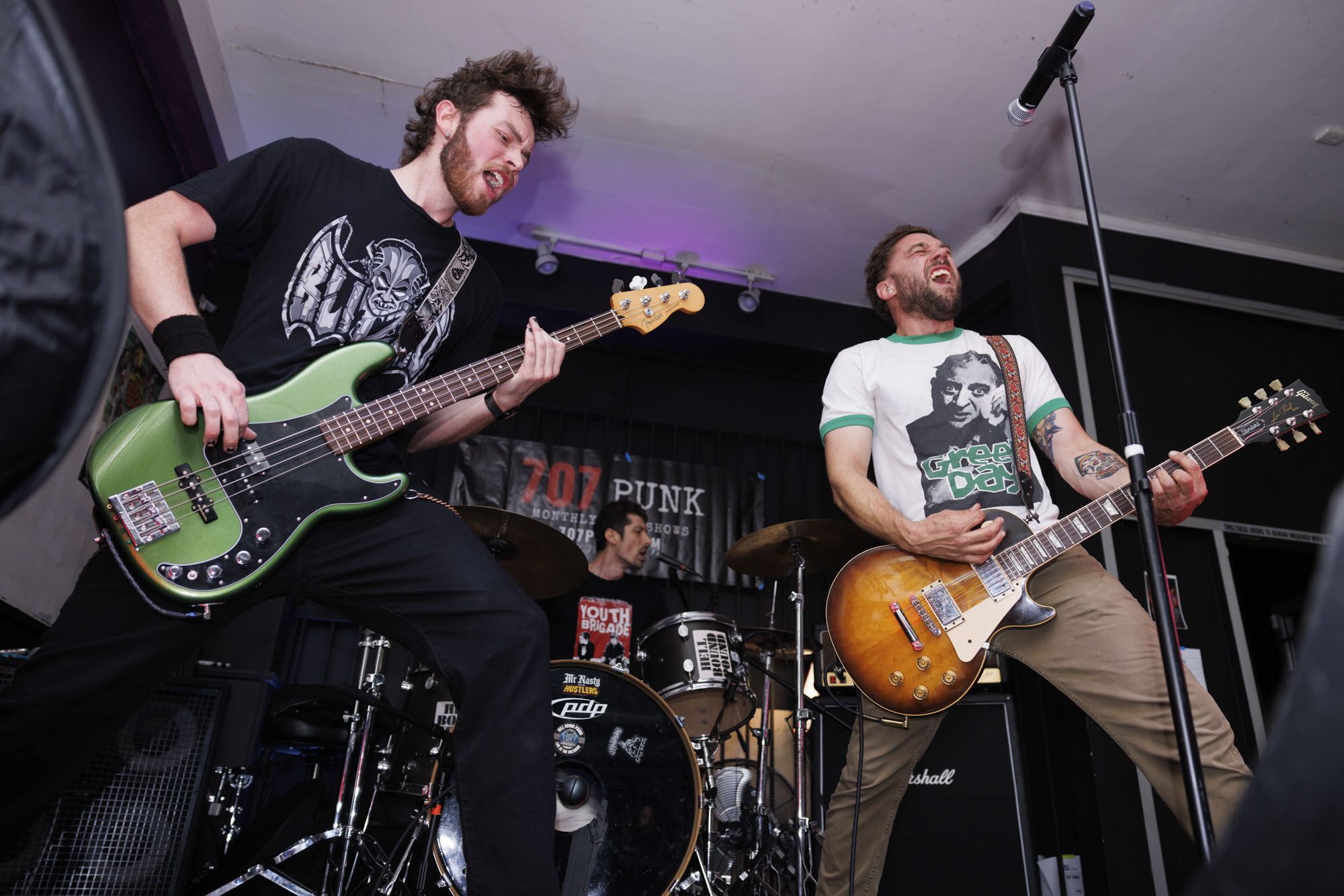
Standing outside the door before the show, Sam Houston admits he’s nervous.
“I just hope people show up,” he says.
It’s Friday night in Vallejo and Tennessee Street is buzzing. A late-model sedan blasting hip-hop pulls up to the ATM next door. Inside, San Francisco punk trio Pinfall tears through its soundcheck. Twenty minutes before show time, there’s only a handful of people inside Carnalitos Customs, a funky art shop and lowrider car club hangout that has become one of the liveliest music venues in town.
“Every show is different,” says Houston. An Ohio native who moved to Vallejo eight years ago, he kicked off his 707 Punk series back in June with local bands Angry Aztecs and Blood Compact. A few hours ago, he found out he has to shell out an extra $300 for sound tonight.
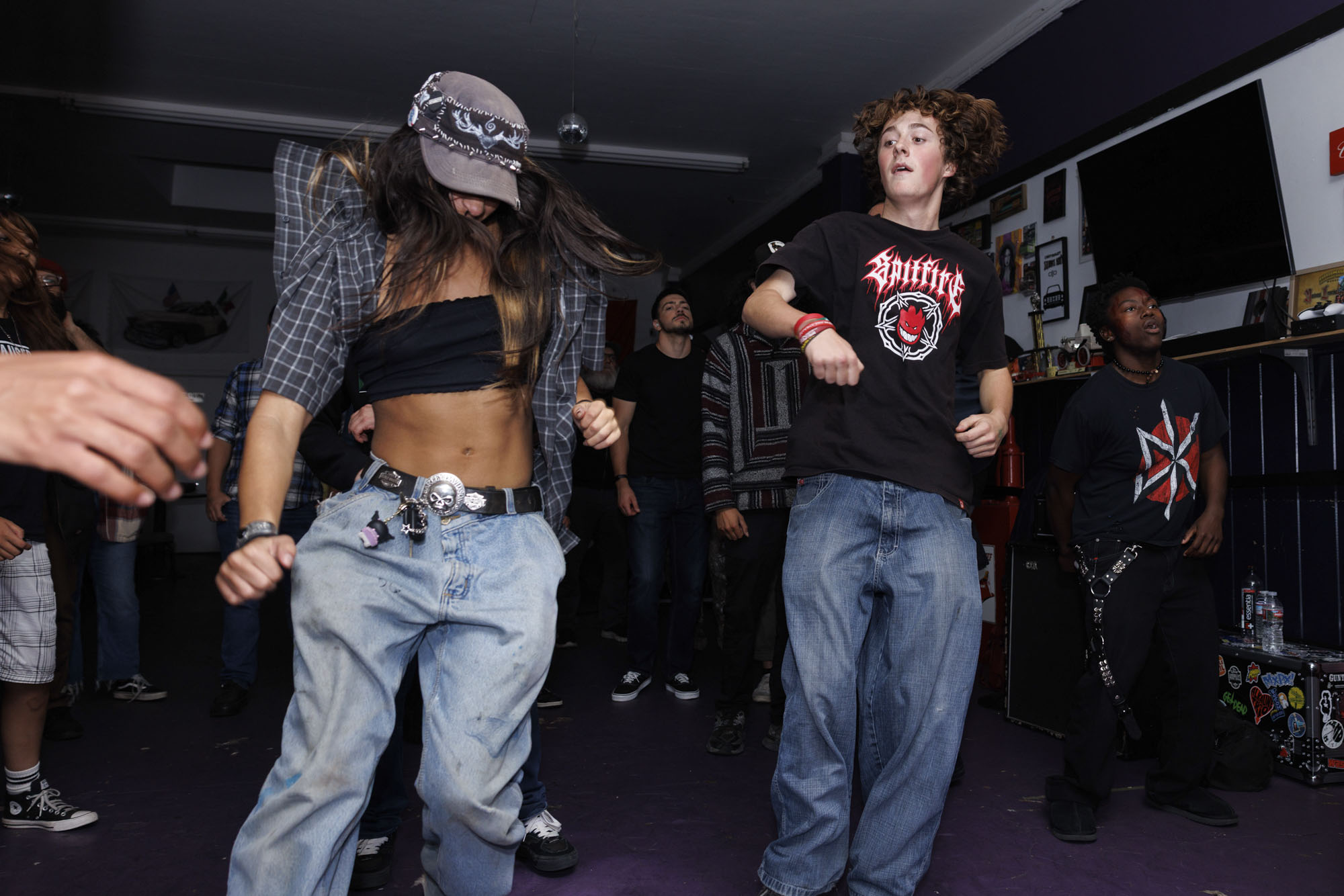
In this blue-collar port town known more for hip-hop (Mac Dre, E-40), funk (Sly & the Family Stone, Con Funk Shun) and R&B (H.E.R.), Houston is daring to kickstart a punk scene. It’s hard to imagine where the other bands on the bill – Hell Bound Pound, The Hellas and Something Wicked – would be playing tonight were it not for Houston’s efforts in this underdog town, perpetually trying to get its own scene off the ground.
Birthdays and butcher shops: 1980s punk in Vallejo
One of Houston’s mottos is staging “bridge-toll-free” all-ages shows, something that hardly ever happened during the first-wave ’80s punk scene in Vallejo. The bands Impatient Youth and Black Athletes rehearsed in town, and then fled the city limits, crossing the Carquinez Bridge to play at Mabuhay Gardens, On Broadway, Berkeley Square and Temple Beautiful.
Impatient Youth drummer Chris Fisher remembers rehearsing in a former butcher shop behind a music store in Vallejo, but never playing any shows in town. Black Athletes keyboardist Ken Sandoval recalls a random battle of the bands at the fairgrounds, and guitarist Rory Armijo has a vague recollection of a birthday party gig in a vacant downtown store. (The band’s EP Phantom Culture from Vallejo, recorded in 1982, is titled after the bygone, fleeting scene.)
In 1987, Sweet Children, an early incarnation of Green Day that included Billie Joe Armstrong and Mike Dirnt, paid the bridge toll to play their first-ever live show at Rod’s Hickory Pit, a Vallejo barbecue joint on Magazine Street where Armstrong’s mom worked as a waitress.
“It was crazy because it was just this little restaurant,” says John Santos, an early, short-lived member of East Bay punk band Blatz, who grew up in Rodeo and was a teenager in the small crowd at Rod’s that night.
Lowrider art meets hardcore chaos
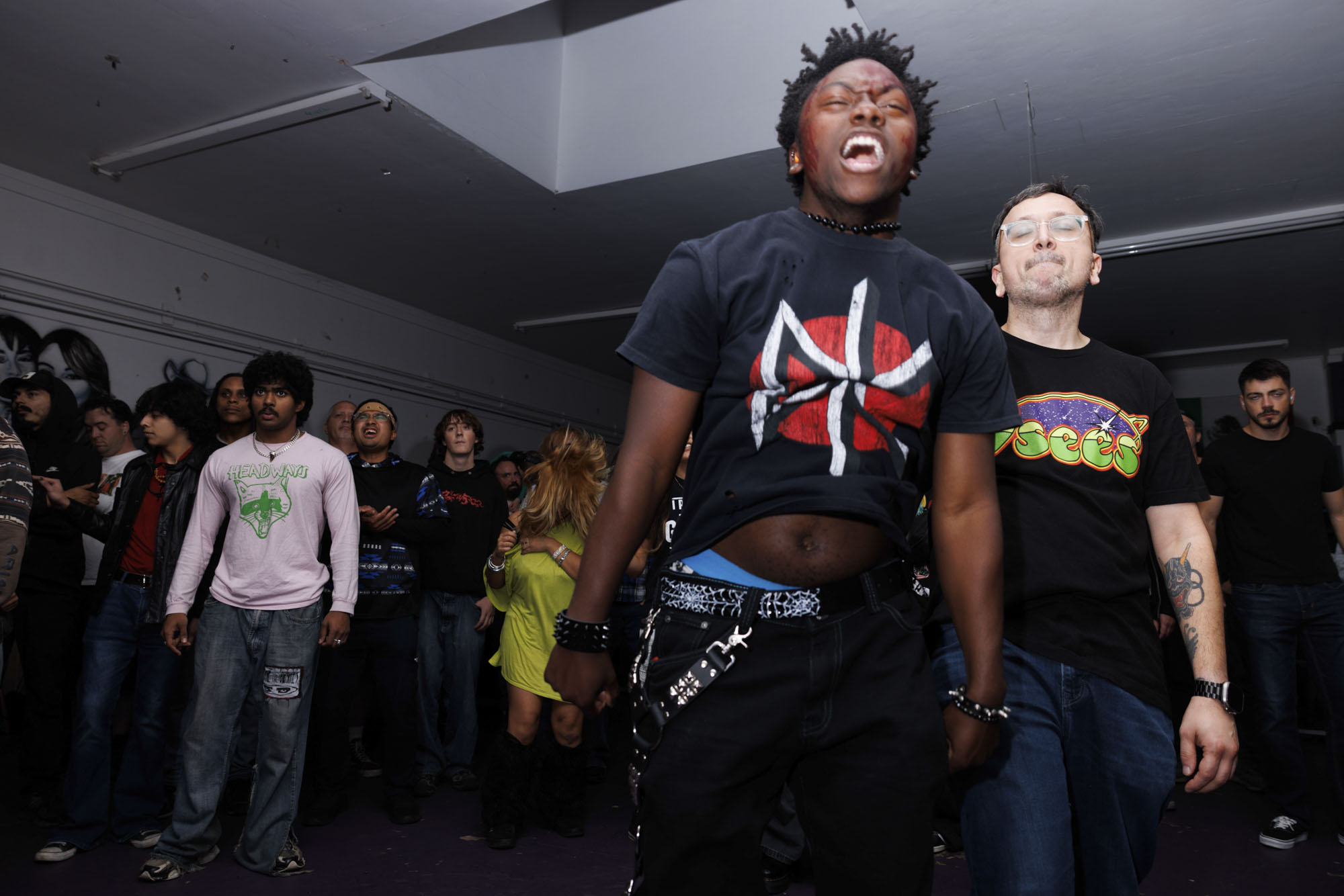
Tonight, Santos is filled with nostalgia watching hardcore, ska and skate punk bands at a lowrider shop. In October, around 80 people piled into Carnalitos, making it the most successful 707 Punk show to date. On this night, Pinfall kicks things off with a rowdy set, stirring up early arrivals as the guys in Hell Bound Pound help get the pit going.
“Last time around, I was pretty much naked by now,” says guitarist-lead singer Mike Johnston, back for more after playing the makeshift room in July.
The venue reminds him of DIY shows he went to while growing up in New Jersey. Except staring back at him now are charcoal portraits of Mac Dre and Tupac, drawn by owner Ozzy Garcia. Glowing from the walls, his massive black-and-white airbrush paintings of Mexican movie stars Cantinflas, El Chavo del Ocho and Cheech Marin, along with musicians Selena and Jenni Rivera, give the feeling of being surrounded by ghosts.
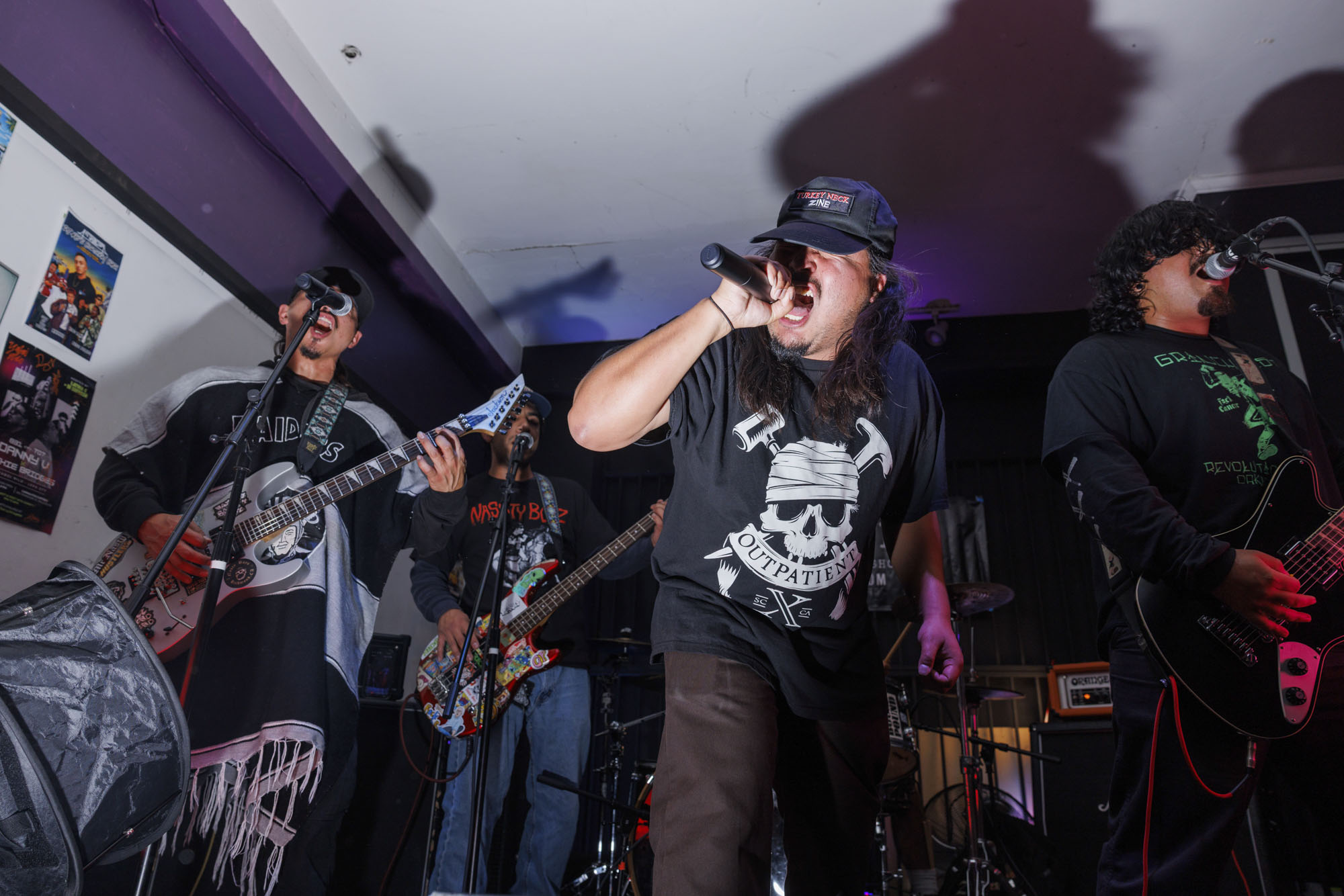
Garcia opened the shop four years ago, inspired by his artistic mother to sell custom crafts, screen-printed shirts, paintings, plaques and piñatas made from scratch. The youngest in his family, he was always the little brother, or “carnalito.” What started with open mics led to R&B and hip-hop, and eventually gave way to punk mayhem.
“I’d never been to a punk rock show, so I was kind of like, let me see what this is about,” Garcia says. “And then after the first one, I was like, anytime we can have one, let’s do it.”
Midway through the show, the punk-lowrider mashup reaches peak harmony as the bassist in punk-ska-reggae band The Hellas yells, “Cumbia!” and everything slows to a relaxed accordion rhythm, bringing smiles to Ozzy and his wife Ivone, who work the snack-bar counter.
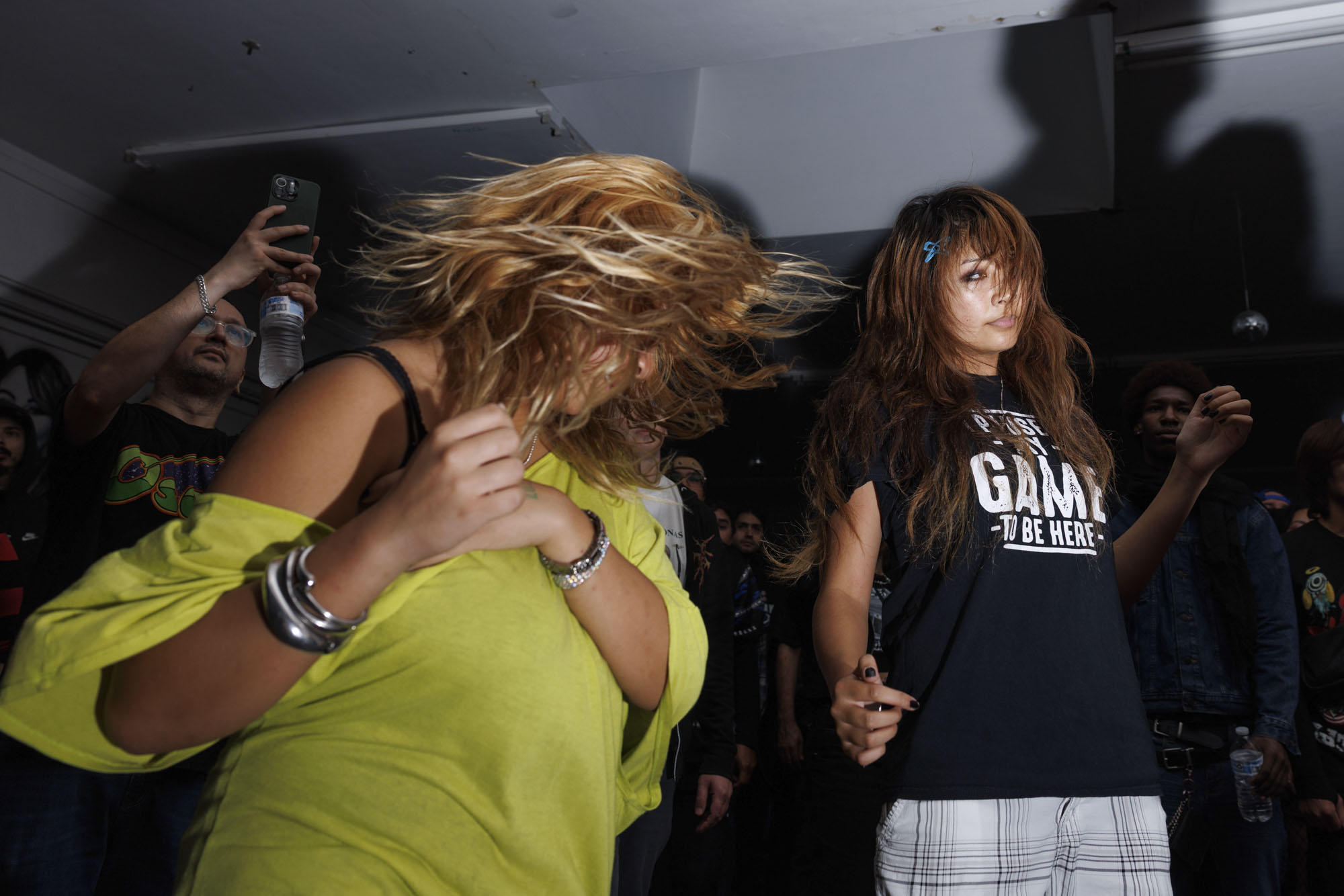
A steady crowd trickles in the front door, where Houston’s wife Devon LaBelle works the box office at a fold-out table with their 2-year-old son Jasper, wearing noise-cancelling headphones. A crew of Jesse Bethel High School students roll in and immediately jump in the pit. When one loses a shoe, nearly falling over, people help retrieve it. Later, a friend brings her an earring she lost in the pit.
“It feels like a community when everyone’s in the pit and you gotta catch someone if they fall,” says Alicia Luby. As punk fans, “we’re definitely in the minority at our school,” says Brody Robinson, whose long braids whip around the pit all night.
Invading the 100-year-old halls
A former appliance repair shop, Carnalitos isn’t the only unlikely venue taking a chance on live music in Vallejo.
Noble Cinemas Studios, a repurposed auto garage beside a used car lot on Solano Avenue, doubles as a video production space and concert venue, staging mostly hip-hop (Mistah F.A.B., Too $hort, Mac Mall, San Quinn), and the occasional 707 Punk show. Two weeks ago, it hosted an amateur boxing match.
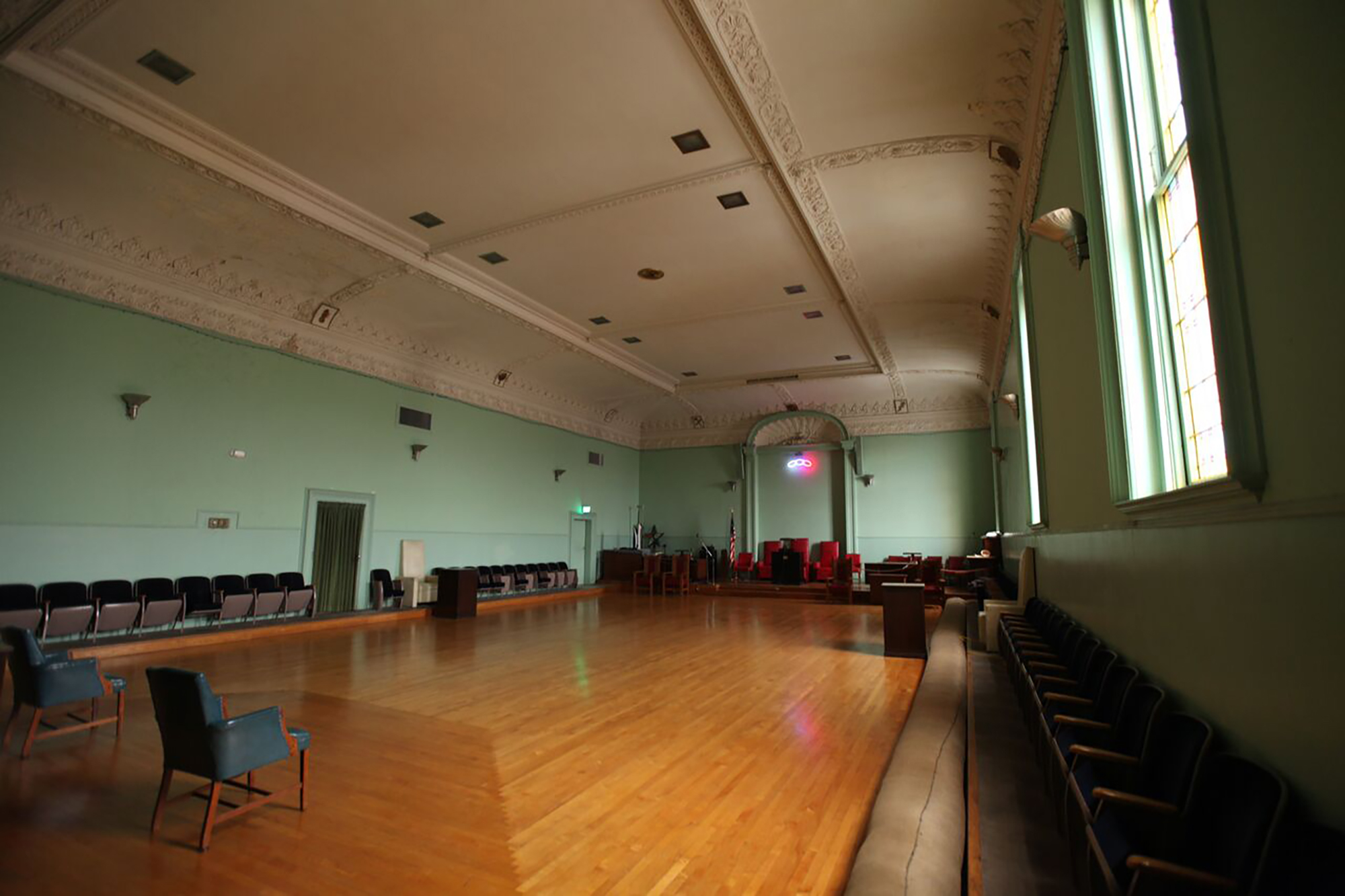
But the most offbeat live music venues in town are found up creaky flights of stairs, tucked away in another era: the Odd Fellows Hall, built in 1872, and the Red Men’s Hall, built in 1925. Towering over downtown, the obsolescent fraternal organizations thrived in the 1920s, 1930s and 1940s, when the Navy town was booming and sailors filled the bars along Georgia Street. (Legend has it Ella Fitzgerald, Louis Armstrong, Lionel Hampton and Erskine Hawkins all played Red Men’s Hall.)
But shipbuilding jobs dried up after World War II. Eventually, Mare Island Naval Base closed in 1996, and the City of Vallejo filed bankruptcy during the 2008 financial crisis. Now, the two groups are desperately trying to reinvent themselves and stay relevant.
“If there is no club scene here, and there basically isn’t, we’ve got to get creative,” says Tymn Urban, a non-member, who together with partner Devin Turner books the monthly Indie After Dark series in the 4th Corner Speakeasy on the top floor of the Red Men’s Hall.
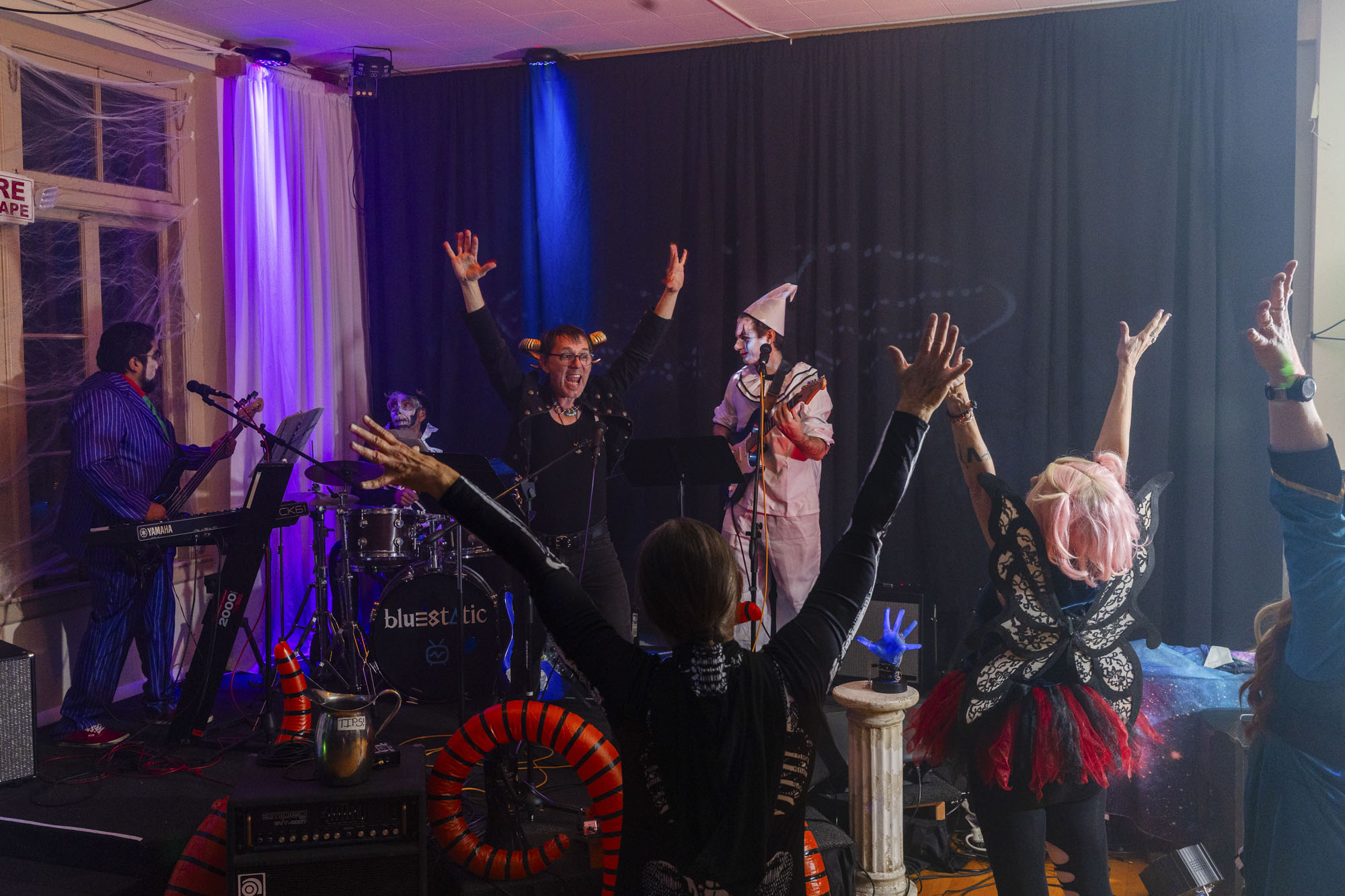
A fraternal organization claiming roots that go back to the Boston Tea Party, when white founders dressed like Native Americans to dump tea in the Boston Harbor, its members are more interested in bringing in bands and new fans than changing their name or renouncing their appropriation of native customs, says Mike Brigandi, the oldest living member of the local Red Men Samoset Tribe No. 22.
A block away at Odd Fellows Hall, promoter Hugh Kinniburgh has curated an eclectic slate of events over the past two years, including Club UFO’s “intergalactic dance party,” a Duke Ellington tribute, Cinema Club “with old 16mm projectors and weird music” and a punk festival.
“It’s very much like San Francisco and the Mission used to be in the ’90s,” says Kinniburgh, who once booked shows in the City. “So we’re trying to keep that going as long as possible before the adults show up.”
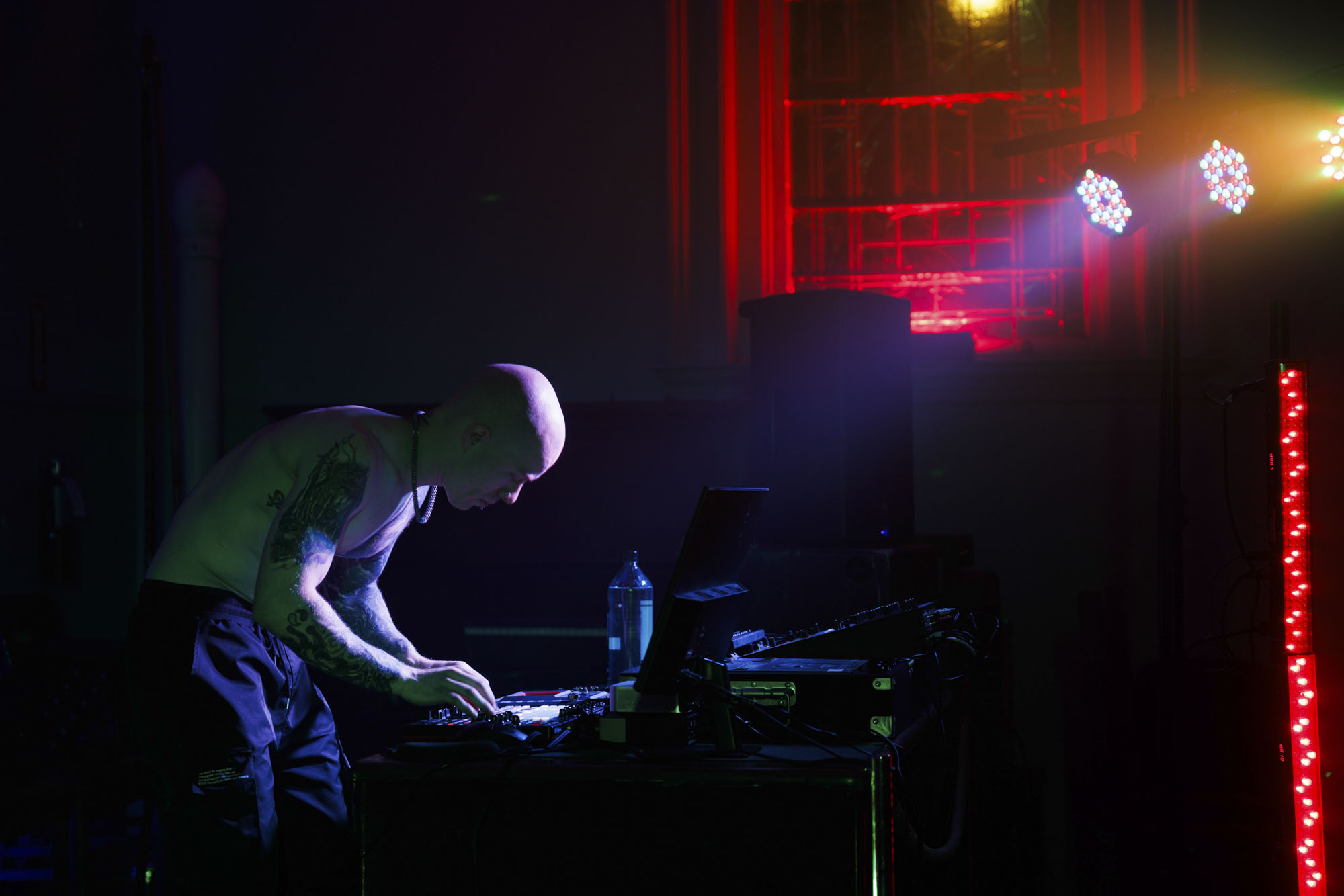
At a recent Goth Night at Odd Fellows Hall, DJ Ill Ruins is writhing shirtless with a shaved head, like a war boy in Mad Max: Fury Road, playing EDM for maybe 10 people dwarfed by the 20-foot ceiling in the grand ballroom. Onstage are blood-red, leather high-back chairs where the highest-ranking “Noble Grand” and other leaders still hold forth.
Immigrants and first-gen punks
The stately setting at the Odd Fellows Hall is reminiscent of the late ’80s scene, when promoter James Tracy staged punk shows at the neoclassical Masonic Lodge on Marin Street, bringing in bands like Green Day, Fifteen, Tragic Mulatto and Blatz.
At the time, “we thought that it was underground, but I think in a very ‘civics’ way we were contributing to the cultural life of our city and making it cooler,” says Tracy, an Oakland activist and author who first learned to fight racism when neo-Nazis attempted an “Aryan Woodstock” just outside Vallejo in 1989. “There was definitely kind of a dorky Boy Scouts energy about it.”
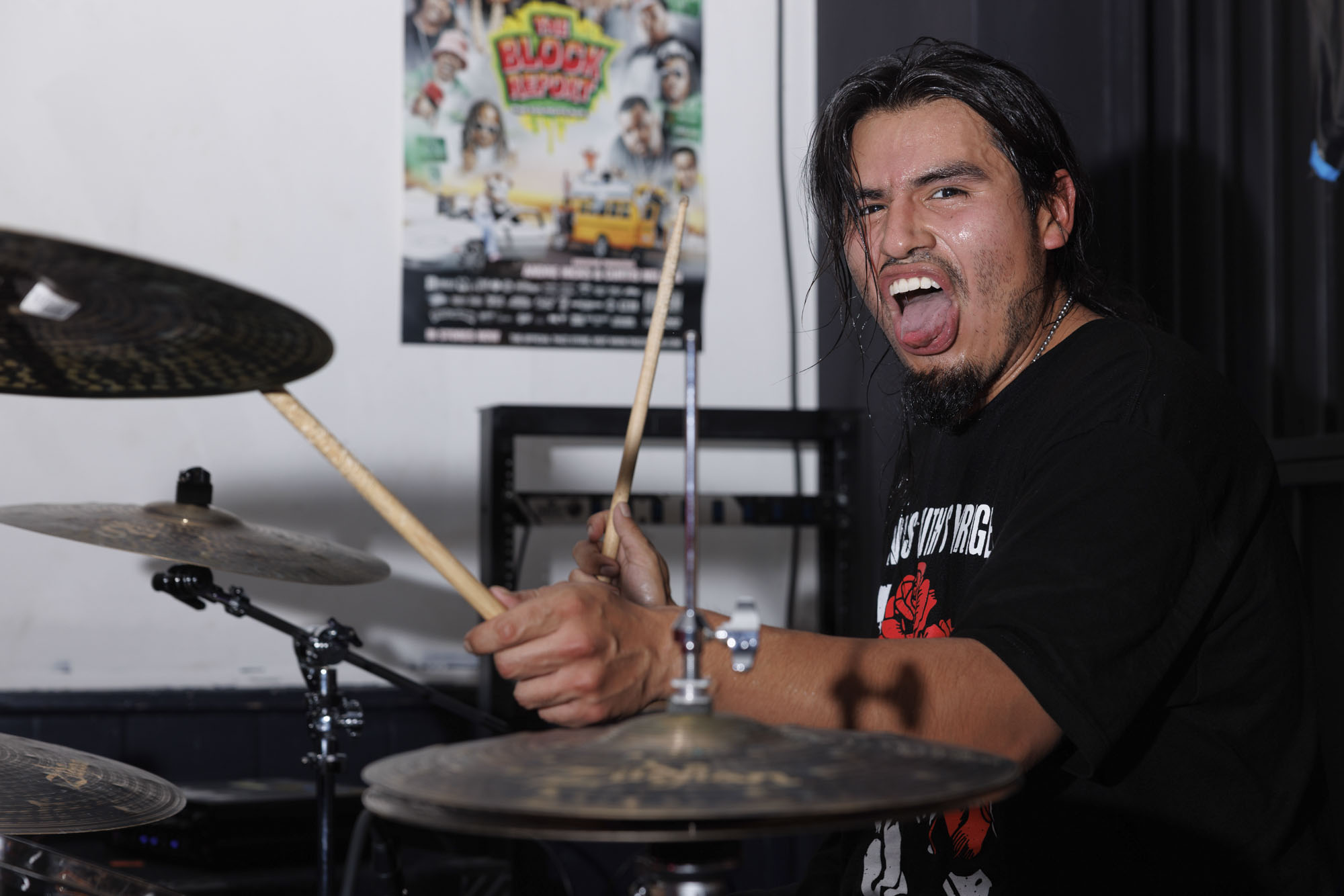
In the 1990s and 2000s, the scene diversified. Filipino immigrant Rupert Estanislao sang in Tagalog and English in the band Eskapo – a punk embodiment of a city once named the most racially diverse in the country in a 2012 Brown University study. Eskapo played wherever they could – Rafael’s Filipino bar, YAK House youth center, Fetterly Terrace Theater, Gentlemen Jim’s and underage gigs at Chris’ Club, where they had to wait in the parking lot until they took the stage.
Estanislao would have loved to play a venue like Carnalitos back in the ’90s, he says.
By the end of the night at the lowrider shop, after bands rail against Trump, ICE and AI, Something Wicked’s lead singer announces it’s storytime. Encouraging everyone to sit on the floor like a class of elementary school students, he tells a real-life cautionary tale about a gender reveal party where fireworks spark a massive forest fire. Then storytime devolves into a pit again and the night ends in a flurry just like it started.
Houston estimates maybe 50 people came out tonight. It’s a good thing he’s not trying to make a living doing this, he says. His day job, doing online marketing and social media for a cybersecurity company (and former roles as online community manager for Couchsurfing.com and Electronic Arts), help inform his work building a musical community.
For now, he’s already thinking about his first show at the Odd Fellows Hall, on Nov. 21. He loves the idea of luring punk fans up a flight of stairs in “a building well over 100 years old.” But after losing several hundred dollars on each of the last few shows, he doesn’t know how much longer he can sustain it.
In a plea on Instagram two days later, Houston explains how it costs at least $800–$900 upfront to rent venues and P.A. systems, and that doesn’t include paying the bands. If around 70 to 80 people can show up and pay $15 a ticket, then he can “walk away with maybe $100 at the end of the night” to use for future shows.
It’s a familiar dilemma. Smaller cities always talk about the importance of sustaining their own punk scene. How many actually find enough support to pull it off?
“I’m just trying to be honest,” he says. “We can’t keep doing 707 Punk if people don’t actually come to shows.”
The next 707 Punk show takes place Friday, Nov. 21, with the Living Daylights, Outpatient X and Necessary Noise, at the Odd Fellows Hall (342 Georgia St., Vallejo). See more upcoming shows in Vallejo at Carnalitos Customs, the 4th Street Speakeasy, Odd Fellows Hall and Noble Cinemas Studios at their respective links.