Meet the Designer Who Shaped San Francisco’s Eye-Popping History of Radical Theater
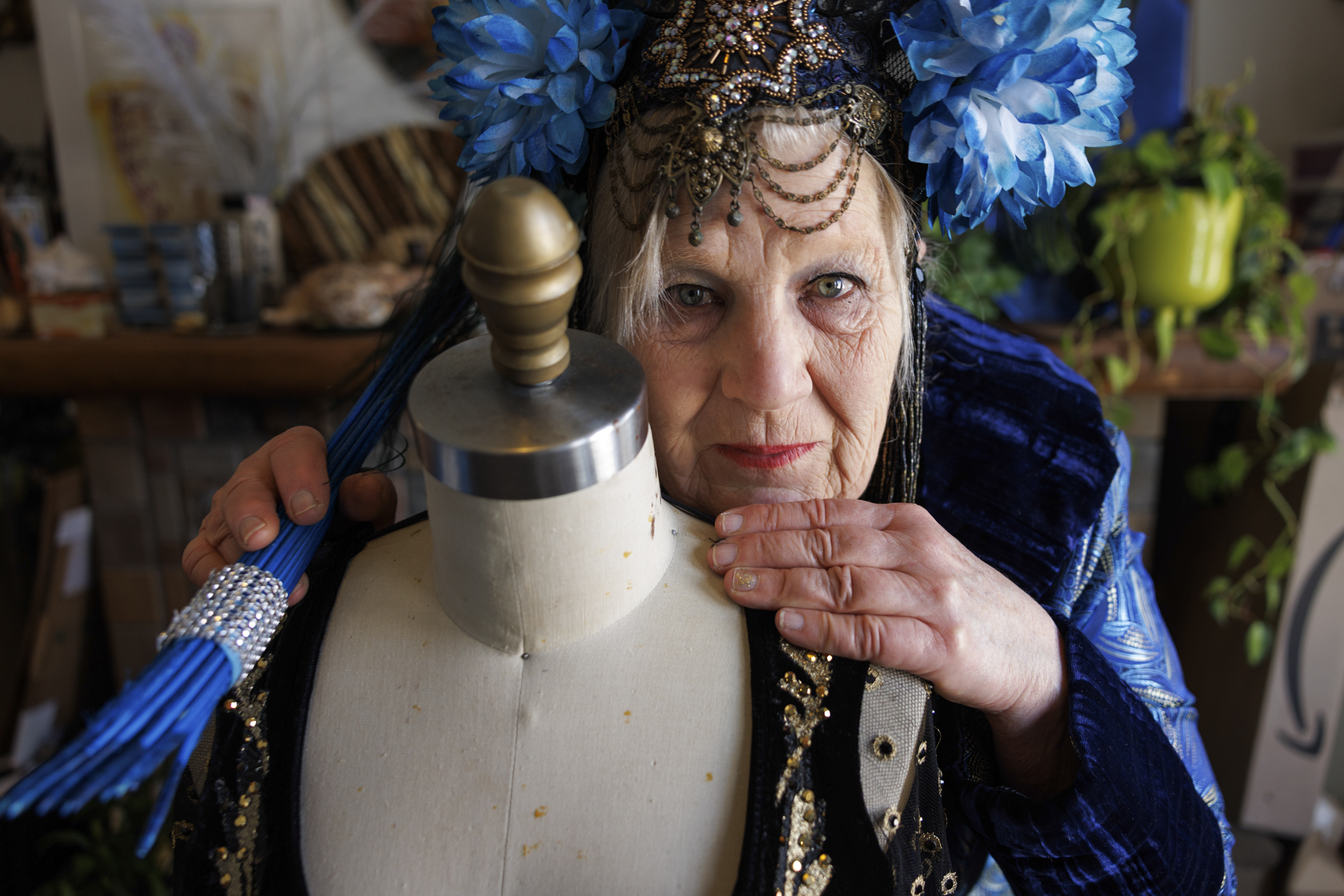
Debra “Beaver” Bauer had never really considered exhibiting her work as a costume designer.
“I’ve just always been so busy,” she says. “I just have always gone from one thing to the next, like we freelancers do.”
For Bauer, there was also the issue of humility, and a tendency to subsume her own ego into a collective craft, picked up from her time as a member of the Angels of Light. Bauer joined the radical theater troupe in San Francisco in 1970, and for the next 14 years put on gender-bending, spectacular productions in parks, community centers and the streets — anywhere the public could see them for free.
Those early years, full of resourceful costume-making and intense collaboration, prepared Bauer for a long and fruitful career backstage with Bay Area theater companies. In the decades since, she’s worked with A.C.T., San José’s American Musical Theater, Teatro ZinZanni and ice skater Brian Boitano, among many others.
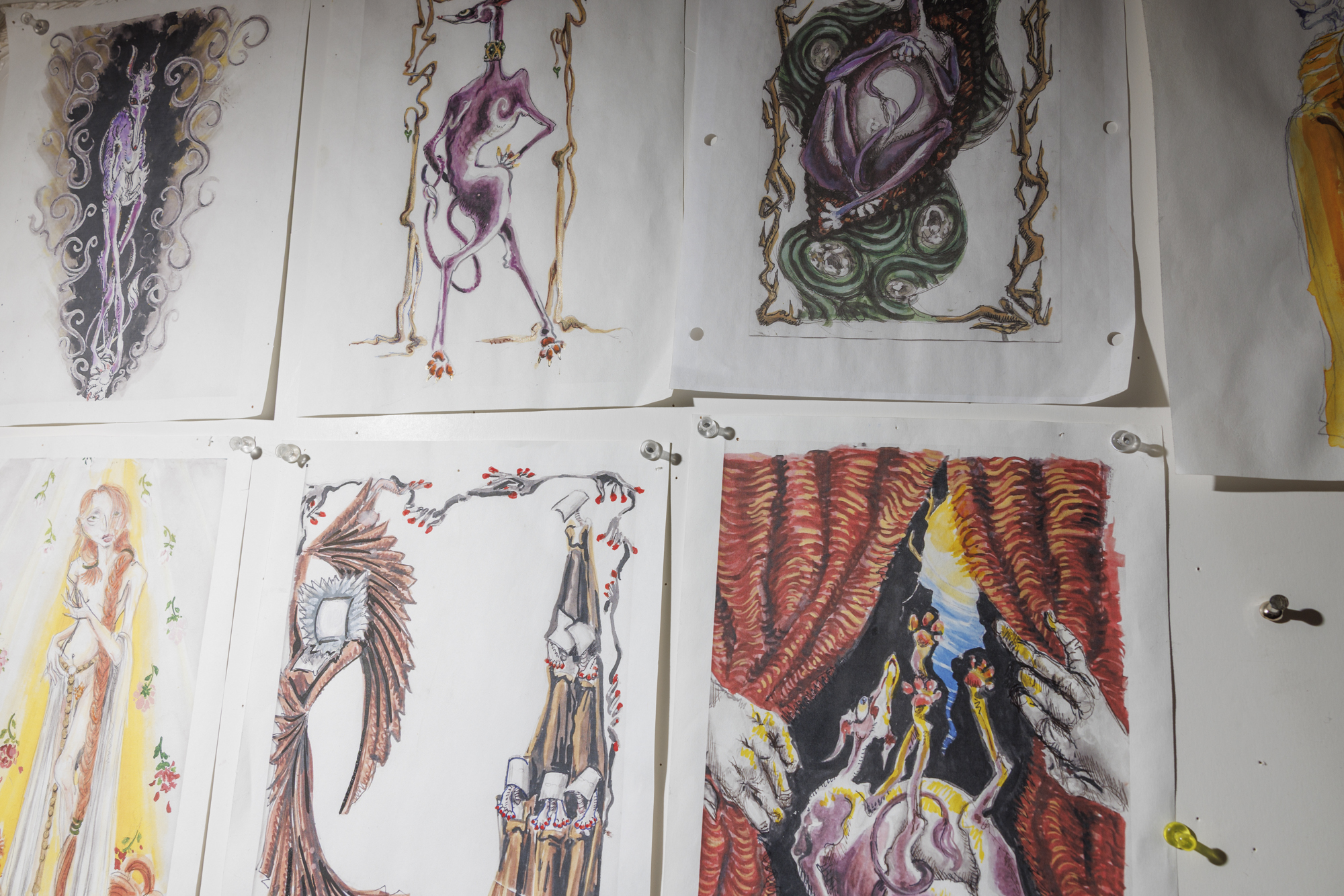
“I’m better at fantasy than I am at reality, but I’ve done every kind of show,” Bauer, now 76, says. “I’ve done Sam Shepard, I’ve done a lot of Shakespeare, but I try to bring a little ‘Angel’ into all of it.”
Evidence of all this creative work will soon be on display in From Street to Stage, a retrospective exhibition opening Nov. 5 in the San Francisco Public Library’s Jewett Gallery. Co-curated by Mark Johnson, Trisha Lagaso Goldberg and Theo B. Lau, the show includes full costumes, elaborate headdresses, Bauer’s design sketches, and photos and videos from various productions.
The exhibition is also one of the first to open as part of the Further Triennial, a slate of over 100 exhibitions and events that tell a broader, deeper story of Northern California’s artistic past and present. The triennial officially launches in March 2027.
For fans of Bauer’s work, and for Johnson as a curator, it’s important to see the craft of costume design honored as an art form — specifically a regional one. “This is a tribute to this experimental theater that crosses the line between visual art and classical theater,” Johnson says. “It’s one of the great legacies of San Francisco’s cultural heritage.”
Most crucial to Bauer is that the exhibition is free to visit. She wants anyone who wanders in to know they too can dress up, just as she did as a young person in 1970s San Francisco.
“When you put something on that maybe you usually wouldn’t wear,” she says, “chances are you might discover or free something in yourself that you didn’t know was hiding in there.”
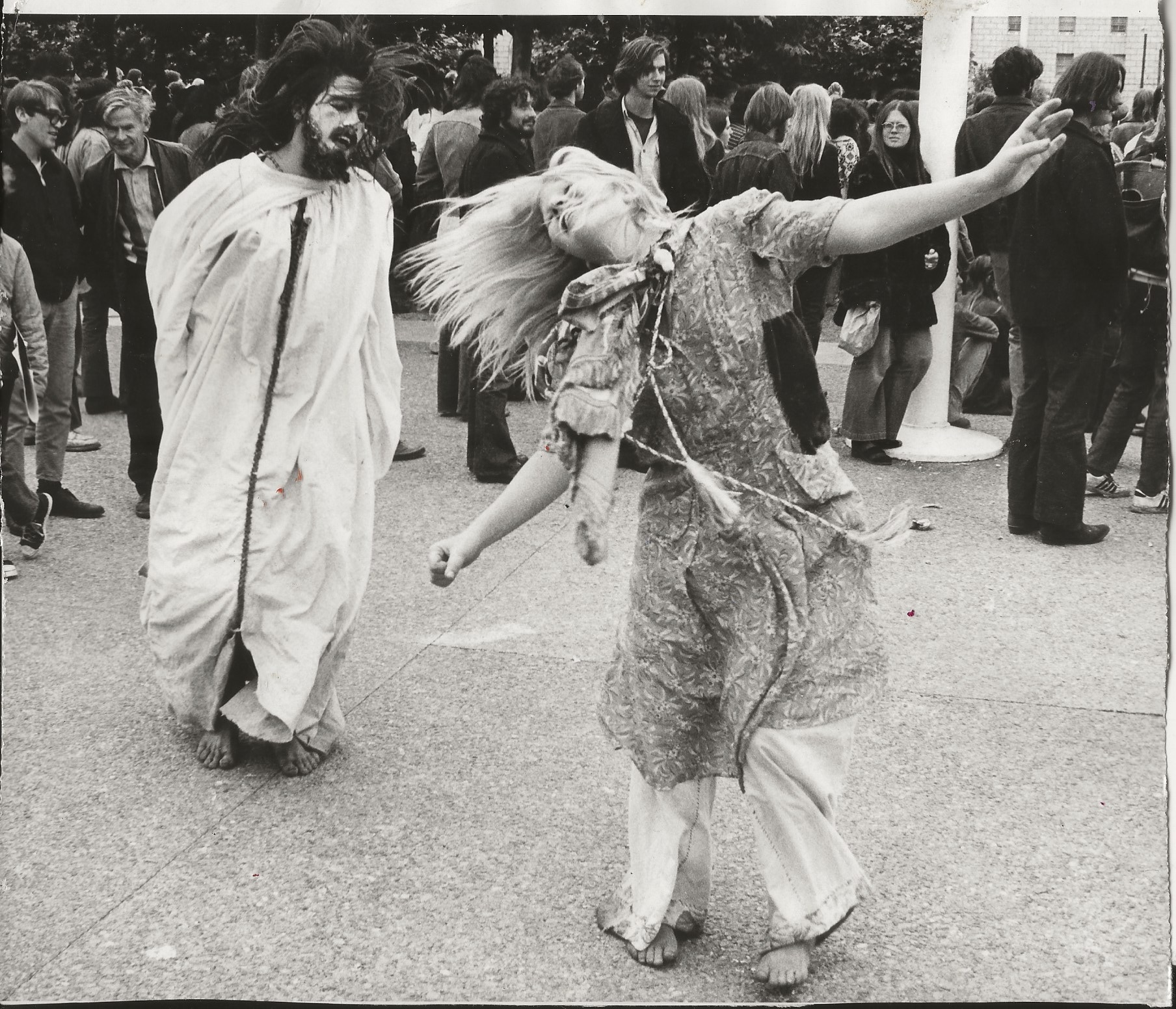
Living outside ‘the money system’
Born in Ohio, Bauer felt herself pulled west from an early age. When she met Rodney Price, another future Angel, at Woodstock (“God, it’s such a movie script sometimes,” she says), the two decided to head to San Francisco. Price took a plane; Bauer rode a hippie school bus and hitchhiked her way across the country.
Once in the city, she encountered Hibiscus, founder of the Cockettes and its offshoot, the Angels of Light, in all his bearded, be-robed glory.
“He was like a sun,” Bauer says, “like, in terms of people he could pull into his orbit, because he was just so amazing looking.”
Bauer describes spending hours getting ready to go to the thrift store, or simply to walk down the street. “Anywhere we could get people to look at us was satisfying to us,” she says. “It was like trying on personalities for a day.”
The Angels lived together in San Francisco as part of the Free Food Family — a network of communal houses that pooled resources to offer up food, newsletters, medical care and adamantly free theater. “We believed in this principle of trying to avoid as much as possible the money system of the United States of America,” Bauer says.
The group performed together until 1984. “We lost like 75% of the men during AIDS,” Bauer says. Hibiscus died in 1982 at the age of 32; Rodney Price died in 1988.
Just outside the Jewett Gallery, Bauer has designed a wall to memorialize the late members of the Angels of Light, their photographs framed by lockets hanging from a drawing of a willow tree. Bauer identifies with the willow’s flexibility.
“We are resilient people after making it through the AIDS crisis, making it through all we have, my friends and I, through our lives,” she says. “We have been able to live on next to nothing.”
Invention and imagination
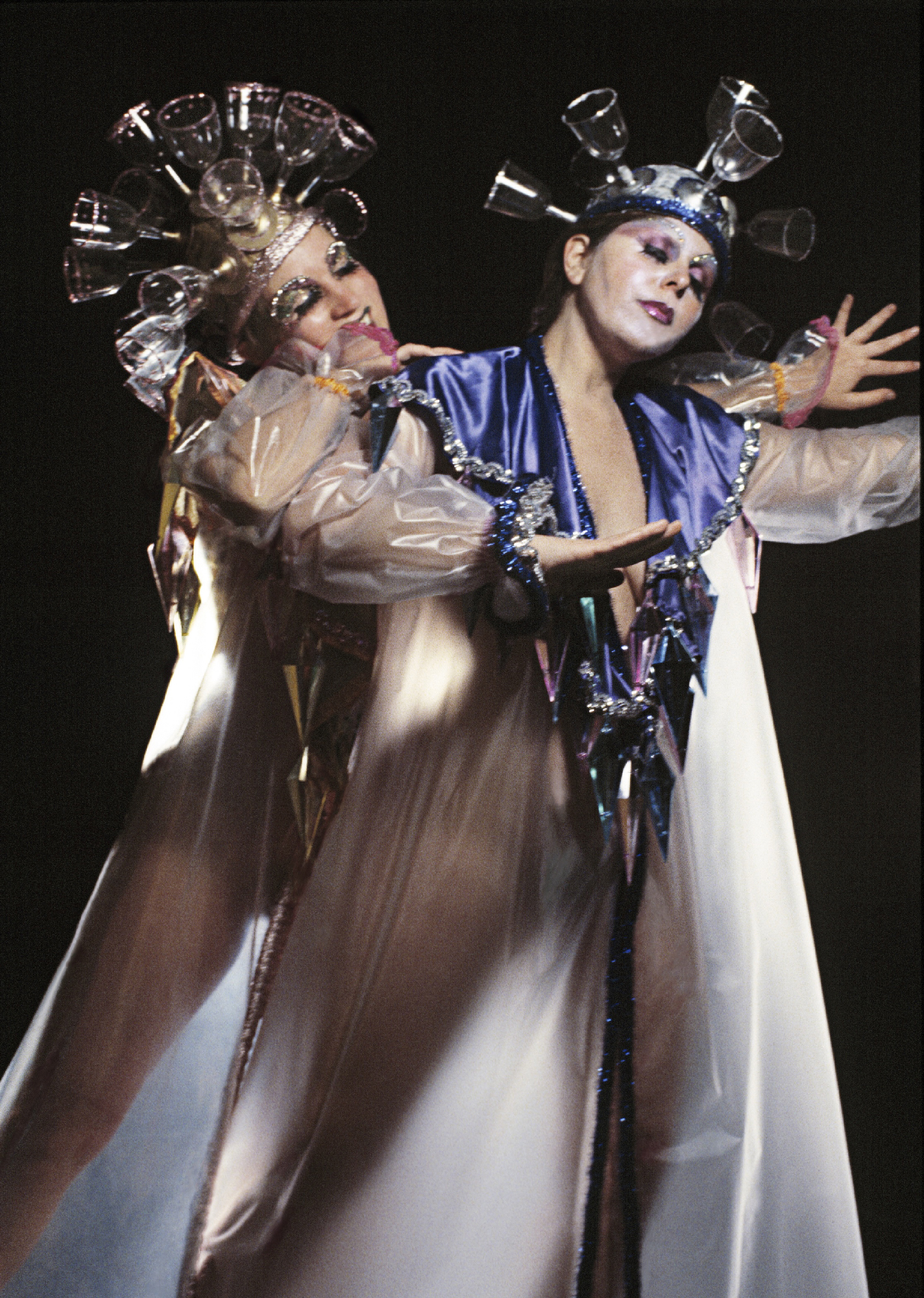
Making something out of nothing is a trademark of Bauer’s work. In an image from the 1978 Angels of Light production Sci-Clones, Bauer and Jessica Copen wear diaphanous garments made of shower curtains, their sparkly headpieces covered in glitter-encrusted stemware.
A 1985 San Francisco Chronicle profile called Bauer “the hottest costume designer in the Bay Area,” reveling in the paradox of how someone so good at reflecting and parodying high-end fashion could be living on such a meager budget.
Johnson says the countercultural roots of Bauer’s work are never far away, even in her designs for more mainstream productions. “She has brought that same kind of extravagant generosity to her work for all these other companies,” he says. Part of that generosity is her time, and her ability to truly see the person in front of her and make a costume that works for them.
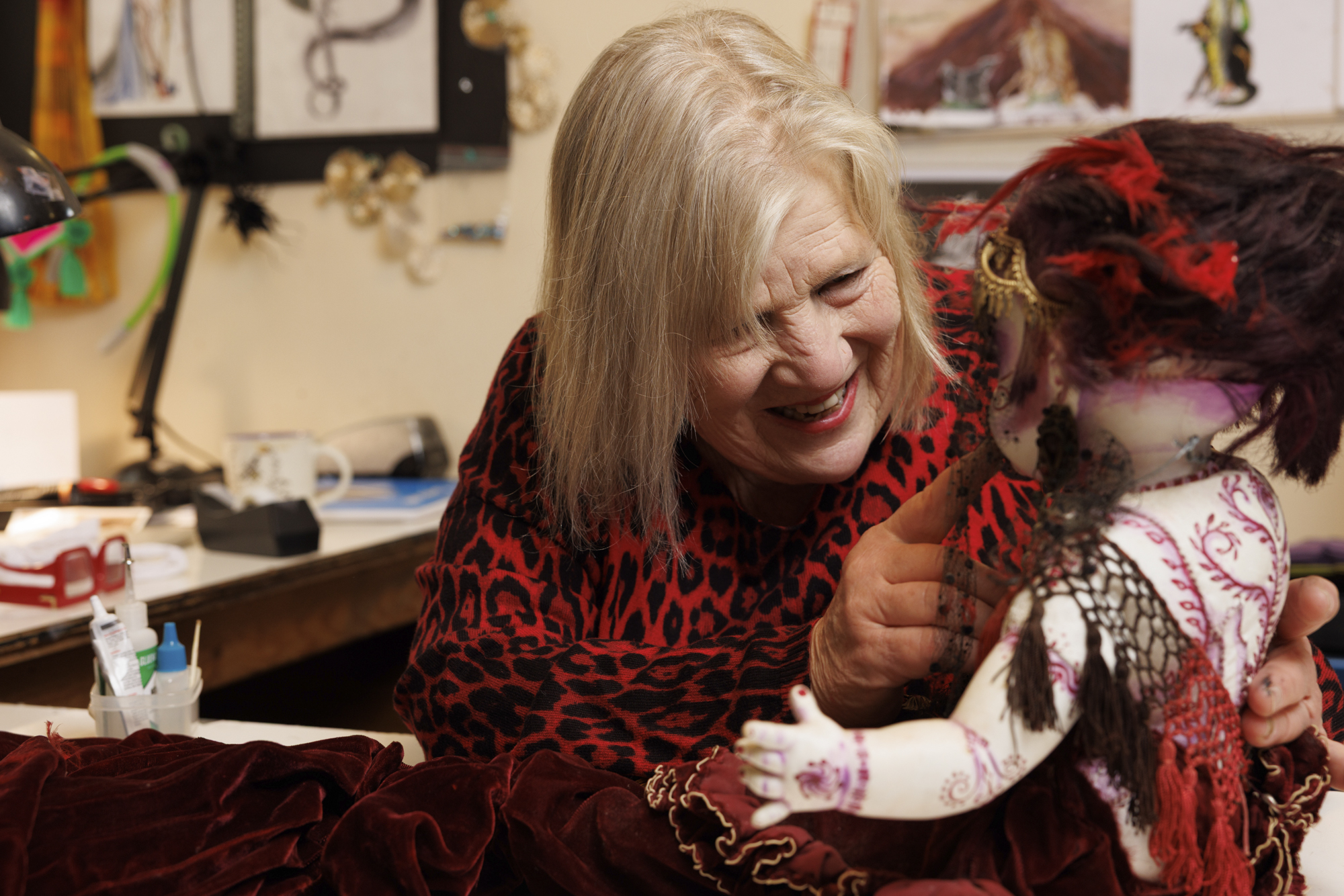
Costume-fitting is one of Bauer’s favorite parts of the process. She loves watching an actor transform into their character. “You have this time with this person where you can kind of sink into their head a little bit,” she says of the fitting room. “Can we take this to the level that will be perfect for this particular person, like their Masha in Three Sisters and not somebody else’s? And that relationship has always been a particular delight to me.”
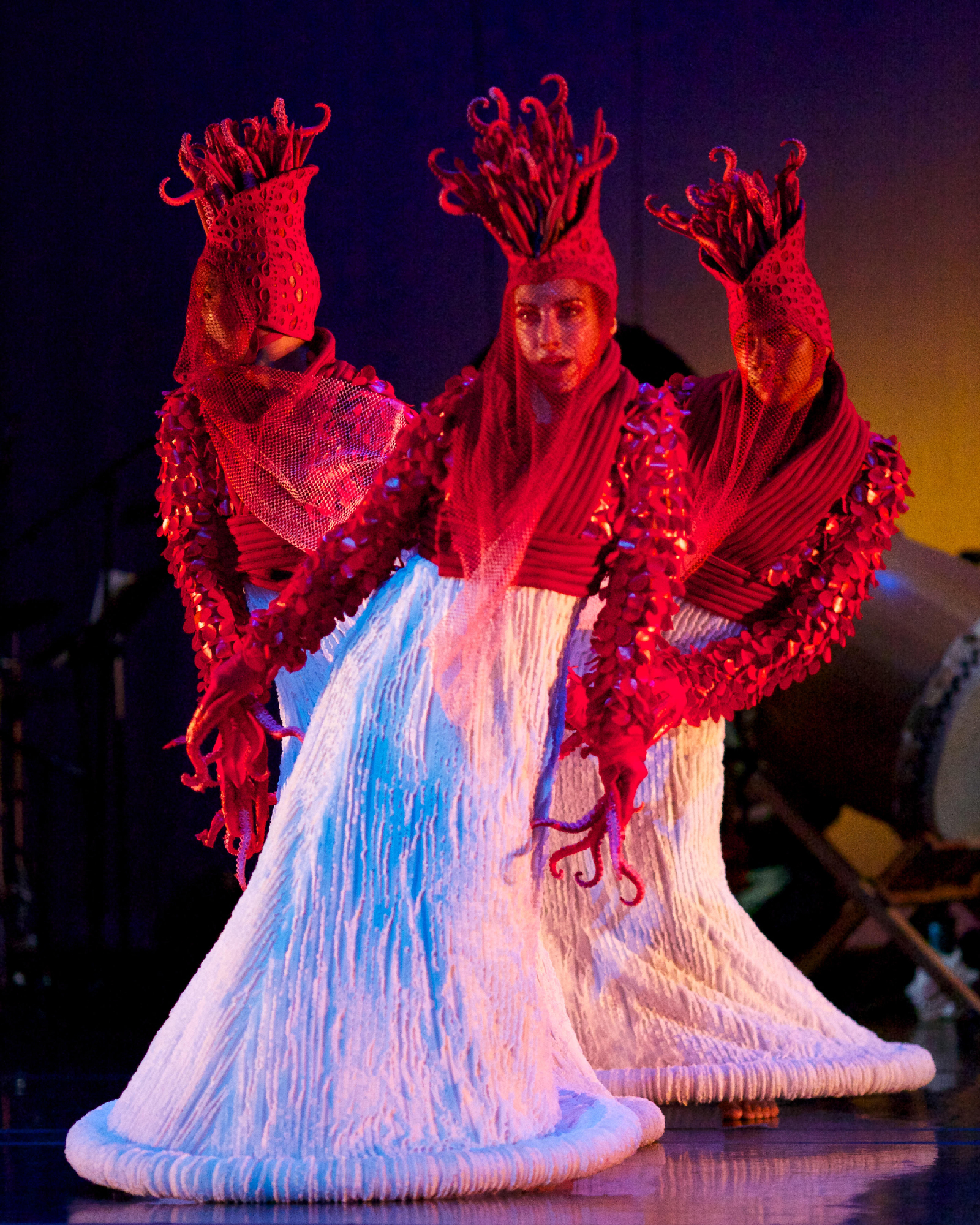
Most of Bauer’s costumes are witty, maximalist concoctions. Several process boards in the exhibition demonstrate how she pulls from vastly disparate inspirations to create a single costume. For an iconic look from Brenda Wong Aoki and Mark Izu’s MU, for example, Bauer cited red-tipped sea worms, Motown group the Supremes and wedding kimonos. Always materially inventive, Bauer made a seahorse costume in that same production with the help of red boba straws.
It’s difficult, Johnson and Bauer both admit, to present the physicality of theater in a static exhibition. But Bauer has encouraged her friends to come to the Nov. 5 opening dressed in their finest. “I deeply, deeply desire to have something kinetic,” she says. (To that end, a parade will mark the exhibition’s closing in April 2027.)
“My hope with this show is to stimulate people’s imagination, to reinvest people in theater,” Bauer says, calling the trend of local theater closures “alarming.”
“But what’s better than seeing somebody up there moving?” she adds. “I just want to say ‘Hey, everybody, look at this valuable art form. And let’s go see a show.’”
‘Beaver Bauer: From Street to Stage’ is on view at the Jewett Gallery in the San Francisco Public Library (100 Larkin St.) from Nov. 5, 2026–April 11, 2027.