In ‘Live From the Hole,’ Kehlani Visits the Prison Where Her Mom Was Once Incarcerated
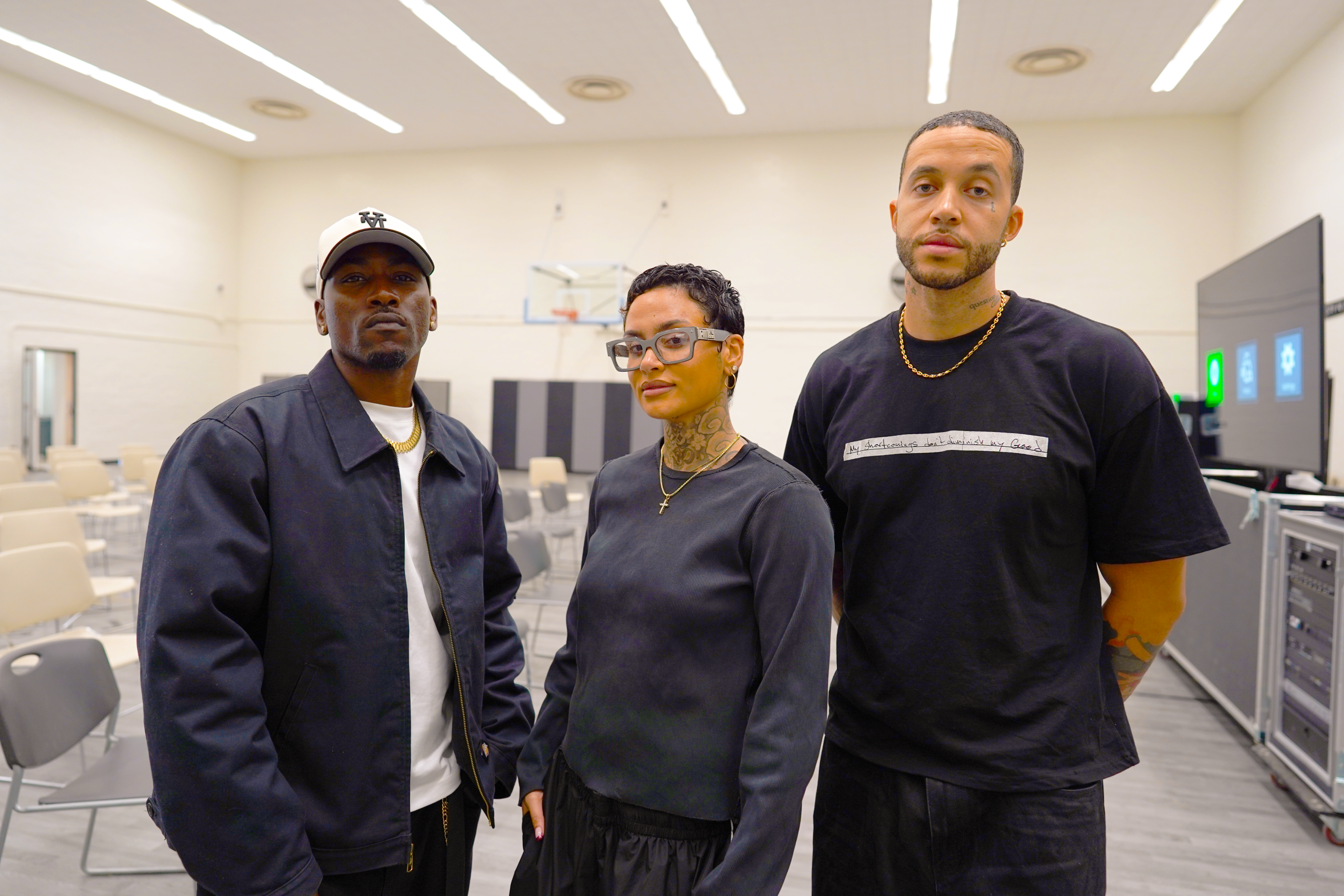
When richie reseda and JJ’88 invited Kehlani to do a healing circle inside of a women’s prison, she responded in all caps: “HELL YES.” What they didn’t realize was just how vulnerable and meaningful the visit would be.
JJ’88 and reseda’s new YouTube series, Live From the Hole, premiered last week. In the debut episode, Kehlani sits among a circle of incarcerated women contending with childhood trauma, sexual abuse and the circumstances that led to their imprisonment. The Oakland-raised R&B star reveals that her mother was once one of these women, held within the same walls at the California Institute for Women in Chino.
In the episode, Kehlani shares some painful memories from her childhood. Her mom had been in and out of prison since Kehlani was born; while incarcerated, she gave birth to Kehlani’s little brother in shackles. The baby died five days later, and the grief sent her mom into a spiral of addiction that frayed their relationship. Kehlani also opens up about losing her father. After he got out of prison, when Kehlani was a little girl, he died at the hands of a gang he joined behind bars.
“Yesterday made me realize how prison shaped my entire world,” Kehlani says after the healing circle. The camera cuts to her taking a moment to herself, rubbing her temples as if processing her pain in real time. “Like, if my dad never goes to prison, he never joins the gang. He never dies. If my mother never goes to prison, she has my brother. I won’t say everything will be perfect, but who knows how different life will be.”
In each new episode of Live From the Hole, JJ’88 and reseda will visit a different prison with an artist whose life has been impacted by incarceration or violence. Together, with people serving sentences on the inside, they’ll have conversations about what healing and forgiveness can look like. The project is an extension of the Emmy-winning 2024 film the two created with director Contessa Gayles, Songs from the Hole.
Songs From the Hole is a documentary about JJ’88’s life before, during and after prison, interstiched with his music videos. He wrote and recorded the songs in the film while incarcerated, and sent Gayles handwritten treatments for the music videos by snail mail. The movie takes a hard look at cycles of violence and offers bold ideas for how to break them.
Raised in a Long Beach neighborhood where gun violence was common, JJ’88 took another young man’s life when he was only 15 years old. Three days later, his brother was murdered in a similar senseless shooting. The documentary tells the story of how, through music and the love of those around him, he changed his life, forgave his brother’s killer and devoted himself to helping shift the conditions that breed violence in the first place.
JJ’88 and reseda, who produced Songs From the Hole, met while incarcerated. reseda was also the subject of a documentary Gayles directed in 2018, The Feminist on Cellblock Y, about a self-help group he started at Soledad State Prison. The men read feminist literature and worked together to unlearn patriarchal beliefs about violence as a source of strength.
In addition to hosting Live From the Hole with JJ’88, reseda takes the director’s chair along with Antwan “Banks” Williams. The new series captures some of the 30-plus healing circles he and JJ’88 have held in prisons, using the film as a learning tool.
“We can choose healing over existing in trauma, and shoving the worst parts of our lives down, and trying to just get over it and not think about it,” JJ’88 tells KQED in a phone call. “We can process it. We can do it in a creative way. We can do it in a loving and joyous way, and we can do in circles.”
At the center of that practice is a healing plan he and reseda teach in their workshops, based on restorative justice principles. It calls people to make commitments to their physical, mental and spiritual health, their relationships and their communities.
“Throughout my incarceration, the more I declared the positive parts of myself and tried to live into them, my community held me accountable to that,” JJ’88 says. “And that ultimately led to my freedom — and not just my physical freedom, but my spiritual freedom, my mental freedom to understand like, I have autonomy and power in my life to direct it. I’m capable of being who I wanna be, and I get to choose who that is.”
JJ’88 and reseda both practice the healing plan in their own lives. With their work in music, fashion and film through their creative agency, Question Culture, they hope to inspire people to also adopt it.
“You make those commitments and then you ask your closest people to hold you accountable to that,” reseda says. “And you continue to do that forever, as a lifestyle. And it changes accountability from something that happens after something went wrong to something that happens on the front end.”
In their view, the healing plan is part of moving away from a domination-based society that relies on prisons to a more care-based way of life where harm is addressed before it happens. They’ve used it during trainings with community groups, including Bay Area organizations such as CURYJ, and worked with municipalities, including the Oakland Department of Violence Prevention.
With Songs from the Hole streaming on Netflix, and the awards and fanfare for that project now over, Live from the Hole is a way to continue the conversation around restorative justice; new episodes will be arriving in the coming months. Kehlani and her longtime manager, David Ali, have come on as executive producers for the entire series, with more special guests to come.
“Luckily, the people we brought in who have big audiences, they’re really about this work,” reseda says. “And those are the people who we’re looking for, people who are directly impacted by state and community violence, and who are willing to do the vulnerable work of transformation and accountability and integrity.”