As Other Minds Festival Turns 30, an Experimental Music Giant Takes a Bow
What’s the state of experimental music today?
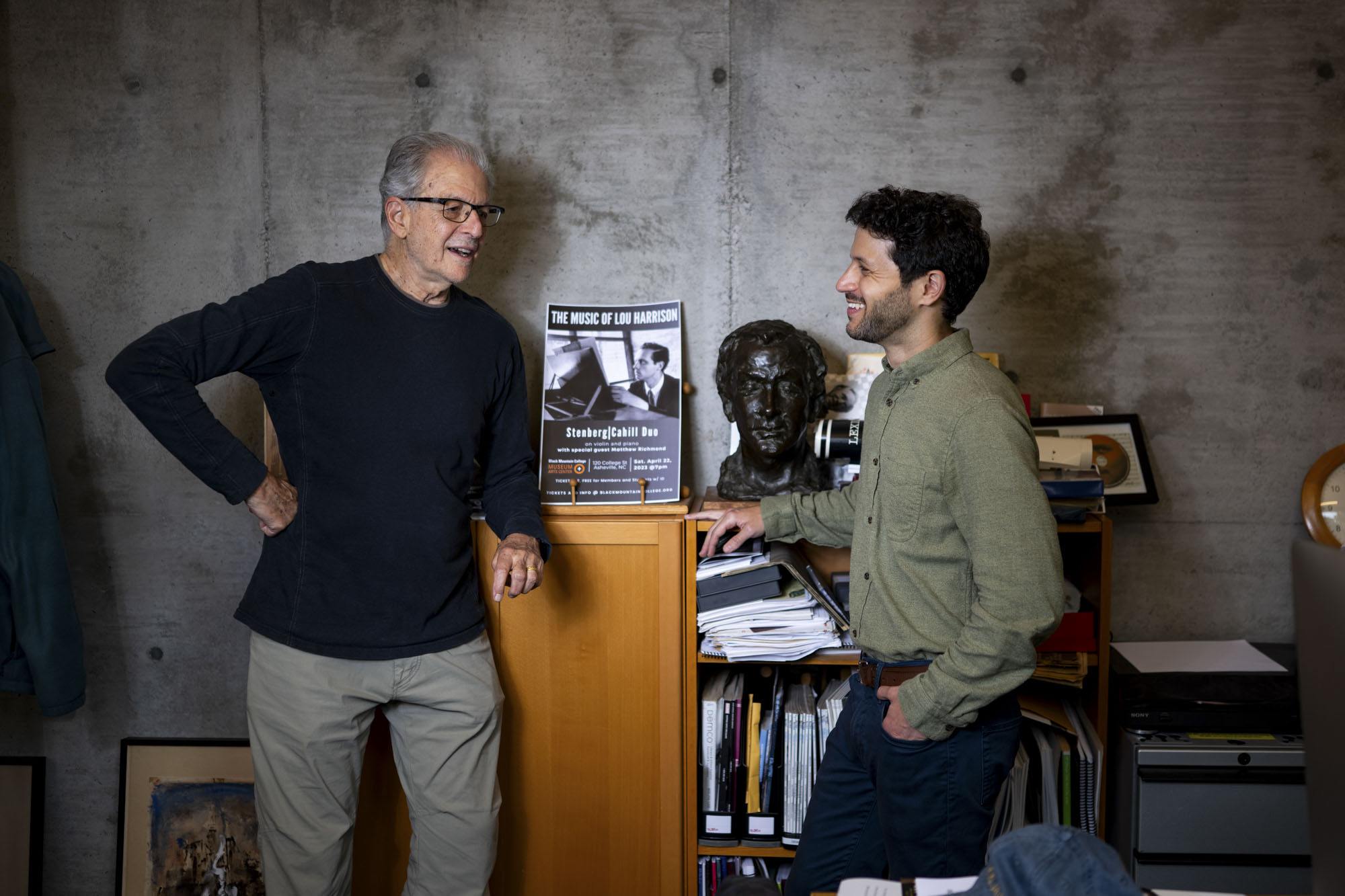
“California,” composer Charles Amirkhanian says, laughing. “It’s happening here. Occasionally we’ll let in someone from New York — or Norway. But we don’t have any problems finding material.”
Amirkhanian has long mastered the art of creating a home for the avant-garde.
As the co-founder of Other Minds, a leading nonprofit and record label dedicated to noncommercial music, and as the former music director of KPFA, he’s spent decades championing composers who push beyond conventional boundaries. He also has cultivated an audience willing to follow them there through Other Minds’ annual festival, which brings freewheeling musicians and sound poets from around the world to San Francisco.
On Oct. 8–11 at the Brava Theater in the Mission District, the festival will celebrate its 30th anniversary. It’s also the 81-year-old Amirkhanian’s last year as executive and artistic director before he retires in January.
Musician and fellow composer Joseph Bohigian, currently Other Minds’ associate director, will take over as artistic director next year. A separate search for the organization’s next executive director is underway.
Bohigian says he’ll strive to lead the organization into a new chapter while continuing his predecessor’s ambitions. Much like his mentor, the young composer draws from a wellspring of ancient Armenian culture and the contemporary American experimental music to express something new. He’s also made it his mission to support other artists on their voyages, as Amirkhanian has done for decades.
“We’re trying to make sure that there’s a home for out-there music, the stuff that’s not commercially viable, but is exciting and experimental and pushes things forward,” Bohigian says. “We want to serve that small but dedicated audience.”
“And the composers who make the music,” Amirkhanian adds.
Two kindred spirits, born half a century apart
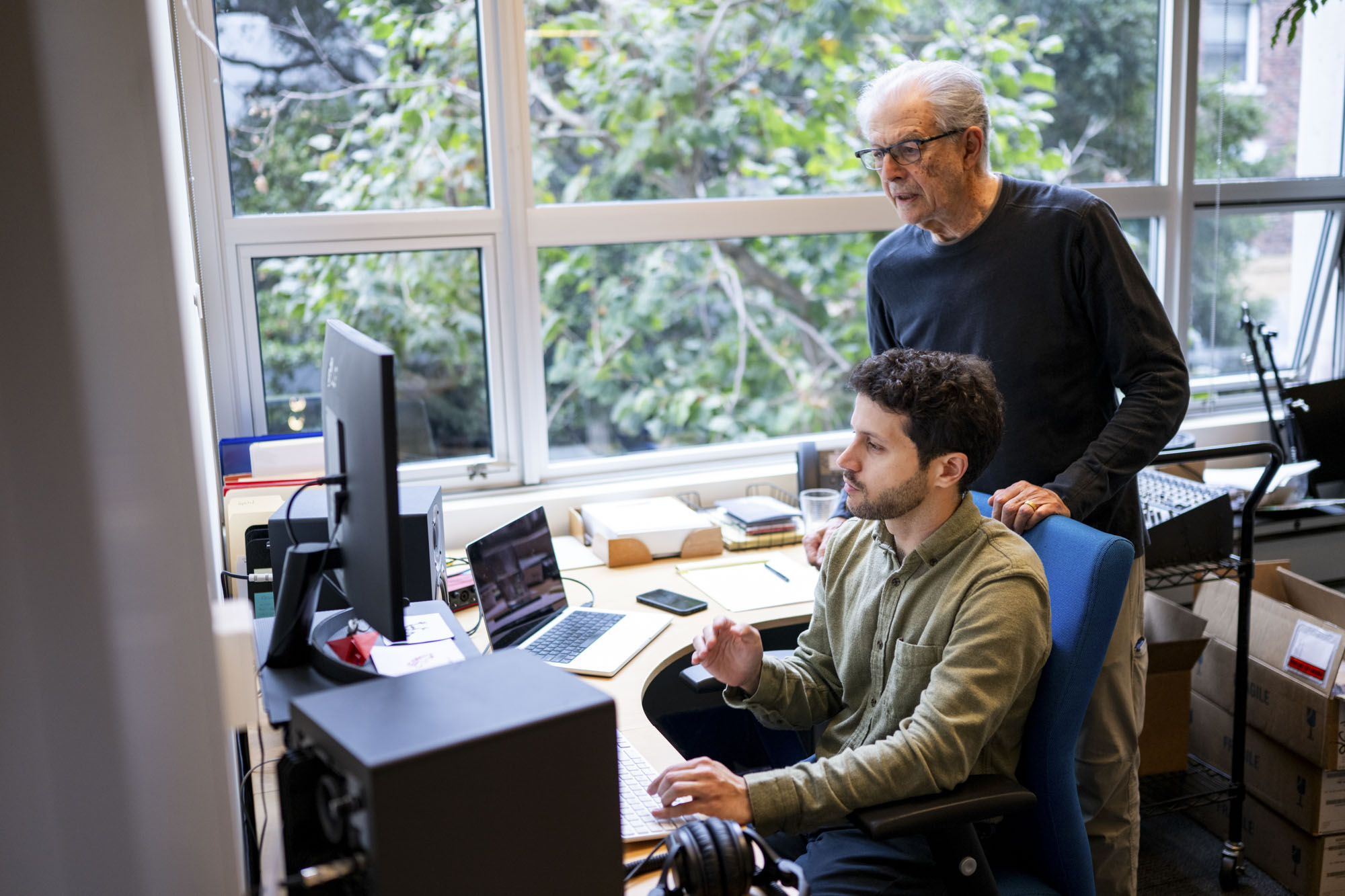
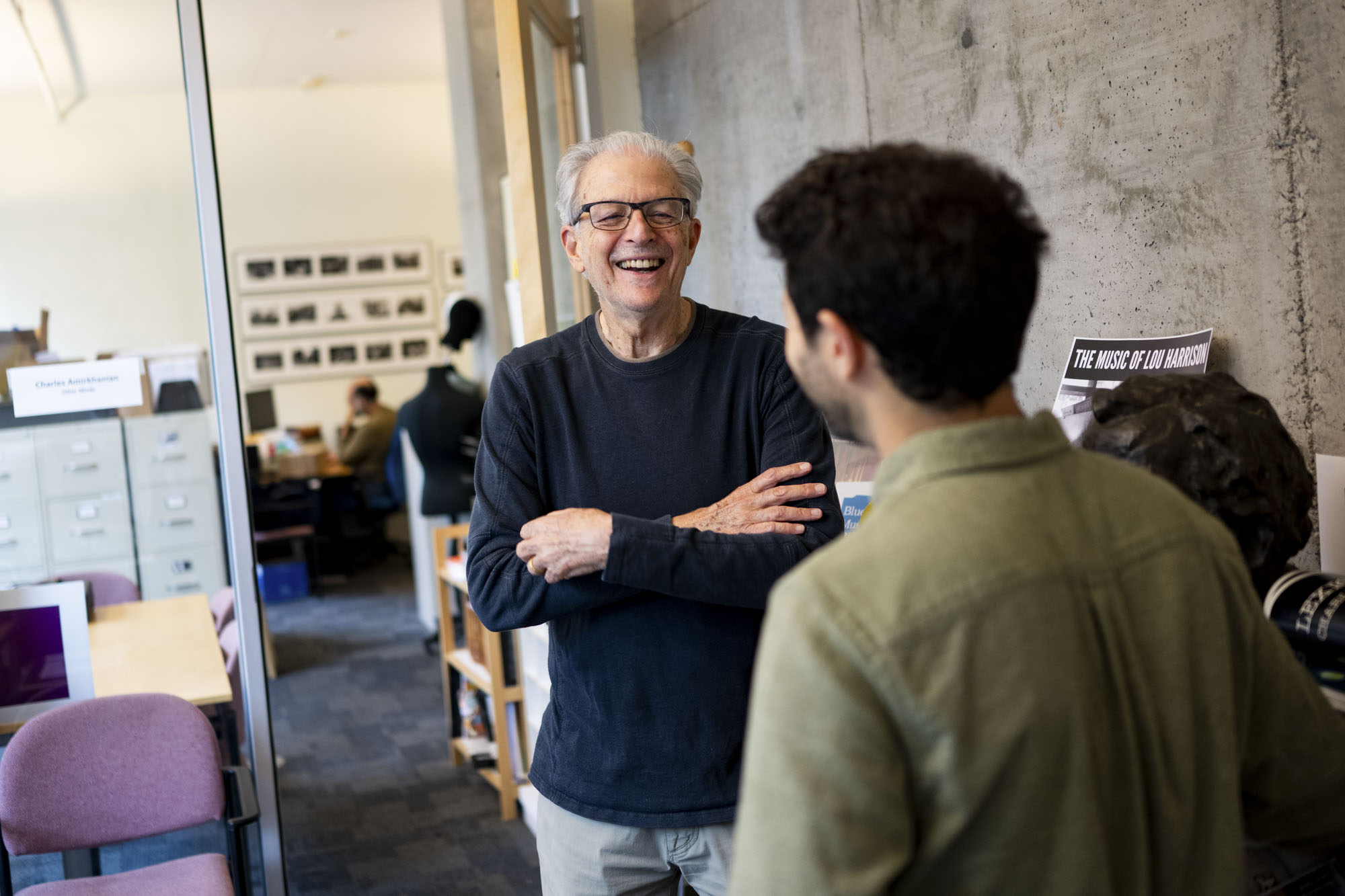
On a cloudy Thursday, Amirkhanian and Bohigian sit together in Other Minds’ downtown Berkeley office, surrounded by stacks of CDs and a bust of legendary 20th-century Bay Area new music composer Henry Cowell (“the godfather,” Amirkhanian says). Through the glass windows, cars and passersby screech and blare from below, making their own kind of experimental music.
It’s a fitting soundtrack for an organization whose mission is, in part, to listen differently.
Despite a nearly half-century age gap, Amirkhanian and Bohigian are kindred spirits. Both of them are percussionists, steeped in a tradition that includes iconoclastic musicians like Cowell, Lou Harrison and others. And both are Armenians from Fresno, the agricultural city in California’s heartland which is home to one of the oldest and most vibrant Armenian diasporas in the U.S. Both have drawn on their heritage in their work in forward-thinking ways.
The two first met in 2011 when Bohigian was a freshman at Fresno State University. Amirkhanian was doing a guest performance at the Fresno New Music Festival, and guest-lectured in one of Bohigian’s music classes. At the festival, the students performed an octet Amirkhanian had written as part of a career-long fascination with the noisiest percussion instrument: the ratchet.
“That kind of thing was really exciting,” Bohigian recalls. “This loud, asynchronous rhythm.”
Bohigian, who was born in 1993, the same year as the first Other Minds festival, began as a pianist before switching to percussion, a classic path into contemporary music.
“If you’re a percussionist, there’s not a lot of old repertoire,” he says. “You’re performing mostly 20th- and 21st-century music.”
Bohigian started composing in high school, initially writing pieces that imitated composers like Cowell, who devised a method for playing the piano from the inside, on the strings. Bohigian’s first piano piece, written for an AP music theory course, was titled “Song for Spaghetti Armed Steve.”
But his work gradually developed a deeper cultural focus. A piece he composed during his senior year of college to observe the 100th anniversary of the Armenian Genocide was performed in 2015 by Fresno State’s New Music Ensemble. Bohigian lived in Armenia from 2019–2020, where he conducted research, studied and taught a laptop orchestra class at the state conservatory in Yerevan. His compositions have been performed around the world.
Reviving the legacy of an Armenian auteur
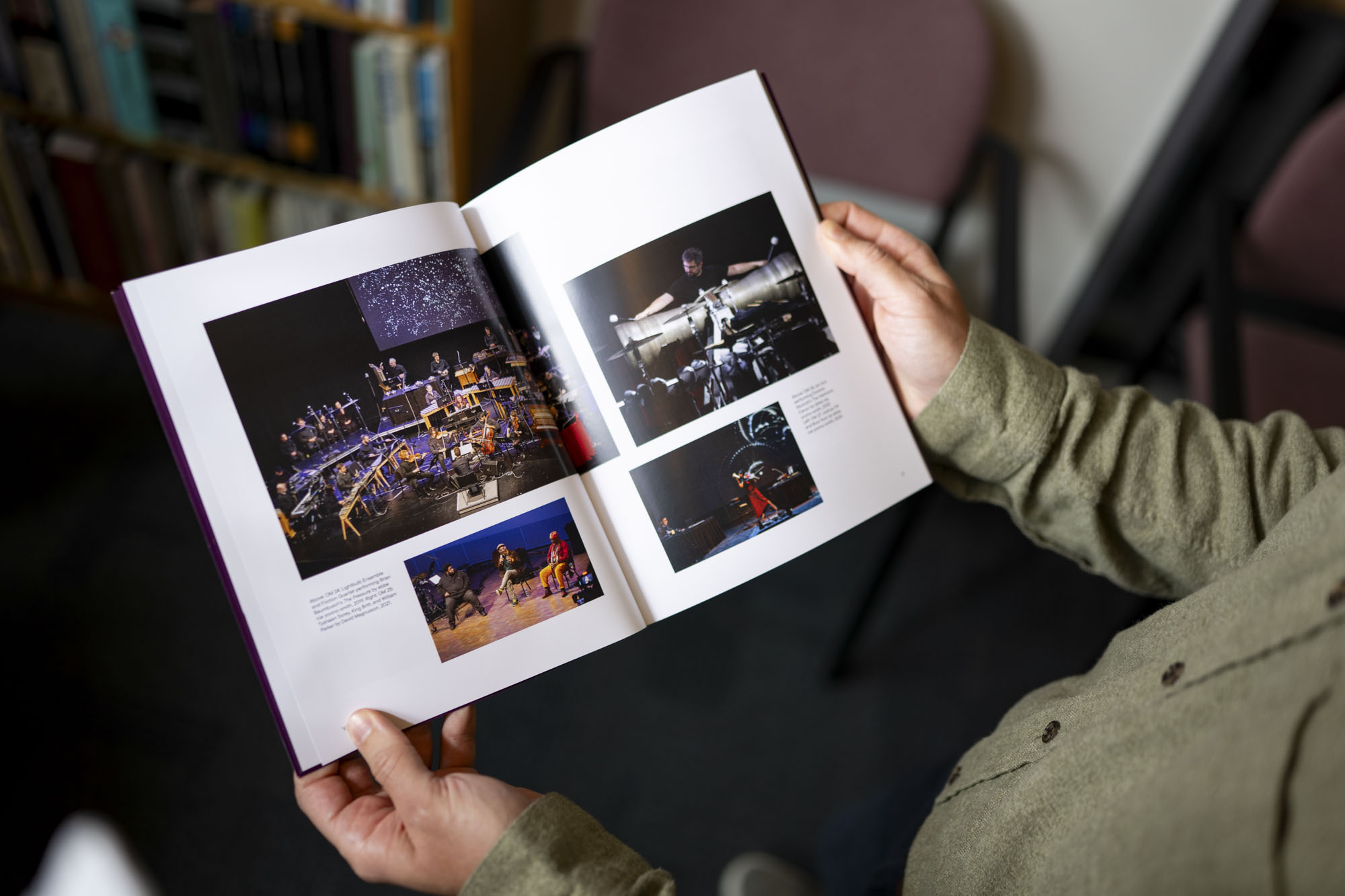
Bohigian’s latest work will premiere Thursday on the opening night of this year’s Other Minds festival. He will debut I Am He Whose Life and Soul Are Torment, an evening-length multimedia performance inspired by the life of Soviet-Armenian auteur Sergei Parajanov.
Bohigian’s composition draws from Parajanov’s abstract 1969 film, The Color of Pomegranates, about the 18th-century bard Sayat-Nova, who sang in Armenian, Georgian and Azeri — the languages of the region. The film was released four years before the director was jailed by the USSR for homosexuality and sentenced to hard labor.
The piece brings together Sayat-Nova’s folk music — performed by Bay Area wind instrumentalist and vocalist Khatchadour Khatchadourian — with the electronic music tradition that Bohigian is immersed in, to illustrate scenes from Parajanov’s life.
Bohigian describes the piece as theatrical, involving staged visual elements and costumes by East Bay artists Tara Baghdassarian and Caro Yaghjian in addition to the electronics and vocals.
“We want to really make it immersive,” Bohigian says.
Some other festival weekend highlights include a live electronic performance from Philadelphia-born King Britt, delivering a set of sonic liberation compositions rooted in Black sound. And the festival will close Sunday with a performance by 79-year-old Charlemagne Palestine, who “plays only Bösendorfer pianos with extra keys on the bottom … so that the entire instrument resonates like perfume in the entire hall,” Amirkhanian says.
“I want people to understand that this is a rare opportunity to hear a composer who’s now probably at the end of his career and he’s coming here to do this monster hour-long performance,” he continues. “It’s going to be thrilling.”
On Sunday, Amirkhanian will also be performing a song he composed when he was 18: “Sonatina for Four Bass Drums, Op. 4.”
“I thought it’d be fun to dredge something up from the past,” he muses.
Finding the ‘other minds’
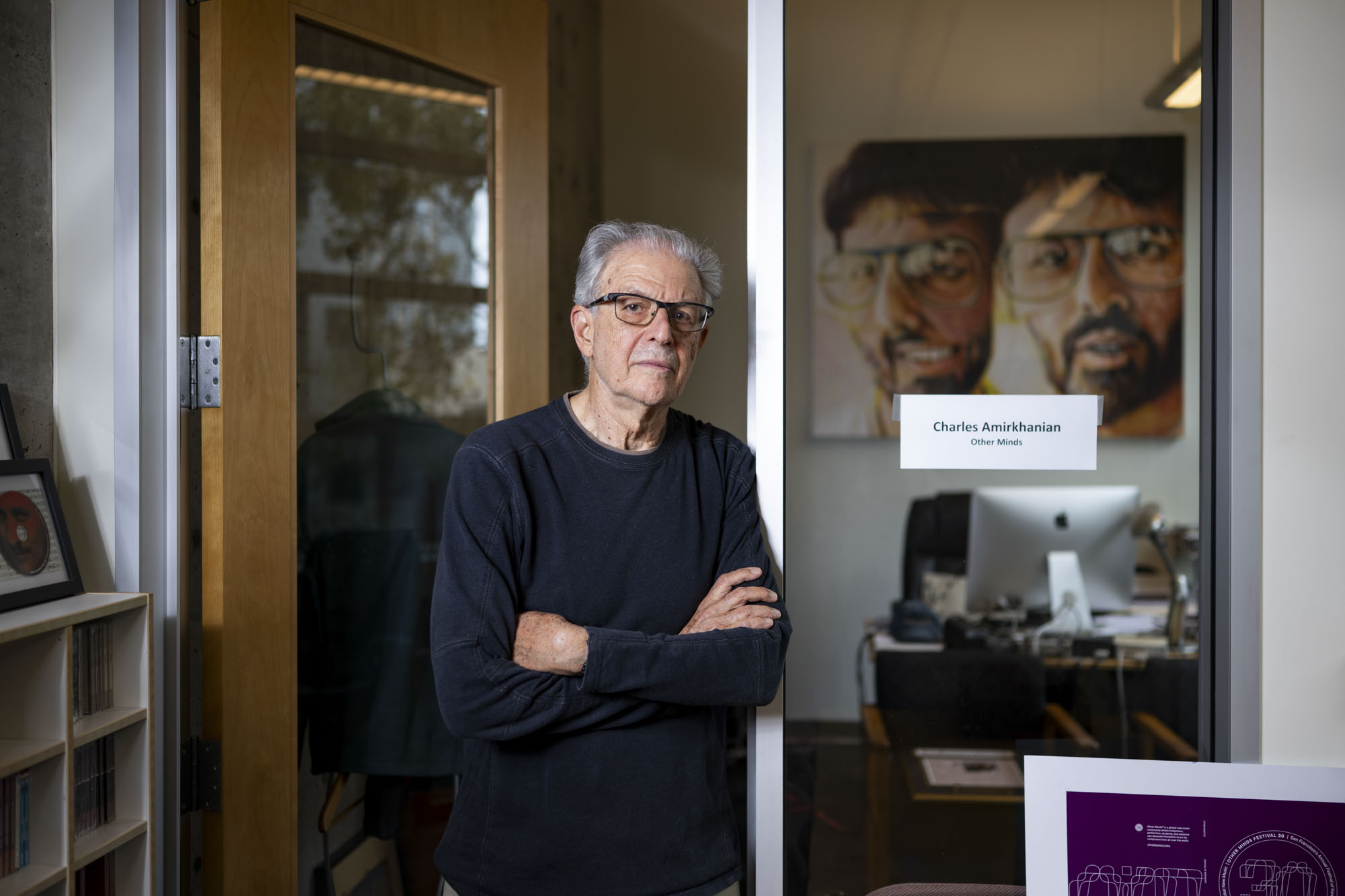
Amirkhanian also grew up in Fresno, in a household steeped in classical music.
His mother and her three sisters were all classical pianists. Because Fresno sits roughly halfway between San Francisco and Los Angeles, musicians traveling between the two cities would sometimes stop there, giving Amirkhanian opportunities to encounter performers and music that might otherwise have passed him by.
One day his father brought home a 78 rpm record with an Armenian rug pictured on the cover and two Armenian names: Alan Hovhaness and Maro Ajemian. Thinking it was an Armenian folk album, he bought it for the family. It turned out to be one of John Cage’s early commercial releases.
Cage’s approach to sound opened another world for Amirkhanian. He remembered a piano altered with screws, erasers and other objects inserted among its strings.
“My mother told him to take it back to the shop,” Amirkhanian recalls. “But the shop would not take it back.”
The record stayed, and set Amirkhanian on a lifelong path toward “all the sounds that you could incorporate into music.”
Cage, who died in 1992, also inspired the festival’s name, thanks to a dismissive New Yorker obituary of the artist that says: “His epitaph might read that he composed music in other peoples’ minds.”
Amirkhanian and co-founder Jim Newman decided then that they were the “other minds.”
The first Other Minds festival, in 1993, was a hit, featuring composers Philip Glass, Meredith Monk and Julia Wolfe.
“The composers … went out and told everybody, ‘Well, they don’t pay much money, but you better accept if you get an invitation to the Other Minds festival,’” Amirkhanian recalls.
Forced to choose a highlight of his 30-year tenure, Amirkhanian recalled Ice Field, a performance commissioned by Other Minds in 2001 and composed by Henry Brant. For $10,000, Brant put a jazz band on the balcony of Davies Symphony Hall in San Francisco and surrounded the audience with a wall of cacophonous sound. The piece won a Pulitzer Prize.
Other Minds’ electronic futures
Today, Other Minds’ Berkeley office houses an archive of roughly 4,000 audio tapes from the earliest days of KPFA. The record label releases music that might struggle to find a home elsewhere, particularly work that is too experimental or noncommercial for larger labels. The organization also has a two-hour program on KALW.
Other Minds now also has a holiday in San Francisco. Mayor Daniel Lurie last week proclaimed Oct. 2, 2026 as Other Minds Day, in recognition of its 30th anniversary and the festival’s enduring contribution to San Francisco’s cultural life.
Both men are surprisingly optimistic about the future, even as artificial intelligence begins to reshape the way music is made and consumed. Amirkhanian notes that we’re already “surrounded by dangers: politically, culturally — and we’re going to get through it.”
Bohigian says AI has long been used by composers and musicians, predating the current discussions of rogue agents and other hazards. In grad school, he experimented with machine learning, training basic models to recognize certain sounds.
“We can find ways to use this, like any other new technology, to our advantage to make something new that we couldn’t have made without it,” Bohigian says.
Taking over the artistic future of Other Minds will require him to keep grappling with these questions. But the principles will be the same: give unusual music a place to exist, give its composers an audience and listen closely to discover what comes next.
“Because of the internet, you’re finding out about new people all the time. Every week I’m hearing about some composer that was not at all on my radar, making really interesting work,” Bohigian continues. “I can sometimes get a little bit in my head about what’s out there. And then I hear something new that’s exciting and I think, ‘Oh, we have a bright future.’”
Other Minds Festival takes place Oct. 8–11 at Brava Theater in San Francisco.