At the Bolinas Museum, a Display of Local Literary Vitality
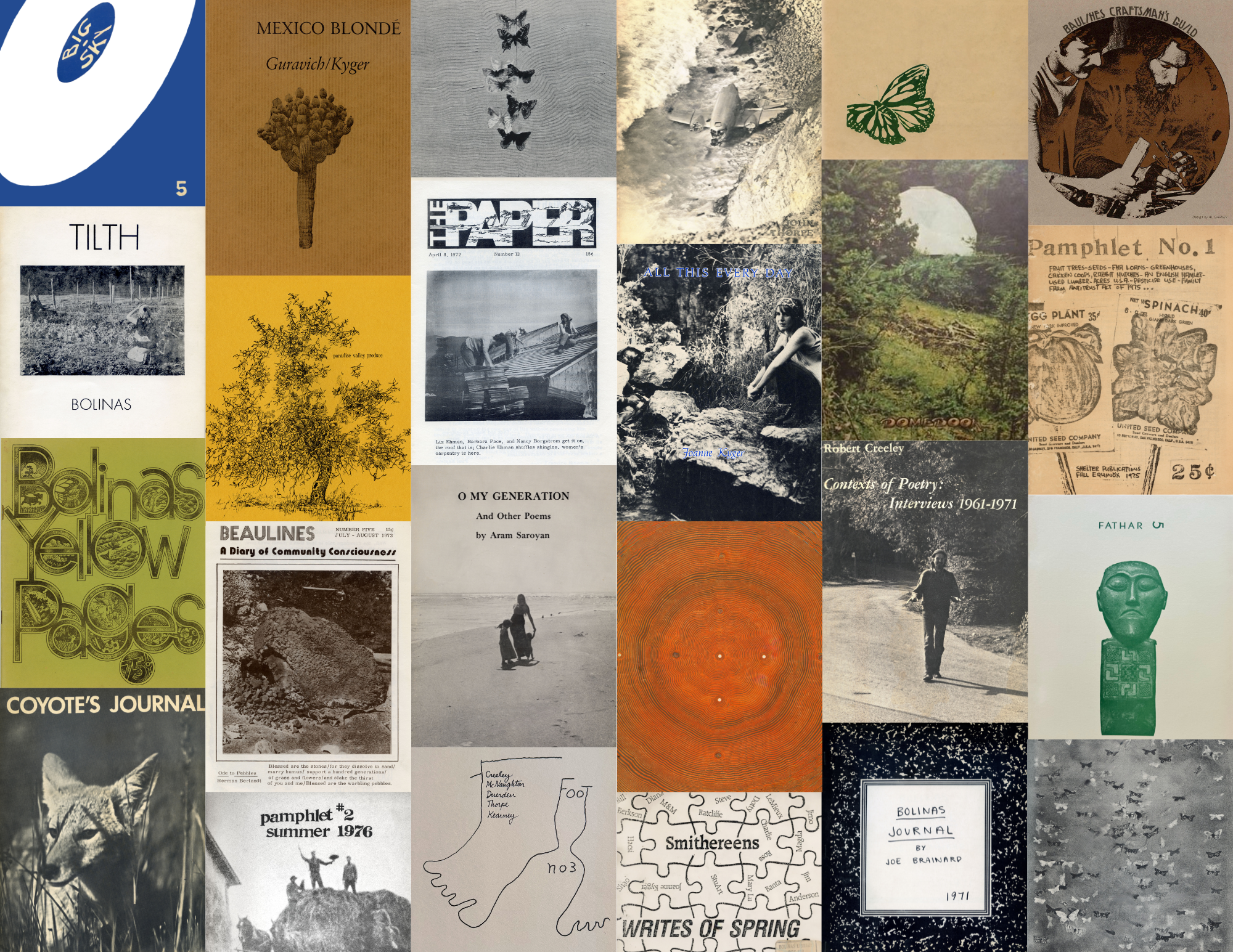
Based on the billboards along Route 101, it can feel like AI is baying at the heels of cultural life in the Bay. But a number of recent ventures in community education and publishing offer an alternative vision. Relatively new places to meet in print and in person, like the Oakland Review of Books, Bathers Library and Womb House Books are creating venues for and records of local literary vitality; and now, there’s an incredible show at the Bolinas Museum that sets these efforts in aesthetic populism within a longer and larger regional history.
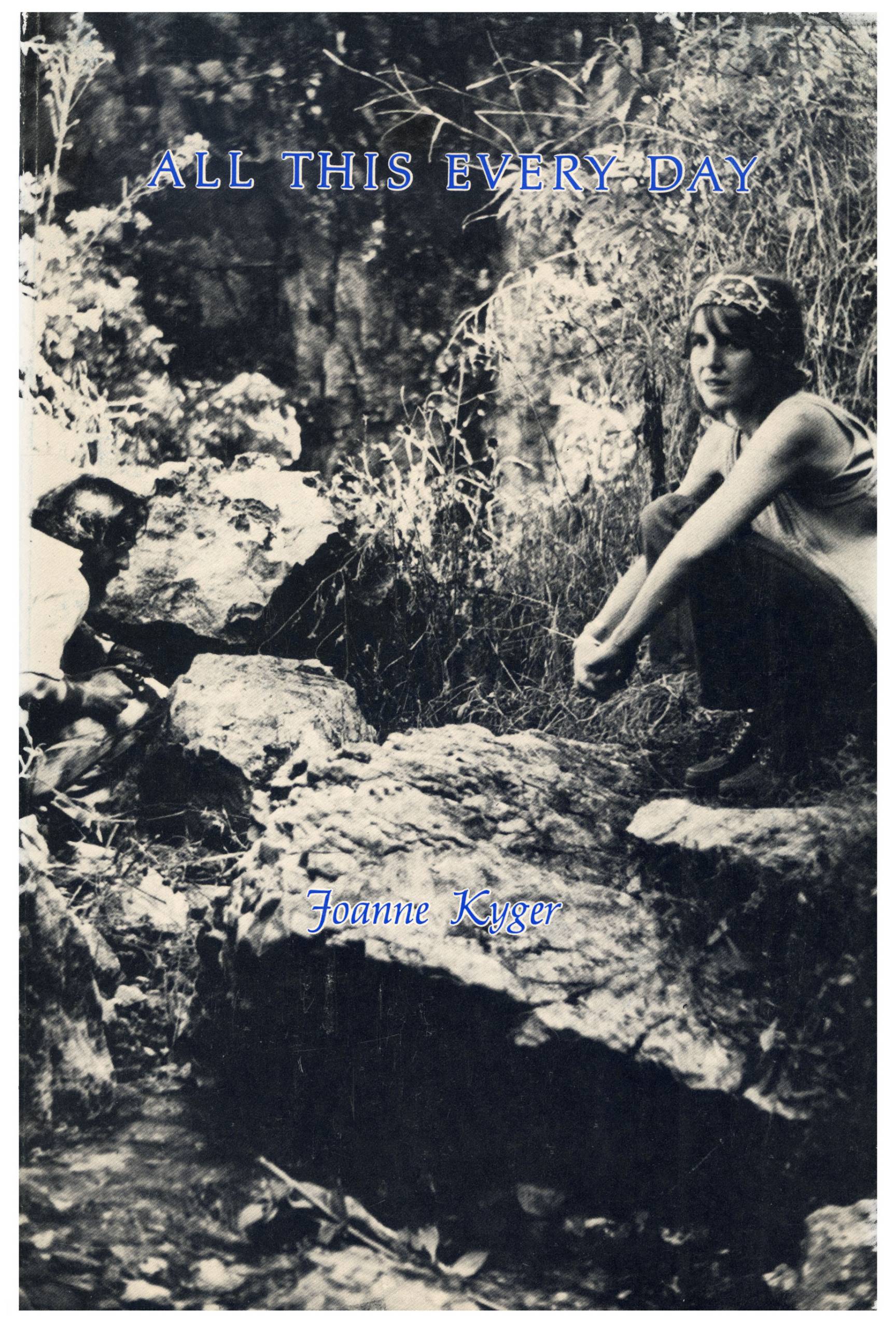
This show, focused on community publishing in the 1970s, and organized by two of the museum’s own — curator Noelle Hiam and archivist Kirston Lightowler — is named for one of Joanne Kyger’s poetry books from that decade, All This Every Day, printed in Bolinas by Bill Berkson’s Big Sky Press. While Bolinas may be known in some circles for the famous poets who lived there or passed through (Joe Brainard, Robert Creeley, Alice Notley and Anne Waldman among many others), this show compiles a more inclusive, and eclectic, portrait of the creative life of this small town.
The imaginative efforts of residents during these years took many forms, and mixed pragmatism with poetry. From neighborly reporting to experiments in craft, adult education, environmentalism and sustainable agriculture, Bolinas was a place where all manners of making were wrapped up in the work of documenting, and maintaining, a place and its people.
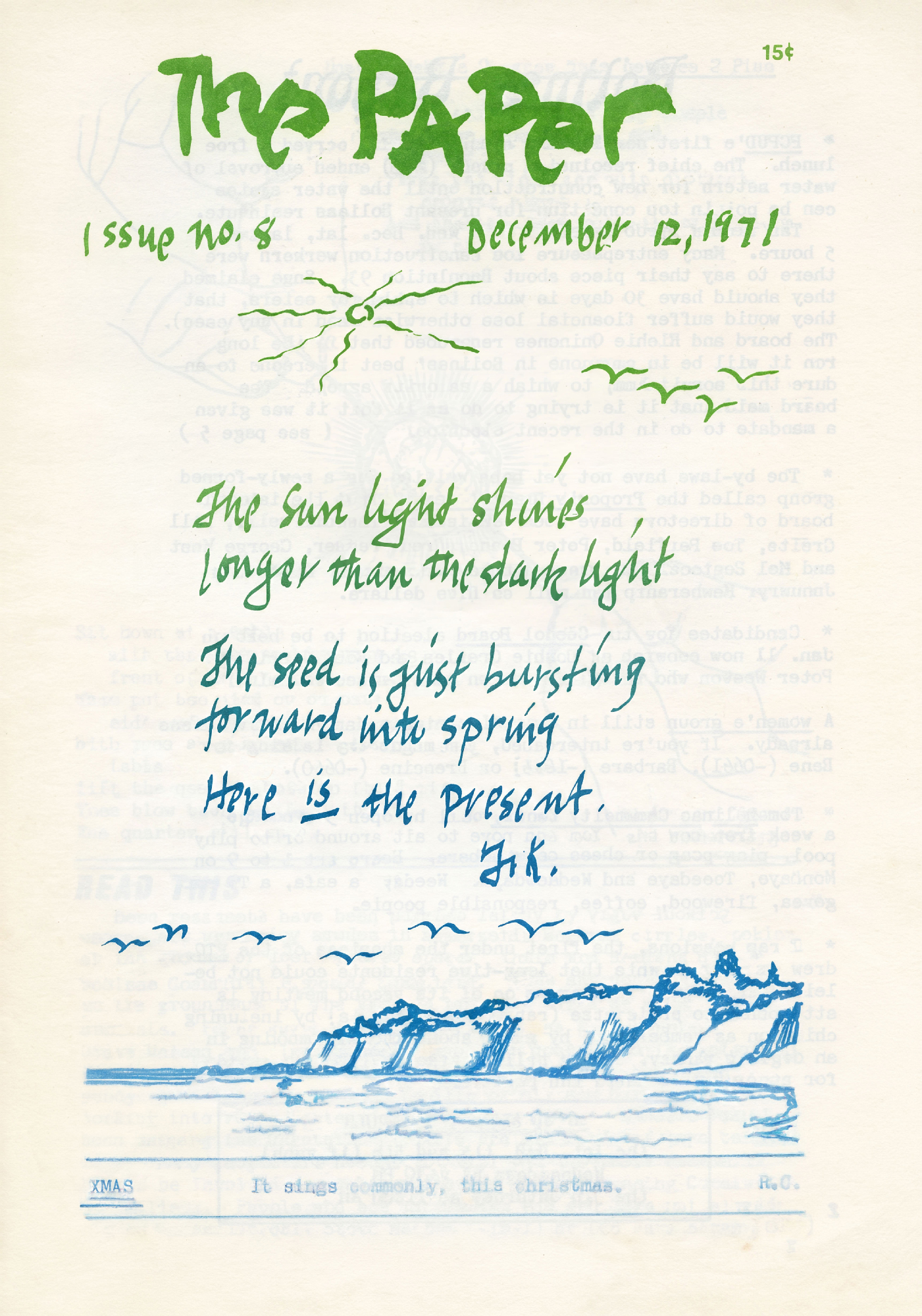
The range of contributors to the Bolinas publishing scene — all with bios in the comprehensive and yet to be published catalogue — is astonishing. They include artist Arthur Okamura, whose local collaborators were legion; vet turned resident-printer Mickey Cummings, responsible for pulling many of the newsletters on display; Nancy Blanchard, co-publisher of The Paper and organizer of women’s groups and the community bulletin board; and butcher Michael Rafferty, who founded and still runs the Bolinas Hearsay News today. For a show spread out over two small rooms, the scope of this record of a community’s life in print is vast.
Much of what is on display extends beyond literature. Future Studies, a community research group, published an artful — and practical! — pamphlet on “Septic Tank Practices.” Course offerings printed for the Faultline Institute survey a robust curriculum in adult education, with neighbors teaching neighbors in such fields as Spanish, communication with children, Feldendkrais, Indian classical music, and “singing madrigals for enlightenment.” The comic Net Profit puts pictures of nuzzling dolphins and second-person narration to work to raise awareness about the intelligence of aquatic mammals threatened by fishing practices: “You came into a world of water … and found it alive with your kind.”
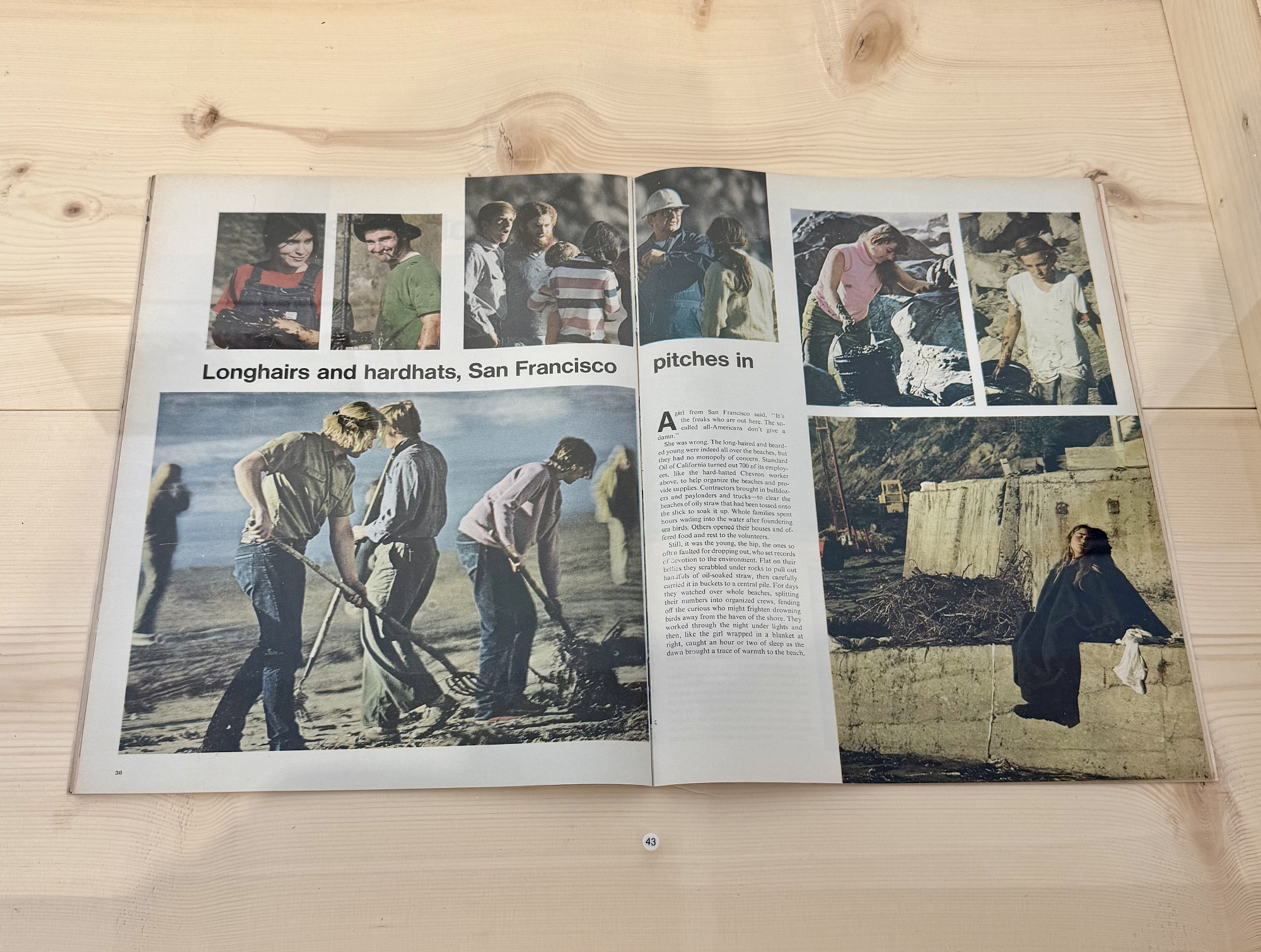
In fact, there is a kind of pervasive ecological orientation to much of this work: a belief that committing to a particular place allows for different investments in both land and human community. The curators set up the historical frame of the show with a massive oil spill into the Bay in January 1971, which drew many activists, and artists, north, in response, along with the spreading oil.
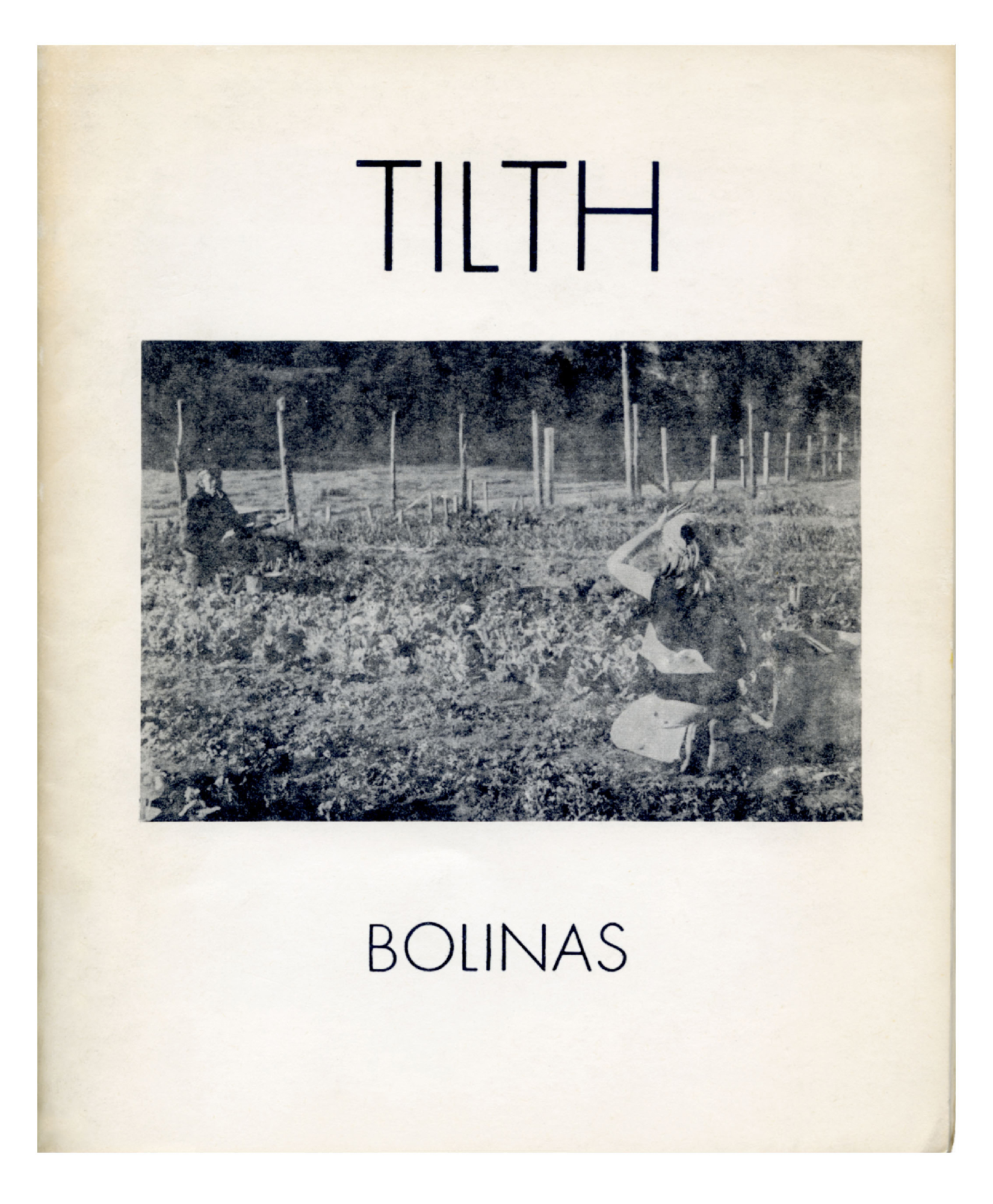
The seeds of iconic Bay Area efforts in sustainability can be found here. Lewis MacAdams’ News from Niman Farms, published in 1976, for instance, and printed by Tombouctou Books, arises from engagement with an enterprise that has evolved into Niman Ranch, a pioneer in ethically sourced meats. For his previous collection, Tilith, MacAdams had interviewed organic farmers, including the founders of Star Route Farms, who eventually provided produce to Chez Panisse in Berkeley.
Tombouctou Books is also a great example of how print enabled Bolinas to be both hyper-local and connected to the outside world. The press published four titles a year, largely focused on Bolinas writers, but also books like Jim Carroll’s The Basketball Diaries, and received regular funding from the National Endowment for the Arts (remember that?). Bill Berkson’s magazine Big Sky printed work by New York School poets alongside their Marin County counterparts.
Ultimately, publishing locally was also a way to change what it could mean to live in and with a place. In a community where “the distinction between visual art and poetry was unusually, productively porous,” as the curators note, printing together became an opportunity to create something more than “vessels for text.” The archive records how experiences of conversation and collaboration could be extended into a tactile form that could last.
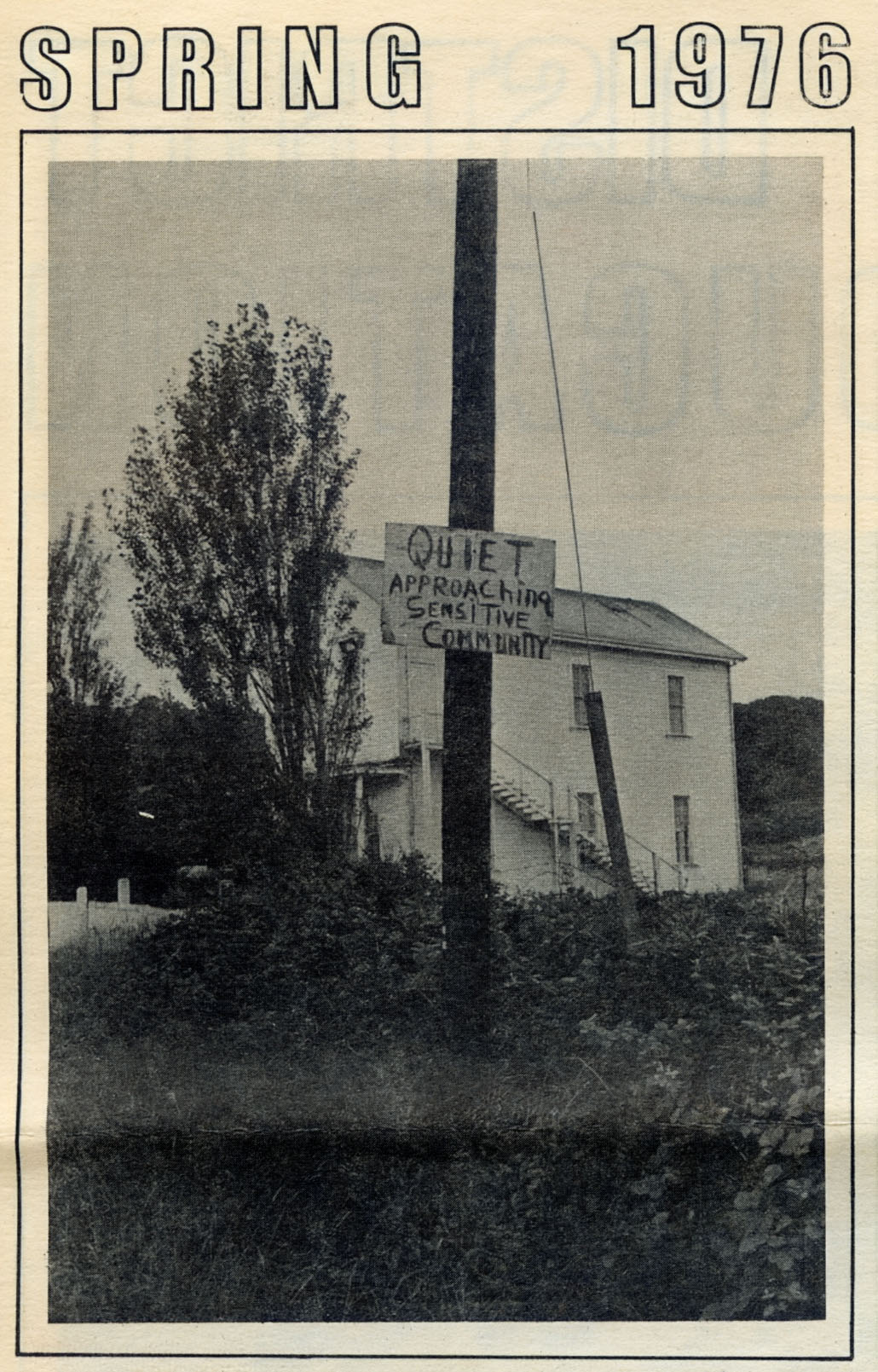
The history on view in All This Every Day is still one you can touch (mind the plexi-glass, though, and check out the duplicate journals and books in one corner of the show, that can be paged through). It’s also reflective of a legacy of community art-making and thinking still present in the Bay. If “everything is poetry,” as Kyger wrote in a late poem, after living in Bolinas for close to 50 years, she may have been echoing the motto of the Bolinas Hearsay News, “everyone is a reporter”; or The Paper, where “everyone can rave”; or anticipating the mission statement of the San Francisco Review of Whatever: “Everyone is a critic.”
The work of preserving and curating community records can be shared, too. This show builds on the work of Nicole Lavelle, who curated An Incomplete History of Community Publishing at the Edge of the Earth for the Jack Mason Museum of West Marin History in 2019. In an essay introducing that show, Lavelle describes print media as the “paper stages upon which local public life played out,” “joyful evidence” of the “immaterial” life of community, and “a bioindicator of a healthy ecosystem.”
The Bolinas Museum curators note that their show marks “the beginning of an investigation, and ask anyone with further “leads, loans, and living memory” to be in touch. Let us hope there’s more — all this, every day — to come.
‘All This Every Day: Bolinas Community Publishing in the Seventies’ is on view at the Bolinas Museum (48 Wharf Rd.) through Sept. 27, 2026.
There will be a panel discussion on Saturday, Sept. 12 at 2 p.m. in the Borg Barn featuring Lloyd Kahn, Michael Wolfe, Dotty LeMieux, Genie McNaughton and Michael Rafferty, moderated by Jeff Gunderson.