These Model Train Enthusiasts Have Built a Miniature, Welcoming World
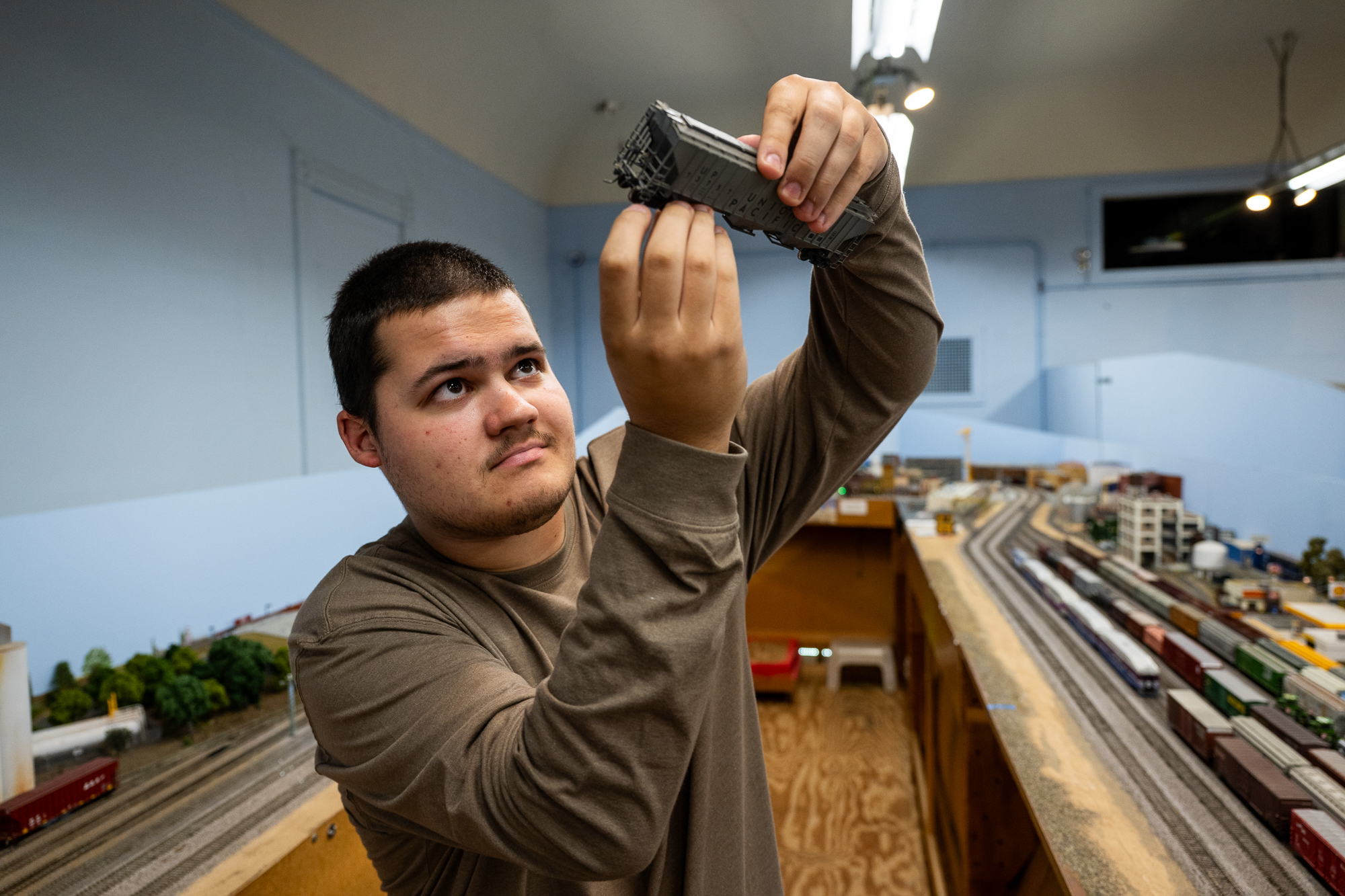
This story is part of Finding Your People, a series celebrating the Bay Area’s meetups and subcultures that bring people together IRL in an increasingly online world.
Up a steep flight of stairs off Crockett’s Loring Avenue, directly across from the C&H Sugar refinery, a wonderland awaits.
In this land, the mountains are made of plaster, the palm trees of plastic, and the people are just over three-quarters of an inch tall. Model trains run between miniature versions of Oakland, California and Sparks, Nevada — the old Southern Pacific mainline — on more than a mile of tracks.
Welcome to the Carquinez Model Railroad Society (CMRS), a club for anyone interested in trains.
“I was struck by how friendly everyone was, how welcoming,” Roberto Lombardi says as he sprinkles dirt across a new stretch of the layout on a recent CMRS work day. “Sometimes these clubs — with any kind of club, doesn’t have to be model trains — can get a little bit cliquey and kind of cut off from the outside.”
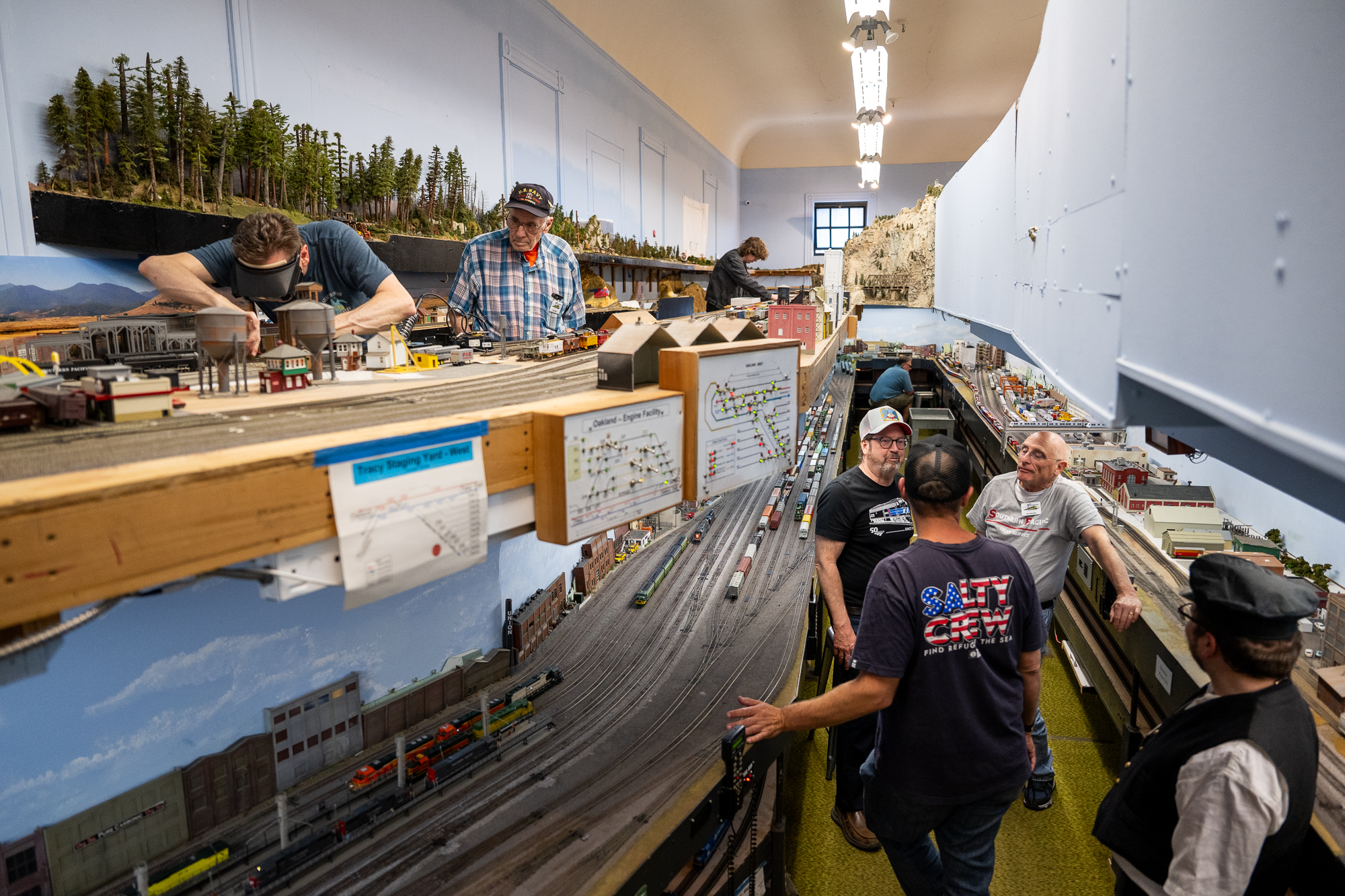
Lombardi recently retired as head of facilities for the San Francisco Public Library, where he helped install a popular holiday train, designed and built by CMRS members, every winter. But the scale and ambition of the Crockett layout surpasses anything he’s been part of previously.
At his first CMRS open house, Lombardi says, “The number of people that came blew me away.”
“It makes it all worth it,” he adds. “I mean, the kids come in, their eyes just pop out of their heads, you know?”
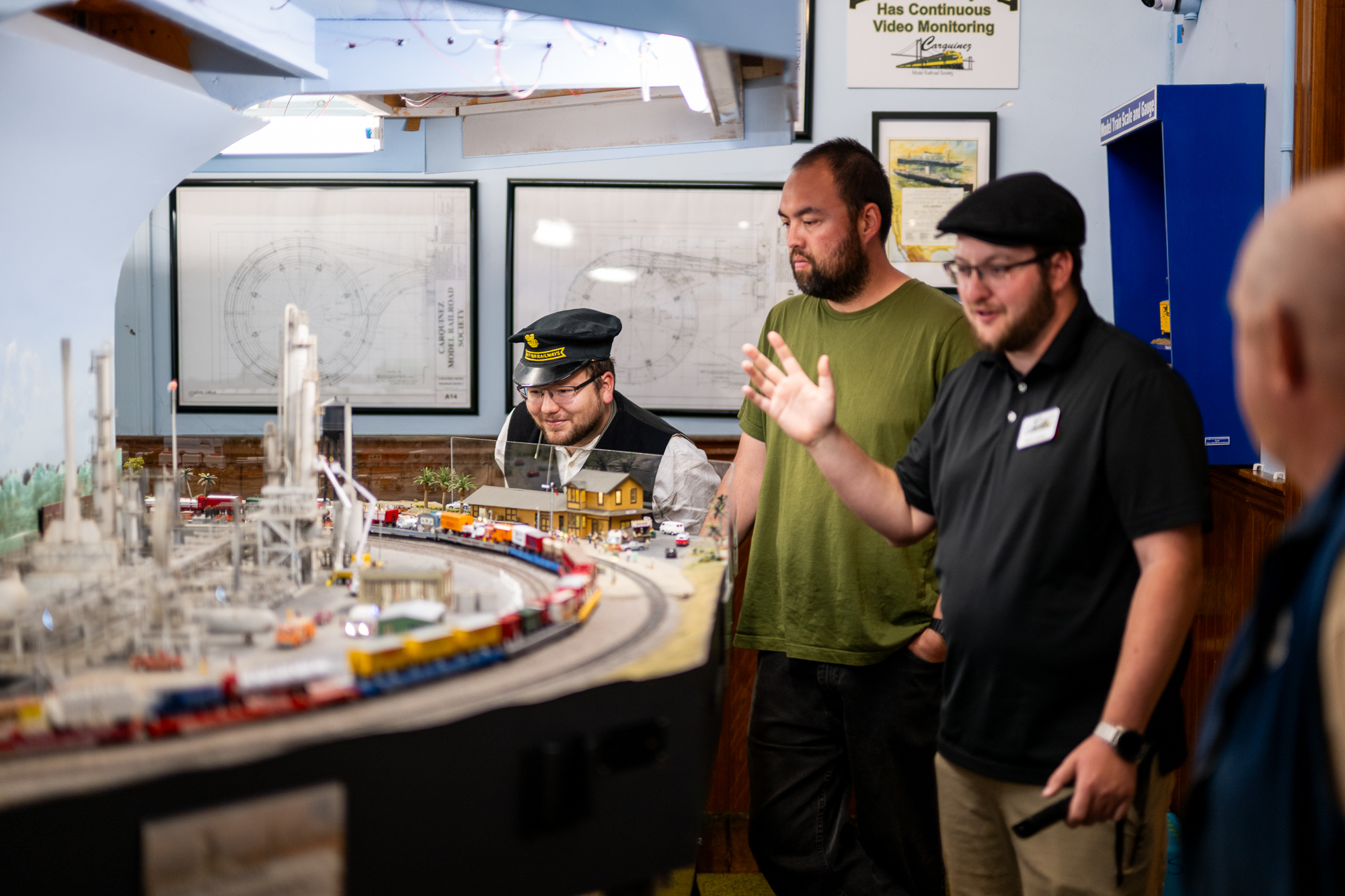
The club, which has more than 180 members, stages these popular open houses every few months, guiding trains around the track and answering questions. Admission is just $5, and kids 16 and under get in for free. In one corner of the 2,000-square-foot hall that is home to the club’s three-tier layout, stepstools are ready to help shorter visitors watch the action.
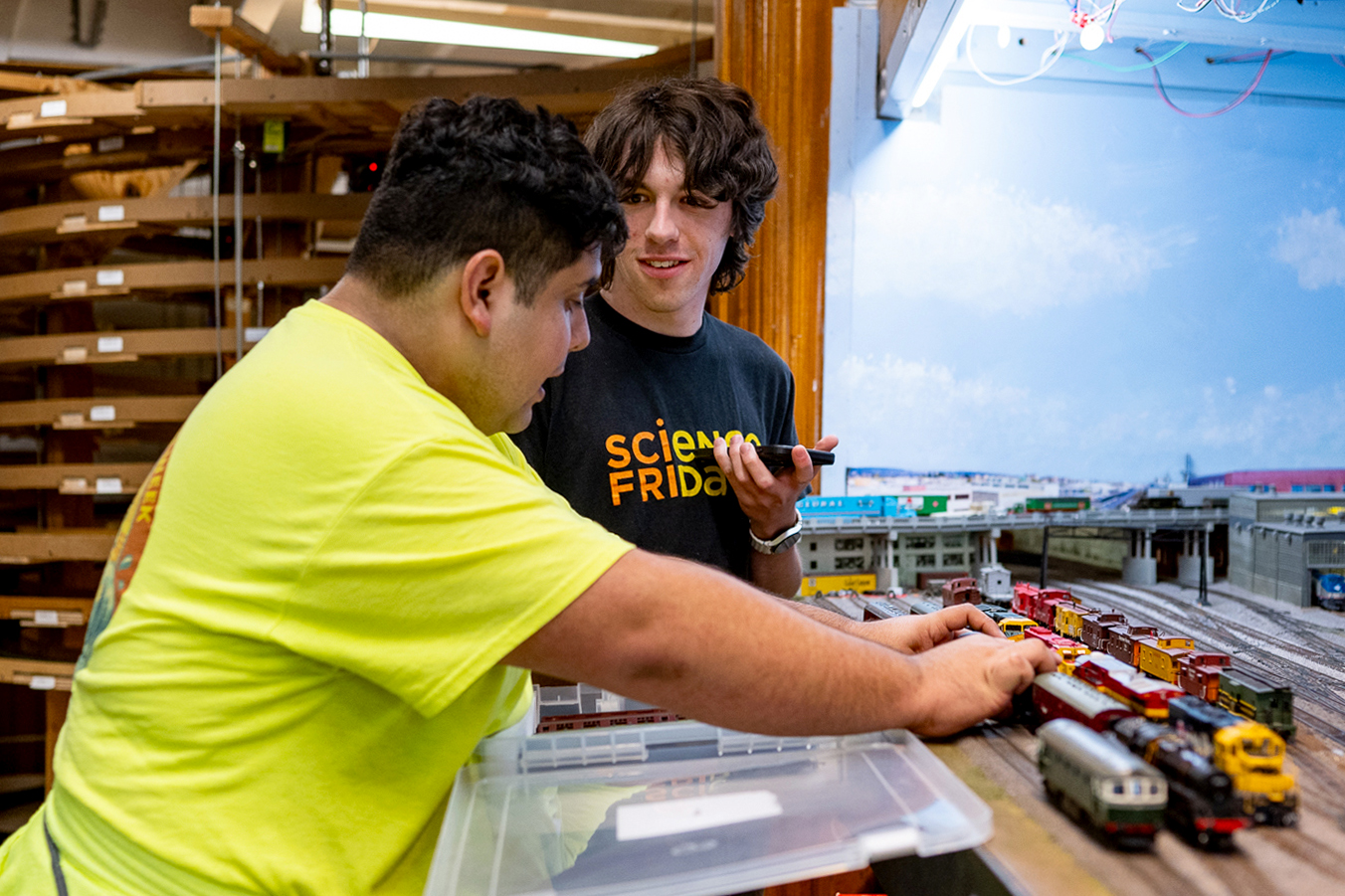
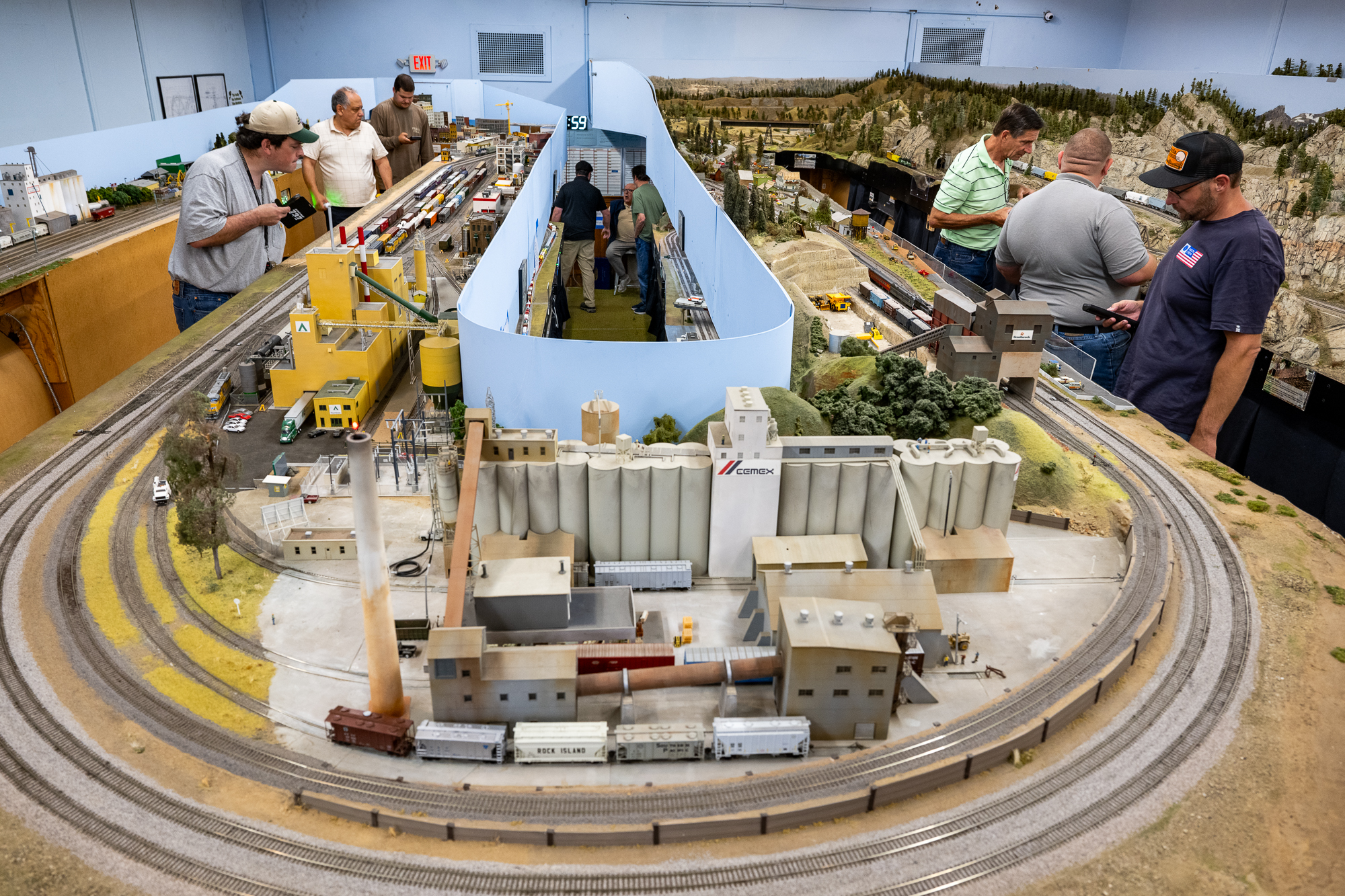
The rest of the year, work — and play — continues behind the club’s doors. Club members help maintain the 129-year-old building, build out new stretches of track, fix each others’ trains and do operating sessions (a card-based game where people run their engines and complete assignments, just like a real railroad).
“One thing I like about this hobby is you’re actually the person doing it,” Lombardi says. “It’s not passive consumption.”
Or, as the self-appointed “mother of the club,” John Seibert explains, “You’re going home with super glue on your fingers that stays there for a couple days.”
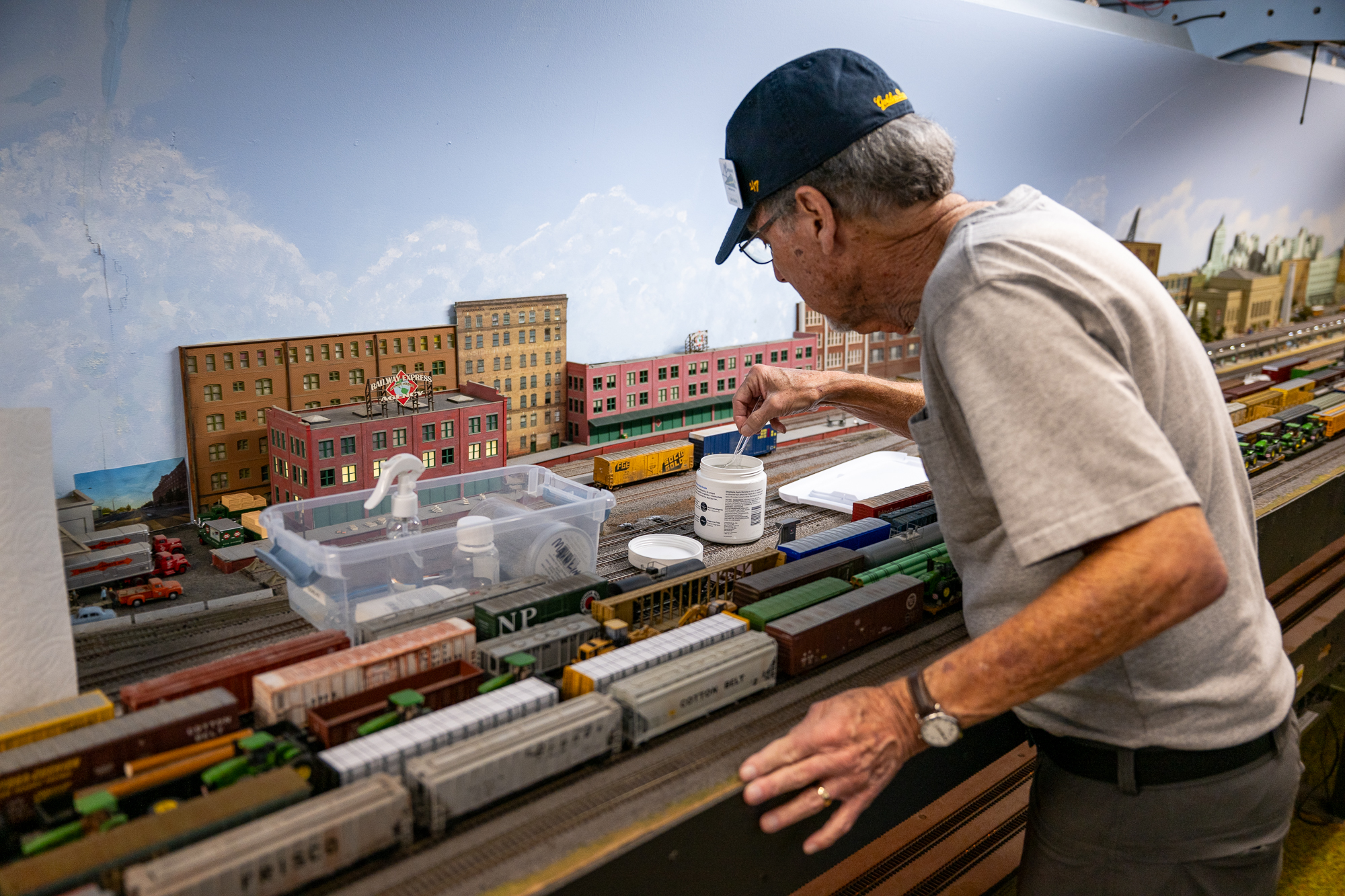
A hands-on hobby
That hands-on aspect of the hobby has served CMRS well. Founded in 1976 as the Vallejo Model Railroad, the club originally operated out of a building on the Solano County fairgrounds. When it was forced to move in 2004, CMRS purchased their current building, a former Odd Fellows Hall, with the goal of never uprooting again.
“It’s really a lot of work to maintain this building,” Seibert says. “There’s a lot of camaraderie and faith involved.” His tour of CMRS includes the broom closet.
The club, a nonprofit, is sustained by a combination of membership dues and donations, volunteer labor, grants, ticket sales and rental income. CMRS rents its bottom floor to the Sugar Workers Union; the top floor is home to the Carquinez Toy Train Operating Museum, a separate model on a larger scale. (In the CMRS layout, 3.5 millimeters equals 1 foot; the world is shrunk down to 1/87th of its actual size.)
The scenic team, led by Dexter Day, a retired Amtrak employee, meets every Tuesday. The group breakfasts together at a local joint before the work begins and runs their trains after the work is through. Scenic projects can be long-term, like a multi-year buildout of the Port of Stockton, or routine maintenance, like battling dust.
“It’s just very relaxing,” Lombardi says. “There’s no client and there’s no schedule.”
At one end of the layout, miniature loggers fell a tree that pops upright every two-and-a-half minutes. A logging camp gives way to farmland and orchards, with little dramas playing out between farmers, cows and fencing. It’s an entrancing mix of fidelity and fantasy, where vast stretches of land and history have been compressed into emblematic scenes.
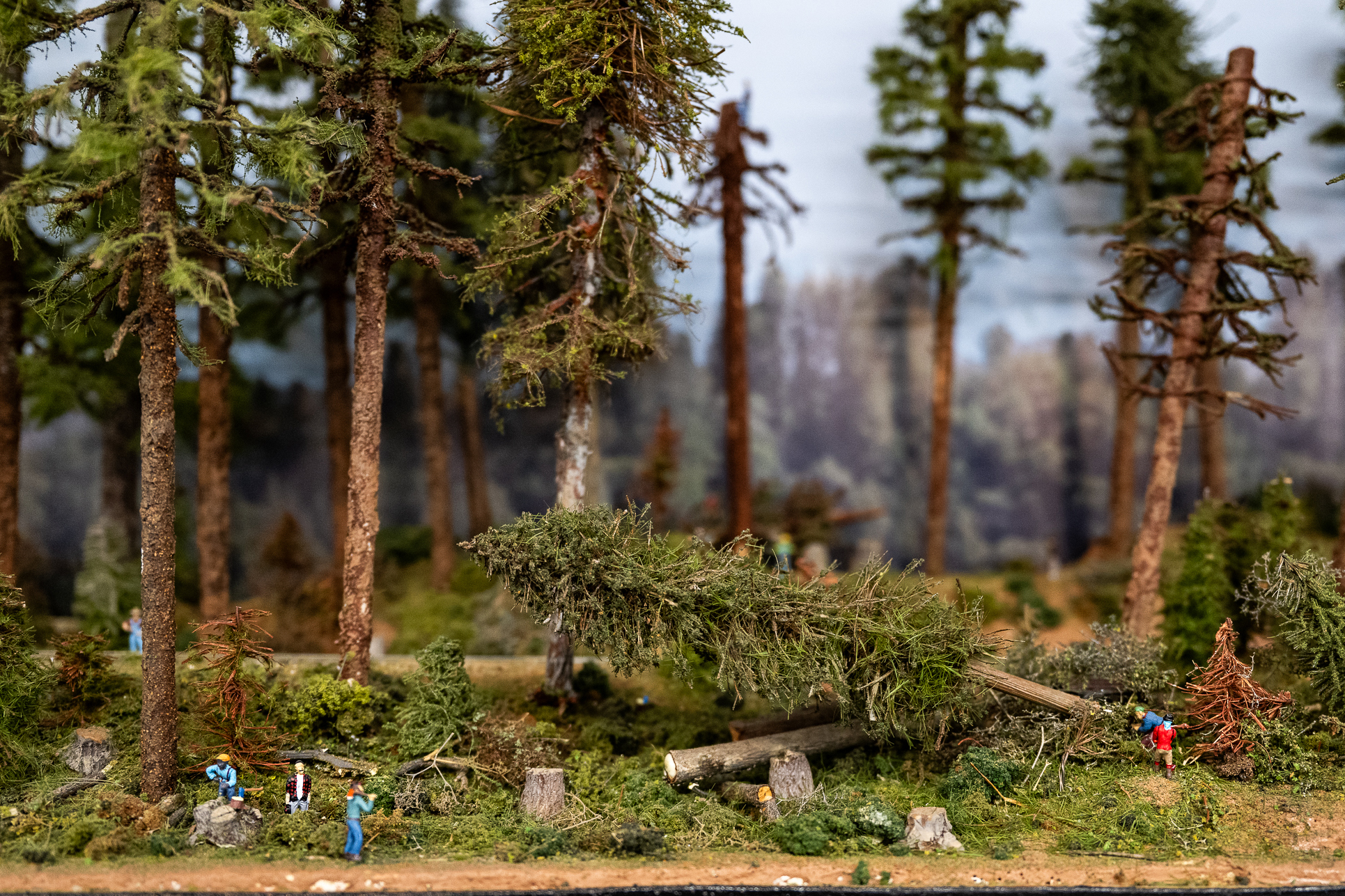
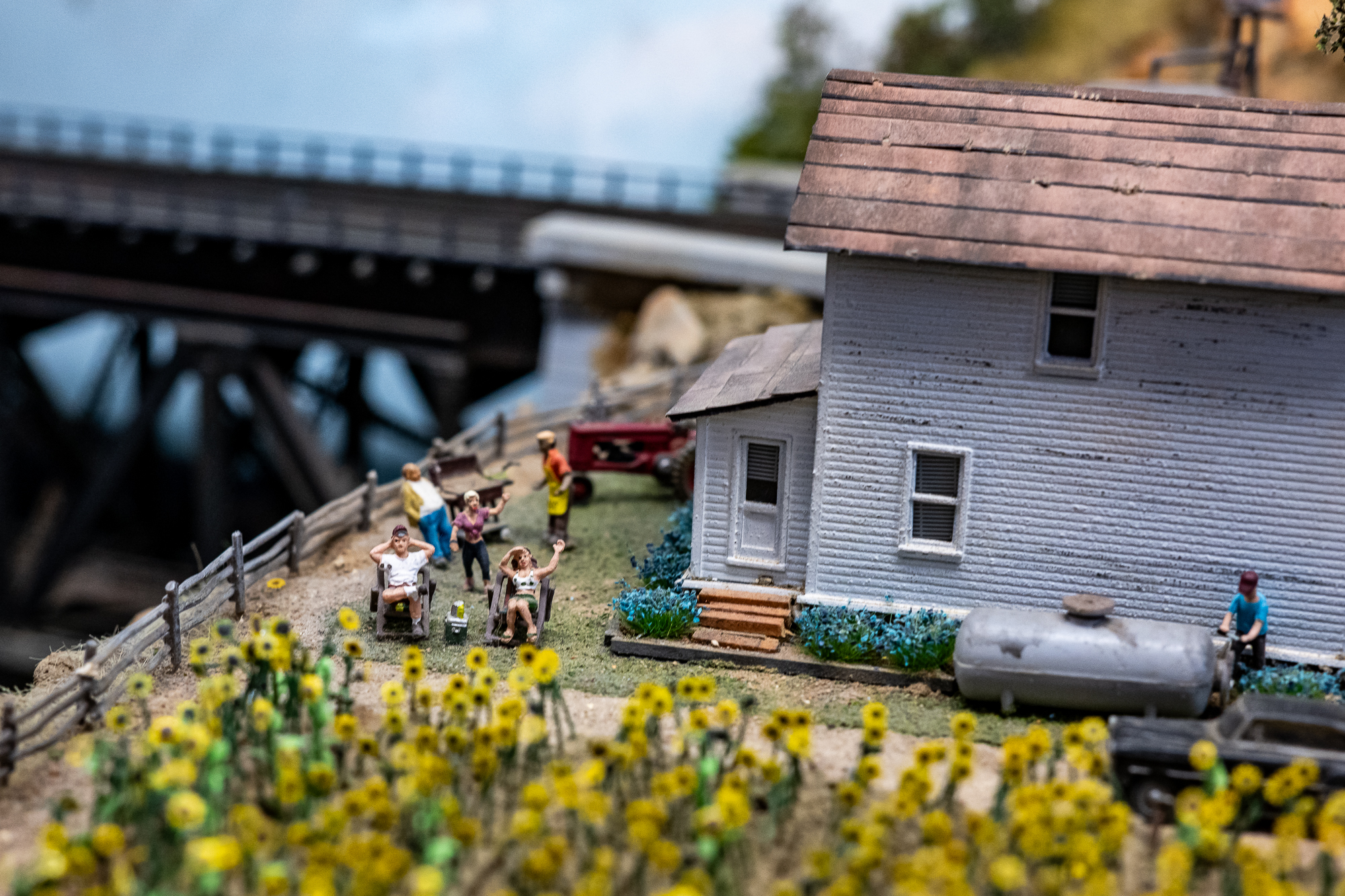
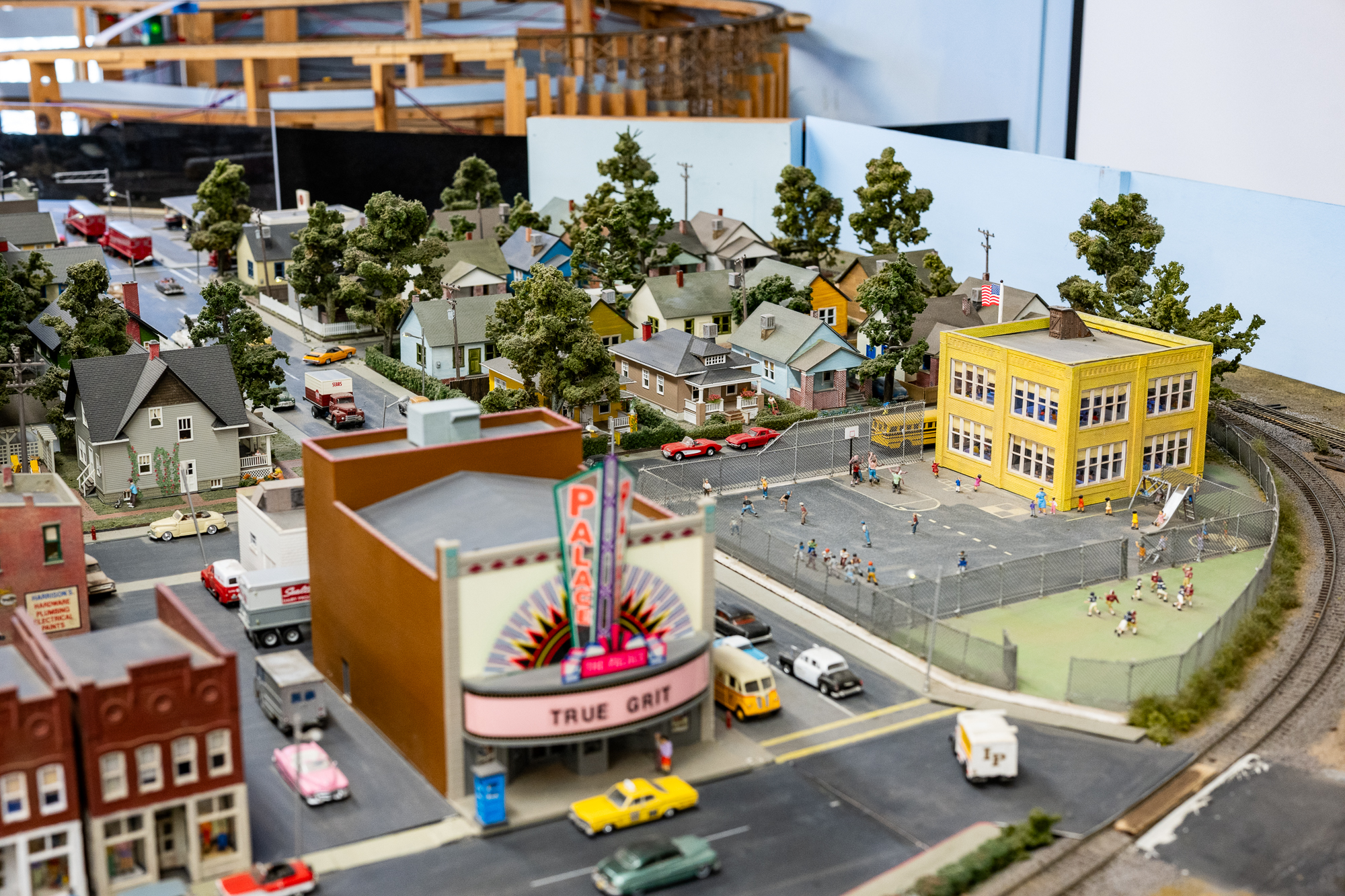
Each CMRS member has words of praise for the work of someone else. “Can you imagine somebody who built this thing?” Day points at a detailed model of the Carquinez Bridge, built by a late member. “I just keep looking at it. I go, I couldn’t do it. I mean I build a lot of stuff, but not like that.”
Different interests in one layout
One of the most welcoming aspects of the club, says current Vice President Mason Denton, is that it’s not rigid about telling people how to participate.
Members could be into a particular era of rail history, a certain stretch of scenery or just have a desire to see their trains run around a track. “It’s a huge amalgamation of different interests in one layout, which a lot of these clubs don’t have,” Denton explains.
Denton, who is 28, describes himself as a bridge between two generations of model train enthusiasts — an older crowd that is really into building, and a younger crowd that is more focused on the trains. “We joke that I almost never get to play anymore,” Denton laughs. “Like, I’m fixing everyone’s stuff.”
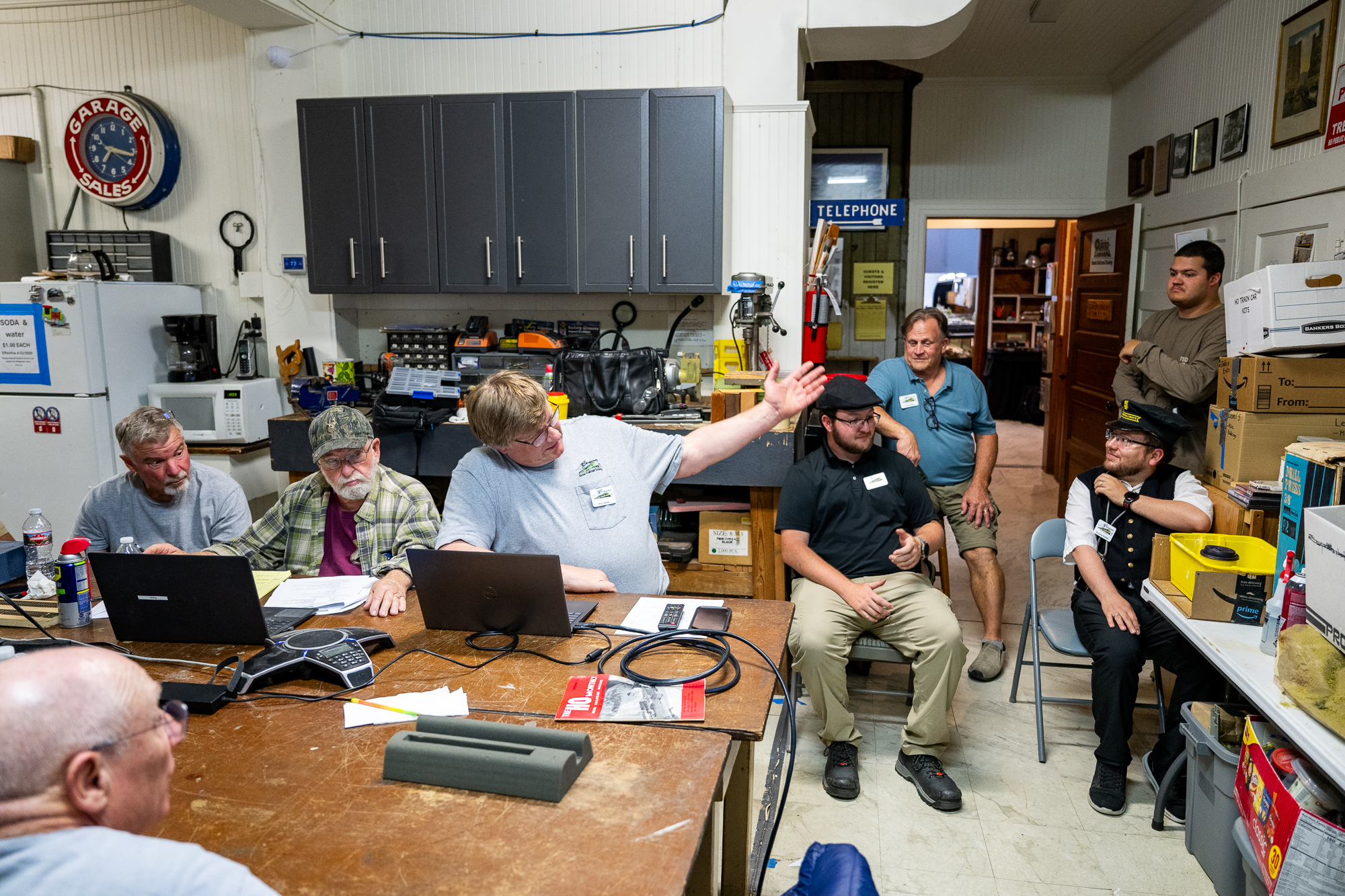
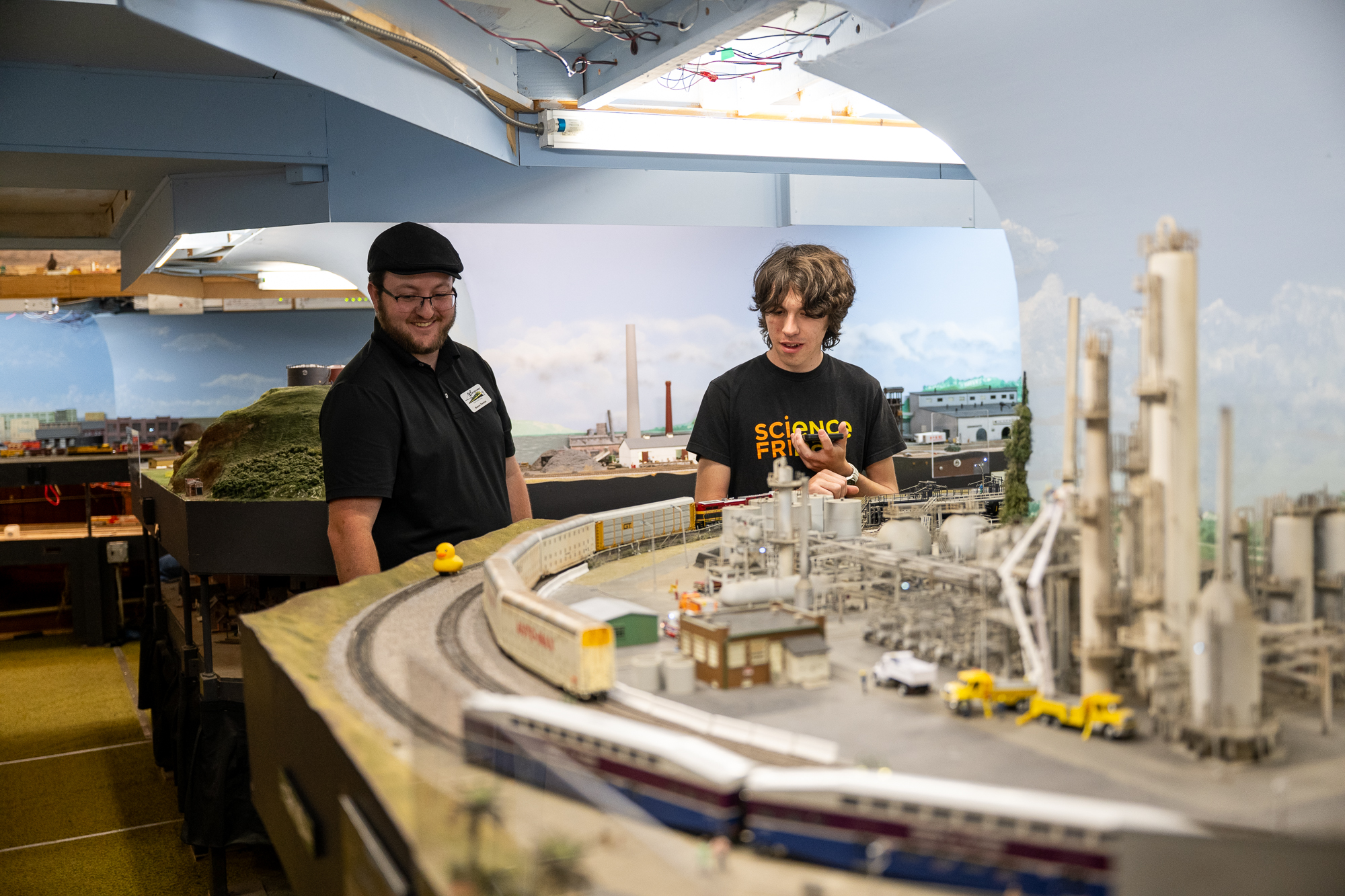
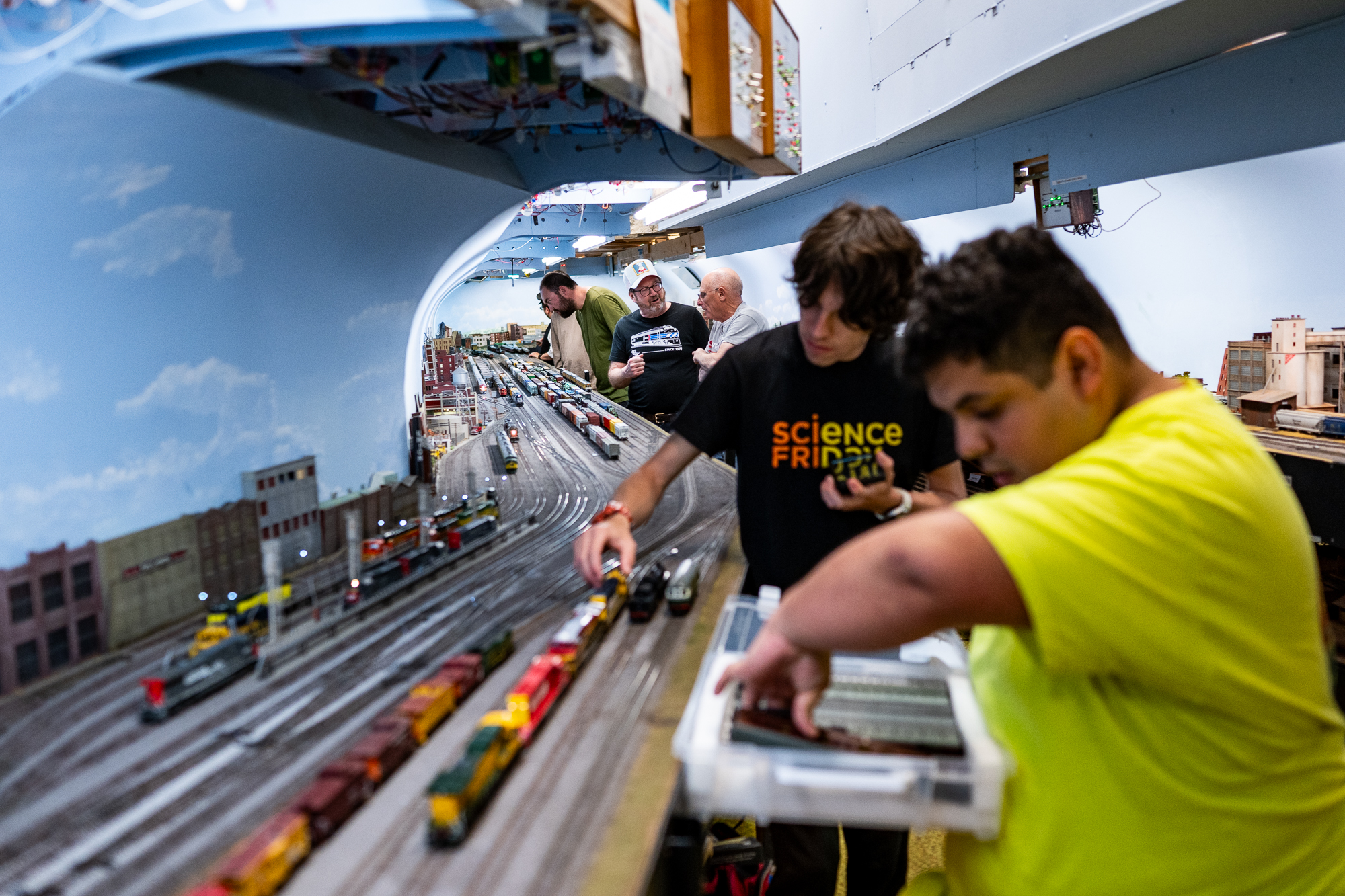
Faces of all ages appear in photos of the club’s current members, spread across one stretch of wall. According to Seibert, children and their parents make up around 40 of the members. Ethan Verrier-Colmenares, now 21, has been visiting CMRS since he was five years old. He became a member in 2020, and makes a point of attending every open house he can.
For Verrier-Colmenares, CMRS is about socializing with other people who share his interests, specifically, diesel-electric locomotives. He lists his collection: an EMD SD40-2, an early Dash 9, an AC4400, an SD39, a B36-7 and an ALCO FA. Some of these, he says, you can still see in your local rail yard, moving freight cars around.
‘They’ll teach me’
CMRS members tend to be just as enthusiastic about real-life trains as they are about model ones. Several older CMRS members were employed by railroads, and even helped build track. Seibert, Denton and Day have all been involved with the Niles Canyon Railway, a volunteer-run scenic rail in Fremont.
“We’re losing the generation that saw all this stuff when they were our age,” Denton says. “I mean, Dexter used to ride the Great Northern, now he models it, right?”
On a recent scenic work day, Cindy Huffstetter, wearing a CMRS hat, carefully dusts a green cargo car with a soft paintbrush. Her husband Steve, who passed away last year, was her entry point into the club.
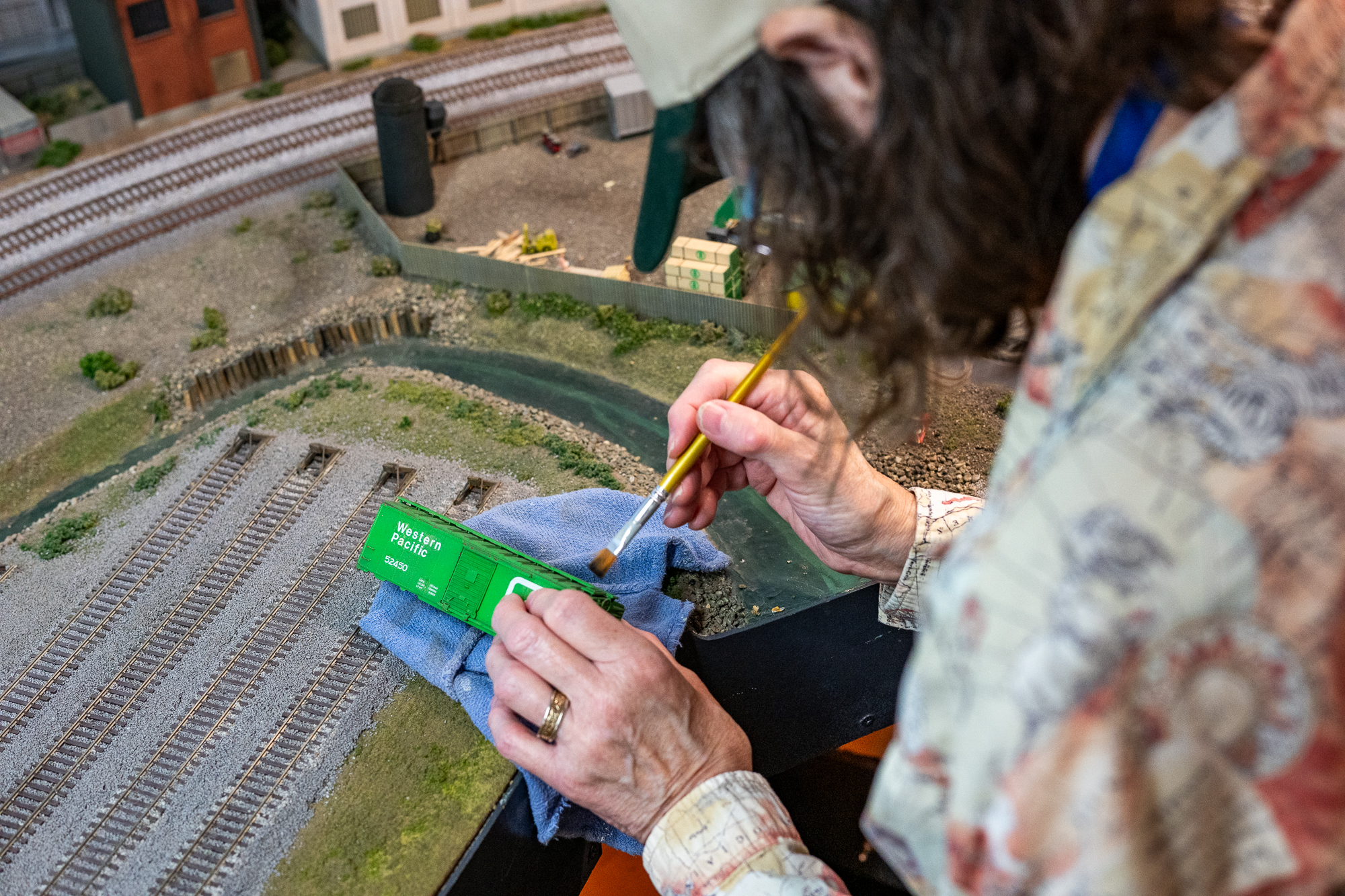
“My husband was the one who was really into all this stuff and was able to fix locomotives,” she says. “I don’t have any of those abilities. So I’m like, they’ll teach me.”
Today, she has graduated from dusting to gluing down figures in a scene. “Dexter is a great teacher,” she says. “He let me loose on the people in the parking lot at the church.”
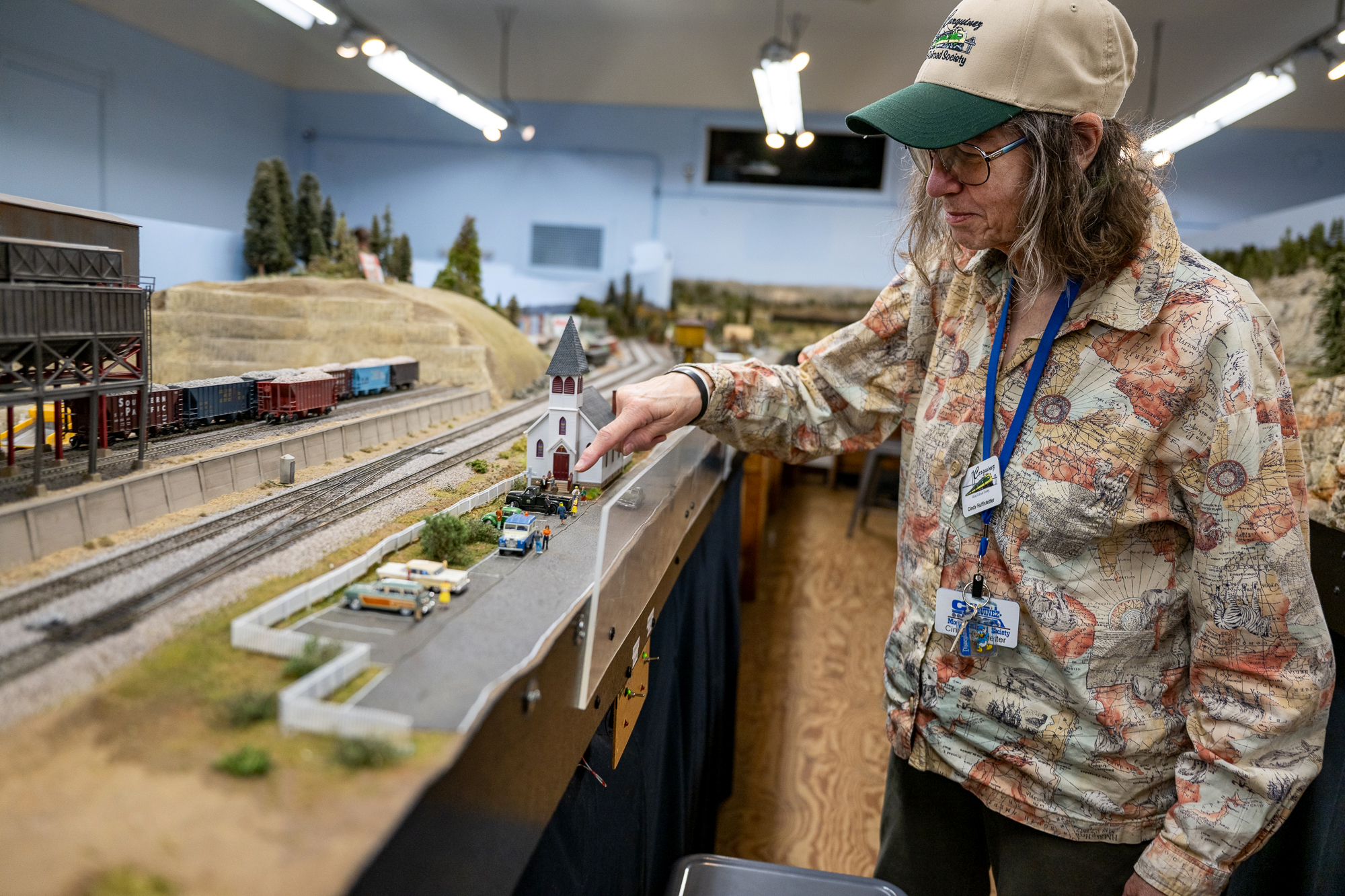
The white steepled church, built by her husband from a kit, now has a couple approaching its front steps, and kids playing in its fenced-in back yard. The sweet scene, like the rest of the layout, hugs the tracks; trains are at the heart of this small-scale universe.
Huffstetter lives close to the railroad tracks in Hercules, a fact her husband loved. Every time a train goes by, she says, “I think, that’s for you, dear.”