Is Roller Derby the Bay Area’s Queerest Sport?
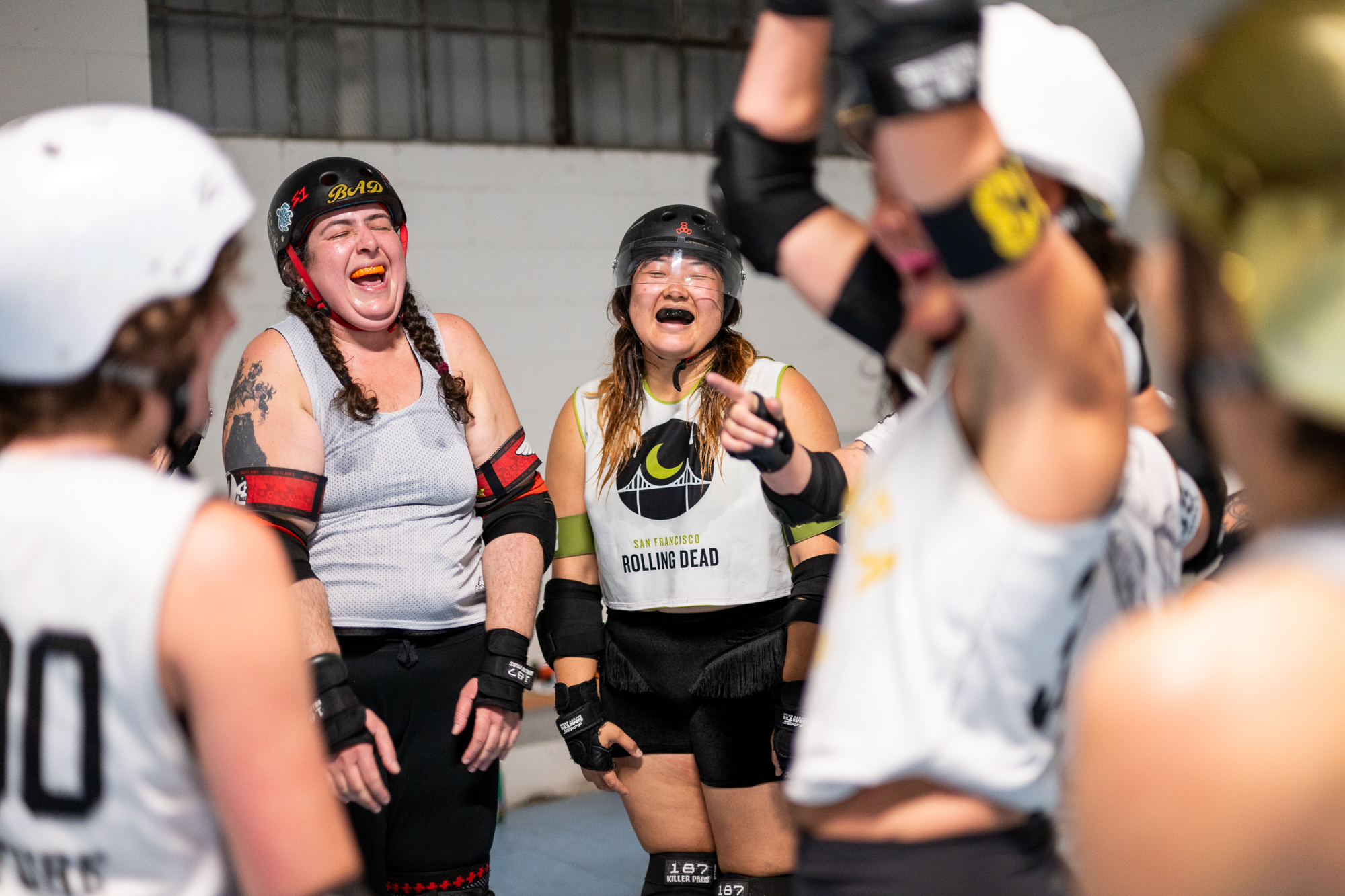
This story is part of Finding Your People, a series celebrating the Bay Area’s meetups and subcultures that bring people together IRL in an increasingly online world.
It’s the middle of May and roller skaters from all over the United States have descended on Richmond’s Memorial Auditorium for the Women’s Flat Track Derby Association’s North American West Playoffs. On an oval track, skaters face off in adrenaline-fueled bouts. Numbered torsos form twisted masses, limbs flail and flying bodies repeatedly hit the rink with echoing thuds.
Though for the uninitiated, this spectacle can resemble The Hunger Games on wheels, roller derby’s general premise is simple. Two single skaters (called “jammers”) try to break through their opposing teams’ circling packs (made up of “blockers”) to win points. For fans, these wheeled battles offer controlled chaos that consistently raises the heartrate. But for the skaters involved, roller derby also offers closeness and camaraderie players can’t find anywhere else.
Simrill Smith (roller derby name: “She Creature”), 26, found skating while studying civil engineering at Georgia Tech University in Atlanta. When she joined Yellow Jacket Roller Derby there, she was one of just five skaters. Under her leadership, that number grew to 80 by the time she graduated. (“I put a lot of heart into that,” she tells KQED.) After she moved to San Francisco two years ago for work, she reached out to Bay Area Derby (BAD) — a league comprised of four teams — to see if she could join.
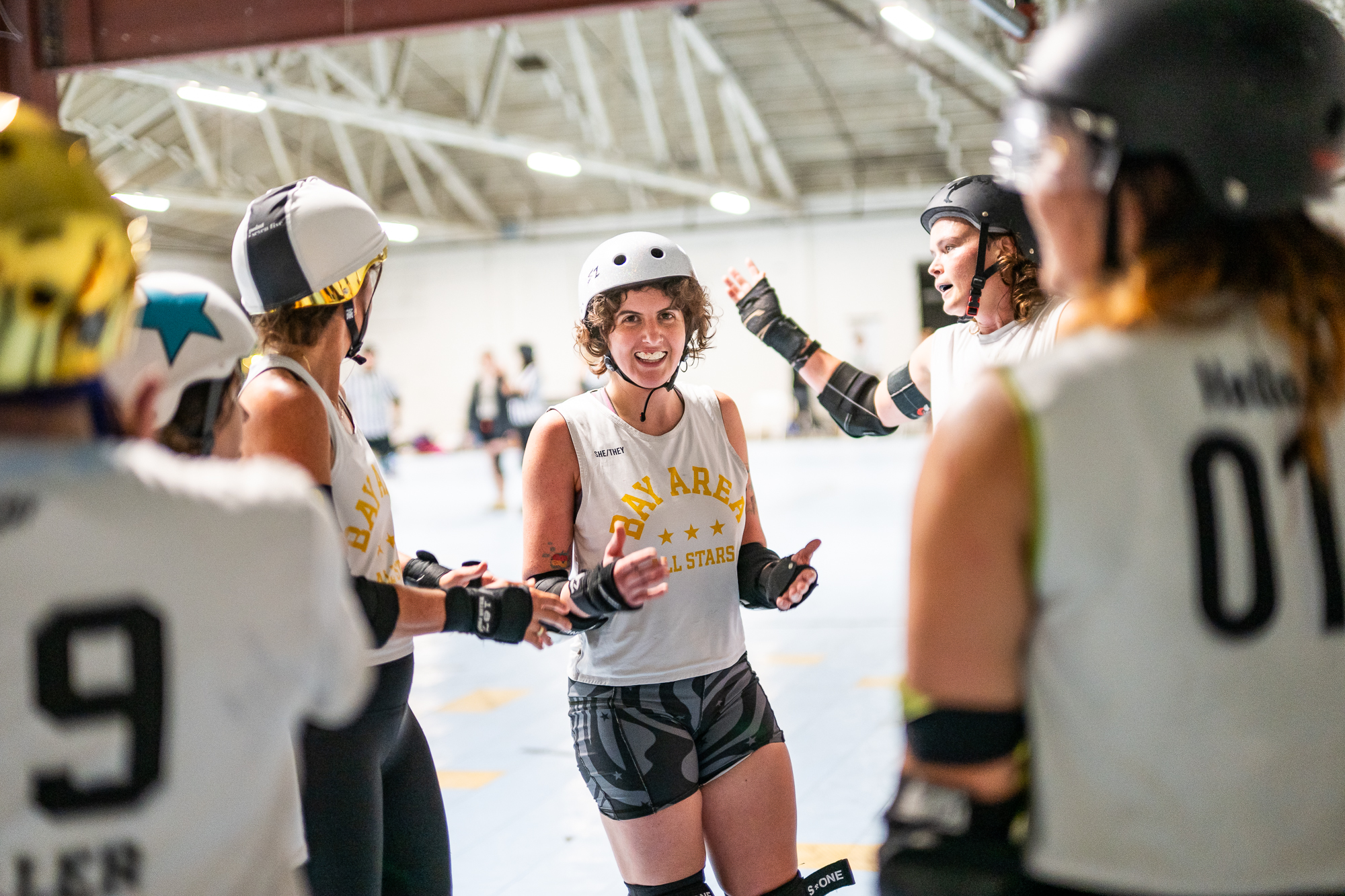
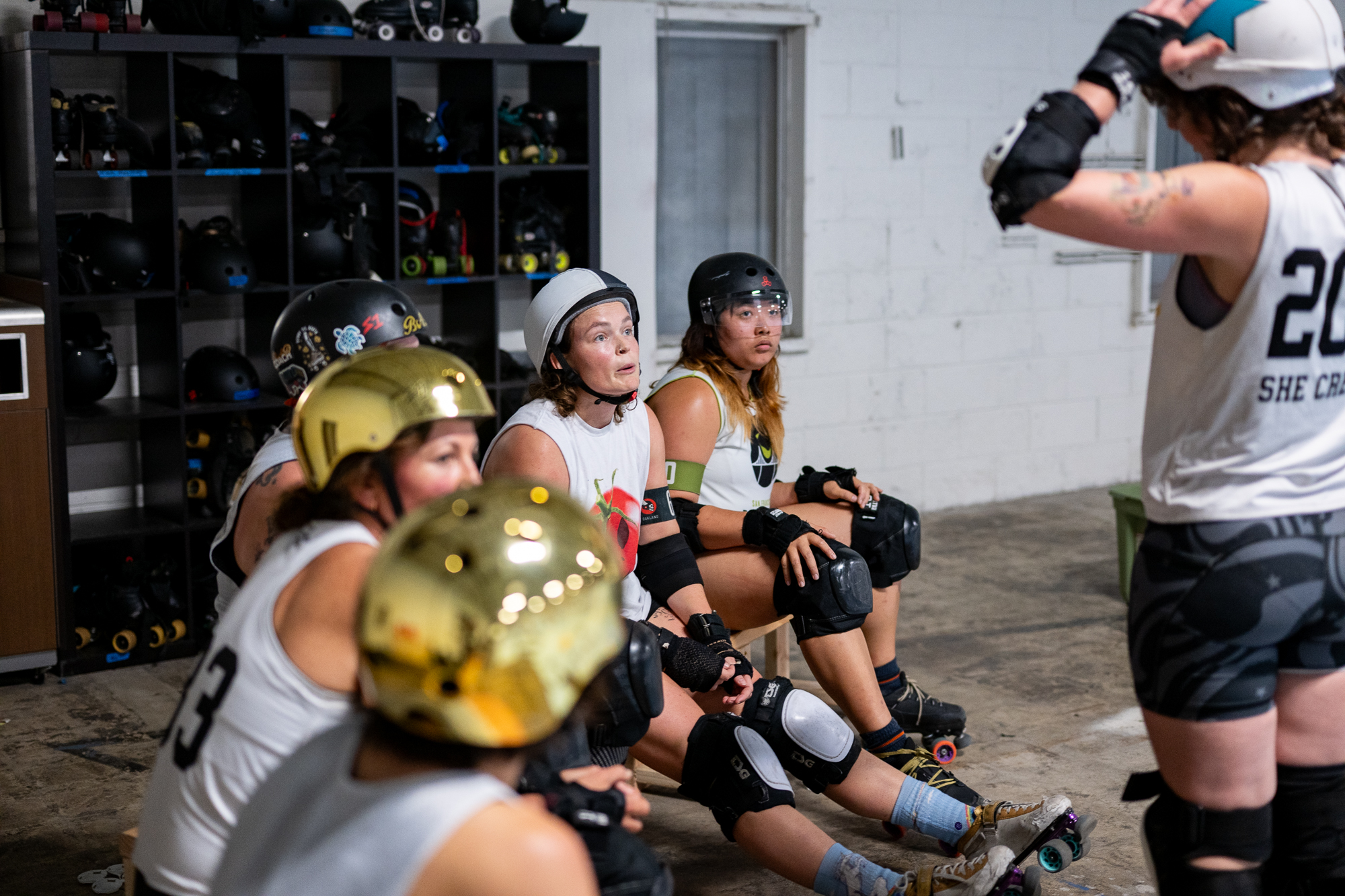
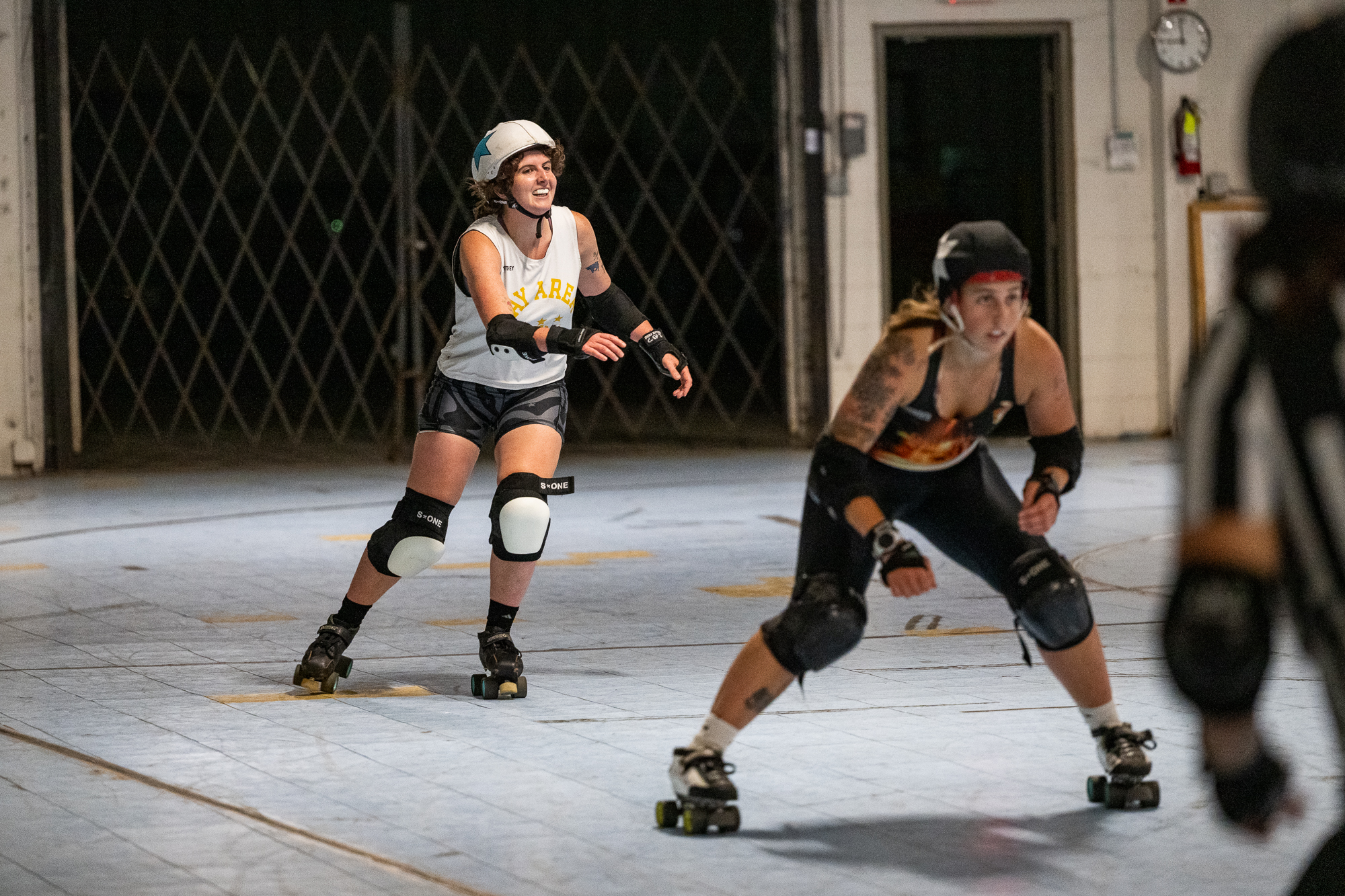
“Now skating is my biggest community here, too,” Smith says. “The nature of the sport being high contact means you have to bond with people because you have to trust them enough to get hit, and to be able to hit back. So you get really close.”
“It’s a really competitive community, but also really welcoming and rooted in a lot of queer [culture],” Smith adds, comparing derby names to drag personas.
Since its earliest era in the 1930s, roller derby provided a space where women could defy gender expectations. Ask anyone involved in roller derby now, and the skaters will talk about the importance of holding space for transgender and nonbinary athletes. Doing so, they explain, hasn’t just been a boost for the derby community, it has become an important example of what can flourish when anti-trans discrimination is prohibited.
“My roller derby community was there for me when I didn’t have a house,” explains Wesley Haack, a 31-year-old transgender tattoo artist who’s been skating in roller derby for 16 years. Haack (derby name: “ByeeeeeYonic”) transitioned years after he’d already fallen in love with skating, and found the support he needed from his derby comrades. “I didn’t have a family to go back home to. [Teammates] were really my everything. That’s what brings me back to derby again and again.”
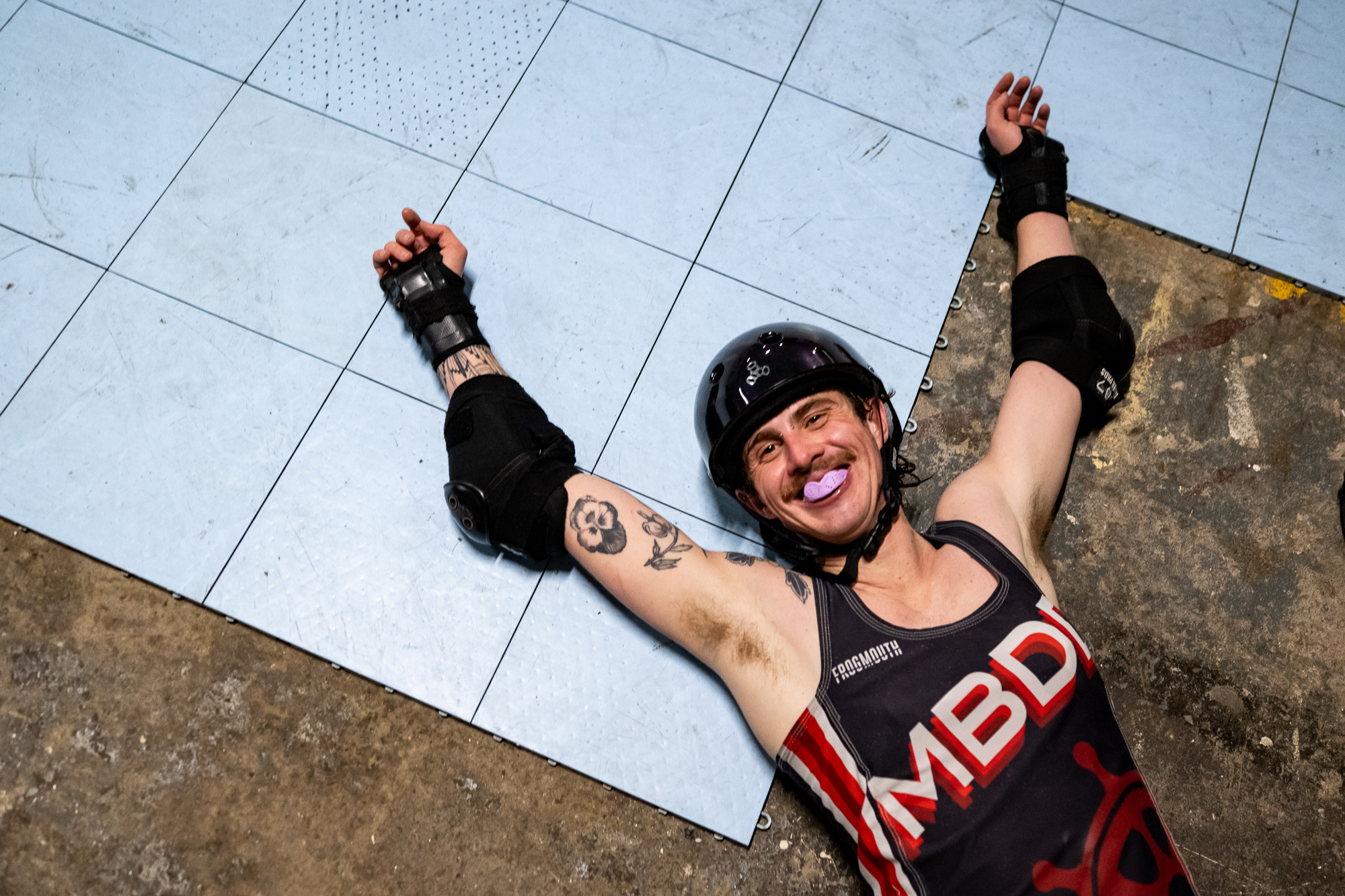
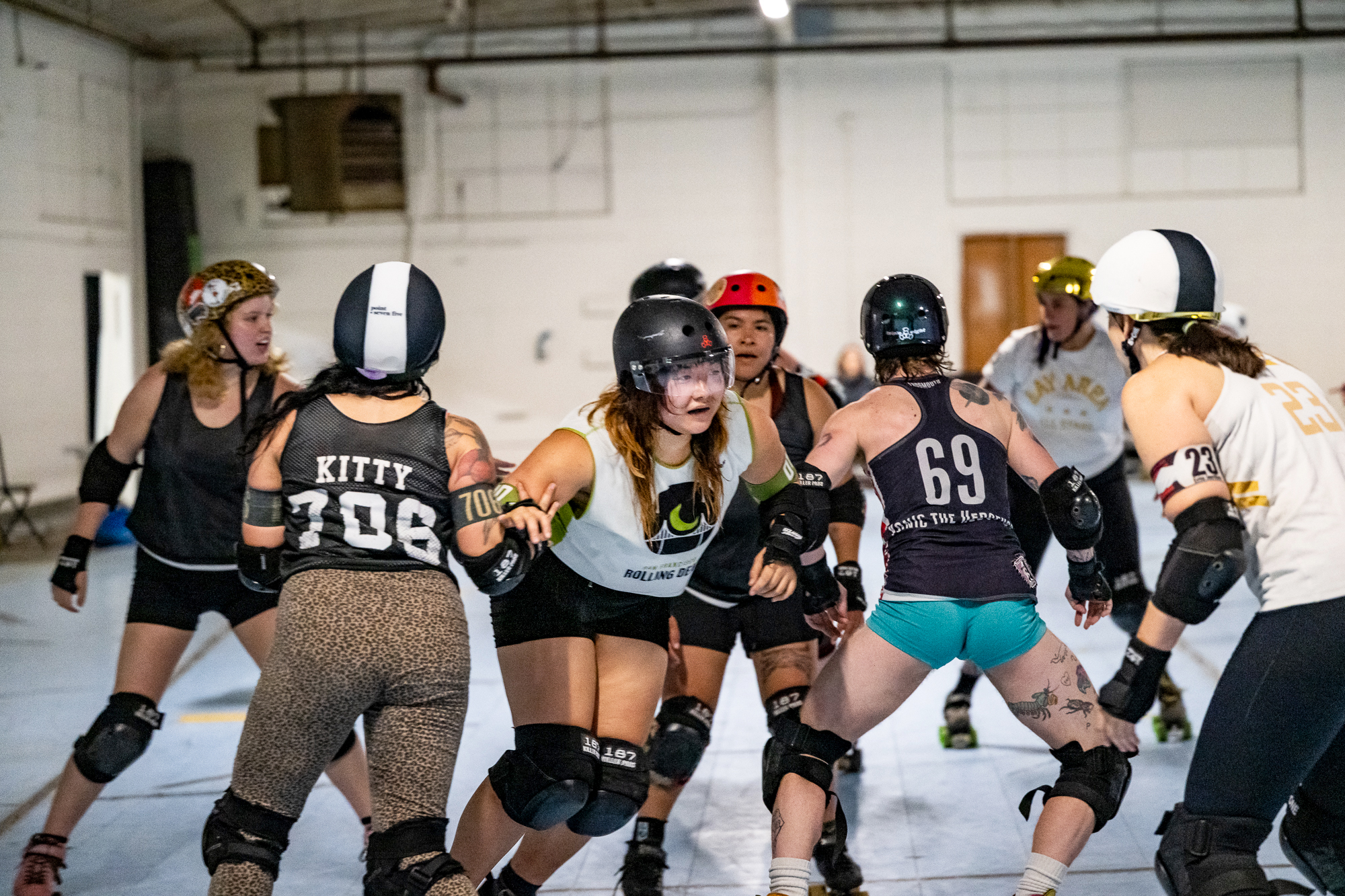
Haack, now based in Berkeley, skates on BAD’s home team and coaches the BAD All Stars. His life in derby started at age 15, when he found out the Sac City Bad Apples in Sacramento were looking for junior skaters.
“I think a lot of what appealed to me wasn’t something that I could put into words back then,” he says. “But as I’ve grown more into myself, [I realize] it was the queerness and the rebel, reject, outsider energy. Seeing Elliot Page in [the 2009 roller derby movie] Whip It, I felt like I saw someone really like myself.”
Haack pauses and laughs. “I wish I could’ve known what it was sooner!”
One of the things that keeps roller derby a safe space for LGBTQ+ people is its independence. The teams are skater-owned, run and organized. The attempts of larger sports organizations to enter the derby fray have been largely unsuccessful.
“About eight years ago,” Haack explains, “ESPN wanted to air our championships, but they demanded that we not have any names that were offensive. The WFTDA [Women’s Flat Track Derby Association] said ‘You know what? We’re good.’ They aligned with the skaters instead of the money. That is the heart of roller derby to me.”
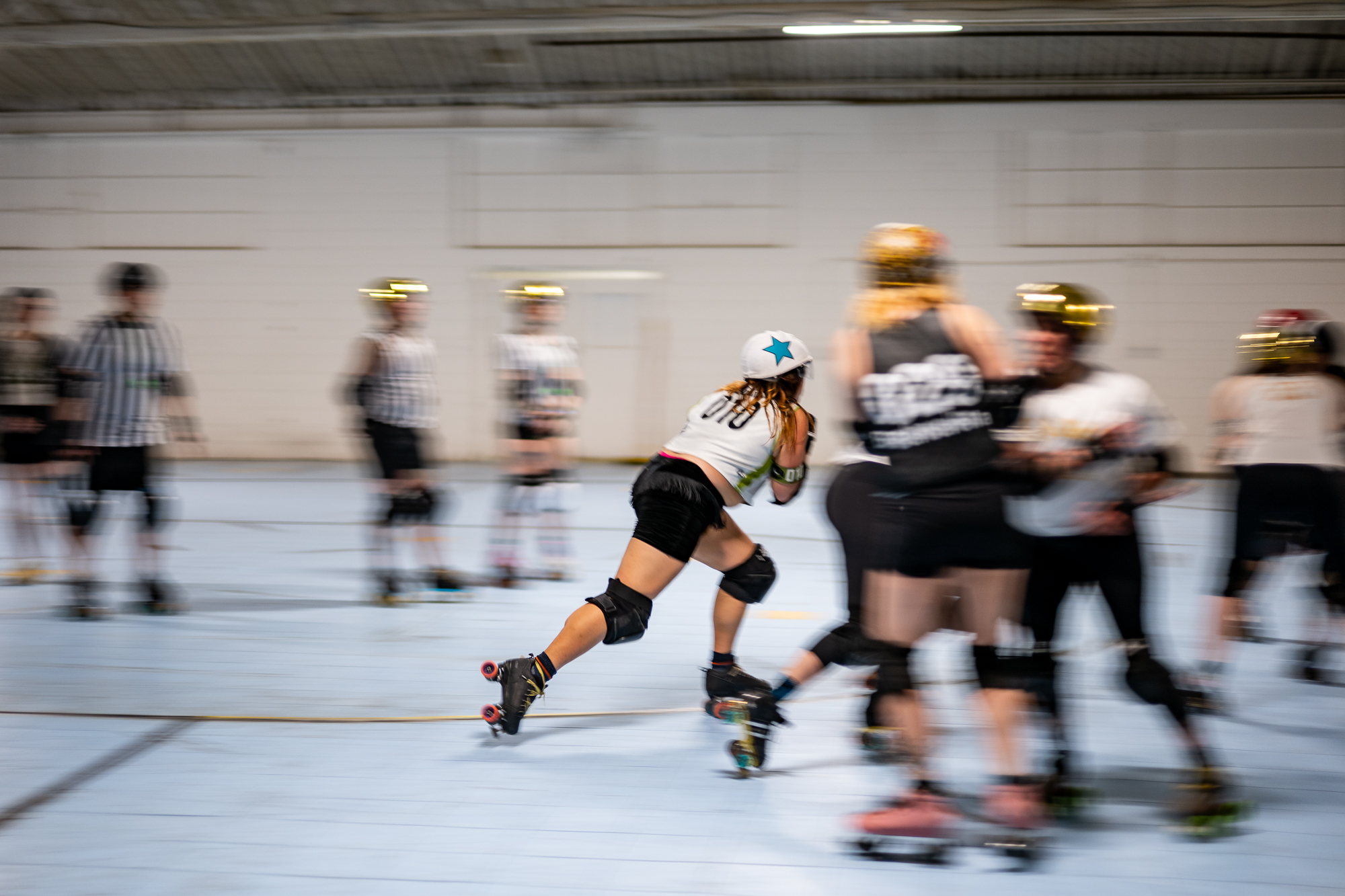
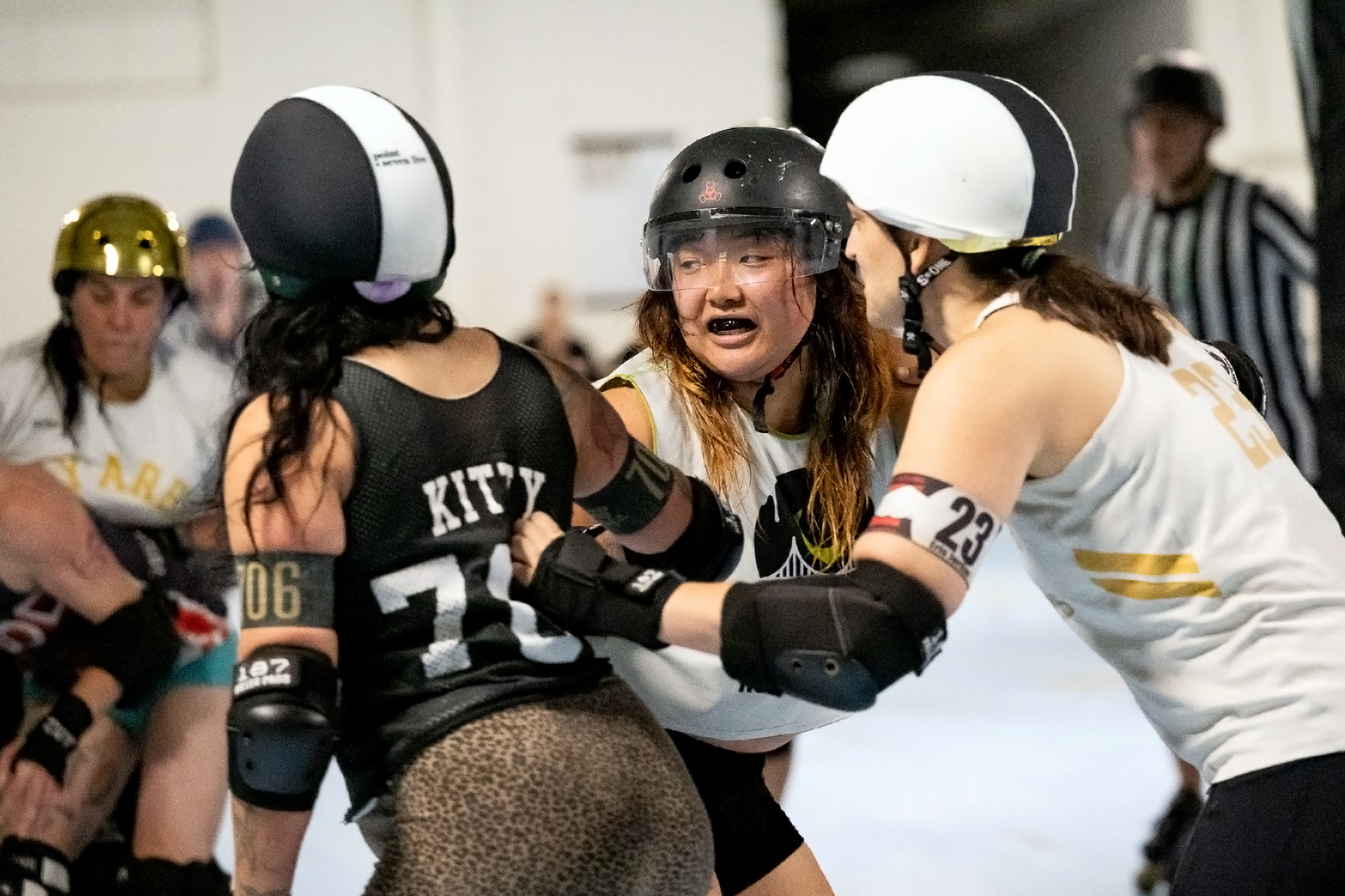
The risk of injury inherent in derby is another factor that keeps players close. Aya Newman (derby name: Ringo Scarr) is a 29-year-old blocker with the Oakland Outlaws who honed her skating skills in 2022 at one of BAD’s “Learn to Skate” clinics. The 5-week bootcamp is designed to get novice skaters good enough to participate in bouts. Unfortunately, Newman wound up breaking her ankle during her very first scrimmage.
“I knew immediately something was wrong,” she laughs. “I was there army crawling across the ground. My mom had to come pick me up!”
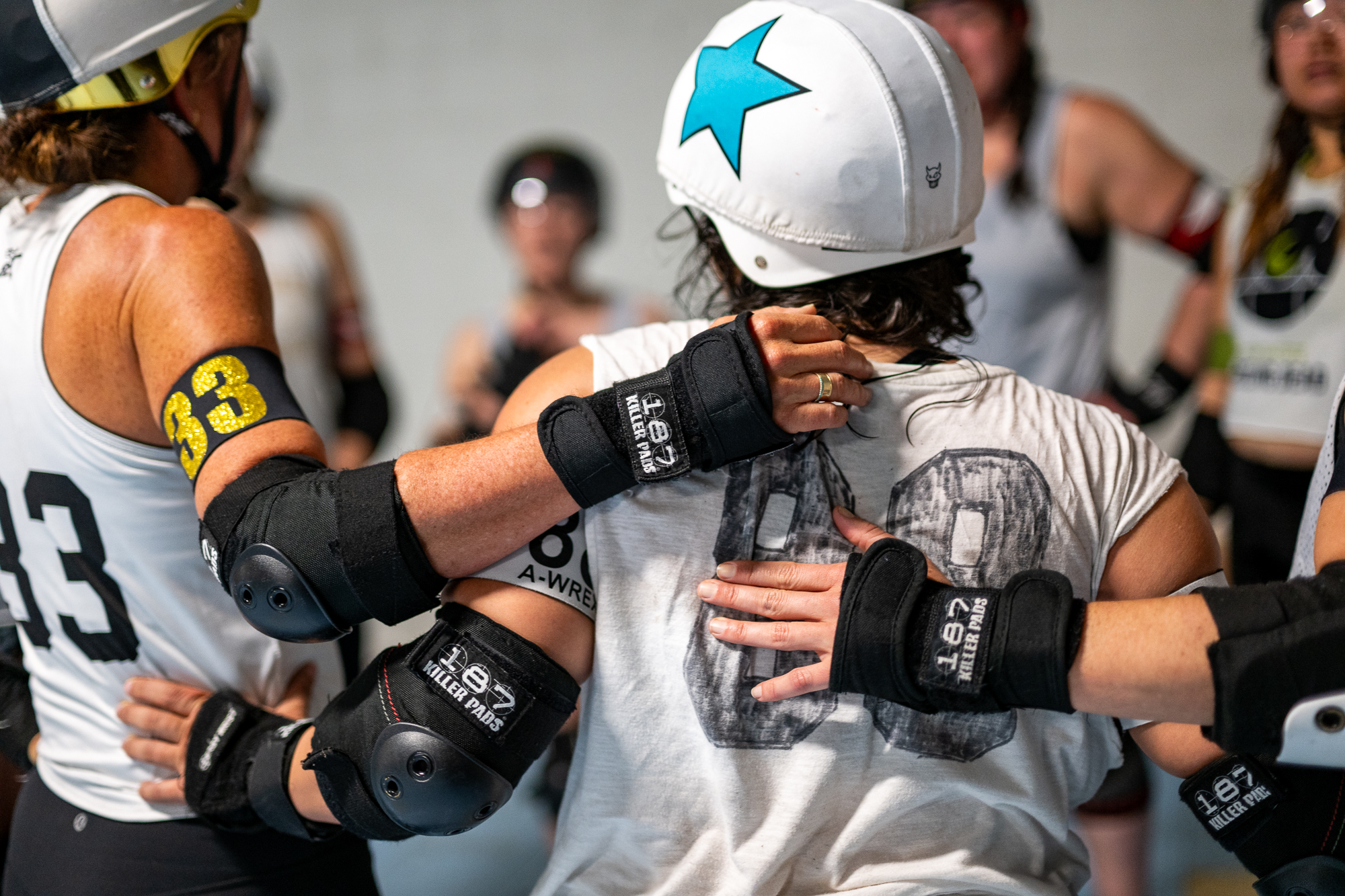
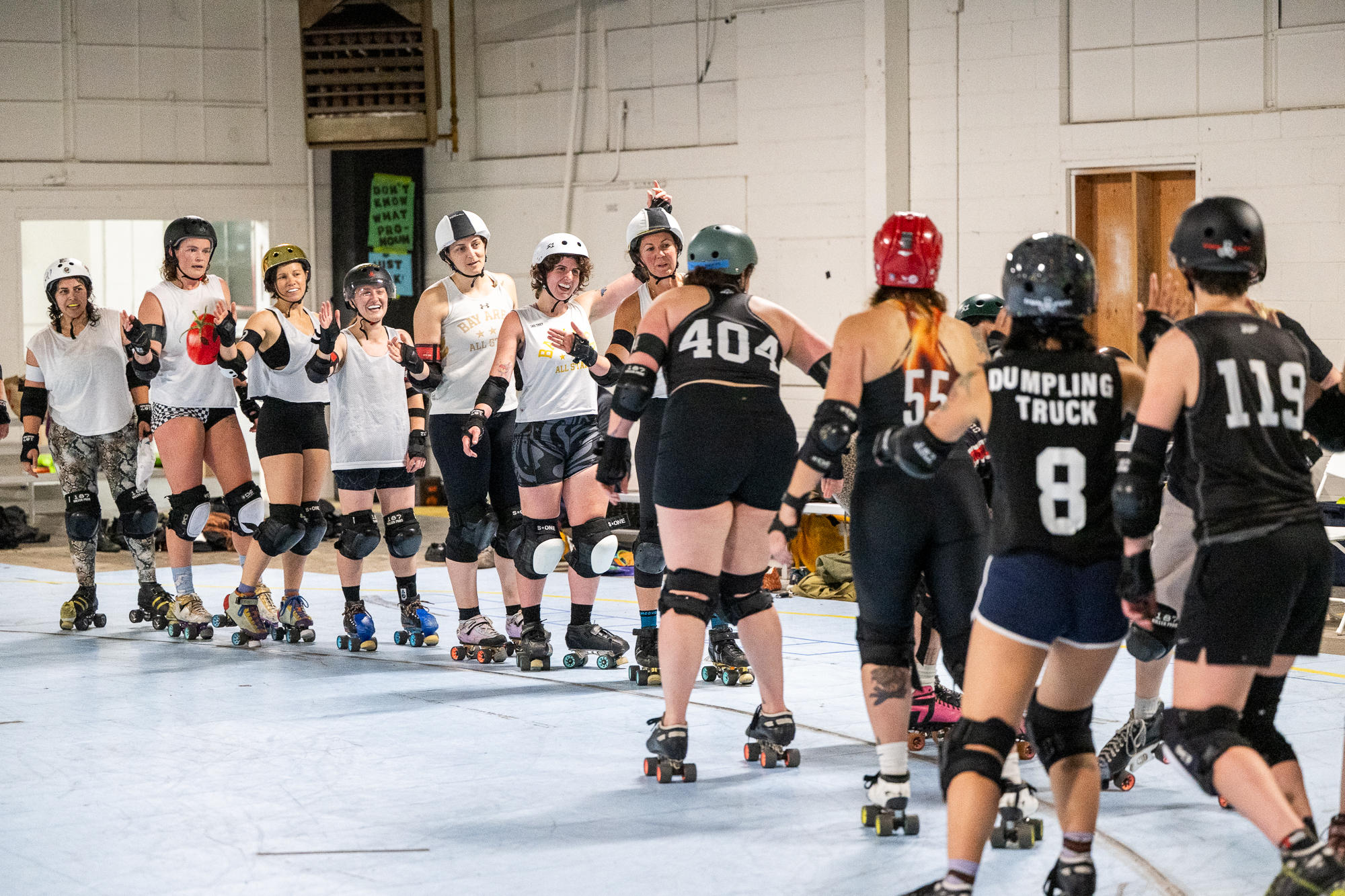
Newman’s ankle injury was so severe, she had to take 10 months off from derby. Despite the pain she endured, she couldn’t wait to return — thanks in part to the support of teammates during that downtime.
Though it’s still widely thought of as a women’s sport, today roller derby is a kind of commonwealth where everyone involved can live life beyond the binary, without fear of exclusion.
“I know the history of derby and I wonder if it’s always been really queer, but we’re just able to be more open about that now,” Smith says. “I just think it’s so cool to be involved in something where you get to be whoever you want to be.”
Bay Area Derby’s next match takes place Oct. 24 at Richmond Memorial Auditorium (403 Civic Center Plaza, Richmond), with the Oakland Outlaws facing off against the San Francisco Rolling Dead.