San Francisco Board of Supervisors, District 8

Why does this race matter?

District 8 encompasses the Castro, one of the city’s most prominent LGBTQ communities, as well as Noe Valley, Glen Park and Diamond Heights. San Francisco Supervisor Rafael Mandelman, a moderate, is terming out — the winner of this race could potentially shift the political balance on the majority-moderate Board of Supervisors.

Candidates

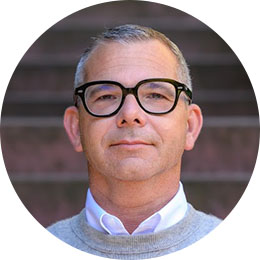
Gary McCoy
Gary McCoyFormer political director for Rep. Nancy Pelosi
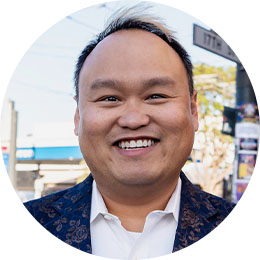
Michael Nguyen
Michael NguyenPatent attorney
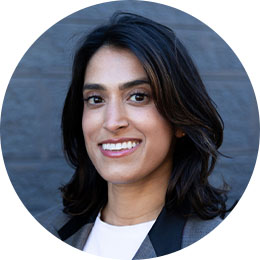
Darshini Patel
Darshini PatelCommunity advocate
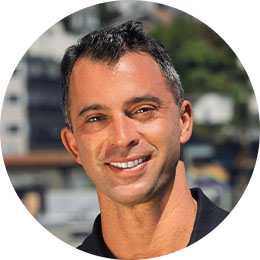
Manny Yekutiel
Manny YekutielFounder and owner of Manny’s
 

Positions on Key Issues

Candidate summaries are based on interviews with the candidates, questionnaires, statements made at debates and public events, and past news coverage.

Affordability is top of mind for most San Francisco residents and business owners. What policies would you push for at the local level to drive down the cost of living here?

McCoy wants to build more homes at all income levels, saying he would specifically look to build apartments at the old Pottery Barn site and the Castro Safeway. He said the city needs to adjust permitting and fees, while expanding legacy businesses and support for small businesses. “Housing costs are out of control,” he says. “We need to reform our building code to make it easier to build apartments and ADUs and affordable housing.”
Nguyen is focused on introducing social housing legislation to produce affordable, mixed-income and city-owned housing outside of the private market. He also wants to push for universal childcare, “since housing isn't the only cost squeezing families.” Nguyen supports a public bank and commercial rent control to keep small businesses from closing. He wants to see the state ease Proposition 13's corporate property tax limits to bring new revenue to the city.
Patel wants the city to build the more than 20,000 approved homes that are stalled from development and create a “public housing pipeline tracker” with enforceable timelines. She would also seek to shorten the childcare-subsidy enrollment from 12 months to 90 days “since childcare costs function as a second rent for young families.” Patel also wants the city to enforce the vacancy tax, which voters previously passed, “before asking residents for new revenue elsewhere.”
Yekutiel says “housing is the root of our affordability crisis” and plans to push to build 10,000 new homes in District 8 “through by-right approvals, a Market Street housing priority district and eliminating the fees and bureaucratic delays that make new housing more expensive.” He will also seek universal free childcare and push to remove the unified business license fee to give small businesses relief and enforce the residential vacancy tax to spur filling empty units.

Do you support Proposition 40, the state billionaire wealth tax? Why or why not?

McCoy supports Proposition 40, saying it will level the playing field for working people at a time when the federal government has cut taxes for the wealthiest Americans. “As California becomes more and more unaffordable, billionaires should pay their fair share in taxes to fund services that we all rely on,” he says. 
Nguyen supports Proposition 40. “California needs this money now. Medi-Cal and the services working families rely on are facing major cuts, and Prop. 40 asks a very small number of the wealthiest Californians for a one-time contribution to protect health care, food assistance and education.” He says questions about Proposition 40’s implementation shouldn't stop the state from pursuing this opportunity for crucial revenue.
Patel supports Proposition 40 and says she has supported similar taxation efforts at the local level, such as San Francisco's Overpaid CEO Tax, which failed to pass in June. “The people benefiting most from current economic conditions should invest the most in fixing them,” she says. “A one-time tax on billionaires' wealth to fund healthcare, food assistance and education is a reasonable ask in a state with a real affordability crisis for everyone else.”
Yekutiel does not support Proposition 40, calling the one-time state tax measure bad policy. However, he does support increasing taxes on the ultrawealthy. “The concentration of extreme wealth in our country, especially at a time when so many Americans are hungry, sick and homeless, is wrong,” he says. “We need to tax wealth more, close tax loopholes and make all levels of government better at deploying that revenue to ensure trust and confidence.”

Is the city moving in the right direction on outdoor drug use and homelessness? What would you push for as a supervisor on these two issues?

McCoy experienced homelessness in San Francisco during his 20s and says the status quo addressing the issue “is failing everyone.” He wants to implement a block-by-block approach in District 8, he says, “so that my team is aware of every person who is living on our streets and can connect them to treatment and housing as beds open up.” He says the city must invest in behavioral health crisis teams as an alternative to police.
Nguyen says the city is moving in the wrong direction on homelessness and drug use and wants to see the city invest in harm reduction and housing-first approaches to homelessness. He wants to utilize the “four pillar model,” which combines prevention, treatment, harm reduction and public safety. “I oppose sweeps that just move people along without a genuine offer of shelter or treatment,” he says.
Patel says the city is not yet heading in the right direction, saying that the focus on enforcement “just relocates the problem, and inflow into homelessness still runs roughly three to one against outflow.” Patel wants the city to share better public data on linkages to shelter and shift the city’s resources towards prevention of homelessness. “Keeping someone housed costs a fraction of what shelter or emergency response costs after the fact,” she says.
Yekutiel believes the city is moving in the right direction and that “the pace should be faster.” He would seek to expand the authority to place people in short-term care without requiring a conservatorship. He also wants the city to add more sober housing. “Open-air drug use on our streets is not acceptable,” he says. “But it ends only when enforcement and treatment capacity work together, not when we simply move people.”

What is your opinion on how San Francisco police responded during this year’s Trans March and Stud Alley parties, which ended in multiple arrests and charges against some attendees? What would you like public safety at the city’s Pride events to entail or look like?

McCoy participated in this year’s Trans March and says he witnessed the police response. “At a time when trans people are under attack nationwide, police using force against a peaceful crowd erodes trust and does nothing to make us safer,” he says. He says the SFPD should not have a militarized presence at any Pride or LGBTQ+-related events and that officers at these events should receive training in cultural competency and de-escalation.
Nguyen says the response made him angry. He supports Supervisor Jackie Fielder’s inquiry into the raid and wants to see more accountability from the SFPD and Mayor Daniel Lurie about the events. “Riot gear and tactical units swept a queer street party that had run peacefully for years,” he says. “Pride safety should mean traffic cops directing traffic, not militarized police. Celebrants shouldn't fear police at their own Pride.”
Patel condemned SFPD’s response at Pride and supports Supervisor Jackie Fielder’s inquiry into the events. “Riot gear and tactical units responding to a dance party that had run peacefully for six years was disproportionate on its face,” she says. “Pride weekend should feel safe for the community it celebrates, not like an occupation.”
Yekutiel says that “any use of force that is excessive is wrong, and any safety platform that doesn't hold law enforcement accountable for it isn't a real safety platform.” He says that public safety approaches at Pride should be “built on community partnership, not tactical deployments,” meaning early outreach to event organizers, simple permit pathways for events like Stud Alley and focusing on de-escalation and respect for the queer community.

What is your plan to increase ridership on public transportation and improve the city’s Muni system overall?

McCoy supports measures on the November ballot to fund public transportation. “Muni is the lifeblood of our city,” he says. “Over and over again, riders tell us that transit frequency and reliability are what matters most to them. We need to get the basics right — clean and dependable service that arrives on time.” As ridership has improved, McCoy says he would work to protect the Muni budget and expand service.
Nguyen wants to expand free Muni for youth under 26 “so young people build the habit of riding transit instead of driving,” he says. He wants to reduce wait times for buses during peak hours so that popular lines come every 2 to 3 minutes. Nguyen says he'd seek to fund SFMTA through new revenue rather than increasing fares and more strongly enforce the city’s Transit First mandate.
Patel supports the November transit measures and wants to see SFMTA publish route-level performance data so the public can see how their transit system is doing. She wants to push for the train control upgrade that is already underway and bus-priority corridors with dedicated lanes. “Reliability, not just service cuts or fare changes, is what actually brings riders back,” she says.
Yekutiel is a former SFMTA Board commissioner and says the experience taught him how “riders leave when buses don't show up reliably — and come back when they do.” He supports the Connect Bay Area regional transit measure to stabilize funding and expand bus lines. He would push for more bus-only lanes and enforcement, more housing near transit stops and seek ways to hold SFMTA accountable for service performance.

Key Supporters

This list represents notable organizations and individuals who have taken a position on the ballot measure or candidate, or who are funding campaigns in support or opposition. This list is not exhaustive, and may be updated.

For McCoy

  • Cleve Jones, human rights activist 
  • Nancy Pelosi, U.S. representative
  • Mano Raju, public defender, San Francisco
  • California Working Families Party
  • San Francisco Tenants Union

For Nguyen

  • Tom Ammiano, former California Assembly member
  • Sandra Lee Fewer, former supervisor, San Francisco
  • Dean Preston, former supervisor, San Francisco
  • United Educators of San Francisco 
  • Working Families Party

For Patel 

  • N/A

For Yekutiel

  • Eleni Kounalakis, California lieutenant governor
  • Daniel Lurie, mayor, San Francisco
  • Rafael Mandelman, supervisor, San Francisco
  • GrowSF
  • San Francisco Democratic Party
Player sponsored by