San Francisco Unified School District Board of Education

Why does this race matter?

Eight candidates are vying for three board seats as San Francisco’s public school district  strives for stability after a historic strike, budget hardships and enrollment decline. After an election in which outside groups plan to break spending records, elected members will oversee an enrollment system overhaul, possible school closures and lofty achievement-goal deadlines.

Candidates
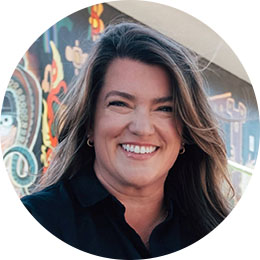
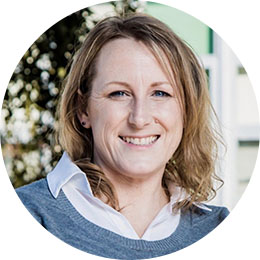
Autumn Brown Garibay
Autumn Brown GaribayExecutive vice president, Flynn Elementary Parent Teacher Association
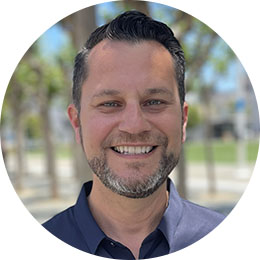
Virginia Cheung
Virginia CheungPublic school parent and nonprofit executive
Alida Fisher
Alida FisherMember, San Francisco Board of Education
Ryan Hazelton
Ryan HazeltonExecutive director, Mariposa Kids
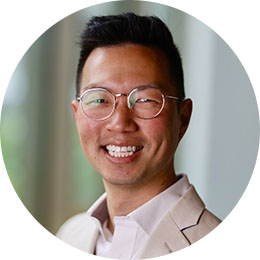
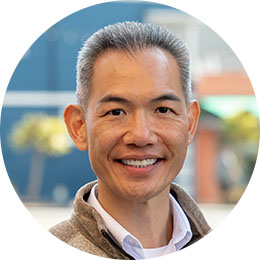
Phil Kim
Phil KimPresident, San Francisco Board of Education
Laurance Lee
Laurance LeeSmall business owner
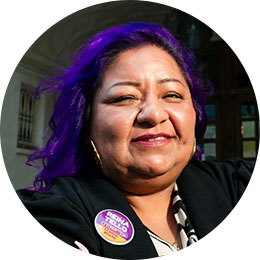
Reina Tello
Reina TelloCommunity organizer and public school parent
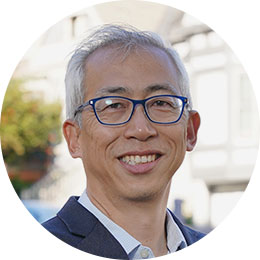
Tim Tung
Tim TungPublic finance analyst
 

Positions on Key Issues

Candidate summaries are based on interviews with the candidates, questionnaires, statements made at debates and public events, and past news coverage.

San Francisco’s school board will be asked next year to approve a revised student assignment system after nearly a decade of work to change the lottery-based system. What goals should the new system prioritize, and what kind of system do you believe can accomplish those goals?

Brown Garibay believes families should have access to neighborhood schools, but she says the district needs to consider and adjust investment in those schools with equity in mind. “We have not taken care of all of the schools in our neighborhoods in an equitable way, so if today we suddenly say you must go to your neighborhood school … that’s not fair,” she says. Brown Garibay says the process should also be iterative.
Cheung believes families’ choice and access to equitable schools should be the district’s priorities. She supports a zone-based system but doesn’t offer firm solutions for how SFUSD can maintain family choice while assigning students based on geographic zones. Cheung says she believes the district is “skirting around the deeper issue of quality across the district.” Having worked for Head Start, she says families should know that “SFUSD isn’t the only option” for early childhood education.
Fisher says she’s still weighing what the best model for enrollment is. She says she wouldn’t accept a system that requires families to give up school choice in exchange for a zone-based model until the district addresses inequities so that all have access to a school that is well-resourced and desirable. She also says the new system must ensure equitable access to special education services.
Hazelton believes that proximity and predictability for families should be prioritized in the new enrollment system. He supports a zone-based model, in which students would be assigned to a neighborhood school close to their home. Simultaneously, Hazelton says the district should improve equitable resourcing of all its schools so that families “don't feel like they've lost out.” He says parents should retain the option to apply to citywide language immersion and K-8 programs.
Kim says the board and district need to outline the academic experience they want to ensure for all students and “build a portfolio and enrollment system that matches that.” He says if the district is going to place students at a neighborhood school, officials need to be able to guarantee certain resources. Some specialized programs, he says, likely can’t be in every part of the city, and those should be accessible to families farther away.
Lee says that creating a new enrollment system will be challenging, since different neighborhood populations have different concerns. He contrasts schools on the west side, where the majority of families want to stay local, with those around the Bayview, where Lee works weekly with an elementary school class. He  says that at some schools in that area, “19 out of 20 parents don’t want to have their kid” there. While Lee leans toward a zone-based enrollment system, he says, “I don’t have any solutions, but it should address the major top concerns.”
Tello believes that families want to send their kids to schools in their neighborhoods if there is a “great” school close by. She says part of the enrollment overhaul needs to bring more resources, as well as language and specialized programs, closer to families who currently bus to farther schools. Students who have special needs that can’t be met at their neighborhood school, she says, should be allowed to enroll elsewhere.
Tung says that families want predictability, but also choice — priorities that he admits cause some tension. He says the lottery creates anxiety and drives families away, so he supports a zone-based system. But he says families should be able to indicate their preference for schools with programming that’s not available in their neighborhoods. “They should still have access to those options … if they’re willing to make that sacrifice to go further away,” he says.

SFUSD administrators and fiscal experts have been saying for years that the district might need to reduce its footprint — or close and merge schools — as overall enrollment declines. Do you agree that a school closure process will be necessary, and if so, what would guide your approach as a board member?

Brown Garibay believes school closures could be necessary. She says the district needs to explain to families that keeping all schools open doesn’t translate to smaller class sizes and better student outcomes but in some cases may result in campuses with many combined classrooms and slim specialized programming. She says the district needs to engage with affected schools to ensure that newly merged campuses “stitch together” their cherished programs and traditions. 
Cheung says declining birth rates are leading to lower school enrollment, and there’s “definitely a need to consolidate some resources.” But she says the decline isn’t consistent across the city; southeast neighborhoods like Mission Bay have growing school-age populations to consider. She believes the district should engage affected communities and ensure that school changes improve student outcomes. She’d support repurposing some property to house learning “hubs,” health services and community organizations or to create housing.
Fisher says the district has 14,000 empty seats and needs to go through a closure process — not to save money short-term, but to create fewer, better-resourced schools. In the process, she wants to ask families in schools that might merge what programs and services from their former schools they would want or need to see in a new school to make it a transition they could consider.
Hazelton says school closures shouldn’t be a means to close a budget gap but could be a way to improve school resources and outcomes. He says SFUSD is designed to serve 14,000 more kids than it does, and an improved student assignment process and expanded language offerings won’t “close that gap.” In the closure process, Hazelton says affected families and teachers should have a voice in envisioning their new schools.
Kim believes that while SFUSD needs to consolidate schools, it should not and cannot be through a mass closure process. Kim says SFUSD should learn from the proposed 2024 school closures and be more transparent about the difficulty for families. Kim would like to see schools that might merge brought together to discuss what makes their communities special and how to preserve those aspects in the transition.
Lee believes that the district’s priority should be its finances, and whether consolidating schools will be worthwhile depends on its financial impact. “If that means consolidating schools, I'd be open to that,” he says. “Moving schools might be hard, but that might be something.” Lee believes the district has a good record of conducting listening sessions but needs to ensure “the feedback comes into the plan.” He says closures make sense if done well.
Tello says the district hasn’t done enough work to engage the community and assess resources and program needs to close schools. She says there are 30,000 kids in private schools who can be brought back to SFUSD, and argues that last year’s educator strike showed “how much money is left at the district.” Tello would support a closure if the school community was OK with it but wants to see a “more thoughtful process.”
Tung says the district is spreading its resources too thin by operating as many schools as it does. “We’re not able to provide them with a full range of academic, social programs, enrichment activities and opportunities,” he says, adding that “we have to have a conversation as a community” about whether that is acceptable. Tung believes SFUSD likely needs to make some closures and mergers but should do so with empathy and community feedback.

How do you think the school district can boost enrollment, and where should it focus its efforts to recruit students?

Brown Garibay believes enrollment efforts should focus first on retention. That, she says, will require better communication with families: “knowing what your kid is doing in the classroom, knowing what the [student] outcomes are supposed to be and consistently knowing whether or not your kid is making the mark.” She’s also seen how improving a school’s marketing can boost its public perception since running campus tours at her children’s elementary, Flynn, for six years.
Cheung says excellence across the district will attract enrollment. She wants the district to prioritize providing language programs that families want, like a K-8 Mandarin immersion school planned for next year, as well as art and STEM programs. She says teachers should get more professional development and support, and that parents need support to set up parent-teacher associations and build a stronger sense of community on their campuses.
Fisher believes the district can boost enrollment by improving programming to match families’ needs, like expanded language immersion options. She also says that some resources cut in the "pendulum swing” to fiscally stabilize SFUSD should be reinvested in — like clerks and wellness staff. Both are essential to combat chronic absenteeism, which she says has a bigger impact on the district’s budget deficit than underenrollment.
Hazelton says the district should invest in desirable language programs, many of which have long waitlists every year. He also believes creating a smooth enrollment process and rebuilding community trust will attract families back into SFUSD. To counter enrollment drop-offs at the middle and high school levels, Hazelton says SFUSD should invest in its marketing to show families “why the schools they're looking at have great programs for them.”
Kim praised the district’s recent efforts to increase specialized programming — like a K-8 Mandarin immersion campus planned for next fall and a new special-education-focused campus opening in October. “That is an investment,” he says. He also says the district should continue expanding transitional kindergarten as both a recruitment and retention strategy.
Lee says the district should focus efforts on responding to where there is demand from families —  for instance, for language immersion and other specialized programs. He says that while volunteering at Drew Elementary School for the last year, he’s seen enrollment tick up alongside students’ reading proficiency rates. “People want to see that it’s a good direction,” Lee says.
Tello says as a community organizer, she thinks about where the base is. She says  she would focus recruitment in transitional kindergarten classrooms and preschools and “even planting the seed at hospitals and pediatricians.” She believes the district should also put more focus on highlighting the strengths of its schools.
Tung says SFUSD should focus on retaining existing students and collecting more data to understand when and why families leave the district at the middle and high school levels. He also believes investing in high-quality specialized programs, like language immersion and expanding transitional kindergarten, will attract families. While decreasing chronic absenteeism doesn’t change enrollment, Tung believes it is also key, since enrollment-tied funding depends on daily attendance, not just enrollment.

San Francisco’s school board has set goals for 70% of third graders to read at grade level and 65% of eighth graders to reach statewide math proficiency by 2028. What should the board do to ensure that schools reach these benchmarks?

Brown Garibay says standardizing math and reading curriculum was pivotal, but now the board needs to empower the district to invest in more continuing professional development for educators being asked to significantly change how they teach. She also says the board should ensure that the district’s reading and math goals are reflected in schools’ Plans for Student Achievement. Based on her own early analysis, many campuses’ stated goals “do not match the district’s.” 
Cheung says the board should develop strategies to meet its literacy and math goals and measure the effectiveness of those strategies. She believes addressing chronic absenteeism and making sure that students in “high-disparity neighborhoods” have the support they need to show up in the classroom will improve overall student outcomes.
Fisher points out that the board's role in ensuring that student outcomes improve is to set goals, give the superintendent the resources to implement programs that can meet those goals and hold the superintendent accountable to do so. “It’s not our job to ask the superintendent to do one initiative; it's our job to ask her … to decide what strategies are going to be most important … and put the funding behind it,” Fisher says.
Hazelton says that as the overseer of the budget, the board needs to explicitly connect its spending to “Vision, Values, Goals and Guardrails,” its road map for framing decisions. He believes that teachers need additional professional development and guidance to implement new curriculum consistently. Hazelton says running a nonprofit helped him understand that an organization trying to make a large improvement needs investment. Reducing chronic absenteeism would increase revenue and ensure that more kids are learning.
Kim says the board’s role is to set the achievement goals and ensure that the budget proposed by district leadership is aimed at achieving those goals — a mismatch that almost jeopardized SFUSD’s annual budget last spring. He says that in this year’s budget process, he’ll be looking to staff members to identify and back strategies they believe will improve student outcomes and budget how they’ll pay to implement them.
Lee says the board should not accept delays in reaching district reading and math goals, like it did in June when it unanimously shifted the timeline from 2027 to 2028. He believes programs that yield “maybe a 2% increase of literacy” shouldn’t continue while a program like Drew Elementary’s “Drew Dollars,” which rewarded students’ good behavior with prizes and improved school culture, was discontinued following an investigation and the resignation of Drew’s principal in May. 
Tello says SFUSD needs to invest in adequately diagnosing students with learning disabilities. Specifically, she says schools need full-time nurses — which some don’t have under the district’s staffing formula — to process IEPs (individual education programs) and 504 forms (for students with disabilities). “If you don’t know who needs extra support … how do you get them at reading level?” she asks. “We have to understand the role everyone plays at a school.”
Tung believes the district’s academic outcome goals are “perhaps unrealistic” in such a short time frame. But to improve student achievement, he says SFUSD should ensure that all educators are using approved curriculum and work with San Francisco’s early education agencies, like the Department of Children, Youth and Their Families, to ensure that future students enter the district with a strong foundation. 

Parents and educators are growing increasingly skeptical of technology use in schools. What is your perspective on the district’s current technology policy, and what, if any, changes would you advocate to make?

Brown Garibay says the district needs to determine where tech is necessary and when it isn’t working. Technology can support students with IEPs, she says, and students need to know how to use computers if they’re expected to take math and reading assessments online. But Brown Garibay opposes unrestricted access to apps like YouTube and supports setting policies to decrease what parents and teachers deem distracting or problematic technology use.
Cheung says that as a parent, she wants security protections and content screening in place on students’ devices. But she says while students shouldn’t be overexposed to technology, they need to be prepared for a future workforce where they’ll be expected to use tech tools. And in some cases, she says, technology helps students with different needs. Cheung says the policy should “not [be] a one-size-fits-all.”
Fisher supports stricter school technology limits. She says SFUSD is “behind the ball” on its cellphone policy, which technically meets the state mandate for school day restrictions, but doesn’t go as far as the bell-to-bell bans many districts adopted this summer. She opposes SFUSD’s AI-powered reading screener and tutoring program for first and second graders. Fisher says there’s a place for technology, but it “seems like limiting screen usage and exposure is a no-brainer.”
Hazelton supports a bell-to-bell smartphone ban, in line with California’s mandate, and says the nonprofit he runs is a “screen-free environment” for TK through fifth-grade students. “Giving particularly a younger child a laptop with access to YouTube is not what I would consider a learning environment and a learning tool,” he says. Hazelton supports teaching older students how to use technology, but believes less reliance on it can improve important social-emotional learning.
Kim plans to convene an ad hoc committee on device, cellphone and AI use as soon as October. “My goal is to get a policy that is in the books and approved by the board by this spring,” he says. Kim says that the district has an opportunity to provide families equitable access to tech tools, like AI, that they might not otherwise have, but should set appropriate guardrails.
Lee says he’s glad that SFUSD delayed deciding on whether to implement a bell-to-bell cellphone ban for a year to gather community input, especially from teachers. He says this is important to gauge families’ different situations: Some are worried about getting in touch with their child in an emergency, while others want their kids restricted from addictive social media apps. He says some students respond better than others to AI-assisted or virtual learning tools.
Tello says that students should establish a foundation in their learning before adding technology. As a graduate of Mission High School’s technology pathway, she supports tech but says her tech education mostly happened in high school. “It’s about striking a balance,” Tello says. She also says the district needs to account for how technology functions as a significant support for some students with IEPs.
Tung believes technology is a powerful tool that can support education but shouldn’t replace teacher-student interactions. He says the district needs to comply with state law to ensure devices don’t disrupt instructional time. Tung emphasized that students with certain needs use technology to support their educational experiences, and all students should be taught to appropriately use AI, since it is a key part of the future. 

Key Supporters

This list represents notable organizations and individuals who have taken a position on the ballot measure or candidate, or who are funding campaigns in support or opposition. This list is not exhaustive, and may be updated.

For Brown Garibay

  • Scott Wiener, California state senator
  • GrowSF
  • San Francisco Democratic Party
  • San Francisco Parents Action
  • San Francisco Women’s Political Committee

For Cheung

  • Connie Chan, supervisor, San Francisco
  • Matt Haney, California Assembly member
  • Vanessa Danielle Marrero, president, Parents for Public Schools of San Francisco
  • Harvey Milk LGBTQ Democratic Club
  • United Educators of San Francisco

For Fisher

  • Myrna Melgar, supervisor, San Francisco 
  • Kevin Mullin, U.S. representative
  • Shamann Walton, supervisor, San Francisco
  • San Francisco Parents Action
  • San Francisco Women’s Political Committee

For Hazelton

  • Connie Chan, supervisor, San Francisco
  • Chyanne Chen, supervisor, San Francisco
  • California Working Families Party
  • Harvey Milk LGBTQ Democratic Club
  • United Educators of San Francisco

For Kim

  • Daniel Lurie, mayor, San Francisco
  • Scott Wiener, California state senator
  • GrowSF
  • San Francisco Parents Action
  • San Francisco Democratic Party

For Lee

  • Thida Cornes, board president, Mountain View-Los Altos Union High School District
  • Chris Faust, president, Upper Noe Neighbors
  • Cathy Jordan, vice mayor, Belmont
  • Scott Wiener, California state senator

For Tello

  • Matt Alexander, school board commissioner, San Francisco
  • Connie Chan, supervisor, San Francisco
  • San Francisco Rising Action Fund
  • Teamsters Local 853
  • United Educators of San Francisco

For Tung

  • Phil Kim, president, San Francisco Board of Education
  • Rafael Mandelman, president, San Francisco Board of Supervisors
  • Scott Wiener, California state senator
  • GrowSF
  • San Francisco Democratic Party
Player sponsored by