window.__IS_SSR__=true
window.__INITIAL_STATE__={
"attachmentsReducer": {
"audio_0": {
"type": "attachments",
"id": "audio_0",
"imgSizes": {
"kqedFullSize": {
"file": "https://ww2.kqed.org/news/wp-content/themes/KQED-unified/img/audio_bgs/background0.jpg"
}
}
},
"audio_1": {
"type": "attachments",
"id": "audio_1",
"imgSizes": {
"kqedFullSize": {
"file": "https://ww2.kqed.org/news/wp-content/themes/KQED-unified/img/audio_bgs/background1.jpg"
}
}
},
"audio_2": {
"type": "attachments",
"id": "audio_2",
"imgSizes": {
"kqedFullSize": {
"file": "https://ww2.kqed.org/news/wp-content/themes/KQED-unified/img/audio_bgs/background2.jpg"
}
}
},
"audio_3": {
"type": "attachments",
"id": "audio_3",
"imgSizes": {
"kqedFullSize": {
"file": "https://ww2.kqed.org/news/wp-content/themes/KQED-unified/img/audio_bgs/background3.jpg"
}
}
},
"audio_4": {
"type": "attachments",
"id": "audio_4",
"imgSizes": {
"kqedFullSize": {
"file": "https://ww2.kqed.org/news/wp-content/themes/KQED-unified/img/audio_bgs/background4.jpg"
}
}
},
"placeholder": {
"type": "attachments",
"id": "placeholder",
"imgSizes": {
"thumbnail": {
"file": "https://cdn.kqed.org/wp-content/uploads/2024/12/KQED-Default-Image-816638274-2000x1333-1-160x107.jpg",
"width": 160,
"height": 107,
"mimeType": "image/jpeg"
},
"medium": {
"file": "https://cdn.kqed.org/wp-content/uploads/2024/12/KQED-Default-Image-816638274-2000x1333-1-800x533.jpg",
"width": 800,
"height": 533,
"mimeType": "image/jpeg"
},
"medium_large": {
"file": "https://cdn.kqed.org/wp-content/uploads/2024/12/KQED-Default-Image-816638274-2000x1333-1-768x512.jpg",
"width": 768,
"height": 512,
"mimeType": "image/jpeg"
},
"large": {
"file": "https://cdn.kqed.org/wp-content/uploads/2024/12/KQED-Default-Image-816638274-2000x1333-1-1020x680.jpg",
"width": 1020,
"height": 680,
"mimeType": "image/jpeg"
},
"1536x1536": {
"file": "https://cdn.kqed.org/wp-content/uploads/2024/12/KQED-Default-Image-816638274-2000x1333-1-1536x1024.jpg",
"width": 1536,
"height": 1024,
"mimeType": "image/jpeg"
},
"fd-lrg": {
"file": "https://cdn.kqed.org/wp-content/uploads/2024/12/KQED-Default-Image-816638274-2000x1333-1-1536x1024.jpg",
"width": 1536,
"height": 1024,
"mimeType": "image/jpeg"
},
"fd-med": {
"file": "https://cdn.kqed.org/wp-content/uploads/2024/12/KQED-Default-Image-816638274-2000x1333-1-1020x680.jpg",
"width": 1020,
"height": 680,
"mimeType": "image/jpeg"
},
"fd-sm": {
"file": "https://cdn.kqed.org/wp-content/uploads/2024/12/KQED-Default-Image-816638274-2000x1333-1-800x533.jpg",
"width": 800,
"height": 533,
"mimeType": "image/jpeg"
},
"post-thumbnail": {
"file": "https://cdn.kqed.org/wp-content/uploads/2024/12/KQED-Default-Image-816638274-2000x1333-1-672x372.jpg",
"width": 672,
"height": 372,
"mimeType": "image/jpeg"
},
"twentyfourteen-full-width": {
"file": "https://cdn.kqed.org/wp-content/uploads/2024/12/KQED-Default-Image-816638274-2000x1333-1-1038x576.jpg",
"width": 1038,
"height": 576,
"mimeType": "image/jpeg"
},
"xxsmall": {
"file": "https://cdn.kqed.org/wp-content/uploads/2024/12/KQED-Default-Image-816638274-2000x1333-1-160x107.jpg",
"width": 160,
"height": 107,
"mimeType": "image/jpeg"
},
"xsmall": {
"file": "https://cdn.kqed.org/wp-content/uploads/2024/12/KQED-Default-Image-816638274-2000x1333-1-672x372.jpg",
"width": 672,
"height": 372,
"mimeType": "image/jpeg"
},
"small": {
"file": "https://cdn.kqed.org/wp-content/uploads/2024/12/KQED-Default-Image-816638274-2000x1333-1-672x372.jpg",
"width": 672,
"height": 372,
"mimeType": "image/jpeg"
},
"xlarge": {
"file": "https://cdn.kqed.org/wp-content/uploads/2024/12/KQED-Default-Image-816638274-2000x1333-1-1020x680.jpg",
"width": 1020,
"height": 680,
"mimeType": "image/jpeg"
},
"full-width": {
"file": "https://cdn.kqed.org/wp-content/uploads/2024/12/KQED-Default-Image-816638274-2000x1333-1-1920x1280.jpg",
"width": 1920,
"height": 1280,
"mimeType": "image/jpeg"
},
"guest-author-32": {
"file": "https://cdn.kqed.org/wp-content/uploads/2025/01/KQED-Default-Image-816638274-1333x1333-1-160x160.jpg",
"width": 32,
"height": 32,
"mimeType": "image/jpeg"
},
"guest-author-50": {
"file": "https://cdn.kqed.org/wp-content/uploads/2025/01/KQED-Default-Image-816638274-1333x1333-1-160x160.jpg",
"width": 50,
"height": 50,
"mimeType": "image/jpeg"
},
"guest-author-64": {
"file": "https://cdn.kqed.org/wp-content/uploads/2025/01/KQED-Default-Image-816638274-1333x1333-1-160x160.jpg",
"width": 64,
"height": 64,
"mimeType": "image/jpeg"
},
"guest-author-96": {
"file": "https://cdn.kqed.org/wp-content/uploads/2025/01/KQED-Default-Image-816638274-1333x1333-1-160x160.jpg",
"width": 96,
"height": 96,
"mimeType": "image/jpeg"
},
"guest-author-128": {
"file": "https://cdn.kqed.org/wp-content/uploads/2025/01/KQED-Default-Image-816638274-1333x1333-1-160x160.jpg",
"width": 128,
"height": 128,
"mimeType": "image/jpeg"
},
"detail": {
"file": "https://cdn.kqed.org/wp-content/uploads/2025/01/KQED-Default-Image-816638274-1333x1333-1-160x160.jpg",
"width": 160,
"height": 160,
"mimeType": "image/jpeg"
},
"kqedFullSize": {
"file": "https://cdn.kqed.org/wp-content/uploads/2024/12/KQED-Default-Image-816638274-2000x1333-1.jpg",
"width": 2000,
"height": 1333
}
}
},
"stateofhealth_4289": {
"type": "attachments",
"id": "stateofhealth_4289",
"meta": {
"index": "attachments_1716263798",
"site": "stateofhealth",
"id": "4289",
"found": true
},
"parent": 3826,
"imgSizes": {
"twentyfourteen-full-width": {
"file": "https://ww2.kqed.org/app/uploads/sites/27/2012/03/SupremeCourtJustices_2012_032620121-1038x576.jpg",
"width": 1038,
"mimeType": "image/jpeg",
"height": 576
},
"thumbnail": {
"file": "https://ww2.kqed.org/app/uploads/sites/27/2012/03/SupremeCourtJustices_2012_032620121-400x320.jpg",
"width": 400,
"mimeType": "image/jpeg",
"height": 320
},
"fd-sm": {
"file": "https://ww2.kqed.org/app/uploads/sites/27/2012/03/SupremeCourtJustices_2012_032620121-320x256.jpg",
"width": 320,
"mimeType": "image/jpeg",
"height": 256
},
"post-thumbnail": {
"file": "https://ww2.kqed.org/app/uploads/sites/27/2012/03/SupremeCourtJustices_2012_032620121-672x372.jpg",
"width": 672,
"mimeType": "image/jpeg",
"height": 372
},
"kqedFullSize": {
"file": "https://ww2.kqed.org/app/uploads/sites/27/2012/03/SupremeCourtJustices_2012_032620121.jpg",
"width": 3000,
"height": 2400
},
"large": {
"file": "https://ww2.kqed.org/app/uploads/sites/27/2012/03/SupremeCourtJustices_2012_032620121-1440x1152.jpg",
"width": 1440,
"mimeType": "image/jpeg",
"height": 1152
},
"guest-author-96": {
"file": "https://ww2.kqed.org/app/uploads/sites/27/2012/03/SupremeCourtJustices_2012_032620121-96x96.jpg",
"width": 96,
"mimeType": "image/jpeg",
"height": 96
},
"medium": {
"file": "https://ww2.kqed.org/app/uploads/sites/27/2012/03/SupremeCourtJustices_2012_032620121-800x640.jpg",
"width": 800,
"mimeType": "image/jpeg",
"height": 640
},
"guest-author-64": {
"file": "https://ww2.kqed.org/app/uploads/sites/27/2012/03/SupremeCourtJustices_2012_032620121-64x64.jpg",
"width": 64,
"mimeType": "image/jpeg",
"height": 64
},
"guest-author-32": {
"file": "https://ww2.kqed.org/app/uploads/sites/27/2012/03/SupremeCourtJustices_2012_032620121-32x32.jpg",
"width": 32,
"mimeType": "image/jpeg",
"height": 32
},
"fd-lrg": {
"file": "https://ww2.kqed.org/app/uploads/sites/27/2012/03/SupremeCourtJustices_2012_032620121-1180x944.jpg",
"width": 1180,
"mimeType": "image/jpeg",
"height": 944
},
"fd-med": {
"file": "https://ww2.kqed.org/app/uploads/sites/27/2012/03/SupremeCourtJustices_2012_032620121-768x614.jpg",
"width": 768,
"mimeType": "image/jpeg",
"height": 614
},
"detail": {
"file": "https://ww2.kqed.org/app/uploads/sites/27/2012/03/SupremeCourtJustices_2012_032620121-75x75.jpg",
"width": 75,
"mimeType": "image/jpeg",
"height": 75
},
"guest-author-128": {
"file": "https://ww2.kqed.org/app/uploads/sites/27/2012/03/SupremeCourtJustices_2012_032620121-128x128.jpg",
"width": 128,
"mimeType": "image/jpeg",
"height": 128
}
},
"publishDate": 1332799331,
"modified": 1332799331,
"caption": "(Courtesy: U.S. Supreme Court)",
"description": "(Courtesy: U.S. Supreme Court)",
"title": "(Courtesy: U.S. Supreme Court)",
"credit": null,
"status": "inherit",
"isLoading": false,
"fetchFailed": false
},
"stateofhealth_3433": {
"type": "attachments",
"id": "stateofhealth_3433",
"meta": {
"index": "attachments_1716263798",
"site": "stateofhealth",
"id": "3433",
"found": true
},
"parent": 3422,
"imgSizes": {
"twentyfourteen-full-width": {
"file": "https://ww2.kqed.org/app/uploads/sites/27/2012/03/HealthySF_Jack-Snook_Credit_KamalMenghrajani_02-1038x576.jpg",
"width": 1038,
"mimeType": "image/jpeg",
"height": 576
},
"thumbnail": {
"file": "https://ww2.kqed.org/app/uploads/sites/27/2012/03/HealthySF_Jack-Snook_Credit_KamalMenghrajani_02-400x299.jpg",
"width": 400,
"mimeType": "image/jpeg",
"height": 299
},
"fd-sm": {
"file": "https://ww2.kqed.org/app/uploads/sites/27/2012/03/HealthySF_Jack-Snook_Credit_KamalMenghrajani_02-320x239.jpg",
"width": 320,
"mimeType": "image/jpeg",
"height": 239
},
"post-thumbnail": {
"file": "https://ww2.kqed.org/app/uploads/sites/27/2012/03/HealthySF_Jack-Snook_Credit_KamalMenghrajani_02-672x372.jpg",
"width": 672,
"mimeType": "image/jpeg",
"height": 372
},
"kqedFullSize": {
"file": "https://ww2.kqed.org/app/uploads/sites/27/2012/03/HealthySF_Jack-Snook_Credit_KamalMenghrajani_02.jpg",
"width": 2592,
"height": 1936
},
"large": {
"file": "https://ww2.kqed.org/app/uploads/sites/27/2012/03/HealthySF_Jack-Snook_Credit_KamalMenghrajani_02-1440x1076.jpg",
"width": 1440,
"mimeType": "image/jpeg",
"height": 1076
},
"guest-author-96": {
"file": "https://ww2.kqed.org/app/uploads/sites/27/2012/03/HealthySF_Jack-Snook_Credit_KamalMenghrajani_02-96x96.jpg",
"width": 96,
"mimeType": "image/jpeg",
"height": 96
},
"medium": {
"file": "https://ww2.kqed.org/app/uploads/sites/27/2012/03/HealthySF_Jack-Snook_Credit_KamalMenghrajani_02-800x598.jpg",
"width": 800,
"mimeType": "image/jpeg",
"height": 598
},
"guest-author-64": {
"file": "https://ww2.kqed.org/app/uploads/sites/27/2012/03/HealthySF_Jack-Snook_Credit_KamalMenghrajani_02-64x64.jpg",
"width": 64,
"mimeType": "image/jpeg",
"height": 64
},
"guest-author-32": {
"file": "https://ww2.kqed.org/app/uploads/sites/27/2012/03/HealthySF_Jack-Snook_Credit_KamalMenghrajani_02-32x32.jpg",
"width": 32,
"mimeType": "image/jpeg",
"height": 32
},
"fd-lrg": {
"file": "https://ww2.kqed.org/app/uploads/sites/27/2012/03/HealthySF_Jack-Snook_Credit_KamalMenghrajani_02-1180x881.jpg",
"width": 1180,
"mimeType": "image/jpeg",
"height": 881
},
"fd-med": {
"file": "https://ww2.kqed.org/app/uploads/sites/27/2012/03/HealthySF_Jack-Snook_Credit_KamalMenghrajani_02-768x574.jpg",
"width": 768,
"mimeType": "image/jpeg",
"height": 574
},
"detail": {
"file": "https://ww2.kqed.org/app/uploads/sites/27/2012/03/HealthySF_Jack-Snook_Credit_KamalMenghrajani_02-75x75.jpg",
"width": 75,
"mimeType": "image/jpeg",
"height": 75
},
"guest-author-128": {
"file": "https://ww2.kqed.org/app/uploads/sites/27/2012/03/HealthySF_Jack-Snook_Credit_KamalMenghrajani_02-128x128.jpg",
"width": 128,
"mimeType": "image/jpeg",
"height": 128
}
},
"publishDate": 1330652266,
"modified": 1330652266,
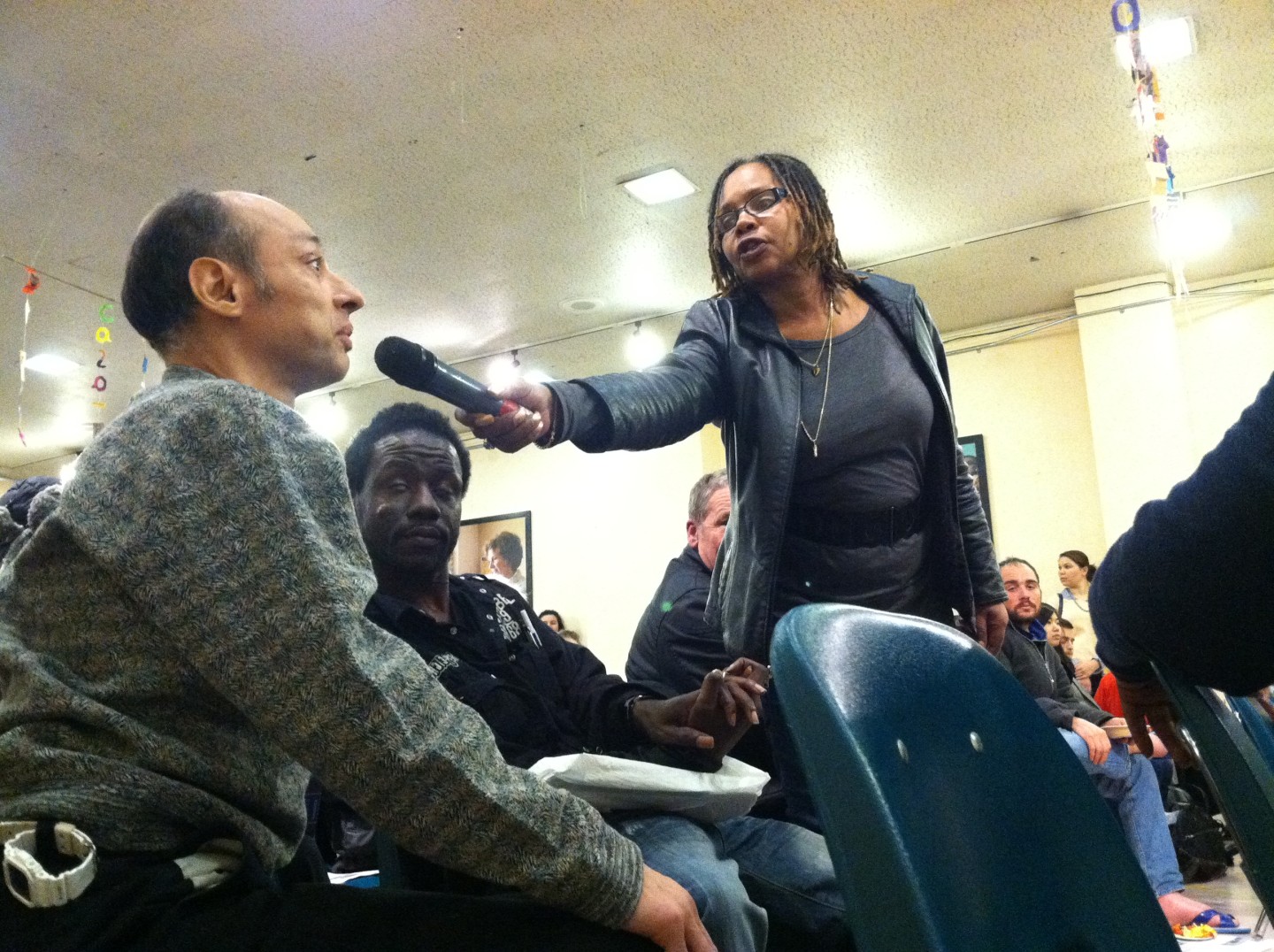
"caption": "Jack Snook expresses his appreciation for Healthy San Francisco in a panel discussion last night. (Photo: Kamal Menghrajani)",
"description": "Jack Snook expresses his appreciation for Healthy San Francisco in a panel discussion last night. (Photo: Kamal Menghrajani)",
"title": "Jack Snook expresses his appreciation for Healthy San Francisco in a panel discussion last night. (Photo: Kamal Menghrajani)",
"credit": null,
"status": "inherit",
"isLoading": false,
"fetchFailed": false
},
"stateofhealth_3303": {
"type": "attachments",
"id": "stateofhealth_3303",
"meta": {
"index": "attachments_1716263798",
"site": "stateofhealth",
"id": "3303",
"found": true
},
"parent": 3296,
"imgSizes": {
"twentyfourteen-full-width": {
"file": "https://ww2.kqed.org/app/uploads/sites/27/2012/02/Man_HospitalBed_DSharonPruitt_Flickr_02242012-652x576.jpg",
"width": 652,
"mimeType": "image/jpeg",
"height": 576
},
"thumbnail": {
"file": "https://ww2.kqed.org/app/uploads/sites/27/2012/02/Man_HospitalBed_DSharonPruitt_Flickr_02242012-400x488.jpg",
"width": 400,
"mimeType": "image/jpeg",
"height": 488
},
"fd-sm": {
"file": "https://ww2.kqed.org/app/uploads/sites/27/2012/02/Man_HospitalBed_DSharonPruitt_Flickr_02242012-320x391.jpg",
"width": 320,
"mimeType": "image/jpeg",
"height": 391
},
"post-thumbnail": {
"file": "https://ww2.kqed.org/app/uploads/sites/27/2012/02/Man_HospitalBed_DSharonPruitt_Flickr_02242012-652x372.jpg",
"width": 652,
"mimeType": "image/jpeg",
"height": 372
},
"kqedFullSize": {
"file": "https://ww2.kqed.org/app/uploads/sites/27/2012/02/Man_HospitalBed_DSharonPruitt_Flickr_02242012.jpg",
"width": 652,
"height": 796
},
"guest-author-96": {
"file": "https://ww2.kqed.org/app/uploads/sites/27/2012/02/Man_HospitalBed_DSharonPruitt_Flickr_02242012-96x96.jpg",
"width": 96,
"mimeType": "image/jpeg",
"height": 96
},
"guest-author-64": {
"file": "https://ww2.kqed.org/app/uploads/sites/27/2012/02/Man_HospitalBed_DSharonPruitt_Flickr_02242012-64x64.jpg",
"width": 64,
"mimeType": "image/jpeg",
"height": 64
},
"detail": {
"file": "https://ww2.kqed.org/app/uploads/sites/27/2012/02/Man_HospitalBed_DSharonPruitt_Flickr_02242012-75x75.jpg",
"width": 75,
"mimeType": "image/jpeg",
"height": 75
},
"guest-author-32": {
"file": "https://ww2.kqed.org/app/uploads/sites/27/2012/02/Man_HospitalBed_DSharonPruitt_Flickr_02242012-32x32.jpg",
"width": 32,
"mimeType": "image/jpeg",
"height": 32
},
"guest-author-128": {
"file": "https://ww2.kqed.org/app/uploads/sites/27/2012/02/Man_HospitalBed_DSharonPruitt_Flickr_02242012-128x128.jpg",
"width": 128,
"mimeType": "image/jpeg",
"height": 128
}
},
"publishDate": 1330131767,
"modified": 1330131767,
"caption": null,
"description": null,
"title": "Man_HospitalBed_DSharonPruitt_Flickr_02242012",
"credit": null,
"status": "inherit",
"isLoading": false,
"fetchFailed": false
},
"stateofhealth_2471": {
"type": "attachments",
"id": "stateofhealth_2471",
"meta": {
"index": "attachments_1716263798",
"site": "stateofhealth",
"id": "2471",
"found": true
},
"parent": 2467,
"imgSizes": {
"kqedFullSize": {
"file": "https://ww2.kqed.org/app/uploads/sites/27/2012/01/Screen-Shot-2012-01-24-at-9.11.11-AM.png",
"width": 224,
"height": 188
},
"guest-author-96": {
"file": "https://ww2.kqed.org/app/uploads/sites/27/2012/01/Screen-Shot-2012-01-24-at-9.11.11-AM-96x96.png",
"width": 96,
"mimeType": "image/png",
"height": 96
},
"guest-author-64": {
"file": "https://ww2.kqed.org/app/uploads/sites/27/2012/01/Screen-Shot-2012-01-24-at-9.11.11-AM-64x64.png",
"width": 64,
"mimeType": "image/png",
"height": 64
},
"detail": {
"file": "https://ww2.kqed.org/app/uploads/sites/27/2012/01/Screen-Shot-2012-01-24-at-9.11.11-AM-75x75.png",
"width": 75,
"mimeType": "image/png",
"height": 75
},
"guest-author-32": {
"file": "https://ww2.kqed.org/app/uploads/sites/27/2012/01/Screen-Shot-2012-01-24-at-9.11.11-AM-32x32.png",
"width": 32,
"mimeType": "image/png",
"height": 32
},
"guest-author-128": {
"file": "https://ww2.kqed.org/app/uploads/sites/27/2012/01/Screen-Shot-2012-01-24-at-9.11.11-AM-128x128.png",
"width": 128,
"mimeType": "image/png",
"height": 128
}
},
"publishDate": 1327425091,
"modified": 1327425091,
"caption": "(Image: The Daily Show)",
"description": "(Image: The Daily Show)",
"title": "(Image: The Daily Show)",
"credit": null,
"status": "inherit",
"isLoading": false,
"fetchFailed": false
},
"stateofhealth_2049": {
"type": "attachments",
"id": "stateofhealth_2049",
"meta": {
"index": "attachments_1716263798",
"site": "stateofhealth",
"id": "2049",
"found": true
},
"parent": 2028,
"imgSizes": {
"thumbnail": {
"file": "https://ww2.kqed.org/app/uploads/sites/27/2012/01/spanish-healthcare-400x224.jpg",
"width": 400,
"mimeType": "image/jpeg",
"height": 224
},
"fd-sm": {
"file": "https://ww2.kqed.org/app/uploads/sites/27/2012/01/spanish-healthcare-320x179.jpg",
"width": 320,
"mimeType": "image/jpeg",
"height": 179
},
"kqedFullSize": {
"file": "https://ww2.kqed.org/app/uploads/sites/27/2012/01/spanish-healthcare.jpg",
"width": 641,
"height": 359
},
"guest-author-96": {
"file": "https://ww2.kqed.org/app/uploads/sites/27/2012/01/spanish-healthcare-96x96.jpg",
"width": 96,
"mimeType": "image/jpeg",
"height": 96
},
"guest-author-64": {
"file": "https://ww2.kqed.org/app/uploads/sites/27/2012/01/spanish-healthcare-64x64.jpg",
"width": 64,
"mimeType": "image/jpeg",
"height": 64
},
"detail": {
"file": "https://ww2.kqed.org/app/uploads/sites/27/2012/01/spanish-healthcare-75x75.jpg",
"width": 75,
"mimeType": "image/jpeg",
"height": 75
},
"guest-author-32": {
"file": "https://ww2.kqed.org/app/uploads/sites/27/2012/01/spanish-healthcare-32x32.jpg",
"width": 32,
"mimeType": "image/jpeg",
"height": 32
},
"guest-author-128": {
"file": "https://ww2.kqed.org/app/uploads/sites/27/2012/01/spanish-healthcare-128x128.jpg",
"width": 128,
"mimeType": "image/jpeg",
"height": 128
}
},
"publishDate": 1326410219,
"modified": 1326410219,
"caption": "(Courtesy: Kaiser Family Foundation)",
"description": null,
"title": "spanish-healthcare",
"credit": null,
"status": "inherit",
"isLoading": false,
"fetchFailed": false
}
},
"audioPlayerReducer": {
"postId": "stream_live",
"isPaused": true,
"isPlaying": false,
"pfsActive": false,
"pledgeModalIsOpen": true,
"playerDrawerIsOpen": false,
"liveAudioPlayStartedAt": 0,
"liveAudioPlayContext": ""
},
"authorsReducer": {
"skalantari": {
"type": "authors",
"id": "46",
"meta": {
"index": "authors_1716337520",
"id": "46",
"found": true
},
"name": "Shuka Kalantari",
"firstName": "Shuka",
"lastName": "Kalantari",
"slug": "skalantari",
"email": "skalantari@kqed.org",
"display_author_email": false,
"staff_mastheads": [],
"title": "KQED Contributor",
"bio": "Shuka Kalantari is a Bay Area journalist reporting on health, food, culture and immigrant communities in California and internationally. She's reported for Public Radio International’s The World, BBC World News Service’s Outlook, Philosophy Talk, Vice Magazine. Shuka is also a frequent contributor to KQED Public Media. You can follow her \u003ca href=\"https://twitter.com/skalantari\">@skalantari\u003c/a> on Twitter and \u003ca href=\"https://instagram.com/skalantari/\">Instagram\u003c/a>.",
"avatar": "https://secure.gravatar.com/avatar/51d9608640bde16ba09124272a0c0f355429db1ebc29f1853b8d87aab1ae1753?s=600&d=blank&r=g",
"twitter": null,
"bluesky": null,
"facebook": null,
"instagram": null,
"linkedin": null,
"sites": [
{
"site": "news",
"roles": [
"subscriber"
]
},
{
"site": "bayareabites",
"roles": [
"subscriber"
]
},
{
"site": "stateofhealth",
"roles": [
"subscriber"
]
}
],
"headData": {
"title": "Shuka Kalantari | KQED",
"description": "KQED Contributor",
"ogImgSrc": "https://secure.gravatar.com/avatar/51d9608640bde16ba09124272a0c0f355429db1ebc29f1853b8d87aab1ae1753?s=600&d=blank&r=g",
"twImgSrc": "https://secure.gravatar.com/avatar/51d9608640bde16ba09124272a0c0f355429db1ebc29f1853b8d87aab1ae1753?s=600&d=blank&r=g"
},
"isLoading": false,
"link": "/author/skalantari"
},
"lisaaliferis": {
"type": "authors",
"id": "240",
"meta": {
"index": "authors_1716337520",
"id": "240",
"found": true
},
"name": "Lisa Aliferis",
"firstName": "Lisa",
"lastName": "Aliferis",
"slug": "lisaaliferis",
"email": "laliferis@kqed.org",
"display_author_email": false,
"staff_mastheads": [],
"title": "KQED Contributor",
"bio": "Lisa Aliferis is the founding editor of KQED's \u003cem>State of Health\u003c/em> blog. Since 2011, she's been writing and editing stories for the site. Before taking up blogging, she toiled for many years (more than we can count) producing health stories for television, including\u003cem> Dateline NBC\u003c/em> and San Francisco's CBS affiliate, KPIX-TV. She also wrote up a \u003ca title=\"http://www.kqed.org/news/health/obamacare/obamacare-guide.jsp\" href=\"http://www.kqed.org/news/health/obamacare/obamacare-guide.jsp\">handy guide to the Affordable Care Act\u003c/a>, especially for Californians. Her work has been honored for many awards. Most recently she was a finalist for \"Best Topical Reporting\" from the Online News Association. You can follow her on Twitter: \u003ca title=\"https://twitter.com/laliferis\" href=\"https://twitter.com/laliferis\">@laliferis\u003c/a>",
"avatar": "https://secure.gravatar.com/avatar/86c339d5cdcb0dcd2b6cf5d7c3f5886b?s=600&d=mm&r=g",
"twitter": "laliferis",
"facebook": null,
"instagram": null,
"linkedin": null,
"sites": [
{
"site": "news",
"roles": [
"subscriber"
]
},
{
"site": "futureofyou",
"roles": [
"subscriber"
]
},
{
"site": "stateofhealth",
"roles": [
"subscriber"
]
},
{
"site": "science",
"roles": [
"subscriber"
]
},
{
"site": "food",
"roles": []
}
],
"headData": {
"title": "Lisa Aliferis | KQED",
"description": "KQED Contributor",
"ogImgSrc": "https://secure.gravatar.com/avatar/86c339d5cdcb0dcd2b6cf5d7c3f5886b?s=600&d=mm&r=g",
"twImgSrc": "https://secure.gravatar.com/avatar/86c339d5cdcb0dcd2b6cf5d7c3f5886b?s=600&d=mm&r=g"
},
"isLoading": false,
"link": "/author/lisaaliferis"
}
},
"pagesReducer": {
"stateofhealth_category_reform": {
"type": "terms",
"id": "stateofhealth_15",
"meta": {
"index": "terms_1716263798",
"site": "stateofhealth",
"id": "15",
"score": 13.559246
},
"featImg": null,
"name": "Obamacare",
"description": "The Affordable Care Act celebrates its seventh birthday this year. California has embraced the law, but will it survive a new Congress and President? \r\n",
"taxonomy": "category",
"headData": {
"twImgId": null,
"twTitle": null,
"ogTitle": null,
"ogImgId": null,
"twDescription": null,
"description": "The Affordable Care Act celebrates its seventh birthday this year. California has embraced the law, but will it survive a new Congress and President?",
"title": "Obamacare Archives | KQED Arts",
"ogDescription": null
},
"ttid": 15,
"slug": "reform",
"isLoading": false,
"title": "Obamacare",
"pageMeta": {
"site": "stateofhealth",
"WpPageTemplate": "page-topic-editorial",
"currentPage": 37
},
"blocks": [
{
"blockName": "kqed/company-paragraph",
"content": "The Affordable Care Act celebrates its seventh birthday this year. California has embraced the law, but will it survive a new Congress and President? \r\n"
},
{
"blockName": "kqed/post-list",
"attrs": {
"layout": "cardArticle2",
"query": "posts/stateofhealth?category=reform",
"seeMore": false,
"paginated": true,
"page": 37
}
},
{
"blockName": "kqed/ad"
}
]
}
},
"pfsSessionReducer": {},
"postsReducer": {
"stream_live": {
"type": "live",
"id": "stream_live",
"audioUrl": "https://hls.kqed.org/hls/kqed_app/playlist.m3u8",
"title": "Live Stream",
"excerpt": "Live Stream information currently unavailable.",
"link": "/radio",
"featImg": "",
"label": {
"name": "KQED Live",
"link": "/"
}
},
"stream_kqedNewscast": {
"type": "posts",
"id": "stream_kqedNewscast",
"audioUrl": "https://www.kqed.org/.stream/anon/radio/RDnews/newscast.mp3?_=1",
"title": "KQED Newscast",
"featImg": "",
"label": {
"name": "88.5 FM",
"link": "/"
}
},
"stateofhealth_3826": {
"type": "posts",
"id": "stateofhealth_3826",
"meta": {
"index": "posts_1716263798",
"site": "stateofhealth",
"id": "3826",
"score": null,
"sort": [
1332194150000
]
},
"parent": 0,
"labelTerm": {
"site": "stateofhealth"
},
"blocks": [],
"publishDate": 1332194150,
"format": "aside",
"disqusTitle": "The 4 Health Care Overhaul Questions Before the Supreme Court",
"title": "The 4 Health Care Overhaul Questions Before the Supreme Court",
"headTitle": "State of Health | KQED News",
"content": "\u003cp>\u003cstrong>\u003cem>The Supreme Court issued its decisions on the Affordable Care Act on June 28, 2012. This post has been updated to reflect the court’s rulings.\u003c/em>\u003c/strong>\u003c/p>\n\u003cfigure id=\"attachment_4289\" class=\"wp-caption alignleft\" style=\"max-width: 300px\">\u003ca href=\"http://ww2.kqed.org/stateofhealth/wp-content/uploads/sites/27/2012/03/SupremeCourtJustices_2012_032620121.jpg\">\u003cimg class=\"size-medium wp-image-4289\" title=\"(Courtesy: U.S. Supreme Court)\" src=\"http://ww2.kqed.org/stateofhealth/wp-content/uploads/sites/27/2012/03/SupremeCourtJustices_2012_032620121-300x240.jpg\" alt=\"(Courtesy: U.S. Supreme Court)\" width=\"300\" height=\"240\">\u003c/a>\u003cfigcaption class=\"wp-caption-text\">(Courtesy: U.S. Supreme Court)\u003c/figcaption>\u003c/figure>\n\u003cp>Next Monday, the Supreme Court begins considering the Constitutionality of the \u003ca title=\"http://www.healthcare.gov/law/index.html\" href=\"http://www.healthcare.gov/law/index.html\" target=\"_blank\">Affordable Care Act\u003c/a>, or ACA. Three days, six hours of oral arguments. But it's not just one long slog about health care reform. The Supreme Court is considering four different questions over those three days.\u003c/p>\n\u003cp>Legal scholars, pundits and those suitably opinionated have been pontificating about all kinds of legal issues. But the average American might want to know, in straightforward language, what those Four Questions actually mean.\u003c/p>\n\u003cp>Here's my take on them:\u003c!--more-->\u003c/p>\n\u003cp>\u003cstrong>1. Can the Supreme Court Consider the ACA Now, Anyway?\u003c/strong>\u003cbr>\nOral arguments Monday, March 26, 7-8:30am PT\u003c/p>\n\u003cp>[ad fullwidth]\u003c/p>\n\u003cp>This is a question only lawyers can love. Feel free to skip to Question #2 if you like. If you're still with me, start by going 140 years back in time to the \u003ca title=\"http://www.law.cornell.edu/uscode/text/26/7421\" href=\"http://www.law.cornell.edu/uscode/text/26/7421\" target=\"_blank\">1867 Tax Anti-Junction Act\u003c/a>. No, I'm not making this up--it's the crux of this first question before the Supreme Court. Here's the deal: the ACA requires that people purchase health insurance or pay a penalty. Many people say this \"penalty\" is a tax in disguise. The Tax Anti-Injunction Act bars people from suing over a tax \u003cem>until they actually pay the tax.\u003c/em> Since the ACA goes into full effect in 2014, no penalties will be paid until 2015. And so, 2015 would be the soonest someone who paid the tax could challenge the constitutionality of the ACA. Will the Supreme Court punt and say, \"Come back in 2015\"? Court-watchers say that's unlikely. \u003cstrong>SPECIAL NOTE: \u003c/strong>If you can only pay attention to two of the three days of hearings, this is your day to skip.\u003c/p>\n\u003cp>\u003cstrong>\u003cem>Update: The Supreme Court determined it had the authority to rule.\u003c/em>\u003c/strong>\u003c/p>\n\u003cp>\u003cstrong>2. Is the Individual Mandate Constitutional?\u003c/strong>\u003cbr>\nOral arguments Tuesday, March 27, 7-9am PT\u003c/p>\n\u003cp>Of the four questions the Supreme Court is considering, this is the big one. As you learned in Question #1, the ACA requires all Americans to purchase health insurance or pay a penalty/tax. If your annual income is below a certain level--about $92,000 for a family of four-- the government will provide subsidies or tax credits to help you. But the mandate is unpopular. Just \u003ca title=\"http://www.kff.org/kaiserpolls/upload/8285-F.pdf\" href=\"http://www.kff.org/kaiserpolls/upload/8285-F.pdf\" target=\"_blank\">over half of Americans\u003c/a> think the Supreme Court should declare the mandate unconstitutional, while 28 percent think it should stay. The primary legal question is this: does Congress have the authority under the \u003ca title=\"http://www.law.cornell.edu/wex/commerce_clause\" href=\"http://www.law.cornell.edu/wex/commerce_clause\" target=\"_blank\">Commerce Clause\u003c/a> of the U.S. Constitution to require Americans to purchase a product, in this case health insurance? Those in favor say yes--Congress can both regulate interstate commerce and legislate taxes. Those opposed say this is the first time Congress has required Americans to purchase a product and it's unconstitutional. \u003cstrong>SPECIAL NOTE:\u003c/strong> if your employer provides health insurance or if you are a Medicare recipient, nothing about your personal situation will change. On January 1, 2014, you would continue to receive the same employer-based coverage or Medicare.\u003c/p>\n\u003cp>\u003cstrong>\u003cem>Update: In a 5-4 ruling, the Supreme Court determined that the individual mandate is constitutional.\u003c/em>\u003c/strong>\u003c/p>\n\u003cp>\u003cstrong>3. If the Individual Mandate is Unconstitutional, Can the Rest of the ACA Go Forward?\u003c/strong>\u003cbr>\nOral arguments Wednesday, March 28, 7-8:30am PT\u003c/p>\n\u003cp>Severability. This word will be all over the news next Wednesday. Why? Suppose the Supreme Court decides the individual mandate is unconstitutional. Can the mandate be \"severed\" from the ACA, allowing the ACA to stand? This question has a bit of unusual background: normally when Congress writes a law, it includes a \"severability\" clause, so that if one part of a law is struck down, the rest of the law can still stand. Back in the last days of drafting the ACA, the House version indeed had a severability clause. The Senate side expected to add it in a conference committee. But things got so hectic at the end, there was never a conference committee and the severability clause was not part of the final law. \u003cstrong>SPECIAL NOTE:\u003c/strong> many experts think severability is implied. They say if the individual mandate is struck down, the rest of the law can stand. Only the Supreme Court will say for sure.\u003c/p>\n\u003cp>\u003cstrong>\u003cem>Update: The question of “severability” became irrelevant since the Supreme Court determined that the individual mandate is constitutional. \u003c/em>\u003c/strong>\u003c/p>\n\u003cp>\u003cem>\u003cstrong>4. Is the Medicaid Expansion Constitutional?\u003c/strong>\u003c/em>\u003cbr>\nOral arguments Wednesday, March 28, 10-11am PT\u003c/p>\n\u003cp>\u003ca title=\"http://www.medicaid.gov/\" href=\"http://www.medicaid.gov/\" target=\"_blank\">Medicaid\u003c/a> is the health care plan for the poor and disabled that is run by individual states with both state and federal dollars. The Affordable Care Act expands those eligible for Medicaid to adults earning 133 percent of the federal poverty level. But in order for states to continue receiving \u003cem>any\u003c/em> federal money for Medicaid, the ACA requires them to comply with this expansion. Twenty-six states who have challenged this requirement say withholding all monies for Medicaid is coercive and therefore unconstitutional. Those states which support the expansion--including California--say that Congress can constitutionally attach such conditions under what's known as the \"Spending Clause.\" \u003cstrong>SPECIAL NOTE:\u003c/strong> Congress has expanded Medicaid many times in the past and never had an expansion struck down.\u003c/p>\n\u003cp>\u003cstrong>\u003cem>Update: The Supreme Court ruled 5-4 that Congress may not take away all funds for Medicaid if a state decides not to expand the program. As of January 2013, many states have determined to go forward with the expansion; the federal government will pay 100 percent of the costs of any newly eligible enrollees for the first three years and not less than 90 percent of the cost thereafter. Other states have said they will not expand the program; Congress must continue to fund a state's existing Medicaid program at the existing level.\u003c/em>\u003c/strong>\u003c/p>\n\u003cp>\u003cstrong>Some final thoughts:\u003c/strong>\u003c/p>\n\u003cp>The Supreme Court's decisions are expected in late June, possibly early July.\u003cbr>\n\u003cem>Update: as noted, \u003ca href=\"http://ww2.kqed.org/stateofhealth/2012/06/28/supreme-court-health-care-decision/\" target=\"_blank\">the decisions\u003c/a> came down June 28, 2012.\u003c/em>\u003c/p>\n\u003cp>The Court will make audio recordings available following the end of arguments each day, but turned down requests for live TV or radio broadcasts.\u003cbr>\n\u003cem>Update:\u003c/em> \u003ca href=\"http://ww2.kqed.org/stateofhealth/2012/03/28/audiotranscripts-of-wednesdays-supreme-court-hearings-on-the-fate-of-the-health-law/\" target=\"_blank\">Oral arguments and transcripts on the Medicaid expansion and individual mandate. \u003c/a>\u003c/p>\n\u003cp>While some elements of the Affordable Care Act have already gone into effect, the major components of the legislation take effect on January 1, 2014.\u003c/p>\n\u003cp>\u003cstrong>Learn More:\u003c/strong>\u003c/p>\n\u003cp>Background on the Individual Mandate: \u003ca title=\"http://news.yahoo.com/court-weighs-making-health-coverage-fact-life-133951595.html\" href=\"http://news.yahoo.com/court-weighs-making-health-coverage-fact-life-133951595.html\" target=\"_blank\">Court Weighs Making Health Coverage a Fact of Life\u003c/a> (AP)\u003c/p>\n\u003cp>\u003ca title=\"http://www.kff.org/healthreform/upload/8270-2.pdf\" href=\"http://www.kff.org/healthreform/upload/8270-2.pdf\" target=\"_blank\">A Guide to the Supreme Court’s Review of the 2010 Health Care Reform Law\u003c/a> [PDF] (Kaiser Family Foundation)\u003c/p>\n\u003cp>[ad floatright]\u003c/p>\n\u003cp>And for you wonks out there, you can find content galore here:\u003cbr>\n\u003ca title=\"http://www.kaiserhealthnews.org/Supreme-Court-Decides-Health-Law.aspx\" href=\"http://www.kaiserhealthnews.org/Supreme-Court-Decides-Health-Law.aspx\" target=\"_blank\">The Supreme Court Decides: Health Care at the High Court\u003c/a> (Kaiser Health News)\u003c/p>\n\n",
"disqusIdentifier": "3826 http://blogs.kqed.org/stateofhealth/?p=3826",
"disqusUrl": "https://ww2.kqed.org/stateofhealth/2012/03/19/the-supreme-courts-4-health-care-reform-questions/",
"stats": {
"hasVideo": false,
"hasChartOrMap": false,
"hasAudio": false,
"hasPolis": false,
"wordCount": 1145,
"hasGoogleForm": false,
"hasGallery": false,
"hasHearkenModule": false,
"iframeSrcs": [],
"paragraphCount": 26
},
"modified": 1377635096,
"excerpt": "Next Monday, the Supreme Court begins considering the Constitutionality of the Affordable Care Act, or ACA. Three days, six hours of oral arguments. But it's not just one long slog about health care reform. The Supreme Court is considering four different questions over those three days.\r\n\r\nLegal scholars, pundits and those suitably opinionated have been pontificating about all kinds of legal issues. But the average American might want to know, in straightforward language, what those Four Questions actually mean.\r\n\r\nHere's my take on them:",
"headData": {
"twImgId": "",
"twTitle": "",
"ogTitle": "",
"ogImgId": "",
"twDescription": "",
"description": "Next Monday, the Supreme Court begins considering the Constitutionality of the Affordable Care Act, or ACA. Three days, six hours of oral arguments. But it's not just one long slog about health care reform. The Supreme Court is considering four different questions over those three days.\r\n\r\nLegal scholars, pundits and those suitably opinionated have been pontificating about all kinds of legal issues. But the average American might want to know, in straightforward language, what those Four Questions actually mean.\r\n\r\nHere's my take on them:",
"title": "The 4 Health Care Overhaul Questions Before the Supreme Court | KQED",
"ogDescription": "",
"schema": {
"@context": "https://schema.org",
"@type": "Article",
"headline": "The 4 Health Care Overhaul Questions Before the Supreme Court",
"datePublished": "2012-03-19T14:55:50-07:00",
"dateModified": "2013-08-27T13:24:56-07:00",
"image": "https://cdn.kqed.org/wp-content/uploads/2020/02/KQED-OG-Image@1x.png"
}
},
"guestAuthors": [],
"slug": "the-supreme-courts-4-health-care-reform-questions",
"status": "publish",
"path": "/stateofhealth/3826/the-supreme-courts-4-health-care-reform-questions",
"audioTrackLength": null,
"parsedContent": [
{
"type": "contentString",
"content": "\u003cdiv class=\"post-body\">\u003cp>\u003cp>\u003cstrong>\u003cem>The Supreme Court issued its decisions on the Affordable Care Act on June 28, 2012. This post has been updated to reflect the court’s rulings.\u003c/em>\u003c/strong>\u003c/p>\n\u003cfigure id=\"attachment_4289\" class=\"wp-caption alignleft\" style=\"max-width: 300px\">\u003ca href=\"http://ww2.kqed.org/stateofhealth/wp-content/uploads/sites/27/2012/03/SupremeCourtJustices_2012_032620121.jpg\">\u003cimg class=\"size-medium wp-image-4289\" title=\"(Courtesy: U.S. Supreme Court)\" src=\"http://ww2.kqed.org/stateofhealth/wp-content/uploads/sites/27/2012/03/SupremeCourtJustices_2012_032620121-300x240.jpg\" alt=\"(Courtesy: U.S. Supreme Court)\" width=\"300\" height=\"240\">\u003c/a>\u003cfigcaption class=\"wp-caption-text\">(Courtesy: U.S. Supreme Court)\u003c/figcaption>\u003c/figure>\n\u003cp>Next Monday, the Supreme Court begins considering the Constitutionality of the \u003ca title=\"http://www.healthcare.gov/law/index.html\" href=\"http://www.healthcare.gov/law/index.html\" target=\"_blank\">Affordable Care Act\u003c/a>, or ACA. Three days, six hours of oral arguments. But it's not just one long slog about health care reform. The Supreme Court is considering four different questions over those three days.\u003c/p>\n\u003cp>Legal scholars, pundits and those suitably opinionated have been pontificating about all kinds of legal issues. But the average American might want to know, in straightforward language, what those Four Questions actually mean.\u003c/p>\n\u003cp>Here's my take on them:\u003c!--more-->\u003c/p>\n\u003cp>\u003cstrong>1. Can the Supreme Court Consider the ACA Now, Anyway?\u003c/strong>\u003cbr>\nOral arguments Monday, March 26, 7-8:30am PT\u003c/p>\n\u003cp>\u003c/p>\u003c/div>",
"attributes": {
"named": {},
"numeric": []
}
},
{
"type": "component",
"content": "",
"name": "ad",
"attributes": {
"named": {
"label": "fullwidth"
},
"numeric": [
"fullwidth"
]
}
},
{
"type": "contentString",
"content": "\u003cdiv class=\"post-body\">\u003cp>\u003c/p>\n\u003cp>This is a question only lawyers can love. Feel free to skip to Question #2 if you like. If you're still with me, start by going 140 years back in time to the \u003ca title=\"http://www.law.cornell.edu/uscode/text/26/7421\" href=\"http://www.law.cornell.edu/uscode/text/26/7421\" target=\"_blank\">1867 Tax Anti-Junction Act\u003c/a>. No, I'm not making this up--it's the crux of this first question before the Supreme Court. Here's the deal: the ACA requires that people purchase health insurance or pay a penalty. Many people say this \"penalty\" is a tax in disguise. The Tax Anti-Injunction Act bars people from suing over a tax \u003cem>until they actually pay the tax.\u003c/em> Since the ACA goes into full effect in 2014, no penalties will be paid until 2015. And so, 2015 would be the soonest someone who paid the tax could challenge the constitutionality of the ACA. Will the Supreme Court punt and say, \"Come back in 2015\"? Court-watchers say that's unlikely. \u003cstrong>SPECIAL NOTE: \u003c/strong>If you can only pay attention to two of the three days of hearings, this is your day to skip.\u003c/p>\n\u003cp>\u003cstrong>\u003cem>Update: The Supreme Court determined it had the authority to rule.\u003c/em>\u003c/strong>\u003c/p>\n\u003cp>\u003cstrong>2. Is the Individual Mandate Constitutional?\u003c/strong>\u003cbr>\nOral arguments Tuesday, March 27, 7-9am PT\u003c/p>\n\u003cp>Of the four questions the Supreme Court is considering, this is the big one. As you learned in Question #1, the ACA requires all Americans to purchase health insurance or pay a penalty/tax. If your annual income is below a certain level--about $92,000 for a family of four-- the government will provide subsidies or tax credits to help you. But the mandate is unpopular. Just \u003ca title=\"http://www.kff.org/kaiserpolls/upload/8285-F.pdf\" href=\"http://www.kff.org/kaiserpolls/upload/8285-F.pdf\" target=\"_blank\">over half of Americans\u003c/a> think the Supreme Court should declare the mandate unconstitutional, while 28 percent think it should stay. The primary legal question is this: does Congress have the authority under the \u003ca title=\"http://www.law.cornell.edu/wex/commerce_clause\" href=\"http://www.law.cornell.edu/wex/commerce_clause\" target=\"_blank\">Commerce Clause\u003c/a> of the U.S. Constitution to require Americans to purchase a product, in this case health insurance? Those in favor say yes--Congress can both regulate interstate commerce and legislate taxes. Those opposed say this is the first time Congress has required Americans to purchase a product and it's unconstitutional. \u003cstrong>SPECIAL NOTE:\u003c/strong> if your employer provides health insurance or if you are a Medicare recipient, nothing about your personal situation will change. On January 1, 2014, you would continue to receive the same employer-based coverage or Medicare.\u003c/p>\n\u003cp>\u003cstrong>\u003cem>Update: In a 5-4 ruling, the Supreme Court determined that the individual mandate is constitutional.\u003c/em>\u003c/strong>\u003c/p>\n\u003cp>\u003cstrong>3. If the Individual Mandate is Unconstitutional, Can the Rest of the ACA Go Forward?\u003c/strong>\u003cbr>\nOral arguments Wednesday, March 28, 7-8:30am PT\u003c/p>\n\u003cp>Severability. This word will be all over the news next Wednesday. Why? Suppose the Supreme Court decides the individual mandate is unconstitutional. Can the mandate be \"severed\" from the ACA, allowing the ACA to stand? This question has a bit of unusual background: normally when Congress writes a law, it includes a \"severability\" clause, so that if one part of a law is struck down, the rest of the law can still stand. Back in the last days of drafting the ACA, the House version indeed had a severability clause. The Senate side expected to add it in a conference committee. But things got so hectic at the end, there was never a conference committee and the severability clause was not part of the final law. \u003cstrong>SPECIAL NOTE:\u003c/strong> many experts think severability is implied. They say if the individual mandate is struck down, the rest of the law can stand. Only the Supreme Court will say for sure.\u003c/p>\n\u003cp>\u003cstrong>\u003cem>Update: The question of “severability” became irrelevant since the Supreme Court determined that the individual mandate is constitutional. \u003c/em>\u003c/strong>\u003c/p>\n\u003cp>\u003cem>\u003cstrong>4. Is the Medicaid Expansion Constitutional?\u003c/strong>\u003c/em>\u003cbr>\nOral arguments Wednesday, March 28, 10-11am PT\u003c/p>\n\u003cp>\u003ca title=\"http://www.medicaid.gov/\" href=\"http://www.medicaid.gov/\" target=\"_blank\">Medicaid\u003c/a> is the health care plan for the poor and disabled that is run by individual states with both state and federal dollars. The Affordable Care Act expands those eligible for Medicaid to adults earning 133 percent of the federal poverty level. But in order for states to continue receiving \u003cem>any\u003c/em> federal money for Medicaid, the ACA requires them to comply with this expansion. Twenty-six states who have challenged this requirement say withholding all monies for Medicaid is coercive and therefore unconstitutional. Those states which support the expansion--including California--say that Congress can constitutionally attach such conditions under what's known as the \"Spending Clause.\" \u003cstrong>SPECIAL NOTE:\u003c/strong> Congress has expanded Medicaid many times in the past and never had an expansion struck down.\u003c/p>\n\u003cp>\u003cstrong>\u003cem>Update: The Supreme Court ruled 5-4 that Congress may not take away all funds for Medicaid if a state decides not to expand the program. As of January 2013, many states have determined to go forward with the expansion; the federal government will pay 100 percent of the costs of any newly eligible enrollees for the first three years and not less than 90 percent of the cost thereafter. Other states have said they will not expand the program; Congress must continue to fund a state's existing Medicaid program at the existing level.\u003c/em>\u003c/strong>\u003c/p>\n\u003cp>\u003cstrong>Some final thoughts:\u003c/strong>\u003c/p>\n\u003cp>The Supreme Court's decisions are expected in late June, possibly early July.\u003cbr>\n\u003cem>Update: as noted, \u003ca href=\"http://ww2.kqed.org/stateofhealth/2012/06/28/supreme-court-health-care-decision/\" target=\"_blank\">the decisions\u003c/a> came down June 28, 2012.\u003c/em>\u003c/p>\n\u003cp>The Court will make audio recordings available following the end of arguments each day, but turned down requests for live TV or radio broadcasts.\u003cbr>\n\u003cem>Update:\u003c/em> \u003ca href=\"http://ww2.kqed.org/stateofhealth/2012/03/28/audiotranscripts-of-wednesdays-supreme-court-hearings-on-the-fate-of-the-health-law/\" target=\"_blank\">Oral arguments and transcripts on the Medicaid expansion and individual mandate. \u003c/a>\u003c/p>\n\u003cp>While some elements of the Affordable Care Act have already gone into effect, the major components of the legislation take effect on January 1, 2014.\u003c/p>\n\u003cp>\u003cstrong>Learn More:\u003c/strong>\u003c/p>\n\u003cp>Background on the Individual Mandate: \u003ca title=\"http://news.yahoo.com/court-weighs-making-health-coverage-fact-life-133951595.html\" href=\"http://news.yahoo.com/court-weighs-making-health-coverage-fact-life-133951595.html\" target=\"_blank\">Court Weighs Making Health Coverage a Fact of Life\u003c/a> (AP)\u003c/p>\n\u003cp>\u003ca title=\"http://www.kff.org/healthreform/upload/8270-2.pdf\" href=\"http://www.kff.org/healthreform/upload/8270-2.pdf\" target=\"_blank\">A Guide to the Supreme Court’s Review of the 2010 Health Care Reform Law\u003c/a> [PDF] (Kaiser Family Foundation)\u003c/p>\n\u003cp>\u003c/p>\u003c/div>",
"attributes": {
"named": {},
"numeric": []
}
},
{
"type": "component",
"content": "",
"name": "ad",
"attributes": {
"named": {
"label": "floatright"
},
"numeric": [
"floatright"
]
}
},
{
"type": "contentString",
"content": "\u003cdiv class=\"post-body\">\u003cp>\u003c/p>\n\u003cp>And for you wonks out there, you can find content galore here:\u003cbr>\n\u003ca title=\"http://www.kaiserhealthnews.org/Supreme-Court-Decides-Health-Law.aspx\" href=\"http://www.kaiserhealthnews.org/Supreme-Court-Decides-Health-Law.aspx\" target=\"_blank\">The Supreme Court Decides: Health Care at the High Court\u003c/a> (Kaiser Health News)\u003c/p>\n\n\u003c/div>\u003c/p>",
"attributes": {
"named": {},
"numeric": []
}
}
],
"link": "/stateofhealth/3826/the-supreme-courts-4-health-care-reform-questions",
"authors": [
"240"
],
"categories": [
"stateofhealth_15"
],
"tags": [
"stateofhealth_38",
"stateofhealth_222",
"stateofhealth_41",
"stateofhealth_119",
"stateofhealth_402"
],
"featImg": "stateofhealth_4289",
"label": "stateofhealth"
},
"stateofhealth_3751": {
"type": "posts",
"id": "stateofhealth_3751",
"meta": {
"index": "posts_1716263798",
"site": "stateofhealth",
"id": "3751",
"score": null,
"sort": [
1331751084000
]
},
"parent": 0,
"labelTerm": {
"site": "stateofhealth"
},
"blocks": [],
"publishDate": 1331751084,
"format": "aside",
"disqusTitle": "L.A. Health Care Director's Vision Brings Change, Challenge",
"title": "L.A. Health Care Director's Vision Brings Change, Challenge",
"headTitle": "State of Health | KQED News",
"content": "\u003cp>\u003cstrong>By Sarah Varney\u003c/strong>\u003c/p>\n\u003cfigure id=\"attachment_3755\" class=\"wp-caption alignleft\" style=\"max-width: 300px\">\u003ca href=\"http://ww2.kqed.org/stateofhealth/wp-content/uploads/sites/27/2012/03/MitchKatzonBike_03142012.jpg\">\u003cimg class=\"size-medium wp-image-3755 \" title=\"Colleagues say Dr. Mitch Katz rides his bike everywhere, including to work and many appointments. (Photo: Michael Wilson)\" src=\"http://ww2.kqed.org/stateofhealth/wp-content/uploads/sites/27/2012/03/MitchKatzonBike_03142012-300x200.jpg\" alt=\"Colleagues say Dr. Mitch Katz rides his bike everywhere, including to work and many appointments. (Photo: Michael Wilson)\" width=\"300\" height=\"200\">\u003c/a>\u003cfigcaption class=\"wp-caption-text\">Colleagues say Dr. Mitch Katz rides his bike everywhere, including to work and many appointments. (Photo: Michael Wilson)\u003c/figcaption>\u003c/figure>\n\u003cp>It would be easy to confuse \u003ca title=\"http://www.ladhs.org/wps/portal/\" href=\"http://www.ladhs.org/wps/portal/\" target=\"_blank\">Dr. Mitch Katz\u003c/a> with any other doctor at the Roybal clinic in East Los Angeles. His desk in a closet-sized, windowless office is littered with patient records, x-rays and cans of Diet Coke.\u003c/p>\n\u003cp>His every man demeanor belies his stature. In fact, he even rides his bike to work and many appointments. But Mitch Katz is Director of Los Angeles County’s Department of Health Services, long one of the most beleaguered in the country. Katz oversees L.A.’s public hospitals and clinics, the place of last resort for millions of low-income Angelenos. He has 22,000 employees and a $3.7-billion dollar budget. When he arrived in Los Angeles last year after running San Francisco’s health department, he insisted on seeing patients one afternoon a week, a demand that struck many here as odd, if not impossible. How would Katz have time to treat patients with a system in ruin?\u003c!--more-->\u003c/p>\n\u003cp>Right now though, Katz is focused on a man who has walked into the clinic with a large tumor in his lung. We wear face masks because there is also a risk of tuberculosis.\u003c/p>\n\u003cp>Katz speaks Spanish to the patient in his native Brooklyn accent. He sits opposite the man, their knees almost touching, and carefully explains the possible causes of the tumor and what he hopes a visit to the pulmonologist will reveal.\u003c/p>\n\u003cp>[ad fullwidth]\u003c/p>\n\u003cp>It’s clear Katz finds these clinic hours deeply satisfying, but the effect is much more practical. His time in the clinic informs his priorities as an administrator: he sees the road blocks and tries to clear them. Katz’s primary aim though, and what he came to Los Angeles to do, is to steer low-income Angelenos away from the emergency rooms they’ve long relied on and into primary care clinics where problems, like a tumor, can be detected earlier.\u003c/p>\n\u003cp>\"They sent me the L.A. org. chart. I said, 'Where’s primary care?' Well, it’s under the hospital,\" Katz told me. \"Well, that may explain why you have a problem with primary care!\"\u003c/p>\n\u003cp>Katz has moved swiftly. In the last six months, his team has assigned nearly a quarter of a million people to a primary care doctor at county clinics without hiring any additional staff.\u003c/p>\n\u003cp>\"What I did is say, 'No, we’re not running this anymore as a drop-in--see who you see and no one is responsible,'\" Katz says.\u003c/p>\n\u003cp>Katz’s predecessors promised many of the same reforms, but government observers here say they were stymied by a \u003ca title=\"http://bos.co.la.ca.us/\" href=\"http://bos.co.la.ca.us/\" target=\"_blank\">Board of Supervisors\u003c/a> which often governs Los Angeles like five competing fiefdoms. Indeed, many of the people I interviewed said they advised Katz not to take the job, that Los Angeles was beyond repair. But that sense of resignation may have worked to Katz’s advantage, says \u003ca title=\"http://www.usc.edu/schools/price/faculty/nontenure/cousineau.html\" href=\"http://www.usc.edu/schools/price/faculty/nontenure/cousineau.html\" target=\"_blank\">Michael Cousineau,\u003c/a> a professor at the University of Southern California’s Keck School of Medicine. \"People are just so tired of failure,\" Cousineau told me.\u003c/p>\n\u003cp>And the stakes have gotten higher. Under the federal health law, the federal government will sharply reduce payments to public hospitals that treat the uninsured. That's because, in 2014 when the federal health care law goes into effect, nearly all those who are legally documented will have health insurance coverage. In Los Angeles, says \u003ca title=\"https://www.lacare.org/aboutlacare/leadership\" href=\"https://www.lacare.org/aboutlacare/leadership\" target=\"_blank\">Howard Kahn\u003c/a>, CEO of the county health insurance plan \"L.A. Care,\" that means millions of newly insured people. People who have long had no choice but public clinics and hospitals will be able to switch to private providers, a worrisome prospect for the county.\u003c/p>\n\u003cp>\"They have a realistic concern that that’s going to happen,\" Kahn says, \"if they don’t improve customer service.\"\u003c/p>\n\u003cp>One report commissioned by the county put it bluntly--if LA loses its paying customers and is left treating only the undocumented, the financial survival of its health system is at stake. USC Professor Cousineau agrees. \"To move it rhetorically from a system of last resort to a system of choice is not going to be an easy thing,\" Cousineau said. \"But the price of failure is thousands of people losing their jobs, closing of health centers. So that’s what the supervisors have to grapple with.\"\u003c/p>\n\u003cp>For their part, the Supervisors seem supremely, and unusually, confident in Katz’s initiatives. Supervisor \u003ca title=\"http://molina.lacounty.gov/\" href=\"http://molina.lacounty.gov/\" target=\"_blank\">Gloria Molina\u003c/a> represents East Los Angeles and says \"I was one that was worried he was just going to be another guy that just took us so far and then would leave us. But instead he’s had the most daunting challenges and he’s meeting all our expectations.\"\u003c/p>\n\u003cp>One test of Katz’ vision for re-making L.A.’s system is taking place at the heart of where it all went terribly wrong. The Martin Luther King Junior-Harbor Hospital in South L.A. closed in 2007 after it reached near-third world standards and one patient died of egregious errors. It’s now re-opened as a \u003ca title=\"http://www.ladhs.org/wps/portal/KingHomepage\" href=\"http://www.ladhs.org/wps/portal/KingHomepage\" target=\"_blank\">clinic\u003c/a> where patients with chronic diseases are counseled by a team of nurses and medical assistants.\u003c/p>\n\u003cp>The clinic’s nurse manager Kimberly Thomas says customer service is now a top priority, \"The patients like the fact that they have someone to call. That they know WHO to call,\" she says, then adds there are additional incentives for better health. \"They’ll bring patients who have diabetes and high cholesterol then bring them in again and look at their labs and see if they’re improved or gone down. And they give gifts to people who are most improved, and they really love that.\"\u003c/p>\n\u003cp>Assigning low-income patients to a medical home makes for better medicine, but whether it engenders good will and loyalty when these same patients gain insurance is an open question. And this may, in fact, be Director Katz’s greatest challenge: giving Angelenos a reason to believe in what the county can offer.\u003c/p>\n\u003cp>\u003cstrong>More:\u003c/strong>\u003c/p>\n\u003cp>Listen to the audio version of Sarah Varney's piece:\u003c/p>\n\u003cp>[ad floatright]\u003c/p>\n\u003cp>\u003cobject width=\"335\" height=\"85\" classid=\"d27cdb6e-ae6d-11cf-96b8-444553540000\" codebase=\"http://download.macromedia.com/pub/shockwave/cabs/flash/swflash.cab#version=6,0,40,0\">\u003cparam name=\"flashvars\" value=\"file=http://www.kqed.org/radio/archives/R201203140850b.xml\">\u003cparam name=\"src\" value=\"http://www.kqed.org/assets/flash/kqedplayer.swf\">\u003cembed width=\"335\" height=\"85\" type=\"application/x-shockwave-flash\" src=\"http://www.kqed.org/assets/flash/kqedplayer.swf\" flashvars=\"file=http://www.kqed.org/radio/archives/R201203140850b.xml\">\u003c/embed>\u003c/object>\u003c/p>\n\n",
"disqusIdentifier": "3751 http://blogs.kqed.org/stateofhealth/?p=3751",
"disqusUrl": "https://ww2.kqed.org/stateofhealth/2012/03/14/l-a-health-care-directors-vision-brings-change-challenge/",
"stats": {
"hasVideo": false,
"hasChartOrMap": false,
"hasAudio": false,
"hasPolis": false,
"wordCount": 1056,
"hasGoogleForm": false,
"hasGallery": false,
"hasHearkenModule": false,
"iframeSrcs": [],
"paragraphCount": 22
},
"modified": 1331751339,
"excerpt": "It would be easy to confuse Dr. Mitch Katz with any other doctor at the Roybal clinic in East Los Angeles. His desk in a closet-sized, windowless office is littered with patient records, x-rays and cans of Diet Coke.\r\n\r\nHis every man demeanor belies his stature. In fact, he even rides his bike to work and many appointments. But Mitch Katz is Director of Los Angeles County’s Department of Health Services, long one of the most beleaguered in the country. Katz oversees L.A.’s public hospitals and clinics, the place of last resort for millions of low-income Angelenos. He has 22,000 employees and a $3.7-billion dollar budget. When he arrived in Los Angeles last year after running San Francisco’s health department, he insisted on seeing patients one afternoon a week, a demand that struck many here as odd, if not impossible. How would Katz have time to treat patients with a system in ruin?",
"headData": {
"twImgId": "",
"twTitle": "",
"ogTitle": "",
"ogImgId": "",
"twDescription": "",
"description": "It would be easy to confuse Dr. Mitch Katz with any other doctor at the Roybal clinic in East Los Angeles. His desk in a closet-sized, windowless office is littered with patient records, x-rays and cans of Diet Coke.\r\n\r\nHis every man demeanor belies his stature. In fact, he even rides his bike to work and many appointments. But Mitch Katz is Director of Los Angeles County’s Department of Health Services, long one of the most beleaguered in the country. Katz oversees L.A.’s public hospitals and clinics, the place of last resort for millions of low-income Angelenos. He has 22,000 employees and a $3.7-billion dollar budget. When he arrived in Los Angeles last year after running San Francisco’s health department, he insisted on seeing patients one afternoon a week, a demand that struck many here as odd, if not impossible. How would Katz have time to treat patients with a system in ruin?",
"title": "L.A. Health Care Director's Vision Brings Change, Challenge | KQED",
"ogDescription": "",
"schema": {
"@context": "https://schema.org",
"@type": "Article",
"headline": "L.A. Health Care Director's Vision Brings Change, Challenge",
"datePublished": "2012-03-14T11:51:24-07:00",
"dateModified": "2012-03-14T11:55:39-07:00",
"image": "https://cdn.kqed.org/wp-content/uploads/2020/02/KQED-OG-Image@1x.png"
}
},
"guestAuthors": [],
"slug": "l-a-health-care-directors-vision-brings-change-challenge",
"status": "publish",
"path": "/stateofhealth/3751/l-a-health-care-directors-vision-brings-change-challenge",
"audioTrackLength": null,
"parsedContent": [
{
"type": "contentString",
"content": "\u003cdiv class=\"post-body\">\u003cp>\u003cp>\u003cstrong>By Sarah Varney\u003c/strong>\u003c/p>\n\u003cfigure id=\"attachment_3755\" class=\"wp-caption alignleft\" style=\"max-width: 300px\">\u003ca href=\"http://ww2.kqed.org/stateofhealth/wp-content/uploads/sites/27/2012/03/MitchKatzonBike_03142012.jpg\">\u003cimg class=\"size-medium wp-image-3755 \" title=\"Colleagues say Dr. Mitch Katz rides his bike everywhere, including to work and many appointments. (Photo: Michael Wilson)\" src=\"http://ww2.kqed.org/stateofhealth/wp-content/uploads/sites/27/2012/03/MitchKatzonBike_03142012-300x200.jpg\" alt=\"Colleagues say Dr. Mitch Katz rides his bike everywhere, including to work and many appointments. (Photo: Michael Wilson)\" width=\"300\" height=\"200\">\u003c/a>\u003cfigcaption class=\"wp-caption-text\">Colleagues say Dr. Mitch Katz rides his bike everywhere, including to work and many appointments. (Photo: Michael Wilson)\u003c/figcaption>\u003c/figure>\n\u003cp>It would be easy to confuse \u003ca title=\"http://www.ladhs.org/wps/portal/\" href=\"http://www.ladhs.org/wps/portal/\" target=\"_blank\">Dr. Mitch Katz\u003c/a> with any other doctor at the Roybal clinic in East Los Angeles. His desk in a closet-sized, windowless office is littered with patient records, x-rays and cans of Diet Coke.\u003c/p>\n\u003cp>His every man demeanor belies his stature. In fact, he even rides his bike to work and many appointments. But Mitch Katz is Director of Los Angeles County’s Department of Health Services, long one of the most beleaguered in the country. Katz oversees L.A.’s public hospitals and clinics, the place of last resort for millions of low-income Angelenos. He has 22,000 employees and a $3.7-billion dollar budget. When he arrived in Los Angeles last year after running San Francisco’s health department, he insisted on seeing patients one afternoon a week, a demand that struck many here as odd, if not impossible. How would Katz have time to treat patients with a system in ruin?\u003c!--more-->\u003c/p>\n\u003cp>Right now though, Katz is focused on a man who has walked into the clinic with a large tumor in his lung. We wear face masks because there is also a risk of tuberculosis.\u003c/p>\n\u003cp>Katz speaks Spanish to the patient in his native Brooklyn accent. He sits opposite the man, their knees almost touching, and carefully explains the possible causes of the tumor and what he hopes a visit to the pulmonologist will reveal.\u003c/p>\n\u003cp>\u003c/p>\u003c/div>",
"attributes": {
"named": {},
"numeric": []
}
},
{
"type": "component",
"content": "",
"name": "ad",
"attributes": {
"named": {
"label": "fullwidth"
},
"numeric": [
"fullwidth"
]
}
},
{
"type": "contentString",
"content": "\u003cdiv class=\"post-body\">\u003cp>\u003c/p>\n\u003cp>It’s clear Katz finds these clinic hours deeply satisfying, but the effect is much more practical. His time in the clinic informs his priorities as an administrator: he sees the road blocks and tries to clear them. Katz’s primary aim though, and what he came to Los Angeles to do, is to steer low-income Angelenos away from the emergency rooms they’ve long relied on and into primary care clinics where problems, like a tumor, can be detected earlier.\u003c/p>\n\u003cp>\"They sent me the L.A. org. chart. I said, 'Where’s primary care?' Well, it’s under the hospital,\" Katz told me. \"Well, that may explain why you have a problem with primary care!\"\u003c/p>\n\u003cp>Katz has moved swiftly. In the last six months, his team has assigned nearly a quarter of a million people to a primary care doctor at county clinics without hiring any additional staff.\u003c/p>\n\u003cp>\"What I did is say, 'No, we’re not running this anymore as a drop-in--see who you see and no one is responsible,'\" Katz says.\u003c/p>\n\u003cp>Katz’s predecessors promised many of the same reforms, but government observers here say they were stymied by a \u003ca title=\"http://bos.co.la.ca.us/\" href=\"http://bos.co.la.ca.us/\" target=\"_blank\">Board of Supervisors\u003c/a> which often governs Los Angeles like five competing fiefdoms. Indeed, many of the people I interviewed said they advised Katz not to take the job, that Los Angeles was beyond repair. But that sense of resignation may have worked to Katz’s advantage, says \u003ca title=\"http://www.usc.edu/schools/price/faculty/nontenure/cousineau.html\" href=\"http://www.usc.edu/schools/price/faculty/nontenure/cousineau.html\" target=\"_blank\">Michael Cousineau,\u003c/a> a professor at the University of Southern California’s Keck School of Medicine. \"People are just so tired of failure,\" Cousineau told me.\u003c/p>\n\u003cp>And the stakes have gotten higher. Under the federal health law, the federal government will sharply reduce payments to public hospitals that treat the uninsured. That's because, in 2014 when the federal health care law goes into effect, nearly all those who are legally documented will have health insurance coverage. In Los Angeles, says \u003ca title=\"https://www.lacare.org/aboutlacare/leadership\" href=\"https://www.lacare.org/aboutlacare/leadership\" target=\"_blank\">Howard Kahn\u003c/a>, CEO of the county health insurance plan \"L.A. Care,\" that means millions of newly insured people. People who have long had no choice but public clinics and hospitals will be able to switch to private providers, a worrisome prospect for the county.\u003c/p>\n\u003cp>\"They have a realistic concern that that’s going to happen,\" Kahn says, \"if they don’t improve customer service.\"\u003c/p>\n\u003cp>One report commissioned by the county put it bluntly--if LA loses its paying customers and is left treating only the undocumented, the financial survival of its health system is at stake. USC Professor Cousineau agrees. \"To move it rhetorically from a system of last resort to a system of choice is not going to be an easy thing,\" Cousineau said. \"But the price of failure is thousands of people losing their jobs, closing of health centers. So that’s what the supervisors have to grapple with.\"\u003c/p>\n\u003cp>For their part, the Supervisors seem supremely, and unusually, confident in Katz’s initiatives. Supervisor \u003ca title=\"http://molina.lacounty.gov/\" href=\"http://molina.lacounty.gov/\" target=\"_blank\">Gloria Molina\u003c/a> represents East Los Angeles and says \"I was one that was worried he was just going to be another guy that just took us so far and then would leave us. But instead he’s had the most daunting challenges and he’s meeting all our expectations.\"\u003c/p>\n\u003cp>One test of Katz’ vision for re-making L.A.’s system is taking place at the heart of where it all went terribly wrong. The Martin Luther King Junior-Harbor Hospital in South L.A. closed in 2007 after it reached near-third world standards and one patient died of egregious errors. It’s now re-opened as a \u003ca title=\"http://www.ladhs.org/wps/portal/KingHomepage\" href=\"http://www.ladhs.org/wps/portal/KingHomepage\" target=\"_blank\">clinic\u003c/a> where patients with chronic diseases are counseled by a team of nurses and medical assistants.\u003c/p>\n\u003cp>The clinic’s nurse manager Kimberly Thomas says customer service is now a top priority, \"The patients like the fact that they have someone to call. That they know WHO to call,\" she says, then adds there are additional incentives for better health. \"They’ll bring patients who have diabetes and high cholesterol then bring them in again and look at their labs and see if they’re improved or gone down. And they give gifts to people who are most improved, and they really love that.\"\u003c/p>\n\u003cp>Assigning low-income patients to a medical home makes for better medicine, but whether it engenders good will and loyalty when these same patients gain insurance is an open question. And this may, in fact, be Director Katz’s greatest challenge: giving Angelenos a reason to believe in what the county can offer.\u003c/p>\n\u003cp>\u003cstrong>More:\u003c/strong>\u003c/p>\n\u003cp>Listen to the audio version of Sarah Varney's piece:\u003c/p>\n\u003cp>\u003c/p>\u003c/div>",
"attributes": {
"named": {},
"numeric": []
}
},
{
"type": "component",
"content": "",
"name": "ad",
"attributes": {
"named": {
"label": "floatright"
},
"numeric": [
"floatright"
]
}
},
{
"type": "contentString",
"content": "\u003cdiv class=\"post-body\">\u003cp>\u003c/p>\n\u003cp>\u003cobject width=\"335\" height=\"85\" classid=\"d27cdb6e-ae6d-11cf-96b8-444553540000\" codebase=\"http://download.macromedia.com/pub/shockwave/cabs/flash/swflash.cab#version=6,0,40,0\">\u003cparam name=\"flashvars\" value=\"file=http://www.kqed.org/radio/archives/R201203140850b.xml\">\u003cparam name=\"src\" value=\"http://www.kqed.org/assets/flash/kqedplayer.swf\">\u003cembed width=\"335\" height=\"85\" type=\"application/x-shockwave-flash\" src=\"http://www.kqed.org/assets/flash/kqedplayer.swf\" flashvars=\"file=http://www.kqed.org/radio/archives/R201203140850b.xml\">\u003c/embed>\u003c/object>\u003c/p>\n\n\u003c/div>\u003c/p>",
"attributes": {
"named": {},
"numeric": []
}
}
],
"link": "/stateofhealth/3751/l-a-health-care-directors-vision-brings-change-challenge",
"authors": [
"240"
],
"categories": [
"stateofhealth_15",
"stateofhealth_14"
],
"tags": [
"stateofhealth_37"
],
"label": "stateofhealth"
},
"stateofhealth_3422": {
"type": "posts",
"id": "stateofhealth_3422",
"meta": {
"index": "posts_1716263798",
"site": "stateofhealth",
"id": "3422",
"score": null,
"sort": [
1330652659000
]
},
"parent": 0,
"labelTerm": {
"site": "stateofhealth"
},
"blocks": [],
"publishDate": 1330652659,
"format": "aside",
"disqusTitle": "Healthy San Francisco: Snapshot of Universal Care",
"title": "Healthy San Francisco: Snapshot of Universal Care",
"headTitle": "State of Health | KQED News",
"content": "\u003cfigure id=\"attachment_3433\" class=\"wp-caption alignleft\" style=\"max-width: 300px\">\u003ca href=\"http://ww2.kqed.org/stateofhealth/wp-content/uploads/sites/27/2012/03/HealthySF_Jack-Snook_Credit_KamalMenghrajani_02.jpg\">\u003cimg class=\"size-medium wp-image-3433\" title=\"Jack Snook expresses his appreciation for Healthy San Francisco in a panel discussion last night. (Photo: Kamal Menghrajani)\" src=\"http://ww2.kqed.org/stateofhealth/wp-content/uploads/sites/27/2012/03/HealthySF_Jack-Snook_Credit_KamalMenghrajani_02-300x224.jpg\" alt=\"Jack Snook expresses his appreciation for Healthy San Francisco in a panel discussion last night. (Photo: Kamal Menghrajani)\" width=\"300\" height=\"224\">\u003c/a>\u003cfigcaption class=\"wp-caption-text\">Jack Snook expresses his appreciation for Healthy San Francisco in a panel discussion last night. (Photo: Kamal Menghrajani)\u003c/figcaption>\u003c/figure>\n\u003cp>It's been almost five years since San Francisco launched its innovative, universal health plan--\u003ca title=\"http://www.healthysanfrancisco.org/\" href=\"http://www.healthysanfrancisco.org/\" target=\"_blank\">Healthy San Francisco\u003c/a>--and last night a panel of public health experts and care providers gathered at the Tenderloin's \u003ca title=\"https://www.glide.org/sslpage.aspx\" href=\"https://www.glide.org/sslpage.aspx\" target=\"_blank\">Glide Foundation\u003c/a> to provide a snapshot of how the program is faring.\u003c/p>\n\u003cp>Glide has a long history of providing services to the poor and marginalized--and advocating on their behalf. Glide's Freedom Hall was packed, with a smattering of people who indicated they were participants in Healthy San Francisco. Tangerine Brigham, director of the program, spoke first and described the program's goals: to provide improved access to care through a network of community clinics and hospitals. Of primary importance is for people to have a relationship with a doctor or clinic so they don't resort to the emergency room for what are essentially primary care problems.\u003c/p>\n\u003caside class=\"pullquote alignright\">Healthy San Francisco has enrolled 80 percent of San Francisco's uninsured--about 55,000 adults.\u003c/aside>\n\u003cp>Since its inception in 2007, Healthy San Francisco has enrolled 80 percent of San Francisco's uninsured--about 55,000 adults. And people are using the primary care benefits. \"Over 70 percent of the people in Healthy SF are getting a primary care visit at least once a year,\" Brigham said. \"Because they're using primary care, we saw a reduction in emergency room utilization at \u003ca title=\"http://sfghed.ucsf.edu/\" href=\"http://sfghed.ucsf.edu/\" target=\"_blank\">San Francisco General Hospital\u003c/a>. We compared that to other public hospitals in California and what that analysis showed was that San Francisco emergency utilization was declining while others' was rising.\"\u003c!--more-->\u003c/p>\n\u003cp>Healthy San Francisco is not health insurance. Participants pay a quarterly fee--on a sliding scale--for care at the clinics and hospitals that participate in the program, which are in San Francisco only\u003cstrong>.\u003c/strong> But people don't seem to be bothered by the geographic constraints. A \u003ca title=\"http://www.kff.org/kaiserpolls/kaiserpolls082609nr.cfm\" href=\"http://www.kff.org/kaiserpolls/kaiserpolls082609nr.cfm\" target=\"_blank\">2009 survey\u003c/a> by the Kaiser Family Foundation found that 94 percent of participants were at least \"somewhat satisfied\" with the program and 92 percent would recommend to a friend.\u003c/p>\n\u003cp>\u003ca title=\"http://futurehealth.ucsf.edu/Public/Leadership-Programs/MiniProfile.aspx?pid=33&asuid=8814\" href=\"http://futurehealth.ucsf.edu/Public/Leadership-Programs/MiniProfile.aspx?pid=33&asuid=8814\" target=\"_blank\">Karen Hill\u003c/a> is the clinic manager at \u003ca title=\"http://glide.org/health\" href=\"http://glide.org/health\" target=\"_blank\">Glide Health Services\u003c/a>. As a provider, she is also highly satisfied with Healthy San Francisco. \"From a clinic manager's perspective,\" she says, \"I don't have to worry about where I need to send someone for specialty care. I know they have a place to go. ... We are going to be able to get those specialty tests they need. We have access for blood tests and for medications.\"\u003c/p>\n\u003cp>[ad fullwidth]\u003c/p>\n\u003cp>As part of San Francisco's health care overhaul, businesses with more than 20 employees are \u003ca title=\"http://www.healthysanfrancisco.org/employers/HCSO_Compliance.aspx\" href=\"http://www.healthysanfrancisco.org/employers/HCSO_Compliance.aspx\" target=\"_blank\">required to provide health insurance\u003c/a> to their employees. Before implementation of the plan, employers--especially restaurant owners--had worried that this requirement would cost jobs, since businesses in surrounding cities and counties might not bear the same health insurance costs. \u003ca title=\"http://sph.berkeley.edu/faculty/dow.php\" href=\"http://sph.berkeley.edu/faculty/dow.php\" target=\"_blank\">William Dow\u003c/a>, Professor of Health Economics at UC Berkeley, has looked at this issue extensively. \"Were there fewer jobs in the City after this happened?\" he asked, in reference to the implementation of Healthy San Francisco. \"The answer is no.\" You can read his full analysis \u003ca title=\"http://www.nber.org/papers/w16179.pdf\" href=\"http://www.nber.org/papers/w16179.pdf\" target=\"_blank\">here\u003c/a>.\u003c/p>\n\u003cp>The discussion was peppered with comments and questions from the audience. Many spoke in favor of Healthy SF, including Jack Snook. \"I think Healthy San Francisco is the best thing that ever happened to me other than being a teacher for 20 years,\" he said. \"I'm able to easily attain care through Healthy SF. ... It's been a big blessing in my life.\"\u003c/p>\n\u003cp>Looking ahead to the rollout of federal health care reform in 2014, panelists agreed that San Francisco's near-universal health coverage makes the upcoming change easier. \"We will be in a very unique position as a provider community in 2014,\" said Tangerine Brigham, \"because we will be far better prepared with our residents in Healthy San Francisco to transition either from Medicaid or into another program.\"\u003c/p>\n\u003cp>\u003c/p>\n\u003cp>The panel unfortunately ended before any discussion of cost of the program could be addressed. \u003ca title=\"http://sfpublicpress.org/\" href=\"http://sfpublicpress.org/\" target=\"_blank\">The San Francisco Public Press\u003c/a>--sponsor of last night's event--featured an \u003ca title=\"http://sfpublicpress.org/news/healthy-sf\" href=\"http://sfpublicpress.org/news/healthy-sf\" target=\"_blank\">in-depth special report\u003c/a> last November. The entire edition is worth a read, but \u003ca title=\"http://sfpublicpress.org/news/2011-11/san-franciscos-universal-health-plan-reaches-tens-of-thousands-rests-on-unstable-funding\" href=\"http://sfpublicpress.org/news/2011-11/san-franciscos-universal-health-plan-reaches-tens-of-thousands-rests-on-unstable-funding\" target=\"_blank\">one ominous parting note\u003c/a>:\u003c/p>\n\u003cblockquote>\u003cp>The employer contribution raised relatively modest revenues. Of Healthy San Francisco’s total $177 million budget in the last fiscal year, businesses covered just $12.9 million, or about 7 percent. When city officials created the program they envisioned businesses covering $30 million to $40 million, or at least 15 percent of the cost.\u003c/p>\n\u003cp>The city’s General Fund picked up nearly eight times that amount — $99.7 million. The contributions of individuals opting to buy Healthy San Francisco for themselves contribute just $5.9 million or a bit more than 3 percent of total costs.\u003c/p>\u003c/blockquote>\n\n",
"disqusIdentifier": "3422 http://blogs.kqed.org/stateofhealth/?p=3422",
"disqusUrl": "https://ww2.kqed.org/stateofhealth/2012/03/01/healthy-san-francisco-snapshot-of-universal-care/",
"stats": {
"hasVideo": false,
"hasChartOrMap": false,
"hasAudio": false,
"hasPolis": false,
"wordCount": 808,
"hasGoogleForm": false,
"hasGallery": false,
"hasHearkenModule": false,
"iframeSrcs": [],
"paragraphCount": 13
},
"modified": 1332477866,
"excerpt": "It's been almost five years since San Francisco launched its innovative, universal health plan--Healthy San Francisco--and last night a panel of public health experts and care providers gathered at the Tenderloin's Glide Foundation to provide a snapshot of how the program is faring.",
"headData": {
"twImgId": "",
"twTitle": "",
"ogTitle": "",
"ogImgId": "",
"twDescription": "",
"description": "It's been almost five years since San Francisco launched its innovative, universal health plan--Healthy San Francisco--and last night a panel of public health experts and care providers gathered at the Tenderloin's Glide Foundation to provide a snapshot of how the program is faring.",
"title": "Healthy San Francisco: Snapshot of Universal Care | KQED",
"ogDescription": "",
"schema": {
"@context": "https://schema.org",
"@type": "Article",
"headline": "Healthy San Francisco: Snapshot of Universal Care",
"datePublished": "2012-03-01T17:44:19-08:00",
"dateModified": "2012-03-22T21:44:26-07:00",
"image": "https://cdn.kqed.org/wp-content/uploads/2020/02/KQED-OG-Image@1x.png"
}
},
"guestAuthors": [],
"slug": "healthy-san-francisco-snapshot-of-universal-care",
"status": "publish",
"path": "/stateofhealth/3422/healthy-san-francisco-snapshot-of-universal-care",
"audioTrackLength": null,
"parsedContent": [
{
"type": "contentString",
"content": "\u003cdiv class=\"post-body\">\u003cp>\u003cfigure id=\"attachment_3433\" class=\"wp-caption alignleft\" style=\"max-width: 300px\">\u003ca href=\"http://ww2.kqed.org/stateofhealth/wp-content/uploads/sites/27/2012/03/HealthySF_Jack-Snook_Credit_KamalMenghrajani_02.jpg\">\u003cimg class=\"size-medium wp-image-3433\" title=\"Jack Snook expresses his appreciation for Healthy San Francisco in a panel discussion last night. (Photo: Kamal Menghrajani)\" src=\"http://ww2.kqed.org/stateofhealth/wp-content/uploads/sites/27/2012/03/HealthySF_Jack-Snook_Credit_KamalMenghrajani_02-300x224.jpg\" alt=\"Jack Snook expresses his appreciation for Healthy San Francisco in a panel discussion last night. (Photo: Kamal Menghrajani)\" width=\"300\" height=\"224\">\u003c/a>\u003cfigcaption class=\"wp-caption-text\">Jack Snook expresses his appreciation for Healthy San Francisco in a panel discussion last night. (Photo: Kamal Menghrajani)\u003c/figcaption>\u003c/figure>\n\u003cp>It's been almost five years since San Francisco launched its innovative, universal health plan--\u003ca title=\"http://www.healthysanfrancisco.org/\" href=\"http://www.healthysanfrancisco.org/\" target=\"_blank\">Healthy San Francisco\u003c/a>--and last night a panel of public health experts and care providers gathered at the Tenderloin's \u003ca title=\"https://www.glide.org/sslpage.aspx\" href=\"https://www.glide.org/sslpage.aspx\" target=\"_blank\">Glide Foundation\u003c/a> to provide a snapshot of how the program is faring.\u003c/p>\n\u003cp>Glide has a long history of providing services to the poor and marginalized--and advocating on their behalf. Glide's Freedom Hall was packed, with a smattering of people who indicated they were participants in Healthy San Francisco. Tangerine Brigham, director of the program, spoke first and described the program's goals: to provide improved access to care through a network of community clinics and hospitals. Of primary importance is for people to have a relationship with a doctor or clinic so they don't resort to the emergency room for what are essentially primary care problems.\u003c/p>\n\u003caside class=\"pullquote alignright\">Healthy San Francisco has enrolled 80 percent of San Francisco's uninsured--about 55,000 adults.\u003c/aside>\n\u003cp>Since its inception in 2007, Healthy San Francisco has enrolled 80 percent of San Francisco's uninsured--about 55,000 adults. And people are using the primary care benefits. \"Over 70 percent of the people in Healthy SF are getting a primary care visit at least once a year,\" Brigham said. \"Because they're using primary care, we saw a reduction in emergency room utilization at \u003ca title=\"http://sfghed.ucsf.edu/\" href=\"http://sfghed.ucsf.edu/\" target=\"_blank\">San Francisco General Hospital\u003c/a>. We compared that to other public hospitals in California and what that analysis showed was that San Francisco emergency utilization was declining while others' was rising.\"\u003c!--more-->\u003c/p>\n\u003cp>Healthy San Francisco is not health insurance. Participants pay a quarterly fee--on a sliding scale--for care at the clinics and hospitals that participate in the program, which are in San Francisco only\u003cstrong>.\u003c/strong> But people don't seem to be bothered by the geographic constraints. A \u003ca title=\"http://www.kff.org/kaiserpolls/kaiserpolls082609nr.cfm\" href=\"http://www.kff.org/kaiserpolls/kaiserpolls082609nr.cfm\" target=\"_blank\">2009 survey\u003c/a> by the Kaiser Family Foundation found that 94 percent of participants were at least \"somewhat satisfied\" with the program and 92 percent would recommend to a friend.\u003c/p>\n\u003cp>\u003ca title=\"http://futurehealth.ucsf.edu/Public/Leadership-Programs/MiniProfile.aspx?pid=33&asuid=8814\" href=\"http://futurehealth.ucsf.edu/Public/Leadership-Programs/MiniProfile.aspx?pid=33&asuid=8814\" target=\"_blank\">Karen Hill\u003c/a> is the clinic manager at \u003ca title=\"http://glide.org/health\" href=\"http://glide.org/health\" target=\"_blank\">Glide Health Services\u003c/a>. As a provider, she is also highly satisfied with Healthy San Francisco. \"From a clinic manager's perspective,\" she says, \"I don't have to worry about where I need to send someone for specialty care. I know they have a place to go. ... We are going to be able to get those specialty tests they need. We have access for blood tests and for medications.\"\u003c/p>\n\u003cp>\u003c/p>\u003c/div>",
"attributes": {
"named": {},
"numeric": []
}
},
{
"type": "component",
"content": "",
"name": "ad",
"attributes": {
"named": {
"label": "fullwidth"
},
"numeric": [
"fullwidth"
]
}
},
{
"type": "contentString",
"content": "\u003cdiv class=\"post-body\">\u003cp>\u003c/p>\n\u003cp>As part of San Francisco's health care overhaul, businesses with more than 20 employees are \u003ca title=\"http://www.healthysanfrancisco.org/employers/HCSO_Compliance.aspx\" href=\"http://www.healthysanfrancisco.org/employers/HCSO_Compliance.aspx\" target=\"_blank\">required to provide health insurance\u003c/a> to their employees. Before implementation of the plan, employers--especially restaurant owners--had worried that this requirement would cost jobs, since businesses in surrounding cities and counties might not bear the same health insurance costs. \u003ca title=\"http://sph.berkeley.edu/faculty/dow.php\" href=\"http://sph.berkeley.edu/faculty/dow.php\" target=\"_blank\">William Dow\u003c/a>, Professor of Health Economics at UC Berkeley, has looked at this issue extensively. \"Were there fewer jobs in the City after this happened?\" he asked, in reference to the implementation of Healthy San Francisco. \"The answer is no.\" You can read his full analysis \u003ca title=\"http://www.nber.org/papers/w16179.pdf\" href=\"http://www.nber.org/papers/w16179.pdf\" target=\"_blank\">here\u003c/a>.\u003c/p>\n\u003cp>The discussion was peppered with comments and questions from the audience. Many spoke in favor of Healthy SF, including Jack Snook. \"I think Healthy San Francisco is the best thing that ever happened to me other than being a teacher for 20 years,\" he said. \"I'm able to easily attain care through Healthy SF. ... It's been a big blessing in my life.\"\u003c/p>\n\u003cp>Looking ahead to the rollout of federal health care reform in 2014, panelists agreed that San Francisco's near-universal health coverage makes the upcoming change easier. \"We will be in a very unique position as a provider community in 2014,\" said Tangerine Brigham, \"because we will be far better prepared with our residents in Healthy San Francisco to transition either from Medicaid or into another program.\"\u003c/p>\n\u003cp>\u003c/p>\n\u003cp>The panel unfortunately ended before any discussion of cost of the program could be addressed. \u003ca title=\"http://sfpublicpress.org/\" href=\"http://sfpublicpress.org/\" target=\"_blank\">The San Francisco Public Press\u003c/a>--sponsor of last night's event--featured an \u003ca title=\"http://sfpublicpress.org/news/healthy-sf\" href=\"http://sfpublicpress.org/news/healthy-sf\" target=\"_blank\">in-depth special report\u003c/a> last November. The entire edition is worth a read, but \u003ca title=\"http://sfpublicpress.org/news/2011-11/san-franciscos-universal-health-plan-reaches-tens-of-thousands-rests-on-unstable-funding\" href=\"http://sfpublicpress.org/news/2011-11/san-franciscos-universal-health-plan-reaches-tens-of-thousands-rests-on-unstable-funding\" target=\"_blank\">one ominous parting note\u003c/a>:\u003c/p>\n\u003cblockquote>\u003cp>The employer contribution raised relatively modest revenues. Of Healthy San Francisco’s total $177 million budget in the last fiscal year, businesses covered just $12.9 million, or about 7 percent. When city officials created the program they envisioned businesses covering $30 million to $40 million, or at least 15 percent of the cost.\u003c/p>\n\u003cp>The city’s General Fund picked up nearly eight times that amount — $99.7 million. The contributions of individuals opting to buy Healthy San Francisco for themselves contribute just $5.9 million or a bit more than 3 percent of total costs.\u003c/p>\u003c/blockquote>\n\n\u003c/div>\u003c/p>",
"attributes": {
"named": {},
"numeric": []
}
}
],
"link": "/stateofhealth/3422/healthy-san-francisco-snapshot-of-universal-care",
"authors": [
"240"
],
"categories": [
"stateofhealth_11",
"stateofhealth_15",
"stateofhealth_14"
],
"tags": [
"stateofhealth_41",
"stateofhealth_43"
],
"featImg": "stateofhealth_3433",
"label": "stateofhealth"
},
"stateofhealth_3378": {
"type": "posts",
"id": "stateofhealth_3378",
"meta": {
"index": "posts_1716263798",
"site": "stateofhealth",
"id": "3378",
"score": null,
"sort": [
1330610458000
]
},
"parent": 0,
"labelTerm": {
"site": "stateofhealth"
},
"blocks": [],
"publishDate": 1330610458,
"format": "aside",
"disqusTitle": "How Big a Barrier is Language to Enrolling in Health Exchange?",
"title": "How Big a Barrier is Language to Enrolling in Health Exchange?",
"headTitle": "State of Health | KQED News",
"content": "\u003cfigure id=\"attachment_3392\" class=\"wp-caption alignleft\" style=\"max-width: 300px\">\u003ca href=\"http://ww2.kqed.org/stateofhealth/wp-content/uploads/sites/27/2012/02/HospitalSign_ElliottBrown_02292012.jpg\">\u003cimg class=\"size-medium wp-image-3392 \" title=\"Most health care terms are not as easily understandable as this sign. (Elliott Brown: Flickr)\" src=\"http://ww2.kqed.org/stateofhealth/wp-content/uploads/sites/27/2012/02/HospitalSign_ElliottBrown_02292012-300x225.jpg\" alt=\"Most health care terms are not as easily understandable as this sign. (Elliott Brown: Flickr)\" width=\"300\" height=\"225\">\u003c/a>\u003cfigcaption class=\"wp-caption-text\">For people who don't speak English well, most health care terms are not as easily understandable as this sign. (Elliott Brown: Flickr)\u003c/figcaption>\u003c/figure>\n\u003cp>As policy makers work toward setting up the \u003ca title=\"http://www.healthexchange.ca.gov/Pages/Default.aspx\" href=\"http://www.healthexchange.ca.gov/Pages/Default.aspx\" target=\"_blank\">California Health Benefit Exchange\u003c/a>--the marketplace where individuals and small businesses will be able to buy health insurance--they're grappling with questions on two fronts: what \u003ca title=\"http://ww2.kqed.org/stateofhealth/jp/quick-read-what-to-think-about-when-setting-essential-health-benefits/\" href=\"http://ww2.kqed.org/stateofhealth/jp/quick-read-what-to-think-about-when-setting-essential-health-benefits/\" target=\"_blank\">benefits the policies will offer \u003c/a>and how to ensure that people enroll. According to a new report, 2.6 million adults under age 65 will be eligible for federal tax credits to buy insurance in this new marketplace. Of those people, 67 percent will be people of color, and 40 percent (or just over one million adults) will speak English less than very well. This lack of English proficiency could be a barrier to these people enrolling in the exchange, according to \u003ca title=\"http://www.healthpolicy.ucla.edu/pubs/files/enrolledpbfeb2012.pdf\" href=\"http://www.healthpolicy.ucla.edu/pubs/files/enrolledpbfeb2012.pdf\" target=\"_blank\">the report\u003c/a> [PDF].\u003c/p>\n\u003cp>\u003ca title=\"http://www.cpehn.org/staff.php\" href=\"http://www.cpehn.org/staff.php\" target=\"_blank\">Ellen Wu\u003c/a> is Executive Director of the California Pan-Ethnic Health Network, one of the sponsors of the report. \"Language poses a barrier when people try to enroll in coverage programs,\" she said in an interview. \"We know that it's just confusing for those of us who DO speak English well, and for those who have a different language other than English, it's even more difficult to first find the materials in their language and second to understand the terminology.\"\u003c!--more-->\u003c/p>\n\u003cp>The report draws on a model created by the \u003ca title=\"http://www.healthpolicy.ucla.edu/\" href=\"http://www.healthpolicy.ucla.edu/\" target=\"_blank\">UCLA Center for Health Policy Research\u003c/a> and the \u003ca title=\"http://laborcenter.berkeley.edu/\" href=\"http://laborcenter.berkeley.edu/\" target=\"_blank\">UC Berkeley Labor Center\u003c/a>. It found that people with limited English skills were expected to enroll in the Exchange at lower rates than those with solid English skills. Of those million people with limited English skills who will receive subsidies, 53 percent are expected to enroll by 2019 \"if language is not a barrier,\" says the report. But if there is not \"appropriate and effective multilingual outreach and education,\" enrollment will fall to 42 percent, meaning 110,000 people will not enroll due to a language barrier.\u003c/p>\n\u003cp>Wu says she was not surprised by the study's findings. \"We hear from our communities, it is very difficult for people to find information in a language they understand,\" she said. \"This is an estimate and a model, just one piece of information of how critically important it is to not do the same things we've been doing before. ... The population of the newly insured under the \u003ca title=\"http://www.healthcare.gov/law/index.html\" href=\"http://www.healthcare.gov/law/index.html\" target=\"_blank\">Affordable Care Act\u003c/a> is different, and we have to DO things differently to make sure that they're all included.\"\u003c/p>\n\u003cp>Wu explained that the people eligible for the subsidies are people who have been chronically uninsured for much of their lives, that they are majority people of color and 40 percent don't speak English well \"which looks very, very different from our currently insured population.\"\u003c/p>\n\u003cp>[ad fullwidth]\u003c/p>\n\u003cp>In an email, Peter Lee, Executive Director of the California Health Benefit Exchange had taken note of the study's findings. “This study affirms the focus of the Exchange on developing strategies to reach out to diverse California communities to maximize enrollment in expanded health coverage beginning in 2014. The California Health Benefit Exchange is committed to offering a consumer-friendly experience that is accessible to all Californians, recognizing the diverse cultural and language needs of those we serve.”\u003c/p>\n\u003cp>The report included several recommendations to ensure that all eligible Californians are enrolled in the appropriate insurance program. Not surprisingly, the first recommendation is to make information available in multiple languages--a minimum of 13 which is the same number of languages the Medi-Cal Managed Care program uses. Wu also speaks of a \"no wrong door approach, so that no matter where a newly eligible person goes, if it's in person, over the phone or online that immediately they get help in the language that they need.\"\u003c/p>\n\u003cp>\u003c/p>\n\u003cp>The report also details the need for culturally and linguistically appropriate outreach. This is where the state must turn to community advocates, Wu says. \"We feel that it's very important for state agencies, particularly the Health Benefit Exchange to partner with community organizations who have long served communities of color and people who don't speak English very well and are trusted resources to do outreach and enrollment.\"\u003c/p>\n\n",
"disqusIdentifier": "3378 http://blogs.kqed.org/stateofhealth/?p=3378",
"disqusUrl": "https://ww2.kqed.org/stateofhealth/2012/03/01/how-big-a-barrier-is-language-to-enrolling-in-health-exchange/",
"stats": {
"hasVideo": false,
"hasChartOrMap": false,
"hasAudio": false,
"hasPolis": false,
"wordCount": 707,
"hasGoogleForm": false,
"hasGallery": false,
"hasHearkenModule": false,
"iframeSrcs": [],
"paragraphCount": 10
},
"modified": 1330584329,
"excerpt": "As policy makers work toward setting up the California Health Benefit Exchange--the marketplace where individuals and small businesses will be able to buy health insurance--they're grappling with questions on two fronts: what benefits the policies will offer and how to ensure that people enroll. According to a new report, 2.6 million adults under age 65 will be eligible for federal tax credits to buy insurance in this new marketplace. Of those people, 67 percent will be people of color, and 40 percent (or just over one million adults) will speak English less than very well. This lack of English proficiency could be a barrier to these people enrolling in the exchange, according to the report [PDF].",
"headData": {
"twImgId": "",
"twTitle": "",
"ogTitle": "",
"ogImgId": "",
"twDescription": "",
"description": "As policy makers work toward setting up the California Health Benefit Exchange--the marketplace where individuals and small businesses will be able to buy health insurance--they're grappling with questions on two fronts: what benefits the policies will offer and how to ensure that people enroll. According to a new report, 2.6 million adults under age 65 will be eligible for federal tax credits to buy insurance in this new marketplace. Of those people, 67 percent will be people of color, and 40 percent (or just over one million adults) will speak English less than very well. This lack of English proficiency could be a barrier to these people enrolling in the exchange, according to the report .",
"title": "How Big a Barrier is Language to Enrolling in Health Exchange? | KQED",
"ogDescription": "",
"schema": {
"@context": "https://schema.org",
"@type": "Article",
"headline": "How Big a Barrier is Language to Enrolling in Health Exchange?",
"datePublished": "2012-03-01T06:00:58-08:00",
"dateModified": "2012-02-29T22:45:29-08:00",
"image": "https://cdn.kqed.org/wp-content/uploads/2020/02/KQED-OG-Image@1x.png"
}
},
"guestAuthors": [],
"slug": "how-big-a-barrier-is-language-to-enrolling-in-health-exchange",
"status": "publish",
"path": "/stateofhealth/3378/how-big-a-barrier-is-language-to-enrolling-in-health-exchange",
"audioTrackLength": null,
"parsedContent": [
{
"type": "contentString",
"content": "\u003cdiv class=\"post-body\">\u003cp>\u003cfigure id=\"attachment_3392\" class=\"wp-caption alignleft\" style=\"max-width: 300px\">\u003ca href=\"http://ww2.kqed.org/stateofhealth/wp-content/uploads/sites/27/2012/02/HospitalSign_ElliottBrown_02292012.jpg\">\u003cimg class=\"size-medium wp-image-3392 \" title=\"Most health care terms are not as easily understandable as this sign. (Elliott Brown: Flickr)\" src=\"http://ww2.kqed.org/stateofhealth/wp-content/uploads/sites/27/2012/02/HospitalSign_ElliottBrown_02292012-300x225.jpg\" alt=\"Most health care terms are not as easily understandable as this sign. (Elliott Brown: Flickr)\" width=\"300\" height=\"225\">\u003c/a>\u003cfigcaption class=\"wp-caption-text\">For people who don't speak English well, most health care terms are not as easily understandable as this sign. (Elliott Brown: Flickr)\u003c/figcaption>\u003c/figure>\n\u003cp>As policy makers work toward setting up the \u003ca title=\"http://www.healthexchange.ca.gov/Pages/Default.aspx\" href=\"http://www.healthexchange.ca.gov/Pages/Default.aspx\" target=\"_blank\">California Health Benefit Exchange\u003c/a>--the marketplace where individuals and small businesses will be able to buy health insurance--they're grappling with questions on two fronts: what \u003ca title=\"http://ww2.kqed.org/stateofhealth/jp/quick-read-what-to-think-about-when-setting-essential-health-benefits/\" href=\"http://ww2.kqed.org/stateofhealth/jp/quick-read-what-to-think-about-when-setting-essential-health-benefits/\" target=\"_blank\">benefits the policies will offer \u003c/a>and how to ensure that people enroll. According to a new report, 2.6 million adults under age 65 will be eligible for federal tax credits to buy insurance in this new marketplace. Of those people, 67 percent will be people of color, and 40 percent (or just over one million adults) will speak English less than very well. This lack of English proficiency could be a barrier to these people enrolling in the exchange, according to \u003ca title=\"http://www.healthpolicy.ucla.edu/pubs/files/enrolledpbfeb2012.pdf\" href=\"http://www.healthpolicy.ucla.edu/pubs/files/enrolledpbfeb2012.pdf\" target=\"_blank\">the report\u003c/a> [PDF].\u003c/p>\n\u003cp>\u003ca title=\"http://www.cpehn.org/staff.php\" href=\"http://www.cpehn.org/staff.php\" target=\"_blank\">Ellen Wu\u003c/a> is Executive Director of the California Pan-Ethnic Health Network, one of the sponsors of the report. \"Language poses a barrier when people try to enroll in coverage programs,\" she said in an interview. \"We know that it's just confusing for those of us who DO speak English well, and for those who have a different language other than English, it's even more difficult to first find the materials in their language and second to understand the terminology.\"\u003c!--more-->\u003c/p>\n\u003cp>The report draws on a model created by the \u003ca title=\"http://www.healthpolicy.ucla.edu/\" href=\"http://www.healthpolicy.ucla.edu/\" target=\"_blank\">UCLA Center for Health Policy Research\u003c/a> and the \u003ca title=\"http://laborcenter.berkeley.edu/\" href=\"http://laborcenter.berkeley.edu/\" target=\"_blank\">UC Berkeley Labor Center\u003c/a>. It found that people with limited English skills were expected to enroll in the Exchange at lower rates than those with solid English skills. Of those million people with limited English skills who will receive subsidies, 53 percent are expected to enroll by 2019 \"if language is not a barrier,\" says the report. But if there is not \"appropriate and effective multilingual outreach and education,\" enrollment will fall to 42 percent, meaning 110,000 people will not enroll due to a language barrier.\u003c/p>\n\u003cp>Wu says she was not surprised by the study's findings. \"We hear from our communities, it is very difficult for people to find information in a language they understand,\" she said. \"This is an estimate and a model, just one piece of information of how critically important it is to not do the same things we've been doing before. ... The population of the newly insured under the \u003ca title=\"http://www.healthcare.gov/law/index.html\" href=\"http://www.healthcare.gov/law/index.html\" target=\"_blank\">Affordable Care Act\u003c/a> is different, and we have to DO things differently to make sure that they're all included.\"\u003c/p>\n\u003cp>Wu explained that the people eligible for the subsidies are people who have been chronically uninsured for much of their lives, that they are majority people of color and 40 percent don't speak English well \"which looks very, very different from our currently insured population.\"\u003c/p>\n\u003cp>\u003c/p>\u003c/div>",
"attributes": {
"named": {},
"numeric": []
}
},
{
"type": "component",
"content": "",
"name": "ad",
"attributes": {
"named": {
"label": "fullwidth"
},
"numeric": [
"fullwidth"
]
}
},
{
"type": "contentString",
"content": "\u003cdiv class=\"post-body\">\u003cp>\u003c/p>\n\u003cp>In an email, Peter Lee, Executive Director of the California Health Benefit Exchange had taken note of the study's findings. “This study affirms the focus of the Exchange on developing strategies to reach out to diverse California communities to maximize enrollment in expanded health coverage beginning in 2014. The California Health Benefit Exchange is committed to offering a consumer-friendly experience that is accessible to all Californians, recognizing the diverse cultural and language needs of those we serve.”\u003c/p>\n\u003cp>The report included several recommendations to ensure that all eligible Californians are enrolled in the appropriate insurance program. Not surprisingly, the first recommendation is to make information available in multiple languages--a minimum of 13 which is the same number of languages the Medi-Cal Managed Care program uses. Wu also speaks of a \"no wrong door approach, so that no matter where a newly eligible person goes, if it's in person, over the phone or online that immediately they get help in the language that they need.\"\u003c/p>\n\u003cp>\u003c/p>\n\u003cp>The report also details the need for culturally and linguistically appropriate outreach. This is where the state must turn to community advocates, Wu says. \"We feel that it's very important for state agencies, particularly the Health Benefit Exchange to partner with community organizations who have long served communities of color and people who don't speak English very well and are trusted resources to do outreach and enrollment.\"\u003c/p>\n\n\u003c/div>\u003c/p>",
"attributes": {
"named": {},
"numeric": []
}
}
],
"link": "/stateofhealth/3378/how-big-a-barrier-is-language-to-enrolling-in-health-exchange",
"authors": [
"240"
],
"categories": [
"stateofhealth_15",
"stateofhealth_13"
],
"tags": [
"stateofhealth_38"
],
"label": "stateofhealth"
},
"stateofhealth_3296": {
"type": "posts",
"id": "stateofhealth_3296",
"meta": {
"index": "posts_1716263798",
"site": "stateofhealth",
"id": "3296",
"score": null,
"sort": [
1330132115000
]
},
"parent": 0,
"labelTerm": {
"site": "stateofhealth"
},
"blocks": [],
"publishDate": 1330132115,
"format": "aside",
"disqusTitle": "High-Risk Insurance Pool Helps ... But What About Cost?",
"title": "High-Risk Insurance Pool Helps ... But What About Cost?",
"headTitle": "State of Health | KQED News",
"content": "\u003cp>\u003cstrong>By: Kamal Menghrajani\u003c/strong>\u003c/p>\n\u003cfigure id=\"attachment_3303\" class=\"wp-caption alignleft\" style=\"max-width: 245px\">\u003ca href=\"http://ww2.kqed.org/stateofhealth/wp-content/uploads/sites/27/2012/02/Man_HospitalBed_DSharonPruitt_Flickr_02242012.jpg\">\u003cimg class=\"size-medium wp-image-3303 \" title=\"Because many people who enroll in the pool have been uninsured, there is pent-up demand for health care, experts say. (D. Sharon Pruitt: Flickr)\" src=\"http://ww2.kqed.org/stateofhealth/wp-content/uploads/sites/27/2012/02/Man_HospitalBed_DSharonPruitt_Flickr_02242012-300x366.jpg\" alt=\"Because people who enroll in the pool have been uninsured, there is pent-up demand for health care, experts say. (D. Sharon Pruitt: Flickr)\" width=\"245\" height=\"300\">\u003c/a>\u003cfigcaption class=\"wp-caption-text\">Because people who enroll in the pool have been uninsured, there is pent-up demand for health care, experts say. (D. Sharon Pruitt: Flickr)\u003c/figcaption>\u003c/figure>\n\u003cp>Thousands of California’s sickest residents are already benefitting from the federal health care law. The Affordable Care Act says that people cannot be denied health insurance for a pre-existing condition. Until the law goes into full effect in 2014, the government has created a bridge program to help--the \u003ca title=\"https://pcip.gov/\" href=\"https://pcip.gov/\" target=\"_blank\">Pre-Existing Condition Insurance Plan\u003c/a>, or PCIP. But this high-risk insurance program is proving to be much more expensive than expected.\u003c/p>\n\u003cp>California is spending three times more than anticipated to insure the people who have enrolled in this program. Before the program launched in 2010, California projected that the program would cost about $12,000 a year for each member. But a year later the administrators of the program determined it was costing more than $37,000 per patient.\u003c/p>\n\u003cp>According to \u003ca title=\"http://www.cciio.cms.gov/resources/files/Files2/02242012/pcip-annual-report.pdf\" href=\"http://www.cciio.cms.gov/resources/files/Files2/02242012/pcip-annual-report.pdf\" target=\"_blank\">a report\u003c/a> [PDF] from the White House, the cost of care for PCIP patients across the country is twice as much as originally projected.\u003c!--more-->\u003c/p>\n\u003cp>As the \u003ca title=\"http://www.washingtonpost.com/national/health-science/per-person-cost-of-federal-high-risk-medical-plan-doubles/2012/02/23/gIQAX3xVWR_story.html\" href=\"http://www.washingtonpost.com/national/health-science/per-person-cost-of-federal-high-risk-medical-plan-doubles/2012/02/23/gIQAX3xVWR_story.html\" target=\"_blank\">Washington Post \u003c/a>reports:\u003c/p>\n\u003cblockquote>\u003cp>Those who have enrolled in the program are projected to have significantly higher medical costs than the government initially expected. Each participant is expected to average $28,994 in medical costs in 2012, according to the report, more than double what government-contracted actuaries predicted in November 2010. Then, the analysts expected that the program would cost $13,026 per enrollee.\u003c/p>\u003c/blockquote>\n\u003cp>Looking beyond costs, thousands of people across California are being helped by this plan. Some had been denied coverage because they carry a diagnosis of cancer, heart disease, or kidney failure. Others found that the only insurance they could get was excessively costly, with rates of thousands of dollars per month.\u003c/p>\n\u003cp>[ad fullwidth]\u003c/p>\n\u003cp>When Gabe Chavez, a 39-year-old father of two from Alameda, was first diagnosed with Type II diabetes, he was only worried about treatment, because he had health insurance.\u003c/p>\n\u003cp>“All the horrible stories hit your mind. I’m going to die. I’m going to lose a leg.” He knew it would be important to change his lifestyle and felt comforted by his doctor’s support. “You know, it’s treatable,” he told me.\u003c/p>\n\u003cp>But then Chavez’s company was sold, and the new owners did not provide health insurance. So he went looking for coverage on his own, making innumerable phone calls to insurance providers. “I would say, on a daily basis, I spent two to three hours.”\u003c/p>\n\u003cp>He went on like this for eight months.\u003c/p>\n\u003cp>“Everyday, I would call and see if I could get insurance. I even tried to get it from another state. I exhausted every avenue I could find.”\u003c/p>\n\u003cp>But nobody would provide insurance at a reasonable price. He was paying around $160 to cover his wife and two kids under Blue Cross. To get coverage for himself would have cost an additional $1,200.\u003c/p>\n\u003cp>Finally, Chavez heard about \u003ca title=\"http://www.pcip.ca.gov/\" href=\"http://www.pcip.ca.gov/\" target=\"_blank\">California's Pre-Existing Condition Insurance Plan\u003c/a> and after going for months without insurance, he was able to get coverage for doctor visits and the medications he needed.\u003c/p>\n\u003cp>Currently, 6,861 Californians are enrolled in the program. By law, they must have been previously uninsured for 6 months or more. This gap in coverage might be the reason why insuring them is so costly.\u003c/p>\n\u003cp>“Because they haven’t had health care for a while, they have this pent-up demand,” says Jeanie Esajian, a spokesperson for the\u003ca title=\"http://www.mrmib.ca.gov/\" href=\"http://www.mrmib.ca.gov/\" target=\"_blank\"> state governmental group\u003c/a> that runs PCIP here.\u003c/p>\n\u003cp>“They need medical tests, have surgeries they put off, maybe they have a chronic condition they couldn’t quite get under control,\" Esajian told me.\u003c/p>\n\u003cp>\u003c/p>\n\u003cp>In a sense, Chavez dodged a bullet. He was able to maintain his health during the time he did not have insurance. He now pays $350 a month for coverage, a rate he says he can afford. For him, though, a psychic burden is eased. He had been worried about all kinds of complications--including a diabetic coma. \"I just didn’t want to die,\" he says. \"Health is probably one of the most important things, next to marriage and family. And you want to say healthy for them.\"\u003c/p>\n\n",
"disqusIdentifier": "3296 http://blogs.kqed.org/stateofhealth/?p=3296",
"disqusUrl": "https://ww2.kqed.org/stateofhealth/2012/02/24/high-risk-insurance-pool-helps-but-what-about-cost/",
"stats": {
"hasVideo": false,
"hasChartOrMap": false,
"hasAudio": false,
"hasPolis": false,
"wordCount": 733,
"hasGoogleForm": false,
"hasGallery": false,
"hasHearkenModule": false,
"iframeSrcs": [],
"paragraphCount": 20
},
"modified": 1332537714,
"excerpt": "Thousands of California’s sickest residents are already benefitting from the federal health care law. The Affordable Care Act says that people cannot be denied health insurance for a pre-existing condition. Until the law goes into full effect in 2014, the government has created a bridge program to help--the Pre-Existing Condition Insurance Plan, or PCIP. But this high-risk insurance program is proving to be much more expensive than expected.",
"headData": {
"twImgId": "",
"twTitle": "",
"ogTitle": "",
"ogImgId": "",
"twDescription": "",
"description": "Thousands of California’s sickest residents are already benefitting from the federal health care law. The Affordable Care Act says that people cannot be denied health insurance for a pre-existing condition. Until the law goes into full effect in 2014, the government has created a bridge program to help--the Pre-Existing Condition Insurance Plan, or PCIP. But this high-risk insurance program is proving to be much more expensive than expected.",
"title": "High-Risk Insurance Pool Helps ... But What About Cost? | KQED",
"ogDescription": "",
"schema": {
"@context": "https://schema.org",
"@type": "Article",
"headline": "High-Risk Insurance Pool Helps ... But What About Cost?",
"datePublished": "2012-02-24T17:08:35-08:00",
"dateModified": "2012-03-23T14:21:54-07:00",
"image": "https://cdn.kqed.org/wp-content/uploads/2020/02/KQED-OG-Image@1x.png"
}
},
"guestAuthors": [],
"slug": "high-risk-insurance-pool-helps-but-what-about-cost",
"status": "publish",
"WpOldSlug": "while-pricey-high-risk-insurance-pool-helps-thousands",
"path": "/stateofhealth/3296/high-risk-insurance-pool-helps-but-what-about-cost",
"audioTrackLength": null,
"parsedContent": [
{
"type": "contentString",
"content": "\u003cdiv class=\"post-body\">\u003cp>\u003cp>\u003cstrong>By: Kamal Menghrajani\u003c/strong>\u003c/p>\n\u003cfigure id=\"attachment_3303\" class=\"wp-caption alignleft\" style=\"max-width: 245px\">\u003ca href=\"http://ww2.kqed.org/stateofhealth/wp-content/uploads/sites/27/2012/02/Man_HospitalBed_DSharonPruitt_Flickr_02242012.jpg\">\u003cimg class=\"size-medium wp-image-3303 \" title=\"Because many people who enroll in the pool have been uninsured, there is pent-up demand for health care, experts say. (D. Sharon Pruitt: Flickr)\" src=\"http://ww2.kqed.org/stateofhealth/wp-content/uploads/sites/27/2012/02/Man_HospitalBed_DSharonPruitt_Flickr_02242012-300x366.jpg\" alt=\"Because people who enroll in the pool have been uninsured, there is pent-up demand for health care, experts say. (D. Sharon Pruitt: Flickr)\" width=\"245\" height=\"300\">\u003c/a>\u003cfigcaption class=\"wp-caption-text\">Because people who enroll in the pool have been uninsured, there is pent-up demand for health care, experts say. (D. Sharon Pruitt: Flickr)\u003c/figcaption>\u003c/figure>\n\u003cp>Thousands of California’s sickest residents are already benefitting from the federal health care law. The Affordable Care Act says that people cannot be denied health insurance for a pre-existing condition. Until the law goes into full effect in 2014, the government has created a bridge program to help--the \u003ca title=\"https://pcip.gov/\" href=\"https://pcip.gov/\" target=\"_blank\">Pre-Existing Condition Insurance Plan\u003c/a>, or PCIP. But this high-risk insurance program is proving to be much more expensive than expected.\u003c/p>\n\u003cp>California is spending three times more than anticipated to insure the people who have enrolled in this program. Before the program launched in 2010, California projected that the program would cost about $12,000 a year for each member. But a year later the administrators of the program determined it was costing more than $37,000 per patient.\u003c/p>\n\u003cp>According to \u003ca title=\"http://www.cciio.cms.gov/resources/files/Files2/02242012/pcip-annual-report.pdf\" href=\"http://www.cciio.cms.gov/resources/files/Files2/02242012/pcip-annual-report.pdf\" target=\"_blank\">a report\u003c/a> [PDF] from the White House, the cost of care for PCIP patients across the country is twice as much as originally projected.\u003c!--more-->\u003c/p>\n\u003cp>As the \u003ca title=\"http://www.washingtonpost.com/national/health-science/per-person-cost-of-federal-high-risk-medical-plan-doubles/2012/02/23/gIQAX3xVWR_story.html\" href=\"http://www.washingtonpost.com/national/health-science/per-person-cost-of-federal-high-risk-medical-plan-doubles/2012/02/23/gIQAX3xVWR_story.html\" target=\"_blank\">Washington Post \u003c/a>reports:\u003c/p>\n\u003cblockquote>\u003cp>Those who have enrolled in the program are projected to have significantly higher medical costs than the government initially expected. Each participant is expected to average $28,994 in medical costs in 2012, according to the report, more than double what government-contracted actuaries predicted in November 2010. Then, the analysts expected that the program would cost $13,026 per enrollee.\u003c/p>\u003c/blockquote>\n\u003cp>Looking beyond costs, thousands of people across California are being helped by this plan. Some had been denied coverage because they carry a diagnosis of cancer, heart disease, or kidney failure. Others found that the only insurance they could get was excessively costly, with rates of thousands of dollars per month.\u003c/p>\n\u003cp>\u003c/p>\u003c/div>",
"attributes": {
"named": {},
"numeric": []
}
},
{
"type": "component",
"content": "",
"name": "ad",
"attributes": {
"named": {
"label": "fullwidth"
},
"numeric": [
"fullwidth"
]
}
},
{
"type": "contentString",
"content": "\u003cdiv class=\"post-body\">\u003cp>\u003c/p>\n\u003cp>When Gabe Chavez, a 39-year-old father of two from Alameda, was first diagnosed with Type II diabetes, he was only worried about treatment, because he had health insurance.\u003c/p>\n\u003cp>“All the horrible stories hit your mind. I’m going to die. I’m going to lose a leg.” He knew it would be important to change his lifestyle and felt comforted by his doctor’s support. “You know, it’s treatable,” he told me.\u003c/p>\n\u003cp>But then Chavez’s company was sold, and the new owners did not provide health insurance. So he went looking for coverage on his own, making innumerable phone calls to insurance providers. “I would say, on a daily basis, I spent two to three hours.”\u003c/p>\n\u003cp>He went on like this for eight months.\u003c/p>\n\u003cp>“Everyday, I would call and see if I could get insurance. I even tried to get it from another state. I exhausted every avenue I could find.”\u003c/p>\n\u003cp>But nobody would provide insurance at a reasonable price. He was paying around $160 to cover his wife and two kids under Blue Cross. To get coverage for himself would have cost an additional $1,200.\u003c/p>\n\u003cp>Finally, Chavez heard about \u003ca title=\"http://www.pcip.ca.gov/\" href=\"http://www.pcip.ca.gov/\" target=\"_blank\">California's Pre-Existing Condition Insurance Plan\u003c/a> and after going for months without insurance, he was able to get coverage for doctor visits and the medications he needed.\u003c/p>\n\u003cp>Currently, 6,861 Californians are enrolled in the program. By law, they must have been previously uninsured for 6 months or more. This gap in coverage might be the reason why insuring them is so costly.\u003c/p>\n\u003cp>“Because they haven’t had health care for a while, they have this pent-up demand,” says Jeanie Esajian, a spokesperson for the\u003ca title=\"http://www.mrmib.ca.gov/\" href=\"http://www.mrmib.ca.gov/\" target=\"_blank\"> state governmental group\u003c/a> that runs PCIP here.\u003c/p>\n\u003cp>“They need medical tests, have surgeries they put off, maybe they have a chronic condition they couldn’t quite get under control,\" Esajian told me.\u003c/p>\n\u003cp>\u003c/p>\n\u003cp>In a sense, Chavez dodged a bullet. He was able to maintain his health during the time he did not have insurance. He now pays $350 a month for coverage, a rate he says he can afford. For him, though, a psychic burden is eased. He had been worried about all kinds of complications--including a diabetic coma. \"I just didn’t want to die,\" he says. \"Health is probably one of the most important things, next to marriage and family. And you want to say healthy for them.\"\u003c/p>\n\n\u003c/div>\u003c/p>",
"attributes": {
"named": {},
"numeric": []
}
}
],
"link": "/stateofhealth/3296/high-risk-insurance-pool-helps-but-what-about-cost",
"authors": [
"240"
],
"categories": [
"stateofhealth_15",
"stateofhealth_14",
"stateofhealth_13"
],
"tags": [
"stateofhealth_222",
"stateofhealth_41",
"stateofhealth_79"
],
"featImg": "stateofhealth_3303",
"label": "stateofhealth"
},
"stateofhealth_2563": {
"type": "posts",
"id": "stateofhealth_2563",
"meta": {
"index": "posts_1716263798",
"site": "stateofhealth",
"id": "2563",
"score": null,
"sort": [
1327609306000
]
},
"parent": 0,
"labelTerm": {
"site": "stateofhealth"
},
"blocks": [],
"publishDate": 1327609306,
"format": "aside",
"disqusTitle": "Without Individual Mandate, Fewer Californians with Health Insurance",
"title": "Without Individual Mandate, Fewer Californians with Health Insurance",
"headTitle": "State of Health | KQED News",
"content": "\u003cfigure id=\"attachment_2574\" class=\"wp-caption alignleft\" style=\"max-width: 300px\">\u003ca href=\"http://ww2.kqed.org/stateofhealth/wp-content/uploads/sites/27/2012/01/Gavel-20111114.jpg\">\u003cimg class=\"size-medium wp-image-2574\" title=\"(s_falkow: Flickr)\" src=\"http://ww2.kqed.org/stateofhealth/wp-content/uploads/sites/27/2012/01/Gavel-20111114-300x198.jpg\" alt=\"(s_falkow: Flickr)\" width=\"300\" height=\"198\">\u003c/a>\u003cfigcaption class=\"wp-caption-text\">(s_falkow: Flickr)\u003c/figcaption>\u003c/figure>\n\u003cp>In March, the U.S. Supreme Court will \u003ca title=\"http://ww2.kqed.org/stateofhealth/2011/11/15/the-4-health-care-reform-questions-before-the-supreme-court/\" href=\"http://ww2.kqed.org/stateofhealth/2011/11/15/the-4-health-care-reform-questions-before-the-supreme-court/\" target=\"_blank\">consider the constitutionality\u003c/a> of several aspects of health care reform, including the \"individual mandate,\" the requirement that all Americans have health insurance.\u003c/p>\n\u003cp>In a \u003ca title=\"http://www.healthpolicy.ucla.edu/pubs/files/calsim_mandate.pdf\" href=\"http://www.healthpolicy.ucla.edu/pubs/files/calsim_mandate.pdf\" target=\"_blank\">new study\u003c/a>, [PDF] researchers at the \u003ca title=\"http://www.healthpolicy.ucla.edu/\" href=\"http://www.healthpolicy.ucla.edu/\" target=\"_blank\">UCLA Center for Health Policy Research\u003c/a> and \u003ca title=\"http://laborcenter.berkeley.edu/\" href=\"http://laborcenter.berkeley.edu/\" target=\"_blank\">UC Berkeley\u003c/a> crunched the numbers and determined that without the individual mandate, more than one million Californians would put off buying health insurance.\u003c/p>\n\u003cp>The individual mandate is part of \u003ca title=\"http://www.healthcare.gov/law/full/\" href=\"http://www.healthcare.gov/law/full/\" target=\"_blank\">The Affordable Care Act\u003c/a>, set to roll out in 2014. The mandate requires people to purchase health insurance or pay a tax penalty up to $2085 per household.\u003c!--more-->\u003c/p>\n\u003cp>\"There no question that the mandate makes a huge difference in bringing people under the umbrella of coverage,\" Gerald Kominski, co-author of the study, said in a press release. \"Eliminating the mandate will undermine the goal of health care reform to substantially increase health insurance coverage for the uninsured.\"\u003c/p>\n\u003cp>In addition, if there's no mandate, the researchers say the state insurance market will continue to see \"adverse selection,\" meaning people who have serious health conditions are most motivated to obtain health insurance. With fewer healthy people buying insurance, it's harder to spread risk. This situation drives up health care costs, which translates to higher costs of health insurance itself. The higher premiums will further push people out of the health insurance market, the researchers believe.\u003c/p>\n\u003cp>[ad fullwidth]\u003c/p>\n\u003cp>The study was funded by \u003ca title=\"http://www.calendow.org/\" href=\"http://www.calendow.org/\" target=\"_blank\">The California Endowment\u003c/a>, which also supports KQED.\u003c/p>\n\u003cp>In another health care reform story today, the Kaiser Family Foundation released its \u003ca title=\"http://www.kff.org/kaiserpolls/8274.cfm\" href=\"http://www.kff.org/kaiserpolls/8274.cfm\" target=\"_blank\">January Health Tracking Poll\u003c/a>. The survey showed that most Americans believe the Supreme Court Justices will base their rulings about health care reform on their own personal views, rather than interpretation of the law.\u003c/p>\n\u003cp>\u003c/p>\n\u003cp>More specifically, the poll found:\u003c/p>\n\u003cblockquote>\u003cp>Three-quarters (75%) say they think that, in general, Justices let their own ideological views influence their decisions while 17 percent say they usually decide cases based on legal analysis without regard to politics and ideology. Similarly, when asked specifically about the challenge to the individual mandate in the health reform law, six in ten (59%) Americans say they expect the Justices will take their own ideological views into account, while 28 percent think their decision will be based purely on legal analysis and interpretation.\u003c/p>\u003c/blockquote>\n\u003cdiv id=\"cs_control_5386\">\n\u003cdiv>As for the individual mandate itself, more than twice as many Americans have an unfavorable rather than favorable view of the mandate (67% to 30%). This is line with prior Kaiser polls. More than half of those polled (54%) said the Court should rule the individual mandate unconstitutional.\u003c/div>\n\u003c/div>\n\n",
"disqusIdentifier": "2563 http://blogs.kqed.org/stateofhealth/?p=2563",
"disqusUrl": "https://ww2.kqed.org/stateofhealth/2012/01/26/without-individual-mandate-fewer-californians-with-health-insurance/",
"stats": {
"hasVideo": false,
"hasChartOrMap": false,
"hasAudio": false,
"hasPolis": false,
"wordCount": 436,
"hasGoogleForm": false,
"hasGallery": false,
"hasHearkenModule": false,
"iframeSrcs": [],
"paragraphCount": 11
},
"modified": 1332537674,
"excerpt": "In March, the U.S. Supreme Court will consider the constitutionality of several aspects of health care reform, including the \"individual mandate,\" the requirement that all Americans have health insurance.\r\n\r\nIn a new study, [PDF] researchers at the UCLA Center for Health Policy Research and UC Berkeley crunched the numbers and determined that without the individual mandate, more than one million Californians would put off buying health insurance.",
"headData": {
"twImgId": "",
"twTitle": "",
"ogTitle": "",
"ogImgId": "",
"twDescription": "",
"description": "In March, the U.S. Supreme Court will consider the constitutionality of several aspects of health care reform, including the "individual mandate," the requirement that all Americans have health insurance.\r\n\r\nIn a new study, researchers at the UCLA Center for Health Policy Research and UC Berkeley crunched the numbers and determined that without the individual mandate, more than one million Californians would put off buying health insurance.",
"title": "Without Individual Mandate, Fewer Californians with Health Insurance | KQED",
"ogDescription": "",
"schema": {
"@context": "https://schema.org",
"@type": "Article",
"headline": "Without Individual Mandate, Fewer Californians with Health Insurance",
"datePublished": "2012-01-26T12:21:46-08:00",
"dateModified": "2012-03-23T14:21:14-07:00",
"image": "https://cdn.kqed.org/wp-content/uploads/2020/02/KQED-OG-Image@1x.png"
}
},
"guestAuthors": [],
"slug": "without-individual-mandate-fewer-californians-with-health-insurance",
"status": "publish",
"path": "/stateofhealth/2563/without-individual-mandate-fewer-californians-with-health-insurance",
"audioTrackLength": null,
"parsedContent": [
{
"type": "contentString",
"content": "\u003cdiv class=\"post-body\">\u003cp>\u003cfigure id=\"attachment_2574\" class=\"wp-caption alignleft\" style=\"max-width: 300px\">\u003ca href=\"http://ww2.kqed.org/stateofhealth/wp-content/uploads/sites/27/2012/01/Gavel-20111114.jpg\">\u003cimg class=\"size-medium wp-image-2574\" title=\"(s_falkow: Flickr)\" src=\"http://ww2.kqed.org/stateofhealth/wp-content/uploads/sites/27/2012/01/Gavel-20111114-300x198.jpg\" alt=\"(s_falkow: Flickr)\" width=\"300\" height=\"198\">\u003c/a>\u003cfigcaption class=\"wp-caption-text\">(s_falkow: Flickr)\u003c/figcaption>\u003c/figure>\n\u003cp>In March, the U.S. Supreme Court will \u003ca title=\"http://ww2.kqed.org/stateofhealth/2011/11/15/the-4-health-care-reform-questions-before-the-supreme-court/\" href=\"http://ww2.kqed.org/stateofhealth/2011/11/15/the-4-health-care-reform-questions-before-the-supreme-court/\" target=\"_blank\">consider the constitutionality\u003c/a> of several aspects of health care reform, including the \"individual mandate,\" the requirement that all Americans have health insurance.\u003c/p>\n\u003cp>In a \u003ca title=\"http://www.healthpolicy.ucla.edu/pubs/files/calsim_mandate.pdf\" href=\"http://www.healthpolicy.ucla.edu/pubs/files/calsim_mandate.pdf\" target=\"_blank\">new study\u003c/a>, [PDF] researchers at the \u003ca title=\"http://www.healthpolicy.ucla.edu/\" href=\"http://www.healthpolicy.ucla.edu/\" target=\"_blank\">UCLA Center for Health Policy Research\u003c/a> and \u003ca title=\"http://laborcenter.berkeley.edu/\" href=\"http://laborcenter.berkeley.edu/\" target=\"_blank\">UC Berkeley\u003c/a> crunched the numbers and determined that without the individual mandate, more than one million Californians would put off buying health insurance.\u003c/p>\n\u003cp>The individual mandate is part of \u003ca title=\"http://www.healthcare.gov/law/full/\" href=\"http://www.healthcare.gov/law/full/\" target=\"_blank\">The Affordable Care Act\u003c/a>, set to roll out in 2014. The mandate requires people to purchase health insurance or pay a tax penalty up to $2085 per household.\u003c!--more-->\u003c/p>\n\u003cp>\"There no question that the mandate makes a huge difference in bringing people under the umbrella of coverage,\" Gerald Kominski, co-author of the study, said in a press release. \"Eliminating the mandate will undermine the goal of health care reform to substantially increase health insurance coverage for the uninsured.\"\u003c/p>\n\u003cp>In addition, if there's no mandate, the researchers say the state insurance market will continue to see \"adverse selection,\" meaning people who have serious health conditions are most motivated to obtain health insurance. With fewer healthy people buying insurance, it's harder to spread risk. This situation drives up health care costs, which translates to higher costs of health insurance itself. The higher premiums will further push people out of the health insurance market, the researchers believe.\u003c/p>\n\u003cp>\u003c/p>\u003c/div>",
"attributes": {
"named": {},
"numeric": []
}
},
{
"type": "component",
"content": "",
"name": "ad",
"attributes": {
"named": {
"label": "fullwidth"
},
"numeric": [
"fullwidth"
]
}
},
{
"type": "contentString",
"content": "\u003cdiv class=\"post-body\">\u003cp>\u003c/p>\n\u003cp>The study was funded by \u003ca title=\"http://www.calendow.org/\" href=\"http://www.calendow.org/\" target=\"_blank\">The California Endowment\u003c/a>, which also supports KQED.\u003c/p>\n\u003cp>In another health care reform story today, the Kaiser Family Foundation released its \u003ca title=\"http://www.kff.org/kaiserpolls/8274.cfm\" href=\"http://www.kff.org/kaiserpolls/8274.cfm\" target=\"_blank\">January Health Tracking Poll\u003c/a>. The survey showed that most Americans believe the Supreme Court Justices will base their rulings about health care reform on their own personal views, rather than interpretation of the law.\u003c/p>\n\u003cp>\u003c/p>\n\u003cp>More specifically, the poll found:\u003c/p>\n\u003cblockquote>\u003cp>Three-quarters (75%) say they think that, in general, Justices let their own ideological views influence their decisions while 17 percent say they usually decide cases based on legal analysis without regard to politics and ideology. Similarly, when asked specifically about the challenge to the individual mandate in the health reform law, six in ten (59%) Americans say they expect the Justices will take their own ideological views into account, while 28 percent think their decision will be based purely on legal analysis and interpretation.\u003c/p>\u003c/blockquote>\n\u003cdiv id=\"cs_control_5386\">\n\u003cdiv>As for the individual mandate itself, more than twice as many Americans have an unfavorable rather than favorable view of the mandate (67% to 30%). This is line with prior Kaiser polls. More than half of those polled (54%) said the Court should rule the individual mandate unconstitutional.\u003c/div>\n\u003c/div>\n\n\u003c/div>\u003c/p>",
"attributes": {
"named": {},
"numeric": []
}
}
],
"link": "/stateofhealth/2563/without-individual-mandate-fewer-californians-with-health-insurance",
"authors": [
"240"
],
"categories": [
"stateofhealth_15"
],
"tags": [
"stateofhealth_38",
"stateofhealth_222",
"stateofhealth_119"
],
"label": "stateofhealth"
},
"stateofhealth_2467": {
"type": "posts",
"id": "stateofhealth_2467",
"meta": {
"index": "posts_1716263798",
"site": "stateofhealth",
"id": "2467",
"score": null,
"sort": [
1327426182000
]
},
"parent": 0,
"labelTerm": {
"site": "stateofhealth"
},
"blocks": [],
"publishDate": 1327426182,
"format": "aside",
"disqusTitle": "Jon Stewart, Health Policy Wonk",
"title": "Jon Stewart, Health Policy Wonk",
"headTitle": "State of Health | KQED News",
"content": "\u003cp>Jon Stewart showed off his health policy chops last night when Health and Human Services Secretary \u003ca href=\"http://www.hhs.gov/secretary/\" title=\"http://www.hhs.gov/secretary/\" target=\"_blank\">Kathleen Sebelius\u003c/a> dropped by \"\u003ca href=\"http://www.thedailyshow.com/\" title=\"http://www.thedailyshow.com/\" target=\"_blank\">The Daily Show\u003c/a>.\" In an in-depth interview, Stewart queried Sebelius about the Affordable Care Act ... and, yes, cracked a few jokes at the same time. \"Are we going to have to start exercising?\"\u003c/p>\n\u003cdiv style=\"background-color:#000000;width:520px\">\n\u003cdiv style=\"padding:4px\">\u003cembed src=\"http://media.mtvnservices.com/mgid:cms:item:comedycentral.com:406653\" width=\"512\" height=\"288\" type=\"application/x-shockwave-flash\" allowfullscreen=\"true\" allowscriptaccess=\"always\" base=\".\" flashvars=\"\">\u003c/embed>\n\u003cp style=\"text-align:left;background-color:#FFFFFF;padding:4px;margin-top:4px;margin-bottom:0px;font-family:Arial, Helvetica, sans-serif;font-size:12px\">\u003cb>\u003ca href=\"http://www.thedailyshow.com/watch/mon-january-23-2012/exclusive---kathleen-sebelius-extended-interview-pt--1\">The Daily Show\u003c/a>\u003c/b>\u003cbr>Get More: \u003ca href=\"http://www.thedailyshow.com/full-episodes/\">Daily Show Full Episodes\u003c/a>,\u003ca href=\"http://www.indecisionforever.com/\">Political Humor & Satire Blog\u003c/a>,\u003ca href=\"http://www.facebook.com/thedailyshow\">The Daily Show on Facebook\u003c/a>\u003c/p>\n\u003c/div>\n\u003c/div>\n\u003cp>\u003c!--more-->\u003cbr>\nHere's Part 2, which aired on the web only:\u003c/p>\n\u003cdiv style=\"background-color:#000000;width:520px\">\n\u003cdiv style=\"padding:4px\">\u003cembed src=\"http://media.mtvnservices.com/mgid:cms:item:comedycentral.com:406654\" width=\"512\" height=\"288\" type=\"application/x-shockwave-flash\" allowfullscreen=\"true\" allowscriptaccess=\"always\" base=\".\" flashvars=\"\">\u003c/embed>\n\u003cp style=\"text-align:left;background-color:#FFFFFF;padding:4px;margin-top:4px;margin-bottom:0px;font-family:Arial, Helvetica, sans-serif;font-size:12px\">\u003cb>\u003ca href=\"http://www.thedailyshow.com/watch/mon-january-23-2012/exclusive---kathleen-sebelius-extended-interview-pt--2\">The Daily Show\u003c/a>\u003c/b>\u003cbr>Get More: \u003ca href=\"http://www.thedailyshow.com/full-episodes/\">Daily Show Full Episodes\u003c/a>,\u003ca href=\"http://www.indecisionforever.com/\">Political Humor & Satire Blog\u003c/a>,\u003ca href=\"http://www.facebook.com/thedailyshow\">The Daily Show on Facebook\u003c/a>\u003c/p>\n\u003c/div>\n\u003c/div>\n\u003cp>Hat tip to \u003ca href=\"http://capsules.kaiserhealthnews.org/index.php/2012/01/jon-stewart-health-policy-wonk/\" title=\"http://capsules.kaiserhealthnews.org/index.php/2012/01/jon-stewart-health-policy-wonk/\" target=\"_blank\">Kaiser Health News\u003c/a> for sharing the videos.\u003c/p>\n\u003cp>[ad fullwidth]\u003c/p>\u003cp>\u003c/p>\n",
"disqusIdentifier": "2467 http://blogs.kqed.org/stateofhealth/?p=2467",
"disqusUrl": "https://ww2.kqed.org/stateofhealth/2012/01/24/jon-stewart-health-policy-wonk/",
"stats": {
"hasVideo": false,
"hasChartOrMap": false,
"hasAudio": false,
"hasPolis": false,
"wordCount": 112,
"hasGoogleForm": false,
"hasGallery": false,
"hasHearkenModule": false,
"iframeSrcs": [],
"paragraphCount": 5
},
"modified": 1327426479,
"excerpt": "Jon Stewart showed off his health policy chops last night when Health and Human Services Secretary Kathleen Sebelius dropped by \"The Daily Show.\" In an in-depth interview, Stewart queried Sebelius about the Affordable Care Act ... and cracking a few jokes at the same time. Who knew health care reform could be funny?",
"headData": {
"twImgId": "",
"twTitle": "",
"ogTitle": "",
"ogImgId": "",
"twDescription": "",
"description": "Jon Stewart showed off his health policy chops last night when Health and Human Services Secretary Kathleen Sebelius dropped by "The Daily Show." In an in-depth interview, Stewart queried Sebelius about the Affordable Care Act ... and cracking a few jokes at the same time. Who knew health care reform could be funny?",
"title": "Jon Stewart, Health Policy Wonk | KQED",
"ogDescription": "",
"schema": {
"@context": "https://schema.org",
"@type": "Article",
"headline": "Jon Stewart, Health Policy Wonk",
"datePublished": "2012-01-24T09:29:42-08:00",
"dateModified": "2012-01-24T09:34:39-08:00",
"image": "https://cdn.kqed.org/wp-content/uploads/2020/02/KQED-OG-Image@1x.png"
}
},
"guestAuthors": [],
"slug": "jon-stewart-health-policy-wonk",
"status": "publish",
"path": "/stateofhealth/2467/jon-stewart-health-policy-wonk",
"audioTrackLength": null,
"parsedContent": [
{
"type": "contentString",
"content": "\u003cdiv class=\"post-body\">\u003cp>\u003cp>Jon Stewart showed off his health policy chops last night when Health and Human Services Secretary \u003ca href=\"http://www.hhs.gov/secretary/\" title=\"http://www.hhs.gov/secretary/\" target=\"_blank\">Kathleen Sebelius\u003c/a> dropped by \"\u003ca href=\"http://www.thedailyshow.com/\" title=\"http://www.thedailyshow.com/\" target=\"_blank\">The Daily Show\u003c/a>.\" In an in-depth interview, Stewart queried Sebelius about the Affordable Care Act ... and, yes, cracked a few jokes at the same time. \"Are we going to have to start exercising?\"\u003c/p>\n\u003cdiv style=\"background-color:#000000;width:520px\">\n\u003cdiv style=\"padding:4px\">\u003cembed src=\"http://media.mtvnservices.com/mgid:cms:item:comedycentral.com:406653\" width=\"512\" height=\"288\" type=\"application/x-shockwave-flash\" allowfullscreen=\"true\" allowscriptaccess=\"always\" base=\".\" flashvars=\"\">\u003c/embed>\n\u003cp style=\"text-align:left;background-color:#FFFFFF;padding:4px;margin-top:4px;margin-bottom:0px;font-family:Arial, Helvetica, sans-serif;font-size:12px\">\u003cb>\u003ca href=\"http://www.thedailyshow.com/watch/mon-january-23-2012/exclusive---kathleen-sebelius-extended-interview-pt--1\">The Daily Show\u003c/a>\u003c/b>\u003cbr>Get More: \u003ca href=\"http://www.thedailyshow.com/full-episodes/\">Daily Show Full Episodes\u003c/a>,\u003ca href=\"http://www.indecisionforever.com/\">Political Humor & Satire Blog\u003c/a>,\u003ca href=\"http://www.facebook.com/thedailyshow\">The Daily Show on Facebook\u003c/a>\u003c/p>\n\u003c/div>\n\u003c/div>\n\u003cp>\u003c!--more-->\u003cbr>\nHere's Part 2, which aired on the web only:\u003c/p>\n\u003cdiv style=\"background-color:#000000;width:520px\">\n\u003cdiv style=\"padding:4px\">\u003cembed src=\"http://media.mtvnservices.com/mgid:cms:item:comedycentral.com:406654\" width=\"512\" height=\"288\" type=\"application/x-shockwave-flash\" allowfullscreen=\"true\" allowscriptaccess=\"always\" base=\".\" flashvars=\"\">\u003c/embed>\n\u003cp style=\"text-align:left;background-color:#FFFFFF;padding:4px;margin-top:4px;margin-bottom:0px;font-family:Arial, Helvetica, sans-serif;font-size:12px\">\u003cb>\u003ca href=\"http://www.thedailyshow.com/watch/mon-january-23-2012/exclusive---kathleen-sebelius-extended-interview-pt--2\">The Daily Show\u003c/a>\u003c/b>\u003cbr>Get More: \u003ca href=\"http://www.thedailyshow.com/full-episodes/\">Daily Show Full Episodes\u003c/a>,\u003ca href=\"http://www.indecisionforever.com/\">Political Humor & Satire Blog\u003c/a>,\u003ca href=\"http://www.facebook.com/thedailyshow\">The Daily Show on Facebook\u003c/a>\u003c/p>\n\u003c/div>\n\u003c/div>\n\u003cp>Hat tip to \u003ca href=\"http://capsules.kaiserhealthnews.org/index.php/2012/01/jon-stewart-health-policy-wonk/\" title=\"http://capsules.kaiserhealthnews.org/index.php/2012/01/jon-stewart-health-policy-wonk/\" target=\"_blank\">Kaiser Health News\u003c/a> for sharing the videos.\u003c/p>\n\u003cp>\u003c/p>\u003c/div>",
"attributes": {
"named": {},
"numeric": []
}
},
{
"type": "component",
"content": "",
"name": "ad",
"attributes": {
"named": {
"label": "fullwidth"
},
"numeric": [
"fullwidth"
]
}
},
{
"type": "contentString",
"content": "\u003cdiv class=\"post-body\">\u003cp>\u003c/p>\u003cp>\u003c/p>\n\u003c/div>\u003c/p>",
"attributes": {
"named": {},
"numeric": []
}
}
],
"link": "/stateofhealth/2467/jon-stewart-health-policy-wonk",
"authors": [
"240"
],
"categories": [
"stateofhealth_15"
],
"featImg": "stateofhealth_2471",
"label": "stateofhealth"
},
"stateofhealth_2107": {
"type": "posts",
"id": "stateofhealth_2107",
"meta": {
"index": "posts_1716263798",
"site": "stateofhealth",
"id": "2107",
"score": null,
"sort": [
1326483802000
]
},
"parent": 0,
"labelTerm": {
"site": "stateofhealth"
},
"blocks": [],
"publishDate": 1326483802,
"format": "aside",
"disqusTitle": "Health Insurance Public Option Alive and Well in California",
"title": "Health Insurance Public Option Alive and Well in California",
"headTitle": "State of Health | KQED News",
"content": "\u003cp>By Sarah Varney\u003c/p>\n\u003cfigure id=\"attachment_2117\" class=\"wp-caption alignleft\" style=\"max-width: 300px\">\u003ca href=\"http://ww2.kqed.org/stateofhealth/wp-content/uploads/sites/27/2012/01/CfakepathDoctorandPatient20110204.jpg\">\u003cimg src=\"http://ww2.kqed.org/stateofhealth/wp-content/uploads/sites/27/2012/01/CfakepathDoctorandPatient20110204-300x169.jpg\" alt=\"(Joe Raedle: Getty Images)\" title=\"(Joe Raedle: Getty Images)\" width=\"300\" height=\"169\" class=\"size-medium wp-image-2117\">\u003c/a>\u003cfigcaption class=\"wp-caption-text\">(Joe Raedle: Getty Images)\u003c/figcaption>\u003c/figure>\n\u003cp>In a cavernous room just east of San Francisco, an army of phone operators fields calls from their customers. A large computer screen blinks the number of people on hold: two, and the average wait time: one minute, 12 seconds.\u003c/p>\n\u003cp>These phone operators working in a non-descript office park in Alameda are employed by a large health insurance plan, and they're willing to go the extra mile for their customers. They'll schedule a doctor to come to your home, a pharmacist to drop off a prescription, and they'll even help you fill out an application for food stamps.\u003c/p>\n\u003cp>\"We do things for them that a traditional, commercial health plan doesn't do,\" says Ingrid Lamirault, chief executive officer of the \u003ca title=\"http://alamedaalliance.org/\" href=\"http://alamedaalliance.org/\" target=\"_blank\">Alameda Alliance for Health\u003c/a>, a county-run, not-for-profit insurer.\u003c!--more-->\u003c/p>\n\u003cp>The much celebrated, and much maligned, public option may have died in Congress, but it's alive and well in California.\u003c/p>\n\u003cp>[ad fullwidth]\u003c/p>\n\u003cp>Unique in the nation for having public health insurance plans that are run by counties, California has plans that stretch from San Francisco to the Mexican border and cover 2.5 million people.\u003c/p>\n\u003cp>\u003cstrong>Looking Ahead To 2014\u003c/strong>\u003c/p>\n\u003cp>The Alameda Alliance for Health has a network of doctors and hospitals just like a private health insurance company, and it covers 200,000 people in Oakland and neighboring cities. Just like private health insurance companies, the Alliance also administers a managed care plan for \u003ca title=\"http://www.dhcs.ca.gov/services/medi-cal/pages/mcindividual.aspx\" href=\"http://www.dhcs.ca.gov/services/medi-cal/pages/mcindividual.aspx\" target=\"_blank\">Medi-Cal\u003c/a> beneficiaries and additional plans for county workers.\u003c/p>\n\u003cp>The Alliance's CEO Lamirault doesn't plan on stopping there.\u003c/p>\n\u003cp>In 2014, under the federal health overhaul law, millions of Americans will be able to buy coverage through state-based insurance exchanges. In California, government-run public plans, like the Alameda Alliance for Health, will go head-to-head with private insurance companies to compete for all those new customers, and those who run the county plans believe they can offer a robust network of doctors and hospitals to bargain shoppers looking for low-cost coverage.\u003c/p>\n\u003cp>\"I think when some people get to make a choice,\" says Lamirault, \"having local offices they can walk into and get help with things and get their questions answered, and when they call customer service they get their calls answered in under two minutes. Those kinds of things are important to them.\"\u003c/p>\n\u003cp>Throughout California, county plan members largely go to public health clinics and county hospitals. But many counties also contract with private physicians and top-notch research hospitals. They even share the same lobbying group as the big-named insurance companies, the \u003ca title=\"http://www.calhealthplans.org/\" href=\"http://www.calhealthplans.org/\" target=\"_blank\">California Association of Health Plans\u003c/a>.\u003c/p>\n\u003cp>Some of those companies don't have a lot of love for their public brethren. \"Certainly, there are some health plans that didn't like the idea of having to compete with these public plans,\" says Anthony Wright, a public plan booster and executive director of \u003ca title=\"http://www.health-access.org/\" href=\"http://www.health-access.org/\" target=\"_blank\">Health Access\u003c/a>, a Sacramento-based health care consumer advocacy group. \"Especially ones that, having come out of the Medi-Cal program, are used to providing care at cheaper rate.\"\u003c/p>\n\u003cp>\u003cstrong>A Continuum Of Care?\u003c/strong>\u003c/p>\n\u003cp>In 2010, when California became the first state in the nation to pass legislation establishing an insurance exchange under the \u003ca title=\"http://www.healthcare.gov/law/index.html\" href=\"http://www.healthcare.gov/law/index.html\" target=\"_blank\">Affordable Care Act\u003c/a>, \u003ca title=\"http://get.anthem.com/ca/index.aspx?Referrer=Google&wm_crID=9373509&wm_lpID=42636085&wm_ctID=85&wm_kwID=13570875&wm_mtID=3&wm_content=0&wm_g_crID=8484639254&wm_g_kw=anthem+blue+cross&wm_g_pcmt=&wm_g_cnt=0&gclid=CImHlJLbza0CFQduhwodBl3ihQ&wm_kw=anthem+blue+cross&utm_source=google&utm_medium=cpc&utm_term=anthem+blue+cross&utm_campaign=ca+wpi+sem+%2D+brand&wm_sd=1\" href=\"http://get.anthem.com/ca/index.aspx?Referrer=Google&wm_crID=9373509&wm_lpID=42636085&wm_ctID=85&wm_kwID=13570875&wm_mtID=3&wm_content=0&wm_g_crID=8484639254&wm_g_kw=anthem+blue+cross&wm_g_pcmt=&wm_g_cnt=0&gclid=CImHlJLbza0CFQduhwodBl3ihQ&wm_kw=anthem+blue+cross&utm_source=google&utm_medium=cpc&utm_term=anthem+blue+cross&utm_campaign=ca+wpi+sem+%2D+brand&wm_sd=1\" target=\"_blank\">Anthem Blue Cross\u003c/a> tried to bar public plans from the new marketplace. In a letter to state lawmakers, the company said Congress soundly rejected the notion that the government should sell coverage in the private market, and California should not follow suit.\u003c/p>\n\u003cp>Wright, and others, argued successfully that almost half of those expected to buy insurance through the exchange are likely to be low- and moderate-income consumers, and many of them may have, at one point, been on Medi-Cal or another government-sponsored health program. \"Some of these folks who are close to the poverty line may have already been in these public plans previously,\" says Wright. \"And so it made sense that this might actually be a good environment for them, to be an option and for people to continue their care with them even as they move up the income ladder.\"\u003c/p>\n\u003cp>As the public plans try to attract new customers, one of their biggest advantages may simply be disgust among some consumers with well-known health insurance brands.\u003c/p>\n\u003cp>\"I think insurance companies have made a bad name for themselves, deservedly so,\" says Kim Burke, an art school teacher in San Francisco, who was turned down for coverage by private insurers because of pre-existing medical conditions.\u003c/p>\n\u003cp>For the last several years, Burke has paid a low-monthly premium for coverage in San Francisco's public health plan. She says when the exchange opens in 2014, she’ll hold on to her public plan--and her grudge. \"I applied to four different insurance companies, all of which denied me for pre-existing conditions,\" says Burke. \"So I'm not really too keen on purchasing their product since they already denied me care when I really wanted it.\"\u003c/p>\n\u003cp>For many health insurance customers, though, the ultimate selling point may simply be who has the cheapest product.\u003c/p>\n\u003cp>Insurance companies in California say they will happily compete on price so long as the public plans do not get preferential treatment. Today, doctors and hospitals accept low reimbursement rates from public plans, in many cases as part of their charity care. That allows the public plans to keep their premiums low, but private plans say they are charged higher prices.\u003c/p>\n\u003cp>The preferential treatment is not likely to last into the new world of insurance exchanges. When the exchange opens in 2014 in California to people with higher incomes, the government-run plans will have to pay providers more than they do now, says Sumi Sousa, officer of policy development at the \u003ca title=\"http://www.sfhp.org/\" href=\"http://www.sfhp.org/\" target=\"_blank\">San Francisco Health Plan\u003c/a>.\u003c/p>\n\u003cp>Sousa says the utopian belief that public plans always cost less just doesn't pencil out. \"Some commercial providers, because they're so large, they're able to spread their cost over a much broader network,\" says Sousa. That's not the case for many county-run health plans in California, which tend to be quite small. Still, says Sousa, the public plans do have low overhead: Executives like her earn a fraction of the salary paid to the big CEOs, and they don't have stockholders.\u003c/p>\n\u003cp>\u003cem>Editor's note: This story is part of a reporting partnership that includes \u003ca href=\"http://www.kqed.org/news/\">KQED\u003c/a>, \u003ca href=\"http://www.npr.org/\" target=\"_blank\">\u003cimg src=\"http://www.kaiserhealthnews.org/~/media/Images/KHN%20Partners/logo_npr.jpg\" alt=\"NPR\" width=\"45\" height=\"15\">\u003c/a> and \u003ca title=\"http://www.kaiserhealthnews.org/Stories/2012/January/13/public-option-health-insurance.aspx\" href=\"http://www.kaiserhealthnews.org/Stories/2012/January/13/public-option-health-insurance.aspx\" target=\"_blank\">Kaiser Health News\u003c/a>.\u003c/em>\u003c/p>\n\u003cp>[ad floatright]\u003c/p>\n\u003cp>Listen to Sarah's report:\u003cbr>\n\u003cobject width=\"335\" height=\"85\">\u003cparam name=\"movie\" value=\"http://www.kqed.org/assets/flash/kqedplayer.swf\">\u003cparam name=\"flashvars\" value=\"file=http://www.kqed.org/radio/archives/R201111181630c.xml\">\u003cembed src=\"http://www.kqed.org/assets/flash/kqedplayer.swf\" type=\"application/x-shockwave-flash\" width=\"335\" height=\"85\" flashvars=\"file=http://www.kqed.org/radio/archives/R201111181630c.xml\">\u003c/embed>\u003c/object>\u003c/p>\n\n",
"disqusIdentifier": "2107 http://blogs.kqed.org/stateofhealth/?p=2107",
"disqusUrl": "https://ww2.kqed.org/stateofhealth/2012/01/13/health-insurance-public-option-alive-and-well-in-california/",
"stats": {
"hasVideo": false,
"hasChartOrMap": false,
"hasAudio": false,
"hasPolis": false,
"wordCount": 1086,
"hasGoogleForm": false,
"hasGallery": false,
"hasHearkenModule": false,
"iframeSrcs": [],
"paragraphCount": 27
},
"modified": 1326483802,
"excerpt": "In a cavernous room just east of San Francisco, an army of phone operators fields calls from their customers. A large computer screen blinks the number of people on hold: two, and the average wait time: one minute, 12 seconds.\r\n\r\nThese phone operators working in a non-descript office park in Alameda are employed by a large health insurance plan, and they're willing to go the extra mile for their customers. They'll schedule a doctor to come to your home, a pharmacist to drop off a prescription, and they'll even help you fill out an application for food stamps.",
"headData": {
"twImgId": "",
"twTitle": "",
"ogTitle": "",
"ogImgId": "",
"twDescription": "",
"description": "In a cavernous room just east of San Francisco, an army of phone operators fields calls from their customers. A large computer screen blinks the number of people on hold: two, and the average wait time: one minute, 12 seconds.\r\n\r\nThese phone operators working in a non-descript office park in Alameda are employed by a large health insurance plan, and they're willing to go the extra mile for their customers. They'll schedule a doctor to come to your home, a pharmacist to drop off a prescription, and they'll even help you fill out an application for food stamps.",
"title": "Health Insurance Public Option Alive and Well in California | KQED",
"ogDescription": "",
"schema": {
"@context": "https://schema.org",
"@type": "Article",
"headline": "Health Insurance Public Option Alive and Well in California",
"datePublished": "2012-01-13T11:43:22-08:00",
"dateModified": "2012-01-13T11:43:22-08:00",
"image": "https://cdn.kqed.org/wp-content/uploads/2020/02/KQED-OG-Image@1x.png"
}
},
"guestAuthors": [],
"slug": "health-insurance-public-option-alive-and-well-in-california",
"status": "publish",
"path": "/stateofhealth/2107/health-insurance-public-option-alive-and-well-in-california",
"audioTrackLength": null,
"parsedContent": [
{
"type": "contentString",
"content": "\u003cdiv class=\"post-body\">\u003cp>\u003cp>By Sarah Varney\u003c/p>\n\u003cfigure id=\"attachment_2117\" class=\"wp-caption alignleft\" style=\"max-width: 300px\">\u003ca href=\"http://ww2.kqed.org/stateofhealth/wp-content/uploads/sites/27/2012/01/CfakepathDoctorandPatient20110204.jpg\">\u003cimg src=\"http://ww2.kqed.org/stateofhealth/wp-content/uploads/sites/27/2012/01/CfakepathDoctorandPatient20110204-300x169.jpg\" alt=\"(Joe Raedle: Getty Images)\" title=\"(Joe Raedle: Getty Images)\" width=\"300\" height=\"169\" class=\"size-medium wp-image-2117\">\u003c/a>\u003cfigcaption class=\"wp-caption-text\">(Joe Raedle: Getty Images)\u003c/figcaption>\u003c/figure>\n\u003cp>In a cavernous room just east of San Francisco, an army of phone operators fields calls from their customers. A large computer screen blinks the number of people on hold: two, and the average wait time: one minute, 12 seconds.\u003c/p>\n\u003cp>These phone operators working in a non-descript office park in Alameda are employed by a large health insurance plan, and they're willing to go the extra mile for their customers. They'll schedule a doctor to come to your home, a pharmacist to drop off a prescription, and they'll even help you fill out an application for food stamps.\u003c/p>\n\u003cp>\"We do things for them that a traditional, commercial health plan doesn't do,\" says Ingrid Lamirault, chief executive officer of the \u003ca title=\"http://alamedaalliance.org/\" href=\"http://alamedaalliance.org/\" target=\"_blank\">Alameda Alliance for Health\u003c/a>, a county-run, not-for-profit insurer.\u003c!--more-->\u003c/p>\n\u003cp>The much celebrated, and much maligned, public option may have died in Congress, but it's alive and well in California.\u003c/p>\n\u003cp>\u003c/p>\u003c/div>",
"attributes": {
"named": {},
"numeric": []
}
},
{
"type": "component",
"content": "",
"name": "ad",
"attributes": {
"named": {
"label": "fullwidth"
},
"numeric": [
"fullwidth"
]
}
},
{
"type": "contentString",
"content": "\u003cdiv class=\"post-body\">\u003cp>\u003c/p>\n\u003cp>Unique in the nation for having public health insurance plans that are run by counties, California has plans that stretch from San Francisco to the Mexican border and cover 2.5 million people.\u003c/p>\n\u003cp>\u003cstrong>Looking Ahead To 2014\u003c/strong>\u003c/p>\n\u003cp>The Alameda Alliance for Health has a network of doctors and hospitals just like a private health insurance company, and it covers 200,000 people in Oakland and neighboring cities. Just like private health insurance companies, the Alliance also administers a managed care plan for \u003ca title=\"http://www.dhcs.ca.gov/services/medi-cal/pages/mcindividual.aspx\" href=\"http://www.dhcs.ca.gov/services/medi-cal/pages/mcindividual.aspx\" target=\"_blank\">Medi-Cal\u003c/a> beneficiaries and additional plans for county workers.\u003c/p>\n\u003cp>The Alliance's CEO Lamirault doesn't plan on stopping there.\u003c/p>\n\u003cp>In 2014, under the federal health overhaul law, millions of Americans will be able to buy coverage through state-based insurance exchanges. In California, government-run public plans, like the Alameda Alliance for Health, will go head-to-head with private insurance companies to compete for all those new customers, and those who run the county plans believe they can offer a robust network of doctors and hospitals to bargain shoppers looking for low-cost coverage.\u003c/p>\n\u003cp>\"I think when some people get to make a choice,\" says Lamirault, \"having local offices they can walk into and get help with things and get their questions answered, and when they call customer service they get their calls answered in under two minutes. Those kinds of things are important to them.\"\u003c/p>\n\u003cp>Throughout California, county plan members largely go to public health clinics and county hospitals. But many counties also contract with private physicians and top-notch research hospitals. They even share the same lobbying group as the big-named insurance companies, the \u003ca title=\"http://www.calhealthplans.org/\" href=\"http://www.calhealthplans.org/\" target=\"_blank\">California Association of Health Plans\u003c/a>.\u003c/p>\n\u003cp>Some of those companies don't have a lot of love for their public brethren. \"Certainly, there are some health plans that didn't like the idea of having to compete with these public plans,\" says Anthony Wright, a public plan booster and executive director of \u003ca title=\"http://www.health-access.org/\" href=\"http://www.health-access.org/\" target=\"_blank\">Health Access\u003c/a>, a Sacramento-based health care consumer advocacy group. \"Especially ones that, having come out of the Medi-Cal program, are used to providing care at cheaper rate.\"\u003c/p>\n\u003cp>\u003cstrong>A Continuum Of Care?\u003c/strong>\u003c/p>\n\u003cp>In 2010, when California became the first state in the nation to pass legislation establishing an insurance exchange under the \u003ca title=\"http://www.healthcare.gov/law/index.html\" href=\"http://www.healthcare.gov/law/index.html\" target=\"_blank\">Affordable Care Act\u003c/a>, \u003ca title=\"http://get.anthem.com/ca/index.aspx?Referrer=Google&wm_crID=9373509&wm_lpID=42636085&wm_ctID=85&wm_kwID=13570875&wm_mtID=3&wm_content=0&wm_g_crID=8484639254&wm_g_kw=anthem+blue+cross&wm_g_pcmt=&wm_g_cnt=0&gclid=CImHlJLbza0CFQduhwodBl3ihQ&wm_kw=anthem+blue+cross&utm_source=google&utm_medium=cpc&utm_term=anthem+blue+cross&utm_campaign=ca+wpi+sem+%2D+brand&wm_sd=1\" href=\"http://get.anthem.com/ca/index.aspx?Referrer=Google&wm_crID=9373509&wm_lpID=42636085&wm_ctID=85&wm_kwID=13570875&wm_mtID=3&wm_content=0&wm_g_crID=8484639254&wm_g_kw=anthem+blue+cross&wm_g_pcmt=&wm_g_cnt=0&gclid=CImHlJLbza0CFQduhwodBl3ihQ&wm_kw=anthem+blue+cross&utm_source=google&utm_medium=cpc&utm_term=anthem+blue+cross&utm_campaign=ca+wpi+sem+%2D+brand&wm_sd=1\" target=\"_blank\">Anthem Blue Cross\u003c/a> tried to bar public plans from the new marketplace. In a letter to state lawmakers, the company said Congress soundly rejected the notion that the government should sell coverage in the private market, and California should not follow suit.\u003c/p>\n\u003cp>Wright, and others, argued successfully that almost half of those expected to buy insurance through the exchange are likely to be low- and moderate-income consumers, and many of them may have, at one point, been on Medi-Cal or another government-sponsored health program. \"Some of these folks who are close to the poverty line may have already been in these public plans previously,\" says Wright. \"And so it made sense that this might actually be a good environment for them, to be an option and for people to continue their care with them even as they move up the income ladder.\"\u003c/p>\n\u003cp>As the public plans try to attract new customers, one of their biggest advantages may simply be disgust among some consumers with well-known health insurance brands.\u003c/p>\n\u003cp>\"I think insurance companies have made a bad name for themselves, deservedly so,\" says Kim Burke, an art school teacher in San Francisco, who was turned down for coverage by private insurers because of pre-existing medical conditions.\u003c/p>\n\u003cp>For the last several years, Burke has paid a low-monthly premium for coverage in San Francisco's public health plan. She says when the exchange opens in 2014, she’ll hold on to her public plan--and her grudge. \"I applied to four different insurance companies, all of which denied me for pre-existing conditions,\" says Burke. \"So I'm not really too keen on purchasing their product since they already denied me care when I really wanted it.\"\u003c/p>\n\u003cp>For many health insurance customers, though, the ultimate selling point may simply be who has the cheapest product.\u003c/p>\n\u003cp>Insurance companies in California say they will happily compete on price so long as the public plans do not get preferential treatment. Today, doctors and hospitals accept low reimbursement rates from public plans, in many cases as part of their charity care. That allows the public plans to keep their premiums low, but private plans say they are charged higher prices.\u003c/p>\n\u003cp>The preferential treatment is not likely to last into the new world of insurance exchanges. When the exchange opens in 2014 in California to people with higher incomes, the government-run plans will have to pay providers more than they do now, says Sumi Sousa, officer of policy development at the \u003ca title=\"http://www.sfhp.org/\" href=\"http://www.sfhp.org/\" target=\"_blank\">San Francisco Health Plan\u003c/a>.\u003c/p>\n\u003cp>Sousa says the utopian belief that public plans always cost less just doesn't pencil out. \"Some commercial providers, because they're so large, they're able to spread their cost over a much broader network,\" says Sousa. That's not the case for many county-run health plans in California, which tend to be quite small. Still, says Sousa, the public plans do have low overhead: Executives like her earn a fraction of the salary paid to the big CEOs, and they don't have stockholders.\u003c/p>\n\u003cp>\u003cem>Editor's note: This story is part of a reporting partnership that includes \u003ca href=\"http://www.kqed.org/news/\">KQED\u003c/a>, \u003ca href=\"http://www.npr.org/\" target=\"_blank\">\u003cimg src=\"http://www.kaiserhealthnews.org/~/media/Images/KHN%20Partners/logo_npr.jpg\" alt=\"NPR\" width=\"45\" height=\"15\">\u003c/a> and \u003ca title=\"http://www.kaiserhealthnews.org/Stories/2012/January/13/public-option-health-insurance.aspx\" href=\"http://www.kaiserhealthnews.org/Stories/2012/January/13/public-option-health-insurance.aspx\" target=\"_blank\">Kaiser Health News\u003c/a>.\u003c/em>\u003c/p>\n\u003cp>\u003c/p>\u003c/div>",
"attributes": {
"named": {},
"numeric": []
}
},
{
"type": "component",
"content": "",
"name": "ad",
"attributes": {
"named": {
"label": "floatright"
},
"numeric": [
"floatright"
]
}
},
{
"type": "contentString",
"content": "\u003cdiv class=\"post-body\">\u003cp>\u003c/p>\n\u003cp>Listen to Sarah's report:\u003cbr>\n\u003cobject width=\"335\" height=\"85\">\u003cparam name=\"movie\" value=\"http://www.kqed.org/assets/flash/kqedplayer.swf\">\u003cparam name=\"flashvars\" value=\"file=http://www.kqed.org/radio/archives/R201111181630c.xml\">\u003cembed src=\"http://www.kqed.org/assets/flash/kqedplayer.swf\" type=\"application/x-shockwave-flash\" width=\"335\" height=\"85\" flashvars=\"file=http://www.kqed.org/radio/archives/R201111181630c.xml\">\u003c/embed>\u003c/object>\u003c/p>\n\n\u003c/div>\u003c/p>",
"attributes": {
"named": {},
"numeric": []
}
}
],
"link": "/stateofhealth/2107/health-insurance-public-option-alive-and-well-in-california",
"authors": [
"240"
],
"categories": [
"stateofhealth_15"
],
"tags": [
"stateofhealth_41"
],
"label": "stateofhealth"
},
"stateofhealth_2028": {
"type": "posts",
"id": "stateofhealth_2028",
"meta": {
"index": "posts_1716263798",
"site": "stateofhealth",
"id": "2028",
"score": null,
"sort": [
1326412110000
]
},
"parent": 0,
"labelTerm": {
"site": "stateofhealth"
},
"blocks": [],
"publishDate": 1326412110,
"format": "aside",
"disqusTitle": "Health Reform Hits Main Street: En Español ",
"title": "Health Reform Hits Main Street: En Español ",
"headTitle": "State of Health | KQED News",
"content": "\u003cp>We've told you about the \u003ca title=\"http://ww2.kqed.org/stateofhealth/2011/12/15/the-health-care-reform-interactive-cartoon/\" href=\"http://ww2.kqed.org/stateofhealth/2011/12/15/the-health-care-reform-interactive-cartoon/\" target=\"_blank\">interactive cartoon \u003c/a>and animation that explains how \u003ca title=\"http://www.healthcare.gov/law/index.html\" href=\"http://www.healthcare.gov/law/index.html\" target=\"_blank\">health care reform\u003c/a> may affect you. Now the non-partisan Kaiser Family Foundation has teamed up with the equally non-partisan \u003ca title=\"http://www.calendow.org/\" href=\"http://www.calendow.org/\" target=\"_blank\">The California Endowment\u003c/a> to release a Spanish-language version of the same video.\u003c/p>\n\u003cfigure id=\"attachment_2049\" class=\"wp-caption aligncenter\" style=\"max-width: 620px\">\u003ca href=\"http://healthreform.kff.org/la-reforma-del-cuidado-de-la-salud-llega-al-publico.aspx\">\u003cimg class=\"size-large wp-image-2049 \" title=\"spanish-healthcare\" src=\"http://ww2.kqed.org/stateofhealth/wp-content/uploads/sites/27/2012/01/spanish-healthcare-620x347.jpg\" alt=\"\" width=\"620\" height=\"347\">\u003c/a>\u003cfigcaption class=\"wp-caption-text\">(Courtesy: Kaiser Family Foundation)\u003c/figcaption>\u003c/figure>\n\u003cp>The video, \"\u003ca title=\"http://healthreform.kff.org/la-reforma-del-cuidado-de-la-salud-llega-al-publico.aspx\" href=\"http://healthreform.kff.org/la-reforma-del-cuidado-de-la-salud-llega-al-publico.aspx\" target=\"_blank\">La Reforma Del Cuidado De La Salud Llega al Público\u003c/a>,\" is narrated by Isabel Gómez-Bassols, a psychologist and host of the show “\u003ca title=\"http://www.doctoraisabel.net/\" href=\"http://www.doctoraisabel.net/\" target=\"_blank\">Doctora Isabel, el Angel de la Radio\u003c/a>.” While Latinos account for 16 percent of the U.S. population, here in California, they make up \u003ca title=\"http://quickfacts.census.gov/qfd/states/06000.html\" href=\"http://quickfacts.census.gov/qfd/states/06000.html\" target=\"_blank\">38 percent\u003c/a> of the population -- and about \u003ca title=\"http://factfinder2.census.gov/faces/nav/jsf/pages/searchresults.xhtml?refresh=t\" href=\"http://factfinder2.census.gov/faces/nav/jsf/pages/searchresults.xhtml?refresh=t\" target=\"_blank\">one-third\u003c/a> of them don't have health insurance.\u003c/p>\n\u003cp>Check out the video below, or click \u003ca title=\"http://healthreform.kff.org/la-reforma-del-cuidado-de-la-salud-llega-al-publico.aspx\" href=\"http://healthreform.kff.org/la-reforma-del-cuidado-de-la-salud-llega-al-publico.aspx\" target=\"_blank\">here\u003c/a>.\u003c/p>\n\u003cp>[youtube http://www.youtube.com/watch?v=FAf2H3pFtzs]\u003c/p>\n\u003cp> \u003c/p>\n\u003cp>[ad fullwidth]\u003c/p>\u003cp>\u003c/p>\n",
"disqusIdentifier": "2028 http://blogs.kqed.org/stateofhealth/?p=2028",
"disqusUrl": "https://ww2.kqed.org/stateofhealth/2012/01/12/health-reform-hits-main-street-en-espanol/",
"stats": {
"hasVideo": true,
"hasChartOrMap": false,
"hasAudio": false,
"hasPolis": false,
"wordCount": 145,
"hasGoogleForm": false,
"hasGallery": false,
"hasHearkenModule": false,
"iframeSrcs": [],
"paragraphCount": 6
},
"modified": 1326412110,
"excerpt": "We've told you about the interactive cartoon and animation that explains how health care reform may affect you. Now the non-partisan Kaiser Family Foundation has teamed up with the California Endowment Foundation to release a Spanish-language version of the same video.",
"headData": {
"twImgId": "",
"twTitle": "",
"ogTitle": "",
"ogImgId": "",
"twDescription": "",
"description": "We've told you about the interactive cartoon and animation that explains how health care reform may affect you. Now the non-partisan Kaiser Family Foundation has teamed up with the California Endowment Foundation to release a Spanish-language version of the same video.",
"title": "Health Reform Hits Main Street: En Español | KQED",
"ogDescription": "",
"schema": {
"@context": "https://schema.org",
"@type": "Article",
"headline": "Health Reform Hits Main Street: En Español ",
"datePublished": "2012-01-12T15:48:30-08:00",
"dateModified": "2012-01-12T15:48:30-08:00",
"image": "https://cdn.kqed.org/wp-content/uploads/2020/02/KQED-OG-Image@1x.png"
}
},
"guestAuthors": [],
"slug": "health-reform-hits-main-street-en-espanol",
"status": "publish",
"path": "/stateofhealth/2028/health-reform-hits-main-street-en-espanol",
"audioTrackLength": null,
"parsedContent": [
{
"type": "contentString",
"content": "\u003cdiv class=\"post-body\">\u003cp>\u003cp>We've told you about the \u003ca title=\"http://ww2.kqed.org/stateofhealth/2011/12/15/the-health-care-reform-interactive-cartoon/\" href=\"http://ww2.kqed.org/stateofhealth/2011/12/15/the-health-care-reform-interactive-cartoon/\" target=\"_blank\">interactive cartoon \u003c/a>and animation that explains how \u003ca title=\"http://www.healthcare.gov/law/index.html\" href=\"http://www.healthcare.gov/law/index.html\" target=\"_blank\">health care reform\u003c/a> may affect you. Now the non-partisan Kaiser Family Foundation has teamed up with the equally non-partisan \u003ca title=\"http://www.calendow.org/\" href=\"http://www.calendow.org/\" target=\"_blank\">The California Endowment\u003c/a> to release a Spanish-language version of the same video.\u003c/p>\n\u003cfigure id=\"attachment_2049\" class=\"wp-caption aligncenter\" style=\"max-width: 620px\">\u003ca href=\"http://healthreform.kff.org/la-reforma-del-cuidado-de-la-salud-llega-al-publico.aspx\">\u003cimg class=\"size-large wp-image-2049 \" title=\"spanish-healthcare\" src=\"http://ww2.kqed.org/stateofhealth/wp-content/uploads/sites/27/2012/01/spanish-healthcare-620x347.jpg\" alt=\"\" width=\"620\" height=\"347\">\u003c/a>\u003cfigcaption class=\"wp-caption-text\">(Courtesy: Kaiser Family Foundation)\u003c/figcaption>\u003c/figure>\n\u003cp>The video, \"\u003ca title=\"http://healthreform.kff.org/la-reforma-del-cuidado-de-la-salud-llega-al-publico.aspx\" href=\"http://healthreform.kff.org/la-reforma-del-cuidado-de-la-salud-llega-al-publico.aspx\" target=\"_blank\">La Reforma Del Cuidado De La Salud Llega al Público\u003c/a>,\" is narrated by Isabel Gómez-Bassols, a psychologist and host of the show “\u003ca title=\"http://www.doctoraisabel.net/\" href=\"http://www.doctoraisabel.net/\" target=\"_blank\">Doctora Isabel, el Angel de la Radio\u003c/a>.” While Latinos account for 16 percent of the U.S. population, here in California, they make up \u003ca title=\"http://quickfacts.census.gov/qfd/states/06000.html\" href=\"http://quickfacts.census.gov/qfd/states/06000.html\" target=\"_blank\">38 percent\u003c/a> of the population -- and about \u003ca title=\"http://factfinder2.census.gov/faces/nav/jsf/pages/searchresults.xhtml?refresh=t\" href=\"http://factfinder2.census.gov/faces/nav/jsf/pages/searchresults.xhtml?refresh=t\" target=\"_blank\">one-third\u003c/a> of them don't have health insurance.\u003c/p>\n\u003cp>Check out the video below, or click \u003ca title=\"http://healthreform.kff.org/la-reforma-del-cuidado-de-la-salud-llega-al-publico.aspx\" href=\"http://healthreform.kff.org/la-reforma-del-cuidado-de-la-salud-llega-al-publico.aspx\" target=\"_blank\">here\u003c/a>.\u003c/p>\n\u003cp>\u003c/p>\u003cp>\u003cspan class='utils-parseShortcode-shortcodes-__youtubeShortcode__embedYoutube'>\n \u003cspan class='utils-parseShortcode-shortcodes-__youtubeShortcode__embedYoutubeInside'>\n \u003ciframe\n loading='lazy'\n class='utils-parseShortcode-shortcodes-__youtubeShortcode__youtubePlayer'\n type='text/html'\n src='//www.youtube.com/embed/FAf2H3pFtzs'\n title='//www.youtube.com/embed/FAf2H3pFtzs'\n allowfullscreen='true'\n style='border:0;'>\u003c/iframe>\n \u003c/span>\n \u003c/span>\u003c/p>\u003cp>\u003c/p>\n\u003cp> \u003c/p>\n\u003cp>\u003c/p>\u003c/div>",
"attributes": {
"named": {},
"numeric": []
}
},
{
"type": "component",
"content": "",
"name": "ad",
"attributes": {
"named": {
"label": "fullwidth"
},
"numeric": [
"fullwidth"
]
}
},
{
"type": "contentString",
"content": "\u003cdiv class=\"post-body\">\u003cp>\u003c/p>\u003cp>\u003c/p>\n\u003c/div>\u003c/p>",
"attributes": {
"named": {},
"numeric": []
}
}
],
"link": "/stateofhealth/2028/health-reform-hits-main-street-en-espanol",
"authors": [
"46"
],
"categories": [
"stateofhealth_15"
],
"tags": [
"stateofhealth_41"
],
"featImg": "stateofhealth_2049",
"label": "stateofhealth"
},
"stateofhealth_1858": {
"type": "posts",
"id": "stateofhealth_1858",
"meta": {
"index": "posts_1716263798",
"site": "stateofhealth",
"id": "1858",
"score": null,
"sort": [
1326219067000
]
},
"parent": 0,
"labelTerm": {
"site": "stateofhealth"
},
"blocks": [],
"publishDate": 1326219067,
"format": "aside",
"disqusTitle": "Great Subject for a Graphic Novel: Health Reform",
"title": "Great Subject for a Graphic Novel: Health Reform",
"headTitle": "State of Health | KQED News",
"content": "\u003cfigure id=\"attachment_1867\" class=\"wp-caption alignleft\" style=\"max-width: 210px\">\u003ca href=\"http://ww2.kqed.org/stateofhealth/wp-content/uploads/sites/27/2012/01/GruberBookCover_FullRes.jpg\">\u003cimg class=\"size-medium wp-image-1867\" title=\"(Courtesy: Kaiser Health News)\" src=\"http://ww2.kqed.org/stateofhealth/wp-content/uploads/sites/27/2012/01/GruberBookCover_FullRes-300x427.jpg\" alt=\"(Courtesy: Kaiser Health News)\" width=\"210\" height=\"300\">\u003c/a>\u003cfigcaption class=\"wp-caption-text\">(Courtesy: Kaiser Health News)\u003c/figcaption>\u003c/figure>\n\u003cp>Michelle Andrews at \u003ca title=\"http://www.kaiserhealthnews.org/Features/Insuring-Your-Health/2012/health-law-graphic-comic-book-Michelle-Andrews-Gruber.aspx\" href=\"http://www.kaiserhealthnews.org/Features/Insuring-Your-Health/2012/health-law-graphic-comic-book-Michelle-Andrews-Gruber.aspx\" target=\"_blank\">Kaiser Health News\u003c/a> features a Q&A today with MIT economist \u003ca title=\"http://econ-www.mit.edu/faculty/gruberj/shortbio\" href=\"http://econ-www.mit.edu/faculty/gruberj/shortbio\" target=\"_blank\">Jonathan Gruber,\u003c/a> who hatched the idea to inform people about health care reform via a graphic novel.\u003c/p>\n\u003cp>Key Takeaway? After health reform passed in Massachusetts, Gruber says, \"Premiums for individual market plans fell by 50 percent relative to national trends. The biggest surprise to me is that employer-sponsored health insurance actually went up after reform when it was falling everywhere else in the country.\"\u003c/p>\n\u003cdiv>\n\u003cp>No kidding. In California, employers offering health insurance fell from 73 percent to 63 percent in the last two years, according to a \u003ca title=\"http://www.chcf.org/publications/2011/12/employer-health-benefits\" href=\"http://www.chcf.org/publications/2011/12/employer-health-benefits\" target=\"_blank\">study\u003c/a> released just last week.\u003c/p>\n\u003cp>Here's Andrews complete story:\u003c/p>\n\u003cp>Nearly two years after the passage of the federal health law, more than 40 percent of people say they know little or nothing about how the law will affect them, according to the Kaiser Family Foundation's latest \u003ca title=\"http://www.kff.org/kaiserpolls/upload/8265-F.pdf\" href=\"http://www.kff.org/kaiserpolls/upload/8265-F.pdf\" target=\"_blank\">poll\u003c/a>. That figure hasn't budged since April 2010, just after the law was signed.\u003c!--more-->Jonathan Gruber, an economist at the Massachusetts Institute of Technology, aims to change that with a book, \u003ca title=\"http://us.macmillan.com/healthcarereform/JonathanGruber\" href=\"http://us.macmillan.com/healthcarereform/JonathanGruber\" target=\"_blank\">\"Health Care Reform: What It Is, Why It's Necessary, How It Works\u003c/a>.\" It explains the ins and outs of the law in an innovative way: an adult comic-strip form similar to graphic novels.\u003c/p>\n\u003cdiv>\n\u003cp>Gruber was one of the architects of the Massachusetts' health care overhaul, which included many features that appear in the federal law, and he advised the Obama administration and Congress on the Affordable Care Act. I spoke with him about his new book, which he co-authored with HP Newquist. The book is illustrated by Nathan Schreiber.\u003c/p>\n\u003cp>\u003cstrong>Q. What made you decide to write a book for consumers about health reform?\u003c/strong>\u003c/p>\n\u003cp>A. I think what really inspired me was hearing that when you polled consumers about the Affordable Care Act they were split in their support. But when you polled them about individual pieces of the law, they liked it. As an educator, you didn't have to do any more than explain what the law did [to gain support]. It needed to be explained in a way that people understood.\u003c/p>\n\u003cp>\u003cstrong>Q. Why did you choose a graphic novel format?\u003c/strong>\u003c/p>\n\u003cp>A. The publisher approached me about doing it that way. At first I wasn't that enthusiastic. I didn’t think it would be that effective. But the publisher said they had done a graphic novel about the \u003ca title=\"http://us.macmillan.com/the911report-1/SidJacobson\" href=\"http://us.macmillan.com/the911report-1/SidJacobson\" target=\"_blank\">9/11 Report\u003c/a>. My son likes graphic novels, he's 17. He said it's a great opportunity, it's a great medium. When you're on a plane and they want to teach you what to do in case of accident, they hand you a graphic. I think it was the right call.\u003c/p>\n\u003cp>\u003cstrong>Q. Who's the primary audience for this book?\u003c/strong>\u003c/p>\n\u003cp>A. I wrote it for the person who is confused and open-minded about this bill. The person who doesn't understand it. The two groups I really hope will read it and benefit from it are the independent voter who was inclined to like Obama and knows it's a big, transformative bill and wants to learn more, and the disaffected Democratic voter. I'm stunned that many don't support it.\u003c/p>\n\u003cp>\u003cstrong>Q. Do you think it will change any minds? Turn opponents into supporters?\u003c/strong>\u003c/p>\n\u003cp>A. I don't think it's going to change the minds of anyone who's convinced it's a bad piece of legislation. But it could change the minds of those who are wary and concerned.\u003c/p>\n\u003cp>\u003cstrong>Q. You showcase Massachusetts as an example of how health reform can work, noting that it employs some of the same elements that appear in the federal law, like the individual mandate that requires people to have insurance. What should readers be aware of about Massachusetts' experience with health reform? Has anything surprised you?\u003c/strong>\u003c/p>\n\u003cp>A. I would say the point the book tries to make is that Massachusetts was successful in what it tried to do. It reduced the number of uninsured and lowered non-group insurance premiums. Premiums for individual market plans fell by 50 percent relative to national trends. The biggest surprise to me is that employer-sponsored health insurance actually went up after reform when it was falling everywhere else in the country. It speaks to the power of the [individual] mandate. People said, \"Give me health insurance,\" and they did.\u003c/p>\n\u003cp>\u003cstrong>Q. You talk about how health care reform will help Anthony, Betty, Carlos and Dinah, all of whom have different health insurance situations. But you don’t discuss what will happen to Emilio the undocumented worker, who won't get coverage under the new law. Did you consider talking about who loses out under health reform, including the roughly \u003ca title=\"http://www.pewhispanic.org/2011/02/01/unauthorized-immigrant-population-brnational-and-state-trends-2010/\" href=\"http://www.pewhispanic.org/2011/02/01/unauthorized-immigrant-population-brnational-and-state-trends-2010/\" target=\"_blank\">11 million\u003c/a> illegal immigrants?\u003c/strong>\u003c/p>\n\u003cp>A. You hit on a great issue: Who loses out under the law. People don't lose out. Emilio doesn't lose out, he just doesn't gain. A lot of people don't gain. By design, the bill leaves a lot of people alone, including those with employer-sponsored insurance. They don't lose but they don't gain either. As for undocumented immigrants, there was no support to help them. Unfortunately, the law leaves them out in the cold. That was just a political reality.\u003c/p>\n\u003cp>\u003cstrong>Q. I know it's a big piece of legislation and you were trying to cover a lot of ground, but I couldn’t help thinking as I read the book that in some places you oversimplified in such a way that it made the law look better than it is. Can you talk a bit about concerns some may have that you may confuse readers by making sweeping statements about the benefits of this law?\u003c/strong>\u003c/p>\n\u003cp>A. Certainly I wrestled a lot with where to simplify and where not to. I think I tried my best to never be misleading. At the end of the book there's a set of references where people can go to learn more about the law. I think the truth is that most people don't want that level of detail. It's for people who just want to know what the heck is this bill.\u003c/p>\n\u003cp>\u003cstrong>Q. In the book you discuss the long-term care program created under the law, the CLASS Act, which the administration has decided not to implement, at least not at this time. Obviously, this law is changing and evolving. Depending on what happens in the next election, it could change a lot. What do you think is going to happen? Do you have any plans to update the book?\u003c/strong>\u003c/p>\n\u003cp>A. I am fairly confident, I think there's a better than 50 percent chance, for the Supreme Court not to turn down the mandate, and voters not to kick Obama out of office. If both those things go that way, I think it will be an incredibly positive thing for the Democrats in 2016. It will be good for them because the law will be doing good things by then. States need to move more quickly if we're going to implement the law smoothly. I can see it starting out roughly and being in great shape in a year or two.\u003c/p>\n\u003cp>My guess is I wouldn't want to update [the book]. I haven't really thought about that.\u003c/p>\n\u003c/div>\n\u003c/div>\n\u003cp>[ad fullwidth]\u003c/p>\u003cp>[ad floatright]\u003c/p>\n",
"disqusIdentifier": "1858 http://blogs.kqed.org/stateofhealth/?p=1858",
"disqusUrl": "https://ww2.kqed.org/stateofhealth/2012/01/10/great-subject-for-a-graphic-novel-health-reform/",
"stats": {
"hasVideo": false,
"hasChartOrMap": false,
"hasAudio": false,
"hasPolis": false,
"wordCount": 1246,
"hasGoogleForm": false,
"hasGallery": false,
"hasHearkenModule": false,
"iframeSrcs": [],
"paragraphCount": 25
},
"modified": 1326220301,
"excerpt": "Michelle Andrews at Kaiser Health News features a Q&A today with MIT economist Jonathan Gruber, who hatched the idea to inform people about health care reform via a graphic novel.\r\n\r\nKey Takeaway? After health reform passed in Massachusetts, Gruber says, \"Premiums for individual market plans fell by 50 percent relative to national trends. The biggest surprise to me is that employer-sponsored health insurance actually went up after reform when it was falling everywhere else in the country.\"",
"headData": {
"twImgId": "",
"twTitle": "",
"ogTitle": "",
"ogImgId": "",
"twDescription": "",
"description": "Michelle Andrews at Kaiser Health News features a Q&A today with MIT economist Jonathan Gruber, who hatched the idea to inform people about health care reform via a graphic novel.\r\n\r\nKey Takeaway? After health reform passed in Massachusetts, Gruber says, "Premiums for individual market plans fell by 50 percent relative to national trends. The biggest surprise to me is that employer-sponsored health insurance actually went up after reform when it was falling everywhere else in the country."",
"title": "Great Subject for a Graphic Novel: Health Reform | KQED",
"ogDescription": "",
"schema": {
"@context": "https://schema.org",
"@type": "Article",
"headline": "Great Subject for a Graphic Novel: Health Reform",
"datePublished": "2012-01-10T10:11:07-08:00",
"dateModified": "2012-01-10T10:31:41-08:00",
"image": "https://cdn.kqed.org/wp-content/uploads/2020/02/KQED-OG-Image@1x.png"
}
},
"guestAuthors": [],
"slug": "great-subject-for-a-graphic-novel-health-reform",
"status": "publish",
"path": "/stateofhealth/1858/great-subject-for-a-graphic-novel-health-reform",
"audioTrackLength": null,
"parsedContent": [
{
"type": "contentString",
"content": "\u003cdiv class=\"post-body\">\u003cp>\u003cfigure id=\"attachment_1867\" class=\"wp-caption alignleft\" style=\"max-width: 210px\">\u003ca href=\"http://ww2.kqed.org/stateofhealth/wp-content/uploads/sites/27/2012/01/GruberBookCover_FullRes.jpg\">\u003cimg class=\"size-medium wp-image-1867\" title=\"(Courtesy: Kaiser Health News)\" src=\"http://ww2.kqed.org/stateofhealth/wp-content/uploads/sites/27/2012/01/GruberBookCover_FullRes-300x427.jpg\" alt=\"(Courtesy: Kaiser Health News)\" width=\"210\" height=\"300\">\u003c/a>\u003cfigcaption class=\"wp-caption-text\">(Courtesy: Kaiser Health News)\u003c/figcaption>\u003c/figure>\n\u003cp>Michelle Andrews at \u003ca title=\"http://www.kaiserhealthnews.org/Features/Insuring-Your-Health/2012/health-law-graphic-comic-book-Michelle-Andrews-Gruber.aspx\" href=\"http://www.kaiserhealthnews.org/Features/Insuring-Your-Health/2012/health-law-graphic-comic-book-Michelle-Andrews-Gruber.aspx\" target=\"_blank\">Kaiser Health News\u003c/a> features a Q&A today with MIT economist \u003ca title=\"http://econ-www.mit.edu/faculty/gruberj/shortbio\" href=\"http://econ-www.mit.edu/faculty/gruberj/shortbio\" target=\"_blank\">Jonathan Gruber,\u003c/a> who hatched the idea to inform people about health care reform via a graphic novel.\u003c/p>\n\u003cp>Key Takeaway? After health reform passed in Massachusetts, Gruber says, \"Premiums for individual market plans fell by 50 percent relative to national trends. The biggest surprise to me is that employer-sponsored health insurance actually went up after reform when it was falling everywhere else in the country.\"\u003c/p>\n\u003cdiv>\n\u003cp>No kidding. In California, employers offering health insurance fell from 73 percent to 63 percent in the last two years, according to a \u003ca title=\"http://www.chcf.org/publications/2011/12/employer-health-benefits\" href=\"http://www.chcf.org/publications/2011/12/employer-health-benefits\" target=\"_blank\">study\u003c/a> released just last week.\u003c/p>\n\u003cp>Here's Andrews complete story:\u003c/p>\n\u003cp>Nearly two years after the passage of the federal health law, more than 40 percent of people say they know little or nothing about how the law will affect them, according to the Kaiser Family Foundation's latest \u003ca title=\"http://www.kff.org/kaiserpolls/upload/8265-F.pdf\" href=\"http://www.kff.org/kaiserpolls/upload/8265-F.pdf\" target=\"_blank\">poll\u003c/a>. That figure hasn't budged since April 2010, just after the law was signed.\u003c!--more-->Jonathan Gruber, an economist at the Massachusetts Institute of Technology, aims to change that with a book, \u003ca title=\"http://us.macmillan.com/healthcarereform/JonathanGruber\" href=\"http://us.macmillan.com/healthcarereform/JonathanGruber\" target=\"_blank\">\"Health Care Reform: What It Is, Why It's Necessary, How It Works\u003c/a>.\" It explains the ins and outs of the law in an innovative way: an adult comic-strip form similar to graphic novels.\u003c/p>\n\u003cdiv>\n\u003cp>Gruber was one of the architects of the Massachusetts' health care overhaul, which included many features that appear in the federal law, and he advised the Obama administration and Congress on the Affordable Care Act. I spoke with him about his new book, which he co-authored with HP Newquist. The book is illustrated by Nathan Schreiber.\u003c/p>\n\u003cp>\u003cstrong>Q. What made you decide to write a book for consumers about health reform?\u003c/strong>\u003c/p>\n\u003cp>A. I think what really inspired me was hearing that when you polled consumers about the Affordable Care Act they were split in their support. But when you polled them about individual pieces of the law, they liked it. As an educator, you didn't have to do any more than explain what the law did [to gain support]. It needed to be explained in a way that people understood.\u003c/p>\n\u003cp>\u003cstrong>Q. Why did you choose a graphic novel format?\u003c/strong>\u003c/p>\n\u003cp>A. The publisher approached me about doing it that way. At first I wasn't that enthusiastic. I didn’t think it would be that effective. But the publisher said they had done a graphic novel about the \u003ca title=\"http://us.macmillan.com/the911report-1/SidJacobson\" href=\"http://us.macmillan.com/the911report-1/SidJacobson\" target=\"_blank\">9/11 Report\u003c/a>. My son likes graphic novels, he's 17. He said it's a great opportunity, it's a great medium. When you're on a plane and they want to teach you what to do in case of accident, they hand you a graphic. I think it was the right call.\u003c/p>\n\u003cp>\u003cstrong>Q. Who's the primary audience for this book?\u003c/strong>\u003c/p>\n\u003cp>A. I wrote it for the person who is confused and open-minded about this bill. The person who doesn't understand it. The two groups I really hope will read it and benefit from it are the independent voter who was inclined to like Obama and knows it's a big, transformative bill and wants to learn more, and the disaffected Democratic voter. I'm stunned that many don't support it.\u003c/p>\n\u003cp>\u003cstrong>Q. Do you think it will change any minds? Turn opponents into supporters?\u003c/strong>\u003c/p>\n\u003cp>A. I don't think it's going to change the minds of anyone who's convinced it's a bad piece of legislation. But it could change the minds of those who are wary and concerned.\u003c/p>\n\u003cp>\u003cstrong>Q. You showcase Massachusetts as an example of how health reform can work, noting that it employs some of the same elements that appear in the federal law, like the individual mandate that requires people to have insurance. What should readers be aware of about Massachusetts' experience with health reform? Has anything surprised you?\u003c/strong>\u003c/p>\n\u003cp>A. I would say the point the book tries to make is that Massachusetts was successful in what it tried to do. It reduced the number of uninsured and lowered non-group insurance premiums. Premiums for individual market plans fell by 50 percent relative to national trends. The biggest surprise to me is that employer-sponsored health insurance actually went up after reform when it was falling everywhere else in the country. It speaks to the power of the [individual] mandate. People said, \"Give me health insurance,\" and they did.\u003c/p>\n\u003cp>\u003cstrong>Q. You talk about how health care reform will help Anthony, Betty, Carlos and Dinah, all of whom have different health insurance situations. But you don’t discuss what will happen to Emilio the undocumented worker, who won't get coverage under the new law. Did you consider talking about who loses out under health reform, including the roughly \u003ca title=\"http://www.pewhispanic.org/2011/02/01/unauthorized-immigrant-population-brnational-and-state-trends-2010/\" href=\"http://www.pewhispanic.org/2011/02/01/unauthorized-immigrant-population-brnational-and-state-trends-2010/\" target=\"_blank\">11 million\u003c/a> illegal immigrants?\u003c/strong>\u003c/p>\n\u003cp>A. You hit on a great issue: Who loses out under the law. People don't lose out. Emilio doesn't lose out, he just doesn't gain. A lot of people don't gain. By design, the bill leaves a lot of people alone, including those with employer-sponsored insurance. They don't lose but they don't gain either. As for undocumented immigrants, there was no support to help them. Unfortunately, the law leaves them out in the cold. That was just a political reality.\u003c/p>\n\u003cp>\u003cstrong>Q. I know it's a big piece of legislation and you were trying to cover a lot of ground, but I couldn’t help thinking as I read the book that in some places you oversimplified in such a way that it made the law look better than it is. Can you talk a bit about concerns some may have that you may confuse readers by making sweeping statements about the benefits of this law?\u003c/strong>\u003c/p>\n\u003cp>A. Certainly I wrestled a lot with where to simplify and where not to. I think I tried my best to never be misleading. At the end of the book there's a set of references where people can go to learn more about the law. I think the truth is that most people don't want that level of detail. It's for people who just want to know what the heck is this bill.\u003c/p>\n\u003cp>\u003cstrong>Q. In the book you discuss the long-term care program created under the law, the CLASS Act, which the administration has decided not to implement, at least not at this time. Obviously, this law is changing and evolving. Depending on what happens in the next election, it could change a lot. What do you think is going to happen? Do you have any plans to update the book?\u003c/strong>\u003c/p>\n\u003cp>A. I am fairly confident, I think there's a better than 50 percent chance, for the Supreme Court not to turn down the mandate, and voters not to kick Obama out of office. If both those things go that way, I think it will be an incredibly positive thing for the Democrats in 2016. It will be good for them because the law will be doing good things by then. States need to move more quickly if we're going to implement the law smoothly. I can see it starting out roughly and being in great shape in a year or two.\u003c/p>\n\u003cp>My guess is I wouldn't want to update [the book]. I haven't really thought about that.\u003c/p>\n\u003c/div>\n\u003c/div>\n\u003cp>\u003c/p>\u003c/div>",
"attributes": {
"named": {},
"numeric": []
}
},
{
"type": "component",
"content": "",
"name": "ad",
"attributes": {
"named": {
"label": "fullwidth"
},
"numeric": [
"fullwidth"
]
}
},
{
"type": "contentString",
"content": "\u003cdiv class=\"post-body\">\u003cp>\u003c/p>\u003cp>\u003c/p>\u003c/div>",
"attributes": {
"named": {},
"numeric": []
}
},
{
"type": "component",
"content": "",
"name": "ad",
"attributes": {
"named": {
"label": "floatright"
},
"numeric": [
"floatright"
]
}
},
{
"type": "contentString",
"content": "\u003cdiv class=\"post-body\">\u003cp>\u003c/p>\n\u003c/div>\u003c/p>",
"attributes": {
"named": {},
"numeric": []
}
}
],
"link": "/stateofhealth/1858/great-subject-for-a-graphic-novel-health-reform",
"authors": [
"240"
],
"categories": [
"stateofhealth_15"
],
"tags": [
"stateofhealth_41",
"stateofhealth_119"
],
"label": "stateofhealth"
},
"stateofhealth_1515": {
"type": "posts",
"id": "stateofhealth_1515",
"meta": {
"index": "posts_1716263798",
"site": "stateofhealth",
"id": "1515",
"score": null,
"sort": [
1324303253000
]
},
"parent": 0,
"labelTerm": {
"site": "stateofhealth"
},
"blocks": [],
"publishDate": 1324303253,
"format": "aside",
"disqusTitle": "7 Things Health Care Reform Has Already Accomplished",
"title": "7 Things Health Care Reform Has Already Accomplished",
"headTitle": "State of Health | KQED News",
"content": "\u003cfigure id=\"attachment_1520\" class=\"wp-caption alignleft\" style=\"max-width: 300px\">\u003ca href=\"http://ww2.kqed.org/stateofhealth/wp-content/uploads/sites/27/2011/12/StetoscopeAdrianClark.jpg\">\u003cimg class=\"size-medium wp-image-1520\" title=\"(Flickr: Adrian Clark)\" src=\"http://ww2.kqed.org/stateofhealth/wp-content/uploads/sites/27/2011/12/StetoscopeAdrianClark-300x300.jpg\" alt=\"(Flickr: Adrian Clark)\" width=\"300\" height=\"300\">\u003c/a>\u003cfigcaption class=\"wp-caption-text\">(Flickr: Adrian Clark)\u003c/figcaption>\u003c/figure>\n\u003cp>Health Care Reform won't be fully implemented for another two years, but the key here is \"fully.\" Some changes are already in effect.\u003c/p>\n\u003cp>The problem, as a \u003ca title=\"http://www.kff.org/kaiserpolls/8259.cfm\" href=\"http://www.kff.org/kaiserpolls/8259.cfm\" target=\"_blank\">recent poll\u003c/a> from the Kaiser Family Foundation highlighted, is a lot of Americans are confused about some of the most basic elements of the plan, even those things that are already in effect.\u003c/p>\n\u003cp>Health policy consultant \u003ca title=\"http://healthpolicy.stanford.edu/people/lindaabergthold\" href=\"http://healthpolicy.stanford.edu/people/lindaabergthold\" target=\"_blank\">Linda Bergthold\u003c/a> set out to inform people under the amusing headline \"\u003ca title=\"http://www.huffingtonpost.com/linda-bergthold/holiday-gifts-from-health_b_1140803.html\" href=\"http://www.huffingtonpost.com/linda-bergthold/holiday-gifts-from-health_b_1140803.html\" target=\"_blank\">Holiday Gifts from Health Reform\u003c/a>\" in the Huffington Post last week. There's something for the old, the young, some of the uninsured and even small business owners.\u003c/p>\n\u003cblockquote>\u003cp>1. If you are 65 or older -- (and eligible for Medicare) -- seniors who are enrolled in Medicare Advantage plans (that's Part C or the managed care part of Medicare) may have seen their premiums \u003ca href=\"http://www.usatoday.com/news/washington/2010-09-21-medicare_N.htm\" target=\"_hplink\">reduced\u003c/a> this year. Some may even have access to \u003ca href=\"http://www.huffingtonpost.com/linda-bergthold/medicare-open-enrollment_b_1007180.html\" target=\"_hplink\">ZERO premium\u003c/a> health plans. Seniors also now receive free preventive treatments and a \u003ca href=\"http://www.politifact.com/truth-o-meter/promises/obameter/promise/48/close-the-donut-hole-in-medicare-prescription-dr/\" target=\"_hplink\">rebate of $500\u003c/a> if their drug coverage hits the \"donut hole\" in 2011.\u003c/p>\n\u003cp>\u003c!--more-->2. If you are 26 or younger -- you may have been able to stay on your parents' health plan this year, even if you are working or don't live at home. \u003ca href=\"http://www.whitehouse.gov/healthreform/healthcare-overview#healthcare-menu\" target=\"_hplink\">1.8 million\u003c/a> young people had access to this benefit. And 90,000 children under the age of 19 could not be denied coverage because of a pre-existing condition due to a change that was implemented in 2011.\u003c/p>\n\u003cp>3. If you needed preventive care (or had the good sense to get it) -- you had access to it this year without a co-payment or deductibles.\u003c/p>\n\u003cp>4. If you were a \u003ca href=\"http://www.huffingtonpost.com/linda-bergthold/good-news-is-no-news_b_757061.html\" target=\"_hplink\">small business owner\u003c/a> -- with fewer than 25 employees and average wages of $50,000 a year, you were eligible for a substantial tax credit if you offered health insurance coverage to your workers.\u003c/p>\u003c/blockquote>\n\u003cp>You can \u003ca title=\"http://www.huffingtonpost.com/linda-bergthold/holiday-gifts-from-health_b_1140803.html\" href=\"http://www.huffingtonpost.com/linda-bergthold/holiday-gifts-from-health_b_1140803.html\" target=\"_blank\">click here\u003c/a> to read items 5, 6 and 7.\u003c/p>\n\u003cp>[ad fullwidth]\u003c/p>\u003cp>\u003c/p>\n",
"disqusIdentifier": "1515 http://blogs.kqed.org/stateofhealth/?p=1515",
"disqusUrl": "https://ww2.kqed.org/stateofhealth/2011/12/19/7-things-health-care-reform-has-already-accomplished/",
"stats": {
"hasVideo": false,
"hasChartOrMap": false,
"hasAudio": false,
"hasPolis": false,
"wordCount": 335,
"hasGoogleForm": false,
"hasGallery": false,
"hasHearkenModule": false,
"iframeSrcs": [],
"paragraphCount": 10
},
"modified": 1332537393,
"excerpt": "Health Care Reform won't be fully implemented for another two years, but the key here is \"fully.\" Some changes are already in effect.\r\n\r\nThe problem, as a recent poll from the Kaiser Family Foundation highlighted, is a lot of Americans are confused about some of the most basic elements of the plan, even those things that are already in effect.",
"headData": {
"twImgId": "",
"twTitle": "",
"ogTitle": "",
"ogImgId": "",
"twDescription": "",
"description": "Health Care Reform won't be fully implemented for another two years, but the key here is "fully." Some changes are already in effect.\r\n\r\nThe problem, as a recent poll from the Kaiser Family Foundation highlighted, is a lot of Americans are confused about some of the most basic elements of the plan, even those things that are already in effect.",
"title": "7 Things Health Care Reform Has Already Accomplished | KQED",
"ogDescription": "",
"schema": {
"@context": "https://schema.org",
"@type": "Article",
"headline": "7 Things Health Care Reform Has Already Accomplished",
"datePublished": "2011-12-19T06:00:53-08:00",
"dateModified": "2012-03-23T14:16:33-07:00",
"image": "https://cdn.kqed.org/wp-content/uploads/2020/02/KQED-OG-Image@1x.png"
}
},
"guestAuthors": [],
"slug": "7-things-health-care-reform-has-already-accomplished",
"status": "publish",
"path": "/stateofhealth/1515/7-things-health-care-reform-has-already-accomplished",
"audioTrackLength": null,
"parsedContent": [
{
"type": "contentString",
"content": "\u003cdiv class=\"post-body\">\u003cp>\u003cfigure id=\"attachment_1520\" class=\"wp-caption alignleft\" style=\"max-width: 300px\">\u003ca href=\"http://ww2.kqed.org/stateofhealth/wp-content/uploads/sites/27/2011/12/StetoscopeAdrianClark.jpg\">\u003cimg class=\"size-medium wp-image-1520\" title=\"(Flickr: Adrian Clark)\" src=\"http://ww2.kqed.org/stateofhealth/wp-content/uploads/sites/27/2011/12/StetoscopeAdrianClark-300x300.jpg\" alt=\"(Flickr: Adrian Clark)\" width=\"300\" height=\"300\">\u003c/a>\u003cfigcaption class=\"wp-caption-text\">(Flickr: Adrian Clark)\u003c/figcaption>\u003c/figure>\n\u003cp>Health Care Reform won't be fully implemented for another two years, but the key here is \"fully.\" Some changes are already in effect.\u003c/p>\n\u003cp>The problem, as a \u003ca title=\"http://www.kff.org/kaiserpolls/8259.cfm\" href=\"http://www.kff.org/kaiserpolls/8259.cfm\" target=\"_blank\">recent poll\u003c/a> from the Kaiser Family Foundation highlighted, is a lot of Americans are confused about some of the most basic elements of the plan, even those things that are already in effect.\u003c/p>\n\u003cp>Health policy consultant \u003ca title=\"http://healthpolicy.stanford.edu/people/lindaabergthold\" href=\"http://healthpolicy.stanford.edu/people/lindaabergthold\" target=\"_blank\">Linda Bergthold\u003c/a> set out to inform people under the amusing headline \"\u003ca title=\"http://www.huffingtonpost.com/linda-bergthold/holiday-gifts-from-health_b_1140803.html\" href=\"http://www.huffingtonpost.com/linda-bergthold/holiday-gifts-from-health_b_1140803.html\" target=\"_blank\">Holiday Gifts from Health Reform\u003c/a>\" in the Huffington Post last week. There's something for the old, the young, some of the uninsured and even small business owners.\u003c/p>\n\u003cblockquote>\u003cp>1. If you are 65 or older -- (and eligible for Medicare) -- seniors who are enrolled in Medicare Advantage plans (that's Part C or the managed care part of Medicare) may have seen their premiums \u003ca href=\"http://www.usatoday.com/news/washington/2010-09-21-medicare_N.htm\" target=\"_hplink\">reduced\u003c/a> this year. Some may even have access to \u003ca href=\"http://www.huffingtonpost.com/linda-bergthold/medicare-open-enrollment_b_1007180.html\" target=\"_hplink\">ZERO premium\u003c/a> health plans. Seniors also now receive free preventive treatments and a \u003ca href=\"http://www.politifact.com/truth-o-meter/promises/obameter/promise/48/close-the-donut-hole-in-medicare-prescription-dr/\" target=\"_hplink\">rebate of $500\u003c/a> if their drug coverage hits the \"donut hole\" in 2011.\u003c/p>\n\u003cp>\u003c!--more-->2. If you are 26 or younger -- you may have been able to stay on your parents' health plan this year, even if you are working or don't live at home. \u003ca href=\"http://www.whitehouse.gov/healthreform/healthcare-overview#healthcare-menu\" target=\"_hplink\">1.8 million\u003c/a> young people had access to this benefit. And 90,000 children under the age of 19 could not be denied coverage because of a pre-existing condition due to a change that was implemented in 2011.\u003c/p>\n\u003cp>3. If you needed preventive care (or had the good sense to get it) -- you had access to it this year without a co-payment or deductibles.\u003c/p>\n\u003cp>4. If you were a \u003ca href=\"http://www.huffingtonpost.com/linda-bergthold/good-news-is-no-news_b_757061.html\" target=\"_hplink\">small business owner\u003c/a> -- with fewer than 25 employees and average wages of $50,000 a year, you were eligible for a substantial tax credit if you offered health insurance coverage to your workers.\u003c/p>\u003c/blockquote>\n\u003cp>You can \u003ca title=\"http://www.huffingtonpost.com/linda-bergthold/holiday-gifts-from-health_b_1140803.html\" href=\"http://www.huffingtonpost.com/linda-bergthold/holiday-gifts-from-health_b_1140803.html\" target=\"_blank\">click here\u003c/a> to read items 5, 6 and 7.\u003c/p>\n\u003cp>\u003c/p>\u003c/div>",
"attributes": {
"named": {},
"numeric": []
}
},
{
"type": "component",
"content": "",
"name": "ad",
"attributes": {
"named": {
"label": "fullwidth"
},
"numeric": [
"fullwidth"
]
}
},
{
"type": "contentString",
"content": "\u003cdiv class=\"post-body\">\u003cp>\u003c/p>\u003cp>\u003c/p>\n\u003c/div>\u003c/p>",
"attributes": {
"named": {},
"numeric": []
}
}
],
"link": "/stateofhealth/1515/7-things-health-care-reform-has-already-accomplished",
"authors": [
"240"
],
"categories": [
"stateofhealth_15",
"stateofhealth_1"
],
"tags": [
"stateofhealth_38",
"stateofhealth_79"
],
"label": "stateofhealth"
},
"stateofhealth_1433": {
"type": "posts",
"id": "stateofhealth_1433",
"meta": {
"index": "posts_1716263798",
"site": "stateofhealth",
"id": "1433",
"score": null,
"sort": [
1323992156000
]
},
"parent": 0,
"labelTerm": {
"site": "stateofhealth"
},
"blocks": [],
"publishDate": 1323992156,
"format": "aside",
"disqusTitle": "The Health Care Reform Interactive Cartoon",
"title": "The Health Care Reform Interactive Cartoon",
"headTitle": "State of Health | KQED News",
"content": "\u003cp>You've heard the partisan back and forth on health care reform for months. But if that still hasn't helped you figure out how health care reform will affect you, maybe these cartoon characters from the non-partisan Kaiser Family Foundation can.\u003c/p>\n\u003cfigure id=\"attachment_1435\" class=\"wp-caption aligncenter\" style=\"max-width: 620px\">\u003ca href=\"http://healthreform.kff.org/profiles.aspx\">\u003cimg class=\"size-large wp-image-1435\" title=\"(Courtesy: Kaiser Family Foundation)\" src=\"http://ww2.kqed.org/stateofhealth/wp-content/uploads/sites/27/2011/12/KFF_HealthReformInteractive-620x480.jpg\" alt=\"(Courtesy: Kaiser Family Foundation)\" width=\"620\" height=\"480\">\u003c/a>\u003cfigcaption class=\"wp-caption-text\">(Courtesy: Kaiser Family Foundation)\u003c/figcaption>\u003c/figure>\n\u003cp>What you see above is a jpeg, because I can't capture the interactivity in this blog, but if you click on the graphic \u003ca title=\"http://healthreform.kff.org/profiles.aspx\" href=\"http://healthreform.kff.org/profiles.aspx\" target=\"_blank\">or right here \u003c/a>you can pick one of these \"YouToon\" characters or businesses that comes closest to matching your life. Are you Cat Clark, 33, single? Or Sue and Stu Santos, married with a baby? Or maybe you're a small employer that can't afford to provide health insurance to your employees? The interactive graphic (again,\u003ca title=\"http://healthreform.kff.org/profiles.aspx\" href=\"http://healthreform.kff.org/profiles.aspx\" target=\"_blank\"> click here\u003c/a>) provides clear, concise information about what health care reform will do in each of these situations.\u003c/p>\n\u003cp>\u003c!--more-->\u003c/p>\n\u003cp>Oh, and if you've been meaning to read the 1,000 page \u003ca title=\"http://docs.house.gov/energycommerce/ppacacon.pdf\" href=\"http://docs.house.gov/energycommerce/ppacacon.pdf\" target=\"_blank\">Patient Protection and Affordable Care Act \u003c/a>[PDF] and, um, just haven't quite gotten around to it, then you can try watching this animated video. It's about nine minutes, which may seem long, but it features lots of these YouToon characters and is pretty snappy. Plus, it's narrated by longtime NPR reporter Cokie Roberts.\u003c/p>\n\u003cp>http://youtu.be/3-Ilc5xK2_E\u003c/p>\n\u003cp>[ad fullwidth]\u003c/p>\u003cp>\u003c/p>\n",
"disqusIdentifier": "1433 http://blogs.kqed.org/stateofhealth/?p=1433",
"disqusUrl": "https://ww2.kqed.org/stateofhealth/2011/12/15/the-health-care-reform-interactive-cartoon/",
"stats": {
"hasVideo": false,
"hasChartOrMap": false,
"hasAudio": false,
"hasPolis": false,
"wordCount": 225,
"hasGoogleForm": false,
"hasGallery": false,
"hasHearkenModule": false,
"iframeSrcs": [],
"paragraphCount": 6
},
"modified": 1332537550,
"excerpt": "You've heard the partisan back and forth on health care reform for months. But if that still hasn't helped you figure out how health care reform will affect you, maybe these cartoon characters from the non-partisan Kaiser Family Foundation can.\r\n",
"headData": {
"twImgId": "",
"twTitle": "",
"ogTitle": "",
"ogImgId": "",
"twDescription": "",
"description": "You've heard the partisan back and forth on health care reform for months. But if that still hasn't helped you figure out how health care reform will affect you, maybe these cartoon characters from the non-partisan Kaiser Family Foundation can.\r\n",
"title": "The Health Care Reform Interactive Cartoon | KQED",
"ogDescription": "",
"schema": {
"@context": "https://schema.org",
"@type": "Article",
"headline": "The Health Care Reform Interactive Cartoon",
"datePublished": "2011-12-15T15:35:56-08:00",
"dateModified": "2012-03-23T14:19:10-07:00",
"image": "https://cdn.kqed.org/wp-content/uploads/2020/02/KQED-OG-Image@1x.png"
}
},
"guestAuthors": [],
"slug": "the-health-care-reform-interactive-cartoon",
"status": "publish",
"path": "/stateofhealth/1433/the-health-care-reform-interactive-cartoon",
"audioTrackLength": null,
"parsedContent": [
{
"type": "contentString",
"content": "\u003cdiv class=\"post-body\">\u003cp>\u003cp>You've heard the partisan back and forth on health care reform for months. But if that still hasn't helped you figure out how health care reform will affect you, maybe these cartoon characters from the non-partisan Kaiser Family Foundation can.\u003c/p>\n\u003cfigure id=\"attachment_1435\" class=\"wp-caption aligncenter\" style=\"max-width: 620px\">\u003ca href=\"http://healthreform.kff.org/profiles.aspx\">\u003cimg class=\"size-large wp-image-1435\" title=\"(Courtesy: Kaiser Family Foundation)\" src=\"http://ww2.kqed.org/stateofhealth/wp-content/uploads/sites/27/2011/12/KFF_HealthReformInteractive-620x480.jpg\" alt=\"(Courtesy: Kaiser Family Foundation)\" width=\"620\" height=\"480\">\u003c/a>\u003cfigcaption class=\"wp-caption-text\">(Courtesy: Kaiser Family Foundation)\u003c/figcaption>\u003c/figure>\n\u003cp>What you see above is a jpeg, because I can't capture the interactivity in this blog, but if you click on the graphic \u003ca title=\"http://healthreform.kff.org/profiles.aspx\" href=\"http://healthreform.kff.org/profiles.aspx\" target=\"_blank\">or right here \u003c/a>you can pick one of these \"YouToon\" characters or businesses that comes closest to matching your life. Are you Cat Clark, 33, single? Or Sue and Stu Santos, married with a baby? Or maybe you're a small employer that can't afford to provide health insurance to your employees? The interactive graphic (again,\u003ca title=\"http://healthreform.kff.org/profiles.aspx\" href=\"http://healthreform.kff.org/profiles.aspx\" target=\"_blank\"> click here\u003c/a>) provides clear, concise information about what health care reform will do in each of these situations.\u003c/p>\n\u003cp>\u003c!--more-->\u003c/p>\n\u003cp>Oh, and if you've been meaning to read the 1,000 page \u003ca title=\"http://docs.house.gov/energycommerce/ppacacon.pdf\" href=\"http://docs.house.gov/energycommerce/ppacacon.pdf\" target=\"_blank\">Patient Protection and Affordable Care Act \u003c/a>[PDF] and, um, just haven't quite gotten around to it, then you can try watching this animated video. It's about nine minutes, which may seem long, but it features lots of these YouToon characters and is pretty snappy. Plus, it's narrated by longtime NPR reporter Cokie Roberts.\u003c/p>\u003c/p>\u003cp>\u003cspan class='utils-parseShortcode-shortcodes-__youtubeShortcode__embedYoutube'>\n \u003cspan class='utils-parseShortcode-shortcodes-__youtubeShortcode__embedYoutubeInside'>\n \u003ciframe\n loading='lazy'\n class='utils-parseShortcode-shortcodes-__youtubeShortcode__youtubePlayer'\n type='text/html'\n src='//www.youtube.com/embed/3-Ilc5xK2_E'\n title='//www.youtube.com/embed/3-Ilc5xK2_E'\n allowfullscreen='true'\n style='border:0;'>\u003c/iframe>\n \u003c/span>\n \u003c/span>\u003c/p>\u003cp>\u003cp>\u003c/p>\u003c/div>",
"attributes": {
"named": {},
"numeric": []
}
},
{
"type": "component",
"content": "",
"name": "ad",
"attributes": {
"named": {
"label": "fullwidth"
},
"numeric": [
"fullwidth"
]
}
},
{
"type": "contentString",
"content": "\u003cdiv class=\"post-body\">\u003cp>\u003c/p>\u003cp>\u003c/p>\n\u003c/div>\u003c/p>",
"attributes": {
"named": {},
"numeric": []
}
}
],
"link": "/stateofhealth/1433/the-health-care-reform-interactive-cartoon",
"authors": [
"240"
],
"categories": [
"stateofhealth_15"
],
"tags": [
"stateofhealth_222",
"stateofhealth_41"
],
"label": "stateofhealth"
}
},
"podcastsReducer": {
"isFetching": false,
"fetchFailed": false,
"hasFetched": false,
"podcasts": {}
},
"radioProgramsReducer": {
"isFetching": false,
"fetchFailed": false,
"hasFetched": false,
"radioPrograms": {}
},
"radioSearchSegmentsReducer": {},
"programsReducer": {
"all-things-considered": {
"id": "all-things-considered",
"title": "All Things Considered",
"info": "Every weekday, \u003cem>All Things Considered\u003c/em> hosts Robert Siegel, Audie Cornish, Ari Shapiro, and Kelly McEvers present the program's trademark mix of news, interviews, commentaries, reviews, and offbeat features. Michel Martin hosts on the weekends.",
"airtime": "MON-FRI 1pm-2pm, 4:30pm-6:30pm\u003cbr />SAT-SUN 5pm-6pm",
"imageSrc": "https://cdn.kqed.org/wp-content/uploads/2024/04/All-Things-Considered-Podcast-Tile-360x360-1.jpg",
"officialWebsiteLink": "https://www.npr.org/programs/all-things-considered/",
"meta": {
"site": "news",
"source": "npr"
},
"link": "/radio/program/all-things-considered"
},
"american-suburb-podcast": {
"id": "american-suburb-podcast",
"title": "American Suburb: The Podcast",
"tagline": "The flip side of gentrification, told through one town",
"info": "Gentrification is changing cities across America, forcing people from neighborhoods they have long called home. Call them the displaced. Now those priced out of the Bay Area are looking for a better life in an unlikely place. American Suburb follows this migration to one California town along the Delta, 45 miles from San Francisco. But is this once sleepy suburb ready for them?",
"imageSrc": "https://cdn.kqed.org/wp-content/uploads/2024/04/American-Suburb-Podcast-Tile-703x703-1.jpg",
"officialWebsiteLink": "/news/series/american-suburb-podcast",
"meta": {
"site": "news",
"source": "kqed",
"order": 19
},
"link": "/news/series/american-suburb-podcast/",
"subscribe": {
"npr": "https://rpb3r.app.goo.gl/RBrW",
"apple": "https://itunes.apple.com/WebObjects/MZStore.woa/wa/viewPodcast?mt=2&id=1287748328",
"tuneIn": "https://tunein.com/radio/American-Suburb-p1086805/",
"rss": "https://ww2.kqed.org/news/series/american-suburb-podcast/feed/podcast",
"google": "https://podcasts.google.com/feed/aHR0cHM6Ly9mZWVkcy5tZWdhcGhvbmUuZm0vS1FJTkMzMDExODgxNjA5"
}
},
"baycurious": {
"id": "baycurious",
"title": "Bay Curious",
"tagline": "Exploring the Bay Area, one question at a time",
"info": "KQED’s new podcast, Bay Curious, gets to the bottom of the mysteries — both profound and peculiar — that give the Bay Area its unique identity. And we’ll do it with your help! You ask the questions. You decide what Bay Curious investigates. And you join us on the journey to find the answers.",
"imageSrc": "https://cdn.kqed.org/wp-content/uploads/2024/04/Bay-Curious-Podcast-Tile-703x703-1.jpg",
"imageAlt": "KQED Bay Curious",
"officialWebsiteLink": "/news/series/baycurious",
"meta": {
"site": "news",
"source": "kqed",
"order": 3
},
"link": "/podcasts/baycurious",
"subscribe": {
"apple": "https://podcasts.apple.com/us/podcast/bay-curious/id1172473406",
"npr": "https://www.npr.org/podcasts/500557090/bay-curious",
"rss": "https://ww2.kqed.org/news/category/bay-curious-podcast/feed/podcast",
"amazon": "https://music.amazon.com/podcasts/9a90d476-aa04-455d-9a4c-0871ed6216d4/bay-curious",
"stitcher": "https://www.stitcher.com/podcast/kqed/bay-curious",
"spotify": "https://open.spotify.com/show/6O76IdmhixfijmhTZLIJ8k"
}
},
"bbc-world-service": {
"id": "bbc-world-service",
"title": "BBC World Service",
"info": "The day's top stories from BBC News compiled twice daily in the week, once at weekends.",
"airtime": "MON-FRI 9pm-10pm, TUE-FRI 1am-2am",
"imageSrc": "https://cdn.kqed.org/wp-content/uploads/2024/04/BBC-World-Service-Podcast-Tile-360x360-1.jpg",
"officialWebsiteLink": "https://www.bbc.co.uk/sounds/play/live:bbc_world_service",
"meta": {
"site": "news",
"source": "BBC World Service"
},
"link": "/radio/program/bbc-world-service",
"subscribe": {
"apple": "https://itunes.apple.com/us/podcast/global-news-podcast/id135067274?mt=2",
"tuneIn": "https://tunein.com/radio/BBC-World-Service-p455581/",
"rss": "https://podcasts.files.bbci.co.uk/p02nq0gn.rss"
}
},
"californiareport": {
"id": "californiareport",
"title": "The California Report",
"tagline": "California, day by day",
"info": "KQED’s statewide radio news program providing daily coverage of issues, trends and public policy decisions.",
"imageSrc": "https://cdn.kqed.org/wp-content/uploads/2024/04/The-California-Report-Podcast-Tile-703x703-1.jpg",
"imageAlt": "KQED The California Report",
"officialWebsiteLink": "/californiareport",
"meta": {
"site": "news",
"source": "kqed",
"order": 8
},
"link": "/californiareport",
"subscribe": {
"apple": "https://podcasts.apple.com/us/podcast/kqeds-the-california-report/id79681292",
"amazon": "https://music.amazon.com/podcasts/26099305-72af-4542-9dde-ac1807fe36d5/kqed-s-the-california-report",
"npr": "https://www.npr.org/podcasts/432285393/the-california-report",
"stitcher": "https://www.stitcher.com/podcast/kqedfm-kqeds-the-california-report-podcast-8838",
"rss": "https://ww2.kqed.org/news/tag/tcram/feed/podcast"
}
},
"californiareportmagazine": {
"id": "californiareportmagazine",
"title": "The California Report Magazine",
"tagline": "Your state, your stories",
"info": "Every week, The California Report Magazine takes you on a road trip for the ears: to visit the places and meet the people who make California unique. The in-depth storytelling podcast from the California Report.",
"airtime": "FRI 4:30pm-5pm, 6:30pm-7pm, 11pm-11:30pm",
"imageSrc": "https://cdn.kqed.org/wp-content/uploads/2024/04/The-California-Report-Magazine-Podcast-Tile-703x703-1.jpg",
"imageAlt": "KQED The California Report Magazine",
"officialWebsiteLink": "/californiareportmagazine",
"meta": {
"site": "news",
"source": "kqed",
"order": 10
},
"link": "/californiareportmagazine",
"subscribe": {
"apple": "https://podcasts.apple.com/us/podcast/the-california-report-magazine/id1314750545",
"google": "https://podcasts.google.com/feed/aHR0cHM6Ly9mZWVkcy5tZWdhcGhvbmUuZm0vS1FJTkM3NjkwNjk1OTAz",
"npr": "https://www.npr.org/podcasts/564733126/the-california-report-magazine",
"stitcher": "https://www.stitcher.com/podcast/kqed/the-california-report-magazine",
"rss": "https://ww2.kqed.org/news/tag/tcrmag/feed/podcast"
}
},
"city-arts": {
"id": "city-arts",
"title": "City Arts & Lectures",
"info": "A one-hour radio program to hear celebrated writers, artists and thinkers address contemporary ideas and values, often discussing the creative process. Please note: tapes or transcripts are not available",
"imageSrc": "https://ww2.kqed.org/radio/wp-content/uploads/sites/50/2018/05/cityartsandlecture-300x300.jpg",
"officialWebsiteLink": "https://www.cityarts.net/",
"airtime": "SUN 1pm-2pm, TUE 10pm, WED 1am",
"meta": {
"site": "news",
"source": "City Arts & Lectures"
},
"link": "https://www.cityarts.net",
"subscribe": {
"tuneIn": "https://tunein.com/radio/City-Arts-and-Lectures-p692/",
"rss": "https://www.cityarts.net/feed/"
}
},
"closealltabs": {
"id": "closealltabs",
"title": "Close All Tabs",
"tagline": "Your irreverent guide to the trends redefining our world",
"info": "Close All Tabs breaks down how digital culture shapes our world through thoughtful insights and irreverent humor.",
"imageSrc": "https://cdn.kqed.org/wp-content/uploads/2025/02/CAT_2_Tile-scaled.jpg",
"imageAlt": "KQED Close All Tabs",
"officialWebsiteLink": "/podcasts/closealltabs",
"meta": {
"site": "news",
"source": "kqed",
"order": 1
},
"link": "/podcasts/closealltabs",
"subscribe": {
"apple": "https://podcasts.apple.com/us/podcast/close-all-tabs/id214663465",
"rss": "https://feeds.megaphone.fm/KQINC6993880386",
"amazon": "https://music.amazon.com/podcasts/92d9d4ac-67a3-4eed-b10a-fb45d45b1ef2/close-all-tabs",
"spotify": "https://open.spotify.com/show/6LAJFHnGK1pYXYzv6SIol6?si=deb0cae19813417c"
}
},
"code-switch-life-kit": {
"id": "code-switch-life-kit",
"title": "Code Switch / Life Kit",
"info": "\u003cem>Code Switch\u003c/em>, which listeners will hear in the first part of the hour, has fearless and much-needed conversations about race. Hosted by journalists of color, the show tackles the subject of race head-on, exploring how it impacts every part of society — from politics and pop culture to history, sports and more.\u003cbr />\u003cbr />\u003cem>Life Kit\u003c/em>, which will be in the second part of the hour, guides you through spaces and feelings no one prepares you for — from finances to mental health, from workplace microaggressions to imposter syndrome, from relationships to parenting. The show features experts with real world experience and shares their knowledge. Because everyone needs a little help being human.\u003cbr />\u003cbr />\u003ca href=\"https://www.npr.org/podcasts/510312/codeswitch\">\u003cem>Code Switch\u003c/em> offical site and podcast\u003c/a>\u003cbr />\u003ca href=\"https://www.npr.org/lifekit\">\u003cem>Life Kit\u003c/em> offical site and podcast\u003c/a>\u003cbr />",
"airtime": "SUN 9pm-10pm",
"imageSrc": "https://cdn.kqed.org/wp-content/uploads/2024/04/Code-Switch-Life-Kit-Podcast-Tile-360x360-1.jpg",
"meta": {
"site": "radio",
"source": "npr"
},
"link": "/radio/program/code-switch-life-kit",
"subscribe": {
"apple": "https://podcasts.apple.com/podcast/1112190608?mt=2&at=11l79Y&ct=nprdirectory",
"google": "https://podcasts.google.com/feed/aHR0cHM6Ly93d3cubnByLm9yZy9yc3MvcG9kY2FzdC5waHA_aWQ9NTEwMzEy",
"spotify": "https://open.spotify.com/show/3bExJ9JQpkwNhoHvaIIuyV",
"rss": "https://feeds.npr.org/510312/podcast.xml"
}
},
"commonwealth-club": {
"id": "commonwealth-club",
"title": "Commonwealth Club of California Podcast",
"info": "The Commonwealth Club of California is the nation's oldest and largest public affairs forum. As a non-partisan forum, The Club brings to the public airwaves diverse viewpoints on important topics. The Club's weekly radio broadcast - the oldest in the U.S., dating back to 1924 - is carried across the nation on public radio stations and is now podcasting. Our website archive features audio of our recent programs, as well as selected speeches from our long and distinguished history. This podcast feed is usually updated twice a week and is always un-edited.",
"airtime": "THU 10pm, FRI 1am",
"imageSrc": "https://cdn.kqed.org/wp-content/uploads/2024/04/Commonwealth-Club-Podcast-Tile-360x360-1.jpg",
"officialWebsiteLink": "https://www.commonwealthclub.org/podcasts",
"meta": {
"site": "news",
"source": "Commonwealth Club of California"
},
"link": "/radio/program/commonwealth-club",
"subscribe": {
"apple": "https://itunes.apple.com/us/podcast/commonwealth-club-of-california-podcast/id976334034?mt=2",
"google": "https://podcasts.google.com/feed/aHR0cDovL3d3dy5jb21tb253ZWFsdGhjbHViLm9yZy9hdWRpby9wb2RjYXN0L3dlZWtseS54bWw",
"tuneIn": "https://tunein.com/radio/Commonwealth-Club-of-California-p1060/"
}
},
"forum": {
"id": "forum",
"title": "Forum",
"tagline": "The conversation starts here",
"info": "KQED’s live call-in program discussing local, state, national and international issues, as well as in-depth interviews.",
"airtime": "MON-FRI 9am-11am, 10pm-11pm",
"imageSrc": "https://cdn.kqed.org/wp-content/uploads/2024/04/Forum-Podcast-Tile-703x703-1.jpg",
"imageAlt": "KQED Forum with Mina Kim and Alexis Madrigal",
"officialWebsiteLink": "/forum",
"meta": {
"site": "news",
"source": "kqed",
"order": 9
},
"link": "/forum",
"subscribe": {
"apple": "https://podcasts.apple.com/us/podcast/kqeds-forum/id73329719",
"google": "https://podcasts.google.com/feed/aHR0cHM6Ly9mZWVkcy5tZWdhcGhvbmUuZm0vS1FJTkM5NTU3MzgxNjMz",
"npr": "https://www.npr.org/podcasts/432307980/forum",
"stitcher": "https://www.stitcher.com/podcast/kqedfm-kqeds-forum-podcast",
"rss": "https://feeds.megaphone.fm/KQINC9557381633"
}
},
"freakonomics-radio": {
"id": "freakonomics-radio",
"title": "Freakonomics Radio",
"info": "Freakonomics Radio is a one-hour award-winning podcast and public-radio project hosted by Stephen Dubner, with co-author Steve Levitt as a regular guest. It is produced in partnership with WNYC.",
"imageSrc": "https://ww2.kqed.org/news/wp-content/uploads/sites/10/2018/05/freakonomicsRadio.png",
"officialWebsiteLink": "http://freakonomics.com/",
"airtime": "SUN 1am-2am, SAT 3pm-4pm",
"meta": {
"site": "radio",
"source": "WNYC"
},
"link": "/radio/program/freakonomics-radio",
"subscribe": {
"npr": "https://rpb3r.app.goo.gl/4s8b",
"apple": "https://itunes.apple.com/us/podcast/freakonomics-radio/id354668519",
"tuneIn": "https://tunein.com/podcasts/WNYC-Podcasts/Freakonomics-Radio-p272293/",
"rss": "https://feeds.feedburner.com/freakonomicsradio"
}
},
"fresh-air": {
"id": "fresh-air",
"title": "Fresh Air",
"info": "Hosted by Terry Gross, \u003cem>Fresh Air from WHYY\u003c/em> is the Peabody Award-winning weekday magazine of contemporary arts and issues. One of public radio's most popular programs, Fresh Air features intimate conversations with today's biggest luminaries.",
"airtime": "MON-FRI 7pm-8pm",
"imageSrc": "https://cdn.kqed.org/wp-content/uploads/2024/04/Fresh-Air-Podcast-Tile-360x360-1.jpg",
"officialWebsiteLink": "https://www.npr.org/programs/fresh-air/",
"meta": {
"site": "radio",
"source": "npr"
},
"link": "/radio/program/fresh-air",
"subscribe": {
"npr": "https://rpb3r.app.goo.gl/4s8b",
"apple": "https://itunes.apple.com/WebObjects/MZStore.woa/wa/viewPodcast?s=143441&mt=2&id=214089682&at=11l79Y&ct=nprdirectory",
"tuneIn": "https://tunein.com/radio/Fresh-Air-p17/",
"rss": "https://feeds.npr.org/381444908/podcast.xml"
}
},
"here-and-now": {
"id": "here-and-now",
"title": "Here & Now",
"info": "A live production of NPR and WBUR Boston, in collaboration with stations across the country, Here & Now reflects the fluid world of news as it's happening in the middle of the day, with timely, in-depth news, interviews and conversation. Hosted by Robin Young, Jeremy Hobson and Tonya Mosley.",
"airtime": "MON-THU 11am-12pm",
"imageSrc": "https://cdn.kqed.org/wp-content/uploads/2024/04/Here-And-Now-Podcast-Tile-360x360-1.jpg",
"officialWebsiteLink": "http://www.wbur.org/hereandnow",
"meta": {
"site": "news",
"source": "npr"
},
"link": "/radio/program/here-and-now",
"subsdcribe": {
"apple": "https://itunes.apple.com/WebObjects/MZStore.woa/wa/viewPodcast?mt=2&id=426698661",
"tuneIn": "https://tunein.com/radio/Here--Now-p211/",
"rss": "https://feeds.npr.org/510051/podcast.xml"
}
},
"hidden-brain": {
"id": "hidden-brain",
"title": "Hidden Brain",
"info": "Shankar Vedantam uses science and storytelling to reveal the unconscious patterns that drive human behavior, shape our choices and direct our relationships.",
"imageSrc": "https://ww2.kqed.org/radio/wp-content/uploads/sites/50/2018/05/hiddenbrain.jpg",
"officialWebsiteLink": "https://www.npr.org/series/423302056/hidden-brain",
"airtime": "SUN 7pm-8pm",
"meta": {
"site": "news",
"source": "NPR"
},
"link": "/radio/program/hidden-brain",
"subscribe": {
"apple": "https://itunes.apple.com/us/podcast/hidden-brain/id1028908750?mt=2",
"tuneIn": "https://tunein.com/podcasts/Science-Podcasts/Hidden-Brain-p787503/",
"rss": "https://feeds.npr.org/510308/podcast.xml"
}
},
"how-i-built-this": {
"id": "how-i-built-this",
"title": "How I Built This with Guy Raz",
"info": "Guy Raz dives into the stories behind some of the world's best known companies. How I Built This weaves a narrative journey about innovators, entrepreneurs and idealists—and the movements they built.",
"imageSrc": "https://ww2.kqed.org/news/wp-content/uploads/sites/10/2018/05/howIBuiltThis.png",
"officialWebsiteLink": "https://www.npr.org/podcasts/510313/how-i-built-this",
"airtime": "SUN 7:30pm-8pm",
"meta": {
"site": "news",
"source": "npr"
},
"link": "/radio/program/how-i-built-this",
"subscribe": {
"npr": "https://rpb3r.app.goo.gl/3zxy",
"apple": "https://itunes.apple.com/us/podcast/how-i-built-this-with-guy-raz/id1150510297?mt=2",
"tuneIn": "https://tunein.com/podcasts/Arts--Culture-Podcasts/How-I-Built-This-p910896/",
"rss": "https://feeds.npr.org/510313/podcast.xml"
}
},
"hyphenacion": {
"id": "hyphenacion",
"title": "Hyphenación",
"tagline": "Where conversation and cultura meet",
"info": "What kind of no sabo word is Hyphenación? For us, it’s about living within a hyphenation. Like being a third-gen Mexican-American from the Texas border now living that Bay Area Chicano life. Like Xorje! Each week we bring together a couple of hyphenated Latinos to talk all about personal life choices: family, careers, relationships, belonging … everything is on the table. ",
"imageSrc": "https://cdn.kqed.org/wp-content/uploads/2025/03/Hyphenacion_FinalAssets_PodcastTile.png",
"imageAlt": "KQED Hyphenación",
"officialWebsiteLink": "/podcasts/hyphenacion",
"meta": {
"site": "news",
"source": "kqed",
"order": 15
},
"link": "/podcasts/hyphenacion",
"subscribe": {
"apple": "https://podcasts.apple.com/us/podcast/hyphenaci%C3%B3n/id1191591838",
"spotify": "https://open.spotify.com/show/2p3Fifq96nw9BPcmFdIq0o?si=39209f7b25774f38",
"youtube": "https://www.youtube.com/c/kqedarts",
"amazon": "https://music.amazon.com/podcasts/6c3dd23c-93fb-4aab-97ba-1725fa6315f1/hyphenaci%C3%B3n",
"rss": "https://feeds.megaphone.fm/KQINC2275451163"
}
},
"jerrybrown": {
"id": "jerrybrown",
"title": "The Political Mind of Jerry Brown",
"tagline": "Lessons from a lifetime in politics",
"info": "The Political Mind of Jerry Brown brings listeners the wisdom of the former Governor, Mayor, and presidential candidate. Scott Shafer interviewed Brown for more than 40 hours, covering the former governor's life and half-century in the political game – and Brown has some lessons he'd like to share. ",
"imageSrc": "https://cdn.kqed.org/wp-content/uploads/2024/04/The-Political-Mind-of-Jerry-Brown-Podcast-Tile-703x703-1.jpg",
"imageAlt": "KQED The Political Mind of Jerry Brown",
"officialWebsiteLink": "/podcasts/jerrybrown",
"meta": {
"site": "news",
"source": "kqed",
"order": 18
},
"link": "/podcasts/jerrybrown",
"subscribe": {
"npr": "https://www.npr.org/podcasts/790253322/the-political-mind-of-jerry-brown",
"apple": "https://itunes.apple.com/us/podcast/id1492194549",
"rss": "https://ww2.kqed.org/news/series/jerrybrown/feed/podcast/",
"tuneIn": "http://tun.in/pjGcK",
"stitcher": "https://www.stitcher.com/podcast/kqed/the-political-mind-of-jerry-brown",
"spotify": "https://open.spotify.com/show/54C1dmuyFyKMFttY6X2j6r?si=K8SgRCoISNK6ZbjpXrX5-w",
"amazon": "https://music.amazon.com/podcasts/44420f75-3b0e-4301-ab3b-16da6b09e543/the-political-mind-of-jerry-brown"
}
},
"latino-usa": {
"id": "latino-usa",
"title": "Latino USA",
"airtime": "MON 1am-2am, SUN 6pm-7pm",
"info": "Latino USA, the radio journal of news and culture, is the only national, English-language radio program produced from a Latino perspective.",
"imageSrc": "https://ww2.kqed.org/radio/wp-content/uploads/sites/50/2018/04/latinoUsa.jpg",
"officialWebsiteLink": "http://latinousa.org/",
"meta": {
"site": "news",
"source": "npr"
},
"link": "/radio/program/latino-usa",
"subscribe": {
"npr": "https://rpb3r.app.goo.gl/xtTd",
"apple": "https://itunes.apple.com/WebObjects/MZStore.woa/wa/viewPodcast?s=143441&mt=2&id=79681317&at=11l79Y&ct=nprdirectory",
"tuneIn": "https://tunein.com/radio/Latino-USA-p621/",
"rss": "https://feeds.npr.org/510016/podcast.xml"
}
},
"marketplace": {
"id": "marketplace",
"title": "Marketplace",
"info": "Our flagship program, helmed by Kai Ryssdal, examines what the day in money delivered, through stories, conversations, newsworthy numbers and more. Updated Monday through Friday at about 3:30 p.m. PT.",
"airtime": "MON-FRI 4pm-4:30pm, MON-WED 6:30pm-7pm",
"imageSrc": "https://cdn.kqed.org/wp-content/uploads/2024/04/Marketplace-Podcast-Tile-360x360-1.jpg",
"officialWebsiteLink": "https://www.marketplace.org/",
"meta": {
"site": "news",
"source": "American Public Media"
},
"link": "/radio/program/marketplace",
"subscribe": {
"apple": "https://itunes.apple.com/WebObjects/MZStore.woa/wa/viewPodcast?s=143441&mt=2&id=201853034&at=11l79Y&ct=nprdirectory",
"tuneIn": "https://tunein.com/radio/APM-Marketplace-p88/",
"rss": "https://feeds.publicradio.org/public_feeds/marketplace-pm/rss/rss"
}
},
"masters-of-scale": {
"id": "masters-of-scale",
"title": "Masters of Scale",
"info": "Masters of Scale is an original podcast in which LinkedIn co-founder and Greylock Partner Reid Hoffman sets out to describe and prove theories that explain how great entrepreneurs take their companies from zero to a gazillion in ingenious fashion.",
"airtime": "Every other Wednesday June 12 through October 16 at 8pm (repeats Thursdays at 2am)",
"imageSrc": "https://cdn.kqed.org/wp-content/uploads/2024/04/Masters-of-Scale-Podcast-Tile-360x360-1.jpg",
"officialWebsiteLink": "https://mastersofscale.com/",
"meta": {
"site": "radio",
"source": "WaitWhat"
},
"link": "/radio/program/masters-of-scale",
"subscribe": {
"apple": "http://mastersofscale.app.link/",
"rss": "https://rss.art19.com/masters-of-scale"
}
},
"mindshift": {
"id": "mindshift",
"title": "MindShift",
"tagline": "A podcast about the future of learning and how we raise our kids",
"info": "The MindShift podcast explores the innovations in education that are shaping how kids learn. Hosts Ki Sung and Katrina Schwartz introduce listeners to educators, researchers, parents and students who are developing effective ways to improve how kids learn. We cover topics like how fed-up administrators are developing surprising tactics to deal with classroom disruptions; how listening to podcasts are helping kids develop reading skills; the consequences of overparenting; and why interdisciplinary learning can engage students on all ends of the traditional achievement spectrum. This podcast is part of the MindShift education site, a division of KQED News. KQED is an NPR/PBS member station based in San Francisco. You can also visit the MindShift website for episodes and supplemental blog posts or tweet us \u003ca href=\"https://twitter.com/MindShiftKQED\">@MindShiftKQED\u003c/a> or visit us at \u003ca href=\"/mindshift\">MindShift.KQED.org\u003c/a>",
"imageSrc": "https://cdn.kqed.org/wp-content/uploads/2024/04/Mindshift-Podcast-Tile-703x703-1.jpg",
"imageAlt": "KQED MindShift: How We Will Learn",
"officialWebsiteLink": "/mindshift/",
"meta": {
"site": "news",
"source": "kqed",
"order": 12
},
"link": "/podcasts/mindshift",
"subscribe": {
"apple": "https://podcasts.apple.com/us/podcast/mindshift-podcast/id1078765985",
"google": "https://podcasts.google.com/feed/aHR0cHM6Ly9mZWVkcy5tZWdhcGhvbmUuZm0vS1FJTkM1NzY0NjAwNDI5",
"npr": "https://www.npr.org/podcasts/464615685/mind-shift-podcast",
"stitcher": "https://www.stitcher.com/podcast/kqed/stories-teachers-share",
"spotify": "https://open.spotify.com/show/0MxSpNYZKNprFLCl7eEtyx"
}
},
"morning-edition": {
"id": "morning-edition",
"title": "Morning Edition",
"info": "\u003cem>Morning Edition\u003c/em> takes listeners around the country and the world with multi-faceted stories and commentaries every weekday. Hosts Steve Inskeep, David Greene and Rachel Martin bring you the latest breaking news and features to prepare you for the day.",
"airtime": "MON-FRI 3am-9am",
"imageSrc": "https://cdn.kqed.org/wp-content/uploads/2024/04/Morning-Edition-Podcast-Tile-360x360-1.jpg",
"officialWebsiteLink": "https://www.npr.org/programs/morning-edition/",
"meta": {
"site": "news",
"source": "npr"
},
"link": "/radio/program/morning-edition"
},
"onourwatch": {
"id": "onourwatch",
"title": "On Our Watch",
"tagline": "Deeply-reported investigative journalism",
"info": "For decades, the process for how police police themselves has been inconsistent – if not opaque. In some states, like California, these proceedings were completely hidden. After a new police transparency law unsealed scores of internal affairs files, our reporters set out to examine these cases and the shadow world of police discipline. On Our Watch brings listeners into the rooms where officers are questioned and witnesses are interrogated to find out who this system is really protecting. Is it the officers, or the public they've sworn to serve?",
"imageSrc": "https://cdn.kqed.org/wp-content/uploads/2024/04/On-Our-Watch-Podcast-Tile-703x703-1.jpg",
"imageAlt": "On Our Watch from NPR and KQED",
"officialWebsiteLink": "/podcasts/onourwatch",
"meta": {
"site": "news",
"source": "kqed",
"order": 11
},
"link": "/podcasts/onourwatch",
"subscribe": {
"apple": "https://podcasts.apple.com/podcast/id1567098962",
"google": "https://podcasts.google.com/feed/aHR0cHM6Ly9mZWVkcy5ucHIub3JnLzUxMDM2MC9wb2RjYXN0LnhtbD9zYz1nb29nbGVwb2RjYXN0cw",
"npr": "https://rpb3r.app.goo.gl/onourwatch",
"spotify": "https://open.spotify.com/show/0OLWoyizopu6tY1XiuX70x",
"tuneIn": "https://tunein.com/radio/On-Our-Watch-p1436229/",
"stitcher": "https://www.stitcher.com/show/on-our-watch",
"rss": "https://feeds.npr.org/510360/podcast.xml"
}
},
"on-the-media": {
"id": "on-the-media",
"title": "On The Media",
"info": "Our weekly podcast explores how the media 'sausage' is made, casts an incisive eye on fluctuations in the marketplace of ideas, and examines threats to the freedom of information and expression in America and abroad. For one hour a week, the show tries to lift the veil from the process of \"making media,\" especially news media, because it's through that lens that we see the world and the world sees us",
"airtime": "SUN 2pm-3pm, MON 12am-1am",
"imageSrc": "https://ww2.kqed.org/radio/wp-content/uploads/sites/50/2018/04/onTheMedia.png",
"officialWebsiteLink": "https://www.wnycstudios.org/shows/otm",
"meta": {
"site": "news",
"source": "wnyc"
},
"link": "/radio/program/on-the-media",
"subscribe": {
"apple": "https://itunes.apple.com/us/podcast/on-the-media/id73330715?mt=2",
"tuneIn": "https://tunein.com/radio/On-the-Media-p69/",
"rss": "http://feeds.wnyc.org/onthemedia"
}
},
"pbs-newshour": {
"id": "pbs-newshour",
"title": "PBS NewsHour",
"info": "Analysis, background reports and updates from the PBS NewsHour putting today's news in context.",
"airtime": "MON-FRI 3pm-4pm",
"imageSrc": "https://cdn.kqed.org/wp-content/uploads/2024/04/PBS-News-Hour-Podcast-Tile-360x360-1.jpg",
"officialWebsiteLink": "https://www.pbs.org/newshour/",
"meta": {
"site": "news",
"source": "pbs"
},
"link": "/radio/program/pbs-newshour",
"subscribe": {
"apple": "https://itunes.apple.com/us/podcast/pbs-newshour-full-show/id394432287?mt=2",
"tuneIn": "https://tunein.com/radio/PBS-NewsHour---Full-Show-p425698/",
"rss": "https://www.pbs.org/newshour/feeds/rss/podcasts/show"
}
},
"perspectives": {
"id": "perspectives",
"title": "Perspectives",
"tagline": "KQED's series of daily listener commentaries since 1991",
"info": "KQED's series of daily listener commentaries since 1991.",
"imageSrc": "https://cdn.kqed.org/wp-content/uploads/2025/01/Perspectives_Tile_Final.jpg",
"imageAlt": "KQED Perspectives",
"officialWebsiteLink": "/perspectives/",
"meta": {
"site": "radio",
"source": "kqed",
"order": 14
},
"link": "/perspectives",
"subscribe": {
"apple": "https://podcasts.apple.com/us/podcast/id73801135",
"npr": "https://www.npr.org/podcasts/432309616/perspectives",
"rss": "https://ww2.kqed.org/perspectives/category/perspectives/feed/",
"google": "https://podcasts.google.com/feed/aHR0cHM6Ly93dzIua3FlZC5vcmcvcGVyc3BlY3RpdmVzL2NhdGVnb3J5L3BlcnNwZWN0aXZlcy9mZWVkLw"
}
},
"planet-money": {
"id": "planet-money",
"title": "Planet Money",
"info": "The economy explained. Imagine you could call up a friend and say, Meet me at the bar and tell me what's going on with the economy. Now imagine that's actually a fun evening.",
"airtime": "SUN 3pm-4pm",
"imageSrc": "https://ww2.kqed.org/radio/wp-content/uploads/sites/50/2018/04/planetmoney.jpg",
"officialWebsiteLink": "https://www.npr.org/sections/money/",
"meta": {
"site": "news",
"source": "npr"
},
"link": "/radio/program/planet-money",
"subscribe": {
"npr": "https://rpb3r.app.goo.gl/M4f5",
"apple": "https://itunes.apple.com/us/podcast/planet-money/id290783428?mt=2",
"tuneIn": "https://tunein.com/podcasts/Business--Economics-Podcasts/Planet-Money-p164680/",
"rss": "https://feeds.npr.org/510289/podcast.xml"
}
},
"politicalbreakdown": {
"id": "politicalbreakdown",
"title": "Political Breakdown",
"tagline": "Politics from a personal perspective",
"info": "Political Breakdown is a new series that explores the political intersection of California and the nation. Each week hosts Scott Shafer and Marisa Lagos are joined with a new special guest to unpack politics -- with personality — and offer an insider’s glimpse at how politics happens.",
"airtime": "THU 6:30pm-7pm",
"imageSrc": "https://cdn.kqed.org/wp-content/uploads/2024/04/Political-Breakdown-2024-Podcast-Tile-703x703-1.jpg",
"imageAlt": "KQED Political Breakdown",
"officialWebsiteLink": "/podcasts/politicalbreakdown",
"meta": {
"site": "radio",
"source": "kqed",
"order": 5
},
"link": "/podcasts/politicalbreakdown",
"subscribe": {
"apple": "https://podcasts.apple.com/us/podcast/political-breakdown/id1327641087",
"amazon": "https://music.amazon.com/podcasts/e0c2d153-ad36-4c8d-901d-f1da6a724824/political-breakdown",
"npr": "https://www.npr.org/podcasts/572155894/political-breakdown",
"stitcher": "https://www.stitcher.com/podcast/kqed/political-breakdown",
"spotify": "https://open.spotify.com/show/07RVyIjIdk2WDuVehvBMoN",
"rss": "https://ww2.kqed.org/news/tag/political-breakdown/feed/podcast"
}
},
"possible": {
"id": "possible",
"title": "Possible",
"info": "Possible is hosted by entrepreneur Reid Hoffman and writer Aria Finger. Together in Possible, Hoffman and Finger lead enlightening discussions about building a brighter collective future. The show features interviews with visionary guests like Trevor Noah, Sam Altman and Janette Sadik-Khan. Possible paints an optimistic portrait of the world we can create through science, policy, business, art and our shared humanity. It asks: What if everything goes right for once? How can we get there? Each episode also includes a short fiction story generated by advanced AI GPT-4, serving as a thought-provoking springboard to speculate how humanity could leverage technology for good.",
"airtime": "SUN 2pm",
"imageSrc": "https://cdn.kqed.org/wp-content/uploads/2024/04/Possible-Podcast-Tile-360x360-1.jpg",
"officialWebsiteLink": "https://www.possible.fm/",
"meta": {
"site": "news",
"source": "Possible"
},
"link": "/radio/program/possible",
"subscribe": {
"apple": "https://podcasts.apple.com/us/podcast/possible/id1677184070",
"spotify": "https://open.spotify.com/show/730YpdUSNlMyPQwNnyjp4k"
}
},
"pri-the-world": {
"id": "pri-the-world",
"title": "PRI's The World: Latest Edition",
"info": "Each weekday, host Marco Werman and his team of producers bring you the world's most interesting stories in an hour of radio that reminds us just how small our planet really is.",
"airtime": "MON-FRI 2pm-3pm",
"imageSrc": "https://cdn.kqed.org/wp-content/uploads/2024/04/The-World-Podcast-Tile-360x360-1.jpg",
"officialWebsiteLink": "https://www.pri.org/programs/the-world",
"meta": {
"site": "news",
"source": "PRI"
},
"link": "/radio/program/pri-the-world",
"subscribe": {
"apple": "https://itunes.apple.com/us/podcast/pris-the-world-latest-edition/id278196007?mt=2",
"tuneIn": "https://tunein.com/podcasts/News--Politics-Podcasts/PRIs-The-World-p24/",
"rss": "http://feeds.feedburner.com/pri/theworld"
}
},
"radiolab": {
"id": "radiolab",
"title": "Radiolab",
"info": "A two-time Peabody Award-winner, Radiolab is an investigation told through sounds and stories, and centered around one big idea. In the Radiolab world, information sounds like music and science and culture collide. Hosted by Jad Abumrad and Robert Krulwich, the show is designed for listeners who demand skepticism, but appreciate wonder. WNYC Studios is the producer of other leading podcasts including Freakonomics Radio, Death, Sex & Money, On the Media and many more.",
"airtime": "SUN 12am-1am, SAT 2pm-3pm",
"imageSrc": "https://ww2.kqed.org/radio/wp-content/uploads/sites/50/2018/04/radiolab1400.png",
"officialWebsiteLink": "https://www.wnycstudios.org/shows/radiolab/",
"meta": {
"site": "science",
"source": "WNYC"
},
"link": "/radio/program/radiolab",
"subscribe": {
"apple": "https://itunes.apple.com/us/podcast/radiolab/id152249110?mt=2",
"tuneIn": "https://tunein.com/radio/RadioLab-p68032/",
"rss": "https://feeds.wnyc.org/radiolab"
}
},
"reveal": {
"id": "reveal",
"title": "Reveal",
"info": "Created by The Center for Investigative Reporting and PRX, Reveal is public radios first one-hour weekly radio show and podcast dedicated to investigative reporting. Credible, fact based and without a partisan agenda, Reveal combines the power and artistry of driveway moment storytelling with data-rich reporting on critically important issues. The result is stories that inform and inspire, arming our listeners with information to right injustices, hold the powerful accountable and improve lives.Reveal is hosted by Al Letson and showcases the award-winning work of CIR and newsrooms large and small across the nation. In a radio and podcast market crowded with choices, Reveal focuses on important and often surprising stories that illuminate the world for our listeners.",
"airtime": "SAT 4pm-5pm",
"imageSrc": "https://ww2.kqed.org/radio/wp-content/uploads/sites/50/2018/04/reveal300px.png",
"officialWebsiteLink": "https://www.revealnews.org/episodes/",
"meta": {
"site": "news",
"source": "npr"
},
"link": "/radio/program/reveal",
"subscribe": {
"apple": "https://itunes.apple.com/us/podcast/reveal/id886009669",
"tuneIn": "https://tunein.com/radio/Reveal-p679597/",
"rss": "http://feeds.revealradio.org/revealpodcast"
}
},
"rightnowish": {
"id": "rightnowish",
"title": "Rightnowish",
"tagline": "Art is where you find it",
"info": "Rightnowish digs into life in the Bay Area right now… ish. Journalist Pendarvis Harshaw takes us to galleries painted on the sides of liquor stores in West Oakland. We'll dance in warehouses in the Bayview, make smoothies with kids in South Berkeley, and listen to classical music in a 1984 Cutlass Supreme in Richmond. Every week, Pen talks to movers and shakers about how the Bay Area shapes what they create, and how they shape the place we call home.",
"imageSrc": "https://cdn.kqed.org/wp-content/uploads/2024/04/Rightnowish-Podcast-Tile-500x500-1.jpg",
"imageAlt": "KQED Rightnowish with Pendarvis Harshaw",
"officialWebsiteLink": "/podcasts/rightnowish",
"meta": {
"site": "arts",
"source": "kqed",
"order": 16
},
"link": "/podcasts/rightnowish",
"subscribe": {
"npr": "https://www.npr.org/podcasts/721590300/rightnowish",
"rss": "https://ww2.kqed.org/arts/programs/rightnowish/feed/podcast",
"apple": "https://podcasts.apple.com/us/podcast/rightnowish/id1482187648",
"stitcher": "https://www.stitcher.com/podcast/kqed/rightnowish",
"google": "https://podcasts.google.com/feed/aHR0cHM6Ly9mZWVkcy5tZWdhcGhvbmUuZm0vS1FJTkMxMjU5MTY3NDc4",
"spotify": "https://open.spotify.com/show/7kEJuafTzTVan7B78ttz1I"
}
},
"science-friday": {
"id": "science-friday",
"title": "Science Friday",
"info": "Science Friday is a weekly science talk show, broadcast live over public radio stations nationwide. Each week, the show focuses on science topics that are in the news and tries to bring an educated, balanced discussion to bear on the scientific issues at hand. Panels of expert guests join host Ira Flatow, a veteran science journalist, to discuss science and to take questions from listeners during the call-in portion of the program.",
"airtime": "FRI 11am-1pm",
"imageSrc": "https://cdn.kqed.org/wp-content/uploads/2024/04/Science-Friday-Podcast-Tile-360x360-1.jpg",
"officialWebsiteLink": "https://www.wnycstudios.org/shows/science-friday",
"meta": {
"site": "news",
"source": "npr"
},
"link": "/radio/program/science-friday",
"subscribe": {
"apple": "https://itunes.apple.com/WebObjects/MZStore.woa/wa/viewPodcast?s=143441&mt=2&id=73329284&at=11l79Y&ct=nprdirectory",
"tuneIn": "https://tunein.com/radio/Science-Friday-p394/",
"rss": "http://feeds.wnyc.org/science-friday"
}
},
"snap-judgment": {
"id": "snap-judgment",
"title": "Snap Judgment",
"tagline": "Real stories with killer beats",
"info": "The Snap Judgment radio show and podcast mixes real stories with killer beats to produce cinematic, dramatic radio. Snap's musical brand of storytelling dares listeners to see the world through the eyes of another. This is storytelling... with a BEAT!! Snap first aired on public radio stations nationwide in July 2010. Today, Snap Judgment airs on over 450 public radio stations and is brought to the airwaves by KQED & PRX.",
"airtime": "SAT 1pm-2pm, 9pm-10pm",
"imageSrc": "https://cdn.kqed.org/wp-content/uploads/2024/05/Snap-Judgment-Podcast-Tile-703x703-1.jpg",
"imageAlt": "KQED Snap Judgment",
"officialWebsiteLink": "https://snapjudgment.org",
"meta": {
"site": "arts",
"source": "kqed",
"order": 4
},
"link": "https://snapjudgment.org",
"subscribe": {
"apple": "https://podcasts.apple.com/us/podcast/snap-judgment/id283657561",
"npr": "https://www.npr.org/podcasts/449018144/snap-judgment",
"stitcher": "https://www.pandora.com/podcast/snap-judgment/PC:241?source=stitcher-sunset",
"spotify": "https://open.spotify.com/show/3Cct7ZWmxHNAtLgBTqjC5v",
"rss": "https://snap.feed.snapjudgment.org/"
}
},
"soldout": {
"id": "soldout",
"title": "SOLD OUT: Rethinking Housing in America",
"tagline": "A new future for housing",
"info": "Sold Out: Rethinking Housing in America",
"imageSrc": "https://cdn.kqed.org/wp-content/uploads/2024/04/Sold-Out-Podcast-Tile-703x703-1.jpg",
"imageAlt": "KQED Sold Out: Rethinking Housing in America",
"officialWebsiteLink": "/podcasts/soldout",
"meta": {
"site": "news",
"source": "kqed",
"order": 13
},
"link": "/podcasts/soldout",
"subscribe": {
"npr": "https://www.npr.org/podcasts/911586047/s-o-l-d-o-u-t-a-new-future-for-housing",
"apple": "https://podcasts.apple.com/us/podcast/introducing-sold-out-rethinking-housing-in-america/id1531354937",
"rss": "https://feeds.megaphone.fm/soldout",
"spotify": "https://open.spotify.com/show/38dTBSk2ISFoPiyYNoKn1X",
"stitcher": "https://www.stitcher.com/podcast/kqed/sold-out-rethinking-housing-in-america",
"tunein": "https://tunein.com/radio/SOLD-OUT-Rethinking-Housing-in-America-p1365871/"
}
},
"spooked": {
"id": "spooked",
"title": "Spooked",
"tagline": "True-life supernatural stories",
"info": "",
"imageSrc": "https://cdn.kqed.org/wp-content/uploads/2024/10/Spooked-Podcast-Tile-703x703-1.jpg",
"imageAlt": "KQED Spooked",
"officialWebsiteLink": "https://spookedpodcast.org/",
"meta": {
"site": "news",
"source": "kqed",
"order": 7
},
"link": "https://spookedpodcast.org/",
"subscribe": {
"apple": "https://podcasts.apple.com/us/podcast/spooked/id1279361017",
"npr": "https://www.npr.org/podcasts/549547848/snap-judgment-presents-spooked",
"spotify": "https://open.spotify.com/show/76571Rfl3m7PLJQZKQIGCT",
"rss": "https://feeds.simplecast.com/TBotaapn"
}
},
"tech-nation": {
"id": "tech-nation",
"title": "Tech Nation Radio Podcast",
"info": "Tech Nation is a weekly public radio program, hosted by Dr. Moira Gunn. Founded in 1993, it has grown from a simple interview show to a multi-faceted production, featuring conversations with noted technology and science leaders, and a weekly science and technology-related commentary.",
"airtime": "FRI 10pm",
"imageSrc": "https://cdn.kqed.org/wp-content/uploads/2024/04/Tech-Nation-Radio-Podcast-Tile-360x360-1.jpg",
"officialWebsiteLink": "http://technation.podomatic.com/",
"meta": {
"site": "science",
"source": "Tech Nation Media"
},
"link": "/radio/program/tech-nation",
"subscribe": {
"rss": "https://technation.podomatic.com/rss2.xml"
}
},
"ted-radio-hour": {
"id": "ted-radio-hour",
"title": "TED Radio Hour",
"info": "The TED Radio Hour is a journey through fascinating ideas, astonishing inventions, fresh approaches to old problems, and new ways to think and create.",
"airtime": "SUN 3pm-4pm, SAT 10pm-11pm",
"imageSrc": "https://ww2.kqed.org/radio/wp-content/uploads/sites/50/2018/04/tedRadioHour.jpg",
"officialWebsiteLink": "https://www.npr.org/programs/ted-radio-hour/?showDate=2018-06-22",
"meta": {
"site": "news",
"source": "npr"
},
"link": "/radio/program/ted-radio-hour",
"subscribe": {
"npr": "https://rpb3r.app.goo.gl/8vsS",
"apple": "https://itunes.apple.com/WebObjects/MZStore.woa/wa/viewPodcast?s=143441&mt=2&id=523121474&at=11l79Y&ct=nprdirectory",
"tuneIn": "https://tunein.com/radio/TED-Radio-Hour-p418021/",
"rss": "https://feeds.npr.org/510298/podcast.xml"
}
},
"thebay": {
"id": "thebay",
"title": "The Bay",
"tagline": "Local news to keep you rooted",
"info": "Host Devin Katayama walks you through the biggest story of the day with reporters and newsmakers.",
"imageSrc": "https://cdn.kqed.org/wp-content/uploads/2024/04/The-Bay-Podcast-Tile-703x703-1.jpg",
"imageAlt": "KQED The Bay",
"officialWebsiteLink": "/podcasts/thebay",
"meta": {
"site": "radio",
"source": "kqed",
"order": 2
},
"link": "/podcasts/thebay",
"subscribe": {
"apple": "https://podcasts.apple.com/us/podcast/the-bay/id1350043452",
"amazon": "https://music.amazon.com/podcasts/d800ea4c-7a2c-42f2-b861-edaf78a5db0b/the-bay",
"npr": "https://www.npr.org/podcasts/586725995/the-bay",
"stitcher": "https://www.stitcher.com/podcast/kqed/the-bay",
"spotify": "https://open.spotify.com/show/4BIKBKIujizLHlIlBNaAqQ",
"rss": "https://feeds.megaphone.fm/KQINC8259786327"
}
},
"thelatest": {
"id": "thelatest",
"title": "The Latest",
"tagline": "Trusted local news in real time",
"info": "",
"imageSrc": "https://cdn.kqed.org/wp-content/uploads/2025/05/The-Latest-2025-Podcast-Tile-703x703-1.jpg",
"imageAlt": "KQED The Latest",
"officialWebsiteLink": "/thelatest",
"meta": {
"site": "news",
"source": "kqed",
"order": 6
},
"link": "/thelatest",
"subscribe": {
"apple": "https://podcasts.apple.com/us/podcast/the-latest-from-kqed/id1197721799",
"npr": "https://www.npr.org/podcasts/1257949365/the-latest-from-k-q-e-d",
"spotify": "https://open.spotify.com/show/5KIIXMgM9GTi5AepwOYvIZ?si=bd3053fec7244dba",
"rss": "https://feeds.megaphone.fm/KQINC9137121918"
}
},
"theleap": {
"id": "theleap",
"title": "The Leap",
"tagline": "What if you closed your eyes, and jumped?",
"info": "Stories about people making dramatic, risky changes, told by award-winning public radio reporter Judy Campbell.",
"imageSrc": "https://cdn.kqed.org/wp-content/uploads/2024/04/The-Leap-Podcast-Tile-703x703-1.jpg",
"imageAlt": "KQED The Leap",
"officialWebsiteLink": "/podcasts/theleap",
"meta": {
"site": "news",
"source": "kqed",
"order": 17
},
"link": "/podcasts/theleap",
"subscribe": {
"apple": "https://podcasts.apple.com/us/podcast/the-leap/id1046668171",
"npr": "https://www.npr.org/podcasts/447248267/the-leap",
"stitcher": "https://www.stitcher.com/podcast/kqed/the-leap",
"spotify": "https://open.spotify.com/show/3sSlVHHzU0ytLwuGs1SD1U",
"rss": "https://ww2.kqed.org/news/programs/the-leap/feed/podcast"
}
},
"the-moth-radio-hour": {
"id": "the-moth-radio-hour",
"title": "The Moth Radio Hour",
"info": "Since its launch in 1997, The Moth has presented thousands of true stories, told live and without notes, to standing-room-only crowds worldwide. Moth storytellers stand alone, under a spotlight, with only a microphone and a roomful of strangers. The storyteller and the audience embark on a high-wire act of shared experience which is both terrifying and exhilarating. Since 2008, The Moth podcast has featured many of our favorite stories told live on Moth stages around the country. For information on all of our programs and live events, visit themoth.org.",
"airtime": "SAT 8pm-9pm and SUN 11am-12pm",
"imageSrc": "https://ww2.kqed.org/radio/wp-content/uploads/sites/50/2018/04/theMoth.jpg",
"officialWebsiteLink": "https://themoth.org/",
"meta": {
"site": "arts",
"source": "prx"
},
"link": "/radio/program/the-moth-radio-hour",
"subscribe": {
"apple": "https://itunes.apple.com/us/podcast/the-moth-podcast/id275699983?mt=2",
"tuneIn": "https://tunein.com/radio/The-Moth-p273888/",
"rss": "http://feeds.themoth.org/themothpodcast"
}
},
"the-new-yorker-radio-hour": {
"id": "the-new-yorker-radio-hour",
"title": "The New Yorker Radio Hour",
"info": "The New Yorker Radio Hour is a weekly program presented by the magazine's editor, David Remnick, and produced by WNYC Studios and The New Yorker. Each episode features a diverse mix of interviews, profiles, storytelling, and an occasional burst of humor inspired by the magazine, and shaped by its writers, artists, and editors. This isn't a radio version of a magazine, but something all its own, reflecting the rich possibilities of audio storytelling and conversation. Theme music for the show was composed and performed by Merrill Garbus of tUnE-YArDs.",
"airtime": "SAT 10am-11am",
"imageSrc": "https://cdn.kqed.org/wp-content/uploads/2024/04/The-New-Yorker-Podcast-Tile-360x360-1.jpg",
"officialWebsiteLink": "https://www.wnycstudios.org/shows/tnyradiohour",
"meta": {
"site": "arts",
"source": "WNYC"
},
"link": "/radio/program/the-new-yorker-radio-hour",
"subscribe": {
"apple": "https://itunes.apple.com/us/podcast/id1050430296",
"tuneIn": "https://tunein.com/podcasts/WNYC-Podcasts/New-Yorker-Radio-Hour-p803804/",
"rss": "https://feeds.feedburner.com/newyorkerradiohour"
}
},
"the-sam-sanders-show": {
"id": "the-sam-sanders-show",
"title": "The Sam Sanders Show",
"info": "One of public radio's most dynamic voices, Sam Sanders helped launch The NPR Politics Podcast and hosted NPR's hit show It's Been A Minute. Now, the award-winning host returns with something brand new, The Sam Sanders Show. Every week, Sam Sanders and friends dig into the culture that shapes our lives: what's driving the biggest trends, how artists really think, and even the memes you can't stop scrolling past. Sam is beloved for his way of unpacking the world and bringing you up close to fresh currents and engaging conversations. The Sam Sanders Show is smart, funny and always a good time.",
"airtime": "FRI 12-1pm AND SAT 11am-12pm",
"imageSrc": "https://cdn.kqed.org/wp-content/uploads/2025/11/The-Sam-Sanders-Show-Podcast-Tile-400x400-1.jpg",
"officialWebsiteLink": "https://www.kcrw.com/shows/the-sam-sanders-show/latest",
"meta": {
"site": "arts",
"source": "KCRW"
},
"link": "https://www.kcrw.com/shows/the-sam-sanders-show/latest",
"subscribe": {
"rss": "https://feed.cdnstream1.com/zjb/feed/download/ac/28/59/ac28594c-e1d0-4231-8728-61865cdc80e8.xml"
}
},
"the-splendid-table": {
"id": "the-splendid-table",
"title": "The Splendid Table",
"info": "\u003cem>The Splendid Table\u003c/em> hosts our nation's conversations about cooking, sustainability and food culture.",
"imageSrc": "https://cdn.kqed.org/wp-content/uploads/2024/04/The-Splendid-Table-Podcast-Tile-360x360-1.jpg",
"officialWebsiteLink": "https://www.splendidtable.org/",
"airtime": "SUN 10-11 pm",
"meta": {
"site": "radio",
"source": "npr"
},
"link": "/radio/program/the-splendid-table"
},
"this-american-life": {
"id": "this-american-life",
"title": "This American Life",
"info": "This American Life is a weekly public radio show, heard by 2.2 million people on more than 500 stations. Another 2.5 million people download the weekly podcast. It is hosted by Ira Glass, produced in collaboration with Chicago Public Media, delivered to stations by PRX The Public Radio Exchange, and has won all of the major broadcasting awards.",
"airtime": "SAT 12pm-1pm, 7pm-8pm",
"imageSrc": "https://ww2.kqed.org/radio/wp-content/uploads/sites/50/2018/04/thisAmericanLife.png",
"officialWebsiteLink": "https://www.thisamericanlife.org/",
"meta": {
"site": "news",
"source": "wbez"
},
"link": "/radio/program/this-american-life",
"subscribe": {
"apple": "https://itunes.apple.com/WebObjects/MZStore.woa/wa/viewPodcast?s=143441&mt=2&id=201671138&at=11l79Y&ct=nprdirectory",
"rss": "https://www.thisamericanlife.org/podcast/rss.xml"
}
},
"tinydeskradio": {
"id": "tinydeskradio",
"title": "Tiny Desk Radio",
"info": "We're bringing the best of Tiny Desk to the airwaves, only on public radio.",
"airtime": "SUN 8pm and SAT 9pm",
"imageSrc": "https://cdn.kqed.org/wp-content/uploads/2025/04/300x300-For-Member-Station-Logo-Tiny-Desk-Radio-@2x.png",
"officialWebsiteLink": "https://www.npr.org/series/g-s1-52030/tiny-desk-radio",
"meta": {
"site": "news",
"source": "npr"
},
"link": "/radio/program/tinydeskradio",
"subscribe": {
"rss": "https://feeds.npr.org/g-s1-52030/rss.xml"
}
},
"wait-wait-dont-tell-me": {
"id": "wait-wait-dont-tell-me",
"title": "Wait Wait... Don't Tell Me!",
"info": "Peter Sagal and Bill Kurtis host the weekly NPR News quiz show alongside some of the best and brightest news and entertainment personalities.",
"airtime": "SUN 10am-11am, SAT 11am-12pm, SAT 6pm-7pm",
"imageSrc": "https://cdn.kqed.org/wp-content/uploads/2024/04/Wait-Wait-Podcast-Tile-300x300-1.jpg",
"officialWebsiteLink": "https://www.npr.org/programs/wait-wait-dont-tell-me/",
"meta": {
"site": "news",
"source": "npr"
},
"link": "/radio/program/wait-wait-dont-tell-me",
"subscribe": {
"npr": "https://rpb3r.app.goo.gl/Xogv",
"apple": "https://itunes.apple.com/WebObjects/MZStore.woa/wa/viewPodcast?s=143441&mt=2&id=121493804&at=11l79Y&ct=nprdirectory",
"tuneIn": "https://tunein.com/radio/Wait-Wait-Dont-Tell-Me-p46/",
"rss": "https://feeds.npr.org/344098539/podcast.xml"
}
},
"weekend-edition-saturday": {
"id": "weekend-edition-saturday",
"title": "Weekend Edition Saturday",
"info": "Weekend Edition Saturday wraps up the week's news and offers a mix of analysis and features on a wide range of topics, including arts, sports, entertainment, and human interest stories. The two-hour program is hosted by NPR's Peabody Award-winning Scott Simon.",
"airtime": "SAT 5am-10am",
"imageSrc": "https://cdn.kqed.org/wp-content/uploads/2024/04/Weekend-Edition-Podcast-Tile-360x360-1.jpg",
"officialWebsiteLink": "https://www.npr.org/programs/weekend-edition-saturday/",
"meta": {
"site": "news",
"source": "npr"
},
"link": "/radio/program/weekend-edition-saturday"
},
"weekend-edition-sunday": {
"id": "weekend-edition-sunday",
"title": "Weekend Edition Sunday",
"info": "Weekend Edition Sunday features interviews with newsmakers, artists, scientists, politicians, musicians, writers, theologians and historians. The program has covered news events from Nelson Mandela's 1990 release from a South African prison to the capture of Saddam Hussein.",
"airtime": "SUN 5am-10am",
"imageSrc": "https://cdn.kqed.org/wp-content/uploads/2024/04/Weekend-Edition-Podcast-Tile-360x360-1.jpg",
"officialWebsiteLink": "https://www.npr.org/programs/weekend-edition-sunday/",
"meta": {
"site": "news",
"source": "npr"
},
"link": "/radio/program/weekend-edition-sunday"
}
},
"racesReducer": {},
"racesGenElectionReducer": {},
"racesGenElection2026Reducer": {},
"racesGeneralEl2026Reducer": {},
"radioSchedulesReducer": {},
"listsReducer": {
"posts/stateofhealth?category=reform": {
"isFetching": false,
"latestQuery": {
"from": 432,
"size": 12
},
"vitalsOnly": false,
"totalRequested": 12,
"isLoading": false,
"isLoadingMore": true,
"total": {
"value": 450,
"relation": "eq"
},
"items": [
"stateofhealth_3826",
"stateofhealth_3751",
"stateofhealth_3422",
"stateofhealth_3378",
"stateofhealth_3296",
"stateofhealth_2563",
"stateofhealth_2467",
"stateofhealth_2107",
"stateofhealth_2028",
"stateofhealth_1858",
"stateofhealth_1515",
"stateofhealth_1433"
],
"complete": true
}
},
"recallGuideReducer": {
"intros": {},
"policy": {},
"candidates": {}
},
"savedArticleReducer": {
"articles": [],
"status": {}
},
"newslettersReducer": {
"isFetching": false,
"fetchFailed": false,
"hasFetched": false,
"newsletters": {},
"isSubscribing": false,
"isUnsubscribing": false,
"subscribedNewsletters": {}
},
"termsReducer": {
"about": {
"name": "About",
"type": "terms",
"id": "about",
"slug": "about",
"link": "/about",
"taxonomy": "site"
},
"arts": {
"name": "Arts & Culture",
"grouping": [
"arts",
"pop",
"trulyca"
],
"description": "KQED Arts provides daily in-depth coverage of the Bay Area's music, art, film, performing arts, literature and arts news, as well as cultural commentary and criticism.",
"type": "terms",
"id": "arts",
"slug": "arts",
"link": "/arts",
"taxonomy": "site"
},
"artschool": {
"name": "Art School",
"parent": "arts",
"type": "terms",
"id": "artschool",
"slug": "artschool",
"link": "/artschool",
"taxonomy": "site"
},
"bayareabites": {
"name": "KQED food",
"grouping": [
"food",
"bayareabites",
"checkplease"
],
"parent": "food",
"type": "terms",
"id": "bayareabites",
"slug": "bayareabites",
"link": "/food",
"taxonomy": "site"
},
"bayareahiphop": {
"name": "Bay Area Hiphop",
"type": "terms",
"id": "bayareahiphop",
"slug": "bayareahiphop",
"link": "/bayareahiphop",
"taxonomy": "site"
},
"campaign21": {
"name": "Campaign 21",
"type": "terms",
"id": "campaign21",
"slug": "campaign21",
"link": "/campaign21",
"taxonomy": "site"
},
"careers": {
"name": "Careers",
"type": "terms",
"id": "careers",
"slug": "careers",
"link": "/careers",
"taxonomy": "site"
},
"checkplease": {
"name": "KQED food",
"grouping": [
"food",
"bayareabites",
"checkplease"
],
"parent": "food",
"type": "terms",
"id": "checkplease",
"slug": "checkplease",
"link": "/food",
"taxonomy": "site"
},
"education": {
"name": "Education",
"grouping": [
"education"
],
"type": "terms",
"id": "education",
"slug": "education",
"link": "/education",
"taxonomy": "site"
},
"elections": {
"name": "Elections",
"type": "terms",
"id": "elections",
"slug": "elections",
"link": "/elections",
"taxonomy": "site"
},
"events": {
"name": "Events",
"type": "terms",
"id": "events",
"slug": "events",
"link": "/events",
"taxonomy": "site"
},
"event": {
"name": "Event",
"alias": "events",
"type": "terms",
"id": "event",
"slug": "event",
"link": "/event",
"taxonomy": "site"
},
"filmschoolshorts": {
"name": "Film School Shorts",
"type": "terms",
"id": "filmschoolshorts",
"slug": "filmschoolshorts",
"link": "/filmschoolshorts",
"taxonomy": "site"
},
"food": {
"name": "KQED food",
"grouping": [
"food",
"bayareabites",
"checkplease"
],
"type": "terms",
"id": "food",
"slug": "food",
"link": "/food",
"taxonomy": "site"
},
"forum": {
"name": "Forum",
"relatedContentQuery": "posts/forum?",
"parent": "news",
"type": "terms",
"id": "forum",
"slug": "forum",
"link": "/forum",
"taxonomy": "site"
},
"futureofyou": {
"name": "Future of You",
"grouping": [
"science",
"futureofyou"
],
"parent": "science",
"type": "terms",
"id": "futureofyou",
"slug": "futureofyou",
"link": "/futureofyou",
"taxonomy": "site"
},
"jpepinheart": {
"name": "KQED food",
"relatedContentQuery": "posts/food,bayareabites,checkplease",
"parent": "food",
"type": "terms",
"id": "jpepinheart",
"slug": "jpepinheart",
"link": "/food",
"taxonomy": "site"
},
"liveblog": {
"name": "Live Blog",
"type": "terms",
"id": "liveblog",
"slug": "liveblog",
"link": "/liveblog",
"taxonomy": "site"
},
"livetv": {
"name": "Live TV",
"parent": "tv",
"type": "terms",
"id": "livetv",
"slug": "livetv",
"link": "/livetv",
"taxonomy": "site"
},
"lowdown": {
"name": "The Lowdown",
"relatedContentQuery": "posts/lowdown?",
"parent": "news",
"type": "terms",
"id": "lowdown",
"slug": "lowdown",
"link": "/lowdown",
"taxonomy": "site"
},
"mindshift": {
"name": "Mindshift",
"parent": "news",
"description": "MindShift explores the future of education by highlighting the innovative – and sometimes counterintuitive – ways educators and parents are helping all children succeed.",
"type": "terms",
"id": "mindshift",
"slug": "mindshift",
"link": "/mindshift",
"taxonomy": "site"
},
"news": {
"name": "News",
"grouping": [
"news",
"forum"
],
"type": "terms",
"id": "news",
"slug": "news",
"link": "/news",
"taxonomy": "site"
},
"newsletters": {
"name": "newsletters",
"type": "terms",
"id": "newsletters",
"slug": "newsletters",
"link": "/newsletters",
"taxonomy": "site"
},
"perspectives": {
"name": "Perspectives",
"parent": "radio",
"type": "terms",
"id": "perspectives",
"slug": "perspectives",
"link": "/perspectives",
"taxonomy": "site"
},
"podcasts": {
"name": "Podcasts",
"type": "terms",
"id": "podcasts",
"slug": "podcasts",
"link": "/podcasts",
"taxonomy": "site"
},
"pop": {
"name": "Pop",
"parent": "arts",
"type": "terms",
"id": "pop",
"slug": "pop",
"link": "/pop",
"taxonomy": "site"
},
"pressroom": {
"name": "Pressroom",
"type": "terms",
"id": "pressroom",
"slug": "pressroom",
"link": "/pressroom",
"taxonomy": "site"
},
"quest": {
"name": "Quest",
"parent": "science",
"type": "terms",
"id": "quest",
"slug": "quest",
"link": "/quest",
"taxonomy": "site"
},
"radio": {
"name": "Radio",
"grouping": [
"forum",
"perspectives"
],
"description": "Listen to KQED Public Radio – home of Forum and The California Report – on 88.5 FM in San Francisco, 89.3 FM in Sacramento, 88.3 FM in Santa Rosa and 88.1 FM in Martinez.",
"type": "terms",
"id": "radio",
"slug": "radio",
"link": "/radio",
"taxonomy": "site"
},
"root": {
"name": "KQED",
"image": "https://ww2.kqed.org/app/uploads/2020/02/KQED-OG-Image@1x.png",
"imageWidth": 1200,
"imageHeight": 630,
"headData": {
"title": "KQED | News, Radio, Podcasts, TV | Public Media for Northern California",
"description": "KQED provides public radio, television, and independent reporting on issues that matter to the Bay Area. We’re the NPR and PBS member station for Northern California."
},
"type": "terms",
"id": "root",
"slug": "root",
"link": "/root",
"taxonomy": "site"
},
"science": {
"name": "Science",
"grouping": [
"science",
"futureofyou"
],
"description": "KQED Science brings you award-winning science and environment coverage from the Bay Area and beyond.",
"type": "terms",
"id": "science",
"slug": "science",
"link": "/science",
"taxonomy": "site"
},
"stateofhealth": {
"name": "State of Health",
"parent": "science",
"type": "terms",
"id": "stateofhealth",
"slug": "stateofhealth",
"link": "/stateofhealth",
"taxonomy": "site"
},
"support": {
"name": "Support",
"type": "terms",
"id": "support",
"slug": "support",
"link": "/support",
"taxonomy": "site"
},
"thedolist": {
"name": "The Do List",
"parent": "arts",
"type": "terms",
"id": "thedolist",
"slug": "thedolist",
"link": "/thedolist",
"taxonomy": "site"
},
"trulyca": {
"name": "Truly CA",
"grouping": [
"arts",
"pop",
"trulyca"
],
"parent": "arts",
"type": "terms",
"id": "trulyca",
"slug": "trulyca",
"link": "/trulyca",
"taxonomy": "site"
},
"tv": {
"name": "TV",
"type": "terms",
"id": "tv",
"slug": "tv",
"link": "/tv",
"taxonomy": "site"
},
"voterguide": {
"name": "Voter Guide",
"parent": "elections",
"alias": "elections",
"type": "terms",
"id": "voterguide",
"slug": "voterguide",
"link": "/voterguide",
"taxonomy": "site"
},
"guiaelectoral": {
"name": "Guia Electoral",
"parent": "elections",
"alias": "elections",
"type": "terms",
"id": "guiaelectoral",
"slug": "guiaelectoral",
"link": "/guiaelectoral",
"taxonomy": "site"
},
"stateofhealth_category_reform": {
"isLoading": true
},
"stateofhealth_15": {
"type": "terms",
"id": "stateofhealth_15",
"meta": {
"index": "terms_1716263798",
"site": "stateofhealth",
"id": "15",
"found": true
},
"relationships": {},
"featImg": null,
"name": "Obamacare",
"description": "The Affordable Care Act celebrates its seventh birthday this year. California has embraced the law, but will it survive a new Congress and President? \r\n",
"taxonomy": "category",
"headData": {
"twImgId": null,
"twTitle": null,
"ogTitle": null,
"ogImgId": null,
"twDescription": null,
"description": "The Affordable Care Act celebrates its seventh birthday this year. California has embraced the law, but will it survive a new Congress and President?",
"title": "Obamacare Archives | KQED Arts",
"ogDescription": null
},
"ttid": 15,
"slug": "reform",
"isLoading": false,
"link": "/stateofhealth/category/reform"
},
"stateofhealth_38": {
"type": "terms",
"id": "stateofhealth_38",
"meta": {
"index": "terms_1716263798",
"site": "stateofhealth",
"id": "38",
"found": true
},
"relationships": {},
"featImg": null,
"name": "Affordable Care Act",
"description": null,
"taxonomy": "tag",
"headData": {
"twImgId": null,
"twTitle": null,
"ogTitle": null,
"ogImgId": null,
"twDescription": null,
"description": null,
"title": "Affordable Care Act Archives | KQED Arts",
"ogDescription": null
},
"ttid": 38,
"slug": "affordable-care-act",
"isLoading": false,
"link": "/stateofhealth/tag/affordable-care-act"
},
"stateofhealth_222": {
"type": "terms",
"id": "stateofhealth_222",
"meta": {
"index": "terms_1716263798",
"site": "stateofhealth",
"id": "222",
"found": true
},
"relationships": {},
"featImg": null,
"name": "Health Care and the Supreme Court",
"description": null,
"taxonomy": "tag",
"headData": {
"twImgId": null,
"twTitle": null,
"ogTitle": null,
"ogImgId": null,
"twDescription": null,
"description": null,
"title": "Health Care and the Supreme Court Archives | KQED Arts",
"ogDescription": null
},
"ttid": 222,
"slug": "healthcareandthesupremecourt",
"isLoading": false,
"link": "/stateofhealth/tag/healthcareandthesupremecourt"
},
"stateofhealth_41": {
"type": "terms",
"id": "stateofhealth_41",
"meta": {
"index": "terms_1716263798",
"site": "stateofhealth",
"id": "41",
"found": true
},
"relationships": {},
"featImg": null,
"name": "Health Care Reform",
"description": null,
"taxonomy": "tag",
"headData": {
"twImgId": null,
"twTitle": null,
"ogTitle": null,
"ogImgId": null,
"twDescription": null,
"description": null,
"title": "Health Care Reform Archives | KQED Arts",
"ogDescription": null
},
"ttid": 41,
"slug": "health-care-reform",
"isLoading": false,
"link": "/stateofhealth/tag/health-care-reform"
},
"stateofhealth_119": {
"type": "terms",
"id": "stateofhealth_119",
"meta": {
"index": "terms_1716263798",
"site": "stateofhealth",
"id": "119",
"found": true
},
"relationships": {},
"featImg": null,
"name": "Individual Mandate",
"description": null,
"taxonomy": "tag",
"headData": {
"twImgId": null,
"twTitle": null,
"ogTitle": null,
"ogImgId": null,
"twDescription": null,
"description": null,
"title": "Individual Mandate Archives | KQED Arts",
"ogDescription": null
},
"ttid": 119,
"slug": "individual-mandate",
"isLoading": false,
"link": "/stateofhealth/tag/individual-mandate"
},
"stateofhealth_402": {
"type": "terms",
"id": "stateofhealth_402",
"meta": {
"index": "terms_1716263798",
"site": "stateofhealth",
"id": "402",
"found": true
},
"relationships": {},
"featImg": null,
"name": "Medicaid Expansion",
"description": null,
"taxonomy": "tag",
"headData": {
"twImgId": null,
"twTitle": null,
"ogTitle": null,
"ogImgId": null,
"twDescription": null,
"description": null,
"title": "Medicaid Expansion Archives | KQED Arts",
"ogDescription": null
},
"ttid": 403,
"slug": "medicaid-expansion",
"isLoading": false,
"link": "/stateofhealth/tag/medicaid-expansion"
},
"stateofhealth_14": {
"type": "terms",
"id": "stateofhealth_14",
"meta": {
"index": "terms_1716263798",
"site": "stateofhealth",
"id": "14",
"found": true
},
"relationships": {},
"featImg": null,
"name": "Policy",
"description": "Actions by people in power – lawmakers, regulators and the like – can make a difference to your health, for better or for worse. We keep you informed",
"taxonomy": "category",
"headData": {
"twImgId": null,
"twTitle": null,
"ogTitle": null,
"ogImgId": null,
"twDescription": null,
"description": "Actions by people in power – lawmakers, regulators and the like – can make a difference to your health, for better or for worse. We keep you informed",
"title": "Policy Archives | KQED Arts",
"ogDescription": null
},
"ttid": 14,
"slug": "policy",
"isLoading": false,
"link": "/stateofhealth/category/policy"
},
"stateofhealth_37": {
"type": "terms",
"id": "stateofhealth_37",
"meta": {
"index": "terms_1716263798",
"site": "stateofhealth",
"id": "37",
"found": true
},
"relationships": {},
"featImg": null,
"name": "Primary Care",
"description": null,
"taxonomy": "tag",
"headData": {
"twImgId": null,
"twTitle": null,
"ogTitle": null,
"ogImgId": null,
"twDescription": null,
"description": null,
"title": "Primary Care Archives | KQED Arts",
"ogDescription": null
},
"ttid": 37,
"slug": "primary-care",
"isLoading": false,
"link": "/stateofhealth/tag/primary-care"
},
"stateofhealth_11": {
"type": "terms",
"id": "stateofhealth_11",
"meta": {
"index": "terms_1716263798",
"site": "stateofhealth",
"id": "11",
"found": true
},
"relationships": {},
"featImg": null,
"name": "Community Health",
"description": "\r\n\r\nFrom rural California to urban neighborhoods, where you live affects your health",
"taxonomy": "category",
"headData": {
"twImgId": null,
"twTitle": null,
"ogTitle": null,
"ogImgId": null,
"twDescription": null,
"description": "From rural California to urban neighborhoods, where you live affects your health",
"title": "Community Health Archives | KQED Arts",
"ogDescription": null
},
"ttid": 11,
"slug": "place-matters",
"isLoading": false,
"link": "/stateofhealth/category/place-matters"
},
"stateofhealth_43": {
"type": "terms",
"id": "stateofhealth_43",
"meta": {
"index": "terms_1716263798",
"site": "stateofhealth",
"id": "43",
"found": true
},
"relationships": {},
"featImg": null,
"name": "Healthy San Francisco",
"description": null,
"taxonomy": "tag",
"headData": {
"twImgId": null,
"twTitle": null,
"ogTitle": null,
"ogImgId": null,
"twDescription": null,
"description": null,
"title": "Healthy San Francisco Archives | KQED Arts",
"ogDescription": null
},
"ttid": 43,
"slug": "healthy-san-francisco",
"isLoading": false,
"link": "/stateofhealth/tag/healthy-san-francisco"
},
"stateofhealth_13": {
"type": "terms",
"id": "stateofhealth_13",
"meta": {
"index": "terms_1716263798",
"site": "stateofhealth",
"id": "13",
"found": true
},
"relationships": {},
"featImg": null,
"name": "Tests & Treatments",
"description": "Information and new research about advances in discovering and treating diseases and conditions.",
"taxonomy": "category",
"headData": {
"twImgId": null,
"twTitle": null,
"ogTitle": null,
"ogImgId": null,
"twDescription": null,
"description": "Information and new research about advances in discovering and treating diseases and conditions.",
"title": "Tests & Treatments Archives | KQED Arts",
"ogDescription": null
},
"ttid": 13,
"slug": "tests-treatments",
"isLoading": false,
"link": "/stateofhealth/category/tests-treatments"
},
"stateofhealth_79": {
"type": "terms",
"id": "stateofhealth_79",
"meta": {
"index": "terms_1716263798",
"site": "stateofhealth",
"id": "79",
"found": true
},
"relationships": {},
"featImg": null,
"name": "Uninsured",
"description": null,
"taxonomy": "tag",
"headData": {
"twImgId": null,
"twTitle": null,
"ogTitle": null,
"ogImgId": null,
"twDescription": null,
"description": null,
"title": "Uninsured Archives | KQED Arts",
"ogDescription": null
},
"ttid": 79,
"slug": "uninsured",
"isLoading": false,
"link": "/stateofhealth/tag/uninsured"
},
"stateofhealth_1": {
"type": "terms",
"id": "stateofhealth_1",
"meta": {
"index": "terms_1716263798",
"site": "stateofhealth",
"id": "1",
"found": true
},
"relationships": {},
"featImg": null,
"name": "Uncategorized",
"description": null,
"taxonomy": "category",
"headData": {
"twImgId": null,
"twTitle": null,
"ogTitle": null,
"ogImgId": null,
"twDescription": null,
"description": null,
"title": "Uncategorized Archives | KQED Arts",
"ogDescription": null
},
"ttid": 1,
"slug": "uncategorized",
"isLoading": false,
"link": "/stateofhealth/category/uncategorized"
}
},
"userPermissionsReducer": {
"wpLoggedIn": false
},
"eventsReducer": {},
"fssReducer": {},
"tvDailyScheduleReducer": {},
"tvWeeklyScheduleReducer": {},
"tvPrimetimeScheduleReducer": {},
"tvMonthlyScheduleReducer": {},
"userAccountReducer": {
"user": {
"email": null,
"emailStatus": "EMAIL_UNVALIDATED",
"loggedStatus": "LOGGED_OUT",
"loggingChecked": false,
"articles": [],
"firstName": null,
"lastName": null,
"phoneNumber": null,
"fetchingMembership": false,
"membershipError": false,
"memberships": [
{
"id": null,
"startDate": null,
"firstName": null,
"lastName": null,
"familyNumber": null,
"memberNumber": null,
"memberSince": null,
"expirationDate": null,
"pfsEligible": false,
"isSustaining": false,
"membershipLevel": "Prospect",
"membershipStatus": "Non Member",
"lastGiftDate": null,
"renewalDate": null,
"lastDonationAmount": null
}
]
},
"authModal": {
"isOpen": false,
"view": "LANDING_VIEW"
},
"error": null
},
"youthMediaReducer": {},
"checkPleaseReducer": {
"filterData": {
"region": {
"key": "Restaurant Region",
"filters": [
"Any Region"
]
},
"cuisine": {
"key": "Restaurant Cuisine",
"filters": [
"Any Cuisine"
]
}
},
"restaurantDataById": {},
"restaurantIdsSorted": [],
"error": null
},
"userAgentReducer": {
"userAgent": "Mozilla/5.0 AppleWebKit/537.36 (KHTML, like Gecko; compatible; ClaudeBot/1.0; +claudebot@anthropic.com)",
"isBot": true
},
"requestOutcomesReducer": {
"notFound": []
},
"navPromosReducer": {
"isFetching": false,
"fetchFailed": false,
"hasFetched": true,
"promos": {
"news": {
"name": "2026 Voter Guide",
"link": "/voterguide",
"imageURL": "https://cdn.kqed.org/wp-content/uploads/2026/10/Nav-News-Nov2026ElectionCoverage@2x-7bd4aad4.png",
"description": "Get informed in minutes with our Voter Guide for California’s November 3 election."
},
"podcasts-radio": {},
"video-tv": {},
"events": {},
"support": {}
}
}
}