That Rare Mastodon Fossil Found in San Mateo Is Now at Stanford
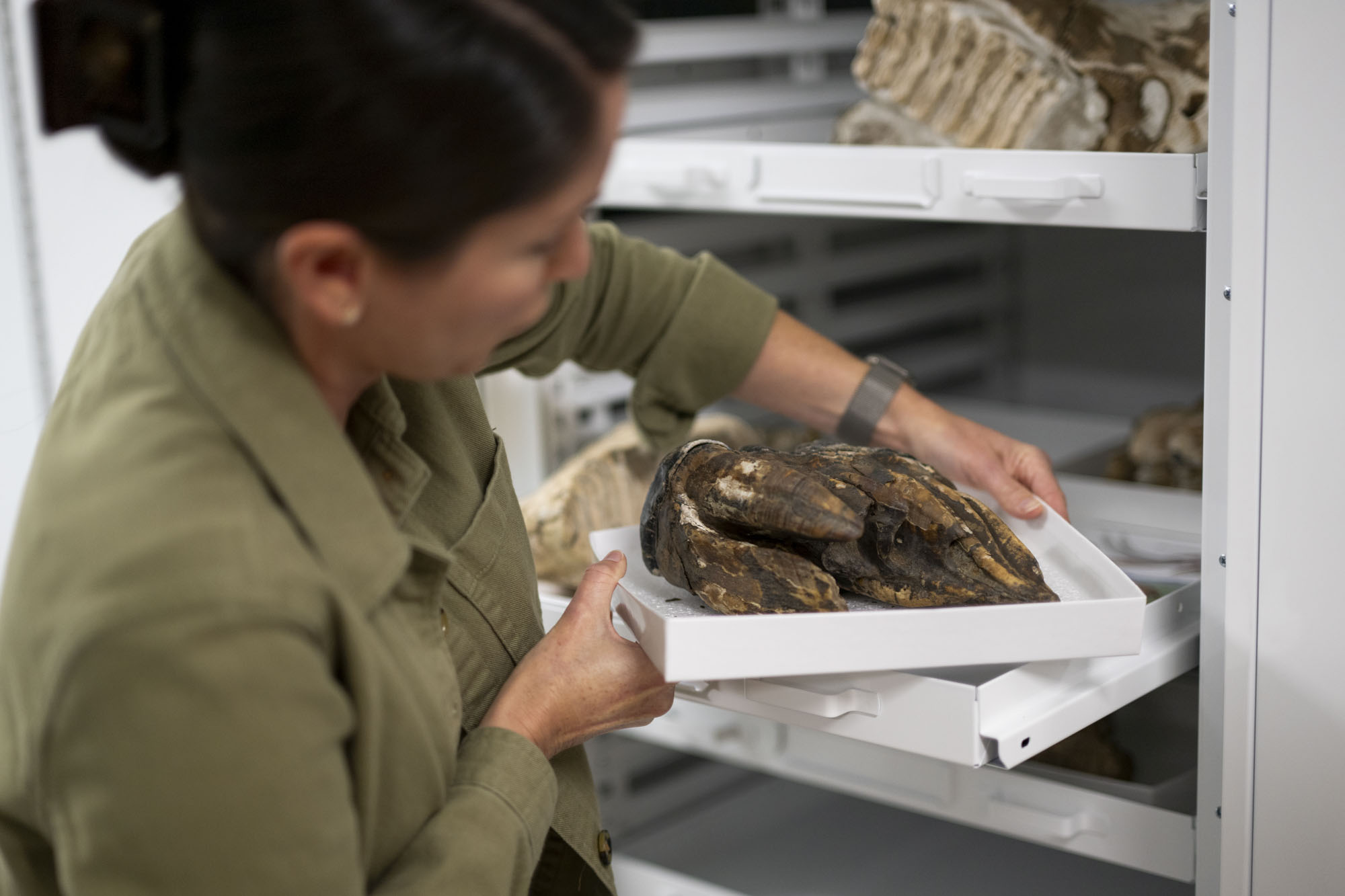
The rare fossil found in a San Mateo County creek in early September now rests in a cabinet at Stanford’s Geoscience Specimen Collection.
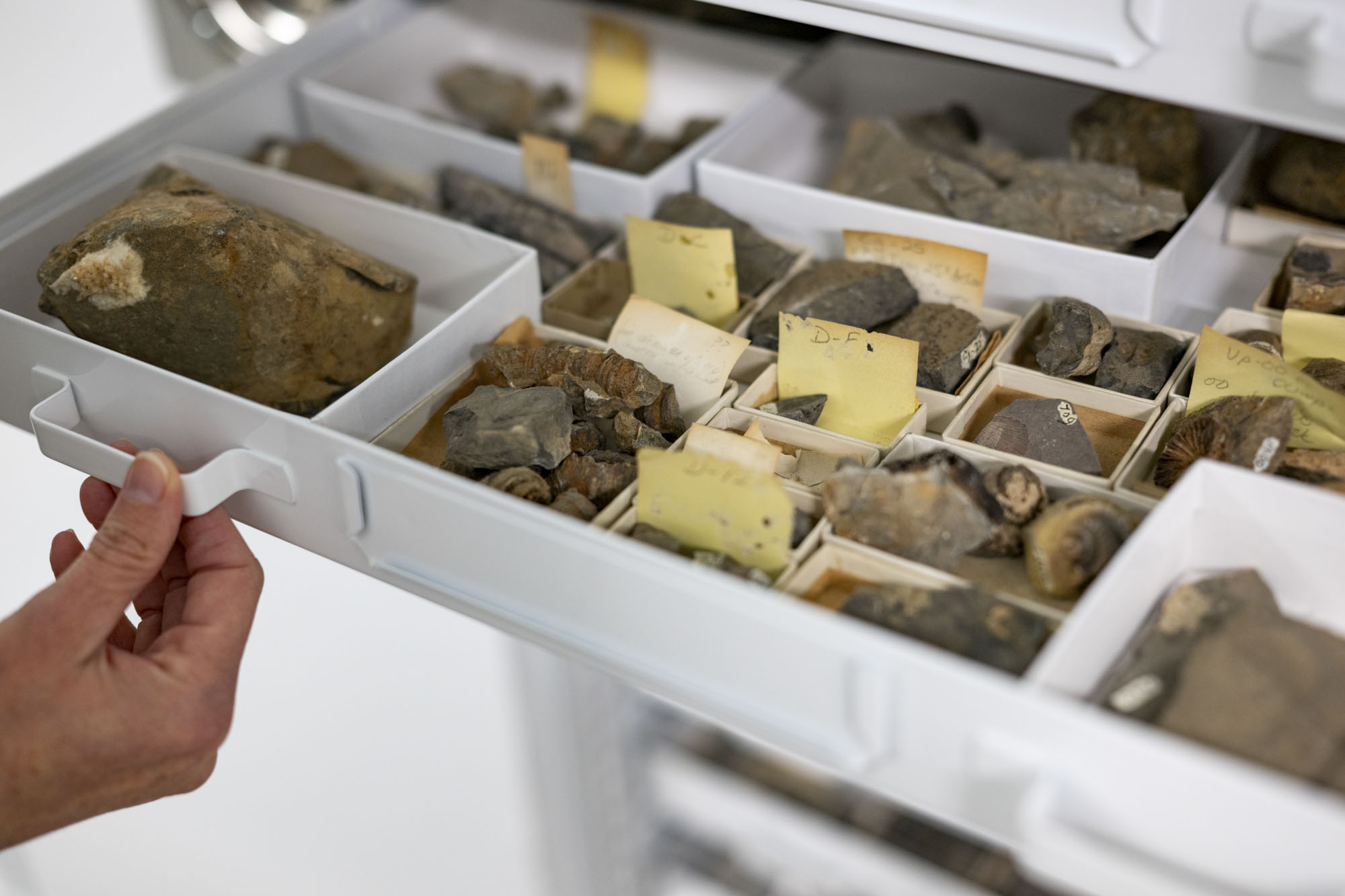
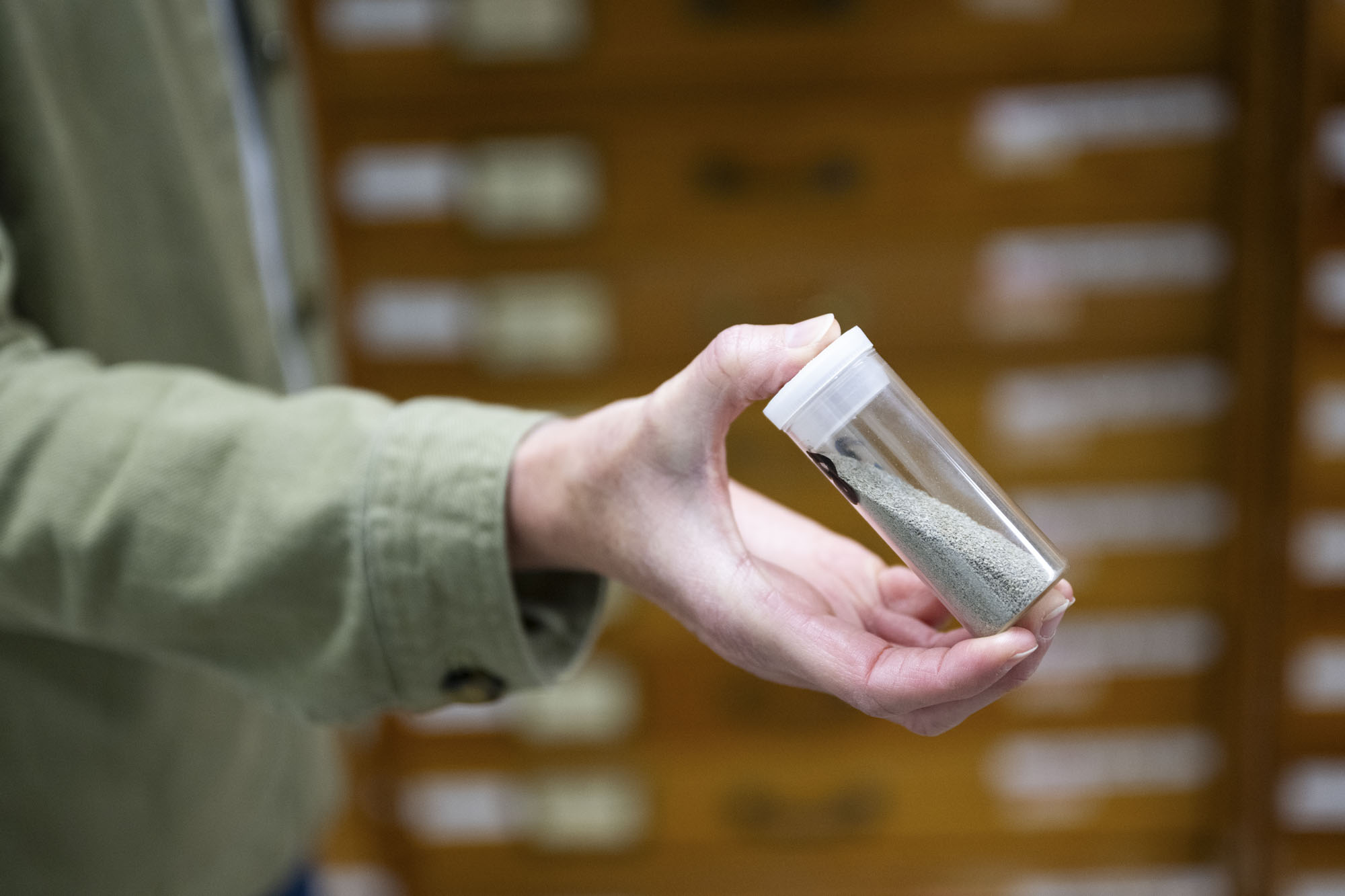
The foot-wide mastodon tooth is stored with over half a million other fossils, minerals, rocks and other specimens.
“These fossils tell a really important story about the environment that they lived in,” said Christine Garcia, curator and manager of the collection.
Researchers plan to analyze the tooth to learn more about the animal’s diet, environment and age. Stanford has also created a 3D scan of the tooth and plans to print replicas for educational outreach.
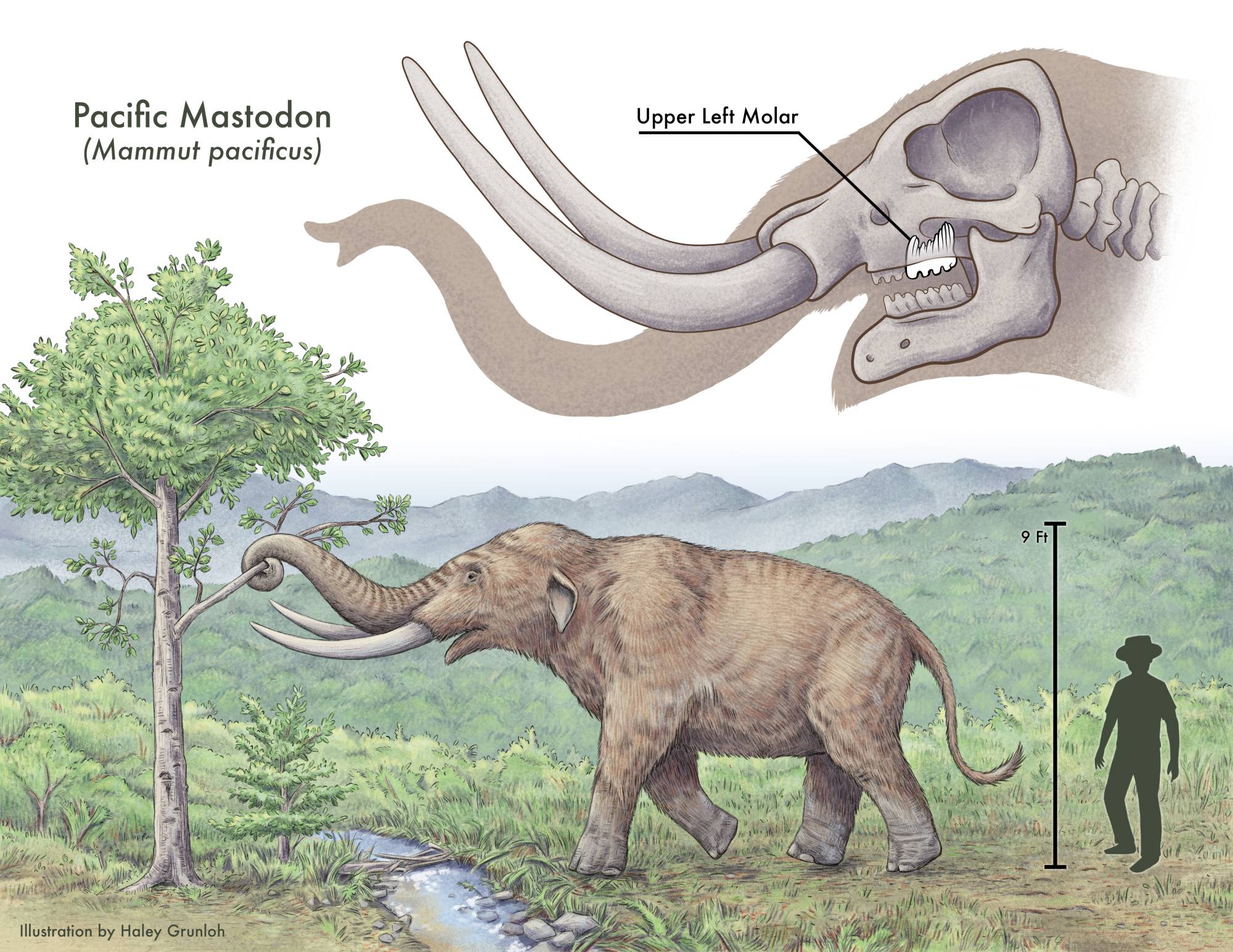
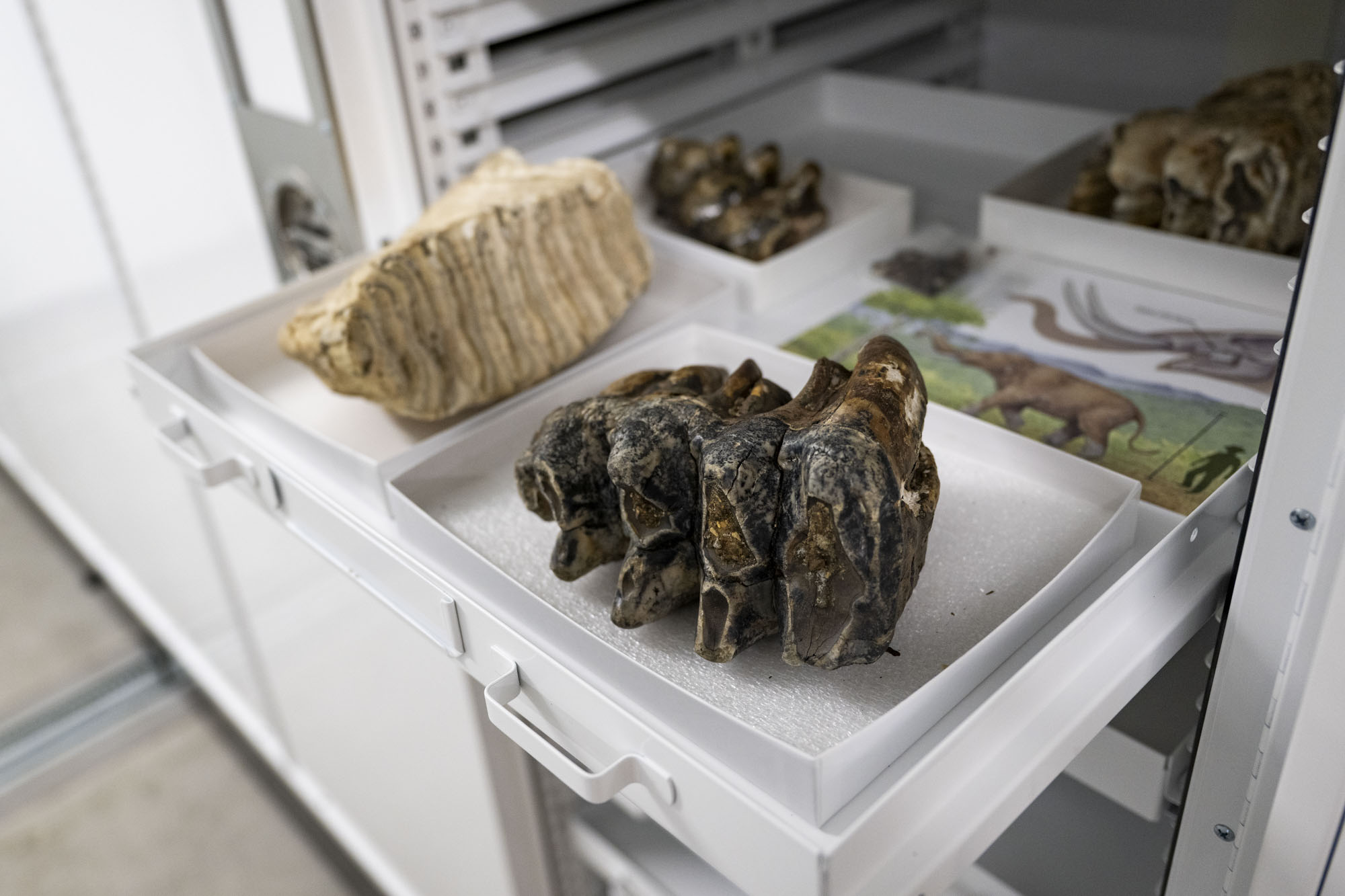
“We wouldn’t want folks to handle the real fossil too much,” Garcia said. “That could cause wear and tear on it. But a 3D copy is a great way to allow anybody to get hands-on with the fossil.”
The fossil provides insight into Pleistocene species and the Bay Area near the end of the Ice Age, when lower sea levels allowed large mammals — including mastodons, Columbian mammoths, giant ground sloths, and ancient camels — to roam terrain now submerged underwater.
The fossil was found by Brigid Lynch, a geomorphologist with Balance Hydrologics, while she was surveying a creek in the Midpeninsula Regional Open Space Preserve habitat restoration for threatened California red-legged frogs. “As a geologist, I’ve gone out and seen stuff in the field, but definitely nothing as exciting as this,” said Lynch at the time.
The molar was from a Pacific mastodon that roamed the Bay Area thousands of years ago and was almost entirely intact.

Lynch’s team contacted Pacific Paleontology after a reverse image search suggested it might be a mastodon tooth. Wayne Thompson, a paleontologist and the group’s CEO, confirmed on site that it was an upper left third molar.
“The tooth itself is in immaculate condition,” Thompson said.
“It’s the most complete mastodon molar from our area, and the most spectacular mastodon molar that I’ve ever seen.”
Measuring nearly a foot long and a foot tall, the fossil retains its crown attached to the roots. Mastodons were large, stocky relatives of modern elephants, slightly smaller than woolly mammoths. Unlike grazing mammoths, mastodons were browsers that used their trunks to strip leaves and shoots from trees and shrubs.
Based on the molar’s wear, Thompson estimates the animal was between 45 and 50 years old when it died. Estimated to be at least 10,000 years old, the fossil will undergo further testing to establish a precise timeframe.
Midpen donated the tooth to Stanford University’s Doerr School of Sustainability. Garcia said that having both the root and crown intact is exceptionally rare, as researchers usually find only fragments.
Because the fossil was found in water, Midpen kept it submerged until Stanford took over its care, gradually drying it in a climate-controlled environment to prevent deterioration.
The discovery also offers a reminder about conservation. Because the fossil was uncovered during a project to protect the 4-inch California red-legged frog, Ryan McCauley, a public affairs specialist with Midpen, said: “If a 9-foot mastodon can go extinct, there’s certainly no reason that a 4-inch-long red-legged frog couldn’t go extinct.”
Garcia emphasizes that such fossils help scientists track how ancient ecosystems evolved and why species vanished.
“We can learn about which animals in which ecosystems thrived right where we are today,” Garcia said. “And we can try to better understand what happened to them and why.”
To protect the site, officials are keeping the exact discovery location private. They would prefer to let any remaining fossils be exposed naturally through erosion rather than excavation.
While Thompson suspects more remains lie nearby, this single tooth offers a window into an ancient Bay Area landscape.