window.__IS_SSR__=true
window.__INITIAL_STATE__={
"attachmentsReducer": {
"audio_0": {
"type": "attachments",
"id": "audio_0",
"imgSizes": {
"kqedFullSize": {
"file": "https://ww2.kqed.org/news/wp-content/themes/KQED-unified/img/audio_bgs/background0.jpg"
}
}
},
"audio_1": {
"type": "attachments",
"id": "audio_1",
"imgSizes": {
"kqedFullSize": {
"file": "https://ww2.kqed.org/news/wp-content/themes/KQED-unified/img/audio_bgs/background1.jpg"
}
}
},
"audio_2": {
"type": "attachments",
"id": "audio_2",
"imgSizes": {
"kqedFullSize": {
"file": "https://ww2.kqed.org/news/wp-content/themes/KQED-unified/img/audio_bgs/background2.jpg"
}
}
},
"audio_3": {
"type": "attachments",
"id": "audio_3",
"imgSizes": {
"kqedFullSize": {
"file": "https://ww2.kqed.org/news/wp-content/themes/KQED-unified/img/audio_bgs/background3.jpg"
}
}
},
"audio_4": {
"type": "attachments",
"id": "audio_4",
"imgSizes": {
"kqedFullSize": {
"file": "https://ww2.kqed.org/news/wp-content/themes/KQED-unified/img/audio_bgs/background4.jpg"
}
}
},
"placeholder": {
"type": "attachments",
"id": "placeholder",
"imgSizes": {
"thumbnail": {
"file": "https://cdn.kqed.org/wp-content/uploads/2024/12/KQED-Default-Image-816638274-2000x1333-1-160x107.jpg",
"width": 160,
"height": 107,
"mimeType": "image/jpeg"
},
"medium": {
"file": "https://cdn.kqed.org/wp-content/uploads/2024/12/KQED-Default-Image-816638274-2000x1333-1-800x533.jpg",
"width": 800,
"height": 533,
"mimeType": "image/jpeg"
},
"medium_large": {
"file": "https://cdn.kqed.org/wp-content/uploads/2024/12/KQED-Default-Image-816638274-2000x1333-1-768x512.jpg",
"width": 768,
"height": 512,
"mimeType": "image/jpeg"
},
"large": {
"file": "https://cdn.kqed.org/wp-content/uploads/2024/12/KQED-Default-Image-816638274-2000x1333-1-1020x680.jpg",
"width": 1020,
"height": 680,
"mimeType": "image/jpeg"
},
"1536x1536": {
"file": "https://cdn.kqed.org/wp-content/uploads/2024/12/KQED-Default-Image-816638274-2000x1333-1-1536x1024.jpg",
"width": 1536,
"height": 1024,
"mimeType": "image/jpeg"
},
"fd-lrg": {
"file": "https://cdn.kqed.org/wp-content/uploads/2024/12/KQED-Default-Image-816638274-2000x1333-1-1536x1024.jpg",
"width": 1536,
"height": 1024,
"mimeType": "image/jpeg"
},
"fd-med": {
"file": "https://cdn.kqed.org/wp-content/uploads/2024/12/KQED-Default-Image-816638274-2000x1333-1-1020x680.jpg",
"width": 1020,
"height": 680,
"mimeType": "image/jpeg"
},
"fd-sm": {
"file": "https://cdn.kqed.org/wp-content/uploads/2024/12/KQED-Default-Image-816638274-2000x1333-1-800x533.jpg",
"width": 800,
"height": 533,
"mimeType": "image/jpeg"
},
"post-thumbnail": {
"file": "https://cdn.kqed.org/wp-content/uploads/2024/12/KQED-Default-Image-816638274-2000x1333-1-672x372.jpg",
"width": 672,
"height": 372,
"mimeType": "image/jpeg"
},
"twentyfourteen-full-width": {
"file": "https://cdn.kqed.org/wp-content/uploads/2024/12/KQED-Default-Image-816638274-2000x1333-1-1038x576.jpg",
"width": 1038,
"height": 576,
"mimeType": "image/jpeg"
},
"xxsmall": {
"file": "https://cdn.kqed.org/wp-content/uploads/2024/12/KQED-Default-Image-816638274-2000x1333-1-160x107.jpg",
"width": 160,
"height": 107,
"mimeType": "image/jpeg"
},
"xsmall": {
"file": "https://cdn.kqed.org/wp-content/uploads/2024/12/KQED-Default-Image-816638274-2000x1333-1-672x372.jpg",
"width": 672,
"height": 372,
"mimeType": "image/jpeg"
},
"small": {
"file": "https://cdn.kqed.org/wp-content/uploads/2024/12/KQED-Default-Image-816638274-2000x1333-1-672x372.jpg",
"width": 672,
"height": 372,
"mimeType": "image/jpeg"
},
"xlarge": {
"file": "https://cdn.kqed.org/wp-content/uploads/2024/12/KQED-Default-Image-816638274-2000x1333-1-1020x680.jpg",
"width": 1020,
"height": 680,
"mimeType": "image/jpeg"
},
"full-width": {
"file": "https://cdn.kqed.org/wp-content/uploads/2024/12/KQED-Default-Image-816638274-2000x1333-1-1920x1280.jpg",
"width": 1920,
"height": 1280,
"mimeType": "image/jpeg"
},
"guest-author-32": {
"file": "https://cdn.kqed.org/wp-content/uploads/2025/01/KQED-Default-Image-816638274-1333x1333-1-160x160.jpg",
"width": 32,
"height": 32,
"mimeType": "image/jpeg"
},
"guest-author-50": {
"file": "https://cdn.kqed.org/wp-content/uploads/2025/01/KQED-Default-Image-816638274-1333x1333-1-160x160.jpg",
"width": 50,
"height": 50,
"mimeType": "image/jpeg"
},
"guest-author-64": {
"file": "https://cdn.kqed.org/wp-content/uploads/2025/01/KQED-Default-Image-816638274-1333x1333-1-160x160.jpg",
"width": 64,
"height": 64,
"mimeType": "image/jpeg"
},
"guest-author-96": {
"file": "https://cdn.kqed.org/wp-content/uploads/2025/01/KQED-Default-Image-816638274-1333x1333-1-160x160.jpg",
"width": 96,
"height": 96,
"mimeType": "image/jpeg"
},
"guest-author-128": {
"file": "https://cdn.kqed.org/wp-content/uploads/2025/01/KQED-Default-Image-816638274-1333x1333-1-160x160.jpg",
"width": 128,
"height": 128,
"mimeType": "image/jpeg"
},
"detail": {
"file": "https://cdn.kqed.org/wp-content/uploads/2025/01/KQED-Default-Image-816638274-1333x1333-1-160x160.jpg",
"width": 160,
"height": 160,
"mimeType": "image/jpeg"
},
"kqedFullSize": {
"file": "https://cdn.kqed.org/wp-content/uploads/2024/12/KQED-Default-Image-816638274-2000x1333-1.jpg",
"width": 2000,
"height": 1333
}
}
},
"news_10573168": {
"type": "attachments",
"id": "news_10573168",
"meta": {
"index": "attachments_1716263798",
"site": "news",
"id": "10573168",
"found": true
},
"parent": 10573162,
"imgSizes": {
"twentyfourteen-full-width": {
"file": "https://ww2.kqed.org/app/uploads/sites/10/2015/06/1200px-Raisins_01-1038x576.jpg",
"width": 1038,
"mimeType": "image/jpeg",
"height": 576
},
"thumbnail": {
"file": "https://ww2.kqed.org/app/uploads/sites/10/2015/06/1200px-Raisins_01-400x251.jpg",
"width": 400,
"mimeType": "image/jpeg",
"height": 251
},
"fd-sm": {
"file": "https://ww2.kqed.org/app/uploads/sites/10/2015/06/1200px-Raisins_01-960x603.jpg",
"width": 960,
"mimeType": "image/jpeg",
"height": 603
},
"post-thumbnail": {
"file": "https://ww2.kqed.org/app/uploads/sites/10/2015/06/1200px-Raisins_01-672x372.jpg",
"width": 672,
"mimeType": "image/jpeg",
"height": 372
},
"kqedFullSize": {
"file": "https://ww2.kqed.org/app/uploads/sites/10/2015/06/1200px-Raisins_01.jpg",
"width": 1200,
"height": 754
},
"guest-author-96": {
"file": "https://ww2.kqed.org/app/uploads/sites/10/2015/06/1200px-Raisins_01-96x96.jpg",
"width": 96,
"mimeType": "image/jpeg",
"height": 96
},
"medium": {
"file": "https://ww2.kqed.org/app/uploads/sites/10/2015/06/1200px-Raisins_01-800x503.jpg",
"width": 800,
"mimeType": "image/jpeg",
"height": 503
},
"guest-author-64": {
"file": "https://ww2.kqed.org/app/uploads/sites/10/2015/06/1200px-Raisins_01-64x64.jpg",
"width": 64,
"mimeType": "image/jpeg",
"height": 64
},
"guest-author-32": {
"file": "https://ww2.kqed.org/app/uploads/sites/10/2015/06/1200px-Raisins_01-32x32.jpg",
"width": 32,
"mimeType": "image/jpeg",
"height": 32
},
"jmtc-small-thumb": {
"file": "https://ww2.kqed.org/app/uploads/sites/10/2015/06/1200px-Raisins_01-280x150.jpg",
"width": 280,
"mimeType": "image/jpeg",
"height": 150
},
"fd-med": {
"file": "https://ww2.kqed.org/app/uploads/sites/10/2015/06/1200px-Raisins_01-1180x741.jpg",
"width": 1180,
"mimeType": "image/jpeg",
"height": 741
},
"detail": {
"file": "https://ww2.kqed.org/app/uploads/sites/10/2015/06/1200px-Raisins_01-75x75.jpg",
"width": 75,
"mimeType": "image/jpeg",
"height": 75
},
"guest-author-128": {
"file": "https://ww2.kqed.org/app/uploads/sites/10/2015/06/1200px-Raisins_01-128x128.jpg",
"width": 128,
"mimeType": "image/jpeg",
"height": 128
}
},
"publishDate": 1435005750,
"modified": 1435009800,
"caption": "The ruling was seen as a decisive win for property rights advocates seeking to limit government power.",
"description": null,
"title": "Raisins",
"credit": "Paweł Kuźniar/Wikimedia Commons",
"status": "inherit",
"isLoading": false,
"fetchFailed": false
},
"news_10461709": {
"type": "attachments",
"id": "news_10461709",
"meta": {
"index": "attachments_1716263798",
"site": "news",
"id": "10461709",
"found": true
},
"parent": 10461515,
"imgSizes": {
"twentyfourteen-full-width": {
"file": "https://ww2.kqed.org/app/uploads/sites/10/2015/03/2757_transform-1038x576.jpg",
"width": 1038,
"mimeType": "image/jpeg",
"height": 576
},
"thumbnail": {
"file": "https://ww2.kqed.org/app/uploads/sites/10/2015/03/2757_transform-400x250.jpg",
"width": 400,
"mimeType": "image/jpeg",
"height": 250
},
"fd-sm": {
"file": "https://ww2.kqed.org/app/uploads/sites/10/2015/03/2757_transform-320x200.jpg",
"width": 320,
"mimeType": "image/jpeg",
"height": 200
},
"post-thumbnail": {
"file": "https://ww2.kqed.org/app/uploads/sites/10/2015/03/2757_transform-672x372.jpg",
"width": 672,
"mimeType": "image/jpeg",
"height": 372
},
"kqedFullSize": {
"file": "https://ww2.kqed.org/app/uploads/sites/10/2015/03/2757_transform.jpg",
"width": 1439,
"height": 900
},
"guest-author-96": {
"file": "https://ww2.kqed.org/app/uploads/sites/10/2015/03/2757_transform-96x96.jpg",
"width": 96,
"mimeType": "image/jpeg",
"height": 96
},
"medium": {
"file": "https://ww2.kqed.org/app/uploads/sites/10/2015/03/2757_transform-800x500.jpg",
"width": 800,
"mimeType": "image/jpeg",
"height": 500
},
"guest-author-64": {
"file": "https://ww2.kqed.org/app/uploads/sites/10/2015/03/2757_transform-64x64.jpg",
"width": 64,
"mimeType": "image/jpeg",
"height": 64
},
"guest-author-32": {
"file": "https://ww2.kqed.org/app/uploads/sites/10/2015/03/2757_transform-32x32.jpg",
"width": 32,
"mimeType": "image/jpeg",
"height": 32
},
"fd-lrg": {
"file": "https://ww2.kqed.org/app/uploads/sites/10/2015/03/2757_transform-1180x738.jpg",
"width": 1180,
"mimeType": "image/jpeg",
"height": 738
},
"fd-med": {
"file": "https://ww2.kqed.org/app/uploads/sites/10/2015/03/2757_transform-768x480.jpg",
"width": 768,
"mimeType": "image/jpeg",
"height": 480
},
"detail": {
"file": "https://ww2.kqed.org/app/uploads/sites/10/2015/03/2757_transform-75x75.jpg",
"width": 75,
"mimeType": "image/jpeg",
"height": 75
},
"guest-author-128": {
"file": "https://ww2.kqed.org/app/uploads/sites/10/2015/03/2757_transform-128x128.jpg",
"width": 128,
"mimeType": "image/jpeg",
"height": 128
}
},
"publishDate": 1426901664,
"modified": 1435243081,
"caption": "The U.S. Supreme Court building, in Washington, D.C.",
"description": "The US Supreme Court Building is seen in this March 31, 2012 photo on Capitol Hill in Washington, DC. AFP PHOTO/Karen BLEIER (Photo credit should read KAREN BLEIER/AFP/Getty Images)",
"title": "The US Supreme Court Building is seen in",
"credit": "Karen Bleier/AFP-Getty Images",
"status": "inherit",
"isLoading": false,
"fetchFailed": false
},
"news_10447380": {
"type": "attachments",
"id": "news_10447380",
"meta": {
"index": "attachments_1716263798",
"site": "news",
"id": "10447380",
"found": true
},
"parent": 10447299,
"imgSizes": {
"twentyfourteen-full-width": {
"file": "https://ww2.kqed.org/app/uploads/sites/10/2015/03/RS14442_161628953-e1425344404890-1038x576.jpg",
"width": 1038,
"mimeType": "image/jpeg",
"height": 576
},
"thumbnail": {
"file": "https://ww2.kqed.org/app/uploads/sites/10/2015/03/RS14442_161628953-e1425344404890-400x318.jpg",
"width": 400,
"mimeType": "image/jpeg",
"height": 318
},
"fd-sm": {
"file": "https://ww2.kqed.org/app/uploads/sites/10/2015/03/RS14442_161628953-e1425344404890-320x254.jpg",
"width": 320,
"mimeType": "image/jpeg",
"height": 254
},
"post-thumbnail": {
"file": "https://ww2.kqed.org/app/uploads/sites/10/2015/03/RS14442_161628953-e1425344404890-672x372.jpg",
"width": 672,
"mimeType": "image/jpeg",
"height": 372
},
"kqedFullSize": {
"file": "https://ww2.kqed.org/app/uploads/sites/10/2015/03/RS14442_161628953-e1425344404890.jpg",
"width": 1905,
"height": 1515
},
"large": {
"file": "https://ww2.kqed.org/app/uploads/sites/10/2015/03/RS14442_161628953-e1425344404890-1440x1145.jpg",
"width": 1440,
"mimeType": "image/jpeg",
"height": 1145
},
"guest-author-96": {
"file": "https://ww2.kqed.org/app/uploads/sites/10/2015/03/RS14442_161628953-e1425344404890-96x96.jpg",
"width": 96,
"mimeType": "image/jpeg",
"height": 96
},
"medium": {
"file": "https://ww2.kqed.org/app/uploads/sites/10/2015/03/RS14442_161628953-e1425344404890-800x636.jpg",
"width": 800,
"mimeType": "image/jpeg",
"height": 636
},
"guest-author-64": {
"file": "https://ww2.kqed.org/app/uploads/sites/10/2015/03/RS14442_161628953-e1425344404890-64x64.jpg",
"width": 64,
"mimeType": "image/jpeg",
"height": 64
},
"guest-author-32": {
"file": "https://ww2.kqed.org/app/uploads/sites/10/2015/03/RS14442_161628953-e1425344404890-32x32.jpg",
"width": 32,
"mimeType": "image/jpeg",
"height": 32
},
"fd-lrg": {
"file": "https://ww2.kqed.org/app/uploads/sites/10/2015/03/RS14442_161628953-e1425344404890-1180x938.jpg",
"width": 1180,
"mimeType": "image/jpeg",
"height": 938
},
"fd-med": {
"file": "https://ww2.kqed.org/app/uploads/sites/10/2015/03/RS14442_161628953-e1425344404890-768x611.jpg",
"width": 768,
"mimeType": "image/jpeg",
"height": 611
},
"detail": {
"file": "https://ww2.kqed.org/app/uploads/sites/10/2015/03/RS14442_161628953-e1425344404890-75x75.jpg",
"width": 75,
"mimeType": "image/jpeg",
"height": 75
},
"guest-author-128": {
"file": "https://ww2.kqed.org/app/uploads/sites/10/2015/03/RS14442_161628953-e1425344404890-128x128.jpg",
"width": 128,
"mimeType": "image/jpeg",
"height": 128
}
},
"publishDate": 1425343818,
"modified": 1425347630,
"caption": "Justice Anthony Kennedy could be the deciding vote in the fate of independent redistricting.",
"description": "WASHINGTON, DC - FEBRUARY 12: Supreme Court Associate Justice Anthony Kennedy attends U.S. President Barack Obama's State of the Union speech before a joint session of Congress at the U.S. Capitol February 12, 2013 in Washington, DC. Facing a divided Congress, Obama focused his speech on new initiatives designed to stimulate the U.S. economy and said, 'ItÕs not a bigger government we need, but a smarter government that sets priorities and invests in broad-based growth'. (Photo by Chip Somodevilla/Getty Images)",
"title": "President Obama Delivers State Of The Union Address",
"credit": "Chip Somodevilla/Getty Images",
"status": "inherit",
"isLoading": false,
"fetchFailed": false
},
"news_92735": {
"type": "attachments",
"id": "news_92735",
"meta": {
"index": "attachments_1716263798",
"site": "news",
"id": "92735",
"found": true
},
"parent": 92727,
"imgSizes": {
"kqedFullSize": {
"file": "https://ww2.kqed.org/app/uploads/sites/10/2013/03/RS2263_SupremeCourt100311-e1412611481354.jpg",
"width": 1440,
"height": 987
}
},
"publishDate": 1364431584,
"modified": 1466708831,
"caption": "The Supreme Court of the United States. ",
"description": "The Supreme Court of the United States. ",
"title": "U.S. Supreme Court",
"credit": "Paul J. Richards/AFP-Getty Images",
"status": "inherit",
"isLoading": false,
"fetchFailed": false
},
"news_111725": {
"type": "attachments",
"id": "news_111725",
"meta": {
"index": "attachments_1716263798",
"site": "news",
"id": "111725",
"found": true
},
"parent": 111706,
"imgSizes": {
"kqedFullSize": {
"file": "https://ww2.kqed.org/app/uploads/sites/10/2013/09/supremecourt-640.jpg",
"width": 640,
"height": 360
}
},
"publishDate": 1379543654,
"modified": 1426900993,
"caption": "The City and County of San Francisco is appealing a 9th Circuit Court of Appeals ruling concerning police encounters with people in psychiatric crisis to the U.S. Supreme Court.",
"description": null,
"title": "supremecourt-640",
"credit": "(Karen Bleier/AFP/Getty Images)",
"status": "inherit",
"isLoading": false,
"fetchFailed": false
},
"news_125153": {
"type": "attachments",
"id": "news_125153",
"meta": {
"index": "attachments_1716263798",
"site": "news",
"id": "125153",
"found": true
},
"parent": 125143,
"imgSizes": {
"kqedFullSize": {
"file": "https://ww2.kqed.org/app/uploads/sites/10/2014/02/RS8164_Dennis_Herrra_2Jan2014_0086_web.jpg-Herrera.jpg",
"width": 640,
"height": 360
}
},
"publishDate": 1391476372,
"modified": 1472251271,
"caption": "San Francisco City Attorney Dennis Herrera at a press conference.",
"description": null,
"title": "RS8164_Dennis_Herrra_2Jan2014_0086_web.jpg-Herrera",
"credit": " Sara Bloomberg/KQED",
"status": "inherit",
"isLoading": false,
"fetchFailed": false
},
"news_134492": {
"type": "attachments",
"id": "news_134492",
"meta": {
"index": "attachments_1716263798",
"site": "news",
"id": "134492",
"found": true
},
"parent": 134475,
"imgSizes": {
"kqedFullSize": {
"file": "https://ww2.kqed.org/app/uploads/sites/10/2014/04/699487712_efff9943f2_o.jpg",
"width": 1537,
"height": 1024
}
},
"publishDate": 1398717113,
"modified": 1398717113,
"caption": "“A cell phone is, in essence, a portal into the most private and sensitive information in our lives,\" Stanford Law Professor Jeff Fisher. (Pieter Ouwerkerk/Flickr)",
"description": "“A cell phone is, in essence, a portal into the most private and sensitive information in our lives,\" Stanford Law Professor Jeff Fisher. (Pieter Ouwerkerk/Flickr)",
"title": "699487712_efff9943f2_o",
"credit": null,
"status": "inherit",
"isLoading": false,
"fetchFailed": false
}
},
"audioPlayerReducer": {
"postId": "stream_live",
"isPaused": true,
"isPlaying": false,
"pfsActive": false,
"pledgeModalIsOpen": true,
"playerDrawerIsOpen": false,
"liveAudioPlayStartedAt": 0,
"liveAudioPlayContext": ""
},
"authorsReducer": {
"byline_news_10573162": {
"type": "authors",
"id": "byline_news_10573162",
"meta": {
"override": true
},
"slug": "byline_news_10573162",
"name": "\u003cstrong>Sam Hananel\u003cstrong>\u003cbr> Associated Press",
"isLoading": false
},
"byline_news_10363666": {
"type": "authors",
"id": "byline_news_10363666",
"meta": {
"override": true
},
"slug": "byline_news_10363666",
"name": "\u003ca href=\"https://twitter.com/samhananelap\" target=\"_blank\">Sam Hananel\u003c/a>\u003cbr />Associated Press",
"isLoading": false
},
"jbrooks": {
"type": "authors",
"id": "80",
"meta": {
"index": "authors_1716337520",
"id": "80",
"found": true
},
"name": "Jon Brooks",
"firstName": "Jon",
"lastName": "Brooks",
"slug": "jbrooks",
"email": "jbrooks@kqed.org",
"display_author_email": true,
"staff_mastheads": [
"science"
],
"title": "Digital Editor",
"bio": "Jon Brooks is a former Digital Editor for KQED Science. He is the former editor of KQED’s daily news blog, News Fix. In 2014, he won a California Journalism Award for his coverage of ride services like Uber and Lyft and the taxi industry. A veteran blogger, he previously worked for Yahoo! in various news writing and editing roles. Jon is also a playwright whose work has been produced in San Francisco, New York, Italy, and around the U.S. He has written about film for his own blog and studied film at Boston University.",
"avatar": "https://secure.gravatar.com/avatar/98887f7ed1c876ed414d4c915e969584?s=600&d=blank&r=g",
"twitter": "jbrooksfoy",
"facebook": null,
"instagram": null,
"linkedin": null,
"sites": [
{
"site": "arts",
"roles": [
"Contributor",
"editor"
]
},
{
"site": "news",
"roles": [
"author"
]
},
{
"site": "futureofyou",
"roles": [
"administrator"
]
},
{
"site": "mindshift",
"roles": [
"editor"
]
},
{
"site": "stateofhealth",
"roles": [
"editor"
]
},
{
"site": "science",
"roles": [
"administrator"
]
},
{
"site": "quest",
"roles": [
"editor"
]
}
],
"headData": {
"title": "Jon Brooks | KQED",
"description": "Digital Editor",
"ogImgSrc": "https://secure.gravatar.com/avatar/98887f7ed1c876ed414d4c915e969584?s=600&d=blank&r=g",
"twImgSrc": "https://secure.gravatar.com/avatar/98887f7ed1c876ed414d4c915e969584?s=600&d=blank&r=g"
},
"isLoading": false,
"link": "/author/jbrooks"
},
"jmyers": {
"type": "authors",
"id": "232",
"meta": {
"index": "authors_1716337520",
"id": "232",
"found": true
},
"name": "John Myers",
"firstName": "John",
"lastName": "Myers",
"slug": "jmyers",
"email": "jmyers@kqed.org",
"display_author_email": false,
"staff_mastheads": [],
"title": null,
"bio": "John Myers is Senior Editor of KQED's new California Politics and Government Desk. A veteran of almost two decades of political coverage, he was KQED's longest serving statehouse bureau chief and recently was political editor for Sacramento's ABC affiliate, News10 (KXTV). John was moderator of the only 2014 gubernatorial debate, and was named by \u003cem>The Washington Post\u003c/em> to two \"Best Of\" lists: the 2015 list of top state politics reporters and 2014's list of America's most influential statehouse reporters.",
"avatar": "https://secure.gravatar.com/avatar/c0ac98482caf0b8229a792662b38722a?s=600&d=blank&r=g",
"twitter": "johnmyers",
"facebook": null,
"instagram": null,
"linkedin": null,
"sites": [
{
"site": "news",
"roles": [
"subscriber"
]
}
],
"headData": {
"title": "John Myers | KQED",
"description": null,
"ogImgSrc": "https://secure.gravatar.com/avatar/c0ac98482caf0b8229a792662b38722a?s=600&d=blank&r=g",
"twImgSrc": "https://secure.gravatar.com/avatar/c0ac98482caf0b8229a792662b38722a?s=600&d=blank&r=g"
},
"isLoading": false,
"link": "/author/jmyers"
},
"kqed": {
"type": "authors",
"id": "236",
"meta": {
"index": "authors_1716337520",
"id": "236",
"found": true
},
"name": "KQED News Staff",
"firstName": "KQED News Staff",
"lastName": null,
"slug": "kqed",
"email": "faq@kqed.org",
"display_author_email": false,
"staff_mastheads": [],
"title": null,
"bio": null,
"avatar": "https://secure.gravatar.com/avatar/ef0e801a68c4c54afa9180db14084167?s=600&d=blank&r=g",
"twitter": null,
"facebook": null,
"instagram": null,
"linkedin": null,
"sites": [
{
"site": "arts",
"roles": [
"contributor"
]
},
{
"site": "news",
"roles": [
"editor"
]
},
{
"site": "futureofyou",
"roles": [
"author"
]
}
],
"headData": {
"title": "KQED News Staff | KQED",
"description": null,
"ogImgSrc": "https://secure.gravatar.com/avatar/ef0e801a68c4c54afa9180db14084167?s=600&d=blank&r=g",
"twImgSrc": "https://secure.gravatar.com/avatar/ef0e801a68c4c54afa9180db14084167?s=600&d=blank&r=g"
},
"isLoading": false,
"link": "/author/kqed"
},
"kqednewsstaffandwires": {
"type": "authors",
"id": "237",
"meta": {
"index": "authors_1716337520",
"id": "237",
"found": true
},
"name": "KQED News Staff and Wires",
"firstName": "KQED News Staff and Wires",
"lastName": null,
"slug": "kqednewsstaffandwires",
"email": "onlinenewsstaff@kqed.org",
"display_author_email": false,
"staff_mastheads": [],
"title": null,
"bio": null,
"avatar": "https://secure.gravatar.com/avatar/72295af8ebbfbd19a4948f5271285664?s=600&d=blank&r=g",
"twitter": null,
"facebook": null,
"instagram": null,
"linkedin": null,
"sites": [
{
"site": "arts",
"roles": [
"contributor"
]
},
{
"site": "news",
"roles": [
"contributor"
]
},
{
"site": "lowdown",
"roles": [
"author"
]
},
{
"site": "stateofhealth",
"roles": [
"contributor"
]
},
{
"site": "food",
"roles": [
"author"
]
}
],
"headData": {
"title": "KQED News Staff and Wires | KQED",
"description": null,
"ogImgSrc": "https://secure.gravatar.com/avatar/72295af8ebbfbd19a4948f5271285664?s=600&d=blank&r=g",
"twImgSrc": "https://secure.gravatar.com/avatar/72295af8ebbfbd19a4948f5271285664?s=600&d=blank&r=g"
},
"isLoading": false,
"link": "/author/kqednewsstaffandwires"
},
"scottshafer": {
"type": "authors",
"id": "255",
"meta": {
"index": "authors_1716337520",
"id": "255",
"found": true
},
"name": "Scott Shafer",
"firstName": "Scott",
"lastName": "Shafer",
"slug": "scottshafer",
"email": "sshafer@kqed.org",
"display_author_email": false,
"staff_mastheads": [
"news"
],
"title": "KQED Contributor",
"bio": "Scott Shafer is a senior editor with the KQED Politics and Government desk. He is co-host of Political Breakdown, the award-winning radio show and podcast with a personal take on the world of politics. Scott came to KQED in 1998 to host the statewide\u003cem> California Report\u003c/em>. Prior to that he had extended stints in politics and government\u003cem>.\u003c/em> He uses that inside experience at KQED in his, reporting, hosting and analysis for the politics desk. Scott collaborated \u003cem>Political Breakdown a\u003c/em>nd on \u003cem>The Political Mind of Jerry Brown, \u003c/em>an eight-part series about the life and extraordinary political career of the former governor. For fun, he plays water polo with the San Francisco Tsunami.",
"avatar": "https://secure.gravatar.com/avatar/a62ebae45b79d7aed1a39a0e3bf68104?s=600&d=blank&r=g",
"twitter": "scottshafer",
"bluesky": null,
"facebook": null,
"instagram": null,
"linkedin": null,
"sites": [
{
"site": "news",
"roles": [
"editor"
]
},
{
"site": "stateofhealth",
"roles": [
"author"
]
},
{
"site": "science",
"roles": [
"author"
]
},
{
"site": "forum",
"roles": [
"subscriber"
]
},
{
"site": "liveblog",
"roles": [
"author"
]
}
],
"headData": {
"title": "Scott Shafer | KQED",
"description": "KQED Contributor",
"ogImgSrc": "https://secure.gravatar.com/avatar/a62ebae45b79d7aed1a39a0e3bf68104?s=600&d=blank&r=g",
"twImgSrc": "https://secure.gravatar.com/avatar/a62ebae45b79d7aed1a39a0e3bf68104?s=600&d=blank&r=g"
},
"isLoading": false,
"link": "/author/scottshafer"
},
"aemslie": {
"type": "authors",
"id": "3206",
"meta": {
"index": "authors_1716337520",
"id": "3206",
"found": true
},
"name": "Alex Emslie",
"firstName": "Alex",
"lastName": "Emslie",
"slug": "aemslie",
"email": "aemslie@kqed.org",
"display_author_email": true,
"staff_mastheads": [
"news"
],
"title": "KQED Senior Editor",
"bio": "Alex Emslie is senior editor of talent and development at KQED, where he manages dozens of early career journalists and oversees news department internships.\r\n\r\nHe is a former carpenter and proud graduate of City College of San Francisco and San Francisco State University, where he studied journalism and criminal justice before joining KQED in 2013.\r\n\r\nAlex produced investigative journalism focused on \u003ca href=\"https://www.kqed.org/news/11667594/the-trials-of-marvin-mutch-video\">criminal justice\u003c/a> and policing for most of a decade. He has broken major stories about \u003ca href=\"https://www.kqed.org/news/135682/amid-a-series-of-vallejo-police-shootings-one-officers-name-stands-out\">police use of deadly force\u003c/a>, \u003ca href=\"https://www.kqed.org/news/10454955/racist-texts-prompt-sfpd-internal-investigation\">officer misconduct\u003c/a> and \u003ca href=\"https://www.kqed.org/news/11712239/terrorist-or-troll-judge-to-weigh-whether-oakland-man-really-intended-to-attack-bay-area\">other\u003c/a> \u003ca href=\"https://www.kqed.org/news/11221414/hayward-paid-159000-to-husband-of-retired-police-chief-documents-show\">high\u003c/a>-\u003ca href=\"https://www.kqed.org/news/10622762/the-forgotten-tracking-two-homicides-in-san-francisco-public-housing\">profile\u003c/a> \u003ca href=\"https://www.kqed.org/news/11624516/federal-agency-promoted-ranger-just-months-after-his-gun-was-stolen-and-used-in-steinle-killing\">cases\u003c/a>. He co-founded the \u003ca href=\"https://projects.scpr.org/california-reporting-project/\">California Reporting Project\u003c/a> in 2019 to obtain and report on previously confidential police internal investigations. The effort produced well over 100 original stories and changed the course of multiple criminal cases.\r\n\r\nHis work has been recognized with numerous journalism awards, including a national Edward R. Murrow award for several years of \u003ca href=\"https://www.kqed.org/news/11688481/sfpd-officers-in-mario-woods-case-recount-shooting-in-newly-filed-depositions\">reporting\u003c/a> on the San Francisco Police shooting of Mario Woods. His \u003ca href=\"https://www.kqed.org/news/147854/half-of-those-killed-by-san-francisco-police-are-mentally-ill\">reporting\u003c/a> on police killings of people in psychiatric crisis was cited in amicus briefs before the U.S. Supreme Court.\r\n\r\nAlex now enjoys mentoring the next generation of journalists at KQED.",
"avatar": "https://secure.gravatar.com/avatar/e691e65209f20e9da202bd730ead5663?s=600&d=blank&r=g",
"twitter": "SFNewsReporter",
"facebook": null,
"instagram": null,
"linkedin": null,
"sites": [
{
"site": "arts",
"roles": [
"editor"
]
},
{
"site": "news",
"roles": [
"editor"
]
},
{
"site": "mindshift",
"roles": [
"editor"
]
},
{
"site": "stateofhealth",
"roles": [
"editor"
]
},
{
"site": "science",
"roles": [
"administrator"
]
}
],
"headData": {
"title": "Alex Emslie | KQED",
"description": "KQED Senior Editor",
"ogImgSrc": "https://secure.gravatar.com/avatar/e691e65209f20e9da202bd730ead5663?s=600&d=blank&r=g",
"twImgSrc": "https://secure.gravatar.com/avatar/e691e65209f20e9da202bd730ead5663?s=600&d=blank&r=g"
},
"isLoading": false,
"link": "/author/aemslie"
}
},
"pagesReducer": {
"news_tag_u-s-supreme-court": {
"type": "terms",
"id": "news_1172",
"meta": {
"index": "terms_1716263798",
"site": "news",
"id": "1172",
"score": 10.403818
},
"featImg": null,
"name": "U.S. Supreme Court",
"description": null,
"taxonomy": "tag",
"headData": {
"twImgId": null,
"twTitle": null,
"ogTitle": null,
"ogImgId": null,
"twDescription": null,
"description": null,
"title": "U.S. Supreme Court Archives | KQED News",
"ogDescription": null
},
"ttid": 1183,
"slug": "u-s-supreme-court",
"isLoading": false,
"title": "U.S. Supreme Court",
"pageMeta": {
"site": "news",
"WpPageTemplate": "page-topic-editorial",
"currentPage": 15
},
"blocks": [
{
"blockName": "kqed/post-list",
"attrs": {
"layout": "cardArticle2",
"query": "posts/news?tag=u-s-supreme-court",
"seeMore": false,
"paginated": true,
"page": 15
}
},
{
"blockName": "kqed/ad"
}
]
}
},
"pfsSessionReducer": {},
"postsReducer": {
"stream_live": {
"type": "live",
"id": "stream_live",
"audioUrl": "https://streams.kqed.org/kqedradio",
"title": "Live Stream",
"excerpt": "Live Stream information currently unavailable.",
"link": "/radio",
"featImg": "",
"label": {
"name": "KQED Live",
"link": "/"
}
},
"stream_kqedNewscast": {
"type": "posts",
"id": "stream_kqedNewscast",
"audioUrl": "https://www.kqed.org/.stream/anon/radio/RDnews/newscast.mp3?_=1",
"title": "KQED Newscast",
"featImg": "",
"label": {
"name": "88.5 FM",
"link": "/"
}
},
"news_10573162": {
"type": "posts",
"id": "news_10573162",
"meta": {
"index": "posts_1716263798",
"site": "news",
"id": "10573162",
"score": null,
"sort": [
1435008746000
]
},
"parent": 0,
"labelTerm": {
"site": "news",
"term": 72
},
"blocks": [],
"publishDate": 1435008746,
"format": "standard",
"disqusTitle": "Supreme Court Rules In Favor of California Raisin Farmers",
"title": "Supreme Court Rules In Favor of California Raisin Farmers",
"headTitle": "The California Report | KQED News",
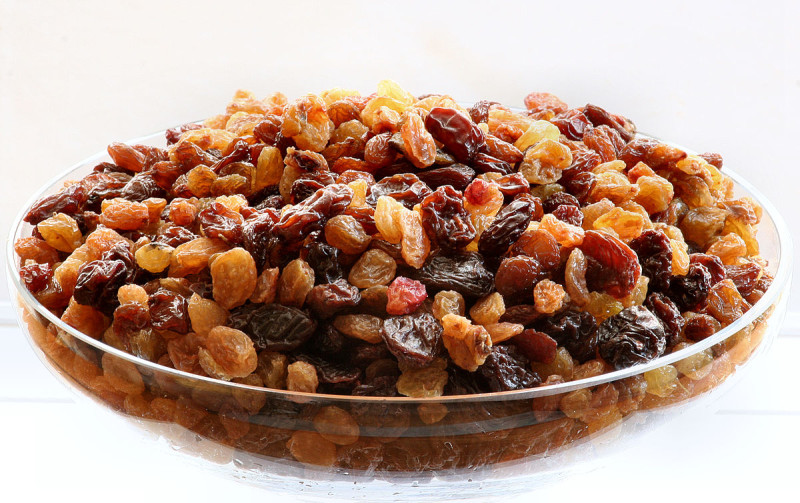
"content": "\u003cp>WASHINGTON -- The U.S. Supreme Court ruled on Monday that the government can't force raisin farmers to give up part of their annual crop for less than it's worth, a victory for conservative groups that hailed the decision as a win for private property rights.\u003c/p>\n\u003cp>The justices ruled 8-1 that a 1940s-era program born out of the Great Depression is unconstitutional because it allows federal officials to seize personal property from farmers without fully compensating them, even though the goal is to benefit farmers by stabilizing market prices.\u003c/p>\n\u003cp>The court sided with California farmers Marvin and Laura Horne, who claimed they were losing money under a program they called outdated and ineffective. They had been fined $695,000 for trying to get around it.\u003c/p>\n\u003cp>Writing for the court, Chief Justice John Roberts said the government must pay \"just compensation\" when it takes personal goods, just as when it takes land away.\u003c/p>\n\u003cp>Roberts rejected the government's argument that the Hornes voluntarily chose to participate in the raisin market and have the option of growing different crops if they don't like it.\u003c/p>\n\u003cp>[ad fullwidth]\u003c/p>\n\u003cp>\"'Let them sell wine' is probably not much more comforting to the raisin growers than similar retorts have been to others throughout history,\" Roberts said. \"Property rights cannot be so easily manipulated.\"\u003c/p>\n\u003cp>The case was considered one of the most important property disputes to reach the high court since 2005, when the justices ruled that the city of New London, Connecticut, could use the power of eminent domain to hand private homes or businesses to developers to help stimulate economic improvement. That case sparked a backlash in many states and led more than 40 state legislatures to pass laws protecting property rights.\u003c/p>\n\u003cp>By contrast, Monday's ruling in the raisin case was seen as a decisive win for property rights advocates seeking to limit government power.\u003c/p>\n\u003cp>\"The decision confirms what should be obvious: the government cannot come and take your personal property without compensation, whether raisins or other property, on the ground that the taking is for your own good,\" said J. David Breemer, attorney for the Pacific Law Foundation, a conservative group that backed the Hornes.\u003c/p>\n\u003cp>The program was authorized by a 1937 law that allows the U.S. Department of Agriculture to keep prices for raisins and other crops steady by helping to manage supply. A 1949 marketing order allowed farmers to form a committee that decides how much of the raisin crop handlers must turn over to the government each year.\u003c/p>\n\u003cp>These raisins would be placed into a reserve pool to be sold outside the open market, used for the school lunch program or given away to charities and foreign governments. Any profits from these reserve sales would go toward funding the committee, and anything left over went back to the farmers.\u003c/p>\n\u003cp>The Hornes refused to participate in the program in 2003, when farmers were required to give up 47 percent of their crop but received far less in return than their costs of production. They also refused to cooperate in 2004, when other farmers gave up 30 percent of the crop in 2004 and were paid nothing.\u003c/p>\n\u003cp>The Hornes' lawyer, John O'Quinn, called the ruling \"a personal vindication\" for the couple and \"an important win for personal liberty.\"\u003c/p>\n\u003cp>Raisin prices have been stable recently, and farmers have not been ordered to put crops in reserve since 2010.\u003c/p>\n\u003cp>Only a small number of other crops are regulated in the same way, though federal officials say most programs are not active. Those include California dried prunes, California dates, California almonds, tart cherries, walnuts and spearmint oil.\u003c/p>\n\u003cp>A USDA spokesman said agency officials were reviewing the ruling and had no immediate comment.\u003c/p>\n\u003cp>Roberts said the government could have restricted raisin sales by limiting production, which is how the vast majority of crops programs work.\u003c/p>\n\u003cp>In a separate opinion, Justice Stephen Breyer agreed that the Hornes were entitled to be properly paid for their crops, but he said the case should be sent back to a lower court to decide whether they would have been owed any money had they complied with the program.\u003c/p>\n\u003cp>Breyer's separate opinion was joined by Justices Ruth Bader Ginsburg and Elena Kagan.\u003c/p>\n\u003cp>Justice Clarence Thomas took issue with Breyer's point and wrote separately to say that sending the case back to figure out compensation \"in this case would be a fruitless exercise.\"\u003c/p>\n\u003cp>Justice Sonia Sotomayor was the only dissenter. She said the program did not deprive the Hornes of all property rights, it just limited the amount of potential income they could earn from it.\u003c/p>\n\u003cp style=\"margin: 12px auto 6px auto;font-family: Helvetica,Arial,Sans-serif;font-style: normal;font-variant: normal;font-weight: normal;font-size: 14px;line-height: normal\">\u003ca style=\"text-decoration: underline\" title=\"View Horne et al. v. Department of Agriculture on Scribd\" href=\"https://www.scribd.com/doc/269396028/Horne-et-al-v-Department-of-Agriculture\">Horne et al. v. Department of Agriculture\u003c/a>\u003c/p>\n\u003cp>\u003c/p>\n\u003cp>\u003c!-- iframe plugin v.4.3 wordpress.org/plugins/iframe/ -->\u003cbr>\n\u003ciframe class=\"scribd_iframe_embed\" src=\"https://www.scribd.com/embeds/269396028/content?start_page=1&view_mode=scroll&show_recommendations=true\" data-auto-height=\"false\" data-aspect-ratio=\"undefined\" scrolling=\"no\" id=\"doc_62748\" width=\"100%\" height=\"600\" frameborder=\"0\">\u003c/iframe>\u003c/p>\n\n",
"disqusIdentifier": "10573162 http://ww2.kqed.org/news/?p=10573162",
"disqusUrl": "https://ww2.kqed.org/news/2015/06/22/supreme-court-rules-in-favor-of-california-raisin-farmers/",
"stats": {
"hasVideo": false,
"hasChartOrMap": false,
"hasAudio": false,
"hasPolis": false,
"wordCount": 778,
"hasGoogleForm": false,
"hasGallery": false,
"hasHearkenModule": false,
"iframeSrcs": [],
"paragraphCount": 24
},
"modified": 1435011230,
"excerpt": "Justices find that federal officials cannot seize growers' property without fully compensating them.",
"headData": {
"twImgId": "",
"twTitle": "",
"ogTitle": "",
"ogImgId": "",
"twDescription": "",
"description": "Justices find that federal officials cannot seize growers' property without fully compensating them.",
"title": "Supreme Court Rules In Favor of California Raisin Farmers | KQED",
"ogDescription": "",
"schema": {
"@context": "https://schema.org",
"@type": "NewsArticle",
"headline": "Supreme Court Rules In Favor of California Raisin Farmers",
"datePublished": "2015-06-22T14:32:26-07:00",
"dateModified": "2015-06-22T15:13:50-07:00",
"image": "https://cdn.kqed.org/wp-content/uploads/2020/02/KQED-OG-Image@1x.png",
"isAccessibleForFree": "True",
"publisher": {
"@type": "NewsMediaOrganization",
"@id": "https://www.kqed.org/#organization",
"name": "KQED",
"logo": "https://cdn.kqed.org/wp-content/uploads/2020/02/KQED-OG-Image@1x.png",
"url": "https://www.kqed.org",
"sameAs": [
"https://www.facebook.com/KQED",
"https://twitter.com/KQED",
"https://www.instagram.com/kqed/",
"https://www.tiktok.com/@kqedofficial",
"https://www.linkedin.com/company/kqed",
"https://www.youtube.com/channel/UCeC0IOo7i1P_61zVUWbJ4nw"
]
}
}
},
"guestAuthors": [],
"slug": "supreme-court-rules-in-favor-of-california-raisin-farmers",
"status": "publish",
"nprByline": "\u003cstrong>Sam Hananel\u003cstrong>\u003cbr> Associated Press",
"path": "/news/10573162/supreme-court-rules-in-favor-of-california-raisin-farmers",
"audioTrackLength": null,
"parsedContent": [
{
"type": "contentString",
"content": "\u003cdiv class=\"post-body\">\u003cp>\u003cp>WASHINGTON -- The U.S. Supreme Court ruled on Monday that the government can't force raisin farmers to give up part of their annual crop for less than it's worth, a victory for conservative groups that hailed the decision as a win for private property rights.\u003c/p>\n\u003cp>The justices ruled 8-1 that a 1940s-era program born out of the Great Depression is unconstitutional because it allows federal officials to seize personal property from farmers without fully compensating them, even though the goal is to benefit farmers by stabilizing market prices.\u003c/p>\n\u003cp>The court sided with California farmers Marvin and Laura Horne, who claimed they were losing money under a program they called outdated and ineffective. They had been fined $695,000 for trying to get around it.\u003c/p>\n\u003cp>Writing for the court, Chief Justice John Roberts said the government must pay \"just compensation\" when it takes personal goods, just as when it takes land away.\u003c/p>\n\u003cp>Roberts rejected the government's argument that the Hornes voluntarily chose to participate in the raisin market and have the option of growing different crops if they don't like it.\u003c/p>\n\u003cp>\u003c/p>\u003c/div>",
"attributes": {
"named": {},
"numeric": []
}
},
{
"type": "component",
"content": "",
"name": "ad",
"attributes": {
"named": {
"label": "fullwidth"
},
"numeric": [
"fullwidth"
]
}
},
{
"type": "contentString",
"content": "\u003cdiv class=\"post-body\">\u003cp>\u003c/p>\n\u003cp>\"'Let them sell wine' is probably not much more comforting to the raisin growers than similar retorts have been to others throughout history,\" Roberts said. \"Property rights cannot be so easily manipulated.\"\u003c/p>\n\u003cp>The case was considered one of the most important property disputes to reach the high court since 2005, when the justices ruled that the city of New London, Connecticut, could use the power of eminent domain to hand private homes or businesses to developers to help stimulate economic improvement. That case sparked a backlash in many states and led more than 40 state legislatures to pass laws protecting property rights.\u003c/p>\n\u003cp>By contrast, Monday's ruling in the raisin case was seen as a decisive win for property rights advocates seeking to limit government power.\u003c/p>\n\u003cp>\"The decision confirms what should be obvious: the government cannot come and take your personal property without compensation, whether raisins or other property, on the ground that the taking is for your own good,\" said J. David Breemer, attorney for the Pacific Law Foundation, a conservative group that backed the Hornes.\u003c/p>\n\u003cp>The program was authorized by a 1937 law that allows the U.S. Department of Agriculture to keep prices for raisins and other crops steady by helping to manage supply. A 1949 marketing order allowed farmers to form a committee that decides how much of the raisin crop handlers must turn over to the government each year.\u003c/p>\n\u003cp>These raisins would be placed into a reserve pool to be sold outside the open market, used for the school lunch program or given away to charities and foreign governments. Any profits from these reserve sales would go toward funding the committee, and anything left over went back to the farmers.\u003c/p>\n\u003cp>The Hornes refused to participate in the program in 2003, when farmers were required to give up 47 percent of their crop but received far less in return than their costs of production. They also refused to cooperate in 2004, when other farmers gave up 30 percent of the crop in 2004 and were paid nothing.\u003c/p>\n\u003cp>The Hornes' lawyer, John O'Quinn, called the ruling \"a personal vindication\" for the couple and \"an important win for personal liberty.\"\u003c/p>\n\u003cp>Raisin prices have been stable recently, and farmers have not been ordered to put crops in reserve since 2010.\u003c/p>\n\u003cp>Only a small number of other crops are regulated in the same way, though federal officials say most programs are not active. Those include California dried prunes, California dates, California almonds, tart cherries, walnuts and spearmint oil.\u003c/p>\n\u003cp>A USDA spokesman said agency officials were reviewing the ruling and had no immediate comment.\u003c/p>\n\u003cp>Roberts said the government could have restricted raisin sales by limiting production, which is how the vast majority of crops programs work.\u003c/p>\n\u003cp>In a separate opinion, Justice Stephen Breyer agreed that the Hornes were entitled to be properly paid for their crops, but he said the case should be sent back to a lower court to decide whether they would have been owed any money had they complied with the program.\u003c/p>\n\u003cp>Breyer's separate opinion was joined by Justices Ruth Bader Ginsburg and Elena Kagan.\u003c/p>\n\u003cp>Justice Clarence Thomas took issue with Breyer's point and wrote separately to say that sending the case back to figure out compensation \"in this case would be a fruitless exercise.\"\u003c/p>\n\u003cp>Justice Sonia Sotomayor was the only dissenter. She said the program did not deprive the Hornes of all property rights, it just limited the amount of potential income they could earn from it.\u003c/p>\n\u003cp style=\"margin: 12px auto 6px auto;font-family: Helvetica,Arial,Sans-serif;font-style: normal;font-variant: normal;font-weight: normal;font-size: 14px;line-height: normal\">\u003ca style=\"text-decoration: underline\" title=\"View Horne et al. v. Department of Agriculture on Scribd\" href=\"https://www.scribd.com/doc/269396028/Horne-et-al-v-Department-of-Agriculture\">Horne et al. v. Department of Agriculture\u003c/a>\u003c/p>\n\u003cp>\u003c/p>\n\u003cp>\u003c!-- iframe plugin v.4.3 wordpress.org/plugins/iframe/ -->\u003cbr>\n\u003ciframe class=\"scribd_iframe_embed\" src=\"https://www.scribd.com/embeds/269396028/content?start_page=1&view_mode=scroll&show_recommendations=true\" data-auto-height=\"false\" data-aspect-ratio=\"undefined\" scrolling=\"no\" id=\"doc_62748\" width=\"100%\" height=\"600\" frameborder=\"0\">\u003c/iframe>\u003c/p>\n\n\u003c/div>\u003c/p>",
"attributes": {
"named": {},
"numeric": []
}
}
],
"link": "/news/10573162/supreme-court-rules-in-favor-of-california-raisin-farmers",
"authors": [
"byline_news_10573162"
],
"programs": [
"news_6944",
"news_72"
],
"categories": [
"news_8"
],
"tags": [
"news_4092",
"news_1172"
],
"featImg": "news_10573168",
"label": "news_72"
},
"news_10461515": {
"type": "posts",
"id": "news_10461515",
"meta": {
"index": "posts_1716263798",
"site": "news",
"id": "10461515",
"score": null,
"sort": [
1427158856000
]
},
"parent": 0,
"labelTerm": {
"site": "news",
"term": 6944
},
"blocks": [],
"publishDate": 1427158856,
"format": "standard",
"disqusTitle": "U.S. Supreme Court Hears Case on SFPD Shooting of Mentally Ill Woman",
"title": "U.S. Supreme Court Hears Case on SFPD Shooting of Mentally Ill Woman",
"headTitle": "News Fix | KQED News",
"content": "\u003cp>\u003cstrong>Update, 6 p.m. Monday\u003c/strong>:\u003cbr>\nOral arguments before the U.S. Supreme Court in a case that could decide if and how the Americans With Disabilities Act applies to police encounters with potentially violent people in psychiatric crisis got off to a rough start for the City of San Francisco today.\u003c/p>\n\u003cp>The city's Chief of Appellate Litigation Christine Van Aken didn't get to the second sentence of her opening remarks before Justice Antonin Scalia interrupted and asked her to explain why San Francisco's argument appeared to have significantly changed since it petitioned the high court to hear the case.\u003c/p>\n\u003caside class=\"pullquote alignright\">'There’s a technical word for this. It’s called bait-and-switch.'\u003ccite>Antonin Scalia,\u003cbr>U.S. Supreme Court Justice\u003c/cite>\u003c/aside>\n\u003cp>The case centers on a 2008 officer-involved shooting in San Francisco. Two officers responded to a call from a supportive housing complex in the city's Mission District and attempted to take Teresa Sheehan into custody for a psychiatric evaluation, but Sheehan threatened them with a knife and slammed her apartment door on them. The officers forced the door open, pepper sprayed Sheehan, and when she moved toward them, shot her five times. She survived and sued the city in federal court.\u003c/p>\n\u003cp>Scalia took issue with the City's nuanced view of the ADA's application to an arrest that involves the potential for violence. He said San Francisco's petition argued the ADA does not apply, period. The argument softened by this morning, with the city conceding the law does generally require public entities, like police, to make reasonable accommodations even when a suspect is potentially violent.\u003c/p>\n\u003cp>[soundcloud url=\"https://api.soundcloud.com/tracks/197375563\" params=\"color=ff5500&auto_play=false&hide_related=false&show_comments=true&show_user=true&show_reposts=false\" width=\"100%\" height=\"166\" iframe=\"true\" /]\u003c/p>\n\u003cp>But \"modification to Sheehan’s arrest would not have eliminated the significant risk she posed,\" the city's brief says.\u003c/p>\n\u003cp>[ad fullwidth]\u003c/p>\n\u003cp>\"There’s a technical word for this,\" Scalia said. \"It’s called bait-and-switch.\"\u003c/p>\n\u003cp>Van Aken responded: \"San Francisco asked you to resolve the question of whether and how the ADA applies to the arrest of an armed and violent individual, and the answer to that question is it only applies where the significant threat that the individual poses has been eliminated.\"\u003c/p>\n\u003cp>The eight-judge panel wrestled with questions raised by that point for most the remainder of the hearing: How did Sheehan present a significant threat when she was locked, alone, in her second floor apartment, and how could such a threat be eliminated?\u003c/p>\n\u003cp>San Francisco has argued that despite being told by Sheehan's social worker that the building was empty, save Sheehan, and that there was no way to escape from the second-story window without a ladder, officers couldn't be sure that Sheehan posed no threat to any other person while she was locked in her room.\u003c/p>\n\u003cp>Justice Sonia Sotomayor asked Van Aken to assume Sheehan was alone and there was no means of escape.\u003c/p>\n\u003cp>[contextly_sidebar id=\"GdUicVJLoTShZkLfvrcygiwx2XJGdF9V\"]\u003c/p>\n\u003cp>\"We still think there would be a question about whether she had other weapons in the room and could be preparing some kind of ambush or some kind of barricade, and that’s something that the officers here testified they were concerned about,\" Van Aken said. \"So what they thought was necessary was to get that door open so that they could see what Ms. Sheehan was doing, so they could see if she was preparing an ambush or barricade.\"\u003c/p>\n\u003cp>Sheehan's lead attorney, Leonard Feldman, told the court all parties appeared to agree on legal issues in the case, and the question before the court was one of fact.\u003c/p>\n\u003cp>\"Exactly,\" Scalia said. \"I don’t know why we took the case.\"\u003c/p>\n\u003cp>Feldman said San Francisco is arguing against a legal standard that is, basically, San Francisco policy.\u003c/p>\n\u003cp>\"In our case, we have symmetry between the proposed accommodation, on the one hand, and the way that San Francisco trains its officers and also universally accepted methods for dealing with mentally disabled individuals,\" he said. \"There’s no dispute that the way to interact with mentally disabled individuals is through communication and time. Police officers know that, and they’re trained in that way.\"\u003c/p>\n\u003cp>Feldman said \"reasonable accommodations\" could include programs like a Crisis Intervention Team, which San Francisco has adopted. It's just one of many specialized police responses that emphasizes de-escaltion -- sometimes called verbal judo -- instead of direct confrontation.\u003c/p>\n\u003cp>\"I think the Court knows that this is a case with enormous policy implications,\" Feldman said. \"We see this in the news day after day, week after week, where the police arrive to help somebody and they wind up hurting them,\" Feldman said. \"And, Your Honors, it’s only when officers and public entities are held accountable for actions like those that occurred here that we can expect to see a change in that pattern.\"\u003c/p>\n\u003cp>The Supreme Court is expected to issue a ruling in the case sometime in early Summer.\u003c/p>\n\u003cp>\u003cstrong>Original Post Sunday, March 22\u003c/strong>:\u003cbr>\nThe U.S. Supreme Court will hear a case Monday that's being closely watched by law enforcement and advocates for the mentally ill -- on an appeal brought by San Francisco.\u003c/p>\n\u003cp>The Supreme Court is weighing two issues: Whether the Americans With Disabilities Act requires police to provide accommodations to an \"armed, violent, and mentally ill suspect in the course of\u003cbr>\nbringing the suspect into custody,\" and whether two San Francisco police officers violated the Fourth Amendment rights of Teresa Sheehan when they forced their way into her apartment after discovering she was armed with a bread knife.\u003c/p>\n\u003cp>\"This is a big issue: Should the mentally ill be handled by the police differently?\" UC Hastings law professor Rory Little said. \"Increasingly, police are confronting people with mental illness on the streets or in their homes or apartments, and there is a growing concern that the confrontational approach of the police unnecessarily stimulates violence.\"\u003c/p>\n\u003cp>SFPD policy around the type of incidents at issue in this case changed after the shooting, but if the city is successful at the Supreme Court, that kind of change may be stifled in other cities.\u003c/p>\n\u003cp>The case -- \u003ca href=\"http://www.americanbar.org/publications/preview_home/13-1412.html?cq_ck=1421878054315\" target=\"_blank\">City and County of San Francisco v. Teresa Sheehan\u003c/a> -- stems from a 2008 officer-involved shooting at a co-op apartment building for people with mental illness in the city's Mission District. Officers responded to a call from a social worker in the building, who told them Sheehan, who is diagnosed with schizoaffective disorder, had threatened him when he tried to check on her.\u003c/p>\n\u003cp>The social worker told responding SFPD Officer Kathrine Holder about Sheehan's medical history, and Holder called Sgt. Kimberly Reynolds to the scene. The two officers then made a plan to detain Sheehan for a psychiatric evaluation and knocked on her second-floor apartment's door.\u003c/p>\n\u003caside class=\"pullquote alignleft\">\n\u003cp style=\"font-size: 18px;text-align: left\">Listen to the KQED special series:\u003cbr>\n'Dial it Down: When a Call for Help Turns Deadly'\u003c/p>\n\u003cp>[soundcloud url=\"https://api.soundcloud.com/tracks/170360914\" params=\"color=ff5500&auto_play=false&hide_related=false&show_comments=true&show_user=true&show_reposts=false\" width=\"100%\" height=\"166\" iframe=\"true\" /]\u003c/p>\n\u003c/aside>\n\u003cp>Sheehan didn't answer, and officers used a key to open the door -- their first entry into her apartment. Sheehan became aggressive and came at the police with a serrated bread knife. She forced the door closed, and the officers were left outside.\u003c/p>\n\u003cp>They called for backup and Holder began trying to force the door open. She broke through it just as backup was arriving, and Reynolds launched a stream of pepper spray into Sheehan's face. Sheehan staggered into the hallway, still brandishing the knife.\u003c/p>\n\u003cp>\u003ca href=\"http://www.americanbar.org/content/dam/aba/publications/supreme_court_preview/BriefsV4/13-1412_pet.pdf\" target=\"_blank\">San Francisco's brief\u003c/a> to the Supreme Court gives one view of what happened next:\u003c/p>\n\u003cblockquote>\u003cp>Holder was in the alcove next to Sheehan’s room, cornered. With her back literally against the wall, Holder fired twice at Sheehan. Sheehan was three feet from Holder – so close that Holder had to fire from the hip so Sheehan would not slash her arm. After Holder shot Sheehan twice, Sheehan did not drop her knife or fall to the floor. Instead, she turned\u003cbr>\nand stepped toward Reynolds with her knife. Reynolds fired three times at Sheehan. Sheehan stabbed toward Holder’s leg as she went down to the ground, and Reynolds’ last shot struck Sheehan when she was on the ground.\u003c/p>\u003c/blockquote>\n\u003cp>Here's a description of the shooting from \u003ca href=\"http://www.americanbar.org/content/dam/aba/publications/supreme_court_preview/BriefsV5/13-1412_resp.pdf\" target=\"_blank\">Sheehan's brief\u003c/a>:\u003c/p>\n\u003cblockquote>\u003cp>As soon as the officers forced the door open, Sheehan stepped forward holding her bread knife and told the officers “to go away. Leave me alone.” Reynolds responded by shooting pepper spray into Sheehan’s face. Sheehan screamed that the officers were blinding her and she could not see. Reynolds and Holder then shot Sheehan four times. With wounds in her torso and right arm, Sheehan fell to the ground but the officers’ attack continued. According to Holder’s statement on the day of the shooting and Sheehan’s forensic science expert, Reynolds shot Sheehan in the face after she was lying on the ground.\u003c/p>\u003c/blockquote>\n\u003cp>Sheehan survived. She was initially charged with assault but was acquitted, and then she sued the city in federal court. District Court Judge Charles Breyer, the brother of U.S. Supreme Court Justice Stephen Breyer, ruled in a summary judgment in favor of San Francisco.\u003c/p>\n\u003cp>However, the \u003ca href=\"http://cdn.ca9.uscourts.gov/datastore/opinions/2014/02/21/11-16401.pdf\" target=\"_blank\">9th U.S. Circuit Court of Appeals ruled\u003c/a> a jury could find Sheehan was legally entitled to accommodations under the ADA -- specifically that officers should have stepped back, contained the scene and waited for backup, including officers specially trained to respond to psychiatric crises. The appellate court also found that officers may have violated the Fourth Amendment's prohibition of unreasonable search and seizure.\u003c/p>\n\u003cp>\"[A] jury could find that the officers acted unreasonably by forcing the second entry and provoking a near-fatal confrontation,\" the 9th Circuit opinion says. \"We therefore cannot say that the second entry was reasonable as a matter of law.\"\u003c/p>\n\u003cp>Two national law enforcement organizations joined a \u003ca href=\"http://www.americanbar.org/content/dam/aba/publications/supreme_court_preview/BriefsV4/13-1412_amicus_pet_imla.authcheckdam.pdf\" target=\"_blank\">brief supporting San Francisco's appeal\u003c/a>. The brief argues that the ADA should inform policing policy at the department level, but should not apply to \"on-the-street decisionmaking when a law enforcement officer faces an active public safety threat by an armed, violent individual.\"\u003c/p>\n\u003cp>More than 20 advocacy organizations for people with mental illness joined briefs supporting Sheehan's position, authored by the \u003ca href=\"http://www.americanbar.org/content/dam/aba/publications/supreme_court_preview/BriefsV5/13-1412_amicus_resp_apa.authcheckdam.pdf\" target=\"_blank\">American Psychiatric Association\u003c/a> and the \u003ca href=\"http://www.americanbar.org/content/dam/aba/publications/supreme_court_preview/BriefsV5/13-1412_amicus_resp_aclu.authcheckdam.pdf\" target=\"_blank\">American Civil Liberties Union\u003c/a>.\u003c/p>\n\u003cp>The ACLU cites a September \u003ca href=\"http://ww2.kqed.org/news/2014/09/30/half-of-those-killed-by-san-francisco-police-are-mentally-ill\" target=\"_blank\">KQED report\u003c/a> that found 58 percent of people killed by San Francisco police between 2005 and 2013 had a mental illness that was a contributing factor in the incident. The brief argues the ADA should apply to Sheehan's arrest because the law's \"reasonable accommodation\" requirement mandates a specialized police response, such as a Crisis Intervention Team, in situations where a subject is known to have a mental illness.\u003c/p>\n\u003cp>\"These practices were specifically designed for potentially dangerous situations,\" the brief says. \"San Francisco’s position — that the police should be free to forego these strategies in precisely the situation for which they were meant — makes no sense at all.\"\u003c/p>\n\u003cp>San Francisco Police Chief Greg Suhr issued a \u003ca href=\"https://www.scribd.com/doc/259504904/SFPD-Bulletin-Response-to-Mental-Health-Calls-With-Armed-Suspects\" target=\"_blank\">department bulletin in 2013\u003c/a> clarifying SFPD protocol when mentally ill subjects may be a threat to themselves, but no one else.\u003c/p>\n\u003cfigure id=\"attachment_10401680\" class=\"wp-caption alignleft\" style=\"max-width: 400px\">\u003ca href=\"http://ww2.kqed.org/news/wp-content/uploads/sites/10/2015/01/Teresa_Sheehan_photo-cropped.jpg\">\u003cimg class=\"size-thumbnail wp-image-10401680\" src=\"http://ww2.kqed.org/news/wp-content/uploads/sites/10/2015/01/Teresa_Sheehan_photo-cropped-400x279.jpg\" alt=\"Teresa Sheehan\" width=\"400\" height=\"279\" srcset=\"https://ww2.kqed.org/app/uploads/sites/10/2015/01/Teresa_Sheehan_photo-cropped-400x279.jpg 400w, https://ww2.kqed.org/app/uploads/sites/10/2015/01/Teresa_Sheehan_photo-cropped.jpg 464w\" sizes=\"(max-width: 400px) 100vw, 400px\">\u003c/a>\u003cfigcaption class=\"wp-caption-text\">Teresa Sheehan at Christmas dinner in 2014. \u003ccite>(Courtesy of Francis Sheehan)\u003c/cite>\u003c/figcaption>\u003c/figure>\n\u003cp>It says: \"[I]f officers have reasonable cause to believe that the person suffering an apparent mental crisis is not a threat to \u003cem>any other\u003c/em> person, the officers shall observe, maintain a safe distance, and attempt to stabilize the scene until the arrival of the supervisor who will assume command.\" (Emphasis original.)\u003c/p>\n\u003cp>Another SFPD \u003ca href=\"https://www.scribd.com/doc/259505756/SFPD-Bulletin-Response-by-Crisis-Intervention-Trained-Officers\" target=\"_blank\">bulletin, issued in May 2014\u003c/a>, describes department policy for deploying specially trained officers to calls involving mental health crises.\u003c/p>\n\u003cp>Deputy City Attorney Peter Keith told \u003ca href=\"ww2.kqed.org/news/2015/01/09/disability-advocates-appeal-over-s-f-police-shooting-puts-ada-at-risk\" target=\"_blank\">KQED in January\u003c/a> that San Francisco believes the ADA should apply to arrests, but there is disagreement about what constitutes a \"reasonable accommodation\" during a potentially violent confrontation.\u003c/p>\n\u003cp>San Francisco is arguing that officers couldn't be sure Sheehan was alone, despite being told so by the social worker who called them, and she could have escaped from her second-story window and posed a threat to other people.\u003c/p>\n\u003cp>\"What the city doesn't want is a ruling that says the Americans With Disabilities Act, a federal statute, applies in these situations,\" Little said. \"In other words, if they want to adopt this as a progressive policing policy, that's fine. They just don't want to be in a sense governed by regulations and an entire statutory structure that some people think wasn't designed for the police department.\"\u003c/p>\n\u003cp>Little said San Francisco's nuanced position on the ADA could be irrelevant to the ultimate ruling. The Supreme Court could rule the ADA simply does not apply to potentially violent confrontations between police and someone in psychiatric crisis.\u003c/p>\n\u003cp>\"Once the Supreme Court has it, it really isn't going matter what the City and County of San Francisco says,\" Little said. \"There are now municipalities all around the country that are interested in the answer to this question, and the answer to the question will govern nationally.\"\u003c/p>\n\u003cp>[ad floatright]\u003c/p>\n\u003cp>Little said it's likely Justice Breyer will recuse himself from the case, leaving eight justices to decide the issue.\u003c/p>\n\n",
"disqusIdentifier": "10461515 http://ww2.kqed.org/news/?p=10461515",
"disqusUrl": "https://ww2.kqed.org/news/2015/03/23/u-s-supreme-court-to-hear-case-on-sfpd-shooting-of-mentally-ill-woman/",
"stats": {
"hasVideo": false,
"hasChartOrMap": false,
"hasAudio": false,
"hasPolis": false,
"wordCount": 2254,
"hasGoogleForm": false,
"hasGallery": false,
"hasHearkenModule": false,
"iframeSrcs": [],
"paragraphCount": 51
},
"modified": 1447652909,
"excerpt": "High court to decide how the ADA applies to police encounters with people in psychiatric crisis.",
"headData": {
"twImgId": "",
"twTitle": "",
"ogTitle": "",
"ogImgId": "",
"twDescription": "",
"description": "High court to decide how the ADA applies to police encounters with people in psychiatric crisis.",
"title": "U.S. Supreme Court Hears Case on SFPD Shooting of Mentally Ill Woman | KQED",
"ogDescription": "",
"schema": {
"@context": "https://schema.org",
"@type": "NewsArticle",
"headline": "U.S. Supreme Court Hears Case on SFPD Shooting of Mentally Ill Woman",
"datePublished": "2015-03-23T18:00:56-07:00",
"dateModified": "2015-11-15T21:48:29-08:00",
"image": "https://cdn.kqed.org/wp-content/uploads/2020/02/KQED-OG-Image@1x.png",
"isAccessibleForFree": "True",
"publisher": {
"@type": "NewsMediaOrganization",
"@id": "https://www.kqed.org/#organization",
"name": "KQED",
"logo": "https://cdn.kqed.org/wp-content/uploads/2020/02/KQED-OG-Image@1x.png",
"url": "https://www.kqed.org",
"sameAs": [
"https://www.facebook.com/KQED",
"https://twitter.com/KQED",
"https://www.instagram.com/kqed/",
"https://www.tiktok.com/@kqedofficial",
"https://www.linkedin.com/company/kqed",
"https://www.youtube.com/channel/UCeC0IOo7i1P_61zVUWbJ4nw"
]
}
}
},
"guestAuthors": [],
"slug": "u-s-supreme-court-to-hear-case-on-sfpd-shooting-of-mentally-ill-woman",
"status": "publish",
"path": "/news/10461515/u-s-supreme-court-to-hear-case-on-sfpd-shooting-of-mentally-ill-woman",
"audioTrackLength": null,
"parsedContent": [
{
"type": "contentString",
"content": "\u003cdiv class=\"post-body\">\u003cp>\u003cp>\u003cstrong>Update, 6 p.m. Monday\u003c/strong>:\u003cbr>\nOral arguments before the U.S. Supreme Court in a case that could decide if and how the Americans With Disabilities Act applies to police encounters with potentially violent people in psychiatric crisis got off to a rough start for the City of San Francisco today.\u003c/p>\n\u003cp>The city's Chief of Appellate Litigation Christine Van Aken didn't get to the second sentence of her opening remarks before Justice Antonin Scalia interrupted and asked her to explain why San Francisco's argument appeared to have significantly changed since it petitioned the high court to hear the case.\u003c/p>\n\u003caside class=\"pullquote alignright\">'There’s a technical word for this. It’s called bait-and-switch.'\u003ccite>Antonin Scalia,\u003cbr>U.S. Supreme Court Justice\u003c/cite>\u003c/aside>\n\u003cp>The case centers on a 2008 officer-involved shooting in San Francisco. Two officers responded to a call from a supportive housing complex in the city's Mission District and attempted to take Teresa Sheehan into custody for a psychiatric evaluation, but Sheehan threatened them with a knife and slammed her apartment door on them. The officers forced the door open, pepper sprayed Sheehan, and when she moved toward them, shot her five times. She survived and sued the city in federal court.\u003c/p>\n\u003cp>Scalia took issue with the City's nuanced view of the ADA's application to an arrest that involves the potential for violence. He said San Francisco's petition argued the ADA does not apply, period. The argument softened by this morning, with the city conceding the law does generally require public entities, like police, to make reasonable accommodations even when a suspect is potentially violent.\u003c/p>\n\u003cp>\u003c/p>\u003cp>\u003cdiv class='utils-parseShortcode-shortcodes-__shortcodes__shortcodeWrapper'>\n \u003ciframe width='100%' height='166'\n scrolling='no' frameborder='no'\n src='https://w.soundcloud.com/player/?url=https://api.soundcloud.com/tracks/197375563&visual=true&color=ff5500&auto_play=false&hide_related=false&show_comments=true&show_user=true&show_reposts=false'\n title='https://api.soundcloud.com/tracks/197375563'>\n \u003c/iframe>\n \u003c/div>\u003c/p>\u003cp>\u003c/p>\n\u003cp>But \"modification to Sheehan’s arrest would not have eliminated the significant risk she posed,\" the city's brief says.\u003c/p>\n\u003cp>\u003c/p>\u003c/div>",
"attributes": {
"named": {},
"numeric": []
}
},
{
"type": "component",
"content": "",
"name": "ad",
"attributes": {
"named": {
"label": "fullwidth"
},
"numeric": [
"fullwidth"
]
}
},
{
"type": "contentString",
"content": "\u003cdiv class=\"post-body\">\u003cp>\u003c/p>\n\u003cp>\"There’s a technical word for this,\" Scalia said. \"It’s called bait-and-switch.\"\u003c/p>\n\u003cp>Van Aken responded: \"San Francisco asked you to resolve the question of whether and how the ADA applies to the arrest of an armed and violent individual, and the answer to that question is it only applies where the significant threat that the individual poses has been eliminated.\"\u003c/p>\n\u003cp>The eight-judge panel wrestled with questions raised by that point for most the remainder of the hearing: How did Sheehan present a significant threat when she was locked, alone, in her second floor apartment, and how could such a threat be eliminated?\u003c/p>\n\u003cp>San Francisco has argued that despite being told by Sheehan's social worker that the building was empty, save Sheehan, and that there was no way to escape from the second-story window without a ladder, officers couldn't be sure that Sheehan posed no threat to any other person while she was locked in her room.\u003c/p>\n\u003cp>Justice Sonia Sotomayor asked Van Aken to assume Sheehan was alone and there was no means of escape.\u003c/p>\n\u003cp>\u003c/p>\u003cp>\u003c/p>\u003cp>\u003c/p>\n\u003cp>\"We still think there would be a question about whether she had other weapons in the room and could be preparing some kind of ambush or some kind of barricade, and that’s something that the officers here testified they were concerned about,\" Van Aken said. \"So what they thought was necessary was to get that door open so that they could see what Ms. Sheehan was doing, so they could see if she was preparing an ambush or barricade.\"\u003c/p>\n\u003cp>Sheehan's lead attorney, Leonard Feldman, told the court all parties appeared to agree on legal issues in the case, and the question before the court was one of fact.\u003c/p>\n\u003cp>\"Exactly,\" Scalia said. \"I don’t know why we took the case.\"\u003c/p>\n\u003cp>Feldman said San Francisco is arguing against a legal standard that is, basically, San Francisco policy.\u003c/p>\n\u003cp>\"In our case, we have symmetry between the proposed accommodation, on the one hand, and the way that San Francisco trains its officers and also universally accepted methods for dealing with mentally disabled individuals,\" he said. \"There’s no dispute that the way to interact with mentally disabled individuals is through communication and time. Police officers know that, and they’re trained in that way.\"\u003c/p>\n\u003cp>Feldman said \"reasonable accommodations\" could include programs like a Crisis Intervention Team, which San Francisco has adopted. It's just one of many specialized police responses that emphasizes de-escaltion -- sometimes called verbal judo -- instead of direct confrontation.\u003c/p>\n\u003cp>\"I think the Court knows that this is a case with enormous policy implications,\" Feldman said. \"We see this in the news day after day, week after week, where the police arrive to help somebody and they wind up hurting them,\" Feldman said. \"And, Your Honors, it’s only when officers and public entities are held accountable for actions like those that occurred here that we can expect to see a change in that pattern.\"\u003c/p>\n\u003cp>The Supreme Court is expected to issue a ruling in the case sometime in early Summer.\u003c/p>\n\u003cp>\u003cstrong>Original Post Sunday, March 22\u003c/strong>:\u003cbr>\nThe U.S. Supreme Court will hear a case Monday that's being closely watched by law enforcement and advocates for the mentally ill -- on an appeal brought by San Francisco.\u003c/p>\n\u003cp>The Supreme Court is weighing two issues: Whether the Americans With Disabilities Act requires police to provide accommodations to an \"armed, violent, and mentally ill suspect in the course of\u003cbr>\nbringing the suspect into custody,\" and whether two San Francisco police officers violated the Fourth Amendment rights of Teresa Sheehan when they forced their way into her apartment after discovering she was armed with a bread knife.\u003c/p>\n\u003cp>\"This is a big issue: Should the mentally ill be handled by the police differently?\" UC Hastings law professor Rory Little said. \"Increasingly, police are confronting people with mental illness on the streets or in their homes or apartments, and there is a growing concern that the confrontational approach of the police unnecessarily stimulates violence.\"\u003c/p>\n\u003cp>SFPD policy around the type of incidents at issue in this case changed after the shooting, but if the city is successful at the Supreme Court, that kind of change may be stifled in other cities.\u003c/p>\n\u003cp>The case -- \u003ca href=\"http://www.americanbar.org/publications/preview_home/13-1412.html?cq_ck=1421878054315\" target=\"_blank\">City and County of San Francisco v. Teresa Sheehan\u003c/a> -- stems from a 2008 officer-involved shooting at a co-op apartment building for people with mental illness in the city's Mission District. Officers responded to a call from a social worker in the building, who told them Sheehan, who is diagnosed with schizoaffective disorder, had threatened him when he tried to check on her.\u003c/p>\n\u003cp>The social worker told responding SFPD Officer Kathrine Holder about Sheehan's medical history, and Holder called Sgt. Kimberly Reynolds to the scene. The two officers then made a plan to detain Sheehan for a psychiatric evaluation and knocked on her second-floor apartment's door.\u003c/p>\n\u003caside class=\"pullquote alignleft\">\n\u003cp style=\"font-size: 18px;text-align: left\">Listen to the KQED special series:\u003cbr>\n'Dial it Down: When a Call for Help Turns Deadly'\u003c/p>\n\u003cp>\u003c/p>\u003cp>\u003cdiv class='utils-parseShortcode-shortcodes-__shortcodes__shortcodeWrapper'>\n \u003ciframe width='100%' height='166'\n scrolling='no' frameborder='no'\n src='https://w.soundcloud.com/player/?url=https://api.soundcloud.com/tracks/170360914&visual=true&color=ff5500&auto_play=false&hide_related=false&show_comments=true&show_user=true&show_reposts=false'\n title='https://api.soundcloud.com/tracks/170360914'>\n \u003c/iframe>\n \u003c/div>\u003c/p>\u003cp>\u003c/p>\n\u003c/aside>\n\u003cp>Sheehan didn't answer, and officers used a key to open the door -- their first entry into her apartment. Sheehan became aggressive and came at the police with a serrated bread knife. She forced the door closed, and the officers were left outside.\u003c/p>\n\u003cp>They called for backup and Holder began trying to force the door open. She broke through it just as backup was arriving, and Reynolds launched a stream of pepper spray into Sheehan's face. Sheehan staggered into the hallway, still brandishing the knife.\u003c/p>\n\u003cp>\u003ca href=\"http://www.americanbar.org/content/dam/aba/publications/supreme_court_preview/BriefsV4/13-1412_pet.pdf\" target=\"_blank\">San Francisco's brief\u003c/a> to the Supreme Court gives one view of what happened next:\u003c/p>\n\u003cblockquote>\u003cp>Holder was in the alcove next to Sheehan’s room, cornered. With her back literally against the wall, Holder fired twice at Sheehan. Sheehan was three feet from Holder – so close that Holder had to fire from the hip so Sheehan would not slash her arm. After Holder shot Sheehan twice, Sheehan did not drop her knife or fall to the floor. Instead, she turned\u003cbr>\nand stepped toward Reynolds with her knife. Reynolds fired three times at Sheehan. Sheehan stabbed toward Holder’s leg as she went down to the ground, and Reynolds’ last shot struck Sheehan when she was on the ground.\u003c/p>\u003c/blockquote>\n\u003cp>Here's a description of the shooting from \u003ca href=\"http://www.americanbar.org/content/dam/aba/publications/supreme_court_preview/BriefsV5/13-1412_resp.pdf\" target=\"_blank\">Sheehan's brief\u003c/a>:\u003c/p>\n\u003cblockquote>\u003cp>As soon as the officers forced the door open, Sheehan stepped forward holding her bread knife and told the officers “to go away. Leave me alone.” Reynolds responded by shooting pepper spray into Sheehan’s face. Sheehan screamed that the officers were blinding her and she could not see. Reynolds and Holder then shot Sheehan four times. With wounds in her torso and right arm, Sheehan fell to the ground but the officers’ attack continued. According to Holder’s statement on the day of the shooting and Sheehan’s forensic science expert, Reynolds shot Sheehan in the face after she was lying on the ground.\u003c/p>\u003c/blockquote>\n\u003cp>Sheehan survived. She was initially charged with assault but was acquitted, and then she sued the city in federal court. District Court Judge Charles Breyer, the brother of U.S. Supreme Court Justice Stephen Breyer, ruled in a summary judgment in favor of San Francisco.\u003c/p>\n\u003cp>However, the \u003ca href=\"http://cdn.ca9.uscourts.gov/datastore/opinions/2014/02/21/11-16401.pdf\" target=\"_blank\">9th U.S. Circuit Court of Appeals ruled\u003c/a> a jury could find Sheehan was legally entitled to accommodations under the ADA -- specifically that officers should have stepped back, contained the scene and waited for backup, including officers specially trained to respond to psychiatric crises. The appellate court also found that officers may have violated the Fourth Amendment's prohibition of unreasonable search and seizure.\u003c/p>\n\u003cp>\"[A] jury could find that the officers acted unreasonably by forcing the second entry and provoking a near-fatal confrontation,\" the 9th Circuit opinion says. \"We therefore cannot say that the second entry was reasonable as a matter of law.\"\u003c/p>\n\u003cp>Two national law enforcement organizations joined a \u003ca href=\"http://www.americanbar.org/content/dam/aba/publications/supreme_court_preview/BriefsV4/13-1412_amicus_pet_imla.authcheckdam.pdf\" target=\"_blank\">brief supporting San Francisco's appeal\u003c/a>. The brief argues that the ADA should inform policing policy at the department level, but should not apply to \"on-the-street decisionmaking when a law enforcement officer faces an active public safety threat by an armed, violent individual.\"\u003c/p>\n\u003cp>More than 20 advocacy organizations for people with mental illness joined briefs supporting Sheehan's position, authored by the \u003ca href=\"http://www.americanbar.org/content/dam/aba/publications/supreme_court_preview/BriefsV5/13-1412_amicus_resp_apa.authcheckdam.pdf\" target=\"_blank\">American Psychiatric Association\u003c/a> and the \u003ca href=\"http://www.americanbar.org/content/dam/aba/publications/supreme_court_preview/BriefsV5/13-1412_amicus_resp_aclu.authcheckdam.pdf\" target=\"_blank\">American Civil Liberties Union\u003c/a>.\u003c/p>\n\u003cp>The ACLU cites a September \u003ca href=\"http://ww2.kqed.org/news/2014/09/30/half-of-those-killed-by-san-francisco-police-are-mentally-ill\" target=\"_blank\">KQED report\u003c/a> that found 58 percent of people killed by San Francisco police between 2005 and 2013 had a mental illness that was a contributing factor in the incident. The brief argues the ADA should apply to Sheehan's arrest because the law's \"reasonable accommodation\" requirement mandates a specialized police response, such as a Crisis Intervention Team, in situations where a subject is known to have a mental illness.\u003c/p>\n\u003cp>\"These practices were specifically designed for potentially dangerous situations,\" the brief says. \"San Francisco’s position — that the police should be free to forego these strategies in precisely the situation for which they were meant — makes no sense at all.\"\u003c/p>\n\u003cp>San Francisco Police Chief Greg Suhr issued a \u003ca href=\"https://www.scribd.com/doc/259504904/SFPD-Bulletin-Response-to-Mental-Health-Calls-With-Armed-Suspects\" target=\"_blank\">department bulletin in 2013\u003c/a> clarifying SFPD protocol when mentally ill subjects may be a threat to themselves, but no one else.\u003c/p>\n\u003cfigure id=\"attachment_10401680\" class=\"wp-caption alignleft\" style=\"max-width: 400px\">\u003ca href=\"http://ww2.kqed.org/news/wp-content/uploads/sites/10/2015/01/Teresa_Sheehan_photo-cropped.jpg\">\u003cimg class=\"size-thumbnail wp-image-10401680\" src=\"http://ww2.kqed.org/news/wp-content/uploads/sites/10/2015/01/Teresa_Sheehan_photo-cropped-400x279.jpg\" alt=\"Teresa Sheehan\" width=\"400\" height=\"279\" srcset=\"https://ww2.kqed.org/app/uploads/sites/10/2015/01/Teresa_Sheehan_photo-cropped-400x279.jpg 400w, https://ww2.kqed.org/app/uploads/sites/10/2015/01/Teresa_Sheehan_photo-cropped.jpg 464w\" sizes=\"(max-width: 400px) 100vw, 400px\">\u003c/a>\u003cfigcaption class=\"wp-caption-text\">Teresa Sheehan at Christmas dinner in 2014. \u003ccite>(Courtesy of Francis Sheehan)\u003c/cite>\u003c/figcaption>\u003c/figure>\n\u003cp>It says: \"[I]f officers have reasonable cause to believe that the person suffering an apparent mental crisis is not a threat to \u003cem>any other\u003c/em> person, the officers shall observe, maintain a safe distance, and attempt to stabilize the scene until the arrival of the supervisor who will assume command.\" (Emphasis original.)\u003c/p>\n\u003cp>Another SFPD \u003ca href=\"https://www.scribd.com/doc/259505756/SFPD-Bulletin-Response-by-Crisis-Intervention-Trained-Officers\" target=\"_blank\">bulletin, issued in May 2014\u003c/a>, describes department policy for deploying specially trained officers to calls involving mental health crises.\u003c/p>\n\u003cp>Deputy City Attorney Peter Keith told \u003ca href=\"ww2.kqed.org/news/2015/01/09/disability-advocates-appeal-over-s-f-police-shooting-puts-ada-at-risk\" target=\"_blank\">KQED in January\u003c/a> that San Francisco believes the ADA should apply to arrests, but there is disagreement about what constitutes a \"reasonable accommodation\" during a potentially violent confrontation.\u003c/p>\n\u003cp>San Francisco is arguing that officers couldn't be sure Sheehan was alone, despite being told so by the social worker who called them, and she could have escaped from her second-story window and posed a threat to other people.\u003c/p>\n\u003cp>\"What the city doesn't want is a ruling that says the Americans With Disabilities Act, a federal statute, applies in these situations,\" Little said. \"In other words, if they want to adopt this as a progressive policing policy, that's fine. They just don't want to be in a sense governed by regulations and an entire statutory structure that some people think wasn't designed for the police department.\"\u003c/p>\n\u003cp>Little said San Francisco's nuanced position on the ADA could be irrelevant to the ultimate ruling. The Supreme Court could rule the ADA simply does not apply to potentially violent confrontations between police and someone in psychiatric crisis.\u003c/p>\n\u003cp>\"Once the Supreme Court has it, it really isn't going matter what the City and County of San Francisco says,\" Little said. \"There are now municipalities all around the country that are interested in the answer to this question, and the answer to the question will govern nationally.\"\u003c/p>\n\u003cp>\u003c/p>\u003c/div>",
"attributes": {
"named": {},
"numeric": []
}
},
{
"type": "component",
"content": "",
"name": "ad",
"attributes": {
"named": {
"label": "floatright"
},
"numeric": [
"floatright"
]
}
},
{
"type": "contentString",
"content": "\u003cdiv class=\"post-body\">\u003cp>\u003c/p>\n\u003cp>Little said it's likely Justice Breyer will recuse himself from the case, leaving eight justices to decide the issue.\u003c/p>\n\n\u003c/div>\u003c/p>",
"attributes": {
"named": {},
"numeric": []
}
}
],
"link": "/news/10461515/u-s-supreme-court-to-hear-case-on-sfpd-shooting-of-mentally-ill-woman",
"authors": [
"3206"
],
"programs": [
"news_6944"
],
"categories": [
"news_6188"
],
"tags": [
"news_545",
"news_1172"
],
"featImg": "news_10461709",
"label": "news_6944"
},
"news_10447299": {
"type": "posts",
"id": "news_10447299",
"meta": {
"index": "posts_1716263798",
"site": "news",
"id": "10447299",
"score": null,
"sort": [
1425369675000
]
},
"parent": 0,
"labelTerm": {
"site": "news",
"term": 7051
},
"blocks": [],
"publishDate": 1425369675,
"format": "standard",
"disqusTitle": "Does Fate of Independent Redistricting Lie in Anthony Kennedy's Hands?",
"title": "Does Fate of Independent Redistricting Lie in Anthony Kennedy's Hands?",
"headTitle": "FaultLines | KQED News",
"content": "\u003cp>It certainly has all the makings of a good dramatic script: partisan schemes inside the halls of power ... thwarted years ago by voters at the ballot box ... now facing the judgment of a court whose tie-breaking vote lies in the hands of a man who himself dabbled in the hurly-burly of state politics and government.\u003c/p>\n\u003cp>The star of this drama is, perhaps not surprisingly, U.S. Supreme Court Justice Anthony Kennedy. And the plot revolves around whether voters can wrest away from legislators the power to draw political maps.\u003c/p>\n\u003cp>In a hearing that lasted 61 minutes, according to \u003ca href=\"http://www.supremecourt.gov/oral_arguments/argument_transcripts/13-1314_q8l1.pdf\" target=\"_blank\">the official transcript\u003c/a>, the nation's highest court on Monday weighed the constitutionality of Arizona's independent redistricting commission -- a case that could not only strip that state's commission of its power to draw maps for the U.S. House of Representatives, but which also threatens the viability of a similar system here in California.\u003c/p>\n\u003cp>[soundcloud url=\"https://api.soundcloud.com/tracks/194057080\" params=\"color=ff5500&auto_play=false&hide_related=false&show_comments=true&show_user=true&show_reposts=false\" width=\"100%\" height=\"166\" iframe=\"true\" /]\u003c/p>\n\u003cp>Kennedy has long been the man in the middle on the U.S. Supreme Court. But before pondering the various legal arguments in \u003cem>Arizona State Legislature v. Arizona Independent Redistricting Commission\u003c/em>, let's remember \u003ca href=\"http://www.biography.com/people/anthony-kennedy-9362868#lawyer-and-judge\" target=\"_blank\">the biography of Justice Kennedy, born more than 79 years ago in Sacramento\u003c/a>.\u003c/p>\n\u003cp>[ad fullwidth]\u003c/p>\n\u003cp>Described in \u003ca href=\"http://www.nytimes.com/1987/11/12/us/man-in-the-news-restrained-pragmatist-anthony-m-kennedy.html?pagewanted=2\" target=\"_blank\">a 1987 profile\u003c/a> as the son of \"a politically connected lawyer and lobbyist\" father, Kennedy was recruited in 1972 to help draft a statewide ballot measure for Gov. Ronald Reagan that would limit state government spending. (Note to those who are fans of foreshadowing: The premise of the initiative was that voters needed to do something that state legislators wouldn't do.)\u003c/p>\n\u003cp>Kennedy's work on what became \u003ca href=\"http://ballotpedia.org/California_Proposition_1,_Tax_and_Spending_Limits_%281973%29\" target=\"_blank\">Proposition 1\u003c/a> seems to have won respect from Reagan, even though voters rejected the initiative. Kennedy was appointed to the federal bench in 1975, and we all know where both men went from there: Reagan to the White House in 1980, Kennedy to the U.S. Supreme Court as Reagan's appointee in 1987.\u003c/p>\n\u003cp>All of this is to say that Anthony Kennedy no doubt knows well -- more than any of his fellow justices -- the power that initiatives give to voters to work independently of legislators in writing laws. Which brings us to the case of Arizona's redistricting commission, created by … yep ... \u003ca href=\"http://ballotpedia.org/Arizona_Creation_of_a_Redistricting_Commission,_Proposition_106_%282000%29\" target=\"_blank\">voters writing their own law\u003c/a>.\u003c/p>\n\u003cp>On Monday, Kennedy seemed squarely in the middle of the tug-of-war over the legality of Arizona voters cutting the state's legislators out of the picture when it came to drawing congressional districts.\u003c/p>\n\u003cp>The \u003ca href=\"http://ww2.kqed.org/news/2015/01/26/might-gerrymandering-return-to-california-via-arizona-lawsuit/\" target=\"_blank\">crux of the case\u003c/a> is whether the United States Constitution's guidance on elections to Congress limits involvement to an \u003cem>elected\u003c/em> legislature ... or simply allows decisions made through the use of a state's \u003cem>legislative power\u003c/em>, a power in which Arizona and California both divide between elected officials and voters at the ballot box.\u003c/p>\n\u003cp>The leaders of the Arizona Legislature who brought the lawsuit say the Constitution's words have one simple meaning.\u003c/p>\n\u003cp>\"It means then what it means now, which is a representative body of the people,\" argued attorney \u003ca href=\"http://www.bancroftpllc.com/professionals/paul-d-clement/\" target=\"_blank\">Paul Clement\u003c/a> about Article I, Section 4: \u003cem>The times, places and manner of holding elections for Senators and Representatives, shall be prescribed in each state by the legislature thereof\u003c/em>.\u003c/p>\n\u003cp>\"What we object to is the permanent wresting of authority away from the state legislature,\" Clement, a former U.S. Solicitor General, told the nine justices.\u003c/p>\n\u003cp>On the other side was \u003ca href=\"https://www.wilmerhale.com/seth_waxman/\" target=\"_blank\">Seth Waxman\u003c/a>, also a former U.S. Solicitor General and representing Arizona's independent redistricting commission. \"Arizona,\" he said, \"defines its legislature in its constitution to include both the people and two representative bodies.\"\u003c/p>\n\u003cp>The court's more liberal wing seemed to largely ask questions and make arguments that support the independent redistricting commission's power to draw Arizona's nine congressional districts; its conservative members, on the other hand, stuck to the idea that only an elected legislature has authority to hold the reins of how a state elects its members of Congress.\u003c/p>\n\u003cp>Said Justice Elena Kagan, when describing how many laws are written in states like Arizona by voters flexing their legislative power: \"The sort of purity of the originalist argument that a 'legislature means a legislature,' well, we are miles away from that, aren't we?\"\u003c/p>\n\u003cp>And from Justice Antonin Scalia, disagreeing that legislative power means more than just a body of elected officials: \"I don't think it was a consensus definition at all. You've plucked that out of, out of a couple of dictionaries.\"\u003c/p>\n\u003cp>So what of our main character, the jurist from California? Court watchers \u003ca href=\"http://www.scotusblog.com/2015/03/argument-analysis-literalism-vs-the-power-of-the-people/\" target=\"_blank\">will make their own expert judgments\u003c/a>, but it certainly seemed like Justice Kennedy was weighing both sides carefully.\u003c/p>\n\u003cp>When discussing how courts have had to step in when legislators were believed to have unfairly drawn maps (as happened in California three times in the last four decades of the 20th century), Kennedy suggested there are times when the power of the Legislature over redistricting is not absolute.\u003c/p>\n\u003cfigure id=\"attachment_10447382\" class=\"wp-caption aligncenter\" style=\"max-width: 679px\">\u003cimg class=\"size-full wp-image-10447382\" src=\"http://ww2.kqed.org/news/wp-content/uploads/sites/10/2015/03/B_H9l5UWkAA9TLf.jpg\" alt=\"A drawing made on Monday during oral arguments by Kathay Feng, one of the architects of California's redistricting commission.\" width=\"679\" height=\"666\" srcset=\"https://ww2.kqed.org/app/uploads/sites/10/2015/03/B_H9l5UWkAA9TLf.jpg 679w, https://ww2.kqed.org/app/uploads/sites/10/2015/03/B_H9l5UWkAA9TLf-400x392.jpg 400w, https://ww2.kqed.org/app/uploads/sites/10/2015/03/B_H9l5UWkAA9TLf-320x314.jpg 320w, https://ww2.kqed.org/app/uploads/sites/10/2015/03/B_H9l5UWkAA9TLf-32x32.jpg 32w, https://ww2.kqed.org/app/uploads/sites/10/2015/03/B_H9l5UWkAA9TLf-64x64.jpg 64w, https://ww2.kqed.org/app/uploads/sites/10/2015/03/B_H9l5UWkAA9TLf-75x75.jpg 75w\" sizes=\"(max-width: 679px) 100vw, 679px\">\u003cfigcaption class=\"wp-caption-text\">A drawing made on Monday during oral arguments by Kathay Feng, one of the architects of California's redistricting commission. \u003ccite>(Drawing: Kathay Feng)\u003c/cite>\u003c/figcaption>\u003c/figure>\n\u003cp>\"It seems to me that that's as much of a displacement as what you're talking about here,\" Kennedy said to the attorney representing Arizona lawmakers.\u003c/p>\n\u003cp>On the other hand, Kennedy seemed skeptical of the more lenient definition of legislative power being argued by the Arizona commission's attorney.\u003c/p>\n\u003cp>\"It seems to me,\" he said, \"that history works very much against you.\"\u003c/p>\n\u003cp>That kind of poking and prodding is what judges often do in deciding the merits of one side or the other. It doesn't tell us where Kennedy, who once drafted an initiative to sidestep a recalcitrant California Legislature, will ultimately land on this case.\u003c/p>\n\u003cp>[ad floatright]\u003c/p>\n\u003cp>A number of legal observers believe that California's independent redistricting for congressional districts won't survive if Arizona's system is nullified by the Supreme Court. And that could make it quite possible that Anthony Kennedy's name -- like those of \u003ca href=\"http://ballotpedia.org/California_Proposition_7,_the_Initiative_%26_Referendum_Amendment_%28October_1911%29\" target=\"_blank\">Hiram Johnson\u003c/a> and \u003ca href=\"http://articles.latimes.com/1986-08-13/news/mn-17682_1_jarvis-initiative\" target=\"_blank\">Howard Jarvis\u003c/a>, among others -- will be remembered as an important character in the long story of California voters taking power away from their elected representatives in Sacramento.\u003c/p>\n\n",
"disqusIdentifier": "10447299 http://ww2.kqed.org/news/?p=10447299",
"disqusUrl": "https://ww2.kqed.org/news/2015/03/03/does-independent-redistrictings-fate-lie-in-the-hands-of-anthony-kennedy/",
"stats": {
"hasVideo": false,
"hasChartOrMap": false,
"hasAudio": false,
"hasPolis": false,
"wordCount": 1087,
"hasGoogleForm": false,
"hasGallery": false,
"hasHearkenModule": false,
"iframeSrcs": [],
"paragraphCount": 26
},
"modified": 1432324199,
"excerpt": "Supreme Court's native Californian may be deciding vote in Arizona case with relevance to Golden State.",
"headData": {
"twImgId": "",
"twTitle": "",
"ogTitle": "",
"ogImgId": "",
"twDescription": "",
"description": "Supreme Court's native Californian may be deciding vote in Arizona case with relevance to Golden State.",
"title": "Does Fate of Independent Redistricting Lie in Anthony Kennedy's Hands? | KQED",
"ogDescription": "",
"schema": {
"@context": "https://schema.org",
"@type": "NewsArticle",
"headline": "Does Fate of Independent Redistricting Lie in Anthony Kennedy's Hands?",
"datePublished": "2015-03-03T00:01:15-08:00",
"dateModified": "2015-05-22T12:49:59-07:00",
"image": "https://cdn.kqed.org/wp-content/uploads/2020/02/KQED-OG-Image@1x.png",
"isAccessibleForFree": "True",
"publisher": {
"@type": "NewsMediaOrganization",
"@id": "https://www.kqed.org/#organization",
"name": "KQED",
"logo": "https://cdn.kqed.org/wp-content/uploads/2020/02/KQED-OG-Image@1x.png",
"url": "https://www.kqed.org",
"sameAs": [
"https://www.facebook.com/KQED",
"https://twitter.com/KQED",
"https://www.instagram.com/kqed/",
"https://www.tiktok.com/@kqedofficial",
"https://www.linkedin.com/company/kqed",
"https://www.youtube.com/channel/UCeC0IOo7i1P_61zVUWbJ4nw"
]
}
}
},
"guestAuthors": [],
"slug": "does-independent-redistrictings-fate-lie-in-the-hands-of-anthony-kennedy",
"status": "publish",
"customPermalink": "2015/03/03/does-independent-redistricting-fate-lie-in-the-hands-of-anthony-kennedy/",
"path": "/news/10447299/does-independent-redistrictings-fate-lie-in-the-hands-of-anthony-kennedy",
"audioTrackLength": null,
"parsedContent": [
{
"type": "contentString",
"content": "\u003cdiv class=\"post-body\">\u003cp>\u003cp>It certainly has all the makings of a good dramatic script: partisan schemes inside the halls of power ... thwarted years ago by voters at the ballot box ... now facing the judgment of a court whose tie-breaking vote lies in the hands of a man who himself dabbled in the hurly-burly of state politics and government.\u003c/p>\n\u003cp>The star of this drama is, perhaps not surprisingly, U.S. Supreme Court Justice Anthony Kennedy. And the plot revolves around whether voters can wrest away from legislators the power to draw political maps.\u003c/p>\n\u003cp>In a hearing that lasted 61 minutes, according to \u003ca href=\"http://www.supremecourt.gov/oral_arguments/argument_transcripts/13-1314_q8l1.pdf\" target=\"_blank\">the official transcript\u003c/a>, the nation's highest court on Monday weighed the constitutionality of Arizona's independent redistricting commission -- a case that could not only strip that state's commission of its power to draw maps for the U.S. House of Representatives, but which also threatens the viability of a similar system here in California.\u003c/p>\n\u003cp>\u003c/p>\u003cp>\u003cdiv class='utils-parseShortcode-shortcodes-__shortcodes__shortcodeWrapper'>\n \u003ciframe width='100%' height='166'\n scrolling='no' frameborder='no'\n src='https://w.soundcloud.com/player/?url=https://api.soundcloud.com/tracks/194057080&visual=true&color=ff5500&auto_play=false&hide_related=false&show_comments=true&show_user=true&show_reposts=false'\n title='https://api.soundcloud.com/tracks/194057080'>\n \u003c/iframe>\n \u003c/div>\u003c/p>\u003cp>\u003c/p>\n\u003cp>Kennedy has long been the man in the middle on the U.S. Supreme Court. But before pondering the various legal arguments in \u003cem>Arizona State Legislature v. Arizona Independent Redistricting Commission\u003c/em>, let's remember \u003ca href=\"http://www.biography.com/people/anthony-kennedy-9362868#lawyer-and-judge\" target=\"_blank\">the biography of Justice Kennedy, born more than 79 years ago in Sacramento\u003c/a>.\u003c/p>\n\u003cp>\u003c/p>\u003c/div>",
"attributes": {
"named": {},
"numeric": []
}
},
{
"type": "component",
"content": "",
"name": "ad",
"attributes": {
"named": {
"label": "fullwidth"
},
"numeric": [
"fullwidth"
]
}
},
{
"type": "contentString",
"content": "\u003cdiv class=\"post-body\">\u003cp>\u003c/p>\n\u003cp>Described in \u003ca href=\"http://www.nytimes.com/1987/11/12/us/man-in-the-news-restrained-pragmatist-anthony-m-kennedy.html?pagewanted=2\" target=\"_blank\">a 1987 profile\u003c/a> as the son of \"a politically connected lawyer and lobbyist\" father, Kennedy was recruited in 1972 to help draft a statewide ballot measure for Gov. Ronald Reagan that would limit state government spending. (Note to those who are fans of foreshadowing: The premise of the initiative was that voters needed to do something that state legislators wouldn't do.)\u003c/p>\n\u003cp>Kennedy's work on what became \u003ca href=\"http://ballotpedia.org/California_Proposition_1,_Tax_and_Spending_Limits_%281973%29\" target=\"_blank\">Proposition 1\u003c/a> seems to have won respect from Reagan, even though voters rejected the initiative. Kennedy was appointed to the federal bench in 1975, and we all know where both men went from there: Reagan to the White House in 1980, Kennedy to the U.S. Supreme Court as Reagan's appointee in 1987.\u003c/p>\n\u003cp>All of this is to say that Anthony Kennedy no doubt knows well -- more than any of his fellow justices -- the power that initiatives give to voters to work independently of legislators in writing laws. Which brings us to the case of Arizona's redistricting commission, created by … yep ... \u003ca href=\"http://ballotpedia.org/Arizona_Creation_of_a_Redistricting_Commission,_Proposition_106_%282000%29\" target=\"_blank\">voters writing their own law\u003c/a>.\u003c/p>\n\u003cp>On Monday, Kennedy seemed squarely in the middle of the tug-of-war over the legality of Arizona voters cutting the state's legislators out of the picture when it came to drawing congressional districts.\u003c/p>\n\u003cp>The \u003ca href=\"http://ww2.kqed.org/news/2015/01/26/might-gerrymandering-return-to-california-via-arizona-lawsuit/\" target=\"_blank\">crux of the case\u003c/a> is whether the United States Constitution's guidance on elections to Congress limits involvement to an \u003cem>elected\u003c/em> legislature ... or simply allows decisions made through the use of a state's \u003cem>legislative power\u003c/em>, a power in which Arizona and California both divide between elected officials and voters at the ballot box.\u003c/p>\n\u003cp>The leaders of the Arizona Legislature who brought the lawsuit say the Constitution's words have one simple meaning.\u003c/p>\n\u003cp>\"It means then what it means now, which is a representative body of the people,\" argued attorney \u003ca href=\"http://www.bancroftpllc.com/professionals/paul-d-clement/\" target=\"_blank\">Paul Clement\u003c/a> about Article I, Section 4: \u003cem>The times, places and manner of holding elections for Senators and Representatives, shall be prescribed in each state by the legislature thereof\u003c/em>.\u003c/p>\n\u003cp>\"What we object to is the permanent wresting of authority away from the state legislature,\" Clement, a former U.S. Solicitor General, told the nine justices.\u003c/p>\n\u003cp>On the other side was \u003ca href=\"https://www.wilmerhale.com/seth_waxman/\" target=\"_blank\">Seth Waxman\u003c/a>, also a former U.S. Solicitor General and representing Arizona's independent redistricting commission. \"Arizona,\" he said, \"defines its legislature in its constitution to include both the people and two representative bodies.\"\u003c/p>\n\u003cp>The court's more liberal wing seemed to largely ask questions and make arguments that support the independent redistricting commission's power to draw Arizona's nine congressional districts; its conservative members, on the other hand, stuck to the idea that only an elected legislature has authority to hold the reins of how a state elects its members of Congress.\u003c/p>\n\u003cp>Said Justice Elena Kagan, when describing how many laws are written in states like Arizona by voters flexing their legislative power: \"The sort of purity of the originalist argument that a 'legislature means a legislature,' well, we are miles away from that, aren't we?\"\u003c/p>\n\u003cp>And from Justice Antonin Scalia, disagreeing that legislative power means more than just a body of elected officials: \"I don't think it was a consensus definition at all. You've plucked that out of, out of a couple of dictionaries.\"\u003c/p>\n\u003cp>So what of our main character, the jurist from California? Court watchers \u003ca href=\"http://www.scotusblog.com/2015/03/argument-analysis-literalism-vs-the-power-of-the-people/\" target=\"_blank\">will make their own expert judgments\u003c/a>, but it certainly seemed like Justice Kennedy was weighing both sides carefully.\u003c/p>\n\u003cp>When discussing how courts have had to step in when legislators were believed to have unfairly drawn maps (as happened in California three times in the last four decades of the 20th century), Kennedy suggested there are times when the power of the Legislature over redistricting is not absolute.\u003c/p>\n\u003cfigure id=\"attachment_10447382\" class=\"wp-caption aligncenter\" style=\"max-width: 679px\">\u003cimg class=\"size-full wp-image-10447382\" src=\"http://ww2.kqed.org/news/wp-content/uploads/sites/10/2015/03/B_H9l5UWkAA9TLf.jpg\" alt=\"A drawing made on Monday during oral arguments by Kathay Feng, one of the architects of California's redistricting commission.\" width=\"679\" height=\"666\" srcset=\"https://ww2.kqed.org/app/uploads/sites/10/2015/03/B_H9l5UWkAA9TLf.jpg 679w, https://ww2.kqed.org/app/uploads/sites/10/2015/03/B_H9l5UWkAA9TLf-400x392.jpg 400w, https://ww2.kqed.org/app/uploads/sites/10/2015/03/B_H9l5UWkAA9TLf-320x314.jpg 320w, https://ww2.kqed.org/app/uploads/sites/10/2015/03/B_H9l5UWkAA9TLf-32x32.jpg 32w, https://ww2.kqed.org/app/uploads/sites/10/2015/03/B_H9l5UWkAA9TLf-64x64.jpg 64w, https://ww2.kqed.org/app/uploads/sites/10/2015/03/B_H9l5UWkAA9TLf-75x75.jpg 75w\" sizes=\"(max-width: 679px) 100vw, 679px\">\u003cfigcaption class=\"wp-caption-text\">A drawing made on Monday during oral arguments by Kathay Feng, one of the architects of California's redistricting commission. \u003ccite>(Drawing: Kathay Feng)\u003c/cite>\u003c/figcaption>\u003c/figure>\n\u003cp>\"It seems to me that that's as much of a displacement as what you're talking about here,\" Kennedy said to the attorney representing Arizona lawmakers.\u003c/p>\n\u003cp>On the other hand, Kennedy seemed skeptical of the more lenient definition of legislative power being argued by the Arizona commission's attorney.\u003c/p>\n\u003cp>\"It seems to me,\" he said, \"that history works very much against you.\"\u003c/p>\n\u003cp>That kind of poking and prodding is what judges often do in deciding the merits of one side or the other. It doesn't tell us where Kennedy, who once drafted an initiative to sidestep a recalcitrant California Legislature, will ultimately land on this case.\u003c/p>\n\u003cp>\u003c/p>\u003c/div>",
"attributes": {
"named": {},
"numeric": []
}
},
{
"type": "component",
"content": "",
"name": "ad",
"attributes": {
"named": {
"label": "floatright"
},
"numeric": [
"floatright"
]
}
},
{
"type": "contentString",
"content": "\u003cdiv class=\"post-body\">\u003cp>\u003c/p>\n\u003cp>A number of legal observers believe that California's independent redistricting for congressional districts won't survive if Arizona's system is nullified by the Supreme Court. And that could make it quite possible that Anthony Kennedy's name -- like those of \u003ca href=\"http://ballotpedia.org/California_Proposition_7,_the_Initiative_%26_Referendum_Amendment_%28October_1911%29\" target=\"_blank\">Hiram Johnson\u003c/a> and \u003ca href=\"http://articles.latimes.com/1986-08-13/news/mn-17682_1_jarvis-initiative\" target=\"_blank\">Howard Jarvis\u003c/a>, among others -- will be remembered as an important character in the long story of California voters taking power away from their elected representatives in Sacramento.\u003c/p>\n\n\u003c/div>\u003c/p>",
"attributes": {
"named": {},
"numeric": []
}
}
],
"link": "/news/10447299/does-independent-redistrictings-fate-lie-in-the-hands-of-anthony-kennedy",
"authors": [
"232"
],
"programs": [
"news_7051"
],
"categories": [
"news_13"
],
"tags": [
"news_332",
"news_17041",
"news_1172"
],
"featImg": "news_10447380",
"label": "news_7051"
},
"news_10363666": {
"type": "posts",
"id": "news_10363666",
"meta": {
"index": "posts_1716263798",
"site": "news",
"id": "10363666",
"score": null,
"sort": [
1417469513000
]
},
"parent": 0,
"labelTerm": {
"site": "news",
"term": 6944
},
"blocks": [],
"publishDate": 1417469513,
"format": "standard",
"disqusTitle": "Elonis v. U.S.: Supreme Court Hears Facebook Threats Case",
"title": "Elonis v. U.S.: Supreme Court Hears Facebook Threats Case",
"headTitle": "News Fix | KQED News",
"content": "\u003cp>WASHINGTON — From the violent lyrics of rap music to the crude comments of teenagers in video-game chat rooms, the U.S. Supreme Court struggled Monday over where to draw the line between free speech and illegal threats in the digital age.\u003c/p>\n\u003cp>The justices considered the case of a Pennsylvania man convicted of posting violent threats on Facebook — in the form of rap lyrics — about killing his estranged wife, shooting up a school and slitting the throat of an FBI agent.\u003c/p>\n\u003cp>Lawyers for Anthony Elonis say he didn't mean to threaten anyone. They contend his posts under the pseudonym \"Tone Dougie\" were simply a way for him to vent his frustration over splitting up with his wife.\u003c/p>\n\u003cp>The government argues the proper test is not what Elonis intended, but whether his words would make a reasonable person feel threatened. That's the standard a jury used in convicting him under a federal law barring threats of violence.\u003c/p>\n\u003caside class=\"pullquote alignright\">Does a federal law against making threats threaten freedom of expression online?\u003c/aside>\n\u003cp>Some justices seemed concerned that the government's position is too broad and risks sweeping in language protected by the First Amendment. But there seemed to be little agreement over what standard to use.\u003c/p>\n\u003cp>[ad fullwidth]\u003c/p>\n\u003cp>\"How does one prove what's in somebody else's mind?\" asked Justice Ruth Bader Ginsburg, who was on the bench five days after she had a stent implanted to clear a blocked artery.\u003c/p>\n\u003cp>Elonis attorney John Elwood said the speaker's intent could be determined by searching computer records, cell phone records and other evidence of context. He said many speakers being prosecuted \"are teenagers who are essentially shooting off their mouths and making sort of ill-timed, sarcastic comments which wind up getting them thrown in jail.\"\u003c/p>\n\u003cp>As a recent example, he cited a teenager prosecuted for making sarcastic comments in a video-game chat room about shooting up a kindergarten after another teen called him crazy.\u003c/p>\n\u003cp>Chief Justice John Roberts suggested the government's standard simply would be whether a reasonable person familiar with teenagers in video-game chat rooms would view it as a threat. But Elwood said everyone has a different view of context and the better standard is looking at what the speaker intended.\u003c/p>\n\u003cp>Justice Antonin Scalia questioned whether Elonis' comments about causing physical harm in the context of a marital dispute deserve First Amendment protection. He said the government's standard \"doesn't eliminate a whole lot of speech at all.\"\u003c/p>\n\u003cp>The Supreme Court has said \"true threats\" to harm another person are not protected speech under the First Amendment. But the court has been careful to distinguish threats from protected speech such as \"political hyperbole\" or \"unpleasantly sharp attacks.\"\u003c/p>\n\u003cp>Justice Elena Kagan asked whether there should be a \"buffer zone\" under the First Amendment \"to ensure that even stuff that is wrongful maybe is permitted because we don't want to chill innocent behavior.\"\u003c/p>\n\u003cp>Roberts wondered about rap stars like Eminem, who has used graphic language about killing his ex-wife that may be misinterpreted as a threat.\u003c/p>\n\u003cp>\"You know, 'Da-da make a nice bed for mommy at the bottom of the lake,' \" Roberts said, quoting an Eminem song.\u003c/p>\n\u003cp>Justice Department attorney Michael Dreeben, representing the government, said a jury can look at the context in which comments are made. Eminem's lyrics are sung at a concert where people go to be entertained, he said.\u003c/p>\n\u003cp>\"How do you start out if you want to be a rap artist?\" Roberts asked.\u003c/p>\n\u003cp>In one post about his wife, Elonis said, \"There's one way to love you but a thousand ways to kill you. I'm not going to rest until your body is a mess, soaked in blood and dying from all the little cuts.\"\u003c/p>\n\u003cp>Elonis' wife testified that the comments made her fear for her life and obtain a protective order. After the court proceedings, Elonis wrote a lengthy post wondering whether the protective order was thick enough to stop a bullet.\u003c/p>\n\u003cp>\"He ramps up and escalates the threat of the statements,\" Dreeben said.\u003c/p>\n\u003cp>A female FBI agent later visited Elonis at home to ask him about the postings, and afterward Elonis took to Facebook again: \"Little agent lady stood so close, took all the strength I had not to turn the bitch ghost. Pull my knife, flick my wrist and slit her throat.\"\u003c/p>\n\u003cp>The case has drawn widespread attention from free speech advocates who say comments on Facebook, Twitter and other social media can be hasty, impulsive and easily misinterpreted.\u003c/p>\n\u003cp>Elwood argued that Elonis had a disclaimer on his Facebook page that his comments were only for entertainment. But Justice Samuel Alito asked if Congress really intended the law \"to turn on this inquiry into a really strange psychological state.\"\u003c/p>\n\u003cp>\"This sounds like a roadmap for threatening a spouse and getting away with it,\" Alito said.\u003c/p>\n\u003cp>\u003c/p>\n\u003cp>Domestic violence advocacy groups argue that requiring proof that a speaker intended to be threatening would undermine the law's protective purpose.\u003c/p>\n\n",
"disqusIdentifier": "10363666 http://ww2.kqed.org/news/?p=10363666",
"disqusUrl": "https://ww2.kqed.org/news/2014/12/01/elonis-v-u-s-supreme-court-hears-facebook-threats-case/",
"stats": {
"hasVideo": false,
"hasChartOrMap": false,
"hasAudio": false,
"hasPolis": false,
"wordCount": 838,
"hasGoogleForm": false,
"hasGallery": false,
"hasHearkenModule": false,
"iframeSrcs": [],
"paragraphCount": 26
},
"modified": 1417474175,
"excerpt": "Justices asked to define boundary between threatening language and free speech in digital world.",
"headData": {
"twImgId": "",
"twTitle": "",
"ogTitle": "",
"ogImgId": "",
"twDescription": "",
"description": "Justices asked to define boundary between threatening language and free speech in digital world.",
"title": "Elonis v. U.S.: Supreme Court Hears Facebook Threats Case | KQED",
"ogDescription": "",
"schema": {
"@context": "https://schema.org",
"@type": "NewsArticle",
"headline": "Elonis v. U.S.: Supreme Court Hears Facebook Threats Case",
"datePublished": "2014-12-01T13:31:53-08:00",
"dateModified": "2014-12-01T14:49:35-08:00",
"image": "https://cdn.kqed.org/wp-content/uploads/2020/02/KQED-OG-Image@1x.png",
"isAccessibleForFree": "True",
"publisher": {
"@type": "NewsMediaOrganization",
"@id": "https://www.kqed.org/#organization",
"name": "KQED",
"logo": "https://cdn.kqed.org/wp-content/uploads/2020/02/KQED-OG-Image@1x.png",
"url": "https://www.kqed.org",
"sameAs": [
"https://www.facebook.com/KQED",
"https://twitter.com/KQED",
"https://www.instagram.com/kqed/",
"https://www.tiktok.com/@kqedofficial",
"https://www.linkedin.com/company/kqed",
"https://www.youtube.com/channel/UCeC0IOo7i1P_61zVUWbJ4nw"
]
}
}
},
"guestAuthors": [],
"slug": "elonis-v-u-s-supreme-court-hears-facebook-threats-case",
"status": "publish",
"nprByline": "\u003ca href=\"https://twitter.com/samhananelap\" target=\"_blank\">Sam Hananel\u003c/a>\u003cbr />Associated Press",
"path": "/news/10363666/elonis-v-u-s-supreme-court-hears-facebook-threats-case",
"audioTrackLength": null,
"parsedContent": [
{
"type": "contentString",
"content": "\u003cdiv class=\"post-body\">\u003cp>\u003cp>WASHINGTON — From the violent lyrics of rap music to the crude comments of teenagers in video-game chat rooms, the U.S. Supreme Court struggled Monday over where to draw the line between free speech and illegal threats in the digital age.\u003c/p>\n\u003cp>The justices considered the case of a Pennsylvania man convicted of posting violent threats on Facebook — in the form of rap lyrics — about killing his estranged wife, shooting up a school and slitting the throat of an FBI agent.\u003c/p>\n\u003cp>Lawyers for Anthony Elonis say he didn't mean to threaten anyone. They contend his posts under the pseudonym \"Tone Dougie\" were simply a way for him to vent his frustration over splitting up with his wife.\u003c/p>\n\u003cp>The government argues the proper test is not what Elonis intended, but whether his words would make a reasonable person feel threatened. That's the standard a jury used in convicting him under a federal law barring threats of violence.\u003c/p>\n\u003caside class=\"pullquote alignright\">Does a federal law against making threats threaten freedom of expression online?\u003c/aside>\n\u003cp>Some justices seemed concerned that the government's position is too broad and risks sweeping in language protected by the First Amendment. But there seemed to be little agreement over what standard to use.\u003c/p>\n\u003cp>\u003c/p>\u003c/div>",
"attributes": {
"named": {},
"numeric": []
}
},
{
"type": "component",
"content": "",
"name": "ad",
"attributes": {
"named": {
"label": "fullwidth"
},
"numeric": [
"fullwidth"
]
}
},
{
"type": "contentString",
"content": "\u003cdiv class=\"post-body\">\u003cp>\u003c/p>\n\u003cp>\"How does one prove what's in somebody else's mind?\" asked Justice Ruth Bader Ginsburg, who was on the bench five days after she had a stent implanted to clear a blocked artery.\u003c/p>\n\u003cp>Elonis attorney John Elwood said the speaker's intent could be determined by searching computer records, cell phone records and other evidence of context. He said many speakers being prosecuted \"are teenagers who are essentially shooting off their mouths and making sort of ill-timed, sarcastic comments which wind up getting them thrown in jail.\"\u003c/p>\n\u003cp>As a recent example, he cited a teenager prosecuted for making sarcastic comments in a video-game chat room about shooting up a kindergarten after another teen called him crazy.\u003c/p>\n\u003cp>Chief Justice John Roberts suggested the government's standard simply would be whether a reasonable person familiar with teenagers in video-game chat rooms would view it as a threat. But Elwood said everyone has a different view of context and the better standard is looking at what the speaker intended.\u003c/p>\n\u003cp>Justice Antonin Scalia questioned whether Elonis' comments about causing physical harm in the context of a marital dispute deserve First Amendment protection. He said the government's standard \"doesn't eliminate a whole lot of speech at all.\"\u003c/p>\n\u003cp>The Supreme Court has said \"true threats\" to harm another person are not protected speech under the First Amendment. But the court has been careful to distinguish threats from protected speech such as \"political hyperbole\" or \"unpleasantly sharp attacks.\"\u003c/p>\n\u003cp>Justice Elena Kagan asked whether there should be a \"buffer zone\" under the First Amendment \"to ensure that even stuff that is wrongful maybe is permitted because we don't want to chill innocent behavior.\"\u003c/p>\n\u003cp>Roberts wondered about rap stars like Eminem, who has used graphic language about killing his ex-wife that may be misinterpreted as a threat.\u003c/p>\n\u003cp>\"You know, 'Da-da make a nice bed for mommy at the bottom of the lake,' \" Roberts said, quoting an Eminem song.\u003c/p>\n\u003cp>Justice Department attorney Michael Dreeben, representing the government, said a jury can look at the context in which comments are made. Eminem's lyrics are sung at a concert where people go to be entertained, he said.\u003c/p>\n\u003cp>\"How do you start out if you want to be a rap artist?\" Roberts asked.\u003c/p>\n\u003cp>In one post about his wife, Elonis said, \"There's one way to love you but a thousand ways to kill you. I'm not going to rest until your body is a mess, soaked in blood and dying from all the little cuts.\"\u003c/p>\n\u003cp>Elonis' wife testified that the comments made her fear for her life and obtain a protective order. After the court proceedings, Elonis wrote a lengthy post wondering whether the protective order was thick enough to stop a bullet.\u003c/p>\n\u003cp>\"He ramps up and escalates the threat of the statements,\" Dreeben said.\u003c/p>\n\u003cp>A female FBI agent later visited Elonis at home to ask him about the postings, and afterward Elonis took to Facebook again: \"Little agent lady stood so close, took all the strength I had not to turn the bitch ghost. Pull my knife, flick my wrist and slit her throat.\"\u003c/p>\n\u003cp>The case has drawn widespread attention from free speech advocates who say comments on Facebook, Twitter and other social media can be hasty, impulsive and easily misinterpreted.\u003c/p>\n\u003cp>Elwood argued that Elonis had a disclaimer on his Facebook page that his comments were only for entertainment. But Justice Samuel Alito asked if Congress really intended the law \"to turn on this inquiry into a really strange psychological state.\"\u003c/p>\n\u003cp>\"This sounds like a roadmap for threatening a spouse and getting away with it,\" Alito said.\u003c/p>\n\u003cp>\u003c/p>\n\u003cp>Domestic violence advocacy groups argue that requiring proof that a speaker intended to be threatening would undermine the law's protective purpose.\u003c/p>\n\n\u003c/div>\u003c/p>",
"attributes": {
"named": {},
"numeric": []
}
}
],
"link": "/news/10363666/elonis-v-u-s-supreme-court-hears-facebook-threats-case",
"authors": [
"byline_news_10363666"
],
"programs": [
"news_6944"
],
"categories": [
"news_6188",
"news_248"
],
"tags": [
"news_249",
"news_1172"
],
"featImg": "news_92735",
"label": "news_6944"
},
"news_140624": {
"type": "posts",
"id": "news_140624",
"meta": {
"index": "posts_1716263798",
"site": "news",
"id": "140624",
"score": null,
"sort": [
1404138849000
]
},
"guestAuthors": [],
"slug": "supreme-court-rejects-challenge-to-states-ban-on-gay-conversion-therapy",
"title": "Supreme Court Rejects Challenge to State's Ban on 'Gay Conversion' Therapy",
"publishDate": 1404138849,
"format": "aside",
"headTitle": "Supreme Court Rejects Challenge to State’s Ban on ‘Gay Conversion’ Therapy | KQED",
"labelTerm": {
"term": 6944,
"site": "news"
},
"content": "\u003cfigure id=\"attachment_111725\" class=\"wp-caption aligncenter\" style=\"max-width: 640px\">\u003ca href=\"http://ww2.kqed.org/news/wp-content/uploads/sites/10/2013/09/supremecourt-640.jpg\">\u003cimg loading=\"lazy\" decoding=\"async\" class=\"size-full wp-image-111725\" src=\"http://ww2.kqed.org/news/wp-content/uploads/sites/10/2013/09/supremecourt-640.jpg\" alt=\"The Supreme Court of the United States. (Karen Bleier/AFP/Getty Images)\" width=\"640\" height=\"360\">\u003c/a>\u003cfigcaption class=\"wp-caption-text\">The Supreme Court of the United States. (Karen Bleier/AFP/Getty Images) \u003ccite>((Karen Bleier/AFP/Getty Images))\u003c/cite>\u003c/figcaption>\u003c/figure>\n\u003cp>\u003cstrong>Associated Press\u003c/strong>\u003c/p>\n\u003cp>WASHINGTON — The Supreme Court has rejected a challenge to California’s law that bars mental counseling aimed at turning gay minors straight.\u003c/p>\n\u003cp>The justices on Monday let stand without comment \u003ca href=\"http://www.lc.org/media/9980/attachments/pr_9th_pickup_v_brown_opinion_082913.pdf\" target=\"_blank\" rel=\"noopener\">a 2013 appeals court\u003c/a> ruling that said the state’s ban on so-called conversion therapy for minors doesn’t violate the free speech rights of licensed counselors and patients seeking treatment.\u003c/p>\n\u003cp>\u003ca href=\"https://leginfo.legislature.ca.gov/faces/billNavClient.xhtml?bill_id=201120120SB1172\" target=\"_blank\" rel=\"noopener\">The law, SB1172,\u003c/a> was sponsored by state Sen. Ted Lieu (D-Torrance) and enacted in 2012.\u003c/p>\n\u003cp>\u003ca href=\"http://www.lc.org/\" target=\"_blank\" rel=\"noopener\">Liberty Counsel\u003c/a>, a Christian legal aid group, had challenged the law along with other supporters of the therapy. They argue that lawmakers have no scientific proof the therapy does harm.\u003c/p>\n\u003cp>[ad fullwidth]\u003c/p>\n\u003cp>\u003c/p>\n\u003cp>The 9th U.S. Circuit Court of Appeals ruled last year that California lawmakers properly showed that efforts to change sexual orientation were outside the scientific mainstream and have been rejected for good reason.\u003c/p>\n\n",
"blocks": [],
"excerpt": "Without comment, justices decline to hear lawsuit that would overturn ban on 'reparative therapy.'",
"status": "publish",
"parent": 0,
"modified": 1721107375,
"stats": {
"hasAudio": false,
"hasVideo": false,
"hasChartOrMap": false,
"iframeSrcs": [],
"hasGoogleForm": false,
"hasGallery": false,
"hasHearkenModule": false,
"hasPolis": false,
"paragraphCount": 8,
"wordCount": 167
},
"headData": {
"title": "Supreme Court Rejects Challenge to State's Ban on 'Gay Conversion' Therapy | KQED",
"description": "Without comment, justices decline to hear lawsuit that would overturn ban on 'reparative therapy.'",
"ogTitle": "",
"ogDescription": "",
"ogImgId": "",
"twTitle": "",
"twDescription": "",
"twImgId": "",
"schema": {
"@context": "https://schema.org",
"@type": "NewsArticle",
"headline": "Supreme Court Rejects Challenge to State's Ban on 'Gay Conversion' Therapy",
"datePublished": "2014-06-30T07:34:09-07:00",
"dateModified": "2024-07-15T22:22:55-07:00",
"image": "https://cdn.kqed.org/wp-content/uploads/2020/02/KQED-OG-Image@1x.png",
"isAccessibleForFree": "True",
"publisher": {
"@type": "NewsMediaOrganization",
"@id": "https://www.kqed.org/#organization",
"name": "KQED",
"logo": "https://cdn.kqed.org/wp-content/uploads/2020/02/KQED-OG-Image@1x.png",
"url": "https://www.kqed.org",
"sameAs": [
"https://www.facebook.com/KQED",
"https://twitter.com/KQED",
"https://www.instagram.com/kqed/",
"https://www.tiktok.com/@kqedofficial",
"https://www.linkedin.com/company/kqed",
"https://www.youtube.com/channel/UCeC0IOo7i1P_61zVUWbJ4nw"
]
}
}
},
"sticky": false,
"customPermalink": "2014/06/30/u-s-supreme-court-rejects-challenge-to-california-gay-therapy-ban/",
"path": "/news/140624/supreme-court-rejects-challenge-to-states-ban-on-gay-conversion-therapy",
"audioTrackLength": null,
"parsedContent": [
{
"type": "contentString",
"content": "\u003cdiv class=\"post-body\">\u003cp>\u003cfigure id=\"attachment_111725\" class=\"wp-caption aligncenter\" style=\"max-width: 640px\">\u003ca href=\"http://ww2.kqed.org/news/wp-content/uploads/sites/10/2013/09/supremecourt-640.jpg\">\u003cimg loading=\"lazy\" decoding=\"async\" class=\"size-full wp-image-111725\" src=\"http://ww2.kqed.org/news/wp-content/uploads/sites/10/2013/09/supremecourt-640.jpg\" alt=\"The Supreme Court of the United States. (Karen Bleier/AFP/Getty Images)\" width=\"640\" height=\"360\">\u003c/a>\u003cfigcaption class=\"wp-caption-text\">The Supreme Court of the United States. (Karen Bleier/AFP/Getty Images) \u003ccite>((Karen Bleier/AFP/Getty Images))\u003c/cite>\u003c/figcaption>\u003c/figure>\n\u003cp>\u003cstrong>Associated Press\u003c/strong>\u003c/p>\n\u003cp>WASHINGTON — The Supreme Court has rejected a challenge to California’s law that bars mental counseling aimed at turning gay minors straight.\u003c/p>\n\u003cp>The justices on Monday let stand without comment \u003ca href=\"http://www.lc.org/media/9980/attachments/pr_9th_pickup_v_brown_opinion_082913.pdf\" target=\"_blank\" rel=\"noopener\">a 2013 appeals court\u003c/a> ruling that said the state’s ban on so-called conversion therapy for minors doesn’t violate the free speech rights of licensed counselors and patients seeking treatment.\u003c/p>\n\u003cp>\u003ca href=\"https://leginfo.legislature.ca.gov/faces/billNavClient.xhtml?bill_id=201120120SB1172\" target=\"_blank\" rel=\"noopener\">The law, SB1172,\u003c/a> was sponsored by state Sen. Ted Lieu (D-Torrance) and enacted in 2012.\u003c/p>\n\u003cp>\u003ca href=\"http://www.lc.org/\" target=\"_blank\" rel=\"noopener\">Liberty Counsel\u003c/a>, a Christian legal aid group, had challenged the law along with other supporters of the therapy. They argue that lawmakers have no scientific proof the therapy does harm.\u003c/p>\n\u003cp>\u003c/p>\u003c/div>",
"attributes": {
"named": {},
"numeric": []
}
},
{
"type": "component",
"content": "",
"name": "ad",
"attributes": {
"named": {
"label": "fullwidth"
},
"numeric": [
"fullwidth"
]
}
},
{
"type": "contentString",
"content": "\u003cdiv class=\"post-body\">\u003cp>\u003c/p>\n\u003cp>\u003c/p>\n\u003cp>The 9th U.S. Circuit Court of Appeals ruled last year that California lawmakers properly showed that efforts to change sexual orientation were outside the scientific mainstream and have been rejected for good reason.\u003c/p>\n\n\u003c/div>\u003c/p>",
"attributes": {
"named": {},
"numeric": []
}
}
],
"link": "/news/140624/supreme-court-rejects-challenge-to-states-ban-on-gay-conversion-therapy",
"authors": [
"236"
],
"programs": [
"news_6944"
],
"categories": [
"news_6188"
],
"tags": [
"news_5438",
"news_2109",
"news_6557",
"news_1172"
],
"featImg": "news_92735",
"label": "news_6944"
},
"news_140178": {
"type": "posts",
"id": "news_140178",
"meta": {
"index": "posts_1716263798",
"site": "news",
"id": "140178",
"score": null,
"sort": [
1403711370000
]
},
"guestAuthors": [],
"slug": "supreme-court-bars-cops-from-warrantless-cellphone-searches",
"title": "Supreme Court Bars Cops From Warrantless Cellphone Searches",
"publishDate": 1403711370,
"format": "aside",
"headTitle": "Supreme Court Bars Cops From Warrantless Cellphone Searches | KQED",
"labelTerm": {
"term": 6944,
"site": "news"
},
"content": "\u003cp>\u003cstrong>By Mark Sherman\u003cbr>\nAssociated Press\u003c/strong>\u003c/p>\n\u003cfigure id=\"attachment_92735\" class=\"wp-caption aligncenter\" style=\"max-width: 640px\">\u003ca href=\"http://ww2.kqed.org/news/wp-content/uploads/sites/10/2013/03/RS2263_SupremeCourt100311.jpg\">\u003cimg loading=\"lazy\" decoding=\"async\" class=\"size-medium wp-image-92735\" src=\"http://ww2.kqed.org/news/wp-content/uploads/sites/10/2013/03/RS2263_SupremeCourt100311-640x438.jpg\" alt=\"The Supreme Court of the United States. (Paul J. Richards/AFP/Getty Images)\" width=\"640\" height=\"438\">\u003c/a>\u003cfigcaption class=\"wp-caption-text\">The Supreme Court of the United States (Paul J. Richards/AFP/Getty Images) \u003ccite>(Paul J. Richards/AFP-Getty Images)\u003c/cite>\u003c/figcaption>\u003c/figure>\n\u003cp>WASHINGTON — In a strong defense of digital age privacy, \u003ca href=\"http://www.supremecourt.gov/opinions/13pdf/13-132_8l9c.pdf\" target=\"_blank\" rel=\"noopener\">a unanimous U.S. Supreme Court ruled Wednesday\u003c/a> that police may not generally search the cellphones of people they arrest without first getting search warrants.\u003c/p>\n\u003cp>Cellphones are powerful devices unlike anything else police may find on someone they arrest, Chief Justice John Roberts said for the court. Because the phones contain so much information, police must get a warrant before looking through them, Roberts said.\u003c/p>\n\u003caside class=\"right\">\u003ca href=\"#opinion\">\u003cstrong>Read full opinion: Riley v. California\u003c/strong>\u003c/a>\u003c/aside>\n\u003cp>“Modern cellphones are not just another technological convenience. With all they contain and all they may reveal, they hold for many Americans the privacies of life,” Roberts said.\u003c/p>\n\u003cp>The message to police about what they should do before rummaging through a cellphone’s contents following an arrest is simple. “Get a warrant,” Roberts said.\u003c/p>\n\u003cp>[ad fullwidth]\u003c/p>\n\u003cp>The chief justice acknowledged that barring searches would affect law enforcement, but said: “Privacy comes at a cost.”\u003c/p>\n\u003cp>The court chose not to extend earlier rulings that allow police to empty a suspect’s pockets and examine whatever they find to ensure officers’ safety and prevent the destruction of evidence.\u003c/p>\n\u003cp>The Obama administration and the state of California, defending the cellphone searches, said cellphones should have no greater protection from a search than anything else police find.\u003c/p>\n\u003cp>But the defendants in these cases, backed by civil libertarians, librarians and news media groups, argued that cellphones, especially smartphones, are increasingly powerful computers that can store troves of sensitive personal information.\u003c/p>\n\u003cp>“By recognizing that the digital revolution has transformed our expectations of privacy, today’s decision is itself revolutionary and will help to protect the privacy rights of all Americans,” American Civil Liberties Union legal director Steven Shapiro said.\u003c/p>\n\u003cp>In the cases decided Wednesday, one defendant carried a smartphone, while the other carried an older flip phone.\u003c/p>\n\u003cp>Roberts said the comparison to packages of cigarettes and other items that were at issue in the earlier cases is not apt.\u003c/p>\n\u003cp>A ride on horseback and a flight to the moon both “are ways of getting from point A to point B, but little else justifies lumping them together,” he said.\u003c/p>\n\u003cp>Authorities concerned about the destruction of evidence can take steps to prevent the remote erasure of a phone’s contents or the activation of encryption, Roberts said.\u003c/p>\n\u003cp>One exception to the warrant requirement left open by the decision is a case in which officers reasonably fear for their safety or the lives of others.\u003c/p>\n\u003cp>The two cases arose following arrests in San Diego and Boston.\u003c/p>\n\u003cp>In San Diego, police found indications of gang membership when they looked through defendant David Leon Riley’s Samsung smartphone. Prosecutors used video and photographs found on the smartphone to persuade a jury to convict Riley of attempted murder and other charges. California courts rejected Riley’s efforts to throw out the evidence and upheld the convictions.\u003c/p>\n\u003cp>The court ordered the California Supreme Court to take a new look at Riley’s case.\u003c/p>\n\u003cp>In Boston, a federal appeals court ruled that police must have a warrant before searching arrestees’ cellphones.\u003c/p>\n\u003cp>Police arrested Brima Wurie on suspicion of selling crack cocaine, checked the call log on his flip phone and used that information to determine where he lived. When they searched Wurie’s home and had a warrant, they found crack, marijuana, a gun and ammunition. The evidence was enough to produce a conviction and a prison term of more than 20 years.\u003c/p>\n\u003cp>The appeals court ruled for Wurie, but left in place a drug conviction for selling cocaine near a school that did not depend on the tainted evidence. That conviction also carried a 20-year sentence. The administration appealed the court ruling because it wants to preserve the warrantless searches following arrest.\u003c/p>\n\u003cp>The justices upheld that ruling.\u003c/p>\n\u003cp>\u003cem>Here’s the full court opinion in Riley v. California:\u003c/em>\u003c/p>\n\u003cp>\u003c/p>\n\u003cp>\u003ca id=\"opinion\">\u003c/a>\u003ciframe loading=\"lazy\" id=\"doc_33747\" class=\"scribd_iframe_embed\" src=\"//www.scribd.com/embeds/231297500/content?start_page=1&view_mode=scroll&show_recommendations=true\" width=\"100%\" height=\"600\" frameborder=\"0\" scrolling=\"no\">\u003c/iframe>\u003c/p>\n\n",
"blocks": [],
"excerpt": "Justices rule that cellphones deserve higher level of protection than other items a suspect might carry.",
"status": "publish",
"parent": 0,
"modified": 1721106469,
"stats": {
"hasAudio": false,
"hasVideo": false,
"hasChartOrMap": true,
"iframeSrcs": [
"//www.scribd.com/embeds/231297500/content"
],
"hasGoogleForm": false,
"hasGallery": false,
"hasHearkenModule": false,
"hasPolis": false,
"paragraphCount": 26,
"wordCount": 682
},
"headData": {
"title": "Supreme Court Bars Cops From Warrantless Cellphone Searches | KQED",
"description": "Justices rule that cellphones deserve higher level of protection than other items a suspect might carry.",
"ogTitle": "",
"ogDescription": "",
"ogImgId": "",
"twTitle": "",
"twDescription": "",
"twImgId": "",
"schema": {
"@context": "https://schema.org",
"@type": "NewsArticle",
"headline": "Supreme Court Bars Cops From Warrantless Cellphone Searches",
"datePublished": "2014-06-25T08:49:30-07:00",
"dateModified": "2024-07-15T22:07:49-07:00",
"image": "https://cdn.kqed.org/wp-content/uploads/2020/02/KQED-OG-Image@1x.png",
"isAccessibleForFree": "True",
"publisher": {
"@type": "NewsMediaOrganization",
"@id": "https://www.kqed.org/#organization",
"name": "KQED",
"logo": "https://cdn.kqed.org/wp-content/uploads/2020/02/KQED-OG-Image@1x.png",
"url": "https://www.kqed.org",
"sameAs": [
"https://www.facebook.com/KQED",
"https://twitter.com/KQED",
"https://www.instagram.com/kqed/",
"https://www.tiktok.com/@kqedofficial",
"https://www.linkedin.com/company/kqed",
"https://www.youtube.com/channel/UCeC0IOo7i1P_61zVUWbJ4nw"
]
}
}
},
"sticky": false,
"customPermalink": "2014/06/25/us-supreme-court-rules-police-need-warrants-to-search-cellphone-contents/",
"path": "/news/140178/supreme-court-bars-cops-from-warrantless-cellphone-searches",
"audioTrackLength": null,
"parsedContent": [
{
"type": "contentString",
"content": "\u003cdiv class=\"post-body\">\u003cp>\u003cp>\u003cstrong>By Mark Sherman\u003cbr>\nAssociated Press\u003c/strong>\u003c/p>\n\u003cfigure id=\"attachment_92735\" class=\"wp-caption aligncenter\" style=\"max-width: 640px\">\u003ca href=\"http://ww2.kqed.org/news/wp-content/uploads/sites/10/2013/03/RS2263_SupremeCourt100311.jpg\">\u003cimg loading=\"lazy\" decoding=\"async\" class=\"size-medium wp-image-92735\" src=\"http://ww2.kqed.org/news/wp-content/uploads/sites/10/2013/03/RS2263_SupremeCourt100311-640x438.jpg\" alt=\"The Supreme Court of the United States. (Paul J. Richards/AFP/Getty Images)\" width=\"640\" height=\"438\">\u003c/a>\u003cfigcaption class=\"wp-caption-text\">The Supreme Court of the United States (Paul J. Richards/AFP/Getty Images) \u003ccite>(Paul J. Richards/AFP-Getty Images)\u003c/cite>\u003c/figcaption>\u003c/figure>\n\u003cp>WASHINGTON — In a strong defense of digital age privacy, \u003ca href=\"http://www.supremecourt.gov/opinions/13pdf/13-132_8l9c.pdf\" target=\"_blank\" rel=\"noopener\">a unanimous U.S. Supreme Court ruled Wednesday\u003c/a> that police may not generally search the cellphones of people they arrest without first getting search warrants.\u003c/p>\n\u003cp>Cellphones are powerful devices unlike anything else police may find on someone they arrest, Chief Justice John Roberts said for the court. Because the phones contain so much information, police must get a warrant before looking through them, Roberts said.\u003c/p>\n\u003caside class=\"right\">\u003ca href=\"#opinion\">\u003cstrong>Read full opinion: Riley v. California\u003c/strong>\u003c/a>\u003c/aside>\n\u003cp>“Modern cellphones are not just another technological convenience. With all they contain and all they may reveal, they hold for many Americans the privacies of life,” Roberts said.\u003c/p>\n\u003cp>The message to police about what they should do before rummaging through a cellphone’s contents following an arrest is simple. “Get a warrant,” Roberts said.\u003c/p>\n\u003cp>\u003c/p>\u003c/div>",
"attributes": {
"named": {},
"numeric": []
}
},
{
"type": "component",
"content": "",
"name": "ad",
"attributes": {
"named": {
"label": "fullwidth"
},
"numeric": [
"fullwidth"
]
}
},
{
"type": "contentString",
"content": "\u003cdiv class=\"post-body\">\u003cp>\u003c/p>\n\u003cp>The chief justice acknowledged that barring searches would affect law enforcement, but said: “Privacy comes at a cost.”\u003c/p>\n\u003cp>The court chose not to extend earlier rulings that allow police to empty a suspect’s pockets and examine whatever they find to ensure officers’ safety and prevent the destruction of evidence.\u003c/p>\n\u003cp>The Obama administration and the state of California, defending the cellphone searches, said cellphones should have no greater protection from a search than anything else police find.\u003c/p>\n\u003cp>But the defendants in these cases, backed by civil libertarians, librarians and news media groups, argued that cellphones, especially smartphones, are increasingly powerful computers that can store troves of sensitive personal information.\u003c/p>\n\u003cp>“By recognizing that the digital revolution has transformed our expectations of privacy, today’s decision is itself revolutionary and will help to protect the privacy rights of all Americans,” American Civil Liberties Union legal director Steven Shapiro said.\u003c/p>\n\u003cp>In the cases decided Wednesday, one defendant carried a smartphone, while the other carried an older flip phone.\u003c/p>\n\u003cp>Roberts said the comparison to packages of cigarettes and other items that were at issue in the earlier cases is not apt.\u003c/p>\n\u003cp>A ride on horseback and a flight to the moon both “are ways of getting from point A to point B, but little else justifies lumping them together,” he said.\u003c/p>\n\u003cp>Authorities concerned about the destruction of evidence can take steps to prevent the remote erasure of a phone’s contents or the activation of encryption, Roberts said.\u003c/p>\n\u003cp>One exception to the warrant requirement left open by the decision is a case in which officers reasonably fear for their safety or the lives of others.\u003c/p>\n\u003cp>The two cases arose following arrests in San Diego and Boston.\u003c/p>\n\u003cp>In San Diego, police found indications of gang membership when they looked through defendant David Leon Riley’s Samsung smartphone. Prosecutors used video and photographs found on the smartphone to persuade a jury to convict Riley of attempted murder and other charges. California courts rejected Riley’s efforts to throw out the evidence and upheld the convictions.\u003c/p>\n\u003cp>The court ordered the California Supreme Court to take a new look at Riley’s case.\u003c/p>\n\u003cp>In Boston, a federal appeals court ruled that police must have a warrant before searching arrestees’ cellphones.\u003c/p>\n\u003cp>Police arrested Brima Wurie on suspicion of selling crack cocaine, checked the call log on his flip phone and used that information to determine where he lived. When they searched Wurie’s home and had a warrant, they found crack, marijuana, a gun and ammunition. The evidence was enough to produce a conviction and a prison term of more than 20 years.\u003c/p>\n\u003cp>The appeals court ruled for Wurie, but left in place a drug conviction for selling cocaine near a school that did not depend on the tainted evidence. That conviction also carried a 20-year sentence. The administration appealed the court ruling because it wants to preserve the warrantless searches following arrest.\u003c/p>\n\u003cp>The justices upheld that ruling.\u003c/p>\n\u003cp>\u003cem>Here’s the full court opinion in Riley v. California:\u003c/em>\u003c/p>\n\u003cp>\u003c/p>\n\u003cp>\u003ca id=\"opinion\">\u003c/a>\u003ciframe loading=\"lazy\" id=\"doc_33747\" class=\"scribd_iframe_embed\" src=\"//www.scribd.com/embeds/231297500/content?start_page=1&view_mode=scroll&show_recommendations=true\" width=\"100%\" height=\"600\" frameborder=\"0\" scrolling=\"no\">\u003c/iframe>\u003c/p>\n\n\u003c/div>\u003c/p>",
"attributes": {
"named": {},
"numeric": []
}
}
],
"link": "/news/140178/supreme-court-bars-cops-from-warrantless-cellphone-searches",
"authors": [
"237"
],
"programs": [
"news_6944"
],
"categories": [
"news_6188"
],
"tags": [
"news_1859",
"news_6532",
"news_1631",
"news_1172"
],
"featImg": "news_111725",
"label": "news_6944"
},
"news_134860": {
"type": "posts",
"id": "news_134860",
"meta": {
"index": "posts_1716263798",
"site": "news",
"id": "134860",
"score": null,
"sort": [
1399053326000
]
},
"parent": 0,
"labelTerm": {
"site": "news",
"term": 6944
},
"blocks": [],
"publishDate": 1399053326,
"format": "aside",
"disqusTitle": "'Victory Lap' for San Francisco’s Prop. 8 Legal Team",
"title": "'Victory Lap' for San Francisco’s Prop. 8 Legal Team",
"headTitle": "News Fix | KQED News",
"content": "\u003cfigure id=\"attachment_134896\" class=\"wp-caption alignright\" style=\"max-width: 640px\">\u003ca href=\"http://ww2.kqed.org/news/wp-content/uploads/sites/10/2014/05/RS10257_IMG_0517.jpg\">\u003cimg class=\"size-medium wp-image-134896\" src=\"http://ww2.kqed.org/news/wp-content/uploads/sites/10/2014/05/RS10257_IMG_0517-640x413.jpg\" alt=\"San Francisco City Attorney Dennis Herrera, left, and New York Times reporter Jo Becker at City Hall on Thursday. (Scott Shafer/KQED)\" width=\"640\" height=\"413\">\u003c/a>\u003cfigcaption class=\"wp-caption-text\">San Francisco City Attorney Dennis Herrera, left, and New York Times reporter Jo Becker at City Hall on Thursday. (Scott Shafer/KQED)\u003c/figcaption>\u003c/figure>\n\u003cp>San Francisco City Attorney Dennis Herrera hosted a book signing and legal victory lap in his office Thursday afternoon. The guest of honor: New York Times writer Jo Becker, whose new book, “\u003ca href=\"http://www.nytimes.com/2014/05/01/books/forcing-the-spring-by-jo-becker.html?_r=0\" target=\"_blank\">Forcing the Spring: Inside the Fight for Marriage Equality\u003c/a>,” details the legal strategy that culminated in the U.S. Supreme Court striking down Prop. 8 and allowing same-sex couples to resume getting married here after a five-year hiatus.\u003c/p>\n\u003cp>Herrera, whose office began its legal support of same-sex marriage in 2004 — when San Francisco started issuing marriage licenses in defiance of state law — declared the book “a spellbinder” even though he witnessed much of it firsthand.\u003c/p>\n\u003cp>“As I read it, I wondered what’s going to happen on the next page,” he joked.\u003c/p>\n\u003cp>Herrera, whom the book describes as “jovial,” also admitted a little ambivalence about “Forcing the Spring.\"\u003c/p>\n\u003cp>“The book captured my anxiety and concern about my professional credibility really well,” he joked, referring to a passage in the book noting that the city attorney had not questioned a witness at trial in nine years before doing so during the Prop. 8 trial.\u003c/p>\n\u003cp>[ad fullwidth]\u003c/p>\n\u003cp>Some of Herrera’s staff attorneys, the real local heroes of the book, recalled their shock at having a reporter present as they prepared for the case behind closed doors. “It goes against everything we learned in law school,” one told me, adding it took a while to let down their guard in front of a journalist.\u003c/p>\n\u003cp>Becker said the collaboration of conservative attorney Ted Olson with his Bush vs. Gore nemesis David Boies was what drew her to the story. She said Olson had actually turned down Prop. 8 proponents when they asked him to defend the ban on same-sex marriage.\u003c/p>\n\u003cp>When asked if Olson ever remarked on the irony of his own four marriages (his third wife, Barbara Olson, died on the 9/11 flight that crashed into the Pentagon), Becker said, \"Yeah, he and David Boies have, I think, seven marriages between them, so they joked that they're \u003cem>really\u003c/em> pro-marriage.\"\u003c/p>\n\u003cp>Becker said in exchange for the extraordinary access she got, she promised not to write anything in the New York Times until the case had made its way through the U.S. Supreme Court. When asked what she’d have done if the case had turned out differently — with a less sympathetic judge than Vaughn Walker (his personal revelations and reflections are a highlight of the book), or one who didn’t order a full trial, or a less positive outcome at the Supreme Court — Becker said she was just there to document the back story of a major civil rights case.\u003c/p>\n\u003cp>In fact, she noted that the Supreme Court’s decision invalidating Prop. 8 on technical grounds, rather the legal team’s arguments that marriage was a fundamental right for all couples regardless of sexual orientation, was considered a disappointment.\u003c/p>\n\u003cp>On the flight back to California from the East Coast after the decision was announced, Becker said, the attorneys and their plaintiffs were “a little down” because they didn’t get the sweeping 50-state ruling they always wanted.\u003c/p>\n\u003cp>“The mood changed toward the end of the flight,” she recalled, “when Adam Umhoefer of the American Foundation for Equal Rights stood up and shouted, ‘The plane has just passed into California airspace, where all of us are treated like equal citizens.’ ”\u003c/p>\n\u003cp>\u003c/p>\n\u003cp>Of course, with a series of recent rulings overturning same-sex marriage bans in states like Utah and Oklahoma making their way through federal courts, they might get that 50-state ruling yet.\u003c/p>\n\n",
"disqusIdentifier": "134860 http://ww2.kqed.org/news/?p=134860",
"disqusUrl": "https://ww2.kqed.org/news/2014/05/02/victory-lap-for-san-franciscos-prop-8-legal-team-2/",
"stats": {
"hasVideo": false,
"hasChartOrMap": false,
"hasAudio": false,
"hasPolis": false,
"wordCount": 659,
"hasGoogleForm": false,
"hasGallery": false,
"hasHearkenModule": false,
"iframeSrcs": [],
"paragraphCount": 15
},
"modified": 1399070029,
"excerpt": "New book by New York Times reporter details the behind-the-scenes battle to legalize same-sex marriage.",
"headData": {
"twImgId": "",
"twTitle": "",
"ogTitle": "",
"ogImgId": "",
"twDescription": "",
"description": "New book by New York Times reporter details the behind-the-scenes battle to legalize same-sex marriage.",
"title": "'Victory Lap' for San Francisco’s Prop. 8 Legal Team | KQED",
"ogDescription": "",
"schema": {
"@context": "https://schema.org",
"@type": "NewsArticle",
"headline": "'Victory Lap' for San Francisco’s Prop. 8 Legal Team",
"datePublished": "2014-05-02T10:55:26-07:00",
"dateModified": "2014-05-02T15:33:49-07:00",
"image": "https://cdn.kqed.org/wp-content/uploads/2020/02/KQED-OG-Image@1x.png",
"isAccessibleForFree": "True",
"publisher": {
"@type": "NewsMediaOrganization",
"@id": "https://www.kqed.org/#organization",
"name": "KQED",
"logo": "https://cdn.kqed.org/wp-content/uploads/2020/02/KQED-OG-Image@1x.png",
"url": "https://www.kqed.org",
"sameAs": [
"https://www.facebook.com/KQED",
"https://twitter.com/KQED",
"https://www.instagram.com/kqed/",
"https://www.tiktok.com/@kqedofficial",
"https://www.linkedin.com/company/kqed",
"https://www.youtube.com/channel/UCeC0IOo7i1P_61zVUWbJ4nw"
]
}
}
},
"guestAuthors": [],
"slug": "victory-lap-for-san-franciscos-prop-8-legal-team-2",
"status": "publish",
"path": "/news/134860/victory-lap-for-san-franciscos-prop-8-legal-team-2",
"audioTrackLength": null,
"parsedContent": [
{
"type": "contentString",
"content": "\u003cdiv class=\"post-body\">\u003cp>\u003cfigure id=\"attachment_134896\" class=\"wp-caption alignright\" style=\"max-width: 640px\">\u003ca href=\"http://ww2.kqed.org/news/wp-content/uploads/sites/10/2014/05/RS10257_IMG_0517.jpg\">\u003cimg class=\"size-medium wp-image-134896\" src=\"http://ww2.kqed.org/news/wp-content/uploads/sites/10/2014/05/RS10257_IMG_0517-640x413.jpg\" alt=\"San Francisco City Attorney Dennis Herrera, left, and New York Times reporter Jo Becker at City Hall on Thursday. (Scott Shafer/KQED)\" width=\"640\" height=\"413\">\u003c/a>\u003cfigcaption class=\"wp-caption-text\">San Francisco City Attorney Dennis Herrera, left, and New York Times reporter Jo Becker at City Hall on Thursday. (Scott Shafer/KQED)\u003c/figcaption>\u003c/figure>\n\u003cp>San Francisco City Attorney Dennis Herrera hosted a book signing and legal victory lap in his office Thursday afternoon. The guest of honor: New York Times writer Jo Becker, whose new book, “\u003ca href=\"http://www.nytimes.com/2014/05/01/books/forcing-the-spring-by-jo-becker.html?_r=0\" target=\"_blank\">Forcing the Spring: Inside the Fight for Marriage Equality\u003c/a>,” details the legal strategy that culminated in the U.S. Supreme Court striking down Prop. 8 and allowing same-sex couples to resume getting married here after a five-year hiatus.\u003c/p>\n\u003cp>Herrera, whose office began its legal support of same-sex marriage in 2004 — when San Francisco started issuing marriage licenses in defiance of state law — declared the book “a spellbinder” even though he witnessed much of it firsthand.\u003c/p>\n\u003cp>“As I read it, I wondered what’s going to happen on the next page,” he joked.\u003c/p>\n\u003cp>Herrera, whom the book describes as “jovial,” also admitted a little ambivalence about “Forcing the Spring.\"\u003c/p>\n\u003cp>“The book captured my anxiety and concern about my professional credibility really well,” he joked, referring to a passage in the book noting that the city attorney had not questioned a witness at trial in nine years before doing so during the Prop. 8 trial.\u003c/p>\n\u003cp>\u003c/p>\u003c/div>",
"attributes": {
"named": {},
"numeric": []
}
},
{
"type": "component",
"content": "",
"name": "ad",
"attributes": {
"named": {
"label": "fullwidth"
},
"numeric": [
"fullwidth"
]
}
},
{
"type": "contentString",
"content": "\u003cdiv class=\"post-body\">\u003cp>\u003c/p>\n\u003cp>Some of Herrera’s staff attorneys, the real local heroes of the book, recalled their shock at having a reporter present as they prepared for the case behind closed doors. “It goes against everything we learned in law school,” one told me, adding it took a while to let down their guard in front of a journalist.\u003c/p>\n\u003cp>Becker said the collaboration of conservative attorney Ted Olson with his Bush vs. Gore nemesis David Boies was what drew her to the story. She said Olson had actually turned down Prop. 8 proponents when they asked him to defend the ban on same-sex marriage.\u003c/p>\n\u003cp>When asked if Olson ever remarked on the irony of his own four marriages (his third wife, Barbara Olson, died on the 9/11 flight that crashed into the Pentagon), Becker said, \"Yeah, he and David Boies have, I think, seven marriages between them, so they joked that they're \u003cem>really\u003c/em> pro-marriage.\"\u003c/p>\n\u003cp>Becker said in exchange for the extraordinary access she got, she promised not to write anything in the New York Times until the case had made its way through the U.S. Supreme Court. When asked what she’d have done if the case had turned out differently — with a less sympathetic judge than Vaughn Walker (his personal revelations and reflections are a highlight of the book), or one who didn’t order a full trial, or a less positive outcome at the Supreme Court — Becker said she was just there to document the back story of a major civil rights case.\u003c/p>\n\u003cp>In fact, she noted that the Supreme Court’s decision invalidating Prop. 8 on technical grounds, rather the legal team’s arguments that marriage was a fundamental right for all couples regardless of sexual orientation, was considered a disappointment.\u003c/p>\n\u003cp>On the flight back to California from the East Coast after the decision was announced, Becker said, the attorneys and their plaintiffs were “a little down” because they didn’t get the sweeping 50-state ruling they always wanted.\u003c/p>\n\u003cp>“The mood changed toward the end of the flight,” she recalled, “when Adam Umhoefer of the American Foundation for Equal Rights stood up and shouted, ‘The plane has just passed into California airspace, where all of us are treated like equal citizens.’ ”\u003c/p>\n\u003cp>\u003c/p>\n\u003cp>Of course, with a series of recent rulings overturning same-sex marriage bans in states like Utah and Oklahoma making their way through federal courts, they might get that 50-state ruling yet.\u003c/p>\n\n\u003c/div>\u003c/p>",
"attributes": {
"named": {},
"numeric": []
}
}
],
"link": "/news/134860/victory-lap-for-san-franciscos-prop-8-legal-team-2",
"authors": [
"255"
],
"programs": [
"news_6944"
],
"categories": [
"news_6188"
],
"tags": [
"news_4750",
"news_1692",
"news_82",
"news_126",
"news_322",
"news_1172"
],
"featImg": "news_125153",
"label": "news_6944"
},
"news_134475": {
"type": "posts",
"id": "news_134475",
"meta": {
"index": "posts_1716263798",
"site": "news",
"id": "134475",
"score": null,
"sort": [
1398871502000
]
},
"guestAuthors": [],
"slug": "are-warrantless-cellphone-searches-constitutional-court-to-decide",
"title": "Update: Supreme Court Hears Arguments on Cellphone Searches",
"publishDate": 1398871502,
"format": "aside",
"headTitle": "Update: Supreme Court Hears Arguments on Cellphone Searches | KQED",
"labelTerm": {
"term": 6944,
"site": "news"
},
"content": "\u003cfigure id=\"attachment_134492\" class=\"wp-caption alignright\" style=\"max-width: 400px\">\u003ca href=\"http://ww2.kqed.org/news/wp-content/uploads/sites/10/2014/04/699487712_efff9943f2_o.jpg\">\u003cimg loading=\"lazy\" decoding=\"async\" class=\"wp-image-134492\" src=\"http://ww2.kqed.org/news/wp-content/uploads/sites/10/2014/04/699487712_efff9943f2_o-640x426.jpg\" alt=\"Roughly 90% of adults in the United States have cellphones. (Pieter Ouwerkerk/Flickr)\" width=\"400\" height=\"266\">\u003c/a>\u003cfigcaption class=\"wp-caption-text\">Roughly 90 percent of adults in the United States have cellphones. (Pieter Ouwerkerk/Flickr)\u003c/figcaption>\u003c/figure>\n\u003cp>\u003cstrong>Update Wednesday, April 30: \u003c/strong> The two-hour oral arguments in Riley v. California at the Supreme Court on Tuesday were, according to press accounts, lively.\u003c/p>\n\u003cp>The more liberal justices (Kagan, Sotomayor, Breyer and Ginsburg) seemed most concerned about warrantless searches of cellphones.\u003c/p>\n\u003cp>“People carry their lives on cellphones,” said Justice Kagan at one point.\u003c/p>\n\u003cp>Justice Anthony Kennedy, who is often the SCOTUS tiebreaker, and Justice Antonin Scalia both indicated interest in some kind of “middle ground” decision.\u003c/p>\n\u003cp>“It seems absurd you should be able to search that person’s iPhone because of an arrest for a minor crime,” Scalia said. Those kinds of comments suggested an ultimate decision short of a “bright line” all-or-nothing ruling, such as “you must have a warrant to search a cell phone at any time for any reason.”\u003c/p>\n\u003cp>[ad fullwidth]\u003c/p>\n\u003cp>The justices, who are sometimes portrayed as “less than with it” when it comes to technology (will there ever be cameras in the courtroom?) seemed to go out of their way to show their hipness.\u003c/p>\n\u003cp>Chief Justice John Roberts wondered if some data on cellphones might not be legally protected, given how public it already is. “What about something (from) Facebook or Twitter? The privacy interest in a Facebook account is at least diminished,” he said. Someone out there is sure to have “liked” that comment.\u003c/p>\n\u003cp>Here’s some of the coverage of the arguments:\u003c/p>\n\u003cul>\n\u003cli>\u003cstrong>SCOTUSBlog:\u003c/strong> \u003ca href=\"http://www.scotusblog.com/2014/04/argument-analysis-limiting-a-search-sure-but-how/\" target=\"_blank\" rel=\"noopener\">Argument analysis: Limiting a search? Sure, but how?\u003c/a>\u003c/li>\n\u003cli>\u003cstrong>NPR’s Nina Totenberg:\u003c/strong> \u003ca href=\"http://www.npr.org/2014/04/29/308068253/supreme-court-considers-where-lines-drawn-in-cell-phone-searches?utm_campaign=storyshare&utm_source=share&utm_medium=twitter\" target=\"_blank\" rel=\"noopener\">Court struggles to adapt modern technology to traditional legal rules\u003c/a>\u003c/li>\n\u003cli>\u003cstrong>New York Times:\u003c/strong> \u003ca href=\"http://www.nytimes.com/2014/04/30/us/justices-seem-torn-on-cellphone-warrants.html?ref=us&_r=1\" target=\"_blank\" rel=\"noopener\">Justices Appear Divided on Cellphone Warrants\u003c/a>\u003c/li>\n\u003cli>\u003cstrong>Truthdig: \u003c/strong>\u003ca href=\"http://www.truthdig.com/report/item/two_felons_could_force_the_supreme_court_to_protect_privacy_in_the_digital_\" target=\"_blank\" rel=\"noopener\">Two felons could force the Supreme Court to protect privacy in the digital age\u003c/a>\u003c/li>\n\u003c/ul>\n\u003cp>A ruling on the issue is expected by the end of June.\u003c/p>\n\u003cp>\u003cstrong>Original post (Monday, April 28):\u003c/strong> Early one morning in 2009, college student David Riley was pulled over by San Diego police. Riley’s plates had expired tags and he was driving with a suspended license.\u003c/p>\n\u003cp>In the course of searching his car, the police found two concealed and loaded handguns.\u003c/p>\n\u003cp>Riley was placed under arrest and the officer took a Samsung smartphone from his pocket. That phone — and everything stored on it — was later searched by the police without a warrant. The contents of the phone were used to connect Riley to gang activity, leading to several charges, including attempted murder. He was sentenced to 15 years to life.\u003c/p>\n\u003cp>\u003ca href=\"http://www.law.stanford.edu/profile/jeffrey-l-fisher\" target=\"_blank\" rel=\"noopener\">Stanford Law Professor Jeff Fisher\u003c/a>, who is Riley’s attorney, explains that police “found photographs and videos of Mr. Riley near a red car — a car that had been involved in an altercation where shots were fired.”\u003c/p>\n\u003cp>His conviction and the warrantless phone search were later upheld by the California Supreme Court, which had previously ruled that such searches are constitutional. Now Riley is asking the U.S. Supreme Court to declare that such searches violate the Fourth Amendment’s ban on “unreasonable searches and seizures.” The case will be heard Tuesday.\u003c/p>\n\u003cp>\u003ciframe loading=\"lazy\" src=\"https://w.soundcloud.com/player/?url=https%3A//api.soundcloud.com/tracks/146960041&color=ff5500&auto_play=false&hide_related=false&show_artwork=true\" width=\"100%\" height=\"166\" frameborder=\"no\" scrolling=\"no\">\u003c/iframe>\u003c/p>\n\u003cp>“A cellphone is, in essence, a portal into the most private and sensitive information in our lives,” Fisher says. “Our work, our personal life, our banking, our medical records — all the way down the line.”\u003c/p>\n\u003cp>In its \u003ca href=\"http://www.volokh.com/wp-content/uploads/2013/08/Riley-cert-petition-final-1.pdf\" target=\"_blank\" rel=\"noopener\">brief to the Supreme Court\u003c/a>, the government contends the Fourth Amendment \u003cem>allows\u003c/em> the search of objects found on someone arrested, including a cellphone. That information, they argue, “is not different in kind from wallets, address books, personal papers and other items that have long been subject to examination.”\u003c/p>\n\u003caside class=\"pullquote alignleft\">‘A cellphone is, in essence, a portal into the most private and sensitive information in our lives.’\u003ccite>— Professor Jeff Fisher\u003cbr>\nStanford Law School\u003c/cite>\u003c/aside>\n\u003cp>Law enforcement groups agree. Richard Littlehale represents the \u003ca href=\"https://www.ascia.org\" target=\"_blank\" rel=\"noopener\">Association of State Criminal Investigative Agencies\u003c/a>, part of a consortium of groups asking the court to uphold these searches. Littlehale says that in the future more and more evidence is going to be found in digital formats. Unless police are allowed to immediately search a smartphone, he says, evidence could be lost forever.\u003c/p>\n\u003cp>“We need to get out there more and explain why we need these records and make our case to the courts and make our case to the public that this evidence is important in our quest to protect them,” Littlehale says.\u003c/p>\n\u003cp>Privacy advocates say the fear of losing potential evidence is overblown, arguing that there are ways to preserve the information on cellphones until the police have a search warrant. They argue that the amount and sensitivity of information stored on cellphones require a higher level of privacy.\u003c/p>\n\u003cp>In addition to \u003ca href=\"http://www.scotusblog.com/case-files/cases/riley-v-california/\" target=\"_blank\" rel=\"noopener\">Riley v. California\u003c/a>, the Supreme Court on Tuesday will also hear a second case, \u003ca href=\"http://media.ca1.uscourts.gov/pdf.opinions/11-1792P-01A.pdf\" target=\"_blank\" rel=\"noopener\">U.S. v. Wurie\u003c/a>, arising from a 2007 Boston case in which police searched the call log of a flip phone, leading to gun and drug charges. Last year, a federal appeals court ruled that evidence was obtained illegally, the opposite finding to the California case.\u003c/p>\n\u003cp>The pervasiveness of mobile phones — nine out of 10 adults in the U.S. have cellphones — make these cases the most important in the Supreme Court’s criminal docket this term, according to UC Hastings Law Professor Rory Little.\u003c/p>\n\u003cp>“These cases have been sort of brewing for years,” Little says. “How’s the Fourth Amendment going to be applied in the 21st century when the framers had no conception of any of the technology that we now have to deal with?”\u003c/p>\n\u003cp>Unlike some issues, Little says, this one may not break along the usual liberal-conservative lines. For example, conservative Justice Antonin Scalia often expresses concern about law enforcement’s encroachment on personal privacy.\u003c/p>\n\u003cp>In the end, Little says, the court may not issue a sweeping decision. “My prediction is they will move incrementally. They won’t decide a case which then decides every issue for the future.”\u003c/p>\n\u003cp>\u003cem>Watch Scott Shafer’s interview with UC Hastings Law Professor Rory Little and San Jose Mercury News Reporter Michelle Quinn, on “KQED Newsroom.”\u003c/em>\u003c/p>\n\u003cdiv class=\"single-video\">[youtube http://www.youtube.com/watch?v=4hEaiqvOutk&w=560&h=315]\u003c/div>\n\u003cp>[ad floatright]\u003c/p>\n\u003cp>\u003cem>\u003ca href=\"http://www.kqed.org/tv/programs/newsroom/\" target=\"_blank\" rel=\"noopener\">KQED NEWSROOM\u003c/a> is a weekly news magazine program on television, radio and online. Watch Fridays at 8 p.m. on KQED Public Television 9, listen on Sundays at 6 p.m. on KQED Public Radio 88.5 FM and watch on demand \u003ca href=\"http://www.kqed.org/tv/programs/newsroom/\" target=\"_blank\" rel=\"noopener\">here\u003c/a>.\u003c/em>\u003c/p>\n\n",
"blocks": [],
"excerpt": "At issue: Whether sifting through phone contents without court OK violates ban on unreasonable searches.",
"status": "publish",
"parent": 0,
"modified": 1721106961,
"stats": {
"hasAudio": true,
"hasVideo": true,
"hasChartOrMap": false,
"iframeSrcs": [],
"hasGoogleForm": false,
"hasGallery": false,
"hasHearkenModule": false,
"hasPolis": false,
"paragraphCount": 29,
"wordCount": 1122
},
"headData": {
"title": "Update: Supreme Court Hears Arguments on Cellphone Searches | KQED",
"description": "At issue: Whether sifting through phone contents without court OK violates ban on unreasonable searches.",
"ogTitle": "",
"ogDescription": "",
"ogImgId": "",
"twTitle": "",
"twDescription": "",
"twImgId": "",
"schema": {
"@context": "https://schema.org",
"@type": "NewsArticle",
"headline": "Update: Supreme Court Hears Arguments on Cellphone Searches",
"datePublished": "2014-04-30T08:25:02-07:00",
"dateModified": "2024-07-15T22:16:01-07:00",
"image": "https://cdn.kqed.org/wp-content/uploads/2020/02/KQED-OG-Image@1x.png",
"isAccessibleForFree": "True",
"publisher": {
"@type": "NewsMediaOrganization",
"@id": "https://www.kqed.org/#organization",
"name": "KQED",
"logo": "https://cdn.kqed.org/wp-content/uploads/2020/02/KQED-OG-Image@1x.png",
"url": "https://www.kqed.org",
"sameAs": [
"https://www.facebook.com/KQED",
"https://twitter.com/KQED",
"https://www.instagram.com/kqed/",
"https://www.tiktok.com/@kqedofficial",
"https://www.linkedin.com/company/kqed",
"https://www.youtube.com/channel/UCeC0IOo7i1P_61zVUWbJ4nw"
]
}
}
},
"sticky": false,
"customPermalink": "us-supreme-court-hears-case-on-warrantless-cellphone-searches/",
"path": "/news/134475/are-warrantless-cellphone-searches-constitutional-court-to-decide",
"audioTrackLength": null,
"parsedContent": [
{
"type": "contentString",
"content": "\u003cdiv class=\"post-body\">\u003cp>\u003cfigure id=\"attachment_134492\" class=\"wp-caption alignright\" style=\"max-width: 400px\">\u003ca href=\"http://ww2.kqed.org/news/wp-content/uploads/sites/10/2014/04/699487712_efff9943f2_o.jpg\">\u003cimg loading=\"lazy\" decoding=\"async\" class=\"wp-image-134492\" src=\"http://ww2.kqed.org/news/wp-content/uploads/sites/10/2014/04/699487712_efff9943f2_o-640x426.jpg\" alt=\"Roughly 90% of adults in the United States have cellphones. (Pieter Ouwerkerk/Flickr)\" width=\"400\" height=\"266\">\u003c/a>\u003cfigcaption class=\"wp-caption-text\">Roughly 90 percent of adults in the United States have cellphones. (Pieter Ouwerkerk/Flickr)\u003c/figcaption>\u003c/figure>\n\u003cp>\u003cstrong>Update Wednesday, April 30: \u003c/strong> The two-hour oral arguments in Riley v. California at the Supreme Court on Tuesday were, according to press accounts, lively.\u003c/p>\n\u003cp>The more liberal justices (Kagan, Sotomayor, Breyer and Ginsburg) seemed most concerned about warrantless searches of cellphones.\u003c/p>\n\u003cp>“People carry their lives on cellphones,” said Justice Kagan at one point.\u003c/p>\n\u003cp>Justice Anthony Kennedy, who is often the SCOTUS tiebreaker, and Justice Antonin Scalia both indicated interest in some kind of “middle ground” decision.\u003c/p>\n\u003cp>“It seems absurd you should be able to search that person’s iPhone because of an arrest for a minor crime,” Scalia said. Those kinds of comments suggested an ultimate decision short of a “bright line” all-or-nothing ruling, such as “you must have a warrant to search a cell phone at any time for any reason.”\u003c/p>\n\u003cp>\u003c/p>\u003c/div>",
"attributes": {
"named": {},
"numeric": []
}
},
{
"type": "component",
"content": "",
"name": "ad",
"attributes": {
"named": {
"label": "fullwidth"
},
"numeric": [
"fullwidth"
]
}
},
{
"type": "contentString",
"content": "\u003cdiv class=\"post-body\">\u003cp>\u003c/p>\n\u003cp>The justices, who are sometimes portrayed as “less than with it” when it comes to technology (will there ever be cameras in the courtroom?) seemed to go out of their way to show their hipness.\u003c/p>\n\u003cp>Chief Justice John Roberts wondered if some data on cellphones might not be legally protected, given how public it already is. “What about something (from) Facebook or Twitter? The privacy interest in a Facebook account is at least diminished,” he said. Someone out there is sure to have “liked” that comment.\u003c/p>\n\u003cp>Here’s some of the coverage of the arguments:\u003c/p>\n\u003cul>\n\u003cli>\u003cstrong>SCOTUSBlog:\u003c/strong> \u003ca href=\"http://www.scotusblog.com/2014/04/argument-analysis-limiting-a-search-sure-but-how/\" target=\"_blank\" rel=\"noopener\">Argument analysis: Limiting a search? Sure, but how?\u003c/a>\u003c/li>\n\u003cli>\u003cstrong>NPR’s Nina Totenberg:\u003c/strong> \u003ca href=\"http://www.npr.org/2014/04/29/308068253/supreme-court-considers-where-lines-drawn-in-cell-phone-searches?utm_campaign=storyshare&utm_source=share&utm_medium=twitter\" target=\"_blank\" rel=\"noopener\">Court struggles to adapt modern technology to traditional legal rules\u003c/a>\u003c/li>\n\u003cli>\u003cstrong>New York Times:\u003c/strong> \u003ca href=\"http://www.nytimes.com/2014/04/30/us/justices-seem-torn-on-cellphone-warrants.html?ref=us&_r=1\" target=\"_blank\" rel=\"noopener\">Justices Appear Divided on Cellphone Warrants\u003c/a>\u003c/li>\n\u003cli>\u003cstrong>Truthdig: \u003c/strong>\u003ca href=\"http://www.truthdig.com/report/item/two_felons_could_force_the_supreme_court_to_protect_privacy_in_the_digital_\" target=\"_blank\" rel=\"noopener\">Two felons could force the Supreme Court to protect privacy in the digital age\u003c/a>\u003c/li>\n\u003c/ul>\n\u003cp>A ruling on the issue is expected by the end of June.\u003c/p>\n\u003cp>\u003cstrong>Original post (Monday, April 28):\u003c/strong> Early one morning in 2009, college student David Riley was pulled over by San Diego police. Riley’s plates had expired tags and he was driving with a suspended license.\u003c/p>\n\u003cp>In the course of searching his car, the police found two concealed and loaded handguns.\u003c/p>\n\u003cp>Riley was placed under arrest and the officer took a Samsung smartphone from his pocket. That phone — and everything stored on it — was later searched by the police without a warrant. The contents of the phone were used to connect Riley to gang activity, leading to several charges, including attempted murder. He was sentenced to 15 years to life.\u003c/p>\n\u003cp>\u003ca href=\"http://www.law.stanford.edu/profile/jeffrey-l-fisher\" target=\"_blank\" rel=\"noopener\">Stanford Law Professor Jeff Fisher\u003c/a>, who is Riley’s attorney, explains that police “found photographs and videos of Mr. Riley near a red car — a car that had been involved in an altercation where shots were fired.”\u003c/p>\n\u003cp>His conviction and the warrantless phone search were later upheld by the California Supreme Court, which had previously ruled that such searches are constitutional. Now Riley is asking the U.S. Supreme Court to declare that such searches violate the Fourth Amendment’s ban on “unreasonable searches and seizures.” The case will be heard Tuesday.\u003c/p>\n\u003cp>\u003ciframe loading=\"lazy\" src=\"https://w.soundcloud.com/player/?url=https%3A//api.soundcloud.com/tracks/146960041&color=ff5500&auto_play=false&hide_related=false&show_artwork=true\" width=\"100%\" height=\"166\" frameborder=\"no\" scrolling=\"no\">\u003c/iframe>\u003c/p>\n\u003cp>“A cellphone is, in essence, a portal into the most private and sensitive information in our lives,” Fisher says. “Our work, our personal life, our banking, our medical records — all the way down the line.”\u003c/p>\n\u003cp>In its \u003ca href=\"http://www.volokh.com/wp-content/uploads/2013/08/Riley-cert-petition-final-1.pdf\" target=\"_blank\" rel=\"noopener\">brief to the Supreme Court\u003c/a>, the government contends the Fourth Amendment \u003cem>allows\u003c/em> the search of objects found on someone arrested, including a cellphone. That information, they argue, “is not different in kind from wallets, address books, personal papers and other items that have long been subject to examination.”\u003c/p>\n\u003caside class=\"pullquote alignleft\">‘A cellphone is, in essence, a portal into the most private and sensitive information in our lives.’\u003ccite>— Professor Jeff Fisher\u003cbr>\nStanford Law School\u003c/cite>\u003c/aside>\n\u003cp>Law enforcement groups agree. Richard Littlehale represents the \u003ca href=\"https://www.ascia.org\" target=\"_blank\" rel=\"noopener\">Association of State Criminal Investigative Agencies\u003c/a>, part of a consortium of groups asking the court to uphold these searches. Littlehale says that in the future more and more evidence is going to be found in digital formats. Unless police are allowed to immediately search a smartphone, he says, evidence could be lost forever.\u003c/p>\n\u003cp>“We need to get out there more and explain why we need these records and make our case to the courts and make our case to the public that this evidence is important in our quest to protect them,” Littlehale says.\u003c/p>\n\u003cp>Privacy advocates say the fear of losing potential evidence is overblown, arguing that there are ways to preserve the information on cellphones until the police have a search warrant. They argue that the amount and sensitivity of information stored on cellphones require a higher level of privacy.\u003c/p>\n\u003cp>In addition to \u003ca href=\"http://www.scotusblog.com/case-files/cases/riley-v-california/\" target=\"_blank\" rel=\"noopener\">Riley v. California\u003c/a>, the Supreme Court on Tuesday will also hear a second case, \u003ca href=\"http://media.ca1.uscourts.gov/pdf.opinions/11-1792P-01A.pdf\" target=\"_blank\" rel=\"noopener\">U.S. v. Wurie\u003c/a>, arising from a 2007 Boston case in which police searched the call log of a flip phone, leading to gun and drug charges. Last year, a federal appeals court ruled that evidence was obtained illegally, the opposite finding to the California case.\u003c/p>\n\u003cp>The pervasiveness of mobile phones — nine out of 10 adults in the U.S. have cellphones — make these cases the most important in the Supreme Court’s criminal docket this term, according to UC Hastings Law Professor Rory Little.\u003c/p>\n\u003cp>“These cases have been sort of brewing for years,” Little says. “How’s the Fourth Amendment going to be applied in the 21st century when the framers had no conception of any of the technology that we now have to deal with?”\u003c/p>\n\u003cp>Unlike some issues, Little says, this one may not break along the usual liberal-conservative lines. For example, conservative Justice Antonin Scalia often expresses concern about law enforcement’s encroachment on personal privacy.\u003c/p>\n\u003cp>In the end, Little says, the court may not issue a sweeping decision. “My prediction is they will move incrementally. They won’t decide a case which then decides every issue for the future.”\u003c/p>\n\u003cp>\u003cem>Watch Scott Shafer’s interview with UC Hastings Law Professor Rory Little and San Jose Mercury News Reporter Michelle Quinn, on “KQED Newsroom.”\u003c/em>\u003c/p>\n\u003cdiv class=\"single-video\">\u003c/p>\u003cp>\u003cspan class='utils-parseShortcode-shortcodes-__youtubeShortcode__embedYoutube'>\n \u003cspan class='utils-parseShortcode-shortcodes-__youtubeShortcode__embedYoutubeInside'>\n \u003ciframe\n loading='lazy'\n class='utils-parseShortcode-shortcodes-__youtubeShortcode__youtubePlayer'\n type='text/html'\n src='//www.youtube.com/embed/4hEaiqvOutk'\n title='//www.youtube.com/embed/4hEaiqvOutk'\n allowfullscreen='true'\n style='border:0;'>\u003c/iframe>\n \u003c/span>\n \u003c/span>\u003c/p>\u003cp>\u003c/div>\n\u003cp>\u003c/p>\u003c/div>",
"attributes": {
"named": {},
"numeric": []
}
},
{
"type": "component",
"content": "",
"name": "ad",
"attributes": {
"named": {
"label": "floatright"
},
"numeric": [
"floatright"
]
}
},
{
"type": "contentString",
"content": "\u003cdiv class=\"post-body\">\u003cp>\u003c/p>\n\u003cp>\u003cem>\u003ca href=\"http://www.kqed.org/tv/programs/newsroom/\" target=\"_blank\" rel=\"noopener\">KQED NEWSROOM\u003c/a> is a weekly news magazine program on television, radio and online. Watch Fridays at 8 p.m. on KQED Public Television 9, listen on Sundays at 6 p.m. on KQED Public Radio 88.5 FM and watch on demand \u003ca href=\"http://www.kqed.org/tv/programs/newsroom/\" target=\"_blank\" rel=\"noopener\">here\u003c/a>.\u003c/em>\u003c/p>\n\n\u003c/div>\u003c/p>",
"attributes": {
"named": {},
"numeric": []
}
}
],
"link": "/news/134475/are-warrantless-cellphone-searches-constitutional-court-to-decide",
"authors": [
"255"
],
"programs": [
"news_6944"
],
"categories": [
"news_6188",
"news_248"
],
"tags": [
"news_17725",
"news_116",
"news_17968",
"news_4950",
"news_1631",
"news_1172"
],
"featImg": "news_134492",
"label": "news_6944"
},
"news_101122": {
"type": "posts",
"id": "news_101122",
"meta": {
"index": "posts_1716263798",
"site": "news",
"id": "101122",
"score": null,
"sort": [
1372305637000
]
},
"parent": 0,
"labelTerm": {
"site": "news",
"term": 6944
},
"blocks": [],
"publishDate": 1372305637,
"format": "aside",
"title": "Significant Victories For LGBT Rights in Prop 8, DOMA Rulings",
"headTitle": "Significant Victories For LGBT Rights in Prop 8, DOMA Rulings | KQED",
"content": "\u003cfigure id=\"attachment_101284\" class=\"wp-caption alignleft\" style=\"max-width: 300px\">\u003ca href=\"http://ww2.kqed.org/news/wp-content/uploads/sites/10/2013/06/prop8cityhall.jpg\">\u003cimg decoding=\"async\" loading=\"lazy\" class=\"size-medium wp-image-101284\" src=\"http://ww2.kqed.org/news/wp-content/uploads/sites/10/2013/06/prop8cityhall-300x200.jpg\" alt=\" A couple celebrates at San Francisco City Hall upon hearing the U.S. Supreme Court has struck down the Defense of Marriage Act on June 26, 2013. (Photo by Justin Sullivan/Getty Images)\" width=\"300\" height=\"200\">\u003c/a>\u003cfigcaption class=\"wp-caption-text\">A couple celebrates upon hearing the U.S. Supreme Court has struck down the Defense of Marriage Act at City Hall June 26, 2013 in San Francisco, United States. (Photo by Justin Sullivan/Getty Images)\u003c/figcaption>\u003c/figure>\n\u003cp>WASHINGTON (AP and KQED) — In significant but incomplete victories for gay rights, the Supreme Court on Wednesday struck down a provision of a federal law denying federal benefits to married gay couples and cleared the way for the resumption of same-sex marriage in California.\u003c/p>\n\u003cp>California Gov. Jerry Brown and Attorney Gen. Kamala Harris \u003ca href=\"http://ww2.kqed.org/news/2013/06/25/proposition-8-supreme-court/#brown\">said the ruling on Proposition 8, the state’s same-sex marriage ban, would apply statewide\u003c/a>, a directive that Prop. 8 supporters may challenge in court.\u003c/p>\n\u003cp>“The governor has directed the California Department of Public Health to advise county officials today that the district court’s injunction against Proposition 8 applies statewide and that all county clerks and county registrar/recorders must comply with it,” a statement from Brown’s office said.\u003c/p>\n\u003caside class=\"pullquote alignleft\">\n\u003cul>\n\u003cli>\u003ca href=\"http://ww2.kqed.org/news/2013/06/25/proposition-8-supreme-court/#updates\">\u003cstrong>Rolling Updates\u003c/strong>\u003c/a>\u003c/li>\n\u003cli>\u003ca href=\"http://ww2.kqed.org/news/2013/06/26/what-the-doma-and-prop-8-rulings-mean-and-what-we-still-need-to-know/\" target=\"_blank\" rel=\"noopener\">\u003cstrong>What happens next?\u003c/strong>\u003c/a>\u003c/li>\n\u003cli>\u003ca href=\"http://ww2.kqed.org/news/2013/06/26/full-text-supreme-court-proposition-8-decision/\" target=\"_blank\" rel=\"noopener\">\u003cstrong>Read the full Prop 8 decision\u003c/strong>\u003c/a>\u003c/li>\n\u003cli>\u003ca href=\"http://ww2.kqed.org/news/2013/06/26/full-text-supreme-court-doma-decision/\">\u003cstrong>Read the full DOMA decision\u003c/strong>\u003c/a>\u003c/li>\n\u003c/ul>\n\u003c/aside>\n\u003cp>The two 5-4 rulings by the Supreme Court came in its final session of the term. The decision on the Defense of Marriage Act wiped away part of a federal anti-gay marriage law that has kept legally married same-sex couples from receiving tax, health pension and other benefits.\u003c/p>\n\u003cp>The Prop. 8 decision was a technical legal ruling that said nothing at all about same-sex marriage, but left in place a trial court’s declaration that California’s voter-approved same-sex marriage ban is unconstitutional. That outcome probably will allow state officials to order the resumption of same-sex weddings in the nation’s most populous state in about a month.The high court said nothing about the validity of gay marriage bans in California and roughly three dozen other states. \u003ca href=\"http://ww2.kqed.org/news/2013/06/25/proposition-8-supreme-court/#ap\">Full AP story\u003c/a>\u003c/p>\n\u003cp>[ad fullwidth]\u003c/p>\n\u003cp>\u003c!--more-->\u003c/p>\n\u003cp>\u003ca name=\"updates\">\u003c/a>\u003c/p>\n\u003cp style=\"text-align: center\">\u003cstrong>ROLLING UPDATES (Refresh page for more)\u003c/strong>\u003c/p>\n\u003cp>\u003cstrong>\u003cem>-Continuing Coverage on Morning Edition Begins at 3 AM PT Thursday\u003c/em>\u003c/strong>\u003c/p>\n\u003cp>We are signing off of our live blogging for tonight. Thanks for visiting!\u003c/p>\n\u003chr>\n\u003cp>\u003cstrong>\u003cem>-Party Atmosphere in the Castro\u003c/em>\u003c/strong>\u003c/p>\n\u003cp>KQED’s Bryan Goebel reports: “The excitement and emotion in this crowd of thousands of people is overwhelming. They started closing Castro Street between Market and 19\u003csup>th\u003c/sup> streets around 5 o’clock, and the street quickly began filling up with people.\u003c/p>\n\u003cp>“This is going to be one of the largest marriage equality celebrations in California today. They’ve got two stages set up – one at Castro and Market, the other at 19\u003csup>th\u003c/sup> and Castro – where there are DJs; they’re going to be playing music, and a variety of speakers. I see longtime activist Steve Jones about to take the microphone on stage. I talked to the police and this official party goes until 9 o’clock, but they’re going to keep the streets open here until the party dies down.”\u003c/p>\n\u003chr>\n\u003cp>\u003cstrong>\u003cem>-Bay Area Faith Leaders Speak Out\u003c/em>\u003c/strong>\u003c/p>\n\u003cp>A coalition of faith leaders representing 80 congregations gathered at Grace Cathedral to celebrate today’s rulings. Mitch Mayne is with Mormons for Marriage Quality: “The decisions that we heard today actually align with our Mormon faith as recorded in modern scripture, in that we believe it is unjust for a particular set of religious beliefs to be used to deny the civil rights of others.”\u003c/p>\n\u003cp>The Rev. Deborah Johnson is with Inner Light Ministries in Santa Cruz: “We no more choose our sex than the color of our skin. And no one should be prevented from participating in their constitutional freedoms by being denied access to the basic things, like voter registration (and) a marriage license.”\u003c/p>\n\u003cp>The Rev. Kamal Hassan is with the Sojourner Presbyterian Church in Richmond:\u003c/p>\n\u003cp>“I am glad that DOMA was struck down. It did not defend marriage. It exclusivized it, and defended heterosexual privilege. it divided our communities and denied the right for everyone who wants to be married in our state to the person who they love.”\u003c/p>\n\u003chr>\n\u003cp>\u003cstrong>\u003cem>– Castro Prepares for Parties Tonight\u003c/em>\u003c/strong>\u003c/p>\n\u003cp>(BAY CITY NEWS) Members of the LGBT community and their supporters will gather in San Francisco’s Castro District this evening to celebrate the U.S. Supreme Court’s rulings on Prop. 8 and on the Defense of Marriage Act.\u003c/p>\n\u003cp>Starting around 5 p.m., Castro Street will be closed between Market and 19th streets, and 18th Street will be shut down between Collingwood and Hartford streets, according to the San Francisco Municipal Transportation Agency.\u003c/p>\n\u003cp>The rally starts at 6:30 p.m. with a “victory stage” at Market and Castro streets, with performances on a second stage at 19th and Castro streets, said Marriage Equality USA national media director Stuart Gaffney.\u003c/p>\n\u003cp>“Our community has been on pins and needles for weeks and weeks now. We woke up this morning to wonderful news but I think a lot of us are still taking it in,” Gaffney said.\u003c/p>\n\u003cp>Volunteers wearing fluorescent orange vests will help patrol the Castro neighborhood, but given the nature of the ruling, security should be easy, he said. Security is expected to be stepped up for Pride celebrations this weekend. Invitations to tonight’s rally have also been sent to San Francisco Mayor Ed Lee, members of the Board of Supervisors and other civic leaders, Gaffney said.\u003c/p>\n\u003chr>\n\u003cp>\u003cstrong>\u003cem>– Same-Sex Marriage Searches Spike\u003c/em>\u003c/strong>\u003c/p>\n\u003cp>Yahoo and Google report that a number of search terms related to the Supreme Court rulings have been spiking. \u003ca href=\"http://ww2.kqed.org/news/2013/06/26/101441/\" target=\"_blank\" rel=\"noopener\">See which ones here\u003c/a>.\u003c/p>\n\u003chr>\n\u003cp>\u003cstrong>\u003cem>-Around the Web …\u003c/em>\u003c/strong>\u003c/p>\n\u003cul>\n\u003cli>\u003ca href=\"http://www.latimes.com/local/lanow/la-me-ln-prop-8-question-answer-20130626,0,1793695.story\" target=\"_blank\" rel=\"noopener\">How soon can we get married? Plus 5 other questions\u003c/a> (LA Times)\u003c/li>\n\u003cli>\u003ca href=\"http://www.scotusblog.com/2013/06/a-home-run-but-not-a-grand-slam-for-gay-marriage-advocates-in-plain-english/\" target=\"_blank\" rel=\"noopener\">A home run but not a grand slam for gay-marriage advocates: In Plain English\u003c/a> (SCOTUSblog)\u003c/li>\n\u003cli>\u003ca href=\"http://www.washingtonpost.com/blogs/post-partisan/wp/2013/06/26/why-i-hope-scalia-is-right-on-same-sex-marriage/\">Why I hope Scalia is right on same-sex marriage\u003c/a> (Ruth Marcus, Washington Post)\u003c/li>\n\u003cli>\u003ca href=\"http://www.mercurynews.com/opinion/ci_23542953/mercury-news-editorial-prop-8-doma-fall-it\" target=\"_blank\" rel=\"noopener\">Prop 8, DOMA fall: It is a great day\u003c/a> (SJ Mercury News)\u003c/li>\n\u003cli>\u003ca href=\"http://www.matthewshepard.org/home/our-reaction-on-the-prop-8-and-doma-rulings-from-the-supreme-court\" target=\"_blank\" rel=\"noopener\">Matthew Shepard’s mother on today’s rulings\u003c/a> (Matthew Shephard Foundation)\u003c/li>\n\u003cli>Videos: \u003ca href=\"http://www.youtube.com/watch?v=IYXqH2RskII&feature=player_embedded\" target=\"_blank\" rel=\"noopener\">San Francisco celebrates\u003c/a> (Mother Jones) and \u003ca href=\"http://www.nytimes.com/video/2013/06/26/us/politics/100000002304144/a-conservative-reacts-to-courts-rulings.html\" target=\"_blank\" rel=\"noopener\">The Heritage Foundation reacts\u003c/a> (NY Times)\u003c/li>\n\u003c/ul>\n\u003chr>\n\u003cp>\u003cstrong>\u003cem>-DOMA: What will change, what won’t\u003c/em>\u003c/strong>\u003c/p>\n\u003cp>Where same-sex couples live or even where they were married will determine whether they will now receive federal benefits. Video from the NY Times …\u003c/p>\n\u003cdiv style=\"text-align: center\">\u003ciframe loading=\"lazy\" src=\"http://graphics8.nytimes.com/bcvideo/1.0/iframe/embed.html?videoId=100000002303232&playerType=embed\" frameborder=\"0\" marginwidth=\"0\" marginheight=\"0\" scrolling=\"no\" width=\"480\" height=\"373\">\u003c/iframe>\u003c/div>\n\u003cp> \u003c/p>\n\u003chr>\n\u003cp>–\u003cstrong>\u003cem>Obama on DOMA\u003c/em>\u003c/strong>\u003c/p>\n\u003cp>The president said “I applaud the Supreme Court’s decision to strike down the Defense of Marriage Act. This was discrimination enshrined in law. It treated loving, committed gay and lesbian couples as a separate and lesser class of people. The Supreme Court has righted that wrong, and our country is better off for it. We are a people who declared that we are all created equal – and the love we commit to one another must be equal as well.”\u003c/p>\n\u003cp>Obama said he had “directed the Attorney General to work with other members of my Cabinet to review all relevant federal statutes to ensure this decision, including its implications for Federal benefits and obligations, is implemented swiftly and smoothly.” \u003ca href=\"http://blog.sfgate.com/nov05election/2013/06/26/statement-from-president-obama-on-doma-decision/\" target=\"_blank\" rel=\"noopener\">Full text here\u003c/a>\u003c/p>\n\u003cp>Meanwhile, Obama today congratulated Prop. 8 plaintiffs Kris Perry and Sandy Stier, and also got invited to a gay wedding …\u003c/p>\n\u003cp>\u003ciframe loading=\"lazy\" src=\"http://www.hulu.com/embed.html?eid=tk_fapwm4hwmuem5gsmpmq&partner=yahoo&url=http%3a%2f%2fwww.hulu.com%2fwatch%2f505164\" frameborder=\"0\" scrolling=\"no\" width=\"512\" height=\"288\">\u003c/iframe>\u003c/p>\n\u003chr>\n\u003cp>\u003cstrong>\u003cem>-It ain’t over till it’s over, says Prop 8 lawyer\u003c/em>\u003c/strong>\u003c/p>\n\u003cp>John Eastman, professor with Chapman University’s School of Law and chair of the National Organization for Marriage, which filed a brief in support of Proposition 8, said on KQED Forum today that the court’s DOMA opinion would actually impact the Prop. 8 case in a way favorable to those who oppose same-sex marriage. His argument:\u003c/p>\n\u003cblockquote>\u003cp>DOMA’s decision by the court, which specifically says that marriage policy is a core function of the states and that the federal government can’t interfere with that, strongly suggests that Judge Walker’s opinion in the Proposition 8 case, which is the last opinion standing in the Proposition 8 case right now, is invalid and has been superseded by that DOMA decision.\u003c/p>\n\u003cp>Because what he did was strike down California’s effort that has its own merits policy, as reflected in Proposition 8. So I think we’ve got a lot of litigation still to go on whether that decision has to be overruled …\u003c/p>\u003c/blockquote>\n\u003cp>We asked Vik Amar, one of SCOTUSblog’s legal analysts, what he thought of Eastman’s argument. Amar said that regardless of whether this was a valid legal avenue open to Prop. 8 supporters, it was unlikely to gain any traction. From Amar …\u003c/p>\n\u003cblockquote>\u003cp>A big question is whether anyone can validly raise this kind of argument in front of the 9th Circuit or the District Court. In light of today’s Perry ruling, Prop. 8 proponents have no right to have the Ninth Circuit take another look at what Judge Walker did (or at the scope of his remedy either), and the governor and attorney general certainly are not going to ask the Ninth Circuit to do anything other than allow Judge Walker’s order to go into effect.\u003c/p>\n\u003cp>So unless the Ninth Circuit decides, on its own, to re-examine Walker’s ruling, or unless someone else (like a county clerk) successfully intervenes to defend Proposition 8 — and both of these are unlikely — I think the same-sex marriage train will leave the station here in California pretty soon.\u003c/p>\u003c/blockquote>\n\u003chr>\n\u003cp>\u003cstrong>\u003cem>-Gay and lesbian California lawmakers react\u003c/em>\u003c/strong>\u003c/p>\n\u003cp>“I can stop checking on my state tax forms, ‘married.’ And then turn around and doing my federal tax form and feeling like I’m lying to the federal government when I check, ‘single.’”\u003cbr>\n-Assemblywoman Toni Atkins\u003c/p>\n\u003cp>“Full equality feels absolutely amazing, honey. I mean it is – I’m beside myself.”\u003cbr>\n-State Sen. Ricardo Lara\u003c/p>\n\u003cp>“With 38 states still denying equal marriage rights, with not a single federal protection in housing, employment, public accommodation, there is a lot of work to do.\u003cbr>\n-State Sen. Mark Leno\u003c/p>\n\u003cp>“This is the first time in my life that I’ve felt that the law fully recognized me as being equal to everyone else. I don’t know how much more personal you can get than the concept of truly being seen as equal in the eyes of the law.”\u003cbr>\n–Assembly Speaker John Perez\u003c/p>\n\u003cp>And Perez on the question of county clerks possibly taking it upon themselves to deny marriage licenses to same-sex couples:\u003cstrong>\u003cbr>\n\u003c/strong>\u003c/p>\n\u003cp>“They’ll have hell to pay. Could I be clearer?”\u003c/p>\n\u003chr>\n\u003cp>\u003cstrong>\u003cem>-Sacramento County prepares …\u003c/em>\u003c/strong>\u003c/p>\n\u003cp>From News10 Sacramento, how Sacramento County is preparing for same-sex marriage…\u003c/p>\n\u003cdiv style=\"text-align: center\">\u003cobject id=\"flashObj\" width=\"480\" height=\"270\" classid=\"d27cdb6e-ae6d-11cf-96b8-444553540000\" codebase=\"http://download.macromedia.com/pub/shockwave/cabs/flash/swflash.cab#version=6,0,40,0\">\u003cparam name=\"flashVars\" value=\"videoId=2509860222001&playerID=1684488551001&playerKey=AQ~~,AAAACC1lKhk~,ZvV6UsgbjjZzy5iAEyU8skbXMqWBZ-rJ&domain=embed&dynamicStreaming=true\">\u003cparam name=\"base\" value=\"http://admin.brightcove.com\">\u003cparam name=\"seamlesstabbing\" value=\"false\">\u003cparam name=\"allowFullScreen\" value=\"true\">\u003cparam name=\"swLiveConnect\" value=\"true\">\u003cparam name=\"allowScriptAccess\" value=\"always\">\u003cparam name=\"src\" value=\"http://c.brightcove.com/services/viewer/federated_f9?isVid=1&isUI=1\">\u003cparam name=\"flashvars\" value=\"videoId=2509860222001&playerID=1684488551001&playerKey=AQ~~,AAAACC1lKhk~,ZvV6UsgbjjZzy5iAEyU8skbXMqWBZ-rJ&domain=embed&dynamicStreaming=true\">\u003cparam name=\"allowfullscreen\" value=\"true\">\u003cparam name=\"allowscriptaccess\" value=\"always\">\u003cparam name=\"swliveconnect\" value=\"true\">\u003cparam name=\"pluginspage\" value=\"http://www.macromedia.com/shockwave/download/index.cgi?P1_Prod_Version=ShockwaveFlash\">\u003cembed width=\"480\" height=\"270\" type=\"application/x-shockwave-flash\" src=\"http://c.brightcove.com/services/viewer/federated_f9?isVid=1&isUI=1\" flashvars=\"videoId=2509860222001&playerID=1684488551001&playerKey=AQ~~,AAAACC1lKhk~,ZvV6UsgbjjZzy5iAEyU8skbXMqWBZ-rJ&domain=embed&dynamicStreaming=true\" base=\"http://admin.brightcove.com\" seamlesstabbing=\"false\" allowfullscreen=\"true\" swliveconnect=\"true\" allowscriptaccess=\"always\" pluginspage=\"http://www.macromedia.com/shockwave/download/index.cgi?P1_Prod_Version=ShockwaveFlash\" bgcolor=\"#FFFFFF\">\u003c/embed>\u003c/object>\u003c/div>\n\u003cp> \u003c/p>\n\u003chr>\n\u003cp>\u003cstrong>\u003cem>-Kamala Harris: Prop. 8 supporters are ‘bystanders’\u003cbr>\n\u003c/em>\u003c/strong>\u003c/p>\n\u003cp>California Attorney General Kamala Harrissaid today that …\u003c/p>\n\u003cblockquote>\u003cp>… today’s decision “means those people who want to deny same-sex couples the benefits of equal protection and due process under the United States Constitution cannot do so simply because they don’t like the notion. The United States Supreme Court essentially declared today that they are bystanders. They are sitting in the sidelines. They can have their freedom of expression but they cannot deny Americans, they cannot deny citizens of this country equal protection and due process under the law.”\u003c/p>\u003c/blockquote>\n\u003cp>Harris said she gave the governor legal advice that the “58 counties of the state of California must abide by the ruling of Vaughn Walker from the District Court when the stay is lifted and must commence marriage in California.”\u003c/p>\n\u003cp>Harris also said she was calling on the 9th Circuit today to urge them on the strongest terms that they lift the stay and enforce the permanent injunction that Vaughn Walker outlined so that marriages can begin in California immediately …\u003c/p>\n\u003cp>Here is the full press conference …\u003c/p>\n\u003cp>\u003ciframe loading=\"lazy\" src=\"https://w.soundcloud.com/player/?url=http%3A%2F%2Fapi.soundcloud.com%2Ftracks%2F98578487\" frameborder=\"no\" scrolling=\"no\" width=\"100%\" height=\"166\">\u003c/iframe>\u003c/p>\n\u003chr>\n\u003cp>\u003cstrong>\u003cem>-Tax filing for LGBT couples\u003c/em>\u003c/strong>\u003c/p>\n\u003cp>The California Report’s Rachael Myrow explored in 2011 how tax filing for same-sex couples is \u003ca href=\"http://ww2.kqed.org/news/2011/06/29/for-same-sex-couples-tax-filing-is-particularlycomplicated/\" target=\"_blank\" rel=\"noopener\">particularly complicated\u003c/a> in light of DOMA. “You have to file as married at the state level and single at the federal level,” Santa Clara University Law Professor \u003ca href=\"http://law.scu.edu/faculty/profile/cain-patricia.cfm\">Patricia Cain\u003c/a> said. “So you have to file two single returns at the federal level. Then you have to fill out a mock joint return at the federal level in order to determine what your state liability is.”\u003c/p>\n\u003cp>In May, Cain wrote a blog post called “\u003ca href=\"http://law.scu.edu/same-sex-tax/predicting-life-after-windsor/\" target=\"_blank\" rel=\"noopener\">Predicting Life After Windsor,\u003c/a>” in which she talked about a panel discussion on what might happen if the Supreme Court struck down the provision of DOMA that denies same-sex couples the ability to file a joint tax return.\u003c/p>\n\u003cblockquote>\u003cp>[One participant] stressed the fact that we will need guidance from the IRS in the event the Supreme Court strikes down DOMA. We are all hopeful that the Taxpayer Advocate will press IRS personnel to provide that guidance as quickly as possible…\u003c/p>\n\u003cp>About the only sure prediction we had was that the decision would be handed down in very late June. But the discussion among the tax professionals in the room indicated that there are many that believe it is likely that the Court will strike DOMA down.\u003c/p>\n\u003cp>That, of course, is only the first step in figuring out how the IRS will tax all same-sex couples in the future.\u003c/p>\u003c/blockquote>\n\u003chr>\n\u003cp>\u003cstrong>\u003cem>-Report from city hall\u003c/em>\u003c/strong>\u003c/p>\n\u003cp>\u003cem>Spencer Michels, PBS NewsHour’s Bay Area correspondent, reports from San Francisco City Hall\u003c/em>:\u003c/p>\n\u003cblockquote>\u003cp>Six-thirty a.m. San Francisco’s center of government doesn’t even open until eight, but somehow hundreds of same-sex marriage supporters, dozens of reporters and cameramen, and every city official you can think of managed to crawl out of bed and show up in the ornate rotunda.\u003c/p>\n\u003cp>Same-sex marriage and being against Proposition 8 are the mothers’ milk of politics in this town. And it was clear that nobody in politics wanted to be left out, even though there was a chance they would be disappointed.\u003c/p>\n\u003cp>Mayor Ed Lee said something and so did supervisors David Campos and Scott Wiener. But it was Lt. Gov. Gavin Newsom, the man who defied state law and authorized same-sex weddings in 2004 when he was mayor, who got the biggest hand. By his side were former mayor Willie Brown, City Attorney Dennis Herrera and every other city supervisor and state legislator who could squeeze in.\u003c/p>\n\u003cp>After about an hour the whole celebration and political exercise wound down –it wasn’t even 9 a.m. — and the celebrants probably went back to bed, to get ready for more partying in the evening. Because this is San Francisco.\u003c/p>\u003c/blockquote>\n\u003cp>\u003ciframe loading=\"lazy\" src=\"//www.youtube.com/embed/QRwEIfZf4Ro\" frameborder=\"0\" width=\"560\" height=\"315\">\u003c/iframe>\u003c/p>\n\u003chr>\n\u003cp>\u003cstrong>\u003cem>-Same-sex binational couples celebrate\u003c/em>\u003c/strong>\u003c/p>\n\u003cp>KQED’s Mina Kim reports today’s ruling striking down a central provision of the Defense of Marriage Act means many of them will now be able to stay together. Under DOMA, gay Americans have not been able to sponsor their foreign partners for a spousal visa.\u003c/p>\n\u003cp>For Orinda couple Brian Willingham and Alfonso Garcia, that’s meant living under the threat of Garcia’s deportation for years. Garcia says he burst into tears when the high court ruling came down.\u003c/p>\n\u003cp>“I look at my husband and I was just like, oh my god we finally did it we’re married, we’re recognized by the government.”\u003c/p>\n\u003cp>The justices decision today effectively clears the way for gay partners to apply for green cards. Garcia says he will travel to Mexico to see his grandmother’s resting place. She died while he was barred from traveling outside the US.\u003c/p>\n\u003chr>\n\u003cp>–\u003cstrong>\u003cem>When will 9th Circuit act?\u003c/em>\u003c/strong>\u003c/p>\n\u003cp>The Supreme Court has remanded the Proposition 8 case back to the 9th Circuit with instructions for that court to dismiss the appeal by the same-sex marriage ban’s backers, which would effectively reinstate Judge Vaughn Walker’s ruling that Prop. 8 is unconstitutional. Until the 9th acts on that, no same-sex marriages in California will occur.\u003c/p>\n\u003cp>So when will that happen?\u003c/p>\n\u003cblockquote class=\"twitter-tweet\">\u003cp>9th Circuit spokesman leaves small window of quick lifting of \u003ca href=\"https://twitter.com/search?q=%23Prop8&src=hash\">#Prop8\u003c/a> stay. Would not be normal. Likely would happen fast after 25 days tho\u003c/p>\n\u003cp>— Matthias Gafni (@mgafni) \u003ca href=\"https://twitter.com/mgafni/statuses/349958714540822528\">June 26, 2013\u003c/a>\u003c/p>\u003c/blockquote>\n\u003chr>\n\u003cp>\u003cstrong>\u003cem>-KQED Forum discussion\u003c/em>\u003c/strong>\u003c/p>\n\u003cp>KQED’s Forum program today spent an hour parsing the details of the Supreme Court’s decisions, including surprises in how the justices voted, what questions remain unanswered and whether same-sex couples can take the time to plan a big wedding.\u003c/p>\n\u003chr>\n\u003cp>\u003cstrong>\u003cem>-Twitter has another field day …\u003c/em>\u003c/strong>\u003c/p>\n\u003cblockquote class=\"twitter-tweet\">\u003cp>The Supreme Court has made it harder for blacks to vote but easier for gays to marry! So Jason Collins must be confused as hell right now!\u003c/p>\n\u003cp>— DL Hughley (@RealDLHughley) \u003ca href=\"https://twitter.com/RealDLHughley/statuses/349909075892514817\">June 26, 2013\u003c/a>\u003c/p>\u003c/blockquote>\n\u003cblockquote class=\"twitter-tweet\">\u003cp>Gay or straight, now all that’s stopping you from marriage is your personality and that broken part of you that drives people away!\u003c/p>\n\u003cp>— Kevin Seccia (@kevinseccia) \u003ca href=\"https://twitter.com/kevinseccia/statuses/349903635330760704\">June 26, 2013\u003c/a>\u003c/p>\u003c/blockquote>\n\u003cp>\u003ca href=\"http://news.yahoo.com/blogs/news/gay-marriage-twitter-reaction-scotus-doma-prop8-155316576.html\" target=\"_blank\" rel=\"noopener\">More here\u003c/a>…\u003c/p>\n\u003chr>\n\u003cp>\u003cstrong>\u003cem>-No same-sex marriages just quite yet … \u003c/em>\u003c/strong>\u003c/p>\n\u003cp>From the \u003ca href=\"http://gov.ca.gov/docs/Letter_to_County_Officials.pdf\" target=\"_blank\" rel=\"noopener\">California Dept. of Public Health’s letter to California county clerks and county recorders\u003c/a>:\u003c/p>\n\u003cblockquote>\u003cp>The effect of the district court’s injunction is that same-sex couples will once again be allowed to marry in California. But they will not be able to marry until the Ninth Circuit issues a further order dissolving a stay of the injunction that has been in place throughout the appeal process. We do not know when the Ninth Circuit will issue this order, but it could take a month or more. County clerks and recorders should not issue marriage licenses to same-sex couples until this order is issued.\u003c/p>\u003c/blockquote>\n\u003chr>\n\u003cp>\u003cstrong>\u003cem>-Who is left to fight for Prop. 8?\u003c/em> \u003c/strong>\u003c/p>\n\u003cp>KQED’s Joshua Johnson this morning talked to UC Davis law professor Vik Amar about the Prop. 8 decision. From that conversation …\u003c/p>\n\u003cblockquote>\u003cp>JOSHUA JOHNSON: I wonder who you think is left to fight for Prop 8? Will the fight continue in California?\u003c/p>\n\u003cp>VIK AMAR: The only scenario I envision is if a county clerk who feels that he should not be bound by Judge Walker’s order and that he is not controllable by the governor, from some conservative county, wants to refuse to issue marriage licenses and goes to court and says he shouldn’t be governed by any of this because he never had his day in court, he wasn’t in San Francisco defending Prop 8. That’s the only kind of individual or party left I could see to stand in the way\u003c/p>\u003c/blockquote>\n\u003chr>\n\u003cp>\u003cstrong>\u003cem>-Did the court “punt” on Prop. 8?\u003c/em>\u003c/strong>\u003c/p>\n\u003cblockquote>\u003cp>JOSHUA JOHNSON: I’m looking at a lot of coverage of Prop 8 from various news outlets and I keep seeing the word ‘punt’ come up. Is this just a punt?\u003c/p>\n\u003cp>VIK AMAR: I’m not sure I would characterize it as a punt, if by punt we mean something negative. But I think that the court did not want to wade into this thicket any more than it had to. It wants to see how various states are going to evolve in this arena. Remember, this is a very fast-moving landscape. Just since the oral argument in the Perry case and the Windsor case a few months ago, three additional states have recognized same-sex marriage.\u003c/p>\n\u003cp>Right now there are 38 states that don’t and 12 that do, although California will soon be in the column that does, but five, 10 years from now it could be 30 to 20 the other way and the court would rather decide the ultimate question against a backdrop that’s more stable than the one we have now.\u003c/p>\u003c/blockquote>\n\u003chr>\n\u003cp>\u003cstrong>\u003cem>-What is “standing”?\u003c/em>\u003c/strong>\u003c/p>\n\u003cp>The Prop. 8 decision turned on the question of “standing.” Again from Vik Amar …\u003c/p>\n\u003cblockquote>\u003cp>VIK AMAR: Standing means you’re a party that belongs in court and that we can trust that you’ll represent the interests of one position in a way that allows the court to reach the merits. For example, if I voted against Prop. 8, and I thought it was a bad deal, I couldn’t sue to challenge Prop. 8 even if it offended me … Standing makes sure we have the right parties in the case so that the courts aren’t shooting their mouths off and making new rulings just in abstract context.\u003cstrong>\u003c/strong>\u003c/p>\n\u003cp>JOSHUA JOHNSON: It’s also a way, as I understand it, to make sure that the people who are arguing are arguing from a position of actually being injured or harmed in some way and not just, “oh I don’t like the way this turned out.”\u003c/p>\n\u003cp>VIK AMAR:\u003cstrong> \u003c/strong> Yes, and usually we focus on whether the plaintiffs have standing. This was an unusual case because we were focusing on whether … the proponents of Prop 8 had standing, and the real question is whether the proponents are adequate representatives of the voters of the State of California and the Supreme Court said that they are not. The Supreme Court said that they are private persons, they are not the same as public state officials.\u003c/p>\u003c/blockquote>\n\u003cp>\u003ca href=\"http://www.law.cornell.edu/wex/standing\" target=\"_blank\" rel=\"noopener\">More on standing here\u003c/a>, from Cornell Law.\u003c/p>\n\u003chr>\n\u003cp>\u003cstrong>\u003cem>-Boxer, Newsom like it; NOM Doesn’t\u003c/em>\u003c/strong>\u003c/p>\n\u003cp>From Gavin Newsom, who was ahead of the curve on this issue when he \u003ca href=\"http://en.wikipedia.org/wiki/San_Francisco_2004_same-sex_weddings\" target=\"_blank\" rel=\"noopener\">told San Francisco’s county clerks in 2004 to issue marriage licenses to same-sex couples\u003c/a>, said this today …\u003c/p>\n\u003cblockquote>\u003cp>A city that has prided itself on being on the leading and cutting edge. Not a city of dreamers but a city of doers, of innovators and entrepreneurs. It’s a special place and I think everyone of you understands a core principle that defines our values in this city and in this state and for that matter, at our best, this nation: and that is we don’t just tolerate diversity, we celebrate our diversity each and every day.\u003c/p>\u003c/blockquote>\n\u003cp>And here’s the statement from California’s junior senator …\u003c/p>\n\u003cblockquote>\u003cp>Today my spirits are soaring because the Supreme Court reaffirmed the promise of America by rejecting two blatantly unconstitutional measures that discriminated against millions of our families.\u003c/p>\n\u003cp>I was proud to have voted against the Defense of Marriage Act in 1996, and it is so heartening to see that the federal government will now treat all marriages equally.\u003c/p>\n\u003cp>Because of the Court’s ruling on Proposition 8, millions of Californians will be able to marry the person they love – with all the rights and responsibilities that go along with it.\u003c/p>\u003c/blockquote>\n\u003cp>And from the \u003ca href=\"http://www.nomblog.com/35831\" target=\"_blank\" rel=\"noopener\">National Organization for Marriage\u003c/a>, which filed a brief in support of Prop. 8 in the case …\u003c/p>\n\u003cdiv id=\"stcpDiv\">\n\u003cblockquote>\u003cp>In a miscarriage of justice the US Supreme Court has refused to consider the decision of a single federal court judge to overturn the perfectly legal action of over 7 million California voters who passed Proposition 8 defining marriage as the union of one man and one woman,” said Brian Brown, NOM’s president. “The Supreme Court’s holding that proponents of an initiative had no legal right to appeal ignores California law and rewards corrupt politicians for abandoning their duty to defend traditional marriage laws. It’s imperative that Congress continue to preserve the right of states to protect true marriage and refuse to recognize faux marriages performed in other states or countries.” \u003ca href=\"http://www.nomblog.com/35831\" target=\"_blank\" rel=\"noopener\">Full statement\u003c/a>\u003c/p>\u003c/blockquote>\n\u003c/div>\n\u003chr>\n\u003cp>\u003cstrong>\u003cem>-AFER celebrates\u003c/em>\u003c/strong>\u003c/p>\n\u003cp>The American Foundation for Equal Rights, which sponsored the challenge to Prop. 8, held a press conference today.\u003c/p>\n\u003cdiv style=\"text-align: center\">\u003ciframe loading=\"lazy\" src=\"http://www.youtube.com/embed/fwPtP7pf5v0\" frameborder=\"0\" width=\"420\" height=\"315\">\u003c/iframe>\u003c/div>\n\u003cp> \u003c/p>\n\u003chr>\n\u003cp>\u003cstrong>\u003cem>-Brown, Harris: Ruling applies statewide\u003c/em>\u003c/strong>\u003c/p>\n\u003cp>From a statement from Brown’s office …\u003c/p>\n\u003cblockquote>\u003cp>In light of the decision, I have directed the California Department of Public Health to advise the state’s counties that they must begin issuing marriage licenses to same-sex couples in California as soon as the Ninth Circuit confirms the stay is lifted,” said Governor Brown.\u003c/p>\n\u003cp>The effect of today’s U.S. Supreme Court ruling is that the 2010 federal district court’s decision that Proposition 8 is unconstitutional is left intact and the law cannot be enforced.\u003c/p>\n\u003cp>In response, the Governor has directed the California Department of Public Health to advise county officials today that the district court’s injunction against Proposition 8 applies statewide and that all county clerks and county registrar/recorders must comply with it. However, same-sex Californians will not be able to marry until the Ninth Circuit Court of Appeals confirms the stay of the injunction, which has been in place throughout the appeals process, is lifted.\u003c/p>\n\u003cp>In preparation for this outcome, Governor Brown sought an opinion from California Attorney General Kamala D. Harris on whether the state, through the California Department of Public Health, can advise county clerks and registrar/recorders that they are bound by the federal district court’s ruling that Proposition 8 is unconstitutional.\u003c/p>\n\u003cp>The Attorney General concluded that the California Department of Public Health “can and should” instruct county officials that they “must resume issuing marriage licenses to and recording the marriages of same-sex” couples. The Department will issue another letter to county officials as soon as the Ninth Circuit Court of Appeals confirms the stay is lifted.\u003c/p>\n\u003cp>The \u003ca href=\"http://gov.ca.gov/docs/AG_Letter.pdf\" target=\"_blank\" rel=\"noopener\">Attorney General’s letter to Governor Brown can be found here\u003c/a>.\u003c/p>\u003c/blockquote>\n\u003chr>\n\u003cp>\u003cstrong>\u003cem>-Boies speaks\u003c/em>\u003c/strong>\u003c/p>\n\u003cp>David Boies, one of the lead attorneys for the plaintiffs, said this on the courthouse step …\u003c/p>\n\u003cblockquote>\u003cp>We started out in this case. We said … we were going to prove that marriage was a fundamental right and the other side accepted that. We said … we were going to prove that depriving gay and lesbian citizens of the right to marry the person they loved seriously harmed them and seriously harmed the children they were raising and even the opponents agreed with that.\u003c/p>\n\u003cp>And third, we said that we were going to prove that allowing everyone to marry the person they loved regardless of sexual orientation did not, could not harm anyone. And not only did the opponents on cross-examination have to accept that, but today the United States Supreme Court said as much because they said the opponents have no concrete injury.\u003c/p>\u003c/blockquote>\n\u003cp>\u003ca name=\"next\">\u003c/a>\u003c/p>\n\u003cp>\u003cstrong>WHAT’S NEXT?\u003c/strong>\u003c/p>\n\u003cp>KQED’s Scott Shafer reports that the Prop. 8, decision means that same-sex marriage will indeed be legal once more in California, but a question remains as to whether it will be statewide or not. (Update: Gov. Jerry Brown said today it would, and that all county clerks and county registrar/recorders in the state must comply with the district court’s injunction against Prop. 8.)\u003c/p>\n\u003cp>There is likely to be more litigation by Prop. 8 supporters maintaining that for technical legal reasons the ruling should apply to a limited number of counties or even to only the two couples who were the plaintiffs in the lawsuit.\u003c/p>\n\u003cp>Prop. 8 defenders now have 25 days to ask for a rehearing. So at the soonest, we’ll see marriage in mid-to-late July.\u003c/p>\n\u003cp>While many believed that a Prop. 8 ruling on standing would make same-sex marriage legal throughout California, others believed that it would apply only in the counties where the suits were filed (Alameda and Los Angeles), and in San Francisco, which intervened in the case. Because of these complications, most counties have said they will look to the state for direction.\u003c/p>\n\u003cp>Although county clerks are responsible for issuing marriage licenses in California, they will likely turn to the Department of Public Health Vital Records on how to proceed, said Cathy Darling Allen, president of the California State Association of Clerks and Election Officials and the clerk in Shasta County.\u003c/p>\n\u003cp>“I believe we will receive some guidance,” Allen told KQED’s Scott Shafer.\u003c/p>\n\u003cp>However, a department spokesperson told Shafer that they will, in turn, look to the governor’s office for guidance. Evan Westrup, a spokesman for Gov. Jerry Brown, said the governor’s office wouldn’t deliberate on what guidance they will give until after the court’s ruling. “Lots of interesting scenarios, none of which we’d publicly comment or speculate on at this point,” Westrup said by email.\u003c/p>\n\u003cp>And some counties may challenge a statewide rule in any event. While same-sex marriages were legal in 2008, in the time between when the court struck down Prop. 22 and the passage of Prop. 8, several counties, including Kern, Siskiyou and Butte, refused to perform civil ceremonies, only issuing the licenses.\u003c/p>\n\u003cp>According to Allen, that resulted in many more couples from those counties rushing to Shasta County to have their ceremonies performed. Officials in Kern County have not said how they will proceed this time if Prop. 8 is struck down.\u003c/p>\n\u003cp>Interestingly, the technical challenges to performing same-sex marriages — i.e., changing the license forms and naming conventions to be gender-neutral — were all addressed in 2008 when about 18,000 same-sex couples were married before Prop. 8 passed, said Allen. That means this time, they’ll be “ready to go,” she said.\u003c/p>\n\u003cp>Officials have said there could be a 25-day waiting period before marriages resume, meaning the earliest that ceremonies could be performed would be mid-July. However, even this is uncertain. Most cities and counties are preparing to be ready to issue a flood of licenses on Day One, should same-sex marriage be legalized. According to \u003ca href=\"http://www.nbcbayarea.com/news/local/SF-Training-Volunteers-to-Administer-Marriage-Licenses-in-Preparation-for-Prop-8-Decision-211482311.html\" target=\"_blank\" rel=\"noopener\">NBC Bay Area\u003c/a>, San Francisco has even begun training volunteers to oversee impromptu weddings.\u003c/p>\n\u003cblockquote>\u003cp>“We anticipate that it could be as much as 200 people who come down to City Hall,” said San Francisco County Administrator Naomi Kelly. “We just want to make sure that anyone who wants to get married on that day can.”\u003c/p>\n\u003cp>To prepare, the city is training dozens of volunteers to become deputy clerks. The volunteers are made up of mostly city employees giving up time to learn everything from how to administer vows to inputting legal data.\u003c/p>\u003c/blockquote>\n\u003cp>\u003ca name=\"ap\">\u003c/a>\u003c/p>\n\u003cp>\u003cem>Full AP story\u003c/em>\u003c/p>\n\u003cp>WASHINGTON (AP) — In a major victory for gay rights, the Supreme Court on Wednesday struck down a provision of a federal law denying federal benefits to married gay couples and cleared the way for the resumption of same-sex marriage in California.\u003c/p>\n\u003cp>The justices issued two 5-4 rulings in their final session of the term. One decision wiped away part of a federal anti-gay marriage law that has kept legally married same-sex couples from receiving tax, health and pension benefits.\u003c/p>\n\u003cp>The other was a technical legal ruling that said nothing at all about same-sex marriage, but left in place a trial court’s declaration that California’s Proposition 8 is unconstitutional. That outcome probably will allow state officials to order the resumption of same-sex weddings in the nation’s most populous state in about a month.\u003c/p>\n\u003cp>In a sign that neither victory was complete, the high court said nothing about the validity of gay marriage bans in California and roughly three dozen other states. And a separate provision of the federal marriage law that allows a state to not recognize a same-sex union from elsewhere remains in place.\u003c/p>\n\u003cp>President Barack Obama telephoned his congratulations to the plaintiffs in the California case from Air Force One en route to Africa.\u003c/p>\n\u003cp>The ruling in that case was not along ideological lines. Chief Justice John Roberts wrote the majority opinion, joined by Justices Ruth Bader Ginsburg, Stephen Breyer, Elena Kagan and Antonin Scalia.\u003c/p>\n\u003cp>“We have no authority to decide this case on the merits, and neither did the 9th Circuit,” Roberts said, referring to the federal appeals court that also struck down Proposition 8.\u003c/p>\n\u003cp>In the case involving the federal Defense of Marriage Act, Justice Anthony Kennedy wrote the majority opinion, joined by the court’s liberal justices.\u003c/p>\n\u003cp>“Under DOMA, same-sex married couples have their lives burdened, by reason of government decree, in visible and public ways,” Kennedy said.\u003c/p>\n\u003cp>“DOMA’s principal effect is to identify a subset of state-sanctioned marriages and make them unequal,” he said.\u003c/p>\n\u003cp>Some in the crowd outside the court hugged and others jumped up and down just after 10 a.m. EDT Wednesday when the DOMA decision was announced. Many people were on their cell phones monitoring Twitter, news sites and blogs for word of the decision. And there were cheers as runners came down the steps with the decision in hand and turned them over to reporters who quickly flipped through the decisions.\u003c/p>\n\u003cp>Chants of “Thank you” and “USA” came from the crowd as plaintiffs in the cases descended the court’s marbled steps. Most of those in the crowd appeared to support gay marriage, although there was at least one man who held a sign promoting marriage as between a man and a woman.\u003c/p>\n\u003cp>Kennedy was joined in the DOMA decision by the court’s four liberal justices.\u003c/p>\n\u003cp>Chief Justice John Roberts, Justices Samuel Alito and Clarence Thomas, and Scalia dissented.\u003c/p>\n\u003cp>Same-sex marriage has been adopted by 12 states and the District of Columbia. Another 18,000 couples were married in California during a brief period when same-sex unions were legal there.\u003c/p>\n\u003cp>The outcome is clear for people who were married and live in states that allow same-sex marriage. They now are eligible for federal benefits.\u003c/p>\n\u003cp>The picture is more complicated for same-sex couples who traveled to another state to get married, or who have moved from a gay marriage state since being wed.\u003c/p>\n\u003cp>Their eligibility depends on the benefits they are seeking. For instance, immigration law focuses on where people were married, not where they live. But eligibility for Social Security survivor benefits basically depends on where a couple is living when a spouse dies.\u003c/p>\n\u003cp>[ad floatright]\u003c/p>\n\u003cp>The rulings came 10 years to the day after the court’s Lawrence v. Texas decision that struck down state bans on gay sex. In his dissent at the time, Scalia predicted the ruling would lead to same-sex marriage.\u003c/p>\n\n",
"stats": {
"hasVideo": true,
"hasChartOrMap": true,
"hasAudio": true,
"hasPolis": false,
"wordCount": 5762,
"hasGoogleForm": false,
"hasGallery": false,
"hasHearkenModule": false,
"iframeSrcs": [
"http://graphics8.nytimes.com/bcvideo/1.0/iframe/embed.html",
"http://www.hulu.com/embed.html"
],
"paragraphCount": 165
},
"modified": 1685487551,
"excerpt": null,
"headData": {
"twImgId": "",
"twTitle": "",
"ogTitle": "",
"ogImgId": "",
"twDescription": "",
"description": "WASHINGTON (AP and KQED) — In significant but incomplete victories for gay rights, the Supreme Court on Wednesday struck down a provision of a federal law denying federal benefits to married gay couples and cleared the way for the resumption of same-sex marriage in California. California Gov. Jerry Brown and Attorney Gen. Kamala Harris said",
"title": "Significant Victories For LGBT Rights in Prop 8, DOMA Rulings | KQED",
"ogDescription": "",
"schema": {
"@context": "https://schema.org",
"@type": "NewsArticle",
"headline": "Significant Victories For LGBT Rights in Prop 8, DOMA Rulings",
"datePublished": "2013-06-26T21:00:37-07:00",
"dateModified": "2023-05-30T15:59:11-07:00",
"image": "https://cdn.kqed.org/wp-content/uploads/2020/02/KQED-OG-Image@1x.png",
"isAccessibleForFree": "True",
"publisher": {
"@type": "NewsMediaOrganization",
"@id": "https://www.kqed.org/#organization",
"name": "KQED",
"logo": "https://cdn.kqed.org/wp-content/uploads/2020/02/KQED-OG-Image@1x.png",
"url": "https://www.kqed.org",
"sameAs": [
"https://www.facebook.com/KQED",
"https://twitter.com/KQED",
"https://www.instagram.com/kqed/",
"https://www.tiktok.com/@kqedofficial",
"https://www.linkedin.com/company/kqed",
"https://www.youtube.com/channel/UCeC0IOo7i1P_61zVUWbJ4nw"
]
}
}
},
"guestAuthors": [],
"slug": "proposition-8-supreme-court-live-blog",
"status": "publish",
"customPermalink": "2013/06/25/proposition-8-supreme-court/",
"templateType": "standard",
"excludeFromSiteSearch": "Include",
"featuredImageType": "standard",
"articleAge": "0",
"path": "/news/101122/proposition-8-supreme-court-live-blog",
"audioTrackLength": null,
"parsedContent": [
{
"type": "contentString",
"content": "\u003cdiv class=\"post-body\">\u003cp>\u003cfigure id=\"attachment_101284\" class=\"wp-caption alignleft\" style=\"max-width: 300px\">\u003ca href=\"http://ww2.kqed.org/news/wp-content/uploads/sites/10/2013/06/prop8cityhall.jpg\">\u003cimg decoding=\"async\" loading=\"lazy\" class=\"size-medium wp-image-101284\" src=\"http://ww2.kqed.org/news/wp-content/uploads/sites/10/2013/06/prop8cityhall-300x200.jpg\" alt=\" A couple celebrates at San Francisco City Hall upon hearing the U.S. Supreme Court has struck down the Defense of Marriage Act on June 26, 2013. (Photo by Justin Sullivan/Getty Images)\" width=\"300\" height=\"200\">\u003c/a>\u003cfigcaption class=\"wp-caption-text\">A couple celebrates upon hearing the U.S. Supreme Court has struck down the Defense of Marriage Act at City Hall June 26, 2013 in San Francisco, United States. (Photo by Justin Sullivan/Getty Images)\u003c/figcaption>\u003c/figure>\n\u003cp>WASHINGTON (AP and KQED) — In significant but incomplete victories for gay rights, the Supreme Court on Wednesday struck down a provision of a federal law denying federal benefits to married gay couples and cleared the way for the resumption of same-sex marriage in California.\u003c/p>\n\u003cp>California Gov. Jerry Brown and Attorney Gen. Kamala Harris \u003ca href=\"http://ww2.kqed.org/news/2013/06/25/proposition-8-supreme-court/#brown\">said the ruling on Proposition 8, the state’s same-sex marriage ban, would apply statewide\u003c/a>, a directive that Prop. 8 supporters may challenge in court.\u003c/p>\n\u003cp>“The governor has directed the California Department of Public Health to advise county officials today that the district court’s injunction against Proposition 8 applies statewide and that all county clerks and county registrar/recorders must comply with it,” a statement from Brown’s office said.\u003c/p>\n\u003caside class=\"pullquote alignleft\">\n\u003cul>\n\u003cli>\u003ca href=\"http://ww2.kqed.org/news/2013/06/25/proposition-8-supreme-court/#updates\">\u003cstrong>Rolling Updates\u003c/strong>\u003c/a>\u003c/li>\n\u003cli>\u003ca href=\"http://ww2.kqed.org/news/2013/06/26/what-the-doma-and-prop-8-rulings-mean-and-what-we-still-need-to-know/\" target=\"_blank\" rel=\"noopener\">\u003cstrong>What happens next?\u003c/strong>\u003c/a>\u003c/li>\n\u003cli>\u003ca href=\"http://ww2.kqed.org/news/2013/06/26/full-text-supreme-court-proposition-8-decision/\" target=\"_blank\" rel=\"noopener\">\u003cstrong>Read the full Prop 8 decision\u003c/strong>\u003c/a>\u003c/li>\n\u003cli>\u003ca href=\"http://ww2.kqed.org/news/2013/06/26/full-text-supreme-court-doma-decision/\">\u003cstrong>Read the full DOMA decision\u003c/strong>\u003c/a>\u003c/li>\n\u003c/ul>\n\u003c/aside>\n\u003cp>The two 5-4 rulings by the Supreme Court came in its final session of the term. The decision on the Defense of Marriage Act wiped away part of a federal anti-gay marriage law that has kept legally married same-sex couples from receiving tax, health pension and other benefits.\u003c/p>\n\u003cp>The Prop. 8 decision was a technical legal ruling that said nothing at all about same-sex marriage, but left in place a trial court’s declaration that California’s voter-approved same-sex marriage ban is unconstitutional. That outcome probably will allow state officials to order the resumption of same-sex weddings in the nation’s most populous state in about a month.The high court said nothing about the validity of gay marriage bans in California and roughly three dozen other states. \u003ca href=\"http://ww2.kqed.org/news/2013/06/25/proposition-8-supreme-court/#ap\">Full AP story\u003c/a>\u003c/p>\n\u003cp>\u003c/p>\u003c/div>",
"attributes": {
"named": {},
"numeric": []
}
},
{
"type": "component",
"content": "",
"name": "ad",
"attributes": {
"named": {
"label": "fullwidth"
},
"numeric": [
"fullwidth"
]
}
},
{
"type": "contentString",
"content": "\u003cdiv class=\"post-body\">\u003cp>\u003c/p>\n\u003cp>\u003c!--more-->\u003c/p>\n\u003cp>\u003ca name=\"updates\">\u003c/a>\u003c/p>\n\u003cp style=\"text-align: center\">\u003cstrong>ROLLING UPDATES (Refresh page for more)\u003c/strong>\u003c/p>\n\u003cp>\u003cstrong>\u003cem>-Continuing Coverage on Morning Edition Begins at 3 AM PT Thursday\u003c/em>\u003c/strong>\u003c/p>\n\u003cp>We are signing off of our live blogging for tonight. Thanks for visiting!\u003c/p>\n\u003chr>\n\u003cp>\u003cstrong>\u003cem>-Party Atmosphere in the Castro\u003c/em>\u003c/strong>\u003c/p>\n\u003cp>KQED’s Bryan Goebel reports: “The excitement and emotion in this crowd of thousands of people is overwhelming. They started closing Castro Street between Market and 19\u003csup>th\u003c/sup> streets around 5 o’clock, and the street quickly began filling up with people.\u003c/p>\n\u003cp>“This is going to be one of the largest marriage equality celebrations in California today. They’ve got two stages set up – one at Castro and Market, the other at 19\u003csup>th\u003c/sup> and Castro – where there are DJs; they’re going to be playing music, and a variety of speakers. I see longtime activist Steve Jones about to take the microphone on stage. I talked to the police and this official party goes until 9 o’clock, but they’re going to keep the streets open here until the party dies down.”\u003c/p>\n\u003chr>\n\u003cp>\u003cstrong>\u003cem>-Bay Area Faith Leaders Speak Out\u003c/em>\u003c/strong>\u003c/p>\n\u003cp>A coalition of faith leaders representing 80 congregations gathered at Grace Cathedral to celebrate today’s rulings. Mitch Mayne is with Mormons for Marriage Quality: “The decisions that we heard today actually align with our Mormon faith as recorded in modern scripture, in that we believe it is unjust for a particular set of religious beliefs to be used to deny the civil rights of others.”\u003c/p>\n\u003cp>The Rev. Deborah Johnson is with Inner Light Ministries in Santa Cruz: “We no more choose our sex than the color of our skin. And no one should be prevented from participating in their constitutional freedoms by being denied access to the basic things, like voter registration (and) a marriage license.”\u003c/p>\n\u003cp>The Rev. Kamal Hassan is with the Sojourner Presbyterian Church in Richmond:\u003c/p>\n\u003cp>“I am glad that DOMA was struck down. It did not defend marriage. It exclusivized it, and defended heterosexual privilege. it divided our communities and denied the right for everyone who wants to be married in our state to the person who they love.”\u003c/p>\n\u003chr>\n\u003cp>\u003cstrong>\u003cem>– Castro Prepares for Parties Tonight\u003c/em>\u003c/strong>\u003c/p>\n\u003cp>(BAY CITY NEWS) Members of the LGBT community and their supporters will gather in San Francisco’s Castro District this evening to celebrate the U.S. Supreme Court’s rulings on Prop. 8 and on the Defense of Marriage Act.\u003c/p>\n\u003cp>Starting around 5 p.m., Castro Street will be closed between Market and 19th streets, and 18th Street will be shut down between Collingwood and Hartford streets, according to the San Francisco Municipal Transportation Agency.\u003c/p>\n\u003cp>The rally starts at 6:30 p.m. with a “victory stage” at Market and Castro streets, with performances on a second stage at 19th and Castro streets, said Marriage Equality USA national media director Stuart Gaffney.\u003c/p>\n\u003cp>“Our community has been on pins and needles for weeks and weeks now. We woke up this morning to wonderful news but I think a lot of us are still taking it in,” Gaffney said.\u003c/p>\n\u003cp>Volunteers wearing fluorescent orange vests will help patrol the Castro neighborhood, but given the nature of the ruling, security should be easy, he said. Security is expected to be stepped up for Pride celebrations this weekend. Invitations to tonight’s rally have also been sent to San Francisco Mayor Ed Lee, members of the Board of Supervisors and other civic leaders, Gaffney said.\u003c/p>\n\u003chr>\n\u003cp>\u003cstrong>\u003cem>– Same-Sex Marriage Searches Spike\u003c/em>\u003c/strong>\u003c/p>\n\u003cp>Yahoo and Google report that a number of search terms related to the Supreme Court rulings have been spiking. \u003ca href=\"http://ww2.kqed.org/news/2013/06/26/101441/\" target=\"_blank\" rel=\"noopener\">See which ones here\u003c/a>.\u003c/p>\n\u003chr>\n\u003cp>\u003cstrong>\u003cem>-Around the Web …\u003c/em>\u003c/strong>\u003c/p>\n\u003cul>\n\u003cli>\u003ca href=\"http://www.latimes.com/local/lanow/la-me-ln-prop-8-question-answer-20130626,0,1793695.story\" target=\"_blank\" rel=\"noopener\">How soon can we get married? Plus 5 other questions\u003c/a> (LA Times)\u003c/li>\n\u003cli>\u003ca href=\"http://www.scotusblog.com/2013/06/a-home-run-but-not-a-grand-slam-for-gay-marriage-advocates-in-plain-english/\" target=\"_blank\" rel=\"noopener\">A home run but not a grand slam for gay-marriage advocates: In Plain English\u003c/a> (SCOTUSblog)\u003c/li>\n\u003cli>\u003ca href=\"http://www.washingtonpost.com/blogs/post-partisan/wp/2013/06/26/why-i-hope-scalia-is-right-on-same-sex-marriage/\">Why I hope Scalia is right on same-sex marriage\u003c/a> (Ruth Marcus, Washington Post)\u003c/li>\n\u003cli>\u003ca href=\"http://www.mercurynews.com/opinion/ci_23542953/mercury-news-editorial-prop-8-doma-fall-it\" target=\"_blank\" rel=\"noopener\">Prop 8, DOMA fall: It is a great day\u003c/a> (SJ Mercury News)\u003c/li>\n\u003cli>\u003ca href=\"http://www.matthewshepard.org/home/our-reaction-on-the-prop-8-and-doma-rulings-from-the-supreme-court\" target=\"_blank\" rel=\"noopener\">Matthew Shepard’s mother on today’s rulings\u003c/a> (Matthew Shephard Foundation)\u003c/li>\n\u003cli>Videos: \u003ca href=\"http://www.youtube.com/watch?v=IYXqH2RskII&feature=player_embedded\" target=\"_blank\" rel=\"noopener\">San Francisco celebrates\u003c/a> (Mother Jones) and \u003ca href=\"http://www.nytimes.com/video/2013/06/26/us/politics/100000002304144/a-conservative-reacts-to-courts-rulings.html\" target=\"_blank\" rel=\"noopener\">The Heritage Foundation reacts\u003c/a> (NY Times)\u003c/li>\n\u003c/ul>\n\u003chr>\n\u003cp>\u003cstrong>\u003cem>-DOMA: What will change, what won’t\u003c/em>\u003c/strong>\u003c/p>\n\u003cp>Where same-sex couples live or even where they were married will determine whether they will now receive federal benefits. Video from the NY Times …\u003c/p>\n\u003cdiv style=\"text-align: center\">\u003ciframe loading=\"lazy\" src=\"http://graphics8.nytimes.com/bcvideo/1.0/iframe/embed.html?videoId=100000002303232&playerType=embed\" frameborder=\"0\" marginwidth=\"0\" marginheight=\"0\" scrolling=\"no\" width=\"480\" height=\"373\">\u003c/iframe>\u003c/div>\n\u003cp> \u003c/p>\n\u003chr>\n\u003cp>–\u003cstrong>\u003cem>Obama on DOMA\u003c/em>\u003c/strong>\u003c/p>\n\u003cp>The president said “I applaud the Supreme Court’s decision to strike down the Defense of Marriage Act. This was discrimination enshrined in law. It treated loving, committed gay and lesbian couples as a separate and lesser class of people. The Supreme Court has righted that wrong, and our country is better off for it. We are a people who declared that we are all created equal – and the love we commit to one another must be equal as well.”\u003c/p>\n\u003cp>Obama said he had “directed the Attorney General to work with other members of my Cabinet to review all relevant federal statutes to ensure this decision, including its implications for Federal benefits and obligations, is implemented swiftly and smoothly.” \u003ca href=\"http://blog.sfgate.com/nov05election/2013/06/26/statement-from-president-obama-on-doma-decision/\" target=\"_blank\" rel=\"noopener\">Full text here\u003c/a>\u003c/p>\n\u003cp>Meanwhile, Obama today congratulated Prop. 8 plaintiffs Kris Perry and Sandy Stier, and also got invited to a gay wedding …\u003c/p>\n\u003cp>\u003ciframe loading=\"lazy\" src=\"http://www.hulu.com/embed.html?eid=tk_fapwm4hwmuem5gsmpmq&partner=yahoo&url=http%3a%2f%2fwww.hulu.com%2fwatch%2f505164\" frameborder=\"0\" scrolling=\"no\" width=\"512\" height=\"288\">\u003c/iframe>\u003c/p>\n\u003chr>\n\u003cp>\u003cstrong>\u003cem>-It ain’t over till it’s over, says Prop 8 lawyer\u003c/em>\u003c/strong>\u003c/p>\n\u003cp>John Eastman, professor with Chapman University’s School of Law and chair of the National Organization for Marriage, which filed a brief in support of Proposition 8, said on KQED Forum today that the court’s DOMA opinion would actually impact the Prop. 8 case in a way favorable to those who oppose same-sex marriage. His argument:\u003c/p>\n\u003cblockquote>\u003cp>DOMA’s decision by the court, which specifically says that marriage policy is a core function of the states and that the federal government can’t interfere with that, strongly suggests that Judge Walker’s opinion in the Proposition 8 case, which is the last opinion standing in the Proposition 8 case right now, is invalid and has been superseded by that DOMA decision.\u003c/p>\n\u003cp>Because what he did was strike down California’s effort that has its own merits policy, as reflected in Proposition 8. So I think we’ve got a lot of litigation still to go on whether that decision has to be overruled …\u003c/p>\u003c/blockquote>\n\u003cp>We asked Vik Amar, one of SCOTUSblog’s legal analysts, what he thought of Eastman’s argument. Amar said that regardless of whether this was a valid legal avenue open to Prop. 8 supporters, it was unlikely to gain any traction. From Amar …\u003c/p>\n\u003cblockquote>\u003cp>A big question is whether anyone can validly raise this kind of argument in front of the 9th Circuit or the District Court. In light of today’s Perry ruling, Prop. 8 proponents have no right to have the Ninth Circuit take another look at what Judge Walker did (or at the scope of his remedy either), and the governor and attorney general certainly are not going to ask the Ninth Circuit to do anything other than allow Judge Walker’s order to go into effect.\u003c/p>\n\u003cp>So unless the Ninth Circuit decides, on its own, to re-examine Walker’s ruling, or unless someone else (like a county clerk) successfully intervenes to defend Proposition 8 — and both of these are unlikely — I think the same-sex marriage train will leave the station here in California pretty soon.\u003c/p>\u003c/blockquote>\n\u003chr>\n\u003cp>\u003cstrong>\u003cem>-Gay and lesbian California lawmakers react\u003c/em>\u003c/strong>\u003c/p>\n\u003cp>“I can stop checking on my state tax forms, ‘married.’ And then turn around and doing my federal tax form and feeling like I’m lying to the federal government when I check, ‘single.’”\u003cbr>\n-Assemblywoman Toni Atkins\u003c/p>\n\u003cp>“Full equality feels absolutely amazing, honey. I mean it is – I’m beside myself.”\u003cbr>\n-State Sen. Ricardo Lara\u003c/p>\n\u003cp>“With 38 states still denying equal marriage rights, with not a single federal protection in housing, employment, public accommodation, there is a lot of work to do.\u003cbr>\n-State Sen. Mark Leno\u003c/p>\n\u003cp>“This is the first time in my life that I’ve felt that the law fully recognized me as being equal to everyone else. I don’t know how much more personal you can get than the concept of truly being seen as equal in the eyes of the law.”\u003cbr>\n–Assembly Speaker John Perez\u003c/p>\n\u003cp>And Perez on the question of county clerks possibly taking it upon themselves to deny marriage licenses to same-sex couples:\u003cstrong>\u003cbr>\n\u003c/strong>\u003c/p>\n\u003cp>“They’ll have hell to pay. Could I be clearer?”\u003c/p>\n\u003chr>\n\u003cp>\u003cstrong>\u003cem>-Sacramento County prepares …\u003c/em>\u003c/strong>\u003c/p>\n\u003cp>From News10 Sacramento, how Sacramento County is preparing for same-sex marriage…\u003c/p>\n\u003cdiv style=\"text-align: center\">\u003cobject id=\"flashObj\" width=\"480\" height=\"270\" classid=\"d27cdb6e-ae6d-11cf-96b8-444553540000\" codebase=\"http://download.macromedia.com/pub/shockwave/cabs/flash/swflash.cab#version=6,0,40,0\">\u003cparam name=\"flashVars\" value=\"videoId=2509860222001&playerID=1684488551001&playerKey=AQ~~,AAAACC1lKhk~,ZvV6UsgbjjZzy5iAEyU8skbXMqWBZ-rJ&domain=embed&dynamicStreaming=true\">\u003cparam name=\"base\" value=\"http://admin.brightcove.com\">\u003cparam name=\"seamlesstabbing\" value=\"false\">\u003cparam name=\"allowFullScreen\" value=\"true\">\u003cparam name=\"swLiveConnect\" value=\"true\">\u003cparam name=\"allowScriptAccess\" value=\"always\">\u003cparam name=\"src\" value=\"http://c.brightcove.com/services/viewer/federated_f9?isVid=1&isUI=1\">\u003cparam name=\"flashvars\" value=\"videoId=2509860222001&playerID=1684488551001&playerKey=AQ~~,AAAACC1lKhk~,ZvV6UsgbjjZzy5iAEyU8skbXMqWBZ-rJ&domain=embed&dynamicStreaming=true\">\u003cparam name=\"allowfullscreen\" value=\"true\">\u003cparam name=\"allowscriptaccess\" value=\"always\">\u003cparam name=\"swliveconnect\" value=\"true\">\u003cparam name=\"pluginspage\" value=\"http://www.macromedia.com/shockwave/download/index.cgi?P1_Prod_Version=ShockwaveFlash\">\u003cembed width=\"480\" height=\"270\" type=\"application/x-shockwave-flash\" src=\"http://c.brightcove.com/services/viewer/federated_f9?isVid=1&isUI=1\" flashvars=\"videoId=2509860222001&playerID=1684488551001&playerKey=AQ~~,AAAACC1lKhk~,ZvV6UsgbjjZzy5iAEyU8skbXMqWBZ-rJ&domain=embed&dynamicStreaming=true\" base=\"http://admin.brightcove.com\" seamlesstabbing=\"false\" allowfullscreen=\"true\" swliveconnect=\"true\" allowscriptaccess=\"always\" pluginspage=\"http://www.macromedia.com/shockwave/download/index.cgi?P1_Prod_Version=ShockwaveFlash\" bgcolor=\"#FFFFFF\">\u003c/embed>\u003c/object>\u003c/div>\n\u003cp> \u003c/p>\n\u003chr>\n\u003cp>\u003cstrong>\u003cem>-Kamala Harris: Prop. 8 supporters are ‘bystanders’\u003cbr>\n\u003c/em>\u003c/strong>\u003c/p>\n\u003cp>California Attorney General Kamala Harrissaid today that …\u003c/p>\n\u003cblockquote>\u003cp>… today’s decision “means those people who want to deny same-sex couples the benefits of equal protection and due process under the United States Constitution cannot do so simply because they don’t like the notion. The United States Supreme Court essentially declared today that they are bystanders. They are sitting in the sidelines. They can have their freedom of expression but they cannot deny Americans, they cannot deny citizens of this country equal protection and due process under the law.”\u003c/p>\u003c/blockquote>\n\u003cp>Harris said she gave the governor legal advice that the “58 counties of the state of California must abide by the ruling of Vaughn Walker from the District Court when the stay is lifted and must commence marriage in California.”\u003c/p>\n\u003cp>Harris also said she was calling on the 9th Circuit today to urge them on the strongest terms that they lift the stay and enforce the permanent injunction that Vaughn Walker outlined so that marriages can begin in California immediately …\u003c/p>\n\u003cp>Here is the full press conference …\u003c/p>\n\u003cp>\u003ciframe loading=\"lazy\" src=\"https://w.soundcloud.com/player/?url=http%3A%2F%2Fapi.soundcloud.com%2Ftracks%2F98578487\" frameborder=\"no\" scrolling=\"no\" width=\"100%\" height=\"166\">\u003c/iframe>\u003c/p>\n\u003chr>\n\u003cp>\u003cstrong>\u003cem>-Tax filing for LGBT couples\u003c/em>\u003c/strong>\u003c/p>\n\u003cp>The California Report’s Rachael Myrow explored in 2011 how tax filing for same-sex couples is \u003ca href=\"http://ww2.kqed.org/news/2011/06/29/for-same-sex-couples-tax-filing-is-particularlycomplicated/\" target=\"_blank\" rel=\"noopener\">particularly complicated\u003c/a> in light of DOMA. “You have to file as married at the state level and single at the federal level,” Santa Clara University Law Professor \u003ca href=\"http://law.scu.edu/faculty/profile/cain-patricia.cfm\">Patricia Cain\u003c/a> said. “So you have to file two single returns at the federal level. Then you have to fill out a mock joint return at the federal level in order to determine what your state liability is.”\u003c/p>\n\u003cp>In May, Cain wrote a blog post called “\u003ca href=\"http://law.scu.edu/same-sex-tax/predicting-life-after-windsor/\" target=\"_blank\" rel=\"noopener\">Predicting Life After Windsor,\u003c/a>” in which she talked about a panel discussion on what might happen if the Supreme Court struck down the provision of DOMA that denies same-sex couples the ability to file a joint tax return.\u003c/p>\n\u003cblockquote>\u003cp>[One participant] stressed the fact that we will need guidance from the IRS in the event the Supreme Court strikes down DOMA. We are all hopeful that the Taxpayer Advocate will press IRS personnel to provide that guidance as quickly as possible…\u003c/p>\n\u003cp>About the only sure prediction we had was that the decision would be handed down in very late June. But the discussion among the tax professionals in the room indicated that there are many that believe it is likely that the Court will strike DOMA down.\u003c/p>\n\u003cp>That, of course, is only the first step in figuring out how the IRS will tax all same-sex couples in the future.\u003c/p>\u003c/blockquote>\n\u003chr>\n\u003cp>\u003cstrong>\u003cem>-Report from city hall\u003c/em>\u003c/strong>\u003c/p>\n\u003cp>\u003cem>Spencer Michels, PBS NewsHour’s Bay Area correspondent, reports from San Francisco City Hall\u003c/em>:\u003c/p>\n\u003cblockquote>\u003cp>Six-thirty a.m. San Francisco’s center of government doesn’t even open until eight, but somehow hundreds of same-sex marriage supporters, dozens of reporters and cameramen, and every city official you can think of managed to crawl out of bed and show up in the ornate rotunda.\u003c/p>\n\u003cp>Same-sex marriage and being against Proposition 8 are the mothers’ milk of politics in this town. And it was clear that nobody in politics wanted to be left out, even though there was a chance they would be disappointed.\u003c/p>\n\u003cp>Mayor Ed Lee said something and so did supervisors David Campos and Scott Wiener. But it was Lt. Gov. Gavin Newsom, the man who defied state law and authorized same-sex weddings in 2004 when he was mayor, who got the biggest hand. By his side were former mayor Willie Brown, City Attorney Dennis Herrera and every other city supervisor and state legislator who could squeeze in.\u003c/p>\n\u003cp>After about an hour the whole celebration and political exercise wound down –it wasn’t even 9 a.m. — and the celebrants probably went back to bed, to get ready for more partying in the evening. Because this is San Francisco.\u003c/p>\u003c/blockquote>\n\u003cp>\u003ciframe loading=\"lazy\" src=\"//www.youtube.com/embed/QRwEIfZf4Ro\" frameborder=\"0\" width=\"560\" height=\"315\">\u003c/iframe>\u003c/p>\n\u003chr>\n\u003cp>\u003cstrong>\u003cem>-Same-sex binational couples celebrate\u003c/em>\u003c/strong>\u003c/p>\n\u003cp>KQED’s Mina Kim reports today’s ruling striking down a central provision of the Defense of Marriage Act means many of them will now be able to stay together. Under DOMA, gay Americans have not been able to sponsor their foreign partners for a spousal visa.\u003c/p>\n\u003cp>For Orinda couple Brian Willingham and Alfonso Garcia, that’s meant living under the threat of Garcia’s deportation for years. Garcia says he burst into tears when the high court ruling came down.\u003c/p>\n\u003cp>“I look at my husband and I was just like, oh my god we finally did it we’re married, we’re recognized by the government.”\u003c/p>\n\u003cp>The justices decision today effectively clears the way for gay partners to apply for green cards. Garcia says he will travel to Mexico to see his grandmother’s resting place. She died while he was barred from traveling outside the US.\u003c/p>\n\u003chr>\n\u003cp>–\u003cstrong>\u003cem>When will 9th Circuit act?\u003c/em>\u003c/strong>\u003c/p>\n\u003cp>The Supreme Court has remanded the Proposition 8 case back to the 9th Circuit with instructions for that court to dismiss the appeal by the same-sex marriage ban’s backers, which would effectively reinstate Judge Vaughn Walker’s ruling that Prop. 8 is unconstitutional. Until the 9th acts on that, no same-sex marriages in California will occur.\u003c/p>\n\u003cp>So when will that happen?\u003c/p>\n\u003cblockquote class=\"twitter-tweet\">\u003cp>9th Circuit spokesman leaves small window of quick lifting of \u003ca href=\"https://twitter.com/search?q=%23Prop8&src=hash\">#Prop8\u003c/a> stay. Would not be normal. Likely would happen fast after 25 days tho\u003c/p>\n\u003cp>— Matthias Gafni (@mgafni) \u003ca href=\"https://twitter.com/mgafni/statuses/349958714540822528\">June 26, 2013\u003c/a>\u003c/p>\u003c/blockquote>\n\u003chr>\n\u003cp>\u003cstrong>\u003cem>-KQED Forum discussion\u003c/em>\u003c/strong>\u003c/p>\n\u003cp>KQED’s Forum program today spent an hour parsing the details of the Supreme Court’s decisions, including surprises in how the justices voted, what questions remain unanswered and whether same-sex couples can take the time to plan a big wedding.\u003c/p>\n\u003chr>\n\u003cp>\u003cstrong>\u003cem>-Twitter has another field day …\u003c/em>\u003c/strong>\u003c/p>\n\u003cblockquote class=\"twitter-tweet\">\u003cp>The Supreme Court has made it harder for blacks to vote but easier for gays to marry! So Jason Collins must be confused as hell right now!\u003c/p>\n\u003cp>— DL Hughley (@RealDLHughley) \u003ca href=\"https://twitter.com/RealDLHughley/statuses/349909075892514817\">June 26, 2013\u003c/a>\u003c/p>\u003c/blockquote>\n\u003cblockquote class=\"twitter-tweet\">\u003cp>Gay or straight, now all that’s stopping you from marriage is your personality and that broken part of you that drives people away!\u003c/p>\n\u003cp>— Kevin Seccia (@kevinseccia) \u003ca href=\"https://twitter.com/kevinseccia/statuses/349903635330760704\">June 26, 2013\u003c/a>\u003c/p>\u003c/blockquote>\n\u003cp>\u003ca href=\"http://news.yahoo.com/blogs/news/gay-marriage-twitter-reaction-scotus-doma-prop8-155316576.html\" target=\"_blank\" rel=\"noopener\">More here\u003c/a>…\u003c/p>\n\u003chr>\n\u003cp>\u003cstrong>\u003cem>-No same-sex marriages just quite yet … \u003c/em>\u003c/strong>\u003c/p>\n\u003cp>From the \u003ca href=\"http://gov.ca.gov/docs/Letter_to_County_Officials.pdf\" target=\"_blank\" rel=\"noopener\">California Dept. of Public Health’s letter to California county clerks and county recorders\u003c/a>:\u003c/p>\n\u003cblockquote>\u003cp>The effect of the district court’s injunction is that same-sex couples will once again be allowed to marry in California. But they will not be able to marry until the Ninth Circuit issues a further order dissolving a stay of the injunction that has been in place throughout the appeal process. We do not know when the Ninth Circuit will issue this order, but it could take a month or more. County clerks and recorders should not issue marriage licenses to same-sex couples until this order is issued.\u003c/p>\u003c/blockquote>\n\u003chr>\n\u003cp>\u003cstrong>\u003cem>-Who is left to fight for Prop. 8?\u003c/em> \u003c/strong>\u003c/p>\n\u003cp>KQED’s Joshua Johnson this morning talked to UC Davis law professor Vik Amar about the Prop. 8 decision. From that conversation …\u003c/p>\n\u003cblockquote>\u003cp>JOSHUA JOHNSON: I wonder who you think is left to fight for Prop 8? Will the fight continue in California?\u003c/p>\n\u003cp>VIK AMAR: The only scenario I envision is if a county clerk who feels that he should not be bound by Judge Walker’s order and that he is not controllable by the governor, from some conservative county, wants to refuse to issue marriage licenses and goes to court and says he shouldn’t be governed by any of this because he never had his day in court, he wasn’t in San Francisco defending Prop 8. That’s the only kind of individual or party left I could see to stand in the way\u003c/p>\u003c/blockquote>\n\u003chr>\n\u003cp>\u003cstrong>\u003cem>-Did the court “punt” on Prop. 8?\u003c/em>\u003c/strong>\u003c/p>\n\u003cblockquote>\u003cp>JOSHUA JOHNSON: I’m looking at a lot of coverage of Prop 8 from various news outlets and I keep seeing the word ‘punt’ come up. Is this just a punt?\u003c/p>\n\u003cp>VIK AMAR: I’m not sure I would characterize it as a punt, if by punt we mean something negative. But I think that the court did not want to wade into this thicket any more than it had to. It wants to see how various states are going to evolve in this arena. Remember, this is a very fast-moving landscape. Just since the oral argument in the Perry case and the Windsor case a few months ago, three additional states have recognized same-sex marriage.\u003c/p>\n\u003cp>Right now there are 38 states that don’t and 12 that do, although California will soon be in the column that does, but five, 10 years from now it could be 30 to 20 the other way and the court would rather decide the ultimate question against a backdrop that’s more stable than the one we have now.\u003c/p>\u003c/blockquote>\n\u003chr>\n\u003cp>\u003cstrong>\u003cem>-What is “standing”?\u003c/em>\u003c/strong>\u003c/p>\n\u003cp>The Prop. 8 decision turned on the question of “standing.” Again from Vik Amar …\u003c/p>\n\u003cblockquote>\u003cp>VIK AMAR: Standing means you’re a party that belongs in court and that we can trust that you’ll represent the interests of one position in a way that allows the court to reach the merits. For example, if I voted against Prop. 8, and I thought it was a bad deal, I couldn’t sue to challenge Prop. 8 even if it offended me … Standing makes sure we have the right parties in the case so that the courts aren’t shooting their mouths off and making new rulings just in abstract context.\u003cstrong>\u003c/strong>\u003c/p>\n\u003cp>JOSHUA JOHNSON: It’s also a way, as I understand it, to make sure that the people who are arguing are arguing from a position of actually being injured or harmed in some way and not just, “oh I don’t like the way this turned out.”\u003c/p>\n\u003cp>VIK AMAR:\u003cstrong> \u003c/strong> Yes, and usually we focus on whether the plaintiffs have standing. This was an unusual case because we were focusing on whether … the proponents of Prop 8 had standing, and the real question is whether the proponents are adequate representatives of the voters of the State of California and the Supreme Court said that they are not. The Supreme Court said that they are private persons, they are not the same as public state officials.\u003c/p>\u003c/blockquote>\n\u003cp>\u003ca href=\"http://www.law.cornell.edu/wex/standing\" target=\"_blank\" rel=\"noopener\">More on standing here\u003c/a>, from Cornell Law.\u003c/p>\n\u003chr>\n\u003cp>\u003cstrong>\u003cem>-Boxer, Newsom like it; NOM Doesn’t\u003c/em>\u003c/strong>\u003c/p>\n\u003cp>From Gavin Newsom, who was ahead of the curve on this issue when he \u003ca href=\"http://en.wikipedia.org/wiki/San_Francisco_2004_same-sex_weddings\" target=\"_blank\" rel=\"noopener\">told San Francisco’s county clerks in 2004 to issue marriage licenses to same-sex couples\u003c/a>, said this today …\u003c/p>\n\u003cblockquote>\u003cp>A city that has prided itself on being on the leading and cutting edge. Not a city of dreamers but a city of doers, of innovators and entrepreneurs. It’s a special place and I think everyone of you understands a core principle that defines our values in this city and in this state and for that matter, at our best, this nation: and that is we don’t just tolerate diversity, we celebrate our diversity each and every day.\u003c/p>\u003c/blockquote>\n\u003cp>And here’s the statement from California’s junior senator …\u003c/p>\n\u003cblockquote>\u003cp>Today my spirits are soaring because the Supreme Court reaffirmed the promise of America by rejecting two blatantly unconstitutional measures that discriminated against millions of our families.\u003c/p>\n\u003cp>I was proud to have voted against the Defense of Marriage Act in 1996, and it is so heartening to see that the federal government will now treat all marriages equally.\u003c/p>\n\u003cp>Because of the Court’s ruling on Proposition 8, millions of Californians will be able to marry the person they love – with all the rights and responsibilities that go along with it.\u003c/p>\u003c/blockquote>\n\u003cp>And from the \u003ca href=\"http://www.nomblog.com/35831\" target=\"_blank\" rel=\"noopener\">National Organization for Marriage\u003c/a>, which filed a brief in support of Prop. 8 in the case …\u003c/p>\n\u003cdiv id=\"stcpDiv\">\n\u003cblockquote>\u003cp>In a miscarriage of justice the US Supreme Court has refused to consider the decision of a single federal court judge to overturn the perfectly legal action of over 7 million California voters who passed Proposition 8 defining marriage as the union of one man and one woman,” said Brian Brown, NOM’s president. “The Supreme Court’s holding that proponents of an initiative had no legal right to appeal ignores California law and rewards corrupt politicians for abandoning their duty to defend traditional marriage laws. It’s imperative that Congress continue to preserve the right of states to protect true marriage and refuse to recognize faux marriages performed in other states or countries.” \u003ca href=\"http://www.nomblog.com/35831\" target=\"_blank\" rel=\"noopener\">Full statement\u003c/a>\u003c/p>\u003c/blockquote>\n\u003c/div>\n\u003chr>\n\u003cp>\u003cstrong>\u003cem>-AFER celebrates\u003c/em>\u003c/strong>\u003c/p>\n\u003cp>The American Foundation for Equal Rights, which sponsored the challenge to Prop. 8, held a press conference today.\u003c/p>\n\u003cdiv style=\"text-align: center\">\u003ciframe loading=\"lazy\" src=\"http://www.youtube.com/embed/fwPtP7pf5v0\" frameborder=\"0\" width=\"420\" height=\"315\">\u003c/iframe>\u003c/div>\n\u003cp> \u003c/p>\n\u003chr>\n\u003cp>\u003cstrong>\u003cem>-Brown, Harris: Ruling applies statewide\u003c/em>\u003c/strong>\u003c/p>\n\u003cp>From a statement from Brown’s office …\u003c/p>\n\u003cblockquote>\u003cp>In light of the decision, I have directed the California Department of Public Health to advise the state’s counties that they must begin issuing marriage licenses to same-sex couples in California as soon as the Ninth Circuit confirms the stay is lifted,” said Governor Brown.\u003c/p>\n\u003cp>The effect of today’s U.S. Supreme Court ruling is that the 2010 federal district court’s decision that Proposition 8 is unconstitutional is left intact and the law cannot be enforced.\u003c/p>\n\u003cp>In response, the Governor has directed the California Department of Public Health to advise county officials today that the district court’s injunction against Proposition 8 applies statewide and that all county clerks and county registrar/recorders must comply with it. However, same-sex Californians will not be able to marry until the Ninth Circuit Court of Appeals confirms the stay of the injunction, which has been in place throughout the appeals process, is lifted.\u003c/p>\n\u003cp>In preparation for this outcome, Governor Brown sought an opinion from California Attorney General Kamala D. Harris on whether the state, through the California Department of Public Health, can advise county clerks and registrar/recorders that they are bound by the federal district court’s ruling that Proposition 8 is unconstitutional.\u003c/p>\n\u003cp>The Attorney General concluded that the California Department of Public Health “can and should” instruct county officials that they “must resume issuing marriage licenses to and recording the marriages of same-sex” couples. The Department will issue another letter to county officials as soon as the Ninth Circuit Court of Appeals confirms the stay is lifted.\u003c/p>\n\u003cp>The \u003ca href=\"http://gov.ca.gov/docs/AG_Letter.pdf\" target=\"_blank\" rel=\"noopener\">Attorney General’s letter to Governor Brown can be found here\u003c/a>.\u003c/p>\u003c/blockquote>\n\u003chr>\n\u003cp>\u003cstrong>\u003cem>-Boies speaks\u003c/em>\u003c/strong>\u003c/p>\n\u003cp>David Boies, one of the lead attorneys for the plaintiffs, said this on the courthouse step …\u003c/p>\n\u003cblockquote>\u003cp>We started out in this case. We said … we were going to prove that marriage was a fundamental right and the other side accepted that. We said … we were going to prove that depriving gay and lesbian citizens of the right to marry the person they loved seriously harmed them and seriously harmed the children they were raising and even the opponents agreed with that.\u003c/p>\n\u003cp>And third, we said that we were going to prove that allowing everyone to marry the person they loved regardless of sexual orientation did not, could not harm anyone. And not only did the opponents on cross-examination have to accept that, but today the United States Supreme Court said as much because they said the opponents have no concrete injury.\u003c/p>\u003c/blockquote>\n\u003cp>\u003ca name=\"next\">\u003c/a>\u003c/p>\n\u003cp>\u003cstrong>WHAT’S NEXT?\u003c/strong>\u003c/p>\n\u003cp>KQED’s Scott Shafer reports that the Prop. 8, decision means that same-sex marriage will indeed be legal once more in California, but a question remains as to whether it will be statewide or not. (Update: Gov. Jerry Brown said today it would, and that all county clerks and county registrar/recorders in the state must comply with the district court’s injunction against Prop. 8.)\u003c/p>\n\u003cp>There is likely to be more litigation by Prop. 8 supporters maintaining that for technical legal reasons the ruling should apply to a limited number of counties or even to only the two couples who were the plaintiffs in the lawsuit.\u003c/p>\n\u003cp>Prop. 8 defenders now have 25 days to ask for a rehearing. So at the soonest, we’ll see marriage in mid-to-late July.\u003c/p>\n\u003cp>While many believed that a Prop. 8 ruling on standing would make same-sex marriage legal throughout California, others believed that it would apply only in the counties where the suits were filed (Alameda and Los Angeles), and in San Francisco, which intervened in the case. Because of these complications, most counties have said they will look to the state for direction.\u003c/p>\n\u003cp>Although county clerks are responsible for issuing marriage licenses in California, they will likely turn to the Department of Public Health Vital Records on how to proceed, said Cathy Darling Allen, president of the California State Association of Clerks and Election Officials and the clerk in Shasta County.\u003c/p>\n\u003cp>“I believe we will receive some guidance,” Allen told KQED’s Scott Shafer.\u003c/p>\n\u003cp>However, a department spokesperson told Shafer that they will, in turn, look to the governor’s office for guidance. Evan Westrup, a spokesman for Gov. Jerry Brown, said the governor’s office wouldn’t deliberate on what guidance they will give until after the court’s ruling. “Lots of interesting scenarios, none of which we’d publicly comment or speculate on at this point,” Westrup said by email.\u003c/p>\n\u003cp>And some counties may challenge a statewide rule in any event. While same-sex marriages were legal in 2008, in the time between when the court struck down Prop. 22 and the passage of Prop. 8, several counties, including Kern, Siskiyou and Butte, refused to perform civil ceremonies, only issuing the licenses.\u003c/p>\n\u003cp>According to Allen, that resulted in many more couples from those counties rushing to Shasta County to have their ceremonies performed. Officials in Kern County have not said how they will proceed this time if Prop. 8 is struck down.\u003c/p>\n\u003cp>Interestingly, the technical challenges to performing same-sex marriages — i.e., changing the license forms and naming conventions to be gender-neutral — were all addressed in 2008 when about 18,000 same-sex couples were married before Prop. 8 passed, said Allen. That means this time, they’ll be “ready to go,” she said.\u003c/p>\n\u003cp>Officials have said there could be a 25-day waiting period before marriages resume, meaning the earliest that ceremonies could be performed would be mid-July. However, even this is uncertain. Most cities and counties are preparing to be ready to issue a flood of licenses on Day One, should same-sex marriage be legalized. According to \u003ca href=\"http://www.nbcbayarea.com/news/local/SF-Training-Volunteers-to-Administer-Marriage-Licenses-in-Preparation-for-Prop-8-Decision-211482311.html\" target=\"_blank\" rel=\"noopener\">NBC Bay Area\u003c/a>, San Francisco has even begun training volunteers to oversee impromptu weddings.\u003c/p>\n\u003cblockquote>\u003cp>“We anticipate that it could be as much as 200 people who come down to City Hall,” said San Francisco County Administrator Naomi Kelly. “We just want to make sure that anyone who wants to get married on that day can.”\u003c/p>\n\u003cp>To prepare, the city is training dozens of volunteers to become deputy clerks. The volunteers are made up of mostly city employees giving up time to learn everything from how to administer vows to inputting legal data.\u003c/p>\u003c/blockquote>\n\u003cp>\u003ca name=\"ap\">\u003c/a>\u003c/p>\n\u003cp>\u003cem>Full AP story\u003c/em>\u003c/p>\n\u003cp>WASHINGTON (AP) — In a major victory for gay rights, the Supreme Court on Wednesday struck down a provision of a federal law denying federal benefits to married gay couples and cleared the way for the resumption of same-sex marriage in California.\u003c/p>\n\u003cp>The justices issued two 5-4 rulings in their final session of the term. One decision wiped away part of a federal anti-gay marriage law that has kept legally married same-sex couples from receiving tax, health and pension benefits.\u003c/p>\n\u003cp>The other was a technical legal ruling that said nothing at all about same-sex marriage, but left in place a trial court’s declaration that California’s Proposition 8 is unconstitutional. That outcome probably will allow state officials to order the resumption of same-sex weddings in the nation’s most populous state in about a month.\u003c/p>\n\u003cp>In a sign that neither victory was complete, the high court said nothing about the validity of gay marriage bans in California and roughly three dozen other states. And a separate provision of the federal marriage law that allows a state to not recognize a same-sex union from elsewhere remains in place.\u003c/p>\n\u003cp>President Barack Obama telephoned his congratulations to the plaintiffs in the California case from Air Force One en route to Africa.\u003c/p>\n\u003cp>The ruling in that case was not along ideological lines. Chief Justice John Roberts wrote the majority opinion, joined by Justices Ruth Bader Ginsburg, Stephen Breyer, Elena Kagan and Antonin Scalia.\u003c/p>\n\u003cp>“We have no authority to decide this case on the merits, and neither did the 9th Circuit,” Roberts said, referring to the federal appeals court that also struck down Proposition 8.\u003c/p>\n\u003cp>In the case involving the federal Defense of Marriage Act, Justice Anthony Kennedy wrote the majority opinion, joined by the court’s liberal justices.\u003c/p>\n\u003cp>“Under DOMA, same-sex married couples have their lives burdened, by reason of government decree, in visible and public ways,” Kennedy said.\u003c/p>\n\u003cp>“DOMA’s principal effect is to identify a subset of state-sanctioned marriages and make them unequal,” he said.\u003c/p>\n\u003cp>Some in the crowd outside the court hugged and others jumped up and down just after 10 a.m. EDT Wednesday when the DOMA decision was announced. Many people were on their cell phones monitoring Twitter, news sites and blogs for word of the decision. And there were cheers as runners came down the steps with the decision in hand and turned them over to reporters who quickly flipped through the decisions.\u003c/p>\n\u003cp>Chants of “Thank you” and “USA” came from the crowd as plaintiffs in the cases descended the court’s marbled steps. Most of those in the crowd appeared to support gay marriage, although there was at least one man who held a sign promoting marriage as between a man and a woman.\u003c/p>\n\u003cp>Kennedy was joined in the DOMA decision by the court’s four liberal justices.\u003c/p>\n\u003cp>Chief Justice John Roberts, Justices Samuel Alito and Clarence Thomas, and Scalia dissented.\u003c/p>\n\u003cp>Same-sex marriage has been adopted by 12 states and the District of Columbia. Another 18,000 couples were married in California during a brief period when same-sex unions were legal there.\u003c/p>\n\u003cp>The outcome is clear for people who were married and live in states that allow same-sex marriage. They now are eligible for federal benefits.\u003c/p>\n\u003cp>The picture is more complicated for same-sex couples who traveled to another state to get married, or who have moved from a gay marriage state since being wed.\u003c/p>\n\u003cp>Their eligibility depends on the benefits they are seeking. For instance, immigration law focuses on where people were married, not where they live. But eligibility for Social Security survivor benefits basically depends on where a couple is living when a spouse dies.\u003c/p>\n\u003cp>\u003c/p>\u003c/div>",
"attributes": {
"named": {},
"numeric": []
}
},
{
"type": "component",
"content": "",
"name": "ad",
"attributes": {
"named": {
"label": "floatright"
},
"numeric": [
"floatright"
]
}
},
{
"type": "contentString",
"content": "\u003cdiv class=\"post-body\">\u003cp>\u003c/p>\n\u003cp>The rulings came 10 years to the day after the court’s Lawrence v. Texas decision that struck down state bans on gay sex. In his dissent at the time, Scalia predicted the ruling would lead to same-sex marriage.\u003c/p>\n\n\u003c/div>\u003c/p>",
"attributes": {
"named": {},
"numeric": []
}
}
],
"link": "/news/101122/proposition-8-supreme-court-live-blog",
"authors": [
"237"
],
"programs": [
"news_6944"
],
"categories": [
"news_6188"
],
"tags": [
"news_82",
"news_126",
"news_322",
"news_1172"
],
"label": "news_6944"
},
"news_101023": {
"type": "posts",
"id": "news_101023",
"meta": {
"index": "posts_1716263798",
"site": "news",
"id": "101023",
"score": null,
"sort": [
1372177270000
]
},
"parent": 0,
"labelTerm": {
"site": "news",
"term": 6944
},
"blocks": [],
"publishDate": 1372177270,
"format": "aside",
"disqusTitle": "Supreme Court's Prop. 8/DOMA Decisions Expected Tomorrow",
"title": "Supreme Court's Prop. 8/DOMA Decisions Expected Tomorrow",
"headTitle": "News Fix | KQED News",
"content": "\u003cfigure id=\"attachment_92121\" class=\"wp-caption alignright\" style=\"max-width: 300px\">\u003ca href=\"http://ww2.kqed.org/news/wp-content/uploads/sites/10/2013/03/RS4280_85264891.jpg\">\u003cimg class=\"size-full wp-image-92121 \" src=\"http://ww2.kqed.org/news/wp-content/uploads/sites/10/2013/03/RS4280_85264891.jpg\" alt=\"People rally in front of the California Supreme Court Building after arguments were heard for and against Proposition 8 March 5, 2009 in San Francisco. (David Paul Morris/Getty Images)\" width=\"300\" height=\"200\">\u003c/a>\u003cfigcaption class=\"wp-caption-text\">People rally in front of the California Supreme Court building after arguments were heard for and against Proposition 8 on March 5, 2009 in San Francisco. (David Paul Morris/Getty Images)\u003c/figcaption>\u003c/figure>\n\u003cp>\u003cstrong>Update Wednesday\u003c/strong>: \u003ca href=\"http://ww2.kqed.org/news/2013/06/25/proposition-8-supreme-court/\" target=\"_blank\">We're live blogging today's decisions here\u003c/a>. \u003c/p>\n\u003cp>The U.S. Supreme Court did not release rulings on either Proposition 8 or the Defense of Marriage Act today. The court said it will convene again tomorrow at 7 a.m. for the last time this term to issue its remaining decisions. Presumably, those will include rulings on the same-sex marriage cases.\u003c/p>\n\u003cp>\u003cstrong>\u003c/strong>\u003cem>\u003c/em>While you wait, here are some possible outcomes regarding the Prop. 8 case, in which the issue before the court is whether California's 2008 voter-approved same-sex marriage ban is as unconstitutional as two lower courts said it is ....\u003c/p>\n\u003cul>\n\u003cli>\u003cstrong>The U.S. Supreme Court could affirm the 9th Circuit decision that invalidated Prop. 8's constitutionality.\u003c/strong> Such a ruling would legalize same-sex marriage in California. It could potentially go beyond California and legalize same-sex marriage nationwide.\u003c/li>\n\u003cli>\u003cstrong>The court could dismiss the case by ruling that the petition for review should never have been granted.\u003c/strong> This would leave the 9th Circuit Court's decision that Prop. 8 is unconstitutional as the final binding decision. This ruling, however, was narrowly defined and would likely pertain solely to California.\u003c/li>\n\u003cli>\u003cstrong>The court could hold that the Prop. 8 backers lack standing under federal law to appeal.\u003c/strong> This would vacate the 9th Circuit's decision, leaving \u003ca title=\"Prop 8 Judge Vaughn Walker: Courts' Change on Same-Sex Marriage Was 'Utterly Unimaginable'\" href=\"http://ww2.kqed.org/news/2013/06/11/vaughn-walker\">U.S. District Court Judge Vaughn Walker\u003c/a>'s ruling that Prop. 8 is unconstitutional as final, making same-sex marriage legal in California. However, this would leave open the possibility that Prop. 8 supporters could challenge whether that ruling applies statewide.\u003c/li>\n\u003cli>\u003cstrong>The court could reverse the 9th Circuit, upholding Prop. 8 as valid.\u003c/strong> This would mean that same-sex marriage would continue to be illegal in California, unless another state proposition overturns Prop. 8.\u003c/li>\n\u003c/ul>\n\u003cp>\u003c!--more-->\u003c/p>\n\u003cp>Many legal analysts do not think the court is likely to create a broad right to same-sex marriage in its ruling. “It's very rare for the court to invalidate the laws of two-thirds or three-quarters of the states,” UC Davis law professor and SCOTUSblog analyst Vik Amar told KQED's Scott Shafer earlier this month. He noted that when bans on interracial marriage were struck down in 1967, only 16 states had such laws -- compared with 35 that now ban gay marriage. And as Shafer wrote, \"at oral arguments in March, there seemed to be little appetite – even among the most liberal justices -- for a momentous decision in support of gay marriage.\"\u003c/p>\n\u003cp>[ad fullwidth]\u003c/p>\n\u003cp>If the court does strike down Proposition 8, for whatever reasons, same-sex marriages could begin again in California in mid-to-late July, according to San Francisco City Attorney Dennis Herrera's office. (San Francisco was an intervenor in the case on the plaintiff's side.)\u003c/p>\n\u003cp>It should also be noted that polls have shown a remarkable swing in favor of same-sex marriage since voters approved Prop. 8 in 2008. So, even in a worst-case scenario for those who support same-sex marriage -- that California's ban is upheld -- a ballot initiative in 2014 could well overturn the law. Last week state Senate President Pro Tem Darrell Steinberg said the \u003ca href=\"http://www.sfchronicle.com/politics/article/Calif-may-act-if-court-upholds-Prop-8-4611357.php\" target=\"_blank\">Senate may act to place a repeal of Prop. 8 on the ballot \u003c/a>should same-sex marriages remain illegal in the state. Such a measure would require a two-thirds vote of the Legislature for it to be placed before voters. LGBT advocates could also place a measure on the ballot. \u003cstrong>\u003c/strong>\u003c/p>\n\u003cp>\u003cstrong>DOMA\u003c/strong>\u003c/p>\n\u003cp>DOMA is a 1996 federal law that defines marriage as between only a man and a woman. It prevents those who are in same-sex marriages from receiving a host of federal benefits, such as the ability to file a joint tax return. In the case before the court, a widow was forced to pay $363,000 in inheritance taxes after her female spouse died, a liability she would not have incurred if she'd been married to a man. A federal appeals court ruled that provision of DOMA was unconstitutional. Another provision, requiring states to recognize only opposite-sex marriages performed in other states, is not at issue here.\u003c/p>\n\u003cp>\u003c/p>\n\u003cp>In 2011, the U.S. Census Bureau said that \u003ca href=\"https://www.baycitizen.org/news/census-2010/census-28000-gay-couples-california/\" target=\"_blank\">more than 28,000 California same-sex couples reported being married\u003c/a>. From June to November 2008, in between the time the state Supreme Court overturned Proposition 22, which restricted marriage to opposite-sex couples, and the passage of Prop. 8, about 18,000 same-sex marriage licenses were issued in California. The state Supreme Court later ruled that these marriages were not invalidated by Prop. 8.\u003c/p>\n\n",
"disqusIdentifier": "101023 http://ww2.kqed.org/news/?p=101023",
"disqusUrl": "https://ww2.kqed.org/news/2013/06/25/prop-8-supreme-court/",
"stats": {
"hasVideo": false,
"hasChartOrMap": false,
"hasAudio": false,
"hasPolis": false,
"wordCount": 796,
"hasGoogleForm": false,
"hasGallery": false,
"hasHearkenModule": false,
"iframeSrcs": [],
"paragraphCount": 12
},
"modified": 1372253969,
"excerpt": null,
"headData": {
"twImgId": "",
"twTitle": "",
"ogTitle": "",
"ogImgId": "",
"twDescription": "",
"description": "Update Wednesday: We're live blogging today's decisions here. The U.S. Supreme Court did not release rulings on either Proposition 8 or the Defense of Marriage Act today. The court said it will convene again tomorrow at 7 a.m. for the last time this term to issue its remaining decisions. Presumably, those will include rulings on",
"title": "Supreme Court's Prop. 8/DOMA Decisions Expected Tomorrow | KQED",
"ogDescription": "",
"schema": {
"@context": "https://schema.org",
"@type": "NewsArticle",
"headline": "Supreme Court's Prop. 8/DOMA Decisions Expected Tomorrow",
"datePublished": "2013-06-25T09:21:10-07:00",
"dateModified": "2013-06-26T06:39:29-07:00",
"image": "https://cdn.kqed.org/wp-content/uploads/2020/02/KQED-OG-Image@1x.png",
"isAccessibleForFree": "True",
"publisher": {
"@type": "NewsMediaOrganization",
"@id": "https://www.kqed.org/#organization",
"name": "KQED",
"logo": "https://cdn.kqed.org/wp-content/uploads/2020/02/KQED-OG-Image@1x.png",
"url": "https://www.kqed.org",
"sameAs": [
"https://www.facebook.com/KQED",
"https://twitter.com/KQED",
"https://www.instagram.com/kqed/",
"https://www.tiktok.com/@kqedofficial",
"https://www.linkedin.com/company/kqed",
"https://www.youtube.com/channel/UCeC0IOo7i1P_61zVUWbJ4nw"
]
}
}
},
"guestAuthors": [],
"slug": "prop-8-supreme-court",
"status": "publish",
"customPermalink": "2013/06/24/prop-8-supreme-court/",
"path": "/news/101023/prop-8-supreme-court",
"audioTrackLength": null,
"parsedContent": [
{
"type": "contentString",
"content": "\u003cdiv class=\"post-body\">\u003cp>\u003cfigure id=\"attachment_92121\" class=\"wp-caption alignright\" style=\"max-width: 300px\">\u003ca href=\"http://ww2.kqed.org/news/wp-content/uploads/sites/10/2013/03/RS4280_85264891.jpg\">\u003cimg class=\"size-full wp-image-92121 \" src=\"http://ww2.kqed.org/news/wp-content/uploads/sites/10/2013/03/RS4280_85264891.jpg\" alt=\"People rally in front of the California Supreme Court Building after arguments were heard for and against Proposition 8 March 5, 2009 in San Francisco. (David Paul Morris/Getty Images)\" width=\"300\" height=\"200\">\u003c/a>\u003cfigcaption class=\"wp-caption-text\">People rally in front of the California Supreme Court building after arguments were heard for and against Proposition 8 on March 5, 2009 in San Francisco. (David Paul Morris/Getty Images)\u003c/figcaption>\u003c/figure>\n\u003cp>\u003cstrong>Update Wednesday\u003c/strong>: \u003ca href=\"http://ww2.kqed.org/news/2013/06/25/proposition-8-supreme-court/\" target=\"_blank\">We're live blogging today's decisions here\u003c/a>. \u003c/p>\n\u003cp>The U.S. Supreme Court did not release rulings on either Proposition 8 or the Defense of Marriage Act today. The court said it will convene again tomorrow at 7 a.m. for the last time this term to issue its remaining decisions. Presumably, those will include rulings on the same-sex marriage cases.\u003c/p>\n\u003cp>\u003cstrong>\u003c/strong>\u003cem>\u003c/em>While you wait, here are some possible outcomes regarding the Prop. 8 case, in which the issue before the court is whether California's 2008 voter-approved same-sex marriage ban is as unconstitutional as two lower courts said it is ....\u003c/p>\n\u003cul>\n\u003cli>\u003cstrong>The U.S. Supreme Court could affirm the 9th Circuit decision that invalidated Prop. 8's constitutionality.\u003c/strong> Such a ruling would legalize same-sex marriage in California. It could potentially go beyond California and legalize same-sex marriage nationwide.\u003c/li>\n\u003cli>\u003cstrong>The court could dismiss the case by ruling that the petition for review should never have been granted.\u003c/strong> This would leave the 9th Circuit Court's decision that Prop. 8 is unconstitutional as the final binding decision. This ruling, however, was narrowly defined and would likely pertain solely to California.\u003c/li>\n\u003cli>\u003cstrong>The court could hold that the Prop. 8 backers lack standing under federal law to appeal.\u003c/strong> This would vacate the 9th Circuit's decision, leaving \u003ca title=\"Prop 8 Judge Vaughn Walker: Courts' Change on Same-Sex Marriage Was 'Utterly Unimaginable'\" href=\"http://ww2.kqed.org/news/2013/06/11/vaughn-walker\">U.S. District Court Judge Vaughn Walker\u003c/a>'s ruling that Prop. 8 is unconstitutional as final, making same-sex marriage legal in California. However, this would leave open the possibility that Prop. 8 supporters could challenge whether that ruling applies statewide.\u003c/li>\n\u003cli>\u003cstrong>The court could reverse the 9th Circuit, upholding Prop. 8 as valid.\u003c/strong> This would mean that same-sex marriage would continue to be illegal in California, unless another state proposition overturns Prop. 8.\u003c/li>\n\u003c/ul>\n\u003cp>\u003c!--more-->\u003c/p>\n\u003cp>Many legal analysts do not think the court is likely to create a broad right to same-sex marriage in its ruling. “It's very rare for the court to invalidate the laws of two-thirds or three-quarters of the states,” UC Davis law professor and SCOTUSblog analyst Vik Amar told KQED's Scott Shafer earlier this month. He noted that when bans on interracial marriage were struck down in 1967, only 16 states had such laws -- compared with 35 that now ban gay marriage. And as Shafer wrote, \"at oral arguments in March, there seemed to be little appetite – even among the most liberal justices -- for a momentous decision in support of gay marriage.\"\u003c/p>\n\u003cp>\u003c/p>\u003c/div>",
"attributes": {
"named": {},
"numeric": []
}
},
{
"type": "component",
"content": "",
"name": "ad",
"attributes": {
"named": {
"label": "fullwidth"
},
"numeric": [
"fullwidth"
]
}
},
{
"type": "contentString",
"content": "\u003cdiv class=\"post-body\">\u003cp>\u003c/p>\n\u003cp>If the court does strike down Proposition 8, for whatever reasons, same-sex marriages could begin again in California in mid-to-late July, according to San Francisco City Attorney Dennis Herrera's office. (San Francisco was an intervenor in the case on the plaintiff's side.)\u003c/p>\n\u003cp>It should also be noted that polls have shown a remarkable swing in favor of same-sex marriage since voters approved Prop. 8 in 2008. So, even in a worst-case scenario for those who support same-sex marriage -- that California's ban is upheld -- a ballot initiative in 2014 could well overturn the law. Last week state Senate President Pro Tem Darrell Steinberg said the \u003ca href=\"http://www.sfchronicle.com/politics/article/Calif-may-act-if-court-upholds-Prop-8-4611357.php\" target=\"_blank\">Senate may act to place a repeal of Prop. 8 on the ballot \u003c/a>should same-sex marriages remain illegal in the state. Such a measure would require a two-thirds vote of the Legislature for it to be placed before voters. LGBT advocates could also place a measure on the ballot. \u003cstrong>\u003c/strong>\u003c/p>\n\u003cp>\u003cstrong>DOMA\u003c/strong>\u003c/p>\n\u003cp>DOMA is a 1996 federal law that defines marriage as between only a man and a woman. It prevents those who are in same-sex marriages from receiving a host of federal benefits, such as the ability to file a joint tax return. In the case before the court, a widow was forced to pay $363,000 in inheritance taxes after her female spouse died, a liability she would not have incurred if she'd been married to a man. A federal appeals court ruled that provision of DOMA was unconstitutional. Another provision, requiring states to recognize only opposite-sex marriages performed in other states, is not at issue here.\u003c/p>\n\u003cp>\u003c/p>\n\u003cp>In 2011, the U.S. Census Bureau said that \u003ca href=\"https://www.baycitizen.org/news/census-2010/census-28000-gay-couples-california/\" target=\"_blank\">more than 28,000 California same-sex couples reported being married\u003c/a>. From June to November 2008, in between the time the state Supreme Court overturned Proposition 22, which restricted marriage to opposite-sex couples, and the passage of Prop. 8, about 18,000 same-sex marriage licenses were issued in California. The state Supreme Court later ruled that these marriages were not invalidated by Prop. 8.\u003c/p>\n\n\u003c/div>\u003c/p>",
"attributes": {
"named": {},
"numeric": []
}
}
],
"link": "/news/101023/prop-8-supreme-court",
"authors": [
"236"
],
"programs": [
"news_6944"
],
"categories": [
"news_6188"
],
"tags": [
"news_82",
"news_126",
"news_322",
"news_1172"
],
"label": "news_6944"
},
"news_100525": {
"type": "posts",
"id": "news_100525",
"meta": {
"index": "posts_1716263798",
"site": "news",
"id": "100525",
"score": null,
"sort": [
1371838504000
]
},
"parent": 0,
"labelTerm": {
"site": "news",
"term": 6944
},
"blocks": [],
"publishDate": 1371838504,
"format": "aside",
"disqusTitle": "Guide to What Happens Once Prop. 8 Ruling Comes Down",
"title": "Guide to What Happens Once Prop. 8 Ruling Comes Down",
"headTitle": "News Fix | KQED News",
"content": "\u003cp>\u003ca href=\"http://ww2.kqed.org/news/2013/01/04/news-pix-best-images-of-2012/photoweek130104prop8/\" rel=\"attachment wp-att-84574\">\u003cimg class=\"alignnone size-full wp-image-84574\" src=\"http://ww2.kqed.org/news/wp-content/uploads/sites/10/2013/01/PhotoWeek130104Prop8.jpg\" alt=\"PhotoWeek130104Prop8\" width=\"620\" height=\"450\">\u003c/a>The Supreme Court is expected to rule on \u003ca title=\"Prop. 8 at the Supreme Court: What You Need to Know\" href=\"http://ww2.kqed.org/news/tag/prop-8/\" target=\"_blank\">Proposition 8\u003c/a> next week. There are a number of possible outcomes.\u003c/p>\n\u003cp>(If you're confused about any of this, start by reading the summary of \u003ca title=\"Prop. 8 at the Supreme Court: What You Need to Know\" href=\"http://ww2.kqed.org/news/2013/06/18/prop-8-supreme-court/\" target=\"_blank\">what you need to know about Prop. 8 at the Supreme Court\u003c/a>.)\u003c/p>\n\u003caside class=\"pullquote alignleft\">\u003cstrong>\u003ca href=\"http://ww2.kqed.org/news/2013/03/20/timeline-the-long-battle-over-same-sex-marriage-in-california/\" target=\"_blank\">Timeline: The Long Battle Over Same-Sex Marriage\u003c/a>\u003c/strong>\n\u003cp>\u003cstrong>\u003ca href=\"http://ww2.kqed.org/news/2013/06/18/prop-8-supreme-court/\" target=\"_blank\">Prop. 8 at the Supreme Court: What You Need to Know\u003c/a>\u003c/strong>\u003c/p>\u003c/aside>\n\u003cul>\n\u003cli>\u003cstrong>The U.S. Supreme Court could affirm the 9th Circuit decision that invalidated Prop. 8's constitutionality.\u003c/strong> Such a ruling would legalize same-sex marriage in California. It could potentially go beyond California and legalize same-sex marriage nationwide.\u003c/li>\n\u003cli>\u003cstrong>The court could dismiss the case, by ruling that the petition for review should never have been granted.\u003c/strong> This would leave the 9th Circuit Court's decision that Prop. 8 is unconstitutional as the final binding decision. This ruling, however, was narrowly defined and would likely pertain solely to California.\u003c/li>\n\u003cli>\u003cstrong>The court could hold that the Prop. 8 backers lack standing under the federal law to appeal.\u003c/strong> This would vacate the 9th Circuit's decision, leaving \u003ca title=\"Prop 8 Judge Vaughn Walker: Courts' Change on Same-Sex Marriage Was 'Utterly Unimaginable'\" href=\"http://ww2.kqed.org/news/2013/06/11/vaughn-walker\">U.S. District Court Judge Vaughn Walker\u003c/a>'s ruling that Prop. 8 is unconstitutional as final, making same-sex marriage legal in California. However, this would leave open the possibility that Prop. 8 supporters could challenge whether that ruling applies statewide.\u003c/li>\n\u003cli>\u003cstrong>The court could reverse the 9th Circuit, upholding Prop. 8 as valid.\u003c/strong> This would mean that same-sex marriage would continue to be illegal in California. However, with public opinion on same-sex marriage shifting, \u003ca href=\"http://www.npr.org/templates/story/story.php?storyId=192523360\" target=\"_blank\">according to Pew\u003c/a>, it is likely that supporters of the issue would put a counteracting proposition on the ballot in the future.\u003c/li>\n\u003c/ul>\n\u003cp>\u003c!--more-->\u003c/p>\n\u003cp>The third of the four scenarios, in which the court rules that the proponents lacked legal standing to challenge Walker's decision, is believed to be the most likely. \u003ca href=\"http://ww2.kqed.org/news/2013/06/13/supreme-court-may-have-the-final-word-on-prop-8/\" target=\"_blank\">UC Davis law professor Vikram Amar told KQED's Scott Shafer last week\u003c/a> that a broad decision declaring a fundamental, nationwide right to same-sex marriage is highly unlikely.\u003c/p>\n\u003cp>“It's very rare for the court to invalidate the laws of two-thirds or three-quarters of the states,” Amar said. He noted that when bans on interracial marriage were struck down in 1967, only 16 states had such laws -- compared with the 35 that now ban gay marriage.\u003c/p>\n\u003cp>[ad fullwidth]\u003c/p>\n\u003cp>Also from that report by Scott Shafer:\u003c/p>\n\u003cblockquote>\u003cp>At \u003ca href=\"http://ww2.kqed.org/news/2013/03/26/audio-transcript-of-supreme-court-proposition-8-oral-arguments/\" target=\"_blank\">oral arguments\u003c/a> in March, there seemed to be little appetite – even among the most liberal justices -- for a momentous decision in support of gay marriage.\u003c/p>\n\u003cp>And there are two ways for the court to avoid that legal question altogether. They could simply dismiss the case, allowing the 9th U.S. Circuit Court decision to stand. (In fact, during \u003ca href=\"http://ww2.kqed.org/news/2013/03/26/audio-transcript-of-supreme-court-proposition-8-oral-arguments/\" target=\"_blank\">oral arguments\u003c/a>, Justice Anthony Kennedy mused, “I just wonder if the case was properly granted.”)\u003c/p>\n\u003cp>Or, more likely, Amar said, the court will declare that Prop. 8 proponents lacked legal standing to appeal Judge Walker's decision.\u003c/p>\n\u003cp>“If the case is decided on standing grounds, the thing we should focus on right away is what, if anything, the court says about the follow-on process,” Amar said.\u003c/p>\u003c/blockquote>\n\u003cp>If the court decides to rule on the issue of standing, then a number of other things could happen next.\u003c/p>\n\u003cp>The court will likely include some guidance on how the ruling can be interpreted legally, if it applies statewide or just in the counties where the lawsuits were filed -- or even just to the defendants. While many believe that a ruling on standing would make same-sex marriage legal throughout California, others believe that it would apply only in the counties where the suits were filed (Alameda and Los Angeles), and in San Francisco, which intervened in the case. Because of these complications, most counties have said they will look to the state for direction.\u003c/p>\n\u003cp>Although county clerks are responsible for issuing marriage licenses in California, they will likely turn to the Department of Public Health Vital Records on how to proceed, said Cathy Darling Allen, president of the California State Association of Clerks and Election Officials and the clerk in Shasta County.\u003c/p>\n\u003cp>\"I believe we will receive some guidance,\" Allen told KQED's Shafer.\u003c/p>\n\u003cp>However, a department spokesperson told Shafer that they will, in turn, look to the governor's office for guidance -- creating a game of telephone in the wake of the ruling. Evan Westrup, a spokesperson for Gov. Jerry Brown, said the governor's office wouldn't deliberate on what guidance they will give until after the court's ruling. \"Lots of interesting scenarios, none of which we’d publicly comment or speculate on at this point,\" Westrup said by email.\u003c/p>\n\u003cp>And some counties may challenge a statewide rule in any event. While same-sex marriages were legal in 2008, in the time between when the court struck down Prop. 22 and the passage of Prop. 8, several counties, including Kern, Siskiyou and Butte, refused to perform civil ceremonies. They only issued the licenses.\u003c/p>\n\u003cp>According to Allen, that resulted in many more couples from those counties rushing to Shasta County to have their ceremonies performed. Officials in Kern County have not said how they will proceed this time if Prop. 8 is struck down.\u003c/p>\n\u003cp>Interestingly, the technical challenges to performing same-sex marriages -- i.e., changing the license forms and naming conventions to be gender-neutral -- were all addressed in 2008 when about 18,000 same-sex couples were married before Prop. 8 passed, said Allen. That means this time, they'll be \"ready to go,\" she said.\u003c/p>\n\u003cp>[ad floatright]\u003c/p>\n\u003cp>If Prop. 8 is struck down, officials have said there could be a 25-day waiting period before marriages resume, meaning the earliest that ceremonies could be performed would be mid-July. However, even this is uncertain. Most cities and counties are preparing to be ready to issue a flood of licenses on Day One, should same-sex marriage be legalized. According to \u003ca href=\"http://www.nbcbayarea.com/news/local/SF-Training-Volunteers-to-Administer-Marriage-Licenses-in-Preparation-for-Prop-8-Decision-211482311.html\" target=\"_blank\">NBC Bay Area\u003c/a>, San Francisco has even begun training volunteers to oversee impromptu weddings.\u003c/p>\n\u003cblockquote>\u003cp>“We anticipate that it could be as much as 200 people who come down to City Hall,” said San Francisco County Administrator Naomi Kelly. “We just want to make sure that anyone who wants to get married on that day can.”\u003c/p>\n\u003cp>To prepare, the city is training dozens of volunteers to become deputy clerks. The volunteers are made up of mostly city employees giving up time to learn everything from how to administer vows to inputting legal data into city computers. Some will work as greeters, helping the betrothed navigate the winding matrimonial process.\u003c/p>\u003c/blockquote>\n\n",
"disqusIdentifier": "100525 http://ww2.kqed.org/news/?p=100525",
"disqusUrl": "https://ww2.kqed.org/news/2013/06/21/guide-to-what-happens-once-prop-8-ruling-comes-down/",
"stats": {
"hasVideo": false,
"hasChartOrMap": false,
"hasAudio": false,
"hasPolis": false,
"wordCount": 1112,
"hasGoogleForm": false,
"hasGallery": false,
"hasHearkenModule": false,
"iframeSrcs": [],
"paragraphCount": 24
},
"modified": 1371925507,
"excerpt": null,
"headData": {
"twImgId": "",
"twTitle": "",
"ogTitle": "",
"ogImgId": "",
"twDescription": "",
"description": "The Supreme Court is expected to rule on Proposition 8 next week. There are a number of possible outcomes. (If you're confused about any of this, start by reading the summary of what you need to know about Prop. 8 at the Supreme Court.) Timeline: The Long Battle Over Same-Sex Marriage Prop. 8 at the",
"title": "Guide to What Happens Once Prop. 8 Ruling Comes Down | KQED",
"ogDescription": "",
"schema": {
"@context": "https://schema.org",
"@type": "NewsArticle",
"headline": "Guide to What Happens Once Prop. 8 Ruling Comes Down",
"datePublished": "2013-06-21T11:15:04-07:00",
"dateModified": "2013-06-22T11:25:07-07:00",
"image": "https://cdn.kqed.org/wp-content/uploads/2020/02/KQED-OG-Image@1x.png",
"isAccessibleForFree": "True",
"publisher": {
"@type": "NewsMediaOrganization",
"@id": "https://www.kqed.org/#organization",
"name": "KQED",
"logo": "https://cdn.kqed.org/wp-content/uploads/2020/02/KQED-OG-Image@1x.png",
"url": "https://www.kqed.org",
"sameAs": [
"https://www.facebook.com/KQED",
"https://twitter.com/KQED",
"https://www.instagram.com/kqed/",
"https://www.tiktok.com/@kqedofficial",
"https://www.linkedin.com/company/kqed",
"https://www.youtube.com/channel/UCeC0IOo7i1P_61zVUWbJ4nw"
]
}
}
},
"guestAuthors": [],
"slug": "guide-to-what-happens-once-prop-8-ruling-comes-down",
"status": "publish",
"customPermalink": "2013/06/19/what-happens-after-prop-8-ruling/",
"path": "/news/100525/guide-to-what-happens-once-prop-8-ruling-comes-down",
"audioTrackLength": null,
"parsedContent": [
{
"type": "contentString",
"content": "\u003cdiv class=\"post-body\">\u003cp>\u003cp>\u003ca href=\"http://ww2.kqed.org/news/2013/01/04/news-pix-best-images-of-2012/photoweek130104prop8/\" rel=\"attachment wp-att-84574\">\u003cimg class=\"alignnone size-full wp-image-84574\" src=\"http://ww2.kqed.org/news/wp-content/uploads/sites/10/2013/01/PhotoWeek130104Prop8.jpg\" alt=\"PhotoWeek130104Prop8\" width=\"620\" height=\"450\">\u003c/a>The Supreme Court is expected to rule on \u003ca title=\"Prop. 8 at the Supreme Court: What You Need to Know\" href=\"http://ww2.kqed.org/news/tag/prop-8/\" target=\"_blank\">Proposition 8\u003c/a> next week. There are a number of possible outcomes.\u003c/p>\n\u003cp>(If you're confused about any of this, start by reading the summary of \u003ca title=\"Prop. 8 at the Supreme Court: What You Need to Know\" href=\"http://ww2.kqed.org/news/2013/06/18/prop-8-supreme-court/\" target=\"_blank\">what you need to know about Prop. 8 at the Supreme Court\u003c/a>.)\u003c/p>\n\u003caside class=\"pullquote alignleft\">\u003cstrong>\u003ca href=\"http://ww2.kqed.org/news/2013/03/20/timeline-the-long-battle-over-same-sex-marriage-in-california/\" target=\"_blank\">Timeline: The Long Battle Over Same-Sex Marriage\u003c/a>\u003c/strong>\n\u003cp>\u003cstrong>\u003ca href=\"http://ww2.kqed.org/news/2013/06/18/prop-8-supreme-court/\" target=\"_blank\">Prop. 8 at the Supreme Court: What You Need to Know\u003c/a>\u003c/strong>\u003c/p>\u003c/aside>\n\u003cul>\n\u003cli>\u003cstrong>The U.S. Supreme Court could affirm the 9th Circuit decision that invalidated Prop. 8's constitutionality.\u003c/strong> Such a ruling would legalize same-sex marriage in California. It could potentially go beyond California and legalize same-sex marriage nationwide.\u003c/li>\n\u003cli>\u003cstrong>The court could dismiss the case, by ruling that the petition for review should never have been granted.\u003c/strong> This would leave the 9th Circuit Court's decision that Prop. 8 is unconstitutional as the final binding decision. This ruling, however, was narrowly defined and would likely pertain solely to California.\u003c/li>\n\u003cli>\u003cstrong>The court could hold that the Prop. 8 backers lack standing under the federal law to appeal.\u003c/strong> This would vacate the 9th Circuit's decision, leaving \u003ca title=\"Prop 8 Judge Vaughn Walker: Courts' Change on Same-Sex Marriage Was 'Utterly Unimaginable'\" href=\"http://ww2.kqed.org/news/2013/06/11/vaughn-walker\">U.S. District Court Judge Vaughn Walker\u003c/a>'s ruling that Prop. 8 is unconstitutional as final, making same-sex marriage legal in California. However, this would leave open the possibility that Prop. 8 supporters could challenge whether that ruling applies statewide.\u003c/li>\n\u003cli>\u003cstrong>The court could reverse the 9th Circuit, upholding Prop. 8 as valid.\u003c/strong> This would mean that same-sex marriage would continue to be illegal in California. However, with public opinion on same-sex marriage shifting, \u003ca href=\"http://www.npr.org/templates/story/story.php?storyId=192523360\" target=\"_blank\">according to Pew\u003c/a>, it is likely that supporters of the issue would put a counteracting proposition on the ballot in the future.\u003c/li>\n\u003c/ul>\n\u003cp>\u003c!--more-->\u003c/p>\n\u003cp>The third of the four scenarios, in which the court rules that the proponents lacked legal standing to challenge Walker's decision, is believed to be the most likely. \u003ca href=\"http://ww2.kqed.org/news/2013/06/13/supreme-court-may-have-the-final-word-on-prop-8/\" target=\"_blank\">UC Davis law professor Vikram Amar told KQED's Scott Shafer last week\u003c/a> that a broad decision declaring a fundamental, nationwide right to same-sex marriage is highly unlikely.\u003c/p>\n\u003cp>“It's very rare for the court to invalidate the laws of two-thirds or three-quarters of the states,” Amar said. He noted that when bans on interracial marriage were struck down in 1967, only 16 states had such laws -- compared with the 35 that now ban gay marriage.\u003c/p>\n\u003cp>\u003c/p>\u003c/div>",
"attributes": {
"named": {},
"numeric": []
}
},
{
"type": "component",
"content": "",
"name": "ad",
"attributes": {
"named": {
"label": "fullwidth"
},
"numeric": [
"fullwidth"
]
}
},
{
"type": "contentString",
"content": "\u003cdiv class=\"post-body\">\u003cp>\u003c/p>\n\u003cp>Also from that report by Scott Shafer:\u003c/p>\n\u003cblockquote>\u003cp>At \u003ca href=\"http://ww2.kqed.org/news/2013/03/26/audio-transcript-of-supreme-court-proposition-8-oral-arguments/\" target=\"_blank\">oral arguments\u003c/a> in March, there seemed to be little appetite – even among the most liberal justices -- for a momentous decision in support of gay marriage.\u003c/p>\n\u003cp>And there are two ways for the court to avoid that legal question altogether. They could simply dismiss the case, allowing the 9th U.S. Circuit Court decision to stand. (In fact, during \u003ca href=\"http://ww2.kqed.org/news/2013/03/26/audio-transcript-of-supreme-court-proposition-8-oral-arguments/\" target=\"_blank\">oral arguments\u003c/a>, Justice Anthony Kennedy mused, “I just wonder if the case was properly granted.”)\u003c/p>\n\u003cp>Or, more likely, Amar said, the court will declare that Prop. 8 proponents lacked legal standing to appeal Judge Walker's decision.\u003c/p>\n\u003cp>“If the case is decided on standing grounds, the thing we should focus on right away is what, if anything, the court says about the follow-on process,” Amar said.\u003c/p>\u003c/blockquote>\n\u003cp>If the court decides to rule on the issue of standing, then a number of other things could happen next.\u003c/p>\n\u003cp>The court will likely include some guidance on how the ruling can be interpreted legally, if it applies statewide or just in the counties where the lawsuits were filed -- or even just to the defendants. While many believe that a ruling on standing would make same-sex marriage legal throughout California, others believe that it would apply only in the counties where the suits were filed (Alameda and Los Angeles), and in San Francisco, which intervened in the case. Because of these complications, most counties have said they will look to the state for direction.\u003c/p>\n\u003cp>Although county clerks are responsible for issuing marriage licenses in California, they will likely turn to the Department of Public Health Vital Records on how to proceed, said Cathy Darling Allen, president of the California State Association of Clerks and Election Officials and the clerk in Shasta County.\u003c/p>\n\u003cp>\"I believe we will receive some guidance,\" Allen told KQED's Shafer.\u003c/p>\n\u003cp>However, a department spokesperson told Shafer that they will, in turn, look to the governor's office for guidance -- creating a game of telephone in the wake of the ruling. Evan Westrup, a spokesperson for Gov. Jerry Brown, said the governor's office wouldn't deliberate on what guidance they will give until after the court's ruling. \"Lots of interesting scenarios, none of which we’d publicly comment or speculate on at this point,\" Westrup said by email.\u003c/p>\n\u003cp>And some counties may challenge a statewide rule in any event. While same-sex marriages were legal in 2008, in the time between when the court struck down Prop. 22 and the passage of Prop. 8, several counties, including Kern, Siskiyou and Butte, refused to perform civil ceremonies. They only issued the licenses.\u003c/p>\n\u003cp>According to Allen, that resulted in many more couples from those counties rushing to Shasta County to have their ceremonies performed. Officials in Kern County have not said how they will proceed this time if Prop. 8 is struck down.\u003c/p>\n\u003cp>Interestingly, the technical challenges to performing same-sex marriages -- i.e., changing the license forms and naming conventions to be gender-neutral -- were all addressed in 2008 when about 18,000 same-sex couples were married before Prop. 8 passed, said Allen. That means this time, they'll be \"ready to go,\" she said.\u003c/p>\n\u003cp>\u003c/p>\u003c/div>",
"attributes": {
"named": {},
"numeric": []
}
},
{
"type": "component",
"content": "",
"name": "ad",
"attributes": {
"named": {
"label": "floatright"
},
"numeric": [
"floatright"
]
}
},
{
"type": "contentString",
"content": "\u003cdiv class=\"post-body\">\u003cp>\u003c/p>\n\u003cp>If Prop. 8 is struck down, officials have said there could be a 25-day waiting period before marriages resume, meaning the earliest that ceremonies could be performed would be mid-July. However, even this is uncertain. Most cities and counties are preparing to be ready to issue a flood of licenses on Day One, should same-sex marriage be legalized. According to \u003ca href=\"http://www.nbcbayarea.com/news/local/SF-Training-Volunteers-to-Administer-Marriage-Licenses-in-Preparation-for-Prop-8-Decision-211482311.html\" target=\"_blank\">NBC Bay Area\u003c/a>, San Francisco has even begun training volunteers to oversee impromptu weddings.\u003c/p>\n\u003cblockquote>\u003cp>“We anticipate that it could be as much as 200 people who come down to City Hall,” said San Francisco County Administrator Naomi Kelly. “We just want to make sure that anyone who wants to get married on that day can.”\u003c/p>\n\u003cp>To prepare, the city is training dozens of volunteers to become deputy clerks. The volunteers are made up of mostly city employees giving up time to learn everything from how to administer vows to inputting legal data into city computers. Some will work as greeters, helping the betrothed navigate the winding matrimonial process.\u003c/p>\u003c/blockquote>\n\n\u003c/div>\u003c/p>",
"attributes": {
"named": {},
"numeric": []
}
}
],
"link": "/news/100525/guide-to-what-happens-once-prop-8-ruling-comes-down",
"authors": [
"236"
],
"programs": [
"news_6944"
],
"categories": [
"news_6188"
],
"tags": [
"news_82",
"news_126",
"news_322",
"news_1172"
],
"label": "news_6944"
},
"news_100595": {
"type": "posts",
"id": "news_100595",
"meta": {
"index": "posts_1716263798",
"site": "news",
"id": "100595",
"score": null,
"sort": [
1371738005000
]
},
"parent": 0,
"labelTerm": {
"site": "news",
"term": 6944
},
"blocks": [],
"publishDate": 1371738005,
"format": "aside",
"disqusTitle": "No Supreme Court Decision on Prop. 8 or DOMA Today; Next Possibility is Monday",
"title": "No Supreme Court Decision on Prop. 8 or DOMA Today; Next Possibility is Monday",
"headTitle": "News Fix | KQED News",
"content": "\u003cfigure id=\"attachment_55200\" class=\"wp-caption alignright\" style=\"max-width: 320px\">\u003ca href=\"http://ww2.kqed.org/news/wp-content/uploads/sites/10/2012/02/Prop8plaintiffsSM1.jpg\">\u003cimg class=\"size-full wp-image-55200\" src=\"http://ww2.kqed.org/news/wp-content/uploads/sites/10/2012/02/Prop8plaintiffsSM1.jpg\" alt=\"Plaintiffs in the lawusit against Prop 8 (Scott Shafer/KQED)\" width=\"320\" height=\"240\">\u003c/a>\u003cfigcaption class=\"wp-caption-text\">Plaintiffs in the lawusit against Prop 8 (Scott Shafer/KQED)\u003c/figcaption>\u003c/figure>\n\u003cp>\u003cstrong>Update\u003c/strong>: The U.S. Supreme Court released three decisions today, none of which was one of the closely watched cases on same-sex marriage, the Voting Rights Act and affirmative action in school admissions.\u003c/p>\n\u003cp>The court now has 11 cases still remaining.\u003c/p>\n\u003cp>There are only two scheduled decision-release days left, Monday and Thursday -- though it's possible the court will go even beyond that date in coming to grips with the potential landmark cases remaining.\u003c/p>\n\u003cp>While you're waiting ... and waiting and waiting .... here's \u003ca href=\"http://ww2.kqed.org/news/2013/06/18/prop-8-supreme-court/\" target=\"_blank\">everything you ever wanted to know about the Prop. 8 case and then some\u003c/a>. The Reader's Digest version:\u003c/p>\n\u003cp>Prop. 8 is California's same-sex marriage ban that was struck down on narrow grounds by the 9th U.S. Circuit Court of Appeals. Should SCOTUS uphold that decision, same-sex marriages could begin again in California in mid-to-late July, according to San Francisco City Attorney Dennis Herrera's office. (San Francisco was an intervenor in the case on the plaintiff's side.) If the court uses the case to issue a more sweeping ruling that all same-sex marriage bans are illegal, that would effectively legalize same-sex marriage throughout the country. \u003c!--more-->\u003c/p>\n\u003caside class=\"pullquote alignleft\">\n\u003cul>\n\u003cli>\u003cstrong>\u003ca href=\"http://ww2.kqed.org/news/2013/06/18/prop-8-supreme-court/\" target=\"_blank\">Prop. 8 at the Supreme Court: What You Need to Know\u003c/a>\u003c/strong>\u003c/li>\n\u003cli>\u003cstrong>\u003ca href=\"http://ww2.kqed.org/news/2013/03/20/timeline-the-long-battle-over-same-sex-marriage-in-california/\" target=\"_blank\">Timeline: The Long Battle Over Same-Sex Marriage in California\u003c/a>\u003c/strong>\u003c/li>\n\u003c/ul>\n\u003c/aside>\n\u003cp>Legal analyst Vikram Amar, however, \u003ca href=\"http://ww2.kqed.org/news/2013/06/13/supreme-court-may-have-the-final-word-on-prop-8/\" target=\"_blank\">told KQED's Scott Shafer last week\u003c/a> that a broad decision declaring a fundamental nationwide right to same-sex marriage is highly unlikely. “It's very rare for the court to invalidate the laws of two-thirds or three-quarters of the states,” Amar said. He noted that when bans on interracial marriage were struck down in 1967, only 16 states had such laws -- compared with 35 that now ban gay marriage.\u003c/p>\n\u003cp>[ad fullwidth]\u003c/p>\n\u003cp>But it should also be noted that polls have shown a remarkable swing in favor of same-sex marriage since voters approved Prop. 8 in 2008. So, even in a worst-case scenario for those who support same-sex marriage -- that California's ban is upheld -- a ballot initiative in 2014 could well overturn the law. On Wednesday, state Senate President Pro Tem Darrell Steinberg said the \u003ca href=\"http://www.sfchronicle.com/politics/article/Calif-may-act-if-court-upholds-Prop-8-4611357.php\" target=\"_blank\">Senate may act to place a repeal of Prop. 8 on the ballot \u003c/a>should same-sex marriages remain illegal in the state. Such a measure would require a two-thirds vote of the Legislature for it to be placed before voters. LGBT advocates could also place a measure on the ballot.\u003c/p>\n\u003cp>\u003cstrong>DOMA\u003c/strong>\u003c/p>\n\u003cp>\u003c/p>\n\u003cp>DOMA is a 1996 federal law that defines marriage as between only a man and a woman. It prevents those who are in same-sex marriages from receiving a host of federal benefits, such as the ability to file a joint tax return. In the case before the court, a widow was forced to pay $363,000 in inheritance taxes after her female spouse died, a liability she would not have incurred if she'd been married to a man. A federal appeals court ruled that provision of DOMA was unconstitutional. Another provision, requiring states to recognize only opposite-sex marriages performed in other states, is not at issue here.\u003c/p>\n\n",
"disqusIdentifier": "100595 http://ww2.kqed.org/news/?p=100595",
"disqusUrl": "https://ww2.kqed.org/news/2013/06/20/prop-8-supreme-court-watch-continues-todays-decisions-released-7-a-m/",
"stats": {
"hasVideo": false,
"hasChartOrMap": false,
"hasAudio": false,
"hasPolis": false,
"wordCount": 542,
"hasGoogleForm": false,
"hasGallery": false,
"hasHearkenModule": false,
"iframeSrcs": [],
"paragraphCount": 11
},
"modified": 1371763763,
"excerpt": null,
"headData": {
"twImgId": "",
"twTitle": "",
"ogTitle": "",
"ogImgId": "",
"twDescription": "",
"description": "Update: The U.S. Supreme Court released three decisions today, none of which was one of the closely watched cases on same-sex marriage, the Voting Rights Act and affirmative action in school admissions. The court now has 11 cases still remaining. There are only two scheduled decision-release days left, Monday and Thursday -- though it's possible",
"title": "No Supreme Court Decision on Prop. 8 or DOMA Today; Next Possibility is Monday | KQED",
"ogDescription": "",
"schema": {
"@context": "https://schema.org",
"@type": "NewsArticle",
"headline": "No Supreme Court Decision on Prop. 8 or DOMA Today; Next Possibility is Monday",
"datePublished": "2013-06-20T07:20:05-07:00",
"dateModified": "2013-06-20T14:29:23-07:00",
"image": "https://cdn.kqed.org/wp-content/uploads/2020/02/KQED-OG-Image@1x.png",
"isAccessibleForFree": "True",
"publisher": {
"@type": "NewsMediaOrganization",
"@id": "https://www.kqed.org/#organization",
"name": "KQED",
"logo": "https://cdn.kqed.org/wp-content/uploads/2020/02/KQED-OG-Image@1x.png",
"url": "https://www.kqed.org",
"sameAs": [
"https://www.facebook.com/KQED",
"https://twitter.com/KQED",
"https://www.instagram.com/kqed/",
"https://www.tiktok.com/@kqedofficial",
"https://www.linkedin.com/company/kqed",
"https://www.youtube.com/channel/UCeC0IOo7i1P_61zVUWbJ4nw"
]
}
}
},
"guestAuthors": [],
"slug": "prop-8-supreme-court-watch-continues-todays-decisions-released-7-a-m",
"status": "publish",
"customPermalink": "2013/06/20/prop-8-supreme-court/",
"path": "/news/100595/prop-8-supreme-court-watch-continues-todays-decisions-released-7-a-m",
"audioTrackLength": null,
"parsedContent": [
{
"type": "contentString",
"content": "\u003cdiv class=\"post-body\">\u003cp>\u003cfigure id=\"attachment_55200\" class=\"wp-caption alignright\" style=\"max-width: 320px\">\u003ca href=\"http://ww2.kqed.org/news/wp-content/uploads/sites/10/2012/02/Prop8plaintiffsSM1.jpg\">\u003cimg class=\"size-full wp-image-55200\" src=\"http://ww2.kqed.org/news/wp-content/uploads/sites/10/2012/02/Prop8plaintiffsSM1.jpg\" alt=\"Plaintiffs in the lawusit against Prop 8 (Scott Shafer/KQED)\" width=\"320\" height=\"240\">\u003c/a>\u003cfigcaption class=\"wp-caption-text\">Plaintiffs in the lawusit against Prop 8 (Scott Shafer/KQED)\u003c/figcaption>\u003c/figure>\n\u003cp>\u003cstrong>Update\u003c/strong>: The U.S. Supreme Court released three decisions today, none of which was one of the closely watched cases on same-sex marriage, the Voting Rights Act and affirmative action in school admissions.\u003c/p>\n\u003cp>The court now has 11 cases still remaining.\u003c/p>\n\u003cp>There are only two scheduled decision-release days left, Monday and Thursday -- though it's possible the court will go even beyond that date in coming to grips with the potential landmark cases remaining.\u003c/p>\n\u003cp>While you're waiting ... and waiting and waiting .... here's \u003ca href=\"http://ww2.kqed.org/news/2013/06/18/prop-8-supreme-court/\" target=\"_blank\">everything you ever wanted to know about the Prop. 8 case and then some\u003c/a>. The Reader's Digest version:\u003c/p>\n\u003cp>Prop. 8 is California's same-sex marriage ban that was struck down on narrow grounds by the 9th U.S. Circuit Court of Appeals. Should SCOTUS uphold that decision, same-sex marriages could begin again in California in mid-to-late July, according to San Francisco City Attorney Dennis Herrera's office. (San Francisco was an intervenor in the case on the plaintiff's side.) If the court uses the case to issue a more sweeping ruling that all same-sex marriage bans are illegal, that would effectively legalize same-sex marriage throughout the country. \u003c!--more-->\u003c/p>\n\u003caside class=\"pullquote alignleft\">\n\u003cul>\n\u003cli>\u003cstrong>\u003ca href=\"http://ww2.kqed.org/news/2013/06/18/prop-8-supreme-court/\" target=\"_blank\">Prop. 8 at the Supreme Court: What You Need to Know\u003c/a>\u003c/strong>\u003c/li>\n\u003cli>\u003cstrong>\u003ca href=\"http://ww2.kqed.org/news/2013/03/20/timeline-the-long-battle-over-same-sex-marriage-in-california/\" target=\"_blank\">Timeline: The Long Battle Over Same-Sex Marriage in California\u003c/a>\u003c/strong>\u003c/li>\n\u003c/ul>\n\u003c/aside>\n\u003cp>Legal analyst Vikram Amar, however, \u003ca href=\"http://ww2.kqed.org/news/2013/06/13/supreme-court-may-have-the-final-word-on-prop-8/\" target=\"_blank\">told KQED's Scott Shafer last week\u003c/a> that a broad decision declaring a fundamental nationwide right to same-sex marriage is highly unlikely. “It's very rare for the court to invalidate the laws of two-thirds or three-quarters of the states,” Amar said. He noted that when bans on interracial marriage were struck down in 1967, only 16 states had such laws -- compared with 35 that now ban gay marriage.\u003c/p>\n\u003cp>\u003c/p>\u003c/div>",
"attributes": {
"named": {},
"numeric": []
}
},
{
"type": "component",
"content": "",
"name": "ad",
"attributes": {
"named": {
"label": "fullwidth"
},
"numeric": [
"fullwidth"
]
}
},
{
"type": "contentString",
"content": "\u003cdiv class=\"post-body\">\u003cp>\u003c/p>\n\u003cp>But it should also be noted that polls have shown a remarkable swing in favor of same-sex marriage since voters approved Prop. 8 in 2008. So, even in a worst-case scenario for those who support same-sex marriage -- that California's ban is upheld -- a ballot initiative in 2014 could well overturn the law. On Wednesday, state Senate President Pro Tem Darrell Steinberg said the \u003ca href=\"http://www.sfchronicle.com/politics/article/Calif-may-act-if-court-upholds-Prop-8-4611357.php\" target=\"_blank\">Senate may act to place a repeal of Prop. 8 on the ballot \u003c/a>should same-sex marriages remain illegal in the state. Such a measure would require a two-thirds vote of the Legislature for it to be placed before voters. LGBT advocates could also place a measure on the ballot.\u003c/p>\n\u003cp>\u003cstrong>DOMA\u003c/strong>\u003c/p>\n\u003cp>\u003c/p>\n\u003cp>DOMA is a 1996 federal law that defines marriage as between only a man and a woman. It prevents those who are in same-sex marriages from receiving a host of federal benefits, such as the ability to file a joint tax return. In the case before the court, a widow was forced to pay $363,000 in inheritance taxes after her female spouse died, a liability she would not have incurred if she'd been married to a man. A federal appeals court ruled that provision of DOMA was unconstitutional. Another provision, requiring states to recognize only opposite-sex marriages performed in other states, is not at issue here.\u003c/p>\n\n\u003c/div>\u003c/p>",
"attributes": {
"named": {},
"numeric": []
}
}
],
"link": "/news/100595/prop-8-supreme-court-watch-continues-todays-decisions-released-7-a-m",
"authors": [
"80"
],
"programs": [
"news_6944"
],
"categories": [
"news_6188"
],
"tags": [
"news_82",
"news_126",
"news_322",
"news_1172"
],
"label": "news_6944"
}
},
"podcastsReducer": {
"isFetching": false,
"fetchFailed": false,
"hasFetched": false,
"podcasts": {}
},
"radioProgramsReducer": {
"isFetching": false,
"fetchFailed": false,
"hasFetched": false,
"radioPrograms": {}
},
"radioSearchSegmentsReducer": {},
"programsReducer": {
"all-things-considered": {
"id": "all-things-considered",
"title": "All Things Considered",
"info": "Every weekday, \u003cem>All Things Considered\u003c/em> hosts Robert Siegel, Audie Cornish, Ari Shapiro, and Kelly McEvers present the program's trademark mix of news, interviews, commentaries, reviews, and offbeat features. Michel Martin hosts on the weekends.",
"airtime": "MON-FRI 1pm-2pm, 4:30pm-6:30pm\u003cbr />SAT-SUN 5pm-6pm",
"imageSrc": "https://cdn.kqed.org/wp-content/uploads/2024/04/All-Things-Considered-Podcast-Tile-360x360-1.jpg",
"officialWebsiteLink": "https://www.npr.org/programs/all-things-considered/",
"meta": {
"site": "news",
"source": "npr"
},
"link": "/radio/program/all-things-considered"
},
"american-suburb-podcast": {
"id": "american-suburb-podcast",
"title": "American Suburb: The Podcast",
"tagline": "The flip side of gentrification, told through one town",
"info": "Gentrification is changing cities across America, forcing people from neighborhoods they have long called home. Call them the displaced. Now those priced out of the Bay Area are looking for a better life in an unlikely place. American Suburb follows this migration to one California town along the Delta, 45 miles from San Francisco. But is this once sleepy suburb ready for them?",
"imageSrc": "https://cdn.kqed.org/wp-content/uploads/2024/04/American-Suburb-Podcast-Tile-703x703-1.jpg",
"officialWebsiteLink": "/news/series/american-suburb-podcast",
"meta": {
"site": "news",
"source": "kqed",
"order": 19
},
"link": "/news/series/american-suburb-podcast/",
"subscribe": {
"npr": "https://rpb3r.app.goo.gl/RBrW",
"apple": "https://itunes.apple.com/WebObjects/MZStore.woa/wa/viewPodcast?mt=2&id=1287748328",
"tuneIn": "https://tunein.com/radio/American-Suburb-p1086805/",
"rss": "https://ww2.kqed.org/news/series/american-suburb-podcast/feed/podcast",
"google": "https://podcasts.google.com/feed/aHR0cHM6Ly9mZWVkcy5tZWdhcGhvbmUuZm0vS1FJTkMzMDExODgxNjA5"
}
},
"baycurious": {
"id": "baycurious",
"title": "Bay Curious",
"tagline": "Exploring the Bay Area, one question at a time",
"info": "KQED’s new podcast, Bay Curious, gets to the bottom of the mysteries — both profound and peculiar — that give the Bay Area its unique identity. And we’ll do it with your help! You ask the questions. You decide what Bay Curious investigates. And you join us on the journey to find the answers.",
"imageSrc": "https://cdn.kqed.org/wp-content/uploads/2024/04/Bay-Curious-Podcast-Tile-703x703-1.jpg",
"imageAlt": "KQED Bay Curious",
"officialWebsiteLink": "/news/series/baycurious",
"meta": {
"site": "news",
"source": "kqed",
"order": 3
},
"link": "/podcasts/baycurious",
"subscribe": {
"apple": "https://podcasts.apple.com/us/podcast/bay-curious/id1172473406",
"npr": "https://www.npr.org/podcasts/500557090/bay-curious",
"rss": "https://ww2.kqed.org/news/category/bay-curious-podcast/feed/podcast",
"amazon": "https://music.amazon.com/podcasts/9a90d476-aa04-455d-9a4c-0871ed6216d4/bay-curious",
"stitcher": "https://www.stitcher.com/podcast/kqed/bay-curious",
"spotify": "https://open.spotify.com/show/6O76IdmhixfijmhTZLIJ8k"
}
},
"bbc-world-service": {
"id": "bbc-world-service",
"title": "BBC World Service",
"info": "The day's top stories from BBC News compiled twice daily in the week, once at weekends.",
"airtime": "MON-FRI 9pm-10pm, TUE-FRI 1am-2am",
"imageSrc": "https://cdn.kqed.org/wp-content/uploads/2024/04/BBC-World-Service-Podcast-Tile-360x360-1.jpg",
"officialWebsiteLink": "https://www.bbc.co.uk/sounds/play/live:bbc_world_service",
"meta": {
"site": "news",
"source": "BBC World Service"
},
"link": "/radio/program/bbc-world-service",
"subscribe": {
"apple": "https://itunes.apple.com/us/podcast/global-news-podcast/id135067274?mt=2",
"tuneIn": "https://tunein.com/radio/BBC-World-Service-p455581/",
"rss": "https://podcasts.files.bbci.co.uk/p02nq0gn.rss"
}
},
"californiareport": {
"id": "californiareport",
"title": "The California Report",
"tagline": "California, day by day",
"info": "KQED’s statewide radio news program providing daily coverage of issues, trends and public policy decisions.",
"imageSrc": "https://cdn.kqed.org/wp-content/uploads/2024/04/The-California-Report-Podcast-Tile-703x703-1.jpg",
"imageAlt": "KQED The California Report",
"officialWebsiteLink": "/californiareport",
"meta": {
"site": "news",
"source": "kqed",
"order": 8
},
"link": "/californiareport",
"subscribe": {
"apple": "https://podcasts.apple.com/us/podcast/kqeds-the-california-report/id79681292",
"amazon": "https://music.amazon.com/podcasts/26099305-72af-4542-9dde-ac1807fe36d5/kqed-s-the-california-report",
"npr": "https://www.npr.org/podcasts/432285393/the-california-report",
"stitcher": "https://www.stitcher.com/podcast/kqedfm-kqeds-the-california-report-podcast-8838",
"rss": "https://ww2.kqed.org/news/tag/tcram/feed/podcast"
}
},
"californiareportmagazine": {
"id": "californiareportmagazine",
"title": "The California Report Magazine",
"tagline": "Your state, your stories",
"info": "Every week, The California Report Magazine takes you on a road trip for the ears: to visit the places and meet the people who make California unique. The in-depth storytelling podcast from the California Report.",
"airtime": "FRI 4:30pm-5pm, 6:30pm-7pm, 11pm-11:30pm",
"imageSrc": "https://cdn.kqed.org/wp-content/uploads/2024/04/The-California-Report-Magazine-Podcast-Tile-703x703-1.jpg",
"imageAlt": "KQED The California Report Magazine",
"officialWebsiteLink": "/californiareportmagazine",
"meta": {
"site": "news",
"source": "kqed",
"order": 10
},
"link": "/californiareportmagazine",
"subscribe": {
"apple": "https://podcasts.apple.com/us/podcast/the-california-report-magazine/id1314750545",
"google": "https://podcasts.google.com/feed/aHR0cHM6Ly9mZWVkcy5tZWdhcGhvbmUuZm0vS1FJTkM3NjkwNjk1OTAz",
"npr": "https://www.npr.org/podcasts/564733126/the-california-report-magazine",
"stitcher": "https://www.stitcher.com/podcast/kqed/the-california-report-magazine",
"rss": "https://ww2.kqed.org/news/tag/tcrmag/feed/podcast"
}
},
"city-arts": {
"id": "city-arts",
"title": "City Arts & Lectures",
"info": "A one-hour radio program to hear celebrated writers, artists and thinkers address contemporary ideas and values, often discussing the creative process. Please note: tapes or transcripts are not available",
"imageSrc": "https://ww2.kqed.org/radio/wp-content/uploads/sites/50/2018/05/cityartsandlecture-300x300.jpg",
"officialWebsiteLink": "https://www.cityarts.net/",
"airtime": "SUN 1pm-2pm, TUE 10pm, WED 1am",
"meta": {
"site": "news",
"source": "City Arts & Lectures"
},
"link": "https://www.cityarts.net",
"subscribe": {
"tuneIn": "https://tunein.com/radio/City-Arts-and-Lectures-p692/",
"rss": "https://www.cityarts.net/feed/"
}
},
"closealltabs": {
"id": "closealltabs",
"title": "Close All Tabs",
"tagline": "Your irreverent guide to the trends redefining our world",
"info": "Close All Tabs breaks down how digital culture shapes our world through thoughtful insights and irreverent humor.",
"imageSrc": "https://cdn.kqed.org/wp-content/uploads/2025/02/CAT_2_Tile-scaled.jpg",
"imageAlt": "KQED Close All Tabs",
"officialWebsiteLink": "/podcasts/closealltabs",
"meta": {
"site": "news",
"source": "kqed",
"order": 1
},
"link": "/podcasts/closealltabs",
"subscribe": {
"apple": "https://podcasts.apple.com/us/podcast/close-all-tabs/id214663465",
"rss": "https://feeds.megaphone.fm/KQINC6993880386",
"amazon": "https://music.amazon.com/podcasts/92d9d4ac-67a3-4eed-b10a-fb45d45b1ef2/close-all-tabs",
"spotify": "https://open.spotify.com/show/6LAJFHnGK1pYXYzv6SIol6?si=deb0cae19813417c"
}
},
"code-switch-life-kit": {
"id": "code-switch-life-kit",
"title": "Code Switch / Life Kit",
"info": "\u003cem>Code Switch\u003c/em>, which listeners will hear in the first part of the hour, has fearless and much-needed conversations about race. Hosted by journalists of color, the show tackles the subject of race head-on, exploring how it impacts every part of society — from politics and pop culture to history, sports and more.\u003cbr />\u003cbr />\u003cem>Life Kit\u003c/em>, which will be in the second part of the hour, guides you through spaces and feelings no one prepares you for — from finances to mental health, from workplace microaggressions to imposter syndrome, from relationships to parenting. The show features experts with real world experience and shares their knowledge. Because everyone needs a little help being human.\u003cbr />\u003cbr />\u003ca href=\"https://www.npr.org/podcasts/510312/codeswitch\">\u003cem>Code Switch\u003c/em> offical site and podcast\u003c/a>\u003cbr />\u003ca href=\"https://www.npr.org/lifekit\">\u003cem>Life Kit\u003c/em> offical site and podcast\u003c/a>\u003cbr />",
"airtime": "SUN 9pm-10pm",
"imageSrc": "https://cdn.kqed.org/wp-content/uploads/2024/04/Code-Switch-Life-Kit-Podcast-Tile-360x360-1.jpg",
"meta": {
"site": "radio",
"source": "npr"
},
"link": "/radio/program/code-switch-life-kit",
"subscribe": {
"apple": "https://podcasts.apple.com/podcast/1112190608?mt=2&at=11l79Y&ct=nprdirectory",
"google": "https://podcasts.google.com/feed/aHR0cHM6Ly93d3cubnByLm9yZy9yc3MvcG9kY2FzdC5waHA_aWQ9NTEwMzEy",
"spotify": "https://open.spotify.com/show/3bExJ9JQpkwNhoHvaIIuyV",
"rss": "https://feeds.npr.org/510312/podcast.xml"
}
},
"commonwealth-club": {
"id": "commonwealth-club",
"title": "Commonwealth Club of California Podcast",
"info": "The Commonwealth Club of California is the nation's oldest and largest public affairs forum. As a non-partisan forum, The Club brings to the public airwaves diverse viewpoints on important topics. The Club's weekly radio broadcast - the oldest in the U.S., dating back to 1924 - is carried across the nation on public radio stations and is now podcasting. Our website archive features audio of our recent programs, as well as selected speeches from our long and distinguished history. This podcast feed is usually updated twice a week and is always un-edited.",
"airtime": "THU 10pm, FRI 1am",
"imageSrc": "https://cdn.kqed.org/wp-content/uploads/2024/04/Commonwealth-Club-Podcast-Tile-360x360-1.jpg",
"officialWebsiteLink": "https://www.commonwealthclub.org/podcasts",
"meta": {
"site": "news",
"source": "Commonwealth Club of California"
},
"link": "/radio/program/commonwealth-club",
"subscribe": {
"apple": "https://itunes.apple.com/us/podcast/commonwealth-club-of-california-podcast/id976334034?mt=2",
"google": "https://podcasts.google.com/feed/aHR0cDovL3d3dy5jb21tb253ZWFsdGhjbHViLm9yZy9hdWRpby9wb2RjYXN0L3dlZWtseS54bWw",
"tuneIn": "https://tunein.com/radio/Commonwealth-Club-of-California-p1060/"
}
},
"forum": {
"id": "forum",
"title": "Forum",
"tagline": "The conversation starts here",
"info": "KQED’s live call-in program discussing local, state, national and international issues, as well as in-depth interviews.",
"airtime": "MON-FRI 9am-11am, 10pm-11pm",
"imageSrc": "https://cdn.kqed.org/wp-content/uploads/2024/04/Forum-Podcast-Tile-703x703-1.jpg",
"imageAlt": "KQED Forum with Mina Kim and Alexis Madrigal",
"officialWebsiteLink": "/forum",
"meta": {
"site": "news",
"source": "kqed",
"order": 9
},
"link": "/forum",
"subscribe": {
"apple": "https://podcasts.apple.com/us/podcast/kqeds-forum/id73329719",
"google": "https://podcasts.google.com/feed/aHR0cHM6Ly9mZWVkcy5tZWdhcGhvbmUuZm0vS1FJTkM5NTU3MzgxNjMz",
"npr": "https://www.npr.org/podcasts/432307980/forum",
"stitcher": "https://www.stitcher.com/podcast/kqedfm-kqeds-forum-podcast",
"rss": "https://feeds.megaphone.fm/KQINC9557381633"
}
},
"freakonomics-radio": {
"id": "freakonomics-radio",
"title": "Freakonomics Radio",
"info": "Freakonomics Radio is a one-hour award-winning podcast and public-radio project hosted by Stephen Dubner, with co-author Steve Levitt as a regular guest. It is produced in partnership with WNYC.",
"imageSrc": "https://ww2.kqed.org/news/wp-content/uploads/sites/10/2018/05/freakonomicsRadio.png",
"officialWebsiteLink": "http://freakonomics.com/",
"airtime": "SUN 1am-2am, SAT 3pm-4pm",
"meta": {
"site": "radio",
"source": "WNYC"
},
"link": "/radio/program/freakonomics-radio",
"subscribe": {
"npr": "https://rpb3r.app.goo.gl/4s8b",
"apple": "https://itunes.apple.com/us/podcast/freakonomics-radio/id354668519",
"tuneIn": "https://tunein.com/podcasts/WNYC-Podcasts/Freakonomics-Radio-p272293/",
"rss": "https://feeds.feedburner.com/freakonomicsradio"
}
},
"fresh-air": {
"id": "fresh-air",
"title": "Fresh Air",
"info": "Hosted by Terry Gross, \u003cem>Fresh Air from WHYY\u003c/em> is the Peabody Award-winning weekday magazine of contemporary arts and issues. One of public radio's most popular programs, Fresh Air features intimate conversations with today's biggest luminaries.",
"airtime": "MON-FRI 7pm-8pm",
"imageSrc": "https://cdn.kqed.org/wp-content/uploads/2024/04/Fresh-Air-Podcast-Tile-360x360-1.jpg",
"officialWebsiteLink": "https://www.npr.org/programs/fresh-air/",
"meta": {
"site": "radio",
"source": "npr"
},
"link": "/radio/program/fresh-air",
"subscribe": {
"npr": "https://rpb3r.app.goo.gl/4s8b",
"apple": "https://itunes.apple.com/WebObjects/MZStore.woa/wa/viewPodcast?s=143441&mt=2&id=214089682&at=11l79Y&ct=nprdirectory",
"tuneIn": "https://tunein.com/radio/Fresh-Air-p17/",
"rss": "https://feeds.npr.org/381444908/podcast.xml"
}
},
"here-and-now": {
"id": "here-and-now",
"title": "Here & Now",
"info": "A live production of NPR and WBUR Boston, in collaboration with stations across the country, Here & Now reflects the fluid world of news as it's happening in the middle of the day, with timely, in-depth news, interviews and conversation. Hosted by Robin Young, Jeremy Hobson and Tonya Mosley.",
"airtime": "MON-THU 11am-12pm",
"imageSrc": "https://cdn.kqed.org/wp-content/uploads/2024/04/Here-And-Now-Podcast-Tile-360x360-1.jpg",
"officialWebsiteLink": "http://www.wbur.org/hereandnow",
"meta": {
"site": "news",
"source": "npr"
},
"link": "/radio/program/here-and-now",
"subsdcribe": {
"apple": "https://itunes.apple.com/WebObjects/MZStore.woa/wa/viewPodcast?mt=2&id=426698661",
"tuneIn": "https://tunein.com/radio/Here--Now-p211/",
"rss": "https://feeds.npr.org/510051/podcast.xml"
}
},
"hidden-brain": {
"id": "hidden-brain",
"title": "Hidden Brain",
"info": "Shankar Vedantam uses science and storytelling to reveal the unconscious patterns that drive human behavior, shape our choices and direct our relationships.",
"imageSrc": "https://ww2.kqed.org/radio/wp-content/uploads/sites/50/2018/05/hiddenbrain.jpg",
"officialWebsiteLink": "https://www.npr.org/series/423302056/hidden-brain",
"airtime": "SUN 7pm-8pm",
"meta": {
"site": "news",
"source": "NPR"
},
"link": "/radio/program/hidden-brain",
"subscribe": {
"apple": "https://itunes.apple.com/us/podcast/hidden-brain/id1028908750?mt=2",
"tuneIn": "https://tunein.com/podcasts/Science-Podcasts/Hidden-Brain-p787503/",
"rss": "https://feeds.npr.org/510308/podcast.xml"
}
},
"how-i-built-this": {
"id": "how-i-built-this",
"title": "How I Built This with Guy Raz",
"info": "Guy Raz dives into the stories behind some of the world's best known companies. How I Built This weaves a narrative journey about innovators, entrepreneurs and idealists—and the movements they built.",
"imageSrc": "https://ww2.kqed.org/news/wp-content/uploads/sites/10/2018/05/howIBuiltThis.png",
"officialWebsiteLink": "https://www.npr.org/podcasts/510313/how-i-built-this",
"airtime": "SUN 7:30pm-8pm",
"meta": {
"site": "news",
"source": "npr"
},
"link": "/radio/program/how-i-built-this",
"subscribe": {
"npr": "https://rpb3r.app.goo.gl/3zxy",
"apple": "https://itunes.apple.com/us/podcast/how-i-built-this-with-guy-raz/id1150510297?mt=2",
"tuneIn": "https://tunein.com/podcasts/Arts--Culture-Podcasts/How-I-Built-This-p910896/",
"rss": "https://feeds.npr.org/510313/podcast.xml"
}
},
"hyphenacion": {
"id": "hyphenacion",
"title": "Hyphenación",
"tagline": "Where conversation and cultura meet",
"info": "What kind of no sabo word is Hyphenación? For us, it’s about living within a hyphenation. Like being a third-gen Mexican-American from the Texas border now living that Bay Area Chicano life. Like Xorje! Each week we bring together a couple of hyphenated Latinos to talk all about personal life choices: family, careers, relationships, belonging … everything is on the table. ",
"imageSrc": "https://cdn.kqed.org/wp-content/uploads/2025/03/Hyphenacion_FinalAssets_PodcastTile.png",
"imageAlt": "KQED Hyphenación",
"officialWebsiteLink": "/podcasts/hyphenacion",
"meta": {
"site": "news",
"source": "kqed",
"order": 15
},
"link": "/podcasts/hyphenacion",
"subscribe": {
"apple": "https://podcasts.apple.com/us/podcast/hyphenaci%C3%B3n/id1191591838",
"spotify": "https://open.spotify.com/show/2p3Fifq96nw9BPcmFdIq0o?si=39209f7b25774f38",
"youtube": "https://www.youtube.com/c/kqedarts",
"amazon": "https://music.amazon.com/podcasts/6c3dd23c-93fb-4aab-97ba-1725fa6315f1/hyphenaci%C3%B3n",
"rss": "https://feeds.megaphone.fm/KQINC2275451163"
}
},
"jerrybrown": {
"id": "jerrybrown",
"title": "The Political Mind of Jerry Brown",
"tagline": "Lessons from a lifetime in politics",
"info": "The Political Mind of Jerry Brown brings listeners the wisdom of the former Governor, Mayor, and presidential candidate. Scott Shafer interviewed Brown for more than 40 hours, covering the former governor's life and half-century in the political game – and Brown has some lessons he'd like to share. ",
"imageSrc": "https://cdn.kqed.org/wp-content/uploads/2024/04/The-Political-Mind-of-Jerry-Brown-Podcast-Tile-703x703-1.jpg",
"imageAlt": "KQED The Political Mind of Jerry Brown",
"officialWebsiteLink": "/podcasts/jerrybrown",
"meta": {
"site": "news",
"source": "kqed",
"order": 18
},
"link": "/podcasts/jerrybrown",
"subscribe": {
"npr": "https://www.npr.org/podcasts/790253322/the-political-mind-of-jerry-brown",
"apple": "https://itunes.apple.com/us/podcast/id1492194549",
"rss": "https://ww2.kqed.org/news/series/jerrybrown/feed/podcast/",
"tuneIn": "http://tun.in/pjGcK",
"stitcher": "https://www.stitcher.com/podcast/kqed/the-political-mind-of-jerry-brown",
"spotify": "https://open.spotify.com/show/54C1dmuyFyKMFttY6X2j6r?si=K8SgRCoISNK6ZbjpXrX5-w",
"amazon": "https://music.amazon.com/podcasts/44420f75-3b0e-4301-ab3b-16da6b09e543/the-political-mind-of-jerry-brown"
}
},
"latino-usa": {
"id": "latino-usa",
"title": "Latino USA",
"airtime": "MON 1am-2am, SUN 6pm-7pm",
"info": "Latino USA, the radio journal of news and culture, is the only national, English-language radio program produced from a Latino perspective.",
"imageSrc": "https://ww2.kqed.org/radio/wp-content/uploads/sites/50/2018/04/latinoUsa.jpg",
"officialWebsiteLink": "http://latinousa.org/",
"meta": {
"site": "news",
"source": "npr"
},
"link": "/radio/program/latino-usa",
"subscribe": {
"npr": "https://rpb3r.app.goo.gl/xtTd",
"apple": "https://itunes.apple.com/WebObjects/MZStore.woa/wa/viewPodcast?s=143441&mt=2&id=79681317&at=11l79Y&ct=nprdirectory",
"tuneIn": "https://tunein.com/radio/Latino-USA-p621/",
"rss": "https://feeds.npr.org/510016/podcast.xml"
}
},
"marketplace": {
"id": "marketplace",
"title": "Marketplace",
"info": "Our flagship program, helmed by Kai Ryssdal, examines what the day in money delivered, through stories, conversations, newsworthy numbers and more. Updated Monday through Friday at about 3:30 p.m. PT.",
"airtime": "MON-FRI 4pm-4:30pm, MON-WED 6:30pm-7pm",
"imageSrc": "https://cdn.kqed.org/wp-content/uploads/2024/04/Marketplace-Podcast-Tile-360x360-1.jpg",
"officialWebsiteLink": "https://www.marketplace.org/",
"meta": {
"site": "news",
"source": "American Public Media"
},
"link": "/radio/program/marketplace",
"subscribe": {
"apple": "https://itunes.apple.com/WebObjects/MZStore.woa/wa/viewPodcast?s=143441&mt=2&id=201853034&at=11l79Y&ct=nprdirectory",
"tuneIn": "https://tunein.com/radio/APM-Marketplace-p88/",
"rss": "https://feeds.publicradio.org/public_feeds/marketplace-pm/rss/rss"
}
},
"masters-of-scale": {
"id": "masters-of-scale",
"title": "Masters of Scale",
"info": "Masters of Scale is an original podcast in which LinkedIn co-founder and Greylock Partner Reid Hoffman sets out to describe and prove theories that explain how great entrepreneurs take their companies from zero to a gazillion in ingenious fashion.",
"airtime": "Every other Wednesday June 12 through October 16 at 8pm (repeats Thursdays at 2am)",
"imageSrc": "https://cdn.kqed.org/wp-content/uploads/2024/04/Masters-of-Scale-Podcast-Tile-360x360-1.jpg",
"officialWebsiteLink": "https://mastersofscale.com/",
"meta": {
"site": "radio",
"source": "WaitWhat"
},
"link": "/radio/program/masters-of-scale",
"subscribe": {
"apple": "http://mastersofscale.app.link/",
"rss": "https://rss.art19.com/masters-of-scale"
}
},
"mindshift": {
"id": "mindshift",
"title": "MindShift",
"tagline": "A podcast about the future of learning and how we raise our kids",
"info": "The MindShift podcast explores the innovations in education that are shaping how kids learn. Hosts Ki Sung and Katrina Schwartz introduce listeners to educators, researchers, parents and students who are developing effective ways to improve how kids learn. We cover topics like how fed-up administrators are developing surprising tactics to deal with classroom disruptions; how listening to podcasts are helping kids develop reading skills; the consequences of overparenting; and why interdisciplinary learning can engage students on all ends of the traditional achievement spectrum. This podcast is part of the MindShift education site, a division of KQED News. KQED is an NPR/PBS member station based in San Francisco. You can also visit the MindShift website for episodes and supplemental blog posts or tweet us \u003ca href=\"https://twitter.com/MindShiftKQED\">@MindShiftKQED\u003c/a> or visit us at \u003ca href=\"/mindshift\">MindShift.KQED.org\u003c/a>",
"imageSrc": "https://cdn.kqed.org/wp-content/uploads/2024/04/Mindshift-Podcast-Tile-703x703-1.jpg",
"imageAlt": "KQED MindShift: How We Will Learn",
"officialWebsiteLink": "/mindshift/",
"meta": {
"site": "news",
"source": "kqed",
"order": 12
},
"link": "/podcasts/mindshift",
"subscribe": {
"apple": "https://podcasts.apple.com/us/podcast/mindshift-podcast/id1078765985",
"google": "https://podcasts.google.com/feed/aHR0cHM6Ly9mZWVkcy5tZWdhcGhvbmUuZm0vS1FJTkM1NzY0NjAwNDI5",
"npr": "https://www.npr.org/podcasts/464615685/mind-shift-podcast",
"stitcher": "https://www.stitcher.com/podcast/kqed/stories-teachers-share",
"spotify": "https://open.spotify.com/show/0MxSpNYZKNprFLCl7eEtyx"
}
},
"morning-edition": {
"id": "morning-edition",
"title": "Morning Edition",
"info": "\u003cem>Morning Edition\u003c/em> takes listeners around the country and the world with multi-faceted stories and commentaries every weekday. Hosts Steve Inskeep, David Greene and Rachel Martin bring you the latest breaking news and features to prepare you for the day.",
"airtime": "MON-FRI 3am-9am",
"imageSrc": "https://cdn.kqed.org/wp-content/uploads/2024/04/Morning-Edition-Podcast-Tile-360x360-1.jpg",
"officialWebsiteLink": "https://www.npr.org/programs/morning-edition/",
"meta": {
"site": "news",
"source": "npr"
},
"link": "/radio/program/morning-edition"
},
"onourwatch": {
"id": "onourwatch",
"title": "On Our Watch",
"tagline": "Deeply-reported investigative journalism",
"info": "For decades, the process for how police police themselves has been inconsistent – if not opaque. In some states, like California, these proceedings were completely hidden. After a new police transparency law unsealed scores of internal affairs files, our reporters set out to examine these cases and the shadow world of police discipline. On Our Watch brings listeners into the rooms where officers are questioned and witnesses are interrogated to find out who this system is really protecting. Is it the officers, or the public they've sworn to serve?",
"imageSrc": "https://cdn.kqed.org/wp-content/uploads/2024/04/On-Our-Watch-Podcast-Tile-703x703-1.jpg",
"imageAlt": "On Our Watch from NPR and KQED",
"officialWebsiteLink": "/podcasts/onourwatch",
"meta": {
"site": "news",
"source": "kqed",
"order": 11
},
"link": "/podcasts/onourwatch",
"subscribe": {
"apple": "https://podcasts.apple.com/podcast/id1567098962",
"google": "https://podcasts.google.com/feed/aHR0cHM6Ly9mZWVkcy5ucHIub3JnLzUxMDM2MC9wb2RjYXN0LnhtbD9zYz1nb29nbGVwb2RjYXN0cw",
"npr": "https://rpb3r.app.goo.gl/onourwatch",
"spotify": "https://open.spotify.com/show/0OLWoyizopu6tY1XiuX70x",
"tuneIn": "https://tunein.com/radio/On-Our-Watch-p1436229/",
"stitcher": "https://www.stitcher.com/show/on-our-watch",
"rss": "https://feeds.npr.org/510360/podcast.xml"
}
},
"on-the-media": {
"id": "on-the-media",
"title": "On The Media",
"info": "Our weekly podcast explores how the media 'sausage' is made, casts an incisive eye on fluctuations in the marketplace of ideas, and examines threats to the freedom of information and expression in America and abroad. For one hour a week, the show tries to lift the veil from the process of \"making media,\" especially news media, because it's through that lens that we see the world and the world sees us",
"airtime": "SUN 2pm-3pm, MON 12am-1am",
"imageSrc": "https://ww2.kqed.org/radio/wp-content/uploads/sites/50/2018/04/onTheMedia.png",
"officialWebsiteLink": "https://www.wnycstudios.org/shows/otm",
"meta": {
"site": "news",
"source": "wnyc"
},
"link": "/radio/program/on-the-media",
"subscribe": {
"apple": "https://itunes.apple.com/us/podcast/on-the-media/id73330715?mt=2",
"tuneIn": "https://tunein.com/radio/On-the-Media-p69/",
"rss": "http://feeds.wnyc.org/onthemedia"
}
},
"pbs-newshour": {
"id": "pbs-newshour",
"title": "PBS NewsHour",
"info": "Analysis, background reports and updates from the PBS NewsHour putting today's news in context.",
"airtime": "MON-FRI 3pm-4pm",
"imageSrc": "https://cdn.kqed.org/wp-content/uploads/2024/04/PBS-News-Hour-Podcast-Tile-360x360-1.jpg",
"officialWebsiteLink": "https://www.pbs.org/newshour/",
"meta": {
"site": "news",
"source": "pbs"
},
"link": "/radio/program/pbs-newshour",
"subscribe": {
"apple": "https://itunes.apple.com/us/podcast/pbs-newshour-full-show/id394432287?mt=2",
"tuneIn": "https://tunein.com/radio/PBS-NewsHour---Full-Show-p425698/",
"rss": "https://www.pbs.org/newshour/feeds/rss/podcasts/show"
}
},
"perspectives": {
"id": "perspectives",
"title": "Perspectives",
"tagline": "KQED's series of daily listener commentaries since 1991",
"info": "KQED's series of daily listener commentaries since 1991.",
"imageSrc": "https://cdn.kqed.org/wp-content/uploads/2025/01/Perspectives_Tile_Final.jpg",
"imageAlt": "KQED Perspectives",
"officialWebsiteLink": "/perspectives/",
"meta": {
"site": "radio",
"source": "kqed",
"order": 14
},
"link": "/perspectives",
"subscribe": {
"apple": "https://podcasts.apple.com/us/podcast/id73801135",
"npr": "https://www.npr.org/podcasts/432309616/perspectives",
"rss": "https://ww2.kqed.org/perspectives/category/perspectives/feed/",
"google": "https://podcasts.google.com/feed/aHR0cHM6Ly93dzIua3FlZC5vcmcvcGVyc3BlY3RpdmVzL2NhdGVnb3J5L3BlcnNwZWN0aXZlcy9mZWVkLw"
}
},
"planet-money": {
"id": "planet-money",
"title": "Planet Money",
"info": "The economy explained. Imagine you could call up a friend and say, Meet me at the bar and tell me what's going on with the economy. Now imagine that's actually a fun evening.",
"airtime": "SUN 3pm-4pm",
"imageSrc": "https://ww2.kqed.org/radio/wp-content/uploads/sites/50/2018/04/planetmoney.jpg",
"officialWebsiteLink": "https://www.npr.org/sections/money/",
"meta": {
"site": "news",
"source": "npr"
},
"link": "/radio/program/planet-money",
"subscribe": {
"npr": "https://rpb3r.app.goo.gl/M4f5",
"apple": "https://itunes.apple.com/us/podcast/planet-money/id290783428?mt=2",
"tuneIn": "https://tunein.com/podcasts/Business--Economics-Podcasts/Planet-Money-p164680/",
"rss": "https://feeds.npr.org/510289/podcast.xml"
}
},
"politicalbreakdown": {
"id": "politicalbreakdown",
"title": "Political Breakdown",
"tagline": "Politics from a personal perspective",
"info": "Political Breakdown is a new series that explores the political intersection of California and the nation. Each week hosts Scott Shafer and Marisa Lagos are joined with a new special guest to unpack politics -- with personality — and offer an insider’s glimpse at how politics happens.",
"airtime": "THU 6:30pm-7pm",
"imageSrc": "https://cdn.kqed.org/wp-content/uploads/2024/04/Political-Breakdown-2024-Podcast-Tile-703x703-1.jpg",
"imageAlt": "KQED Political Breakdown",
"officialWebsiteLink": "/podcasts/politicalbreakdown",
"meta": {
"site": "radio",
"source": "kqed",
"order": 5
},
"link": "/podcasts/politicalbreakdown",
"subscribe": {
"apple": "https://podcasts.apple.com/us/podcast/political-breakdown/id1327641087",
"amazon": "https://music.amazon.com/podcasts/e0c2d153-ad36-4c8d-901d-f1da6a724824/political-breakdown",
"npr": "https://www.npr.org/podcasts/572155894/political-breakdown",
"stitcher": "https://www.stitcher.com/podcast/kqed/political-breakdown",
"spotify": "https://open.spotify.com/show/07RVyIjIdk2WDuVehvBMoN",
"rss": "https://ww2.kqed.org/news/tag/political-breakdown/feed/podcast"
}
},
"possible": {
"id": "possible",
"title": "Possible",
"info": "Possible is hosted by entrepreneur Reid Hoffman and writer Aria Finger. Together in Possible, Hoffman and Finger lead enlightening discussions about building a brighter collective future. The show features interviews with visionary guests like Trevor Noah, Sam Altman and Janette Sadik-Khan. Possible paints an optimistic portrait of the world we can create through science, policy, business, art and our shared humanity. It asks: What if everything goes right for once? How can we get there? Each episode also includes a short fiction story generated by advanced AI GPT-4, serving as a thought-provoking springboard to speculate how humanity could leverage technology for good.",
"airtime": "SUN 2pm",
"imageSrc": "https://cdn.kqed.org/wp-content/uploads/2024/04/Possible-Podcast-Tile-360x360-1.jpg",
"officialWebsiteLink": "https://www.possible.fm/",
"meta": {
"site": "news",
"source": "Possible"
},
"link": "/radio/program/possible",
"subscribe": {
"apple": "https://podcasts.apple.com/us/podcast/possible/id1677184070",
"spotify": "https://open.spotify.com/show/730YpdUSNlMyPQwNnyjp4k"
}
},
"pri-the-world": {
"id": "pri-the-world",
"title": "PRI's The World: Latest Edition",
"info": "Each weekday, host Marco Werman and his team of producers bring you the world's most interesting stories in an hour of radio that reminds us just how small our planet really is.",
"airtime": "MON-FRI 2pm-3pm",
"imageSrc": "https://cdn.kqed.org/wp-content/uploads/2024/04/The-World-Podcast-Tile-360x360-1.jpg",
"officialWebsiteLink": "https://www.pri.org/programs/the-world",
"meta": {
"site": "news",
"source": "PRI"
},
"link": "/radio/program/pri-the-world",
"subscribe": {
"apple": "https://itunes.apple.com/us/podcast/pris-the-world-latest-edition/id278196007?mt=2",
"tuneIn": "https://tunein.com/podcasts/News--Politics-Podcasts/PRIs-The-World-p24/",
"rss": "http://feeds.feedburner.com/pri/theworld"
}
},
"radiolab": {
"id": "radiolab",
"title": "Radiolab",
"info": "A two-time Peabody Award-winner, Radiolab is an investigation told through sounds and stories, and centered around one big idea. In the Radiolab world, information sounds like music and science and culture collide. Hosted by Jad Abumrad and Robert Krulwich, the show is designed for listeners who demand skepticism, but appreciate wonder. WNYC Studios is the producer of other leading podcasts including Freakonomics Radio, Death, Sex & Money, On the Media and many more.",
"airtime": "SUN 12am-1am, SAT 2pm-3pm",
"imageSrc": "https://ww2.kqed.org/radio/wp-content/uploads/sites/50/2018/04/radiolab1400.png",
"officialWebsiteLink": "https://www.wnycstudios.org/shows/radiolab/",
"meta": {
"site": "science",
"source": "WNYC"
},
"link": "/radio/program/radiolab",
"subscribe": {
"apple": "https://itunes.apple.com/us/podcast/radiolab/id152249110?mt=2",
"tuneIn": "https://tunein.com/radio/RadioLab-p68032/",
"rss": "https://feeds.wnyc.org/radiolab"
}
},
"reveal": {
"id": "reveal",
"title": "Reveal",
"info": "Created by The Center for Investigative Reporting and PRX, Reveal is public radios first one-hour weekly radio show and podcast dedicated to investigative reporting. Credible, fact based and without a partisan agenda, Reveal combines the power and artistry of driveway moment storytelling with data-rich reporting on critically important issues. The result is stories that inform and inspire, arming our listeners with information to right injustices, hold the powerful accountable and improve lives.Reveal is hosted by Al Letson and showcases the award-winning work of CIR and newsrooms large and small across the nation. In a radio and podcast market crowded with choices, Reveal focuses on important and often surprising stories that illuminate the world for our listeners.",
"airtime": "SAT 4pm-5pm",
"imageSrc": "https://ww2.kqed.org/radio/wp-content/uploads/sites/50/2018/04/reveal300px.png",
"officialWebsiteLink": "https://www.revealnews.org/episodes/",
"meta": {
"site": "news",
"source": "npr"
},
"link": "/radio/program/reveal",
"subscribe": {
"apple": "https://itunes.apple.com/us/podcast/reveal/id886009669",
"tuneIn": "https://tunein.com/radio/Reveal-p679597/",
"rss": "http://feeds.revealradio.org/revealpodcast"
}
},
"rightnowish": {
"id": "rightnowish",
"title": "Rightnowish",
"tagline": "Art is where you find it",
"info": "Rightnowish digs into life in the Bay Area right now… ish. Journalist Pendarvis Harshaw takes us to galleries painted on the sides of liquor stores in West Oakland. We'll dance in warehouses in the Bayview, make smoothies with kids in South Berkeley, and listen to classical music in a 1984 Cutlass Supreme in Richmond. Every week, Pen talks to movers and shakers about how the Bay Area shapes what they create, and how they shape the place we call home.",
"imageSrc": "https://cdn.kqed.org/wp-content/uploads/2024/04/Rightnowish-Podcast-Tile-500x500-1.jpg",
"imageAlt": "KQED Rightnowish with Pendarvis Harshaw",
"officialWebsiteLink": "/podcasts/rightnowish",
"meta": {
"site": "arts",
"source": "kqed",
"order": 16
},
"link": "/podcasts/rightnowish",
"subscribe": {
"npr": "https://www.npr.org/podcasts/721590300/rightnowish",
"rss": "https://ww2.kqed.org/arts/programs/rightnowish/feed/podcast",
"apple": "https://podcasts.apple.com/us/podcast/rightnowish/id1482187648",
"stitcher": "https://www.stitcher.com/podcast/kqed/rightnowish",
"google": "https://podcasts.google.com/feed/aHR0cHM6Ly9mZWVkcy5tZWdhcGhvbmUuZm0vS1FJTkMxMjU5MTY3NDc4",
"spotify": "https://open.spotify.com/show/7kEJuafTzTVan7B78ttz1I"
}
},
"science-friday": {
"id": "science-friday",
"title": "Science Friday",
"info": "Science Friday is a weekly science talk show, broadcast live over public radio stations nationwide. Each week, the show focuses on science topics that are in the news and tries to bring an educated, balanced discussion to bear on the scientific issues at hand. Panels of expert guests join host Ira Flatow, a veteran science journalist, to discuss science and to take questions from listeners during the call-in portion of the program.",
"airtime": "FRI 11am-1pm",
"imageSrc": "https://cdn.kqed.org/wp-content/uploads/2024/04/Science-Friday-Podcast-Tile-360x360-1.jpg",
"officialWebsiteLink": "https://www.wnycstudios.org/shows/science-friday",
"meta": {
"site": "news",
"source": "npr"
},
"link": "/radio/program/science-friday",
"subscribe": {
"apple": "https://itunes.apple.com/WebObjects/MZStore.woa/wa/viewPodcast?s=143441&mt=2&id=73329284&at=11l79Y&ct=nprdirectory",
"tuneIn": "https://tunein.com/radio/Science-Friday-p394/",
"rss": "http://feeds.wnyc.org/science-friday"
}
},
"snap-judgment": {
"id": "snap-judgment",
"title": "Snap Judgment",
"tagline": "Real stories with killer beats",
"info": "The Snap Judgment radio show and podcast mixes real stories with killer beats to produce cinematic, dramatic radio. Snap's musical brand of storytelling dares listeners to see the world through the eyes of another. This is storytelling... with a BEAT!! Snap first aired on public radio stations nationwide in July 2010. Today, Snap Judgment airs on over 450 public radio stations and is brought to the airwaves by KQED & PRX.",
"airtime": "SAT 1pm-2pm, 9pm-10pm",
"imageSrc": "https://cdn.kqed.org/wp-content/uploads/2024/05/Snap-Judgment-Podcast-Tile-703x703-1.jpg",
"imageAlt": "KQED Snap Judgment",
"officialWebsiteLink": "https://snapjudgment.org",
"meta": {
"site": "arts",
"source": "kqed",
"order": 4
},
"link": "https://snapjudgment.org",
"subscribe": {
"apple": "https://podcasts.apple.com/us/podcast/snap-judgment/id283657561",
"npr": "https://www.npr.org/podcasts/449018144/snap-judgment",
"stitcher": "https://www.pandora.com/podcast/snap-judgment/PC:241?source=stitcher-sunset",
"spotify": "https://open.spotify.com/show/3Cct7ZWmxHNAtLgBTqjC5v",
"rss": "https://snap.feed.snapjudgment.org/"
}
},
"soldout": {
"id": "soldout",
"title": "SOLD OUT: Rethinking Housing in America",
"tagline": "A new future for housing",
"info": "Sold Out: Rethinking Housing in America",
"imageSrc": "https://cdn.kqed.org/wp-content/uploads/2024/04/Sold-Out-Podcast-Tile-703x703-1.jpg",
"imageAlt": "KQED Sold Out: Rethinking Housing in America",
"officialWebsiteLink": "/podcasts/soldout",
"meta": {
"site": "news",
"source": "kqed",
"order": 13
},
"link": "/podcasts/soldout",
"subscribe": {
"npr": "https://www.npr.org/podcasts/911586047/s-o-l-d-o-u-t-a-new-future-for-housing",
"apple": "https://podcasts.apple.com/us/podcast/introducing-sold-out-rethinking-housing-in-america/id1531354937",
"rss": "https://feeds.megaphone.fm/soldout",
"spotify": "https://open.spotify.com/show/38dTBSk2ISFoPiyYNoKn1X",
"stitcher": "https://www.stitcher.com/podcast/kqed/sold-out-rethinking-housing-in-america",
"tunein": "https://tunein.com/radio/SOLD-OUT-Rethinking-Housing-in-America-p1365871/"
}
},
"spooked": {
"id": "spooked",
"title": "Spooked",
"tagline": "True-life supernatural stories",
"info": "",
"imageSrc": "https://cdn.kqed.org/wp-content/uploads/2024/10/Spooked-Podcast-Tile-703x703-1.jpg",
"imageAlt": "KQED Spooked",
"officialWebsiteLink": "https://spookedpodcast.org/",
"meta": {
"site": "news",
"source": "kqed",
"order": 7
},
"link": "https://spookedpodcast.org/",
"subscribe": {
"apple": "https://podcasts.apple.com/us/podcast/spooked/id1279361017",
"npr": "https://www.npr.org/podcasts/549547848/snap-judgment-presents-spooked",
"spotify": "https://open.spotify.com/show/76571Rfl3m7PLJQZKQIGCT",
"rss": "https://feeds.simplecast.com/TBotaapn"
}
},
"tech-nation": {
"id": "tech-nation",
"title": "Tech Nation Radio Podcast",
"info": "Tech Nation is a weekly public radio program, hosted by Dr. Moira Gunn. Founded in 1993, it has grown from a simple interview show to a multi-faceted production, featuring conversations with noted technology and science leaders, and a weekly science and technology-related commentary.",
"airtime": "FRI 10pm",
"imageSrc": "https://cdn.kqed.org/wp-content/uploads/2024/04/Tech-Nation-Radio-Podcast-Tile-360x360-1.jpg",
"officialWebsiteLink": "http://technation.podomatic.com/",
"meta": {
"site": "science",
"source": "Tech Nation Media"
},
"link": "/radio/program/tech-nation",
"subscribe": {
"rss": "https://technation.podomatic.com/rss2.xml"
}
},
"ted-radio-hour": {
"id": "ted-radio-hour",
"title": "TED Radio Hour",
"info": "The TED Radio Hour is a journey through fascinating ideas, astonishing inventions, fresh approaches to old problems, and new ways to think and create.",
"airtime": "SUN 3pm-4pm, SAT 10pm-11pm",
"imageSrc": "https://ww2.kqed.org/radio/wp-content/uploads/sites/50/2018/04/tedRadioHour.jpg",
"officialWebsiteLink": "https://www.npr.org/programs/ted-radio-hour/?showDate=2018-06-22",
"meta": {
"site": "news",
"source": "npr"
},
"link": "/radio/program/ted-radio-hour",
"subscribe": {
"npr": "https://rpb3r.app.goo.gl/8vsS",
"apple": "https://itunes.apple.com/WebObjects/MZStore.woa/wa/viewPodcast?s=143441&mt=2&id=523121474&at=11l79Y&ct=nprdirectory",
"tuneIn": "https://tunein.com/radio/TED-Radio-Hour-p418021/",
"rss": "https://feeds.npr.org/510298/podcast.xml"
}
},
"thebay": {
"id": "thebay",
"title": "The Bay",
"tagline": "Local news to keep you rooted",
"info": "Host Devin Katayama walks you through the biggest story of the day with reporters and newsmakers.",
"imageSrc": "https://cdn.kqed.org/wp-content/uploads/2024/04/The-Bay-Podcast-Tile-703x703-1.jpg",
"imageAlt": "KQED The Bay",
"officialWebsiteLink": "/podcasts/thebay",
"meta": {
"site": "radio",
"source": "kqed",
"order": 2
},
"link": "/podcasts/thebay",
"subscribe": {
"apple": "https://podcasts.apple.com/us/podcast/the-bay/id1350043452",
"amazon": "https://music.amazon.com/podcasts/d800ea4c-7a2c-42f2-b861-edaf78a5db0b/the-bay",
"npr": "https://www.npr.org/podcasts/586725995/the-bay",
"stitcher": "https://www.stitcher.com/podcast/kqed/the-bay",
"spotify": "https://open.spotify.com/show/4BIKBKIujizLHlIlBNaAqQ",
"rss": "https://feeds.megaphone.fm/KQINC8259786327"
}
},
"thelatest": {
"id": "thelatest",
"title": "The Latest",
"tagline": "Trusted local news in real time",
"info": "",
"imageSrc": "https://cdn.kqed.org/wp-content/uploads/2025/05/The-Latest-2025-Podcast-Tile-703x703-1.jpg",
"imageAlt": "KQED The Latest",
"officialWebsiteLink": "/thelatest",
"meta": {
"site": "news",
"source": "kqed",
"order": 6
},
"link": "/thelatest",
"subscribe": {
"apple": "https://podcasts.apple.com/us/podcast/the-latest-from-kqed/id1197721799",
"npr": "https://www.npr.org/podcasts/1257949365/the-latest-from-k-q-e-d",
"spotify": "https://open.spotify.com/show/5KIIXMgM9GTi5AepwOYvIZ?si=bd3053fec7244dba",
"rss": "https://feeds.megaphone.fm/KQINC9137121918"
}
},
"theleap": {
"id": "theleap",
"title": "The Leap",
"tagline": "What if you closed your eyes, and jumped?",
"info": "Stories about people making dramatic, risky changes, told by award-winning public radio reporter Judy Campbell.",
"imageSrc": "https://cdn.kqed.org/wp-content/uploads/2024/04/The-Leap-Podcast-Tile-703x703-1.jpg",
"imageAlt": "KQED The Leap",
"officialWebsiteLink": "/podcasts/theleap",
"meta": {
"site": "news",
"source": "kqed",
"order": 17
},
"link": "/podcasts/theleap",
"subscribe": {
"apple": "https://podcasts.apple.com/us/podcast/the-leap/id1046668171",
"npr": "https://www.npr.org/podcasts/447248267/the-leap",
"stitcher": "https://www.stitcher.com/podcast/kqed/the-leap",
"spotify": "https://open.spotify.com/show/3sSlVHHzU0ytLwuGs1SD1U",
"rss": "https://ww2.kqed.org/news/programs/the-leap/feed/podcast"
}
},
"the-moth-radio-hour": {
"id": "the-moth-radio-hour",
"title": "The Moth Radio Hour",
"info": "Since its launch in 1997, The Moth has presented thousands of true stories, told live and without notes, to standing-room-only crowds worldwide. Moth storytellers stand alone, under a spotlight, with only a microphone and a roomful of strangers. The storyteller and the audience embark on a high-wire act of shared experience which is both terrifying and exhilarating. Since 2008, The Moth podcast has featured many of our favorite stories told live on Moth stages around the country. For information on all of our programs and live events, visit themoth.org.",
"airtime": "SAT 8pm-9pm and SUN 11am-12pm",
"imageSrc": "https://ww2.kqed.org/radio/wp-content/uploads/sites/50/2018/04/theMoth.jpg",
"officialWebsiteLink": "https://themoth.org/",
"meta": {
"site": "arts",
"source": "prx"
},
"link": "/radio/program/the-moth-radio-hour",
"subscribe": {
"apple": "https://itunes.apple.com/us/podcast/the-moth-podcast/id275699983?mt=2",
"tuneIn": "https://tunein.com/radio/The-Moth-p273888/",
"rss": "http://feeds.themoth.org/themothpodcast"
}
},
"the-new-yorker-radio-hour": {
"id": "the-new-yorker-radio-hour",
"title": "The New Yorker Radio Hour",
"info": "The New Yorker Radio Hour is a weekly program presented by the magazine's editor, David Remnick, and produced by WNYC Studios and The New Yorker. Each episode features a diverse mix of interviews, profiles, storytelling, and an occasional burst of humor inspired by the magazine, and shaped by its writers, artists, and editors. This isn't a radio version of a magazine, but something all its own, reflecting the rich possibilities of audio storytelling and conversation. Theme music for the show was composed and performed by Merrill Garbus of tUnE-YArDs.",
"airtime": "SAT 10am-11am",
"imageSrc": "https://cdn.kqed.org/wp-content/uploads/2024/04/The-New-Yorker-Podcast-Tile-360x360-1.jpg",
"officialWebsiteLink": "https://www.wnycstudios.org/shows/tnyradiohour",
"meta": {
"site": "arts",
"source": "WNYC"
},
"link": "/radio/program/the-new-yorker-radio-hour",
"subscribe": {
"apple": "https://itunes.apple.com/us/podcast/id1050430296",
"tuneIn": "https://tunein.com/podcasts/WNYC-Podcasts/New-Yorker-Radio-Hour-p803804/",
"rss": "https://feeds.feedburner.com/newyorkerradiohour"
}
},
"the-sam-sanders-show": {
"id": "the-sam-sanders-show",
"title": "The Sam Sanders Show",
"info": "One of public radio's most dynamic voices, Sam Sanders helped launch The NPR Politics Podcast and hosted NPR's hit show It's Been A Minute. Now, the award-winning host returns with something brand new, The Sam Sanders Show. Every week, Sam Sanders and friends dig into the culture that shapes our lives: what's driving the biggest trends, how artists really think, and even the memes you can't stop scrolling past. Sam is beloved for his way of unpacking the world and bringing you up close to fresh currents and engaging conversations. The Sam Sanders Show is smart, funny and always a good time.",
"airtime": "FRI 12-1pm AND SAT 11am-12pm",
"imageSrc": "https://cdn.kqed.org/wp-content/uploads/2025/11/The-Sam-Sanders-Show-Podcast-Tile-400x400-1.jpg",
"officialWebsiteLink": "https://www.kcrw.com/shows/the-sam-sanders-show/latest",
"meta": {
"site": "arts",
"source": "KCRW"
},
"link": "https://www.kcrw.com/shows/the-sam-sanders-show/latest",
"subscribe": {
"rss": "https://feed.cdnstream1.com/zjb/feed/download/ac/28/59/ac28594c-e1d0-4231-8728-61865cdc80e8.xml"
}
},
"the-splendid-table": {
"id": "the-splendid-table",
"title": "The Splendid Table",
"info": "\u003cem>The Splendid Table\u003c/em> hosts our nation's conversations about cooking, sustainability and food culture.",
"imageSrc": "https://cdn.kqed.org/wp-content/uploads/2024/04/The-Splendid-Table-Podcast-Tile-360x360-1.jpg",
"officialWebsiteLink": "https://www.splendidtable.org/",
"airtime": "SUN 10-11 pm",
"meta": {
"site": "radio",
"source": "npr"
},
"link": "/radio/program/the-splendid-table"
},
"this-american-life": {
"id": "this-american-life",
"title": "This American Life",
"info": "This American Life is a weekly public radio show, heard by 2.2 million people on more than 500 stations. Another 2.5 million people download the weekly podcast. It is hosted by Ira Glass, produced in collaboration with Chicago Public Media, delivered to stations by PRX The Public Radio Exchange, and has won all of the major broadcasting awards.",
"airtime": "SAT 12pm-1pm, 7pm-8pm",
"imageSrc": "https://ww2.kqed.org/radio/wp-content/uploads/sites/50/2018/04/thisAmericanLife.png",
"officialWebsiteLink": "https://www.thisamericanlife.org/",
"meta": {
"site": "news",
"source": "wbez"
},
"link": "/radio/program/this-american-life",
"subscribe": {
"apple": "https://itunes.apple.com/WebObjects/MZStore.woa/wa/viewPodcast?s=143441&mt=2&id=201671138&at=11l79Y&ct=nprdirectory",
"rss": "https://www.thisamericanlife.org/podcast/rss.xml"
}
},
"tinydeskradio": {
"id": "tinydeskradio",
"title": "Tiny Desk Radio",
"info": "We're bringing the best of Tiny Desk to the airwaves, only on public radio.",
"airtime": "SUN 8pm and SAT 9pm",
"imageSrc": "https://cdn.kqed.org/wp-content/uploads/2025/04/300x300-For-Member-Station-Logo-Tiny-Desk-Radio-@2x.png",
"officialWebsiteLink": "https://www.npr.org/series/g-s1-52030/tiny-desk-radio",
"meta": {
"site": "news",
"source": "npr"
},
"link": "/radio/program/tinydeskradio",
"subscribe": {
"rss": "https://feeds.npr.org/g-s1-52030/rss.xml"
}
},
"wait-wait-dont-tell-me": {
"id": "wait-wait-dont-tell-me",
"title": "Wait Wait... Don't Tell Me!",
"info": "Peter Sagal and Bill Kurtis host the weekly NPR News quiz show alongside some of the best and brightest news and entertainment personalities.",
"airtime": "SUN 10am-11am, SAT 11am-12pm, SAT 6pm-7pm",
"imageSrc": "https://cdn.kqed.org/wp-content/uploads/2024/04/Wait-Wait-Podcast-Tile-300x300-1.jpg",
"officialWebsiteLink": "https://www.npr.org/programs/wait-wait-dont-tell-me/",
"meta": {
"site": "news",
"source": "npr"
},
"link": "/radio/program/wait-wait-dont-tell-me",
"subscribe": {
"npr": "https://rpb3r.app.goo.gl/Xogv",
"apple": "https://itunes.apple.com/WebObjects/MZStore.woa/wa/viewPodcast?s=143441&mt=2&id=121493804&at=11l79Y&ct=nprdirectory",
"tuneIn": "https://tunein.com/radio/Wait-Wait-Dont-Tell-Me-p46/",
"rss": "https://feeds.npr.org/344098539/podcast.xml"
}
},
"weekend-edition-saturday": {
"id": "weekend-edition-saturday",
"title": "Weekend Edition Saturday",
"info": "Weekend Edition Saturday wraps up the week's news and offers a mix of analysis and features on a wide range of topics, including arts, sports, entertainment, and human interest stories. The two-hour program is hosted by NPR's Peabody Award-winning Scott Simon.",
"airtime": "SAT 5am-10am",
"imageSrc": "https://cdn.kqed.org/wp-content/uploads/2024/04/Weekend-Edition-Podcast-Tile-360x360-1.jpg",
"officialWebsiteLink": "https://www.npr.org/programs/weekend-edition-saturday/",
"meta": {
"site": "news",
"source": "npr"
},
"link": "/radio/program/weekend-edition-saturday"
},
"weekend-edition-sunday": {
"id": "weekend-edition-sunday",
"title": "Weekend Edition Sunday",
"info": "Weekend Edition Sunday features interviews with newsmakers, artists, scientists, politicians, musicians, writers, theologians and historians. The program has covered news events from Nelson Mandela's 1990 release from a South African prison to the capture of Saddam Hussein.",
"airtime": "SUN 5am-10am",
"imageSrc": "https://cdn.kqed.org/wp-content/uploads/2024/04/Weekend-Edition-Podcast-Tile-360x360-1.jpg",
"officialWebsiteLink": "https://www.npr.org/programs/weekend-edition-sunday/",
"meta": {
"site": "news",
"source": "npr"
},
"link": "/radio/program/weekend-edition-sunday"
}
},
"racesReducer": {},
"racesGenElectionReducer": {},
"racesGenElection2026Reducer": {},
"radioSchedulesReducer": {},
"listsReducer": {
"posts/news?tag=u-s-supreme-court": {
"isFetching": false,
"latestQuery": {
"from": 168,
"size": 12
},
"vitalsOnly": false,
"totalRequested": 12,
"isLoading": false,
"isLoadingMore": true,
"total": {
"value": 197,
"relation": "eq"
},
"items": [
"news_10573162",
"news_10461515",
"news_10447299",
"news_10363666",
"news_140624",
"news_140178",
"news_134860",
"news_134475",
"news_101122",
"news_101023",
"news_100525",
"news_100595"
],
"complete": true
}
},
"recallGuideReducer": {
"intros": {},
"policy": {},
"candidates": {}
},
"savedArticleReducer": {
"articles": [],
"status": {}
},
"newslettersReducer": {
"isFetching": false,
"fetchFailed": false,
"hasFetched": false,
"newsletters": {},
"isSubscribing": false,
"isUnsubscribing": false,
"subscribedNewsletters": {}
},
"termsReducer": {
"about": {
"name": "About",
"type": "terms",
"id": "about",
"slug": "about",
"link": "/about",
"taxonomy": "site"
},
"arts": {
"name": "Arts & Culture",
"grouping": [
"arts",
"pop",
"trulyca"
],
"description": "KQED Arts provides daily in-depth coverage of the Bay Area's music, art, film, performing arts, literature and arts news, as well as cultural commentary and criticism.",
"type": "terms",
"id": "arts",
"slug": "arts",
"link": "/arts",
"taxonomy": "site"
},
"artschool": {
"name": "Art School",
"parent": "arts",
"type": "terms",
"id": "artschool",
"slug": "artschool",
"link": "/artschool",
"taxonomy": "site"
},
"bayareabites": {
"name": "KQED food",
"grouping": [
"food",
"bayareabites",
"checkplease"
],
"parent": "food",
"type": "terms",
"id": "bayareabites",
"slug": "bayareabites",
"link": "/food",
"taxonomy": "site"
},
"bayareahiphop": {
"name": "Bay Area Hiphop",
"type": "terms",
"id": "bayareahiphop",
"slug": "bayareahiphop",
"link": "/bayareahiphop",
"taxonomy": "site"
},
"campaign21": {
"name": "Campaign 21",
"type": "terms",
"id": "campaign21",
"slug": "campaign21",
"link": "/campaign21",
"taxonomy": "site"
},
"careers": {
"name": "Careers",
"type": "terms",
"id": "careers",
"slug": "careers",
"link": "/careers",
"taxonomy": "site"
},
"checkplease": {
"name": "KQED food",
"grouping": [
"food",
"bayareabites",
"checkplease"
],
"parent": "food",
"type": "terms",
"id": "checkplease",
"slug": "checkplease",
"link": "/food",
"taxonomy": "site"
},
"education": {
"name": "Education",
"grouping": [
"education"
],
"type": "terms",
"id": "education",
"slug": "education",
"link": "/education",
"taxonomy": "site"
},
"elections": {
"name": "Elections",
"type": "terms",
"id": "elections",
"slug": "elections",
"link": "/elections",
"taxonomy": "site"
},
"events": {
"name": "Events",
"type": "terms",
"id": "events",
"slug": "events",
"link": "/events",
"taxonomy": "site"
},
"event": {
"name": "Event",
"alias": "events",
"type": "terms",
"id": "event",
"slug": "event",
"link": "/event",
"taxonomy": "site"
},
"filmschoolshorts": {
"name": "Film School Shorts",
"type": "terms",
"id": "filmschoolshorts",
"slug": "filmschoolshorts",
"link": "/filmschoolshorts",
"taxonomy": "site"
},
"food": {
"name": "KQED food",
"grouping": [
"food",
"bayareabites",
"checkplease"
],
"type": "terms",
"id": "food",
"slug": "food",
"link": "/food",
"taxonomy": "site"
},
"forum": {
"name": "Forum",
"relatedContentQuery": "posts/forum?",
"parent": "news",
"type": "terms",
"id": "forum",
"slug": "forum",
"link": "/forum",
"taxonomy": "site"
},
"futureofyou": {
"name": "Future of You",
"grouping": [
"science",
"futureofyou"
],
"parent": "science",
"type": "terms",
"id": "futureofyou",
"slug": "futureofyou",
"link": "/futureofyou",
"taxonomy": "site"
},
"jpepinheart": {
"name": "KQED food",
"relatedContentQuery": "posts/food,bayareabites,checkplease",
"parent": "food",
"type": "terms",
"id": "jpepinheart",
"slug": "jpepinheart",
"link": "/food",
"taxonomy": "site"
},
"liveblog": {
"name": "Live Blog",
"type": "terms",
"id": "liveblog",
"slug": "liveblog",
"link": "/liveblog",
"taxonomy": "site"
},
"livetv": {
"name": "Live TV",
"parent": "tv",
"type": "terms",
"id": "livetv",
"slug": "livetv",
"link": "/livetv",
"taxonomy": "site"
},
"lowdown": {
"name": "The Lowdown",
"relatedContentQuery": "posts/lowdown?",
"parent": "news",
"type": "terms",
"id": "lowdown",
"slug": "lowdown",
"link": "/lowdown",
"taxonomy": "site"
},
"mindshift": {
"name": "Mindshift",
"parent": "news",
"description": "MindShift explores the future of education by highlighting the innovative – and sometimes counterintuitive – ways educators and parents are helping all children succeed.",
"type": "terms",
"id": "mindshift",
"slug": "mindshift",
"link": "/mindshift",
"taxonomy": "site"
},
"news": {
"name": "News",
"grouping": [
"news",
"forum"
],
"type": "terms",
"id": "news",
"slug": "news",
"link": "/news",
"taxonomy": "site"
},
"newsletters": {
"name": "newsletters",
"type": "terms",
"id": "newsletters",
"slug": "newsletters",
"link": "/newsletters",
"taxonomy": "site"
},
"perspectives": {
"name": "Perspectives",
"parent": "radio",
"type": "terms",
"id": "perspectives",
"slug": "perspectives",
"link": "/perspectives",
"taxonomy": "site"
},
"podcasts": {
"name": "Podcasts",
"type": "terms",
"id": "podcasts",
"slug": "podcasts",
"link": "/podcasts",
"taxonomy": "site"
},
"pop": {
"name": "Pop",
"parent": "arts",
"type": "terms",
"id": "pop",
"slug": "pop",
"link": "/pop",
"taxonomy": "site"
},
"pressroom": {
"name": "Pressroom",
"type": "terms",
"id": "pressroom",
"slug": "pressroom",
"link": "/pressroom",
"taxonomy": "site"
},
"quest": {
"name": "Quest",
"parent": "science",
"type": "terms",
"id": "quest",
"slug": "quest",
"link": "/quest",
"taxonomy": "site"
},
"radio": {
"name": "Radio",
"grouping": [
"forum",
"perspectives"
],
"description": "Listen to KQED Public Radio – home of Forum and The California Report – on 88.5 FM in San Francisco, 89.3 FM in Sacramento, 88.3 FM in Santa Rosa and 88.1 FM in Martinez.",
"type": "terms",
"id": "radio",
"slug": "radio",
"link": "/radio",
"taxonomy": "site"
},
"root": {
"name": "KQED",
"image": "https://ww2.kqed.org/app/uploads/2020/02/KQED-OG-Image@1x.png",
"imageWidth": 1200,
"imageHeight": 630,
"headData": {
"title": "KQED | News, Radio, Podcasts, TV | Public Media for Northern California",
"description": "KQED provides public radio, television, and independent reporting on issues that matter to the Bay Area. We’re the NPR and PBS member station for Northern California."
},
"type": "terms",
"id": "root",
"slug": "root",
"link": "/root",
"taxonomy": "site"
},
"science": {
"name": "Science",
"grouping": [
"science",
"futureofyou"
],
"description": "KQED Science brings you award-winning science and environment coverage from the Bay Area and beyond.",
"type": "terms",
"id": "science",
"slug": "science",
"link": "/science",
"taxonomy": "site"
},
"stateofhealth": {
"name": "State of Health",
"parent": "science",
"type": "terms",
"id": "stateofhealth",
"slug": "stateofhealth",
"link": "/stateofhealth",
"taxonomy": "site"
},
"support": {
"name": "Support",
"type": "terms",
"id": "support",
"slug": "support",
"link": "/support",
"taxonomy": "site"
},
"thedolist": {
"name": "The Do List",
"parent": "arts",
"type": "terms",
"id": "thedolist",
"slug": "thedolist",
"link": "/thedolist",
"taxonomy": "site"
},
"trulyca": {
"name": "Truly CA",
"grouping": [
"arts",
"pop",
"trulyca"
],
"parent": "arts",
"type": "terms",
"id": "trulyca",
"slug": "trulyca",
"link": "/trulyca",
"taxonomy": "site"
},
"tv": {
"name": "TV",
"type": "terms",
"id": "tv",
"slug": "tv",
"link": "/tv",
"taxonomy": "site"
},
"voterguide": {
"name": "Voter Guide",
"parent": "elections",
"alias": "elections",
"type": "terms",
"id": "voterguide",
"slug": "voterguide",
"link": "/voterguide",
"taxonomy": "site"
},
"guiaelectoral": {
"name": "Guia Electoral",
"parent": "elections",
"alias": "elections",
"type": "terms",
"id": "guiaelectoral",
"slug": "guiaelectoral",
"link": "/guiaelectoral",
"taxonomy": "site"
},
"news_tag_u-s-supreme-court": {
"isLoading": true
},
"news_1172": {
"type": "terms",
"id": "news_1172",
"meta": {
"index": "terms_1716263798",
"site": "news",
"id": "1172",
"found": true
},
"relationships": {},
"featImg": null,
"name": "U.S. Supreme Court",
"description": null,
"taxonomy": "tag",
"headData": {
"twImgId": null,
"twTitle": null,
"ogTitle": null,
"ogImgId": null,
"twDescription": null,
"description": null,
"title": "U.S. Supreme Court Archives | KQED News",
"ogDescription": null
},
"ttid": 1183,
"slug": "u-s-supreme-court",
"isLoading": false,
"link": "/news/tag/u-s-supreme-court"
},
"news_6944": {
"type": "terms",
"id": "news_6944",
"meta": {
"index": "terms_1716263798",
"site": "news",
"id": "6944",
"found": true
},
"relationships": {},
"featImg": "https://ww2.kqed.org/app/uploads/sites/10/2014/10/News-Fix-Logo-Web-Banners-04.png",
"name": "News Fix",
"description": null,
"taxonomy": "program",
"headData": {
"twImgId": null,
"twTitle": null,
"ogTitle": null,
"ogImgId": null,
"twDescription": null,
"description": "The News Fix is a daily news podcast from KQED that breaks down the latest headlines and provides in-depth analysis of the stories that matter to the Bay Area.",
"title": "News Fix - Daily Dose of Bay Area News | KQED",
"ogDescription": null
},
"ttid": 6968,
"slug": "news-fix",
"isLoading": false,
"link": "/news/program/news-fix"
},
"news_72": {
"type": "terms",
"id": "news_72",
"meta": {
"index": "terms_1716263798",
"site": "news",
"id": "72",
"found": true
},
"relationships": {},
"featImg": "https://ww2.kqed.org/app/uploads/sites/10/2014/10/TCR-2-Logo-Web-Banners-03.png",
"name": "The California Report",
"description": null,
"taxonomy": "program",
"headData": {
"twImgId": null,
"twTitle": null,
"ogTitle": null,
"ogImgId": null,
"twDescription": null,
"description": null,
"title": "The California Report Archives | KQED News",
"ogDescription": null
},
"ttid": 6969,
"slug": "the-california-report",
"isLoading": false,
"link": "/news/program/the-california-report"
},
"news_8": {
"type": "terms",
"id": "news_8",
"meta": {
"index": "terms_1716263798",
"site": "news",
"id": "8",
"found": true
},
"relationships": {},
"featImg": null,
"name": "News",
"description": null,
"taxonomy": "category",
"headData": {
"twImgId": null,
"twTitle": null,
"ogTitle": null,
"ogImgId": null,
"twDescription": null,
"description": null,
"title": "News Archives | KQED News",
"ogDescription": null
},
"ttid": 8,
"slug": "news",
"isLoading": false,
"link": "/news/category/news"
},
"news_4092": {
"type": "terms",
"id": "news_4092",
"meta": {
"index": "terms_1716263798",
"site": "news",
"id": "4092",
"found": true
},
"relationships": {},
"featImg": null,
"name": "agriculture",
"description": null,
"taxonomy": "tag",
"headData": {
"twImgId": null,
"twTitle": null,
"ogTitle": null,
"ogImgId": null,
"twDescription": null,
"description": null,
"title": "agriculture Archives | KQED News",
"ogDescription": null
},
"ttid": 4111,
"slug": "agriculture-2",
"isLoading": false,
"link": "/news/tag/agriculture-2"
},
"news_6188": {
"type": "terms",
"id": "news_6188",
"meta": {
"index": "terms_1716263798",
"site": "news",
"id": "6188",
"found": true
},
"relationships": {},
"featImg": null,
"name": "Law and Justice",
"description": null,
"taxonomy": "category",
"headData": {
"twImgId": null,
"twTitle": null,
"ogTitle": null,
"ogImgId": null,
"twDescription": null,
"description": null,
"title": "Law and Justice Archives | KQED News",
"ogDescription": null
},
"ttid": 6212,
"slug": "law-and-justice",
"isLoading": false,
"link": "/news/category/law-and-justice"
},
"news_545": {
"type": "terms",
"id": "news_545",
"meta": {
"index": "terms_1716263798",
"site": "news",
"id": "545",
"found": true
},
"relationships": {},
"featImg": null,
"name": "San Francisco Police Department",
"description": null,
"taxonomy": "tag",
"headData": {
"twImgId": null,
"twTitle": null,
"ogTitle": null,
"ogImgId": null,
"twDescription": null,
"description": null,
"title": "San Francisco Police Department Archives | KQED News",
"ogDescription": null
},
"ttid": 554,
"slug": "san-francisco-police-department",
"isLoading": false,
"link": "/news/tag/san-francisco-police-department"
},
"news_7051": {
"type": "terms",
"id": "news_7051",
"meta": {
"index": "terms_1716263798",
"site": "news",
"id": "7051",
"found": true
},
"relationships": {},
"featImg": "https://ww2.kqed.org/app/uploads/sites/10/2014/10/Faultlines-2.png",
"name": "FaultLines",
"description": null,
"taxonomy": "program",
"headData": {
"twImgId": null,
"twTitle": null,
"ogTitle": null,
"ogImgId": null,
"twDescription": null,
"description": null,
"title": "FaultLines Archives | KQED News",
"ogDescription": null
},
"ttid": 7077,
"slug": "faultlines",
"isLoading": false,
"link": "/news/program/faultlines"
},
"news_13": {
"type": "terms",
"id": "news_13",
"meta": {
"index": "terms_1716263798",
"site": "news",
"id": "13",
"found": true
},
"relationships": {},
"name": "Politics",
"slug": "politics",
"taxonomy": "category",
"description": null,
"featImg": null,
"headData": {
"title": "Politics | KQED News",
"description": null,
"ogTitle": null,
"ogDescription": null,
"ogImgId": null,
"twTitle": null,
"twDescription": null,
"twImgId": null
},
"ttid": 13,
"isLoading": false,
"link": "/news/category/politics"
},
"news_332": {
"type": "terms",
"id": "news_332",
"meta": {
"index": "terms_1716263798",
"site": "news",
"id": "332",
"found": true
},
"relationships": {},
"featImg": null,
"name": "Citizens Redistricting Commission",
"description": null,
"taxonomy": "tag",
"headData": {
"twImgId": null,
"twTitle": null,
"ogTitle": null,
"ogImgId": null,
"twDescription": null,
"description": null,
"title": "Citizens Redistricting Commission Archives | KQED News",
"ogDescription": null
},
"ttid": 340,
"slug": "citizens-redistricting-commission",
"isLoading": false,
"link": "/news/tag/citizens-redistricting-commission"
},
"news_17041": {
"type": "terms",
"id": "news_17041",
"meta": {
"index": "terms_1716263798",
"site": "news",
"id": "17041",
"found": true
},
"relationships": {},
"featImg": null,
"name": "the-california-report-featured",
"description": null,
"taxonomy": "tag",
"headData": {
"twImgId": null,
"twTitle": null,
"ogTitle": null,
"ogImgId": null,
"twDescription": null,
"description": null,
"title": "the-california-report-featured Archives | KQED News",
"ogDescription": null
},
"ttid": 17067,
"slug": "the-california-report-featured",
"isLoading": false,
"link": "/news/tag/the-california-report-featured"
},
"news_248": {
"type": "terms",
"id": "news_248",
"meta": {
"index": "terms_1716263798",
"site": "news",
"id": "248",
"found": true
},
"relationships": {},
"featImg": null,
"name": "Technology",
"description": null,
"taxonomy": "category",
"headData": {
"twImgId": null,
"twTitle": null,
"ogTitle": null,
"ogImgId": null,
"twDescription": null,
"description": null,
"title": "Technology Archives | KQED News",
"ogDescription": null
},
"ttid": 256,
"slug": "technology",
"isLoading": false,
"link": "/news/category/technology"
},
"news_249": {
"type": "terms",
"id": "news_249",
"meta": {
"index": "terms_1716263798",
"site": "news",
"id": "249",
"found": true
},
"relationships": {},
"featImg": null,
"name": "Facebook",
"description": null,
"taxonomy": "tag",
"headData": {
"twImgId": null,
"twTitle": null,
"ogTitle": null,
"ogImgId": null,
"twDescription": null,
"description": null,
"title": "Facebook Archives | KQED News",
"ogDescription": null
},
"ttid": 257,
"slug": "facebook",
"isLoading": false,
"link": "/news/tag/facebook"
},
"news_5438": {
"type": "terms",
"id": "news_5438",
"meta": {
"index": "terms_1716263798",
"site": "news",
"id": "5438",
"found": true
},
"relationships": {},
"featImg": null,
"name": "gay rights",
"description": null,
"taxonomy": "tag",
"headData": {
"twImgId": null,
"twTitle": null,
"ogTitle": null,
"ogImgId": null,
"twDescription": null,
"description": null,
"title": "gay rights Archives | KQED News",
"ogDescription": null
},
"ttid": 5461,
"slug": "gay-rights",
"isLoading": false,
"link": "/news/tag/gay-rights"
},
"news_2109": {
"type": "terms",
"id": "news_2109",
"meta": {
"index": "terms_1716263798",
"site": "news",
"id": "2109",
"found": true
},
"relationships": {},
"featImg": null,
"name": "mental health",
"description": null,
"taxonomy": "tag",
"headData": {
"twImgId": null,
"twTitle": null,
"ogTitle": null,
"ogImgId": null,
"twDescription": null,
"description": null,
"title": "mental health Archives | KQED News",
"ogDescription": null
},
"ttid": 2124,
"slug": "mental-health",
"isLoading": false,
"link": "/news/tag/mental-health"
},
"news_6557": {
"type": "terms",
"id": "news_6557",
"meta": {
"index": "terms_1716263798",
"site": "news",
"id": "6557",
"found": true
},
"relationships": {},
"name": "psychiatry",
"slug": "psychiatry",
"taxonomy": "tag",
"description": null,
"featImg": null,
"headData": {
"title": "psychiatry | KQED News",
"description": null,
"ogTitle": null,
"ogDescription": null,
"ogImgId": null,
"twTitle": null,
"twDescription": null,
"twImgId": null,
"metaRobotsNoIndex": "noindex"
},
"ttid": 6581,
"isLoading": false,
"link": "/news/tag/psychiatry"
},
"news_1859": {
"type": "terms",
"id": "news_1859",
"meta": {
"index": "terms_1716263798",
"site": "news",
"id": "1859",
"found": true
},
"relationships": {},
"featImg": null,
"name": "privacy",
"description": null,
"taxonomy": "tag",
"headData": {
"twImgId": null,
"twTitle": null,
"ogTitle": null,
"ogImgId": null,
"twDescription": null,
"description": null,
"title": "privacy Archives | KQED News",
"ogDescription": null
},
"ttid": 1874,
"slug": "privacy",
"isLoading": false,
"link": "/news/tag/privacy"
},
"news_6532": {
"type": "terms",
"id": "news_6532",
"meta": {
"index": "terms_1716263798",
"site": "news",
"id": "6532",
"found": true
},
"relationships": {},
"name": "Riley v. California",
"slug": "riley-v-california",
"taxonomy": "tag",
"description": null,
"featImg": null,
"headData": {
"title": "Riley v. California | KQED News",
"description": null,
"ogTitle": null,
"ogDescription": null,
"ogImgId": null,
"twTitle": null,
"twDescription": null,
"twImgId": null,
"metaRobotsNoIndex": "noindex"
},
"ttid": 6556,
"isLoading": false,
"link": "/news/tag/riley-v-california"
},
"news_1631": {
"type": "terms",
"id": "news_1631",
"meta": {
"index": "terms_1716263798",
"site": "news",
"id": "1631",
"found": true
},
"relationships": {},
"name": "Technology",
"slug": "technology",
"taxonomy": "tag",
"description": null,
"featImg": null,
"headData": {
"title": "Technology | KQED News",
"description": null,
"ogTitle": null,
"ogDescription": null,
"ogImgId": null,
"twTitle": null,
"twDescription": null,
"twImgId": null
},
"ttid": 1643,
"isLoading": false,
"link": "/news/tag/technology"
},
"news_4750": {
"type": "terms",
"id": "news_4750",
"meta": {
"index": "terms_1716263798",
"site": "news",
"id": "4750",
"found": true
},
"relationships": {},
"featImg": null,
"name": "civil rights",
"description": null,
"taxonomy": "tag",
"headData": {
"twImgId": null,
"twTitle": null,
"ogTitle": null,
"ogImgId": null,
"twDescription": null,
"description": null,
"title": "civil rights Archives | KQED News",
"ogDescription": null
},
"ttid": 4769,
"slug": "civil-rights",
"isLoading": false,
"link": "/news/tag/civil-rights"
},
"news_1692": {
"type": "terms",
"id": "news_1692",
"meta": {
"index": "terms_1716263798",
"site": "news",
"id": "1692",
"found": true
},
"relationships": {},
"featImg": null,
"name": "Dennis Herrera",
"description": null,
"taxonomy": "tag",
"headData": {
"twImgId": null,
"twTitle": null,
"ogTitle": null,
"ogImgId": null,
"twDescription": null,
"description": null,
"title": "Dennis Herrera Archives | KQED News",
"ogDescription": null
},
"ttid": 1704,
"slug": "dennis-herrera",
"isLoading": false,
"link": "/news/tag/dennis-herrera"
},
"news_82": {
"type": "terms",
"id": "news_82",
"meta": {
"index": "terms_1716263798",
"site": "news",
"id": "82",
"found": true
},
"relationships": {},
"featImg": null,
"name": "LGBT",
"description": null,
"taxonomy": "tag",
"headData": {
"twImgId": null,
"twTitle": null,
"ogTitle": null,
"ogImgId": null,
"twDescription": null,
"description": null,
"title": "LGBT Archives | KQED News",
"ogDescription": null
},
"ttid": 83,
"slug": "lgbt",
"isLoading": false,
"link": "/news/tag/lgbt"
},
"news_126": {
"type": "terms",
"id": "news_126",
"meta": {
"index": "terms_1716263798",
"site": "news",
"id": "126",
"found": true
},
"relationships": {},
"featImg": null,
"name": "Proposition 8",
"description": null,
"taxonomy": "tag",
"headData": {
"twImgId": null,
"twTitle": null,
"ogTitle": null,
"ogImgId": null,
"twDescription": null,
"description": null,
"title": "Proposition 8 Archives | KQED News",
"ogDescription": null
},
"ttid": 130,
"slug": "proposition-8",
"isLoading": false,
"link": "/news/tag/proposition-8"
},
"news_322": {
"type": "terms",
"id": "news_322",
"meta": {
"index": "terms_1716263798",
"site": "news",
"id": "322",
"found": true
},
"relationships": {},
"featImg": null,
"name": "same-sex marriage",
"description": null,
"taxonomy": "tag",
"headData": {
"twImgId": null,
"twTitle": null,
"ogTitle": null,
"ogImgId": null,
"twDescription": null,
"description": null,
"title": "same-sex marriage Archives | KQED News",
"ogDescription": null
},
"ttid": 330,
"slug": "same-sex-marriage",
"isLoading": false,
"link": "/news/tag/same-sex-marriage"
},
"news_17725": {
"type": "terms",
"id": "news_17725",
"meta": {
"index": "terms_1716263798",
"site": "news",
"id": "17725",
"found": true
},
"relationships": {},
"featImg": null,
"name": "criminal justice",
"description": null,
"taxonomy": "tag",
"headData": {
"twImgId": null,
"twTitle": null,
"ogTitle": null,
"ogImgId": null,
"twDescription": null,
"description": null,
"title": "criminal justice Archives | KQED News",
"ogDescription": null
},
"ttid": 17759,
"slug": "criminal-justice",
"isLoading": false,
"link": "/news/tag/criminal-justice"
},
"news_116": {
"type": "terms",
"id": "news_116",
"meta": {
"index": "terms_1716263798",
"site": "news",
"id": "116",
"found": true
},
"relationships": {},
"featImg": null,
"name": "police",
"description": null,
"taxonomy": "tag",
"headData": {
"twImgId": null,
"twTitle": null,
"ogTitle": null,
"ogImgId": null,
"twDescription": null,
"description": null,
"title": "police Archives | KQED News",
"ogDescription": null
},
"ttid": 120,
"slug": "police",
"isLoading": false,
"link": "/news/tag/police"
},
"news_17968": {
"type": "terms",
"id": "news_17968",
"meta": {
"index": "terms_1716263798",
"site": "news",
"id": "17968",
"found": true
},
"relationships": {},
"name": "Politics",
"slug": "politics",
"taxonomy": "tag",
"description": null,
"featImg": null,
"headData": {
"title": "Politics | KQED News",
"description": null,
"ogTitle": null,
"ogDescription": null,
"ogImgId": null,
"twTitle": null,
"twDescription": null,
"twImgId": null
},
"ttid": 18002,
"isLoading": false,
"link": "/news/tag/politics"
},
"news_4950": {
"type": "terms",
"id": "news_4950",
"meta": {
"index": "terms_1716263798",
"site": "news",
"id": "4950",
"found": true
},
"relationships": {},
"featImg": null,
"name": "smartphones",
"description": null,
"taxonomy": "tag",
"headData": {
"twImgId": null,
"twTitle": null,
"ogTitle": null,
"ogImgId": null,
"twDescription": null,
"description": null,
"title": "smartphones Archives | KQED News",
"ogDescription": null
},
"ttid": 4969,
"slug": "smartphones",
"isLoading": false,
"link": "/news/tag/smartphones"
}
},
"userPermissionsReducer": {
"wpLoggedIn": false
},
"eventsReducer": {},
"fssReducer": {},
"tvDailyScheduleReducer": {},
"tvWeeklyScheduleReducer": {},
"tvPrimetimeScheduleReducer": {},
"tvMonthlyScheduleReducer": {},
"userAccountReducer": {
"user": {
"email": null,
"emailStatus": "EMAIL_UNVALIDATED",
"loggedStatus": "LOGGED_OUT",
"loggingChecked": false,
"articles": [],
"firstName": null,
"lastName": null,
"phoneNumber": null,
"fetchingMembership": false,
"membershipError": false,
"memberships": [
{
"id": null,
"startDate": null,
"firstName": null,
"lastName": null,
"familyNumber": null,
"memberNumber": null,
"memberSince": null,
"expirationDate": null,
"pfsEligible": false,
"isSustaining": false,
"membershipLevel": "Prospect",
"membershipStatus": "Non Member",
"lastGiftDate": null,
"renewalDate": null,
"lastDonationAmount": null
}
]
},
"authModal": {
"isOpen": false,
"view": "LANDING_VIEW"
},
"error": null
},
"youthMediaReducer": {},
"checkPleaseReducer": {
"filterData": {
"region": {
"key": "Restaurant Region",
"filters": [
"Any Region"
]
},
"cuisine": {
"key": "Restaurant Cuisine",
"filters": [
"Any Cuisine"
]
}
},
"restaurantDataById": {},
"restaurantIdsSorted": [],
"error": null
},
"userAgentReducer": {
"userAgent": "Mozilla/5.0 AppleWebKit/537.36 (KHTML, like Gecko; compatible; ClaudeBot/1.0; +claudebot@anthropic.com)",
"isBot": true
},
"requestOutcomesReducer": {
"notFound": []
}
}