window.__IS_SSR__=true
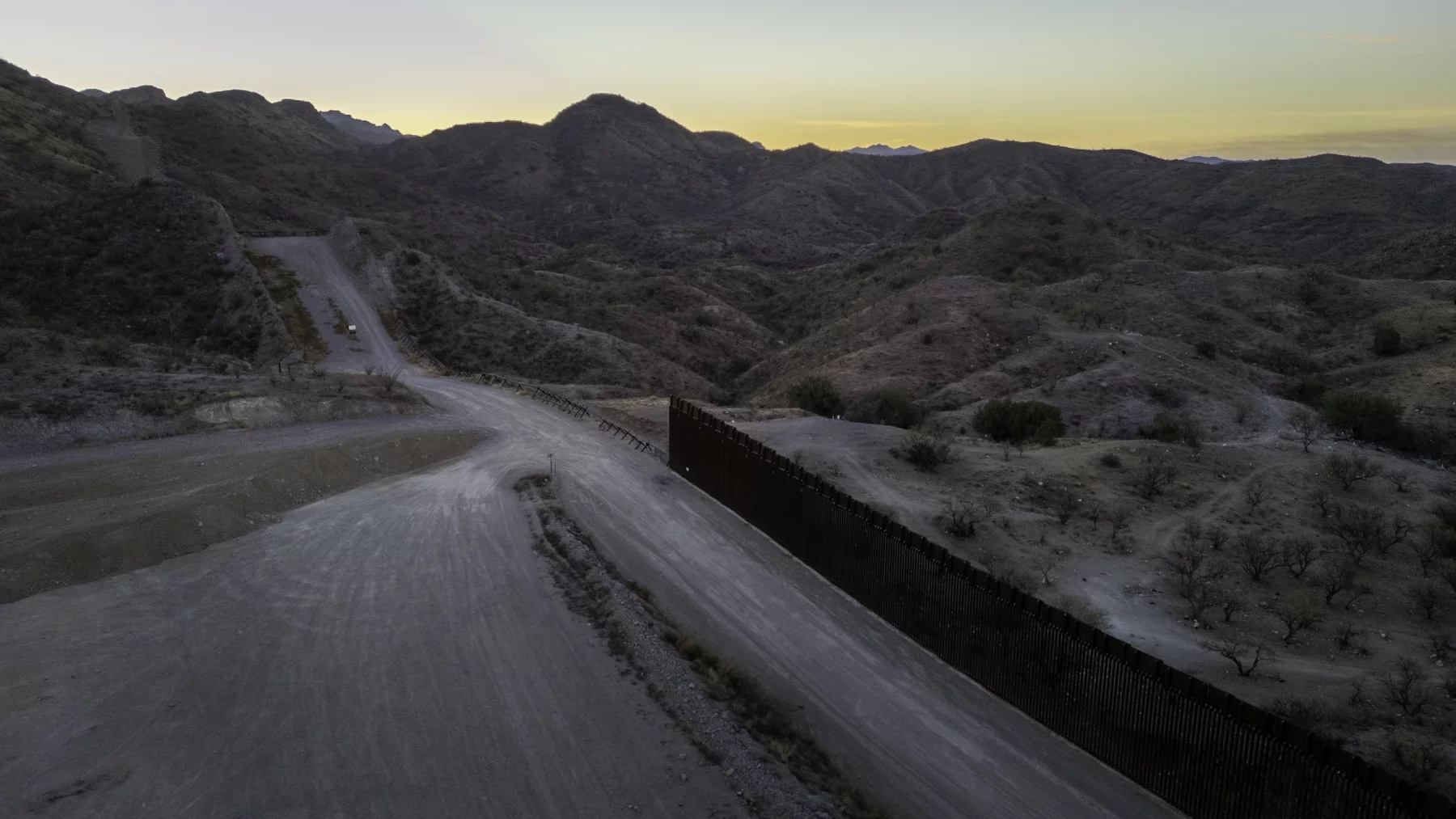
window.__INITIAL_STATE__={
"attachmentsReducer": {
"audio_0": {
"type": "attachments",
"id": "audio_0",
"imgSizes": {
"kqedFullSize": {
"file": "https://ww2.kqed.org/news/wp-content/themes/KQED-unified/img/audio_bgs/background0.jpg"
}
}
},
"audio_1": {
"type": "attachments",
"id": "audio_1",
"imgSizes": {
"kqedFullSize": {
"file": "https://ww2.kqed.org/news/wp-content/themes/KQED-unified/img/audio_bgs/background1.jpg"
}
}
},
"audio_2": {
"type": "attachments",
"id": "audio_2",
"imgSizes": {
"kqedFullSize": {
"file": "https://ww2.kqed.org/news/wp-content/themes/KQED-unified/img/audio_bgs/background2.jpg"
}
}
},
"audio_3": {
"type": "attachments",
"id": "audio_3",
"imgSizes": {
"kqedFullSize": {
"file": "https://ww2.kqed.org/news/wp-content/themes/KQED-unified/img/audio_bgs/background3.jpg"
}
}
},
"audio_4": {
"type": "attachments",
"id": "audio_4",
"imgSizes": {
"kqedFullSize": {
"file": "https://ww2.kqed.org/news/wp-content/themes/KQED-unified/img/audio_bgs/background4.jpg"
}
}
},
"placeholder": {
"type": "attachments",
"id": "placeholder",
"imgSizes": {
"thumbnail": {
"file": "https://cdn.kqed.org/wp-content/uploads/2024/12/KQED-Default-Image-816638274-2000x1333-1-160x107.jpg",
"width": 160,
"height": 107,
"mimeType": "image/jpeg"
},
"medium": {
"file": "https://cdn.kqed.org/wp-content/uploads/2024/12/KQED-Default-Image-816638274-2000x1333-1-800x533.jpg",
"width": 800,
"height": 533,
"mimeType": "image/jpeg"
},
"medium_large": {
"file": "https://cdn.kqed.org/wp-content/uploads/2024/12/KQED-Default-Image-816638274-2000x1333-1-768x512.jpg",
"width": 768,
"height": 512,
"mimeType": "image/jpeg"
},
"large": {
"file": "https://cdn.kqed.org/wp-content/uploads/2024/12/KQED-Default-Image-816638274-2000x1333-1-1020x680.jpg",
"width": 1020,
"height": 680,
"mimeType": "image/jpeg"
},
"1536x1536": {
"file": "https://cdn.kqed.org/wp-content/uploads/2024/12/KQED-Default-Image-816638274-2000x1333-1-1536x1024.jpg",
"width": 1536,
"height": 1024,
"mimeType": "image/jpeg"
},
"fd-lrg": {
"file": "https://cdn.kqed.org/wp-content/uploads/2024/12/KQED-Default-Image-816638274-2000x1333-1-1536x1024.jpg",
"width": 1536,
"height": 1024,
"mimeType": "image/jpeg"
},
"fd-med": {
"file": "https://cdn.kqed.org/wp-content/uploads/2024/12/KQED-Default-Image-816638274-2000x1333-1-1020x680.jpg",
"width": 1020,
"height": 680,
"mimeType": "image/jpeg"
},
"fd-sm": {
"file": "https://cdn.kqed.org/wp-content/uploads/2024/12/KQED-Default-Image-816638274-2000x1333-1-800x533.jpg",
"width": 800,
"height": 533,
"mimeType": "image/jpeg"
},
"post-thumbnail": {
"file": "https://cdn.kqed.org/wp-content/uploads/2024/12/KQED-Default-Image-816638274-2000x1333-1-672x372.jpg",
"width": 672,
"height": 372,
"mimeType": "image/jpeg"
},
"twentyfourteen-full-width": {
"file": "https://cdn.kqed.org/wp-content/uploads/2024/12/KQED-Default-Image-816638274-2000x1333-1-1038x576.jpg",
"width": 1038,
"height": 576,
"mimeType": "image/jpeg"
},
"xxsmall": {
"file": "https://cdn.kqed.org/wp-content/uploads/2024/12/KQED-Default-Image-816638274-2000x1333-1-160x107.jpg",
"width": 160,
"height": 107,
"mimeType": "image/jpeg"
},
"xsmall": {
"file": "https://cdn.kqed.org/wp-content/uploads/2024/12/KQED-Default-Image-816638274-2000x1333-1-672x372.jpg",
"width": 672,
"height": 372,
"mimeType": "image/jpeg"
},
"small": {
"file": "https://cdn.kqed.org/wp-content/uploads/2024/12/KQED-Default-Image-816638274-2000x1333-1-672x372.jpg",
"width": 672,
"height": 372,
"mimeType": "image/jpeg"
},
"xlarge": {
"file": "https://cdn.kqed.org/wp-content/uploads/2024/12/KQED-Default-Image-816638274-2000x1333-1-1020x680.jpg",
"width": 1020,
"height": 680,
"mimeType": "image/jpeg"
},
"full-width": {
"file": "https://cdn.kqed.org/wp-content/uploads/2024/12/KQED-Default-Image-816638274-2000x1333-1-1920x1280.jpg",
"width": 1920,
"height": 1280,
"mimeType": "image/jpeg"
},
"guest-author-32": {
"file": "https://cdn.kqed.org/wp-content/uploads/2025/01/KQED-Default-Image-816638274-1333x1333-1-160x160.jpg",
"width": 32,
"height": 32,
"mimeType": "image/jpeg"
},
"guest-author-50": {
"file": "https://cdn.kqed.org/wp-content/uploads/2025/01/KQED-Default-Image-816638274-1333x1333-1-160x160.jpg",
"width": 50,
"height": 50,
"mimeType": "image/jpeg"
},
"guest-author-64": {
"file": "https://cdn.kqed.org/wp-content/uploads/2025/01/KQED-Default-Image-816638274-1333x1333-1-160x160.jpg",
"width": 64,
"height": 64,
"mimeType": "image/jpeg"
},
"guest-author-96": {
"file": "https://cdn.kqed.org/wp-content/uploads/2025/01/KQED-Default-Image-816638274-1333x1333-1-160x160.jpg",
"width": 96,
"height": 96,
"mimeType": "image/jpeg"
},
"guest-author-128": {
"file": "https://cdn.kqed.org/wp-content/uploads/2025/01/KQED-Default-Image-816638274-1333x1333-1-160x160.jpg",
"width": 128,
"height": 128,
"mimeType": "image/jpeg"
},
"detail": {
"file": "https://cdn.kqed.org/wp-content/uploads/2025/01/KQED-Default-Image-816638274-1333x1333-1-160x160.jpg",
"width": 160,
"height": 160,
"mimeType": "image/jpeg"
},
"kqedFullSize": {
"file": "https://cdn.kqed.org/wp-content/uploads/2024/12/KQED-Default-Image-816638274-2000x1333-1.jpg",
"width": 2000,
"height": 1333
}
}
},
"news_12047111": {
"type": "attachments",
"id": "news_12047111",
"meta": {
"index": "attachments_1716263798",
"site": "news",
"id": "12047111",
"found": true
},
"title": "default",
"publishDate": 1751651145,
"status": "inherit",
"parent": 12047108,
"modified": 1751651174,
"caption": "From an aerial view, the US-Mexico border fence ends with a gap on Jan. 20, 2025 near Sasabe, Ariz. Republicans' tax and spending bill includes $46.5 billion for border wall projects.",
"credit": "John Moore/Getty Images",
"altTag": null,
"description": null,
"imgSizes": {
"thumbnail": {
"file": "https://cdn.kqed.org/wp-content/uploads/sites/10/2025/07/npr.brightspotcdn-copy-160x90.jpg",
"width": 160,
"height": 90,
"mimeType": "image/jpeg"
},
"1536x1536": {
"file": "https://cdn.kqed.org/wp-content/uploads/sites/10/2025/07/npr.brightspotcdn-copy-1536x864.jpg",
"width": 1536,
"height": 864,
"mimeType": "image/jpeg"
},
"post-thumbnail": {
"file": "https://cdn.kqed.org/wp-content/uploads/sites/10/2025/07/npr.brightspotcdn-copy-672x372.jpg",
"width": 672,
"height": 372,
"mimeType": "image/jpeg"
},
"twentyfourteen-full-width": {
"file": "https://cdn.kqed.org/wp-content/uploads/sites/10/2025/07/npr.brightspotcdn-copy-1038x576.jpg",
"width": 1038,
"height": 576,
"mimeType": "image/jpeg"
},
"kqedFullSize": {
"file": "https://cdn.kqed.org/wp-content/uploads/sites/10/2025/07/npr.brightspotcdn-copy.jpg",
"width": 1800,
"height": 1013
}
},
"isLoading": false,
"fetchFailed": false
},
"news_12044059": {
"type": "attachments",
"id": "news_12044059",
"meta": {
"index": "attachments_1716263798",
"site": "news",
"id": "12044059",
"found": true
},
"title": "E. in her home in Concord on June 12, 2025.",
"publishDate": 1749764115,
"status": "inherit",
"parent": 0,
"modified": 1750953504,
"caption": "E., a Nicaraguan journalist at risk of losing her protected status in the U.S., at her home in Concord on June 12, 2025.",
"credit": "Martin do Nascimento/KQED",
"altTag": null,
"description": null,
"imgSizes": {
"thumbnail": {
"file": "https://cdn.kqed.org/wp-content/uploads/sites/10/2025/06/250612-NICARAGUAN-JOURNALIST-MD-01-KQED-1-160x107.jpg",
"width": 160,
"height": 107,
"mimeType": "image/jpeg"
},
"1536x1536": {
"file": "https://cdn.kqed.org/wp-content/uploads/sites/10/2025/06/250612-NICARAGUAN-JOURNALIST-MD-01-KQED-1-1536x1025.jpg",
"width": 1536,
"height": 1025,
"mimeType": "image/jpeg"
},
"post-thumbnail": {
"file": "https://cdn.kqed.org/wp-content/uploads/sites/10/2025/06/250612-NICARAGUAN-JOURNALIST-MD-01-KQED-1-672x372.jpg",
"width": 672,
"height": 372,
"mimeType": "image/jpeg"
},
"twentyfourteen-full-width": {
"file": "https://cdn.kqed.org/wp-content/uploads/sites/10/2025/06/250612-NICARAGUAN-JOURNALIST-MD-01-KQED-1-1038x576.jpg",
"width": 1038,
"height": 576,
"mimeType": "image/jpeg"
},
"kqedFullSize": {
"file": "https://cdn.kqed.org/wp-content/uploads/sites/10/2025/06/250612-NICARAGUAN-JOURNALIST-MD-01-KQED-1.jpg",
"width": 2000,
"height": 1334
}
},
"isLoading": false,
"fetchFailed": false
},
"news_12046458": {
"type": "attachments",
"id": "news_12046458",
"meta": {
"index": "attachments_1716263798",
"site": "news",
"id": "12046458",
"found": true
},
"title": "070119-Immigrant-Rights-Protest-AP-CM-01 copy",
"publishDate": 1751138364,
"status": "inherit",
"parent": 12046457,
"modified": 1751138391,
"caption": "Immigrant rights activists participate in a protest in Los Angeles on July 1, 2019.\n",
"credit": "Ronen Tivony/Sipa via AP Images",
"altTag": null,
"description": null,
"imgSizes": {
"thumbnail": {
"file": "https://cdn.kqed.org/wp-content/uploads/sites/10/2025/06/070119-Immigrant-Rights-Protest-AP-CM-01-copy-160x107.jpg",
"width": 160,
"height": 107,
"mimeType": "image/jpeg"
},
"1536x1536": {
"file": "https://cdn.kqed.org/wp-content/uploads/sites/10/2025/06/070119-Immigrant-Rights-Protest-AP-CM-01-copy-1536x1024.jpg",
"width": 1536,
"height": 1024,
"mimeType": "image/jpeg"
},
"post-thumbnail": {
"file": "https://cdn.kqed.org/wp-content/uploads/sites/10/2025/06/070119-Immigrant-Rights-Protest-AP-CM-01-copy-672x372.jpg",
"width": 672,
"height": 372,
"mimeType": "image/jpeg"
},
"twentyfourteen-full-width": {
"file": "https://cdn.kqed.org/wp-content/uploads/sites/10/2025/06/070119-Immigrant-Rights-Protest-AP-CM-01-copy-1038x576.jpg",
"width": 1038,
"height": 576,
"mimeType": "image/jpeg"
},
"kqedFullSize": {
"file": "https://cdn.kqed.org/wp-content/uploads/sites/10/2025/06/070119-Immigrant-Rights-Protest-AP-CM-01-copy.jpg",
"width": 2000,
"height": 1333
}
},
"isLoading": false,
"fetchFailed": false
},
"news_12023242": {
"type": "attachments",
"id": "news_12023242",
"meta": {
"index": "attachments_1716263798",
"site": "news",
"id": "12023242",
"found": true
},
"title": "Presser_IMG_5746",
"publishDate": 1737484475,
"status": "inherit",
"parent": 12023126,
"modified": 1751065818,
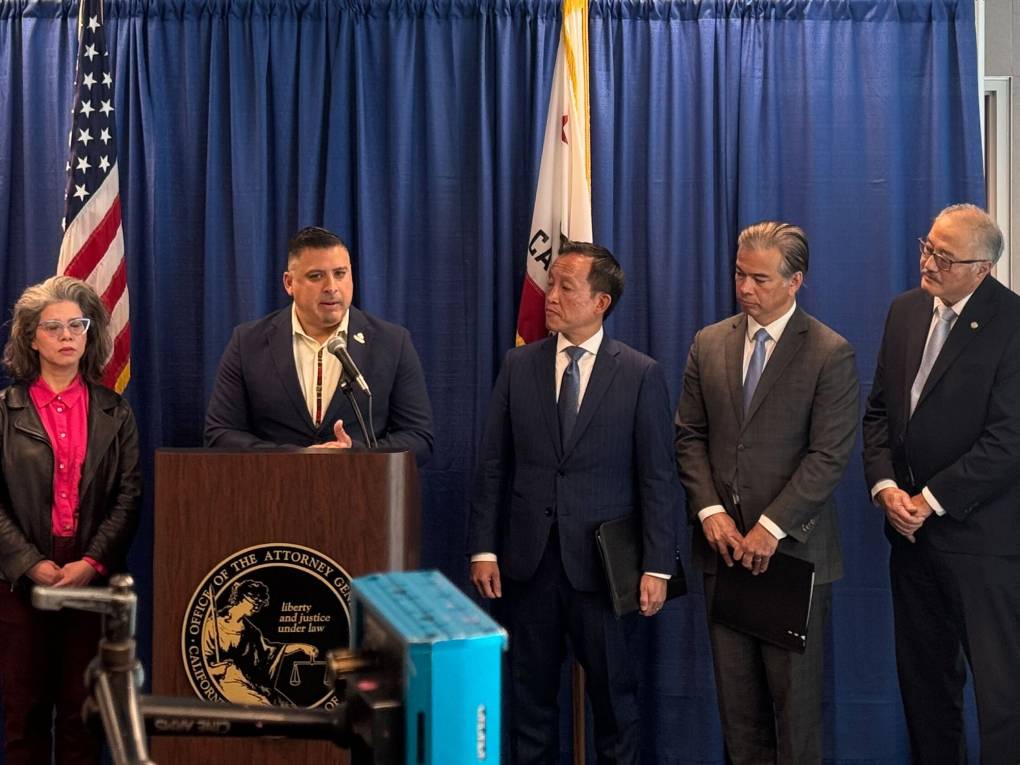
"caption": "Attorney General Rob Bonta (second from right), City Attorney David Chiu (center), Gabriel Medina from La Raza immigration services and others, at a press conference on Tuesday, Jan 21, 2025, to announce a preliminary injunction against President Donald Trump’s birthright citizenship order.",
"credit": "Gilare Zada/KQED",
"altTag": null,
"description": null,
"imgSizes": {
"medium": {
"file": "https://cdn.kqed.org/wp-content/uploads/sites/10/2025/01/Presser_IMG_5746-800x600.jpg",
"width": 800,
"height": 600,
"mimeType": "image/jpeg"
},
"large": {
"file": "https://cdn.kqed.org/wp-content/uploads/sites/10/2025/01/Presser_IMG_5746-1020x765.jpg",
"width": 1020,
"height": 765,
"mimeType": "image/jpeg"
},
"thumbnail": {
"file": "https://cdn.kqed.org/wp-content/uploads/sites/10/2025/01/Presser_IMG_5746-160x120.jpg",
"width": 160,
"height": 120,
"mimeType": "image/jpeg"
},
"1536x1536": {
"file": "https://cdn.kqed.org/wp-content/uploads/sites/10/2025/01/Presser_IMG_5746-1536x1152.jpg",
"width": 1536,
"height": 1152,
"mimeType": "image/jpeg"
},
"post-thumbnail": {
"file": "https://cdn.kqed.org/wp-content/uploads/sites/10/2025/01/Presser_IMG_5746-672x372.jpg",
"width": 672,
"height": 372,
"mimeType": "image/jpeg"
},
"twentyfourteen-full-width": {
"file": "https://cdn.kqed.org/wp-content/uploads/sites/10/2025/01/Presser_IMG_5746-1038x576.jpg",
"width": 1038,
"height": 576,
"mimeType": "image/jpeg"
},
"full-width": {
"file": "https://cdn.kqed.org/wp-content/uploads/sites/10/2025/01/Presser_IMG_5746-1920x1440.jpg",
"width": 1920,
"height": 1440,
"mimeType": "image/jpeg"
},
"kqedFullSize": {
"file": "https://cdn.kqed.org/wp-content/uploads/sites/10/2025/01/Presser_IMG_5746.jpg",
"width": 2000,
"height": 1500
}
},
"isLoading": false,
"fetchFailed": false
},
"news_12046155": {
"type": "attachments",
"id": "news_12046155",
"meta": {
"index": "attachments_1716263798",
"site": "news",
"id": "12046155",
"found": true
},
"title": "Alex stands outside of City Hall in Oakland on June 26, 2025.",
"publishDate": 1750969312,
"status": "inherit",
"parent": 12046137,
"modified": 1751027177,
"caption": "Alex, a day laborer in Oakland stands outside of City Hall in Oakland on June 26, 2025.",
"credit": "Martin do Nascimento/KQED",
"altTag": null,
"description": null,
"imgSizes": {
"thumbnail": {
"file": "https://cdn.kqed.org/wp-content/uploads/sites/10/2025/06/250626-OAKLAND-DAY-LABORERS-MD-06-KQED-160x107.jpg",
"width": 160,
"height": 107,
"mimeType": "image/jpeg"
},
"1536x1536": {
"file": "https://cdn.kqed.org/wp-content/uploads/sites/10/2025/06/250626-OAKLAND-DAY-LABORERS-MD-06-KQED-1536x1025.jpg",
"width": 1536,
"height": 1025,
"mimeType": "image/jpeg"
},
"post-thumbnail": {
"file": "https://cdn.kqed.org/wp-content/uploads/sites/10/2025/06/250626-OAKLAND-DAY-LABORERS-MD-06-KQED-672x372.jpg",
"width": 672,
"height": 372,
"mimeType": "image/jpeg"
},
"twentyfourteen-full-width": {
"file": "https://cdn.kqed.org/wp-content/uploads/sites/10/2025/06/250626-OAKLAND-DAY-LABORERS-MD-06-KQED-1038x576.jpg",
"width": 1038,
"height": 576,
"mimeType": "image/jpeg"
},
"kqedFullSize": {
"file": "https://cdn.kqed.org/wp-content/uploads/sites/10/2025/06/250626-OAKLAND-DAY-LABORERS-MD-06-KQED.jpg",
"width": 2000,
"height": 1334
}
},
"isLoading": false,
"fetchFailed": false
},
"news_12043922": {
"type": "attachments",
"id": "news_12043922",
"meta": {
"index": "attachments_1716263798",
"site": "news",
"id": "12043922",
"found": true
},
"title": "Immigration Protests Los Angeles",
"publishDate": 1749749041,
"status": "inherit",
"parent": 12043920,
"modified": 1749757600,
"caption": "Police confront protesters outside City Hall during protests over federal immigration enforcement raids on Wednesday, June 11, 2025, in Los Angeles. ",
"credit": "Ethan Swope/AP Photo",
"altTag": null,
"description": null,
"imgSizes": {
"thumbnail": {
"file": "https://cdn.kqed.org/wp-content/uploads/sites/10/2025/06/LosAngelesImmigrationRaidAP-160x107.jpg",
"width": 160,
"height": 107,
"mimeType": "image/jpeg"
},
"1536x1536": {
"file": "https://cdn.kqed.org/wp-content/uploads/sites/10/2025/06/LosAngelesImmigrationRaidAP-1536x1024.jpg",
"width": 1536,
"height": 1024,
"mimeType": "image/jpeg"
},
"post-thumbnail": {
"file": "https://cdn.kqed.org/wp-content/uploads/sites/10/2025/06/LosAngelesImmigrationRaidAP-672x372.jpg",
"width": 672,
"height": 372,
"mimeType": "image/jpeg"
},
"twentyfourteen-full-width": {
"file": "https://cdn.kqed.org/wp-content/uploads/sites/10/2025/06/LosAngelesImmigrationRaidAP-1038x576.jpg",
"width": 1038,
"height": 576,
"mimeType": "image/jpeg"
},
"kqedFullSize": {
"file": "https://cdn.kqed.org/wp-content/uploads/sites/10/2025/06/LosAngelesImmigrationRaidAP.jpg",
"width": 2000,
"height": 1333
}
},
"isLoading": false,
"fetchFailed": false
},
"news_12044458": {
"type": "attachments",
"id": "news_12044458",
"meta": {
"index": "attachments_1716263798",
"site": "news",
"id": "12044458",
"found": true
},
"title": "250614-NO-KINGS-SAN-JOSE-AC-09-KQED",
"publishDate": 1749940367,
"status": "inherit",
"parent": 12044469,
"modified": 1749941467,
"caption": "Officers from the Santa Clara Sheriff's Department arrive on site to an anti-Trump protest in San Jose on June 14, 2025.",
"credit": "Aryk Copley for KQED",
"altTag": null,
"description": null,
"imgSizes": {
"thumbnail": {
"file": "https://cdn.kqed.org/wp-content/uploads/sites/10/2025/06/250614-NO-KINGS-SAN-JOSE-AC-09-KQED-160x107.jpg",
"width": 160,
"height": 107,
"mimeType": "image/jpeg"
},
"1536x1536": {
"file": "https://cdn.kqed.org/wp-content/uploads/sites/10/2025/06/250614-NO-KINGS-SAN-JOSE-AC-09-KQED-1536x1024.jpg",
"width": 1536,
"height": 1024,
"mimeType": "image/jpeg"
},
"post-thumbnail": {
"file": "https://cdn.kqed.org/wp-content/uploads/sites/10/2025/06/250614-NO-KINGS-SAN-JOSE-AC-09-KQED-672x372.jpg",
"width": 672,
"height": 372,
"mimeType": "image/jpeg"
},
"twentyfourteen-full-width": {
"file": "https://cdn.kqed.org/wp-content/uploads/sites/10/2025/06/250614-NO-KINGS-SAN-JOSE-AC-09-KQED-1038x576.jpg",
"width": 1038,
"height": 576,
"mimeType": "image/jpeg"
},
"kqedFullSize": {
"file": "https://cdn.kqed.org/wp-content/uploads/sites/10/2025/06/250614-NO-KINGS-SAN-JOSE-AC-09-KQED.jpg",
"width": 2000,
"height": 1333
}
},
"isLoading": false,
"fetchFailed": false
},
"news_12044094": {
"type": "attachments",
"id": "news_12044094",
"meta": {
"index": "attachments_1716263798",
"site": "news",
"id": "12044094",
"found": true
},
"title": "Protesters clash with law enforcement in downtown Los Angeles near the Federal Building and the Metropolitan Detention Center due to the immigration raids roil L.A.",
"publishDate": 1749776912,
"status": "inherit",
"parent": 12043935,
"modified": 1749777473,
"caption": "California National Guard stands guard as protesters clash with law enforcement in downtown Los Angeles at the Metropolitan Detention Center due to the immigration raids roil LA on Sunday, June 8, 2025 in Los Angeles. ",
"credit": "Jason Armond/Los Angeles Times via Getty Images",
"altTag": null,
"description": null,
"imgSizes": {
"medium": {
"file": "https://cdn.kqed.org/wp-content/uploads/sites/10/2025/06/GettyImages-2218796587-2000x1333.jpg",
"width": 2000,
"height": 1333,
"mimeType": "image/jpeg"
},
"large": {
"file": "https://cdn.kqed.org/wp-content/uploads/sites/10/2025/06/GettyImages-2218796587-2000x1333.jpg",
"width": 2000,
"height": 1333,
"mimeType": "image/jpeg"
},
"thumbnail": {
"file": "https://cdn.kqed.org/wp-content/uploads/sites/10/2025/06/GettyImages-2218796587-160x107.jpg",
"width": 160,
"height": 107,
"mimeType": "image/jpeg"
},
"1536x1536": {
"file": "https://cdn.kqed.org/wp-content/uploads/sites/10/2025/06/GettyImages-2218796587-1536x1024.jpg",
"width": 1536,
"height": 1024,
"mimeType": "image/jpeg"
},
"2048x2048": {
"file": "https://cdn.kqed.org/wp-content/uploads/sites/10/2025/06/GettyImages-2218796587-2048x1365.jpg",
"width": 2048,
"height": 1365,
"mimeType": "image/jpeg"
},
"post-thumbnail": {
"file": "https://cdn.kqed.org/wp-content/uploads/sites/10/2025/06/GettyImages-2218796587-672x372.jpg",
"width": 672,
"height": 372,
"mimeType": "image/jpeg"
},
"twentyfourteen-full-width": {
"file": "https://cdn.kqed.org/wp-content/uploads/sites/10/2025/06/GettyImages-2218796587-1038x576.jpg",
"width": 1038,
"height": 576,
"mimeType": "image/jpeg"
},
"full-width": {
"file": "https://cdn.kqed.org/wp-content/uploads/sites/10/2025/06/GettyImages-2218796587-2000x1333.jpg",
"width": 2000,
"height": 1333,
"mimeType": "image/jpeg"
},
"kqedFullSize": {
"file": "https://cdn.kqed.org/wp-content/uploads/sites/10/2025/06/GettyImages-2218796587-scaled-e1750446347200.jpg",
"width": 2000,
"height": 1334
}
},
"isLoading": false,
"fetchFailed": false
},
"news_12044791": {
"type": "attachments",
"id": "news_12044791",
"meta": {
"index": "attachments_1716263798",
"site": "news",
"id": "12044791",
"found": true
},
"title": "US-POLITICS-IMMIGRATION-ICE",
"publishDate": 1750196649,
"status": "inherit",
"parent": 12044748,
"modified": 1776108571,
"caption": "A farmworker works in a strawberry field on June 12, 2025, in Oxnard, California. Anti-immigration crackdowns ordered by President Donald Trump have seen federal authorities target factories and work sites since June 6, sparking days of angry protests in Los Angeles. ",
"credit": "Apu Gomes/AFP via Getty Images",
"altTag": null,
"description": null,
"imgSizes": {
"thumbnail": {
"file": "https://cdn.kqed.org/wp-content/uploads/sites/10/2025/06/CaliforniaFarmworkersGetty-160x107.jpg",
"width": 160,
"height": 107,
"mimeType": "image/jpeg"
},
"1536x1536": {
"file": "https://cdn.kqed.org/wp-content/uploads/sites/10/2025/06/CaliforniaFarmworkersGetty-1536x1024.jpg",
"width": 1536,
"height": 1024,
"mimeType": "image/jpeg"
},
"post-thumbnail": {
"file": "https://cdn.kqed.org/wp-content/uploads/sites/10/2025/06/CaliforniaFarmworkersGetty-672x372.jpg",
"width": 672,
"height": 372,
"mimeType": "image/jpeg"
},
"twentyfourteen-full-width": {
"file": "https://cdn.kqed.org/wp-content/uploads/sites/10/2025/06/CaliforniaFarmworkersGetty-1038x576.jpg",
"width": 1038,
"height": 576,
"mimeType": "image/jpeg"
},
"kqedFullSize": {
"file": "https://cdn.kqed.org/wp-content/uploads/sites/10/2025/06/CaliforniaFarmworkersGetty.jpg",
"width": 2000,
"height": 1333
}
},
"isLoading": false,
"fetchFailed": false
},
"news_11975030": {
"type": "attachments",
"id": "news_11975030",
"meta": {
"index": "attachments_1716263798",
"site": "news",
"id": "11975030",
"found": true
},
"parent": 11975904,
"imgSizes": {
"twentyfourteen-full-width": {
"file": "https://cdn.kqed.org/wp-content/uploads/sites/10/2024/02/240206-IMMIGRATIONCOURT-26-BL-KQED-1038x576.jpg",
"width": 1038,
"mimeType": "image/jpeg",
"height": 576
},
"thumbnail": {
"file": "https://cdn.kqed.org/wp-content/uploads/sites/10/2024/02/240206-IMMIGRATIONCOURT-26-BL-KQED-160x107.jpg",
"width": 160,
"mimeType": "image/jpeg",
"height": 107
},
"post-thumbnail": {
"file": "https://cdn.kqed.org/wp-content/uploads/sites/10/2024/02/240206-IMMIGRATIONCOURT-26-BL-KQED-672x372.jpg",
"width": 672,
"mimeType": "image/jpeg",
"height": 372
},
"kqedFullSize": {
"file": "https://cdn.kqed.org/wp-content/uploads/sites/10/2024/02/240206-IMMIGRATIONCOURT-26-BL-KQED.jpg",
"width": 2000,
"height": 1333
},
"large": {
"file": "https://cdn.kqed.org/wp-content/uploads/sites/10/2024/02/240206-IMMIGRATIONCOURT-26-BL-KQED-1020x680.jpg",
"width": 1020,
"mimeType": "image/jpeg",
"height": 680
},
"1536x1536": {
"file": "https://cdn.kqed.org/wp-content/uploads/sites/10/2024/02/240206-IMMIGRATIONCOURT-26-BL-KQED-1536x1024.jpg",
"width": 1536,
"mimeType": "image/jpeg",
"height": 1024
},
"full-width": {
"file": "https://cdn.kqed.org/wp-content/uploads/sites/10/2024/02/240206-IMMIGRATIONCOURT-26-BL-KQED-1920x1280.jpg",
"width": 1920,
"mimeType": "image/jpeg",
"height": 1280
},
"medium": {
"file": "https://cdn.kqed.org/wp-content/uploads/sites/10/2024/02/240206-IMMIGRATIONCOURT-26-BL-KQED-800x533.jpg",
"width": 800,
"mimeType": "image/jpeg",
"height": 533
}
},
"publishDate": 1707340047,
"modified": 1707941989,
"caption": "The site of a new immigration court at 1855 Concord Gateway in Concord on Feb. 6, 2024.",
"description": null,
"title": "240206-IMMIGRATIONCOURT-26-BL-KQED",
"credit": "Beth LaBerge/KQED",
"status": "inherit",
"altTag": "A view looking up at a building.",
"isLoading": false,
"fetchFailed": false
},
"news_12044597": {
"type": "attachments",
"id": "news_12044597",
"meta": {
"index": "attachments_1716263798",
"site": "news",
"id": "12044597",
"found": true
},
"title": "ICE agents raid to arrest illigal immigrants.",
"publishDate": 1750111616,
"status": "inherit",
"parent": 0,
"modified": 1750114363,
"caption": "Immigration and Customs Enforcement agents apprehend an undocumented immigrant with criminal record, in an early morning raid at home on Sept. 8, 2022 in Los Angeles.",
"credit": "Irfan Khan/Los Angeles Times via Getty Images",
"altTag": null,
"description": null,
"imgSizes": {
"thumbnail": {
"file": "https://cdn.kqed.org/wp-content/uploads/sites/10/2025/06/GETTYIMAGES-1243313067-KQED-160x107.jpg",
"width": 160,
"height": 107,
"mimeType": "image/jpeg"
},
"1536x1536": {
"file": "https://cdn.kqed.org/wp-content/uploads/sites/10/2025/06/GETTYIMAGES-1243313067-KQED-1536x1024.jpg",
"width": 1536,
"height": 1024,
"mimeType": "image/jpeg"
},
"post-thumbnail": {
"file": "https://cdn.kqed.org/wp-content/uploads/sites/10/2025/06/GETTYIMAGES-1243313067-KQED-672x372.jpg",
"width": 672,
"height": 372,
"mimeType": "image/jpeg"
},
"twentyfourteen-full-width": {
"file": "https://cdn.kqed.org/wp-content/uploads/sites/10/2025/06/GETTYIMAGES-1243313067-KQED-1038x576.jpg",
"width": 1038,
"height": 576,
"mimeType": "image/jpeg"
},
"kqedFullSize": {
"file": "https://cdn.kqed.org/wp-content/uploads/sites/10/2025/06/GETTYIMAGES-1243313067-KQED.jpg",
"width": 2000,
"height": 1333
}
},
"isLoading": false,
"fetchFailed": false
},
"news_12044465": {
"type": "attachments",
"id": "news_12044465",
"meta": {
"index": "attachments_1716263798",
"site": "news",
"id": "12044465",
"found": true
},
"title": "250614-NO-KINGS-SF-MD-11-KQED",
"publishDate": 1749940390,
"status": "inherit",
"parent": 0,
"modified": 1749940553,
"caption": "Thousands of protesters rally in front of City Hall in San Francisco as part of the No Kings protest on June 14, 2025.",
"credit": "Martin do Nascimento/KQED",
"altTag": null,
"description": null,
"imgSizes": {
"thumbnail": {
"file": "https://cdn.kqed.org/wp-content/uploads/sites/10/2025/06/250614-NO-KINGS-SF-MD-11-KQED-160x107.jpg",
"width": 160,
"height": 107,
"mimeType": "image/jpeg"
},
"1536x1536": {
"file": "https://cdn.kqed.org/wp-content/uploads/sites/10/2025/06/250614-NO-KINGS-SF-MD-11-KQED-1536x1025.jpg",
"width": 1536,
"height": 1025,
"mimeType": "image/jpeg"
},
"post-thumbnail": {
"file": "https://cdn.kqed.org/wp-content/uploads/sites/10/2025/06/250614-NO-KINGS-SF-MD-11-KQED-672x372.jpg",
"width": 672,
"height": 372,
"mimeType": "image/jpeg"
},
"twentyfourteen-full-width": {
"file": "https://cdn.kqed.org/wp-content/uploads/sites/10/2025/06/250614-NO-KINGS-SF-MD-11-KQED-1038x576.jpg",
"width": 1038,
"height": 576,
"mimeType": "image/jpeg"
},
"kqedFullSize": {
"file": "https://cdn.kqed.org/wp-content/uploads/sites/10/2025/06/250614-NO-KINGS-SF-MD-11-KQED.jpg",
"width": 2000,
"height": 1334
}
},
"isLoading": false,
"fetchFailed": false
}
},
"audioPlayerReducer": {
"postId": "stream_live",
"isPaused": true,
"isPlaying": false,
"pfsActive": false,
"pledgeModalIsOpen": true,
"playerDrawerIsOpen": false,
"liveAudioPlayStartedAt": 0,
"liveAudioPlayContext": ""
},
"authorsReducer": {
"byline_news_12047108": {
"type": "authors",
"id": "byline_news_12047108",
"meta": {
"override": true
},
"slug": "byline_news_12047108",
"name": "Juliana Kim, NPR",
"isLoading": false
},
"byline_news_12046457": {
"type": "authors",
"id": "byline_news_12046457",
"meta": {
"override": true
},
"slug": "byline_news_12046457",
"name": "Jim Newton, CalMatters",
"isLoading": false
},
"kqed": {
"type": "authors",
"id": "236",
"meta": {
"index": "authors_1716337520",
"id": "236",
"found": true
},
"name": "KQED News Staff",
"firstName": "KQED News Staff",
"lastName": null,
"slug": "kqed",
"email": "faq@kqed.org",
"display_author_email": false,
"staff_mastheads": [],
"title": null,
"bio": null,
"avatar": "https://secure.gravatar.com/avatar/ef0e801a68c4c54afa9180db14084167?s=600&d=blank&r=g",
"twitter": null,
"facebook": null,
"instagram": null,
"linkedin": null,
"sites": [
{
"site": "arts",
"roles": [
"contributor"
]
},
{
"site": "news",
"roles": [
"editor"
]
},
{
"site": "futureofyou",
"roles": [
"author"
]
}
],
"headData": {
"title": "KQED News Staff | KQED",
"description": null,
"ogImgSrc": "https://secure.gravatar.com/avatar/ef0e801a68c4c54afa9180db14084167?s=600&d=blank&r=g",
"twImgSrc": "https://secure.gravatar.com/avatar/ef0e801a68c4c54afa9180db14084167?s=600&d=blank&r=g"
},
"isLoading": false,
"link": "/author/kqed"
},
"tychehendricks": {
"type": "authors",
"id": "259",
"meta": {
"index": "authors_1716337520",
"id": "259",
"found": true
},
"name": "Tyche Hendricks",
"firstName": "Tyche",
"lastName": "Hendricks",
"slug": "tychehendricks",
"email": "thendricks@kqed.org",
"display_author_email": true,
"staff_mastheads": [
"news"
],
"title": "KQED Senior Editor, Immigration",
"bio": "\u003cspan style=\"font-weight: 400;\">Tyche Hendricks is KQED’s senior editor for immigration, leading coverage of the policy and politics that affect California’s immigrant communities. Her work for KQED’s radio and online audiences is also carried on NPR and other national outlets. She has been recognized with awards from the Radio and Television News Directors Association, the Society for Professional Journalists; the Education Writers Association; the Best of the West and the National Federation of Community Broadcasters. Before joining KQED in 2010, Tyche spent more than a dozen years as a newspaper reporter, notably at the \u003c/span>\u003ci>\u003cspan style=\"font-weight: 400;\">San Francisco Chronicle\u003c/span>\u003c/i>\u003cspan style=\"font-weight: 400;\">. At different times she has covered criminal justice, government and politics and urban planning. Tyche has taught in the MFA Creative Writing program at the University of San Francisco and at UC Berkeley’s Graduate School of Journalism, where she was co-director of a national immigration symposium for professional journalists. She is the author of \u003c/span>\u003ci>\u003cspan style=\"font-weight: 400;\">The Wind Doesn't Need a Passport: Stories from the U.S.-Mexico Borderlands\u003c/span>\u003c/i>\u003cspan style=\"font-weight: 400;\"> (University of California Press). \u003c/span>",
"avatar": "https://secure.gravatar.com/avatar/b8ee458e2731c2d43df86882ce17267e?s=600&d=blank&r=g",
"twitter": "tychehendricks",
"facebook": null,
"instagram": null,
"linkedin": null,
"sites": [
{
"site": "news",
"roles": [
"editor"
]
},
{
"site": "stateofhealth",
"roles": [
"editor"
]
}
],
"headData": {
"title": "Tyche Hendricks | KQED",
"description": "KQED Senior Editor, Immigration",
"ogImgSrc": "https://secure.gravatar.com/avatar/b8ee458e2731c2d43df86882ce17267e?s=600&d=blank&r=g",
"twImgSrc": "https://secure.gravatar.com/avatar/b8ee458e2731c2d43df86882ce17267e?s=600&d=blank&r=g"
},
"isLoading": false,
"link": "/author/tychehendricks"
},
"mlagos": {
"type": "authors",
"id": "3239",
"meta": {
"index": "authors_1716337520",
"id": "3239",
"found": true
},
"name": "Marisa Lagos",
"firstName": "Marisa",
"lastName": "Lagos",
"slug": "mlagos",
"email": "mlagos@kqed.org",
"display_author_email": false,
"staff_mastheads": [
"news"
],
"title": "KQED Contributor",
"bio": "Marisa Lagos is a correspondent for KQED’s California Politics and Government Desk and co-hosts the award-winning show and podcast, Political Breakdown. At KQED, Lagos also conducts reporting, analysis and investigations into state, local and national politics for radio, TV, online and onstage. In 2022, she and co-host, Scott Shafer, moderated the only gubernatorial debate in California. In 2020, the \u003ci>Washington Post\u003c/i> named her one of the top political journalists in California; she was nominated for a Peabody and won several other awards for her work investigating the 2017 California wildfires. She has worked at the \u003ci>San Francisco Chronicle\u003c/i>, \u003ci>San Francisco Examiner\u003c/i> and \u003ci>Los Angeles Times\u003c/i>. A UC Santa Barbara graduate, she lives in San Francisco with her two sons and husband.",
"avatar": "https://secure.gravatar.com/avatar/a261a0d3696fc066871ef96b85b5e7d2?s=600&d=blank&r=g",
"twitter": "@mlagos",
"facebook": null,
"instagram": null,
"linkedin": null,
"sites": [
{
"site": "arts",
"roles": [
"author"
]
},
{
"site": "news",
"roles": [
"editor"
]
},
{
"site": "science",
"roles": [
"editor"
]
},
{
"site": "forum",
"roles": [
"author"
]
},
{
"site": "liveblog",
"roles": [
"author"
]
}
],
"headData": {
"title": "Marisa Lagos | KQED",
"description": "KQED Contributor",
"ogImgSrc": "https://secure.gravatar.com/avatar/a261a0d3696fc066871ef96b85b5e7d2?s=600&d=blank&r=g",
"twImgSrc": "https://secure.gravatar.com/avatar/a261a0d3696fc066871ef96b85b5e7d2?s=600&d=blank&r=g"
},
"isLoading": false,
"link": "/author/mlagos"
},
"agonzalez": {
"type": "authors",
"id": "11724",
"meta": {
"index": "authors_1716337520",
"id": "11724",
"found": true
},
"name": "Alexander Gonzalez",
"firstName": "Alexander",
"lastName": "Gonzalez",
"slug": "agonzalez",
"email": "AlexanderGonzalez@KQED.org",
"display_author_email": false,
"staff_mastheads": [
"news"
],
"title": "KQED Contributor",
"bio": null,
"avatar": "https://secure.gravatar.com/avatar/9e291ed34e154df4c662edf858b641d70b4859939bfe40be478408f9dfd057d2?s=600&d=blank&r=g",
"twitter": null,
"bluesky": null,
"facebook": null,
"instagram": null,
"linkedin": null,
"sites": [
{
"site": "arts",
"roles": [
"editor"
]
},
{
"site": "news",
"roles": [
"editor"
]
},
{
"site": "science",
"roles": [
"editor"
]
}
],
"headData": {
"title": "Alexander Gonzalez | KQED",
"description": "KQED Contributor",
"ogImgSrc": "https://secure.gravatar.com/avatar/9e291ed34e154df4c662edf858b641d70b4859939bfe40be478408f9dfd057d2?s=600&d=blank&r=g",
"twImgSrc": "https://secure.gravatar.com/avatar/9e291ed34e154df4c662edf858b641d70b4859939bfe40be478408f9dfd057d2?s=600&d=blank&r=g"
},
"isLoading": false,
"link": "/author/agonzalez"
},
"jlara": {
"type": "authors",
"id": "11761",
"meta": {
"index": "authors_1716337520",
"id": "11761",
"found": true
},
"name": "Juan Carlos Lara",
"firstName": "Juan Carlos",
"lastName": "Lara",
"slug": "jlara",
"email": "jlara@kqed.org",
"display_author_email": false,
"staff_mastheads": [],
"title": "KQED Contributor",
"bio": null,
"avatar": "https://secure.gravatar.com/avatar/19e2052b9b05657c5ff2af2121846e9c?s=600&d=blank&r=g",
"twitter": null,
"facebook": null,
"instagram": null,
"linkedin": null,
"sites": [
{
"site": "arts",
"roles": [
"editor"
]
},
{
"site": "news",
"roles": [
"editor"
]
},
{
"site": "forum",
"roles": [
"editor"
]
},
{
"site": "liveblog",
"roles": [
"contributor"
]
}
],
"headData": {
"title": "Juan Carlos Lara | KQED",
"description": "KQED Contributor",
"ogImgSrc": "https://secure.gravatar.com/avatar/19e2052b9b05657c5ff2af2121846e9c?s=600&d=blank&r=g",
"twImgSrc": "https://secure.gravatar.com/avatar/19e2052b9b05657c5ff2af2121846e9c?s=600&d=blank&r=g"
},
"isLoading": false,
"link": "/author/jlara"
},
"jgeha": {
"type": "authors",
"id": "11906",
"meta": {
"index": "authors_1716337520",
"id": "11906",
"found": true
},
"name": "Joseph Geha",
"firstName": "Joseph",
"lastName": "Geha",
"slug": "jgeha",
"email": "jgeha@kqed.org",
"display_author_email": false,
"staff_mastheads": [
"news",
"science"
],
"title": "KQED Contributor",
"bio": null,
"avatar": "https://secure.gravatar.com/avatar/ea84d2b6dd93d6369d453edf19dd583f117cd1759d2d9c9c92f9de77017354fe?s=600&d=blank&r=g",
"twitter": null,
"bluesky": null,
"facebook": null,
"instagram": null,
"linkedin": null,
"sites": [
{
"site": "news",
"roles": [
"editor"
]
},
{
"site": "liveblog",
"roles": [
"author"
]
}
],
"headData": {
"title": "Joseph Geha | KQED",
"description": "KQED Contributor",
"ogImgSrc": "https://secure.gravatar.com/avatar/ea84d2b6dd93d6369d453edf19dd583f117cd1759d2d9c9c92f9de77017354fe?s=600&d=blank&r=g",
"twImgSrc": "https://secure.gravatar.com/avatar/ea84d2b6dd93d6369d453edf19dd583f117cd1759d2d9c9c92f9de77017354fe?s=600&d=blank&r=g"
},
"isLoading": false,
"link": "/author/jgeha"
},
"slim": {
"type": "authors",
"id": "11920",
"meta": {
"index": "authors_1716337520",
"id": "11920",
"found": true
},
"name": "Samantha Lim",
"firstName": "Samantha",
"lastName": "Lim",
"slug": "slim",
"email": "slim@KQED.org",
"display_author_email": false,
"staff_mastheads": [],
"title": "KQED Contributor",
"bio": null,
"avatar": "https://secure.gravatar.com/avatar/82e592e6c15fe1a04d385e8ad0fb0b4e?s=600&d=blank&r=g",
"twitter": null,
"facebook": null,
"instagram": null,
"linkedin": null,
"sites": [
{
"site": "news",
"roles": []
}
],
"headData": {
"title": "Samantha Lim | KQED",
"description": "KQED Contributor",
"ogImgSrc": "https://secure.gravatar.com/avatar/82e592e6c15fe1a04d385e8ad0fb0b4e?s=600&d=blank&r=g",
"twImgSrc": "https://secure.gravatar.com/avatar/82e592e6c15fe1a04d385e8ad0fb0b4e?s=600&d=blank&r=g"
},
"isLoading": false,
"link": "/author/slim"
},
"bkrans": {
"type": "authors",
"id": "11923",
"meta": {
"index": "authors_1716337520",
"id": "11923",
"found": true
},
"name": "Brian Krans",
"firstName": "Brian",
"lastName": "Krans",
"slug": "bkrans",
"email": "bkrans@kqed.org",
"display_author_email": false,
"staff_mastheads": [
"news"
],
"title": "KQED Contributing Reporter",
"bio": "Brian Krans is an award-winning local news and investigative reporter who has been proudly working as a general assignment reporter for KQED since August 2023. He lives in Richmond, where he also reports on air pollution for Richmondside. He is also a founding member of the Vallejo Sun.",
"avatar": "https://secure.gravatar.com/avatar/71fa91f931774612559f7640390b53d9c2840ff72b20f195a25239aab2d9fbb9?s=600&d=blank&r=g",
"twitter": "citizenkrans",
"bluesky": null,
"facebook": null,
"instagram": null,
"linkedin": null,
"sites": [
{
"site": "news",
"roles": [
"editor"
]
}
],
"headData": {
"title": "Brian Krans | KQED",
"description": "KQED Contributing Reporter",
"ogImgSrc": "https://secure.gravatar.com/avatar/71fa91f931774612559f7640390b53d9c2840ff72b20f195a25239aab2d9fbb9?s=600&d=blank&r=g",
"twImgSrc": "https://secure.gravatar.com/avatar/71fa91f931774612559f7640390b53d9c2840ff72b20f195a25239aab2d9fbb9?s=600&d=blank&r=g"
},
"isLoading": false,
"link": "/author/bkrans"
},
"emanoukian": {
"type": "authors",
"id": "11925",
"meta": {
"index": "authors_1716337520",
"id": "11925",
"found": true
},
"name": "Elize Manoukian",
"firstName": "Elize",
"lastName": "Manoukian",
"slug": "emanoukian",
"email": "emanoukian@KQED.org",
"display_author_email": false,
"staff_mastheads": [
"news"
],
"title": "Digital News Editor",
"bio": "Elize Manoukian is an award-winning audio producer and Senior Editor on the Express Desk, KQED's digital news platform. Her work has appeared on KPFA, Interlochen Public Radio, Oregon Public Broadcast, the New York Daily News, LA Times and the San Diego Union-Tribune.",
"avatar": "https://secure.gravatar.com/avatar/4525f1a8e46ccb30933b32653d9772064cfefe3fa655eb45b3b3a80341f6bdad?s=600&d=blank&r=g",
"twitter": null,
"bluesky": null,
"facebook": null,
"instagram": null,
"linkedin": null,
"sites": [
{
"site": "arts",
"roles": [
"editor"
]
},
{
"site": "news",
"roles": [
"editor"
]
},
{
"site": "science",
"roles": [
"editor"
]
}
],
"headData": {
"title": "Elize Manoukian | KQED",
"description": "Digital News Editor",
"ogImgSrc": "https://secure.gravatar.com/avatar/4525f1a8e46ccb30933b32653d9772064cfefe3fa655eb45b3b3a80341f6bdad?s=600&d=blank&r=g",
"twImgSrc": "https://secure.gravatar.com/avatar/4525f1a8e46ccb30933b32653d9772064cfefe3fa655eb45b3b3a80341f6bdad?s=600&d=blank&r=g"
},
"isLoading": false,
"link": "/author/emanoukian"
}
},
"pagesReducer": {
"news_tag_u-s-immigration-and-customs-enforcement": {
"type": "terms",
"id": "news_20529",
"meta": {
"index": "terms_1716263798",
"site": "news",
"id": "20529",
"score": 10.404627
},
"featImg": null,
"name": "U.S. Immigration and Customs Enforcement",
"description": null,
"taxonomy": "tag",
"headData": {
"twImgId": null,
"twTitle": null,
"ogTitle": null,
"ogImgId": null,
"twDescription": null,
"description": null,
"title": "U.S. Immigration and Customs Enforcement Archives | KQED News",
"ogDescription": null
},
"ttid": 20546,
"slug": "u-s-immigration-and-customs-enforcement",
"isLoading": false,
"title": "U.S. Immigration and Customs Enforcement",
"pageMeta": {
"site": "news",
"WpPageTemplate": "page-topic-editorial",
"currentPage": 12
},
"blocks": [
{
"blockName": "kqed/post-list",
"attrs": {
"layout": "cardArticle2",
"query": "posts/news?tag=u-s-immigration-and-customs-enforcement",
"seeMore": false,
"paginated": true,
"page": 12
}
},
{
"blockName": "kqed/ad"
}
]
}
},
"pfsSessionReducer": {},
"postsReducer": {
"stream_live": {
"type": "live",
"id": "stream_live",
"audioUrl": "https://streams.kqed.org/kqedradio",
"title": "Live Stream",
"excerpt": "Live Stream information currently unavailable.",
"link": "/radio",
"featImg": "",
"label": {
"name": "KQED Live",
"link": "/"
}
},
"stream_kqedNewscast": {
"type": "posts",
"id": "stream_kqedNewscast",
"audioUrl": "https://www.kqed.org/.stream/anon/radio/RDnews/newscast.mp3?_=1",
"title": "KQED Newscast",
"featImg": "",
"label": {
"name": "88.5 FM",
"link": "/"
}
},
"news_12047108": {
"type": "posts",
"id": "news_12047108",
"meta": {
"index": "posts_1716263798",
"site": "news",
"id": "12047108",
"score": null,
"sort": [
1751652019000
]
},
"guestAuthors": [],
"slug": "how-trumps-tax-cut-and-policy-bill-aims-to-supercharge-immigration-enforcement",
"title": "How Trump's Tax Cut and Policy Bill Aims to 'Supercharge' Immigration Enforcement",
"publishDate": 1751652019,
"format": "standard",
"headTitle": "How Trump’s Tax Cut and Policy Bill Aims to ‘Supercharge’ Immigration Enforcement | KQED",
"labelTerm": {
"term": 253,
"site": "news"
},
"content": "\u003cp>President Trump’s \u003ca href=\"https://www.npr.org/2025/07/03/nx-s1-5454841/house-republicans-trump-tax-bill-medicaid\">signature domestic policy bill\u003c/a> is headed to his desk, marking a historic federal investment in immigration enforcement.\u003c/p>\n\u003cp>The House \u003ca href=\"https://www.congress.gov/bill/119th-congress/house-bill/1/text\">cleared\u003c/a> Trump’s “big, beautiful bill” on Thursday — meeting the president’s self-imposed deadline of July 4.\u003c/p>\n\u003cp>The massive package sets aside \u003ca href=\"https://www.npr.org/2025/06/29/nx-s1-5445352/trumps-mass-deportation-policy-could-cost-the-economy\">about $170 billion\u003c/a> to support the Trump’s administration’s border and immigration goals, which includes detaining and deporting a record number of people from the U.S.\u003c/p>\n\u003cp>[ad fullwidth]\u003c/p>\n\u003cp>Earlier this week, White House border czar Tom Homan told reporters that Congress needed to pass the bill in order for the federal government to buy more detention beds.\u003c/p>\n\u003cp>“The more beds that we have, the more bad guys we arrest,” he added.\u003c/p>\n\u003cp>Both critics and supporters say carrying out Trump’s immigration agenda will depend on how effectively federal agencies implement and deploy those resources.\u003c/p>\n\u003cp>“It will absolutely supercharge immigration enforcement over time, but it’s not gonna happen overnight,” said Kathleen Bush-Joseph, a policy analyst at the Migration Policy Institute. “So how quickly the Trump administration is able to use this money to fuel its mass deportations campaign is a real question.”\u003c/p>\n\u003ch2>Immigration enforcement\u003c/h2>\n\u003cp>The final bill allocates $45 billion for immigration detention centers, as well as about $30 billion to hire more ICE personnel, for transportation costs, and to maintain ICE facilities, among other spending. It comes as detention centers operate \u003ca href=\"https://www.npr.org/2025/06/04/nx-s1-5417980/private-prisons-and-local-jails-are-ramping-up-as-ice-detention-exceeds-capacity\">beyond their capacity\u003c/a>.\u003c/p>\n\u003cp>The American Immigration Council \u003ca href=\"https://www.americanimmigrationcouncil.org/fact-sheet/house-reconciliation-bill-immigration-border-security/\">estimates\u003c/a> that the new funding could expand detention capacity to “at least 116,000 beds.”\u003c/p>\n\u003cp>[aside postID=news_12047037 hero='https://cdn.kqed.org/wp-content/uploads/sites/10/2025/07/NancyPelosiGetty2.jpg']\u003c/p>\n\u003cp>Bush-Joseph said the money may help reduce overcrowding and improve staffing. But she is also concerned that it will lead to a broader use of detention.\u003c/p>\n\u003cp>After migrants are identified as removable from the U.S., they may be released ahead of their court dates, held in \u003ca href=\"https://www.npr.org/2025/06/04/nx-s1-5417980/private-prisons-and-local-jails-are-ramping-up-as-ice-detention-exceeds-capacity\">local jails\u003c/a>, or placed in ICE detention. The Trump administration \u003ca href=\"https://www.npr.org/2025/01/20/g-s1-43650/trump-inauguration-day-one-immigration\">has made plans\u003c/a> to end the policy known as “catch and release” — which allows people to be released from detention while they await an immigration court hearing — but ending it would require more detention space.\u003c/p>\n\u003cp>Bush-Joseph said that individuals in immigration custody tend to face greater challenges with communication, obtaining counsel, interpretation, and understanding their rights.\u003c/p>\n\u003cp>“The nature of immigration detention in and of itself is that it’s harder for people to win relief in immigration court,” she said.\u003c/p>\n\u003ch2>Border security\u003c/h2>\n\u003cp>The bill provides roughly $46.5 billion to complete Trump’s border wall. It also sets aside $5 billion for Customs and Border Protection facilities and $10 billion for border security initiatives more broadly.\u003c/p>\n\u003cp>About $13.5 billion is put toward reimbursing states and local governments engaging in immigration and border-related enforcement.\u003c/p>\n\u003cp>Some critics have questioned the need for more border security funding, given that the number of people crossing the southern border has fallen to \u003ca href=\"https://www.whitehouse.gov/articles/2025/07/extraordinary-president-trump-drives-illegal-border-crossings-to-a-new-historic-low/\">its lowest level in decades\u003c/a> — with slightly over 6,000 apprehensions in June, according to \u003ca href=\"https://www.dhs.gov/news/2025/07/02/dhs-shatters-nationwide-border-records-once-again-delivering-most-secure-border\">preliminary figures\u003c/a> released by the Department of Homeland Security.\u003c/p>\n\u003cp>But Andrew Arthur, a fellow at the Center for Immigration Studies, a think tank that supports restricting immigration, argued that its better to invest in border infrastructure now than wait until another surge in crossings.\u003c/p>\n\u003cp>“If we wait until 250,000 people arrive per month, it’s going to be too late,” he added, referring to the \u003ca href=\"https://www.npr.org/2024/06/04/nx-s1-4991917/biden-executive-order-asylum-migration-border\">peak of monthly arrests\u003c/a> hit under former President Joe Biden.\u003c/p>\n\u003ch2>Immigration fees\u003c/h2>\n\u003cp>Republicans also sought to make the immigration process more expensive with increased or new fees.\u003c/p>\n\u003cp>Among the biggest changes to the immigration provisions from the House to the Senate version is the reduction in the minimum fee required to apply for asylum: \u003ca href=\"https://www.npr.org/2025/05/28/nx-s1-5403815/congress-reconciliation-immigrants-benefits\">from $1,000 in the initial House version\u003c/a> to $100 in the final bill. The adjustment came after the Senate parliamentarian determined that the higher fee did not meet the rules needed to qualify for a simple majority vote.[aside postID=news_12044974 hero='https://cdn.kqed.org/wp-content/uploads/sites/10/2025/01/Presser_IMG_5746-1020x765.jpg']Arthur said adjudicating each application can be costly. “ It’s not unreasonable to expect them to pay at least $100 for their asylum application if only to cover a portion — and a very small portion of that — of the processing and adjudication fees,” he added, speaking about migrants seeking asylum to stay in the U.S.\u003c/p>\n\u003cp>But Heidi Altman, vice president of policy at the National Immigration Law Center, argued that the new or increased fees will put an “unaffordable price tag on due process” for many immigrants. According to Altman, among the biggest increases is the fee to appeal an immigration judge’s decision: from the current $110 to $900.\u003c/p>\n\u003cp>“Many of these fees are going to become barriers or obstacles to people making their way through the very basic requirements of the immigration court system,” she said.\u003c/p>\n\u003ch2>Safety net programs\u003c/h2>\n\u003cp>The initial House bill \u003ca href=\"https://www.npr.org/2025/05/28/nx-s1-5403815/congress-reconciliation-immigrants-benefits\">already stripped health coverage\u003c/a> under Affordable Care Act marketplaces and Medicare for a range of lawfully present immigrants including refugees, asylees, and those with other humanitarian protections. It also restricted eligibility for the Supplemental Nutrition Assistance Program.\u003c/p>\n\u003cp>The final version maintains those cuts while extending similar limitations to federal funding for Medicaid and the Children’s Health Insurance Program, according to Shelby Gonzales, the vice president for immigration policy at the left-leaning think tank Center on Budget and Policy Priorities.\u003c/p>\n\u003cp>“The truth is that already a lot of people are barred from insurance just based off of not having the right kind of immigration status,” Gonzales said. “The changes that are made in this law go even further.”\u003c/p>\n\u003cp>Those remaining eligible for these public benefits are green card holders who have completed the five-year waiting period, certain Cubans and Haitians, and individuals residing in the U.S. under the Compacts of Free Association, which includes people from Micronesia, Palau and the Marshall Islands.\u003c/p>\n\u003cp>Arthur from the Center for Immigration Studies argued that the U.S. already faces a challenge supporting a large number of low-income citizens — even without the additional strain on the country’s social safety nets.\u003c/p>\n\u003cp>“It is reasonable to expect those who come to this country to be able to provide for themselves,” he said. Arthur added that states who want to provide benefits should be able to fund them.\u003c/p>\n\u003cp>Gonzales said her most immediate concern is the limits to SNAP benefits, adding that she is worried whether food banks can meet potential increased demand in the future. “I don’t think that they have the capacity to help people in huge numbers that might be losing access to food immediately,” she said.\u003c/p>\n\u003cp>The bill’s changes to the Child Tax Credit will also have an impact on immigrant families. Currently, only the child needs to have a Social Security number to qualify for the benefit. While the House initially proposed requiring both parents to have a Social Security number, the final version requires just one parent to do so.\u003c/p>\n\u003cp>“The child tax credit will be effectively cut off for kids with two undocumented parents,” said Tara Watson, director of the Center for Economic Security and Opportunity at the Brookings Institution. “That’s a significant amount of money that assists with the wellbeing of citizen children and it will be gone.”\u003c/p>\n\u003ch2>Immigration courts\u003c/h2>\n\u003cp>Over $3 billion is allocated to the Justice Department for immigration-related activities. That includes the hiring of more immigration judges to address the growing case backlog, which was at \u003ca href=\"https://www.justice.gov/eoir/media/1344791/dl?inline\">nearly 4 million cases\u003c/a> as of April, the latest data available.\u003c/p>\n\u003cp>Bush-Joseph from the Migration Policy Institute said the immigration court system is vastly underfunded compared to ICE and CBP, therefore the additional funding is promising. But she noted that the bill caps the number of judges to 800, which may fall short of what’s needed.\u003c/p>\n\u003cp>Bush-Joseph pointed to a 2023 analysis by the \u003ca href=\"https://www.congress.gov/crs-product/R47637\">Congressional Research Service\u003c/a>, which estimated that over 1,300 judges would be necessary to eliminate the backlog over the next several years.\u003c/p>\n\u003cp>“To my mind, immigration courts will likely continue to struggle to keep up because the backlog is so huge,” she added.\u003c/p>\n\u003cp>[ad floatright]\u003c/p>\n",
"blocks": [],
"excerpt": "Trump's massive \"big, beautiful bill\" package sets aside about $170 billion to support the Trump administration's border and immigration goals, which includes detaining and deporting a record number of people from the U.S.",
"status": "publish",
"parent": 0,
"modified": 1751663110,
"stats": {
"hasAudio": false,
"hasVideo": false,
"hasChartOrMap": false,
"iframeSrcs": [],
"hasGoogleForm": false,
"hasGallery": false,
"hasHearkenModule": false,
"hasPolis": false,
"paragraphCount": 38,
"wordCount": 1454
},
"headData": {
"title": "How Trump's Tax Cut and Policy Bill Aims to 'Supercharge' Immigration Enforcement | KQED",
"description": "Trump's massive "big, beautiful bill" package sets aside about $170 billion to support the Trump administration's border and immigration goals, which includes detaining and deporting a record number of people from the U.S.",
"ogTitle": "",
"ogDescription": "",
"ogImgId": "",
"twTitle": "",
"twDescription": "",
"twImgId": "",
"schema": {
"@context": "https://schema.org",
"@type": "NewsArticle",
"headline": "How Trump's Tax Cut and Policy Bill Aims to 'Supercharge' Immigration Enforcement",
"datePublished": "2025-07-04T11:00:19-07:00",
"dateModified": "2025-07-04T14:05:10-07:00",
"image": "https://cdn.kqed.org/wp-content/uploads/2020/02/KQED-OG-Image@1x.png",
"isAccessibleForFree": "True",
"publisher": {
"@type": "NewsMediaOrganization",
"@id": "https://www.kqed.org/#organization",
"name": "KQED",
"logo": "https://cdn.kqed.org/wp-content/uploads/2020/02/KQED-OG-Image@1x.png",
"url": "https://www.kqed.org",
"sameAs": [
"https://www.facebook.com/KQED",
"https://twitter.com/KQED",
"https://www.instagram.com/kqed/",
"https://www.tiktok.com/@kqedofficial",
"https://www.linkedin.com/company/kqed",
"https://www.youtube.com/channel/UCeC0IOo7i1P_61zVUWbJ4nw"
]
}
}
},
"primaryCategory": {
"termId": 8,
"slug": "news",
"name": "News"
},
"sticky": false,
"nprByline": "Juliana Kim, NPR",
"nprStoryId": "kqed-12047108",
"templateType": "standard",
"featuredImageType": "standard",
"excludeFromSiteSearch": "Include",
"showOnAuthorArchivePages": "No",
"articleAge": "0",
"path": "/news/12047108/how-trumps-tax-cut-and-policy-bill-aims-to-supercharge-immigration-enforcement",
"audioTrackLength": null,
"parsedContent": [
{
"type": "contentString",
"content": "\u003cdiv class=\"post-body\">\u003cp>\u003cp>President Trump’s \u003ca href=\"https://www.npr.org/2025/07/03/nx-s1-5454841/house-republicans-trump-tax-bill-medicaid\">signature domestic policy bill\u003c/a> is headed to his desk, marking a historic federal investment in immigration enforcement.\u003c/p>\n\u003cp>The House \u003ca href=\"https://www.congress.gov/bill/119th-congress/house-bill/1/text\">cleared\u003c/a> Trump’s “big, beautiful bill” on Thursday — meeting the president’s self-imposed deadline of July 4.\u003c/p>\n\u003cp>The massive package sets aside \u003ca href=\"https://www.npr.org/2025/06/29/nx-s1-5445352/trumps-mass-deportation-policy-could-cost-the-economy\">about $170 billion\u003c/a> to support the Trump’s administration’s border and immigration goals, which includes detaining and deporting a record number of people from the U.S.\u003c/p>\n\u003cp>\u003c/p>\u003c/div>",
"attributes": {
"named": {},
"numeric": []
}
},
{
"type": "component",
"content": "",
"name": "ad",
"attributes": {
"named": {
"label": "fullwidth"
},
"numeric": [
"fullwidth"
]
}
},
{
"type": "contentString",
"content": "\u003cdiv class=\"post-body\">\u003cp>\u003c/p>\n\u003cp>Earlier this week, White House border czar Tom Homan told reporters that Congress needed to pass the bill in order for the federal government to buy more detention beds.\u003c/p>\n\u003cp>“The more beds that we have, the more bad guys we arrest,” he added.\u003c/p>\n\u003cp>Both critics and supporters say carrying out Trump’s immigration agenda will depend on how effectively federal agencies implement and deploy those resources.\u003c/p>\n\u003cp>“It will absolutely supercharge immigration enforcement over time, but it’s not gonna happen overnight,” said Kathleen Bush-Joseph, a policy analyst at the Migration Policy Institute. “So how quickly the Trump administration is able to use this money to fuel its mass deportations campaign is a real question.”\u003c/p>\n\u003ch2>Immigration enforcement\u003c/h2>\n\u003cp>The final bill allocates $45 billion for immigration detention centers, as well as about $30 billion to hire more ICE personnel, for transportation costs, and to maintain ICE facilities, among other spending. It comes as detention centers operate \u003ca href=\"https://www.npr.org/2025/06/04/nx-s1-5417980/private-prisons-and-local-jails-are-ramping-up-as-ice-detention-exceeds-capacity\">beyond their capacity\u003c/a>.\u003c/p>\n\u003cp>The American Immigration Council \u003ca href=\"https://www.americanimmigrationcouncil.org/fact-sheet/house-reconciliation-bill-immigration-border-security/\">estimates\u003c/a> that the new funding could expand detention capacity to “at least 116,000 beds.”\u003c/p>\n\u003cp>\u003c/p>\u003c/div>",
"attributes": {
"named": {},
"numeric": []
}
},
{
"type": "component",
"content": "",
"name": "aside",
"attributes": {
"named": {
"postid": "news_12047037",
"hero": "https://cdn.kqed.org/wp-content/uploads/sites/10/2025/07/NancyPelosiGetty2.jpg",
"label": ""
},
"numeric": []
}
},
{
"type": "contentString",
"content": "\u003cdiv class=\"post-body\">\u003cp>\u003c/p>\n\u003cp>Bush-Joseph said the money may help reduce overcrowding and improve staffing. But she is also concerned that it will lead to a broader use of detention.\u003c/p>\n\u003cp>After migrants are identified as removable from the U.S., they may be released ahead of their court dates, held in \u003ca href=\"https://www.npr.org/2025/06/04/nx-s1-5417980/private-prisons-and-local-jails-are-ramping-up-as-ice-detention-exceeds-capacity\">local jails\u003c/a>, or placed in ICE detention. The Trump administration \u003ca href=\"https://www.npr.org/2025/01/20/g-s1-43650/trump-inauguration-day-one-immigration\">has made plans\u003c/a> to end the policy known as “catch and release” — which allows people to be released from detention while they await an immigration court hearing — but ending it would require more detention space.\u003c/p>\n\u003cp>Bush-Joseph said that individuals in immigration custody tend to face greater challenges with communication, obtaining counsel, interpretation, and understanding their rights.\u003c/p>\n\u003cp>“The nature of immigration detention in and of itself is that it’s harder for people to win relief in immigration court,” she said.\u003c/p>\n\u003ch2>Border security\u003c/h2>\n\u003cp>The bill provides roughly $46.5 billion to complete Trump’s border wall. It also sets aside $5 billion for Customs and Border Protection facilities and $10 billion for border security initiatives more broadly.\u003c/p>\n\u003cp>About $13.5 billion is put toward reimbursing states and local governments engaging in immigration and border-related enforcement.\u003c/p>\n\u003cp>Some critics have questioned the need for more border security funding, given that the number of people crossing the southern border has fallen to \u003ca href=\"https://www.whitehouse.gov/articles/2025/07/extraordinary-president-trump-drives-illegal-border-crossings-to-a-new-historic-low/\">its lowest level in decades\u003c/a> — with slightly over 6,000 apprehensions in June, according to \u003ca href=\"https://www.dhs.gov/news/2025/07/02/dhs-shatters-nationwide-border-records-once-again-delivering-most-secure-border\">preliminary figures\u003c/a> released by the Department of Homeland Security.\u003c/p>\n\u003cp>But Andrew Arthur, a fellow at the Center for Immigration Studies, a think tank that supports restricting immigration, argued that its better to invest in border infrastructure now than wait until another surge in crossings.\u003c/p>\n\u003cp>“If we wait until 250,000 people arrive per month, it’s going to be too late,” he added, referring to the \u003ca href=\"https://www.npr.org/2024/06/04/nx-s1-4991917/biden-executive-order-asylum-migration-border\">peak of monthly arrests\u003c/a> hit under former President Joe Biden.\u003c/p>\n\u003ch2>Immigration fees\u003c/h2>\n\u003cp>Republicans also sought to make the immigration process more expensive with increased or new fees.\u003c/p>\n\u003cp>Among the biggest changes to the immigration provisions from the House to the Senate version is the reduction in the minimum fee required to apply for asylum: \u003ca href=\"https://www.npr.org/2025/05/28/nx-s1-5403815/congress-reconciliation-immigrants-benefits\">from $1,000 in the initial House version\u003c/a> to $100 in the final bill. The adjustment came after the Senate parliamentarian determined that the higher fee did not meet the rules needed to qualify for a simple majority vote.\u003c/p>\u003c/div>",
"attributes": {
"named": {},
"numeric": []
}
},
{
"type": "component",
"content": "",
"name": "aside",
"attributes": {
"named": {
"postid": "news_12044974",
"hero": "https://cdn.kqed.org/wp-content/uploads/sites/10/2025/01/Presser_IMG_5746-1020x765.jpg",
"label": ""
},
"numeric": []
}
},
{
"type": "contentString",
"content": "\u003cdiv class=\"post-body\">\u003cp>Arthur said adjudicating each application can be costly. “ It’s not unreasonable to expect them to pay at least $100 for their asylum application if only to cover a portion — and a very small portion of that — of the processing and adjudication fees,” he added, speaking about migrants seeking asylum to stay in the U.S.\u003c/p>\n\u003cp>But Heidi Altman, vice president of policy at the National Immigration Law Center, argued that the new or increased fees will put an “unaffordable price tag on due process” for many immigrants. According to Altman, among the biggest increases is the fee to appeal an immigration judge’s decision: from the current $110 to $900.\u003c/p>\n\u003cp>“Many of these fees are going to become barriers or obstacles to people making their way through the very basic requirements of the immigration court system,” she said.\u003c/p>\n\u003ch2>Safety net programs\u003c/h2>\n\u003cp>The initial House bill \u003ca href=\"https://www.npr.org/2025/05/28/nx-s1-5403815/congress-reconciliation-immigrants-benefits\">already stripped health coverage\u003c/a> under Affordable Care Act marketplaces and Medicare for a range of lawfully present immigrants including refugees, asylees, and those with other humanitarian protections. It also restricted eligibility for the Supplemental Nutrition Assistance Program.\u003c/p>\n\u003cp>The final version maintains those cuts while extending similar limitations to federal funding for Medicaid and the Children’s Health Insurance Program, according to Shelby Gonzales, the vice president for immigration policy at the left-leaning think tank Center on Budget and Policy Priorities.\u003c/p>\n\u003cp>“The truth is that already a lot of people are barred from insurance just based off of not having the right kind of immigration status,” Gonzales said. “The changes that are made in this law go even further.”\u003c/p>\n\u003cp>Those remaining eligible for these public benefits are green card holders who have completed the five-year waiting period, certain Cubans and Haitians, and individuals residing in the U.S. under the Compacts of Free Association, which includes people from Micronesia, Palau and the Marshall Islands.\u003c/p>\n\u003cp>Arthur from the Center for Immigration Studies argued that the U.S. already faces a challenge supporting a large number of low-income citizens — even without the additional strain on the country’s social safety nets.\u003c/p>\n\u003cp>“It is reasonable to expect those who come to this country to be able to provide for themselves,” he said. Arthur added that states who want to provide benefits should be able to fund them.\u003c/p>\n\u003cp>Gonzales said her most immediate concern is the limits to SNAP benefits, adding that she is worried whether food banks can meet potential increased demand in the future. “I don’t think that they have the capacity to help people in huge numbers that might be losing access to food immediately,” she said.\u003c/p>\n\u003cp>The bill’s changes to the Child Tax Credit will also have an impact on immigrant families. Currently, only the child needs to have a Social Security number to qualify for the benefit. While the House initially proposed requiring both parents to have a Social Security number, the final version requires just one parent to do so.\u003c/p>\n\u003cp>“The child tax credit will be effectively cut off for kids with two undocumented parents,” said Tara Watson, director of the Center for Economic Security and Opportunity at the Brookings Institution. “That’s a significant amount of money that assists with the wellbeing of citizen children and it will be gone.”\u003c/p>\n\u003ch2>Immigration courts\u003c/h2>\n\u003cp>Over $3 billion is allocated to the Justice Department for immigration-related activities. That includes the hiring of more immigration judges to address the growing case backlog, which was at \u003ca href=\"https://www.justice.gov/eoir/media/1344791/dl?inline\">nearly 4 million cases\u003c/a> as of April, the latest data available.\u003c/p>\n\u003cp>Bush-Joseph from the Migration Policy Institute said the immigration court system is vastly underfunded compared to ICE and CBP, therefore the additional funding is promising. But she noted that the bill caps the number of judges to 800, which may fall short of what’s needed.\u003c/p>\n\u003cp>Bush-Joseph pointed to a 2023 analysis by the \u003ca href=\"https://www.congress.gov/crs-product/R47637\">Congressional Research Service\u003c/a>, which estimated that over 1,300 judges would be necessary to eliminate the backlog over the next several years.\u003c/p>\n\u003cp>“To my mind, immigration courts will likely continue to struggle to keep up because the backlog is so huge,” she added.\u003c/p>\n\u003cp>\u003c/p>\u003c/div>",
"attributes": {
"named": {},
"numeric": []
}
},
{
"type": "component",
"content": "",
"name": "ad",
"attributes": {
"named": {
"label": "floatright"
},
"numeric": [
"floatright"
]
}
},
{
"type": "contentString",
"content": "\u003cdiv class=\"post-body\">\u003cp>\u003c/p>\n\u003c/div>\u003c/p>",
"attributes": {
"named": {},
"numeric": []
}
}
],
"link": "/news/12047108/how-trumps-tax-cut-and-policy-bill-aims-to-supercharge-immigration-enforcement",
"authors": [
"byline_news_12047108"
],
"categories": [
"news_1169",
"news_8",
"news_13"
],
"tags": [
"news_27240",
"news_27626",
"news_20202",
"news_20584",
"news_21791",
"news_35256",
"news_20529"
],
"affiliates": [
"news_253"
],
"featImg": "news_12047111",
"label": "news_253"
},
"news_12046431": {
"type": "posts",
"id": "news_12046431",
"meta": {
"index": "posts_1716263798",
"site": "news",
"id": "12046431",
"score": null,
"sort": [
1751299240000
]
},
"guestAuthors": [],
"slug": "journalists-fleeing-authoritarian-regimes-now-at-risk-as-trump-ends-parole-program",
"title": "Journalists Fleeing Authoritarian Regimes Now at Risk, as Trump Ends Parole Program",
"publishDate": 1751299240,
"format": "standard",
"headTitle": "Journalists Fleeing Authoritarian Regimes Now at Risk, as Trump Ends Parole Program | KQED",
"labelTerm": {
"site": "news"
},
"content": "\u003cp>As the Trump administration \u003ca href=\"https://www.kqed.org/forum/2010101910383/how-trumps-immigration-crackdown-is-playing-out-in-the-bay-area\">ramps up immigration arrests\u003c/a>, flooding the streets of Los Angeles with masked agents, it is simultaneously stripping half a million people of humanitarian protections that allowed them to enter the country legally — essentially turning them into undocumented immigrants and threatening to deport them.\u003c/p>\n\u003cp>One of those people is a Nicaraguan journalist who escaped \u003ca href=\"https://www.npr.org/2023/09/14/1198540870/nicaragua-ortega-repression-journalism\">a crackdown on the free press\u003c/a> in her homeland, and recently landed here in the Bay Area. The journalist, a woman in her 40s, asked KQED to identify her only by her first initial, E., because she fears what the Nicaraguan government could do to her if she’s deported, or to the family she left behind.\u003c/p>\n\u003cp>We met on a sunny morning earlier this month at her new apartment in a suburban housing complex in Concord. E. had just rented the place but she had no furniture, so we sat down to talk on the brown living room carpet.\u003c/p>\n\u003cp>[ad fullwidth]\u003c/p>\n\u003cp>E. told her story as the Trump administration began \u003ca href=\"https://www.dhs.gov/news/2025/06/12/dhs-issues-notices-termination-chnv-parole-program-encourages-parolees-self-deport\">sending letters out\u003c/a> this month notifying her and \u003ca href=\"https://www.cbp.gov/newsroom/national-media-release/cbp-releases-december-2024-monthly-update\">more than 530,000 others\u003c/a> from four unstable and authoritarian countries — Cuba, Haiti, Nicaragua and Venezuela — that a Biden-era \u003ca href=\"https://www.refugeesinternational.org/perspectives-and-commentaries/setting-the-record-straight-on-chnv/\">humanitarian parole program\u003c/a> under which they had come to the U.S. lawfully, had been terminated.\u003c/p>\n\u003cp>Thinking back to what brought her to this point, E., who’s a mother of two, described her path to become a journalist. She was in high school when she discovered the profession, and she said interviewing politicians and covering the news of the day seemed exciting. She built a career spanning TV, radio and newspapers and, over time, her work took on increasing urgency.\u003c/p>\n\u003cp>“It gave me the opportunity to give voice to the voiceless and hold power to account — to question what’s permitted under the laws and the constitution,” she said. “Of course in some countries it can be dangerous to bring to light what’s happening.”\u003c/p>\n\u003cp>In recent years, Nicaragua has become such a country. The government of President Daniel Ortega has taken control of some news outlets and shut others down entirely, locking up journalists on false charges.\u003c/p>\n\u003cfigure id=\"attachment_12044053\" class=\"wp-caption aligncenter\" style=\"max-width: 2000px\">\u003cimg loading=\"lazy\" decoding=\"async\" class=\"size-full wp-image-12044053\" src=\"https://cdn.kqed.org/wp-content/uploads/sites/10/2025/06/250612-NICARAGUAN-JOURNALIST-MD-03-KQED.jpg\" alt=\"\" width=\"2000\" height=\"1334\" srcset=\"https://cdn.kqed.org/wp-content/uploads/sites/10/2025/06/250612-NICARAGUAN-JOURNALIST-MD-03-KQED.jpg 2000w, https://cdn.kqed.org/wp-content/uploads/sites/10/2025/06/250612-NICARAGUAN-JOURNALIST-MD-03-KQED-160x107.jpg 160w, https://cdn.kqed.org/wp-content/uploads/sites/10/2025/06/250612-NICARAGUAN-JOURNALIST-MD-03-KQED-1536x1025.jpg 1536w\" sizes=\"auto, (max-width: 2000px) 100vw, 2000px\">\u003cfigcaption class=\"wp-caption-text\">E. in her home in Concord on June 12, 2025. The journalist is seeking asylum from persecution in Nicaragua and did not want to expose her name or face. \u003ccite>(Martin do Nascimento/KQED)\u003c/cite>\u003c/figcaption>\u003c/figure>\n\u003ch2>“If you’re on the list … The only thing to do is to run.”\u003c/h2>\n\u003cp>Ortega first came to power as part of the Sandinista leadership that waged\u003ca href=\"https://americanarchive.org/exhibits/newshour-cold-war/nicaragua\"> a leftist revolution\u003c/a> to topple the 43-year Somoza family dictatorship in 1979. He was elected president in 1985, but when he was voted out five years later, he stepped down.\u003c/p>\n\u003cp>After winning re-election in 2006, though, \u003ca href=\"https://www.reuters.com/world/americas/nicaragua-congress-gives-final-approval-sweeping-constitutional-reforms-2025-01-30/\">Ortega tightened his grip on power\u003c/a>. A\u003ca href=\"https://www.ohchr.org/en/press-releases/2025/02/nicaraguas-deepening-repression-un-experts-call-urgent-global-action\"> bloody crackdown on protesters\u003c/a> in 2018 was followed by a 2021 election in which \u003ca href=\"https://www.npr.org/2022/02/11/1080204905/nicaragua-has-convicted-more-than-a-dozen-opponents-of-president-daniel-ortega\">Ortega jailed most opposition candidates\u003c/a>. His party dominates the legislature and he has progressively gained control of the police, the military \u003ca href=\"https://www.refugeesinternational.org/perspectives-and-commentaries/setting-the-record-straight-on-chnv/\">and the courts\u003c/a>. He has made his wife, Rosario Murillo, co-president. And earlier this month, a former general who became a critic \u003ca href=\"https://www.theguardian.com/world/2025/jun/20/roberto-samcam-killed-costa-rica-president-daniel-ortega\">was assassinated\u003c/a> in Costa Rica.\u003c/p>\n\u003cp>In spite of the risk, E. stayed, even as others left the country. Journalists from formerly competing media outlets teamed up to report clandestinely and publish news without bylines, getting information out about human rights violations however they could.\u003c/p>\n\u003cp>[aside postID=news_12044974 hero='https://cdn.kqed.org/wp-content/uploads/sites/10/2025/01/Presser_IMG_5746-1020x765.jpg']\u003c/p>\n\u003cp>They learned of an “enemies list” compiled by the regime, and contacted the people whose names were on it, so they could try to escape, she said.\u003c/p>\n\u003cp>“If you’re on the list, they will get you. The only thing to do is to run,” she said. “I have friends who wanted to stay and face justice. They said, ‘I don’t have anything to fear.’ I told them, ‘No! Go! Get out!’”\u003c/p>\n\u003cp>Then, in late 2023, E. found out that she was targeted. “My source told me: ‘Run! You’re on the list.’”\u003c/p>\n\u003cp>E. said she kissed her children goodbye and, with the help of her journalism network, went into hiding. Soon, police began violently questioning her family about her whereabouts.\u003c/p>\n\u003cp>“I will never regret becoming a journalist,” she said, brushing her long dark hair away from her face. “But my family shouldn’t have to pay. When I decided to be a journalist I didn’t know that this was part of the package.”\u003c/p>\n\u003ch2>\u003cstrong>Safe in exile, but for how long?\u003c/strong>\u003c/h2>\n\u003cp>Nicaraguan journalists already in exile in Florida helped her find a U.S. sponsor and apply for the parole program, which Biden officials had designed as a way to shift the growing number of migrants from the four countries away from the border and into a lawful, if temporary, pathway.\u003c/p>\n\u003cp>Eventually, last spring, E.’s parole was approved and she flew to Florida legally — with a two-year work permit and, once on U.S. soil, the chance to seek asylum.\u003c/p>\n\u003cp>She was one of \u003ca href=\"https://english.elpais.com/international/2025-01-18/journalists-on-the-verge-of-extinction-in-nicaragua.html\">more than 40 journalists who fled Nicaragua last year\u003c/a>, she said, while five colleagues who stayed are now in prison.\u003c/p>\n\u003cp>When she landed in the U.S., she said, she touched the earth and thought, ‘Thank God! This land is welcoming me and I can start over.’”\u003c/p>\n\u003cp>“E.’s case is a great example for why we even had the program,” said Reena Arya, E.’s immigration lawyer with Jewish Family and Community Services of the East Bay. “The United States vetted her, ran her fingerprints. … They stamped her passport.”\u003c/p>\n\u003cp>In Florida, she found work she loved, doing public relations for nonprofits. And she applied for humanitarian parole for her children.\u003c/p>\n\u003cp>But the day President Donald Trump took office, \u003ca href=\"https://www.npr.org/2025/01/20/nx-s1-5268986/trump-humanitarian-parole-immigration#:~:text=In%20an%20executive%20order%20signed,National\">he issued an executive order ending the program\u003c/a>, along with other “categorical” parole programs, such as one for Ukrainians who fled the Russian invasion and Afghans who escaped after the Taliban takeover.\u003c/p>\n\u003cp>After waiting 70 days for her kids’ applications to be approved, E. knew they would instead be void. She says when she found out, she cried the entire day.\u003c/p>\n\u003cfigure id=\"attachment_12044052\" class=\"wp-caption aligncenter\" style=\"max-width: 2000px\">\u003cimg loading=\"lazy\" decoding=\"async\" class=\"size-full wp-image-12044052\" src=\"https://cdn.kqed.org/wp-content/uploads/sites/10/2025/06/250612-NICARAGUAN-JOURNALIST-MD-02-KQED.jpg\" alt=\"\" width=\"2000\" height=\"1334\" srcset=\"https://cdn.kqed.org/wp-content/uploads/sites/10/2025/06/250612-NICARAGUAN-JOURNALIST-MD-02-KQED.jpg 2000w, https://cdn.kqed.org/wp-content/uploads/sites/10/2025/06/250612-NICARAGUAN-JOURNALIST-MD-02-KQED-160x107.jpg 160w, https://cdn.kqed.org/wp-content/uploads/sites/10/2025/06/250612-NICARAGUAN-JOURNALIST-MD-02-KQED-1536x1025.jpg 1536w\" sizes=\"auto, (max-width: 2000px) 100vw, 2000px\">\u003cfigcaption class=\"wp-caption-text\">E. in her home in Concord on June 12, 2025. She is among dozens of Nicaraguan journalists who have fled a violent crackdown on the free press. \u003ccite>(Martin do Nascimento/KQED)\u003c/cite>\u003c/figcaption>\u003c/figure>\n\u003ch2>\u003cstrong>Parole revoked\u003c/strong>\u003c/h2>\n\u003cp>\u003ca href=\"https://justiceactioncenter.org/svitlana-doe-v-noem-class-action/\">Advocates sued\u003c/a> the Trump administration to preserve the humanitarian protections, including the so-called CHNV parole for Cubans, Haitians, Nicaraguans and Venezuelans, as well as those for Ukrainians, Afghans and others.\u003c/p>\n\u003cp>“For more than 70 years, under both Republican and Democratic administrations, humanitarian parole has been a longstanding and effective lynchpin of our immigration system,” said Esther Sung, legal director for Justice Action Center, the pro-immigrant group that brought the suit. “It has been a lifeline for people facing humanitarian crises in their countries of origin and has been one of the last remaining lawful pathways for people to secure temporary protection in the U.S.”[aside postID=news_12040425 hero='https://cdn.kqed.org/wp-content/uploads/sites/10/2025/05/20250514_AFGHANREFUGEESTPS_GC-1-KQED-1020x680.jpg']In April, a federal judge in Massachusetts halted the parole terminations, and an appeals court declined to reverse that decision. But in late May, the Supreme Court ruled the \u003ca href=\"https://www.dhs.gov/news/2025/05/30/dhs-releases-statement-major-scotus-victory-trump-administration-and-american\">government can start revoking parole \u003c/a>while the case, Svitlana Doe v. Noem, plays out in court. The next hearing is July 29.\u003c/p>\n\u003cp>Sung called the revocations unprecedented, and added that she considers them part of a plan by the Trump administration “to de-legalize people here lawfully to advance its anti-immigrant agenda.”\u003c/p>\n\u003cp>In a statement June 12, Homeland Security spokeswoman Tricia McLaughlin called the CHNV parole “disastrous,” saying the Biden administration had poorly vetted parolees and suggesting those admitted were responsible for “chaos” and crime.\u003c/p>\n\u003cp>“Ending the CHNV parole programs, as well as the paroles of those who exploited it, will be a necessary return to common-sense policies, a return to public safety, and a return to America First,” McLaughlin said.\u003c/p>\n\u003cp>A different observer, award-winning Venezuelan journalist Boris Muñoz, who’s a former \u003cem>New York Times\u003c/em> editor and UC Berkeley journalism lecturer, has seen the impact of the parole — and its termination — up close.\u003c/p>\n\u003cp>Muñoz came to the U.S. on a fellowship, but as then-President Hugo Chavez consolidated power in Venezuela, Muñoz decided it wasn’t safe to go back. He has since become a U.S. citizen, and he’s watched over the years as other Venezuelan journalists flee the growing repression in their country.\u003c/p>\n\u003cp>The CHNV parole offered them a legal way to get here. And the \u003ca href=\"https://cpj.org/2024/08/press-freedom-in-nicaragua-nearly-nonexistent-cpj-and-rights-groups-tell-un/\">crackdown on press freedom\u003c/a> in all four countries covered by the program is well documented.\u003c/p>\n\u003cp>“In particular for journalists, it’s crucial,” Muñoz said. “Because they cannot live in their countries.”\u003c/p>\n\u003cp>But he added that the journalists who arrived with parole are now in limbo, as their work permits are canceled and the possibility of deportation looms.\u003c/p>\n\u003cp>“I think it’s a cruel measure that’s not addressing the promise Trump made to clean the country of criminals,” he said. “These people are not criminals.”\u003c/p>\n\u003ch2>\u003cstrong>Looking for sanctuary in California\u003c/strong>\u003c/h2>\n\u003cp>Leaving her office in Florida one afternoon in February, in the early weeks of the Trump presidency, E. said she saw U.S. Immigration and Customs Enforcement agents rounding up immigrants on a nearby avenue and loading them onto buses.\u003c/p>\n\u003cp>She had thought that with the protection of parole, she had nothing to fear from ICE. Now she realized that she could be next. E. felt hunted again, as she had in Nicaragua.\u003c/p>\n\u003cp>“I thought, ‘I can’t stay here,’ and I called some friends in California,” she said.\u003c/p>\n\u003cp>They told her they thought she’d be safer if she joined them, because California’s sanctuary laws prevent local police from helping ICE with immigration enforcement.\u003c/p>\n\u003cp>So E. uprooted once more, arriving in the Bay Area with nothing. She said she slept on friends’ couches until she found the apartment in Concord. And she landed a supermarket job to pay the bills while she looked for work in her field.\u003c/p>\n\u003cp>But she recently received the DHS letter canceling her parole and her work permit.\u003c/p>\n\u003cp>The prospect of deportation is terrifying, she said, fighting back tears, because she expects she would be imprisoned, as others have been.\u003c/p>\n\u003cp>“If you ask me if I fear going back to my country, the answer is ‘Yes,’” she said, fighting back tears. “I’ve never been scared in my life. I’ve always been strong and brave. But I’ve seen what they’re capable of. I’ve seen people who were tortured, who were held in deplorable conditions. I don’t want to suffer. I don’t want my children to suffer.”\u003c/p>\n\u003cp>With Arya’s help, E. applied for asylum so, if normal rules apply, it’s unlikely she’ll be deported any time soon. But Arya says the revocation of parole means the promise of protection has been broken.\u003c/p>\n\u003cp>“It’s fundamentally unfair,” she said. “It’s not how our immigration system has ever worked. And we’re entering a new era where the government thinks they can do that. And it’s a very scary door to open and walk through.”\u003c/p>\n\u003cp>For now, E. has plans to furnish the apartment. She should eventually get a work permit through her asylum application. And if she wins the asylum case, as Arya thinks she will, E. will eventually be allowed to bring her children here, though that could be years off.\u003c/p>\n\u003cp>And she wants to work for a just society, she said, whether for Nicaragua or here in the U.S.\u003c/p>\n\u003cp>“I want to help,” she said. “That’s what I’ve always done. And one day, I will be doing it again.”\u003c/p>\n\u003cp>[ad floatright]\u003c/p>\n",
"blocks": [],
"excerpt": "One Nicaraguan journalist escaped a crackdown on press freedom to seek asylum in the U.S. Now she feels hunted again, as deportation looms. ",
"status": "publish",
"parent": 0,
"modified": 1771611070,
"stats": {
"hasAudio": false,
"hasVideo": false,
"hasChartOrMap": false,
"iframeSrcs": [],
"hasGoogleForm": false,
"hasGallery": false,
"hasHearkenModule": false,
"hasPolis": false,
"paragraphCount": 50,
"wordCount": 2090
},
"headData": {
"title": "Journalists Fleeing Authoritarian Regimes Now at Risk, as Trump Ends Parole Program | KQED",
"description": "One Nicaraguan journalist escaped a crackdown on press freedom to seek asylum in the U.S. Now she feels hunted again, as deportation looms. ",
"ogTitle": "",
"ogDescription": "",
"ogImgId": "",
"twTitle": "",
"twDescription": "",
"twImgId": "",
"schema": {
"@context": "https://schema.org",
"@type": "NewsArticle",
"headline": "Journalists Fleeing Authoritarian Regimes Now at Risk, as Trump Ends Parole Program",
"datePublished": "2025-06-30T09:00:40-07:00",
"dateModified": "2026-02-20T10:11:10-08:00",
"image": "https://cdn.kqed.org/wp-content/uploads/2020/02/KQED-OG-Image@1x.png",
"isAccessibleForFree": "True",
"publisher": {
"@type": "NewsMediaOrganization",
"@id": "https://www.kqed.org/#organization",
"name": "KQED",
"logo": "https://cdn.kqed.org/wp-content/uploads/2020/02/KQED-OG-Image@1x.png",
"url": "https://www.kqed.org",
"sameAs": [
"https://www.facebook.com/KQED",
"https://twitter.com/KQED",
"https://www.instagram.com/kqed/",
"https://www.tiktok.com/@kqedofficial",
"https://www.linkedin.com/company/kqed",
"https://www.youtube.com/channel/UCeC0IOo7i1P_61zVUWbJ4nw"
]
}
}
},
"primaryCategory": {
"termId": 8,
"slug": "news",
"name": "News"
},
"audioUrl": "https://traffic.omny.fm/d/clips/0af137ef-751e-4b19-a055-aaef00d2d578/ffca7e9f-6831-41c5-bcaf-aaef00f5a073/9a2c43f9-8b2c-4d13-8ef1-b33e01619c61/audio.mp3",
"sticky": false,
"nprStoryId": "kqed-12046431",
"templateType": "standard",
"featuredImageType": "standard",
"excludeFromSiteSearch": "Include",
"articleAge": "0",
"path": "/news/12046431/journalists-fleeing-authoritarian-regimes-now-at-risk-as-trump-ends-parole-program",
"audioTrackLength": null,
"parsedContent": [
{
"type": "contentString",
"content": "\u003cdiv class=\"post-body\">\u003cp>\u003cp>As the Trump administration \u003ca href=\"https://www.kqed.org/forum/2010101910383/how-trumps-immigration-crackdown-is-playing-out-in-the-bay-area\">ramps up immigration arrests\u003c/a>, flooding the streets of Los Angeles with masked agents, it is simultaneously stripping half a million people of humanitarian protections that allowed them to enter the country legally — essentially turning them into undocumented immigrants and threatening to deport them.\u003c/p>\n\u003cp>One of those people is a Nicaraguan journalist who escaped \u003ca href=\"https://www.npr.org/2023/09/14/1198540870/nicaragua-ortega-repression-journalism\">a crackdown on the free press\u003c/a> in her homeland, and recently landed here in the Bay Area. The journalist, a woman in her 40s, asked KQED to identify her only by her first initial, E., because she fears what the Nicaraguan government could do to her if she’s deported, or to the family she left behind.\u003c/p>\n\u003cp>We met on a sunny morning earlier this month at her new apartment in a suburban housing complex in Concord. E. had just rented the place but she had no furniture, so we sat down to talk on the brown living room carpet.\u003c/p>\n\u003cp>\u003c/p>\u003c/div>",
"attributes": {
"named": {},
"numeric": []
}
},
{
"type": "component",
"content": "",
"name": "ad",
"attributes": {
"named": {
"label": "fullwidth"
},
"numeric": [
"fullwidth"
]
}
},
{
"type": "contentString",
"content": "\u003cdiv class=\"post-body\">\u003cp>\u003c/p>\n\u003cp>E. told her story as the Trump administration began \u003ca href=\"https://www.dhs.gov/news/2025/06/12/dhs-issues-notices-termination-chnv-parole-program-encourages-parolees-self-deport\">sending letters out\u003c/a> this month notifying her and \u003ca href=\"https://www.cbp.gov/newsroom/national-media-release/cbp-releases-december-2024-monthly-update\">more than 530,000 others\u003c/a> from four unstable and authoritarian countries — Cuba, Haiti, Nicaragua and Venezuela — that a Biden-era \u003ca href=\"https://www.refugeesinternational.org/perspectives-and-commentaries/setting-the-record-straight-on-chnv/\">humanitarian parole program\u003c/a> under which they had come to the U.S. lawfully, had been terminated.\u003c/p>\n\u003cp>Thinking back to what brought her to this point, E., who’s a mother of two, described her path to become a journalist. She was in high school when she discovered the profession, and she said interviewing politicians and covering the news of the day seemed exciting. She built a career spanning TV, radio and newspapers and, over time, her work took on increasing urgency.\u003c/p>\n\u003cp>“It gave me the opportunity to give voice to the voiceless and hold power to account — to question what’s permitted under the laws and the constitution,” she said. “Of course in some countries it can be dangerous to bring to light what’s happening.”\u003c/p>\n\u003cp>In recent years, Nicaragua has become such a country. The government of President Daniel Ortega has taken control of some news outlets and shut others down entirely, locking up journalists on false charges.\u003c/p>\n\u003cfigure id=\"attachment_12044053\" class=\"wp-caption aligncenter\" style=\"max-width: 2000px\">\u003cimg loading=\"lazy\" decoding=\"async\" class=\"size-full wp-image-12044053\" src=\"https://cdn.kqed.org/wp-content/uploads/sites/10/2025/06/250612-NICARAGUAN-JOURNALIST-MD-03-KQED.jpg\" alt=\"\" width=\"2000\" height=\"1334\" srcset=\"https://cdn.kqed.org/wp-content/uploads/sites/10/2025/06/250612-NICARAGUAN-JOURNALIST-MD-03-KQED.jpg 2000w, https://cdn.kqed.org/wp-content/uploads/sites/10/2025/06/250612-NICARAGUAN-JOURNALIST-MD-03-KQED-160x107.jpg 160w, https://cdn.kqed.org/wp-content/uploads/sites/10/2025/06/250612-NICARAGUAN-JOURNALIST-MD-03-KQED-1536x1025.jpg 1536w\" sizes=\"auto, (max-width: 2000px) 100vw, 2000px\">\u003cfigcaption class=\"wp-caption-text\">E. in her home in Concord on June 12, 2025. The journalist is seeking asylum from persecution in Nicaragua and did not want to expose her name or face. \u003ccite>(Martin do Nascimento/KQED)\u003c/cite>\u003c/figcaption>\u003c/figure>\n\u003ch2>“If you’re on the list … The only thing to do is to run.”\u003c/h2>\n\u003cp>Ortega first came to power as part of the Sandinista leadership that waged\u003ca href=\"https://americanarchive.org/exhibits/newshour-cold-war/nicaragua\"> a leftist revolution\u003c/a> to topple the 43-year Somoza family dictatorship in 1979. He was elected president in 1985, but when he was voted out five years later, he stepped down.\u003c/p>\n\u003cp>After winning re-election in 2006, though, \u003ca href=\"https://www.reuters.com/world/americas/nicaragua-congress-gives-final-approval-sweeping-constitutional-reforms-2025-01-30/\">Ortega tightened his grip on power\u003c/a>. A\u003ca href=\"https://www.ohchr.org/en/press-releases/2025/02/nicaraguas-deepening-repression-un-experts-call-urgent-global-action\"> bloody crackdown on protesters\u003c/a> in 2018 was followed by a 2021 election in which \u003ca href=\"https://www.npr.org/2022/02/11/1080204905/nicaragua-has-convicted-more-than-a-dozen-opponents-of-president-daniel-ortega\">Ortega jailed most opposition candidates\u003c/a>. His party dominates the legislature and he has progressively gained control of the police, the military \u003ca href=\"https://www.refugeesinternational.org/perspectives-and-commentaries/setting-the-record-straight-on-chnv/\">and the courts\u003c/a>. He has made his wife, Rosario Murillo, co-president. And earlier this month, a former general who became a critic \u003ca href=\"https://www.theguardian.com/world/2025/jun/20/roberto-samcam-killed-costa-rica-president-daniel-ortega\">was assassinated\u003c/a> in Costa Rica.\u003c/p>\n\u003cp>In spite of the risk, E. stayed, even as others left the country. Journalists from formerly competing media outlets teamed up to report clandestinely and publish news without bylines, getting information out about human rights violations however they could.\u003c/p>\n\u003cp>\u003c/p>\u003c/div>",
"attributes": {
"named": {},
"numeric": []
}
},
{
"type": "component",
"content": "",
"name": "aside",
"attributes": {
"named": {
"postid": "news_12044974",
"hero": "https://cdn.kqed.org/wp-content/uploads/sites/10/2025/01/Presser_IMG_5746-1020x765.jpg",
"label": ""
},
"numeric": []
}
},
{
"type": "contentString",
"content": "\u003cdiv class=\"post-body\">\u003cp>\u003c/p>\n\u003cp>They learned of an “enemies list” compiled by the regime, and contacted the people whose names were on it, so they could try to escape, she said.\u003c/p>\n\u003cp>“If you’re on the list, they will get you. The only thing to do is to run,” she said. “I have friends who wanted to stay and face justice. They said, ‘I don’t have anything to fear.’ I told them, ‘No! Go! Get out!’”\u003c/p>\n\u003cp>Then, in late 2023, E. found out that she was targeted. “My source told me: ‘Run! You’re on the list.’”\u003c/p>\n\u003cp>E. said she kissed her children goodbye and, with the help of her journalism network, went into hiding. Soon, police began violently questioning her family about her whereabouts.\u003c/p>\n\u003cp>“I will never regret becoming a journalist,” she said, brushing her long dark hair away from her face. “But my family shouldn’t have to pay. When I decided to be a journalist I didn’t know that this was part of the package.”\u003c/p>\n\u003ch2>\u003cstrong>Safe in exile, but for how long?\u003c/strong>\u003c/h2>\n\u003cp>Nicaraguan journalists already in exile in Florida helped her find a U.S. sponsor and apply for the parole program, which Biden officials had designed as a way to shift the growing number of migrants from the four countries away from the border and into a lawful, if temporary, pathway.\u003c/p>\n\u003cp>Eventually, last spring, E.’s parole was approved and she flew to Florida legally — with a two-year work permit and, once on U.S. soil, the chance to seek asylum.\u003c/p>\n\u003cp>She was one of \u003ca href=\"https://english.elpais.com/international/2025-01-18/journalists-on-the-verge-of-extinction-in-nicaragua.html\">more than 40 journalists who fled Nicaragua last year\u003c/a>, she said, while five colleagues who stayed are now in prison.\u003c/p>\n\u003cp>When she landed in the U.S., she said, she touched the earth and thought, ‘Thank God! This land is welcoming me and I can start over.’”\u003c/p>\n\u003cp>“E.’s case is a great example for why we even had the program,” said Reena Arya, E.’s immigration lawyer with Jewish Family and Community Services of the East Bay. “The United States vetted her, ran her fingerprints. … They stamped her passport.”\u003c/p>\n\u003cp>In Florida, she found work she loved, doing public relations for nonprofits. And she applied for humanitarian parole for her children.\u003c/p>\n\u003cp>But the day President Donald Trump took office, \u003ca href=\"https://www.npr.org/2025/01/20/nx-s1-5268986/trump-humanitarian-parole-immigration#:~:text=In%20an%20executive%20order%20signed,National\">he issued an executive order ending the program\u003c/a>, along with other “categorical” parole programs, such as one for Ukrainians who fled the Russian invasion and Afghans who escaped after the Taliban takeover.\u003c/p>\n\u003cp>After waiting 70 days for her kids’ applications to be approved, E. knew they would instead be void. She says when she found out, she cried the entire day.\u003c/p>\n\u003cfigure id=\"attachment_12044052\" class=\"wp-caption aligncenter\" style=\"max-width: 2000px\">\u003cimg loading=\"lazy\" decoding=\"async\" class=\"size-full wp-image-12044052\" src=\"https://cdn.kqed.org/wp-content/uploads/sites/10/2025/06/250612-NICARAGUAN-JOURNALIST-MD-02-KQED.jpg\" alt=\"\" width=\"2000\" height=\"1334\" srcset=\"https://cdn.kqed.org/wp-content/uploads/sites/10/2025/06/250612-NICARAGUAN-JOURNALIST-MD-02-KQED.jpg 2000w, https://cdn.kqed.org/wp-content/uploads/sites/10/2025/06/250612-NICARAGUAN-JOURNALIST-MD-02-KQED-160x107.jpg 160w, https://cdn.kqed.org/wp-content/uploads/sites/10/2025/06/250612-NICARAGUAN-JOURNALIST-MD-02-KQED-1536x1025.jpg 1536w\" sizes=\"auto, (max-width: 2000px) 100vw, 2000px\">\u003cfigcaption class=\"wp-caption-text\">E. in her home in Concord on June 12, 2025. She is among dozens of Nicaraguan journalists who have fled a violent crackdown on the free press. \u003ccite>(Martin do Nascimento/KQED)\u003c/cite>\u003c/figcaption>\u003c/figure>\n\u003ch2>\u003cstrong>Parole revoked\u003c/strong>\u003c/h2>\n\u003cp>\u003ca href=\"https://justiceactioncenter.org/svitlana-doe-v-noem-class-action/\">Advocates sued\u003c/a> the Trump administration to preserve the humanitarian protections, including the so-called CHNV parole for Cubans, Haitians, Nicaraguans and Venezuelans, as well as those for Ukrainians, Afghans and others.\u003c/p>\n\u003cp>“For more than 70 years, under both Republican and Democratic administrations, humanitarian parole has been a longstanding and effective lynchpin of our immigration system,” said Esther Sung, legal director for Justice Action Center, the pro-immigrant group that brought the suit. “It has been a lifeline for people facing humanitarian crises in their countries of origin and has been one of the last remaining lawful pathways for people to secure temporary protection in the U.S.”\u003c/p>\u003c/div>",
"attributes": {
"named": {},
"numeric": []
}
},
{
"type": "component",
"content": "",
"name": "aside",
"attributes": {
"named": {
"postid": "news_12040425",
"hero": "https://cdn.kqed.org/wp-content/uploads/sites/10/2025/05/20250514_AFGHANREFUGEESTPS_GC-1-KQED-1020x680.jpg",
"label": ""
},
"numeric": []
}
},
{
"type": "contentString",
"content": "\u003cdiv class=\"post-body\">\u003cp>In April, a federal judge in Massachusetts halted the parole terminations, and an appeals court declined to reverse that decision. But in late May, the Supreme Court ruled the \u003ca href=\"https://www.dhs.gov/news/2025/05/30/dhs-releases-statement-major-scotus-victory-trump-administration-and-american\">government can start revoking parole \u003c/a>while the case, Svitlana Doe v. Noem, plays out in court. The next hearing is July 29.\u003c/p>\n\u003cp>Sung called the revocations unprecedented, and added that she considers them part of a plan by the Trump administration “to de-legalize people here lawfully to advance its anti-immigrant agenda.”\u003c/p>\n\u003cp>In a statement June 12, Homeland Security spokeswoman Tricia McLaughlin called the CHNV parole “disastrous,” saying the Biden administration had poorly vetted parolees and suggesting those admitted were responsible for “chaos” and crime.\u003c/p>\n\u003cp>“Ending the CHNV parole programs, as well as the paroles of those who exploited it, will be a necessary return to common-sense policies, a return to public safety, and a return to America First,” McLaughlin said.\u003c/p>\n\u003cp>A different observer, award-winning Venezuelan journalist Boris Muñoz, who’s a former \u003cem>New York Times\u003c/em> editor and UC Berkeley journalism lecturer, has seen the impact of the parole — and its termination — up close.\u003c/p>\n\u003cp>Muñoz came to the U.S. on a fellowship, but as then-President Hugo Chavez consolidated power in Venezuela, Muñoz decided it wasn’t safe to go back. He has since become a U.S. citizen, and he’s watched over the years as other Venezuelan journalists flee the growing repression in their country.\u003c/p>\n\u003cp>The CHNV parole offered them a legal way to get here. And the \u003ca href=\"https://cpj.org/2024/08/press-freedom-in-nicaragua-nearly-nonexistent-cpj-and-rights-groups-tell-un/\">crackdown on press freedom\u003c/a> in all four countries covered by the program is well documented.\u003c/p>\n\u003cp>“In particular for journalists, it’s crucial,” Muñoz said. “Because they cannot live in their countries.”\u003c/p>\n\u003cp>But he added that the journalists who arrived with parole are now in limbo, as their work permits are canceled and the possibility of deportation looms.\u003c/p>\n\u003cp>“I think it’s a cruel measure that’s not addressing the promise Trump made to clean the country of criminals,” he said. “These people are not criminals.”\u003c/p>\n\u003ch2>\u003cstrong>Looking for sanctuary in California\u003c/strong>\u003c/h2>\n\u003cp>Leaving her office in Florida one afternoon in February, in the early weeks of the Trump presidency, E. said she saw U.S. Immigration and Customs Enforcement agents rounding up immigrants on a nearby avenue and loading them onto buses.\u003c/p>\n\u003cp>She had thought that with the protection of parole, she had nothing to fear from ICE. Now she realized that she could be next. E. felt hunted again, as she had in Nicaragua.\u003c/p>\n\u003cp>“I thought, ‘I can’t stay here,’ and I called some friends in California,” she said.\u003c/p>\n\u003cp>They told her they thought she’d be safer if she joined them, because California’s sanctuary laws prevent local police from helping ICE with immigration enforcement.\u003c/p>\n\u003cp>So E. uprooted once more, arriving in the Bay Area with nothing. She said she slept on friends’ couches until she found the apartment in Concord. And she landed a supermarket job to pay the bills while she looked for work in her field.\u003c/p>\n\u003cp>But she recently received the DHS letter canceling her parole and her work permit.\u003c/p>\n\u003cp>The prospect of deportation is terrifying, she said, fighting back tears, because she expects she would be imprisoned, as others have been.\u003c/p>\n\u003cp>“If you ask me if I fear going back to my country, the answer is ‘Yes,’” she said, fighting back tears. “I’ve never been scared in my life. I’ve always been strong and brave. But I’ve seen what they’re capable of. I’ve seen people who were tortured, who were held in deplorable conditions. I don’t want to suffer. I don’t want my children to suffer.”\u003c/p>\n\u003cp>With Arya’s help, E. applied for asylum so, if normal rules apply, it’s unlikely she’ll be deported any time soon. But Arya says the revocation of parole means the promise of protection has been broken.\u003c/p>\n\u003cp>“It’s fundamentally unfair,” she said. “It’s not how our immigration system has ever worked. And we’re entering a new era where the government thinks they can do that. And it’s a very scary door to open and walk through.”\u003c/p>\n\u003cp>For now, E. has plans to furnish the apartment. She should eventually get a work permit through her asylum application. And if she wins the asylum case, as Arya thinks she will, E. will eventually be allowed to bring her children here, though that could be years off.\u003c/p>\n\u003cp>And she wants to work for a just society, she said, whether for Nicaragua or here in the U.S.\u003c/p>\n\u003cp>“I want to help,” she said. “That’s what I’ve always done. And one day, I will be doing it again.”\u003c/p>\n\u003cp>\u003c/p>\u003c/div>",
"attributes": {
"named": {},
"numeric": []
}
},
{
"type": "component",
"content": "",
"name": "ad",
"attributes": {
"named": {
"label": "floatright"
},
"numeric": [
"floatright"
]
}
},
{
"type": "contentString",
"content": "\u003cdiv class=\"post-body\">\u003cp>\u003c/p>\n\u003c/div>\u003c/p>",
"attributes": {
"named": {},
"numeric": []
}
}
],
"link": "/news/12046431/journalists-fleeing-authoritarian-regimes-now-at-risk-as-trump-ends-parole-program",
"authors": [
"259"
],
"categories": [
"news_31795",
"news_1169",
"news_8",
"news_13"
],
"tags": [
"news_18538",
"news_1323",
"news_20466",
"news_27626",
"news_34377",
"news_16",
"news_20202",
"news_17968",
"news_20529"
],
"featImg": "news_12044059",
"label": "news"
},
"news_12046457": {
"type": "posts",
"id": "news_12046457",
"meta": {
"index": "posts_1716263798",
"site": "news",
"id": "12046457",
"score": null,
"sort": [
1751138949000
]
},
"guestAuthors": [],
"slug": "much-of-las-community-of-immigrants-is-hiding-leaving-a-hole-in-the-fabric-of-the-city",
"title": "Much of LA’s Community of Immigrants Is Hiding, Leaving a Hole in the Fabric of the City",
"publishDate": 1751138949,
"format": "standard",
"headTitle": "Much of LA’s Community of Immigrants Is Hiding, Leaving a Hole in the Fabric of the City | KQED",
"labelTerm": {
"term": 18481,
"site": "news"
},
"content": "\u003cp>\u003cem>This commentary was originally published by \u003ca href=\"https://calmatters.org/\">CalMatters\u003c/a>. \u003ca href=\"https://calmatters.org/subscribe-to-calmatters/\">Sign up\u003c/a> for their newsletters.\u003c/em>\u003c/p>\n\u003cp>In immigrant-rich Westlake in Los Angeles, stores were empty Friday morning. The computer repair place was closed.\u003c/p>\n\u003cp>Gates were down in front of a check-cashing operation. One of the area health clinics, where residents often line up for medical care, was open but without takers.\u003c/p>\n\u003cp>A block away, MacArthur Park still stirred with drug addicts and unhoused men. Police arrested two, cuffing them as the men stared into the distance.\u003c/p>\n\u003cp>Around Los Angeles, flower sellers who congregate outside Forest Lawn were missing, buses were running half empty, car washes were closed. Parking lots at Home Depots and garden stores were suddenly noticeably vacant.\u003c/p>\n\u003cp>[ad fullwidth]\u003c/p>\n\u003cp>This is what happens when the federal government, against the wishes of those who live in a community, exercises its distant authority and imposes a solution Los Angeles residents don’t want. Confrontations in a small area of downtown escalated after the arrival of the National Guard and then of active-duty U.S. Marines.\u003c/p>\n\u003cp>And Los Angeles’ large, productive, and now very afraid community of undocumented immigrants has slipped into the shadows.\u003c/p>\n\u003cp>There are many misconceptions about immigrants in Los Angeles, but none more disorienting than the canard — so popular among Trump administration representatives — that those immigrants who arrived without papers somehow live apart from the rest of the city.\u003c/p>\n\u003cp>The role of these immigrants in the local economy is widely misunderstood and deliberately misrepresented. Undocumented immigrants do not work outside the larger economy; they are integrated into it, just as they are into every other aspect of life in California.\u003c/p>\n\u003cp>When they are removed or are cowered into staying home, the effects touch everyone.\u003c/p>\n\u003cp>“The impact on the economy is broader,” said Saba Waheed, director of UCLA’s Labor Center. “They (federal authorities) are uprooting and interfering in the daily life of Los Angeles.\u003c/p>\n\u003cp>“You’re taking away part of our workforce. That is hurting L.A. more broadly.”\u003c/p>\n\u003cp>That’s in part because of the close integration of illegal immigrants into the broader economy, and not just in Los Angeles. In California, undocumented workers make up about a quarter of all farm laborers and construction workers.\u003c/p>\n\u003cp>When Arizona adopted anti-immigrant laws in the early 2000s, \u003ca href=\"https://carsey.unh.edu/sites/default/files/media/2024-08/economic-impact-mass-deportation-lit-review.pdf\" target=\"_blank\" rel=\"noopener\">many undocumented residents, perhaps as many as 40%, left\u003c/a>. The economy suffered. And unemployment for low-skilled white men increased, not decreased.\u003c/p>\n\u003cp>That makes perfect sense to all but the closed-minded or hard-hearted.\u003c/p>\n\u003cfigure>\u003cimg decoding=\"async\" src=\"https://calmatters.org/wp-content/uploads/2025/01/012025Border-Inauguration_AH_CM_04-1024x682.jpg\" alt=\"A person in a puffy jacket and cap stands by a chain-link fence, looking toward a busy parking lot filled with vehicles. In the background, a retail store is visible, and two other individuals are seen standing nearby.\">\u003cfigcaption>Saul Muñoz, 53, waits for any job opportunities in front of a Home Depot in San Diego on Jan. 20, 2025. \u003cem>Adriana Heldiz/CalMatters\u003c/em>\u003c/figcaption>\u003c/figure>\n\u003cp>Whether here legally or illegally, these are working men and women. When they get paid, they spend that money on clothes and places to live, toys for their children, food and the stuff of life. That spending goes into the broader economy, supporting businesses that are owned and operated by legal residents.\u003c/p>\n\u003cp>Restaurants and stores that depend on business from those in the country illegally suffer right along with those immigrants.\u003c/p>\n\u003cp>Trump supporters, starting with the president’s shrill emissary, Stephen Miller, like to counter with crocodile tears for illegal immigrants, who they suggest are an exploited class of workers, while simultaneously calling them an ominous criminal threat.\u003c/p>\n\u003cp>And though it is certainly true that some undocumented residents are paid lower wages than citizens, many are not victims but have been comfortably working for years. Indeed, nearly 80% of those living illegally in this country have been working here for more than a decade.\u003c/p>\n\u003cp>Miller and his fellow travelers suggest that this is all a drag on the economy, a burdensome expense. But that, too, is false.\u003c/p>\n\u003cp>In addition to the economic activity they generate, undocumented workers pay taxes — using taxpayer identification numbers, many pay federal income taxes. Others share housing, often with documented family members, and help pay property taxes.\u003c/p>\n\u003cp>Many of these workers have Social Security money withdrawn from their paychecks but, since they are using fake Social Security numbers, they never get the benefits at the other end — which means they help prop up that system for others.\u003c/p>\n\u003cp>And, of course, they pay sales taxes, which are especially vital to local governments.\u003c/p>\n\u003cp>California’s undocumented workers \u003ca href=\"https://www.bayareaeconomy.org/report/economic-impact-of-mass-deportation-in-california/\">contribute $23 billion a year in federal, state and local taxes\u003c/a>. Their direct pay alone amounts to 5% of the state’s economy, a new study shows.\u003c/p>\n\u003cp>Pulling them out of the workforce, either to send them out of the country or chasing them indoors to avoid detection, hurts not just them. It hurts Los Angeles.\u003c/p>\n\u003cp>In fact, if deportation enthusiasts got their fondest wish, it would hurt the entire country.\u003c/p>\n\u003cp>One study concluded that if the government succeeds in deporting every person currently in the country illegally, it would result in a 1.4% drop in Gross Domestic Product in the first year, with losses rising thereafter. \u003ca href=\"https://www.nber.org/system/files/working_papers/w22834/w22834.pdf\" target=\"_blank\" rel=\"noopener\">The economy would shed more than $5 trillion\u003c/a>.\u003c/p>\n\u003cp>Those are studies. And then there is life in the city.\u003c/p>\n\u003cp>Los Angeles, like any city, would welcome the removal of dangerous people. But that’s not who’s being grabbed. Immigrants in the country illegally tend to \u003ca href=\"https://www.cato.org/research-briefs-economic-policy/law-abiding-immigrants-incarceration-gap-between-immigrants-us-born\">be more law-abiding\u003c/a> once here than native-born Americans.\u003c/p>\n\u003cfigure>\u003cimg decoding=\"async\" src=\"https://calmatters.org/wp-content/uploads/2025/06/060825-Natl-Guard-MDC-DTLA-TS-CM-04-1024x683.jpg\" alt=\"A line of California National Guard members in full riot gear stand shoulder to shoulder holding transparent shields labeled “CALIFORNIA NATIONAL GUARD.” They wear helmets with face shields and camouflage uniforms. The photo is taken at street level, with tall downtown buildings and an American flag visible in the background on a sunny day.\">\u003cfigcaption>California National Guard soldiers stand with shields outside the Federal Detention Center in downtown Los Angeles, on June 8, 2025. \u003cem>Ted Soqui for CalMatters\u003c/em>\u003c/figcaption>\u003c/figure>\n\u003cp>Under Trump, more than 70% of those seized in these disruptive raids have no criminal record at all, and many more have only minor traffic or other offenses. All told, \u003ca href=\"https://www.the-independent.com/news/world/americas/us-politics/ice-immigration-raids-trump-citizens-b2775393.html\">about 8% of those snatched by ICE\u003c/a> in recent months have serious criminal histories.\u003c/p>\n\u003cp>That means more than 9 out of 10 gave no evidence of being a threat. Removing them separates families, devastates businesses and damages the larger economy — with no corresponding benefit to the safety of this community.\u003c/p>\n\u003cp>You don’t snag criminals by raiding car washes and Home Depot parking lots. Washington may not get that — or may not care. But Los Angeles does.\u003c/p>\n\u003cp>If those who are behind the recent immigration raids imagined that they were excising an unwanted, detached community from the rest of Los Angeles, they badly miscalculated. Instead, this region has demonstrated resolve and solidarity in the face of a threat that is not just economic but cultural as well.\u003c/p>\n\u003cp>Churches with large immigrant congregations are advising their parishioners to stay home rather than expose themselves to ICE. Hotels and businesses are flying Mexican flags in solidarity with their workers.\u003c/p>\n\u003cp>Activists and everyday people are refusing to cooperate when masked agents, who themselves refuse to provide identification, demand it of others, often merely because of their skin color.\u003c/p>\n\u003cp>The city of Pasadena, hardly a hotbed of radicalism, \u003ca href=\"https://ktla.com/news/local-news/programs-in-pasadena-canceled-after-social-media-posts-showing-apparent-federal-enforcement-activity/\">cancelled summer swim and park programs\u003c/a> last weekend for fear that ICE would use them to snag suspects.\u003c/p>\n\u003cp>Those actions prove a point: These immigrants, however they arrived or whatever their legal status, are integral to this region’s economy and to its sense of self.\u003c/p>\n\u003cp>These are our neighbors, our friends, the friends of our children, our coworkers. Forcibly removing them is bad for them, of course. It’s also bad for the rest of us.\u003c/p>\n\u003cp>\u003cem>This article was \u003ca href=\"https://calmatters.org/commentary/2025/06/los-angeles-undocumented-immigrants/\">originally published on CalMatters\u003c/a> and was republished under the \u003ca href=\"https://creativecommons.org/licenses/by-nc-nd/4.0/\">Creative Commons Attribution-NonCommercial-NoDerivatives\u003c/a> license.\u003c/em>\u003c/p>\n\u003cp>[ad floatright]\u003c/p>\n",
"blocks": [],
"excerpt": "Los Angeles’ large, productive, highly integrated, and now very afraid community of undocumented immigrants has slipped into the shadows, leaving a visible impact throughout the city.",
"status": "publish",
"parent": 0,
"modified": 1751138949,
"stats": {
"hasAudio": false,
"hasVideo": false,
"hasChartOrMap": false,
"iframeSrcs": [],
"hasGoogleForm": false,
"hasGallery": false,
"hasHearkenModule": false,
"hasPolis": false,
"paragraphCount": 41,
"wordCount": 1242
},
"headData": {
"title": "Much of LA’s Community of Immigrants Is Hiding, Leaving a Hole in the Fabric of the City | KQED",
"description": "Los Angeles’ large, productive, highly integrated, and now very afraid community of undocumented immigrants has slipped into the shadows, leaving a visible impact throughout the city.",
"ogTitle": "",
"ogDescription": "",
"ogImgId": "",
"twTitle": "",
"twDescription": "",
"twImgId": "",
"schema": {
"@context": "https://schema.org",
"@type": "NewsArticle",
"headline": "Much of LA’s Community of Immigrants Is Hiding, Leaving a Hole in the Fabric of the City",
"datePublished": "2025-06-28T12:29:09-07:00",
"dateModified": "2025-06-28T12:29:09-07:00",
"image": "https://cdn.kqed.org/wp-content/uploads/2020/02/KQED-OG-Image@1x.png",
"isAccessibleForFree": "True",
"publisher": {
"@type": "NewsMediaOrganization",
"@id": "https://www.kqed.org/#organization",
"name": "KQED",
"logo": "https://cdn.kqed.org/wp-content/uploads/2020/02/KQED-OG-Image@1x.png",
"url": "https://www.kqed.org",
"sameAs": [
"https://www.facebook.com/KQED",
"https://twitter.com/KQED",
"https://www.instagram.com/kqed/",
"https://www.tiktok.com/@kqedofficial",
"https://www.linkedin.com/company/kqed",
"https://www.youtube.com/channel/UCeC0IOo7i1P_61zVUWbJ4nw"
]
}
}
},
"primaryCategory": {
"termId": 8,
"slug": "news",
"name": "News"
},
"sticky": false,
"nprByline": "Jim Newton, CalMatters",
"nprStoryId": "kqed-12046457",
"templateType": "standard",
"featuredImageType": "standard",
"excludeFromSiteSearch": "Include",
"showOnAuthorArchivePages": "No",
"articleAge": "0",
"path": "/news/12046457/much-of-las-community-of-immigrants-is-hiding-leaving-a-hole-in-the-fabric-of-the-city",
"audioTrackLength": null,
"parsedContent": [
{
"type": "contentString",
"content": "\u003cdiv class=\"post-body\">\u003cp>\u003cp>\u003cem>This commentary was originally published by \u003ca href=\"https://calmatters.org/\">CalMatters\u003c/a>. \u003ca href=\"https://calmatters.org/subscribe-to-calmatters/\">Sign up\u003c/a> for their newsletters.\u003c/em>\u003c/p>\n\u003cp>In immigrant-rich Westlake in Los Angeles, stores were empty Friday morning. The computer repair place was closed.\u003c/p>\n\u003cp>Gates were down in front of a check-cashing operation. One of the area health clinics, where residents often line up for medical care, was open but without takers.\u003c/p>\n\u003cp>A block away, MacArthur Park still stirred with drug addicts and unhoused men. Police arrested two, cuffing them as the men stared into the distance.\u003c/p>\n\u003cp>Around Los Angeles, flower sellers who congregate outside Forest Lawn were missing, buses were running half empty, car washes were closed. Parking lots at Home Depots and garden stores were suddenly noticeably vacant.\u003c/p>\n\u003cp>\u003c/p>\u003c/div>",
"attributes": {
"named": {},
"numeric": []
}
},
{
"type": "component",
"content": "",
"name": "ad",
"attributes": {
"named": {
"label": "fullwidth"
},
"numeric": [
"fullwidth"
]
}
},
{
"type": "contentString",
"content": "\u003cdiv class=\"post-body\">\u003cp>\u003c/p>\n\u003cp>This is what happens when the federal government, against the wishes of those who live in a community, exercises its distant authority and imposes a solution Los Angeles residents don’t want. Confrontations in a small area of downtown escalated after the arrival of the National Guard and then of active-duty U.S. Marines.\u003c/p>\n\u003cp>And Los Angeles’ large, productive, and now very afraid community of undocumented immigrants has slipped into the shadows.\u003c/p>\n\u003cp>There are many misconceptions about immigrants in Los Angeles, but none more disorienting than the canard — so popular among Trump administration representatives — that those immigrants who arrived without papers somehow live apart from the rest of the city.\u003c/p>\n\u003cp>The role of these immigrants in the local economy is widely misunderstood and deliberately misrepresented. Undocumented immigrants do not work outside the larger economy; they are integrated into it, just as they are into every other aspect of life in California.\u003c/p>\n\u003cp>When they are removed or are cowered into staying home, the effects touch everyone.\u003c/p>\n\u003cp>“The impact on the economy is broader,” said Saba Waheed, director of UCLA’s Labor Center. “They (federal authorities) are uprooting and interfering in the daily life of Los Angeles.\u003c/p>\n\u003cp>“You’re taking away part of our workforce. That is hurting L.A. more broadly.”\u003c/p>\n\u003cp>That’s in part because of the close integration of illegal immigrants into the broader economy, and not just in Los Angeles. In California, undocumented workers make up about a quarter of all farm laborers and construction workers.\u003c/p>\n\u003cp>When Arizona adopted anti-immigrant laws in the early 2000s, \u003ca href=\"https://carsey.unh.edu/sites/default/files/media/2024-08/economic-impact-mass-deportation-lit-review.pdf\" target=\"_blank\" rel=\"noopener\">many undocumented residents, perhaps as many as 40%, left\u003c/a>. The economy suffered. And unemployment for low-skilled white men increased, not decreased.\u003c/p>\n\u003cp>That makes perfect sense to all but the closed-minded or hard-hearted.\u003c/p>\n\u003cfigure>\u003cimg decoding=\"async\" src=\"https://calmatters.org/wp-content/uploads/2025/01/012025Border-Inauguration_AH_CM_04-1024x682.jpg\" alt=\"A person in a puffy jacket and cap stands by a chain-link fence, looking toward a busy parking lot filled with vehicles. In the background, a retail store is visible, and two other individuals are seen standing nearby.\">\u003cfigcaption>Saul Muñoz, 53, waits for any job opportunities in front of a Home Depot in San Diego on Jan. 20, 2025. \u003cem>Adriana Heldiz/CalMatters\u003c/em>\u003c/figcaption>\u003c/figure>\n\u003cp>Whether here legally or illegally, these are working men and women. When they get paid, they spend that money on clothes and places to live, toys for their children, food and the stuff of life. That spending goes into the broader economy, supporting businesses that are owned and operated by legal residents.\u003c/p>\n\u003cp>Restaurants and stores that depend on business from those in the country illegally suffer right along with those immigrants.\u003c/p>\n\u003cp>Trump supporters, starting with the president’s shrill emissary, Stephen Miller, like to counter with crocodile tears for illegal immigrants, who they suggest are an exploited class of workers, while simultaneously calling them an ominous criminal threat.\u003c/p>\n\u003cp>And though it is certainly true that some undocumented residents are paid lower wages than citizens, many are not victims but have been comfortably working for years. Indeed, nearly 80% of those living illegally in this country have been working here for more than a decade.\u003c/p>\n\u003cp>Miller and his fellow travelers suggest that this is all a drag on the economy, a burdensome expense. But that, too, is false.\u003c/p>\n\u003cp>In addition to the economic activity they generate, undocumented workers pay taxes — using taxpayer identification numbers, many pay federal income taxes. Others share housing, often with documented family members, and help pay property taxes.\u003c/p>\n\u003cp>Many of these workers have Social Security money withdrawn from their paychecks but, since they are using fake Social Security numbers, they never get the benefits at the other end — which means they help prop up that system for others.\u003c/p>\n\u003cp>And, of course, they pay sales taxes, which are especially vital to local governments.\u003c/p>\n\u003cp>California’s undocumented workers \u003ca href=\"https://www.bayareaeconomy.org/report/economic-impact-of-mass-deportation-in-california/\">contribute $23 billion a year in federal, state and local taxes\u003c/a>. Their direct pay alone amounts to 5% of the state’s economy, a new study shows.\u003c/p>\n\u003cp>Pulling them out of the workforce, either to send them out of the country or chasing them indoors to avoid detection, hurts not just them. It hurts Los Angeles.\u003c/p>\n\u003cp>In fact, if deportation enthusiasts got their fondest wish, it would hurt the entire country.\u003c/p>\n\u003cp>One study concluded that if the government succeeds in deporting every person currently in the country illegally, it would result in a 1.4% drop in Gross Domestic Product in the first year, with losses rising thereafter. \u003ca href=\"https://www.nber.org/system/files/working_papers/w22834/w22834.pdf\" target=\"_blank\" rel=\"noopener\">The economy would shed more than $5 trillion\u003c/a>.\u003c/p>\n\u003cp>Those are studies. And then there is life in the city.\u003c/p>\n\u003cp>Los Angeles, like any city, would welcome the removal of dangerous people. But that’s not who’s being grabbed. Immigrants in the country illegally tend to \u003ca href=\"https://www.cato.org/research-briefs-economic-policy/law-abiding-immigrants-incarceration-gap-between-immigrants-us-born\">be more law-abiding\u003c/a> once here than native-born Americans.\u003c/p>\n\u003cfigure>\u003cimg decoding=\"async\" src=\"https://calmatters.org/wp-content/uploads/2025/06/060825-Natl-Guard-MDC-DTLA-TS-CM-04-1024x683.jpg\" alt=\"A line of California National Guard members in full riot gear stand shoulder to shoulder holding transparent shields labeled “CALIFORNIA NATIONAL GUARD.” They wear helmets with face shields and camouflage uniforms. The photo is taken at street level, with tall downtown buildings and an American flag visible in the background on a sunny day.\">\u003cfigcaption>California National Guard soldiers stand with shields outside the Federal Detention Center in downtown Los Angeles, on June 8, 2025. \u003cem>Ted Soqui for CalMatters\u003c/em>\u003c/figcaption>\u003c/figure>\n\u003cp>Under Trump, more than 70% of those seized in these disruptive raids have no criminal record at all, and many more have only minor traffic or other offenses. All told, \u003ca href=\"https://www.the-independent.com/news/world/americas/us-politics/ice-immigration-raids-trump-citizens-b2775393.html\">about 8% of those snatched by ICE\u003c/a> in recent months have serious criminal histories.\u003c/p>\n\u003cp>That means more than 9 out of 10 gave no evidence of being a threat. Removing them separates families, devastates businesses and damages the larger economy — with no corresponding benefit to the safety of this community.\u003c/p>\n\u003cp>You don’t snag criminals by raiding car washes and Home Depot parking lots. Washington may not get that — or may not care. But Los Angeles does.\u003c/p>\n\u003cp>If those who are behind the recent immigration raids imagined that they were excising an unwanted, detached community from the rest of Los Angeles, they badly miscalculated. Instead, this region has demonstrated resolve and solidarity in the face of a threat that is not just economic but cultural as well.\u003c/p>\n\u003cp>Churches with large immigrant congregations are advising their parishioners to stay home rather than expose themselves to ICE. Hotels and businesses are flying Mexican flags in solidarity with their workers.\u003c/p>\n\u003cp>Activists and everyday people are refusing to cooperate when masked agents, who themselves refuse to provide identification, demand it of others, often merely because of their skin color.\u003c/p>\n\u003cp>The city of Pasadena, hardly a hotbed of radicalism, \u003ca href=\"https://ktla.com/news/local-news/programs-in-pasadena-canceled-after-social-media-posts-showing-apparent-federal-enforcement-activity/\">cancelled summer swim and park programs\u003c/a> last weekend for fear that ICE would use them to snag suspects.\u003c/p>\n\u003cp>Those actions prove a point: These immigrants, however they arrived or whatever their legal status, are integral to this region’s economy and to its sense of self.\u003c/p>\n\u003cp>These are our neighbors, our friends, the friends of our children, our coworkers. Forcibly removing them is bad for them, of course. It’s also bad for the rest of us.\u003c/p>\n\u003cp>\u003cem>This article was \u003ca href=\"https://calmatters.org/commentary/2025/06/los-angeles-undocumented-immigrants/\">originally published on CalMatters\u003c/a> and was republished under the \u003ca href=\"https://creativecommons.org/licenses/by-nc-nd/4.0/\">Creative Commons Attribution-NonCommercial-NoDerivatives\u003c/a> license.\u003c/em>\u003c/p>\n\u003cp>\u003c/p>\u003c/div>",
"attributes": {
"named": {},
"numeric": []
}
},
{
"type": "component",
"content": "",
"name": "ad",
"attributes": {
"named": {
"label": "floatright"
},
"numeric": [
"floatright"
]
}
},
{
"type": "contentString",
"content": "\u003cdiv class=\"post-body\">\u003cp>\u003c/p>\n\u003c/div>\u003c/p>",
"attributes": {
"named": {},
"numeric": []
}
}
],
"link": "/news/12046457/much-of-las-community-of-immigrants-is-hiding-leaving-a-hole-in-the-fabric-of-the-city",
"authors": [
"byline_news_12046457"
],
"categories": [
"news_31795",
"news_1169",
"news_8",
"news_13"
],
"tags": [
"news_20202",
"news_19904",
"news_4",
"news_35256",
"news_20529",
"news_244",
"news_32380"
],
"affiliates": [
"news_18481"
],
"featImg": "news_12046458",
"label": "news_18481"
},
"news_12044974": {
"type": "posts",
"id": "news_12044974",
"meta": {
"index": "posts_1716263798",
"site": "news",
"id": "12044974",
"score": null,
"sort": [
1751062931000
]
},
"guestAuthors": [],
"slug": "california-pushes-back-after-supreme-court-ruling-on-trump-citizenship-order",
"title": "California Pushes Back After Supreme Court Ruling on Trump Citizenship Order",
"publishDate": 1751062931,
"format": "standard",
"headTitle": "California Pushes Back After Supreme Court Ruling on Trump Citizenship Order | KQED",
"labelTerm": {
"site": "news"
},
"content": "\u003cp>California officials voiced alarm on Friday after the Supreme Court \u003ca href=\"https://www.kqed.org/news/12046217/what-the-supreme-courts-latest-ruling-means-for-birthright-citizenship\">threw out nationwide injunctions\u003c/a> blocking President Donald Trump’s effort to reverse the country’s long-standing principle that children born on U.S. soil are citizens.\u003c/p>\n\u003cp>Federal court judges were directed to issue more limited stays to temporarily block Trump’s executive order while legal challenges proceed. State leaders expressed disappointment but emphasized the ruling does not mean the end of birthright citizenship.\u003c/p>\n\u003cp>Because 22 states — \u003ca href=\"https://www.kqed.org/news/12023126/california-leaders-to-sue-trump-over-birthright-citizenship-border-policies\">including California\u003c/a> — and the District of Columbia successfully challenged the order earlier this year, the policy remains blocked in those places.\u003c/p>\n\u003cp>[ad fullwidth]\u003c/p>\n\u003cp>“The Supreme Court’s decision today is not what we hoped for, but you can be sure the fight is far from over,” state Attorney General Rob Bonta said. “We believe our case is clear because the law is clear. The 14th Amendment of the Constitution and the Immigration and Nationality Act are clear. Birthright citizenship is foundational to our history and has already been upheld by the U.S. Supreme Court.”\u003c/p>\n\u003cp>The majority opinion issued by the justices did not explicitly address whether Trump’s \u003ca href=\"https://www.kqed.org/news/12024082/qa-what-to-know-about-birthright-citizenship\">executive order on birthright citizenship\u003c/a> is unconstitutional. Instead, the court — split along ideological lines, with conservatives in the majority — ruled that federal judges likely overstepped their powers by issuing nationwide injunctions.\u003c/p>\n\u003cp>The court also placed a 30-day stay on Trump’s birthright citizenship order to give opponents time to challenge in court, according to the majority opinion written by Justice Amy Coney Barrett.\u003c/p>\n\u003cp>[aside postID=news_12046217 hero='https://cdn.kqed.org/wp-content/uploads/sites/10/2025/03/npr.brightspotcdn-copy-13-1020x680.jpg']\u003c/p>\n\u003cp>Bonta noted that the court ruling does not completely eliminate the possibility of future nationwide injunctions. If it is found that a sweeping stay is needed to provide complete relief to plaintiffs involved in cases against Trump’s executive order, one may be reintroduced.\u003c/p>\n\u003cp>In the dissenting opinion written by Justice Sonia Sotomayor, she argued that the decision to limit nationwide injunctions goes against “basic principles of equity as well as the long history of injunctive relief granted to nonparties.”\u003c/p>\n\u003cp>David Chiu, city attorney of San Francisco, said birthright citizenship is one instance where a court’s ability to decide on the nation’s behalf is critical. Without a universal injunction, determining each person’s citizenship and status based on where they’re born or move would be logistically difficult and unfair, he said.\u003c/p>\n\u003cp>“You can’t require some states to issue birth certificates to birthright citizens and prohibit other states from doing so,” Chiu said. “The idea that a baby may or may not be a citizen depending on where she or he is born is cruel and nonsensical.”\u003c/p>\n\u003cp>As it stands, the court’s decision did not question the merits of birthright citizenship and its constitutionality, Chiu said. Rather, he is more concerned that the ruling could dramatically reduce the injunctionary powers of the judiciary more broadly.\u003c/p>\n\u003cp>“We can no longer expect to benefit from other parties when they win court challenges,” he said. “We have to be in the fight ourselves to ensure that we can vindicate the interests of San Francisco.”\u003c/p>\n\u003cp>According to Kevin Johnson, a law professor at UC Davis, the Supreme Court’s ruling has less to do with immigration and legal status than it does with limiting the powers of the judicial branch and federal courts.\u003c/p>\n\u003cp>Both Democratic and Republican administrations in the past have had issues with courts ordering injunctions that interfere with executive directives, Johnson noted, adding that the question of whether lower courts should have the discretion to issue sweeping injunctions has been long debated by conservatives and liberals.\u003c/p>\n\u003cp>“The Supreme Court has expressed a concern with all the injunctions coming before it on various matters, including immigration,” he said. “The court has … lost its patience with all these lawsuits, all these injunctions, all of these efforts to limit the prerogative of the president.”\u003c/p>\n\u003cp>Johnson said it’s likely that the rule of birthright citizenship will continue to be enforced as federal judges release more limited injunctions. There’s also a chance that pushback from the Trump administration may eventually result in the issue being returned to the Supreme Court, he said.\u003c/p>\n\u003cp>In response to the court’s decision, Trump said on Truth Social that the ruling was a “giant win” and a hard hit on birthright citizenship, which he described as a scam on the United States’ immigration process.\u003c/p>\n\u003cp>Earlier this year, Trump issued an order barring citizenship to U.S.-born children whose parents are not citizens or legal permanent residents. It was one of nearly a dozen sweeping executive orders aimed at rewriting the rules on immigration and redefining who gets to be an American.\u003c/p>\n\u003cp>California and 21 other states \u003ca href=\"https://www.kqed.org/news/12023126/california-leaders-to-sue-trump-over-birthright-citizenship-border-policies\">immediately sued\u003c/a>. They were also joined by San Francisco and several immigrant rights groups, as well as individuals who stand to be affected by the directive. Federal judges quickly blocked the order from taking effect while the cases went forward, and three separate appeals courts refused to lift the injunctions.\u003c/p>\n\u003cp>San Francisco’s Asian Law Caucus and the ACLU are \u003ca href=\"https://www.asianlawcaucus.org/news-resources/news/birthright-citizenship-executive-order\">litigating another lawsuit\u003c/a> against Trump’s birthright citizenship order, \u003ca href=\"https://www.aclu.org/cases/new-hampshire-indonesian-community-support-v-donald-j-trump?document=Complaint\">filed\u003c/a> in federal court in New Hampshire. In February, that judge also issued \u003ca href=\"https://www.aclu.org/documents/nh-indonesian-community-support-preliminary-injunction\">an injunction\u003c/a> — not a nationwide one — and the Trump administration is appealing the stay.\u003c/p>\n\u003cp>“To any pregnant woman out there, please do not worry and stress about this,” said Aarti Kohli, executive director of the Asian Law Caucus. “We are here. We are fighting very hard. There’s a large community of legal experts who really believe that this executive order has no teeth and that we will find a way to persevere.”\u003c/p>\n\u003cp>\u003cem>KQED’s \u003c/em>\u003ca href=\"https://www.kqed.org/author/jlara\">\u003cem>Juan Carlos Lara\u003c/em>\u003c/a>\u003cem> contributed to this report.\u003c/em>\u003c/p>\n\u003cp>\u003c/p>\n",
"blocks": [],
"excerpt": "California leaders blasted the Supreme Court's ruling narrowing federal court power to block Trump’s executive order on birthright citizenship.",
"status": "publish",
"parent": 0,
"modified": 1751066812,
"stats": {
"hasAudio": false,
"hasVideo": false,
"hasChartOrMap": false,
"iframeSrcs": [],
"hasGoogleForm": false,
"hasGallery": false,
"hasHearkenModule": false,
"hasPolis": false,
"paragraphCount": 25,
"wordCount": 1011
},
"headData": {
"title": "California Pushes Back After Supreme Court Ruling on Trump Citizenship Order | KQED",
"description": "California leaders blasted the Supreme Court's ruling narrowing federal court power to block Trump’s executive order on birthright citizenship.",
"ogTitle": "",
"ogDescription": "",
"ogImgId": "",
"twTitle": "",
"twDescription": "",
"twImgId": "",
"schema": {
"@context": "https://schema.org",
"@type": "NewsArticle",
"headline": "California Pushes Back After Supreme Court Ruling on Trump Citizenship Order",
"datePublished": "2025-06-27T15:22:11-07:00",
"dateModified": "2025-06-27T16:26:52-07:00",
"image": "https://cdn.kqed.org/wp-content/uploads/2020/02/KQED-OG-Image@1x.png",
"isAccessibleForFree": "True",
"publisher": {
"@type": "NewsMediaOrganization",
"@id": "https://www.kqed.org/#organization",
"name": "KQED",
"logo": "https://cdn.kqed.org/wp-content/uploads/2020/02/KQED-OG-Image@1x.png",
"url": "https://www.kqed.org",
"sameAs": [
"https://www.facebook.com/KQED",
"https://twitter.com/KQED",
"https://www.instagram.com/kqed/",
"https://www.tiktok.com/@kqedofficial",
"https://www.linkedin.com/company/kqed",
"https://www.youtube.com/channel/UCeC0IOo7i1P_61zVUWbJ4nw"
]
}
}
},
"primaryCategory": {
"termId": 8,
"slug": "news",
"name": "News"
},
"sticky": false,
"nprStoryId": "kqed-12044974",
"templateType": "standard",
"featuredImageType": "standard",
"excludeFromSiteSearch": "Include",
"articleAge": "0",
"path": "/news/12044974/california-pushes-back-after-supreme-court-ruling-on-trump-citizenship-order",
"audioTrackLength": null,
"parsedContent": [
{
"type": "contentString",
"content": "\u003cdiv class=\"post-body\">\u003cp>\u003cp>California officials voiced alarm on Friday after the Supreme Court \u003ca href=\"https://www.kqed.org/news/12046217/what-the-supreme-courts-latest-ruling-means-for-birthright-citizenship\">threw out nationwide injunctions\u003c/a> blocking President Donald Trump’s effort to reverse the country’s long-standing principle that children born on U.S. soil are citizens.\u003c/p>\n\u003cp>Federal court judges were directed to issue more limited stays to temporarily block Trump’s executive order while legal challenges proceed. State leaders expressed disappointment but emphasized the ruling does not mean the end of birthright citizenship.\u003c/p>\n\u003cp>Because 22 states — \u003ca href=\"https://www.kqed.org/news/12023126/california-leaders-to-sue-trump-over-birthright-citizenship-border-policies\">including California\u003c/a> — and the District of Columbia successfully challenged the order earlier this year, the policy remains blocked in those places.\u003c/p>\n\u003cp>\u003c/p>\u003c/div>",
"attributes": {
"named": {},
"numeric": []
}
},
{
"type": "component",
"content": "",
"name": "ad",
"attributes": {
"named": {
"label": "fullwidth"
},
"numeric": [
"fullwidth"
]
}
},
{
"type": "contentString",
"content": "\u003cdiv class=\"post-body\">\u003cp>\u003c/p>\n\u003cp>“The Supreme Court’s decision today is not what we hoped for, but you can be sure the fight is far from over,” state Attorney General Rob Bonta said. “We believe our case is clear because the law is clear. The 14th Amendment of the Constitution and the Immigration and Nationality Act are clear. Birthright citizenship is foundational to our history and has already been upheld by the U.S. Supreme Court.”\u003c/p>\n\u003cp>The majority opinion issued by the justices did not explicitly address whether Trump’s \u003ca href=\"https://www.kqed.org/news/12024082/qa-what-to-know-about-birthright-citizenship\">executive order on birthright citizenship\u003c/a> is unconstitutional. Instead, the court — split along ideological lines, with conservatives in the majority — ruled that federal judges likely overstepped their powers by issuing nationwide injunctions.\u003c/p>\n\u003cp>The court also placed a 30-day stay on Trump’s birthright citizenship order to give opponents time to challenge in court, according to the majority opinion written by Justice Amy Coney Barrett.\u003c/p>\n\u003cp>\u003c/p>\u003c/div>",
"attributes": {
"named": {},
"numeric": []
}
},
{
"type": "component",
"content": "",
"name": "aside",
"attributes": {
"named": {
"postid": "news_12046217",
"hero": "https://cdn.kqed.org/wp-content/uploads/sites/10/2025/03/npr.brightspotcdn-copy-13-1020x680.jpg",
"label": ""
},
"numeric": []
}
},
{
"type": "contentString",
"content": "\u003cdiv class=\"post-body\">\u003cp>\u003c/p>\n\u003cp>Bonta noted that the court ruling does not completely eliminate the possibility of future nationwide injunctions. If it is found that a sweeping stay is needed to provide complete relief to plaintiffs involved in cases against Trump’s executive order, one may be reintroduced.\u003c/p>\n\u003cp>In the dissenting opinion written by Justice Sonia Sotomayor, she argued that the decision to limit nationwide injunctions goes against “basic principles of equity as well as the long history of injunctive relief granted to nonparties.”\u003c/p>\n\u003cp>David Chiu, city attorney of San Francisco, said birthright citizenship is one instance where a court’s ability to decide on the nation’s behalf is critical. Without a universal injunction, determining each person’s citizenship and status based on where they’re born or move would be logistically difficult and unfair, he said.\u003c/p>\n\u003cp>“You can’t require some states to issue birth certificates to birthright citizens and prohibit other states from doing so,” Chiu said. “The idea that a baby may or may not be a citizen depending on where she or he is born is cruel and nonsensical.”\u003c/p>\n\u003cp>As it stands, the court’s decision did not question the merits of birthright citizenship and its constitutionality, Chiu said. Rather, he is more concerned that the ruling could dramatically reduce the injunctionary powers of the judiciary more broadly.\u003c/p>\n\u003cp>“We can no longer expect to benefit from other parties when they win court challenges,” he said. “We have to be in the fight ourselves to ensure that we can vindicate the interests of San Francisco.”\u003c/p>\n\u003cp>According to Kevin Johnson, a law professor at UC Davis, the Supreme Court’s ruling has less to do with immigration and legal status than it does with limiting the powers of the judicial branch and federal courts.\u003c/p>\n\u003cp>Both Democratic and Republican administrations in the past have had issues with courts ordering injunctions that interfere with executive directives, Johnson noted, adding that the question of whether lower courts should have the discretion to issue sweeping injunctions has been long debated by conservatives and liberals.\u003c/p>\n\u003cp>“The Supreme Court has expressed a concern with all the injunctions coming before it on various matters, including immigration,” he said. “The court has … lost its patience with all these lawsuits, all these injunctions, all of these efforts to limit the prerogative of the president.”\u003c/p>\n\u003cp>Johnson said it’s likely that the rule of birthright citizenship will continue to be enforced as federal judges release more limited injunctions. There’s also a chance that pushback from the Trump administration may eventually result in the issue being returned to the Supreme Court, he said.\u003c/p>\n\u003cp>In response to the court’s decision, Trump said on Truth Social that the ruling was a “giant win” and a hard hit on birthright citizenship, which he described as a scam on the United States’ immigration process.\u003c/p>\n\u003cp>Earlier this year, Trump issued an order barring citizenship to U.S.-born children whose parents are not citizens or legal permanent residents. It was one of nearly a dozen sweeping executive orders aimed at rewriting the rules on immigration and redefining who gets to be an American.\u003c/p>\n\u003cp>California and 21 other states \u003ca href=\"https://www.kqed.org/news/12023126/california-leaders-to-sue-trump-over-birthright-citizenship-border-policies\">immediately sued\u003c/a>. They were also joined by San Francisco and several immigrant rights groups, as well as individuals who stand to be affected by the directive. Federal judges quickly blocked the order from taking effect while the cases went forward, and three separate appeals courts refused to lift the injunctions.\u003c/p>\n\u003cp>San Francisco’s Asian Law Caucus and the ACLU are \u003ca href=\"https://www.asianlawcaucus.org/news-resources/news/birthright-citizenship-executive-order\">litigating another lawsuit\u003c/a> against Trump’s birthright citizenship order, \u003ca href=\"https://www.aclu.org/cases/new-hampshire-indonesian-community-support-v-donald-j-trump?document=Complaint\">filed\u003c/a> in federal court in New Hampshire. In February, that judge also issued \u003ca href=\"https://www.aclu.org/documents/nh-indonesian-community-support-preliminary-injunction\">an injunction\u003c/a> — not a nationwide one — and the Trump administration is appealing the stay.\u003c/p>\n\u003cp>“To any pregnant woman out there, please do not worry and stress about this,” said Aarti Kohli, executive director of the Asian Law Caucus. “We are here. We are fighting very hard. There’s a large community of legal experts who really believe that this executive order has no teeth and that we will find a way to persevere.”\u003c/p>\n\u003cp>\u003cem>KQED’s \u003c/em>\u003ca href=\"https://www.kqed.org/author/jlara\">\u003cem>Juan Carlos Lara\u003c/em>\u003c/a>\u003cem> contributed to this report.\u003c/em>\u003c/p>\n\u003cp>\u003c/p>\n\u003c/div>\u003c/p>",
"attributes": {
"named": {},
"numeric": []
}
}
],
"link": "/news/12044974/california-pushes-back-after-supreme-court-ruling-on-trump-citizenship-order",
"authors": [
"11920",
"259"
],
"categories": [
"news_1169",
"news_8",
"news_13"
],
"tags": [
"news_34903",
"news_18538",
"news_20226",
"news_167",
"news_1323",
"news_27626",
"news_34377",
"news_20202",
"news_17968",
"news_3674",
"news_20445",
"news_20529",
"news_244"
],
"featImg": "news_12023242",
"label": "news"
},
"news_12046137": {
"type": "posts",
"id": "news_12046137",
"meta": {
"index": "posts_1716263798",
"site": "news",
"id": "12046137",
"score": null,
"sort": [
1751025615000
]
},
"guestAuthors": [],
"slug": "stealing-day-laborers-wages-could-worsen-due-to-ice-raids-researchers-warn",
"title": "Stealing Day Laborers’ Wages Could Worsen Due to ICE Raids, Researchers Warn",
"publishDate": 1751025615,
"format": "standard",
"headTitle": "Stealing Day Laborers’ Wages Could Worsen Due to ICE Raids, Researchers Warn | KQED",
"labelTerm": {
"site": "news"
},
"content": "\u003cp>Alex finds temporary work as a business promoter in \u003ca href=\"https://www.kqed.org/news/tag/oakland\">Oakland\u003c/a>. It’s a difficult job, he said, that sometimes involves wearing a costume with little “protection” to draw people to businesses or events, sometimes in uncomfortable heat.\u003c/p>\n\u003cp>What makes his work more challenging, he told KQED in Spanish, is that his employers have on many occasions tried to pay him less than the minimum wage or deny him breaks or overtime pay.\u003c/p>\n\u003cp>“If a boss says they’re not going to pay me the same day of the job, then I don’t work. I refuse to work,” Alex said. He asked not to use his last name due to concerns of retaliation.\u003c/p>\n\u003cp>[ad fullwidth]\u003c/p>\n\u003cp>A report released Thursday showed that Oakland’s day laborers suffer widespread wage theft and labor violations, but few report it.\u003c/p>\n\u003cp>Fewer than a dozen advocates gathered before Oakland City Hall to share their findings on Thursday. The report focused on Oakland but stemmed from a statewide survey of day laborers — workers seeking temporary employment in informal settings, like landscaping and construction — conducted by the National Day Laborer Organizing Network last October.\u003c/p>\n\u003cfigure id=\"attachment_12046154\" class=\"wp-caption aligncenter\" style=\"max-width: 2000px\">\u003cimg loading=\"lazy\" decoding=\"async\" class=\"wp-image-12046154 size-full\" src=\"https://cdn.kqed.org/wp-content/uploads/sites/10/2025/06/250626-OAKLAND-DAY-LABORERS-MD-03-KQED.jpg\" alt=\"\" width=\"2000\" height=\"1334\" srcset=\"https://cdn.kqed.org/wp-content/uploads/sites/10/2025/06/250626-OAKLAND-DAY-LABORERS-MD-03-KQED.jpg 2000w, https://cdn.kqed.org/wp-content/uploads/sites/10/2025/06/250626-OAKLAND-DAY-LABORERS-MD-03-KQED-160x107.jpg 160w, https://cdn.kqed.org/wp-content/uploads/sites/10/2025/06/250626-OAKLAND-DAY-LABORERS-MD-03-KQED-1536x1025.jpg 1536w\" sizes=\"auto, (max-width: 2000px) 100vw, 2000px\">\u003cfigcaption class=\"wp-caption-text\">Nik Theodore speaks at a rally in front of City Hall in Oakland on June 26, 2025. \u003ccite>(Martin do Nascimento/KQED)\u003c/cite>\u003c/figcaption>\u003c/figure>\n\u003cp>Of the 138 Oakland workers surveyed, nearly one in three reported experiencing some form of wage theft, and one in four reported getting paid less than had been agreed upon in the previous two months. Workers rarely tried to file claims over the theft, researchers added, often due to a lack of awareness or confidence in their ability to recoup their lost pay, or fears of retaliation and deportation.\u003c/p>\n\u003cp>“Even among those who have attempted to recover [wages], an even lower percentage have actually done it,” said Nik Theodore, the report’s main author and director of the Center for Urban Economic Development at the University of Illinois, Chicago. “So our systems really are failing day laborers and are allowing this kind of abuse to continue.”\u003c/p>\n\u003cp>Theodore said common tactics of wage theft include employers promising to pay their workers at the end of the day or the end of a multi-day project, then abandoning the worker at the job site once the work is completed, or complaining about the quality of the work and trying to pay less than agreed upon.[aside postID=news_12044748 hero='https://cdn.kqed.org/wp-content/uploads/sites/10/2025/06/CaliforniaFarmworkersGetty.jpg']Sometimes, Theodore said, employers pay a portion of the promised wage, but delay full payment to string along the worker.\u003c/p>\n\u003cp>“The day laborer has a choice: ‘Do I walk away from this job and lose the money that I am owed, or do I stay with it with the hopes of recovering those wages?’” Theodore said.\u003c/p>\n\u003cp>Surveyed workers reported that the average theft amount in the previous two months was over $1,300. Researchers said that the high figure is due in part to the fact that workers stay with a job over multiple days, expecting employers to eventually pay out.\u003c/p>\n\u003cp>Both Alex and Theodore said it’s not uncommon for employers to threaten to report workers to immigration authorities in order to get away with wage theft.\u003c/p>\n\u003cp>This concern has only increased with increasing immigration enforcement actions, some of which have included locations where day laborers gather, like Home Depot locations in Southern California.\u003c/p>\n\u003cp>“Those threats of turning workers over to the immigration authorities have increased force,” Theodore said. “And so unscrupulous employers feel emboldened even more so now than ever.”\u003c/p>\n\u003cp>\u003c/p>\n",
"blocks": [],
"excerpt": "New research shows Oakland day laborers experience widespread wage theft, which may worsen with increasing immigration enforcement. ",
"status": "publish",
"parent": 0,
"modified": 1751027249,
"stats": {
"hasAudio": false,
"hasVideo": false,
"hasChartOrMap": false,
"iframeSrcs": [],
"hasGoogleForm": false,
"hasGallery": false,
"hasHearkenModule": false,
"hasPolis": false,
"paragraphCount": 15,
"wordCount": 614
},
"headData": {
"title": "Stealing Day Laborers’ Wages Could Worsen Due to ICE Raids, Researchers Warn | KQED",
"description": "New research shows Oakland day laborers experience widespread wage theft, which may worsen with increasing immigration enforcement. ",
"ogTitle": "",
"ogDescription": "",
"ogImgId": "",
"twTitle": "",
"twDescription": "",
"twImgId": "",
"schema": {
"@context": "https://schema.org",
"@type": "NewsArticle",
"headline": "Stealing Day Laborers’ Wages Could Worsen Due to ICE Raids, Researchers Warn",
"datePublished": "2025-06-27T05:00:15-07:00",
"dateModified": "2025-06-27T05:27:29-07:00",
"image": "https://cdn.kqed.org/wp-content/uploads/2020/02/KQED-OG-Image@1x.png",
"isAccessibleForFree": "True",
"publisher": {
"@type": "NewsMediaOrganization",
"@id": "https://www.kqed.org/#organization",
"name": "KQED",
"logo": "https://cdn.kqed.org/wp-content/uploads/2020/02/KQED-OG-Image@1x.png",
"url": "https://www.kqed.org",
"sameAs": [
"https://www.facebook.com/KQED",
"https://twitter.com/KQED",
"https://www.instagram.com/kqed/",
"https://www.tiktok.com/@kqedofficial",
"https://www.linkedin.com/company/kqed",
"https://www.youtube.com/channel/UCeC0IOo7i1P_61zVUWbJ4nw"
]
}
}
},
"primaryCategory": {
"termId": 8,
"slug": "news",
"name": "News"
},
"sticky": false,
"nprStoryId": "kqed-12046137",
"templateType": "standard",
"featuredImageType": "standard",
"excludeFromSiteSearch": "Include",
"articleAge": "0",
"path": "/news/12046137/stealing-day-laborers-wages-could-worsen-due-to-ice-raids-researchers-warn",
"audioTrackLength": null,
"parsedContent": [
{
"type": "contentString",
"content": "\u003cdiv class=\"post-body\">\u003cp>\u003cp>Alex finds temporary work as a business promoter in \u003ca href=\"https://www.kqed.org/news/tag/oakland\">Oakland\u003c/a>. It’s a difficult job, he said, that sometimes involves wearing a costume with little “protection” to draw people to businesses or events, sometimes in uncomfortable heat.\u003c/p>\n\u003cp>What makes his work more challenging, he told KQED in Spanish, is that his employers have on many occasions tried to pay him less than the minimum wage or deny him breaks or overtime pay.\u003c/p>\n\u003cp>“If a boss says they’re not going to pay me the same day of the job, then I don’t work. I refuse to work,” Alex said. He asked not to use his last name due to concerns of retaliation.\u003c/p>\n\u003cp>\u003c/p>\u003c/div>",
"attributes": {
"named": {},
"numeric": []
}
},
{
"type": "component",
"content": "",
"name": "ad",
"attributes": {
"named": {
"label": "fullwidth"
},
"numeric": [
"fullwidth"
]
}
},
{
"type": "contentString",
"content": "\u003cdiv class=\"post-body\">\u003cp>\u003c/p>\n\u003cp>A report released Thursday showed that Oakland’s day laborers suffer widespread wage theft and labor violations, but few report it.\u003c/p>\n\u003cp>Fewer than a dozen advocates gathered before Oakland City Hall to share their findings on Thursday. The report focused on Oakland but stemmed from a statewide survey of day laborers — workers seeking temporary employment in informal settings, like landscaping and construction — conducted by the National Day Laborer Organizing Network last October.\u003c/p>\n\u003cfigure id=\"attachment_12046154\" class=\"wp-caption aligncenter\" style=\"max-width: 2000px\">\u003cimg loading=\"lazy\" decoding=\"async\" class=\"wp-image-12046154 size-full\" src=\"https://cdn.kqed.org/wp-content/uploads/sites/10/2025/06/250626-OAKLAND-DAY-LABORERS-MD-03-KQED.jpg\" alt=\"\" width=\"2000\" height=\"1334\" srcset=\"https://cdn.kqed.org/wp-content/uploads/sites/10/2025/06/250626-OAKLAND-DAY-LABORERS-MD-03-KQED.jpg 2000w, https://cdn.kqed.org/wp-content/uploads/sites/10/2025/06/250626-OAKLAND-DAY-LABORERS-MD-03-KQED-160x107.jpg 160w, https://cdn.kqed.org/wp-content/uploads/sites/10/2025/06/250626-OAKLAND-DAY-LABORERS-MD-03-KQED-1536x1025.jpg 1536w\" sizes=\"auto, (max-width: 2000px) 100vw, 2000px\">\u003cfigcaption class=\"wp-caption-text\">Nik Theodore speaks at a rally in front of City Hall in Oakland on June 26, 2025. \u003ccite>(Martin do Nascimento/KQED)\u003c/cite>\u003c/figcaption>\u003c/figure>\n\u003cp>Of the 138 Oakland workers surveyed, nearly one in three reported experiencing some form of wage theft, and one in four reported getting paid less than had been agreed upon in the previous two months. Workers rarely tried to file claims over the theft, researchers added, often due to a lack of awareness or confidence in their ability to recoup their lost pay, or fears of retaliation and deportation.\u003c/p>\n\u003cp>“Even among those who have attempted to recover [wages], an even lower percentage have actually done it,” said Nik Theodore, the report’s main author and director of the Center for Urban Economic Development at the University of Illinois, Chicago. “So our systems really are failing day laborers and are allowing this kind of abuse to continue.”\u003c/p>\n\u003cp>Theodore said common tactics of wage theft include employers promising to pay their workers at the end of the day or the end of a multi-day project, then abandoning the worker at the job site once the work is completed, or complaining about the quality of the work and trying to pay less than agreed upon.\u003c/p>\u003c/div>",
"attributes": {
"named": {},
"numeric": []
}
},
{
"type": "component",
"content": "",
"name": "aside",
"attributes": {
"named": {
"postid": "news_12044748",
"hero": "https://cdn.kqed.org/wp-content/uploads/sites/10/2025/06/CaliforniaFarmworkersGetty.jpg",
"label": ""
},
"numeric": []
}
},
{
"type": "contentString",
"content": "\u003cdiv class=\"post-body\">\u003cp>Sometimes, Theodore said, employers pay a portion of the promised wage, but delay full payment to string along the worker.\u003c/p>\n\u003cp>“The day laborer has a choice: ‘Do I walk away from this job and lose the money that I am owed, or do I stay with it with the hopes of recovering those wages?’” Theodore said.\u003c/p>\n\u003cp>Surveyed workers reported that the average theft amount in the previous two months was over $1,300. Researchers said that the high figure is due in part to the fact that workers stay with a job over multiple days, expecting employers to eventually pay out.\u003c/p>\n\u003cp>Both Alex and Theodore said it’s not uncommon for employers to threaten to report workers to immigration authorities in order to get away with wage theft.\u003c/p>\n\u003cp>This concern has only increased with increasing immigration enforcement actions, some of which have included locations where day laborers gather, like Home Depot locations in Southern California.\u003c/p>\n\u003cp>“Those threats of turning workers over to the immigration authorities have increased force,” Theodore said. “And so unscrupulous employers feel emboldened even more so now than ever.”\u003c/p>\n\u003cp>\u003c/p>\n\u003c/div>\u003c/p>",
"attributes": {
"named": {},
"numeric": []
}
}
],
"link": "/news/12046137/stealing-day-laborers-wages-could-worsen-due-to-ice-raids-researchers-warn",
"authors": [
"11761"
],
"categories": [
"news_31795",
"news_1169",
"news_34551",
"news_28250",
"news_8"
],
"tags": [
"news_35134",
"news_18269",
"news_20202",
"news_19904",
"news_34054",
"news_20529",
"news_244",
"news_18208"
],
"featImg": "news_12046155",
"label": "news"
},
"news_12046104": {
"type": "posts",
"id": "news_12046104",
"meta": {
"index": "posts_1716263798",
"site": "news",
"id": "12046104",
"score": null,
"sort": [
1750966252000
]
},
"guestAuthors": [],
"slug": "federal-judge-orders-trump-officials-to-be-deposed-after-national-troops-deployment",
"title": "Federal Judge Orders Trump Officials to Be Deposed After National Troops Deployment",
"publishDate": 1750966252,
"format": "standard",
"headTitle": "Federal Judge Orders Trump Officials to Be Deposed After National Troops Deployment | KQED",
"labelTerm": {
"site": "news"
},
"content": "\u003cp>The state of \u003ca href=\"https://www.kqed.org/news/tag/california\">California\u003c/a> will be allowed to depose key Trump administration officials and seek more details about how thousands of armed troops have been used since their deployment earlier this month to Los Angeles amidst immigration raids and resulting protests.\u003c/p>\n\u003cp>The decision by U.S. District Judge Charles Breyer is the latest legal development in \u003ca href=\"https://www.kqed.org/news/12043548/california-asks-court-to-stop-national-guard-marines-from-patrolling-la-streets\">a case brought by California Gov. Gavin Newsom\u003c/a> over President Donald Trump’s decision to call up \u003ca href=\"https://www.kqed.org/news/12043221/protesters-and-immigration-authorities-face-off-for-a-2nd-day-in-la-area-after-arrests\">4,000 National Guard troops\u003c/a> and \u003ca href=\"https://www.kqed.org/news/12043453/trump-mobilizes-marines-for-duty-in-los-angeles\">700 U.S. Marines\u003c/a> in early June. The president argues that the troops are needed to quell protests and ensure that federal immigration laws can be enforced, while the state maintains that their presence is illegal, unnecessary and likely to provoke more violence.\u003c/p>\n\u003cp>In his ruling late Wednesday, Breyer denied the Trump administration’s request to transfer the case to a different federal court and found that an earlier appeals court ruling siding with the administration over the president’s authority to call up the troops does not preclude him from considering how they can be used.\u003c/p>\n\u003cp>[ad fullwidth]\u003c/p>\n\u003cp>That earlier \u003ca href=\"https://www.kqed.org/news/12045198/judge-delays-hearing-on-troops-in-la-leaving-them-under-trumps-control-for-now\">appeals court ruling\u003c/a> handed the Trump administration a big win, allowing the president to maintain control of the National Guard and keep troops in L.A. while the broader case moves forward.\u003c/p>\n\u003cp>Breyer said Wednesday that he will allow California to depose U.S. Immigration and Customs Enforcement’s Ernesto Santacruz Jr., director of the L.A. Enforcement and Removal Operations field office, and U.S. Army Maj. Gen. Niave F. Knell.\u003c/p>\n\u003cfigure id=\"attachment_12043566\" class=\"wp-caption aligncenter\" style=\"max-width: 2000px\">\u003cimg loading=\"lazy\" decoding=\"async\" class=\"size-full wp-image-12043566\" src=\"https://cdn.kqed.org/wp-content/uploads/sites/10/2025/06/LosAngelesAP.jpg\" alt=\"\" width=\"2000\" height=\"1333\" srcset=\"https://cdn.kqed.org/wp-content/uploads/sites/10/2025/06/LosAngelesAP.jpg 2000w, https://cdn.kqed.org/wp-content/uploads/sites/10/2025/06/LosAngelesAP-160x107.jpg 160w, https://cdn.kqed.org/wp-content/uploads/sites/10/2025/06/LosAngelesAP-1536x1024.jpg 1536w\" sizes=\"auto, (max-width: 2000px) 100vw, 2000px\">\u003cfigcaption class=\"wp-caption-text\">A Los Angeles police officer uses a baton to push back a protester offering them a flower along a street near a federal building in downtown Los Angeles on Monday, June 9, 2025. \u003ccite>(Eric Thayer/AP Photo)\u003c/cite>\u003c/figcaption>\u003c/figure>\n\u003cp>The state can also seek information from the administration on what instructions and rules of engagement were given to the troops, what operations they have conducted in Southern California and whether the circumstances in those first days of protest “justify deployments that are untethered to protection” of federal property and personnel.\u003c/p>\n\u003cp>In response to Trump administration claims, Breyer wrote, “the Court has a difficult time imagining how limited written discovery on less than a month’s worth of enforcement actions could be excessive, let alone ‘unbelievably broad.’”\u003c/p>\n\u003cp>California filed suit shortly after Trump’s deployment of the troops. Breyer initially issued a temporary restraining order that directed Trump to \u003ca href=\"https://www.kqed.org/news/12043920/judge-weighs-californias-lawsuit-over-trumps-troop-deployment-in-la\">hand back control\u003c/a> of the California National Guard troops to Newsom.[aside postID=news_12045579 hero='https://cdn.kqed.org/wp-content/uploads/sites/10/2025/06/gettyimages-2219185144-2000x1334.jpeg']But the 9th U.S. Circuit Court of Appeals blocked Breyer’s TRO within hours of his ruling, and a week later ruled that Trump “likely” acted within his authority when he invoked a rarely used legal provision that allows a president to deploy federal service members if “there is a rebellion or danger of a rebellion against the authority of the Government of the United States.”\u003c/p>\n\u003cp>Breyer is now considering whether to issue a separate preliminary injunction based on questions not addressed in the appeals court ruling, including whether the deployment violates the Posse Comitatus Act, a 147-year-old law that bars using the military against civilians.\u003c/p>\n\u003cp>The White House argued in court filings this week that since the appeals court approved Trump’s authority to call up the troops, he is allowed to decide how to use them. But in his order, Breyer wrote that those claims are premature, and noted that the administration’s reading ignores the key differences between the statute Trump used to federalize the National Guard and the Posse Comitatus Act.\u003c/p>\n\u003cp>“A second reason why Defendants’ argument is premature is that its success may hinge on evidence that would be gathered in the very discovery that Plaintiffs seek,” Breyer wrote. “Plaintiffs’ Posse Comitatus Act claim might remain viable if they can present evidence that Defendants are using the federalized National Guard members to enforce state law or federal law unrelated to ‘those laws’ that justified federalizing the National Guard in the first place.”\u003c/p>\n\u003cp>\u003c/p>\n",
"blocks": [],
"excerpt": "U.S. District Judge Charles Breyer will allow California to question key Trump administration officials and seek details on how national troops have been used since their deployment earlier this month.",
"status": "publish",
"parent": 0,
"modified": 1750969825,
"stats": {
"hasAudio": false,
"hasVideo": false,
"hasChartOrMap": false,
"iframeSrcs": [],
"hasGoogleForm": false,
"hasGallery": false,
"hasHearkenModule": false,
"hasPolis": false,
"paragraphCount": 13,
"wordCount": 705
},
"headData": {
"title": "Federal Judge Orders Trump Officials to Be Deposed After National Troops Deployment | KQED",
"description": "U.S. District Judge Charles Breyer will allow California to question key Trump administration officials and seek details on how national troops have been used since their deployment earlier this month.",
"ogTitle": "",
"ogDescription": "",
"ogImgId": "",
"twTitle": "",
"twDescription": "",
"twImgId": "",
"schema": {
"@context": "https://schema.org",
"@type": "NewsArticle",
"headline": "Federal Judge Orders Trump Officials to Be Deposed After National Troops Deployment",
"datePublished": "2025-06-26T12:30:52-07:00",
"dateModified": "2025-06-26T13:30:25-07:00",
"image": "https://cdn.kqed.org/wp-content/uploads/2020/02/KQED-OG-Image@1x.png",
"isAccessibleForFree": "True",
"publisher": {
"@type": "NewsMediaOrganization",
"@id": "https://www.kqed.org/#organization",
"name": "KQED",
"logo": "https://cdn.kqed.org/wp-content/uploads/2020/02/KQED-OG-Image@1x.png",
"url": "https://www.kqed.org",
"sameAs": [
"https://www.facebook.com/KQED",
"https://twitter.com/KQED",
"https://www.instagram.com/kqed/",
"https://www.tiktok.com/@kqedofficial",
"https://www.linkedin.com/company/kqed",
"https://www.youtube.com/channel/UCeC0IOo7i1P_61zVUWbJ4nw"
]
}
}
},
"primaryCategory": {
"termId": 8,
"slug": "news",
"name": "News"
},
"sticky": false,
"nprStoryId": "kqed-12046104",
"templateType": "standard",
"featuredImageType": "standard",
"excludeFromSiteSearch": "Include",
"articleAge": "0",
"path": "/news/12046104/federal-judge-orders-trump-officials-to-be-deposed-after-national-troops-deployment",
"audioTrackLength": null,
"parsedContent": [
{
"type": "contentString",
"content": "\u003cdiv class=\"post-body\">\u003cp>\u003cp>The state of \u003ca href=\"https://www.kqed.org/news/tag/california\">California\u003c/a> will be allowed to depose key Trump administration officials and seek more details about how thousands of armed troops have been used since their deployment earlier this month to Los Angeles amidst immigration raids and resulting protests.\u003c/p>\n\u003cp>The decision by U.S. District Judge Charles Breyer is the latest legal development in \u003ca href=\"https://www.kqed.org/news/12043548/california-asks-court-to-stop-national-guard-marines-from-patrolling-la-streets\">a case brought by California Gov. Gavin Newsom\u003c/a> over President Donald Trump’s decision to call up \u003ca href=\"https://www.kqed.org/news/12043221/protesters-and-immigration-authorities-face-off-for-a-2nd-day-in-la-area-after-arrests\">4,000 National Guard troops\u003c/a> and \u003ca href=\"https://www.kqed.org/news/12043453/trump-mobilizes-marines-for-duty-in-los-angeles\">700 U.S. Marines\u003c/a> in early June. The president argues that the troops are needed to quell protests and ensure that federal immigration laws can be enforced, while the state maintains that their presence is illegal, unnecessary and likely to provoke more violence.\u003c/p>\n\u003cp>In his ruling late Wednesday, Breyer denied the Trump administration’s request to transfer the case to a different federal court and found that an earlier appeals court ruling siding with the administration over the president’s authority to call up the troops does not preclude him from considering how they can be used.\u003c/p>\n\u003cp>\u003c/p>\u003c/div>",
"attributes": {
"named": {},
"numeric": []
}
},
{
"type": "component",
"content": "",
"name": "ad",
"attributes": {
"named": {
"label": "fullwidth"
},
"numeric": [
"fullwidth"
]
}
},
{
"type": "contentString",
"content": "\u003cdiv class=\"post-body\">\u003cp>\u003c/p>\n\u003cp>That earlier \u003ca href=\"https://www.kqed.org/news/12045198/judge-delays-hearing-on-troops-in-la-leaving-them-under-trumps-control-for-now\">appeals court ruling\u003c/a> handed the Trump administration a big win, allowing the president to maintain control of the National Guard and keep troops in L.A. while the broader case moves forward.\u003c/p>\n\u003cp>Breyer said Wednesday that he will allow California to depose U.S. Immigration and Customs Enforcement’s Ernesto Santacruz Jr., director of the L.A. Enforcement and Removal Operations field office, and U.S. Army Maj. Gen. Niave F. Knell.\u003c/p>\n\u003cfigure id=\"attachment_12043566\" class=\"wp-caption aligncenter\" style=\"max-width: 2000px\">\u003cimg loading=\"lazy\" decoding=\"async\" class=\"size-full wp-image-12043566\" src=\"https://cdn.kqed.org/wp-content/uploads/sites/10/2025/06/LosAngelesAP.jpg\" alt=\"\" width=\"2000\" height=\"1333\" srcset=\"https://cdn.kqed.org/wp-content/uploads/sites/10/2025/06/LosAngelesAP.jpg 2000w, https://cdn.kqed.org/wp-content/uploads/sites/10/2025/06/LosAngelesAP-160x107.jpg 160w, https://cdn.kqed.org/wp-content/uploads/sites/10/2025/06/LosAngelesAP-1536x1024.jpg 1536w\" sizes=\"auto, (max-width: 2000px) 100vw, 2000px\">\u003cfigcaption class=\"wp-caption-text\">A Los Angeles police officer uses a baton to push back a protester offering them a flower along a street near a federal building in downtown Los Angeles on Monday, June 9, 2025. \u003ccite>(Eric Thayer/AP Photo)\u003c/cite>\u003c/figcaption>\u003c/figure>\n\u003cp>The state can also seek information from the administration on what instructions and rules of engagement were given to the troops, what operations they have conducted in Southern California and whether the circumstances in those first days of protest “justify deployments that are untethered to protection” of federal property and personnel.\u003c/p>\n\u003cp>In response to Trump administration claims, Breyer wrote, “the Court has a difficult time imagining how limited written discovery on less than a month’s worth of enforcement actions could be excessive, let alone ‘unbelievably broad.’”\u003c/p>\n\u003cp>California filed suit shortly after Trump’s deployment of the troops. Breyer initially issued a temporary restraining order that directed Trump to \u003ca href=\"https://www.kqed.org/news/12043920/judge-weighs-californias-lawsuit-over-trumps-troop-deployment-in-la\">hand back control\u003c/a> of the California National Guard troops to Newsom.\u003c/p>\u003c/div>",
"attributes": {
"named": {},
"numeric": []
}
},
{
"type": "component",
"content": "",
"name": "aside",
"attributes": {
"named": {
"postid": "news_12045579",
"hero": "https://cdn.kqed.org/wp-content/uploads/sites/10/2025/06/gettyimages-2219185144-2000x1334.jpeg",
"label": ""
},
"numeric": []
}
},
{
"type": "contentString",
"content": "\u003cdiv class=\"post-body\">\u003cp>But the 9th U.S. Circuit Court of Appeals blocked Breyer’s TRO within hours of his ruling, and a week later ruled that Trump “likely” acted within his authority when he invoked a rarely used legal provision that allows a president to deploy federal service members if “there is a rebellion or danger of a rebellion against the authority of the Government of the United States.”\u003c/p>\n\u003cp>Breyer is now considering whether to issue a separate preliminary injunction based on questions not addressed in the appeals court ruling, including whether the deployment violates the Posse Comitatus Act, a 147-year-old law that bars using the military against civilians.\u003c/p>\n\u003cp>The White House argued in court filings this week that since the appeals court approved Trump’s authority to call up the troops, he is allowed to decide how to use them. But in his order, Breyer wrote that those claims are premature, and noted that the administration’s reading ignores the key differences between the statute Trump used to federalize the National Guard and the Posse Comitatus Act.\u003c/p>\n\u003cp>“A second reason why Defendants’ argument is premature is that its success may hinge on evidence that would be gathered in the very discovery that Plaintiffs seek,” Breyer wrote. “Plaintiffs’ Posse Comitatus Act claim might remain viable if they can present evidence that Defendants are using the federalized National Guard members to enforce state law or federal law unrelated to ‘those laws’ that justified federalizing the National Guard in the first place.”\u003c/p>\n\u003cp>\u003c/p>\n\u003c/div>\u003c/p>",
"attributes": {
"named": {},
"numeric": []
}
}
],
"link": "/news/12046104/federal-judge-orders-trump-officials-to-be-deposed-after-national-troops-deployment",
"authors": [
"3239"
],
"categories": [
"news_31795",
"news_1169",
"news_8",
"news_13"
],
"tags": [
"news_18538",
"news_20098",
"news_1323",
"news_34377",
"news_16",
"news_20202",
"news_4",
"news_79",
"news_17968",
"news_20529"
],
"featImg": "news_12043922",
"label": "news"
},
"news_12045336": {
"type": "posts",
"id": "news_12045336",
"meta": {
"index": "posts_1716263798",
"site": "news",
"id": "12045336",
"score": null,
"sort": [
1750514442000
]
},
"guestAuthors": [],
"slug": "growing-south-bay-ice-fears-lead-to-surge-in-immigrant-hotline-calls",
"title": "Growing South Bay ICE Fears Lead to Surge in Immigrant Hotline Calls",
"publishDate": 1750514442,
"format": "standard",
"headTitle": "Growing South Bay ICE Fears Lead to Surge in Immigrant Hotline Calls | KQED",
"labelTerm": {
"site": "news"
},
"content": "\u003cp>Uncertainty and fear are rising in the diverse \u003ca href=\"https://www.kqed.org/news/tag/south-bay\">South Bay\u003c/a> as federal immigration agents carry out increasingly brazen arrests across the state, according to local immigrant support networks.\u003c/p>\n\u003cp>The Rapid Response Network of Santa Clara County — a coalition that alerts communities to Immigration and Customs Enforcement activity, observes and verifies immigration enforcement actions and informs people of their rights — has seen a major surge in phone calls to its regional hotline, officials said.\u003c/p>\n\u003cp>“With all of the increased enforcement activity we’re seeing across California, we are seeing an uptick in phone calls from our community,” said Jeremy Barousse, head of policy and organizing with Amigos de Guadalupe, one of the organizations comprising the network. “It’s just sending palpable fear across the state.”\u003c/p>\n\u003cp>[ad fullwidth]\u003c/p>\n\u003cp>The network’s hotline has received 2,590 calls since Jan. 1, according to Barousse, with the still-incomplete month of June accounting for nearly a third of the calls.\u003c/p>\n\u003cp>The hotline received about 200 calls per month from March through May, while June saw more than quadruple that average, with roughly 840 to date, according to Barousse and Santa Clara County officials.\u003c/p>\n\u003cp>[aside postID=news_12025647 hero='https://cdn.kqed.org/wp-content/uploads/sites/10/2025/01/GettyImages-1243312873-1020x680.jpg']\u003c/p>\n\u003cp>The most common calls were people reporting suspected ICE activity, making requests for immediate legal assistance when a family member or friend was arrested, and residents looking for accompaniment or guidance before attending immigration check-in appointments or court hearings, the county said. The hotline also received calls with requests for Know Your Rights materials.\u003c/p>\n\u003cp>“We’re just seeing people on high alert. You know, someone sees a white van or they see a uniform, they automatically think ‘Could it be ICE?’,” Barousse said. “Just given the high volume of calls, it stretches our staff, but nonetheless, we’re here as the line of defense for our immigrant community.”\u003c/p>\n\u003cp>The network’s volunteers and staff respond to reports of potential ICE activity, attempt to verify enforcement actions and post alerts or informational updates on their \u003ca href=\"https://www.facebook.com/RRNSCC/about\">social media pages\u003c/a>.\u003c/p>\n\u003cp>The network often posts updates clarifying that suspected federal immigration activity was not founded, but rather that a local police or sheriff’s operation is underway and unrelated to immigration. Verifying when ICE isn’t present can be just as important to help quell fears, Barousse said.\u003c/p>\n\u003cp>Local advocates and support network leaders say concerns about where the Trump administration’s immigration authorities will pop up next, coupled with anxieties caused by \u003ca href=\"https://www.kqed.org/news/12043453/trump-mobilizes-marines-for-duty-in-los-angeles\">unprecedented deployment of the U.S. Marines\u003c/a> in Los Angeles during anti-ICE protests, are behind the spike in reports and calls in the South Bay.\u003c/p>\n\u003cp>“What happened in L.A. … I’ve never seen anything like this in my lifetime, and I’m pretty sure that’s true for everybody who’s calling,” said Huy Tran, executive director of Services, Immigrant Rights and Education Network, or SIREN, which is also a part of the Rapid Response Network.\u003c/p>\n\u003cfigure id=\"attachment_12045180\" class=\"wp-caption aligncenter\" style=\"max-width: 1999px\">\u003cimg loading=\"lazy\" decoding=\"async\" class=\"size-full wp-image-12045180\" src=\"https://cdn.kqed.org/wp-content/uploads/sites/10/2025/06/060825-SEIU-ICE-Protest-TS-29_qed.jpg\" alt=\"\" width=\"1999\" height=\"1333\" srcset=\"https://cdn.kqed.org/wp-content/uploads/sites/10/2025/06/060825-SEIU-ICE-Protest-TS-29_qed.jpg 1999w, https://cdn.kqed.org/wp-content/uploads/sites/10/2025/06/060825-SEIU-ICE-Protest-TS-29_qed-160x107.jpg 160w, https://cdn.kqed.org/wp-content/uploads/sites/10/2025/06/060825-SEIU-ICE-Protest-TS-29_qed-1536x1024.jpg 1536w\" sizes=\"auto, (max-width: 1999px) 100vw, 1999px\">\u003cfigcaption class=\"wp-caption-text\">Demonstrators protest against recent ICE immigration raids as National Guard officers stand guard in front of a federal building in Los Angeles on June 9, 2025. \u003ccite>(Ted Soqui for CalMatters)\u003c/cite>\u003c/figcaption>\u003c/figure>\n\u003cp>Tran said the group’s goals are to be proactive in planning for the most severe situations, like federal raids taking over portions of the community, but also to boost residents’ understanding of their rights and what to expect so they don’t feel like they have to lock themselves indoors.\u003c/p>\n\u003cp>“We’re trying to be creative, we’re trying to be prepared. We don’t want folks to panic. We’ve got to get people into a position where they can move past fear and concern and then be engaged,” Tran said.\u003c/p>\n\u003cp>Local governments in the South Bay have stepped up their contributions to organizations supporting Rapid Response Network and other immigrant defense efforts.\u003c/p>\n\u003cp>The San José City Council recently approved up to \u003ca href=\"https://www.kqed.org/news/12043787/as-ice-fears-grow-san-jose-approves-1-5-million-to-support-immigrants\">$1.5 million for immigrant support services\u003c/a>, the largest such allocation in the city’s history by a wide margin.[aside postID=news_12043787 hero='https://cdn.kqed.org/wp-content/uploads/sites/10/2025/06/250606-SJICEPROTEST-JG-5-KQED.jpg']In Santa Clara County, where about 40% of residents are foreign-born and Latinos make up roughly 1 in 4 people, supervisors have also increased spending and efforts to reassure the community.\u003c/p>\n\u003cp>Between late last year and this month, the county allocated more than $8 million for immigrant support, outreach and education services in its annual budget, surpassing the previous high of roughly $6 million annually.\u003c/p>\n\u003cp>“We’re an extraordinarily diverse community and that diversity is our strength,” County Executive James Williams said Friday. “Our county government is about taking care of those who are most in need, those who are more vulnerable, and ensuring that we have a thriving, safe and prosperous community for everyone.”\u003c/p>\n\u003cp>Barousse said with Congress preparing to allocate tens of billions for Trump’s “deportation machine,” the resources that are available locally will fall far short of what’s needed.\u003c/p>\n\u003cp>Williams agreed.\u003c/p>\n\u003cp>“We are standing up to do as much as we can and we’re doing more than anyone else to try to meet this need. But we do need everyone to step forward and do what they can, and that includes other governmental entities, as well as philanthropic and other partners,” Williams said.\u003c/p>\n\u003cp>“But there’s no question, the resources we’ve been able to dig deep and identify are not sufficient.”\u003c/p>\n\u003cp> \u003c/p>\n\u003cp>\u003c/p>\n",
"blocks": [],
"excerpt": "A South Bay hotline for residents to report suspected immigration enforcement is seeing a surge in calls as fears about ICE raids grow.",
"status": "publish",
"parent": 0,
"modified": 1750466190,
"stats": {
"hasAudio": false,
"hasVideo": false,
"hasChartOrMap": false,
"iframeSrcs": [],
"hasGoogleForm": false,
"hasGallery": false,
"hasHearkenModule": false,
"hasPolis": false,
"paragraphCount": 24,
"wordCount": 966
},
"headData": {
"title": "Growing South Bay ICE Fears Lead to Surge in Immigrant Hotline Calls | KQED",
"description": "A South Bay hotline for residents to report suspected immigration enforcement is seeing a surge in calls as fears about ICE raids grow.",
"ogTitle": "",
"ogDescription": "",
"ogImgId": "",
"twTitle": "",
"twDescription": "",
"twImgId": "",
"schema": {
"@context": "https://schema.org",
"@type": "NewsArticle",
"headline": "Growing South Bay ICE Fears Lead to Surge in Immigrant Hotline Calls",
"datePublished": "2025-06-21T07:00:42-07:00",
"dateModified": "2025-06-20T17:36:30-07:00",
"image": "https://cdn.kqed.org/wp-content/uploads/2020/02/KQED-OG-Image@1x.png",
"isAccessibleForFree": "True",
"publisher": {
"@type": "NewsMediaOrganization",
"@id": "https://www.kqed.org/#organization",
"name": "KQED",
"logo": "https://cdn.kqed.org/wp-content/uploads/2020/02/KQED-OG-Image@1x.png",
"url": "https://www.kqed.org",
"sameAs": [
"https://www.facebook.com/KQED",
"https://twitter.com/KQED",
"https://www.instagram.com/kqed/",
"https://www.tiktok.com/@kqedofficial",
"https://www.linkedin.com/company/kqed",
"https://www.youtube.com/channel/UCeC0IOo7i1P_61zVUWbJ4nw"
]
}
}
},
"sticky": false,
"templateType": "standard",
"featuredImageType": "standard",
"excludeFromSiteSearch": "Include",
"articleAge": "0",
"path": "/news/12045336/growing-south-bay-ice-fears-lead-to-surge-in-immigrant-hotline-calls",
"audioTrackLength": null,
"parsedContent": [
{
"type": "contentString",
"content": "\u003cdiv class=\"post-body\">\u003cp>\u003cp>Uncertainty and fear are rising in the diverse \u003ca href=\"https://www.kqed.org/news/tag/south-bay\">South Bay\u003c/a> as federal immigration agents carry out increasingly brazen arrests across the state, according to local immigrant support networks.\u003c/p>\n\u003cp>The Rapid Response Network of Santa Clara County — a coalition that alerts communities to Immigration and Customs Enforcement activity, observes and verifies immigration enforcement actions and informs people of their rights — has seen a major surge in phone calls to its regional hotline, officials said.\u003c/p>\n\u003cp>“With all of the increased enforcement activity we’re seeing across California, we are seeing an uptick in phone calls from our community,” said Jeremy Barousse, head of policy and organizing with Amigos de Guadalupe, one of the organizations comprising the network. “It’s just sending palpable fear across the state.”\u003c/p>\n\u003cp>\u003c/p>\u003c/div>",
"attributes": {
"named": {},
"numeric": []
}
},
{
"type": "component",
"content": "",
"name": "ad",
"attributes": {
"named": {
"label": "fullwidth"
},
"numeric": [
"fullwidth"
]
}
},
{
"type": "contentString",
"content": "\u003cdiv class=\"post-body\">\u003cp>\u003c/p>\n\u003cp>The network’s hotline has received 2,590 calls since Jan. 1, according to Barousse, with the still-incomplete month of June accounting for nearly a third of the calls.\u003c/p>\n\u003cp>The hotline received about 200 calls per month from March through May, while June saw more than quadruple that average, with roughly 840 to date, according to Barousse and Santa Clara County officials.\u003c/p>\n\u003cp>\u003c/p>\u003c/div>",
"attributes": {
"named": {},
"numeric": []
}
},
{
"type": "component",
"content": "",
"name": "aside",
"attributes": {
"named": {
"postid": "news_12025647",
"hero": "https://cdn.kqed.org/wp-content/uploads/sites/10/2025/01/GettyImages-1243312873-1020x680.jpg",
"label": ""
},
"numeric": []
}
},
{
"type": "contentString",
"content": "\u003cdiv class=\"post-body\">\u003cp>\u003c/p>\n\u003cp>The most common calls were people reporting suspected ICE activity, making requests for immediate legal assistance when a family member or friend was arrested, and residents looking for accompaniment or guidance before attending immigration check-in appointments or court hearings, the county said. The hotline also received calls with requests for Know Your Rights materials.\u003c/p>\n\u003cp>“We’re just seeing people on high alert. You know, someone sees a white van or they see a uniform, they automatically think ‘Could it be ICE?’,” Barousse said. “Just given the high volume of calls, it stretches our staff, but nonetheless, we’re here as the line of defense for our immigrant community.”\u003c/p>\n\u003cp>The network’s volunteers and staff respond to reports of potential ICE activity, attempt to verify enforcement actions and post alerts or informational updates on their \u003ca href=\"https://www.facebook.com/RRNSCC/about\">social media pages\u003c/a>.\u003c/p>\n\u003cp>The network often posts updates clarifying that suspected federal immigration activity was not founded, but rather that a local police or sheriff’s operation is underway and unrelated to immigration. Verifying when ICE isn’t present can be just as important to help quell fears, Barousse said.\u003c/p>\n\u003cp>Local advocates and support network leaders say concerns about where the Trump administration’s immigration authorities will pop up next, coupled with anxieties caused by \u003ca href=\"https://www.kqed.org/news/12043453/trump-mobilizes-marines-for-duty-in-los-angeles\">unprecedented deployment of the U.S. Marines\u003c/a> in Los Angeles during anti-ICE protests, are behind the spike in reports and calls in the South Bay.\u003c/p>\n\u003cp>“What happened in L.A. … I’ve never seen anything like this in my lifetime, and I’m pretty sure that’s true for everybody who’s calling,” said Huy Tran, executive director of Services, Immigrant Rights and Education Network, or SIREN, which is also a part of the Rapid Response Network.\u003c/p>\n\u003cfigure id=\"attachment_12045180\" class=\"wp-caption aligncenter\" style=\"max-width: 1999px\">\u003cimg loading=\"lazy\" decoding=\"async\" class=\"size-full wp-image-12045180\" src=\"https://cdn.kqed.org/wp-content/uploads/sites/10/2025/06/060825-SEIU-ICE-Protest-TS-29_qed.jpg\" alt=\"\" width=\"1999\" height=\"1333\" srcset=\"https://cdn.kqed.org/wp-content/uploads/sites/10/2025/06/060825-SEIU-ICE-Protest-TS-29_qed.jpg 1999w, https://cdn.kqed.org/wp-content/uploads/sites/10/2025/06/060825-SEIU-ICE-Protest-TS-29_qed-160x107.jpg 160w, https://cdn.kqed.org/wp-content/uploads/sites/10/2025/06/060825-SEIU-ICE-Protest-TS-29_qed-1536x1024.jpg 1536w\" sizes=\"auto, (max-width: 1999px) 100vw, 1999px\">\u003cfigcaption class=\"wp-caption-text\">Demonstrators protest against recent ICE immigration raids as National Guard officers stand guard in front of a federal building in Los Angeles on June 9, 2025. \u003ccite>(Ted Soqui for CalMatters)\u003c/cite>\u003c/figcaption>\u003c/figure>\n\u003cp>Tran said the group’s goals are to be proactive in planning for the most severe situations, like federal raids taking over portions of the community, but also to boost residents’ understanding of their rights and what to expect so they don’t feel like they have to lock themselves indoors.\u003c/p>\n\u003cp>“We’re trying to be creative, we’re trying to be prepared. We don’t want folks to panic. We’ve got to get people into a position where they can move past fear and concern and then be engaged,” Tran said.\u003c/p>\n\u003cp>Local governments in the South Bay have stepped up their contributions to organizations supporting Rapid Response Network and other immigrant defense efforts.\u003c/p>\n\u003cp>The San José City Council recently approved up to \u003ca href=\"https://www.kqed.org/news/12043787/as-ice-fears-grow-san-jose-approves-1-5-million-to-support-immigrants\">$1.5 million for immigrant support services\u003c/a>, the largest such allocation in the city’s history by a wide margin.\u003c/p>\u003c/div>",
"attributes": {
"named": {},
"numeric": []
}
},
{
"type": "component",
"content": "",
"name": "aside",
"attributes": {
"named": {
"postid": "news_12043787",
"hero": "https://cdn.kqed.org/wp-content/uploads/sites/10/2025/06/250606-SJICEPROTEST-JG-5-KQED.jpg",
"label": ""
},
"numeric": []
}
},
{
"type": "contentString",
"content": "\u003cdiv class=\"post-body\">\u003cp>In Santa Clara County, where about 40% of residents are foreign-born and Latinos make up roughly 1 in 4 people, supervisors have also increased spending and efforts to reassure the community.\u003c/p>\n\u003cp>Between late last year and this month, the county allocated more than $8 million for immigrant support, outreach and education services in its annual budget, surpassing the previous high of roughly $6 million annually.\u003c/p>\n\u003cp>“We’re an extraordinarily diverse community and that diversity is our strength,” County Executive James Williams said Friday. “Our county government is about taking care of those who are most in need, those who are more vulnerable, and ensuring that we have a thriving, safe and prosperous community for everyone.”\u003c/p>\n\u003cp>Barousse said with Congress preparing to allocate tens of billions for Trump’s “deportation machine,” the resources that are available locally will fall far short of what’s needed.\u003c/p>\n\u003cp>Williams agreed.\u003c/p>\n\u003cp>“We are standing up to do as much as we can and we’re doing more than anyone else to try to meet this need. But we do need everyone to step forward and do what they can, and that includes other governmental entities, as well as philanthropic and other partners,” Williams said.\u003c/p>\n\u003cp>“But there’s no question, the resources we’ve been able to dig deep and identify are not sufficient.”\u003c/p>\n\u003cp> \u003c/p>\n\u003cp>\u003c/p>\n\u003c/div>\u003c/p>",
"attributes": {
"named": {},
"numeric": []
}
}
],
"link": "/news/12045336/growing-south-bay-ice-fears-lead-to-surge-in-immigrant-hotline-calls",
"authors": [
"11906"
],
"categories": [
"news_1169",
"news_8",
"news_13"
],
"tags": [
"news_1323",
"news_20202",
"news_18188",
"news_35256",
"news_20529"
],
"featImg": "news_12044458",
"label": "news"
},
"news_12044621": {
"type": "posts",
"id": "news_12044621",
"meta": {
"index": "posts_1716263798",
"site": "news",
"id": "12044621",
"score": null,
"sort": [
1750197964000
]
},
"guestAuthors": [],
"slug": "appeals-court-hears-newsoms-case-against-trumps-national-guard-mobilization",
"title": "Appeals Court Seems Skeptical of California’s Case Against National Guard Deployment",
"publishDate": 1750197964,
"format": "standard",
"headTitle": "Appeals Court Seems Skeptical of California’s Case Against National Guard Deployment | KQED",
"labelTerm": {
"site": "news"
},
"content": "\u003cp>\u003cem>Updated 3:05 p.m. Tuesday\u003c/em>\u003c/p>\n\u003cp>A three-judge panel of the 9th Circuit Court of Appeals appeared skeptical Tuesday of California’s arguments that the courts should second-guess President Trump’s recent decision to seize control of the California National Guard and \u003ca href=\"https://www.kqed.org/news/12043548/california-asks-court-to-stop-national-guard-marines-from-patrolling-la-streets\">send thousands of armed troops\u003c/a> into Los Angeles.\u003c/p>\n\u003cp>The court did not immediately issue a ruling.\u003c/p>\n\u003cp>Tuesday afternoon’s hearing comes five days after U.S. District Judge Charles Breyer \u003ca href=\"https://www.kqed.org/news/12043935/how-solid-is-californias-legal-case-against-trump-deploying-troops-to-la\">ordered Trump to return control\u003c/a> of the 4,000 California National Guard troops to Gov. Gavin Newsom. Within hours of Breyer issuing that temporary restraining order, \u003ca href=\"https://www.kqed.org/news/12043920/judge-weighs-californias-lawsuit-over-trumps-troop-deployment-in-la\">the appeals court blocked the ruling\u003c/a> and scheduled Tuesday’s hearing to consider its legality.\u003c/p>\n\u003cp>[ad fullwidth]\u003c/p>\n\u003cp>The appeals court panel is made up of two Trump appointees, Judges Mark Bennett and Eric Miller, and Judge Jennifer Sung, who was appointed by former President Joe Biden.\u003c/p>\n\u003cp>Much of the hourlong hearing focused on the Trump administration’s contention that the courts shouldn’t be involved at all.\u003c/p>\n\u003cp>“Is it the United States’ position that the court has no role at all in reviewing what the president has done in calling forth the militia?” Bennett asked.\u003c/p>\n\u003cp>Assistant Attorney General Brett Shumate responded yes, that the law giving the president this power is “unreviewable.”\u003c/p>\n\u003cfigure id=\"attachment_10875038\" class=\"wp-caption aligncenter\" style=\"max-width: 1920px\">\u003cimg loading=\"lazy\" decoding=\"async\" class=\"size-full wp-image-10875038\" src=\"https://cdn.kqed.org/wp-content/uploads/sites/10/2016/02/9thcircuit.jpg\" alt=\"The 9th Circuit Court of Appeals in San Francisco.\" width=\"1920\" height=\"1283\" srcset=\"https://cdn.kqed.org/wp-content/uploads/sites/10/2016/02/9thcircuit.jpg 1920w, https://cdn.kqed.org/wp-content/uploads/sites/10/2016/02/9thcircuit-400x267.jpg 400w, https://cdn.kqed.org/wp-content/uploads/sites/10/2016/02/9thcircuit-800x535.jpg 800w, https://cdn.kqed.org/wp-content/uploads/sites/10/2016/02/9thcircuit-1180x789.jpg 1180w, https://cdn.kqed.org/wp-content/uploads/sites/10/2016/02/9thcircuit-960x642.jpg 960w\" sizes=\"auto, (max-width: 1920px) 100vw, 1920px\">\u003cfigcaption class=\"wp-caption-text\">The 9th U.S. Circuit Court of Appeals in San Francisco. \u003ccite>(Justin Sullivan/Getty Images)\u003c/cite>\u003c/figcaption>\u003c/figure>\n\u003cp>“The court should immediately stay the District Court’s extraordinary order, because it interferes with the president’s commander-in-chief powers based on an erroneous interpretation of the applicable statute,” Shumate said. “It upends the military chain of command. It gives state governors veto power over the president’s military orders. It puts [federal] judges on a collision course with the commander-in-chief. And it endangers lives.”\u003c/p>\n\u003cp>California Supervising Deputy Solicitor General Sam Harbourt, however, urged the court not to embrace what he framed as a “highly deferential, essentially unchecked view of authority.”\u003c/p>\n\u003cp>“We don’t have a problem with according the president some level of appropriate deference based upon his experience implementing federal law,” he said. “The problem as we see it is that there’s really nothing to defer to here, because … defendants made no attempt whatsoever to provide argument or evidence that they even contemplated more modest measures to the extreme response of calling in the National Guard and militarizing the situation.”[aside postID=news_12044570 hero='https://cdn.kqed.org/wp-content/uploads/sites/10/2025/06/GETTYIMAGES-1243313067-KQED.jpg']But Bennett seemed wary of that argument. Even if he were to agree that the courts have the authority to review Trump’s decision, the judge asked, where in the law does it say that the courts should weigh whether the president considered lesser measures?\u003c/p>\n\u003cp>It’s unusual for an appeals court to block a temporary restraining order, but the case poses extraordinary questions about executive power, national security and how and when military troops can police civilian communities.\u003c/p>\n\u003cp>Trump’s mobilization of the guard came after \u003ca href=\"https://www.kqed.org/news/12043221/protesters-and-immigration-authorities-face-off-for-a-2nd-day-in-la-area-after-arrests\">protests broke out\u003c/a> in and around Los Angeles on June 6, in reaction to his administration’s increasingly aggressive deportation efforts. It marked the first time since the 1960s Civil Rights Movement that a president seized control of a state’s National Guard without consulting the state’s governor; in that case, President Lyndon B. Johnson commanded the troops to protect protesters marching in Alabama.\u003c/p>\n\u003cp>In mobilizing the National Guard, Trump declared the immigration protests “a form of rebellion against the authority of the government.” He later called up \u003ca href=\"https://www.kqed.org/news/12043453/trump-mobilizes-marines-for-duty-in-los-angeles\">700 U.S. Marines\u003c/a> as well.\u003c/p>\n\u003cp>The 9th Circuit panel has a number of options: It could affirm Breyer’s ruling, vacate it entirely, modify it, or delay a decision.\u003c/p>\n\u003cp>In his 36-page ruling last week, Breyer concluded that the president did not follow procedures set out by Congress when he federalized the troops without telling Newsom, and that the president also erred by labeling the protests a rebellion.\u003c/p>\n\u003cfigure id=\"attachment_12043426\" class=\"wp-caption aligncenter\" style=\"max-width: 2000px\">\u003cimg loading=\"lazy\" decoding=\"async\" class=\"wp-image-12043426 size-full\" src=\"https://cdn.kqed.org/wp-content/uploads/sites/10/2025/06/GavinNewsomRobBontaGetty.jpg\" alt=\"\" width=\"2000\" height=\"1491\" srcset=\"https://cdn.kqed.org/wp-content/uploads/sites/10/2025/06/GavinNewsomRobBontaGetty.jpg 2000w, https://cdn.kqed.org/wp-content/uploads/sites/10/2025/06/GavinNewsomRobBontaGetty-160x119.jpg 160w, https://cdn.kqed.org/wp-content/uploads/sites/10/2025/06/GavinNewsomRobBontaGetty-1536x1145.jpg 1536w\" sizes=\"auto, (max-width: 2000px) 100vw, 2000px\">\u003cfigcaption class=\"wp-caption-text\">Gov. Gavin Newsom (right) speaks as Attorney General Rob Bonta looks on during a news conference on April 16, 2025, in Ceres, California. \u003ccite>(Justin Sullivan/Getty Images)\u003c/cite>\u003c/figcaption>\u003c/figure>\n\u003cp>“His actions were illegal — both exceeding the scope of his statutory authority and violating the Tenth Amendment to the United States Constitution,” Breyer wrote. “He must therefore return control of the California National Guard to the governor of the state of California forthwith.”\u003c/p>\n\u003cp>In court last week, Breyer bristled at the federal government’s argument that the case shouldn’t be reviewable by the courts, noting that the U.S. was “founded in response to a monarch.” And he warned in his ruling that Trump’s actions federalizing the National Guard “threatens serious injury to the constitutional balance of power between the federal and state governments, and it sets a dangerous precedent for future domestic military activity.”\u003c/p>\n\u003cp>Critics have warned that if the courts allow the president to use troops in California, Trump won’t stop there. In the memo declaring the immigration protests a rebellion, the president did not name California or L.A., potentially leaving the door open to future deployment of troops in other cities.\u003c/p>\n\u003cp>California’s case is being supported by Democratic leaders in 22 other states, including 21 attorneys general and the Kansas governor, as well as a group of eight retired military officers. In a court filing, the group of four-star admirals and generals and former Army and Navy secretaries filed a brief in support of California’s position, arguing that deploying the National Guard and Marines “poses multiple risks to the core mission” of both branches and the troops’ well-being.\u003c/p>\n\u003cp>They wrote that the deployment diverts the troops from their primary mission, that they are not trained to conduct domestic law enforcement operations and that the “use of federal military personnel in the context of law enforcement operations should be a last resort to avoid the politicization of the military, which inevitably erodes public trust, impacts recruitment and undermines troop morale.”\u003c/p>\n\u003cfigure id=\"attachment_12043446\" class=\"wp-caption aligncenter\" style=\"max-width: 2560px\">\u003cimg loading=\"lazy\" decoding=\"async\" class=\"size-full wp-image-12043446\" src=\"https://cdn.kqed.org/wp-content/uploads/sites/10/2025/06/AP25160742848163-scaled.jpg\" alt=\"\" width=\"2560\" height=\"1707\" srcset=\"https://cdn.kqed.org/wp-content/uploads/sites/10/2025/06/AP25160742848163-scaled.jpg 2560w, https://cdn.kqed.org/wp-content/uploads/sites/10/2025/06/AP25160742848163-2000x1333.jpg 2000w, https://cdn.kqed.org/wp-content/uploads/sites/10/2025/06/AP25160742848163-160x107.jpg 160w, https://cdn.kqed.org/wp-content/uploads/sites/10/2025/06/AP25160742848163-1536x1024.jpg 1536w, https://cdn.kqed.org/wp-content/uploads/sites/10/2025/06/AP25160742848163-2048x1365.jpg 2048w\" sizes=\"auto, (max-width: 2560px) 100vw, 2560px\">\u003cfigcaption class=\"wp-caption-text\">National Guard members stand guard near the metropolitan detention center Monday, June 9, 2025, in downtown Los Angeles. \u003ccite>(Eric Thayer/AP Photo)\u003c/cite>\u003c/figcaption>\u003c/figure>\n\u003cp>“A bedrock principle of American democracy is that our military is apolitical,” the brief states. “Particular caution is therefore necessary if the U.S. military is to be deployed domestically in the context of a politically charged situation. This is especially so in situations that involve political protests and citizens exercising their First Amendment rights, which members of the United States armed forces are sworn to uphold. It is essential that such deployments be a last resort, especially in the context of policing protests and other constitutionally protected speech and activities.”\u003c/p>\n\u003cp>Newsom has also argued that using the National Guard for this purpose is hurting California by diverting the troops from important assignments, including fentanyl enforcement at the U.S.-Mexico border and preventing and fighting wildfires. On Tuesday, the governor’s office said the guard’s firefighting force, normally made up of more than 300 members, has lost more than half of its team, just as “peak wildfire season” approaches.\u003c/p>\n\u003cp>In a conversation on Substack shortly before the Tuesday hearing began, Newsom said democratic principles are at stake.\u003c/p>\n\u003cp>“[If] Donald Trump can unilaterally decide to militarize the streets of America — it happens to be in L.A., now, it will be in your city next,” Newsom said.\u003c/p>\n\u003cp>It’s not clear how the 9th Circuit will handle this case. Since the appeals court agreed to take the case, its decision could theoretically be appealed to the U.S. Supreme Court by either party.\u003c/p>\n\u003cp>In the meantime, both sides will continue briefing the lower court on California’s request that Breyer go further and issue a preliminary injunction in the case. A hearing is scheduled for Friday on that request. Over the weekend, Breyer denied the White House’s motion to delay it, writing that it would be counterproductive and that the facts on the ground continue to change.\u003c/p>\n\u003cp>[ad floatright]\u003c/p>\n",
"blocks": [],
"excerpt": "A three-judge 9th Circuit panel heard arguments five days after it blocked a lower ruling ordering President Trump to return control of National Guard troops to Gov. Gavin Newsom.",
"status": "publish",
"parent": 0,
"modified": 1750198078,
"stats": {
"hasAudio": false,
"hasVideo": false,
"hasChartOrMap": false,
"iframeSrcs": [],
"hasGoogleForm": false,
"hasGallery": false,
"hasHearkenModule": false,
"hasPolis": false,
"paragraphCount": 29,
"wordCount": 1399
},
"headData": {
"title": "Appeals Court Seems Skeptical of California’s Case Against National Guard Deployment | KQED",
"description": "A three-judge 9th Circuit panel heard arguments five days after it blocked a lower ruling ordering President Trump to return control of National Guard troops to Gov. Gavin Newsom.",
"ogTitle": "",
"ogDescription": "",
"ogImgId": "",
"twTitle": "",
"twDescription": "",
"twImgId": "",
"schema": {
"@context": "https://schema.org",
"@type": "NewsArticle",
"headline": "Appeals Court Seems Skeptical of California’s Case Against National Guard Deployment",
"datePublished": "2025-06-17T15:06:04-07:00",
"dateModified": "2025-06-17T15:07:58-07:00",
"image": "https://cdn.kqed.org/wp-content/uploads/2020/02/KQED-OG-Image@1x.png",
"isAccessibleForFree": "True",
"publisher": {
"@type": "NewsMediaOrganization",
"@id": "https://www.kqed.org/#organization",
"name": "KQED",
"logo": "https://cdn.kqed.org/wp-content/uploads/2020/02/KQED-OG-Image@1x.png",
"url": "https://www.kqed.org",
"sameAs": [
"https://www.facebook.com/KQED",
"https://twitter.com/KQED",
"https://www.instagram.com/kqed/",
"https://www.tiktok.com/@kqedofficial",
"https://www.linkedin.com/company/kqed",
"https://www.youtube.com/channel/UCeC0IOo7i1P_61zVUWbJ4nw"
]
}
}
},
"sticky": false,
"nprStoryId": "kqed-12044621",
"templateType": "standard",
"featuredImageType": "standard",
"excludeFromSiteSearch": "Include",
"articleAge": "0",
"path": "/news/12044621/appeals-court-hears-newsoms-case-against-trumps-national-guard-mobilization",
"audioTrackLength": null,
"parsedContent": [
{
"type": "contentString",
"content": "\u003cdiv class=\"post-body\">\u003cp>\u003cp>\u003cem>Updated 3:05 p.m. Tuesday\u003c/em>\u003c/p>\n\u003cp>A three-judge panel of the 9th Circuit Court of Appeals appeared skeptical Tuesday of California’s arguments that the courts should second-guess President Trump’s recent decision to seize control of the California National Guard and \u003ca href=\"https://www.kqed.org/news/12043548/california-asks-court-to-stop-national-guard-marines-from-patrolling-la-streets\">send thousands of armed troops\u003c/a> into Los Angeles.\u003c/p>\n\u003cp>The court did not immediately issue a ruling.\u003c/p>\n\u003cp>Tuesday afternoon’s hearing comes five days after U.S. District Judge Charles Breyer \u003ca href=\"https://www.kqed.org/news/12043935/how-solid-is-californias-legal-case-against-trump-deploying-troops-to-la\">ordered Trump to return control\u003c/a> of the 4,000 California National Guard troops to Gov. Gavin Newsom. Within hours of Breyer issuing that temporary restraining order, \u003ca href=\"https://www.kqed.org/news/12043920/judge-weighs-californias-lawsuit-over-trumps-troop-deployment-in-la\">the appeals court blocked the ruling\u003c/a> and scheduled Tuesday’s hearing to consider its legality.\u003c/p>\n\u003cp>\u003c/p>\u003c/div>",
"attributes": {
"named": {},
"numeric": []
}
},
{
"type": "component",
"content": "",
"name": "ad",
"attributes": {
"named": {
"label": "fullwidth"
},
"numeric": [
"fullwidth"
]
}
},
{
"type": "contentString",
"content": "\u003cdiv class=\"post-body\">\u003cp>\u003c/p>\n\u003cp>The appeals court panel is made up of two Trump appointees, Judges Mark Bennett and Eric Miller, and Judge Jennifer Sung, who was appointed by former President Joe Biden.\u003c/p>\n\u003cp>Much of the hourlong hearing focused on the Trump administration’s contention that the courts shouldn’t be involved at all.\u003c/p>\n\u003cp>“Is it the United States’ position that the court has no role at all in reviewing what the president has done in calling forth the militia?” Bennett asked.\u003c/p>\n\u003cp>Assistant Attorney General Brett Shumate responded yes, that the law giving the president this power is “unreviewable.”\u003c/p>\n\u003cfigure id=\"attachment_10875038\" class=\"wp-caption aligncenter\" style=\"max-width: 1920px\">\u003cimg loading=\"lazy\" decoding=\"async\" class=\"size-full wp-image-10875038\" src=\"https://cdn.kqed.org/wp-content/uploads/sites/10/2016/02/9thcircuit.jpg\" alt=\"The 9th Circuit Court of Appeals in San Francisco.\" width=\"1920\" height=\"1283\" srcset=\"https://cdn.kqed.org/wp-content/uploads/sites/10/2016/02/9thcircuit.jpg 1920w, https://cdn.kqed.org/wp-content/uploads/sites/10/2016/02/9thcircuit-400x267.jpg 400w, https://cdn.kqed.org/wp-content/uploads/sites/10/2016/02/9thcircuit-800x535.jpg 800w, https://cdn.kqed.org/wp-content/uploads/sites/10/2016/02/9thcircuit-1180x789.jpg 1180w, https://cdn.kqed.org/wp-content/uploads/sites/10/2016/02/9thcircuit-960x642.jpg 960w\" sizes=\"auto, (max-width: 1920px) 100vw, 1920px\">\u003cfigcaption class=\"wp-caption-text\">The 9th U.S. Circuit Court of Appeals in San Francisco. \u003ccite>(Justin Sullivan/Getty Images)\u003c/cite>\u003c/figcaption>\u003c/figure>\n\u003cp>“The court should immediately stay the District Court’s extraordinary order, because it interferes with the president’s commander-in-chief powers based on an erroneous interpretation of the applicable statute,” Shumate said. “It upends the military chain of command. It gives state governors veto power over the president’s military orders. It puts [federal] judges on a collision course with the commander-in-chief. And it endangers lives.”\u003c/p>\n\u003cp>California Supervising Deputy Solicitor General Sam Harbourt, however, urged the court not to embrace what he framed as a “highly deferential, essentially unchecked view of authority.”\u003c/p>\n\u003cp>“We don’t have a problem with according the president some level of appropriate deference based upon his experience implementing federal law,” he said. “The problem as we see it is that there’s really nothing to defer to here, because … defendants made no attempt whatsoever to provide argument or evidence that they even contemplated more modest measures to the extreme response of calling in the National Guard and militarizing the situation.”\u003c/p>\u003c/div>",
"attributes": {
"named": {},
"numeric": []
}
},
{
"type": "component",
"content": "",
"name": "aside",
"attributes": {
"named": {
"postid": "news_12044570",
"hero": "https://cdn.kqed.org/wp-content/uploads/sites/10/2025/06/GETTYIMAGES-1243313067-KQED.jpg",
"label": ""
},
"numeric": []
}
},
{
"type": "contentString",
"content": "\u003cdiv class=\"post-body\">\u003cp>But Bennett seemed wary of that argument. Even if he were to agree that the courts have the authority to review Trump’s decision, the judge asked, where in the law does it say that the courts should weigh whether the president considered lesser measures?\u003c/p>\n\u003cp>It’s unusual for an appeals court to block a temporary restraining order, but the case poses extraordinary questions about executive power, national security and how and when military troops can police civilian communities.\u003c/p>\n\u003cp>Trump’s mobilization of the guard came after \u003ca href=\"https://www.kqed.org/news/12043221/protesters-and-immigration-authorities-face-off-for-a-2nd-day-in-la-area-after-arrests\">protests broke out\u003c/a> in and around Los Angeles on June 6, in reaction to his administration’s increasingly aggressive deportation efforts. It marked the first time since the 1960s Civil Rights Movement that a president seized control of a state’s National Guard without consulting the state’s governor; in that case, President Lyndon B. Johnson commanded the troops to protect protesters marching in Alabama.\u003c/p>\n\u003cp>In mobilizing the National Guard, Trump declared the immigration protests “a form of rebellion against the authority of the government.” He later called up \u003ca href=\"https://www.kqed.org/news/12043453/trump-mobilizes-marines-for-duty-in-los-angeles\">700 U.S. Marines\u003c/a> as well.\u003c/p>\n\u003cp>The 9th Circuit panel has a number of options: It could affirm Breyer’s ruling, vacate it entirely, modify it, or delay a decision.\u003c/p>\n\u003cp>In his 36-page ruling last week, Breyer concluded that the president did not follow procedures set out by Congress when he federalized the troops without telling Newsom, and that the president also erred by labeling the protests a rebellion.\u003c/p>\n\u003cfigure id=\"attachment_12043426\" class=\"wp-caption aligncenter\" style=\"max-width: 2000px\">\u003cimg loading=\"lazy\" decoding=\"async\" class=\"wp-image-12043426 size-full\" src=\"https://cdn.kqed.org/wp-content/uploads/sites/10/2025/06/GavinNewsomRobBontaGetty.jpg\" alt=\"\" width=\"2000\" height=\"1491\" srcset=\"https://cdn.kqed.org/wp-content/uploads/sites/10/2025/06/GavinNewsomRobBontaGetty.jpg 2000w, https://cdn.kqed.org/wp-content/uploads/sites/10/2025/06/GavinNewsomRobBontaGetty-160x119.jpg 160w, https://cdn.kqed.org/wp-content/uploads/sites/10/2025/06/GavinNewsomRobBontaGetty-1536x1145.jpg 1536w\" sizes=\"auto, (max-width: 2000px) 100vw, 2000px\">\u003cfigcaption class=\"wp-caption-text\">Gov. Gavin Newsom (right) speaks as Attorney General Rob Bonta looks on during a news conference on April 16, 2025, in Ceres, California. \u003ccite>(Justin Sullivan/Getty Images)\u003c/cite>\u003c/figcaption>\u003c/figure>\n\u003cp>“His actions were illegal — both exceeding the scope of his statutory authority and violating the Tenth Amendment to the United States Constitution,” Breyer wrote. “He must therefore return control of the California National Guard to the governor of the state of California forthwith.”\u003c/p>\n\u003cp>In court last week, Breyer bristled at the federal government’s argument that the case shouldn’t be reviewable by the courts, noting that the U.S. was “founded in response to a monarch.” And he warned in his ruling that Trump’s actions federalizing the National Guard “threatens serious injury to the constitutional balance of power between the federal and state governments, and it sets a dangerous precedent for future domestic military activity.”\u003c/p>\n\u003cp>Critics have warned that if the courts allow the president to use troops in California, Trump won’t stop there. In the memo declaring the immigration protests a rebellion, the president did not name California or L.A., potentially leaving the door open to future deployment of troops in other cities.\u003c/p>\n\u003cp>California’s case is being supported by Democratic leaders in 22 other states, including 21 attorneys general and the Kansas governor, as well as a group of eight retired military officers. In a court filing, the group of four-star admirals and generals and former Army and Navy secretaries filed a brief in support of California’s position, arguing that deploying the National Guard and Marines “poses multiple risks to the core mission” of both branches and the troops’ well-being.\u003c/p>\n\u003cp>They wrote that the deployment diverts the troops from their primary mission, that they are not trained to conduct domestic law enforcement operations and that the “use of federal military personnel in the context of law enforcement operations should be a last resort to avoid the politicization of the military, which inevitably erodes public trust, impacts recruitment and undermines troop morale.”\u003c/p>\n\u003cfigure id=\"attachment_12043446\" class=\"wp-caption aligncenter\" style=\"max-width: 2560px\">\u003cimg loading=\"lazy\" decoding=\"async\" class=\"size-full wp-image-12043446\" src=\"https://cdn.kqed.org/wp-content/uploads/sites/10/2025/06/AP25160742848163-scaled.jpg\" alt=\"\" width=\"2560\" height=\"1707\" srcset=\"https://cdn.kqed.org/wp-content/uploads/sites/10/2025/06/AP25160742848163-scaled.jpg 2560w, https://cdn.kqed.org/wp-content/uploads/sites/10/2025/06/AP25160742848163-2000x1333.jpg 2000w, https://cdn.kqed.org/wp-content/uploads/sites/10/2025/06/AP25160742848163-160x107.jpg 160w, https://cdn.kqed.org/wp-content/uploads/sites/10/2025/06/AP25160742848163-1536x1024.jpg 1536w, https://cdn.kqed.org/wp-content/uploads/sites/10/2025/06/AP25160742848163-2048x1365.jpg 2048w\" sizes=\"auto, (max-width: 2560px) 100vw, 2560px\">\u003cfigcaption class=\"wp-caption-text\">National Guard members stand guard near the metropolitan detention center Monday, June 9, 2025, in downtown Los Angeles. \u003ccite>(Eric Thayer/AP Photo)\u003c/cite>\u003c/figcaption>\u003c/figure>\n\u003cp>“A bedrock principle of American democracy is that our military is apolitical,” the brief states. “Particular caution is therefore necessary if the U.S. military is to be deployed domestically in the context of a politically charged situation. This is especially so in situations that involve political protests and citizens exercising their First Amendment rights, which members of the United States armed forces are sworn to uphold. It is essential that such deployments be a last resort, especially in the context of policing protests and other constitutionally protected speech and activities.”\u003c/p>\n\u003cp>Newsom has also argued that using the National Guard for this purpose is hurting California by diverting the troops from important assignments, including fentanyl enforcement at the U.S.-Mexico border and preventing and fighting wildfires. On Tuesday, the governor’s office said the guard’s firefighting force, normally made up of more than 300 members, has lost more than half of its team, just as “peak wildfire season” approaches.\u003c/p>\n\u003cp>In a conversation on Substack shortly before the Tuesday hearing began, Newsom said democratic principles are at stake.\u003c/p>\n\u003cp>“[If] Donald Trump can unilaterally decide to militarize the streets of America — it happens to be in L.A., now, it will be in your city next,” Newsom said.\u003c/p>\n\u003cp>It’s not clear how the 9th Circuit will handle this case. Since the appeals court agreed to take the case, its decision could theoretically be appealed to the U.S. Supreme Court by either party.\u003c/p>\n\u003cp>In the meantime, both sides will continue briefing the lower court on California’s request that Breyer go further and issue a preliminary injunction in the case. A hearing is scheduled for Friday on that request. Over the weekend, Breyer denied the White House’s motion to delay it, writing that it would be counterproductive and that the facts on the ground continue to change.\u003c/p>\n\u003cp>\u003c/p>\u003c/div>",
"attributes": {
"named": {},
"numeric": []
}
},
{
"type": "component",
"content": "",
"name": "ad",
"attributes": {
"named": {
"label": "floatright"
},
"numeric": [
"floatright"
]
}
},
{
"type": "contentString",
"content": "\u003cdiv class=\"post-body\">\u003cp>\u003c/p>\n\u003c/div>\u003c/p>",
"attributes": {
"named": {},
"numeric": []
}
}
],
"link": "/news/12044621/appeals-court-hears-newsoms-case-against-trumps-national-guard-mobilization",
"authors": [
"3239"
],
"categories": [
"news_1169",
"news_8",
"news_13"
],
"tags": [
"news_20098",
"news_1323",
"news_27626",
"news_34377",
"news_20202",
"news_4",
"news_79",
"news_17968",
"news_20529"
],
"featImg": "news_12044094",
"label": "news"
},
"news_12044748": {
"type": "posts",
"id": "news_12044748",
"meta": {
"index": "posts_1716263798",
"site": "news",
"id": "12044748",
"score": null,
"sort": [
1750197090000
]
},
"guestAuthors": [],
"slug": "mass-deportations-would-take-a-major-toll-on-california-economy-report-finds",
"title": "Mass Deportations Would Take a Major Toll on California Economy, Report Finds",
"publishDate": 1750197090,
"format": "standard",
"headTitle": "Mass Deportations Would Take a Major Toll on California Economy, Report Finds | KQED",
"labelTerm": {
"site": "news"
},
"content": "\u003cp>As the federal government continues to crack down on immigration, a new report by the Bay Area Council Economic Institute suggests that \u003ca href=\"https://www.kqed.org/news/tag/mass-deportations\">mass deportations\u003c/a> pose a significant threat to California’s economy.\u003c/p>\n\u003cp>The \u003ca href=\"https://www.bayareaeconomy.org/report/economic-impact-of-mass-deportation-in-california/https:/www.bayareaeconomy.org/report/economic-impact-of-mass-deportation-in-california/\">study\u003c/a> released Tuesday details the degree to which immigrants are critical to the state’s economic health. Undocumented residents make up 8% of the California workforce, according to the report, which found that federal policies focused on deportations could cost the state’s gross domestic product output $275 billion in wages and “other direct and indirect economic activity.”\u003c/p>\n\u003cp>“This pretty astronomical amount really surprised us. We knew it would be big, but I don’t think we realized how far-reaching the role undocumented workers play in sustaining the economy in California would be,” said Abby Raisz, research director at the Economic Institute and an author of the report.\u003c/p>\n\u003cp>[ad fullwidth]\u003c/p>\n\u003cp>The scale of the worst-case deportation scenario is so significant that it would drop California’s global economic ranking two places, putting the state behind the United Kingdom and India, according to the study.\u003c/p>\n\u003cp>The findings point to several industries, such as construction and agriculture, that would suffer greatly from a dramatic drop in immigrant workers. Without undocumented labor, GDP generated by California’s construction industry would shrink by 16%, and agriculture would take a 14% hit.\u003c/p>\n\u003cfigure id=\"attachment_11958488\" class=\"wp-caption aligncenter\" style=\"max-width: 2000px\">\u003cimg loading=\"lazy\" decoding=\"async\" class=\"size-full wp-image-11958488\" src=\"https://cdn.kqed.org/wp-content/uploads/sites/10/2023/08/230817-PETALUMA-VINEYARD-FARMWORKERS-AP-ER-KQED.jpg\" alt=\"Two people wearing long sleeves, hats and face coverings work in a large outdoor field of grape vines on a sunny day.\" width=\"2000\" height=\"1333\" srcset=\"https://cdn.kqed.org/wp-content/uploads/sites/10/2023/08/230817-PETALUMA-VINEYARD-FARMWORKERS-AP-ER-KQED.jpg 2000w, https://cdn.kqed.org/wp-content/uploads/sites/10/2023/08/230817-PETALUMA-VINEYARD-FARMWORKERS-AP-ER-KQED-800x533.jpg 800w, https://cdn.kqed.org/wp-content/uploads/sites/10/2023/08/230817-PETALUMA-VINEYARD-FARMWORKERS-AP-ER-KQED-1020x680.jpg 1020w, https://cdn.kqed.org/wp-content/uploads/sites/10/2023/08/230817-PETALUMA-VINEYARD-FARMWORKERS-AP-ER-KQED-160x107.jpg 160w, https://cdn.kqed.org/wp-content/uploads/sites/10/2023/08/230817-PETALUMA-VINEYARD-FARMWORKERS-AP-ER-KQED-1536x1024.jpg 1536w, https://cdn.kqed.org/wp-content/uploads/sites/10/2023/08/230817-PETALUMA-VINEYARD-FARMWORKERS-AP-ER-KQED-1920x1280.jpg 1920w\" sizes=\"auto, (max-width: 2000px) 100vw, 2000px\">\u003cfigcaption class=\"wp-caption-text\">Workers trim leaves on Pinot Noir vines in Petaluma on May 21, 2018. \u003ccite>(Eric Risberg/AP Photo)\u003c/cite>\u003c/figcaption>\u003c/figure>\n\u003cp>“We’re talking about workers who are essential to our agricultural industry in our country, who have been working in agriculture for decades. This is not the way we need to treat this workforce,” said Teresa Romero, the first Latina and first immigrant woman to serve as president of the national United Farm Workers union. “Without this workforce … small farms are going to go out of business.”\u003c/p>\n\u003cp>The White House has recently taken note of the toll that increased immigration raids and arrests have had on several sectors. President Donald Trump \u003ca href=\"https://www.pbs.org/newshour/show/trump-administration-pauses-immigration-raids-on-farms-hotels-and-restaurants\">signaled\u003c/a> that the federal government would pause raids at hotels, restaurants and farms, acknowledging that the agriculture and hospitality industries rely heavily on immigrant workers.\u003c/p>\n\u003cp>“It’s a welcome move, but just making the exception for farm workers, hotel workers, or folks at restaurants isn’t enough. The reality is immigrants are a central part of California and the United States,” said Masih Fouladi, executive director of the California Immigrant Policy Center, an immigrant rights advocacy organization.[aside postID=news_12044621 hero='https://cdn.kqed.org/wp-content/uploads/sites/10/2025/06/GettyImages-2218796587-2000x1333.jpg']“Let’s be mindful of the folks being targeted who are in the grocery stores that make sure that we can buy those produce from farms,” Fouladi said. “The folks who make sure that we are safe in hospitals and clinics are being targeted.”\u003c/p>\n\u003cp>The Bay Area Council’s report shows that 63% of the state’s agricultural workers are immigrants, and almost 26% are undocumented. In construction, 41% of workers are immigrants and 14% are undocumented.\u003c/p>\n\u003cp>“In the case of the Bay Area, a lot of that would be concentrated in industries that are really already struggling to find workers, especially in a post-COVID environment where we’re seeing sales tax revenue at an all-time low,” Raisz said. “We’re still struggling to recoup the pre-pandemic economic activity and foot traffic that we experienced before COVID hit.”\u003c/p>\n\u003cp>In addition to labor impacts, the study finds that the average undocumented immigrant pays $7,000 in state, local and federal taxes. Loss of tax revenue from mass deportations would cost local, state and federal budgets a combined $23 billion annually.\u003c/p>\n\u003cp>In addition to a variety of data sources, the report drew on direct interviews with dozens of employers, workers, trade groups and elected officials. They urged continued advocacy to oppose mass deportation efforts, increased state protections and eventually federal reforms that would create pathways to citizenship.\u003c/p>\n\u003cp>“There needs to be a lot of comprehensive immigration reform, and right now, we’re in a crisis moment, and how do we make sure that we don’t fall into a total state of disarray and destabilize all of our industries that keep the state, and frankly, the country, running,” Raisz said.\u003c/p>\n\u003cp>\u003c/p>\n",
"blocks": [],
"excerpt": "A new study by the Bay Area Council Economic Institute finds that undocumented immigrant workers contribute hundreds of billions of dollars in economic activity.",
"status": "publish",
"parent": 0,
"modified": 1750266737,
"stats": {
"hasAudio": false,
"hasVideo": false,
"hasChartOrMap": false,
"iframeSrcs": [],
"hasGoogleForm": false,
"hasGallery": false,
"hasHearkenModule": false,
"hasPolis": false,
"paragraphCount": 15,
"wordCount": 744
},
"headData": {
"title": "Mass Deportations Would Take a Major Toll on California Economy, Report Finds | KQED",
"description": "A new study by the Bay Area Council Economic Institute finds that undocumented immigrant workers contribute hundreds of billions of dollars in economic activity.",
"ogTitle": "",
"ogDescription": "",
"ogImgId": "",
"twTitle": "",
"twDescription": "",
"twImgId": "",
"schema": {
"@context": "https://schema.org",
"@type": "NewsArticle",
"headline": "Mass Deportations Would Take a Major Toll on California Economy, Report Finds",
"datePublished": "2025-06-17T14:51:30-07:00",
"dateModified": "2025-06-18T10:12:17-07:00",
"image": "https://cdn.kqed.org/wp-content/uploads/2020/02/KQED-OG-Image@1x.png",
"isAccessibleForFree": "True",
"publisher": {
"@type": "NewsMediaOrganization",
"@id": "https://www.kqed.org/#organization",
"name": "KQED",
"logo": "https://cdn.kqed.org/wp-content/uploads/2020/02/KQED-OG-Image@1x.png",
"url": "https://www.kqed.org",
"sameAs": [
"https://www.facebook.com/KQED",
"https://twitter.com/KQED",
"https://www.instagram.com/kqed/",
"https://www.tiktok.com/@kqedofficial",
"https://www.linkedin.com/company/kqed",
"https://www.youtube.com/channel/UCeC0IOo7i1P_61zVUWbJ4nw"
]
}
}
},
"audioUrl": "https://traffic.omny.fm/d/clips/0af137ef-751e-4b19-a055-aaef00d2d578/ffca7e9f-6831-41c5-bcaf-aaef00f5a073/917aef14-3611-476b-bd9f-b30001029042/audio.mp3",
"sticky": false,
"nprStoryId": "kqed-12044748",
"templateType": "standard",
"featuredImageType": "standard",
"excludeFromSiteSearch": "Include",
"articleAge": "0",
"path": "/news/12044748/mass-deportations-would-take-a-major-toll-on-california-economy-report-finds",
"audioTrackLength": null,
"parsedContent": [
{
"type": "contentString",
"content": "\u003cdiv class=\"post-body\">\u003cp>\u003cp>As the federal government continues to crack down on immigration, a new report by the Bay Area Council Economic Institute suggests that \u003ca href=\"https://www.kqed.org/news/tag/mass-deportations\">mass deportations\u003c/a> pose a significant threat to California’s economy.\u003c/p>\n\u003cp>The \u003ca href=\"https://www.bayareaeconomy.org/report/economic-impact-of-mass-deportation-in-california/https:/www.bayareaeconomy.org/report/economic-impact-of-mass-deportation-in-california/\">study\u003c/a> released Tuesday details the degree to which immigrants are critical to the state’s economic health. Undocumented residents make up 8% of the California workforce, according to the report, which found that federal policies focused on deportations could cost the state’s gross domestic product output $275 billion in wages and “other direct and indirect economic activity.”\u003c/p>\n\u003cp>“This pretty astronomical amount really surprised us. We knew it would be big, but I don’t think we realized how far-reaching the role undocumented workers play in sustaining the economy in California would be,” said Abby Raisz, research director at the Economic Institute and an author of the report.\u003c/p>\n\u003cp>\u003c/p>\u003c/div>",
"attributes": {
"named": {},
"numeric": []
}
},
{
"type": "component",
"content": "",
"name": "ad",
"attributes": {
"named": {
"label": "fullwidth"
},
"numeric": [
"fullwidth"
]
}
},
{
"type": "contentString",
"content": "\u003cdiv class=\"post-body\">\u003cp>\u003c/p>\n\u003cp>The scale of the worst-case deportation scenario is so significant that it would drop California’s global economic ranking two places, putting the state behind the United Kingdom and India, according to the study.\u003c/p>\n\u003cp>The findings point to several industries, such as construction and agriculture, that would suffer greatly from a dramatic drop in immigrant workers. Without undocumented labor, GDP generated by California’s construction industry would shrink by 16%, and agriculture would take a 14% hit.\u003c/p>\n\u003cfigure id=\"attachment_11958488\" class=\"wp-caption aligncenter\" style=\"max-width: 2000px\">\u003cimg loading=\"lazy\" decoding=\"async\" class=\"size-full wp-image-11958488\" src=\"https://cdn.kqed.org/wp-content/uploads/sites/10/2023/08/230817-PETALUMA-VINEYARD-FARMWORKERS-AP-ER-KQED.jpg\" alt=\"Two people wearing long sleeves, hats and face coverings work in a large outdoor field of grape vines on a sunny day.\" width=\"2000\" height=\"1333\" srcset=\"https://cdn.kqed.org/wp-content/uploads/sites/10/2023/08/230817-PETALUMA-VINEYARD-FARMWORKERS-AP-ER-KQED.jpg 2000w, https://cdn.kqed.org/wp-content/uploads/sites/10/2023/08/230817-PETALUMA-VINEYARD-FARMWORKERS-AP-ER-KQED-800x533.jpg 800w, https://cdn.kqed.org/wp-content/uploads/sites/10/2023/08/230817-PETALUMA-VINEYARD-FARMWORKERS-AP-ER-KQED-1020x680.jpg 1020w, https://cdn.kqed.org/wp-content/uploads/sites/10/2023/08/230817-PETALUMA-VINEYARD-FARMWORKERS-AP-ER-KQED-160x107.jpg 160w, https://cdn.kqed.org/wp-content/uploads/sites/10/2023/08/230817-PETALUMA-VINEYARD-FARMWORKERS-AP-ER-KQED-1536x1024.jpg 1536w, https://cdn.kqed.org/wp-content/uploads/sites/10/2023/08/230817-PETALUMA-VINEYARD-FARMWORKERS-AP-ER-KQED-1920x1280.jpg 1920w\" sizes=\"auto, (max-width: 2000px) 100vw, 2000px\">\u003cfigcaption class=\"wp-caption-text\">Workers trim leaves on Pinot Noir vines in Petaluma on May 21, 2018. \u003ccite>(Eric Risberg/AP Photo)\u003c/cite>\u003c/figcaption>\u003c/figure>\n\u003cp>“We’re talking about workers who are essential to our agricultural industry in our country, who have been working in agriculture for decades. This is not the way we need to treat this workforce,” said Teresa Romero, the first Latina and first immigrant woman to serve as president of the national United Farm Workers union. “Without this workforce … small farms are going to go out of business.”\u003c/p>\n\u003cp>The White House has recently taken note of the toll that increased immigration raids and arrests have had on several sectors. President Donald Trump \u003ca href=\"https://www.pbs.org/newshour/show/trump-administration-pauses-immigration-raids-on-farms-hotels-and-restaurants\">signaled\u003c/a> that the federal government would pause raids at hotels, restaurants and farms, acknowledging that the agriculture and hospitality industries rely heavily on immigrant workers.\u003c/p>\n\u003cp>“It’s a welcome move, but just making the exception for farm workers, hotel workers, or folks at restaurants isn’t enough. The reality is immigrants are a central part of California and the United States,” said Masih Fouladi, executive director of the California Immigrant Policy Center, an immigrant rights advocacy organization.\u003c/p>\u003c/div>",
"attributes": {
"named": {},
"numeric": []
}
},
{
"type": "component",
"content": "",
"name": "aside",
"attributes": {
"named": {
"postid": "news_12044621",
"hero": "https://cdn.kqed.org/wp-content/uploads/sites/10/2025/06/GettyImages-2218796587-2000x1333.jpg",
"label": ""
},
"numeric": []
}
},
{
"type": "contentString",
"content": "\u003cdiv class=\"post-body\">\u003cp>“Let’s be mindful of the folks being targeted who are in the grocery stores that make sure that we can buy those produce from farms,” Fouladi said. “The folks who make sure that we are safe in hospitals and clinics are being targeted.”\u003c/p>\n\u003cp>The Bay Area Council’s report shows that 63% of the state’s agricultural workers are immigrants, and almost 26% are undocumented. In construction, 41% of workers are immigrants and 14% are undocumented.\u003c/p>\n\u003cp>“In the case of the Bay Area, a lot of that would be concentrated in industries that are really already struggling to find workers, especially in a post-COVID environment where we’re seeing sales tax revenue at an all-time low,” Raisz said. “We’re still struggling to recoup the pre-pandemic economic activity and foot traffic that we experienced before COVID hit.”\u003c/p>\n\u003cp>In addition to labor impacts, the study finds that the average undocumented immigrant pays $7,000 in state, local and federal taxes. Loss of tax revenue from mass deportations would cost local, state and federal budgets a combined $23 billion annually.\u003c/p>\n\u003cp>In addition to a variety of data sources, the report drew on direct interviews with dozens of employers, workers, trade groups and elected officials. They urged continued advocacy to oppose mass deportation efforts, increased state protections and eventually federal reforms that would create pathways to citizenship.\u003c/p>\n\u003cp>“There needs to be a lot of comprehensive immigration reform, and right now, we’re in a crisis moment, and how do we make sure that we don’t fall into a total state of disarray and destabilize all of our industries that keep the state, and frankly, the country, running,” Raisz said.\u003c/p>\n\u003cp>\u003c/p>\n\u003c/div>\u003c/p>",
"attributes": {
"named": {},
"numeric": []
}
}
],
"link": "/news/12044748/mass-deportations-would-take-a-major-toll-on-california-economy-report-finds",
"authors": [
"11724"
],
"categories": [
"news_1169",
"news_8",
"news_13"
],
"tags": [
"news_1386",
"news_18538",
"news_3651",
"news_20098",
"news_1323",
"news_18545",
"news_18269",
"news_20202",
"news_79",
"news_20529",
"news_244"
],
"featImg": "news_12044791",
"label": "news"
},
"news_12044592": {
"type": "posts",
"id": "news_12044592",
"meta": {
"index": "posts_1716263798",
"site": "news",
"id": "12044592",
"score": null,
"sort": [
1750118244000
]
},
"guestAuthors": [],
"slug": "bay-area-lawmaker-demands-answers-after-ice-arrests-at-immigration-courts",
"title": "Bay Area Lawmaker Demands Answers After ICE Arrests at Immigration Courts",
"publishDate": 1750118244,
"format": "standard",
"headTitle": "Bay Area Lawmaker Demands Answers After ICE Arrests at Immigration Courts | KQED",
"labelTerm": {
"site": "news"
},
"content": "\u003cp>Inside an \u003ca href=\"https://www.kqed.org/news/12041473/unprecedented-ice-officers-operating-inside-bay-area-immigration-courts-lawyers-say\">immigration courtroom\u003c/a> in \u003ca href=\"https://www.kqed.org/news/tag/concord\">Concord\u003c/a> on Monday, Judge Jacob Stender called the hearing to order.\u003c/p>\n\u003cp>The room, located inside a nondescript office building on Gateway Boulevard, contained nearly two dozen people. About half a dozen were accused of being in the United States unlawfully.\u003c/p>\n\u003cp>Some of them were alone and others had children — one mother had to gently shush her wiggly toddler several times. All of them had claimed asylum, a distinction given to immigrants who fear persecution if they return to their countries of origin.\u003c/p>\n\u003cp>[ad fullwidth]\u003c/p>\n\u003cp>Last week, several \u003ca href=\"https://www.kqed.org/news/12043596/protesters-swarm-sf-immigration-court-after-more-ice-arrests\">asylum seekers\u003c/a> at the Concord Immigration Court were unexpectedly arrested by Immigration and Customs Enforcement agents after they appeared at their regularly scheduled hearings. The same thing happened at an immigration court in San Francisco, and hundreds of people rallied in opposition. Both courts were \u003ca href=\"https://www.kqed.org/news/12043596/protesters-swarm-sf-immigration-court-after-more-ice-arrests\">shut down because of the demonstrations\u003c/a>.\u003c/p>\n\u003cp>In a letter issued a few days later, U.S. Rep. \u003ca href=\"https://www.kqed.org/news/tag/mark-desaulnier\">Mark DeSaulnier\u003c/a> (D-Concord) demanded that ICE provide his office with answers about its activity in Concord, including the number of people who have been arrested at the Concord Immigration Court and where they are currently being held.\u003c/p>\n\u003cp>“I want to make sure [immigration enforcement is] following the law,” DeSaulnier, who attended the hearing, told KQED. “I only know what I’ve heard from advocates and the press. ICE has not contacted my office in four or five months.”[aside postID=news_12044570 hero='https://cdn.kqed.org/wp-content/uploads/sites/10/2025/06/GETTYIMAGES-1243313067-KQED.jpg']An ICE spokesperson said in a statement that the people being detained are under active judges’ orders for removal from the country due to noncompliance with the legal process. People who have been \u003ca href=\"https://www.kqed.org/news/12044426/no-kings-protests-draw-thousands-across-the-bay-area-to-rally-against-president-trump\">protesting immigration raids\u003c/a> argue that the fact they are being arrested at courthouses is evidence of compliance.\u003c/p>\n\u003cp>According to DeSaulnier, his priority is to hold immigration agents accountable.\u003c/p>\n\u003cp>Some federal immigration officers will \u003ca href=\"https://www.kqed.org/news/12044570/california-bill-would-prohibit-ice-officers-from-wearing-masks-in-the-state\">wear masks or plain clothes\u003c/a> during their raids, and it can be difficult for people to determine the officer’s true identity, he said. It is totally unacceptable, DeSaulnier added.\u003c/p>\n\u003cp>On Monday, DeSaulnier sat in Stender’s courtroom and listened to the asylum process.\u003c/p>\n\u003cp>“I saw people gathering in an American court to be part of the American judicial system,” DeSaulnier said. “All those stories behind each of those individual lives … inspiring.”\u003c/p>\n\u003cp>As more reports of ICE activity in the city emerge, DeSaulnier said he’s concerned that the agency’s courthouse operations could further deter people from attending scheduled immigration proceedings.\u003c/p>\n\u003cp>“As many individuals who need to use these courts are already living in fear, we should be encouraging immigrants to attend court as instructed, not making them even more afraid to appear,” DeSaulnier wrote in his letter to ICE’s acting director.\u003c/p>\n\u003cp>“These kinds of underhanded enforcement actions also call into question the [Trump administration’s] commitment to the American ideals of law and order and the right to due process.”\u003c/p>\n\u003cp>Back in the courtroom, Stender finished explaining what responsibilities and paperwork the asylum seekers needed to complete. An attorney remained to offer them free legal advice.\u003c/p>\n\u003cp>A few seconds before he closed the hearing, Stender reminded the room one more time: “Attend your next court date, no matter what.”\u003c/p>\n\u003cp>\u003c/p>\n",
"blocks": [],
"excerpt": "In a letter, Mark DeSaulnier demanded that ICE provide answers about its activity in Concord. On Monday, he attended an immigration hearing in the East Bay city.",
"status": "publish",
"parent": 0,
"modified": 1750118868,
"stats": {
"hasAudio": false,
"hasVideo": false,
"hasChartOrMap": false,
"iframeSrcs": [],
"hasGoogleForm": false,
"hasGallery": false,
"hasHearkenModule": false,
"hasPolis": false,
"paragraphCount": 17,
"wordCount": 566
},
"headData": {
"title": "Bay Area Lawmaker Demands Answers After ICE Arrests at Immigration Courts | KQED",
"description": "In a letter, Mark DeSaulnier demanded that ICE provide answers about its activity in Concord. On Monday, he attended an immigration hearing in the East Bay city.",
"ogTitle": "",
"ogDescription": "",
"ogImgId": "",
"twTitle": "",
"twDescription": "",
"twImgId": "",
"schema": {
"@context": "https://schema.org",
"@type": "NewsArticle",
"headline": "Bay Area Lawmaker Demands Answers After ICE Arrests at Immigration Courts",
"datePublished": "2025-06-16T16:57:24-07:00",
"dateModified": "2025-06-16T17:07:48-07:00",
"image": "https://cdn.kqed.org/wp-content/uploads/2020/02/KQED-OG-Image@1x.png",
"isAccessibleForFree": "True",
"publisher": {
"@type": "NewsMediaOrganization",
"@id": "https://www.kqed.org/#organization",
"name": "KQED",
"logo": "https://cdn.kqed.org/wp-content/uploads/2020/02/KQED-OG-Image@1x.png",
"url": "https://www.kqed.org",
"sameAs": [
"https://www.facebook.com/KQED",
"https://twitter.com/KQED",
"https://www.instagram.com/kqed/",
"https://www.tiktok.com/@kqedofficial",
"https://www.linkedin.com/company/kqed",
"https://www.youtube.com/channel/UCeC0IOo7i1P_61zVUWbJ4nw"
]
}
}
},
"sticky": false,
"nprStoryId": "kqed-12044592",
"templateType": "standard",
"featuredImageType": "standard",
"excludeFromSiteSearch": "Include",
"articleAge": "0",
"path": "/news/12044592/bay-area-lawmaker-demands-answers-after-ice-arrests-at-immigration-courts",
"audioTrackLength": null,
"parsedContent": [
{
"type": "contentString",
"content": "\u003cdiv class=\"post-body\">\u003cp>\u003cp>Inside an \u003ca href=\"https://www.kqed.org/news/12041473/unprecedented-ice-officers-operating-inside-bay-area-immigration-courts-lawyers-say\">immigration courtroom\u003c/a> in \u003ca href=\"https://www.kqed.org/news/tag/concord\">Concord\u003c/a> on Monday, Judge Jacob Stender called the hearing to order.\u003c/p>\n\u003cp>The room, located inside a nondescript office building on Gateway Boulevard, contained nearly two dozen people. About half a dozen were accused of being in the United States unlawfully.\u003c/p>\n\u003cp>Some of them were alone and others had children — one mother had to gently shush her wiggly toddler several times. All of them had claimed asylum, a distinction given to immigrants who fear persecution if they return to their countries of origin.\u003c/p>\n\u003cp>\u003c/p>\u003c/div>",
"attributes": {
"named": {},
"numeric": []
}
},
{
"type": "component",
"content": "",
"name": "ad",
"attributes": {
"named": {
"label": "fullwidth"
},
"numeric": [
"fullwidth"
]
}
},
{
"type": "contentString",
"content": "\u003cdiv class=\"post-body\">\u003cp>\u003c/p>\n\u003cp>Last week, several \u003ca href=\"https://www.kqed.org/news/12043596/protesters-swarm-sf-immigration-court-after-more-ice-arrests\">asylum seekers\u003c/a> at the Concord Immigration Court were unexpectedly arrested by Immigration and Customs Enforcement agents after they appeared at their regularly scheduled hearings. The same thing happened at an immigration court in San Francisco, and hundreds of people rallied in opposition. Both courts were \u003ca href=\"https://www.kqed.org/news/12043596/protesters-swarm-sf-immigration-court-after-more-ice-arrests\">shut down because of the demonstrations\u003c/a>.\u003c/p>\n\u003cp>In a letter issued a few days later, U.S. Rep. \u003ca href=\"https://www.kqed.org/news/tag/mark-desaulnier\">Mark DeSaulnier\u003c/a> (D-Concord) demanded that ICE provide his office with answers about its activity in Concord, including the number of people who have been arrested at the Concord Immigration Court and where they are currently being held.\u003c/p>\n\u003cp>“I want to make sure [immigration enforcement is] following the law,” DeSaulnier, who attended the hearing, told KQED. “I only know what I’ve heard from advocates and the press. ICE has not contacted my office in four or five months.”\u003c/p>\u003c/div>",
"attributes": {
"named": {},
"numeric": []
}
},
{
"type": "component",
"content": "",
"name": "aside",
"attributes": {
"named": {
"postid": "news_12044570",
"hero": "https://cdn.kqed.org/wp-content/uploads/sites/10/2025/06/GETTYIMAGES-1243313067-KQED.jpg",
"label": ""
},
"numeric": []
}
},
{
"type": "contentString",
"content": "\u003cdiv class=\"post-body\">\u003cp>An ICE spokesperson said in a statement that the people being detained are under active judges’ orders for removal from the country due to noncompliance with the legal process. People who have been \u003ca href=\"https://www.kqed.org/news/12044426/no-kings-protests-draw-thousands-across-the-bay-area-to-rally-against-president-trump\">protesting immigration raids\u003c/a> argue that the fact they are being arrested at courthouses is evidence of compliance.\u003c/p>\n\u003cp>According to DeSaulnier, his priority is to hold immigration agents accountable.\u003c/p>\n\u003cp>Some federal immigration officers will \u003ca href=\"https://www.kqed.org/news/12044570/california-bill-would-prohibit-ice-officers-from-wearing-masks-in-the-state\">wear masks or plain clothes\u003c/a> during their raids, and it can be difficult for people to determine the officer’s true identity, he said. It is totally unacceptable, DeSaulnier added.\u003c/p>\n\u003cp>On Monday, DeSaulnier sat in Stender’s courtroom and listened to the asylum process.\u003c/p>\n\u003cp>“I saw people gathering in an American court to be part of the American judicial system,” DeSaulnier said. “All those stories behind each of those individual lives … inspiring.”\u003c/p>\n\u003cp>As more reports of ICE activity in the city emerge, DeSaulnier said he’s concerned that the agency’s courthouse operations could further deter people from attending scheduled immigration proceedings.\u003c/p>\n\u003cp>“As many individuals who need to use these courts are already living in fear, we should be encouraging immigrants to attend court as instructed, not making them even more afraid to appear,” DeSaulnier wrote in his letter to ICE’s acting director.\u003c/p>\n\u003cp>“These kinds of underhanded enforcement actions also call into question the [Trump administration’s] commitment to the American ideals of law and order and the right to due process.”\u003c/p>\n\u003cp>Back in the courtroom, Stender finished explaining what responsibilities and paperwork the asylum seekers needed to complete. An attorney remained to offer them free legal advice.\u003c/p>\n\u003cp>A few seconds before he closed the hearing, Stender reminded the room one more time: “Attend your next court date, no matter what.”\u003c/p>\n\u003cp>\u003c/p>\n\u003c/div>\u003c/p>",
"attributes": {
"named": {},
"numeric": []
}
}
],
"link": "/news/12044592/bay-area-lawmaker-demands-answers-after-ice-arrests-at-immigration-courts",
"authors": [
"11920",
"11923"
],
"categories": [
"news_1169",
"news_8",
"news_13"
],
"tags": [
"news_1386",
"news_18538",
"news_18053",
"news_1467",
"news_1323",
"news_18352",
"news_34377",
"news_20202",
"news_6883",
"news_21729",
"news_17968",
"news_20529"
],
"featImg": "news_11975030",
"label": "news"
},
"news_12044570": {
"type": "posts",
"id": "news_12044570",
"meta": {
"index": "posts_1716263798",
"site": "news",
"id": "12044570",
"score": null,
"sort": [
1750109620000
]
},
"guestAuthors": [],
"slug": "california-bill-would-prohibit-ice-officers-from-wearing-masks-in-the-state",
"title": "California Bill Would Prohibit ICE Officers From Wearing Masks in the State",
"publishDate": 1750109620,
"format": "standard",
"headTitle": "California Bill Would Prohibit ICE Officers From Wearing Masks in the State | KQED",
"labelTerm": {
"site": "news"
},
"content": "\u003cp>Masked federal officers, \u003ca href=\"https://www.kqed.org/news/12043596/protesters-swarm-sf-immigration-court-after-more-ice-arrests\">descending on workplaces and immigration courts\u003c/a> in dramatic scenes across the country, have drawn comparisons to secret police in authoritarian regimes.\u003c/p>\n\u003cp>But under a new state bill from two Bay Area lawmakers, Immigrations and Customs Enforcement officers and others would have to identify themselves while working in California. The legislation introduced Monday by state Sens. Scott Wiener (D–San Francisco) and Jesse Arreguín (D–Berkeley) would prevent police at all levels from covering their faces with masks or balaclavas while working — and would require them to be identifiable via uniform.\u003c/p>\n\u003cp>“We are seeing more and more law enforcement officers, particularly at the federal level, be in our community covering their faces entirely, not identifying themselves at all,” Wiener said at a press conference at San Francisco City Hall. “You can’t tell — are these law enforcement officers or a vigilante militia?”\u003c/p>\n\u003cp>[ad fullwidth]\u003c/p>\n\u003cp>Senate Bill 627, dubbed the No Secret Police Act, comes as tensions have escalated between the state and the Trump administration, which has vowed to carry out the \u003ca href=\"https://truthsocial.com/@realDonaldTrump/posts/114690267066155731\">largest deportation\u003c/a> campaign in U.S. history.\u003c/p>\n\u003cp>No specific federal law requires law enforcement to wear uniforms or show their faces during arrests. Meanwhile, images of masked ICE agents forcing people into unmarked police vans have proliferated on social media, catalyzing debate over whether such arrest tactics are a form of intimidation.\u003c/p>\n\u003cfigure id=\"attachment_12023544\" class=\"wp-caption aligncenter\" style=\"max-width: 2000px\">\u003cimg loading=\"lazy\" decoding=\"async\" class=\"size-full wp-image-12023544\" src=\"https://cdn.kqed.org/wp-content/uploads/sites/10/2025/01/250122-OaklandImmigrants-22-BL.jpg\" alt=\"\" width=\"2000\" height=\"1333\" srcset=\"https://cdn.kqed.org/wp-content/uploads/sites/10/2025/01/250122-OaklandImmigrants-22-BL.jpg 2000w, https://cdn.kqed.org/wp-content/uploads/sites/10/2025/01/250122-OaklandImmigrants-22-BL-800x533.jpg 800w, https://cdn.kqed.org/wp-content/uploads/sites/10/2025/01/250122-OaklandImmigrants-22-BL-1020x680.jpg 1020w, https://cdn.kqed.org/wp-content/uploads/sites/10/2025/01/250122-OaklandImmigrants-22-BL-160x107.jpg 160w, https://cdn.kqed.org/wp-content/uploads/sites/10/2025/01/250122-OaklandImmigrants-22-BL-1536x1024.jpg 1536w, https://cdn.kqed.org/wp-content/uploads/sites/10/2025/01/250122-OaklandImmigrants-22-BL-1920x1280.jpg 1920w\" sizes=\"auto, (max-width: 2000px) 100vw, 2000px\">\u003cfigcaption class=\"wp-caption-text\">Sen. Jesse Arreguín speaks during a press conference with leaders from community groups throughout Alameda County in the Fruitvale neighborhood of Oakland on Jan. 22, 2025, to discuss support for immigrant families in the Bay Area after President Donald Trump promised mass deportations. \u003ccite>(Beth LaBerge/KQED)\u003c/cite>\u003c/figcaption>\u003c/figure>\n\u003cp>Arreguín and Wiener say the masks allow officers to evade accountability for their actions, adding that more transparency is needed around who is conducting these immigration operations.\u003c/p>\n\u003cp>“People covering their faces, impersonating police officers — it erodes trust in law enforcement and it undermines community safety,” Arreguín said.\u003c/p>\n\u003cp>ICE declined to comment on the bill, saying that the agency does not comment on pending legislation. But in an emailed statement, an ICE spokesperson maintained that masks and other anonymizing practices are essential to prevent “doxxing,” or the collection of someone’s information online to shame or harass them, following high-profile ICE raids in Los Angeles and the mass protests that followed.\u003c/p>\n\u003cp>“U.S. Immigration and Customs Enforcement fully respects the Constitutional rights of all people to express their opinions peacefully,” the statement said. “That being said, ICE remains committed to performing its immigration enforcement mission professionally in a manner consistent with federal law and agency policy.”\u003c/p>\n\u003cp>Recently, a North Texas man was charged in federal court for threatening to shoot and kill ICE agents on April 7, the spokesperson added.[aside postID=news_12044206 hero='https://cdn.kqed.org/wp-content/uploads/sites/10/2025/06/250608-ICE-OUT-OF-THE-BAY-AC-04-KQED.jpg']In San Francisco, \u003ca href=\"https://www.kqed.org/news/12042197/an-sf-journalist-took-photos-of-ice-officers-then-he-was-asked-to-blur-their-faces\">ICE has requested journalists blur officers’ faces\u003c/a> after a \u003cem>San Francisco Standard\u003c/em> reporter took cellphone images of arrests outside immigration court and published those images.\u003c/p>\n\u003cp>Critics have been quick to point out what they say is hypocrisy surrounding ICE officers’ tendency to wear masks.\u003c/p>\n\u003cp>On June 8, President Trump posted on his social media platform \u003ca href=\"https://truthsocial.com/@realDonaldTrump/posts/114646378582957392\">Truth Social\u003c/a> that protesters should not be allowed to wear masks, asking, “What do these people have to hide, and why?”\u003c/p>\n\u003cp>His administration has also criticized student protesters for wearing masks while protesting the war in Gaza.\u003c/p>\n\u003cp>Masked immigration officers can create a lot of “confusion,” the state lawmakers behind the new bill said.\u003c/p>\n\u003cp>“It is critically important that people know who they’re interacting with and that they’re interacting with actual law enforcement officers,” Wiener said.\u003c/p>\n\u003cp>Meanwhile, a federal bill introduced in Congress this month by Rep. Mike Thompson (D–St. Helena) would prohibit immigration officers from wearing clothing that \u003ca href=\"https://www.kqed.org/news/12044352/proposed-legislation-would-prohibit-immigration-officials-from-posing-as-police\">bears the word “police.”\u003c/a>\u003c/p>\n\u003cp>According to the National Immigrant Justice Center, immigration enforcement will often introduce themselves as police officers even though they are not legally considered to be so. That can confuse immigrant communities and sour the relationship with local police, Thompson argued.\u003c/p>\n\u003cp>News of the California bill also followed what authorities have labeled a political assassination in Minnesota by a man posing as a police officer.\u003c/p>\n\u003cp>Vance Boelter, 57, is accused of targeting two politicians, fatally shooting Democratic Rep. Melissa Holtman and her husband, Mark. Boelter currently faces federal murder charges for the attacks.\u003c/p>\n\u003cp>Some critics have raised concerns that immigration officers operating in masks and unmarked vehicles could sow distrust and make it easier for bad actors to pose as law enforcement.\u003c/p>\n\u003cp>\u003c/p>\n",
"blocks": [],
"excerpt": "The proposal from two Bay Area lawmakers would prevent police at all levels from covering their faces and require them to be identifiable via uniform.",
"status": "publish",
"parent": 0,
"modified": 1750114365,
"stats": {
"hasAudio": false,
"hasVideo": false,
"hasChartOrMap": false,
"iframeSrcs": [],
"hasGoogleForm": false,
"hasGallery": false,
"hasHearkenModule": false,
"hasPolis": false,
"paragraphCount": 22,
"wordCount": 802
},
"headData": {
"title": "California Bill Would Prohibit ICE Officers From Wearing Masks in the State | KQED",
"description": "The proposal from two Bay Area lawmakers would prevent police at all levels from covering their faces and require them to be identifiable via uniform.",
"ogTitle": "",
"ogDescription": "",
"ogImgId": "",
"twTitle": "",
"twDescription": "",
"twImgId": "",
"schema": {
"@context": "https://schema.org",
"@type": "NewsArticle",
"headline": "California Bill Would Prohibit ICE Officers From Wearing Masks in the State",
"datePublished": "2025-06-16T14:33:40-07:00",
"dateModified": "2025-06-16T15:52:45-07:00",
"image": "https://cdn.kqed.org/wp-content/uploads/2020/02/KQED-OG-Image@1x.png",
"isAccessibleForFree": "True",
"publisher": {
"@type": "NewsMediaOrganization",
"@id": "https://www.kqed.org/#organization",
"name": "KQED",
"logo": "https://cdn.kqed.org/wp-content/uploads/2020/02/KQED-OG-Image@1x.png",
"url": "https://www.kqed.org",
"sameAs": [
"https://www.facebook.com/KQED",
"https://twitter.com/KQED",
"https://www.instagram.com/kqed/",
"https://www.tiktok.com/@kqedofficial",
"https://www.linkedin.com/company/kqed",
"https://www.youtube.com/channel/UCeC0IOo7i1P_61zVUWbJ4nw"
]
}
}
},
"sticky": false,
"nprStoryId": "kqed-12044570",
"templateType": "standard",
"featuredImageType": "standard",
"excludeFromSiteSearch": "Include",
"articleAge": "0",
"path": "/news/12044570/california-bill-would-prohibit-ice-officers-from-wearing-masks-in-the-state",
"audioTrackLength": null,
"parsedContent": [
{
"type": "contentString",
"content": "\u003cdiv class=\"post-body\">\u003cp>\u003cp>Masked federal officers, \u003ca href=\"https://www.kqed.org/news/12043596/protesters-swarm-sf-immigration-court-after-more-ice-arrests\">descending on workplaces and immigration courts\u003c/a> in dramatic scenes across the country, have drawn comparisons to secret police in authoritarian regimes.\u003c/p>\n\u003cp>But under a new state bill from two Bay Area lawmakers, Immigrations and Customs Enforcement officers and others would have to identify themselves while working in California. The legislation introduced Monday by state Sens. Scott Wiener (D–San Francisco) and Jesse Arreguín (D–Berkeley) would prevent police at all levels from covering their faces with masks or balaclavas while working — and would require them to be identifiable via uniform.\u003c/p>\n\u003cp>“We are seeing more and more law enforcement officers, particularly at the federal level, be in our community covering their faces entirely, not identifying themselves at all,” Wiener said at a press conference at San Francisco City Hall. “You can’t tell — are these law enforcement officers or a vigilante militia?”\u003c/p>\n\u003cp>\u003c/p>\u003c/div>",
"attributes": {
"named": {},
"numeric": []
}
},
{
"type": "component",
"content": "",
"name": "ad",
"attributes": {
"named": {
"label": "fullwidth"
},
"numeric": [
"fullwidth"
]
}
},
{
"type": "contentString",
"content": "\u003cdiv class=\"post-body\">\u003cp>\u003c/p>\n\u003cp>Senate Bill 627, dubbed the No Secret Police Act, comes as tensions have escalated between the state and the Trump administration, which has vowed to carry out the \u003ca href=\"https://truthsocial.com/@realDonaldTrump/posts/114690267066155731\">largest deportation\u003c/a> campaign in U.S. history.\u003c/p>\n\u003cp>No specific federal law requires law enforcement to wear uniforms or show their faces during arrests. Meanwhile, images of masked ICE agents forcing people into unmarked police vans have proliferated on social media, catalyzing debate over whether such arrest tactics are a form of intimidation.\u003c/p>\n\u003cfigure id=\"attachment_12023544\" class=\"wp-caption aligncenter\" style=\"max-width: 2000px\">\u003cimg loading=\"lazy\" decoding=\"async\" class=\"size-full wp-image-12023544\" src=\"https://cdn.kqed.org/wp-content/uploads/sites/10/2025/01/250122-OaklandImmigrants-22-BL.jpg\" alt=\"\" width=\"2000\" height=\"1333\" srcset=\"https://cdn.kqed.org/wp-content/uploads/sites/10/2025/01/250122-OaklandImmigrants-22-BL.jpg 2000w, https://cdn.kqed.org/wp-content/uploads/sites/10/2025/01/250122-OaklandImmigrants-22-BL-800x533.jpg 800w, https://cdn.kqed.org/wp-content/uploads/sites/10/2025/01/250122-OaklandImmigrants-22-BL-1020x680.jpg 1020w, https://cdn.kqed.org/wp-content/uploads/sites/10/2025/01/250122-OaklandImmigrants-22-BL-160x107.jpg 160w, https://cdn.kqed.org/wp-content/uploads/sites/10/2025/01/250122-OaklandImmigrants-22-BL-1536x1024.jpg 1536w, https://cdn.kqed.org/wp-content/uploads/sites/10/2025/01/250122-OaklandImmigrants-22-BL-1920x1280.jpg 1920w\" sizes=\"auto, (max-width: 2000px) 100vw, 2000px\">\u003cfigcaption class=\"wp-caption-text\">Sen. Jesse Arreguín speaks during a press conference with leaders from community groups throughout Alameda County in the Fruitvale neighborhood of Oakland on Jan. 22, 2025, to discuss support for immigrant families in the Bay Area after President Donald Trump promised mass deportations. \u003ccite>(Beth LaBerge/KQED)\u003c/cite>\u003c/figcaption>\u003c/figure>\n\u003cp>Arreguín and Wiener say the masks allow officers to evade accountability for their actions, adding that more transparency is needed around who is conducting these immigration operations.\u003c/p>\n\u003cp>“People covering their faces, impersonating police officers — it erodes trust in law enforcement and it undermines community safety,” Arreguín said.\u003c/p>\n\u003cp>ICE declined to comment on the bill, saying that the agency does not comment on pending legislation. But in an emailed statement, an ICE spokesperson maintained that masks and other anonymizing practices are essential to prevent “doxxing,” or the collection of someone’s information online to shame or harass them, following high-profile ICE raids in Los Angeles and the mass protests that followed.\u003c/p>\n\u003cp>“U.S. Immigration and Customs Enforcement fully respects the Constitutional rights of all people to express their opinions peacefully,” the statement said. “That being said, ICE remains committed to performing its immigration enforcement mission professionally in a manner consistent with federal law and agency policy.”\u003c/p>\n\u003cp>Recently, a North Texas man was charged in federal court for threatening to shoot and kill ICE agents on April 7, the spokesperson added.\u003c/p>\u003c/div>",
"attributes": {
"named": {},
"numeric": []
}
},
{
"type": "component",
"content": "",
"name": "aside",
"attributes": {
"named": {
"postid": "news_12044206",
"hero": "https://cdn.kqed.org/wp-content/uploads/sites/10/2025/06/250608-ICE-OUT-OF-THE-BAY-AC-04-KQED.jpg",
"label": ""
},
"numeric": []
}
},
{
"type": "contentString",
"content": "\u003cdiv class=\"post-body\">\u003cp>In San Francisco, \u003ca href=\"https://www.kqed.org/news/12042197/an-sf-journalist-took-photos-of-ice-officers-then-he-was-asked-to-blur-their-faces\">ICE has requested journalists blur officers’ faces\u003c/a> after a \u003cem>San Francisco Standard\u003c/em> reporter took cellphone images of arrests outside immigration court and published those images.\u003c/p>\n\u003cp>Critics have been quick to point out what they say is hypocrisy surrounding ICE officers’ tendency to wear masks.\u003c/p>\n\u003cp>On June 8, President Trump posted on his social media platform \u003ca href=\"https://truthsocial.com/@realDonaldTrump/posts/114646378582957392\">Truth Social\u003c/a> that protesters should not be allowed to wear masks, asking, “What do these people have to hide, and why?”\u003c/p>\n\u003cp>His administration has also criticized student protesters for wearing masks while protesting the war in Gaza.\u003c/p>\n\u003cp>Masked immigration officers can create a lot of “confusion,” the state lawmakers behind the new bill said.\u003c/p>\n\u003cp>“It is critically important that people know who they’re interacting with and that they’re interacting with actual law enforcement officers,” Wiener said.\u003c/p>\n\u003cp>Meanwhile, a federal bill introduced in Congress this month by Rep. Mike Thompson (D–St. Helena) would prohibit immigration officers from wearing clothing that \u003ca href=\"https://www.kqed.org/news/12044352/proposed-legislation-would-prohibit-immigration-officials-from-posing-as-police\">bears the word “police.”\u003c/a>\u003c/p>\n\u003cp>According to the National Immigrant Justice Center, immigration enforcement will often introduce themselves as police officers even though they are not legally considered to be so. That can confuse immigrant communities and sour the relationship with local police, Thompson argued.\u003c/p>\n\u003cp>News of the California bill also followed what authorities have labeled a political assassination in Minnesota by a man posing as a police officer.\u003c/p>\n\u003cp>Vance Boelter, 57, is accused of targeting two politicians, fatally shooting Democratic Rep. Melissa Holtman and her husband, Mark. Boelter currently faces federal murder charges for the attacks.\u003c/p>\n\u003cp>Some critics have raised concerns that immigration officers operating in masks and unmarked vehicles could sow distrust and make it easier for bad actors to pose as law enforcement.\u003c/p>\n\u003cp>\u003c/p>\n\u003c/div>\u003c/p>",
"attributes": {
"named": {},
"numeric": []
}
}
],
"link": "/news/12044570/california-bill-would-prohibit-ice-officers-from-wearing-masks-in-the-state",
"authors": [
"11925"
],
"categories": [
"news_1169",
"news_8",
"news_13"
],
"tags": [
"news_1386",
"news_18538",
"news_4750",
"news_1323",
"news_27626",
"news_34377",
"news_20202",
"news_6243",
"news_19903",
"news_4",
"news_17968",
"news_1217",
"news_20529",
"news_244"
],
"featImg": "news_12044597",
"label": "news"
},
"news_12044426": {
"type": "posts",
"id": "news_12044426",
"meta": {
"index": "posts_1716263798",
"site": "news",
"id": "12044426",
"score": null,
"sort": [
1749927624000
]
},
"guestAuthors": [],
"slug": "no-kings-protests-draw-thousands-across-the-bay-area-to-rally-against-president-trump",
"title": "‘No Kings’ Protests Draw Thousands Across the Bay Area to Rally Against President Trump",
"publishDate": 1749927624,
"format": "standard",
"headTitle": "‘No Kings’ Protests Draw Thousands Across the Bay Area to Rally Against President Trump | KQED",
"labelTerm": {
"site": "news"
},
"content": "\u003cp>\u003cem>Updated 6 p.m. Saturday\u003c/em>\u003c/p>\n\u003cp>Thousands of people flooded streets across the Bay Area Saturday as part of a national day of action against President Donald Trump and his administration’s policies.\u003c/p>\n\u003cp>Dozens of No Kings protests took place around the region in multiple cities including Oakland, San José, Palo Alto, Berkeley, Santa Rosa, Alameda, Fremont and Vallejo. They coincided with a military parade in Washington D.C. and Trump’s 79th birthday.\u003c/p>\n\u003cp>[ad fullwidth]\u003c/p>\n\u003cp>“It’s a protest to reject authoritarian rule and the idea that any one person including President Trump is above the people,” said Liliana Soroceanu an organizer with Indivisible San Francisco.\u003c/p>\n\u003cp>Thousands marched from Dolores Park to Civic Center in San Francisco, with protesters densely spanning the entire 1.5-mile path.\u003c/p>\n\u003cfigure id=\"attachment_12044521\" class=\"wp-caption aligncenter\" style=\"max-width: 2500px\">\u003cimg loading=\"lazy\" decoding=\"async\" class=\"wp-image-12044521 size-full\" src=\"https://cdn.kqed.org/wp-content/uploads/sites/10/2025/06/250614-NO-KINGS-SF-MD-DIPTYCH-01-KQED.jpg\" alt=\"\" width=\"2500\" height=\"831\" srcset=\"https://cdn.kqed.org/wp-content/uploads/sites/10/2025/06/250614-NO-KINGS-SF-MD-DIPTYCH-01-KQED.jpg 2500w, https://cdn.kqed.org/wp-content/uploads/sites/10/2025/06/250614-NO-KINGS-SF-MD-DIPTYCH-01-KQED-2000x665.jpg 2000w, https://cdn.kqed.org/wp-content/uploads/sites/10/2025/06/250614-NO-KINGS-SF-MD-DIPTYCH-01-KQED-160x53.jpg 160w, https://cdn.kqed.org/wp-content/uploads/sites/10/2025/06/250614-NO-KINGS-SF-MD-DIPTYCH-01-KQED-1536x511.jpg 1536w, https://cdn.kqed.org/wp-content/uploads/sites/10/2025/06/250614-NO-KINGS-SF-MD-DIPTYCH-01-KQED-2048x681.jpg 2048w\" sizes=\"auto, (max-width: 2500px) 100vw, 2500px\">\u003cfigcaption class=\"wp-caption-text\">Crowds gather in Mission Dolores Park in San Francisco for the ‘No Kings’ protest that coincides with President Donald Trump’s 79th birthday on June 14, 2025. \u003ccite>(Martin do Nascimento/KQED)\u003c/cite>\u003c/figcaption>\u003c/figure>\n\u003cfigure id=\"attachment_12044428\" class=\"wp-caption aligncenter\" style=\"max-width: 2000px\">\u003cimg loading=\"lazy\" decoding=\"async\" class=\"size-full wp-image-12044428\" src=\"https://cdn.kqed.org/wp-content/uploads/sites/10/2025/06/250614-NO-KINGS-SF-MD-03-KQED.jpg\" alt=\"\" width=\"2000\" height=\"1334\" srcset=\"https://cdn.kqed.org/wp-content/uploads/sites/10/2025/06/250614-NO-KINGS-SF-MD-03-KQED.jpg 2000w, https://cdn.kqed.org/wp-content/uploads/sites/10/2025/06/250614-NO-KINGS-SF-MD-03-KQED-160x107.jpg 160w, https://cdn.kqed.org/wp-content/uploads/sites/10/2025/06/250614-NO-KINGS-SF-MD-03-KQED-1536x1025.jpg 1536w\" sizes=\"auto, (max-width: 2000px) 100vw, 2000px\">\u003cfigcaption class=\"wp-caption-text\">Thousands of people demonstrate as part of the during the ‘No Kings’ protest in San Francisco. \u003ccite>(Martin do Nascimento/KQED)\u003c/cite>\u003c/figcaption>\u003c/figure>\n\u003cp>Michelle Espinoza, a San Francisco resident, is a daughter of immigrants from Mexico. She said she was at the protests to show her support for her friends and family and those who were not able to join out of fear.\u003c/p>\n\u003cp>“It does make me feel better to see that there’s all of these people who are coming to support, not just the Latino community but all people affected by this administration,” Espinoza said. “It brings a kind of hope.”\u003c/p>\n\u003cfigure id=\"attachment_12044459\" class=\"wp-caption aligncenter\" style=\"max-width: 2000px\">\u003cimg loading=\"lazy\" decoding=\"async\" class=\"size-full wp-image-12044459\" src=\"https://cdn.kqed.org/wp-content/uploads/sites/10/2025/06/250614-NO-KINGS-SF-MD-01-KQED-1.jpg\" alt=\"\" width=\"2000\" height=\"1333\" srcset=\"https://cdn.kqed.org/wp-content/uploads/sites/10/2025/06/250614-NO-KINGS-SF-MD-01-KQED-1.jpg 2000w, https://cdn.kqed.org/wp-content/uploads/sites/10/2025/06/250614-NO-KINGS-SF-MD-01-KQED-1-160x107.jpg 160w, https://cdn.kqed.org/wp-content/uploads/sites/10/2025/06/250614-NO-KINGS-SF-MD-01-KQED-1-1536x1024.jpg 1536w\" sizes=\"auto, (max-width: 2000px) 100vw, 2000px\">\u003cfigcaption class=\"wp-caption-text\">Protesters march down Dolores Street in San Francisco. \u003ccite>(Martin do Nascimento/KQED)\u003c/cite>\u003c/figcaption>\u003c/figure>\n\u003cfigure id=\"attachment_12044461\" class=\"wp-caption aligncenter\" style=\"max-width: 2000px\">\u003cimg loading=\"lazy\" decoding=\"async\" class=\"size-full wp-image-12044461\" src=\"https://cdn.kqed.org/wp-content/uploads/sites/10/2025/06/250614-NO-KINGS-SF-MD-07-KQED.jpg\" alt=\"\" width=\"2000\" height=\"1334\" srcset=\"https://cdn.kqed.org/wp-content/uploads/sites/10/2025/06/250614-NO-KINGS-SF-MD-07-KQED.jpg 2000w, https://cdn.kqed.org/wp-content/uploads/sites/10/2025/06/250614-NO-KINGS-SF-MD-07-KQED-160x107.jpg 160w, https://cdn.kqed.org/wp-content/uploads/sites/10/2025/06/250614-NO-KINGS-SF-MD-07-KQED-1536x1025.jpg 1536w\" sizes=\"auto, (max-width: 2000px) 100vw, 2000px\">\u003cfigcaption class=\"wp-caption-text\">Protesters march down Market Street in San Francisco. \u003ccite>(Martin do Nascimento/KQED)\u003c/cite>\u003c/figcaption>\u003c/figure>\n\u003cp>Maria Alvarez, who protested in San José, said she feels outraged.\u003c/p>\n\u003cp>“This president needs to get put in check,” said Alvarez, the daughter of an immigrant. “All kinds of people are getting oppressed and it’s not acceptable at all. I’m just here out of rage.”\u003c/p>\n\u003cp>Marta Guerrero and her daughter Karina Soto, both of whom are educators, said they were at the protest in San José to support democracy.\u003c/p>\n\u003cp>“We know what this country can be, the promise of this country,” said Soto. “We have to fight for it, because I had no idea how quickly it could be taken away.”\u003c/p>\n\u003cfigure id=\"attachment_12044457\" class=\"wp-caption aligncenter\" style=\"max-width: 2000px\">\u003cimg loading=\"lazy\" decoding=\"async\" class=\"size-full wp-image-12044457\" src=\"https://cdn.kqed.org/wp-content/uploads/sites/10/2025/06/250614-NO-KINGS-SAN-JOSE-AC-08-KQED.jpg\" alt=\"\" width=\"2000\" height=\"1333\" srcset=\"https://cdn.kqed.org/wp-content/uploads/sites/10/2025/06/250614-NO-KINGS-SAN-JOSE-AC-08-KQED.jpg 2000w, https://cdn.kqed.org/wp-content/uploads/sites/10/2025/06/250614-NO-KINGS-SAN-JOSE-AC-08-KQED-160x107.jpg 160w, https://cdn.kqed.org/wp-content/uploads/sites/10/2025/06/250614-NO-KINGS-SAN-JOSE-AC-08-KQED-1536x1024.jpg 1536w\" sizes=\"auto, (max-width: 2000px) 100vw, 2000px\">\u003cfigcaption class=\"wp-caption-text\">Daniella coats herself in a Mexican flag to protest the Trump administration during the ‘No Kings’ protest in San José on June 14, 2025. \u003ccite>(Aryk Copley for KQED)\u003c/cite>\u003c/figcaption>\u003c/figure>\n\u003cfigure id=\"attachment_12044473\" class=\"wp-caption aligncenter\" style=\"max-width: 2500px\">\u003cimg loading=\"lazy\" decoding=\"async\" class=\"wp-image-12044473 size-full\" src=\"https://cdn.kqed.org/wp-content/uploads/sites/10/3333/06/Side-by-side-Downpage-1.jpg\" alt=\"\" width=\"2500\" height=\"833\" srcset=\"https://cdn.kqed.org/wp-content/uploads/sites/10/3333/06/Side-by-side-Downpage-1.jpg 2500w, https://cdn.kqed.org/wp-content/uploads/sites/10/3333/06/Side-by-side-Downpage-1-2000x666.jpg 2000w, https://cdn.kqed.org/wp-content/uploads/sites/10/3333/06/Side-by-side-Downpage-1-160x53.jpg 160w, https://cdn.kqed.org/wp-content/uploads/sites/10/3333/06/Side-by-side-Downpage-1-1536x512.jpg 1536w, https://cdn.kqed.org/wp-content/uploads/sites/10/3333/06/Side-by-side-Downpage-1-2048x682.jpg 2048w\" sizes=\"auto, (max-width: 2500px) 100vw, 2500px\">\u003cfigcaption class=\"wp-caption-text\">Protestors dressed as battered and imprisoned versions of Lady Liberty (left) and Mo Little Dove (right) join other protestors in a demonstration outside of the Old County Courthouse in San Jose during a No Kings Day protest on June 14, 2025. \u003ccite>(Aryk Copley for KQED)\u003c/cite>\u003c/figcaption>\u003c/figure>\n\u003cfigure id=\"attachment_12044458\" class=\"wp-caption aligncenter\" style=\"max-width: 2000px\">\u003cimg loading=\"lazy\" decoding=\"async\" class=\"size-full wp-image-12044458\" src=\"https://cdn.kqed.org/wp-content/uploads/sites/10/2025/06/250614-NO-KINGS-SAN-JOSE-AC-09-KQED.jpg\" alt=\"\" width=\"2000\" height=\"1333\" srcset=\"https://cdn.kqed.org/wp-content/uploads/sites/10/2025/06/250614-NO-KINGS-SAN-JOSE-AC-09-KQED.jpg 2000w, https://cdn.kqed.org/wp-content/uploads/sites/10/2025/06/250614-NO-KINGS-SAN-JOSE-AC-09-KQED-160x107.jpg 160w, https://cdn.kqed.org/wp-content/uploads/sites/10/2025/06/250614-NO-KINGS-SAN-JOSE-AC-09-KQED-1536x1024.jpg 1536w\" sizes=\"auto, (max-width: 2000px) 100vw, 2000px\">\u003cfigcaption class=\"wp-caption-text\">Officers from the Santa Clara Sheriff’s Department on duty at the ‘No Kings’ protest in San José. \u003ccite>(Aryk Copley for KQED)\u003c/cite>\u003c/figcaption>\u003c/figure>\n\u003cp>Sara Moiseff, who’s transgender, also took part in the demonstrations in San José, taking aim at the federal government’s immigration enforcement via deportations .\u003c/p>\n\u003cp>“Transgender people are one of the most highly ostracized and persecuted minorities in this country, and they continue to receive only more pushback, more hatred, more discrimination,” Moiseff said. “I want to be a part of the fight against oppressive forces in the country.”\u003c/p>\n\u003cfigure id=\"attachment_12044452\" class=\"wp-caption aligncenter\" style=\"max-width: 2000px\">\u003cimg loading=\"lazy\" decoding=\"async\" class=\"size-full wp-image-12044452\" src=\"https://cdn.kqed.org/wp-content/uploads/sites/10/2025/06/250614-NO-KINGS-SAN-JOSE-AC-03-KQED.jpg\" alt=\"\" width=\"2000\" height=\"1333\" srcset=\"https://cdn.kqed.org/wp-content/uploads/sites/10/2025/06/250614-NO-KINGS-SAN-JOSE-AC-03-KQED.jpg 2000w, https://cdn.kqed.org/wp-content/uploads/sites/10/2025/06/250614-NO-KINGS-SAN-JOSE-AC-03-KQED-160x107.jpg 160w, https://cdn.kqed.org/wp-content/uploads/sites/10/2025/06/250614-NO-KINGS-SAN-JOSE-AC-03-KQED-1536x1024.jpg 1536w\" sizes=\"auto, (max-width: 2000px) 100vw, 2000px\">\u003cfigcaption class=\"wp-caption-text\">Protestors gather in St. James Park during the ‘No Kings’ protest in San José . \u003ccite>(Aryk Copley for KQED)\u003c/cite>\u003c/figcaption>\u003c/figure>\n\u003cfigure id=\"attachment_12044454\" class=\"wp-caption aligncenter\" style=\"max-width: 2000px\">\u003cimg loading=\"lazy\" decoding=\"async\" class=\"size-full wp-image-12044454\" src=\"https://cdn.kqed.org/wp-content/uploads/sites/10/2025/06/250614-NO-KINGS-SAN-JOSE-AC-05-KQED.jpg\" alt=\"\" width=\"2000\" height=\"1333\" srcset=\"https://cdn.kqed.org/wp-content/uploads/sites/10/2025/06/250614-NO-KINGS-SAN-JOSE-AC-05-KQED.jpg 2000w, https://cdn.kqed.org/wp-content/uploads/sites/10/2025/06/250614-NO-KINGS-SAN-JOSE-AC-05-KQED-160x107.jpg 160w, https://cdn.kqed.org/wp-content/uploads/sites/10/2025/06/250614-NO-KINGS-SAN-JOSE-AC-05-KQED-1536x1024.jpg 1536w\" sizes=\"auto, (max-width: 2000px) 100vw, 2000px\">\u003cfigcaption class=\"wp-caption-text\">Will Komar holds up a homemade sign in San José. \u003ccite>(Aryk Copley for KQED)\u003c/cite>\u003c/figcaption>\u003c/figure>\n\u003cp>At a rally in Oakland, which organizers say drew an estimated 10,000 demonstrators, Denise Martin emphasized immigration rights and gay rights as key motivators for coming out to protest.\u003c/p>\n\u003cp>“We are the people and we want to be heard,” Martin said. “Our freedom is important to all of us, and the Constitution. … Nobody’s above the law.”\u003c/p>\n\u003cp>Giving a speech at Frank H. Ogawa Plaza, Oakland Councilmember Carroll Fife said she hadn’t seen such a big crowd in 30 years. She told the crowd that the police chief warned her and other elected officials about coming out today in the wake of the shootings in Minnesota where a Democratic state legislator and her husband were killed and another was injured.\u003c/p>\n\u003cfigure id=\"attachment_12044478\" class=\"wp-caption aligncenter\" style=\"max-width: 2000px\">\u003cimg loading=\"lazy\" decoding=\"async\" class=\"size-full wp-image-12044478\" src=\"https://cdn.kqed.org/wp-content/uploads/sites/10/2025/06/20250614_NOKINGSOAKLAND_GC-2-KQED.jpg\" alt=\"\" width=\"2000\" height=\"1333\" srcset=\"https://cdn.kqed.org/wp-content/uploads/sites/10/2025/06/20250614_NOKINGSOAKLAND_GC-2-KQED.jpg 2000w, https://cdn.kqed.org/wp-content/uploads/sites/10/2025/06/20250614_NOKINGSOAKLAND_GC-2-KQED-160x107.jpg 160w, https://cdn.kqed.org/wp-content/uploads/sites/10/2025/06/20250614_NOKINGSOAKLAND_GC-2-KQED-1536x1024.jpg 1536w\" sizes=\"auto, (max-width: 2000px) 100vw, 2000px\">\u003cfigcaption class=\"wp-caption-text\">Oakland mayor Barbara Lee speaks to a crowd of protesters at the ‘No Kings’ protest in Oakland. \u003ccite>(Gina Castro/KQED)\u003c/cite>\u003c/figcaption>\u003c/figure>\n\u003cfigure id=\"attachment_12044480\" class=\"wp-caption aligncenter\" style=\"max-width: 2000px\">\u003cimg loading=\"lazy\" decoding=\"async\" class=\"wp-image-12044480 size-full\" src=\"https://cdn.kqed.org/wp-content/uploads/sites/10/2025/06/20250614_NOKINGSOAKLAND_GC-9-KQED.jpg\" alt=\"\" width=\"2000\" height=\"1333\" srcset=\"https://cdn.kqed.org/wp-content/uploads/sites/10/2025/06/20250614_NOKINGSOAKLAND_GC-9-KQED.jpg 2000w, https://cdn.kqed.org/wp-content/uploads/sites/10/2025/06/20250614_NOKINGSOAKLAND_GC-9-KQED-160x107.jpg 160w, https://cdn.kqed.org/wp-content/uploads/sites/10/2025/06/20250614_NOKINGSOAKLAND_GC-9-KQED-1536x1024.jpg 1536w\" sizes=\"auto, (max-width: 2000px) 100vw, 2000px\">\u003cfigcaption class=\"wp-caption-text\">Thousands of protesters march in Oakland. \u003ccite>(Gina Castro/KQED)\u003c/cite>\u003c/figcaption>\u003c/figure>\n\u003cp>“Because elected officials are being targeted, because the way that our undocumented citizens are being targeted, makes me want to stand even taller and stronger,” said Fife. “Undocumented immigrants bring trillions of dollars that they will not see a benefit from, and they still work hard for our country. That is the most patriotic thing they could do. We are patriots and we are not ceding ground to the right.”\u003c/p>\n\u003cp>Congresswoman Lateefah Simon praised what she called “the most diverse congressional district in the United States.”\u003c/p>\n\u003cp>“We smell the stench of fascism,” said Simon. “Let me say this to the president of the United States: you don’t get to storm the Capitol, lie to our people, defund the future, and then return four years later, demanding a crown. We say: Hell no.”\u003c/p>\n\u003cp>Konani Chinn, 20, described the crowd of thousands gathered in Oakland as “super powerful” and praised everyone who came out.\u003c/p>\n\u003cp>“It takes a lot of effort for everyone to come out here, especially like I mean this protest is mostly older white people who are privileged. … Protests that I’ve been to personally in the past few years have been a lot of young people, more like marginalized people who are actively being affected. I think it’s really amazing that all these people are coming out regardless of their connection to it.”\u003c/p>\n\u003cfigure id=\"attachment_12044483\" class=\"wp-caption aligncenter\" style=\"max-width: 2000px\">\u003cimg loading=\"lazy\" decoding=\"async\" class=\"size-full wp-image-12044483\" src=\"https://cdn.kqed.org/wp-content/uploads/sites/10/2025/06/20250614_NOKINGSOAKLAND_GC-24-KQED.jpg\" alt=\"\" width=\"2000\" height=\"1333\" srcset=\"https://cdn.kqed.org/wp-content/uploads/sites/10/2025/06/20250614_NOKINGSOAKLAND_GC-24-KQED.jpg 2000w, https://cdn.kqed.org/wp-content/uploads/sites/10/2025/06/20250614_NOKINGSOAKLAND_GC-24-KQED-160x107.jpg 160w, https://cdn.kqed.org/wp-content/uploads/sites/10/2025/06/20250614_NOKINGSOAKLAND_GC-24-KQED-1536x1024.jpg 1536w\" sizes=\"auto, (max-width: 2000px) 100vw, 2000px\">\u003cfigcaption class=\"wp-caption-text\">An inflatable Trump chicken is displayed at Frank H. Ogawa plaza in Oakland. \u003ccite>(Gina Castro/KQED)\u003c/cite>\u003c/figcaption>\u003c/figure>\n\u003cfigure id=\"attachment_12044522\" class=\"wp-caption aligncenter\" style=\"max-width: 2500px\">\u003cimg loading=\"lazy\" decoding=\"async\" class=\"size-full wp-image-12044522\" src=\"https://cdn.kqed.org/wp-content/uploads/sites/10/2025/06/250614-NO-KINGS-SF-MD-DIPTYCH-02-KQED.jpg\" alt=\"\" width=\"2500\" height=\"831\" srcset=\"https://cdn.kqed.org/wp-content/uploads/sites/10/2025/06/250614-NO-KINGS-SF-MD-DIPTYCH-02-KQED.jpg 2500w, https://cdn.kqed.org/wp-content/uploads/sites/10/2025/06/250614-NO-KINGS-SF-MD-DIPTYCH-02-KQED-2000x665.jpg 2000w, https://cdn.kqed.org/wp-content/uploads/sites/10/2025/06/250614-NO-KINGS-SF-MD-DIPTYCH-02-KQED-160x53.jpg 160w, https://cdn.kqed.org/wp-content/uploads/sites/10/2025/06/250614-NO-KINGS-SF-MD-DIPTYCH-02-KQED-1536x511.jpg 1536w, https://cdn.kqed.org/wp-content/uploads/sites/10/2025/06/250614-NO-KINGS-SF-MD-DIPTYCH-02-KQED-2048x681.jpg 2048w\" sizes=\"auto, (max-width: 2500px) 100vw, 2500px\">\u003cfigcaption class=\"wp-caption-text\">Congresswoman Lateefah Simon (right) addresses hundreds of protesters at Frank H. Ogawa Plaza in Oakland. \u003ccite>(Gina Castro/KQED)\u003c/cite>\u003c/figcaption>\u003c/figure>\n\u003cp>Protesters Mary Richardson, Joann George and Carol McCullough all came to the Oakland protest and expressed disgust and shame with their country.\u003c/p>\n\u003cp>“Everything that we had fought for is being taken away from us,” said McCullough.\u003c/p>\n\u003cp>“People really need to pay attention,” George added. “when their Medicaid stops and their Social Security gets affected, they will know what this man is about.”\u003c/p>\n\u003cp>Robin Kettelle, who just turned 66, said at the rally in Oakland, “Enough is enough. I want to show the world that there is another set of beliefs that’s going on in America.”\u003c/p>\n\u003cfigure id=\"attachment_12044479\" class=\"wp-caption aligncenter\" style=\"max-width: 2000px\">\u003cimg loading=\"lazy\" decoding=\"async\" class=\"size-full wp-image-12044479\" src=\"https://cdn.kqed.org/wp-content/uploads/sites/10/2025/06/20250614_NOKINGSOAKLAND_GC-8-KQED.jpg\" alt=\"\" width=\"2000\" height=\"1333\" srcset=\"https://cdn.kqed.org/wp-content/uploads/sites/10/2025/06/20250614_NOKINGSOAKLAND_GC-8-KQED.jpg 2000w, https://cdn.kqed.org/wp-content/uploads/sites/10/2025/06/20250614_NOKINGSOAKLAND_GC-8-KQED-160x107.jpg 160w, https://cdn.kqed.org/wp-content/uploads/sites/10/2025/06/20250614_NOKINGSOAKLAND_GC-8-KQED-1536x1024.jpg 1536w\" sizes=\"auto, (max-width: 2000px) 100vw, 2000px\">\u003cfigcaption class=\"wp-caption-text\">Thousands of protesters march at the ‘No Kings’ protest in Oakland. \u003ccite>(Gina Castro/KQED)\u003c/cite>\u003c/figcaption>\u003c/figure>\n\u003cp>Planning for the national day of action began weeks ago to protest Trump’s military parade.\u003c/p>\n\u003cp>But Soroceanu said Trump’s deployment of the California National Guard and U.S. Marines in Los Angeles added to the sense of urgency among organizers.\u003c/p>\n\u003cp>The Trump administration’s immigration raids in L.A. this month sparked large-scale protests throughout the region. Trump federalized the National Guard on June 7, deploying 2,000 Guard troops, and later 700 Marines, to respond to the protests. Gov. Gavin Newsom has challenged the move in court, arguing the administration violated the law by not coordinating the deployment with him.\u003c/p>\n\u003cfigure id=\"attachment_12044464\" class=\"wp-caption aligncenter\" style=\"max-width: 2000px\">\u003cimg loading=\"lazy\" decoding=\"async\" class=\"wp-image-12044464 size-full\" src=\"https://cdn.kqed.org/wp-content/uploads/sites/10/2025/06/250614-NO-KINGS-SF-MD-10-KQED.jpg\" alt=\"\" width=\"2000\" height=\"1334\" srcset=\"https://cdn.kqed.org/wp-content/uploads/sites/10/2025/06/250614-NO-KINGS-SF-MD-10-KQED.jpg 2000w, https://cdn.kqed.org/wp-content/uploads/sites/10/2025/06/250614-NO-KINGS-SF-MD-10-KQED-160x107.jpg 160w, https://cdn.kqed.org/wp-content/uploads/sites/10/2025/06/250614-NO-KINGS-SF-MD-10-KQED-1536x1025.jpg 1536w\" sizes=\"auto, (max-width: 2000px) 100vw, 2000px\">\u003cfigcaption class=\"wp-caption-text\">Protesters march in front of City Hall in San Francisco. \u003ccite>(Martin do Nascimento/KQED)\u003c/cite>\u003c/figcaption>\u003c/figure>\n\u003cp>“This militarization of law enforcement, which is both illegal and inappropriate, has escalated events in L.A. Yesterday, they assaulted a U.S. senator. So this is all behavior of a fascist regime,” Soroceanu said, referring to \u003ca href=\"https://www.kqed.org/news/12043957/california-sen-alex-padilla-forced-to-ground-handcuffed-by-agents-at-dhs-briefing\">an incident Thursday\u003c/a> when California Sen. Alex Padilla was removed from a press conference with Homeland Security Secretary Kristi Noem, and forced to the ground.\u003c/p>\n\u003cp>San Francisco police arrested more than 200 people in the hours following demonstrations on June 8 and 9, accusing some of vandalizing businesses or throwing objects at police.\u003c/p>\n\u003cp>Soroceanu and other organizers urged attendees to remain peaceful and nonviolent at Saturday’s protests, but local and state officials said they prepared for massive turnout and the possibility of clashes between protesters and police.\u003c/p>\n\u003cfigure id=\"attachment_12044463\" class=\"wp-caption aligncenter\" style=\"max-width: 2000px\">\u003cimg loading=\"lazy\" decoding=\"async\" class=\"wp-image-12044463 size-full\" src=\"https://cdn.kqed.org/wp-content/uploads/sites/10/2025/06/250614-NO-KINGS-SF-MD-09-KQED.jpg\" alt=\"\" width=\"2000\" height=\"1334\" srcset=\"https://cdn.kqed.org/wp-content/uploads/sites/10/2025/06/250614-NO-KINGS-SF-MD-09-KQED.jpg 2000w, https://cdn.kqed.org/wp-content/uploads/sites/10/2025/06/250614-NO-KINGS-SF-MD-09-KQED-160x107.jpg 160w, https://cdn.kqed.org/wp-content/uploads/sites/10/2025/06/250614-NO-KINGS-SF-MD-09-KQED-1536x1025.jpg 1536w\" sizes=\"auto, (max-width: 2000px) 100vw, 2000px\">\u003cfigcaption class=\"wp-caption-text\">Drake Housman, 9, chants alongside other rally-goers in the No Kings protest in San Francisco. \u003ccite>(Martin do Nascimento/KQED)\u003c/cite>\u003c/figcaption>\u003c/figure>\n\u003cp>Earlier Saturday, dozens of demonstrators and immigration lawyers gathered on Tehama Street in San Francisco, after they said immigrants received text messages from Immigration and Customs Enforcement telling them to “check-in” there.\u003c/p>\n\u003cp>“We expect they were planning detentions at check-ins,” said Sanika Mahajan, director of Community Engagement and Organizing at Mission Action, an immigrant advocacy group in San Francisco’s Mission District. “[ICE] have had to change tactics because of the people that have been showing up in large numbers to try to stop detentions.”\u003c/p>\n\u003cp>Camille Taiara, a volunteer with the National Lawyers Guild, said the doors to the offices were closed and that people who had shown up for the check-in didn’t know what to do.\u003c/p>\n\u003cfigure id=\"attachment_12044456\" class=\"wp-caption aligncenter\" style=\"max-width: 2000px\">\u003cimg loading=\"lazy\" decoding=\"async\" class=\"size-full wp-image-12044456\" src=\"https://cdn.kqed.org/wp-content/uploads/sites/10/2025/06/250614-NO-KINGS-SAN-JOSE-AC-07-KQED.jpg\" alt=\"\" width=\"2000\" height=\"1333\" srcset=\"https://cdn.kqed.org/wp-content/uploads/sites/10/2025/06/250614-NO-KINGS-SAN-JOSE-AC-07-KQED.jpg 2000w, https://cdn.kqed.org/wp-content/uploads/sites/10/2025/06/250614-NO-KINGS-SAN-JOSE-AC-07-KQED-160x107.jpg 160w, https://cdn.kqed.org/wp-content/uploads/sites/10/2025/06/250614-NO-KINGS-SAN-JOSE-AC-07-KQED-1536x1024.jpg 1536w\" sizes=\"auto, (max-width: 2000px) 100vw, 2000px\">\u003cfigcaption class=\"wp-caption-text\">Doddie the dog sports a taco costume during a ‘No Kings’ protest in San José. \u003ccite>(Aryk Copley for KQED)\u003c/cite>\u003c/figcaption>\u003c/figure>\n\u003cp>“The people who are reporting here all have immigration cases with the court, so they’re trying to do the right thing,” said Taiara. “They say these people are criminals … but there’s no due process and it’s been shown that the vast majority of people they are grabbing and detaining and sending God-knows-where have no criminal records.”\u003c/p>\n\u003cp>“Basically, it’s state terror,” Taiara added.\u003c/p>\n\u003cp>ICE officials did not immediately respond to a request for comment.\u003c/p>\n\u003cfigure id=\"attachment_12044451\" class=\"wp-caption aligncenter\" style=\"max-width: 2000px\">\u003cimg loading=\"lazy\" decoding=\"async\" class=\"size-full wp-image-12044451\" src=\"https://cdn.kqed.org/wp-content/uploads/sites/10/2025/06/250614-NO-KINGS-SAN-JOSE-AC-02-KQED.jpg\" alt=\"\" width=\"2000\" height=\"1333\" srcset=\"https://cdn.kqed.org/wp-content/uploads/sites/10/2025/06/250614-NO-KINGS-SAN-JOSE-AC-02-KQED.jpg 2000w, https://cdn.kqed.org/wp-content/uploads/sites/10/2025/06/250614-NO-KINGS-SAN-JOSE-AC-02-KQED-160x107.jpg 160w, https://cdn.kqed.org/wp-content/uploads/sites/10/2025/06/250614-NO-KINGS-SAN-JOSE-AC-02-KQED-1536x1024.jpg 1536w\" sizes=\"auto, (max-width: 2000px) 100vw, 2000px\">\u003cfigcaption class=\"wp-caption-text\">Young dancers perform outside of the Old County Courthouse in San José. \u003ccite>(Aryk Copley for KQED)\u003c/cite>\u003c/figcaption>\u003c/figure>\n\u003cp>Gov. Newsom announced Friday that the California Highway Patrol and the state’s Office of Emergency Services would pre-deploy personnel to cities across the state ahead of the No Kings protests.\u003c/p>\n\u003cp>“California has zero tolerance for those who plan to take advantage of peaceful demonstrations with violence,” Newsom said. “We’re pre-deploying resources to maintain safety — and we will prosecute those who break the law.”\u003c/p>\n\u003cp>Newsom added that all eight of CHP’s Special Response Teams, consisting of 700 officers, were staged throughout the state.\u003c/p>\n\u003cp>San Francisco Mayor Daniel Lurie also announced Friday that he was activating the emergency operations center, where several city agencies, including law enforcement and emergency services, would be coordinating the city’s response.\u003c/p>\n\u003cfigure id=\"attachment_12044467\" class=\"wp-caption aligncenter\" style=\"max-width: 2000px\">\u003cimg loading=\"lazy\" decoding=\"async\" class=\"wp-image-12044467 size-full\" src=\"https://cdn.kqed.org/wp-content/uploads/sites/10/2025/06/250614-NO-KINGS-SF-MD-13-KQED.jpg\" alt=\"\" width=\"2000\" height=\"1334\" srcset=\"https://cdn.kqed.org/wp-content/uploads/sites/10/2025/06/250614-NO-KINGS-SF-MD-13-KQED.jpg 2000w, https://cdn.kqed.org/wp-content/uploads/sites/10/2025/06/250614-NO-KINGS-SF-MD-13-KQED-160x107.jpg 160w, https://cdn.kqed.org/wp-content/uploads/sites/10/2025/06/250614-NO-KINGS-SF-MD-13-KQED-1536x1025.jpg 1536w\" sizes=\"auto, (max-width: 2000px) 100vw, 2000px\">\u003cfigcaption class=\"wp-caption-text\">Supporters cheer from their car as protesters march down Van Ness Ave. in San Francisco. \u003ccite>(Martin do Nascimento/KQED)\u003c/cite>\u003c/figcaption>\u003c/figure>\n\u003cp>Lurie was flanked by the police chief, the sheriff, the district attorney and the head of the department of emergency management, many of whom stressed that law enforcement will arrest anybody who breaks the law.\u003cem> \u003c/em>\u003c/p>\n\u003cp>\u003cem>KQED’s Juan Carlos Lara, Attila Pelit, Sara Hossaini, Vanessa Rancaño and Brian Krans contributed to this story, which will be updated throughout the day.\u003c/em>\u003c/p>\n\u003cp>[ad floatright]\u003c/p>\n",
"blocks": [],
"excerpt": "Dozens of anti-Trump protests took place across the Bay Area on Saturday — from San José to Calistoga.",
"status": "publish",
"parent": 0,
"modified": 1749999229,
"stats": {
"hasAudio": false,
"hasVideo": false,
"hasChartOrMap": false,
"iframeSrcs": [],
"hasGoogleForm": false,
"hasGallery": false,
"hasHearkenModule": false,
"hasPolis": false,
"paragraphCount": 45,
"wordCount": 1929
},
"headData": {
"title": "‘No Kings’ Protests Draw Thousands Across the Bay Area to Rally Against President Trump | KQED",
"description": "Dozens of anti-Trump protests took place across the Bay Area on Saturday — from San José to Calistoga.",
"ogTitle": "",
"ogDescription": "",
"ogImgId": "",
"twTitle": "",
"twDescription": "",
"twImgId": "",
"schema": {
"@context": "https://schema.org",
"@type": "NewsArticle",
"headline": "‘No Kings’ Protests Draw Thousands Across the Bay Area to Rally Against President Trump",
"datePublished": "2025-06-14T12:00:24-07:00",
"dateModified": "2025-06-15T07:53:49-07:00",
"image": "https://cdn.kqed.org/wp-content/uploads/2020/02/KQED-OG-Image@1x.png",
"isAccessibleForFree": "True",
"publisher": {
"@type": "NewsMediaOrganization",
"@id": "https://www.kqed.org/#organization",
"name": "KQED",
"logo": "https://cdn.kqed.org/wp-content/uploads/2020/02/KQED-OG-Image@1x.png",
"url": "https://www.kqed.org",
"sameAs": [
"https://www.facebook.com/KQED",
"https://twitter.com/KQED",
"https://www.instagram.com/kqed/",
"https://www.tiktok.com/@kqedofficial",
"https://www.linkedin.com/company/kqed",
"https://www.youtube.com/channel/UCeC0IOo7i1P_61zVUWbJ4nw"
]
}
}
},
"sticky": false,
"nprStoryId": "kqed-12044426",
"templateType": "standard",
"featuredImageType": "standard",
"excludeFromSiteSearch": "Include",
"articleAge": "0",
"path": "/news/12044426/no-kings-protests-draw-thousands-across-the-bay-area-to-rally-against-president-trump",
"audioTrackLength": null,
"parsedContent": [
{
"type": "contentString",
"content": "\u003cdiv class=\"post-body\">\u003cp>\u003cp>\u003cem>Updated 6 p.m. Saturday\u003c/em>\u003c/p>\n\u003cp>Thousands of people flooded streets across the Bay Area Saturday as part of a national day of action against President Donald Trump and his administration’s policies.\u003c/p>\n\u003cp>Dozens of No Kings protests took place around the region in multiple cities including Oakland, San José, Palo Alto, Berkeley, Santa Rosa, Alameda, Fremont and Vallejo. They coincided with a military parade in Washington D.C. and Trump’s 79th birthday.\u003c/p>\n\u003cp>\u003c/p>\u003c/div>",
"attributes": {
"named": {},
"numeric": []
}
},
{
"type": "component",
"content": "",
"name": "ad",
"attributes": {
"named": {
"label": "fullwidth"
},
"numeric": [
"fullwidth"
]
}
},
{
"type": "contentString",
"content": "\u003cdiv class=\"post-body\">\u003cp>\u003c/p>\n\u003cp>“It’s a protest to reject authoritarian rule and the idea that any one person including President Trump is above the people,” said Liliana Soroceanu an organizer with Indivisible San Francisco.\u003c/p>\n\u003cp>Thousands marched from Dolores Park to Civic Center in San Francisco, with protesters densely spanning the entire 1.5-mile path.\u003c/p>\n\u003cfigure id=\"attachment_12044521\" class=\"wp-caption aligncenter\" style=\"max-width: 2500px\">\u003cimg loading=\"lazy\" decoding=\"async\" class=\"wp-image-12044521 size-full\" src=\"https://cdn.kqed.org/wp-content/uploads/sites/10/2025/06/250614-NO-KINGS-SF-MD-DIPTYCH-01-KQED.jpg\" alt=\"\" width=\"2500\" height=\"831\" srcset=\"https://cdn.kqed.org/wp-content/uploads/sites/10/2025/06/250614-NO-KINGS-SF-MD-DIPTYCH-01-KQED.jpg 2500w, https://cdn.kqed.org/wp-content/uploads/sites/10/2025/06/250614-NO-KINGS-SF-MD-DIPTYCH-01-KQED-2000x665.jpg 2000w, https://cdn.kqed.org/wp-content/uploads/sites/10/2025/06/250614-NO-KINGS-SF-MD-DIPTYCH-01-KQED-160x53.jpg 160w, https://cdn.kqed.org/wp-content/uploads/sites/10/2025/06/250614-NO-KINGS-SF-MD-DIPTYCH-01-KQED-1536x511.jpg 1536w, https://cdn.kqed.org/wp-content/uploads/sites/10/2025/06/250614-NO-KINGS-SF-MD-DIPTYCH-01-KQED-2048x681.jpg 2048w\" sizes=\"auto, (max-width: 2500px) 100vw, 2500px\">\u003cfigcaption class=\"wp-caption-text\">Crowds gather in Mission Dolores Park in San Francisco for the ‘No Kings’ protest that coincides with President Donald Trump’s 79th birthday on June 14, 2025. \u003ccite>(Martin do Nascimento/KQED)\u003c/cite>\u003c/figcaption>\u003c/figure>\n\u003cfigure id=\"attachment_12044428\" class=\"wp-caption aligncenter\" style=\"max-width: 2000px\">\u003cimg loading=\"lazy\" decoding=\"async\" class=\"size-full wp-image-12044428\" src=\"https://cdn.kqed.org/wp-content/uploads/sites/10/2025/06/250614-NO-KINGS-SF-MD-03-KQED.jpg\" alt=\"\" width=\"2000\" height=\"1334\" srcset=\"https://cdn.kqed.org/wp-content/uploads/sites/10/2025/06/250614-NO-KINGS-SF-MD-03-KQED.jpg 2000w, https://cdn.kqed.org/wp-content/uploads/sites/10/2025/06/250614-NO-KINGS-SF-MD-03-KQED-160x107.jpg 160w, https://cdn.kqed.org/wp-content/uploads/sites/10/2025/06/250614-NO-KINGS-SF-MD-03-KQED-1536x1025.jpg 1536w\" sizes=\"auto, (max-width: 2000px) 100vw, 2000px\">\u003cfigcaption class=\"wp-caption-text\">Thousands of people demonstrate as part of the during the ‘No Kings’ protest in San Francisco. \u003ccite>(Martin do Nascimento/KQED)\u003c/cite>\u003c/figcaption>\u003c/figure>\n\u003cp>Michelle Espinoza, a San Francisco resident, is a daughter of immigrants from Mexico. She said she was at the protests to show her support for her friends and family and those who were not able to join out of fear.\u003c/p>\n\u003cp>“It does make me feel better to see that there’s all of these people who are coming to support, not just the Latino community but all people affected by this administration,” Espinoza said. “It brings a kind of hope.”\u003c/p>\n\u003cfigure id=\"attachment_12044459\" class=\"wp-caption aligncenter\" style=\"max-width: 2000px\">\u003cimg loading=\"lazy\" decoding=\"async\" class=\"size-full wp-image-12044459\" src=\"https://cdn.kqed.org/wp-content/uploads/sites/10/2025/06/250614-NO-KINGS-SF-MD-01-KQED-1.jpg\" alt=\"\" width=\"2000\" height=\"1333\" srcset=\"https://cdn.kqed.org/wp-content/uploads/sites/10/2025/06/250614-NO-KINGS-SF-MD-01-KQED-1.jpg 2000w, https://cdn.kqed.org/wp-content/uploads/sites/10/2025/06/250614-NO-KINGS-SF-MD-01-KQED-1-160x107.jpg 160w, https://cdn.kqed.org/wp-content/uploads/sites/10/2025/06/250614-NO-KINGS-SF-MD-01-KQED-1-1536x1024.jpg 1536w\" sizes=\"auto, (max-width: 2000px) 100vw, 2000px\">\u003cfigcaption class=\"wp-caption-text\">Protesters march down Dolores Street in San Francisco. \u003ccite>(Martin do Nascimento/KQED)\u003c/cite>\u003c/figcaption>\u003c/figure>\n\u003cfigure id=\"attachment_12044461\" class=\"wp-caption aligncenter\" style=\"max-width: 2000px\">\u003cimg loading=\"lazy\" decoding=\"async\" class=\"size-full wp-image-12044461\" src=\"https://cdn.kqed.org/wp-content/uploads/sites/10/2025/06/250614-NO-KINGS-SF-MD-07-KQED.jpg\" alt=\"\" width=\"2000\" height=\"1334\" srcset=\"https://cdn.kqed.org/wp-content/uploads/sites/10/2025/06/250614-NO-KINGS-SF-MD-07-KQED.jpg 2000w, https://cdn.kqed.org/wp-content/uploads/sites/10/2025/06/250614-NO-KINGS-SF-MD-07-KQED-160x107.jpg 160w, https://cdn.kqed.org/wp-content/uploads/sites/10/2025/06/250614-NO-KINGS-SF-MD-07-KQED-1536x1025.jpg 1536w\" sizes=\"auto, (max-width: 2000px) 100vw, 2000px\">\u003cfigcaption class=\"wp-caption-text\">Protesters march down Market Street in San Francisco. \u003ccite>(Martin do Nascimento/KQED)\u003c/cite>\u003c/figcaption>\u003c/figure>\n\u003cp>Maria Alvarez, who protested in San José, said she feels outraged.\u003c/p>\n\u003cp>“This president needs to get put in check,” said Alvarez, the daughter of an immigrant. “All kinds of people are getting oppressed and it’s not acceptable at all. I’m just here out of rage.”\u003c/p>\n\u003cp>Marta Guerrero and her daughter Karina Soto, both of whom are educators, said they were at the protest in San José to support democracy.\u003c/p>\n\u003cp>“We know what this country can be, the promise of this country,” said Soto. “We have to fight for it, because I had no idea how quickly it could be taken away.”\u003c/p>\n\u003cfigure id=\"attachment_12044457\" class=\"wp-caption aligncenter\" style=\"max-width: 2000px\">\u003cimg loading=\"lazy\" decoding=\"async\" class=\"size-full wp-image-12044457\" src=\"https://cdn.kqed.org/wp-content/uploads/sites/10/2025/06/250614-NO-KINGS-SAN-JOSE-AC-08-KQED.jpg\" alt=\"\" width=\"2000\" height=\"1333\" srcset=\"https://cdn.kqed.org/wp-content/uploads/sites/10/2025/06/250614-NO-KINGS-SAN-JOSE-AC-08-KQED.jpg 2000w, https://cdn.kqed.org/wp-content/uploads/sites/10/2025/06/250614-NO-KINGS-SAN-JOSE-AC-08-KQED-160x107.jpg 160w, https://cdn.kqed.org/wp-content/uploads/sites/10/2025/06/250614-NO-KINGS-SAN-JOSE-AC-08-KQED-1536x1024.jpg 1536w\" sizes=\"auto, (max-width: 2000px) 100vw, 2000px\">\u003cfigcaption class=\"wp-caption-text\">Daniella coats herself in a Mexican flag to protest the Trump administration during the ‘No Kings’ protest in San José on June 14, 2025. \u003ccite>(Aryk Copley for KQED)\u003c/cite>\u003c/figcaption>\u003c/figure>\n\u003cfigure id=\"attachment_12044473\" class=\"wp-caption aligncenter\" style=\"max-width: 2500px\">\u003cimg loading=\"lazy\" decoding=\"async\" class=\"wp-image-12044473 size-full\" src=\"https://cdn.kqed.org/wp-content/uploads/sites/10/3333/06/Side-by-side-Downpage-1.jpg\" alt=\"\" width=\"2500\" height=\"833\" srcset=\"https://cdn.kqed.org/wp-content/uploads/sites/10/3333/06/Side-by-side-Downpage-1.jpg 2500w, https://cdn.kqed.org/wp-content/uploads/sites/10/3333/06/Side-by-side-Downpage-1-2000x666.jpg 2000w, https://cdn.kqed.org/wp-content/uploads/sites/10/3333/06/Side-by-side-Downpage-1-160x53.jpg 160w, https://cdn.kqed.org/wp-content/uploads/sites/10/3333/06/Side-by-side-Downpage-1-1536x512.jpg 1536w, https://cdn.kqed.org/wp-content/uploads/sites/10/3333/06/Side-by-side-Downpage-1-2048x682.jpg 2048w\" sizes=\"auto, (max-width: 2500px) 100vw, 2500px\">\u003cfigcaption class=\"wp-caption-text\">Protestors dressed as battered and imprisoned versions of Lady Liberty (left) and Mo Little Dove (right) join other protestors in a demonstration outside of the Old County Courthouse in San Jose during a No Kings Day protest on June 14, 2025. \u003ccite>(Aryk Copley for KQED)\u003c/cite>\u003c/figcaption>\u003c/figure>\n\u003cfigure id=\"attachment_12044458\" class=\"wp-caption aligncenter\" style=\"max-width: 2000px\">\u003cimg loading=\"lazy\" decoding=\"async\" class=\"size-full wp-image-12044458\" src=\"https://cdn.kqed.org/wp-content/uploads/sites/10/2025/06/250614-NO-KINGS-SAN-JOSE-AC-09-KQED.jpg\" alt=\"\" width=\"2000\" height=\"1333\" srcset=\"https://cdn.kqed.org/wp-content/uploads/sites/10/2025/06/250614-NO-KINGS-SAN-JOSE-AC-09-KQED.jpg 2000w, https://cdn.kqed.org/wp-content/uploads/sites/10/2025/06/250614-NO-KINGS-SAN-JOSE-AC-09-KQED-160x107.jpg 160w, https://cdn.kqed.org/wp-content/uploads/sites/10/2025/06/250614-NO-KINGS-SAN-JOSE-AC-09-KQED-1536x1024.jpg 1536w\" sizes=\"auto, (max-width: 2000px) 100vw, 2000px\">\u003cfigcaption class=\"wp-caption-text\">Officers from the Santa Clara Sheriff’s Department on duty at the ‘No Kings’ protest in San José. \u003ccite>(Aryk Copley for KQED)\u003c/cite>\u003c/figcaption>\u003c/figure>\n\u003cp>Sara Moiseff, who’s transgender, also took part in the demonstrations in San José, taking aim at the federal government’s immigration enforcement via deportations .\u003c/p>\n\u003cp>“Transgender people are one of the most highly ostracized and persecuted minorities in this country, and they continue to receive only more pushback, more hatred, more discrimination,” Moiseff said. “I want to be a part of the fight against oppressive forces in the country.”\u003c/p>\n\u003cfigure id=\"attachment_12044452\" class=\"wp-caption aligncenter\" style=\"max-width: 2000px\">\u003cimg loading=\"lazy\" decoding=\"async\" class=\"size-full wp-image-12044452\" src=\"https://cdn.kqed.org/wp-content/uploads/sites/10/2025/06/250614-NO-KINGS-SAN-JOSE-AC-03-KQED.jpg\" alt=\"\" width=\"2000\" height=\"1333\" srcset=\"https://cdn.kqed.org/wp-content/uploads/sites/10/2025/06/250614-NO-KINGS-SAN-JOSE-AC-03-KQED.jpg 2000w, https://cdn.kqed.org/wp-content/uploads/sites/10/2025/06/250614-NO-KINGS-SAN-JOSE-AC-03-KQED-160x107.jpg 160w, https://cdn.kqed.org/wp-content/uploads/sites/10/2025/06/250614-NO-KINGS-SAN-JOSE-AC-03-KQED-1536x1024.jpg 1536w\" sizes=\"auto, (max-width: 2000px) 100vw, 2000px\">\u003cfigcaption class=\"wp-caption-text\">Protestors gather in St. James Park during the ‘No Kings’ protest in San José . \u003ccite>(Aryk Copley for KQED)\u003c/cite>\u003c/figcaption>\u003c/figure>\n\u003cfigure id=\"attachment_12044454\" class=\"wp-caption aligncenter\" style=\"max-width: 2000px\">\u003cimg loading=\"lazy\" decoding=\"async\" class=\"size-full wp-image-12044454\" src=\"https://cdn.kqed.org/wp-content/uploads/sites/10/2025/06/250614-NO-KINGS-SAN-JOSE-AC-05-KQED.jpg\" alt=\"\" width=\"2000\" height=\"1333\" srcset=\"https://cdn.kqed.org/wp-content/uploads/sites/10/2025/06/250614-NO-KINGS-SAN-JOSE-AC-05-KQED.jpg 2000w, https://cdn.kqed.org/wp-content/uploads/sites/10/2025/06/250614-NO-KINGS-SAN-JOSE-AC-05-KQED-160x107.jpg 160w, https://cdn.kqed.org/wp-content/uploads/sites/10/2025/06/250614-NO-KINGS-SAN-JOSE-AC-05-KQED-1536x1024.jpg 1536w\" sizes=\"auto, (max-width: 2000px) 100vw, 2000px\">\u003cfigcaption class=\"wp-caption-text\">Will Komar holds up a homemade sign in San José. \u003ccite>(Aryk Copley for KQED)\u003c/cite>\u003c/figcaption>\u003c/figure>\n\u003cp>At a rally in Oakland, which organizers say drew an estimated 10,000 demonstrators, Denise Martin emphasized immigration rights and gay rights as key motivators for coming out to protest.\u003c/p>\n\u003cp>“We are the people and we want to be heard,” Martin said. “Our freedom is important to all of us, and the Constitution. … Nobody’s above the law.”\u003c/p>\n\u003cp>Giving a speech at Frank H. Ogawa Plaza, Oakland Councilmember Carroll Fife said she hadn’t seen such a big crowd in 30 years. She told the crowd that the police chief warned her and other elected officials about coming out today in the wake of the shootings in Minnesota where a Democratic state legislator and her husband were killed and another was injured.\u003c/p>\n\u003cfigure id=\"attachment_12044478\" class=\"wp-caption aligncenter\" style=\"max-width: 2000px\">\u003cimg loading=\"lazy\" decoding=\"async\" class=\"size-full wp-image-12044478\" src=\"https://cdn.kqed.org/wp-content/uploads/sites/10/2025/06/20250614_NOKINGSOAKLAND_GC-2-KQED.jpg\" alt=\"\" width=\"2000\" height=\"1333\" srcset=\"https://cdn.kqed.org/wp-content/uploads/sites/10/2025/06/20250614_NOKINGSOAKLAND_GC-2-KQED.jpg 2000w, https://cdn.kqed.org/wp-content/uploads/sites/10/2025/06/20250614_NOKINGSOAKLAND_GC-2-KQED-160x107.jpg 160w, https://cdn.kqed.org/wp-content/uploads/sites/10/2025/06/20250614_NOKINGSOAKLAND_GC-2-KQED-1536x1024.jpg 1536w\" sizes=\"auto, (max-width: 2000px) 100vw, 2000px\">\u003cfigcaption class=\"wp-caption-text\">Oakland mayor Barbara Lee speaks to a crowd of protesters at the ‘No Kings’ protest in Oakland. \u003ccite>(Gina Castro/KQED)\u003c/cite>\u003c/figcaption>\u003c/figure>\n\u003cfigure id=\"attachment_12044480\" class=\"wp-caption aligncenter\" style=\"max-width: 2000px\">\u003cimg loading=\"lazy\" decoding=\"async\" class=\"wp-image-12044480 size-full\" src=\"https://cdn.kqed.org/wp-content/uploads/sites/10/2025/06/20250614_NOKINGSOAKLAND_GC-9-KQED.jpg\" alt=\"\" width=\"2000\" height=\"1333\" srcset=\"https://cdn.kqed.org/wp-content/uploads/sites/10/2025/06/20250614_NOKINGSOAKLAND_GC-9-KQED.jpg 2000w, https://cdn.kqed.org/wp-content/uploads/sites/10/2025/06/20250614_NOKINGSOAKLAND_GC-9-KQED-160x107.jpg 160w, https://cdn.kqed.org/wp-content/uploads/sites/10/2025/06/20250614_NOKINGSOAKLAND_GC-9-KQED-1536x1024.jpg 1536w\" sizes=\"auto, (max-width: 2000px) 100vw, 2000px\">\u003cfigcaption class=\"wp-caption-text\">Thousands of protesters march in Oakland. \u003ccite>(Gina Castro/KQED)\u003c/cite>\u003c/figcaption>\u003c/figure>\n\u003cp>“Because elected officials are being targeted, because the way that our undocumented citizens are being targeted, makes me want to stand even taller and stronger,” said Fife. “Undocumented immigrants bring trillions of dollars that they will not see a benefit from, and they still work hard for our country. That is the most patriotic thing they could do. We are patriots and we are not ceding ground to the right.”\u003c/p>\n\u003cp>Congresswoman Lateefah Simon praised what she called “the most diverse congressional district in the United States.”\u003c/p>\n\u003cp>“We smell the stench of fascism,” said Simon. “Let me say this to the president of the United States: you don’t get to storm the Capitol, lie to our people, defund the future, and then return four years later, demanding a crown. We say: Hell no.”\u003c/p>\n\u003cp>Konani Chinn, 20, described the crowd of thousands gathered in Oakland as “super powerful” and praised everyone who came out.\u003c/p>\n\u003cp>“It takes a lot of effort for everyone to come out here, especially like I mean this protest is mostly older white people who are privileged. … Protests that I’ve been to personally in the past few years have been a lot of young people, more like marginalized people who are actively being affected. I think it’s really amazing that all these people are coming out regardless of their connection to it.”\u003c/p>\n\u003cfigure id=\"attachment_12044483\" class=\"wp-caption aligncenter\" style=\"max-width: 2000px\">\u003cimg loading=\"lazy\" decoding=\"async\" class=\"size-full wp-image-12044483\" src=\"https://cdn.kqed.org/wp-content/uploads/sites/10/2025/06/20250614_NOKINGSOAKLAND_GC-24-KQED.jpg\" alt=\"\" width=\"2000\" height=\"1333\" srcset=\"https://cdn.kqed.org/wp-content/uploads/sites/10/2025/06/20250614_NOKINGSOAKLAND_GC-24-KQED.jpg 2000w, https://cdn.kqed.org/wp-content/uploads/sites/10/2025/06/20250614_NOKINGSOAKLAND_GC-24-KQED-160x107.jpg 160w, https://cdn.kqed.org/wp-content/uploads/sites/10/2025/06/20250614_NOKINGSOAKLAND_GC-24-KQED-1536x1024.jpg 1536w\" sizes=\"auto, (max-width: 2000px) 100vw, 2000px\">\u003cfigcaption class=\"wp-caption-text\">An inflatable Trump chicken is displayed at Frank H. Ogawa plaza in Oakland. \u003ccite>(Gina Castro/KQED)\u003c/cite>\u003c/figcaption>\u003c/figure>\n\u003cfigure id=\"attachment_12044522\" class=\"wp-caption aligncenter\" style=\"max-width: 2500px\">\u003cimg loading=\"lazy\" decoding=\"async\" class=\"size-full wp-image-12044522\" src=\"https://cdn.kqed.org/wp-content/uploads/sites/10/2025/06/250614-NO-KINGS-SF-MD-DIPTYCH-02-KQED.jpg\" alt=\"\" width=\"2500\" height=\"831\" srcset=\"https://cdn.kqed.org/wp-content/uploads/sites/10/2025/06/250614-NO-KINGS-SF-MD-DIPTYCH-02-KQED.jpg 2500w, https://cdn.kqed.org/wp-content/uploads/sites/10/2025/06/250614-NO-KINGS-SF-MD-DIPTYCH-02-KQED-2000x665.jpg 2000w, https://cdn.kqed.org/wp-content/uploads/sites/10/2025/06/250614-NO-KINGS-SF-MD-DIPTYCH-02-KQED-160x53.jpg 160w, https://cdn.kqed.org/wp-content/uploads/sites/10/2025/06/250614-NO-KINGS-SF-MD-DIPTYCH-02-KQED-1536x511.jpg 1536w, https://cdn.kqed.org/wp-content/uploads/sites/10/2025/06/250614-NO-KINGS-SF-MD-DIPTYCH-02-KQED-2048x681.jpg 2048w\" sizes=\"auto, (max-width: 2500px) 100vw, 2500px\">\u003cfigcaption class=\"wp-caption-text\">Congresswoman Lateefah Simon (right) addresses hundreds of protesters at Frank H. Ogawa Plaza in Oakland. \u003ccite>(Gina Castro/KQED)\u003c/cite>\u003c/figcaption>\u003c/figure>\n\u003cp>Protesters Mary Richardson, Joann George and Carol McCullough all came to the Oakland protest and expressed disgust and shame with their country.\u003c/p>\n\u003cp>“Everything that we had fought for is being taken away from us,” said McCullough.\u003c/p>\n\u003cp>“People really need to pay attention,” George added. “when their Medicaid stops and their Social Security gets affected, they will know what this man is about.”\u003c/p>\n\u003cp>Robin Kettelle, who just turned 66, said at the rally in Oakland, “Enough is enough. I want to show the world that there is another set of beliefs that’s going on in America.”\u003c/p>\n\u003cfigure id=\"attachment_12044479\" class=\"wp-caption aligncenter\" style=\"max-width: 2000px\">\u003cimg loading=\"lazy\" decoding=\"async\" class=\"size-full wp-image-12044479\" src=\"https://cdn.kqed.org/wp-content/uploads/sites/10/2025/06/20250614_NOKINGSOAKLAND_GC-8-KQED.jpg\" alt=\"\" width=\"2000\" height=\"1333\" srcset=\"https://cdn.kqed.org/wp-content/uploads/sites/10/2025/06/20250614_NOKINGSOAKLAND_GC-8-KQED.jpg 2000w, https://cdn.kqed.org/wp-content/uploads/sites/10/2025/06/20250614_NOKINGSOAKLAND_GC-8-KQED-160x107.jpg 160w, https://cdn.kqed.org/wp-content/uploads/sites/10/2025/06/20250614_NOKINGSOAKLAND_GC-8-KQED-1536x1024.jpg 1536w\" sizes=\"auto, (max-width: 2000px) 100vw, 2000px\">\u003cfigcaption class=\"wp-caption-text\">Thousands of protesters march at the ‘No Kings’ protest in Oakland. \u003ccite>(Gina Castro/KQED)\u003c/cite>\u003c/figcaption>\u003c/figure>\n\u003cp>Planning for the national day of action began weeks ago to protest Trump’s military parade.\u003c/p>\n\u003cp>But Soroceanu said Trump’s deployment of the California National Guard and U.S. Marines in Los Angeles added to the sense of urgency among organizers.\u003c/p>\n\u003cp>The Trump administration’s immigration raids in L.A. this month sparked large-scale protests throughout the region. Trump federalized the National Guard on June 7, deploying 2,000 Guard troops, and later 700 Marines, to respond to the protests. Gov. Gavin Newsom has challenged the move in court, arguing the administration violated the law by not coordinating the deployment with him.\u003c/p>\n\u003cfigure id=\"attachment_12044464\" class=\"wp-caption aligncenter\" style=\"max-width: 2000px\">\u003cimg loading=\"lazy\" decoding=\"async\" class=\"wp-image-12044464 size-full\" src=\"https://cdn.kqed.org/wp-content/uploads/sites/10/2025/06/250614-NO-KINGS-SF-MD-10-KQED.jpg\" alt=\"\" width=\"2000\" height=\"1334\" srcset=\"https://cdn.kqed.org/wp-content/uploads/sites/10/2025/06/250614-NO-KINGS-SF-MD-10-KQED.jpg 2000w, https://cdn.kqed.org/wp-content/uploads/sites/10/2025/06/250614-NO-KINGS-SF-MD-10-KQED-160x107.jpg 160w, https://cdn.kqed.org/wp-content/uploads/sites/10/2025/06/250614-NO-KINGS-SF-MD-10-KQED-1536x1025.jpg 1536w\" sizes=\"auto, (max-width: 2000px) 100vw, 2000px\">\u003cfigcaption class=\"wp-caption-text\">Protesters march in front of City Hall in San Francisco. \u003ccite>(Martin do Nascimento/KQED)\u003c/cite>\u003c/figcaption>\u003c/figure>\n\u003cp>“This militarization of law enforcement, which is both illegal and inappropriate, has escalated events in L.A. Yesterday, they assaulted a U.S. senator. So this is all behavior of a fascist regime,” Soroceanu said, referring to \u003ca href=\"https://www.kqed.org/news/12043957/california-sen-alex-padilla-forced-to-ground-handcuffed-by-agents-at-dhs-briefing\">an incident Thursday\u003c/a> when California Sen. Alex Padilla was removed from a press conference with Homeland Security Secretary Kristi Noem, and forced to the ground.\u003c/p>\n\u003cp>San Francisco police arrested more than 200 people in the hours following demonstrations on June 8 and 9, accusing some of vandalizing businesses or throwing objects at police.\u003c/p>\n\u003cp>Soroceanu and other organizers urged attendees to remain peaceful and nonviolent at Saturday’s protests, but local and state officials said they prepared for massive turnout and the possibility of clashes between protesters and police.\u003c/p>\n\u003cfigure id=\"attachment_12044463\" class=\"wp-caption aligncenter\" style=\"max-width: 2000px\">\u003cimg loading=\"lazy\" decoding=\"async\" class=\"wp-image-12044463 size-full\" src=\"https://cdn.kqed.org/wp-content/uploads/sites/10/2025/06/250614-NO-KINGS-SF-MD-09-KQED.jpg\" alt=\"\" width=\"2000\" height=\"1334\" srcset=\"https://cdn.kqed.org/wp-content/uploads/sites/10/2025/06/250614-NO-KINGS-SF-MD-09-KQED.jpg 2000w, https://cdn.kqed.org/wp-content/uploads/sites/10/2025/06/250614-NO-KINGS-SF-MD-09-KQED-160x107.jpg 160w, https://cdn.kqed.org/wp-content/uploads/sites/10/2025/06/250614-NO-KINGS-SF-MD-09-KQED-1536x1025.jpg 1536w\" sizes=\"auto, (max-width: 2000px) 100vw, 2000px\">\u003cfigcaption class=\"wp-caption-text\">Drake Housman, 9, chants alongside other rally-goers in the No Kings protest in San Francisco. \u003ccite>(Martin do Nascimento/KQED)\u003c/cite>\u003c/figcaption>\u003c/figure>\n\u003cp>Earlier Saturday, dozens of demonstrators and immigration lawyers gathered on Tehama Street in San Francisco, after they said immigrants received text messages from Immigration and Customs Enforcement telling them to “check-in” there.\u003c/p>\n\u003cp>“We expect they were planning detentions at check-ins,” said Sanika Mahajan, director of Community Engagement and Organizing at Mission Action, an immigrant advocacy group in San Francisco’s Mission District. “[ICE] have had to change tactics because of the people that have been showing up in large numbers to try to stop detentions.”\u003c/p>\n\u003cp>Camille Taiara, a volunteer with the National Lawyers Guild, said the doors to the offices were closed and that people who had shown up for the check-in didn’t know what to do.\u003c/p>\n\u003cfigure id=\"attachment_12044456\" class=\"wp-caption aligncenter\" style=\"max-width: 2000px\">\u003cimg loading=\"lazy\" decoding=\"async\" class=\"size-full wp-image-12044456\" src=\"https://cdn.kqed.org/wp-content/uploads/sites/10/2025/06/250614-NO-KINGS-SAN-JOSE-AC-07-KQED.jpg\" alt=\"\" width=\"2000\" height=\"1333\" srcset=\"https://cdn.kqed.org/wp-content/uploads/sites/10/2025/06/250614-NO-KINGS-SAN-JOSE-AC-07-KQED.jpg 2000w, https://cdn.kqed.org/wp-content/uploads/sites/10/2025/06/250614-NO-KINGS-SAN-JOSE-AC-07-KQED-160x107.jpg 160w, https://cdn.kqed.org/wp-content/uploads/sites/10/2025/06/250614-NO-KINGS-SAN-JOSE-AC-07-KQED-1536x1024.jpg 1536w\" sizes=\"auto, (max-width: 2000px) 100vw, 2000px\">\u003cfigcaption class=\"wp-caption-text\">Doddie the dog sports a taco costume during a ‘No Kings’ protest in San José. \u003ccite>(Aryk Copley for KQED)\u003c/cite>\u003c/figcaption>\u003c/figure>\n\u003cp>“The people who are reporting here all have immigration cases with the court, so they’re trying to do the right thing,” said Taiara. “They say these people are criminals … but there’s no due process and it’s been shown that the vast majority of people they are grabbing and detaining and sending God-knows-where have no criminal records.”\u003c/p>\n\u003cp>“Basically, it’s state terror,” Taiara added.\u003c/p>\n\u003cp>ICE officials did not immediately respond to a request for comment.\u003c/p>\n\u003cfigure id=\"attachment_12044451\" class=\"wp-caption aligncenter\" style=\"max-width: 2000px\">\u003cimg loading=\"lazy\" decoding=\"async\" class=\"size-full wp-image-12044451\" src=\"https://cdn.kqed.org/wp-content/uploads/sites/10/2025/06/250614-NO-KINGS-SAN-JOSE-AC-02-KQED.jpg\" alt=\"\" width=\"2000\" height=\"1333\" srcset=\"https://cdn.kqed.org/wp-content/uploads/sites/10/2025/06/250614-NO-KINGS-SAN-JOSE-AC-02-KQED.jpg 2000w, https://cdn.kqed.org/wp-content/uploads/sites/10/2025/06/250614-NO-KINGS-SAN-JOSE-AC-02-KQED-160x107.jpg 160w, https://cdn.kqed.org/wp-content/uploads/sites/10/2025/06/250614-NO-KINGS-SAN-JOSE-AC-02-KQED-1536x1024.jpg 1536w\" sizes=\"auto, (max-width: 2000px) 100vw, 2000px\">\u003cfigcaption class=\"wp-caption-text\">Young dancers perform outside of the Old County Courthouse in San José. \u003ccite>(Aryk Copley for KQED)\u003c/cite>\u003c/figcaption>\u003c/figure>\n\u003cp>Gov. Newsom announced Friday that the California Highway Patrol and the state’s Office of Emergency Services would pre-deploy personnel to cities across the state ahead of the No Kings protests.\u003c/p>\n\u003cp>“California has zero tolerance for those who plan to take advantage of peaceful demonstrations with violence,” Newsom said. “We’re pre-deploying resources to maintain safety — and we will prosecute those who break the law.”\u003c/p>\n\u003cp>Newsom added that all eight of CHP’s Special Response Teams, consisting of 700 officers, were staged throughout the state.\u003c/p>\n\u003cp>San Francisco Mayor Daniel Lurie also announced Friday that he was activating the emergency operations center, where several city agencies, including law enforcement and emergency services, would be coordinating the city’s response.\u003c/p>\n\u003cfigure id=\"attachment_12044467\" class=\"wp-caption aligncenter\" style=\"max-width: 2000px\">\u003cimg loading=\"lazy\" decoding=\"async\" class=\"wp-image-12044467 size-full\" src=\"https://cdn.kqed.org/wp-content/uploads/sites/10/2025/06/250614-NO-KINGS-SF-MD-13-KQED.jpg\" alt=\"\" width=\"2000\" height=\"1334\" srcset=\"https://cdn.kqed.org/wp-content/uploads/sites/10/2025/06/250614-NO-KINGS-SF-MD-13-KQED.jpg 2000w, https://cdn.kqed.org/wp-content/uploads/sites/10/2025/06/250614-NO-KINGS-SF-MD-13-KQED-160x107.jpg 160w, https://cdn.kqed.org/wp-content/uploads/sites/10/2025/06/250614-NO-KINGS-SF-MD-13-KQED-1536x1025.jpg 1536w\" sizes=\"auto, (max-width: 2000px) 100vw, 2000px\">\u003cfigcaption class=\"wp-caption-text\">Supporters cheer from their car as protesters march down Van Ness Ave. in San Francisco. \u003ccite>(Martin do Nascimento/KQED)\u003c/cite>\u003c/figcaption>\u003c/figure>\n\u003cp>Lurie was flanked by the police chief, the sheriff, the district attorney and the head of the department of emergency management, many of whom stressed that law enforcement will arrest anybody who breaks the law.\u003cem> \u003c/em>\u003c/p>\n\u003cp>\u003cem>KQED’s Juan Carlos Lara, Attila Pelit, Sara Hossaini, Vanessa Rancaño and Brian Krans contributed to this story, which will be updated throughout the day.\u003c/em>\u003c/p>\n\u003cp>\u003c/p>\u003c/div>",
"attributes": {
"named": {},
"numeric": []
}
},
{
"type": "component",
"content": "",
"name": "ad",
"attributes": {
"named": {
"label": "floatright"
},
"numeric": [
"floatright"
]
}
},
{
"type": "contentString",
"content": "\u003cdiv class=\"post-body\">\u003cp>\u003c/p>\n\u003c/div>\u003c/p>",
"attributes": {
"named": {},
"numeric": []
}
}
],
"link": "/news/12044426/no-kings-protests-draw-thousands-across-the-bay-area-to-rally-against-president-trump",
"authors": [
"236"
],
"categories": [
"news_1169",
"news_8",
"news_13"
],
"tags": [
"news_27626",
"news_20202",
"news_2672",
"news_745",
"news_38",
"news_35256",
"news_20529"
],
"featImg": "news_12044465",
"label": "news"
}
},
"podcastsReducer": {
"isFetching": false,
"fetchFailed": false,
"hasFetched": false,
"podcasts": {}
},
"radioProgramsReducer": {
"isFetching": false,
"fetchFailed": false,
"hasFetched": false,
"radioPrograms": {}
},
"radioSearchSegmentsReducer": {},
"programsReducer": {
"all-things-considered": {
"id": "all-things-considered",
"title": "All Things Considered",
"info": "Every weekday, \u003cem>All Things Considered\u003c/em> hosts Robert Siegel, Audie Cornish, Ari Shapiro, and Kelly McEvers present the program's trademark mix of news, interviews, commentaries, reviews, and offbeat features. Michel Martin hosts on the weekends.",
"airtime": "MON-FRI 1pm-2pm, 4:30pm-6:30pm\u003cbr />SAT-SUN 5pm-6pm",
"imageSrc": "https://cdn.kqed.org/wp-content/uploads/2024/04/All-Things-Considered-Podcast-Tile-360x360-1.jpg",
"officialWebsiteLink": "https://www.npr.org/programs/all-things-considered/",
"meta": {
"site": "news",
"source": "npr"
},
"link": "/radio/program/all-things-considered"
},
"american-suburb-podcast": {
"id": "american-suburb-podcast",
"title": "American Suburb: The Podcast",
"tagline": "The flip side of gentrification, told through one town",
"info": "Gentrification is changing cities across America, forcing people from neighborhoods they have long called home. Call them the displaced. Now those priced out of the Bay Area are looking for a better life in an unlikely place. American Suburb follows this migration to one California town along the Delta, 45 miles from San Francisco. But is this once sleepy suburb ready for them?",
"imageSrc": "https://cdn.kqed.org/wp-content/uploads/2024/04/American-Suburb-Podcast-Tile-703x703-1.jpg",
"officialWebsiteLink": "/news/series/american-suburb-podcast",
"meta": {
"site": "news",
"source": "kqed",
"order": 19
},
"link": "/news/series/american-suburb-podcast/",
"subscribe": {
"npr": "https://rpb3r.app.goo.gl/RBrW",
"apple": "https://itunes.apple.com/WebObjects/MZStore.woa/wa/viewPodcast?mt=2&id=1287748328",
"tuneIn": "https://tunein.com/radio/American-Suburb-p1086805/",
"rss": "https://ww2.kqed.org/news/series/american-suburb-podcast/feed/podcast",
"google": "https://podcasts.google.com/feed/aHR0cHM6Ly9mZWVkcy5tZWdhcGhvbmUuZm0vS1FJTkMzMDExODgxNjA5"
}
},
"baycurious": {
"id": "baycurious",
"title": "Bay Curious",
"tagline": "Exploring the Bay Area, one question at a time",
"info": "KQED’s new podcast, Bay Curious, gets to the bottom of the mysteries — both profound and peculiar — that give the Bay Area its unique identity. And we’ll do it with your help! You ask the questions. You decide what Bay Curious investigates. And you join us on the journey to find the answers.",
"imageSrc": "https://cdn.kqed.org/wp-content/uploads/2024/04/Bay-Curious-Podcast-Tile-703x703-1.jpg",
"imageAlt": "KQED Bay Curious",
"officialWebsiteLink": "/news/series/baycurious",
"meta": {
"site": "news",
"source": "kqed",
"order": 3
},
"link": "/podcasts/baycurious",
"subscribe": {
"apple": "https://podcasts.apple.com/us/podcast/bay-curious/id1172473406",
"npr": "https://www.npr.org/podcasts/500557090/bay-curious",
"rss": "https://ww2.kqed.org/news/category/bay-curious-podcast/feed/podcast",
"amazon": "https://music.amazon.com/podcasts/9a90d476-aa04-455d-9a4c-0871ed6216d4/bay-curious",
"stitcher": "https://www.stitcher.com/podcast/kqed/bay-curious",
"spotify": "https://open.spotify.com/show/6O76IdmhixfijmhTZLIJ8k"
}
},
"bbc-world-service": {
"id": "bbc-world-service",
"title": "BBC World Service",
"info": "The day's top stories from BBC News compiled twice daily in the week, once at weekends.",
"airtime": "MON-FRI 9pm-10pm, TUE-FRI 1am-2am",
"imageSrc": "https://cdn.kqed.org/wp-content/uploads/2024/04/BBC-World-Service-Podcast-Tile-360x360-1.jpg",
"officialWebsiteLink": "https://www.bbc.co.uk/sounds/play/live:bbc_world_service",
"meta": {
"site": "news",
"source": "BBC World Service"
},
"link": "/radio/program/bbc-world-service",
"subscribe": {
"apple": "https://itunes.apple.com/us/podcast/global-news-podcast/id135067274?mt=2",
"tuneIn": "https://tunein.com/radio/BBC-World-Service-p455581/",
"rss": "https://podcasts.files.bbci.co.uk/p02nq0gn.rss"
}
},
"californiareport": {
"id": "californiareport",
"title": "The California Report",
"tagline": "California, day by day",
"info": "KQED’s statewide radio news program providing daily coverage of issues, trends and public policy decisions.",
"imageSrc": "https://cdn.kqed.org/wp-content/uploads/2024/04/The-California-Report-Podcast-Tile-703x703-1.jpg",
"imageAlt": "KQED The California Report",
"officialWebsiteLink": "/californiareport",
"meta": {
"site": "news",
"source": "kqed",
"order": 8
},
"link": "/californiareport",
"subscribe": {
"apple": "https://podcasts.apple.com/us/podcast/kqeds-the-california-report/id79681292",
"amazon": "https://music.amazon.com/podcasts/26099305-72af-4542-9dde-ac1807fe36d5/kqed-s-the-california-report",
"npr": "https://www.npr.org/podcasts/432285393/the-california-report",
"stitcher": "https://www.stitcher.com/podcast/kqedfm-kqeds-the-california-report-podcast-8838",
"rss": "https://ww2.kqed.org/news/tag/tcram/feed/podcast"
}
},
"californiareportmagazine": {
"id": "californiareportmagazine",
"title": "The California Report Magazine",
"tagline": "Your state, your stories",
"info": "Every week, The California Report Magazine takes you on a road trip for the ears: to visit the places and meet the people who make California unique. The in-depth storytelling podcast from the California Report.",
"airtime": "FRI 4:30pm-5pm, 6:30pm-7pm, 11pm-11:30pm",
"imageSrc": "https://cdn.kqed.org/wp-content/uploads/2024/04/The-California-Report-Magazine-Podcast-Tile-703x703-1.jpg",
"imageAlt": "KQED The California Report Magazine",
"officialWebsiteLink": "/californiareportmagazine",
"meta": {
"site": "news",
"source": "kqed",
"order": 10
},
"link": "/californiareportmagazine",
"subscribe": {
"apple": "https://podcasts.apple.com/us/podcast/the-california-report-magazine/id1314750545",
"google": "https://podcasts.google.com/feed/aHR0cHM6Ly9mZWVkcy5tZWdhcGhvbmUuZm0vS1FJTkM3NjkwNjk1OTAz",
"npr": "https://www.npr.org/podcasts/564733126/the-california-report-magazine",
"stitcher": "https://www.stitcher.com/podcast/kqed/the-california-report-magazine",
"rss": "https://ww2.kqed.org/news/tag/tcrmag/feed/podcast"
}
},
"city-arts": {
"id": "city-arts",
"title": "City Arts & Lectures",
"info": "A one-hour radio program to hear celebrated writers, artists and thinkers address contemporary ideas and values, often discussing the creative process. Please note: tapes or transcripts are not available",
"imageSrc": "https://ww2.kqed.org/radio/wp-content/uploads/sites/50/2018/05/cityartsandlecture-300x300.jpg",
"officialWebsiteLink": "https://www.cityarts.net/",
"airtime": "SUN 1pm-2pm, TUE 10pm, WED 1am",
"meta": {
"site": "news",
"source": "City Arts & Lectures"
},
"link": "https://www.cityarts.net",
"subscribe": {
"tuneIn": "https://tunein.com/radio/City-Arts-and-Lectures-p692/",
"rss": "https://www.cityarts.net/feed/"
}
},
"closealltabs": {
"id": "closealltabs",
"title": "Close All Tabs",
"tagline": "Your irreverent guide to the trends redefining our world",
"info": "Close All Tabs breaks down how digital culture shapes our world through thoughtful insights and irreverent humor.",
"imageSrc": "https://cdn.kqed.org/wp-content/uploads/2025/02/CAT_2_Tile-scaled.jpg",
"imageAlt": "KQED Close All Tabs",
"officialWebsiteLink": "/podcasts/closealltabs",
"meta": {
"site": "news",
"source": "kqed",
"order": 1
},
"link": "/podcasts/closealltabs",
"subscribe": {
"apple": "https://podcasts.apple.com/us/podcast/close-all-tabs/id214663465",
"rss": "https://feeds.megaphone.fm/KQINC6993880386",
"amazon": "https://music.amazon.com/podcasts/92d9d4ac-67a3-4eed-b10a-fb45d45b1ef2/close-all-tabs",
"spotify": "https://open.spotify.com/show/6LAJFHnGK1pYXYzv6SIol6?si=deb0cae19813417c"
}
},
"code-switch-life-kit": {
"id": "code-switch-life-kit",
"title": "Code Switch / Life Kit",
"info": "\u003cem>Code Switch\u003c/em>, which listeners will hear in the first part of the hour, has fearless and much-needed conversations about race. Hosted by journalists of color, the show tackles the subject of race head-on, exploring how it impacts every part of society — from politics and pop culture to history, sports and more.\u003cbr />\u003cbr />\u003cem>Life Kit\u003c/em>, which will be in the second part of the hour, guides you through spaces and feelings no one prepares you for — from finances to mental health, from workplace microaggressions to imposter syndrome, from relationships to parenting. The show features experts with real world experience and shares their knowledge. Because everyone needs a little help being human.\u003cbr />\u003cbr />\u003ca href=\"https://www.npr.org/podcasts/510312/codeswitch\">\u003cem>Code Switch\u003c/em> offical site and podcast\u003c/a>\u003cbr />\u003ca href=\"https://www.npr.org/lifekit\">\u003cem>Life Kit\u003c/em> offical site and podcast\u003c/a>\u003cbr />",
"airtime": "SUN 9pm-10pm",
"imageSrc": "https://cdn.kqed.org/wp-content/uploads/2024/04/Code-Switch-Life-Kit-Podcast-Tile-360x360-1.jpg",
"meta": {
"site": "radio",
"source": "npr"
},
"link": "/radio/program/code-switch-life-kit",
"subscribe": {
"apple": "https://podcasts.apple.com/podcast/1112190608?mt=2&at=11l79Y&ct=nprdirectory",
"google": "https://podcasts.google.com/feed/aHR0cHM6Ly93d3cubnByLm9yZy9yc3MvcG9kY2FzdC5waHA_aWQ9NTEwMzEy",
"spotify": "https://open.spotify.com/show/3bExJ9JQpkwNhoHvaIIuyV",
"rss": "https://feeds.npr.org/510312/podcast.xml"
}
},
"commonwealth-club": {
"id": "commonwealth-club",
"title": "Commonwealth Club of California Podcast",
"info": "The Commonwealth Club of California is the nation's oldest and largest public affairs forum. As a non-partisan forum, The Club brings to the public airwaves diverse viewpoints on important topics. The Club's weekly radio broadcast - the oldest in the U.S., dating back to 1924 - is carried across the nation on public radio stations and is now podcasting. Our website archive features audio of our recent programs, as well as selected speeches from our long and distinguished history. This podcast feed is usually updated twice a week and is always un-edited.",
"airtime": "THU 10pm, FRI 1am",
"imageSrc": "https://cdn.kqed.org/wp-content/uploads/2024/04/Commonwealth-Club-Podcast-Tile-360x360-1.jpg",
"officialWebsiteLink": "https://www.commonwealthclub.org/podcasts",
"meta": {
"site": "news",
"source": "Commonwealth Club of California"
},
"link": "/radio/program/commonwealth-club",
"subscribe": {
"apple": "https://itunes.apple.com/us/podcast/commonwealth-club-of-california-podcast/id976334034?mt=2",
"google": "https://podcasts.google.com/feed/aHR0cDovL3d3dy5jb21tb253ZWFsdGhjbHViLm9yZy9hdWRpby9wb2RjYXN0L3dlZWtseS54bWw",
"tuneIn": "https://tunein.com/radio/Commonwealth-Club-of-California-p1060/"
}
},
"forum": {
"id": "forum",
"title": "Forum",
"tagline": "The conversation starts here",
"info": "KQED’s live call-in program discussing local, state, national and international issues, as well as in-depth interviews.",
"airtime": "MON-FRI 9am-11am, 10pm-11pm",
"imageSrc": "https://cdn.kqed.org/wp-content/uploads/2024/04/Forum-Podcast-Tile-703x703-1.jpg",
"imageAlt": "KQED Forum with Mina Kim and Alexis Madrigal",
"officialWebsiteLink": "/forum",
"meta": {
"site": "news",
"source": "kqed",
"order": 9
},
"link": "/forum",
"subscribe": {
"apple": "https://podcasts.apple.com/us/podcast/kqeds-forum/id73329719",
"google": "https://podcasts.google.com/feed/aHR0cHM6Ly9mZWVkcy5tZWdhcGhvbmUuZm0vS1FJTkM5NTU3MzgxNjMz",
"npr": "https://www.npr.org/podcasts/432307980/forum",
"stitcher": "https://www.stitcher.com/podcast/kqedfm-kqeds-forum-podcast",
"rss": "https://feeds.megaphone.fm/KQINC9557381633"
}
},
"freakonomics-radio": {
"id": "freakonomics-radio",
"title": "Freakonomics Radio",
"info": "Freakonomics Radio is a one-hour award-winning podcast and public-radio project hosted by Stephen Dubner, with co-author Steve Levitt as a regular guest. It is produced in partnership with WNYC.",
"imageSrc": "https://ww2.kqed.org/news/wp-content/uploads/sites/10/2018/05/freakonomicsRadio.png",
"officialWebsiteLink": "http://freakonomics.com/",
"airtime": "SUN 1am-2am, SAT 3pm-4pm",
"meta": {
"site": "radio",
"source": "WNYC"
},
"link": "/radio/program/freakonomics-radio",
"subscribe": {
"npr": "https://rpb3r.app.goo.gl/4s8b",
"apple": "https://itunes.apple.com/us/podcast/freakonomics-radio/id354668519",
"tuneIn": "https://tunein.com/podcasts/WNYC-Podcasts/Freakonomics-Radio-p272293/",
"rss": "https://feeds.feedburner.com/freakonomicsradio"
}
},
"fresh-air": {
"id": "fresh-air",
"title": "Fresh Air",
"info": "Hosted by Terry Gross, \u003cem>Fresh Air from WHYY\u003c/em> is the Peabody Award-winning weekday magazine of contemporary arts and issues. One of public radio's most popular programs, Fresh Air features intimate conversations with today's biggest luminaries.",
"airtime": "MON-FRI 7pm-8pm",
"imageSrc": "https://cdn.kqed.org/wp-content/uploads/2024/04/Fresh-Air-Podcast-Tile-360x360-1.jpg",
"officialWebsiteLink": "https://www.npr.org/programs/fresh-air/",
"meta": {
"site": "radio",
"source": "npr"
},
"link": "/radio/program/fresh-air",
"subscribe": {
"npr": "https://rpb3r.app.goo.gl/4s8b",
"apple": "https://itunes.apple.com/WebObjects/MZStore.woa/wa/viewPodcast?s=143441&mt=2&id=214089682&at=11l79Y&ct=nprdirectory",
"tuneIn": "https://tunein.com/radio/Fresh-Air-p17/",
"rss": "https://feeds.npr.org/381444908/podcast.xml"
}
},
"here-and-now": {
"id": "here-and-now",
"title": "Here & Now",
"info": "A live production of NPR and WBUR Boston, in collaboration with stations across the country, Here & Now reflects the fluid world of news as it's happening in the middle of the day, with timely, in-depth news, interviews and conversation. Hosted by Robin Young, Jeremy Hobson and Tonya Mosley.",
"airtime": "MON-THU 11am-12pm",
"imageSrc": "https://cdn.kqed.org/wp-content/uploads/2024/04/Here-And-Now-Podcast-Tile-360x360-1.jpg",
"officialWebsiteLink": "http://www.wbur.org/hereandnow",
"meta": {
"site": "news",
"source": "npr"
},
"link": "/radio/program/here-and-now",
"subsdcribe": {
"apple": "https://itunes.apple.com/WebObjects/MZStore.woa/wa/viewPodcast?mt=2&id=426698661",
"tuneIn": "https://tunein.com/radio/Here--Now-p211/",
"rss": "https://feeds.npr.org/510051/podcast.xml"
}
},
"hidden-brain": {
"id": "hidden-brain",
"title": "Hidden Brain",
"info": "Shankar Vedantam uses science and storytelling to reveal the unconscious patterns that drive human behavior, shape our choices and direct our relationships.",
"imageSrc": "https://ww2.kqed.org/radio/wp-content/uploads/sites/50/2018/05/hiddenbrain.jpg",
"officialWebsiteLink": "https://www.npr.org/series/423302056/hidden-brain",
"airtime": "SUN 7pm-8pm",
"meta": {
"site": "news",
"source": "NPR"
},
"link": "/radio/program/hidden-brain",
"subscribe": {
"apple": "https://itunes.apple.com/us/podcast/hidden-brain/id1028908750?mt=2",
"tuneIn": "https://tunein.com/podcasts/Science-Podcasts/Hidden-Brain-p787503/",
"rss": "https://feeds.npr.org/510308/podcast.xml"
}
},
"how-i-built-this": {
"id": "how-i-built-this",
"title": "How I Built This with Guy Raz",
"info": "Guy Raz dives into the stories behind some of the world's best known companies. How I Built This weaves a narrative journey about innovators, entrepreneurs and idealists—and the movements they built.",
"imageSrc": "https://ww2.kqed.org/news/wp-content/uploads/sites/10/2018/05/howIBuiltThis.png",
"officialWebsiteLink": "https://www.npr.org/podcasts/510313/how-i-built-this",
"airtime": "SUN 7:30pm-8pm",
"meta": {
"site": "news",
"source": "npr"
},
"link": "/radio/program/how-i-built-this",
"subscribe": {
"npr": "https://rpb3r.app.goo.gl/3zxy",
"apple": "https://itunes.apple.com/us/podcast/how-i-built-this-with-guy-raz/id1150510297?mt=2",
"tuneIn": "https://tunein.com/podcasts/Arts--Culture-Podcasts/How-I-Built-This-p910896/",
"rss": "https://feeds.npr.org/510313/podcast.xml"
}
},
"hyphenacion": {
"id": "hyphenacion",
"title": "Hyphenación",
"tagline": "Where conversation and cultura meet",
"info": "What kind of no sabo word is Hyphenación? For us, it’s about living within a hyphenation. Like being a third-gen Mexican-American from the Texas border now living that Bay Area Chicano life. Like Xorje! Each week we bring together a couple of hyphenated Latinos to talk all about personal life choices: family, careers, relationships, belonging … everything is on the table. ",
"imageSrc": "https://cdn.kqed.org/wp-content/uploads/2025/03/Hyphenacion_FinalAssets_PodcastTile.png",
"imageAlt": "KQED Hyphenación",
"officialWebsiteLink": "/podcasts/hyphenacion",
"meta": {
"site": "news",
"source": "kqed",
"order": 15
},
"link": "/podcasts/hyphenacion",
"subscribe": {
"apple": "https://podcasts.apple.com/us/podcast/hyphenaci%C3%B3n/id1191591838",
"spotify": "https://open.spotify.com/show/2p3Fifq96nw9BPcmFdIq0o?si=39209f7b25774f38",
"youtube": "https://www.youtube.com/c/kqedarts",
"amazon": "https://music.amazon.com/podcasts/6c3dd23c-93fb-4aab-97ba-1725fa6315f1/hyphenaci%C3%B3n",
"rss": "https://feeds.megaphone.fm/KQINC2275451163"
}
},
"jerrybrown": {
"id": "jerrybrown",
"title": "The Political Mind of Jerry Brown",
"tagline": "Lessons from a lifetime in politics",
"info": "The Political Mind of Jerry Brown brings listeners the wisdom of the former Governor, Mayor, and presidential candidate. Scott Shafer interviewed Brown for more than 40 hours, covering the former governor's life and half-century in the political game – and Brown has some lessons he'd like to share. ",
"imageSrc": "https://cdn.kqed.org/wp-content/uploads/2024/04/The-Political-Mind-of-Jerry-Brown-Podcast-Tile-703x703-1.jpg",
"imageAlt": "KQED The Political Mind of Jerry Brown",
"officialWebsiteLink": "/podcasts/jerrybrown",
"meta": {
"site": "news",
"source": "kqed",
"order": 18
},
"link": "/podcasts/jerrybrown",
"subscribe": {
"npr": "https://www.npr.org/podcasts/790253322/the-political-mind-of-jerry-brown",
"apple": "https://itunes.apple.com/us/podcast/id1492194549",
"rss": "https://ww2.kqed.org/news/series/jerrybrown/feed/podcast/",
"tuneIn": "http://tun.in/pjGcK",
"stitcher": "https://www.stitcher.com/podcast/kqed/the-political-mind-of-jerry-brown",
"spotify": "https://open.spotify.com/show/54C1dmuyFyKMFttY6X2j6r?si=K8SgRCoISNK6ZbjpXrX5-w",
"amazon": "https://music.amazon.com/podcasts/44420f75-3b0e-4301-ab3b-16da6b09e543/the-political-mind-of-jerry-brown"
}
},
"latino-usa": {
"id": "latino-usa",
"title": "Latino USA",
"airtime": "MON 1am-2am, SUN 6pm-7pm",
"info": "Latino USA, the radio journal of news and culture, is the only national, English-language radio program produced from a Latino perspective.",
"imageSrc": "https://ww2.kqed.org/radio/wp-content/uploads/sites/50/2018/04/latinoUsa.jpg",
"officialWebsiteLink": "http://latinousa.org/",
"meta": {
"site": "news",
"source": "npr"
},
"link": "/radio/program/latino-usa",
"subscribe": {
"npr": "https://rpb3r.app.goo.gl/xtTd",
"apple": "https://itunes.apple.com/WebObjects/MZStore.woa/wa/viewPodcast?s=143441&mt=2&id=79681317&at=11l79Y&ct=nprdirectory",
"tuneIn": "https://tunein.com/radio/Latino-USA-p621/",
"rss": "https://feeds.npr.org/510016/podcast.xml"
}
},
"marketplace": {
"id": "marketplace",
"title": "Marketplace",
"info": "Our flagship program, helmed by Kai Ryssdal, examines what the day in money delivered, through stories, conversations, newsworthy numbers and more. Updated Monday through Friday at about 3:30 p.m. PT.",
"airtime": "MON-FRI 4pm-4:30pm, MON-WED 6:30pm-7pm",
"imageSrc": "https://cdn.kqed.org/wp-content/uploads/2024/04/Marketplace-Podcast-Tile-360x360-1.jpg",
"officialWebsiteLink": "https://www.marketplace.org/",
"meta": {
"site": "news",
"source": "American Public Media"
},
"link": "/radio/program/marketplace",
"subscribe": {
"apple": "https://itunes.apple.com/WebObjects/MZStore.woa/wa/viewPodcast?s=143441&mt=2&id=201853034&at=11l79Y&ct=nprdirectory",
"tuneIn": "https://tunein.com/radio/APM-Marketplace-p88/",
"rss": "https://feeds.publicradio.org/public_feeds/marketplace-pm/rss/rss"
}
},
"masters-of-scale": {
"id": "masters-of-scale",
"title": "Masters of Scale",
"info": "Masters of Scale is an original podcast in which LinkedIn co-founder and Greylock Partner Reid Hoffman sets out to describe and prove theories that explain how great entrepreneurs take their companies from zero to a gazillion in ingenious fashion.",
"airtime": "Every other Wednesday June 12 through October 16 at 8pm (repeats Thursdays at 2am)",
"imageSrc": "https://cdn.kqed.org/wp-content/uploads/2024/04/Masters-of-Scale-Podcast-Tile-360x360-1.jpg",
"officialWebsiteLink": "https://mastersofscale.com/",
"meta": {
"site": "radio",
"source": "WaitWhat"
},
"link": "/radio/program/masters-of-scale",
"subscribe": {
"apple": "http://mastersofscale.app.link/",
"rss": "https://rss.art19.com/masters-of-scale"
}
},
"mindshift": {
"id": "mindshift",
"title": "MindShift",
"tagline": "A podcast about the future of learning and how we raise our kids",
"info": "The MindShift podcast explores the innovations in education that are shaping how kids learn. Hosts Ki Sung and Katrina Schwartz introduce listeners to educators, researchers, parents and students who are developing effective ways to improve how kids learn. We cover topics like how fed-up administrators are developing surprising tactics to deal with classroom disruptions; how listening to podcasts are helping kids develop reading skills; the consequences of overparenting; and why interdisciplinary learning can engage students on all ends of the traditional achievement spectrum. This podcast is part of the MindShift education site, a division of KQED News. KQED is an NPR/PBS member station based in San Francisco. You can also visit the MindShift website for episodes and supplemental blog posts or tweet us \u003ca href=\"https://twitter.com/MindShiftKQED\">@MindShiftKQED\u003c/a> or visit us at \u003ca href=\"/mindshift\">MindShift.KQED.org\u003c/a>",
"imageSrc": "https://cdn.kqed.org/wp-content/uploads/2024/04/Mindshift-Podcast-Tile-703x703-1.jpg",
"imageAlt": "KQED MindShift: How We Will Learn",
"officialWebsiteLink": "/mindshift/",
"meta": {
"site": "news",
"source": "kqed",
"order": 12
},
"link": "/podcasts/mindshift",
"subscribe": {
"apple": "https://podcasts.apple.com/us/podcast/mindshift-podcast/id1078765985",
"google": "https://podcasts.google.com/feed/aHR0cHM6Ly9mZWVkcy5tZWdhcGhvbmUuZm0vS1FJTkM1NzY0NjAwNDI5",
"npr": "https://www.npr.org/podcasts/464615685/mind-shift-podcast",
"stitcher": "https://www.stitcher.com/podcast/kqed/stories-teachers-share",
"spotify": "https://open.spotify.com/show/0MxSpNYZKNprFLCl7eEtyx"
}
},
"morning-edition": {
"id": "morning-edition",
"title": "Morning Edition",
"info": "\u003cem>Morning Edition\u003c/em> takes listeners around the country and the world with multi-faceted stories and commentaries every weekday. Hosts Steve Inskeep, David Greene and Rachel Martin bring you the latest breaking news and features to prepare you for the day.",
"airtime": "MON-FRI 3am-9am",
"imageSrc": "https://cdn.kqed.org/wp-content/uploads/2024/04/Morning-Edition-Podcast-Tile-360x360-1.jpg",
"officialWebsiteLink": "https://www.npr.org/programs/morning-edition/",
"meta": {
"site": "news",
"source": "npr"
},
"link": "/radio/program/morning-edition"
},
"onourwatch": {
"id": "onourwatch",
"title": "On Our Watch",
"tagline": "Deeply-reported investigative journalism",
"info": "For decades, the process for how police police themselves has been inconsistent – if not opaque. In some states, like California, these proceedings were completely hidden. After a new police transparency law unsealed scores of internal affairs files, our reporters set out to examine these cases and the shadow world of police discipline. On Our Watch brings listeners into the rooms where officers are questioned and witnesses are interrogated to find out who this system is really protecting. Is it the officers, or the public they've sworn to serve?",
"imageSrc": "https://cdn.kqed.org/wp-content/uploads/2024/04/On-Our-Watch-Podcast-Tile-703x703-1.jpg",
"imageAlt": "On Our Watch from NPR and KQED",
"officialWebsiteLink": "/podcasts/onourwatch",
"meta": {
"site": "news",
"source": "kqed",
"order": 11
},
"link": "/podcasts/onourwatch",
"subscribe": {
"apple": "https://podcasts.apple.com/podcast/id1567098962",
"google": "https://podcasts.google.com/feed/aHR0cHM6Ly9mZWVkcy5ucHIub3JnLzUxMDM2MC9wb2RjYXN0LnhtbD9zYz1nb29nbGVwb2RjYXN0cw",
"npr": "https://rpb3r.app.goo.gl/onourwatch",
"spotify": "https://open.spotify.com/show/0OLWoyizopu6tY1XiuX70x",
"tuneIn": "https://tunein.com/radio/On-Our-Watch-p1436229/",
"stitcher": "https://www.stitcher.com/show/on-our-watch",
"rss": "https://feeds.npr.org/510360/podcast.xml"
}
},
"on-the-media": {
"id": "on-the-media",
"title": "On The Media",
"info": "Our weekly podcast explores how the media 'sausage' is made, casts an incisive eye on fluctuations in the marketplace of ideas, and examines threats to the freedom of information and expression in America and abroad. For one hour a week, the show tries to lift the veil from the process of \"making media,\" especially news media, because it's through that lens that we see the world and the world sees us",
"airtime": "SUN 2pm-3pm, MON 12am-1am",
"imageSrc": "https://ww2.kqed.org/radio/wp-content/uploads/sites/50/2018/04/onTheMedia.png",
"officialWebsiteLink": "https://www.wnycstudios.org/shows/otm",
"meta": {
"site": "news",
"source": "wnyc"
},
"link": "/radio/program/on-the-media",
"subscribe": {
"apple": "https://itunes.apple.com/us/podcast/on-the-media/id73330715?mt=2",
"tuneIn": "https://tunein.com/radio/On-the-Media-p69/",
"rss": "http://feeds.wnyc.org/onthemedia"
}
},
"pbs-newshour": {
"id": "pbs-newshour",
"title": "PBS NewsHour",
"info": "Analysis, background reports and updates from the PBS NewsHour putting today's news in context.",
"airtime": "MON-FRI 3pm-4pm",
"imageSrc": "https://cdn.kqed.org/wp-content/uploads/2024/04/PBS-News-Hour-Podcast-Tile-360x360-1.jpg",
"officialWebsiteLink": "https://www.pbs.org/newshour/",
"meta": {
"site": "news",
"source": "pbs"
},
"link": "/radio/program/pbs-newshour",
"subscribe": {
"apple": "https://itunes.apple.com/us/podcast/pbs-newshour-full-show/id394432287?mt=2",
"tuneIn": "https://tunein.com/radio/PBS-NewsHour---Full-Show-p425698/",
"rss": "https://www.pbs.org/newshour/feeds/rss/podcasts/show"
}
},
"perspectives": {
"id": "perspectives",
"title": "Perspectives",
"tagline": "KQED's series of daily listener commentaries since 1991",
"info": "KQED's series of daily listener commentaries since 1991.",
"imageSrc": "https://cdn.kqed.org/wp-content/uploads/2025/01/Perspectives_Tile_Final.jpg",
"imageAlt": "KQED Perspectives",
"officialWebsiteLink": "/perspectives/",
"meta": {
"site": "radio",
"source": "kqed",
"order": 14
},
"link": "/perspectives",
"subscribe": {
"apple": "https://podcasts.apple.com/us/podcast/id73801135",
"npr": "https://www.npr.org/podcasts/432309616/perspectives",
"rss": "https://ww2.kqed.org/perspectives/category/perspectives/feed/",
"google": "https://podcasts.google.com/feed/aHR0cHM6Ly93dzIua3FlZC5vcmcvcGVyc3BlY3RpdmVzL2NhdGVnb3J5L3BlcnNwZWN0aXZlcy9mZWVkLw"
}
},
"planet-money": {
"id": "planet-money",
"title": "Planet Money",
"info": "The economy explained. Imagine you could call up a friend and say, Meet me at the bar and tell me what's going on with the economy. Now imagine that's actually a fun evening.",
"airtime": "SUN 3pm-4pm",
"imageSrc": "https://ww2.kqed.org/radio/wp-content/uploads/sites/50/2018/04/planetmoney.jpg",
"officialWebsiteLink": "https://www.npr.org/sections/money/",
"meta": {
"site": "news",
"source": "npr"
},
"link": "/radio/program/planet-money",
"subscribe": {
"npr": "https://rpb3r.app.goo.gl/M4f5",
"apple": "https://itunes.apple.com/us/podcast/planet-money/id290783428?mt=2",
"tuneIn": "https://tunein.com/podcasts/Business--Economics-Podcasts/Planet-Money-p164680/",
"rss": "https://feeds.npr.org/510289/podcast.xml"
}
},
"politicalbreakdown": {
"id": "politicalbreakdown",
"title": "Political Breakdown",
"tagline": "Politics from a personal perspective",
"info": "Political Breakdown is a new series that explores the political intersection of California and the nation. Each week hosts Scott Shafer and Marisa Lagos are joined with a new special guest to unpack politics -- with personality — and offer an insider’s glimpse at how politics happens.",
"airtime": "THU 6:30pm-7pm",
"imageSrc": "https://cdn.kqed.org/wp-content/uploads/2024/04/Political-Breakdown-2024-Podcast-Tile-703x703-1.jpg",
"imageAlt": "KQED Political Breakdown",
"officialWebsiteLink": "/podcasts/politicalbreakdown",
"meta": {
"site": "radio",
"source": "kqed",
"order": 5
},
"link": "/podcasts/politicalbreakdown",
"subscribe": {
"apple": "https://podcasts.apple.com/us/podcast/political-breakdown/id1327641087",
"amazon": "https://music.amazon.com/podcasts/e0c2d153-ad36-4c8d-901d-f1da6a724824/political-breakdown",
"npr": "https://www.npr.org/podcasts/572155894/political-breakdown",
"stitcher": "https://www.stitcher.com/podcast/kqed/political-breakdown",
"spotify": "https://open.spotify.com/show/07RVyIjIdk2WDuVehvBMoN",
"rss": "https://ww2.kqed.org/news/tag/political-breakdown/feed/podcast"
}
},
"possible": {
"id": "possible",
"title": "Possible",
"info": "Possible is hosted by entrepreneur Reid Hoffman and writer Aria Finger. Together in Possible, Hoffman and Finger lead enlightening discussions about building a brighter collective future. The show features interviews with visionary guests like Trevor Noah, Sam Altman and Janette Sadik-Khan. Possible paints an optimistic portrait of the world we can create through science, policy, business, art and our shared humanity. It asks: What if everything goes right for once? How can we get there? Each episode also includes a short fiction story generated by advanced AI GPT-4, serving as a thought-provoking springboard to speculate how humanity could leverage technology for good.",
"airtime": "SUN 2pm",
"imageSrc": "https://cdn.kqed.org/wp-content/uploads/2024/04/Possible-Podcast-Tile-360x360-1.jpg",
"officialWebsiteLink": "https://www.possible.fm/",
"meta": {
"site": "news",
"source": "Possible"
},
"link": "/radio/program/possible",
"subscribe": {
"apple": "https://podcasts.apple.com/us/podcast/possible/id1677184070",
"spotify": "https://open.spotify.com/show/730YpdUSNlMyPQwNnyjp4k"
}
},
"pri-the-world": {
"id": "pri-the-world",
"title": "PRI's The World: Latest Edition",
"info": "Each weekday, host Marco Werman and his team of producers bring you the world's most interesting stories in an hour of radio that reminds us just how small our planet really is.",
"airtime": "MON-FRI 2pm-3pm",
"imageSrc": "https://cdn.kqed.org/wp-content/uploads/2024/04/The-World-Podcast-Tile-360x360-1.jpg",
"officialWebsiteLink": "https://www.pri.org/programs/the-world",
"meta": {
"site": "news",
"source": "PRI"
},
"link": "/radio/program/pri-the-world",
"subscribe": {
"apple": "https://itunes.apple.com/us/podcast/pris-the-world-latest-edition/id278196007?mt=2",
"tuneIn": "https://tunein.com/podcasts/News--Politics-Podcasts/PRIs-The-World-p24/",
"rss": "http://feeds.feedburner.com/pri/theworld"
}
},
"radiolab": {
"id": "radiolab",
"title": "Radiolab",
"info": "A two-time Peabody Award-winner, Radiolab is an investigation told through sounds and stories, and centered around one big idea. In the Radiolab world, information sounds like music and science and culture collide. Hosted by Jad Abumrad and Robert Krulwich, the show is designed for listeners who demand skepticism, but appreciate wonder. WNYC Studios is the producer of other leading podcasts including Freakonomics Radio, Death, Sex & Money, On the Media and many more.",
"airtime": "SUN 12am-1am, SAT 2pm-3pm",
"imageSrc": "https://ww2.kqed.org/radio/wp-content/uploads/sites/50/2018/04/radiolab1400.png",
"officialWebsiteLink": "https://www.wnycstudios.org/shows/radiolab/",
"meta": {
"site": "science",
"source": "WNYC"
},
"link": "/radio/program/radiolab",
"subscribe": {
"apple": "https://itunes.apple.com/us/podcast/radiolab/id152249110?mt=2",
"tuneIn": "https://tunein.com/radio/RadioLab-p68032/",
"rss": "https://feeds.wnyc.org/radiolab"
}
},
"reveal": {
"id": "reveal",
"title": "Reveal",
"info": "Created by The Center for Investigative Reporting and PRX, Reveal is public radios first one-hour weekly radio show and podcast dedicated to investigative reporting. Credible, fact based and without a partisan agenda, Reveal combines the power and artistry of driveway moment storytelling with data-rich reporting on critically important issues. The result is stories that inform and inspire, arming our listeners with information to right injustices, hold the powerful accountable and improve lives.Reveal is hosted by Al Letson and showcases the award-winning work of CIR and newsrooms large and small across the nation. In a radio and podcast market crowded with choices, Reveal focuses on important and often surprising stories that illuminate the world for our listeners.",
"airtime": "SAT 4pm-5pm",
"imageSrc": "https://ww2.kqed.org/radio/wp-content/uploads/sites/50/2018/04/reveal300px.png",
"officialWebsiteLink": "https://www.revealnews.org/episodes/",
"meta": {
"site": "news",
"source": "npr"
},
"link": "/radio/program/reveal",
"subscribe": {
"apple": "https://itunes.apple.com/us/podcast/reveal/id886009669",
"tuneIn": "https://tunein.com/radio/Reveal-p679597/",
"rss": "http://feeds.revealradio.org/revealpodcast"
}
},
"rightnowish": {
"id": "rightnowish",
"title": "Rightnowish",
"tagline": "Art is where you find it",
"info": "Rightnowish digs into life in the Bay Area right now… ish. Journalist Pendarvis Harshaw takes us to galleries painted on the sides of liquor stores in West Oakland. We'll dance in warehouses in the Bayview, make smoothies with kids in South Berkeley, and listen to classical music in a 1984 Cutlass Supreme in Richmond. Every week, Pen talks to movers and shakers about how the Bay Area shapes what they create, and how they shape the place we call home.",
"imageSrc": "https://cdn.kqed.org/wp-content/uploads/2024/04/Rightnowish-Podcast-Tile-500x500-1.jpg",
"imageAlt": "KQED Rightnowish with Pendarvis Harshaw",
"officialWebsiteLink": "/podcasts/rightnowish",
"meta": {
"site": "arts",
"source": "kqed",
"order": 16
},
"link": "/podcasts/rightnowish",
"subscribe": {
"npr": "https://www.npr.org/podcasts/721590300/rightnowish",
"rss": "https://ww2.kqed.org/arts/programs/rightnowish/feed/podcast",
"apple": "https://podcasts.apple.com/us/podcast/rightnowish/id1482187648",
"stitcher": "https://www.stitcher.com/podcast/kqed/rightnowish",
"google": "https://podcasts.google.com/feed/aHR0cHM6Ly9mZWVkcy5tZWdhcGhvbmUuZm0vS1FJTkMxMjU5MTY3NDc4",
"spotify": "https://open.spotify.com/show/7kEJuafTzTVan7B78ttz1I"
}
},
"science-friday": {
"id": "science-friday",
"title": "Science Friday",
"info": "Science Friday is a weekly science talk show, broadcast live over public radio stations nationwide. Each week, the show focuses on science topics that are in the news and tries to bring an educated, balanced discussion to bear on the scientific issues at hand. Panels of expert guests join host Ira Flatow, a veteran science journalist, to discuss science and to take questions from listeners during the call-in portion of the program.",
"airtime": "FRI 11am-1pm",
"imageSrc": "https://cdn.kqed.org/wp-content/uploads/2024/04/Science-Friday-Podcast-Tile-360x360-1.jpg",
"officialWebsiteLink": "https://www.wnycstudios.org/shows/science-friday",
"meta": {
"site": "news",
"source": "npr"
},
"link": "/radio/program/science-friday",
"subscribe": {
"apple": "https://itunes.apple.com/WebObjects/MZStore.woa/wa/viewPodcast?s=143441&mt=2&id=73329284&at=11l79Y&ct=nprdirectory",
"tuneIn": "https://tunein.com/radio/Science-Friday-p394/",
"rss": "http://feeds.wnyc.org/science-friday"
}
},
"snap-judgment": {
"id": "snap-judgment",
"title": "Snap Judgment",
"tagline": "Real stories with killer beats",
"info": "The Snap Judgment radio show and podcast mixes real stories with killer beats to produce cinematic, dramatic radio. Snap's musical brand of storytelling dares listeners to see the world through the eyes of another. This is storytelling... with a BEAT!! Snap first aired on public radio stations nationwide in July 2010. Today, Snap Judgment airs on over 450 public radio stations and is brought to the airwaves by KQED & PRX.",
"airtime": "SAT 1pm-2pm, 9pm-10pm",
"imageSrc": "https://cdn.kqed.org/wp-content/uploads/2024/05/Snap-Judgment-Podcast-Tile-703x703-1.jpg",
"imageAlt": "KQED Snap Judgment",
"officialWebsiteLink": "https://snapjudgment.org",
"meta": {
"site": "arts",
"source": "kqed",
"order": 4
},
"link": "https://snapjudgment.org",
"subscribe": {
"apple": "https://podcasts.apple.com/us/podcast/snap-judgment/id283657561",
"npr": "https://www.npr.org/podcasts/449018144/snap-judgment",
"stitcher": "https://www.pandora.com/podcast/snap-judgment/PC:241?source=stitcher-sunset",
"spotify": "https://open.spotify.com/show/3Cct7ZWmxHNAtLgBTqjC5v",
"rss": "https://snap.feed.snapjudgment.org/"
}
},
"soldout": {
"id": "soldout",
"title": "SOLD OUT: Rethinking Housing in America",
"tagline": "A new future for housing",
"info": "Sold Out: Rethinking Housing in America",
"imageSrc": "https://cdn.kqed.org/wp-content/uploads/2024/04/Sold-Out-Podcast-Tile-703x703-1.jpg",
"imageAlt": "KQED Sold Out: Rethinking Housing in America",
"officialWebsiteLink": "/podcasts/soldout",
"meta": {
"site": "news",
"source": "kqed",
"order": 13
},
"link": "/podcasts/soldout",
"subscribe": {
"npr": "https://www.npr.org/podcasts/911586047/s-o-l-d-o-u-t-a-new-future-for-housing",
"apple": "https://podcasts.apple.com/us/podcast/introducing-sold-out-rethinking-housing-in-america/id1531354937",
"rss": "https://feeds.megaphone.fm/soldout",
"spotify": "https://open.spotify.com/show/38dTBSk2ISFoPiyYNoKn1X",
"stitcher": "https://www.stitcher.com/podcast/kqed/sold-out-rethinking-housing-in-america",
"tunein": "https://tunein.com/radio/SOLD-OUT-Rethinking-Housing-in-America-p1365871/"
}
},
"spooked": {
"id": "spooked",
"title": "Spooked",
"tagline": "True-life supernatural stories",
"info": "",
"imageSrc": "https://cdn.kqed.org/wp-content/uploads/2024/10/Spooked-Podcast-Tile-703x703-1.jpg",
"imageAlt": "KQED Spooked",
"officialWebsiteLink": "https://spookedpodcast.org/",
"meta": {
"site": "news",
"source": "kqed",
"order": 7
},
"link": "https://spookedpodcast.org/",
"subscribe": {
"apple": "https://podcasts.apple.com/us/podcast/spooked/id1279361017",
"npr": "https://www.npr.org/podcasts/549547848/snap-judgment-presents-spooked",
"spotify": "https://open.spotify.com/show/76571Rfl3m7PLJQZKQIGCT",
"rss": "https://feeds.simplecast.com/TBotaapn"
}
},
"tech-nation": {
"id": "tech-nation",
"title": "Tech Nation Radio Podcast",
"info": "Tech Nation is a weekly public radio program, hosted by Dr. Moira Gunn. Founded in 1993, it has grown from a simple interview show to a multi-faceted production, featuring conversations with noted technology and science leaders, and a weekly science and technology-related commentary.",
"airtime": "FRI 10pm",
"imageSrc": "https://cdn.kqed.org/wp-content/uploads/2024/04/Tech-Nation-Radio-Podcast-Tile-360x360-1.jpg",
"officialWebsiteLink": "http://technation.podomatic.com/",
"meta": {
"site": "science",
"source": "Tech Nation Media"
},
"link": "/radio/program/tech-nation",
"subscribe": {
"rss": "https://technation.podomatic.com/rss2.xml"
}
},
"ted-radio-hour": {
"id": "ted-radio-hour",
"title": "TED Radio Hour",
"info": "The TED Radio Hour is a journey through fascinating ideas, astonishing inventions, fresh approaches to old problems, and new ways to think and create.",
"airtime": "SUN 3pm-4pm, SAT 10pm-11pm",
"imageSrc": "https://ww2.kqed.org/radio/wp-content/uploads/sites/50/2018/04/tedRadioHour.jpg",
"officialWebsiteLink": "https://www.npr.org/programs/ted-radio-hour/?showDate=2018-06-22",
"meta": {
"site": "news",
"source": "npr"
},
"link": "/radio/program/ted-radio-hour",
"subscribe": {
"npr": "https://rpb3r.app.goo.gl/8vsS",
"apple": "https://itunes.apple.com/WebObjects/MZStore.woa/wa/viewPodcast?s=143441&mt=2&id=523121474&at=11l79Y&ct=nprdirectory",
"tuneIn": "https://tunein.com/radio/TED-Radio-Hour-p418021/",
"rss": "https://feeds.npr.org/510298/podcast.xml"
}
},
"thebay": {
"id": "thebay",
"title": "The Bay",
"tagline": "Local news to keep you rooted",
"info": "Host Devin Katayama walks you through the biggest story of the day with reporters and newsmakers.",
"imageSrc": "https://cdn.kqed.org/wp-content/uploads/2024/04/The-Bay-Podcast-Tile-703x703-1.jpg",
"imageAlt": "KQED The Bay",
"officialWebsiteLink": "/podcasts/thebay",
"meta": {
"site": "radio",
"source": "kqed",
"order": 2
},
"link": "/podcasts/thebay",
"subscribe": {
"apple": "https://podcasts.apple.com/us/podcast/the-bay/id1350043452",
"amazon": "https://music.amazon.com/podcasts/d800ea4c-7a2c-42f2-b861-edaf78a5db0b/the-bay",
"npr": "https://www.npr.org/podcasts/586725995/the-bay",
"stitcher": "https://www.stitcher.com/podcast/kqed/the-bay",
"spotify": "https://open.spotify.com/show/4BIKBKIujizLHlIlBNaAqQ",
"rss": "https://feeds.megaphone.fm/KQINC8259786327"
}
},
"thelatest": {
"id": "thelatest",
"title": "The Latest",
"tagline": "Trusted local news in real time",
"info": "",
"imageSrc": "https://cdn.kqed.org/wp-content/uploads/2025/05/The-Latest-2025-Podcast-Tile-703x703-1.jpg",
"imageAlt": "KQED The Latest",
"officialWebsiteLink": "/thelatest",
"meta": {
"site": "news",
"source": "kqed",
"order": 6
},
"link": "/thelatest",
"subscribe": {
"apple": "https://podcasts.apple.com/us/podcast/the-latest-from-kqed/id1197721799",
"npr": "https://www.npr.org/podcasts/1257949365/the-latest-from-k-q-e-d",
"spotify": "https://open.spotify.com/show/5KIIXMgM9GTi5AepwOYvIZ?si=bd3053fec7244dba",
"rss": "https://feeds.megaphone.fm/KQINC9137121918"
}
},
"theleap": {
"id": "theleap",
"title": "The Leap",
"tagline": "What if you closed your eyes, and jumped?",
"info": "Stories about people making dramatic, risky changes, told by award-winning public radio reporter Judy Campbell.",
"imageSrc": "https://cdn.kqed.org/wp-content/uploads/2024/04/The-Leap-Podcast-Tile-703x703-1.jpg",
"imageAlt": "KQED The Leap",
"officialWebsiteLink": "/podcasts/theleap",
"meta": {
"site": "news",
"source": "kqed",
"order": 17
},
"link": "/podcasts/theleap",
"subscribe": {
"apple": "https://podcasts.apple.com/us/podcast/the-leap/id1046668171",
"npr": "https://www.npr.org/podcasts/447248267/the-leap",
"stitcher": "https://www.stitcher.com/podcast/kqed/the-leap",
"spotify": "https://open.spotify.com/show/3sSlVHHzU0ytLwuGs1SD1U",
"rss": "https://ww2.kqed.org/news/programs/the-leap/feed/podcast"
}
},
"the-moth-radio-hour": {
"id": "the-moth-radio-hour",
"title": "The Moth Radio Hour",
"info": "Since its launch in 1997, The Moth has presented thousands of true stories, told live and without notes, to standing-room-only crowds worldwide. Moth storytellers stand alone, under a spotlight, with only a microphone and a roomful of strangers. The storyteller and the audience embark on a high-wire act of shared experience which is both terrifying and exhilarating. Since 2008, The Moth podcast has featured many of our favorite stories told live on Moth stages around the country. For information on all of our programs and live events, visit themoth.org.",
"airtime": "SAT 8pm-9pm and SUN 11am-12pm",
"imageSrc": "https://ww2.kqed.org/radio/wp-content/uploads/sites/50/2018/04/theMoth.jpg",
"officialWebsiteLink": "https://themoth.org/",
"meta": {
"site": "arts",
"source": "prx"
},
"link": "/radio/program/the-moth-radio-hour",
"subscribe": {
"apple": "https://itunes.apple.com/us/podcast/the-moth-podcast/id275699983?mt=2",
"tuneIn": "https://tunein.com/radio/The-Moth-p273888/",
"rss": "http://feeds.themoth.org/themothpodcast"
}
},
"the-new-yorker-radio-hour": {
"id": "the-new-yorker-radio-hour",
"title": "The New Yorker Radio Hour",
"info": "The New Yorker Radio Hour is a weekly program presented by the magazine's editor, David Remnick, and produced by WNYC Studios and The New Yorker. Each episode features a diverse mix of interviews, profiles, storytelling, and an occasional burst of humor inspired by the magazine, and shaped by its writers, artists, and editors. This isn't a radio version of a magazine, but something all its own, reflecting the rich possibilities of audio storytelling and conversation. Theme music for the show was composed and performed by Merrill Garbus of tUnE-YArDs.",
"airtime": "SAT 10am-11am",
"imageSrc": "https://cdn.kqed.org/wp-content/uploads/2024/04/The-New-Yorker-Podcast-Tile-360x360-1.jpg",
"officialWebsiteLink": "https://www.wnycstudios.org/shows/tnyradiohour",
"meta": {
"site": "arts",
"source": "WNYC"
},
"link": "/radio/program/the-new-yorker-radio-hour",
"subscribe": {
"apple": "https://itunes.apple.com/us/podcast/id1050430296",
"tuneIn": "https://tunein.com/podcasts/WNYC-Podcasts/New-Yorker-Radio-Hour-p803804/",
"rss": "https://feeds.feedburner.com/newyorkerradiohour"
}
},
"the-sam-sanders-show": {
"id": "the-sam-sanders-show",
"title": "The Sam Sanders Show",
"info": "One of public radio's most dynamic voices, Sam Sanders helped launch The NPR Politics Podcast and hosted NPR's hit show It's Been A Minute. Now, the award-winning host returns with something brand new, The Sam Sanders Show. Every week, Sam Sanders and friends dig into the culture that shapes our lives: what's driving the biggest trends, how artists really think, and even the memes you can't stop scrolling past. Sam is beloved for his way of unpacking the world and bringing you up close to fresh currents and engaging conversations. The Sam Sanders Show is smart, funny and always a good time.",
"airtime": "FRI 12-1pm AND SAT 11am-12pm",
"imageSrc": "https://cdn.kqed.org/wp-content/uploads/2025/11/The-Sam-Sanders-Show-Podcast-Tile-400x400-1.jpg",
"officialWebsiteLink": "https://www.kcrw.com/shows/the-sam-sanders-show/latest",
"meta": {
"site": "arts",
"source": "KCRW"
},
"link": "https://www.kcrw.com/shows/the-sam-sanders-show/latest",
"subscribe": {
"rss": "https://feed.cdnstream1.com/zjb/feed/download/ac/28/59/ac28594c-e1d0-4231-8728-61865cdc80e8.xml"
}
},
"the-splendid-table": {
"id": "the-splendid-table",
"title": "The Splendid Table",
"info": "\u003cem>The Splendid Table\u003c/em> hosts our nation's conversations about cooking, sustainability and food culture.",
"imageSrc": "https://cdn.kqed.org/wp-content/uploads/2024/04/The-Splendid-Table-Podcast-Tile-360x360-1.jpg",
"officialWebsiteLink": "https://www.splendidtable.org/",
"airtime": "SUN 10-11 pm",
"meta": {
"site": "radio",
"source": "npr"
},
"link": "/radio/program/the-splendid-table"
},
"this-american-life": {
"id": "this-american-life",
"title": "This American Life",
"info": "This American Life is a weekly public radio show, heard by 2.2 million people on more than 500 stations. Another 2.5 million people download the weekly podcast. It is hosted by Ira Glass, produced in collaboration with Chicago Public Media, delivered to stations by PRX The Public Radio Exchange, and has won all of the major broadcasting awards.",
"airtime": "SAT 12pm-1pm, 7pm-8pm",
"imageSrc": "https://ww2.kqed.org/radio/wp-content/uploads/sites/50/2018/04/thisAmericanLife.png",
"officialWebsiteLink": "https://www.thisamericanlife.org/",
"meta": {
"site": "news",
"source": "wbez"
},
"link": "/radio/program/this-american-life",
"subscribe": {
"apple": "https://itunes.apple.com/WebObjects/MZStore.woa/wa/viewPodcast?s=143441&mt=2&id=201671138&at=11l79Y&ct=nprdirectory",
"rss": "https://www.thisamericanlife.org/podcast/rss.xml"
}
},
"tinydeskradio": {
"id": "tinydeskradio",
"title": "Tiny Desk Radio",
"info": "We're bringing the best of Tiny Desk to the airwaves, only on public radio.",
"airtime": "SUN 8pm and SAT 9pm",
"imageSrc": "https://cdn.kqed.org/wp-content/uploads/2025/04/300x300-For-Member-Station-Logo-Tiny-Desk-Radio-@2x.png",
"officialWebsiteLink": "https://www.npr.org/series/g-s1-52030/tiny-desk-radio",
"meta": {
"site": "news",
"source": "npr"
},
"link": "/radio/program/tinydeskradio",
"subscribe": {
"rss": "https://feeds.npr.org/g-s1-52030/rss.xml"
}
},
"wait-wait-dont-tell-me": {
"id": "wait-wait-dont-tell-me",
"title": "Wait Wait... Don't Tell Me!",
"info": "Peter Sagal and Bill Kurtis host the weekly NPR News quiz show alongside some of the best and brightest news and entertainment personalities.",
"airtime": "SUN 10am-11am, SAT 11am-12pm, SAT 6pm-7pm",
"imageSrc": "https://cdn.kqed.org/wp-content/uploads/2024/04/Wait-Wait-Podcast-Tile-300x300-1.jpg",
"officialWebsiteLink": "https://www.npr.org/programs/wait-wait-dont-tell-me/",
"meta": {
"site": "news",
"source": "npr"
},
"link": "/radio/program/wait-wait-dont-tell-me",
"subscribe": {
"npr": "https://rpb3r.app.goo.gl/Xogv",
"apple": "https://itunes.apple.com/WebObjects/MZStore.woa/wa/viewPodcast?s=143441&mt=2&id=121493804&at=11l79Y&ct=nprdirectory",
"tuneIn": "https://tunein.com/radio/Wait-Wait-Dont-Tell-Me-p46/",
"rss": "https://feeds.npr.org/344098539/podcast.xml"
}
},
"weekend-edition-saturday": {
"id": "weekend-edition-saturday",
"title": "Weekend Edition Saturday",
"info": "Weekend Edition Saturday wraps up the week's news and offers a mix of analysis and features on a wide range of topics, including arts, sports, entertainment, and human interest stories. The two-hour program is hosted by NPR's Peabody Award-winning Scott Simon.",
"airtime": "SAT 5am-10am",
"imageSrc": "https://cdn.kqed.org/wp-content/uploads/2024/04/Weekend-Edition-Podcast-Tile-360x360-1.jpg",
"officialWebsiteLink": "https://www.npr.org/programs/weekend-edition-saturday/",
"meta": {
"site": "news",
"source": "npr"
},
"link": "/radio/program/weekend-edition-saturday"
},
"weekend-edition-sunday": {
"id": "weekend-edition-sunday",
"title": "Weekend Edition Sunday",
"info": "Weekend Edition Sunday features interviews with newsmakers, artists, scientists, politicians, musicians, writers, theologians and historians. The program has covered news events from Nelson Mandela's 1990 release from a South African prison to the capture of Saddam Hussein.",
"airtime": "SUN 5am-10am",
"imageSrc": "https://cdn.kqed.org/wp-content/uploads/2024/04/Weekend-Edition-Podcast-Tile-360x360-1.jpg",
"officialWebsiteLink": "https://www.npr.org/programs/weekend-edition-sunday/",
"meta": {
"site": "news",
"source": "npr"
},
"link": "/radio/program/weekend-edition-sunday"
}
},
"racesReducer": {},
"racesGenElectionReducer": {},
"racesGenElection2026Reducer": {},
"racesGenElection2026PresidentialReducer": {},
"radioSchedulesReducer": {},
"listsReducer": {
"posts/news?tag=u-s-immigration-and-customs-enforcement": {
"isFetching": false,
"latestQuery": {
"from": 132,
"size": 12
},
"vitalsOnly": false,
"totalRequested": 12,
"isLoading": false,
"isLoadingMore": true,
"total": {
"value": 370,
"relation": "eq"
},
"items": [
"news_12047108",
"news_12046431",
"news_12046457",
"news_12044974",
"news_12046137",
"news_12046104",
"news_12045336",
"news_12044621",
"news_12044748",
"news_12044592",
"news_12044570",
"news_12044426"
],
"complete": true
}
},
"recallGuideReducer": {
"intros": {},
"policy": {},
"candidates": {}
},
"savedArticleReducer": {
"articles": [],
"status": {}
},
"newslettersReducer": {
"isFetching": false,
"fetchFailed": false,
"hasFetched": false,
"newsletters": {},
"isSubscribing": false,
"isUnsubscribing": false,
"subscribedNewsletters": {}
},
"termsReducer": {
"about": {
"name": "About",
"type": "terms",
"id": "about",
"slug": "about",
"link": "/about",
"taxonomy": "site"
},
"arts": {
"name": "Arts & Culture",
"grouping": [
"arts",
"pop",
"trulyca"
],
"description": "KQED Arts provides daily in-depth coverage of the Bay Area's music, art, film, performing arts, literature and arts news, as well as cultural commentary and criticism.",
"type": "terms",
"id": "arts",
"slug": "arts",
"link": "/arts",
"taxonomy": "site"
},
"artschool": {
"name": "Art School",
"parent": "arts",
"type": "terms",
"id": "artschool",
"slug": "artschool",
"link": "/artschool",
"taxonomy": "site"
},
"bayareabites": {
"name": "KQED food",
"grouping": [
"food",
"bayareabites",
"checkplease"
],
"parent": "food",
"type": "terms",
"id": "bayareabites",
"slug": "bayareabites",
"link": "/food",
"taxonomy": "site"
},
"bayareahiphop": {
"name": "Bay Area Hiphop",
"type": "terms",
"id": "bayareahiphop",
"slug": "bayareahiphop",
"link": "/bayareahiphop",
"taxonomy": "site"
},
"campaign21": {
"name": "Campaign 21",
"type": "terms",
"id": "campaign21",
"slug": "campaign21",
"link": "/campaign21",
"taxonomy": "site"
},
"careers": {
"name": "Careers",
"type": "terms",
"id": "careers",
"slug": "careers",
"link": "/careers",
"taxonomy": "site"
},
"checkplease": {
"name": "KQED food",
"grouping": [
"food",
"bayareabites",
"checkplease"
],
"parent": "food",
"type": "terms",
"id": "checkplease",
"slug": "checkplease",
"link": "/food",
"taxonomy": "site"
},
"education": {
"name": "Education",
"grouping": [
"education"
],
"type": "terms",
"id": "education",
"slug": "education",
"link": "/education",
"taxonomy": "site"
},
"elections": {
"name": "Elections",
"type": "terms",
"id": "elections",
"slug": "elections",
"link": "/elections",
"taxonomy": "site"
},
"events": {
"name": "Events",
"type": "terms",
"id": "events",
"slug": "events",
"link": "/events",
"taxonomy": "site"
},
"event": {
"name": "Event",
"alias": "events",
"type": "terms",
"id": "event",
"slug": "event",
"link": "/event",
"taxonomy": "site"
},
"filmschoolshorts": {
"name": "Film School Shorts",
"type": "terms",
"id": "filmschoolshorts",
"slug": "filmschoolshorts",
"link": "/filmschoolshorts",
"taxonomy": "site"
},
"food": {
"name": "KQED food",
"grouping": [
"food",
"bayareabites",
"checkplease"
],
"type": "terms",
"id": "food",
"slug": "food",
"link": "/food",
"taxonomy": "site"
},
"forum": {
"name": "Forum",
"relatedContentQuery": "posts/forum?",
"parent": "news",
"type": "terms",
"id": "forum",
"slug": "forum",
"link": "/forum",
"taxonomy": "site"
},
"futureofyou": {
"name": "Future of You",
"grouping": [
"science",
"futureofyou"
],
"parent": "science",
"type": "terms",
"id": "futureofyou",
"slug": "futureofyou",
"link": "/futureofyou",
"taxonomy": "site"
},
"jpepinheart": {
"name": "KQED food",
"relatedContentQuery": "posts/food,bayareabites,checkplease",
"parent": "food",
"type": "terms",
"id": "jpepinheart",
"slug": "jpepinheart",
"link": "/food",
"taxonomy": "site"
},
"liveblog": {
"name": "Live Blog",
"type": "terms",
"id": "liveblog",
"slug": "liveblog",
"link": "/liveblog",
"taxonomy": "site"
},
"livetv": {
"name": "Live TV",
"parent": "tv",
"type": "terms",
"id": "livetv",
"slug": "livetv",
"link": "/livetv",
"taxonomy": "site"
},
"lowdown": {
"name": "The Lowdown",
"relatedContentQuery": "posts/lowdown?",
"parent": "news",
"type": "terms",
"id": "lowdown",
"slug": "lowdown",
"link": "/lowdown",
"taxonomy": "site"
},
"mindshift": {
"name": "Mindshift",
"parent": "news",
"description": "MindShift explores the future of education by highlighting the innovative – and sometimes counterintuitive – ways educators and parents are helping all children succeed.",
"type": "terms",
"id": "mindshift",
"slug": "mindshift",
"link": "/mindshift",
"taxonomy": "site"
},
"news": {
"name": "News",
"grouping": [
"news",
"forum"
],
"type": "terms",
"id": "news",
"slug": "news",
"link": "/news",
"taxonomy": "site"
},
"newsletters": {
"name": "newsletters",
"type": "terms",
"id": "newsletters",
"slug": "newsletters",
"link": "/newsletters",
"taxonomy": "site"
},
"perspectives": {
"name": "Perspectives",
"parent": "radio",
"type": "terms",
"id": "perspectives",
"slug": "perspectives",
"link": "/perspectives",
"taxonomy": "site"
},
"podcasts": {
"name": "Podcasts",
"type": "terms",
"id": "podcasts",
"slug": "podcasts",
"link": "/podcasts",
"taxonomy": "site"
},
"pop": {
"name": "Pop",
"parent": "arts",
"type": "terms",
"id": "pop",
"slug": "pop",
"link": "/pop",
"taxonomy": "site"
},
"pressroom": {
"name": "Pressroom",
"type": "terms",
"id": "pressroom",
"slug": "pressroom",
"link": "/pressroom",
"taxonomy": "site"
},
"quest": {
"name": "Quest",
"parent": "science",
"type": "terms",
"id": "quest",
"slug": "quest",
"link": "/quest",
"taxonomy": "site"
},
"radio": {
"name": "Radio",
"grouping": [
"forum",
"perspectives"
],
"description": "Listen to KQED Public Radio – home of Forum and The California Report – on 88.5 FM in San Francisco, 89.3 FM in Sacramento, 88.3 FM in Santa Rosa and 88.1 FM in Martinez.",
"type": "terms",
"id": "radio",
"slug": "radio",
"link": "/radio",
"taxonomy": "site"
},
"root": {
"name": "KQED",
"image": "https://ww2.kqed.org/app/uploads/2020/02/KQED-OG-Image@1x.png",
"imageWidth": 1200,
"imageHeight": 630,
"headData": {
"title": "KQED | News, Radio, Podcasts, TV | Public Media for Northern California",
"description": "KQED provides public radio, television, and independent reporting on issues that matter to the Bay Area. We’re the NPR and PBS member station for Northern California."
},
"type": "terms",
"id": "root",
"slug": "root",
"link": "/root",
"taxonomy": "site"
},
"science": {
"name": "Science",
"grouping": [
"science",
"futureofyou"
],
"description": "KQED Science brings you award-winning science and environment coverage from the Bay Area and beyond.",
"type": "terms",
"id": "science",
"slug": "science",
"link": "/science",
"taxonomy": "site"
},
"stateofhealth": {
"name": "State of Health",
"parent": "science",
"type": "terms",
"id": "stateofhealth",
"slug": "stateofhealth",
"link": "/stateofhealth",
"taxonomy": "site"
},
"support": {
"name": "Support",
"type": "terms",
"id": "support",
"slug": "support",
"link": "/support",
"taxonomy": "site"
},
"thedolist": {
"name": "The Do List",
"parent": "arts",
"type": "terms",
"id": "thedolist",
"slug": "thedolist",
"link": "/thedolist",
"taxonomy": "site"
},
"trulyca": {
"name": "Truly CA",
"grouping": [
"arts",
"pop",
"trulyca"
],
"parent": "arts",
"type": "terms",
"id": "trulyca",
"slug": "trulyca",
"link": "/trulyca",
"taxonomy": "site"
},
"tv": {
"name": "TV",
"type": "terms",
"id": "tv",
"slug": "tv",
"link": "/tv",
"taxonomy": "site"
},
"voterguide": {
"name": "Voter Guide",
"parent": "elections",
"alias": "elections",
"type": "terms",
"id": "voterguide",
"slug": "voterguide",
"link": "/voterguide",
"taxonomy": "site"
},
"guiaelectoral": {
"name": "Guia Electoral",
"parent": "elections",
"alias": "elections",
"type": "terms",
"id": "guiaelectoral",
"slug": "guiaelectoral",
"link": "/guiaelectoral",
"taxonomy": "site"
},
"news_tag_u-s-immigration-and-customs-enforcement": {
"isLoading": true
},
"news_20529": {
"type": "terms",
"id": "news_20529",
"meta": {
"index": "terms_1716263798",
"site": "news",
"id": "20529",
"found": true
},
"relationships": {},
"featImg": null,
"name": "U.S. Immigration and Customs Enforcement",
"description": null,
"taxonomy": "tag",
"headData": {
"twImgId": null,
"twTitle": null,
"ogTitle": null,
"ogImgId": null,
"twDescription": null,
"description": null,
"title": "U.S. Immigration and Customs Enforcement Archives | KQED News",
"ogDescription": null
},
"ttid": 20546,
"slug": "u-s-immigration-and-customs-enforcement",
"isLoading": false,
"link": "/news/tag/u-s-immigration-and-customs-enforcement"
},
"news_1169": {
"type": "terms",
"id": "news_1169",
"meta": {
"index": "terms_1716263798",
"site": "news",
"id": "1169",
"found": true
},
"relationships": {},
"featImg": null,
"name": "Immigration",
"description": null,
"taxonomy": "category",
"headData": {
"twImgId": null,
"twTitle": null,
"ogTitle": null,
"ogImgId": null,
"twDescription": null,
"description": null,
"title": "Immigration Archives | KQED News",
"ogDescription": null
},
"ttid": 1180,
"slug": "immigration",
"isLoading": false,
"link": "/news/category/immigration"
},
"news_8": {
"type": "terms",
"id": "news_8",
"meta": {
"index": "terms_1716263798",
"site": "news",
"id": "8",
"found": true
},
"relationships": {},
"featImg": null,
"name": "News",
"description": null,
"taxonomy": "category",
"headData": {
"twImgId": null,
"twTitle": null,
"ogTitle": null,
"ogImgId": null,
"twDescription": null,
"description": null,
"title": "News Archives | KQED News",
"ogDescription": null
},
"ttid": 8,
"slug": "news",
"isLoading": false,
"link": "/news/category/news"
},
"news_13": {
"type": "terms",
"id": "news_13",
"meta": {
"index": "terms_1716263798",
"site": "news",
"id": "13",
"found": true
},
"relationships": {},
"name": "Politics",
"slug": "politics",
"taxonomy": "category",
"description": null,
"featImg": null,
"headData": {
"title": "Politics | KQED News",
"description": null,
"ogTitle": null,
"ogDescription": null,
"ogImgId": null,
"twTitle": null,
"twDescription": null,
"twImgId": null
},
"ttid": 13,
"isLoading": false,
"link": "/news/category/politics"
},
"news_27240": {
"type": "terms",
"id": "news_27240",
"meta": {
"index": "terms_1716263798",
"site": "news",
"id": "27240",
"found": true
},
"relationships": {},
"featImg": null,
"name": "detention centers",
"description": null,
"taxonomy": "tag",
"headData": {
"twImgId": null,
"twTitle": null,
"ogTitle": null,
"ogImgId": null,
"twDescription": null,
"description": null,
"title": "detention centers Archives | KQED News",
"ogDescription": null
},
"ttid": 27257,
"slug": "detention-centers",
"isLoading": false,
"link": "/news/tag/detention-centers"
},
"news_27626": {
"type": "terms",
"id": "news_27626",
"meta": {
"index": "terms_1716263798",
"site": "news",
"id": "27626",
"found": true
},
"relationships": {},
"featImg": null,
"name": "featured-news",
"description": null,
"taxonomy": "tag",
"headData": {
"twImgId": null,
"twTitle": null,
"ogTitle": null,
"ogImgId": null,
"twDescription": null,
"description": null,
"title": "featured-news Archives | KQED News",
"ogDescription": null
},
"ttid": 27643,
"slug": "featured-news",
"isLoading": false,
"link": "/news/tag/featured-news"
},
"news_20202": {
"type": "terms",
"id": "news_20202",
"meta": {
"index": "terms_1716263798",
"site": "news",
"id": "20202",
"found": true
},
"relationships": {},
"featImg": null,
"name": "immigration",
"description": null,
"taxonomy": "tag",
"headData": {
"twImgId": null,
"twTitle": null,
"ogTitle": null,
"ogImgId": null,
"twDescription": null,
"description": null,
"title": "immigration Archives | KQED News",
"ogDescription": null
},
"ttid": 20219,
"slug": "immigration",
"isLoading": false,
"link": "/news/tag/immigration"
},
"news_20584": {
"type": "terms",
"id": "news_20584",
"meta": {
"index": "terms_1716263798",
"site": "news",
"id": "20584",
"found": true
},
"relationships": {},
"featImg": null,
"name": "immigration detention",
"description": null,
"taxonomy": "tag",
"headData": {
"twImgId": null,
"twTitle": null,
"ogTitle": null,
"ogImgId": null,
"twDescription": null,
"description": null,
"title": "immigration detention Archives | KQED News",
"ogDescription": null
},
"ttid": 20601,
"slug": "immigration-detention",
"isLoading": false,
"link": "/news/tag/immigration-detention"
},
"news_21791": {
"type": "terms",
"id": "news_21791",
"meta": {
"index": "terms_1716263798",
"site": "news",
"id": "21791",
"found": true
},
"relationships": {},
"featImg": null,
"name": "immigration enforcement",
"description": null,
"taxonomy": "tag",
"headData": {
"twImgId": null,
"twTitle": null,
"ogTitle": null,
"ogImgId": null,
"twDescription": null,
"description": null,
"title": "immigration enforcement Archives | KQED News",
"ogDescription": null
},
"ttid": 21808,
"slug": "immigration-enforcement",
"isLoading": false,
"link": "/news/tag/immigration-enforcement"
},
"news_35256": {
"type": "terms",
"id": "news_35256",
"meta": {
"index": "terms_1716263798",
"site": "news",
"id": "35256",
"found": true
},
"relationships": {},
"name": "Trump Administration",
"slug": "trump-administration",
"taxonomy": "tag",
"description": null,
"featImg": null,
"headData": {
"title": "Trump Administration | KQED News",
"description": null,
"ogTitle": null,
"ogDescription": null,
"ogImgId": null,
"twTitle": null,
"twDescription": null,
"twImgId": null
},
"ttid": 35273,
"isLoading": false,
"link": "/news/tag/trump-administration"
},
"news_253": {
"type": "terms",
"id": "news_253",
"meta": {
"index": "terms_1716263798",
"site": "news",
"id": "253",
"found": true
},
"relationships": {},
"featImg": null,
"name": "NPR",
"description": null,
"taxonomy": "affiliate",
"headData": {
"twImgId": null,
"twTitle": null,
"ogTitle": null,
"ogImgId": null,
"twDescription": null,
"description": "KQED is the NPR station for the Bay Area, providing award-winning news, programming, and community engagement.",
"title": "NPR Archives - Get the Latest News and Reports from California | KQED",
"ogDescription": null
},
"ttid": 7083,
"slug": "npr",
"isLoading": false,
"link": "/news/affiliate/npr"
},
"news_33748": {
"type": "terms",
"id": "news_33748",
"meta": {
"index": "terms_1716263798",
"site": "news",
"id": "33748",
"found": true
},
"relationships": {},
"featImg": null,
"name": "Immigration",
"description": null,
"taxonomy": "interest",
"headData": {
"twImgId": null,
"twTitle": null,
"ogTitle": null,
"ogImgId": null,
"twDescription": null,
"description": null,
"title": "Immigration Archives | KQED News",
"ogDescription": null
},
"ttid": 33765,
"slug": "immigration",
"isLoading": false,
"link": "/news/interest/immigration"
},
"news_33733": {
"type": "terms",
"id": "news_33733",
"meta": {
"index": "terms_1716263798",
"site": "news",
"id": "33733",
"found": true
},
"relationships": {},
"featImg": null,
"name": "News",
"description": null,
"taxonomy": "interest",
"headData": {
"twImgId": null,
"twTitle": null,
"ogTitle": null,
"ogImgId": null,
"twDescription": null,
"description": null,
"title": "News Archives | KQED News",
"ogDescription": null
},
"ttid": 33750,
"slug": "news",
"isLoading": false,
"link": "/news/interest/news"
},
"news_31795": {
"type": "terms",
"id": "news_31795",
"meta": {
"index": "terms_1716263798",
"site": "news",
"id": "31795",
"found": true
},
"relationships": {},
"featImg": null,
"name": "California",
"description": null,
"taxonomy": "category",
"headData": {
"twImgId": null,
"twTitle": null,
"ogTitle": null,
"ogImgId": null,
"twDescription": null,
"description": null,
"title": "California Archives | KQED News",
"ogDescription": null
},
"ttid": 31812,
"slug": "california",
"isLoading": false,
"link": "/news/category/california"
},
"news_18538": {
"type": "terms",
"id": "news_18538",
"meta": {
"index": "terms_1716263798",
"site": "news",
"id": "18538",
"found": true
},
"relationships": {},
"featImg": null,
"name": "California",
"description": null,
"taxonomy": "tag",
"headData": {
"twImgId": null,
"twTitle": null,
"ogTitle": null,
"ogImgId": null,
"twDescription": null,
"description": null,
"title": "California Archives | KQED News",
"ogDescription": null
},
"ttid": 31,
"slug": "california",
"isLoading": false,
"link": "/news/tag/california"
},
"news_1323": {
"type": "terms",
"id": "news_1323",
"meta": {
"index": "terms_1716263798",
"site": "news",
"id": "1323",
"found": true
},
"relationships": {},
"featImg": null,
"name": "Donald Trump",
"description": null,
"taxonomy": "tag",
"headData": {
"twImgId": null,
"twTitle": null,
"ogTitle": null,
"ogImgId": null,
"twDescription": null,
"description": null,
"title": "Donald Trump Archives | KQED News",
"ogDescription": null
},
"ttid": 1335,
"slug": "donald-trump",
"isLoading": false,
"link": "/news/tag/donald-trump"
},
"news_20466": {
"type": "terms",
"id": "news_20466",
"meta": {
"index": "terms_1716263798",
"site": "news",
"id": "20466",
"found": true
},
"relationships": {},
"featImg": null,
"name": "Executive Order",
"description": null,
"taxonomy": "tag",
"headData": {
"twImgId": null,
"twTitle": null,
"ogTitle": null,
"ogImgId": null,
"twDescription": null,
"description": null,
"title": "Executive Order Archives | KQED News",
"ogDescription": null
},
"ttid": 20483,
"slug": "executive-order",
"isLoading": false,
"link": "/news/tag/executive-order"
},
"news_34377": {
"type": "terms",
"id": "news_34377",
"meta": {
"index": "terms_1716263798",
"site": "news",
"id": "34377",
"found": true
},
"relationships": {},
"name": "featured-politics",
"slug": "featured-politics",
"taxonomy": "tag",
"description": null,
"featImg": null,
"headData": {
"title": "featured-politics Archives | KQED News",
"description": null,
"ogTitle": null,
"ogDescription": null,
"ogImgId": null,
"twTitle": null,
"twDescription": null,
"twImgId": null
},
"ttid": 34394,
"isLoading": false,
"link": "/news/tag/featured-politics"
},
"news_16": {
"type": "terms",
"id": "news_16",
"meta": {
"index": "terms_1716263798",
"site": "news",
"id": "16",
"found": true
},
"relationships": {},
"featImg": null,
"name": "Gavin Newsom",
"description": null,
"taxonomy": "tag",
"headData": {
"twImgId": null,
"twTitle": null,
"ogTitle": null,
"ogImgId": null,
"twDescription": null,
"description": null,
"title": "Gavin Newsom Archives | KQED News",
"ogDescription": null
},
"ttid": 16,
"slug": "gavin-newsom",
"isLoading": false,
"link": "/news/tag/gavin-newsom"
},
"news_17968": {
"type": "terms",
"id": "news_17968",
"meta": {
"index": "terms_1716263798",
"site": "news",
"id": "17968",
"found": true
},
"relationships": {},
"name": "Politics",
"slug": "politics",
"taxonomy": "tag",
"description": null,
"featImg": null,
"headData": {
"title": "Politics | KQED News",
"description": null,
"ogTitle": null,
"ogDescription": null,
"ogImgId": null,
"twTitle": null,
"twDescription": null,
"twImgId": null
},
"ttid": 18002,
"isLoading": false,
"link": "/news/tag/politics"
},
"news_33734": {
"type": "terms",
"id": "news_33734",
"meta": {
"index": "terms_1716263798",
"site": "news",
"id": "33734",
"found": true
},
"relationships": {},
"featImg": null,
"name": "Local Politics",
"description": null,
"taxonomy": "interest",
"headData": {
"twImgId": null,
"twTitle": null,
"ogTitle": null,
"ogImgId": null,
"twDescription": null,
"description": null,
"title": "Local Politics Archives | KQED News",
"ogDescription": null
},
"ttid": 33751,
"slug": "local-politics",
"isLoading": false,
"link": "/news/interest/local-politics"
},
"news_19904": {
"type": "terms",
"id": "news_19904",
"meta": {
"index": "terms_1716263798",
"site": "news",
"id": "19904",
"found": true
},
"relationships": {},
"name": "Labor",
"slug": "labor",
"taxonomy": "tag",
"description": null,
"featImg": null,
"headData": {
"title": "Labor | KQED News",
"description": null,
"ogTitle": null,
"ogDescription": null,
"ogImgId": null,
"twTitle": null,
"twDescription": null,
"twImgId": null
},
"ttid": 19921,
"isLoading": false,
"link": "/news/tag/labor"
},
"news_4": {
"type": "terms",
"id": "news_4",
"meta": {
"index": "terms_1716263798",
"site": "news",
"id": "4",
"found": true
},
"relationships": {},
"featImg": null,
"name": "los angeles",
"description": null,
"taxonomy": "tag",
"headData": {
"twImgId": null,
"twTitle": null,
"ogTitle": null,
"ogImgId": null,
"twDescription": null,
"description": null,
"title": "los angeles Archives | KQED News",
"ogDescription": null
},
"ttid": 4,
"slug": "los-angeles",
"isLoading": false,
"link": "/news/tag/los-angeles"
},
"news_244": {
"type": "terms",
"id": "news_244",
"meta": {
"index": "terms_1716263798",
"site": "news",
"id": "244",
"found": true
},
"relationships": {},
"featImg": null,
"name": "undocumented immigrants",
"description": null,
"taxonomy": "tag",
"headData": {
"twImgId": null,
"twTitle": null,
"ogTitle": null,
"ogImgId": null,
"twDescription": null,
"description": null,
"title": "undocumented immigrants Archives | KQED News",
"ogDescription": null
},
"ttid": 252,
"slug": "undocumented-immigrants",
"isLoading": false,
"link": "/news/tag/undocumented-immigrants"
},
"news_32380": {
"type": "terms",
"id": "news_32380",
"meta": {
"index": "terms_1716263798",
"site": "news",
"id": "32380",
"found": true
},
"relationships": {},
"featImg": null,
"name": "undocumented workers",
"description": null,
"taxonomy": "tag",
"headData": {
"twImgId": null,
"twTitle": null,
"ogTitle": null,
"ogImgId": null,
"twDescription": null,
"description": null,
"title": "undocumented workers Archives | KQED News",
"ogDescription": null
},
"ttid": 32397,
"slug": "undocumented-workers",
"isLoading": false,
"link": "/news/tag/undocumented-workers"
},
"news_18481": {
"type": "terms",
"id": "news_18481",
"meta": {
"index": "terms_1716263798",
"site": "news",
"id": "18481",
"found": true
},
"relationships": {},
"featImg": null,
"name": "CALmatters",
"description": null,
"taxonomy": "affiliate",
"headData": {
"twImgId": null,
"twTitle": null,
"ogTitle": null,
"ogImgId": null,
"twDescription": null,
"description": null,
"title": "CALmatters Archives | KQED Arts",
"ogDescription": null
},
"ttid": 18515,
"slug": "calmatters",
"isLoading": false,
"link": "/news/affiliate/calmatters"
},
"news_33738": {
"type": "terms",
"id": "news_33738",
"meta": {
"index": "terms_1716263798",
"site": "news",
"id": "33738",
"found": true
},
"relationships": {},
"featImg": null,
"name": "California",
"description": null,
"taxonomy": "interest",
"headData": {
"twImgId": null,
"twTitle": null,
"ogTitle": null,
"ogImgId": null,
"twDescription": null,
"description": null,
"title": "California Archives | KQED News",
"ogDescription": null
},
"ttid": 33755,
"slug": "california",
"isLoading": false,
"link": "/news/interest/california"
},
"news_34903": {
"type": "terms",
"id": "news_34903",
"meta": {
"index": "terms_1716263798",
"site": "news",
"id": "34903",
"found": true
},
"relationships": {},
"name": "birthright citizenship",
"slug": "birthright-citizenship",
"taxonomy": "tag",
"description": null,
"featImg": null,
"headData": {
"title": "birthright citizenship | KQED News",
"description": null,
"ogTitle": null,
"ogDescription": null,
"ogImgId": null,
"twTitle": null,
"twDescription": null,
"twImgId": null
},
"ttid": 34920,
"isLoading": false,
"link": "/news/tag/birthright-citizenship"
},
"news_20226": {
"type": "terms",
"id": "news_20226",
"meta": {
"index": "terms_1716263798",
"site": "news",
"id": "20226",
"found": true
},
"relationships": {},
"featImg": null,
"name": "DACA",
"description": null,
"taxonomy": "tag",
"headData": {
"twImgId": null,
"twTitle": null,
"ogTitle": null,
"ogImgId": null,
"twDescription": null,
"description": null,
"title": "DACA Archives | KQED News",
"ogDescription": null
},
"ttid": 20243,
"slug": "daca",
"isLoading": false,
"link": "/news/tag/daca"
},
"news_167": {
"type": "terms",
"id": "news_167",
"meta": {
"index": "terms_1716263798",
"site": "news",
"id": "167",
"found": true
},
"relationships": {},
"featImg": null,
"name": "David Chiu",
"description": null,
"taxonomy": "tag",
"headData": {
"twImgId": null,
"twTitle": null,
"ogTitle": null,
"ogImgId": null,
"twDescription": null,
"description": null,
"title": "David Chiu Archives | KQED News",
"ogDescription": null
},
"ttid": 174,
"slug": "david-chiu",
"isLoading": false,
"link": "/news/tag/david-chiu"
},
"news_3674": {
"type": "terms",
"id": "news_3674",
"meta": {
"index": "terms_1716263798",
"site": "news",
"id": "3674",
"found": true
},
"relationships": {},
"featImg": null,
"name": "Rob Bonta",
"description": null,
"taxonomy": "tag",
"headData": {
"twImgId": null,
"twTitle": null,
"ogTitle": null,
"ogImgId": null,
"twDescription": null,
"description": null,
"title": "Rob Bonta Archives | KQED News",
"ogDescription": null
},
"ttid": 3692,
"slug": "rob-bonta",
"isLoading": false,
"link": "/news/tag/rob-bonta"
},
"news_20445": {
"type": "terms",
"id": "news_20445",
"meta": {
"index": "terms_1716263798",
"site": "news",
"id": "20445",
"found": true
},
"relationships": {},
"featImg": null,
"name": "Sanctuary Cities",
"description": null,
"taxonomy": "tag",
"headData": {
"twImgId": null,
"twTitle": null,
"ogTitle": null,
"ogImgId": null,
"twDescription": null,
"description": null,
"title": "Sanctuary Cities Archives | KQED News",
"ogDescription": null
},
"ttid": 20462,
"slug": "sanctuary-cities",
"isLoading": false,
"link": "/news/tag/sanctuary-cities"
},
"news_34551": {
"type": "terms",
"id": "news_34551",
"meta": {
"index": "terms_1716263798",
"site": "news",
"id": "34551",
"found": true
},
"relationships": {},
"name": "Labor",
"slug": "labor",
"taxonomy": "category",
"description": "We examine worker safety, workplace regulation, employment trends and union organizing.",
"featImg": null,
"headData": {
"title": "Labor | KQED News",
"description": "We examine worker safety, workplace regulation, employment trends and union organizing.",
"ogTitle": null,
"ogDescription": null,
"ogImgId": null,
"twTitle": null,
"twDescription": null,
"twImgId": null
},
"ttid": 34568,
"isLoading": false,
"link": "/news/category/labor"
},
"news_28250": {
"type": "terms",
"id": "news_28250",
"meta": {
"index": "terms_1716263798",
"site": "news",
"id": "28250",
"found": true
},
"relationships": {},
"featImg": null,
"name": "Local",
"description": null,
"taxonomy": "category",
"headData": {
"twImgId": null,
"twTitle": null,
"ogTitle": null,
"ogImgId": null,
"twDescription": null,
"description": null,
"title": "Local Archives | KQED News",
"ogDescription": null
},
"ttid": 28267,
"slug": "local",
"isLoading": false,
"link": "/news/category/local"
},
"news_35134": {
"type": "terms",
"id": "news_35134",
"meta": {
"index": "terms_1716263798",
"site": "news",
"id": "35134",
"found": true
},
"relationships": {},
"name": "day laborers",
"slug": "day-laborers",
"taxonomy": "tag",
"description": null,
"featImg": null,
"headData": {
"title": "day laborers | KQED News",
"description": null,
"ogTitle": null,
"ogDescription": null,
"ogImgId": null,
"twTitle": null,
"twDescription": null,
"twImgId": null
},
"ttid": 35151,
"isLoading": false,
"link": "/news/tag/day-laborers"
},
"news_18269": {
"type": "terms",
"id": "news_18269",
"meta": {
"index": "terms_1716263798",
"site": "news",
"id": "18269",
"found": true
},
"relationships": {},
"featImg": null,
"name": "farmworkers",
"description": null,
"taxonomy": "tag",
"headData": {
"twImgId": null,
"twTitle": null,
"ogTitle": null,
"ogImgId": null,
"twDescription": null,
"description": null,
"title": "farmworkers Archives | KQED News",
"ogDescription": null
},
"ttid": 18303,
"slug": "farmworkers",
"isLoading": false,
"link": "/news/tag/farmworkers"
},
"news_34054": {
"type": "terms",
"id": "news_34054",
"meta": {
"index": "terms_1716263798",
"site": "news",
"id": "34054",
"found": true
},
"relationships": {},
"featImg": null,
"name": "oakland",
"description": null,
"taxonomy": "tag",
"headData": {
"twImgId": null,
"twTitle": null,
"ogTitle": null,
"ogImgId": null,
"twDescription": null,
"description": null,
"title": "oakland Archives | KQED News",
"ogDescription": null
},
"ttid": 34071,
"slug": "oakland",
"isLoading": false,
"link": "/news/tag/oakland"
},
"news_18208": {
"type": "terms",
"id": "news_18208",
"meta": {
"index": "terms_1716263798",
"site": "news",
"id": "18208",
"found": true
},
"relationships": {},
"featImg": null,
"name": "wage theft",
"description": null,
"taxonomy": "tag",
"headData": {
"twImgId": null,
"twTitle": null,
"ogTitle": null,
"ogImgId": null,
"twDescription": null,
"description": null,
"title": "wage theft Archives | KQED News",
"ogDescription": null
},
"ttid": 18242,
"slug": "wage-theft",
"isLoading": false,
"link": "/news/tag/wage-theft"
},
"news_33730": {
"type": "terms",
"id": "news_33730",
"meta": {
"index": "terms_1716263798",
"site": "news",
"id": "33730",
"found": true
},
"relationships": {},
"featImg": null,
"name": "Oakland",
"description": null,
"taxonomy": "interest",
"headData": {
"twImgId": null,
"twTitle": null,
"ogTitle": null,
"ogImgId": null,
"twDescription": null,
"description": null,
"title": "Oakland Archives | KQED News",
"ogDescription": null
},
"ttid": 33747,
"slug": "oakland",
"isLoading": false,
"link": "/news/interest/oakland"
},
"news_20098": {
"type": "terms",
"id": "news_20098",
"meta": {
"index": "terms_1716263798",
"site": "news",
"id": "20098",
"found": true
},
"relationships": {},
"featImg": null,
"name": "California National Guard",
"description": null,
"taxonomy": "tag",
"headData": {
"twImgId": null,
"twTitle": null,
"ogTitle": null,
"ogImgId": null,
"twDescription": null,
"description": null,
"title": "California National Guard Archives | KQED News",
"ogDescription": null
},
"ttid": 20115,
"slug": "california-national-guard",
"isLoading": false,
"link": "/news/tag/california-national-guard"
},
"news_79": {
"type": "terms",
"id": "news_79",
"meta": {
"index": "terms_1716263798",
"site": "news",
"id": "79",
"found": true
},
"relationships": {},
"featImg": null,
"name": "National Guard",
"description": null,
"taxonomy": "tag",
"headData": {
"twImgId": null,
"twTitle": null,
"ogTitle": null,
"ogImgId": null,
"twDescription": null,
"description": null,
"title": "National Guard Archives | KQED News",
"ogDescription": null
},
"ttid": 80,
"slug": "national-guard",
"isLoading": false,
"link": "/news/tag/national-guard"
},
"news_18188": {
"type": "terms",
"id": "news_18188",
"meta": {
"index": "terms_1716263798",
"site": "news",
"id": "18188",
"found": true
},
"relationships": {},
"featImg": null,
"name": "Santa Clara County",
"description": null,
"taxonomy": "tag",
"headData": {
"twImgId": null,
"twTitle": null,
"ogTitle": null,
"ogImgId": null,
"twDescription": null,
"description": null,
"title": "Santa Clara County Archives | KQED News",
"ogDescription": null
},
"ttid": 18222,
"slug": "santa-clara-county",
"isLoading": false,
"link": "/news/tag/santa-clara-county"
},
"news_33731": {
"type": "terms",
"id": "news_33731",
"meta": {
"index": "terms_1716263798",
"site": "news",
"id": "33731",
"found": true
},
"relationships": {},
"featImg": null,
"name": "South Bay",
"description": null,
"taxonomy": "interest",
"headData": {
"twImgId": null,
"twTitle": null,
"ogTitle": null,
"ogImgId": null,
"twDescription": null,
"description": null,
"title": "South Bay Archives | KQED News",
"ogDescription": null
},
"ttid": 33748,
"slug": "south-bay",
"isLoading": false,
"link": "/news/interest/south-bay"
},
"news_1386": {
"type": "terms",
"id": "news_1386",
"meta": {
"index": "terms_1716263798",
"site": "news",
"id": "1386",
"found": true
},
"relationships": {},
"featImg": null,
"name": "Bay Area",
"description": null,
"taxonomy": "tag",
"headData": {
"twImgId": null,
"twTitle": null,
"ogTitle": null,
"ogImgId": null,
"twDescription": null,
"description": null,
"title": "Bay Area Archives | KQED News",
"ogDescription": null
},
"ttid": 1398,
"slug": "bay-area",
"isLoading": false,
"link": "/news/tag/bay-area"
},
"news_3651": {
"type": "terms",
"id": "news_3651",
"meta": {
"index": "terms_1716263798",
"site": "news",
"id": "3651",
"found": true
},
"relationships": {},
"featImg": null,
"name": "California economy",
"description": null,
"taxonomy": "tag",
"headData": {
"twImgId": null,
"twTitle": null,
"ogTitle": null,
"ogImgId": null,
"twDescription": null,
"description": null,
"title": "California economy Archives | KQED News",
"ogDescription": null
},
"ttid": 3669,
"slug": "california-economy",
"isLoading": false,
"link": "/news/tag/california-economy"
},
"news_18545": {
"type": "terms",
"id": "news_18545",
"meta": {
"index": "terms_1716263798",
"site": "news",
"id": "18545",
"found": true
},
"relationships": {},
"featImg": null,
"name": "Economy",
"description": null,
"taxonomy": "tag",
"headData": {
"twImgId": null,
"twTitle": null,
"ogTitle": null,
"ogImgId": null,
"twDescription": null,
"description": null,
"title": "Economy Archives | KQED News",
"ogDescription": null
},
"ttid": 1771,
"slug": "economy",
"isLoading": false,
"link": "/news/tag/economy"
},
"news_18053": {
"type": "terms",
"id": "news_18053",
"meta": {
"index": "terms_1716263798",
"site": "news",
"id": "18053",
"found": true
},
"relationships": {},
"featImg": null,
"name": "Concord",
"description": null,
"taxonomy": "tag",
"headData": {
"twImgId": null,
"twTitle": null,
"ogTitle": null,
"ogImgId": null,
"twDescription": null,
"description": null,
"title": "Concord Archives | KQED News",
"ogDescription": null
},
"ttid": 18087,
"slug": "concord",
"isLoading": false,
"link": "/news/tag/concord"
},
"news_1467": {
"type": "terms",
"id": "news_1467",
"meta": {
"index": "terms_1716263798",
"site": "news",
"id": "1467",
"found": true
},
"relationships": {},
"featImg": null,
"name": "Contra Costa County",
"description": null,
"taxonomy": "tag",
"headData": {
"twImgId": null,
"twTitle": null,
"ogTitle": null,
"ogImgId": null,
"twDescription": null,
"description": null,
"title": "Contra Costa County Archives | KQED News",
"ogDescription": null
},
"ttid": 1479,
"slug": "contra-costa-county",
"isLoading": false,
"link": "/news/tag/contra-costa-county"
},
"news_18352": {
"type": "terms",
"id": "news_18352",
"meta": {
"index": "terms_1716263798",
"site": "news",
"id": "18352",
"found": true
},
"relationships": {},
"featImg": null,
"name": "East Bay",
"description": null,
"taxonomy": "tag",
"headData": {
"twImgId": null,
"twTitle": null,
"ogTitle": null,
"ogImgId": null,
"twDescription": null,
"description": null,
"title": "East Bay Archives | KQED News",
"ogDescription": null
},
"ttid": 18386,
"slug": "east-bay",
"isLoading": false,
"link": "/news/tag/east-bay"
},
"news_6883": {
"type": "terms",
"id": "news_6883",
"meta": {
"index": "terms_1716263798",
"site": "news",
"id": "6883",
"found": true
},
"relationships": {},
"featImg": null,
"name": "immigration courts",
"description": null,
"taxonomy": "tag",
"headData": {
"twImgId": null,
"twTitle": null,
"ogTitle": null,
"ogImgId": null,
"twDescription": null,
"description": null,
"title": "immigration courts Archives | KQED News",
"ogDescription": null
},
"ttid": 6907,
"slug": "immigration-courts",
"isLoading": false,
"link": "/news/tag/immigration-courts"
},
"news_21729": {
"type": "terms",
"id": "news_21729",
"meta": {
"index": "terms_1716263798",
"site": "news",
"id": "21729",
"found": true
},
"relationships": {},
"featImg": null,
"name": "Mark DeSaulnier",
"description": null,
"taxonomy": "tag",
"headData": {
"twImgId": null,
"twTitle": null,
"ogTitle": null,
"ogImgId": null,
"twDescription": null,
"description": null,
"title": "Mark DeSaulnier Archives | KQED News",
"ogDescription": null
},
"ttid": 21746,
"slug": "mark-desaulnier",
"isLoading": false,
"link": "/news/tag/mark-desaulnier"
},
"news_4750": {
"type": "terms",
"id": "news_4750",
"meta": {
"index": "terms_1716263798",
"site": "news",
"id": "4750",
"found": true
},
"relationships": {},
"featImg": null,
"name": "civil rights",
"description": null,
"taxonomy": "tag",
"headData": {
"twImgId": null,
"twTitle": null,
"ogTitle": null,
"ogImgId": null,
"twDescription": null,
"description": null,
"title": "civil rights Archives | KQED News",
"ogDescription": null
},
"ttid": 4769,
"slug": "civil-rights",
"isLoading": false,
"link": "/news/tag/civil-rights"
},
"news_6243": {
"type": "terms",
"id": "news_6243",
"meta": {
"index": "terms_1716263798",
"site": "news",
"id": "6243",
"found": true
},
"relationships": {},
"featImg": null,
"name": "Jesse Arreguin",
"description": null,
"taxonomy": "tag",
"headData": {
"twImgId": null,
"twTitle": null,
"ogTitle": null,
"ogImgId": null,
"twDescription": null,
"description": null,
"title": "Jesse Arreguin Archives | KQED News",
"ogDescription": null
},
"ttid": 6267,
"slug": "jesse-arreguin",
"isLoading": false,
"link": "/news/tag/jesse-arreguin"
},
"news_19903": {
"type": "terms",
"id": "news_19903",
"meta": {
"index": "terms_1716263798",
"site": "news",
"id": "19903",
"found": true
},
"relationships": {},
"featImg": null,
"name": "law enforcement",
"description": null,
"taxonomy": "tag",
"headData": {
"twImgId": null,
"twTitle": null,
"ogTitle": null,
"ogImgId": null,
"twDescription": null,
"description": null,
"title": "law enforcement Archives | KQED News",
"ogDescription": null
},
"ttid": 19920,
"slug": "law-enforcement",
"isLoading": false,
"link": "/news/tag/law-enforcement"
},
"news_1217": {
"type": "terms",
"id": "news_1217",
"meta": {
"index": "terms_1716263798",
"site": "news",
"id": "1217",
"found": true
},
"relationships": {},
"featImg": null,
"name": "Scott Wiener",
"description": null,
"taxonomy": "tag",
"headData": {
"twImgId": null,
"twTitle": null,
"ogTitle": null,
"ogImgId": null,
"twDescription": null,
"description": null,
"title": "Scott Wiener Archives | KQED News",
"ogDescription": null
},
"ttid": 1229,
"slug": "scott-wiener",
"isLoading": false,
"link": "/news/tag/scott-wiener"
},
"news_2672": {
"type": "terms",
"id": "news_2672",
"meta": {
"index": "terms_1716263798",
"site": "news",
"id": "2672",
"found": true
},
"relationships": {},
"featImg": null,
"name": "Photography",
"description": "Witness the Bay Area through captivating images and compelling narratives. Explore the latest visually-driven storytelling by KQED and immerse yourself in the heart of our community.",
"taxonomy": "tag",
"headData": {
"twImgId": null,
"twTitle": null,
"ogTitle": null,
"ogImgId": null,
"twDescription": null,
"description": "Witness the Bay Area through captivating images and compelling narratives. Explore the latest visually-driven storytelling by KQED and immerse yourself in the heart of our community.",
"title": "Photography Archives | KQED News",
"ogDescription": null
},
"ttid": 2689,
"slug": "photography",
"isLoading": false,
"link": "/news/tag/photography"
},
"news_745": {
"type": "terms",
"id": "news_745",
"meta": {
"index": "terms_1716263798",
"site": "news",
"id": "745",
"found": true
},
"relationships": {},
"featImg": null,
"name": "protests",
"description": null,
"taxonomy": "tag",
"headData": {
"twImgId": null,
"twTitle": null,
"ogTitle": null,
"ogImgId": null,
"twDescription": null,
"description": null,
"title": "protests Archives | KQED News",
"ogDescription": null
},
"ttid": 754,
"slug": "protests",
"isLoading": false,
"link": "/news/tag/protests"
},
"news_38": {
"type": "terms",
"id": "news_38",
"meta": {
"index": "terms_1716263798",
"site": "news",
"id": "38",
"found": true
},
"relationships": {},
"featImg": null,
"name": "San Francisco",
"description": null,
"taxonomy": "tag",
"headData": {
"twImgId": null,
"twTitle": null,
"ogTitle": null,
"ogImgId": null,
"twDescription": null,
"description": null,
"title": "San Francisco Archives | KQED News",
"ogDescription": null
},
"ttid": 58,
"slug": "san-francisco",
"isLoading": false,
"link": "/news/tag/san-francisco"
},
"news_33729": {
"type": "terms",
"id": "news_33729",
"meta": {
"index": "terms_1716263798",
"site": "news",
"id": "33729",
"found": true
},
"relationships": {},
"featImg": null,
"name": "San Francisco",
"description": null,
"taxonomy": "interest",
"headData": {
"twImgId": null,
"twTitle": null,
"ogTitle": null,
"ogImgId": null,
"twDescription": null,
"description": null,
"title": "San Francisco Archives | KQED News",
"ogDescription": null
},
"ttid": 33746,
"slug": "san-francisco",
"isLoading": false,
"link": "/news/interest/san-francisco"
}
},
"userPermissionsReducer": {
"wpLoggedIn": false
},
"eventsReducer": {},
"fssReducer": {},
"tvDailyScheduleReducer": {},
"tvWeeklyScheduleReducer": {},
"tvPrimetimeScheduleReducer": {},
"tvMonthlyScheduleReducer": {},
"userAccountReducer": {
"user": {
"email": null,
"emailStatus": "EMAIL_UNVALIDATED",
"loggedStatus": "LOGGED_OUT",
"loggingChecked": false,
"articles": [],
"firstName": null,
"lastName": null,
"phoneNumber": null,
"fetchingMembership": false,
"membershipError": false,
"memberships": [
{
"id": null,
"startDate": null,
"firstName": null,
"lastName": null,
"familyNumber": null,
"memberNumber": null,
"memberSince": null,
"expirationDate": null,
"pfsEligible": false,
"isSustaining": false,
"membershipLevel": "Prospect",
"membershipStatus": "Non Member",
"lastGiftDate": null,
"renewalDate": null,
"lastDonationAmount": null
}
]
},
"authModal": {
"isOpen": false,
"view": "LANDING_VIEW"
},
"error": null
},
"youthMediaReducer": {},
"checkPleaseReducer": {
"filterData": {
"region": {
"key": "Restaurant Region",
"filters": [
"Any Region"
]
},
"cuisine": {
"key": "Restaurant Cuisine",
"filters": [
"Any Cuisine"
]
}
},
"restaurantDataById": {},
"restaurantIdsSorted": [],
"error": null
},
"userAgentReducer": {
"userAgent": "Mozilla/5.0 AppleWebKit/537.36 (KHTML, like Gecko; compatible; ClaudeBot/1.0; +claudebot@anthropic.com)",
"isBot": true
},
"requestOutcomesReducer": {
"notFound": []
}
}