window.__IS_SSR__=true
window.__INITIAL_STATE__={
"attachmentsReducer": {
"audio_0": {
"type": "attachments",
"id": "audio_0",
"imgSizes": {
"kqedFullSize": {
"file": "https://ww2.kqed.org/news/wp-content/themes/KQED-unified/img/audio_bgs/background0.jpg"
}
}
},
"audio_1": {
"type": "attachments",
"id": "audio_1",
"imgSizes": {
"kqedFullSize": {
"file": "https://ww2.kqed.org/news/wp-content/themes/KQED-unified/img/audio_bgs/background1.jpg"
}
}
},
"audio_2": {
"type": "attachments",
"id": "audio_2",
"imgSizes": {
"kqedFullSize": {
"file": "https://ww2.kqed.org/news/wp-content/themes/KQED-unified/img/audio_bgs/background2.jpg"
}
}
},
"audio_3": {
"type": "attachments",
"id": "audio_3",
"imgSizes": {
"kqedFullSize": {
"file": "https://ww2.kqed.org/news/wp-content/themes/KQED-unified/img/audio_bgs/background3.jpg"
}
}
},
"audio_4": {
"type": "attachments",
"id": "audio_4",
"imgSizes": {
"kqedFullSize": {
"file": "https://ww2.kqed.org/news/wp-content/themes/KQED-unified/img/audio_bgs/background4.jpg"
}
}
},
"placeholder": {
"type": "attachments",
"id": "placeholder",
"imgSizes": {
"thumbnail": {
"file": "https://cdn.kqed.org/wp-content/uploads/2024/12/KQED-Default-Image-816638274-2000x1333-1-160x107.jpg",
"width": 160,
"height": 107,
"mimeType": "image/jpeg"
},
"medium": {
"file": "https://cdn.kqed.org/wp-content/uploads/2024/12/KQED-Default-Image-816638274-2000x1333-1-800x533.jpg",
"width": 800,
"height": 533,
"mimeType": "image/jpeg"
},
"medium_large": {
"file": "https://cdn.kqed.org/wp-content/uploads/2024/12/KQED-Default-Image-816638274-2000x1333-1-768x512.jpg",
"width": 768,
"height": 512,
"mimeType": "image/jpeg"
},
"large": {
"file": "https://cdn.kqed.org/wp-content/uploads/2024/12/KQED-Default-Image-816638274-2000x1333-1-1020x680.jpg",
"width": 1020,
"height": 680,
"mimeType": "image/jpeg"
},
"1536x1536": {
"file": "https://cdn.kqed.org/wp-content/uploads/2024/12/KQED-Default-Image-816638274-2000x1333-1-1536x1024.jpg",
"width": 1536,
"height": 1024,
"mimeType": "image/jpeg"
},
"fd-lrg": {
"file": "https://cdn.kqed.org/wp-content/uploads/2024/12/KQED-Default-Image-816638274-2000x1333-1-1536x1024.jpg",
"width": 1536,
"height": 1024,
"mimeType": "image/jpeg"
},
"fd-med": {
"file": "https://cdn.kqed.org/wp-content/uploads/2024/12/KQED-Default-Image-816638274-2000x1333-1-1020x680.jpg",
"width": 1020,
"height": 680,
"mimeType": "image/jpeg"
},
"fd-sm": {
"file": "https://cdn.kqed.org/wp-content/uploads/2024/12/KQED-Default-Image-816638274-2000x1333-1-800x533.jpg",
"width": 800,
"height": 533,
"mimeType": "image/jpeg"
},
"post-thumbnail": {
"file": "https://cdn.kqed.org/wp-content/uploads/2024/12/KQED-Default-Image-816638274-2000x1333-1-672x372.jpg",
"width": 672,
"height": 372,
"mimeType": "image/jpeg"
},
"twentyfourteen-full-width": {
"file": "https://cdn.kqed.org/wp-content/uploads/2024/12/KQED-Default-Image-816638274-2000x1333-1-1038x576.jpg",
"width": 1038,
"height": 576,
"mimeType": "image/jpeg"
},
"xxsmall": {
"file": "https://cdn.kqed.org/wp-content/uploads/2024/12/KQED-Default-Image-816638274-2000x1333-1-160x107.jpg",
"width": 160,
"height": 107,
"mimeType": "image/jpeg"
},
"xsmall": {
"file": "https://cdn.kqed.org/wp-content/uploads/2024/12/KQED-Default-Image-816638274-2000x1333-1-672x372.jpg",
"width": 672,
"height": 372,
"mimeType": "image/jpeg"
},
"small": {
"file": "https://cdn.kqed.org/wp-content/uploads/2024/12/KQED-Default-Image-816638274-2000x1333-1-672x372.jpg",
"width": 672,
"height": 372,
"mimeType": "image/jpeg"
},
"xlarge": {
"file": "https://cdn.kqed.org/wp-content/uploads/2024/12/KQED-Default-Image-816638274-2000x1333-1-1020x680.jpg",
"width": 1020,
"height": 680,
"mimeType": "image/jpeg"
},
"full-width": {
"file": "https://cdn.kqed.org/wp-content/uploads/2024/12/KQED-Default-Image-816638274-2000x1333-1-1920x1280.jpg",
"width": 1920,
"height": 1280,
"mimeType": "image/jpeg"
},
"guest-author-32": {
"file": "https://cdn.kqed.org/wp-content/uploads/2025/01/KQED-Default-Image-816638274-1333x1333-1-160x160.jpg",
"width": 32,
"height": 32,
"mimeType": "image/jpeg"
},
"guest-author-50": {
"file": "https://cdn.kqed.org/wp-content/uploads/2025/01/KQED-Default-Image-816638274-1333x1333-1-160x160.jpg",
"width": 50,
"height": 50,
"mimeType": "image/jpeg"
},
"guest-author-64": {
"file": "https://cdn.kqed.org/wp-content/uploads/2025/01/KQED-Default-Image-816638274-1333x1333-1-160x160.jpg",
"width": 64,
"height": 64,
"mimeType": "image/jpeg"
},
"guest-author-96": {
"file": "https://cdn.kqed.org/wp-content/uploads/2025/01/KQED-Default-Image-816638274-1333x1333-1-160x160.jpg",
"width": 96,
"height": 96,
"mimeType": "image/jpeg"
},
"guest-author-128": {
"file": "https://cdn.kqed.org/wp-content/uploads/2025/01/KQED-Default-Image-816638274-1333x1333-1-160x160.jpg",
"width": 128,
"height": 128,
"mimeType": "image/jpeg"
},
"detail": {
"file": "https://cdn.kqed.org/wp-content/uploads/2025/01/KQED-Default-Image-816638274-1333x1333-1-160x160.jpg",
"width": 160,
"height": 160,
"mimeType": "image/jpeg"
},
"kqedFullSize": {
"file": "https://cdn.kqed.org/wp-content/uploads/2024/12/KQED-Default-Image-816638274-2000x1333-1.jpg",
"width": 2000,
"height": 1333
}
}
},
"news_11957563": {
"type": "attachments",
"id": "news_11957563",
"meta": {
"index": "attachments_1716263798",
"site": "news",
"id": "11957563",
"found": true
},
"parent": 0,
"imgSizes": {
"twentyfourteen-full-width": {
"file": "https://ww2.kqed.org/app/uploads/sites/10/2023/08/RS67526_20230801-SJCityHall-01-JYKQED-1038x576.jpg",
"width": 1038,
"mimeType": "image/jpeg",
"height": 576
},
"thumbnail": {
"file": "https://ww2.kqed.org/app/uploads/sites/10/2023/08/RS67526_20230801-SJCityHall-01-JYKQED-160x107.jpg",
"width": 160,
"mimeType": "image/jpeg",
"height": 107
},
"post-thumbnail": {
"file": "https://ww2.kqed.org/app/uploads/sites/10/2023/08/RS67526_20230801-SJCityHall-01-JYKQED-672x372.jpg",
"width": 672,
"mimeType": "image/jpeg",
"height": 372
},
"kqedFullSize": {
"file": "https://ww2.kqed.org/app/uploads/sites/10/2023/08/RS67526_20230801-SJCityHall-01-JYKQED.jpg",
"width": 2000,
"height": 1333
},
"large": {
"file": "https://ww2.kqed.org/app/uploads/sites/10/2023/08/RS67526_20230801-SJCityHall-01-JYKQED-1020x680.jpg",
"width": 1020,
"mimeType": "image/jpeg",
"height": 680
},
"1536x1536": {
"file": "https://ww2.kqed.org/app/uploads/sites/10/2023/08/RS67526_20230801-SJCityHall-01-JYKQED-1536x1024.jpg",
"width": 1536,
"mimeType": "image/jpeg",
"height": 1024
},
"full-width": {
"file": "https://ww2.kqed.org/app/uploads/sites/10/2023/08/RS67526_20230801-SJCityHall-01-JYKQED-1920x1280.jpg",
"width": 1920,
"mimeType": "image/jpeg",
"height": 1280
},
"medium": {
"file": "https://ww2.kqed.org/app/uploads/sites/10/2023/08/RS67526_20230801-SJCityHall-01-JYKQED-800x533.jpg",
"width": 800,
"mimeType": "image/jpeg",
"height": 533
}
},
"publishDate": 1691431355,
"modified": 1692146238,
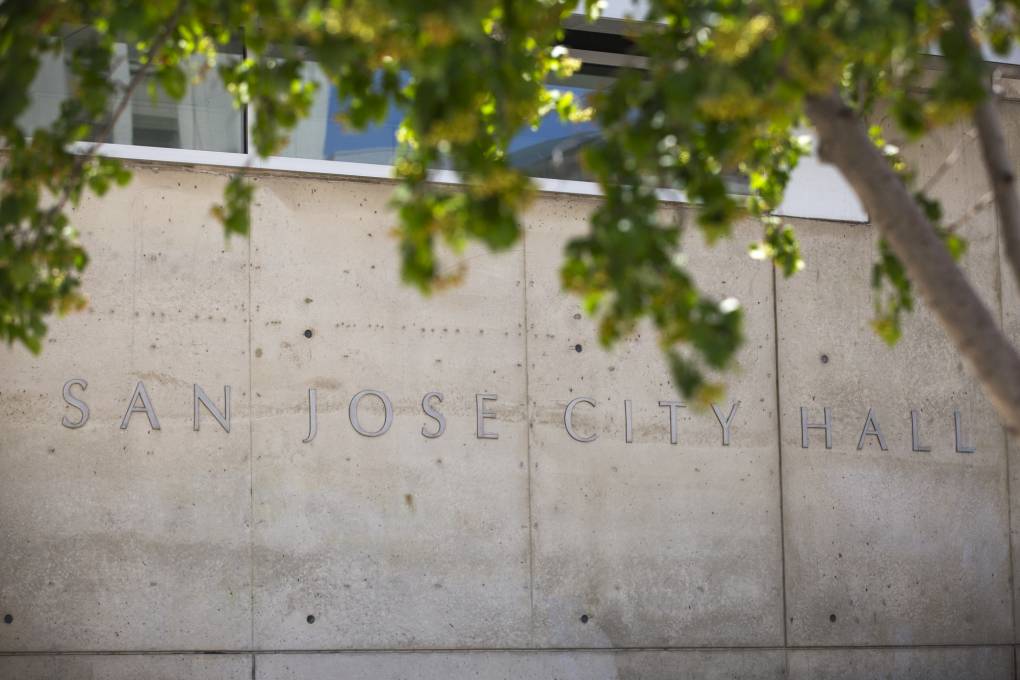
"caption": "Despite facing a smaller shortfall than San Francisco and Oakland, San José budget officials say cuts could be necessary to close a $60 million shortfall. ",
"description": null,
"title": "City Hall in San Jose, Calif., on Tuesday, August 1, 2023.",
"credit": "Juliana Yamada/KQED",
"status": "inherit",
"altTag": "A sign on a building reading \"San Jose City Hall.\"",
"isLoading": false,
"fetchFailed": false
},
"news_12023323": {
"type": "attachments",
"id": "news_12023323",
"meta": {
"index": "attachments_1716263798",
"site": "news",
"id": "12023323",
"found": true
},
"title": "250121-SEGOVIA-JG-2",
"publishDate": 1737491813,
"status": "inherit",
"parent": 0,
"modified": 1737493454,
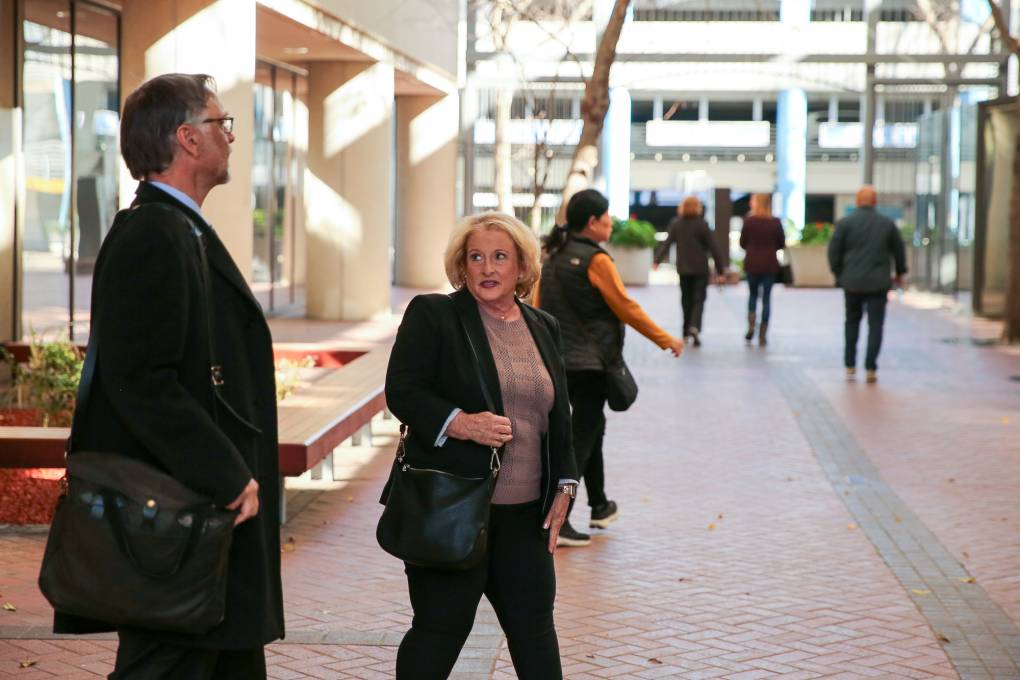
"caption": "Joanne Segovia (center) – alongside her attorney, Adam Gasner – leaves the federal courthouse in San José on Jan. 21, 2025, after being sentenced to 3 years of probation for illegally importing opioids.",
"credit": "Joseph Geha/KQED",
"altTag": "A middle-aged woman walks out of a court building next to a man holding a briefcase.",
"description": null,
"imgSizes": {
"medium": {
"file": "https://cdn.kqed.org/wp-content/uploads/sites/10/2025/01/250121-SEGOVIA-JG-2-800x533.jpg",
"width": 800,
"height": 533,
"mimeType": "image/jpeg"
},
"large": {
"file": "https://cdn.kqed.org/wp-content/uploads/sites/10/2025/01/250121-SEGOVIA-JG-2-1020x680.jpg",
"width": 1020,
"height": 680,
"mimeType": "image/jpeg"
},
"thumbnail": {
"file": "https://cdn.kqed.org/wp-content/uploads/sites/10/2025/01/250121-SEGOVIA-JG-2-160x107.jpg",
"width": 160,
"height": 107,
"mimeType": "image/jpeg"
},
"1536x1536": {
"file": "https://cdn.kqed.org/wp-content/uploads/sites/10/2025/01/250121-SEGOVIA-JG-2-1536x1024.jpg",
"width": 1536,
"height": 1024,
"mimeType": "image/jpeg"
},
"post-thumbnail": {
"file": "https://cdn.kqed.org/wp-content/uploads/sites/10/2025/01/250121-SEGOVIA-JG-2-672x372.jpg",
"width": 672,
"height": 372,
"mimeType": "image/jpeg"
},
"twentyfourteen-full-width": {
"file": "https://cdn.kqed.org/wp-content/uploads/sites/10/2025/01/250121-SEGOVIA-JG-2-1038x576.jpg",
"width": 1038,
"height": 576,
"mimeType": "image/jpeg"
},
"full-width": {
"file": "https://cdn.kqed.org/wp-content/uploads/sites/10/2025/01/250121-SEGOVIA-JG-2-1920x1280.jpg",
"width": 1920,
"height": 1280,
"mimeType": "image/jpeg"
},
"kqedFullSize": {
"file": "https://cdn.kqed.org/wp-content/uploads/sites/10/2025/01/250121-SEGOVIA-JG-2.jpg",
"width": 2000,
"height": 1333
}
},
"isLoading": false,
"fetchFailed": false
},
"news_12010520": {
"type": "attachments",
"id": "news_12010520",
"meta": {
"index": "attachments_1716263798",
"site": "news",
"id": "12010520",
"found": true
},
"title": "491213158_af42d77b95_o_qed",
"publishDate": 1729616051,
"status": "inherit",
"parent": 12010518,
"modified": 1729616081,
"caption": "San José officials will name the city's next permanent police chief on Tuesday. ",
"credit": "Thomas Hawk/Flickr",
"altTag": null,
"description": null,
"imgSizes": {
"medium": {
"file": "https://cdn.kqed.org/wp-content/uploads/sites/10/2024/10/491213158_af42d77b95_o_qed-800x492.jpg",
"width": 800,
"height": 492,
"mimeType": "image/jpeg"
},
"large": {
"file": "https://cdn.kqed.org/wp-content/uploads/sites/10/2024/10/491213158_af42d77b95_o_qed-1020x627.jpg",
"width": 1020,
"height": 627,
"mimeType": "image/jpeg"
},
"thumbnail": {
"file": "https://cdn.kqed.org/wp-content/uploads/sites/10/2024/10/491213158_af42d77b95_o_qed-160x98.jpg",
"width": 160,
"height": 98,
"mimeType": "image/jpeg"
},
"1536x1536": {
"file": "https://cdn.kqed.org/wp-content/uploads/sites/10/2024/10/491213158_af42d77b95_o_qed-1536x944.jpg",
"width": 1536,
"height": 944,
"mimeType": "image/jpeg"
},
"post-thumbnail": {
"file": "https://cdn.kqed.org/wp-content/uploads/sites/10/2024/10/491213158_af42d77b95_o_qed-672x372.jpg",
"width": 672,
"height": 372,
"mimeType": "image/jpeg"
},
"twentyfourteen-full-width": {
"file": "https://cdn.kqed.org/wp-content/uploads/sites/10/2024/10/491213158_af42d77b95_o_qed-1038x576.jpg",
"width": 1038,
"height": 576,
"mimeType": "image/jpeg"
},
"full-width": {
"file": "https://cdn.kqed.org/wp-content/uploads/sites/10/2024/10/491213158_af42d77b95_o_qed-1920x1180.jpg",
"width": 1920,
"height": 1180,
"mimeType": "image/jpeg"
},
"kqedFullSize": {
"file": "https://cdn.kqed.org/wp-content/uploads/sites/10/2024/10/491213158_af42d77b95_o_qed.jpg",
"width": 2000,
"height": 1229
}
},
"isLoading": false,
"fetchFailed": false
},
"news_11987071": {
"type": "attachments",
"id": "news_11987071",
"meta": {
"index": "attachments_1716263798",
"site": "news",
"id": "11987071",
"found": true
},
"title": "240520-SJPD SHOOTING-JG-05_qut",
"publishDate": 1716251943,
"status": "inherit",
"parent": 11986891,
"modified": 1729631063,
"caption": "San José acting Police Chief Paul Joseph speaks during a May 20, 2024, press conference about a police shooting in the city's East Side.",
"credit": "Joseph Geha/KQED",
"altTag": "A police officer stands in front of a podium.",
"description": null,
"imgSizes": {
"medium": {
"file": "https://cdn.kqed.org/wp-content/uploads/sites/10/2024/05/240520-SJPD-SHOOTING-JG-05_qut-800x533.jpg",
"width": 800,
"height": 533,
"mimeType": "image/jpeg"
},
"large": {
"file": "https://cdn.kqed.org/wp-content/uploads/sites/10/2024/05/240520-SJPD-SHOOTING-JG-05_qut-1020x680.jpg",
"width": 1020,
"height": 680,
"mimeType": "image/jpeg"
},
"thumbnail": {
"file": "https://cdn.kqed.org/wp-content/uploads/sites/10/2024/05/240520-SJPD-SHOOTING-JG-05_qut-160x107.jpg",
"width": 160,
"height": 107,
"mimeType": "image/jpeg"
},
"1536x1536": {
"file": "https://cdn.kqed.org/wp-content/uploads/sites/10/2024/05/240520-SJPD-SHOOTING-JG-05_qut-1536x1024.jpg",
"width": 1536,
"height": 1024,
"mimeType": "image/jpeg"
},
"post-thumbnail": {
"file": "https://cdn.kqed.org/wp-content/uploads/sites/10/2024/05/240520-SJPD-SHOOTING-JG-05_qut-672x372.jpg",
"width": 672,
"height": 372,
"mimeType": "image/jpeg"
},
"twentyfourteen-full-width": {
"file": "https://cdn.kqed.org/wp-content/uploads/sites/10/2024/05/240520-SJPD-SHOOTING-JG-05_qut-1038x576.jpg",
"width": 1038,
"height": 576,
"mimeType": "image/jpeg"
},
"kqedFullSize": {
"file": "https://cdn.kqed.org/wp-content/uploads/sites/10/2024/05/240520-SJPD-SHOOTING-JG-05_qut.jpg",
"width": 1920,
"height": 1280
}
},
"isLoading": false,
"fetchFailed": false
},
"news_11988518": {
"type": "attachments",
"id": "news_11988518",
"meta": {
"index": "attachments_1716263798",
"site": "news",
"id": "11988518",
"found": true
},
"title": "240531-SEGOVIACASE-JG-2_qut",
"publishDate": 1717195890,
"status": "inherit",
"parent": 0,
"modified": 1728412159,
"caption": "Joanne Segovia (left) and her attorney, Adam Gasner, walk out of the federal courthouse in San José on May 31, 2024, following her first court appearance since being charged over a year ago with attempting to illegally import opioids.",
"credit": "Joseph Geha/KQED",
"altTag": "A middle-aged white woman with blond hair walks through a courtyard next to a middle-aged man wearing a suit and carrying a briefcase.",
"description": null,
"imgSizes": {
"medium": {
"file": "https://cdn.kqed.org/wp-content/uploads/sites/10/2024/05/240531-SEGOVIACASE-JG-2_qut-800x549.jpg",
"width": 800,
"height": 549,
"mimeType": "image/jpeg"
},
"large": {
"file": "https://cdn.kqed.org/wp-content/uploads/sites/10/2024/05/240531-SEGOVIACASE-JG-2_qut-1020x700.jpg",
"width": 1020,
"height": 700,
"mimeType": "image/jpeg"
},
"thumbnail": {
"file": "https://cdn.kqed.org/wp-content/uploads/sites/10/2024/05/240531-SEGOVIACASE-JG-2_qut-160x110.jpg",
"width": 160,
"height": 110,
"mimeType": "image/jpeg"
},
"1536x1536": {
"file": "https://cdn.kqed.org/wp-content/uploads/sites/10/2024/05/240531-SEGOVIACASE-JG-2_qut-1536x1055.jpg",
"width": 1536,
"height": 1055,
"mimeType": "image/jpeg"
},
"post-thumbnail": {
"file": "https://cdn.kqed.org/wp-content/uploads/sites/10/2024/05/240531-SEGOVIACASE-JG-2_qut-672x372.jpg",
"width": 672,
"height": 372,
"mimeType": "image/jpeg"
},
"twentyfourteen-full-width": {
"file": "https://cdn.kqed.org/wp-content/uploads/sites/10/2024/05/240531-SEGOVIACASE-JG-2_qut-1038x576.jpg",
"width": 1038,
"height": 576,
"mimeType": "image/jpeg"
},
"kqedFullSize": {
"file": "https://cdn.kqed.org/wp-content/uploads/sites/10/2024/05/240531-SEGOVIACASE-JG-2_qut.jpg",
"width": 1873,
"height": 1286
}
},
"isLoading": false,
"fetchFailed": false
},
"news_11989256": {
"type": "attachments",
"id": "news_11989256",
"meta": {
"index": "attachments_1716263798",
"site": "news",
"id": "11989256",
"found": true
},
"title": "240424-SJPD-MD-01-KQED",
"publishDate": 1717696223,
"status": "inherit",
"parent": 12064587,
"modified": 1763511370,
"caption": "A San José Police Department squad car in San José on April 18, 2024.",
"credit": "Martin do Nascimento/KQED",
"altTag": null,
"description": null,
"imgSizes": {
"medium": {
"file": "https://cdn.kqed.org/wp-content/uploads/sites/10/2024/06/240424-SJPD-MD-01-KQED-800x533.jpg",
"width": 800,
"height": 533,
"mimeType": "image/jpeg"
},
"large": {
"file": "https://cdn.kqed.org/wp-content/uploads/sites/10/2024/06/240424-SJPD-MD-01-KQED-1020x680.jpg",
"width": 1020,
"height": 680,
"mimeType": "image/jpeg"
},
"thumbnail": {
"file": "https://cdn.kqed.org/wp-content/uploads/sites/10/2024/06/240424-SJPD-MD-01-KQED-160x107.jpg",
"width": 160,
"height": 107,
"mimeType": "image/jpeg"
},
"1536x1536": {
"file": "https://cdn.kqed.org/wp-content/uploads/sites/10/2024/06/240424-SJPD-MD-01-KQED-1536x1024.jpg",
"width": 1536,
"height": 1024,
"mimeType": "image/jpeg"
},
"post-thumbnail": {
"file": "https://cdn.kqed.org/wp-content/uploads/sites/10/2024/06/240424-SJPD-MD-01-KQED-672x372.jpg",
"width": 672,
"height": 372,
"mimeType": "image/jpeg"
},
"twentyfourteen-full-width": {
"file": "https://cdn.kqed.org/wp-content/uploads/sites/10/2024/06/240424-SJPD-MD-01-KQED-1038x576.jpg",
"width": 1038,
"height": 576,
"mimeType": "image/jpeg"
},
"full-width": {
"file": "https://cdn.kqed.org/wp-content/uploads/sites/10/2024/06/240424-SJPD-MD-01-KQED-1920x1280.jpg",
"width": 1920,
"height": 1280,
"mimeType": "image/jpeg"
},
"kqedFullSize": {
"file": "https://cdn.kqed.org/wp-content/uploads/sites/10/2024/06/240424-SJPD-MD-01-KQED.jpg",
"width": 2000,
"height": 1333
}
},
"isLoading": false,
"fetchFailed": false
},
"news_12000505": {
"type": "attachments",
"id": "news_12000505",
"meta": {
"index": "attachments_1716263798",
"site": "news",
"id": "12000505",
"found": true
},
"title": "240531-SEGOVIACASE-JG-1",
"publishDate": 1723767310,
"status": "inherit",
"parent": 12000464,
"modified": 1723767712,
"caption": "Joanne Segovia (left) and her attorney, Adam Gasner, walk out of the federal courthouse in San José on May 31, 2024, following her first court appearance since being charged over a year ago with attempting to illegally import opioids.",
"credit": "Joseph Geha/KQED",
"altTag": "A middle-aged white woman with blond hair walks through a courtyard, next to a middle-aged man wearing a suit and carrying a briefcase.",
"description": null,
"imgSizes": {
"medium": {
"file": "https://cdn.kqed.org/wp-content/uploads/sites/10/2024/08/240531-SEGOVIACASE-JG-1-800x533.jpg",
"width": 800,
"height": 533,
"mimeType": "image/jpeg"
},
"large": {
"file": "https://cdn.kqed.org/wp-content/uploads/sites/10/2024/08/240531-SEGOVIACASE-JG-1-1020x680.jpg",
"width": 1020,
"height": 680,
"mimeType": "image/jpeg"
},
"thumbnail": {
"file": "https://cdn.kqed.org/wp-content/uploads/sites/10/2024/08/240531-SEGOVIACASE-JG-1-160x107.jpg",
"width": 160,
"height": 107,
"mimeType": "image/jpeg"
},
"1536x1536": {
"file": "https://cdn.kqed.org/wp-content/uploads/sites/10/2024/08/240531-SEGOVIACASE-JG-1-1536x1024.jpg",
"width": 1536,
"height": 1024,
"mimeType": "image/jpeg"
},
"post-thumbnail": {
"file": "https://cdn.kqed.org/wp-content/uploads/sites/10/2024/08/240531-SEGOVIACASE-JG-1-672x372.jpg",
"width": 672,
"height": 372,
"mimeType": "image/jpeg"
},
"twentyfourteen-full-width": {
"file": "https://cdn.kqed.org/wp-content/uploads/sites/10/2024/08/240531-SEGOVIACASE-JG-1-1038x576.jpg",
"width": 1038,
"height": 576,
"mimeType": "image/jpeg"
},
"full-width": {
"file": "https://cdn.kqed.org/wp-content/uploads/sites/10/2024/08/240531-SEGOVIACASE-JG-1-1920x1280.jpg",
"width": 1920,
"height": 1280,
"mimeType": "image/jpeg"
},
"kqedFullSize": {
"file": "https://cdn.kqed.org/wp-content/uploads/sites/10/2024/08/240531-SEGOVIACASE-JG-1.jpg",
"width": 2000,
"height": 1333
}
},
"isLoading": false,
"fetchFailed": false
},
"news_11991059": {
"type": "attachments",
"id": "news_11991059",
"meta": {
"index": "attachments_1716263798",
"site": "news",
"id": "11991059",
"found": true
},
"title": "061824-Lionel-Rubalcava-01-KQED-1020x765",
"publishDate": 1718760636,
"status": "inherit",
"parent": 11990929,
"modified": 1718760661,
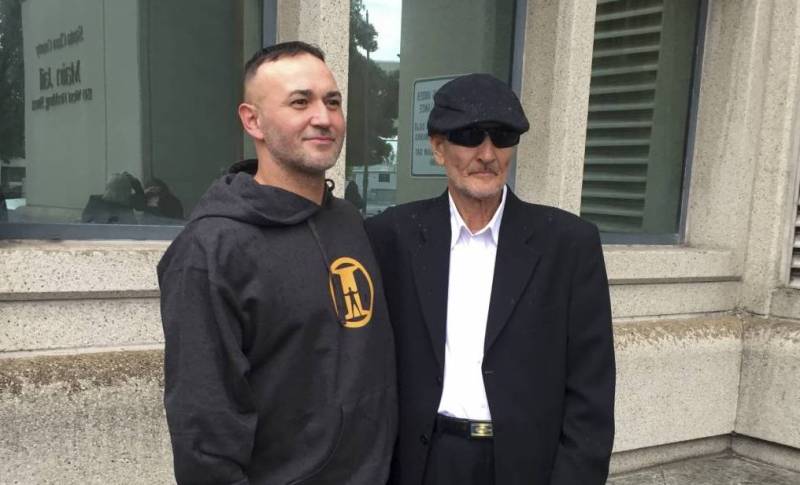
"caption": "Lionel Rubalcava (left) with his father outside the Santa Clara County Main Jail Complex in San José on May 15, 2019, following his release. Rubalcava will receive a $12 million payout from the city of San José to settle a wrongful conviction lawsuit he filed in 2020 after serving 17 years in prison for a drive-by shooting for which he was later exonerated.",
"credit": "Courtesy of Northern California Innocence Project",
"altTag": "A younger man poses outside next to an older man (his father).",
"description": null,
"imgSizes": {
"medium": {
"file": "https://cdn.kqed.org/wp-content/uploads/sites/10/2024/06/061824-Lionel-Rubalcava-01-KQED-1020x765-1-800x485.jpeg",
"width": 800,
"height": 485,
"mimeType": "image/jpeg"
},
"thumbnail": {
"file": "https://cdn.kqed.org/wp-content/uploads/sites/10/2024/06/061824-Lionel-Rubalcava-01-KQED-1020x765-1-160x97.jpeg",
"width": 160,
"height": 97,
"mimeType": "image/jpeg"
},
"post-thumbnail": {
"file": "https://cdn.kqed.org/wp-content/uploads/sites/10/2024/06/061824-Lionel-Rubalcava-01-KQED-1020x765-1-672x372.jpeg",
"width": 672,
"height": 372,
"mimeType": "image/jpeg"
},
"twentyfourteen-full-width": {
"file": "https://cdn.kqed.org/wp-content/uploads/sites/10/2024/06/061824-Lionel-Rubalcava-01-KQED-1020x765-1-1016x576.jpeg",
"width": 1016,
"height": 576,
"mimeType": "image/jpeg"
},
"kqedFullSize": {
"file": "https://cdn.kqed.org/wp-content/uploads/sites/10/2024/06/061824-Lionel-Rubalcava-01-KQED-1020x765-1.jpeg",
"width": 1016,
"height": 616
}
},
"isLoading": false,
"fetchFailed": false
}
},
"audioPlayerReducer": {
"postId": "stream_live",
"isPaused": true,
"isPlaying": false,
"pfsActive": false,
"pledgeModalIsOpen": true,
"playerDrawerIsOpen": false,
"liveAudioPlayStartedAt": 0,
"liveAudioPlayContext": ""
},
"authorsReducer": {
"gmarzorati": {
"type": "authors",
"id": "227",
"meta": {
"index": "authors_1716337520",
"id": "227",
"found": true
},
"name": "Guy Marzorati",
"firstName": "Guy",
"lastName": "Marzorati",
"slug": "gmarzorati",
"email": "gmarzorati@KQED.org",
"display_author_email": true,
"staff_mastheads": [
"news"
],
"title": "Correspondent",
"bio": "Guy Marzorati is a correspondent on KQED's California Politics and Government Desk, based in San Jose. A graduate of Santa Clara University, Guy joined KQED in 2013. He reports on state and local politics and produces KQED's digital voter guide.",
"avatar": "https://secure.gravatar.com/avatar/e7038b8dbfd55b104369b76b1cd0b9de?s=600&d=blank&r=g",
"twitter": "guymarzorati",
"facebook": null,
"instagram": null,
"linkedin": null,
"sites": [
{
"site": "",
"roles": [
"editor"
]
},
{
"site": "news",
"roles": [
"editor"
]
},
{
"site": "science",
"roles": [
"editor"
]
},
{
"site": "forum",
"roles": [
"editor"
]
},
{
"site": "elections",
"roles": [
"editor"
]
},
{
"site": "liveblog",
"roles": [
"editor"
]
}
],
"headData": {
"title": "Guy Marzorati | KQED",
"description": "Correspondent",
"ogImgSrc": "https://secure.gravatar.com/avatar/e7038b8dbfd55b104369b76b1cd0b9de?s=600&d=blank&r=g",
"twImgSrc": "https://secure.gravatar.com/avatar/e7038b8dbfd55b104369b76b1cd0b9de?s=600&d=blank&r=g"
},
"isLoading": false,
"link": "/author/gmarzorati"
},
"jgeha": {
"type": "authors",
"id": "11906",
"meta": {
"index": "authors_1716337520",
"id": "11906",
"found": true
},
"name": "Joseph Geha",
"firstName": "Joseph",
"lastName": "Geha",
"slug": "jgeha",
"email": "jgeha@kqed.org",
"display_author_email": false,
"staff_mastheads": [
"news",
"science"
],
"title": "KQED Contributor",
"bio": null,
"avatar": "https://secure.gravatar.com/avatar/ea84d2b6dd93d6369d453edf19dd583f117cd1759d2d9c9c92f9de77017354fe?s=600&d=blank&r=g",
"twitter": null,
"bluesky": null,
"facebook": null,
"instagram": null,
"linkedin": null,
"sites": [
{
"site": "news",
"roles": [
"editor"
]
},
{
"site": "liveblog",
"roles": [
"author"
]
}
],
"headData": {
"title": "Joseph Geha | KQED",
"description": "KQED Contributor",
"ogImgSrc": "https://secure.gravatar.com/avatar/ea84d2b6dd93d6369d453edf19dd583f117cd1759d2d9c9c92f9de77017354fe?s=600&d=blank&r=g",
"twImgSrc": "https://secure.gravatar.com/avatar/ea84d2b6dd93d6369d453edf19dd583f117cd1759d2d9c9c92f9de77017354fe?s=600&d=blank&r=g"
},
"isLoading": false,
"link": "/author/jgeha"
},
"kdebenedetti": {
"type": "authors",
"id": "11913",
"meta": {
"index": "authors_1716337520",
"id": "11913",
"found": true
},
"name": "Katie DeBenedetti",
"firstName": "Katie",
"lastName": "DeBenedetti",
"slug": "kdebenedetti",
"email": "kdebenedetti@kqed.org",
"display_author_email": false,
"staff_mastheads": [
"news",
"science"
],
"title": "KQED Contributor",
"bio": "Katie DeBenedetti is a digital reporter covering daily news for the Express Desk. Prior to joining KQED as a culture reporting intern in January 2024, she covered education and city government for the Napa Valley Register.",
"avatar": "https://secure.gravatar.com/avatar/6e31073cb8f7e4214ab03f42771d0f45?s=600&d=blank&r=g",
"twitter": null,
"facebook": null,
"instagram": null,
"linkedin": null,
"sites": [
{
"site": "news",
"roles": [
"author"
]
},
{
"site": "science",
"roles": [
"author"
]
},
{
"site": "liveblog",
"roles": [
"author"
]
}
],
"headData": {
"title": "Katie DeBenedetti | KQED",
"description": "KQED Contributor",
"ogImgSrc": "https://secure.gravatar.com/avatar/6e31073cb8f7e4214ab03f42771d0f45?s=600&d=blank&r=g",
"twImgSrc": "https://secure.gravatar.com/avatar/6e31073cb8f7e4214ab03f42771d0f45?s=600&d=blank&r=g"
},
"isLoading": false,
"link": "/author/kdebenedetti"
}
},
"pagesReducer": {
"news_tag_san-jose-police": {
"type": "terms",
"id": "news_667",
"meta": {
"index": "terms_1716263798",
"site": "news",
"id": "667",
"score": 10.404627
},
"featImg": null,
"name": "San Jose police",
"description": null,
"taxonomy": "tag",
"headData": {
"twImgId": null,
"twTitle": null,
"ogTitle": null,
"ogImgId": null,
"twDescription": null,
"description": null,
"title": "San Jose police Archives | KQED News",
"ogDescription": null
},
"ttid": 676,
"slug": "san-jose-police",
"isLoading": false,
"title": "San Jose police",
"pageMeta": {
"site": "news",
"WpPageTemplate": "page-topic-editorial",
"currentPage": 2
},
"blocks": [
{
"blockName": "kqed/post-list",
"attrs": {
"layout": "cardArticle2",
"query": "posts/news?tag=san-jose-police",
"seeMore": false,
"paginated": true,
"page": 2
}
},
{
"blockName": "kqed/ad"
}
]
}
},
"pfsSessionReducer": {},
"postsReducer": {
"stream_live": {
"type": "live",
"id": "stream_live",
"audioUrl": "https://streams.kqed.org/kqedradio",
"title": "Live Stream",
"excerpt": "Live Stream information currently unavailable.",
"link": "/radio",
"featImg": "",
"label": {
"name": "KQED Live",
"link": "/"
}
},
"stream_kqedNewscast": {
"type": "posts",
"id": "stream_kqedNewscast",
"audioUrl": "https://www.kqed.org/.stream/anon/radio/RDnews/newscast.mp3?_=1",
"title": "KQED Newscast",
"featImg": "",
"label": {
"name": "88.5 FM",
"link": "/"
}
},
"news_12026772": {
"type": "posts",
"id": "news_12026772",
"meta": {
"index": "posts_1716263798",
"site": "news",
"id": "12026772",
"score": null,
"sort": [
1739404568000
]
},
"guestAuthors": [],
"slug": "san-jose-faces-60-million-budget-shortfall-as-negotiations-begin",
"title": "San José Faces $60 Million Budget Shortfall as Negotiations Begin",
"publishDate": 1739404568,
"format": "standard",
"headTitle": "San José Faces $60 Million Budget Shortfall as Negotiations Begin | KQED",
"labelTerm": {
"site": "news"
},
"content": "\u003cp>The San José City Council began negotiations to balance the city budget at an informational hearing on Tuesday amid financial headwinds and political uncertainty over federal funding brought on by the Trump administration.\u003c/p>\n\u003cp>The meeting offered an early look at spending priorities for the mayor and city council members as they began deliberations on the city’s budget for the 2025–26 fiscal year. City leaders will need to close a projected $60 million shortfall in the budget — \u003ca href=\"https://www.kqed.org/news/12018688/oakland-broad-cuts-public-safety-city-agencies-amid-massive-deficit\">a modest deficit compared to the fiscal woes of other large\u003c/a> Bay Area cities.\u003c/p>\n\u003cp>“We’ve got some relatively weak revenue growth, and we still have costs that are continuing to increase at the same pace,” said Jim Shannon, the city’s budget director.\u003c/p>\n\u003cp>[ad fullwidth]\u003c/p>\n\u003cp>Declining sales tax revenue, in particular, has had an impact on city coffers. Shannon said an initial burst of local consumer spending after the COVID-19 lockdowns has petered out. Sales tax receipts in the first quarter of the current fiscal year, from July through September, were down 10% from the previous year.\u003c/p>\n\u003cp>Among the rising costs are the city’s investments in short-term housing and shelter to reduce street homelessness, \u003ca href=\"https://www.kqed.org/news/11979482/san-jose-mayor-matt-mahan-calls-for-urgent-action-on-homelessness-in-city-budget-plan\">a top priority for Mayor Matt Mahan\u003c/a>.\u003c/p>\n\u003cfigure id=\"attachment_12026833\" class=\"wp-caption alignnone\" style=\"max-width: 1999px\">\u003ca href=\"https://cdn.kqed.org/wp-content/uploads/sites/10/2025/02/241029-SAN-JOSE%CC%81-SURVEILLANCE-CAMERAS-MD-02_qed.jpg\">\u003cimg loading=\"lazy\" decoding=\"async\" class=\"size-full wp-image-12026833\" src=\"https://cdn.kqed.org/wp-content/uploads/sites/10/2025/02/241029-SAN-JOSE%CC%81-SURVEILLANCE-CAMERAS-MD-02_qed.jpg\" alt=\"\" width=\"1999\" height=\"1333\" srcset=\"https://cdn.kqed.org/wp-content/uploads/sites/10/2025/02/241029-SAN-JOSÉ-SURVEILLANCE-CAMERAS-MD-02_qed.jpg 1999w, https://cdn.kqed.org/wp-content/uploads/sites/10/2025/02/241029-SAN-JOSÉ-SURVEILLANCE-CAMERAS-MD-02_qed-800x533.jpg 800w, https://cdn.kqed.org/wp-content/uploads/sites/10/2025/02/241029-SAN-JOSÉ-SURVEILLANCE-CAMERAS-MD-02_qed-1020x680.jpg 1020w, https://cdn.kqed.org/wp-content/uploads/sites/10/2025/02/241029-SAN-JOSÉ-SURVEILLANCE-CAMERAS-MD-02_qed-160x107.jpg 160w, https://cdn.kqed.org/wp-content/uploads/sites/10/2025/02/241029-SAN-JOSÉ-SURVEILLANCE-CAMERAS-MD-02_qed-1536x1024.jpg 1536w, https://cdn.kqed.org/wp-content/uploads/sites/10/2025/02/241029-SAN-JOSÉ-SURVEILLANCE-CAMERAS-MD-02_qed-1920x1280.jpg 1920w\" sizes=\"auto, (max-width: 1999px) 100vw, 1999px\">\u003c/a>\u003cfigcaption class=\"wp-caption-text\">San José City Councilmember Domingo Candelas speaks at a press event in Lion Plaza in San José on Oct. 29, 2024. \u003ccite>(Martin do Nascimento/KQED)\u003c/cite>\u003c/figcaption>\u003c/figure>\n\u003cp>Mahan \u003ca href=\"https://www.kqed.org/news/12026437/san-jose-mayor-proposes-permanent-shift-homeless-funding-from-housing-shelter\">has proposed paying for some of the interim housing costs by using voter-approved money currently slated \u003c/a>to build affordable housing — a move that would shave the budget shortfall from $60 million to $21 million.\u003c/p>\n\u003cp>Shannon said without changes to Measure E spending, up to 180 positions would need to be eliminated.\u003c/p>\n\u003cp>Riley Knight, an environmental services specialist who has worked for the city for eight years, urged the council to avoid cuts to municipal jobs.\u003c/p>\n\u003cp>“As a city worker, I’ve seen all too many times scenarios in which we are the last to be fully staffed and the first to be cut,” Knight said.\u003c/p>\n\u003cp>San José’s budget problem is much less severe than the Bay Area’s other large cities.\u003c/p>\n\u003cp>[aside postID=news_12017244 hero='https://cdn.kqed.org/wp-content/uploads/sites/10/2024/09/04052023_downtownoaklandreactivation-181_qed.jpg']\u003c/p>\n\u003cp>Oakland is facing a $280 million shortfall in its upcoming two-year budget cycle that begins on July 1, while San Francisco — which operates a larger budget as a city and a county — has a $876 million deficit over that same window.\u003c/p>\n\u003cp>Deep cuts in the wake of the Great Recession have left San José with minimal staff compared to neighboring big cities, with seven city positions for every 1,000 residents, compared to roughly 11 per 1,000 residents in Oakland.\u003c/p>\n\u003cp>“We’re already at a pretty limited capacity,” Shannon said. “Even the small reductions are sort of hard to come by because we don’t have a lot of room left in the budget without really impacting services.”\u003c/p>\n\u003cp>Recent moves from the Trump administration to expand immigration enforcement have created additional uncertainty in the budget process.\u003c/p>\n\u003cp>Councilmembers Peter Ortiz and Domingo Candelas said threats of immigration raids have frightened residents and depressed shopping in their Eastside districts. They called for the city to invest more money in Santa Clara County’s Rapid Response Network, a service that provides legal assistance to residents facing deportation.\u003c/p>\n\u003cp>“Many of our immigrant communities face significant disruption in this national political moment,” Ortiz said. “As a city, we already caught a glimpse of that kind of disruption, and we fear that if this takes hold in our community, we will never be able to reach them with the services that they desire.”\u003c/p>\n\u003cp>Mahan will submit his initial spending proposal in early March, kicking off months of debate and public meetings on the budget before the council approves a final plan in June.\u003c/p>\n\u003cp>\u003c/p>\n",
"blocks": [],
"excerpt": "Despite facing a smaller shortfall than San Francisco and Oakland, San José budget officials say cuts could be necessary to close a $60 million shortfall.",
"status": "publish",
"parent": 0,
"modified": 1743621999,
"stats": {
"hasAudio": false,
"hasVideo": false,
"hasChartOrMap": false,
"iframeSrcs": [],
"hasGoogleForm": false,
"hasGallery": false,
"hasHearkenModule": false,
"hasPolis": false,
"paragraphCount": 20,
"wordCount": 671
},
"headData": {
"title": "San José Faces $60 Million Budget Shortfall as Negotiations Begin | KQED",
"description": "Despite facing a smaller shortfall than San Francisco and Oakland, San José budget officials say cuts could be necessary to close a $60 million shortfall.",
"ogTitle": "",
"ogDescription": "",
"ogImgId": "",
"twTitle": "",
"twDescription": "",
"twImgId": "",
"schema": {
"@context": "https://schema.org",
"@type": "NewsArticle",
"headline": "San José Faces $60 Million Budget Shortfall as Negotiations Begin",
"datePublished": "2025-02-12T15:56:08-08:00",
"dateModified": "2025-04-02T12:26:39-07:00",
"image": "https://cdn.kqed.org/wp-content/uploads/2020/02/KQED-OG-Image@1x.png",
"isAccessibleForFree": "True",
"publisher": {
"@type": "NewsMediaOrganization",
"@id": "https://www.kqed.org/#organization",
"name": "KQED",
"logo": "https://cdn.kqed.org/wp-content/uploads/2020/02/KQED-OG-Image@1x.png",
"url": "https://www.kqed.org",
"sameAs": [
"https://www.facebook.com/KQED",
"https://twitter.com/KQED",
"https://www.instagram.com/kqed/",
"https://www.tiktok.com/@kqedofficial",
"https://www.linkedin.com/company/kqed",
"https://www.youtube.com/channel/UCeC0IOo7i1P_61zVUWbJ4nw"
]
}
}
},
"sticky": false,
"nprStoryId": "kqed-12026772",
"templateType": "standard",
"featuredImageType": "standard",
"excludeFromSiteSearch": "Include",
"articleAge": "0",
"path": "/news/12026772/san-jose-faces-60-million-budget-shortfall-as-negotiations-begin",
"audioTrackLength": null,
"parsedContent": [
{
"type": "contentString",
"content": "\u003cdiv class=\"post-body\">\u003cp>\u003cp>The San José City Council began negotiations to balance the city budget at an informational hearing on Tuesday amid financial headwinds and political uncertainty over federal funding brought on by the Trump administration.\u003c/p>\n\u003cp>The meeting offered an early look at spending priorities for the mayor and city council members as they began deliberations on the city’s budget for the 2025–26 fiscal year. City leaders will need to close a projected $60 million shortfall in the budget — \u003ca href=\"https://www.kqed.org/news/12018688/oakland-broad-cuts-public-safety-city-agencies-amid-massive-deficit\">a modest deficit compared to the fiscal woes of other large\u003c/a> Bay Area cities.\u003c/p>\n\u003cp>“We’ve got some relatively weak revenue growth, and we still have costs that are continuing to increase at the same pace,” said Jim Shannon, the city’s budget director.\u003c/p>\n\u003cp>\u003c/p>\u003c/div>",
"attributes": {
"named": {},
"numeric": []
}
},
{
"type": "component",
"content": "",
"name": "ad",
"attributes": {
"named": {
"label": "fullwidth"
},
"numeric": [
"fullwidth"
]
}
},
{
"type": "contentString",
"content": "\u003cdiv class=\"post-body\">\u003cp>\u003c/p>\n\u003cp>Declining sales tax revenue, in particular, has had an impact on city coffers. Shannon said an initial burst of local consumer spending after the COVID-19 lockdowns has petered out. Sales tax receipts in the first quarter of the current fiscal year, from July through September, were down 10% from the previous year.\u003c/p>\n\u003cp>Among the rising costs are the city’s investments in short-term housing and shelter to reduce street homelessness, \u003ca href=\"https://www.kqed.org/news/11979482/san-jose-mayor-matt-mahan-calls-for-urgent-action-on-homelessness-in-city-budget-plan\">a top priority for Mayor Matt Mahan\u003c/a>.\u003c/p>\n\u003cfigure id=\"attachment_12026833\" class=\"wp-caption alignnone\" style=\"max-width: 1999px\">\u003ca href=\"https://cdn.kqed.org/wp-content/uploads/sites/10/2025/02/241029-SAN-JOSE%CC%81-SURVEILLANCE-CAMERAS-MD-02_qed.jpg\">\u003cimg loading=\"lazy\" decoding=\"async\" class=\"size-full wp-image-12026833\" src=\"https://cdn.kqed.org/wp-content/uploads/sites/10/2025/02/241029-SAN-JOSE%CC%81-SURVEILLANCE-CAMERAS-MD-02_qed.jpg\" alt=\"\" width=\"1999\" height=\"1333\" srcset=\"https://cdn.kqed.org/wp-content/uploads/sites/10/2025/02/241029-SAN-JOSÉ-SURVEILLANCE-CAMERAS-MD-02_qed.jpg 1999w, https://cdn.kqed.org/wp-content/uploads/sites/10/2025/02/241029-SAN-JOSÉ-SURVEILLANCE-CAMERAS-MD-02_qed-800x533.jpg 800w, https://cdn.kqed.org/wp-content/uploads/sites/10/2025/02/241029-SAN-JOSÉ-SURVEILLANCE-CAMERAS-MD-02_qed-1020x680.jpg 1020w, https://cdn.kqed.org/wp-content/uploads/sites/10/2025/02/241029-SAN-JOSÉ-SURVEILLANCE-CAMERAS-MD-02_qed-160x107.jpg 160w, https://cdn.kqed.org/wp-content/uploads/sites/10/2025/02/241029-SAN-JOSÉ-SURVEILLANCE-CAMERAS-MD-02_qed-1536x1024.jpg 1536w, https://cdn.kqed.org/wp-content/uploads/sites/10/2025/02/241029-SAN-JOSÉ-SURVEILLANCE-CAMERAS-MD-02_qed-1920x1280.jpg 1920w\" sizes=\"auto, (max-width: 1999px) 100vw, 1999px\">\u003c/a>\u003cfigcaption class=\"wp-caption-text\">San José City Councilmember Domingo Candelas speaks at a press event in Lion Plaza in San José on Oct. 29, 2024. \u003ccite>(Martin do Nascimento/KQED)\u003c/cite>\u003c/figcaption>\u003c/figure>\n\u003cp>Mahan \u003ca href=\"https://www.kqed.org/news/12026437/san-jose-mayor-proposes-permanent-shift-homeless-funding-from-housing-shelter\">has proposed paying for some of the interim housing costs by using voter-approved money currently slated \u003c/a>to build affordable housing — a move that would shave the budget shortfall from $60 million to $21 million.\u003c/p>\n\u003cp>Shannon said without changes to Measure E spending, up to 180 positions would need to be eliminated.\u003c/p>\n\u003cp>Riley Knight, an environmental services specialist who has worked for the city for eight years, urged the council to avoid cuts to municipal jobs.\u003c/p>\n\u003cp>“As a city worker, I’ve seen all too many times scenarios in which we are the last to be fully staffed and the first to be cut,” Knight said.\u003c/p>\n\u003cp>San José’s budget problem is much less severe than the Bay Area’s other large cities.\u003c/p>\n\u003cp>\u003c/p>\u003c/div>",
"attributes": {
"named": {},
"numeric": []
}
},
{
"type": "component",
"content": "",
"name": "aside",
"attributes": {
"named": {
"postid": "news_12017244",
"hero": "https://cdn.kqed.org/wp-content/uploads/sites/10/2024/09/04052023_downtownoaklandreactivation-181_qed.jpg",
"label": ""
},
"numeric": []
}
},
{
"type": "contentString",
"content": "\u003cdiv class=\"post-body\">\u003cp>\u003c/p>\n\u003cp>Oakland is facing a $280 million shortfall in its upcoming two-year budget cycle that begins on July 1, while San Francisco — which operates a larger budget as a city and a county — has a $876 million deficit over that same window.\u003c/p>\n\u003cp>Deep cuts in the wake of the Great Recession have left San José with minimal staff compared to neighboring big cities, with seven city positions for every 1,000 residents, compared to roughly 11 per 1,000 residents in Oakland.\u003c/p>\n\u003cp>“We’re already at a pretty limited capacity,” Shannon said. “Even the small reductions are sort of hard to come by because we don’t have a lot of room left in the budget without really impacting services.”\u003c/p>\n\u003cp>Recent moves from the Trump administration to expand immigration enforcement have created additional uncertainty in the budget process.\u003c/p>\n\u003cp>Councilmembers Peter Ortiz and Domingo Candelas said threats of immigration raids have frightened residents and depressed shopping in their Eastside districts. They called for the city to invest more money in Santa Clara County’s Rapid Response Network, a service that provides legal assistance to residents facing deportation.\u003c/p>\n\u003cp>“Many of our immigrant communities face significant disruption in this national political moment,” Ortiz said. “As a city, we already caught a glimpse of that kind of disruption, and we fear that if this takes hold in our community, we will never be able to reach them with the services that they desire.”\u003c/p>\n\u003cp>Mahan will submit his initial spending proposal in early March, kicking off months of debate and public meetings on the budget before the council approves a final plan in June.\u003c/p>\n\u003cp>\u003c/p>\n\u003c/div>\u003c/p>",
"attributes": {
"named": {},
"numeric": []
}
}
],
"link": "/news/12026772/san-jose-faces-60-million-budget-shortfall-as-negotiations-begin",
"authors": [
"227"
],
"categories": [
"news_31795",
"news_28250",
"news_8",
"news_13"
],
"tags": [
"news_34377",
"news_31197",
"news_18541",
"news_667"
],
"featImg": "news_11957563",
"label": "news"
},
"news_12023259": {
"type": "posts",
"id": "news_12023259",
"meta": {
"index": "posts_1716263798",
"site": "news",
"id": "12023259",
"score": null,
"sort": [
1737489315000
]
},
"guestAuthors": [],
"slug": "former-san-jose-police-union-director-sentenced-to-3-years-probation-for-smuggling-opioids",
"title": "Former San José Police Union Director Sentenced to 3 Years Probation for Smuggling Opioids",
"publishDate": 1737489315,
"format": "standard",
"headTitle": "Former San José Police Union Director Sentenced to 3 Years Probation for Smuggling Opioids | KQED",
"labelTerm": {
"site": "news"
},
"content": "\u003cp>The former executive director of the San José Police Officers’ Association will not face any time behind bars for illegally importing opioids, a judge ruled Tuesday, bringing to a close a nearly two-year-old criminal case that sent shockwaves through the South Bay.\u003c/p>\n\u003cp>In San José federal court, U.S. District Judge Eumi K. Lee sentenced Joanne Segovia to three years of probation and 100 hours of community service, which falls largely in line with what prosecutors and her defense attorney had requested.\u003c/p>\n\u003cp>“Ms. Segovia is very grateful that Judge Lee saw the case as the U.S. Attorney’s office and I saw the case,” Adam Gasner, Segovia’s attorney, told KQED after the sentencing.\u003c/p>\n\u003cp>In a \u003ca href=\"https://www.kqed.org/news/12008434/former-san-jose-police-union-director-pleads-guilty-to-smuggling-opioids\">plea deal with federal prosecutors\u003c/a> in October, Segovia, 66, confessed to illegally importing tapentadol, a potent painkiller listed as a Schedule II controlled substance. Although such a felony carries a maximum prison term of 20 years, it was widely expected that Segovia would receive a significantly lighter sentence, as her defense team and prosecutors both supported her narrative that she was motivated by an addiction to painkillers rather than by a goal to make a profit as a drug mover.\u003c/p>\n\u003cp>“The story of Joanne Segovia is the story of years of heavy opioid addiction, drug importation, self-delusion, and some very poor choices. It is not, however, the story of a drug dealer,” U.S. Attorney Joseph Tartakovsky, the lead prosecutor on the case, wrote in a sentencing memo to the court.\u003c/p>\n\u003cp>[ad fullwidth]\u003c/p>\n\u003cp>Gasner noted in a separate court memo that his client was taking prescribed opioids under medical supervision for years due to “excruciating chronic back pain,” but her doctors eventually refused to renew them, at which point she turned to illicit drugs to help her cope.\u003c/p>\n\u003cp>“She’s apologetic for her actions. But most importantly, she’s healthy and sober and not likely to re-offend,” Gasner said. “I think this sends a message to the broader community that you will be punished for your actions, but that we also have compassion for who you are as an individual.” \u003c/p>\n\u003cp>In addition to community service, Segovia will be required to adhere to a list of conditions during probation that include ongoing drug testing, mandatory counseling and potential searches of her home. \u003c/p>\n\u003cp>While working as the lead civilian administrator for the San José police union, Segovia had thousands of pills illegally shipped to her home over several years and redistributed some of those pills elsewhere in the U.S., authorities said.\u003c/p>\n\u003cp>She also used the police union’s UPS account to ship drugs to other drug users in the U.S. on behalf of her supplier, “thus making the SJPOA subsidize foreign drug distribution,” Tartakovsky wrote in the memo.\u003c/p>\n\u003cp>In 2022, she came to the attention of Homeland Security investigators who were investigating a criminal network based in India that shipped illicit drugs to U.S. customers. Federal agents were suspicious of Segovia due to the “immense quantities” of pills she was receiving, Tartakovsky wrote.\u003c/p>\n\u003ch2>A ‘good customer’\u003c/h2>\n\u003cp>Investigators said Segovia ordered roughly 18,000 tapentadol pills over a 17-month period in 2021 and 2022, sharing “significant quantities” of pills with two people she knew but also consuming an “extraordinarily large amount” of them herself.[aside label=\"more on the Segovia case\" tag=\"joanne-segovia\"]She was a “good customer” of her supplier, spending between as much as $27,000 on the pills in 2022 alone, prosecutors said.\u003c/p>\n\u003cp>She often coordinated the shipments and payments with her Indian supplier via WhatsApp and “pumped tens of thousands of dollars over the years into the coffers of these unscrupulous networks,” Tartakovsky wrote.\u003c/p>\n\u003cp>In court Tuesday, Tartakovsky noted that there are many people in America illicitly ordering drugs off the internet because of their addictions, and that the federal government doesn’t typically charge “pure users” with crimes. But Segovia went a step further, he said. \u003c/p>\n\u003cp>“She became a sort of auxiliary of this Indian network. She carried water for them,” Tartakovsky said. “She did things for their benefit, like moving pills for them. And this is not some peripheral thing. This is the core of how these schemes work. They rely on Americans to re-ship for them.” \u003c/p>\n\u003cp>Segovia was not profiting off these actions, he said, but was instead “spending this massive fraction of her income” and “essentially almost bankrupting herself” to feed her addiction. \u003c/p>\n\u003cp>Segovia was \u003ca href=\"https://www.justice.gov/usao-ndca/pr/san-jose-police-union-executive-charged-attempted-illegal-importation-fentanyl\">arrested in March 2023\u003c/a>, initially on one count of illegally importing a form of fentanyl. Prosecutors, however, later removed the fentanyl charge after admitting that a lab test of the contents of one of the packages sent to her had produced a false positive result. The charge was subsequently changed to the illegal importation of tapentadol.\u003c/p>\n\u003ch2>Expressing remorse\u003c/h2>\n\u003cp>In August 2024, Segovia, who had maintained her innocence until that point, indicated to the court she’d be willing to\u003ca href=\"https://www.kqed.org/news/12000464/former-san-jose-police-union-director-expected-to-plead-guilty-to-smuggling-opioids-in-deal-with-feds\"> accept responsibility for her crime\u003c/a>.\u003c/p>\n\u003cp>In a Dec. 18 personal written statement asking the judge for leniency, Segovia expressed remorse for her actions, saying she “would do anything to take it all back,” and noted that she is heavily involved in the lives of her grandchildren and is a caretaker for her 81-year-old husband, who is ill.\u003c/p>\n\u003cp>“I never realized the magnitude of what I had done until a gun was pointed at me. I have never been in trouble with the law. This was something I had only seen in movies. It was the most traumatic thing that has ever happened to me,” she wrote.\u003c/p>\n\u003cp>She said she has also stopped taking pills since her arrest and has passed 45 random drug tests while undergoing counseling and treatment.\u003c/p>\n\u003cp>“I have this nice little life and it was all blown up in front of me,” Segovia said in court on Tuesday. “And being sober made me know how horrendous my conduct was. And I’ve never done anything but be for the law, and I’m really sorry.” \u003c/p>\n\u003cp>Several other people, including her daughter, friends, neighbor and current and former San José police officers, wrote to the judge on her behalf, attesting that Segovia is a good person, loving family member and a reliable colleague who cares deeply for others.\u003c/p>\n\u003cp>Segovia was fired from her role as executive director of the police union shortly after her arrest in 2003. The union denied any involvement or knowledge of her actions.\u003c/p>\n\u003cp>Nevertheless, the arrest sparked outrage among local elected officials, police critics and activists, prompting protests outside San José City Hall, with demonstrators calling for further investigations and demanding city leaders to stop taking donations from the powerful police union.\u003c/p>\n\u003cp>The police union hired a private investigator to look into whether Segovia’s actions were connected to her work, releasing the results after her conviction.\u003c/p>\n\u003cp>The investigator concluded there was “no evidence whatsoever that any POA representative had any involvement, knowledge, or suspicions regarding Segovia’s alleged criminal activities” and that all the facts indicate she acted alone.\u003c/p>\n\u003cp>Prosecutors agreed with that assessment but also criticized the union for interfering in the federal investigation following Segovia’s arrest.\u003c/p>\n\u003cp>“The SJPOA announced publicly after the search of Segovia’s office that it wished to cooperate with this investigation. Yet counsel for the SJPOA engaged in stonewalling, even threatening to ‘seek judicial intervention’ to stop the prosecution from reviewing Segovia’s SJPOA email contents, though the SJPOA never followed through on its threat,” Tartakovsky wrote in the court memo.\u003c/p>\n\u003cp>In the same week, the union walled off public access to major portions of its website, including pages that list its board members and staff — a change that its leadership said was aimed at protecting them.\u003c/p>\n\u003ch2>‘Life upended’\u003c/h2>\n\u003cp>While Segovia was a civilian employee for her entire 20-year career with the police union, Tartakovsky wrote that “she held a position that should have instilled her with firmer respect for the law and for her obligation to be truthful with law enforcement.”\u003c/p>\n\u003cp>And though she has since admitted her conduct was wrong and accepted responsibility for it, Tartakovsky noted that she initially lied to federal investigators, attempting to pin everything on her housekeeper, a move he called “reprehensible.”\u003c/p>\n\u003cp>“This was not just the normal blundering dissimulation blurted out when a target is first surprised and confronted by law enforcement,” Tartakovsky wrote. After being questioned by investigators, he said “Segovia took six weeks to ponder her predicament, concocted a story” in an unsuccessful attempt to dupe investigators.\u003c/p>\n\u003cp>Gasner, Segovia’s attorney, said in his memo to the court that Segovia initially denied her\u003c/p>\n\u003cp>crime “in a desperate attempt to preserve the secret of her addiction as the barrier between her normal and illicit life broke down.”\u003c/p>\n\u003cp>Prosecutors ultimately concluded that Segovia’s actions were “not the behavior of a ‘mastermind,’ but a scared, confused, and addicted woman who saw the walls collapsing around her,” Tartakovsky wrote.\u003c/p>\n\u003ch2>Actions of an ‘addict,’ not a ‘dealer’\u003c/h2>\n\u003cp>Judge Lee said Tuesday she had weighed all the facts of the case, and agreed Segovia’s actions appeared to be “those of an addict and not a dealer,” and she also commended Segovia on her sobriety. \u003c/p>\n\u003cp>“A conviction here is warranted. There was deception at the beginning of the investigation. There was an abuse of power in a law enforcement-adjacent position,” Lee said. “Ms Segovia held a position that should have instilled in her a firmer respect for law enforcement and a firmer respect for being truthful at the beginning of the investigation.” \u003c/p>\n\u003cp>In his memo, Tartakovsky said Segovia, in losing her job and having her life upended by the criminal proceedings, has paid a steep price for her actions, and he credited her for overcoming her addiction.\u003c/p>\n\u003cp>[ad floatright]\u003c/p>\n\u003cp>“The government believes that her contrition is sincere and that she poses little risk of reoffending,” he wrote.\u003c/p>\n\n",
"blocks": [],
"excerpt": "A federal judge spared Joanne Segovia from serving any time behind bars, bringing to a close a nearly two-year-old criminal case that sent shockwaves through the South Bay.",
"status": "publish",
"parent": 0,
"modified": 1737496245,
"stats": {
"hasAudio": false,
"hasVideo": false,
"hasChartOrMap": false,
"iframeSrcs": [],
"hasGoogleForm": false,
"hasGallery": false,
"hasHearkenModule": false,
"hasPolis": false,
"paragraphCount": 42,
"wordCount": 1735
},
"headData": {
"title": "Former San José Police Union Director Sentenced to 3 Years Probation for Smuggling Opioids | KQED",
"description": "A federal judge spared Joanne Segovia from serving any time behind bars, bringing to a close a nearly two-year-old criminal case that sent shockwaves through the South Bay.",
"ogTitle": "",
"ogDescription": "",
"ogImgId": "",
"twTitle": "",
"twDescription": "",
"twImgId": "",
"schema": {
"@context": "https://schema.org",
"@type": "NewsArticle",
"headline": "Former San José Police Union Director Sentenced to 3 Years Probation for Smuggling Opioids",
"datePublished": "2025-01-21T11:55:15-08:00",
"dateModified": "2025-01-21T13:50:45-08:00",
"image": "https://cdn.kqed.org/wp-content/uploads/2020/02/KQED-OG-Image@1x.png",
"isAccessibleForFree": "True",
"publisher": {
"@type": "NewsMediaOrganization",
"@id": "https://www.kqed.org/#organization",
"name": "KQED",
"logo": "https://cdn.kqed.org/wp-content/uploads/2020/02/KQED-OG-Image@1x.png",
"url": "https://www.kqed.org",
"sameAs": [
"https://www.facebook.com/KQED",
"https://twitter.com/KQED",
"https://www.instagram.com/kqed/",
"https://www.tiktok.com/@kqedofficial",
"https://www.linkedin.com/company/kqed",
"https://www.youtube.com/channel/UCeC0IOo7i1P_61zVUWbJ4nw"
]
}
}
},
"sticky": false,
"nprStoryId": "kqed-12023259",
"excludeFromSiteSearch": "Include",
"articleAge": "0",
"path": "/news/12023259/former-san-jose-police-union-director-sentenced-to-3-years-probation-for-smuggling-opioids",
"audioTrackLength": null,
"parsedContent": [
{
"type": "contentString",
"content": "\u003cdiv class=\"post-body\">\u003cp>\u003cp>The former executive director of the San José Police Officers’ Association will not face any time behind bars for illegally importing opioids, a judge ruled Tuesday, bringing to a close a nearly two-year-old criminal case that sent shockwaves through the South Bay.\u003c/p>\n\u003cp>In San José federal court, U.S. District Judge Eumi K. Lee sentenced Joanne Segovia to three years of probation and 100 hours of community service, which falls largely in line with what prosecutors and her defense attorney had requested.\u003c/p>\n\u003cp>“Ms. Segovia is very grateful that Judge Lee saw the case as the U.S. Attorney’s office and I saw the case,” Adam Gasner, Segovia’s attorney, told KQED after the sentencing.\u003c/p>\n\u003cp>In a \u003ca href=\"https://www.kqed.org/news/12008434/former-san-jose-police-union-director-pleads-guilty-to-smuggling-opioids\">plea deal with federal prosecutors\u003c/a> in October, Segovia, 66, confessed to illegally importing tapentadol, a potent painkiller listed as a Schedule II controlled substance. Although such a felony carries a maximum prison term of 20 years, it was widely expected that Segovia would receive a significantly lighter sentence, as her defense team and prosecutors both supported her narrative that she was motivated by an addiction to painkillers rather than by a goal to make a profit as a drug mover.\u003c/p>\n\u003cp>“The story of Joanne Segovia is the story of years of heavy opioid addiction, drug importation, self-delusion, and some very poor choices. It is not, however, the story of a drug dealer,” U.S. Attorney Joseph Tartakovsky, the lead prosecutor on the case, wrote in a sentencing memo to the court.\u003c/p>\n\u003cp>\u003c/p>\u003c/div>",
"attributes": {
"named": {},
"numeric": []
}
},
{
"type": "component",
"content": "",
"name": "ad",
"attributes": {
"named": {
"label": "fullwidth"
},
"numeric": [
"fullwidth"
]
}
},
{
"type": "contentString",
"content": "\u003cdiv class=\"post-body\">\u003cp>\u003c/p>\n\u003cp>Gasner noted in a separate court memo that his client was taking prescribed opioids under medical supervision for years due to “excruciating chronic back pain,” but her doctors eventually refused to renew them, at which point she turned to illicit drugs to help her cope.\u003c/p>\n\u003cp>“She’s apologetic for her actions. But most importantly, she’s healthy and sober and not likely to re-offend,” Gasner said. “I think this sends a message to the broader community that you will be punished for your actions, but that we also have compassion for who you are as an individual.” \u003c/p>\n\u003cp>In addition to community service, Segovia will be required to adhere to a list of conditions during probation that include ongoing drug testing, mandatory counseling and potential searches of her home. \u003c/p>\n\u003cp>While working as the lead civilian administrator for the San José police union, Segovia had thousands of pills illegally shipped to her home over several years and redistributed some of those pills elsewhere in the U.S., authorities said.\u003c/p>\n\u003cp>She also used the police union’s UPS account to ship drugs to other drug users in the U.S. on behalf of her supplier, “thus making the SJPOA subsidize foreign drug distribution,” Tartakovsky wrote in the memo.\u003c/p>\n\u003cp>In 2022, she came to the attention of Homeland Security investigators who were investigating a criminal network based in India that shipped illicit drugs to U.S. customers. Federal agents were suspicious of Segovia due to the “immense quantities” of pills she was receiving, Tartakovsky wrote.\u003c/p>\n\u003ch2>A ‘good customer’\u003c/h2>\n\u003cp>Investigators said Segovia ordered roughly 18,000 tapentadol pills over a 17-month period in 2021 and 2022, sharing “significant quantities” of pills with two people she knew but also consuming an “extraordinarily large amount” of them herself.\u003c/p>\u003c/div>",
"attributes": {
"named": {},
"numeric": []
}
},
{
"type": "component",
"content": "",
"name": "aside",
"attributes": {
"named": {
"label": "more on the Segovia case ",
"tag": "joanne-segovia"
},
"numeric": []
}
},
{
"type": "contentString",
"content": "\u003cdiv class=\"post-body\">\u003cp>She was a “good customer” of her supplier, spending between as much as $27,000 on the pills in 2022 alone, prosecutors said.\u003c/p>\n\u003cp>She often coordinated the shipments and payments with her Indian supplier via WhatsApp and “pumped tens of thousands of dollars over the years into the coffers of these unscrupulous networks,” Tartakovsky wrote.\u003c/p>\n\u003cp>In court Tuesday, Tartakovsky noted that there are many people in America illicitly ordering drugs off the internet because of their addictions, and that the federal government doesn’t typically charge “pure users” with crimes. But Segovia went a step further, he said. \u003c/p>\n\u003cp>“She became a sort of auxiliary of this Indian network. She carried water for them,” Tartakovsky said. “She did things for their benefit, like moving pills for them. And this is not some peripheral thing. This is the core of how these schemes work. They rely on Americans to re-ship for them.” \u003c/p>\n\u003cp>Segovia was not profiting off these actions, he said, but was instead “spending this massive fraction of her income” and “essentially almost bankrupting herself” to feed her addiction. \u003c/p>\n\u003cp>Segovia was \u003ca href=\"https://www.justice.gov/usao-ndca/pr/san-jose-police-union-executive-charged-attempted-illegal-importation-fentanyl\">arrested in March 2023\u003c/a>, initially on one count of illegally importing a form of fentanyl. Prosecutors, however, later removed the fentanyl charge after admitting that a lab test of the contents of one of the packages sent to her had produced a false positive result. The charge was subsequently changed to the illegal importation of tapentadol.\u003c/p>\n\u003ch2>Expressing remorse\u003c/h2>\n\u003cp>In August 2024, Segovia, who had maintained her innocence until that point, indicated to the court she’d be willing to\u003ca href=\"https://www.kqed.org/news/12000464/former-san-jose-police-union-director-expected-to-plead-guilty-to-smuggling-opioids-in-deal-with-feds\"> accept responsibility for her crime\u003c/a>.\u003c/p>\n\u003cp>In a Dec. 18 personal written statement asking the judge for leniency, Segovia expressed remorse for her actions, saying she “would do anything to take it all back,” and noted that she is heavily involved in the lives of her grandchildren and is a caretaker for her 81-year-old husband, who is ill.\u003c/p>\n\u003cp>“I never realized the magnitude of what I had done until a gun was pointed at me. I have never been in trouble with the law. This was something I had only seen in movies. It was the most traumatic thing that has ever happened to me,” she wrote.\u003c/p>\n\u003cp>She said she has also stopped taking pills since her arrest and has passed 45 random drug tests while undergoing counseling and treatment.\u003c/p>\n\u003cp>“I have this nice little life and it was all blown up in front of me,” Segovia said in court on Tuesday. “And being sober made me know how horrendous my conduct was. And I’ve never done anything but be for the law, and I’m really sorry.” \u003c/p>\n\u003cp>Several other people, including her daughter, friends, neighbor and current and former San José police officers, wrote to the judge on her behalf, attesting that Segovia is a good person, loving family member and a reliable colleague who cares deeply for others.\u003c/p>\n\u003cp>Segovia was fired from her role as executive director of the police union shortly after her arrest in 2003. The union denied any involvement or knowledge of her actions.\u003c/p>\n\u003cp>Nevertheless, the arrest sparked outrage among local elected officials, police critics and activists, prompting protests outside San José City Hall, with demonstrators calling for further investigations and demanding city leaders to stop taking donations from the powerful police union.\u003c/p>\n\u003cp>The police union hired a private investigator to look into whether Segovia’s actions were connected to her work, releasing the results after her conviction.\u003c/p>\n\u003cp>The investigator concluded there was “no evidence whatsoever that any POA representative had any involvement, knowledge, or suspicions regarding Segovia’s alleged criminal activities” and that all the facts indicate she acted alone.\u003c/p>\n\u003cp>Prosecutors agreed with that assessment but also criticized the union for interfering in the federal investigation following Segovia’s arrest.\u003c/p>\n\u003cp>“The SJPOA announced publicly after the search of Segovia’s office that it wished to cooperate with this investigation. Yet counsel for the SJPOA engaged in stonewalling, even threatening to ‘seek judicial intervention’ to stop the prosecution from reviewing Segovia’s SJPOA email contents, though the SJPOA never followed through on its threat,” Tartakovsky wrote in the court memo.\u003c/p>\n\u003cp>In the same week, the union walled off public access to major portions of its website, including pages that list its board members and staff — a change that its leadership said was aimed at protecting them.\u003c/p>\n\u003ch2>‘Life upended’\u003c/h2>\n\u003cp>While Segovia was a civilian employee for her entire 20-year career with the police union, Tartakovsky wrote that “she held a position that should have instilled her with firmer respect for the law and for her obligation to be truthful with law enforcement.”\u003c/p>\n\u003cp>And though she has since admitted her conduct was wrong and accepted responsibility for it, Tartakovsky noted that she initially lied to federal investigators, attempting to pin everything on her housekeeper, a move he called “reprehensible.”\u003c/p>\n\u003cp>“This was not just the normal blundering dissimulation blurted out when a target is first surprised and confronted by law enforcement,” Tartakovsky wrote. After being questioned by investigators, he said “Segovia took six weeks to ponder her predicament, concocted a story” in an unsuccessful attempt to dupe investigators.\u003c/p>\n\u003cp>Gasner, Segovia’s attorney, said in his memo to the court that Segovia initially denied her\u003c/p>\n\u003cp>crime “in a desperate attempt to preserve the secret of her addiction as the barrier between her normal and illicit life broke down.”\u003c/p>\n\u003cp>Prosecutors ultimately concluded that Segovia’s actions were “not the behavior of a ‘mastermind,’ but a scared, confused, and addicted woman who saw the walls collapsing around her,” Tartakovsky wrote.\u003c/p>\n\u003ch2>Actions of an ‘addict,’ not a ‘dealer’\u003c/h2>\n\u003cp>Judge Lee said Tuesday she had weighed all the facts of the case, and agreed Segovia’s actions appeared to be “those of an addict and not a dealer,” and she also commended Segovia on her sobriety. \u003c/p>\n\u003cp>“A conviction here is warranted. There was deception at the beginning of the investigation. There was an abuse of power in a law enforcement-adjacent position,” Lee said. “Ms Segovia held a position that should have instilled in her a firmer respect for law enforcement and a firmer respect for being truthful at the beginning of the investigation.” \u003c/p>\n\u003cp>In his memo, Tartakovsky said Segovia, in losing her job and having her life upended by the criminal proceedings, has paid a steep price for her actions, and he credited her for overcoming her addiction.\u003c/p>\n\u003cp>\u003c/p>\u003c/div>",
"attributes": {
"named": {},
"numeric": []
}
},
{
"type": "component",
"content": "",
"name": "ad",
"attributes": {
"named": {
"label": "floatright"
},
"numeric": [
"floatright"
]
}
},
{
"type": "contentString",
"content": "\u003cdiv class=\"post-body\">\u003cp>\u003c/p>\n\u003cp>“The government believes that her contrition is sincere and that she poses little risk of reoffending,” he wrote.\u003c/p>\n\n\u003c/div>\u003c/p>",
"attributes": {
"named": {},
"numeric": []
}
}
],
"link": "/news/12023259/former-san-jose-police-union-director-sentenced-to-3-years-probation-for-smuggling-opioids",
"authors": [
"11906"
],
"categories": [
"news_6188",
"news_8",
"news_13"
],
"tags": [
"news_17725",
"news_27626",
"news_34898",
"news_18541",
"news_667",
"news_21285"
],
"featImg": "news_12023323",
"label": "news"
},
"news_12023227": {
"type": "posts",
"id": "news_12023227",
"meta": {
"index": "posts_1716263798",
"site": "news",
"id": "12023227",
"score": null,
"sort": [
1737483989000
]
},
"guestAuthors": [],
"slug": "plainclothes-san-jose-police-return-fire-after-shot-at",
"title": "Plainclothes San José Police Return Fire After Being Shot At, Officials Say",
"publishDate": 1737483989,
"format": "standard",
"headTitle": "Plainclothes San José Police Return Fire After Being Shot At, Officials Say | KQED",
"labelTerm": {
"site": "news"
},
"content": "\u003cp>\u003cem>Updated 3:37 p.m. Tuesday\u003c/em>\u003c/p>\n\u003cp>Plainclothes \u003ca href=\"https://www.kqed.org/news/tag/san-jose\">San José\u003c/a> police officers exchanged gunfire after getting shot at by multiple people Monday night, police officials said.\u003c/p>\n\u003cp>The plainclothes officers were conducting an unrelated surveillance operation in the Olinder-McKinley neighborhood around 10:30 p.m. when they were confronted by two suspects who ultimately opened fire on them, San José Police Chief Paul Joseph said during a press conference Tuesday afternoon.\u003c/p>\n\u003cp>[ad fullwidth]\u003c/p>\n\u003cp>“This was a reckless and senseless act of gun violence in a residential neighborhood where hardworking families are returning home from work, putting their children to bed and winding down from a holiday weekend,” Joseph said. “Last night, two of our officers were victims in this cowardly attack. But it could have been anyone who was in the wrong place at the wrong time.”\u003c/p>\n\u003cp>The special operations unit officers were at the intersection near Melbourne Boulevard and McLaughlin Avenue when they were confronted by two suspects in a vehicle indicating that they were armed, Joseph said. The officers continued through the intersection and pulled off of the road to call for backup from uniformed officers.\u003c/p>\n\u003cp>[aside postID=news_12023259 hero='https://cdn.kqed.org/wp-content/uploads/sites/10/2025/01/250121-SEGOVIA-JG-2-1020x680.jpg']\u003c/p>\n\u003cp>Joseph said the suspect vehicle then made a U-turn and drove toward the officers while at least one suspect opened fire. One officer got out of the unmarked police vehicle and returned fire before the suspect vehicle fled the scene.\u003c/p>\n\u003cp>Neither of the police officers sustained injuries, but their vehicle was hit multiple times, disabling its ability to safely pursue the suspects.\u003c/p>\n\u003cp>It remains unclear if either suspect was hit by gunfire. The officers were unable to activate body-worn cameras at the time of the event.\u003c/p>\n\u003cp>Joseph said that department detectives are working to identify the suspects and vehicle, and that he was “confident that justice will ultimately be served.”\u003c/p>\n\u003cp>“Addressing gun violence in San José will occupy the focus of this department’s attention for the foreseeable future,” he said. “We are determined to intervene and disrupt the trend of gun violence by preventing incidents like this from happening.”\u003c/p>\n\u003cp>This was the first officer-involved shooting in San José this year.\u003c/p>\n\u003cp>\u003c/p>\n",
"blocks": [],
"excerpt": "The officers were working on an unrelated case on Monday night when multiple people shot at them, police officials said. They returned fire, but no one was injured.",
"status": "publish",
"parent": 0,
"modified": 1737503843,
"stats": {
"hasAudio": false,
"hasVideo": false,
"hasChartOrMap": false,
"iframeSrcs": [],
"hasGoogleForm": false,
"hasGallery": false,
"hasHearkenModule": false,
"hasPolis": false,
"paragraphCount": 14,
"wordCount": 387
},
"headData": {
"title": "Plainclothes San José Police Return Fire After Being Shot At, Officials Say | KQED",
"description": "The officers were working on an unrelated case on Monday night when multiple people shot at them, police officials said. They returned fire, but no one was injured.",
"ogTitle": "",
"ogDescription": "",
"ogImgId": "",
"twTitle": "",
"twDescription": "",
"twImgId": "",
"schema": {
"@context": "https://schema.org",
"@type": "NewsArticle",
"headline": "Plainclothes San José Police Return Fire After Being Shot At, Officials Say",
"datePublished": "2025-01-21T10:26:29-08:00",
"dateModified": "2025-01-21T15:57:23-08:00",
"image": "https://cdn.kqed.org/wp-content/uploads/2020/02/KQED-OG-Image@1x.png",
"isAccessibleForFree": "True",
"publisher": {
"@type": "NewsMediaOrganization",
"@id": "https://www.kqed.org/#organization",
"name": "KQED",
"logo": "https://cdn.kqed.org/wp-content/uploads/2020/02/KQED-OG-Image@1x.png",
"url": "https://www.kqed.org",
"sameAs": [
"https://www.facebook.com/KQED",
"https://twitter.com/KQED",
"https://www.instagram.com/kqed/",
"https://www.tiktok.com/@kqedofficial",
"https://www.linkedin.com/company/kqed",
"https://www.youtube.com/channel/UCeC0IOo7i1P_61zVUWbJ4nw"
]
}
}
},
"sticky": false,
"nprStoryId": "kqed-12023227",
"excludeFromSiteSearch": "Include",
"articleAge": "0",
"path": "/news/12023227/plainclothes-san-jose-police-return-fire-after-shot-at",
"audioTrackLength": null,
"parsedContent": [
{
"type": "contentString",
"content": "\u003cdiv class=\"post-body\">\u003cp>\u003cp>\u003cem>Updated 3:37 p.m. Tuesday\u003c/em>\u003c/p>\n\u003cp>Plainclothes \u003ca href=\"https://www.kqed.org/news/tag/san-jose\">San José\u003c/a> police officers exchanged gunfire after getting shot at by multiple people Monday night, police officials said.\u003c/p>\n\u003cp>The plainclothes officers were conducting an unrelated surveillance operation in the Olinder-McKinley neighborhood around 10:30 p.m. when they were confronted by two suspects who ultimately opened fire on them, San José Police Chief Paul Joseph said during a press conference Tuesday afternoon.\u003c/p>\n\u003cp>\u003c/p>\u003c/div>",
"attributes": {
"named": {},
"numeric": []
}
},
{
"type": "component",
"content": "",
"name": "ad",
"attributes": {
"named": {
"label": "fullwidth"
},
"numeric": [
"fullwidth"
]
}
},
{
"type": "contentString",
"content": "\u003cdiv class=\"post-body\">\u003cp>\u003c/p>\n\u003cp>“This was a reckless and senseless act of gun violence in a residential neighborhood where hardworking families are returning home from work, putting their children to bed and winding down from a holiday weekend,” Joseph said. “Last night, two of our officers were victims in this cowardly attack. But it could have been anyone who was in the wrong place at the wrong time.”\u003c/p>\n\u003cp>The special operations unit officers were at the intersection near Melbourne Boulevard and McLaughlin Avenue when they were confronted by two suspects in a vehicle indicating that they were armed, Joseph said. The officers continued through the intersection and pulled off of the road to call for backup from uniformed officers.\u003c/p>\n\u003cp>\u003c/p>\u003c/div>",
"attributes": {
"named": {},
"numeric": []
}
},
{
"type": "component",
"content": "",
"name": "aside",
"attributes": {
"named": {
"postid": "news_12023259",
"hero": "https://cdn.kqed.org/wp-content/uploads/sites/10/2025/01/250121-SEGOVIA-JG-2-1020x680.jpg",
"label": ""
},
"numeric": []
}
},
{
"type": "contentString",
"content": "\u003cdiv class=\"post-body\">\u003cp>\u003c/p>\n\u003cp>Joseph said the suspect vehicle then made a U-turn and drove toward the officers while at least one suspect opened fire. One officer got out of the unmarked police vehicle and returned fire before the suspect vehicle fled the scene.\u003c/p>\n\u003cp>Neither of the police officers sustained injuries, but their vehicle was hit multiple times, disabling its ability to safely pursue the suspects.\u003c/p>\n\u003cp>It remains unclear if either suspect was hit by gunfire. The officers were unable to activate body-worn cameras at the time of the event.\u003c/p>\n\u003cp>Joseph said that department detectives are working to identify the suspects and vehicle, and that he was “confident that justice will ultimately be served.”\u003c/p>\n\u003cp>“Addressing gun violence in San José will occupy the focus of this department’s attention for the foreseeable future,” he said. “We are determined to intervene and disrupt the trend of gun violence by preventing incidents like this from happening.”\u003c/p>\n\u003cp>This was the first officer-involved shooting in San José this year.\u003c/p>\n\u003cp>\u003c/p>\n\u003c/div>\u003c/p>",
"attributes": {
"named": {},
"numeric": []
}
}
],
"link": "/news/12023227/plainclothes-san-jose-police-return-fire-after-shot-at",
"authors": [
"11913"
],
"categories": [
"news_31795",
"news_34167",
"news_8"
],
"tags": [
"news_1386",
"news_17626",
"news_22850",
"news_22456",
"news_18541",
"news_667",
"news_21285"
],
"featImg": "news_12010520",
"label": "news"
},
"news_12010518": {
"type": "posts",
"id": "news_12010518",
"meta": {
"index": "posts_1716263798",
"site": "news",
"id": "12010518",
"score": null,
"sort": [
1729627181000
]
},
"guestAuthors": [],
"slug": "san-jose-leaders-select-acting-police-chief-permanent-role",
"title": "San José Leaders Select Acting Police Chief for Permanent Role, Touting His Experience",
"publishDate": 1729627181,
"format": "standard",
"headTitle": "San José Leaders Select Acting Police Chief for Permanent Role, Touting His Experience | KQED",
"labelTerm": {
"site": "news"
},
"content": "\u003cp>\u003cem>Updated 1:55 p.m. Tuesday\u003c/em>\u003c/p>\n\u003cp>Paul Joseph, a 30-year veteran of the \u003ca href=\"https://www.kqed.org/news/tag/san-jose-police\">San José Police Department\u003c/a> and its current acting chief, will become the city’s permanent police chief beginning Monday.\u003c/p>\n\u003cp>City officials announced the selection of Joseph on Tuesday after a vote by the City Council in closed session. Joseph has served as the acting chief since March 31, following the retirement of former Chief Anthony Mata from the position.\u003c/p>\n\u003cp>Mata went on to take over the investigations bureau at the Santa Clara County District Attorney’s Office.\u003c/p>\n\u003cp>“I am excited to take this next step in my career. It is an honor and a privilege to lead the amazing men and women of the San José Police Department,” Joseph said in a statement released by the city.\u003c/p>\n\u003cp>[ad fullwidth]\u003c/p>\n\u003cp>City Manager Jennifer Maguire said Joseph is an experienced law enforcement professional.\u003c/p>\n\u003cp>“A courageous and collaborative leader who is unafraid to try new policing techniques, engage in dialogue with our community and build deep and lasting relationships. He is transparent, direct and candid,” Maguire said.\u003c/p>\n\u003cp>“Paul also has the leadership and experience to do this job on day one. He knows and loves serving this city and our community and will continue to build strong relations with San José’s diverse community while providing quality public safety services,” Maguire said.\u003c/p>\n\u003cp>The appointment of Joseph comes after a competitive recruitment and selection process that started in January after Mata announced his intention to retire, city officials said.\u003c/p>\n\u003cp>[aside postID=news_12010529 hero='https://cdn.kqed.org/wp-content/uploads/sites/10/2024/10/241016-OMAR-TORRES-GH-1-KQED-1020x680.jpg']\u003c/p>\n\u003cp>Joseph, who grew up in Los Angeles, started as an officer at SJPD in 1994 after two years as an officer in San Mateo and has served in a variety of leadership roles, according to the city.\u003c/p>\n\u003cp>“I have seen Paul Joseph stand by injured officers during their worst moments, stand firm when our community is threatened and stand up to take responsibility for our department — in good times and bad,” San José Mayor Matt Mahan said. “He is exactly the person we need to help rebuild our ranks, test innovative new approaches and ensure the people of San José are safe and protected.”\u003c/p>\n\u003cp>The union representing San José police officers praised Joseph’s appointment as a “wise decision.”\u003c/p>\n\u003cp>“Chief Joseph brings a wealth of experience, innovative ideas, and a collaborative nature to a department he knows inside and out,” the San José Police Officers’ Association said in a statement. “Chief Joseph will need all of those traits as we get to work keeping the residents of San Jose safe by increasing staffing, improving morale, and strengthening community policing.”\u003c/p>\n\u003cp>In San José, Joseph served as an officer on patrol, a detective in the robbery unit, as well as on the narcotics enforcement team and the mobile emergency response group and equipment, known as the MERGE Unit.\u003c/p>\n\u003cp>He was promoted to sergeant in August 2006, where he worked in patrol and the field training program. He was promoted to lieutenant in January 2016, first in patrol and then later serving as the commander of the robbery unit and homicide unit.\u003c/p>\n\u003cp>He served as a captain over the western division beginning in February 2020 and was elevated to assistant chief by Mata in 2021.\u003c/p>\n\u003cp>Joseph holds a law degree from UC Hastings College of Law and a bachelor’s degree in political science from California State University Northridge, according to the city.\u003c/p>\n\u003cp>The recruitment and selection process included a $59,000 contract with Public Sector Search & Consulting Inc. to help the city advertise the position and find candidates.\u003c/p>\n\u003cp>Sixteen candidates applied for the job, including four finalists who were interviewed by panels made up of city officials, government agency partners and community leaders, city spokesperson Carolina Camarena said in an email.\u003c/p>\n\u003cp>To help inform which candidates advanced, the administration conducted outreach through a citywide online anonymous survey, six community meetings, key stakeholder focus groups and one-on-one sessions and an anonymous online survey of police department employees. It also met with Mahan and council members.\u003c/p>\n\u003cp>“Partnership with the community is the most essential element to policing,” Joseph said. “I look forward to collaborating with our diverse community to create safer neighborhoods for everyone in San José.”\u003c/p>\n\u003cp>\u003c/p>\n",
"blocks": [],
"excerpt": "San José’s acting Chief of Police, Paul Joseph, has been appointed the city’s permanent chief by the City Council following a six-month search for candidates.",
"status": "publish",
"parent": 0,
"modified": 1729884111,
"stats": {
"hasAudio": false,
"hasVideo": false,
"hasChartOrMap": false,
"iframeSrcs": [],
"hasGoogleForm": false,
"hasGallery": false,
"hasHearkenModule": false,
"hasPolis": false,
"paragraphCount": 24,
"wordCount": 754
},
"headData": {
"title": "San José Leaders Select Acting Police Chief for Permanent Role, Touting His Experience | KQED",
"description": "San José’s acting Chief of Police, Paul Joseph, has been appointed the city’s permanent chief by the City Council following a six-month search for candidates.",
"ogTitle": "",
"ogDescription": "",
"ogImgId": "",
"twTitle": "",
"twDescription": "",
"twImgId": "",
"schema": {
"@context": "https://schema.org",
"@type": "NewsArticle",
"headline": "San José Leaders Select Acting Police Chief for Permanent Role, Touting His Experience",
"datePublished": "2024-10-22T12:59:41-07:00",
"dateModified": "2024-10-25T12:21:51-07:00",
"image": "https://cdn.kqed.org/wp-content/uploads/2020/02/KQED-OG-Image@1x.png",
"isAccessibleForFree": "True",
"publisher": {
"@type": "NewsMediaOrganization",
"@id": "https://www.kqed.org/#organization",
"name": "KQED",
"logo": "https://cdn.kqed.org/wp-content/uploads/2020/02/KQED-OG-Image@1x.png",
"url": "https://www.kqed.org",
"sameAs": [
"https://www.facebook.com/KQED",
"https://twitter.com/KQED",
"https://www.instagram.com/kqed/",
"https://www.tiktok.com/@kqedofficial",
"https://www.linkedin.com/company/kqed",
"https://www.youtube.com/channel/UCeC0IOo7i1P_61zVUWbJ4nw"
]
}
}
},
"sticky": false,
"nprStoryId": "kqed-12010518",
"excludeFromSiteSearch": "Include",
"articleAge": "0",
"path": "/news/12010518/san-jose-leaders-select-acting-police-chief-permanent-role",
"audioTrackLength": null,
"parsedContent": [
{
"type": "contentString",
"content": "\u003cdiv class=\"post-body\">\u003cp>\u003cp>\u003cem>Updated 1:55 p.m. Tuesday\u003c/em>\u003c/p>\n\u003cp>Paul Joseph, a 30-year veteran of the \u003ca href=\"https://www.kqed.org/news/tag/san-jose-police\">San José Police Department\u003c/a> and its current acting chief, will become the city’s permanent police chief beginning Monday.\u003c/p>\n\u003cp>City officials announced the selection of Joseph on Tuesday after a vote by the City Council in closed session. Joseph has served as the acting chief since March 31, following the retirement of former Chief Anthony Mata from the position.\u003c/p>\n\u003cp>Mata went on to take over the investigations bureau at the Santa Clara County District Attorney’s Office.\u003c/p>\n\u003cp>“I am excited to take this next step in my career. It is an honor and a privilege to lead the amazing men and women of the San José Police Department,” Joseph said in a statement released by the city.\u003c/p>\n\u003cp>\u003c/p>\u003c/div>",
"attributes": {
"named": {},
"numeric": []
}
},
{
"type": "component",
"content": "",
"name": "ad",
"attributes": {
"named": {
"label": "fullwidth"
},
"numeric": [
"fullwidth"
]
}
},
{
"type": "contentString",
"content": "\u003cdiv class=\"post-body\">\u003cp>\u003c/p>\n\u003cp>City Manager Jennifer Maguire said Joseph is an experienced law enforcement professional.\u003c/p>\n\u003cp>“A courageous and collaborative leader who is unafraid to try new policing techniques, engage in dialogue with our community and build deep and lasting relationships. He is transparent, direct and candid,” Maguire said.\u003c/p>\n\u003cp>“Paul also has the leadership and experience to do this job on day one. He knows and loves serving this city and our community and will continue to build strong relations with San José’s diverse community while providing quality public safety services,” Maguire said.\u003c/p>\n\u003cp>The appointment of Joseph comes after a competitive recruitment and selection process that started in January after Mata announced his intention to retire, city officials said.\u003c/p>\n\u003cp>\u003c/p>\u003c/div>",
"attributes": {
"named": {},
"numeric": []
}
},
{
"type": "component",
"content": "",
"name": "aside",
"attributes": {
"named": {
"postid": "news_12010529",
"hero": "https://cdn.kqed.org/wp-content/uploads/sites/10/2024/10/241016-OMAR-TORRES-GH-1-KQED-1020x680.jpg",
"label": ""
},
"numeric": []
}
},
{
"type": "contentString",
"content": "\u003cdiv class=\"post-body\">\u003cp>\u003c/p>\n\u003cp>Joseph, who grew up in Los Angeles, started as an officer at SJPD in 1994 after two years as an officer in San Mateo and has served in a variety of leadership roles, according to the city.\u003c/p>\n\u003cp>“I have seen Paul Joseph stand by injured officers during their worst moments, stand firm when our community is threatened and stand up to take responsibility for our department — in good times and bad,” San José Mayor Matt Mahan said. “He is exactly the person we need to help rebuild our ranks, test innovative new approaches and ensure the people of San José are safe and protected.”\u003c/p>\n\u003cp>The union representing San José police officers praised Joseph’s appointment as a “wise decision.”\u003c/p>\n\u003cp>“Chief Joseph brings a wealth of experience, innovative ideas, and a collaborative nature to a department he knows inside and out,” the San José Police Officers’ Association said in a statement. “Chief Joseph will need all of those traits as we get to work keeping the residents of San Jose safe by increasing staffing, improving morale, and strengthening community policing.”\u003c/p>\n\u003cp>In San José, Joseph served as an officer on patrol, a detective in the robbery unit, as well as on the narcotics enforcement team and the mobile emergency response group and equipment, known as the MERGE Unit.\u003c/p>\n\u003cp>He was promoted to sergeant in August 2006, where he worked in patrol and the field training program. He was promoted to lieutenant in January 2016, first in patrol and then later serving as the commander of the robbery unit and homicide unit.\u003c/p>\n\u003cp>He served as a captain over the western division beginning in February 2020 and was elevated to assistant chief by Mata in 2021.\u003c/p>\n\u003cp>Joseph holds a law degree from UC Hastings College of Law and a bachelor’s degree in political science from California State University Northridge, according to the city.\u003c/p>\n\u003cp>The recruitment and selection process included a $59,000 contract with Public Sector Search & Consulting Inc. to help the city advertise the position and find candidates.\u003c/p>\n\u003cp>Sixteen candidates applied for the job, including four finalists who were interviewed by panels made up of city officials, government agency partners and community leaders, city spokesperson Carolina Camarena said in an email.\u003c/p>\n\u003cp>To help inform which candidates advanced, the administration conducted outreach through a citywide online anonymous survey, six community meetings, key stakeholder focus groups and one-on-one sessions and an anonymous online survey of police department employees. It also met with Mahan and council members.\u003c/p>\n\u003cp>“Partnership with the community is the most essential element to policing,” Joseph said. “I look forward to collaborating with our diverse community to create safer neighborhoods for everyone in San José.”\u003c/p>\n\u003cp>\u003c/p>\n\u003c/div>\u003c/p>",
"attributes": {
"named": {},
"numeric": []
}
}
],
"link": "/news/12010518/san-jose-leaders-select-acting-police-chief-permanent-role",
"authors": [
"11906"
],
"categories": [
"news_31795",
"news_28250",
"news_8"
],
"tags": [
"news_1386",
"news_18541",
"news_667",
"news_21285"
],
"featImg": "news_11987071",
"label": "news"
},
"news_12008434": {
"type": "posts",
"id": "news_12008434",
"meta": {
"index": "posts_1716263798",
"site": "news",
"id": "12008434",
"score": null,
"sort": [
1728410947000
]
},
"guestAuthors": [],
"slug": "former-san-jose-police-union-director-pleads-guilty-to-smuggling-opioids",
"title": "Former San José Police Union Director Pleads Guilty to Smuggling Opioids",
"publishDate": 1728410947,
"format": "standard",
"headTitle": "Former San José Police Union Director Pleads Guilty to Smuggling Opioids | KQED",
"labelTerm": {
"site": "news"
},
"content": "\u003cp>\u003cem>Updated 12:30 p.m.\u003c/em>\u003c/p>\n\u003cp>The former executive director of the San Jose Police Officers’ Association pleaded guilty on Tuesday to illegally importing opioids.\u003c/p>\n\u003cp>Joanne Segovia entered her plea in San José federal court as part of a deal with federal authorities about a year and a half after she was first charged in connection with an international drug ring that Homeland Security investigators were monitoring.\u003c/p>\n\u003cp>While Segovia had previously maintained her innocence, \u003ca href=\"https://www.kqed.org/news/12000464/former-san-jose-police-union-director-expected-to-plead-guilty-to-smuggling-opioids-in-deal-with-feds\">she agreed in August\u003c/a> to accept responsibility for her actions as part of a deal with U.S. prosecutors.\u003c/p>\n\u003cp>“Ms. Segovia is relieved to be able to admit responsibility and culpability for what she did,” Adam Gasner, her attorney, said Monday. “As a sober person who has had time to reflect on the wrongfulness of her conduct, it’s time for her to take the next step towards closure of this case and her personal healing.”\u003c/p>\n\u003cp>[ad fullwidth]\u003c/p>\n\u003cp>While working as the lead civilian administrator for the San José police union, Segovia allegedly had thousands of illicit pills shipped to her home over several years that she ordered on both her personal and office computers and redistributed some of those pills elsewhere in the U.S., authorities said.\u003c/p>\n\u003cp>Under the current plea deal, Segovia is being charged with one count of illegally importing tapentadol, a potent painkiller listed as a Schedule II controlled substance by the U.S. government.\u003c/p>\n\u003cp>[aside label=\"More on this case\" postID=\"news_12000464,news_11988510,news_11945256\"]\u003c/p>\n\u003cp>Segovia was originally charged, in March 2023, with one count of attempting to import a form of fentanyl that authorities found on patches and stickers in a package addressed to her from China.\u003c/p>\n\u003cp>However, U.S. prosecutors in August removed that charge, saying there was an “error” in the testing of the substance, with subsequent testing showing no evidence of fentanyl in the package.\u003c/p>\n\u003cp>U.S. District Judge Eumi K. Lee spent much of the hearing Tuesday advising Segovia of her legal rights. Lee then asked Segovia how she chose to plead to the count against her, to which Segovia responded with one word: “Guilty.” \u003c/p>\n\u003cp>Gasner has attempted to portray Segovia as someone struggling with a substance use disorder, not a kingpin or drug distributor, who became involved in a drug shipping network as a result of her vulnerability and addiction, saying she was taken advantage of by other bad actors.\u003c/p>\n\u003cp>Under both the original and current charge, Segovia could face a maximum of 20 years in prison. Her sentencing hearing is scheduled for Jan. 21, 2025.\u003c/p>\n\u003cp>After Tuesday’s hearing, Gasner suggested that probation, rather than incarceration, would be a suitable punishment for Segovia, who he said is recovering from addiction and deserves compassion. \u003c/p>\n\u003cp>“I don’t believe additional incarceration will reduce the chance that Ms. Segovia would be a recidivist or increase the chance she’d be a recidivist,” he said outside the courthouse. “I believe that her being convicted of this very serious crime and making these admissions and having to be supervised is certainly a punishment for what she has done.”\u003c/p>\n\u003cp>From October 2015 to January 2023, Segovia had at least 61 drug shipments mailed to her home from various overseas origins, according to last year’s original criminal complaint against her.\u003c/p>\n\u003cp>While the shipping information for the packages claimed they contained innocuous items like “wedding party favors,” “gift makeup,” and “chocolate and sweets,” investigators alleged they contained drugs.\u003c/p>\n\u003cp>Between July 2019 and January 2023, officials intercepted five shipments intended for Segovia, finding thousands of pills, including the synthetic opioids tramadol and tapentadol, the U.S. Attorney’s Office said.\u003c/p>\n\u003cfigure id=\"attachment_12008475\" class=\"wp-caption alignnone\" style=\"max-width: 1858px\">\u003ca href=\"https://cdn.kqed.org/wp-content/uploads/sites/10/2024/10/241008-SEGOVIA-JG-1-KQED.jpg\">\u003cimg loading=\"lazy\" decoding=\"async\" src=\"https://cdn.kqed.org/wp-content/uploads/sites/10/2024/10/241008-SEGOVIA-JG-1-KQED.jpg\" alt=\"A middle-aged women with dyed blond hair exits a courthouse.\" width=\"1858\" height=\"1238\" class=\"size-full wp-image-12008475\" srcset=\"https://cdn.kqed.org/wp-content/uploads/sites/10/2024/10/241008-SEGOVIA-JG-1-KQED.jpg 1858w, https://cdn.kqed.org/wp-content/uploads/sites/10/2024/10/241008-SEGOVIA-JG-1-KQED-800x533.jpg 800w, https://cdn.kqed.org/wp-content/uploads/sites/10/2024/10/241008-SEGOVIA-JG-1-KQED-1020x680.jpg 1020w, https://cdn.kqed.org/wp-content/uploads/sites/10/2024/10/241008-SEGOVIA-JG-1-KQED-160x107.jpg 160w, https://cdn.kqed.org/wp-content/uploads/sites/10/2024/10/241008-SEGOVIA-JG-1-KQED-1536x1023.jpg 1536w\" sizes=\"auto, (max-width: 1858px) 100vw, 1858px\">\u003c/a>\u003cfigcaption class=\"wp-caption-text\">Joanne Segovia, the former executive director of the San José Police Officers’ Association, leaves federal court in San José on Oct. 8, 2024, after pleading guilty to smuggling opioids into the U.S. \u003ccite>(Joseph Geha/KQED)\u003c/cite>\u003c/figcaption>\u003c/figure>\n\u003cp>In court on Tuesday, Assistant U.S. Attorney Joseph Tartakovsky, the lead prosecutor in the case, revealed as of yet unreported details of the investigation, including that Segovia ordered more than 17,000 tapentadol pills between April 2021 and September 2023 for what he said was her personal use. \u003c/p>\n\u003cp>Investigators previously said they seized drugs both at her house and her office.\u003c/p>\n\u003cp>The allegations against Segovia, \u003ca href=\"https://twitter.com/MattMahanSJ/status/1641311111306940418\">which San José Mayor Matt Mahan at the time called “disturbing,\u003c/a>” sent shockwaves through the South Bay last year, sparking protests outside City Hall amid demands that city leaders stop taking donations from the powerful police union.\u003c/p>\n\u003cp>But police union representatives have long denied that any officers or other civilian staffers knew about Segovia’s actions. The union fired her shortly after the allegations surfaced and said the organization was fully cooperating with federal investigators.\u003c/p>\n\u003cp>It also launched an internal investigation looking into possible changes within the organization to beef up oversight and accountability and root out issues like this sooner.\u003c/p>\n\u003cp>The union doesn’t plan to release the findings of that investigation until Segovia’s case is concluded, Tom Saggau, a union spokesperson, told KQED. Shortly after the allegations surfaced last year, the police union insisted it was working to transparently address the concerns around the allegations aimed at Segovia, with Sean Pritchard, its president, even \u003ca href=\"https://www.mercurynews.com/2023/04/13/opinion-san-jose-poa-is-transparently-taking-action/\">penning an opinion piece\u003c/a> in The Mercury News about the organization’s efforts to ensure public trust in the organization.\u003c/p>\n\u003cp>But that same week, the union \u003ca href=\"https://sanjosespotlight.com/san-jose-police-officers-association-union-sjpoa-hides-website-pages-after-scandal/\">walled off access to major portions of its website\u003c/a>, including pages that list its board members and staff, which now require a member login to view — a change that Pritchard said was aimed at protecting its members and staff.\u003c/p>\n\u003cp>Sean Allen, a retired Santa Clara County Sheriff’s Department sergeant and board member of Lodge 65 of the California Fraternal Order of Police, said he still questions how Segovia’s criminal actions went undetected in an organization full of police officers.\u003c/p>\n\u003cp>“How this got under their nose, I just don’t believe that’s possible,” Allen said.\u003c/p>\n\u003cp>“Police departments, police personnel, law enforcement personnel at all levels tend to try to keep their issues internal,” he added. “And many times, they go without resolution. They simply don’t want the public to know what’s going on.”\u003c/p>\n\u003cp>But Saggau called Allen’s comments “silly.”\u003c/p>\n\u003cp>“It’s just a silly thing for an individual to say that everybody that’s interacted with Ms. Segovia for over 20 years should have known that she was doing whatever it was she was doing,” he said. “By his implication, then if any of his coworkers have crossed the line, he should have known about it.”\u003c/p>\n\u003cp>Even though Segovia was officially the executive director of the police union, Saggau and some former police union officials described her as more of an “office manager” with a limited scope of responsibilities. Following the allegations, Saggau even referred to her as the “grandma” of the union.\u003c/p>\n\u003cp>Gasner, meanwhile, underscored that Segovia’s actions were “separate from her employment” at the police union.\u003c/p>\n\u003cp>[ad floatright]\u003c/p>\n\u003cp>“Her private actions should not look negatively upon her employer or the police in any way. They did not participate or engage or assist her in this endeavor,” he said. “And so, therefore, I hope that the trust that the public has in the police in Santa Clara County remains high.”\u003c/p>\n\n",
"blocks": [],
"excerpt": "As part of a deal with federal prosecutors, Joanne Segovia, the former executive director of the San José Police Officers’ Association, pleaded guilty Tuesday to illegally importing opioids. She could receive a sentence of as much as 20 years in prison.",
"status": "publish",
"parent": 0,
"modified": 1737487109,
"stats": {
"hasAudio": false,
"hasVideo": false,
"hasChartOrMap": false,
"iframeSrcs": [],
"hasGoogleForm": false,
"hasGallery": false,
"hasHearkenModule": false,
"hasPolis": false,
"paragraphCount": 35,
"wordCount": 1268
},
"headData": {
"title": "Former San José Police Union Director Pleads Guilty to Smuggling Opioids | KQED",
"description": "As part of a deal with federal prosecutors, Joanne Segovia, the former executive director of the San José Police Officers’ Association, pleaded guilty Tuesday to illegally importing opioids. She could receive a sentence of as much as 20 years in prison.",
"ogTitle": "",
"ogDescription": "",
"ogImgId": "",
"twTitle": "",
"twDescription": "",
"twImgId": "",
"schema": {
"@context": "https://schema.org",
"@type": "NewsArticle",
"headline": "Former San José Police Union Director Pleads Guilty to Smuggling Opioids",
"datePublished": "2024-10-08T11:09:07-07:00",
"dateModified": "2025-01-21T11:18:29-08:00",
"image": "https://cdn.kqed.org/wp-content/uploads/2020/02/KQED-OG-Image@1x.png",
"isAccessibleForFree": "True",
"publisher": {
"@type": "NewsMediaOrganization",
"@id": "https://www.kqed.org/#organization",
"name": "KQED",
"logo": "https://cdn.kqed.org/wp-content/uploads/2020/02/KQED-OG-Image@1x.png",
"url": "https://www.kqed.org",
"sameAs": [
"https://www.facebook.com/KQED",
"https://twitter.com/KQED",
"https://www.instagram.com/kqed/",
"https://www.tiktok.com/@kqedofficial",
"https://www.linkedin.com/company/kqed",
"https://www.youtube.com/channel/UCeC0IOo7i1P_61zVUWbJ4nw"
]
}
}
},
"sticky": false,
"nprStoryId": "kqed-12008434",
"excludeFromSiteSearch": "Include",
"articleAge": "0",
"path": "/news/12008434/former-san-jose-police-union-director-pleads-guilty-to-smuggling-opioids",
"audioTrackLength": null,
"parsedContent": [
{
"type": "contentString",
"content": "\u003cdiv class=\"post-body\">\u003cp>\u003cp>\u003cem>Updated 12:30 p.m.\u003c/em>\u003c/p>\n\u003cp>The former executive director of the San Jose Police Officers’ Association pleaded guilty on Tuesday to illegally importing opioids.\u003c/p>\n\u003cp>Joanne Segovia entered her plea in San José federal court as part of a deal with federal authorities about a year and a half after she was first charged in connection with an international drug ring that Homeland Security investigators were monitoring.\u003c/p>\n\u003cp>While Segovia had previously maintained her innocence, \u003ca href=\"https://www.kqed.org/news/12000464/former-san-jose-police-union-director-expected-to-plead-guilty-to-smuggling-opioids-in-deal-with-feds\">she agreed in August\u003c/a> to accept responsibility for her actions as part of a deal with U.S. prosecutors.\u003c/p>\n\u003cp>“Ms. Segovia is relieved to be able to admit responsibility and culpability for what she did,” Adam Gasner, her attorney, said Monday. “As a sober person who has had time to reflect on the wrongfulness of her conduct, it’s time for her to take the next step towards closure of this case and her personal healing.”\u003c/p>\n\u003cp>\u003c/p>\u003c/div>",
"attributes": {
"named": {},
"numeric": []
}
},
{
"type": "component",
"content": "",
"name": "ad",
"attributes": {
"named": {
"label": "fullwidth"
},
"numeric": [
"fullwidth"
]
}
},
{
"type": "contentString",
"content": "\u003cdiv class=\"post-body\">\u003cp>\u003c/p>\n\u003cp>While working as the lead civilian administrator for the San José police union, Segovia allegedly had thousands of illicit pills shipped to her home over several years that she ordered on both her personal and office computers and redistributed some of those pills elsewhere in the U.S., authorities said.\u003c/p>\n\u003cp>Under the current plea deal, Segovia is being charged with one count of illegally importing tapentadol, a potent painkiller listed as a Schedule II controlled substance by the U.S. government.\u003c/p>\n\u003cp>\u003c/p>\u003c/div>",
"attributes": {
"named": {},
"numeric": []
}
},
{
"type": "component",
"content": "",
"name": "aside",
"attributes": {
"named": {
"label": "More on this case ",
"postid": "news_12000464,news_11988510,news_11945256"
},
"numeric": []
}
},
{
"type": "contentString",
"content": "\u003cdiv class=\"post-body\">\u003cp>\u003c/p>\n\u003cp>Segovia was originally charged, in March 2023, with one count of attempting to import a form of fentanyl that authorities found on patches and stickers in a package addressed to her from China.\u003c/p>\n\u003cp>However, U.S. prosecutors in August removed that charge, saying there was an “error” in the testing of the substance, with subsequent testing showing no evidence of fentanyl in the package.\u003c/p>\n\u003cp>U.S. District Judge Eumi K. Lee spent much of the hearing Tuesday advising Segovia of her legal rights. Lee then asked Segovia how she chose to plead to the count against her, to which Segovia responded with one word: “Guilty.” \u003c/p>\n\u003cp>Gasner has attempted to portray Segovia as someone struggling with a substance use disorder, not a kingpin or drug distributor, who became involved in a drug shipping network as a result of her vulnerability and addiction, saying she was taken advantage of by other bad actors.\u003c/p>\n\u003cp>Under both the original and current charge, Segovia could face a maximum of 20 years in prison. Her sentencing hearing is scheduled for Jan. 21, 2025.\u003c/p>\n\u003cp>After Tuesday’s hearing, Gasner suggested that probation, rather than incarceration, would be a suitable punishment for Segovia, who he said is recovering from addiction and deserves compassion. \u003c/p>\n\u003cp>“I don’t believe additional incarceration will reduce the chance that Ms. Segovia would be a recidivist or increase the chance she’d be a recidivist,” he said outside the courthouse. “I believe that her being convicted of this very serious crime and making these admissions and having to be supervised is certainly a punishment for what she has done.”\u003c/p>\n\u003cp>From October 2015 to January 2023, Segovia had at least 61 drug shipments mailed to her home from various overseas origins, according to last year’s original criminal complaint against her.\u003c/p>\n\u003cp>While the shipping information for the packages claimed they contained innocuous items like “wedding party favors,” “gift makeup,” and “chocolate and sweets,” investigators alleged they contained drugs.\u003c/p>\n\u003cp>Between July 2019 and January 2023, officials intercepted five shipments intended for Segovia, finding thousands of pills, including the synthetic opioids tramadol and tapentadol, the U.S. Attorney’s Office said.\u003c/p>\n\u003cfigure id=\"attachment_12008475\" class=\"wp-caption alignnone\" style=\"max-width: 1858px\">\u003ca href=\"https://cdn.kqed.org/wp-content/uploads/sites/10/2024/10/241008-SEGOVIA-JG-1-KQED.jpg\">\u003cimg loading=\"lazy\" decoding=\"async\" src=\"https://cdn.kqed.org/wp-content/uploads/sites/10/2024/10/241008-SEGOVIA-JG-1-KQED.jpg\" alt=\"A middle-aged women with dyed blond hair exits a courthouse.\" width=\"1858\" height=\"1238\" class=\"size-full wp-image-12008475\" srcset=\"https://cdn.kqed.org/wp-content/uploads/sites/10/2024/10/241008-SEGOVIA-JG-1-KQED.jpg 1858w, https://cdn.kqed.org/wp-content/uploads/sites/10/2024/10/241008-SEGOVIA-JG-1-KQED-800x533.jpg 800w, https://cdn.kqed.org/wp-content/uploads/sites/10/2024/10/241008-SEGOVIA-JG-1-KQED-1020x680.jpg 1020w, https://cdn.kqed.org/wp-content/uploads/sites/10/2024/10/241008-SEGOVIA-JG-1-KQED-160x107.jpg 160w, https://cdn.kqed.org/wp-content/uploads/sites/10/2024/10/241008-SEGOVIA-JG-1-KQED-1536x1023.jpg 1536w\" sizes=\"auto, (max-width: 1858px) 100vw, 1858px\">\u003c/a>\u003cfigcaption class=\"wp-caption-text\">Joanne Segovia, the former executive director of the San José Police Officers’ Association, leaves federal court in San José on Oct. 8, 2024, after pleading guilty to smuggling opioids into the U.S. \u003ccite>(Joseph Geha/KQED)\u003c/cite>\u003c/figcaption>\u003c/figure>\n\u003cp>In court on Tuesday, Assistant U.S. Attorney Joseph Tartakovsky, the lead prosecutor in the case, revealed as of yet unreported details of the investigation, including that Segovia ordered more than 17,000 tapentadol pills between April 2021 and September 2023 for what he said was her personal use. \u003c/p>\n\u003cp>Investigators previously said they seized drugs both at her house and her office.\u003c/p>\n\u003cp>The allegations against Segovia, \u003ca href=\"https://twitter.com/MattMahanSJ/status/1641311111306940418\">which San José Mayor Matt Mahan at the time called “disturbing,\u003c/a>” sent shockwaves through the South Bay last year, sparking protests outside City Hall amid demands that city leaders stop taking donations from the powerful police union.\u003c/p>\n\u003cp>But police union representatives have long denied that any officers or other civilian staffers knew about Segovia’s actions. The union fired her shortly after the allegations surfaced and said the organization was fully cooperating with federal investigators.\u003c/p>\n\u003cp>It also launched an internal investigation looking into possible changes within the organization to beef up oversight and accountability and root out issues like this sooner.\u003c/p>\n\u003cp>The union doesn’t plan to release the findings of that investigation until Segovia’s case is concluded, Tom Saggau, a union spokesperson, told KQED. Shortly after the allegations surfaced last year, the police union insisted it was working to transparently address the concerns around the allegations aimed at Segovia, with Sean Pritchard, its president, even \u003ca href=\"https://www.mercurynews.com/2023/04/13/opinion-san-jose-poa-is-transparently-taking-action/\">penning an opinion piece\u003c/a> in The Mercury News about the organization’s efforts to ensure public trust in the organization.\u003c/p>\n\u003cp>But that same week, the union \u003ca href=\"https://sanjosespotlight.com/san-jose-police-officers-association-union-sjpoa-hides-website-pages-after-scandal/\">walled off access to major portions of its website\u003c/a>, including pages that list its board members and staff, which now require a member login to view — a change that Pritchard said was aimed at protecting its members and staff.\u003c/p>\n\u003cp>Sean Allen, a retired Santa Clara County Sheriff’s Department sergeant and board member of Lodge 65 of the California Fraternal Order of Police, said he still questions how Segovia’s criminal actions went undetected in an organization full of police officers.\u003c/p>\n\u003cp>“How this got under their nose, I just don’t believe that’s possible,” Allen said.\u003c/p>\n\u003cp>“Police departments, police personnel, law enforcement personnel at all levels tend to try to keep their issues internal,” he added. “And many times, they go without resolution. They simply don’t want the public to know what’s going on.”\u003c/p>\n\u003cp>But Saggau called Allen’s comments “silly.”\u003c/p>\n\u003cp>“It’s just a silly thing for an individual to say that everybody that’s interacted with Ms. Segovia for over 20 years should have known that she was doing whatever it was she was doing,” he said. “By his implication, then if any of his coworkers have crossed the line, he should have known about it.”\u003c/p>\n\u003cp>Even though Segovia was officially the executive director of the police union, Saggau and some former police union officials described her as more of an “office manager” with a limited scope of responsibilities. Following the allegations, Saggau even referred to her as the “grandma” of the union.\u003c/p>\n\u003cp>Gasner, meanwhile, underscored that Segovia’s actions were “separate from her employment” at the police union.\u003c/p>\n\u003cp>\u003c/p>\u003c/div>",
"attributes": {
"named": {},
"numeric": []
}
},
{
"type": "component",
"content": "",
"name": "ad",
"attributes": {
"named": {
"label": "floatright"
},
"numeric": [
"floatright"
]
}
},
{
"type": "contentString",
"content": "\u003cdiv class=\"post-body\">\u003cp>\u003c/p>\n\u003cp>“Her private actions should not look negatively upon her employer or the police in any way. They did not participate or engage or assist her in this endeavor,” he said. “And so, therefore, I hope that the trust that the public has in the police in Santa Clara County remains high.”\u003c/p>\n\n\u003c/div>\u003c/p>",
"attributes": {
"named": {},
"numeric": []
}
}
],
"link": "/news/12008434/former-san-jose-police-union-director-pleads-guilty-to-smuggling-opioids",
"authors": [
"11906"
],
"categories": [
"news_34167",
"news_6188",
"news_8"
],
"tags": [
"news_27626",
"news_34898",
"news_18541",
"news_667",
"news_21285"
],
"featImg": "news_11988518",
"label": "news"
},
"news_12003595": {
"type": "posts",
"id": "news_12003595",
"meta": {
"index": "posts_1716263798",
"site": "news",
"id": "12003595",
"score": null,
"sort": [
1725899156000
]
},
"guestAuthors": [],
"slug": "san-jose-police-shoot-kill-armed-suspect-near-7-eleven",
"title": "San José Police Shoot, Kill Armed Suspect Near 7-Eleven",
"publishDate": 1725899156,
"format": "standard",
"headTitle": "San José Police Shoot, Kill Armed Suspect Near 7-Eleven | KQED",
"labelTerm": {
"site": "news"
},
"content": "\u003cp>\u003cem>Updated 5 p.m. Monday\u003c/em>\u003c/p>\n\u003cp>A man who was shot by \u003ca href=\"https://www.kqed.org/news/tag/san-jose-police\">San José police\u003c/a> after he was reportedly firing a gun into the ceiling of a restaurant and the air in a parking lot on Sunday night has died, police said Monday.\u003c/p>\n\u003cp>Meanwhile, another person shot by the man before police arrived is in critical but stable condition, authorities said.\u003c/p>\n\u003cp>Around 9:24 p.m., San José Police received multiple 911 calls reporting that a man was actively shooting a gun outside of a restaurant in the 4200 block of Senter Road. Acting Police Chief Paul Joseph said Monday that a 911 caller stated the man was shooting into the air randomly and that another person had been shot.\u003c/p>\n\u003cp>“Details emerged that an adult male suspect began shooting into the ceiling inside of the restaurant and then exited the restaurant, where he continued discharging his firearm outside,” Joseph said.\u003c/p>\n\u003cp>[ad fullwidth]\u003c/p>\n\u003cp>Several officers responded to the pleas for help from frantic 911 callers, reporting what was initially thought to be a possible active shooter situation with the potential for many injuries or deaths.\u003c/p>\n\u003cp>When officers arrived in the area, a small business plaza, they located the man, later identified as 50-year-old Roberto Rivera of San José, standing near his vehicle. He was armed with a stolen 45-caliber handgun that he was raising above his head, police said.\u003c/p>\n\u003cp>“Officers attempted to de-escalate the situation, giving the suspect commands to drop his weapon, but the suspect did not comply,” Joseph said. “The suspect then pointed his gun at the officers, causing four officers to discharge their weapons at the suspect, striking him more than one time.”\u003c/p>\n\u003cp>Rivera was taken into police custody around 9:37 p.m., transported to a hospital and later died from his injuries, police said.\u003c/p>\n\u003cp>[aside postID=news_12000464 hero='https://cdn.kqed.org/wp-content/uploads/sites/10/2024/08/240531-SEGOVIACASE-JG-1-1020x680.jpg']\u003c/p>\n\u003cp>While the investigation into the shooting is still in its early stages, police said interviews with witnesses and family members of Rivera led detectives to believe he was seeking confrontation.\u003c/p>\n\u003cp>“We are learning that the suspect had estranged himself from his family, was drinking heavily and had made comments regarding suicidal ideations,” Joseph said. “By all accounts, we believe the suspect was determined to have an armed confrontation with police and unfortunately shot a bystander during his self-created melee.”\u003c/p>\n\u003cp>Before police arrived in the area, a man who police said was shot by Rivera had already been transported to a hospital. Joseph said the two men don’t appear to have a known connection, and it’s still unclear what happened between the two of them before the shooting.\u003c/p>\n\u003cp>At a press conference Monday afternoon, Joseph said the four officers who shot at Rivera all had their body-worn cameras activated at the time of the shooting, and all are crisis intervention trained.\u003c/p>\n\u003cp>The officers, who were not identified by police, have between three and seven years of experience as police officers, Joseph said.\u003c/p>\n\u003cp>San José Mayor Matt Mahan lauded officers for the “incredible courage and professionalism” displayed during the incident.\u003c/p>\n\u003cp>“I believe that the reason that this was not a much worse tragedy than it already is, is because our officers responded quickly and courageously and did what they needed to do to ensure the safety of others who were there,” Mahan said during the press conference.\u003c/p>\n\u003cp>“We’re praying for the victim,” he said, “and just grateful that there aren’t other victims.”\u003c/p>\n\u003cp>The shooting marks the fourth time this year a San José Police Department officer, or officers, have fired their guns on duty — and the first time this year the shooting resulted in a death, police said.\u003c/p>\n\u003cp>The incident is being investigated by the department’s homicide unit and the Santa Clara County District Attorney’s Office and is being monitored by the San José Police Department’s Internal Affairs Unit, the City Attorney’s Office and the office of the Independent Police Auditor for the city.\u003c/p>\n\u003cp>\u003c/p>\n",
"blocks": [],
"excerpt": "Officers responded to multiple calls of a shooting on the 4200 block of Senter Road and found the suspect still armed, according to the San José Police Department.",
"status": "publish",
"parent": 0,
"modified": 1725928377,
"stats": {
"hasAudio": false,
"hasVideo": false,
"hasChartOrMap": false,
"iframeSrcs": [],
"hasGoogleForm": false,
"hasGallery": false,
"hasHearkenModule": false,
"hasPolis": false,
"paragraphCount": 22,
"wordCount": 707
},
"headData": {
"title": "San José Police Shoot, Kill Armed Suspect Near 7-Eleven | KQED",
"description": "Officers responded to multiple calls of a shooting on the 4200 block of Senter Road and found the suspect still armed, according to the San José Police Department.",
"ogTitle": "",
"ogDescription": "",
"ogImgId": "",
"twTitle": "",
"twDescription": "",
"twImgId": "",
"schema": {
"@context": "https://schema.org",
"@type": "NewsArticle",
"headline": "San José Police Shoot, Kill Armed Suspect Near 7-Eleven",
"datePublished": "2024-09-09T09:25:56-07:00",
"dateModified": "2024-09-09T17:32:57-07:00",
"image": "https://cdn.kqed.org/wp-content/uploads/2020/02/KQED-OG-Image@1x.png",
"isAccessibleForFree": "True",
"publisher": {
"@type": "NewsMediaOrganization",
"@id": "https://www.kqed.org/#organization",
"name": "KQED",
"logo": "https://cdn.kqed.org/wp-content/uploads/2020/02/KQED-OG-Image@1x.png",
"url": "https://www.kqed.org",
"sameAs": [
"https://www.facebook.com/KQED",
"https://twitter.com/KQED",
"https://www.instagram.com/kqed/",
"https://www.tiktok.com/@kqedofficial",
"https://www.linkedin.com/company/kqed",
"https://www.youtube.com/channel/UCeC0IOo7i1P_61zVUWbJ4nw"
]
}
}
},
"sticky": false,
"nprStoryId": "kqed-12003595",
"excludeFromSiteSearch": "Include",
"articleAge": "0",
"path": "/news/12003595/san-jose-police-shoot-kill-armed-suspect-near-7-eleven",
"audioTrackLength": null,
"parsedContent": [
{
"type": "contentString",
"content": "\u003cdiv class=\"post-body\">\u003cp>\u003cp>\u003cem>Updated 5 p.m. Monday\u003c/em>\u003c/p>\n\u003cp>A man who was shot by \u003ca href=\"https://www.kqed.org/news/tag/san-jose-police\">San José police\u003c/a> after he was reportedly firing a gun into the ceiling of a restaurant and the air in a parking lot on Sunday night has died, police said Monday.\u003c/p>\n\u003cp>Meanwhile, another person shot by the man before police arrived is in critical but stable condition, authorities said.\u003c/p>\n\u003cp>Around 9:24 p.m., San José Police received multiple 911 calls reporting that a man was actively shooting a gun outside of a restaurant in the 4200 block of Senter Road. Acting Police Chief Paul Joseph said Monday that a 911 caller stated the man was shooting into the air randomly and that another person had been shot.\u003c/p>\n\u003cp>“Details emerged that an adult male suspect began shooting into the ceiling inside of the restaurant and then exited the restaurant, where he continued discharging his firearm outside,” Joseph said.\u003c/p>\n\u003cp>\u003c/p>\u003c/div>",
"attributes": {
"named": {},
"numeric": []
}
},
{
"type": "component",
"content": "",
"name": "ad",
"attributes": {
"named": {
"label": "fullwidth"
},
"numeric": [
"fullwidth"
]
}
},
{
"type": "contentString",
"content": "\u003cdiv class=\"post-body\">\u003cp>\u003c/p>\n\u003cp>Several officers responded to the pleas for help from frantic 911 callers, reporting what was initially thought to be a possible active shooter situation with the potential for many injuries or deaths.\u003c/p>\n\u003cp>When officers arrived in the area, a small business plaza, they located the man, later identified as 50-year-old Roberto Rivera of San José, standing near his vehicle. He was armed with a stolen 45-caliber handgun that he was raising above his head, police said.\u003c/p>\n\u003cp>“Officers attempted to de-escalate the situation, giving the suspect commands to drop his weapon, but the suspect did not comply,” Joseph said. “The suspect then pointed his gun at the officers, causing four officers to discharge their weapons at the suspect, striking him more than one time.”\u003c/p>\n\u003cp>Rivera was taken into police custody around 9:37 p.m., transported to a hospital and later died from his injuries, police said.\u003c/p>\n\u003cp>\u003c/p>\u003c/div>",
"attributes": {
"named": {},
"numeric": []
}
},
{
"type": "component",
"content": "",
"name": "aside",
"attributes": {
"named": {
"postid": "news_12000464",
"hero": "https://cdn.kqed.org/wp-content/uploads/sites/10/2024/08/240531-SEGOVIACASE-JG-1-1020x680.jpg",
"label": ""
},
"numeric": []
}
},
{
"type": "contentString",
"content": "\u003cdiv class=\"post-body\">\u003cp>\u003c/p>\n\u003cp>While the investigation into the shooting is still in its early stages, police said interviews with witnesses and family members of Rivera led detectives to believe he was seeking confrontation.\u003c/p>\n\u003cp>“We are learning that the suspect had estranged himself from his family, was drinking heavily and had made comments regarding suicidal ideations,” Joseph said. “By all accounts, we believe the suspect was determined to have an armed confrontation with police and unfortunately shot a bystander during his self-created melee.”\u003c/p>\n\u003cp>Before police arrived in the area, a man who police said was shot by Rivera had already been transported to a hospital. Joseph said the two men don’t appear to have a known connection, and it’s still unclear what happened between the two of them before the shooting.\u003c/p>\n\u003cp>At a press conference Monday afternoon, Joseph said the four officers who shot at Rivera all had their body-worn cameras activated at the time of the shooting, and all are crisis intervention trained.\u003c/p>\n\u003cp>The officers, who were not identified by police, have between three and seven years of experience as police officers, Joseph said.\u003c/p>\n\u003cp>San José Mayor Matt Mahan lauded officers for the “incredible courage and professionalism” displayed during the incident.\u003c/p>\n\u003cp>“I believe that the reason that this was not a much worse tragedy than it already is, is because our officers responded quickly and courageously and did what they needed to do to ensure the safety of others who were there,” Mahan said during the press conference.\u003c/p>\n\u003cp>“We’re praying for the victim,” he said, “and just grateful that there aren’t other victims.”\u003c/p>\n\u003cp>The shooting marks the fourth time this year a San José Police Department officer, or officers, have fired their guns on duty — and the first time this year the shooting resulted in a death, police said.\u003c/p>\n\u003cp>The incident is being investigated by the department’s homicide unit and the Santa Clara County District Attorney’s Office and is being monitored by the San José Police Department’s Internal Affairs Unit, the City Attorney’s Office and the office of the Independent Police Auditor for the city.\u003c/p>\n\u003cp>\u003c/p>\n\u003c/div>\u003c/p>",
"attributes": {
"named": {},
"numeric": []
}
}
],
"link": "/news/12003595/san-jose-police-shoot-kill-armed-suspect-near-7-eleven",
"authors": [
"11906"
],
"categories": [
"news_8"
],
"tags": [
"news_22850",
"news_18541",
"news_667",
"news_21285"
],
"featImg": "news_11989256",
"label": "news"
},
"news_12001366": {
"type": "posts",
"id": "news_12001366",
"meta": {
"index": "posts_1716263798",
"site": "news",
"id": "12001366",
"score": null,
"sort": [
1724349458000
]
},
"guestAuthors": [],
"slug": "burned-body-found-at-san-jose-encampment-by-person-searching-for-missing-family-member",
"title": "Burned Body Found at San José Encampment by Person Searching for Missing Family Member",
"publishDate": 1724349458,
"format": "standard",
"headTitle": "Burned Body Found at San José Encampment by Person Searching for Missing Family Member | KQED",
"labelTerm": {
"site": "news"
},
"content": "\u003cp>The \u003ca href=\"https://www.kqed.org/news/tag/san-jose-police\">San José Police\u003c/a> Department is investigating a possible murder after the burned remains of a person were found at a homeless encampment in the city this week.\u003c/p>\n\u003cp>The body was discovered by someone searching for their missing family member, police said in a press release on Wednesday.\u003c/p>\n\u003cp>Officers responded to the scene near Roberts Avenue and Vintage Way around 4:30 p.m. Monday. Based on preliminary evidence and the person’s remains, officials determined that the death was likely a murder.\u003c/p>\n\u003cp>[ad fullwidth]\u003c/p>\n\u003cp>The motive and circumstances surrounding the incident are under investigation by the Police Department’s homicide unit. The victim’s identity has not been released pending confirmation from the Santa Clara County coroner’s office and notification of their family.\u003c/p>\n\u003cp>The death would be the 21st homicide in the city so far this year.\u003c/p>\n\u003cp>\u003c/p>\n",
"blocks": [],
"excerpt": "San José police are investigating the death as a likely murder based on preliminary evidence and the person’s remains.",
"status": "publish",
"parent": 0,
"modified": 1724351377,
"stats": {
"hasAudio": false,
"hasVideo": false,
"hasChartOrMap": false,
"iframeSrcs": [],
"hasGoogleForm": false,
"hasGallery": false,
"hasHearkenModule": false,
"hasPolis": false,
"paragraphCount": 7,
"wordCount": 144
},
"headData": {
"title": "Burned Body Found at San José Encampment by Person Searching for Missing Family Member | KQED",
"description": "San José police are investigating the death as a likely murder based on preliminary evidence and the person’s remains.",
"ogTitle": "",
"ogDescription": "",
"ogImgId": "",
"twTitle": "",
"twDescription": "",
"twImgId": "",
"schema": {
"@context": "https://schema.org",
"@type": "NewsArticle",
"headline": "Burned Body Found at San José Encampment by Person Searching for Missing Family Member",
"datePublished": "2024-08-22T10:57:38-07:00",
"dateModified": "2024-08-22T11:29:37-07:00",
"image": "https://cdn.kqed.org/wp-content/uploads/2020/02/KQED-OG-Image@1x.png",
"isAccessibleForFree": "True",
"publisher": {
"@type": "NewsMediaOrganization",
"@id": "https://www.kqed.org/#organization",
"name": "KQED",
"logo": "https://cdn.kqed.org/wp-content/uploads/2020/02/KQED-OG-Image@1x.png",
"url": "https://www.kqed.org",
"sameAs": [
"https://www.facebook.com/KQED",
"https://twitter.com/KQED",
"https://www.instagram.com/kqed/",
"https://www.tiktok.com/@kqedofficial",
"https://www.linkedin.com/company/kqed",
"https://www.youtube.com/channel/UCeC0IOo7i1P_61zVUWbJ4nw"
]
}
}
},
"sticky": false,
"nprStoryId": "kqed-12001366",
"excludeFromSiteSearch": "Include",
"articleAge": "0",
"path": "/news/12001366/burned-body-found-at-san-jose-encampment-by-person-searching-for-missing-family-member",
"audioTrackLength": null,
"parsedContent": [
{
"type": "contentString",
"content": "\u003cdiv class=\"post-body\">\u003cp>\u003cp>The \u003ca href=\"https://www.kqed.org/news/tag/san-jose-police\">San José Police\u003c/a> Department is investigating a possible murder after the burned remains of a person were found at a homeless encampment in the city this week.\u003c/p>\n\u003cp>The body was discovered by someone searching for their missing family member, police said in a press release on Wednesday.\u003c/p>\n\u003cp>Officers responded to the scene near Roberts Avenue and Vintage Way around 4:30 p.m. Monday. Based on preliminary evidence and the person’s remains, officials determined that the death was likely a murder.\u003c/p>\n\u003cp>\u003c/p>\u003c/div>",
"attributes": {
"named": {},
"numeric": []
}
},
{
"type": "component",
"content": "",
"name": "ad",
"attributes": {
"named": {
"label": "fullwidth"
},
"numeric": [
"fullwidth"
]
}
},
{
"type": "contentString",
"content": "\u003cdiv class=\"post-body\">\u003cp>\u003c/p>\n\u003cp>The motive and circumstances surrounding the incident are under investigation by the Police Department’s homicide unit. The victim’s identity has not been released pending confirmation from the Santa Clara County coroner’s office and notification of their family.\u003c/p>\n\u003cp>The death would be the 21st homicide in the city so far this year.\u003c/p>\n\u003cp>\u003c/p>\n\u003c/div>\u003c/p>",
"attributes": {
"named": {},
"numeric": []
}
}
],
"link": "/news/12001366/burned-body-found-at-san-jose-encampment-by-person-searching-for-missing-family-member",
"authors": [
"11913"
],
"categories": [
"news_8"
],
"tags": [
"news_17626",
"news_22434",
"news_21214",
"news_18541",
"news_667",
"news_21285"
],
"featImg": "news_11989256",
"label": "news"
},
"news_12000464": {
"type": "posts",
"id": "news_12000464",
"meta": {
"index": "posts_1716263798",
"site": "news",
"id": "12000464",
"score": null,
"sort": [
1723765111000
]
},
"guestAuthors": [],
"slug": "former-san-jose-police-union-director-expected-to-plead-guilty-to-smuggling-opioids-in-deal-with-feds",
"title": "Former San José Police Union Director Expected to Plead Guilty to Smuggling Opioids in Deal with Feds",
"publishDate": 1723765111,
"format": "standard",
"headTitle": "Former San José Police Union Director Expected to Plead Guilty to Smuggling Opioids in Deal with Feds | KQED",
"labelTerm": {
"site": "news"
},
"content": "\u003cp>A plea deal is likely in the works for Joanne Segovia, the former longtime executive director of the San José Police Officers’ Association, who was charged last year for allegedly importing opioids in connection with an international drug ring.\u003c/p>\n\u003cp>At a hearing in U.S. District Court in San José on Thursday in front of a magistrate judge, Segovia pleaded not guilty to one felony charge of illegally importing the opioid tapentadol, a potent painkiller. However, her attorney agreed with federal prosecutors to return to court before a federal district judge on Oct. 8, where Segovia is expected to change her plea to guilty as part of the deal.\u003c/p>\n\u003cp>Segovia will be “admitting her culpability and facing the consequences,” Adam Gasner, her attorney, said after Thursday’s hearing.\u003c/p>\n\u003cp>“Ms. Segovia is going to take responsibility for her actions,” he said. “As a now recovered opioid addict, she understands the wrongfulness of her conduct.”\u003c/p>\n\u003cp>Segovia was originally charged in a 2023 criminal complaint with one count of attempting to import a form of fentanyl that was found in a package sent to her from China.\u003c/p>\n\u003cp>[ad fullwidth]\u003c/p>\n\u003cp>Prosecutors, however, have removed that charge and instead brought the current charge of illegally importing tapentadol. Assistant U.S. Attorney Joseph Tartakovsky, the lead prosecutor in the case, noted in court on Thursday that the change was due to an “error” in testing.\u003c/p>\n\u003cp>“The criminal complaint charged unlawful importation of fentanyl and a test had shown fentanyl,” he said. “The government has conducted subsequent testing to determine that there was no fentanyl present in the package that was seized, and the government has concluded that test was in error.”\u003c/p>\n\u003cp>The original and amended charge both carry a maximum sentence of up to 20 years in prison.\u003c/p>\n\u003cp>But Gasner said he and Segovia are glad the “truth has finally been revealed” about the government’s testing mistakes.\u003c/p>\n\u003cp>[aside label=\"More on this case\" postID=\"news_11988510,news_11945256\"]\u003c/p>\n\u003cp>“This case is not a fentanyl case, it’s never been a fentanyl case,” Gasner said. “In our communities, fentanyl is certainly a trigger word and a very serious situation, which caused a lot of people a lot of emotional reactions and often for very good reason. But the reality is, that’s not what this case is about, and that’s not what Ms. Segovia is culpable for.”\u003c/p>\n\u003cp>Gasner said he “admired” the U.S. attorney’s office for clarifying that point in court, which was not required but was an “honorable” thing to do.\u003c/p>\n\u003cp>Segovia, 65, first came to the attention of U.S. Department of Homeland Security investigators who were looking into an international drug network that was allegedly shipping pills into the Bay Area, officials previously said.\u003c/p>\n\u003cp>In March 2023, Segovia surrendered to federal authorities after being initially charged with attempting to smuggle a form of fentanyl.\u003c/p>\n\u003cp>Laurie Levenson, a criminal law professor at Loyola Law School in Los Angeles, said that by indicating she would plead guilty to the new charge, Segovia is signaling “that she’s gone from basically fighting the charges to getting her best deal.”\u003c/p>\n\u003cp>Legal experts interviewed for this story said the length and nature of the sentence Segovia will receive remains an open question and will become clearer when a plea deal is filed ahead of her October court date.\u003c/p>\n\u003cp>A sentencing hearing could be set for early 2025, officials said.\u003c/p>\n\u003cp>From October 2015 to January 2023, Segovia had at least 61 drug shipments mailed to her home, coming from various overseas locations, according to last year’s original criminal complaint against her. While the shipping information for the packages claimed they contained innocuous items like “Wedding Party Favors,” “Gift Makeup,” or “Chocolate and Sweets,” investigators allege they contained drugs.\u003c/p>\n\u003cp>Between July 2019 and January 2023, officials intercepted five shipments intended for Segovia and found thousands of pills, including synthetic opioids tramadol and tapentadol, the U.S. attorney’s office said.\u003c/p>\n\u003cp>Investigators said they seized drugs at her house and hundreds of tapentadol pills at her police union office.\u003c/p>\n\u003cp>Segovia used both her personal computer and a computer at her office to order the drugs to her San José home, and she “agreed to distribute the drugs elsewhere in the United States,” the U.S. attorney’s office said.\u003c/p>\n\u003cp>Gasner said Segovia was in the “throes of an addiction” and was taken advantage of by others who abused her trust.\u003c/p>\n\u003cp>“She was an abuser herself, and to the extent that any drugs were then turned around and distributed, it was the result of her being taken advantage of, not a goal of herself to enrich herself,” he said. “That wasn’t her idea or her plan in any way, shape, or form.”\u003c/p>\n\u003cp>Investigators also allege that Segovia lied to them about her actions, trying to shift blame onto her housekeeper, saying she switched suppliers and continued ordering illicit drugs even after federal authorities confronted her in February 2023.\u003c/p>\n\u003cp>Segovia, who was an administrative employee of the police union, not a sworn officer, was fired in April 2023 after an internal investigation by union officials.\u003c/p>\n\u003cp>Union officials claimed there were no other union employees or police officers involved in the alleged drug crimes and that no one knew about Segovia’s behavior.\u003c/p>\n\u003cp>\u003c/p>\n\u003cp>Since Segovia’s first court hearing last year, she has remained out of custody and has been allowed to attend family events out of state and even go on vacation, according to court documents, but has not been permitted to travel internationally.\u003c/p>\n\n",
"blocks": [],
"excerpt": "Joanne Segovia, the former longtime executive director of the San José Police Officers’ Association, is likely to admit to smuggling opioids into the U.S. as part of her expected plea deal with federal authorities.",
"status": "publish",
"parent": 0,
"modified": 1737487064,
"stats": {
"hasAudio": false,
"hasVideo": false,
"hasChartOrMap": false,
"iframeSrcs": [],
"hasGoogleForm": false,
"hasGallery": false,
"hasHearkenModule": false,
"hasPolis": false,
"paragraphCount": 29,
"wordCount": 969
},
"headData": {
"title": "Former San José Police Union Director Expected to Plead Guilty to Smuggling Opioids in Deal with Feds | KQED",
"description": "Joanne Segovia, the former longtime executive director of the San José Police Officers’ Association, is likely to admit to smuggling opioids into the U.S. as part of her expected plea deal with federal authorities.",
"ogTitle": "",
"ogDescription": "",
"ogImgId": "",
"twTitle": "",
"twDescription": "",
"twImgId": "",
"schema": {
"@context": "https://schema.org",
"@type": "NewsArticle",
"headline": "Former San José Police Union Director Expected to Plead Guilty to Smuggling Opioids in Deal with Feds",
"datePublished": "2024-08-15T16:38:31-07:00",
"dateModified": "2025-01-21T11:17:44-08:00",
"image": "https://cdn.kqed.org/wp-content/uploads/2020/02/KQED-OG-Image@1x.png",
"isAccessibleForFree": "True",
"publisher": {
"@type": "NewsMediaOrganization",
"@id": "https://www.kqed.org/#organization",
"name": "KQED",
"logo": "https://cdn.kqed.org/wp-content/uploads/2020/02/KQED-OG-Image@1x.png",
"url": "https://www.kqed.org",
"sameAs": [
"https://www.facebook.com/KQED",
"https://twitter.com/KQED",
"https://www.instagram.com/kqed/",
"https://www.tiktok.com/@kqedofficial",
"https://www.linkedin.com/company/kqed",
"https://www.youtube.com/channel/UCeC0IOo7i1P_61zVUWbJ4nw"
]
}
}
},
"sticky": false,
"nprStoryId": "kqed-12000464",
"excludeFromSiteSearch": "Include",
"articleAge": "0",
"path": "/news/12000464/former-san-jose-police-union-director-expected-to-plead-guilty-to-smuggling-opioids-in-deal-with-feds",
"audioTrackLength": null,
"parsedContent": [
{
"type": "contentString",
"content": "\u003cdiv class=\"post-body\">\u003cp>\u003cp>A plea deal is likely in the works for Joanne Segovia, the former longtime executive director of the San José Police Officers’ Association, who was charged last year for allegedly importing opioids in connection with an international drug ring.\u003c/p>\n\u003cp>At a hearing in U.S. District Court in San José on Thursday in front of a magistrate judge, Segovia pleaded not guilty to one felony charge of illegally importing the opioid tapentadol, a potent painkiller. However, her attorney agreed with federal prosecutors to return to court before a federal district judge on Oct. 8, where Segovia is expected to change her plea to guilty as part of the deal.\u003c/p>\n\u003cp>Segovia will be “admitting her culpability and facing the consequences,” Adam Gasner, her attorney, said after Thursday’s hearing.\u003c/p>\n\u003cp>“Ms. Segovia is going to take responsibility for her actions,” he said. “As a now recovered opioid addict, she understands the wrongfulness of her conduct.”\u003c/p>\n\u003cp>Segovia was originally charged in a 2023 criminal complaint with one count of attempting to import a form of fentanyl that was found in a package sent to her from China.\u003c/p>\n\u003cp>\u003c/p>\u003c/div>",
"attributes": {
"named": {},
"numeric": []
}
},
{
"type": "component",
"content": "",
"name": "ad",
"attributes": {
"named": {
"label": "fullwidth"
},
"numeric": [
"fullwidth"
]
}
},
{
"type": "contentString",
"content": "\u003cdiv class=\"post-body\">\u003cp>\u003c/p>\n\u003cp>Prosecutors, however, have removed that charge and instead brought the current charge of illegally importing tapentadol. Assistant U.S. Attorney Joseph Tartakovsky, the lead prosecutor in the case, noted in court on Thursday that the change was due to an “error” in testing.\u003c/p>\n\u003cp>“The criminal complaint charged unlawful importation of fentanyl and a test had shown fentanyl,” he said. “The government has conducted subsequent testing to determine that there was no fentanyl present in the package that was seized, and the government has concluded that test was in error.”\u003c/p>\n\u003cp>The original and amended charge both carry a maximum sentence of up to 20 years in prison.\u003c/p>\n\u003cp>But Gasner said he and Segovia are glad the “truth has finally been revealed” about the government’s testing mistakes.\u003c/p>\n\u003cp>\u003c/p>\u003c/div>",
"attributes": {
"named": {},
"numeric": []
}
},
{
"type": "component",
"content": "",
"name": "aside",
"attributes": {
"named": {
"label": "More on this case ",
"postid": "news_11988510,news_11945256"
},
"numeric": []
}
},
{
"type": "contentString",
"content": "\u003cdiv class=\"post-body\">\u003cp>\u003c/p>\n\u003cp>“This case is not a fentanyl case, it’s never been a fentanyl case,” Gasner said. “In our communities, fentanyl is certainly a trigger word and a very serious situation, which caused a lot of people a lot of emotional reactions and often for very good reason. But the reality is, that’s not what this case is about, and that’s not what Ms. Segovia is culpable for.”\u003c/p>\n\u003cp>Gasner said he “admired” the U.S. attorney’s office for clarifying that point in court, which was not required but was an “honorable” thing to do.\u003c/p>\n\u003cp>Segovia, 65, first came to the attention of U.S. Department of Homeland Security investigators who were looking into an international drug network that was allegedly shipping pills into the Bay Area, officials previously said.\u003c/p>\n\u003cp>In March 2023, Segovia surrendered to federal authorities after being initially charged with attempting to smuggle a form of fentanyl.\u003c/p>\n\u003cp>Laurie Levenson, a criminal law professor at Loyola Law School in Los Angeles, said that by indicating she would plead guilty to the new charge, Segovia is signaling “that she’s gone from basically fighting the charges to getting her best deal.”\u003c/p>\n\u003cp>Legal experts interviewed for this story said the length and nature of the sentence Segovia will receive remains an open question and will become clearer when a plea deal is filed ahead of her October court date.\u003c/p>\n\u003cp>A sentencing hearing could be set for early 2025, officials said.\u003c/p>\n\u003cp>From October 2015 to January 2023, Segovia had at least 61 drug shipments mailed to her home, coming from various overseas locations, according to last year’s original criminal complaint against her. While the shipping information for the packages claimed they contained innocuous items like “Wedding Party Favors,” “Gift Makeup,” or “Chocolate and Sweets,” investigators allege they contained drugs.\u003c/p>\n\u003cp>Between July 2019 and January 2023, officials intercepted five shipments intended for Segovia and found thousands of pills, including synthetic opioids tramadol and tapentadol, the U.S. attorney’s office said.\u003c/p>\n\u003cp>Investigators said they seized drugs at her house and hundreds of tapentadol pills at her police union office.\u003c/p>\n\u003cp>Segovia used both her personal computer and a computer at her office to order the drugs to her San José home, and she “agreed to distribute the drugs elsewhere in the United States,” the U.S. attorney’s office said.\u003c/p>\n\u003cp>Gasner said Segovia was in the “throes of an addiction” and was taken advantage of by others who abused her trust.\u003c/p>\n\u003cp>“She was an abuser herself, and to the extent that any drugs were then turned around and distributed, it was the result of her being taken advantage of, not a goal of herself to enrich herself,” he said. “That wasn’t her idea or her plan in any way, shape, or form.”\u003c/p>\n\u003cp>Investigators also allege that Segovia lied to them about her actions, trying to shift blame onto her housekeeper, saying she switched suppliers and continued ordering illicit drugs even after federal authorities confronted her in February 2023.\u003c/p>\n\u003cp>Segovia, who was an administrative employee of the police union, not a sworn officer, was fired in April 2023 after an internal investigation by union officials.\u003c/p>\n\u003cp>Union officials claimed there were no other union employees or police officers involved in the alleged drug crimes and that no one knew about Segovia’s behavior.\u003c/p>\n\u003cp>\u003c/p>\n\u003cp>Since Segovia’s first court hearing last year, she has remained out of custody and has been allowed to attend family events out of state and even go on vacation, according to court documents, but has not been permitted to travel internationally.\u003c/p>\n\n\u003c/div>\u003c/p>",
"attributes": {
"named": {},
"numeric": []
}
}
],
"link": "/news/12000464/former-san-jose-police-union-director-expected-to-plead-guilty-to-smuggling-opioids-in-deal-with-feds",
"authors": [
"11906"
],
"categories": [
"news_34167",
"news_8"
],
"tags": [
"news_17725",
"news_34898",
"news_18541",
"news_667"
],
"featImg": "news_12000505",
"label": "news"
},
"news_11990929": {
"type": "posts",
"id": "news_11990929",
"meta": {
"index": "posts_1716263798",
"site": "news",
"id": "11990929",
"score": null,
"sort": [
1718756072000
]
},
"guestAuthors": [],
"slug": "san-jose-paying-12-million-to-exonerated-man-in-wrongful-conviction-suit",
"title": "San José to Pay $12 Million to Exonerated Man in Wrongful Conviction Suit",
"publishDate": 1718756072,
"format": "standard",
"headTitle": "San José to Pay $12 Million to Exonerated Man in Wrongful Conviction Suit | KQED",
"labelTerm": {
"site": "news"
},
"content": "\u003cp>A San José man will receive a $12 million settlement from the city after he was imprisoned for 17 years for a drive-by shooting for which he was later exonerated.\u003c/p>\n\u003cp>The San José City Council voted Tuesday to approve the payout to Lionel Rubalcava, 46. The settlement is among the largest payouts for a police misconduct claim in the city’s history. The vote was 8–1, with the lone vote against the move cast by Councilmember Bien Doan.\u003c/p>\n\u003cp>He was exonerated in 2019 with the help of the Northern California Innocence Project at Santa Clara University School of Law, which found that eyewitness identifications were unreliable and that Rubalcava should never have been convicted. Later that year, he was declared “factually innocent” by the \u003ca href=\"https://ncip.org/lionel-rubalcava/\" target=\"_blank\" rel=\"noopener\">Santa Clara County Superior Court\u003c/a>.\u003c/p>\n\u003cp>\u003ca href=\"https://www.mercurynews.com/2020/06/29/san-jose-man-exonerated-after-17-years-behind-bars-sues-for-wrongful-conviction/\">Rubalcava sued the city in 2020\u003c/a>, claiming he was wrongfully convicted. His attorneys said the conviction was based largely on the identifications San Jose police garnered by threatening, pressuring and coercing witnesses, including the victim of the shooting.\u003c/p>\n\u003cp>“We are supposed to be able to trust police officers for our protection and safety,” Rubalcava said in a statement on Tuesday. “In my case, the San José Police Department singled me out and framed me for a crime I didn’t commit. My family and I are grateful we can now put this nightmare behind us.”\u003c/p>\n\u003cp>[ad fullwidth]\u003c/p>\n\u003cp>There was no physical evidence or motive tying Rubalcava to the 2002 shooting on Mastic Street, south of downtown, that left a man paralyzed. He was convicted despite his strong alibi, backed by cell phone data, that he was headed to a date in Hollister when the shooting occurred.\u003c/p>\n\u003cp>Rubalcava’s attorneys asserted in the lawsuit that police investigators “fabricated police reports” that claimed three witnesses identified him “instantaneously and without any police suggestion.” In reality, “none of the witnesses independently made positive identifications of anyone, let alone the innocent Rubalcava,” his attorneys argued.[aside label=\"related coverage\" tag=\"san-jose-police\"]Witnesses also later admitted that police pressured them to make their statements, the lawsuit claimed.\u003c/p>\n\u003cp>Nick Brustin, one of Rubalcava’s attorneys, called his client an amazing and resilient person.\u003c/p>\n\u003cp>“With all the things that he has been through, a lot of people would have lost hope and would be angry. He’s none of those things,” Brustin said. “He came out of prison and completely rebuilt his life. He’s got two businesses, he’s rebuilding his family, and he’s taking care of his parents. So to be able to see this resolve for him is just an incredible feeling.”\u003c/p>\n\u003cp>The city attempted to have the entire case thrown out, but \u003ca href=\"https://www.courthousenews.com/san-jose-cops-to-face-trial-on-falsifying-evidence-claims/\">a federal judge in March\u003c/a> allowed the lawsuit against San José Police Detective Joe Perez and Officers Steven Spillman and Topui Fonua, who investigated the case, to go to trial.\u003c/p>\n\u003cp>“A jury reasonably could infer that Perez, Fonua, and Spillman falsified the police reports for the purpose of depriving Rubalcava of constitutional rights,” U.S. District Court Judge Beth Labson Freeman noted in her March order.\u003c/p>\n\u003cp>“The city strongly believes the officers who investigated this case did so objectively and fairly,” San José City Attorney Nora Frimann said in an email on Tuesday after the vote. “Unfortunately, police officers often become the object of blame and are really the only people in the system against whom a lawsuit can be brought.”\u003c/p>\n\u003cp>Frimann said because the monetary awards in wrongful conviction cases “have the potential to have a devastating impact to city budgets, it is prudent for cities to manage these claims by resolving them as best they can.”\u003c/p>\n\u003cp>Brustin said the money compensates Rubalcava for all he has been through and will help him readjust to his new life.\u003c/p>\n\u003cp>“We have to acknowledge that the city has finally done the right thing and has compensated Lionel, and that sends a strong message both on his innocence and what happened to him,” Brustin said. “But for many years, they fought tooth and nail, wouldn’t concede his innocence, attacked him and his character in ways that just were not helpful.”\u003c/p>\n\u003cp>Brustin said the large payout should be painful for the city and should push its leaders to openly assess their internal practices to identify systemic issues that may have affected other cases.\u003c/p>\n\u003cp>Frimann said in the years since the Rubalcava’s criminal trial, “investigative techniques and practices have evolved and changed, but not in response to this case.” She said the review by the Santa Clara County District Attorney’s Office that led to Rubalcava being found factually innocent “did not conclude that police acted wrongfully.”\u003c/p>\n\u003cp>Santa Clara University law professor Linda Starr, co-founder of the Northern California Innocence Project, who oversaw research on Rubalcava’s case, said she is extremely happy this long and arduous chapter in his life is finally over, though she is cognizant that no amount of money can give back so much lost time.\u003c/p>\n\u003cp>\u003c/p>\n\u003cp>“I think that’s a wonderful thing,” Starr said. “It’s time for him to be able to just live his life.”\u003c/p>\n\n",
"blocks": [],
"excerpt": "The San José City Council approved the settlement payment to Lionel Rubalcava, 46, who spent 17 years behind bars for his alleged involvement in a drive-by shooting, a conviction that was later found to be based on shaky eyewitness statements coerced by police investigators.",
"status": "publish",
"parent": 0,
"modified": 1719447468,
"stats": {
"hasAudio": false,
"hasVideo": false,
"hasChartOrMap": false,
"iframeSrcs": [],
"hasGoogleForm": false,
"hasGallery": false,
"hasHearkenModule": false,
"hasPolis": false,
"paragraphCount": 21,
"wordCount": 900
},
"headData": {
"title": "San José to Pay $12 Million to Exonerated Man in Wrongful Conviction Suit | KQED",
"description": "The San José City Council approved the settlement payment to Lionel Rubalcava, 46, who spent 17 years behind bars for his alleged involvement in a drive-by shooting, a conviction that was later found to be based on shaky eyewitness statements coerced by police investigators.",
"ogTitle": "",
"ogDescription": "",
"ogImgId": "",
"twTitle": "",
"twDescription": "",
"twImgId": "",
"schema": {
"@context": "https://schema.org",
"@type": "NewsArticle",
"headline": "San José to Pay $12 Million to Exonerated Man in Wrongful Conviction Suit",
"datePublished": "2024-06-18T17:14:32-07:00",
"dateModified": "2024-06-26T17:17:48-07:00",
"image": "https://cdn.kqed.org/wp-content/uploads/2020/02/KQED-OG-Image@1x.png",
"isAccessibleForFree": "True",
"publisher": {
"@type": "NewsMediaOrganization",
"@id": "https://www.kqed.org/#organization",
"name": "KQED",
"logo": "https://cdn.kqed.org/wp-content/uploads/2020/02/KQED-OG-Image@1x.png",
"url": "https://www.kqed.org",
"sameAs": [
"https://www.facebook.com/KQED",
"https://twitter.com/KQED",
"https://www.instagram.com/kqed/",
"https://www.tiktok.com/@kqedofficial",
"https://www.linkedin.com/company/kqed",
"https://www.youtube.com/channel/UCeC0IOo7i1P_61zVUWbJ4nw"
]
}
}
},
"sticky": false,
"nprStoryId": "kqed-11990929",
"excludeFromSiteSearch": "Include",
"articleAge": "0",
"path": "/news/11990929/san-jose-paying-12-million-to-exonerated-man-in-wrongful-conviction-suit",
"audioTrackLength": null,
"parsedContent": [
{
"type": "contentString",
"content": "\u003cdiv class=\"post-body\">\u003cp>\u003cp>A San José man will receive a $12 million settlement from the city after he was imprisoned for 17 years for a drive-by shooting for which he was later exonerated.\u003c/p>\n\u003cp>The San José City Council voted Tuesday to approve the payout to Lionel Rubalcava, 46. The settlement is among the largest payouts for a police misconduct claim in the city’s history. The vote was 8–1, with the lone vote against the move cast by Councilmember Bien Doan.\u003c/p>\n\u003cp>He was exonerated in 2019 with the help of the Northern California Innocence Project at Santa Clara University School of Law, which found that eyewitness identifications were unreliable and that Rubalcava should never have been convicted. Later that year, he was declared “factually innocent” by the \u003ca href=\"https://ncip.org/lionel-rubalcava/\" target=\"_blank\" rel=\"noopener\">Santa Clara County Superior Court\u003c/a>.\u003c/p>\n\u003cp>\u003ca href=\"https://www.mercurynews.com/2020/06/29/san-jose-man-exonerated-after-17-years-behind-bars-sues-for-wrongful-conviction/\">Rubalcava sued the city in 2020\u003c/a>, claiming he was wrongfully convicted. His attorneys said the conviction was based largely on the identifications San Jose police garnered by threatening, pressuring and coercing witnesses, including the victim of the shooting.\u003c/p>\n\u003cp>“We are supposed to be able to trust police officers for our protection and safety,” Rubalcava said in a statement on Tuesday. “In my case, the San José Police Department singled me out and framed me for a crime I didn’t commit. My family and I are grateful we can now put this nightmare behind us.”\u003c/p>\n\u003cp>\u003c/p>\u003c/div>",
"attributes": {
"named": {},
"numeric": []
}
},
{
"type": "component",
"content": "",
"name": "ad",
"attributes": {
"named": {
"label": "fullwidth"
},
"numeric": [
"fullwidth"
]
}
},
{
"type": "contentString",
"content": "\u003cdiv class=\"post-body\">\u003cp>\u003c/p>\n\u003cp>There was no physical evidence or motive tying Rubalcava to the 2002 shooting on Mastic Street, south of downtown, that left a man paralyzed. He was convicted despite his strong alibi, backed by cell phone data, that he was headed to a date in Hollister when the shooting occurred.\u003c/p>\n\u003cp>Rubalcava’s attorneys asserted in the lawsuit that police investigators “fabricated police reports” that claimed three witnesses identified him “instantaneously and without any police suggestion.” In reality, “none of the witnesses independently made positive identifications of anyone, let alone the innocent Rubalcava,” his attorneys argued.\u003c/p>\u003c/div>",
"attributes": {
"named": {},
"numeric": []
}
},
{
"type": "component",
"content": "",
"name": "aside",
"attributes": {
"named": {
"label": "related coverage ",
"tag": "san-jose-police"
},
"numeric": []
}
},
{
"type": "contentString",
"content": "\u003cdiv class=\"post-body\">\u003cp>Witnesses also later admitted that police pressured them to make their statements, the lawsuit claimed.\u003c/p>\n\u003cp>Nick Brustin, one of Rubalcava’s attorneys, called his client an amazing and resilient person.\u003c/p>\n\u003cp>“With all the things that he has been through, a lot of people would have lost hope and would be angry. He’s none of those things,” Brustin said. “He came out of prison and completely rebuilt his life. He’s got two businesses, he’s rebuilding his family, and he’s taking care of his parents. So to be able to see this resolve for him is just an incredible feeling.”\u003c/p>\n\u003cp>The city attempted to have the entire case thrown out, but \u003ca href=\"https://www.courthousenews.com/san-jose-cops-to-face-trial-on-falsifying-evidence-claims/\">a federal judge in March\u003c/a> allowed the lawsuit against San José Police Detective Joe Perez and Officers Steven Spillman and Topui Fonua, who investigated the case, to go to trial.\u003c/p>\n\u003cp>“A jury reasonably could infer that Perez, Fonua, and Spillman falsified the police reports for the purpose of depriving Rubalcava of constitutional rights,” U.S. District Court Judge Beth Labson Freeman noted in her March order.\u003c/p>\n\u003cp>“The city strongly believes the officers who investigated this case did so objectively and fairly,” San José City Attorney Nora Frimann said in an email on Tuesday after the vote. “Unfortunately, police officers often become the object of blame and are really the only people in the system against whom a lawsuit can be brought.”\u003c/p>\n\u003cp>Frimann said because the monetary awards in wrongful conviction cases “have the potential to have a devastating impact to city budgets, it is prudent for cities to manage these claims by resolving them as best they can.”\u003c/p>\n\u003cp>Brustin said the money compensates Rubalcava for all he has been through and will help him readjust to his new life.\u003c/p>\n\u003cp>“We have to acknowledge that the city has finally done the right thing and has compensated Lionel, and that sends a strong message both on his innocence and what happened to him,” Brustin said. “But for many years, they fought tooth and nail, wouldn’t concede his innocence, attacked him and his character in ways that just were not helpful.”\u003c/p>\n\u003cp>Brustin said the large payout should be painful for the city and should push its leaders to openly assess their internal practices to identify systemic issues that may have affected other cases.\u003c/p>\n\u003cp>Frimann said in the years since the Rubalcava’s criminal trial, “investigative techniques and practices have evolved and changed, but not in response to this case.” She said the review by the Santa Clara County District Attorney’s Office that led to Rubalcava being found factually innocent “did not conclude that police acted wrongfully.”\u003c/p>\n\u003cp>Santa Clara University law professor Linda Starr, co-founder of the Northern California Innocence Project, who oversaw research on Rubalcava’s case, said she is extremely happy this long and arduous chapter in his life is finally over, though she is cognizant that no amount of money can give back so much lost time.\u003c/p>\n\u003cp>\u003c/p>\n\u003cp>“I think that’s a wonderful thing,” Starr said. “It’s time for him to be able to just live his life.”\u003c/p>\n\n\u003c/div>\u003c/p>",
"attributes": {
"named": {},
"numeric": []
}
}
],
"link": "/news/11990929/san-jose-paying-12-million-to-exonerated-man-in-wrongful-conviction-suit",
"authors": [
"11906"
],
"categories": [
"news_8"
],
"tags": [
"news_17725",
"news_27626",
"news_18541",
"news_667",
"news_21285"
],
"featImg": "news_11991059",
"label": "news"
},
"news_11989305": {
"type": "posts",
"id": "news_11989305",
"meta": {
"index": "posts_1716263798",
"site": "news",
"id": "11989305",
"score": null,
"sort": [
1717770601000
]
},
"guestAuthors": [],
"slug": "san-jose-poised-to-agree-to-350k-settlement-in-excessive-force-case",
"title": "San José Poised to Agree to $350K Settlement in Excessive Force Case",
"publishDate": 1717770601,
"format": "standard",
"headTitle": "San José Poised to Agree to $350K Settlement in Excessive Force Case | KQED",
"labelTerm": {
"site": "news"
},
"content": "\u003cp>A woman who was kicked and dragged in front of her family by a San José police officer in 2020 is set to receive a $350,000 payout from the city.\u003c/p>\n\u003cp>The San José City Council will consider final approval of the settlement with resident Guadalupe Marin at its June 11 meeting, nearly three years after Marin sued the city over the incident.\u003c/p>\n\u003cp>The incident garnered significant attention in the immediate aftermath when a passerby posted a cell phone video of the violent encounter that was shared widely.\u003c/p>\n\u003cp>Marin’s attorney, Sarah Marinho, described in a complaint filed in 2021 how Marin, her sister and her sister’s young children drove together to a McDonald’s on East Santa Clara Street just a few blocks from their home on July 22, 2020.\u003c/p>\n\u003cp>The family was riding in a silver car Marin’s sister had purchased just days earlier from a mechanic, the complaint said. Soon after they pulled into the parking lot, two police officers, Matthew Rodriguez and Tyler Moran, approached with their guns aimed at the family.\u003c/p>\n\u003cp>[ad fullwidth]\u003c/p>\n\u003cp>Police later claimed officers drew their guns immediately because they believed the car the family was riding in had evaded police twice in the week prior, though Marinho wrote that Marin never evaded police.\u003c/p>\n\u003cp>Rodriguez ordered Marin at gunpoint to get out of the car and get down on her knees, which Marin did, while Moran stood near her and aimed his gun at Marin’s sister in the car.\u003c/p>\n\u003cp>Marinho wrote that Rodriguez knew Marin was unarmed because he could see she had nothing in her hands “and was wearing form-fitting shorts and a tank top.” Marin also put her hands behind her back after Rodriguez told her to do so.[aside label=\"Related Stories\" tag=\"use-of-force\"]Marin “was objectively not a threat in any way to these officers,” Marinho wrote.\u003c/p>\n\u003cp>When Rodriguez then ordered Marin to crawl, Marin was confused because she was “already so close to Rodriguez that if she were to get down on her hands and knees, her face would be near the officer’s feet and there would be nowhere to crawl.” She “crawled” by inching forward on her knees slowly.\u003c/p>\n\u003cp>Rodriguez allegedly told Marin, “I’m going to kick you in the f—— face,” which shocked and confused Marin, who then sat back on her heels.\u003c/p>\n\u003cp>“Only a second later, Rodriguez swiftly kicked (Marin) in the abdomen at full force, knocking the wind out of her,” Marinho wrote. Rodriguez then pushed (Marin) face down to the pavement and handcuffed her forcefully, saying ‘Why didn’t you f—— listen?’,” the complaint said.\u003c/p>\n\u003cp>The officer then “picked her up by the handcuffs and dragged her across the pavement while her 7-year-old nephew and 2-year-old niece screamed from within the car.”\u003c/p>\n\u003cp>Marin’s face, knees and ankles were “rubbed raw and bloody” from being dragged on the pavement, and her shoulders were hyperextended. She couldn’t lift her arms or bend over for days after the encounter, the complaint said, and she needed assistance getting dressed.\u003c/p>\n\u003cp>In an email to KQED, City Attorney Nora Frimann said, “We believe the settlement is fair and allows the City to avoid the risks of further litigation.”\u003c/p>\n\u003cp>Marinho and Marin declined to comment.\u003c/p>\n\u003cp>Rodriguez wrote in an initial police report about the incident that Marin was “arrested without incident,” the complaint said. But after Sgt. Ronnie Lopez sent the report back as being too vague, Rodriguez documented his use of force.\u003c/p>\n\u003cp>Lopez told Moran to obtain video footage of the arrest from the McDonald’s security camera system and canvass for witnesses, but Moran “never tried in any way to obtain the video,” nor did he look for witnesses, the complaint said.\u003c/p>\n\u003cp>https://twitter.com/__dianeedun/status/1286414043788410882\u003c/p>\n\u003cp>“No one from the department ever attempted to obtain the McDonald’s video until civilian video of the police brutality went viral, and only then did Internal Affairs seek the video,” the complaint said.\u003c/p>\n\u003cp>Marin was charged with resisting arrest, though those charges were later dropped. Sgt. Lopez viewed police body camera video on the day of the arrest and later the passerby’s video and told Internal Affairs he did not think the use of force was excessive, although he wondered if it was “really necessary,” the complaint said.\u003c/p>\n\u003cp>A CT scan of Marin at the hospital showed she had internal soft tissue damage, as well as significant external bruising.\u003c/p>\n\u003cp>Rodriguez was later charged with a misdemeanor assault under the color of authority, and his criminal trial is still pending.[aside label=\"San José Police Coverage\" tag=\"san-jose-police\"]San José Office of Employee Relations Assistant Director Allison Suggs said in an email Rodriguez is on paid leave currently, and Moran is no longer with the department.\u003c/p>\n\u003cp>Marinho argued the excessive force by Rodriguez was part of an entrenched culture problem at San José Police Department. She also noted the city was “on notice of Rodriguez and other officers’ excessive force issues and filing of false reports about resisting arrest.\u003c/p>\n\u003cp>Four days before stopping Marin, Rodriguez and Moran used \u003ca href=\"https://www.themarshallproject.org/2021/06/23/violent-encounters-with-police-send-thousands-of-people-to-the-er-every-year\">excessive force on Anthony Cho\u003c/a>, a man suspected of being connected to a stolen car investigation, Marinho wrote.\u003c/p>\n\u003cp>On July 18, 2020, Rodriguez and Moran stopped Cho, who surrendered after a short foot chase. While Cho was face down on the ground and not resisting, Moran kicked Cho in the head, and Rodriguez hit Cho with a baton on his head and body.\u003c/p>\n\u003cp>\u003c/p>\n\u003cp>Cho suffered head injuries that required staples. Marinho said he complained immediately about the use of force, alerting the department to the issue. Cho later sued the city and received $200,000 in a March 2023 settlement.\u003c/p>\n\n",
"blocks": [],
"excerpt": "Guadalupe Marin was kicked in the stomach and dragged across a parking lot by a San José police officer in a violent encounter caught on video by a passerby.",
"status": "publish",
"parent": 0,
"modified": 1719447633,
"stats": {
"hasAudio": false,
"hasVideo": false,
"hasChartOrMap": false,
"iframeSrcs": [],
"hasGoogleForm": false,
"hasGallery": false,
"hasHearkenModule": false,
"hasPolis": false,
"paragraphCount": 27,
"wordCount": 1009
},
"headData": {
"title": "San José Poised to Agree to $350K Settlement in Excessive Force Case | KQED",
"description": "Guadalupe Marin was kicked in the stomach and dragged across a parking lot by a San José police officer in a violent encounter caught on video by a passerby.",
"ogTitle": "",
"ogDescription": "",
"ogImgId": "",
"twTitle": "",
"twDescription": "",
"twImgId": "",
"schema": {
"@context": "https://schema.org",
"@type": "NewsArticle",
"headline": "San José Poised to Agree to $350K Settlement in Excessive Force Case",
"datePublished": "2024-06-07T07:30:01-07:00",
"dateModified": "2024-06-26T17:20:33-07:00",
"image": "https://cdn.kqed.org/wp-content/uploads/2020/02/KQED-OG-Image@1x.png",
"isAccessibleForFree": "True",
"publisher": {
"@type": "NewsMediaOrganization",
"@id": "https://www.kqed.org/#organization",
"name": "KQED",
"logo": "https://cdn.kqed.org/wp-content/uploads/2020/02/KQED-OG-Image@1x.png",
"url": "https://www.kqed.org",
"sameAs": [
"https://www.facebook.com/KQED",
"https://twitter.com/KQED",
"https://www.instagram.com/kqed/",
"https://www.tiktok.com/@kqedofficial",
"https://www.linkedin.com/company/kqed",
"https://www.youtube.com/channel/UCeC0IOo7i1P_61zVUWbJ4nw"
]
}
}
},
"sticky": false,
"nprStoryId": "kqed-11989305",
"excludeFromSiteSearch": "Include",
"articleAge": "0",
"path": "/news/11989305/san-jose-poised-to-agree-to-350k-settlement-in-excessive-force-case",
"audioTrackLength": null,
"parsedContent": [
{
"type": "contentString",
"content": "\u003cdiv class=\"post-body\">\u003cp>\u003cp>A woman who was kicked and dragged in front of her family by a San José police officer in 2020 is set to receive a $350,000 payout from the city.\u003c/p>\n\u003cp>The San José City Council will consider final approval of the settlement with resident Guadalupe Marin at its June 11 meeting, nearly three years after Marin sued the city over the incident.\u003c/p>\n\u003cp>The incident garnered significant attention in the immediate aftermath when a passerby posted a cell phone video of the violent encounter that was shared widely.\u003c/p>\n\u003cp>Marin’s attorney, Sarah Marinho, described in a complaint filed in 2021 how Marin, her sister and her sister’s young children drove together to a McDonald’s on East Santa Clara Street just a few blocks from their home on July 22, 2020.\u003c/p>\n\u003cp>The family was riding in a silver car Marin’s sister had purchased just days earlier from a mechanic, the complaint said. Soon after they pulled into the parking lot, two police officers, Matthew Rodriguez and Tyler Moran, approached with their guns aimed at the family.\u003c/p>\n\u003cp>\u003c/p>\u003c/div>",
"attributes": {
"named": {},
"numeric": []
}
},
{
"type": "component",
"content": "",
"name": "ad",
"attributes": {
"named": {
"label": "fullwidth"
},
"numeric": [
"fullwidth"
]
}
},
{
"type": "contentString",
"content": "\u003cdiv class=\"post-body\">\u003cp>\u003c/p>\n\u003cp>Police later claimed officers drew their guns immediately because they believed the car the family was riding in had evaded police twice in the week prior, though Marinho wrote that Marin never evaded police.\u003c/p>\n\u003cp>Rodriguez ordered Marin at gunpoint to get out of the car and get down on her knees, which Marin did, while Moran stood near her and aimed his gun at Marin’s sister in the car.\u003c/p>\n\u003cp>Marinho wrote that Rodriguez knew Marin was unarmed because he could see she had nothing in her hands “and was wearing form-fitting shorts and a tank top.” Marin also put her hands behind her back after Rodriguez told her to do so.\u003c/p>\u003c/div>",
"attributes": {
"named": {},
"numeric": []
}
},
{
"type": "component",
"content": "",
"name": "aside",
"attributes": {
"named": {
"label": "Related Stories ",
"tag": "use-of-force"
},
"numeric": []
}
},
{
"type": "contentString",
"content": "\u003cdiv class=\"post-body\">\u003cp>Marin “was objectively not a threat in any way to these officers,” Marinho wrote.\u003c/p>\n\u003cp>When Rodriguez then ordered Marin to crawl, Marin was confused because she was “already so close to Rodriguez that if she were to get down on her hands and knees, her face would be near the officer’s feet and there would be nowhere to crawl.” She “crawled” by inching forward on her knees slowly.\u003c/p>\n\u003cp>Rodriguez allegedly told Marin, “I’m going to kick you in the f—— face,” which shocked and confused Marin, who then sat back on her heels.\u003c/p>\n\u003cp>“Only a second later, Rodriguez swiftly kicked (Marin) in the abdomen at full force, knocking the wind out of her,” Marinho wrote. Rodriguez then pushed (Marin) face down to the pavement and handcuffed her forcefully, saying ‘Why didn’t you f—— listen?’,” the complaint said.\u003c/p>\n\u003cp>The officer then “picked her up by the handcuffs and dragged her across the pavement while her 7-year-old nephew and 2-year-old niece screamed from within the car.”\u003c/p>\n\u003cp>Marin’s face, knees and ankles were “rubbed raw and bloody” from being dragged on the pavement, and her shoulders were hyperextended. She couldn’t lift her arms or bend over for days after the encounter, the complaint said, and she needed assistance getting dressed.\u003c/p>\n\u003cp>In an email to KQED, City Attorney Nora Frimann said, “We believe the settlement is fair and allows the City to avoid the risks of further litigation.”\u003c/p>\n\u003cp>Marinho and Marin declined to comment.\u003c/p>\n\u003cp>Rodriguez wrote in an initial police report about the incident that Marin was “arrested without incident,” the complaint said. But after Sgt. Ronnie Lopez sent the report back as being too vague, Rodriguez documented his use of force.\u003c/p>\n\u003cp>Lopez told Moran to obtain video footage of the arrest from the McDonald’s security camera system and canvass for witnesses, but Moran “never tried in any way to obtain the video,” nor did he look for witnesses, the complaint said.\u003c/p>\u003c/p>\u003c/div>",
"attributes": {
"named": {},
"numeric": []
}
},
{
"type": "component",
"content": "",
"name": "singleTwitterStatus",
"attributes": {
"named": {
"id": "1286414043788410882"
},
"numeric": []
}
},
{
"type": "contentString",
"content": "\u003cdiv class=\"post-body\">\u003cp>\n\u003cp>“No one from the department ever attempted to obtain the McDonald’s video until civilian video of the police brutality went viral, and only then did Internal Affairs seek the video,” the complaint said.\u003c/p>\n\u003cp>Marin was charged with resisting arrest, though those charges were later dropped. Sgt. Lopez viewed police body camera video on the day of the arrest and later the passerby’s video and told Internal Affairs he did not think the use of force was excessive, although he wondered if it was “really necessary,” the complaint said.\u003c/p>\n\u003cp>A CT scan of Marin at the hospital showed she had internal soft tissue damage, as well as significant external bruising.\u003c/p>\n\u003cp>Rodriguez was later charged with a misdemeanor assault under the color of authority, and his criminal trial is still pending.\u003c/p>\u003c/div>",
"attributes": {
"named": {},
"numeric": []
}
},
{
"type": "component",
"content": "",
"name": "aside",
"attributes": {
"named": {
"label": "San José Police Coverage ",
"tag": "san-jose-police"
},
"numeric": []
}
},
{
"type": "contentString",
"content": "\u003cdiv class=\"post-body\">\u003cp>San José Office of Employee Relations Assistant Director Allison Suggs said in an email Rodriguez is on paid leave currently, and Moran is no longer with the department.\u003c/p>\n\u003cp>Marinho argued the excessive force by Rodriguez was part of an entrenched culture problem at San José Police Department. She also noted the city was “on notice of Rodriguez and other officers’ excessive force issues and filing of false reports about resisting arrest.\u003c/p>\n\u003cp>Four days before stopping Marin, Rodriguez and Moran used \u003ca href=\"https://www.themarshallproject.org/2021/06/23/violent-encounters-with-police-send-thousands-of-people-to-the-er-every-year\">excessive force on Anthony Cho\u003c/a>, a man suspected of being connected to a stolen car investigation, Marinho wrote.\u003c/p>\n\u003cp>On July 18, 2020, Rodriguez and Moran stopped Cho, who surrendered after a short foot chase. While Cho was face down on the ground and not resisting, Moran kicked Cho in the head, and Rodriguez hit Cho with a baton on his head and body.\u003c/p>\n\u003cp>\u003c/p>\n\u003cp>Cho suffered head injuries that required staples. Marinho said he complained immediately about the use of force, alerting the department to the issue. Cho later sued the city and received $200,000 in a March 2023 settlement.\u003c/p>\n\n\u003c/div>\u003c/p>",
"attributes": {
"named": {},
"numeric": []
}
}
],
"link": "/news/11989305/san-jose-poised-to-agree-to-350k-settlement-in-excessive-force-case",
"authors": [
"11906"
],
"categories": [
"news_6188",
"news_8"
],
"tags": [
"news_22009",
"news_27858",
"news_667",
"news_21285",
"news_25418"
],
"featImg": "news_11989256",
"label": "news"
},
"news_11988510": {
"type": "posts",
"id": "news_11988510",
"meta": {
"index": "posts_1716263798",
"site": "news",
"id": "11988510",
"score": null,
"sort": [
1717199331000
]
},
"guestAuthors": [],
"slug": "case-of-former-san-jose-police-union-official-charged-with-attempting-to-import-illegal-drugs-could-resolve-by-august",
"title": "Case of Former San José Police Union Official Charged With Attempting to Import Illegal Drugs Could Be Resolved by August",
"publishDate": 1717199331,
"format": "standard",
"headTitle": "Case of Former San José Police Union Official Charged With Attempting to Import Illegal Drugs Could Be Resolved by August | KQED",
"labelTerm": {
"site": "news"
},
"content": "\u003cp>The long-running case of a former San José police union employee charged with attempting to illegally import drugs to the U.S. could be resolved by August.\u003c/p>\n\u003cp>Joanne Segovia, the former longtime executive director at the San José Police Officers’ Association, appeared in federal court today in San José for the first time since her initial hearing in March 2023.\u003c/p>\n\u003cp>Segovia, now 65, was charged in connection with an apparent international drug ring scheming to bring illicit opioids into the Bay Area and the U.S. She came to the attention of Homeland Security Investigations agents who were pursuing leads in the case.\u003c/p>\n\u003cp>At the time of her charging, officials said she could face up to 20 years in prison if convicted, though it appears the case could be headed toward a plea bargain, according to legal filings and statements by attorneys in court.\u003c/p>\n\u003cp>[ad fullwidth]\u003c/p>\n\u003cp>Magistrate Judge Nathanael Cousins told prosecutors and Segovia’s defense attorneys on Tuesday they’d need to appear in court Friday to give a status update on the case, which has been continued 14 times while the two sides discussed facts and circumstances of the case.\u003c/p>\n\u003cp>Many of the requests by attorneys for time extensions came just hours before a hearing was scheduled to begin.\u003c/p>\n\u003cp>Cousins reminded the attorneys of the public interest in the “prompt disposition of criminal cases.”\u003c/p>\n\u003cp>“The 14 continuances made me think then and now that the public’s interest was not being satisfied,” Cousins said.\u003c/p>\n\u003cp>Assistant U.S. Attorney Joseph Tartakovsky, the lead prosecutor on the case, told Cousins the government is “keenly interested” in bringing the case to a resolution.\u003c/p>\n\u003cp>“It hasn’t happened yet, despite extensive discussions, because there are a number of very unusual factual issues that this case presents,” Tartakovsky said.\u003c/p>\n\u003cp>He asked the court for a month more time but said he wouldn’t seek another extension after that.\u003c/p>\n\u003cp>“One last extension. At that point, the government will either present the court with a resolution or the government will indict. But that will be the end of the line,” Tartakovsky said.\u003c/p>\n\u003cp>Part of the reason for the extensions in the case is “differences in the government’s and the defendant’s views of the facts,” Segovia’s attorney, Will Edelman, wrote in a court filing.\u003c/p>\n\u003cp>Edelman, citing health issues and personal difficulties, is withdrawing from the case and Segovia will be represented by attorney Adam Gasner. Edelman noted in his filing that finding a new attorney for Segovia and transitioning the case to Gasner required additional time.\u003c/p>\n\u003cp>Nonetheless, “the parties have engaged in extensive back-and-forth discussions about such potential resolutions, including multiple meetings, presentations, and detailed correspondence,” Edelman wrote. He characterized the talks as productive.\u003c/p>\n\u003cp>“A potential case resolution that has been discussed and refined extensively remains a possibility,” he wrote.\u003c/p>\n\u003cp>Gasner asked the court to schedule the next hearing for August 15 to ensure he has time to review all the details of the case, and Cousins granted the request.\u003c/p>\n\u003cp>Julia Jayne, a white-collar criminal defense attorney based in Berkeley, said the length of this case is not exceptional, as two sides are trying to find a middle ground.\u003c/p>\n\u003cp>“This is what should be done in every case, right? If you want to potentially resolve it, you go back and forth, you talk about it, to try to figure out a resolution. Sometimes that takes time,” Jayne said. “(The attorneys) are basically saying ‘it’s not like we’ve been sitting around doing nothing.’”\u003c/p>\n\u003cp>Tartakovsky, Gasner and Segovia all declined to comment when leaving the courthouse Friday.\u003c/p>\n\u003cp>While prosecutors listed just one alleged crime in a March 2023 criminal complaint against Segovia, a supporting report written by a Homeland Security special agent laid out a series of alleged actions by Segovia over several years, which officials said are consistent with the shipping, receiving and distributing of illicit drugs.\u003c/p>\n\u003cp>Segovia used both her personal computer and a computer at the police union office to order thousands of opioids and other pills to her San José home “and agreed to distribute the drugs elsewhere in the United States,” the U.S. Attorney’s Office said previously.\u003c/p>\n\u003cp>From October 2015 to January 2023, Segovia had at least 61 shipments mailed to her home, originating from various other nations. While the shipping information for the packages claimed they contained things like “Wedding Party Favors,” “Gift Makeup,” or “Chocolate and Sweets,” investigators believe they contained drugs.\u003c/p>\n\u003cp>“Between July 2019 and January 2023, officials intercepted and opened five of these shipments and found that they contained thousands of pills of controlled substances, including the synthetic opioids Tramadol and Tapentadol,” the U.S. Attorney’s Office said. Investigators seized drugs at both her home and office, including hundreds of Tapentadol pills at her police union office.\u003c/p>\n\u003cp>Investigators said Segovia used CashApp and PayPal to send money to people in various countries and WhatsApp to send and receive hundreds of logistics messages and photos to a person with an Indian country code phone number.\u003c/p>\n\u003cp>In one image she allegedly sent showing a PayPal payment confirmation of $999.99, her work computer monitor can be seen along with a San José Police Officers’ Association letter opener and one of her police union business cards below the monitor.\u003c/p>\n\u003cp>[aside label=\"Related Stories\" postID=\"news_11945256,news_11983119,news_11983106\"]When initially confronted about the alleged drug shipments, federal investigators said Segovia lied to them about her activities and tried to shift blame onto her housekeeper. Though Segovia is not a police officer and was an administrative employee for the union representing roughly 1,100 San José police officers, investigators said she claimed at one point to “work for the police department.”\u003c/p>\n\u003cp>Segovia is alleged to have continued ordering drugs after being interviewed by federal authorities in February 2023. A package sent from China in March 2023 addressed to her and labeled as containing a “clock” was seized by federal agents in Kentucky. The attorney’s office said the package actually contained valeryl fentanyl.\u003c/p>\n\u003cp>Attorneys in the case have not commented on what a possible deal might look like.\u003c/p>\n\u003cp>“Where a case involves serious drugs, that involves any kind of distribution, somebody is often looking at prison time,” Jayne said. She noted the amounts of drugs involved and mitigating issues like addiction could also factor into any potential deal.\u003c/p>\n\u003cp>In the roughly 14 months after Segovia’s first court hearing, federal judges approved some travel for her, allowing her to attend family events out of state and go on vacation. She was not permitted to travel internationally, according to court documents.\u003c/p>\n\u003cp>Segovia was fired by the police union on April 7, 2023, after an initial internal investigation by police union executives. In the wake of the drug charge revelations, union officials claimed there were no other union employees or police officers involved in the alleged drug crimes and that no one knew about Segovia’s behavior.\u003c/p>\n\u003cp>Police union leaders said last year that the organization would also hire an outside investigator to look into Segovia’s alleged actions and examine the union’s own internal processes to see if there were steps that could have been taken to identify her alleged behavior sooner.\u003c/p>\n\u003cp>[ad floatright]\u003c/p>\n",
"blocks": [],
"excerpt": "Attorneys in the case told a federal judge there have been 'extensive' discussions about a resolution to the drug smuggling case of former police union employee Joanne Segovia.",
"status": "publish",
"parent": 0,
"modified": 1737487140,
"stats": {
"hasAudio": false,
"hasVideo": false,
"hasChartOrMap": false,
"iframeSrcs": [],
"hasGoogleForm": false,
"hasGallery": false,
"hasHearkenModule": false,
"hasPolis": false,
"paragraphCount": 35,
"wordCount": 1265
},
"headData": {
"title": "Case of Former San José Police Union Official Charged With Attempting to Import Illegal Drugs Could Be Resolved by August | KQED",
"description": "Attorneys in the case told a federal judge there have been 'extensive' discussions about a resolution to the drug smuggling case of former police union employee Joanne Segovia.",
"ogTitle": "",
"ogDescription": "",
"ogImgId": "",
"twTitle": "",
"twDescription": "",
"twImgId": "",
"schema": {
"@context": "https://schema.org",
"@type": "NewsArticle",
"headline": "Case of Former San José Police Union Official Charged With Attempting to Import Illegal Drugs Could Be Resolved by August",
"datePublished": "2024-05-31T16:48:51-07:00",
"dateModified": "2025-01-21T11:19:00-08:00",
"image": "https://cdn.kqed.org/wp-content/uploads/2020/02/KQED-OG-Image@1x.png",
"isAccessibleForFree": "True",
"publisher": {
"@type": "NewsMediaOrganization",
"@id": "https://www.kqed.org/#organization",
"name": "KQED",
"logo": "https://cdn.kqed.org/wp-content/uploads/2020/02/KQED-OG-Image@1x.png",
"url": "https://www.kqed.org",
"sameAs": [
"https://www.facebook.com/KQED",
"https://twitter.com/KQED",
"https://www.instagram.com/kqed/",
"https://www.tiktok.com/@kqedofficial",
"https://www.linkedin.com/company/kqed",
"https://www.youtube.com/channel/UCeC0IOo7i1P_61zVUWbJ4nw"
]
}
}
},
"sticky": false,
"nprStoryId": "kqed-11988510",
"excludeFromSiteSearch": "Include",
"articleAge": "0",
"path": "/news/11988510/case-of-former-san-jose-police-union-official-charged-with-attempting-to-import-illegal-drugs-could-resolve-by-august",
"audioTrackLength": null,
"parsedContent": [
{
"type": "contentString",
"content": "\u003cdiv class=\"post-body\">\u003cp>\u003cp>The long-running case of a former San José police union employee charged with attempting to illegally import drugs to the U.S. could be resolved by August.\u003c/p>\n\u003cp>Joanne Segovia, the former longtime executive director at the San José Police Officers’ Association, appeared in federal court today in San José for the first time since her initial hearing in March 2023.\u003c/p>\n\u003cp>Segovia, now 65, was charged in connection with an apparent international drug ring scheming to bring illicit opioids into the Bay Area and the U.S. She came to the attention of Homeland Security Investigations agents who were pursuing leads in the case.\u003c/p>\n\u003cp>At the time of her charging, officials said she could face up to 20 years in prison if convicted, though it appears the case could be headed toward a plea bargain, according to legal filings and statements by attorneys in court.\u003c/p>\n\u003cp>\u003c/p>\u003c/div>",
"attributes": {
"named": {},
"numeric": []
}
},
{
"type": "component",
"content": "",
"name": "ad",
"attributes": {
"named": {
"label": "fullwidth"
},
"numeric": [
"fullwidth"
]
}
},
{
"type": "contentString",
"content": "\u003cdiv class=\"post-body\">\u003cp>\u003c/p>\n\u003cp>Magistrate Judge Nathanael Cousins told prosecutors and Segovia’s defense attorneys on Tuesday they’d need to appear in court Friday to give a status update on the case, which has been continued 14 times while the two sides discussed facts and circumstances of the case.\u003c/p>\n\u003cp>Many of the requests by attorneys for time extensions came just hours before a hearing was scheduled to begin.\u003c/p>\n\u003cp>Cousins reminded the attorneys of the public interest in the “prompt disposition of criminal cases.”\u003c/p>\n\u003cp>“The 14 continuances made me think then and now that the public’s interest was not being satisfied,” Cousins said.\u003c/p>\n\u003cp>Assistant U.S. Attorney Joseph Tartakovsky, the lead prosecutor on the case, told Cousins the government is “keenly interested” in bringing the case to a resolution.\u003c/p>\n\u003cp>“It hasn’t happened yet, despite extensive discussions, because there are a number of very unusual factual issues that this case presents,” Tartakovsky said.\u003c/p>\n\u003cp>He asked the court for a month more time but said he wouldn’t seek another extension after that.\u003c/p>\n\u003cp>“One last extension. At that point, the government will either present the court with a resolution or the government will indict. But that will be the end of the line,” Tartakovsky said.\u003c/p>\n\u003cp>Part of the reason for the extensions in the case is “differences in the government’s and the defendant’s views of the facts,” Segovia’s attorney, Will Edelman, wrote in a court filing.\u003c/p>\n\u003cp>Edelman, citing health issues and personal difficulties, is withdrawing from the case and Segovia will be represented by attorney Adam Gasner. Edelman noted in his filing that finding a new attorney for Segovia and transitioning the case to Gasner required additional time.\u003c/p>\n\u003cp>Nonetheless, “the parties have engaged in extensive back-and-forth discussions about such potential resolutions, including multiple meetings, presentations, and detailed correspondence,” Edelman wrote. He characterized the talks as productive.\u003c/p>\n\u003cp>“A potential case resolution that has been discussed and refined extensively remains a possibility,” he wrote.\u003c/p>\n\u003cp>Gasner asked the court to schedule the next hearing for August 15 to ensure he has time to review all the details of the case, and Cousins granted the request.\u003c/p>\n\u003cp>Julia Jayne, a white-collar criminal defense attorney based in Berkeley, said the length of this case is not exceptional, as two sides are trying to find a middle ground.\u003c/p>\n\u003cp>“This is what should be done in every case, right? If you want to potentially resolve it, you go back and forth, you talk about it, to try to figure out a resolution. Sometimes that takes time,” Jayne said. “(The attorneys) are basically saying ‘it’s not like we’ve been sitting around doing nothing.’”\u003c/p>\n\u003cp>Tartakovsky, Gasner and Segovia all declined to comment when leaving the courthouse Friday.\u003c/p>\n\u003cp>While prosecutors listed just one alleged crime in a March 2023 criminal complaint against Segovia, a supporting report written by a Homeland Security special agent laid out a series of alleged actions by Segovia over several years, which officials said are consistent with the shipping, receiving and distributing of illicit drugs.\u003c/p>\n\u003cp>Segovia used both her personal computer and a computer at the police union office to order thousands of opioids and other pills to her San José home “and agreed to distribute the drugs elsewhere in the United States,” the U.S. Attorney’s Office said previously.\u003c/p>\n\u003cp>From October 2015 to January 2023, Segovia had at least 61 shipments mailed to her home, originating from various other nations. While the shipping information for the packages claimed they contained things like “Wedding Party Favors,” “Gift Makeup,” or “Chocolate and Sweets,” investigators believe they contained drugs.\u003c/p>\n\u003cp>“Between July 2019 and January 2023, officials intercepted and opened five of these shipments and found that they contained thousands of pills of controlled substances, including the synthetic opioids Tramadol and Tapentadol,” the U.S. Attorney’s Office said. Investigators seized drugs at both her home and office, including hundreds of Tapentadol pills at her police union office.\u003c/p>\n\u003cp>Investigators said Segovia used CashApp and PayPal to send money to people in various countries and WhatsApp to send and receive hundreds of logistics messages and photos to a person with an Indian country code phone number.\u003c/p>\n\u003cp>In one image she allegedly sent showing a PayPal payment confirmation of $999.99, her work computer monitor can be seen along with a San José Police Officers’ Association letter opener and one of her police union business cards below the monitor.\u003c/p>\n\u003cp>\u003c/p>\u003c/div>",
"attributes": {
"named": {},
"numeric": []
}
},
{
"type": "component",
"content": "",
"name": "aside",
"attributes": {
"named": {
"label": "Related Stories ",
"postid": "news_11945256,news_11983119,news_11983106"
},
"numeric": []
}
},
{
"type": "contentString",
"content": "\u003cdiv class=\"post-body\">\u003cp>When initially confronted about the alleged drug shipments, federal investigators said Segovia lied to them about her activities and tried to shift blame onto her housekeeper. Though Segovia is not a police officer and was an administrative employee for the union representing roughly 1,100 San José police officers, investigators said she claimed at one point to “work for the police department.”\u003c/p>\n\u003cp>Segovia is alleged to have continued ordering drugs after being interviewed by federal authorities in February 2023. A package sent from China in March 2023 addressed to her and labeled as containing a “clock” was seized by federal agents in Kentucky. The attorney’s office said the package actually contained valeryl fentanyl.\u003c/p>\n\u003cp>Attorneys in the case have not commented on what a possible deal might look like.\u003c/p>\n\u003cp>“Where a case involves serious drugs, that involves any kind of distribution, somebody is often looking at prison time,” Jayne said. She noted the amounts of drugs involved and mitigating issues like addiction could also factor into any potential deal.\u003c/p>\n\u003cp>In the roughly 14 months after Segovia’s first court hearing, federal judges approved some travel for her, allowing her to attend family events out of state and go on vacation. She was not permitted to travel internationally, according to court documents.\u003c/p>\n\u003cp>Segovia was fired by the police union on April 7, 2023, after an initial internal investigation by police union executives. In the wake of the drug charge revelations, union officials claimed there were no other union employees or police officers involved in the alleged drug crimes and that no one knew about Segovia’s behavior.\u003c/p>\n\u003cp>Police union leaders said last year that the organization would also hire an outside investigator to look into Segovia’s alleged actions and examine the union’s own internal processes to see if there were steps that could have been taken to identify her alleged behavior sooner.\u003c/p>\n\u003cp>\u003c/p>\u003c/div>",
"attributes": {
"named": {},
"numeric": []
}
},
{
"type": "component",
"content": "",
"name": "ad",
"attributes": {
"named": {
"label": "floatright"
},
"numeric": [
"floatright"
]
}
},
{
"type": "contentString",
"content": "\u003cdiv class=\"post-body\">\u003cp>\u003c/p>\n\u003c/div>\u003c/p>",
"attributes": {
"named": {},
"numeric": []
}
}
],
"link": "/news/11988510/case-of-former-san-jose-police-union-official-charged-with-attempting-to-import-illegal-drugs-could-resolve-by-august",
"authors": [
"11906"
],
"categories": [
"news_6188",
"news_8"
],
"tags": [
"news_2587",
"news_27626",
"news_34898",
"news_18541",
"news_667",
"news_21285"
],
"featImg": "news_11988518",
"label": "news"
},
"news_11986891": {
"type": "posts",
"id": "news_11986891",
"meta": {
"index": "posts_1716263798",
"site": "news",
"id": "11986891",
"score": null,
"sort": [
1716251451000
]
},
"guestAuthors": [],
"slug": "suspected-gunman-hospitalized-after-san-jose-police-shooting",
"title": "Suspected Gunman Remains Hospitalized After Shootout on Sunday With San José Police",
"publishDate": 1716251451,
"format": "standard",
"headTitle": "Suspected Gunman Remains Hospitalized After Shootout on Sunday With San José Police | KQED",
"labelTerm": {
"site": "news"
},
"content": "\u003cp>\u003cem>Updated 5:30 p.m. Monday\u003c/em>\u003c/p>\n\u003cp>San José police are revealing more details about a gun battle that erupted between three officers and a man on Sunday afternoon in the city’s East Side.\u003c/p>\n\u003cp>The officers fired their guns at 41-year-old Ricardo Villareal in an apartment complex parking lot after he shot at two officers and pointed his gun at a third, according to police.\u003c/p>\n\u003cp>Villareal is currently hospitalized and being treated for multiple gunshot wounds, police said.\u003c/p>\n\u003cp>No officers were injured in the encounter.\u003c/p>\n\u003cp>[ad fullwidth]\u003c/p>\n\u003cp>“Our officers responded selflessly, placing themselves between vulnerable people and a violent individual,” Paul Joseph, San José’s acting police chief, said Monday during a press conference.\u003c/p>\n\u003cp>Around 4:11 p.m. on Sunday, \u003ca href=\"https://twitter.com/SJPD_PIO/status/1792366907917807714?ref_src=twsrc%5Egoogle%7Ctwcamp%5Eserp%7Ctwgr%5Etweet\">police responded to an anonymous report\u003c/a> describing “someone shooting bullets from a van” in an apartment complex lot in the 2700 block of Kollmar Drive. It wasn’t immediately clear why Villareal was in the complex or why he was shooting a gun.\u003c/p>\n\u003cp>Two officers arrived at the scene and, after locating Villareal, radioed that he was shooting at them, Joseph said. Both officers returned fire, but it’s unclear if they struck Villareal at that point.\u003c/p>\n\u003cp>[aside label=\"related coverage\" tag=\"san-jose-police\"]Villareal then reloaded his gun and ran north through the apartment complex lot, where he encountered additional officers.\u003c/p>\n\u003cp>“The suspect then pointed his firearm at one of the responding officers while aggressively advancing towards him. This prompted a separate officer to discharge his firearm, striking the suspect,” Joseph said.\u003c/p>\n\u003cp>Villareal was arrested at 4:21 p.m., Joseph said, noting that Villareal has an “extensive criminal history” and is on active probation, and is prohibited from owning a gun.\u003c/p>\n\u003cp>One of his prior convictions was for assault with a deadly weapon on a peace officer while also being in possession of a shotgun and a stolen vehicle, Joseph said.\u003c/p>\n\u003cp>Police officials did not name the three officers who shot their weapons. All three have been placed on paid administrative leave while the case is being investigated by the department and the Santa Clara County District Attorney’s Office.\u003c/p>\n\u003cp>San José Mayor Matt Mahan lauded the officers for their work.\u003c/p>\n\u003cp>“Our residents called for help, and our officers responded quickly and bravely to ensure everyone was kept safe. I’m deeply grateful for their courage,” Mahan said at Monday’s briefing. “They’re part of an exceptional police department full of selfless people who sacrifice their own safety in pursuit of a safer city for everyone.”\u003c/p>\n\u003cp style=\"text-align: left\">This is the third police shooting in San José this year. Earlier this month, two officers were wounded in a \u003ca href=\"https://www.cbsnews.com/amp/sanfrancisco/news/san-jose-police-shooting-officer-critically-hurt-san-ignacio-avenue/\">shootout with a man at a South San José hotel\u003c/a> while responding to a domestic violence call. The man was also wounded and arrested.\u003c/p>\n\u003cp style=\"text-align: left\">One of the officers in that incident is still hospitalized, police said.\u003c/p>\n\u003cp>\u003c/p>\n\u003cp>\u003cem>This story includes reporting from KQED’s Katie DeBenedetti.\u003c/em>\u003c/p>\n\n",
"blocks": [],
"excerpt": "San José police shot a man who was suspected of firing a gun in the city’s East Side neighborhood Sunday afternoon, according to police. The incident marks the city's third police shooting this year.",
"status": "publish",
"parent": 0,
"modified": 1719448051,
"stats": {
"hasAudio": false,
"hasVideo": false,
"hasChartOrMap": false,
"iframeSrcs": [],
"hasGoogleForm": false,
"hasGallery": false,
"hasHearkenModule": false,
"hasPolis": false,
"paragraphCount": 18,
"wordCount": 514
},
"headData": {
"title": "Suspected Gunman Remains Hospitalized After Shootout on Sunday With San José Police | KQED",
"description": "San José police shot a man who was suspected of firing a gun in the city’s East Side neighborhood Sunday afternoon, according to police. The incident marks the city's third police shooting this year.",
"ogTitle": "",
"ogDescription": "",
"ogImgId": "",
"twTitle": "",
"twDescription": "",
"twImgId": "",
"schema": {
"@context": "https://schema.org",
"@type": "NewsArticle",
"headline": "Suspected Gunman Remains Hospitalized After Shootout on Sunday With San José Police",
"datePublished": "2024-05-20T17:30:51-07:00",
"dateModified": "2024-06-26T17:27:31-07:00",
"image": "https://cdn.kqed.org/wp-content/uploads/2020/02/KQED-OG-Image@1x.png",
"isAccessibleForFree": "True",
"publisher": {
"@type": "NewsMediaOrganization",
"@id": "https://www.kqed.org/#organization",
"name": "KQED",
"logo": "https://cdn.kqed.org/wp-content/uploads/2020/02/KQED-OG-Image@1x.png",
"url": "https://www.kqed.org",
"sameAs": [
"https://www.facebook.com/KQED",
"https://twitter.com/KQED",
"https://www.instagram.com/kqed/",
"https://www.tiktok.com/@kqedofficial",
"https://www.linkedin.com/company/kqed",
"https://www.youtube.com/channel/UCeC0IOo7i1P_61zVUWbJ4nw"
]
}
}
},
"sticky": false,
"nprStoryId": "kqed-11986891",
"excludeFromSiteSearch": "Include",
"showOnAuthorArchivePages": "No",
"articleAge": "0",
"path": "/news/11986891/suspected-gunman-hospitalized-after-san-jose-police-shooting",
"audioTrackLength": null,
"parsedContent": [
{
"type": "contentString",
"content": "\u003cdiv class=\"post-body\">\u003cp>\u003cp>\u003cem>Updated 5:30 p.m. Monday\u003c/em>\u003c/p>\n\u003cp>San José police are revealing more details about a gun battle that erupted between three officers and a man on Sunday afternoon in the city’s East Side.\u003c/p>\n\u003cp>The officers fired their guns at 41-year-old Ricardo Villareal in an apartment complex parking lot after he shot at two officers and pointed his gun at a third, according to police.\u003c/p>\n\u003cp>Villareal is currently hospitalized and being treated for multiple gunshot wounds, police said.\u003c/p>\n\u003cp>No officers were injured in the encounter.\u003c/p>\n\u003cp>\u003c/p>\u003c/div>",
"attributes": {
"named": {},
"numeric": []
}
},
{
"type": "component",
"content": "",
"name": "ad",
"attributes": {
"named": {
"label": "fullwidth"
},
"numeric": [
"fullwidth"
]
}
},
{
"type": "contentString",
"content": "\u003cdiv class=\"post-body\">\u003cp>\u003c/p>\n\u003cp>“Our officers responded selflessly, placing themselves between vulnerable people and a violent individual,” Paul Joseph, San José’s acting police chief, said Monday during a press conference.\u003c/p>\n\u003cp>Around 4:11 p.m. on Sunday, \u003ca href=\"https://twitter.com/SJPD_PIO/status/1792366907917807714?ref_src=twsrc%5Egoogle%7Ctwcamp%5Eserp%7Ctwgr%5Etweet\">police responded to an anonymous report\u003c/a> describing “someone shooting bullets from a van” in an apartment complex lot in the 2700 block of Kollmar Drive. It wasn’t immediately clear why Villareal was in the complex or why he was shooting a gun.\u003c/p>\n\u003cp>Two officers arrived at the scene and, after locating Villareal, radioed that he was shooting at them, Joseph said. Both officers returned fire, but it’s unclear if they struck Villareal at that point.\u003c/p>\n\u003cp>\u003c/p>\u003c/div>",
"attributes": {
"named": {},
"numeric": []
}
},
{
"type": "component",
"content": "",
"name": "aside",
"attributes": {
"named": {
"label": "related coverage ",
"tag": "san-jose-police"
},
"numeric": []
}
},
{
"type": "contentString",
"content": "\u003cdiv class=\"post-body\">\u003cp>Villareal then reloaded his gun and ran north through the apartment complex lot, where he encountered additional officers.\u003c/p>\n\u003cp>“The suspect then pointed his firearm at one of the responding officers while aggressively advancing towards him. This prompted a separate officer to discharge his firearm, striking the suspect,” Joseph said.\u003c/p>\n\u003cp>Villareal was arrested at 4:21 p.m., Joseph said, noting that Villareal has an “extensive criminal history” and is on active probation, and is prohibited from owning a gun.\u003c/p>\n\u003cp>One of his prior convictions was for assault with a deadly weapon on a peace officer while also being in possession of a shotgun and a stolen vehicle, Joseph said.\u003c/p>\n\u003cp>Police officials did not name the three officers who shot their weapons. All three have been placed on paid administrative leave while the case is being investigated by the department and the Santa Clara County District Attorney’s Office.\u003c/p>\n\u003cp>San José Mayor Matt Mahan lauded the officers for their work.\u003c/p>\n\u003cp>“Our residents called for help, and our officers responded quickly and bravely to ensure everyone was kept safe. I’m deeply grateful for their courage,” Mahan said at Monday’s briefing. “They’re part of an exceptional police department full of selfless people who sacrifice their own safety in pursuit of a safer city for everyone.”\u003c/p>\n\u003cp style=\"text-align: left\">This is the third police shooting in San José this year. Earlier this month, two officers were wounded in a \u003ca href=\"https://www.cbsnews.com/amp/sanfrancisco/news/san-jose-police-shooting-officer-critically-hurt-san-ignacio-avenue/\">shootout with a man at a South San José hotel\u003c/a> while responding to a domestic violence call. The man was also wounded and arrested.\u003c/p>\n\u003cp style=\"text-align: left\">One of the officers in that incident is still hospitalized, police said.\u003c/p>\n\u003cp>\u003c/p>\n\u003cp>\u003cem>This story includes reporting from KQED’s Katie DeBenedetti.\u003c/em>\u003c/p>\n\n\u003c/div>\u003c/p>",
"attributes": {
"named": {},
"numeric": []
}
}
],
"link": "/news/11986891/suspected-gunman-hospitalized-after-san-jose-police-shooting",
"authors": [
"11906"
],
"categories": [
"news_8"
],
"tags": [
"news_4379",
"news_18541",
"news_667",
"news_21285"
],
"featImg": "news_11987071",
"label": "news"
}
},
"podcastsReducer": {
"isFetching": false,
"fetchFailed": false,
"hasFetched": false,
"podcasts": {}
},
"radioProgramsReducer": {
"isFetching": false,
"fetchFailed": false,
"hasFetched": false,
"radioPrograms": {}
},
"radioSearchSegmentsReducer": {},
"programsReducer": {
"all-things-considered": {
"id": "all-things-considered",
"title": "All Things Considered",
"info": "Every weekday, \u003cem>All Things Considered\u003c/em> hosts Robert Siegel, Audie Cornish, Ari Shapiro, and Kelly McEvers present the program's trademark mix of news, interviews, commentaries, reviews, and offbeat features. Michel Martin hosts on the weekends.",
"airtime": "MON-FRI 1pm-2pm, 4:30pm-6:30pm\u003cbr />SAT-SUN 5pm-6pm",
"imageSrc": "https://cdn.kqed.org/wp-content/uploads/2024/04/All-Things-Considered-Podcast-Tile-360x360-1.jpg",
"officialWebsiteLink": "https://www.npr.org/programs/all-things-considered/",
"meta": {
"site": "news",
"source": "npr"
},
"link": "/radio/program/all-things-considered"
},
"american-suburb-podcast": {
"id": "american-suburb-podcast",
"title": "American Suburb: The Podcast",
"tagline": "The flip side of gentrification, told through one town",
"info": "Gentrification is changing cities across America, forcing people from neighborhoods they have long called home. Call them the displaced. Now those priced out of the Bay Area are looking for a better life in an unlikely place. American Suburb follows this migration to one California town along the Delta, 45 miles from San Francisco. But is this once sleepy suburb ready for them?",
"imageSrc": "https://cdn.kqed.org/wp-content/uploads/2024/04/American-Suburb-Podcast-Tile-703x703-1.jpg",
"officialWebsiteLink": "/news/series/american-suburb-podcast",
"meta": {
"site": "news",
"source": "kqed",
"order": 19
},
"link": "/news/series/american-suburb-podcast/",
"subscribe": {
"npr": "https://rpb3r.app.goo.gl/RBrW",
"apple": "https://itunes.apple.com/WebObjects/MZStore.woa/wa/viewPodcast?mt=2&id=1287748328",
"tuneIn": "https://tunein.com/radio/American-Suburb-p1086805/",
"rss": "https://ww2.kqed.org/news/series/american-suburb-podcast/feed/podcast",
"google": "https://podcasts.google.com/feed/aHR0cHM6Ly9mZWVkcy5tZWdhcGhvbmUuZm0vS1FJTkMzMDExODgxNjA5"
}
},
"baycurious": {
"id": "baycurious",
"title": "Bay Curious",
"tagline": "Exploring the Bay Area, one question at a time",
"info": "KQED’s new podcast, Bay Curious, gets to the bottom of the mysteries — both profound and peculiar — that give the Bay Area its unique identity. And we’ll do it with your help! You ask the questions. You decide what Bay Curious investigates. And you join us on the journey to find the answers.",
"imageSrc": "https://cdn.kqed.org/wp-content/uploads/2024/04/Bay-Curious-Podcast-Tile-703x703-1.jpg",
"imageAlt": "KQED Bay Curious",
"officialWebsiteLink": "/news/series/baycurious",
"meta": {
"site": "news",
"source": "kqed",
"order": 3
},
"link": "/podcasts/baycurious",
"subscribe": {
"apple": "https://podcasts.apple.com/us/podcast/bay-curious/id1172473406",
"npr": "https://www.npr.org/podcasts/500557090/bay-curious",
"rss": "https://ww2.kqed.org/news/category/bay-curious-podcast/feed/podcast",
"amazon": "https://music.amazon.com/podcasts/9a90d476-aa04-455d-9a4c-0871ed6216d4/bay-curious",
"stitcher": "https://www.stitcher.com/podcast/kqed/bay-curious",
"spotify": "https://open.spotify.com/show/6O76IdmhixfijmhTZLIJ8k"
}
},
"bbc-world-service": {
"id": "bbc-world-service",
"title": "BBC World Service",
"info": "The day's top stories from BBC News compiled twice daily in the week, once at weekends.",
"airtime": "MON-FRI 9pm-10pm, TUE-FRI 1am-2am",
"imageSrc": "https://cdn.kqed.org/wp-content/uploads/2024/04/BBC-World-Service-Podcast-Tile-360x360-1.jpg",
"officialWebsiteLink": "https://www.bbc.co.uk/sounds/play/live:bbc_world_service",
"meta": {
"site": "news",
"source": "BBC World Service"
},
"link": "/radio/program/bbc-world-service",
"subscribe": {
"apple": "https://itunes.apple.com/us/podcast/global-news-podcast/id135067274?mt=2",
"tuneIn": "https://tunein.com/radio/BBC-World-Service-p455581/",
"rss": "https://podcasts.files.bbci.co.uk/p02nq0gn.rss"
}
},
"californiareport": {
"id": "californiareport",
"title": "The California Report",
"tagline": "California, day by day",
"info": "KQED’s statewide radio news program providing daily coverage of issues, trends and public policy decisions.",
"imageSrc": "https://cdn.kqed.org/wp-content/uploads/2024/04/The-California-Report-Podcast-Tile-703x703-1.jpg",
"imageAlt": "KQED The California Report",
"officialWebsiteLink": "/californiareport",
"meta": {
"site": "news",
"source": "kqed",
"order": 8
},
"link": "/californiareport",
"subscribe": {
"apple": "https://podcasts.apple.com/us/podcast/kqeds-the-california-report/id79681292",
"amazon": "https://music.amazon.com/podcasts/26099305-72af-4542-9dde-ac1807fe36d5/kqed-s-the-california-report",
"npr": "https://www.npr.org/podcasts/432285393/the-california-report",
"stitcher": "https://www.stitcher.com/podcast/kqedfm-kqeds-the-california-report-podcast-8838",
"rss": "https://ww2.kqed.org/news/tag/tcram/feed/podcast"
}
},
"californiareportmagazine": {
"id": "californiareportmagazine",
"title": "The California Report Magazine",
"tagline": "Your state, your stories",
"info": "Every week, The California Report Magazine takes you on a road trip for the ears: to visit the places and meet the people who make California unique. The in-depth storytelling podcast from the California Report.",
"airtime": "FRI 4:30pm-5pm, 6:30pm-7pm, 11pm-11:30pm",
"imageSrc": "https://cdn.kqed.org/wp-content/uploads/2024/04/The-California-Report-Magazine-Podcast-Tile-703x703-1.jpg",
"imageAlt": "KQED The California Report Magazine",
"officialWebsiteLink": "/californiareportmagazine",
"meta": {
"site": "news",
"source": "kqed",
"order": 10
},
"link": "/californiareportmagazine",
"subscribe": {
"apple": "https://podcasts.apple.com/us/podcast/the-california-report-magazine/id1314750545",
"google": "https://podcasts.google.com/feed/aHR0cHM6Ly9mZWVkcy5tZWdhcGhvbmUuZm0vS1FJTkM3NjkwNjk1OTAz",
"npr": "https://www.npr.org/podcasts/564733126/the-california-report-magazine",
"stitcher": "https://www.stitcher.com/podcast/kqed/the-california-report-magazine",
"rss": "https://ww2.kqed.org/news/tag/tcrmag/feed/podcast"
}
},
"city-arts": {
"id": "city-arts",
"title": "City Arts & Lectures",
"info": "A one-hour radio program to hear celebrated writers, artists and thinkers address contemporary ideas and values, often discussing the creative process. Please note: tapes or transcripts are not available",
"imageSrc": "https://ww2.kqed.org/radio/wp-content/uploads/sites/50/2018/05/cityartsandlecture-300x300.jpg",
"officialWebsiteLink": "https://www.cityarts.net/",
"airtime": "SUN 1pm-2pm, TUE 10pm, WED 1am",
"meta": {
"site": "news",
"source": "City Arts & Lectures"
},
"link": "https://www.cityarts.net",
"subscribe": {
"tuneIn": "https://tunein.com/radio/City-Arts-and-Lectures-p692/",
"rss": "https://www.cityarts.net/feed/"
}
},
"closealltabs": {
"id": "closealltabs",
"title": "Close All Tabs",
"tagline": "Your irreverent guide to the trends redefining our world",
"info": "Close All Tabs breaks down how digital culture shapes our world through thoughtful insights and irreverent humor.",
"imageSrc": "https://cdn.kqed.org/wp-content/uploads/2025/02/CAT_2_Tile-scaled.jpg",
"imageAlt": "KQED Close All Tabs",
"officialWebsiteLink": "/podcasts/closealltabs",
"meta": {
"site": "news",
"source": "kqed",
"order": 1
},
"link": "/podcasts/closealltabs",
"subscribe": {
"apple": "https://podcasts.apple.com/us/podcast/close-all-tabs/id214663465",
"rss": "https://feeds.megaphone.fm/KQINC6993880386",
"amazon": "https://music.amazon.com/podcasts/92d9d4ac-67a3-4eed-b10a-fb45d45b1ef2/close-all-tabs",
"spotify": "https://open.spotify.com/show/6LAJFHnGK1pYXYzv6SIol6?si=deb0cae19813417c"
}
},
"code-switch-life-kit": {
"id": "code-switch-life-kit",
"title": "Code Switch / Life Kit",
"info": "\u003cem>Code Switch\u003c/em>, which listeners will hear in the first part of the hour, has fearless and much-needed conversations about race. Hosted by journalists of color, the show tackles the subject of race head-on, exploring how it impacts every part of society — from politics and pop culture to history, sports and more.\u003cbr />\u003cbr />\u003cem>Life Kit\u003c/em>, which will be in the second part of the hour, guides you through spaces and feelings no one prepares you for — from finances to mental health, from workplace microaggressions to imposter syndrome, from relationships to parenting. The show features experts with real world experience and shares their knowledge. Because everyone needs a little help being human.\u003cbr />\u003cbr />\u003ca href=\"https://www.npr.org/podcasts/510312/codeswitch\">\u003cem>Code Switch\u003c/em> offical site and podcast\u003c/a>\u003cbr />\u003ca href=\"https://www.npr.org/lifekit\">\u003cem>Life Kit\u003c/em> offical site and podcast\u003c/a>\u003cbr />",
"airtime": "SUN 9pm-10pm",
"imageSrc": "https://cdn.kqed.org/wp-content/uploads/2024/04/Code-Switch-Life-Kit-Podcast-Tile-360x360-1.jpg",
"meta": {
"site": "radio",
"source": "npr"
},
"link": "/radio/program/code-switch-life-kit",
"subscribe": {
"apple": "https://podcasts.apple.com/podcast/1112190608?mt=2&at=11l79Y&ct=nprdirectory",
"google": "https://podcasts.google.com/feed/aHR0cHM6Ly93d3cubnByLm9yZy9yc3MvcG9kY2FzdC5waHA_aWQ9NTEwMzEy",
"spotify": "https://open.spotify.com/show/3bExJ9JQpkwNhoHvaIIuyV",
"rss": "https://feeds.npr.org/510312/podcast.xml"
}
},
"commonwealth-club": {
"id": "commonwealth-club",
"title": "Commonwealth Club of California Podcast",
"info": "The Commonwealth Club of California is the nation's oldest and largest public affairs forum. As a non-partisan forum, The Club brings to the public airwaves diverse viewpoints on important topics. The Club's weekly radio broadcast - the oldest in the U.S., dating back to 1924 - is carried across the nation on public radio stations and is now podcasting. Our website archive features audio of our recent programs, as well as selected speeches from our long and distinguished history. This podcast feed is usually updated twice a week and is always un-edited.",
"airtime": "THU 10pm, FRI 1am",
"imageSrc": "https://cdn.kqed.org/wp-content/uploads/2024/04/Commonwealth-Club-Podcast-Tile-360x360-1.jpg",
"officialWebsiteLink": "https://www.commonwealthclub.org/podcasts",
"meta": {
"site": "news",
"source": "Commonwealth Club of California"
},
"link": "/radio/program/commonwealth-club",
"subscribe": {
"apple": "https://itunes.apple.com/us/podcast/commonwealth-club-of-california-podcast/id976334034?mt=2",
"google": "https://podcasts.google.com/feed/aHR0cDovL3d3dy5jb21tb253ZWFsdGhjbHViLm9yZy9hdWRpby9wb2RjYXN0L3dlZWtseS54bWw",
"tuneIn": "https://tunein.com/radio/Commonwealth-Club-of-California-p1060/"
}
},
"forum": {
"id": "forum",
"title": "Forum",
"tagline": "The conversation starts here",
"info": "KQED’s live call-in program discussing local, state, national and international issues, as well as in-depth interviews.",
"airtime": "MON-FRI 9am-11am, 10pm-11pm",
"imageSrc": "https://cdn.kqed.org/wp-content/uploads/2024/04/Forum-Podcast-Tile-703x703-1.jpg",
"imageAlt": "KQED Forum with Mina Kim and Alexis Madrigal",
"officialWebsiteLink": "/forum",
"meta": {
"site": "news",
"source": "kqed",
"order": 9
},
"link": "/forum",
"subscribe": {
"apple": "https://podcasts.apple.com/us/podcast/kqeds-forum/id73329719",
"google": "https://podcasts.google.com/feed/aHR0cHM6Ly9mZWVkcy5tZWdhcGhvbmUuZm0vS1FJTkM5NTU3MzgxNjMz",
"npr": "https://www.npr.org/podcasts/432307980/forum",
"stitcher": "https://www.stitcher.com/podcast/kqedfm-kqeds-forum-podcast",
"rss": "https://feeds.megaphone.fm/KQINC9557381633"
}
},
"freakonomics-radio": {
"id": "freakonomics-radio",
"title": "Freakonomics Radio",
"info": "Freakonomics Radio is a one-hour award-winning podcast and public-radio project hosted by Stephen Dubner, with co-author Steve Levitt as a regular guest. It is produced in partnership with WNYC.",
"imageSrc": "https://ww2.kqed.org/news/wp-content/uploads/sites/10/2018/05/freakonomicsRadio.png",
"officialWebsiteLink": "http://freakonomics.com/",
"airtime": "SUN 1am-2am, SAT 3pm-4pm",
"meta": {
"site": "radio",
"source": "WNYC"
},
"link": "/radio/program/freakonomics-radio",
"subscribe": {
"npr": "https://rpb3r.app.goo.gl/4s8b",
"apple": "https://itunes.apple.com/us/podcast/freakonomics-radio/id354668519",
"tuneIn": "https://tunein.com/podcasts/WNYC-Podcasts/Freakonomics-Radio-p272293/",
"rss": "https://feeds.feedburner.com/freakonomicsradio"
}
},
"fresh-air": {
"id": "fresh-air",
"title": "Fresh Air",
"info": "Hosted by Terry Gross, \u003cem>Fresh Air from WHYY\u003c/em> is the Peabody Award-winning weekday magazine of contemporary arts and issues. One of public radio's most popular programs, Fresh Air features intimate conversations with today's biggest luminaries.",
"airtime": "MON-FRI 7pm-8pm",
"imageSrc": "https://cdn.kqed.org/wp-content/uploads/2024/04/Fresh-Air-Podcast-Tile-360x360-1.jpg",
"officialWebsiteLink": "https://www.npr.org/programs/fresh-air/",
"meta": {
"site": "radio",
"source": "npr"
},
"link": "/radio/program/fresh-air",
"subscribe": {
"npr": "https://rpb3r.app.goo.gl/4s8b",
"apple": "https://itunes.apple.com/WebObjects/MZStore.woa/wa/viewPodcast?s=143441&mt=2&id=214089682&at=11l79Y&ct=nprdirectory",
"tuneIn": "https://tunein.com/radio/Fresh-Air-p17/",
"rss": "https://feeds.npr.org/381444908/podcast.xml"
}
},
"here-and-now": {
"id": "here-and-now",
"title": "Here & Now",
"info": "A live production of NPR and WBUR Boston, in collaboration with stations across the country, Here & Now reflects the fluid world of news as it's happening in the middle of the day, with timely, in-depth news, interviews and conversation. Hosted by Robin Young, Jeremy Hobson and Tonya Mosley.",
"airtime": "MON-THU 11am-12pm",
"imageSrc": "https://cdn.kqed.org/wp-content/uploads/2024/04/Here-And-Now-Podcast-Tile-360x360-1.jpg",
"officialWebsiteLink": "http://www.wbur.org/hereandnow",
"meta": {
"site": "news",
"source": "npr"
},
"link": "/radio/program/here-and-now",
"subsdcribe": {
"apple": "https://itunes.apple.com/WebObjects/MZStore.woa/wa/viewPodcast?mt=2&id=426698661",
"tuneIn": "https://tunein.com/radio/Here--Now-p211/",
"rss": "https://feeds.npr.org/510051/podcast.xml"
}
},
"hidden-brain": {
"id": "hidden-brain",
"title": "Hidden Brain",
"info": "Shankar Vedantam uses science and storytelling to reveal the unconscious patterns that drive human behavior, shape our choices and direct our relationships.",
"imageSrc": "https://ww2.kqed.org/radio/wp-content/uploads/sites/50/2018/05/hiddenbrain.jpg",
"officialWebsiteLink": "https://www.npr.org/series/423302056/hidden-brain",
"airtime": "SUN 7pm-8pm",
"meta": {
"site": "news",
"source": "NPR"
},
"link": "/radio/program/hidden-brain",
"subscribe": {
"apple": "https://itunes.apple.com/us/podcast/hidden-brain/id1028908750?mt=2",
"tuneIn": "https://tunein.com/podcasts/Science-Podcasts/Hidden-Brain-p787503/",
"rss": "https://feeds.npr.org/510308/podcast.xml"
}
},
"how-i-built-this": {
"id": "how-i-built-this",
"title": "How I Built This with Guy Raz",
"info": "Guy Raz dives into the stories behind some of the world's best known companies. How I Built This weaves a narrative journey about innovators, entrepreneurs and idealists—and the movements they built.",
"imageSrc": "https://ww2.kqed.org/news/wp-content/uploads/sites/10/2018/05/howIBuiltThis.png",
"officialWebsiteLink": "https://www.npr.org/podcasts/510313/how-i-built-this",
"airtime": "SUN 7:30pm-8pm",
"meta": {
"site": "news",
"source": "npr"
},
"link": "/radio/program/how-i-built-this",
"subscribe": {
"npr": "https://rpb3r.app.goo.gl/3zxy",
"apple": "https://itunes.apple.com/us/podcast/how-i-built-this-with-guy-raz/id1150510297?mt=2",
"tuneIn": "https://tunein.com/podcasts/Arts--Culture-Podcasts/How-I-Built-This-p910896/",
"rss": "https://feeds.npr.org/510313/podcast.xml"
}
},
"hyphenacion": {
"id": "hyphenacion",
"title": "Hyphenación",
"tagline": "Where conversation and cultura meet",
"info": "What kind of no sabo word is Hyphenación? For us, it’s about living within a hyphenation. Like being a third-gen Mexican-American from the Texas border now living that Bay Area Chicano life. Like Xorje! Each week we bring together a couple of hyphenated Latinos to talk all about personal life choices: family, careers, relationships, belonging … everything is on the table. ",
"imageSrc": "https://cdn.kqed.org/wp-content/uploads/2025/03/Hyphenacion_FinalAssets_PodcastTile.png",
"imageAlt": "KQED Hyphenación",
"officialWebsiteLink": "/podcasts/hyphenacion",
"meta": {
"site": "news",
"source": "kqed",
"order": 15
},
"link": "/podcasts/hyphenacion",
"subscribe": {
"apple": "https://podcasts.apple.com/us/podcast/hyphenaci%C3%B3n/id1191591838",
"spotify": "https://open.spotify.com/show/2p3Fifq96nw9BPcmFdIq0o?si=39209f7b25774f38",
"youtube": "https://www.youtube.com/c/kqedarts",
"amazon": "https://music.amazon.com/podcasts/6c3dd23c-93fb-4aab-97ba-1725fa6315f1/hyphenaci%C3%B3n",
"rss": "https://feeds.megaphone.fm/KQINC2275451163"
}
},
"jerrybrown": {
"id": "jerrybrown",
"title": "The Political Mind of Jerry Brown",
"tagline": "Lessons from a lifetime in politics",
"info": "The Political Mind of Jerry Brown brings listeners the wisdom of the former Governor, Mayor, and presidential candidate. Scott Shafer interviewed Brown for more than 40 hours, covering the former governor's life and half-century in the political game – and Brown has some lessons he'd like to share. ",
"imageSrc": "https://cdn.kqed.org/wp-content/uploads/2024/04/The-Political-Mind-of-Jerry-Brown-Podcast-Tile-703x703-1.jpg",
"imageAlt": "KQED The Political Mind of Jerry Brown",
"officialWebsiteLink": "/podcasts/jerrybrown",
"meta": {
"site": "news",
"source": "kqed",
"order": 18
},
"link": "/podcasts/jerrybrown",
"subscribe": {
"npr": "https://www.npr.org/podcasts/790253322/the-political-mind-of-jerry-brown",
"apple": "https://itunes.apple.com/us/podcast/id1492194549",
"rss": "https://ww2.kqed.org/news/series/jerrybrown/feed/podcast/",
"tuneIn": "http://tun.in/pjGcK",
"stitcher": "https://www.stitcher.com/podcast/kqed/the-political-mind-of-jerry-brown",
"spotify": "https://open.spotify.com/show/54C1dmuyFyKMFttY6X2j6r?si=K8SgRCoISNK6ZbjpXrX5-w",
"amazon": "https://music.amazon.com/podcasts/44420f75-3b0e-4301-ab3b-16da6b09e543/the-political-mind-of-jerry-brown"
}
},
"latino-usa": {
"id": "latino-usa",
"title": "Latino USA",
"airtime": "MON 1am-2am, SUN 6pm-7pm",
"info": "Latino USA, the radio journal of news and culture, is the only national, English-language radio program produced from a Latino perspective.",
"imageSrc": "https://ww2.kqed.org/radio/wp-content/uploads/sites/50/2018/04/latinoUsa.jpg",
"officialWebsiteLink": "http://latinousa.org/",
"meta": {
"site": "news",
"source": "npr"
},
"link": "/radio/program/latino-usa",
"subscribe": {
"npr": "https://rpb3r.app.goo.gl/xtTd",
"apple": "https://itunes.apple.com/WebObjects/MZStore.woa/wa/viewPodcast?s=143441&mt=2&id=79681317&at=11l79Y&ct=nprdirectory",
"tuneIn": "https://tunein.com/radio/Latino-USA-p621/",
"rss": "https://feeds.npr.org/510016/podcast.xml"
}
},
"marketplace": {
"id": "marketplace",
"title": "Marketplace",
"info": "Our flagship program, helmed by Kai Ryssdal, examines what the day in money delivered, through stories, conversations, newsworthy numbers and more. Updated Monday through Friday at about 3:30 p.m. PT.",
"airtime": "MON-FRI 4pm-4:30pm, MON-WED 6:30pm-7pm",
"imageSrc": "https://cdn.kqed.org/wp-content/uploads/2024/04/Marketplace-Podcast-Tile-360x360-1.jpg",
"officialWebsiteLink": "https://www.marketplace.org/",
"meta": {
"site": "news",
"source": "American Public Media"
},
"link": "/radio/program/marketplace",
"subscribe": {
"apple": "https://itunes.apple.com/WebObjects/MZStore.woa/wa/viewPodcast?s=143441&mt=2&id=201853034&at=11l79Y&ct=nprdirectory",
"tuneIn": "https://tunein.com/radio/APM-Marketplace-p88/",
"rss": "https://feeds.publicradio.org/public_feeds/marketplace-pm/rss/rss"
}
},
"masters-of-scale": {
"id": "masters-of-scale",
"title": "Masters of Scale",
"info": "Masters of Scale is an original podcast in which LinkedIn co-founder and Greylock Partner Reid Hoffman sets out to describe and prove theories that explain how great entrepreneurs take their companies from zero to a gazillion in ingenious fashion.",
"airtime": "Every other Wednesday June 12 through October 16 at 8pm (repeats Thursdays at 2am)",
"imageSrc": "https://cdn.kqed.org/wp-content/uploads/2024/04/Masters-of-Scale-Podcast-Tile-360x360-1.jpg",
"officialWebsiteLink": "https://mastersofscale.com/",
"meta": {
"site": "radio",
"source": "WaitWhat"
},
"link": "/radio/program/masters-of-scale",
"subscribe": {
"apple": "http://mastersofscale.app.link/",
"rss": "https://rss.art19.com/masters-of-scale"
}
},
"mindshift": {
"id": "mindshift",
"title": "MindShift",
"tagline": "A podcast about the future of learning and how we raise our kids",
"info": "The MindShift podcast explores the innovations in education that are shaping how kids learn. Hosts Ki Sung and Katrina Schwartz introduce listeners to educators, researchers, parents and students who are developing effective ways to improve how kids learn. We cover topics like how fed-up administrators are developing surprising tactics to deal with classroom disruptions; how listening to podcasts are helping kids develop reading skills; the consequences of overparenting; and why interdisciplinary learning can engage students on all ends of the traditional achievement spectrum. This podcast is part of the MindShift education site, a division of KQED News. KQED is an NPR/PBS member station based in San Francisco. You can also visit the MindShift website for episodes and supplemental blog posts or tweet us \u003ca href=\"https://twitter.com/MindShiftKQED\">@MindShiftKQED\u003c/a> or visit us at \u003ca href=\"/mindshift\">MindShift.KQED.org\u003c/a>",
"imageSrc": "https://cdn.kqed.org/wp-content/uploads/2024/04/Mindshift-Podcast-Tile-703x703-1.jpg",
"imageAlt": "KQED MindShift: How We Will Learn",
"officialWebsiteLink": "/mindshift/",
"meta": {
"site": "news",
"source": "kqed",
"order": 12
},
"link": "/podcasts/mindshift",
"subscribe": {
"apple": "https://podcasts.apple.com/us/podcast/mindshift-podcast/id1078765985",
"google": "https://podcasts.google.com/feed/aHR0cHM6Ly9mZWVkcy5tZWdhcGhvbmUuZm0vS1FJTkM1NzY0NjAwNDI5",
"npr": "https://www.npr.org/podcasts/464615685/mind-shift-podcast",
"stitcher": "https://www.stitcher.com/podcast/kqed/stories-teachers-share",
"spotify": "https://open.spotify.com/show/0MxSpNYZKNprFLCl7eEtyx"
}
},
"morning-edition": {
"id": "morning-edition",
"title": "Morning Edition",
"info": "\u003cem>Morning Edition\u003c/em> takes listeners around the country and the world with multi-faceted stories and commentaries every weekday. Hosts Steve Inskeep, David Greene and Rachel Martin bring you the latest breaking news and features to prepare you for the day.",
"airtime": "MON-FRI 3am-9am",
"imageSrc": "https://cdn.kqed.org/wp-content/uploads/2024/04/Morning-Edition-Podcast-Tile-360x360-1.jpg",
"officialWebsiteLink": "https://www.npr.org/programs/morning-edition/",
"meta": {
"site": "news",
"source": "npr"
},
"link": "/radio/program/morning-edition"
},
"onourwatch": {
"id": "onourwatch",
"title": "On Our Watch",
"tagline": "Deeply-reported investigative journalism",
"info": "For decades, the process for how police police themselves has been inconsistent – if not opaque. In some states, like California, these proceedings were completely hidden. After a new police transparency law unsealed scores of internal affairs files, our reporters set out to examine these cases and the shadow world of police discipline. On Our Watch brings listeners into the rooms where officers are questioned and witnesses are interrogated to find out who this system is really protecting. Is it the officers, or the public they've sworn to serve?",
"imageSrc": "https://cdn.kqed.org/wp-content/uploads/2024/04/On-Our-Watch-Podcast-Tile-703x703-1.jpg",
"imageAlt": "On Our Watch from NPR and KQED",
"officialWebsiteLink": "/podcasts/onourwatch",
"meta": {
"site": "news",
"source": "kqed",
"order": 11
},
"link": "/podcasts/onourwatch",
"subscribe": {
"apple": "https://podcasts.apple.com/podcast/id1567098962",
"google": "https://podcasts.google.com/feed/aHR0cHM6Ly9mZWVkcy5ucHIub3JnLzUxMDM2MC9wb2RjYXN0LnhtbD9zYz1nb29nbGVwb2RjYXN0cw",
"npr": "https://rpb3r.app.goo.gl/onourwatch",
"spotify": "https://open.spotify.com/show/0OLWoyizopu6tY1XiuX70x",
"tuneIn": "https://tunein.com/radio/On-Our-Watch-p1436229/",
"stitcher": "https://www.stitcher.com/show/on-our-watch",
"rss": "https://feeds.npr.org/510360/podcast.xml"
}
},
"on-the-media": {
"id": "on-the-media",
"title": "On The Media",
"info": "Our weekly podcast explores how the media 'sausage' is made, casts an incisive eye on fluctuations in the marketplace of ideas, and examines threats to the freedom of information and expression in America and abroad. For one hour a week, the show tries to lift the veil from the process of \"making media,\" especially news media, because it's through that lens that we see the world and the world sees us",
"airtime": "SUN 2pm-3pm, MON 12am-1am",
"imageSrc": "https://ww2.kqed.org/radio/wp-content/uploads/sites/50/2018/04/onTheMedia.png",
"officialWebsiteLink": "https://www.wnycstudios.org/shows/otm",
"meta": {
"site": "news",
"source": "wnyc"
},
"link": "/radio/program/on-the-media",
"subscribe": {
"apple": "https://itunes.apple.com/us/podcast/on-the-media/id73330715?mt=2",
"tuneIn": "https://tunein.com/radio/On-the-Media-p69/",
"rss": "http://feeds.wnyc.org/onthemedia"
}
},
"pbs-newshour": {
"id": "pbs-newshour",
"title": "PBS NewsHour",
"info": "Analysis, background reports and updates from the PBS NewsHour putting today's news in context.",
"airtime": "MON-FRI 3pm-4pm",
"imageSrc": "https://cdn.kqed.org/wp-content/uploads/2024/04/PBS-News-Hour-Podcast-Tile-360x360-1.jpg",
"officialWebsiteLink": "https://www.pbs.org/newshour/",
"meta": {
"site": "news",
"source": "pbs"
},
"link": "/radio/program/pbs-newshour",
"subscribe": {
"apple": "https://itunes.apple.com/us/podcast/pbs-newshour-full-show/id394432287?mt=2",
"tuneIn": "https://tunein.com/radio/PBS-NewsHour---Full-Show-p425698/",
"rss": "https://www.pbs.org/newshour/feeds/rss/podcasts/show"
}
},
"perspectives": {
"id": "perspectives",
"title": "Perspectives",
"tagline": "KQED's series of daily listener commentaries since 1991",
"info": "KQED's series of daily listener commentaries since 1991.",
"imageSrc": "https://cdn.kqed.org/wp-content/uploads/2025/01/Perspectives_Tile_Final.jpg",
"imageAlt": "KQED Perspectives",
"officialWebsiteLink": "/perspectives/",
"meta": {
"site": "radio",
"source": "kqed",
"order": 14
},
"link": "/perspectives",
"subscribe": {
"apple": "https://podcasts.apple.com/us/podcast/id73801135",
"npr": "https://www.npr.org/podcasts/432309616/perspectives",
"rss": "https://ww2.kqed.org/perspectives/category/perspectives/feed/",
"google": "https://podcasts.google.com/feed/aHR0cHM6Ly93dzIua3FlZC5vcmcvcGVyc3BlY3RpdmVzL2NhdGVnb3J5L3BlcnNwZWN0aXZlcy9mZWVkLw"
}
},
"planet-money": {
"id": "planet-money",
"title": "Planet Money",
"info": "The economy explained. Imagine you could call up a friend and say, Meet me at the bar and tell me what's going on with the economy. Now imagine that's actually a fun evening.",
"airtime": "SUN 3pm-4pm",
"imageSrc": "https://ww2.kqed.org/radio/wp-content/uploads/sites/50/2018/04/planetmoney.jpg",
"officialWebsiteLink": "https://www.npr.org/sections/money/",
"meta": {
"site": "news",
"source": "npr"
},
"link": "/radio/program/planet-money",
"subscribe": {
"npr": "https://rpb3r.app.goo.gl/M4f5",
"apple": "https://itunes.apple.com/us/podcast/planet-money/id290783428?mt=2",
"tuneIn": "https://tunein.com/podcasts/Business--Economics-Podcasts/Planet-Money-p164680/",
"rss": "https://feeds.npr.org/510289/podcast.xml"
}
},
"politicalbreakdown": {
"id": "politicalbreakdown",
"title": "Political Breakdown",
"tagline": "Politics from a personal perspective",
"info": "Political Breakdown is a new series that explores the political intersection of California and the nation. Each week hosts Scott Shafer and Marisa Lagos are joined with a new special guest to unpack politics -- with personality — and offer an insider’s glimpse at how politics happens.",
"airtime": "THU 6:30pm-7pm",
"imageSrc": "https://cdn.kqed.org/wp-content/uploads/2024/04/Political-Breakdown-2024-Podcast-Tile-703x703-1.jpg",
"imageAlt": "KQED Political Breakdown",
"officialWebsiteLink": "/podcasts/politicalbreakdown",
"meta": {
"site": "radio",
"source": "kqed",
"order": 5
},
"link": "/podcasts/politicalbreakdown",
"subscribe": {
"apple": "https://podcasts.apple.com/us/podcast/political-breakdown/id1327641087",
"amazon": "https://music.amazon.com/podcasts/e0c2d153-ad36-4c8d-901d-f1da6a724824/political-breakdown",
"npr": "https://www.npr.org/podcasts/572155894/political-breakdown",
"stitcher": "https://www.stitcher.com/podcast/kqed/political-breakdown",
"spotify": "https://open.spotify.com/show/07RVyIjIdk2WDuVehvBMoN",
"rss": "https://ww2.kqed.org/news/tag/political-breakdown/feed/podcast"
}
},
"possible": {
"id": "possible",
"title": "Possible",
"info": "Possible is hosted by entrepreneur Reid Hoffman and writer Aria Finger. Together in Possible, Hoffman and Finger lead enlightening discussions about building a brighter collective future. The show features interviews with visionary guests like Trevor Noah, Sam Altman and Janette Sadik-Khan. Possible paints an optimistic portrait of the world we can create through science, policy, business, art and our shared humanity. It asks: What if everything goes right for once? How can we get there? Each episode also includes a short fiction story generated by advanced AI GPT-4, serving as a thought-provoking springboard to speculate how humanity could leverage technology for good.",
"airtime": "SUN 2pm",
"imageSrc": "https://cdn.kqed.org/wp-content/uploads/2024/04/Possible-Podcast-Tile-360x360-1.jpg",
"officialWebsiteLink": "https://www.possible.fm/",
"meta": {
"site": "news",
"source": "Possible"
},
"link": "/radio/program/possible",
"subscribe": {
"apple": "https://podcasts.apple.com/us/podcast/possible/id1677184070",
"spotify": "https://open.spotify.com/show/730YpdUSNlMyPQwNnyjp4k"
}
},
"pri-the-world": {
"id": "pri-the-world",
"title": "PRI's The World: Latest Edition",
"info": "Each weekday, host Marco Werman and his team of producers bring you the world's most interesting stories in an hour of radio that reminds us just how small our planet really is.",
"airtime": "MON-FRI 2pm-3pm",
"imageSrc": "https://cdn.kqed.org/wp-content/uploads/2024/04/The-World-Podcast-Tile-360x360-1.jpg",
"officialWebsiteLink": "https://www.pri.org/programs/the-world",
"meta": {
"site": "news",
"source": "PRI"
},
"link": "/radio/program/pri-the-world",
"subscribe": {
"apple": "https://itunes.apple.com/us/podcast/pris-the-world-latest-edition/id278196007?mt=2",
"tuneIn": "https://tunein.com/podcasts/News--Politics-Podcasts/PRIs-The-World-p24/",
"rss": "http://feeds.feedburner.com/pri/theworld"
}
},
"radiolab": {
"id": "radiolab",
"title": "Radiolab",
"info": "A two-time Peabody Award-winner, Radiolab is an investigation told through sounds and stories, and centered around one big idea. In the Radiolab world, information sounds like music and science and culture collide. Hosted by Jad Abumrad and Robert Krulwich, the show is designed for listeners who demand skepticism, but appreciate wonder. WNYC Studios is the producer of other leading podcasts including Freakonomics Radio, Death, Sex & Money, On the Media and many more.",
"airtime": "SUN 12am-1am, SAT 2pm-3pm",
"imageSrc": "https://ww2.kqed.org/radio/wp-content/uploads/sites/50/2018/04/radiolab1400.png",
"officialWebsiteLink": "https://www.wnycstudios.org/shows/radiolab/",
"meta": {
"site": "science",
"source": "WNYC"
},
"link": "/radio/program/radiolab",
"subscribe": {
"apple": "https://itunes.apple.com/us/podcast/radiolab/id152249110?mt=2",
"tuneIn": "https://tunein.com/radio/RadioLab-p68032/",
"rss": "https://feeds.wnyc.org/radiolab"
}
},
"reveal": {
"id": "reveal",
"title": "Reveal",
"info": "Created by The Center for Investigative Reporting and PRX, Reveal is public radios first one-hour weekly radio show and podcast dedicated to investigative reporting. Credible, fact based and without a partisan agenda, Reveal combines the power and artistry of driveway moment storytelling with data-rich reporting on critically important issues. The result is stories that inform and inspire, arming our listeners with information to right injustices, hold the powerful accountable and improve lives.Reveal is hosted by Al Letson and showcases the award-winning work of CIR and newsrooms large and small across the nation. In a radio and podcast market crowded with choices, Reveal focuses on important and often surprising stories that illuminate the world for our listeners.",
"airtime": "SAT 4pm-5pm",
"imageSrc": "https://ww2.kqed.org/radio/wp-content/uploads/sites/50/2018/04/reveal300px.png",
"officialWebsiteLink": "https://www.revealnews.org/episodes/",
"meta": {
"site": "news",
"source": "npr"
},
"link": "/radio/program/reveal",
"subscribe": {
"apple": "https://itunes.apple.com/us/podcast/reveal/id886009669",
"tuneIn": "https://tunein.com/radio/Reveal-p679597/",
"rss": "http://feeds.revealradio.org/revealpodcast"
}
},
"rightnowish": {
"id": "rightnowish",
"title": "Rightnowish",
"tagline": "Art is where you find it",
"info": "Rightnowish digs into life in the Bay Area right now… ish. Journalist Pendarvis Harshaw takes us to galleries painted on the sides of liquor stores in West Oakland. We'll dance in warehouses in the Bayview, make smoothies with kids in South Berkeley, and listen to classical music in a 1984 Cutlass Supreme in Richmond. Every week, Pen talks to movers and shakers about how the Bay Area shapes what they create, and how they shape the place we call home.",
"imageSrc": "https://cdn.kqed.org/wp-content/uploads/2024/04/Rightnowish-Podcast-Tile-500x500-1.jpg",
"imageAlt": "KQED Rightnowish with Pendarvis Harshaw",
"officialWebsiteLink": "/podcasts/rightnowish",
"meta": {
"site": "arts",
"source": "kqed",
"order": 16
},
"link": "/podcasts/rightnowish",
"subscribe": {
"npr": "https://www.npr.org/podcasts/721590300/rightnowish",
"rss": "https://ww2.kqed.org/arts/programs/rightnowish/feed/podcast",
"apple": "https://podcasts.apple.com/us/podcast/rightnowish/id1482187648",
"stitcher": "https://www.stitcher.com/podcast/kqed/rightnowish",
"google": "https://podcasts.google.com/feed/aHR0cHM6Ly9mZWVkcy5tZWdhcGhvbmUuZm0vS1FJTkMxMjU5MTY3NDc4",
"spotify": "https://open.spotify.com/show/7kEJuafTzTVan7B78ttz1I"
}
},
"science-friday": {
"id": "science-friday",
"title": "Science Friday",
"info": "Science Friday is a weekly science talk show, broadcast live over public radio stations nationwide. Each week, the show focuses on science topics that are in the news and tries to bring an educated, balanced discussion to bear on the scientific issues at hand. Panels of expert guests join host Ira Flatow, a veteran science journalist, to discuss science and to take questions from listeners during the call-in portion of the program.",
"airtime": "FRI 11am-1pm",
"imageSrc": "https://cdn.kqed.org/wp-content/uploads/2024/04/Science-Friday-Podcast-Tile-360x360-1.jpg",
"officialWebsiteLink": "https://www.wnycstudios.org/shows/science-friday",
"meta": {
"site": "news",
"source": "npr"
},
"link": "/radio/program/science-friday",
"subscribe": {
"apple": "https://itunes.apple.com/WebObjects/MZStore.woa/wa/viewPodcast?s=143441&mt=2&id=73329284&at=11l79Y&ct=nprdirectory",
"tuneIn": "https://tunein.com/radio/Science-Friday-p394/",
"rss": "http://feeds.wnyc.org/science-friday"
}
},
"snap-judgment": {
"id": "snap-judgment",
"title": "Snap Judgment",
"tagline": "Real stories with killer beats",
"info": "The Snap Judgment radio show and podcast mixes real stories with killer beats to produce cinematic, dramatic radio. Snap's musical brand of storytelling dares listeners to see the world through the eyes of another. This is storytelling... with a BEAT!! Snap first aired on public radio stations nationwide in July 2010. Today, Snap Judgment airs on over 450 public radio stations and is brought to the airwaves by KQED & PRX.",
"airtime": "SAT 1pm-2pm, 9pm-10pm",
"imageSrc": "https://cdn.kqed.org/wp-content/uploads/2024/05/Snap-Judgment-Podcast-Tile-703x703-1.jpg",
"imageAlt": "KQED Snap Judgment",
"officialWebsiteLink": "https://snapjudgment.org",
"meta": {
"site": "arts",
"source": "kqed",
"order": 4
},
"link": "https://snapjudgment.org",
"subscribe": {
"apple": "https://podcasts.apple.com/us/podcast/snap-judgment/id283657561",
"npr": "https://www.npr.org/podcasts/449018144/snap-judgment",
"stitcher": "https://www.pandora.com/podcast/snap-judgment/PC:241?source=stitcher-sunset",
"spotify": "https://open.spotify.com/show/3Cct7ZWmxHNAtLgBTqjC5v",
"rss": "https://snap.feed.snapjudgment.org/"
}
},
"soldout": {
"id": "soldout",
"title": "SOLD OUT: Rethinking Housing in America",
"tagline": "A new future for housing",
"info": "Sold Out: Rethinking Housing in America",
"imageSrc": "https://cdn.kqed.org/wp-content/uploads/2024/04/Sold-Out-Podcast-Tile-703x703-1.jpg",
"imageAlt": "KQED Sold Out: Rethinking Housing in America",
"officialWebsiteLink": "/podcasts/soldout",
"meta": {
"site": "news",
"source": "kqed",
"order": 13
},
"link": "/podcasts/soldout",
"subscribe": {
"npr": "https://www.npr.org/podcasts/911586047/s-o-l-d-o-u-t-a-new-future-for-housing",
"apple": "https://podcasts.apple.com/us/podcast/introducing-sold-out-rethinking-housing-in-america/id1531354937",
"rss": "https://feeds.megaphone.fm/soldout",
"spotify": "https://open.spotify.com/show/38dTBSk2ISFoPiyYNoKn1X",
"stitcher": "https://www.stitcher.com/podcast/kqed/sold-out-rethinking-housing-in-america",
"tunein": "https://tunein.com/radio/SOLD-OUT-Rethinking-Housing-in-America-p1365871/"
}
},
"spooked": {
"id": "spooked",
"title": "Spooked",
"tagline": "True-life supernatural stories",
"info": "",
"imageSrc": "https://cdn.kqed.org/wp-content/uploads/2024/10/Spooked-Podcast-Tile-703x703-1.jpg",
"imageAlt": "KQED Spooked",
"officialWebsiteLink": "https://spookedpodcast.org/",
"meta": {
"site": "news",
"source": "kqed",
"order": 7
},
"link": "https://spookedpodcast.org/",
"subscribe": {
"apple": "https://podcasts.apple.com/us/podcast/spooked/id1279361017",
"npr": "https://www.npr.org/podcasts/549547848/snap-judgment-presents-spooked",
"spotify": "https://open.spotify.com/show/76571Rfl3m7PLJQZKQIGCT",
"rss": "https://feeds.simplecast.com/TBotaapn"
}
},
"tech-nation": {
"id": "tech-nation",
"title": "Tech Nation Radio Podcast",
"info": "Tech Nation is a weekly public radio program, hosted by Dr. Moira Gunn. Founded in 1993, it has grown from a simple interview show to a multi-faceted production, featuring conversations with noted technology and science leaders, and a weekly science and technology-related commentary.",
"airtime": "FRI 10pm",
"imageSrc": "https://cdn.kqed.org/wp-content/uploads/2024/04/Tech-Nation-Radio-Podcast-Tile-360x360-1.jpg",
"officialWebsiteLink": "http://technation.podomatic.com/",
"meta": {
"site": "science",
"source": "Tech Nation Media"
},
"link": "/radio/program/tech-nation",
"subscribe": {
"rss": "https://technation.podomatic.com/rss2.xml"
}
},
"ted-radio-hour": {
"id": "ted-radio-hour",
"title": "TED Radio Hour",
"info": "The TED Radio Hour is a journey through fascinating ideas, astonishing inventions, fresh approaches to old problems, and new ways to think and create.",
"airtime": "SUN 3pm-4pm, SAT 10pm-11pm",
"imageSrc": "https://ww2.kqed.org/radio/wp-content/uploads/sites/50/2018/04/tedRadioHour.jpg",
"officialWebsiteLink": "https://www.npr.org/programs/ted-radio-hour/?showDate=2018-06-22",
"meta": {
"site": "news",
"source": "npr"
},
"link": "/radio/program/ted-radio-hour",
"subscribe": {
"npr": "https://rpb3r.app.goo.gl/8vsS",
"apple": "https://itunes.apple.com/WebObjects/MZStore.woa/wa/viewPodcast?s=143441&mt=2&id=523121474&at=11l79Y&ct=nprdirectory",
"tuneIn": "https://tunein.com/radio/TED-Radio-Hour-p418021/",
"rss": "https://feeds.npr.org/510298/podcast.xml"
}
},
"thebay": {
"id": "thebay",
"title": "The Bay",
"tagline": "Local news to keep you rooted",
"info": "Host Devin Katayama walks you through the biggest story of the day with reporters and newsmakers.",
"imageSrc": "https://cdn.kqed.org/wp-content/uploads/2024/04/The-Bay-Podcast-Tile-703x703-1.jpg",
"imageAlt": "KQED The Bay",
"officialWebsiteLink": "/podcasts/thebay",
"meta": {
"site": "radio",
"source": "kqed",
"order": 2
},
"link": "/podcasts/thebay",
"subscribe": {
"apple": "https://podcasts.apple.com/us/podcast/the-bay/id1350043452",
"amazon": "https://music.amazon.com/podcasts/d800ea4c-7a2c-42f2-b861-edaf78a5db0b/the-bay",
"npr": "https://www.npr.org/podcasts/586725995/the-bay",
"stitcher": "https://www.stitcher.com/podcast/kqed/the-bay",
"spotify": "https://open.spotify.com/show/4BIKBKIujizLHlIlBNaAqQ",
"rss": "https://feeds.megaphone.fm/KQINC8259786327"
}
},
"thelatest": {
"id": "thelatest",
"title": "The Latest",
"tagline": "Trusted local news in real time",
"info": "",
"imageSrc": "https://cdn.kqed.org/wp-content/uploads/2025/05/The-Latest-2025-Podcast-Tile-703x703-1.jpg",
"imageAlt": "KQED The Latest",
"officialWebsiteLink": "/thelatest",
"meta": {
"site": "news",
"source": "kqed",
"order": 6
},
"link": "/thelatest",
"subscribe": {
"apple": "https://podcasts.apple.com/us/podcast/the-latest-from-kqed/id1197721799",
"npr": "https://www.npr.org/podcasts/1257949365/the-latest-from-k-q-e-d",
"spotify": "https://open.spotify.com/show/5KIIXMgM9GTi5AepwOYvIZ?si=bd3053fec7244dba",
"rss": "https://feeds.megaphone.fm/KQINC9137121918"
}
},
"theleap": {
"id": "theleap",
"title": "The Leap",
"tagline": "What if you closed your eyes, and jumped?",
"info": "Stories about people making dramatic, risky changes, told by award-winning public radio reporter Judy Campbell.",
"imageSrc": "https://cdn.kqed.org/wp-content/uploads/2024/04/The-Leap-Podcast-Tile-703x703-1.jpg",
"imageAlt": "KQED The Leap",
"officialWebsiteLink": "/podcasts/theleap",
"meta": {
"site": "news",
"source": "kqed",
"order": 17
},
"link": "/podcasts/theleap",
"subscribe": {
"apple": "https://podcasts.apple.com/us/podcast/the-leap/id1046668171",
"npr": "https://www.npr.org/podcasts/447248267/the-leap",
"stitcher": "https://www.stitcher.com/podcast/kqed/the-leap",
"spotify": "https://open.spotify.com/show/3sSlVHHzU0ytLwuGs1SD1U",
"rss": "https://ww2.kqed.org/news/programs/the-leap/feed/podcast"
}
},
"the-moth-radio-hour": {
"id": "the-moth-radio-hour",
"title": "The Moth Radio Hour",
"info": "Since its launch in 1997, The Moth has presented thousands of true stories, told live and without notes, to standing-room-only crowds worldwide. Moth storytellers stand alone, under a spotlight, with only a microphone and a roomful of strangers. The storyteller and the audience embark on a high-wire act of shared experience which is both terrifying and exhilarating. Since 2008, The Moth podcast has featured many of our favorite stories told live on Moth stages around the country. For information on all of our programs and live events, visit themoth.org.",
"airtime": "SAT 8pm-9pm and SUN 11am-12pm",
"imageSrc": "https://ww2.kqed.org/radio/wp-content/uploads/sites/50/2018/04/theMoth.jpg",
"officialWebsiteLink": "https://themoth.org/",
"meta": {
"site": "arts",
"source": "prx"
},
"link": "/radio/program/the-moth-radio-hour",
"subscribe": {
"apple": "https://itunes.apple.com/us/podcast/the-moth-podcast/id275699983?mt=2",
"tuneIn": "https://tunein.com/radio/The-Moth-p273888/",
"rss": "http://feeds.themoth.org/themothpodcast"
}
},
"the-new-yorker-radio-hour": {
"id": "the-new-yorker-radio-hour",
"title": "The New Yorker Radio Hour",
"info": "The New Yorker Radio Hour is a weekly program presented by the magazine's editor, David Remnick, and produced by WNYC Studios and The New Yorker. Each episode features a diverse mix of interviews, profiles, storytelling, and an occasional burst of humor inspired by the magazine, and shaped by its writers, artists, and editors. This isn't a radio version of a magazine, but something all its own, reflecting the rich possibilities of audio storytelling and conversation. Theme music for the show was composed and performed by Merrill Garbus of tUnE-YArDs.",
"airtime": "SAT 10am-11am",
"imageSrc": "https://cdn.kqed.org/wp-content/uploads/2024/04/The-New-Yorker-Podcast-Tile-360x360-1.jpg",
"officialWebsiteLink": "https://www.wnycstudios.org/shows/tnyradiohour",
"meta": {
"site": "arts",
"source": "WNYC"
},
"link": "/radio/program/the-new-yorker-radio-hour",
"subscribe": {
"apple": "https://itunes.apple.com/us/podcast/id1050430296",
"tuneIn": "https://tunein.com/podcasts/WNYC-Podcasts/New-Yorker-Radio-Hour-p803804/",
"rss": "https://feeds.feedburner.com/newyorkerradiohour"
}
},
"the-sam-sanders-show": {
"id": "the-sam-sanders-show",
"title": "The Sam Sanders Show",
"info": "One of public radio's most dynamic voices, Sam Sanders helped launch The NPR Politics Podcast and hosted NPR's hit show It's Been A Minute. Now, the award-winning host returns with something brand new, The Sam Sanders Show. Every week, Sam Sanders and friends dig into the culture that shapes our lives: what's driving the biggest trends, how artists really think, and even the memes you can't stop scrolling past. Sam is beloved for his way of unpacking the world and bringing you up close to fresh currents and engaging conversations. The Sam Sanders Show is smart, funny and always a good time.",
"airtime": "FRI 12-1pm AND SAT 11am-12pm",
"imageSrc": "https://cdn.kqed.org/wp-content/uploads/2025/11/The-Sam-Sanders-Show-Podcast-Tile-400x400-1.jpg",
"officialWebsiteLink": "https://www.kcrw.com/shows/the-sam-sanders-show/latest",
"meta": {
"site": "arts",
"source": "KCRW"
},
"link": "https://www.kcrw.com/shows/the-sam-sanders-show/latest",
"subscribe": {
"rss": "https://feed.cdnstream1.com/zjb/feed/download/ac/28/59/ac28594c-e1d0-4231-8728-61865cdc80e8.xml"
}
},
"the-splendid-table": {
"id": "the-splendid-table",
"title": "The Splendid Table",
"info": "\u003cem>The Splendid Table\u003c/em> hosts our nation's conversations about cooking, sustainability and food culture.",
"imageSrc": "https://cdn.kqed.org/wp-content/uploads/2024/04/The-Splendid-Table-Podcast-Tile-360x360-1.jpg",
"officialWebsiteLink": "https://www.splendidtable.org/",
"airtime": "SUN 10-11 pm",
"meta": {
"site": "radio",
"source": "npr"
},
"link": "/radio/program/the-splendid-table"
},
"this-american-life": {
"id": "this-american-life",
"title": "This American Life",
"info": "This American Life is a weekly public radio show, heard by 2.2 million people on more than 500 stations. Another 2.5 million people download the weekly podcast. It is hosted by Ira Glass, produced in collaboration with Chicago Public Media, delivered to stations by PRX The Public Radio Exchange, and has won all of the major broadcasting awards.",
"airtime": "SAT 12pm-1pm, 7pm-8pm",
"imageSrc": "https://ww2.kqed.org/radio/wp-content/uploads/sites/50/2018/04/thisAmericanLife.png",
"officialWebsiteLink": "https://www.thisamericanlife.org/",
"meta": {
"site": "news",
"source": "wbez"
},
"link": "/radio/program/this-american-life",
"subscribe": {
"apple": "https://itunes.apple.com/WebObjects/MZStore.woa/wa/viewPodcast?s=143441&mt=2&id=201671138&at=11l79Y&ct=nprdirectory",
"rss": "https://www.thisamericanlife.org/podcast/rss.xml"
}
},
"tinydeskradio": {
"id": "tinydeskradio",
"title": "Tiny Desk Radio",
"info": "We're bringing the best of Tiny Desk to the airwaves, only on public radio.",
"airtime": "SUN 8pm and SAT 9pm",
"imageSrc": "https://cdn.kqed.org/wp-content/uploads/2025/04/300x300-For-Member-Station-Logo-Tiny-Desk-Radio-@2x.png",
"officialWebsiteLink": "https://www.npr.org/series/g-s1-52030/tiny-desk-radio",
"meta": {
"site": "news",
"source": "npr"
},
"link": "/radio/program/tinydeskradio",
"subscribe": {
"rss": "https://feeds.npr.org/g-s1-52030/rss.xml"
}
},
"wait-wait-dont-tell-me": {
"id": "wait-wait-dont-tell-me",
"title": "Wait Wait... Don't Tell Me!",
"info": "Peter Sagal and Bill Kurtis host the weekly NPR News quiz show alongside some of the best and brightest news and entertainment personalities.",
"airtime": "SUN 10am-11am, SAT 11am-12pm, SAT 6pm-7pm",
"imageSrc": "https://cdn.kqed.org/wp-content/uploads/2024/04/Wait-Wait-Podcast-Tile-300x300-1.jpg",
"officialWebsiteLink": "https://www.npr.org/programs/wait-wait-dont-tell-me/",
"meta": {
"site": "news",
"source": "npr"
},
"link": "/radio/program/wait-wait-dont-tell-me",
"subscribe": {
"npr": "https://rpb3r.app.goo.gl/Xogv",
"apple": "https://itunes.apple.com/WebObjects/MZStore.woa/wa/viewPodcast?s=143441&mt=2&id=121493804&at=11l79Y&ct=nprdirectory",
"tuneIn": "https://tunein.com/radio/Wait-Wait-Dont-Tell-Me-p46/",
"rss": "https://feeds.npr.org/344098539/podcast.xml"
}
},
"weekend-edition-saturday": {
"id": "weekend-edition-saturday",
"title": "Weekend Edition Saturday",
"info": "Weekend Edition Saturday wraps up the week's news and offers a mix of analysis and features on a wide range of topics, including arts, sports, entertainment, and human interest stories. The two-hour program is hosted by NPR's Peabody Award-winning Scott Simon.",
"airtime": "SAT 5am-10am",
"imageSrc": "https://cdn.kqed.org/wp-content/uploads/2024/04/Weekend-Edition-Podcast-Tile-360x360-1.jpg",
"officialWebsiteLink": "https://www.npr.org/programs/weekend-edition-saturday/",
"meta": {
"site": "news",
"source": "npr"
},
"link": "/radio/program/weekend-edition-saturday"
},
"weekend-edition-sunday": {
"id": "weekend-edition-sunday",
"title": "Weekend Edition Sunday",
"info": "Weekend Edition Sunday features interviews with newsmakers, artists, scientists, politicians, musicians, writers, theologians and historians. The program has covered news events from Nelson Mandela's 1990 release from a South African prison to the capture of Saddam Hussein.",
"airtime": "SUN 5am-10am",
"imageSrc": "https://cdn.kqed.org/wp-content/uploads/2024/04/Weekend-Edition-Podcast-Tile-360x360-1.jpg",
"officialWebsiteLink": "https://www.npr.org/programs/weekend-edition-sunday/",
"meta": {
"site": "news",
"source": "npr"
},
"link": "/radio/program/weekend-edition-sunday"
}
},
"racesReducer": {},
"racesGenElectionReducer": {},
"racesGenElection2026Reducer": {},
"racesGenElection2026PresidentialReducer": {},
"radioSchedulesReducer": {},
"listsReducer": {
"posts/news?tag=san-jose-police": {
"isFetching": false,
"latestQuery": {
"from": 12,
"size": 12
},
"vitalsOnly": false,
"totalRequested": 12,
"isLoading": false,
"isLoadingMore": true,
"total": {
"value": 48,
"relation": "eq"
},
"items": [
"news_12026772",
"news_12023259",
"news_12023227",
"news_12010518",
"news_12008434",
"news_12003595",
"news_12001366",
"news_12000464",
"news_11990929",
"news_11989305",
"news_11988510",
"news_11986891"
],
"complete": true
}
},
"recallGuideReducer": {
"intros": {},
"policy": {},
"candidates": {}
},
"savedArticleReducer": {
"articles": [],
"status": {}
},
"newslettersReducer": {
"isFetching": false,
"fetchFailed": false,
"hasFetched": false,
"newsletters": {},
"isSubscribing": false,
"isUnsubscribing": false,
"subscribedNewsletters": {}
},
"termsReducer": {
"about": {
"name": "About",
"type": "terms",
"id": "about",
"slug": "about",
"link": "/about",
"taxonomy": "site"
},
"arts": {
"name": "Arts & Culture",
"grouping": [
"arts",
"pop",
"trulyca"
],
"description": "KQED Arts provides daily in-depth coverage of the Bay Area's music, art, film, performing arts, literature and arts news, as well as cultural commentary and criticism.",
"type": "terms",
"id": "arts",
"slug": "arts",
"link": "/arts",
"taxonomy": "site"
},
"artschool": {
"name": "Art School",
"parent": "arts",
"type": "terms",
"id": "artschool",
"slug": "artschool",
"link": "/artschool",
"taxonomy": "site"
},
"bayareabites": {
"name": "KQED food",
"grouping": [
"food",
"bayareabites",
"checkplease"
],
"parent": "food",
"type": "terms",
"id": "bayareabites",
"slug": "bayareabites",
"link": "/food",
"taxonomy": "site"
},
"bayareahiphop": {
"name": "Bay Area Hiphop",
"type": "terms",
"id": "bayareahiphop",
"slug": "bayareahiphop",
"link": "/bayareahiphop",
"taxonomy": "site"
},
"campaign21": {
"name": "Campaign 21",
"type": "terms",
"id": "campaign21",
"slug": "campaign21",
"link": "/campaign21",
"taxonomy": "site"
},
"careers": {
"name": "Careers",
"type": "terms",
"id": "careers",
"slug": "careers",
"link": "/careers",
"taxonomy": "site"
},
"checkplease": {
"name": "KQED food",
"grouping": [
"food",
"bayareabites",
"checkplease"
],
"parent": "food",
"type": "terms",
"id": "checkplease",
"slug": "checkplease",
"link": "/food",
"taxonomy": "site"
},
"education": {
"name": "Education",
"grouping": [
"education"
],
"type": "terms",
"id": "education",
"slug": "education",
"link": "/education",
"taxonomy": "site"
},
"elections": {
"name": "Elections",
"type": "terms",
"id": "elections",
"slug": "elections",
"link": "/elections",
"taxonomy": "site"
},
"events": {
"name": "Events",
"type": "terms",
"id": "events",
"slug": "events",
"link": "/events",
"taxonomy": "site"
},
"event": {
"name": "Event",
"alias": "events",
"type": "terms",
"id": "event",
"slug": "event",
"link": "/event",
"taxonomy": "site"
},
"filmschoolshorts": {
"name": "Film School Shorts",
"type": "terms",
"id": "filmschoolshorts",
"slug": "filmschoolshorts",
"link": "/filmschoolshorts",
"taxonomy": "site"
},
"food": {
"name": "KQED food",
"grouping": [
"food",
"bayareabites",
"checkplease"
],
"type": "terms",
"id": "food",
"slug": "food",
"link": "/food",
"taxonomy": "site"
},
"forum": {
"name": "Forum",
"relatedContentQuery": "posts/forum?",
"parent": "news",
"type": "terms",
"id": "forum",
"slug": "forum",
"link": "/forum",
"taxonomy": "site"
},
"futureofyou": {
"name": "Future of You",
"grouping": [
"science",
"futureofyou"
],
"parent": "science",
"type": "terms",
"id": "futureofyou",
"slug": "futureofyou",
"link": "/futureofyou",
"taxonomy": "site"
},
"jpepinheart": {
"name": "KQED food",
"relatedContentQuery": "posts/food,bayareabites,checkplease",
"parent": "food",
"type": "terms",
"id": "jpepinheart",
"slug": "jpepinheart",
"link": "/food",
"taxonomy": "site"
},
"liveblog": {
"name": "Live Blog",
"type": "terms",
"id": "liveblog",
"slug": "liveblog",
"link": "/liveblog",
"taxonomy": "site"
},
"livetv": {
"name": "Live TV",
"parent": "tv",
"type": "terms",
"id": "livetv",
"slug": "livetv",
"link": "/livetv",
"taxonomy": "site"
},
"lowdown": {
"name": "The Lowdown",
"relatedContentQuery": "posts/lowdown?",
"parent": "news",
"type": "terms",
"id": "lowdown",
"slug": "lowdown",
"link": "/lowdown",
"taxonomy": "site"
},
"mindshift": {
"name": "Mindshift",
"parent": "news",
"description": "MindShift explores the future of education by highlighting the innovative – and sometimes counterintuitive – ways educators and parents are helping all children succeed.",
"type": "terms",
"id": "mindshift",
"slug": "mindshift",
"link": "/mindshift",
"taxonomy": "site"
},
"news": {
"name": "News",
"grouping": [
"news",
"forum"
],
"type": "terms",
"id": "news",
"slug": "news",
"link": "/news",
"taxonomy": "site"
},
"newsletters": {
"name": "newsletters",
"type": "terms",
"id": "newsletters",
"slug": "newsletters",
"link": "/newsletters",
"taxonomy": "site"
},
"perspectives": {
"name": "Perspectives",
"parent": "radio",
"type": "terms",
"id": "perspectives",
"slug": "perspectives",
"link": "/perspectives",
"taxonomy": "site"
},
"podcasts": {
"name": "Podcasts",
"type": "terms",
"id": "podcasts",
"slug": "podcasts",
"link": "/podcasts",
"taxonomy": "site"
},
"pop": {
"name": "Pop",
"parent": "arts",
"type": "terms",
"id": "pop",
"slug": "pop",
"link": "/pop",
"taxonomy": "site"
},
"pressroom": {
"name": "Pressroom",
"type": "terms",
"id": "pressroom",
"slug": "pressroom",
"link": "/pressroom",
"taxonomy": "site"
},
"quest": {
"name": "Quest",
"parent": "science",
"type": "terms",
"id": "quest",
"slug": "quest",
"link": "/quest",
"taxonomy": "site"
},
"radio": {
"name": "Radio",
"grouping": [
"forum",
"perspectives"
],
"description": "Listen to KQED Public Radio – home of Forum and The California Report – on 88.5 FM in San Francisco, 89.3 FM in Sacramento, 88.3 FM in Santa Rosa and 88.1 FM in Martinez.",
"type": "terms",
"id": "radio",
"slug": "radio",
"link": "/radio",
"taxonomy": "site"
},
"root": {
"name": "KQED",
"image": "https://ww2.kqed.org/app/uploads/2020/02/KQED-OG-Image@1x.png",
"imageWidth": 1200,
"imageHeight": 630,
"headData": {
"title": "KQED | News, Radio, Podcasts, TV | Public Media for Northern California",
"description": "KQED provides public radio, television, and independent reporting on issues that matter to the Bay Area. We’re the NPR and PBS member station for Northern California."
},
"type": "terms",
"id": "root",
"slug": "root",
"link": "/root",
"taxonomy": "site"
},
"science": {
"name": "Science",
"grouping": [
"science",
"futureofyou"
],
"description": "KQED Science brings you award-winning science and environment coverage from the Bay Area and beyond.",
"type": "terms",
"id": "science",
"slug": "science",
"link": "/science",
"taxonomy": "site"
},
"stateofhealth": {
"name": "State of Health",
"parent": "science",
"type": "terms",
"id": "stateofhealth",
"slug": "stateofhealth",
"link": "/stateofhealth",
"taxonomy": "site"
},
"support": {
"name": "Support",
"type": "terms",
"id": "support",
"slug": "support",
"link": "/support",
"taxonomy": "site"
},
"thedolist": {
"name": "The Do List",
"parent": "arts",
"type": "terms",
"id": "thedolist",
"slug": "thedolist",
"link": "/thedolist",
"taxonomy": "site"
},
"trulyca": {
"name": "Truly CA",
"grouping": [
"arts",
"pop",
"trulyca"
],
"parent": "arts",
"type": "terms",
"id": "trulyca",
"slug": "trulyca",
"link": "/trulyca",
"taxonomy": "site"
},
"tv": {
"name": "TV",
"type": "terms",
"id": "tv",
"slug": "tv",
"link": "/tv",
"taxonomy": "site"
},
"voterguide": {
"name": "Voter Guide",
"parent": "elections",
"alias": "elections",
"type": "terms",
"id": "voterguide",
"slug": "voterguide",
"link": "/voterguide",
"taxonomy": "site"
},
"guiaelectoral": {
"name": "Guia Electoral",
"parent": "elections",
"alias": "elections",
"type": "terms",
"id": "guiaelectoral",
"slug": "guiaelectoral",
"link": "/guiaelectoral",
"taxonomy": "site"
},
"news_tag_san-jose-police": {
"isLoading": true
},
"news_667": {
"type": "terms",
"id": "news_667",
"meta": {
"index": "terms_1716263798",
"site": "news",
"id": "667",
"found": true
},
"relationships": {},
"featImg": null,
"name": "San Jose police",
"description": null,
"taxonomy": "tag",
"headData": {
"twImgId": null,
"twTitle": null,
"ogTitle": null,
"ogImgId": null,
"twDescription": null,
"description": null,
"title": "San Jose police Archives | KQED News",
"ogDescription": null
},
"ttid": 676,
"slug": "san-jose-police",
"isLoading": false,
"link": "/news/tag/san-jose-police"
},
"news_31795": {
"type": "terms",
"id": "news_31795",
"meta": {
"index": "terms_1716263798",
"site": "news",
"id": "31795",
"found": true
},
"relationships": {},
"featImg": null,
"name": "California",
"description": null,
"taxonomy": "category",
"headData": {
"twImgId": null,
"twTitle": null,
"ogTitle": null,
"ogImgId": null,
"twDescription": null,
"description": null,
"title": "California Archives | KQED News",
"ogDescription": null
},
"ttid": 31812,
"slug": "california",
"isLoading": false,
"link": "/news/category/california"
},
"news_28250": {
"type": "terms",
"id": "news_28250",
"meta": {
"index": "terms_1716263798",
"site": "news",
"id": "28250",
"found": true
},
"relationships": {},
"featImg": null,
"name": "Local",
"description": null,
"taxonomy": "category",
"headData": {
"twImgId": null,
"twTitle": null,
"ogTitle": null,
"ogImgId": null,
"twDescription": null,
"description": null,
"title": "Local Archives | KQED News",
"ogDescription": null
},
"ttid": 28267,
"slug": "local",
"isLoading": false,
"link": "/news/category/local"
},
"news_8": {
"type": "terms",
"id": "news_8",
"meta": {
"index": "terms_1716263798",
"site": "news",
"id": "8",
"found": true
},
"relationships": {},
"featImg": null,
"name": "News",
"description": null,
"taxonomy": "category",
"headData": {
"twImgId": null,
"twTitle": null,
"ogTitle": null,
"ogImgId": null,
"twDescription": null,
"description": null,
"title": "News Archives | KQED News",
"ogDescription": null
},
"ttid": 8,
"slug": "news",
"isLoading": false,
"link": "/news/category/news"
},
"news_13": {
"type": "terms",
"id": "news_13",
"meta": {
"index": "terms_1716263798",
"site": "news",
"id": "13",
"found": true
},
"relationships": {},
"name": "Politics",
"slug": "politics",
"taxonomy": "category",
"description": null,
"featImg": null,
"headData": {
"title": "Politics | KQED News",
"description": null,
"ogTitle": null,
"ogDescription": null,
"ogImgId": null,
"twTitle": null,
"twDescription": null,
"twImgId": null
},
"ttid": 13,
"isLoading": false,
"link": "/news/category/politics"
},
"news_34377": {
"type": "terms",
"id": "news_34377",
"meta": {
"index": "terms_1716263798",
"site": "news",
"id": "34377",
"found": true
},
"relationships": {},
"name": "featured-politics",
"slug": "featured-politics",
"taxonomy": "tag",
"description": null,
"featImg": null,
"headData": {
"title": "featured-politics Archives | KQED News",
"description": null,
"ogTitle": null,
"ogDescription": null,
"ogImgId": null,
"twTitle": null,
"twDescription": null,
"twImgId": null
},
"ttid": 34394,
"isLoading": false,
"link": "/news/tag/featured-politics"
},
"news_31197": {
"type": "terms",
"id": "news_31197",
"meta": {
"index": "terms_1716263798",
"site": "news",
"id": "31197",
"found": true
},
"relationships": {},
"name": "Matt Mahan",
"slug": "matt-mahan",
"taxonomy": "tag",
"description": null,
"featImg": null,
"headData": {
"title": "Matt Mahan | KQED News",
"description": null,
"ogTitle": null,
"ogDescription": null,
"ogImgId": null,
"twTitle": null,
"twDescription": null,
"twImgId": null
},
"ttid": 31214,
"isLoading": false,
"link": "/news/tag/matt-mahan"
},
"news_18541": {
"type": "terms",
"id": "news_18541",
"meta": {
"index": "terms_1716263798",
"site": "news",
"id": "18541",
"found": true
},
"relationships": {},
"featImg": null,
"name": "San Jose",
"description": null,
"taxonomy": "tag",
"headData": {
"twImgId": null,
"twTitle": null,
"ogTitle": null,
"ogImgId": null,
"twDescription": null,
"description": null,
"title": "San Jose Archives | KQED News",
"ogDescription": null
},
"ttid": 91,
"slug": "san-jose",
"isLoading": false,
"link": "/news/tag/san-jose"
},
"news_33738": {
"type": "terms",
"id": "news_33738",
"meta": {
"index": "terms_1716263798",
"site": "news",
"id": "33738",
"found": true
},
"relationships": {},
"featImg": null,
"name": "California",
"description": null,
"taxonomy": "interest",
"headData": {
"twImgId": null,
"twTitle": null,
"ogTitle": null,
"ogImgId": null,
"twDescription": null,
"description": null,
"title": "California Archives | KQED News",
"ogDescription": null
},
"ttid": 33755,
"slug": "california",
"isLoading": false,
"link": "/news/interest/california"
},
"news_33734": {
"type": "terms",
"id": "news_33734",
"meta": {
"index": "terms_1716263798",
"site": "news",
"id": "33734",
"found": true
},
"relationships": {},
"featImg": null,
"name": "Local Politics",
"description": null,
"taxonomy": "interest",
"headData": {
"twImgId": null,
"twTitle": null,
"ogTitle": null,
"ogImgId": null,
"twDescription": null,
"description": null,
"title": "Local Politics Archives | KQED News",
"ogDescription": null
},
"ttid": 33751,
"slug": "local-politics",
"isLoading": false,
"link": "/news/interest/local-politics"
},
"news_33733": {
"type": "terms",
"id": "news_33733",
"meta": {
"index": "terms_1716263798",
"site": "news",
"id": "33733",
"found": true
},
"relationships": {},
"featImg": null,
"name": "News",
"description": null,
"taxonomy": "interest",
"headData": {
"twImgId": null,
"twTitle": null,
"ogTitle": null,
"ogImgId": null,
"twDescription": null,
"description": null,
"title": "News Archives | KQED News",
"ogDescription": null
},
"ttid": 33750,
"slug": "news",
"isLoading": false,
"link": "/news/interest/news"
},
"news_33731": {
"type": "terms",
"id": "news_33731",
"meta": {
"index": "terms_1716263798",
"site": "news",
"id": "33731",
"found": true
},
"relationships": {},
"featImg": null,
"name": "South Bay",
"description": null,
"taxonomy": "interest",
"headData": {
"twImgId": null,
"twTitle": null,
"ogTitle": null,
"ogImgId": null,
"twDescription": null,
"description": null,
"title": "South Bay Archives | KQED News",
"ogDescription": null
},
"ttid": 33748,
"slug": "south-bay",
"isLoading": false,
"link": "/news/interest/south-bay"
},
"news_6188": {
"type": "terms",
"id": "news_6188",
"meta": {
"index": "terms_1716263798",
"site": "news",
"id": "6188",
"found": true
},
"relationships": {},
"featImg": null,
"name": "Law and Justice",
"description": null,
"taxonomy": "category",
"headData": {
"twImgId": null,
"twTitle": null,
"ogTitle": null,
"ogImgId": null,
"twDescription": null,
"description": null,
"title": "Law and Justice Archives | KQED News",
"ogDescription": null
},
"ttid": 6212,
"slug": "law-and-justice",
"isLoading": false,
"link": "/news/category/law-and-justice"
},
"news_17725": {
"type": "terms",
"id": "news_17725",
"meta": {
"index": "terms_1716263798",
"site": "news",
"id": "17725",
"found": true
},
"relationships": {},
"featImg": null,
"name": "criminal justice",
"description": null,
"taxonomy": "tag",
"headData": {
"twImgId": null,
"twTitle": null,
"ogTitle": null,
"ogImgId": null,
"twDescription": null,
"description": null,
"title": "criminal justice Archives | KQED News",
"ogDescription": null
},
"ttid": 17759,
"slug": "criminal-justice",
"isLoading": false,
"link": "/news/tag/criminal-justice"
},
"news_27626": {
"type": "terms",
"id": "news_27626",
"meta": {
"index": "terms_1716263798",
"site": "news",
"id": "27626",
"found": true
},
"relationships": {},
"featImg": null,
"name": "featured-news",
"description": null,
"taxonomy": "tag",
"headData": {
"twImgId": null,
"twTitle": null,
"ogTitle": null,
"ogImgId": null,
"twDescription": null,
"description": null,
"title": "featured-news Archives | KQED News",
"ogDescription": null
},
"ttid": 27643,
"slug": "featured-news",
"isLoading": false,
"link": "/news/tag/featured-news"
},
"news_34898": {
"type": "terms",
"id": "news_34898",
"meta": {
"index": "terms_1716263798",
"site": "news",
"id": "34898",
"found": true
},
"relationships": {},
"name": "joanne segovia",
"slug": "joanne-segovia",
"taxonomy": "tag",
"description": null,
"featImg": null,
"headData": {
"title": "joanne segovia | KQED News",
"description": null,
"ogTitle": null,
"ogDescription": null,
"ogImgId": null,
"twTitle": null,
"twDescription": null,
"twImgId": null
},
"ttid": 34915,
"isLoading": false,
"link": "/news/tag/joanne-segovia"
},
"news_21285": {
"type": "terms",
"id": "news_21285",
"meta": {
"index": "terms_1716263798",
"site": "news",
"id": "21285",
"found": true
},
"relationships": {},
"featImg": null,
"name": "South Bay",
"description": null,
"taxonomy": "tag",
"headData": {
"twImgId": null,
"twTitle": null,
"ogTitle": null,
"ogImgId": null,
"twDescription": null,
"description": null,
"title": "South Bay Archives | KQED News",
"ogDescription": null
},
"ttid": 21302,
"slug": "south-bay",
"isLoading": false,
"link": "/news/tag/south-bay"
},
"news_34167": {
"type": "terms",
"id": "news_34167",
"meta": {
"index": "terms_1716263798",
"site": "news",
"id": "34167",
"found": true
},
"relationships": {},
"name": "Criminal Justice",
"slug": "criminal-justice",
"taxonomy": "category",
"description": null,
"featImg": null,
"headData": {
"title": "Criminal Justice Archives | KQED News",
"description": null,
"ogTitle": null,
"ogDescription": null,
"ogImgId": null,
"twTitle": null,
"twDescription": null,
"twImgId": null
},
"ttid": 34184,
"isLoading": false,
"link": "/news/category/criminal-justice"
},
"news_1386": {
"type": "terms",
"id": "news_1386",
"meta": {
"index": "terms_1716263798",
"site": "news",
"id": "1386",
"found": true
},
"relationships": {},
"featImg": null,
"name": "Bay Area",
"description": null,
"taxonomy": "tag",
"headData": {
"twImgId": null,
"twTitle": null,
"ogTitle": null,
"ogImgId": null,
"twDescription": null,
"description": null,
"title": "Bay Area Archives | KQED News",
"ogDescription": null
},
"ttid": 1398,
"slug": "bay-area",
"isLoading": false,
"link": "/news/tag/bay-area"
},
"news_17626": {
"type": "terms",
"id": "news_17626",
"meta": {
"index": "terms_1716263798",
"site": "news",
"id": "17626",
"found": true
},
"relationships": {},
"featImg": null,
"name": "crime",
"description": null,
"taxonomy": "tag",
"headData": {
"twImgId": null,
"twTitle": null,
"ogTitle": null,
"ogImgId": null,
"twDescription": null,
"description": null,
"title": "crime Archives | KQED News",
"ogDescription": null
},
"ttid": 17660,
"slug": "crime",
"isLoading": false,
"link": "/news/tag/crime"
},
"news_22850": {
"type": "terms",
"id": "news_22850",
"meta": {
"index": "terms_1716263798",
"site": "news",
"id": "22850",
"found": true
},
"relationships": {},
"featImg": null,
"name": "Police shooting",
"description": null,
"taxonomy": "tag",
"headData": {
"twImgId": null,
"twTitle": null,
"ogTitle": null,
"ogImgId": null,
"twDescription": null,
"description": null,
"title": "Police shooting Archives | KQED News",
"ogDescription": null
},
"ttid": 22867,
"slug": "police-shooting",
"isLoading": false,
"link": "/news/tag/police-shooting"
},
"news_22456": {
"type": "terms",
"id": "news_22456",
"meta": {
"index": "terms_1716263798",
"site": "news",
"id": "22456",
"found": true
},
"relationships": {},
"featImg": null,
"name": "public safety",
"description": null,
"taxonomy": "tag",
"headData": {
"twImgId": null,
"twTitle": null,
"ogTitle": null,
"ogImgId": null,
"twDescription": null,
"description": null,
"title": "public safety Archives | KQED News",
"ogDescription": null
},
"ttid": 22473,
"slug": "public-safety",
"isLoading": false,
"link": "/news/tag/public-safety"
},
"news_33745": {
"type": "terms",
"id": "news_33745",
"meta": {
"index": "terms_1716263798",
"site": "news",
"id": "33745",
"found": true
},
"relationships": {},
"featImg": null,
"name": "Criminal Justice",
"description": null,
"taxonomy": "interest",
"headData": {
"twImgId": null,
"twTitle": null,
"ogTitle": null,
"ogImgId": null,
"twDescription": null,
"description": null,
"title": "Criminal Justice Archives | KQED News",
"ogDescription": null
},
"ttid": 33762,
"slug": "criminal-justice",
"isLoading": false,
"link": "/news/interest/criminal-justice"
},
"news_22434": {
"type": "terms",
"id": "news_22434",
"meta": {
"index": "terms_1716263798",
"site": "news",
"id": "22434",
"found": true
},
"relationships": {},
"featImg": null,
"name": "death",
"description": null,
"taxonomy": "tag",
"headData": {
"twImgId": null,
"twTitle": null,
"ogTitle": null,
"ogImgId": null,
"twDescription": null,
"description": null,
"title": "death Archives | KQED News",
"ogDescription": null
},
"ttid": 22451,
"slug": "death",
"isLoading": false,
"link": "/news/tag/death"
},
"news_21214": {
"type": "terms",
"id": "news_21214",
"meta": {
"index": "terms_1716263798",
"site": "news",
"id": "21214",
"found": true
},
"relationships": {},
"featImg": null,
"name": "homeless encampments",
"description": null,
"taxonomy": "tag",
"headData": {
"twImgId": null,
"twTitle": null,
"ogTitle": null,
"ogImgId": null,
"twDescription": null,
"description": null,
"title": "homeless encampments Archives | KQED News",
"ogDescription": null
},
"ttid": 21231,
"slug": "homeless-encampments",
"isLoading": false,
"link": "/news/tag/homeless-encampments"
},
"news_22009": {
"type": "terms",
"id": "news_22009",
"meta": {
"index": "terms_1716263798",
"site": "news",
"id": "22009",
"found": true
},
"relationships": {},
"featImg": null,
"name": "excessive use of force",
"description": null,
"taxonomy": "tag",
"headData": {
"twImgId": null,
"twTitle": null,
"ogTitle": null,
"ogImgId": null,
"twDescription": null,
"description": null,
"title": "excessive use of force Archives | KQED News",
"ogDescription": null
},
"ttid": 22026,
"slug": "excessive-use-of-force",
"isLoading": false,
"link": "/news/tag/excessive-use-of-force"
},
"news_27858": {
"type": "terms",
"id": "news_27858",
"meta": {
"index": "terms_1716263798",
"site": "news",
"id": "27858",
"found": true
},
"relationships": {},
"featImg": null,
"name": "police use of force",
"description": null,
"taxonomy": "tag",
"headData": {
"twImgId": null,
"twTitle": null,
"ogTitle": null,
"ogImgId": null,
"twDescription": null,
"description": null,
"title": "police use of force Archives | KQED News",
"ogDescription": null
},
"ttid": 27875,
"slug": "police-use-of-force",
"isLoading": false,
"link": "/news/tag/police-use-of-force"
},
"news_25418": {
"type": "terms",
"id": "news_25418",
"meta": {
"index": "terms_1716263798",
"site": "news",
"id": "25418",
"found": true
},
"relationships": {},
"featImg": null,
"name": "Use of Force",
"description": null,
"taxonomy": "tag",
"headData": {
"twImgId": null,
"twTitle": null,
"ogTitle": null,
"ogImgId": null,
"twDescription": null,
"description": null,
"title": "Use of Force Archives | KQED News",
"ogDescription": null
},
"ttid": 25435,
"slug": "use-of-force",
"isLoading": false,
"link": "/news/tag/use-of-force"
},
"news_2587": {
"type": "terms",
"id": "news_2587",
"meta": {
"index": "terms_1716263798",
"site": "news",
"id": "2587",
"found": true
},
"relationships": {},
"featImg": null,
"name": "drugs",
"description": null,
"taxonomy": "tag",
"headData": {
"twImgId": null,
"twTitle": null,
"ogTitle": null,
"ogImgId": null,
"twDescription": null,
"description": null,
"title": "drugs Archives | KQED News",
"ogDescription": null
},
"ttid": 2603,
"slug": "drugs",
"isLoading": false,
"link": "/news/tag/drugs"
},
"news_4379": {
"type": "terms",
"id": "news_4379",
"meta": {
"index": "terms_1716263798",
"site": "news",
"id": "4379",
"found": true
},
"relationships": {},
"featImg": null,
"name": "police shootings",
"description": null,
"taxonomy": "tag",
"headData": {
"twImgId": null,
"twTitle": null,
"ogTitle": null,
"ogImgId": null,
"twDescription": null,
"description": null,
"title": "police shootings Archives | KQED News",
"ogDescription": null
},
"ttid": 4398,
"slug": "police-shootings",
"isLoading": false,
"link": "/news/tag/police-shootings"
}
},
"userPermissionsReducer": {
"wpLoggedIn": false
},
"eventsReducer": {},
"fssReducer": {},
"tvDailyScheduleReducer": {},
"tvWeeklyScheduleReducer": {},
"tvPrimetimeScheduleReducer": {},
"tvMonthlyScheduleReducer": {},
"userAccountReducer": {
"user": {
"email": null,
"emailStatus": "EMAIL_UNVALIDATED",
"loggedStatus": "LOGGED_OUT",
"loggingChecked": false,
"articles": [],
"firstName": null,
"lastName": null,
"phoneNumber": null,
"fetchingMembership": false,
"membershipError": false,
"memberships": [
{
"id": null,
"startDate": null,
"firstName": null,
"lastName": null,
"familyNumber": null,
"memberNumber": null,
"memberSince": null,
"expirationDate": null,
"pfsEligible": false,
"isSustaining": false,
"membershipLevel": "Prospect",
"membershipStatus": "Non Member",
"lastGiftDate": null,
"renewalDate": null,
"lastDonationAmount": null
}
]
},
"authModal": {
"isOpen": false,
"view": "LANDING_VIEW"
},
"error": null
},
"youthMediaReducer": {},
"checkPleaseReducer": {
"filterData": {
"region": {
"key": "Restaurant Region",
"filters": [
"Any Region"
]
},
"cuisine": {
"key": "Restaurant Cuisine",
"filters": [
"Any Cuisine"
]
}
},
"restaurantDataById": {},
"restaurantIdsSorted": [],
"error": null
},
"userAgentReducer": {
"userAgent": "Mozilla/5.0 AppleWebKit/537.36 (KHTML, like Gecko; compatible; ClaudeBot/1.0; +claudebot@anthropic.com)",
"isBot": true
},
"requestOutcomesReducer": {
"notFound": []
}
}