window.__IS_SSR__=true
window.__INITIAL_STATE__={
"attachmentsReducer": {
"audio_0": {
"type": "attachments",
"id": "audio_0",
"imgSizes": {
"kqedFullSize": {
"file": "https://ww2.kqed.org/news/wp-content/themes/KQED-unified/img/audio_bgs/background0.jpg"
}
}
},
"audio_1": {
"type": "attachments",
"id": "audio_1",
"imgSizes": {
"kqedFullSize": {
"file": "https://ww2.kqed.org/news/wp-content/themes/KQED-unified/img/audio_bgs/background1.jpg"
}
}
},
"audio_2": {
"type": "attachments",
"id": "audio_2",
"imgSizes": {
"kqedFullSize": {
"file": "https://ww2.kqed.org/news/wp-content/themes/KQED-unified/img/audio_bgs/background2.jpg"
}
}
},
"audio_3": {
"type": "attachments",
"id": "audio_3",
"imgSizes": {
"kqedFullSize": {
"file": "https://ww2.kqed.org/news/wp-content/themes/KQED-unified/img/audio_bgs/background3.jpg"
}
}
},
"audio_4": {
"type": "attachments",
"id": "audio_4",
"imgSizes": {
"kqedFullSize": {
"file": "https://ww2.kqed.org/news/wp-content/themes/KQED-unified/img/audio_bgs/background4.jpg"
}
}
},
"placeholder": {
"type": "attachments",
"id": "placeholder",
"imgSizes": {
"thumbnail": {
"file": "https://cdn.kqed.org/wp-content/uploads/2024/12/KQED-Default-Image-816638274-2000x1333-1-160x107.jpg",
"width": 160,
"height": 107,
"mimeType": "image/jpeg"
},
"medium": {
"file": "https://cdn.kqed.org/wp-content/uploads/2024/12/KQED-Default-Image-816638274-2000x1333-1-800x533.jpg",
"width": 800,
"height": 533,
"mimeType": "image/jpeg"
},
"medium_large": {
"file": "https://cdn.kqed.org/wp-content/uploads/2024/12/KQED-Default-Image-816638274-2000x1333-1-768x512.jpg",
"width": 768,
"height": 512,
"mimeType": "image/jpeg"
},
"large": {
"file": "https://cdn.kqed.org/wp-content/uploads/2024/12/KQED-Default-Image-816638274-2000x1333-1-1020x680.jpg",
"width": 1020,
"height": 680,
"mimeType": "image/jpeg"
},
"1536x1536": {
"file": "https://cdn.kqed.org/wp-content/uploads/2024/12/KQED-Default-Image-816638274-2000x1333-1-1536x1024.jpg",
"width": 1536,
"height": 1024,
"mimeType": "image/jpeg"
},
"fd-lrg": {
"file": "https://cdn.kqed.org/wp-content/uploads/2024/12/KQED-Default-Image-816638274-2000x1333-1-1536x1024.jpg",
"width": 1536,
"height": 1024,
"mimeType": "image/jpeg"
},
"fd-med": {
"file": "https://cdn.kqed.org/wp-content/uploads/2024/12/KQED-Default-Image-816638274-2000x1333-1-1020x680.jpg",
"width": 1020,
"height": 680,
"mimeType": "image/jpeg"
},
"fd-sm": {
"file": "https://cdn.kqed.org/wp-content/uploads/2024/12/KQED-Default-Image-816638274-2000x1333-1-800x533.jpg",
"width": 800,
"height": 533,
"mimeType": "image/jpeg"
},
"post-thumbnail": {
"file": "https://cdn.kqed.org/wp-content/uploads/2024/12/KQED-Default-Image-816638274-2000x1333-1-672x372.jpg",
"width": 672,
"height": 372,
"mimeType": "image/jpeg"
},
"twentyfourteen-full-width": {
"file": "https://cdn.kqed.org/wp-content/uploads/2024/12/KQED-Default-Image-816638274-2000x1333-1-1038x576.jpg",
"width": 1038,
"height": 576,
"mimeType": "image/jpeg"
},
"xxsmall": {
"file": "https://cdn.kqed.org/wp-content/uploads/2024/12/KQED-Default-Image-816638274-2000x1333-1-160x107.jpg",
"width": 160,
"height": 107,
"mimeType": "image/jpeg"
},
"xsmall": {
"file": "https://cdn.kqed.org/wp-content/uploads/2024/12/KQED-Default-Image-816638274-2000x1333-1-672x372.jpg",
"width": 672,
"height": 372,
"mimeType": "image/jpeg"
},
"small": {
"file": "https://cdn.kqed.org/wp-content/uploads/2024/12/KQED-Default-Image-816638274-2000x1333-1-672x372.jpg",
"width": 672,
"height": 372,
"mimeType": "image/jpeg"
},
"xlarge": {
"file": "https://cdn.kqed.org/wp-content/uploads/2024/12/KQED-Default-Image-816638274-2000x1333-1-1020x680.jpg",
"width": 1020,
"height": 680,
"mimeType": "image/jpeg"
},
"full-width": {
"file": "https://cdn.kqed.org/wp-content/uploads/2024/12/KQED-Default-Image-816638274-2000x1333-1-1920x1280.jpg",
"width": 1920,
"height": 1280,
"mimeType": "image/jpeg"
},
"guest-author-32": {
"file": "https://cdn.kqed.org/wp-content/uploads/2025/01/KQED-Default-Image-816638274-1333x1333-1-160x160.jpg",
"width": 32,
"height": 32,
"mimeType": "image/jpeg"
},
"guest-author-50": {
"file": "https://cdn.kqed.org/wp-content/uploads/2025/01/KQED-Default-Image-816638274-1333x1333-1-160x160.jpg",
"width": 50,
"height": 50,
"mimeType": "image/jpeg"
},
"guest-author-64": {
"file": "https://cdn.kqed.org/wp-content/uploads/2025/01/KQED-Default-Image-816638274-1333x1333-1-160x160.jpg",
"width": 64,
"height": 64,
"mimeType": "image/jpeg"
},
"guest-author-96": {
"file": "https://cdn.kqed.org/wp-content/uploads/2025/01/KQED-Default-Image-816638274-1333x1333-1-160x160.jpg",
"width": 96,
"height": 96,
"mimeType": "image/jpeg"
},
"guest-author-128": {
"file": "https://cdn.kqed.org/wp-content/uploads/2025/01/KQED-Default-Image-816638274-1333x1333-1-160x160.jpg",
"width": 128,
"height": 128,
"mimeType": "image/jpeg"
},
"detail": {
"file": "https://cdn.kqed.org/wp-content/uploads/2025/01/KQED-Default-Image-816638274-1333x1333-1-160x160.jpg",
"width": 160,
"height": 160,
"mimeType": "image/jpeg"
},
"kqedFullSize": {
"file": "https://cdn.kqed.org/wp-content/uploads/2024/12/KQED-Default-Image-816638274-2000x1333-1.jpg",
"width": 2000,
"height": 1333
}
}
},
"news_11127414": {
"type": "attachments",
"id": "news_11127414",
"meta": {
"index": "attachments_1716263798",
"site": "news",
"id": "11127414",
"found": true
},
"parent": 11126015,
"imgSizes": {
"twentyfourteen-full-width": {
"file": "https://ww2.kqed.org/app/uploads/sites/10/2016/10/RS21449_IMG_6828-qut-1038x576.jpg",
"width": 1038,
"mimeType": "image/jpeg",
"height": 576
},
"thumbnail": {
"file": "https://ww2.kqed.org/app/uploads/sites/10/2016/10/RS21449_IMG_6828-qut-400x300.jpg",
"width": 400,
"mimeType": "image/jpeg",
"height": 300
},
"fd-sm": {
"file": "https://ww2.kqed.org/app/uploads/sites/10/2016/10/RS21449_IMG_6828-qut-960x720.jpg",
"width": 960,
"mimeType": "image/jpeg",
"height": 720
},
"post-thumbnail": {
"file": "https://ww2.kqed.org/app/uploads/sites/10/2016/10/RS21449_IMG_6828-qut-672x372.jpg",
"width": 672,
"mimeType": "image/jpeg",
"height": 372
},
"kqedFullSize": {
"file": "https://ww2.kqed.org/app/uploads/sites/10/2016/10/RS21449_IMG_6828-qut.jpg",
"width": 1920,
"height": 1440
},
"large": {
"file": "https://ww2.kqed.org/app/uploads/sites/10/2016/10/RS21449_IMG_6828-qut-1920x1440.jpg",
"width": 1920,
"mimeType": "image/jpeg",
"height": 1440
},
"guest-author-50": {
"file": "https://ww2.kqed.org/app/uploads/sites/10/2016/10/RS21449_IMG_6828-qut-50x50.jpg",
"width": 50,
"mimeType": "image/jpeg",
"height": 50
},
"guest-author-96": {
"file": "https://ww2.kqed.org/app/uploads/sites/10/2016/10/RS21449_IMG_6828-qut-96x96.jpg",
"width": 96,
"mimeType": "image/jpeg",
"height": 96
},
"medium": {
"file": "https://ww2.kqed.org/app/uploads/sites/10/2016/10/RS21449_IMG_6828-qut-800x600.jpg",
"width": 800,
"mimeType": "image/jpeg",
"height": 600
},
"guest-author-64": {
"file": "https://ww2.kqed.org/app/uploads/sites/10/2016/10/RS21449_IMG_6828-qut-64x64.jpg",
"width": 64,
"mimeType": "image/jpeg",
"height": 64
},
"guest-author-32": {
"file": "https://ww2.kqed.org/app/uploads/sites/10/2016/10/RS21449_IMG_6828-qut-32x32.jpg",
"width": 32,
"mimeType": "image/jpeg",
"height": 32
},
"jmtc-small-thumb": {
"file": "https://ww2.kqed.org/app/uploads/sites/10/2016/10/RS21449_IMG_6828-qut-280x150.jpg",
"width": 280,
"mimeType": "image/jpeg",
"height": 150
},
"fd-lrg": {
"file": "https://ww2.kqed.org/app/uploads/sites/10/2016/10/RS21449_IMG_6828-qut-1920x1440.jpg",
"width": 1920,
"mimeType": "image/jpeg",
"height": 1440
},
"fd-med": {
"file": "https://ww2.kqed.org/app/uploads/sites/10/2016/10/RS21449_IMG_6828-qut-1180x885.jpg",
"width": 1180,
"mimeType": "image/jpeg",
"height": 885
},
"detail": {
"file": "https://ww2.kqed.org/app/uploads/sites/10/2016/10/RS21449_IMG_6828-qut-150x150.jpg",
"width": 150,
"mimeType": "image/jpeg",
"height": 150
},
"guest-author-128": {
"file": "https://ww2.kqed.org/app/uploads/sites/10/2016/10/RS21449_IMG_6828-qut-128x128.jpg",
"width": 128,
"mimeType": "image/jpeg",
"height": 128
}
},
"publishDate": 1476321951,
"modified": 1491346728,
"caption": "In October 2016, COPS Director Ron Davis shares findings and recommendations for the SFPD during a press conference where he was joined by U.S. Attorney Brian Stretch, San Francisco Mayor Ed Lee and Interim Police Chief Toney Chaplin.",
"description": "COPS office Director Ron Davis shares findings and recommendations for the SFPD during a press conference where he was joined by U.S. Attorney Brian Stretch, San Francisco Mayor Ed lee, and Interim Police Chief Toney Chaplin.",
"title": "RS21449_IMG_6828-qut",
"credit": "Nicole Reinert/KQED",
"status": "inherit",
"isLoading": false,
"fetchFailed": false
},
"news_11336855": {
"type": "attachments",
"id": "news_11336855",
"meta": {
"index": "attachments_1716263798",
"site": "news",
"id": "11336855",
"found": true
},
"parent": 11336504,
"imgSizes": {
"small": {
"file": "https://ww2.kqed.org/app/uploads/sites/10/2017/02/RS24422_20170227_JusticeForAmilcar_Credit_BertJohnson-1-of-9-qut-520x347.jpg",
"width": 520,
"mimeType": "image/jpeg",
"height": 347
},
"twentyfourteen-full-width": {
"file": "https://ww2.kqed.org/app/uploads/sites/10/2017/02/RS24422_20170227_JusticeForAmilcar_Credit_BertJohnson-1-of-9-qut-1038x576.jpg",
"width": 1038,
"mimeType": "image/jpeg",
"height": 576
},
"thumbnail": {
"file": "https://ww2.kqed.org/app/uploads/sites/10/2017/02/RS24422_20170227_JusticeForAmilcar_Credit_BertJohnson-1-of-9-qut-160x107.jpg",
"width": 160,
"mimeType": "image/jpeg",
"height": 107
},
"fd-sm": {
"file": "https://ww2.kqed.org/app/uploads/sites/10/2017/02/RS24422_20170227_JusticeForAmilcar_Credit_BertJohnson-1-of-9-qut-960x640.jpg",
"width": 960,
"mimeType": "image/jpeg",
"height": 640
},
"post-thumbnail": {
"file": "https://ww2.kqed.org/app/uploads/sites/10/2017/02/RS24422_20170227_JusticeForAmilcar_Credit_BertJohnson-1-of-9-qut-672x372.jpg",
"width": 672,
"mimeType": "image/jpeg",
"height": 372
},
"xsmall": {
"file": "https://ww2.kqed.org/app/uploads/sites/10/2017/02/RS24422_20170227_JusticeForAmilcar_Credit_BertJohnson-1-of-9-qut-375x250.jpg",
"width": 375,
"mimeType": "image/jpeg",
"height": 250
},
"kqedFullSize": {
"file": "https://ww2.kqed.org/app/uploads/sites/10/2017/02/RS24422_20170227_JusticeForAmilcar_Credit_BertJohnson-1-of-9-qut.jpg",
"width": 1920,
"height": 1280
},
"large": {
"file": "https://ww2.kqed.org/app/uploads/sites/10/2017/02/RS24422_20170227_JusticeForAmilcar_Credit_BertJohnson-1-of-9-qut-1020x680.jpg",
"width": 1020,
"mimeType": "image/jpeg",
"height": 680
},
"xlarge": {
"file": "https://ww2.kqed.org/app/uploads/sites/10/2017/02/RS24422_20170227_JusticeForAmilcar_Credit_BertJohnson-1-of-9-qut-1180x787.jpg",
"width": 1180,
"mimeType": "image/jpeg",
"height": 787
},
"guest-author-50": {
"file": "https://ww2.kqed.org/app/uploads/sites/10/2017/02/RS24422_20170227_JusticeForAmilcar_Credit_BertJohnson-1-of-9-qut-50x50.jpg",
"width": 50,
"mimeType": "image/jpeg",
"height": 50
},
"guest-author-96": {
"file": "https://ww2.kqed.org/app/uploads/sites/10/2017/02/RS24422_20170227_JusticeForAmilcar_Credit_BertJohnson-1-of-9-qut-96x96.jpg",
"width": 96,
"mimeType": "image/jpeg",
"height": 96
},
"medium": {
"file": "https://ww2.kqed.org/app/uploads/sites/10/2017/02/RS24422_20170227_JusticeForAmilcar_Credit_BertJohnson-1-of-9-qut-800x533.jpg",
"width": 800,
"mimeType": "image/jpeg",
"height": 533
},
"guest-author-64": {
"file": "https://ww2.kqed.org/app/uploads/sites/10/2017/02/RS24422_20170227_JusticeForAmilcar_Credit_BertJohnson-1-of-9-qut-64x64.jpg",
"width": 64,
"mimeType": "image/jpeg",
"height": 64
},
"guest-author-32": {
"file": "https://ww2.kqed.org/app/uploads/sites/10/2017/02/RS24422_20170227_JusticeForAmilcar_Credit_BertJohnson-1-of-9-qut-32x32.jpg",
"width": 32,
"mimeType": "image/jpeg",
"height": 32
},
"fd-lrg": {
"file": "https://ww2.kqed.org/app/uploads/sites/10/2017/02/RS24422_20170227_JusticeForAmilcar_Credit_BertJohnson-1-of-9-qut-1920x1280.jpg",
"width": 1920,
"mimeType": "image/jpeg",
"height": 1280
},
"fd-med": {
"file": "https://ww2.kqed.org/app/uploads/sites/10/2017/02/RS24422_20170227_JusticeForAmilcar_Credit_BertJohnson-1-of-9-qut-1180x787.jpg",
"width": 1180,
"mimeType": "image/jpeg",
"height": 787
},
"full-width": {
"file": "https://ww2.kqed.org/app/uploads/sites/10/2017/02/RS24422_20170227_JusticeForAmilcar_Credit_BertJohnson-1-of-9-qut-1920x1280.jpg",
"width": 1920,
"mimeType": "image/jpeg",
"height": 1280
},
"detail": {
"file": "https://ww2.kqed.org/app/uploads/sites/10/2017/02/RS24422_20170227_JusticeForAmilcar_Credit_BertJohnson-1-of-9-qut-150x150.jpg",
"width": 150,
"mimeType": "image/jpeg",
"height": 150
},
"guest-author-128": {
"file": "https://ww2.kqed.org/app/uploads/sites/10/2017/02/RS24422_20170227_JusticeForAmilcar_Credit_BertJohnson-1-of-9-qut-128x128.jpg",
"width": 128,
"mimeType": "image/jpeg",
"height": 128
},
"xxsmall": {
"file": "https://ww2.kqed.org/app/uploads/sites/10/2017/02/RS24422_20170227_JusticeForAmilcar_Credit_BertJohnson-1-of-9-qut-240x160.jpg",
"width": 240,
"mimeType": "image/jpeg",
"height": 160
}
},
"publishDate": 1488241660,
"modified": 1488246399,
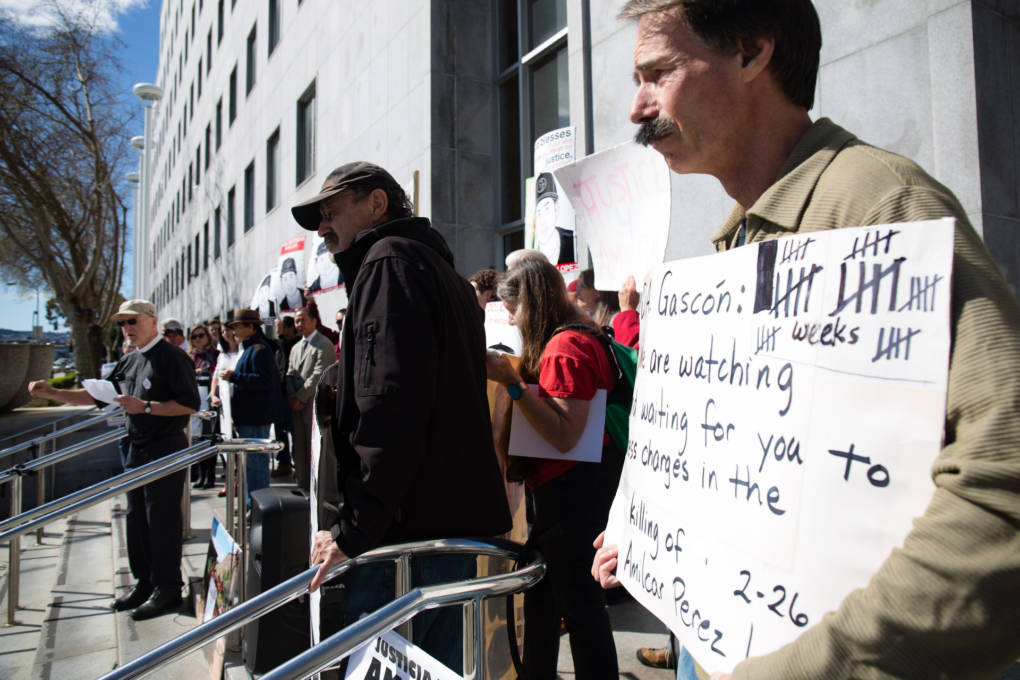
"caption": "Members of the group Justice For Amilcar Perez Lopez marked the second anniversary of Perez's shooting death with a rally and die-in at San Francisco's Hall of Justice on Feb. 27, 2017.",
"description": "Protesters with the group Justice For Amilcar Perez-Lopez marked the second anniversary of Perez's shooting death by SFPD with a rally and die-in at San Francisco's Hall of Justice on Feb. 27, 2017.",
"title": "RS24422_20170227_JusticeForAmilcar_Credit_BertJohnson (1 of 9)-qut",
"credit": "Bert Johnson/KQED",
"status": "inherit",
"isLoading": false,
"fetchFailed": false
},
"news_11331922": {
"type": "attachments",
"id": "news_11331922",
"meta": {
"index": "attachments_1716263798",
"site": "news",
"id": "11331922",
"found": true
},
"parent": 11331921,
"imgSizes": {
"small": {
"file": "https://ww2.kqed.org/app/uploads/sites/10/2017/02/RS19178_IMG_4926-qut-520x390.jpg",
"width": 520,
"mimeType": "image/jpeg",
"height": 390
},
"twentyfourteen-full-width": {
"file": "https://ww2.kqed.org/app/uploads/sites/10/2017/02/RS19178_IMG_4926-qut-1038x576.jpg",
"width": 1038,
"mimeType": "image/jpeg",
"height": 576
},
"thumbnail": {
"file": "https://ww2.kqed.org/app/uploads/sites/10/2017/02/RS19178_IMG_4926-qut-160x120.jpg",
"width": 160,
"mimeType": "image/jpeg",
"height": 120
},
"fd-sm": {
"file": "https://ww2.kqed.org/app/uploads/sites/10/2017/02/RS19178_IMG_4926-qut-960x720.jpg",
"width": 960,
"mimeType": "image/jpeg",
"height": 720
},
"post-thumbnail": {
"file": "https://ww2.kqed.org/app/uploads/sites/10/2017/02/RS19178_IMG_4926-qut-672x372.jpg",
"width": 672,
"mimeType": "image/jpeg",
"height": 372
},
"xsmall": {
"file": "https://ww2.kqed.org/app/uploads/sites/10/2017/02/RS19178_IMG_4926-qut-375x281.jpg",
"width": 375,
"mimeType": "image/jpeg",
"height": 281
},
"kqedFullSize": {
"file": "https://ww2.kqed.org/app/uploads/sites/10/2017/02/RS19178_IMG_4926-qut.jpg",
"width": 1920,
"height": 1440
},
"large": {
"file": "https://ww2.kqed.org/app/uploads/sites/10/2017/02/RS19178_IMG_4926-qut-1020x765.jpg",
"width": 1020,
"mimeType": "image/jpeg",
"height": 765
},
"xlarge": {
"file": "https://ww2.kqed.org/app/uploads/sites/10/2017/02/RS19178_IMG_4926-qut-1180x885.jpg",
"width": 1180,
"mimeType": "image/jpeg",
"height": 885
},
"guest-author-50": {
"file": "https://ww2.kqed.org/app/uploads/sites/10/2017/02/RS19178_IMG_4926-qut-50x50.jpg",
"width": 50,
"mimeType": "image/jpeg",
"height": 50
},
"guest-author-96": {
"file": "https://ww2.kqed.org/app/uploads/sites/10/2017/02/RS19178_IMG_4926-qut-96x96.jpg",
"width": 96,
"mimeType": "image/jpeg",
"height": 96
},
"medium": {
"file": "https://ww2.kqed.org/app/uploads/sites/10/2017/02/RS19178_IMG_4926-qut-800x600.jpg",
"width": 800,
"mimeType": "image/jpeg",
"height": 600
},
"guest-author-64": {
"file": "https://ww2.kqed.org/app/uploads/sites/10/2017/02/RS19178_IMG_4926-qut-64x64.jpg",
"width": 64,
"mimeType": "image/jpeg",
"height": 64
},
"guest-author-32": {
"file": "https://ww2.kqed.org/app/uploads/sites/10/2017/02/RS19178_IMG_4926-qut-32x32.jpg",
"width": 32,
"mimeType": "image/jpeg",
"height": 32
},
"fd-lrg": {
"file": "https://ww2.kqed.org/app/uploads/sites/10/2017/02/RS19178_IMG_4926-qut-1920x1440.jpg",
"width": 1920,
"mimeType": "image/jpeg",
"height": 1440
},
"fd-med": {
"file": "https://ww2.kqed.org/app/uploads/sites/10/2017/02/RS19178_IMG_4926-qut-1180x885.jpg",
"width": 1180,
"mimeType": "image/jpeg",
"height": 885
},
"full-width": {
"file": "https://ww2.kqed.org/app/uploads/sites/10/2017/02/RS19178_IMG_4926-qut-1920x1440.jpg",
"width": 1920,
"mimeType": "image/jpeg",
"height": 1440
},
"detail": {
"file": "https://ww2.kqed.org/app/uploads/sites/10/2017/02/RS19178_IMG_4926-qut-150x150.jpg",
"width": 150,
"mimeType": "image/jpeg",
"height": 150
},
"guest-author-128": {
"file": "https://ww2.kqed.org/app/uploads/sites/10/2017/02/RS19178_IMG_4926-qut-128x128.jpg",
"width": 128,
"mimeType": "image/jpeg",
"height": 128
},
"xxsmall": {
"file": "https://ww2.kqed.org/app/uploads/sites/10/2017/02/RS19178_IMG_4926-qut-240x180.jpg",
"width": 240,
"mimeType": "image/jpeg",
"height": 180
}
},
"publishDate": 1487968373,
"modified": 1487968469,
"caption": "The scene of a San Francisco Police Department fatal officer-involved shooting at 18th and Shotwell streets on April 7, 2016.",
"description": "The scene of a San Francisco Police Department fatal officer-involved shooting at 18th and Shotwell streets on April 7, 2016.",
"title": "RS19178_IMG_4926-qut",
"credit": "Alex Emslie/KQED",
"status": "inherit",
"isLoading": false,
"fetchFailed": false
},
"news_11319716": {
"type": "attachments",
"id": "news_11319716",
"meta": {
"index": "attachments_1716263798",
"site": "news",
"id": "11319716",
"found": true
},
"parent": 11317958,
"imgSizes": {
"small": {
"file": "https://ww2.kqed.org/app/uploads/sites/10/2017/02/CIT-S12544_alt_564-520x343.jpg",
"width": 520,
"mimeType": "image/jpeg",
"height": 343
},
"twentyfourteen-full-width": {
"file": "https://ww2.kqed.org/app/uploads/sites/10/2017/02/CIT-S12544_alt_564-1038x576.jpg",
"width": 1038,
"mimeType": "image/jpeg",
"height": 576
},
"thumbnail": {
"file": "https://ww2.kqed.org/app/uploads/sites/10/2017/02/CIT-S12544_alt_564-160x105.jpg",
"width": 160,
"mimeType": "image/jpeg",
"height": 105
},
"fd-sm": {
"file": "https://ww2.kqed.org/app/uploads/sites/10/2017/02/CIT-S12544_alt_564-960x633.jpg",
"width": 960,
"mimeType": "image/jpeg",
"height": 633
},
"post-thumbnail": {
"file": "https://ww2.kqed.org/app/uploads/sites/10/2017/02/CIT-S12544_alt_564-672x372.jpg",
"width": 672,
"mimeType": "image/jpeg",
"height": 372
},
"xsmall": {
"file": "https://ww2.kqed.org/app/uploads/sites/10/2017/02/CIT-S12544_alt_564-375x247.jpg",
"width": 375,
"mimeType": "image/jpeg",
"height": 247
},
"kqedFullSize": {
"file": "https://ww2.kqed.org/app/uploads/sites/10/2017/02/CIT-S12544_alt_564.jpg",
"width": 1920,
"height": 1265
},
"large": {
"file": "https://ww2.kqed.org/app/uploads/sites/10/2017/02/CIT-S12544_alt_564-1020x672.jpg",
"width": 1020,
"mimeType": "image/jpeg",
"height": 672
},
"xlarge": {
"file": "https://ww2.kqed.org/app/uploads/sites/10/2017/02/CIT-S12544_alt_564-1180x777.jpg",
"width": 1180,
"mimeType": "image/jpeg",
"height": 777
},
"guest-author-50": {
"file": "https://ww2.kqed.org/app/uploads/sites/10/2017/02/CIT-S12544_alt_564-50x50.jpg",
"width": 50,
"mimeType": "image/jpeg",
"height": 50
},
"guest-author-96": {
"file": "https://ww2.kqed.org/app/uploads/sites/10/2017/02/CIT-S12544_alt_564-96x96.jpg",
"width": 96,
"mimeType": "image/jpeg",
"height": 96
},
"medium": {
"file": "https://ww2.kqed.org/app/uploads/sites/10/2017/02/CIT-S12544_alt_564-800x527.jpg",
"width": 800,
"mimeType": "image/jpeg",
"height": 527
},
"guest-author-64": {
"file": "https://ww2.kqed.org/app/uploads/sites/10/2017/02/CIT-S12544_alt_564-64x64.jpg",
"width": 64,
"mimeType": "image/jpeg",
"height": 64
},
"guest-author-32": {
"file": "https://ww2.kqed.org/app/uploads/sites/10/2017/02/CIT-S12544_alt_564-32x32.jpg",
"width": 32,
"mimeType": "image/jpeg",
"height": 32
},
"fd-lrg": {
"file": "https://ww2.kqed.org/app/uploads/sites/10/2017/02/CIT-S12544_alt_564-1920x1265.jpg",
"width": 1920,
"mimeType": "image/jpeg",
"height": 1265
},
"fd-med": {
"file": "https://ww2.kqed.org/app/uploads/sites/10/2017/02/CIT-S12544_alt_564-1180x777.jpg",
"width": 1180,
"mimeType": "image/jpeg",
"height": 777
},
"full-width": {
"file": "https://ww2.kqed.org/app/uploads/sites/10/2017/02/CIT-S12544_alt_564-1920x1265.jpg",
"width": 1920,
"mimeType": "image/jpeg",
"height": 1265
},
"detail": {
"file": "https://ww2.kqed.org/app/uploads/sites/10/2017/02/CIT-S12544_alt_564-150x150.jpg",
"width": 150,
"mimeType": "image/jpeg",
"height": 150
},
"guest-author-128": {
"file": "https://ww2.kqed.org/app/uploads/sites/10/2017/02/CIT-S12544_alt_564-128x128.jpg",
"width": 128,
"mimeType": "image/jpeg",
"height": 128
},
"xxsmall": {
"file": "https://ww2.kqed.org/app/uploads/sites/10/2017/02/CIT-S12544_alt_564-240x158.jpg",
"width": 240,
"mimeType": "image/jpeg",
"height": 158
}
},
"publishDate": 1487273507,
"modified": 1487273552,
"caption": "A pin officers wear to show they've received Crisis Intervention Training.",
"description": "A pin officers wear to show they've received Crisis Intervention Training.",
"title": "CIT S12544_alt_564",
"credit": "Alex Emslie/KQED",
"status": "inherit",
"isLoading": false,
"fetchFailed": false
},
"news_11283867": {
"type": "attachments",
"id": "news_11283867",
"meta": {
"index": "attachments_1716263798",
"site": "news",
"id": "11283867",
"found": true
},
"parent": 11283808,
"imgSizes": {
"small": {
"file": "https://ww2.kqed.org/app/uploads/sites/10/2017/01/RS23839_alt_554-520x348.jpg",
"width": 520,
"mimeType": "image/jpeg",
"height": 348
},
"twentyfourteen-full-width": {
"file": "https://ww2.kqed.org/app/uploads/sites/10/2017/01/RS23839_alt_554-1038x576.jpg",
"width": 1038,
"mimeType": "image/jpeg",
"height": 576
},
"thumbnail": {
"file": "https://ww2.kqed.org/app/uploads/sites/10/2017/01/RS23839_alt_554-160x107.jpg",
"width": 160,
"mimeType": "image/jpeg",
"height": 107
},
"fd-sm": {
"file": "https://ww2.kqed.org/app/uploads/sites/10/2017/01/RS23839_alt_554-960x642.jpg",
"width": 960,
"mimeType": "image/jpeg",
"height": 642
},
"post-thumbnail": {
"file": "https://ww2.kqed.org/app/uploads/sites/10/2017/01/RS23839_alt_554-672x372.jpg",
"width": 672,
"mimeType": "image/jpeg",
"height": 372
},
"xsmall": {
"file": "https://ww2.kqed.org/app/uploads/sites/10/2017/01/RS23839_alt_554-375x251.jpg",
"width": 375,
"mimeType": "image/jpeg",
"height": 251
},
"kqedFullSize": {
"file": "https://ww2.kqed.org/app/uploads/sites/10/2017/01/RS23839_alt_554.jpg",
"width": 1920,
"height": 1284
},
"large": {
"file": "https://ww2.kqed.org/app/uploads/sites/10/2017/01/RS23839_alt_554-1020x682.jpg",
"width": 1020,
"mimeType": "image/jpeg",
"height": 682
},
"xlarge": {
"file": "https://ww2.kqed.org/app/uploads/sites/10/2017/01/RS23839_alt_554-1180x789.jpg",
"width": 1180,
"mimeType": "image/jpeg",
"height": 789
},
"guest-author-50": {
"file": "https://ww2.kqed.org/app/uploads/sites/10/2017/01/RS23839_alt_554-50x50.jpg",
"width": 50,
"mimeType": "image/jpeg",
"height": 50
},
"guest-author-96": {
"file": "https://ww2.kqed.org/app/uploads/sites/10/2017/01/RS23839_alt_554-96x96.jpg",
"width": 96,
"mimeType": "image/jpeg",
"height": 96
},
"medium": {
"file": "https://ww2.kqed.org/app/uploads/sites/10/2017/01/RS23839_alt_554-800x535.jpg",
"width": 800,
"mimeType": "image/jpeg",
"height": 535
},
"guest-author-64": {
"file": "https://ww2.kqed.org/app/uploads/sites/10/2017/01/RS23839_alt_554-64x64.jpg",
"width": 64,
"mimeType": "image/jpeg",
"height": 64
},
"guest-author-32": {
"file": "https://ww2.kqed.org/app/uploads/sites/10/2017/01/RS23839_alt_554-32x32.jpg",
"width": 32,
"mimeType": "image/jpeg",
"height": 32
},
"jmtc-small-thumb": {
"file": "https://ww2.kqed.org/app/uploads/sites/10/2017/01/RS23839_alt_554-280x150.jpg",
"width": 280,
"mimeType": "image/jpeg",
"height": 150
},
"fd-lrg": {
"file": "https://ww2.kqed.org/app/uploads/sites/10/2017/01/RS23839_alt_554-1920x1284.jpg",
"width": 1920,
"mimeType": "image/jpeg",
"height": 1284
},
"fd-med": {
"file": "https://ww2.kqed.org/app/uploads/sites/10/2017/01/RS23839_alt_554-1180x789.jpg",
"width": 1180,
"mimeType": "image/jpeg",
"height": 789
},
"full-width": {
"file": "https://ww2.kqed.org/app/uploads/sites/10/2017/01/RS23839_alt_554-1920x1284.jpg",
"width": 1920,
"mimeType": "image/jpeg",
"height": 1284
},
"detail": {
"file": "https://ww2.kqed.org/app/uploads/sites/10/2017/01/RS23839_alt_554-150x150.jpg",
"width": 150,
"mimeType": "image/jpeg",
"height": 150
},
"guest-author-128": {
"file": "https://ww2.kqed.org/app/uploads/sites/10/2017/01/RS23839_alt_554-128x128.jpg",
"width": 128,
"mimeType": "image/jpeg",
"height": 128
},
"xxsmall": {
"file": "https://ww2.kqed.org/app/uploads/sites/10/2017/01/RS23839_alt_554-240x161.jpg",
"width": 240,
"mimeType": "image/jpeg",
"height": 161
}
},
"publishDate": 1485228390,
"modified": 1485228455,
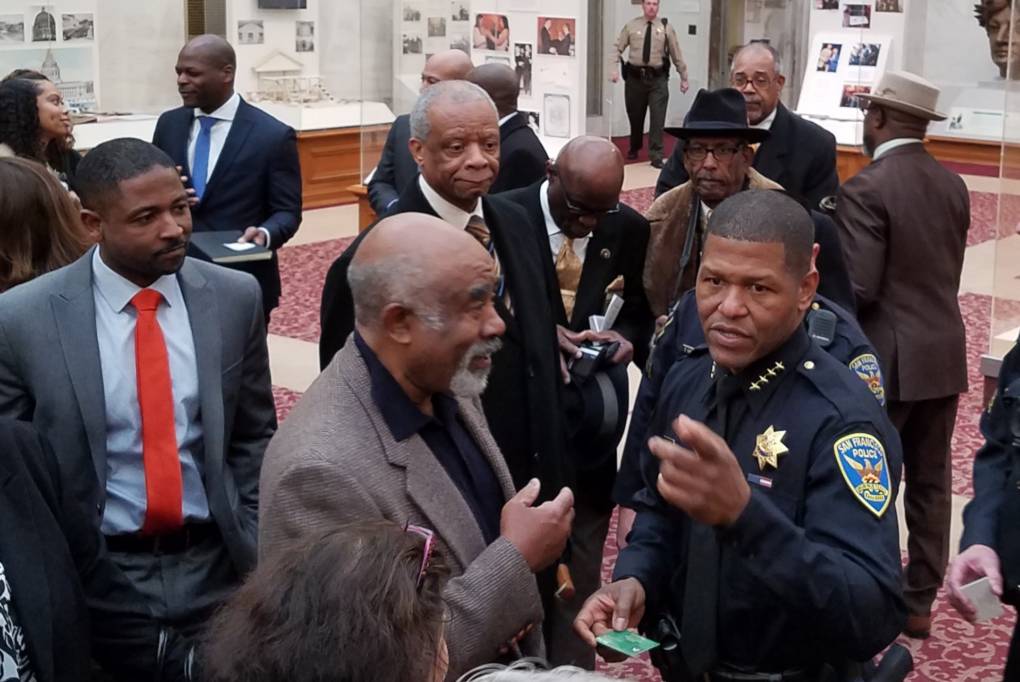
"caption": "New San Francisco Police Chief William Scott speaks with attendees after his swearing-in ceremony on Monday, Jan. 23.",
"description": "New San Francisco Police Chief William Scott speaks with attendees after his swearing-in ceremony on Monday, Jan. 23.",
"title": "RS23839_alt_554",
"credit": "Alex Emslie/KQED",
"status": "inherit",
"isLoading": false,
"fetchFailed": false
},
"news_11275576": {
"type": "attachments",
"id": "news_11275576",
"meta": {
"index": "attachments_1716263798",
"site": "news",
"id": "11275576",
"found": true
},
"parent": 11275314,
"imgSizes": {
"small": {
"file": "https://ww2.kqed.org/app/uploads/sites/10/2017/01/RS23659_20170118_134719-qut-520x390.jpg",
"width": 520,
"mimeType": "image/jpeg",
"height": 390
},
"twentyfourteen-full-width": {
"file": "https://ww2.kqed.org/app/uploads/sites/10/2017/01/RS23659_20170118_134719-qut-1038x576.jpg",
"width": 1038,
"mimeType": "image/jpeg",
"height": 576
},
"thumbnail": {
"file": "https://ww2.kqed.org/app/uploads/sites/10/2017/01/RS23659_20170118_134719-qut-160x120.jpg",
"width": 160,
"mimeType": "image/jpeg",
"height": 120
},
"fd-sm": {
"file": "https://ww2.kqed.org/app/uploads/sites/10/2017/01/RS23659_20170118_134719-qut-960x720.jpg",
"width": 960,
"mimeType": "image/jpeg",
"height": 720
},
"post-thumbnail": {
"file": "https://ww2.kqed.org/app/uploads/sites/10/2017/01/RS23659_20170118_134719-qut-672x372.jpg",
"width": 672,
"mimeType": "image/jpeg",
"height": 372
},
"xsmall": {
"file": "https://ww2.kqed.org/app/uploads/sites/10/2017/01/RS23659_20170118_134719-qut-375x281.jpg",
"width": 375,
"mimeType": "image/jpeg",
"height": 281
},
"kqedFullSize": {
"file": "https://ww2.kqed.org/app/uploads/sites/10/2017/01/RS23659_20170118_134719-qut.jpg",
"width": 1920,
"height": 1440
},
"large": {
"file": "https://ww2.kqed.org/app/uploads/sites/10/2017/01/RS23659_20170118_134719-qut-1020x765.jpg",
"width": 1020,
"mimeType": "image/jpeg",
"height": 765
},
"xlarge": {
"file": "https://ww2.kqed.org/app/uploads/sites/10/2017/01/RS23659_20170118_134719-qut-1180x885.jpg",
"width": 1180,
"mimeType": "image/jpeg",
"height": 885
},
"guest-author-50": {
"file": "https://ww2.kqed.org/app/uploads/sites/10/2017/01/RS23659_20170118_134719-qut-50x50.jpg",
"width": 50,
"mimeType": "image/jpeg",
"height": 50
},
"guest-author-96": {
"file": "https://ww2.kqed.org/app/uploads/sites/10/2017/01/RS23659_20170118_134719-qut-96x96.jpg",
"width": 96,
"mimeType": "image/jpeg",
"height": 96
},
"medium": {
"file": "https://ww2.kqed.org/app/uploads/sites/10/2017/01/RS23659_20170118_134719-qut-800x600.jpg",
"width": 800,
"mimeType": "image/jpeg",
"height": 600
},
"guest-author-64": {
"file": "https://ww2.kqed.org/app/uploads/sites/10/2017/01/RS23659_20170118_134719-qut-64x64.jpg",
"width": 64,
"mimeType": "image/jpeg",
"height": 64
},
"guest-author-32": {
"file": "https://ww2.kqed.org/app/uploads/sites/10/2017/01/RS23659_20170118_134719-qut-32x32.jpg",
"width": 32,
"mimeType": "image/jpeg",
"height": 32
},
"jmtc-small-thumb": {
"file": "https://ww2.kqed.org/app/uploads/sites/10/2017/01/RS23659_20170118_134719-qut-280x150.jpg",
"width": 280,
"mimeType": "image/jpeg",
"height": 150
},
"fd-lrg": {
"file": "https://ww2.kqed.org/app/uploads/sites/10/2017/01/RS23659_20170118_134719-qut-1920x1440.jpg",
"width": 1920,
"mimeType": "image/jpeg",
"height": 1440
},
"fd-med": {
"file": "https://ww2.kqed.org/app/uploads/sites/10/2017/01/RS23659_20170118_134719-qut-1180x885.jpg",
"width": 1180,
"mimeType": "image/jpeg",
"height": 885
},
"full-width": {
"file": "https://ww2.kqed.org/app/uploads/sites/10/2017/01/RS23659_20170118_134719-qut-1920x1440.jpg",
"width": 1920,
"mimeType": "image/jpeg",
"height": 1440
},
"detail": {
"file": "https://ww2.kqed.org/app/uploads/sites/10/2017/01/RS23659_20170118_134719-qut-150x150.jpg",
"width": 150,
"mimeType": "image/jpeg",
"height": 150
},
"guest-author-128": {
"file": "https://ww2.kqed.org/app/uploads/sites/10/2017/01/RS23659_20170118_134719-qut-128x128.jpg",
"width": 128,
"mimeType": "image/jpeg",
"height": 128
},
"xxsmall": {
"file": "https://ww2.kqed.org/app/uploads/sites/10/2017/01/RS23659_20170118_134719-qut-240x180.jpg",
"width": 240,
"mimeType": "image/jpeg",
"height": 180
}
},
"publishDate": 1484778236,
"modified": 1487274952,
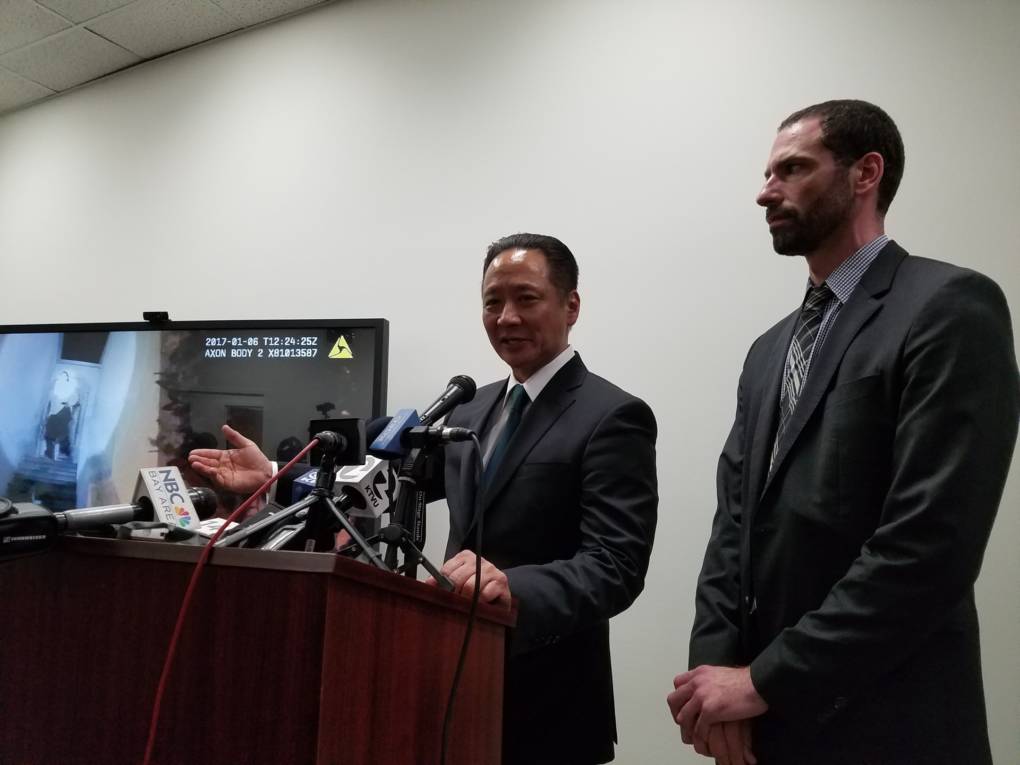
"caption": "San Francisco Public Defender Jeff Adachi and Deputy Public Defender Brian Pearlman release SFPD body-camera video on Jan. 18. The video captured the Jan. 6 police shooting of Sean Moore.",
"description": "San Francisco Public Defender Jeff Adachi and Deputy Public Defender Brian Pearlman release SFPD body-camera video on Jan. 18. The video captured the Jan. 6 police shooting of Sean Moore.",
"title": "RS23659_20170118_134719-qut",
"credit": "Alex Emslie/KQED",
"status": "inherit",
"isLoading": false,
"fetchFailed": false
},
"news_11267866": {
"type": "attachments",
"id": "news_11267866",
"meta": {
"index": "attachments_1716263798",
"site": "news",
"id": "11267866",
"found": true
},
"parent": 11267532,
"imgSizes": {
"small": {
"file": "https://ww2.kqed.org/app/uploads/sites/10/2017/01/RS23582_20170112_175919-qut-520x390.jpg",
"width": 520,
"mimeType": "image/jpeg",
"height": 390
},
"twentyfourteen-full-width": {
"file": "https://ww2.kqed.org/app/uploads/sites/10/2017/01/RS23582_20170112_175919-qut-1038x576.jpg",
"width": 1038,
"mimeType": "image/jpeg",
"height": 576
},
"thumbnail": {
"file": "https://ww2.kqed.org/app/uploads/sites/10/2017/01/RS23582_20170112_175919-qut-160x120.jpg",
"width": 160,
"mimeType": "image/jpeg",
"height": 120
},
"fd-sm": {
"file": "https://ww2.kqed.org/app/uploads/sites/10/2017/01/RS23582_20170112_175919-qut-960x720.jpg",
"width": 960,
"mimeType": "image/jpeg",
"height": 720
},
"post-thumbnail": {
"file": "https://ww2.kqed.org/app/uploads/sites/10/2017/01/RS23582_20170112_175919-qut-672x372.jpg",
"width": 672,
"mimeType": "image/jpeg",
"height": 372
},
"xsmall": {
"file": "https://ww2.kqed.org/app/uploads/sites/10/2017/01/RS23582_20170112_175919-qut-375x281.jpg",
"width": 375,
"mimeType": "image/jpeg",
"height": 281
},
"kqedFullSize": {
"file": "https://ww2.kqed.org/app/uploads/sites/10/2017/01/RS23582_20170112_175919-qut.jpg",
"width": 1920,
"height": 1440
},
"large": {
"file": "https://ww2.kqed.org/app/uploads/sites/10/2017/01/RS23582_20170112_175919-qut-1020x765.jpg",
"width": 1020,
"mimeType": "image/jpeg",
"height": 765
},
"xlarge": {
"file": "https://ww2.kqed.org/app/uploads/sites/10/2017/01/RS23582_20170112_175919-qut-1180x885.jpg",
"width": 1180,
"mimeType": "image/jpeg",
"height": 885
},
"guest-author-50": {
"file": "https://ww2.kqed.org/app/uploads/sites/10/2017/01/RS23582_20170112_175919-qut-50x50.jpg",
"width": 50,
"mimeType": "image/jpeg",
"height": 50
},
"guest-author-96": {
"file": "https://ww2.kqed.org/app/uploads/sites/10/2017/01/RS23582_20170112_175919-qut-96x96.jpg",
"width": 96,
"mimeType": "image/jpeg",
"height": 96
},
"medium": {
"file": "https://ww2.kqed.org/app/uploads/sites/10/2017/01/RS23582_20170112_175919-qut-800x600.jpg",
"width": 800,
"mimeType": "image/jpeg",
"height": 600
},
"guest-author-64": {
"file": "https://ww2.kqed.org/app/uploads/sites/10/2017/01/RS23582_20170112_175919-qut-64x64.jpg",
"width": 64,
"mimeType": "image/jpeg",
"height": 64
},
"guest-author-32": {
"file": "https://ww2.kqed.org/app/uploads/sites/10/2017/01/RS23582_20170112_175919-qut-32x32.jpg",
"width": 32,
"mimeType": "image/jpeg",
"height": 32
},
"jmtc-small-thumb": {
"file": "https://ww2.kqed.org/app/uploads/sites/10/2017/01/RS23582_20170112_175919-qut-280x150.jpg",
"width": 280,
"mimeType": "image/jpeg",
"height": 150
},
"fd-lrg": {
"file": "https://ww2.kqed.org/app/uploads/sites/10/2017/01/RS23582_20170112_175919-qut-1920x1440.jpg",
"width": 1920,
"mimeType": "image/jpeg",
"height": 1440
},
"fd-med": {
"file": "https://ww2.kqed.org/app/uploads/sites/10/2017/01/RS23582_20170112_175919-qut-1180x885.jpg",
"width": 1180,
"mimeType": "image/jpeg",
"height": 885
},
"full-width": {
"file": "https://ww2.kqed.org/app/uploads/sites/10/2017/01/RS23582_20170112_175919-qut-1920x1440.jpg",
"width": 1920,
"mimeType": "image/jpeg",
"height": 1440
},
"detail": {
"file": "https://ww2.kqed.org/app/uploads/sites/10/2017/01/RS23582_20170112_175919-qut-150x150.jpg",
"width": 150,
"mimeType": "image/jpeg",
"height": 150
},
"guest-author-128": {
"file": "https://ww2.kqed.org/app/uploads/sites/10/2017/01/RS23582_20170112_175919-qut-128x128.jpg",
"width": 128,
"mimeType": "image/jpeg",
"height": 128
},
"xxsmall": {
"file": "https://ww2.kqed.org/app/uploads/sites/10/2017/01/RS23582_20170112_175919-qut-240x180.jpg",
"width": 240,
"mimeType": "image/jpeg",
"height": 180
}
},
"publishDate": 1484331276,
"modified": 1484331304,
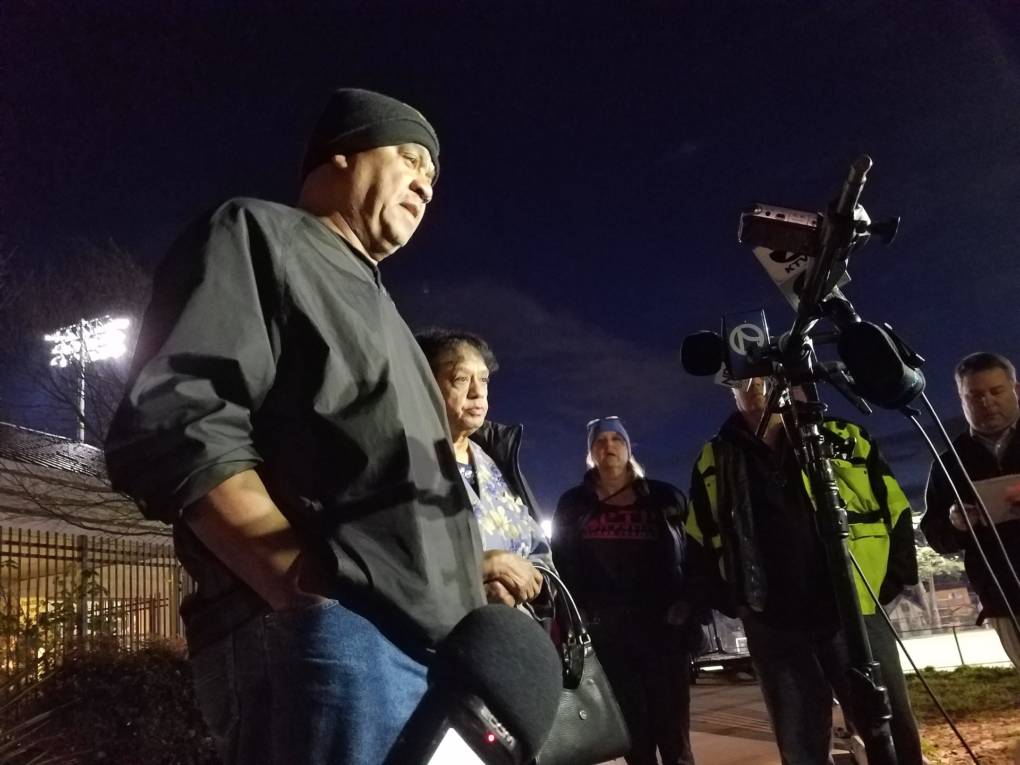
"caption": "Kenneth Blackmon and Cleo Moore speak with reporters Jan. 12 outside a town hall meeting on the Jan. 6 officer-involved shooting of Sean Moore.",
"description": "Kenneth Blackmon and Cleo Moore speak with reporters Jan. 12 outside a town hall meeting on the Jan. 6 officer-involved shooting of Sean Moore.",
"title": "rs23582_20170112_175919-qut",
"credit": "Alex Emslie/KQED",
"status": "inherit",
"isLoading": false,
"fetchFailed": false
},
"news_11201220": {
"type": "attachments",
"id": "news_11201220",
"meta": {
"index": "attachments_1716263798",
"site": "news",
"id": "11201220",
"found": true
},
"parent": 11196902,
"imgSizes": {
"small": {
"file": "https://ww2.kqed.org/app/uploads/sites/10/2016/12/RS17984_IMG_3618-qut-768x576-520x390.jpg",
"width": 520,
"mimeType": "image/jpeg",
"height": 390
},
"twentyfourteen-full-width": {
"file": "https://ww2.kqed.org/app/uploads/sites/10/2016/12/RS17984_IMG_3618-qut-768x576-768x576.jpg",
"width": 768,
"mimeType": "image/jpeg",
"height": 576
},
"thumbnail": {
"file": "https://ww2.kqed.org/app/uploads/sites/10/2016/12/RS17984_IMG_3618-qut-768x576-160x120.jpg",
"width": 160,
"mimeType": "image/jpeg",
"height": 120
},
"post-thumbnail": {
"file": "https://ww2.kqed.org/app/uploads/sites/10/2016/12/RS17984_IMG_3618-qut-768x576-672x372.jpg",
"width": 672,
"mimeType": "image/jpeg",
"height": 372
},
"xsmall": {
"file": "https://ww2.kqed.org/app/uploads/sites/10/2016/12/RS17984_IMG_3618-qut-768x576-375x281.jpg",
"width": 375,
"mimeType": "image/jpeg",
"height": 281
},
"kqedFullSize": {
"file": "https://ww2.kqed.org/app/uploads/sites/10/2016/12/RS17984_IMG_3618-qut-768x576.jpg",
"width": 768,
"height": 576
},
"guest-author-50": {
"file": "https://ww2.kqed.org/app/uploads/sites/10/2016/12/RS17984_IMG_3618-qut-768x576-50x50.jpg",
"width": 50,
"mimeType": "image/jpeg",
"height": 50
},
"guest-author-96": {
"file": "https://ww2.kqed.org/app/uploads/sites/10/2016/12/RS17984_IMG_3618-qut-768x576-96x96.jpg",
"width": 96,
"mimeType": "image/jpeg",
"height": 96
},
"guest-author-64": {
"file": "https://ww2.kqed.org/app/uploads/sites/10/2016/12/RS17984_IMG_3618-qut-768x576-64x64.jpg",
"width": 64,
"mimeType": "image/jpeg",
"height": 64
},
"guest-author-32": {
"file": "https://ww2.kqed.org/app/uploads/sites/10/2016/12/RS17984_IMG_3618-qut-768x576-32x32.jpg",
"width": 32,
"mimeType": "image/jpeg",
"height": 32
},
"jmtc-small-thumb": {
"file": "https://ww2.kqed.org/app/uploads/sites/10/2016/12/RS17984_IMG_3618-qut-768x576-280x150.jpg",
"width": 280,
"mimeType": "image/jpeg",
"height": 150
},
"detail": {
"file": "https://ww2.kqed.org/app/uploads/sites/10/2016/12/RS17984_IMG_3618-qut-768x576-150x150.jpg",
"width": 150,
"mimeType": "image/jpeg",
"height": 150
},
"guest-author-128": {
"file": "https://ww2.kqed.org/app/uploads/sites/10/2016/12/RS17984_IMG_3618-qut-768x576-128x128.jpg",
"width": 128,
"mimeType": "image/jpeg",
"height": 128
},
"xxsmall": {
"file": "https://ww2.kqed.org/app/uploads/sites/10/2016/12/RS17984_IMG_3618-qut-768x576-240x180.jpg",
"width": 240,
"mimeType": "image/jpeg",
"height": 180
}
},
"publishDate": 1480682702,
"modified": 1480725136,
"caption": "Members of the Justice for Mario Woods Coalition gathered outside San Francisco City Hall after shouting at Mayor Ed Lee to 'fire Chief Suhr' during the mayor's inauguration speech on Jan. 8. 2016.",
"description": "Members of the Justice for Mario Woods Coalition gathered outside San Francisco City Hall after shouting at Mayor Ed Lee to \"fire Chief Suhr\" during his inauguration speech on Jan. 8.",
"title": "rs17984_img_3618-qut-768x576",
"credit": "Alex Emslie/KQED",
"status": "inherit",
"isLoading": false,
"fetchFailed": false
},
"news_11140356": {
"type": "attachments",
"id": "news_11140356",
"meta": {
"index": "attachments_1716263798",
"site": "news",
"id": "11140356",
"found": true
},
"parent": 11140354,
"imgSizes": {
"small": {
"file": "https://ww2.kqed.org/app/uploads/sites/10/2016/10/RS20609_IMG_5772-qut-520x390.jpg",
"width": 520,
"mimeType": "image/jpeg",
"height": 390
},
"twentyfourteen-full-width": {
"file": "https://ww2.kqed.org/app/uploads/sites/10/2016/10/RS20609_IMG_5772-qut-1038x576.jpg",
"width": 1038,
"mimeType": "image/jpeg",
"height": 576
},
"thumbnail": {
"file": "https://ww2.kqed.org/app/uploads/sites/10/2016/10/RS20609_IMG_5772-qut-160x120.jpg",
"width": 160,
"mimeType": "image/jpeg",
"height": 120
},
"fd-sm": {
"file": "https://ww2.kqed.org/app/uploads/sites/10/2016/10/RS20609_IMG_5772-qut-960x720.jpg",
"width": 960,
"mimeType": "image/jpeg",
"height": 720
},
"post-thumbnail": {
"file": "https://ww2.kqed.org/app/uploads/sites/10/2016/10/RS20609_IMG_5772-qut-672x372.jpg",
"width": 672,
"mimeType": "image/jpeg",
"height": 372
},
"xsmall": {
"file": "https://ww2.kqed.org/app/uploads/sites/10/2016/10/RS20609_IMG_5772-qut-375x281.jpg",
"width": 375,
"mimeType": "image/jpeg",
"height": 281
},
"kqedFullSize": {
"file": "https://ww2.kqed.org/app/uploads/sites/10/2016/10/RS20609_IMG_5772-qut.jpg",
"width": 1920,
"height": 1440
},
"large": {
"file": "https://ww2.kqed.org/app/uploads/sites/10/2016/10/RS20609_IMG_5772-qut-1020x765.jpg",
"width": 1020,
"mimeType": "image/jpeg",
"height": 765
},
"xlarge": {
"file": "https://ww2.kqed.org/app/uploads/sites/10/2016/10/RS20609_IMG_5772-qut-1180x885.jpg",
"width": 1180,
"mimeType": "image/jpeg",
"height": 885
},
"guest-author-50": {
"file": "https://ww2.kqed.org/app/uploads/sites/10/2016/10/RS20609_IMG_5772-qut-50x50.jpg",
"width": 50,
"mimeType": "image/jpeg",
"height": 50
},
"guest-author-96": {
"file": "https://ww2.kqed.org/app/uploads/sites/10/2016/10/RS20609_IMG_5772-qut-96x96.jpg",
"width": 96,
"mimeType": "image/jpeg",
"height": 96
},
"medium": {
"file": "https://ww2.kqed.org/app/uploads/sites/10/2016/10/RS20609_IMG_5772-qut-800x600.jpg",
"width": 800,
"mimeType": "image/jpeg",
"height": 600
},
"guest-author-64": {
"file": "https://ww2.kqed.org/app/uploads/sites/10/2016/10/RS20609_IMG_5772-qut-64x64.jpg",
"width": 64,
"mimeType": "image/jpeg",
"height": 64
},
"guest-author-32": {
"file": "https://ww2.kqed.org/app/uploads/sites/10/2016/10/RS20609_IMG_5772-qut-32x32.jpg",
"width": 32,
"mimeType": "image/jpeg",
"height": 32
},
"jmtc-small-thumb": {
"file": "https://ww2.kqed.org/app/uploads/sites/10/2016/10/RS20609_IMG_5772-qut-280x150.jpg",
"width": 280,
"mimeType": "image/jpeg",
"height": 150
},
"fd-lrg": {
"file": "https://ww2.kqed.org/app/uploads/sites/10/2016/10/RS20609_IMG_5772-qut-1920x1440.jpg",
"width": 1920,
"mimeType": "image/jpeg",
"height": 1440
},
"fd-med": {
"file": "https://ww2.kqed.org/app/uploads/sites/10/2016/10/RS20609_IMG_5772-qut-1180x885.jpg",
"width": 1180,
"mimeType": "image/jpeg",
"height": 885
},
"full-width": {
"file": "https://ww2.kqed.org/app/uploads/sites/10/2016/10/RS20609_IMG_5772-qut-1920x1440.jpg",
"width": 1920,
"mimeType": "image/jpeg",
"height": 1440
},
"detail": {
"file": "https://ww2.kqed.org/app/uploads/sites/10/2016/10/RS20609_IMG_5772-qut-150x150.jpg",
"width": 150,
"mimeType": "image/jpeg",
"height": 150
},
"guest-author-128": {
"file": "https://ww2.kqed.org/app/uploads/sites/10/2016/10/RS20609_IMG_5772-qut-128x128.jpg",
"width": 128,
"mimeType": "image/jpeg",
"height": 128
},
"xxsmall": {
"file": "https://ww2.kqed.org/app/uploads/sites/10/2016/10/RS20609_IMG_5772-qut-240x180.jpg",
"width": 240,
"mimeType": "image/jpeg",
"height": 180
}
},
"publishDate": 1477098808,
"modified": 1477098825,
"caption": null,
"description": null,
"title": "RS20609_IMG_5772-qut",
"credit": "Alex Emslie/KQED",
"status": "inherit",
"isLoading": false,
"fetchFailed": false
},
"news_10507234": {
"type": "attachments",
"id": "news_10507234",
"meta": {
"index": "attachments_1716263798",
"site": "news",
"id": "10507234",
"found": true
},
"parent": 10507163,
"imgSizes": {
"twentyfourteen-full-width": {
"file": "https://ww2.kqed.org/app/uploads/sites/10/2015/04/RS15012_475371701.jpg-alt_261-1038x576.jpg",
"width": 1038,
"mimeType": "image/jpeg",
"height": 576
},
"thumbnail": {
"file": "https://ww2.kqed.org/app/uploads/sites/10/2015/04/RS15012_475371701.jpg-alt_261-400x287.jpg",
"width": 400,
"mimeType": "image/jpeg",
"height": 287
},
"fd-sm": {
"file": "https://ww2.kqed.org/app/uploads/sites/10/2015/04/RS15012_475371701.jpg-alt_261-960x690.jpg",
"width": 960,
"mimeType": "image/jpeg",
"height": 690
},
"post-thumbnail": {
"file": "https://ww2.kqed.org/app/uploads/sites/10/2015/04/RS15012_475371701.jpg-alt_261-672x372.jpg",
"width": 672,
"mimeType": "image/jpeg",
"height": 372
},
"kqedFullSize": {
"file": "https://ww2.kqed.org/app/uploads/sites/10/2015/04/RS15012_475371701.jpg-alt_261.jpg",
"width": 1920,
"height": 1379
},
"large": {
"file": "https://ww2.kqed.org/app/uploads/sites/10/2015/04/RS15012_475371701.jpg-alt_261-1440x1034.jpg",
"width": 1440,
"mimeType": "image/jpeg",
"height": 1034
},
"guest-author-96": {
"file": "https://ww2.kqed.org/app/uploads/sites/10/2015/04/RS15012_475371701.jpg-alt_261-96x96.jpg",
"width": 96,
"mimeType": "image/jpeg",
"height": 96
},
"medium": {
"file": "https://ww2.kqed.org/app/uploads/sites/10/2015/04/RS15012_475371701.jpg-alt_261-800x575.jpg",
"width": 800,
"mimeType": "image/jpeg",
"height": 575
},
"guest-author-64": {
"file": "https://ww2.kqed.org/app/uploads/sites/10/2015/04/RS15012_475371701.jpg-alt_261-64x64.jpg",
"width": 64,
"mimeType": "image/jpeg",
"height": 64
},
"guest-author-32": {
"file": "https://ww2.kqed.org/app/uploads/sites/10/2015/04/RS15012_475371701.jpg-alt_261-32x32.jpg",
"width": 32,
"mimeType": "image/jpeg",
"height": 32
},
"fd-med": {
"file": "https://ww2.kqed.org/app/uploads/sites/10/2015/04/RS15012_475371701.jpg-alt_261-1180x848.jpg",
"width": 1180,
"mimeType": "image/jpeg",
"height": 848
},
"detail": {
"file": "https://ww2.kqed.org/app/uploads/sites/10/2015/04/RS15012_475371701.jpg-alt_261-75x75.jpg",
"width": 75,
"mimeType": "image/jpeg",
"height": 75
},
"guest-author-128": {
"file": "https://ww2.kqed.org/app/uploads/sites/10/2015/04/RS15012_475371701.jpg-alt_261-128x128.jpg",
"width": 128,
"mimeType": "image/jpeg",
"height": 128
}
},
"publishDate": 1430356030,
"modified": 1476992567,
"caption": "A seven-member civilian panel acts as the San Francisco Police Department’s disciplinary body.",
"description": "SAN FRANCISCO, CA - FEBRUARY 27: A surveillance camera keeps watch next to a sign outside of a San Francisco police station on February 27, 2014 in San Francisco, California. A federal grand jury has indicted five San Francisco police officers and one former officer in two cases involving drug and computer thefts from suspects and the theft of money and gift cards from suspects. (Photo by Justin Sullivan/Getty Images)",
"title": "San Francisco Police Department",
"credit": "Justin Sullivan/Getty Images",
"status": "inherit",
"isLoading": false,
"fetchFailed": false
},
"news_11132630": {
"type": "attachments",
"id": "news_11132630",
"meta": {
"index": "attachments_1716263798",
"site": "news",
"id": "11132630",
"found": true
},
"parent": 11132628,
"imgSizes": {
"twentyfourteen-full-width": {
"file": "https://ww2.kqed.org/app/uploads/sites/10/2016/10/RS20325_alt_518-1038x576.jpg",
"width": 1038,
"mimeType": "image/jpeg",
"height": 576
},
"thumbnail": {
"file": "https://ww2.kqed.org/app/uploads/sites/10/2016/10/RS20325_alt_518-400x260.jpg",
"width": 400,
"mimeType": "image/jpeg",
"height": 260
},
"fd-sm": {
"file": "https://ww2.kqed.org/app/uploads/sites/10/2016/10/RS20325_alt_518-960x625.jpg",
"width": 960,
"mimeType": "image/jpeg",
"height": 625
},
"post-thumbnail": {
"file": "https://ww2.kqed.org/app/uploads/sites/10/2016/10/RS20325_alt_518-672x372.jpg",
"width": 672,
"mimeType": "image/jpeg",
"height": 372
},
"kqedFullSize": {
"file": "https://ww2.kqed.org/app/uploads/sites/10/2016/10/RS20325_alt_518.jpg",
"width": 1920,
"height": 1250
},
"large": {
"file": "https://ww2.kqed.org/app/uploads/sites/10/2016/10/RS20325_alt_518-1920x1250.jpg",
"width": 1920,
"mimeType": "image/jpeg",
"height": 1250
},
"guest-author-50": {
"file": "https://ww2.kqed.org/app/uploads/sites/10/2016/10/RS20325_alt_518-50x50.jpg",
"width": 50,
"mimeType": "image/jpeg",
"height": 50
},
"guest-author-96": {
"file": "https://ww2.kqed.org/app/uploads/sites/10/2016/10/RS20325_alt_518-96x96.jpg",
"width": 96,
"mimeType": "image/jpeg",
"height": 96
},
"medium": {
"file": "https://ww2.kqed.org/app/uploads/sites/10/2016/10/RS20325_alt_518-800x521.jpg",
"width": 800,
"mimeType": "image/jpeg",
"height": 521
},
"guest-author-64": {
"file": "https://ww2.kqed.org/app/uploads/sites/10/2016/10/RS20325_alt_518-64x64.jpg",
"width": 64,
"mimeType": "image/jpeg",
"height": 64
},
"guest-author-32": {
"file": "https://ww2.kqed.org/app/uploads/sites/10/2016/10/RS20325_alt_518-32x32.jpg",
"width": 32,
"mimeType": "image/jpeg",
"height": 32
},
"jmtc-small-thumb": {
"file": "https://ww2.kqed.org/app/uploads/sites/10/2016/10/RS20325_alt_518-280x150.jpg",
"width": 280,
"mimeType": "image/jpeg",
"height": 150
},
"fd-lrg": {
"file": "https://ww2.kqed.org/app/uploads/sites/10/2016/10/RS20325_alt_518-1920x1250.jpg",
"width": 1920,
"mimeType": "image/jpeg",
"height": 1250
},
"fd-med": {
"file": "https://ww2.kqed.org/app/uploads/sites/10/2016/10/RS20325_alt_518-1180x768.jpg",
"width": 1180,
"mimeType": "image/jpeg",
"height": 768
},
"detail": {
"file": "https://ww2.kqed.org/app/uploads/sites/10/2016/10/RS20325_alt_518-150x150.jpg",
"width": 150,
"mimeType": "image/jpeg",
"height": 150
},
"guest-author-128": {
"file": "https://ww2.kqed.org/app/uploads/sites/10/2016/10/RS20325_alt_518-128x128.jpg",
"width": 128,
"mimeType": "image/jpeg",
"height": 128
}
},
"publishDate": 1476652559,
"modified": 1476652574,
"caption": null,
"description": null,
"title": "RS20325_alt_518",
"credit": "Alex Emslie/KQED",
"status": "inherit",
"isLoading": false,
"fetchFailed": false
},
"news_11130326": {
"type": "attachments",
"id": "news_11130326",
"meta": {
"index": "attachments_1716263798",
"site": "news",
"id": "11130326",
"found": true
},
"parent": 11129913,
"imgSizes": {
"twentyfourteen-full-width": {
"file": "https://ww2.kqed.org/app/uploads/sites/10/2016/10/RS5487_alt_297-1038x576.jpg",
"width": 1038,
"mimeType": "image/jpeg",
"height": 576
},
"thumbnail": {
"file": "https://ww2.kqed.org/app/uploads/sites/10/2016/10/RS5487_alt_297-400x300.jpg",
"width": 400,
"mimeType": "image/jpeg",
"height": 300
},
"fd-sm": {
"file": "https://ww2.kqed.org/app/uploads/sites/10/2016/10/RS5487_alt_297-960x720.jpg",
"width": 960,
"mimeType": "image/jpeg",
"height": 720
},
"post-thumbnail": {
"file": "https://ww2.kqed.org/app/uploads/sites/10/2016/10/RS5487_alt_297-672x372.jpg",
"width": 672,
"mimeType": "image/jpeg",
"height": 372
},
"kqedFullSize": {
"file": "https://ww2.kqed.org/app/uploads/sites/10/2016/10/RS5487_alt_297.jpg",
"width": 1920,
"height": 1440
},
"large": {
"file": "https://ww2.kqed.org/app/uploads/sites/10/2016/10/RS5487_alt_297-1920x1440.jpg",
"width": 1920,
"mimeType": "image/jpeg",
"height": 1440
},
"guest-author-50": {
"file": "https://ww2.kqed.org/app/uploads/sites/10/2016/10/RS5487_alt_297-50x50.jpg",
"width": 50,
"mimeType": "image/jpeg",
"height": 50
},
"guest-author-96": {
"file": "https://ww2.kqed.org/app/uploads/sites/10/2016/10/RS5487_alt_297-96x96.jpg",
"width": 96,
"mimeType": "image/jpeg",
"height": 96
},
"medium": {
"file": "https://ww2.kqed.org/app/uploads/sites/10/2016/10/RS5487_alt_297-800x600.jpg",
"width": 800,
"mimeType": "image/jpeg",
"height": 600
},
"guest-author-64": {
"file": "https://ww2.kqed.org/app/uploads/sites/10/2016/10/RS5487_alt_297-64x64.jpg",
"width": 64,
"mimeType": "image/jpeg",
"height": 64
},
"guest-author-32": {
"file": "https://ww2.kqed.org/app/uploads/sites/10/2016/10/RS5487_alt_297-32x32.jpg",
"width": 32,
"mimeType": "image/jpeg",
"height": 32
},
"jmtc-small-thumb": {
"file": "https://ww2.kqed.org/app/uploads/sites/10/2016/10/RS5487_alt_297-280x150.jpg",
"width": 280,
"mimeType": "image/jpeg",
"height": 150
},
"fd-lrg": {
"file": "https://ww2.kqed.org/app/uploads/sites/10/2016/10/RS5487_alt_297-1920x1440.jpg",
"width": 1920,
"mimeType": "image/jpeg",
"height": 1440
},
"fd-med": {
"file": "https://ww2.kqed.org/app/uploads/sites/10/2016/10/RS5487_alt_297-1180x885.jpg",
"width": 1180,
"mimeType": "image/jpeg",
"height": 885
},
"detail": {
"file": "https://ww2.kqed.org/app/uploads/sites/10/2016/10/RS5487_alt_297-150x150.jpg",
"width": 150,
"mimeType": "image/jpeg",
"height": 150
},
"guest-author-128": {
"file": "https://ww2.kqed.org/app/uploads/sites/10/2016/10/RS5487_alt_297-128x128.jpg",
"width": 128,
"mimeType": "image/jpeg",
"height": 128
}
},
"publishDate": 1476495357,
"modified": 1476495376,
"caption": null,
"description": null,
"title": "RS5487_alt_297",
"credit": "Rachel Bale/KQED",
"status": "inherit",
"isLoading": false,
"fetchFailed": false
}
},
"audioPlayerReducer": {
"postId": "stream_live",
"isPaused": true,
"isPlaying": false,
"pfsActive": false,
"pledgeModalIsOpen": true,
"playerDrawerIsOpen": false,
"liveAudioPlayStartedAt": 0,
"liveAudioPlayContext": ""
},
"authorsReducer": {
"byline_news_11138251": {
"type": "authors",
"id": "byline_news_11138251",
"meta": {
"override": true
},
"slug": "byline_news_11138251",
"name": "\u003cstrong>Laura Waxmann\u003cbr>Mission Local\u003c/strong>",
"isLoading": false
},
"kqednewsstaffandwires": {
"type": "authors",
"id": "237",
"meta": {
"index": "authors_1716337520",
"id": "237",
"found": true
},
"name": "KQED News Staff and Wires",
"firstName": "KQED News Staff and Wires",
"lastName": null,
"slug": "kqednewsstaffandwires",
"email": "onlinenewsstaff@kqed.org",
"display_author_email": false,
"staff_mastheads": [],
"title": null,
"bio": null,
"avatar": "https://secure.gravatar.com/avatar/72295af8ebbfbd19a4948f5271285664?s=600&d=blank&r=g",
"twitter": null,
"facebook": null,
"instagram": null,
"linkedin": null,
"sites": [
{
"site": "arts",
"roles": [
"contributor"
]
},
{
"site": "news",
"roles": [
"contributor"
]
},
{
"site": "lowdown",
"roles": [
"author"
]
},
{
"site": "stateofhealth",
"roles": [
"contributor"
]
},
{
"site": "food",
"roles": [
"author"
]
}
],
"headData": {
"title": "KQED News Staff and Wires | KQED",
"description": null,
"ogImgSrc": "https://secure.gravatar.com/avatar/72295af8ebbfbd19a4948f5271285664?s=600&d=blank&r=g",
"twImgSrc": "https://secure.gravatar.com/avatar/72295af8ebbfbd19a4948f5271285664?s=600&d=blank&r=g"
},
"isLoading": false,
"link": "/author/kqednewsstaffandwires"
},
"tgoldberg": {
"type": "authors",
"id": "258",
"meta": {
"index": "authors_1716337520",
"id": "258",
"found": true
},
"name": "Ted Goldberg",
"firstName": "Ted",
"lastName": "Goldberg",
"slug": "tgoldberg",
"email": "tgoldberg@kqed.org",
"display_author_email": true,
"staff_mastheads": [
"news"
],
"title": "KQED Managing Editor, News and Newscasts",
"bio": "Ted Goldberg is Managing Editor of News and Newscasts at KQED. His main reporting beat is the Bay Area's oil refining industry.\r\n\r\nPrior to joining KQED in 2014, Ted worked at CBS News and WCBS AM in New York and Bay City News and KCBS Radio in San Francisco. He graduated from Oberlin College in Ohio in 1998.",
"avatar": "https://secure.gravatar.com/avatar/30ce2e4fe89135e104f89be2394d16225b9d36c121b5b3cb7651ce642978b96f?s=600&d=blank&r=g",
"twitter": "TedrickG",
"bluesky": null,
"facebook": null,
"instagram": null,
"linkedin": null,
"sites": [
{
"site": "news",
"roles": [
"editor"
]
},
{
"site": "science",
"roles": [
"editor"
]
}
],
"headData": {
"title": "Ted Goldberg | KQED",
"description": "KQED Managing Editor, News and Newscasts",
"ogImgSrc": "https://secure.gravatar.com/avatar/30ce2e4fe89135e104f89be2394d16225b9d36c121b5b3cb7651ce642978b96f?s=600&d=blank&r=g",
"twImgSrc": "https://secure.gravatar.com/avatar/30ce2e4fe89135e104f89be2394d16225b9d36c121b5b3cb7651ce642978b96f?s=600&d=blank&r=g"
},
"isLoading": false,
"link": "/author/tgoldberg"
},
"aemslie": {
"type": "authors",
"id": "3206",
"meta": {
"index": "authors_1716337520",
"id": "3206",
"found": true
},
"name": "Alex Emslie",
"firstName": "Alex",
"lastName": "Emslie",
"slug": "aemslie",
"email": "aemslie@kqed.org",
"display_author_email": true,
"staff_mastheads": [
"news"
],
"title": "KQED Senior Editor",
"bio": "Alex Emslie is senior editor of talent and development at KQED, where he manages dozens of early career journalists and oversees news department internships.\r\n\r\nHe is a former carpenter and proud graduate of City College of San Francisco and San Francisco State University, where he studied journalism and criminal justice before joining KQED in 2013.\r\n\r\nAlex produced investigative journalism focused on \u003ca href=\"https://www.kqed.org/news/11667594/the-trials-of-marvin-mutch-video\">criminal justice\u003c/a> and policing for most of a decade. He has broken major stories about \u003ca href=\"https://www.kqed.org/news/135682/amid-a-series-of-vallejo-police-shootings-one-officers-name-stands-out\">police use of deadly force\u003c/a>, \u003ca href=\"https://www.kqed.org/news/10454955/racist-texts-prompt-sfpd-internal-investigation\">officer misconduct\u003c/a> and \u003ca href=\"https://www.kqed.org/news/11712239/terrorist-or-troll-judge-to-weigh-whether-oakland-man-really-intended-to-attack-bay-area\">other\u003c/a> \u003ca href=\"https://www.kqed.org/news/11221414/hayward-paid-159000-to-husband-of-retired-police-chief-documents-show\">high\u003c/a>-\u003ca href=\"https://www.kqed.org/news/10622762/the-forgotten-tracking-two-homicides-in-san-francisco-public-housing\">profile\u003c/a> \u003ca href=\"https://www.kqed.org/news/11624516/federal-agency-promoted-ranger-just-months-after-his-gun-was-stolen-and-used-in-steinle-killing\">cases\u003c/a>. He co-founded the \u003ca href=\"https://projects.scpr.org/california-reporting-project/\">California Reporting Project\u003c/a> in 2019 to obtain and report on previously confidential police internal investigations. The effort produced well over 100 original stories and changed the course of multiple criminal cases.\r\n\r\nHis work has been recognized with numerous journalism awards, including a national Edward R. Murrow award for several years of \u003ca href=\"https://www.kqed.org/news/11688481/sfpd-officers-in-mario-woods-case-recount-shooting-in-newly-filed-depositions\">reporting\u003c/a> on the San Francisco Police shooting of Mario Woods. His \u003ca href=\"https://www.kqed.org/news/147854/half-of-those-killed-by-san-francisco-police-are-mentally-ill\">reporting\u003c/a> on police killings of people in psychiatric crisis was cited in amicus briefs before the U.S. Supreme Court.\r\n\r\nAlex now enjoys mentoring the next generation of journalists at KQED.",
"avatar": "https://secure.gravatar.com/avatar/e691e65209f20e9da202bd730ead5663?s=600&d=blank&r=g",
"twitter": "SFNewsReporter",
"facebook": null,
"instagram": null,
"linkedin": null,
"sites": [
{
"site": "arts",
"roles": [
"editor"
]
},
{
"site": "news",
"roles": [
"editor"
]
},
{
"site": "mindshift",
"roles": [
"editor"
]
},
{
"site": "stateofhealth",
"roles": [
"editor"
]
},
{
"site": "science",
"roles": [
"administrator"
]
}
],
"headData": {
"title": "Alex Emslie | KQED",
"description": "KQED Senior Editor",
"ogImgSrc": "https://secure.gravatar.com/avatar/e691e65209f20e9da202bd730ead5663?s=600&d=blank&r=g",
"twImgSrc": "https://secure.gravatar.com/avatar/e691e65209f20e9da202bd730ead5663?s=600&d=blank&r=g"
},
"isLoading": false,
"link": "/author/aemslie"
},
"bjohnson": {
"type": "authors",
"id": "11328",
"meta": {
"index": "authors_1716337520",
"id": "11328",
"found": true
},
"name": "Bert Johnson",
"firstName": "Bert",
"lastName": "Johnson",
"slug": "bjohnson",
"email": "bjohnson@KQED.org",
"display_author_email": false,
"staff_mastheads": [],
"title": "KQED Contributor",
"bio": "Bert Johnson is a multimedia journalist and KQED contributor. His work has also been published in the \u003cem>Sacramento News & Review\u003c/em> and he was previously the Multimedia Editor at the \u003cem>East Bay Express. \u003c/em>He covers social movements, the justice system and extremism. Email: bjohnson@kqed.org Twitter: @bertjohnsonfoto Instagram: @bertjohnsonfoto",
"avatar": "https://secure.gravatar.com/avatar/68b1d4bfae2eff83ac1d5c2ca0d0a936?s=600&d=blank&r=g",
"twitter": null,
"facebook": null,
"instagram": null,
"linkedin": null,
"sites": [
{
"site": "news",
"roles": [
"edit_others_posts",
"subscriber"
]
}
],
"headData": {
"title": "Bert Johnson | KQED",
"description": "KQED Contributor",
"ogImgSrc": "https://secure.gravatar.com/avatar/68b1d4bfae2eff83ac1d5c2ca0d0a936?s=600&d=blank&r=g",
"twImgSrc": "https://secure.gravatar.com/avatar/68b1d4bfae2eff83ac1d5c2ca0d0a936?s=600&d=blank&r=g"
},
"isLoading": false,
"link": "/author/bjohnson"
}
},
"pagesReducer": {
"news_tag_san-francisco-police-department": {
"type": "terms",
"id": "news_545",
"meta": {
"index": "terms_1716263798",
"site": "news",
"id": "545",
"score": 9.892343
},
"featImg": null,
"name": "San Francisco Police Department",
"description": null,
"taxonomy": "tag",
"headData": {
"twImgId": null,
"twTitle": null,
"ogTitle": null,
"ogImgId": null,
"twDescription": null,
"description": null,
"title": "San Francisco Police Department Archives | KQED News",
"ogDescription": null
},
"ttid": 554,
"slug": "san-francisco-police-department",
"isLoading": false,
"title": "San Francisco Police Department",
"pageMeta": {
"site": "news",
"WpPageTemplate": "page-topic-editorial",
"currentPage": 13
},
"blocks": [
{
"blockName": "kqed/post-list",
"attrs": {
"layout": "cardArticle2",
"query": "posts/news?tag=san-francisco-police-department",
"seeMore": false,
"paginated": true,
"page": 13
}
},
{
"blockName": "kqed/ad"
}
]
}
},
"pfsSessionReducer": {},
"postsReducer": {
"stream_live": {
"type": "live",
"id": "stream_live",
"audioUrl": "https://streams.kqed.org/kqedradio",
"title": "Live Stream",
"excerpt": "Live Stream information currently unavailable.",
"link": "/radio",
"featImg": "",
"label": {
"name": "KQED Live",
"link": "/"
}
},
"stream_kqedNewscast": {
"type": "posts",
"id": "stream_kqedNewscast",
"audioUrl": "https://www.kqed.org/.stream/anon/radio/RDnews/newscast.mp3?_=1",
"title": "KQED Newscast",
"featImg": "",
"label": {
"name": "88.5 FM",
"link": "/"
}
},
"news_11391569": {
"type": "posts",
"id": "news_11391569",
"meta": {
"index": "posts_1716263798",
"site": "news",
"id": "11391569",
"score": null,
"sort": [
1491422452000
]
},
"parent": 0,
"labelTerm": {
"site": "news",
"term": 6944
},
"blocks": [],
"publishDate": 1491422452,
"format": "standard",
"disqusTitle": "No DOJ, No Problem: Commission President Says SFPD Will Reform With or Without Feds",
"title": "No DOJ, No Problem: Commission President Says SFPD Will Reform With or Without Feds",
"headTitle": "News Fix | KQED News",
"content": "\u003cp>\u003cem>Updated Wednesday, 12:30 p.m.\u003c/em>\u003c/p>\n\u003cp>The president of San Francisco's Police Commission says that if the U.S. Justice Department ends its oversight of the SFPD, the city will move forward on its own to implement hundreds of reforms prompted by a series of fatal officer-involved shootings and racist text message scandals.\u003c/p>\n\u003cp>U.S. Attorney General Jeff Sessions \u003ca href=\"https://www.washingtonpost.com/world/national-security/sessions-orders-justice-department-to-review-all-police-reform-agreements/2017/04/03/ba934058-18bd-11e7-9887-1a5314b56a08_story.html?utm_term=.2b518e8b5f18\" target=\"_blank\">recently called\u003c/a> for the Justice Department to review federal oversight programs at play in local law enforcement agencies across the country.\u003c/p>\n\u003cp>Reaction has focused on the Justice Department's strongest form of intervention -- consent decrees enforced by federal courts, like in Baltimore and Ferguson, Missouri. But \u003ca href=\"https://assets.documentcloud.org/documents/3535148/Consentdecreebaltimore.pdf\" target=\"_blank\">Sessions' memo\u003c/a> also mentions review of \"technical assistance\" -- part of the DOJ's Collaborative Reform Initiative that is underway in San Francisco, among other major cities.\u003cbr>\n[contextly_sidebar id=\"RcBFxcoHqV7v5THIzw8DeoU6egOf6dJh\"]\u003c/p>\n\u003cp>If that review leads Justice Department officials to pull out of their work aimed at reforming the SFPD, local officials can do it alone, Police Commission President Julius Turman said.\u003c/p>\n\u003cp>[ad fullwidth]\u003c/p>\n\u003cp>\"The agreement between the San Francisco Police Department and the Justice Department may be done away with, but the reforms and measures, we're committed to,\" Turman said in an interview Tuesday.\u003c/p>\n\u003cp>SFPD is in the midst of implementing 272 federal recommendations aimed at reducing bias, improving accountability and changing the culture of the department through revamped hiring and training.\u003c/p>\n\u003cp>The work is overseen by the Justice Department's \u003ca href=\"https://cops.usdoj.gov/technicalassistance\" target=\"_blank\">Office of Community Oriented Policing Services\u003c/a>, or COPS office.\u003c/p>\n\u003cp>That office unveiled a \u003ca href=\"https://ric-zai-inc.com/Publications/cops-w0817-pub.pdf\" target=\"_blank\">report\u003c/a> in October following an eight-month review that \u003ca href=\"https://ww2.kqed.org/news/2016/10/12/federal-review-of-sfpd-finds-major-faults-in-every-area-assessed/\" target=\"_blank\">found\u003c/a> San Francisco's Police Department had \"concerning deficiencies in every operational area assessed,\" including use of force, bias and community policing, among others.\u003c/p>\n\u003cp>The report came during the last months of the Obama administration, which in recent years aggressively pursued federal intervention into police departments with alleged patterns or practices of civil rights abuse.\u003c/p>\n\u003cp>President Trump's attorney general, Sessions, appears to be moving in a different direction.\u003c/p>\n\u003cp>\"Local control and local accountability are necessary for effective local policing,\" Sessions wrote in his recent memo. \"It is not the responsibility of the federal government to manage non-federal law enforcement agencies.\"\u003c/p>\n\u003cp>Observers say the move is a sign that Trump's Justice Department \u003ca href=\"http://www.npr.org/sections/thetwo-way/2017/04/03/522309537/justice-department-to-review-all-civil-rights-agreements-on-police-conduct\" target=\"_blank\">will scale back scrutiny of unconstitutional policing\u003c/a>, excessive force and other misconduct allegations.\u003cbr>\n[contextly_sidebar id=\"jpcWjjmq4dUXXuvUpmWn8DGckDWjeCOA\"]\u003c/p>\n\u003cp>Sessions' memo is troubling, according to a former top DOJ official who expects the department to pull back from local police accountability work.\u003c/p>\n\u003cp>\"The Department of Justice is retreating from its obligation to enforce the Constitution,\" said Jonathan Smith, the former head of the DOJ's Civil Rights Division, Special Litigation Section which conducts \"pattern-or-practice\" investigations and consent decrees.\u003c/p>\n\u003cp>\"I think all the technical assistance and grant programs are on the table,\" said Smith, who is currently the executive director for the Washington Lawyers' Committee for Civil Rights and Urban Affairs.\u003c/p>\n\u003cp>\"It does not bode well,\" Smith said.\u003c/p>\n\u003cp>Turman, though, says there is already strong local support for police reform in San Francisco.\u003c/p>\n\u003cp>“It is expected by the citizenry of San Francisco,” Turman said. “We are still going to push through with these measures, regardless.”\u003c/p>\n\u003cp>And the job is not done.\u003c/p>\n\u003cp>\"In certain areas we still need to bring the work,\" Turman said.\u003c/p>\n\u003cp>New Police Chief William Scott is leading the effort. He brings experience enacting federally mandated police reform in Los Angeles.\u003c/p>\n\u003cp>\"Mayor Ed Lee and San Francisco Police Chief William Scott remain fully committed to implementing all of the reforms outlined in the CRI report, regardless of any changes with the Department of Justice,\" SFPD spokesman Officer Robert Rueca said in an emailed statement.\u003c/p>\n\u003cp>Scott recently asked for -- and received -- an extra 90 days before a federal assessment of the Police Department's progress.\u003c/p>\n\u003cp>He \u003ca href=\"https://ww2.kqed.org/news/2017/01/23/san-franciscos-new-police-chief-to-head-department-in-troubled-times/\" target=\"_blank\">took over the department in January\u003c/a>, and said last month that the extra three months were needed because of the recent change in leadership.\u003c/p>\n\u003cp>Also in March, the Police Commission fired an officer in a bias-related case after Scott recommended he be let go. While details of the case are confidential, the \u003ca href=\"http://www.sfexaminer.com/spfd-officer-fired-anti-muslim-text-message-example-departments-zero-tolerance-policy/\" target=\"_blank\">San Francisco Examiner reported\u003c/a> Monday that it involved alleged anti-Muslim texting by the officer.\u003cbr>\n[contextly_sidebar id=\"NXhcWMb1w3AenChtZKOfyLStivx9FJ14\"]\u003cbr>\nIn March 2015 the department was shaken by the release of a \u003ca href=\"https://ww2.kqed.org/news/tag/sfpd-text-messaging-scandal/\" target=\"_blank\">batch of racist, homophobic and sexist text messages\u003c/a> traded by officers.\u003c/p>\n\u003cp>Later that year, five SFPD officers shot and killed \u003ca href=\"https://ww2.kqed.org/news/tag/mario-woods/\" target=\"_blank\">Mario Woods\u003c/a>, an African-American man holding a knife. The shooting was caught on \u003ca href=\"https://ww2.kqed.org/news/2015/12/07/video-evidence-appears-to-contradict-sfpd-account-of-mario-woods-killing/\" target=\"_blank\">video\u003c/a> by several bystanders and elevated criticism of the Police Department. Shortly after, then-Police Chief Greg Suhr called for the federal review.\u003c/p>\n\u003cp>\u003c/p>\n\u003cp>\u003ca href=\"https://ww2.kqed.org/news/2016/05/19/suhr-resigns-after-series-of-fatal-officer-involved-shootings/\" target=\"_blank\">Suhr resigned\u003c/a> last May after another \u003ca href=\"http://ww2.kqed.org/news/2016/05/19/s-f-police-shoot-kill-woman-after-confrontation-in-bayview/\" target=\"_blank\">police shooting that killed Jessica Williams\u003c/a>, an African-American woman.\u003c/p>\n\n",
"disqusIdentifier": "11391569 https://ww2.kqed.org/news/?p=11391569",
"disqusUrl": "https://ww2.kqed.org/news/2017/04/05/no-doj-no-problem-commission-president-says-sfpd-will-reform-with-or-without-feds/",
"stats": {
"hasVideo": false,
"hasChartOrMap": false,
"hasAudio": false,
"hasPolis": false,
"wordCount": 792,
"hasGoogleForm": false,
"hasGallery": false,
"hasHearkenModule": false,
"iframeSrcs": [],
"paragraphCount": 30
},
"modified": 1491424548,
"excerpt": "'We are still going to push through with these measures, regardless,' San Francisco Police Commission President Julius Turman said.",
"headData": {
"twImgId": "",
"twTitle": "",
"ogTitle": "",
"ogImgId": "",
"twDescription": "",
"description": "'We are still going to push through with these measures, regardless,' San Francisco Police Commission President Julius Turman said.",
"title": "No DOJ, No Problem: Commission President Says SFPD Will Reform With or Without Feds | KQED",
"ogDescription": "",
"schema": {
"@context": "https://schema.org",
"@type": "NewsArticle",
"headline": "No DOJ, No Problem: Commission President Says SFPD Will Reform With or Without Feds",
"datePublished": "2017-04-05T13:00:52-07:00",
"dateModified": "2017-04-05T13:35:48-07:00",
"image": "https://cdn.kqed.org/wp-content/uploads/2020/02/KQED-OG-Image@1x.png",
"isAccessibleForFree": "True",
"publisher": {
"@type": "NewsMediaOrganization",
"@id": "https://www.kqed.org/#organization",
"name": "KQED",
"logo": "https://cdn.kqed.org/wp-content/uploads/2020/02/KQED-OG-Image@1x.png",
"url": "https://www.kqed.org",
"sameAs": [
"https://www.facebook.com/KQED",
"https://twitter.com/KQED",
"https://www.instagram.com/kqed/",
"https://www.tiktok.com/@kqedofficial",
"https://www.linkedin.com/company/kqed",
"https://www.youtube.com/channel/UCeC0IOo7i1P_61zVUWbJ4nw"
]
}
}
},
"guestAuthors": [],
"slug": "no-doj-no-problem-commission-president-says-sfpd-will-reform-with-or-without-feds",
"status": "publish",
"customPermalink": "2017/04/04/no-doj-no-problem-commission-president-says-sfpd-will-reform-with-or-without-feds/",
"path": "/news/11391569/no-doj-no-problem-commission-president-says-sfpd-will-reform-with-or-without-feds",
"audioTrackLength": null,
"parsedContent": [
{
"type": "contentString",
"content": "\u003cdiv class=\"post-body\">\u003cp>\u003cp>\u003cem>Updated Wednesday, 12:30 p.m.\u003c/em>\u003c/p>\n\u003cp>The president of San Francisco's Police Commission says that if the U.S. Justice Department ends its oversight of the SFPD, the city will move forward on its own to implement hundreds of reforms prompted by a series of fatal officer-involved shootings and racist text message scandals.\u003c/p>\n\u003cp>U.S. Attorney General Jeff Sessions \u003ca href=\"https://www.washingtonpost.com/world/national-security/sessions-orders-justice-department-to-review-all-police-reform-agreements/2017/04/03/ba934058-18bd-11e7-9887-1a5314b56a08_story.html?utm_term=.2b518e8b5f18\" target=\"_blank\">recently called\u003c/a> for the Justice Department to review federal oversight programs at play in local law enforcement agencies across the country.\u003c/p>\n\u003cp>Reaction has focused on the Justice Department's strongest form of intervention -- consent decrees enforced by federal courts, like in Baltimore and Ferguson, Missouri. But \u003ca href=\"https://assets.documentcloud.org/documents/3535148/Consentdecreebaltimore.pdf\" target=\"_blank\">Sessions' memo\u003c/a> also mentions review of \"technical assistance\" -- part of the DOJ's Collaborative Reform Initiative that is underway in San Francisco, among other major cities.\u003cbr>\n\u003c/p>\u003cp>\u003c/p>\u003cp>\u003c/p>\n\u003cp>If that review leads Justice Department officials to pull out of their work aimed at reforming the SFPD, local officials can do it alone, Police Commission President Julius Turman said.\u003c/p>\n\u003cp>\u003c/p>\u003c/div>",
"attributes": {
"named": {},
"numeric": []
}
},
{
"type": "component",
"content": "",
"name": "ad",
"attributes": {
"named": {
"label": "fullwidth"
},
"numeric": [
"fullwidth"
]
}
},
{
"type": "contentString",
"content": "\u003cdiv class=\"post-body\">\u003cp>\u003c/p>\n\u003cp>\"The agreement between the San Francisco Police Department and the Justice Department may be done away with, but the reforms and measures, we're committed to,\" Turman said in an interview Tuesday.\u003c/p>\n\u003cp>SFPD is in the midst of implementing 272 federal recommendations aimed at reducing bias, improving accountability and changing the culture of the department through revamped hiring and training.\u003c/p>\n\u003cp>The work is overseen by the Justice Department's \u003ca href=\"https://cops.usdoj.gov/technicalassistance\" target=\"_blank\">Office of Community Oriented Policing Services\u003c/a>, or COPS office.\u003c/p>\n\u003cp>That office unveiled a \u003ca href=\"https://ric-zai-inc.com/Publications/cops-w0817-pub.pdf\" target=\"_blank\">report\u003c/a> in October following an eight-month review that \u003ca href=\"https://ww2.kqed.org/news/2016/10/12/federal-review-of-sfpd-finds-major-faults-in-every-area-assessed/\" target=\"_blank\">found\u003c/a> San Francisco's Police Department had \"concerning deficiencies in every operational area assessed,\" including use of force, bias and community policing, among others.\u003c/p>\n\u003cp>The report came during the last months of the Obama administration, which in recent years aggressively pursued federal intervention into police departments with alleged patterns or practices of civil rights abuse.\u003c/p>\n\u003cp>President Trump's attorney general, Sessions, appears to be moving in a different direction.\u003c/p>\n\u003cp>\"Local control and local accountability are necessary for effective local policing,\" Sessions wrote in his recent memo. \"It is not the responsibility of the federal government to manage non-federal law enforcement agencies.\"\u003c/p>\n\u003cp>Observers say the move is a sign that Trump's Justice Department \u003ca href=\"http://www.npr.org/sections/thetwo-way/2017/04/03/522309537/justice-department-to-review-all-civil-rights-agreements-on-police-conduct\" target=\"_blank\">will scale back scrutiny of unconstitutional policing\u003c/a>, excessive force and other misconduct allegations.\u003cbr>\n\u003c/p>\u003cp>\u003c/p>\u003cp>\u003c/p>\n\u003cp>Sessions' memo is troubling, according to a former top DOJ official who expects the department to pull back from local police accountability work.\u003c/p>\n\u003cp>\"The Department of Justice is retreating from its obligation to enforce the Constitution,\" said Jonathan Smith, the former head of the DOJ's Civil Rights Division, Special Litigation Section which conducts \"pattern-or-practice\" investigations and consent decrees.\u003c/p>\n\u003cp>\"I think all the technical assistance and grant programs are on the table,\" said Smith, who is currently the executive director for the Washington Lawyers' Committee for Civil Rights and Urban Affairs.\u003c/p>\n\u003cp>\"It does not bode well,\" Smith said.\u003c/p>\n\u003cp>Turman, though, says there is already strong local support for police reform in San Francisco.\u003c/p>\n\u003cp>“It is expected by the citizenry of San Francisco,” Turman said. “We are still going to push through with these measures, regardless.”\u003c/p>\n\u003cp>And the job is not done.\u003c/p>\n\u003cp>\"In certain areas we still need to bring the work,\" Turman said.\u003c/p>\n\u003cp>New Police Chief William Scott is leading the effort. He brings experience enacting federally mandated police reform in Los Angeles.\u003c/p>\n\u003cp>\"Mayor Ed Lee and San Francisco Police Chief William Scott remain fully committed to implementing all of the reforms outlined in the CRI report, regardless of any changes with the Department of Justice,\" SFPD spokesman Officer Robert Rueca said in an emailed statement.\u003c/p>\n\u003cp>Scott recently asked for -- and received -- an extra 90 days before a federal assessment of the Police Department's progress.\u003c/p>\n\u003cp>He \u003ca href=\"https://ww2.kqed.org/news/2017/01/23/san-franciscos-new-police-chief-to-head-department-in-troubled-times/\" target=\"_blank\">took over the department in January\u003c/a>, and said last month that the extra three months were needed because of the recent change in leadership.\u003c/p>\n\u003cp>Also in March, the Police Commission fired an officer in a bias-related case after Scott recommended he be let go. While details of the case are confidential, the \u003ca href=\"http://www.sfexaminer.com/spfd-officer-fired-anti-muslim-text-message-example-departments-zero-tolerance-policy/\" target=\"_blank\">San Francisco Examiner reported\u003c/a> Monday that it involved alleged anti-Muslim texting by the officer.\u003cbr>\n\u003c/p>\u003cp>\u003c/p>\u003cp>\u003cbr>\nIn March 2015 the department was shaken by the release of a \u003ca href=\"https://ww2.kqed.org/news/tag/sfpd-text-messaging-scandal/\" target=\"_blank\">batch of racist, homophobic and sexist text messages\u003c/a> traded by officers.\u003c/p>\n\u003cp>Later that year, five SFPD officers shot and killed \u003ca href=\"https://ww2.kqed.org/news/tag/mario-woods/\" target=\"_blank\">Mario Woods\u003c/a>, an African-American man holding a knife. The shooting was caught on \u003ca href=\"https://ww2.kqed.org/news/2015/12/07/video-evidence-appears-to-contradict-sfpd-account-of-mario-woods-killing/\" target=\"_blank\">video\u003c/a> by several bystanders and elevated criticism of the Police Department. Shortly after, then-Police Chief Greg Suhr called for the federal review.\u003c/p>\n\u003cp>\u003c/p>\n\u003cp>\u003ca href=\"https://ww2.kqed.org/news/2016/05/19/suhr-resigns-after-series-of-fatal-officer-involved-shootings/\" target=\"_blank\">Suhr resigned\u003c/a> last May after another \u003ca href=\"http://ww2.kqed.org/news/2016/05/19/s-f-police-shoot-kill-woman-after-confrontation-in-bayview/\" target=\"_blank\">police shooting that killed Jessica Williams\u003c/a>, an African-American woman.\u003c/p>\n\n\u003c/div>\u003c/p>",
"attributes": {
"named": {},
"numeric": []
}
}
],
"link": "/news/11391569/no-doj-no-problem-commission-president-says-sfpd-will-reform-with-or-without-feds",
"authors": [
"258"
],
"programs": [
"news_6944"
],
"categories": [
"news_6188",
"news_8",
"news_13"
],
"tags": [
"news_20377",
"news_545",
"news_20058"
],
"featImg": "news_11127414",
"label": "news_6944"
},
"news_11336504": {
"type": "posts",
"id": "news_11336504",
"meta": {
"index": "posts_1716263798",
"site": "news",
"id": "11336504",
"score": null,
"sort": [
1488247254000
]
},
"parent": 0,
"labelTerm": {
"site": "news",
"term": 6944
},
"blocks": [],
"publishDate": 1488247254,
"format": "standard",
"disqusTitle": "Advocates Press for Charging Decision Two Years Since Fatal S.F. Police Shooting",
"title": "Advocates Press for Charging Decision Two Years Since Fatal S.F. Police Shooting",
"headTitle": "News Fix | KQED News",
"content": "\u003cp>Advocates seeking justice in the case of Amilcar Perez Lopez gathered \u003cspan class=\"aBn\">\u003cspan class=\"aQJ\">on Sunday\u003c/span>\u003c/span> and \u003cspan class=\"aBn\">\u003cspan class=\"aQJ\">Monday\u003c/span>\u003c/span> to mark two years since the 20-year-old Guatemalan immigrant was shot to death from behind by two San Francisco police officers.\u003c/p>\n\u003cp>[soundcloud url=\"https://api.soundcloud.com/tracks/310013897\" params=\"color=ff5500&auto_play=false&hide_related=false&show_comments=true&show_user=true&show_reposts=false\" width=\"100%\" height=\"166\" iframe=\"true\" /]\u003c/p>\n\u003cp>The shooting was not captured on video, unlike that of \u003ca href=\"https://ww2.kqed.org/news/tag/mario-woods/\" target=\"_blank\">Mario Woods\u003c/a> about nine months later. The Woods shooting propelled the San Francisco Police Department into an era of \u003ca href=\"https://ww2.kqed.org/news/2016/05/19/suhr-resigns-after-series-of-fatal-officer-involved-shootings/\" target=\"_blank\">chaos\u003c/a> and \u003ca href=\"https://ww2.kqed.org/news/2016/10/12/federal-review-of-sfpd-finds-major-faults-in-every-area-assessed/\" target=\"_blank\">reform\u003c/a>, but the Perez Lopez case hardly registered beyond the tight-knit group that formed around the young carpenter's death.\u003c/p>\n\u003cp>They were all present in the pouring rain at the scene of the shooting on Sunday for what the Rev. Richard Smith, a Mission District priest, called \"heart work.\"\u003c/p>\n\u003cfigure id=\"attachment_11336505\" class=\"wp-caption alignleft\" style=\"max-width: 800px\">\u003cimg class=\"size-medium wp-image-11336505\" src=\"https://ww2.kqed.org/news/wp-content/uploads/sites/10/2017/02/RS24420_alt_568-800x497.jpg\" alt=\"Advocates held a vigil on Sunday to mark exactly two years since Amilcar Perez Lopez was shot to death by two plainclothes SFPD officers.\" width=\"800\" height=\"497\" srcset=\"https://ww2.kqed.org/app/uploads/sites/10/2017/02/RS24420_alt_568-800x497.jpg 800w, https://ww2.kqed.org/app/uploads/sites/10/2017/02/RS24420_alt_568-160x99.jpg 160w, https://ww2.kqed.org/app/uploads/sites/10/2017/02/RS24420_alt_568-1020x633.jpg 1020w, https://ww2.kqed.org/app/uploads/sites/10/2017/02/RS24420_alt_568.jpg 1920w, https://ww2.kqed.org/app/uploads/sites/10/2017/02/RS24420_alt_568-1180x733.jpg 1180w, https://ww2.kqed.org/app/uploads/sites/10/2017/02/RS24420_alt_568-960x596.jpg 960w, https://ww2.kqed.org/app/uploads/sites/10/2017/02/RS24420_alt_568-240x149.jpg 240w, https://ww2.kqed.org/app/uploads/sites/10/2017/02/RS24420_alt_568-375x233.jpg 375w, https://ww2.kqed.org/app/uploads/sites/10/2017/02/RS24420_alt_568-520x323.jpg 520w\" sizes=\"(max-width: 800px) 100vw, 800px\">\u003cfigcaption class=\"wp-caption-text\">Advocates held a vigil on Sunday to mark exactly two years since Amilcar Perez Lopez was shot to death by two plainclothes SFPD officers. \u003ccite>(Alex Emslie/KQED)\u003c/cite>\u003c/figcaption>\u003c/figure>\n\u003cp>\"Amilcar's story has touched us all very deeply and has given us an energy that I suspect many of us didn't even know we had to keep fighting and to keep saying our message, even when it seems like nobody's listening,\" Smith said.\u003c/p>\n\u003cp>[ad fullwidth]\u003c/p>\n\u003cp>Perez Lopez's story began in rural Guatemala. He left his family there to work in the United States. The Department of Homeland Security confirmed he encountered immigration officials along the Southern California border in 2013 and was released \"pending the outcome of immigration removal proceedings.\" He met a network of Guatemalan immigrants who work construction in San Francisco sometime that same year, according to interviews with people who knew him, and worked carpentry and other odd jobs until his death on Feb. 26, 2015.\u003c/p>\n\u003cp>Years later, the details of the shooting remain unclear. Perez Lopez had some sort of altercation with a man on a bicycle outside his apartment on Folsom Street, between 24th and 25th streets. Perez Lopez allegedly grabbed a kitchen knife from inside his house.\u003c/p>\n\u003cp>It's unclear how the fight ended, but the bicyclist wasn't stabbed.\u003c/p>\n\u003cp>Perez Lopez was walking back toward his home when SFPD officers Craig Tiffe and Eric Reboli approached him from behind. The officers were in plainclothes, and one of them tried to grab Perez Lopez. He wriggled free.\u003cbr>\n[contextly_sidebar id=\"6H4UcSSQAzGzioCUXYMqdmxLrG50MaOl\"]\u003cbr>\nFormer San Francisco Police Chief Greg Suhr originally said that Perez Lopez turned and charged at one of the officers with a knife held above his head, and both officers shot him.\u003c/p>\n\u003cp>But when an \u003ca href=\"https://ww2.kqed.org/news/2015/04/24/attorneys-autopsy-contradicts-s-f-police-account-of-mission-district-shooting/\" target=\"_blank\">independent autopsy\u003c/a> showed all six gunshots came from behind Perez Lopez, a new theory emerged: Perez Lopez was running toward the bicyclist, and the officers fired to protect him.\u003c/p>\n\u003cp>Tiffe and Reboli have remained on duty in the city's Mission District, while a criminal investigation into the shooting remains open at the district attorney's office.\u003c/p>\n\u003cp>Members of the Justice for Amilcar Perez Lopez group reconvened on the steps of San Francisco's Hall of Justice on Monday, where they were joined by Public Defender Jeff Adachi and Mission District Supervisor Hillary Ronen.\u003c/p>\n\u003cp>Protesters proceeded to lie down on the staircase, draping themselves in sheets spattered with fake blood and chalking outlines around their limbs.\u003c/p>\n\u003cp>Demonstrations criticizing the role of prosecutors in officer-involved shooting investigations have become a weekly ritual at the Hall of Justice, where the San Francisco District Attorney's Office is located.\u003c/p>\n\u003cp>\"We're not satisfied with the time it takes to resolve these cases,\" DA spokesman Max Szabo said last week, adding that a charging decision in the Perez Lopez case would come in a matter of weeks.\u003c/p>\n\u003cfigure id=\"attachment_11336931\" class=\"wp-caption alignright\" style=\"max-width: 800px\">\u003cimg class=\"size-medium wp-image-11336931\" src=\"https://ww2.kqed.org/news/wp-content/uploads/sites/10/2017/02/RS24424_20170227_JusticeForAmilcar_Credit_BertJohnson-4-of-9-qut-800x1200.jpg\" alt=\"Members of the group Justice For Amilcar Perez-Lopez marked the second anniversary of Perez's shooting death with a rally and die-in at San Francisco's Hall of Justice on Feb. 27, 2017.\" width=\"800\" height=\"1200\" srcset=\"https://ww2.kqed.org/app/uploads/sites/10/2017/02/RS24424_20170227_JusticeForAmilcar_Credit_BertJohnson-4-of-9-qut-800x1200.jpg 800w, https://ww2.kqed.org/app/uploads/sites/10/2017/02/RS24424_20170227_JusticeForAmilcar_Credit_BertJohnson-4-of-9-qut-160x240.jpg 160w, https://ww2.kqed.org/app/uploads/sites/10/2017/02/RS24424_20170227_JusticeForAmilcar_Credit_BertJohnson-4-of-9-qut-1020x1530.jpg 1020w, https://ww2.kqed.org/app/uploads/sites/10/2017/02/RS24424_20170227_JusticeForAmilcar_Credit_BertJohnson-4-of-9-qut.jpg 1920w, https://ww2.kqed.org/app/uploads/sites/10/2017/02/RS24424_20170227_JusticeForAmilcar_Credit_BertJohnson-4-of-9-qut-1180x1770.jpg 1180w, https://ww2.kqed.org/app/uploads/sites/10/2017/02/RS24424_20170227_JusticeForAmilcar_Credit_BertJohnson-4-of-9-qut-960x1440.jpg 960w, https://ww2.kqed.org/app/uploads/sites/10/2017/02/RS24424_20170227_JusticeForAmilcar_Credit_BertJohnson-4-of-9-qut-240x360.jpg 240w, https://ww2.kqed.org/app/uploads/sites/10/2017/02/RS24424_20170227_JusticeForAmilcar_Credit_BertJohnson-4-of-9-qut-375x563.jpg 375w, https://ww2.kqed.org/app/uploads/sites/10/2017/02/RS24424_20170227_JusticeForAmilcar_Credit_BertJohnson-4-of-9-qut-520x780.jpg 520w\" sizes=\"(max-width: 800px) 100vw, 800px\">\u003cfigcaption class=\"wp-caption-text\">Members of the group Justice For Amilcar Perez Lopez marked the second anniversary of Perez's shooting death with a rally and die-in at San Francisco's Hall of Justice on Feb. 27, 2017. \u003ccite>(Bert Johnson/KQED)\u003c/cite>\u003c/figcaption>\u003c/figure>\n\u003cp>He said the creation of a new unit in the district attorney's office -- called the Independent Investigations Bureau -- would speed officer-involved shooting investigations. Protocol around prosecutors taking a lead role in police shooting investigations is currently the \u003ca href=\"https://ww2.kqed.org/news/2017/02/24/s-f-das-effort-to-take-lead-in-police-shooting-cases-stalls-as-officers-union-seeks-negotiation/\" target=\"_blank\">subject of negotiations\u003c/a> with the police officers' union.\u003c/p>\n\u003cp>\"In the interim, it's really important that we get these cases done correctly and not just expediently,\" he said.\u003c/p>\n\u003cp>District Attorney George Gascón has indicated in the past that prosecutions in this and other high-profile police shooting cases are unlikely, due to legal standards set decades ago by the U.S. Supreme Court concerning police use of force.\u003c/p>\n\u003cp>But the long criminal investigation has also indefinitely stalled a federal lawsuit on behalf of Perez Lopez’s family.\u003c/p>\n\u003cp>Florencia Rojo brought a message from Perez Lopez's father at the vigil on Sunday.\u003c/p>\n\u003cp>\u003c/p>\n\u003cp>\"With the money he sent, we managed to get a corn sheller, electricity, potable water, and he will never see these things,\" she said, translating the message from Guatemala. \"He was earning a living and they took his life. The officer is corrupt. He took the life of my son. The death of my son cannot go unpunished.\"\u003c/p>\n\n",
"disqusIdentifier": "11336504 https://ww2.kqed.org/news/?p=11336504",
"disqusUrl": "https://ww2.kqed.org/news/2017/02/27/advocates-press-for-charging-decision-two-years-since-fatal-s-f-police-shooting/",
"stats": {
"hasVideo": false,
"hasChartOrMap": false,
"hasAudio": false,
"hasPolis": false,
"wordCount": 867,
"hasGoogleForm": false,
"hasGallery": false,
"hasHearkenModule": false,
"iframeSrcs": [],
"paragraphCount": 23
},
"modified": 1488332759,
"excerpt": "'We're not satisfied with the time it takes to resolve these cases,' a district attorney's spokesman said.",
"headData": {
"twImgId": "",
"twTitle": "",
"ogTitle": "",
"ogImgId": "",
"twDescription": "",
"description": "'We're not satisfied with the time it takes to resolve these cases,' a district attorney's spokesman said.",
"title": "Advocates Press for Charging Decision Two Years Since Fatal S.F. Police Shooting | KQED",
"ogDescription": "",
"schema": {
"@context": "https://schema.org",
"@type": "NewsArticle",
"headline": "Advocates Press for Charging Decision Two Years Since Fatal S.F. Police Shooting",
"datePublished": "2017-02-27T18:00:54-08:00",
"dateModified": "2017-02-28T17:45:59-08:00",
"image": "https://cdn.kqed.org/wp-content/uploads/2020/02/KQED-OG-Image@1x.png",
"isAccessibleForFree": "True",
"publisher": {
"@type": "NewsMediaOrganization",
"@id": "https://www.kqed.org/#organization",
"name": "KQED",
"logo": "https://cdn.kqed.org/wp-content/uploads/2020/02/KQED-OG-Image@1x.png",
"url": "https://www.kqed.org",
"sameAs": [
"https://www.facebook.com/KQED",
"https://twitter.com/KQED",
"https://www.instagram.com/kqed/",
"https://www.tiktok.com/@kqedofficial",
"https://www.linkedin.com/company/kqed",
"https://www.youtube.com/channel/UCeC0IOo7i1P_61zVUWbJ4nw"
]
}
}
},
"guestAuthors": [],
"slug": "advocates-press-for-charging-decision-two-years-since-fatal-s-f-police-shooting",
"status": "publish",
"path": "/news/11336504/advocates-press-for-charging-decision-two-years-since-fatal-s-f-police-shooting",
"audioTrackLength": null,
"parsedContent": [
{
"type": "contentString",
"content": "\u003cdiv class=\"post-body\">\u003cp>\u003cp>Advocates seeking justice in the case of Amilcar Perez Lopez gathered \u003cspan class=\"aBn\">\u003cspan class=\"aQJ\">on Sunday\u003c/span>\u003c/span> and \u003cspan class=\"aBn\">\u003cspan class=\"aQJ\">Monday\u003c/span>\u003c/span> to mark two years since the 20-year-old Guatemalan immigrant was shot to death from behind by two San Francisco police officers.\u003c/p>\n\u003cp>\u003c/p>\u003cp>\u003cdiv class='utils-parseShortcode-shortcodes-__shortcodes__shortcodeWrapper'>\n \u003ciframe width='100%' height='166'\n scrolling='no' frameborder='no'\n src='https://w.soundcloud.com/player/?url=https://api.soundcloud.com/tracks/310013897&visual=true&color=ff5500&auto_play=false&hide_related=false&show_comments=true&show_user=true&show_reposts=false'\n title='https://api.soundcloud.com/tracks/310013897'>\n \u003c/iframe>\n \u003c/div>\u003c/p>\u003cp>\u003c/p>\n\u003cp>The shooting was not captured on video, unlike that of \u003ca href=\"https://ww2.kqed.org/news/tag/mario-woods/\" target=\"_blank\">Mario Woods\u003c/a> about nine months later. The Woods shooting propelled the San Francisco Police Department into an era of \u003ca href=\"https://ww2.kqed.org/news/2016/05/19/suhr-resigns-after-series-of-fatal-officer-involved-shootings/\" target=\"_blank\">chaos\u003c/a> and \u003ca href=\"https://ww2.kqed.org/news/2016/10/12/federal-review-of-sfpd-finds-major-faults-in-every-area-assessed/\" target=\"_blank\">reform\u003c/a>, but the Perez Lopez case hardly registered beyond the tight-knit group that formed around the young carpenter's death.\u003c/p>\n\u003cp>They were all present in the pouring rain at the scene of the shooting on Sunday for what the Rev. Richard Smith, a Mission District priest, called \"heart work.\"\u003c/p>\n\u003cfigure id=\"attachment_11336505\" class=\"wp-caption alignleft\" style=\"max-width: 800px\">\u003cimg class=\"size-medium wp-image-11336505\" src=\"https://ww2.kqed.org/news/wp-content/uploads/sites/10/2017/02/RS24420_alt_568-800x497.jpg\" alt=\"Advocates held a vigil on Sunday to mark exactly two years since Amilcar Perez Lopez was shot to death by two plainclothes SFPD officers.\" width=\"800\" height=\"497\" srcset=\"https://ww2.kqed.org/app/uploads/sites/10/2017/02/RS24420_alt_568-800x497.jpg 800w, https://ww2.kqed.org/app/uploads/sites/10/2017/02/RS24420_alt_568-160x99.jpg 160w, https://ww2.kqed.org/app/uploads/sites/10/2017/02/RS24420_alt_568-1020x633.jpg 1020w, https://ww2.kqed.org/app/uploads/sites/10/2017/02/RS24420_alt_568.jpg 1920w, https://ww2.kqed.org/app/uploads/sites/10/2017/02/RS24420_alt_568-1180x733.jpg 1180w, https://ww2.kqed.org/app/uploads/sites/10/2017/02/RS24420_alt_568-960x596.jpg 960w, https://ww2.kqed.org/app/uploads/sites/10/2017/02/RS24420_alt_568-240x149.jpg 240w, https://ww2.kqed.org/app/uploads/sites/10/2017/02/RS24420_alt_568-375x233.jpg 375w, https://ww2.kqed.org/app/uploads/sites/10/2017/02/RS24420_alt_568-520x323.jpg 520w\" sizes=\"(max-width: 800px) 100vw, 800px\">\u003cfigcaption class=\"wp-caption-text\">Advocates held a vigil on Sunday to mark exactly two years since Amilcar Perez Lopez was shot to death by two plainclothes SFPD officers. \u003ccite>(Alex Emslie/KQED)\u003c/cite>\u003c/figcaption>\u003c/figure>\n\u003cp>\"Amilcar's story has touched us all very deeply and has given us an energy that I suspect many of us didn't even know we had to keep fighting and to keep saying our message, even when it seems like nobody's listening,\" Smith said.\u003c/p>\n\u003cp>\u003c/p>\u003c/div>",
"attributes": {
"named": {},
"numeric": []
}
},
{
"type": "component",
"content": "",
"name": "ad",
"attributes": {
"named": {
"label": "fullwidth"
},
"numeric": [
"fullwidth"
]
}
},
{
"type": "contentString",
"content": "\u003cdiv class=\"post-body\">\u003cp>\u003c/p>\n\u003cp>Perez Lopez's story began in rural Guatemala. He left his family there to work in the United States. The Department of Homeland Security confirmed he encountered immigration officials along the Southern California border in 2013 and was released \"pending the outcome of immigration removal proceedings.\" He met a network of Guatemalan immigrants who work construction in San Francisco sometime that same year, according to interviews with people who knew him, and worked carpentry and other odd jobs until his death on Feb. 26, 2015.\u003c/p>\n\u003cp>Years later, the details of the shooting remain unclear. Perez Lopez had some sort of altercation with a man on a bicycle outside his apartment on Folsom Street, between 24th and 25th streets. Perez Lopez allegedly grabbed a kitchen knife from inside his house.\u003c/p>\n\u003cp>It's unclear how the fight ended, but the bicyclist wasn't stabbed.\u003c/p>\n\u003cp>Perez Lopez was walking back toward his home when SFPD officers Craig Tiffe and Eric Reboli approached him from behind. The officers were in plainclothes, and one of them tried to grab Perez Lopez. He wriggled free.\u003cbr>\n\u003c/p>\u003cp>\u003c/p>\u003cp>\u003cbr>\nFormer San Francisco Police Chief Greg Suhr originally said that Perez Lopez turned and charged at one of the officers with a knife held above his head, and both officers shot him.\u003c/p>\n\u003cp>But when an \u003ca href=\"https://ww2.kqed.org/news/2015/04/24/attorneys-autopsy-contradicts-s-f-police-account-of-mission-district-shooting/\" target=\"_blank\">independent autopsy\u003c/a> showed all six gunshots came from behind Perez Lopez, a new theory emerged: Perez Lopez was running toward the bicyclist, and the officers fired to protect him.\u003c/p>\n\u003cp>Tiffe and Reboli have remained on duty in the city's Mission District, while a criminal investigation into the shooting remains open at the district attorney's office.\u003c/p>\n\u003cp>Members of the Justice for Amilcar Perez Lopez group reconvened on the steps of San Francisco's Hall of Justice on Monday, where they were joined by Public Defender Jeff Adachi and Mission District Supervisor Hillary Ronen.\u003c/p>\n\u003cp>Protesters proceeded to lie down on the staircase, draping themselves in sheets spattered with fake blood and chalking outlines around their limbs.\u003c/p>\n\u003cp>Demonstrations criticizing the role of prosecutors in officer-involved shooting investigations have become a weekly ritual at the Hall of Justice, where the San Francisco District Attorney's Office is located.\u003c/p>\n\u003cp>\"We're not satisfied with the time it takes to resolve these cases,\" DA spokesman Max Szabo said last week, adding that a charging decision in the Perez Lopez case would come in a matter of weeks.\u003c/p>\n\u003cfigure id=\"attachment_11336931\" class=\"wp-caption alignright\" style=\"max-width: 800px\">\u003cimg class=\"size-medium wp-image-11336931\" src=\"https://ww2.kqed.org/news/wp-content/uploads/sites/10/2017/02/RS24424_20170227_JusticeForAmilcar_Credit_BertJohnson-4-of-9-qut-800x1200.jpg\" alt=\"Members of the group Justice For Amilcar Perez-Lopez marked the second anniversary of Perez's shooting death with a rally and die-in at San Francisco's Hall of Justice on Feb. 27, 2017.\" width=\"800\" height=\"1200\" srcset=\"https://ww2.kqed.org/app/uploads/sites/10/2017/02/RS24424_20170227_JusticeForAmilcar_Credit_BertJohnson-4-of-9-qut-800x1200.jpg 800w, https://ww2.kqed.org/app/uploads/sites/10/2017/02/RS24424_20170227_JusticeForAmilcar_Credit_BertJohnson-4-of-9-qut-160x240.jpg 160w, https://ww2.kqed.org/app/uploads/sites/10/2017/02/RS24424_20170227_JusticeForAmilcar_Credit_BertJohnson-4-of-9-qut-1020x1530.jpg 1020w, https://ww2.kqed.org/app/uploads/sites/10/2017/02/RS24424_20170227_JusticeForAmilcar_Credit_BertJohnson-4-of-9-qut.jpg 1920w, https://ww2.kqed.org/app/uploads/sites/10/2017/02/RS24424_20170227_JusticeForAmilcar_Credit_BertJohnson-4-of-9-qut-1180x1770.jpg 1180w, https://ww2.kqed.org/app/uploads/sites/10/2017/02/RS24424_20170227_JusticeForAmilcar_Credit_BertJohnson-4-of-9-qut-960x1440.jpg 960w, https://ww2.kqed.org/app/uploads/sites/10/2017/02/RS24424_20170227_JusticeForAmilcar_Credit_BertJohnson-4-of-9-qut-240x360.jpg 240w, https://ww2.kqed.org/app/uploads/sites/10/2017/02/RS24424_20170227_JusticeForAmilcar_Credit_BertJohnson-4-of-9-qut-375x563.jpg 375w, https://ww2.kqed.org/app/uploads/sites/10/2017/02/RS24424_20170227_JusticeForAmilcar_Credit_BertJohnson-4-of-9-qut-520x780.jpg 520w\" sizes=\"(max-width: 800px) 100vw, 800px\">\u003cfigcaption class=\"wp-caption-text\">Members of the group Justice For Amilcar Perez Lopez marked the second anniversary of Perez's shooting death with a rally and die-in at San Francisco's Hall of Justice on Feb. 27, 2017. \u003ccite>(Bert Johnson/KQED)\u003c/cite>\u003c/figcaption>\u003c/figure>\n\u003cp>He said the creation of a new unit in the district attorney's office -- called the Independent Investigations Bureau -- would speed officer-involved shooting investigations. Protocol around prosecutors taking a lead role in police shooting investigations is currently the \u003ca href=\"https://ww2.kqed.org/news/2017/02/24/s-f-das-effort-to-take-lead-in-police-shooting-cases-stalls-as-officers-union-seeks-negotiation/\" target=\"_blank\">subject of negotiations\u003c/a> with the police officers' union.\u003c/p>\n\u003cp>\"In the interim, it's really important that we get these cases done correctly and not just expediently,\" he said.\u003c/p>\n\u003cp>District Attorney George Gascón has indicated in the past that prosecutions in this and other high-profile police shooting cases are unlikely, due to legal standards set decades ago by the U.S. Supreme Court concerning police use of force.\u003c/p>\n\u003cp>But the long criminal investigation has also indefinitely stalled a federal lawsuit on behalf of Perez Lopez’s family.\u003c/p>\n\u003cp>Florencia Rojo brought a message from Perez Lopez's father at the vigil on Sunday.\u003c/p>\n\u003cp>\u003c/p>\n\u003cp>\"With the money he sent, we managed to get a corn sheller, electricity, potable water, and he will never see these things,\" she said, translating the message from Guatemala. \"He was earning a living and they took his life. The officer is corrupt. He took the life of my son. The death of my son cannot go unpunished.\"\u003c/p>\n\n\u003c/div>\u003c/p>",
"attributes": {
"named": {},
"numeric": []
}
}
],
"link": "/news/11336504/advocates-press-for-charging-decision-two-years-since-fatal-s-f-police-shooting",
"authors": [
"3206",
"11328"
],
"programs": [
"news_6944"
],
"categories": [
"news_6188",
"news_8"
],
"tags": [
"news_19397",
"news_546",
"news_545"
],
"featImg": "news_11336855",
"label": "news_6944"
},
"news_11331921": {
"type": "posts",
"id": "news_11331921",
"meta": {
"index": "posts_1716263798",
"site": "news",
"id": "11331921",
"score": null,
"sort": [
1487985686000
]
},
"parent": 0,
"labelTerm": {
"site": "news",
"term": 6944
},
"blocks": [],
"publishDate": 1487985686,
"format": "standard",
"disqusTitle": "S.F. DA's Effort To Take Lead in Police Shooting Cases Stalls As Officers' Union Seeks Negotiation",
"title": "S.F. DA's Effort To Take Lead in Police Shooting Cases Stalls As Officers' Union Seeks Negotiation",
"headTitle": "News Fix | KQED News",
"content": "\u003cp>\u003cem>Updated Thursday, March 2, 3:45 p.m.\u003c/em>\u003c/p>\n\u003cp>Who should take over police shooting cases was the subject of mass rumor in San Francisco's criminal justice community during the second half of 2016. The Police Department was \u003ca href=\"https://ww2.kqed.org/news/2016/10/12/federal-review-of-sfpd-finds-major-faults-in-every-area-assessed/\" target=\"_blank\">under siege\u003c/a> for its handling of several high-profile police shooting cases and was without a permanent chief after \u003ca href=\"https://ww2.kqed.org/news/2016/05/19/suhr-resigns-after-series-of-fatal-officer-involved-shootings/\" target=\"_blank\">Greg Suhr resigned\u003c/a> following the fatal officer-involved shooting of \u003ca href=\"https://ww2.kqed.org/news/2016/05/19/s-f-police-shoot-kill-woman-after-confrontation-in-bayview/\" target=\"_blank\">Jessica Williams\u003c/a> in May.\u003c/p>\n\u003cp>The final determination came in September, when the mayor \u003ca href=\"http://www.sfgate.com/bayarea/article/SF-DA-s-office-to-take-lead-in-investigating-9223676.php\" target=\"_blank\">approved funding\u003c/a> for a new Independent Investigations Bureau in the district attorney's office, which would take the lead in officer-involved shooting and in-custody death investigations.\u003c/p>\n\u003cp>But more than five months later, that still hasn't happened. The last step toward implementation -- finalizing a memorandum of understanding between the DA's office and the Police Department -- has become the subject of negotiations with the Police Officers Association.\u003c/p>\n\u003cp>\"It’s important in order to maintain public trust. And when police investigate themselves, even if they did everything correctly, the public is going to have less faith in the outcome,\" DA spokesman Max Szabo said. \"We are eagerly waiting for [negotiations] to be completed in order to sign the MOU and move forward and make this important change.\"\u003c/p>\n\u003cp>[ad fullwidth]\u003c/p>\n\u003cp>\u003ca href=\"http://civilgrandjury.sfgov.org/2015_2016/2015-16_CGJ_Final_Report_Transparent_Investigations_Fatal_SFPD_Shootings_7_6_2016.pdf\" target=\"_blank\">Criticism\u003c/a> over how the city handles police shooting cases hasn't landed only with the Police Department. The DA's office \u003ca href=\"http://www.sfchronicle.com/crime/article/SF-prosecutors-haven-t-made-a-decision-in-a-10816464.php\" target=\"_blank\">hasn't issued a charging decision\u003c/a> in a fatal police shooting -- the final phase in the investigation -- in about two years. Advocates around the shooting death of \u003ca href=\"https://ww2.kqed.org/news/2016/05/04/how-a-witness-to-fatal-s-f-police-shooting-of-amilcar-perez-lopez-came-forward/\" target=\"_blank\">Amilcar Perez Lopez\u003c/a> plan to mark the two-year anniversary of his death this Sunday, with no charging decision yet made.\u003cbr>\n[contextly_sidebar id=\"EqNCsIPPggWObDjA6EEpmSmXtBfMTaLg\"]\u003cbr>\nThat decision is coming in \"weeks, not months,\" Szabo said, but the DA's office has several times indicated that case would soon be finished in the two years since plainclothes officers \u003ca href=\"http://ww2.kqed.org/news/2015/04/24/attorneys-autopsy-contradicts-s-f-police-account-of-mission-district-shooting/\" target=\"_blank\">shot Perez Lopez six times from behind\u003c/a>.\u003c/p>\n\u003cp>Szabo said implementing the new Independent Investigations Bureau is \"essential\" in shortening the time it takes to issue a charging decision.\u003c/p>\n\u003cp>\"Until recently, we did not have the resources to handle these immensely difficult cases,\" he said. \"Prosecutors would be taken from other details who did not have experience and expertise in these types of complex investigations.\"\u003c/p>\n\u003cp>Police Officers Association attorney Gregg Adam said negotiations over the issue are scheduled to start next week, and the union hasn't seen specifics of the new protocols.\u003c/p>\n\u003cp>\"My client has some concept that the DA is going to take over these investigations, but the practical, how it’s going to work, we really don’t have any idea,\" Adam said. \"In 4½ months, the city hasn’t been able to produce much of anything by way of information for us to have any real idea as to how this is going to be handled, what the procedures are going to be, how it’s going to affect existing practices with how investigations occur, how it’s going to affect discipline. We’ve got a whole host of questions.\"\u003c/p>\n\u003cp>An SFPD spokesman said \"the department is engaged in ongoing discussions with various entities\" over the new protocols, which were drafted in \"late 2016.\" The Police Department declined to provide a copy of the draft memorandum.\u003c/p>\n\u003cp>The Police Department and District Attorney's Office were still discussing the work of the DA's new unit as of Feb. 28, according to the city's Department of Human resources, which typically conducts labor negotiations on behalf of city departments.\u003c/p>\n\u003cp>\"If the two departments reach an agreement that impacts the working conditions of POA members, meet and confer with POA will be necessary, but that hasn’t happened yet,\" Department of Human Resources Chief of Policy Susan Gard wrote in an emailed response. She added that meet and confer with the union representing DA investigators was completed earlier this year.\u003c/p>\n\u003cp>To retired ACLU attorney John Crew, who currently advocates for police accountability in San Francisco, forcing that agreement into negotiations is a tried-and-true tactic the union has used to stall police reform.\u003c/p>\n\u003cp>\"I think this is predictable because this is what the POA has been doing,\" he said. \"They have been extremely expansive in claiming they have the legal right to meet and confer on issues that they have no right to meet and confer on.\"\u003c/p>\n\u003cp>He referenced two recent major SFPD policy changes that dragged on for months in the black hole of negotiations with the union.\u003c/p>\n\u003cp>\"There was no way that the body-camera policy needed to be stalled for six months. Same with use-of-force policy,\" Crew said. \"This is a political strategy to slow down and delay.\"\u003c/p>\n\u003cp>The union and city \u003ca href=\"https://ww2.kqed.org/news/2016/05/31/san-francisco-reaches-agreement-with-police-union-on-body-cameras/\" target=\"_blank\">reached agreement\u003c/a> on the body-camera policy, but the city \u003ca href=\"https://ww2.kqed.org/news/2016/10/21/s-f-police-union-announces-breakdown-in-use-of-force-negotiations/\" target=\"_blank\">declared an impasse\u003c/a> in negotiations over the department's \u003ca href=\"https://ww2.kqed.org/news/2016/06/23/s-f-police-commission-approves-new-use-of-force-rules-union-has-sticking-points/\" target=\"_blank\">new use-of-force rules\u003c/a>, and immediately implemented them. The union sued, hoping to force the city to enter arbitration over the new policy's prohibition on the carotid -- or sleeper hold -- restraint, shooting at moving cars and the Police Commission's refusal to consider arming officers with Taser stun guns.\u003c/p>\n\u003cp>\u003c/p>\n\u003cp>That civil case is ongoing, and it's scheduled for a hearing on Monday, Feb. 27.\u003c/p>\n\n",
"disqusIdentifier": "11331921 https://ww2.kqed.org/news/?p=11331921",
"disqusUrl": "https://ww2.kqed.org/news/2017/02/24/s-f-das-effort-to-take-lead-in-police-shooting-cases-stalls-as-officers-union-seeks-negotiation/",
"stats": {
"hasVideo": false,
"hasChartOrMap": false,
"hasAudio": false,
"hasPolis": false,
"wordCount": 878,
"hasGoogleForm": false,
"hasGallery": false,
"hasHearkenModule": false,
"iframeSrcs": [],
"paragraphCount": 21
},
"modified": 1488498282,
"excerpt": "Memorandum of understanding that would finalize the DA's role appears to be headed to meet-and-confer negotiations with the officers' union.",
"headData": {
"twImgId": "",
"twTitle": "",
"ogTitle": "",
"ogImgId": "",
"twDescription": "",
"description": "Memorandum of understanding that would finalize the DA's role appears to be headed to meet-and-confer negotiations with the officers' union.",
"title": "S.F. DA's Effort To Take Lead in Police Shooting Cases Stalls As Officers' Union Seeks Negotiation | KQED",
"ogDescription": "",
"schema": {
"@context": "https://schema.org",
"@type": "NewsArticle",
"headline": "S.F. DA's Effort To Take Lead in Police Shooting Cases Stalls As Officers' Union Seeks Negotiation",
"datePublished": "2017-02-24T17:21:26-08:00",
"dateModified": "2017-03-02T15:44:42-08:00",
"image": "https://cdn.kqed.org/wp-content/uploads/2020/02/KQED-OG-Image@1x.png",
"isAccessibleForFree": "True",
"publisher": {
"@type": "NewsMediaOrganization",
"@id": "https://www.kqed.org/#organization",
"name": "KQED",
"logo": "https://cdn.kqed.org/wp-content/uploads/2020/02/KQED-OG-Image@1x.png",
"url": "https://www.kqed.org",
"sameAs": [
"https://www.facebook.com/KQED",
"https://twitter.com/KQED",
"https://www.instagram.com/kqed/",
"https://www.tiktok.com/@kqedofficial",
"https://www.linkedin.com/company/kqed",
"https://www.youtube.com/channel/UCeC0IOo7i1P_61zVUWbJ4nw"
]
}
}
},
"guestAuthors": [],
"slug": "s-f-das-effort-to-take-lead-in-police-shooting-cases-stalls-as-officers-union-seeks-negotiation",
"status": "publish",
"path": "/news/11331921/s-f-das-effort-to-take-lead-in-police-shooting-cases-stalls-as-officers-union-seeks-negotiation",
"audioTrackLength": null,
"parsedContent": [
{
"type": "contentString",
"content": "\u003cdiv class=\"post-body\">\u003cp>\u003cp>\u003cem>Updated Thursday, March 2, 3:45 p.m.\u003c/em>\u003c/p>\n\u003cp>Who should take over police shooting cases was the subject of mass rumor in San Francisco's criminal justice community during the second half of 2016. The Police Department was \u003ca href=\"https://ww2.kqed.org/news/2016/10/12/federal-review-of-sfpd-finds-major-faults-in-every-area-assessed/\" target=\"_blank\">under siege\u003c/a> for its handling of several high-profile police shooting cases and was without a permanent chief after \u003ca href=\"https://ww2.kqed.org/news/2016/05/19/suhr-resigns-after-series-of-fatal-officer-involved-shootings/\" target=\"_blank\">Greg Suhr resigned\u003c/a> following the fatal officer-involved shooting of \u003ca href=\"https://ww2.kqed.org/news/2016/05/19/s-f-police-shoot-kill-woman-after-confrontation-in-bayview/\" target=\"_blank\">Jessica Williams\u003c/a> in May.\u003c/p>\n\u003cp>The final determination came in September, when the mayor \u003ca href=\"http://www.sfgate.com/bayarea/article/SF-DA-s-office-to-take-lead-in-investigating-9223676.php\" target=\"_blank\">approved funding\u003c/a> for a new Independent Investigations Bureau in the district attorney's office, which would take the lead in officer-involved shooting and in-custody death investigations.\u003c/p>\n\u003cp>But more than five months later, that still hasn't happened. The last step toward implementation -- finalizing a memorandum of understanding between the DA's office and the Police Department -- has become the subject of negotiations with the Police Officers Association.\u003c/p>\n\u003cp>\"It’s important in order to maintain public trust. And when police investigate themselves, even if they did everything correctly, the public is going to have less faith in the outcome,\" DA spokesman Max Szabo said. \"We are eagerly waiting for [negotiations] to be completed in order to sign the MOU and move forward and make this important change.\"\u003c/p>\n\u003cp>\u003c/p>\u003c/div>",
"attributes": {
"named": {},
"numeric": []
}
},
{
"type": "component",
"content": "",
"name": "ad",
"attributes": {
"named": {
"label": "fullwidth"
},
"numeric": [
"fullwidth"
]
}
},
{
"type": "contentString",
"content": "\u003cdiv class=\"post-body\">\u003cp>\u003c/p>\n\u003cp>\u003ca href=\"http://civilgrandjury.sfgov.org/2015_2016/2015-16_CGJ_Final_Report_Transparent_Investigations_Fatal_SFPD_Shootings_7_6_2016.pdf\" target=\"_blank\">Criticism\u003c/a> over how the city handles police shooting cases hasn't landed only with the Police Department. The DA's office \u003ca href=\"http://www.sfchronicle.com/crime/article/SF-prosecutors-haven-t-made-a-decision-in-a-10816464.php\" target=\"_blank\">hasn't issued a charging decision\u003c/a> in a fatal police shooting -- the final phase in the investigation -- in about two years. Advocates around the shooting death of \u003ca href=\"https://ww2.kqed.org/news/2016/05/04/how-a-witness-to-fatal-s-f-police-shooting-of-amilcar-perez-lopez-came-forward/\" target=\"_blank\">Amilcar Perez Lopez\u003c/a> plan to mark the two-year anniversary of his death this Sunday, with no charging decision yet made.\u003cbr>\n\u003c/p>\u003cp>\u003c/p>\u003cp>\u003cbr>\nThat decision is coming in \"weeks, not months,\" Szabo said, but the DA's office has several times indicated that case would soon be finished in the two years since plainclothes officers \u003ca href=\"http://ww2.kqed.org/news/2015/04/24/attorneys-autopsy-contradicts-s-f-police-account-of-mission-district-shooting/\" target=\"_blank\">shot Perez Lopez six times from behind\u003c/a>.\u003c/p>\n\u003cp>Szabo said implementing the new Independent Investigations Bureau is \"essential\" in shortening the time it takes to issue a charging decision.\u003c/p>\n\u003cp>\"Until recently, we did not have the resources to handle these immensely difficult cases,\" he said. \"Prosecutors would be taken from other details who did not have experience and expertise in these types of complex investigations.\"\u003c/p>\n\u003cp>Police Officers Association attorney Gregg Adam said negotiations over the issue are scheduled to start next week, and the union hasn't seen specifics of the new protocols.\u003c/p>\n\u003cp>\"My client has some concept that the DA is going to take over these investigations, but the practical, how it’s going to work, we really don’t have any idea,\" Adam said. \"In 4½ months, the city hasn’t been able to produce much of anything by way of information for us to have any real idea as to how this is going to be handled, what the procedures are going to be, how it’s going to affect existing practices with how investigations occur, how it’s going to affect discipline. We’ve got a whole host of questions.\"\u003c/p>\n\u003cp>An SFPD spokesman said \"the department is engaged in ongoing discussions with various entities\" over the new protocols, which were drafted in \"late 2016.\" The Police Department declined to provide a copy of the draft memorandum.\u003c/p>\n\u003cp>The Police Department and District Attorney's Office were still discussing the work of the DA's new unit as of Feb. 28, according to the city's Department of Human resources, which typically conducts labor negotiations on behalf of city departments.\u003c/p>\n\u003cp>\"If the two departments reach an agreement that impacts the working conditions of POA members, meet and confer with POA will be necessary, but that hasn’t happened yet,\" Department of Human Resources Chief of Policy Susan Gard wrote in an emailed response. She added that meet and confer with the union representing DA investigators was completed earlier this year.\u003c/p>\n\u003cp>To retired ACLU attorney John Crew, who currently advocates for police accountability in San Francisco, forcing that agreement into negotiations is a tried-and-true tactic the union has used to stall police reform.\u003c/p>\n\u003cp>\"I think this is predictable because this is what the POA has been doing,\" he said. \"They have been extremely expansive in claiming they have the legal right to meet and confer on issues that they have no right to meet and confer on.\"\u003c/p>\n\u003cp>He referenced two recent major SFPD policy changes that dragged on for months in the black hole of negotiations with the union.\u003c/p>\n\u003cp>\"There was no way that the body-camera policy needed to be stalled for six months. Same with use-of-force policy,\" Crew said. \"This is a political strategy to slow down and delay.\"\u003c/p>\n\u003cp>The union and city \u003ca href=\"https://ww2.kqed.org/news/2016/05/31/san-francisco-reaches-agreement-with-police-union-on-body-cameras/\" target=\"_blank\">reached agreement\u003c/a> on the body-camera policy, but the city \u003ca href=\"https://ww2.kqed.org/news/2016/10/21/s-f-police-union-announces-breakdown-in-use-of-force-negotiations/\" target=\"_blank\">declared an impasse\u003c/a> in negotiations over the department's \u003ca href=\"https://ww2.kqed.org/news/2016/06/23/s-f-police-commission-approves-new-use-of-force-rules-union-has-sticking-points/\" target=\"_blank\">new use-of-force rules\u003c/a>, and immediately implemented them. The union sued, hoping to force the city to enter arbitration over the new policy's prohibition on the carotid -- or sleeper hold -- restraint, shooting at moving cars and the Police Commission's refusal to consider arming officers with Taser stun guns.\u003c/p>\n\u003cp>\u003c/p>\n\u003cp>That civil case is ongoing, and it's scheduled for a hearing on Monday, Feb. 27.\u003c/p>\n\n\u003c/div>\u003c/p>",
"attributes": {
"named": {},
"numeric": []
}
}
],
"link": "/news/11331921/s-f-das-effort-to-take-lead-in-police-shooting-cases-stalls-as-officers-union-seeks-negotiation",
"authors": [
"3206"
],
"programs": [
"news_6944"
],
"categories": [
"news_6188",
"news_8"
],
"tags": [
"news_6104",
"news_559",
"news_545"
],
"featImg": "news_11331922",
"label": "news_6944"
},
"news_11317958": {
"type": "posts",
"id": "news_11317958",
"meta": {
"index": "posts_1716263798",
"site": "news",
"id": "11317958",
"score": null,
"sort": [
1487288509000
]
},
"parent": 0,
"labelTerm": {
"site": "news",
"term": 6944
},
"blocks": [],
"publishDate": 1487288509,
"format": "standard",
"disqusTitle": "S.F. Police Shooting Raises Questions About City's Response to Psychiatric Crises",
"title": "S.F. Police Shooting Raises Questions About City's Response to Psychiatric Crises",
"headTitle": "News Fix | KQED News",
"content": "\u003cp>San Francisco police officers Kenneth Cha and Colin Patino didn't know what they were walking into when they arrived at 515 Capitol Ave. before dawn on Jan. 6 and attempted to contact Sean Moore about a complaint from his neighbor.\u003c/p>\n\u003cp>The encounter with Moore escalated into the Police Department's first officer-involved shooting of 2017 and the first ever in San Francisco to be captured on police body cameras. It was also the latest example of a tragic trend in San Francisco and across the nation: People in the midst of a psychiatric crisis make up a \u003ca href=\"http://ww2.kqed.org/news/2014/09/30/half-of-those-killed-by-san-francisco-police-are-mentally-ill/\" target=\"_blank\">disproportionate number\u003c/a> of those shot by police.\u003c/p>\n\u003cp>[soundcloud url=\"https://api.soundcloud.com/tracks/308089846\" params=\"color=ff5500&auto_play=false&hide_related=false&show_comments=true&show_user=true&show_reposts=false\" width=\"100%\" height=\"166\" iframe=\"true\" /]\u003c/p>\n\u003cp>It's a disparity San Francisco has struggled to reduce for over a decade. That effort involves a police practice called Crisis Intervention Training, or \u003ca href=\"http://sanfranciscopolice.org/crisis-intervention-team\" target=\"_blank\">CIT\u003c/a>, which teaches officers to recognize the signs of mental illness and techniques to de-escalate the heightened emotional state of someone in psychiatric distress.\u003cbr>\n[contextly_sidebar id=\"fSxM0Q4sWIN5IMtm2cfPj0SR8m15iFuZ\"]\u003cbr>\nThe SFPD has made strides in the effort, instituting \u003ca href=\"https://ww2.kqed.org/news/2016/06/23/s-f-police-commission-approves-new-use-of-force-rules-union-has-sticking-points/\" target=\"_blank\">new use-of-force\u003c/a> and \u003ca href=\"https://sanfranciscopolice.org/sites/default/files/Documents/PoliceDocuments/DepartmentGeneralOrders/DGO%205.21%20CIT.pdf\" target=\"_blank\">CIT policies\u003c/a> with de-escalation at their core -- and sending over 700 officers, or about half of patrol officers, through the 40-hour training. But the Moore shooting exposed a long-standing problem of identifying people in psychiatric crisis and getting that information to responding officers.\u003c/p>\n\u003cp>\"I saw aspects of our training come through in terms of how the police handled it,\" said David Elliot Lewis, a civilian trainer in SFPD's CIT program and a member of the city's mental health board. \"It wasn’t ideal, no. CIT is a work in progress, and there’s still work to be done.\"\u003c/p>\n\u003cp>[ad fullwidth]\u003c/p>\n\u003cp>\u003cstrong>The Shooting\u003c/strong>\u003c/p>\n\u003cp>Moore is diagnosed with bipolar disorder and schizophrenia, according to his brother and his defense attorney. He has a reputation among neighbors for hostility, but not necessarily violence. Police had helped get Moore to the hospital for emergency psychiatric treatment several times in the past, according to his mother.\u003c/p>\n\u003cp>Moore's neighbor, Christopher Choy, had recently filed for a restraining order in civil court, describing threats from Moore and repeated banging on a wall the two homes share in the city's Ocean View neighborhood. The complaint notes a criminal conviction against Moore in 2011 and multiple calls to police since, when officers apparently were unable to talk to Moore. The restraining order request was scheduled for a hearing on Jan. 11.\u003c/p>\n\u003cp>Information about Moore's psychiatric history doesn't appear to have made it to Cha and Patino, though, neither of whom are trained in crisis intervention.\u003c/p>\n\u003cp>When they contacted Moore, he was angry and said he was going to \"call to remove you,\" then slammed his door.\u003c/p>\n\u003cp>\u003cem>Editors note: The following video contains profanity and violence.\u003c/em>\u003cbr>\nhttps://www.youtube.com/watch?v=DBb3_WvFtXk\u003c/p>\n\u003cp>Cha and Patino backed off, but Moore came back out, and they again climbed his staircase. When he opened his gate and moved toward the officers, Cha pepper-sprayed him, also hitting Patino. Moore scrambled back inside his house. Cha called for an ambulance, and when Moore came out again, both officers tried to move in to arrest him.\u003c/p>\n\u003cp>They fought on the narrow staircase. Patino hit Moore with his baton twice, then Moore punched the officer in the face, fracturing his nose and sending him toppling to the street. He kicked Cha, who fired twice as he fell down the stairs.\u003c/p>\n\u003cp>Moore was hit in the groin and abdomen. He retreated inside his house and called 911 to report he'd been shot. Police arrested him over an hour later. He was taken to the hospital and had major surgery. Moore remains in custody and faces felony assault and battery charges.\u003c/p>\n\u003cp>\u003cstrong>Deployment Unclear\u003c/strong>\u003c/p>\n\u003cp>There's little agreement on whether the incident that led to Moore's shooting should have elicited a CIT response.\u003c/p>\n\u003cfigure id=\"attachment_11319728\" class=\"wp-caption alignright\" style=\"max-width: 800px\">\u003cimg class=\"size-medium wp-image-11319728\" src=\"https://ww2.kqed.org/news/wp-content/uploads/sites/10/2017/02/OFC-RS23668_20170118_1552390-qut-800x600.jpg\" alt=\"Photographs of SFPD officers Kenneth Cha and Colin Patino following their Jan. 6 encounter with Sean Moore as displayed at a Police Department press conference on Jan. 18.\" width=\"800\" height=\"600\" srcset=\"https://ww2.kqed.org/app/uploads/sites/10/2017/02/OFC-RS23668_20170118_1552390-qut-800x600.jpg 800w, https://ww2.kqed.org/app/uploads/sites/10/2017/02/OFC-RS23668_20170118_1552390-qut-160x120.jpg 160w, https://ww2.kqed.org/app/uploads/sites/10/2017/02/OFC-RS23668_20170118_1552390-qut-1020x765.jpg 1020w, https://ww2.kqed.org/app/uploads/sites/10/2017/02/OFC-RS23668_20170118_1552390-qut.jpg 1920w, https://ww2.kqed.org/app/uploads/sites/10/2017/02/OFC-RS23668_20170118_1552390-qut-1180x885.jpg 1180w, https://ww2.kqed.org/app/uploads/sites/10/2017/02/OFC-RS23668_20170118_1552390-qut-960x720.jpg 960w, https://ww2.kqed.org/app/uploads/sites/10/2017/02/OFC-RS23668_20170118_1552390-qut-240x180.jpg 240w, https://ww2.kqed.org/app/uploads/sites/10/2017/02/OFC-RS23668_20170118_1552390-qut-375x281.jpg 375w, https://ww2.kqed.org/app/uploads/sites/10/2017/02/OFC-RS23668_20170118_1552390-qut-520x390.jpg 520w\" sizes=\"(max-width: 800px) 100vw, 800px\">\u003cfigcaption class=\"wp-caption-text\">Photographs of SFPD officers Kenneth Cha and Colin Patino following their Jan. 6 encounter with Sean Moore as displayed at a Police Department press conference on Jan. 18. \u003ccite>(Alex Emslie/KQED)\u003c/cite>\u003c/figcaption>\u003c/figure>\n\u003cp>Then Acting Police Chief Toney Chaplin said in January that officers don't memorize the addresses they're called to, and Cha and Patino had no way of knowing the call about a temporary restraining order would involve mental health issues. He said the department is looking into creating a database of addresses where mental illness has been an issue in the past.\u003c/p>\n\u003cp>\"The Police Department is trying to develop a database of people who they frequently contact who have mental health crisis issues or behavioral health issues, who have frequent contact with medical authorities and law enforcement,\" Lewis said. \"And once this database is deployed, then when going out on a call, they’ll have more information up front that the person has a history of mental illness that might need a different approach.\"\u003c/p>\n\u003cp>But the Department of Emergency Management, which handles 911 calls and dispatch in San Francisco, already has the ability to search by name and address for past psychiatric emergencies, according to Deputy Director Rob Smuts.\u003c/p>\n\u003cp>\"There are mechanisms to do that,\" he said. \"What we are trying to do is make sure that the training is in place so we are consistently doing that. For years and years and years, we do that search if there is a premise record of somebody who had a gun or had a knife or something like that. We also really want to make an emphasis on any information that might inform the police’s interaction when they get there, and that’s the mental health history, and that’s not as long-standing a practice in police dispatch world.\"\u003c/p>\n\u003cfigure id=\"attachment_11267862\" class=\"wp-caption alignright\" style=\"max-width: 800px\">\u003cimg class=\"size-medium wp-image-11267862\" src=\"https://ww2.kqed.org/news/wp-content/uploads/sites/10/2017/01/RS23580_1470-qut-800x752.jpg\" alt=\"Sean Moore\" width=\"800\" height=\"752\" srcset=\"https://ww2.kqed.org/app/uploads/sites/10/2017/01/RS23580_1470-qut-800x752.jpg 800w, https://ww2.kqed.org/app/uploads/sites/10/2017/01/RS23580_1470-qut-160x150.jpg 160w, https://ww2.kqed.org/app/uploads/sites/10/2017/01/RS23580_1470-qut-1020x959.jpg 1020w, https://ww2.kqed.org/app/uploads/sites/10/2017/01/RS23580_1470-qut.jpg 1920w, https://ww2.kqed.org/app/uploads/sites/10/2017/01/RS23580_1470-qut-1180x1109.jpg 1180w, https://ww2.kqed.org/app/uploads/sites/10/2017/01/RS23580_1470-qut-960x903.jpg 960w, https://ww2.kqed.org/app/uploads/sites/10/2017/01/RS23580_1470-qut-240x226.jpg 240w, https://ww2.kqed.org/app/uploads/sites/10/2017/01/RS23580_1470-qut-375x353.jpg 375w, https://ww2.kqed.org/app/uploads/sites/10/2017/01/RS23580_1470-qut-520x489.jpg 520w\" sizes=\"(max-width: 800px) 100vw, 800px\">\u003cfigcaption class=\"wp-caption-text\">Sean Moore \u003ccite>(Courtesy of Kenneth Blackmon)\u003c/cite>\u003c/figcaption>\u003c/figure>\n\u003cp>It's unknown whether dispatch ran a search on Moore. The Department of Emergency Management declined to provide that information, citing ongoing investigations into the shooting.\u003c/p>\n\u003cp>Even if the officers didn't know Moore's history, his family and attorneys say the signs were clear, and they should have backed off and waited for things to calm down.\u003c/p>\n\u003cp>\"Instead, the officers went up the stairs and essentially escalated the situation,\" San Francisco Public Defender Jeff Adachi said at a press conference where he released police body-camera video of the shooting. \"This is a situation that could have and should have been avoided. Mr. Moore did not have to be shot, and the officers, had they properly used de-escalation techniques, would have gone home.\"\u003c/p>\n\u003cp>Sean Moore's mother, Cleo Moore, spent 40 years as a nurse at San Francisco General Hospital, where her son was treated for gunshot wounds.\u003c/p>\n\u003cp>\"Something has to be done not only to help the mentally ill in this city, and the Police Department needs to be changed to learn how to deal with mentally ill patients,\" she said outside a recent court hearing for her son. \"Back off from the situation, call Crisis Intervention. The city has crisis intervention. They could have come out and helped them to diffuse the situation. Don’t shoot somebody.\"\u003c/p>\n\u003cfigure id=\"attachment_11275576\" class=\"wp-caption alignright\" style=\"max-width: 800px\">\u003cimg class=\"size-medium wp-image-11275576\" src=\"https://ww2.kqed.org/news/wp-content/uploads/sites/10/2017/01/RS23659_20170118_134719-qut-800x600.jpg\" alt=\"San Francisco Public Defender Jeff Adachi and Deputy Public Defender Brian Pearlman release SFPD body-camera video on Jan. 18. The video captured the Jan. 6 police shooting of Sean Moore.\" width=\"800\" height=\"600\" srcset=\"https://ww2.kqed.org/app/uploads/sites/10/2017/01/RS23659_20170118_134719-qut-800x600.jpg 800w, https://ww2.kqed.org/app/uploads/sites/10/2017/01/RS23659_20170118_134719-qut-160x120.jpg 160w, https://ww2.kqed.org/app/uploads/sites/10/2017/01/RS23659_20170118_134719-qut-1020x765.jpg 1020w, https://ww2.kqed.org/app/uploads/sites/10/2017/01/RS23659_20170118_134719-qut.jpg 1920w, https://ww2.kqed.org/app/uploads/sites/10/2017/01/RS23659_20170118_134719-qut-1180x885.jpg 1180w, https://ww2.kqed.org/app/uploads/sites/10/2017/01/RS23659_20170118_134719-qut-960x720.jpg 960w, https://ww2.kqed.org/app/uploads/sites/10/2017/01/RS23659_20170118_134719-qut-240x180.jpg 240w, https://ww2.kqed.org/app/uploads/sites/10/2017/01/RS23659_20170118_134719-qut-375x281.jpg 375w, https://ww2.kqed.org/app/uploads/sites/10/2017/01/RS23659_20170118_134719-qut-520x390.jpg 520w\" sizes=\"(max-width: 800px) 100vw, 800px\">\u003cfigcaption class=\"wp-caption-text\">San Francisco Public Defender Jeff Adachi and Deputy Public Defender Brian Pearlman release SFPD body-camera video on Jan. 18. The video captured the Jan. 6 police shooting of Sean Moore. \u003ccite>(Alex Emslie/KQED)\u003c/cite>\u003c/figcaption>\u003c/figure>\n\u003cp>SFPD Lt. Mario Molina, who heads the Police Department's Crisis Intervention Team, said he can't speak in any detail about the incident that remains under investigation. But in general, SFPD's push to train every officer in CIT encourages officers to collect more information.\u003c/p>\n\u003cp>\"The effort is for officers to start thinking the minute they get the call,\" he said. \"Start asking questions, gather more information. And evaluate, reassess, reassess. We continue to emphasize that. Reassess the situation. What do you have? What are you dealing with? What resources will you need?\"\u003c/p>\n\u003cp>Lewis said even if Moore's psychiatric history was unclear, the need for de-escalation tactics was obvious.\u003c/p>\n\u003cp>\"Being that angry and that triggered and that escalated clearly is a mental health issue,\" he said. \"Maybe it doesn’t need to have a diagnostic label, but it does call for de-escalation because somebody that angry isn’t listening.\"\u003c/p>\n\u003cp>\u003cstrong>Crisis Calls Undercounted\u003c/strong>\u003c/p>\n\u003cp>Dispatch data show a significant undercount in police incidents involving mental illness. The Department of Emergency Management started cataloging police calls that should get a specialized crisis response in May 2014, according to data provided by the department. Since then, 932 \"CR\" codes have been appended to police incidents, an average of about one per day.\u003cbr>\n[contextly_sidebar id=\"BjdPBFQefSDe9LNSKiTxOabYD2sITV4W\"]\u003cbr>\n\"We average about 13,000 every three months,\" said Molina. That includes attempted suicides, people in general mental distress, children beyond the control of their parents, well-being checks and requests for involuntary mental health detentions, known by the legal code 5150. Molina said officers were dispatched and made contact in a smaller set of those calls, but still averaging at least 30 per day.\u003c/p>\n\u003cp>\"When you told me one a day, that's way under-reported,\" he said. \"Cops are going to calls after calls. I've been there. I've done it, and we're dealing with this on a daily basis.\"\u003c/p>\n\u003cp>The vast majority of the time, those calls end peacefully. When they don't, there's a disproportionate amount of focus, Molina said.\u003c/p>\n\u003cp>\"I don’t want to sound defensive here, but you also have to give the benefit to the officer,\" he said. \"You had the benefit to have a video recorder apparatus and then you were able to see it 20,000 times later on, and that officer had one second, or a half a second to make that decision. And they did it because they felt like their life was in danger, or somebody else’s life was in danger.\"\u003c/p>\n\u003cp>There's a new round of changes coming to the Police Department's crisis intervention effort, though, ones that will alter the way teams of four officers with the training are deployed. Molina is also hopeful that police will get some help from city psychologists to prevent psychiatric crises from happening in the first place.\u003c/p>\n\u003cp>\u003cstrong>Changes Coming\u003c/strong>\u003c/p>\n\u003cp>SFPD is rolling out a 20-hour tactical training for officers on the department's new use-of-force rules. Lewis said it will augment the role-playing segments of crisis intervention training, which never lead to a physical struggle.\u003c/p>\n\u003cp>He said the body-camera footage from the Moore shooting could be useful in the training.\u003c/p>\n\u003cp>\"That was a highly volatile encounter, and one that we haven’t been training to but we will be training to,\" Lewis said.\u003c/p>\n\u003cp>The \"crisis response\" police code is also changing, according to Smuts and Molina, to become a signal to deploy a team of officers prepared to confront a mentally ill suspect with a weapon other than a gun.\u003c/p>\n\u003cp>The approach involves teams of four officers in different roles, all assigned at the beginning of the week so it's in place when a crisis begins.\u003c/p>\n\u003cp>The contact officer will talk to the suspect while covered by two other officers, one likely armed with a beanbag shotgun or other \"less lethal\" weapon, and the other with a firearm. The fourth officer will keep an eye on any bystanders and reach out to people who may have knowledge of the suspect.\u003c/p>\n\u003cp>There's also a yet-to-launch pilot program that will link five city mental health clinicians with the Police Department.\u003c/p>\n\u003cp>The city's Department of Public Health envisions that, with some fill-ins, at least one psychologist or social worker will be available 24 hours a day to consult with police while officers attempt to contact suspects in psychiatric crisis. The clinicians will not make direct contact with people in crisis.\u003c/p>\n\u003cp>\"Our goal is really to support police officers in de-escalating these situations,\" said Angelica Almeida, director of assisted outpatient treatment at DPH. \"They'll also be able to provide that ongoing support because, beyond a critical incident, we want to make sure that we are preventing any future incidents that are happening. So we want to be able to plug individuals into our already robust system of care that they may not otherwise have tapped into.\"\u003c/p>\n\u003cp>To Molina, making those connections is a huge priority.\u003c/p>\n\u003cp>[ad floatright]\u003c/p>\n\u003cp>\"I want to be proactive,\" he said. \"I don't want the crisis.\"\u003c/p>\n\n",
"disqusIdentifier": "11317958 https://ww2.kqed.org/news/?p=11317958",
"disqusUrl": "https://ww2.kqed.org/news/2017/02/16/s-f-police-shooting-raises-questions-about-citys-response-to-psychiatric-crises/",
"stats": {
"hasVideo": false,
"hasChartOrMap": false,
"hasAudio": false,
"hasPolis": false,
"wordCount": 2095,
"hasGoogleForm": false,
"hasGallery": false,
"hasHearkenModule": false,
"iframeSrcs": [],
"paragraphCount": 49
},
"modified": 1487374643,
"excerpt": "Deployment of specially trained officers remains spotty. Department says changes are coming, including training for every officer.",
"headData": {
"twImgId": "",
"twTitle": "",
"ogTitle": "",
"ogImgId": "",
"twDescription": "",
"description": "Deployment of specially trained officers remains spotty. Department says changes are coming, including training for every officer.",
"title": "S.F. Police Shooting Raises Questions About City's Response to Psychiatric Crises | KQED",
"ogDescription": "",
"schema": {
"@context": "https://schema.org",
"@type": "NewsArticle",
"headline": "S.F. Police Shooting Raises Questions About City's Response to Psychiatric Crises",
"datePublished": "2017-02-16T15:41:49-08:00",
"dateModified": "2017-02-17T15:37:23-08:00",
"image": "https://cdn.kqed.org/wp-content/uploads/2020/02/KQED-OG-Image@1x.png",
"isAccessibleForFree": "True",
"publisher": {
"@type": "NewsMediaOrganization",
"@id": "https://www.kqed.org/#organization",
"name": "KQED",
"logo": "https://cdn.kqed.org/wp-content/uploads/2020/02/KQED-OG-Image@1x.png",
"url": "https://www.kqed.org",
"sameAs": [
"https://www.facebook.com/KQED",
"https://twitter.com/KQED",
"https://www.instagram.com/kqed/",
"https://www.tiktok.com/@kqedofficial",
"https://www.linkedin.com/company/kqed",
"https://www.youtube.com/channel/UCeC0IOo7i1P_61zVUWbJ4nw"
]
}
}
},
"guestAuthors": [],
"slug": "s-f-police-shooting-raises-questions-about-citys-response-to-psychiatric-crises",
"status": "publish",
"path": "/news/11317958/s-f-police-shooting-raises-questions-about-citys-response-to-psychiatric-crises",
"audioTrackLength": null,
"parsedContent": [
{
"type": "contentString",
"content": "\u003cdiv class=\"post-body\">\u003cp>\u003cp>San Francisco police officers Kenneth Cha and Colin Patino didn't know what they were walking into when they arrived at 515 Capitol Ave. before dawn on Jan. 6 and attempted to contact Sean Moore about a complaint from his neighbor.\u003c/p>\n\u003cp>The encounter with Moore escalated into the Police Department's first officer-involved shooting of 2017 and the first ever in San Francisco to be captured on police body cameras. It was also the latest example of a tragic trend in San Francisco and across the nation: People in the midst of a psychiatric crisis make up a \u003ca href=\"http://ww2.kqed.org/news/2014/09/30/half-of-those-killed-by-san-francisco-police-are-mentally-ill/\" target=\"_blank\">disproportionate number\u003c/a> of those shot by police.\u003c/p>\n\u003cp>\u003c/p>\u003cp>\u003cdiv class='utils-parseShortcode-shortcodes-__shortcodes__shortcodeWrapper'>\n \u003ciframe width='100%' height='166'\n scrolling='no' frameborder='no'\n src='https://w.soundcloud.com/player/?url=https://api.soundcloud.com/tracks/308089846&visual=true&color=ff5500&auto_play=false&hide_related=false&show_comments=true&show_user=true&show_reposts=false'\n title='https://api.soundcloud.com/tracks/308089846'>\n \u003c/iframe>\n \u003c/div>\u003c/p>\u003cp>\u003c/p>\n\u003cp>It's a disparity San Francisco has struggled to reduce for over a decade. That effort involves a police practice called Crisis Intervention Training, or \u003ca href=\"http://sanfranciscopolice.org/crisis-intervention-team\" target=\"_blank\">CIT\u003c/a>, which teaches officers to recognize the signs of mental illness and techniques to de-escalate the heightened emotional state of someone in psychiatric distress.\u003cbr>\n\u003c/p>\u003cp>\u003c/p>\u003cp>\u003cbr>\nThe SFPD has made strides in the effort, instituting \u003ca href=\"https://ww2.kqed.org/news/2016/06/23/s-f-police-commission-approves-new-use-of-force-rules-union-has-sticking-points/\" target=\"_blank\">new use-of-force\u003c/a> and \u003ca href=\"https://sanfranciscopolice.org/sites/default/files/Documents/PoliceDocuments/DepartmentGeneralOrders/DGO%205.21%20CIT.pdf\" target=\"_blank\">CIT policies\u003c/a> with de-escalation at their core -- and sending over 700 officers, or about half of patrol officers, through the 40-hour training. But the Moore shooting exposed a long-standing problem of identifying people in psychiatric crisis and getting that information to responding officers.\u003c/p>\n\u003cp>\"I saw aspects of our training come through in terms of how the police handled it,\" said David Elliot Lewis, a civilian trainer in SFPD's CIT program and a member of the city's mental health board. \"It wasn’t ideal, no. CIT is a work in progress, and there’s still work to be done.\"\u003c/p>\n\u003cp>\u003c/p>\u003c/div>",
"attributes": {
"named": {},
"numeric": []
}
},
{
"type": "component",
"content": "",
"name": "ad",
"attributes": {
"named": {
"label": "fullwidth"
},
"numeric": [
"fullwidth"
]
}
},
{
"type": "contentString",
"content": "\u003cdiv class=\"post-body\">\u003cp>\u003c/p>\n\u003cp>\u003cstrong>The Shooting\u003c/strong>\u003c/p>\n\u003cp>Moore is diagnosed with bipolar disorder and schizophrenia, according to his brother and his defense attorney. He has a reputation among neighbors for hostility, but not necessarily violence. Police had helped get Moore to the hospital for emergency psychiatric treatment several times in the past, according to his mother.\u003c/p>\n\u003cp>Moore's neighbor, Christopher Choy, had recently filed for a restraining order in civil court, describing threats from Moore and repeated banging on a wall the two homes share in the city's Ocean View neighborhood. The complaint notes a criminal conviction against Moore in 2011 and multiple calls to police since, when officers apparently were unable to talk to Moore. The restraining order request was scheduled for a hearing on Jan. 11.\u003c/p>\n\u003cp>Information about Moore's psychiatric history doesn't appear to have made it to Cha and Patino, though, neither of whom are trained in crisis intervention.\u003c/p>\n\u003cp>When they contacted Moore, he was angry and said he was going to \"call to remove you,\" then slammed his door.\u003c/p>\n\u003cp>\u003cem>Editors note: The following video contains profanity and violence.\u003c/em>\u003cbr>\u003c/p>\u003cp>\u003cspan class='utils-parseShortcode-shortcodes-__youtubeShortcode__embedYoutube'>\n \u003cspan class='utils-parseShortcode-shortcodes-__youtubeShortcode__embedYoutubeInside'>\n \u003ciframe\n loading='lazy'\n class='utils-parseShortcode-shortcodes-__youtubeShortcode__youtubePlayer'\n type='text/html'\n src='//www.youtube.com/embed/DBb3_WvFtXk'\n title='//www.youtube.com/embed/DBb3_WvFtXk'\n allowfullscreen='true'\n style='border:0;'>\u003c/iframe>\n \u003c/span>\n \u003c/span>\u003c/p>\u003cp>\u003cp>Cha and Patino backed off, but Moore came back out, and they again climbed his staircase. When he opened his gate and moved toward the officers, Cha pepper-sprayed him, also hitting Patino. Moore scrambled back inside his house. Cha called for an ambulance, and when Moore came out again, both officers tried to move in to arrest him.\u003c/p>\n\u003cp>They fought on the narrow staircase. Patino hit Moore with his baton twice, then Moore punched the officer in the face, fracturing his nose and sending him toppling to the street. He kicked Cha, who fired twice as he fell down the stairs.\u003c/p>\n\u003cp>Moore was hit in the groin and abdomen. He retreated inside his house and called 911 to report he'd been shot. Police arrested him over an hour later. He was taken to the hospital and had major surgery. Moore remains in custody and faces felony assault and battery charges.\u003c/p>\n\u003cp>\u003cstrong>Deployment Unclear\u003c/strong>\u003c/p>\n\u003cp>There's little agreement on whether the incident that led to Moore's shooting should have elicited a CIT response.\u003c/p>\n\u003cfigure id=\"attachment_11319728\" class=\"wp-caption alignright\" style=\"max-width: 800px\">\u003cimg class=\"size-medium wp-image-11319728\" src=\"https://ww2.kqed.org/news/wp-content/uploads/sites/10/2017/02/OFC-RS23668_20170118_1552390-qut-800x600.jpg\" alt=\"Photographs of SFPD officers Kenneth Cha and Colin Patino following their Jan. 6 encounter with Sean Moore as displayed at a Police Department press conference on Jan. 18.\" width=\"800\" height=\"600\" srcset=\"https://ww2.kqed.org/app/uploads/sites/10/2017/02/OFC-RS23668_20170118_1552390-qut-800x600.jpg 800w, https://ww2.kqed.org/app/uploads/sites/10/2017/02/OFC-RS23668_20170118_1552390-qut-160x120.jpg 160w, https://ww2.kqed.org/app/uploads/sites/10/2017/02/OFC-RS23668_20170118_1552390-qut-1020x765.jpg 1020w, https://ww2.kqed.org/app/uploads/sites/10/2017/02/OFC-RS23668_20170118_1552390-qut.jpg 1920w, https://ww2.kqed.org/app/uploads/sites/10/2017/02/OFC-RS23668_20170118_1552390-qut-1180x885.jpg 1180w, https://ww2.kqed.org/app/uploads/sites/10/2017/02/OFC-RS23668_20170118_1552390-qut-960x720.jpg 960w, https://ww2.kqed.org/app/uploads/sites/10/2017/02/OFC-RS23668_20170118_1552390-qut-240x180.jpg 240w, https://ww2.kqed.org/app/uploads/sites/10/2017/02/OFC-RS23668_20170118_1552390-qut-375x281.jpg 375w, https://ww2.kqed.org/app/uploads/sites/10/2017/02/OFC-RS23668_20170118_1552390-qut-520x390.jpg 520w\" sizes=\"(max-width: 800px) 100vw, 800px\">\u003cfigcaption class=\"wp-caption-text\">Photographs of SFPD officers Kenneth Cha and Colin Patino following their Jan. 6 encounter with Sean Moore as displayed at a Police Department press conference on Jan. 18. \u003ccite>(Alex Emslie/KQED)\u003c/cite>\u003c/figcaption>\u003c/figure>\n\u003cp>Then Acting Police Chief Toney Chaplin said in January that officers don't memorize the addresses they're called to, and Cha and Patino had no way of knowing the call about a temporary restraining order would involve mental health issues. He said the department is looking into creating a database of addresses where mental illness has been an issue in the past.\u003c/p>\n\u003cp>\"The Police Department is trying to develop a database of people who they frequently contact who have mental health crisis issues or behavioral health issues, who have frequent contact with medical authorities and law enforcement,\" Lewis said. \"And once this database is deployed, then when going out on a call, they’ll have more information up front that the person has a history of mental illness that might need a different approach.\"\u003c/p>\n\u003cp>But the Department of Emergency Management, which handles 911 calls and dispatch in San Francisco, already has the ability to search by name and address for past psychiatric emergencies, according to Deputy Director Rob Smuts.\u003c/p>\n\u003cp>\"There are mechanisms to do that,\" he said. \"What we are trying to do is make sure that the training is in place so we are consistently doing that. For years and years and years, we do that search if there is a premise record of somebody who had a gun or had a knife or something like that. We also really want to make an emphasis on any information that might inform the police’s interaction when they get there, and that’s the mental health history, and that’s not as long-standing a practice in police dispatch world.\"\u003c/p>\n\u003cfigure id=\"attachment_11267862\" class=\"wp-caption alignright\" style=\"max-width: 800px\">\u003cimg class=\"size-medium wp-image-11267862\" src=\"https://ww2.kqed.org/news/wp-content/uploads/sites/10/2017/01/RS23580_1470-qut-800x752.jpg\" alt=\"Sean Moore\" width=\"800\" height=\"752\" srcset=\"https://ww2.kqed.org/app/uploads/sites/10/2017/01/RS23580_1470-qut-800x752.jpg 800w, https://ww2.kqed.org/app/uploads/sites/10/2017/01/RS23580_1470-qut-160x150.jpg 160w, https://ww2.kqed.org/app/uploads/sites/10/2017/01/RS23580_1470-qut-1020x959.jpg 1020w, https://ww2.kqed.org/app/uploads/sites/10/2017/01/RS23580_1470-qut.jpg 1920w, https://ww2.kqed.org/app/uploads/sites/10/2017/01/RS23580_1470-qut-1180x1109.jpg 1180w, https://ww2.kqed.org/app/uploads/sites/10/2017/01/RS23580_1470-qut-960x903.jpg 960w, https://ww2.kqed.org/app/uploads/sites/10/2017/01/RS23580_1470-qut-240x226.jpg 240w, https://ww2.kqed.org/app/uploads/sites/10/2017/01/RS23580_1470-qut-375x353.jpg 375w, https://ww2.kqed.org/app/uploads/sites/10/2017/01/RS23580_1470-qut-520x489.jpg 520w\" sizes=\"(max-width: 800px) 100vw, 800px\">\u003cfigcaption class=\"wp-caption-text\">Sean Moore \u003ccite>(Courtesy of Kenneth Blackmon)\u003c/cite>\u003c/figcaption>\u003c/figure>\n\u003cp>It's unknown whether dispatch ran a search on Moore. The Department of Emergency Management declined to provide that information, citing ongoing investigations into the shooting.\u003c/p>\n\u003cp>Even if the officers didn't know Moore's history, his family and attorneys say the signs were clear, and they should have backed off and waited for things to calm down.\u003c/p>\n\u003cp>\"Instead, the officers went up the stairs and essentially escalated the situation,\" San Francisco Public Defender Jeff Adachi said at a press conference where he released police body-camera video of the shooting. \"This is a situation that could have and should have been avoided. Mr. Moore did not have to be shot, and the officers, had they properly used de-escalation techniques, would have gone home.\"\u003c/p>\n\u003cp>Sean Moore's mother, Cleo Moore, spent 40 years as a nurse at San Francisco General Hospital, where her son was treated for gunshot wounds.\u003c/p>\n\u003cp>\"Something has to be done not only to help the mentally ill in this city, and the Police Department needs to be changed to learn how to deal with mentally ill patients,\" she said outside a recent court hearing for her son. \"Back off from the situation, call Crisis Intervention. The city has crisis intervention. They could have come out and helped them to diffuse the situation. Don’t shoot somebody.\"\u003c/p>\n\u003cfigure id=\"attachment_11275576\" class=\"wp-caption alignright\" style=\"max-width: 800px\">\u003cimg class=\"size-medium wp-image-11275576\" src=\"https://ww2.kqed.org/news/wp-content/uploads/sites/10/2017/01/RS23659_20170118_134719-qut-800x600.jpg\" alt=\"San Francisco Public Defender Jeff Adachi and Deputy Public Defender Brian Pearlman release SFPD body-camera video on Jan. 18. The video captured the Jan. 6 police shooting of Sean Moore.\" width=\"800\" height=\"600\" srcset=\"https://ww2.kqed.org/app/uploads/sites/10/2017/01/RS23659_20170118_134719-qut-800x600.jpg 800w, https://ww2.kqed.org/app/uploads/sites/10/2017/01/RS23659_20170118_134719-qut-160x120.jpg 160w, https://ww2.kqed.org/app/uploads/sites/10/2017/01/RS23659_20170118_134719-qut-1020x765.jpg 1020w, https://ww2.kqed.org/app/uploads/sites/10/2017/01/RS23659_20170118_134719-qut.jpg 1920w, https://ww2.kqed.org/app/uploads/sites/10/2017/01/RS23659_20170118_134719-qut-1180x885.jpg 1180w, https://ww2.kqed.org/app/uploads/sites/10/2017/01/RS23659_20170118_134719-qut-960x720.jpg 960w, https://ww2.kqed.org/app/uploads/sites/10/2017/01/RS23659_20170118_134719-qut-240x180.jpg 240w, https://ww2.kqed.org/app/uploads/sites/10/2017/01/RS23659_20170118_134719-qut-375x281.jpg 375w, https://ww2.kqed.org/app/uploads/sites/10/2017/01/RS23659_20170118_134719-qut-520x390.jpg 520w\" sizes=\"(max-width: 800px) 100vw, 800px\">\u003cfigcaption class=\"wp-caption-text\">San Francisco Public Defender Jeff Adachi and Deputy Public Defender Brian Pearlman release SFPD body-camera video on Jan. 18. The video captured the Jan. 6 police shooting of Sean Moore. \u003ccite>(Alex Emslie/KQED)\u003c/cite>\u003c/figcaption>\u003c/figure>\n\u003cp>SFPD Lt. Mario Molina, who heads the Police Department's Crisis Intervention Team, said he can't speak in any detail about the incident that remains under investigation. But in general, SFPD's push to train every officer in CIT encourages officers to collect more information.\u003c/p>\n\u003cp>\"The effort is for officers to start thinking the minute they get the call,\" he said. \"Start asking questions, gather more information. And evaluate, reassess, reassess. We continue to emphasize that. Reassess the situation. What do you have? What are you dealing with? What resources will you need?\"\u003c/p>\n\u003cp>Lewis said even if Moore's psychiatric history was unclear, the need for de-escalation tactics was obvious.\u003c/p>\n\u003cp>\"Being that angry and that triggered and that escalated clearly is a mental health issue,\" he said. \"Maybe it doesn’t need to have a diagnostic label, but it does call for de-escalation because somebody that angry isn’t listening.\"\u003c/p>\n\u003cp>\u003cstrong>Crisis Calls Undercounted\u003c/strong>\u003c/p>\n\u003cp>Dispatch data show a significant undercount in police incidents involving mental illness. The Department of Emergency Management started cataloging police calls that should get a specialized crisis response in May 2014, according to data provided by the department. Since then, 932 \"CR\" codes have been appended to police incidents, an average of about one per day.\u003cbr>\n\u003c/p>\u003cp>\u003c/p>\u003cp>\u003cbr>\n\"We average about 13,000 every three months,\" said Molina. That includes attempted suicides, people in general mental distress, children beyond the control of their parents, well-being checks and requests for involuntary mental health detentions, known by the legal code 5150. Molina said officers were dispatched and made contact in a smaller set of those calls, but still averaging at least 30 per day.\u003c/p>\n\u003cp>\"When you told me one a day, that's way under-reported,\" he said. \"Cops are going to calls after calls. I've been there. I've done it, and we're dealing with this on a daily basis.\"\u003c/p>\n\u003cp>The vast majority of the time, those calls end peacefully. When they don't, there's a disproportionate amount of focus, Molina said.\u003c/p>\n\u003cp>\"I don’t want to sound defensive here, but you also have to give the benefit to the officer,\" he said. \"You had the benefit to have a video recorder apparatus and then you were able to see it 20,000 times later on, and that officer had one second, or a half a second to make that decision. And they did it because they felt like their life was in danger, or somebody else’s life was in danger.\"\u003c/p>\n\u003cp>There's a new round of changes coming to the Police Department's crisis intervention effort, though, ones that will alter the way teams of four officers with the training are deployed. Molina is also hopeful that police will get some help from city psychologists to prevent psychiatric crises from happening in the first place.\u003c/p>\n\u003cp>\u003cstrong>Changes Coming\u003c/strong>\u003c/p>\n\u003cp>SFPD is rolling out a 20-hour tactical training for officers on the department's new use-of-force rules. Lewis said it will augment the role-playing segments of crisis intervention training, which never lead to a physical struggle.\u003c/p>\n\u003cp>He said the body-camera footage from the Moore shooting could be useful in the training.\u003c/p>\n\u003cp>\"That was a highly volatile encounter, and one that we haven’t been training to but we will be training to,\" Lewis said.\u003c/p>\n\u003cp>The \"crisis response\" police code is also changing, according to Smuts and Molina, to become a signal to deploy a team of officers prepared to confront a mentally ill suspect with a weapon other than a gun.\u003c/p>\n\u003cp>The approach involves teams of four officers in different roles, all assigned at the beginning of the week so it's in place when a crisis begins.\u003c/p>\n\u003cp>The contact officer will talk to the suspect while covered by two other officers, one likely armed with a beanbag shotgun or other \"less lethal\" weapon, and the other with a firearm. The fourth officer will keep an eye on any bystanders and reach out to people who may have knowledge of the suspect.\u003c/p>\n\u003cp>There's also a yet-to-launch pilot program that will link five city mental health clinicians with the Police Department.\u003c/p>\n\u003cp>The city's Department of Public Health envisions that, with some fill-ins, at least one psychologist or social worker will be available 24 hours a day to consult with police while officers attempt to contact suspects in psychiatric crisis. The clinicians will not make direct contact with people in crisis.\u003c/p>\n\u003cp>\"Our goal is really to support police officers in de-escalating these situations,\" said Angelica Almeida, director of assisted outpatient treatment at DPH. \"They'll also be able to provide that ongoing support because, beyond a critical incident, we want to make sure that we are preventing any future incidents that are happening. So we want to be able to plug individuals into our already robust system of care that they may not otherwise have tapped into.\"\u003c/p>\n\u003cp>To Molina, making those connections is a huge priority.\u003c/p>\n\u003cp>\u003c/p>\u003c/div>",
"attributes": {
"named": {},
"numeric": []
}
},
{
"type": "component",
"content": "",
"name": "ad",
"attributes": {
"named": {
"label": "floatright"
},
"numeric": [
"floatright"
]
}
},
{
"type": "contentString",
"content": "\u003cdiv class=\"post-body\">\u003cp>\u003c/p>\n\u003cp>\"I want to be proactive,\" he said. \"I don't want the crisis.\"\u003c/p>\n\n\u003c/div>\u003c/p>",
"attributes": {
"named": {},
"numeric": []
}
}
],
"link": "/news/11317958/s-f-police-shooting-raises-questions-about-citys-response-to-psychiatric-crises",
"authors": [
"3206"
],
"programs": [
"news_6944"
],
"categories": [
"news_6188",
"news_8"
],
"tags": [
"news_19542",
"news_17983",
"news_545"
],
"featImg": "news_11319716",
"label": "news_6944"
},
"news_11283808": {
"type": "posts",
"id": "news_11283808",
"meta": {
"index": "posts_1716263798",
"site": "news",
"id": "11283808",
"score": null,
"sort": [
1485229520000
]
},
"parent": 0,
"labelTerm": {
"site": "news",
"term": 6944
},
"blocks": [],
"publishDate": 1485229520,
"format": "standard",
"disqusTitle": "San Francisco's New Police Chief to Head Department in Troubled Times",
"title": "San Francisco's New Police Chief to Head Department in Troubled Times",
"headTitle": "News Fix | KQED News",
"content": "\u003cp>San Francisco's new police chief made it about five minutes into the job before a handful of protesters tried to shout him down.\u003c/p>\n\u003cp>The demonstrators were quickly removed from the highly choreographed swearing-in ceremony beneath the City Hall rotunda Monday, but their message to William Scott was nonetheless delivered: Welcome to San Francisco -- you have your work cut out for you.\u003c/p>\n\u003cp>Scott said that before taking the job, he sought out and heard what San Francisco wants from its police chief and department.\u003c/p>\n\u003cp>\"You have asked for a chief who is an excellent communicator, who is accessible, engaged, community-focused, a 21st century reformer, supportive of community policing, a collaborator, a relationship builder, and a chief that has a record of working with youth,\" he said. \"You’ve also asked for your new chief to deal with community violence and understand the complexities of serving the mentally ill and homeless, and asked that the chief of police be a strong advocate for this community, have strong people skills, be a good listener.\"\u003c/p>\n\u003cp>Scott spoke slowly over the shouts of protest.\u003c/p>\n\u003cp>[ad fullwidth]\u003c/p>\n\u003cp>\"You also have asked that your chief of police be transparent and accountable to you the community,\" he said. \"Not only do I fully accept your expectations, I embrace them, and I expect you to hold me accountable to them.\"\u003c/p>\n\u003cp>Scott, a 27-year veteran of the Los Angeles Police Department, cinched the high-profile post from a pool of about 60 candidates vying to replace former SFPD Chief Greg Suhr, who \u003ca href=\"https://ww2.kqed.org/news/2016/05/19/suhr-resigns-after-series-of-fatal-officer-involved-shootings/\" target=\"_blank\">resigned in May\u003c/a> following a \u003ca href=\"https://ww2.kqed.org/news/2016/03/07/a-department-on-trial-civil-case-dissects-s-f-police-shooting-in-federal-court/\" target=\"_blank\">series\u003c/a> of \u003ca href=\"https://ww2.kqed.org/news/2016/05/04/how-a-witness-to-fatal-s-f-police-shooting-of-amilcar-perez-lopez-came-forward/\" target=\"_blank\">controversial\u003c/a> \u003ca href=\"https://ww2.kqed.org/news/tag/mario-woods/\" target=\"_blank\">fatal\u003c/a> \u003ca href=\"https://ww2.kqed.org/news/2016/04/08/sfpd-investigators-selectively-release-witness-statements-on-police-shooting/\" target=\"_blank\">police\u003c/a> \u003ca href=\"https://ww2.kqed.org/news/2016/05/19/s-f-police-shoot-kill-woman-after-confrontation-in-bayview/\" target=\"_blank\">shootings\u003c/a>.\u003c/p>\n\u003cp>Suhr was on hand for Scott's swearing in.\u003c/p>\n\u003cp>\"I think he’s going to serve the department well,\" said Suhr, whose recent post-retirement gig consulting on security for the Golden State Warriors became the subject of protest. He and the team mutually parted ways.\u003c/p>\n\u003cp>\"This is a veteran police officer that handled a very tough area in Los Angeles, and yet he has this very quiet, calm, humble, genuine, gracious persona,\" Suhr said. \"Roll it all up, and that’s going to make for a great chief who does have a very hard job in the greatest city in the world.\"\u003c/p>\n\u003cp>Scott's experience working to satisfy federally mandated reforms in L.A. is widely believed to have helped him land the job in San Francisco, which in October got a list of \u003ca href=\"https://ww2.kqed.org/news/2016/10/12/federal-review-of-sfpd-finds-major-faults-in-every-area-assessed/\" target=\"_blank\">272 recommendations\u003c/a> from the U.S. Department of Justice's Office of Community Oriented Policing Services.\u003c/p>\n\u003cp>The review found \"concerning deficiencies in every operational area assessed,\" which included use of force, bias, community policing, accountability, recruitment, hiring and promotions.\u003c/p>\n\u003cp>While the federal review is non-binding, Mayor Ed Lee and Police Department leaders have called the report a \"road map\" and committed to implementing every recommended reform. SFPD is expected to provide the COPS office with a formal update on its progress in February.\u003c/p>\n\u003cp>But changing an entire police force isn't a simple task, and efforts to update the department's use-of-force policies have met \u003ca href=\"https://ww2.kqed.org/news/2016/10/21/s-f-police-union-announces-breakdown-in-use-of-force-negotiations/\" target=\"_blank\">strong opposition\u003c/a> from the San Francisco Police Officers Association -- the union representing SFPD officers.\u003c/p>\n\u003cp>The POA's legal challenge to those use-of-force rules will be in court again in late February.\u003c/p>\n\u003cp>\"The POA does have a challenge in court regarding the use-of-force policy, which we believe is flawed,\" POA president Martin Halloran said after Scott's swearing-in ceremony, \"which we believe was forced upon our members for more political reasons.\"\u003c/p>\n\u003cp>Scott didn't respond directly, but appeared to address the statement in his speech.\u003c/p>\n\u003cp>\"These are very challenging times for law enforcement, in our city and in our nation, probably the most challenging times in our era,\" he said. \"Our department will have some difficult challenges ahead. We have been tasked with reforming our department, not for the sake of change, and not for political purposes as many have stated, but instead for the sake of making us better at what we do.\"\u003c/p>\n\u003cp>Halloran said he has not yet had a chance to speak with Scott about the union's position, but he was heartened that the new chief \u003ca href=\"http://www.sfchronicle.com/crime/article/New-SF-Police-Chief-William-Scott-plans-to-earn-10876110.php\" target=\"_blank\">appears to support\u003c/a> equipping SFPD officers with Taser weapons. That's been tried at least four times, each time either voted down by the city's Police Commission in the face of strong opposition or removed from consideration before it made it to a vote.\u003c/p>\n\u003cp>Shawn Richard, a San Francisco Bayview advocate with the nonprofit Brothers Against Guns, said he's very confident in Scott's ability to improve the SFPD.\u003c/p>\n\u003cp>\u003c/p>\n\u003cp>\"We have a fresh pair of eyes -- and a fresh pair of ears -- that are going to oversee this department and make sure that every officer in this city and everybody in the community is held accountable,\" he said. \"It’s not just the officers that need to be held accountable. The community needs to be held accountable, too.\"\u003c/p>\n\n",
"disqusIdentifier": "11283808 https://ww2.kqed.org/news/?p=11283808",
"disqusUrl": "https://ww2.kqed.org/news/2017/01/23/san-franciscos-new-police-chief-to-head-department-in-troubled-times/",
"stats": {
"hasVideo": false,
"hasChartOrMap": false,
"hasAudio": false,
"hasPolis": false,
"wordCount": 829,
"hasGoogleForm": false,
"hasGallery": false,
"hasHearkenModule": false,
"iframeSrcs": [],
"paragraphCount": 23
},
"modified": 1485387661,
"excerpt": "William Scott is sworn in to head SFPD as the officers' union sues over new use-of-force rules and the department works to implement federal recommendations.",
"headData": {
"twImgId": "",
"twTitle": "",
"ogTitle": "",
"ogImgId": "",
"twDescription": "",
"description": "William Scott is sworn in to head SFPD as the officers' union sues over new use-of-force rules and the department works to implement federal recommendations.",
"title": "San Francisco's New Police Chief to Head Department in Troubled Times | KQED",
"ogDescription": "",
"schema": {
"@context": "https://schema.org",
"@type": "NewsArticle",
"headline": "San Francisco's New Police Chief to Head Department in Troubled Times",
"datePublished": "2017-01-23T19:45:20-08:00",
"dateModified": "2017-01-25T15:41:01-08:00",
"image": "https://cdn.kqed.org/wp-content/uploads/2020/02/KQED-OG-Image@1x.png",
"isAccessibleForFree": "True",
"publisher": {
"@type": "NewsMediaOrganization",
"@id": "https://www.kqed.org/#organization",
"name": "KQED",
"logo": "https://cdn.kqed.org/wp-content/uploads/2020/02/KQED-OG-Image@1x.png",
"url": "https://www.kqed.org",
"sameAs": [
"https://www.facebook.com/KQED",
"https://twitter.com/KQED",
"https://www.instagram.com/kqed/",
"https://www.tiktok.com/@kqedofficial",
"https://www.linkedin.com/company/kqed",
"https://www.youtube.com/channel/UCeC0IOo7i1P_61zVUWbJ4nw"
]
}
}
},
"guestAuthors": [],
"slug": "san-franciscos-new-police-chief-to-head-department-in-troubled-times",
"status": "publish",
"path": "/news/11283808/san-franciscos-new-police-chief-to-head-department-in-troubled-times",
"audioTrackLength": null,
"parsedContent": [
{
"type": "contentString",
"content": "\u003cdiv class=\"post-body\">\u003cp>\u003cp>San Francisco's new police chief made it about five minutes into the job before a handful of protesters tried to shout him down.\u003c/p>\n\u003cp>The demonstrators were quickly removed from the highly choreographed swearing-in ceremony beneath the City Hall rotunda Monday, but their message to William Scott was nonetheless delivered: Welcome to San Francisco -- you have your work cut out for you.\u003c/p>\n\u003cp>Scott said that before taking the job, he sought out and heard what San Francisco wants from its police chief and department.\u003c/p>\n\u003cp>\"You have asked for a chief who is an excellent communicator, who is accessible, engaged, community-focused, a 21st century reformer, supportive of community policing, a collaborator, a relationship builder, and a chief that has a record of working with youth,\" he said. \"You’ve also asked for your new chief to deal with community violence and understand the complexities of serving the mentally ill and homeless, and asked that the chief of police be a strong advocate for this community, have strong people skills, be a good listener.\"\u003c/p>\n\u003cp>Scott spoke slowly over the shouts of protest.\u003c/p>\n\u003cp>\u003c/p>\u003c/div>",
"attributes": {
"named": {},
"numeric": []
}
},
{
"type": "component",
"content": "",
"name": "ad",
"attributes": {
"named": {
"label": "fullwidth"
},
"numeric": [
"fullwidth"
]
}
},
{
"type": "contentString",
"content": "\u003cdiv class=\"post-body\">\u003cp>\u003c/p>\n\u003cp>\"You also have asked that your chief of police be transparent and accountable to you the community,\" he said. \"Not only do I fully accept your expectations, I embrace them, and I expect you to hold me accountable to them.\"\u003c/p>\n\u003cp>Scott, a 27-year veteran of the Los Angeles Police Department, cinched the high-profile post from a pool of about 60 candidates vying to replace former SFPD Chief Greg Suhr, who \u003ca href=\"https://ww2.kqed.org/news/2016/05/19/suhr-resigns-after-series-of-fatal-officer-involved-shootings/\" target=\"_blank\">resigned in May\u003c/a> following a \u003ca href=\"https://ww2.kqed.org/news/2016/03/07/a-department-on-trial-civil-case-dissects-s-f-police-shooting-in-federal-court/\" target=\"_blank\">series\u003c/a> of \u003ca href=\"https://ww2.kqed.org/news/2016/05/04/how-a-witness-to-fatal-s-f-police-shooting-of-amilcar-perez-lopez-came-forward/\" target=\"_blank\">controversial\u003c/a> \u003ca href=\"https://ww2.kqed.org/news/tag/mario-woods/\" target=\"_blank\">fatal\u003c/a> \u003ca href=\"https://ww2.kqed.org/news/2016/04/08/sfpd-investigators-selectively-release-witness-statements-on-police-shooting/\" target=\"_blank\">police\u003c/a> \u003ca href=\"https://ww2.kqed.org/news/2016/05/19/s-f-police-shoot-kill-woman-after-confrontation-in-bayview/\" target=\"_blank\">shootings\u003c/a>.\u003c/p>\n\u003cp>Suhr was on hand for Scott's swearing in.\u003c/p>\n\u003cp>\"I think he’s going to serve the department well,\" said Suhr, whose recent post-retirement gig consulting on security for the Golden State Warriors became the subject of protest. He and the team mutually parted ways.\u003c/p>\n\u003cp>\"This is a veteran police officer that handled a very tough area in Los Angeles, and yet he has this very quiet, calm, humble, genuine, gracious persona,\" Suhr said. \"Roll it all up, and that’s going to make for a great chief who does have a very hard job in the greatest city in the world.\"\u003c/p>\n\u003cp>Scott's experience working to satisfy federally mandated reforms in L.A. is widely believed to have helped him land the job in San Francisco, which in October got a list of \u003ca href=\"https://ww2.kqed.org/news/2016/10/12/federal-review-of-sfpd-finds-major-faults-in-every-area-assessed/\" target=\"_blank\">272 recommendations\u003c/a> from the U.S. Department of Justice's Office of Community Oriented Policing Services.\u003c/p>\n\u003cp>The review found \"concerning deficiencies in every operational area assessed,\" which included use of force, bias, community policing, accountability, recruitment, hiring and promotions.\u003c/p>\n\u003cp>While the federal review is non-binding, Mayor Ed Lee and Police Department leaders have called the report a \"road map\" and committed to implementing every recommended reform. SFPD is expected to provide the COPS office with a formal update on its progress in February.\u003c/p>\n\u003cp>But changing an entire police force isn't a simple task, and efforts to update the department's use-of-force policies have met \u003ca href=\"https://ww2.kqed.org/news/2016/10/21/s-f-police-union-announces-breakdown-in-use-of-force-negotiations/\" target=\"_blank\">strong opposition\u003c/a> from the San Francisco Police Officers Association -- the union representing SFPD officers.\u003c/p>\n\u003cp>The POA's legal challenge to those use-of-force rules will be in court again in late February.\u003c/p>\n\u003cp>\"The POA does have a challenge in court regarding the use-of-force policy, which we believe is flawed,\" POA president Martin Halloran said after Scott's swearing-in ceremony, \"which we believe was forced upon our members for more political reasons.\"\u003c/p>\n\u003cp>Scott didn't respond directly, but appeared to address the statement in his speech.\u003c/p>\n\u003cp>\"These are very challenging times for law enforcement, in our city and in our nation, probably the most challenging times in our era,\" he said. \"Our department will have some difficult challenges ahead. We have been tasked with reforming our department, not for the sake of change, and not for political purposes as many have stated, but instead for the sake of making us better at what we do.\"\u003c/p>\n\u003cp>Halloran said he has not yet had a chance to speak with Scott about the union's position, but he was heartened that the new chief \u003ca href=\"http://www.sfchronicle.com/crime/article/New-SF-Police-Chief-William-Scott-plans-to-earn-10876110.php\" target=\"_blank\">appears to support\u003c/a> equipping SFPD officers with Taser weapons. That's been tried at least four times, each time either voted down by the city's Police Commission in the face of strong opposition or removed from consideration before it made it to a vote.\u003c/p>\n\u003cp>Shawn Richard, a San Francisco Bayview advocate with the nonprofit Brothers Against Guns, said he's very confident in Scott's ability to improve the SFPD.\u003c/p>\n\u003cp>\u003c/p>\n\u003cp>\"We have a fresh pair of eyes -- and a fresh pair of ears -- that are going to oversee this department and make sure that every officer in this city and everybody in the community is held accountable,\" he said. \"It’s not just the officers that need to be held accountable. The community needs to be held accountable, too.\"\u003c/p>\n\n\u003c/div>\u003c/p>",
"attributes": {
"named": {},
"numeric": []
}
}
],
"link": "/news/11283808/san-franciscos-new-police-chief-to-head-department-in-troubled-times",
"authors": [
"3206"
],
"programs": [
"news_6944"
],
"categories": [
"news_6188",
"news_8"
],
"tags": [
"news_1300",
"news_545",
"news_20441"
],
"featImg": "news_11283867",
"label": "news_6944"
},
"news_11275314": {
"type": "posts",
"id": "news_11275314",
"meta": {
"index": "posts_1716263798",
"site": "news",
"id": "11275314",
"score": null,
"sort": [
1484794051000
]
},
"parent": 0,
"labelTerm": {
"site": "news",
"term": 6944
},
"blocks": [],
"publishDate": 1484794051,
"format": "standard",
"disqusTitle": "Police, Public Defender Clash Over Body-Camera Video of Officer-Involved Shooting",
"title": "Police, Public Defender Clash Over Body-Camera Video of Officer-Involved Shooting",
"headTitle": "News Fix | KQED News",
"content": "\u003cp>San Francisco Public Defender Jeff Adachi \u003ca href=\"#video\">released video\u003c/a> Wednesday of the Jan. 6 police shooting of Sean Moore captured on the involved officer's body-worn camera, followed within about an hour by the Police Department's screening of more body-camera video from the incident.\u003c/p>\n\u003cp>Moore, who survived and is reportedly in stable condition, is obviously agitated throughout his interactions with officers Kenneth Cha and Colin Patino. He's been diagnosed with schizophrenia, according to his family and the public defender's office.\u003cbr>\n[contextly_sidebar id=\"ihrsGHkXYpP4QV8yvl0gZ9OiTRtazfcJ\"]\u003cbr>\nThe shooting represents the first test of access to SFPD body-camera videos in a serious incident, and is another in a long list of San Francisco police \u003ca href=\"https://ww2.kqed.org/news/2014/09/30/half-of-those-killed-by-san-francisco-police-are-mentally-ill/\" target=\"_blank\">shootings involving mentally ill\u003c/a> suspects.\u003c/p>\n\u003cp>Police Department leadership \u003ca href=\"https://ww2.kqed.org/news/2017/01/13/s-f-police-shooting-wounded-man-in-psychiatric-crisis-body-camera-footage-withheld/\" target=\"_blank\">said last week\u003c/a> that video from the incident would not be released because it's part of several active investigations. Adachi and Deputy Public Defender Brian Pearlman obtained it through discovery because the office is defending Moore against criminal charges stemming from the incident, including felony assault of a peace officer and resisting arrest. Pearlman said he's being held on $2 million bail.\u003c/p>\n\u003cp>\"I was surprised when I heard the Police Department had elected not to release the body-camera video,\" Adachi said. \"In these types of cases when you have a police shooting, it’s absolutely imperative for transparency and to inform the public as to what happened.\"\u003c/p>\n\u003cp>Interim SFPD Chief Toney Chaplin said about an hour later that the Police Department had \"carefully considered the amount of public interest in the footage, and we made the decision this weekend to release the videos this week.\"\u003c/p>\n\u003cp>[ad fullwidth]\u003c/p>\n\u003cp>\"Ideally, we want to respect the integrity of the formal investigation and review process and allow it to conclude before releasing video,\" Chaplin said. \"But every incident is different and we will evaluate the video release on a case-by-case basis.\"\u003c/p>\n\u003cp>\u003cstrong>The Shooting\u003c/strong>\u003c/p>\n\u003cp>Officers Cha and Patino responded to Moore's home in San Francisco's Ocean View neighborhood about 4 a.m. on Jan. 6 after receiving a call from a neighbor that Moore was banging on a shared wall, in violation of a restraining order. They attempted to speak with Moore, but he yelled profanity and repeatedly told them to leave his house.\u003c/p>\n\u003cp>The officers retreated to the bottom of the staircase outside Moore's home several times throughout the encounter. At one point Moore opened his front gate and Cha pepper-sprayed him, also hitting Patino. Moore appears to kick Cha in the head during that scuffle, according to the Police Department. When Moore again emerged from the house, Patino hit him with a baton as both officers moved in. Moore appears to punch Patino in the face and Cha fires twice, hitting Moore in the groin and abdomen.\u003cbr>\n\u003ca name=\"video\">\u003c/a>\u003cbr>\nMoore retreated back into his house and called 911 to report he'd been shot. He was barricaded in his home for over an hour before additional officers breached the home.\u003c/p>\n\u003cp>\u003cem>Editors note: The following video contains profanity and violence.\u003c/em>\u003cbr>\nhttps://www.youtube.com/watch?v=DBb3_WvFtXk&feature=youtu.be\u003c/p>\n\u003cp>\u003cstrong>Disagreements Abound\u003c/strong>\u003c/p>\n\u003cp>While the Police Department and public defender's office appear to have reached the same conclusion on releasing the video, they strongly disagree on what it shows.\u003c/p>\n\u003cp>Adachi said the officers squandered opportunities to call more police with specialized training in calming suspects who may be in a psychiatric crisis -- members of SFPD's Crisis Intervention Team.\u003c/p>\n\u003cp>\"Clearly, once the officers had gone back to the bottom of the stairs, that was a point, for example, when a Crisis Intervention Team could have and should have been called,\" Adachi said. \"Instead the officers went back up the stairs and essentially escalated the situation.\"\u003c/p>\n\u003cp>Chaplin disagreed.\u003c/p>\n\u003cp>\"The officers are taught to kind of try to play through it and work out and resolve it on their own,\" Chaplin said. \"They talked this guy down. They did what they could to try to calm him down, they were doing the best they can to explain why they were there. We watched the same video. They explained over and over. To me they kept a neutral voice even in the face of ethnic and racial slurs and everything that came with it.\"\u003c/p>\n\u003cfigure id=\"attachment_11275978\" class=\"wp-caption alignright\" style=\"max-width: 800px\">\u003cimg class=\"size-medium wp-image-11275978\" src=\"https://ww2.kqed.org/news/wp-content/uploads/sites/10/2017/01/RS23668_20170118_1552390-qut-800x600.jpg\" alt=\"Photographs of SFPD officers Kenneth Cha and Colin Patino following their Jan. 6 encounter with Sean Moore as displayed at a Police Department press conference on Jan. 18.\" width=\"800\" height=\"600\" srcset=\"https://ww2.kqed.org/app/uploads/sites/10/2017/01/RS23668_20170118_1552390-qut-800x600.jpg 800w, https://ww2.kqed.org/app/uploads/sites/10/2017/01/RS23668_20170118_1552390-qut-160x120.jpg 160w, https://ww2.kqed.org/app/uploads/sites/10/2017/01/RS23668_20170118_1552390-qut-1020x765.jpg 1020w, https://ww2.kqed.org/app/uploads/sites/10/2017/01/RS23668_20170118_1552390-qut.jpg 1920w, https://ww2.kqed.org/app/uploads/sites/10/2017/01/RS23668_20170118_1552390-qut-1180x885.jpg 1180w, https://ww2.kqed.org/app/uploads/sites/10/2017/01/RS23668_20170118_1552390-qut-960x720.jpg 960w, https://ww2.kqed.org/app/uploads/sites/10/2017/01/RS23668_20170118_1552390-qut-240x180.jpg 240w, https://ww2.kqed.org/app/uploads/sites/10/2017/01/RS23668_20170118_1552390-qut-375x281.jpg 375w, https://ww2.kqed.org/app/uploads/sites/10/2017/01/RS23668_20170118_1552390-qut-520x390.jpg 520w\" sizes=\"(max-width: 800px) 100vw, 800px\">\u003cfigcaption class=\"wp-caption-text\">Photographs of SFPD officers Kenneth Cha and Colin Patino following their Jan. 6 encounter with Sean Moore as displayed at a Police Department press conference on Jan. 18. \u003ccite>(Alex Emslie/KQED)\u003c/cite>\u003c/figcaption>\u003c/figure>\n\u003cp>He said the officers did not appear to know Moore or his psychiatric history, and they'd received training on de-escalation at the Police Academy, though they had not gone through more intensive, specialized training to become CIT members.\u003c/p>\n\u003cp>SFPD's recently enacted Crisis Intervention Team general order offers a third perspective (\u003ca href=\"https://sanfranciscopolice.org/sites/default/files/Documents/PoliceCommission/sfpd-crisis-intervention-team-final-draft-general%20Order%2012%202%2016%20for%20Commission%20PDF.pdf\" target=\"_blank\">draft here\u003c/a>):\u003c/p>\n\u003cblockquote>\u003cp>When non-CIT officers are dispatched to or on-view a person in crisis incident, the non-CIT officer shall request a CIT officer, as soon as possible. If no CIT member is available in the district of the occurrence, officers shall have the DEM dispatcher broadcast a city-wide request for CIT members. Under no circumstance will the absence of a CIT member delay the assignment or response to a call regarding a person in crisis.\u003c/p>\u003c/blockquote>\n\u003cp>Adachi and Pearlman said it appeared the involved officers were allowed to view their own body-camera footage before giving statements to homicide and other investigators probing the shooting, which would directly violate the SFPD's recently enacted body-camera department general order.\u003c/p>\n\u003cp>The issue of whether officers involved in a shooting should be allowed a \"pre-statement review\" of video was hotly debated as SFPD moved to equip officers with body cameras last year. The \u003ca href=\"http://sanfranciscopolice.org/sites/default/files/Documents/PoliceCommission/AgendaDocuments/COMMISSION-DGO-10.11-BODYWORNCAMERAS.pdf\" target=\"_blank\">final policy\u003c/a> reflects the compromise:\u003c/p>\n\u003cblockquote>\u003cp>Following any (1) officer-involved shooting; (2) in-custody death; or (3) criminal matter, any subject officer shall be required to provide an initial statement before he or she reviews any audio or video recording.\u003c/p>\n\u003cp>The initial statement by the subject officer shall briefly summarize the actions that the officer was engaged in, the actions that required the use of force, and the officer's response.\u003c/p>\u003c/blockquote>\n\u003cp>Deputy public defender Pearlman said video of the interview following the shooting shows Cha and Patino did not make that initial statement.\u003c/p>\n\u003cp>\"They’re in the room and they sit them down and they say we’re going to take your statement, but let’s go watch the video first,\" Pearlman said. The public defender's office did not release the interview footage.\u003c/p>\n\u003cp>Chaplin said that account is false.\u003c/p>\n\u003cp>[ad floatright]\u003c/p>\n\u003cp>\"The officers involved provided a statement before they viewed the footage,\" he said, but declined to elaborate on what was discussed.\u003c/p>\n\n",
"disqusIdentifier": "11275314 http://ww2.kqed.org/news/?p=11275314",
"disqusUrl": "https://ww2.kqed.org/news/2017/01/18/police-public-defender-clash-over-body-cam-video-of-officer-involved-shooting/",
"stats": {
"hasVideo": false,
"hasChartOrMap": false,
"hasAudio": false,
"hasPolis": false,
"wordCount": 1115,
"hasGoogleForm": false,
"hasGallery": false,
"hasHearkenModule": false,
"iframeSrcs": [],
"paragraphCount": 29
},
"modified": 1484873486,
"excerpt": "The shooting raises issues around two recently enacted Police Department policies on body cameras and de-escalating suspects in psychiatric crisis.",
"headData": {
"twImgId": "",
"twTitle": "",
"ogTitle": "",
"ogImgId": "",
"twDescription": "",
"description": "The shooting raises issues around two recently enacted Police Department policies on body cameras and de-escalating suspects in psychiatric crisis.",
"title": "Police, Public Defender Clash Over Body-Camera Video of Officer-Involved Shooting | KQED",
"ogDescription": "",
"schema": {
"@context": "https://schema.org",
"@type": "NewsArticle",
"headline": "Police, Public Defender Clash Over Body-Camera Video of Officer-Involved Shooting",
"datePublished": "2017-01-18T18:47:31-08:00",
"dateModified": "2017-01-19T16:51:26-08:00",
"image": "https://cdn.kqed.org/wp-content/uploads/2020/02/KQED-OG-Image@1x.png",
"isAccessibleForFree": "True",
"publisher": {
"@type": "NewsMediaOrganization",
"@id": "https://www.kqed.org/#organization",
"name": "KQED",
"logo": "https://cdn.kqed.org/wp-content/uploads/2020/02/KQED-OG-Image@1x.png",
"url": "https://www.kqed.org",
"sameAs": [
"https://www.facebook.com/KQED",
"https://twitter.com/KQED",
"https://www.instagram.com/kqed/",
"https://www.tiktok.com/@kqedofficial",
"https://www.linkedin.com/company/kqed",
"https://www.youtube.com/channel/UCeC0IOo7i1P_61zVUWbJ4nw"
]
}
}
},
"guestAuthors": [],
"slug": "police-public-defender-clash-over-body-cam-video-of-officer-involved-shooting",
"status": "publish",
"path": "/news/11275314/police-public-defender-clash-over-body-cam-video-of-officer-involved-shooting",
"audioTrackLength": null,
"parsedContent": [
{
"type": "contentString",
"content": "\u003cdiv class=\"post-body\">\u003cp>\u003cp>San Francisco Public Defender Jeff Adachi \u003ca href=\"#video\">released video\u003c/a> Wednesday of the Jan. 6 police shooting of Sean Moore captured on the involved officer's body-worn camera, followed within about an hour by the Police Department's screening of more body-camera video from the incident.\u003c/p>\n\u003cp>Moore, who survived and is reportedly in stable condition, is obviously agitated throughout his interactions with officers Kenneth Cha and Colin Patino. He's been diagnosed with schizophrenia, according to his family and the public defender's office.\u003cbr>\n\u003c/p>\u003cp>\u003c/p>\u003cp>\u003cbr>\nThe shooting represents the first test of access to SFPD body-camera videos in a serious incident, and is another in a long list of San Francisco police \u003ca href=\"https://ww2.kqed.org/news/2014/09/30/half-of-those-killed-by-san-francisco-police-are-mentally-ill/\" target=\"_blank\">shootings involving mentally ill\u003c/a> suspects.\u003c/p>\n\u003cp>Police Department leadership \u003ca href=\"https://ww2.kqed.org/news/2017/01/13/s-f-police-shooting-wounded-man-in-psychiatric-crisis-body-camera-footage-withheld/\" target=\"_blank\">said last week\u003c/a> that video from the incident would not be released because it's part of several active investigations. Adachi and Deputy Public Defender Brian Pearlman obtained it through discovery because the office is defending Moore against criminal charges stemming from the incident, including felony assault of a peace officer and resisting arrest. Pearlman said he's being held on $2 million bail.\u003c/p>\n\u003cp>\"I was surprised when I heard the Police Department had elected not to release the body-camera video,\" Adachi said. \"In these types of cases when you have a police shooting, it’s absolutely imperative for transparency and to inform the public as to what happened.\"\u003c/p>\n\u003cp>Interim SFPD Chief Toney Chaplin said about an hour later that the Police Department had \"carefully considered the amount of public interest in the footage, and we made the decision this weekend to release the videos this week.\"\u003c/p>\n\u003cp>\u003c/p>\u003c/div>",
"attributes": {
"named": {},
"numeric": []
}
},
{
"type": "component",
"content": "",
"name": "ad",
"attributes": {
"named": {
"label": "fullwidth"
},
"numeric": [
"fullwidth"
]
}
},
{
"type": "contentString",
"content": "\u003cdiv class=\"post-body\">\u003cp>\u003c/p>\n\u003cp>\"Ideally, we want to respect the integrity of the formal investigation and review process and allow it to conclude before releasing video,\" Chaplin said. \"But every incident is different and we will evaluate the video release on a case-by-case basis.\"\u003c/p>\n\u003cp>\u003cstrong>The Shooting\u003c/strong>\u003c/p>\n\u003cp>Officers Cha and Patino responded to Moore's home in San Francisco's Ocean View neighborhood about 4 a.m. on Jan. 6 after receiving a call from a neighbor that Moore was banging on a shared wall, in violation of a restraining order. They attempted to speak with Moore, but he yelled profanity and repeatedly told them to leave his house.\u003c/p>\n\u003cp>The officers retreated to the bottom of the staircase outside Moore's home several times throughout the encounter. At one point Moore opened his front gate and Cha pepper-sprayed him, also hitting Patino. Moore appears to kick Cha in the head during that scuffle, according to the Police Department. When Moore again emerged from the house, Patino hit him with a baton as both officers moved in. Moore appears to punch Patino in the face and Cha fires twice, hitting Moore in the groin and abdomen.\u003cbr>\n\u003ca name=\"video\">\u003c/a>\u003cbr>\nMoore retreated back into his house and called 911 to report he'd been shot. He was barricaded in his home for over an hour before additional officers breached the home.\u003c/p>\n\u003cp>\u003cem>Editors note: The following video contains profanity and violence.\u003c/em>\u003cbr>\u003c/p>\u003cp>\u003cspan class='utils-parseShortcode-shortcodes-__youtubeShortcode__embedYoutube'>\n \u003cspan class='utils-parseShortcode-shortcodes-__youtubeShortcode__embedYoutubeInside'>\n \u003ciframe\n loading='lazy'\n class='utils-parseShortcode-shortcodes-__youtubeShortcode__youtubePlayer'\n type='text/html'\n src='//www.youtube.com/embed/DBb3_WvFtXk'\n title='//www.youtube.com/embed/DBb3_WvFtXk'\n allowfullscreen='true'\n style='border:0;'>\u003c/iframe>\n \u003c/span>\n \u003c/span>\u003c/p>\u003cp>\u003cp>\u003cstrong>Disagreements Abound\u003c/strong>\u003c/p>\n\u003cp>While the Police Department and public defender's office appear to have reached the same conclusion on releasing the video, they strongly disagree on what it shows.\u003c/p>\n\u003cp>Adachi said the officers squandered opportunities to call more police with specialized training in calming suspects who may be in a psychiatric crisis -- members of SFPD's Crisis Intervention Team.\u003c/p>\n\u003cp>\"Clearly, once the officers had gone back to the bottom of the stairs, that was a point, for example, when a Crisis Intervention Team could have and should have been called,\" Adachi said. \"Instead the officers went back up the stairs and essentially escalated the situation.\"\u003c/p>\n\u003cp>Chaplin disagreed.\u003c/p>\n\u003cp>\"The officers are taught to kind of try to play through it and work out and resolve it on their own,\" Chaplin said. \"They talked this guy down. They did what they could to try to calm him down, they were doing the best they can to explain why they were there. We watched the same video. They explained over and over. To me they kept a neutral voice even in the face of ethnic and racial slurs and everything that came with it.\"\u003c/p>\n\u003cfigure id=\"attachment_11275978\" class=\"wp-caption alignright\" style=\"max-width: 800px\">\u003cimg class=\"size-medium wp-image-11275978\" src=\"https://ww2.kqed.org/news/wp-content/uploads/sites/10/2017/01/RS23668_20170118_1552390-qut-800x600.jpg\" alt=\"Photographs of SFPD officers Kenneth Cha and Colin Patino following their Jan. 6 encounter with Sean Moore as displayed at a Police Department press conference on Jan. 18.\" width=\"800\" height=\"600\" srcset=\"https://ww2.kqed.org/app/uploads/sites/10/2017/01/RS23668_20170118_1552390-qut-800x600.jpg 800w, https://ww2.kqed.org/app/uploads/sites/10/2017/01/RS23668_20170118_1552390-qut-160x120.jpg 160w, https://ww2.kqed.org/app/uploads/sites/10/2017/01/RS23668_20170118_1552390-qut-1020x765.jpg 1020w, https://ww2.kqed.org/app/uploads/sites/10/2017/01/RS23668_20170118_1552390-qut.jpg 1920w, https://ww2.kqed.org/app/uploads/sites/10/2017/01/RS23668_20170118_1552390-qut-1180x885.jpg 1180w, https://ww2.kqed.org/app/uploads/sites/10/2017/01/RS23668_20170118_1552390-qut-960x720.jpg 960w, https://ww2.kqed.org/app/uploads/sites/10/2017/01/RS23668_20170118_1552390-qut-240x180.jpg 240w, https://ww2.kqed.org/app/uploads/sites/10/2017/01/RS23668_20170118_1552390-qut-375x281.jpg 375w, https://ww2.kqed.org/app/uploads/sites/10/2017/01/RS23668_20170118_1552390-qut-520x390.jpg 520w\" sizes=\"(max-width: 800px) 100vw, 800px\">\u003cfigcaption class=\"wp-caption-text\">Photographs of SFPD officers Kenneth Cha and Colin Patino following their Jan. 6 encounter with Sean Moore as displayed at a Police Department press conference on Jan. 18. \u003ccite>(Alex Emslie/KQED)\u003c/cite>\u003c/figcaption>\u003c/figure>\n\u003cp>He said the officers did not appear to know Moore or his psychiatric history, and they'd received training on de-escalation at the Police Academy, though they had not gone through more intensive, specialized training to become CIT members.\u003c/p>\n\u003cp>SFPD's recently enacted Crisis Intervention Team general order offers a third perspective (\u003ca href=\"https://sanfranciscopolice.org/sites/default/files/Documents/PoliceCommission/sfpd-crisis-intervention-team-final-draft-general%20Order%2012%202%2016%20for%20Commission%20PDF.pdf\" target=\"_blank\">draft here\u003c/a>):\u003c/p>\n\u003cblockquote>\u003cp>When non-CIT officers are dispatched to or on-view a person in crisis incident, the non-CIT officer shall request a CIT officer, as soon as possible. If no CIT member is available in the district of the occurrence, officers shall have the DEM dispatcher broadcast a city-wide request for CIT members. Under no circumstance will the absence of a CIT member delay the assignment or response to a call regarding a person in crisis.\u003c/p>\u003c/blockquote>\n\u003cp>Adachi and Pearlman said it appeared the involved officers were allowed to view their own body-camera footage before giving statements to homicide and other investigators probing the shooting, which would directly violate the SFPD's recently enacted body-camera department general order.\u003c/p>\n\u003cp>The issue of whether officers involved in a shooting should be allowed a \"pre-statement review\" of video was hotly debated as SFPD moved to equip officers with body cameras last year. The \u003ca href=\"http://sanfranciscopolice.org/sites/default/files/Documents/PoliceCommission/AgendaDocuments/COMMISSION-DGO-10.11-BODYWORNCAMERAS.pdf\" target=\"_blank\">final policy\u003c/a> reflects the compromise:\u003c/p>\n\u003cblockquote>\u003cp>Following any (1) officer-involved shooting; (2) in-custody death; or (3) criminal matter, any subject officer shall be required to provide an initial statement before he or she reviews any audio or video recording.\u003c/p>\n\u003cp>The initial statement by the subject officer shall briefly summarize the actions that the officer was engaged in, the actions that required the use of force, and the officer's response.\u003c/p>\u003c/blockquote>\n\u003cp>Deputy public defender Pearlman said video of the interview following the shooting shows Cha and Patino did not make that initial statement.\u003c/p>\n\u003cp>\"They’re in the room and they sit them down and they say we’re going to take your statement, but let’s go watch the video first,\" Pearlman said. The public defender's office did not release the interview footage.\u003c/p>\n\u003cp>Chaplin said that account is false.\u003c/p>\n\u003cp>\u003c/p>\u003c/div>",
"attributes": {
"named": {},
"numeric": []
}
},
{
"type": "component",
"content": "",
"name": "ad",
"attributes": {
"named": {
"label": "floatright"
},
"numeric": [
"floatright"
]
}
},
{
"type": "contentString",
"content": "\u003cdiv class=\"post-body\">\u003cp>\u003c/p>\n\u003cp>\"The officers involved provided a statement before they viewed the footage,\" he said, but declined to elaborate on what was discussed.\u003c/p>\n\n\u003c/div>\u003c/p>",
"attributes": {
"named": {},
"numeric": []
}
}
],
"link": "/news/11275314/police-public-defender-clash-over-body-cam-video-of-officer-involved-shooting",
"authors": [
"3206"
],
"programs": [
"news_6944"
],
"categories": [
"news_6188",
"news_8"
],
"tags": [
"news_18002",
"news_19542",
"news_17983",
"news_4379",
"news_545"
],
"featImg": "news_11275576",
"label": "news_6944"
},
"news_11267532": {
"type": "posts",
"id": "news_11267532",
"meta": {
"index": "posts_1716263798",
"site": "news",
"id": "11267532",
"score": null,
"sort": [
1484337987000
]
},
"parent": 0,
"labelTerm": {
"site": "news",
"term": 72
},
"blocks": [],
"publishDate": 1484337987,
"format": "standard",
"disqusTitle": "S.F. Police Shooting Wounded Man in Apparent Psychiatric Crisis; Body-Camera Footage Withheld",
"title": "S.F. Police Shooting Wounded Man in Apparent Psychiatric Crisis; Body-Camera Footage Withheld",
"headTitle": "The California Report | KQED News",
"content": "\u003cp>A man shot and critically injured after fighting with San Francisco police officers last week had been diagnosed with paranoid schizophrenia, according to members of his family who are questioning whether police followed new SFPD policies designed to de-escalate encounters with people in psychiatric crisis.\u003c/p>\n\u003cp>Two as-yet-unidentified officers responded to Sean Moore's residence in the city's Ocean View neighborhood just before 4 a.m. on Jan. 6 after a neighbor called 911 and reported Moore was banging on the wall and violating a restraining order, police officials said at a town hall meeting on the incident Thursday night.\u003c/p>\n\u003cp>SFPD Cmdr. Greg McEachern said both officers' body cameras were active throughout the encounter. The department is not releasing the footage at this time, citing open investigations into the incident.\u003c/p>\n\u003cp>Moore was initially agitated and shouted profanities at the officers from behind a locked gate, McEachern said. He retreated into his house, then re-emerged and continued to yell, approaching the officers on a stairway outside the front door. He snatched the restraining order from one officer, and his partner deployed pepper spray.\u003c/p>\n\u003cp>\"At that time, Mr. Moore kicked one of the officers in the face,\" McEachern said, and Moore retreated back into his house. The officers left the stairway and called for an ambulance to treat for pepper spray and the officer's face injury.\u003c/p>\n\u003cp>[ad fullwidth]\u003c/p>\n\u003cp>The officers tried to arrest Moore when he again came outside a short time later, and one officer hit him with a baton.\u003c/p>\n\u003cp>\"Mr. Moore then stood up, turned, he punched one officer in the face, knocking him off the stairs to the sidewalk,\" McEachern said. \"Mr. Moore then advanced at the second officer, who fired his weapon as he was falling off the steps.\"\u003c/p>\n\u003cp>Interim Police Chief Toney Chaplin said both officers suffered facial injuries in the incident that caused them to \"bleed profusely\" at the scene. Both were treated for non-life-threatening injuries and released.\u003c/p>\n\u003cfigure id=\"attachment_11267862\" class=\"wp-caption alignright\" style=\"max-width: 800px\">\u003cimg class=\"size-medium wp-image-11267862\" src=\"http://ww2.kqed.org/news/wp-content/uploads/sites/10/2017/01/RS23580_1470-qut-800x752.jpg\" alt=\"Sean Moore\" width=\"800\" height=\"752\" srcset=\"https://ww2.kqed.org/app/uploads/sites/10/2017/01/RS23580_1470-qut-800x752.jpg 800w, https://ww2.kqed.org/app/uploads/sites/10/2017/01/RS23580_1470-qut-160x150.jpg 160w, https://ww2.kqed.org/app/uploads/sites/10/2017/01/RS23580_1470-qut-1020x959.jpg 1020w, https://ww2.kqed.org/app/uploads/sites/10/2017/01/RS23580_1470-qut.jpg 1920w, https://ww2.kqed.org/app/uploads/sites/10/2017/01/RS23580_1470-qut-1180x1109.jpg 1180w, https://ww2.kqed.org/app/uploads/sites/10/2017/01/RS23580_1470-qut-960x903.jpg 960w, https://ww2.kqed.org/app/uploads/sites/10/2017/01/RS23580_1470-qut-240x226.jpg 240w, https://ww2.kqed.org/app/uploads/sites/10/2017/01/RS23580_1470-qut-375x353.jpg 375w, https://ww2.kqed.org/app/uploads/sites/10/2017/01/RS23580_1470-qut-520x489.jpg 520w\" sizes=\"(max-width: 800px) 100vw, 800px\">\u003cfigcaption class=\"wp-caption-text\">Sean Moore \u003ccite>(Courtesy of Kenneth Blackmon)\u003c/cite>\u003c/figcaption>\u003c/figure>\n\u003cp>Moore again went back into his home and called 911, reporting he'd been shot. He was bleeding inside for more than an hour before police entered the home, and he was arrested and taken to San Francisco General Hospital, McEachern said.\u003c/p>\n\u003cp>Sean Moore's mother, Cleo Moore, said she received an early-morning call from the same neighbor who called police, informing her that her son was about to be arrested.\u003c/p>\n\u003cp>She and her husband rushed from their home just across San Francisco's southern border in Daly City. She said she arrived to a scene crawling with police sometime around 4 a.m.\u003c/p>\n\u003cp>\"I begged, please don't hurt my son, but little did I know, he had already been shot,\" she said. \"And they would not allow us, I said, we can help. We can diffuse the situation if you just give his father the opportunity.\"\u003c/p>\n\u003cp>Cleo Moore said she had not been allowed to see her son, but learned about his condition through contacts at the hospital from her 40-year career as a nurse there. She said he had been shot in the stomach and groin and suffered damage to his liver and colon. He had undergone abdominal surgery and was reportedly conscious as of Thursday.\u003c/p>\n\u003cp>\"He's not an animal, he's a person with a mental condition,\" she said, \"and I don't think that he deserved to have been shot in his own home.\"\u003c/p>\n\u003cp>The shooting raised questions for Moore's family and their supporters about the department's adherence to a series of new policies aimed at reducing police shootings of people in psychiatric crisis, which account for \u003ca href=\"https://ww2.kqed.org/news/2014/09/30/half-of-those-killed-by-san-francisco-police-are-mentally-ill/\" target=\"_blank\">about half of all fatal officer-involved\u003c/a> shootings in San Francisco.\u003c/p>\n\u003cp>The city Police Commission passed a new use-of-force policy in December that emphasizes fostering \"time and distance\" when possible, especially when a suspect appears mentally disturbed and is not a danger to anyone else.\u003c/p>\n\u003cp>The commission also codified in December SFPD's long effort to build a specialized team of officers -- called a Crisis Intervention Team -- to respond to calls involving psychiatric crises. While the Police Department has sent over 400 officers to the weeklong course, it has struggled to ensure those officers are dispatched to the calls that need their specialized skill set.\u003c/p>\n\u003cp>Interim Police Chief Chaplin said neither of the two initial responding officers had received the specialized training beyond the course they take at the police academy, which is among the most comprehensive in the state.\u003c/p>\n\u003cp>He said updating police dispatch information, so that officers might know if they're responding to an address of someone known to have mental illness, is a work in progress.\u003c/p>\n\u003cp>\"We're working on it with our Department of Emergency Management now to put that protocol in place where we can flag those addresses,\" Chaplin said. \"There's some significant hurdles.\"\u003c/p>\n\u003cp>Within hours of the shooting, the police officers' union put out a statement blaming it on the new use-of-force policy's prohibition of the carotid, or \"sleeper-hold,\" restraint and the city's repeated refusal to equip officers with Taser stun guns. The union is suing the city in an attempt to overturn parts of the new use-of-force policy.\u003c/p>\n\u003cp>Neighborhood resident Mary Harris advocated for Tasers at the town hall meeting, to which many in the room responded with shouts of \"No Tasers!\"\u003c/p>\n\u003cp>Sean Moore's brother, Kenneth Blackmon, said he didn't think the electronic stun guns were an appropriate solution. He said his brother's illness could agitate him and lead him to \"mouth off,\" but that he did not have a tendency toward violence, an account echoed by Moore's neighbors.\u003c/p>\n\u003cp>\"I know my brother, and I know the police would be agitating to him based on his history,\" he said. \"But I just don't see why -- no public safety was at risk. No one was in jeopardy.\"\u003c/p>\n\u003cp>SFPD's \u003ca href=\"http://sanfranciscopolice.org/sites/default/files/Documents/PoliceDocuments/DepartmentGeneralOrders/SFPD-DGO10.11-Body%20Worn%20Cameras.pdf\" target=\"_blank\">body-camera policy\u003c/a>, enacted last summer, says: \"The San Francisco Police Department's goal is to release [body-worn camera] recordings to the greatest extent possible,\" but it makes exceptions for open investigations.\u003c/p>\n\u003cp>The protocols have not been tested, according to SFPD spokesman David Stevenson.\u003c/p>\n\u003cp>\"You know it's interesting, given that we've been utilizing body-worn cameras for several months now. We're still going to see how that works out,\" he said of the video's potential release.\u003c/p>\n\u003cp>Police said Moore faces charges for aggravated assault on a police officer. If the charges are pursued, the body-camera video could be made public through the court proceedings, as happened in a recent case involving the BART Police Department.\u003c/p>\n\u003cp>Blackmon, who said he's worked as a counselor for the San Francisco Juvenile Probation Department for about 20 years, said the incident had shaken his view of the Police Department.\u003c/p>\n\u003cp>[ad floatright]\u003c/p>\n\u003cp>\"I'm conflicted as far as what I do and what they're supposed to be doing,\" Blackmon said. \"It's conflicting for me because I thought the role of the police was to protect and serve, not shoot and kill, and you could have easily backed off.\"\u003c/p>\n\n",
"disqusIdentifier": "11267532 http://ww2.kqed.org/news/?p=11267532",
"disqusUrl": "https://ww2.kqed.org/news/2017/01/13/s-f-police-shooting-wounded-man-in-psychiatric-crisis-body-camera-footage-withheld/",
"stats": {
"hasVideo": false,
"hasChartOrMap": false,
"hasAudio": false,
"hasPolis": false,
"wordCount": 1195,
"hasGoogleForm": false,
"hasGallery": false,
"hasHearkenModule": false,
"iframeSrcs": [],
"paragraphCount": 32
},
"modified": 1484349430,
"excerpt": "Advocates say officers ignored Police Department policy and call for body-camera video release.",
"headData": {
"twImgId": "",
"twTitle": "",
"ogTitle": "",
"ogImgId": "",
"twDescription": "",
"description": "Advocates say officers ignored Police Department policy and call for body-camera video release.",
"title": "S.F. Police Shooting Wounded Man in Apparent Psychiatric Crisis; Body-Camera Footage Withheld | KQED",
"ogDescription": "",
"schema": {
"@context": "https://schema.org",
"@type": "NewsArticle",
"headline": "S.F. Police Shooting Wounded Man in Apparent Psychiatric Crisis; Body-Camera Footage Withheld",
"datePublished": "2017-01-13T12:06:27-08:00",
"dateModified": "2017-01-13T15:17:10-08:00",
"image": "https://cdn.kqed.org/wp-content/uploads/2020/02/KQED-OG-Image@1x.png",
"isAccessibleForFree": "True",
"publisher": {
"@type": "NewsMediaOrganization",
"@id": "https://www.kqed.org/#organization",
"name": "KQED",
"logo": "https://cdn.kqed.org/wp-content/uploads/2020/02/KQED-OG-Image@1x.png",
"url": "https://www.kqed.org",
"sameAs": [
"https://www.facebook.com/KQED",
"https://twitter.com/KQED",
"https://www.instagram.com/kqed/",
"https://www.tiktok.com/@kqedofficial",
"https://www.linkedin.com/company/kqed",
"https://www.youtube.com/channel/UCeC0IOo7i1P_61zVUWbJ4nw"
]
}
}
},
"guestAuthors": [],
"slug": "s-f-police-shooting-wounded-man-in-psychiatric-crisis-body-camera-footage-withheld",
"status": "publish",
"path": "/news/11267532/s-f-police-shooting-wounded-man-in-psychiatric-crisis-body-camera-footage-withheld",
"audioTrackLength": null,
"parsedContent": [
{
"type": "contentString",
"content": "\u003cdiv class=\"post-body\">\u003cp>\u003cp>A man shot and critically injured after fighting with San Francisco police officers last week had been diagnosed with paranoid schizophrenia, according to members of his family who are questioning whether police followed new SFPD policies designed to de-escalate encounters with people in psychiatric crisis.\u003c/p>\n\u003cp>Two as-yet-unidentified officers responded to Sean Moore's residence in the city's Ocean View neighborhood just before 4 a.m. on Jan. 6 after a neighbor called 911 and reported Moore was banging on the wall and violating a restraining order, police officials said at a town hall meeting on the incident Thursday night.\u003c/p>\n\u003cp>SFPD Cmdr. Greg McEachern said both officers' body cameras were active throughout the encounter. The department is not releasing the footage at this time, citing open investigations into the incident.\u003c/p>\n\u003cp>Moore was initially agitated and shouted profanities at the officers from behind a locked gate, McEachern said. He retreated into his house, then re-emerged and continued to yell, approaching the officers on a stairway outside the front door. He snatched the restraining order from one officer, and his partner deployed pepper spray.\u003c/p>\n\u003cp>\"At that time, Mr. Moore kicked one of the officers in the face,\" McEachern said, and Moore retreated back into his house. The officers left the stairway and called for an ambulance to treat for pepper spray and the officer's face injury.\u003c/p>\n\u003cp>\u003c/p>\u003c/div>",
"attributes": {
"named": {},
"numeric": []
}
},
{
"type": "component",
"content": "",
"name": "ad",
"attributes": {
"named": {
"label": "fullwidth"
},
"numeric": [
"fullwidth"
]
}
},
{
"type": "contentString",
"content": "\u003cdiv class=\"post-body\">\u003cp>\u003c/p>\n\u003cp>The officers tried to arrest Moore when he again came outside a short time later, and one officer hit him with a baton.\u003c/p>\n\u003cp>\"Mr. Moore then stood up, turned, he punched one officer in the face, knocking him off the stairs to the sidewalk,\" McEachern said. \"Mr. Moore then advanced at the second officer, who fired his weapon as he was falling off the steps.\"\u003c/p>\n\u003cp>Interim Police Chief Toney Chaplin said both officers suffered facial injuries in the incident that caused them to \"bleed profusely\" at the scene. Both were treated for non-life-threatening injuries and released.\u003c/p>\n\u003cfigure id=\"attachment_11267862\" class=\"wp-caption alignright\" style=\"max-width: 800px\">\u003cimg class=\"size-medium wp-image-11267862\" src=\"http://ww2.kqed.org/news/wp-content/uploads/sites/10/2017/01/RS23580_1470-qut-800x752.jpg\" alt=\"Sean Moore\" width=\"800\" height=\"752\" srcset=\"https://ww2.kqed.org/app/uploads/sites/10/2017/01/RS23580_1470-qut-800x752.jpg 800w, https://ww2.kqed.org/app/uploads/sites/10/2017/01/RS23580_1470-qut-160x150.jpg 160w, https://ww2.kqed.org/app/uploads/sites/10/2017/01/RS23580_1470-qut-1020x959.jpg 1020w, https://ww2.kqed.org/app/uploads/sites/10/2017/01/RS23580_1470-qut.jpg 1920w, https://ww2.kqed.org/app/uploads/sites/10/2017/01/RS23580_1470-qut-1180x1109.jpg 1180w, https://ww2.kqed.org/app/uploads/sites/10/2017/01/RS23580_1470-qut-960x903.jpg 960w, https://ww2.kqed.org/app/uploads/sites/10/2017/01/RS23580_1470-qut-240x226.jpg 240w, https://ww2.kqed.org/app/uploads/sites/10/2017/01/RS23580_1470-qut-375x353.jpg 375w, https://ww2.kqed.org/app/uploads/sites/10/2017/01/RS23580_1470-qut-520x489.jpg 520w\" sizes=\"(max-width: 800px) 100vw, 800px\">\u003cfigcaption class=\"wp-caption-text\">Sean Moore \u003ccite>(Courtesy of Kenneth Blackmon)\u003c/cite>\u003c/figcaption>\u003c/figure>\n\u003cp>Moore again went back into his home and called 911, reporting he'd been shot. He was bleeding inside for more than an hour before police entered the home, and he was arrested and taken to San Francisco General Hospital, McEachern said.\u003c/p>\n\u003cp>Sean Moore's mother, Cleo Moore, said she received an early-morning call from the same neighbor who called police, informing her that her son was about to be arrested.\u003c/p>\n\u003cp>She and her husband rushed from their home just across San Francisco's southern border in Daly City. She said she arrived to a scene crawling with police sometime around 4 a.m.\u003c/p>\n\u003cp>\"I begged, please don't hurt my son, but little did I know, he had already been shot,\" she said. \"And they would not allow us, I said, we can help. We can diffuse the situation if you just give his father the opportunity.\"\u003c/p>\n\u003cp>Cleo Moore said she had not been allowed to see her son, but learned about his condition through contacts at the hospital from her 40-year career as a nurse there. She said he had been shot in the stomach and groin and suffered damage to his liver and colon. He had undergone abdominal surgery and was reportedly conscious as of Thursday.\u003c/p>\n\u003cp>\"He's not an animal, he's a person with a mental condition,\" she said, \"and I don't think that he deserved to have been shot in his own home.\"\u003c/p>\n\u003cp>The shooting raised questions for Moore's family and their supporters about the department's adherence to a series of new policies aimed at reducing police shootings of people in psychiatric crisis, which account for \u003ca href=\"https://ww2.kqed.org/news/2014/09/30/half-of-those-killed-by-san-francisco-police-are-mentally-ill/\" target=\"_blank\">about half of all fatal officer-involved\u003c/a> shootings in San Francisco.\u003c/p>\n\u003cp>The city Police Commission passed a new use-of-force policy in December that emphasizes fostering \"time and distance\" when possible, especially when a suspect appears mentally disturbed and is not a danger to anyone else.\u003c/p>\n\u003cp>The commission also codified in December SFPD's long effort to build a specialized team of officers -- called a Crisis Intervention Team -- to respond to calls involving psychiatric crises. While the Police Department has sent over 400 officers to the weeklong course, it has struggled to ensure those officers are dispatched to the calls that need their specialized skill set.\u003c/p>\n\u003cp>Interim Police Chief Chaplin said neither of the two initial responding officers had received the specialized training beyond the course they take at the police academy, which is among the most comprehensive in the state.\u003c/p>\n\u003cp>He said updating police dispatch information, so that officers might know if they're responding to an address of someone known to have mental illness, is a work in progress.\u003c/p>\n\u003cp>\"We're working on it with our Department of Emergency Management now to put that protocol in place where we can flag those addresses,\" Chaplin said. \"There's some significant hurdles.\"\u003c/p>\n\u003cp>Within hours of the shooting, the police officers' union put out a statement blaming it on the new use-of-force policy's prohibition of the carotid, or \"sleeper-hold,\" restraint and the city's repeated refusal to equip officers with Taser stun guns. The union is suing the city in an attempt to overturn parts of the new use-of-force policy.\u003c/p>\n\u003cp>Neighborhood resident Mary Harris advocated for Tasers at the town hall meeting, to which many in the room responded with shouts of \"No Tasers!\"\u003c/p>\n\u003cp>Sean Moore's brother, Kenneth Blackmon, said he didn't think the electronic stun guns were an appropriate solution. He said his brother's illness could agitate him and lead him to \"mouth off,\" but that he did not have a tendency toward violence, an account echoed by Moore's neighbors.\u003c/p>\n\u003cp>\"I know my brother, and I know the police would be agitating to him based on his history,\" he said. \"But I just don't see why -- no public safety was at risk. No one was in jeopardy.\"\u003c/p>\n\u003cp>SFPD's \u003ca href=\"http://sanfranciscopolice.org/sites/default/files/Documents/PoliceDocuments/DepartmentGeneralOrders/SFPD-DGO10.11-Body%20Worn%20Cameras.pdf\" target=\"_blank\">body-camera policy\u003c/a>, enacted last summer, says: \"The San Francisco Police Department's goal is to release [body-worn camera] recordings to the greatest extent possible,\" but it makes exceptions for open investigations.\u003c/p>\n\u003cp>The protocols have not been tested, according to SFPD spokesman David Stevenson.\u003c/p>\n\u003cp>\"You know it's interesting, given that we've been utilizing body-worn cameras for several months now. We're still going to see how that works out,\" he said of the video's potential release.\u003c/p>\n\u003cp>Police said Moore faces charges for aggravated assault on a police officer. If the charges are pursued, the body-camera video could be made public through the court proceedings, as happened in a recent case involving the BART Police Department.\u003c/p>\n\u003cp>Blackmon, who said he's worked as a counselor for the San Francisco Juvenile Probation Department for about 20 years, said the incident had shaken his view of the Police Department.\u003c/p>\n\u003cp>\u003c/p>\u003c/div>",
"attributes": {
"named": {},
"numeric": []
}
},
{
"type": "component",
"content": "",
"name": "ad",
"attributes": {
"named": {
"label": "floatright"
},
"numeric": [
"floatright"
]
}
},
{
"type": "contentString",
"content": "\u003cdiv class=\"post-body\">\u003cp>\u003c/p>\n\u003cp>\"I'm conflicted as far as what I do and what they're supposed to be doing,\" Blackmon said. \"It's conflicting for me because I thought the role of the police was to protect and serve, not shoot and kill, and you could have easily backed off.\"\u003c/p>\n\n\u003c/div>\u003c/p>",
"attributes": {
"named": {},
"numeric": []
}
}
],
"link": "/news/11267532/s-f-police-shooting-wounded-man-in-psychiatric-crisis-body-camera-footage-withheld",
"authors": [
"3206"
],
"programs": [
"news_6944",
"news_72"
],
"categories": [
"news_6188",
"news_8"
],
"tags": [
"news_18002",
"news_19542",
"news_17983",
"news_6104",
"news_545",
"news_17041"
],
"featImg": "news_11267866",
"label": "news_72"
},
"news_11196902": {
"type": "posts",
"id": "news_11196902",
"meta": {
"index": "posts_1716263798",
"site": "news",
"id": "11196902",
"score": null,
"sort": [
1480692824000
]
},
"parent": 0,
"labelTerm": {
"site": "news",
"term": 6944
},
"blocks": [],
"publishDate": 1480692824,
"format": "standard",
"disqusTitle": "After the Shooting: A Year of Reaction to the S.F. Police Killing of Mario Woods",
"title": "After the Shooting: A Year of Reaction to the S.F. Police Killing of Mario Woods",
"headTitle": "News Fix | KQED News",
"content": "\u003cp>A barrage of gunfire, at least 21 bullets shot by five San Francisco police officers, ended Mario Woods' life one year ago.\u003c/p>\n\u003cp>Those moments of gunfire also started something, shaking the city to its core and thrusting its leadership, police department and public into a year of anger, division and the beginnings of change.\u003c/p>\n\u003cp>\"I remember thinking, you know this is San Francisco’s Ferguson,\" Police Commissioner Joe Marshall said about reaction to one of several cellphone videos of the killing. Woods' death had irrevocably thrust the city into a raging national firestorm surrounding police killings of black men.\u003c/p>\n\u003cp>\"This is San Francisco’s Eric Garner, and later on it became Philando Castile, and all those other incidents,\" Marshall said. \"A lot of people would not believe that something like that could happen in San Francisco.\"\u003c/p>\n\u003cdiv style=\"width: 100%\">\n\u003c!-- iframe plugin v.4.3 wordpress.org/plugins/iframe/ -->\u003cbr>\n\u003ciframe src=\"https://cdn.knightlab.com/libs/timeline3/latest/embed/index.html?source=1FsnZPsqnLUjmU7jjnzmj6RTlZVzyHcpCj21s1l4bXqs&font=Default&lang=en&initial_zoom=2&height=650\" width=\"1200\" height=\"650\" frameborder=\"0\" scrolling=\"yes\" class=\"iframe-class\">\u003c/iframe>\n\u003c/div>\n\u003cp>Woods was a suspect in a stabbing earlier in the day when a large group of police officers caught up to him after 4 p.m. on Dec. 2, 2015. He was holding a knife. In the videos, he appears dazed -- after officers had used pepper spray and bean-bag rounds in attempts to subdue him. He started to walk away from the group, but a single officer circles around him and steps into his path. Woods kept walking, and the shooting started.\u003c/p>\n\u003cp>[ad fullwidth]\u003c/p>\n\u003cp>To Marshall and many others who watched the videos, the shooting \"didn't make sense.\" The response didn't appear to match the threat.\u003c/p>\n\u003cp>And another thing, Marshall began saying in the days following the shooting: \"If what I saw, this shooting, was in policy, then the policy needs to change.\"\u003c/p>\n\u003cp>The Police Commission launched a top-to-bottom revision of SFPD use-of-force policies. The U.S. Department of Justice Office of Community Oriented Policing Services agreed to review the department, eventually issuing a scathing review. Five activists held a 17-day hunger strike, and the sustained protest movement led to former Police Chief Greg Suhr's eventual resignation.\u003c/p>\n\u003cp>A year later, the impact of the shooting is far from over, and changes it inspired are far from complete.\u003c/p>\n\u003cp>\"I think the legacy of Mario Woods is still something that’s being written,\" said civil rights attorney Adante Pointer, who represents Woods' mother, Gwendolyn Woods, in a federal lawsuit against San Francisco. \"There’s much more work to do.\"\u003c/p>\n\u003cp>Reflecting on the year since the shooting, Marshall said something similar.\u003c/p>\n\u003cp>\u003c/p>\n\u003cp>\"The reform movement went into full effect and it has yet to be realized,\" he said. \"Closure will not be complete until the reforms are put in place, to do everything that we can from a citizen and a department’s and a commission’s standpoint to greatly decrease the chance of something like this happening again.\"\u003c/p>\n\n",
"disqusIdentifier": "11196902 http://ww2.kqed.org/news/?p=11196902",
"disqusUrl": "https://ww2.kqed.org/news/2016/12/02/after-the-shooting-a-year-of-reaction-to-the-s-f-police-killing-of-mario-woods/",
"stats": {
"hasVideo": false,
"hasChartOrMap": false,
"hasAudio": false,
"hasPolis": false,
"wordCount": 466,
"hasGoogleForm": false,
"hasGallery": false,
"hasHearkenModule": false,
"iframeSrcs": [],
"paragraphCount": 14
},
"modified": 1554052813,
"excerpt": "From federal intervention to the resignation of a police chief, body cameras and wholesale revision of use-of-force policies, it's hard to overstate the impact of Mario Woods' death.",
"headData": {
"twImgId": "",
"twTitle": "",
"ogTitle": "",
"ogImgId": "",
"twDescription": "",
"description": "From federal intervention to the resignation of a police chief, body cameras and wholesale revision of use-of-force policies, it's hard to overstate the impact of Mario Woods' death.",
"title": "After the Shooting: A Year of Reaction to the S.F. Police Killing of Mario Woods | KQED",
"ogDescription": "",
"schema": {
"@context": "https://schema.org",
"@type": "NewsArticle",
"headline": "After the Shooting: A Year of Reaction to the S.F. Police Killing of Mario Woods",
"datePublished": "2016-12-02T07:33:44-08:00",
"dateModified": "2019-03-31T10:20:13-07:00",
"image": "https://cdn.kqed.org/wp-content/uploads/2020/02/KQED-OG-Image@1x.png",
"isAccessibleForFree": "True",
"publisher": {
"@type": "NewsMediaOrganization",
"@id": "https://www.kqed.org/#organization",
"name": "KQED",
"logo": "https://cdn.kqed.org/wp-content/uploads/2020/02/KQED-OG-Image@1x.png",
"url": "https://www.kqed.org",
"sameAs": [
"https://www.facebook.com/KQED",
"https://twitter.com/KQED",
"https://www.instagram.com/kqed/",
"https://www.tiktok.com/@kqedofficial",
"https://www.linkedin.com/company/kqed",
"https://www.youtube.com/channel/UCeC0IOo7i1P_61zVUWbJ4nw"
]
}
}
},
"guestAuthors": [],
"slug": "after-the-shooting-a-year-of-reaction-to-the-s-f-police-killing-of-mario-woods",
"status": "publish",
"path": "/news/11196902/after-the-shooting-a-year-of-reaction-to-the-s-f-police-killing-of-mario-woods",
"audioTrackLength": null,
"parsedContent": [
{
"type": "contentString",
"content": "\u003cdiv class=\"post-body\">\u003cp>\u003cp>A barrage of gunfire, at least 21 bullets shot by five San Francisco police officers, ended Mario Woods' life one year ago.\u003c/p>\n\u003cp>Those moments of gunfire also started something, shaking the city to its core and thrusting its leadership, police department and public into a year of anger, division and the beginnings of change.\u003c/p>\n\u003cp>\"I remember thinking, you know this is San Francisco’s Ferguson,\" Police Commissioner Joe Marshall said about reaction to one of several cellphone videos of the killing. Woods' death had irrevocably thrust the city into a raging national firestorm surrounding police killings of black men.\u003c/p>\n\u003cp>\"This is San Francisco’s Eric Garner, and later on it became Philando Castile, and all those other incidents,\" Marshall said. \"A lot of people would not believe that something like that could happen in San Francisco.\"\u003c/p>\n\u003cdiv style=\"width: 100%\">\n\u003c!-- iframe plugin v.4.3 wordpress.org/plugins/iframe/ -->\u003cbr>\n\u003ciframe src=\"https://cdn.knightlab.com/libs/timeline3/latest/embed/index.html?source=1FsnZPsqnLUjmU7jjnzmj6RTlZVzyHcpCj21s1l4bXqs&font=Default&lang=en&initial_zoom=2&height=650\" width=\"1200\" height=\"650\" frameborder=\"0\" scrolling=\"yes\" class=\"iframe-class\">\u003c/iframe>\n\u003c/div>\n\u003cp>Woods was a suspect in a stabbing earlier in the day when a large group of police officers caught up to him after 4 p.m. on Dec. 2, 2015. He was holding a knife. In the videos, he appears dazed -- after officers had used pepper spray and bean-bag rounds in attempts to subdue him. He started to walk away from the group, but a single officer circles around him and steps into his path. Woods kept walking, and the shooting started.\u003c/p>\n\u003cp>\u003c/p>\u003c/div>",
"attributes": {
"named": {},
"numeric": []
}
},
{
"type": "component",
"content": "",
"name": "ad",
"attributes": {
"named": {
"label": "fullwidth"
},
"numeric": [
"fullwidth"
]
}
},
{
"type": "contentString",
"content": "\u003cdiv class=\"post-body\">\u003cp>\u003c/p>\n\u003cp>To Marshall and many others who watched the videos, the shooting \"didn't make sense.\" The response didn't appear to match the threat.\u003c/p>\n\u003cp>And another thing, Marshall began saying in the days following the shooting: \"If what I saw, this shooting, was in policy, then the policy needs to change.\"\u003c/p>\n\u003cp>The Police Commission launched a top-to-bottom revision of SFPD use-of-force policies. The U.S. Department of Justice Office of Community Oriented Policing Services agreed to review the department, eventually issuing a scathing review. Five activists held a 17-day hunger strike, and the sustained protest movement led to former Police Chief Greg Suhr's eventual resignation.\u003c/p>\n\u003cp>A year later, the impact of the shooting is far from over, and changes it inspired are far from complete.\u003c/p>\n\u003cp>\"I think the legacy of Mario Woods is still something that’s being written,\" said civil rights attorney Adante Pointer, who represents Woods' mother, Gwendolyn Woods, in a federal lawsuit against San Francisco. \"There’s much more work to do.\"\u003c/p>\n\u003cp>Reflecting on the year since the shooting, Marshall said something similar.\u003c/p>\n\u003cp>\u003c/p>\n\u003cp>\"The reform movement went into full effect and it has yet to be realized,\" he said. \"Closure will not be complete until the reforms are put in place, to do everything that we can from a citizen and a department’s and a commission’s standpoint to greatly decrease the chance of something like this happening again.\"\u003c/p>\n\n\u003c/div>\u003c/p>",
"attributes": {
"named": {},
"numeric": []
}
}
],
"link": "/news/11196902/after-the-shooting-a-year-of-reaction-to-the-s-f-police-killing-of-mario-woods",
"authors": [
"3206"
],
"programs": [
"news_6944"
],
"categories": [
"news_8"
],
"tags": [
"news_19542",
"news_18961",
"news_545"
],
"featImg": "news_11201220",
"label": "news_6944"
},
"news_11140354": {
"type": "posts",
"id": "news_11140354",
"meta": {
"index": "posts_1716263798",
"site": "news",
"id": "11140354",
"score": null,
"sort": [
1477103197000
]
},
"parent": 0,
"labelTerm": {
"site": "news",
"term": 6944
},
"blocks": [],
"publishDate": 1477103197,
"format": "standard",
"disqusTitle": "S.F. Police Union Announces Breakdown in Use-of-Force Negotiations",
"title": "S.F. Police Union Announces Breakdown in Use-of-Force Negotiations",
"headTitle": "News Fix | KQED News",
"content": "\u003cp>Negotiations between San Francisco officials and the police union over new rules governing officers' use of force have reached an impasse, according to a statement released by Police Officers' Association President Martin Halloran Friday evening.\u003c/p>\n\u003cp>Halloran cited the new policy's prohibition on shooting at moving vehicles as a \"major sticking point\" leading to the impasse.\u003c/p>\n\u003cp>City police commissioners sought to update the Police Department's use of force rules following the fatal officer-involved shooting of \u003ca href=\"https://ww2.kqed.org/news/tag/mario-woods/\" target=\"_blank\">Mario Woods\u003c/a> in December. The wholesale revision played out in a public process over months, with the commission unanimously \u003ca href=\"https://ww2.kqed.org/news/2016/06/23/s-f-police-commission-approves-new-use-of-force-rules-union-has-sticking-points/\" target=\"_blank\">passing the new rules\u003c/a> in June. But they weren't immediately implemented and instead headed into closed-door negotiations between the city and POA in a process guaranteed by state and local labor laws.\u003c/p>\n\u003cp>At the time, the union had three major sticking points. The POA was opposed to the ban on shooting at moving vehicles and a similar ban on officers' use of the carotid restraint (or sleeper hold). The union wanted the new policy to include citation of the California Penal Code that authorizes police to use force and states that peace officers do not have a duty to retreat.\u003c/p>\n\u003cp>But critics said law enforcement agencies around the country were both banning shooting at cars and the carotid restraint. They said including the legal standard for officer use-of-force undermined the new policy's emphasis on de-escalating potentially violent incidents.\u003c/p>\n\u003cp>[ad fullwidth]\u003c/p>\n\u003cp>At the time, those disagreements were referred to as \"the 20 percent,\" with roughly 80 percent of the policy in agreement. On Friday, Halloran said, \"We agree with the commission on 99.9% percent of the new policy.\"\u003c/p>\n\u003cp>\"To protect the public, we need a policy that allows police officers to use force under exceptional circumstances,\" Halloran continued, twice referencing a \u003ca href=\"https://ww2.kqed.org/news/2016/07/15/diving-for-their-lives-terror-along-french-riviera-kills-at-least-84/\" target=\"_blank\">July 14 attack in Nice\u003c/a>, France where a man drove a large truck into crowds celebrating Bastille Day, killing 86 people.\u003c/p>\n\u003cp>Police Commission President Suzy Loftus defended the ban on shooting at moving vehicles Friday evening. She said previous exceptions to an outright ban have \"swallowed the rule.\"\u003c/p>\n\u003cp>\"It is national best practice as a way to protect the public and protect officers,\" Loftus said. \"Even if you hit the driver, you have someone who is behind the wheel of a car, and that presents a public safety risk.\"\u003c/p>\n\u003cp>The U.S. Department of Justice Office of Community Oriented Police Services (COPS)also strongly recommended an outright ban on shooting at moving vehicles in a \u003ca href=\"https://ww2.kqed.org/news/2016/10/12/federal-review-of-sfpd-finds-major-faults-in-every-area-assessed/\" target=\"_blank\">damning report\u003c/a> on the SFPD released last week.\u003c/p>\n\u003cp>\"We’re now starting to debate about things that are just bad practices,\" COPS office Director Ron Davis said at a press conference announcing the findings. \"The Department of Justice will not waiver in its position on the carotid restraint: It should be prohibited. We will not waiver about shooting at moving vehicles: It should not occur.\"\u003c/p>\n\u003cp>Attempts to reach Halloran and other POA officials with knowledge of the bargaining sessions for follow-up questions were unsuccessful.\u003c/p>\n\u003cp>Police Commission Vice President Julius Turman said he would like to move quickly to bring the policy back to a vote.\u003c/p>\n\u003cp>\"As far as the parts that we were unable to reach agreement on, we are going to implement those as well,\" he said. He said the POA agreed to phase out the use of the carotid restraint as part of a package offer that would have scrubbed the prohibition on moving vehicles.\u003c/p>\n\u003cp>\"Take 'em all or don't take any,\" he said, describing the POA's offer. \"We were unable to reach agreement on the shooting at cars, and because it was a package, then our June version of the carotid [policy] is what we will implement.\"\u003c/p>\n\u003cp>But it's long been a concern of some commissioners and the city's Department of Human Resources that forcing the policy on officers could lead the union to challenge it in court or seek binding arbitration -- processes that could further delay the new use of force rules for months of even years.\u003c/p>\n\u003cp>\"This is a management right,\" Turman said. \"They can certainly seek some type of judicial or arbitration forum and ask as an initial step to halt implementation ... but that's for the POA to decide.\"\u003c/p>\n\u003cp>\u003c/p>\n\u003cp>Turman said the policy could come before the commission as early as next week.\u003c/p>\n\n",
"disqusIdentifier": "11140354 http://ww2.kqed.org/news/?p=11140354",
"disqusUrl": "https://ww2.kqed.org/news/2016/10/21/s-f-police-union-announces-breakdown-in-use-of-force-negotiations/",
"stats": {
"hasVideo": false,
"hasChartOrMap": false,
"hasAudio": false,
"hasPolis": false,
"wordCount": 724,
"hasGoogleForm": false,
"hasGallery": false,
"hasHearkenModule": false,
"iframeSrcs": [],
"paragraphCount": 20
},
"modified": 1477103197,
"excerpt": "Last sticking point involves a prohibition on officers shooting at moving vehicles. Police commissioners cite recent U.S. DOJ findings advocating an outright ban on the practice.",
"headData": {
"twImgId": "",
"twTitle": "",
"ogTitle": "",
"ogImgId": "",
"twDescription": "",
"description": "Last sticking point involves a prohibition on officers shooting at moving vehicles. Police commissioners cite recent U.S. DOJ findings advocating an outright ban on the practice.",
"title": "S.F. Police Union Announces Breakdown in Use-of-Force Negotiations | KQED",
"ogDescription": "",
"schema": {
"@context": "https://schema.org",
"@type": "NewsArticle",
"headline": "S.F. Police Union Announces Breakdown in Use-of-Force Negotiations",
"datePublished": "2016-10-21T19:26:37-07:00",
"dateModified": "2016-10-21T19:26:37-07:00",
"image": "https://cdn.kqed.org/wp-content/uploads/2020/02/KQED-OG-Image@1x.png",
"isAccessibleForFree": "True",
"publisher": {
"@type": "NewsMediaOrganization",
"@id": "https://www.kqed.org/#organization",
"name": "KQED",
"logo": "https://cdn.kqed.org/wp-content/uploads/2020/02/KQED-OG-Image@1x.png",
"url": "https://www.kqed.org",
"sameAs": [
"https://www.facebook.com/KQED",
"https://twitter.com/KQED",
"https://www.instagram.com/kqed/",
"https://www.tiktok.com/@kqedofficial",
"https://www.linkedin.com/company/kqed",
"https://www.youtube.com/channel/UCeC0IOo7i1P_61zVUWbJ4nw"
]
}
}
},
"guestAuthors": [],
"slug": "s-f-police-union-announces-breakdown-in-use-of-force-negotiations",
"status": "publish",
"path": "/news/11140354/s-f-police-union-announces-breakdown-in-use-of-force-negotiations",
"audioTrackLength": null,
"parsedContent": [
{
"type": "contentString",
"content": "\u003cdiv class=\"post-body\">\u003cp>\u003cp>Negotiations between San Francisco officials and the police union over new rules governing officers' use of force have reached an impasse, according to a statement released by Police Officers' Association President Martin Halloran Friday evening.\u003c/p>\n\u003cp>Halloran cited the new policy's prohibition on shooting at moving vehicles as a \"major sticking point\" leading to the impasse.\u003c/p>\n\u003cp>City police commissioners sought to update the Police Department's use of force rules following the fatal officer-involved shooting of \u003ca href=\"https://ww2.kqed.org/news/tag/mario-woods/\" target=\"_blank\">Mario Woods\u003c/a> in December. The wholesale revision played out in a public process over months, with the commission unanimously \u003ca href=\"https://ww2.kqed.org/news/2016/06/23/s-f-police-commission-approves-new-use-of-force-rules-union-has-sticking-points/\" target=\"_blank\">passing the new rules\u003c/a> in June. But they weren't immediately implemented and instead headed into closed-door negotiations between the city and POA in a process guaranteed by state and local labor laws.\u003c/p>\n\u003cp>At the time, the union had three major sticking points. The POA was opposed to the ban on shooting at moving vehicles and a similar ban on officers' use of the carotid restraint (or sleeper hold). The union wanted the new policy to include citation of the California Penal Code that authorizes police to use force and states that peace officers do not have a duty to retreat.\u003c/p>\n\u003cp>But critics said law enforcement agencies around the country were both banning shooting at cars and the carotid restraint. They said including the legal standard for officer use-of-force undermined the new policy's emphasis on de-escalating potentially violent incidents.\u003c/p>\n\u003cp>\u003c/p>\u003c/div>",
"attributes": {
"named": {},
"numeric": []
}
},
{
"type": "component",
"content": "",
"name": "ad",
"attributes": {
"named": {
"label": "fullwidth"
},
"numeric": [
"fullwidth"
]
}
},
{
"type": "contentString",
"content": "\u003cdiv class=\"post-body\">\u003cp>\u003c/p>\n\u003cp>At the time, those disagreements were referred to as \"the 20 percent,\" with roughly 80 percent of the policy in agreement. On Friday, Halloran said, \"We agree with the commission on 99.9% percent of the new policy.\"\u003c/p>\n\u003cp>\"To protect the public, we need a policy that allows police officers to use force under exceptional circumstances,\" Halloran continued, twice referencing a \u003ca href=\"https://ww2.kqed.org/news/2016/07/15/diving-for-their-lives-terror-along-french-riviera-kills-at-least-84/\" target=\"_blank\">July 14 attack in Nice\u003c/a>, France where a man drove a large truck into crowds celebrating Bastille Day, killing 86 people.\u003c/p>\n\u003cp>Police Commission President Suzy Loftus defended the ban on shooting at moving vehicles Friday evening. She said previous exceptions to an outright ban have \"swallowed the rule.\"\u003c/p>\n\u003cp>\"It is national best practice as a way to protect the public and protect officers,\" Loftus said. \"Even if you hit the driver, you have someone who is behind the wheel of a car, and that presents a public safety risk.\"\u003c/p>\n\u003cp>The U.S. Department of Justice Office of Community Oriented Police Services (COPS)also strongly recommended an outright ban on shooting at moving vehicles in a \u003ca href=\"https://ww2.kqed.org/news/2016/10/12/federal-review-of-sfpd-finds-major-faults-in-every-area-assessed/\" target=\"_blank\">damning report\u003c/a> on the SFPD released last week.\u003c/p>\n\u003cp>\"We’re now starting to debate about things that are just bad practices,\" COPS office Director Ron Davis said at a press conference announcing the findings. \"The Department of Justice will not waiver in its position on the carotid restraint: It should be prohibited. We will not waiver about shooting at moving vehicles: It should not occur.\"\u003c/p>\n\u003cp>Attempts to reach Halloran and other POA officials with knowledge of the bargaining sessions for follow-up questions were unsuccessful.\u003c/p>\n\u003cp>Police Commission Vice President Julius Turman said he would like to move quickly to bring the policy back to a vote.\u003c/p>\n\u003cp>\"As far as the parts that we were unable to reach agreement on, we are going to implement those as well,\" he said. He said the POA agreed to phase out the use of the carotid restraint as part of a package offer that would have scrubbed the prohibition on moving vehicles.\u003c/p>\n\u003cp>\"Take 'em all or don't take any,\" he said, describing the POA's offer. \"We were unable to reach agreement on the shooting at cars, and because it was a package, then our June version of the carotid [policy] is what we will implement.\"\u003c/p>\n\u003cp>But it's long been a concern of some commissioners and the city's Department of Human Resources that forcing the policy on officers could lead the union to challenge it in court or seek binding arbitration -- processes that could further delay the new use of force rules for months of even years.\u003c/p>\n\u003cp>\"This is a management right,\" Turman said. \"They can certainly seek some type of judicial or arbitration forum and ask as an initial step to halt implementation ... but that's for the POA to decide.\"\u003c/p>\n\u003cp>\u003c/p>\n\u003cp>Turman said the policy could come before the commission as early as next week.\u003c/p>\n\n\u003c/div>\u003c/p>",
"attributes": {
"named": {},
"numeric": []
}
}
],
"link": "/news/11140354/s-f-police-union-announces-breakdown-in-use-of-force-negotiations",
"authors": [
"3206"
],
"programs": [
"news_6944"
],
"categories": [
"news_6188",
"news_8"
],
"tags": [
"news_545"
],
"featImg": "news_11140356",
"label": "news_6944"
},
"news_11138251": {
"type": "posts",
"id": "news_11138251",
"meta": {
"index": "posts_1716263798",
"site": "news",
"id": "11138251",
"score": null,
"sort": [
1476992891000
]
},
"parent": 0,
"labelTerm": {},
"blocks": [],
"publishDate": 1476992891,
"format": "standard",
"disqusTitle": "Meet the Commissioners Selecting Candidates for S.F.’s New Police Chief",
"title": "Meet the Commissioners Selecting Candidates for S.F.’s New Police Chief",
"headTitle": "News Fix | KQED News",
"content": "\u003cp>From approving policy on body cameras to firing police officers found guilty of misconduct, Wednesday nights are reserved for scrutiny of police practices at the San Francisco Police Commission.\u003c/p>\n\u003cp>The seven-member civilian panel acts as the Police Department’s disciplinary body and officially meets once a week for a public hearing, usually at City Hall, to receive updates from department heads, set policy and decide on disciplinary actions against officers.\u003c/p>\n\u003cp>The commission is also tasked with overseeing the Office of Citizen Complaints, a separate city department that investigates officer misconduct reported by civilians\u003c/p>\n\u003cfigure id=\"attachment_11138256\" class=\"wp-caption alignright\" style=\"max-width: 400px\">\u003cimg class=\"wp-image-11138256\" src=\"http://ww2.kqed.org/news/wp-content/uploads/sites/10/2016/10/DSC_6812-e1476991657990.jpg\" alt=\"DSC_6812\" width=\"400\" height=\"267\">\u003cfigcaption class=\"wp-caption-text\">Suzy Loftus has served as the Commission’s president since 2014. \u003ccite>(Lola M. Chavez/Mission Local)\u003c/cite>\u003c/figcaption>\u003c/figure>\n\u003cp>With tenures ranging from two to 12 years, four of the commission’s members are appointed by the mayor and three more are selected by the Board of Supervisors. Serving on the commission is a volunteer position, and members receive a monthly stipend of only $100 and the option of health benefits.\u003c/p>\n\u003cp>The commission has in the past been criticized for \u003ca href=\"http://www.sfweekly.com/news/why-the-police-commission-doesnt-discipline-bad-cops/\">backlogs of disciplinary cases.\u003c/a>\u003c/p>\n\u003cp>[ad fullwidth]\u003c/p>\n\u003cp>In its June report, the\u003ca href=\"http://missionlocal.org/2016/10/a-primer-on-the-sf-das-police-accountability-report/\"> Blue Ribbon Panel on Accountability, Transparency, and Fairness\u003c/a> found that the commission is grossly understaffed. In fact, just two people are on staff to assist the commission with administrative matters.\u003c/p>\n\u003cp>In recent months, members have been putting in overtime as the commission spearheads the search for the city’s next police chief.\u003c/p>\n\u003cp>\u003c/p>\n\u003cp>\u003cem>Read the full story at \u003ca href=\"http://missionlocal.org/2016/10/what-we-know-about-the-commissioners-selecting-sfs-new-police-chief/\" target=\"_blank\">Mission Local\u003c/a>.\u003c/em>\u003c/p>\n\n",
"disqusIdentifier": "11138251 http://ww2.kqed.org/news/?p=11138251",
"disqusUrl": "https://ww2.kqed.org/news/2016/10/20/meet-the-commissioners-selecting-candidates-for-sfs-new-police-chief/",
"stats": {
"hasVideo": false,
"hasChartOrMap": false,
"hasAudio": false,
"hasPolis": false,
"wordCount": 247,
"hasGoogleForm": false,
"hasGallery": false,
"hasHearkenModule": false,
"iframeSrcs": [],
"paragraphCount": 10
},
"modified": 1476999068,
"excerpt": "Serving on the commission tasked with holding SFPD accountable is a volunteer position.",
"headData": {
"twImgId": "",
"twTitle": "",
"ogTitle": "",
"ogImgId": "",
"twDescription": "",
"description": "Serving on the commission tasked with holding SFPD accountable is a volunteer position.",
"title": "Meet the Commissioners Selecting Candidates for S.F.’s New Police Chief | KQED",
"ogDescription": "",
"schema": {
"@context": "https://schema.org",
"@type": "NewsArticle",
"headline": "Meet the Commissioners Selecting Candidates for S.F.’s New Police Chief",
"datePublished": "2016-10-20T12:48:11-07:00",
"dateModified": "2016-10-20T14:31:08-07:00",
"image": "https://cdn.kqed.org/wp-content/uploads/2020/02/KQED-OG-Image@1x.png",
"isAccessibleForFree": "True",
"publisher": {
"@type": "NewsMediaOrganization",
"@id": "https://www.kqed.org/#organization",
"name": "KQED",
"logo": "https://cdn.kqed.org/wp-content/uploads/2020/02/KQED-OG-Image@1x.png",
"url": "https://www.kqed.org",
"sameAs": [
"https://www.facebook.com/KQED",
"https://twitter.com/KQED",
"https://www.instagram.com/kqed/",
"https://www.tiktok.com/@kqedofficial",
"https://www.linkedin.com/company/kqed",
"https://www.youtube.com/channel/UCeC0IOo7i1P_61zVUWbJ4nw"
]
}
}
},
"guestAuthors": [],
"slug": "meet-the-commissioners-selecting-candidates-for-sfs-new-police-chief",
"status": "publish",
"nprByline": "\u003cstrong>Laura Waxmann\u003cbr>Mission Local\u003c/strong>",
"source": "Mission Local",
"path": "/news/11138251/meet-the-commissioners-selecting-candidates-for-sfs-new-police-chief",
"audioTrackLength": null,
"parsedContent": [
{
"type": "contentString",
"content": "\u003cdiv class=\"post-body\">\u003cp>\u003cp>From approving policy on body cameras to firing police officers found guilty of misconduct, Wednesday nights are reserved for scrutiny of police practices at the San Francisco Police Commission.\u003c/p>\n\u003cp>The seven-member civilian panel acts as the Police Department’s disciplinary body and officially meets once a week for a public hearing, usually at City Hall, to receive updates from department heads, set policy and decide on disciplinary actions against officers.\u003c/p>\n\u003cp>The commission is also tasked with overseeing the Office of Citizen Complaints, a separate city department that investigates officer misconduct reported by civilians\u003c/p>\n\u003cfigure id=\"attachment_11138256\" class=\"wp-caption alignright\" style=\"max-width: 400px\">\u003cimg class=\"wp-image-11138256\" src=\"http://ww2.kqed.org/news/wp-content/uploads/sites/10/2016/10/DSC_6812-e1476991657990.jpg\" alt=\"DSC_6812\" width=\"400\" height=\"267\">\u003cfigcaption class=\"wp-caption-text\">Suzy Loftus has served as the Commission’s president since 2014. \u003ccite>(Lola M. Chavez/Mission Local)\u003c/cite>\u003c/figcaption>\u003c/figure>\n\u003cp>With tenures ranging from two to 12 years, four of the commission’s members are appointed by the mayor and three more are selected by the Board of Supervisors. Serving on the commission is a volunteer position, and members receive a monthly stipend of only $100 and the option of health benefits.\u003c/p>\n\u003cp>The commission has in the past been criticized for \u003ca href=\"http://www.sfweekly.com/news/why-the-police-commission-doesnt-discipline-bad-cops/\">backlogs of disciplinary cases.\u003c/a>\u003c/p>\n\u003cp>\u003c/p>\u003c/div>",
"attributes": {
"named": {},
"numeric": []
}
},
{
"type": "component",
"content": "",
"name": "ad",
"attributes": {
"named": {
"label": "fullwidth"
},
"numeric": [
"fullwidth"
]
}
},
{
"type": "contentString",
"content": "\u003cdiv class=\"post-body\">\u003cp>\u003c/p>\n\u003cp>In its June report, the\u003ca href=\"http://missionlocal.org/2016/10/a-primer-on-the-sf-das-police-accountability-report/\"> Blue Ribbon Panel on Accountability, Transparency, and Fairness\u003c/a> found that the commission is grossly understaffed. In fact, just two people are on staff to assist the commission with administrative matters.\u003c/p>\n\u003cp>In recent months, members have been putting in overtime as the commission spearheads the search for the city’s next police chief.\u003c/p>\n\u003cp>\u003c/p>\n\u003cp>\u003cem>Read the full story at \u003ca href=\"http://missionlocal.org/2016/10/what-we-know-about-the-commissioners-selecting-sfs-new-police-chief/\" target=\"_blank\">Mission Local\u003c/a>.\u003c/em>\u003c/p>\n\n\u003c/div>\u003c/p>",
"attributes": {
"named": {},
"numeric": []
}
}
],
"link": "/news/11138251/meet-the-commissioners-selecting-candidates-for-sfs-new-police-chief",
"authors": [
"byline_news_11138251"
],
"programs": [
"news_6944"
],
"categories": [
"news_6188",
"news_8",
"news_13"
],
"tags": [
"news_545"
],
"affiliates": [
"news_6439"
],
"featImg": "news_10507234",
"label": "source_news_11138251"
},
"news_11132628": {
"type": "posts",
"id": "news_11132628",
"meta": {
"index": "posts_1716263798",
"site": "news",
"id": "11132628",
"score": null,
"sort": [
1476678017000
]
},
"parent": 0,
"labelTerm": {
"site": "news",
"term": 6944
},
"blocks": [],
"publishDate": 1476678017,
"format": "standard",
"disqusTitle": "Suspect in S.F. Police Shooting Dies, Officer Critically Wounded",
"title": "Suspect in S.F. Police Shooting Dies, Officer Critically Wounded",
"headTitle": "News Fix | KQED News",
"content": "\u003cp>\u003cstrong>Update: 10:50 a.m. Monday, Oct. 17:\u003c/strong>\u003c/p>\n\u003cp>The San Francisco Office of the Chief Medical Examiner has identified the man fatally wounded in an officer-involved shooting Friday night as Nicholas McWherter, 26, from Pacifica. McWherter died at San Francisco General Hospital Sunday afternoon.\u003c/p>\n\u003cp>\u003cstrong>Original Post: Sunday, Oct. 16:\u003c/strong>\u003c/p>\n\u003cp>A man who allegedly shot a police officer in the head Friday night in San Francisco's Lakeshore neighborhood has died, according to the San Francisco Police Department.\u003c/p>\n\u003cp>The deadly incident began around 8:15 p.m. Friday, when officers responded to the Lakeshore Shopping Center after receiving a call about a man causing a disturbance and making threats, police said.\u003c/p>\n\u003cp>[ad fullwidth]\u003c/p>\n\u003cp>When officers encountered the man in the first block of Everglade Drive, police say he fired several shots toward the officers, striking one of them in the head. The suspect then ran toward Sigmund Stern Grove, according to police. The injured officer's partner provided first aid and requested backup, and officers established a perimeter around Stern Grove Park, police said.\u003c/p>\n\u003cp>The suspect came out of the bushes at and tried to run away. Officers, however, chased and shot the suspect, who fell to the ground while holding his gun to his chest and refusing to surrender, according to police.\u003c/p>\n\u003cp>Tactical officers used flash-bang devices to distract the man, and were able to arrest him. The suspect was taken to San Francisco General Hospital for treatment.\u003c/p>\n\u003cp>The deceased suspect's name has not been released. Interim Police Chief Toney Chaplin said his officers are still looking into his background.\u003c/p>\n\u003cp>https://twitter.com/OfficerManfredi/status/787198139253923840\u003c/p>\n\u003cp>Police have not identified the injured officer, who is in critical but stable condition at San Francisco General Hospital. Multiple news outlets report that the injured officer is Kevin Downs, a two-year member of the Police Department and co-founder of a nonprofit that aims to \"assist in the reintegration of veterans,\" according to the \u003ca href=\"http://www.ranchinvets.org/index.html\" target=\"_blank\">organization's website\u003c/a>.\u003c/p>\n\u003cp>Chaplin said earlier Saturday that the officer is partially paralyzed on one side of his body. He said the officer is assigned to Taraval Station.\u003c/p>\n\u003cp>Chaplin said information had been circulating that the officer's injury was a graze wound.\u003c/p>\n\u003cp>\"It was a lot more than that,\" he said. \"One centimeter down and this may have been a fatality for the officer. He underwent surgery to remove fragments from his brain.\"\u003c/p>\n\u003cp>San Francisco Mayor Ed Lee issued a statement Saturday saying, \"Last night I received one of those calls that as a mayor you never want to receive. The phone call that tells you a police officer has been shot in the line of duty.\"\u003c/p>\n\u003cp>Lee said the officer was alert when he visited him at San Francisco General Hospital.\u003c/p>\n\u003cp>\"He was able to communicate with me and I had a chance to thank him for his service,\" Lee said. \"I have a good feeling that this officer will recover.\"\u003c/p>\n\u003cp>Chaplin said a town hall meeting will be held this week to give residents information about the shooting.\u003c/p>\n\u003cp>\u003c/p>\n\u003cp>\u003cem>This post contains reporting from Bay City News and the Associated Press.\u003c/em>\u003c/p>\n\n",
"disqusIdentifier": "11132628 http://ww2.kqed.org/news/?p=11132628",
"disqusUrl": "https://ww2.kqed.org/news/2016/10/16/suspect-in-s-f-police-shooting-dies-officer-critically-wounded/",
"stats": {
"hasVideo": false,
"hasChartOrMap": false,
"hasAudio": false,
"hasPolis": false,
"wordCount": 520,
"hasGoogleForm": false,
"hasGallery": false,
"hasHearkenModule": false,
"iframeSrcs": [],
"paragraphCount": 20
},
"modified": 1476747577,
"excerpt": "A two-year member of the SFPD was shot in the head, suffering partial paralysis.",
"headData": {
"twImgId": "",
"twTitle": "",
"ogTitle": "",
"ogImgId": "",
"twDescription": "",
"description": "A two-year member of the SFPD was shot in the head, suffering partial paralysis.",
"title": "Suspect in S.F. Police Shooting Dies, Officer Critically Wounded | KQED",
"ogDescription": "",
"schema": {
"@context": "https://schema.org",
"@type": "NewsArticle",
"headline": "Suspect in S.F. Police Shooting Dies, Officer Critically Wounded",
"datePublished": "2016-10-16T21:20:17-07:00",
"dateModified": "2016-10-17T16:39:37-07:00",
"image": "https://cdn.kqed.org/wp-content/uploads/2020/02/KQED-OG-Image@1x.png",
"isAccessibleForFree": "True",
"publisher": {
"@type": "NewsMediaOrganization",
"@id": "https://www.kqed.org/#organization",
"name": "KQED",
"logo": "https://cdn.kqed.org/wp-content/uploads/2020/02/KQED-OG-Image@1x.png",
"url": "https://www.kqed.org",
"sameAs": [
"https://www.facebook.com/KQED",
"https://twitter.com/KQED",
"https://www.instagram.com/kqed/",
"https://www.tiktok.com/@kqedofficial",
"https://www.linkedin.com/company/kqed",
"https://www.youtube.com/channel/UCeC0IOo7i1P_61zVUWbJ4nw"
]
}
}
},
"guestAuthors": [],
"slug": "suspect-in-s-f-police-shooting-dies-officer-critically-wounded",
"status": "publish",
"path": "/news/11132628/suspect-in-s-f-police-shooting-dies-officer-critically-wounded",
"audioTrackLength": null,
"parsedContent": [
{
"type": "contentString",
"content": "\u003cdiv class=\"post-body\">\u003cp>\u003cp>\u003cstrong>Update: 10:50 a.m. Monday, Oct. 17:\u003c/strong>\u003c/p>\n\u003cp>The San Francisco Office of the Chief Medical Examiner has identified the man fatally wounded in an officer-involved shooting Friday night as Nicholas McWherter, 26, from Pacifica. McWherter died at San Francisco General Hospital Sunday afternoon.\u003c/p>\n\u003cp>\u003cstrong>Original Post: Sunday, Oct. 16:\u003c/strong>\u003c/p>\n\u003cp>A man who allegedly shot a police officer in the head Friday night in San Francisco's Lakeshore neighborhood has died, according to the San Francisco Police Department.\u003c/p>\n\u003cp>The deadly incident began around 8:15 p.m. Friday, when officers responded to the Lakeshore Shopping Center after receiving a call about a man causing a disturbance and making threats, police said.\u003c/p>\n\u003cp>\u003c/p>\u003c/div>",
"attributes": {
"named": {},
"numeric": []
}
},
{
"type": "component",
"content": "",
"name": "ad",
"attributes": {
"named": {
"label": "fullwidth"
},
"numeric": [
"fullwidth"
]
}
},
{
"type": "contentString",
"content": "\u003cdiv class=\"post-body\">\u003cp>\u003c/p>\n\u003cp>When officers encountered the man in the first block of Everglade Drive, police say he fired several shots toward the officers, striking one of them in the head. The suspect then ran toward Sigmund Stern Grove, according to police. The injured officer's partner provided first aid and requested backup, and officers established a perimeter around Stern Grove Park, police said.\u003c/p>\n\u003cp>The suspect came out of the bushes at and tried to run away. Officers, however, chased and shot the suspect, who fell to the ground while holding his gun to his chest and refusing to surrender, according to police.\u003c/p>\n\u003cp>Tactical officers used flash-bang devices to distract the man, and were able to arrest him. The suspect was taken to San Francisco General Hospital for treatment.\u003c/p>\n\u003cp>The deceased suspect's name has not been released. Interim Police Chief Toney Chaplin said his officers are still looking into his background.\u003c/p>\u003c/p>\u003c/div>",
"attributes": {
"named": {},
"numeric": []
}
},
{
"type": "component",
"content": "",
"name": "singleTwitterStatus",
"attributes": {
"named": {
"id": "787198139253923840"
},
"numeric": []
}
},
{
"type": "contentString",
"content": "\u003cdiv class=\"post-body\">\u003cp>\n\u003cp>Police have not identified the injured officer, who is in critical but stable condition at San Francisco General Hospital. Multiple news outlets report that the injured officer is Kevin Downs, a two-year member of the Police Department and co-founder of a nonprofit that aims to \"assist in the reintegration of veterans,\" according to the \u003ca href=\"http://www.ranchinvets.org/index.html\" target=\"_blank\">organization's website\u003c/a>.\u003c/p>\n\u003cp>Chaplin said earlier Saturday that the officer is partially paralyzed on one side of his body. He said the officer is assigned to Taraval Station.\u003c/p>\n\u003cp>Chaplin said information had been circulating that the officer's injury was a graze wound.\u003c/p>\n\u003cp>\"It was a lot more than that,\" he said. \"One centimeter down and this may have been a fatality for the officer. He underwent surgery to remove fragments from his brain.\"\u003c/p>\n\u003cp>San Francisco Mayor Ed Lee issued a statement Saturday saying, \"Last night I received one of those calls that as a mayor you never want to receive. The phone call that tells you a police officer has been shot in the line of duty.\"\u003c/p>\n\u003cp>Lee said the officer was alert when he visited him at San Francisco General Hospital.\u003c/p>\n\u003cp>\"He was able to communicate with me and I had a chance to thank him for his service,\" Lee said. \"I have a good feeling that this officer will recover.\"\u003c/p>\n\u003cp>Chaplin said a town hall meeting will be held this week to give residents information about the shooting.\u003c/p>\n\u003cp>\u003c/p>\n\u003cp>\u003cem>This post contains reporting from Bay City News and the Associated Press.\u003c/em>\u003c/p>\n\n\u003c/div>\u003c/p>",
"attributes": {
"named": {},
"numeric": []
}
}
],
"link": "/news/11132628/suspect-in-s-f-police-shooting-dies-officer-critically-wounded",
"authors": [
"237"
],
"programs": [
"news_6944"
],
"categories": [
"news_6188",
"news_8"
],
"tags": [
"news_20038",
"news_545"
],
"featImg": "news_11132630",
"label": "news_6944"
},
"news_11129913": {
"type": "posts",
"id": "news_11129913",
"meta": {
"index": "posts_1716263798",
"site": "news",
"id": "11129913",
"score": null,
"sort": [
1476498087000
]
},
"parent": 0,
"labelTerm": {
"site": "news",
"term": 6944
},
"blocks": [],
"publishDate": 1476498087,
"format": "standard",
"disqusTitle": "Landmark S.F. Case on Police Force and Mental Illness Settles for $1 Million",
"title": "Landmark S.F. Case on Police Force and Mental Illness Settles for $1 Million",
"headTitle": "News Fix | KQED News",
"content": "\u003cp>U.S. District Court Judge Charles Breyer approved a $1 million settlement Friday in a case that went all the way to the U.S. Supreme Court and set a precedent for the rights of mentally ill people during contacts with police.\u003c/p>\n\u003cp>The case stems from a 2008 officer-involved shooting. San Francisco police Sgt. Kimberly Reynolds and Officer Katherine Holder responded to Teresa Sheehan's apartment after she allegedly threatened a social worker with a knife. She was living in a supportive housing building, but her condition had been slipping. She was apparently off her medication for schizoaffective disorder and wanted to be left alone.\u003c/p>\n\u003cp>When the officers forced their way into her room, Sheehan came at them with a serrated bread knife and was pepper-sprayed, shot in head, torso, arms and pelvis. She survived, and after successfully fending off a criminal charges for threatening the social worker and assaulting the police, her civil case began.\u003c/p>\n\u003cp>Breyer initially dismissed Sheehan's claims that the officers used excessive force and violated Fourth Amendment protections. But civil rights attorneys John Burris and Ben Nisenbaum appealed, and in 2014 the 9th U.S. Circuit Court of Appeals \u003ca href=\"http://cdn.ca9.uscourts.gov/datastore/opinions/2014/02/21/11-16401.pdf\" target=\"_blank\">ruled\u003c/a> that the Americans with Disabilities Act applies to police encounters with mentally ill suspects.\u003c/p>\n\u003cp>\"It really says to police departments, if you have an opportunity to make reasonable accommodations, you must do it,\" Burris said after the settlement was approved. \"Don’t force a confrontation. Don’t yell and scream at them, and if possible make accommodations so that another person can come in.\"\u003c/p>\n\u003cp>[ad fullwidth]\u003c/p>\n\u003cp>In San Francisco and elsewhere, as many as \u003ca href=\"https://ww2.kqed.org/news/2014/09/30/half-of-those-killed-by-san-francisco-police-are-mentally-ill/\" target=\"_blank\">half of fatal police shootings\u003c/a> kill a person in psychiatric crisis. The ruling requiring police to keep mental disabilities in mind applies to the entire West Coast plus Arizona, Nevada, Idaho, Montana, Alaska and Hawaii.\u003c/p>\n\u003cp>\"It’s a milestone for people who have disabilities and for officers who now really must think about their actions and think about the consequences of what they do,\" Nisenbaum said. \"We have so many cases where officers simply rush in and they give no thought to what’s happening with the person.\"\u003c/p>\n\u003cp>But San Francisco appealed to the U.S. Supreme Court. Disability advocates \u003ca href=\"http://ww2.kqed.org/news/2015/01/09/disability-advocates-appeal-over-s-f-police-shooting-puts-ada-at-risk/\" target=\"_blank\">worried the appeal\u003c/a> would endanger the 9th Circuit's application of the ADA to police encounters.\u003c/p>\n\u003cp>But in what former Supreme Court Justice Antonin Scalia \u003ca href=\"https://ww2.kqed.org/news/2015/03/23/u-s-supreme-court-to-hear-case-on-sfpd-shooting-of-mentally-ill-woman/\" target=\"_blank\">called\u003c/a> a \"bait-and-switch,\" San Francisco dropped its opposition to the ADA's application by the time its attorneys argued the case before the High Court, so the 9th Circuit's ruling \u003ca href=\"https://ww2.kqed.org/news/2015/05/18/supreme-court-rules-in-favor-of-s-f-cops-in-shooting-of-mentally-ill-woman/\" target=\"_blank\">remained in place\u003c/a>.\u003c/p>\n\u003cp>About a year and a half later, the parties again stood in Judge Breyer's courtroom to present their settlement. From the audience, Teresa Sheehan spoke.\u003c/p>\n\u003cp>\"Objection your honor,\" she said arguing that she didn't need a guardian. Breyer invited her to join her sister, Frances Sheehan, before the court.\u003c/p>\n\u003cp>\"It is apparent to the court, which has lived with this case for some time -- not the same as you have -- but from a humanitarian point of view, it cries out for resolution,\" Breyer said. \"I'm going to approve the settlement.\"\u003c/p>\n\u003cp>He explained that he was simply appointing Sheehan's sister guardian over the settlement and not other parts of her Sheehan's life. All parties agreed.\u003c/p>\n\u003cp>\"Teresa had her day in court, just what she wanted,\" Frances Sheehan said after the hearing, adding that she was thankful for Breyer's compassion.\u003c/p>\n\u003cp>She said she's hopeful the settlement will allow her sister to move out of the single-resident-occupancy room where she's been living and into a more supportive environment.\u003c/p>\n\u003cp>\"Her goal was to be able to have a better living situation,\" Frances Sheehan said. \"She can look forward to a life that has been cut short for the last eight years while we’ve been in litigation with the city, so I think it was a win-win for everyone.\"\u003c/p>\n\u003cp>The city doesn't plan to pay the settlement; the insurance provider for the supportive housing company Sheehan was living in when she was shot is footing the bill while it heads into its own dispute with San Francisco over that liability.\u003c/p>\n\u003cp>There's been a lot of changes to how SFPD officers handle these kinds of encounters since Sheehan's shooting. The department has implemented Crisis Intervention Training -- a program to teach officers how to avoid violent outcomes with people in psychiatric crisis. A new program is pairing social workers with officers on some calls, and the department was recently recognized for developing a training video on de-escalating encounters with autistic people.\u003c/p>\n\u003cp>As for Teresa Sheehan, she's not totally aware of her impact on the law and policing policy, according to her sister.\u003c/p>\n\u003cp>\u003c/p>\n\u003cp>\"She did see in the papers here in San Francisco that she did go to the Supreme Court, the case, and she bought two newspapers and asked my sister Patricia to hold on to them for historical purposes,\" Frances Sheehan said. \"We later would like to show Teresa a summary of what this has impacted. She’s a brilliant woman. She’s bright and smart. But I think it’s at the right time when this has kind of settled down, and she’s in a better place to live and she can have some of those services that we feel she so badly needs -- get her on track with some things and then we can show her a little history of what’s happened.\"\u003c/p>\n\n",
"disqusIdentifier": "11129913 http://ww2.kqed.org/news/?p=11129913",
"disqusUrl": "https://ww2.kqed.org/news/2016/10/14/landmark-s-f-case-on-police-force-and-mental-illness-settles-for-1-million/",
"stats": {
"hasVideo": false,
"hasChartOrMap": false,
"hasAudio": false,
"hasPolis": false,
"wordCount": 929,
"hasGoogleForm": false,
"hasGallery": false,
"hasHearkenModule": false,
"iframeSrcs": [],
"paragraphCount": 22
},
"modified": 1476809462,
"excerpt": "Case that went to U.S. Supreme Court and back again applied the Americans with Disabilities Act to police encounters with people in psychiatric crisis.",
"headData": {
"twImgId": "",
"twTitle": "",
"ogTitle": "",
"ogImgId": "",
"twDescription": "",
"description": "Case that went to U.S. Supreme Court and back again applied the Americans with Disabilities Act to police encounters with people in psychiatric crisis.",
"title": "Landmark S.F. Case on Police Force and Mental Illness Settles for $1 Million | KQED",
"ogDescription": "",
"schema": {
"@context": "https://schema.org",
"@type": "NewsArticle",
"headline": "Landmark S.F. Case on Police Force and Mental Illness Settles for $1 Million",
"datePublished": "2016-10-14T19:21:27-07:00",
"dateModified": "2016-10-18T09:51:02-07:00",
"image": "https://cdn.kqed.org/wp-content/uploads/2020/02/KQED-OG-Image@1x.png",
"isAccessibleForFree": "True",
"publisher": {
"@type": "NewsMediaOrganization",
"@id": "https://www.kqed.org/#organization",
"name": "KQED",
"logo": "https://cdn.kqed.org/wp-content/uploads/2020/02/KQED-OG-Image@1x.png",
"url": "https://www.kqed.org",
"sameAs": [
"https://www.facebook.com/KQED",
"https://twitter.com/KQED",
"https://www.instagram.com/kqed/",
"https://www.tiktok.com/@kqedofficial",
"https://www.linkedin.com/company/kqed",
"https://www.youtube.com/channel/UCeC0IOo7i1P_61zVUWbJ4nw"
]
}
}
},
"guestAuthors": [],
"slug": "landmark-s-f-case-on-police-force-and-mental-illness-settles-for-1-million",
"status": "publish",
"path": "/news/11129913/landmark-s-f-case-on-police-force-and-mental-illness-settles-for-1-million",
"audioTrackLength": null,
"parsedContent": [
{
"type": "contentString",
"content": "\u003cdiv class=\"post-body\">\u003cp>\u003cp>U.S. District Court Judge Charles Breyer approved a $1 million settlement Friday in a case that went all the way to the U.S. Supreme Court and set a precedent for the rights of mentally ill people during contacts with police.\u003c/p>\n\u003cp>The case stems from a 2008 officer-involved shooting. San Francisco police Sgt. Kimberly Reynolds and Officer Katherine Holder responded to Teresa Sheehan's apartment after she allegedly threatened a social worker with a knife. She was living in a supportive housing building, but her condition had been slipping. She was apparently off her medication for schizoaffective disorder and wanted to be left alone.\u003c/p>\n\u003cp>When the officers forced their way into her room, Sheehan came at them with a serrated bread knife and was pepper-sprayed, shot in head, torso, arms and pelvis. She survived, and after successfully fending off a criminal charges for threatening the social worker and assaulting the police, her civil case began.\u003c/p>\n\u003cp>Breyer initially dismissed Sheehan's claims that the officers used excessive force and violated Fourth Amendment protections. But civil rights attorneys John Burris and Ben Nisenbaum appealed, and in 2014 the 9th U.S. Circuit Court of Appeals \u003ca href=\"http://cdn.ca9.uscourts.gov/datastore/opinions/2014/02/21/11-16401.pdf\" target=\"_blank\">ruled\u003c/a> that the Americans with Disabilities Act applies to police encounters with mentally ill suspects.\u003c/p>\n\u003cp>\"It really says to police departments, if you have an opportunity to make reasonable accommodations, you must do it,\" Burris said after the settlement was approved. \"Don’t force a confrontation. Don’t yell and scream at them, and if possible make accommodations so that another person can come in.\"\u003c/p>\n\u003cp>\u003c/p>\u003c/div>",
"attributes": {
"named": {},
"numeric": []
}
},
{
"type": "component",
"content": "",
"name": "ad",
"attributes": {
"named": {
"label": "fullwidth"
},
"numeric": [
"fullwidth"
]
}
},
{
"type": "contentString",
"content": "\u003cdiv class=\"post-body\">\u003cp>\u003c/p>\n\u003cp>In San Francisco and elsewhere, as many as \u003ca href=\"https://ww2.kqed.org/news/2014/09/30/half-of-those-killed-by-san-francisco-police-are-mentally-ill/\" target=\"_blank\">half of fatal police shootings\u003c/a> kill a person in psychiatric crisis. The ruling requiring police to keep mental disabilities in mind applies to the entire West Coast plus Arizona, Nevada, Idaho, Montana, Alaska and Hawaii.\u003c/p>\n\u003cp>\"It’s a milestone for people who have disabilities and for officers who now really must think about their actions and think about the consequences of what they do,\" Nisenbaum said. \"We have so many cases where officers simply rush in and they give no thought to what’s happening with the person.\"\u003c/p>\n\u003cp>But San Francisco appealed to the U.S. Supreme Court. Disability advocates \u003ca href=\"http://ww2.kqed.org/news/2015/01/09/disability-advocates-appeal-over-s-f-police-shooting-puts-ada-at-risk/\" target=\"_blank\">worried the appeal\u003c/a> would endanger the 9th Circuit's application of the ADA to police encounters.\u003c/p>\n\u003cp>But in what former Supreme Court Justice Antonin Scalia \u003ca href=\"https://ww2.kqed.org/news/2015/03/23/u-s-supreme-court-to-hear-case-on-sfpd-shooting-of-mentally-ill-woman/\" target=\"_blank\">called\u003c/a> a \"bait-and-switch,\" San Francisco dropped its opposition to the ADA's application by the time its attorneys argued the case before the High Court, so the 9th Circuit's ruling \u003ca href=\"https://ww2.kqed.org/news/2015/05/18/supreme-court-rules-in-favor-of-s-f-cops-in-shooting-of-mentally-ill-woman/\" target=\"_blank\">remained in place\u003c/a>.\u003c/p>\n\u003cp>About a year and a half later, the parties again stood in Judge Breyer's courtroom to present their settlement. From the audience, Teresa Sheehan spoke.\u003c/p>\n\u003cp>\"Objection your honor,\" she said arguing that she didn't need a guardian. Breyer invited her to join her sister, Frances Sheehan, before the court.\u003c/p>\n\u003cp>\"It is apparent to the court, which has lived with this case for some time -- not the same as you have -- but from a humanitarian point of view, it cries out for resolution,\" Breyer said. \"I'm going to approve the settlement.\"\u003c/p>\n\u003cp>He explained that he was simply appointing Sheehan's sister guardian over the settlement and not other parts of her Sheehan's life. All parties agreed.\u003c/p>\n\u003cp>\"Teresa had her day in court, just what she wanted,\" Frances Sheehan said after the hearing, adding that she was thankful for Breyer's compassion.\u003c/p>\n\u003cp>She said she's hopeful the settlement will allow her sister to move out of the single-resident-occupancy room where she's been living and into a more supportive environment.\u003c/p>\n\u003cp>\"Her goal was to be able to have a better living situation,\" Frances Sheehan said. \"She can look forward to a life that has been cut short for the last eight years while we’ve been in litigation with the city, so I think it was a win-win for everyone.\"\u003c/p>\n\u003cp>The city doesn't plan to pay the settlement; the insurance provider for the supportive housing company Sheehan was living in when she was shot is footing the bill while it heads into its own dispute with San Francisco over that liability.\u003c/p>\n\u003cp>There's been a lot of changes to how SFPD officers handle these kinds of encounters since Sheehan's shooting. The department has implemented Crisis Intervention Training -- a program to teach officers how to avoid violent outcomes with people in psychiatric crisis. A new program is pairing social workers with officers on some calls, and the department was recently recognized for developing a training video on de-escalating encounters with autistic people.\u003c/p>\n\u003cp>As for Teresa Sheehan, she's not totally aware of her impact on the law and policing policy, according to her sister.\u003c/p>\n\u003cp>\u003c/p>\n\u003cp>\"She did see in the papers here in San Francisco that she did go to the Supreme Court, the case, and she bought two newspapers and asked my sister Patricia to hold on to them for historical purposes,\" Frances Sheehan said. \"We later would like to show Teresa a summary of what this has impacted. She’s a brilliant woman. She’s bright and smart. But I think it’s at the right time when this has kind of settled down, and she’s in a better place to live and she can have some of those services that we feel she so badly needs -- get her on track with some things and then we can show her a little history of what’s happened.\"\u003c/p>\n\n\u003c/div>\u003c/p>",
"attributes": {
"named": {},
"numeric": []
}
}
],
"link": "/news/11129913/landmark-s-f-case-on-police-force-and-mental-illness-settles-for-1-million",
"authors": [
"3206"
],
"programs": [
"news_6944"
],
"categories": [
"news_6188",
"news_8"
],
"tags": [
"news_17983",
"news_545"
],
"featImg": "news_11130326",
"label": "news_6944"
}
},
"podcastsReducer": {
"isFetching": false,
"fetchFailed": false,
"hasFetched": false,
"podcasts": {}
},
"radioProgramsReducer": {
"isFetching": false,
"fetchFailed": false,
"hasFetched": false,
"radioPrograms": {}
},
"radioSearchSegmentsReducer": {},
"programsReducer": {
"all-things-considered": {
"id": "all-things-considered",
"title": "All Things Considered",
"info": "Every weekday, \u003cem>All Things Considered\u003c/em> hosts Robert Siegel, Audie Cornish, Ari Shapiro, and Kelly McEvers present the program's trademark mix of news, interviews, commentaries, reviews, and offbeat features. Michel Martin hosts on the weekends.",
"airtime": "MON-FRI 1pm-2pm, 4:30pm-6:30pm\u003cbr />SAT-SUN 5pm-6pm",
"imageSrc": "https://cdn.kqed.org/wp-content/uploads/2024/04/All-Things-Considered-Podcast-Tile-360x360-1.jpg",
"officialWebsiteLink": "https://www.npr.org/programs/all-things-considered/",
"meta": {
"site": "news",
"source": "npr"
},
"link": "/radio/program/all-things-considered"
},
"american-suburb-podcast": {
"id": "american-suburb-podcast",
"title": "American Suburb: The Podcast",
"tagline": "The flip side of gentrification, told through one town",
"info": "Gentrification is changing cities across America, forcing people from neighborhoods they have long called home. Call them the displaced. Now those priced out of the Bay Area are looking for a better life in an unlikely place. American Suburb follows this migration to one California town along the Delta, 45 miles from San Francisco. But is this once sleepy suburb ready for them?",
"imageSrc": "https://cdn.kqed.org/wp-content/uploads/2024/04/American-Suburb-Podcast-Tile-703x703-1.jpg",
"officialWebsiteLink": "/news/series/american-suburb-podcast",
"meta": {
"site": "news",
"source": "kqed",
"order": 19
},
"link": "/news/series/american-suburb-podcast/",
"subscribe": {
"npr": "https://rpb3r.app.goo.gl/RBrW",
"apple": "https://itunes.apple.com/WebObjects/MZStore.woa/wa/viewPodcast?mt=2&id=1287748328",
"tuneIn": "https://tunein.com/radio/American-Suburb-p1086805/",
"rss": "https://ww2.kqed.org/news/series/american-suburb-podcast/feed/podcast",
"google": "https://podcasts.google.com/feed/aHR0cHM6Ly9mZWVkcy5tZWdhcGhvbmUuZm0vS1FJTkMzMDExODgxNjA5"
}
},
"baycurious": {
"id": "baycurious",
"title": "Bay Curious",
"tagline": "Exploring the Bay Area, one question at a time",
"info": "KQED’s new podcast, Bay Curious, gets to the bottom of the mysteries — both profound and peculiar — that give the Bay Area its unique identity. And we’ll do it with your help! You ask the questions. You decide what Bay Curious investigates. And you join us on the journey to find the answers.",
"imageSrc": "https://cdn.kqed.org/wp-content/uploads/2024/04/Bay-Curious-Podcast-Tile-703x703-1.jpg",
"imageAlt": "KQED Bay Curious",
"officialWebsiteLink": "/news/series/baycurious",
"meta": {
"site": "news",
"source": "kqed",
"order": 3
},
"link": "/podcasts/baycurious",
"subscribe": {
"apple": "https://podcasts.apple.com/us/podcast/bay-curious/id1172473406",
"npr": "https://www.npr.org/podcasts/500557090/bay-curious",
"rss": "https://ww2.kqed.org/news/category/bay-curious-podcast/feed/podcast",
"amazon": "https://music.amazon.com/podcasts/9a90d476-aa04-455d-9a4c-0871ed6216d4/bay-curious",
"stitcher": "https://www.stitcher.com/podcast/kqed/bay-curious",
"spotify": "https://open.spotify.com/show/6O76IdmhixfijmhTZLIJ8k"
}
},
"bbc-world-service": {
"id": "bbc-world-service",
"title": "BBC World Service",
"info": "The day's top stories from BBC News compiled twice daily in the week, once at weekends.",
"airtime": "MON-FRI 9pm-10pm, TUE-FRI 1am-2am",
"imageSrc": "https://cdn.kqed.org/wp-content/uploads/2024/04/BBC-World-Service-Podcast-Tile-360x360-1.jpg",
"officialWebsiteLink": "https://www.bbc.co.uk/sounds/play/live:bbc_world_service",
"meta": {
"site": "news",
"source": "BBC World Service"
},
"link": "/radio/program/bbc-world-service",
"subscribe": {
"apple": "https://itunes.apple.com/us/podcast/global-news-podcast/id135067274?mt=2",
"tuneIn": "https://tunein.com/radio/BBC-World-Service-p455581/",
"rss": "https://podcasts.files.bbci.co.uk/p02nq0gn.rss"
}
},
"californiareport": {
"id": "californiareport",
"title": "The California Report",
"tagline": "California, day by day",
"info": "KQED’s statewide radio news program providing daily coverage of issues, trends and public policy decisions.",
"imageSrc": "https://cdn.kqed.org/wp-content/uploads/2024/04/The-California-Report-Podcast-Tile-703x703-1.jpg",
"imageAlt": "KQED The California Report",
"officialWebsiteLink": "/californiareport",
"meta": {
"site": "news",
"source": "kqed",
"order": 8
},
"link": "/californiareport",
"subscribe": {
"apple": "https://podcasts.apple.com/us/podcast/kqeds-the-california-report/id79681292",
"amazon": "https://music.amazon.com/podcasts/26099305-72af-4542-9dde-ac1807fe36d5/kqed-s-the-california-report",
"npr": "https://www.npr.org/podcasts/432285393/the-california-report",
"stitcher": "https://www.stitcher.com/podcast/kqedfm-kqeds-the-california-report-podcast-8838",
"rss": "https://ww2.kqed.org/news/tag/tcram/feed/podcast"
}
},
"californiareportmagazine": {
"id": "californiareportmagazine",
"title": "The California Report Magazine",
"tagline": "Your state, your stories",
"info": "Every week, The California Report Magazine takes you on a road trip for the ears: to visit the places and meet the people who make California unique. The in-depth storytelling podcast from the California Report.",
"airtime": "FRI 4:30pm-5pm, 6:30pm-7pm, 11pm-11:30pm",
"imageSrc": "https://cdn.kqed.org/wp-content/uploads/2024/04/The-California-Report-Magazine-Podcast-Tile-703x703-1.jpg",
"imageAlt": "KQED The California Report Magazine",
"officialWebsiteLink": "/californiareportmagazine",
"meta": {
"site": "news",
"source": "kqed",
"order": 10
},
"link": "/californiareportmagazine",
"subscribe": {
"apple": "https://podcasts.apple.com/us/podcast/the-california-report-magazine/id1314750545",
"google": "https://podcasts.google.com/feed/aHR0cHM6Ly9mZWVkcy5tZWdhcGhvbmUuZm0vS1FJTkM3NjkwNjk1OTAz",
"npr": "https://www.npr.org/podcasts/564733126/the-california-report-magazine",
"stitcher": "https://www.stitcher.com/podcast/kqed/the-california-report-magazine",
"rss": "https://ww2.kqed.org/news/tag/tcrmag/feed/podcast"
}
},
"city-arts": {
"id": "city-arts",
"title": "City Arts & Lectures",
"info": "A one-hour radio program to hear celebrated writers, artists and thinkers address contemporary ideas and values, often discussing the creative process. Please note: tapes or transcripts are not available",
"imageSrc": "https://ww2.kqed.org/radio/wp-content/uploads/sites/50/2018/05/cityartsandlecture-300x300.jpg",
"officialWebsiteLink": "https://www.cityarts.net/",
"airtime": "SUN 1pm-2pm, TUE 10pm, WED 1am",
"meta": {
"site": "news",
"source": "City Arts & Lectures"
},
"link": "https://www.cityarts.net",
"subscribe": {
"tuneIn": "https://tunein.com/radio/City-Arts-and-Lectures-p692/",
"rss": "https://www.cityarts.net/feed/"
}
},
"closealltabs": {
"id": "closealltabs",
"title": "Close All Tabs",
"tagline": "Your irreverent guide to the trends redefining our world",
"info": "Close All Tabs breaks down how digital culture shapes our world through thoughtful insights and irreverent humor.",
"imageSrc": "https://cdn.kqed.org/wp-content/uploads/2025/02/CAT_2_Tile-scaled.jpg",
"imageAlt": "KQED Close All Tabs",
"officialWebsiteLink": "/podcasts/closealltabs",
"meta": {
"site": "news",
"source": "kqed",
"order": 1
},
"link": "/podcasts/closealltabs",
"subscribe": {
"apple": "https://podcasts.apple.com/us/podcast/close-all-tabs/id214663465",
"rss": "https://feeds.megaphone.fm/KQINC6993880386",
"amazon": "https://music.amazon.com/podcasts/92d9d4ac-67a3-4eed-b10a-fb45d45b1ef2/close-all-tabs",
"spotify": "https://open.spotify.com/show/6LAJFHnGK1pYXYzv6SIol6?si=deb0cae19813417c"
}
},
"code-switch-life-kit": {
"id": "code-switch-life-kit",
"title": "Code Switch / Life Kit",
"info": "\u003cem>Code Switch\u003c/em>, which listeners will hear in the first part of the hour, has fearless and much-needed conversations about race. Hosted by journalists of color, the show tackles the subject of race head-on, exploring how it impacts every part of society — from politics and pop culture to history, sports and more.\u003cbr />\u003cbr />\u003cem>Life Kit\u003c/em>, which will be in the second part of the hour, guides you through spaces and feelings no one prepares you for — from finances to mental health, from workplace microaggressions to imposter syndrome, from relationships to parenting. The show features experts with real world experience and shares their knowledge. Because everyone needs a little help being human.\u003cbr />\u003cbr />\u003ca href=\"https://www.npr.org/podcasts/510312/codeswitch\">\u003cem>Code Switch\u003c/em> offical site and podcast\u003c/a>\u003cbr />\u003ca href=\"https://www.npr.org/lifekit\">\u003cem>Life Kit\u003c/em> offical site and podcast\u003c/a>\u003cbr />",
"airtime": "SUN 9pm-10pm",
"imageSrc": "https://cdn.kqed.org/wp-content/uploads/2024/04/Code-Switch-Life-Kit-Podcast-Tile-360x360-1.jpg",
"meta": {
"site": "radio",
"source": "npr"
},
"link": "/radio/program/code-switch-life-kit",
"subscribe": {
"apple": "https://podcasts.apple.com/podcast/1112190608?mt=2&at=11l79Y&ct=nprdirectory",
"google": "https://podcasts.google.com/feed/aHR0cHM6Ly93d3cubnByLm9yZy9yc3MvcG9kY2FzdC5waHA_aWQ9NTEwMzEy",
"spotify": "https://open.spotify.com/show/3bExJ9JQpkwNhoHvaIIuyV",
"rss": "https://feeds.npr.org/510312/podcast.xml"
}
},
"commonwealth-club": {
"id": "commonwealth-club",
"title": "Commonwealth Club of California Podcast",
"info": "The Commonwealth Club of California is the nation's oldest and largest public affairs forum. As a non-partisan forum, The Club brings to the public airwaves diverse viewpoints on important topics. The Club's weekly radio broadcast - the oldest in the U.S., dating back to 1924 - is carried across the nation on public radio stations and is now podcasting. Our website archive features audio of our recent programs, as well as selected speeches from our long and distinguished history. This podcast feed is usually updated twice a week and is always un-edited.",
"airtime": "THU 10pm, FRI 1am",
"imageSrc": "https://cdn.kqed.org/wp-content/uploads/2024/04/Commonwealth-Club-Podcast-Tile-360x360-1.jpg",
"officialWebsiteLink": "https://www.commonwealthclub.org/podcasts",
"meta": {
"site": "news",
"source": "Commonwealth Club of California"
},
"link": "/radio/program/commonwealth-club",
"subscribe": {
"apple": "https://itunes.apple.com/us/podcast/commonwealth-club-of-california-podcast/id976334034?mt=2",
"google": "https://podcasts.google.com/feed/aHR0cDovL3d3dy5jb21tb253ZWFsdGhjbHViLm9yZy9hdWRpby9wb2RjYXN0L3dlZWtseS54bWw",
"tuneIn": "https://tunein.com/radio/Commonwealth-Club-of-California-p1060/"
}
},
"forum": {
"id": "forum",
"title": "Forum",
"tagline": "The conversation starts here",
"info": "KQED’s live call-in program discussing local, state, national and international issues, as well as in-depth interviews.",
"airtime": "MON-FRI 9am-11am, 10pm-11pm",
"imageSrc": "https://cdn.kqed.org/wp-content/uploads/2024/04/Forum-Podcast-Tile-703x703-1.jpg",
"imageAlt": "KQED Forum with Mina Kim and Alexis Madrigal",
"officialWebsiteLink": "/forum",
"meta": {
"site": "news",
"source": "kqed",
"order": 9
},
"link": "/forum",
"subscribe": {
"apple": "https://podcasts.apple.com/us/podcast/kqeds-forum/id73329719",
"google": "https://podcasts.google.com/feed/aHR0cHM6Ly9mZWVkcy5tZWdhcGhvbmUuZm0vS1FJTkM5NTU3MzgxNjMz",
"npr": "https://www.npr.org/podcasts/432307980/forum",
"stitcher": "https://www.stitcher.com/podcast/kqedfm-kqeds-forum-podcast",
"rss": "https://feeds.megaphone.fm/KQINC9557381633"
}
},
"freakonomics-radio": {
"id": "freakonomics-radio",
"title": "Freakonomics Radio",
"info": "Freakonomics Radio is a one-hour award-winning podcast and public-radio project hosted by Stephen Dubner, with co-author Steve Levitt as a regular guest. It is produced in partnership with WNYC.",
"imageSrc": "https://ww2.kqed.org/news/wp-content/uploads/sites/10/2018/05/freakonomicsRadio.png",
"officialWebsiteLink": "http://freakonomics.com/",
"airtime": "SUN 1am-2am, SAT 3pm-4pm",
"meta": {
"site": "radio",
"source": "WNYC"
},
"link": "/radio/program/freakonomics-radio",
"subscribe": {
"npr": "https://rpb3r.app.goo.gl/4s8b",
"apple": "https://itunes.apple.com/us/podcast/freakonomics-radio/id354668519",
"tuneIn": "https://tunein.com/podcasts/WNYC-Podcasts/Freakonomics-Radio-p272293/",
"rss": "https://feeds.feedburner.com/freakonomicsradio"
}
},
"fresh-air": {
"id": "fresh-air",
"title": "Fresh Air",
"info": "Hosted by Terry Gross, \u003cem>Fresh Air from WHYY\u003c/em> is the Peabody Award-winning weekday magazine of contemporary arts and issues. One of public radio's most popular programs, Fresh Air features intimate conversations with today's biggest luminaries.",
"airtime": "MON-FRI 7pm-8pm",
"imageSrc": "https://cdn.kqed.org/wp-content/uploads/2024/04/Fresh-Air-Podcast-Tile-360x360-1.jpg",
"officialWebsiteLink": "https://www.npr.org/programs/fresh-air/",
"meta": {
"site": "radio",
"source": "npr"
},
"link": "/radio/program/fresh-air",
"subscribe": {
"npr": "https://rpb3r.app.goo.gl/4s8b",
"apple": "https://itunes.apple.com/WebObjects/MZStore.woa/wa/viewPodcast?s=143441&mt=2&id=214089682&at=11l79Y&ct=nprdirectory",
"tuneIn": "https://tunein.com/radio/Fresh-Air-p17/",
"rss": "https://feeds.npr.org/381444908/podcast.xml"
}
},
"here-and-now": {
"id": "here-and-now",
"title": "Here & Now",
"info": "A live production of NPR and WBUR Boston, in collaboration with stations across the country, Here & Now reflects the fluid world of news as it's happening in the middle of the day, with timely, in-depth news, interviews and conversation. Hosted by Robin Young, Jeremy Hobson and Tonya Mosley.",
"airtime": "MON-THU 11am-12pm",
"imageSrc": "https://cdn.kqed.org/wp-content/uploads/2024/04/Here-And-Now-Podcast-Tile-360x360-1.jpg",
"officialWebsiteLink": "http://www.wbur.org/hereandnow",
"meta": {
"site": "news",
"source": "npr"
},
"link": "/radio/program/here-and-now",
"subsdcribe": {
"apple": "https://itunes.apple.com/WebObjects/MZStore.woa/wa/viewPodcast?mt=2&id=426698661",
"tuneIn": "https://tunein.com/radio/Here--Now-p211/",
"rss": "https://feeds.npr.org/510051/podcast.xml"
}
},
"hidden-brain": {
"id": "hidden-brain",
"title": "Hidden Brain",
"info": "Shankar Vedantam uses science and storytelling to reveal the unconscious patterns that drive human behavior, shape our choices and direct our relationships.",
"imageSrc": "https://ww2.kqed.org/radio/wp-content/uploads/sites/50/2018/05/hiddenbrain.jpg",
"officialWebsiteLink": "https://www.npr.org/series/423302056/hidden-brain",
"airtime": "SUN 7pm-8pm",
"meta": {
"site": "news",
"source": "NPR"
},
"link": "/radio/program/hidden-brain",
"subscribe": {
"apple": "https://itunes.apple.com/us/podcast/hidden-brain/id1028908750?mt=2",
"tuneIn": "https://tunein.com/podcasts/Science-Podcasts/Hidden-Brain-p787503/",
"rss": "https://feeds.npr.org/510308/podcast.xml"
}
},
"how-i-built-this": {
"id": "how-i-built-this",
"title": "How I Built This with Guy Raz",
"info": "Guy Raz dives into the stories behind some of the world's best known companies. How I Built This weaves a narrative journey about innovators, entrepreneurs and idealists—and the movements they built.",
"imageSrc": "https://ww2.kqed.org/news/wp-content/uploads/sites/10/2018/05/howIBuiltThis.png",
"officialWebsiteLink": "https://www.npr.org/podcasts/510313/how-i-built-this",
"airtime": "SUN 7:30pm-8pm",
"meta": {
"site": "news",
"source": "npr"
},
"link": "/radio/program/how-i-built-this",
"subscribe": {
"npr": "https://rpb3r.app.goo.gl/3zxy",
"apple": "https://itunes.apple.com/us/podcast/how-i-built-this-with-guy-raz/id1150510297?mt=2",
"tuneIn": "https://tunein.com/podcasts/Arts--Culture-Podcasts/How-I-Built-This-p910896/",
"rss": "https://feeds.npr.org/510313/podcast.xml"
}
},
"hyphenacion": {
"id": "hyphenacion",
"title": "Hyphenación",
"tagline": "Where conversation and cultura meet",
"info": "What kind of no sabo word is Hyphenación? For us, it’s about living within a hyphenation. Like being a third-gen Mexican-American from the Texas border now living that Bay Area Chicano life. Like Xorje! Each week we bring together a couple of hyphenated Latinos to talk all about personal life choices: family, careers, relationships, belonging … everything is on the table. ",
"imageSrc": "https://cdn.kqed.org/wp-content/uploads/2025/03/Hyphenacion_FinalAssets_PodcastTile.png",
"imageAlt": "KQED Hyphenación",
"officialWebsiteLink": "/podcasts/hyphenacion",
"meta": {
"site": "news",
"source": "kqed",
"order": 15
},
"link": "/podcasts/hyphenacion",
"subscribe": {
"apple": "https://podcasts.apple.com/us/podcast/hyphenaci%C3%B3n/id1191591838",
"spotify": "https://open.spotify.com/show/2p3Fifq96nw9BPcmFdIq0o?si=39209f7b25774f38",
"youtube": "https://www.youtube.com/c/kqedarts",
"amazon": "https://music.amazon.com/podcasts/6c3dd23c-93fb-4aab-97ba-1725fa6315f1/hyphenaci%C3%B3n",
"rss": "https://feeds.megaphone.fm/KQINC2275451163"
}
},
"jerrybrown": {
"id": "jerrybrown",
"title": "The Political Mind of Jerry Brown",
"tagline": "Lessons from a lifetime in politics",
"info": "The Political Mind of Jerry Brown brings listeners the wisdom of the former Governor, Mayor, and presidential candidate. Scott Shafer interviewed Brown for more than 40 hours, covering the former governor's life and half-century in the political game – and Brown has some lessons he'd like to share. ",
"imageSrc": "https://cdn.kqed.org/wp-content/uploads/2024/04/The-Political-Mind-of-Jerry-Brown-Podcast-Tile-703x703-1.jpg",
"imageAlt": "KQED The Political Mind of Jerry Brown",
"officialWebsiteLink": "/podcasts/jerrybrown",
"meta": {
"site": "news",
"source": "kqed",
"order": 18
},
"link": "/podcasts/jerrybrown",
"subscribe": {
"npr": "https://www.npr.org/podcasts/790253322/the-political-mind-of-jerry-brown",
"apple": "https://itunes.apple.com/us/podcast/id1492194549",
"rss": "https://ww2.kqed.org/news/series/jerrybrown/feed/podcast/",
"tuneIn": "http://tun.in/pjGcK",
"stitcher": "https://www.stitcher.com/podcast/kqed/the-political-mind-of-jerry-brown",
"spotify": "https://open.spotify.com/show/54C1dmuyFyKMFttY6X2j6r?si=K8SgRCoISNK6ZbjpXrX5-w",
"amazon": "https://music.amazon.com/podcasts/44420f75-3b0e-4301-ab3b-16da6b09e543/the-political-mind-of-jerry-brown"
}
},
"latino-usa": {
"id": "latino-usa",
"title": "Latino USA",
"airtime": "MON 1am-2am, SUN 6pm-7pm",
"info": "Latino USA, the radio journal of news and culture, is the only national, English-language radio program produced from a Latino perspective.",
"imageSrc": "https://ww2.kqed.org/radio/wp-content/uploads/sites/50/2018/04/latinoUsa.jpg",
"officialWebsiteLink": "http://latinousa.org/",
"meta": {
"site": "news",
"source": "npr"
},
"link": "/radio/program/latino-usa",
"subscribe": {
"npr": "https://rpb3r.app.goo.gl/xtTd",
"apple": "https://itunes.apple.com/WebObjects/MZStore.woa/wa/viewPodcast?s=143441&mt=2&id=79681317&at=11l79Y&ct=nprdirectory",
"tuneIn": "https://tunein.com/radio/Latino-USA-p621/",
"rss": "https://feeds.npr.org/510016/podcast.xml"
}
},
"marketplace": {
"id": "marketplace",
"title": "Marketplace",
"info": "Our flagship program, helmed by Kai Ryssdal, examines what the day in money delivered, through stories, conversations, newsworthy numbers and more. Updated Monday through Friday at about 3:30 p.m. PT.",
"airtime": "MON-FRI 4pm-4:30pm, MON-WED 6:30pm-7pm",
"imageSrc": "https://cdn.kqed.org/wp-content/uploads/2024/04/Marketplace-Podcast-Tile-360x360-1.jpg",
"officialWebsiteLink": "https://www.marketplace.org/",
"meta": {
"site": "news",
"source": "American Public Media"
},
"link": "/radio/program/marketplace",
"subscribe": {
"apple": "https://itunes.apple.com/WebObjects/MZStore.woa/wa/viewPodcast?s=143441&mt=2&id=201853034&at=11l79Y&ct=nprdirectory",
"tuneIn": "https://tunein.com/radio/APM-Marketplace-p88/",
"rss": "https://feeds.publicradio.org/public_feeds/marketplace-pm/rss/rss"
}
},
"masters-of-scale": {
"id": "masters-of-scale",
"title": "Masters of Scale",
"info": "Masters of Scale is an original podcast in which LinkedIn co-founder and Greylock Partner Reid Hoffman sets out to describe and prove theories that explain how great entrepreneurs take their companies from zero to a gazillion in ingenious fashion.",
"airtime": "Every other Wednesday June 12 through October 16 at 8pm (repeats Thursdays at 2am)",
"imageSrc": "https://cdn.kqed.org/wp-content/uploads/2024/04/Masters-of-Scale-Podcast-Tile-360x360-1.jpg",
"officialWebsiteLink": "https://mastersofscale.com/",
"meta": {
"site": "radio",
"source": "WaitWhat"
},
"link": "/radio/program/masters-of-scale",
"subscribe": {
"apple": "http://mastersofscale.app.link/",
"rss": "https://rss.art19.com/masters-of-scale"
}
},
"mindshift": {
"id": "mindshift",
"title": "MindShift",
"tagline": "A podcast about the future of learning and how we raise our kids",
"info": "The MindShift podcast explores the innovations in education that are shaping how kids learn. Hosts Ki Sung and Katrina Schwartz introduce listeners to educators, researchers, parents and students who are developing effective ways to improve how kids learn. We cover topics like how fed-up administrators are developing surprising tactics to deal with classroom disruptions; how listening to podcasts are helping kids develop reading skills; the consequences of overparenting; and why interdisciplinary learning can engage students on all ends of the traditional achievement spectrum. This podcast is part of the MindShift education site, a division of KQED News. KQED is an NPR/PBS member station based in San Francisco. You can also visit the MindShift website for episodes and supplemental blog posts or tweet us \u003ca href=\"https://twitter.com/MindShiftKQED\">@MindShiftKQED\u003c/a> or visit us at \u003ca href=\"/mindshift\">MindShift.KQED.org\u003c/a>",
"imageSrc": "https://cdn.kqed.org/wp-content/uploads/2024/04/Mindshift-Podcast-Tile-703x703-1.jpg",
"imageAlt": "KQED MindShift: How We Will Learn",
"officialWebsiteLink": "/mindshift/",
"meta": {
"site": "news",
"source": "kqed",
"order": 12
},
"link": "/podcasts/mindshift",
"subscribe": {
"apple": "https://podcasts.apple.com/us/podcast/mindshift-podcast/id1078765985",
"google": "https://podcasts.google.com/feed/aHR0cHM6Ly9mZWVkcy5tZWdhcGhvbmUuZm0vS1FJTkM1NzY0NjAwNDI5",
"npr": "https://www.npr.org/podcasts/464615685/mind-shift-podcast",
"stitcher": "https://www.stitcher.com/podcast/kqed/stories-teachers-share",
"spotify": "https://open.spotify.com/show/0MxSpNYZKNprFLCl7eEtyx"
}
},
"morning-edition": {
"id": "morning-edition",
"title": "Morning Edition",
"info": "\u003cem>Morning Edition\u003c/em> takes listeners around the country and the world with multi-faceted stories and commentaries every weekday. Hosts Steve Inskeep, David Greene and Rachel Martin bring you the latest breaking news and features to prepare you for the day.",
"airtime": "MON-FRI 3am-9am",
"imageSrc": "https://cdn.kqed.org/wp-content/uploads/2024/04/Morning-Edition-Podcast-Tile-360x360-1.jpg",
"officialWebsiteLink": "https://www.npr.org/programs/morning-edition/",
"meta": {
"site": "news",
"source": "npr"
},
"link": "/radio/program/morning-edition"
},
"onourwatch": {
"id": "onourwatch",
"title": "On Our Watch",
"tagline": "Deeply-reported investigative journalism",
"info": "For decades, the process for how police police themselves has been inconsistent – if not opaque. In some states, like California, these proceedings were completely hidden. After a new police transparency law unsealed scores of internal affairs files, our reporters set out to examine these cases and the shadow world of police discipline. On Our Watch brings listeners into the rooms where officers are questioned and witnesses are interrogated to find out who this system is really protecting. Is it the officers, or the public they've sworn to serve?",
"imageSrc": "https://cdn.kqed.org/wp-content/uploads/2024/04/On-Our-Watch-Podcast-Tile-703x703-1.jpg",
"imageAlt": "On Our Watch from NPR and KQED",
"officialWebsiteLink": "/podcasts/onourwatch",
"meta": {
"site": "news",
"source": "kqed",
"order": 11
},
"link": "/podcasts/onourwatch",
"subscribe": {
"apple": "https://podcasts.apple.com/podcast/id1567098962",
"google": "https://podcasts.google.com/feed/aHR0cHM6Ly9mZWVkcy5ucHIub3JnLzUxMDM2MC9wb2RjYXN0LnhtbD9zYz1nb29nbGVwb2RjYXN0cw",
"npr": "https://rpb3r.app.goo.gl/onourwatch",
"spotify": "https://open.spotify.com/show/0OLWoyizopu6tY1XiuX70x",
"tuneIn": "https://tunein.com/radio/On-Our-Watch-p1436229/",
"stitcher": "https://www.stitcher.com/show/on-our-watch",
"rss": "https://feeds.npr.org/510360/podcast.xml"
}
},
"on-the-media": {
"id": "on-the-media",
"title": "On The Media",
"info": "Our weekly podcast explores how the media 'sausage' is made, casts an incisive eye on fluctuations in the marketplace of ideas, and examines threats to the freedom of information and expression in America and abroad. For one hour a week, the show tries to lift the veil from the process of \"making media,\" especially news media, because it's through that lens that we see the world and the world sees us",
"airtime": "SUN 2pm-3pm, MON 12am-1am",
"imageSrc": "https://ww2.kqed.org/radio/wp-content/uploads/sites/50/2018/04/onTheMedia.png",
"officialWebsiteLink": "https://www.wnycstudios.org/shows/otm",
"meta": {
"site": "news",
"source": "wnyc"
},
"link": "/radio/program/on-the-media",
"subscribe": {
"apple": "https://itunes.apple.com/us/podcast/on-the-media/id73330715?mt=2",
"tuneIn": "https://tunein.com/radio/On-the-Media-p69/",
"rss": "http://feeds.wnyc.org/onthemedia"
}
},
"pbs-newshour": {
"id": "pbs-newshour",
"title": "PBS NewsHour",
"info": "Analysis, background reports and updates from the PBS NewsHour putting today's news in context.",
"airtime": "MON-FRI 3pm-4pm",
"imageSrc": "https://cdn.kqed.org/wp-content/uploads/2024/04/PBS-News-Hour-Podcast-Tile-360x360-1.jpg",
"officialWebsiteLink": "https://www.pbs.org/newshour/",
"meta": {
"site": "news",
"source": "pbs"
},
"link": "/radio/program/pbs-newshour",
"subscribe": {
"apple": "https://itunes.apple.com/us/podcast/pbs-newshour-full-show/id394432287?mt=2",
"tuneIn": "https://tunein.com/radio/PBS-NewsHour---Full-Show-p425698/",
"rss": "https://www.pbs.org/newshour/feeds/rss/podcasts/show"
}
},
"perspectives": {
"id": "perspectives",
"title": "Perspectives",
"tagline": "KQED's series of daily listener commentaries since 1991",
"info": "KQED's series of daily listener commentaries since 1991.",
"imageSrc": "https://cdn.kqed.org/wp-content/uploads/2025/01/Perspectives_Tile_Final.jpg",
"imageAlt": "KQED Perspectives",
"officialWebsiteLink": "/perspectives/",
"meta": {
"site": "radio",
"source": "kqed",
"order": 14
},
"link": "/perspectives",
"subscribe": {
"apple": "https://podcasts.apple.com/us/podcast/id73801135",
"npr": "https://www.npr.org/podcasts/432309616/perspectives",
"rss": "https://ww2.kqed.org/perspectives/category/perspectives/feed/",
"google": "https://podcasts.google.com/feed/aHR0cHM6Ly93dzIua3FlZC5vcmcvcGVyc3BlY3RpdmVzL2NhdGVnb3J5L3BlcnNwZWN0aXZlcy9mZWVkLw"
}
},
"planet-money": {
"id": "planet-money",
"title": "Planet Money",
"info": "The economy explained. Imagine you could call up a friend and say, Meet me at the bar and tell me what's going on with the economy. Now imagine that's actually a fun evening.",
"airtime": "SUN 3pm-4pm",
"imageSrc": "https://ww2.kqed.org/radio/wp-content/uploads/sites/50/2018/04/planetmoney.jpg",
"officialWebsiteLink": "https://www.npr.org/sections/money/",
"meta": {
"site": "news",
"source": "npr"
},
"link": "/radio/program/planet-money",
"subscribe": {
"npr": "https://rpb3r.app.goo.gl/M4f5",
"apple": "https://itunes.apple.com/us/podcast/planet-money/id290783428?mt=2",
"tuneIn": "https://tunein.com/podcasts/Business--Economics-Podcasts/Planet-Money-p164680/",
"rss": "https://feeds.npr.org/510289/podcast.xml"
}
},
"politicalbreakdown": {
"id": "politicalbreakdown",
"title": "Political Breakdown",
"tagline": "Politics from a personal perspective",
"info": "Political Breakdown is a new series that explores the political intersection of California and the nation. Each week hosts Scott Shafer and Marisa Lagos are joined with a new special guest to unpack politics -- with personality — and offer an insider’s glimpse at how politics happens.",
"airtime": "THU 6:30pm-7pm",
"imageSrc": "https://cdn.kqed.org/wp-content/uploads/2024/04/Political-Breakdown-2024-Podcast-Tile-703x703-1.jpg",
"imageAlt": "KQED Political Breakdown",
"officialWebsiteLink": "/podcasts/politicalbreakdown",
"meta": {
"site": "radio",
"source": "kqed",
"order": 5
},
"link": "/podcasts/politicalbreakdown",
"subscribe": {
"apple": "https://podcasts.apple.com/us/podcast/political-breakdown/id1327641087",
"amazon": "https://music.amazon.com/podcasts/e0c2d153-ad36-4c8d-901d-f1da6a724824/political-breakdown",
"npr": "https://www.npr.org/podcasts/572155894/political-breakdown",
"stitcher": "https://www.stitcher.com/podcast/kqed/political-breakdown",
"spotify": "https://open.spotify.com/show/07RVyIjIdk2WDuVehvBMoN",
"rss": "https://ww2.kqed.org/news/tag/political-breakdown/feed/podcast"
}
},
"possible": {
"id": "possible",
"title": "Possible",
"info": "Possible is hosted by entrepreneur Reid Hoffman and writer Aria Finger. Together in Possible, Hoffman and Finger lead enlightening discussions about building a brighter collective future. The show features interviews with visionary guests like Trevor Noah, Sam Altman and Janette Sadik-Khan. Possible paints an optimistic portrait of the world we can create through science, policy, business, art and our shared humanity. It asks: What if everything goes right for once? How can we get there? Each episode also includes a short fiction story generated by advanced AI GPT-4, serving as a thought-provoking springboard to speculate how humanity could leverage technology for good.",
"airtime": "SUN 2pm",
"imageSrc": "https://cdn.kqed.org/wp-content/uploads/2024/04/Possible-Podcast-Tile-360x360-1.jpg",
"officialWebsiteLink": "https://www.possible.fm/",
"meta": {
"site": "news",
"source": "Possible"
},
"link": "/radio/program/possible",
"subscribe": {
"apple": "https://podcasts.apple.com/us/podcast/possible/id1677184070",
"spotify": "https://open.spotify.com/show/730YpdUSNlMyPQwNnyjp4k"
}
},
"pri-the-world": {
"id": "pri-the-world",
"title": "PRI's The World: Latest Edition",
"info": "Each weekday, host Marco Werman and his team of producers bring you the world's most interesting stories in an hour of radio that reminds us just how small our planet really is.",
"airtime": "MON-FRI 2pm-3pm",
"imageSrc": "https://cdn.kqed.org/wp-content/uploads/2024/04/The-World-Podcast-Tile-360x360-1.jpg",
"officialWebsiteLink": "https://www.pri.org/programs/the-world",
"meta": {
"site": "news",
"source": "PRI"
},
"link": "/radio/program/pri-the-world",
"subscribe": {
"apple": "https://itunes.apple.com/us/podcast/pris-the-world-latest-edition/id278196007?mt=2",
"tuneIn": "https://tunein.com/podcasts/News--Politics-Podcasts/PRIs-The-World-p24/",
"rss": "http://feeds.feedburner.com/pri/theworld"
}
},
"radiolab": {
"id": "radiolab",
"title": "Radiolab",
"info": "A two-time Peabody Award-winner, Radiolab is an investigation told through sounds and stories, and centered around one big idea. In the Radiolab world, information sounds like music and science and culture collide. Hosted by Jad Abumrad and Robert Krulwich, the show is designed for listeners who demand skepticism, but appreciate wonder. WNYC Studios is the producer of other leading podcasts including Freakonomics Radio, Death, Sex & Money, On the Media and many more.",
"airtime": "SUN 12am-1am, SAT 2pm-3pm",
"imageSrc": "https://ww2.kqed.org/radio/wp-content/uploads/sites/50/2018/04/radiolab1400.png",
"officialWebsiteLink": "https://www.wnycstudios.org/shows/radiolab/",
"meta": {
"site": "science",
"source": "WNYC"
},
"link": "/radio/program/radiolab",
"subscribe": {
"apple": "https://itunes.apple.com/us/podcast/radiolab/id152249110?mt=2",
"tuneIn": "https://tunein.com/radio/RadioLab-p68032/",
"rss": "https://feeds.wnyc.org/radiolab"
}
},
"reveal": {
"id": "reveal",
"title": "Reveal",
"info": "Created by The Center for Investigative Reporting and PRX, Reveal is public radios first one-hour weekly radio show and podcast dedicated to investigative reporting. Credible, fact based and without a partisan agenda, Reveal combines the power and artistry of driveway moment storytelling with data-rich reporting on critically important issues. The result is stories that inform and inspire, arming our listeners with information to right injustices, hold the powerful accountable and improve lives.Reveal is hosted by Al Letson and showcases the award-winning work of CIR and newsrooms large and small across the nation. In a radio and podcast market crowded with choices, Reveal focuses on important and often surprising stories that illuminate the world for our listeners.",
"airtime": "SAT 4pm-5pm",
"imageSrc": "https://ww2.kqed.org/radio/wp-content/uploads/sites/50/2018/04/reveal300px.png",
"officialWebsiteLink": "https://www.revealnews.org/episodes/",
"meta": {
"site": "news",
"source": "npr"
},
"link": "/radio/program/reveal",
"subscribe": {
"apple": "https://itunes.apple.com/us/podcast/reveal/id886009669",
"tuneIn": "https://tunein.com/radio/Reveal-p679597/",
"rss": "http://feeds.revealradio.org/revealpodcast"
}
},
"rightnowish": {
"id": "rightnowish",
"title": "Rightnowish",
"tagline": "Art is where you find it",
"info": "Rightnowish digs into life in the Bay Area right now… ish. Journalist Pendarvis Harshaw takes us to galleries painted on the sides of liquor stores in West Oakland. We'll dance in warehouses in the Bayview, make smoothies with kids in South Berkeley, and listen to classical music in a 1984 Cutlass Supreme in Richmond. Every week, Pen talks to movers and shakers about how the Bay Area shapes what they create, and how they shape the place we call home.",
"imageSrc": "https://cdn.kqed.org/wp-content/uploads/2024/04/Rightnowish-Podcast-Tile-500x500-1.jpg",
"imageAlt": "KQED Rightnowish with Pendarvis Harshaw",
"officialWebsiteLink": "/podcasts/rightnowish",
"meta": {
"site": "arts",
"source": "kqed",
"order": 16
},
"link": "/podcasts/rightnowish",
"subscribe": {
"npr": "https://www.npr.org/podcasts/721590300/rightnowish",
"rss": "https://ww2.kqed.org/arts/programs/rightnowish/feed/podcast",
"apple": "https://podcasts.apple.com/us/podcast/rightnowish/id1482187648",
"stitcher": "https://www.stitcher.com/podcast/kqed/rightnowish",
"google": "https://podcasts.google.com/feed/aHR0cHM6Ly9mZWVkcy5tZWdhcGhvbmUuZm0vS1FJTkMxMjU5MTY3NDc4",
"spotify": "https://open.spotify.com/show/7kEJuafTzTVan7B78ttz1I"
}
},
"science-friday": {
"id": "science-friday",
"title": "Science Friday",
"info": "Science Friday is a weekly science talk show, broadcast live over public radio stations nationwide. Each week, the show focuses on science topics that are in the news and tries to bring an educated, balanced discussion to bear on the scientific issues at hand. Panels of expert guests join host Ira Flatow, a veteran science journalist, to discuss science and to take questions from listeners during the call-in portion of the program.",
"airtime": "FRI 11am-1pm",
"imageSrc": "https://cdn.kqed.org/wp-content/uploads/2024/04/Science-Friday-Podcast-Tile-360x360-1.jpg",
"officialWebsiteLink": "https://www.wnycstudios.org/shows/science-friday",
"meta": {
"site": "news",
"source": "npr"
},
"link": "/radio/program/science-friday",
"subscribe": {
"apple": "https://itunes.apple.com/WebObjects/MZStore.woa/wa/viewPodcast?s=143441&mt=2&id=73329284&at=11l79Y&ct=nprdirectory",
"tuneIn": "https://tunein.com/radio/Science-Friday-p394/",
"rss": "http://feeds.wnyc.org/science-friday"
}
},
"snap-judgment": {
"id": "snap-judgment",
"title": "Snap Judgment",
"tagline": "Real stories with killer beats",
"info": "The Snap Judgment radio show and podcast mixes real stories with killer beats to produce cinematic, dramatic radio. Snap's musical brand of storytelling dares listeners to see the world through the eyes of another. This is storytelling... with a BEAT!! Snap first aired on public radio stations nationwide in July 2010. Today, Snap Judgment airs on over 450 public radio stations and is brought to the airwaves by KQED & PRX.",
"airtime": "SAT 1pm-2pm, 9pm-10pm",
"imageSrc": "https://cdn.kqed.org/wp-content/uploads/2024/05/Snap-Judgment-Podcast-Tile-703x703-1.jpg",
"imageAlt": "KQED Snap Judgment",
"officialWebsiteLink": "https://snapjudgment.org",
"meta": {
"site": "arts",
"source": "kqed",
"order": 4
},
"link": "https://snapjudgment.org",
"subscribe": {
"apple": "https://podcasts.apple.com/us/podcast/snap-judgment/id283657561",
"npr": "https://www.npr.org/podcasts/449018144/snap-judgment",
"stitcher": "https://www.pandora.com/podcast/snap-judgment/PC:241?source=stitcher-sunset",
"spotify": "https://open.spotify.com/show/3Cct7ZWmxHNAtLgBTqjC5v",
"rss": "https://snap.feed.snapjudgment.org/"
}
},
"soldout": {
"id": "soldout",
"title": "SOLD OUT: Rethinking Housing in America",
"tagline": "A new future for housing",
"info": "Sold Out: Rethinking Housing in America",
"imageSrc": "https://cdn.kqed.org/wp-content/uploads/2024/04/Sold-Out-Podcast-Tile-703x703-1.jpg",
"imageAlt": "KQED Sold Out: Rethinking Housing in America",
"officialWebsiteLink": "/podcasts/soldout",
"meta": {
"site": "news",
"source": "kqed",
"order": 13
},
"link": "/podcasts/soldout",
"subscribe": {
"npr": "https://www.npr.org/podcasts/911586047/s-o-l-d-o-u-t-a-new-future-for-housing",
"apple": "https://podcasts.apple.com/us/podcast/introducing-sold-out-rethinking-housing-in-america/id1531354937",
"rss": "https://feeds.megaphone.fm/soldout",
"spotify": "https://open.spotify.com/show/38dTBSk2ISFoPiyYNoKn1X",
"stitcher": "https://www.stitcher.com/podcast/kqed/sold-out-rethinking-housing-in-america",
"tunein": "https://tunein.com/radio/SOLD-OUT-Rethinking-Housing-in-America-p1365871/"
}
},
"spooked": {
"id": "spooked",
"title": "Spooked",
"tagline": "True-life supernatural stories",
"info": "",
"imageSrc": "https://cdn.kqed.org/wp-content/uploads/2024/10/Spooked-Podcast-Tile-703x703-1.jpg",
"imageAlt": "KQED Spooked",
"officialWebsiteLink": "https://spookedpodcast.org/",
"meta": {
"site": "news",
"source": "kqed",
"order": 7
},
"link": "https://spookedpodcast.org/",
"subscribe": {
"apple": "https://podcasts.apple.com/us/podcast/spooked/id1279361017",
"npr": "https://www.npr.org/podcasts/549547848/snap-judgment-presents-spooked",
"spotify": "https://open.spotify.com/show/76571Rfl3m7PLJQZKQIGCT",
"rss": "https://feeds.simplecast.com/TBotaapn"
}
},
"tech-nation": {
"id": "tech-nation",
"title": "Tech Nation Radio Podcast",
"info": "Tech Nation is a weekly public radio program, hosted by Dr. Moira Gunn. Founded in 1993, it has grown from a simple interview show to a multi-faceted production, featuring conversations with noted technology and science leaders, and a weekly science and technology-related commentary.",
"airtime": "FRI 10pm",
"imageSrc": "https://cdn.kqed.org/wp-content/uploads/2024/04/Tech-Nation-Radio-Podcast-Tile-360x360-1.jpg",
"officialWebsiteLink": "http://technation.podomatic.com/",
"meta": {
"site": "science",
"source": "Tech Nation Media"
},
"link": "/radio/program/tech-nation",
"subscribe": {
"rss": "https://technation.podomatic.com/rss2.xml"
}
},
"ted-radio-hour": {
"id": "ted-radio-hour",
"title": "TED Radio Hour",
"info": "The TED Radio Hour is a journey through fascinating ideas, astonishing inventions, fresh approaches to old problems, and new ways to think and create.",
"airtime": "SUN 3pm-4pm, SAT 10pm-11pm",
"imageSrc": "https://ww2.kqed.org/radio/wp-content/uploads/sites/50/2018/04/tedRadioHour.jpg",
"officialWebsiteLink": "https://www.npr.org/programs/ted-radio-hour/?showDate=2018-06-22",
"meta": {
"site": "news",
"source": "npr"
},
"link": "/radio/program/ted-radio-hour",
"subscribe": {
"npr": "https://rpb3r.app.goo.gl/8vsS",
"apple": "https://itunes.apple.com/WebObjects/MZStore.woa/wa/viewPodcast?s=143441&mt=2&id=523121474&at=11l79Y&ct=nprdirectory",
"tuneIn": "https://tunein.com/radio/TED-Radio-Hour-p418021/",
"rss": "https://feeds.npr.org/510298/podcast.xml"
}
},
"thebay": {
"id": "thebay",
"title": "The Bay",
"tagline": "Local news to keep you rooted",
"info": "Host Devin Katayama walks you through the biggest story of the day with reporters and newsmakers.",
"imageSrc": "https://cdn.kqed.org/wp-content/uploads/2024/04/The-Bay-Podcast-Tile-703x703-1.jpg",
"imageAlt": "KQED The Bay",
"officialWebsiteLink": "/podcasts/thebay",
"meta": {
"site": "radio",
"source": "kqed",
"order": 2
},
"link": "/podcasts/thebay",
"subscribe": {
"apple": "https://podcasts.apple.com/us/podcast/the-bay/id1350043452",
"amazon": "https://music.amazon.com/podcasts/d800ea4c-7a2c-42f2-b861-edaf78a5db0b/the-bay",
"npr": "https://www.npr.org/podcasts/586725995/the-bay",
"stitcher": "https://www.stitcher.com/podcast/kqed/the-bay",
"spotify": "https://open.spotify.com/show/4BIKBKIujizLHlIlBNaAqQ",
"rss": "https://feeds.megaphone.fm/KQINC8259786327"
}
},
"thelatest": {
"id": "thelatest",
"title": "The Latest",
"tagline": "Trusted local news in real time",
"info": "",
"imageSrc": "https://cdn.kqed.org/wp-content/uploads/2025/05/The-Latest-2025-Podcast-Tile-703x703-1.jpg",
"imageAlt": "KQED The Latest",
"officialWebsiteLink": "/thelatest",
"meta": {
"site": "news",
"source": "kqed",
"order": 6
},
"link": "/thelatest",
"subscribe": {
"apple": "https://podcasts.apple.com/us/podcast/the-latest-from-kqed/id1197721799",
"npr": "https://www.npr.org/podcasts/1257949365/the-latest-from-k-q-e-d",
"spotify": "https://open.spotify.com/show/5KIIXMgM9GTi5AepwOYvIZ?si=bd3053fec7244dba",
"rss": "https://feeds.megaphone.fm/KQINC9137121918"
}
},
"theleap": {
"id": "theleap",
"title": "The Leap",
"tagline": "What if you closed your eyes, and jumped?",
"info": "Stories about people making dramatic, risky changes, told by award-winning public radio reporter Judy Campbell.",
"imageSrc": "https://cdn.kqed.org/wp-content/uploads/2024/04/The-Leap-Podcast-Tile-703x703-1.jpg",
"imageAlt": "KQED The Leap",
"officialWebsiteLink": "/podcasts/theleap",
"meta": {
"site": "news",
"source": "kqed",
"order": 17
},
"link": "/podcasts/theleap",
"subscribe": {
"apple": "https://podcasts.apple.com/us/podcast/the-leap/id1046668171",
"npr": "https://www.npr.org/podcasts/447248267/the-leap",
"stitcher": "https://www.stitcher.com/podcast/kqed/the-leap",
"spotify": "https://open.spotify.com/show/3sSlVHHzU0ytLwuGs1SD1U",
"rss": "https://ww2.kqed.org/news/programs/the-leap/feed/podcast"
}
},
"the-moth-radio-hour": {
"id": "the-moth-radio-hour",
"title": "The Moth Radio Hour",
"info": "Since its launch in 1997, The Moth has presented thousands of true stories, told live and without notes, to standing-room-only crowds worldwide. Moth storytellers stand alone, under a spotlight, with only a microphone and a roomful of strangers. The storyteller and the audience embark on a high-wire act of shared experience which is both terrifying and exhilarating. Since 2008, The Moth podcast has featured many of our favorite stories told live on Moth stages around the country. For information on all of our programs and live events, visit themoth.org.",
"airtime": "SAT 8pm-9pm and SUN 11am-12pm",
"imageSrc": "https://ww2.kqed.org/radio/wp-content/uploads/sites/50/2018/04/theMoth.jpg",
"officialWebsiteLink": "https://themoth.org/",
"meta": {
"site": "arts",
"source": "prx"
},
"link": "/radio/program/the-moth-radio-hour",
"subscribe": {
"apple": "https://itunes.apple.com/us/podcast/the-moth-podcast/id275699983?mt=2",
"tuneIn": "https://tunein.com/radio/The-Moth-p273888/",
"rss": "http://feeds.themoth.org/themothpodcast"
}
},
"the-new-yorker-radio-hour": {
"id": "the-new-yorker-radio-hour",
"title": "The New Yorker Radio Hour",
"info": "The New Yorker Radio Hour is a weekly program presented by the magazine's editor, David Remnick, and produced by WNYC Studios and The New Yorker. Each episode features a diverse mix of interviews, profiles, storytelling, and an occasional burst of humor inspired by the magazine, and shaped by its writers, artists, and editors. This isn't a radio version of a magazine, but something all its own, reflecting the rich possibilities of audio storytelling and conversation. Theme music for the show was composed and performed by Merrill Garbus of tUnE-YArDs.",
"airtime": "SAT 10am-11am",
"imageSrc": "https://cdn.kqed.org/wp-content/uploads/2024/04/The-New-Yorker-Podcast-Tile-360x360-1.jpg",
"officialWebsiteLink": "https://www.wnycstudios.org/shows/tnyradiohour",
"meta": {
"site": "arts",
"source": "WNYC"
},
"link": "/radio/program/the-new-yorker-radio-hour",
"subscribe": {
"apple": "https://itunes.apple.com/us/podcast/id1050430296",
"tuneIn": "https://tunein.com/podcasts/WNYC-Podcasts/New-Yorker-Radio-Hour-p803804/",
"rss": "https://feeds.feedburner.com/newyorkerradiohour"
}
},
"the-sam-sanders-show": {
"id": "the-sam-sanders-show",
"title": "The Sam Sanders Show",
"info": "One of public radio's most dynamic voices, Sam Sanders helped launch The NPR Politics Podcast and hosted NPR's hit show It's Been A Minute. Now, the award-winning host returns with something brand new, The Sam Sanders Show. Every week, Sam Sanders and friends dig into the culture that shapes our lives: what's driving the biggest trends, how artists really think, and even the memes you can't stop scrolling past. Sam is beloved for his way of unpacking the world and bringing you up close to fresh currents and engaging conversations. The Sam Sanders Show is smart, funny and always a good time.",
"airtime": "FRI 12-1pm AND SAT 11am-12pm",
"imageSrc": "https://cdn.kqed.org/wp-content/uploads/2025/11/The-Sam-Sanders-Show-Podcast-Tile-400x400-1.jpg",
"officialWebsiteLink": "https://www.kcrw.com/shows/the-sam-sanders-show/latest",
"meta": {
"site": "arts",
"source": "KCRW"
},
"link": "https://www.kcrw.com/shows/the-sam-sanders-show/latest",
"subscribe": {
"rss": "https://feed.cdnstream1.com/zjb/feed/download/ac/28/59/ac28594c-e1d0-4231-8728-61865cdc80e8.xml"
}
},
"the-splendid-table": {
"id": "the-splendid-table",
"title": "The Splendid Table",
"info": "\u003cem>The Splendid Table\u003c/em> hosts our nation's conversations about cooking, sustainability and food culture.",
"imageSrc": "https://cdn.kqed.org/wp-content/uploads/2024/04/The-Splendid-Table-Podcast-Tile-360x360-1.jpg",
"officialWebsiteLink": "https://www.splendidtable.org/",
"airtime": "SUN 10-11 pm",
"meta": {
"site": "radio",
"source": "npr"
},
"link": "/radio/program/the-splendid-table"
},
"this-american-life": {
"id": "this-american-life",
"title": "This American Life",
"info": "This American Life is a weekly public radio show, heard by 2.2 million people on more than 500 stations. Another 2.5 million people download the weekly podcast. It is hosted by Ira Glass, produced in collaboration with Chicago Public Media, delivered to stations by PRX The Public Radio Exchange, and has won all of the major broadcasting awards.",
"airtime": "SAT 12pm-1pm, 7pm-8pm",
"imageSrc": "https://ww2.kqed.org/radio/wp-content/uploads/sites/50/2018/04/thisAmericanLife.png",
"officialWebsiteLink": "https://www.thisamericanlife.org/",
"meta": {
"site": "news",
"source": "wbez"
},
"link": "/radio/program/this-american-life",
"subscribe": {
"apple": "https://itunes.apple.com/WebObjects/MZStore.woa/wa/viewPodcast?s=143441&mt=2&id=201671138&at=11l79Y&ct=nprdirectory",
"rss": "https://www.thisamericanlife.org/podcast/rss.xml"
}
},
"tinydeskradio": {
"id": "tinydeskradio",
"title": "Tiny Desk Radio",
"info": "We're bringing the best of Tiny Desk to the airwaves, only on public radio.",
"airtime": "SUN 8pm and SAT 9pm",
"imageSrc": "https://cdn.kqed.org/wp-content/uploads/2025/04/300x300-For-Member-Station-Logo-Tiny-Desk-Radio-@2x.png",
"officialWebsiteLink": "https://www.npr.org/series/g-s1-52030/tiny-desk-radio",
"meta": {
"site": "news",
"source": "npr"
},
"link": "/radio/program/tinydeskradio",
"subscribe": {
"rss": "https://feeds.npr.org/g-s1-52030/rss.xml"
}
},
"wait-wait-dont-tell-me": {
"id": "wait-wait-dont-tell-me",
"title": "Wait Wait... Don't Tell Me!",
"info": "Peter Sagal and Bill Kurtis host the weekly NPR News quiz show alongside some of the best and brightest news and entertainment personalities.",
"airtime": "SUN 10am-11am, SAT 11am-12pm, SAT 6pm-7pm",
"imageSrc": "https://cdn.kqed.org/wp-content/uploads/2024/04/Wait-Wait-Podcast-Tile-300x300-1.jpg",
"officialWebsiteLink": "https://www.npr.org/programs/wait-wait-dont-tell-me/",
"meta": {
"site": "news",
"source": "npr"
},
"link": "/radio/program/wait-wait-dont-tell-me",
"subscribe": {
"npr": "https://rpb3r.app.goo.gl/Xogv",
"apple": "https://itunes.apple.com/WebObjects/MZStore.woa/wa/viewPodcast?s=143441&mt=2&id=121493804&at=11l79Y&ct=nprdirectory",
"tuneIn": "https://tunein.com/radio/Wait-Wait-Dont-Tell-Me-p46/",
"rss": "https://feeds.npr.org/344098539/podcast.xml"
}
},
"weekend-edition-saturday": {
"id": "weekend-edition-saturday",
"title": "Weekend Edition Saturday",
"info": "Weekend Edition Saturday wraps up the week's news and offers a mix of analysis and features on a wide range of topics, including arts, sports, entertainment, and human interest stories. The two-hour program is hosted by NPR's Peabody Award-winning Scott Simon.",
"airtime": "SAT 5am-10am",
"imageSrc": "https://cdn.kqed.org/wp-content/uploads/2024/04/Weekend-Edition-Podcast-Tile-360x360-1.jpg",
"officialWebsiteLink": "https://www.npr.org/programs/weekend-edition-saturday/",
"meta": {
"site": "news",
"source": "npr"
},
"link": "/radio/program/weekend-edition-saturday"
},
"weekend-edition-sunday": {
"id": "weekend-edition-sunday",
"title": "Weekend Edition Sunday",
"info": "Weekend Edition Sunday features interviews with newsmakers, artists, scientists, politicians, musicians, writers, theologians and historians. The program has covered news events from Nelson Mandela's 1990 release from a South African prison to the capture of Saddam Hussein.",
"airtime": "SUN 5am-10am",
"imageSrc": "https://cdn.kqed.org/wp-content/uploads/2024/04/Weekend-Edition-Podcast-Tile-360x360-1.jpg",
"officialWebsiteLink": "https://www.npr.org/programs/weekend-edition-sunday/",
"meta": {
"site": "news",
"source": "npr"
},
"link": "/radio/program/weekend-edition-sunday"
}
},
"racesReducer": {},
"racesGenElectionReducer": {},
"racesGenElection2026Reducer": {},
"radioSchedulesReducer": {},
"listsReducer": {
"posts/news?tag=san-francisco-police-department": {
"isFetching": false,
"latestQuery": {
"from": 144,
"size": 12
},
"vitalsOnly": false,
"totalRequested": 12,
"isLoading": false,
"isLoadingMore": true,
"total": {
"value": 328,
"relation": "eq"
},
"items": [
"news_11391569",
"news_11336504",
"news_11331921",
"news_11317958",
"news_11283808",
"news_11275314",
"news_11267532",
"news_11196902",
"news_11140354",
"news_11138251",
"news_11132628",
"news_11129913"
],
"complete": true
}
},
"recallGuideReducer": {
"intros": {},
"policy": {},
"candidates": {}
},
"savedArticleReducer": {
"articles": [],
"status": {}
},
"newslettersReducer": {
"isFetching": false,
"fetchFailed": false,
"hasFetched": false,
"newsletters": {},
"isSubscribing": false,
"isUnsubscribing": false,
"subscribedNewsletters": {}
},
"termsReducer": {
"about": {
"name": "About",
"type": "terms",
"id": "about",
"slug": "about",
"link": "/about",
"taxonomy": "site"
},
"arts": {
"name": "Arts & Culture",
"grouping": [
"arts",
"pop",
"trulyca"
],
"description": "KQED Arts provides daily in-depth coverage of the Bay Area's music, art, film, performing arts, literature and arts news, as well as cultural commentary and criticism.",
"type": "terms",
"id": "arts",
"slug": "arts",
"link": "/arts",
"taxonomy": "site"
},
"artschool": {
"name": "Art School",
"parent": "arts",
"type": "terms",
"id": "artschool",
"slug": "artschool",
"link": "/artschool",
"taxonomy": "site"
},
"bayareabites": {
"name": "KQED food",
"grouping": [
"food",
"bayareabites",
"checkplease"
],
"parent": "food",
"type": "terms",
"id": "bayareabites",
"slug": "bayareabites",
"link": "/food",
"taxonomy": "site"
},
"bayareahiphop": {
"name": "Bay Area Hiphop",
"type": "terms",
"id": "bayareahiphop",
"slug": "bayareahiphop",
"link": "/bayareahiphop",
"taxonomy": "site"
},
"campaign21": {
"name": "Campaign 21",
"type": "terms",
"id": "campaign21",
"slug": "campaign21",
"link": "/campaign21",
"taxonomy": "site"
},
"careers": {
"name": "Careers",
"type": "terms",
"id": "careers",
"slug": "careers",
"link": "/careers",
"taxonomy": "site"
},
"checkplease": {
"name": "KQED food",
"grouping": [
"food",
"bayareabites",
"checkplease"
],
"parent": "food",
"type": "terms",
"id": "checkplease",
"slug": "checkplease",
"link": "/food",
"taxonomy": "site"
},
"education": {
"name": "Education",
"grouping": [
"education"
],
"type": "terms",
"id": "education",
"slug": "education",
"link": "/education",
"taxonomy": "site"
},
"elections": {
"name": "Elections",
"type": "terms",
"id": "elections",
"slug": "elections",
"link": "/elections",
"taxonomy": "site"
},
"events": {
"name": "Events",
"type": "terms",
"id": "events",
"slug": "events",
"link": "/events",
"taxonomy": "site"
},
"event": {
"name": "Event",
"alias": "events",
"type": "terms",
"id": "event",
"slug": "event",
"link": "/event",
"taxonomy": "site"
},
"filmschoolshorts": {
"name": "Film School Shorts",
"type": "terms",
"id": "filmschoolshorts",
"slug": "filmschoolshorts",
"link": "/filmschoolshorts",
"taxonomy": "site"
},
"food": {
"name": "KQED food",
"grouping": [
"food",
"bayareabites",
"checkplease"
],
"type": "terms",
"id": "food",
"slug": "food",
"link": "/food",
"taxonomy": "site"
},
"forum": {
"name": "Forum",
"relatedContentQuery": "posts/forum?",
"parent": "news",
"type": "terms",
"id": "forum",
"slug": "forum",
"link": "/forum",
"taxonomy": "site"
},
"futureofyou": {
"name": "Future of You",
"grouping": [
"science",
"futureofyou"
],
"parent": "science",
"type": "terms",
"id": "futureofyou",
"slug": "futureofyou",
"link": "/futureofyou",
"taxonomy": "site"
},
"jpepinheart": {
"name": "KQED food",
"relatedContentQuery": "posts/food,bayareabites,checkplease",
"parent": "food",
"type": "terms",
"id": "jpepinheart",
"slug": "jpepinheart",
"link": "/food",
"taxonomy": "site"
},
"liveblog": {
"name": "Live Blog",
"type": "terms",
"id": "liveblog",
"slug": "liveblog",
"link": "/liveblog",
"taxonomy": "site"
},
"livetv": {
"name": "Live TV",
"parent": "tv",
"type": "terms",
"id": "livetv",
"slug": "livetv",
"link": "/livetv",
"taxonomy": "site"
},
"lowdown": {
"name": "The Lowdown",
"relatedContentQuery": "posts/lowdown?",
"parent": "news",
"type": "terms",
"id": "lowdown",
"slug": "lowdown",
"link": "/lowdown",
"taxonomy": "site"
},
"mindshift": {
"name": "Mindshift",
"parent": "news",
"description": "MindShift explores the future of education by highlighting the innovative – and sometimes counterintuitive – ways educators and parents are helping all children succeed.",
"type": "terms",
"id": "mindshift",
"slug": "mindshift",
"link": "/mindshift",
"taxonomy": "site"
},
"news": {
"name": "News",
"grouping": [
"news",
"forum"
],
"type": "terms",
"id": "news",
"slug": "news",
"link": "/news",
"taxonomy": "site"
},
"newsletters": {
"name": "newsletters",
"type": "terms",
"id": "newsletters",
"slug": "newsletters",
"link": "/newsletters",
"taxonomy": "site"
},
"perspectives": {
"name": "Perspectives",
"parent": "radio",
"type": "terms",
"id": "perspectives",
"slug": "perspectives",
"link": "/perspectives",
"taxonomy": "site"
},
"podcasts": {
"name": "Podcasts",
"type": "terms",
"id": "podcasts",
"slug": "podcasts",
"link": "/podcasts",
"taxonomy": "site"
},
"pop": {
"name": "Pop",
"parent": "arts",
"type": "terms",
"id": "pop",
"slug": "pop",
"link": "/pop",
"taxonomy": "site"
},
"pressroom": {
"name": "Pressroom",
"type": "terms",
"id": "pressroom",
"slug": "pressroom",
"link": "/pressroom",
"taxonomy": "site"
},
"quest": {
"name": "Quest",
"parent": "science",
"type": "terms",
"id": "quest",
"slug": "quest",
"link": "/quest",
"taxonomy": "site"
},
"radio": {
"name": "Radio",
"grouping": [
"forum",
"perspectives"
],
"description": "Listen to KQED Public Radio – home of Forum and The California Report – on 88.5 FM in San Francisco, 89.3 FM in Sacramento, 88.3 FM in Santa Rosa and 88.1 FM in Martinez.",
"type": "terms",
"id": "radio",
"slug": "radio",
"link": "/radio",
"taxonomy": "site"
},
"root": {
"name": "KQED",
"image": "https://ww2.kqed.org/app/uploads/2020/02/KQED-OG-Image@1x.png",
"imageWidth": 1200,
"imageHeight": 630,
"headData": {
"title": "KQED | News, Radio, Podcasts, TV | Public Media for Northern California",
"description": "KQED provides public radio, television, and independent reporting on issues that matter to the Bay Area. We’re the NPR and PBS member station for Northern California."
},
"type": "terms",
"id": "root",
"slug": "root",
"link": "/root",
"taxonomy": "site"
},
"science": {
"name": "Science",
"grouping": [
"science",
"futureofyou"
],
"description": "KQED Science brings you award-winning science and environment coverage from the Bay Area and beyond.",
"type": "terms",
"id": "science",
"slug": "science",
"link": "/science",
"taxonomy": "site"
},
"stateofhealth": {
"name": "State of Health",
"parent": "science",
"type": "terms",
"id": "stateofhealth",
"slug": "stateofhealth",
"link": "/stateofhealth",
"taxonomy": "site"
},
"support": {
"name": "Support",
"type": "terms",
"id": "support",
"slug": "support",
"link": "/support",
"taxonomy": "site"
},
"thedolist": {
"name": "The Do List",
"parent": "arts",
"type": "terms",
"id": "thedolist",
"slug": "thedolist",
"link": "/thedolist",
"taxonomy": "site"
},
"trulyca": {
"name": "Truly CA",
"grouping": [
"arts",
"pop",
"trulyca"
],
"parent": "arts",
"type": "terms",
"id": "trulyca",
"slug": "trulyca",
"link": "/trulyca",
"taxonomy": "site"
},
"tv": {
"name": "TV",
"type": "terms",
"id": "tv",
"slug": "tv",
"link": "/tv",
"taxonomy": "site"
},
"voterguide": {
"name": "Voter Guide",
"parent": "elections",
"alias": "elections",
"type": "terms",
"id": "voterguide",
"slug": "voterguide",
"link": "/voterguide",
"taxonomy": "site"
},
"guiaelectoral": {
"name": "Guia Electoral",
"parent": "elections",
"alias": "elections",
"type": "terms",
"id": "guiaelectoral",
"slug": "guiaelectoral",
"link": "/guiaelectoral",
"taxonomy": "site"
},
"news_tag_san-francisco-police-department": {
"isLoading": true
},
"news_545": {
"type": "terms",
"id": "news_545",
"meta": {
"index": "terms_1716263798",
"site": "news",
"id": "545",
"found": true
},
"relationships": {},
"featImg": null,
"name": "San Francisco Police Department",
"description": null,
"taxonomy": "tag",
"headData": {
"twImgId": null,
"twTitle": null,
"ogTitle": null,
"ogImgId": null,
"twDescription": null,
"description": null,
"title": "San Francisco Police Department Archives | KQED News",
"ogDescription": null
},
"ttid": 554,
"slug": "san-francisco-police-department",
"isLoading": false,
"link": "/news/tag/san-francisco-police-department"
},
"source_news_11138251": {
"type": "terms",
"id": "source_news_11138251",
"meta": {
"override": true
},
"name": "Mission Local",
"isLoading": false
},
"news_6944": {
"type": "terms",
"id": "news_6944",
"meta": {
"index": "terms_1716263798",
"site": "news",
"id": "6944",
"found": true
},
"relationships": {},
"featImg": "https://ww2.kqed.org/app/uploads/sites/10/2014/10/News-Fix-Logo-Web-Banners-04.png",
"name": "News Fix",
"description": null,
"taxonomy": "program",
"headData": {
"twImgId": null,
"twTitle": null,
"ogTitle": null,
"ogImgId": null,
"twDescription": null,
"description": "The News Fix is a daily news podcast from KQED that breaks down the latest headlines and provides in-depth analysis of the stories that matter to the Bay Area.",
"title": "News Fix - Daily Dose of Bay Area News | KQED",
"ogDescription": null
},
"ttid": 6968,
"slug": "news-fix",
"isLoading": false,
"link": "/news/program/news-fix"
},
"news_6188": {
"type": "terms",
"id": "news_6188",
"meta": {
"index": "terms_1716263798",
"site": "news",
"id": "6188",
"found": true
},
"relationships": {},
"featImg": null,
"name": "Law and Justice",
"description": null,
"taxonomy": "category",
"headData": {
"twImgId": null,
"twTitle": null,
"ogTitle": null,
"ogImgId": null,
"twDescription": null,
"description": null,
"title": "Law and Justice Archives | KQED News",
"ogDescription": null
},
"ttid": 6212,
"slug": "law-and-justice",
"isLoading": false,
"link": "/news/category/law-and-justice"
},
"news_8": {
"type": "terms",
"id": "news_8",
"meta": {
"index": "terms_1716263798",
"site": "news",
"id": "8",
"found": true
},
"relationships": {},
"featImg": null,
"name": "News",
"description": null,
"taxonomy": "category",
"headData": {
"twImgId": null,
"twTitle": null,
"ogTitle": null,
"ogImgId": null,
"twDescription": null,
"description": null,
"title": "News Archives | KQED News",
"ogDescription": null
},
"ttid": 8,
"slug": "news",
"isLoading": false,
"link": "/news/category/news"
},
"news_13": {
"type": "terms",
"id": "news_13",
"meta": {
"index": "terms_1716263798",
"site": "news",
"id": "13",
"found": true
},
"relationships": {},
"name": "Politics",
"slug": "politics",
"taxonomy": "category",
"description": null,
"featImg": null,
"headData": {
"title": "Politics | KQED News",
"description": null,
"ogTitle": null,
"ogDescription": null,
"ogImgId": null,
"twTitle": null,
"twDescription": null,
"twImgId": null
},
"ttid": 13,
"isLoading": false,
"link": "/news/category/politics"
},
"news_20377": {
"type": "terms",
"id": "news_20377",
"meta": {
"index": "terms_1716263798",
"site": "news",
"id": "20377",
"found": true
},
"relationships": {},
"featImg": null,
"name": "jeff sessions",
"description": null,
"taxonomy": "tag",
"headData": {
"twImgId": null,
"twTitle": null,
"ogTitle": null,
"ogImgId": null,
"twDescription": null,
"description": null,
"title": "jeff sessions Archives | KQED News",
"ogDescription": null
},
"ttid": 20394,
"slug": "jeff-sessions",
"isLoading": false,
"link": "/news/tag/jeff-sessions"
},
"news_20058": {
"type": "terms",
"id": "news_20058",
"meta": {
"index": "terms_1716263798",
"site": "news",
"id": "20058",
"found": true
},
"relationships": {},
"featImg": null,
"name": "U.S. Department of Justice",
"description": null,
"taxonomy": "tag",
"headData": {
"twImgId": null,
"twTitle": null,
"ogTitle": null,
"ogImgId": null,
"twDescription": null,
"description": null,
"title": "U.S. Department of Justice Archives | KQED News",
"ogDescription": null
},
"ttid": 20075,
"slug": "u-s-department-of-justice",
"isLoading": false,
"link": "/news/tag/u-s-department-of-justice"
},
"news_19397": {
"type": "terms",
"id": "news_19397",
"meta": {
"index": "terms_1716263798",
"site": "news",
"id": "19397",
"found": true
},
"relationships": {},
"featImg": null,
"name": "Amilcar Perez Lopez",
"description": null,
"taxonomy": "tag",
"headData": {
"twImgId": null,
"twTitle": null,
"ogTitle": null,
"ogImgId": null,
"twDescription": null,
"description": null,
"title": "Amilcar Perez Lopez Archives | KQED News",
"ogDescription": null
},
"ttid": 19414,
"slug": "amilcar-perez-lopez",
"isLoading": false,
"link": "/news/tag/amilcar-perez-lopez"
},
"news_546": {
"type": "terms",
"id": "news_546",
"meta": {
"index": "terms_1716263798",
"site": "news",
"id": "546",
"found": true
},
"relationships": {},
"featImg": null,
"name": "George Gascon",
"description": null,
"taxonomy": "tag",
"headData": {
"twImgId": null,
"twTitle": null,
"ogTitle": null,
"ogImgId": null,
"twDescription": null,
"description": null,
"title": "George Gascon Archives | KQED News",
"ogDescription": null
},
"ttid": 555,
"slug": "george-gascon",
"isLoading": false,
"link": "/news/tag/george-gascon"
},
"news_6104": {
"type": "terms",
"id": "news_6104",
"meta": {
"index": "terms_1716263798",
"site": "news",
"id": "6104",
"found": true
},
"relationships": {},
"featImg": null,
"name": "officer involved shootings",
"description": null,
"taxonomy": "tag",
"headData": {
"twImgId": null,
"twTitle": null,
"ogTitle": null,
"ogImgId": null,
"twDescription": null,
"description": null,
"title": "officer involved shootings Archives | KQED News",
"ogDescription": null
},
"ttid": 6128,
"slug": "officer-involved-shootings",
"isLoading": false,
"link": "/news/tag/officer-involved-shootings"
},
"news_559": {
"type": "terms",
"id": "news_559",
"meta": {
"index": "terms_1716263798",
"site": "news",
"id": "559",
"found": true
},
"relationships": {},
"featImg": null,
"name": "San Francisco District Attorney",
"description": null,
"taxonomy": "tag",
"headData": {
"twImgId": null,
"twTitle": null,
"ogTitle": null,
"ogImgId": null,
"twDescription": null,
"description": null,
"title": "San Francisco District Attorney Archives | KQED News",
"ogDescription": null
},
"ttid": 568,
"slug": "san-francisco-district-attorney",
"isLoading": false,
"link": "/news/tag/san-francisco-district-attorney"
},
"news_19542": {
"type": "terms",
"id": "news_19542",
"meta": {
"index": "terms_1716263798",
"site": "news",
"id": "19542",
"found": true
},
"relationships": {},
"featImg": null,
"name": "featured",
"description": null,
"taxonomy": "tag",
"headData": {
"twImgId": null,
"twTitle": null,
"ogTitle": null,
"ogImgId": null,
"twDescription": null,
"description": null,
"title": "featured Archives | KQED News",
"ogDescription": null
},
"ttid": 19559,
"slug": "featured",
"isLoading": false,
"link": "/news/tag/featured"
},
"news_17983": {
"type": "terms",
"id": "news_17983",
"meta": {
"index": "terms_1716263798",
"site": "news",
"id": "17983",
"found": true
},
"relationships": {},
"featImg": null,
"name": "mental illness",
"description": null,
"taxonomy": "tag",
"headData": {
"twImgId": null,
"twTitle": null,
"ogTitle": null,
"ogImgId": null,
"twDescription": null,
"description": null,
"title": "mental illness Archives | KQED News",
"ogDescription": null
},
"ttid": 18017,
"slug": "mental-illness",
"isLoading": false,
"link": "/news/tag/mental-illness"
},
"news_1300": {
"type": "terms",
"id": "news_1300",
"meta": {
"index": "terms_1716263798",
"site": "news",
"id": "1300",
"found": true
},
"relationships": {},
"featImg": null,
"name": "Greg Suhr",
"description": null,
"taxonomy": "tag",
"headData": {
"twImgId": null,
"twTitle": null,
"ogTitle": null,
"ogImgId": null,
"twDescription": null,
"description": null,
"title": "Greg Suhr Archives | KQED News",
"ogDescription": null
},
"ttid": 1312,
"slug": "greg-suhr",
"isLoading": false,
"link": "/news/tag/greg-suhr"
},
"news_20441": {
"type": "terms",
"id": "news_20441",
"meta": {
"index": "terms_1716263798",
"site": "news",
"id": "20441",
"found": true
},
"relationships": {},
"featImg": null,
"name": "William Scott",
"description": null,
"taxonomy": "tag",
"headData": {
"twImgId": null,
"twTitle": null,
"ogTitle": null,
"ogImgId": null,
"twDescription": null,
"description": null,
"title": "William Scott Archives | KQED News",
"ogDescription": null
},
"ttid": 20458,
"slug": "william-scott",
"isLoading": false,
"link": "/news/tag/william-scott"
},
"news_18002": {
"type": "terms",
"id": "news_18002",
"meta": {
"index": "terms_1716263798",
"site": "news",
"id": "18002",
"found": true
},
"relationships": {},
"featImg": null,
"name": "body cameras",
"description": null,
"taxonomy": "tag",
"headData": {
"twImgId": null,
"twTitle": null,
"ogTitle": null,
"ogImgId": null,
"twDescription": null,
"description": null,
"title": "body cameras Archives | KQED News",
"ogDescription": null
},
"ttid": 18036,
"slug": "body-cameras",
"isLoading": false,
"link": "/news/tag/body-cameras"
},
"news_4379": {
"type": "terms",
"id": "news_4379",
"meta": {
"index": "terms_1716263798",
"site": "news",
"id": "4379",
"found": true
},
"relationships": {},
"featImg": null,
"name": "police shootings",
"description": null,
"taxonomy": "tag",
"headData": {
"twImgId": null,
"twTitle": null,
"ogTitle": null,
"ogImgId": null,
"twDescription": null,
"description": null,
"title": "police shootings Archives | KQED News",
"ogDescription": null
},
"ttid": 4398,
"slug": "police-shootings",
"isLoading": false,
"link": "/news/tag/police-shootings"
},
"news_72": {
"type": "terms",
"id": "news_72",
"meta": {
"index": "terms_1716263798",
"site": "news",
"id": "72",
"found": true
},
"relationships": {},
"featImg": "https://ww2.kqed.org/app/uploads/sites/10/2014/10/TCR-2-Logo-Web-Banners-03.png",
"name": "The California Report",
"description": null,
"taxonomy": "program",
"headData": {
"twImgId": null,
"twTitle": null,
"ogTitle": null,
"ogImgId": null,
"twDescription": null,
"description": null,
"title": "The California Report Archives | KQED News",
"ogDescription": null
},
"ttid": 6969,
"slug": "the-california-report",
"isLoading": false,
"link": "/news/program/the-california-report"
},
"news_17041": {
"type": "terms",
"id": "news_17041",
"meta": {
"index": "terms_1716263798",
"site": "news",
"id": "17041",
"found": true
},
"relationships": {},
"featImg": null,
"name": "the-california-report-featured",
"description": null,
"taxonomy": "tag",
"headData": {
"twImgId": null,
"twTitle": null,
"ogTitle": null,
"ogImgId": null,
"twDescription": null,
"description": null,
"title": "the-california-report-featured Archives | KQED News",
"ogDescription": null
},
"ttid": 17067,
"slug": "the-california-report-featured",
"isLoading": false,
"link": "/news/tag/the-california-report-featured"
},
"news_18961": {
"type": "terms",
"id": "news_18961",
"meta": {
"index": "terms_1716263798",
"site": "news",
"id": "18961",
"found": true
},
"relationships": {},
"featImg": null,
"name": "Mario Woods",
"description": null,
"taxonomy": "tag",
"headData": {
"twImgId": null,
"twTitle": null,
"ogTitle": null,
"ogImgId": null,
"twDescription": null,
"description": null,
"title": "Mario Woods Archives | KQED News",
"ogDescription": null
},
"ttid": 18978,
"slug": "mario-woods",
"isLoading": false,
"link": "/news/tag/mario-woods"
},
"news_6439": {
"type": "terms",
"id": "news_6439",
"meta": {
"index": "terms_1716263798",
"site": "news",
"id": "6439",
"found": true
},
"relationships": {},
"featImg": null,
"name": "Mission Local",
"description": null,
"taxonomy": "affiliate",
"headData": {
"twImgId": null,
"twTitle": null,
"ogTitle": null,
"ogImgId": null,
"twDescription": null,
"description": null,
"title": "Mission Local Archives | KQED Arts",
"ogDescription": null
},
"ttid": 7087,
"slug": "mission-local",
"isLoading": false,
"link": "/news/affiliate/mission-local"
},
"news_20038": {
"type": "terms",
"id": "news_20038",
"meta": {
"index": "terms_1716263798",
"site": "news",
"id": "20038",
"found": true
},
"relationships": {},
"featImg": null,
"name": "officer-involed shooting",
"description": null,
"taxonomy": "tag",
"headData": {
"twImgId": null,
"twTitle": null,
"ogTitle": null,
"ogImgId": null,
"twDescription": null,
"description": null,
"title": "officer-involed shooting Archives | KQED News",
"ogDescription": null
},
"ttid": 20055,
"slug": "officer-involed-shooting",
"isLoading": false,
"link": "/news/tag/officer-involed-shooting"
}
},
"userPermissionsReducer": {
"wpLoggedIn": false
},
"eventsReducer": {},
"fssReducer": {},
"tvDailyScheduleReducer": {},
"tvWeeklyScheduleReducer": {},
"tvPrimetimeScheduleReducer": {},
"tvMonthlyScheduleReducer": {},
"userAccountReducer": {
"user": {
"email": null,
"emailStatus": "EMAIL_UNVALIDATED",
"loggedStatus": "LOGGED_OUT",
"loggingChecked": false,
"articles": [],
"firstName": null,
"lastName": null,
"phoneNumber": null,
"fetchingMembership": false,
"membershipError": false,
"memberships": [
{
"id": null,
"startDate": null,
"firstName": null,
"lastName": null,
"familyNumber": null,
"memberNumber": null,
"memberSince": null,
"expirationDate": null,
"pfsEligible": false,
"isSustaining": false,
"membershipLevel": "Prospect",
"membershipStatus": "Non Member",
"lastGiftDate": null,
"renewalDate": null,
"lastDonationAmount": null
}
]
},
"authModal": {
"isOpen": false,
"view": "LANDING_VIEW"
},
"error": null
},
"youthMediaReducer": {},
"checkPleaseReducer": {
"filterData": {
"region": {
"key": "Restaurant Region",
"filters": [
"Any Region"
]
},
"cuisine": {
"key": "Restaurant Cuisine",
"filters": [
"Any Cuisine"
]
}
},
"restaurantDataById": {},
"restaurantIdsSorted": [],
"error": null
},
"userAgentReducer": {
"userAgent": "Mozilla/5.0 AppleWebKit/537.36 (KHTML, like Gecko; compatible; ClaudeBot/1.0; +claudebot@anthropic.com)",
"isBot": true
},
"requestOutcomesReducer": {
"notFound": []
}
}