window.__IS_SSR__=true
window.__INITIAL_STATE__={
"attachmentsReducer": {
"audio_0": {
"type": "attachments",
"id": "audio_0",
"imgSizes": {
"kqedFullSize": {
"file": "https://ww2.kqed.org/news/wp-content/themes/KQED-unified/img/audio_bgs/background0.jpg"
}
}
},
"audio_1": {
"type": "attachments",
"id": "audio_1",
"imgSizes": {
"kqedFullSize": {
"file": "https://ww2.kqed.org/news/wp-content/themes/KQED-unified/img/audio_bgs/background1.jpg"
}
}
},
"audio_2": {
"type": "attachments",
"id": "audio_2",
"imgSizes": {
"kqedFullSize": {
"file": "https://ww2.kqed.org/news/wp-content/themes/KQED-unified/img/audio_bgs/background2.jpg"
}
}
},
"audio_3": {
"type": "attachments",
"id": "audio_3",
"imgSizes": {
"kqedFullSize": {
"file": "https://ww2.kqed.org/news/wp-content/themes/KQED-unified/img/audio_bgs/background3.jpg"
}
}
},
"audio_4": {
"type": "attachments",
"id": "audio_4",
"imgSizes": {
"kqedFullSize": {
"file": "https://ww2.kqed.org/news/wp-content/themes/KQED-unified/img/audio_bgs/background4.jpg"
}
}
},
"placeholder": {
"type": "attachments",
"id": "placeholder",
"imgSizes": {
"thumbnail": {
"file": "https://cdn.kqed.org/wp-content/uploads/2024/12/KQED-Default-Image-816638274-2000x1333-1-160x107.jpg",
"width": 160,
"height": 107,
"mimeType": "image/jpeg"
},
"medium": {
"file": "https://cdn.kqed.org/wp-content/uploads/2024/12/KQED-Default-Image-816638274-2000x1333-1-800x533.jpg",
"width": 800,
"height": 533,
"mimeType": "image/jpeg"
},
"medium_large": {
"file": "https://cdn.kqed.org/wp-content/uploads/2024/12/KQED-Default-Image-816638274-2000x1333-1-768x512.jpg",
"width": 768,
"height": 512,
"mimeType": "image/jpeg"
},
"large": {
"file": "https://cdn.kqed.org/wp-content/uploads/2024/12/KQED-Default-Image-816638274-2000x1333-1-1020x680.jpg",
"width": 1020,
"height": 680,
"mimeType": "image/jpeg"
},
"1536x1536": {
"file": "https://cdn.kqed.org/wp-content/uploads/2024/12/KQED-Default-Image-816638274-2000x1333-1-1536x1024.jpg",
"width": 1536,
"height": 1024,
"mimeType": "image/jpeg"
},
"fd-lrg": {
"file": "https://cdn.kqed.org/wp-content/uploads/2024/12/KQED-Default-Image-816638274-2000x1333-1-1536x1024.jpg",
"width": 1536,
"height": 1024,
"mimeType": "image/jpeg"
},
"fd-med": {
"file": "https://cdn.kqed.org/wp-content/uploads/2024/12/KQED-Default-Image-816638274-2000x1333-1-1020x680.jpg",
"width": 1020,
"height": 680,
"mimeType": "image/jpeg"
},
"fd-sm": {
"file": "https://cdn.kqed.org/wp-content/uploads/2024/12/KQED-Default-Image-816638274-2000x1333-1-800x533.jpg",
"width": 800,
"height": 533,
"mimeType": "image/jpeg"
},
"post-thumbnail": {
"file": "https://cdn.kqed.org/wp-content/uploads/2024/12/KQED-Default-Image-816638274-2000x1333-1-672x372.jpg",
"width": 672,
"height": 372,
"mimeType": "image/jpeg"
},
"twentyfourteen-full-width": {
"file": "https://cdn.kqed.org/wp-content/uploads/2024/12/KQED-Default-Image-816638274-2000x1333-1-1038x576.jpg",
"width": 1038,
"height": 576,
"mimeType": "image/jpeg"
},
"xxsmall": {
"file": "https://cdn.kqed.org/wp-content/uploads/2024/12/KQED-Default-Image-816638274-2000x1333-1-160x107.jpg",
"width": 160,
"height": 107,
"mimeType": "image/jpeg"
},
"xsmall": {
"file": "https://cdn.kqed.org/wp-content/uploads/2024/12/KQED-Default-Image-816638274-2000x1333-1-672x372.jpg",
"width": 672,
"height": 372,
"mimeType": "image/jpeg"
},
"small": {
"file": "https://cdn.kqed.org/wp-content/uploads/2024/12/KQED-Default-Image-816638274-2000x1333-1-672x372.jpg",
"width": 672,
"height": 372,
"mimeType": "image/jpeg"
},
"xlarge": {
"file": "https://cdn.kqed.org/wp-content/uploads/2024/12/KQED-Default-Image-816638274-2000x1333-1-1020x680.jpg",
"width": 1020,
"height": 680,
"mimeType": "image/jpeg"
},
"full-width": {
"file": "https://cdn.kqed.org/wp-content/uploads/2024/12/KQED-Default-Image-816638274-2000x1333-1-1920x1280.jpg",
"width": 1920,
"height": 1280,
"mimeType": "image/jpeg"
},
"guest-author-32": {
"file": "https://cdn.kqed.org/wp-content/uploads/2025/01/KQED-Default-Image-816638274-1333x1333-1-160x160.jpg",
"width": 32,
"height": 32,
"mimeType": "image/jpeg"
},
"guest-author-50": {
"file": "https://cdn.kqed.org/wp-content/uploads/2025/01/KQED-Default-Image-816638274-1333x1333-1-160x160.jpg",
"width": 50,
"height": 50,
"mimeType": "image/jpeg"
},
"guest-author-64": {
"file": "https://cdn.kqed.org/wp-content/uploads/2025/01/KQED-Default-Image-816638274-1333x1333-1-160x160.jpg",
"width": 64,
"height": 64,
"mimeType": "image/jpeg"
},
"guest-author-96": {
"file": "https://cdn.kqed.org/wp-content/uploads/2025/01/KQED-Default-Image-816638274-1333x1333-1-160x160.jpg",
"width": 96,
"height": 96,
"mimeType": "image/jpeg"
},
"guest-author-128": {
"file": "https://cdn.kqed.org/wp-content/uploads/2025/01/KQED-Default-Image-816638274-1333x1333-1-160x160.jpg",
"width": 128,
"height": 128,
"mimeType": "image/jpeg"
},
"detail": {
"file": "https://cdn.kqed.org/wp-content/uploads/2025/01/KQED-Default-Image-816638274-1333x1333-1-160x160.jpg",
"width": 160,
"height": 160,
"mimeType": "image/jpeg"
},
"kqedFullSize": {
"file": "https://cdn.kqed.org/wp-content/uploads/2024/12/KQED-Default-Image-816638274-2000x1333-1.jpg",
"width": 2000,
"height": 1333
}
}
},
"news_12008144": {
"type": "attachments",
"id": "news_12008144",
"meta": {
"index": "attachments_1716263798",
"site": "news",
"id": "12008144",
"found": true
},
"title": "100224-TheMarkup-PoliticalViolence-Final_3000X2000_reduced copy",
"publishDate": 1728167789,
"status": "inherit",
"parent": 12008143,
"modified": 1728167804,
"caption": null,
"credit": "Illustration by Blake Cale for CalMatters",
"altTag": null,
"description": null,
"imgSizes": {
"medium": {
"file": "https://cdn.kqed.org/wp-content/uploads/sites/10/2024/10/100224-TheMarkup-PoliticalViolence-Final_3000X2000_reduced-copy-800x533.jpg",
"width": 800,
"height": 533,
"mimeType": "image/jpeg"
},
"large": {
"file": "https://cdn.kqed.org/wp-content/uploads/sites/10/2024/10/100224-TheMarkup-PoliticalViolence-Final_3000X2000_reduced-copy-1020x680.jpg",
"width": 1020,
"height": 680,
"mimeType": "image/jpeg"
},
"thumbnail": {
"file": "https://cdn.kqed.org/wp-content/uploads/sites/10/2024/10/100224-TheMarkup-PoliticalViolence-Final_3000X2000_reduced-copy-160x107.jpg",
"width": 160,
"height": 107,
"mimeType": "image/jpeg"
},
"1536x1536": {
"file": "https://cdn.kqed.org/wp-content/uploads/sites/10/2024/10/100224-TheMarkup-PoliticalViolence-Final_3000X2000_reduced-copy-1536x1024.jpg",
"width": 1536,
"height": 1024,
"mimeType": "image/jpeg"
},
"post-thumbnail": {
"file": "https://cdn.kqed.org/wp-content/uploads/sites/10/2024/10/100224-TheMarkup-PoliticalViolence-Final_3000X2000_reduced-copy-672x372.jpg",
"width": 672,
"height": 372,
"mimeType": "image/jpeg"
},
"twentyfourteen-full-width": {
"file": "https://cdn.kqed.org/wp-content/uploads/sites/10/2024/10/100224-TheMarkup-PoliticalViolence-Final_3000X2000_reduced-copy-1038x576.jpg",
"width": 1038,
"height": 576,
"mimeType": "image/jpeg"
},
"full-width": {
"file": "https://cdn.kqed.org/wp-content/uploads/sites/10/2024/10/100224-TheMarkup-PoliticalViolence-Final_3000X2000_reduced-copy-1920x1280.jpg",
"width": 1920,
"height": 1280,
"mimeType": "image/jpeg"
},
"kqedFullSize": {
"file": "https://cdn.kqed.org/wp-content/uploads/sites/10/2024/10/100224-TheMarkup-PoliticalViolence-Final_3000X2000_reduced-copy.jpg",
"width": 2000,
"height": 1333
}
},
"isLoading": false,
"fetchFailed": false
},
"news_12006275": {
"type": "attachments",
"id": "news_12006275",
"meta": {
"index": "attachments_1716263798",
"site": "news",
"id": "12006275",
"found": true
},
"title": "Senate Democrats Hold Press Conference On Project 2025 Policy Agenda",
"publishDate": 1727221102,
"status": "inherit",
"parent": 12006200,
"modified": 1727221442,
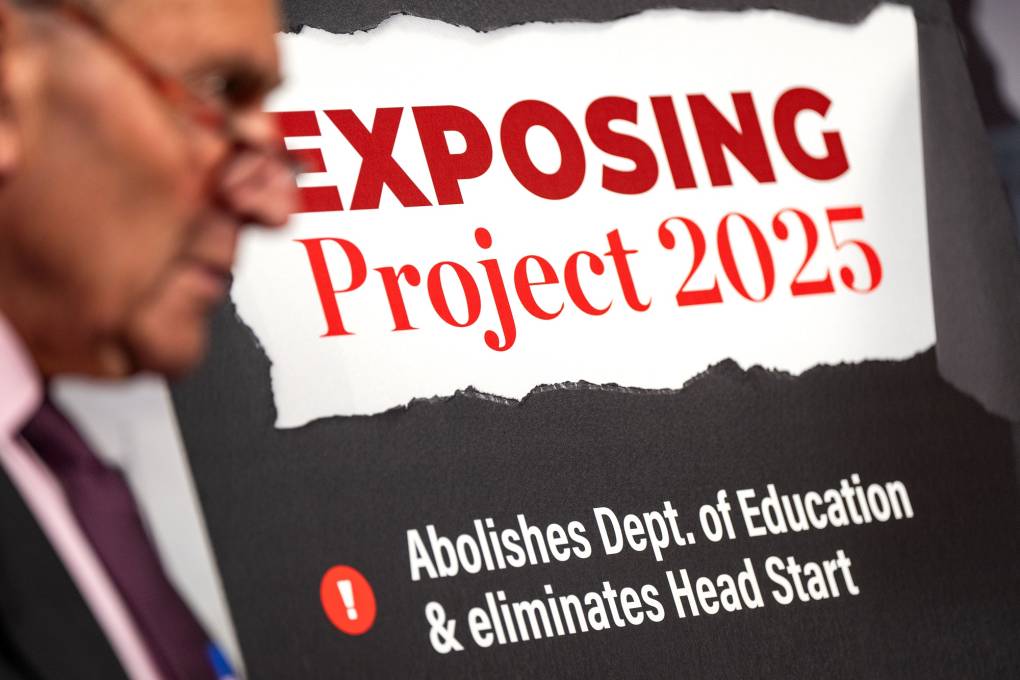
"caption": "A sign that says \"Exposing Project 2025\" is seen during a news conference on \"Project 2025\" at the U.S. Capitol on Sept. 12, 2024, in Washington, DC. The Heritage Foundation's Project 2025 promotes conservative and right-wing policies aimed at reshaping the U.S. government, like consolidating executive power if Donald Trump wins the Presidential election in November. ",
"credit": "Kent Nishimura/Getty Images",
"altTag": null,
"description": null,
"imgSizes": {
"medium": {
"file": "https://cdn.kqed.org/wp-content/uploads/sites/10/2024/09/Project2025Getty1-800x533.jpg",
"width": 800,
"height": 533,
"mimeType": "image/jpeg"
},
"large": {
"file": "https://cdn.kqed.org/wp-content/uploads/sites/10/2024/09/Project2025Getty1-1020x680.jpg",
"width": 1020,
"height": 680,
"mimeType": "image/jpeg"
},
"thumbnail": {
"file": "https://cdn.kqed.org/wp-content/uploads/sites/10/2024/09/Project2025Getty1-160x107.jpg",
"width": 160,
"height": 107,
"mimeType": "image/jpeg"
},
"1536x1536": {
"file": "https://cdn.kqed.org/wp-content/uploads/sites/10/2024/09/Project2025Getty1-1536x1024.jpg",
"width": 1536,
"height": 1024,
"mimeType": "image/jpeg"
},
"post-thumbnail": {
"file": "https://cdn.kqed.org/wp-content/uploads/sites/10/2024/09/Project2025Getty1-672x372.jpg",
"width": 672,
"height": 372,
"mimeType": "image/jpeg"
},
"twentyfourteen-full-width": {
"file": "https://cdn.kqed.org/wp-content/uploads/sites/10/2024/09/Project2025Getty1-1038x576.jpg",
"width": 1038,
"height": 576,
"mimeType": "image/jpeg"
},
"full-width": {
"file": "https://cdn.kqed.org/wp-content/uploads/sites/10/2024/09/Project2025Getty1-1920x1280.jpg",
"width": 1920,
"height": 1280,
"mimeType": "image/jpeg"
},
"kqedFullSize": {
"file": "https://cdn.kqed.org/wp-content/uploads/sites/10/2024/09/Project2025Getty1.jpg",
"width": 2000,
"height": 1333
}
},
"isLoading": false,
"fetchFailed": false
},
"news_12001529": {
"type": "attachments",
"id": "news_12001529",
"meta": {
"index": "attachments_1716263798",
"site": "news",
"id": "12001529",
"found": true
},
"title": "TOPSHOT-US-VOTE-POLITICS-DEMOCRATIC-CONVENTION",
"publishDate": 1724387291,
"status": "inherit",
"parent": 12001412,
"modified": 1724387982,
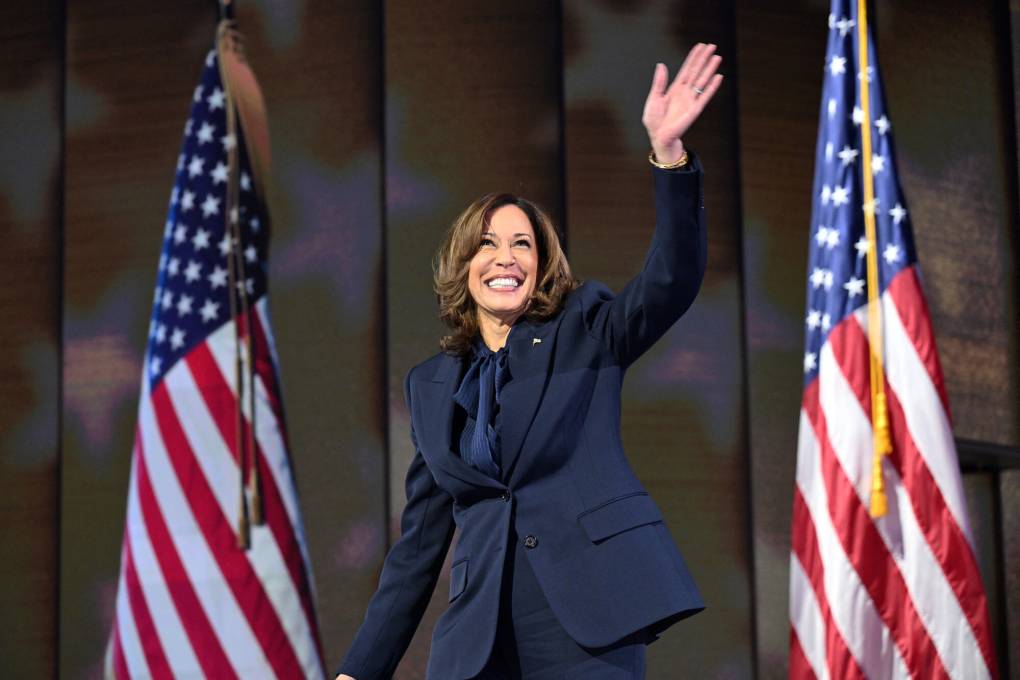
"caption": "Vice President Kamala Harris arrives to formally accept the Democratic Party nomination for president on the last day of the Democratic National Convention on Aug. 22, 2024. ",
"credit": "Saul Loeb/AFP via Getty Images",
"altTag": null,
"description": null,
"imgSizes": {
"medium": {
"file": "https://cdn.kqed.org/wp-content/uploads/sites/10/2024/08/GettyImages-2167179772_qed-800x533.jpg",
"width": 800,
"height": 533,
"mimeType": "image/jpeg"
},
"large": {
"file": "https://cdn.kqed.org/wp-content/uploads/sites/10/2024/08/GettyImages-2167179772_qed-1020x680.jpg",
"width": 1020,
"height": 680,
"mimeType": "image/jpeg"
},
"thumbnail": {
"file": "https://cdn.kqed.org/wp-content/uploads/sites/10/2024/08/GettyImages-2167179772_qed-160x107.jpg",
"width": 160,
"height": 107,
"mimeType": "image/jpeg"
},
"1536x1536": {
"file": "https://cdn.kqed.org/wp-content/uploads/sites/10/2024/08/GettyImages-2167179772_qed-1536x1024.jpg",
"width": 1536,
"height": 1024,
"mimeType": "image/jpeg"
},
"post-thumbnail": {
"file": "https://cdn.kqed.org/wp-content/uploads/sites/10/2024/08/GettyImages-2167179772_qed-672x372.jpg",
"width": 672,
"height": 372,
"mimeType": "image/jpeg"
},
"twentyfourteen-full-width": {
"file": "https://cdn.kqed.org/wp-content/uploads/sites/10/2024/08/GettyImages-2167179772_qed-1038x576.jpg",
"width": 1038,
"height": 576,
"mimeType": "image/jpeg"
},
"full-width": {
"file": "https://cdn.kqed.org/wp-content/uploads/sites/10/2024/08/GettyImages-2167179772_qed-1920x1280.jpg",
"width": 1920,
"height": 1280,
"mimeType": "image/jpeg"
},
"kqedFullSize": {
"file": "https://cdn.kqed.org/wp-content/uploads/sites/10/2024/08/GettyImages-2167179772_qed.jpg",
"width": 2000,
"height": 1333
}
},
"isLoading": false,
"fetchFailed": false
},
"news_12004767": {
"type": "attachments",
"id": "news_12004767",
"meta": {
"index": "attachments_1716263798",
"site": "news",
"id": "12004767",
"found": true
},
"title": "Asian voter voting in polling place",
"publishDate": 1726267383,
"status": "inherit",
"parent": 12004754,
"modified": 1726267404,
"caption": null,
"credit": "Hill Street Studios/Getty Images",
"altTag": null,
"description": null,
"imgSizes": {
"medium": {
"file": "https://cdn.kqed.org/wp-content/uploads/sites/10/2024/09/GettyImages-138711407-800x533.jpg",
"width": 800,
"height": 533,
"mimeType": "image/jpeg"
},
"large": {
"file": "https://cdn.kqed.org/wp-content/uploads/sites/10/2024/09/GettyImages-138711407-1020x680.jpg",
"width": 1020,
"height": 680,
"mimeType": "image/jpeg"
},
"thumbnail": {
"file": "https://cdn.kqed.org/wp-content/uploads/sites/10/2024/09/GettyImages-138711407-160x107.jpg",
"width": 160,
"height": 107,
"mimeType": "image/jpeg"
},
"1536x1536": {
"file": "https://cdn.kqed.org/wp-content/uploads/sites/10/2024/09/GettyImages-138711407-1536x1024.jpg",
"width": 1536,
"height": 1024,
"mimeType": "image/jpeg"
},
"2048x2048": {
"file": "https://cdn.kqed.org/wp-content/uploads/sites/10/2024/09/GettyImages-138711407-2048x1365.jpg",
"width": 2048,
"height": 1365,
"mimeType": "image/jpeg"
},
"post-thumbnail": {
"file": "https://cdn.kqed.org/wp-content/uploads/sites/10/2024/09/GettyImages-138711407-672x372.jpg",
"width": 672,
"height": 372,
"mimeType": "image/jpeg"
},
"twentyfourteen-full-width": {
"file": "https://cdn.kqed.org/wp-content/uploads/sites/10/2024/09/GettyImages-138711407-1038x576.jpg",
"width": 1038,
"height": 576,
"mimeType": "image/jpeg"
},
"full-width": {
"file": "https://cdn.kqed.org/wp-content/uploads/sites/10/2024/09/GettyImages-138711407-1920x1280.jpg",
"width": 1920,
"height": 1280,
"mimeType": "image/jpeg"
},
"kqedFullSize": {
"file": "https://cdn.kqed.org/wp-content/uploads/sites/10/2024/09/GettyImages-138711407.jpg",
"width": 2121,
"height": 1414
}
},
"isLoading": false,
"fetchFailed": false
},
"news_11971091": {
"type": "attachments",
"id": "news_11971091",
"meta": {
"index": "attachments_1716263798",
"site": "news",
"id": "11971091",
"found": true
},
"title": "Donald Trump Delivers Remarks At Nevada Recruitment Event",
"publishDate": 1703793049,
"status": "inherit",
"parent": 0,
"modified": 1726466386,
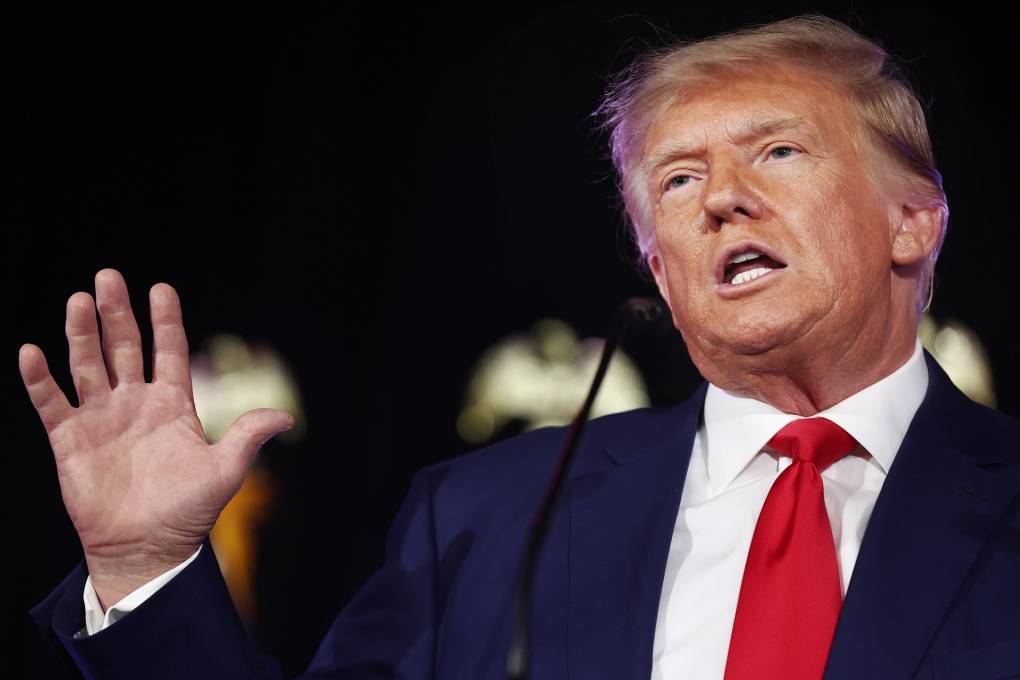
"caption": "Former U.S. President and Republican presidential candidate Donald Trump delivers remarks at a Nevada Republican volunteer recruiting event at Fervent: A Calvary Chapel on July 8, 2023, in Las Vegas. ",
"credit": "Mario Tama/Getty Images",
"altTag": "An older white man with a navy blue suit and red tie gestures as he speaks.",
"description": null,
"imgSizes": {
"medium": {
"file": "https://cdn.kqed.org/wp-content/uploads/sites/10/2023/12/GettyImages-1527386991-800x533.jpg",
"width": 800,
"height": 533,
"mimeType": "image/jpeg"
},
"large": {
"file": "https://cdn.kqed.org/wp-content/uploads/sites/10/2023/12/GettyImages-1527386991-1020x680.jpg",
"width": 1020,
"height": 680,
"mimeType": "image/jpeg"
},
"thumbnail": {
"file": "https://cdn.kqed.org/wp-content/uploads/sites/10/2023/12/GettyImages-1527386991-160x107.jpg",
"width": 160,
"height": 107,
"mimeType": "image/jpeg"
},
"1536x1536": {
"file": "https://cdn.kqed.org/wp-content/uploads/sites/10/2023/12/GettyImages-1527386991-1536x1024.jpg",
"width": 1536,
"height": 1024,
"mimeType": "image/jpeg"
},
"post-thumbnail": {
"file": "https://cdn.kqed.org/wp-content/uploads/sites/10/2023/12/GettyImages-1527386991-672x372.jpg",
"width": 672,
"height": 372,
"mimeType": "image/jpeg"
},
"twentyfourteen-full-width": {
"file": "https://cdn.kqed.org/wp-content/uploads/sites/10/2023/12/GettyImages-1527386991-1038x576.jpg",
"width": 1038,
"height": 576,
"mimeType": "image/jpeg"
},
"kqedFullSize": {
"file": "https://cdn.kqed.org/wp-content/uploads/sites/10/2023/12/GettyImages-1527386991.jpg",
"width": 1920,
"height": 1280
}
},
"isLoading": false,
"fetchFailed": false
},
"news_12004715": {
"type": "attachments",
"id": "news_12004715",
"meta": {
"index": "attachments_1716263798",
"site": "news",
"id": "12004715",
"found": true
},
"title": "240913-TRUMPRALLY-JG-1",
"publishDate": 1726256185,
"status": "inherit",
"parent": 12004699,
"modified": 1726256342,
"caption": "Paul Nguyen of San José chants on the side of El Camino Real in Palo Alto during a rally supporting Donald Trump for President on Friday, Sept. 13, 2024. ",
"credit": "Joseph Geha/KQED",
"altTag": null,
"description": null,
"imgSizes": {
"medium": {
"file": "https://cdn.kqed.org/wp-content/uploads/sites/10/2024/09/240913-TRUMPRALLY-JG-1-800x533.jpg",
"width": 800,
"height": 533,
"mimeType": "image/jpeg"
},
"large": {
"file": "https://cdn.kqed.org/wp-content/uploads/sites/10/2024/09/240913-TRUMPRALLY-JG-1-1020x680.jpg",
"width": 1020,
"height": 680,
"mimeType": "image/jpeg"
},
"thumbnail": {
"file": "https://cdn.kqed.org/wp-content/uploads/sites/10/2024/09/240913-TRUMPRALLY-JG-1-160x107.jpg",
"width": 160,
"height": 107,
"mimeType": "image/jpeg"
},
"1536x1536": {
"file": "https://cdn.kqed.org/wp-content/uploads/sites/10/2024/09/240913-TRUMPRALLY-JG-1-1536x1024.jpg",
"width": 1536,
"height": 1024,
"mimeType": "image/jpeg"
},
"post-thumbnail": {
"file": "https://cdn.kqed.org/wp-content/uploads/sites/10/2024/09/240913-TRUMPRALLY-JG-1-672x372.jpg",
"width": 672,
"height": 372,
"mimeType": "image/jpeg"
},
"twentyfourteen-full-width": {
"file": "https://cdn.kqed.org/wp-content/uploads/sites/10/2024/09/240913-TRUMPRALLY-JG-1-1038x576.jpg",
"width": 1038,
"height": 576,
"mimeType": "image/jpeg"
},
"full-width": {
"file": "https://cdn.kqed.org/wp-content/uploads/sites/10/2024/09/240913-TRUMPRALLY-JG-1-1920x1280.jpg",
"width": 1920,
"height": 1280,
"mimeType": "image/jpeg"
},
"kqedFullSize": {
"file": "https://cdn.kqed.org/wp-content/uploads/sites/10/2024/09/240913-TRUMPRALLY-JG-1.jpg",
"width": 2000,
"height": 1333
}
},
"isLoading": false,
"fetchFailed": false
},
"news_12004548": {
"type": "attachments",
"id": "news_12004548",
"meta": {
"index": "attachments_1716263798",
"site": "news",
"id": "12004548",
"found": true
},
"title": "Election 2024 Trump",
"publishDate": 1726173722,
"status": "inherit",
"parent": 12004546,
"modified": 1726173891,
"caption": "Republican presidential nominee former President Donald Trump departs after speaking at a campaign event at a Central Wisconsin Airport on Sept. 7, 2024, in Mosinee, Wisconsin. Trump is swinging back through California with a fundraiser Thursday evening in Los Angeles and one Friday morning in the San Mateo County town of Woodside — hosted by Tom Siebel, a billionaire relative of Jennifer Siebel Newsom. ",
"credit": "Morry Gash/AP Photo",
"altTag": null,
"description": null,
"imgSizes": {
"medium": {
"file": "https://cdn.kqed.org/wp-content/uploads/sites/10/2024/09/DonaldTrumpCampaignTrailAP1-800x533.jpg",
"width": 800,
"height": 533,
"mimeType": "image/jpeg"
},
"large": {
"file": "https://cdn.kqed.org/wp-content/uploads/sites/10/2024/09/DonaldTrumpCampaignTrailAP1-1020x680.jpg",
"width": 1020,
"height": 680,
"mimeType": "image/jpeg"
},
"thumbnail": {
"file": "https://cdn.kqed.org/wp-content/uploads/sites/10/2024/09/DonaldTrumpCampaignTrailAP1-160x107.jpg",
"width": 160,
"height": 107,
"mimeType": "image/jpeg"
},
"1536x1536": {
"file": "https://cdn.kqed.org/wp-content/uploads/sites/10/2024/09/DonaldTrumpCampaignTrailAP1-1536x1024.jpg",
"width": 1536,
"height": 1024,
"mimeType": "image/jpeg"
},
"post-thumbnail": {
"file": "https://cdn.kqed.org/wp-content/uploads/sites/10/2024/09/DonaldTrumpCampaignTrailAP1-672x372.jpg",
"width": 672,
"height": 372,
"mimeType": "image/jpeg"
},
"twentyfourteen-full-width": {
"file": "https://cdn.kqed.org/wp-content/uploads/sites/10/2024/09/DonaldTrumpCampaignTrailAP1-1038x576.jpg",
"width": 1038,
"height": 576,
"mimeType": "image/jpeg"
},
"full-width": {
"file": "https://cdn.kqed.org/wp-content/uploads/sites/10/2024/09/DonaldTrumpCampaignTrailAP1-1920x1280.jpg",
"width": 1920,
"height": 1280,
"mimeType": "image/jpeg"
},
"kqedFullSize": {
"file": "https://cdn.kqed.org/wp-content/uploads/sites/10/2024/09/DonaldTrumpCampaignTrailAP1.jpg",
"width": 2000,
"height": 1333
}
},
"isLoading": false,
"fetchFailed": false
},
"news_11628746": {
"type": "attachments",
"id": "news_11628746",
"meta": {
"index": "attachments_1716263798",
"site": "news",
"id": "11628746",
"found": true
},
"parent": 11628745,
"imgSizes": {
"small": {
"file": "https://ww2.kqed.org/app/uploads/sites/10/2017/11/gettyimages-633867894_wide-e7e50676b602d043d45f3b34ff18568758f6cebe-520x293.jpg",
"width": 520,
"mimeType": "image/jpeg",
"height": 293
},
"twentyfourteen-full-width": {
"file": "https://ww2.kqed.org/app/uploads/sites/10/2017/11/gettyimages-633867894_wide-e7e50676b602d043d45f3b34ff18568758f6cebe-1038x576.jpg",
"width": 1038,
"mimeType": "image/jpeg",
"height": 576
},
"thumbnail": {
"file": "https://ww2.kqed.org/app/uploads/sites/10/2017/11/gettyimages-633867894_wide-e7e50676b602d043d45f3b34ff18568758f6cebe-160x90.jpg",
"width": 160,
"mimeType": "image/jpeg",
"height": 90
},
"fd-sm": {
"file": "https://ww2.kqed.org/app/uploads/sites/10/2017/11/gettyimages-633867894_wide-e7e50676b602d043d45f3b34ff18568758f6cebe-960x540.jpg",
"width": 960,
"mimeType": "image/jpeg",
"height": 540
},
"post-thumbnail": {
"file": "https://ww2.kqed.org/app/uploads/sites/10/2017/11/gettyimages-633867894_wide-e7e50676b602d043d45f3b34ff18568758f6cebe-672x372.jpg",
"width": 672,
"mimeType": "image/jpeg",
"height": 372
},
"xsmall": {
"file": "https://ww2.kqed.org/app/uploads/sites/10/2017/11/gettyimages-633867894_wide-e7e50676b602d043d45f3b34ff18568758f6cebe-375x211.jpg",
"width": 375,
"mimeType": "image/jpeg",
"height": 211
},
"kqedFullSize": {
"file": "https://ww2.kqed.org/app/uploads/sites/10/2017/11/gettyimages-633867894_wide-e7e50676b602d043d45f3b34ff18568758f6cebe-e1510069404712.jpg",
"width": 1920,
"height": 1080
},
"large": {
"file": "https://ww2.kqed.org/app/uploads/sites/10/2017/11/gettyimages-633867894_wide-e7e50676b602d043d45f3b34ff18568758f6cebe-1020x574.jpg",
"width": 1020,
"mimeType": "image/jpeg",
"height": 574
},
"xlarge": {
"file": "https://ww2.kqed.org/app/uploads/sites/10/2017/11/gettyimages-633867894_wide-e7e50676b602d043d45f3b34ff18568758f6cebe-1180x664.jpg",
"width": 1180,
"mimeType": "image/jpeg",
"height": 664
},
"guest-author-50": {
"file": "https://ww2.kqed.org/app/uploads/sites/10/2017/11/gettyimages-633867894_wide-e7e50676b602d043d45f3b34ff18568758f6cebe-50x50.jpg",
"width": 50,
"mimeType": "image/jpeg",
"height": 50
},
"guest-author-96": {
"file": "https://ww2.kqed.org/app/uploads/sites/10/2017/11/gettyimages-633867894_wide-e7e50676b602d043d45f3b34ff18568758f6cebe-96x96.jpg",
"width": 96,
"mimeType": "image/jpeg",
"height": 96
},
"medium": {
"file": "https://ww2.kqed.org/app/uploads/sites/10/2017/11/gettyimages-633867894_wide-e7e50676b602d043d45f3b34ff18568758f6cebe-800x450.jpg",
"width": 800,
"mimeType": "image/jpeg",
"height": 450
},
"guest-author-64": {
"file": "https://ww2.kqed.org/app/uploads/sites/10/2017/11/gettyimages-633867894_wide-e7e50676b602d043d45f3b34ff18568758f6cebe-64x64.jpg",
"width": 64,
"mimeType": "image/jpeg",
"height": 64
},
"guest-author-32": {
"file": "https://ww2.kqed.org/app/uploads/sites/10/2017/11/gettyimages-633867894_wide-e7e50676b602d043d45f3b34ff18568758f6cebe-32x32.jpg",
"width": 32,
"mimeType": "image/jpeg",
"height": 32
},
"fd-lrg": {
"file": "https://ww2.kqed.org/app/uploads/sites/10/2017/11/gettyimages-633867894_wide-e7e50676b602d043d45f3b34ff18568758f6cebe-1920x1080.jpg",
"width": 1920,
"mimeType": "image/jpeg",
"height": 1080
},
"fd-med": {
"file": "https://ww2.kqed.org/app/uploads/sites/10/2017/11/gettyimages-633867894_wide-e7e50676b602d043d45f3b34ff18568758f6cebe-1180x664.jpg",
"width": 1180,
"mimeType": "image/jpeg",
"height": 664
},
"full-width": {
"file": "https://ww2.kqed.org/app/uploads/sites/10/2017/11/gettyimages-633867894_wide-e7e50676b602d043d45f3b34ff18568758f6cebe-1920x1080.jpg",
"width": 1920,
"mimeType": "image/jpeg",
"height": 1080
},
"detail": {
"file": "https://ww2.kqed.org/app/uploads/sites/10/2017/11/gettyimages-633867894_wide-e7e50676b602d043d45f3b34ff18568758f6cebe-150x150.jpg",
"width": 150,
"mimeType": "image/jpeg",
"height": 150
},
"guest-author-128": {
"file": "https://ww2.kqed.org/app/uploads/sites/10/2017/11/gettyimages-633867894_wide-e7e50676b602d043d45f3b34ff18568758f6cebe-128x128.jpg",
"width": 128,
"mimeType": "image/jpeg",
"height": 128
},
"xxsmall": {
"file": "https://ww2.kqed.org/app/uploads/sites/10/2017/11/gettyimages-633867894_wide-e7e50676b602d043d45f3b34ff18568758f6cebe-240x135.jpg",
"width": 240,
"mimeType": "image/jpeg",
"height": 135
}
},
"publishDate": 1510069197,
"modified": 1510069428,
"caption": "Taylor Swift performing in February in Houston.",
"description": "Taylor Swift performing in February in Houston.",
"title": "gettyimages-633867894_wide-e7e50676b602d043d45f3b34ff18568758f6cebe",
"credit": "John Shearer/Getty Images for DIRECTV",
"status": "inherit",
"isLoading": false,
"fetchFailed": false
},
"news_12003496": {
"type": "attachments",
"id": "news_12003496",
"meta": {
"index": "attachments_1716263798",
"site": "news",
"id": "12003496",
"found": true
},
"title": "Trump v Harris debate",
"publishDate": 1725666531,
"status": "inherit",
"parent": 12003480,
"modified": 1725666689,
"caption": "Vice President Kamala Harris and former President Donald J. Trump will participate in a televised debate on ABC News on Tuesday, Sept. 10. ",
"credit": null,
"altTag": null,
"description": "Vice President Kamala Harris and former President Donald J. Trump will participate in a televised debate on ABC News on Tuesday, Sept. 10. ",
"imgSizes": {
"medium": {
"file": "https://cdn.kqed.org/wp-content/uploads/sites/10/2024/09/Trump-v-Harris-debate-800x534.jpg",
"width": 800,
"height": 534,
"mimeType": "image/jpeg"
},
"large": {
"file": "https://cdn.kqed.org/wp-content/uploads/sites/10/2024/09/Trump-v-Harris-debate-1020x681.jpg",
"width": 1020,
"height": 681,
"mimeType": "image/jpeg"
},
"thumbnail": {
"file": "https://cdn.kqed.org/wp-content/uploads/sites/10/2024/09/Trump-v-Harris-debate-160x107.jpg",
"width": 160,
"height": 107,
"mimeType": "image/jpeg"
},
"post-thumbnail": {
"file": "https://cdn.kqed.org/wp-content/uploads/sites/10/2024/09/Trump-v-Harris-debate-672x372.jpg",
"width": 672,
"height": 372,
"mimeType": "image/jpeg"
},
"twentyfourteen-full-width": {
"file": "https://cdn.kqed.org/wp-content/uploads/sites/10/2024/09/Trump-v-Harris-debate-1038x576.jpg",
"width": 1038,
"height": 576,
"mimeType": "image/jpeg"
},
"kqedFullSize": {
"file": "https://cdn.kqed.org/wp-content/uploads/sites/10/2024/09/Trump-v-Harris-debate.jpg",
"width": 1079,
"height": 720
}
},
"isLoading": false,
"fetchFailed": false
},
"news_12001530": {
"type": "attachments",
"id": "news_12001530",
"meta": {
"index": "attachments_1716263798",
"site": "news",
"id": "12001530",
"found": true
},
"title": "US-VOTE-POLITICS-DEMOCRATIC-CONVENTION",
"publishDate": 1724387311,
"status": "inherit",
"parent": 12001412,
"modified": 1724388125,
"caption": "Vice President Kamala Harris waves to the crowd at the Democratic National Convention on Aug. 22, 2024. ",
"credit": "Alex Wroblewski/AFP via Getty Images",
"altTag": null,
"description": null,
"imgSizes": {
"medium": {
"file": "https://cdn.kqed.org/wp-content/uploads/sites/10/2024/08/GettyImages-2167179824_qed-800x530.jpg",
"width": 800,
"height": 530,
"mimeType": "image/jpeg"
},
"large": {
"file": "https://cdn.kqed.org/wp-content/uploads/sites/10/2024/08/GettyImages-2167179824_qed-1020x676.jpg",
"width": 1020,
"height": 676,
"mimeType": "image/jpeg"
},
"thumbnail": {
"file": "https://cdn.kqed.org/wp-content/uploads/sites/10/2024/08/GettyImages-2167179824_qed-160x106.jpg",
"width": 160,
"height": 106,
"mimeType": "image/jpeg"
},
"1536x1536": {
"file": "https://cdn.kqed.org/wp-content/uploads/sites/10/2024/08/GettyImages-2167179824_qed-1536x1018.jpg",
"width": 1536,
"height": 1018,
"mimeType": "image/jpeg"
},
"post-thumbnail": {
"file": "https://cdn.kqed.org/wp-content/uploads/sites/10/2024/08/GettyImages-2167179824_qed-672x372.jpg",
"width": 672,
"height": 372,
"mimeType": "image/jpeg"
},
"twentyfourteen-full-width": {
"file": "https://cdn.kqed.org/wp-content/uploads/sites/10/2024/08/GettyImages-2167179824_qed-1038x576.jpg",
"width": 1038,
"height": 576,
"mimeType": "image/jpeg"
},
"full-width": {
"file": "https://cdn.kqed.org/wp-content/uploads/sites/10/2024/08/GettyImages-2167179824_qed-1920x1272.jpg",
"width": 1920,
"height": 1272,
"mimeType": "image/jpeg"
},
"kqedFullSize": {
"file": "https://cdn.kqed.org/wp-content/uploads/sites/10/2024/08/GettyImages-2167179824_qed.jpg",
"width": 2000,
"height": 1325
}
},
"isLoading": false,
"fetchFailed": false
},
"news_11996849": {
"type": "attachments",
"id": "news_11996849",
"meta": {
"index": "attachments_1716263798",
"site": "news",
"id": "11996849",
"found": true
},
"title": "San Francisco Ballot Initiative Calls For Legalizing Prostitution",
"publishDate": 1721692206,
"status": "inherit",
"parent": 0,
"modified": 1724189933,
"caption": "Then San Francisco District Attorney Kamala Harris speaks to supporters before a press conference in San Francisco on Oct. 29, 2008. ",
"credit": "Justin Sullivan/Getty Images",
"altTag": null,
"description": null,
"imgSizes": {
"medium": {
"file": "https://cdn.kqed.org/wp-content/uploads/sites/10/2024/07/GETTYIMAGES-83480574-KQED-800x533.jpg",
"width": 800,
"height": 533,
"mimeType": "image/jpeg"
},
"large": {
"file": "https://cdn.kqed.org/wp-content/uploads/sites/10/2024/07/GETTYIMAGES-83480574-KQED-1020x680.jpg",
"width": 1020,
"height": 680,
"mimeType": "image/jpeg"
},
"thumbnail": {
"file": "https://cdn.kqed.org/wp-content/uploads/sites/10/2024/07/GETTYIMAGES-83480574-KQED-160x107.jpg",
"width": 160,
"height": 107,
"mimeType": "image/jpeg"
},
"1536x1536": {
"file": "https://cdn.kqed.org/wp-content/uploads/sites/10/2024/07/GETTYIMAGES-83480574-KQED-1536x1024.jpg",
"width": 1536,
"height": 1024,
"mimeType": "image/jpeg"
},
"post-thumbnail": {
"file": "https://cdn.kqed.org/wp-content/uploads/sites/10/2024/07/GETTYIMAGES-83480574-KQED-672x372.jpg",
"width": 672,
"height": 372,
"mimeType": "image/jpeg"
},
"twentyfourteen-full-width": {
"file": "https://cdn.kqed.org/wp-content/uploads/sites/10/2024/07/GETTYIMAGES-83480574-KQED-1038x576.jpg",
"width": 1038,
"height": 576,
"mimeType": "image/jpeg"
},
"full-width": {
"file": "https://cdn.kqed.org/wp-content/uploads/sites/10/2024/07/GETTYIMAGES-83480574-KQED-1920x1280.jpg",
"width": 1920,
"height": 1280,
"mimeType": "image/jpeg"
},
"kqedFullSize": {
"file": "https://cdn.kqed.org/wp-content/uploads/sites/10/2024/07/GETTYIMAGES-83480574-KQED.jpg",
"width": 2000,
"height": 1333
}
},
"isLoading": false,
"fetchFailed": false
},
"news_12000838": {
"type": "attachments",
"id": "news_12000838",
"meta": {
"index": "attachments_1716263798",
"site": "news",
"id": "12000838",
"found": true
},
"title": "Vice President Kamala Harris Continues Her \"Fight For Reproductive Freedoms\" Tour In San Jose, CA",
"publishDate": 1724111358,
"status": "inherit",
"parent": 12000702,
"modified": 1724113118,
"caption": "U.S. Sen. Laphonza Butler (D-CA) speaks during a reproductive rights event with Vice President Kamala Harris at the Mexican Heritage Plaza on Jan. 29, 2024, in San José, California.",
"credit": "Justin Sullivan/Getty Images",
"altTag": null,
"description": null,
"imgSizes": {
"medium": {
"file": "https://cdn.kqed.org/wp-content/uploads/sites/10/2024/08/Laphonza-Butler-Getty-800x571.jpg",
"width": 800,
"height": 571,
"mimeType": "image/jpeg"
},
"large": {
"file": "https://cdn.kqed.org/wp-content/uploads/sites/10/2024/08/Laphonza-Butler-Getty-1020x728.jpg",
"width": 1020,
"height": 728,
"mimeType": "image/jpeg"
},
"thumbnail": {
"file": "https://cdn.kqed.org/wp-content/uploads/sites/10/2024/08/Laphonza-Butler-Getty-160x114.jpg",
"width": 160,
"height": 114,
"mimeType": "image/jpeg"
},
"1536x1536": {
"file": "https://cdn.kqed.org/wp-content/uploads/sites/10/2024/08/Laphonza-Butler-Getty-1536x1097.jpg",
"width": 1536,
"height": 1097,
"mimeType": "image/jpeg"
},
"post-thumbnail": {
"file": "https://cdn.kqed.org/wp-content/uploads/sites/10/2024/08/Laphonza-Butler-Getty-672x372.jpg",
"width": 672,
"height": 372,
"mimeType": "image/jpeg"
},
"twentyfourteen-full-width": {
"file": "https://cdn.kqed.org/wp-content/uploads/sites/10/2024/08/Laphonza-Butler-Getty-1038x576.jpg",
"width": 1038,
"height": 576,
"mimeType": "image/jpeg"
},
"full-width": {
"file": "https://cdn.kqed.org/wp-content/uploads/sites/10/2024/08/Laphonza-Butler-Getty-1920x1371.jpg",
"width": 1920,
"height": 1371,
"mimeType": "image/jpeg"
},
"kqedFullSize": {
"file": "https://cdn.kqed.org/wp-content/uploads/sites/10/2024/08/Laphonza-Butler-Getty.jpg",
"width": 2000,
"height": 1428
}
},
"isLoading": false,
"fetchFailed": false
}
},
"audioPlayerReducer": {
"postId": "stream_live",
"isPaused": true,
"isPlaying": false,
"pfsActive": false,
"pledgeModalIsOpen": true,
"playerDrawerIsOpen": false,
"liveAudioPlayStartedAt": 0,
"liveAudioPlayContext": ""
},
"authorsReducer": {
"byline_news_12008143": {
"type": "authors",
"id": "byline_news_12008143",
"meta": {
"override": true
},
"slug": "byline_news_12008143",
"name": "\u003ca href=\"https://calmatters.org/author/colin-lecher/\">Colin Lecher\u003c/a> and \u003ca href=\"https://calmatters.org/author/tomas-apodaca/\">Tomas Apodaca\u003c/a>, CalMatters",
"isLoading": false
},
"byline_news_12004810": {
"type": "authors",
"id": "byline_news_12004810",
"meta": {
"override": true
},
"slug": "byline_news_12004810",
"name": "\u003ca href=\"https://calmatters.org/author/yue-yu\">Yue Stella Yu, \u003c/a>CalMatters",
"isLoading": false
},
"gmarzorati": {
"type": "authors",
"id": "227",
"meta": {
"index": "authors_1716337520",
"id": "227",
"found": true
},
"name": "Guy Marzorati",
"firstName": "Guy",
"lastName": "Marzorati",
"slug": "gmarzorati",
"email": "gmarzorati@KQED.org",
"display_author_email": true,
"staff_mastheads": [
"news"
],
"title": "Correspondent",
"bio": "Guy Marzorati is a correspondent on KQED's California Politics and Government Desk, based in San Jose. A graduate of Santa Clara University, Guy joined KQED in 2013. He reports on state and local politics and produces KQED's digital voter guide.",
"avatar": "https://secure.gravatar.com/avatar/e7038b8dbfd55b104369b76b1cd0b9de?s=600&d=blank&r=g",
"twitter": "guymarzorati",
"facebook": null,
"instagram": null,
"linkedin": null,
"sites": [
{
"site": "",
"roles": [
"editor"
]
},
{
"site": "news",
"roles": [
"editor"
]
},
{
"site": "science",
"roles": [
"editor"
]
},
{
"site": "forum",
"roles": [
"editor"
]
},
{
"site": "elections",
"roles": [
"editor"
]
},
{
"site": "liveblog",
"roles": [
"editor"
]
}
],
"headData": {
"title": "Guy Marzorati | KQED",
"description": "Correspondent",
"ogImgSrc": "https://secure.gravatar.com/avatar/e7038b8dbfd55b104369b76b1cd0b9de?s=600&d=blank&r=g",
"twImgSrc": "https://secure.gravatar.com/avatar/e7038b8dbfd55b104369b76b1cd0b9de?s=600&d=blank&r=g"
},
"isLoading": false,
"link": "/author/gmarzorati"
},
"scottshafer": {
"type": "authors",
"id": "255",
"meta": {
"index": "authors_1716337520",
"id": "255",
"found": true
},
"name": "Scott Shafer",
"firstName": "Scott",
"lastName": "Shafer",
"slug": "scottshafer",
"email": "sshafer@kqed.org",
"display_author_email": false,
"staff_mastheads": [
"news"
],
"title": "KQED Contributor",
"bio": "Scott Shafer is a senior editor with the KQED Politics and Government desk. He is co-host of Political Breakdown, the award-winning radio show and podcast with a personal take on the world of politics. Scott came to KQED in 1998 to host the statewide\u003cem> California Report\u003c/em>. Prior to that he had extended stints in politics and government\u003cem>.\u003c/em> He uses that inside experience at KQED in his, reporting, hosting and analysis for the politics desk. Scott collaborated \u003cem>Political Breakdown a\u003c/em>nd on \u003cem>The Political Mind of Jerry Brown, \u003c/em>an eight-part series about the life and extraordinary political career of the former governor. For fun, he plays water polo with the San Francisco Tsunami.",
"avatar": "https://secure.gravatar.com/avatar/a62ebae45b79d7aed1a39a0e3bf68104?s=600&d=blank&r=g",
"twitter": "scottshafer",
"bluesky": null,
"facebook": null,
"instagram": null,
"linkedin": null,
"sites": [
{
"site": "news",
"roles": [
"editor"
]
},
{
"site": "stateofhealth",
"roles": [
"author"
]
},
{
"site": "science",
"roles": [
"author"
]
},
{
"site": "forum",
"roles": [
"subscriber"
]
},
{
"site": "liveblog",
"roles": [
"author"
]
}
],
"headData": {
"title": "Scott Shafer | KQED",
"description": "KQED Contributor",
"ogImgSrc": "https://secure.gravatar.com/avatar/a62ebae45b79d7aed1a39a0e3bf68104?s=600&d=blank&r=g",
"twImgSrc": "https://secure.gravatar.com/avatar/a62ebae45b79d7aed1a39a0e3bf68104?s=600&d=blank&r=g"
},
"isLoading": false,
"link": "/author/scottshafer"
},
"shossaini": {
"type": "authors",
"id": "3214",
"meta": {
"index": "authors_1716337520",
"id": "3214",
"found": true
},
"name": "Sara Hossaini",
"firstName": "Sara",
"lastName": "Hossaini",
"slug": "shossaini",
"email": "shossaini@kqed.org",
"display_author_email": true,
"staff_mastheads": [
"news"
],
"title": "KQED Reporter",
"bio": "Sara Hossaini came to general assignment reporting at KQED in 2013 after two winters reporting at Wyoming Public Radio. She holds a bachelor's degree in broadcast journalism from the University of Nebraska-Lincoln. Her radio romance began after a bitter breakup with documentary film (Ok, maybe it's still complicated). Her first simultaneous jobs in San Francisco were as Associate Producer on a PBS film series through the Center for Asian American Media and as a butler. She likes to trot, plot and make things with her hands.",
"avatar": "https://secure.gravatar.com/avatar/060e9f56b9554e17942e89f413242774?s=600&d=blank&r=g",
"twitter": "mshossaini",
"facebook": null,
"instagram": null,
"linkedin": null,
"sites": [
{
"site": "news",
"roles": [
"author"
]
},
{
"site": "stateofhealth",
"roles": [
"author"
]
}
],
"headData": {
"title": "Sara Hossaini | KQED",
"description": "KQED Reporter",
"ogImgSrc": "https://secure.gravatar.com/avatar/060e9f56b9554e17942e89f413242774?s=600&d=blank&r=g",
"twImgSrc": "https://secure.gravatar.com/avatar/060e9f56b9554e17942e89f413242774?s=600&d=blank&r=g"
},
"isLoading": false,
"link": "/author/shossaini"
},
"mlagos": {
"type": "authors",
"id": "3239",
"meta": {
"index": "authors_1716337520",
"id": "3239",
"found": true
},
"name": "Marisa Lagos",
"firstName": "Marisa",
"lastName": "Lagos",
"slug": "mlagos",
"email": "mlagos@kqed.org",
"display_author_email": false,
"staff_mastheads": [
"news"
],
"title": "KQED Contributor",
"bio": "Marisa Lagos is a correspondent for KQED’s California Politics and Government Desk and co-hosts the award-winning show and podcast, Political Breakdown. At KQED, Lagos also conducts reporting, analysis and investigations into state, local and national politics for radio, TV, online and onstage. In 2022, she and co-host, Scott Shafer, moderated the only gubernatorial debate in California. In 2020, the \u003ci>Washington Post\u003c/i> named her one of the top political journalists in California; she was nominated for a Peabody and won several other awards for her work investigating the 2017 California wildfires. She has worked at the \u003ci>San Francisco Chronicle\u003c/i>, \u003ci>San Francisco Examiner\u003c/i> and \u003ci>Los Angeles Times\u003c/i>. A UC Santa Barbara graduate, she lives in San Francisco with her two sons and husband.",
"avatar": "https://secure.gravatar.com/avatar/a261a0d3696fc066871ef96b85b5e7d2?s=600&d=blank&r=g",
"twitter": "@mlagos",
"facebook": null,
"instagram": null,
"linkedin": null,
"sites": [
{
"site": "arts",
"roles": [
"author"
]
},
{
"site": "news",
"roles": [
"editor"
]
},
{
"site": "science",
"roles": [
"editor"
]
},
{
"site": "forum",
"roles": [
"author"
]
},
{
"site": "liveblog",
"roles": [
"author"
]
}
],
"headData": {
"title": "Marisa Lagos | KQED",
"description": "KQED Contributor",
"ogImgSrc": "https://secure.gravatar.com/avatar/a261a0d3696fc066871ef96b85b5e7d2?s=600&d=blank&r=g",
"twImgSrc": "https://secure.gravatar.com/avatar/a261a0d3696fc066871ef96b85b5e7d2?s=600&d=blank&r=g"
},
"isLoading": false,
"link": "/author/mlagos"
},
"nkhan": {
"type": "authors",
"id": "11867",
"meta": {
"index": "authors_1716337520",
"id": "11867",
"found": true
},
"name": "Nisa Khan",
"firstName": "Nisa",
"lastName": "Khan",
"slug": "nkhan",
"email": "nkhan@kqed.org",
"display_author_email": false,
"staff_mastheads": [],
"title": "KQED Contributor",
"bio": "Nisa Khan is a reporter for KQED's Audience News Desk. She was formerly a data reporter at Michigan Radio. She earned a Bachelor of Science in Information from the University of Michigan and a Master of Arts in Communication from Stanford University.",
"avatar": "https://secure.gravatar.com/avatar/8720459eef081ff64582b3506b124d58523e80e120704a0cbd9892533c914991?s=600&d=blank&r=g",
"twitter": "mnisakhan",
"bluesky": null,
"facebook": null,
"instagram": null,
"linkedin": null,
"sites": [
{
"site": "arts",
"roles": [
"editor"
]
},
{
"site": "news",
"roles": [
"editor"
]
},
{
"site": "science",
"roles": [
"editor",
"author"
]
},
{
"site": "forum",
"roles": [
"editor"
]
},
{
"site": "liveblog",
"roles": [
"contributor"
]
}
],
"headData": {
"title": "Nisa Khan | KQED",
"description": "KQED Contributor",
"ogImgSrc": "https://secure.gravatar.com/avatar/8720459eef081ff64582b3506b124d58523e80e120704a0cbd9892533c914991?s=600&d=blank&r=g",
"twImgSrc": "https://secure.gravatar.com/avatar/8720459eef081ff64582b3506b124d58523e80e120704a0cbd9892533c914991?s=600&d=blank&r=g"
},
"isLoading": false,
"link": "/author/nkhan"
},
"naltenberg": {
"type": "authors",
"id": "11896",
"meta": {
"index": "authors_1716337520",
"id": "11896",
"found": true
},
"name": "Nik Altenberg",
"firstName": "Nik",
"lastName": "Altenberg",
"slug": "naltenberg",
"email": "naltenberg@kqed.org",
"display_author_email": false,
"staff_mastheads": [],
"title": "KQED Contributor",
"bio": "Nik Altenberg is an on-call reporter for KQED and a copy editor and fact checker for Santa Cruz Local. Nik’s reporting interests include policing, public health, environment, immigration, housing and the places where these issues intersect.",
"avatar": "https://secure.gravatar.com/avatar/e391b3a18ce4a53a7ca3f3065c74418b?s=600&d=blank&r=g",
"twitter": null,
"facebook": null,
"instagram": "https://www.instagram.com/nikaltenberg/",
"linkedin": null,
"sites": [
{
"site": "news",
"roles": []
}
],
"headData": {
"title": "Nik Altenberg | KQED",
"description": "KQED Contributor",
"ogImgSrc": "https://secure.gravatar.com/avatar/e391b3a18ce4a53a7ca3f3065c74418b?s=600&d=blank&r=g",
"twImgSrc": "https://secure.gravatar.com/avatar/e391b3a18ce4a53a7ca3f3065c74418b?s=600&d=blank&r=g"
},
"isLoading": false,
"link": "/author/naltenberg"
},
"jgeha": {
"type": "authors",
"id": "11906",
"meta": {
"index": "authors_1716337520",
"id": "11906",
"found": true
},
"name": "Joseph Geha",
"firstName": "Joseph",
"lastName": "Geha",
"slug": "jgeha",
"email": "jgeha@kqed.org",
"display_author_email": false,
"staff_mastheads": [
"news",
"science"
],
"title": "KQED Contributor",
"bio": null,
"avatar": "https://secure.gravatar.com/avatar/ea84d2b6dd93d6369d453edf19dd583f117cd1759d2d9c9c92f9de77017354fe?s=600&d=blank&r=g",
"twitter": null,
"bluesky": null,
"facebook": null,
"instagram": null,
"linkedin": null,
"sites": [
{
"site": "news",
"roles": [
"editor"
]
},
{
"site": "liveblog",
"roles": [
"author"
]
}
],
"headData": {
"title": "Joseph Geha | KQED",
"description": "KQED Contributor",
"ogImgSrc": "https://secure.gravatar.com/avatar/ea84d2b6dd93d6369d453edf19dd583f117cd1759d2d9c9c92f9de77017354fe?s=600&d=blank&r=g",
"twImgSrc": "https://secure.gravatar.com/avatar/ea84d2b6dd93d6369d453edf19dd583f117cd1759d2d9c9c92f9de77017354fe?s=600&d=blank&r=g"
},
"isLoading": false,
"link": "/author/jgeha"
},
"kdebenedetti": {
"type": "authors",
"id": "11913",
"meta": {
"index": "authors_1716337520",
"id": "11913",
"found": true
},
"name": "Katie DeBenedetti",
"firstName": "Katie",
"lastName": "DeBenedetti",
"slug": "kdebenedetti",
"email": "kdebenedetti@kqed.org",
"display_author_email": false,
"staff_mastheads": [
"news",
"science"
],
"title": "KQED Contributor",
"bio": "Katie DeBenedetti is a digital reporter covering daily news for the Express Desk. Prior to joining KQED as a culture reporting intern in January 2024, she covered education and city government for the Napa Valley Register.",
"avatar": "https://secure.gravatar.com/avatar/6e31073cb8f7e4214ab03f42771d0f45?s=600&d=blank&r=g",
"twitter": null,
"facebook": null,
"instagram": null,
"linkedin": null,
"sites": [
{
"site": "news",
"roles": [
"author"
]
},
{
"site": "science",
"roles": [
"author"
]
},
{
"site": "liveblog",
"roles": [
"author"
]
}
],
"headData": {
"title": "Katie DeBenedetti | KQED",
"description": "KQED Contributor",
"ogImgSrc": "https://secure.gravatar.com/avatar/6e31073cb8f7e4214ab03f42771d0f45?s=600&d=blank&r=g",
"twImgSrc": "https://secure.gravatar.com/avatar/6e31073cb8f7e4214ab03f42771d0f45?s=600&d=blank&r=g"
},
"isLoading": false,
"link": "/author/kdebenedetti"
}
},
"pagesReducer": {
"news_tag_presidential-election": {
"type": "terms",
"id": "news_29111",
"meta": {
"index": "terms_1716263798",
"site": "news",
"id": "29111",
"score": 9.893822
},
"name": "Presidential Election",
"slug": "presidential-election",
"taxonomy": "tag",
"description": null,
"featImg": null,
"headData": {
"title": "Presidential Election Archives | KQED News",
"description": null,
"ogTitle": null,
"ogDescription": null,
"ogImgId": null,
"twTitle": null,
"twDescription": null,
"twImgId": null
},
"ttid": 29128,
"isLoading": false,
"title": "Presidential Election",
"pageMeta": {
"site": "news",
"WpPageTemplate": "page-topic-editorial",
"currentPage": 4
},
"blocks": [
{
"blockName": "kqed/post-list",
"attrs": {
"layout": "cardArticle2",
"query": "posts/news?tag=presidential-election",
"seeMore": false,
"paginated": true,
"page": 4
}
},
{
"blockName": "kqed/ad"
}
]
}
},
"pfsSessionReducer": {},
"postsReducer": {
"stream_live": {
"type": "live",
"id": "stream_live",
"audioUrl": "https://streams.kqed.org/kqedradio",
"title": "Live Stream",
"excerpt": "Live Stream information currently unavailable.",
"link": "/radio",
"featImg": "",
"label": {
"name": "KQED Live",
"link": "/"
}
},
"stream_kqedNewscast": {
"type": "posts",
"id": "stream_kqedNewscast",
"audioUrl": "https://www.kqed.org/.stream/anon/radio/RDnews/newscast.mp3?_=1",
"title": "KQED Newscast",
"featImg": "",
"label": {
"name": "88.5 FM",
"link": "/"
}
},
"news_12008143": {
"type": "posts",
"id": "news_12008143",
"meta": {
"index": "posts_1716263798",
"site": "news",
"id": "12008143",
"score": null,
"sort": [
1728241241000
]
},
"guestAuthors": [],
"slug": "how-meta-brings-in-millions-off-political-violence",
"title": "How Meta Brings in Millions Off Political Violence",
"publishDate": 1728241241,
"format": "standard",
"headTitle": "How Meta Brings in Millions Off Political Violence | KQED",
"labelTerm": {
"term": 18481,
"site": "news"
},
"content": "\u003cp>After the attempted assassination of Donald Trump in July, the merchandise started showing up on Facebook.\u003c/p>\n\u003cp>Trump, fist in the air, face bloodied from a bullet, appeared on everything. Coffee mugs. Hawaiian shirts. Trading cards. Commemorative coins. Heart ornaments. Ads for these products used images captured at the scene by \u003ca href=\"https://www.nytimes.com/2024/07/14/arts/design/trump-photo-raised-fist.html\">Doug Mills\u003c/a> for the New York Times and \u003ca href=\"https://www.theatlantic.com/politics/archive/2024/07/trump-assassination-attempt-evan-vucci/679011/\">Evan Vucci\u003c/a> for the Associated Press, showing Trump yelling “fight” after the shooting. The Trump campaign itself even \u003ca href=\"https://www.facebook.com/ads/library/?id=513229838128846\">offered some gear\u003c/a> commemorating his survival.\u003c/p>\n\u003cp>As the Secret Service drew scrutiny and law enforcement searched for a motive, online advertisers saw a business opportunity in the moment, pumping out Facebook ads to supporters hungry for merch.\u003c/p>\n\u003cfigure id=\"attachment_12008148\" class=\"wp-caption alignright\" style=\"max-width: 800px\">\u003cimg loading=\"lazy\" decoding=\"async\" class=\"size-medium wp-image-12008148\" src=\"https://cdn.kqed.org/wp-content/uploads/sites/10/2024/10/100324-FB-AD-CM-TM-SCREENSHOT-1-copy-800x1298.jpg\" alt=\"\" width=\"800\" height=\"1298\" srcset=\"https://cdn.kqed.org/wp-content/uploads/sites/10/2024/10/100324-FB-AD-CM-TM-SCREENSHOT-1-copy-800x1298.jpg 800w, https://cdn.kqed.org/wp-content/uploads/sites/10/2024/10/100324-FB-AD-CM-TM-SCREENSHOT-1-copy-160x260.jpg 160w, https://cdn.kqed.org/wp-content/uploads/sites/10/2024/10/100324-FB-AD-CM-TM-SCREENSHOT-1-copy.jpg 896w\" sizes=\"(max-width: 800px) 100vw, 800px\">\u003cfigcaption class=\"wp-caption-text\">CalMatters and The Markup ran a simple search of Meta’s Ad Library and found ads for merchandise related to Trump’s assassination attempt.\u003c/figcaption>\u003c/figure>\n\u003cp>In the 10 weeks after the shooting, advertisers paid Meta between $593,000 and $813,000 for political ads that explicitly mentioned the assassination attempt, according to The Markup’s analysis. (Meta provides only estimates of spending and reach for ads in its database.)\u003c/p>\n\u003cp>Even Facebook itself \u003ca href=\"https://www.nytimes.com/2018/11/06/technology/myanmar-facebook.html\">has acknowledged\u003c/a> that polarizing content and misinformation on its platform has incited real-life violence. An analysis by CalMatters and The Markup found that the reverse is also true: real-world violence can sometimes open new revenue opportunities for Meta.\u003c/p>\n\u003cp>While the spending on assassination ads represents a sliver of Meta’s $100 billion-plus ad revenue, the company also builds its bottom line when tragedies like war and mass shootings occur, in the United States and beyond. After the October 7th attack on Israel last year and the country’s response in Gaza, Meta saw a major increase in dollars spent related to the conflict, according to our review.\u003c/p>\n\u003cp>Tech advocacy groups and others question whether Facebook should even profit from violence and whether its ability to do so violates the company’s own principles of not calling for violence. The company said advertisers often respond to current events and that ads that run on its platform are reviewed and must meet the company’s standards.\u003c/p>\n\u003cp>If you count all of the political ads mentioning Israel since the attack through the last week of September, organizations and individuals paid Meta between $14.8 million and $22.1 million for ads seen between 1.5 billion and 1.7 billion times on Meta’s platforms. Meta made much less for ads mentioning Israel during the same period the year before: between $2.4 million and $4 million for ads that were seen between 373 million and 445 million times. At the high end of Meta’s estimates, this was a 450% increase in Israel-related ad dollars for the company. (In our analysis, we converted foreign currency purchases to current U.S. dollars.)\u003c/p>\n\u003cp>\u003cimg loading=\"lazy\" decoding=\"async\" class=\"aligncenter size-full wp-image-12008173\" src=\"https://cdn.kqed.org/wp-content/uploads/sites/10/2024/10/Image-10-5-24-at-4.28%E2%80%AFPM-scaled-e1728171034139.jpg\" alt=\"\" width=\"1331\" height=\"844\" srcset=\"https://cdn.kqed.org/wp-content/uploads/sites/10/2024/10/Image-10-5-24-at-4.28 PM-scaled-e1728171034139.jpg 1331w, https://cdn.kqed.org/wp-content/uploads/sites/10/2024/10/Image-10-5-24-at-4.28 PM-scaled-e1728171034139-800x507.jpg 800w, https://cdn.kqed.org/wp-content/uploads/sites/10/2024/10/Image-10-5-24-at-4.28 PM-scaled-e1728171034139-1020x647.jpg 1020w, https://cdn.kqed.org/wp-content/uploads/sites/10/2024/10/Image-10-5-24-at-4.28 PM-scaled-e1728171034139-160x101.jpg 160w\" sizes=\"(max-width: 1331px) 100vw, 1331px\">\u003c/p>\n\u003cp>The American Israel Public Affairs Committee, a lobbying group that promotes Israel, was the major spender on ads mentioning Israel. In the six months after October 7th, its spending increased more than 300% over the previous six months, to between $1.8 million and $2.7 million, as the organization peppered Facebook and Instagram with ads defending Israel’s actions in Gaza and pressuring politicians to support the country.\u003c/p>\n\u003cp>As the war has roiled the region, AIPAC paid Meta about as much for ads in the 15 weeks following October 7th as the entire year before.\u003c/p>\n\u003cp>“Our effort is directed to encouraging pro-Israel Americans to stand with our democratic ally as it battles Iranian proxies in the aftermath of the barbaric Hamas attack of October 7th,” Marshall Wittmann, a spokesperson for AIPAC, said in an emailed statement.\u003c/p>\n\u003cp>(See the data on our \u003ca href=\"https://github.com/the-markup/investigation-meta-political-violence-ads\">Github repo\u003c/a>).\u003c/p>\n\u003cfigure id=\"attachment_12008154\" class=\"wp-caption alignleft\" style=\"max-width: 800px\">\u003cimg loading=\"lazy\" decoding=\"async\" class=\"size-medium wp-image-12008154\" src=\"https://cdn.kqed.org/wp-content/uploads/sites/10/2024/10/100324-FB-AD-CM-TM-SCREENSHOT-2-copy-800x1298.jpg\" alt=\"\" width=\"800\" height=\"1298\" srcset=\"https://cdn.kqed.org/wp-content/uploads/sites/10/2024/10/100324-FB-AD-CM-TM-SCREENSHOT-2-copy-800x1298.jpg 800w, https://cdn.kqed.org/wp-content/uploads/sites/10/2024/10/100324-FB-AD-CM-TM-SCREENSHOT-2-copy-160x260.jpg 160w, https://cdn.kqed.org/wp-content/uploads/sites/10/2024/10/100324-FB-AD-CM-TM-SCREENSHOT-2-copy.jpg 896w\" sizes=\"(max-width: 800px) 100vw, 800px\">\u003cfigcaption class=\"wp-caption-text\">CalMatters and The Markup ran a simple search of Meta’s Ad Library and found ads for merchandise related to Trump’s assassination attempt.\u003c/figcaption>\u003c/figure>\n\u003cp>Other ad campaigns mentioning Israel supported different sides of the conflict. Doctors Without Borders, for example, used advertising to highlight the humanitarian crisis in Gaza. Other ads defended and promoted Israel. The Christian Broadcasting Network tied the October 7th attack to a claim in an ad that Iran’s “final, deadly goal” was “to establish a modern caliphate—an Islamic-founded, tyrannical government—across the world.”\u003c/p>\n\u003cp>Meta, the parent company of Facebook and Instagram, takes in the vast majority of its revenue \u003ca href=\"https://www.forbes.com/sites/dereksaul/2023/10/25/meta-earnings-record-profits-sales-as-ads-stay-robust-during-zuckerbergs-year-of-efficiency/\">from targeted advertising\u003c/a>. The company tracks users online to profile their habits and, when a business or organization wants to reach them, lets those businesses pay to send ads to people who might be interested. Those ads might be tied to something perfectly wholesome, like gardening. But the company’s algorithms don’t distinguish between simple hobbies and something darker.\u003c/p>\n\u003cp>Meta spokesperson Tracy Clayton said in an emailed statement that Meta did not ultimately profit from political violence, as advertisers broadly back away from advertising during times of strife for fear their ads will be promoted alongside news of the violence.\u003c/p>\n\u003cp>Clayton noted Meta’s chief financial officer recently said on an earnings call that it is “hard for us to attribute demand softness directly to any specific geopolitical event” but had seen lower ad spending “correlating with the start of the conflict” in the Middle East, and had seen similar at the start of the war in Ukraine.\u003c/p>\n\u003cp>“Advertisers responding to current events are nothing new, and it’s seen across the media landscape, including on television, radio, and online news outlets,” Clayton said. “All ads that run on our platform must go through a review process and adhere to our advertising and community standards, and Meta offers an extra layer of transparency by making them publicly available in our Ad Library.”\u003c/p>\n\u003cp>[ad fullwidth]\u003c/p>\n\u003cp>CalMatters and The Markup used Meta’s own tools to calculate how much Meta makes from spikes in advertising when instances of political violence happen, reviewing thousands of ads through both manual review and with the assistance of \u003ca href=\"https://www.llama.com/\">an AI model\u003c/a> offered by Meta itself. (We also made improvements to Meta Research’s scripts for accessing the Ad Library API, and \u003ca href=\"https://github.com/the-markup/Ad-Library-API-Script-Repository/\">we’re sharing our changes\u003c/a>.)\u003c/p>\n\u003cp>To examine the assassination attempt merchandise, we ran a simple search of \u003ca href=\"https://www.facebook.com/ads/library/\">Meta’s Ad Library\u003c/a> for ads that mentioned “assassination,” including any in our analysis that also mentioned “Trump” and hundreds of others that didn’t mention the former president by name but were clearly related to the shooting.\u003c/p>\n\u003cp>“First they jail him, now they try to end him,” one ad read. A conspiratorial ad for a commemorative two-dollar bill claimed “the assassination attempt was their Plan B,” while “Plan A was to make Biden abandon the presidential campaign.” Some ads used clips from the film JFK to suggest an unseen, malevolent force was at work in the shooting.\u003c/p>\n\u003cfigure id=\"attachment_12008157\" class=\"wp-caption alignright\" style=\"max-width: 800px\">\u003cimg loading=\"lazy\" decoding=\"async\" class=\"size-medium wp-image-12008157\" src=\"https://cdn.kqed.org/wp-content/uploads/sites/10/2024/10/100324-FB-AD-CM-TM-SCREENSHOT-3-copy-800x1576.jpg\" alt=\"\" width=\"800\" height=\"1576\" srcset=\"https://cdn.kqed.org/wp-content/uploads/sites/10/2024/10/100324-FB-AD-CM-TM-SCREENSHOT-3-copy-800x1576.jpg 800w, https://cdn.kqed.org/wp-content/uploads/sites/10/2024/10/100324-FB-AD-CM-TM-SCREENSHOT-3-copy-160x315.jpg 160w, https://cdn.kqed.org/wp-content/uploads/sites/10/2024/10/100324-FB-AD-CM-TM-SCREENSHOT-3-copy-780x1536.jpg 780w, https://cdn.kqed.org/wp-content/uploads/sites/10/2024/10/100324-FB-AD-CM-TM-SCREENSHOT-3-copy.jpg 896w\" sizes=\"(max-width: 800px) 100vw, 800px\">\u003cfigcaption class=\"wp-caption-text\">CalMatters and The Markup found that gun advocates used the presidential assassination attempt to promote products and services on Facebook, including this advertisement for a firearms safety course.\u003c/figcaption>\u003c/figure>\n\u003cp>Gun advocates paid for ads, using the assassination attempt as a foreboding call to action. One ad promoting a firearms safety course noted that “November is fast approaching.” A clothing business said in an ad that, since “the government can’t save you” from foreign enemies, Americans “need to be self-reliant, self-made, and self-sufficient.”\u003c/p>\n\u003cp>“Because when those bullets zip by, you are clearly on your own,” the ad read.\u003c/p>\n\u003cp>Most of those ads did not appear to violate Meta’s policies, although some may have broken its \u003ca href=\"https://transparency.meta.com/policies/community-standards/violence-incitement/\">ban against\u003c/a> showing weapons while alleging “election-related corruption.” But even the ones that didn’t clearly violate Meta’s rules still place the company in an uncomfortable position, as the business takes in advertising dollars from posts tied to grim news cycles.\u003c/p>\n\u003cp>CEO Mark Zuckerberg himself commented on the first Trump assassination attempt, saying \u003ca href=\"https://www.bloomberg.com/news/articles/2024-07-19/mark-zuckerberg-calls-donald-trump-badass-without-endorsing-for-president\">in an interview\u003c/a> that it was “one of the most badass things I’ve ever seen in my life.” Trump has now survived a second apparent assassination attempt, and Zuckerberg’s company has made millions of dollars through political advertising tied to these and other violent acts.\u003c/p>\n\u003cp>Katie Paul, director of the Tech Transparency Project, a nonprofit advocacy organization, said “it’s not a surprise” that ads around political violence would pop up after incidents “if Meta is not making any effort even on a good day to effectively enforce their policies.”\u003c/p>\n\u003cp>“There’s huge problems with their advertising broadly,” she said. “They’re profiting off of a lot of harmful things, really without any sort of repercussions.”\u003c/p>\n\u003ch2>A Trump-fueled business and cash from war\u003c/h2>\n\u003cp>Many businesses paying for the assassination ads sold pro-Trump gear before the shooting — and some might have spent a similar amount on ads if the shooting never happened.\u003c/p>\n\u003cp>But for some, the assassination attempt effectively became an entire business strategy, according to the review of Meta advertising data.\u003c/p>\n\u003cp>A clothing company called Red First, which offers everything from customized shirts for pet owners to flags saying “Hillary belongs in prison,” offered assassination-related merchandise through a network of pages with names like 50 Stars Nation and Red White and Blue Zone.\u003c/p>\n\u003cp>The company, which operates in California and Vietnam, according to Meta’s required disclosures, has spent more than $1.8 million since February 2023 to promote ads through its various pages. But in the wake of the shooting, the company pivoted to merchandise around the event.\u003c/p>\n\u003cfigure id=\"attachment_12008160\" class=\"wp-caption alignleft\" style=\"max-width: 800px\">\u003cimg loading=\"lazy\" decoding=\"async\" class=\"size-medium wp-image-12008160\" src=\"https://cdn.kqed.org/wp-content/uploads/sites/10/2024/10/100324-FB-AD-CM-TM-SCREENSHOT-4-copy-800x1571.jpg\" alt=\"\" width=\"800\" height=\"1571\" srcset=\"https://cdn.kqed.org/wp-content/uploads/sites/10/2024/10/100324-FB-AD-CM-TM-SCREENSHOT-4-copy-800x1571.jpg 800w, https://cdn.kqed.org/wp-content/uploads/sites/10/2024/10/100324-FB-AD-CM-TM-SCREENSHOT-4-copy-160x314.jpg 160w, https://cdn.kqed.org/wp-content/uploads/sites/10/2024/10/100324-FB-AD-CM-TM-SCREENSHOT-4-copy-782x1536.jpg 782w, https://cdn.kqed.org/wp-content/uploads/sites/10/2024/10/100324-FB-AD-CM-TM-SCREENSHOT-4-copy.jpg 896w\" sizes=\"(max-width: 800px) 100vw, 800px\">\u003cfigcaption class=\"wp-caption-text\">CalMatters and The Markup found that gun advocates used the presidential assassination attempt to promote products and services on Facebook, including this advertisement for a firearms safety course.\u003c/figcaption>\u003c/figure>\n\u003cp>Red First’s ads were relatively innocuous compared to some that sprang up after the shooting – they promoted Trump, not the shooting, and not the idea of retaliation for it. One shirt showed an illustration of Trump, middle fingers in the air, and the words “you missed bigly.” The company has also offered Kamala Harris merchandise, recently launching a page dedicated to it as well.\u003c/p>\n\u003cp>But the ads related to the shooting simultaneously sold products, promoted Trump, and let Meta reap advertising cash from the incident.\u003c/p>\n\u003cp>Many of the thousands of ads posted by the company didn’t explicitly use the word “assassination,” but clearly referenced the event in other ways, using slogans like “he will overcome,” “fight fight fight,” “legends never die,” and “shooting makes me stronger.”\u003c/p>\n\u003cp>To suss out which ads were related to the shooting, we reviewed more than 4,200 ads from the company’s different pages with the assistance of a large language model \u003ca href=\"https://www.llama.com/\">named Llama\u003c/a>, a Meta AI model.\u003c/p>\n\u003cp>We programmed the model to evaluate the text of each ad to determine whether it was related to the assassination attempt, then manually reviewed hundreds of its classifications to ensure it was working as expected.\u003c/p>\n\u003cp>After our review, we determined that more than 2,600 of those more than 4,200 ads were related to the assassination attempt. The total Red First paid to Meta in the 10 weeks after the shooting for those ads: between $473,000 and $798,000.\u003c/p>\n\u003cp>Red First lists a phone number and street address in Southern California, but didn’t respond to phone or email, and the listed address is for a mail-opening service.\u003c/p>\n\u003ch2>The NRA and violent ads around the globe\u003c/h2>\n\u003cp>The advocacy organization the Tech Transparency Project has charted how the National Rifle Association has \u003ca href=\"https://www.techtransparencyproject.org/articles/profiting-from-tragedy\">paid to promote pro-gun views\u003c/a> on Meta and Google’s ad platforms after mass shootings. Despite calls from tech company executives for gun control, those companies profit from NRA spending that spikes after shootings, the group has pointed out.\u003c/p>\n\u003cp>After the mass school shooting in Parkland, Fla., the NRA increased its spending on Google and Facebook ads, the Tech Transparency Project noted in one report. In 2018, the year of the shooting, Meta received “more than $2 million in advertising fees from the NRA starting in May of that year,” the report found, which also found that “NRA ad spending reached its highest levels on Google and soared on Facebook” following a week of mass shootings the following year that left dozens of people dead.\u003c/p>\n\u003cp>\u003ca href=\"https://www.techtransparencyproject.org/articles/how-facebook-profits-insurrection\">Just days\u003c/a> before the January 6th insurrection, the Tech Transparency Project found that Meta hosted ads offering gun holsters and rifle accessories in far-right Facebook groups.\u003c/p>\n\u003cp>Internationally, Meta has often lapsed in its pledge to keep violent content off its platforms.\u003c/p>\n\u003cp>Meta’s ad policies forbid calling for violence. But when faced with crucial tests of its content moderation practices, the company has repeatedly failed to detect and remove inflammatory ads. \u003ca href=\"https://www.nytimes.com/2018/11/06/technology/myanmar-facebook.html\">A 2018 report\u003c/a>, commissioned by Facebook itself, found that its platform had been used to incite violence in Myanmar, and that the company hadn’t done enough to prevent it.\u003c/p>\n\u003cp>Alia Al Ghussain, a researcher on technology issues at Amnesty International, said that as troubling as some ads might be in English, ads in other languages may be even more likely to pass Meta’s content moderation. “In most of the non-English-speaking world, Facebook doesn’t have the resources that it needs to moderate the content on the platform effectively and safely,” she said.\u003c/p>\n\u003cp>Despite later admitting responsibility for violence in Myanmar, the company continues to be faulted for gaps in its international moderation work. Another advocacy organization found in a test that the company approved calls for \u003ca href=\"https://www.theguardian.com/us-news/2022/jun/09/facebook-hate-speech-test-fail-meta\">the murder of ethnic groups in Ethiopia\u003c/a>. More recently, a similar test by \u003ca href=\"https://theintercept.com/2023/11/21/facebook-ad-israel-palestine-violence/\">an advocacy organization found\u003c/a> that ads explicitly calling for violence against Palestinians—a flagrant violation of Meta’s rules—were still approved to run by the company.\u003c/p>\n\u003cp>“If ads which are presenting a risk of stoking tension or spreading misinformation are being approved in the US, in English, it really makes me fearful for what is happening in other countries in non-English-speaking languages,” Al Ghussain said.\u003c/p>\n\u003cp>[ad floatright]\u003c/p>\n",
"blocks": [],
"excerpt": "Ads connected to the attempted assassination of Donald Trump and Israel’s war in Gaza brought Facebook millions.",
"status": "publish",
"parent": 0,
"modified": 1729026959,
"stats": {
"hasAudio": false,
"hasVideo": false,
"hasChartOrMap": false,
"iframeSrcs": [],
"hasGoogleForm": false,
"hasGallery": false,
"hasHearkenModule": false,
"hasPolis": false,
"paragraphCount": 48,
"wordCount": 2438
},
"headData": {
"title": "How Meta Brings in Millions Off Political Violence | KQED",
"description": "Ads connected to the attempted assassination of Donald Trump and Israel’s war in Gaza brought Facebook millions.",
"ogTitle": "",
"ogDescription": "",
"ogImgId": "",
"twTitle": "",
"twDescription": "",
"twImgId": "",
"schema": {
"@context": "https://schema.org",
"@type": "NewsArticle",
"headline": "How Meta Brings in Millions Off Political Violence",
"datePublished": "2024-10-06T12:00:41-07:00",
"dateModified": "2024-10-15T14:15:59-07:00",
"image": "https://cdn.kqed.org/wp-content/uploads/2020/02/KQED-OG-Image@1x.png",
"isAccessibleForFree": "True",
"publisher": {
"@type": "NewsMediaOrganization",
"@id": "https://www.kqed.org/#organization",
"name": "KQED",
"logo": "https://cdn.kqed.org/wp-content/uploads/2020/02/KQED-OG-Image@1x.png",
"url": "https://www.kqed.org",
"sameAs": [
"https://www.facebook.com/KQED",
"https://twitter.com/KQED",
"https://www.instagram.com/kqed/",
"https://www.tiktok.com/@kqedofficial",
"https://www.linkedin.com/company/kqed",
"https://www.youtube.com/channel/UCeC0IOo7i1P_61zVUWbJ4nw"
]
}
}
},
"sticky": false,
"nprByline": "\u003ca href=\"https://calmatters.org/author/colin-lecher/\">Colin Lecher\u003c/a> and \u003ca href=\"https://calmatters.org/author/tomas-apodaca/\">Tomas Apodaca\u003c/a>, CalMatters",
"nprStoryId": "kqed-12008143",
"excludeFromSiteSearch": "Include",
"showOnAuthorArchivePages": "No",
"articleAge": "0",
"path": "/news/12008143/how-meta-brings-in-millions-off-political-violence",
"audioTrackLength": null,
"parsedContent": [
{
"type": "contentString",
"content": "\u003cdiv class=\"post-body\">\u003cp>\u003cp>After the attempted assassination of Donald Trump in July, the merchandise started showing up on Facebook.\u003c/p>\n\u003cp>Trump, fist in the air, face bloodied from a bullet, appeared on everything. Coffee mugs. Hawaiian shirts. Trading cards. Commemorative coins. Heart ornaments. Ads for these products used images captured at the scene by \u003ca href=\"https://www.nytimes.com/2024/07/14/arts/design/trump-photo-raised-fist.html\">Doug Mills\u003c/a> for the New York Times and \u003ca href=\"https://www.theatlantic.com/politics/archive/2024/07/trump-assassination-attempt-evan-vucci/679011/\">Evan Vucci\u003c/a> for the Associated Press, showing Trump yelling “fight” after the shooting. The Trump campaign itself even \u003ca href=\"https://www.facebook.com/ads/library/?id=513229838128846\">offered some gear\u003c/a> commemorating his survival.\u003c/p>\n\u003cp>As the Secret Service drew scrutiny and law enforcement searched for a motive, online advertisers saw a business opportunity in the moment, pumping out Facebook ads to supporters hungry for merch.\u003c/p>\n\u003cfigure id=\"attachment_12008148\" class=\"wp-caption alignright\" style=\"max-width: 800px\">\u003cimg loading=\"lazy\" decoding=\"async\" class=\"size-medium wp-image-12008148\" src=\"https://cdn.kqed.org/wp-content/uploads/sites/10/2024/10/100324-FB-AD-CM-TM-SCREENSHOT-1-copy-800x1298.jpg\" alt=\"\" width=\"800\" height=\"1298\" srcset=\"https://cdn.kqed.org/wp-content/uploads/sites/10/2024/10/100324-FB-AD-CM-TM-SCREENSHOT-1-copy-800x1298.jpg 800w, https://cdn.kqed.org/wp-content/uploads/sites/10/2024/10/100324-FB-AD-CM-TM-SCREENSHOT-1-copy-160x260.jpg 160w, https://cdn.kqed.org/wp-content/uploads/sites/10/2024/10/100324-FB-AD-CM-TM-SCREENSHOT-1-copy.jpg 896w\" sizes=\"(max-width: 800px) 100vw, 800px\">\u003cfigcaption class=\"wp-caption-text\">CalMatters and The Markup ran a simple search of Meta’s Ad Library and found ads for merchandise related to Trump’s assassination attempt.\u003c/figcaption>\u003c/figure>\n\u003cp>In the 10 weeks after the shooting, advertisers paid Meta between $593,000 and $813,000 for political ads that explicitly mentioned the assassination attempt, according to The Markup’s analysis. (Meta provides only estimates of spending and reach for ads in its database.)\u003c/p>\n\u003cp>Even Facebook itself \u003ca href=\"https://www.nytimes.com/2018/11/06/technology/myanmar-facebook.html\">has acknowledged\u003c/a> that polarizing content and misinformation on its platform has incited real-life violence. An analysis by CalMatters and The Markup found that the reverse is also true: real-world violence can sometimes open new revenue opportunities for Meta.\u003c/p>\n\u003cp>While the spending on assassination ads represents a sliver of Meta’s $100 billion-plus ad revenue, the company also builds its bottom line when tragedies like war and mass shootings occur, in the United States and beyond. After the October 7th attack on Israel last year and the country’s response in Gaza, Meta saw a major increase in dollars spent related to the conflict, according to our review.\u003c/p>\n\u003cp>Tech advocacy groups and others question whether Facebook should even profit from violence and whether its ability to do so violates the company’s own principles of not calling for violence. The company said advertisers often respond to current events and that ads that run on its platform are reviewed and must meet the company’s standards.\u003c/p>\n\u003cp>If you count all of the political ads mentioning Israel since the attack through the last week of September, organizations and individuals paid Meta between $14.8 million and $22.1 million for ads seen between 1.5 billion and 1.7 billion times on Meta’s platforms. Meta made much less for ads mentioning Israel during the same period the year before: between $2.4 million and $4 million for ads that were seen between 373 million and 445 million times. At the high end of Meta’s estimates, this was a 450% increase in Israel-related ad dollars for the company. (In our analysis, we converted foreign currency purchases to current U.S. dollars.)\u003c/p>\n\u003cp>\u003cimg loading=\"lazy\" decoding=\"async\" class=\"aligncenter size-full wp-image-12008173\" src=\"https://cdn.kqed.org/wp-content/uploads/sites/10/2024/10/Image-10-5-24-at-4.28%E2%80%AFPM-scaled-e1728171034139.jpg\" alt=\"\" width=\"1331\" height=\"844\" srcset=\"https://cdn.kqed.org/wp-content/uploads/sites/10/2024/10/Image-10-5-24-at-4.28 PM-scaled-e1728171034139.jpg 1331w, https://cdn.kqed.org/wp-content/uploads/sites/10/2024/10/Image-10-5-24-at-4.28 PM-scaled-e1728171034139-800x507.jpg 800w, https://cdn.kqed.org/wp-content/uploads/sites/10/2024/10/Image-10-5-24-at-4.28 PM-scaled-e1728171034139-1020x647.jpg 1020w, https://cdn.kqed.org/wp-content/uploads/sites/10/2024/10/Image-10-5-24-at-4.28 PM-scaled-e1728171034139-160x101.jpg 160w\" sizes=\"(max-width: 1331px) 100vw, 1331px\">\u003c/p>\n\u003cp>The American Israel Public Affairs Committee, a lobbying group that promotes Israel, was the major spender on ads mentioning Israel. In the six months after October 7th, its spending increased more than 300% over the previous six months, to between $1.8 million and $2.7 million, as the organization peppered Facebook and Instagram with ads defending Israel’s actions in Gaza and pressuring politicians to support the country.\u003c/p>\n\u003cp>As the war has roiled the region, AIPAC paid Meta about as much for ads in the 15 weeks following October 7th as the entire year before.\u003c/p>\n\u003cp>“Our effort is directed to encouraging pro-Israel Americans to stand with our democratic ally as it battles Iranian proxies in the aftermath of the barbaric Hamas attack of October 7th,” Marshall Wittmann, a spokesperson for AIPAC, said in an emailed statement.\u003c/p>\n\u003cp>(See the data on our \u003ca href=\"https://github.com/the-markup/investigation-meta-political-violence-ads\">Github repo\u003c/a>).\u003c/p>\n\u003cfigure id=\"attachment_12008154\" class=\"wp-caption alignleft\" style=\"max-width: 800px\">\u003cimg loading=\"lazy\" decoding=\"async\" class=\"size-medium wp-image-12008154\" src=\"https://cdn.kqed.org/wp-content/uploads/sites/10/2024/10/100324-FB-AD-CM-TM-SCREENSHOT-2-copy-800x1298.jpg\" alt=\"\" width=\"800\" height=\"1298\" srcset=\"https://cdn.kqed.org/wp-content/uploads/sites/10/2024/10/100324-FB-AD-CM-TM-SCREENSHOT-2-copy-800x1298.jpg 800w, https://cdn.kqed.org/wp-content/uploads/sites/10/2024/10/100324-FB-AD-CM-TM-SCREENSHOT-2-copy-160x260.jpg 160w, https://cdn.kqed.org/wp-content/uploads/sites/10/2024/10/100324-FB-AD-CM-TM-SCREENSHOT-2-copy.jpg 896w\" sizes=\"(max-width: 800px) 100vw, 800px\">\u003cfigcaption class=\"wp-caption-text\">CalMatters and The Markup ran a simple search of Meta’s Ad Library and found ads for merchandise related to Trump’s assassination attempt.\u003c/figcaption>\u003c/figure>\n\u003cp>Other ad campaigns mentioning Israel supported different sides of the conflict. Doctors Without Borders, for example, used advertising to highlight the humanitarian crisis in Gaza. Other ads defended and promoted Israel. The Christian Broadcasting Network tied the October 7th attack to a claim in an ad that Iran’s “final, deadly goal” was “to establish a modern caliphate—an Islamic-founded, tyrannical government—across the world.”\u003c/p>\n\u003cp>Meta, the parent company of Facebook and Instagram, takes in the vast majority of its revenue \u003ca href=\"https://www.forbes.com/sites/dereksaul/2023/10/25/meta-earnings-record-profits-sales-as-ads-stay-robust-during-zuckerbergs-year-of-efficiency/\">from targeted advertising\u003c/a>. The company tracks users online to profile their habits and, when a business or organization wants to reach them, lets those businesses pay to send ads to people who might be interested. Those ads might be tied to something perfectly wholesome, like gardening. But the company’s algorithms don’t distinguish between simple hobbies and something darker.\u003c/p>\n\u003cp>Meta spokesperson Tracy Clayton said in an emailed statement that Meta did not ultimately profit from political violence, as advertisers broadly back away from advertising during times of strife for fear their ads will be promoted alongside news of the violence.\u003c/p>\n\u003cp>Clayton noted Meta’s chief financial officer recently said on an earnings call that it is “hard for us to attribute demand softness directly to any specific geopolitical event” but had seen lower ad spending “correlating with the start of the conflict” in the Middle East, and had seen similar at the start of the war in Ukraine.\u003c/p>\n\u003cp>“Advertisers responding to current events are nothing new, and it’s seen across the media landscape, including on television, radio, and online news outlets,” Clayton said. “All ads that run on our platform must go through a review process and adhere to our advertising and community standards, and Meta offers an extra layer of transparency by making them publicly available in our Ad Library.”\u003c/p>\n\u003cp>\u003c/p>\u003c/div>",
"attributes": {
"named": {},
"numeric": []
}
},
{
"type": "component",
"content": "",
"name": "ad",
"attributes": {
"named": {
"label": "fullwidth"
},
"numeric": [
"fullwidth"
]
}
},
{
"type": "contentString",
"content": "\u003cdiv class=\"post-body\">\u003cp>\u003c/p>\n\u003cp>CalMatters and The Markup used Meta’s own tools to calculate how much Meta makes from spikes in advertising when instances of political violence happen, reviewing thousands of ads through both manual review and with the assistance of \u003ca href=\"https://www.llama.com/\">an AI model\u003c/a> offered by Meta itself. (We also made improvements to Meta Research’s scripts for accessing the Ad Library API, and \u003ca href=\"https://github.com/the-markup/Ad-Library-API-Script-Repository/\">we’re sharing our changes\u003c/a>.)\u003c/p>\n\u003cp>To examine the assassination attempt merchandise, we ran a simple search of \u003ca href=\"https://www.facebook.com/ads/library/\">Meta’s Ad Library\u003c/a> for ads that mentioned “assassination,” including any in our analysis that also mentioned “Trump” and hundreds of others that didn’t mention the former president by name but were clearly related to the shooting.\u003c/p>\n\u003cp>“First they jail him, now they try to end him,” one ad read. A conspiratorial ad for a commemorative two-dollar bill claimed “the assassination attempt was their Plan B,” while “Plan A was to make Biden abandon the presidential campaign.” Some ads used clips from the film JFK to suggest an unseen, malevolent force was at work in the shooting.\u003c/p>\n\u003cfigure id=\"attachment_12008157\" class=\"wp-caption alignright\" style=\"max-width: 800px\">\u003cimg loading=\"lazy\" decoding=\"async\" class=\"size-medium wp-image-12008157\" src=\"https://cdn.kqed.org/wp-content/uploads/sites/10/2024/10/100324-FB-AD-CM-TM-SCREENSHOT-3-copy-800x1576.jpg\" alt=\"\" width=\"800\" height=\"1576\" srcset=\"https://cdn.kqed.org/wp-content/uploads/sites/10/2024/10/100324-FB-AD-CM-TM-SCREENSHOT-3-copy-800x1576.jpg 800w, https://cdn.kqed.org/wp-content/uploads/sites/10/2024/10/100324-FB-AD-CM-TM-SCREENSHOT-3-copy-160x315.jpg 160w, https://cdn.kqed.org/wp-content/uploads/sites/10/2024/10/100324-FB-AD-CM-TM-SCREENSHOT-3-copy-780x1536.jpg 780w, https://cdn.kqed.org/wp-content/uploads/sites/10/2024/10/100324-FB-AD-CM-TM-SCREENSHOT-3-copy.jpg 896w\" sizes=\"(max-width: 800px) 100vw, 800px\">\u003cfigcaption class=\"wp-caption-text\">CalMatters and The Markup found that gun advocates used the presidential assassination attempt to promote products and services on Facebook, including this advertisement for a firearms safety course.\u003c/figcaption>\u003c/figure>\n\u003cp>Gun advocates paid for ads, using the assassination attempt as a foreboding call to action. One ad promoting a firearms safety course noted that “November is fast approaching.” A clothing business said in an ad that, since “the government can’t save you” from foreign enemies, Americans “need to be self-reliant, self-made, and self-sufficient.”\u003c/p>\n\u003cp>“Because when those bullets zip by, you are clearly on your own,” the ad read.\u003c/p>\n\u003cp>Most of those ads did not appear to violate Meta’s policies, although some may have broken its \u003ca href=\"https://transparency.meta.com/policies/community-standards/violence-incitement/\">ban against\u003c/a> showing weapons while alleging “election-related corruption.” But even the ones that didn’t clearly violate Meta’s rules still place the company in an uncomfortable position, as the business takes in advertising dollars from posts tied to grim news cycles.\u003c/p>\n\u003cp>CEO Mark Zuckerberg himself commented on the first Trump assassination attempt, saying \u003ca href=\"https://www.bloomberg.com/news/articles/2024-07-19/mark-zuckerberg-calls-donald-trump-badass-without-endorsing-for-president\">in an interview\u003c/a> that it was “one of the most badass things I’ve ever seen in my life.” Trump has now survived a second apparent assassination attempt, and Zuckerberg’s company has made millions of dollars through political advertising tied to these and other violent acts.\u003c/p>\n\u003cp>Katie Paul, director of the Tech Transparency Project, a nonprofit advocacy organization, said “it’s not a surprise” that ads around political violence would pop up after incidents “if Meta is not making any effort even on a good day to effectively enforce their policies.”\u003c/p>\n\u003cp>“There’s huge problems with their advertising broadly,” she said. “They’re profiting off of a lot of harmful things, really without any sort of repercussions.”\u003c/p>\n\u003ch2>A Trump-fueled business and cash from war\u003c/h2>\n\u003cp>Many businesses paying for the assassination ads sold pro-Trump gear before the shooting — and some might have spent a similar amount on ads if the shooting never happened.\u003c/p>\n\u003cp>But for some, the assassination attempt effectively became an entire business strategy, according to the review of Meta advertising data.\u003c/p>\n\u003cp>A clothing company called Red First, which offers everything from customized shirts for pet owners to flags saying “Hillary belongs in prison,” offered assassination-related merchandise through a network of pages with names like 50 Stars Nation and Red White and Blue Zone.\u003c/p>\n\u003cp>The company, which operates in California and Vietnam, according to Meta’s required disclosures, has spent more than $1.8 million since February 2023 to promote ads through its various pages. But in the wake of the shooting, the company pivoted to merchandise around the event.\u003c/p>\n\u003cfigure id=\"attachment_12008160\" class=\"wp-caption alignleft\" style=\"max-width: 800px\">\u003cimg loading=\"lazy\" decoding=\"async\" class=\"size-medium wp-image-12008160\" src=\"https://cdn.kqed.org/wp-content/uploads/sites/10/2024/10/100324-FB-AD-CM-TM-SCREENSHOT-4-copy-800x1571.jpg\" alt=\"\" width=\"800\" height=\"1571\" srcset=\"https://cdn.kqed.org/wp-content/uploads/sites/10/2024/10/100324-FB-AD-CM-TM-SCREENSHOT-4-copy-800x1571.jpg 800w, https://cdn.kqed.org/wp-content/uploads/sites/10/2024/10/100324-FB-AD-CM-TM-SCREENSHOT-4-copy-160x314.jpg 160w, https://cdn.kqed.org/wp-content/uploads/sites/10/2024/10/100324-FB-AD-CM-TM-SCREENSHOT-4-copy-782x1536.jpg 782w, https://cdn.kqed.org/wp-content/uploads/sites/10/2024/10/100324-FB-AD-CM-TM-SCREENSHOT-4-copy.jpg 896w\" sizes=\"(max-width: 800px) 100vw, 800px\">\u003cfigcaption class=\"wp-caption-text\">CalMatters and The Markup found that gun advocates used the presidential assassination attempt to promote products and services on Facebook, including this advertisement for a firearms safety course.\u003c/figcaption>\u003c/figure>\n\u003cp>Red First’s ads were relatively innocuous compared to some that sprang up after the shooting – they promoted Trump, not the shooting, and not the idea of retaliation for it. One shirt showed an illustration of Trump, middle fingers in the air, and the words “you missed bigly.” The company has also offered Kamala Harris merchandise, recently launching a page dedicated to it as well.\u003c/p>\n\u003cp>But the ads related to the shooting simultaneously sold products, promoted Trump, and let Meta reap advertising cash from the incident.\u003c/p>\n\u003cp>Many of the thousands of ads posted by the company didn’t explicitly use the word “assassination,” but clearly referenced the event in other ways, using slogans like “he will overcome,” “fight fight fight,” “legends never die,” and “shooting makes me stronger.”\u003c/p>\n\u003cp>To suss out which ads were related to the shooting, we reviewed more than 4,200 ads from the company’s different pages with the assistance of a large language model \u003ca href=\"https://www.llama.com/\">named Llama\u003c/a>, a Meta AI model.\u003c/p>\n\u003cp>We programmed the model to evaluate the text of each ad to determine whether it was related to the assassination attempt, then manually reviewed hundreds of its classifications to ensure it was working as expected.\u003c/p>\n\u003cp>After our review, we determined that more than 2,600 of those more than 4,200 ads were related to the assassination attempt. The total Red First paid to Meta in the 10 weeks after the shooting for those ads: between $473,000 and $798,000.\u003c/p>\n\u003cp>Red First lists a phone number and street address in Southern California, but didn’t respond to phone or email, and the listed address is for a mail-opening service.\u003c/p>\n\u003ch2>The NRA and violent ads around the globe\u003c/h2>\n\u003cp>The advocacy organization the Tech Transparency Project has charted how the National Rifle Association has \u003ca href=\"https://www.techtransparencyproject.org/articles/profiting-from-tragedy\">paid to promote pro-gun views\u003c/a> on Meta and Google’s ad platforms after mass shootings. Despite calls from tech company executives for gun control, those companies profit from NRA spending that spikes after shootings, the group has pointed out.\u003c/p>\n\u003cp>After the mass school shooting in Parkland, Fla., the NRA increased its spending on Google and Facebook ads, the Tech Transparency Project noted in one report. In 2018, the year of the shooting, Meta received “more than $2 million in advertising fees from the NRA starting in May of that year,” the report found, which also found that “NRA ad spending reached its highest levels on Google and soared on Facebook” following a week of mass shootings the following year that left dozens of people dead.\u003c/p>\n\u003cp>\u003ca href=\"https://www.techtransparencyproject.org/articles/how-facebook-profits-insurrection\">Just days\u003c/a> before the January 6th insurrection, the Tech Transparency Project found that Meta hosted ads offering gun holsters and rifle accessories in far-right Facebook groups.\u003c/p>\n\u003cp>Internationally, Meta has often lapsed in its pledge to keep violent content off its platforms.\u003c/p>\n\u003cp>Meta’s ad policies forbid calling for violence. But when faced with crucial tests of its content moderation practices, the company has repeatedly failed to detect and remove inflammatory ads. \u003ca href=\"https://www.nytimes.com/2018/11/06/technology/myanmar-facebook.html\">A 2018 report\u003c/a>, commissioned by Facebook itself, found that its platform had been used to incite violence in Myanmar, and that the company hadn’t done enough to prevent it.\u003c/p>\n\u003cp>Alia Al Ghussain, a researcher on technology issues at Amnesty International, said that as troubling as some ads might be in English, ads in other languages may be even more likely to pass Meta’s content moderation. “In most of the non-English-speaking world, Facebook doesn’t have the resources that it needs to moderate the content on the platform effectively and safely,” she said.\u003c/p>\n\u003cp>Despite later admitting responsibility for violence in Myanmar, the company continues to be faulted for gaps in its international moderation work. Another advocacy organization found in a test that the company approved calls for \u003ca href=\"https://www.theguardian.com/us-news/2022/jun/09/facebook-hate-speech-test-fail-meta\">the murder of ethnic groups in Ethiopia\u003c/a>. More recently, a similar test by \u003ca href=\"https://theintercept.com/2023/11/21/facebook-ad-israel-palestine-violence/\">an advocacy organization found\u003c/a> that ads explicitly calling for violence against Palestinians—a flagrant violation of Meta’s rules—were still approved to run by the company.\u003c/p>\n\u003cp>“If ads which are presenting a risk of stoking tension or spreading misinformation are being approved in the US, in English, it really makes me fearful for what is happening in other countries in non-English-speaking languages,” Al Ghussain said.\u003c/p>\n\u003cp>\u003c/p>\u003c/div>",
"attributes": {
"named": {},
"numeric": []
}
},
{
"type": "component",
"content": "",
"name": "ad",
"attributes": {
"named": {
"label": "floatright"
},
"numeric": [
"floatright"
]
}
},
{
"type": "contentString",
"content": "\u003cdiv class=\"post-body\">\u003cp>\u003c/p>\n\u003c/div>\u003c/p>",
"attributes": {
"named": {},
"numeric": []
}
}
],
"link": "/news/12008143/how-meta-brings-in-millions-off-political-violence",
"authors": [
"byline_news_12008143"
],
"categories": [
"news_8",
"news_13",
"news_248"
],
"tags": [
"news_1323",
"news_249",
"news_250",
"news_30214",
"news_29111",
"news_34586"
],
"affiliates": [
"news_18481"
],
"featImg": "news_12008144",
"label": "news_18481"
},
"news_12006200": {
"type": "posts",
"id": "news_12006200",
"meta": {
"index": "posts_1716263798",
"site": "news",
"id": "12006200",
"score": null,
"sort": [
1727221662000
]
},
"guestAuthors": [],
"slug": "capitol-hill-hearing-exposes-project-2025-as-an-extreme-republican-agenda",
"title": "Capitol Hill Hearing Exposes Project 2025 as an Extreme Republican Agenda",
"publishDate": 1727221662,
"format": "standard",
"headTitle": "Capitol Hill Hearing Exposes Project 2025 as an Extreme Republican Agenda | KQED",
"labelTerm": {
"site": "news"
},
"content": "\u003cp>North Bay Congressman Jared Huffman’s Stop Project 2025 Task Force held its first congressional hearing on Tuesday focused on exposing the nearly one thousand-page conservative playbook many see as a sweeping MAGA manifesto.\u003c/p>\n\u003cp>For two hours on Capitol Hill, Congressman Huffman joined the Democratic Steering and Policy Committee in a multimedia presentation and testimony that directly targeted the blueprint fueled by former \u003ca href=\"https://apnews.com/hub/donald-trump\">Trump\u003c/a> administration officials and led by the Heritage Foundation, a prominent conservative think tank.\u003c/p>\n\u003cp>Huffman called the \u003ca href=\"https://static.project2025.org/2025_MandateForLeadership_FULL.pdf\">plan\u003c/a> for the next Republican president breathtakingly extreme, noting that the final of its four “pillars” — the “Playbook” — is left conspicuously secret, only to be revealed upon the “President’s utterance of ‘So help me God.’”\u003c/p>\n\u003cp>[ad fullwidth]\u003c/p>\n\u003cp>“Firing tens of thousands of career civil servants and then replacing them with MAGA loyalists,” Huffman said, “directing the FBI, the Justice Department and the IRS to investigate Trump’s perceived enemies … even deploying active duty military on our streets is downright scary.”\u003c/p>\n\u003cp>Project 2025 outlines an ambitious right-wing agenda to reshape the American government, blurring church and state while curtailing rights for many individuals. Key proposals include a nationwide FDA ban on abortion medication, the elimination of Head Start and the removal of a daily overtime requirement for workers.\u003c/p>\n\u003cfigure id=\"attachment_11991765\" class=\"wp-caption aligncenter\" style=\"max-width: 2000px\">\u003cimg loading=\"lazy\" decoding=\"async\" class=\"size-full wp-image-11991765\" src=\"https://cdn.kqed.org/wp-content/uploads/sites/10/2024/06/240624-JARED-HUFFMAN-ON-OB-03-KQED.jpg\" alt=\"\" width=\"2000\" height=\"1333\" srcset=\"https://cdn.kqed.org/wp-content/uploads/sites/10/2024/06/240624-JARED-HUFFMAN-ON-OB-03-KQED.jpg 2000w, https://cdn.kqed.org/wp-content/uploads/sites/10/2024/06/240624-JARED-HUFFMAN-ON-OB-03-KQED-800x533.jpg 800w, https://cdn.kqed.org/wp-content/uploads/sites/10/2024/06/240624-JARED-HUFFMAN-ON-OB-03-KQED-1020x680.jpg 1020w, https://cdn.kqed.org/wp-content/uploads/sites/10/2024/06/240624-JARED-HUFFMAN-ON-OB-03-KQED-160x107.jpg 160w, https://cdn.kqed.org/wp-content/uploads/sites/10/2024/06/240624-JARED-HUFFMAN-ON-OB-03-KQED-1536x1024.jpg 1536w, https://cdn.kqed.org/wp-content/uploads/sites/10/2024/06/240624-JARED-HUFFMAN-ON-OB-03-KQED-1920x1280.jpg 1920w\" sizes=\"(max-width: 2000px) 100vw, 2000px\">\u003cfigcaption class=\"wp-caption-text\">North Bay Congressman Jared Huffman at KQED in San Francisco on June 24, 2024. Huffman’s Stop Project 2025 Task Force held its inaugural congressional hearing on Tuesday, aiming to expose a nearly thousand-page conservative playbook viewed by many as a sweeping MAGA manifesto. \u003ccite>(Martin do Nascimento/KQED)\u003c/cite>\u003c/figcaption>\u003c/figure>\n\u003cp>Ultrasound Tech Suki O. told lawmakers she was tired of wiping away tears after being forced to tell women they were too far along to terminate pregnancies under the strict abortion ban in her home state of Georgia.\u003c/p>\n\u003cp>\u003cstrong>“\u003c/strong>I question anyone who sees what’s happened in my home state of Georgia and believes that is a model to expand nationwide in a total ban on abortion,” Suki said. “We now know with certainty that if the policies outlined in Project 2025 are put in place, more women, not just in Georgia, but across the country, will die.”\u003c/p>\n\u003cp>[aside postID=news_12005901 hero='https://cdn.kqed.org/wp-content/uploads/sites/10/2024/09/US-and-California-Flags-Getty-1020x680.jpg']\u003c/p>\n\u003cp>Michigan United Auto Worker JJ Jewell described regularly working 12-hour days on the Ford manufacturing line, reporting for work well before dawn. Jewell said Project 2025’s proposed dismantling of the standard workweek by giving employers the flexibility “to calculate the overtime period over a longer number of weeks” would hurt hourly workers.\u003c/p>\n\u003cp>“It’s part of a larger goal to make corporations richer at the expense of the workers. We actually keep the wheels turning, both figuratively and literally,” Jewell said. “If we allow [them] to take away our ability to earn fair overtime pay, we’re letting them strip away a key source of income for families like mine.”\u003c/p>\n\u003cp>Republican political consultant Mike Madrid of Sacramento calls the document concerning.\u003c/p>\n\u003cp>“When people find out about it, they are very much opposed to it,” Madrid said, who believes that much of the material doesn’t reflect conservative philosophy as much as it does a populist, nationalist agenda. He added that unexpected wins, like the overturning of Roe v. Wade, are propelling the movement.\u003c/p>\n\u003cp>“This is something that even most Republicans never believed would happen,” Madrid said. “But we’re at that point now where the Republican Party, when in a position of influence, is moving forward aggressively on some of these basic rights … regulatory protections, tax structures. Basically, our way of life [is] being upturned.”\u003c/p>\n\u003cp>\u003c/p>\n",
"blocks": [],
"excerpt": "North Bay Congressman Jared Huffman condemned the conservative Project 2025 plan as extreme, citing its call to replace civil servants with MAGA loyalists and use military force domestically.",
"status": "publish",
"parent": 0,
"modified": 1727474825,
"stats": {
"hasAudio": false,
"hasVideo": false,
"hasChartOrMap": false,
"iframeSrcs": [],
"hasGoogleForm": false,
"hasGallery": false,
"hasHearkenModule": false,
"hasPolis": false,
"paragraphCount": 15,
"wordCount": 649
},
"headData": {
"title": "Capitol Hill Hearing Exposes Project 2025 as an Extreme Republican Agenda | KQED",
"description": "North Bay Congressman Jared Huffman condemned the conservative Project 2025 plan as extreme, citing its call to replace civil servants with MAGA loyalists and use military force domestically.",
"ogTitle": "",
"ogDescription": "",
"ogImgId": "",
"twTitle": "",
"twDescription": "",
"twImgId": "",
"schema": {
"@context": "https://schema.org",
"@type": "NewsArticle",
"headline": "Capitol Hill Hearing Exposes Project 2025 as an Extreme Republican Agenda",
"datePublished": "2024-09-24T16:47:42-07:00",
"dateModified": "2024-09-27T15:07:05-07:00",
"image": "https://cdn.kqed.org/wp-content/uploads/2020/02/KQED-OG-Image@1x.png",
"isAccessibleForFree": "True",
"publisher": {
"@type": "NewsMediaOrganization",
"@id": "https://www.kqed.org/#organization",
"name": "KQED",
"logo": "https://cdn.kqed.org/wp-content/uploads/2020/02/KQED-OG-Image@1x.png",
"url": "https://www.kqed.org",
"sameAs": [
"https://www.facebook.com/KQED",
"https://twitter.com/KQED",
"https://www.instagram.com/kqed/",
"https://www.tiktok.com/@kqedofficial",
"https://www.linkedin.com/company/kqed",
"https://www.youtube.com/channel/UCeC0IOo7i1P_61zVUWbJ4nw"
]
}
}
},
"audioUrl": "https://traffic.omny.fm/d/clips/0af137ef-751e-4b19-a055-aaef00d2d578/ffca7e9f-6831-41c5-bcaf-aaef00f5a073/0418e13a-edea-4aa9-ab16-b1f601002775/audio.mp3",
"sticky": false,
"nprStoryId": "kqed-12006200",
"excludeFromSiteSearch": "Include",
"articleAge": "0",
"path": "/news/12006200/capitol-hill-hearing-exposes-project-2025-as-an-extreme-republican-agenda",
"audioTrackLength": null,
"parsedContent": [
{
"type": "contentString",
"content": "\u003cdiv class=\"post-body\">\u003cp>\u003cp>North Bay Congressman Jared Huffman’s Stop Project 2025 Task Force held its first congressional hearing on Tuesday focused on exposing the nearly one thousand-page conservative playbook many see as a sweeping MAGA manifesto.\u003c/p>\n\u003cp>For two hours on Capitol Hill, Congressman Huffman joined the Democratic Steering and Policy Committee in a multimedia presentation and testimony that directly targeted the blueprint fueled by former \u003ca href=\"https://apnews.com/hub/donald-trump\">Trump\u003c/a> administration officials and led by the Heritage Foundation, a prominent conservative think tank.\u003c/p>\n\u003cp>Huffman called the \u003ca href=\"https://static.project2025.org/2025_MandateForLeadership_FULL.pdf\">plan\u003c/a> for the next Republican president breathtakingly extreme, noting that the final of its four “pillars” — the “Playbook” — is left conspicuously secret, only to be revealed upon the “President’s utterance of ‘So help me God.’”\u003c/p>\n\u003cp>\u003c/p>\u003c/div>",
"attributes": {
"named": {},
"numeric": []
}
},
{
"type": "component",
"content": "",
"name": "ad",
"attributes": {
"named": {
"label": "fullwidth"
},
"numeric": [
"fullwidth"
]
}
},
{
"type": "contentString",
"content": "\u003cdiv class=\"post-body\">\u003cp>\u003c/p>\n\u003cp>“Firing tens of thousands of career civil servants and then replacing them with MAGA loyalists,” Huffman said, “directing the FBI, the Justice Department and the IRS to investigate Trump’s perceived enemies … even deploying active duty military on our streets is downright scary.”\u003c/p>\n\u003cp>Project 2025 outlines an ambitious right-wing agenda to reshape the American government, blurring church and state while curtailing rights for many individuals. Key proposals include a nationwide FDA ban on abortion medication, the elimination of Head Start and the removal of a daily overtime requirement for workers.\u003c/p>\n\u003cfigure id=\"attachment_11991765\" class=\"wp-caption aligncenter\" style=\"max-width: 2000px\">\u003cimg loading=\"lazy\" decoding=\"async\" class=\"size-full wp-image-11991765\" src=\"https://cdn.kqed.org/wp-content/uploads/sites/10/2024/06/240624-JARED-HUFFMAN-ON-OB-03-KQED.jpg\" alt=\"\" width=\"2000\" height=\"1333\" srcset=\"https://cdn.kqed.org/wp-content/uploads/sites/10/2024/06/240624-JARED-HUFFMAN-ON-OB-03-KQED.jpg 2000w, https://cdn.kqed.org/wp-content/uploads/sites/10/2024/06/240624-JARED-HUFFMAN-ON-OB-03-KQED-800x533.jpg 800w, https://cdn.kqed.org/wp-content/uploads/sites/10/2024/06/240624-JARED-HUFFMAN-ON-OB-03-KQED-1020x680.jpg 1020w, https://cdn.kqed.org/wp-content/uploads/sites/10/2024/06/240624-JARED-HUFFMAN-ON-OB-03-KQED-160x107.jpg 160w, https://cdn.kqed.org/wp-content/uploads/sites/10/2024/06/240624-JARED-HUFFMAN-ON-OB-03-KQED-1536x1024.jpg 1536w, https://cdn.kqed.org/wp-content/uploads/sites/10/2024/06/240624-JARED-HUFFMAN-ON-OB-03-KQED-1920x1280.jpg 1920w\" sizes=\"(max-width: 2000px) 100vw, 2000px\">\u003cfigcaption class=\"wp-caption-text\">North Bay Congressman Jared Huffman at KQED in San Francisco on June 24, 2024. Huffman’s Stop Project 2025 Task Force held its inaugural congressional hearing on Tuesday, aiming to expose a nearly thousand-page conservative playbook viewed by many as a sweeping MAGA manifesto. \u003ccite>(Martin do Nascimento/KQED)\u003c/cite>\u003c/figcaption>\u003c/figure>\n\u003cp>Ultrasound Tech Suki O. told lawmakers she was tired of wiping away tears after being forced to tell women they were too far along to terminate pregnancies under the strict abortion ban in her home state of Georgia.\u003c/p>\n\u003cp>\u003cstrong>“\u003c/strong>I question anyone who sees what’s happened in my home state of Georgia and believes that is a model to expand nationwide in a total ban on abortion,” Suki said. “We now know with certainty that if the policies outlined in Project 2025 are put in place, more women, not just in Georgia, but across the country, will die.”\u003c/p>\n\u003cp>\u003c/p>\u003c/div>",
"attributes": {
"named": {},
"numeric": []
}
},
{
"type": "component",
"content": "",
"name": "aside",
"attributes": {
"named": {
"postid": "news_12005901",
"hero": "https://cdn.kqed.org/wp-content/uploads/sites/10/2024/09/US-and-California-Flags-Getty-1020x680.jpg",
"label": ""
},
"numeric": []
}
},
{
"type": "contentString",
"content": "\u003cdiv class=\"post-body\">\u003cp>\u003c/p>\n\u003cp>Michigan United Auto Worker JJ Jewell described regularly working 12-hour days on the Ford manufacturing line, reporting for work well before dawn. Jewell said Project 2025’s proposed dismantling of the standard workweek by giving employers the flexibility “to calculate the overtime period over a longer number of weeks” would hurt hourly workers.\u003c/p>\n\u003cp>“It’s part of a larger goal to make corporations richer at the expense of the workers. We actually keep the wheels turning, both figuratively and literally,” Jewell said. “If we allow [them] to take away our ability to earn fair overtime pay, we’re letting them strip away a key source of income for families like mine.”\u003c/p>\n\u003cp>Republican political consultant Mike Madrid of Sacramento calls the document concerning.\u003c/p>\n\u003cp>“When people find out about it, they are very much opposed to it,” Madrid said, who believes that much of the material doesn’t reflect conservative philosophy as much as it does a populist, nationalist agenda. He added that unexpected wins, like the overturning of Roe v. Wade, are propelling the movement.\u003c/p>\n\u003cp>“This is something that even most Republicans never believed would happen,” Madrid said. “But we’re at that point now where the Republican Party, when in a position of influence, is moving forward aggressively on some of these basic rights … regulatory protections, tax structures. Basically, our way of life [is] being upturned.”\u003c/p>\n\u003cp>\u003c/p>\n\u003c/div>\u003c/p>",
"attributes": {
"named": {},
"numeric": []
}
}
],
"link": "/news/12006200/capitol-hill-hearing-exposes-project-2025-as-an-extreme-republican-agenda",
"authors": [
"3214"
],
"categories": [
"news_8",
"news_13"
],
"tags": [
"news_1323",
"news_34377",
"news_2563",
"news_61",
"news_6615",
"news_17968",
"news_29111",
"news_34224",
"news_28983"
],
"featImg": "news_12006275",
"label": "news"
},
"news_12005501": {
"type": "posts",
"id": "news_12005501",
"meta": {
"index": "posts_1716263798",
"site": "news",
"id": "12005501",
"score": null,
"sort": [
1726788114000
]
},
"guestAuthors": [],
"slug": "california-teamsters-council-backs-harris-walz-in-break-with-national-chapter",
"title": "California Teamsters Council Backs Harris-Walz in Break With National Chapter",
"publishDate": 1726788114,
"format": "standard",
"headTitle": "California Teamsters Council Backs Harris-Walz in Break With National Chapter | KQED",
"labelTerm": {
"site": "news"
},
"content": "\u003cp>Two West Coast councils of the International Brotherhood of Teamsters endorsed the \u003ca href=\"https://www.kqed.org/news/tag/kamala-harris\">Kamala Harris\u003c/a> and Tim Walz presidential ticket late Wednesday. The endorsement was part of a rush by regional and local Teamsters to throw their support behind the Democratic ticket following a decision by the national leadership to forgo an endorsement altogether.\u003c/p>\n\u003cp>Workers “deserve a committed administration that will relentlessly advocate for their rights, ensure their safety, and prioritize the needs of working people,” said Chris Griswold, president of Joint Council 42. Together with Joint Council 7, the two unions represent about 300,000 workers in California, Nevada, Hawaii, Guam and Saipan.\u003c/p>\n\u003cp>[ad fullwidth]\u003c/p>\n\u003cp>The decision by national leadership not to back the Democratic candidate is both a break from most other major unions and decades of Teamsters endorsements. The Harris-Walz ticket racked up Teamsters endorsements from joint councils in key swing states, including Wisconsin, Michigan and Pennsylvania, following the announcement.\u003c/p>\n\u003cp>[aside postID=news_12004374 hero='https://cdn.kqed.org/wp-content/uploads/sites/10/2024/09/TaylorSwiftAP1-1020x680.jpg']\u003c/p>\n\u003cp>For Bill Gould, a former chairman of the National Labor Relations Board and professor of labor and employment law at Stanford University, the non-endorsement from national Teamsters leadership was “ludicrous” because Harris and former President Donald Trump’s records on labor stand in stark contrast to each other.\u003c/p>\n\u003cp>“Trump has been antagonistic towards organized labor and created the most anti-labor National Labor Relations Board ever,” Gould said. Meanwhile, the Joe Biden and Harris administration has been very pro-labor, he said.\u003c/p>\n\u003cp>Sean O’Brien, Teamsters president who made the recommendation to the executive board to forgo a presidential endorsement, is “an interesting character. We just don’t really know the entire background of how this all came about,” Gould said.\u003c/p>\n\u003cp>In a statement, Teamsters executive leadership said it had considered nationwide polling of its members that favored Trump over Harris but “found no definitive support among members for either party’s nominee.” Earlier polling had favored Biden before he withdrew from the race.\u003c/p>\n\u003cp>\u003c/p>\n",
"blocks": [],
"excerpt": "Several councils endorsed the Democratic ticket after national leadership chose to forgo a presidential endorsement.",
"status": "publish",
"parent": 0,
"modified": 1728425294,
"stats": {
"hasAudio": false,
"hasVideo": false,
"hasChartOrMap": false,
"iframeSrcs": [],
"hasGoogleForm": false,
"hasGallery": false,
"hasHearkenModule": false,
"hasPolis": false,
"paragraphCount": 10,
"wordCount": 350
},
"headData": {
"title": "California Teamsters Council Backs Harris-Walz in Break With National Chapter | KQED",
"description": "Several councils endorsed the Democratic ticket after national leadership chose to forgo a presidential endorsement.",
"ogTitle": "",
"ogDescription": "",
"ogImgId": "",
"twTitle": "",
"twDescription": "",
"twImgId": "",
"schema": {
"@context": "https://schema.org",
"@type": "NewsArticle",
"headline": "California Teamsters Council Backs Harris-Walz in Break With National Chapter",
"datePublished": "2024-09-19T16:21:54-07:00",
"dateModified": "2024-10-08T15:08:14-07:00",
"image": "https://cdn.kqed.org/wp-content/uploads/2020/02/KQED-OG-Image@1x.png",
"isAccessibleForFree": "True",
"publisher": {
"@type": "NewsMediaOrganization",
"@id": "https://www.kqed.org/#organization",
"name": "KQED",
"logo": "https://cdn.kqed.org/wp-content/uploads/2020/02/KQED-OG-Image@1x.png",
"url": "https://www.kqed.org",
"sameAs": [
"https://www.facebook.com/KQED",
"https://twitter.com/KQED",
"https://www.instagram.com/kqed/",
"https://www.tiktok.com/@kqedofficial",
"https://www.linkedin.com/company/kqed",
"https://www.youtube.com/channel/UCeC0IOo7i1P_61zVUWbJ4nw"
]
}
}
},
"sticky": false,
"nprStoryId": "kqed-12005501",
"excludeFromSiteSearch": "Include",
"articleAge": "0",
"path": "/news/12005501/california-teamsters-council-backs-harris-walz-in-break-with-national-chapter",
"audioTrackLength": null,
"parsedContent": [
{
"type": "contentString",
"content": "\u003cdiv class=\"post-body\">\u003cp>\u003cp>Two West Coast councils of the International Brotherhood of Teamsters endorsed the \u003ca href=\"https://www.kqed.org/news/tag/kamala-harris\">Kamala Harris\u003c/a> and Tim Walz presidential ticket late Wednesday. The endorsement was part of a rush by regional and local Teamsters to throw their support behind the Democratic ticket following a decision by the national leadership to forgo an endorsement altogether.\u003c/p>\n\u003cp>Workers “deserve a committed administration that will relentlessly advocate for their rights, ensure their safety, and prioritize the needs of working people,” said Chris Griswold, president of Joint Council 42. Together with Joint Council 7, the two unions represent about 300,000 workers in California, Nevada, Hawaii, Guam and Saipan.\u003c/p>\n\u003cp>\u003c/p>\u003c/div>",
"attributes": {
"named": {},
"numeric": []
}
},
{
"type": "component",
"content": "",
"name": "ad",
"attributes": {
"named": {
"label": "fullwidth"
},
"numeric": [
"fullwidth"
]
}
},
{
"type": "contentString",
"content": "\u003cdiv class=\"post-body\">\u003cp>\u003c/p>\n\u003cp>The decision by national leadership not to back the Democratic candidate is both a break from most other major unions and decades of Teamsters endorsements. The Harris-Walz ticket racked up Teamsters endorsements from joint councils in key swing states, including Wisconsin, Michigan and Pennsylvania, following the announcement.\u003c/p>\n\u003cp>\u003c/p>\u003c/div>",
"attributes": {
"named": {},
"numeric": []
}
},
{
"type": "component",
"content": "",
"name": "aside",
"attributes": {
"named": {
"postid": "news_12004374",
"hero": "https://cdn.kqed.org/wp-content/uploads/sites/10/2024/09/TaylorSwiftAP1-1020x680.jpg",
"label": ""
},
"numeric": []
}
},
{
"type": "contentString",
"content": "\u003cdiv class=\"post-body\">\u003cp>\u003c/p>\n\u003cp>For Bill Gould, a former chairman of the National Labor Relations Board and professor of labor and employment law at Stanford University, the non-endorsement from national Teamsters leadership was “ludicrous” because Harris and former President Donald Trump’s records on labor stand in stark contrast to each other.\u003c/p>\n\u003cp>“Trump has been antagonistic towards organized labor and created the most anti-labor National Labor Relations Board ever,” Gould said. Meanwhile, the Joe Biden and Harris administration has been very pro-labor, he said.\u003c/p>\n\u003cp>Sean O’Brien, Teamsters president who made the recommendation to the executive board to forgo a presidential endorsement, is “an interesting character. We just don’t really know the entire background of how this all came about,” Gould said.\u003c/p>\n\u003cp>In a statement, Teamsters executive leadership said it had considered nationwide polling of its members that favored Trump over Harris but “found no definitive support among members for either party’s nominee.” Earlier polling had favored Biden before he withdrew from the race.\u003c/p>\n\u003cp>\u003c/p>\n\u003c/div>\u003c/p>",
"attributes": {
"named": {},
"numeric": []
}
}
],
"link": "/news/12005501/california-teamsters-council-backs-harris-walz-in-break-with-national-chapter",
"authors": [
"11896"
],
"categories": [
"news_8",
"news_13"
],
"tags": [
"news_18538",
"news_34377",
"news_61",
"news_20482",
"news_17968",
"news_29111",
"news_29290",
"news_794"
],
"featImg": "news_12001529",
"label": "news"
},
"news_12004754": {
"type": "posts",
"id": "news_12004754",
"meta": {
"index": "posts_1716263798",
"site": "news",
"id": "12004754",
"score": null,
"sort": [
1726484451000
]
},
"guestAuthors": [],
"slug": "how-to-keep-your-vote-private-and-what-to-do-if-youre-facing-pressure",
"title": "Election 2024: How to Keep Your Vote Private — and What to Do if You're Facing Pressure",
"publishDate": 1726484451,
"format": "standard",
"headTitle": "Election 2024: How to Keep Your Vote Private — and What to Do if You’re Facing Pressure | KQED",
"labelTerm": {
"site": "news"
},
"content": "\u003cp>According to the U.S. Census, California has the \u003ca href=\"https://www.census.gov/newsroom/press-releases/2023/2020-census-demographic-profile-and-dhc.html\">second-lowest rate\u003c/a> of people living alone in the entire country. This means Californians are far more likely to live with people such as parents, grandparents, partners and roommates than most Americans.\u003c/p>\n\u003cp>But for all \u003ca href=\"https://www.ncbi.nlm.nih.gov/pmc/articles/PMC5769098/\">the benefits that sharing your home can bring\u003c/a>, this might not always be a smooth living situation when it comes to politics — especially during \u003ca href=\"https://www.kqed.org/electionsnews\">election season\u003c/a>.\u003c/p>\n\u003cp>Americans and their view of politics have been \u003ca href=\"https://www.pewresearch.org/politics/2023/09/19/americans-feelings-about-politics-polarization-and-the-tone-of-political-discourse/\">increasingly polarized\u003c/a> over the years — to the point where many people have \u003ca href=\"https://www.pewresearch.org/journalism/2020/02/05/a-sore-subject-almost-half-of-americans-have-stopped-talking-politics-with-someone/\">stopped talking\u003c/a> to \u003ca href=\"https://www.npr.org/2020/10/27/928209548/dude-i-m-done-when-politics-tears-families-and-friendships-apart\">friends and family members\u003c/a> about politics and even sought \u003ca href=\"https://www.newyorker.com/culture/annals-of-inquiry/why-so-many-people-are-going-no-contact-with-their-parents\">estrangement\u003c/a>.\u003c/p>\n\u003cp>[ad fullwidth]\u003c/p>\n\u003cp>Last month, in \u003ca href=\"https://x.com/thedigitalyenta/status/1821281407601406171\">a viral post on X (formerly Twitter)\u003c/a>, the founder of a “divorce registry” company wrote that the question “\u003ca href=\"https://www.washingtonpost.com/technology/2024/08/12/voting-privacy-election-2024-spouse-online/\">Can my husband find out who I am voting for in the Presidential Election?\u003c/a>” was one she’d been hearing “a lot.”\u003c/p>\n\u003cp>“There are a number of people that live in households where certain members of their family might have \u003ca href=\"https://www.refinery29.com/en-us/2020/10/10099003/domestic-violence-voter-suppression-2020-election\">very strong opinions\u003c/a> and want people in their household to \u003ca href=\"https://www.covid19taskforcedv.org/obstacles-to-voting\">share those opinions\u003c/a>,” said Kim Alexander, the president of the nonpartisan California Voter Foundation. “It’s difficult when it’s somebody who is close to you [like] a family member, trying to pressure you to vote a certain way.”\u003c/p>\n\u003cp>But as “a voter, you have the right to vote a secret ballot,” Alexander said.\u003c/p>\n\u003cp>So what can you do if you’re feeling under pressure at home to vote a certain way? How can you successfully hide who you vote for from your partner, parents or roommates — especially if you’re in an abusive domestic situation? Read on to learn more about your rights when it comes to voting and ways you can protect the voting privacy the law entitles you.\u003c/p>\n\u003cp>Every situation is different, and as such, this guide can’t provide legal advice for your own circumstances. Remember also that advice for people on how to protect their voting privacy is not to suggest there’s some kind of \u003ca href=\"https://www.npr.org/2022/09/04/1120904265/claims-voter-fraud-donald-trump\">voter fraud epidemic\u003c/a> of people’s ballots being used in a way they hadn’t intended.\u003c/p>\n\u003cp>If you suspect your voting rights are being violated, you can reach out to \u003ca href=\"https://www.sos.ca.gov/elections/publications-and-resources/voter-complaint\">the secretary of state\u003c/a>.\u003c/p>\n\u003ch2>\u003cstrong>Nobody can find out who you voted for\u003c/strong>\u003c/h2>\n\u003cp>Your voting record — that is, which candidates you’ve voted for in the past — is never made public and is not findable online anywhere.\u003c/p>\n\u003cp>What \u003cem>is \u003c/em>technically findable online: Your political party preference on your voter registration — i.e., whether you’re registered to vote as a Republican, a Democrat or “no party preference,” also known as an independent voter. (For what it’s worth, \u003ca href=\"https://www.kqed.org/news/11974134/no-party-preference-how-to-vote-california-presidential-primary\">unlike the primary elections earlier this year\u003c/a>, you can vote for any presidential candidate in the upcoming November general election — not just the candidate with the party you’re registered with.)\u003c/p>\n\u003cp>Voter registration isn’t available to the general public, but \u003ca href=\"https://www.sos.ca.gov/elections/frequently-asked-questions\">California law allows some of your information — including your party registration and which elections you voted in — to be released\u003c/a> to certain people, including political candidates and anyone who will use it for “election, scholarly, journalistic or political purpose or for governmental purposes,” according to the secretary of state.\u003c/p>\n\u003cp>History fact: From the colonial days to the 1890s, voting was \u003ca href=\"https://sociallogic.iath.virginia.edu/node/30\">very much a public act\u003c/a>. Secret ballots were an idea \u003ca href=\"https://sociallogic.iath.virginia.edu/node/30\">borrowed from Australia\u003c/a>, and since then, Americans “feel very protective of” their votes being private, Alexander said.\u003c/p>\n\u003cp>In the modern day, Alexander said, nobody should be able to find out \u003cem>how \u003c/em>anybody voted — unless the voter made a photocopy of their ballot or showed someone their ballot. (A few years ago, there was a controversy over people taking “ballot selfies,” but that law was changed \u003ca href=\"https://www.documentcloud.org/documents/4465253-18104jl.html\">in California\u003c/a> in 2017 to permit such photos.)\u003c/p>\n\u003cp>In short, the only way someone can find out how you voted in November is if \u003cem>you \u003c/em>choose to tell them.\u003c/p>\n\u003ch2>\u003cstrong>Voting in person may be the safest bet\u003c/strong>\u003c/h2>\n\u003cp>It’s OK to receive \u003cem>assistance \u003c/em>filling out your ballot — whether you are a teen asking for advice about candidates or a parent asking their kid to help translate sentences.\u003c/p>\n\u003cp>But lines could potentially be crossed into coercion. And if you feel that is your case, Alexander suggested you should try voting in person.\u003c/p>\n\u003cp>“If you go to vote in person, you have the privacy of the voting booth, and your ballot is absolutely secret,” she said. (People \u003cem>can \u003c/em>receive \u003ca href=\"https://www.usvotefoundation.org/disabled-voter-guide/california\">assistance\u003c/a> at the polls: For example, the person accompanying the \u003ca href=\"https://www.advancingjustice-aajc.org/sites/default/files/2016-09/sec208-English_0.pdf\">voter may need to complete paperwork\u003c/a> to say that the voter has difficulty reading, speaking or writing in English.)\u003c/p>\n\u003cp>Guidance from the \u003ca href=\"https://nnedv.org/content/safe-voting-tips-for-survivors/\">National Network to End Domestic Violence\u003c/a> reads people can vote “when their abuser is busy,” bring a friend with them to the polls for support, and \u003ca href=\"https://nnedv.org/content/safe-voting-tips-for-survivors/\">talk to a poll worker\u003c/a> if they have concerns.\u003c/p>\n\u003cp>The organization said people should do their candidate research before they vote, so the process itself of filling out their ballot can go as quickly as possible in the moment — and decrease chances of \u003ca href=\"https://nnedv.org/content/safe-voting-tips-for-survivors/\">running into someone at the polling station\u003c/a>.\u003c/p>\n\u003cp>You can also vote in person \u003cem>before \u003c/em>Election Day. Information about this process will be available on \u003ca href=\"https://caearlyvoting.sos.ca.gov/\">the state’s website\u003c/a> closer to November. You can also reach out to \u003ca href=\"https://www.sos.ca.gov/elections/voting-resources/county-elections-offices\">your county’s election office\u003c/a> to learn more about early voting in person.\u003c/p>\n\u003ch2>\u003cstrong>Worried about your ballot? You can fill it out and seal it straightaway\u003c/strong>\u003c/h2>\n\u003cp>If you are in a situation where you are concerned someone is trying to influence how you vote on your mail-in ballot, and voting in person isn’t an option for you, Alexander recommends that you can fill out your mail-in ballot in private and then put it in the envelope straightaway, signing and dating it immediately.\u003c/p>\n\u003cp>“If somebody in your household wants to find out how you voted, they would have to break a federal law and tamper with your mail,” she said.\u003c/p>\n\u003ch2>\u003cstrong>Your signature will be verified (so someone else can’t sign it)\u003c/strong>\u003c/h2>\n\u003cp>Someone \u003cem>cannot\u003c/em> — under the penalty of perjury — fill out your ballot, sign your name and turn it in. This is \u003ca href=\"https://www.shouselaw.com/ca/defense/penal-code/118/#:~:text=California%20Penal%20Code%20%C2%A7%20118,years%20in%20jail%20or%20prison.\">a felony\u003c/a>.\u003c/p>\n\u003cp>What’s more, \u003ca href=\"https://www.kqed.org/news/11974391/i-made-a-mistake-on-my-ballot-how-to-fix-presidential-primary-california-election-2024\">your signature on your ballot envelope must match\u003c/a> the signature you provided when you registered to vote — which is usually the same as the one on your California driver’s license or state ID card.\u003c/p>\n\u003cp>Your county elections office has a robust system in place to flag ballot envelope signatures that don’t match the signature on record for that voter to make sure they weren’t filled out and signed by someone else. So if your county’s election staff receives your ballot and detects that signature mismatch on your ballot, they’ll reach out to you via mail to verify whether it’s yours or not (also known as “curing” a ballot).\u003c/p>\n\u003ch2>\u003cstrong>But someone else \u003cem>is \u003c/em>allowed to turn in your ballot\u003c/strong>\u003c/h2>\n\u003cp>If you can’t return your ballot yourself, “\u003ca href=\"https://www.sos.ca.gov/elections/frequently-asked-questions\">you may designate any person to return the ballot\u003c/a> to the elections official or the precinct board at any polling place within the jurisdiction,” according to the secretary of state. Alexander pointed out that “you do have to fill out on the ballot your relationship to the voter and sign it if you’re turning in a ballot for someone else.”\u003c/p>\n\u003cp>\u003ca href=\"https://calmatters.org/politics/2023/10/california-election-voting-republicans/\">“Ballot harvesting”\u003c/a> — in which groups collect piles of votes to drop them off — is legal in California. However, the people collecting the ballots cannot force you to vote in any way. If this person is part of the same organization or party as you — and you feel \u003ca href=\"https://calmatters.org/politics/2023/10/california-election-voting-republicans\">uncomfortable\u003c/a> — you can also ask to turn it in yourself.\u003c/p>\n\u003ch2>\u003cstrong>California’s ‘Safe At Home’ program can keep your voter registration private\u003c/strong>\u003c/h2>\n\u003cp>While the contents of your vote are private, your voter registration information may not be — which is \u003ca href=\"https://www.cnn.com/2020/10/27/us/domestic-violence-voting-election-privacy-trnd/index.html\">a recurring concern\u003c/a> for survivors of domestic abuse or harassment who don’t want details like their home address known.\u003c/p>\n\u003cp>This is because, as above, certain people — including political candidates and anyone who will use it for “election, scholarly, journalistic or political purpose or for governmental purposes” — can request a person’s voter registration information under California law. Although your social security number, your driver’s license number and your signature will always stay private, your address, party preference and birth date can be accessed this way.\u003c/p>\n\u003cp>[aside label=\"Related Stories\" postID=\"forum_2010101904519,news_11989095,news_12000987\"]\u003c/p>\n\u003cp>“This is actually something that keeps some people from registering to vote at all because they don’t want that information to be circulated,” Alexander said. “It’s a lot of personal information.”\u003c/p>\n\u003cp>But there is a way to keep your address on your voter registration secret — by applying to become a confidential voter through \u003ca href=\"https://www.sos.ca.gov/registries/safe-home\">California’s Safe at Home program\u003c/a>, which allows your mail to be directed to another address to keep your real home address private.\u003c/p>\n\u003cp>According to the state’s website, “Safe at Home offers a substitute mailing address to receive first class, certified, and registered mail for victims of domestic violence, sexual assault, stalking, human trafficking, and elder or dependent adult abuse.” The program is also open to “reproductive health care workers and public entity employees who are in fear for their safety.”\u003c/p>\n\u003cp>To enroll in Safe at Home, you can find \u003ca href=\"https://www.sos.ca.gov/registries/safe-home/where-find-an-enrolling-agency\">a list of offices\u003c/a> in your county on the state’s website. You can also contact 877-322-5227 or SafeAtHome@sos.ca.gov.\u003c/p>\n\u003cp>The deadline to register to vote as a confidential voter for the upcoming presidential election through Safe at Home is Oct. 21, 2024 — the same date as the deadline to register to vote online generally. If you miss the deadline, you can still register to vote in person — but you will \u003cem>not \u003c/em>be a confidential voter.\u003c/p>\n\u003cp>Alexander said she has been working on this aspect of voter privacy for years but that it’s one of the issues that she’s had a hard time making progress on. “Sadly, one of the reasons why we’ve not been able to make many changes in this area of the law is because the biggest consumers of this data are the same politicians who make the laws that decide how we govern voter data,” Alexander said. “It’s not in their interests to restrict their own access to it.”\u003c/p>\n\u003cp>But “I don’t think you should have to part with your personal information in order to be able to participate in democracy,” she said.\u003c/p>\n\u003ch2>\u003cstrong>More resources if you’re concerned about your voting privacy\u003c/strong>\u003c/h2>\n\u003cul>\n\u003cli>\u003ca href=\"https://www.techsafety.org/voter-registration-privacy\">Safety Net Project\u003c/a>\u003c/li>\n\u003cli>\u003ca href=\"https://nnedv.org/content/safe-voting-tips-for-survivors/\">National Network to End Domestic Violence’s Voting Tips\u003c/a>\u003c/li>\n\u003cli>\u003ca href=\"https://www.brennancenter.org/our-work/research-reports/guide-laws-against-intimidation-voters-and-election-workers\">Brennan Center’s Guide to Laws Against Intimidation of Voters\u003c/a>\u003c/li>\n\u003cli>\u003ca href=\"https://voterguide.sos.ca.gov/voter-info/voter-reg-privacy-info.htm\">California Secretary of State\u003c/a>\u003c/li>\n\u003c/ul>\n\u003cp>\u003cem>KQED’s Carly Severn contributed to this story.\u003c/em>\u003c/p>\n\u003cp>[ad floatright]\u003c/p>\n",
"blocks": [],
"excerpt": "Every American has the right to voter privacy. Here's a guide to various situations in which voting privacy could be compromised and what you can do about it.",
"status": "publish",
"parent": 0,
"modified": 1728427519,
"stats": {
"hasAudio": false,
"hasVideo": false,
"hasChartOrMap": false,
"iframeSrcs": [],
"hasGoogleForm": false,
"hasGallery": false,
"hasHearkenModule": false,
"hasPolis": false,
"paragraphCount": 41,
"wordCount": 1910
},
"headData": {
"title": "Election 2024: How to Keep Your Vote Private — and What to Do if You're Facing Pressure | KQED",
"description": "Every American has the right to voter privacy. Here's a guide to various situations in which voting privacy could be compromised and what you can do about it.",
"ogTitle": "",
"ogDescription": "",
"ogImgId": "",
"twTitle": "",
"twDescription": "",
"twImgId": "",
"schema": {
"@context": "https://schema.org",
"@type": "NewsArticle",
"headline": "Election 2024: How to Keep Your Vote Private — and What to Do if You're Facing Pressure",
"datePublished": "2024-09-16T04:00:51-07:00",
"dateModified": "2024-10-08T15:45:19-07:00",
"image": "https://cdn.kqed.org/wp-content/uploads/2020/02/KQED-OG-Image@1x.png",
"isAccessibleForFree": "True",
"publisher": {
"@type": "NewsMediaOrganization",
"@id": "https://www.kqed.org/#organization",
"name": "KQED",
"logo": "https://cdn.kqed.org/wp-content/uploads/2020/02/KQED-OG-Image@1x.png",
"url": "https://www.kqed.org",
"sameAs": [
"https://www.facebook.com/KQED",
"https://twitter.com/KQED",
"https://www.instagram.com/kqed/",
"https://www.tiktok.com/@kqedofficial",
"https://www.linkedin.com/company/kqed",
"https://www.youtube.com/channel/UCeC0IOo7i1P_61zVUWbJ4nw"
]
}
}
},
"sticky": false,
"nprStoryId": "kqed-12004754",
"excludeFromSiteSearch": "Include",
"articleAge": "0",
"path": "/news/12004754/how-to-keep-your-vote-private-and-what-to-do-if-youre-facing-pressure",
"audioTrackLength": null,
"parsedContent": [
{
"type": "contentString",
"content": "\u003cdiv class=\"post-body\">\u003cp>\u003cp>According to the U.S. Census, California has the \u003ca href=\"https://www.census.gov/newsroom/press-releases/2023/2020-census-demographic-profile-and-dhc.html\">second-lowest rate\u003c/a> of people living alone in the entire country. This means Californians are far more likely to live with people such as parents, grandparents, partners and roommates than most Americans.\u003c/p>\n\u003cp>But for all \u003ca href=\"https://www.ncbi.nlm.nih.gov/pmc/articles/PMC5769098/\">the benefits that sharing your home can bring\u003c/a>, this might not always be a smooth living situation when it comes to politics — especially during \u003ca href=\"https://www.kqed.org/electionsnews\">election season\u003c/a>.\u003c/p>\n\u003cp>Americans and their view of politics have been \u003ca href=\"https://www.pewresearch.org/politics/2023/09/19/americans-feelings-about-politics-polarization-and-the-tone-of-political-discourse/\">increasingly polarized\u003c/a> over the years — to the point where many people have \u003ca href=\"https://www.pewresearch.org/journalism/2020/02/05/a-sore-subject-almost-half-of-americans-have-stopped-talking-politics-with-someone/\">stopped talking\u003c/a> to \u003ca href=\"https://www.npr.org/2020/10/27/928209548/dude-i-m-done-when-politics-tears-families-and-friendships-apart\">friends and family members\u003c/a> about politics and even sought \u003ca href=\"https://www.newyorker.com/culture/annals-of-inquiry/why-so-many-people-are-going-no-contact-with-their-parents\">estrangement\u003c/a>.\u003c/p>\n\u003cp>\u003c/p>\u003c/div>",
"attributes": {
"named": {},
"numeric": []
}
},
{
"type": "component",
"content": "",
"name": "ad",
"attributes": {
"named": {
"label": "fullwidth"
},
"numeric": [
"fullwidth"
]
}
},
{
"type": "contentString",
"content": "\u003cdiv class=\"post-body\">\u003cp>\u003c/p>\n\u003cp>Last month, in \u003ca href=\"https://x.com/thedigitalyenta/status/1821281407601406171\">a viral post on X (formerly Twitter)\u003c/a>, the founder of a “divorce registry” company wrote that the question “\u003ca href=\"https://www.washingtonpost.com/technology/2024/08/12/voting-privacy-election-2024-spouse-online/\">Can my husband find out who I am voting for in the Presidential Election?\u003c/a>” was one she’d been hearing “a lot.”\u003c/p>\n\u003cp>“There are a number of people that live in households where certain members of their family might have \u003ca href=\"https://www.refinery29.com/en-us/2020/10/10099003/domestic-violence-voter-suppression-2020-election\">very strong opinions\u003c/a> and want people in their household to \u003ca href=\"https://www.covid19taskforcedv.org/obstacles-to-voting\">share those opinions\u003c/a>,” said Kim Alexander, the president of the nonpartisan California Voter Foundation. “It’s difficult when it’s somebody who is close to you [like] a family member, trying to pressure you to vote a certain way.”\u003c/p>\n\u003cp>But as “a voter, you have the right to vote a secret ballot,” Alexander said.\u003c/p>\n\u003cp>So what can you do if you’re feeling under pressure at home to vote a certain way? How can you successfully hide who you vote for from your partner, parents or roommates — especially if you’re in an abusive domestic situation? Read on to learn more about your rights when it comes to voting and ways you can protect the voting privacy the law entitles you.\u003c/p>\n\u003cp>Every situation is different, and as such, this guide can’t provide legal advice for your own circumstances. Remember also that advice for people on how to protect their voting privacy is not to suggest there’s some kind of \u003ca href=\"https://www.npr.org/2022/09/04/1120904265/claims-voter-fraud-donald-trump\">voter fraud epidemic\u003c/a> of people’s ballots being used in a way they hadn’t intended.\u003c/p>\n\u003cp>If you suspect your voting rights are being violated, you can reach out to \u003ca href=\"https://www.sos.ca.gov/elections/publications-and-resources/voter-complaint\">the secretary of state\u003c/a>.\u003c/p>\n\u003ch2>\u003cstrong>Nobody can find out who you voted for\u003c/strong>\u003c/h2>\n\u003cp>Your voting record — that is, which candidates you’ve voted for in the past — is never made public and is not findable online anywhere.\u003c/p>\n\u003cp>What \u003cem>is \u003c/em>technically findable online: Your political party preference on your voter registration — i.e., whether you’re registered to vote as a Republican, a Democrat or “no party preference,” also known as an independent voter. (For what it’s worth, \u003ca href=\"https://www.kqed.org/news/11974134/no-party-preference-how-to-vote-california-presidential-primary\">unlike the primary elections earlier this year\u003c/a>, you can vote for any presidential candidate in the upcoming November general election — not just the candidate with the party you’re registered with.)\u003c/p>\n\u003cp>Voter registration isn’t available to the general public, but \u003ca href=\"https://www.sos.ca.gov/elections/frequently-asked-questions\">California law allows some of your information — including your party registration and which elections you voted in — to be released\u003c/a> to certain people, including political candidates and anyone who will use it for “election, scholarly, journalistic or political purpose or for governmental purposes,” according to the secretary of state.\u003c/p>\n\u003cp>History fact: From the colonial days to the 1890s, voting was \u003ca href=\"https://sociallogic.iath.virginia.edu/node/30\">very much a public act\u003c/a>. Secret ballots were an idea \u003ca href=\"https://sociallogic.iath.virginia.edu/node/30\">borrowed from Australia\u003c/a>, and since then, Americans “feel very protective of” their votes being private, Alexander said.\u003c/p>\n\u003cp>In the modern day, Alexander said, nobody should be able to find out \u003cem>how \u003c/em>anybody voted — unless the voter made a photocopy of their ballot or showed someone their ballot. (A few years ago, there was a controversy over people taking “ballot selfies,” but that law was changed \u003ca href=\"https://www.documentcloud.org/documents/4465253-18104jl.html\">in California\u003c/a> in 2017 to permit such photos.)\u003c/p>\n\u003cp>In short, the only way someone can find out how you voted in November is if \u003cem>you \u003c/em>choose to tell them.\u003c/p>\n\u003ch2>\u003cstrong>Voting in person may be the safest bet\u003c/strong>\u003c/h2>\n\u003cp>It’s OK to receive \u003cem>assistance \u003c/em>filling out your ballot — whether you are a teen asking for advice about candidates or a parent asking their kid to help translate sentences.\u003c/p>\n\u003cp>But lines could potentially be crossed into coercion. And if you feel that is your case, Alexander suggested you should try voting in person.\u003c/p>\n\u003cp>“If you go to vote in person, you have the privacy of the voting booth, and your ballot is absolutely secret,” she said. (People \u003cem>can \u003c/em>receive \u003ca href=\"https://www.usvotefoundation.org/disabled-voter-guide/california\">assistance\u003c/a> at the polls: For example, the person accompanying the \u003ca href=\"https://www.advancingjustice-aajc.org/sites/default/files/2016-09/sec208-English_0.pdf\">voter may need to complete paperwork\u003c/a> to say that the voter has difficulty reading, speaking or writing in English.)\u003c/p>\n\u003cp>Guidance from the \u003ca href=\"https://nnedv.org/content/safe-voting-tips-for-survivors/\">National Network to End Domestic Violence\u003c/a> reads people can vote “when their abuser is busy,” bring a friend with them to the polls for support, and \u003ca href=\"https://nnedv.org/content/safe-voting-tips-for-survivors/\">talk to a poll worker\u003c/a> if they have concerns.\u003c/p>\n\u003cp>The organization said people should do their candidate research before they vote, so the process itself of filling out their ballot can go as quickly as possible in the moment — and decrease chances of \u003ca href=\"https://nnedv.org/content/safe-voting-tips-for-survivors/\">running into someone at the polling station\u003c/a>.\u003c/p>\n\u003cp>You can also vote in person \u003cem>before \u003c/em>Election Day. Information about this process will be available on \u003ca href=\"https://caearlyvoting.sos.ca.gov/\">the state’s website\u003c/a> closer to November. You can also reach out to \u003ca href=\"https://www.sos.ca.gov/elections/voting-resources/county-elections-offices\">your county’s election office\u003c/a> to learn more about early voting in person.\u003c/p>\n\u003ch2>\u003cstrong>Worried about your ballot? You can fill it out and seal it straightaway\u003c/strong>\u003c/h2>\n\u003cp>If you are in a situation where you are concerned someone is trying to influence how you vote on your mail-in ballot, and voting in person isn’t an option for you, Alexander recommends that you can fill out your mail-in ballot in private and then put it in the envelope straightaway, signing and dating it immediately.\u003c/p>\n\u003cp>“If somebody in your household wants to find out how you voted, they would have to break a federal law and tamper with your mail,” she said.\u003c/p>\n\u003ch2>\u003cstrong>Your signature will be verified (so someone else can’t sign it)\u003c/strong>\u003c/h2>\n\u003cp>Someone \u003cem>cannot\u003c/em> — under the penalty of perjury — fill out your ballot, sign your name and turn it in. This is \u003ca href=\"https://www.shouselaw.com/ca/defense/penal-code/118/#:~:text=California%20Penal%20Code%20%C2%A7%20118,years%20in%20jail%20or%20prison.\">a felony\u003c/a>.\u003c/p>\n\u003cp>What’s more, \u003ca href=\"https://www.kqed.org/news/11974391/i-made-a-mistake-on-my-ballot-how-to-fix-presidential-primary-california-election-2024\">your signature on your ballot envelope must match\u003c/a> the signature you provided when you registered to vote — which is usually the same as the one on your California driver’s license or state ID card.\u003c/p>\n\u003cp>Your county elections office has a robust system in place to flag ballot envelope signatures that don’t match the signature on record for that voter to make sure they weren’t filled out and signed by someone else. So if your county’s election staff receives your ballot and detects that signature mismatch on your ballot, they’ll reach out to you via mail to verify whether it’s yours or not (also known as “curing” a ballot).\u003c/p>\n\u003ch2>\u003cstrong>But someone else \u003cem>is \u003c/em>allowed to turn in your ballot\u003c/strong>\u003c/h2>\n\u003cp>If you can’t return your ballot yourself, “\u003ca href=\"https://www.sos.ca.gov/elections/frequently-asked-questions\">you may designate any person to return the ballot\u003c/a> to the elections official or the precinct board at any polling place within the jurisdiction,” according to the secretary of state. Alexander pointed out that “you do have to fill out on the ballot your relationship to the voter and sign it if you’re turning in a ballot for someone else.”\u003c/p>\n\u003cp>\u003ca href=\"https://calmatters.org/politics/2023/10/california-election-voting-republicans/\">“Ballot harvesting”\u003c/a> — in which groups collect piles of votes to drop them off — is legal in California. However, the people collecting the ballots cannot force you to vote in any way. If this person is part of the same organization or party as you — and you feel \u003ca href=\"https://calmatters.org/politics/2023/10/california-election-voting-republicans\">uncomfortable\u003c/a> — you can also ask to turn it in yourself.\u003c/p>\n\u003ch2>\u003cstrong>California’s ‘Safe At Home’ program can keep your voter registration private\u003c/strong>\u003c/h2>\n\u003cp>While the contents of your vote are private, your voter registration information may not be — which is \u003ca href=\"https://www.cnn.com/2020/10/27/us/domestic-violence-voting-election-privacy-trnd/index.html\">a recurring concern\u003c/a> for survivors of domestic abuse or harassment who don’t want details like their home address known.\u003c/p>\n\u003cp>This is because, as above, certain people — including political candidates and anyone who will use it for “election, scholarly, journalistic or political purpose or for governmental purposes” — can request a person’s voter registration information under California law. Although your social security number, your driver’s license number and your signature will always stay private, your address, party preference and birth date can be accessed this way.\u003c/p>\n\u003cp>\u003c/p>\u003c/div>",
"attributes": {
"named": {},
"numeric": []
}
},
{
"type": "component",
"content": "",
"name": "aside",
"attributes": {
"named": {
"label": "Related Stories ",
"postid": "forum_2010101904519,news_11989095,news_12000987"
},
"numeric": []
}
},
{
"type": "contentString",
"content": "\u003cdiv class=\"post-body\">\u003cp>\u003c/p>\n\u003cp>“This is actually something that keeps some people from registering to vote at all because they don’t want that information to be circulated,” Alexander said. “It’s a lot of personal information.”\u003c/p>\n\u003cp>But there is a way to keep your address on your voter registration secret — by applying to become a confidential voter through \u003ca href=\"https://www.sos.ca.gov/registries/safe-home\">California’s Safe at Home program\u003c/a>, which allows your mail to be directed to another address to keep your real home address private.\u003c/p>\n\u003cp>According to the state’s website, “Safe at Home offers a substitute mailing address to receive first class, certified, and registered mail for victims of domestic violence, sexual assault, stalking, human trafficking, and elder or dependent adult abuse.” The program is also open to “reproductive health care workers and public entity employees who are in fear for their safety.”\u003c/p>\n\u003cp>To enroll in Safe at Home, you can find \u003ca href=\"https://www.sos.ca.gov/registries/safe-home/where-find-an-enrolling-agency\">a list of offices\u003c/a> in your county on the state’s website. You can also contact 877-322-5227 or SafeAtHome@sos.ca.gov.\u003c/p>\n\u003cp>The deadline to register to vote as a confidential voter for the upcoming presidential election through Safe at Home is Oct. 21, 2024 — the same date as the deadline to register to vote online generally. If you miss the deadline, you can still register to vote in person — but you will \u003cem>not \u003c/em>be a confidential voter.\u003c/p>\n\u003cp>Alexander said she has been working on this aspect of voter privacy for years but that it’s one of the issues that she’s had a hard time making progress on. “Sadly, one of the reasons why we’ve not been able to make many changes in this area of the law is because the biggest consumers of this data are the same politicians who make the laws that decide how we govern voter data,” Alexander said. “It’s not in their interests to restrict their own access to it.”\u003c/p>\n\u003cp>But “I don’t think you should have to part with your personal information in order to be able to participate in democracy,” she said.\u003c/p>\n\u003ch2>\u003cstrong>More resources if you’re concerned about your voting privacy\u003c/strong>\u003c/h2>\n\u003cul>\n\u003cli>\u003ca href=\"https://www.techsafety.org/voter-registration-privacy\">Safety Net Project\u003c/a>\u003c/li>\n\u003cli>\u003ca href=\"https://nnedv.org/content/safe-voting-tips-for-survivors/\">National Network to End Domestic Violence’s Voting Tips\u003c/a>\u003c/li>\n\u003cli>\u003ca href=\"https://www.brennancenter.org/our-work/research-reports/guide-laws-against-intimidation-voters-and-election-workers\">Brennan Center’s Guide to Laws Against Intimidation of Voters\u003c/a>\u003c/li>\n\u003cli>\u003ca href=\"https://voterguide.sos.ca.gov/voter-info/voter-reg-privacy-info.htm\">California Secretary of State\u003c/a>\u003c/li>\n\u003c/ul>\n\u003cp>\u003cem>KQED’s Carly Severn contributed to this story.\u003c/em>\u003c/p>\n\u003cp>\u003c/p>\u003c/div>",
"attributes": {
"named": {},
"numeric": []
}
},
{
"type": "component",
"content": "",
"name": "ad",
"attributes": {
"named": {
"label": "floatright"
},
"numeric": [
"floatright"
]
}
},
{
"type": "contentString",
"content": "\u003cdiv class=\"post-body\">\u003cp>\u003c/p>\n\u003c/div>\u003c/p>",
"attributes": {
"named": {},
"numeric": []
}
}
],
"link": "/news/12004754/how-to-keep-your-vote-private-and-what-to-do-if-youre-facing-pressure",
"authors": [
"11867"
],
"categories": [
"news_34168",
"news_8",
"news_13"
],
"tags": [
"news_32707",
"news_34218",
"news_27166",
"news_18283",
"news_32839",
"news_28639",
"news_27626",
"news_26702",
"news_29111",
"news_20147"
],
"featImg": "news_12004767",
"label": "news"
},
"news_12004810": {
"type": "posts",
"id": "news_12004810",
"meta": {
"index": "posts_1716263798",
"site": "news",
"id": "12004810",
"score": null,
"sort": [
1726439442000
]
},
"guestAuthors": [],
"slug": "fact-check-reveals-trumps-inaccurate-claims-about-california-and-kamala-harris",
"title": "Fact-Check Reveals Trump's Inaccurate Claims About California and Kamala Harris",
"publishDate": 1726439442,
"format": "standard",
"headTitle": "Fact-Check Reveals Trump’s Inaccurate Claims About California and Kamala Harris | KQED",
"labelTerm": {
"term": 18481,
"site": "news"
},
"content": "\u003cp>Overlooking the Pacific Ocean from his \u003ca href=\"https://www.latimes.com/california/story/2024-09-13/trump-golf-course-rancho-palos-verdes-landslides\">own golf course in Rancho Palos Verdes\u003c/a>, former president Donald Trump praised his California property as one of the most beautiful in the world.\u003c/p>\n\u003cp>The rest of the state, however, is being destroyed by rampant crime, sweeping homelessness and unauthorized immigrants — and it’s spurring a mass exodus, Trump said at a press conference today.\u003c/p>\n\u003cp>“The state of California is a mess,” said Trump.\u003c/p>\n\u003cp>“We cannot allow Comrade Kamala Harris and the communist left to do to America what they did to California,” said the former president, who had held a fundraiser in Los Angeles on Thursday night and plans one later today in the Bay Area community of Woodside to cash in on \u003ca href=\"https://calmatters.org/politics/elections/2024/07/kamala-harris-donald-trump-campaign-money-california/\">California’s lucrative trove of donors\u003c/a>.\u003c/p>\n\u003cp>Attacking California is something Trump didn’t even do once in his first — and \u003ca href=\"https://x.com/meridithmcgraw/status/1834311545729225026\">he says only\u003c/a> — presidential debate with Vice President Kamala Harris Tuesday night in Philadelphia. Political experts perceived it as a missed opportunity: After all, his allies have for decades decried California as too liberal for the rest of the nation — \u003ca href=\"https://calmatters.org/politics/elections/2024/08/kamala-harris-california-record-democrats/\">partly why there has never been a California Democrat elected president\u003c/a>.\u003c/p>\n\u003cp>[ad fullwidth]\u003c/p>\n\u003cp>The jury is still out on how much Harris’ California ties could hurt her chance among undecided voters. For most Michigan and Arizona voters who spoke to CalMatters last month, Harris’ record in the White House \u003ca href=\"https://calmatters.org/politics/elections/2024/08/kamala-harris-california-record-democrats/\">mattered more\u003c/a> than her California brand.\u003c/p>\n\u003cp>Trump, who repeatedly mispronounced Harris’s first name, also blamed Harris for federal economic and border policies and insisted he outperformed her \u003ca href=\"https://calmatters.org/newsletter/presidential-debate-kamala-harris-donald-trump/\">during the debate\u003c/a>.\u003c/p>\n\u003cp>The Harris campaign’s rapid response team \u003ca href=\"https://x.com/KamalaHQ\">posted about some of Trump’s statements\u003c/a>, but has not directly responded to what he said about her record or her home state.\u003c/p>\n\u003cp>How much of the many, many things Trump said about California and Harris’ record is accurate? Here’s our fact check on some notable claims:\u003c/p>\n\u003ch3>State of the state\u003c/h3>\n\u003cp>\u003cstrong>What Trump said\u003c/strong>:\u003cbr>\n“California has the highest inflation, highest taxes, the highest gas prices, the most illegal aliens, the most regulations, the most expensive utilities, and it ranks as the third worst state to start a business.”\u003c/p>\n\u003cp>\u003cstrong>Facts\u003c/strong>:\u003c/p>\n\u003cul class=\"wp-block-list\">\n\u003cli>\u003cstrong>Inflation\u003c/strong>: Inflation rates fluctuate month to month. Florida had the highest inflation at 4% as of March, while California had the seventh highest, at 3.6%, according to an \u003ca href=\"https://www.usatoday.com/story/money/2024/04/09/states-highest-lowest-inflation/73184932007/\">analysis of the Bureau of Labor Statistics data\u003c/a> by Moody’s Analytics. Even according to U.S. Senate Republicans’ own inflation tracker, as of August, \u003ca href=\"https://www.jec.senate.gov/public/index.cfm/republicans/california-inflation-report/\">California\u003c/a> ranked 5th for increased monthly inflation costs since January 2021 and had a cumulative inflation rate lower than Florida and \u003ca href=\"https://www.jec.senate.gov/public/index.cfm/republicans/state-inflation-tracker\">other states in the West region\u003c/a>.\u003c/li>\n\u003cli>\u003cstrong>Taxes:\u003c/strong> California does have the highest state sales tax at 7.25%, but \u003ca href=\"https://taxfoundation.org/data/all/state/2024-sales-taxes/\">ranks 8th\u003c/a> in total state and local sales tax rates this year, according to the Tax Foundation. California’s property tax rate is at 0.75%, \u003ca href=\"https://www.businessinsider.com/personal-finance/mortgages/property-tax-by-state\">the 34th highest\u003c/a> of all 50 states. The state also has a progressive income tax rate while other states have a flat rate for all.\u003c/li>\n\u003cli>\u003cstrong>Gas prices\u003c/strong>: It is true. California does have the highest gas price of all states, at $4.76 a gallon as of today, \u003ca href=\"https://gasprices.aaa.com/?state=CA\">according to the AAA\u003c/a>. The national average is $3.23.\u003c/li>\n\u003cli>\u003cstrong>Unauthorized immigrants\u003c/strong>: California is estimated to have the largest population of undocumented immigrants, at \u003ca href=\"https://www.pewresearch.org/short-reads/2024/07/22/what-we-know-about-unauthorized-immigrants-living-in-the-us/\">1.8 million\u003c/a>, based on a Pew Research Center estimate of 2022 Census figures. But California is also the only state where that population decreased from 2019 to 2022, while the populations in Republican-led Florida and Texas grew the most.\u003c/li>\n\u003cli>\u003cstrong>Utility rates\u003c/strong>: \u003ca href=\"https://www.eia.gov/electricity/monthly/epm_table_grapher.php?t=epmt_5_6_a\">As of June\u003c/a>, Hawaii — not California — had the highest electricity rates, averaging 42.4 cents per kilowatt hour for residential customers, according to the U.S. Energy Information Administration. In California, residential customers paid an average of 33.0 cents per kilowatt hour. \u003ca href=\"https://www.forbes.com/home-improvement/living/monthly-utility-costs-by-state/#states_with_the_most_expensive_utilities_section\">A Forbes analysis\u003c/a> of monthly utility bills by state ranked Alaska the most expensive, followed by Hawaii, Connecticut, West Virginia and Georgia.\u003c/li>\n\u003cli>\u003cstrong>Worst state to start a business\u003c/strong>: It depends which ranking you look at, but \u003ca href=\"https://www.forbes.com/advisor/business/best-states-to-start-a-business/#state_by_state_ranking_the_best_states_to_start_a_business_section\">according to Forbes\u003c/a>, California is the 37th best state to start a business this year.\u003c/li>\n\u003c/ul>\n\u003ch3>Crime in California\u003c/h3>\n\u003cp>\u003cstrong>What Trump said:\u003c/strong> Trump blamed the “destruction” of San Francisco on Gov. Gavin Newsom and Harris. He said murders rose “significantly” and car thefts “went through the roof” while Harris was state attorney general. He argued that Harris was lenient in prosecuting several cases, that she had endorsed defunding the police and that “the police don’t endorse her.”\u003c/p>\n\u003cp>\u003cstrong>Facts:\u003c/strong>\u003c/p>\n\u003cul class=\"wp-block-list\">\n\u003cli>\u003cstrong>Crime stats\u003c/strong>: When Harris was California attorney general between 2011 and 2017, homicide rates fluctuated, with an average of 1,819 homicides — or 4.7 per 100,000 people — each year, according to \u003ca href=\"https://data-openjustice.doj.ca.gov/sites/default/files/2023-06/Crime%20In%20CA%202022f.pdf\">the state Department of Justice\u003c/a>. Vehicle thefts ebbed and flowed, averaging 164,000 or 424.9 per 100,000 people. Both rates were far lower than during the 1990s.\u003c/li>\n\u003cli>\u003cstrong>Leniency\u003c/strong>: Despite claims she’s soft on crime, Harris has a mixed record. As a local prosecutor, Harris \u003ca href=\"https://calmatters.org/politics/elections/2024/08/kamala-harris-prosecutor-california-san-francisco/\">did not pursue the death penalty against a cop killer\u003c/a> — a case Trump used during the press conference to justify his claim. But years later, Harris prosecuted a woman with mental illness for assaulting police officers. As California’s attorney general, Harris defended \u003ca href=\"https://calmatters.org/politics/elections/2024/08/kamala-harris-prosecutor-california-san-francisco/\">the state’s death penalty\u003c/a> even though she personally opposed it. Harris remained neutral on various ballot measures about reducing penalties for low-level offenses and \u003ca href=\"https://www.politico.com/news/2024/07/29/kamala-harris-california-criminal-justice-00171490\">allowing earlier release for more offenders\u003c/a>.\u003c/li>\n\u003cli>\u003cstrong>Defund the police\u003c/strong>: It is true that Harris \u003ca href=\"https://www.politifact.com/factchecks/2024/jul/30/donald-trump/fact-checking-trumps-false-statement-that-kamala-h/\">expressed support for redirecting some money\u003c/a> and “reimagining” public safety during her 2020 presidential campaign, weeks after George Floyd was murdered by a police officer in Minneapolis, sparking waves of protests against law enforcement. “This whole movement is about rightly saying, we need to take a look at these budgets and figure out whether it reflects the right priorities,” she said at the time. After President Joe Biden tapped her as his running mate, however, she denounced the “defund” movement.\u003c/li>\n\u003cli>\u003cstrong>Police endorsements\u003c/strong>: \u003ca href=\"https://thehill.com/homenews/campaign/4865127-law-enforcement-endorse-kamala-harris/\">More than 100 law enforcement officials\u003c/a> — including sheriffs, former and current police chiefs and FBI agents — endorsed Harris last week.\u003c/li>\n\u003c/ul>\n\u003cfigure id=\"attachment_12004813\" class=\"wp-caption aligncenter\" style=\"max-width: 2560px\">\u003ca href=\"https://cdn.kqed.org/wp-content/uploads/sites/10/2024/09/091024_PresidentialDebate_FM_CM-04-scaled-1.jpg\">\u003cimg loading=\"lazy\" decoding=\"async\" class=\"size-full wp-image-12004813\" src=\"https://cdn.kqed.org/wp-content/uploads/sites/10/2024/09/091024_PresidentialDebate_FM_CM-04-scaled-1.jpg\" alt=\"Several people are seating facing a split screen showing a man and woman.\" width=\"2560\" height=\"1708\" srcset=\"https://cdn.kqed.org/wp-content/uploads/sites/10/2024/09/091024_PresidentialDebate_FM_CM-04-scaled-1.jpg 2560w, https://cdn.kqed.org/wp-content/uploads/sites/10/2024/09/091024_PresidentialDebate_FM_CM-04-scaled-1-800x534.jpg 800w, https://cdn.kqed.org/wp-content/uploads/sites/10/2024/09/091024_PresidentialDebate_FM_CM-04-scaled-1-1020x681.jpg 1020w, https://cdn.kqed.org/wp-content/uploads/sites/10/2024/09/091024_PresidentialDebate_FM_CM-04-scaled-1-160x107.jpg 160w, https://cdn.kqed.org/wp-content/uploads/sites/10/2024/09/091024_PresidentialDebate_FM_CM-04-scaled-1-1536x1025.jpg 1536w, https://cdn.kqed.org/wp-content/uploads/sites/10/2024/09/091024_PresidentialDebate_FM_CM-04-scaled-1-2048x1366.jpg 2048w, https://cdn.kqed.org/wp-content/uploads/sites/10/2024/09/091024_PresidentialDebate_FM_CM-04-scaled-1-1920x1281.jpg 1920w\" sizes=\"(max-width: 2560px) 100vw, 2560px\">\u003c/a>\u003cfigcaption class=\"wp-caption-text\">People watch the presidential debate between former President Donald Trump and Vice President Kamala Harris at KQED headquarters in San Francisco on Sept. 10, 2024. \u003ccite>(Florence Middleton/CalMatters)\u003c/cite>\u003c/figcaption>\u003c/figure>\n\u003ch3>Immigration and the border\u003c/h3>\n\u003cp>\u003cstrong>What Trump said:\u003c/strong> He lambasted Harris for supporting “sanctuary cities” for undocumented immigrants while she was San Francisco’s district attorney, claiming she shielded “illegal aliens” who committed murders and refused to deport them.\u003c/p>\n\u003cp>\u003cstrong>Facts:\u003c/strong>\u003c/p>\n\u003cul class=\"wp-block-list\">\n\u003cli>\u003cstrong>Sanctuary city policy\u003c/strong>: The San Francisco city ordinance — which prevented officials from handing over unauthorized migrants to Immigration and Customs Enforcement even if they committed a felony — \u003ca href=\"https://www.factcheck.org/2024/08/trumps-false-and-misleading-claims-about-harris-record-on-crime/\">dates to 1985\u003c/a>. It was originally aimed at protecting asylum seekers from El Salvador and Guatemala, but was extended in 1989 to cover all immigrants. Harris — who was district attorney from 2004 to 2011 — \u003ca href=\"https://www.cnn.com/2019/02/11/politics/kfile-kamala-harris-undocumented-juveniles/index.html\">supported changing the policy\u003c/a> to report undocumented immigrants arrested on suspicion of a felony in 2008.\u003c/li>\n\u003cli>\u003cstrong>Prosecuting unauthorized immigrants\u003c/strong>: Trump said Harris offered sanctuary in 2008 to Edwin Ramos, a Salvadoran migrant who was charged with three counts of murder and who had prior convictions for assault and attempted robbery. Similarly, Trump mentioned the case of Rony Aguilera, a Honduran immigrant who murdered a 14-year-old boy in 2008. It is true city officials did not turn him over to federal agents at the time — under the sanctuary city policy that Harris helped change that year. Ramos was \u003ca href=\"https://www.sfgate.com/crime/article/SF-killer-Edwin-Ramos-sentenced-in-triple-slaying-3625545.php\">sentenced to life in prison in 2014\u003c/a>, and Aguilera was sentenced to 40 years to life in prison \u003ca href=\"https://www.sfgate.com/crime/article/s-f-gang-member-sentenced-in-teen-s-slaying-4847595.php\">in 2013\u003c/a>.\u003c/li>\n\u003c/ul>\n\u003ch3>Homelessness\u003c/h3>\n\u003cp>\u003cstrong>What Trump said:\u003c/strong> “After Kamala Harris and Gavin Newscum took charge of San Francisco, homelessness increased by over 200%.”\u003c/p>\n\u003cp>\u003cstrong>Facts:\u003c/strong> Homelessness has grown in California, but not by that much. From 2007 to 2023, the number of people experiencing homelessness grew \u003ca href=\"https://www.huduser.gov/portal/sites/default/files/pdf/2023-AHAR-Part-1.pdf\">by 30.5%\u003c/a>, according to a report to Congress. In San Francisco, the point-in-time count of homeless people this year reached the lowest level since 2015, \u003ca href=\"https://www.sf.gov/news/new-data-san-francisco-street-homelessness-hits-10-year-low\">according to the city\u003c/a>. Nearly 186,000 Californians live on the streets or homeless shelters, up 8% from 2022, \u003ca href=\"https://calmatters.org/housing/homelessness/2024/09/pit-count-analysis-2024/\">according to a new CalMatters analysis\u003c/a>. \u003ca href=\"https://shou.senate.ca.gov/sites/shou.senate.ca.gov/files/Homelessness%20in%20CA%202023%20Numbers%20-%201.2024.pdf\">As of last year\u003c/a>, California accounted for nearly 30% of the nation’s homeless population and roughly half of the unsheltered population. [aside postID=\"forum_2010101907043,news_12000992,news_12004347\" label=\"Related Stories\"]\u003c/p>\n\u003ch3>California exodus\u003c/h3>\n\u003cp>\u003cstrong>What Trump said\u003c/strong>: He claimed the state has the most number of people leaving.\u003c/p>\n\u003cp>\u003cstrong>Facts: \u003c/strong>It is true that California \u003ca href=\"https://www.census.gov/newsroom/press-releases/2023/population-trends-return-to-pre-pandemic-norms.html\">shed the most people\u003c/a> last year — 75,423, according to the Census Bureau. But it’s not just a California problem: \u003ca href=\"https://www.newsweek.com/population-map-reveals-states-growing-shrinking-1893641#:~:text=The%20states%20that%20lost%20the,same%20reasons%2C%22%20Poston%20said.\">New York\u003c/a> lost the most population between 2020 and 2022, losing 2.6% of its population, according to Census data. The \u003ca href=\"https://calmatters.org/newsletters/whatmatters/2023/02/california-population-exodus-housing/\">reasons for California’s shrinking population\u003c/a> are complicated: Some died, some moved to other states due to the high cost of living, and some left the country altogether.\u003c/p>\n\u003cp>[ad floatright]\u003c/p>\n\u003cp>\u003cem>Editor’s note: This story has been updated to clarify California’s crime rates.\u003c/em>\u003c/p>\n\n",
"blocks": [],
"excerpt": "Donald Trump didn’t attack California or Kamala Harris’s home-state record during their presidential debate. He didn’t miss his chance on a fundraising visit, blasting the state on crime, homelessness and more.",
"status": "publish",
"parent": 0,
"modified": 1727475106,
"stats": {
"hasAudio": false,
"hasVideo": false,
"hasChartOrMap": false,
"iframeSrcs": [],
"hasGoogleForm": false,
"hasGallery": false,
"hasHearkenModule": false,
"hasPolis": false,
"paragraphCount": 22,
"wordCount": 1560
},
"headData": {
"title": "Fact-Check Reveals Trump's Inaccurate Claims About California and Kamala Harris | KQED",
"description": "Donald Trump didn’t attack California or Kamala Harris’s home-state record during their presidential debate. He didn’t miss his chance on a fundraising visit, blasting the state on crime, homelessness and more.",
"ogTitle": "",
"ogDescription": "",
"ogImgId": "",
"twTitle": "",
"twDescription": "",
"twImgId": "",
"schema": {
"@context": "https://schema.org",
"@type": "NewsArticle",
"headline": "Fact-Check Reveals Trump's Inaccurate Claims About California and Kamala Harris",
"datePublished": "2024-09-15T15:30:42-07:00",
"dateModified": "2024-09-27T15:11:46-07:00",
"image": "https://cdn.kqed.org/wp-content/uploads/2020/02/KQED-OG-Image@1x.png",
"isAccessibleForFree": "True",
"publisher": {
"@type": "NewsMediaOrganization",
"@id": "https://www.kqed.org/#organization",
"name": "KQED",
"logo": "https://cdn.kqed.org/wp-content/uploads/2020/02/KQED-OG-Image@1x.png",
"url": "https://www.kqed.org",
"sameAs": [
"https://www.facebook.com/KQED",
"https://twitter.com/KQED",
"https://www.instagram.com/kqed/",
"https://www.tiktok.com/@kqedofficial",
"https://www.linkedin.com/company/kqed",
"https://www.youtube.com/channel/UCeC0IOo7i1P_61zVUWbJ4nw"
]
}
}
},
"sticky": false,
"nprByline": "\u003ca href=\"https://calmatters.org/author/yue-yu\">Yue Stella Yu, \u003c/a>CalMatters",
"nprStoryId": "kqed-12004810",
"templateType": "standard",
"featuredImageType": "standard",
"excludeFromSiteSearch": "Include",
"showOnAuthorArchivePages": "No",
"articleAge": "0",
"path": "/news/12004810/fact-check-reveals-trumps-inaccurate-claims-about-california-and-kamala-harris",
"audioTrackLength": null,
"parsedContent": [
{
"type": "contentString",
"content": "\u003cdiv class=\"post-body\">\u003cp>\u003cp>Overlooking the Pacific Ocean from his \u003ca href=\"https://www.latimes.com/california/story/2024-09-13/trump-golf-course-rancho-palos-verdes-landslides\">own golf course in Rancho Palos Verdes\u003c/a>, former president Donald Trump praised his California property as one of the most beautiful in the world.\u003c/p>\n\u003cp>The rest of the state, however, is being destroyed by rampant crime, sweeping homelessness and unauthorized immigrants — and it’s spurring a mass exodus, Trump said at a press conference today.\u003c/p>\n\u003cp>“The state of California is a mess,” said Trump.\u003c/p>\n\u003cp>“We cannot allow Comrade Kamala Harris and the communist left to do to America what they did to California,” said the former president, who had held a fundraiser in Los Angeles on Thursday night and plans one later today in the Bay Area community of Woodside to cash in on \u003ca href=\"https://calmatters.org/politics/elections/2024/07/kamala-harris-donald-trump-campaign-money-california/\">California’s lucrative trove of donors\u003c/a>.\u003c/p>\n\u003cp>Attacking California is something Trump didn’t even do once in his first — and \u003ca href=\"https://x.com/meridithmcgraw/status/1834311545729225026\">he says only\u003c/a> — presidential debate with Vice President Kamala Harris Tuesday night in Philadelphia. Political experts perceived it as a missed opportunity: After all, his allies have for decades decried California as too liberal for the rest of the nation — \u003ca href=\"https://calmatters.org/politics/elections/2024/08/kamala-harris-california-record-democrats/\">partly why there has never been a California Democrat elected president\u003c/a>.\u003c/p>\n\u003cp>\u003c/p>\u003c/div>",
"attributes": {
"named": {},
"numeric": []
}
},
{
"type": "component",
"content": "",
"name": "ad",
"attributes": {
"named": {
"label": "fullwidth"
},
"numeric": [
"fullwidth"
]
}
},
{
"type": "contentString",
"content": "\u003cdiv class=\"post-body\">\u003cp>\u003c/p>\n\u003cp>The jury is still out on how much Harris’ California ties could hurt her chance among undecided voters. For most Michigan and Arizona voters who spoke to CalMatters last month, Harris’ record in the White House \u003ca href=\"https://calmatters.org/politics/elections/2024/08/kamala-harris-california-record-democrats/\">mattered more\u003c/a> than her California brand.\u003c/p>\n\u003cp>Trump, who repeatedly mispronounced Harris’s first name, also blamed Harris for federal economic and border policies and insisted he outperformed her \u003ca href=\"https://calmatters.org/newsletter/presidential-debate-kamala-harris-donald-trump/\">during the debate\u003c/a>.\u003c/p>\n\u003cp>The Harris campaign’s rapid response team \u003ca href=\"https://x.com/KamalaHQ\">posted about some of Trump’s statements\u003c/a>, but has not directly responded to what he said about her record or her home state.\u003c/p>\n\u003cp>How much of the many, many things Trump said about California and Harris’ record is accurate? Here’s our fact check on some notable claims:\u003c/p>\n\u003ch3>State of the state\u003c/h3>\n\u003cp>\u003cstrong>What Trump said\u003c/strong>:\u003cbr>\n“California has the highest inflation, highest taxes, the highest gas prices, the most illegal aliens, the most regulations, the most expensive utilities, and it ranks as the third worst state to start a business.”\u003c/p>\n\u003cp>\u003cstrong>Facts\u003c/strong>:\u003c/p>\n\u003cul class=\"wp-block-list\">\n\u003cli>\u003cstrong>Inflation\u003c/strong>: Inflation rates fluctuate month to month. Florida had the highest inflation at 4% as of March, while California had the seventh highest, at 3.6%, according to an \u003ca href=\"https://www.usatoday.com/story/money/2024/04/09/states-highest-lowest-inflation/73184932007/\">analysis of the Bureau of Labor Statistics data\u003c/a> by Moody’s Analytics. Even according to U.S. Senate Republicans’ own inflation tracker, as of August, \u003ca href=\"https://www.jec.senate.gov/public/index.cfm/republicans/california-inflation-report/\">California\u003c/a> ranked 5th for increased monthly inflation costs since January 2021 and had a cumulative inflation rate lower than Florida and \u003ca href=\"https://www.jec.senate.gov/public/index.cfm/republicans/state-inflation-tracker\">other states in the West region\u003c/a>.\u003c/li>\n\u003cli>\u003cstrong>Taxes:\u003c/strong> California does have the highest state sales tax at 7.25%, but \u003ca href=\"https://taxfoundation.org/data/all/state/2024-sales-taxes/\">ranks 8th\u003c/a> in total state and local sales tax rates this year, according to the Tax Foundation. California’s property tax rate is at 0.75%, \u003ca href=\"https://www.businessinsider.com/personal-finance/mortgages/property-tax-by-state\">the 34th highest\u003c/a> of all 50 states. The state also has a progressive income tax rate while other states have a flat rate for all.\u003c/li>\n\u003cli>\u003cstrong>Gas prices\u003c/strong>: It is true. California does have the highest gas price of all states, at $4.76 a gallon as of today, \u003ca href=\"https://gasprices.aaa.com/?state=CA\">according to the AAA\u003c/a>. The national average is $3.23.\u003c/li>\n\u003cli>\u003cstrong>Unauthorized immigrants\u003c/strong>: California is estimated to have the largest population of undocumented immigrants, at \u003ca href=\"https://www.pewresearch.org/short-reads/2024/07/22/what-we-know-about-unauthorized-immigrants-living-in-the-us/\">1.8 million\u003c/a>, based on a Pew Research Center estimate of 2022 Census figures. But California is also the only state where that population decreased from 2019 to 2022, while the populations in Republican-led Florida and Texas grew the most.\u003c/li>\n\u003cli>\u003cstrong>Utility rates\u003c/strong>: \u003ca href=\"https://www.eia.gov/electricity/monthly/epm_table_grapher.php?t=epmt_5_6_a\">As of June\u003c/a>, Hawaii — not California — had the highest electricity rates, averaging 42.4 cents per kilowatt hour for residential customers, according to the U.S. Energy Information Administration. In California, residential customers paid an average of 33.0 cents per kilowatt hour. \u003ca href=\"https://www.forbes.com/home-improvement/living/monthly-utility-costs-by-state/#states_with_the_most_expensive_utilities_section\">A Forbes analysis\u003c/a> of monthly utility bills by state ranked Alaska the most expensive, followed by Hawaii, Connecticut, West Virginia and Georgia.\u003c/li>\n\u003cli>\u003cstrong>Worst state to start a business\u003c/strong>: It depends which ranking you look at, but \u003ca href=\"https://www.forbes.com/advisor/business/best-states-to-start-a-business/#state_by_state_ranking_the_best_states_to_start_a_business_section\">according to Forbes\u003c/a>, California is the 37th best state to start a business this year.\u003c/li>\n\u003c/ul>\n\u003ch3>Crime in California\u003c/h3>\n\u003cp>\u003cstrong>What Trump said:\u003c/strong> Trump blamed the “destruction” of San Francisco on Gov. Gavin Newsom and Harris. He said murders rose “significantly” and car thefts “went through the roof” while Harris was state attorney general. He argued that Harris was lenient in prosecuting several cases, that she had endorsed defunding the police and that “the police don’t endorse her.”\u003c/p>\n\u003cp>\u003cstrong>Facts:\u003c/strong>\u003c/p>\n\u003cul class=\"wp-block-list\">\n\u003cli>\u003cstrong>Crime stats\u003c/strong>: When Harris was California attorney general between 2011 and 2017, homicide rates fluctuated, with an average of 1,819 homicides — or 4.7 per 100,000 people — each year, according to \u003ca href=\"https://data-openjustice.doj.ca.gov/sites/default/files/2023-06/Crime%20In%20CA%202022f.pdf\">the state Department of Justice\u003c/a>. Vehicle thefts ebbed and flowed, averaging 164,000 or 424.9 per 100,000 people. Both rates were far lower than during the 1990s.\u003c/li>\n\u003cli>\u003cstrong>Leniency\u003c/strong>: Despite claims she’s soft on crime, Harris has a mixed record. As a local prosecutor, Harris \u003ca href=\"https://calmatters.org/politics/elections/2024/08/kamala-harris-prosecutor-california-san-francisco/\">did not pursue the death penalty against a cop killer\u003c/a> — a case Trump used during the press conference to justify his claim. But years later, Harris prosecuted a woman with mental illness for assaulting police officers. As California’s attorney general, Harris defended \u003ca href=\"https://calmatters.org/politics/elections/2024/08/kamala-harris-prosecutor-california-san-francisco/\">the state’s death penalty\u003c/a> even though she personally opposed it. Harris remained neutral on various ballot measures about reducing penalties for low-level offenses and \u003ca href=\"https://www.politico.com/news/2024/07/29/kamala-harris-california-criminal-justice-00171490\">allowing earlier release for more offenders\u003c/a>.\u003c/li>\n\u003cli>\u003cstrong>Defund the police\u003c/strong>: It is true that Harris \u003ca href=\"https://www.politifact.com/factchecks/2024/jul/30/donald-trump/fact-checking-trumps-false-statement-that-kamala-h/\">expressed support for redirecting some money\u003c/a> and “reimagining” public safety during her 2020 presidential campaign, weeks after George Floyd was murdered by a police officer in Minneapolis, sparking waves of protests against law enforcement. “This whole movement is about rightly saying, we need to take a look at these budgets and figure out whether it reflects the right priorities,” she said at the time. After President Joe Biden tapped her as his running mate, however, she denounced the “defund” movement.\u003c/li>\n\u003cli>\u003cstrong>Police endorsements\u003c/strong>: \u003ca href=\"https://thehill.com/homenews/campaign/4865127-law-enforcement-endorse-kamala-harris/\">More than 100 law enforcement officials\u003c/a> — including sheriffs, former and current police chiefs and FBI agents — endorsed Harris last week.\u003c/li>\n\u003c/ul>\n\u003cfigure id=\"attachment_12004813\" class=\"wp-caption aligncenter\" style=\"max-width: 2560px\">\u003ca href=\"https://cdn.kqed.org/wp-content/uploads/sites/10/2024/09/091024_PresidentialDebate_FM_CM-04-scaled-1.jpg\">\u003cimg loading=\"lazy\" decoding=\"async\" class=\"size-full wp-image-12004813\" src=\"https://cdn.kqed.org/wp-content/uploads/sites/10/2024/09/091024_PresidentialDebate_FM_CM-04-scaled-1.jpg\" alt=\"Several people are seating facing a split screen showing a man and woman.\" width=\"2560\" height=\"1708\" srcset=\"https://cdn.kqed.org/wp-content/uploads/sites/10/2024/09/091024_PresidentialDebate_FM_CM-04-scaled-1.jpg 2560w, https://cdn.kqed.org/wp-content/uploads/sites/10/2024/09/091024_PresidentialDebate_FM_CM-04-scaled-1-800x534.jpg 800w, https://cdn.kqed.org/wp-content/uploads/sites/10/2024/09/091024_PresidentialDebate_FM_CM-04-scaled-1-1020x681.jpg 1020w, https://cdn.kqed.org/wp-content/uploads/sites/10/2024/09/091024_PresidentialDebate_FM_CM-04-scaled-1-160x107.jpg 160w, https://cdn.kqed.org/wp-content/uploads/sites/10/2024/09/091024_PresidentialDebate_FM_CM-04-scaled-1-1536x1025.jpg 1536w, https://cdn.kqed.org/wp-content/uploads/sites/10/2024/09/091024_PresidentialDebate_FM_CM-04-scaled-1-2048x1366.jpg 2048w, https://cdn.kqed.org/wp-content/uploads/sites/10/2024/09/091024_PresidentialDebate_FM_CM-04-scaled-1-1920x1281.jpg 1920w\" sizes=\"(max-width: 2560px) 100vw, 2560px\">\u003c/a>\u003cfigcaption class=\"wp-caption-text\">People watch the presidential debate between former President Donald Trump and Vice President Kamala Harris at KQED headquarters in San Francisco on Sept. 10, 2024. \u003ccite>(Florence Middleton/CalMatters)\u003c/cite>\u003c/figcaption>\u003c/figure>\n\u003ch3>Immigration and the border\u003c/h3>\n\u003cp>\u003cstrong>What Trump said:\u003c/strong> He lambasted Harris for supporting “sanctuary cities” for undocumented immigrants while she was San Francisco’s district attorney, claiming she shielded “illegal aliens” who committed murders and refused to deport them.\u003c/p>\n\u003cp>\u003cstrong>Facts:\u003c/strong>\u003c/p>\n\u003cul class=\"wp-block-list\">\n\u003cli>\u003cstrong>Sanctuary city policy\u003c/strong>: The San Francisco city ordinance — which prevented officials from handing over unauthorized migrants to Immigration and Customs Enforcement even if they committed a felony — \u003ca href=\"https://www.factcheck.org/2024/08/trumps-false-and-misleading-claims-about-harris-record-on-crime/\">dates to 1985\u003c/a>. It was originally aimed at protecting asylum seekers from El Salvador and Guatemala, but was extended in 1989 to cover all immigrants. Harris — who was district attorney from 2004 to 2011 — \u003ca href=\"https://www.cnn.com/2019/02/11/politics/kfile-kamala-harris-undocumented-juveniles/index.html\">supported changing the policy\u003c/a> to report undocumented immigrants arrested on suspicion of a felony in 2008.\u003c/li>\n\u003cli>\u003cstrong>Prosecuting unauthorized immigrants\u003c/strong>: Trump said Harris offered sanctuary in 2008 to Edwin Ramos, a Salvadoran migrant who was charged with three counts of murder and who had prior convictions for assault and attempted robbery. Similarly, Trump mentioned the case of Rony Aguilera, a Honduran immigrant who murdered a 14-year-old boy in 2008. It is true city officials did not turn him over to federal agents at the time — under the sanctuary city policy that Harris helped change that year. Ramos was \u003ca href=\"https://www.sfgate.com/crime/article/SF-killer-Edwin-Ramos-sentenced-in-triple-slaying-3625545.php\">sentenced to life in prison in 2014\u003c/a>, and Aguilera was sentenced to 40 years to life in prison \u003ca href=\"https://www.sfgate.com/crime/article/s-f-gang-member-sentenced-in-teen-s-slaying-4847595.php\">in 2013\u003c/a>.\u003c/li>\n\u003c/ul>\n\u003ch3>Homelessness\u003c/h3>\n\u003cp>\u003cstrong>What Trump said:\u003c/strong> “After Kamala Harris and Gavin Newscum took charge of San Francisco, homelessness increased by over 200%.”\u003c/p>\n\u003cp>\u003cstrong>Facts:\u003c/strong> Homelessness has grown in California, but not by that much. From 2007 to 2023, the number of people experiencing homelessness grew \u003ca href=\"https://www.huduser.gov/portal/sites/default/files/pdf/2023-AHAR-Part-1.pdf\">by 30.5%\u003c/a>, according to a report to Congress. In San Francisco, the point-in-time count of homeless people this year reached the lowest level since 2015, \u003ca href=\"https://www.sf.gov/news/new-data-san-francisco-street-homelessness-hits-10-year-low\">according to the city\u003c/a>. Nearly 186,000 Californians live on the streets or homeless shelters, up 8% from 2022, \u003ca href=\"https://calmatters.org/housing/homelessness/2024/09/pit-count-analysis-2024/\">according to a new CalMatters analysis\u003c/a>. \u003ca href=\"https://shou.senate.ca.gov/sites/shou.senate.ca.gov/files/Homelessness%20in%20CA%202023%20Numbers%20-%201.2024.pdf\">As of last year\u003c/a>, California accounted for nearly 30% of the nation’s homeless population and roughly half of the unsheltered population. \u003c/p>\u003c/div>",
"attributes": {
"named": {},
"numeric": []
}
},
{
"type": "component",
"content": "",
"name": "aside",
"attributes": {
"named": {
"postid": "forum_2010101907043,news_12000992,news_12004347",
"label": "Related Stories "
},
"numeric": []
}
},
{
"type": "contentString",
"content": "\u003cdiv class=\"post-body\">\u003cp>\u003c/p>\n\u003ch3>California exodus\u003c/h3>\n\u003cp>\u003cstrong>What Trump said\u003c/strong>: He claimed the state has the most number of people leaving.\u003c/p>\n\u003cp>\u003cstrong>Facts: \u003c/strong>It is true that California \u003ca href=\"https://www.census.gov/newsroom/press-releases/2023/population-trends-return-to-pre-pandemic-norms.html\">shed the most people\u003c/a> last year — 75,423, according to the Census Bureau. But it’s not just a California problem: \u003ca href=\"https://www.newsweek.com/population-map-reveals-states-growing-shrinking-1893641#:~:text=The%20states%20that%20lost%20the,same%20reasons%2C%22%20Poston%20said.\">New York\u003c/a> lost the most population between 2020 and 2022, losing 2.6% of its population, according to Census data. The \u003ca href=\"https://calmatters.org/newsletters/whatmatters/2023/02/california-population-exodus-housing/\">reasons for California’s shrinking population\u003c/a> are complicated: Some died, some moved to other states due to the high cost of living, and some left the country altogether.\u003c/p>\n\u003cp>\u003c/p>\u003c/div>",
"attributes": {
"named": {},
"numeric": []
}
},
{
"type": "component",
"content": "",
"name": "ad",
"attributes": {
"named": {
"label": "floatright"
},
"numeric": [
"floatright"
]
}
},
{
"type": "contentString",
"content": "\u003cdiv class=\"post-body\">\u003cp>\u003c/p>\n\u003cp>\u003cem>Editor’s note: This story has been updated to clarify California’s crime rates.\u003c/em>\u003c/p>\n\n\u003c/div>\u003c/p>",
"attributes": {
"named": {},
"numeric": []
}
}
],
"link": "/news/12004810/fact-check-reveals-trumps-inaccurate-claims-about-california-and-kamala-harris",
"authors": [
"byline_news_12004810"
],
"categories": [
"news_1169",
"news_8",
"news_13"
],
"tags": [
"news_17626",
"news_1323",
"news_32839",
"news_4020",
"news_20202",
"news_61",
"news_17968",
"news_29111"
],
"affiliates": [
"news_18481"
],
"featImg": "news_11971091",
"label": "news_18481"
},
"news_12004699": {
"type": "posts",
"id": "news_12004699",
"meta": {
"index": "posts_1716263798",
"site": "news",
"id": "12004699",
"score": null,
"sort": [
1726260037000
]
},
"guestAuthors": [],
"slug": "bay-area-trump-supporters-rally-ahead-of-his-arrival-in-the-democratic-stronghold",
"title": "Bay Area Trump Supporters Rally Ahead of His Arrival in the Democratic Stronghold",
"publishDate": 1726260037,
"format": "standard",
"headTitle": "Bay Area Trump Supporters Rally Ahead of His Arrival in the Democratic Stronghold | KQED",
"labelTerm": {
"site": "news"
},
"content": "\u003cp>Local supporters of former President Donald Trump gathered Friday to celebrate his arrival for \u003ca href=\"https://www.kqed.org/news/12004546/trump-is-coming-back-to-the-bay-area-for-a-big-ticket-fundraiser-on-friday\">a big-ticket fundraiser in the Bay Area\u003c/a>, where he can expect little backing from voters but is targeting a pool of wealthy Republican donors.\u003c/p>\n\u003cp>About 100 people lined the edge of El Camino Park in Palo Alto, waving dozens of Trump flags and bumping patriotic music from speakers. As cars passed by, some let out long honks in support of the rally about 15 minutes from where Trump will attend a private afternoon reception in Woodside.\u003c/p>\n\u003cp>One driver sped by, flipping off the Trump supporters and yelling expletives at the group, and across the street, about a dozen supporters of Vice President Kamala Harris held signs for their candidate.\u003c/p>\n\u003cp>[ad fullwidth]\u003c/p>\n\u003cp>Opposition is no surprise to Trump supporters in the heavily Democratic region. In 2020, President Joe Biden received 72.6% of the vote in Santa Clara County and 77.9% in San Mateo County. However, while some rally attendees declined to give their names or be recorded for interviews for fear of being chastised or assaulted for showing support for Trump, Robert Scher of Los Altos said he’s very confident in showing his feelings.\u003c/p>\n\u003cp>“I wear my Trump hat, and what I found out [is] people come up to me and give me fist bumps, and they go, ‘Right on!’” he told KQED.\u003c/p>\n\u003cfigure id=\"attachment_12004720\" class=\"wp-caption aligncenter\" style=\"max-width: 2000px\">\u003cimg loading=\"lazy\" decoding=\"async\" class=\"size-full wp-image-12004720\" src=\"https://cdn.kqed.org/wp-content/uploads/sites/10/2024/09/TrumpRally4.jpg\" alt=\"\" width=\"2000\" height=\"1333\" srcset=\"https://cdn.kqed.org/wp-content/uploads/sites/10/2024/09/TrumpRally4.jpg 2000w, https://cdn.kqed.org/wp-content/uploads/sites/10/2024/09/TrumpRally4-800x533.jpg 800w, https://cdn.kqed.org/wp-content/uploads/sites/10/2024/09/TrumpRally4-1020x680.jpg 1020w, https://cdn.kqed.org/wp-content/uploads/sites/10/2024/09/TrumpRally4-160x107.jpg 160w, https://cdn.kqed.org/wp-content/uploads/sites/10/2024/09/TrumpRally4-1536x1024.jpg 1536w, https://cdn.kqed.org/wp-content/uploads/sites/10/2024/09/TrumpRally4-1920x1280.jpg 1920w\" sizes=\"(max-width: 2000px) 100vw, 2000px\">\u003cfigcaption class=\"wp-caption-text\">Andrea Hyde of Menlo Park waves an American flag on the edge of El Camino Real during a rally for Donald Trump in Palo Alto on Friday, Sept. 13, 2024. \u003ccite>(Joseph Geha/KQED)\u003c/cite>\u003c/figcaption>\u003c/figure>\n\u003cp>People who don’t share his political beliefs ask him why he supports Trump and often spark up a conversation, he said.\u003c/p>\n\u003cp>Andrea Hyde of Menlo Park said she’s proud to be a Trump supporter but doesn’t think all of his potential voters are announcing it publicly.\u003c/p>\n\u003cp>“The quiet Americans that aren’t going to say, ‘Yes, I am voting for Trump,’ in the polls [they] are going to vote for Trump,” she said. She echoed Trump’s rhetoric of a supposed wave of “fascist communism,” which he has used to try to cast Harris and the Democratic Party as far-left radicals.\u003c/p>\n\u003cfigure id=\"attachment_12004718\" class=\"wp-caption aligncenter\" style=\"max-width: 2000px\">\u003cimg loading=\"lazy\" decoding=\"async\" class=\"size-full wp-image-12004718\" src=\"https://cdn.kqed.org/wp-content/uploads/sites/10/2024/09/TrumpRally2.jpg\" alt=\"\" width=\"2000\" height=\"1333\" srcset=\"https://cdn.kqed.org/wp-content/uploads/sites/10/2024/09/TrumpRally2.jpg 2000w, https://cdn.kqed.org/wp-content/uploads/sites/10/2024/09/TrumpRally2-800x533.jpg 800w, https://cdn.kqed.org/wp-content/uploads/sites/10/2024/09/TrumpRally2-1020x680.jpg 1020w, https://cdn.kqed.org/wp-content/uploads/sites/10/2024/09/TrumpRally2-160x107.jpg 160w, https://cdn.kqed.org/wp-content/uploads/sites/10/2024/09/TrumpRally2-1536x1024.jpg 1536w, https://cdn.kqed.org/wp-content/uploads/sites/10/2024/09/TrumpRally2-1920x1280.jpg 1920w\" sizes=\"(max-width: 2000px) 100vw, 2000px\">\u003cfigcaption class=\"wp-caption-text\">Dozens of attendees of a rally supporting Donald Trump for President lined the edge of El Camino Real in Palo Alto on Friday, Sept. 13, 2024. \u003ccite>(Joseph Geha/KQED)\u003c/cite>\u003c/figcaption>\u003c/figure>\n\u003cp>On the opposite side of the road, David Page of Palo Alto stood with a small group of Harris supporters. He said that while he’s happy to see people rallying to express their opinions, he’s concerned about Trump being the Republican candidate.\u003c/p>\n\u003cp>“I don’t understand why they would still be supporting Trump after watching him in the debate. It’s like, come on, folks, there’s something wrong with that guy,” Page said.\u003c/p>\n\u003cp>Among the pro-Harris supporters was one holding a sign that read “Trump Ate My Cat,” referencing a false claim repeated by the former president during Tuesday night’s debate that immigrants in Springfield, Ohio, are “eating the pets of the people that live there.”\u003c/p>\n\u003cp>[aside postID=news_12002311 hero='https://cdn.kqed.org/wp-content/uploads/sites/10/2024/08/towtrucktowingcargetty1-1020x660.jpg']\u003c/p>\n\u003cp>Trump’s debate performance was widely criticized, and even his supporters seemed to express misgivings. Scher said he didn’t think talking about “cat eaters” was important to the American people.\u003c/p>\n\u003cp>“He should have talked more about what was important to the American people — the economy, inflation, immigration, crime — and I was disappointed he got sidetracked onto that topic,” Scher said.\u003c/p>\n\u003cp>After the rally, some supporters said they were headed to try to get a look at Trump’s motorcade, expected to arrive in the Bay Area about midday after a morning press conference at his golf course south of Los Angeles.\u003c/p>\n\u003cp>Hundreds, along with some opponents of the former president, lined a small, hillside intersection in Woodside for much of the afternoon. He seemed to take a different route to the fundraiser and never passed the intersection.\u003c/p>\n\u003cp>According to an invitation obtained by KQED, tickets for the afternoon fundraiser in Woodside ranged from $3,300 to a pair for half a million dollars. Billionaire technology entrepreneur Tom Siebel and his wife, Stacey, will host the reception. Siebel is the second cousin once removed of Jennifer Siebel Newsom, Gov. Gavin Newsom’s wife.\u003c/p>\n\u003cp>In a post on the social media website X, the San Mateo County Republican Party told supporters to “join the Trump Train to Woodside” and “find your spot to Welcome Trump’s Motorcade.” Supporters also planned to meet at the Pioneer Saloon in Woodside for music and speakers, according to the post.\u003c/p>\n\u003cp>\u003c/p>\n",
"blocks": [],
"excerpt": "Former President Donald Trump can expect little backing from voters in the Bay Area but is targeting a pool of wealthy donors at a fundraiser in San Mateo County.",
"status": "publish",
"parent": 0,
"modified": 1728425311,
"stats": {
"hasAudio": false,
"hasVideo": false,
"hasChartOrMap": false,
"iframeSrcs": [],
"hasGoogleForm": false,
"hasGallery": false,
"hasHearkenModule": false,
"hasPolis": false,
"paragraphCount": 20,
"wordCount": 824
},
"headData": {
"title": "Bay Area Trump Supporters Rally Ahead of His Arrival in the Democratic Stronghold | KQED",
"description": "Former President Donald Trump can expect little backing from voters in the Bay Area but is targeting a pool of wealthy donors at a fundraiser in San Mateo County.",
"ogTitle": "",
"ogDescription": "",
"ogImgId": "",
"twTitle": "",
"twDescription": "",
"twImgId": "",
"schema": {
"@context": "https://schema.org",
"@type": "NewsArticle",
"headline": "Bay Area Trump Supporters Rally Ahead of His Arrival in the Democratic Stronghold",
"datePublished": "2024-09-13T13:40:37-07:00",
"dateModified": "2024-10-08T15:08:31-07:00",
"image": "https://cdn.kqed.org/wp-content/uploads/2020/02/KQED-OG-Image@1x.png",
"isAccessibleForFree": "True",
"publisher": {
"@type": "NewsMediaOrganization",
"@id": "https://www.kqed.org/#organization",
"name": "KQED",
"logo": "https://cdn.kqed.org/wp-content/uploads/2020/02/KQED-OG-Image@1x.png",
"url": "https://www.kqed.org",
"sameAs": [
"https://www.facebook.com/KQED",
"https://twitter.com/KQED",
"https://www.instagram.com/kqed/",
"https://www.tiktok.com/@kqedofficial",
"https://www.linkedin.com/company/kqed",
"https://www.youtube.com/channel/UCeC0IOo7i1P_61zVUWbJ4nw"
]
}
}
},
"sticky": false,
"nprStoryId": "kqed-12004699",
"excludeFromSiteSearch": "Include",
"articleAge": "0",
"path": "/news/12004699/bay-area-trump-supporters-rally-ahead-of-his-arrival-in-the-democratic-stronghold",
"audioTrackLength": null,
"parsedContent": [
{
"type": "contentString",
"content": "\u003cdiv class=\"post-body\">\u003cp>\u003cp>Local supporters of former President Donald Trump gathered Friday to celebrate his arrival for \u003ca href=\"https://www.kqed.org/news/12004546/trump-is-coming-back-to-the-bay-area-for-a-big-ticket-fundraiser-on-friday\">a big-ticket fundraiser in the Bay Area\u003c/a>, where he can expect little backing from voters but is targeting a pool of wealthy Republican donors.\u003c/p>\n\u003cp>About 100 people lined the edge of El Camino Park in Palo Alto, waving dozens of Trump flags and bumping patriotic music from speakers. As cars passed by, some let out long honks in support of the rally about 15 minutes from where Trump will attend a private afternoon reception in Woodside.\u003c/p>\n\u003cp>One driver sped by, flipping off the Trump supporters and yelling expletives at the group, and across the street, about a dozen supporters of Vice President Kamala Harris held signs for their candidate.\u003c/p>\n\u003cp>\u003c/p>\u003c/div>",
"attributes": {
"named": {},
"numeric": []
}
},
{
"type": "component",
"content": "",
"name": "ad",
"attributes": {
"named": {
"label": "fullwidth"
},
"numeric": [
"fullwidth"
]
}
},
{
"type": "contentString",
"content": "\u003cdiv class=\"post-body\">\u003cp>\u003c/p>\n\u003cp>Opposition is no surprise to Trump supporters in the heavily Democratic region. In 2020, President Joe Biden received 72.6% of the vote in Santa Clara County and 77.9% in San Mateo County. However, while some rally attendees declined to give their names or be recorded for interviews for fear of being chastised or assaulted for showing support for Trump, Robert Scher of Los Altos said he’s very confident in showing his feelings.\u003c/p>\n\u003cp>“I wear my Trump hat, and what I found out [is] people come up to me and give me fist bumps, and they go, ‘Right on!’” he told KQED.\u003c/p>\n\u003cfigure id=\"attachment_12004720\" class=\"wp-caption aligncenter\" style=\"max-width: 2000px\">\u003cimg loading=\"lazy\" decoding=\"async\" class=\"size-full wp-image-12004720\" src=\"https://cdn.kqed.org/wp-content/uploads/sites/10/2024/09/TrumpRally4.jpg\" alt=\"\" width=\"2000\" height=\"1333\" srcset=\"https://cdn.kqed.org/wp-content/uploads/sites/10/2024/09/TrumpRally4.jpg 2000w, https://cdn.kqed.org/wp-content/uploads/sites/10/2024/09/TrumpRally4-800x533.jpg 800w, https://cdn.kqed.org/wp-content/uploads/sites/10/2024/09/TrumpRally4-1020x680.jpg 1020w, https://cdn.kqed.org/wp-content/uploads/sites/10/2024/09/TrumpRally4-160x107.jpg 160w, https://cdn.kqed.org/wp-content/uploads/sites/10/2024/09/TrumpRally4-1536x1024.jpg 1536w, https://cdn.kqed.org/wp-content/uploads/sites/10/2024/09/TrumpRally4-1920x1280.jpg 1920w\" sizes=\"(max-width: 2000px) 100vw, 2000px\">\u003cfigcaption class=\"wp-caption-text\">Andrea Hyde of Menlo Park waves an American flag on the edge of El Camino Real during a rally for Donald Trump in Palo Alto on Friday, Sept. 13, 2024. \u003ccite>(Joseph Geha/KQED)\u003c/cite>\u003c/figcaption>\u003c/figure>\n\u003cp>People who don’t share his political beliefs ask him why he supports Trump and often spark up a conversation, he said.\u003c/p>\n\u003cp>Andrea Hyde of Menlo Park said she’s proud to be a Trump supporter but doesn’t think all of his potential voters are announcing it publicly.\u003c/p>\n\u003cp>“The quiet Americans that aren’t going to say, ‘Yes, I am voting for Trump,’ in the polls [they] are going to vote for Trump,” she said. She echoed Trump’s rhetoric of a supposed wave of “fascist communism,” which he has used to try to cast Harris and the Democratic Party as far-left radicals.\u003c/p>\n\u003cfigure id=\"attachment_12004718\" class=\"wp-caption aligncenter\" style=\"max-width: 2000px\">\u003cimg loading=\"lazy\" decoding=\"async\" class=\"size-full wp-image-12004718\" src=\"https://cdn.kqed.org/wp-content/uploads/sites/10/2024/09/TrumpRally2.jpg\" alt=\"\" width=\"2000\" height=\"1333\" srcset=\"https://cdn.kqed.org/wp-content/uploads/sites/10/2024/09/TrumpRally2.jpg 2000w, https://cdn.kqed.org/wp-content/uploads/sites/10/2024/09/TrumpRally2-800x533.jpg 800w, https://cdn.kqed.org/wp-content/uploads/sites/10/2024/09/TrumpRally2-1020x680.jpg 1020w, https://cdn.kqed.org/wp-content/uploads/sites/10/2024/09/TrumpRally2-160x107.jpg 160w, https://cdn.kqed.org/wp-content/uploads/sites/10/2024/09/TrumpRally2-1536x1024.jpg 1536w, https://cdn.kqed.org/wp-content/uploads/sites/10/2024/09/TrumpRally2-1920x1280.jpg 1920w\" sizes=\"(max-width: 2000px) 100vw, 2000px\">\u003cfigcaption class=\"wp-caption-text\">Dozens of attendees of a rally supporting Donald Trump for President lined the edge of El Camino Real in Palo Alto on Friday, Sept. 13, 2024. \u003ccite>(Joseph Geha/KQED)\u003c/cite>\u003c/figcaption>\u003c/figure>\n\u003cp>On the opposite side of the road, David Page of Palo Alto stood with a small group of Harris supporters. He said that while he’s happy to see people rallying to express their opinions, he’s concerned about Trump being the Republican candidate.\u003c/p>\n\u003cp>“I don’t understand why they would still be supporting Trump after watching him in the debate. It’s like, come on, folks, there’s something wrong with that guy,” Page said.\u003c/p>\n\u003cp>Among the pro-Harris supporters was one holding a sign that read “Trump Ate My Cat,” referencing a false claim repeated by the former president during Tuesday night’s debate that immigrants in Springfield, Ohio, are “eating the pets of the people that live there.”\u003c/p>\n\u003cp>\u003c/p>\u003c/div>",
"attributes": {
"named": {},
"numeric": []
}
},
{
"type": "component",
"content": "",
"name": "aside",
"attributes": {
"named": {
"postid": "news_12002311",
"hero": "https://cdn.kqed.org/wp-content/uploads/sites/10/2024/08/towtrucktowingcargetty1-1020x660.jpg",
"label": ""
},
"numeric": []
}
},
{
"type": "contentString",
"content": "\u003cdiv class=\"post-body\">\u003cp>\u003c/p>\n\u003cp>Trump’s debate performance was widely criticized, and even his supporters seemed to express misgivings. Scher said he didn’t think talking about “cat eaters” was important to the American people.\u003c/p>\n\u003cp>“He should have talked more about what was important to the American people — the economy, inflation, immigration, crime — and I was disappointed he got sidetracked onto that topic,” Scher said.\u003c/p>\n\u003cp>After the rally, some supporters said they were headed to try to get a look at Trump’s motorcade, expected to arrive in the Bay Area about midday after a morning press conference at his golf course south of Los Angeles.\u003c/p>\n\u003cp>Hundreds, along with some opponents of the former president, lined a small, hillside intersection in Woodside for much of the afternoon. He seemed to take a different route to the fundraiser and never passed the intersection.\u003c/p>\n\u003cp>According to an invitation obtained by KQED, tickets for the afternoon fundraiser in Woodside ranged from $3,300 to a pair for half a million dollars. Billionaire technology entrepreneur Tom Siebel and his wife, Stacey, will host the reception. Siebel is the second cousin once removed of Jennifer Siebel Newsom, Gov. Gavin Newsom’s wife.\u003c/p>\n\u003cp>In a post on the social media website X, the San Mateo County Republican Party told supporters to “join the Trump Train to Woodside” and “find your spot to Welcome Trump’s Motorcade.” Supporters also planned to meet at the Pioneer Saloon in Woodside for music and speakers, according to the post.\u003c/p>\n\u003cp>\u003c/p>\n\u003c/div>\u003c/p>",
"attributes": {
"named": {},
"numeric": []
}
}
],
"link": "/news/12004699/bay-area-trump-supporters-rally-ahead-of-his-arrival-in-the-democratic-stronghold",
"authors": [
"11906",
"11913"
],
"categories": [
"news_31795",
"news_8",
"news_13"
],
"tags": [
"news_1386",
"news_18538",
"news_19905",
"news_26256",
"news_1323",
"news_34377",
"news_17968",
"news_29111",
"news_551",
"news_17782"
],
"featImg": "news_12004715",
"label": "news"
},
"news_12004546": {
"type": "posts",
"id": "news_12004546",
"meta": {
"index": "posts_1716263798",
"site": "news",
"id": "12004546",
"score": null,
"sort": [
1726183514000
]
},
"guestAuthors": [],
"slug": "trump-is-coming-back-to-the-bay-area-for-a-big-ticket-fundraiser-on-friday",
"title": "Trump Is Coming Back to the Bay Area for a Big-Ticket Fundraiser on Friday",
"publishDate": 1726183514,
"format": "standard",
"headTitle": "Trump Is Coming Back to the Bay Area for a Big-Ticket Fundraiser on Friday | KQED",
"labelTerm": {
"site": "news"
},
"content": "\u003cp>Former President Donald Trump is set to make another fundraising swing through the Bay Area for a high-spending event on Friday, hosted by relatives of California Gov. Gavin Newsom’s wife.\u003c/p>\n\u003cp>After holding a news conference from his Rancho Palos Verdes golf course south of Los Angeles on Friday morning, Trump will travel to Woodside for an afternoon reception hosted by billionaire and technology entrepreneur Tom Siebel and his wife, Stacey, according to an invitation obtained by KQED. Siebel, who founded C3.ai, is the second cousin once removed of Jennifer Siebel Newsom, the first partner of California.\u003c/p>\n\u003cp>Tickets for the fundraiser started at $3,300 and are going for as much as $500,000 per couple for a roundtable, photo opportunity and the reception with the former president.\u003c/p>\n\u003cp>[ad fullwidth]\u003c/p>\n\u003cp>“We’re expecting a wonderful get-together,” said Harmeet Dhillon, one of Trump’s attorneys and a California representative on the Republican National Committee. “President Trump is very funny in person and entertaining. People always come away very excited.”\u003c/p>\n\u003cp>Trump was set to begin his California fundraising efforts on Thursday evening with another big-ticket reception in Los Angeles. The location and hosts of that event have not been disclosed.\u003c/p>\n\u003cp>Despite California being a Democratic stronghold, Dhillon said the state has 5 million Republican voters — including some of the party’s wealthy donors.\u003c/p>\n\u003cp>[aside postID=news_12004374 hero='https://cdn.kqed.org/wp-content/uploads/sites/10/2024/09/TaylorSwiftAP1-1020x680.jpg']\u003c/p>\n\u003cp>“California has always been a disproportionately target-rich environment for our party’s fundraising, regardless of the disproportionate registration in favor of the other party,” she told KQED. “A lot of big donors here.”\u003c/p>\n\u003cp>This is Trump’s second fundraising trip to the Bay Area in recent months. Technology entrepreneur David Sacks reportedly raised $12 million for the former president at a San Francisco event hosted at Sacks’ Pacific Heights home in June.\u003c/p>\n\u003cp>Siebel has donated hundreds of thousands of dollars to support Trump’s campaign and comes from a family of known conservative donors.\u003c/p>\n\u003cp>In 2022, Fox News revealed that a trust run by Siebel Newsom’s father, Kenneth Siebel, donated to a political action committee supporting Florida Gov. Ron DeSantis’ reelection campaign. This came after Newsom shared that he had donated $100,000 to DeSantis’ challenger.\u003c/p>\n\u003cp>“Time to make Ron DeSantis a one-term governor,” he wrote in a \u003ca href=\"https://x.com/GavinNewsom/status/1562825702675603456\">post on X\u003c/a>, formerly Twitter, in August 2022.\u003c/p>\n\u003cp>Kenneth Siebel has donated to numerous Republican candidates over the years, including Sens. Josh Hawley (R–Missouri) and Ron Johnson (R–Wisconsin), and to Montana’s Republican Central Committee. He also made multiple donations to Newsom’s 2022 reelection campaign in California.\u003c/p>\n\u003cp>After Trump’s trip to the Golden State, he’ll head to Las Vegas for a rally on Friday night.\u003c/p>\n\u003cp>“It’s basically all hands on deck for less than 60 days until the election,” Dhillon said.\u003c/p>\n\u003cp>\u003cem>Sept. 13: A previous version of this story said Trump’s Las Vegas rally is on Saturday. It will be Friday night.\u003c/em>\u003c/p>\n\u003cp>\u003c/p>\n",
"blocks": [],
"excerpt": "The Woodside event is hosted by billionaire C3.ai founder Tom Siebel, a relative of California First Partner Jennifer Siebel Newsom.",
"status": "publish",
"parent": 0,
"modified": 1726241999,
"stats": {
"hasAudio": false,
"hasVideo": false,
"hasChartOrMap": false,
"iframeSrcs": [],
"hasGoogleForm": false,
"hasGallery": false,
"hasHearkenModule": false,
"hasPolis": false,
"paragraphCount": 18,
"wordCount": 535
},
"headData": {
"title": "Trump Is Coming Back to the Bay Area for a Big-Ticket Fundraiser on Friday | KQED",
"description": "The Woodside event is hosted by billionaire C3.ai founder Tom Siebel, a relative of California First Partner Jennifer Siebel Newsom.",
"ogTitle": "",
"ogDescription": "",
"ogImgId": "",
"twTitle": "",
"twDescription": "",
"twImgId": "",
"schema": {
"@context": "https://schema.org",
"@type": "NewsArticle",
"headline": "Trump Is Coming Back to the Bay Area for a Big-Ticket Fundraiser on Friday",
"datePublished": "2024-09-12T16:25:14-07:00",
"dateModified": "2024-09-13T08:39:59-07:00",
"image": "https://cdn.kqed.org/wp-content/uploads/2020/02/KQED-OG-Image@1x.png",
"isAccessibleForFree": "True",
"publisher": {
"@type": "NewsMediaOrganization",
"@id": "https://www.kqed.org/#organization",
"name": "KQED",
"logo": "https://cdn.kqed.org/wp-content/uploads/2020/02/KQED-OG-Image@1x.png",
"url": "https://www.kqed.org",
"sameAs": [
"https://www.facebook.com/KQED",
"https://twitter.com/KQED",
"https://www.instagram.com/kqed/",
"https://www.tiktok.com/@kqedofficial",
"https://www.linkedin.com/company/kqed",
"https://www.youtube.com/channel/UCeC0IOo7i1P_61zVUWbJ4nw"
]
}
}
},
"sticky": false,
"nprStoryId": "kqed-12004546",
"excludeFromSiteSearch": "Include",
"articleAge": "0",
"path": "/news/12004546/trump-is-coming-back-to-the-bay-area-for-a-big-ticket-fundraiser-on-friday",
"audioTrackLength": null,
"parsedContent": [
{
"type": "contentString",
"content": "\u003cdiv class=\"post-body\">\u003cp>\u003cp>Former President Donald Trump is set to make another fundraising swing through the Bay Area for a high-spending event on Friday, hosted by relatives of California Gov. Gavin Newsom’s wife.\u003c/p>\n\u003cp>After holding a news conference from his Rancho Palos Verdes golf course south of Los Angeles on Friday morning, Trump will travel to Woodside for an afternoon reception hosted by billionaire and technology entrepreneur Tom Siebel and his wife, Stacey, according to an invitation obtained by KQED. Siebel, who founded C3.ai, is the second cousin once removed of Jennifer Siebel Newsom, the first partner of California.\u003c/p>\n\u003cp>Tickets for the fundraiser started at $3,300 and are going for as much as $500,000 per couple for a roundtable, photo opportunity and the reception with the former president.\u003c/p>\n\u003cp>\u003c/p>\u003c/div>",
"attributes": {
"named": {},
"numeric": []
}
},
{
"type": "component",
"content": "",
"name": "ad",
"attributes": {
"named": {
"label": "fullwidth"
},
"numeric": [
"fullwidth"
]
}
},
{
"type": "contentString",
"content": "\u003cdiv class=\"post-body\">\u003cp>\u003c/p>\n\u003cp>“We’re expecting a wonderful get-together,” said Harmeet Dhillon, one of Trump’s attorneys and a California representative on the Republican National Committee. “President Trump is very funny in person and entertaining. People always come away very excited.”\u003c/p>\n\u003cp>Trump was set to begin his California fundraising efforts on Thursday evening with another big-ticket reception in Los Angeles. The location and hosts of that event have not been disclosed.\u003c/p>\n\u003cp>Despite California being a Democratic stronghold, Dhillon said the state has 5 million Republican voters — including some of the party’s wealthy donors.\u003c/p>\n\u003cp>\u003c/p>\u003c/div>",
"attributes": {
"named": {},
"numeric": []
}
},
{
"type": "component",
"content": "",
"name": "aside",
"attributes": {
"named": {
"postid": "news_12004374",
"hero": "https://cdn.kqed.org/wp-content/uploads/sites/10/2024/09/TaylorSwiftAP1-1020x680.jpg",
"label": ""
},
"numeric": []
}
},
{
"type": "contentString",
"content": "\u003cdiv class=\"post-body\">\u003cp>\u003c/p>\n\u003cp>“California has always been a disproportionately target-rich environment for our party’s fundraising, regardless of the disproportionate registration in favor of the other party,” she told KQED. “A lot of big donors here.”\u003c/p>\n\u003cp>This is Trump’s second fundraising trip to the Bay Area in recent months. Technology entrepreneur David Sacks reportedly raised $12 million for the former president at a San Francisco event hosted at Sacks’ Pacific Heights home in June.\u003c/p>\n\u003cp>Siebel has donated hundreds of thousands of dollars to support Trump’s campaign and comes from a family of known conservative donors.\u003c/p>\n\u003cp>In 2022, Fox News revealed that a trust run by Siebel Newsom’s father, Kenneth Siebel, donated to a political action committee supporting Florida Gov. Ron DeSantis’ reelection campaign. This came after Newsom shared that he had donated $100,000 to DeSantis’ challenger.\u003c/p>\n\u003cp>“Time to make Ron DeSantis a one-term governor,” he wrote in a \u003ca href=\"https://x.com/GavinNewsom/status/1562825702675603456\">post on X\u003c/a>, formerly Twitter, in August 2022.\u003c/p>\n\u003cp>Kenneth Siebel has donated to numerous Republican candidates over the years, including Sens. Josh Hawley (R–Missouri) and Ron Johnson (R–Wisconsin), and to Montana’s Republican Central Committee. He also made multiple donations to Newsom’s 2022 reelection campaign in California.\u003c/p>\n\u003cp>After Trump’s trip to the Golden State, he’ll head to Las Vegas for a rally on Friday night.\u003c/p>\n\u003cp>“It’s basically all hands on deck for less than 60 days until the election,” Dhillon said.\u003c/p>\n\u003cp>\u003cem>Sept. 13: A previous version of this story said Trump’s Las Vegas rally is on Saturday. It will be Friday night.\u003c/em>\u003c/p>\n\u003cp>\u003c/p>\n\u003c/div>\u003c/p>",
"attributes": {
"named": {},
"numeric": []
}
}
],
"link": "/news/12004546/trump-is-coming-back-to-the-bay-area-for-a-big-ticket-fundraiser-on-friday",
"authors": [
"11913"
],
"categories": [
"news_31795",
"news_8",
"news_13"
],
"tags": [
"news_1386",
"news_18538",
"news_26256",
"news_1323",
"news_34377",
"news_6034",
"news_17968",
"news_29111",
"news_551"
],
"featImg": "news_12004548",
"label": "news"
},
"news_12004374": {
"type": "posts",
"id": "news_12004374",
"meta": {
"index": "posts_1716263798",
"site": "news",
"id": "12004374",
"score": null,
"sort": [
1726092272000
]
},
"guestAuthors": [],
"slug": "taylor-swift-endorses-kamala-harris-and-raises-fears-of-ai-election-misinformation",
"title": "Taylor Swift Endorses Kamala Harris — and Raises Fears of AI Election Misinformation",
"publishDate": 1726092272,
"format": "standard",
"headTitle": "Taylor Swift Endorses Kamala Harris — and Raises Fears of AI Election Misinformation | KQED",
"labelTerm": {
"site": "news"
},
"content": "\u003cp>Taylor Swift’s much-anticipated \u003ca href=\"https://www.kqed.org/arts/13964057/taylor-swift-endorses-kamala-harris-for-president-after-debate\">endorsement of Vice President Kamala Harris\u003c/a> also called out an \u003ca href=\"https://www.kqed.org/news/tag/ai\">AI\u003c/a>-generated image of the pop superstar shared by former President Donald Trump. In doing so, she added her voice to a chorus of concerns over the technology and its potential for election-related misinformation.\u003c/p>\n\u003cp>The image \u003ca href=\"https://truthsocial.com/@realDonaldTrump/posts/112984762512136574\">reposted by Trump\u003c/a> last month on Truth Social, his right-wing social media platform, shows Swift posing Uncle Sam-style and saying she “wants YOU” to vote for Trump. The former president added a message: “I accept!”\u003c/p>\n\u003cp>After Tuesday’s debate, Swift expressed alarm over the doctored image in \u003ca href=\"https://www.instagram.com/p/C_wtAOKOW1z/\">her Instagram post\u003c/a> endorsing Harris.\u003c/p>\n\u003cp>“Recently I was made aware that AI of ‘me’ falsely endorsing Donald Trump’s presidential run was posted to his site. It really conjured up my fears around AI and the dangers of spreading misinformation,” she wrote. “It brought me to the conclusion that I need to be very transparent about my actual plans for this election as a voter. The simplest way to combat misinformation is with the truth.”\u003c/p>\n\u003cp>[ad fullwidth]\u003c/p>\n\u003cp>As much as \u003ca href=\"https://www.kqed.org/arts/13963687/taylor-swift-fans-election-kamala-harris-trump-swifties\">Swift’s fans\u003c/a> were outraged by the photo — and some called on her to denounce it sooner — one AI expert says that a less partisan and provocative use of AI could pose a bigger threat to election integrity.\u003c/p>\n\u003cp>Lucas Hansen, a co-founder of the Berkeley-based AI knowledge nonprofit CivAI, said two kinds of AI content are at play in the election: inflammatory posts, like the one of Swift, as well as a post on social media site, X from Elon Musk that shows Harris donning a red suit with a communist hammer and sickle symbol, and other content that’s aimed less at angering voters and more at affecting their behavior.\u003c/p>\n\u003cp>In New Hampshire, for example, some voters received robocalls ahead of the March primary election using an assumed AI-generated voice resembling that of President Joe Biden. The calls told voters to “save their vote” for the November general election.\u003c/p>\n\u003cp>[aside postID=news_12000310 hero='https://cdn.kqed.org/wp-content/uploads/sites/10/2024/08/240815-CITYATTORNEYDEEPFAKES-06-BL-KQED-1020x680.jpg']\u003c/p>\n\u003cp>“That was discouraging people from turning out to the primary in New Hampshire, and that’s not inflammatory, but it can be substantially more effective,” Hansen said. “I think a lot of the highest impact things that we’ll see before and during the election are of that type.”\u003c/p>\n\u003cp>To show what AI is capable of, CivAI has been modeling other ways that it could be used to impact voting in the run-up to election day. Hansen said that could look like doctored news articles that resemble real publications publicizing a fake suspected shooting near a polling place or misinformation telling voters that they can avoid paying to park at a polling place by showing up to a certain location during a very tight time frame, “close to when polls close and not a legitimate place.”\u003c/p>\n\u003cp>It’s more likely that voters will be tricked by this kind of AI-generated content than by deepfakes of the candidates or celebrities like Swift, according to Hansen, who expects to see production of this kind of content ramp up — especially in swing states and targeting swing voters.\u003c/p>\n\u003cp>Another CivAI model shows how AI might use highly personalized content to target voters. One of its demos uses LinkedIn to find out a person’s top concerns and writes them an email about a fake, plausible-sounding tax or regulation supposedly proposed by a candidate on one of those issues.\u003c/p>\n\u003cp>Hansen tried it out on his sister, a freelance artist. The email to her said Biden planned to impose additional taxes on freelancers.\u003c/p>\n\u003cp>“That’s so targeted and so specific that a lot of people just wouldn’t think that’s possible to do right now at any sort of automated level,” Hansen said.\u003c/p>\n\u003cp>Jonathan Mehta Stein, the executive director of the nonpartisan watchdog group Common Cause, said that conspiracy theorists who believe election fraud is rampant could also use AI to mimic the sophisticated systems that elections officials run to detect duplicate voters.\u003c/p>\n\u003cp>“You can use AI to mimic that work, but with none of the controls and none of the safeguards” that elections officials use, he said. “You can create hugely erroneous lists of voters that you want to challenge.”\u003c/p>\n\u003cp>Inflammatory content is also still a concern, especially as high-performing AI tools become more accessible. About a month ago, X added a beta version of Grok 2.0 for its premium members, which is an AI image generation feature using a tool from Black Forest Labs.\u003c/p>\n\u003cp>“It’s the first extremely easily available image generation tool that’s high quality,” Hansen told KQED.\u003c/p>\n\u003cp>[aside postID=news_12002254 hero='https://cdn.kqed.org/wp-content/uploads/sites/10/2024/08/ScottWienerAP1-1020x680.jpg']\u003c/p>\n\u003cp>Though many people can detect such deepfakes, some are tougher to spot, he said — like one photo posted on X of Trump giving a thumbs up, surrounded by people wearing shirts that say “Walz’s for Trump.” It was captioned, “The *entire* Tim Walz Family just endorsed Donald J. TRUMP for President 2024!”\u003c/p>\n\u003cp>Although the \u003ca href=\"https://apnews.com/article/walz-family-nebraska-trump-elelction-2f2e29586b0e9ebe094ff2cf546e1ae4\">\u003cem>Associated Press\u003c/em>\u003c/a> confirmed that some distant cousins of the Democratic vice presidential nominee did pose for a separate photo in Trump shirts, the image that showed Trump surrounded by supposed Walz relatives was AI-generated.\u003c/p>\n\u003cp>Hansen said that even as someone with a lot of experience detecting deepfake images, this one didn’t have any of the normal “tells,” like messed up hands or background blurring.\u003c/p>\n\u003cp>Though he said these images are often debunked and mostly sow division, he “expect[s] that we’ll see a large increase in the volume of those sorts of debates as a result of how accessible Grok is.”\u003c/p>\n\u003cp>Stein said the most significant risk could be how this content affects voters’ trust in politics.\u003c/p>\n\u003cp>“The danger is not that 10,000 voters will be deceived by a deepfake and change who they’re voting for,” though it’s possible, he said. “The danger is that 10 million voters who are awash in disinformation between now and Election Day throw up their hands and say, ‘Forget it, I’m not voting at all.’”\u003c/p>\n\u003cp>A bigger impact of the fake photos of Swift might be her response itself — since her post pointing people to vote.gov, the site has received more than 337,000 visits as of Wednesday afternoon, \u003ca href=\"https://x.com/elenammoore/status/1833936170301960507?s=46&t=7BBzFwo6eYLzJIVfAlumEQ\">according to \u003cem>NPR\u003c/em>\u003c/a>.\u003c/p>\n\u003cp>[ad floatright]\u003c/p>\n",
"blocks": [],
"excerpt": "The pop superstar called out an AI-generated image of her that former President Trump shared. Such “deepfakes” are only a slice of the content experts are worried about.",
"status": "publish",
"parent": 0,
"modified": 1766016028,
"stats": {
"hasAudio": false,
"hasVideo": false,
"hasChartOrMap": false,
"iframeSrcs": [],
"hasGoogleForm": false,
"hasGallery": false,
"hasHearkenModule": false,
"hasPolis": false,
"paragraphCount": 28,
"wordCount": 1145
},
"headData": {
"title": "Taylor Swift Endorses Kamala Harris — and Raises Fears of AI Election Misinformation | KQED",
"description": "The pop superstar called out an AI-generated image of her that former President Trump shared. Such “deepfakes” are only a slice of the content experts are worried about.",
"ogTitle": "",
"ogDescription": "",
"ogImgId": "",
"twTitle": "",
"twDescription": "",
"twImgId": "",
"schema": {
"@context": "https://schema.org",
"@type": "NewsArticle",
"headline": "Taylor Swift Endorses Kamala Harris — and Raises Fears of AI Election Misinformation",
"datePublished": "2024-09-11T15:04:32-07:00",
"dateModified": "2025-12-17T16:00:28-08:00",
"image": "https://cdn.kqed.org/wp-content/uploads/2020/02/KQED-OG-Image@1x.png",
"isAccessibleForFree": "True",
"publisher": {
"@type": "NewsMediaOrganization",
"@id": "https://www.kqed.org/#organization",
"name": "KQED",
"logo": "https://cdn.kqed.org/wp-content/uploads/2020/02/KQED-OG-Image@1x.png",
"url": "https://www.kqed.org",
"sameAs": [
"https://www.facebook.com/KQED",
"https://twitter.com/KQED",
"https://www.instagram.com/kqed/",
"https://www.tiktok.com/@kqedofficial",
"https://www.linkedin.com/company/kqed",
"https://www.youtube.com/channel/UCeC0IOo7i1P_61zVUWbJ4nw"
]
}
}
},
"primaryCategory": {
"termId": 8,
"slug": "news",
"name": "News"
},
"sticky": false,
"nprStoryId": "kqed-12004374",
"templateType": "standard",
"featuredImageType": "standard",
"excludeFromSiteSearch": "Include",
"articleAge": "0",
"path": "/news/12004374/taylor-swift-endorses-kamala-harris-and-raises-fears-of-ai-election-misinformation",
"audioTrackLength": null,
"parsedContent": [
{
"type": "contentString",
"content": "\u003cdiv class=\"post-body\">\u003cp>\u003cp>Taylor Swift’s much-anticipated \u003ca href=\"https://www.kqed.org/arts/13964057/taylor-swift-endorses-kamala-harris-for-president-after-debate\">endorsement of Vice President Kamala Harris\u003c/a> also called out an \u003ca href=\"https://www.kqed.org/news/tag/ai\">AI\u003c/a>-generated image of the pop superstar shared by former President Donald Trump. In doing so, she added her voice to a chorus of concerns over the technology and its potential for election-related misinformation.\u003c/p>\n\u003cp>The image \u003ca href=\"https://truthsocial.com/@realDonaldTrump/posts/112984762512136574\">reposted by Trump\u003c/a> last month on Truth Social, his right-wing social media platform, shows Swift posing Uncle Sam-style and saying she “wants YOU” to vote for Trump. The former president added a message: “I accept!”\u003c/p>\n\u003cp>After Tuesday’s debate, Swift expressed alarm over the doctored image in \u003ca href=\"https://www.instagram.com/p/C_wtAOKOW1z/\">her Instagram post\u003c/a> endorsing Harris.\u003c/p>\n\u003cp>“Recently I was made aware that AI of ‘me’ falsely endorsing Donald Trump’s presidential run was posted to his site. It really conjured up my fears around AI and the dangers of spreading misinformation,” she wrote. “It brought me to the conclusion that I need to be very transparent about my actual plans for this election as a voter. The simplest way to combat misinformation is with the truth.”\u003c/p>\n\u003cp>\u003c/p>\u003c/div>",
"attributes": {
"named": {},
"numeric": []
}
},
{
"type": "component",
"content": "",
"name": "ad",
"attributes": {
"named": {
"label": "fullwidth"
},
"numeric": [
"fullwidth"
]
}
},
{
"type": "contentString",
"content": "\u003cdiv class=\"post-body\">\u003cp>\u003c/p>\n\u003cp>As much as \u003ca href=\"https://www.kqed.org/arts/13963687/taylor-swift-fans-election-kamala-harris-trump-swifties\">Swift’s fans\u003c/a> were outraged by the photo — and some called on her to denounce it sooner — one AI expert says that a less partisan and provocative use of AI could pose a bigger threat to election integrity.\u003c/p>\n\u003cp>Lucas Hansen, a co-founder of the Berkeley-based AI knowledge nonprofit CivAI, said two kinds of AI content are at play in the election: inflammatory posts, like the one of Swift, as well as a post on social media site, X from Elon Musk that shows Harris donning a red suit with a communist hammer and sickle symbol, and other content that’s aimed less at angering voters and more at affecting their behavior.\u003c/p>\n\u003cp>In New Hampshire, for example, some voters received robocalls ahead of the March primary election using an assumed AI-generated voice resembling that of President Joe Biden. The calls told voters to “save their vote” for the November general election.\u003c/p>\n\u003cp>\u003c/p>\u003c/div>",
"attributes": {
"named": {},
"numeric": []
}
},
{
"type": "component",
"content": "",
"name": "aside",
"attributes": {
"named": {
"postid": "news_12000310",
"hero": "https://cdn.kqed.org/wp-content/uploads/sites/10/2024/08/240815-CITYATTORNEYDEEPFAKES-06-BL-KQED-1020x680.jpg",
"label": ""
},
"numeric": []
}
},
{
"type": "contentString",
"content": "\u003cdiv class=\"post-body\">\u003cp>\u003c/p>\n\u003cp>“That was discouraging people from turning out to the primary in New Hampshire, and that’s not inflammatory, but it can be substantially more effective,” Hansen said. “I think a lot of the highest impact things that we’ll see before and during the election are of that type.”\u003c/p>\n\u003cp>To show what AI is capable of, CivAI has been modeling other ways that it could be used to impact voting in the run-up to election day. Hansen said that could look like doctored news articles that resemble real publications publicizing a fake suspected shooting near a polling place or misinformation telling voters that they can avoid paying to park at a polling place by showing up to a certain location during a very tight time frame, “close to when polls close and not a legitimate place.”\u003c/p>\n\u003cp>It’s more likely that voters will be tricked by this kind of AI-generated content than by deepfakes of the candidates or celebrities like Swift, according to Hansen, who expects to see production of this kind of content ramp up — especially in swing states and targeting swing voters.\u003c/p>\n\u003cp>Another CivAI model shows how AI might use highly personalized content to target voters. One of its demos uses LinkedIn to find out a person’s top concerns and writes them an email about a fake, plausible-sounding tax or regulation supposedly proposed by a candidate on one of those issues.\u003c/p>\n\u003cp>Hansen tried it out on his sister, a freelance artist. The email to her said Biden planned to impose additional taxes on freelancers.\u003c/p>\n\u003cp>“That’s so targeted and so specific that a lot of people just wouldn’t think that’s possible to do right now at any sort of automated level,” Hansen said.\u003c/p>\n\u003cp>Jonathan Mehta Stein, the executive director of the nonpartisan watchdog group Common Cause, said that conspiracy theorists who believe election fraud is rampant could also use AI to mimic the sophisticated systems that elections officials run to detect duplicate voters.\u003c/p>\n\u003cp>“You can use AI to mimic that work, but with none of the controls and none of the safeguards” that elections officials use, he said. “You can create hugely erroneous lists of voters that you want to challenge.”\u003c/p>\n\u003cp>Inflammatory content is also still a concern, especially as high-performing AI tools become more accessible. About a month ago, X added a beta version of Grok 2.0 for its premium members, which is an AI image generation feature using a tool from Black Forest Labs.\u003c/p>\n\u003cp>“It’s the first extremely easily available image generation tool that’s high quality,” Hansen told KQED.\u003c/p>\n\u003cp>\u003c/p>\u003c/div>",
"attributes": {
"named": {},
"numeric": []
}
},
{
"type": "component",
"content": "",
"name": "aside",
"attributes": {
"named": {
"postid": "news_12002254",
"hero": "https://cdn.kqed.org/wp-content/uploads/sites/10/2024/08/ScottWienerAP1-1020x680.jpg",
"label": ""
},
"numeric": []
}
},
{
"type": "contentString",
"content": "\u003cdiv class=\"post-body\">\u003cp>\u003c/p>\n\u003cp>Though many people can detect such deepfakes, some are tougher to spot, he said — like one photo posted on X of Trump giving a thumbs up, surrounded by people wearing shirts that say “Walz’s for Trump.” It was captioned, “The *entire* Tim Walz Family just endorsed Donald J. TRUMP for President 2024!”\u003c/p>\n\u003cp>Although the \u003ca href=\"https://apnews.com/article/walz-family-nebraska-trump-elelction-2f2e29586b0e9ebe094ff2cf546e1ae4\">\u003cem>Associated Press\u003c/em>\u003c/a> confirmed that some distant cousins of the Democratic vice presidential nominee did pose for a separate photo in Trump shirts, the image that showed Trump surrounded by supposed Walz relatives was AI-generated.\u003c/p>\n\u003cp>Hansen said that even as someone with a lot of experience detecting deepfake images, this one didn’t have any of the normal “tells,” like messed up hands or background blurring.\u003c/p>\n\u003cp>Though he said these images are often debunked and mostly sow division, he “expect[s] that we’ll see a large increase in the volume of those sorts of debates as a result of how accessible Grok is.”\u003c/p>\n\u003cp>Stein said the most significant risk could be how this content affects voters’ trust in politics.\u003c/p>\n\u003cp>“The danger is not that 10,000 voters will be deceived by a deepfake and change who they’re voting for,” though it’s possible, he said. “The danger is that 10 million voters who are awash in disinformation between now and Election Day throw up their hands and say, ‘Forget it, I’m not voting at all.’”\u003c/p>\n\u003cp>A bigger impact of the fake photos of Swift might be her response itself — since her post pointing people to vote.gov, the site has received more than 337,000 visits as of Wednesday afternoon, \u003ca href=\"https://x.com/elenammoore/status/1833936170301960507?s=46&t=7BBzFwo6eYLzJIVfAlumEQ\">according to \u003cem>NPR\u003c/em>\u003c/a>.\u003c/p>\n\u003cp>\u003c/p>\u003c/div>",
"attributes": {
"named": {},
"numeric": []
}
},
{
"type": "component",
"content": "",
"name": "ad",
"attributes": {
"named": {
"label": "floatright"
},
"numeric": [
"floatright"
]
}
},
{
"type": "contentString",
"content": "\u003cdiv class=\"post-body\">\u003cp>\u003c/p>\n\u003c/div>\u003c/p>",
"attributes": {
"named": {},
"numeric": []
}
}
],
"link": "/news/12004374/taylor-swift-endorses-kamala-harris-and-raises-fears-of-ai-election-misinformation",
"authors": [
"11913"
],
"categories": [
"news_29992",
"news_8",
"news_13"
],
"tags": [
"news_25184",
"news_32664",
"news_19133",
"news_22973",
"news_1323",
"news_34377",
"news_61",
"news_1425",
"news_17968",
"news_29111",
"news_32936",
"news_1631",
"news_20572",
"news_20147"
],
"featImg": "news_11628746",
"label": "news"
},
"news_12003480": {
"type": "posts",
"id": "news_12003480",
"meta": {
"index": "posts_1716263798",
"site": "news",
"id": "12003480",
"score": null,
"sort": [
1725666765000
]
},
"guestAuthors": [],
"slug": "what-do-harris-and-trump-need-to-accomplish-in-tuesdays-debate",
"title": "What Do Harris and Trump Need to Accomplish in Tuesday’s Debate?",
"publishDate": 1725666765,
"format": "audio",
"headTitle": "What Do Harris and Trump Need to Accomplish in Tuesday’s Debate? | KQED",
"labelTerm": {},
"content": "\u003cp>Next week could be the most consequential week in politics before the November election, with former President Donald Trump and Vice President Kamala set to square off in their one and only scheduled debate. Scott, Marisa and Guy talk about the stakes for both Harris and Trump, what they need to accomplish and how they might try to define themselves. Plus, San Jose Mayor Matt Mahan seems to be itching for a debate with Governor Gavin Newsom over a high profile ballot measure aimed at toughening up penalties for retail theft.\u003c/p>\n\u003cp>[ad fullwidth]\u003c/p>\u003cp>\u003c/p>\n",
"blocks": [],
"excerpt": null,
"status": "publish",
"parent": 0,
"modified": 1728427151,
"stats": {
"hasAudio": false,
"hasVideo": false,
"hasChartOrMap": false,
"iframeSrcs": [],
"hasGoogleForm": false,
"hasGallery": false,
"hasHearkenModule": false,
"hasPolis": false,
"paragraphCount": 3,
"wordCount": 93
},
"headData": {
"title": "What Do Harris and Trump Need to Accomplish in Tuesday’s Debate? | KQED",
"description": "Next week could be the most consequential week in politics before the November election, with former President Donald Trump and Vice President Kamala set to square off in their one and only scheduled debate. Scott, Marisa and Guy talk about the stakes for both Harris and Trump, what they need to accomplish and how they might try to define themselves. Plus, San Jose Mayor Matt Mahan seems to be itching for a debate with Governor Gavin Newsom over a high profile ballot measure aimed at toughening up penalties for retail theft.",
"ogTitle": "",
"ogDescription": "",
"ogImgId": "",
"twTitle": "",
"twDescription": "",
"twImgId": "",
"schema": {
"@context": "https://schema.org",
"@type": "NewsArticle",
"headline": "What Do Harris and Trump Need to Accomplish in Tuesday’s Debate?",
"datePublished": "2024-09-06T16:52:45-07:00",
"dateModified": "2024-10-08T15:39:11-07:00",
"image": "https://cdn.kqed.org/wp-content/uploads/2020/02/KQED-OG-Image@1x.png",
"isAccessibleForFree": "True",
"publisher": {
"@type": "NewsMediaOrganization",
"@id": "https://www.kqed.org/#organization",
"name": "KQED",
"logo": "https://cdn.kqed.org/wp-content/uploads/2020/02/KQED-OG-Image@1x.png",
"url": "https://www.kqed.org",
"sameAs": [
"https://www.facebook.com/KQED",
"https://twitter.com/KQED",
"https://www.instagram.com/kqed/",
"https://www.tiktok.com/@kqedofficial",
"https://www.linkedin.com/company/kqed",
"https://www.youtube.com/channel/UCeC0IOo7i1P_61zVUWbJ4nw"
]
}
}
},
"source": "Political Breakdown",
"audioUrl": "https://www.podtrac.com/pts/redirect.mp3/chrt.fm/track/G6C7C3/traffic.megaphone.fm/KQINC4628947022.mp3?updated=1725667013",
"sticky": false,
"nprStoryId": "kqed-12003480",
"excludeFromSiteSearch": "Include",
"articleAge": "0",
"path": "/news/12003480/what-do-harris-and-trump-need-to-accomplish-in-tuesdays-debate",
"audioTrackLength": null,
"parsedContent": [
{
"type": "contentString",
"content": "\u003cdiv class=\"post-body\">\u003cp>\u003cp>Next week could be the most consequential week in politics before the November election, with former President Donald Trump and Vice President Kamala set to square off in their one and only scheduled debate. Scott, Marisa and Guy talk about the stakes for both Harris and Trump, what they need to accomplish and how they might try to define themselves. Plus, San Jose Mayor Matt Mahan seems to be itching for a debate with Governor Gavin Newsom over a high profile ballot measure aimed at toughening up penalties for retail theft.\u003c/p>\n\u003cp>\u003c/p>\u003c/div>",
"attributes": {
"named": {},
"numeric": []
}
},
{
"type": "component",
"content": "",
"name": "ad",
"attributes": {
"named": {
"label": "fullwidth"
},
"numeric": [
"fullwidth"
]
}
},
{
"type": "contentString",
"content": "\u003cdiv class=\"post-body\">\u003cp>\u003c/p>\u003cp>\u003c/p>\n\u003c/div>\u003c/p>",
"attributes": {
"named": {},
"numeric": []
}
}
],
"link": "/news/12003480/what-do-harris-and-trump-need-to-accomplish-in-tuesdays-debate",
"authors": [
"255",
"3239",
"227"
],
"programs": [
"news_33544"
],
"categories": [
"news_33520",
"news_21291"
],
"tags": [
"news_1323",
"news_32839",
"news_34377",
"news_16",
"news_61",
"news_31197",
"news_22235",
"news_17968",
"news_29111",
"news_3611",
"news_34195"
],
"featImg": "news_12003496",
"label": "source_news_12003480"
},
"news_12001412": {
"type": "posts",
"id": "news_12001412",
"meta": {
"index": "posts_1716263798",
"site": "news",
"id": "12001412",
"score": null,
"sort": [
1724398350000
]
},
"guestAuthors": [],
"slug": "kamala-harris-and-the-biggest-speech-of-her-life-5-takeaways-from-the-dnc",
"title": "Kamala Harris and The Biggest Speech Of Her Life: 5 Takeaways From The DNC",
"publishDate": 1724398350,
"format": "standard",
"headTitle": "Kamala Harris and The Biggest Speech Of Her Life: 5 Takeaways From The DNC | KQED",
"labelTerm": {
"site": "news"
},
"content": "\u003cp>CHICAGO — Standing before a roaring crowd waving American flags and “Kamala” signs, Vice President Kamala Harris officially accepted the Democratic Party’s nomination for president on Thursday night, capping a whirlwind 32 days since she entered the race.\u003c/p>\n\u003cp>It was Harris’ opportunity to introduce herself to the nation, and while her speech included attacks on her Republican opponent Donald Trump, it was centered on lessons from her mother, their middle-class life and her own realization of the American dream.\u003c/p>\n\u003cp>“America, the path that led me here in recent weeks, was no doubt unexpected. But I’m no stranger to unlikely journeys,” she said, describing how she was raised by her mother, a cancer research scientist who moved to California from India.\u003c/p>\n\u003cp>“I miss her every day, especially now,” Harris said. “And I know she’s looking down tonight and smiling.”\u003c/p>\n\u003cp>Below are our five key takeaways from the final night of the Democratic National Convention at the United Center.\u003c/p>\n\u003cp>[ad fullwidth]\u003c/p>\n\u003ch3>Harris shared her Bay Area middle-class roots\u003c/h3>\n\u003cp>Harris leaned into her Bay Area roots, recounting childhood years spent with her mother, Shyamala Harris, and her sister, Maya, in a small apartment in Berkeley.\u003c/p>\n\u003cp>“In the Bay, you either live in the hills or the flatlands,” Harris said to cheers from California’s delegation. “We lived in the flats — a beautiful, working-class neighborhood of firefighters, nurses and construction workers, all who tended their lawns with pride.”\u003c/p>\n\u003cp>Harris touted her work fighting for relief for middle-class homeowners after the foreclosure crisis. And as president, she vowed that building up the middle class would be her “defining goal.”\u003c/p>\n\u003cp>“This is personal for me,” she said. “The middle class is where I come from.”\u003c/p>\n\u003cfigure id=\"attachment_12001529\" class=\"wp-caption aligncenter\" style=\"max-width: 2000px\">\u003cimg loading=\"lazy\" decoding=\"async\" class=\"size-full wp-image-12001529\" src=\"https://cdn.kqed.org/wp-content/uploads/sites/10/2024/08/GettyImages-2167179772_qed.jpg\" alt=\"\" width=\"2000\" height=\"1333\" srcset=\"https://cdn.kqed.org/wp-content/uploads/sites/10/2024/08/GettyImages-2167179772_qed.jpg 2000w, https://cdn.kqed.org/wp-content/uploads/sites/10/2024/08/GettyImages-2167179772_qed-800x533.jpg 800w, https://cdn.kqed.org/wp-content/uploads/sites/10/2024/08/GettyImages-2167179772_qed-1020x680.jpg 1020w, https://cdn.kqed.org/wp-content/uploads/sites/10/2024/08/GettyImages-2167179772_qed-160x107.jpg 160w, https://cdn.kqed.org/wp-content/uploads/sites/10/2024/08/GettyImages-2167179772_qed-1536x1024.jpg 1536w, https://cdn.kqed.org/wp-content/uploads/sites/10/2024/08/GettyImages-2167179772_qed-1920x1280.jpg 1920w\" sizes=\"(max-width: 2000px) 100vw, 2000px\">\u003cfigcaption class=\"wp-caption-text\">Vice President Kamala Harris arrives to formally accept the Democratic Party nomination for president on the last day of the Democratic National Convention on Aug. 22, 2024. \u003ccite>(Saul Loeb/AFP via Getty Images)\u003c/cite>\u003c/figcaption>\u003c/figure>\n\u003ch3>Harris leaned into justice in all forms\u003c/h3>\n\u003cp>Harris is a former prosecutor, but Thursday’s program leaned not just into holding people who break the law accountable but also highlighting victims, including those wronged by the justice system and wronged by Trump.\u003c/p>\n\u003cp>Among the speakers: Members of the so-called Central Park Five, five Black and Latino teenagers wrongfully convicted in New York for the 1989 rape and assault of a white female jogger. Trump took out full-page newspaper ads calling for the boys to face the death penalty.\u003c/p>\n\u003cp>They spent more than a decade in prison before being exonerated in 2002. Korey Wise told the arena that their youth was stolen. Yusef Salaam, now a New York City Council member representing Harlem, also spoke.\u003c/p>\n\u003cp>Another speaker, Courtney Baldwin, a human trafficking survivor who is now a youth organizer, said she endured a horrific ordeal.\u003c/p>\n\u003cp>“I didn’t know it yet, but waiting on the other side were people who were fighting for survivors. One of them was Kamala Harris,” she said.\u003c/p>\n\u003cp>Baldwin said Harris, as California Attorney General, shut down the sex trafficking website that made her abuse possible and filed criminal charges against its operators.\u003c/p>\n\u003cp>“She’s protected people like me her whole life, and I know she’ll fight for us as president,” Baldwin said.\u003c/p>\n\u003cp>In her speech, Harris spoke about Wanda, her childhood best friend, who Harris said was sexually abused by her stepfather. Harris’ family took in Wanda.\u003c/p>\n\u003cp>“That is one of the many reasons I became a prosecutor,” Harris said. “To protect people like Wanda.”\u003c/p>\n\u003ch3>Broad promises, warnings and a cease-fire call\u003c/h3>\n\u003cp>Harris’ meteoric rise in the presidential race has been heavy on vibes and light on policy promises. On Thursday, she stuck with that.\u003c/p>\n\u003cp>Harris’ agenda included some leftover Biden to-do’s, such as passing voting rights legislation to reinstate requirements on certain states to gain federal approval before changing their election laws.\u003c/p>\n\u003cp>But mostly, Harris spoke of broad promises to foster collaboration with business and labor, end the nation’s housing shortage and enshrine federal abortion protections — all without much detail.\u003c/p>\n\u003cp>Harris spent far more time warning of the ideas contained in Project 2025, a \u003ca href=\"https://www.kqed.org/news/11998288/what-is-project-2025-donald-trump-heritage-foundation-director-steps-down\">policy playbook written by Trump’s allies\u003c/a>.\u003c/p>\n\u003cp>The vice president summed it up simply: “They are out of their minds.”\u003c/p>\n\u003cp>Harris also warned of the dangers of a second Trump presidency, one with considerably more power after the recent Supreme Court presidential immunity ruling.\u003c/p>\n\u003cp>“Just imagine Donald Trump with no guardrails,” she said.\u003c/p>\n\u003cp>In one of the biggest applause lines of the night, Harris called for a cease-fire in the Israel-Hamas war and the release of hostages in Gaza. She first reiterated her support for Israel and its right to defend itself, then called what has happened in Gaza “devastating.”\u003c/p>\n\u003cp>“So many innocent lives lost. Desperate, hungry people fleeing for safety over and over again. The scale of suffering is heartbreaking,” she said. “President Biden and I are working to end this war such that Israel is secure, the hostages are released, the suffering in Gaza ends, and the Palestinian people can realize their right to dignity, security, freedom and self-determination.”\u003c/p>\n\u003cp>The crowd roared in approval.\u003c/p>\n\u003cfigure id=\"attachment_12001531\" class=\"wp-caption aligncenter\" style=\"max-width: 1999px\">\u003cimg loading=\"lazy\" decoding=\"async\" class=\"size-full wp-image-12001531\" src=\"https://cdn.kqed.org/wp-content/uploads/sites/10/2024/08/GettyImages-2167986116_qed.jpg\" alt=\"\" width=\"1999\" height=\"1333\" srcset=\"https://cdn.kqed.org/wp-content/uploads/sites/10/2024/08/GettyImages-2167986116_qed.jpg 1999w, https://cdn.kqed.org/wp-content/uploads/sites/10/2024/08/GettyImages-2167986116_qed-800x533.jpg 800w, https://cdn.kqed.org/wp-content/uploads/sites/10/2024/08/GettyImages-2167986116_qed-1020x680.jpg 1020w, https://cdn.kqed.org/wp-content/uploads/sites/10/2024/08/GettyImages-2167986116_qed-160x107.jpg 160w, https://cdn.kqed.org/wp-content/uploads/sites/10/2024/08/GettyImages-2167986116_qed-1536x1024.jpg 1536w, https://cdn.kqed.org/wp-content/uploads/sites/10/2024/08/GettyImages-2167986116_qed-1920x1280.jpg 1920w\" sizes=\"(max-width: 1999px) 100vw, 1999px\">\u003cfigcaption class=\"wp-caption-text\">From left to right, second gentleman Doug Emhoff, Vice President Kamala Harris, Minnesota Gov. Tim Walz and Minnesota first lady Gwen Walz celebrate after Harris accepted the Democratic presidential nomination on Aug. 22, 2024. \u003ccite>(Chip Somodevilla/Getty Images)\u003c/cite>\u003c/figcaption>\u003c/figure>\n\u003ch3>President for all Americans\u003c/h3>\n\u003cp>To a nation still getting to know Harris, she emphasized that while she is a Democrat from California, she will put the country above her party.\u003c/p>\n\u003cp>“I know there are people of various political views watching tonight,” she said. “And I want you to know, I promise to be a President for all Americans.”\u003c/p>\n\u003cp>With battleground states like Pennsylvania and Wisconsin, Harris will need every vote she can muster in order to win, including from disaffected voters like those who supported Nikki Haley in the Republican primaries. Harris’ message was intended to assure them she could be trusted with the keys to 1600 Pennsylvania Ave.\u003c/p>\n\u003cp>“Our nation, with this election, has a precious, fleeting opportunity to move past the bitterness, cynicism and the divisive battles of the past,” she said. “A chance to chart a new way forward. Not as members of any one party or faction, but as Americans.”\u003c/p>\n\u003cp>There was also the imagery: Chants of “U-S-A,” an arena full of people waving American flags as Springsteen’s “Born in the USA” blasted and a short speech from a Michigan sheriff. It might have reassured viewers that Harris is not the “communist” Donald Trump has labeled her.\u003c/p>\n\u003ch3>No Beyoncé, but we did find Newsom\u003c/h3>\n\u003cp>A few hours before Harris took the stage, we were summoned to the club level of the United Center to interview a man who has led something of a parallel political life to the vice president: Gov. Gavin Newsom.\u003c/p>\n\u003cp>Newsom and Harris were elected San Francisco mayor and district attorney, respectively, in the same 2003 election and took office the same day. While they’ve often been seen as political rivals, Newsom said Thursday that they had been in the same social circles for years prior to 2003, making his \u003ca href=\"https://www.kqed.org/news/12001032/at-dnc-roll-call-california-shines-as-harris-seals-nomination\">role in sealing the symbolic nomination of Harris on Tuesday\u003c/a> especially sweet.\u003c/p>\n\u003cp>“It was all surreal for both of us. It’s just a hell of a thing,” he said. “It was really kind of a powerful moment in terms of the narrative of our lives.”\u003c/p>\n\u003cp>Newsom said Harris will be telling the story of California, one of inclusion and representation and sometimes of hardship and challenge.\u003c/p>\n\u003cp>“Social justice, racial justice. It’s about rights,” Newsom said. “I really believe that’s what we represent — the best of America”\u003c/p>\n\u003cp>Newsom acknowledged that Trump will attack Harris and the Democrats in the next 74 days, but they’ll be ready.\u003c/p>\n\u003cp>“We know what’s coming. It’s spaghetti on the wall; they’re going to throw everything up,” Newsom said. “He’s not landing any punches right now. But, oh gosh, he will figure it out. And so none of us are naive about that.”\u003c/p>\n\u003cp>Newsom believes having Harris at the top of the ticket will bolster Democrats up and down the ballot this fall, potentially impacting key battleground congressional races in California.\u003c/p>\n\u003cp>[ad floatright]\u003c/p>\n",
"blocks": [],
"excerpt": "Vice President Kamala Harris, who highlighted her Bay Area upbringing, made her case to be “President for all Americans.”\r\n",
"status": "publish",
"parent": 0,
"modified": 1725490349,
"stats": {
"hasAudio": false,
"hasVideo": false,
"hasChartOrMap": false,
"iframeSrcs": [],
"hasGoogleForm": false,
"hasGallery": false,
"hasHearkenModule": false,
"hasPolis": false,
"paragraphCount": 43,
"wordCount": 1469
},
"headData": {
"title": "Kamala Harris and The Biggest Speech Of Her Life: 5 Takeaways From The DNC | KQED",
"description": "Vice President Kamala Harris, who highlighted her Bay Area upbringing, made her case to be “President for all Americans.”\r\n",
"ogTitle": "",
"ogDescription": "",
"ogImgId": "",
"twTitle": "",
"twDescription": "",
"twImgId": "",
"schema": {
"@context": "https://schema.org",
"@type": "NewsArticle",
"headline": "Kamala Harris and The Biggest Speech Of Her Life: 5 Takeaways From The DNC",
"datePublished": "2024-08-23T00:32:30-07:00",
"dateModified": "2024-09-04T15:52:29-07:00",
"image": "https://cdn.kqed.org/wp-content/uploads/2020/02/KQED-OG-Image@1x.png",
"isAccessibleForFree": "True",
"publisher": {
"@type": "NewsMediaOrganization",
"@id": "https://www.kqed.org/#organization",
"name": "KQED",
"logo": "https://cdn.kqed.org/wp-content/uploads/2020/02/KQED-OG-Image@1x.png",
"url": "https://www.kqed.org",
"sameAs": [
"https://www.facebook.com/KQED",
"https://twitter.com/KQED",
"https://www.instagram.com/kqed/",
"https://www.tiktok.com/@kqedofficial",
"https://www.linkedin.com/company/kqed",
"https://www.youtube.com/channel/UCeC0IOo7i1P_61zVUWbJ4nw"
]
}
}
},
"audioUrl": "https://traffic.omny.fm/d/clips/0af137ef-751e-4b19-a055-aaef00d2d578/ffca7e9f-6831-4[…]f-aaef00f5a073/0f544012-9b15-42bc-b334-b1d500fd171d/audio.mp3",
"sticky": false,
"nprStoryId": "kqed-12001412",
"excludeFromSiteSearch": "Include",
"articleAge": "0",
"path": "/news/12001412/kamala-harris-and-the-biggest-speech-of-her-life-5-takeaways-from-the-dnc",
"audioTrackLength": null,
"parsedContent": [
{
"type": "contentString",
"content": "\u003cdiv class=\"post-body\">\u003cp>\u003cp>CHICAGO — Standing before a roaring crowd waving American flags and “Kamala” signs, Vice President Kamala Harris officially accepted the Democratic Party’s nomination for president on Thursday night, capping a whirlwind 32 days since she entered the race.\u003c/p>\n\u003cp>It was Harris’ opportunity to introduce herself to the nation, and while her speech included attacks on her Republican opponent Donald Trump, it was centered on lessons from her mother, their middle-class life and her own realization of the American dream.\u003c/p>\n\u003cp>“America, the path that led me here in recent weeks, was no doubt unexpected. But I’m no stranger to unlikely journeys,” she said, describing how she was raised by her mother, a cancer research scientist who moved to California from India.\u003c/p>\n\u003cp>“I miss her every day, especially now,” Harris said. “And I know she’s looking down tonight and smiling.”\u003c/p>\n\u003cp>Below are our five key takeaways from the final night of the Democratic National Convention at the United Center.\u003c/p>\n\u003cp>\u003c/p>\u003c/div>",
"attributes": {
"named": {},
"numeric": []
}
},
{
"type": "component",
"content": "",
"name": "ad",
"attributes": {
"named": {
"label": "fullwidth"
},
"numeric": [
"fullwidth"
]
}
},
{
"type": "contentString",
"content": "\u003cdiv class=\"post-body\">\u003cp>\u003c/p>\n\u003ch3>Harris shared her Bay Area middle-class roots\u003c/h3>\n\u003cp>Harris leaned into her Bay Area roots, recounting childhood years spent with her mother, Shyamala Harris, and her sister, Maya, in a small apartment in Berkeley.\u003c/p>\n\u003cp>“In the Bay, you either live in the hills or the flatlands,” Harris said to cheers from California’s delegation. “We lived in the flats — a beautiful, working-class neighborhood of firefighters, nurses and construction workers, all who tended their lawns with pride.”\u003c/p>\n\u003cp>Harris touted her work fighting for relief for middle-class homeowners after the foreclosure crisis. And as president, she vowed that building up the middle class would be her “defining goal.”\u003c/p>\n\u003cp>“This is personal for me,” she said. “The middle class is where I come from.”\u003c/p>\n\u003cfigure id=\"attachment_12001529\" class=\"wp-caption aligncenter\" style=\"max-width: 2000px\">\u003cimg loading=\"lazy\" decoding=\"async\" class=\"size-full wp-image-12001529\" src=\"https://cdn.kqed.org/wp-content/uploads/sites/10/2024/08/GettyImages-2167179772_qed.jpg\" alt=\"\" width=\"2000\" height=\"1333\" srcset=\"https://cdn.kqed.org/wp-content/uploads/sites/10/2024/08/GettyImages-2167179772_qed.jpg 2000w, https://cdn.kqed.org/wp-content/uploads/sites/10/2024/08/GettyImages-2167179772_qed-800x533.jpg 800w, https://cdn.kqed.org/wp-content/uploads/sites/10/2024/08/GettyImages-2167179772_qed-1020x680.jpg 1020w, https://cdn.kqed.org/wp-content/uploads/sites/10/2024/08/GettyImages-2167179772_qed-160x107.jpg 160w, https://cdn.kqed.org/wp-content/uploads/sites/10/2024/08/GettyImages-2167179772_qed-1536x1024.jpg 1536w, https://cdn.kqed.org/wp-content/uploads/sites/10/2024/08/GettyImages-2167179772_qed-1920x1280.jpg 1920w\" sizes=\"(max-width: 2000px) 100vw, 2000px\">\u003cfigcaption class=\"wp-caption-text\">Vice President Kamala Harris arrives to formally accept the Democratic Party nomination for president on the last day of the Democratic National Convention on Aug. 22, 2024. \u003ccite>(Saul Loeb/AFP via Getty Images)\u003c/cite>\u003c/figcaption>\u003c/figure>\n\u003ch3>Harris leaned into justice in all forms\u003c/h3>\n\u003cp>Harris is a former prosecutor, but Thursday’s program leaned not just into holding people who break the law accountable but also highlighting victims, including those wronged by the justice system and wronged by Trump.\u003c/p>\n\u003cp>Among the speakers: Members of the so-called Central Park Five, five Black and Latino teenagers wrongfully convicted in New York for the 1989 rape and assault of a white female jogger. Trump took out full-page newspaper ads calling for the boys to face the death penalty.\u003c/p>\n\u003cp>They spent more than a decade in prison before being exonerated in 2002. Korey Wise told the arena that their youth was stolen. Yusef Salaam, now a New York City Council member representing Harlem, also spoke.\u003c/p>\n\u003cp>Another speaker, Courtney Baldwin, a human trafficking survivor who is now a youth organizer, said she endured a horrific ordeal.\u003c/p>\n\u003cp>“I didn’t know it yet, but waiting on the other side were people who were fighting for survivors. One of them was Kamala Harris,” she said.\u003c/p>\n\u003cp>Baldwin said Harris, as California Attorney General, shut down the sex trafficking website that made her abuse possible and filed criminal charges against its operators.\u003c/p>\n\u003cp>“She’s protected people like me her whole life, and I know she’ll fight for us as president,” Baldwin said.\u003c/p>\n\u003cp>In her speech, Harris spoke about Wanda, her childhood best friend, who Harris said was sexually abused by her stepfather. Harris’ family took in Wanda.\u003c/p>\n\u003cp>“That is one of the many reasons I became a prosecutor,” Harris said. “To protect people like Wanda.”\u003c/p>\n\u003ch3>Broad promises, warnings and a cease-fire call\u003c/h3>\n\u003cp>Harris’ meteoric rise in the presidential race has been heavy on vibes and light on policy promises. On Thursday, she stuck with that.\u003c/p>\n\u003cp>Harris’ agenda included some leftover Biden to-do’s, such as passing voting rights legislation to reinstate requirements on certain states to gain federal approval before changing their election laws.\u003c/p>\n\u003cp>But mostly, Harris spoke of broad promises to foster collaboration with business and labor, end the nation’s housing shortage and enshrine federal abortion protections — all without much detail.\u003c/p>\n\u003cp>Harris spent far more time warning of the ideas contained in Project 2025, a \u003ca href=\"https://www.kqed.org/news/11998288/what-is-project-2025-donald-trump-heritage-foundation-director-steps-down\">policy playbook written by Trump’s allies\u003c/a>.\u003c/p>\n\u003cp>The vice president summed it up simply: “They are out of their minds.”\u003c/p>\n\u003cp>Harris also warned of the dangers of a second Trump presidency, one with considerably more power after the recent Supreme Court presidential immunity ruling.\u003c/p>\n\u003cp>“Just imagine Donald Trump with no guardrails,” she said.\u003c/p>\n\u003cp>In one of the biggest applause lines of the night, Harris called for a cease-fire in the Israel-Hamas war and the release of hostages in Gaza. She first reiterated her support for Israel and its right to defend itself, then called what has happened in Gaza “devastating.”\u003c/p>\n\u003cp>“So many innocent lives lost. Desperate, hungry people fleeing for safety over and over again. The scale of suffering is heartbreaking,” she said. “President Biden and I are working to end this war such that Israel is secure, the hostages are released, the suffering in Gaza ends, and the Palestinian people can realize their right to dignity, security, freedom and self-determination.”\u003c/p>\n\u003cp>The crowd roared in approval.\u003c/p>\n\u003cfigure id=\"attachment_12001531\" class=\"wp-caption aligncenter\" style=\"max-width: 1999px\">\u003cimg loading=\"lazy\" decoding=\"async\" class=\"size-full wp-image-12001531\" src=\"https://cdn.kqed.org/wp-content/uploads/sites/10/2024/08/GettyImages-2167986116_qed.jpg\" alt=\"\" width=\"1999\" height=\"1333\" srcset=\"https://cdn.kqed.org/wp-content/uploads/sites/10/2024/08/GettyImages-2167986116_qed.jpg 1999w, https://cdn.kqed.org/wp-content/uploads/sites/10/2024/08/GettyImages-2167986116_qed-800x533.jpg 800w, https://cdn.kqed.org/wp-content/uploads/sites/10/2024/08/GettyImages-2167986116_qed-1020x680.jpg 1020w, https://cdn.kqed.org/wp-content/uploads/sites/10/2024/08/GettyImages-2167986116_qed-160x107.jpg 160w, https://cdn.kqed.org/wp-content/uploads/sites/10/2024/08/GettyImages-2167986116_qed-1536x1024.jpg 1536w, https://cdn.kqed.org/wp-content/uploads/sites/10/2024/08/GettyImages-2167986116_qed-1920x1280.jpg 1920w\" sizes=\"(max-width: 1999px) 100vw, 1999px\">\u003cfigcaption class=\"wp-caption-text\">From left to right, second gentleman Doug Emhoff, Vice President Kamala Harris, Minnesota Gov. Tim Walz and Minnesota first lady Gwen Walz celebrate after Harris accepted the Democratic presidential nomination on Aug. 22, 2024. \u003ccite>(Chip Somodevilla/Getty Images)\u003c/cite>\u003c/figcaption>\u003c/figure>\n\u003ch3>President for all Americans\u003c/h3>\n\u003cp>To a nation still getting to know Harris, she emphasized that while she is a Democrat from California, she will put the country above her party.\u003c/p>\n\u003cp>“I know there are people of various political views watching tonight,” she said. “And I want you to know, I promise to be a President for all Americans.”\u003c/p>\n\u003cp>With battleground states like Pennsylvania and Wisconsin, Harris will need every vote she can muster in order to win, including from disaffected voters like those who supported Nikki Haley in the Republican primaries. Harris’ message was intended to assure them she could be trusted with the keys to 1600 Pennsylvania Ave.\u003c/p>\n\u003cp>“Our nation, with this election, has a precious, fleeting opportunity to move past the bitterness, cynicism and the divisive battles of the past,” she said. “A chance to chart a new way forward. Not as members of any one party or faction, but as Americans.”\u003c/p>\n\u003cp>There was also the imagery: Chants of “U-S-A,” an arena full of people waving American flags as Springsteen’s “Born in the USA” blasted and a short speech from a Michigan sheriff. It might have reassured viewers that Harris is not the “communist” Donald Trump has labeled her.\u003c/p>\n\u003ch3>No Beyoncé, but we did find Newsom\u003c/h3>\n\u003cp>A few hours before Harris took the stage, we were summoned to the club level of the United Center to interview a man who has led something of a parallel political life to the vice president: Gov. Gavin Newsom.\u003c/p>\n\u003cp>Newsom and Harris were elected San Francisco mayor and district attorney, respectively, in the same 2003 election and took office the same day. While they’ve often been seen as political rivals, Newsom said Thursday that they had been in the same social circles for years prior to 2003, making his \u003ca href=\"https://www.kqed.org/news/12001032/at-dnc-roll-call-california-shines-as-harris-seals-nomination\">role in sealing the symbolic nomination of Harris on Tuesday\u003c/a> especially sweet.\u003c/p>\n\u003cp>“It was all surreal for both of us. It’s just a hell of a thing,” he said. “It was really kind of a powerful moment in terms of the narrative of our lives.”\u003c/p>\n\u003cp>Newsom said Harris will be telling the story of California, one of inclusion and representation and sometimes of hardship and challenge.\u003c/p>\n\u003cp>“Social justice, racial justice. It’s about rights,” Newsom said. “I really believe that’s what we represent — the best of America”\u003c/p>\n\u003cp>Newsom acknowledged that Trump will attack Harris and the Democrats in the next 74 days, but they’ll be ready.\u003c/p>\n\u003cp>“We know what’s coming. It’s spaghetti on the wall; they’re going to throw everything up,” Newsom said. “He’s not landing any punches right now. But, oh gosh, he will figure it out. And so none of us are naive about that.”\u003c/p>\n\u003cp>Newsom believes having Harris at the top of the ticket will bolster Democrats up and down the ballot this fall, potentially impacting key battleground congressional races in California.\u003c/p>\n\u003cp>\u003c/p>\u003c/div>",
"attributes": {
"named": {},
"numeric": []
}
},
{
"type": "component",
"content": "",
"name": "ad",
"attributes": {
"named": {
"label": "floatright"
},
"numeric": [
"floatright"
]
}
},
{
"type": "contentString",
"content": "\u003cdiv class=\"post-body\">\u003cp>\u003c/p>\n\u003c/div>\u003c/p>",
"attributes": {
"named": {},
"numeric": []
}
}
],
"link": "/news/12001412/kamala-harris-and-the-biggest-speech-of-her-life-5-takeaways-from-the-dnc",
"authors": [
"227",
"3239",
"255"
],
"categories": [
"news_8"
],
"tags": [
"news_34416",
"news_27626",
"news_34377",
"news_61",
"news_17968",
"news_29111"
],
"featImg": "news_12001530",
"label": "news"
},
"news_12000992": {
"type": "posts",
"id": "news_12000992",
"meta": {
"index": "posts_1716263798",
"site": "news",
"id": "12000992",
"score": null,
"sort": [
1724194515000
]
},
"guestAuthors": [],
"slug": "kamala-harris-rise-and-the-campaign-that-started-it-all",
"title": "Kamala Harris’ Rise and the Campaign That Started It All",
"publishDate": 1724194515,
"format": "standard",
"headTitle": "Kamala Harris’ Rise and the Campaign That Started It All | KQED",
"labelTerm": {
"site": "news"
},
"content": "\u003cp>\u003cspan style=\"font-weight: 400\">CHICAGO\u003c/span>\u003cspan style=\"font-weight: 400\"> — \u003c/span>Years before \u003ca href=\"https://www.kqed.org/news/tag/kamala-harris\">Kamala Harris\u003c/a> rose to the top of the Democratic Party, she was an unheralded prosecutor who mounted a challenge against her former boss, the sitting district attorney of San Francisco, Terence Hallinan.\u003c/p>\n\u003cp>The brain trust behind Harris’ 2003 victory is still riding with her. As Harris prepares to accept the Democratic nomination for president, a group of her longtime confidants \u003ca href=\"https://www.kqed.org/news/12000901/they-knew-kamala-before-she-was-like-famous\">spoke with KQED’s Political Breakdown\u003c/a> at a Chicago hotel near the convention to reflect on the campaign that started it all.\u003c/p>\n\u003cp>\u003c!-- iframe plugin v.4.3 wordpress.org/plugins/iframe/ -->\u003cbr>\n\u003ciframe loading=\"lazy\" frameborder=\"0\" height=\"200\" scrolling=\"no\" src=\"https://playlist.megaphone.fm/?e=KQINC2936791874\" width=\"100%\" class=\"iframe-class\">\u003c/iframe>\u003c/p>\n\u003cp>\u003cem>This interview has been edited for length and clarity.\u003c/em>\u003c/p>\n\u003ch2>Meeting Kamala Harris\u003c/h2>\n\u003cp>\u003cstrong>Debbie Mesloh, campaign volunteer and later Harris’ communications director: \u003c/strong>I met Kamala in 2000. I met her the night of the reelection for Sen. Feinstein, who I was working for at the time, and she was a guest to a very small dinner by Louise Renne, our first female city attorney. Kamala was working for her at the time, and we had an amazing conversation, and I realized she was going to do big things. And I made up my mind to be a part of that if I could be.\u003c/p>\n\u003cp>\u003cstrong>Heidi Sieck, campaign volunteer: \u003c/strong>I met Kamala in 2003. There were like eight people at this house party. It was on the back patio, it was raining, it was kind of dingy. And we were just kind of standing there, and all of a sudden, this young woman comes in. She gets this, like milk carton or crate, and she steps up on it and gives this speech about transformation of criminal justice reform that I had never heard before because it was such a new, fresh perspective. And I was like, who is this woman? And I was all in.\u003c/p>\n\u003cp>[ad fullwidth]\u003c/p>\n\u003cp>\u003cstrong>Matthew Rothschild, Harris’ colleague in the city attorney’s office\u003c/strong>: We were both on senior staff at the time. We’d go for coffee and talk about, you know, gossip, what was going on in city politics and what was going on in just our personal lives. I got to know her, and that’s when she told me she was thinking about running for district attorney. And would I help.\u003c/p>\n\u003cp>\u003cstrong>Rebecca Prozan, campaign manager\u003c/strong>: I had just graduated from law school, and I was supposed to start a job at a firm, and she called. It was two weeks before Labor Day. So, during the interview, I said, “So, have you done any recent polling?” Again, mind you, this is a week before Labor Day. And [Harris] said, “I’m at 8%.” And the election is in November. It’s literally just like this [year]: she had 70 days.\u003c/p>\n\u003ch2>The 2003 campaign\u003c/h2>\n\u003cp>\u003cstrong>Prozan:\u003c/strong> She was always the key ingredient. Because she was so good, she could be anywhere. She could talk to Black voters in the Bayview. She could go to Pacific Heights. She could go to women’s groups. The LGBT community loved her. San Francisco could see who she was.\u003c/p>\n\u003cp>\u003cstrong>Sieck: \u003c/strong>The passion that the volunteers had in that short amount of time was absolutely infectious. I totaled my car running precincts for her in the runoff, and I just left my car on the side of the road and kept running precincts.\u003c/p>\n\u003cp>\u003cstrong>Prozan:\u003c/strong> Thanksgiving, I was like, the team needs a day off. This is between the first election and the [Dec. 9] runoff. And just to get her to take the time off was a thing. And then, Wednesday at noon, she says, “No, I need to go to Costco. I need to go to Costco and shake every hand.”\u003c/p>\n\u003ch2>Harris’ mother, Shyamala Gopalan\u003c/h2>\n\u003cp>\u003cstrong>Rothschild:\u003c/strong> I met [Shyamala] at the campaign headquarters in 2,003, and we hit it off right away. She had a great sense of humor. Kamala definitely got her love of cooking, her laugh, the way she would move her shoulders. And she was interested in you. And, Kamala, she could see that we were becoming good friends. She sort of made sure I knew that when [Shyamala] calls you, make sure you understand her phone calls were never short.\u003c/p>\n\u003cp>\u003cspan style=\"font-weight: 400\">[aside postID=news_12000691 hero='https://cdn.kqed.org/wp-content/uploads/sites/10/2024/08/GettyImages-2166686058-1020x680.jpg']\u003c/span>\u003c/p>\n\u003cp>\u003cstrong>Mesloh:\u003c/strong> When you walked into the campaign office in 2003, which was in the Bayview — she’s still the only citywide San Francisco [candidate] to have an office in the Bayview for an election — Shyamala would be there every day. And it reminds me of Kamala that Shyamala could give a brilliant strategy, or she could stuff a letter. Nothing was too big or too small. She was a worker, and she was like, this needs to be done, and I’m going to work extremely hard to make it happen. And Kamala has that.\u003c/p>\n\u003cp>\u003cstrong>Rothschild:\u003c/strong> Kamala’s other campaign manager with Rebecca was Jim Rivaldo, who was also Harvey Milk’s campaign manager. And he was sick at the time. And when Jim died, when I went to see him the last time, Shyamala was with me. And then afterwards she said, “Let’s go to Neiman Marcus and have a popover.” So we went to Neiman’s and had a popover and prayed.\u003c/p>\n\u003cp>\u003cstrong>Prozan: \u003c/strong>On election night, Matthew and Kamala and I believe [then state Assemblymember] Mark Leno and a couple of other people went to dinner, and Kamala was like, “Come to dinner,” and I’m like, “No, I’m going to sit here with Shyamala [and her friend], and we’re going to get the [election results], we’re going to hang out.” Shyamala was like, “I need a drink.” But they did not want to get a bottle of wine. They just wanted those chocolate candies with the liquor in them. And after three [boxes], they were completely drunk. And so I remember getting the call saying she’s going to win. And I looked at Shyamala, and I was like, “Your daughter is going to be the next district attorney in San Francisco.” And that was before I even called Kamala to tell her. What a moment to share with her.\u003c/p>\n\u003ch2>San Francisco ‘has prepared her for this moment’\u003c/h2>\n\u003cp>\u003cstrong>Sieck:\u003c/strong> She always brings people together. That’s what I loved about what she did in San Francisco. She brought us together, and she said, “Women of San Francisco, what do we want to be? What do we want to prioritize?” It really was the foundation of our leadership capabilities in the city. And so you’ll see, San Francisco is run by a lot of women. And we are all mentees of Kamala Harris.\u003c/p>\n\u003cp>\u003cstrong>Rothschild: \u003c/strong>I’m glad she’s my friend. I miss her sometimes because the world has her now. But I’m happy to share her with the country and the world.\u003c/p>\n\u003cp>\u003cstrong>Mesloh:\u003c/strong> I think that all politics is local and campaigns in San Francisco are a knife fight in a phone booth. And if you can survive that… she’s very special. And I’m so excited that the rest of the country is seeing that now as well.\u003c/p>\n\u003cp>\u003cstrong>Prozan:\u003c/strong> I think it’s a question that gets asked a lot: how does San Francisco, California, produce the Nancy Pelosi’s, the Gavin Newsom’s, the Dianne Feinstein, the Kamala Harris’? And, yes, there is something to be said about, you know, San Francisco politics is a town like none other. We do this for sport. We’re mean, we’re feisty, and we demand a lot from who we elect. But I do think that has prepared her for this moment.\u003c/p>\n\u003cp>[ad floatright]\u003c/p>\n",
"blocks": [],
"excerpt": "Longtime Harris friends and confidants gather in Chicago for the Democratic National Convention and share their memories of her campaign for San Francisco district attorney in 2003.",
"status": "publish",
"parent": 0,
"modified": 1725490386,
"stats": {
"hasAudio": true,
"hasVideo": false,
"hasChartOrMap": false,
"iframeSrcs": [],
"hasGoogleForm": false,
"hasGallery": false,
"hasHearkenModule": false,
"hasPolis": false,
"paragraphCount": 22,
"wordCount": 1322
},
"headData": {
"title": "Kamala Harris’ Rise and the Campaign That Started It All | KQED",
"description": "Longtime Harris friends and confidants gather in Chicago for the Democratic National Convention and share their memories of her campaign for San Francisco district attorney in 2003.",
"ogTitle": "",
"ogDescription": "",
"ogImgId": "",
"twTitle": "",
"twDescription": "",
"twImgId": "",
"schema": {
"@context": "https://schema.org",
"@type": "NewsArticle",
"headline": "Kamala Harris’ Rise and the Campaign That Started It All",
"datePublished": "2024-08-20T15:55:15-07:00",
"dateModified": "2024-09-04T15:53:06-07:00",
"image": "https://cdn.kqed.org/wp-content/uploads/2020/02/KQED-OG-Image@1x.png",
"isAccessibleForFree": "True",
"publisher": {
"@type": "NewsMediaOrganization",
"@id": "https://www.kqed.org/#organization",
"name": "KQED",
"logo": "https://cdn.kqed.org/wp-content/uploads/2020/02/KQED-OG-Image@1x.png",
"url": "https://www.kqed.org",
"sameAs": [
"https://www.facebook.com/KQED",
"https://twitter.com/KQED",
"https://www.instagram.com/kqed/",
"https://www.tiktok.com/@kqedofficial",
"https://www.linkedin.com/company/kqed",
"https://www.youtube.com/channel/UCeC0IOo7i1P_61zVUWbJ4nw"
]
}
}
},
"sticky": false,
"nprStoryId": "kqed-12000992",
"excludeFromSiteSearch": "Include",
"articleAge": "0",
"path": "/news/12000992/kamala-harris-rise-and-the-campaign-that-started-it-all",
"audioTrackLength": null,
"parsedContent": [
{
"type": "contentString",
"content": "\u003cdiv class=\"post-body\">\u003cp>\u003cp>\u003cspan style=\"font-weight: 400\">CHICAGO\u003c/span>\u003cspan style=\"font-weight: 400\"> — \u003c/span>Years before \u003ca href=\"https://www.kqed.org/news/tag/kamala-harris\">Kamala Harris\u003c/a> rose to the top of the Democratic Party, she was an unheralded prosecutor who mounted a challenge against her former boss, the sitting district attorney of San Francisco, Terence Hallinan.\u003c/p>\n\u003cp>The brain trust behind Harris’ 2003 victory is still riding with her. As Harris prepares to accept the Democratic nomination for president, a group of her longtime confidants \u003ca href=\"https://www.kqed.org/news/12000901/they-knew-kamala-before-she-was-like-famous\">spoke with KQED’s Political Breakdown\u003c/a> at a Chicago hotel near the convention to reflect on the campaign that started it all.\u003c/p>\n\u003cp>\u003c!-- iframe plugin v.4.3 wordpress.org/plugins/iframe/ -->\u003cbr>\n\u003ciframe loading=\"lazy\" frameborder=\"0\" height=\"200\" scrolling=\"no\" src=\"https://playlist.megaphone.fm/?e=KQINC2936791874\" width=\"100%\" class=\"iframe-class\">\u003c/iframe>\u003c/p>\n\u003cp>\u003cem>This interview has been edited for length and clarity.\u003c/em>\u003c/p>\n\u003ch2>Meeting Kamala Harris\u003c/h2>\n\u003cp>\u003cstrong>Debbie Mesloh, campaign volunteer and later Harris’ communications director: \u003c/strong>I met Kamala in 2000. I met her the night of the reelection for Sen. Feinstein, who I was working for at the time, and she was a guest to a very small dinner by Louise Renne, our first female city attorney. Kamala was working for her at the time, and we had an amazing conversation, and I realized she was going to do big things. And I made up my mind to be a part of that if I could be.\u003c/p>\n\u003cp>\u003cstrong>Heidi Sieck, campaign volunteer: \u003c/strong>I met Kamala in 2003. There were like eight people at this house party. It was on the back patio, it was raining, it was kind of dingy. And we were just kind of standing there, and all of a sudden, this young woman comes in. She gets this, like milk carton or crate, and she steps up on it and gives this speech about transformation of criminal justice reform that I had never heard before because it was such a new, fresh perspective. And I was like, who is this woman? And I was all in.\u003c/p>\n\u003cp>\u003c/p>\u003c/div>",
"attributes": {
"named": {},
"numeric": []
}
},
{
"type": "component",
"content": "",
"name": "ad",
"attributes": {
"named": {
"label": "fullwidth"
},
"numeric": [
"fullwidth"
]
}
},
{
"type": "contentString",
"content": "\u003cdiv class=\"post-body\">\u003cp>\u003c/p>\n\u003cp>\u003cstrong>Matthew Rothschild, Harris’ colleague in the city attorney’s office\u003c/strong>: We were both on senior staff at the time. We’d go for coffee and talk about, you know, gossip, what was going on in city politics and what was going on in just our personal lives. I got to know her, and that’s when she told me she was thinking about running for district attorney. And would I help.\u003c/p>\n\u003cp>\u003cstrong>Rebecca Prozan, campaign manager\u003c/strong>: I had just graduated from law school, and I was supposed to start a job at a firm, and she called. It was two weeks before Labor Day. So, during the interview, I said, “So, have you done any recent polling?” Again, mind you, this is a week before Labor Day. And [Harris] said, “I’m at 8%.” And the election is in November. It’s literally just like this [year]: she had 70 days.\u003c/p>\n\u003ch2>The 2003 campaign\u003c/h2>\n\u003cp>\u003cstrong>Prozan:\u003c/strong> She was always the key ingredient. Because she was so good, she could be anywhere. She could talk to Black voters in the Bayview. She could go to Pacific Heights. She could go to women’s groups. The LGBT community loved her. San Francisco could see who she was.\u003c/p>\n\u003cp>\u003cstrong>Sieck: \u003c/strong>The passion that the volunteers had in that short amount of time was absolutely infectious. I totaled my car running precincts for her in the runoff, and I just left my car on the side of the road and kept running precincts.\u003c/p>\n\u003cp>\u003cstrong>Prozan:\u003c/strong> Thanksgiving, I was like, the team needs a day off. This is between the first election and the [Dec. 9] runoff. And just to get her to take the time off was a thing. And then, Wednesday at noon, she says, “No, I need to go to Costco. I need to go to Costco and shake every hand.”\u003c/p>\n\u003ch2>Harris’ mother, Shyamala Gopalan\u003c/h2>\n\u003cp>\u003cstrong>Rothschild:\u003c/strong> I met [Shyamala] at the campaign headquarters in 2,003, and we hit it off right away. She had a great sense of humor. Kamala definitely got her love of cooking, her laugh, the way she would move her shoulders. And she was interested in you. And, Kamala, she could see that we were becoming good friends. She sort of made sure I knew that when [Shyamala] calls you, make sure you understand her phone calls were never short.\u003c/p>\n\u003cp>\u003cspan style=\"font-weight: 400\">\u003c/p>\u003c/div>",
"attributes": {
"named": {},
"numeric": []
}
},
{
"type": "component",
"content": "",
"name": "aside",
"attributes": {
"named": {
"postid": "news_12000691",
"hero": "https://cdn.kqed.org/wp-content/uploads/sites/10/2024/08/GettyImages-2166686058-1020x680.jpg",
"label": ""
},
"numeric": []
}
},
{
"type": "contentString",
"content": "\u003cdiv class=\"post-body\">\u003cp>\u003c/span>\u003c/p>\n\u003cp>\u003cstrong>Mesloh:\u003c/strong> When you walked into the campaign office in 2003, which was in the Bayview — she’s still the only citywide San Francisco [candidate] to have an office in the Bayview for an election — Shyamala would be there every day. And it reminds me of Kamala that Shyamala could give a brilliant strategy, or she could stuff a letter. Nothing was too big or too small. She was a worker, and she was like, this needs to be done, and I’m going to work extremely hard to make it happen. And Kamala has that.\u003c/p>\n\u003cp>\u003cstrong>Rothschild:\u003c/strong> Kamala’s other campaign manager with Rebecca was Jim Rivaldo, who was also Harvey Milk’s campaign manager. And he was sick at the time. And when Jim died, when I went to see him the last time, Shyamala was with me. And then afterwards she said, “Let’s go to Neiman Marcus and have a popover.” So we went to Neiman’s and had a popover and prayed.\u003c/p>\n\u003cp>\u003cstrong>Prozan: \u003c/strong>On election night, Matthew and Kamala and I believe [then state Assemblymember] Mark Leno and a couple of other people went to dinner, and Kamala was like, “Come to dinner,” and I’m like, “No, I’m going to sit here with Shyamala [and her friend], and we’re going to get the [election results], we’re going to hang out.” Shyamala was like, “I need a drink.” But they did not want to get a bottle of wine. They just wanted those chocolate candies with the liquor in them. And after three [boxes], they were completely drunk. And so I remember getting the call saying she’s going to win. And I looked at Shyamala, and I was like, “Your daughter is going to be the next district attorney in San Francisco.” And that was before I even called Kamala to tell her. What a moment to share with her.\u003c/p>\n\u003ch2>San Francisco ‘has prepared her for this moment’\u003c/h2>\n\u003cp>\u003cstrong>Sieck:\u003c/strong> She always brings people together. That’s what I loved about what she did in San Francisco. She brought us together, and she said, “Women of San Francisco, what do we want to be? What do we want to prioritize?” It really was the foundation of our leadership capabilities in the city. And so you’ll see, San Francisco is run by a lot of women. And we are all mentees of Kamala Harris.\u003c/p>\n\u003cp>\u003cstrong>Rothschild: \u003c/strong>I’m glad she’s my friend. I miss her sometimes because the world has her now. But I’m happy to share her with the country and the world.\u003c/p>\n\u003cp>\u003cstrong>Mesloh:\u003c/strong> I think that all politics is local and campaigns in San Francisco are a knife fight in a phone booth. And if you can survive that… she’s very special. And I’m so excited that the rest of the country is seeing that now as well.\u003c/p>\n\u003cp>\u003cstrong>Prozan:\u003c/strong> I think it’s a question that gets asked a lot: how does San Francisco, California, produce the Nancy Pelosi’s, the Gavin Newsom’s, the Dianne Feinstein, the Kamala Harris’? And, yes, there is something to be said about, you know, San Francisco politics is a town like none other. We do this for sport. We’re mean, we’re feisty, and we demand a lot from who we elect. But I do think that has prepared her for this moment.\u003c/p>\n\u003cp>\u003c/p>\u003c/div>",
"attributes": {
"named": {},
"numeric": []
}
},
{
"type": "component",
"content": "",
"name": "ad",
"attributes": {
"named": {
"label": "floatright"
},
"numeric": [
"floatright"
]
}
},
{
"type": "contentString",
"content": "\u003cdiv class=\"post-body\">\u003cp>\u003c/p>\n\u003c/div>\u003c/p>",
"attributes": {
"named": {},
"numeric": []
}
}
],
"link": "/news/12000992/kamala-harris-rise-and-the-campaign-that-started-it-all",
"authors": [
"227",
"3239",
"255"
],
"categories": [
"news_8"
],
"tags": [
"news_34416",
"news_34377",
"news_61",
"news_17968",
"news_29111",
"news_38"
],
"featImg": "news_11996849",
"label": "news"
},
"news_12000702": {
"type": "posts",
"id": "news_12000702",
"meta": {
"index": "posts_1716263798",
"site": "news",
"id": "12000702",
"score": null,
"sort": [
1724111970000
]
},
"guestAuthors": [],
"slug": "laphonza-butler-on-future-plans-i-am-figuring-that-out",
"title": "Laphonza Butler on Future Plans: 'I Am Figuring That Out'",
"publishDate": 1724111970,
"format": "standard",
"headTitle": "Laphonza Butler on Future Plans: ‘I Am Figuring That Out’ | KQED",
"labelTerm": {
"site": "news"
},
"content": "\u003cp>\u003cspan style=\"font-weight: 400\">CHICAGO\u003c/span>\u003cspan style=\"font-weight: 400\"> — \u003c/span>Of the hundreds of elected officials \u003ca href=\"https://www.kqed.org/news/12000691/democrats-prepare-to-celebrate-a-daughter-of-california-at-chicago-convention\">gathered in Chicago for the Democratic National Convention\u003c/a>, few have worked with the party’s nominee, Vice President Kamala Harris, more intimately than California Sen. Laphonza Butler.\u003c/p>\n\u003cp>Their relationship dates back to Harris’ first run for Attorney General in 2010, when Butler led a powerful union of long-term care workers, SEIU 2015, in support of Harris’ candidacy. When Harris launched a run for president in 2019, \u003ca href=\"https://www.kqed.org/news/11739580/laphonza-butler-on-her-move-from-labor-leadership-to-the-harris-campaign\">Butler served as a top adviser to the campaign\u003c/a>.\u003c/p>\n\u003cp>Now, as Harris prepares to accept her party’s nomination for president, Butler \u003ca href=\"https://www.kqed.org/news/12000760/sen-laphonza-butler-on-the-rise-of-her-friend-kamala-harris\">told KQED’s Political Breakdown\u003c/a> that she’s feeling a mix of pride and downright astonishment.\u003c/p>\n\u003cp>“To now have a woman who I know, who has known my daughter her entire life, who every day is an example of what is possible for not just my daughter, but California, what’s possible for our country — is something that I don’t know that will fully set in until November,” Butler said.\u003c/p>\n\u003cp>[ad fullwidth]\u003c/p>\n\u003cp>In a wide-ranging interview, Butler expressed confidence in Harris’ ability to navigate the war in Gaza and left open the possibility of joining a potential Harris administration.\u003c/p>\n\u003cp>One thing is clear: Butler seemed to have no regrets about her decision to leave the Senate when her term finishes in January — and not run to hold the seat she was appointed to by Gov. Gavin Newsom following the death of Dianne Feinstein.\u003c/p>\n\u003cp>“That’s not what I want to do with my life,” Butler said. “We can’t go and tell our daughters that they can be anything that they want to be and then try to make someone else be the thing that we want them to be. I just don’t want to do it.”\u003c/p>\n\u003cp>\u003cspan style=\"font-weight: 400\">[aside postID=news_12000691 hero='https://cdn.kqed.org/wp-content/uploads/sites/10/2024/08/GettyImages-2166686058-1020x680.jpg']\u003c/span>\u003c/p>\n\u003cp>During her brief tenure in the Senate, Butler said she has focused on seeking common ground on issues that connect California with states represented by Republicans. Butler said she hopes to transcend California’s liberal image by connecting red-state senators “with the part of California that means something to them.”\u003c/p>\n\u003cp>“We’re \u003ca href=\"https://www.kqed.org/forum/2010101906641/california-regulators-roll-out-plan-to-stabilize-home-insurance-market\">losing insurance coverage in California\u003c/a> for our family homeowners, and the same is true in Louisiana and Oklahoma and Florida,” Butler said. “Our farmers are trying to find ways to make sure that they are able to water … their crops. That is true for Iowa and Kansas.”\u003c/p>\n\u003cp>On perhaps the most high-profile issue to come to the Senate floor during her tenure, Butler \u003ca href=\"https://www.senate.gov/legislative/LIS/roll_call_votes/vote1182/vote_118_2_00039.htm\">voted in favor of a bipartisan border security deal\u003c/a> that added border funding and new immigrant visas — but also curtailed America’s asylum system.\u003c/p>\n\u003cp>In the process, Butler broke with California’s other Democratic Senator, Alex Padilla, who said the asylum limits would put the country in conflict with international obligations and throw the border into chaos. Butler said the issue will remain “extremely challenging” for the next administration and Congress.\u003c/p>\n\u003cp>“We have got to make sure that we are electing leaders who can both tell the truth about the challenge of migration that’s happened at our borders and see the value and contribution that immigrants make to our country and to our economy,” she said.\u003c/p>\n\u003cp>Six days after Butler was sworn into the Senate, Hamas launched its attack against Israel. Israel’s subsequent invasion of Gaza and the ongoing war has loomed over Butler’s tenure in Washington; just months into the job, she \u003ca href=\"https://www.politico.com/news/2023/12/12/sen-laphonza-butler-faces-cease-fire-protesters-at-forum-00131437\">faced protesters who urged her to call for a cease-fire\u003c/a>.\u003c/p>\n\u003cp>Speaking in Chicago as thousands of pro-Palestinian protesters marched toward the convention arena, Butler said Harris is well-positioned to lead efforts toward peace in the region.\u003c/p>\n\u003cp>“I think the vice president has been louder than a whole lot of folks in Washington about the need to get to a cease-fire,” she said.\u003c/p>\n\u003cp>“Honestly, getting to a cease-fire isn’t going to happen at this convention,” Butler said. “What we’re here to do at this convention is to nominate the vice president as the Democratic Party nominee.”\u003c/p>\n\u003cp>“Because she shares the value set of so many of those activists, I think she’s also in the right place to be doing the work to actually bring the cease-fire to pass,” she said.\u003c/p>\n\u003cp>Should Harris win, it remains to be seen whether Butler will have a role in doing that work alongside her longtime confidant.\u003c/p>\n\u003cp>Asked about her future plans, Butler replied simply: “I am figuring that out.”\u003c/p>\n\u003cp>\u003c/p>\n",
"blocks": [],
"excerpt": "The California Senator and Kamala Harris confidant discusses the war in Gaza and immigration with KQED.",
"status": "publish",
"parent": 0,
"modified": 1725490403,
"stats": {
"hasAudio": false,
"hasVideo": false,
"hasChartOrMap": false,
"iframeSrcs": [],
"hasGoogleForm": false,
"hasGallery": false,
"hasHearkenModule": false,
"hasPolis": false,
"paragraphCount": 22,
"wordCount": 814
},
"headData": {
"title": "Laphonza Butler on Future Plans: 'I Am Figuring That Out' | KQED",
"description": "The California Senator and Kamala Harris confidant discusses the war in Gaza and immigration with KQED.",
"ogTitle": "",
"ogDescription": "",
"ogImgId": "",
"twTitle": "",
"twDescription": "",
"twImgId": "",
"schema": {
"@context": "https://schema.org",
"@type": "NewsArticle",
"headline": "Laphonza Butler on Future Plans: 'I Am Figuring That Out'",
"datePublished": "2024-08-19T16:59:30-07:00",
"dateModified": "2024-09-04T15:53:23-07:00",
"image": "https://cdn.kqed.org/wp-content/uploads/2020/02/KQED-OG-Image@1x.png",
"isAccessibleForFree": "True",
"publisher": {
"@type": "NewsMediaOrganization",
"@id": "https://www.kqed.org/#organization",
"name": "KQED",
"logo": "https://cdn.kqed.org/wp-content/uploads/2020/02/KQED-OG-Image@1x.png",
"url": "https://www.kqed.org",
"sameAs": [
"https://www.facebook.com/KQED",
"https://twitter.com/KQED",
"https://www.instagram.com/kqed/",
"https://www.tiktok.com/@kqedofficial",
"https://www.linkedin.com/company/kqed",
"https://www.youtube.com/channel/UCeC0IOo7i1P_61zVUWbJ4nw"
]
}
}
},
"sticky": false,
"nprStoryId": "kqed-12000702",
"excludeFromSiteSearch": "Include",
"articleAge": "0",
"path": "/news/12000702/laphonza-butler-on-future-plans-i-am-figuring-that-out",
"audioTrackLength": null,
"parsedContent": [
{
"type": "contentString",
"content": "\u003cdiv class=\"post-body\">\u003cp>\u003cp>\u003cspan style=\"font-weight: 400\">CHICAGO\u003c/span>\u003cspan style=\"font-weight: 400\"> — \u003c/span>Of the hundreds of elected officials \u003ca href=\"https://www.kqed.org/news/12000691/democrats-prepare-to-celebrate-a-daughter-of-california-at-chicago-convention\">gathered in Chicago for the Democratic National Convention\u003c/a>, few have worked with the party’s nominee, Vice President Kamala Harris, more intimately than California Sen. Laphonza Butler.\u003c/p>\n\u003cp>Their relationship dates back to Harris’ first run for Attorney General in 2010, when Butler led a powerful union of long-term care workers, SEIU 2015, in support of Harris’ candidacy. When Harris launched a run for president in 2019, \u003ca href=\"https://www.kqed.org/news/11739580/laphonza-butler-on-her-move-from-labor-leadership-to-the-harris-campaign\">Butler served as a top adviser to the campaign\u003c/a>.\u003c/p>\n\u003cp>Now, as Harris prepares to accept her party’s nomination for president, Butler \u003ca href=\"https://www.kqed.org/news/12000760/sen-laphonza-butler-on-the-rise-of-her-friend-kamala-harris\">told KQED’s Political Breakdown\u003c/a> that she’s feeling a mix of pride and downright astonishment.\u003c/p>\n\u003cp>“To now have a woman who I know, who has known my daughter her entire life, who every day is an example of what is possible for not just my daughter, but California, what’s possible for our country — is something that I don’t know that will fully set in until November,” Butler said.\u003c/p>\n\u003cp>\u003c/p>\u003c/div>",
"attributes": {
"named": {},
"numeric": []
}
},
{
"type": "component",
"content": "",
"name": "ad",
"attributes": {
"named": {
"label": "fullwidth"
},
"numeric": [
"fullwidth"
]
}
},
{
"type": "contentString",
"content": "\u003cdiv class=\"post-body\">\u003cp>\u003c/p>\n\u003cp>In a wide-ranging interview, Butler expressed confidence in Harris’ ability to navigate the war in Gaza and left open the possibility of joining a potential Harris administration.\u003c/p>\n\u003cp>One thing is clear: Butler seemed to have no regrets about her decision to leave the Senate when her term finishes in January — and not run to hold the seat she was appointed to by Gov. Gavin Newsom following the death of Dianne Feinstein.\u003c/p>\n\u003cp>“That’s not what I want to do with my life,” Butler said. “We can’t go and tell our daughters that they can be anything that they want to be and then try to make someone else be the thing that we want them to be. I just don’t want to do it.”\u003c/p>\n\u003cp>\u003cspan style=\"font-weight: 400\">\u003c/p>\u003c/div>",
"attributes": {
"named": {},
"numeric": []
}
},
{
"type": "component",
"content": "",
"name": "aside",
"attributes": {
"named": {
"postid": "news_12000691",
"hero": "https://cdn.kqed.org/wp-content/uploads/sites/10/2024/08/GettyImages-2166686058-1020x680.jpg",
"label": ""
},
"numeric": []
}
},
{
"type": "contentString",
"content": "\u003cdiv class=\"post-body\">\u003cp>\u003c/span>\u003c/p>\n\u003cp>During her brief tenure in the Senate, Butler said she has focused on seeking common ground on issues that connect California with states represented by Republicans. Butler said she hopes to transcend California’s liberal image by connecting red-state senators “with the part of California that means something to them.”\u003c/p>\n\u003cp>“We’re \u003ca href=\"https://www.kqed.org/forum/2010101906641/california-regulators-roll-out-plan-to-stabilize-home-insurance-market\">losing insurance coverage in California\u003c/a> for our family homeowners, and the same is true in Louisiana and Oklahoma and Florida,” Butler said. “Our farmers are trying to find ways to make sure that they are able to water … their crops. That is true for Iowa and Kansas.”\u003c/p>\n\u003cp>On perhaps the most high-profile issue to come to the Senate floor during her tenure, Butler \u003ca href=\"https://www.senate.gov/legislative/LIS/roll_call_votes/vote1182/vote_118_2_00039.htm\">voted in favor of a bipartisan border security deal\u003c/a> that added border funding and new immigrant visas — but also curtailed America’s asylum system.\u003c/p>\n\u003cp>In the process, Butler broke with California’s other Democratic Senator, Alex Padilla, who said the asylum limits would put the country in conflict with international obligations and throw the border into chaos. Butler said the issue will remain “extremely challenging” for the next administration and Congress.\u003c/p>\n\u003cp>“We have got to make sure that we are electing leaders who can both tell the truth about the challenge of migration that’s happened at our borders and see the value and contribution that immigrants make to our country and to our economy,” she said.\u003c/p>\n\u003cp>Six days after Butler was sworn into the Senate, Hamas launched its attack against Israel. Israel’s subsequent invasion of Gaza and the ongoing war has loomed over Butler’s tenure in Washington; just months into the job, she \u003ca href=\"https://www.politico.com/news/2023/12/12/sen-laphonza-butler-faces-cease-fire-protesters-at-forum-00131437\">faced protesters who urged her to call for a cease-fire\u003c/a>.\u003c/p>\n\u003cp>Speaking in Chicago as thousands of pro-Palestinian protesters marched toward the convention arena, Butler said Harris is well-positioned to lead efforts toward peace in the region.\u003c/p>\n\u003cp>“I think the vice president has been louder than a whole lot of folks in Washington about the need to get to a cease-fire,” she said.\u003c/p>\n\u003cp>“Honestly, getting to a cease-fire isn’t going to happen at this convention,” Butler said. “What we’re here to do at this convention is to nominate the vice president as the Democratic Party nominee.”\u003c/p>\n\u003cp>“Because she shares the value set of so many of those activists, I think she’s also in the right place to be doing the work to actually bring the cease-fire to pass,” she said.\u003c/p>\n\u003cp>Should Harris win, it remains to be seen whether Butler will have a role in doing that work alongside her longtime confidant.\u003c/p>\n\u003cp>Asked about her future plans, Butler replied simply: “I am figuring that out.”\u003c/p>\n\u003cp>\u003c/p>\n\u003c/div>\u003c/p>",
"attributes": {
"named": {},
"numeric": []
}
}
],
"link": "/news/12000702/laphonza-butler-on-future-plans-i-am-figuring-that-out",
"authors": [
"227"
],
"categories": [
"news_8"
],
"tags": [
"news_34416",
"news_34377",
"news_6631",
"news_33333",
"news_33277",
"news_17968",
"news_29111"
],
"featImg": "news_12000838",
"label": "news"
}
},
"podcastsReducer": {
"isFetching": false,
"fetchFailed": false,
"hasFetched": false,
"podcasts": {}
},
"radioProgramsReducer": {
"isFetching": false,
"fetchFailed": false,
"hasFetched": false,
"radioPrograms": {}
},
"radioSearchSegmentsReducer": {},
"programsReducer": {
"all-things-considered": {
"id": "all-things-considered",
"title": "All Things Considered",
"info": "Every weekday, \u003cem>All Things Considered\u003c/em> hosts Robert Siegel, Audie Cornish, Ari Shapiro, and Kelly McEvers present the program's trademark mix of news, interviews, commentaries, reviews, and offbeat features. Michel Martin hosts on the weekends.",
"airtime": "MON-FRI 1pm-2pm, 4:30pm-6:30pm\u003cbr />SAT-SUN 5pm-6pm",
"imageSrc": "https://cdn.kqed.org/wp-content/uploads/2024/04/All-Things-Considered-Podcast-Tile-360x360-1.jpg",
"officialWebsiteLink": "https://www.npr.org/programs/all-things-considered/",
"meta": {
"site": "news",
"source": "npr"
},
"link": "/radio/program/all-things-considered"
},
"american-suburb-podcast": {
"id": "american-suburb-podcast",
"title": "American Suburb: The Podcast",
"tagline": "The flip side of gentrification, told through one town",
"info": "Gentrification is changing cities across America, forcing people from neighborhoods they have long called home. Call them the displaced. Now those priced out of the Bay Area are looking for a better life in an unlikely place. American Suburb follows this migration to one California town along the Delta, 45 miles from San Francisco. But is this once sleepy suburb ready for them?",
"imageSrc": "https://cdn.kqed.org/wp-content/uploads/2024/04/American-Suburb-Podcast-Tile-703x703-1.jpg",
"officialWebsiteLink": "/news/series/american-suburb-podcast",
"meta": {
"site": "news",
"source": "kqed",
"order": 19
},
"link": "/news/series/american-suburb-podcast/",
"subscribe": {
"npr": "https://rpb3r.app.goo.gl/RBrW",
"apple": "https://itunes.apple.com/WebObjects/MZStore.woa/wa/viewPodcast?mt=2&id=1287748328",
"tuneIn": "https://tunein.com/radio/American-Suburb-p1086805/",
"rss": "https://ww2.kqed.org/news/series/american-suburb-podcast/feed/podcast",
"google": "https://podcasts.google.com/feed/aHR0cHM6Ly9mZWVkcy5tZWdhcGhvbmUuZm0vS1FJTkMzMDExODgxNjA5"
}
},
"baycurious": {
"id": "baycurious",
"title": "Bay Curious",
"tagline": "Exploring the Bay Area, one question at a time",
"info": "KQED’s new podcast, Bay Curious, gets to the bottom of the mysteries — both profound and peculiar — that give the Bay Area its unique identity. And we’ll do it with your help! You ask the questions. You decide what Bay Curious investigates. And you join us on the journey to find the answers.",
"imageSrc": "https://cdn.kqed.org/wp-content/uploads/2024/04/Bay-Curious-Podcast-Tile-703x703-1.jpg",
"imageAlt": "KQED Bay Curious",
"officialWebsiteLink": "/news/series/baycurious",
"meta": {
"site": "news",
"source": "kqed",
"order": 3
},
"link": "/podcasts/baycurious",
"subscribe": {
"apple": "https://podcasts.apple.com/us/podcast/bay-curious/id1172473406",
"npr": "https://www.npr.org/podcasts/500557090/bay-curious",
"rss": "https://ww2.kqed.org/news/category/bay-curious-podcast/feed/podcast",
"amazon": "https://music.amazon.com/podcasts/9a90d476-aa04-455d-9a4c-0871ed6216d4/bay-curious",
"stitcher": "https://www.stitcher.com/podcast/kqed/bay-curious",
"spotify": "https://open.spotify.com/show/6O76IdmhixfijmhTZLIJ8k"
}
},
"bbc-world-service": {
"id": "bbc-world-service",
"title": "BBC World Service",
"info": "The day's top stories from BBC News compiled twice daily in the week, once at weekends.",
"airtime": "MON-FRI 9pm-10pm, TUE-FRI 1am-2am",
"imageSrc": "https://cdn.kqed.org/wp-content/uploads/2024/04/BBC-World-Service-Podcast-Tile-360x360-1.jpg",
"officialWebsiteLink": "https://www.bbc.co.uk/sounds/play/live:bbc_world_service",
"meta": {
"site": "news",
"source": "BBC World Service"
},
"link": "/radio/program/bbc-world-service",
"subscribe": {
"apple": "https://itunes.apple.com/us/podcast/global-news-podcast/id135067274?mt=2",
"tuneIn": "https://tunein.com/radio/BBC-World-Service-p455581/",
"rss": "https://podcasts.files.bbci.co.uk/p02nq0gn.rss"
}
},
"californiareport": {
"id": "californiareport",
"title": "The California Report",
"tagline": "California, day by day",
"info": "KQED’s statewide radio news program providing daily coverage of issues, trends and public policy decisions.",
"imageSrc": "https://cdn.kqed.org/wp-content/uploads/2024/04/The-California-Report-Podcast-Tile-703x703-1.jpg",
"imageAlt": "KQED The California Report",
"officialWebsiteLink": "/californiareport",
"meta": {
"site": "news",
"source": "kqed",
"order": 8
},
"link": "/californiareport",
"subscribe": {
"apple": "https://podcasts.apple.com/us/podcast/kqeds-the-california-report/id79681292",
"amazon": "https://music.amazon.com/podcasts/26099305-72af-4542-9dde-ac1807fe36d5/kqed-s-the-california-report",
"npr": "https://www.npr.org/podcasts/432285393/the-california-report",
"stitcher": "https://www.stitcher.com/podcast/kqedfm-kqeds-the-california-report-podcast-8838",
"rss": "https://ww2.kqed.org/news/tag/tcram/feed/podcast"
}
},
"californiareportmagazine": {
"id": "californiareportmagazine",
"title": "The California Report Magazine",
"tagline": "Your state, your stories",
"info": "Every week, The California Report Magazine takes you on a road trip for the ears: to visit the places and meet the people who make California unique. The in-depth storytelling podcast from the California Report.",
"airtime": "FRI 4:30pm-5pm, 6:30pm-7pm, 11pm-11:30pm",
"imageSrc": "https://cdn.kqed.org/wp-content/uploads/2024/04/The-California-Report-Magazine-Podcast-Tile-703x703-1.jpg",
"imageAlt": "KQED The California Report Magazine",
"officialWebsiteLink": "/californiareportmagazine",
"meta": {
"site": "news",
"source": "kqed",
"order": 10
},
"link": "/californiareportmagazine",
"subscribe": {
"apple": "https://podcasts.apple.com/us/podcast/the-california-report-magazine/id1314750545",
"google": "https://podcasts.google.com/feed/aHR0cHM6Ly9mZWVkcy5tZWdhcGhvbmUuZm0vS1FJTkM3NjkwNjk1OTAz",
"npr": "https://www.npr.org/podcasts/564733126/the-california-report-magazine",
"stitcher": "https://www.stitcher.com/podcast/kqed/the-california-report-magazine",
"rss": "https://ww2.kqed.org/news/tag/tcrmag/feed/podcast"
}
},
"city-arts": {
"id": "city-arts",
"title": "City Arts & Lectures",
"info": "A one-hour radio program to hear celebrated writers, artists and thinkers address contemporary ideas and values, often discussing the creative process. Please note: tapes or transcripts are not available",
"imageSrc": "https://ww2.kqed.org/radio/wp-content/uploads/sites/50/2018/05/cityartsandlecture-300x300.jpg",
"officialWebsiteLink": "https://www.cityarts.net/",
"airtime": "SUN 1pm-2pm, TUE 10pm, WED 1am",
"meta": {
"site": "news",
"source": "City Arts & Lectures"
},
"link": "https://www.cityarts.net",
"subscribe": {
"tuneIn": "https://tunein.com/radio/City-Arts-and-Lectures-p692/",
"rss": "https://www.cityarts.net/feed/"
}
},
"closealltabs": {
"id": "closealltabs",
"title": "Close All Tabs",
"tagline": "Your irreverent guide to the trends redefining our world",
"info": "Close All Tabs breaks down how digital culture shapes our world through thoughtful insights and irreverent humor.",
"imageSrc": "https://cdn.kqed.org/wp-content/uploads/2025/02/CAT_2_Tile-scaled.jpg",
"imageAlt": "KQED Close All Tabs",
"officialWebsiteLink": "/podcasts/closealltabs",
"meta": {
"site": "news",
"source": "kqed",
"order": 1
},
"link": "/podcasts/closealltabs",
"subscribe": {
"apple": "https://podcasts.apple.com/us/podcast/close-all-tabs/id214663465",
"rss": "https://feeds.megaphone.fm/KQINC6993880386",
"amazon": "https://music.amazon.com/podcasts/92d9d4ac-67a3-4eed-b10a-fb45d45b1ef2/close-all-tabs",
"spotify": "https://open.spotify.com/show/6LAJFHnGK1pYXYzv6SIol6?si=deb0cae19813417c"
}
},
"code-switch-life-kit": {
"id": "code-switch-life-kit",
"title": "Code Switch / Life Kit",
"info": "\u003cem>Code Switch\u003c/em>, which listeners will hear in the first part of the hour, has fearless and much-needed conversations about race. Hosted by journalists of color, the show tackles the subject of race head-on, exploring how it impacts every part of society — from politics and pop culture to history, sports and more.\u003cbr />\u003cbr />\u003cem>Life Kit\u003c/em>, which will be in the second part of the hour, guides you through spaces and feelings no one prepares you for — from finances to mental health, from workplace microaggressions to imposter syndrome, from relationships to parenting. The show features experts with real world experience and shares their knowledge. Because everyone needs a little help being human.\u003cbr />\u003cbr />\u003ca href=\"https://www.npr.org/podcasts/510312/codeswitch\">\u003cem>Code Switch\u003c/em> offical site and podcast\u003c/a>\u003cbr />\u003ca href=\"https://www.npr.org/lifekit\">\u003cem>Life Kit\u003c/em> offical site and podcast\u003c/a>\u003cbr />",
"airtime": "SUN 9pm-10pm",
"imageSrc": "https://cdn.kqed.org/wp-content/uploads/2024/04/Code-Switch-Life-Kit-Podcast-Tile-360x360-1.jpg",
"meta": {
"site": "radio",
"source": "npr"
},
"link": "/radio/program/code-switch-life-kit",
"subscribe": {
"apple": "https://podcasts.apple.com/podcast/1112190608?mt=2&at=11l79Y&ct=nprdirectory",
"google": "https://podcasts.google.com/feed/aHR0cHM6Ly93d3cubnByLm9yZy9yc3MvcG9kY2FzdC5waHA_aWQ9NTEwMzEy",
"spotify": "https://open.spotify.com/show/3bExJ9JQpkwNhoHvaIIuyV",
"rss": "https://feeds.npr.org/510312/podcast.xml"
}
},
"commonwealth-club": {
"id": "commonwealth-club",
"title": "Commonwealth Club of California Podcast",
"info": "The Commonwealth Club of California is the nation's oldest and largest public affairs forum. As a non-partisan forum, The Club brings to the public airwaves diverse viewpoints on important topics. The Club's weekly radio broadcast - the oldest in the U.S., dating back to 1924 - is carried across the nation on public radio stations and is now podcasting. Our website archive features audio of our recent programs, as well as selected speeches from our long and distinguished history. This podcast feed is usually updated twice a week and is always un-edited.",
"airtime": "THU 10pm, FRI 1am",
"imageSrc": "https://cdn.kqed.org/wp-content/uploads/2024/04/Commonwealth-Club-Podcast-Tile-360x360-1.jpg",
"officialWebsiteLink": "https://www.commonwealthclub.org/podcasts",
"meta": {
"site": "news",
"source": "Commonwealth Club of California"
},
"link": "/radio/program/commonwealth-club",
"subscribe": {
"apple": "https://itunes.apple.com/us/podcast/commonwealth-club-of-california-podcast/id976334034?mt=2",
"google": "https://podcasts.google.com/feed/aHR0cDovL3d3dy5jb21tb253ZWFsdGhjbHViLm9yZy9hdWRpby9wb2RjYXN0L3dlZWtseS54bWw",
"tuneIn": "https://tunein.com/radio/Commonwealth-Club-of-California-p1060/"
}
},
"forum": {
"id": "forum",
"title": "Forum",
"tagline": "The conversation starts here",
"info": "KQED’s live call-in program discussing local, state, national and international issues, as well as in-depth interviews.",
"airtime": "MON-FRI 9am-11am, 10pm-11pm",
"imageSrc": "https://cdn.kqed.org/wp-content/uploads/2024/04/Forum-Podcast-Tile-703x703-1.jpg",
"imageAlt": "KQED Forum with Mina Kim and Alexis Madrigal",
"officialWebsiteLink": "/forum",
"meta": {
"site": "news",
"source": "kqed",
"order": 9
},
"link": "/forum",
"subscribe": {
"apple": "https://podcasts.apple.com/us/podcast/kqeds-forum/id73329719",
"google": "https://podcasts.google.com/feed/aHR0cHM6Ly9mZWVkcy5tZWdhcGhvbmUuZm0vS1FJTkM5NTU3MzgxNjMz",
"npr": "https://www.npr.org/podcasts/432307980/forum",
"stitcher": "https://www.stitcher.com/podcast/kqedfm-kqeds-forum-podcast",
"rss": "https://feeds.megaphone.fm/KQINC9557381633"
}
},
"freakonomics-radio": {
"id": "freakonomics-radio",
"title": "Freakonomics Radio",
"info": "Freakonomics Radio is a one-hour award-winning podcast and public-radio project hosted by Stephen Dubner, with co-author Steve Levitt as a regular guest. It is produced in partnership with WNYC.",
"imageSrc": "https://ww2.kqed.org/news/wp-content/uploads/sites/10/2018/05/freakonomicsRadio.png",
"officialWebsiteLink": "http://freakonomics.com/",
"airtime": "SUN 1am-2am, SAT 3pm-4pm",
"meta": {
"site": "radio",
"source": "WNYC"
},
"link": "/radio/program/freakonomics-radio",
"subscribe": {
"npr": "https://rpb3r.app.goo.gl/4s8b",
"apple": "https://itunes.apple.com/us/podcast/freakonomics-radio/id354668519",
"tuneIn": "https://tunein.com/podcasts/WNYC-Podcasts/Freakonomics-Radio-p272293/",
"rss": "https://feeds.feedburner.com/freakonomicsradio"
}
},
"fresh-air": {
"id": "fresh-air",
"title": "Fresh Air",
"info": "Hosted by Terry Gross, \u003cem>Fresh Air from WHYY\u003c/em> is the Peabody Award-winning weekday magazine of contemporary arts and issues. One of public radio's most popular programs, Fresh Air features intimate conversations with today's biggest luminaries.",
"airtime": "MON-FRI 7pm-8pm",
"imageSrc": "https://cdn.kqed.org/wp-content/uploads/2024/04/Fresh-Air-Podcast-Tile-360x360-1.jpg",
"officialWebsiteLink": "https://www.npr.org/programs/fresh-air/",
"meta": {
"site": "radio",
"source": "npr"
},
"link": "/radio/program/fresh-air",
"subscribe": {
"npr": "https://rpb3r.app.goo.gl/4s8b",
"apple": "https://itunes.apple.com/WebObjects/MZStore.woa/wa/viewPodcast?s=143441&mt=2&id=214089682&at=11l79Y&ct=nprdirectory",
"tuneIn": "https://tunein.com/radio/Fresh-Air-p17/",
"rss": "https://feeds.npr.org/381444908/podcast.xml"
}
},
"here-and-now": {
"id": "here-and-now",
"title": "Here & Now",
"info": "A live production of NPR and WBUR Boston, in collaboration with stations across the country, Here & Now reflects the fluid world of news as it's happening in the middle of the day, with timely, in-depth news, interviews and conversation. Hosted by Robin Young, Jeremy Hobson and Tonya Mosley.",
"airtime": "MON-THU 11am-12pm",
"imageSrc": "https://cdn.kqed.org/wp-content/uploads/2024/04/Here-And-Now-Podcast-Tile-360x360-1.jpg",
"officialWebsiteLink": "http://www.wbur.org/hereandnow",
"meta": {
"site": "news",
"source": "npr"
},
"link": "/radio/program/here-and-now",
"subsdcribe": {
"apple": "https://itunes.apple.com/WebObjects/MZStore.woa/wa/viewPodcast?mt=2&id=426698661",
"tuneIn": "https://tunein.com/radio/Here--Now-p211/",
"rss": "https://feeds.npr.org/510051/podcast.xml"
}
},
"hidden-brain": {
"id": "hidden-brain",
"title": "Hidden Brain",
"info": "Shankar Vedantam uses science and storytelling to reveal the unconscious patterns that drive human behavior, shape our choices and direct our relationships.",
"imageSrc": "https://ww2.kqed.org/radio/wp-content/uploads/sites/50/2018/05/hiddenbrain.jpg",
"officialWebsiteLink": "https://www.npr.org/series/423302056/hidden-brain",
"airtime": "SUN 7pm-8pm",
"meta": {
"site": "news",
"source": "NPR"
},
"link": "/radio/program/hidden-brain",
"subscribe": {
"apple": "https://itunes.apple.com/us/podcast/hidden-brain/id1028908750?mt=2",
"tuneIn": "https://tunein.com/podcasts/Science-Podcasts/Hidden-Brain-p787503/",
"rss": "https://feeds.npr.org/510308/podcast.xml"
}
},
"how-i-built-this": {
"id": "how-i-built-this",
"title": "How I Built This with Guy Raz",
"info": "Guy Raz dives into the stories behind some of the world's best known companies. How I Built This weaves a narrative journey about innovators, entrepreneurs and idealists—and the movements they built.",
"imageSrc": "https://ww2.kqed.org/news/wp-content/uploads/sites/10/2018/05/howIBuiltThis.png",
"officialWebsiteLink": "https://www.npr.org/podcasts/510313/how-i-built-this",
"airtime": "SUN 7:30pm-8pm",
"meta": {
"site": "news",
"source": "npr"
},
"link": "/radio/program/how-i-built-this",
"subscribe": {
"npr": "https://rpb3r.app.goo.gl/3zxy",
"apple": "https://itunes.apple.com/us/podcast/how-i-built-this-with-guy-raz/id1150510297?mt=2",
"tuneIn": "https://tunein.com/podcasts/Arts--Culture-Podcasts/How-I-Built-This-p910896/",
"rss": "https://feeds.npr.org/510313/podcast.xml"
}
},
"hyphenacion": {
"id": "hyphenacion",
"title": "Hyphenación",
"tagline": "Where conversation and cultura meet",
"info": "What kind of no sabo word is Hyphenación? For us, it’s about living within a hyphenation. Like being a third-gen Mexican-American from the Texas border now living that Bay Area Chicano life. Like Xorje! Each week we bring together a couple of hyphenated Latinos to talk all about personal life choices: family, careers, relationships, belonging … everything is on the table. ",
"imageSrc": "https://cdn.kqed.org/wp-content/uploads/2025/03/Hyphenacion_FinalAssets_PodcastTile.png",
"imageAlt": "KQED Hyphenación",
"officialWebsiteLink": "/podcasts/hyphenacion",
"meta": {
"site": "news",
"source": "kqed",
"order": 15
},
"link": "/podcasts/hyphenacion",
"subscribe": {
"apple": "https://podcasts.apple.com/us/podcast/hyphenaci%C3%B3n/id1191591838",
"spotify": "https://open.spotify.com/show/2p3Fifq96nw9BPcmFdIq0o?si=39209f7b25774f38",
"youtube": "https://www.youtube.com/c/kqedarts",
"amazon": "https://music.amazon.com/podcasts/6c3dd23c-93fb-4aab-97ba-1725fa6315f1/hyphenaci%C3%B3n",
"rss": "https://feeds.megaphone.fm/KQINC2275451163"
}
},
"jerrybrown": {
"id": "jerrybrown",
"title": "The Political Mind of Jerry Brown",
"tagline": "Lessons from a lifetime in politics",
"info": "The Political Mind of Jerry Brown brings listeners the wisdom of the former Governor, Mayor, and presidential candidate. Scott Shafer interviewed Brown for more than 40 hours, covering the former governor's life and half-century in the political game – and Brown has some lessons he'd like to share. ",
"imageSrc": "https://cdn.kqed.org/wp-content/uploads/2024/04/The-Political-Mind-of-Jerry-Brown-Podcast-Tile-703x703-1.jpg",
"imageAlt": "KQED The Political Mind of Jerry Brown",
"officialWebsiteLink": "/podcasts/jerrybrown",
"meta": {
"site": "news",
"source": "kqed",
"order": 18
},
"link": "/podcasts/jerrybrown",
"subscribe": {
"npr": "https://www.npr.org/podcasts/790253322/the-political-mind-of-jerry-brown",
"apple": "https://itunes.apple.com/us/podcast/id1492194549",
"rss": "https://ww2.kqed.org/news/series/jerrybrown/feed/podcast/",
"tuneIn": "http://tun.in/pjGcK",
"stitcher": "https://www.stitcher.com/podcast/kqed/the-political-mind-of-jerry-brown",
"spotify": "https://open.spotify.com/show/54C1dmuyFyKMFttY6X2j6r?si=K8SgRCoISNK6ZbjpXrX5-w",
"amazon": "https://music.amazon.com/podcasts/44420f75-3b0e-4301-ab3b-16da6b09e543/the-political-mind-of-jerry-brown"
}
},
"latino-usa": {
"id": "latino-usa",
"title": "Latino USA",
"airtime": "MON 1am-2am, SUN 6pm-7pm",
"info": "Latino USA, the radio journal of news and culture, is the only national, English-language radio program produced from a Latino perspective.",
"imageSrc": "https://ww2.kqed.org/radio/wp-content/uploads/sites/50/2018/04/latinoUsa.jpg",
"officialWebsiteLink": "http://latinousa.org/",
"meta": {
"site": "news",
"source": "npr"
},
"link": "/radio/program/latino-usa",
"subscribe": {
"npr": "https://rpb3r.app.goo.gl/xtTd",
"apple": "https://itunes.apple.com/WebObjects/MZStore.woa/wa/viewPodcast?s=143441&mt=2&id=79681317&at=11l79Y&ct=nprdirectory",
"tuneIn": "https://tunein.com/radio/Latino-USA-p621/",
"rss": "https://feeds.npr.org/510016/podcast.xml"
}
},
"marketplace": {
"id": "marketplace",
"title": "Marketplace",
"info": "Our flagship program, helmed by Kai Ryssdal, examines what the day in money delivered, through stories, conversations, newsworthy numbers and more. Updated Monday through Friday at about 3:30 p.m. PT.",
"airtime": "MON-FRI 4pm-4:30pm, MON-WED 6:30pm-7pm",
"imageSrc": "https://cdn.kqed.org/wp-content/uploads/2024/04/Marketplace-Podcast-Tile-360x360-1.jpg",
"officialWebsiteLink": "https://www.marketplace.org/",
"meta": {
"site": "news",
"source": "American Public Media"
},
"link": "/radio/program/marketplace",
"subscribe": {
"apple": "https://itunes.apple.com/WebObjects/MZStore.woa/wa/viewPodcast?s=143441&mt=2&id=201853034&at=11l79Y&ct=nprdirectory",
"tuneIn": "https://tunein.com/radio/APM-Marketplace-p88/",
"rss": "https://feeds.publicradio.org/public_feeds/marketplace-pm/rss/rss"
}
},
"masters-of-scale": {
"id": "masters-of-scale",
"title": "Masters of Scale",
"info": "Masters of Scale is an original podcast in which LinkedIn co-founder and Greylock Partner Reid Hoffman sets out to describe and prove theories that explain how great entrepreneurs take their companies from zero to a gazillion in ingenious fashion.",
"airtime": "Every other Wednesday June 12 through October 16 at 8pm (repeats Thursdays at 2am)",
"imageSrc": "https://cdn.kqed.org/wp-content/uploads/2024/04/Masters-of-Scale-Podcast-Tile-360x360-1.jpg",
"officialWebsiteLink": "https://mastersofscale.com/",
"meta": {
"site": "radio",
"source": "WaitWhat"
},
"link": "/radio/program/masters-of-scale",
"subscribe": {
"apple": "http://mastersofscale.app.link/",
"rss": "https://rss.art19.com/masters-of-scale"
}
},
"mindshift": {
"id": "mindshift",
"title": "MindShift",
"tagline": "A podcast about the future of learning and how we raise our kids",
"info": "The MindShift podcast explores the innovations in education that are shaping how kids learn. Hosts Ki Sung and Katrina Schwartz introduce listeners to educators, researchers, parents and students who are developing effective ways to improve how kids learn. We cover topics like how fed-up administrators are developing surprising tactics to deal with classroom disruptions; how listening to podcasts are helping kids develop reading skills; the consequences of overparenting; and why interdisciplinary learning can engage students on all ends of the traditional achievement spectrum. This podcast is part of the MindShift education site, a division of KQED News. KQED is an NPR/PBS member station based in San Francisco. You can also visit the MindShift website for episodes and supplemental blog posts or tweet us \u003ca href=\"https://twitter.com/MindShiftKQED\">@MindShiftKQED\u003c/a> or visit us at \u003ca href=\"/mindshift\">MindShift.KQED.org\u003c/a>",
"imageSrc": "https://cdn.kqed.org/wp-content/uploads/2024/04/Mindshift-Podcast-Tile-703x703-1.jpg",
"imageAlt": "KQED MindShift: How We Will Learn",
"officialWebsiteLink": "/mindshift/",
"meta": {
"site": "news",
"source": "kqed",
"order": 12
},
"link": "/podcasts/mindshift",
"subscribe": {
"apple": "https://podcasts.apple.com/us/podcast/mindshift-podcast/id1078765985",
"google": "https://podcasts.google.com/feed/aHR0cHM6Ly9mZWVkcy5tZWdhcGhvbmUuZm0vS1FJTkM1NzY0NjAwNDI5",
"npr": "https://www.npr.org/podcasts/464615685/mind-shift-podcast",
"stitcher": "https://www.stitcher.com/podcast/kqed/stories-teachers-share",
"spotify": "https://open.spotify.com/show/0MxSpNYZKNprFLCl7eEtyx"
}
},
"morning-edition": {
"id": "morning-edition",
"title": "Morning Edition",
"info": "\u003cem>Morning Edition\u003c/em> takes listeners around the country and the world with multi-faceted stories and commentaries every weekday. Hosts Steve Inskeep, David Greene and Rachel Martin bring you the latest breaking news and features to prepare you for the day.",
"airtime": "MON-FRI 3am-9am",
"imageSrc": "https://cdn.kqed.org/wp-content/uploads/2024/04/Morning-Edition-Podcast-Tile-360x360-1.jpg",
"officialWebsiteLink": "https://www.npr.org/programs/morning-edition/",
"meta": {
"site": "news",
"source": "npr"
},
"link": "/radio/program/morning-edition"
},
"onourwatch": {
"id": "onourwatch",
"title": "On Our Watch",
"tagline": "Deeply-reported investigative journalism",
"info": "For decades, the process for how police police themselves has been inconsistent – if not opaque. In some states, like California, these proceedings were completely hidden. After a new police transparency law unsealed scores of internal affairs files, our reporters set out to examine these cases and the shadow world of police discipline. On Our Watch brings listeners into the rooms where officers are questioned and witnesses are interrogated to find out who this system is really protecting. Is it the officers, or the public they've sworn to serve?",
"imageSrc": "https://cdn.kqed.org/wp-content/uploads/2024/04/On-Our-Watch-Podcast-Tile-703x703-1.jpg",
"imageAlt": "On Our Watch from NPR and KQED",
"officialWebsiteLink": "/podcasts/onourwatch",
"meta": {
"site": "news",
"source": "kqed",
"order": 11
},
"link": "/podcasts/onourwatch",
"subscribe": {
"apple": "https://podcasts.apple.com/podcast/id1567098962",
"google": "https://podcasts.google.com/feed/aHR0cHM6Ly9mZWVkcy5ucHIub3JnLzUxMDM2MC9wb2RjYXN0LnhtbD9zYz1nb29nbGVwb2RjYXN0cw",
"npr": "https://rpb3r.app.goo.gl/onourwatch",
"spotify": "https://open.spotify.com/show/0OLWoyizopu6tY1XiuX70x",
"tuneIn": "https://tunein.com/radio/On-Our-Watch-p1436229/",
"stitcher": "https://www.stitcher.com/show/on-our-watch",
"rss": "https://feeds.npr.org/510360/podcast.xml"
}
},
"on-the-media": {
"id": "on-the-media",
"title": "On The Media",
"info": "Our weekly podcast explores how the media 'sausage' is made, casts an incisive eye on fluctuations in the marketplace of ideas, and examines threats to the freedom of information and expression in America and abroad. For one hour a week, the show tries to lift the veil from the process of \"making media,\" especially news media, because it's through that lens that we see the world and the world sees us",
"airtime": "SUN 2pm-3pm, MON 12am-1am",
"imageSrc": "https://ww2.kqed.org/radio/wp-content/uploads/sites/50/2018/04/onTheMedia.png",
"officialWebsiteLink": "https://www.wnycstudios.org/shows/otm",
"meta": {
"site": "news",
"source": "wnyc"
},
"link": "/radio/program/on-the-media",
"subscribe": {
"apple": "https://itunes.apple.com/us/podcast/on-the-media/id73330715?mt=2",
"tuneIn": "https://tunein.com/radio/On-the-Media-p69/",
"rss": "http://feeds.wnyc.org/onthemedia"
}
},
"pbs-newshour": {
"id": "pbs-newshour",
"title": "PBS NewsHour",
"info": "Analysis, background reports and updates from the PBS NewsHour putting today's news in context.",
"airtime": "MON-FRI 3pm-4pm",
"imageSrc": "https://cdn.kqed.org/wp-content/uploads/2024/04/PBS-News-Hour-Podcast-Tile-360x360-1.jpg",
"officialWebsiteLink": "https://www.pbs.org/newshour/",
"meta": {
"site": "news",
"source": "pbs"
},
"link": "/radio/program/pbs-newshour",
"subscribe": {
"apple": "https://itunes.apple.com/us/podcast/pbs-newshour-full-show/id394432287?mt=2",
"tuneIn": "https://tunein.com/radio/PBS-NewsHour---Full-Show-p425698/",
"rss": "https://www.pbs.org/newshour/feeds/rss/podcasts/show"
}
},
"perspectives": {
"id": "perspectives",
"title": "Perspectives",
"tagline": "KQED's series of daily listener commentaries since 1991",
"info": "KQED's series of daily listener commentaries since 1991.",
"imageSrc": "https://cdn.kqed.org/wp-content/uploads/2025/01/Perspectives_Tile_Final.jpg",
"imageAlt": "KQED Perspectives",
"officialWebsiteLink": "/perspectives/",
"meta": {
"site": "radio",
"source": "kqed",
"order": 14
},
"link": "/perspectives",
"subscribe": {
"apple": "https://podcasts.apple.com/us/podcast/id73801135",
"npr": "https://www.npr.org/podcasts/432309616/perspectives",
"rss": "https://ww2.kqed.org/perspectives/category/perspectives/feed/",
"google": "https://podcasts.google.com/feed/aHR0cHM6Ly93dzIua3FlZC5vcmcvcGVyc3BlY3RpdmVzL2NhdGVnb3J5L3BlcnNwZWN0aXZlcy9mZWVkLw"
}
},
"planet-money": {
"id": "planet-money",
"title": "Planet Money",
"info": "The economy explained. Imagine you could call up a friend and say, Meet me at the bar and tell me what's going on with the economy. Now imagine that's actually a fun evening.",
"airtime": "SUN 3pm-4pm",
"imageSrc": "https://ww2.kqed.org/radio/wp-content/uploads/sites/50/2018/04/planetmoney.jpg",
"officialWebsiteLink": "https://www.npr.org/sections/money/",
"meta": {
"site": "news",
"source": "npr"
},
"link": "/radio/program/planet-money",
"subscribe": {
"npr": "https://rpb3r.app.goo.gl/M4f5",
"apple": "https://itunes.apple.com/us/podcast/planet-money/id290783428?mt=2",
"tuneIn": "https://tunein.com/podcasts/Business--Economics-Podcasts/Planet-Money-p164680/",
"rss": "https://feeds.npr.org/510289/podcast.xml"
}
},
"politicalbreakdown": {
"id": "politicalbreakdown",
"title": "Political Breakdown",
"tagline": "Politics from a personal perspective",
"info": "Political Breakdown is a new series that explores the political intersection of California and the nation. Each week hosts Scott Shafer and Marisa Lagos are joined with a new special guest to unpack politics -- with personality — and offer an insider’s glimpse at how politics happens.",
"airtime": "THU 6:30pm-7pm",
"imageSrc": "https://cdn.kqed.org/wp-content/uploads/2024/04/Political-Breakdown-2024-Podcast-Tile-703x703-1.jpg",
"imageAlt": "KQED Political Breakdown",
"officialWebsiteLink": "/podcasts/politicalbreakdown",
"meta": {
"site": "radio",
"source": "kqed",
"order": 5
},
"link": "/podcasts/politicalbreakdown",
"subscribe": {
"apple": "https://podcasts.apple.com/us/podcast/political-breakdown/id1327641087",
"amazon": "https://music.amazon.com/podcasts/e0c2d153-ad36-4c8d-901d-f1da6a724824/political-breakdown",
"npr": "https://www.npr.org/podcasts/572155894/political-breakdown",
"stitcher": "https://www.stitcher.com/podcast/kqed/political-breakdown",
"spotify": "https://open.spotify.com/show/07RVyIjIdk2WDuVehvBMoN",
"rss": "https://ww2.kqed.org/news/tag/political-breakdown/feed/podcast"
}
},
"possible": {
"id": "possible",
"title": "Possible",
"info": "Possible is hosted by entrepreneur Reid Hoffman and writer Aria Finger. Together in Possible, Hoffman and Finger lead enlightening discussions about building a brighter collective future. The show features interviews with visionary guests like Trevor Noah, Sam Altman and Janette Sadik-Khan. Possible paints an optimistic portrait of the world we can create through science, policy, business, art and our shared humanity. It asks: What if everything goes right for once? How can we get there? Each episode also includes a short fiction story generated by advanced AI GPT-4, serving as a thought-provoking springboard to speculate how humanity could leverage technology for good.",
"airtime": "SUN 2pm",
"imageSrc": "https://cdn.kqed.org/wp-content/uploads/2024/04/Possible-Podcast-Tile-360x360-1.jpg",
"officialWebsiteLink": "https://www.possible.fm/",
"meta": {
"site": "news",
"source": "Possible"
},
"link": "/radio/program/possible",
"subscribe": {
"apple": "https://podcasts.apple.com/us/podcast/possible/id1677184070",
"spotify": "https://open.spotify.com/show/730YpdUSNlMyPQwNnyjp4k"
}
},
"pri-the-world": {
"id": "pri-the-world",
"title": "PRI's The World: Latest Edition",
"info": "Each weekday, host Marco Werman and his team of producers bring you the world's most interesting stories in an hour of radio that reminds us just how small our planet really is.",
"airtime": "MON-FRI 2pm-3pm",
"imageSrc": "https://cdn.kqed.org/wp-content/uploads/2024/04/The-World-Podcast-Tile-360x360-1.jpg",
"officialWebsiteLink": "https://www.pri.org/programs/the-world",
"meta": {
"site": "news",
"source": "PRI"
},
"link": "/radio/program/pri-the-world",
"subscribe": {
"apple": "https://itunes.apple.com/us/podcast/pris-the-world-latest-edition/id278196007?mt=2",
"tuneIn": "https://tunein.com/podcasts/News--Politics-Podcasts/PRIs-The-World-p24/",
"rss": "http://feeds.feedburner.com/pri/theworld"
}
},
"radiolab": {
"id": "radiolab",
"title": "Radiolab",
"info": "A two-time Peabody Award-winner, Radiolab is an investigation told through sounds and stories, and centered around one big idea. In the Radiolab world, information sounds like music and science and culture collide. Hosted by Jad Abumrad and Robert Krulwich, the show is designed for listeners who demand skepticism, but appreciate wonder. WNYC Studios is the producer of other leading podcasts including Freakonomics Radio, Death, Sex & Money, On the Media and many more.",
"airtime": "SUN 12am-1am, SAT 2pm-3pm",
"imageSrc": "https://ww2.kqed.org/radio/wp-content/uploads/sites/50/2018/04/radiolab1400.png",
"officialWebsiteLink": "https://www.wnycstudios.org/shows/radiolab/",
"meta": {
"site": "science",
"source": "WNYC"
},
"link": "/radio/program/radiolab",
"subscribe": {
"apple": "https://itunes.apple.com/us/podcast/radiolab/id152249110?mt=2",
"tuneIn": "https://tunein.com/radio/RadioLab-p68032/",
"rss": "https://feeds.wnyc.org/radiolab"
}
},
"reveal": {
"id": "reveal",
"title": "Reveal",
"info": "Created by The Center for Investigative Reporting and PRX, Reveal is public radios first one-hour weekly radio show and podcast dedicated to investigative reporting. Credible, fact based and without a partisan agenda, Reveal combines the power and artistry of driveway moment storytelling with data-rich reporting on critically important issues. The result is stories that inform and inspire, arming our listeners with information to right injustices, hold the powerful accountable and improve lives.Reveal is hosted by Al Letson and showcases the award-winning work of CIR and newsrooms large and small across the nation. In a radio and podcast market crowded with choices, Reveal focuses on important and often surprising stories that illuminate the world for our listeners.",
"airtime": "SAT 4pm-5pm",
"imageSrc": "https://ww2.kqed.org/radio/wp-content/uploads/sites/50/2018/04/reveal300px.png",
"officialWebsiteLink": "https://www.revealnews.org/episodes/",
"meta": {
"site": "news",
"source": "npr"
},
"link": "/radio/program/reveal",
"subscribe": {
"apple": "https://itunes.apple.com/us/podcast/reveal/id886009669",
"tuneIn": "https://tunein.com/radio/Reveal-p679597/",
"rss": "http://feeds.revealradio.org/revealpodcast"
}
},
"rightnowish": {
"id": "rightnowish",
"title": "Rightnowish",
"tagline": "Art is where you find it",
"info": "Rightnowish digs into life in the Bay Area right now… ish. Journalist Pendarvis Harshaw takes us to galleries painted on the sides of liquor stores in West Oakland. We'll dance in warehouses in the Bayview, make smoothies with kids in South Berkeley, and listen to classical music in a 1984 Cutlass Supreme in Richmond. Every week, Pen talks to movers and shakers about how the Bay Area shapes what they create, and how they shape the place we call home.",
"imageSrc": "https://cdn.kqed.org/wp-content/uploads/2024/04/Rightnowish-Podcast-Tile-500x500-1.jpg",
"imageAlt": "KQED Rightnowish with Pendarvis Harshaw",
"officialWebsiteLink": "/podcasts/rightnowish",
"meta": {
"site": "arts",
"source": "kqed",
"order": 16
},
"link": "/podcasts/rightnowish",
"subscribe": {
"npr": "https://www.npr.org/podcasts/721590300/rightnowish",
"rss": "https://ww2.kqed.org/arts/programs/rightnowish/feed/podcast",
"apple": "https://podcasts.apple.com/us/podcast/rightnowish/id1482187648",
"stitcher": "https://www.stitcher.com/podcast/kqed/rightnowish",
"google": "https://podcasts.google.com/feed/aHR0cHM6Ly9mZWVkcy5tZWdhcGhvbmUuZm0vS1FJTkMxMjU5MTY3NDc4",
"spotify": "https://open.spotify.com/show/7kEJuafTzTVan7B78ttz1I"
}
},
"science-friday": {
"id": "science-friday",
"title": "Science Friday",
"info": "Science Friday is a weekly science talk show, broadcast live over public radio stations nationwide. Each week, the show focuses on science topics that are in the news and tries to bring an educated, balanced discussion to bear on the scientific issues at hand. Panels of expert guests join host Ira Flatow, a veteran science journalist, to discuss science and to take questions from listeners during the call-in portion of the program.",
"airtime": "FRI 11am-1pm",
"imageSrc": "https://cdn.kqed.org/wp-content/uploads/2024/04/Science-Friday-Podcast-Tile-360x360-1.jpg",
"officialWebsiteLink": "https://www.wnycstudios.org/shows/science-friday",
"meta": {
"site": "news",
"source": "npr"
},
"link": "/radio/program/science-friday",
"subscribe": {
"apple": "https://itunes.apple.com/WebObjects/MZStore.woa/wa/viewPodcast?s=143441&mt=2&id=73329284&at=11l79Y&ct=nprdirectory",
"tuneIn": "https://tunein.com/radio/Science-Friday-p394/",
"rss": "http://feeds.wnyc.org/science-friday"
}
},
"snap-judgment": {
"id": "snap-judgment",
"title": "Snap Judgment",
"tagline": "Real stories with killer beats",
"info": "The Snap Judgment radio show and podcast mixes real stories with killer beats to produce cinematic, dramatic radio. Snap's musical brand of storytelling dares listeners to see the world through the eyes of another. This is storytelling... with a BEAT!! Snap first aired on public radio stations nationwide in July 2010. Today, Snap Judgment airs on over 450 public radio stations and is brought to the airwaves by KQED & PRX.",
"airtime": "SAT 1pm-2pm, 9pm-10pm",
"imageSrc": "https://cdn.kqed.org/wp-content/uploads/2024/05/Snap-Judgment-Podcast-Tile-703x703-1.jpg",
"imageAlt": "KQED Snap Judgment",
"officialWebsiteLink": "https://snapjudgment.org",
"meta": {
"site": "arts",
"source": "kqed",
"order": 4
},
"link": "https://snapjudgment.org",
"subscribe": {
"apple": "https://podcasts.apple.com/us/podcast/snap-judgment/id283657561",
"npr": "https://www.npr.org/podcasts/449018144/snap-judgment",
"stitcher": "https://www.pandora.com/podcast/snap-judgment/PC:241?source=stitcher-sunset",
"spotify": "https://open.spotify.com/show/3Cct7ZWmxHNAtLgBTqjC5v",
"rss": "https://snap.feed.snapjudgment.org/"
}
},
"soldout": {
"id": "soldout",
"title": "SOLD OUT: Rethinking Housing in America",
"tagline": "A new future for housing",
"info": "Sold Out: Rethinking Housing in America",
"imageSrc": "https://cdn.kqed.org/wp-content/uploads/2024/04/Sold-Out-Podcast-Tile-703x703-1.jpg",
"imageAlt": "KQED Sold Out: Rethinking Housing in America",
"officialWebsiteLink": "/podcasts/soldout",
"meta": {
"site": "news",
"source": "kqed",
"order": 13
},
"link": "/podcasts/soldout",
"subscribe": {
"npr": "https://www.npr.org/podcasts/911586047/s-o-l-d-o-u-t-a-new-future-for-housing",
"apple": "https://podcasts.apple.com/us/podcast/introducing-sold-out-rethinking-housing-in-america/id1531354937",
"rss": "https://feeds.megaphone.fm/soldout",
"spotify": "https://open.spotify.com/show/38dTBSk2ISFoPiyYNoKn1X",
"stitcher": "https://www.stitcher.com/podcast/kqed/sold-out-rethinking-housing-in-america",
"tunein": "https://tunein.com/radio/SOLD-OUT-Rethinking-Housing-in-America-p1365871/"
}
},
"spooked": {
"id": "spooked",
"title": "Spooked",
"tagline": "True-life supernatural stories",
"info": "",
"imageSrc": "https://cdn.kqed.org/wp-content/uploads/2024/10/Spooked-Podcast-Tile-703x703-1.jpg",
"imageAlt": "KQED Spooked",
"officialWebsiteLink": "https://spookedpodcast.org/",
"meta": {
"site": "news",
"source": "kqed",
"order": 7
},
"link": "https://spookedpodcast.org/",
"subscribe": {
"apple": "https://podcasts.apple.com/us/podcast/spooked/id1279361017",
"npr": "https://www.npr.org/podcasts/549547848/snap-judgment-presents-spooked",
"spotify": "https://open.spotify.com/show/76571Rfl3m7PLJQZKQIGCT",
"rss": "https://feeds.simplecast.com/TBotaapn"
}
},
"tech-nation": {
"id": "tech-nation",
"title": "Tech Nation Radio Podcast",
"info": "Tech Nation is a weekly public radio program, hosted by Dr. Moira Gunn. Founded in 1993, it has grown from a simple interview show to a multi-faceted production, featuring conversations with noted technology and science leaders, and a weekly science and technology-related commentary.",
"airtime": "FRI 10pm",
"imageSrc": "https://cdn.kqed.org/wp-content/uploads/2024/04/Tech-Nation-Radio-Podcast-Tile-360x360-1.jpg",
"officialWebsiteLink": "http://technation.podomatic.com/",
"meta": {
"site": "science",
"source": "Tech Nation Media"
},
"link": "/radio/program/tech-nation",
"subscribe": {
"rss": "https://technation.podomatic.com/rss2.xml"
}
},
"ted-radio-hour": {
"id": "ted-radio-hour",
"title": "TED Radio Hour",
"info": "The TED Radio Hour is a journey through fascinating ideas, astonishing inventions, fresh approaches to old problems, and new ways to think and create.",
"airtime": "SUN 3pm-4pm, SAT 10pm-11pm",
"imageSrc": "https://ww2.kqed.org/radio/wp-content/uploads/sites/50/2018/04/tedRadioHour.jpg",
"officialWebsiteLink": "https://www.npr.org/programs/ted-radio-hour/?showDate=2018-06-22",
"meta": {
"site": "news",
"source": "npr"
},
"link": "/radio/program/ted-radio-hour",
"subscribe": {
"npr": "https://rpb3r.app.goo.gl/8vsS",
"apple": "https://itunes.apple.com/WebObjects/MZStore.woa/wa/viewPodcast?s=143441&mt=2&id=523121474&at=11l79Y&ct=nprdirectory",
"tuneIn": "https://tunein.com/radio/TED-Radio-Hour-p418021/",
"rss": "https://feeds.npr.org/510298/podcast.xml"
}
},
"thebay": {
"id": "thebay",
"title": "The Bay",
"tagline": "Local news to keep you rooted",
"info": "Host Devin Katayama walks you through the biggest story of the day with reporters and newsmakers.",
"imageSrc": "https://cdn.kqed.org/wp-content/uploads/2024/04/The-Bay-Podcast-Tile-703x703-1.jpg",
"imageAlt": "KQED The Bay",
"officialWebsiteLink": "/podcasts/thebay",
"meta": {
"site": "radio",
"source": "kqed",
"order": 2
},
"link": "/podcasts/thebay",
"subscribe": {
"apple": "https://podcasts.apple.com/us/podcast/the-bay/id1350043452",
"amazon": "https://music.amazon.com/podcasts/d800ea4c-7a2c-42f2-b861-edaf78a5db0b/the-bay",
"npr": "https://www.npr.org/podcasts/586725995/the-bay",
"stitcher": "https://www.stitcher.com/podcast/kqed/the-bay",
"spotify": "https://open.spotify.com/show/4BIKBKIujizLHlIlBNaAqQ",
"rss": "https://feeds.megaphone.fm/KQINC8259786327"
}
},
"thelatest": {
"id": "thelatest",
"title": "The Latest",
"tagline": "Trusted local news in real time",
"info": "",
"imageSrc": "https://cdn.kqed.org/wp-content/uploads/2025/05/The-Latest-2025-Podcast-Tile-703x703-1.jpg",
"imageAlt": "KQED The Latest",
"officialWebsiteLink": "/thelatest",
"meta": {
"site": "news",
"source": "kqed",
"order": 6
},
"link": "/thelatest",
"subscribe": {
"apple": "https://podcasts.apple.com/us/podcast/the-latest-from-kqed/id1197721799",
"npr": "https://www.npr.org/podcasts/1257949365/the-latest-from-k-q-e-d",
"spotify": "https://open.spotify.com/show/5KIIXMgM9GTi5AepwOYvIZ?si=bd3053fec7244dba",
"rss": "https://feeds.megaphone.fm/KQINC9137121918"
}
},
"theleap": {
"id": "theleap",
"title": "The Leap",
"tagline": "What if you closed your eyes, and jumped?",
"info": "Stories about people making dramatic, risky changes, told by award-winning public radio reporter Judy Campbell.",
"imageSrc": "https://cdn.kqed.org/wp-content/uploads/2024/04/The-Leap-Podcast-Tile-703x703-1.jpg",
"imageAlt": "KQED The Leap",
"officialWebsiteLink": "/podcasts/theleap",
"meta": {
"site": "news",
"source": "kqed",
"order": 17
},
"link": "/podcasts/theleap",
"subscribe": {
"apple": "https://podcasts.apple.com/us/podcast/the-leap/id1046668171",
"npr": "https://www.npr.org/podcasts/447248267/the-leap",
"stitcher": "https://www.stitcher.com/podcast/kqed/the-leap",
"spotify": "https://open.spotify.com/show/3sSlVHHzU0ytLwuGs1SD1U",
"rss": "https://ww2.kqed.org/news/programs/the-leap/feed/podcast"
}
},
"the-moth-radio-hour": {
"id": "the-moth-radio-hour",
"title": "The Moth Radio Hour",
"info": "Since its launch in 1997, The Moth has presented thousands of true stories, told live and without notes, to standing-room-only crowds worldwide. Moth storytellers stand alone, under a spotlight, with only a microphone and a roomful of strangers. The storyteller and the audience embark on a high-wire act of shared experience which is both terrifying and exhilarating. Since 2008, The Moth podcast has featured many of our favorite stories told live on Moth stages around the country. For information on all of our programs and live events, visit themoth.org.",
"airtime": "SAT 8pm-9pm and SUN 11am-12pm",
"imageSrc": "https://ww2.kqed.org/radio/wp-content/uploads/sites/50/2018/04/theMoth.jpg",
"officialWebsiteLink": "https://themoth.org/",
"meta": {
"site": "arts",
"source": "prx"
},
"link": "/radio/program/the-moth-radio-hour",
"subscribe": {
"apple": "https://itunes.apple.com/us/podcast/the-moth-podcast/id275699983?mt=2",
"tuneIn": "https://tunein.com/radio/The-Moth-p273888/",
"rss": "http://feeds.themoth.org/themothpodcast"
}
},
"the-new-yorker-radio-hour": {
"id": "the-new-yorker-radio-hour",
"title": "The New Yorker Radio Hour",
"info": "The New Yorker Radio Hour is a weekly program presented by the magazine's editor, David Remnick, and produced by WNYC Studios and The New Yorker. Each episode features a diverse mix of interviews, profiles, storytelling, and an occasional burst of humor inspired by the magazine, and shaped by its writers, artists, and editors. This isn't a radio version of a magazine, but something all its own, reflecting the rich possibilities of audio storytelling and conversation. Theme music for the show was composed and performed by Merrill Garbus of tUnE-YArDs.",
"airtime": "SAT 10am-11am",
"imageSrc": "https://cdn.kqed.org/wp-content/uploads/2024/04/The-New-Yorker-Podcast-Tile-360x360-1.jpg",
"officialWebsiteLink": "https://www.wnycstudios.org/shows/tnyradiohour",
"meta": {
"site": "arts",
"source": "WNYC"
},
"link": "/radio/program/the-new-yorker-radio-hour",
"subscribe": {
"apple": "https://itunes.apple.com/us/podcast/id1050430296",
"tuneIn": "https://tunein.com/podcasts/WNYC-Podcasts/New-Yorker-Radio-Hour-p803804/",
"rss": "https://feeds.feedburner.com/newyorkerradiohour"
}
},
"the-sam-sanders-show": {
"id": "the-sam-sanders-show",
"title": "The Sam Sanders Show",
"info": "One of public radio's most dynamic voices, Sam Sanders helped launch The NPR Politics Podcast and hosted NPR's hit show It's Been A Minute. Now, the award-winning host returns with something brand new, The Sam Sanders Show. Every week, Sam Sanders and friends dig into the culture that shapes our lives: what's driving the biggest trends, how artists really think, and even the memes you can't stop scrolling past. Sam is beloved for his way of unpacking the world and bringing you up close to fresh currents and engaging conversations. The Sam Sanders Show is smart, funny and always a good time.",
"airtime": "FRI 12-1pm AND SAT 11am-12pm",
"imageSrc": "https://cdn.kqed.org/wp-content/uploads/2025/11/The-Sam-Sanders-Show-Podcast-Tile-400x400-1.jpg",
"officialWebsiteLink": "https://www.kcrw.com/shows/the-sam-sanders-show/latest",
"meta": {
"site": "arts",
"source": "KCRW"
},
"link": "https://www.kcrw.com/shows/the-sam-sanders-show/latest",
"subscribe": {
"rss": "https://feed.cdnstream1.com/zjb/feed/download/ac/28/59/ac28594c-e1d0-4231-8728-61865cdc80e8.xml"
}
},
"the-splendid-table": {
"id": "the-splendid-table",
"title": "The Splendid Table",
"info": "\u003cem>The Splendid Table\u003c/em> hosts our nation's conversations about cooking, sustainability and food culture.",
"imageSrc": "https://cdn.kqed.org/wp-content/uploads/2024/04/The-Splendid-Table-Podcast-Tile-360x360-1.jpg",
"officialWebsiteLink": "https://www.splendidtable.org/",
"airtime": "SUN 10-11 pm",
"meta": {
"site": "radio",
"source": "npr"
},
"link": "/radio/program/the-splendid-table"
},
"this-american-life": {
"id": "this-american-life",
"title": "This American Life",
"info": "This American Life is a weekly public radio show, heard by 2.2 million people on more than 500 stations. Another 2.5 million people download the weekly podcast. It is hosted by Ira Glass, produced in collaboration with Chicago Public Media, delivered to stations by PRX The Public Radio Exchange, and has won all of the major broadcasting awards.",
"airtime": "SAT 12pm-1pm, 7pm-8pm",
"imageSrc": "https://ww2.kqed.org/radio/wp-content/uploads/sites/50/2018/04/thisAmericanLife.png",
"officialWebsiteLink": "https://www.thisamericanlife.org/",
"meta": {
"site": "news",
"source": "wbez"
},
"link": "/radio/program/this-american-life",
"subscribe": {
"apple": "https://itunes.apple.com/WebObjects/MZStore.woa/wa/viewPodcast?s=143441&mt=2&id=201671138&at=11l79Y&ct=nprdirectory",
"rss": "https://www.thisamericanlife.org/podcast/rss.xml"
}
},
"tinydeskradio": {
"id": "tinydeskradio",
"title": "Tiny Desk Radio",
"info": "We're bringing the best of Tiny Desk to the airwaves, only on public radio.",
"airtime": "SUN 8pm and SAT 9pm",
"imageSrc": "https://cdn.kqed.org/wp-content/uploads/2025/04/300x300-For-Member-Station-Logo-Tiny-Desk-Radio-@2x.png",
"officialWebsiteLink": "https://www.npr.org/series/g-s1-52030/tiny-desk-radio",
"meta": {
"site": "news",
"source": "npr"
},
"link": "/radio/program/tinydeskradio",
"subscribe": {
"rss": "https://feeds.npr.org/g-s1-52030/rss.xml"
}
},
"wait-wait-dont-tell-me": {
"id": "wait-wait-dont-tell-me",
"title": "Wait Wait... Don't Tell Me!",
"info": "Peter Sagal and Bill Kurtis host the weekly NPR News quiz show alongside some of the best and brightest news and entertainment personalities.",
"airtime": "SUN 10am-11am, SAT 11am-12pm, SAT 6pm-7pm",
"imageSrc": "https://cdn.kqed.org/wp-content/uploads/2024/04/Wait-Wait-Podcast-Tile-300x300-1.jpg",
"officialWebsiteLink": "https://www.npr.org/programs/wait-wait-dont-tell-me/",
"meta": {
"site": "news",
"source": "npr"
},
"link": "/radio/program/wait-wait-dont-tell-me",
"subscribe": {
"npr": "https://rpb3r.app.goo.gl/Xogv",
"apple": "https://itunes.apple.com/WebObjects/MZStore.woa/wa/viewPodcast?s=143441&mt=2&id=121493804&at=11l79Y&ct=nprdirectory",
"tuneIn": "https://tunein.com/radio/Wait-Wait-Dont-Tell-Me-p46/",
"rss": "https://feeds.npr.org/344098539/podcast.xml"
}
},
"weekend-edition-saturday": {
"id": "weekend-edition-saturday",
"title": "Weekend Edition Saturday",
"info": "Weekend Edition Saturday wraps up the week's news and offers a mix of analysis and features on a wide range of topics, including arts, sports, entertainment, and human interest stories. The two-hour program is hosted by NPR's Peabody Award-winning Scott Simon.",
"airtime": "SAT 5am-10am",
"imageSrc": "https://cdn.kqed.org/wp-content/uploads/2024/04/Weekend-Edition-Podcast-Tile-360x360-1.jpg",
"officialWebsiteLink": "https://www.npr.org/programs/weekend-edition-saturday/",
"meta": {
"site": "news",
"source": "npr"
},
"link": "/radio/program/weekend-edition-saturday"
},
"weekend-edition-sunday": {
"id": "weekend-edition-sunday",
"title": "Weekend Edition Sunday",
"info": "Weekend Edition Sunday features interviews with newsmakers, artists, scientists, politicians, musicians, writers, theologians and historians. The program has covered news events from Nelson Mandela's 1990 release from a South African prison to the capture of Saddam Hussein.",
"airtime": "SUN 5am-10am",
"imageSrc": "https://cdn.kqed.org/wp-content/uploads/2024/04/Weekend-Edition-Podcast-Tile-360x360-1.jpg",
"officialWebsiteLink": "https://www.npr.org/programs/weekend-edition-sunday/",
"meta": {
"site": "news",
"source": "npr"
},
"link": "/radio/program/weekend-edition-sunday"
}
},
"racesReducer": {},
"racesGenElectionReducer": {},
"racesGenElection2026Reducer": {},
"racesGenElection2026PresidentialReducer": {},
"radioSchedulesReducer": {},
"listsReducer": {
"posts/news?tag=presidential-election": {
"isFetching": false,
"latestQuery": {
"from": 36,
"size": 12
},
"vitalsOnly": false,
"totalRequested": 12,
"isLoading": false,
"isLoadingMore": true,
"total": {
"value": 104,
"relation": "eq"
},
"items": [
"news_12008143",
"news_12006200",
"news_12005501",
"news_12004754",
"news_12004810",
"news_12004699",
"news_12004546",
"news_12004374",
"news_12003480",
"news_12001412",
"news_12000992",
"news_12000702"
],
"complete": true
}
},
"recallGuideReducer": {
"intros": {},
"policy": {},
"candidates": {}
},
"savedArticleReducer": {
"articles": [],
"status": {}
},
"newslettersReducer": {
"isFetching": false,
"fetchFailed": false,
"hasFetched": false,
"newsletters": {},
"isSubscribing": false,
"isUnsubscribing": false,
"subscribedNewsletters": {}
},
"termsReducer": {
"about": {
"name": "About",
"type": "terms",
"id": "about",
"slug": "about",
"link": "/about",
"taxonomy": "site"
},
"arts": {
"name": "Arts & Culture",
"grouping": [
"arts",
"pop",
"trulyca"
],
"description": "KQED Arts provides daily in-depth coverage of the Bay Area's music, art, film, performing arts, literature and arts news, as well as cultural commentary and criticism.",
"type": "terms",
"id": "arts",
"slug": "arts",
"link": "/arts",
"taxonomy": "site"
},
"artschool": {
"name": "Art School",
"parent": "arts",
"type": "terms",
"id": "artschool",
"slug": "artschool",
"link": "/artschool",
"taxonomy": "site"
},
"bayareabites": {
"name": "KQED food",
"grouping": [
"food",
"bayareabites",
"checkplease"
],
"parent": "food",
"type": "terms",
"id": "bayareabites",
"slug": "bayareabites",
"link": "/food",
"taxonomy": "site"
},
"bayareahiphop": {
"name": "Bay Area Hiphop",
"type": "terms",
"id": "bayareahiphop",
"slug": "bayareahiphop",
"link": "/bayareahiphop",
"taxonomy": "site"
},
"campaign21": {
"name": "Campaign 21",
"type": "terms",
"id": "campaign21",
"slug": "campaign21",
"link": "/campaign21",
"taxonomy": "site"
},
"careers": {
"name": "Careers",
"type": "terms",
"id": "careers",
"slug": "careers",
"link": "/careers",
"taxonomy": "site"
},
"checkplease": {
"name": "KQED food",
"grouping": [
"food",
"bayareabites",
"checkplease"
],
"parent": "food",
"type": "terms",
"id": "checkplease",
"slug": "checkplease",
"link": "/food",
"taxonomy": "site"
},
"education": {
"name": "Education",
"grouping": [
"education"
],
"type": "terms",
"id": "education",
"slug": "education",
"link": "/education",
"taxonomy": "site"
},
"elections": {
"name": "Elections",
"type": "terms",
"id": "elections",
"slug": "elections",
"link": "/elections",
"taxonomy": "site"
},
"events": {
"name": "Events",
"type": "terms",
"id": "events",
"slug": "events",
"link": "/events",
"taxonomy": "site"
},
"event": {
"name": "Event",
"alias": "events",
"type": "terms",
"id": "event",
"slug": "event",
"link": "/event",
"taxonomy": "site"
},
"filmschoolshorts": {
"name": "Film School Shorts",
"type": "terms",
"id": "filmschoolshorts",
"slug": "filmschoolshorts",
"link": "/filmschoolshorts",
"taxonomy": "site"
},
"food": {
"name": "KQED food",
"grouping": [
"food",
"bayareabites",
"checkplease"
],
"type": "terms",
"id": "food",
"slug": "food",
"link": "/food",
"taxonomy": "site"
},
"forum": {
"name": "Forum",
"relatedContentQuery": "posts/forum?",
"parent": "news",
"type": "terms",
"id": "forum",
"slug": "forum",
"link": "/forum",
"taxonomy": "site"
},
"futureofyou": {
"name": "Future of You",
"grouping": [
"science",
"futureofyou"
],
"parent": "science",
"type": "terms",
"id": "futureofyou",
"slug": "futureofyou",
"link": "/futureofyou",
"taxonomy": "site"
},
"jpepinheart": {
"name": "KQED food",
"relatedContentQuery": "posts/food,bayareabites,checkplease",
"parent": "food",
"type": "terms",
"id": "jpepinheart",
"slug": "jpepinheart",
"link": "/food",
"taxonomy": "site"
},
"liveblog": {
"name": "Live Blog",
"type": "terms",
"id": "liveblog",
"slug": "liveblog",
"link": "/liveblog",
"taxonomy": "site"
},
"livetv": {
"name": "Live TV",
"parent": "tv",
"type": "terms",
"id": "livetv",
"slug": "livetv",
"link": "/livetv",
"taxonomy": "site"
},
"lowdown": {
"name": "The Lowdown",
"relatedContentQuery": "posts/lowdown?",
"parent": "news",
"type": "terms",
"id": "lowdown",
"slug": "lowdown",
"link": "/lowdown",
"taxonomy": "site"
},
"mindshift": {
"name": "Mindshift",
"parent": "news",
"description": "MindShift explores the future of education by highlighting the innovative – and sometimes counterintuitive – ways educators and parents are helping all children succeed.",
"type": "terms",
"id": "mindshift",
"slug": "mindshift",
"link": "/mindshift",
"taxonomy": "site"
},
"news": {
"name": "News",
"grouping": [
"news",
"forum"
],
"type": "terms",
"id": "news",
"slug": "news",
"link": "/news",
"taxonomy": "site"
},
"newsletters": {
"name": "newsletters",
"type": "terms",
"id": "newsletters",
"slug": "newsletters",
"link": "/newsletters",
"taxonomy": "site"
},
"perspectives": {
"name": "Perspectives",
"parent": "radio",
"type": "terms",
"id": "perspectives",
"slug": "perspectives",
"link": "/perspectives",
"taxonomy": "site"
},
"podcasts": {
"name": "Podcasts",
"type": "terms",
"id": "podcasts",
"slug": "podcasts",
"link": "/podcasts",
"taxonomy": "site"
},
"pop": {
"name": "Pop",
"parent": "arts",
"type": "terms",
"id": "pop",
"slug": "pop",
"link": "/pop",
"taxonomy": "site"
},
"pressroom": {
"name": "Pressroom",
"type": "terms",
"id": "pressroom",
"slug": "pressroom",
"link": "/pressroom",
"taxonomy": "site"
},
"quest": {
"name": "Quest",
"parent": "science",
"type": "terms",
"id": "quest",
"slug": "quest",
"link": "/quest",
"taxonomy": "site"
},
"radio": {
"name": "Radio",
"grouping": [
"forum",
"perspectives"
],
"description": "Listen to KQED Public Radio – home of Forum and The California Report – on 88.5 FM in San Francisco, 89.3 FM in Sacramento, 88.3 FM in Santa Rosa and 88.1 FM in Martinez.",
"type": "terms",
"id": "radio",
"slug": "radio",
"link": "/radio",
"taxonomy": "site"
},
"root": {
"name": "KQED",
"image": "https://ww2.kqed.org/app/uploads/2020/02/KQED-OG-Image@1x.png",
"imageWidth": 1200,
"imageHeight": 630,
"headData": {
"title": "KQED | News, Radio, Podcasts, TV | Public Media for Northern California",
"description": "KQED provides public radio, television, and independent reporting on issues that matter to the Bay Area. We’re the NPR and PBS member station for Northern California."
},
"type": "terms",
"id": "root",
"slug": "root",
"link": "/root",
"taxonomy": "site"
},
"science": {
"name": "Science",
"grouping": [
"science",
"futureofyou"
],
"description": "KQED Science brings you award-winning science and environment coverage from the Bay Area and beyond.",
"type": "terms",
"id": "science",
"slug": "science",
"link": "/science",
"taxonomy": "site"
},
"stateofhealth": {
"name": "State of Health",
"parent": "science",
"type": "terms",
"id": "stateofhealth",
"slug": "stateofhealth",
"link": "/stateofhealth",
"taxonomy": "site"
},
"support": {
"name": "Support",
"type": "terms",
"id": "support",
"slug": "support",
"link": "/support",
"taxonomy": "site"
},
"thedolist": {
"name": "The Do List",
"parent": "arts",
"type": "terms",
"id": "thedolist",
"slug": "thedolist",
"link": "/thedolist",
"taxonomy": "site"
},
"trulyca": {
"name": "Truly CA",
"grouping": [
"arts",
"pop",
"trulyca"
],
"parent": "arts",
"type": "terms",
"id": "trulyca",
"slug": "trulyca",
"link": "/trulyca",
"taxonomy": "site"
},
"tv": {
"name": "TV",
"type": "terms",
"id": "tv",
"slug": "tv",
"link": "/tv",
"taxonomy": "site"
},
"voterguide": {
"name": "Voter Guide",
"parent": "elections",
"alias": "elections",
"type": "terms",
"id": "voterguide",
"slug": "voterguide",
"link": "/voterguide",
"taxonomy": "site"
},
"guiaelectoral": {
"name": "Guia Electoral",
"parent": "elections",
"alias": "elections",
"type": "terms",
"id": "guiaelectoral",
"slug": "guiaelectoral",
"link": "/guiaelectoral",
"taxonomy": "site"
},
"news_tag_presidential-election": {
"isLoading": true
},
"news_29111": {
"type": "terms",
"id": "news_29111",
"meta": {
"index": "terms_1716263798",
"site": "news",
"id": "29111",
"found": true
},
"relationships": {},
"name": "Presidential Election",
"slug": "presidential-election",
"taxonomy": "tag",
"description": null,
"featImg": null,
"headData": {
"title": "Presidential Election Archives | KQED News",
"description": null,
"ogTitle": null,
"ogDescription": null,
"ogImgId": null,
"twTitle": null,
"twDescription": null,
"twImgId": null
},
"ttid": 29128,
"isLoading": false,
"link": "/news/tag/presidential-election"
},
"source_news_12003480": {
"type": "terms",
"id": "source_news_12003480",
"meta": {
"override": true
},
"name": "Political Breakdown",
"isLoading": false
},
"news_8": {
"type": "terms",
"id": "news_8",
"meta": {
"index": "terms_1716263798",
"site": "news",
"id": "8",
"found": true
},
"relationships": {},
"featImg": null,
"name": "News",
"description": null,
"taxonomy": "category",
"headData": {
"twImgId": null,
"twTitle": null,
"ogTitle": null,
"ogImgId": null,
"twDescription": null,
"description": null,
"title": "News Archives | KQED News",
"ogDescription": null
},
"ttid": 8,
"slug": "news",
"isLoading": false,
"link": "/news/category/news"
},
"news_13": {
"type": "terms",
"id": "news_13",
"meta": {
"index": "terms_1716263798",
"site": "news",
"id": "13",
"found": true
},
"relationships": {},
"name": "Politics",
"slug": "politics",
"taxonomy": "category",
"description": null,
"featImg": null,
"headData": {
"title": "Politics | KQED News",
"description": null,
"ogTitle": null,
"ogDescription": null,
"ogImgId": null,
"twTitle": null,
"twDescription": null,
"twImgId": null
},
"ttid": 13,
"isLoading": false,
"link": "/news/category/politics"
},
"news_248": {
"type": "terms",
"id": "news_248",
"meta": {
"index": "terms_1716263798",
"site": "news",
"id": "248",
"found": true
},
"relationships": {},
"featImg": null,
"name": "Technology",
"description": null,
"taxonomy": "category",
"headData": {
"twImgId": null,
"twTitle": null,
"ogTitle": null,
"ogImgId": null,
"twDescription": null,
"description": null,
"title": "Technology Archives | KQED News",
"ogDescription": null
},
"ttid": 256,
"slug": "technology",
"isLoading": false,
"link": "/news/category/technology"
},
"news_1323": {
"type": "terms",
"id": "news_1323",
"meta": {
"index": "terms_1716263798",
"site": "news",
"id": "1323",
"found": true
},
"relationships": {},
"featImg": null,
"name": "Donald Trump",
"description": null,
"taxonomy": "tag",
"headData": {
"twImgId": null,
"twTitle": null,
"ogTitle": null,
"ogImgId": null,
"twDescription": null,
"description": null,
"title": "Donald Trump Archives | KQED News",
"ogDescription": null
},
"ttid": 1335,
"slug": "donald-trump",
"isLoading": false,
"link": "/news/tag/donald-trump"
},
"news_249": {
"type": "terms",
"id": "news_249",
"meta": {
"index": "terms_1716263798",
"site": "news",
"id": "249",
"found": true
},
"relationships": {},
"featImg": null,
"name": "Facebook",
"description": null,
"taxonomy": "tag",
"headData": {
"twImgId": null,
"twTitle": null,
"ogTitle": null,
"ogImgId": null,
"twDescription": null,
"description": null,
"title": "Facebook Archives | KQED News",
"ogDescription": null
},
"ttid": 257,
"slug": "facebook",
"isLoading": false,
"link": "/news/tag/facebook"
},
"news_250": {
"type": "terms",
"id": "news_250",
"meta": {
"index": "terms_1716263798",
"site": "news",
"id": "250",
"found": true
},
"relationships": {},
"featImg": null,
"name": "Mark Zuckerberg",
"description": null,
"taxonomy": "tag",
"headData": {
"twImgId": null,
"twTitle": null,
"ogTitle": null,
"ogImgId": null,
"twDescription": null,
"description": null,
"title": "Mark Zuckerberg Archives | KQED News",
"ogDescription": null
},
"ttid": 258,
"slug": "mark-zuckerberg",
"isLoading": false,
"link": "/news/tag/mark-zuckerberg"
},
"news_30214": {
"type": "terms",
"id": "news_30214",
"meta": {
"index": "terms_1716263798",
"site": "news",
"id": "30214",
"found": true
},
"relationships": {},
"featImg": null,
"name": "Meta",
"description": null,
"taxonomy": "tag",
"headData": {
"twImgId": null,
"twTitle": null,
"ogTitle": null,
"ogImgId": null,
"twDescription": null,
"description": null,
"title": "Meta Archives | KQED News",
"ogDescription": null
},
"ttid": 30231,
"slug": "meta",
"isLoading": false,
"link": "/news/tag/meta"
},
"news_34586": {
"type": "terms",
"id": "news_34586",
"meta": {
"index": "terms_1716263798",
"site": "news",
"id": "34586",
"found": true
},
"relationships": {},
"name": "Silicon Valley",
"slug": "silicon-valley",
"taxonomy": "tag",
"description": null,
"featImg": null,
"headData": {
"title": "Silicon Valley | KQED News",
"description": null,
"ogTitle": null,
"ogDescription": null,
"ogImgId": null,
"twTitle": null,
"twDescription": null,
"twImgId": null
},
"ttid": 34603,
"isLoading": false,
"link": "/news/tag/silicon-valley"
},
"news_18481": {
"type": "terms",
"id": "news_18481",
"meta": {
"index": "terms_1716263798",
"site": "news",
"id": "18481",
"found": true
},
"relationships": {},
"featImg": null,
"name": "CALmatters",
"description": null,
"taxonomy": "affiliate",
"headData": {
"twImgId": null,
"twTitle": null,
"ogTitle": null,
"ogImgId": null,
"twDescription": null,
"description": null,
"title": "CALmatters Archives | KQED Arts",
"ogDescription": null
},
"ttid": 18515,
"slug": "calmatters",
"isLoading": false,
"link": "/news/affiliate/calmatters"
},
"news_33733": {
"type": "terms",
"id": "news_33733",
"meta": {
"index": "terms_1716263798",
"site": "news",
"id": "33733",
"found": true
},
"relationships": {},
"featImg": null,
"name": "News",
"description": null,
"taxonomy": "interest",
"headData": {
"twImgId": null,
"twTitle": null,
"ogTitle": null,
"ogImgId": null,
"twDescription": null,
"description": null,
"title": "News Archives | KQED News",
"ogDescription": null
},
"ttid": 33750,
"slug": "news",
"isLoading": false,
"link": "/news/interest/news"
},
"news_33732": {
"type": "terms",
"id": "news_33732",
"meta": {
"index": "terms_1716263798",
"site": "news",
"id": "33732",
"found": true
},
"relationships": {},
"featImg": null,
"name": "Technology",
"description": null,
"taxonomy": "interest",
"headData": {
"twImgId": null,
"twTitle": null,
"ogTitle": null,
"ogImgId": null,
"twDescription": null,
"description": null,
"title": "Technology Archives | KQED News",
"ogDescription": null
},
"ttid": 33749,
"slug": "technology",
"isLoading": false,
"link": "/news/interest/technology"
},
"news_34377": {
"type": "terms",
"id": "news_34377",
"meta": {
"index": "terms_1716263798",
"site": "news",
"id": "34377",
"found": true
},
"relationships": {},
"name": "featured-politics",
"slug": "featured-politics",
"taxonomy": "tag",
"description": null,
"featImg": null,
"headData": {
"title": "featured-politics Archives | KQED News",
"description": null,
"ogTitle": null,
"ogDescription": null,
"ogImgId": null,
"twTitle": null,
"twDescription": null,
"twImgId": null
},
"ttid": 34394,
"isLoading": false,
"link": "/news/tag/featured-politics"
},
"news_2563": {
"type": "terms",
"id": "news_2563",
"meta": {
"index": "terms_1716263798",
"site": "news",
"id": "2563",
"found": true
},
"relationships": {},
"featImg": null,
"name": "Jared Huffman",
"description": null,
"taxonomy": "tag",
"headData": {
"twImgId": null,
"twTitle": null,
"ogTitle": null,
"ogImgId": null,
"twDescription": null,
"description": null,
"title": "Jared Huffman Archives | KQED News",
"ogDescription": null
},
"ttid": 2578,
"slug": "jared-huffman",
"isLoading": false,
"link": "/news/tag/jared-huffman"
},
"news_61": {
"type": "terms",
"id": "news_61",
"meta": {
"index": "terms_1716263798",
"site": "news",
"id": "61",
"found": true
},
"relationships": {},
"name": "Kamala Harris",
"slug": "kamala-harris",
"taxonomy": "tag",
"description": "Browse all our stories on Vice President Kamala Harris, including archive coverage of her accomplishments — and controversies — during her time in Bay Area and California politics before 2020.\r\n\r\nThe Oakland-born, Berkeley-raised Harris was San Francisco district attorney from 2004–10, California attorney general from 2011–17 and United States senator for California from 2017–21. In 2020, she became the first woman, the first Black woman and the first South Asian woman to be elected to vice president.",
"featImg": null,
"headData": {
"title": "Kamala Harris Archives | KQED News",
"description": "Browse all our stories on Vice President Kamala Harris, including archive coverage of her accomplishments — and controversies — during her time in Bay Area and California politics before 2020. The Oakland-born, Berkeley-raised Harris was San Francisco district attorney from 2004–10, California attorney general from 2011–17 and United States senator for California from 2017–21. In 2020, she became the first woman, the first Black woman and the first South Asian woman to be elected to vice president.",
"ogTitle": null,
"ogDescription": null,
"ogImgId": null,
"twTitle": null,
"twDescription": null,
"twImgId": null
},
"ttid": 62,
"isLoading": false,
"link": "/news/tag/kamala-harris"
},
"news_6615": {
"type": "terms",
"id": "news_6615",
"meta": {
"index": "terms_1716263798",
"site": "news",
"id": "6615",
"found": true
},
"relationships": {},
"featImg": null,
"name": "North Bay",
"description": null,
"taxonomy": "tag",
"headData": {
"twImgId": null,
"twTitle": null,
"ogTitle": null,
"ogImgId": null,
"twDescription": null,
"description": null,
"title": "North Bay Archives | KQED News",
"ogDescription": null
},
"ttid": 6639,
"slug": "north-bay",
"isLoading": false,
"link": "/news/tag/north-bay"
},
"news_17968": {
"type": "terms",
"id": "news_17968",
"meta": {
"index": "terms_1716263798",
"site": "news",
"id": "17968",
"found": true
},
"relationships": {},
"name": "Politics",
"slug": "politics",
"taxonomy": "tag",
"description": null,
"featImg": null,
"headData": {
"title": "Politics | KQED News",
"description": null,
"ogTitle": null,
"ogDescription": null,
"ogImgId": null,
"twTitle": null,
"twDescription": null,
"twImgId": null
},
"ttid": 18002,
"isLoading": false,
"link": "/news/tag/politics"
},
"news_34224": {
"type": "terms",
"id": "news_34224",
"meta": {
"index": "terms_1716263798",
"site": "news",
"id": "34224",
"found": true
},
"relationships": {},
"name": "project 2025",
"slug": "project-2025",
"taxonomy": "tag",
"description": null,
"featImg": null,
"headData": {
"title": "project 2025 Archives | KQED News",
"description": null,
"ogTitle": null,
"ogDescription": null,
"ogImgId": null,
"twTitle": null,
"twDescription": null,
"twImgId": null
},
"ttid": 34241,
"isLoading": false,
"link": "/news/tag/project-2025"
},
"news_28983": {
"type": "terms",
"id": "news_28983",
"meta": {
"index": "terms_1716263798",
"site": "news",
"id": "28983",
"found": true
},
"relationships": {},
"featImg": null,
"name": "U.S. Capitol",
"description": null,
"taxonomy": "tag",
"headData": {
"twImgId": null,
"twTitle": null,
"ogTitle": null,
"ogImgId": null,
"twDescription": null,
"description": null,
"title": "U.S. Capitol Archives | KQED News",
"ogDescription": null
},
"ttid": 29000,
"slug": "u-s-capitol",
"isLoading": false,
"link": "/news/tag/u-s-capitol"
},
"news_33734": {
"type": "terms",
"id": "news_33734",
"meta": {
"index": "terms_1716263798",
"site": "news",
"id": "33734",
"found": true
},
"relationships": {},
"featImg": null,
"name": "Local Politics",
"description": null,
"taxonomy": "interest",
"headData": {
"twImgId": null,
"twTitle": null,
"ogTitle": null,
"ogImgId": null,
"twDescription": null,
"description": null,
"title": "Local Politics Archives | KQED News",
"ogDescription": null
},
"ttid": 33751,
"slug": "local-politics",
"isLoading": false,
"link": "/news/interest/local-politics"
},
"news_33743": {
"type": "terms",
"id": "news_33743",
"meta": {
"index": "terms_1716263798",
"site": "news",
"id": "33743",
"found": true
},
"relationships": {},
"featImg": null,
"name": "North Bay",
"description": null,
"taxonomy": "interest",
"headData": {
"twImgId": null,
"twTitle": null,
"ogTitle": null,
"ogImgId": null,
"twDescription": null,
"description": null,
"title": "North Bay Archives | KQED News",
"ogDescription": null
},
"ttid": 33760,
"slug": "north-bay",
"isLoading": false,
"link": "/news/interest/north-bay"
},
"news_18538": {
"type": "terms",
"id": "news_18538",
"meta": {
"index": "terms_1716263798",
"site": "news",
"id": "18538",
"found": true
},
"relationships": {},
"featImg": null,
"name": "California",
"description": null,
"taxonomy": "tag",
"headData": {
"twImgId": null,
"twTitle": null,
"ogTitle": null,
"ogImgId": null,
"twDescription": null,
"description": null,
"title": "California Archives | KQED News",
"ogDescription": null
},
"ttid": 31,
"slug": "california",
"isLoading": false,
"link": "/news/tag/california"
},
"news_20482": {
"type": "terms",
"id": "news_20482",
"meta": {
"index": "terms_1716263798",
"site": "news",
"id": "20482",
"found": true
},
"relationships": {},
"featImg": null,
"name": "labor unions",
"description": null,
"taxonomy": "tag",
"headData": {
"twImgId": null,
"twTitle": null,
"ogTitle": null,
"ogImgId": null,
"twDescription": null,
"description": null,
"title": "labor unions Archives | KQED News",
"ogDescription": null
},
"ttid": 20499,
"slug": "labor-unions",
"isLoading": false,
"link": "/news/tag/labor-unions"
},
"news_29290": {
"type": "terms",
"id": "news_29290",
"meta": {
"index": "terms_1716263798",
"site": "news",
"id": "29290",
"found": true
},
"relationships": {},
"featImg": null,
"name": "teamsters",
"description": null,
"taxonomy": "tag",
"headData": {
"twImgId": null,
"twTitle": null,
"ogTitle": null,
"ogImgId": null,
"twDescription": null,
"description": null,
"title": "teamsters Archives | KQED News",
"ogDescription": null
},
"ttid": 29307,
"slug": "teamsters",
"isLoading": false,
"link": "/news/tag/teamsters"
},
"news_794": {
"type": "terms",
"id": "news_794",
"meta": {
"index": "terms_1716263798",
"site": "news",
"id": "794",
"found": true
},
"relationships": {},
"name": "Unions",
"slug": "unions",
"taxonomy": "tag",
"description": null,
"featImg": null,
"headData": {
"title": "Unions | KQED News",
"description": null,
"ogTitle": null,
"ogDescription": null,
"ogImgId": null,
"twTitle": null,
"twDescription": null,
"twImgId": null
},
"ttid": 804,
"isLoading": false,
"link": "/news/tag/unions"
},
"news_33738": {
"type": "terms",
"id": "news_33738",
"meta": {
"index": "terms_1716263798",
"site": "news",
"id": "33738",
"found": true
},
"relationships": {},
"featImg": null,
"name": "California",
"description": null,
"taxonomy": "interest",
"headData": {
"twImgId": null,
"twTitle": null,
"ogTitle": null,
"ogImgId": null,
"twDescription": null,
"description": null,
"title": "California Archives | KQED News",
"ogDescription": null
},
"ttid": 33755,
"slug": "california",
"isLoading": false,
"link": "/news/interest/california"
},
"news_34168": {
"type": "terms",
"id": "news_34168",
"meta": {
"index": "terms_1716263798",
"site": "news",
"id": "34168",
"found": true
},
"relationships": {},
"name": "Guides and Explainers",
"slug": "guides-and-explainers",
"taxonomy": "category",
"description": null,
"featImg": null,
"headData": {
"title": "Guides and Explainers Archives | KQED News",
"description": null,
"ogTitle": null,
"ogDescription": null,
"ogImgId": null,
"twTitle": null,
"twDescription": null,
"twImgId": null
},
"ttid": 34185,
"isLoading": false,
"link": "/news/category/guides-and-explainers"
},
"news_32707": {
"type": "terms",
"id": "news_32707",
"meta": {
"index": "terms_1716263798",
"site": "news",
"id": "32707",
"found": true
},
"relationships": {},
"featImg": null,
"name": "audience-news",
"description": null,
"taxonomy": "tag",
"headData": {
"twImgId": null,
"twTitle": null,
"ogTitle": null,
"ogImgId": null,
"twDescription": null,
"description": null,
"title": "audience-news Archives | KQED News",
"ogDescription": null
},
"ttid": 32724,
"slug": "audience-news",
"isLoading": false,
"link": "/news/tag/audience-news"
},
"news_34218": {
"type": "terms",
"id": "news_34218",
"meta": {
"index": "terms_1716263798",
"site": "news",
"id": "34218",
"found": true
},
"relationships": {},
"name": "ballot",
"slug": "ballot",
"taxonomy": "tag",
"description": null,
"featImg": null,
"headData": {
"title": "ballot | KQED News",
"description": null,
"ogTitle": null,
"ogDescription": null,
"ogImgId": null,
"twTitle": null,
"twDescription": null,
"twImgId": null,
"metaRobotsNoIndex": "noindex"
},
"ttid": 34235,
"isLoading": false,
"link": "/news/tag/ballot"
},
"news_27166": {
"type": "terms",
"id": "news_27166",
"meta": {
"index": "terms_1716263798",
"site": "news",
"id": "27166",
"found": true
},
"relationships": {},
"featImg": null,
"name": "california voters",
"description": null,
"taxonomy": "tag",
"headData": {
"twImgId": null,
"twTitle": null,
"ogTitle": null,
"ogImgId": null,
"twDescription": null,
"description": null,
"title": "california voters Archives | KQED News",
"ogDescription": null
},
"ttid": 27183,
"slug": "california-voters",
"isLoading": false,
"link": "/news/tag/california-voters"
},
"news_18283": {
"type": "terms",
"id": "news_18283",
"meta": {
"index": "terms_1716263798",
"site": "news",
"id": "18283",
"found": true
},
"relationships": {},
"featImg": null,
"name": "domestic abuse",
"description": null,
"taxonomy": "tag",
"headData": {
"twImgId": null,
"twTitle": null,
"ogTitle": null,
"ogImgId": null,
"twDescription": null,
"description": null,
"title": "domestic abuse Archives | KQED News",
"ogDescription": null
},
"ttid": 18317,
"slug": "domestic-abuse",
"isLoading": false,
"link": "/news/tag/domestic-abuse"
},
"news_32839": {
"type": "terms",
"id": "news_32839",
"meta": {
"index": "terms_1716263798",
"site": "news",
"id": "32839",
"found": true
},
"relationships": {},
"featImg": null,
"name": "Election 2024",
"description": null,
"taxonomy": "tag",
"headData": {
"twImgId": null,
"twTitle": null,
"ogTitle": null,
"ogImgId": null,
"twDescription": null,
"description": null,
"title": "Election 2024 Archives | KQED News",
"ogDescription": null
},
"ttid": 32856,
"slug": "election-2024",
"isLoading": false,
"link": "/news/tag/election-2024"
},
"news_28639": {
"type": "terms",
"id": "news_28639",
"meta": {
"index": "terms_1716263798",
"site": "news",
"id": "28639",
"found": true
},
"relationships": {},
"featImg": null,
"name": "Election Explainers",
"description": null,
"taxonomy": "tag",
"headData": {
"twImgId": null,
"twTitle": null,
"ogTitle": null,
"ogImgId": null,
"twDescription": null,
"description": null,
"title": "Election Explainers Archives | KQED News",
"ogDescription": null
},
"ttid": 28656,
"slug": "election-explainers",
"isLoading": false,
"link": "/news/tag/election-explainers"
},
"news_27626": {
"type": "terms",
"id": "news_27626",
"meta": {
"index": "terms_1716263798",
"site": "news",
"id": "27626",
"found": true
},
"relationships": {},
"featImg": null,
"name": "featured-news",
"description": null,
"taxonomy": "tag",
"headData": {
"twImgId": null,
"twTitle": null,
"ogTitle": null,
"ogImgId": null,
"twDescription": null,
"description": null,
"title": "featured-news Archives | KQED News",
"ogDescription": null
},
"ttid": 27643,
"slug": "featured-news",
"isLoading": false,
"link": "/news/tag/featured-news"
},
"news_26702": {
"type": "terms",
"id": "news_26702",
"meta": {
"index": "terms_1716263798",
"site": "news",
"id": "26702",
"found": true
},
"relationships": {},
"featImg": null,
"name": "KQED guides",
"description": null,
"taxonomy": "tag",
"headData": {
"twImgId": null,
"twTitle": null,
"ogTitle": null,
"ogImgId": null,
"twDescription": null,
"description": null,
"title": "KQED guides Archives | KQED News",
"ogDescription": null
},
"ttid": 26719,
"slug": "kqed-guides",
"isLoading": false,
"link": "/news/tag/kqed-guides"
},
"news_20147": {
"type": "terms",
"id": "news_20147",
"meta": {
"index": "terms_1716263798",
"site": "news",
"id": "20147",
"found": true
},
"relationships": {},
"featImg": null,
"name": "voters",
"description": null,
"taxonomy": "tag",
"headData": {
"twImgId": null,
"twTitle": null,
"ogTitle": null,
"ogImgId": null,
"twDescription": null,
"description": null,
"title": "voters Archives | KQED News",
"ogDescription": null
},
"ttid": 20164,
"slug": "voters",
"isLoading": false,
"link": "/news/tag/voters"
},
"news_1169": {
"type": "terms",
"id": "news_1169",
"meta": {
"index": "terms_1716263798",
"site": "news",
"id": "1169",
"found": true
},
"relationships": {},
"featImg": null,
"name": "Immigration",
"description": null,
"taxonomy": "category",
"headData": {
"twImgId": null,
"twTitle": null,
"ogTitle": null,
"ogImgId": null,
"twDescription": null,
"description": null,
"title": "Immigration Archives | KQED News",
"ogDescription": null
},
"ttid": 1180,
"slug": "immigration",
"isLoading": false,
"link": "/news/category/immigration"
},
"news_17626": {
"type": "terms",
"id": "news_17626",
"meta": {
"index": "terms_1716263798",
"site": "news",
"id": "17626",
"found": true
},
"relationships": {},
"featImg": null,
"name": "crime",
"description": null,
"taxonomy": "tag",
"headData": {
"twImgId": null,
"twTitle": null,
"ogTitle": null,
"ogImgId": null,
"twDescription": null,
"description": null,
"title": "crime Archives | KQED News",
"ogDescription": null
},
"ttid": 17660,
"slug": "crime",
"isLoading": false,
"link": "/news/tag/crime"
},
"news_4020": {
"type": "terms",
"id": "news_4020",
"meta": {
"index": "terms_1716263798",
"site": "news",
"id": "4020",
"found": true
},
"relationships": {},
"name": "Homelessness",
"slug": "homelessness",
"taxonomy": "tag",
"description": null,
"featImg": null,
"headData": {
"title": "Homelessness | KQED News",
"description": null,
"ogTitle": null,
"ogDescription": null,
"ogImgId": null,
"twTitle": null,
"twDescription": null,
"twImgId": null,
"metaRobotsNoIndex": "index"
},
"ttid": 4039,
"isLoading": false,
"link": "/news/tag/homelessness"
},
"news_20202": {
"type": "terms",
"id": "news_20202",
"meta": {
"index": "terms_1716263798",
"site": "news",
"id": "20202",
"found": true
},
"relationships": {},
"featImg": null,
"name": "immigration",
"description": null,
"taxonomy": "tag",
"headData": {
"twImgId": null,
"twTitle": null,
"ogTitle": null,
"ogImgId": null,
"twDescription": null,
"description": null,
"title": "immigration Archives | KQED News",
"ogDescription": null
},
"ttid": 20219,
"slug": "immigration",
"isLoading": false,
"link": "/news/tag/immigration"
},
"news_31795": {
"type": "terms",
"id": "news_31795",
"meta": {
"index": "terms_1716263798",
"site": "news",
"id": "31795",
"found": true
},
"relationships": {},
"featImg": null,
"name": "California",
"description": null,
"taxonomy": "category",
"headData": {
"twImgId": null,
"twTitle": null,
"ogTitle": null,
"ogImgId": null,
"twDescription": null,
"description": null,
"title": "California Archives | KQED News",
"ogDescription": null
},
"ttid": 31812,
"slug": "california",
"isLoading": false,
"link": "/news/category/california"
},
"news_1386": {
"type": "terms",
"id": "news_1386",
"meta": {
"index": "terms_1716263798",
"site": "news",
"id": "1386",
"found": true
},
"relationships": {},
"featImg": null,
"name": "Bay Area",
"description": null,
"taxonomy": "tag",
"headData": {
"twImgId": null,
"twTitle": null,
"ogTitle": null,
"ogImgId": null,
"twDescription": null,
"description": null,
"title": "Bay Area Archives | KQED News",
"ogDescription": null
},
"ttid": 1398,
"slug": "bay-area",
"isLoading": false,
"link": "/news/tag/bay-area"
},
"news_19905": {
"type": "terms",
"id": "news_19905",
"meta": {
"index": "terms_1716263798",
"site": "news",
"id": "19905",
"found": true
},
"relationships": {},
"featImg": null,
"name": "campaign finance",
"description": null,
"taxonomy": "tag",
"headData": {
"twImgId": null,
"twTitle": null,
"ogTitle": null,
"ogImgId": null,
"twDescription": null,
"description": null,
"title": "campaign finance Archives | KQED News",
"ogDescription": null
},
"ttid": 19922,
"slug": "campaign-finance",
"isLoading": false,
"link": "/news/tag/campaign-finance"
},
"news_26256": {
"type": "terms",
"id": "news_26256",
"meta": {
"index": "terms_1716263798",
"site": "news",
"id": "26256",
"found": true
},
"relationships": {},
"featImg": null,
"name": "campaign fundraising",
"description": null,
"taxonomy": "tag",
"headData": {
"twImgId": null,
"twTitle": null,
"ogTitle": null,
"ogImgId": null,
"twDescription": null,
"description": null,
"title": "campaign fundraising Archives | KQED News",
"ogDescription": null
},
"ttid": 26273,
"slug": "campaign-fundraising",
"isLoading": false,
"link": "/news/tag/campaign-fundraising"
},
"news_551": {
"type": "terms",
"id": "news_551",
"meta": {
"index": "terms_1716263798",
"site": "news",
"id": "551",
"found": true
},
"relationships": {},
"featImg": null,
"name": "San Mateo County",
"description": null,
"taxonomy": "tag",
"headData": {
"twImgId": null,
"twTitle": null,
"ogTitle": null,
"ogImgId": null,
"twDescription": null,
"description": null,
"title": "San Mateo County Archives | KQED News",
"ogDescription": null
},
"ttid": 560,
"slug": "san-mateo-county",
"isLoading": false,
"link": "/news/tag/san-mateo-county"
},
"news_17782": {
"type": "terms",
"id": "news_17782",
"meta": {
"index": "terms_1716263798",
"site": "news",
"id": "17782",
"found": true
},
"relationships": {},
"featImg": null,
"name": "Woodside",
"description": null,
"taxonomy": "tag",
"headData": {
"twImgId": null,
"twTitle": null,
"ogTitle": null,
"ogImgId": null,
"twDescription": null,
"description": null,
"title": "Woodside Archives | KQED News",
"ogDescription": null
},
"ttid": 17816,
"slug": "woodside",
"isLoading": false,
"link": "/news/tag/woodside"
},
"news_6034": {
"type": "terms",
"id": "news_6034",
"meta": {
"index": "terms_1716263798",
"site": "news",
"id": "6034",
"found": true
},
"relationships": {},
"featImg": null,
"name": "fundraising",
"description": null,
"taxonomy": "tag",
"headData": {
"twImgId": null,
"twTitle": null,
"ogTitle": null,
"ogImgId": null,
"twDescription": null,
"description": null,
"title": "fundraising Archives | KQED News",
"ogDescription": null
},
"ttid": 6058,
"slug": "fundraising",
"isLoading": false,
"link": "/news/tag/fundraising"
},
"news_29992": {
"type": "terms",
"id": "news_29992",
"meta": {
"index": "terms_1716263798",
"site": "news",
"id": "29992",
"found": true
},
"relationships": {},
"featImg": null,
"name": "Arts",
"description": null,
"taxonomy": "category",
"headData": {
"twImgId": null,
"twTitle": null,
"ogTitle": null,
"ogImgId": null,
"twDescription": null,
"description": null,
"title": "Arts Archives | KQED News",
"ogDescription": null
},
"ttid": 30009,
"slug": "arts",
"isLoading": false,
"link": "/news/category/arts"
},
"news_25184": {
"type": "terms",
"id": "news_25184",
"meta": {
"index": "terms_1716263798",
"site": "news",
"id": "25184",
"found": true
},
"relationships": {},
"featImg": null,
"name": "AI",
"description": null,
"taxonomy": "tag",
"headData": {
"twImgId": null,
"twTitle": null,
"ogTitle": null,
"ogImgId": null,
"twDescription": null,
"description": null,
"title": "AI Archives | KQED News",
"ogDescription": null
},
"ttid": 25201,
"slug": "ai",
"isLoading": false,
"link": "/news/tag/ai"
},
"news_32664": {
"type": "terms",
"id": "news_32664",
"meta": {
"index": "terms_1716263798",
"site": "news",
"id": "32664",
"found": true
},
"relationships": {},
"name": "AI software",
"slug": "ai-software",
"taxonomy": "tag",
"description": null,
"featImg": null,
"headData": {
"title": "AI software | KQED News",
"description": null,
"ogTitle": null,
"ogDescription": null,
"ogImgId": null,
"twTitle": null,
"twDescription": null,
"twImgId": null
},
"ttid": 32681,
"isLoading": false,
"link": "/news/tag/ai-software"
},
"news_19133": {
"type": "terms",
"id": "news_19133",
"meta": {
"index": "terms_1716263798",
"site": "news",
"id": "19133",
"found": true
},
"relationships": {},
"featImg": null,
"name": "Arts",
"description": null,
"taxonomy": "tag",
"headData": {
"twImgId": null,
"twTitle": null,
"ogTitle": null,
"ogImgId": null,
"twDescription": null,
"description": null,
"title": "Arts Archives | KQED News",
"ogDescription": null
},
"ttid": 19150,
"slug": "arts",
"isLoading": false,
"link": "/news/tag/arts"
},
"news_22973": {
"type": "terms",
"id": "news_22973",
"meta": {
"index": "terms_1716263798",
"site": "news",
"id": "22973",
"found": true
},
"relationships": {},
"featImg": null,
"name": "culture",
"description": null,
"taxonomy": "tag",
"headData": {
"twImgId": null,
"twTitle": null,
"ogTitle": null,
"ogImgId": null,
"twDescription": null,
"description": null,
"title": "culture Archives | KQED News",
"ogDescription": null
},
"ttid": 22990,
"slug": "culture",
"isLoading": false,
"link": "/news/tag/culture"
},
"news_1425": {
"type": "terms",
"id": "news_1425",
"meta": {
"index": "terms_1716263798",
"site": "news",
"id": "1425",
"found": true
},
"relationships": {},
"featImg": null,
"name": "music",
"description": null,
"taxonomy": "tag",
"headData": {
"twImgId": null,
"twTitle": null,
"ogTitle": null,
"ogImgId": null,
"twDescription": null,
"description": null,
"title": "music Archives | KQED News",
"ogDescription": null
},
"ttid": 1437,
"slug": "music",
"isLoading": false,
"link": "/news/tag/music"
},
"news_32936": {
"type": "terms",
"id": "news_32936",
"meta": {
"index": "terms_1716263798",
"site": "news",
"id": "32936",
"found": true
},
"relationships": {},
"name": "taylor swift",
"slug": "taylor-swift",
"taxonomy": "tag",
"description": null,
"featImg": null,
"headData": {
"title": "taylor swift | KQED News",
"description": null,
"ogTitle": null,
"ogDescription": null,
"ogImgId": null,
"twTitle": null,
"twDescription": null,
"twImgId": null,
"metaRobotsNoIndex": "noindex"
},
"ttid": 32953,
"isLoading": false,
"link": "/news/tag/taylor-swift"
},
"news_1631": {
"type": "terms",
"id": "news_1631",
"meta": {
"index": "terms_1716263798",
"site": "news",
"id": "1631",
"found": true
},
"relationships": {},
"name": "Technology",
"slug": "technology",
"taxonomy": "tag",
"description": null,
"featImg": null,
"headData": {
"title": "Technology | KQED News",
"description": null,
"ogTitle": null,
"ogDescription": null,
"ogImgId": null,
"twTitle": null,
"twDescription": null,
"twImgId": null
},
"ttid": 1643,
"isLoading": false,
"link": "/news/tag/technology"
},
"news_20572": {
"type": "terms",
"id": "news_20572",
"meta": {
"index": "terms_1716263798",
"site": "news",
"id": "20572",
"found": true
},
"relationships": {},
"featImg": null,
"name": "voter registration",
"description": null,
"taxonomy": "tag",
"headData": {
"twImgId": null,
"twTitle": null,
"ogTitle": null,
"ogImgId": null,
"twDescription": null,
"description": null,
"title": "voter registration Archives | KQED News",
"ogDescription": null
},
"ttid": 20589,
"slug": "voter-registration",
"isLoading": false,
"link": "/news/tag/voter-registration"
},
"news_33736": {
"type": "terms",
"id": "news_33736",
"meta": {
"index": "terms_1716263798",
"site": "news",
"id": "33736",
"found": true
},
"relationships": {},
"featImg": null,
"name": "Arts and Culture",
"description": null,
"taxonomy": "interest",
"headData": {
"twImgId": null,
"twTitle": null,
"ogTitle": null,
"ogImgId": null,
"twDescription": null,
"description": null,
"title": "Arts and Culture Archives | KQED News",
"ogDescription": null
},
"ttid": 33753,
"slug": "arts-and-culture",
"isLoading": false,
"link": "/news/interest/arts-and-culture"
},
"news_33544": {
"type": "terms",
"id": "news_33544",
"meta": {
"index": "terms_1716263798",
"site": "news",
"id": "33544",
"found": true
},
"relationships": {},
"featImg": null,
"name": "Political Breakdown",
"description": null,
"taxonomy": "program",
"headData": {
"twImgId": null,
"twTitle": null,
"ogTitle": null,
"ogImgId": null,
"twDescription": null,
"description": null,
"title": "Political Breakdown Archives | KQED News",
"ogDescription": null
},
"ttid": 33561,
"slug": "political-breakdown",
"isLoading": false,
"link": "/news/program/political-breakdown"
},
"news_33520": {
"type": "terms",
"id": "news_33520",
"meta": {
"index": "terms_1716263798",
"site": "news",
"id": "33520",
"found": true
},
"relationships": {},
"featImg": null,
"name": "Podcast",
"description": null,
"taxonomy": "category",
"headData": {
"twImgId": null,
"twTitle": null,
"ogTitle": null,
"ogImgId": null,
"twDescription": null,
"description": null,
"title": "Podcast Archives | KQED News",
"ogDescription": null
},
"ttid": 33537,
"slug": "podcast",
"isLoading": false,
"link": "/news/category/podcast"
},
"news_21291": {
"type": "terms",
"id": "news_21291",
"meta": {
"index": "terms_1716263798",
"site": "news",
"id": "21291",
"found": true
},
"relationships": {},
"featImg": null,
"name": "Uncategorized",
"description": null,
"taxonomy": "category",
"headData": {
"twImgId": null,
"twTitle": null,
"ogTitle": null,
"ogImgId": null,
"twDescription": null,
"description": null,
"title": "Uncategorized Archives | KQED News",
"ogDescription": null
},
"ttid": 21308,
"slug": "uncategorized",
"isLoading": false,
"link": "/news/category/uncategorized"
},
"news_16": {
"type": "terms",
"id": "news_16",
"meta": {
"index": "terms_1716263798",
"site": "news",
"id": "16",
"found": true
},
"relationships": {},
"featImg": null,
"name": "Gavin Newsom",
"description": null,
"taxonomy": "tag",
"headData": {
"twImgId": null,
"twTitle": null,
"ogTitle": null,
"ogImgId": null,
"twDescription": null,
"description": null,
"title": "Gavin Newsom Archives | KQED News",
"ogDescription": null
},
"ttid": 16,
"slug": "gavin-newsom",
"isLoading": false,
"link": "/news/tag/gavin-newsom"
},
"news_31197": {
"type": "terms",
"id": "news_31197",
"meta": {
"index": "terms_1716263798",
"site": "news",
"id": "31197",
"found": true
},
"relationships": {},
"name": "Matt Mahan",
"slug": "matt-mahan",
"taxonomy": "tag",
"description": null,
"featImg": null,
"headData": {
"title": "Matt Mahan | KQED News",
"description": null,
"ogTitle": null,
"ogDescription": null,
"ogImgId": null,
"twTitle": null,
"twDescription": null,
"twImgId": null
},
"ttid": 31214,
"isLoading": false,
"link": "/news/tag/matt-mahan"
},
"news_22235": {
"type": "terms",
"id": "news_22235",
"meta": {
"index": "terms_1716263798",
"site": "news",
"id": "22235",
"found": true
},
"relationships": {},
"featImg": null,
"name": "Political Breakdown",
"description": "\u003cimg class=\"alignnone size-medium wp-image-11638190\" src=\"https://ww2.kqed.org/news/wp-content/uploads/sites/10/2018/01/PB-for-FB-links.png\" alt=\"\" />\r\n\r\nJoin hosts\u003cstrong> Scott Shafer\u003c/strong> and \u003cstrong>Marisa Lagos\u003c/strong> as they unpack the week in politics with a California perspective. Featuring interviews with reporters and other insiders involved in the craft of politics—including elected officials, candidates, pollsters, campaign managers, fundraisers, and other political players—\u003ci>Political Breakdown \u003c/i>pulls back the curtain to offer an insider’s glimpse at how politics works today.\r\n\r\n\u003ca href=\"https://itunes.apple.com/us/podcast/political-breakdown/id1327641087?mt=2\">\u003cimg src=\"https://ww2.kqed.org/news/wp-content/uploads/sites/10/2018/01/Listen_on_Apple_Podcasts_sRGB_US-e1515635079510.png\" />\u003c/a>",
"taxonomy": "tag",
"headData": {
"twImgId": null,
"twTitle": null,
"ogTitle": null,
"ogImgId": null,
"twDescription": null,
"description": "Join hosts Scott Shafer and Marisa Lagos as they unpack the week in politics with a California perspective. Featuring interviews with reporters and other insiders involved in the craft of politics—including elected officials, candidates, pollsters, campaign managers, fundraisers, and other political players—Political Breakdown pulls back the curtain to offer an insider’s glimpse at how politics works today.",
"title": "Political Breakdown Archives | KQED News",
"ogDescription": null
},
"ttid": 22252,
"slug": "political-breakdown",
"isLoading": false,
"link": "/news/tag/political-breakdown"
},
"news_3611": {
"type": "terms",
"id": "news_3611",
"meta": {
"index": "terms_1716263798",
"site": "news",
"id": "3611",
"found": true
},
"relationships": {},
"featImg": null,
"name": "Proposition 36",
"description": null,
"taxonomy": "tag",
"headData": {
"twImgId": null,
"twTitle": null,
"ogTitle": null,
"ogImgId": null,
"twDescription": null,
"description": null,
"title": "Proposition 36 Archives | KQED News",
"ogDescription": null
},
"ttid": 3629,
"slug": "proposition-36",
"isLoading": false,
"link": "/news/tag/proposition-36"
},
"news_34195": {
"type": "terms",
"id": "news_34195",
"meta": {
"index": "terms_1716263798",
"site": "news",
"id": "34195",
"found": true
},
"relationships": {},
"name": "retail theft",
"slug": "retail-theft",
"taxonomy": "tag",
"description": null,
"featImg": null,
"headData": {
"title": "retail theft Archives | KQED News",
"description": null,
"ogTitle": null,
"ogDescription": null,
"ogImgId": null,
"twTitle": null,
"twDescription": null,
"twImgId": null
},
"ttid": 34212,
"isLoading": false,
"link": "/news/tag/retail-theft"
},
"news_34416": {
"type": "terms",
"id": "news_34416",
"meta": {
"index": "terms_1716263798",
"site": "news",
"id": "34416",
"found": true
},
"relationships": {},
"name": "DNC",
"slug": "dnc",
"taxonomy": "tag",
"description": null,
"featImg": null,
"headData": {
"title": "DNC | KQED News",
"description": null,
"ogTitle": null,
"ogDescription": null,
"ogImgId": null,
"twTitle": null,
"twDescription": null,
"twImgId": null
},
"ttid": 34433,
"isLoading": false,
"link": "/news/tag/dnc"
},
"news_38": {
"type": "terms",
"id": "news_38",
"meta": {
"index": "terms_1716263798",
"site": "news",
"id": "38",
"found": true
},
"relationships": {},
"featImg": null,
"name": "San Francisco",
"description": null,
"taxonomy": "tag",
"headData": {
"twImgId": null,
"twTitle": null,
"ogTitle": null,
"ogImgId": null,
"twDescription": null,
"description": null,
"title": "San Francisco Archives | KQED News",
"ogDescription": null
},
"ttid": 58,
"slug": "san-francisco",
"isLoading": false,
"link": "/news/tag/san-francisco"
},
"news_6631": {
"type": "terms",
"id": "news_6631",
"meta": {
"index": "terms_1716263798",
"site": "news",
"id": "6631",
"found": true
},
"relationships": {},
"featImg": null,
"name": "Gaza",
"description": null,
"taxonomy": "tag",
"headData": {
"twImgId": null,
"twTitle": null,
"ogTitle": null,
"ogImgId": null,
"twDescription": null,
"description": null,
"title": "Gaza Archives | KQED News",
"ogDescription": null
},
"ttid": 6655,
"slug": "gaza",
"isLoading": false,
"link": "/news/tag/gaza"
},
"news_33333": {
"type": "terms",
"id": "news_33333",
"meta": {
"index": "terms_1716263798",
"site": "news",
"id": "33333",
"found": true
},
"relationships": {},
"featImg": null,
"name": "Israel-Hamas War",
"description": null,
"taxonomy": "tag",
"headData": {
"twImgId": null,
"twTitle": null,
"ogTitle": null,
"ogImgId": null,
"twDescription": null,
"description": null,
"title": "Israel-Hamas War Archives | KQED News",
"ogDescription": null
},
"ttid": 33350,
"slug": "israel-hamas-war",
"isLoading": false,
"link": "/news/tag/israel-hamas-war"
},
"news_33277": {
"type": "terms",
"id": "news_33277",
"meta": {
"index": "terms_1716263798",
"site": "news",
"id": "33277",
"found": true
},
"relationships": {},
"featImg": null,
"name": "Laphonza Butler",
"description": null,
"taxonomy": "tag",
"headData": {
"twImgId": null,
"twTitle": null,
"ogTitle": null,
"ogImgId": null,
"twDescription": null,
"description": null,
"title": "Laphonza Butler Archives | KQED News",
"ogDescription": null
},
"ttid": 33294,
"slug": "laphonza-butler",
"isLoading": false,
"link": "/news/tag/laphonza-butler"
}
},
"userPermissionsReducer": {
"wpLoggedIn": false
},
"eventsReducer": {},
"fssReducer": {},
"tvDailyScheduleReducer": {},
"tvWeeklyScheduleReducer": {},
"tvPrimetimeScheduleReducer": {},
"tvMonthlyScheduleReducer": {},
"userAccountReducer": {
"user": {
"email": null,
"emailStatus": "EMAIL_UNVALIDATED",
"loggedStatus": "LOGGED_OUT",
"loggingChecked": false,
"articles": [],
"firstName": null,
"lastName": null,
"phoneNumber": null,
"fetchingMembership": false,
"membershipError": false,
"memberships": [
{
"id": null,
"startDate": null,
"firstName": null,
"lastName": null,
"familyNumber": null,
"memberNumber": null,
"memberSince": null,
"expirationDate": null,
"pfsEligible": false,
"isSustaining": false,
"membershipLevel": "Prospect",
"membershipStatus": "Non Member",
"lastGiftDate": null,
"renewalDate": null,
"lastDonationAmount": null
}
]
},
"authModal": {
"isOpen": false,
"view": "LANDING_VIEW"
},
"error": null
},
"youthMediaReducer": {},
"checkPleaseReducer": {
"filterData": {
"region": {
"key": "Restaurant Region",
"filters": [
"Any Region"
]
},
"cuisine": {
"key": "Restaurant Cuisine",
"filters": [
"Any Cuisine"
]
}
},
"restaurantDataById": {},
"restaurantIdsSorted": [],
"error": null
},
"userAgentReducer": {
"userAgent": "Mozilla/5.0 AppleWebKit/537.36 (KHTML, like Gecko; compatible; ClaudeBot/1.0; +claudebot@anthropic.com)",
"isBot": true
},
"requestOutcomesReducer": {
"notFound": []
}
}