window.__IS_SSR__=true
window.__INITIAL_STATE__={
"attachmentsReducer": {
"audio_0": {
"type": "attachments",
"id": "audio_0",
"imgSizes": {
"kqedFullSize": {
"file": "https://ww2.kqed.org/news/wp-content/themes/KQED-unified/img/audio_bgs/background0.jpg"
}
}
},
"audio_1": {
"type": "attachments",
"id": "audio_1",
"imgSizes": {
"kqedFullSize": {
"file": "https://ww2.kqed.org/news/wp-content/themes/KQED-unified/img/audio_bgs/background1.jpg"
}
}
},
"audio_2": {
"type": "attachments",
"id": "audio_2",
"imgSizes": {
"kqedFullSize": {
"file": "https://ww2.kqed.org/news/wp-content/themes/KQED-unified/img/audio_bgs/background2.jpg"
}
}
},
"audio_3": {
"type": "attachments",
"id": "audio_3",
"imgSizes": {
"kqedFullSize": {
"file": "https://ww2.kqed.org/news/wp-content/themes/KQED-unified/img/audio_bgs/background3.jpg"
}
}
},
"audio_4": {
"type": "attachments",
"id": "audio_4",
"imgSizes": {
"kqedFullSize": {
"file": "https://ww2.kqed.org/news/wp-content/themes/KQED-unified/img/audio_bgs/background4.jpg"
}
}
},
"placeholder": {
"type": "attachments",
"id": "placeholder",
"imgSizes": {
"thumbnail": {
"file": "https://cdn.kqed.org/wp-content/uploads/2024/12/KQED-Default-Image-816638274-2000x1333-1-160x107.jpg",
"width": 160,
"height": 107,
"mimeType": "image/jpeg"
},
"medium": {
"file": "https://cdn.kqed.org/wp-content/uploads/2024/12/KQED-Default-Image-816638274-2000x1333-1-800x533.jpg",
"width": 800,
"height": 533,
"mimeType": "image/jpeg"
},
"medium_large": {
"file": "https://cdn.kqed.org/wp-content/uploads/2024/12/KQED-Default-Image-816638274-2000x1333-1-768x512.jpg",
"width": 768,
"height": 512,
"mimeType": "image/jpeg"
},
"large": {
"file": "https://cdn.kqed.org/wp-content/uploads/2024/12/KQED-Default-Image-816638274-2000x1333-1-1020x680.jpg",
"width": 1020,
"height": 680,
"mimeType": "image/jpeg"
},
"1536x1536": {
"file": "https://cdn.kqed.org/wp-content/uploads/2024/12/KQED-Default-Image-816638274-2000x1333-1-1536x1024.jpg",
"width": 1536,
"height": 1024,
"mimeType": "image/jpeg"
},
"fd-lrg": {
"file": "https://cdn.kqed.org/wp-content/uploads/2024/12/KQED-Default-Image-816638274-2000x1333-1-1536x1024.jpg",
"width": 1536,
"height": 1024,
"mimeType": "image/jpeg"
},
"fd-med": {
"file": "https://cdn.kqed.org/wp-content/uploads/2024/12/KQED-Default-Image-816638274-2000x1333-1-1020x680.jpg",
"width": 1020,
"height": 680,
"mimeType": "image/jpeg"
},
"fd-sm": {
"file": "https://cdn.kqed.org/wp-content/uploads/2024/12/KQED-Default-Image-816638274-2000x1333-1-800x533.jpg",
"width": 800,
"height": 533,
"mimeType": "image/jpeg"
},
"post-thumbnail": {
"file": "https://cdn.kqed.org/wp-content/uploads/2024/12/KQED-Default-Image-816638274-2000x1333-1-672x372.jpg",
"width": 672,
"height": 372,
"mimeType": "image/jpeg"
},
"twentyfourteen-full-width": {
"file": "https://cdn.kqed.org/wp-content/uploads/2024/12/KQED-Default-Image-816638274-2000x1333-1-1038x576.jpg",
"width": 1038,
"height": 576,
"mimeType": "image/jpeg"
},
"xxsmall": {
"file": "https://cdn.kqed.org/wp-content/uploads/2024/12/KQED-Default-Image-816638274-2000x1333-1-160x107.jpg",
"width": 160,
"height": 107,
"mimeType": "image/jpeg"
},
"xsmall": {
"file": "https://cdn.kqed.org/wp-content/uploads/2024/12/KQED-Default-Image-816638274-2000x1333-1-672x372.jpg",
"width": 672,
"height": 372,
"mimeType": "image/jpeg"
},
"small": {
"file": "https://cdn.kqed.org/wp-content/uploads/2024/12/KQED-Default-Image-816638274-2000x1333-1-672x372.jpg",
"width": 672,
"height": 372,
"mimeType": "image/jpeg"
},
"xlarge": {
"file": "https://cdn.kqed.org/wp-content/uploads/2024/12/KQED-Default-Image-816638274-2000x1333-1-1020x680.jpg",
"width": 1020,
"height": 680,
"mimeType": "image/jpeg"
},
"full-width": {
"file": "https://cdn.kqed.org/wp-content/uploads/2024/12/KQED-Default-Image-816638274-2000x1333-1-1920x1280.jpg",
"width": 1920,
"height": 1280,
"mimeType": "image/jpeg"
},
"guest-author-32": {
"file": "https://cdn.kqed.org/wp-content/uploads/2025/01/KQED-Default-Image-816638274-1333x1333-1-160x160.jpg",
"width": 32,
"height": 32,
"mimeType": "image/jpeg"
},
"guest-author-50": {
"file": "https://cdn.kqed.org/wp-content/uploads/2025/01/KQED-Default-Image-816638274-1333x1333-1-160x160.jpg",
"width": 50,
"height": 50,
"mimeType": "image/jpeg"
},
"guest-author-64": {
"file": "https://cdn.kqed.org/wp-content/uploads/2025/01/KQED-Default-Image-816638274-1333x1333-1-160x160.jpg",
"width": 64,
"height": 64,
"mimeType": "image/jpeg"
},
"guest-author-96": {
"file": "https://cdn.kqed.org/wp-content/uploads/2025/01/KQED-Default-Image-816638274-1333x1333-1-160x160.jpg",
"width": 96,
"height": 96,
"mimeType": "image/jpeg"
},
"guest-author-128": {
"file": "https://cdn.kqed.org/wp-content/uploads/2025/01/KQED-Default-Image-816638274-1333x1333-1-160x160.jpg",
"width": 128,
"height": 128,
"mimeType": "image/jpeg"
},
"detail": {
"file": "https://cdn.kqed.org/wp-content/uploads/2025/01/KQED-Default-Image-816638274-1333x1333-1-160x160.jpg",
"width": 160,
"height": 160,
"mimeType": "image/jpeg"
},
"kqedFullSize": {
"file": "https://cdn.kqed.org/wp-content/uploads/2024/12/KQED-Default-Image-816638274-2000x1333-1.jpg",
"width": 2000,
"height": 1333
}
}
},
"news_11682544": {
"type": "attachments",
"id": "news_11682544",
"meta": {
"index": "attachments_1716263798",
"site": "news",
"id": "11682544",
"found": true
},
"parent": 11681690,
"imgSizes": {
"small": {
"file": "https://ww2.kqed.org/app/uploads/sites/10/2018/07/field_cropped-520x296.jpg",
"width": 520,
"mimeType": "image/jpeg",
"height": 296
},
"twentyfourteen-full-width": {
"file": "https://ww2.kqed.org/app/uploads/sites/10/2018/07/field_cropped-1038x576.jpg",
"width": 1038,
"mimeType": "image/jpeg",
"height": 576
},
"thumbnail": {
"file": "https://ww2.kqed.org/app/uploads/sites/10/2018/07/field_cropped-160x91.jpg",
"width": 160,
"mimeType": "image/jpeg",
"height": 91
},
"fd-sm": {
"file": "https://ww2.kqed.org/app/uploads/sites/10/2018/07/field_cropped-960x547.jpg",
"width": 960,
"mimeType": "image/jpeg",
"height": 547
},
"post-thumbnail": {
"file": "https://ww2.kqed.org/app/uploads/sites/10/2018/07/field_cropped-672x372.jpg",
"width": 672,
"mimeType": "image/jpeg",
"height": 372
},
"xsmall": {
"file": "https://ww2.kqed.org/app/uploads/sites/10/2018/07/field_cropped-375x214.jpg",
"width": 375,
"mimeType": "image/jpeg",
"height": 214
},
"kqedFullSize": {
"file": "https://ww2.kqed.org/app/uploads/sites/10/2018/07/field_cropped-e1533052851889.jpg",
"width": 1920,
"height": 1094
},
"large": {
"file": "https://ww2.kqed.org/app/uploads/sites/10/2018/07/field_cropped-1020x581.jpg",
"width": 1020,
"mimeType": "image/jpeg",
"height": 581
},
"xlarge": {
"file": "https://ww2.kqed.org/app/uploads/sites/10/2018/07/field_cropped-1180x672.jpg",
"width": 1180,
"mimeType": "image/jpeg",
"height": 672
},
"complete_open_graph": {
"file": "https://ww2.kqed.org/app/uploads/sites/10/2018/07/field_cropped-1200x683.jpg",
"width": 1200,
"mimeType": "image/jpeg",
"height": 683
},
"guest-author-50": {
"file": "https://ww2.kqed.org/app/uploads/sites/10/2018/07/field_cropped-50x50.jpg",
"width": 50,
"mimeType": "image/jpeg",
"height": 50
},
"guest-author-96": {
"file": "https://ww2.kqed.org/app/uploads/sites/10/2018/07/field_cropped-96x96.jpg",
"width": 96,
"mimeType": "image/jpeg",
"height": 96
},
"medium": {
"file": "https://ww2.kqed.org/app/uploads/sites/10/2018/07/field_cropped-800x456.jpg",
"width": 800,
"mimeType": "image/jpeg",
"height": 456
},
"guest-author-64": {
"file": "https://ww2.kqed.org/app/uploads/sites/10/2018/07/field_cropped-64x64.jpg",
"width": 64,
"mimeType": "image/jpeg",
"height": 64
},
"guest-author-32": {
"file": "https://ww2.kqed.org/app/uploads/sites/10/2018/07/field_cropped-32x32.jpg",
"width": 32,
"mimeType": "image/jpeg",
"height": 32
},
"fd-lrg": {
"file": "https://ww2.kqed.org/app/uploads/sites/10/2018/07/field_cropped-1920x1094.jpg",
"width": 1920,
"mimeType": "image/jpeg",
"height": 1094
},
"fd-med": {
"file": "https://ww2.kqed.org/app/uploads/sites/10/2018/07/field_cropped-1180x672.jpg",
"width": 1180,
"mimeType": "image/jpeg",
"height": 672
},
"full-width": {
"file": "https://ww2.kqed.org/app/uploads/sites/10/2018/07/field_cropped-1920x1094.jpg",
"width": 1920,
"mimeType": "image/jpeg",
"height": 1094
},
"detail": {
"file": "https://ww2.kqed.org/app/uploads/sites/10/2018/07/field_cropped-150x150.jpg",
"width": 150,
"mimeType": "image/jpeg",
"height": 150
},
"guest-author-128": {
"file": "https://ww2.kqed.org/app/uploads/sites/10/2018/07/field_cropped-128x128.jpg",
"width": 128,
"mimeType": "image/jpeg",
"height": 128
},
"xxsmall": {
"file": "https://ww2.kqed.org/app/uploads/sites/10/2018/07/field_cropped-240x137.jpg",
"width": 240,
"mimeType": "image/jpeg",
"height": 137
}
},
"publishDate": 1532544215,
"modified": 1533073478,
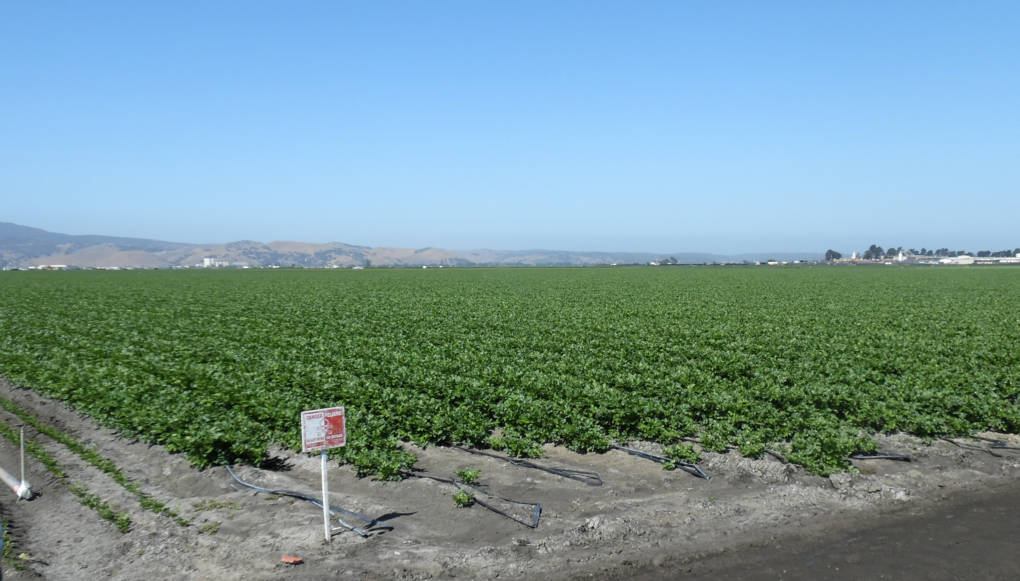
"caption": "A pesticide warning -- the red sign at lower left -- at a field near Salinas that was sprayed with chemicals in June 2017 hours before nearby workers began falling ill.",
"description": "A pesticide warning on Block 6 of Moresco Farms at Harden Ranch in Salinas sprayed with chemicals that sickened workers on June 22,2017",
"title": "field_cropped",
"credit": "Monterey County Agricultural Commissioner's Office",
"status": "inherit",
"isLoading": false,
"fetchFailed": false
},
"news_11675259": {
"type": "attachments",
"id": "news_11675259",
"meta": {
"index": "attachments_1716263798",
"site": "news",
"id": "11675259",
"found": true
},
"parent": 11675165,
"imgSizes": {
"small": {
"file": "https://ww2.kqed.org/app/uploads/sites/10/2018/06/GettyImages-823604062-520x334.jpg",
"width": 520,
"mimeType": "image/jpeg",
"height": 334
},
"twentyfourteen-full-width": {
"file": "https://ww2.kqed.org/app/uploads/sites/10/2018/06/GettyImages-823604062-1038x576.jpg",
"width": 1038,
"mimeType": "image/jpeg",
"height": 576
},
"thumbnail": {
"file": "https://ww2.kqed.org/app/uploads/sites/10/2018/06/GettyImages-823604062-160x103.jpg",
"width": 160,
"mimeType": "image/jpeg",
"height": 103
},
"fd-sm": {
"file": "https://ww2.kqed.org/app/uploads/sites/10/2018/06/GettyImages-823604062-960x617.jpg",
"width": 960,
"mimeType": "image/jpeg",
"height": 617
},
"post-thumbnail": {
"file": "https://ww2.kqed.org/app/uploads/sites/10/2018/06/GettyImages-823604062-672x372.jpg",
"width": 672,
"mimeType": "image/jpeg",
"height": 372
},
"xsmall": {
"file": "https://ww2.kqed.org/app/uploads/sites/10/2018/06/GettyImages-823604062-375x241.jpg",
"width": 375,
"mimeType": "image/jpeg",
"height": 241
},
"kqedFullSize": {
"file": "https://ww2.kqed.org/app/uploads/sites/10/2018/06/GettyImages-823604062-e1529109234155.jpg",
"width": 1920,
"height": 1234
},
"large": {
"file": "https://ww2.kqed.org/app/uploads/sites/10/2018/06/GettyImages-823604062-1020x656.jpg",
"width": 1020,
"mimeType": "image/jpeg",
"height": 656
},
"xlarge": {
"file": "https://ww2.kqed.org/app/uploads/sites/10/2018/06/GettyImages-823604062-1180x758.jpg",
"width": 1180,
"mimeType": "image/jpeg",
"height": 758
},
"complete_open_graph": {
"file": "https://ww2.kqed.org/app/uploads/sites/10/2018/06/GettyImages-823604062-1200x771.jpg",
"width": 1200,
"mimeType": "image/jpeg",
"height": 771
},
"guest-author-50": {
"file": "https://ww2.kqed.org/app/uploads/sites/10/2018/06/GettyImages-823604062-50x50.jpg",
"width": 50,
"mimeType": "image/jpeg",
"height": 50
},
"guest-author-96": {
"file": "https://ww2.kqed.org/app/uploads/sites/10/2018/06/GettyImages-823604062-96x96.jpg",
"width": 96,
"mimeType": "image/jpeg",
"height": 96
},
"medium": {
"file": "https://ww2.kqed.org/app/uploads/sites/10/2018/06/GettyImages-823604062-800x514.jpg",
"width": 800,
"mimeType": "image/jpeg",
"height": 514
},
"guest-author-64": {
"file": "https://ww2.kqed.org/app/uploads/sites/10/2018/06/GettyImages-823604062-64x64.jpg",
"width": 64,
"mimeType": "image/jpeg",
"height": 64
},
"guest-author-32": {
"file": "https://ww2.kqed.org/app/uploads/sites/10/2018/06/GettyImages-823604062-32x32.jpg",
"width": 32,
"mimeType": "image/jpeg",
"height": 32
},
"fd-lrg": {
"file": "https://ww2.kqed.org/app/uploads/sites/10/2018/06/GettyImages-823604062-1920x1234.jpg",
"width": 1920,
"mimeType": "image/jpeg",
"height": 1234
},
"fd-med": {
"file": "https://ww2.kqed.org/app/uploads/sites/10/2018/06/GettyImages-823604062-1180x758.jpg",
"width": 1180,
"mimeType": "image/jpeg",
"height": 758
},
"full-width": {
"file": "https://ww2.kqed.org/app/uploads/sites/10/2018/06/GettyImages-823604062-1920x1234.jpg",
"width": 1920,
"mimeType": "image/jpeg",
"height": 1234
},
"detail": {
"file": "https://ww2.kqed.org/app/uploads/sites/10/2018/06/GettyImages-823604062-150x150.jpg",
"width": 150,
"mimeType": "image/jpeg",
"height": 150
},
"guest-author-128": {
"file": "https://ww2.kqed.org/app/uploads/sites/10/2018/06/GettyImages-823604062-128x128.jpg",
"width": 128,
"mimeType": "image/jpeg",
"height": 128
},
"xxsmall": {
"file": "https://ww2.kqed.org/app/uploads/sites/10/2018/06/GettyImages-823604062-240x154.jpg",
"width": 240,
"mimeType": "image/jpeg",
"height": 154
}
},
"publishDate": 1529109146,
"modified": 1529110172,
"caption": "Fresh raspberries for sale at a farmers market.",
"description": null,
"title": "Raspberries",
"credit": "Paul J. Richards/AFP-Getty Images",
"status": "inherit",
"isLoading": false,
"fetchFailed": false
},
"news_11637884": {
"type": "attachments",
"id": "news_11637884",
"meta": {
"index": "attachments_1716263798",
"site": "news",
"id": "11637884",
"found": true
},
"parent": 11637296,
"imgSizes": {
"small": {
"file": "https://ww2.kqed.org/app/uploads/sites/10/2017/12/Tasteful-Selections-Garlic-Field-520x390.jpg",
"width": 520,
"mimeType": "image/jpeg",
"height": 390
},
"twentyfourteen-full-width": {
"file": "https://ww2.kqed.org/app/uploads/sites/10/2017/12/Tasteful-Selections-Garlic-Field-1038x576.jpg",
"width": 1038,
"mimeType": "image/jpeg",
"height": 576
},
"thumbnail": {
"file": "https://ww2.kqed.org/app/uploads/sites/10/2017/12/Tasteful-Selections-Garlic-Field-160x120.jpg",
"width": 160,
"mimeType": "image/jpeg",
"height": 120
},
"fd-sm": {
"file": "https://ww2.kqed.org/app/uploads/sites/10/2017/12/Tasteful-Selections-Garlic-Field-960x720.jpg",
"width": 960,
"mimeType": "image/jpeg",
"height": 720
},
"post-thumbnail": {
"file": "https://ww2.kqed.org/app/uploads/sites/10/2017/12/Tasteful-Selections-Garlic-Field-672x372.jpg",
"width": 672,
"mimeType": "image/jpeg",
"height": 372
},
"xsmall": {
"file": "https://ww2.kqed.org/app/uploads/sites/10/2017/12/Tasteful-Selections-Garlic-Field-375x281.jpg",
"width": 375,
"mimeType": "image/jpeg",
"height": 281
},
"kqedFullSize": {
"file": "https://ww2.kqed.org/app/uploads/sites/10/2017/12/Tasteful-Selections-Garlic-Field-e1513623542859.jpg",
"width": 1920,
"height": 1440
},
"large": {
"file": "https://ww2.kqed.org/app/uploads/sites/10/2017/12/Tasteful-Selections-Garlic-Field-1020x765.jpg",
"width": 1020,
"mimeType": "image/jpeg",
"height": 765
},
"xlarge": {
"file": "https://ww2.kqed.org/app/uploads/sites/10/2017/12/Tasteful-Selections-Garlic-Field-1180x885.jpg",
"width": 1180,
"mimeType": "image/jpeg",
"height": 885
},
"guest-author-50": {
"file": "https://ww2.kqed.org/app/uploads/sites/10/2017/12/Tasteful-Selections-Garlic-Field-50x50.jpg",
"width": 50,
"mimeType": "image/jpeg",
"height": 50
},
"guest-author-96": {
"file": "https://ww2.kqed.org/app/uploads/sites/10/2017/12/Tasteful-Selections-Garlic-Field-96x96.jpg",
"width": 96,
"mimeType": "image/jpeg",
"height": 96
},
"medium": {
"file": "https://ww2.kqed.org/app/uploads/sites/10/2017/12/Tasteful-Selections-Garlic-Field-800x600.jpg",
"width": 800,
"mimeType": "image/jpeg",
"height": 600
},
"guest-author-64": {
"file": "https://ww2.kqed.org/app/uploads/sites/10/2017/12/Tasteful-Selections-Garlic-Field-64x64.jpg",
"width": 64,
"mimeType": "image/jpeg",
"height": 64
},
"guest-author-32": {
"file": "https://ww2.kqed.org/app/uploads/sites/10/2017/12/Tasteful-Selections-Garlic-Field-32x32.jpg",
"width": 32,
"mimeType": "image/jpeg",
"height": 32
},
"fd-lrg": {
"file": "https://ww2.kqed.org/app/uploads/sites/10/2017/12/Tasteful-Selections-Garlic-Field-1920x1440.jpg",
"width": 1920,
"mimeType": "image/jpeg",
"height": 1440
},
"fd-med": {
"file": "https://ww2.kqed.org/app/uploads/sites/10/2017/12/Tasteful-Selections-Garlic-Field-1180x885.jpg",
"width": 1180,
"mimeType": "image/jpeg",
"height": 885
},
"full-width": {
"file": "https://ww2.kqed.org/app/uploads/sites/10/2017/12/Tasteful-Selections-Garlic-Field-1920x1440.jpg",
"width": 1920,
"mimeType": "image/jpeg",
"height": 1440
},
"detail": {
"file": "https://ww2.kqed.org/app/uploads/sites/10/2017/12/Tasteful-Selections-Garlic-Field-150x150.jpg",
"width": 150,
"mimeType": "image/jpeg",
"height": 150
},
"guest-author-128": {
"file": "https://ww2.kqed.org/app/uploads/sites/10/2017/12/Tasteful-Selections-Garlic-Field-128x128.jpg",
"width": 128,
"mimeType": "image/jpeg",
"height": 128
},
"xxsmall": {
"file": "https://ww2.kqed.org/app/uploads/sites/10/2017/12/Tasteful-Selections-Garlic-Field-240x180.jpg",
"width": 240,
"mimeType": "image/jpeg",
"height": 180
}
},
"publishDate": 1513623513,
"modified": 1520296729,
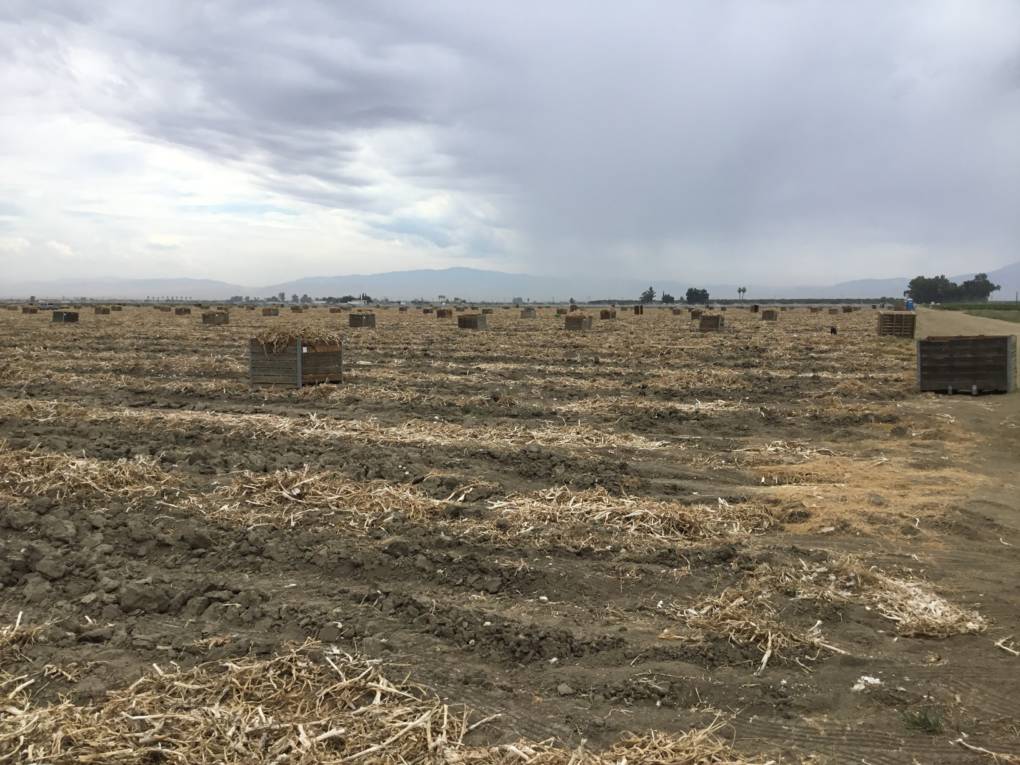
"caption": "A garlic field where 92 farmworkers were sickened after being exposed to pesticide drifting from a nearby site in August 2017. ",
"description": "The garlic field where 92 farmworkers were sickened after being exposed to pesticide drifting from a nearby site in August of 2017. ",
"title": "Kern County Farmworkers",
"credit": "Kern County Department of Agriculture",
"status": "inherit",
"isLoading": false,
"fetchFailed": false
},
"news_11647151": {
"type": "attachments",
"id": "news_11647151",
"meta": {
"index": "attachments_1716263798",
"site": "news",
"id": "11647151",
"found": true
},
"parent": 11647031,
"imgSizes": {
"small": {
"file": "https://ww2.kqed.org/app/uploads/sites/10/2018/01/GettyImages-453973366-520x354.jpg",
"width": 520,
"mimeType": "image/jpeg",
"height": 354
},
"twentyfourteen-full-width": {
"file": "https://ww2.kqed.org/app/uploads/sites/10/2018/01/GettyImages-453973366-1038x576.jpg",
"width": 1038,
"mimeType": "image/jpeg",
"height": 576
},
"thumbnail": {
"file": "https://ww2.kqed.org/app/uploads/sites/10/2018/01/GettyImages-453973366-160x109.jpg",
"width": 160,
"mimeType": "image/jpeg",
"height": 109
},
"fd-sm": {
"file": "https://ww2.kqed.org/app/uploads/sites/10/2018/01/GettyImages-453973366-960x654.jpg",
"width": 960,
"mimeType": "image/jpeg",
"height": 654
},
"post-thumbnail": {
"file": "https://ww2.kqed.org/app/uploads/sites/10/2018/01/GettyImages-453973366-672x372.jpg",
"width": 672,
"mimeType": "image/jpeg",
"height": 372
},
"xsmall": {
"file": "https://ww2.kqed.org/app/uploads/sites/10/2018/01/GettyImages-453973366-375x255.jpg",
"width": 375,
"mimeType": "image/jpeg",
"height": 255
},
"kqedFullSize": {
"file": "https://ww2.kqed.org/app/uploads/sites/10/2018/01/GettyImages-453973366-e1517354307802.jpg",
"width": 1920,
"height": 1308
},
"large": {
"file": "https://ww2.kqed.org/app/uploads/sites/10/2018/01/GettyImages-453973366-1020x695.jpg",
"width": 1020,
"mimeType": "image/jpeg",
"height": 695
},
"xlarge": {
"file": "https://ww2.kqed.org/app/uploads/sites/10/2018/01/GettyImages-453973366-1180x804.jpg",
"width": 1180,
"mimeType": "image/jpeg",
"height": 804
},
"guest-author-50": {
"file": "https://ww2.kqed.org/app/uploads/sites/10/2018/01/GettyImages-453973366-50x50.jpg",
"width": 50,
"mimeType": "image/jpeg",
"height": 50
},
"guest-author-96": {
"file": "https://ww2.kqed.org/app/uploads/sites/10/2018/01/GettyImages-453973366-96x96.jpg",
"width": 96,
"mimeType": "image/jpeg",
"height": 96
},
"medium": {
"file": "https://ww2.kqed.org/app/uploads/sites/10/2018/01/GettyImages-453973366-800x545.jpg",
"width": 800,
"mimeType": "image/jpeg",
"height": 545
},
"guest-author-64": {
"file": "https://ww2.kqed.org/app/uploads/sites/10/2018/01/GettyImages-453973366-64x64.jpg",
"width": 64,
"mimeType": "image/jpeg",
"height": 64
},
"guest-author-32": {
"file": "https://ww2.kqed.org/app/uploads/sites/10/2018/01/GettyImages-453973366-32x32.jpg",
"width": 32,
"mimeType": "image/jpeg",
"height": 32
},
"fd-lrg": {
"file": "https://ww2.kqed.org/app/uploads/sites/10/2018/01/GettyImages-453973366-1920x1308.jpg",
"width": 1920,
"mimeType": "image/jpeg",
"height": 1308
},
"fd-med": {
"file": "https://ww2.kqed.org/app/uploads/sites/10/2018/01/GettyImages-453973366-1180x804.jpg",
"width": 1180,
"mimeType": "image/jpeg",
"height": 804
},
"full-width": {
"file": "https://ww2.kqed.org/app/uploads/sites/10/2018/01/GettyImages-453973366-1920x1308.jpg",
"width": 1920,
"mimeType": "image/jpeg",
"height": 1308
},
"detail": {
"file": "https://ww2.kqed.org/app/uploads/sites/10/2018/01/GettyImages-453973366-150x150.jpg",
"width": 150,
"mimeType": "image/jpeg",
"height": 150
},
"guest-author-128": {
"file": "https://ww2.kqed.org/app/uploads/sites/10/2018/01/GettyImages-453973366-128x128.jpg",
"width": 128,
"mimeType": "image/jpeg",
"height": 128
},
"xxsmall": {
"file": "https://ww2.kqed.org/app/uploads/sites/10/2018/01/GettyImages-453973366-240x163.jpg",
"width": 240,
"mimeType": "image/jpeg",
"height": 163
}
},
"publishDate": 1517354257,
"modified": 1517354918,
"caption": "Workers harvest cantaloupes on a farm on Aug. 22, 2014, in Firebaugh, California.",
"description": null,
"title": "California Central Valley Farming Communities Struggle With Drought",
"credit": "John Moore/Getty Images",
"status": "inherit",
"isLoading": false,
"fetchFailed": false
},
"news_11643735": {
"type": "attachments",
"id": "news_11643735",
"meta": {
"index": "attachments_1716263798",
"site": "news",
"id": "11643735",
"found": true
},
"parent": 11643734,
"imgSizes": {
"small": {
"file": "https://ww2.kqed.org/app/uploads/sites/10/2018/01/strawberries-growing-520x390.jpeg",
"width": 520,
"mimeType": "image/jpeg",
"height": 390
},
"twentyfourteen-full-width": {
"file": "https://ww2.kqed.org/app/uploads/sites/10/2018/01/strawberries-growing-1038x576.jpeg",
"width": 1038,
"mimeType": "image/jpeg",
"height": 576
},
"thumbnail": {
"file": "https://ww2.kqed.org/app/uploads/sites/10/2018/01/strawberries-growing-160x120.jpeg",
"width": 160,
"mimeType": "image/jpeg",
"height": 120
},
"fd-sm": {
"file": "https://ww2.kqed.org/app/uploads/sites/10/2018/01/strawberries-growing-960x720.jpeg",
"width": 960,
"mimeType": "image/jpeg",
"height": 720
},
"post-thumbnail": {
"file": "https://ww2.kqed.org/app/uploads/sites/10/2018/01/strawberries-growing-672x372.jpeg",
"width": 672,
"mimeType": "image/jpeg",
"height": 372
},
"xsmall": {
"file": "https://ww2.kqed.org/app/uploads/sites/10/2018/01/strawberries-growing-375x281.jpeg",
"width": 375,
"mimeType": "image/jpeg",
"height": 281
},
"kqedFullSize": {
"file": "https://ww2.kqed.org/app/uploads/sites/10/2018/01/strawberries-growing.jpeg",
"width": 1600,
"height": 1200
},
"large": {
"file": "https://ww2.kqed.org/app/uploads/sites/10/2018/01/strawberries-growing-1020x765.jpeg",
"width": 1020,
"mimeType": "image/jpeg",
"height": 765
},
"xlarge": {
"file": "https://ww2.kqed.org/app/uploads/sites/10/2018/01/strawberries-growing-1180x885.jpeg",
"width": 1180,
"mimeType": "image/jpeg",
"height": 885
},
"guest-author-50": {
"file": "https://ww2.kqed.org/app/uploads/sites/10/2018/01/strawberries-growing-50x50.jpeg",
"width": 50,
"mimeType": "image/jpeg",
"height": 50
},
"guest-author-96": {
"file": "https://ww2.kqed.org/app/uploads/sites/10/2018/01/strawberries-growing-96x96.jpeg",
"width": 96,
"mimeType": "image/jpeg",
"height": 96
},
"medium": {
"file": "https://ww2.kqed.org/app/uploads/sites/10/2018/01/strawberries-growing-800x600.jpeg",
"width": 800,
"mimeType": "image/jpeg",
"height": 600
},
"guest-author-64": {
"file": "https://ww2.kqed.org/app/uploads/sites/10/2018/01/strawberries-growing-64x64.jpeg",
"width": 64,
"mimeType": "image/jpeg",
"height": 64
},
"guest-author-32": {
"file": "https://ww2.kqed.org/app/uploads/sites/10/2018/01/strawberries-growing-32x32.jpeg",
"width": 32,
"mimeType": "image/jpeg",
"height": 32
},
"fd-med": {
"file": "https://ww2.kqed.org/app/uploads/sites/10/2018/01/strawberries-growing-1180x885.jpeg",
"width": 1180,
"mimeType": "image/jpeg",
"height": 885
},
"detail": {
"file": "https://ww2.kqed.org/app/uploads/sites/10/2018/01/strawberries-growing-150x150.jpeg",
"width": 150,
"mimeType": "image/jpeg",
"height": 150
},
"guest-author-128": {
"file": "https://ww2.kqed.org/app/uploads/sites/10/2018/01/strawberries-growing-128x128.jpeg",
"width": 128,
"mimeType": "image/jpeg",
"height": 128
},
"xxsmall": {
"file": "https://ww2.kqed.org/app/uploads/sites/10/2018/01/strawberries-growing-240x180.jpeg",
"width": 240,
"mimeType": "image/jpeg",
"height": 180
}
},
"publishDate": 1516734281,
"modified": 1516745508,
"caption": "Suspected infestation of Macrophomina phaseolina, a “novel” soil pathogen, in the non-fumigated buffer zone of a strawberry field.",
"description": null,
"title": "strawberries-growing",
"credit": "Julie Guthman/UC Santa Cruz",
"status": "inherit",
"isLoading": false,
"fetchFailed": false
},
"news_93430": {
"type": "attachments",
"id": "news_93430",
"meta": {
"index": "attachments_1716263798",
"site": "news",
"id": "93430",
"found": true
},
"parent": 93406,
"imgSizes": {
"kqedFullSize": {
"file": "https://ww2.kqed.org/app/uploads/sites/10/2013/04/central-valley-farmworkers.jpg",
"width": 500,
"height": 375
}
},
"publishDate": 1365177117,
"modified": 1514413627,
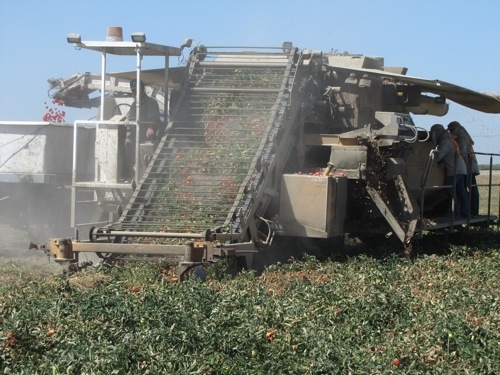
"caption": "Workers harvest tomatoes southeast of Fresno. ",
"description": null,
"title": "central-valley-farmworkers",
"credit": "Craig Miller/KQED",
"status": "inherit",
"isLoading": false,
"fetchFailed": false
},
"news_11639291": {
"type": "attachments",
"id": "news_11639291",
"meta": {
"index": "attachments_1716263798",
"site": "news",
"id": "11639291",
"found": true
},
"parent": 11639288,
"imgSizes": {
"small": {
"file": "https://ww2.kqed.org/app/uploads/sites/10/2017/12/maycontain_122717_final-520x520.jpg",
"width": 520,
"mimeType": "image/jpeg",
"height": 520
},
"twentyfourteen-full-width": {
"file": "https://ww2.kqed.org/app/uploads/sites/10/2017/12/maycontain_122717_final-1038x576.jpg",
"width": 1038,
"mimeType": "image/jpeg",
"height": 576
},
"thumbnail": {
"file": "https://ww2.kqed.org/app/uploads/sites/10/2017/12/maycontain_122717_final-160x160.jpg",
"width": 160,
"mimeType": "image/jpeg",
"height": 160
},
"fd-sm": {
"file": "https://ww2.kqed.org/app/uploads/sites/10/2017/12/maycontain_122717_final-960x960.jpg",
"width": 960,
"mimeType": "image/jpeg",
"height": 960
},
"post-thumbnail": {
"file": "https://ww2.kqed.org/app/uploads/sites/10/2017/12/maycontain_122717_final-672x372.jpg",
"width": 672,
"mimeType": "image/jpeg",
"height": 372
},
"xsmall": {
"file": "https://ww2.kqed.org/app/uploads/sites/10/2017/12/maycontain_122717_final-375x375.jpg",
"width": 375,
"mimeType": "image/jpeg",
"height": 375
},
"kqedFullSize": {
"file": "https://ww2.kqed.org/app/uploads/sites/10/2017/12/maycontain_122717_final.jpg",
"width": 1920,
"height": 1920
},
"large": {
"file": "https://ww2.kqed.org/app/uploads/sites/10/2017/12/maycontain_122717_final-1020x1020.jpg",
"width": 1020,
"mimeType": "image/jpeg",
"height": 1020
},
"xlarge": {
"file": "https://ww2.kqed.org/app/uploads/sites/10/2017/12/maycontain_122717_final-1180x1180.jpg",
"width": 1180,
"mimeType": "image/jpeg",
"height": 1180
},
"guest-author-50": {
"file": "https://ww2.kqed.org/app/uploads/sites/10/2017/12/maycontain_122717_final-50x50.jpg",
"width": 50,
"mimeType": "image/jpeg",
"height": 50
},
"guest-author-96": {
"file": "https://ww2.kqed.org/app/uploads/sites/10/2017/12/maycontain_122717_final-96x96.jpg",
"width": 96,
"mimeType": "image/jpeg",
"height": 96
},
"medium": {
"file": "https://ww2.kqed.org/app/uploads/sites/10/2017/12/maycontain_122717_final-800x800.jpg",
"width": 800,
"mimeType": "image/jpeg",
"height": 800
},
"guest-author-64": {
"file": "https://ww2.kqed.org/app/uploads/sites/10/2017/12/maycontain_122717_final-64x64.jpg",
"width": 64,
"mimeType": "image/jpeg",
"height": 64
},
"guest-author-32": {
"file": "https://ww2.kqed.org/app/uploads/sites/10/2017/12/maycontain_122717_final-32x32.jpg",
"width": 32,
"mimeType": "image/jpeg",
"height": 32
},
"fd-lrg": {
"file": "https://ww2.kqed.org/app/uploads/sites/10/2017/12/maycontain_122717_final-1920x1920.jpg",
"width": 1920,
"mimeType": "image/jpeg",
"height": 1920
},
"fd-med": {
"file": "https://ww2.kqed.org/app/uploads/sites/10/2017/12/maycontain_122717_final-1180x1180.jpg",
"width": 1180,
"mimeType": "image/jpeg",
"height": 1180
},
"full-width": {
"file": "https://ww2.kqed.org/app/uploads/sites/10/2017/12/maycontain_122717_final-1920x1920.jpg",
"width": 1920,
"mimeType": "image/jpeg",
"height": 1920
},
"detail": {
"file": "https://ww2.kqed.org/app/uploads/sites/10/2017/12/maycontain_122717_final-150x150.jpg",
"width": 150,
"mimeType": "image/jpeg",
"height": 150
},
"guest-author-128": {
"file": "https://ww2.kqed.org/app/uploads/sites/10/2017/12/maycontain_122717_final-128x128.jpg",
"width": 128,
"mimeType": "image/jpeg",
"height": 128
},
"xxsmall": {
"file": "https://ww2.kqed.org/app/uploads/sites/10/2017/12/maycontain_122717_final-240x240.jpg",
"width": 240,
"mimeType": "image/jpeg",
"height": 240
}
},
"publishDate": 1514409936,
"modified": 1514409980,
"caption": null,
"description": null,
"title": "maycontain_122717_final",
"credit": null,
"status": "inherit",
"isLoading": false,
"fetchFailed": false
}
},
"audioPlayerReducer": {
"postId": "stream_live",
"isPaused": true,
"isPlaying": false,
"pfsActive": false,
"pledgeModalIsOpen": true,
"playerDrawerIsOpen": false,
"liveAudioPlayStartedAt": 0,
"liveAudioPlayContext": ""
},
"authorsReducer": {
"byline_news_11643734": {
"type": "authors",
"id": "byline_news_11643734",
"meta": {
"override": true
},
"slug": "byline_news_11643734",
"name": "\u003cstrong>\u003ca href=\"https://theconversation.com/profiles/julie-guthman-420662\">Julie Guthman\u003c/a>\u003c/strong>\u003cbr />\u003cem>UC Santa Cruz, for \u003ca href=\"https://theconversation.com\">The Conversation\u003c/a>\u003c/em>",
"isLoading": false
},
"tgoldberg": {
"type": "authors",
"id": "258",
"meta": {
"index": "authors_1716337520",
"id": "258",
"found": true
},
"name": "Ted Goldberg",
"firstName": "Ted",
"lastName": "Goldberg",
"slug": "tgoldberg",
"email": "tgoldberg@kqed.org",
"display_author_email": true,
"staff_mastheads": [
"news"
],
"title": "KQED Managing Editor, News and Newscasts",
"bio": "Ted Goldberg is Managing Editor of News and Newscasts at KQED. His main reporting beat is the Bay Area's oil refining industry.\r\n\r\nPrior to joining KQED in 2014, Ted worked at CBS News and WCBS AM in New York and Bay City News and KCBS Radio in San Francisco. He graduated from Oberlin College in Ohio in 1998.",
"avatar": "https://secure.gravatar.com/avatar/30ce2e4fe89135e104f89be2394d16225b9d36c121b5b3cb7651ce642978b96f?s=600&d=blank&r=g",
"twitter": "TedrickG",
"bluesky": null,
"facebook": null,
"instagram": null,
"linkedin": null,
"sites": [
{
"site": "news",
"roles": [
"editor"
]
},
{
"site": "science",
"roles": [
"editor"
]
}
],
"headData": {
"title": "Ted Goldberg | KQED",
"description": "KQED Managing Editor, News and Newscasts",
"ogImgSrc": "https://secure.gravatar.com/avatar/30ce2e4fe89135e104f89be2394d16225b9d36c121b5b3cb7651ce642978b96f?s=600&d=blank&r=g",
"twImgSrc": "https://secure.gravatar.com/avatar/30ce2e4fe89135e104f89be2394d16225b9d36c121b5b3cb7651ce642978b96f?s=600&d=blank&r=g"
},
"isLoading": false,
"link": "/author/tgoldberg"
},
"markfiore": {
"type": "authors",
"id": "3236",
"meta": {
"index": "authors_1716337520",
"id": "3236",
"found": true
},
"name": "Mark Fiore",
"firstName": "Mark",
"lastName": "Fiore",
"slug": "markfiore",
"email": "mark@markfiore.com",
"display_author_email": false,
"staff_mastheads": [
"news"
],
"title": "KQED News Cartoonist",
"bio": "\u003ca href=\"http://www.MarkFiore.com\">MarkFiore.com\u003c/a> | \u003ca href=\"https://twitter.com/markfiore\">Follow on Twitter\u003c/a> | \u003ca href=\"https://www.facebook.com/pages/Mark-Fiore-Animated-Political-Cartoons/94451707396?ref=bookmarks\">Facebook\u003c/a> | \u003ca href=\"mailto:mark@markfiore.com\">email\u003c/a>\r\n\r\nPulitzer Prize-winner, Mark Fiore, who the Wall Street Journal has called “the undisputed guru of the form,” creates animated political cartoons in San Francisco, where his work has been featured regularly on the San Francisco Chronicle’s web site, SFGate.com. His work has appeared on Newsweek.com, Slate.com, CBSNews.com, MotherJones.com, DailyKos.com and NPR’s web site. Fiore’s political animation has appeared on CNN, Frontline, Bill Moyers Journal, Salon.com and cable and broadcast outlets across the globe.\r\n\r\nBeginning his professional life by drawing traditional political cartoons for newspapers, Fiore’s work appeared in publications ranging from the Washington Post to the Los Angeles Times. In the late 1990s, he began to experiment with animating political cartoons and, after a short stint at the San Jose Mercury News as their staff cartoonist, Fiore devoted all his energies to animation.\r\nGrowing up in California, Fiore also spent a good portion of his life in the backwoods of Idaho. It was this combination that shaped him politically. Mark majored in political science at Colorado College, where, in a perfect send-off for a cartoonist, he received his diploma in 1991 as commencement speaker Dick Cheney smiled approvingly.\r\nMark Fiore was awarded the Pulitzer Prize for political cartooning in 2010, a Robert F. Kennedy Journalism Award in 2004 and has twice received an Online Journalism Award for commentary from the Online News Association (2002, 2008). Fiore has received two awards for his work in new media from the National Cartoonists Society (2001, 2002), and in 2006 received The James Madison Freedom of Information Award from The Society of Professional Journalists.",
"avatar": "https://secure.gravatar.com/avatar/fc4e2a612b15b67bad0c6f0e1db4ca9b?s=600&d=blank&r=g",
"twitter": "MarkFiore",
"facebook": null,
"instagram": "https://www.instagram.com/markfiore/?hl=en",
"linkedin": null,
"sites": [
{
"site": "arts",
"roles": [
"contributor"
]
},
{
"site": "news",
"roles": [
"editor"
]
},
{
"site": "futureofyou",
"roles": [
"editor"
]
},
{
"site": "science",
"roles": [
"editor"
]
}
],
"headData": {
"title": "Mark Fiore | KQED",
"description": "KQED News Cartoonist",
"ogImgSrc": "https://secure.gravatar.com/avatar/fc4e2a612b15b67bad0c6f0e1db4ca9b?s=600&d=blank&r=g",
"twImgSrc": "https://secure.gravatar.com/avatar/fc4e2a612b15b67bad0c6f0e1db4ca9b?s=600&d=blank&r=g"
},
"isLoading": false,
"link": "/author/markfiore"
}
},
"pagesReducer": {
"news_tag_pesticides": {
"type": "terms",
"id": "news_22225",
"meta": {
"index": "terms_1716263798",
"site": "news",
"id": "22225",
"score": 9.105324
},
"featImg": null,
"name": "pesticides",
"description": null,
"taxonomy": "tag",
"headData": {
"twImgId": null,
"twTitle": null,
"ogTitle": null,
"ogImgId": null,
"twDescription": null,
"description": null,
"title": "pesticides Archives | KQED News",
"ogDescription": null
},
"ttid": 22242,
"slug": "pesticides",
"isLoading": false,
"title": "pesticides",
"pageMeta": {
"site": "news",
"WpPageTemplate": "page-topic-editorial",
"currentPage": 2
},
"blocks": [
{
"blockName": "kqed/post-list",
"attrs": {
"layout": "cardArticle2",
"query": "posts/news?tag=pesticides",
"seeMore": false,
"paginated": true,
"page": 2
}
},
{
"blockName": "kqed/ad"
}
]
}
},
"pfsSessionReducer": {},
"postsReducer": {
"stream_live": {
"type": "live",
"id": "stream_live",
"audioUrl": "https://streams.kqed.org/kqedradio",
"title": "Live Stream",
"excerpt": "Live Stream information currently unavailable.",
"link": "/radio",
"featImg": "",
"label": {
"name": "KQED Live",
"link": "/"
}
},
"stream_kqedNewscast": {
"type": "posts",
"id": "stream_kqedNewscast",
"audioUrl": "https://www.kqed.org/.stream/anon/radio/RDnews/newscast.mp3?_=1",
"title": "KQED Newscast",
"featImg": "",
"label": {
"name": "88.5 FM",
"link": "/"
}
},
"news_11681690": {
"type": "posts",
"id": "news_11681690",
"meta": {
"index": "posts_1716263798",
"site": "news",
"id": "11681690",
"score": null,
"sort": [
1533058426000
]
},
"guestAuthors": [],
"slug": "2017-monterey-county-pesticide-drift-incident-near-salinas",
"title": "Company Won’t Pay More Than $5,000 After Pesticide Exposure Sickens 17 Farmworkers",
"publishDate": 1533058426,
"format": "standard",
"headTitle": "Company Won’t Pay More Than $5,000 After Pesticide Exposure Sickens 17 Farmworkers | KQED",
"labelTerm": {
"term": 72,
"site": "news"
},
"content": "\u003cp>The Monterey County agricultural commissioner plans to issue a single fine of up to $5,000 against a Salinas produce company that employed 17 celery workers sickened in a pesticide drift incident last year.\u003c/p>\n\u003cp>The commissioner’s decision has angered farmworker advocates and re-energized their push for stronger pesticide enforcement laws. An effort to increase fines \u003ca href=\"https://www.kqed.org/news/11652279/assembly-rejection-of-pesticide-bill-came-after-farm-industry-campaign-donations\" target=\"_blank\" rel=\"noopener\">failed in the Legislature\u003c/a> earlier this year.\u003c/p>\n\u003cp>“I think it’s atrocious,” said Mark Weller, co-director of the Berkeley-based Californians for Pesticide Reform. “The regulations obviously fall far short.”\u003c/p>\n\u003cp>The company involved in the incident, \u003ca href=\"http://www.taproduce.com/\" target=\"_blank\" rel=\"noopener\">Tanimura and Antle\u003c/a>, disputes claims that pesticides caused the workers’ symptoms.\u003c/p>\n\u003cp>The Monterey County agency’s findings, which KQED obtained through a California Public Records Act request, disclose a range of symptoms reported by fieldworkers who were transplanting celery starts near Salinas when they were overcome early the morning of June 22, 2017.\u003c/p>\n\u003cp>[ad fullwidth]\u003c/p>\n\u003cp>They told investigators they felt dizzy and weak, had stomach pain and headaches, and complained of sore throats, eye irritation and blurred vision.\u003c/p>\n\u003cp>Some of them vomited from the exposure.\u003c/p>\n\u003cp>“I began crying because I couldn’t breathe and my vision was blurred,” one unidentified worker said.\u003c/p>\n\u003cp>“I had a severe headache, nausea, sore throat and numb feet,” another employee said.\u003c/p>\n\u003cp>The workers were all employed by Tanimura and Antle, a produce grower that also owns the contractor that sprayed nine different pesticides on adjacent celery and lettuce fields about six hours before workers started complaining of symptoms.\u003c/p>\n\u003cp>The company took some workers to Salinas Valley Memorial Hospital in Salinas, but didn’t have enough vehicles to transport all of the sickened employees. Several fieldworkers had to get themselves to the hospital.\u003c/p>\n\u003cp>The failure to get prompt medical attention for all of the affected workers is the subject of the one violation the agricultural commissioner’s office plans to issue against Tanimura and Antle.\u003c/p>\n\u003cp>“A hazard was created when those who were experiencing illness symptoms, including dizziness and nausea, were allowed to drive themselves, and others, to (Silicon Valley Memorial Hospital), creating an unsafe condition,” wrote Ronnie Capili, a Monterey County agricultural inspector.\u003c/p>\n\u003cp>The maximum fine the commissioner’s office can levy against the company for that violation is $5,000.\u003c/p>\n\u003cp>Local farmworker advocates say the company should face stronger punishment for allowing so many of its workers to get sick.\u003c/p>\n\u003cp>“I was absolutely shocked,” Weller, with Californians for Pesticide Reform, said in an interview after reading the commissioner’s findings.\u003c/p>\n\u003cp>The county agricultural commissioner plans to issue the fine in August or September, according to Ken Allen, a deputy agricultural commissioner.\u003c/p>\n\u003cp>Despite the extreme nature of the farmworkers’ symptoms and the large number of employees who became sick, the commissioner’s office said it did not find any other violations tied to the case.\u003c/p>\n\u003cp>“There were no issues during the applications, therefore no non-compliances were noted,” wrote Capili.\u003c/p>\n\u003cp>Investigators believe the dense fog the morning of the incident contributed to the chemicals drifting over into the field were the celery employees were working.\u003c/p>\n\u003cp>Anne Katten, director of the California Rural Legal Assistance Foundation’s Pesticide and Worker Safety Project, said that finding shows that pesticides sprayed in foggy conditions can present a heightened danger.\u003c/p>\n\u003cp>“Fieldwork should not be allowed so close to fields just treated with pesticides,” Katten, who also reviewed the findings, said in an email. “This is a problem that needs to be remedied before more workers are placed in harm’s way.”\u003c/p>\n\u003cp>\u003cstrong>Nine Pesticides Were Sprayed\u003c/strong>\u003c/p>\n\u003cp>Tanimura and Antle sprayed six different insecticides, two fungicides and a product used to enhance the effects of the other chemicals on a celery field and lettuce field at Moresco Farms at 10 p.m. on June 21, 2017.\u003c/p>\n\u003cp>A field crew began showing up at 3:30 a.m. the next day to plant celery starts nearby. Several of the workers told investigators they saw a warning sign at one of the fields where the pesticide application took place, but there was little specific information on what chemicals were used.\u003c/p>\n\u003cp>“How can one part of the company know that they’ve applied extremely hazardous pesticide at 10 o’clock one night and then not inform the next morning’s crew?” Weller asked. “That’s asking for this kind of awful accident.”\u003c/p>\n\u003cp>By 4:15 a.m. the workers started getting sick.\u003c/p>\n\u003cp>After they were taken to the hospital, the agricultural commissioner’s office sent clothing from the farmworkers to a California Department of Food and Agricultural lab to test for pesticides.\u003c/p>\n\u003cp>The tests found high levels of permethrin and methomyl as well as traces of two other chemicals, chlorantraniliprole and spirotetramat.\u003c/p>\n\u003cp>Permethrin is the active ingredient in Pounce, an insecticide sprayed on close to 19 acres of celery on the farm’s Block 6, a field next to where the farmworkers parked their vehicles. The chemical is classified by the Environmental Protection Agency as a weak or likely carcinogen.\u003c/p>\n\u003cp>Methomyl is an active ingredient in the insecticide Lannate SP. That pesticide was also sprayed on Block 6, as well as on 11 acres of head lettuce on another field in the area, Block 10.\u003c/p>\n\u003cp>The EPA says methomyl is extremely toxic if ingested or “moderately toxic” if inhaled. In high enough doses the chemical can “overstimulate the nervous system”, leading to nausea, dizziness and confusion, according to the agency. Federal officials say at very high exposures, methomyl can result in respiratory paralysis and death.\u003c/p>\n\u003cp>Farmworker advocates believe it was the exposure to methomyl that got the workers sick.\u003c/p>\n\u003cp>\u003cstrong>Company Cites Changes in Safety Procedures\u003c/strong>\u003c/p>\n\u003cp>Representatives and employees of Tanimura and Antle did not respond to requests for comment.\u003c/p>\n\u003cp>But in an incident report obtained by Monterey County officials, the firm defended its employees’ actions and noted that all but one of the sickened workers returned to work “without issue” the next day.\u003c/p>\n\u003cp>“We cannot find a direct link to any chemical exposure which was the contributing factor to the symptoms felt by our employees,” Javier Medina, a human resources employee with the company, said in the report.\u003c/p>\n\u003cp>The company has, however, made some changes prompted by the incident, Medina wrote.\u003c/p>\n\u003cp>“As a result of this incident, the decision has been made to avoid working near any posted fields whenever possible,” Medina added.\u003c/p>\n\u003cp>The Monterey County agricultural commissioner’s report is the last of four investigations into pesticide drift incidents that sickened a total of 150 agricultural workers in Central California last year. Those included two episodes in Kern County and another in Santa Cruz County.\u003c/p>\n\u003cp>In June, the Santa Cruz County Agricultural Commissioner’s Office issued \u003ca href=\"https://www.kqed.org/news/11675165/santa-cruz-county-penalizes-firms-in-pesticide-incident-that-sickened-15-workers\" target=\"_blank\" rel=\"noopener\">$56,000 in fines\u003c/a> against several companies it found responsible for a chemical drift that sickened 15 raspberry workers in Watsonville last year.\u003c/p>\n\u003cp>Last, December the Kern County agricultural commissioner imposed nearly $50,000 in fines against five companies tied to a pesticide incident that \u003ca href=\"https://www.kqed.org/news/11637296/firms-fined-for-pesticide-incident-that-sickened-92-near-bakersfield\" target=\"_blank\" rel=\"noopener\">sickened 92 farmworkers\u003c/a> harvesting garlic near Bakersfield.\u003c/p>\n\u003cp>[ad floatright]\u003c/p>\n\u003cp>Last August the same agency issued a similar fine against two companies, including Sun Pacific, the produce company behind the popular \u003ca href=\"https://www.kqed.org/news/11610597/produce-company-behind-popular-cuties-fined-over-pesticide-drift\" target=\"_blank\" rel=\"noopener\">Cuties\u003c/a> mandarins and clementines, for violating pesticide rules in an incident that sickened 37 farmworkers in May 2016.\u003c/p>\n\n",
"blocks": [],
"excerpt": "Seventeen workers fell ill after chemicals were applied to fields near Salinas. Company denies 'direct link' between pesticides and workers' symptoms.",
"status": "publish",
"parent": 0,
"modified": 1721108280,
"stats": {
"hasAudio": false,
"hasVideo": false,
"hasChartOrMap": false,
"iframeSrcs": [],
"hasGoogleForm": false,
"hasGallery": false,
"hasHearkenModule": false,
"hasPolis": false,
"paragraphCount": 45,
"wordCount": 1250
},
"headData": {
"title": "Company Won’t Pay More Than $5,000 After Pesticide Exposure Sickens 17 Farmworkers | KQED",
"description": "Seventeen workers fell ill after chemicals were applied to fields near Salinas. Company denies 'direct link' between pesticides and workers' symptoms.",
"ogTitle": "",
"ogDescription": "",
"ogImgId": "",
"twTitle": "",
"twDescription": "",
"twImgId": "",
"schema": {
"@context": "https://schema.org",
"@type": "NewsArticle",
"headline": "Company Won’t Pay More Than $5,000 After Pesticide Exposure Sickens 17 Farmworkers",
"datePublished": "2018-07-31T10:33:46-07:00",
"dateModified": "2024-07-15T22:38:00-07:00",
"image": "https://cdn.kqed.org/wp-content/uploads/2020/02/KQED-OG-Image@1x.png",
"isAccessibleForFree": "True",
"publisher": {
"@type": "NewsMediaOrganization",
"@id": "https://www.kqed.org/#organization",
"name": "KQED",
"logo": "https://cdn.kqed.org/wp-content/uploads/2020/02/KQED-OG-Image@1x.png",
"url": "https://www.kqed.org",
"sameAs": [
"https://www.facebook.com/KQED",
"https://twitter.com/KQED",
"https://www.instagram.com/kqed/",
"https://www.tiktok.com/@kqedofficial",
"https://www.linkedin.com/company/kqed",
"https://www.youtube.com/channel/UCeC0IOo7i1P_61zVUWbJ4nw"
]
}
}
},
"sticky": false,
"path": "/news/11681690/2017-monterey-county-pesticide-drift-incident-near-salinas",
"audioTrackLength": null,
"parsedContent": [
{
"type": "contentString",
"content": "\u003cdiv class=\"post-body\">\u003cp>\u003cp>The Monterey County agricultural commissioner plans to issue a single fine of up to $5,000 against a Salinas produce company that employed 17 celery workers sickened in a pesticide drift incident last year.\u003c/p>\n\u003cp>The commissioner’s decision has angered farmworker advocates and re-energized their push for stronger pesticide enforcement laws. An effort to increase fines \u003ca href=\"https://www.kqed.org/news/11652279/assembly-rejection-of-pesticide-bill-came-after-farm-industry-campaign-donations\" target=\"_blank\" rel=\"noopener\">failed in the Legislature\u003c/a> earlier this year.\u003c/p>\n\u003cp>“I think it’s atrocious,” said Mark Weller, co-director of the Berkeley-based Californians for Pesticide Reform. “The regulations obviously fall far short.”\u003c/p>\n\u003cp>The company involved in the incident, \u003ca href=\"http://www.taproduce.com/\" target=\"_blank\" rel=\"noopener\">Tanimura and Antle\u003c/a>, disputes claims that pesticides caused the workers’ symptoms.\u003c/p>\n\u003cp>The Monterey County agency’s findings, which KQED obtained through a California Public Records Act request, disclose a range of symptoms reported by fieldworkers who were transplanting celery starts near Salinas when they were overcome early the morning of June 22, 2017.\u003c/p>\n\u003cp>\u003c/p>\u003c/div>",
"attributes": {
"named": {},
"numeric": []
}
},
{
"type": "component",
"content": "",
"name": "ad",
"attributes": {
"named": {
"label": "fullwidth"
},
"numeric": [
"fullwidth"
]
}
},
{
"type": "contentString",
"content": "\u003cdiv class=\"post-body\">\u003cp>\u003c/p>\n\u003cp>They told investigators they felt dizzy and weak, had stomach pain and headaches, and complained of sore throats, eye irritation and blurred vision.\u003c/p>\n\u003cp>Some of them vomited from the exposure.\u003c/p>\n\u003cp>“I began crying because I couldn’t breathe and my vision was blurred,” one unidentified worker said.\u003c/p>\n\u003cp>“I had a severe headache, nausea, sore throat and numb feet,” another employee said.\u003c/p>\n\u003cp>The workers were all employed by Tanimura and Antle, a produce grower that also owns the contractor that sprayed nine different pesticides on adjacent celery and lettuce fields about six hours before workers started complaining of symptoms.\u003c/p>\n\u003cp>The company took some workers to Salinas Valley Memorial Hospital in Salinas, but didn’t have enough vehicles to transport all of the sickened employees. Several fieldworkers had to get themselves to the hospital.\u003c/p>\n\u003cp>The failure to get prompt medical attention for all of the affected workers is the subject of the one violation the agricultural commissioner’s office plans to issue against Tanimura and Antle.\u003c/p>\n\u003cp>“A hazard was created when those who were experiencing illness symptoms, including dizziness and nausea, were allowed to drive themselves, and others, to (Silicon Valley Memorial Hospital), creating an unsafe condition,” wrote Ronnie Capili, a Monterey County agricultural inspector.\u003c/p>\n\u003cp>The maximum fine the commissioner’s office can levy against the company for that violation is $5,000.\u003c/p>\n\u003cp>Local farmworker advocates say the company should face stronger punishment for allowing so many of its workers to get sick.\u003c/p>\n\u003cp>“I was absolutely shocked,” Weller, with Californians for Pesticide Reform, said in an interview after reading the commissioner’s findings.\u003c/p>\n\u003cp>The county agricultural commissioner plans to issue the fine in August or September, according to Ken Allen, a deputy agricultural commissioner.\u003c/p>\n\u003cp>Despite the extreme nature of the farmworkers’ symptoms and the large number of employees who became sick, the commissioner’s office said it did not find any other violations tied to the case.\u003c/p>\n\u003cp>“There were no issues during the applications, therefore no non-compliances were noted,” wrote Capili.\u003c/p>\n\u003cp>Investigators believe the dense fog the morning of the incident contributed to the chemicals drifting over into the field were the celery employees were working.\u003c/p>\n\u003cp>Anne Katten, director of the California Rural Legal Assistance Foundation’s Pesticide and Worker Safety Project, said that finding shows that pesticides sprayed in foggy conditions can present a heightened danger.\u003c/p>\n\u003cp>“Fieldwork should not be allowed so close to fields just treated with pesticides,” Katten, who also reviewed the findings, said in an email. “This is a problem that needs to be remedied before more workers are placed in harm’s way.”\u003c/p>\n\u003cp>\u003cstrong>Nine Pesticides Were Sprayed\u003c/strong>\u003c/p>\n\u003cp>Tanimura and Antle sprayed six different insecticides, two fungicides and a product used to enhance the effects of the other chemicals on a celery field and lettuce field at Moresco Farms at 10 p.m. on June 21, 2017.\u003c/p>\n\u003cp>A field crew began showing up at 3:30 a.m. the next day to plant celery starts nearby. Several of the workers told investigators they saw a warning sign at one of the fields where the pesticide application took place, but there was little specific information on what chemicals were used.\u003c/p>\n\u003cp>“How can one part of the company know that they’ve applied extremely hazardous pesticide at 10 o’clock one night and then not inform the next morning’s crew?” Weller asked. “That’s asking for this kind of awful accident.”\u003c/p>\n\u003cp>By 4:15 a.m. the workers started getting sick.\u003c/p>\n\u003cp>After they were taken to the hospital, the agricultural commissioner’s office sent clothing from the farmworkers to a California Department of Food and Agricultural lab to test for pesticides.\u003c/p>\n\u003cp>The tests found high levels of permethrin and methomyl as well as traces of two other chemicals, chlorantraniliprole and spirotetramat.\u003c/p>\n\u003cp>Permethrin is the active ingredient in Pounce, an insecticide sprayed on close to 19 acres of celery on the farm’s Block 6, a field next to where the farmworkers parked their vehicles. The chemical is classified by the Environmental Protection Agency as a weak or likely carcinogen.\u003c/p>\n\u003cp>Methomyl is an active ingredient in the insecticide Lannate SP. That pesticide was also sprayed on Block 6, as well as on 11 acres of head lettuce on another field in the area, Block 10.\u003c/p>\n\u003cp>The EPA says methomyl is extremely toxic if ingested or “moderately toxic” if inhaled. In high enough doses the chemical can “overstimulate the nervous system”, leading to nausea, dizziness and confusion, according to the agency. Federal officials say at very high exposures, methomyl can result in respiratory paralysis and death.\u003c/p>\n\u003cp>Farmworker advocates believe it was the exposure to methomyl that got the workers sick.\u003c/p>\n\u003cp>\u003cstrong>Company Cites Changes in Safety Procedures\u003c/strong>\u003c/p>\n\u003cp>Representatives and employees of Tanimura and Antle did not respond to requests for comment.\u003c/p>\n\u003cp>But in an incident report obtained by Monterey County officials, the firm defended its employees’ actions and noted that all but one of the sickened workers returned to work “without issue” the next day.\u003c/p>\n\u003cp>“We cannot find a direct link to any chemical exposure which was the contributing factor to the symptoms felt by our employees,” Javier Medina, a human resources employee with the company, said in the report.\u003c/p>\n\u003cp>The company has, however, made some changes prompted by the incident, Medina wrote.\u003c/p>\n\u003cp>“As a result of this incident, the decision has been made to avoid working near any posted fields whenever possible,” Medina added.\u003c/p>\n\u003cp>The Monterey County agricultural commissioner’s report is the last of four investigations into pesticide drift incidents that sickened a total of 150 agricultural workers in Central California last year. Those included two episodes in Kern County and another in Santa Cruz County.\u003c/p>\n\u003cp>In June, the Santa Cruz County Agricultural Commissioner’s Office issued \u003ca href=\"https://www.kqed.org/news/11675165/santa-cruz-county-penalizes-firms-in-pesticide-incident-that-sickened-15-workers\" target=\"_blank\" rel=\"noopener\">$56,000 in fines\u003c/a> against several companies it found responsible for a chemical drift that sickened 15 raspberry workers in Watsonville last year.\u003c/p>\n\u003cp>Last, December the Kern County agricultural commissioner imposed nearly $50,000 in fines against five companies tied to a pesticide incident that \u003ca href=\"https://www.kqed.org/news/11637296/firms-fined-for-pesticide-incident-that-sickened-92-near-bakersfield\" target=\"_blank\" rel=\"noopener\">sickened 92 farmworkers\u003c/a> harvesting garlic near Bakersfield.\u003c/p>\n\u003cp>\u003c/p>\u003c/div>",
"attributes": {
"named": {},
"numeric": []
}
},
{
"type": "component",
"content": "",
"name": "ad",
"attributes": {
"named": {
"label": "floatright"
},
"numeric": [
"floatright"
]
}
},
{
"type": "contentString",
"content": "\u003cdiv class=\"post-body\">\u003cp>\u003c/p>\n\u003cp>Last August the same agency issued a similar fine against two companies, including Sun Pacific, the produce company behind the popular \u003ca href=\"https://www.kqed.org/news/11610597/produce-company-behind-popular-cuties-fined-over-pesticide-drift\" target=\"_blank\" rel=\"noopener\">Cuties\u003c/a> mandarins and clementines, for violating pesticide rules in an incident that sickened 37 farmworkers in May 2016.\u003c/p>\n\n\u003c/div>\u003c/p>",
"attributes": {
"named": {},
"numeric": []
}
}
],
"link": "/news/11681690/2017-monterey-county-pesticide-drift-incident-near-salinas",
"authors": [
"258"
],
"programs": [
"news_72"
],
"categories": [
"news_457",
"news_8"
],
"tags": [
"news_18269",
"news_4084",
"news_22225",
"news_4889"
],
"featImg": "news_11682544",
"label": "news_72"
},
"news_11675165": {
"type": "posts",
"id": "news_11675165",
"meta": {
"index": "posts_1716263798",
"site": "news",
"id": "11675165",
"score": null,
"sort": [
1529109555000
]
},
"parent": 0,
"labelTerm": {
"site": "news",
"term": 72
},
"blocks": [],
"publishDate": 1529109555,
"format": "standard",
"disqusTitle": "Santa Cruz County Penalizes Firms in Pesticide Incident That Sickened 15 Workers",
"title": "Santa Cruz County Penalizes Firms in Pesticide Incident That Sickened 15 Workers",
"headTitle": "The California Report | KQED News",
"content": "\u003cp>The Santa Cruz County Agricultural Commissioner issued the agency's largest fine ever on Friday, penalizing two of four companies tied to a chemical drift incident that sickened 15 raspberry workers in Watsonville last June.\u003c/p>\n\u003cp>The commissioner, Juan Hidalgo, is fining Los Amigos Harvesting $56,000 following an investigation that found the firm violated several state agricultural regulations when it released fungicides and insecticides that drifted onto a nearby farm.\u003c/p>\n\u003cp>\"It was really egregious,\" Hidalgo said in an interview. \"The actions that the pesticide applicator took were really negligent.\"\u003c/p>\n\u003cp>His office is fining a second firm, FMG Farm Contractor, $1,250 for failing to seek prompt medical attention for employees exposed to the pesticides.\u003c/p>\n\u003cp>When firefighters arrived on scene, some of the workers were seen vomiting. Several employees were rushed to a hospital, while others said they felt sick later in the day, Hidalgo said.\u003c/p>\n\u003cp>[ad fullwidth]\u003c/p>\n\u003cp>The case was one of several incidents in which pesticides sickened Central Coast and Central Valley agricultural workers last year.\u003c/p>\n\u003cp>Farmworker advocates had hoped the stories of those incidents, which affected about 150 people in all, would prompt lawmakers to increase fines for violating the state's pesticide laws.\u003c/p>\n\u003cp>But a \u003ca href=\"https://www.kqed.org/news/11652279/assembly-rejection-of-pesticide-bill-came-after-farm-industry-campaign-donations\" target=\"_blank\" rel=\"noopener\">bill to do just that failed in the Assembly\u003c/a> earlier this year.\u003c/p>\n\u003cp>The agricultural commissioner says Los Amigos applied pesticides on June 29, 2017, without a license and did not follow instructions associated with the chemicals used, among other violations.\u003c/p>\n\u003cp>The company sprayed four agricultural chemicals: the fungicides Pristine and Rally 40WSP; DiPel DF, an insecticide; and Widespread Max, a substance designed to improve pesticide coverage and penetration.\u003c/p>\n\u003cp>\u003ca href=\"https://www.kqed.org/news/11546072/advocates-concerned-about-chemical-drifts-that-sickened-central-coast-farmworkers\" target=\"_blank\" rel=\"noopener\">Farmworker advocates\u003c/a> say some of those chemicals can interfere with reproductive and endocrine systems and can irritate skin and eyes.\u003c/p>\n\u003cp>Los Amigos Harvesting plans to appeal the fines and emphasized that the workers who became ill recovered quickly.\u003c/p>\n\u003cp>\"We diligently follow all federal and state laws pertaining to the use of pesticides in farming activities,\" the company said in a statement. \"Los Amigos Harvesting will be disputing the findings outlined in the commissioner's report. As part of the investigation process, we are requesting a hearing to review these findings further and present what we believe to be accurate information.\"\u003c/p>\n\u003cp>A representative for FMG Farm Contractor could not be reached for comment.\u003c/p>\n\u003cp>FMG and another company investigated in connection with the drift incident, Coastal Berry North, are tied to the \u003ca href=\"https://www.kqed.org/news/11598859/driscolls-tied-to-central-coast-chemical-incident-that-sickened-farmworkers\" target=\"_blank\" rel=\"noopener\">Dole Food Co.\u003c/a>\u003c/p>\n\u003cp>The employees who became ill were working on a field operated by Coastal Berry North. A Dole spokesman did not respond to a request for comment.\u003c/p>\n\u003cp>Los Amigos was employed by Garrett Farms, which does work for the berry distributor, Driscoll's, and owns the land where the chemicals were sprayed.\u003c/p>\n\u003cp>\"This incident occurred in 2017 on a field of one our independent growers,\" Driscoll's said in a statement. \"At the time of the incident, our priority and deepest concern was the well-being of the workers impacted on the neighboring farm in Watsonville. We are pleased to hear those impacted were able to return to their families and resume normal activities,\"\u003c/p>\n\u003cp>\"We understand that ultimately the accountability for protecting the safety of all workers associated with Driscoll's is ours and we are committed to doing everything we can to ensure this does not happen again. This includes fully holding our independent growers accountable for their actions,\" the statement said. \"We are enhancing the training provided to our independent growers to reinforce our strict safety standards.\"\u003c/p>\n\u003cp>\u003c/p>\n\u003cp>Garrett Farms was not fined. A representative for that company did not respond to a request for comment.\u003c/p>\n\n",
"disqusIdentifier": "11675165 https://ww2.kqed.org/news/?p=11675165",
"disqusUrl": "https://ww2.kqed.org/news/2018/06/15/santa-cruz-county-penalizes-firms-in-pesticide-incident-that-sickened-15-workers/",
"stats": {
"hasVideo": false,
"hasChartOrMap": false,
"hasAudio": false,
"hasPolis": false,
"wordCount": 599,
"hasGoogleForm": false,
"hasGallery": false,
"hasHearkenModule": false,
"iframeSrcs": [],
"paragraphCount": 22
},
"modified": 1529191429,
"excerpt": "The case was one of several pesticide incidents that sickened 150 agricultural employees in the Central Coast and Central Valley last year. ",
"headData": {
"twImgId": "",
"twTitle": "",
"ogTitle": "",
"ogImgId": "",
"twDescription": "",
"description": "The case was one of several pesticide incidents that sickened 150 agricultural employees in the Central Coast and Central Valley last year. ",
"title": "Santa Cruz County Penalizes Firms in Pesticide Incident That Sickened 15 Workers | KQED",
"ogDescription": "",
"schema": {
"@context": "https://schema.org",
"@type": "NewsArticle",
"headline": "Santa Cruz County Penalizes Firms in Pesticide Incident That Sickened 15 Workers",
"datePublished": "2018-06-15T17:39:15-07:00",
"dateModified": "2018-06-16T16:23:49-07:00",
"image": "https://cdn.kqed.org/wp-content/uploads/2020/02/KQED-OG-Image@1x.png",
"isAccessibleForFree": "True",
"publisher": {
"@type": "NewsMediaOrganization",
"@id": "https://www.kqed.org/#organization",
"name": "KQED",
"logo": "https://cdn.kqed.org/wp-content/uploads/2020/02/KQED-OG-Image@1x.png",
"url": "https://www.kqed.org",
"sameAs": [
"https://www.facebook.com/KQED",
"https://twitter.com/KQED",
"https://www.instagram.com/kqed/",
"https://www.tiktok.com/@kqedofficial",
"https://www.linkedin.com/company/kqed",
"https://www.youtube.com/channel/UCeC0IOo7i1P_61zVUWbJ4nw"
]
}
}
},
"guestAuthors": [],
"slug": "santa-cruz-county-penalizes-firms-in-pesticide-incident-that-sickened-15-workers",
"status": "publish",
"path": "/news/11675165/santa-cruz-county-penalizes-firms-in-pesticide-incident-that-sickened-15-workers",
"audioTrackLength": null,
"parsedContent": [
{
"type": "contentString",
"content": "\u003cdiv class=\"post-body\">\u003cp>\u003cp>The Santa Cruz County Agricultural Commissioner issued the agency's largest fine ever on Friday, penalizing two of four companies tied to a chemical drift incident that sickened 15 raspberry workers in Watsonville last June.\u003c/p>\n\u003cp>The commissioner, Juan Hidalgo, is fining Los Amigos Harvesting $56,000 following an investigation that found the firm violated several state agricultural regulations when it released fungicides and insecticides that drifted onto a nearby farm.\u003c/p>\n\u003cp>\"It was really egregious,\" Hidalgo said in an interview. \"The actions that the pesticide applicator took were really negligent.\"\u003c/p>\n\u003cp>His office is fining a second firm, FMG Farm Contractor, $1,250 for failing to seek prompt medical attention for employees exposed to the pesticides.\u003c/p>\n\u003cp>When firefighters arrived on scene, some of the workers were seen vomiting. Several employees were rushed to a hospital, while others said they felt sick later in the day, Hidalgo said.\u003c/p>\n\u003cp>\u003c/p>\u003c/div>",
"attributes": {
"named": {},
"numeric": []
}
},
{
"type": "component",
"content": "",
"name": "ad",
"attributes": {
"named": {
"label": "fullwidth"
},
"numeric": [
"fullwidth"
]
}
},
{
"type": "contentString",
"content": "\u003cdiv class=\"post-body\">\u003cp>\u003c/p>\n\u003cp>The case was one of several incidents in which pesticides sickened Central Coast and Central Valley agricultural workers last year.\u003c/p>\n\u003cp>Farmworker advocates had hoped the stories of those incidents, which affected about 150 people in all, would prompt lawmakers to increase fines for violating the state's pesticide laws.\u003c/p>\n\u003cp>But a \u003ca href=\"https://www.kqed.org/news/11652279/assembly-rejection-of-pesticide-bill-came-after-farm-industry-campaign-donations\" target=\"_blank\" rel=\"noopener\">bill to do just that failed in the Assembly\u003c/a> earlier this year.\u003c/p>\n\u003cp>The agricultural commissioner says Los Amigos applied pesticides on June 29, 2017, without a license and did not follow instructions associated with the chemicals used, among other violations.\u003c/p>\n\u003cp>The company sprayed four agricultural chemicals: the fungicides Pristine and Rally 40WSP; DiPel DF, an insecticide; and Widespread Max, a substance designed to improve pesticide coverage and penetration.\u003c/p>\n\u003cp>\u003ca href=\"https://www.kqed.org/news/11546072/advocates-concerned-about-chemical-drifts-that-sickened-central-coast-farmworkers\" target=\"_blank\" rel=\"noopener\">Farmworker advocates\u003c/a> say some of those chemicals can interfere with reproductive and endocrine systems and can irritate skin and eyes.\u003c/p>\n\u003cp>Los Amigos Harvesting plans to appeal the fines and emphasized that the workers who became ill recovered quickly.\u003c/p>\n\u003cp>\"We diligently follow all federal and state laws pertaining to the use of pesticides in farming activities,\" the company said in a statement. \"Los Amigos Harvesting will be disputing the findings outlined in the commissioner's report. As part of the investigation process, we are requesting a hearing to review these findings further and present what we believe to be accurate information.\"\u003c/p>\n\u003cp>A representative for FMG Farm Contractor could not be reached for comment.\u003c/p>\n\u003cp>FMG and another company investigated in connection with the drift incident, Coastal Berry North, are tied to the \u003ca href=\"https://www.kqed.org/news/11598859/driscolls-tied-to-central-coast-chemical-incident-that-sickened-farmworkers\" target=\"_blank\" rel=\"noopener\">Dole Food Co.\u003c/a>\u003c/p>\n\u003cp>The employees who became ill were working on a field operated by Coastal Berry North. A Dole spokesman did not respond to a request for comment.\u003c/p>\n\u003cp>Los Amigos was employed by Garrett Farms, which does work for the berry distributor, Driscoll's, and owns the land where the chemicals were sprayed.\u003c/p>\n\u003cp>\"This incident occurred in 2017 on a field of one our independent growers,\" Driscoll's said in a statement. \"At the time of the incident, our priority and deepest concern was the well-being of the workers impacted on the neighboring farm in Watsonville. We are pleased to hear those impacted were able to return to their families and resume normal activities,\"\u003c/p>\n\u003cp>\"We understand that ultimately the accountability for protecting the safety of all workers associated with Driscoll's is ours and we are committed to doing everything we can to ensure this does not happen again. This includes fully holding our independent growers accountable for their actions,\" the statement said. \"We are enhancing the training provided to our independent growers to reinforce our strict safety standards.\"\u003c/p>\n\u003cp>\u003c/p>\n\u003cp>Garrett Farms was not fined. A representative for that company did not respond to a request for comment.\u003c/p>\n\n\u003c/div>\u003c/p>",
"attributes": {
"named": {},
"numeric": []
}
}
],
"link": "/news/11675165/santa-cruz-county-penalizes-firms-in-pesticide-incident-that-sickened-15-workers",
"authors": [
"258"
],
"programs": [
"news_72"
],
"categories": [
"news_19906",
"news_8"
],
"tags": [
"news_4092",
"news_18269",
"news_22225",
"news_17041"
],
"featImg": "news_11675259",
"label": "news_72"
},
"news_11652279": {
"type": "posts",
"id": "news_11652279",
"meta": {
"index": "posts_1716263798",
"site": "news",
"id": "11652279",
"score": null,
"sort": [
1520236908000
]
},
"parent": 0,
"labelTerm": {
"site": "news",
"term": 72
},
"blocks": [],
"publishDate": 1520236908,
"format": "standard",
"disqusTitle": "Defeat of Pesticide Bill Highlights Ag Industry's Campaign Donations",
"title": "Defeat of Pesticide Bill Highlights Ag Industry's Campaign Donations",
"headTitle": "The California Report | KQED News",
"content": "\u003cp>Agricultural industry groups opposed to legislation that would have increased fines for violating California's pesticide regulations contributed more than $340,000 to members of the Assembly in the two years before the body rejected the measure in late January.\u003c/p>\n\u003cp>The bill was \u003ca href=\"https://ww2.kqed.org/news/2017/12/27/after-pesticide-incidents-sicken-farmworkers-advocates-push-to-make-penalties-stronger/\" target=\"_blank\" rel=\"noopener\">championed by farmworker advocates\u003c/a> after a series of chemical drift incidents sickened more than 150 agricultural employees on the Central Coast and Central Valley last year.\u003c/p>\n\u003cp>\u003ca href=\"https://leginfo.legislature.ca.gov/faces/billTextClient.xhtml?bill_id=201720180AB1419\" target=\"_blank\" rel=\"noopener\">AB 1419\u003c/a> would have given the California Department of Pesticide Regulation (DPR) the authority to issue $25,000 fines for serious violations of regulation -- for instance, those that make workers ill. Currently, county agricultural commissioners can levy up to $5,000.\u003c/p>\n\u003cp>DPR sponsored the legislation, which was authored by Assemblyman Bill Quirk, D-Hayward, chair of the Assembly's Environmental Safety and Toxic Materials Committee.\u003c/p>\n\u003cp>The \u003ca href=\"https://leginfo.legislature.ca.gov/faces/billVotesClient.xhtml?bill_id=201720180AB1419\" target=\"_blank\" rel=\"noopener\">bill sailed through two committees\u003c/a> in January with wide support. No members of the toxic materials panel voted against the bill. The Assembly Appropriations Committee later approved the measure in a 12-4 vote.\u003c/p>\n\u003cp>[ad fullwidth]\u003c/p>\n\u003cp>But AB 1419 \u003ca href=\"https://ww2.kqed.org/news/2018/01/30/state-assembly-rejects-bill-to-increase-pesticide-fines/\" target=\"_blank\" rel=\"noopener\">failed to get the 41 votes needed\u003c/a> for passage on the Assembly floor: 35 members voted for the legislation and 26 voted against it. Sixteen members -- all Democrats, including several representing rural districts -- declined to vote on the measure.\u003c/p>\n\u003cp>\u003cstrong>Ag Money in the Assembly\u003c/strong>\u003c/p>\n\u003cp>Assembly members who voted no on the bill received, on average, about $4,000 more from four farm and chemical industry groups that took positions opposing the legislation than those who backed the measure. That's according to an analysis of campaign finance data from the California Secretary of State's Office by \u003ca href=\"https://maplight.org/\" target=\"_blank\" rel=\"noopener\">MapLight\u003c/a>, an organization that studies the influence of money in politics.\u003c/p>\n\u003cp>Between January 2015 and December 2017, the California Farm Bureau Federation, Western Growers Association, Agricultural Council of California and the Western Plant Health Association gave on average $6,298 to members of the Assembly who voted against the pesticide bill, MapLight found.\u003c/p>\n\u003cp>The 35 members who voted for the measure received an average of $2,313 from the four groups, MapLight's analysis says. That included 13 members who got an average of $6,034 from the groups and 22 members who got no contributions at all from them.\u003c/p>\n\u003cp>Members of the Assembly who declined to vote either way on the bill received an average of $6,090.\u003c/p>\n\u003cp>\"It's rarely so stark that you can see dollars spent roughly correlating into votes,\" said Jessica Levinson, a professor at Loyola Law School who specializes in campaign finance.\u003c/p>\n\u003cp>\"We have very clear dollar amounts that we can roughly link to votes,\" said Levinson, who is also president of the Los Angeles Ethics Commission. \"Money makes a big difference, and the agricultural industry spent money in a very effective way.\"\u003c/p>\n\u003cp>One of two Democrats who voted no on the bill, Elk Grove Assemblyman Jim Cooper, received $22,100 in donations from agricultural industry groups that took a position on the bill, more than any other member of the Assembly.\u003c/p>\n\u003cp>An aide to Cooper did not respond to a request for comment.\u003c/p>\n\u003cp>Assemblywoman Catharine Baker, R-San Ramon, who also voted no, was No. 2 in donations from those who opposed the bill, with $21,700.\u003c/p>\n\u003cp>\"Campaign contributions have no influence ... on how I vote,\" Baker said Friday in an emailed statement through a spokeswoman. She added that \"arbitrarily\" raising potential fines from $5,000 to $25,000 \"is not the answer.\"\u003c/p>\n\u003cp>Levinson says legislators bristle at the issue of campaign donations and their potential ties to how they may vote.\u003c/p>\n\u003cp>\"Lawmakers don't like it when the curtain is peeled back, and we look at hard data and we look at money being spent and we look at votes and we draw our own conclusions,\" Levinson said.\u003c/p>\n\u003cp>\u003cstrong>Critics: Too Much Ag Industry Influence in Sacramento\u003c/strong>\u003c/p>\n\u003cp>Farmworker advocates say the data show how difficult it is to get reforms in agricultural practices through the Legislature.\u003c/p>\n\u003cp>\"Pesticide corporations and their allies wield significant influence in the state Capitol,\" said Paul Towers, organizing director of Pesticide Action Network North America.\u003c/p>\n\u003cp>He says the campaign donations show that the industry exerts too much power over legislators, particularly in rural and agricultural regions of the state.\u003c/p>\n\u003cp>\"We need to peel back that influence,\" Towers said. \"The current farming system doesn't serve the most vulnerable communities and needs to be fixed.\"\u003c/p>\n\u003cp>\"Californians do care about what's in their food, how it's grown and who it affects,\" Towers said. \"What ends up on our food down the chain, we all have a stake in that. Our legislators need to vote with that in mind.\"\u003c/p>\n\u003cp>\u003cstrong>Industry Opposition\u003c/strong>\u003c/p>\n\u003cp>The California Farm Bureau Federation \u003ca href=\"https://ww2.kqed.org/news/2018/01/22/ag-industry-fights-pesticide-penalties-and-state-efforts-to-increase-future-fines/\" target=\"_blank\" rel=\"noopener\">opposed the bill\u003c/a>, its representatives have said, because the state's current policies already give county agricultural commissioners and the California Department of Pesticide Regulation enough authority to enforce pesticide safety rules.\u003c/p>\n\u003cp>\"It's not terribly surprising that we or other agricultural organizations might contribute to candidates that share our priorities and philosophy, or that those candidates, once elected, might continue to follow those priorities or that philosophy,\" federation spokesman Dave Kranz said in an email.\u003c/p>\n\u003cp>\"Environmental and labor organizations make substantial contributions to candidates, and it's safe to say that a number of environmental and labor bills have passed the Legislature with the support of elected officials backed by those interests,\" Kranz said.\u003c/p>\n\u003cp>Representatives for the three other industry associations that opposed higher fines for pesticide violations did not respond to requests for comment.\u003c/p>\n\u003cp>Groups that officially registered support for the failed pesticide bill gave a total of $700, to two members of the Assembly, in the two years before it was rejected, according to MapLight. Neither member cast votes on the bill.\u003c/p>\n\u003cp>The Environmental Working Group, Pesticide Action Network, Breast Cancer Prevention Partners and California Rural Legal Assistance were officially on record supporting the legislation. Only California Rural Legal Assistance made campaign donations.\u003c/p>\n\u003cp>\u003cstrong>Bill's Author: 'We Just Ran Out of Time'\u003c/strong>\u003c/p>\n\u003cp>Quirk said he does not think the agricultural industry has too much influence over the Legislature.\u003c/p>\n\u003cp>\"It's my belief that members make decisions based upon what they think is right, and that's what I think the members did,\" Quirk said in an interview.\u003c/p>\n\u003cp>Quirk says he was caught off guard by the timing of the vote. It came as the deadline for voting on the bill approached, and Quirk says he thought he had one more day to rally support.\u003c/p>\n\u003cp>\"I did not have a speech prepared. I hadn't finished negotiations with the opponents,\" Quirk said. \"Everything was at the last minute and there was just no time.\"\u003c/p>\n\u003cp>Quirk said he's working with state pesticide regulators and could introduce a similar bill next year.\u003c/p>\n\u003cp>A spokeswoman for the Department of Pesticide Regulation says the agency has not yet decided when it will push for the legislation.\u003c/p>\n\u003cp>[ad floatright]\u003c/p>\n\u003cp>\u003c!-- iframe plugin v.4.3 wordpress.org/plugins/iframe/ -->\u003cbr>\n\u003ciframe src=\"https://docs.google.com/spreadsheets/d/e/2PACX-1vQftg2lF6CGDL_IRg0pjB33g16x8xN1OmfqOZ3uQoY730LRY6c8sqt69A19j_fsnbED_uXRjgi34tSp/pubhtml?widget=true&headers=false\" width=\"100%\" height=\"500\" scrolling=\"yes\" class=\"iframe-class\" frameborder=\"0\">\u003c/iframe>\u003c/p>\n\n",
"disqusIdentifier": "11652279 https://ww2.kqed.org/news/?p=11652279",
"disqusUrl": "https://ww2.kqed.org/news/2018/03/05/assembly-rejection-of-pesticide-bill-came-after-farm-industry-campaign-donations/",
"stats": {
"hasVideo": false,
"hasChartOrMap": false,
"hasAudio": false,
"hasPolis": false,
"wordCount": 1147,
"hasGoogleForm": false,
"hasGallery": false,
"hasHearkenModule": false,
"iframeSrcs": [],
"paragraphCount": 42
},
"modified": 1520297013,
"excerpt": "Data show a large donation disparity between legislators who voted against the bill -- or simply declined to vote -- and those who supported measure's increased fines against industry.",
"headData": {
"twImgId": "",
"twTitle": "",
"ogTitle": "",
"ogImgId": "",
"twDescription": "",
"description": "Data show a large donation disparity between legislators who voted against the bill -- or simply declined to vote -- and those who supported measure's increased fines against industry.",
"title": "Defeat of Pesticide Bill Highlights Ag Industry's Campaign Donations | KQED",
"ogDescription": "",
"schema": {
"@context": "https://schema.org",
"@type": "NewsArticle",
"headline": "Defeat of Pesticide Bill Highlights Ag Industry's Campaign Donations",
"datePublished": "2018-03-05T00:01:48-08:00",
"dateModified": "2018-03-05T16:43:33-08:00",
"image": "https://cdn.kqed.org/wp-content/uploads/2020/02/KQED-OG-Image@1x.png",
"isAccessibleForFree": "True",
"publisher": {
"@type": "NewsMediaOrganization",
"@id": "https://www.kqed.org/#organization",
"name": "KQED",
"logo": "https://cdn.kqed.org/wp-content/uploads/2020/02/KQED-OG-Image@1x.png",
"url": "https://www.kqed.org",
"sameAs": [
"https://www.facebook.com/KQED",
"https://twitter.com/KQED",
"https://www.instagram.com/kqed/",
"https://www.tiktok.com/@kqedofficial",
"https://www.linkedin.com/company/kqed",
"https://www.youtube.com/channel/UCeC0IOo7i1P_61zVUWbJ4nw"
]
}
}
},
"guestAuthors": [],
"slug": "assembly-rejection-of-pesticide-bill-came-after-farm-industry-campaign-donations",
"status": "publish",
"path": "/news/11652279/assembly-rejection-of-pesticide-bill-came-after-farm-industry-campaign-donations",
"audioTrackLength": null,
"parsedContent": [
{
"type": "contentString",
"content": "\u003cdiv class=\"post-body\">\u003cp>\u003cp>Agricultural industry groups opposed to legislation that would have increased fines for violating California's pesticide regulations contributed more than $340,000 to members of the Assembly in the two years before the body rejected the measure in late January.\u003c/p>\n\u003cp>The bill was \u003ca href=\"https://ww2.kqed.org/news/2017/12/27/after-pesticide-incidents-sicken-farmworkers-advocates-push-to-make-penalties-stronger/\" target=\"_blank\" rel=\"noopener\">championed by farmworker advocates\u003c/a> after a series of chemical drift incidents sickened more than 150 agricultural employees on the Central Coast and Central Valley last year.\u003c/p>\n\u003cp>\u003ca href=\"https://leginfo.legislature.ca.gov/faces/billTextClient.xhtml?bill_id=201720180AB1419\" target=\"_blank\" rel=\"noopener\">AB 1419\u003c/a> would have given the California Department of Pesticide Regulation (DPR) the authority to issue $25,000 fines for serious violations of regulation -- for instance, those that make workers ill. Currently, county agricultural commissioners can levy up to $5,000.\u003c/p>\n\u003cp>DPR sponsored the legislation, which was authored by Assemblyman Bill Quirk, D-Hayward, chair of the Assembly's Environmental Safety and Toxic Materials Committee.\u003c/p>\n\u003cp>The \u003ca href=\"https://leginfo.legislature.ca.gov/faces/billVotesClient.xhtml?bill_id=201720180AB1419\" target=\"_blank\" rel=\"noopener\">bill sailed through two committees\u003c/a> in January with wide support. No members of the toxic materials panel voted against the bill. The Assembly Appropriations Committee later approved the measure in a 12-4 vote.\u003c/p>\n\u003cp>\u003c/p>\u003c/div>",
"attributes": {
"named": {},
"numeric": []
}
},
{
"type": "component",
"content": "",
"name": "ad",
"attributes": {
"named": {
"label": "fullwidth"
},
"numeric": [
"fullwidth"
]
}
},
{
"type": "contentString",
"content": "\u003cdiv class=\"post-body\">\u003cp>\u003c/p>\n\u003cp>But AB 1419 \u003ca href=\"https://ww2.kqed.org/news/2018/01/30/state-assembly-rejects-bill-to-increase-pesticide-fines/\" target=\"_blank\" rel=\"noopener\">failed to get the 41 votes needed\u003c/a> for passage on the Assembly floor: 35 members voted for the legislation and 26 voted against it. Sixteen members -- all Democrats, including several representing rural districts -- declined to vote on the measure.\u003c/p>\n\u003cp>\u003cstrong>Ag Money in the Assembly\u003c/strong>\u003c/p>\n\u003cp>Assembly members who voted no on the bill received, on average, about $4,000 more from four farm and chemical industry groups that took positions opposing the legislation than those who backed the measure. That's according to an analysis of campaign finance data from the California Secretary of State's Office by \u003ca href=\"https://maplight.org/\" target=\"_blank\" rel=\"noopener\">MapLight\u003c/a>, an organization that studies the influence of money in politics.\u003c/p>\n\u003cp>Between January 2015 and December 2017, the California Farm Bureau Federation, Western Growers Association, Agricultural Council of California and the Western Plant Health Association gave on average $6,298 to members of the Assembly who voted against the pesticide bill, MapLight found.\u003c/p>\n\u003cp>The 35 members who voted for the measure received an average of $2,313 from the four groups, MapLight's analysis says. That included 13 members who got an average of $6,034 from the groups and 22 members who got no contributions at all from them.\u003c/p>\n\u003cp>Members of the Assembly who declined to vote either way on the bill received an average of $6,090.\u003c/p>\n\u003cp>\"It's rarely so stark that you can see dollars spent roughly correlating into votes,\" said Jessica Levinson, a professor at Loyola Law School who specializes in campaign finance.\u003c/p>\n\u003cp>\"We have very clear dollar amounts that we can roughly link to votes,\" said Levinson, who is also president of the Los Angeles Ethics Commission. \"Money makes a big difference, and the agricultural industry spent money in a very effective way.\"\u003c/p>\n\u003cp>One of two Democrats who voted no on the bill, Elk Grove Assemblyman Jim Cooper, received $22,100 in donations from agricultural industry groups that took a position on the bill, more than any other member of the Assembly.\u003c/p>\n\u003cp>An aide to Cooper did not respond to a request for comment.\u003c/p>\n\u003cp>Assemblywoman Catharine Baker, R-San Ramon, who also voted no, was No. 2 in donations from those who opposed the bill, with $21,700.\u003c/p>\n\u003cp>\"Campaign contributions have no influence ... on how I vote,\" Baker said Friday in an emailed statement through a spokeswoman. She added that \"arbitrarily\" raising potential fines from $5,000 to $25,000 \"is not the answer.\"\u003c/p>\n\u003cp>Levinson says legislators bristle at the issue of campaign donations and their potential ties to how they may vote.\u003c/p>\n\u003cp>\"Lawmakers don't like it when the curtain is peeled back, and we look at hard data and we look at money being spent and we look at votes and we draw our own conclusions,\" Levinson said.\u003c/p>\n\u003cp>\u003cstrong>Critics: Too Much Ag Industry Influence in Sacramento\u003c/strong>\u003c/p>\n\u003cp>Farmworker advocates say the data show how difficult it is to get reforms in agricultural practices through the Legislature.\u003c/p>\n\u003cp>\"Pesticide corporations and their allies wield significant influence in the state Capitol,\" said Paul Towers, organizing director of Pesticide Action Network North America.\u003c/p>\n\u003cp>He says the campaign donations show that the industry exerts too much power over legislators, particularly in rural and agricultural regions of the state.\u003c/p>\n\u003cp>\"We need to peel back that influence,\" Towers said. \"The current farming system doesn't serve the most vulnerable communities and needs to be fixed.\"\u003c/p>\n\u003cp>\"Californians do care about what's in their food, how it's grown and who it affects,\" Towers said. \"What ends up on our food down the chain, we all have a stake in that. Our legislators need to vote with that in mind.\"\u003c/p>\n\u003cp>\u003cstrong>Industry Opposition\u003c/strong>\u003c/p>\n\u003cp>The California Farm Bureau Federation \u003ca href=\"https://ww2.kqed.org/news/2018/01/22/ag-industry-fights-pesticide-penalties-and-state-efforts-to-increase-future-fines/\" target=\"_blank\" rel=\"noopener\">opposed the bill\u003c/a>, its representatives have said, because the state's current policies already give county agricultural commissioners and the California Department of Pesticide Regulation enough authority to enforce pesticide safety rules.\u003c/p>\n\u003cp>\"It's not terribly surprising that we or other agricultural organizations might contribute to candidates that share our priorities and philosophy, or that those candidates, once elected, might continue to follow those priorities or that philosophy,\" federation spokesman Dave Kranz said in an email.\u003c/p>\n\u003cp>\"Environmental and labor organizations make substantial contributions to candidates, and it's safe to say that a number of environmental and labor bills have passed the Legislature with the support of elected officials backed by those interests,\" Kranz said.\u003c/p>\n\u003cp>Representatives for the three other industry associations that opposed higher fines for pesticide violations did not respond to requests for comment.\u003c/p>\n\u003cp>Groups that officially registered support for the failed pesticide bill gave a total of $700, to two members of the Assembly, in the two years before it was rejected, according to MapLight. Neither member cast votes on the bill.\u003c/p>\n\u003cp>The Environmental Working Group, Pesticide Action Network, Breast Cancer Prevention Partners and California Rural Legal Assistance were officially on record supporting the legislation. Only California Rural Legal Assistance made campaign donations.\u003c/p>\n\u003cp>\u003cstrong>Bill's Author: 'We Just Ran Out of Time'\u003c/strong>\u003c/p>\n\u003cp>Quirk said he does not think the agricultural industry has too much influence over the Legislature.\u003c/p>\n\u003cp>\"It's my belief that members make decisions based upon what they think is right, and that's what I think the members did,\" Quirk said in an interview.\u003c/p>\n\u003cp>Quirk says he was caught off guard by the timing of the vote. It came as the deadline for voting on the bill approached, and Quirk says he thought he had one more day to rally support.\u003c/p>\n\u003cp>\"I did not have a speech prepared. I hadn't finished negotiations with the opponents,\" Quirk said. \"Everything was at the last minute and there was just no time.\"\u003c/p>\n\u003cp>Quirk said he's working with state pesticide regulators and could introduce a similar bill next year.\u003c/p>\n\u003cp>A spokeswoman for the Department of Pesticide Regulation says the agency has not yet decided when it will push for the legislation.\u003c/p>\n\u003cp>\u003c/p>\u003c/div>",
"attributes": {
"named": {},
"numeric": []
}
},
{
"type": "component",
"content": "",
"name": "ad",
"attributes": {
"named": {
"label": "floatright"
},
"numeric": [
"floatright"
]
}
},
{
"type": "contentString",
"content": "\u003cdiv class=\"post-body\">\u003cp>\u003c/p>\n\u003cp>\u003c!-- iframe plugin v.4.3 wordpress.org/plugins/iframe/ -->\u003cbr>\n\u003ciframe src=\"https://docs.google.com/spreadsheets/d/e/2PACX-1vQftg2lF6CGDL_IRg0pjB33g16x8xN1OmfqOZ3uQoY730LRY6c8sqt69A19j_fsnbED_uXRjgi34tSp/pubhtml?widget=true&headers=false\" width=\"100%\" height=\"500\" scrolling=\"yes\" class=\"iframe-class\" frameborder=\"0\">\u003c/iframe>\u003c/p>\n\n\u003c/div>\u003c/p>",
"attributes": {
"named": {},
"numeric": []
}
}
],
"link": "/news/11652279/assembly-rejection-of-pesticide-bill-came-after-farm-industry-campaign-donations",
"authors": [
"258"
],
"programs": [
"news_6944",
"news_72"
],
"categories": [
"news_19906",
"news_457",
"news_8",
"news_13"
],
"tags": [
"news_1117",
"news_19542",
"news_22225",
"news_17286",
"news_17041"
],
"featImg": "news_11637884",
"label": "news_72"
},
"news_11647031": {
"type": "posts",
"id": "news_11647031",
"meta": {
"index": "posts_1716263798",
"site": "news",
"id": "11647031",
"score": null,
"sort": [
1517355328000
]
},
"parent": 0,
"labelTerm": {
"site": "news",
"term": 72
},
"blocks": [],
"publishDate": 1517355328,
"format": "standard",
"disqusTitle": "State Assembly Rejects Bill to Increase Pesticide Fines",
"title": "State Assembly Rejects Bill to Increase Pesticide Fines",
"headTitle": "The California Report | KQED News",
"content": "\u003cp>Legislation that would expand the enforcement power of California's pesticide regulator and increase penalties for farming companies that violate the state's agricultural chemical laws failed in the state Assembly late Monday.\u003c/p>\n\u003cp>Assembly Bill 1419, authored by Assemblyman Bill Quirk, D-Hayward, would have given the California Department of Pesticide Regulation (DPR) the authority to issue $25,000 fines for serious violations of the laws. Currently, county agricultural commissioners can levy fines up to $5,000.\u003c/p>\n\u003cp>[contextly_sidebar id=\"MaShqjaCM44soE5c39TxikNTqZ8VHTah\"]\u003c/p>\n\u003cp>The legislation needed 41 votes to pass but got only 35. The bill garnered significant support from Democrats in committee, but 18 members of the party voted against it or declined to vote when it got to the Assembly floor.\u003c/p>\n\u003cp>\"I was surprised by the number of colleagues who did not vote for this bill that is meant to protect farmworkers,\" said Quirk in an emailed statement Tuesday.\u003c/p>\n\u003cp>[ad fullwidth]\u003c/p>\n\u003cp>The assemblyman's office had worked with state regulators and opponents of the legislation for more than a year.\u003c/p>\n\u003cp>Quirk was joined by advocates for agricultural employees in expressing concern that the bill was killed.\u003c/p>\n\u003cp>\"It's disappointing that the California Legislature has failed to stand up for some of our most vulnerable populations, particularly farmworkers and children in agricultural communities that are affected by pesticide drift,\" said Paul Towers, organizing director at Pesticide Action Network North America, in an interview.\u003c/p>\n\u003cp>\"As California looks to stand up to the Trump administration and show that it is the shining beacon of protecting immigrants and vulnerable communities ... this is a disappointing end for a bill that would have meant better protections for farmworkers from hazardous pesticides,\" Towers said.\u003c/p>\n\u003cp>[contextly_sidebar id=\"zADc6DK1jXz7hVE7deHbcXZePder7gYc\"]\u003c/p>\n\u003cp>Towers and other farmworker advocates had hoped recent attention placed on four separate chemical drift incidents in the Central Valley and Central Coast, which are believed to have sickened more than 150 agricultural employees, \u003ca href=\"https://ww2.kqed.org/news/2017/12/27/after-pesticide-incidents-sicken-farmworkers-advocates-push-to-make-penalties-stronger/\" target=\"_blank\" rel=\"noopener\">would push lawmakers\u003c/a> to approve the legislation.\u003c/p>\n\u003cp>But the bill faced \u003ca href=\"https://ww2.kqed.org/news/2018/01/22/ag-industry-fights-pesticide-penalties-and-state-efforts-to-increase-future-fines/\" target=\"_blank\" rel=\"noopener\">opposition from some of California's agricultural industry groups\u003c/a>, including the California Farm Bureau Federation, which questioned whether the fine increases would have been effective.\u003c/p>\n\u003cp>\"We believe current policies give county agricultural commissioners and DPR the authority they need to take appropriate action to enforce pesticide safety rules,\" said Cynthia Cory, the federation's director of environmental affairs, in a statement.\u003c/p>\n\u003cp>\"We remain committed to assuring the safety and health of farmers, their employees and neighbors,\" Cory said.\u003c/p>\n\u003cp>The timing of the vote seemed to catch Quirk's office by surprise.\u003c/p>\n\u003cp>\"We thought we had one more day to confirm votes,\" said Quirk's aide, Tomasa Dueñas, in an email. The office was told late Monday afternoon that the legislation would come up for a vote.\u003c/p>\n\u003cp>[contextly_sidebar id=\"mQgXENGNkyF6qAcVQlLDfs87evZIdhsT\"]\u003c/p>\n\u003cp>\"Unfortunately the bill didn't get enough votes to pass off the floor. AB 1419 is dead for the year,\" Dueñas said.\u003c/p>\n\u003cp>The vote took place earlier than expected and legislators did not have enough time to review the measure, according to Towers.\u003c/p>\n\u003cp>The bill sailed through two committee hearings but garnered 26 \"no\" votes, and 16 members of the Assembly -- all Democrats, some of whom represent more rural parts of the state -- declined to vote yes or no on the bill when it came to a floor vote.\u003c/p>\n\u003cp>\"Frankly, we did not have enough time to educate them on the issue,\" Towers said. \"Bills were moved more quickly than maybe they should have been and weren't given the proper discourse.\"\u003c/p>\n\u003cp>Most members who voted for the legislation were Democrats. However, Assemblyman Brian Maienschein (R-San Diego) voted for the measure, and two Democrats, Elk Grove Assemblyman Jim Cooper and Brentwood Assemblyman Jim Frazier, voted against it.\u003c/p>\n\u003cp>The Department of Pesticide Regulation was the bill's sponsor.\u003c/p>\n\u003cp>\u003c/p>\n\u003cp>\"DPR is still very much committed to this issue, and we will explore other options to make this a reality,\" agency spokeswoman Charlotte Fadipe said in an email.\u003c/p>\n\n",
"disqusIdentifier": "11647031 https://ww2.kqed.org/news/?p=11647031",
"disqusUrl": "https://ww2.kqed.org/news/2018/01/30/state-assembly-rejects-bill-to-increase-pesticide-fines/",
"stats": {
"hasVideo": false,
"hasChartOrMap": false,
"hasAudio": false,
"hasPolis": false,
"wordCount": 658,
"hasGoogleForm": false,
"hasGallery": false,
"hasHearkenModule": false,
"iframeSrcs": [],
"paragraphCount": 26
},
"modified": 1517358456,
"excerpt": "'The California Legislature has failed to stand up for some of our most vulnerable populations,' said farmworker advocate Paul Towers.",
"headData": {
"twImgId": "",
"twTitle": "",
"ogTitle": "",
"ogImgId": "",
"twDescription": "",
"description": "'The California Legislature has failed to stand up for some of our most vulnerable populations,' said farmworker advocate Paul Towers.",
"title": "State Assembly Rejects Bill to Increase Pesticide Fines | KQED",
"ogDescription": "",
"schema": {
"@context": "https://schema.org",
"@type": "NewsArticle",
"headline": "State Assembly Rejects Bill to Increase Pesticide Fines",
"datePublished": "2018-01-30T15:35:28-08:00",
"dateModified": "2018-01-30T16:27:36-08:00",
"image": "https://cdn.kqed.org/wp-content/uploads/2020/02/KQED-OG-Image@1x.png",
"isAccessibleForFree": "True",
"publisher": {
"@type": "NewsMediaOrganization",
"@id": "https://www.kqed.org/#organization",
"name": "KQED",
"logo": "https://cdn.kqed.org/wp-content/uploads/2020/02/KQED-OG-Image@1x.png",
"url": "https://www.kqed.org",
"sameAs": [
"https://www.facebook.com/KQED",
"https://twitter.com/KQED",
"https://www.instagram.com/kqed/",
"https://www.tiktok.com/@kqedofficial",
"https://www.linkedin.com/company/kqed",
"https://www.youtube.com/channel/UCeC0IOo7i1P_61zVUWbJ4nw"
]
}
}
},
"guestAuthors": [],
"slug": "state-assembly-rejects-bill-to-increase-pesticide-fines",
"status": "publish",
"path": "/news/11647031/state-assembly-rejects-bill-to-increase-pesticide-fines",
"audioTrackLength": null,
"parsedContent": [
{
"type": "contentString",
"content": "\u003cdiv class=\"post-body\">\u003cp>\u003cp>Legislation that would expand the enforcement power of California's pesticide regulator and increase penalties for farming companies that violate the state's agricultural chemical laws failed in the state Assembly late Monday.\u003c/p>\n\u003cp>Assembly Bill 1419, authored by Assemblyman Bill Quirk, D-Hayward, would have given the California Department of Pesticide Regulation (DPR) the authority to issue $25,000 fines for serious violations of the laws. Currently, county agricultural commissioners can levy fines up to $5,000.\u003c/p>\n\u003cp>\u003c/p>\u003cp>\u003c/p>\u003cp>\u003c/p>\n\u003cp>The legislation needed 41 votes to pass but got only 35. The bill garnered significant support from Democrats in committee, but 18 members of the party voted against it or declined to vote when it got to the Assembly floor.\u003c/p>\n\u003cp>\"I was surprised by the number of colleagues who did not vote for this bill that is meant to protect farmworkers,\" said Quirk in an emailed statement Tuesday.\u003c/p>\n\u003cp>\u003c/p>\u003c/div>",
"attributes": {
"named": {},
"numeric": []
}
},
{
"type": "component",
"content": "",
"name": "ad",
"attributes": {
"named": {
"label": "fullwidth"
},
"numeric": [
"fullwidth"
]
}
},
{
"type": "contentString",
"content": "\u003cdiv class=\"post-body\">\u003cp>\u003c/p>\n\u003cp>The assemblyman's office had worked with state regulators and opponents of the legislation for more than a year.\u003c/p>\n\u003cp>Quirk was joined by advocates for agricultural employees in expressing concern that the bill was killed.\u003c/p>\n\u003cp>\"It's disappointing that the California Legislature has failed to stand up for some of our most vulnerable populations, particularly farmworkers and children in agricultural communities that are affected by pesticide drift,\" said Paul Towers, organizing director at Pesticide Action Network North America, in an interview.\u003c/p>\n\u003cp>\"As California looks to stand up to the Trump administration and show that it is the shining beacon of protecting immigrants and vulnerable communities ... this is a disappointing end for a bill that would have meant better protections for farmworkers from hazardous pesticides,\" Towers said.\u003c/p>\n\u003cp>\u003c/p>\u003cp>\u003c/p>\u003cp>\u003c/p>\n\u003cp>Towers and other farmworker advocates had hoped recent attention placed on four separate chemical drift incidents in the Central Valley and Central Coast, which are believed to have sickened more than 150 agricultural employees, \u003ca href=\"https://ww2.kqed.org/news/2017/12/27/after-pesticide-incidents-sicken-farmworkers-advocates-push-to-make-penalties-stronger/\" target=\"_blank\" rel=\"noopener\">would push lawmakers\u003c/a> to approve the legislation.\u003c/p>\n\u003cp>But the bill faced \u003ca href=\"https://ww2.kqed.org/news/2018/01/22/ag-industry-fights-pesticide-penalties-and-state-efforts-to-increase-future-fines/\" target=\"_blank\" rel=\"noopener\">opposition from some of California's agricultural industry groups\u003c/a>, including the California Farm Bureau Federation, which questioned whether the fine increases would have been effective.\u003c/p>\n\u003cp>\"We believe current policies give county agricultural commissioners and DPR the authority they need to take appropriate action to enforce pesticide safety rules,\" said Cynthia Cory, the federation's director of environmental affairs, in a statement.\u003c/p>\n\u003cp>\"We remain committed to assuring the safety and health of farmers, their employees and neighbors,\" Cory said.\u003c/p>\n\u003cp>The timing of the vote seemed to catch Quirk's office by surprise.\u003c/p>\n\u003cp>\"We thought we had one more day to confirm votes,\" said Quirk's aide, Tomasa Dueñas, in an email. The office was told late Monday afternoon that the legislation would come up for a vote.\u003c/p>\n\u003cp>\u003c/p>\u003cp>\u003c/p>\u003cp>\u003c/p>\n\u003cp>\"Unfortunately the bill didn't get enough votes to pass off the floor. AB 1419 is dead for the year,\" Dueñas said.\u003c/p>\n\u003cp>The vote took place earlier than expected and legislators did not have enough time to review the measure, according to Towers.\u003c/p>\n\u003cp>The bill sailed through two committee hearings but garnered 26 \"no\" votes, and 16 members of the Assembly -- all Democrats, some of whom represent more rural parts of the state -- declined to vote yes or no on the bill when it came to a floor vote.\u003c/p>\n\u003cp>\"Frankly, we did not have enough time to educate them on the issue,\" Towers said. \"Bills were moved more quickly than maybe they should have been and weren't given the proper discourse.\"\u003c/p>\n\u003cp>Most members who voted for the legislation were Democrats. However, Assemblyman Brian Maienschein (R-San Diego) voted for the measure, and two Democrats, Elk Grove Assemblyman Jim Cooper and Brentwood Assemblyman Jim Frazier, voted against it.\u003c/p>\n\u003cp>The Department of Pesticide Regulation was the bill's sponsor.\u003c/p>\n\u003cp>\u003c/p>\n\u003cp>\"DPR is still very much committed to this issue, and we will explore other options to make this a reality,\" agency spokeswoman Charlotte Fadipe said in an email.\u003c/p>\n\n\u003c/div>\u003c/p>",
"attributes": {
"named": {},
"numeric": []
}
}
],
"link": "/news/11647031/state-assembly-rejects-bill-to-increase-pesticide-fines",
"authors": [
"258"
],
"programs": [
"news_6944",
"news_72"
],
"categories": [
"news_19906",
"news_457",
"news_8"
],
"tags": [
"news_311",
"news_22225"
],
"featImg": "news_11647151",
"label": "news_72"
},
"news_11643734": {
"type": "posts",
"id": "news_11643734",
"meta": {
"index": "posts_1716263798",
"site": "news",
"id": "11643734",
"score": null,
"sort": [
1516896051000
]
},
"parent": 0,
"labelTerm": {
"site": "news",
"term": 72
},
"blocks": [],
"publishDate": 1516896051,
"format": "standard",
"disqusTitle": "Healthy to Eat, Unhealthy to Grow: Strawberries Embody the Contradictions of California Agriculture",
"title": "Healthy to Eat, Unhealthy to Grow: Strawberries Embody the Contradictions of California Agriculture",
"headTitle": "The California Dream | The California Report | KQED News",
"content": "\u003cp>\u003cem>\u003ca href=\"https://theconversation.com/profiles/julie-guthman-420662\" target=\"_blank\" rel=\"noopener\">Julie Guthman\u003c/a> is professor of social sciences at \u003ca href=\"http://theconversation.com/institutions/university-of-california-santa-cruz-1451\" target=\"_blank\" rel=\"noopener\">UC Santa Cruz.\u003c/a>\u003c/em>\u003c/p>\n\u003cp>Agricultural abundance is a pillar of the California Dream. In 2016, the state turned out \u003ca href=\"https://www.cdfa.ca.gov/statistics/\" target=\"_blank\" rel=\"noopener\">more than $45 billion worth\u003c/a> of meat, milk and crops. Long before nutritionists agreed that fresh fruits and vegetables should be the center of American diets, California farmers had planted much of their land with these products, and today they produce \u003ca href=\"https://www.cdfa.ca.gov/farm_bill/\" target=\"_blank\" rel=\"noopener\">half of the nation’s fruits, vegetables and nuts\u003c/a>.\u003c/p>\n\u003cp>But although fruits and vegetables are vaunted as healthy foods, their impact as crops is quite different. On many California produce farms, wages are low, working conditions are poor and farmers use enormous quantities of pesticides and precious water. This is the central contradiction of California agriculture.\u003c/p>\n\u003cp>For the past five years I have been studying California’s strawberry industry, which currently is the state’s \u003ca href=\"https://www.cdfa.ca.gov/statistics/\" target=\"_blank\" rel=\"noopener\">sixth-\u003c/a>most-important commodity in terms of the value of crops sold. Strawberries are attractive, reasonably nutritious and occasionally tasty fruits, and can be grown and eaten within California nearly year-round. But the industry’s growth has relied on the heavy use of toxic chemicals, and now growers face heightened restrictions on some of their most favored chemicals: soil fumigants. Unfortunately, less toxic or non-chemical strategies that would allow strawberries to be grown for a mass market, maintaining affordable prices, are elusive and likely to remain so.\u003c/p>\n\u003cfigure id=\"attachment_11643736\" class=\"wp-caption aligncenter\" style=\"max-width: 800px\">\u003cimg class=\"size-medium wp-image-11643736\" src=\"https://ww2.kqed.org/news/wp-content/uploads/sites/10/2018/01/strawberry-pickers-800x518.jpg\" alt=\"Line of strawberry pickers in a field\" width=\"800\" height=\"518\" srcset=\"https://ww2.kqed.org/app/uploads/sites/10/2018/01/strawberry-pickers-800x518.jpg 800w, https://ww2.kqed.org/app/uploads/sites/10/2018/01/strawberry-pickers-160x104.jpg 160w, https://ww2.kqed.org/app/uploads/sites/10/2018/01/strawberry-pickers-960x621.jpg 960w, https://ww2.kqed.org/app/uploads/sites/10/2018/01/strawberry-pickers-240x155.jpg 240w, https://ww2.kqed.org/app/uploads/sites/10/2018/01/strawberry-pickers-375x243.jpg 375w, https://ww2.kqed.org/app/uploads/sites/10/2018/01/strawberry-pickers-520x336.jpg 520w, https://ww2.kqed.org/app/uploads/sites/10/2018/01/strawberry-pickers.jpg 1000w\" sizes=\"(max-width: 800px) 100vw, 800px\">\u003cfigcaption class=\"wp-caption-text\">Strawberry pickers in Salinas, California, photographed April 27, 2009. \u003ccite>(\u003ca href=\"https://upload.wikimedia.org/wikipedia/commons/1/10/Xp3-dot-us_DSC8991.jpg\">Holgerhubbs\u003c/a>, \u003ca href=\"http://creativecommons.org/licenses/by/4.0/\">Wikimedia Commons\u003c/a>)\u003c/cite>\u003c/figcaption>\u003c/figure>\n\u003ch2>Chemical Dependence\u003c/h2>\n\u003cp>Although strawberry production once was scattered throughout the state, by the 1960s it had concentrated in coastal zones to take advantage of sandy soils and mild temperatures. Thereafter, the industry saw tremendous growth in productivity. In Monterey and Santa Cruz counties alone, \u003ca href=\"https://doi.org/10.3733/ca.2016a0001\" target=\"_blank\" rel=\"noopener\">acreage more than tripled and production increased tenfold\u003c/a> from 1960 to 2014. Much of this growth was enabled by advances in plant breeding and use of plastic tarps to absorb heat, allowing growers to increase the length of strawberry seasons.\u003c/p>\n\u003cp>[ad fullwidth]\u003c/p>\n\u003cp>But the main driver of growth has been the use of pre-plant chemical fumigants. Growers hire pest control companies to fumigate soils before planting strawberries in order to kill soil-borne pests -- most importantly, plant pathogens such as \u003cem>Verticillium dahliae\u003c/em> and \u003cem>Macrophomina phaseolina\u003c/em>. Without such treatment, these pathogens cause strawberry plants to wilt and die.\u003c/p>\n\u003cp>Now, however, the industry’s fumigant of choice -- methyl bromide -- can no longer be used in strawberry fruit production. In 1991, methyl bromide was banned under the \u003ca href=\"http://ozone.unep.org/en/treaties-and-decisions/montreal-protocol-substances-deplete-ozone-layer\" target=\"_blank\" rel=\"noopener\">Montreal Protocol on Substances that Deplete the Ozone Layer\u003c/a>. The United States was supposed to phase out use by 2005, a deadline that was extended to 2015 and didn’t really take effect until two years later. Even so, this toxic chemical can still be used in nursery production to ensure that starter plants are virus- and pathogen-free.\u003c/p>\n\u003cfigure id=\"attachment_11643737\" class=\"wp-caption aligncenter\" style=\"max-width: 800px\">\u003cimg class=\"size-medium wp-image-11643737\" src=\"https://ww2.kqed.org/news/wp-content/uploads/sites/10/2018/01/strawberry-danger-file-20180119-110103-1x1y52i-800x534.jpg\" alt=\"Danger sign in front of strawberry field\" width=\"800\" height=\"534\" srcset=\"https://ww2.kqed.org/app/uploads/sites/10/2018/01/strawberry-danger-file-20180119-110103-1x1y52i-800x534.jpg 800w, https://ww2.kqed.org/app/uploads/sites/10/2018/01/strawberry-danger-file-20180119-110103-1x1y52i-160x107.jpg 160w, https://ww2.kqed.org/app/uploads/sites/10/2018/01/strawberry-danger-file-20180119-110103-1x1y52i-960x640.jpg 960w, https://ww2.kqed.org/app/uploads/sites/10/2018/01/strawberry-danger-file-20180119-110103-1x1y52i-240x160.jpg 240w, https://ww2.kqed.org/app/uploads/sites/10/2018/01/strawberry-danger-file-20180119-110103-1x1y52i-375x250.jpg 375w, https://ww2.kqed.org/app/uploads/sites/10/2018/01/strawberry-danger-file-20180119-110103-1x1y52i-520x347.jpg 520w, https://ww2.kqed.org/app/uploads/sites/10/2018/01/strawberry-danger-file-20180119-110103-1x1y52i.jpg 1000w\" sizes=\"(max-width: 800px) 100vw, 800px\">\u003cfigcaption class=\"wp-caption-text\">Recently fumigated field in Watsonville, California, on Oct. 11, 2009. \u003ccite>(\u003ca class=\"source\" href=\"https://flic.kr/p/791REj\">Benketaro\u003c/a>, \u003ca class=\"license\" href=\"http://creativecommons.org/licenses/by/4.0/\">CC BY\u003c/a>)\u003c/cite>\u003c/figcaption>\u003c/figure>\n\u003cp>One potential replacement, methyl iodide, was approved for use in late 2010. But it was \u003ca href=\"http://calag.ucanr.edu/Archive/?article=ca.2016a0003\" target=\"_blank\" rel=\"noopener\">withdrawn from the market in 2012\u003c/a> following an activist campaign and lawsuit that accused California regulators of performing an inadequate review of potential health risks to workers and the general public. Among other things, the chemical is a known \u003ca href=\"http://www.stpp.ucla.edu/sites/default/files/Final%20Report%20SRC.pdf\" target=\"_blank\" rel=\"noopener\">neurotoxin and carcinogen\u003c/a>.\u003c/p>\n\u003cp>Other fumigants are still allowed, but their use is increasingly restricted by buffer zones and township quotas. Consequently, growers are contending with \u003ca href=\"https://doi.org/10.1080/15538362.2012.697000\" target=\"_blank\" rel=\"noopener\">heightened levels of plant disease\u003c/a>, some from pathogens that had never before been evident in California strawberry fields.\u003c/p>\n\u003ch2>An Embedded System\u003c/h2>\n\u003cp>Can California find a less toxic way to raise \u003ca href=\"http://edis.ifas.ufl.edu/LyraEDISServlet?command=getImageDetail&image_soid=FIGURE%207&document_soid=FE971&document_version=1\" target=\"_blank\" rel=\"noopener\">90 percent of the nation’s fresh strawberries\u003c/a>? Although the strawberry industry is \u003ca href=\"http://www.calstrawberry.com/Portals/0/images/2013-CSC_enviroreport_web.pdf\" target=\"_blank\" rel=\"noopener\">investing significant resources into non-chemical alternatives to manage soil-borne disease\u003c/a>, the obstacles are formidable. The entire production system, including reliance on fumigants, is \u003ca href=\"https://doi.org/10.3733/ca.2017a0017\" target=\"_blank\" rel=\"noopener\">embedded into the cost of land\u003c/a>.\u003c/p>\n\u003cp>Fumigation has allowed growers to plant on the same blocks of land, year after year, and not worry about soil disease. With fumigation available to control pathogens, strawberry breeders have emphasized productivity, beauty and durability rather than pathogen resistance. Meanwhile, nursery production has shifted away from prime fruit-growing regions along the coast to take advantage of different environments for plant propagation, enabling coastal land to be used solely for growing fruit.\u003c/p>\n\u003cp>Together these innovations have allowed growers to keep prime strawberry land in production every year for much of the year, yielding exceptional amounts of fruit. High land prices reflect these expectations and make it unprofitable to grow strawberries using less intensive methods. The Pacific Ocean’s natural summer air conditioning is attractive to suburbanites as well as strawberries, so coastal development is putting additional pressure on the cost of strawberry land while at the same time increasing public pressure to control use of fumigants.\u003c/p>\n\u003cfigure id=\"attachment_11643738\" class=\"wp-caption alignleft\" style=\"max-width: 160px\">\u003cimg class=\"size-thumbnail wp-image-11643738\" src=\"https://ww2.kqed.org/news/wp-content/uploads/sites/10/2018/01/strawberry4-file-20180119-110106-1rcwmmh-160x84.jpg\" alt=\"\" width=\"160\" height=\"84\" srcset=\"https://ww2.kqed.org/app/uploads/sites/10/2018/01/strawberry4-file-20180119-110106-1rcwmmh-160x84.jpg 160w, https://ww2.kqed.org/app/uploads/sites/10/2018/01/strawberry4-file-20180119-110106-1rcwmmh-800x421.jpg 800w, https://ww2.kqed.org/app/uploads/sites/10/2018/01/strawberry4-file-20180119-110106-1rcwmmh-960x505.jpg 960w, https://ww2.kqed.org/app/uploads/sites/10/2018/01/strawberry4-file-20180119-110106-1rcwmmh-240x126.jpg 240w, https://ww2.kqed.org/app/uploads/sites/10/2018/01/strawberry4-file-20180119-110106-1rcwmmh-375x197.jpg 375w, https://ww2.kqed.org/app/uploads/sites/10/2018/01/strawberry4-file-20180119-110106-1rcwmmh-520x274.jpg 520w, https://ww2.kqed.org/app/uploads/sites/10/2018/01/strawberry4-file-20180119-110106-1rcwmmh.jpg 1000w\" sizes=\"(max-width: 160px) 100vw, 160px\">\u003cfigcaption class=\"wp-caption-text\">Official logo of the California Strawberry Commission \u003ccite>(\u003ca class=\"source\" href=\"https://upload.wikimedia.org/wikipedia/commons/f/fe/California_Strawberry_Commission_Logo_-_Color.jpg\">CA Strawberry Commission\u003c/a>, \u003ca class=\"license\" href=\"http://creativecommons.org/licenses/by-sa/4.0/\">CC BY-SA\u003c/a>)\u003c/cite>\u003c/figcaption>\u003c/figure>\n\u003ch2>Chemical-free Strawberries For the Few\u003c/h2>\n\u003cp>Informed and concerned consumers ingrained with California’s deep culture of environmentalism have turned to organic strawberries, which they see as a more sustainable option. As conventional growers took note of this vibrant market, \u003ca href=\"https://doi.org/10.3733/ca.2016a0001\" target=\"_blank\" rel=\"noopener\">organic strawberry production rose fivefold between 2000 and 2012\u003c/a>, to reach about \u003ca href=\"http://www.organicproducenetwork.com/article/351/organic-strawberries-in-short-supply\" target=\"_blank\" rel=\"noopener\">3,300 acres planted in 2017\u003c/a>, which represents 12 percent of all strawberry acreage.\u003c/p>\n\u003cp>But although organic growers use non-chemical soil fumigation methods or rotate strawberries with crops that have a mild disease-suppressing effect, such as broccoli, few of them fundamentally alter the production system in other ways. In my research, I have observed that some growers are finding land away from prime areas that can be quickly certified for organic production, but have no long-term plans to manage soil diseases when they inevitably arise -- a practice that is not in the spirit of organic production.\u003c/p>\n\u003cp>A small but dedicated set of growers have learned how to raise strawberries for the long haul without fumigants. However, even they use starter plants produced on fumigated soil, since no nurseries produce organic plants. Crucially, for these growers strawberries are a minor crop in what are otherwise highly diversified systems. And most of these producers are located outside of prime strawberry-growing regions, where land is cheaper. Their approach therefore is not nearly replicable for growers producing for the mass market.\u003c/p>\n\u003cp>\u003cimg src=\"https://counter.theconversation.com/content/86907/count.gif?distributor=republish-lightbox-basic\" alt=\"The Conversation\" width=\"1\" height=\"1\">These exceptions tell us as much about the limits of California strawberry production as does mainstream production. Consumers who want organic strawberries must be willing to live with compromises, pay premium prices -- and eat their broccoli. For others, the dream of affordable year-round strawberries grown without toxic chemicals is already an impossible one.\u003c/p>\n\u003cp>\u003cem>This article originally appeared in \u003ca href=\"http://theconversation.com\" target=\"_blank\" rel=\"noopener\">The Conversation\u003c/a>, an online publication that features academics writing about their research and ideas for the public. KQED and The Conversation are partners in the \u003ca href=\"https://ww2.kqed.org/news/series/californiadream/\" target=\"_blank\" rel=\"noopener\">California Dream\u003c/a> project, a collaboration looking at the Golden State's promise, whether we are achieving it, and the future of California.\u003c/em>\u003c/p>\n\u003cp>\u003cem>\u003ca href=\"https://www.kqed.org/news/series/californiadream/\" target=\"_blank\" rel=\"noopener\">The California Dream series\u003c/a> is a statewide media collaboration of CALmatters, KPBS, KPCC, KQED and Capital Public Radio with support from the Corporation for Public Broadcasting, the James Irvine Foundation and the College Futures Foundation.\u003c/em>\u003c/p>\n\u003cp>[ad floatright]\u003c/p>\n\u003cp>\u003cimg class=\"aligncenter size-medium wp-image-11660142\" src=\"https://ww2.kqed.org/news/wp-content/uploads/sites/10/2018/04/CADreamBanner-800x219.jpg\" alt=\"\" width=\"800\" height=\"219\" srcset=\"https://ww2.kqed.org/app/uploads/sites/10/2018/04/CADreamBanner-800x219.jpg 800w, https://ww2.kqed.org/app/uploads/sites/10/2018/04/CADreamBanner-160x44.jpg 160w, https://ww2.kqed.org/app/uploads/sites/10/2018/04/CADreamBanner-1020x280.jpg 1020w, https://ww2.kqed.org/app/uploads/sites/10/2018/04/CADreamBanner-1180x324.jpg 1180w, https://ww2.kqed.org/app/uploads/sites/10/2018/04/CADreamBanner-960x263.jpg 960w, https://ww2.kqed.org/app/uploads/sites/10/2018/04/CADreamBanner-240x66.jpg 240w, https://ww2.kqed.org/app/uploads/sites/10/2018/04/CADreamBanner-375x103.jpg 375w, https://ww2.kqed.org/app/uploads/sites/10/2018/04/CADreamBanner-520x143.jpg 520w, https://ww2.kqed.org/app/uploads/sites/10/2018/04/CADreamBanner.jpg 1867w\" sizes=\"(max-width: 800px) 100vw, 800px\">\u003c/p>\n\n",
"disqusIdentifier": "11643734 https://ww2.kqed.org/news/?p=11643734",
"disqusUrl": "https://ww2.kqed.org/news/2018/01/25/healthy-to-eat-unhealthy-to-grow-strawberries-embody-the-contradictions-of-california-agriculture/",
"stats": {
"hasVideo": false,
"hasChartOrMap": false,
"hasAudio": false,
"hasPolis": false,
"wordCount": 1191,
"hasGoogleForm": false,
"hasGallery": false,
"hasHearkenModule": false,
"iframeSrcs": [],
"paragraphCount": 21
},
"modified": 1523646883,
"excerpt": "In Monterey and Santa Cruz counties alone, strawberry acreage more than tripled and production increased tenfold from 1960 to 2014.",
"headData": {
"twImgId": "",
"twTitle": "",
"ogTitle": "",
"ogImgId": "",
"twDescription": "",
"description": "In Monterey and Santa Cruz counties alone, strawberry acreage more than tripled and production increased tenfold from 1960 to 2014.",
"title": "Healthy to Eat, Unhealthy to Grow: Strawberries Embody the Contradictions of California Agriculture | KQED",
"ogDescription": "",
"schema": {
"@context": "https://schema.org",
"@type": "NewsArticle",
"headline": "Healthy to Eat, Unhealthy to Grow: Strawberries Embody the Contradictions of California Agriculture",
"datePublished": "2018-01-25T08:00:51-08:00",
"dateModified": "2018-04-13T12:14:43-07:00",
"image": "https://cdn.kqed.org/wp-content/uploads/2020/02/KQED-OG-Image@1x.png",
"isAccessibleForFree": "True",
"publisher": {
"@type": "NewsMediaOrganization",
"@id": "https://www.kqed.org/#organization",
"name": "KQED",
"logo": "https://cdn.kqed.org/wp-content/uploads/2020/02/KQED-OG-Image@1x.png",
"url": "https://www.kqed.org",
"sameAs": [
"https://www.facebook.com/KQED",
"https://twitter.com/KQED",
"https://www.instagram.com/kqed/",
"https://www.tiktok.com/@kqedofficial",
"https://www.linkedin.com/company/kqed",
"https://www.youtube.com/channel/UCeC0IOo7i1P_61zVUWbJ4nw"
]
}
}
},
"guestAuthors": [],
"slug": "healthy-to-eat-unhealthy-to-grow-strawberries-embody-the-contradictions-of-california-agriculture",
"status": "publish",
"nprByline": "\u003cstrong>\u003ca href=\"https://theconversation.com/profiles/julie-guthman-420662\">Julie Guthman\u003c/a>\u003c/strong>\u003cbr />\u003cem>UC Santa Cruz, for \u003ca href=\"https://theconversation.com\">The Conversation\u003c/a>\u003c/em>",
"path": "/news/11643734/healthy-to-eat-unhealthy-to-grow-strawberries-embody-the-contradictions-of-california-agriculture",
"audioTrackLength": null,
"parsedContent": [
{
"type": "contentString",
"content": "\u003cdiv class=\"post-body\">\u003cp>\u003cp>\u003cem>\u003ca href=\"https://theconversation.com/profiles/julie-guthman-420662\" target=\"_blank\" rel=\"noopener\">Julie Guthman\u003c/a> is professor of social sciences at \u003ca href=\"http://theconversation.com/institutions/university-of-california-santa-cruz-1451\" target=\"_blank\" rel=\"noopener\">UC Santa Cruz.\u003c/a>\u003c/em>\u003c/p>\n\u003cp>Agricultural abundance is a pillar of the California Dream. In 2016, the state turned out \u003ca href=\"https://www.cdfa.ca.gov/statistics/\" target=\"_blank\" rel=\"noopener\">more than $45 billion worth\u003c/a> of meat, milk and crops. Long before nutritionists agreed that fresh fruits and vegetables should be the center of American diets, California farmers had planted much of their land with these products, and today they produce \u003ca href=\"https://www.cdfa.ca.gov/farm_bill/\" target=\"_blank\" rel=\"noopener\">half of the nation’s fruits, vegetables and nuts\u003c/a>.\u003c/p>\n\u003cp>But although fruits and vegetables are vaunted as healthy foods, their impact as crops is quite different. On many California produce farms, wages are low, working conditions are poor and farmers use enormous quantities of pesticides and precious water. This is the central contradiction of California agriculture.\u003c/p>\n\u003cp>For the past five years I have been studying California’s strawberry industry, which currently is the state’s \u003ca href=\"https://www.cdfa.ca.gov/statistics/\" target=\"_blank\" rel=\"noopener\">sixth-\u003c/a>most-important commodity in terms of the value of crops sold. Strawberries are attractive, reasonably nutritious and occasionally tasty fruits, and can be grown and eaten within California nearly year-round. But the industry’s growth has relied on the heavy use of toxic chemicals, and now growers face heightened restrictions on some of their most favored chemicals: soil fumigants. Unfortunately, less toxic or non-chemical strategies that would allow strawberries to be grown for a mass market, maintaining affordable prices, are elusive and likely to remain so.\u003c/p>\n\u003cfigure id=\"attachment_11643736\" class=\"wp-caption aligncenter\" style=\"max-width: 800px\">\u003cimg class=\"size-medium wp-image-11643736\" src=\"https://ww2.kqed.org/news/wp-content/uploads/sites/10/2018/01/strawberry-pickers-800x518.jpg\" alt=\"Line of strawberry pickers in a field\" width=\"800\" height=\"518\" srcset=\"https://ww2.kqed.org/app/uploads/sites/10/2018/01/strawberry-pickers-800x518.jpg 800w, https://ww2.kqed.org/app/uploads/sites/10/2018/01/strawberry-pickers-160x104.jpg 160w, https://ww2.kqed.org/app/uploads/sites/10/2018/01/strawberry-pickers-960x621.jpg 960w, https://ww2.kqed.org/app/uploads/sites/10/2018/01/strawberry-pickers-240x155.jpg 240w, https://ww2.kqed.org/app/uploads/sites/10/2018/01/strawberry-pickers-375x243.jpg 375w, https://ww2.kqed.org/app/uploads/sites/10/2018/01/strawberry-pickers-520x336.jpg 520w, https://ww2.kqed.org/app/uploads/sites/10/2018/01/strawberry-pickers.jpg 1000w\" sizes=\"(max-width: 800px) 100vw, 800px\">\u003cfigcaption class=\"wp-caption-text\">Strawberry pickers in Salinas, California, photographed April 27, 2009. \u003ccite>(\u003ca href=\"https://upload.wikimedia.org/wikipedia/commons/1/10/Xp3-dot-us_DSC8991.jpg\">Holgerhubbs\u003c/a>, \u003ca href=\"http://creativecommons.org/licenses/by/4.0/\">Wikimedia Commons\u003c/a>)\u003c/cite>\u003c/figcaption>\u003c/figure>\n\u003ch2>Chemical Dependence\u003c/h2>\n\u003cp>Although strawberry production once was scattered throughout the state, by the 1960s it had concentrated in coastal zones to take advantage of sandy soils and mild temperatures. Thereafter, the industry saw tremendous growth in productivity. In Monterey and Santa Cruz counties alone, \u003ca href=\"https://doi.org/10.3733/ca.2016a0001\" target=\"_blank\" rel=\"noopener\">acreage more than tripled and production increased tenfold\u003c/a> from 1960 to 2014. Much of this growth was enabled by advances in plant breeding and use of plastic tarps to absorb heat, allowing growers to increase the length of strawberry seasons.\u003c/p>\n\u003cp>\u003c/p>\u003c/div>",
"attributes": {
"named": {},
"numeric": []
}
},
{
"type": "component",
"content": "",
"name": "ad",
"attributes": {
"named": {
"label": "fullwidth"
},
"numeric": [
"fullwidth"
]
}
},
{
"type": "contentString",
"content": "\u003cdiv class=\"post-body\">\u003cp>\u003c/p>\n\u003cp>But the main driver of growth has been the use of pre-plant chemical fumigants. Growers hire pest control companies to fumigate soils before planting strawberries in order to kill soil-borne pests -- most importantly, plant pathogens such as \u003cem>Verticillium dahliae\u003c/em> and \u003cem>Macrophomina phaseolina\u003c/em>. Without such treatment, these pathogens cause strawberry plants to wilt and die.\u003c/p>\n\u003cp>Now, however, the industry’s fumigant of choice -- methyl bromide -- can no longer be used in strawberry fruit production. In 1991, methyl bromide was banned under the \u003ca href=\"http://ozone.unep.org/en/treaties-and-decisions/montreal-protocol-substances-deplete-ozone-layer\" target=\"_blank\" rel=\"noopener\">Montreal Protocol on Substances that Deplete the Ozone Layer\u003c/a>. The United States was supposed to phase out use by 2005, a deadline that was extended to 2015 and didn’t really take effect until two years later. Even so, this toxic chemical can still be used in nursery production to ensure that starter plants are virus- and pathogen-free.\u003c/p>\n\u003cfigure id=\"attachment_11643737\" class=\"wp-caption aligncenter\" style=\"max-width: 800px\">\u003cimg class=\"size-medium wp-image-11643737\" src=\"https://ww2.kqed.org/news/wp-content/uploads/sites/10/2018/01/strawberry-danger-file-20180119-110103-1x1y52i-800x534.jpg\" alt=\"Danger sign in front of strawberry field\" width=\"800\" height=\"534\" srcset=\"https://ww2.kqed.org/app/uploads/sites/10/2018/01/strawberry-danger-file-20180119-110103-1x1y52i-800x534.jpg 800w, https://ww2.kqed.org/app/uploads/sites/10/2018/01/strawberry-danger-file-20180119-110103-1x1y52i-160x107.jpg 160w, https://ww2.kqed.org/app/uploads/sites/10/2018/01/strawberry-danger-file-20180119-110103-1x1y52i-960x640.jpg 960w, https://ww2.kqed.org/app/uploads/sites/10/2018/01/strawberry-danger-file-20180119-110103-1x1y52i-240x160.jpg 240w, https://ww2.kqed.org/app/uploads/sites/10/2018/01/strawberry-danger-file-20180119-110103-1x1y52i-375x250.jpg 375w, https://ww2.kqed.org/app/uploads/sites/10/2018/01/strawberry-danger-file-20180119-110103-1x1y52i-520x347.jpg 520w, https://ww2.kqed.org/app/uploads/sites/10/2018/01/strawberry-danger-file-20180119-110103-1x1y52i.jpg 1000w\" sizes=\"(max-width: 800px) 100vw, 800px\">\u003cfigcaption class=\"wp-caption-text\">Recently fumigated field in Watsonville, California, on Oct. 11, 2009. \u003ccite>(\u003ca class=\"source\" href=\"https://flic.kr/p/791REj\">Benketaro\u003c/a>, \u003ca class=\"license\" href=\"http://creativecommons.org/licenses/by/4.0/\">CC BY\u003c/a>)\u003c/cite>\u003c/figcaption>\u003c/figure>\n\u003cp>One potential replacement, methyl iodide, was approved for use in late 2010. But it was \u003ca href=\"http://calag.ucanr.edu/Archive/?article=ca.2016a0003\" target=\"_blank\" rel=\"noopener\">withdrawn from the market in 2012\u003c/a> following an activist campaign and lawsuit that accused California regulators of performing an inadequate review of potential health risks to workers and the general public. Among other things, the chemical is a known \u003ca href=\"http://www.stpp.ucla.edu/sites/default/files/Final%20Report%20SRC.pdf\" target=\"_blank\" rel=\"noopener\">neurotoxin and carcinogen\u003c/a>.\u003c/p>\n\u003cp>Other fumigants are still allowed, but their use is increasingly restricted by buffer zones and township quotas. Consequently, growers are contending with \u003ca href=\"https://doi.org/10.1080/15538362.2012.697000\" target=\"_blank\" rel=\"noopener\">heightened levels of plant disease\u003c/a>, some from pathogens that had never before been evident in California strawberry fields.\u003c/p>\n\u003ch2>An Embedded System\u003c/h2>\n\u003cp>Can California find a less toxic way to raise \u003ca href=\"http://edis.ifas.ufl.edu/LyraEDISServlet?command=getImageDetail&image_soid=FIGURE%207&document_soid=FE971&document_version=1\" target=\"_blank\" rel=\"noopener\">90 percent of the nation’s fresh strawberries\u003c/a>? Although the strawberry industry is \u003ca href=\"http://www.calstrawberry.com/Portals/0/images/2013-CSC_enviroreport_web.pdf\" target=\"_blank\" rel=\"noopener\">investing significant resources into non-chemical alternatives to manage soil-borne disease\u003c/a>, the obstacles are formidable. The entire production system, including reliance on fumigants, is \u003ca href=\"https://doi.org/10.3733/ca.2017a0017\" target=\"_blank\" rel=\"noopener\">embedded into the cost of land\u003c/a>.\u003c/p>\n\u003cp>Fumigation has allowed growers to plant on the same blocks of land, year after year, and not worry about soil disease. With fumigation available to control pathogens, strawberry breeders have emphasized productivity, beauty and durability rather than pathogen resistance. Meanwhile, nursery production has shifted away from prime fruit-growing regions along the coast to take advantage of different environments for plant propagation, enabling coastal land to be used solely for growing fruit.\u003c/p>\n\u003cp>Together these innovations have allowed growers to keep prime strawberry land in production every year for much of the year, yielding exceptional amounts of fruit. High land prices reflect these expectations and make it unprofitable to grow strawberries using less intensive methods. The Pacific Ocean’s natural summer air conditioning is attractive to suburbanites as well as strawberries, so coastal development is putting additional pressure on the cost of strawberry land while at the same time increasing public pressure to control use of fumigants.\u003c/p>\n\u003cfigure id=\"attachment_11643738\" class=\"wp-caption alignleft\" style=\"max-width: 160px\">\u003cimg class=\"size-thumbnail wp-image-11643738\" src=\"https://ww2.kqed.org/news/wp-content/uploads/sites/10/2018/01/strawberry4-file-20180119-110106-1rcwmmh-160x84.jpg\" alt=\"\" width=\"160\" height=\"84\" srcset=\"https://ww2.kqed.org/app/uploads/sites/10/2018/01/strawberry4-file-20180119-110106-1rcwmmh-160x84.jpg 160w, https://ww2.kqed.org/app/uploads/sites/10/2018/01/strawberry4-file-20180119-110106-1rcwmmh-800x421.jpg 800w, https://ww2.kqed.org/app/uploads/sites/10/2018/01/strawberry4-file-20180119-110106-1rcwmmh-960x505.jpg 960w, https://ww2.kqed.org/app/uploads/sites/10/2018/01/strawberry4-file-20180119-110106-1rcwmmh-240x126.jpg 240w, https://ww2.kqed.org/app/uploads/sites/10/2018/01/strawberry4-file-20180119-110106-1rcwmmh-375x197.jpg 375w, https://ww2.kqed.org/app/uploads/sites/10/2018/01/strawberry4-file-20180119-110106-1rcwmmh-520x274.jpg 520w, https://ww2.kqed.org/app/uploads/sites/10/2018/01/strawberry4-file-20180119-110106-1rcwmmh.jpg 1000w\" sizes=\"(max-width: 160px) 100vw, 160px\">\u003cfigcaption class=\"wp-caption-text\">Official logo of the California Strawberry Commission \u003ccite>(\u003ca class=\"source\" href=\"https://upload.wikimedia.org/wikipedia/commons/f/fe/California_Strawberry_Commission_Logo_-_Color.jpg\">CA Strawberry Commission\u003c/a>, \u003ca class=\"license\" href=\"http://creativecommons.org/licenses/by-sa/4.0/\">CC BY-SA\u003c/a>)\u003c/cite>\u003c/figcaption>\u003c/figure>\n\u003ch2>Chemical-free Strawberries For the Few\u003c/h2>\n\u003cp>Informed and concerned consumers ingrained with California’s deep culture of environmentalism have turned to organic strawberries, which they see as a more sustainable option. As conventional growers took note of this vibrant market, \u003ca href=\"https://doi.org/10.3733/ca.2016a0001\" target=\"_blank\" rel=\"noopener\">organic strawberry production rose fivefold between 2000 and 2012\u003c/a>, to reach about \u003ca href=\"http://www.organicproducenetwork.com/article/351/organic-strawberries-in-short-supply\" target=\"_blank\" rel=\"noopener\">3,300 acres planted in 2017\u003c/a>, which represents 12 percent of all strawberry acreage.\u003c/p>\n\u003cp>But although organic growers use non-chemical soil fumigation methods or rotate strawberries with crops that have a mild disease-suppressing effect, such as broccoli, few of them fundamentally alter the production system in other ways. In my research, I have observed that some growers are finding land away from prime areas that can be quickly certified for organic production, but have no long-term plans to manage soil diseases when they inevitably arise -- a practice that is not in the spirit of organic production.\u003c/p>\n\u003cp>A small but dedicated set of growers have learned how to raise strawberries for the long haul without fumigants. However, even they use starter plants produced on fumigated soil, since no nurseries produce organic plants. Crucially, for these growers strawberries are a minor crop in what are otherwise highly diversified systems. And most of these producers are located outside of prime strawberry-growing regions, where land is cheaper. Their approach therefore is not nearly replicable for growers producing for the mass market.\u003c/p>\n\u003cp>\u003cimg src=\"https://counter.theconversation.com/content/86907/count.gif?distributor=republish-lightbox-basic\" alt=\"The Conversation\" width=\"1\" height=\"1\">These exceptions tell us as much about the limits of California strawberry production as does mainstream production. Consumers who want organic strawberries must be willing to live with compromises, pay premium prices -- and eat their broccoli. For others, the dream of affordable year-round strawberries grown without toxic chemicals is already an impossible one.\u003c/p>\n\u003cp>\u003cem>This article originally appeared in \u003ca href=\"http://theconversation.com\" target=\"_blank\" rel=\"noopener\">The Conversation\u003c/a>, an online publication that features academics writing about their research and ideas for the public. KQED and The Conversation are partners in the \u003ca href=\"https://ww2.kqed.org/news/series/californiadream/\" target=\"_blank\" rel=\"noopener\">California Dream\u003c/a> project, a collaboration looking at the Golden State's promise, whether we are achieving it, and the future of California.\u003c/em>\u003c/p>\n\u003cp>\u003cem>\u003ca href=\"https://www.kqed.org/news/series/californiadream/\" target=\"_blank\" rel=\"noopener\">The California Dream series\u003c/a> is a statewide media collaboration of CALmatters, KPBS, KPCC, KQED and Capital Public Radio with support from the Corporation for Public Broadcasting, the James Irvine Foundation and the College Futures Foundation.\u003c/em>\u003c/p>\n\u003cp>\u003c/p>\u003c/div>",
"attributes": {
"named": {},
"numeric": []
}
},
{
"type": "component",
"content": "",
"name": "ad",
"attributes": {
"named": {
"label": "floatright"
},
"numeric": [
"floatright"
]
}
},
{
"type": "contentString",
"content": "\u003cdiv class=\"post-body\">\u003cp>\u003c/p>\n\u003cp>\u003cimg class=\"aligncenter size-medium wp-image-11660142\" src=\"https://ww2.kqed.org/news/wp-content/uploads/sites/10/2018/04/CADreamBanner-800x219.jpg\" alt=\"\" width=\"800\" height=\"219\" srcset=\"https://ww2.kqed.org/app/uploads/sites/10/2018/04/CADreamBanner-800x219.jpg 800w, https://ww2.kqed.org/app/uploads/sites/10/2018/04/CADreamBanner-160x44.jpg 160w, https://ww2.kqed.org/app/uploads/sites/10/2018/04/CADreamBanner-1020x280.jpg 1020w, https://ww2.kqed.org/app/uploads/sites/10/2018/04/CADreamBanner-1180x324.jpg 1180w, https://ww2.kqed.org/app/uploads/sites/10/2018/04/CADreamBanner-960x263.jpg 960w, https://ww2.kqed.org/app/uploads/sites/10/2018/04/CADreamBanner-240x66.jpg 240w, https://ww2.kqed.org/app/uploads/sites/10/2018/04/CADreamBanner-375x103.jpg 375w, https://ww2.kqed.org/app/uploads/sites/10/2018/04/CADreamBanner-520x143.jpg 520w, https://ww2.kqed.org/app/uploads/sites/10/2018/04/CADreamBanner.jpg 1867w\" sizes=\"(max-width: 800px) 100vw, 800px\">\u003c/p>\n\n\u003c/div>\u003c/p>",
"attributes": {
"named": {},
"numeric": []
}
}
],
"link": "/news/11643734/healthy-to-eat-unhealthy-to-grow-strawberries-embody-the-contradictions-of-california-agriculture",
"authors": [
"byline_news_11643734"
],
"programs": [
"news_6944",
"news_72"
],
"series": [
"news_21879"
],
"categories": [
"news_19906",
"news_8"
],
"tags": [
"news_4092",
"news_311",
"news_22225",
"news_17286"
],
"featImg": "news_11643735",
"label": "news_72"
},
"news_11641448": {
"type": "posts",
"id": "news_11641448",
"meta": {
"index": "posts_1716263798",
"site": "news",
"id": "11641448",
"score": null,
"sort": [
1516659378000
]
},
"parent": 0,
"labelTerm": {
"site": "news",
"term": 72
},
"blocks": [],
"publishDate": 1516659378,
"format": "audio",
"disqusTitle": "Ag Industry Fights Pesticide Penalties and State Efforts to Increase Future Fines",
"title": "Ag Industry Fights Pesticide Penalties and State Efforts to Increase Future Fines",
"headTitle": "The California Report | KQED News",
"content": "\u003cp>Several produce and farm labor contractors are contesting fines they face in connection with two separate pesticide drifts in the Central Valley that sickened close to 130 agricultural workers last year.\u003c/p>\n\u003cp>In August the Kern County agricultural commissioner issued more than $50,000 in fines against \u003ca href=\"https://ww2.kqed.org/news/2017/08/08/produce-company-behind-popular-cuties-fined-over-pesticide-drift/\" target=\"_blank\" rel=\"noopener\">two firms\u003c/a>, including Sun Pacific, the produce company behind the popular Cuties oranges, for violating pesticide rules in an incident that sickened 37 farmworkers near the town of Maricopa in May.\u003c/p>\n\u003cp>Investigators determined that Vulcan, a pesticide with the chemical \u003ca href=\"http://www.capradio.org/articles/2017/12/01/chlorpyrifos-makes-california-list-of-most-dangerous-chemicals/\" target=\"_blank\" rel=\"noopener\">chlorpyrifos\u003c/a>, had drifted a half-mile from a seedless tangerine field into an area where cabbage-harvesting employees were working.\u003c/p>\n\u003cp>The commissioner, Glenn Fankhauser, fined Sun Pacific more than $30,000 for violating five pesticide laws, including a violation for improperly spraying Vulcan.\u003c/p>\n\u003caside class=\"alignright\">\n\u003cul>\n\u003cli>\u003ca href=\"https://ww2.kqed.org/news/2017/08/08/produce-company-behind-popular-cuties-fined-over-pesticide-drift/\" target=\"_blank\" rel=\"noopener\">Produce Company Behind Popular ‘Cuties’ Fined Over Pesticide Drift\u003c/a>\u003c/li>\n\u003cli>\u003ca href=\"https://ww2.kqed.org/news/2017/12/27/after-pesticide-incidents-sicken-farmworkers-advocates-push-to-make-penalties-stronger/\" target=\"_blank\" rel=\"noopener\">After Pesticide Incidents Sicken Farmworkers, Advocates Push to Make Penalties Stronger\u003c/a>\u003c/li>\n\u003cli>\u003ca href=\"https://ww2.kqed.org/news/2017/12/18/firms-fined-for-pesticide-incident-that-sickened-92-near-bakersfield/\" target=\"_blank\" rel=\"noopener\">Firms Fined for Pesticide Incident That Sickened 92 in Bakersfield\u003c/a>\u003c/li>\n\u003c/ul>\n\u003c/aside>\n\u003cp>Sun Pacific and the other firm penalized in the case, Grapeman Farms, which is facing $20,000 in fines, have appealed by requesting administrative hearings, according to Fankhauser.\u003c/p>\n\u003cp>[ad fullwidth]\u003c/p>\n\u003cp>Neither company has responded to requests for comment.\u003c/p>\n\u003cp>Last month the county commissioner also imposed nearly $50,000 in fines against five other companies in connection with \u003ca href=\"https://ww2.kqed.org/news/2017/12/18/firms-fined-for-pesticide-incident-that-sickened-92-near-bakersfield/\" target=\"_blank\" rel=\"noopener\">a separate chemical drift incident\u003c/a> that sickened 92 garlic harvesters in Bakersfield last August.\u003c/p>\n\u003cp>At least two of those firms, Harvest King and Pacific Farm Management, both farm labor contractors, are challenging those fines. The fines were levied as penalties for not ensuring workers who were exposed to chemicals got medical care.\u003c/p>\n\u003cp>\"No one that harvested garlic with us ever reported an injury or got sick or had a symptom,\" said Ahmed Mike Alamari, who runs Pacific Farm Management, one of the largest agricultural labor contractors in California. Pacific Farms employed about two dozen agricultural employees on scene on the day of the incident.\u003c/p>\n\u003cp>Another farm labor contractor penalized in the August drift, Agstar, has paid its fine, said Fankhauser in an email.\u003c/p>\n\u003cp>The largest penalty in that case was against Tasteful Selections, an Arvin-based firm that grows and processes potatoes. That company is reviewing the case to determine whether it wants to appeal the fine.\u003c/p>\n\u003cp>Another firm, Agra Fly, which sprays chemicals on farm land, has yet to pay its fine in connection with the incident.\u003c/p>\n\u003cp>The penalties come as the agricultural industry fights efforts at the state level to \u003ca href=\"https://ww2.kqed.org/news/2017/12/27/after-pesticide-incidents-sicken-farmworkers-advocates-push-to-make-penalties-stronger/\" target=\"_blank\" rel=\"noopener\">increase fine amounts\u003c/a> for serious violations of California's pesticide laws.\u003c/p>\n\u003cp>Currently, the maximum fine for violating the state's pesticide regulations is $5,000. Earlier this month the State Assembly Committee on Environmental Safety and Toxic Materials voted 5-0 to increase that limit to $25,000 under a bill authored by Assemblyman Bill Quirk, D-Hayward.\u003c/p>\n\u003cp>\"Show us the money. Where are the violations that would say we need to go from $5,000 to $25,000 per violation?\" asked Cynthia Cory, director of environmental affairs for the California Farm Bureau Federation, during the committee's hearing on the proposal.\u003c/p>\n\u003cp>The California Department of Pesticide Regulation, which sponsored the \u003ca href=\"http://leginfo.legislature.ca.gov/faces/billNavClient.xhtml?bill_id=201720180AB1419\" target=\"_blank\" rel=\"noopener\">bill\u003c/a>, emphasizes that the higher fines would be for only the most egregious cases, like when workers become sick.\u003c/p>\n\u003cp>Other agricultural industry groups, including the Western Growers Association and the Western Plant Health Association, which represents fertilizer and crop protection manufacturers, also oppose the bill.\u003c/p>\n\u003cp>Farmworker advocates have \u003ca href=\"https://ww2.kqed.org/news/2017/12/27/after-pesticide-incidents-sicken-farmworkers-advocates-push-to-make-penalties-stronger/\" target=\"_blank\" rel=\"noopener\">pushed\u003c/a> for the legislation, pointing to concerns from the two Kern County drifts, as well as incidents in Santa Cruz and Monterey counties last year that sickened dozens of other agricultural employees.\u003c/p>\n\u003cp>The state Assembly Appropriations \u003ca href=\"http://apro.assembly.ca.gov/hearings\" target=\"_blank\" rel=\"noopener\">Committee\u003c/a> approved the legislation last Thursday. The bill now heads to the full Assembly.\u003c/p>\n\u003cp>\u003c/p>\n\u003cp>\u003cem>Clarification: An earlier version of this story stated that the company, Agra Fly, had paid a fine in connection with a drift incident in Kern County in August. A pest control adviser for the firm, not the company itself, paid a fine. \u003c/em>\u003c/p>\n\n",
"disqusIdentifier": "11641448 https://ww2.kqed.org/news/?p=11641448",
"disqusUrl": "https://ww2.kqed.org/news/2018/01/22/ag-industry-fights-pesticide-penalties-and-state-efforts-to-increase-future-fines/",
"stats": {
"hasVideo": false,
"hasChartOrMap": false,
"hasAudio": false,
"hasPolis": false,
"wordCount": 669,
"hasGoogleForm": false,
"hasGallery": false,
"hasHearkenModule": false,
"iframeSrcs": [],
"paragraphCount": 22
},
"modified": 1516821746,
"excerpt": "Sun Pacific, the company behind the popular Cuties brand of oranges, is among several firms appealing fines tied to pesticide incidents that sickened farmworkers. ",
"headData": {
"twImgId": "",
"twTitle": "",
"ogTitle": "",
"ogImgId": "",
"twDescription": "",
"description": "Sun Pacific, the company behind the popular Cuties brand of oranges, is among several firms appealing fines tied to pesticide incidents that sickened farmworkers. ",
"title": "Ag Industry Fights Pesticide Penalties and State Efforts to Increase Future Fines | KQED",
"ogDescription": "",
"schema": {
"@context": "https://schema.org",
"@type": "NewsArticle",
"headline": "Ag Industry Fights Pesticide Penalties and State Efforts to Increase Future Fines",
"datePublished": "2018-01-22T14:16:18-08:00",
"dateModified": "2018-01-24T11:22:26-08:00",
"image": "https://cdn.kqed.org/wp-content/uploads/2020/02/KQED-OG-Image@1x.png",
"isAccessibleForFree": "True",
"publisher": {
"@type": "NewsMediaOrganization",
"@id": "https://www.kqed.org/#organization",
"name": "KQED",
"logo": "https://cdn.kqed.org/wp-content/uploads/2020/02/KQED-OG-Image@1x.png",
"url": "https://www.kqed.org",
"sameAs": [
"https://www.facebook.com/KQED",
"https://twitter.com/KQED",
"https://www.instagram.com/kqed/",
"https://www.tiktok.com/@kqedofficial",
"https://www.linkedin.com/company/kqed",
"https://www.youtube.com/channel/UCeC0IOo7i1P_61zVUWbJ4nw"
]
}
}
},
"guestAuthors": [],
"slug": "ag-industry-fights-pesticide-penalties-and-state-efforts-to-increase-future-fines",
"status": "publish",
"audioUrl": "https://www.kqed.org/.stream/anon/radio/tcr/2018/01/PesticidesGoldberg.mp3",
"path": "/news/11641448/ag-industry-fights-pesticide-penalties-and-state-efforts-to-increase-future-fines",
"audioDuration": 50000,
"audioTrackLength": null,
"parsedContent": [
{
"type": "contentString",
"content": "\u003cdiv class=\"post-body\">\u003cp>\u003cp>Several produce and farm labor contractors are contesting fines they face in connection with two separate pesticide drifts in the Central Valley that sickened close to 130 agricultural workers last year.\u003c/p>\n\u003cp>In August the Kern County agricultural commissioner issued more than $50,000 in fines against \u003ca href=\"https://ww2.kqed.org/news/2017/08/08/produce-company-behind-popular-cuties-fined-over-pesticide-drift/\" target=\"_blank\" rel=\"noopener\">two firms\u003c/a>, including Sun Pacific, the produce company behind the popular Cuties oranges, for violating pesticide rules in an incident that sickened 37 farmworkers near the town of Maricopa in May.\u003c/p>\n\u003cp>Investigators determined that Vulcan, a pesticide with the chemical \u003ca href=\"http://www.capradio.org/articles/2017/12/01/chlorpyrifos-makes-california-list-of-most-dangerous-chemicals/\" target=\"_blank\" rel=\"noopener\">chlorpyrifos\u003c/a>, had drifted a half-mile from a seedless tangerine field into an area where cabbage-harvesting employees were working.\u003c/p>\n\u003cp>The commissioner, Glenn Fankhauser, fined Sun Pacific more than $30,000 for violating five pesticide laws, including a violation for improperly spraying Vulcan.\u003c/p>\n\u003caside class=\"alignright\">\n\u003cul>\n\u003cli>\u003ca href=\"https://ww2.kqed.org/news/2017/08/08/produce-company-behind-popular-cuties-fined-over-pesticide-drift/\" target=\"_blank\" rel=\"noopener\">Produce Company Behind Popular ‘Cuties’ Fined Over Pesticide Drift\u003c/a>\u003c/li>\n\u003cli>\u003ca href=\"https://ww2.kqed.org/news/2017/12/27/after-pesticide-incidents-sicken-farmworkers-advocates-push-to-make-penalties-stronger/\" target=\"_blank\" rel=\"noopener\">After Pesticide Incidents Sicken Farmworkers, Advocates Push to Make Penalties Stronger\u003c/a>\u003c/li>\n\u003cli>\u003ca href=\"https://ww2.kqed.org/news/2017/12/18/firms-fined-for-pesticide-incident-that-sickened-92-near-bakersfield/\" target=\"_blank\" rel=\"noopener\">Firms Fined for Pesticide Incident That Sickened 92 in Bakersfield\u003c/a>\u003c/li>\n\u003c/ul>\n\u003c/aside>\n\u003cp>Sun Pacific and the other firm penalized in the case, Grapeman Farms, which is facing $20,000 in fines, have appealed by requesting administrative hearings, according to Fankhauser.\u003c/p>\n\u003cp>\u003c/p>\u003c/div>",
"attributes": {
"named": {},
"numeric": []
}
},
{
"type": "component",
"content": "",
"name": "ad",
"attributes": {
"named": {
"label": "fullwidth"
},
"numeric": [
"fullwidth"
]
}
},
{
"type": "contentString",
"content": "\u003cdiv class=\"post-body\">\u003cp>\u003c/p>\n\u003cp>Neither company has responded to requests for comment.\u003c/p>\n\u003cp>Last month the county commissioner also imposed nearly $50,000 in fines against five other companies in connection with \u003ca href=\"https://ww2.kqed.org/news/2017/12/18/firms-fined-for-pesticide-incident-that-sickened-92-near-bakersfield/\" target=\"_blank\" rel=\"noopener\">a separate chemical drift incident\u003c/a> that sickened 92 garlic harvesters in Bakersfield last August.\u003c/p>\n\u003cp>At least two of those firms, Harvest King and Pacific Farm Management, both farm labor contractors, are challenging those fines. The fines were levied as penalties for not ensuring workers who were exposed to chemicals got medical care.\u003c/p>\n\u003cp>\"No one that harvested garlic with us ever reported an injury or got sick or had a symptom,\" said Ahmed Mike Alamari, who runs Pacific Farm Management, one of the largest agricultural labor contractors in California. Pacific Farms employed about two dozen agricultural employees on scene on the day of the incident.\u003c/p>\n\u003cp>Another farm labor contractor penalized in the August drift, Agstar, has paid its fine, said Fankhauser in an email.\u003c/p>\n\u003cp>The largest penalty in that case was against Tasteful Selections, an Arvin-based firm that grows and processes potatoes. That company is reviewing the case to determine whether it wants to appeal the fine.\u003c/p>\n\u003cp>Another firm, Agra Fly, which sprays chemicals on farm land, has yet to pay its fine in connection with the incident.\u003c/p>\n\u003cp>The penalties come as the agricultural industry fights efforts at the state level to \u003ca href=\"https://ww2.kqed.org/news/2017/12/27/after-pesticide-incidents-sicken-farmworkers-advocates-push-to-make-penalties-stronger/\" target=\"_blank\" rel=\"noopener\">increase fine amounts\u003c/a> for serious violations of California's pesticide laws.\u003c/p>\n\u003cp>Currently, the maximum fine for violating the state's pesticide regulations is $5,000. Earlier this month the State Assembly Committee on Environmental Safety and Toxic Materials voted 5-0 to increase that limit to $25,000 under a bill authored by Assemblyman Bill Quirk, D-Hayward.\u003c/p>\n\u003cp>\"Show us the money. Where are the violations that would say we need to go from $5,000 to $25,000 per violation?\" asked Cynthia Cory, director of environmental affairs for the California Farm Bureau Federation, during the committee's hearing on the proposal.\u003c/p>\n\u003cp>The California Department of Pesticide Regulation, which sponsored the \u003ca href=\"http://leginfo.legislature.ca.gov/faces/billNavClient.xhtml?bill_id=201720180AB1419\" target=\"_blank\" rel=\"noopener\">bill\u003c/a>, emphasizes that the higher fines would be for only the most egregious cases, like when workers become sick.\u003c/p>\n\u003cp>Other agricultural industry groups, including the Western Growers Association and the Western Plant Health Association, which represents fertilizer and crop protection manufacturers, also oppose the bill.\u003c/p>\n\u003cp>Farmworker advocates have \u003ca href=\"https://ww2.kqed.org/news/2017/12/27/after-pesticide-incidents-sicken-farmworkers-advocates-push-to-make-penalties-stronger/\" target=\"_blank\" rel=\"noopener\">pushed\u003c/a> for the legislation, pointing to concerns from the two Kern County drifts, as well as incidents in Santa Cruz and Monterey counties last year that sickened dozens of other agricultural employees.\u003c/p>\n\u003cp>The state Assembly Appropriations \u003ca href=\"http://apro.assembly.ca.gov/hearings\" target=\"_blank\" rel=\"noopener\">Committee\u003c/a> approved the legislation last Thursday. The bill now heads to the full Assembly.\u003c/p>\n\u003cp>\u003c/p>\n\u003cp>\u003cem>Clarification: An earlier version of this story stated that the company, Agra Fly, had paid a fine in connection with a drift incident in Kern County in August. A pest control adviser for the firm, not the company itself, paid a fine. \u003c/em>\u003c/p>\n\n\u003c/div>\u003c/p>",
"attributes": {
"named": {},
"numeric": []
}
}
],
"link": "/news/11641448/ag-industry-fights-pesticide-penalties-and-state-efforts-to-increase-future-fines",
"authors": [
"258"
],
"programs": [
"news_6944",
"news_72"
],
"categories": [
"news_1758",
"news_19906",
"news_457",
"news_8"
],
"tags": [
"news_4092",
"news_1117",
"news_18269",
"news_22225",
"news_17286"
],
"featImg": "news_93430",
"label": "news_72"
},
"news_11639288": {
"type": "posts",
"id": "news_11639288",
"meta": {
"index": "posts_1716263798",
"site": "news",
"id": "11639288",
"score": null,
"sort": [
1514415816000
]
},
"guestAuthors": [],
"slug": "pocket-change-penalties",
"title": "'Pocket Change' Penalties",
"publishDate": 1514415816,
"format": "standard",
"headTitle": "‘Pocket Change’ Penalties | KQED",
"labelTerm": {
"term": 18515,
"site": "news"
},
"content": "\u003cp>Four separate pesticide drift incidents this year sickened over 150 workers. Now, farmworker advocates are \u003ca href=\"http://bit.ly/fiorefarmworkers\" target=\"_blank\" rel=\"noopener\">pushing for stronger penalties\u003c/a>.\u003c/p>\n\u003cp>After 92 people harvesting garlic in Bakersfield were sickened in a pesticide incident, the Kern County agricultural commissioner \u003ca href=\"https://ww2.kqed.org/news/2017/12/18/firms-fined-for-pesticide-incident-that-sickened-92-near-bakersfield/\" target=\"_blank\" rel=\"noopener\">imposed just under $50,000 in fines\u003c/a> against five companies.\u003c/p>\n\u003cp>Current law allows county agricultural commissioners to impose fines of up to $5,000 against growers, labor contractors and others who apply pesticides improperly.\u003c/p>\n\u003cp>[ad fullwidth]\u003c/p>\u003cp>\u003c/p>\n",
"blocks": [],
"excerpt": "Four separate pesticide drift incidents this year sickened over 150 workers, now farmworker advocates are pushing for stronger penalties. ",
"status": "publish",
"parent": 0,
"modified": 1721111312,
"stats": {
"hasAudio": false,
"hasVideo": false,
"hasChartOrMap": false,
"iframeSrcs": [],
"hasGoogleForm": false,
"hasGallery": false,
"hasHearkenModule": false,
"hasPolis": false,
"paragraphCount": 5,
"wordCount": 73
},
"headData": {
"title": "'Pocket Change' Penalties | KQED",
"description": "Four separate pesticide drift incidents this year sickened over 150 workers, now farmworker advocates are pushing for stronger penalties. ",
"ogTitle": "",
"ogDescription": "",
"ogImgId": "",
"twTitle": "",
"twDescription": "",
"twImgId": "",
"schema": {
"@context": "https://schema.org",
"@type": "NewsArticle",
"headline": "'Pocket Change' Penalties",
"datePublished": "2017-12-27T15:03:36-08:00",
"dateModified": "2024-07-15T23:28:32-07:00",
"image": "https://cdn.kqed.org/wp-content/uploads/2020/02/KQED-OG-Image@1x.png",
"isAccessibleForFree": "True",
"publisher": {
"@type": "NewsMediaOrganization",
"@id": "https://www.kqed.org/#organization",
"name": "KQED",
"logo": "https://cdn.kqed.org/wp-content/uploads/2020/02/KQED-OG-Image@1x.png",
"url": "https://www.kqed.org",
"sameAs": [
"https://www.facebook.com/KQED",
"https://twitter.com/KQED",
"https://www.instagram.com/kqed/",
"https://www.tiktok.com/@kqedofficial",
"https://www.linkedin.com/company/kqed",
"https://www.youtube.com/channel/UCeC0IOo7i1P_61zVUWbJ4nw"
]
}
}
},
"sticky": false,
"path": "/news/11639288/pocket-change-penalties",
"audioTrackLength": null,
"parsedContent": [
{
"type": "contentString",
"content": "\u003cdiv class=\"post-body\">\u003cp>\u003cp>Four separate pesticide drift incidents this year sickened over 150 workers. Now, farmworker advocates are \u003ca href=\"http://bit.ly/fiorefarmworkers\" target=\"_blank\" rel=\"noopener\">pushing for stronger penalties\u003c/a>.\u003c/p>\n\u003cp>After 92 people harvesting garlic in Bakersfield were sickened in a pesticide incident, the Kern County agricultural commissioner \u003ca href=\"https://ww2.kqed.org/news/2017/12/18/firms-fined-for-pesticide-incident-that-sickened-92-near-bakersfield/\" target=\"_blank\" rel=\"noopener\">imposed just under $50,000 in fines\u003c/a> against five companies.\u003c/p>\n\u003cp>Current law allows county agricultural commissioners to impose fines of up to $5,000 against growers, labor contractors and others who apply pesticides improperly.\u003c/p>\n\u003cp>\u003c/p>\u003c/div>",
"attributes": {
"named": {},
"numeric": []
}
},
{
"type": "component",
"content": "",
"name": "ad",
"attributes": {
"named": {
"label": "fullwidth"
},
"numeric": [
"fullwidth"
]
}
},
{
"type": "contentString",
"content": "\u003cdiv class=\"post-body\">\u003cp>\u003c/p>\u003cp>\u003c/p>\n\u003c/div>\u003c/p>",
"attributes": {
"named": {},
"numeric": []
}
}
],
"link": "/news/11639288/pocket-change-penalties",
"authors": [
"3236"
],
"series": [
"news_18515"
],
"categories": [
"news_1758",
"news_457",
"news_8"
],
"tags": [
"news_4092",
"news_20023",
"news_20150",
"news_20949",
"news_6701",
"news_22225"
],
"featImg": "news_11639291",
"label": "news_18515"
},
"news_11638687": {
"type": "posts",
"id": "news_11638687",
"meta": {
"index": "posts_1716263798",
"site": "news",
"id": "11638687",
"score": null,
"sort": [
1514396656000
]
},
"parent": 0,
"labelTerm": {
"site": "news",
"term": 72
},
"blocks": [],
"publishDate": 1514396656,
"format": "standard",
"disqusTitle": "After Pesticide Incidents Sicken Farmworkers, Advocates Push to Make Penalties Stronger",
"title": "After Pesticide Incidents Sicken Farmworkers, Advocates Push to Make Penalties Stronger",
"headTitle": "The California Report | KQED News",
"content": "\u003cp>Farmworker advocates say they hope four separate pesticide drift incidents this year that appeared to sicken more than 150 workers will prompt state lawmakers to strengthen rules governing use of the agricultural chemicals.\u003c/p>\n\u003cp>\"These drift incidents happen all the time,\" said Valerie Gorospe, a community organizer with the \u003ca href=\"https://crpe-ej.org/en/\" target=\"_blank\" rel=\"noopener\">Center on Race, Poverty and the Environment\u003c/a>, an environmental justice group based in Oakland and Delano, who has helped farmworkers in the aftermath of several chemical drift events.\u003c/p>\n\u003cp>\"Our current laws and our regulations that we have for the state of California are completely inadequate,\" Gorospe said.\u003c/p>\n\u003cp>Activists like Gorospe want the chairman of the state Assembly committee that oversees toxic chemicals to push forward legislation that would increase fines for violating California's pesticide laws and expand the power of the state's pesticide regulator.\u003c/p>\n\u003cp>That lawmaker, Assemblyman Bill Quirk, D-Hayward, has a proposal that would do just that.\u003c/p>\n\u003cp>[ad fullwidth]\u003c/p>\n\u003cp>\u003cstrong>Possibility of Higher Fines\u003c/strong>\u003c/p>\n\u003cp>Currently, county agricultural commissioners can levy fines of as much as $5,000 against growers, labor contractors and those applying pesticides for violating regulations on pesticide use.\u003c/p>\n\u003cp>Quirk's bill, AB 1419, would give the California Department of Pesticide Regulation authority to issue $25,000 fines for more serious violations. DPR is one of the bill's sponsors.\u003c/p>\n\u003cp>\"We think the most serious violations warrant a higher penalty amount,\" said Charlotte Fadipe, an agency spokeswoman.\u003c/p>\n\u003cp>\"We have to hold people accountable if they do things that they really know they shouldn't do,\" said Quirk, chair of the Assembly's Environmental Safety and Toxic Materials Committee. \"There has to be some enforcement.\"\u003c/p>\n\u003cp>But Quirk emphasizes his bill is a \"work in progress\" and that he's still working out the proposal's details.\u003c/p>\n\u003cp>It's been 15 years since the state raised fine amounts for breaking pesticide laws. Advocates for farmworkers and for efforts to reduce the use of dangerous chemicals in the agricultural industry say it's time to bring more teeth to enforcement.\u003c/p>\n\u003cp>\"The current fines amount to pocket change for large-scale growers,\" said Paul Towers, organizing director at \u003ca href=\"http://www.panna.org/\" target=\"_blank\" rel=\"noopener\">Pesticide Action Network North America\u003c/a>. \"Until the penalties are significant enough, they'll fail to deter problems with pesticide drifts in the future.\"\u003c/p>\n\u003cp>Increasing fines will incentivize growers, farm labor contractors and those who apply pesticides to follow the rules, said Caroline Cox, a senior scientist at the Oakland-based Center for Environmental Health. The current fine amounts are the same as a \"slap on the wrist,\" she said.\u003c/p>\n\u003cp>\u003cstrong>Pushback from Farm Bureau\u003c/strong>\u003c/p>\n\u003cp>At least one agricultural industry group is questioning whether the proposal will be effective.\u003c/p>\n\u003cp>\"We have met with DPR and are trying to understand the need for the increased authority and fine threshold,\" said Cynthia Cory, director of environmental affairs for the California Farm Bureau Federation, in an emailed statement.\u003c/p>\n\u003cp>\"The Farm Bureau supports penalties and prompt enforcement for violation of the safe use of chemicals,\" Cory said. \"The best prevention to insure pesticides are handled correctly is continued education, which we fully support and help our farmers and ranchers obtain.\"\u003c/p>\n\u003cp>Cory noted that agricultural commissioners can push for stronger penalties against pesticide violators by asking local prosecutors to pursue more egregious cases.\u003c/p>\n\u003cp>The association that represents agricultural commissioners has yet to take a position on the proposal.\u003c/p>\n\u003cp>\"We are internally reviewing the bill,\" said Sandy Elles, executive director of the California Agricultural Commissioners and Sealers Association, in an email, adding that the group's legislative committee is gathering feedback from its members.\u003c/p>\n\u003cp>\"We are carefully assessing the bill's impact to the state-county pesticide enforcement partnership,\" Elles said.\u003c/p>\n\u003cp>Quirk emphasized that his office was working with farmworker advocates and industry representatives in talks that could lead to changes to his bill, which is scheduled to be heard in the Environmental Safety and Toxic Materials Committee on Jan. 9.\u003c/p>\n\u003cp>\u003cstrong>Recent Incidents Resulted in Fines\u003c/strong>\u003c/p>\n\u003cp>That hearing comes several weeks after the Kern County agricultural commissioner imposed nearly $50,000 in fines for a series of violations against five companies in connection with an \u003ca href=\"https://ww2.kqed.org/news/2017/12/18/firms-fined-for-pesticide-incident-that-sickened-92-near-bakersfield/\" target=\"_blank\" rel=\"noopener\">investigation\u003c/a> into a pesticide incident that sickened 92 garlic harvesters on the outskirts of Bakersfield last August.\u003c/p>\n\u003cp>That probe found that a soil fumigant, \u003ca href=\"http://www.amvac-chemical.com/Product-Details/pid/202\" target=\"_blank\" rel=\"noopener\">Vapam\u003c/a>, had been injected into a nearby field, and then seeped out of the ground and drifted. In the process of investigating that incident, the commissioner learned that at around the same time the workers were getting sick, a helicopter was spraying Vulcan, which contains \u003ca href=\"http://www.capradio.org/articles/2017/12/01/chlorpyrifos-makes-california-list-of-most-dangerous-chemicals/\" target=\"_blank\" rel=\"noopener\">chlorpyrifos\u003c/a>, which is now on the state's list of substances known to cause cancer, birth defects and reproductive harm, on a nearby field.\u003c/p>\n\u003cp>Several months ago, Kern County issued a similar fine against two companies for violating pesticide rules in an \u003ca href=\"https://ww2.kqed.org/news/2017/08/08/produce-company-behind-popular-cuties-fined-over-pesticide-drift/\" target=\"_blank\" rel=\"noopener\">incident\u003c/a> that sickened 37 workers harvesting cabbage near Maricopa in May. One of the firms that faced penalties was Sun Pacific, the produce company behind the popular Cuties mandarins and clementines.\u003c/p>\n\u003cp>The county agricultural commissioner's investigation found that Vulcan and Cosavet DF, which contains sulfur, drifted a half-mile into an area where the farm employees were working.\u003c/p>\n\u003cp>Sun Pacific has contested the penalty and a hearing on the case is scheduled for March, according to Kern County Agricultural Commissioner Glenn Fankhauser.\u003c/p>\n\u003cp>In June a chemical release that sickened six raspberry pickers in Watsonville prompted an investigation by the Santa Cruz County agricultural commissioner into several companies, including two firms affiliated with the Dole Food Co. and another tied to Driscoll's, a major berry distributor.\u003c/p>\n\u003cp>That came a week after 18 celery workers were sickened in Salinas, possibly by an insecticide, prompting an investigation by the Monterey County agricultural commissioner.\u003c/p>\n\u003cp>Santa Cruz and Monterey county officials say the investigations into those incidents have yet to be completed.\u003c/p>\n\u003cp>\u003cem>KQED's Sonja Hutson contributed to this story.\u003c/em>\u003c/p>\n\u003cp>\u003c/p>\n\u003cp>\u003cem>Note: The California Farm Bureau Federation issued a revised statement after the publication of this story. It reads: \"We have serious concerns with the bill in its current form and have communicated those concerns to the author's office. We hope to resolve these concerns, but are opposed to the bill in its current form.\"\u003c/em>\u003c/p>\n\n",
"disqusIdentifier": "11638687 https://ww2.kqed.org/news/?p=11638687",
"disqusUrl": "https://ww2.kqed.org/news/2017/12/27/after-pesticide-incidents-sicken-farmworkers-advocates-push-to-make-penalties-stronger/",
"stats": {
"hasVideo": false,
"hasChartOrMap": false,
"hasAudio": false,
"hasPolis": false,
"wordCount": 1023,
"hasGoogleForm": false,
"hasGallery": false,
"hasHearkenModule": false,
"iframeSrcs": [],
"paragraphCount": 36
},
"modified": 1514414028,
"excerpt": "Those who seek to limit the use of toxic chemicals say current fines don't do enough to deter rule-breaking.",
"headData": {
"twImgId": "",
"twTitle": "",
"ogTitle": "",
"ogImgId": "",
"twDescription": "",
"description": "Those who seek to limit the use of toxic chemicals say current fines don't do enough to deter rule-breaking.",
"title": "After Pesticide Incidents Sicken Farmworkers, Advocates Push to Make Penalties Stronger | KQED",
"ogDescription": "",
"schema": {
"@context": "https://schema.org",
"@type": "NewsArticle",
"headline": "After Pesticide Incidents Sicken Farmworkers, Advocates Push to Make Penalties Stronger",
"datePublished": "2017-12-27T09:44:16-08:00",
"dateModified": "2017-12-27T14:33:48-08:00",
"image": "https://cdn.kqed.org/wp-content/uploads/2020/02/KQED-OG-Image@1x.png",
"isAccessibleForFree": "True",
"publisher": {
"@type": "NewsMediaOrganization",
"@id": "https://www.kqed.org/#organization",
"name": "KQED",
"logo": "https://cdn.kqed.org/wp-content/uploads/2020/02/KQED-OG-Image@1x.png",
"url": "https://www.kqed.org",
"sameAs": [
"https://www.facebook.com/KQED",
"https://twitter.com/KQED",
"https://www.instagram.com/kqed/",
"https://www.tiktok.com/@kqedofficial",
"https://www.linkedin.com/company/kqed",
"https://www.youtube.com/channel/UCeC0IOo7i1P_61zVUWbJ4nw"
]
}
}
},
"guestAuthors": [],
"slug": "after-pesticide-incidents-sicken-farmworkers-advocates-push-to-make-penalties-stronger",
"status": "publish",
"path": "/news/11638687/after-pesticide-incidents-sicken-farmworkers-advocates-push-to-make-penalties-stronger",
"audioTrackLength": null,
"parsedContent": [
{
"type": "contentString",
"content": "\u003cdiv class=\"post-body\">\u003cp>\u003cp>Farmworker advocates say they hope four separate pesticide drift incidents this year that appeared to sicken more than 150 workers will prompt state lawmakers to strengthen rules governing use of the agricultural chemicals.\u003c/p>\n\u003cp>\"These drift incidents happen all the time,\" said Valerie Gorospe, a community organizer with the \u003ca href=\"https://crpe-ej.org/en/\" target=\"_blank\" rel=\"noopener\">Center on Race, Poverty and the Environment\u003c/a>, an environmental justice group based in Oakland and Delano, who has helped farmworkers in the aftermath of several chemical drift events.\u003c/p>\n\u003cp>\"Our current laws and our regulations that we have for the state of California are completely inadequate,\" Gorospe said.\u003c/p>\n\u003cp>Activists like Gorospe want the chairman of the state Assembly committee that oversees toxic chemicals to push forward legislation that would increase fines for violating California's pesticide laws and expand the power of the state's pesticide regulator.\u003c/p>\n\u003cp>That lawmaker, Assemblyman Bill Quirk, D-Hayward, has a proposal that would do just that.\u003c/p>\n\u003cp>\u003c/p>\u003c/div>",
"attributes": {
"named": {},
"numeric": []
}
},
{
"type": "component",
"content": "",
"name": "ad",
"attributes": {
"named": {
"label": "fullwidth"
},
"numeric": [
"fullwidth"
]
}
},
{
"type": "contentString",
"content": "\u003cdiv class=\"post-body\">\u003cp>\u003c/p>\n\u003cp>\u003cstrong>Possibility of Higher Fines\u003c/strong>\u003c/p>\n\u003cp>Currently, county agricultural commissioners can levy fines of as much as $5,000 against growers, labor contractors and those applying pesticides for violating regulations on pesticide use.\u003c/p>\n\u003cp>Quirk's bill, AB 1419, would give the California Department of Pesticide Regulation authority to issue $25,000 fines for more serious violations. DPR is one of the bill's sponsors.\u003c/p>\n\u003cp>\"We think the most serious violations warrant a higher penalty amount,\" said Charlotte Fadipe, an agency spokeswoman.\u003c/p>\n\u003cp>\"We have to hold people accountable if they do things that they really know they shouldn't do,\" said Quirk, chair of the Assembly's Environmental Safety and Toxic Materials Committee. \"There has to be some enforcement.\"\u003c/p>\n\u003cp>But Quirk emphasizes his bill is a \"work in progress\" and that he's still working out the proposal's details.\u003c/p>\n\u003cp>It's been 15 years since the state raised fine amounts for breaking pesticide laws. Advocates for farmworkers and for efforts to reduce the use of dangerous chemicals in the agricultural industry say it's time to bring more teeth to enforcement.\u003c/p>\n\u003cp>\"The current fines amount to pocket change for large-scale growers,\" said Paul Towers, organizing director at \u003ca href=\"http://www.panna.org/\" target=\"_blank\" rel=\"noopener\">Pesticide Action Network North America\u003c/a>. \"Until the penalties are significant enough, they'll fail to deter problems with pesticide drifts in the future.\"\u003c/p>\n\u003cp>Increasing fines will incentivize growers, farm labor contractors and those who apply pesticides to follow the rules, said Caroline Cox, a senior scientist at the Oakland-based Center for Environmental Health. The current fine amounts are the same as a \"slap on the wrist,\" she said.\u003c/p>\n\u003cp>\u003cstrong>Pushback from Farm Bureau\u003c/strong>\u003c/p>\n\u003cp>At least one agricultural industry group is questioning whether the proposal will be effective.\u003c/p>\n\u003cp>\"We have met with DPR and are trying to understand the need for the increased authority and fine threshold,\" said Cynthia Cory, director of environmental affairs for the California Farm Bureau Federation, in an emailed statement.\u003c/p>\n\u003cp>\"The Farm Bureau supports penalties and prompt enforcement for violation of the safe use of chemicals,\" Cory said. \"The best prevention to insure pesticides are handled correctly is continued education, which we fully support and help our farmers and ranchers obtain.\"\u003c/p>\n\u003cp>Cory noted that agricultural commissioners can push for stronger penalties against pesticide violators by asking local prosecutors to pursue more egregious cases.\u003c/p>\n\u003cp>The association that represents agricultural commissioners has yet to take a position on the proposal.\u003c/p>\n\u003cp>\"We are internally reviewing the bill,\" said Sandy Elles, executive director of the California Agricultural Commissioners and Sealers Association, in an email, adding that the group's legislative committee is gathering feedback from its members.\u003c/p>\n\u003cp>\"We are carefully assessing the bill's impact to the state-county pesticide enforcement partnership,\" Elles said.\u003c/p>\n\u003cp>Quirk emphasized that his office was working with farmworker advocates and industry representatives in talks that could lead to changes to his bill, which is scheduled to be heard in the Environmental Safety and Toxic Materials Committee on Jan. 9.\u003c/p>\n\u003cp>\u003cstrong>Recent Incidents Resulted in Fines\u003c/strong>\u003c/p>\n\u003cp>That hearing comes several weeks after the Kern County agricultural commissioner imposed nearly $50,000 in fines for a series of violations against five companies in connection with an \u003ca href=\"https://ww2.kqed.org/news/2017/12/18/firms-fined-for-pesticide-incident-that-sickened-92-near-bakersfield/\" target=\"_blank\" rel=\"noopener\">investigation\u003c/a> into a pesticide incident that sickened 92 garlic harvesters on the outskirts of Bakersfield last August.\u003c/p>\n\u003cp>That probe found that a soil fumigant, \u003ca href=\"http://www.amvac-chemical.com/Product-Details/pid/202\" target=\"_blank\" rel=\"noopener\">Vapam\u003c/a>, had been injected into a nearby field, and then seeped out of the ground and drifted. In the process of investigating that incident, the commissioner learned that at around the same time the workers were getting sick, a helicopter was spraying Vulcan, which contains \u003ca href=\"http://www.capradio.org/articles/2017/12/01/chlorpyrifos-makes-california-list-of-most-dangerous-chemicals/\" target=\"_blank\" rel=\"noopener\">chlorpyrifos\u003c/a>, which is now on the state's list of substances known to cause cancer, birth defects and reproductive harm, on a nearby field.\u003c/p>\n\u003cp>Several months ago, Kern County issued a similar fine against two companies for violating pesticide rules in an \u003ca href=\"https://ww2.kqed.org/news/2017/08/08/produce-company-behind-popular-cuties-fined-over-pesticide-drift/\" target=\"_blank\" rel=\"noopener\">incident\u003c/a> that sickened 37 workers harvesting cabbage near Maricopa in May. One of the firms that faced penalties was Sun Pacific, the produce company behind the popular Cuties mandarins and clementines.\u003c/p>\n\u003cp>The county agricultural commissioner's investigation found that Vulcan and Cosavet DF, which contains sulfur, drifted a half-mile into an area where the farm employees were working.\u003c/p>\n\u003cp>Sun Pacific has contested the penalty and a hearing on the case is scheduled for March, according to Kern County Agricultural Commissioner Glenn Fankhauser.\u003c/p>\n\u003cp>In June a chemical release that sickened six raspberry pickers in Watsonville prompted an investigation by the Santa Cruz County agricultural commissioner into several companies, including two firms affiliated with the Dole Food Co. and another tied to Driscoll's, a major berry distributor.\u003c/p>\n\u003cp>That came a week after 18 celery workers were sickened in Salinas, possibly by an insecticide, prompting an investigation by the Monterey County agricultural commissioner.\u003c/p>\n\u003cp>Santa Cruz and Monterey county officials say the investigations into those incidents have yet to be completed.\u003c/p>\n\u003cp>\u003cem>KQED's Sonja Hutson contributed to this story.\u003c/em>\u003c/p>\n\u003cp>\u003c/p>\n\u003cp>\u003cem>Note: The California Farm Bureau Federation issued a revised statement after the publication of this story. It reads: \"We have serious concerns with the bill in its current form and have communicated those concerns to the author's office. We hope to resolve these concerns, but are opposed to the bill in its current form.\"\u003c/em>\u003c/p>\n\n\u003c/div>\u003c/p>",
"attributes": {
"named": {},
"numeric": []
}
}
],
"link": "/news/11638687/after-pesticide-incidents-sicken-farmworkers-advocates-push-to-make-penalties-stronger",
"authors": [
"258"
],
"programs": [
"news_72"
],
"categories": [
"news_19906",
"news_457",
"news_6188",
"news_8",
"news_356"
],
"tags": [
"news_18269",
"news_19542",
"news_22225",
"news_17286",
"news_17041"
],
"featImg": "news_93430",
"label": "news_72"
},
"news_11637296": {
"type": "posts",
"id": "news_11637296",
"meta": {
"index": "posts_1716263798",
"site": "news",
"id": "11637296",
"score": null,
"sort": [
1513625098000
]
},
"parent": 0,
"labelTerm": {
"site": "news",
"term": 72
},
"blocks": [],
"publishDate": 1513625098,
"format": "image",
"disqusTitle": "Firms Fined for Pesticide Incident That Sickened 92 in Bakersfield",
"title": "Firms Fined for Pesticide Incident That Sickened 92 in Bakersfield",
"headTitle": "The California Report | KQED News",
"content": "\u003cp>The Kern County agricultural commissioner has imposed nearly $50,000 in fines against five companies after investigating a pesticide incident that sickened 92 farmworkers harvesting garlic on the outskirts of Bakersfield last summer.\u003c/p>\n\u003cp>The fines involve two separate pesticide applications: one that sickened a harvest crew and a second nearby that, although it apparently didn't affect the workers, violated state pesticide regulations.\u003c/p>\n\u003cp>Firefighters were summoned on Aug. 2 after garlic harvesters fell ill while working in a field near Taft Highway and Gosford Road, between Highway 99 and Interstate 5 on the city's southwestern edge.\u003c/p>\n\u003cp>Workers complained that their eyes were burning and itching. Some were coughing, and others said they felt nauseous and had headaches.\u003c/p>\n\u003cp>\"I felt suffocated, dizzy, my eyes were irritated and watery,\" an unidentified worker told Kern County investigators. \"I felt like there was chili powder in the air.\"\u003c/p>\n\u003cp>[ad fullwidth]\u003c/p>\n\u003cp>\"I started to smell a chemical odor and I started to get a headache, burning eyes and started to become nauseous,\" another worker said in the investigation report. \"I could see the entire crew that was in the garlic field was also getting sick.\"\u003c/p>\n\u003cp>\"I couldn't see and couldn't breathe well. ... It felt like I had been pepper sprayed in the eyes,\" a third employee said.\u003c/p>\n\u003cp>More than a dozen of the harvest workers had to be decontaminated and several sought medical treatment.\u003c/p>\n\u003cp>[contextly_sidebar id=\"25b20dsf2XE8X62vjypuFBCy1OKSiVpE\"]\u003c/p>\n\u003cp>The county's investigation found that a soil fumigant, \u003ca href=\"http://www.amvac-chemical.com/Product-Details/pid/202\" target=\"_blank\" rel=\"noopener\">Vapam\u003c/a>, that had been injected hours earlier into an adjacent field seeped out of the ground and drifted.\u003c/p>\n\u003cp>The biggest penalty, $42,000, is against \u003ca href=\"http://www.tastefulselections.com/about/\" target=\"_blank\" rel=\"noopener\">Tasteful Selections\u003c/a>, an Arvin-based firm that grows and processes specialty potatoes. The agricultural commissioner fined the company for failing to tell the 167 workers in the area that a pesticide had been injected in soil nearby.\u003c/p>\n\u003cp>\"It's a poor choice and probably shouldn't have been done,\" Glenn Fankhauser, the county agricultural commissioner, said in an interview. \"This was really a bad decision.\"\u003c/p>\n\u003cp>Bob Bender, the president and general manager of Tasteful Selections, declined to comment.\u003c/p>\n\u003cp>The commissioner's office is citing the three farm labor contractors that employed the workers -- Ag Star Harvesting, Harvest Kings and Pacific Farm Management -- for failing to ensure the exposed harvesters got medical care.\u003c/p>\n\u003cp>\"They each had workers that complained of symptoms and they were not immediately taken to the doctor,\" Fankhauser said. \"Instead, they just moved them to a different area of the field.\"\u003c/p>\n\u003cp>None of the labor contractors, each facing $1,000 fines, could be reached for comment.\u003c/p>\n\u003cp>In the process of investigating the Tasteful Selections case, the commissioner learned that around the same time the workers were getting sick, a helicopter was spraying \u003ca href=\"http://www.croplife.com/crop-inputs/insecticides/mana-introduces-vulcan-insecticide/\" target=\"_blank\" rel=\"noopener\">Vulcan\u003c/a>, a pesticide that contains chlorpyrifos, on a nearby alfalfa field. The chemical drifted to yet another site nearby.\u003c/p>\n\u003cp>Several weeks ago \u003ca href=\"http://www.capradio.org/articles/2017/12/01/chlorpyrifos-makes-california-list-of-most-dangerous-chemicals/\" target=\"_blank\" rel=\"noopener\">California regulators\u003c/a> added chlorpyrifos to the state's list of substances known to cause cancer, birth defects and reproductive harm.\u003c/p>\n\u003cp>Firefighters who responded to the incident that morning told the pilot who was spraying the chemical to land, according to Fankhauser.\u003c/p>\n\u003cp>Testing done on the clothing of the sickened farmworkers did not detect chlorpyrifos. But the county levied a $3,850 fine against the firm doing the spraying, Agra Fly, for violating several pesticide regulations. Those include spraying the chemical from the air within a quarter-mile of residences, for allowing the pesticide to drift to an adjacent field and for not filing a notice of intent with the county to use the chemical.\u003c/p>\n\u003cp>[contextly_sidebar id=\"Wprc6mHeUg0BklnZvqHyQciL0cd12z6u\"]\u003c/p>\n\u003cp>The commissioner also cited the pest control adviser who wrote the recommendation to conduct the aerial spraying. That man, Edgar Bolt, is facing a $250 fine, and could not be reached for comment.\u003c/p>\n\u003cp>The five companies and the pesticide adviser can request hearings to contest the penalties. They can appeal a ruling on that case to the California Department of Pesticide Regulation.\u003c/p>\n\u003cp>The fines come several months after the Kern County ag commissioner issued more than $50,000 in fines against \u003ca href=\"https://ww2.kqed.org/news/2017/08/08/produce-company-behind-popular-cuties-fined-over-pesticide-drift/\" target=\"_blank\" rel=\"noopener\">two companies\u003c/a>, including Sun Pacific, the produce company behind the popular Cuties oranges, for violating pesticide rules in an incident that sickened 37 farmworkers near the town of Maricopa in May.\u003c/p>\n\u003cp>\"It's rare that we have fines of this caliber,\" Fankhauser said. \"This year we've had two, which are much higher than we normally do. That's because of the egregiousness and the multiple people that are involved.\"\u003c/p>\n\u003cp>In June the Santa Cruz County agricultural commissioner launched an \u003ca href=\"https://ww2.kqed.org/news/2017/08/01/driscolls-tied-to-central-coast-chemical-incident-that-sickened-farmworkers/\" target=\"_blank\" rel=\"noopener\">investigation\u003c/a> into several firms, including two affiliated with the Dole Food Co. and one tied to Driscoll's, in connection with a chemical release that sickened raspberry workers in Watsonville.\u003c/p>\n\u003cp>\u003c/p>\n\u003cp>That same month a group of \u003ca href=\"https://ww2.kqed.org/news/2017/06/30/chemicals-sicken-two-dozen-central-coast-farm-workers-in-one-week/\" target=\"_blank\" rel=\"noopener\">celery workers\u003c/a> in Salinas was rushed to the hospital after becoming sick, possibly because of an insecticide, prompting an investigation by the agricultural commissioner in Monterey County.\u003c/p>\n\n",
"disqusIdentifier": "11637296 https://ww2.kqed.org/news/?p=11637296",
"disqusUrl": "https://ww2.kqed.org/news/2017/12/18/firms-fined-for-pesticide-incident-that-sickened-92-near-bakersfield/",
"stats": {
"hasVideo": false,
"hasChartOrMap": false,
"hasAudio": false,
"hasPolis": false,
"wordCount": 823,
"hasGoogleForm": false,
"hasGallery": false,
"hasHearkenModule": false,
"iframeSrcs": [],
"paragraphCount": 29
},
"modified": 1513641763,
"excerpt": "Kern County investigation found farmworkers fell ill because of pesticide applied to adjacent field. ",
"headData": {
"twImgId": "",
"twTitle": "",
"ogTitle": "",
"ogImgId": "",
"twDescription": "",
"description": "Kern County investigation found farmworkers fell ill because of pesticide applied to adjacent field. ",
"title": "Firms Fined for Pesticide Incident That Sickened 92 in Bakersfield | KQED",
"ogDescription": "",
"schema": {
"@context": "https://schema.org",
"@type": "NewsArticle",
"headline": "Firms Fined for Pesticide Incident That Sickened 92 in Bakersfield",
"datePublished": "2017-12-18T11:24:58-08:00",
"dateModified": "2017-12-18T16:02:43-08:00",
"image": "https://cdn.kqed.org/wp-content/uploads/2020/02/KQED-OG-Image@1x.png",
"isAccessibleForFree": "True",
"publisher": {
"@type": "NewsMediaOrganization",
"@id": "https://www.kqed.org/#organization",
"name": "KQED",
"logo": "https://cdn.kqed.org/wp-content/uploads/2020/02/KQED-OG-Image@1x.png",
"url": "https://www.kqed.org",
"sameAs": [
"https://www.facebook.com/KQED",
"https://twitter.com/KQED",
"https://www.instagram.com/kqed/",
"https://www.tiktok.com/@kqedofficial",
"https://www.linkedin.com/company/kqed",
"https://www.youtube.com/channel/UCeC0IOo7i1P_61zVUWbJ4nw"
]
}
}
},
"guestAuthors": [],
"slug": "firms-fined-for-pesticide-incident-that-sickened-92-near-bakersfield",
"status": "publish",
"path": "/news/11637296/firms-fined-for-pesticide-incident-that-sickened-92-near-bakersfield",
"audioTrackLength": null,
"parsedContent": [
{
"type": "contentString",
"content": "\u003cdiv class=\"post-body\">\u003cp>\u003cp>The Kern County agricultural commissioner has imposed nearly $50,000 in fines against five companies after investigating a pesticide incident that sickened 92 farmworkers harvesting garlic on the outskirts of Bakersfield last summer.\u003c/p>\n\u003cp>The fines involve two separate pesticide applications: one that sickened a harvest crew and a second nearby that, although it apparently didn't affect the workers, violated state pesticide regulations.\u003c/p>\n\u003cp>Firefighters were summoned on Aug. 2 after garlic harvesters fell ill while working in a field near Taft Highway and Gosford Road, between Highway 99 and Interstate 5 on the city's southwestern edge.\u003c/p>\n\u003cp>Workers complained that their eyes were burning and itching. Some were coughing, and others said they felt nauseous and had headaches.\u003c/p>\n\u003cp>\"I felt suffocated, dizzy, my eyes were irritated and watery,\" an unidentified worker told Kern County investigators. \"I felt like there was chili powder in the air.\"\u003c/p>\n\u003cp>\u003c/p>\u003c/div>",
"attributes": {
"named": {},
"numeric": []
}
},
{
"type": "component",
"content": "",
"name": "ad",
"attributes": {
"named": {
"label": "fullwidth"
},
"numeric": [
"fullwidth"
]
}
},
{
"type": "contentString",
"content": "\u003cdiv class=\"post-body\">\u003cp>\u003c/p>\n\u003cp>\"I started to smell a chemical odor and I started to get a headache, burning eyes and started to become nauseous,\" another worker said in the investigation report. \"I could see the entire crew that was in the garlic field was also getting sick.\"\u003c/p>\n\u003cp>\"I couldn't see and couldn't breathe well. ... It felt like I had been pepper sprayed in the eyes,\" a third employee said.\u003c/p>\n\u003cp>More than a dozen of the harvest workers had to be decontaminated and several sought medical treatment.\u003c/p>\n\u003cp>\u003c/p>\u003cp>\u003c/p>\u003cp>\u003c/p>\n\u003cp>The county's investigation found that a soil fumigant, \u003ca href=\"http://www.amvac-chemical.com/Product-Details/pid/202\" target=\"_blank\" rel=\"noopener\">Vapam\u003c/a>, that had been injected hours earlier into an adjacent field seeped out of the ground and drifted.\u003c/p>\n\u003cp>The biggest penalty, $42,000, is against \u003ca href=\"http://www.tastefulselections.com/about/\" target=\"_blank\" rel=\"noopener\">Tasteful Selections\u003c/a>, an Arvin-based firm that grows and processes specialty potatoes. The agricultural commissioner fined the company for failing to tell the 167 workers in the area that a pesticide had been injected in soil nearby.\u003c/p>\n\u003cp>\"It's a poor choice and probably shouldn't have been done,\" Glenn Fankhauser, the county agricultural commissioner, said in an interview. \"This was really a bad decision.\"\u003c/p>\n\u003cp>Bob Bender, the president and general manager of Tasteful Selections, declined to comment.\u003c/p>\n\u003cp>The commissioner's office is citing the three farm labor contractors that employed the workers -- Ag Star Harvesting, Harvest Kings and Pacific Farm Management -- for failing to ensure the exposed harvesters got medical care.\u003c/p>\n\u003cp>\"They each had workers that complained of symptoms and they were not immediately taken to the doctor,\" Fankhauser said. \"Instead, they just moved them to a different area of the field.\"\u003c/p>\n\u003cp>None of the labor contractors, each facing $1,000 fines, could be reached for comment.\u003c/p>\n\u003cp>In the process of investigating the Tasteful Selections case, the commissioner learned that around the same time the workers were getting sick, a helicopter was spraying \u003ca href=\"http://www.croplife.com/crop-inputs/insecticides/mana-introduces-vulcan-insecticide/\" target=\"_blank\" rel=\"noopener\">Vulcan\u003c/a>, a pesticide that contains chlorpyrifos, on a nearby alfalfa field. The chemical drifted to yet another site nearby.\u003c/p>\n\u003cp>Several weeks ago \u003ca href=\"http://www.capradio.org/articles/2017/12/01/chlorpyrifos-makes-california-list-of-most-dangerous-chemicals/\" target=\"_blank\" rel=\"noopener\">California regulators\u003c/a> added chlorpyrifos to the state's list of substances known to cause cancer, birth defects and reproductive harm.\u003c/p>\n\u003cp>Firefighters who responded to the incident that morning told the pilot who was spraying the chemical to land, according to Fankhauser.\u003c/p>\n\u003cp>Testing done on the clothing of the sickened farmworkers did not detect chlorpyrifos. But the county levied a $3,850 fine against the firm doing the spraying, Agra Fly, for violating several pesticide regulations. Those include spraying the chemical from the air within a quarter-mile of residences, for allowing the pesticide to drift to an adjacent field and for not filing a notice of intent with the county to use the chemical.\u003c/p>\n\u003cp>\u003c/p>\u003cp>\u003c/p>\u003cp>\u003c/p>\n\u003cp>The commissioner also cited the pest control adviser who wrote the recommendation to conduct the aerial spraying. That man, Edgar Bolt, is facing a $250 fine, and could not be reached for comment.\u003c/p>\n\u003cp>The five companies and the pesticide adviser can request hearings to contest the penalties. They can appeal a ruling on that case to the California Department of Pesticide Regulation.\u003c/p>\n\u003cp>The fines come several months after the Kern County ag commissioner issued more than $50,000 in fines against \u003ca href=\"https://ww2.kqed.org/news/2017/08/08/produce-company-behind-popular-cuties-fined-over-pesticide-drift/\" target=\"_blank\" rel=\"noopener\">two companies\u003c/a>, including Sun Pacific, the produce company behind the popular Cuties oranges, for violating pesticide rules in an incident that sickened 37 farmworkers near the town of Maricopa in May.\u003c/p>\n\u003cp>\"It's rare that we have fines of this caliber,\" Fankhauser said. \"This year we've had two, which are much higher than we normally do. That's because of the egregiousness and the multiple people that are involved.\"\u003c/p>\n\u003cp>In June the Santa Cruz County agricultural commissioner launched an \u003ca href=\"https://ww2.kqed.org/news/2017/08/01/driscolls-tied-to-central-coast-chemical-incident-that-sickened-farmworkers/\" target=\"_blank\" rel=\"noopener\">investigation\u003c/a> into several firms, including two affiliated with the Dole Food Co. and one tied to Driscoll's, in connection with a chemical release that sickened raspberry workers in Watsonville.\u003c/p>\n\u003cp>\u003c/p>\n\u003cp>That same month a group of \u003ca href=\"https://ww2.kqed.org/news/2017/06/30/chemicals-sicken-two-dozen-central-coast-farm-workers-in-one-week/\" target=\"_blank\" rel=\"noopener\">celery workers\u003c/a> in Salinas was rushed to the hospital after becoming sick, possibly because of an insecticide, prompting an investigation by the agricultural commissioner in Monterey County.\u003c/p>\n\n\u003c/div>\u003c/p>",
"attributes": {
"named": {},
"numeric": []
}
}
],
"link": "/news/11637296/firms-fined-for-pesticide-incident-that-sickened-92-near-bakersfield",
"authors": [
"258"
],
"programs": [
"news_6944",
"news_72"
],
"categories": [
"news_19906",
"news_457",
"news_8",
"news_356"
],
"tags": [
"news_18269",
"news_20320",
"news_22225",
"news_17286"
],
"featImg": "news_11637884",
"label": "news_72"
}
},
"podcastsReducer": {
"isFetching": false,
"fetchFailed": false,
"hasFetched": false,
"podcasts": {}
},
"radioProgramsReducer": {
"isFetching": false,
"fetchFailed": false,
"hasFetched": false,
"radioPrograms": {}
},
"radioSearchSegmentsReducer": {},
"programsReducer": {
"all-things-considered": {
"id": "all-things-considered",
"title": "All Things Considered",
"info": "Every weekday, \u003cem>All Things Considered\u003c/em> hosts Robert Siegel, Audie Cornish, Ari Shapiro, and Kelly McEvers present the program's trademark mix of news, interviews, commentaries, reviews, and offbeat features. Michel Martin hosts on the weekends.",
"airtime": "MON-FRI 1pm-2pm, 4:30pm-6:30pm\u003cbr />SAT-SUN 5pm-6pm",
"imageSrc": "https://cdn.kqed.org/wp-content/uploads/2024/04/All-Things-Considered-Podcast-Tile-360x360-1.jpg",
"officialWebsiteLink": "https://www.npr.org/programs/all-things-considered/",
"meta": {
"site": "news",
"source": "npr"
},
"link": "/radio/program/all-things-considered"
},
"american-suburb-podcast": {
"id": "american-suburb-podcast",
"title": "American Suburb: The Podcast",
"tagline": "The flip side of gentrification, told through one town",
"info": "Gentrification is changing cities across America, forcing people from neighborhoods they have long called home. Call them the displaced. Now those priced out of the Bay Area are looking for a better life in an unlikely place. American Suburb follows this migration to one California town along the Delta, 45 miles from San Francisco. But is this once sleepy suburb ready for them?",
"imageSrc": "https://cdn.kqed.org/wp-content/uploads/2024/04/American-Suburb-Podcast-Tile-703x703-1.jpg",
"officialWebsiteLink": "/news/series/american-suburb-podcast",
"meta": {
"site": "news",
"source": "kqed",
"order": 19
},
"link": "/news/series/american-suburb-podcast/",
"subscribe": {
"npr": "https://rpb3r.app.goo.gl/RBrW",
"apple": "https://itunes.apple.com/WebObjects/MZStore.woa/wa/viewPodcast?mt=2&id=1287748328",
"tuneIn": "https://tunein.com/radio/American-Suburb-p1086805/",
"rss": "https://ww2.kqed.org/news/series/american-suburb-podcast/feed/podcast",
"google": "https://podcasts.google.com/feed/aHR0cHM6Ly9mZWVkcy5tZWdhcGhvbmUuZm0vS1FJTkMzMDExODgxNjA5"
}
},
"baycurious": {
"id": "baycurious",
"title": "Bay Curious",
"tagline": "Exploring the Bay Area, one question at a time",
"info": "KQED’s new podcast, Bay Curious, gets to the bottom of the mysteries — both profound and peculiar — that give the Bay Area its unique identity. And we’ll do it with your help! You ask the questions. You decide what Bay Curious investigates. And you join us on the journey to find the answers.",
"imageSrc": "https://cdn.kqed.org/wp-content/uploads/2024/04/Bay-Curious-Podcast-Tile-703x703-1.jpg",
"imageAlt": "KQED Bay Curious",
"officialWebsiteLink": "/news/series/baycurious",
"meta": {
"site": "news",
"source": "kqed",
"order": 3
},
"link": "/podcasts/baycurious",
"subscribe": {
"apple": "https://podcasts.apple.com/us/podcast/bay-curious/id1172473406",
"npr": "https://www.npr.org/podcasts/500557090/bay-curious",
"rss": "https://ww2.kqed.org/news/category/bay-curious-podcast/feed/podcast",
"amazon": "https://music.amazon.com/podcasts/9a90d476-aa04-455d-9a4c-0871ed6216d4/bay-curious",
"stitcher": "https://www.stitcher.com/podcast/kqed/bay-curious",
"spotify": "https://open.spotify.com/show/6O76IdmhixfijmhTZLIJ8k"
}
},
"bbc-world-service": {
"id": "bbc-world-service",
"title": "BBC World Service",
"info": "The day's top stories from BBC News compiled twice daily in the week, once at weekends.",
"airtime": "MON-FRI 9pm-10pm, TUE-FRI 1am-2am",
"imageSrc": "https://cdn.kqed.org/wp-content/uploads/2024/04/BBC-World-Service-Podcast-Tile-360x360-1.jpg",
"officialWebsiteLink": "https://www.bbc.co.uk/sounds/play/live:bbc_world_service",
"meta": {
"site": "news",
"source": "BBC World Service"
},
"link": "/radio/program/bbc-world-service",
"subscribe": {
"apple": "https://itunes.apple.com/us/podcast/global-news-podcast/id135067274?mt=2",
"tuneIn": "https://tunein.com/radio/BBC-World-Service-p455581/",
"rss": "https://podcasts.files.bbci.co.uk/p02nq0gn.rss"
}
},
"californiareport": {
"id": "californiareport",
"title": "The California Report",
"tagline": "California, day by day",
"info": "KQED’s statewide radio news program providing daily coverage of issues, trends and public policy decisions.",
"imageSrc": "https://cdn.kqed.org/wp-content/uploads/2024/04/The-California-Report-Podcast-Tile-703x703-1.jpg",
"imageAlt": "KQED The California Report",
"officialWebsiteLink": "/californiareport",
"meta": {
"site": "news",
"source": "kqed",
"order": 8
},
"link": "/californiareport",
"subscribe": {
"apple": "https://podcasts.apple.com/us/podcast/kqeds-the-california-report/id79681292",
"amazon": "https://music.amazon.com/podcasts/26099305-72af-4542-9dde-ac1807fe36d5/kqed-s-the-california-report",
"npr": "https://www.npr.org/podcasts/432285393/the-california-report",
"stitcher": "https://www.stitcher.com/podcast/kqedfm-kqeds-the-california-report-podcast-8838",
"rss": "https://ww2.kqed.org/news/tag/tcram/feed/podcast"
}
},
"californiareportmagazine": {
"id": "californiareportmagazine",
"title": "The California Report Magazine",
"tagline": "Your state, your stories",
"info": "Every week, The California Report Magazine takes you on a road trip for the ears: to visit the places and meet the people who make California unique. The in-depth storytelling podcast from the California Report.",
"airtime": "FRI 4:30pm-5pm, 6:30pm-7pm, 11pm-11:30pm",
"imageSrc": "https://cdn.kqed.org/wp-content/uploads/2024/04/The-California-Report-Magazine-Podcast-Tile-703x703-1.jpg",
"imageAlt": "KQED The California Report Magazine",
"officialWebsiteLink": "/californiareportmagazine",
"meta": {
"site": "news",
"source": "kqed",
"order": 10
},
"link": "/californiareportmagazine",
"subscribe": {
"apple": "https://podcasts.apple.com/us/podcast/the-california-report-magazine/id1314750545",
"google": "https://podcasts.google.com/feed/aHR0cHM6Ly9mZWVkcy5tZWdhcGhvbmUuZm0vS1FJTkM3NjkwNjk1OTAz",
"npr": "https://www.npr.org/podcasts/564733126/the-california-report-magazine",
"stitcher": "https://www.stitcher.com/podcast/kqed/the-california-report-magazine",
"rss": "https://ww2.kqed.org/news/tag/tcrmag/feed/podcast"
}
},
"city-arts": {
"id": "city-arts",
"title": "City Arts & Lectures",
"info": "A one-hour radio program to hear celebrated writers, artists and thinkers address contemporary ideas and values, often discussing the creative process. Please note: tapes or transcripts are not available",
"imageSrc": "https://ww2.kqed.org/radio/wp-content/uploads/sites/50/2018/05/cityartsandlecture-300x300.jpg",
"officialWebsiteLink": "https://www.cityarts.net/",
"airtime": "SUN 1pm-2pm, TUE 10pm, WED 1am",
"meta": {
"site": "news",
"source": "City Arts & Lectures"
},
"link": "https://www.cityarts.net",
"subscribe": {
"tuneIn": "https://tunein.com/radio/City-Arts-and-Lectures-p692/",
"rss": "https://www.cityarts.net/feed/"
}
},
"closealltabs": {
"id": "closealltabs",
"title": "Close All Tabs",
"tagline": "Your irreverent guide to the trends redefining our world",
"info": "Close All Tabs breaks down how digital culture shapes our world through thoughtful insights and irreverent humor.",
"imageSrc": "https://cdn.kqed.org/wp-content/uploads/2025/02/CAT_2_Tile-scaled.jpg",
"imageAlt": "KQED Close All Tabs",
"officialWebsiteLink": "/podcasts/closealltabs",
"meta": {
"site": "news",
"source": "kqed",
"order": 1
},
"link": "/podcasts/closealltabs",
"subscribe": {
"apple": "https://podcasts.apple.com/us/podcast/close-all-tabs/id214663465",
"rss": "https://feeds.megaphone.fm/KQINC6993880386",
"amazon": "https://music.amazon.com/podcasts/92d9d4ac-67a3-4eed-b10a-fb45d45b1ef2/close-all-tabs",
"spotify": "https://open.spotify.com/show/6LAJFHnGK1pYXYzv6SIol6?si=deb0cae19813417c"
}
},
"code-switch-life-kit": {
"id": "code-switch-life-kit",
"title": "Code Switch / Life Kit",
"info": "\u003cem>Code Switch\u003c/em>, which listeners will hear in the first part of the hour, has fearless and much-needed conversations about race. Hosted by journalists of color, the show tackles the subject of race head-on, exploring how it impacts every part of society — from politics and pop culture to history, sports and more.\u003cbr />\u003cbr />\u003cem>Life Kit\u003c/em>, which will be in the second part of the hour, guides you through spaces and feelings no one prepares you for — from finances to mental health, from workplace microaggressions to imposter syndrome, from relationships to parenting. The show features experts with real world experience and shares their knowledge. Because everyone needs a little help being human.\u003cbr />\u003cbr />\u003ca href=\"https://www.npr.org/podcasts/510312/codeswitch\">\u003cem>Code Switch\u003c/em> offical site and podcast\u003c/a>\u003cbr />\u003ca href=\"https://www.npr.org/lifekit\">\u003cem>Life Kit\u003c/em> offical site and podcast\u003c/a>\u003cbr />",
"airtime": "SUN 9pm-10pm",
"imageSrc": "https://cdn.kqed.org/wp-content/uploads/2024/04/Code-Switch-Life-Kit-Podcast-Tile-360x360-1.jpg",
"meta": {
"site": "radio",
"source": "npr"
},
"link": "/radio/program/code-switch-life-kit",
"subscribe": {
"apple": "https://podcasts.apple.com/podcast/1112190608?mt=2&at=11l79Y&ct=nprdirectory",
"google": "https://podcasts.google.com/feed/aHR0cHM6Ly93d3cubnByLm9yZy9yc3MvcG9kY2FzdC5waHA_aWQ9NTEwMzEy",
"spotify": "https://open.spotify.com/show/3bExJ9JQpkwNhoHvaIIuyV",
"rss": "https://feeds.npr.org/510312/podcast.xml"
}
},
"commonwealth-club": {
"id": "commonwealth-club",
"title": "Commonwealth Club of California Podcast",
"info": "The Commonwealth Club of California is the nation's oldest and largest public affairs forum. As a non-partisan forum, The Club brings to the public airwaves diverse viewpoints on important topics. The Club's weekly radio broadcast - the oldest in the U.S., dating back to 1924 - is carried across the nation on public radio stations and is now podcasting. Our website archive features audio of our recent programs, as well as selected speeches from our long and distinguished history. This podcast feed is usually updated twice a week and is always un-edited.",
"airtime": "THU 10pm, FRI 1am",
"imageSrc": "https://cdn.kqed.org/wp-content/uploads/2024/04/Commonwealth-Club-Podcast-Tile-360x360-1.jpg",
"officialWebsiteLink": "https://www.commonwealthclub.org/podcasts",
"meta": {
"site": "news",
"source": "Commonwealth Club of California"
},
"link": "/radio/program/commonwealth-club",
"subscribe": {
"apple": "https://itunes.apple.com/us/podcast/commonwealth-club-of-california-podcast/id976334034?mt=2",
"google": "https://podcasts.google.com/feed/aHR0cDovL3d3dy5jb21tb253ZWFsdGhjbHViLm9yZy9hdWRpby9wb2RjYXN0L3dlZWtseS54bWw",
"tuneIn": "https://tunein.com/radio/Commonwealth-Club-of-California-p1060/"
}
},
"forum": {
"id": "forum",
"title": "Forum",
"tagline": "The conversation starts here",
"info": "KQED’s live call-in program discussing local, state, national and international issues, as well as in-depth interviews.",
"airtime": "MON-FRI 9am-11am, 10pm-11pm",
"imageSrc": "https://cdn.kqed.org/wp-content/uploads/2024/04/Forum-Podcast-Tile-703x703-1.jpg",
"imageAlt": "KQED Forum with Mina Kim and Alexis Madrigal",
"officialWebsiteLink": "/forum",
"meta": {
"site": "news",
"source": "kqed",
"order": 9
},
"link": "/forum",
"subscribe": {
"apple": "https://podcasts.apple.com/us/podcast/kqeds-forum/id73329719",
"google": "https://podcasts.google.com/feed/aHR0cHM6Ly9mZWVkcy5tZWdhcGhvbmUuZm0vS1FJTkM5NTU3MzgxNjMz",
"npr": "https://www.npr.org/podcasts/432307980/forum",
"stitcher": "https://www.stitcher.com/podcast/kqedfm-kqeds-forum-podcast",
"rss": "https://feeds.megaphone.fm/KQINC9557381633"
}
},
"freakonomics-radio": {
"id": "freakonomics-radio",
"title": "Freakonomics Radio",
"info": "Freakonomics Radio is a one-hour award-winning podcast and public-radio project hosted by Stephen Dubner, with co-author Steve Levitt as a regular guest. It is produced in partnership with WNYC.",
"imageSrc": "https://ww2.kqed.org/news/wp-content/uploads/sites/10/2018/05/freakonomicsRadio.png",
"officialWebsiteLink": "http://freakonomics.com/",
"airtime": "SUN 1am-2am, SAT 3pm-4pm",
"meta": {
"site": "radio",
"source": "WNYC"
},
"link": "/radio/program/freakonomics-radio",
"subscribe": {
"npr": "https://rpb3r.app.goo.gl/4s8b",
"apple": "https://itunes.apple.com/us/podcast/freakonomics-radio/id354668519",
"tuneIn": "https://tunein.com/podcasts/WNYC-Podcasts/Freakonomics-Radio-p272293/",
"rss": "https://feeds.feedburner.com/freakonomicsradio"
}
},
"fresh-air": {
"id": "fresh-air",
"title": "Fresh Air",
"info": "Hosted by Terry Gross, \u003cem>Fresh Air from WHYY\u003c/em> is the Peabody Award-winning weekday magazine of contemporary arts and issues. One of public radio's most popular programs, Fresh Air features intimate conversations with today's biggest luminaries.",
"airtime": "MON-FRI 7pm-8pm",
"imageSrc": "https://cdn.kqed.org/wp-content/uploads/2024/04/Fresh-Air-Podcast-Tile-360x360-1.jpg",
"officialWebsiteLink": "https://www.npr.org/programs/fresh-air/",
"meta": {
"site": "radio",
"source": "npr"
},
"link": "/radio/program/fresh-air",
"subscribe": {
"npr": "https://rpb3r.app.goo.gl/4s8b",
"apple": "https://itunes.apple.com/WebObjects/MZStore.woa/wa/viewPodcast?s=143441&mt=2&id=214089682&at=11l79Y&ct=nprdirectory",
"tuneIn": "https://tunein.com/radio/Fresh-Air-p17/",
"rss": "https://feeds.npr.org/381444908/podcast.xml"
}
},
"here-and-now": {
"id": "here-and-now",
"title": "Here & Now",
"info": "A live production of NPR and WBUR Boston, in collaboration with stations across the country, Here & Now reflects the fluid world of news as it's happening in the middle of the day, with timely, in-depth news, interviews and conversation. Hosted by Robin Young, Jeremy Hobson and Tonya Mosley.",
"airtime": "MON-THU 11am-12pm",
"imageSrc": "https://cdn.kqed.org/wp-content/uploads/2024/04/Here-And-Now-Podcast-Tile-360x360-1.jpg",
"officialWebsiteLink": "http://www.wbur.org/hereandnow",
"meta": {
"site": "news",
"source": "npr"
},
"link": "/radio/program/here-and-now",
"subsdcribe": {
"apple": "https://itunes.apple.com/WebObjects/MZStore.woa/wa/viewPodcast?mt=2&id=426698661",
"tuneIn": "https://tunein.com/radio/Here--Now-p211/",
"rss": "https://feeds.npr.org/510051/podcast.xml"
}
},
"hidden-brain": {
"id": "hidden-brain",
"title": "Hidden Brain",
"info": "Shankar Vedantam uses science and storytelling to reveal the unconscious patterns that drive human behavior, shape our choices and direct our relationships.",
"imageSrc": "https://ww2.kqed.org/radio/wp-content/uploads/sites/50/2018/05/hiddenbrain.jpg",
"officialWebsiteLink": "https://www.npr.org/series/423302056/hidden-brain",
"airtime": "SUN 7pm-8pm",
"meta": {
"site": "news",
"source": "NPR"
},
"link": "/radio/program/hidden-brain",
"subscribe": {
"apple": "https://itunes.apple.com/us/podcast/hidden-brain/id1028908750?mt=2",
"tuneIn": "https://tunein.com/podcasts/Science-Podcasts/Hidden-Brain-p787503/",
"rss": "https://feeds.npr.org/510308/podcast.xml"
}
},
"how-i-built-this": {
"id": "how-i-built-this",
"title": "How I Built This with Guy Raz",
"info": "Guy Raz dives into the stories behind some of the world's best known companies. How I Built This weaves a narrative journey about innovators, entrepreneurs and idealists—and the movements they built.",
"imageSrc": "https://ww2.kqed.org/news/wp-content/uploads/sites/10/2018/05/howIBuiltThis.png",
"officialWebsiteLink": "https://www.npr.org/podcasts/510313/how-i-built-this",
"airtime": "SUN 7:30pm-8pm",
"meta": {
"site": "news",
"source": "npr"
},
"link": "/radio/program/how-i-built-this",
"subscribe": {
"npr": "https://rpb3r.app.goo.gl/3zxy",
"apple": "https://itunes.apple.com/us/podcast/how-i-built-this-with-guy-raz/id1150510297?mt=2",
"tuneIn": "https://tunein.com/podcasts/Arts--Culture-Podcasts/How-I-Built-This-p910896/",
"rss": "https://feeds.npr.org/510313/podcast.xml"
}
},
"hyphenacion": {
"id": "hyphenacion",
"title": "Hyphenación",
"tagline": "Where conversation and cultura meet",
"info": "What kind of no sabo word is Hyphenación? For us, it’s about living within a hyphenation. Like being a third-gen Mexican-American from the Texas border now living that Bay Area Chicano life. Like Xorje! Each week we bring together a couple of hyphenated Latinos to talk all about personal life choices: family, careers, relationships, belonging … everything is on the table. ",
"imageSrc": "https://cdn.kqed.org/wp-content/uploads/2025/03/Hyphenacion_FinalAssets_PodcastTile.png",
"imageAlt": "KQED Hyphenación",
"officialWebsiteLink": "/podcasts/hyphenacion",
"meta": {
"site": "news",
"source": "kqed",
"order": 15
},
"link": "/podcasts/hyphenacion",
"subscribe": {
"apple": "https://podcasts.apple.com/us/podcast/hyphenaci%C3%B3n/id1191591838",
"spotify": "https://open.spotify.com/show/2p3Fifq96nw9BPcmFdIq0o?si=39209f7b25774f38",
"youtube": "https://www.youtube.com/c/kqedarts",
"amazon": "https://music.amazon.com/podcasts/6c3dd23c-93fb-4aab-97ba-1725fa6315f1/hyphenaci%C3%B3n",
"rss": "https://feeds.megaphone.fm/KQINC2275451163"
}
},
"jerrybrown": {
"id": "jerrybrown",
"title": "The Political Mind of Jerry Brown",
"tagline": "Lessons from a lifetime in politics",
"info": "The Political Mind of Jerry Brown brings listeners the wisdom of the former Governor, Mayor, and presidential candidate. Scott Shafer interviewed Brown for more than 40 hours, covering the former governor's life and half-century in the political game – and Brown has some lessons he'd like to share. ",
"imageSrc": "https://cdn.kqed.org/wp-content/uploads/2024/04/The-Political-Mind-of-Jerry-Brown-Podcast-Tile-703x703-1.jpg",
"imageAlt": "KQED The Political Mind of Jerry Brown",
"officialWebsiteLink": "/podcasts/jerrybrown",
"meta": {
"site": "news",
"source": "kqed",
"order": 18
},
"link": "/podcasts/jerrybrown",
"subscribe": {
"npr": "https://www.npr.org/podcasts/790253322/the-political-mind-of-jerry-brown",
"apple": "https://itunes.apple.com/us/podcast/id1492194549",
"rss": "https://ww2.kqed.org/news/series/jerrybrown/feed/podcast/",
"tuneIn": "http://tun.in/pjGcK",
"stitcher": "https://www.stitcher.com/podcast/kqed/the-political-mind-of-jerry-brown",
"spotify": "https://open.spotify.com/show/54C1dmuyFyKMFttY6X2j6r?si=K8SgRCoISNK6ZbjpXrX5-w",
"amazon": "https://music.amazon.com/podcasts/44420f75-3b0e-4301-ab3b-16da6b09e543/the-political-mind-of-jerry-brown"
}
},
"latino-usa": {
"id": "latino-usa",
"title": "Latino USA",
"airtime": "MON 1am-2am, SUN 6pm-7pm",
"info": "Latino USA, the radio journal of news and culture, is the only national, English-language radio program produced from a Latino perspective.",
"imageSrc": "https://ww2.kqed.org/radio/wp-content/uploads/sites/50/2018/04/latinoUsa.jpg",
"officialWebsiteLink": "http://latinousa.org/",
"meta": {
"site": "news",
"source": "npr"
},
"link": "/radio/program/latino-usa",
"subscribe": {
"npr": "https://rpb3r.app.goo.gl/xtTd",
"apple": "https://itunes.apple.com/WebObjects/MZStore.woa/wa/viewPodcast?s=143441&mt=2&id=79681317&at=11l79Y&ct=nprdirectory",
"tuneIn": "https://tunein.com/radio/Latino-USA-p621/",
"rss": "https://feeds.npr.org/510016/podcast.xml"
}
},
"marketplace": {
"id": "marketplace",
"title": "Marketplace",
"info": "Our flagship program, helmed by Kai Ryssdal, examines what the day in money delivered, through stories, conversations, newsworthy numbers and more. Updated Monday through Friday at about 3:30 p.m. PT.",
"airtime": "MON-FRI 4pm-4:30pm, MON-WED 6:30pm-7pm",
"imageSrc": "https://cdn.kqed.org/wp-content/uploads/2024/04/Marketplace-Podcast-Tile-360x360-1.jpg",
"officialWebsiteLink": "https://www.marketplace.org/",
"meta": {
"site": "news",
"source": "American Public Media"
},
"link": "/radio/program/marketplace",
"subscribe": {
"apple": "https://itunes.apple.com/WebObjects/MZStore.woa/wa/viewPodcast?s=143441&mt=2&id=201853034&at=11l79Y&ct=nprdirectory",
"tuneIn": "https://tunein.com/radio/APM-Marketplace-p88/",
"rss": "https://feeds.publicradio.org/public_feeds/marketplace-pm/rss/rss"
}
},
"masters-of-scale": {
"id": "masters-of-scale",
"title": "Masters of Scale",
"info": "Masters of Scale is an original podcast in which LinkedIn co-founder and Greylock Partner Reid Hoffman sets out to describe and prove theories that explain how great entrepreneurs take their companies from zero to a gazillion in ingenious fashion.",
"airtime": "Every other Wednesday June 12 through October 16 at 8pm (repeats Thursdays at 2am)",
"imageSrc": "https://cdn.kqed.org/wp-content/uploads/2024/04/Masters-of-Scale-Podcast-Tile-360x360-1.jpg",
"officialWebsiteLink": "https://mastersofscale.com/",
"meta": {
"site": "radio",
"source": "WaitWhat"
},
"link": "/radio/program/masters-of-scale",
"subscribe": {
"apple": "http://mastersofscale.app.link/",
"rss": "https://rss.art19.com/masters-of-scale"
}
},
"mindshift": {
"id": "mindshift",
"title": "MindShift",
"tagline": "A podcast about the future of learning and how we raise our kids",
"info": "The MindShift podcast explores the innovations in education that are shaping how kids learn. Hosts Ki Sung and Katrina Schwartz introduce listeners to educators, researchers, parents and students who are developing effective ways to improve how kids learn. We cover topics like how fed-up administrators are developing surprising tactics to deal with classroom disruptions; how listening to podcasts are helping kids develop reading skills; the consequences of overparenting; and why interdisciplinary learning can engage students on all ends of the traditional achievement spectrum. This podcast is part of the MindShift education site, a division of KQED News. KQED is an NPR/PBS member station based in San Francisco. You can also visit the MindShift website for episodes and supplemental blog posts or tweet us \u003ca href=\"https://twitter.com/MindShiftKQED\">@MindShiftKQED\u003c/a> or visit us at \u003ca href=\"/mindshift\">MindShift.KQED.org\u003c/a>",
"imageSrc": "https://cdn.kqed.org/wp-content/uploads/2024/04/Mindshift-Podcast-Tile-703x703-1.jpg",
"imageAlt": "KQED MindShift: How We Will Learn",
"officialWebsiteLink": "/mindshift/",
"meta": {
"site": "news",
"source": "kqed",
"order": 12
},
"link": "/podcasts/mindshift",
"subscribe": {
"apple": "https://podcasts.apple.com/us/podcast/mindshift-podcast/id1078765985",
"google": "https://podcasts.google.com/feed/aHR0cHM6Ly9mZWVkcy5tZWdhcGhvbmUuZm0vS1FJTkM1NzY0NjAwNDI5",
"npr": "https://www.npr.org/podcasts/464615685/mind-shift-podcast",
"stitcher": "https://www.stitcher.com/podcast/kqed/stories-teachers-share",
"spotify": "https://open.spotify.com/show/0MxSpNYZKNprFLCl7eEtyx"
}
},
"morning-edition": {
"id": "morning-edition",
"title": "Morning Edition",
"info": "\u003cem>Morning Edition\u003c/em> takes listeners around the country and the world with multi-faceted stories and commentaries every weekday. Hosts Steve Inskeep, David Greene and Rachel Martin bring you the latest breaking news and features to prepare you for the day.",
"airtime": "MON-FRI 3am-9am",
"imageSrc": "https://cdn.kqed.org/wp-content/uploads/2024/04/Morning-Edition-Podcast-Tile-360x360-1.jpg",
"officialWebsiteLink": "https://www.npr.org/programs/morning-edition/",
"meta": {
"site": "news",
"source": "npr"
},
"link": "/radio/program/morning-edition"
},
"onourwatch": {
"id": "onourwatch",
"title": "On Our Watch",
"tagline": "Deeply-reported investigative journalism",
"info": "For decades, the process for how police police themselves has been inconsistent – if not opaque. In some states, like California, these proceedings were completely hidden. After a new police transparency law unsealed scores of internal affairs files, our reporters set out to examine these cases and the shadow world of police discipline. On Our Watch brings listeners into the rooms where officers are questioned and witnesses are interrogated to find out who this system is really protecting. Is it the officers, or the public they've sworn to serve?",
"imageSrc": "https://cdn.kqed.org/wp-content/uploads/2024/04/On-Our-Watch-Podcast-Tile-703x703-1.jpg",
"imageAlt": "On Our Watch from NPR and KQED",
"officialWebsiteLink": "/podcasts/onourwatch",
"meta": {
"site": "news",
"source": "kqed",
"order": 11
},
"link": "/podcasts/onourwatch",
"subscribe": {
"apple": "https://podcasts.apple.com/podcast/id1567098962",
"google": "https://podcasts.google.com/feed/aHR0cHM6Ly9mZWVkcy5ucHIub3JnLzUxMDM2MC9wb2RjYXN0LnhtbD9zYz1nb29nbGVwb2RjYXN0cw",
"npr": "https://rpb3r.app.goo.gl/onourwatch",
"spotify": "https://open.spotify.com/show/0OLWoyizopu6tY1XiuX70x",
"tuneIn": "https://tunein.com/radio/On-Our-Watch-p1436229/",
"stitcher": "https://www.stitcher.com/show/on-our-watch",
"rss": "https://feeds.npr.org/510360/podcast.xml"
}
},
"on-the-media": {
"id": "on-the-media",
"title": "On The Media",
"info": "Our weekly podcast explores how the media 'sausage' is made, casts an incisive eye on fluctuations in the marketplace of ideas, and examines threats to the freedom of information and expression in America and abroad. For one hour a week, the show tries to lift the veil from the process of \"making media,\" especially news media, because it's through that lens that we see the world and the world sees us",
"airtime": "SUN 2pm-3pm, MON 12am-1am",
"imageSrc": "https://ww2.kqed.org/radio/wp-content/uploads/sites/50/2018/04/onTheMedia.png",
"officialWebsiteLink": "https://www.wnycstudios.org/shows/otm",
"meta": {
"site": "news",
"source": "wnyc"
},
"link": "/radio/program/on-the-media",
"subscribe": {
"apple": "https://itunes.apple.com/us/podcast/on-the-media/id73330715?mt=2",
"tuneIn": "https://tunein.com/radio/On-the-Media-p69/",
"rss": "http://feeds.wnyc.org/onthemedia"
}
},
"pbs-newshour": {
"id": "pbs-newshour",
"title": "PBS NewsHour",
"info": "Analysis, background reports and updates from the PBS NewsHour putting today's news in context.",
"airtime": "MON-FRI 3pm-4pm",
"imageSrc": "https://cdn.kqed.org/wp-content/uploads/2024/04/PBS-News-Hour-Podcast-Tile-360x360-1.jpg",
"officialWebsiteLink": "https://www.pbs.org/newshour/",
"meta": {
"site": "news",
"source": "pbs"
},
"link": "/radio/program/pbs-newshour",
"subscribe": {
"apple": "https://itunes.apple.com/us/podcast/pbs-newshour-full-show/id394432287?mt=2",
"tuneIn": "https://tunein.com/radio/PBS-NewsHour---Full-Show-p425698/",
"rss": "https://www.pbs.org/newshour/feeds/rss/podcasts/show"
}
},
"perspectives": {
"id": "perspectives",
"title": "Perspectives",
"tagline": "KQED's series of daily listener commentaries since 1991",
"info": "KQED's series of daily listener commentaries since 1991.",
"imageSrc": "https://cdn.kqed.org/wp-content/uploads/2025/01/Perspectives_Tile_Final.jpg",
"imageAlt": "KQED Perspectives",
"officialWebsiteLink": "/perspectives/",
"meta": {
"site": "radio",
"source": "kqed",
"order": 14
},
"link": "/perspectives",
"subscribe": {
"apple": "https://podcasts.apple.com/us/podcast/id73801135",
"npr": "https://www.npr.org/podcasts/432309616/perspectives",
"rss": "https://ww2.kqed.org/perspectives/category/perspectives/feed/",
"google": "https://podcasts.google.com/feed/aHR0cHM6Ly93dzIua3FlZC5vcmcvcGVyc3BlY3RpdmVzL2NhdGVnb3J5L3BlcnNwZWN0aXZlcy9mZWVkLw"
}
},
"planet-money": {
"id": "planet-money",
"title": "Planet Money",
"info": "The economy explained. Imagine you could call up a friend and say, Meet me at the bar and tell me what's going on with the economy. Now imagine that's actually a fun evening.",
"airtime": "SUN 3pm-4pm",
"imageSrc": "https://ww2.kqed.org/radio/wp-content/uploads/sites/50/2018/04/planetmoney.jpg",
"officialWebsiteLink": "https://www.npr.org/sections/money/",
"meta": {
"site": "news",
"source": "npr"
},
"link": "/radio/program/planet-money",
"subscribe": {
"npr": "https://rpb3r.app.goo.gl/M4f5",
"apple": "https://itunes.apple.com/us/podcast/planet-money/id290783428?mt=2",
"tuneIn": "https://tunein.com/podcasts/Business--Economics-Podcasts/Planet-Money-p164680/",
"rss": "https://feeds.npr.org/510289/podcast.xml"
}
},
"politicalbreakdown": {
"id": "politicalbreakdown",
"title": "Political Breakdown",
"tagline": "Politics from a personal perspective",
"info": "Political Breakdown is a new series that explores the political intersection of California and the nation. Each week hosts Scott Shafer and Marisa Lagos are joined with a new special guest to unpack politics -- with personality — and offer an insider’s glimpse at how politics happens.",
"airtime": "THU 6:30pm-7pm",
"imageSrc": "https://cdn.kqed.org/wp-content/uploads/2024/04/Political-Breakdown-2024-Podcast-Tile-703x703-1.jpg",
"imageAlt": "KQED Political Breakdown",
"officialWebsiteLink": "/podcasts/politicalbreakdown",
"meta": {
"site": "radio",
"source": "kqed",
"order": 5
},
"link": "/podcasts/politicalbreakdown",
"subscribe": {
"apple": "https://podcasts.apple.com/us/podcast/political-breakdown/id1327641087",
"amazon": "https://music.amazon.com/podcasts/e0c2d153-ad36-4c8d-901d-f1da6a724824/political-breakdown",
"npr": "https://www.npr.org/podcasts/572155894/political-breakdown",
"stitcher": "https://www.stitcher.com/podcast/kqed/political-breakdown",
"spotify": "https://open.spotify.com/show/07RVyIjIdk2WDuVehvBMoN",
"rss": "https://ww2.kqed.org/news/tag/political-breakdown/feed/podcast"
}
},
"possible": {
"id": "possible",
"title": "Possible",
"info": "Possible is hosted by entrepreneur Reid Hoffman and writer Aria Finger. Together in Possible, Hoffman and Finger lead enlightening discussions about building a brighter collective future. The show features interviews with visionary guests like Trevor Noah, Sam Altman and Janette Sadik-Khan. Possible paints an optimistic portrait of the world we can create through science, policy, business, art and our shared humanity. It asks: What if everything goes right for once? How can we get there? Each episode also includes a short fiction story generated by advanced AI GPT-4, serving as a thought-provoking springboard to speculate how humanity could leverage technology for good.",
"airtime": "SUN 2pm",
"imageSrc": "https://cdn.kqed.org/wp-content/uploads/2024/04/Possible-Podcast-Tile-360x360-1.jpg",
"officialWebsiteLink": "https://www.possible.fm/",
"meta": {
"site": "news",
"source": "Possible"
},
"link": "/radio/program/possible",
"subscribe": {
"apple": "https://podcasts.apple.com/us/podcast/possible/id1677184070",
"spotify": "https://open.spotify.com/show/730YpdUSNlMyPQwNnyjp4k"
}
},
"pri-the-world": {
"id": "pri-the-world",
"title": "PRI's The World: Latest Edition",
"info": "Each weekday, host Marco Werman and his team of producers bring you the world's most interesting stories in an hour of radio that reminds us just how small our planet really is.",
"airtime": "MON-FRI 2pm-3pm",
"imageSrc": "https://cdn.kqed.org/wp-content/uploads/2024/04/The-World-Podcast-Tile-360x360-1.jpg",
"officialWebsiteLink": "https://www.pri.org/programs/the-world",
"meta": {
"site": "news",
"source": "PRI"
},
"link": "/radio/program/pri-the-world",
"subscribe": {
"apple": "https://itunes.apple.com/us/podcast/pris-the-world-latest-edition/id278196007?mt=2",
"tuneIn": "https://tunein.com/podcasts/News--Politics-Podcasts/PRIs-The-World-p24/",
"rss": "http://feeds.feedburner.com/pri/theworld"
}
},
"radiolab": {
"id": "radiolab",
"title": "Radiolab",
"info": "A two-time Peabody Award-winner, Radiolab is an investigation told through sounds and stories, and centered around one big idea. In the Radiolab world, information sounds like music and science and culture collide. Hosted by Jad Abumrad and Robert Krulwich, the show is designed for listeners who demand skepticism, but appreciate wonder. WNYC Studios is the producer of other leading podcasts including Freakonomics Radio, Death, Sex & Money, On the Media and many more.",
"airtime": "SUN 12am-1am, SAT 2pm-3pm",
"imageSrc": "https://ww2.kqed.org/radio/wp-content/uploads/sites/50/2018/04/radiolab1400.png",
"officialWebsiteLink": "https://www.wnycstudios.org/shows/radiolab/",
"meta": {
"site": "science",
"source": "WNYC"
},
"link": "/radio/program/radiolab",
"subscribe": {
"apple": "https://itunes.apple.com/us/podcast/radiolab/id152249110?mt=2",
"tuneIn": "https://tunein.com/radio/RadioLab-p68032/",
"rss": "https://feeds.wnyc.org/radiolab"
}
},
"reveal": {
"id": "reveal",
"title": "Reveal",
"info": "Created by The Center for Investigative Reporting and PRX, Reveal is public radios first one-hour weekly radio show and podcast dedicated to investigative reporting. Credible, fact based and without a partisan agenda, Reveal combines the power and artistry of driveway moment storytelling with data-rich reporting on critically important issues. The result is stories that inform and inspire, arming our listeners with information to right injustices, hold the powerful accountable and improve lives.Reveal is hosted by Al Letson and showcases the award-winning work of CIR and newsrooms large and small across the nation. In a radio and podcast market crowded with choices, Reveal focuses on important and often surprising stories that illuminate the world for our listeners.",
"airtime": "SAT 4pm-5pm",
"imageSrc": "https://ww2.kqed.org/radio/wp-content/uploads/sites/50/2018/04/reveal300px.png",
"officialWebsiteLink": "https://www.revealnews.org/episodes/",
"meta": {
"site": "news",
"source": "npr"
},
"link": "/radio/program/reveal",
"subscribe": {
"apple": "https://itunes.apple.com/us/podcast/reveal/id886009669",
"tuneIn": "https://tunein.com/radio/Reveal-p679597/",
"rss": "http://feeds.revealradio.org/revealpodcast"
}
},
"rightnowish": {
"id": "rightnowish",
"title": "Rightnowish",
"tagline": "Art is where you find it",
"info": "Rightnowish digs into life in the Bay Area right now… ish. Journalist Pendarvis Harshaw takes us to galleries painted on the sides of liquor stores in West Oakland. We'll dance in warehouses in the Bayview, make smoothies with kids in South Berkeley, and listen to classical music in a 1984 Cutlass Supreme in Richmond. Every week, Pen talks to movers and shakers about how the Bay Area shapes what they create, and how they shape the place we call home.",
"imageSrc": "https://cdn.kqed.org/wp-content/uploads/2024/04/Rightnowish-Podcast-Tile-500x500-1.jpg",
"imageAlt": "KQED Rightnowish with Pendarvis Harshaw",
"officialWebsiteLink": "/podcasts/rightnowish",
"meta": {
"site": "arts",
"source": "kqed",
"order": 16
},
"link": "/podcasts/rightnowish",
"subscribe": {
"npr": "https://www.npr.org/podcasts/721590300/rightnowish",
"rss": "https://ww2.kqed.org/arts/programs/rightnowish/feed/podcast",
"apple": "https://podcasts.apple.com/us/podcast/rightnowish/id1482187648",
"stitcher": "https://www.stitcher.com/podcast/kqed/rightnowish",
"google": "https://podcasts.google.com/feed/aHR0cHM6Ly9mZWVkcy5tZWdhcGhvbmUuZm0vS1FJTkMxMjU5MTY3NDc4",
"spotify": "https://open.spotify.com/show/7kEJuafTzTVan7B78ttz1I"
}
},
"science-friday": {
"id": "science-friday",
"title": "Science Friday",
"info": "Science Friday is a weekly science talk show, broadcast live over public radio stations nationwide. Each week, the show focuses on science topics that are in the news and tries to bring an educated, balanced discussion to bear on the scientific issues at hand. Panels of expert guests join host Ira Flatow, a veteran science journalist, to discuss science and to take questions from listeners during the call-in portion of the program.",
"airtime": "FRI 11am-1pm",
"imageSrc": "https://cdn.kqed.org/wp-content/uploads/2024/04/Science-Friday-Podcast-Tile-360x360-1.jpg",
"officialWebsiteLink": "https://www.wnycstudios.org/shows/science-friday",
"meta": {
"site": "news",
"source": "npr"
},
"link": "/radio/program/science-friday",
"subscribe": {
"apple": "https://itunes.apple.com/WebObjects/MZStore.woa/wa/viewPodcast?s=143441&mt=2&id=73329284&at=11l79Y&ct=nprdirectory",
"tuneIn": "https://tunein.com/radio/Science-Friday-p394/",
"rss": "http://feeds.wnyc.org/science-friday"
}
},
"snap-judgment": {
"id": "snap-judgment",
"title": "Snap Judgment",
"tagline": "Real stories with killer beats",
"info": "The Snap Judgment radio show and podcast mixes real stories with killer beats to produce cinematic, dramatic radio. Snap's musical brand of storytelling dares listeners to see the world through the eyes of another. This is storytelling... with a BEAT!! Snap first aired on public radio stations nationwide in July 2010. Today, Snap Judgment airs on over 450 public radio stations and is brought to the airwaves by KQED & PRX.",
"airtime": "SAT 1pm-2pm, 9pm-10pm",
"imageSrc": "https://cdn.kqed.org/wp-content/uploads/2024/05/Snap-Judgment-Podcast-Tile-703x703-1.jpg",
"imageAlt": "KQED Snap Judgment",
"officialWebsiteLink": "https://snapjudgment.org",
"meta": {
"site": "arts",
"source": "kqed",
"order": 4
},
"link": "https://snapjudgment.org",
"subscribe": {
"apple": "https://podcasts.apple.com/us/podcast/snap-judgment/id283657561",
"npr": "https://www.npr.org/podcasts/449018144/snap-judgment",
"stitcher": "https://www.pandora.com/podcast/snap-judgment/PC:241?source=stitcher-sunset",
"spotify": "https://open.spotify.com/show/3Cct7ZWmxHNAtLgBTqjC5v",
"rss": "https://snap.feed.snapjudgment.org/"
}
},
"soldout": {
"id": "soldout",
"title": "SOLD OUT: Rethinking Housing in America",
"tagline": "A new future for housing",
"info": "Sold Out: Rethinking Housing in America",
"imageSrc": "https://cdn.kqed.org/wp-content/uploads/2024/04/Sold-Out-Podcast-Tile-703x703-1.jpg",
"imageAlt": "KQED Sold Out: Rethinking Housing in America",
"officialWebsiteLink": "/podcasts/soldout",
"meta": {
"site": "news",
"source": "kqed",
"order": 13
},
"link": "/podcasts/soldout",
"subscribe": {
"npr": "https://www.npr.org/podcasts/911586047/s-o-l-d-o-u-t-a-new-future-for-housing",
"apple": "https://podcasts.apple.com/us/podcast/introducing-sold-out-rethinking-housing-in-america/id1531354937",
"rss": "https://feeds.megaphone.fm/soldout",
"spotify": "https://open.spotify.com/show/38dTBSk2ISFoPiyYNoKn1X",
"stitcher": "https://www.stitcher.com/podcast/kqed/sold-out-rethinking-housing-in-america",
"tunein": "https://tunein.com/radio/SOLD-OUT-Rethinking-Housing-in-America-p1365871/"
}
},
"spooked": {
"id": "spooked",
"title": "Spooked",
"tagline": "True-life supernatural stories",
"info": "",
"imageSrc": "https://cdn.kqed.org/wp-content/uploads/2024/10/Spooked-Podcast-Tile-703x703-1.jpg",
"imageAlt": "KQED Spooked",
"officialWebsiteLink": "https://spookedpodcast.org/",
"meta": {
"site": "news",
"source": "kqed",
"order": 7
},
"link": "https://spookedpodcast.org/",
"subscribe": {
"apple": "https://podcasts.apple.com/us/podcast/spooked/id1279361017",
"npr": "https://www.npr.org/podcasts/549547848/snap-judgment-presents-spooked",
"spotify": "https://open.spotify.com/show/76571Rfl3m7PLJQZKQIGCT",
"rss": "https://feeds.simplecast.com/TBotaapn"
}
},
"tech-nation": {
"id": "tech-nation",
"title": "Tech Nation Radio Podcast",
"info": "Tech Nation is a weekly public radio program, hosted by Dr. Moira Gunn. Founded in 1993, it has grown from a simple interview show to a multi-faceted production, featuring conversations with noted technology and science leaders, and a weekly science and technology-related commentary.",
"airtime": "FRI 10pm",
"imageSrc": "https://cdn.kqed.org/wp-content/uploads/2024/04/Tech-Nation-Radio-Podcast-Tile-360x360-1.jpg",
"officialWebsiteLink": "http://technation.podomatic.com/",
"meta": {
"site": "science",
"source": "Tech Nation Media"
},
"link": "/radio/program/tech-nation",
"subscribe": {
"rss": "https://technation.podomatic.com/rss2.xml"
}
},
"ted-radio-hour": {
"id": "ted-radio-hour",
"title": "TED Radio Hour",
"info": "The TED Radio Hour is a journey through fascinating ideas, astonishing inventions, fresh approaches to old problems, and new ways to think and create.",
"airtime": "SUN 3pm-4pm, SAT 10pm-11pm",
"imageSrc": "https://ww2.kqed.org/radio/wp-content/uploads/sites/50/2018/04/tedRadioHour.jpg",
"officialWebsiteLink": "https://www.npr.org/programs/ted-radio-hour/?showDate=2018-06-22",
"meta": {
"site": "news",
"source": "npr"
},
"link": "/radio/program/ted-radio-hour",
"subscribe": {
"npr": "https://rpb3r.app.goo.gl/8vsS",
"apple": "https://itunes.apple.com/WebObjects/MZStore.woa/wa/viewPodcast?s=143441&mt=2&id=523121474&at=11l79Y&ct=nprdirectory",
"tuneIn": "https://tunein.com/radio/TED-Radio-Hour-p418021/",
"rss": "https://feeds.npr.org/510298/podcast.xml"
}
},
"thebay": {
"id": "thebay",
"title": "The Bay",
"tagline": "Local news to keep you rooted",
"info": "Host Devin Katayama walks you through the biggest story of the day with reporters and newsmakers.",
"imageSrc": "https://cdn.kqed.org/wp-content/uploads/2024/04/The-Bay-Podcast-Tile-703x703-1.jpg",
"imageAlt": "KQED The Bay",
"officialWebsiteLink": "/podcasts/thebay",
"meta": {
"site": "radio",
"source": "kqed",
"order": 2
},
"link": "/podcasts/thebay",
"subscribe": {
"apple": "https://podcasts.apple.com/us/podcast/the-bay/id1350043452",
"amazon": "https://music.amazon.com/podcasts/d800ea4c-7a2c-42f2-b861-edaf78a5db0b/the-bay",
"npr": "https://www.npr.org/podcasts/586725995/the-bay",
"stitcher": "https://www.stitcher.com/podcast/kqed/the-bay",
"spotify": "https://open.spotify.com/show/4BIKBKIujizLHlIlBNaAqQ",
"rss": "https://feeds.megaphone.fm/KQINC8259786327"
}
},
"thelatest": {
"id": "thelatest",
"title": "The Latest",
"tagline": "Trusted local news in real time",
"info": "",
"imageSrc": "https://cdn.kqed.org/wp-content/uploads/2025/05/The-Latest-2025-Podcast-Tile-703x703-1.jpg",
"imageAlt": "KQED The Latest",
"officialWebsiteLink": "/thelatest",
"meta": {
"site": "news",
"source": "kqed",
"order": 6
},
"link": "/thelatest",
"subscribe": {
"apple": "https://podcasts.apple.com/us/podcast/the-latest-from-kqed/id1197721799",
"npr": "https://www.npr.org/podcasts/1257949365/the-latest-from-k-q-e-d",
"spotify": "https://open.spotify.com/show/5KIIXMgM9GTi5AepwOYvIZ?si=bd3053fec7244dba",
"rss": "https://feeds.megaphone.fm/KQINC9137121918"
}
},
"theleap": {
"id": "theleap",
"title": "The Leap",
"tagline": "What if you closed your eyes, and jumped?",
"info": "Stories about people making dramatic, risky changes, told by award-winning public radio reporter Judy Campbell.",
"imageSrc": "https://cdn.kqed.org/wp-content/uploads/2024/04/The-Leap-Podcast-Tile-703x703-1.jpg",
"imageAlt": "KQED The Leap",
"officialWebsiteLink": "/podcasts/theleap",
"meta": {
"site": "news",
"source": "kqed",
"order": 17
},
"link": "/podcasts/theleap",
"subscribe": {
"apple": "https://podcasts.apple.com/us/podcast/the-leap/id1046668171",
"npr": "https://www.npr.org/podcasts/447248267/the-leap",
"stitcher": "https://www.stitcher.com/podcast/kqed/the-leap",
"spotify": "https://open.spotify.com/show/3sSlVHHzU0ytLwuGs1SD1U",
"rss": "https://ww2.kqed.org/news/programs/the-leap/feed/podcast"
}
},
"the-moth-radio-hour": {
"id": "the-moth-radio-hour",
"title": "The Moth Radio Hour",
"info": "Since its launch in 1997, The Moth has presented thousands of true stories, told live and without notes, to standing-room-only crowds worldwide. Moth storytellers stand alone, under a spotlight, with only a microphone and a roomful of strangers. The storyteller and the audience embark on a high-wire act of shared experience which is both terrifying and exhilarating. Since 2008, The Moth podcast has featured many of our favorite stories told live on Moth stages around the country. For information on all of our programs and live events, visit themoth.org.",
"airtime": "SAT 8pm-9pm and SUN 11am-12pm",
"imageSrc": "https://ww2.kqed.org/radio/wp-content/uploads/sites/50/2018/04/theMoth.jpg",
"officialWebsiteLink": "https://themoth.org/",
"meta": {
"site": "arts",
"source": "prx"
},
"link": "/radio/program/the-moth-radio-hour",
"subscribe": {
"apple": "https://itunes.apple.com/us/podcast/the-moth-podcast/id275699983?mt=2",
"tuneIn": "https://tunein.com/radio/The-Moth-p273888/",
"rss": "http://feeds.themoth.org/themothpodcast"
}
},
"the-new-yorker-radio-hour": {
"id": "the-new-yorker-radio-hour",
"title": "The New Yorker Radio Hour",
"info": "The New Yorker Radio Hour is a weekly program presented by the magazine's editor, David Remnick, and produced by WNYC Studios and The New Yorker. Each episode features a diverse mix of interviews, profiles, storytelling, and an occasional burst of humor inspired by the magazine, and shaped by its writers, artists, and editors. This isn't a radio version of a magazine, but something all its own, reflecting the rich possibilities of audio storytelling and conversation. Theme music for the show was composed and performed by Merrill Garbus of tUnE-YArDs.",
"airtime": "SAT 10am-11am",
"imageSrc": "https://cdn.kqed.org/wp-content/uploads/2024/04/The-New-Yorker-Podcast-Tile-360x360-1.jpg",
"officialWebsiteLink": "https://www.wnycstudios.org/shows/tnyradiohour",
"meta": {
"site": "arts",
"source": "WNYC"
},
"link": "/radio/program/the-new-yorker-radio-hour",
"subscribe": {
"apple": "https://itunes.apple.com/us/podcast/id1050430296",
"tuneIn": "https://tunein.com/podcasts/WNYC-Podcasts/New-Yorker-Radio-Hour-p803804/",
"rss": "https://feeds.feedburner.com/newyorkerradiohour"
}
},
"the-sam-sanders-show": {
"id": "the-sam-sanders-show",
"title": "The Sam Sanders Show",
"info": "One of public radio's most dynamic voices, Sam Sanders helped launch The NPR Politics Podcast and hosted NPR's hit show It's Been A Minute. Now, the award-winning host returns with something brand new, The Sam Sanders Show. Every week, Sam Sanders and friends dig into the culture that shapes our lives: what's driving the biggest trends, how artists really think, and even the memes you can't stop scrolling past. Sam is beloved for his way of unpacking the world and bringing you up close to fresh currents and engaging conversations. The Sam Sanders Show is smart, funny and always a good time.",
"airtime": "FRI 12-1pm AND SAT 11am-12pm",
"imageSrc": "https://cdn.kqed.org/wp-content/uploads/2025/11/The-Sam-Sanders-Show-Podcast-Tile-400x400-1.jpg",
"officialWebsiteLink": "https://www.kcrw.com/shows/the-sam-sanders-show/latest",
"meta": {
"site": "arts",
"source": "KCRW"
},
"link": "https://www.kcrw.com/shows/the-sam-sanders-show/latest",
"subscribe": {
"rss": "https://feed.cdnstream1.com/zjb/feed/download/ac/28/59/ac28594c-e1d0-4231-8728-61865cdc80e8.xml"
}
},
"the-splendid-table": {
"id": "the-splendid-table",
"title": "The Splendid Table",
"info": "\u003cem>The Splendid Table\u003c/em> hosts our nation's conversations about cooking, sustainability and food culture.",
"imageSrc": "https://cdn.kqed.org/wp-content/uploads/2024/04/The-Splendid-Table-Podcast-Tile-360x360-1.jpg",
"officialWebsiteLink": "https://www.splendidtable.org/",
"airtime": "SUN 10-11 pm",
"meta": {
"site": "radio",
"source": "npr"
},
"link": "/radio/program/the-splendid-table"
},
"this-american-life": {
"id": "this-american-life",
"title": "This American Life",
"info": "This American Life is a weekly public radio show, heard by 2.2 million people on more than 500 stations. Another 2.5 million people download the weekly podcast. It is hosted by Ira Glass, produced in collaboration with Chicago Public Media, delivered to stations by PRX The Public Radio Exchange, and has won all of the major broadcasting awards.",
"airtime": "SAT 12pm-1pm, 7pm-8pm",
"imageSrc": "https://ww2.kqed.org/radio/wp-content/uploads/sites/50/2018/04/thisAmericanLife.png",
"officialWebsiteLink": "https://www.thisamericanlife.org/",
"meta": {
"site": "news",
"source": "wbez"
},
"link": "/radio/program/this-american-life",
"subscribe": {
"apple": "https://itunes.apple.com/WebObjects/MZStore.woa/wa/viewPodcast?s=143441&mt=2&id=201671138&at=11l79Y&ct=nprdirectory",
"rss": "https://www.thisamericanlife.org/podcast/rss.xml"
}
},
"tinydeskradio": {
"id": "tinydeskradio",
"title": "Tiny Desk Radio",
"info": "We're bringing the best of Tiny Desk to the airwaves, only on public radio.",
"airtime": "SUN 8pm and SAT 9pm",
"imageSrc": "https://cdn.kqed.org/wp-content/uploads/2025/04/300x300-For-Member-Station-Logo-Tiny-Desk-Radio-@2x.png",
"officialWebsiteLink": "https://www.npr.org/series/g-s1-52030/tiny-desk-radio",
"meta": {
"site": "news",
"source": "npr"
},
"link": "/radio/program/tinydeskradio",
"subscribe": {
"rss": "https://feeds.npr.org/g-s1-52030/rss.xml"
}
},
"wait-wait-dont-tell-me": {
"id": "wait-wait-dont-tell-me",
"title": "Wait Wait... Don't Tell Me!",
"info": "Peter Sagal and Bill Kurtis host the weekly NPR News quiz show alongside some of the best and brightest news and entertainment personalities.",
"airtime": "SUN 10am-11am, SAT 11am-12pm, SAT 6pm-7pm",
"imageSrc": "https://cdn.kqed.org/wp-content/uploads/2024/04/Wait-Wait-Podcast-Tile-300x300-1.jpg",
"officialWebsiteLink": "https://www.npr.org/programs/wait-wait-dont-tell-me/",
"meta": {
"site": "news",
"source": "npr"
},
"link": "/radio/program/wait-wait-dont-tell-me",
"subscribe": {
"npr": "https://rpb3r.app.goo.gl/Xogv",
"apple": "https://itunes.apple.com/WebObjects/MZStore.woa/wa/viewPodcast?s=143441&mt=2&id=121493804&at=11l79Y&ct=nprdirectory",
"tuneIn": "https://tunein.com/radio/Wait-Wait-Dont-Tell-Me-p46/",
"rss": "https://feeds.npr.org/344098539/podcast.xml"
}
},
"weekend-edition-saturday": {
"id": "weekend-edition-saturday",
"title": "Weekend Edition Saturday",
"info": "Weekend Edition Saturday wraps up the week's news and offers a mix of analysis and features on a wide range of topics, including arts, sports, entertainment, and human interest stories. The two-hour program is hosted by NPR's Peabody Award-winning Scott Simon.",
"airtime": "SAT 5am-10am",
"imageSrc": "https://cdn.kqed.org/wp-content/uploads/2024/04/Weekend-Edition-Podcast-Tile-360x360-1.jpg",
"officialWebsiteLink": "https://www.npr.org/programs/weekend-edition-saturday/",
"meta": {
"site": "news",
"source": "npr"
},
"link": "/radio/program/weekend-edition-saturday"
},
"weekend-edition-sunday": {
"id": "weekend-edition-sunday",
"title": "Weekend Edition Sunday",
"info": "Weekend Edition Sunday features interviews with newsmakers, artists, scientists, politicians, musicians, writers, theologians and historians. The program has covered news events from Nelson Mandela's 1990 release from a South African prison to the capture of Saddam Hussein.",
"airtime": "SUN 5am-10am",
"imageSrc": "https://cdn.kqed.org/wp-content/uploads/2024/04/Weekend-Edition-Podcast-Tile-360x360-1.jpg",
"officialWebsiteLink": "https://www.npr.org/programs/weekend-edition-sunday/",
"meta": {
"site": "news",
"source": "npr"
},
"link": "/radio/program/weekend-edition-sunday"
}
},
"racesReducer": {},
"racesGenElectionReducer": {},
"racesGenElection2026Reducer": {},
"racesGenElection2026PresidentialReducer": {},
"radioSchedulesReducer": {},
"listsReducer": {
"posts/news?tag=pesticides": {
"isFetching": false,
"latestQuery": {
"from": 12,
"size": 12
},
"vitalsOnly": false,
"totalRequested": 9,
"isLoading": false,
"isLoadingMore": true,
"total": {
"value": 21,
"relation": "eq"
},
"items": [
"news_11681690",
"news_11675165",
"news_11652279",
"news_11647031",
"news_11643734",
"news_11641448",
"news_11639288",
"news_11638687",
"news_11637296"
],
"complete": true
}
},
"recallGuideReducer": {
"intros": {},
"policy": {},
"candidates": {}
},
"savedArticleReducer": {
"articles": [],
"status": {}
},
"newslettersReducer": {
"isFetching": false,
"fetchFailed": false,
"hasFetched": false,
"newsletters": {},
"isSubscribing": false,
"isUnsubscribing": false,
"subscribedNewsletters": {}
},
"termsReducer": {
"about": {
"name": "About",
"type": "terms",
"id": "about",
"slug": "about",
"link": "/about",
"taxonomy": "site"
},
"arts": {
"name": "Arts & Culture",
"grouping": [
"arts",
"pop",
"trulyca"
],
"description": "KQED Arts provides daily in-depth coverage of the Bay Area's music, art, film, performing arts, literature and arts news, as well as cultural commentary and criticism.",
"type": "terms",
"id": "arts",
"slug": "arts",
"link": "/arts",
"taxonomy": "site"
},
"artschool": {
"name": "Art School",
"parent": "arts",
"type": "terms",
"id": "artschool",
"slug": "artschool",
"link": "/artschool",
"taxonomy": "site"
},
"bayareabites": {
"name": "KQED food",
"grouping": [
"food",
"bayareabites",
"checkplease"
],
"parent": "food",
"type": "terms",
"id": "bayareabites",
"slug": "bayareabites",
"link": "/food",
"taxonomy": "site"
},
"bayareahiphop": {
"name": "Bay Area Hiphop",
"type": "terms",
"id": "bayareahiphop",
"slug": "bayareahiphop",
"link": "/bayareahiphop",
"taxonomy": "site"
},
"campaign21": {
"name": "Campaign 21",
"type": "terms",
"id": "campaign21",
"slug": "campaign21",
"link": "/campaign21",
"taxonomy": "site"
},
"careers": {
"name": "Careers",
"type": "terms",
"id": "careers",
"slug": "careers",
"link": "/careers",
"taxonomy": "site"
},
"checkplease": {
"name": "KQED food",
"grouping": [
"food",
"bayareabites",
"checkplease"
],
"parent": "food",
"type": "terms",
"id": "checkplease",
"slug": "checkplease",
"link": "/food",
"taxonomy": "site"
},
"education": {
"name": "Education",
"grouping": [
"education"
],
"type": "terms",
"id": "education",
"slug": "education",
"link": "/education",
"taxonomy": "site"
},
"elections": {
"name": "Elections",
"type": "terms",
"id": "elections",
"slug": "elections",
"link": "/elections",
"taxonomy": "site"
},
"events": {
"name": "Events",
"type": "terms",
"id": "events",
"slug": "events",
"link": "/events",
"taxonomy": "site"
},
"event": {
"name": "Event",
"alias": "events",
"type": "terms",
"id": "event",
"slug": "event",
"link": "/event",
"taxonomy": "site"
},
"filmschoolshorts": {
"name": "Film School Shorts",
"type": "terms",
"id": "filmschoolshorts",
"slug": "filmschoolshorts",
"link": "/filmschoolshorts",
"taxonomy": "site"
},
"food": {
"name": "KQED food",
"grouping": [
"food",
"bayareabites",
"checkplease"
],
"type": "terms",
"id": "food",
"slug": "food",
"link": "/food",
"taxonomy": "site"
},
"forum": {
"name": "Forum",
"relatedContentQuery": "posts/forum?",
"parent": "news",
"type": "terms",
"id": "forum",
"slug": "forum",
"link": "/forum",
"taxonomy": "site"
},
"futureofyou": {
"name": "Future of You",
"grouping": [
"science",
"futureofyou"
],
"parent": "science",
"type": "terms",
"id": "futureofyou",
"slug": "futureofyou",
"link": "/futureofyou",
"taxonomy": "site"
},
"jpepinheart": {
"name": "KQED food",
"relatedContentQuery": "posts/food,bayareabites,checkplease",
"parent": "food",
"type": "terms",
"id": "jpepinheart",
"slug": "jpepinheart",
"link": "/food",
"taxonomy": "site"
},
"liveblog": {
"name": "Live Blog",
"type": "terms",
"id": "liveblog",
"slug": "liveblog",
"link": "/liveblog",
"taxonomy": "site"
},
"livetv": {
"name": "Live TV",
"parent": "tv",
"type": "terms",
"id": "livetv",
"slug": "livetv",
"link": "/livetv",
"taxonomy": "site"
},
"lowdown": {
"name": "The Lowdown",
"relatedContentQuery": "posts/lowdown?",
"parent": "news",
"type": "terms",
"id": "lowdown",
"slug": "lowdown",
"link": "/lowdown",
"taxonomy": "site"
},
"mindshift": {
"name": "Mindshift",
"parent": "news",
"description": "MindShift explores the future of education by highlighting the innovative – and sometimes counterintuitive – ways educators and parents are helping all children succeed.",
"type": "terms",
"id": "mindshift",
"slug": "mindshift",
"link": "/mindshift",
"taxonomy": "site"
},
"news": {
"name": "News",
"grouping": [
"news",
"forum"
],
"type": "terms",
"id": "news",
"slug": "news",
"link": "/news",
"taxonomy": "site"
},
"newsletters": {
"name": "newsletters",
"type": "terms",
"id": "newsletters",
"slug": "newsletters",
"link": "/newsletters",
"taxonomy": "site"
},
"perspectives": {
"name": "Perspectives",
"parent": "radio",
"type": "terms",
"id": "perspectives",
"slug": "perspectives",
"link": "/perspectives",
"taxonomy": "site"
},
"podcasts": {
"name": "Podcasts",
"type": "terms",
"id": "podcasts",
"slug": "podcasts",
"link": "/podcasts",
"taxonomy": "site"
},
"pop": {
"name": "Pop",
"parent": "arts",
"type": "terms",
"id": "pop",
"slug": "pop",
"link": "/pop",
"taxonomy": "site"
},
"pressroom": {
"name": "Pressroom",
"type": "terms",
"id": "pressroom",
"slug": "pressroom",
"link": "/pressroom",
"taxonomy": "site"
},
"quest": {
"name": "Quest",
"parent": "science",
"type": "terms",
"id": "quest",
"slug": "quest",
"link": "/quest",
"taxonomy": "site"
},
"radio": {
"name": "Radio",
"grouping": [
"forum",
"perspectives"
],
"description": "Listen to KQED Public Radio – home of Forum and The California Report – on 88.5 FM in San Francisco, 89.3 FM in Sacramento, 88.3 FM in Santa Rosa and 88.1 FM in Martinez.",
"type": "terms",
"id": "radio",
"slug": "radio",
"link": "/radio",
"taxonomy": "site"
},
"root": {
"name": "KQED",
"image": "https://ww2.kqed.org/app/uploads/2020/02/KQED-OG-Image@1x.png",
"imageWidth": 1200,
"imageHeight": 630,
"headData": {
"title": "KQED | News, Radio, Podcasts, TV | Public Media for Northern California",
"description": "KQED provides public radio, television, and independent reporting on issues that matter to the Bay Area. We’re the NPR and PBS member station for Northern California."
},
"type": "terms",
"id": "root",
"slug": "root",
"link": "/root",
"taxonomy": "site"
},
"science": {
"name": "Science",
"grouping": [
"science",
"futureofyou"
],
"description": "KQED Science brings you award-winning science and environment coverage from the Bay Area and beyond.",
"type": "terms",
"id": "science",
"slug": "science",
"link": "/science",
"taxonomy": "site"
},
"stateofhealth": {
"name": "State of Health",
"parent": "science",
"type": "terms",
"id": "stateofhealth",
"slug": "stateofhealth",
"link": "/stateofhealth",
"taxonomy": "site"
},
"support": {
"name": "Support",
"type": "terms",
"id": "support",
"slug": "support",
"link": "/support",
"taxonomy": "site"
},
"thedolist": {
"name": "The Do List",
"parent": "arts",
"type": "terms",
"id": "thedolist",
"slug": "thedolist",
"link": "/thedolist",
"taxonomy": "site"
},
"trulyca": {
"name": "Truly CA",
"grouping": [
"arts",
"pop",
"trulyca"
],
"parent": "arts",
"type": "terms",
"id": "trulyca",
"slug": "trulyca",
"link": "/trulyca",
"taxonomy": "site"
},
"tv": {
"name": "TV",
"type": "terms",
"id": "tv",
"slug": "tv",
"link": "/tv",
"taxonomy": "site"
},
"voterguide": {
"name": "Voter Guide",
"parent": "elections",
"alias": "elections",
"type": "terms",
"id": "voterguide",
"slug": "voterguide",
"link": "/voterguide",
"taxonomy": "site"
},
"guiaelectoral": {
"name": "Guia Electoral",
"parent": "elections",
"alias": "elections",
"type": "terms",
"id": "guiaelectoral",
"slug": "guiaelectoral",
"link": "/guiaelectoral",
"taxonomy": "site"
},
"news_tag_pesticides": {
"isLoading": true
},
"news_22225": {
"type": "terms",
"id": "news_22225",
"meta": {
"index": "terms_1716263798",
"site": "news",
"id": "22225",
"found": true
},
"relationships": {},
"featImg": null,
"name": "pesticides",
"description": null,
"taxonomy": "tag",
"headData": {
"twImgId": null,
"twTitle": null,
"ogTitle": null,
"ogImgId": null,
"twDescription": null,
"description": null,
"title": "pesticides Archives | KQED News",
"ogDescription": null
},
"ttid": 22242,
"slug": "pesticides",
"isLoading": false,
"link": "/news/tag/pesticides"
},
"news_72": {
"type": "terms",
"id": "news_72",
"meta": {
"index": "terms_1716263798",
"site": "news",
"id": "72",
"found": true
},
"relationships": {},
"featImg": "https://ww2.kqed.org/app/uploads/sites/10/2014/10/TCR-2-Logo-Web-Banners-03.png",
"name": "The California Report",
"description": null,
"taxonomy": "program",
"headData": {
"twImgId": null,
"twTitle": null,
"ogTitle": null,
"ogImgId": null,
"twDescription": null,
"description": null,
"title": "The California Report Archives | KQED News",
"ogDescription": null
},
"ttid": 6969,
"slug": "the-california-report",
"isLoading": false,
"link": "/news/program/the-california-report"
},
"news_457": {
"type": "terms",
"id": "news_457",
"meta": {
"index": "terms_1716263798",
"site": "news",
"id": "457",
"found": true
},
"relationships": {},
"featImg": null,
"name": "Health",
"description": null,
"taxonomy": "category",
"headData": {
"twImgId": null,
"twTitle": null,
"ogTitle": null,
"ogImgId": null,
"twDescription": null,
"description": null,
"title": "Health Archives | KQED News",
"ogDescription": null
},
"ttid": 16998,
"slug": "health",
"isLoading": false,
"link": "/news/category/health"
},
"news_8": {
"type": "terms",
"id": "news_8",
"meta": {
"index": "terms_1716263798",
"site": "news",
"id": "8",
"found": true
},
"relationships": {},
"featImg": null,
"name": "News",
"description": null,
"taxonomy": "category",
"headData": {
"twImgId": null,
"twTitle": null,
"ogTitle": null,
"ogImgId": null,
"twDescription": null,
"description": null,
"title": "News Archives | KQED News",
"ogDescription": null
},
"ttid": 8,
"slug": "news",
"isLoading": false,
"link": "/news/category/news"
},
"news_18269": {
"type": "terms",
"id": "news_18269",
"meta": {
"index": "terms_1716263798",
"site": "news",
"id": "18269",
"found": true
},
"relationships": {},
"featImg": null,
"name": "farmworkers",
"description": null,
"taxonomy": "tag",
"headData": {
"twImgId": null,
"twTitle": null,
"ogTitle": null,
"ogImgId": null,
"twDescription": null,
"description": null,
"title": "farmworkers Archives | KQED News",
"ogDescription": null
},
"ttid": 18303,
"slug": "farmworkers",
"isLoading": false,
"link": "/news/tag/farmworkers"
},
"news_4084": {
"type": "terms",
"id": "news_4084",
"meta": {
"index": "terms_1716263798",
"site": "news",
"id": "4084",
"found": true
},
"relationships": {},
"featImg": null,
"name": "Monterey County",
"description": null,
"taxonomy": "tag",
"headData": {
"twImgId": null,
"twTitle": null,
"ogTitle": null,
"ogImgId": null,
"twDescription": null,
"description": null,
"title": "Monterey County Archives | KQED News",
"ogDescription": null
},
"ttid": 4103,
"slug": "monterey-county",
"isLoading": false,
"link": "/news/tag/monterey-county"
},
"news_4889": {
"type": "terms",
"id": "news_4889",
"meta": {
"index": "terms_1716263798",
"site": "news",
"id": "4889",
"found": true
},
"relationships": {},
"featImg": null,
"name": "Salinas",
"description": null,
"taxonomy": "tag",
"headData": {
"twImgId": null,
"twTitle": null,
"ogTitle": null,
"ogImgId": null,
"twDescription": null,
"description": null,
"title": "Salinas Archives | KQED News",
"ogDescription": null
},
"ttid": 4908,
"slug": "salinas",
"isLoading": false,
"link": "/news/tag/salinas"
},
"news_19906": {
"type": "terms",
"id": "news_19906",
"meta": {
"index": "terms_1716263798",
"site": "news",
"id": "19906",
"found": true
},
"relationships": {},
"featImg": null,
"name": "Environment",
"description": null,
"taxonomy": "category",
"headData": {
"twImgId": null,
"twTitle": null,
"ogTitle": null,
"ogImgId": null,
"twDescription": null,
"description": null,
"title": "Environment Archives | KQED News",
"ogDescription": null
},
"ttid": 19923,
"slug": "environment",
"isLoading": false,
"link": "/news/category/environment"
},
"news_4092": {
"type": "terms",
"id": "news_4092",
"meta": {
"index": "terms_1716263798",
"site": "news",
"id": "4092",
"found": true
},
"relationships": {},
"featImg": null,
"name": "agriculture",
"description": null,
"taxonomy": "tag",
"headData": {
"twImgId": null,
"twTitle": null,
"ogTitle": null,
"ogImgId": null,
"twDescription": null,
"description": null,
"title": "agriculture Archives | KQED News",
"ogDescription": null
},
"ttid": 4111,
"slug": "agriculture-2",
"isLoading": false,
"link": "/news/tag/agriculture-2"
},
"news_17041": {
"type": "terms",
"id": "news_17041",
"meta": {
"index": "terms_1716263798",
"site": "news",
"id": "17041",
"found": true
},
"relationships": {},
"featImg": null,
"name": "the-california-report-featured",
"description": null,
"taxonomy": "tag",
"headData": {
"twImgId": null,
"twTitle": null,
"ogTitle": null,
"ogImgId": null,
"twDescription": null,
"description": null,
"title": "the-california-report-featured Archives | KQED News",
"ogDescription": null
},
"ttid": 17067,
"slug": "the-california-report-featured",
"isLoading": false,
"link": "/news/tag/the-california-report-featured"
},
"news_6944": {
"type": "terms",
"id": "news_6944",
"meta": {
"index": "terms_1716263798",
"site": "news",
"id": "6944",
"found": true
},
"relationships": {},
"featImg": "https://ww2.kqed.org/app/uploads/sites/10/2014/10/News-Fix-Logo-Web-Banners-04.png",
"name": "News Fix",
"description": null,
"taxonomy": "program",
"headData": {
"twImgId": null,
"twTitle": null,
"ogTitle": null,
"ogImgId": null,
"twDescription": null,
"description": "The News Fix is a daily news podcast from KQED that breaks down the latest headlines and provides in-depth analysis of the stories that matter to the Bay Area.",
"title": "News Fix - Daily Dose of Bay Area News | KQED",
"ogDescription": null
},
"ttid": 6968,
"slug": "news-fix",
"isLoading": false,
"link": "/news/program/news-fix"
},
"news_13": {
"type": "terms",
"id": "news_13",
"meta": {
"index": "terms_1716263798",
"site": "news",
"id": "13",
"found": true
},
"relationships": {},
"name": "Politics",
"slug": "politics",
"taxonomy": "category",
"description": null,
"featImg": null,
"headData": {
"title": "Politics | KQED News",
"description": null,
"ogTitle": null,
"ogDescription": null,
"ogImgId": null,
"twTitle": null,
"twDescription": null,
"twImgId": null
},
"ttid": 13,
"isLoading": false,
"link": "/news/category/politics"
},
"news_1117": {
"type": "terms",
"id": "news_1117",
"meta": {
"index": "terms_1716263798",
"site": "news",
"id": "1117",
"found": true
},
"relationships": {},
"featImg": null,
"name": "Department of Pesticide Regulations",
"description": null,
"taxonomy": "tag",
"headData": {
"twImgId": null,
"twTitle": null,
"ogTitle": null,
"ogImgId": null,
"twDescription": null,
"description": null,
"title": "Department of Pesticide Regulations Archives | KQED News",
"ogDescription": null
},
"ttid": 1128,
"slug": "department-of-pesticide-regulations",
"isLoading": false,
"link": "/news/tag/department-of-pesticide-regulations"
},
"news_19542": {
"type": "terms",
"id": "news_19542",
"meta": {
"index": "terms_1716263798",
"site": "news",
"id": "19542",
"found": true
},
"relationships": {},
"featImg": null,
"name": "featured",
"description": null,
"taxonomy": "tag",
"headData": {
"twImgId": null,
"twTitle": null,
"ogTitle": null,
"ogImgId": null,
"twDescription": null,
"description": null,
"title": "featured Archives | KQED News",
"ogDescription": null
},
"ttid": 19559,
"slug": "featured",
"isLoading": false,
"link": "/news/tag/featured"
},
"news_17286": {
"type": "terms",
"id": "news_17286",
"meta": {
"index": "terms_1716263798",
"site": "news",
"id": "17286",
"found": true
},
"relationships": {},
"featImg": null,
"name": "tcr",
"description": null,
"taxonomy": "tag",
"headData": {
"twImgId": null,
"twTitle": null,
"ogTitle": null,
"ogImgId": null,
"twDescription": null,
"description": null,
"title": "tcr Archives | KQED News",
"ogDescription": null
},
"ttid": 17318,
"slug": "tcr",
"isLoading": false,
"link": "/news/tag/tcr"
},
"news_311": {
"type": "terms",
"id": "news_311",
"meta": {
"index": "terms_1716263798",
"site": "news",
"id": "311",
"found": true
},
"relationships": {},
"featImg": null,
"name": "Central Valley",
"description": null,
"taxonomy": "tag",
"headData": {
"twImgId": null,
"twTitle": null,
"ogTitle": null,
"ogImgId": null,
"twDescription": null,
"description": null,
"title": "Central Valley Archives | KQED News",
"ogDescription": null
},
"ttid": 319,
"slug": "central-valley",
"isLoading": false,
"link": "/news/tag/central-valley"
},
"news_21879": {
"type": "terms",
"id": "news_21879",
"meta": {
"index": "terms_1716263798",
"site": "news",
"id": "21879",
"found": true
},
"relationships": {},
"featImg": "https://ww2.kqed.org/app/uploads/sites/10/2017/10/interstate-1920x1080-tight-crop.jpg",
"name": "The California Dream",
"description": "\u003ch1>The California Dream\u003c/h1>\r\nYou became a Californian because someone in your family believed in a dream. A strong public education. The promise of a job. The weather. (Ahhh, the weather.) In its long history, the California Dream has meant different things to different people. Today, the state’s identity is in marked contrast to the rest of the country. The dream may still be alive, but it’s challenged at every corner.\r\n\r\nWhat does it mean today?\r\n\r\nKQED and mission-driven media organizations around the state will explore the California Dream starting this year. Reporters and producers will tell the personal stories and discuss the ideas that make up the history, future and current state of the California Dream.\r\n\r\nIs the dream still attainable for most people who live here? \u003ca href=\"https://www.kqed.org/news/11671006/what-was-your-familys-california-dream\">\u003cstrong>Tell us your California Dream story\u003c/strong>\u003c/a>.\r\n\r\n\u003ca href=\"https://www.kqed.org/news/11671006/what-was-your-familys-california-dream\">\u003cimg class=\"aligncenter size-medium wp-image-11660152\" src=\"https://ww2.kqed.org/news/wp-content/uploads/sites/10/2018/04/CADreamBanner-1-800x219.jpg\" alt=\"\" width=\"800\" height=\"219\" />\u003c/a>",
"taxonomy": "series",
"headData": {
"twImgId": null,
"twTitle": null,
"ogTitle": null,
"ogImgId": null,
"twDescription": null,
"description": "The California Dream You became a Californian because someone in your family believed in a dream. A strong public education. The promise of a job. The weather. (Ahhh, the weather.) In its long history, the California Dream has meant different things to different people. Today, the state’s identity is in marked contrast to the rest of the country. The dream may still be alive, but it’s challenged at every corner. What does it mean today? KQED and mission-driven media organizations around the state will explore the California Dream starting this year. Reporters and producers will tell the personal stories and discuss the ideas that make up the history, future and current state of the California Dream. Is the dream still attainable for most people who live here? Tell us your California Dream story.",
"title": "The California Dream Archives | KQED News",
"ogDescription": null
},
"ttid": 21896,
"slug": "californiadream",
"isLoading": false,
"link": "/news/series/californiadream"
},
"news_1758": {
"type": "terms",
"id": "news_1758",
"meta": {
"index": "terms_1716263798",
"site": "news",
"id": "1758",
"found": true
},
"relationships": {},
"featImg": null,
"name": "Economy",
"description": null,
"taxonomy": "category",
"headData": {
"twImgId": null,
"twTitle": null,
"ogTitle": null,
"ogImgId": null,
"twDescription": null,
"description": "Full coverage of the economy",
"title": "Economy Archives | KQED News",
"ogDescription": null
},
"ttid": 2648,
"slug": "economy",
"isLoading": false,
"link": "/news/category/economy"
},
"news_18515": {
"type": "terms",
"id": "news_18515",
"meta": {
"index": "terms_1716263798",
"site": "news",
"id": "18515",
"found": true
},
"relationships": {},
"featImg": "https://ww2.kqed.org/app/uploads/sites/10/2015/09/DrawnBayHeader.jpg",
"name": "Mark Fiore: Drawn to the Bay",
"description": "\"Mark Fiore: Drawn to the Bay\" is a look at the Bay Area through the eyes of a longtime local cartoonist. Sometimes current, sometimes quirky, always interesting and engaging, you can find Drawn to the Bay here and on KQED’s Facebook, Twitter and Instagram feeds Monday through Friday. Mark Fiore is a Pulitzer Prize-winning political animator and cartoonist who hatched in California before the Intertubes were even invented.\r\n",
"taxonomy": "series",
"headData": {
"twImgId": null,
"twTitle": null,
"ogTitle": null,
"ogImgId": null,
"twDescription": null,
"description": "\"Mark Fiore: Drawn to the Bay\" is a look at the Bay Area through the eyes of a longtime local cartoonist. Sometimes current, sometimes quirky, always interesting and engaging, you can find Drawn to the Bay here and on KQED’s Facebook, Twitter and Instagram feeds Monday through Friday. Mark Fiore is a Pulitzer Prize-winning political animator and cartoonist who hatched in California before the Intertubes were even invented.",
"title": "Mark Fiore: Drawn to the Bay Archives | KQED News",
"ogDescription": null
},
"ttid": 18549,
"slug": "mark-fiore-drawn-to-the-bay",
"isLoading": false,
"link": "/news/series/mark-fiore-drawn-to-the-bay"
},
"news_20023": {
"type": "terms",
"id": "news_20023",
"meta": {
"index": "terms_1716263798",
"site": "news",
"id": "20023",
"found": true
},
"relationships": {},
"featImg": null,
"name": "environment",
"description": null,
"taxonomy": "tag",
"headData": {
"twImgId": null,
"twTitle": null,
"ogTitle": null,
"ogImgId": null,
"twDescription": null,
"description": null,
"title": "environment Archives | KQED News",
"ogDescription": null
},
"ttid": 20040,
"slug": "environment",
"isLoading": false,
"link": "/news/tag/environment"
},
"news_20150": {
"type": "terms",
"id": "news_20150",
"meta": {
"index": "terms_1716263798",
"site": "news",
"id": "20150",
"found": true
},
"relationships": {},
"featImg": null,
"name": "exclude",
"description": null,
"taxonomy": "tag",
"headData": {
"twImgId": null,
"twTitle": null,
"ogTitle": null,
"ogImgId": null,
"twDescription": null,
"description": null,
"title": "exclude Archives | KQED News",
"ogDescription": null
},
"ttid": 20167,
"slug": "exclude",
"isLoading": false,
"link": "/news/tag/exclude"
},
"news_20949": {
"type": "terms",
"id": "news_20949",
"meta": {
"index": "terms_1716263798",
"site": "news",
"id": "20949",
"found": true
},
"relationships": {},
"featImg": null,
"name": "mark-fiore-drawn-to-the-bay-featured",
"description": null,
"taxonomy": "tag",
"headData": {
"twImgId": null,
"twTitle": null,
"ogTitle": null,
"ogImgId": null,
"twDescription": null,
"description": null,
"title": "mark-fiore-drawn-to-the-bay-featured Archives | KQED News",
"ogDescription": null
},
"ttid": 20966,
"slug": "mark-fiore-drawn-to-the-bay-featured",
"isLoading": false,
"link": "/news/tag/mark-fiore-drawn-to-the-bay-featured"
},
"news_6701": {
"type": "terms",
"id": "news_6701",
"meta": {
"index": "terms_1716263798",
"site": "news",
"id": "6701",
"found": true
},
"relationships": {},
"featImg": null,
"name": "pesticide spraying",
"description": null,
"taxonomy": "tag",
"headData": {
"twImgId": null,
"twTitle": null,
"ogTitle": null,
"ogImgId": null,
"twDescription": null,
"description": null,
"title": "pesticide spraying Archives | KQED News",
"ogDescription": null
},
"ttid": 6725,
"slug": "pesticide-spraying",
"isLoading": false,
"link": "/news/tag/pesticide-spraying"
},
"news_6188": {
"type": "terms",
"id": "news_6188",
"meta": {
"index": "terms_1716263798",
"site": "news",
"id": "6188",
"found": true
},
"relationships": {},
"featImg": null,
"name": "Law and Justice",
"description": null,
"taxonomy": "category",
"headData": {
"twImgId": null,
"twTitle": null,
"ogTitle": null,
"ogImgId": null,
"twDescription": null,
"description": null,
"title": "Law and Justice Archives | KQED News",
"ogDescription": null
},
"ttid": 6212,
"slug": "law-and-justice",
"isLoading": false,
"link": "/news/category/law-and-justice"
},
"news_356": {
"type": "terms",
"id": "news_356",
"meta": {
"index": "terms_1716263798",
"site": "news",
"id": "356",
"found": true
},
"relationships": {},
"featImg": null,
"name": "Science",
"description": null,
"taxonomy": "category",
"headData": {
"twImgId": null,
"twTitle": null,
"ogTitle": null,
"ogImgId": null,
"twDescription": null,
"description": null,
"title": "Science Archives | KQED News",
"ogDescription": null
},
"ttid": 364,
"slug": "science",
"isLoading": false,
"link": "/news/category/science"
},
"news_20320": {
"type": "terms",
"id": "news_20320",
"meta": {
"index": "terms_1716263798",
"site": "news",
"id": "20320",
"found": true
},
"relationships": {},
"featImg": null,
"name": "kern county",
"description": null,
"taxonomy": "tag",
"headData": {
"twImgId": null,
"twTitle": null,
"ogTitle": null,
"ogImgId": null,
"twDescription": null,
"description": null,
"title": "kern county Archives | KQED News",
"ogDescription": null
},
"ttid": 20337,
"slug": "kern-county",
"isLoading": false,
"link": "/news/tag/kern-county"
}
},
"userPermissionsReducer": {
"wpLoggedIn": false
},
"eventsReducer": {},
"fssReducer": {},
"tvDailyScheduleReducer": {},
"tvWeeklyScheduleReducer": {},
"tvPrimetimeScheduleReducer": {},
"tvMonthlyScheduleReducer": {},
"userAccountReducer": {
"user": {
"email": null,
"emailStatus": "EMAIL_UNVALIDATED",
"loggedStatus": "LOGGED_OUT",
"loggingChecked": false,
"articles": [],
"firstName": null,
"lastName": null,
"phoneNumber": null,
"fetchingMembership": false,
"membershipError": false,
"memberships": [
{
"id": null,
"startDate": null,
"firstName": null,
"lastName": null,
"familyNumber": null,
"memberNumber": null,
"memberSince": null,
"expirationDate": null,
"pfsEligible": false,
"isSustaining": false,
"membershipLevel": "Prospect",
"membershipStatus": "Non Member",
"lastGiftDate": null,
"renewalDate": null,
"lastDonationAmount": null
}
]
},
"authModal": {
"isOpen": false,
"view": "LANDING_VIEW"
},
"error": null
},
"youthMediaReducer": {},
"checkPleaseReducer": {
"filterData": {
"region": {
"key": "Restaurant Region",
"filters": [
"Any Region"
]
},
"cuisine": {
"key": "Restaurant Cuisine",
"filters": [
"Any Cuisine"
]
}
},
"restaurantDataById": {},
"restaurantIdsSorted": [],
"error": null
},
"userAgentReducer": {
"userAgent": "Mozilla/5.0 AppleWebKit/537.36 (KHTML, like Gecko; compatible; ClaudeBot/1.0; +claudebot@anthropic.com)",
"isBot": true
},
"requestOutcomesReducer": {
"notFound": []
}
}