window.__IS_SSR__=true
window.__INITIAL_STATE__={
"attachmentsReducer": {
"audio_0": {
"type": "attachments",
"id": "audio_0",
"imgSizes": {
"kqedFullSize": {
"file": "https://ww2.kqed.org/news/wp-content/themes/KQED-unified/img/audio_bgs/background0.jpg"
}
}
},
"audio_1": {
"type": "attachments",
"id": "audio_1",
"imgSizes": {
"kqedFullSize": {
"file": "https://ww2.kqed.org/news/wp-content/themes/KQED-unified/img/audio_bgs/background1.jpg"
}
}
},
"audio_2": {
"type": "attachments",
"id": "audio_2",
"imgSizes": {
"kqedFullSize": {
"file": "https://ww2.kqed.org/news/wp-content/themes/KQED-unified/img/audio_bgs/background2.jpg"
}
}
},
"audio_3": {
"type": "attachments",
"id": "audio_3",
"imgSizes": {
"kqedFullSize": {
"file": "https://ww2.kqed.org/news/wp-content/themes/KQED-unified/img/audio_bgs/background3.jpg"
}
}
},
"audio_4": {
"type": "attachments",
"id": "audio_4",
"imgSizes": {
"kqedFullSize": {
"file": "https://ww2.kqed.org/news/wp-content/themes/KQED-unified/img/audio_bgs/background4.jpg"
}
}
},
"placeholder": {
"type": "attachments",
"id": "placeholder",
"imgSizes": {
"thumbnail": {
"file": "https://cdn.kqed.org/wp-content/uploads/2024/12/KQED-Default-Image-816638274-2000x1333-1-160x107.jpg",
"width": 160,
"height": 107,
"mimeType": "image/jpeg"
},
"medium": {
"file": "https://cdn.kqed.org/wp-content/uploads/2024/12/KQED-Default-Image-816638274-2000x1333-1-800x533.jpg",
"width": 800,
"height": 533,
"mimeType": "image/jpeg"
},
"medium_large": {
"file": "https://cdn.kqed.org/wp-content/uploads/2024/12/KQED-Default-Image-816638274-2000x1333-1-768x512.jpg",
"width": 768,
"height": 512,
"mimeType": "image/jpeg"
},
"large": {
"file": "https://cdn.kqed.org/wp-content/uploads/2024/12/KQED-Default-Image-816638274-2000x1333-1-1020x680.jpg",
"width": 1020,
"height": 680,
"mimeType": "image/jpeg"
},
"1536x1536": {
"file": "https://cdn.kqed.org/wp-content/uploads/2024/12/KQED-Default-Image-816638274-2000x1333-1-1536x1024.jpg",
"width": 1536,
"height": 1024,
"mimeType": "image/jpeg"
},
"fd-lrg": {
"file": "https://cdn.kqed.org/wp-content/uploads/2024/12/KQED-Default-Image-816638274-2000x1333-1-1536x1024.jpg",
"width": 1536,
"height": 1024,
"mimeType": "image/jpeg"
},
"fd-med": {
"file": "https://cdn.kqed.org/wp-content/uploads/2024/12/KQED-Default-Image-816638274-2000x1333-1-1020x680.jpg",
"width": 1020,
"height": 680,
"mimeType": "image/jpeg"
},
"fd-sm": {
"file": "https://cdn.kqed.org/wp-content/uploads/2024/12/KQED-Default-Image-816638274-2000x1333-1-800x533.jpg",
"width": 800,
"height": 533,
"mimeType": "image/jpeg"
},
"post-thumbnail": {
"file": "https://cdn.kqed.org/wp-content/uploads/2024/12/KQED-Default-Image-816638274-2000x1333-1-672x372.jpg",
"width": 672,
"height": 372,
"mimeType": "image/jpeg"
},
"twentyfourteen-full-width": {
"file": "https://cdn.kqed.org/wp-content/uploads/2024/12/KQED-Default-Image-816638274-2000x1333-1-1038x576.jpg",
"width": 1038,
"height": 576,
"mimeType": "image/jpeg"
},
"xxsmall": {
"file": "https://cdn.kqed.org/wp-content/uploads/2024/12/KQED-Default-Image-816638274-2000x1333-1-160x107.jpg",
"width": 160,
"height": 107,
"mimeType": "image/jpeg"
},
"xsmall": {
"file": "https://cdn.kqed.org/wp-content/uploads/2024/12/KQED-Default-Image-816638274-2000x1333-1-672x372.jpg",
"width": 672,
"height": 372,
"mimeType": "image/jpeg"
},
"small": {
"file": "https://cdn.kqed.org/wp-content/uploads/2024/12/KQED-Default-Image-816638274-2000x1333-1-672x372.jpg",
"width": 672,
"height": 372,
"mimeType": "image/jpeg"
},
"xlarge": {
"file": "https://cdn.kqed.org/wp-content/uploads/2024/12/KQED-Default-Image-816638274-2000x1333-1-1020x680.jpg",
"width": 1020,
"height": 680,
"mimeType": "image/jpeg"
},
"full-width": {
"file": "https://cdn.kqed.org/wp-content/uploads/2024/12/KQED-Default-Image-816638274-2000x1333-1-1920x1280.jpg",
"width": 1920,
"height": 1280,
"mimeType": "image/jpeg"
},
"guest-author-32": {
"file": "https://cdn.kqed.org/wp-content/uploads/2025/01/KQED-Default-Image-816638274-1333x1333-1-160x160.jpg",
"width": 32,
"height": 32,
"mimeType": "image/jpeg"
},
"guest-author-50": {
"file": "https://cdn.kqed.org/wp-content/uploads/2025/01/KQED-Default-Image-816638274-1333x1333-1-160x160.jpg",
"width": 50,
"height": 50,
"mimeType": "image/jpeg"
},
"guest-author-64": {
"file": "https://cdn.kqed.org/wp-content/uploads/2025/01/KQED-Default-Image-816638274-1333x1333-1-160x160.jpg",
"width": 64,
"height": 64,
"mimeType": "image/jpeg"
},
"guest-author-96": {
"file": "https://cdn.kqed.org/wp-content/uploads/2025/01/KQED-Default-Image-816638274-1333x1333-1-160x160.jpg",
"width": 96,
"height": 96,
"mimeType": "image/jpeg"
},
"guest-author-128": {
"file": "https://cdn.kqed.org/wp-content/uploads/2025/01/KQED-Default-Image-816638274-1333x1333-1-160x160.jpg",
"width": 128,
"height": 128,
"mimeType": "image/jpeg"
},
"detail": {
"file": "https://cdn.kqed.org/wp-content/uploads/2025/01/KQED-Default-Image-816638274-1333x1333-1-160x160.jpg",
"width": 160,
"height": 160,
"mimeType": "image/jpeg"
},
"kqedFullSize": {
"file": "https://cdn.kqed.org/wp-content/uploads/2024/12/KQED-Default-Image-816638274-2000x1333-1.jpg",
"width": 2000,
"height": 1333
}
}
},
"news_12020381": {
"type": "attachments",
"id": "news_12020381",
"meta": {
"index": "attachments_1716263798",
"site": "news",
"id": "12020381",
"found": true
},
"title": "250105-BalajiDeathOpenAI-09",
"publishDate": 1736139049,
"status": "inherit",
"parent": 0,
"modified": 1736375562,
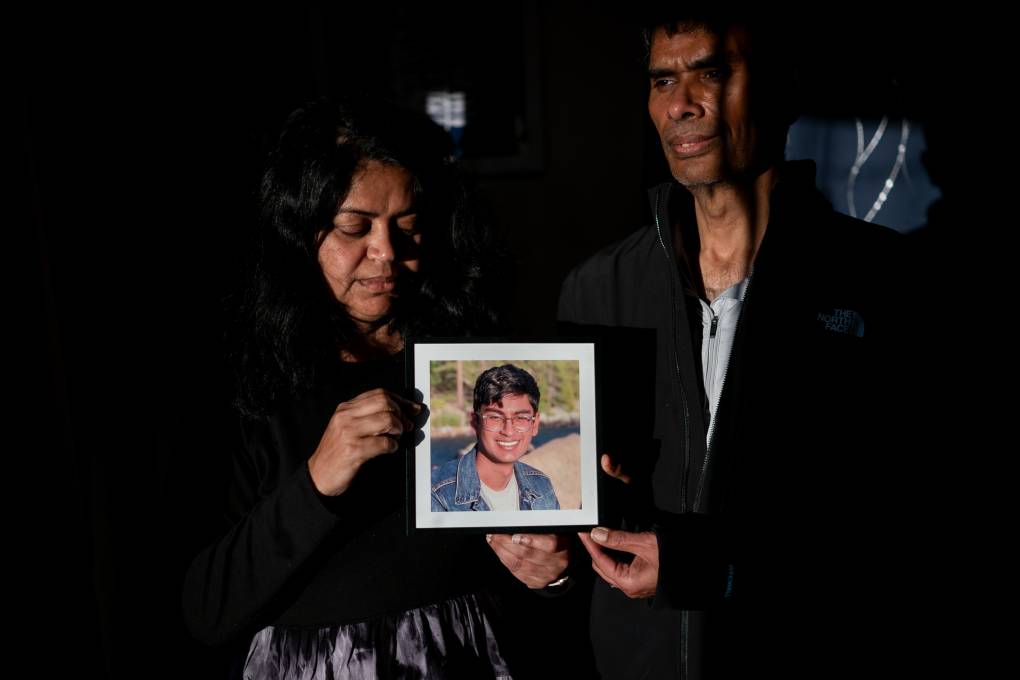
"caption": "Poornima Ramarao (left) and Balaji Ramamurthy, parents of Suchir Balaji, hold a photo of their son at their home in Union City on Jan. 5, 2024. Suchir Balaji was found dead in his San Francisco apartment on Nov. 26.",
"credit": "Beth LaBerge/KQED",
"altTag": null,
"description": null,
"imgSizes": {
"medium": {
"file": "https://cdn.kqed.org/wp-content/uploads/sites/10/2025/01/250105-BalajiDeathOpenAI-09-800x533.jpg",
"width": 800,
"height": 533,
"mimeType": "image/jpeg"
},
"large": {
"file": "https://cdn.kqed.org/wp-content/uploads/sites/10/2025/01/250105-BalajiDeathOpenAI-09-1020x680.jpg",
"width": 1020,
"height": 680,
"mimeType": "image/jpeg"
},
"thumbnail": {
"file": "https://cdn.kqed.org/wp-content/uploads/sites/10/2025/01/250105-BalajiDeathOpenAI-09-160x107.jpg",
"width": 160,
"height": 107,
"mimeType": "image/jpeg"
},
"1536x1536": {
"file": "https://cdn.kqed.org/wp-content/uploads/sites/10/2025/01/250105-BalajiDeathOpenAI-09-1536x1024.jpg",
"width": 1536,
"height": 1024,
"mimeType": "image/jpeg"
},
"post-thumbnail": {
"file": "https://cdn.kqed.org/wp-content/uploads/sites/10/2025/01/250105-BalajiDeathOpenAI-09-672x372.jpg",
"width": 672,
"height": 372,
"mimeType": "image/jpeg"
},
"twentyfourteen-full-width": {
"file": "https://cdn.kqed.org/wp-content/uploads/sites/10/2025/01/250105-BalajiDeathOpenAI-09-1038x576.jpg",
"width": 1038,
"height": 576,
"mimeType": "image/jpeg"
},
"full-width": {
"file": "https://cdn.kqed.org/wp-content/uploads/sites/10/2025/01/250105-BalajiDeathOpenAI-09-1920x1280.jpg",
"width": 1920,
"height": 1280,
"mimeType": "image/jpeg"
},
"kqedFullSize": {
"file": "https://cdn.kqed.org/wp-content/uploads/sites/10/2025/01/250105-BalajiDeathOpenAI-09.jpg",
"width": 2000,
"height": 1333
}
},
"isLoading": false,
"fetchFailed": false
},
"news_12014759": {
"type": "attachments",
"id": "news_12014759",
"meta": {
"index": "attachments_1716263798",
"site": "news",
"id": "12014759",
"found": true
},
"title": "241108-LurieVictoryPresser-29-BL_qed",
"publishDate": 1731717025,
"status": "inherit",
"parent": 12014714,
"modified": 1731717058,
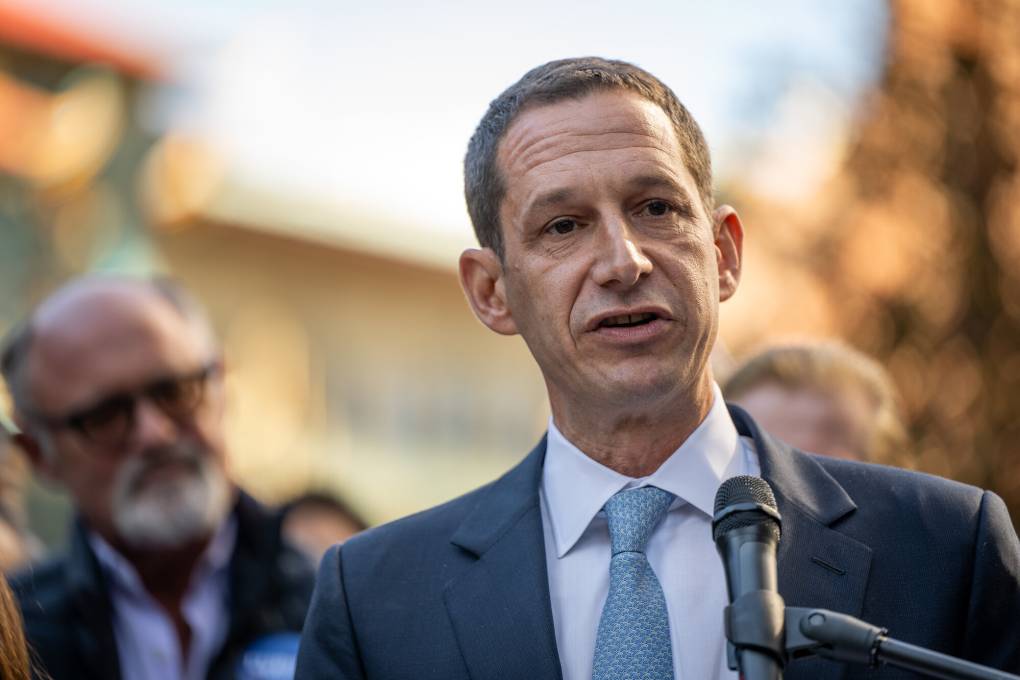
"caption": "San Francisco Mayor-elect Daniel Lurie gives an acceptance speech at St. Mary’s Square in San Francisco on Nov. 8, 2024.",
"credit": "Beth LaBerge/KQED",
"altTag": null,
"description": null,
"imgSizes": {
"medium": {
"file": "https://cdn.kqed.org/wp-content/uploads/sites/10/2024/11/241108-LurieVictoryPresser-29-BL_qed-800x533.jpg",
"width": 800,
"height": 533,
"mimeType": "image/jpeg"
},
"large": {
"file": "https://cdn.kqed.org/wp-content/uploads/sites/10/2024/11/241108-LurieVictoryPresser-29-BL_qed-1020x680.jpg",
"width": 1020,
"height": 680,
"mimeType": "image/jpeg"
},
"thumbnail": {
"file": "https://cdn.kqed.org/wp-content/uploads/sites/10/2024/11/241108-LurieVictoryPresser-29-BL_qed-160x107.jpg",
"width": 160,
"height": 107,
"mimeType": "image/jpeg"
},
"1536x1536": {
"file": "https://cdn.kqed.org/wp-content/uploads/sites/10/2024/11/241108-LurieVictoryPresser-29-BL_qed-1536x1024.jpg",
"width": 1536,
"height": 1024,
"mimeType": "image/jpeg"
},
"post-thumbnail": {
"file": "https://cdn.kqed.org/wp-content/uploads/sites/10/2024/11/241108-LurieVictoryPresser-29-BL_qed-672x372.jpg",
"width": 672,
"height": 372,
"mimeType": "image/jpeg"
},
"twentyfourteen-full-width": {
"file": "https://cdn.kqed.org/wp-content/uploads/sites/10/2024/11/241108-LurieVictoryPresser-29-BL_qed-1038x576.jpg",
"width": 1038,
"height": 576,
"mimeType": "image/jpeg"
},
"full-width": {
"file": "https://cdn.kqed.org/wp-content/uploads/sites/10/2024/11/241108-LurieVictoryPresser-29-BL_qed-1920x1280.jpg",
"width": 1920,
"height": 1280,
"mimeType": "image/jpeg"
},
"kqedFullSize": {
"file": "https://cdn.kqed.org/wp-content/uploads/sites/10/2024/11/241108-LurieVictoryPresser-29-BL_qed.jpg",
"width": 1999,
"height": 1333
}
},
"isLoading": false,
"fetchFailed": false
},
"news_12001328": {
"type": "attachments",
"id": "news_12001328",
"meta": {
"index": "attachments_1716263798",
"site": "news",
"id": "12001328",
"found": true
},
"title": "diabetes-cafe-66c740ce5446a",
"publishDate": 1724334384,
"status": "inherit",
"parent": 12001327,
"modified": 1724334423,
"caption": "A baker takes sugarless turnovers out of the oven at Sweet Nothings Pastry and Coffee Shoppe in El Centro, Calif. on June 26, 2024. ",
"credit": "Philip Salata/inewsource",
"altTag": "diabetes cafe",
"description": null,
"imgSizes": {
"medium": {
"file": "https://cdn.kqed.org/wp-content/uploads/sites/10/2024/08/diabetes-cafe-66c740ce5446a-800x534.jpg",
"width": 800,
"height": 534,
"mimeType": "image/jpeg"
},
"large": {
"file": "https://cdn.kqed.org/wp-content/uploads/sites/10/2024/08/diabetes-cafe-66c740ce5446a-1020x680.jpg",
"width": 1020,
"height": 680,
"mimeType": "image/jpeg"
},
"thumbnail": {
"file": "https://cdn.kqed.org/wp-content/uploads/sites/10/2024/08/diabetes-cafe-66c740ce5446a-160x107.jpg",
"width": 160,
"height": 107,
"mimeType": "image/jpeg"
},
"post-thumbnail": {
"file": "https://cdn.kqed.org/wp-content/uploads/sites/10/2024/08/diabetes-cafe-66c740ce5446a-672x372.jpg",
"width": 672,
"height": 372,
"mimeType": "image/jpeg"
},
"twentyfourteen-full-width": {
"file": "https://cdn.kqed.org/wp-content/uploads/sites/10/2024/08/diabetes-cafe-66c740ce5446a-1024x576.jpg",
"width": 1024,
"height": 576,
"mimeType": "image/jpeg"
},
"kqedFullSize": {
"file": "https://cdn.kqed.org/wp-content/uploads/sites/10/2024/08/diabetes-cafe-66c740ce5446a.jpg",
"width": 1024,
"height": 683
}
},
"isLoading": false,
"fetchFailed": false
},
"news_12001241": {
"type": "attachments",
"id": "news_12001241",
"meta": {
"index": "attachments_1716263798",
"site": "news",
"id": "12001241",
"found": true
},
"title": "Google's Bay View Campus In Silicon Valley",
"publishDate": 1724277349,
"status": "inherit",
"parent": 12055854,
"modified": 1757720142,
"caption": "Google's Bay View campus in Mountain View on June 16, 2022.",
"credit": "Zhang Yi/VCG via Getty Images",
"altTag": null,
"description": null,
"imgSizes": {
"medium": {
"file": "https://cdn.kqed.org/wp-content/uploads/sites/10/2024/08/GETTYIMAGES-1411232503-KQED-800x533.jpg",
"width": 800,
"height": 533,
"mimeType": "image/jpeg"
},
"large": {
"file": "https://cdn.kqed.org/wp-content/uploads/sites/10/2024/08/GETTYIMAGES-1411232503-KQED-1020x680.jpg",
"width": 1020,
"height": 680,
"mimeType": "image/jpeg"
},
"thumbnail": {
"file": "https://cdn.kqed.org/wp-content/uploads/sites/10/2024/08/GETTYIMAGES-1411232503-KQED-160x107.jpg",
"width": 160,
"height": 107,
"mimeType": "image/jpeg"
},
"1536x1536": {
"file": "https://cdn.kqed.org/wp-content/uploads/sites/10/2024/08/GETTYIMAGES-1411232503-KQED-1536x1024.jpg",
"width": 1536,
"height": 1024,
"mimeType": "image/jpeg"
},
"post-thumbnail": {
"file": "https://cdn.kqed.org/wp-content/uploads/sites/10/2024/08/GETTYIMAGES-1411232503-KQED-672x372.jpg",
"width": 672,
"height": 372,
"mimeType": "image/jpeg"
},
"twentyfourteen-full-width": {
"file": "https://cdn.kqed.org/wp-content/uploads/sites/10/2024/08/GETTYIMAGES-1411232503-KQED-1038x576.jpg",
"width": 1038,
"height": 576,
"mimeType": "image/jpeg"
},
"full-width": {
"file": "https://cdn.kqed.org/wp-content/uploads/sites/10/2024/08/GETTYIMAGES-1411232503-KQED-1920x1280.jpg",
"width": 1920,
"height": 1280,
"mimeType": "image/jpeg"
},
"kqedFullSize": {
"file": "https://cdn.kqed.org/wp-content/uploads/sites/10/2024/08/GETTYIMAGES-1411232503-KQED.jpg",
"width": 2000,
"height": 1333
}
},
"isLoading": false,
"fetchFailed": false
},
"news_11988247": {
"type": "attachments",
"id": "news_11988247",
"meta": {
"index": "attachments_1716263798",
"site": "news",
"id": "11988247",
"found": true
},
"title": "Screenshot 2024-05-30 at 1.01.54 PM",
"publishDate": 1717099326,
"status": "inherit",
"parent": 11988245,
"modified": 1717099379,
"caption": "OpenAI, the company behind generative artificial intelligence tools such as ChatGPT, announced Thursday that it had taken down influence operations tied to Russia, China and Iran.",
"credit": "Stefani Reynolds/AFP via Getty Images",
"altTag": "A smartphone screen reflects the image and logo of OpenAI.",
"description": null,
"imgSizes": {
"medium": {
"file": "https://cdn.kqed.org/wp-content/uploads/sites/10/2024/05/Screenshot-2024-05-30-at-1.01.54 PM-800x601.png",
"width": 800,
"height": 601,
"mimeType": "image/png"
},
"large": {
"file": "https://cdn.kqed.org/wp-content/uploads/sites/10/2024/05/Screenshot-2024-05-30-at-1.01.54 PM-1020x767.png",
"width": 1020,
"height": 767,
"mimeType": "image/png"
},
"thumbnail": {
"file": "https://cdn.kqed.org/wp-content/uploads/sites/10/2024/05/Screenshot-2024-05-30-at-1.01.54 PM-160x120.png",
"width": 160,
"height": 120,
"mimeType": "image/png"
},
"post-thumbnail": {
"file": "https://cdn.kqed.org/wp-content/uploads/sites/10/2024/05/Screenshot-2024-05-30-at-1.01.54 PM-672x372.png",
"width": 672,
"height": 372,
"mimeType": "image/png"
},
"twentyfourteen-full-width": {
"file": "https://cdn.kqed.org/wp-content/uploads/sites/10/2024/05/Screenshot-2024-05-30-at-1.01.54 PM-1038x576.png",
"width": 1038,
"height": 576,
"mimeType": "image/png"
},
"kqedFullSize": {
"file": "https://cdn.kqed.org/wp-content/uploads/sites/10/2024/05/Screenshot-2024-05-30-at-1.01.54 PM.png",
"width": 1288,
"height": 968
}
},
"isLoading": false,
"fetchFailed": false
},
"news_11985952": {
"type": "attachments",
"id": "news_11985952",
"meta": {
"index": "attachments_1716263798",
"site": "news",
"id": "11985952",
"found": true
},
"title": "Open AI ChatGPT Update",
"publishDate": 1715640590,
"status": "inherit",
"parent": 11985949,
"modified": 1783528918,
"caption": "The OpenAI logo is seen on a mobile phone in front of a computer screen displaying output from ChatGPT, March 21, 2023, in Boston, Massachusetts. ",
"credit": "Michael Dwyer/Associated Press",
"altTag": null,
"description": null,
"imgSizes": {
"medium": {
"file": "https://cdn.kqed.org/wp-content/uploads/sites/10/2024/05/AP24134775174210-800x533.jpg",
"width": 800,
"height": 533,
"mimeType": "image/jpeg"
},
"large": {
"file": "https://cdn.kqed.org/wp-content/uploads/sites/10/2024/05/AP24134775174210-1020x680.jpg",
"width": 1020,
"height": 680,
"mimeType": "image/jpeg"
},
"thumbnail": {
"file": "https://cdn.kqed.org/wp-content/uploads/sites/10/2024/05/AP24134775174210-160x107.jpg",
"width": 160,
"height": 107,
"mimeType": "image/jpeg"
},
"1536x1536": {
"file": "https://cdn.kqed.org/wp-content/uploads/sites/10/2024/05/AP24134775174210-1536x1024.jpg",
"width": 1536,
"height": 1024,
"mimeType": "image/jpeg"
},
"2048x2048": {
"file": "https://cdn.kqed.org/wp-content/uploads/sites/10/2024/05/AP24134775174210-2048x1365.jpg",
"width": 2048,
"height": 1365,
"mimeType": "image/jpeg"
},
"post-thumbnail": {
"file": "https://cdn.kqed.org/wp-content/uploads/sites/10/2024/05/AP24134775174210-672x372.jpg",
"width": 672,
"height": 372,
"mimeType": "image/jpeg"
},
"twentyfourteen-full-width": {
"file": "https://cdn.kqed.org/wp-content/uploads/sites/10/2024/05/AP24134775174210-1038x576.jpg",
"width": 1038,
"height": 576,
"mimeType": "image/jpeg"
},
"full-width": {
"file": "https://cdn.kqed.org/wp-content/uploads/sites/10/2024/05/AP24134775174210-1920x1280.jpg",
"width": 1920,
"height": 1280,
"mimeType": "image/jpeg"
},
"kqedFullSize": {
"file": "https://cdn.kqed.org/wp-content/uploads/sites/10/2024/05/AP24134775174210-scaled-e1770337042768.jpg",
"width": 2000,
"height": 1334
}
},
"isLoading": false,
"fetchFailed": false
},
"news_11976118": {
"type": "attachments",
"id": "news_11976118",
"meta": {
"index": "attachments_1716263798",
"site": "news",
"id": "11976118",
"found": true
},
"title": "OpenAI CEO Samuel Altman Testifies To Senate Committee On Rules For Artificial Intelligence",
"publishDate": 1708040236,
"status": "inherit",
"parent": 11976097,
"modified": 1761950561,
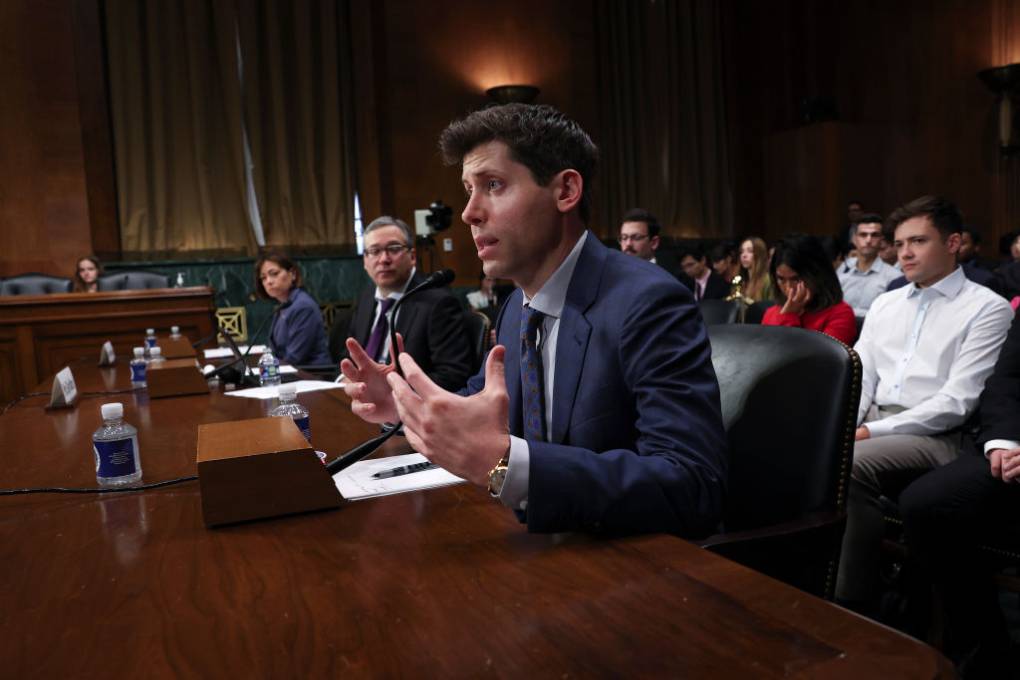
"caption": "Sam Altman, CEO of OpenAI, testifies before the Senate Judiciary Subcommittee on Privacy, Technology, and the Law on May 16, 2023, in Washington, D.C. The committee held an oversight hearing to examine AI, focusing on rules for artificial intelligence. ",
"credit": "Win McNamee/Getty Images",
"altTag": "A white man in a blue suit and tie gestures as he speaks in a congressional room surrounded by people.",
"description": "A white man in a blue suit and tie gestures as he speaks in a congressional room surrounded by people.",
"imgSizes": {
"medium": {
"file": "https://cdn.kqed.org/wp-content/uploads/sites/10/2024/02/GettyImages-1490690177-800x534.jpg",
"width": 800,
"height": 534,
"mimeType": "image/jpeg"
},
"large": {
"file": "https://cdn.kqed.org/wp-content/uploads/sites/10/2024/02/GettyImages-1490690177-1020x680.jpg",
"width": 1020,
"height": 680,
"mimeType": "image/jpeg"
},
"thumbnail": {
"file": "https://cdn.kqed.org/wp-content/uploads/sites/10/2024/02/GettyImages-1490690177-160x107.jpg",
"width": 160,
"height": 107,
"mimeType": "image/jpeg"
},
"post-thumbnail": {
"file": "https://cdn.kqed.org/wp-content/uploads/sites/10/2024/02/GettyImages-1490690177-672x372.jpg",
"width": 672,
"height": 372,
"mimeType": "image/jpeg"
},
"twentyfourteen-full-width": {
"file": "https://cdn.kqed.org/wp-content/uploads/sites/10/2024/02/GettyImages-1490690177-1024x576.jpg",
"width": 1024,
"height": 576,
"mimeType": "image/jpeg"
},
"kqedFullSize": {
"file": "https://cdn.kqed.org/wp-content/uploads/sites/10/2024/02/GettyImages-1490690177.jpg",
"width": 1024,
"height": 683
}
},
"isLoading": false,
"fetchFailed": false
},
"news_11968291": {
"type": "attachments",
"id": "news_11968291",
"meta": {
"index": "attachments_1716263798",
"site": "news",
"id": "11968291",
"found": true
},
"parent": 11968285,
"imgSizes": {
"twentyfourteen-full-width": {
"file": "https://ww2.kqed.org/app/uploads/sites/10/2023/11/ap23145574875419_custom-0a111220df489782c3291bb057617326a41e5ac6-s1600-c85-1038x576.jpg",
"width": 1038,
"mimeType": "image/jpeg",
"height": 576
},
"thumbnail": {
"file": "https://ww2.kqed.org/app/uploads/sites/10/2023/11/ap23145574875419_custom-0a111220df489782c3291bb057617326a41e5ac6-s1600-c85-160x107.jpg",
"width": 160,
"mimeType": "image/jpeg",
"height": 107
},
"post-thumbnail": {
"file": "https://ww2.kqed.org/app/uploads/sites/10/2023/11/ap23145574875419_custom-0a111220df489782c3291bb057617326a41e5ac6-s1600-c85-672x372.jpg",
"width": 672,
"mimeType": "image/jpeg",
"height": 372
},
"kqedFullSize": {
"file": "https://ww2.kqed.org/app/uploads/sites/10/2023/11/ap23145574875419_custom-0a111220df489782c3291bb057617326a41e5ac6-s1600-c85.jpg",
"width": 1600,
"height": 1068
},
"large": {
"file": "https://ww2.kqed.org/app/uploads/sites/10/2023/11/ap23145574875419_custom-0a111220df489782c3291bb057617326a41e5ac6-s1600-c85-1020x681.jpg",
"width": 1020,
"mimeType": "image/jpeg",
"height": 681
},
"1536x1536": {
"file": "https://ww2.kqed.org/app/uploads/sites/10/2023/11/ap23145574875419_custom-0a111220df489782c3291bb057617326a41e5ac6-s1600-c85-1536x1025.jpg",
"width": 1536,
"mimeType": "image/jpeg",
"height": 1025
},
"medium": {
"file": "https://ww2.kqed.org/app/uploads/sites/10/2023/11/ap23145574875419_custom-0a111220df489782c3291bb057617326a41e5ac6-s1600-c85-800x534.jpg",
"width": 800,
"mimeType": "image/jpeg",
"height": 534
}
},
"publishDate": 1700873822,
"modified": 1700960451,
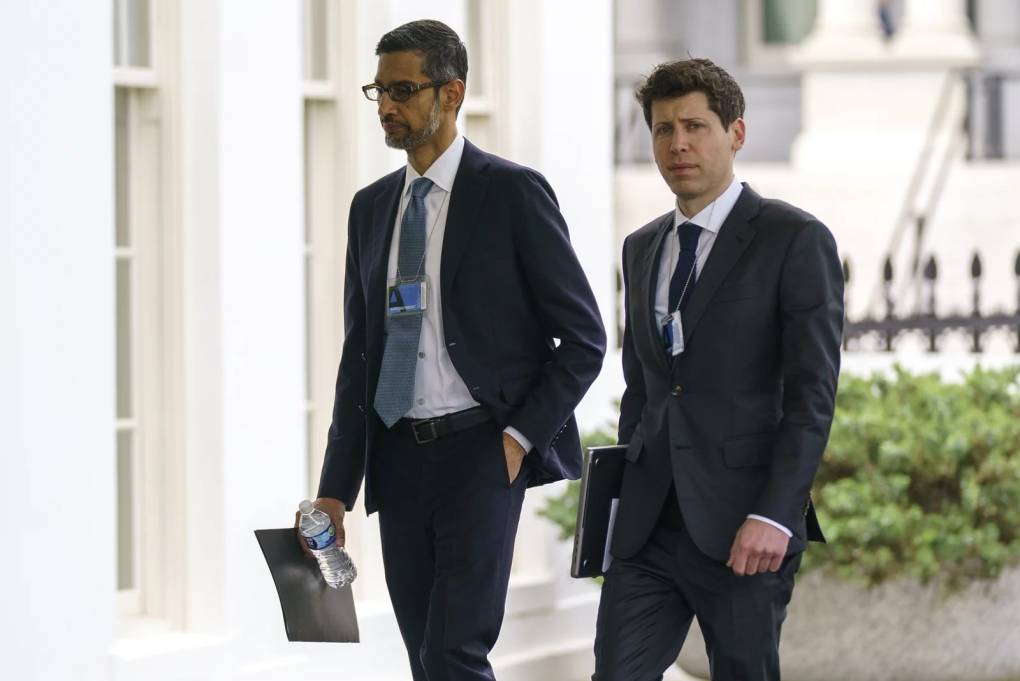
"caption": "Alphabet CEO Sundar Pichai (left) and OpenAI CEO Sam Altman arrive to the White House for a meeting in May.",
"description": null,
"title": "ap23145574875419_custom-0a111220df489782c3291bb057617326a41e5ac6-s1600-c85",
"credit": "Evan Vucci/AP Photo",
"status": "inherit",
"altTag": "two men in suits walk past white columns",
"isLoading": false,
"fetchFailed": false
}
},
"audioPlayerReducer": {
"postId": "stream_live",
"isPaused": true,
"isPlaying": false,
"pfsActive": false,
"pledgeModalIsOpen": true,
"playerDrawerIsOpen": false,
"liveAudioPlayStartedAt": 0,
"liveAudioPlayContext": ""
},
"authorsReducer": {
"byline_news_11988245": {
"type": "authors",
"id": "byline_news_11988245",
"meta": {
"override": true
},
"slug": "byline_news_11988245",
"name": "Shannon Bond, NPR",
"isLoading": false
},
"byline_news_11968285": {
"type": "authors",
"id": "byline_news_11968285",
"meta": {
"override": true
},
"slug": "byline_news_11968285",
"name": "\u003ca href=\"https://www.npr.org/people/638550790/bobby-allyn\">Bobby Allyn\u003c/a>",
"isLoading": false
},
"rachael-myrow": {
"type": "authors",
"id": "251",
"meta": {
"index": "authors_1716337520",
"id": "251",
"found": true
},
"name": "Rachael Myrow",
"firstName": "Rachael",
"lastName": "Myrow",
"slug": "rachael-myrow",
"email": "rmyrow@kqed.org",
"display_author_email": true,
"staff_mastheads": [
"news"
],
"title": "Senior Editor of KQED's Silicon Valley News Desk",
"bio": "• I write and edit stories about how Silicon Valley power and policies shape everyday life in California. I’m also passionate about making Bay Area history and culture more accessible to a broad public. • I’ve been a journalist for most of my life, starting in high school with The Franklin Press in Los Angeles, where I grew up. While earning my first degree in English at UC Berkeley, I got my start in public radio at KALX-FM. After completing a second degree in journalism at Cal, I landed my first professional job at Marketplace, then moved on to KPCC (now LAist), and then KQED, where I hosted The California Report for more than seven years. • My reporting has appeared on NPR, The World, WBUR’s \u003ci>Here & Now\u003c/i>, and the BBC. I also guest host for KQED’s \u003ci>Forum\u003c/i>, as well as the Commonwealth Club in San Francisco. • I speak periodically on media, democracy and technology issues, and do voiceover work for documentaries and educational video projects. • Outside of the studio, you'll find me hiking Bay Area trails and whipping up Insta-ready meals in my kitchen. • I do not accept gifts, money, or favors from anyone connected to my reporting, I don't pay people for information, and I do not support or donate to political causes. • I strive to treat the people I report on with fairness, honesty, and respect. I also recognize there are often multiple sides to a story and work to verify information through multiple sources and documentation. If I get something wrong, I correct it.",
"avatar": "https://secure.gravatar.com/avatar/3ed8a3c5f26025e4a805ba634cda8cd764906b97438a6d9ce216b044e340da4e?s=600&d=blank&r=g",
"twitter": "rachaelmyrow",
"bluesky": null,
"facebook": null,
"instagram": null,
"linkedin": "https://www.linkedin.com/in/rachaelmyrow/",
"sites": [
{
"site": "arts",
"roles": [
"administrator"
]
},
{
"site": "news",
"roles": [
"edit_others_posts",
"editor"
]
},
{
"site": "futureofyou",
"roles": [
"editor"
]
},
{
"site": "bayareabites",
"roles": [
"editor"
]
},
{
"site": "stateofhealth",
"roles": [
"editor"
]
},
{
"site": "science",
"roles": [
"editor"
]
},
{
"site": "food",
"roles": [
"editor"
]
},
{
"site": "forum",
"roles": [
"editor"
]
},
{
"site": "liveblog",
"roles": [
"author"
]
}
],
"headData": {
"title": "Rachael Myrow | KQED",
"description": "Senior Editor of KQED's Silicon Valley News Desk",
"ogImgSrc": "https://secure.gravatar.com/avatar/3ed8a3c5f26025e4a805ba634cda8cd764906b97438a6d9ce216b044e340da4e?s=600&d=blank&r=g",
"twImgSrc": "https://secure.gravatar.com/avatar/3ed8a3c5f26025e4a805ba634cda8cd764906b97438a6d9ce216b044e340da4e?s=600&d=blank&r=g"
},
"isLoading": false,
"link": "/author/rachael-myrow"
},
"lsarah": {
"type": "authors",
"id": "11626",
"meta": {
"index": "authors_1716337520",
"id": "11626",
"found": true
},
"name": "Lakshmi Sarah",
"firstName": "Lakshmi",
"lastName": "Sarah",
"slug": "lsarah",
"email": "lsarah@kqed.org",
"display_author_email": false,
"staff_mastheads": [],
"title": "Digital Producer",
"bio": "Lakshmi Sarah is an educator, author and journalist with a focus on innovative storytelling. She has worked with newspapers, radio and magazines from Ahmedabad, India to Los Angeles, California. She has written and produced for Die Zeit, Global Voices, AJ+, KQED, Fusion Media Group and the New York Times.",
"avatar": "https://secure.gravatar.com/avatar/652dcaecd8b28826fc17a8b2d6bb4e93?s=600&d=blank&r=g",
"twitter": "lakitalki",
"facebook": null,
"instagram": "https://www.instagram.com/laki.talki/",
"linkedin": "https://www.linkedin.com/in/lakisarah/",
"sites": [
{
"site": "arts",
"roles": []
},
{
"site": "news",
"roles": []
},
{
"site": "bayareabites",
"roles": []
},
{
"site": "science",
"roles": []
}
],
"headData": {
"title": "Lakshmi Sarah | KQED",
"description": "Digital Producer",
"ogImgSrc": "https://secure.gravatar.com/avatar/652dcaecd8b28826fc17a8b2d6bb4e93?s=600&d=blank&r=g",
"twImgSrc": "https://secure.gravatar.com/avatar/652dcaecd8b28826fc17a8b2d6bb4e93?s=600&d=blank&r=g"
},
"isLoading": false,
"link": "/author/lsarah"
},
"jrodriguez": {
"type": "authors",
"id": "11690",
"meta": {
"index": "authors_1716337520",
"id": "11690",
"found": true
},
"name": "Joe Fitzgerald Rodriguez",
"firstName": "Joe",
"lastName": "Fitzgerald Rodriguez",
"slug": "jrodriguez",
"email": "jrodriguez@kqed.org",
"display_author_email": true,
"staff_mastheads": [
"news"
],
"title": "Reporter and Producer",
"bio": "Joe Fitzgerald Rodriguez is a reporter and digital producer for KQED covering politics. Joe most recently wrote for the \u003cem>San Francisco Examiner\u003c/em> as a political columnist covering The City. He was raised in San Francisco and has spent his reporting career in his beloved, foggy, city by the bay. Joe was 12-years-old when he conducted his first interview in journalism, grilling former San Francisco Mayor Willie Brown for the Marina Middle School newspaper, \u003cem>The Penguin Press, \u003c/em>and he continues to report on the San Francisco Bay Area to this day.",
"avatar": "https://secure.gravatar.com/avatar/2247beb0564c1e9c62228d5649d2edac?s=600&d=blank&r=g",
"twitter": "FitztheReporter",
"facebook": null,
"instagram": "https://www.instagram.com/fitzthereporter/",
"linkedin": null,
"sites": [
{
"site": "",
"roles": [
"editor"
]
},
{
"site": "arts",
"roles": [
"editor"
]
},
{
"site": "news",
"roles": [
"editor"
]
},
{
"site": "science",
"roles": [
"editor"
]
},
{
"site": "elections",
"roles": [
"editor"
]
},
{
"site": "liveblog",
"roles": [
"editor"
]
}
],
"headData": {
"title": "Joe Fitzgerald Rodriguez | KQED",
"description": "Reporter and Producer",
"ogImgSrc": "https://secure.gravatar.com/avatar/2247beb0564c1e9c62228d5649d2edac?s=600&d=blank&r=g",
"twImgSrc": "https://secure.gravatar.com/avatar/2247beb0564c1e9c62228d5649d2edac?s=600&d=blank&r=g"
},
"isLoading": false,
"link": "/author/jrodriguez"
},
"kmizuguchi": {
"type": "authors",
"id": "11739",
"meta": {
"index": "authors_1716337520",
"id": "11739",
"found": true
},
"name": "Keith Mizuguchi",
"firstName": "Keith",
"lastName": "Mizuguchi",
"slug": "kmizuguchi",
"email": "kmizuguchi@kqed.org",
"display_author_email": false,
"staff_mastheads": [],
"title": "KQED Contributor",
"bio": null,
"avatar": "https://secure.gravatar.com/avatar/64d8a7de0723d4099b9fe4e915136103febcc20809abce228ee4415bcb237023?s=600&d=blank&r=g",
"twitter": null,
"bluesky": null,
"facebook": null,
"instagram": null,
"linkedin": null,
"sites": [
{
"site": "news",
"roles": [
"editor"
]
},
{
"site": "science",
"roles": [
"editor"
]
}
],
"headData": {
"title": "Keith Mizuguchi | KQED",
"description": "KQED Contributor",
"ogImgSrc": "https://secure.gravatar.com/avatar/64d8a7de0723d4099b9fe4e915136103febcc20809abce228ee4415bcb237023?s=600&d=blank&r=g",
"twImgSrc": "https://secure.gravatar.com/avatar/64d8a7de0723d4099b9fe4e915136103febcc20809abce228ee4415bcb237023?s=600&d=blank&r=g"
},
"isLoading": false,
"link": "/author/kmizuguchi"
},
"sjohnson": {
"type": "authors",
"id": "11840",
"meta": {
"index": "authors_1716337520",
"id": "11840",
"found": true
},
"name": "Sydney Johnson",
"firstName": "Sydney",
"lastName": "Johnson",
"slug": "sjohnson",
"email": "sjohnson@kqed.org",
"display_author_email": false,
"staff_mastheads": [
"news"
],
"title": "KQED Reporter",
"bio": "Sydney Johnson is a general assignment reporter at KQED. She previously reported on public health and city government at the San Francisco Examiner, and before that, she covered statewide education policy for EdSource. Her reporting has won multiple local, state and national awards. Sydney is a graduate of the University of California, Berkeley and lives in San Francisco.",
"avatar": "https://secure.gravatar.com/avatar/97855f2719b72ad6190b7c535fe642c8?s=600&d=blank&r=g",
"twitter": "sydneyfjohnson",
"facebook": null,
"instagram": null,
"linkedin": null,
"sites": [
{
"site": "news",
"roles": [
"editor"
]
}
],
"headData": {
"title": "Sydney Johnson | KQED",
"description": "KQED Reporter",
"ogImgSrc": "https://secure.gravatar.com/avatar/97855f2719b72ad6190b7c535fe642c8?s=600&d=blank&r=g",
"twImgSrc": "https://secure.gravatar.com/avatar/97855f2719b72ad6190b7c535fe642c8?s=600&d=blank&r=g"
},
"isLoading": false,
"link": "/author/sjohnson"
}
},
"pagesReducer": {
"news_tag_openai": {
"type": "terms",
"id": "news_33542",
"meta": {
"index": "terms_1716263798",
"site": "news",
"id": "33542",
"score": 9.893782
},
"featImg": null,
"name": "OpenAI",
"description": null,
"taxonomy": "tag",
"headData": {
"twImgId": null,
"twTitle": null,
"ogTitle": null,
"ogImgId": null,
"twDescription": null,
"description": null,
"title": "OpenAI Archives | KQED News",
"ogDescription": null
},
"ttid": 33559,
"slug": "openai",
"isLoading": false,
"title": "OpenAI",
"pageMeta": {
"site": "news",
"WpPageTemplate": "page-topic-editorial",
"currentPage": 4
},
"blocks": [
{
"blockName": "kqed/post-list",
"attrs": {
"layout": "cardArticle2",
"query": "posts/news?tag=openai",
"seeMore": false,
"paginated": true,
"page": 4
}
},
{
"blockName": "kqed/ad"
}
]
}
},
"pfsSessionReducer": {},
"postsReducer": {
"stream_live": {
"type": "live",
"id": "stream_live",
"audioUrl": "https://streams.kqed.org/kqedradio",
"title": "Live Stream",
"excerpt": "Live Stream information currently unavailable.",
"link": "/radio",
"featImg": "",
"label": {
"name": "KQED Live",
"link": "/"
}
},
"stream_kqedNewscast": {
"type": "posts",
"id": "stream_kqedNewscast",
"audioUrl": "https://www.kqed.org/.stream/anon/radio/RDnews/newscast.mp3?_=1",
"title": "KQED Newscast",
"featImg": "",
"label": {
"name": "88.5 FM",
"link": "/"
}
},
"news_12020909": {
"type": "posts",
"id": "news_12020909",
"meta": {
"index": "posts_1716263798",
"site": "news",
"id": "12020909",
"score": null,
"sort": [
1736456448000
]
},
"guestAuthors": [],
"slug": "openai-whistleblowers-death-sf-parents-skeptical-citys-investigation",
"title": "OpenAI Whistleblower’s Death in SF Has His Parents Skeptical of City’s Investigation",
"publishDate": 1736456448,
"format": "audio",
"headTitle": "OpenAI Whistleblower’s Death in SF Has His Parents Skeptical of City’s Investigation | KQED",
"labelTerm": {
"site": "news"
},
"content": "\u003cp>Poornima Ramarao scans the buildings surrounding her son’s Lower Haight apartment for visible video cameras. Walking past one of the doors to the modern complex, across the street from old Victorian homes, Balaji Ramamurthy said someone might have gotten in through a number of possible entries.\u003c/p>\n\u003cp>The couple’s son, Suchir Balaji, quit his job at \u003ca href=\"https://www.kqed.org/news/tag/openai\">OpenAI\u003c/a> in August and, by October, was profiled in \u003ca href=\"https://www.nytimes.com/2024/10/23/technology/openai-copyright-law.html\">\u003cem>The New York Times\u003c/em>\u003c/a> saying, “If you believe what I believe, you have to just leave the company.” One of his first projects helped pave the way for ChatGPT — a product that he had come to believe was misusing copyrighted data.\u003c/p>\n\u003cp>Roughly a month later — a week after he was named as a witness for a lawsuit against OpenAI and Microsoft — Balaji, 26, was found dead in his San Francisco apartment. The Office of the Chief Medical Examiner certified the cause and manner as a suicide, but a full autopsy has not yet been released, a spokesperson told KQED.\u003c/p>\n\u003cp>[ad fullwidth]\u003c/p>\n\u003cp>His parents, however, believe there has been foul play, and they are calling for a federal investigation. “Our best interest is to have the FBI give us an unbiased investigation,” Ramarao said.\u003c/p>\n\u003cp>In recent days, Ramarao and Ramamurthy have been on calls and video chats with media from around the world at all hours, in an effort to get their son’s story into the world.\u003c/p>\n\u003cfigure id=\"attachment_12020380\" class=\"wp-caption aligncenter\" style=\"max-width: 2000px\">\u003cimg loading=\"lazy\" decoding=\"async\" class=\"size-full wp-image-12020380\" src=\"https://cdn.kqed.org/wp-content/uploads/sites/10/2025/01/250105-BalajiDeathOpenAI-08.jpg\" alt=\"\" width=\"2000\" height=\"1333\" srcset=\"https://cdn.kqed.org/wp-content/uploads/sites/10/2025/01/250105-BalajiDeathOpenAI-08.jpg 2000w, https://cdn.kqed.org/wp-content/uploads/sites/10/2025/01/250105-BalajiDeathOpenAI-08-800x533.jpg 800w, https://cdn.kqed.org/wp-content/uploads/sites/10/2025/01/250105-BalajiDeathOpenAI-08-1020x680.jpg 1020w, https://cdn.kqed.org/wp-content/uploads/sites/10/2025/01/250105-BalajiDeathOpenAI-08-160x107.jpg 160w, https://cdn.kqed.org/wp-content/uploads/sites/10/2025/01/250105-BalajiDeathOpenAI-08-1536x1024.jpg 1536w, https://cdn.kqed.org/wp-content/uploads/sites/10/2025/01/250105-BalajiDeathOpenAI-08-1920x1280.jpg 1920w\" sizes=\"auto, (max-width: 2000px) 100vw, 2000px\">\u003cfigcaption class=\"wp-caption-text\">The hands of Poornima Ramarao and Balaji Ramamurthy, parents of Suchir Balaji, hold a photo of their son at their home in Union City on Jan. 5, 2024. Suchir Balaji was found dead in his San Francisco apartment on Nov. 26. \u003ccite>(Beth LaBerge/KQED)\u003c/cite>\u003c/figcaption>\u003c/figure>\n\u003cp>“He was the sweetest human being and the kindest human being I’ve ever known in my life,” Ramarao said. “I’m proud to say that I gave birth to such an amazing person.”\u003c/p>\n\u003cp>Ramamurthy shared a story of how his son was always protecting his parents — looking out for them at crosswalks when they weren’t paying attention, pulling his father back from a fast-moving river on a trip to Yosemite.\u003c/p>\n\u003cp>Balaji was usually responsive, so when the parents hadn’t heard from him the week of Thanksgiving, Ramarao called for a wellness check. She said she waited outside while the police went in to check the apartment.\u003c/p>\n\u003cp>Eventually, she saw a white van leave.\u003c/p>\n\u003cp>“Fear gripped me because it was not an ambulance,” Ramarao said.\u003c/p>\n\u003cp>The next morning, Ramarao called the police for an update, she said.\u003c/p>\n\u003cfigure id=\"attachment_12020377\" class=\"wp-caption aligncenter\" style=\"max-width: 2000px\">\u003cimg loading=\"lazy\" decoding=\"async\" class=\"size-full wp-image-12020377\" src=\"https://cdn.kqed.org/wp-content/uploads/sites/10/2025/01/250103-BalajiDeathOpenAI-04.jpg\" alt=\"\" width=\"2000\" height=\"1333\" srcset=\"https://cdn.kqed.org/wp-content/uploads/sites/10/2025/01/250103-BalajiDeathOpenAI-04.jpg 2000w, https://cdn.kqed.org/wp-content/uploads/sites/10/2025/01/250103-BalajiDeathOpenAI-04-800x533.jpg 800w, https://cdn.kqed.org/wp-content/uploads/sites/10/2025/01/250103-BalajiDeathOpenAI-04-1020x680.jpg 1020w, https://cdn.kqed.org/wp-content/uploads/sites/10/2025/01/250103-BalajiDeathOpenAI-04-160x107.jpg 160w, https://cdn.kqed.org/wp-content/uploads/sites/10/2025/01/250103-BalajiDeathOpenAI-04-1536x1024.jpg 1536w, https://cdn.kqed.org/wp-content/uploads/sites/10/2025/01/250103-BalajiDeathOpenAI-04-1920x1280.jpg 1920w\" sizes=\"auto, (max-width: 2000px) 100vw, 2000px\">\u003cfigcaption class=\"wp-caption-text\">Balaji Ramamurthy (left) and Poornima Ramarao, parents of Suchir Balaji, stand next to the apartment building where their son lived in San Francisco on Jan. 3, 2024. \u003ccite>(Beth LaBerge/KQED)\u003c/cite>\u003c/figcaption>\u003c/figure>\n\u003cp>“They said we are not investigating. Medical examiner is investigating,” so she called the medical examiner, who said, “We are not investigating, police are investigating.” When she called the homicide unit, they said they don’t get involved unless the medical examiner says there is a reason.\u003c/p>\n\u003cp>Since then, Ramarao and her husband have taken matters into their own hands as they push for further investigation. She called the apartment leasing office and asked them not to clean Balaji’s unit.\u003c/p>\n\u003cp>“Keep the crime scene as is,” she told them. She said the apartment was disorganized, and there was blood in several locations.\u003c/p>\n\u003cp>“We questioned the authorities, who said there was no sign of struggle,” Ramarao said. “It was very brutal seeing his blood all over. I don’t think it was instantaneous.”\u003c/p>\n\u003cp>A representative for the San Francisco Police Department referred KQED’s questions to the medical examiner’s office, saying it was the lead investigative agency in the case. The medical examiner’s office said the death report is still being finalized.\u003c/p>\n\u003cp>Ramarao said her son was being considered as a witness for a federal lawsuit \u003ca href=\"https://www.nytimes.com/2023/12/27/business/media/new-york-times-open-ai-microsoft-lawsuit.html\">brought by \u003cem>The New York Times\u003c/em>\u003c/a> against OpenAI and Microsoft. “Among 12 people, my son was the key evidence, and he had solid proof against them,” she said.\u003c/p>\n\u003cp>https://twitter.com/suchirbalaji/status/1849192575758139733\u003c/p>\n\u003cp>According to \u003ca href=\"https://apnews.com/article/openai-whistleblower-suchir-balaji-death-283e70b31d34ebb71b62e73aafb56a7d\">the \u003cem>Associated Press\u003c/em>\u003c/a>, lawyers for the \u003cem>Times\u003c/em> named him in a November court filing as someone who might have “unique and relevant documents” supporting their claim that OpenAI had willfully broken copyright law.\u003c/p>\n\u003cp>That could have a major impact on any potential damages that come out of the lawsuit. Damages can be tripled “when infringement is willful, meaning done intentionally or with reckless disregard for the law, which incriminating emails would show,” said Colleen Chien, a professor and co-director of UC Berkeley’s Center for Law and Technology.\u003c/p>\n\u003cp>[aside postID=news_12014714 hero='https://cdn.kqed.org/wp-content/uploads/sites/10/2024/11/241108-LurieVictoryPresser-29-BL_qed-1020x680.jpg']\u003c/p>\n\u003cp>And because the legal question of whether or not using copyright works for training AI is unsettled, “unsavory facts” such as emails or documentation of conversations “could color not only public opinion but also the development of the law,” Chien said.\u003c/p>\n\u003cp>When asked about Balaji’s death, OpenAI referred KQED to \u003ca href=\"https://x.com/OpenAINewsroom/status/1872312018994352636\">a statement released on social media platform X\u003c/a>, saying they were “devastated to learn of this tragic news” and have been in touch with Balaji’s family to offer their full support. “We respect his, and others’, right to share views freely,” the statement said.\u003c/p>\n\u003cp>For Ramarao and Ramamurthy, everywhere in the Bay Area reminds them of their son, from the trails of Coyote Creek, where they hiked to the science museums they took him to as a child.\u003c/p>\n\u003cp>“The worst part is because of the fight for justice, we can’t even grieve,” Ramarao said. “I feel like part of me is missing.”\u003c/p>\n\u003cp>The family is planning a vigil in front of the San Francisco medical examiner’s office on Jan. 19 at 11 a.m.\u003c/p>\n\u003cp>\u003cem>This story includes discussion of suicide. If you or someone you know needs help, the national suicide and crisis lifeline in the U.S. is available by calling or texting 988. There is also an online chat at \u003c/em>\u003ca href=\"http://988lifeline.org\">\u003cem>988lifeline.org\u003c/em>\u003c/a>\u003cem>.\u003c/em>\u003c/p>\n\u003cp>\u003c/p>\n",
"blocks": [],
"excerpt": "Suchir Balaji, who quit his job at OpenAI and spoke out against its use of data, died in November. Authorities determined he died by suicide, but his parents want further investigation.",
"status": "publish",
"parent": 0,
"modified": 1736709632,
"stats": {
"hasAudio": false,
"hasVideo": false,
"hasChartOrMap": false,
"iframeSrcs": [],
"hasGoogleForm": false,
"hasGallery": false,
"hasHearkenModule": false,
"hasPolis": false,
"paragraphCount": 28,
"wordCount": 1060
},
"headData": {
"title": "OpenAI Whistleblower’s Death in SF Has His Parents Skeptical of City’s Investigation | KQED",
"description": "Suchir Balaji, who quit his job at OpenAI and spoke out against its use of data, died in November. Authorities determined he died by suicide, but his parents want further investigation.",
"ogTitle": "",
"ogDescription": "",
"ogImgId": "",
"twTitle": "",
"twDescription": "",
"twImgId": "",
"schema": {
"@context": "https://schema.org",
"@type": "NewsArticle",
"headline": "OpenAI Whistleblower’s Death in SF Has His Parents Skeptical of City’s Investigation",
"datePublished": "2025-01-09T13:00:48-08:00",
"dateModified": "2025-01-12T11:20:32-08:00",
"image": "https://cdn.kqed.org/wp-content/uploads/2020/02/KQED-OG-Image@1x.png",
"isAccessibleForFree": "True",
"publisher": {
"@type": "NewsMediaOrganization",
"@id": "https://www.kqed.org/#organization",
"name": "KQED",
"logo": "https://cdn.kqed.org/wp-content/uploads/2020/02/KQED-OG-Image@1x.png",
"url": "https://www.kqed.org",
"sameAs": [
"https://www.facebook.com/KQED",
"https://twitter.com/KQED",
"https://www.instagram.com/kqed/",
"https://www.tiktok.com/@kqedofficial",
"https://www.linkedin.com/company/kqed",
"https://www.youtube.com/channel/UCeC0IOo7i1P_61zVUWbJ4nw"
]
}
}
},
"audioUrl": "https://traffic.omny.fm/d/clips/0af137ef-751e-4b19-a055-aaef00d2d578/ffca7e9f-6831-4[…]f-aaef00f5a073/7df0f6e6-cb7b-4c73-b04a-b25f00f9391e/audio.mp3",
"sticky": false,
"nprStoryId": "kqed-12020909",
"excludeFromSiteSearch": "Include",
"articleAge": "0",
"path": "/news/12020909/openai-whistleblowers-death-sf-parents-skeptical-citys-investigation",
"audioTrackLength": null,
"parsedContent": [
{
"type": "contentString",
"content": "\u003cdiv class=\"post-body\">\u003cp>\u003cp>Poornima Ramarao scans the buildings surrounding her son’s Lower Haight apartment for visible video cameras. Walking past one of the doors to the modern complex, across the street from old Victorian homes, Balaji Ramamurthy said someone might have gotten in through a number of possible entries.\u003c/p>\n\u003cp>The couple’s son, Suchir Balaji, quit his job at \u003ca href=\"https://www.kqed.org/news/tag/openai\">OpenAI\u003c/a> in August and, by October, was profiled in \u003ca href=\"https://www.nytimes.com/2024/10/23/technology/openai-copyright-law.html\">\u003cem>The New York Times\u003c/em>\u003c/a> saying, “If you believe what I believe, you have to just leave the company.” One of his first projects helped pave the way for ChatGPT — a product that he had come to believe was misusing copyrighted data.\u003c/p>\n\u003cp>Roughly a month later — a week after he was named as a witness for a lawsuit against OpenAI and Microsoft — Balaji, 26, was found dead in his San Francisco apartment. The Office of the Chief Medical Examiner certified the cause and manner as a suicide, but a full autopsy has not yet been released, a spokesperson told KQED.\u003c/p>\n\u003cp>\u003c/p>\u003c/div>",
"attributes": {
"named": {},
"numeric": []
}
},
{
"type": "component",
"content": "",
"name": "ad",
"attributes": {
"named": {
"label": "fullwidth"
},
"numeric": [
"fullwidth"
]
}
},
{
"type": "contentString",
"content": "\u003cdiv class=\"post-body\">\u003cp>\u003c/p>\n\u003cp>His parents, however, believe there has been foul play, and they are calling for a federal investigation. “Our best interest is to have the FBI give us an unbiased investigation,” Ramarao said.\u003c/p>\n\u003cp>In recent days, Ramarao and Ramamurthy have been on calls and video chats with media from around the world at all hours, in an effort to get their son’s story into the world.\u003c/p>\n\u003cfigure id=\"attachment_12020380\" class=\"wp-caption aligncenter\" style=\"max-width: 2000px\">\u003cimg loading=\"lazy\" decoding=\"async\" class=\"size-full wp-image-12020380\" src=\"https://cdn.kqed.org/wp-content/uploads/sites/10/2025/01/250105-BalajiDeathOpenAI-08.jpg\" alt=\"\" width=\"2000\" height=\"1333\" srcset=\"https://cdn.kqed.org/wp-content/uploads/sites/10/2025/01/250105-BalajiDeathOpenAI-08.jpg 2000w, https://cdn.kqed.org/wp-content/uploads/sites/10/2025/01/250105-BalajiDeathOpenAI-08-800x533.jpg 800w, https://cdn.kqed.org/wp-content/uploads/sites/10/2025/01/250105-BalajiDeathOpenAI-08-1020x680.jpg 1020w, https://cdn.kqed.org/wp-content/uploads/sites/10/2025/01/250105-BalajiDeathOpenAI-08-160x107.jpg 160w, https://cdn.kqed.org/wp-content/uploads/sites/10/2025/01/250105-BalajiDeathOpenAI-08-1536x1024.jpg 1536w, https://cdn.kqed.org/wp-content/uploads/sites/10/2025/01/250105-BalajiDeathOpenAI-08-1920x1280.jpg 1920w\" sizes=\"auto, (max-width: 2000px) 100vw, 2000px\">\u003cfigcaption class=\"wp-caption-text\">The hands of Poornima Ramarao and Balaji Ramamurthy, parents of Suchir Balaji, hold a photo of their son at their home in Union City on Jan. 5, 2024. Suchir Balaji was found dead in his San Francisco apartment on Nov. 26. \u003ccite>(Beth LaBerge/KQED)\u003c/cite>\u003c/figcaption>\u003c/figure>\n\u003cp>“He was the sweetest human being and the kindest human being I’ve ever known in my life,” Ramarao said. “I’m proud to say that I gave birth to such an amazing person.”\u003c/p>\n\u003cp>Ramamurthy shared a story of how his son was always protecting his parents — looking out for them at crosswalks when they weren’t paying attention, pulling his father back from a fast-moving river on a trip to Yosemite.\u003c/p>\n\u003cp>Balaji was usually responsive, so when the parents hadn’t heard from him the week of Thanksgiving, Ramarao called for a wellness check. She said she waited outside while the police went in to check the apartment.\u003c/p>\n\u003cp>Eventually, she saw a white van leave.\u003c/p>\n\u003cp>“Fear gripped me because it was not an ambulance,” Ramarao said.\u003c/p>\n\u003cp>The next morning, Ramarao called the police for an update, she said.\u003c/p>\n\u003cfigure id=\"attachment_12020377\" class=\"wp-caption aligncenter\" style=\"max-width: 2000px\">\u003cimg loading=\"lazy\" decoding=\"async\" class=\"size-full wp-image-12020377\" src=\"https://cdn.kqed.org/wp-content/uploads/sites/10/2025/01/250103-BalajiDeathOpenAI-04.jpg\" alt=\"\" width=\"2000\" height=\"1333\" srcset=\"https://cdn.kqed.org/wp-content/uploads/sites/10/2025/01/250103-BalajiDeathOpenAI-04.jpg 2000w, https://cdn.kqed.org/wp-content/uploads/sites/10/2025/01/250103-BalajiDeathOpenAI-04-800x533.jpg 800w, https://cdn.kqed.org/wp-content/uploads/sites/10/2025/01/250103-BalajiDeathOpenAI-04-1020x680.jpg 1020w, https://cdn.kqed.org/wp-content/uploads/sites/10/2025/01/250103-BalajiDeathOpenAI-04-160x107.jpg 160w, https://cdn.kqed.org/wp-content/uploads/sites/10/2025/01/250103-BalajiDeathOpenAI-04-1536x1024.jpg 1536w, https://cdn.kqed.org/wp-content/uploads/sites/10/2025/01/250103-BalajiDeathOpenAI-04-1920x1280.jpg 1920w\" sizes=\"auto, (max-width: 2000px) 100vw, 2000px\">\u003cfigcaption class=\"wp-caption-text\">Balaji Ramamurthy (left) and Poornima Ramarao, parents of Suchir Balaji, stand next to the apartment building where their son lived in San Francisco on Jan. 3, 2024. \u003ccite>(Beth LaBerge/KQED)\u003c/cite>\u003c/figcaption>\u003c/figure>\n\u003cp>“They said we are not investigating. Medical examiner is investigating,” so she called the medical examiner, who said, “We are not investigating, police are investigating.” When she called the homicide unit, they said they don’t get involved unless the medical examiner says there is a reason.\u003c/p>\n\u003cp>Since then, Ramarao and her husband have taken matters into their own hands as they push for further investigation. She called the apartment leasing office and asked them not to clean Balaji’s unit.\u003c/p>\n\u003cp>“Keep the crime scene as is,” she told them. She said the apartment was disorganized, and there was blood in several locations.\u003c/p>\n\u003cp>“We questioned the authorities, who said there was no sign of struggle,” Ramarao said. “It was very brutal seeing his blood all over. I don’t think it was instantaneous.”\u003c/p>\n\u003cp>A representative for the San Francisco Police Department referred KQED’s questions to the medical examiner’s office, saying it was the lead investigative agency in the case. The medical examiner’s office said the death report is still being finalized.\u003c/p>\n\u003cp>Ramarao said her son was being considered as a witness for a federal lawsuit \u003ca href=\"https://www.nytimes.com/2023/12/27/business/media/new-york-times-open-ai-microsoft-lawsuit.html\">brought by \u003cem>The New York Times\u003c/em>\u003c/a> against OpenAI and Microsoft. “Among 12 people, my son was the key evidence, and he had solid proof against them,” she said.\u003c/p>\u003c/p>\u003c/div>",
"attributes": {
"named": {},
"numeric": []
}
},
{
"type": "component",
"content": "",
"name": "singleTwitterStatus",
"attributes": {
"named": {
"id": "1849192575758139733"
},
"numeric": []
}
},
{
"type": "contentString",
"content": "\u003cdiv class=\"post-body\">\u003cp>\n\u003cp>According to \u003ca href=\"https://apnews.com/article/openai-whistleblower-suchir-balaji-death-283e70b31d34ebb71b62e73aafb56a7d\">the \u003cem>Associated Press\u003c/em>\u003c/a>, lawyers for the \u003cem>Times\u003c/em> named him in a November court filing as someone who might have “unique and relevant documents” supporting their claim that OpenAI had willfully broken copyright law.\u003c/p>\n\u003cp>That could have a major impact on any potential damages that come out of the lawsuit. Damages can be tripled “when infringement is willful, meaning done intentionally or with reckless disregard for the law, which incriminating emails would show,” said Colleen Chien, a professor and co-director of UC Berkeley’s Center for Law and Technology.\u003c/p>\n\u003cp>\u003c/p>\u003c/div>",
"attributes": {
"named": {},
"numeric": []
}
},
{
"type": "component",
"content": "",
"name": "aside",
"attributes": {
"named": {
"postid": "news_12014714",
"hero": "https://cdn.kqed.org/wp-content/uploads/sites/10/2024/11/241108-LurieVictoryPresser-29-BL_qed-1020x680.jpg",
"label": ""
},
"numeric": []
}
},
{
"type": "contentString",
"content": "\u003cdiv class=\"post-body\">\u003cp>\u003c/p>\n\u003cp>And because the legal question of whether or not using copyright works for training AI is unsettled, “unsavory facts” such as emails or documentation of conversations “could color not only public opinion but also the development of the law,” Chien said.\u003c/p>\n\u003cp>When asked about Balaji’s death, OpenAI referred KQED to \u003ca href=\"https://x.com/OpenAINewsroom/status/1872312018994352636\">a statement released on social media platform X\u003c/a>, saying they were “devastated to learn of this tragic news” and have been in touch with Balaji’s family to offer their full support. “We respect his, and others’, right to share views freely,” the statement said.\u003c/p>\n\u003cp>For Ramarao and Ramamurthy, everywhere in the Bay Area reminds them of their son, from the trails of Coyote Creek, where they hiked to the science museums they took him to as a child.\u003c/p>\n\u003cp>“The worst part is because of the fight for justice, we can’t even grieve,” Ramarao said. “I feel like part of me is missing.”\u003c/p>\n\u003cp>The family is planning a vigil in front of the San Francisco medical examiner’s office on Jan. 19 at 11 a.m.\u003c/p>\n\u003cp>\u003cem>This story includes discussion of suicide. If you or someone you know needs help, the national suicide and crisis lifeline in the U.S. is available by calling or texting 988. There is also an online chat at \u003c/em>\u003ca href=\"http://988lifeline.org\">\u003cem>988lifeline.org\u003c/em>\u003c/a>\u003cem>.\u003c/em>\u003c/p>\n\u003cp>\u003c/p>\n\u003c/div>\u003c/p>",
"attributes": {
"named": {},
"numeric": []
}
}
],
"link": "/news/12020909/openai-whistleblowers-death-sf-parents-skeptical-citys-investigation",
"authors": [
"11626"
],
"categories": [
"news_34167",
"news_8",
"news_248"
],
"tags": [
"news_25184",
"news_22434",
"news_425",
"news_33542",
"news_2883",
"news_1631"
],
"featImg": "news_12020381",
"label": "news"
},
"news_12014714": {
"type": "posts",
"id": "news_12014714",
"meta": {
"index": "posts_1716263798",
"site": "news",
"id": "12014714",
"score": null,
"sort": [
1731949232000
]
},
"guestAuthors": [],
"slug": "san-francisco-mayor-elect-daniel-lurie-taps-openai-founder-transition-team",
"title": "San Francisco Mayor-Elect Daniel Lurie Taps OpenAI Founder for Transition Team",
"publishDate": 1731949232,
"format": "standard",
"headTitle": "San Francisco Mayor-Elect Daniel Lurie Taps OpenAI Founder for Transition Team | KQED",
"labelTerm": {
"site": "news"
},
"content": "\u003cp>San Francisco Mayor-elect \u003ca href=\"https://www.kqed.org/news/tag/daniel-lurie\">Daniel Lurie\u003c/a> is bringing on big names to help transition City Hall leadership, ranging from OpenAI founder Sam Altman to former Stockton Mayor Michael Tubbs.\u003c/p>\n\u003cp>A political newcomer who ran against what he called “City Hall insiders,” \u003ca href=\"https://www.kqed.org/news/12013464/daniel-lurie-clinches-victory-become-sfs-next-mayor-unseating-london-breed\">Lurie’s win\u003c/a> marked a shift for San Francisco leadership. The nonprofit founder and Levi Strauss heir was the only leading candidate with no government experience and campaigned on rooting out corruption and citywide issues like public safety, affordability and homelessness.\u003c/p>\n\u003cp>“I’m excited to introduce this talented and diverse team who will help guide our transition and lay the groundwork for the change San Franciscans demand,” Mayor-elect Lurie said in a statement. “Every one of these incredible leaders brings a track record of shaking up the status quo to deliver results.”\u003c/p>\n\u003cp>[ad fullwidth]\u003c/p>\n\u003cp>The team gives us a first look at what a Lurie administration might prioritize. They will advise the mayor-elect as he assembles his official leadership team and sketches out plans for his first 100 days in office.\u003c/p>\n\u003cp>Government and nonprofit veteran Sara Fenske Bahat, who helped steer 9/11 recovery projects in New York City, will lead the transition team. Until recently she served as the interim CEO of the Yerba Buena Center for the Arts, but \u003ca href=\"https://www.kqed.org/arts/13953653/ybca-ceo-resigns-after-pro-palestinian-protest-and-boycott\">resigned in March\u003c/a> in the wake of pro-Palestinian protests and calls to boycott the museum. To help navigate the city’s complex bureaucracy, Lurie recruited several seasoned city staffers, such as former City Controller Ben Rosenfield, retired SFPD Commander Paul Yep and former Fire Chief Joanne Hayes-White.\u003c/p>\n\u003cp>[aside postID=news_12014282 hero='https://cdn.kqed.org/wp-content/uploads/sites/10/2024/09/20240830-AAPIVOTERS-JY-004-KQED-1020x680.jpg']\u003c/p>\n\u003cp>Nancy Tung, San Francisco Democratic Party chair, also joined the team. Others on the team include José A. Quiñonez, CEO of Mission Asset Fund, attorney and former Chief of Staff to Gov. Gavin Newsom, Ann O’Leary, and Ned Segal, the former CFO at Twitter who co-chaired Lurie’s campaign.\u003c/p>\n\u003cp>On the campaign trail, Lurie promised voters he would usher in a new era of accountability in City Hall in the form of increased audits of nonprofits and other contracted work and tighter scrutiny for department heads.\u003c/p>\n\u003cp>“My transition co-chairs share my commitment to building an accountable, effective government to tackle the many challenges confronting our great city,” Lurie said.\u003c/p>\n\u003cp>He’ll face many of the same challenges incumbent Mayor London Breed did, including \u003ca href=\"https://www.kqed.org/news/11998404/breed-signs-15-9-billion-sf-budget-that-boosts-police-funding-cuts-from-public-health\">a nearly $800 million budget deficit\u003c/a> and the need to collaborate with the Board of Supervisors and other city agencies.\u003c/p>\n\u003cp>He’ll have the added challenge of leading the city during Donald Trump’s second term as President, something \u003ca href=\"https://www.kqed.org/news/12013186/san-franciscans-react-trumps-win\">city\u003c/a> and \u003ca href=\"https://www.kqed.org/news/12013395/newsom-calls-special-session-prepare-california-legal-fight-against-trump\">state leaders\u003c/a> have already started to gear up legal defenses for.\u003c/p>\n\u003cp>“I have serious disagreements with President Donald Trump,” \u003ca href=\"https://www.kqed.org/news/12013667/daniel-lurie-san-franciscos-next-mayor-what-will-that-look-like\">Lurie told a crowd of reporters earlier this month at his first press conference as mayor-elect\u003c/a>. “But I will never let those disagreements get in the way of addressing the problems facing San Francisco.”\u003c/p>\n\u003cp>\u003c/p>\n",
"blocks": [],
"excerpt": "Former Stockton Mayor Michael Tubbs, retired SFPD Commander Paul Yep and others join the list of advisers to transition the Levi Strauss heir into City Hall. ",
"status": "publish",
"parent": 0,
"modified": 1731952492,
"stats": {
"hasAudio": false,
"hasVideo": false,
"hasChartOrMap": false,
"iframeSrcs": [],
"hasGoogleForm": false,
"hasGallery": false,
"hasHearkenModule": false,
"hasPolis": false,
"paragraphCount": 14,
"wordCount": 529
},
"headData": {
"title": "San Francisco Mayor-Elect Daniel Lurie Taps OpenAI Founder for Transition Team | KQED",
"description": "Former Stockton Mayor Michael Tubbs, retired SFPD Commander Paul Yep and others join the list of advisers to transition the Levi Strauss heir into City Hall. ",
"ogTitle": "",
"ogDescription": "",
"ogImgId": "",
"twTitle": "",
"twDescription": "",
"twImgId": "",
"schema": {
"@context": "https://schema.org",
"@type": "NewsArticle",
"headline": "San Francisco Mayor-Elect Daniel Lurie Taps OpenAI Founder for Transition Team",
"datePublished": "2024-11-18T09:00:32-08:00",
"dateModified": "2024-11-18T09:54:52-08:00",
"image": "https://cdn.kqed.org/wp-content/uploads/2020/02/KQED-OG-Image@1x.png",
"isAccessibleForFree": "True",
"publisher": {
"@type": "NewsMediaOrganization",
"@id": "https://www.kqed.org/#organization",
"name": "KQED",
"logo": "https://cdn.kqed.org/wp-content/uploads/2020/02/KQED-OG-Image@1x.png",
"url": "https://www.kqed.org",
"sameAs": [
"https://www.facebook.com/KQED",
"https://twitter.com/KQED",
"https://www.instagram.com/kqed/",
"https://www.tiktok.com/@kqedofficial",
"https://www.linkedin.com/company/kqed",
"https://www.youtube.com/channel/UCeC0IOo7i1P_61zVUWbJ4nw"
]
}
}
},
"sticky": false,
"nprStoryId": "kqed-12014714",
"excludeFromSiteSearch": "Include",
"articleAge": "0",
"path": "/news/12014714/san-francisco-mayor-elect-daniel-lurie-taps-openai-founder-transition-team",
"audioTrackLength": null,
"parsedContent": [
{
"type": "contentString",
"content": "\u003cdiv class=\"post-body\">\u003cp>\u003cp>San Francisco Mayor-elect \u003ca href=\"https://www.kqed.org/news/tag/daniel-lurie\">Daniel Lurie\u003c/a> is bringing on big names to help transition City Hall leadership, ranging from OpenAI founder Sam Altman to former Stockton Mayor Michael Tubbs.\u003c/p>\n\u003cp>A political newcomer who ran against what he called “City Hall insiders,” \u003ca href=\"https://www.kqed.org/news/12013464/daniel-lurie-clinches-victory-become-sfs-next-mayor-unseating-london-breed\">Lurie’s win\u003c/a> marked a shift for San Francisco leadership. The nonprofit founder and Levi Strauss heir was the only leading candidate with no government experience and campaigned on rooting out corruption and citywide issues like public safety, affordability and homelessness.\u003c/p>\n\u003cp>“I’m excited to introduce this talented and diverse team who will help guide our transition and lay the groundwork for the change San Franciscans demand,” Mayor-elect Lurie said in a statement. “Every one of these incredible leaders brings a track record of shaking up the status quo to deliver results.”\u003c/p>\n\u003cp>\u003c/p>\u003c/div>",
"attributes": {
"named": {},
"numeric": []
}
},
{
"type": "component",
"content": "",
"name": "ad",
"attributes": {
"named": {
"label": "fullwidth"
},
"numeric": [
"fullwidth"
]
}
},
{
"type": "contentString",
"content": "\u003cdiv class=\"post-body\">\u003cp>\u003c/p>\n\u003cp>The team gives us a first look at what a Lurie administration might prioritize. They will advise the mayor-elect as he assembles his official leadership team and sketches out plans for his first 100 days in office.\u003c/p>\n\u003cp>Government and nonprofit veteran Sara Fenske Bahat, who helped steer 9/11 recovery projects in New York City, will lead the transition team. Until recently she served as the interim CEO of the Yerba Buena Center for the Arts, but \u003ca href=\"https://www.kqed.org/arts/13953653/ybca-ceo-resigns-after-pro-palestinian-protest-and-boycott\">resigned in March\u003c/a> in the wake of pro-Palestinian protests and calls to boycott the museum. To help navigate the city’s complex bureaucracy, Lurie recruited several seasoned city staffers, such as former City Controller Ben Rosenfield, retired SFPD Commander Paul Yep and former Fire Chief Joanne Hayes-White.\u003c/p>\n\u003cp>\u003c/p>\u003c/div>",
"attributes": {
"named": {},
"numeric": []
}
},
{
"type": "component",
"content": "",
"name": "aside",
"attributes": {
"named": {
"postid": "news_12014282",
"hero": "https://cdn.kqed.org/wp-content/uploads/sites/10/2024/09/20240830-AAPIVOTERS-JY-004-KQED-1020x680.jpg",
"label": ""
},
"numeric": []
}
},
{
"type": "contentString",
"content": "\u003cdiv class=\"post-body\">\u003cp>\u003c/p>\n\u003cp>Nancy Tung, San Francisco Democratic Party chair, also joined the team. Others on the team include José A. Quiñonez, CEO of Mission Asset Fund, attorney and former Chief of Staff to Gov. Gavin Newsom, Ann O’Leary, and Ned Segal, the former CFO at Twitter who co-chaired Lurie’s campaign.\u003c/p>\n\u003cp>On the campaign trail, Lurie promised voters he would usher in a new era of accountability in City Hall in the form of increased audits of nonprofits and other contracted work and tighter scrutiny for department heads.\u003c/p>\n\u003cp>“My transition co-chairs share my commitment to building an accountable, effective government to tackle the many challenges confronting our great city,” Lurie said.\u003c/p>\n\u003cp>He’ll face many of the same challenges incumbent Mayor London Breed did, including \u003ca href=\"https://www.kqed.org/news/11998404/breed-signs-15-9-billion-sf-budget-that-boosts-police-funding-cuts-from-public-health\">a nearly $800 million budget deficit\u003c/a> and the need to collaborate with the Board of Supervisors and other city agencies.\u003c/p>\n\u003cp>He’ll have the added challenge of leading the city during Donald Trump’s second term as President, something \u003ca href=\"https://www.kqed.org/news/12013186/san-franciscans-react-trumps-win\">city\u003c/a> and \u003ca href=\"https://www.kqed.org/news/12013395/newsom-calls-special-session-prepare-california-legal-fight-against-trump\">state leaders\u003c/a> have already started to gear up legal defenses for.\u003c/p>\n\u003cp>“I have serious disagreements with President Donald Trump,” \u003ca href=\"https://www.kqed.org/news/12013667/daniel-lurie-san-franciscos-next-mayor-what-will-that-look-like\">Lurie told a crowd of reporters earlier this month at his first press conference as mayor-elect\u003c/a>. “But I will never let those disagreements get in the way of addressing the problems facing San Francisco.”\u003c/p>\n\u003cp>\u003c/p>\n\u003c/div>\u003c/p>",
"attributes": {
"named": {},
"numeric": []
}
}
],
"link": "/news/12014714/san-francisco-mayor-elect-daniel-lurie-taps-openai-founder-transition-team",
"authors": [
"11840"
],
"categories": [
"news_31795",
"news_8",
"news_13"
],
"tags": [
"news_34055",
"news_32839",
"news_27626",
"news_34377",
"news_17005",
"news_20903",
"news_26778",
"news_33542",
"news_17968",
"news_33543",
"news_38",
"news_34371"
],
"featImg": "news_12014759",
"label": "news"
},
"news_12001327": {
"type": "posts",
"id": "news_12001327",
"meta": {
"index": "posts_1716263798",
"site": "news",
"id": "12001327",
"score": null,
"sort": [
1724345226000
]
},
"guestAuthors": [],
"slug": "imperial-valley-bakery-offers-treats-for-people-with-diabetes",
"title": "Imperial Valley Bakery Offers Treats For People With Diabetes",
"publishDate": 1724345226,
"format": "standard",
"headTitle": "Imperial Valley Bakery Offers Treats For People With Diabetes | KQED",
"labelTerm": {},
"content": "\u003cp>\u003cb>Here are the morning’s top stories on Thursday, August 22, 2024…\u003c/b>\u003c/p>\n\u003cul>\n\u003cli style=\"font-weight: 400\">\u003cspan style=\"font-weight: 400\">As record-breaking temperatures melt California this summer, medical professionals are sounding the alarm about the added risks extreme heat poses to people with diabetes. But \u003c/span>\u003ca href=\"https://inewsource.org/2024/07/18/el-centro-cafe-diabetes-sugar-free-health-bakery-latinos-food/\">\u003cspan style=\"font-weight: 400\">one bakery and cafe in Imperial County\u003c/span>\u003c/a>\u003cspan style=\"font-weight: 400\"> has some solutions.\u003c/span>\u003c/li>\n\u003cli style=\"font-weight: 400\">\u003cspan style=\"font-weight: 400\">The Newsom administration \u003c/span>\u003ca href=\"https://www.kqed.org/news/12001227/newsom-strikes-deal-with-google-and-openai-to-support-california-newsrooms\">\u003cspan style=\"font-weight: 400\">has cut a deal with Google and OpenAI\u003c/span>\u003c/a>\u003cspan style=\"font-weight: 400\"> to kill two state bills that would have made tech platforms share ad revenues with news organizations. \u003c/span>\u003c/li>\n\u003cli>San Bernardino County is California’s largest county in terms of size, with a population of just over 2 million people. The county has studied the idea of seceding from the rest of California, arguing that San Bernardino County doesn’t get its fair share of state money. But \u003ca href=\"https://www.kvcrnews.org/local-news/2024-08-21/report-finds-san-bernardino-county-better-off-in-california-despite-some-resource-gaps\">a new independent study\u003c/a> that’s out says that argument is just wrong.\u003c/li>\n\u003c/ul>\n\u003ch2>\u003ca href=\"https://inewsource.org/2024/07/18/el-centro-cafe-diabetes-sugar-free-health-bakery-latinos-food/\">\u003cb>An El Centro Cafe Brings Sweet Solutions For People With Diabetes\u003c/b>\u003c/a>\u003c/h2>\n\u003cp>\u003cspan style=\"font-weight: 400\">Diabetes is a chronic disease that occurs when the body can’t regulate high blood sugar levels, and has long been correlated with obesity. The disease attacks blood vessels, can cause nerve and organ damage, and can lead to blindness, amputations and death.\u003c/span>\u003c/p>\n\u003cp>\u003cspan style=\"font-weight: 400\">Diabetes death rates in Imperial Valley are almost double that of California. The number of people with diabetes in the Valley hovers just under half the population. Over 60% of adults and almost 40% of children are overweight or obese. More than a third of Imperial Valley adults drink one or more sugary sodas a day.\u003c/span>\u003c/p>\n\u003cp>\u003cspan style=\"font-weight: 400\">Elsa Ordona’s \u003ca href=\"https://www.facebook.com/people/Sweet-Nothings-Pastry-Coffee-Shoppe/100070918352312/\">bakery cafe in El Centro\u003c/a> has turned out to be a life changer for many people with diabetes. Her treats are diabetes friendly. Keto friendly. All sugarless and low in carbohydrates which break down into sugars in the body. Like many of her patrons Ordona has diabetes, but she has made it her business to help her customers cut their weight without losing the flavors they love.\u003c/span>\u003c/p>\n\u003ch2>\u003ca href=\"https://www.kqed.org/news/12001227/newsom-strikes-deal-with-google-and-openai-to-support-california-newsrooms\">\u003cb>Newsom Strikes Deal With Google And OpenAI To Support California Newsrooms\u003c/b>\u003c/a>\u003c/h2>\n\u003cp>\u003cspan style=\"font-weight: 400\">The Newsom Administration, news publishers and major tech players, most notably Google and OpenAI, have reached a deal that will kill two state bills that would have forced tech platforms to share ad revenues with news organizations.\u003c/span>\u003c/p>\n\u003cp>[ad fullwidth]\u003c/p>\n\u003cp>\u003cspan style=\"font-weight: 400\">The five-year, $250 million agreement promises to provide funding over the next five years to newsrooms across California and launch a “National AI Innovation Accelerator.” The accelerator would provide financial resources “and other support” to enable newsrooms to experiment with AI to bolster their work.\u003c/span>\u003c/p>\n\u003cp>\u003cspan style=\"font-weight: 400\">In a statement, Gov. Gavin Newsom wrote the agreement leverages “substantial tech industry resources without imposing new taxes on Californians.” As part of the deal, the Newsom Administration is committing $70 million from the state’s general fund.\u003c/span>\u003c/p>\n\u003ch2 class=\"ArtP-headline\">\u003ca href=\"https://www.kvcrnews.org/local-news/2024-08-21/report-finds-san-bernardino-county-better-off-in-california-despite-some-resource-gaps\">Report Finds San Bernardino County Better Off In California, Despite Some Resource Gaps\u003c/a>\u003c/h2>\n\u003cp>San Bernardino County is better off \u003ca class=\"Link\" href=\"https://sanbernardino.legistar.com/View.ashx?M=F&ID=13241943&GUID=F086A4CE-9702-4AFE-981C-9DE6DFDBA1FE\" target=\"_blank\" rel=\"noopener\" data-cms-ai=\"0\">\u003cu>not leaving\u003c/u>\u003c/a> California. In fact, the County generally gets its fair share of state and federal resources, despite some hurdles with some services, according to a recently released independent report.\u003c/p>\n\u003cp>Voters in 2022 supported a ballot measure that required County officials to look at options for secession. Last year, the County Board of Supervisors hired Blue Sky Consulting Group to get answers on whether the County was receiving its fair share of state and federal dollars.\u003c/p>\n\u003cp>The county receives about $66 per person more than the average statewide. Blue Sky’s ‘Fair Share’ analysis also shows that the County is getting funding to support jails, school districts and law enforcement in the region.\u003c/p>\n\u003cp>\u003c/p>\n\u003cp> \u003c/p>\n\n",
"blocks": [],
"excerpt": null,
"status": "publish",
"parent": 0,
"modified": 1724345226,
"stats": {
"hasAudio": false,
"hasVideo": false,
"hasChartOrMap": false,
"iframeSrcs": [],
"hasGoogleForm": false,
"hasGallery": false,
"hasHearkenModule": false,
"hasPolis": false,
"paragraphCount": 12,
"wordCount": 605
},
"headData": {
"title": "Imperial Valley Bakery Offers Treats For People With Diabetes | KQED",
"description": "Here are the morning’s top stories on Thursday, August 22, 2024… As record-breaking temperatures melt California this summer, medical professionals are sounding the alarm about the added risks extreme heat poses to people with diabetes. But one bakery and cafe in Imperial County has some solutions. The Newsom administration has cut a deal with Google and OpenAI to kill two state bills that would have made tech platforms share ad revenues with news organizations. San Bernardino County is California’s largest county in terms of size, with a population of just over 2 million people. The county has studied the idea",
"ogTitle": "",
"ogDescription": "",
"ogImgId": "",
"twTitle": "",
"twDescription": "",
"twImgId": "",
"schema": {
"@context": "https://schema.org",
"@type": "NewsArticle",
"headline": "Imperial Valley Bakery Offers Treats For People With Diabetes",
"datePublished": "2024-08-22T09:47:06-07:00",
"dateModified": "2024-08-22T09:47:06-07:00",
"image": "https://cdn.kqed.org/wp-content/uploads/2020/02/KQED-OG-Image@1x.png",
"isAccessibleForFree": "True",
"publisher": {
"@type": "NewsMediaOrganization",
"@id": "https://www.kqed.org/#organization",
"name": "KQED",
"logo": "https://cdn.kqed.org/wp-content/uploads/2020/02/KQED-OG-Image@1x.png",
"url": "https://www.kqed.org",
"sameAs": [
"https://www.facebook.com/KQED",
"https://twitter.com/KQED",
"https://www.instagram.com/kqed/",
"https://www.tiktok.com/@kqedofficial",
"https://www.linkedin.com/company/kqed",
"https://www.youtube.com/channel/UCeC0IOo7i1P_61zVUWbJ4nw"
]
}
}
},
"source": "The California Report",
"sourceUrl": "https://www.kqed.org/news/tag/tcrarchive/",
"audioUrl": "https://www.podtrac.com/pts/redirect.mp3/chrt.fm/track/G6C7C3/traffic.megaphone.fm/KQINC7013631228.mp3?updated=1724336205",
"sticky": false,
"nprStoryId": "kqed-12001327",
"excludeFromSiteSearch": "Include",
"articleAge": "0",
"path": "/news/12001327/imperial-valley-bakery-offers-treats-for-people-with-diabetes",
"audioTrackLength": null,
"parsedContent": [
{
"type": "contentString",
"content": "\u003cdiv class=\"post-body\">\u003cp>\u003cp>\u003cb>Here are the morning’s top stories on Thursday, August 22, 2024…\u003c/b>\u003c/p>\n\u003cul>\n\u003cli style=\"font-weight: 400\">\u003cspan style=\"font-weight: 400\">As record-breaking temperatures melt California this summer, medical professionals are sounding the alarm about the added risks extreme heat poses to people with diabetes. But \u003c/span>\u003ca href=\"https://inewsource.org/2024/07/18/el-centro-cafe-diabetes-sugar-free-health-bakery-latinos-food/\">\u003cspan style=\"font-weight: 400\">one bakery and cafe in Imperial County\u003c/span>\u003c/a>\u003cspan style=\"font-weight: 400\"> has some solutions.\u003c/span>\u003c/li>\n\u003cli style=\"font-weight: 400\">\u003cspan style=\"font-weight: 400\">The Newsom administration \u003c/span>\u003ca href=\"https://www.kqed.org/news/12001227/newsom-strikes-deal-with-google-and-openai-to-support-california-newsrooms\">\u003cspan style=\"font-weight: 400\">has cut a deal with Google and OpenAI\u003c/span>\u003c/a>\u003cspan style=\"font-weight: 400\"> to kill two state bills that would have made tech platforms share ad revenues with news organizations. \u003c/span>\u003c/li>\n\u003cli>San Bernardino County is California’s largest county in terms of size, with a population of just over 2 million people. The county has studied the idea of seceding from the rest of California, arguing that San Bernardino County doesn’t get its fair share of state money. But \u003ca href=\"https://www.kvcrnews.org/local-news/2024-08-21/report-finds-san-bernardino-county-better-off-in-california-despite-some-resource-gaps\">a new independent study\u003c/a> that’s out says that argument is just wrong.\u003c/li>\n\u003c/ul>\n\u003ch2>\u003ca href=\"https://inewsource.org/2024/07/18/el-centro-cafe-diabetes-sugar-free-health-bakery-latinos-food/\">\u003cb>An El Centro Cafe Brings Sweet Solutions For People With Diabetes\u003c/b>\u003c/a>\u003c/h2>\n\u003cp>\u003cspan style=\"font-weight: 400\">Diabetes is a chronic disease that occurs when the body can’t regulate high blood sugar levels, and has long been correlated with obesity. The disease attacks blood vessels, can cause nerve and organ damage, and can lead to blindness, amputations and death.\u003c/span>\u003c/p>\n\u003cp>\u003cspan style=\"font-weight: 400\">Diabetes death rates in Imperial Valley are almost double that of California. The number of people with diabetes in the Valley hovers just under half the population. Over 60% of adults and almost 40% of children are overweight or obese. More than a third of Imperial Valley adults drink one or more sugary sodas a day.\u003c/span>\u003c/p>\n\u003cp>\u003cspan style=\"font-weight: 400\">Elsa Ordona’s \u003ca href=\"https://www.facebook.com/people/Sweet-Nothings-Pastry-Coffee-Shoppe/100070918352312/\">bakery cafe in El Centro\u003c/a> has turned out to be a life changer for many people with diabetes. Her treats are diabetes friendly. Keto friendly. All sugarless and low in carbohydrates which break down into sugars in the body. Like many of her patrons Ordona has diabetes, but she has made it her business to help her customers cut their weight without losing the flavors they love.\u003c/span>\u003c/p>\n\u003ch2>\u003ca href=\"https://www.kqed.org/news/12001227/newsom-strikes-deal-with-google-and-openai-to-support-california-newsrooms\">\u003cb>Newsom Strikes Deal With Google And OpenAI To Support California Newsrooms\u003c/b>\u003c/a>\u003c/h2>\n\u003cp>\u003cspan style=\"font-weight: 400\">The Newsom Administration, news publishers and major tech players, most notably Google and OpenAI, have reached a deal that will kill two state bills that would have forced tech platforms to share ad revenues with news organizations.\u003c/span>\u003c/p>\n\u003cp>\u003c/p>\u003c/div>",
"attributes": {
"named": {},
"numeric": []
}
},
{
"type": "component",
"content": "",
"name": "ad",
"attributes": {
"named": {
"label": "fullwidth"
},
"numeric": [
"fullwidth"
]
}
},
{
"type": "contentString",
"content": "\u003cdiv class=\"post-body\">\u003cp>\u003c/p>\n\u003cp>\u003cspan style=\"font-weight: 400\">The five-year, $250 million agreement promises to provide funding over the next five years to newsrooms across California and launch a “National AI Innovation Accelerator.” The accelerator would provide financial resources “and other support” to enable newsrooms to experiment with AI to bolster their work.\u003c/span>\u003c/p>\n\u003cp>\u003cspan style=\"font-weight: 400\">In a statement, Gov. Gavin Newsom wrote the agreement leverages “substantial tech industry resources without imposing new taxes on Californians.” As part of the deal, the Newsom Administration is committing $70 million from the state’s general fund.\u003c/span>\u003c/p>\n\u003ch2 class=\"ArtP-headline\">\u003ca href=\"https://www.kvcrnews.org/local-news/2024-08-21/report-finds-san-bernardino-county-better-off-in-california-despite-some-resource-gaps\">Report Finds San Bernardino County Better Off In California, Despite Some Resource Gaps\u003c/a>\u003c/h2>\n\u003cp>San Bernardino County is better off \u003ca class=\"Link\" href=\"https://sanbernardino.legistar.com/View.ashx?M=F&ID=13241943&GUID=F086A4CE-9702-4AFE-981C-9DE6DFDBA1FE\" target=\"_blank\" rel=\"noopener\" data-cms-ai=\"0\">\u003cu>not leaving\u003c/u>\u003c/a> California. In fact, the County generally gets its fair share of state and federal resources, despite some hurdles with some services, according to a recently released independent report.\u003c/p>\n\u003cp>Voters in 2022 supported a ballot measure that required County officials to look at options for secession. Last year, the County Board of Supervisors hired Blue Sky Consulting Group to get answers on whether the County was receiving its fair share of state and federal dollars.\u003c/p>\n\u003cp>The county receives about $66 per person more than the average statewide. Blue Sky’s ‘Fair Share’ analysis also shows that the County is getting funding to support jails, school districts and law enforcement in the region.\u003c/p>\n\u003cp>\u003c/p>\n\u003cp> \u003c/p>\n\n\u003c/div>\u003c/p>",
"attributes": {
"named": {},
"numeric": []
}
}
],
"link": "/news/12001327/imperial-valley-bakery-offers-treats-for-people-with-diabetes",
"authors": [
"11739"
],
"programs": [
"news_72"
],
"categories": [
"news_34018"
],
"tags": [
"news_34440",
"news_34441",
"news_34442",
"news_34439",
"news_93",
"news_17996",
"news_33542",
"news_34444",
"news_34443",
"news_21998",
"news_21268"
],
"featImg": "news_12001328",
"label": "source_news_12001327"
},
"news_12001227": {
"type": "posts",
"id": "news_12001227",
"meta": {
"index": "posts_1716263798",
"site": "news",
"id": "12001227",
"score": null,
"sort": [
1724283393000
]
},
"guestAuthors": [],
"slug": "newsom-strikes-deal-with-google-and-openai-to-support-california-newsrooms",
"title": "California's Deal With Big Tech on Newsroom Funding Kills Revenue-Sharing Legislation",
"publishDate": 1724283393,
"format": "standard",
"headTitle": "California’s Deal With Big Tech on Newsroom Funding Kills Revenue-Sharing Legislation | KQED",
"labelTerm": {
"site": "news"
},
"content": "\u003cp>The Newsom administration, news publishers and major tech players, most notably Google and OpenAI, have reached a deal that will kill two state bills that would have forced tech platforms to share ad revenues with news organizations.\u003c/p>\n\u003cp>The $250 million agreement promises to provide funding over the next five years to newsrooms across California and launch a “National AI Innovation Accelerator.” The accelerator would provide financial resources “and other support” to enable newsrooms to experiment with AI to bolster their work.\u003c/p>\n\u003cp>In a statement, Gov. Gavin Newsom wrote the agreement leverages “substantial tech industry resources without imposing new taxes on Californians.” As part of the deal, the Newsom administration is committing $70 million from the state’s general fund.\u003c/p>\n\u003cp>“You know, politics is about the art of the possible,” said Assemblymember Buffy Wicks (D-Oakland), whose bill, \u003ca href=\"https://leginfo.legislature.ca.gov/faces/billNavClient.xhtml?bill_id=202320240AB886\">AB 886\u003c/a>, would have forced large tech platforms to pay California newsrooms a portion of their online advertising revenues in exchange for using their content. \u003ca href=\"https://leginfo.legislature.ca.gov/faces/billNavClient.xhtml?bill_id=202320240SB1327\">SB 1327\u003c/a>, by state Sen. Steve Glazer (D-East Bay), would have levied a 7.25% tax on digital advertising revenue to create a tax credit for newsrooms. This deal effectively tables both bills less than two weeks before the deadline for both to make it to the governor’s desk.\u003c/p>\n\u003cp>“I did not want to do something that was going to spend five years in the courts being litigated,” Wicks told KQED. “I’ve taken on tech before, and I’ve had other bills sit in court cases for a long time and in the court system.” \u003c/p>\n\u003cp>[ad fullwidth]\u003c/p>\n\u003cp>She added that the state of California is losing newsrooms “every single day. We don’t have time for that. This really, I think, will enable us to get resources into newsrooms quickly.”\u003c/p>\n\u003cp>But Glazer was less conciliatory. “This agreement, unfortunately, seriously undercuts our work toward a long term solution to rescue independent journalism,” he wrote in a statement. “There is a stark absence in this announcement of any support for journalism from Meta and Amazon. These platforms have captured the intimate data from Californians without paying for it. Their use of that data in advertising is the harm to news outlets that this agreement should mitigate.”\u003c/p>\n\u003cp>The “News Transformation Fund” established by the deal will be administered by the UC Berkeley School of Journalism, which would distribute funding to California-based state and local news organizations, particularly those serving “news deserts” and underserved and underrepresented communities. “The University and specifically the UC Berkeley School of Journalism stand ready to support this endeavor,” UC President Michael V. Drake said.\u003c/p>\n\u003cp>In the first year, Google will deposit $15 million into the new journalism fund, $5 million into the AI accelerator and $10 million toward existing journalism grants.\u003c/p>\n\u003cp>In a statement, Kent Walker, president of global affairs and chief legal officer for Alphabet, the umbrella company that owns Google, wrote, “California lawmakers have worked with the tech and news sectors to develop a collaborative framework to accelerate AI innovation and support local and national businesses and nonprofit organizations.”\u003c/p>\n\u003cp>Google ran an aggressive lobbying campaign against both bills in Sacramento and\u003ca href=\"https://www.kqed.org/news/11983333/why-is-google-removing-news-links-for-some-californians\"> even temporarily removed news links\u003c/a> from its search engine in California in reaction to AB 886.\u003c/p>\n\u003cp>The company made similar threats in both \u003ca href=\"https://apnews.com/article/google-news-canada-0c12334603bad9d150e6a7ade7002eb1\">Canada\u003c/a> and \u003ca href=\"https://www.bbc.com/news/world-australia-55760673#\">Australia\u003c/a> before coming to agreements to contribute to news organizations in both countries.\u003c/p>\n\u003cp>Meta followed through on threats to remove news links in both Australia and Canada in response to specific legislative actions in order to influence the terms of legislation. Meta did not respond to a request for comment.\u003c/p>\n\u003cp>The agreement has the support of the California News Publishers Association, which represents 700-plus member newsrooms. “This is a first step toward what we hope will become a comprehensive program to sustain local news in the long term, and we will push to see it grow in future years,” CEO Chuck Champion and Board Chair Julie Makinen wrote.\u003c/p>\n\u003cp>But the deal has critics, including Free Press Action Co-CEO Jessica J. Gonzàlez, who wrote: “We are disappointed in this outcome and this process. Good policy is made out in the open, where people can see and participate in the democratic process.” \u003c/p>\n\u003cp>The group said the agreement fails to address the harms Silicon Valley has done to journalism in California, noting that “Since 2004, the state has lost 25 percent of its newspapers, total news circulation has plummeted more than 50 percent, and many ethnic media outlets and nonprofit newsrooms have struggled to survive.”\u003c/p>\n\u003cp>\u003c/p>\n\u003cp>Work will begin immediately to set up the AI accelerator and the UC Berkeley-administered fund, with plans to go live in 2025.\u003c/p>\n\n",
"blocks": [],
"excerpt": "The agreement effectively tables two legislative efforts that would have forced Silicon Valley to offset the damage done to journalism in the state by the loss of ad revenue.",
"status": "publish",
"parent": 0,
"modified": 1729027022,
"stats": {
"hasAudio": false,
"hasVideo": false,
"hasChartOrMap": false,
"iframeSrcs": [],
"hasGoogleForm": false,
"hasGallery": false,
"hasHearkenModule": false,
"hasPolis": false,
"paragraphCount": 19,
"wordCount": 812
},
"headData": {
"title": "California's Deal With Big Tech on Newsroom Funding Kills Revenue-Sharing Legislation | KQED",
"description": "The agreement effectively tables two legislative efforts that would have forced Silicon Valley to offset the damage done to journalism in the state by the loss of ad revenue.",
"ogTitle": "",
"ogDescription": "",
"ogImgId": "",
"twTitle": "",
"twDescription": "",
"twImgId": "",
"schema": {
"@context": "https://schema.org",
"@type": "NewsArticle",
"headline": "California's Deal With Big Tech on Newsroom Funding Kills Revenue-Sharing Legislation",
"datePublished": "2024-08-21T16:36:33-07:00",
"dateModified": "2024-10-15T14:17:02-07:00",
"image": "https://cdn.kqed.org/wp-content/uploads/2020/02/KQED-OG-Image@1x.png",
"isAccessibleForFree": "True",
"publisher": {
"@type": "NewsMediaOrganization",
"@id": "https://www.kqed.org/#organization",
"name": "KQED",
"logo": "https://cdn.kqed.org/wp-content/uploads/2020/02/KQED-OG-Image@1x.png",
"url": "https://www.kqed.org",
"sameAs": [
"https://www.facebook.com/KQED",
"https://twitter.com/KQED",
"https://www.instagram.com/kqed/",
"https://www.tiktok.com/@kqedofficial",
"https://www.linkedin.com/company/kqed",
"https://www.youtube.com/channel/UCeC0IOo7i1P_61zVUWbJ4nw"
]
}
}
},
"sticky": false,
"nprStoryId": "kqed-12001227",
"excludeFromSiteSearch": "Include",
"articleAge": "0",
"path": "/news/12001227/newsom-strikes-deal-with-google-and-openai-to-support-california-newsrooms",
"audioTrackLength": null,
"parsedContent": [
{
"type": "contentString",
"content": "\u003cdiv class=\"post-body\">\u003cp>\u003cp>The Newsom administration, news publishers and major tech players, most notably Google and OpenAI, have reached a deal that will kill two state bills that would have forced tech platforms to share ad revenues with news organizations.\u003c/p>\n\u003cp>The $250 million agreement promises to provide funding over the next five years to newsrooms across California and launch a “National AI Innovation Accelerator.” The accelerator would provide financial resources “and other support” to enable newsrooms to experiment with AI to bolster their work.\u003c/p>\n\u003cp>In a statement, Gov. Gavin Newsom wrote the agreement leverages “substantial tech industry resources without imposing new taxes on Californians.” As part of the deal, the Newsom administration is committing $70 million from the state’s general fund.\u003c/p>\n\u003cp>“You know, politics is about the art of the possible,” said Assemblymember Buffy Wicks (D-Oakland), whose bill, \u003ca href=\"https://leginfo.legislature.ca.gov/faces/billNavClient.xhtml?bill_id=202320240AB886\">AB 886\u003c/a>, would have forced large tech platforms to pay California newsrooms a portion of their online advertising revenues in exchange for using their content. \u003ca href=\"https://leginfo.legislature.ca.gov/faces/billNavClient.xhtml?bill_id=202320240SB1327\">SB 1327\u003c/a>, by state Sen. Steve Glazer (D-East Bay), would have levied a 7.25% tax on digital advertising revenue to create a tax credit for newsrooms. This deal effectively tables both bills less than two weeks before the deadline for both to make it to the governor’s desk.\u003c/p>\n\u003cp>“I did not want to do something that was going to spend five years in the courts being litigated,” Wicks told KQED. “I’ve taken on tech before, and I’ve had other bills sit in court cases for a long time and in the court system.” \u003c/p>\n\u003cp>\u003c/p>\u003c/div>",
"attributes": {
"named": {},
"numeric": []
}
},
{
"type": "component",
"content": "",
"name": "ad",
"attributes": {
"named": {
"label": "fullwidth"
},
"numeric": [
"fullwidth"
]
}
},
{
"type": "contentString",
"content": "\u003cdiv class=\"post-body\">\u003cp>\u003c/p>\n\u003cp>She added that the state of California is losing newsrooms “every single day. We don’t have time for that. This really, I think, will enable us to get resources into newsrooms quickly.”\u003c/p>\n\u003cp>But Glazer was less conciliatory. “This agreement, unfortunately, seriously undercuts our work toward a long term solution to rescue independent journalism,” he wrote in a statement. “There is a stark absence in this announcement of any support for journalism from Meta and Amazon. These platforms have captured the intimate data from Californians without paying for it. Their use of that data in advertising is the harm to news outlets that this agreement should mitigate.”\u003c/p>\n\u003cp>The “News Transformation Fund” established by the deal will be administered by the UC Berkeley School of Journalism, which would distribute funding to California-based state and local news organizations, particularly those serving “news deserts” and underserved and underrepresented communities. “The University and specifically the UC Berkeley School of Journalism stand ready to support this endeavor,” UC President Michael V. Drake said.\u003c/p>\n\u003cp>In the first year, Google will deposit $15 million into the new journalism fund, $5 million into the AI accelerator and $10 million toward existing journalism grants.\u003c/p>\n\u003cp>In a statement, Kent Walker, president of global affairs and chief legal officer for Alphabet, the umbrella company that owns Google, wrote, “California lawmakers have worked with the tech and news sectors to develop a collaborative framework to accelerate AI innovation and support local and national businesses and nonprofit organizations.”\u003c/p>\n\u003cp>Google ran an aggressive lobbying campaign against both bills in Sacramento and\u003ca href=\"https://www.kqed.org/news/11983333/why-is-google-removing-news-links-for-some-californians\"> even temporarily removed news links\u003c/a> from its search engine in California in reaction to AB 886.\u003c/p>\n\u003cp>The company made similar threats in both \u003ca href=\"https://apnews.com/article/google-news-canada-0c12334603bad9d150e6a7ade7002eb1\">Canada\u003c/a> and \u003ca href=\"https://www.bbc.com/news/world-australia-55760673#\">Australia\u003c/a> before coming to agreements to contribute to news organizations in both countries.\u003c/p>\n\u003cp>Meta followed through on threats to remove news links in both Australia and Canada in response to specific legislative actions in order to influence the terms of legislation. Meta did not respond to a request for comment.\u003c/p>\n\u003cp>The agreement has the support of the California News Publishers Association, which represents 700-plus member newsrooms. “This is a first step toward what we hope will become a comprehensive program to sustain local news in the long term, and we will push to see it grow in future years,” CEO Chuck Champion and Board Chair Julie Makinen wrote.\u003c/p>\n\u003cp>But the deal has critics, including Free Press Action Co-CEO Jessica J. Gonzàlez, who wrote: “We are disappointed in this outcome and this process. Good policy is made out in the open, where people can see and participate in the democratic process.” \u003c/p>\n\u003cp>The group said the agreement fails to address the harms Silicon Valley has done to journalism in California, noting that “Since 2004, the state has lost 25 percent of its newspapers, total news circulation has plummeted more than 50 percent, and many ethnic media outlets and nonprofit newsrooms have struggled to survive.”\u003c/p>\n\u003cp>\u003c/p>\n\u003cp>Work will begin immediately to set up the AI accelerator and the UC Berkeley-administered fund, with plans to go live in 2025.\u003c/p>\n\n\u003c/div>\u003c/p>",
"attributes": {
"named": {},
"numeric": []
}
}
],
"link": "/news/12001227/newsom-strikes-deal-with-google-and-openai-to-support-california-newsrooms",
"authors": [
"251"
],
"categories": [
"news_31795",
"news_8",
"news_248"
],
"tags": [
"news_20179",
"news_16",
"news_93",
"news_2670",
"news_33542",
"news_1631"
],
"featImg": "news_12001241",
"label": "news"
},
"news_11988245": {
"type": "posts",
"id": "news_11988245",
"meta": {
"index": "posts_1716263798",
"site": "news",
"id": "11988245",
"score": null,
"sort": [
1717099948000
]
},
"guestAuthors": [],
"slug": "openai-thwarts-influence-operations-by-russia-china-and-israel",
"title": "OpenAI Thwarts Influence Operations by Russia, China and Israel",
"publishDate": 1717099948,
"format": "standard",
"headTitle": "OpenAI Thwarts Influence Operations by Russia, China and Israel | KQED",
"labelTerm": {
"term": 253,
"site": "news"
},
"content": "\u003cp>Online influence operations based in Russia, \u003ca href=\"https://www.npr.org/2024/04/26/1247347363/china-tiktok-national-security\">China\u003c/a>, Iran and Israel are using artificial intelligence in their efforts to manipulate the public, according to a new report from OpenAI.\u003c/p>\n\u003cp>Bad actors have used OpenAI’s tools, which include ChatGPT, to generate social media comments in multiple languages, make up names and bios for fake accounts, create cartoons and other images and debug code.\u003c/p>\n\u003cp>[aside postID=\"news_11985949,news_11988031,news_11985769\" label=\"Related Stories\"]OpenAI’s \u003ca href=\"http://openai.com/index/disrupting-deceptive-uses-of-AI-by-covert-influence-operations\">report\u003c/a> is the first of its kind from the company, which has swiftly become one of the leading players in AI. ChatGPT has gained more than 100 million users since its public launch in November 2022.\u003c/p>\n\u003cp>But even though AI tools have helped the people behind influence operations produce more content, make fewer errors and create the appearance of engagement with their posts, OpenAI said the operations it found didn’t gain significant traction with real people or reach large audiences. In some cases, the little authentic engagement their posts got was from users calling them out as fake.\u003c/p>\n\u003cp>“These operations may be using new technology, but they’re still struggling with the old problem of how to get people to fall for it,” said Ben Nimmo, principal investigator on OpenAI’s intelligence and investigations team.\u003c/p>\n\u003cp>[ad fullwidth]\u003c/p>\n\u003cp>That echoes Facebook owner Meta’s \u003ca href=\"https://scontent-sjc3-1.xx.fbcdn.net/v/t39.8562-6/445235204_402858536059630_7403303878106178024_n.pdf?_nc_cat=100&ccb=1-7&_nc_sid=b8d81d&_nc_ohc=rLBTJHhbAdkQ7kNvgHJT95G&_nc_ht=scontent-sjc3-1.xx&oh=00_AYCX-M6MawEAAaBIxVvn69EvhyDvrhIEgYPgGBk9I0B1QA&oe=665DC5BF\">quarterly threat report\u003c/a> published on Wednesday. Meta’s report said that several of the covert operations it recently took down used AI to generate images, video and text but that the use of the cutting-edge technology hasn’t affected the company’s ability to disrupt efforts to manipulate people.\u003c/p>\n\u003cp>The boom in generative artificial intelligence, which can quickly and easily produce realistic audio, video, images and text, is creating new avenues for fraud, scams and \u003ca href=\"https://www.npr.org/2024/02/08/1229641751/ai-deepfakes-election-risks-lawmakers-tech-companies-artificial-intelligence\">manipulation\u003c/a>. In particular, the potential for AI fakes to \u003ca href=\"https://www.npr.org/2024/02/16/1232001889/ai-deepfakes-election-tech-accord\">disrupt elections\u003c/a> is fueling fears as billions of people around the world \u003ca href=\"https://www.npr.org/2023/12/29/1220087754/2024-elections-targets-foes-democracy-disinformation\">head to the polls\u003c/a> this year, including in the \u003ca href=\"https://www.npr.org/2024/05/15/1251684195/election-interference-russia-china-senate-aritifical-intelligence\">U.S.\u003c/a>, India and the European Union.\u003c/p>\n\u003cp>In the past three months, OpenAI banned accounts linked to five covert influence operations, which it defines as “attempt[s] to manipulate public opinion or influence political outcomes without revealing the true identity or intentions of the actors behind them.”\u003c/p>\n\u003cp>That includes two operations well known to social media companies and researchers: Russia’s Doppelganger and a sprawling Chinese network dubbed \u003ca href=\"https://www.npr.org/2023/08/29/1196117574/meta-says-chinese-russian-influence-operations-are-among-the-biggest-its-taken-d\">Spamouflage\u003c/a>.\u003c/p>\n\u003cp>Doppelganger, which has been \u003ca href=\"https://therecord.media/russians-sanctioned-disinformation-social-design-agency-company-group-structura\">linked to the Kremlin\u003c/a> by the U.S. Treasury Department, is known for \u003ca href=\"https://www.npr.org/2022/09/27/1125217316/facebook-takes-down-russian-network-impersonating-european-news-outlets\">spoofing legitimate news websites\u003c/a> to undermine support for Ukraine. Spamouflage operates across a wide range of social media platforms and internet forums, pushing pro-China messages and attacking critics of Beijing. Last year, Facebook owner Meta said Spamouflage is the largest covert influence operation it’s ever disrupted and linked it to Chinese law enforcement.\u003c/p>\n\u003cp>Both Doppelganger and Spamouflage used OpenAI tools to generate comments in multiple languages that were posted across social media sites. The Russian network also used AI to translate articles from Russian into English and French and to turn website articles into Facebook posts.\u003c/p>\n\u003cp>The Spamouflage accounts used AI to debug code for a website targeting Chinese dissidents, to analyze social media posts, and to research news and current events. Some posts from fake Spamouflage accounts only received replies from other fake accounts in the same network.\u003c/p>\n\u003cp>Another previously unreported Russian network banned by OpenAI focused its efforts on spamming \u003ca href=\"https://www.npr.org/2022/03/14/1086483703/telegram-ukraine-war-russia\">the messaging app Telegram\u003c/a>. It used OpenAI tools to debug code for a program that automatically posted on Telegram and used AI to generate the comments its accounts posted on the app. Like Doppelganger, the operation’s efforts were broadly aimed at undermining support for Ukraine via posts that weighed in on politics in the U.S. and Moldova.\u003c/p>\n\u003cp>Another campaign that both OpenAI and Meta said they disrupted in recent months traced back to a political marketing firm in Tel Aviv called Stoic. Fake accounts posed as Jewish students, African Americans and concerned citizens. They posted about the war in Gaza, praised Israel’s military and criticized college antisemitism and the U.N. relief agency for Palestinian refugees in the Gaza Strip, according to Meta. The posts were aimed at audiences in the U.S., Canada and Israel. Meta banned Stoic from its platforms and sent the company a cease and desist letter.\u003c/p>\n\u003cp>OpenAI said the Israeli operation used AI to generate and edit articles and comments posted across Instagram, Facebook and X, formerly Twitter, as well as to create fictitious personas and bios for fake accounts. It also found some activity from the network targeting elections in India.\u003c/p>\n\u003cp>None of the operations OpenAI disrupted only used AI-generated content. “This wasn’t a case of giving up on human generation and shifting to AI but of mixing the two,” Nimmo said.\u003c/p>\n\u003cp>He said that while AI does offer threat actors some benefits, including boosting the volume of what they can produce and improving translations across languages, it doesn’t help them overcome the main challenge of distribution.\u003c/p>\n\u003cp>“You can generate the content, but if you don’t have the distribution systems to land it in front of people in a way that seems credible, then you’re going to struggle getting it across,” Nimmo said. “And really, what we’re seeing here is that dynamic playing out.”\u003c/p>\n\u003cp>\u003c/p>\n\u003cp>But companies like OpenAI must stay vigilant, he added. “This is not the time for complacency. History shows that influence operations which spent years failing to get anywhere can suddenly break out if nobody’s looking for them.”\u003c/p>\n\n",
"blocks": [],
"excerpt": "AI tools have helped the people behind influence operations produce more content, but OpenAI says the operations it disrupted didn’t gain traction with real people or reach large audiences.",
"status": "publish",
"parent": 0,
"modified": 1726245077,
"stats": {
"hasAudio": false,
"hasVideo": false,
"hasChartOrMap": false,
"iframeSrcs": [],
"hasGoogleForm": false,
"hasGallery": false,
"hasHearkenModule": false,
"hasPolis": false,
"paragraphCount": 21,
"wordCount": 950
},
"headData": {
"title": "OpenAI Thwarts Influence Operations by Russia, China and Israel | KQED",
"description": "AI tools have helped the people behind influence operations produce more content, but OpenAI says the operations it disrupted didn’t gain traction with real people or reach large audiences.",
"ogTitle": "",
"ogDescription": "",
"ogImgId": "",
"twTitle": "",
"twDescription": "",
"twImgId": "",
"schema": {
"@context": "https://schema.org",
"@type": "NewsArticle",
"headline": "OpenAI Thwarts Influence Operations by Russia, China and Israel",
"datePublished": "2024-05-30T13:12:28-07:00",
"dateModified": "2024-09-13T09:31:17-07:00",
"image": "https://cdn.kqed.org/wp-content/uploads/2020/02/KQED-OG-Image@1x.png",
"isAccessibleForFree": "True",
"publisher": {
"@type": "NewsMediaOrganization",
"@id": "https://www.kqed.org/#organization",
"name": "KQED",
"logo": "https://cdn.kqed.org/wp-content/uploads/2020/02/KQED-OG-Image@1x.png",
"url": "https://www.kqed.org",
"sameAs": [
"https://www.facebook.com/KQED",
"https://twitter.com/KQED",
"https://www.instagram.com/kqed/",
"https://www.tiktok.com/@kqedofficial",
"https://www.linkedin.com/company/kqed",
"https://www.youtube.com/channel/UCeC0IOo7i1P_61zVUWbJ4nw"
]
}
}
},
"sticky": false,
"nprByline": "Shannon Bond, NPR",
"nprStoryId": "g-s1-1670",
"nprHtmlLink": "https://www.npr.org/2024/05/30/g-s1-1670/openai-influence-operations-china-russia-israel",
"nprRetrievedStory": "1",
"nprPubDate": "2024-05-30T13:02:47.059-04:00",
"nprStoryDate": "2024-05-30T13:02:47.059-04:00",
"nprLastModifiedDate": "2024-05-30T14:54:22.842-04:00",
"excludeFromSiteSearch": "Include",
"showOnAuthorArchivePages": "No",
"articleAge": "0",
"path": "/news/11988245/openai-thwarts-influence-operations-by-russia-china-and-israel",
"audioTrackLength": null,
"parsedContent": [
{
"type": "contentString",
"content": "\u003cdiv class=\"post-body\">\u003cp>\u003cp>Online influence operations based in Russia, \u003ca href=\"https://www.npr.org/2024/04/26/1247347363/china-tiktok-national-security\">China\u003c/a>, Iran and Israel are using artificial intelligence in their efforts to manipulate the public, according to a new report from OpenAI.\u003c/p>\n\u003cp>Bad actors have used OpenAI’s tools, which include ChatGPT, to generate social media comments in multiple languages, make up names and bios for fake accounts, create cartoons and other images and debug code.\u003c/p>\n\u003cp>\u003c/p>\u003c/div>",
"attributes": {
"named": {},
"numeric": []
}
},
{
"type": "component",
"content": "",
"name": "aside",
"attributes": {
"named": {
"postid": "news_11985949,news_11988031,news_11985769",
"label": "Related Stories "
},
"numeric": []
}
},
{
"type": "contentString",
"content": "\u003cdiv class=\"post-body\">\u003cp>OpenAI’s \u003ca href=\"http://openai.com/index/disrupting-deceptive-uses-of-AI-by-covert-influence-operations\">report\u003c/a> is the first of its kind from the company, which has swiftly become one of the leading players in AI. ChatGPT has gained more than 100 million users since its public launch in November 2022.\u003c/p>\n\u003cp>But even though AI tools have helped the people behind influence operations produce more content, make fewer errors and create the appearance of engagement with their posts, OpenAI said the operations it found didn’t gain significant traction with real people or reach large audiences. In some cases, the little authentic engagement their posts got was from users calling them out as fake.\u003c/p>\n\u003cp>“These operations may be using new technology, but they’re still struggling with the old problem of how to get people to fall for it,” said Ben Nimmo, principal investigator on OpenAI’s intelligence and investigations team.\u003c/p>\n\u003cp>\u003c/p>\u003c/div>",
"attributes": {
"named": {},
"numeric": []
}
},
{
"type": "component",
"content": "",
"name": "ad",
"attributes": {
"named": {
"label": "fullwidth"
},
"numeric": [
"fullwidth"
]
}
},
{
"type": "contentString",
"content": "\u003cdiv class=\"post-body\">\u003cp>\u003c/p>\n\u003cp>That echoes Facebook owner Meta’s \u003ca href=\"https://scontent-sjc3-1.xx.fbcdn.net/v/t39.8562-6/445235204_402858536059630_7403303878106178024_n.pdf?_nc_cat=100&ccb=1-7&_nc_sid=b8d81d&_nc_ohc=rLBTJHhbAdkQ7kNvgHJT95G&_nc_ht=scontent-sjc3-1.xx&oh=00_AYCX-M6MawEAAaBIxVvn69EvhyDvrhIEgYPgGBk9I0B1QA&oe=665DC5BF\">quarterly threat report\u003c/a> published on Wednesday. Meta’s report said that several of the covert operations it recently took down used AI to generate images, video and text but that the use of the cutting-edge technology hasn’t affected the company’s ability to disrupt efforts to manipulate people.\u003c/p>\n\u003cp>The boom in generative artificial intelligence, which can quickly and easily produce realistic audio, video, images and text, is creating new avenues for fraud, scams and \u003ca href=\"https://www.npr.org/2024/02/08/1229641751/ai-deepfakes-election-risks-lawmakers-tech-companies-artificial-intelligence\">manipulation\u003c/a>. In particular, the potential for AI fakes to \u003ca href=\"https://www.npr.org/2024/02/16/1232001889/ai-deepfakes-election-tech-accord\">disrupt elections\u003c/a> is fueling fears as billions of people around the world \u003ca href=\"https://www.npr.org/2023/12/29/1220087754/2024-elections-targets-foes-democracy-disinformation\">head to the polls\u003c/a> this year, including in the \u003ca href=\"https://www.npr.org/2024/05/15/1251684195/election-interference-russia-china-senate-aritifical-intelligence\">U.S.\u003c/a>, India and the European Union.\u003c/p>\n\u003cp>In the past three months, OpenAI banned accounts linked to five covert influence operations, which it defines as “attempt[s] to manipulate public opinion or influence political outcomes without revealing the true identity or intentions of the actors behind them.”\u003c/p>\n\u003cp>That includes two operations well known to social media companies and researchers: Russia’s Doppelganger and a sprawling Chinese network dubbed \u003ca href=\"https://www.npr.org/2023/08/29/1196117574/meta-says-chinese-russian-influence-operations-are-among-the-biggest-its-taken-d\">Spamouflage\u003c/a>.\u003c/p>\n\u003cp>Doppelganger, which has been \u003ca href=\"https://therecord.media/russians-sanctioned-disinformation-social-design-agency-company-group-structura\">linked to the Kremlin\u003c/a> by the U.S. Treasury Department, is known for \u003ca href=\"https://www.npr.org/2022/09/27/1125217316/facebook-takes-down-russian-network-impersonating-european-news-outlets\">spoofing legitimate news websites\u003c/a> to undermine support for Ukraine. Spamouflage operates across a wide range of social media platforms and internet forums, pushing pro-China messages and attacking critics of Beijing. Last year, Facebook owner Meta said Spamouflage is the largest covert influence operation it’s ever disrupted and linked it to Chinese law enforcement.\u003c/p>\n\u003cp>Both Doppelganger and Spamouflage used OpenAI tools to generate comments in multiple languages that were posted across social media sites. The Russian network also used AI to translate articles from Russian into English and French and to turn website articles into Facebook posts.\u003c/p>\n\u003cp>The Spamouflage accounts used AI to debug code for a website targeting Chinese dissidents, to analyze social media posts, and to research news and current events. Some posts from fake Spamouflage accounts only received replies from other fake accounts in the same network.\u003c/p>\n\u003cp>Another previously unreported Russian network banned by OpenAI focused its efforts on spamming \u003ca href=\"https://www.npr.org/2022/03/14/1086483703/telegram-ukraine-war-russia\">the messaging app Telegram\u003c/a>. It used OpenAI tools to debug code for a program that automatically posted on Telegram and used AI to generate the comments its accounts posted on the app. Like Doppelganger, the operation’s efforts were broadly aimed at undermining support for Ukraine via posts that weighed in on politics in the U.S. and Moldova.\u003c/p>\n\u003cp>Another campaign that both OpenAI and Meta said they disrupted in recent months traced back to a political marketing firm in Tel Aviv called Stoic. Fake accounts posed as Jewish students, African Americans and concerned citizens. They posted about the war in Gaza, praised Israel’s military and criticized college antisemitism and the U.N. relief agency for Palestinian refugees in the Gaza Strip, according to Meta. The posts were aimed at audiences in the U.S., Canada and Israel. Meta banned Stoic from its platforms and sent the company a cease and desist letter.\u003c/p>\n\u003cp>OpenAI said the Israeli operation used AI to generate and edit articles and comments posted across Instagram, Facebook and X, formerly Twitter, as well as to create fictitious personas and bios for fake accounts. It also found some activity from the network targeting elections in India.\u003c/p>\n\u003cp>None of the operations OpenAI disrupted only used AI-generated content. “This wasn’t a case of giving up on human generation and shifting to AI but of mixing the two,” Nimmo said.\u003c/p>\n\u003cp>He said that while AI does offer threat actors some benefits, including boosting the volume of what they can produce and improving translations across languages, it doesn’t help them overcome the main challenge of distribution.\u003c/p>\n\u003cp>“You can generate the content, but if you don’t have the distribution systems to land it in front of people in a way that seems credible, then you’re going to struggle getting it across,” Nimmo said. “And really, what we’re seeing here is that dynamic playing out.”\u003c/p>\n\u003cp>\u003c/p>\n\u003cp>But companies like OpenAI must stay vigilant, he added. “This is not the time for complacency. History shows that influence operations which spent years failing to get anywhere can suddenly break out if nobody’s looking for them.”\u003c/p>\n\n\u003c/div>\u003c/p>",
"attributes": {
"named": {},
"numeric": []
}
}
],
"link": "/news/11988245/openai-thwarts-influence-operations-by-russia-china-and-israel",
"authors": [
"byline_news_11988245"
],
"categories": [
"news_8",
"news_248"
],
"tags": [
"news_25184",
"news_18378",
"news_33542",
"news_20279"
],
"affiliates": [
"news_253"
],
"featImg": "news_11988247",
"label": "news_253"
},
"news_11985949": {
"type": "posts",
"id": "news_11985949",
"meta": {
"index": "posts_1716263798",
"site": "news",
"id": "11985949",
"score": null,
"sort": [
1715641435000
]
},
"guestAuthors": [],
"slug": "as-openai-unveils-big-update-protesters-call-for-pause-in-risky-frontier-tech",
"title": "As OpenAI Unveils Big Update, Protesters Call for Pause in Risky 'Frontier' Tech",
"publishDate": 1715641435,
"format": "standard",
"headTitle": "As OpenAI Unveils Big Update, Protesters Call for Pause in Risky ‘Frontier’ Tech | KQED",
"labelTerm": {
"site": "news"
},
"content": "\u003cp>About a dozen protesters rallied outside OpenAI’s San Francisco headquarters on Monday morning, calling for a measured pause in the development of the next generation of artificial intelligence ahead of a global policy meeting in Seoul.\u003c/p>\n\u003cp>The Microsoft-backed maker of ChatGPT is expected to take part in next week’s AI Seoul Summit, where industry leaders will discuss commitments made last year in a declaration on AI risks \u003ca href=\"https://www.nytimes.com/2023/11/01/world/europe/uk-ai-summit-sunak.html\">that promised technology transparency\u003c/a> and human oversight to mitigate human rights impacts, privacy harms and unwanted bias in AI models.\u003c/p>\n\u003cp>The protesters outside OpenAI urged engineers to go farther in lessening the risks of their technology, carrying signs that read “Quit your job at OpenAI. Trust your conscience,” and “When in doubt, pause.”\u003c/p>\n\u003cp>At the same time, OpenAI announced \u003ca href=\"https://www.youtube.com/watch?v=DQacCB9tDaw\">in a YouTube livecast\u003c/a> a more advanced version of its large language model and chatbot, which it touted as “a step towards much more natural human-computer interaction.” The updates boast faster response times and new audio and video capabilities — including the ability to read a person’s mood from their face — for the flagship product from OpenAI, which is valued at more than $80 billion, \u003ca href=\"https://www.cnbc.com/2024/05/13/openai-launches-new-ai-model-and-desktop-version-of-chatgpt.html\">according to CNBC\u003c/a>.\u003c/p>\n\u003cp>Representatives for the company did not return a request for comment.\u003c/p>\n\u003cp>[ad fullwidth]\u003c/p>\n\u003cp>\u003ca href=\"https://twitter.com/liron\">Liron Shapira\u003c/a>, a spokesperson for PauseAI, said the nonprofit group hopes regulators at the Seoul summit set a precedent that companies don’t have the right to unilaterally unleash increasingly advanced artificial intelligence.\u003c/p>\n\u003cp>“We think that we’re entering a regime of AI capabilities that nobody understands and nobody knows how to control, and there’s no turning back once we get there,” Shapira said. “And so we’re advocating for more research and more understanding before we plow ahead.”\u003c/p>\n\u003cp>PauseAI is advocating for a pause in the development of advanced AI systems that are more powerful than ChatGPT, called “frontier models,” which it argues could become a threat to humanity. The organization is not asking for a pause in more routine AI products.\u003c/p>\n\u003cp>“There’s only a few more steps of progress that these AI companies can take in making the AI smarter before it basically exceeds the intelligence level of humanity, which is something that nobody knows how to control,” Shapira said.\u003c/p>\n\u003cp>[aside label=\"related coverage\" tag=\"artificial-intelligence\"]PauseAI is not alone in its concerns. This year, California lawmakers have \u003ca href=\"https://leginfo.legislature.ca.gov/faces/billHistoryClient.xhtml?bill_id=202320240SB1047\">advanced roughly 30 AI-related bills\u003c/a>, some aimed at safeguarding the public, that may be seen as legal landmarks. And the declaration published at last November’s summit at Britain’s Bletchley Park, which commits world leaders to mitigating cybersecurity risks, was signed by 28 governments.\u003c/p>\n\u003cp>“There is potential for serious, even catastrophic, harm, either deliberate or unintentional, stemming from the most significant capabilities of these AI models,” the agreement notes. “Given the rapid and uncertain rate of change of AI, and in the context of the acceleration of investment in technology, we affirm that deepening our understanding of these potential risks and of actions to address them is especially urgent.”\u003c/p>\n\u003cp>Among those who signed the policy paper, which also noted AI systems have the potential to “transform and enhance human wellbeing, peace and prosperity,” were representatives of the United States, Japan, China and the Republic of Korea.\u003c/p>\n\u003cp>However, next week’s Seoul summit has far fewer attendees than the previous meetup in Bletchley Park, \u003ca href=\"https://www.reuters.com/technology/second-global-ai-safety-summit-faces-tough-questions-lower-turnout-2024-04-29/\">according to Reuters\u003c/a>, with governments like Brazil and companies like Mozilla opting out, raising concerns from PauseAI that the gathering will fall flat.\u003c/p>\n\u003cp>\u003c/p>\n\u003cp>“We need an international treaty,” PauseAI founder Joep Meindertsma said in a statement. “The 22 people inside that room in Seoul need to realize that they are the only ones who have the power to stop this race.”\u003c/p>\n\n",
"blocks": [],
"excerpt": "Protesters in San Francisco urged 'more research and more understanding before we plow ahead' on advanced artificial intelligence.",
"status": "publish",
"parent": 0,
"modified": 1729027218,
"stats": {
"hasAudio": false,
"hasVideo": false,
"hasChartOrMap": false,
"iframeSrcs": [],
"hasGoogleForm": false,
"hasGallery": false,
"hasHearkenModule": false,
"hasPolis": false,
"paragraphCount": 16,
"wordCount": 657
},
"headData": {
"title": "As OpenAI Unveils Big Update, Protesters Call for Pause in Risky 'Frontier' Tech | KQED",
"description": "Protesters in San Francisco urged 'more research and more understanding before we plow ahead' on advanced artificial intelligence.",
"ogTitle": "",
"ogDescription": "",
"ogImgId": "",
"twTitle": "",
"twDescription": "",
"twImgId": "",
"schema": {
"@context": "https://schema.org",
"@type": "NewsArticle",
"headline": "As OpenAI Unveils Big Update, Protesters Call for Pause in Risky 'Frontier' Tech",
"datePublished": "2024-05-13T16:03:55-07:00",
"dateModified": "2024-10-15T14:20:18-07:00",
"image": "https://cdn.kqed.org/wp-content/uploads/2020/02/KQED-OG-Image@1x.png",
"isAccessibleForFree": "True",
"publisher": {
"@type": "NewsMediaOrganization",
"@id": "https://www.kqed.org/#organization",
"name": "KQED",
"logo": "https://cdn.kqed.org/wp-content/uploads/2020/02/KQED-OG-Image@1x.png",
"url": "https://www.kqed.org",
"sameAs": [
"https://www.facebook.com/KQED",
"https://twitter.com/KQED",
"https://www.instagram.com/kqed/",
"https://www.tiktok.com/@kqedofficial",
"https://www.linkedin.com/company/kqed",
"https://www.youtube.com/channel/UCeC0IOo7i1P_61zVUWbJ4nw"
]
}
}
},
"sticky": false,
"nprStoryId": "kqed-11985949",
"excludeFromSiteSearch": "Include",
"articleAge": "0",
"path": "/news/11985949/as-openai-unveils-big-update-protesters-call-for-pause-in-risky-frontier-tech",
"audioTrackLength": null,
"parsedContent": [
{
"type": "contentString",
"content": "\u003cdiv class=\"post-body\">\u003cp>\u003cp>About a dozen protesters rallied outside OpenAI’s San Francisco headquarters on Monday morning, calling for a measured pause in the development of the next generation of artificial intelligence ahead of a global policy meeting in Seoul.\u003c/p>\n\u003cp>The Microsoft-backed maker of ChatGPT is expected to take part in next week’s AI Seoul Summit, where industry leaders will discuss commitments made last year in a declaration on AI risks \u003ca href=\"https://www.nytimes.com/2023/11/01/world/europe/uk-ai-summit-sunak.html\">that promised technology transparency\u003c/a> and human oversight to mitigate human rights impacts, privacy harms and unwanted bias in AI models.\u003c/p>\n\u003cp>The protesters outside OpenAI urged engineers to go farther in lessening the risks of their technology, carrying signs that read “Quit your job at OpenAI. Trust your conscience,” and “When in doubt, pause.”\u003c/p>\n\u003cp>At the same time, OpenAI announced \u003ca href=\"https://www.youtube.com/watch?v=DQacCB9tDaw\">in a YouTube livecast\u003c/a> a more advanced version of its large language model and chatbot, which it touted as “a step towards much more natural human-computer interaction.” The updates boast faster response times and new audio and video capabilities — including the ability to read a person’s mood from their face — for the flagship product from OpenAI, which is valued at more than $80 billion, \u003ca href=\"https://www.cnbc.com/2024/05/13/openai-launches-new-ai-model-and-desktop-version-of-chatgpt.html\">according to CNBC\u003c/a>.\u003c/p>\n\u003cp>Representatives for the company did not return a request for comment.\u003c/p>\n\u003cp>\u003c/p>\u003c/div>",
"attributes": {
"named": {},
"numeric": []
}
},
{
"type": "component",
"content": "",
"name": "ad",
"attributes": {
"named": {
"label": "fullwidth"
},
"numeric": [
"fullwidth"
]
}
},
{
"type": "contentString",
"content": "\u003cdiv class=\"post-body\">\u003cp>\u003c/p>\n\u003cp>\u003ca href=\"https://twitter.com/liron\">Liron Shapira\u003c/a>, a spokesperson for PauseAI, said the nonprofit group hopes regulators at the Seoul summit set a precedent that companies don’t have the right to unilaterally unleash increasingly advanced artificial intelligence.\u003c/p>\n\u003cp>“We think that we’re entering a regime of AI capabilities that nobody understands and nobody knows how to control, and there’s no turning back once we get there,” Shapira said. “And so we’re advocating for more research and more understanding before we plow ahead.”\u003c/p>\n\u003cp>PauseAI is advocating for a pause in the development of advanced AI systems that are more powerful than ChatGPT, called “frontier models,” which it argues could become a threat to humanity. The organization is not asking for a pause in more routine AI products.\u003c/p>\n\u003cp>“There’s only a few more steps of progress that these AI companies can take in making the AI smarter before it basically exceeds the intelligence level of humanity, which is something that nobody knows how to control,” Shapira said.\u003c/p>\n\u003cp>\u003c/p>\u003c/div>",
"attributes": {
"named": {},
"numeric": []
}
},
{
"type": "component",
"content": "",
"name": "aside",
"attributes": {
"named": {
"label": "related coverage ",
"tag": "artificial-intelligence"
},
"numeric": []
}
},
{
"type": "contentString",
"content": "\u003cdiv class=\"post-body\">\u003cp>PauseAI is not alone in its concerns. This year, California lawmakers have \u003ca href=\"https://leginfo.legislature.ca.gov/faces/billHistoryClient.xhtml?bill_id=202320240SB1047\">advanced roughly 30 AI-related bills\u003c/a>, some aimed at safeguarding the public, that may be seen as legal landmarks. And the declaration published at last November’s summit at Britain’s Bletchley Park, which commits world leaders to mitigating cybersecurity risks, was signed by 28 governments.\u003c/p>\n\u003cp>“There is potential for serious, even catastrophic, harm, either deliberate or unintentional, stemming from the most significant capabilities of these AI models,” the agreement notes. “Given the rapid and uncertain rate of change of AI, and in the context of the acceleration of investment in technology, we affirm that deepening our understanding of these potential risks and of actions to address them is especially urgent.”\u003c/p>\n\u003cp>Among those who signed the policy paper, which also noted AI systems have the potential to “transform and enhance human wellbeing, peace and prosperity,” were representatives of the United States, Japan, China and the Republic of Korea.\u003c/p>\n\u003cp>However, next week’s Seoul summit has far fewer attendees than the previous meetup in Bletchley Park, \u003ca href=\"https://www.reuters.com/technology/second-global-ai-safety-summit-faces-tough-questions-lower-turnout-2024-04-29/\">according to Reuters\u003c/a>, with governments like Brazil and companies like Mozilla opting out, raising concerns from PauseAI that the gathering will fall flat.\u003c/p>\n\u003cp>\u003c/p>\n\u003cp>“We need an international treaty,” PauseAI founder Joep Meindertsma said in a statement. “The 22 people inside that room in Seoul need to realize that they are the only ones who have the power to stop this race.”\u003c/p>\n\n\u003c/div>\u003c/p>",
"attributes": {
"named": {},
"numeric": []
}
}
],
"link": "/news/11985949/as-openai-unveils-big-update-protesters-call-for-pause-in-risky-frontier-tech",
"authors": [
"11690"
],
"categories": [
"news_8",
"news_248"
],
"tags": [
"news_25184",
"news_33542",
"news_38",
"news_1631"
],
"featImg": "news_11985952",
"label": "news"
},
"news_11976097": {
"type": "posts",
"id": "news_11976097",
"meta": {
"index": "posts_1716263798",
"site": "news",
"id": "11976097",
"score": null,
"sort": [
1708097417000
]
},
"guestAuthors": [],
"slug": "california-lawmakers-take-on-ai-regulation-with-a-host-of-bills",
"title": "California Lawmakers Take On AI Regulation With a Host of Bills",
"publishDate": 1708097417,
"format": "standard",
"headTitle": "California Lawmakers Take On AI Regulation With a Host of Bills | KQED",
"labelTerm": {
"site": "news"
},
"content": "\u003cp>It’s been eight months since Sam Altman, CEO of OpenAI, the outfit that gave us ChatGPT, urged U.S. senators to \u003cem>please\u003c/em>\u003ca href=\"https://www.youtube.com/watch?v=TO0J2Yw7usM\"> pass new laws\u003c/a> to force accountability from the big players, like OpenAI investor Microsoft, as well as Amazon, Google and Meta. “The number of companies is going to be small, just because of the resources required, and so I think there needs to be incredible scrutiny on us and our competitors,” Altman said in May of 2023.\u003c/p>\n\u003cp>Yeah, no. That’s not what has happened.\u003c/p>\n\u003cp>[pullquote align=\"right\" size=\"medium\" citation=\"State Sen. Scott Wiener (D-San Francisco)\"]‘I would love to have one unified, federal law that effectively addresses AI safety. Congress has not passed such a law. Congress has not even come close to passing such a law.’[/pullquote]“I would love to have one unified, federal law that effectively addresses AI safety. Congress has \u003ca href=\"https://techpost.bsa.org/2024/02/06/bsa-member-roundtable-what-do-we-expect-from-congress-on-tech-policy-in-2024/\">not passed such a law\u003c/a>. Congress has not even come close to passing such a law,” said Democratic State Senator Scott Wiener of San Francisco, one of a growing number of California lawmakers rolling out legislation that could provide a model for other states to follow, if not the federal government. Wiener argues his \u003ca href=\"https://leginfo.legislature.ca.gov/faces/billTextClient.xhtml?bill_id=202320240SB1047\">Senate Bill 1047\u003c/a> is the most ambitious proposal so far in the country, and given that he was just named Senate Budget chair, he is arguably the best positioned at the state capitol to pass aggressive legislation that is also well-funded.\u003c/p>\n\u003cp>SB 1047 would require companies building the largest and most powerful AI models — not the wee startups — to test for safety before releasing those models to the public. What does that mean? Here’s some language from the legislation as currently written:\u003c/p>\n\u003cblockquote>\u003cp>“If not properly subject to human controls, future development in artificial intelligence may also have the potential to be used to create novel threats to public safety and security, including by enabling the creation and the proliferation of weapons of mass destruction, such as biological, chemical, and nuclear weapons, as well as weapons with cyber-offensive capabilities.”\u003c/p>\u003c/blockquote>\n\u003cp>AI companies would have to tell the state about testing protocols and guardrails, and if the tech causes “critical harm,” California’s attorney general can sue. Wiener says his legislation draws heavily on the Biden administration’s 2023 \u003ca href=\"https://www.whitehouse.gov/briefing-room/presidential-actions/2023/10/30/executive-order-on-the-safe-secure-and-trustworthy-development-and-use-of-artificial-intelligence/\">executive order on AI\u003c/a>.\u003c/p>\n\u003cp>\u003cstrong>Catch up fast: \u003c/strong>By software industry alliance BSA’s count, there are more than 400 AI-related bills pending across 44 states, but California’s size and sophistication make the roughly 30 bills pending in Sacramento most likely to be seen as legal landmarks, should they pass. Also, many of the largest companies working on generative AI models are based in the San Francisco Bay Area. OpenAI is based in San Francisco; so are Anthropic, Databricks and Scale AI. Meta is based in Menlo Park. Google is based in Mountain View. Seattle-based Microsoft and Amazon have offices in the San Francisco Bay Area. According to the think tank Brookings, more than 60% of generative AI jobs posted in the year ending in July 2023 were clustered in just 10 metro areas in the U.S.,\u003ca href=\"https://www.brookings.edu/articles/new-data-shows-that-without-intervention-generative-ai-jobs-will-continue-to-cluster-in-the-same-big-tech-hubs/\"> led far and away by the Bay Area\u003c/a>.\u003c/p>\n\u003cp>\u003cstrong>The context: \u003c/strong>The FTC and other regulators are exploring how to use \u003ca href=\"https://www.ftc.gov/news-events/news/press-releases/2024/02/ftc-proposes-new-protections-combat-ai-impersonation-individuals?utm_source=govdelivery\">existing laws\u003c/a> to rein in AI developers and nefarious individuals and organizations using AI to break the law, but many experts say that’s not going to be enough. Lina Khan, who heads the Federal Trade Commission, raised this question during an FTC\u003ca href=\"https://www.ftc.gov/news-events/events/2024/01/ftc-tech-summit\"> summit on AI\u003c/a> last month: “Will a handful of dominant firms concentrate control over these key tools, locking us into a future of their choosing?”\u003c/p>\n\u003cp>[ad fullwidth]\u003c/p>\n\u003cp>\u003cstrong>The big picture: \u003c/strong>By now, you’ve probably gotten the memo: Large AI models are everywhere and doing everything — developing \u003ca href=\"https://news.mit.edu/2020/artificial-intelligence-identifies-new-antibiotic-0220\">new antibiotics\u003c/a> and helping humans \u003ca href=\"https://www.wired.com/story/use-ai-talk-to-whales-save-life-on-earth/\">communicate with whales\u003c/a>, but also turbocharging \u003ca href=\"https://www.npr.org/2024/02/08/1229641751/ai-deepfakes-election-risks-lawmakers-tech-companies-artificial-intelligence\">election-season fraud\u003c/a> and \u003ca href=\"https://www.npr.org/2023/01/31/1152652093/ai-artificial-intelligence-bot-hiring-eeoc-discrimination\">automating hiring discrimination\u003c/a>. In 2023, many world-leading experts signed a \u003ca href=\"https://www.safe.ai/statement-on-ai-risk\">statement on AI Risks\u003c/a> — “Mitigating the risk of extinction from AI should be a global priority alongside other societal-scale risks such as pandemics and nuclear war,” it reads.\u003c/p>\n\u003cp>\u003cstrong>What we are watching: \u003c/strong>There are at least 29 bills pending in Sacramento alone in the 2023–2024 legislative year focused on some aspect of artificial intelligence, according to \u003ca href=\"https://www.axios.com/2024/02/14/ai-bills-state-legislatures-deepfakes-bias-discrimination\">Axios\u003c/a>. More are expected to roll out in the near future, which is why the following list is a partial one.\u003c/p>\n\u003cp>\u003cimg loading=\"lazy\" decoding=\"async\" class=\"alignnone size-full wp-image-11976121\" src=\"https://cdn.kqed.org/wp-content/uploads/sites/10/2024/02/Screenshot-2024-02-15-at-3.40.49%E2%80%AFPM-e1708041434811.png\" alt=\"\" width=\"2398\" height=\"863\" srcset=\"https://cdn.kqed.org/wp-content/uploads/sites/10/2024/02/Screenshot-2024-02-15-at-3.40.49 PM-e1708041434811.png 2398w, https://cdn.kqed.org/wp-content/uploads/sites/10/2024/02/Screenshot-2024-02-15-at-3.40.49 PM-e1708041434811-800x288.png 800w, https://cdn.kqed.org/wp-content/uploads/sites/10/2024/02/Screenshot-2024-02-15-at-3.40.49 PM-e1708041434811-1020x367.png 1020w, https://cdn.kqed.org/wp-content/uploads/sites/10/2024/02/Screenshot-2024-02-15-at-3.40.49 PM-e1708041434811-160x58.png 160w, https://cdn.kqed.org/wp-content/uploads/sites/10/2024/02/Screenshot-2024-02-15-at-3.40.49 PM-e1708041434811-1536x553.png 1536w, https://cdn.kqed.org/wp-content/uploads/sites/10/2024/02/Screenshot-2024-02-15-at-3.40.49 PM-e1708041434811-2048x737.png 2048w, https://cdn.kqed.org/wp-content/uploads/sites/10/2024/02/Screenshot-2024-02-15-at-3.40.49 PM-e1708041434811-1920x691.png 1920w\" sizes=\"(max-width: 2398px) 100vw, 2398px\">\u003c/p>\n\u003cp>\u003cstrong>The opposing view: \u003c/strong>“While I think that these types of regulatory guidelines are good, I’m not sure how effective they will be,” said Hany Farid, a UC Berkeley School of Information professor specializing in digital forensics, misinformation, and human perception.\u003c/p>\n\u003cp>\u003cstrong>The bottom line:\u003c/strong> Farid added, “I don’t think it makes sense for individual states to try to regulate in this space, but if any state is going to do it, it should be California. The upside of state regulation is that it puts more pressure on the federal government to act so that we don’t end up with a chaotic state-by-state regulation of tech.”\u003c/p>\n\u003cp>“We can’t have a patchwork of state laws,” agrees Grace Gedye, an AI Policy Analyst at Consumer Reports. But, she added, “We definitely can’t hold our breath [for Congress to act] because we could be waiting 10 or 20 years.”\u003c/p>\n\u003cp>\u003c/p>\n",
"blocks": [],
"excerpt": "In the absence of Congressional action, California often takes the lead with new legislation to reign in tech. This was true for privacy and social media, and now it looks to be playing out the same way for generative AI.",
"status": "publish",
"parent": 0,
"modified": 1729027274,
"stats": {
"hasAudio": false,
"hasVideo": false,
"hasChartOrMap": false,
"iframeSrcs": [],
"hasGoogleForm": false,
"hasGallery": false,
"hasHearkenModule": false,
"hasPolis": false,
"paragraphCount": 16,
"wordCount": 931
},
"headData": {
"title": "California Lawmakers Take On AI Regulation With a Host of Bills | KQED",
"description": "In the absence of Congressional action, California often takes the lead with new legislation to reign in tech. This was true for privacy and social media, and now it looks to be playing out the same way for generative AI.",
"ogTitle": "",
"ogDescription": "",
"ogImgId": "",
"twTitle": "",
"twDescription": "",
"twImgId": "",
"schema": {
"@context": "https://schema.org",
"@type": "NewsArticle",
"headline": "California Lawmakers Take On AI Regulation With a Host of Bills",
"datePublished": "2024-02-16T07:30:17-08:00",
"dateModified": "2024-10-15T14:21:14-07:00",
"image": "https://cdn.kqed.org/wp-content/uploads/2020/02/KQED-OG-Image@1x.png",
"isAccessibleForFree": "True",
"publisher": {
"@type": "NewsMediaOrganization",
"@id": "https://www.kqed.org/#organization",
"name": "KQED",
"logo": "https://cdn.kqed.org/wp-content/uploads/2020/02/KQED-OG-Image@1x.png",
"url": "https://www.kqed.org",
"sameAs": [
"https://www.facebook.com/KQED",
"https://twitter.com/KQED",
"https://www.instagram.com/kqed/",
"https://www.tiktok.com/@kqedofficial",
"https://www.linkedin.com/company/kqed",
"https://www.youtube.com/channel/UCeC0IOo7i1P_61zVUWbJ4nw"
]
}
}
},
"audioUrl": "https://traffic.omny.fm/d/clips/0af137ef-751e-4b19-a055-aaef00d2d578/ffca7e9f-6831-4[…]f-aaef00f5a073/01e312da-4048-4d9b-beff-b1170111f3b4/audio.mp3",
"sticky": false,
"excludeFromSiteSearch": "Include",
"articleAge": "0",
"path": "/news/11976097/california-lawmakers-take-on-ai-regulation-with-a-host-of-bills",
"audioTrackLength": null,
"parsedContent": [
{
"type": "contentString",
"content": "\u003cdiv class=\"post-body\">\u003cp>\u003cp>It’s been eight months since Sam Altman, CEO of OpenAI, the outfit that gave us ChatGPT, urged U.S. senators to \u003cem>please\u003c/em>\u003ca href=\"https://www.youtube.com/watch?v=TO0J2Yw7usM\"> pass new laws\u003c/a> to force accountability from the big players, like OpenAI investor Microsoft, as well as Amazon, Google and Meta. “The number of companies is going to be small, just because of the resources required, and so I think there needs to be incredible scrutiny on us and our competitors,” Altman said in May of 2023.\u003c/p>\n\u003cp>Yeah, no. That’s not what has happened.\u003c/p>\n\u003cp>\u003c/p>\u003c/div>",
"attributes": {
"named": {},
"numeric": []
}
},
{
"type": "component",
"content": "‘I would love to have one unified, federal law that effectively addresses AI safety. Congress has not passed such a law. Congress has not even come close to passing such a law.’",
"name": "pullquote",
"attributes": {
"named": {
"align": "right",
"size": "medium",
"citation": "State Sen. Scott Wiener (D-San Francisco)",
"label": ""
},
"numeric": []
}
},
{
"type": "contentString",
"content": "\u003cdiv class=\"post-body\">\u003cp>“I would love to have one unified, federal law that effectively addresses AI safety. Congress has \u003ca href=\"https://techpost.bsa.org/2024/02/06/bsa-member-roundtable-what-do-we-expect-from-congress-on-tech-policy-in-2024/\">not passed such a law\u003c/a>. Congress has not even come close to passing such a law,” said Democratic State Senator Scott Wiener of San Francisco, one of a growing number of California lawmakers rolling out legislation that could provide a model for other states to follow, if not the federal government. Wiener argues his \u003ca href=\"https://leginfo.legislature.ca.gov/faces/billTextClient.xhtml?bill_id=202320240SB1047\">Senate Bill 1047\u003c/a> is the most ambitious proposal so far in the country, and given that he was just named Senate Budget chair, he is arguably the best positioned at the state capitol to pass aggressive legislation that is also well-funded.\u003c/p>\n\u003cp>SB 1047 would require companies building the largest and most powerful AI models — not the wee startups — to test for safety before releasing those models to the public. What does that mean? Here’s some language from the legislation as currently written:\u003c/p>\n\u003cblockquote>\u003cp>“If not properly subject to human controls, future development in artificial intelligence may also have the potential to be used to create novel threats to public safety and security, including by enabling the creation and the proliferation of weapons of mass destruction, such as biological, chemical, and nuclear weapons, as well as weapons with cyber-offensive capabilities.”\u003c/p>\u003c/blockquote>\n\u003cp>AI companies would have to tell the state about testing protocols and guardrails, and if the tech causes “critical harm,” California’s attorney general can sue. Wiener says his legislation draws heavily on the Biden administration’s 2023 \u003ca href=\"https://www.whitehouse.gov/briefing-room/presidential-actions/2023/10/30/executive-order-on-the-safe-secure-and-trustworthy-development-and-use-of-artificial-intelligence/\">executive order on AI\u003c/a>.\u003c/p>\n\u003cp>\u003cstrong>Catch up fast: \u003c/strong>By software industry alliance BSA’s count, there are more than 400 AI-related bills pending across 44 states, but California’s size and sophistication make the roughly 30 bills pending in Sacramento most likely to be seen as legal landmarks, should they pass. Also, many of the largest companies working on generative AI models are based in the San Francisco Bay Area. OpenAI is based in San Francisco; so are Anthropic, Databricks and Scale AI. Meta is based in Menlo Park. Google is based in Mountain View. Seattle-based Microsoft and Amazon have offices in the San Francisco Bay Area. According to the think tank Brookings, more than 60% of generative AI jobs posted in the year ending in July 2023 were clustered in just 10 metro areas in the U.S.,\u003ca href=\"https://www.brookings.edu/articles/new-data-shows-that-without-intervention-generative-ai-jobs-will-continue-to-cluster-in-the-same-big-tech-hubs/\"> led far and away by the Bay Area\u003c/a>.\u003c/p>\n\u003cp>\u003cstrong>The context: \u003c/strong>The FTC and other regulators are exploring how to use \u003ca href=\"https://www.ftc.gov/news-events/news/press-releases/2024/02/ftc-proposes-new-protections-combat-ai-impersonation-individuals?utm_source=govdelivery\">existing laws\u003c/a> to rein in AI developers and nefarious individuals and organizations using AI to break the law, but many experts say that’s not going to be enough. Lina Khan, who heads the Federal Trade Commission, raised this question during an FTC\u003ca href=\"https://www.ftc.gov/news-events/events/2024/01/ftc-tech-summit\"> summit on AI\u003c/a> last month: “Will a handful of dominant firms concentrate control over these key tools, locking us into a future of their choosing?”\u003c/p>\n\u003cp>\u003c/p>\u003c/div>",
"attributes": {
"named": {},
"numeric": []
}
},
{
"type": "component",
"content": "",
"name": "ad",
"attributes": {
"named": {
"label": "fullwidth"
},
"numeric": [
"fullwidth"
]
}
},
{
"type": "contentString",
"content": "\u003cdiv class=\"post-body\">\u003cp>\u003c/p>\n\u003cp>\u003cstrong>The big picture: \u003c/strong>By now, you’ve probably gotten the memo: Large AI models are everywhere and doing everything — developing \u003ca href=\"https://news.mit.edu/2020/artificial-intelligence-identifies-new-antibiotic-0220\">new antibiotics\u003c/a> and helping humans \u003ca href=\"https://www.wired.com/story/use-ai-talk-to-whales-save-life-on-earth/\">communicate with whales\u003c/a>, but also turbocharging \u003ca href=\"https://www.npr.org/2024/02/08/1229641751/ai-deepfakes-election-risks-lawmakers-tech-companies-artificial-intelligence\">election-season fraud\u003c/a> and \u003ca href=\"https://www.npr.org/2023/01/31/1152652093/ai-artificial-intelligence-bot-hiring-eeoc-discrimination\">automating hiring discrimination\u003c/a>. In 2023, many world-leading experts signed a \u003ca href=\"https://www.safe.ai/statement-on-ai-risk\">statement on AI Risks\u003c/a> — “Mitigating the risk of extinction from AI should be a global priority alongside other societal-scale risks such as pandemics and nuclear war,” it reads.\u003c/p>\n\u003cp>\u003cstrong>What we are watching: \u003c/strong>There are at least 29 bills pending in Sacramento alone in the 2023–2024 legislative year focused on some aspect of artificial intelligence, according to \u003ca href=\"https://www.axios.com/2024/02/14/ai-bills-state-legislatures-deepfakes-bias-discrimination\">Axios\u003c/a>. More are expected to roll out in the near future, which is why the following list is a partial one.\u003c/p>\n\u003cp>\u003cimg loading=\"lazy\" decoding=\"async\" class=\"alignnone size-full wp-image-11976121\" src=\"https://cdn.kqed.org/wp-content/uploads/sites/10/2024/02/Screenshot-2024-02-15-at-3.40.49%E2%80%AFPM-e1708041434811.png\" alt=\"\" width=\"2398\" height=\"863\" srcset=\"https://cdn.kqed.org/wp-content/uploads/sites/10/2024/02/Screenshot-2024-02-15-at-3.40.49 PM-e1708041434811.png 2398w, https://cdn.kqed.org/wp-content/uploads/sites/10/2024/02/Screenshot-2024-02-15-at-3.40.49 PM-e1708041434811-800x288.png 800w, https://cdn.kqed.org/wp-content/uploads/sites/10/2024/02/Screenshot-2024-02-15-at-3.40.49 PM-e1708041434811-1020x367.png 1020w, https://cdn.kqed.org/wp-content/uploads/sites/10/2024/02/Screenshot-2024-02-15-at-3.40.49 PM-e1708041434811-160x58.png 160w, https://cdn.kqed.org/wp-content/uploads/sites/10/2024/02/Screenshot-2024-02-15-at-3.40.49 PM-e1708041434811-1536x553.png 1536w, https://cdn.kqed.org/wp-content/uploads/sites/10/2024/02/Screenshot-2024-02-15-at-3.40.49 PM-e1708041434811-2048x737.png 2048w, https://cdn.kqed.org/wp-content/uploads/sites/10/2024/02/Screenshot-2024-02-15-at-3.40.49 PM-e1708041434811-1920x691.png 1920w\" sizes=\"(max-width: 2398px) 100vw, 2398px\">\u003c/p>\n\u003cp>\u003cstrong>The opposing view: \u003c/strong>“While I think that these types of regulatory guidelines are good, I’m not sure how effective they will be,” said Hany Farid, a UC Berkeley School of Information professor specializing in digital forensics, misinformation, and human perception.\u003c/p>\n\u003cp>\u003cstrong>The bottom line:\u003c/strong> Farid added, “I don’t think it makes sense for individual states to try to regulate in this space, but if any state is going to do it, it should be California. The upside of state regulation is that it puts more pressure on the federal government to act so that we don’t end up with a chaotic state-by-state regulation of tech.”\u003c/p>\n\u003cp>“We can’t have a patchwork of state laws,” agrees Grace Gedye, an AI Policy Analyst at Consumer Reports. But, she added, “We definitely can’t hold our breath [for Congress to act] because we could be waiting 10 or 20 years.”\u003c/p>\n\u003cp>\u003c/p>\n\u003c/div>\u003c/p>",
"attributes": {
"named": {},
"numeric": []
}
}
],
"link": "/news/11976097/california-lawmakers-take-on-ai-regulation-with-a-host-of-bills",
"authors": [
"251"
],
"categories": [
"news_8",
"news_248"
],
"tags": [
"news_25184",
"news_32668",
"news_27626",
"news_33542",
"news_33543",
"news_32029",
"news_1631"
],
"featImg": "news_11976118",
"label": "news"
},
"news_11968285": {
"type": "posts",
"id": "news_11968285",
"meta": {
"index": "posts_1716263798",
"site": "news",
"id": "11968285",
"score": null,
"sort": [
1700915412000
]
},
"guestAuthors": [],
"slug": "how-openais-origins-explain-the-sam-altman-drama",
"title": "How OpenAI's Origins Explain the Sam Altman Drama",
"publishDate": 1700915412,
"format": "standard",
"headTitle": "How OpenAI’s Origins Explain the Sam Altman Drama | KQED",
"labelTerm": {
"term": 253,
"site": "news"
},
"content": "\u003cp>OpenAI’s board of directors’ abruptly firing CEO Sam Altman then bringing him back days later did not come out of nowhere.\u003c/p>\n\u003cp>In fact, the \u003ca href=\"https://www.npr.org/2023/11/17/1213892587/chatgpt-open-ai-ceo-sam-altman-ousted\">boardroom drama\u003c/a> represented the boiling over of tensions that have long simmered under the surface of the company.\u003c/p>\n\u003cp>Following days of upheaval, Altman is \u003ca href=\"https://www.npr.org/2023/11/22/1214621010/openai-reinstates-sam-altman-as-its-chief-executive\">again leading the company\u003c/a> and a newly-formed board of directors is charting the path ahead, but the chaos at OpenAI can be traced back to the unusual way the company was structured.\u003c/p>\n\u003cp>OpenAI was founded in 2015 by Altman, Elon Musk and others as a nonprofit research lab. It was almost like an anti-Big Tech company; it would prioritize principles over profit. It wanted to, as OpenAI \u003ca href=\"https://openai.com/blog/introducing-openai\">put it\u003c/a> back then, develop AI tools that would “benefit humanity as a whole, unconstrained by a need to generate financial return.”\u003c/p>\n\u003cp>[ad fullwidth]\u003c/p>\n\u003cp>But in 2018, two things happened: First, Musk quit the board of OpenAI after he said he invested $50 million, cutting the then-unknown company off from more of the entrepreneur’s crucial financial backing.\u003c/p>\n\u003cp>And secondly, OpenAI’s leaders grew increasingly aware that developing and maintaining advanced artificial intelligence models required an immense amount of computing power, which was incredibly expensive.\u003c/p>\n\u003ch2>Balancing ideals with the need for funding\u003c/h2>\n\u003cp>A year after Musk left, OpenAI created a for-profit arm. Technically, it is what’s known as a “capped profit” entity, which means investors’ possible profits are capped at a certain amount. Any remaining money is re-invested in the company.\u003c/p>\n\u003cp>Yet the nonprofit’s board and mission still governed the company, creating two competing tribes within OpenAI: adherents to the serve-humanity-and-not-shareholders credo and those who subscribed to the more traditional Silicon Valley modus operandi of using investor money to release consumer products into the world as rapidly as possible in hopes of cornering a market and becoming an industry pacesetter.\u003c/p>\n\u003cp>Altman, a 38-year-old techno-optimist who previously led the prestigious startup accelerator Y Combinator, tried to thread the needle between the two approaches. He struck something of a middle ground by unveiling new OpenAI tools gradually, first to smaller groups, then larger ones, to fine-tune and refine the tools before making them public.\u003c/p>\n\u003ch2>ChatGPT’s success attracts Big Tech money\u003c/h2>\n\u003cp>When OpenAI kicked off a seismic shift in the tech industry with its\u003ca href=\"https://www.npr.org/2022/12/19/1143912956/chatgpt-ai-chatbot-homework-academia\"> launch of ChatGPT\u003c/a> last year, the company’s most prominent investor, \u003ca href=\"https://www.npr.org/2023/03/02/1159895892/ai-microsoft-bing-chatbot\">Microsoft\u003c/a>, greatly increased its financial stake. It upped its commitment to OpenAI to the tune of $13 billion.\u003c/p>\n\u003cp>Microsoft became the financial engine that powered OpenAI, but the nonprofit’s board of directors still called all the shots. Despite Microsoft’s sizable investment, it did not have a seat on OpenAI’s board.\u003c/p>\n\u003cp>All of this set the stage for Altman’s sudden ouster from the company earlier this month.\u003c/p>\n\u003cp>The board itself has still not explained why it fired Altman — beyond saying, in vague terms, that it believed Altman had not been “consistently candid in his communications with the board.” And the company’s structure gives the board that right: it has complete, unchecked power to remove the CEO whenever it sees fit.\u003c/p>\n\u003cp>[aside postID=forum_2010101891581,mindshift_62317 label='Chat GPT']Sources close to the discussions say before Altman’s termination, he had been at odds with members of the board over the hasty commercialization of OpenAI products. Board members worried whether Altman was considering the risks of AI products seriously enough, or just trying to maintain the company’s dominant position in the crowded and competitive world of generative AI development.\u003c/p>\n\u003cp>The dangers of powerful AI range from supercharging the spread of disinformation, massive job loss and human impersonation exploited by bad actors.\u003c/p>\n\u003cp>The question was: Did Altman abandon OpenAI’s founding principles to try to scale up the company and sign up customers as fast as possible? And, if so, did that make him unsuited to helm a nonprofit created to develop AI products “free from financial obligations”?\u003c/p>\n\u003cp>Whatever its reasoning, there was nothing Microsoft, or any company executive, could do when the board moved to jettison Altman. The dramatic gesture, and then reversal, illustrated the tension at the heart of OpenAI’s structure.\u003c/p>\n\u003cp>An \u003ca href=\"https://gist.github.com/matthewlilley/96ad6208d39b14c7e133ac456680fd2d\">anonymous letter \u003c/a>written by former OpenAI employees during the Altman drama called on the board to examine whether Altman was putting commercial products and fundraising goals before the nonprofit’s founding mission.\u003c/p>\n\u003cp>“We implore you, the Board of Directors, to remain steadfast in your commitment to OpenAI’s original mission and not succumb to the pressures of profit-driven interests,” the letter states. “The future of artificial intelligence and the well-being of humanity depend on your unwavering commitment to ethical leadership and transparency.”\u003c/p>\n\u003ch2>An uneasy resolution\u003c/h2>\n\u003cp>OpenAI’s board at first refused to entertain the possibility of Altman returning, but then something happened they could not ignore: 702 out of OpenAI’s 770 employees \u003ca href=\"https://www.nytimes.com/interactive/2023/11/20/technology/letter-to-the-open-ai-board.html\">committed to leaving\u003c/a> the company unless Altman was restored. The employees also asked that a new board be assembled. It was, and Altman was restored as CEO not long after.\u003c/p>\n\u003cp>Just one former board member sits on the new, temporary board: Adam D’Angelo, the CEO of the question-and-answer site Quora. He had voted for Altman’s ouster.\u003c/p>\n\u003cp>Others, who are familiar to Silicon Valley boards, have taken seats alongside him. They include Bret Taylor, a longtime Silicon Valley executive and former chairman of the board of Twitter, and former Treasury Secretary Larry Summers.\u003c/p>\n\u003cp>[aside postID=news_11966824,news_11904502,news_11747046,news_11738391]As it stands, OpenAI’s \u003ca href=\"https://openai.com/charter\">charter\u003c/a> says it is committed to the development of artificial general intelligence, also known as AGI, or a type of AI superintelligence that can outperform humans, that will not “harm humanity or unduly concentrate power.”\u003c/p>\n\u003cp>But success in Silicon Valley almost always requires massive scale and the concentration of power — something that allowed OpenAI’s biggest funder, Microsoft, to become one of the most valuable companies in the world. It is hard to imagine Microsoft would invest $13 billion into a company believing it would not one day have an unmovable foothold in the sector.\u003c/p>\n\u003cp>Under the board’s current mission, developing AI systems should be undertaken with the main goal of benefiting all of humanity, with no regard to ever turning a profit for outside investors.\u003c/p>\n\u003cp>Yet the for-profit entity of OpenAI will continue to recruit moneyed enthusiasts who want in on the AI goldrush. The two sides are at cross purposes, with no clear way to co-exist.\u003c/p>\n\u003cp>The new board is expected to grow and include a representative from Microsoft. Among the board’s tasks: taking a hard look at OpenAI’s structure. Does the hybrid model create too much friction? Or is there a way to forge ahead with a middle-of-the-road approach?\u003c/p>\n\u003cp>[ad floatright]\u003c/p>\n",
"blocks": [],
"excerpt": "OpenAI's board of directors' abruptly firing its CEO — then bringing him back days later — is a result of the tensions at the heart of the Bay Area artificial intelligence company.",
"status": "publish",
"parent": 0,
"modified": 1729027309,
"stats": {
"hasAudio": false,
"hasVideo": false,
"hasChartOrMap": false,
"iframeSrcs": [],
"hasGoogleForm": false,
"hasGallery": false,
"hasHearkenModule": false,
"hasPolis": false,
"paragraphCount": 29,
"wordCount": 1195
},
"headData": {
"title": "How OpenAI's Origins Explain the Sam Altman Drama | KQED",
"description": "OpenAI's board of directors' abruptly firing its CEO — then bringing him back days later — is a result of the tensions at the heart of the Bay Area artificial intelligence company.",
"ogTitle": "",
"ogDescription": "",
"ogImgId": "",
"twTitle": "",
"twDescription": "",
"twImgId": "",
"schema": {
"@context": "https://schema.org",
"@type": "NewsArticle",
"headline": "How OpenAI's Origins Explain the Sam Altman Drama",
"datePublished": "2023-11-25T04:30:12-08:00",
"dateModified": "2024-10-15T14:21:49-07:00",
"image": "https://cdn.kqed.org/wp-content/uploads/2020/02/KQED-OG-Image@1x.png",
"isAccessibleForFree": "True",
"publisher": {
"@type": "NewsMediaOrganization",
"@id": "https://www.kqed.org/#organization",
"name": "KQED",
"logo": "https://cdn.kqed.org/wp-content/uploads/2020/02/KQED-OG-Image@1x.png",
"url": "https://www.kqed.org",
"sameAs": [
"https://www.facebook.com/KQED",
"https://twitter.com/KQED",
"https://www.instagram.com/kqed/",
"https://www.tiktok.com/@kqedofficial",
"https://www.linkedin.com/company/kqed",
"https://www.youtube.com/channel/UCeC0IOo7i1P_61zVUWbJ4nw"
]
}
}
},
"sticky": false,
"nprByline": "\u003ca href=\"https://www.npr.org/people/638550790/bobby-allyn\">Bobby Allyn\u003c/a>",
"excludeFromSiteSearch": "Include",
"showOnAuthorArchivePages": "No",
"articleAge": "0",
"path": "/news/11968285/how-openais-origins-explain-the-sam-altman-drama",
"audioTrackLength": null,
"parsedContent": [
{
"type": "contentString",
"content": "\u003cdiv class=\"post-body\">\u003cp>\u003cp>OpenAI’s board of directors’ abruptly firing CEO Sam Altman then bringing him back days later did not come out of nowhere.\u003c/p>\n\u003cp>In fact, the \u003ca href=\"https://www.npr.org/2023/11/17/1213892587/chatgpt-open-ai-ceo-sam-altman-ousted\">boardroom drama\u003c/a> represented the boiling over of tensions that have long simmered under the surface of the company.\u003c/p>\n\u003cp>Following days of upheaval, Altman is \u003ca href=\"https://www.npr.org/2023/11/22/1214621010/openai-reinstates-sam-altman-as-its-chief-executive\">again leading the company\u003c/a> and a newly-formed board of directors is charting the path ahead, but the chaos at OpenAI can be traced back to the unusual way the company was structured.\u003c/p>\n\u003cp>OpenAI was founded in 2015 by Altman, Elon Musk and others as a nonprofit research lab. It was almost like an anti-Big Tech company; it would prioritize principles over profit. It wanted to, as OpenAI \u003ca href=\"https://openai.com/blog/introducing-openai\">put it\u003c/a> back then, develop AI tools that would “benefit humanity as a whole, unconstrained by a need to generate financial return.”\u003c/p>\n\u003cp>\u003c/p>\u003c/div>",
"attributes": {
"named": {},
"numeric": []
}
},
{
"type": "component",
"content": "",
"name": "ad",
"attributes": {
"named": {
"label": "fullwidth"
},
"numeric": [
"fullwidth"
]
}
},
{
"type": "contentString",
"content": "\u003cdiv class=\"post-body\">\u003cp>\u003c/p>\n\u003cp>But in 2018, two things happened: First, Musk quit the board of OpenAI after he said he invested $50 million, cutting the then-unknown company off from more of the entrepreneur’s crucial financial backing.\u003c/p>\n\u003cp>And secondly, OpenAI’s leaders grew increasingly aware that developing and maintaining advanced artificial intelligence models required an immense amount of computing power, which was incredibly expensive.\u003c/p>\n\u003ch2>Balancing ideals with the need for funding\u003c/h2>\n\u003cp>A year after Musk left, OpenAI created a for-profit arm. Technically, it is what’s known as a “capped profit” entity, which means investors’ possible profits are capped at a certain amount. Any remaining money is re-invested in the company.\u003c/p>\n\u003cp>Yet the nonprofit’s board and mission still governed the company, creating two competing tribes within OpenAI: adherents to the serve-humanity-and-not-shareholders credo and those who subscribed to the more traditional Silicon Valley modus operandi of using investor money to release consumer products into the world as rapidly as possible in hopes of cornering a market and becoming an industry pacesetter.\u003c/p>\n\u003cp>Altman, a 38-year-old techno-optimist who previously led the prestigious startup accelerator Y Combinator, tried to thread the needle between the two approaches. He struck something of a middle ground by unveiling new OpenAI tools gradually, first to smaller groups, then larger ones, to fine-tune and refine the tools before making them public.\u003c/p>\n\u003ch2>ChatGPT’s success attracts Big Tech money\u003c/h2>\n\u003cp>When OpenAI kicked off a seismic shift in the tech industry with its\u003ca href=\"https://www.npr.org/2022/12/19/1143912956/chatgpt-ai-chatbot-homework-academia\"> launch of ChatGPT\u003c/a> last year, the company’s most prominent investor, \u003ca href=\"https://www.npr.org/2023/03/02/1159895892/ai-microsoft-bing-chatbot\">Microsoft\u003c/a>, greatly increased its financial stake. It upped its commitment to OpenAI to the tune of $13 billion.\u003c/p>\n\u003cp>Microsoft became the financial engine that powered OpenAI, but the nonprofit’s board of directors still called all the shots. Despite Microsoft’s sizable investment, it did not have a seat on OpenAI’s board.\u003c/p>\n\u003cp>All of this set the stage for Altman’s sudden ouster from the company earlier this month.\u003c/p>\n\u003cp>The board itself has still not explained why it fired Altman — beyond saying, in vague terms, that it believed Altman had not been “consistently candid in his communications with the board.” And the company’s structure gives the board that right: it has complete, unchecked power to remove the CEO whenever it sees fit.\u003c/p>\n\u003cp>\u003c/p>\u003c/div>",
"attributes": {
"named": {},
"numeric": []
}
},
{
"type": "component",
"content": "",
"name": "aside",
"attributes": {
"named": {
"postid": "forum_2010101891581,mindshift_62317",
"label": "Chat GPT "
},
"numeric": []
}
},
{
"type": "contentString",
"content": "\u003cdiv class=\"post-body\">\u003cp>Sources close to the discussions say before Altman’s termination, he had been at odds with members of the board over the hasty commercialization of OpenAI products. Board members worried whether Altman was considering the risks of AI products seriously enough, or just trying to maintain the company’s dominant position in the crowded and competitive world of generative AI development.\u003c/p>\n\u003cp>The dangers of powerful AI range from supercharging the spread of disinformation, massive job loss and human impersonation exploited by bad actors.\u003c/p>\n\u003cp>The question was: Did Altman abandon OpenAI’s founding principles to try to scale up the company and sign up customers as fast as possible? And, if so, did that make him unsuited to helm a nonprofit created to develop AI products “free from financial obligations”?\u003c/p>\n\u003cp>Whatever its reasoning, there was nothing Microsoft, or any company executive, could do when the board moved to jettison Altman. The dramatic gesture, and then reversal, illustrated the tension at the heart of OpenAI’s structure.\u003c/p>\n\u003cp>An \u003ca href=\"https://gist.github.com/matthewlilley/96ad6208d39b14c7e133ac456680fd2d\">anonymous letter \u003c/a>written by former OpenAI employees during the Altman drama called on the board to examine whether Altman was putting commercial products and fundraising goals before the nonprofit’s founding mission.\u003c/p>\n\u003cp>“We implore you, the Board of Directors, to remain steadfast in your commitment to OpenAI’s original mission and not succumb to the pressures of profit-driven interests,” the letter states. “The future of artificial intelligence and the well-being of humanity depend on your unwavering commitment to ethical leadership and transparency.”\u003c/p>\n\u003ch2>An uneasy resolution\u003c/h2>\n\u003cp>OpenAI’s board at first refused to entertain the possibility of Altman returning, but then something happened they could not ignore: 702 out of OpenAI’s 770 employees \u003ca href=\"https://www.nytimes.com/interactive/2023/11/20/technology/letter-to-the-open-ai-board.html\">committed to leaving\u003c/a> the company unless Altman was restored. The employees also asked that a new board be assembled. It was, and Altman was restored as CEO not long after.\u003c/p>\n\u003cp>Just one former board member sits on the new, temporary board: Adam D’Angelo, the CEO of the question-and-answer site Quora. He had voted for Altman’s ouster.\u003c/p>\n\u003cp>Others, who are familiar to Silicon Valley boards, have taken seats alongside him. They include Bret Taylor, a longtime Silicon Valley executive and former chairman of the board of Twitter, and former Treasury Secretary Larry Summers.\u003c/p>\n\u003cp>\u003c/p>\u003c/div>",
"attributes": {
"named": {},
"numeric": []
}
},
{
"type": "component",
"content": "",
"name": "aside",
"attributes": {
"named": {
"postid": "news_11966824,news_11904502,news_11747046,news_11738391",
"label": ""
},
"numeric": []
}
},
{
"type": "contentString",
"content": "\u003cdiv class=\"post-body\">\u003cp>As it stands, OpenAI’s \u003ca href=\"https://openai.com/charter\">charter\u003c/a> says it is committed to the development of artificial general intelligence, also known as AGI, or a type of AI superintelligence that can outperform humans, that will not “harm humanity or unduly concentrate power.”\u003c/p>\n\u003cp>But success in Silicon Valley almost always requires massive scale and the concentration of power — something that allowed OpenAI’s biggest funder, Microsoft, to become one of the most valuable companies in the world. It is hard to imagine Microsoft would invest $13 billion into a company believing it would not one day have an unmovable foothold in the sector.\u003c/p>\n\u003cp>Under the board’s current mission, developing AI systems should be undertaken with the main goal of benefiting all of humanity, with no regard to ever turning a profit for outside investors.\u003c/p>\n\u003cp>Yet the for-profit entity of OpenAI will continue to recruit moneyed enthusiasts who want in on the AI goldrush. The two sides are at cross purposes, with no clear way to co-exist.\u003c/p>\n\u003cp>The new board is expected to grow and include a representative from Microsoft. Among the board’s tasks: taking a hard look at OpenAI’s structure. Does the hybrid model create too much friction? Or is there a way to forge ahead with a middle-of-the-road approach?\u003c/p>\n\u003cp>\u003c/p>\u003c/div>",
"attributes": {
"named": {},
"numeric": []
}
},
{
"type": "component",
"content": "",
"name": "ad",
"attributes": {
"named": {
"label": "floatright"
},
"numeric": [
"floatright"
]
}
},
{
"type": "contentString",
"content": "\u003cdiv class=\"post-body\">\u003cp>\u003c/p>\n\u003c/div>\u003c/p>",
"attributes": {
"named": {},
"numeric": []
}
}
],
"link": "/news/11968285/how-openais-origins-explain-the-sam-altman-drama",
"authors": [
"byline_news_11968285"
],
"categories": [
"news_8",
"news_248"
],
"tags": [
"news_32668",
"news_33542",
"news_33543",
"news_1631"
],
"affiliates": [
"news_253"
],
"featImg": "news_11968291",
"label": "news_253"
}
},
"podcastsReducer": {
"isFetching": false,
"fetchFailed": false,
"hasFetched": false,
"podcasts": {}
},
"radioProgramsReducer": {
"isFetching": false,
"fetchFailed": false,
"hasFetched": false,
"radioPrograms": {}
},
"radioSearchSegmentsReducer": {},
"programsReducer": {
"all-things-considered": {
"id": "all-things-considered",
"title": "All Things Considered",
"info": "Every weekday, \u003cem>All Things Considered\u003c/em> hosts Robert Siegel, Audie Cornish, Ari Shapiro, and Kelly McEvers present the program's trademark mix of news, interviews, commentaries, reviews, and offbeat features. Michel Martin hosts on the weekends.",
"airtime": "MON-FRI 1pm-2pm, 4:30pm-6:30pm\u003cbr />SAT-SUN 5pm-6pm",
"imageSrc": "https://cdn.kqed.org/wp-content/uploads/2024/04/All-Things-Considered-Podcast-Tile-360x360-1.jpg",
"officialWebsiteLink": "https://www.npr.org/programs/all-things-considered/",
"meta": {
"site": "news",
"source": "npr"
},
"link": "/radio/program/all-things-considered"
},
"american-suburb-podcast": {
"id": "american-suburb-podcast",
"title": "American Suburb: The Podcast",
"tagline": "The flip side of gentrification, told through one town",
"info": "Gentrification is changing cities across America, forcing people from neighborhoods they have long called home. Call them the displaced. Now those priced out of the Bay Area are looking for a better life in an unlikely place. American Suburb follows this migration to one California town along the Delta, 45 miles from San Francisco. But is this once sleepy suburb ready for them?",
"imageSrc": "https://cdn.kqed.org/wp-content/uploads/2024/04/American-Suburb-Podcast-Tile-703x703-1.jpg",
"officialWebsiteLink": "/news/series/american-suburb-podcast",
"meta": {
"site": "news",
"source": "kqed",
"order": 19
},
"link": "/news/series/american-suburb-podcast/",
"subscribe": {
"npr": "https://rpb3r.app.goo.gl/RBrW",
"apple": "https://itunes.apple.com/WebObjects/MZStore.woa/wa/viewPodcast?mt=2&id=1287748328",
"tuneIn": "https://tunein.com/radio/American-Suburb-p1086805/",
"rss": "https://ww2.kqed.org/news/series/american-suburb-podcast/feed/podcast",
"google": "https://podcasts.google.com/feed/aHR0cHM6Ly9mZWVkcy5tZWdhcGhvbmUuZm0vS1FJTkMzMDExODgxNjA5"
}
},
"baycurious": {
"id": "baycurious",
"title": "Bay Curious",
"tagline": "Exploring the Bay Area, one question at a time",
"info": "KQED’s new podcast, Bay Curious, gets to the bottom of the mysteries — both profound and peculiar — that give the Bay Area its unique identity. And we’ll do it with your help! You ask the questions. You decide what Bay Curious investigates. And you join us on the journey to find the answers.",
"imageSrc": "https://cdn.kqed.org/wp-content/uploads/2024/04/Bay-Curious-Podcast-Tile-703x703-1.jpg",
"imageAlt": "KQED Bay Curious",
"officialWebsiteLink": "/news/series/baycurious",
"meta": {
"site": "news",
"source": "kqed",
"order": 3
},
"link": "/podcasts/baycurious",
"subscribe": {
"apple": "https://podcasts.apple.com/us/podcast/bay-curious/id1172473406",
"npr": "https://www.npr.org/podcasts/500557090/bay-curious",
"rss": "https://ww2.kqed.org/news/category/bay-curious-podcast/feed/podcast",
"amazon": "https://music.amazon.com/podcasts/9a90d476-aa04-455d-9a4c-0871ed6216d4/bay-curious",
"stitcher": "https://www.stitcher.com/podcast/kqed/bay-curious",
"spotify": "https://open.spotify.com/show/6O76IdmhixfijmhTZLIJ8k"
}
},
"bbc-world-service": {
"id": "bbc-world-service",
"title": "BBC World Service",
"info": "The day's top stories from BBC News compiled twice daily in the week, once at weekends.",
"airtime": "MON-FRI 9pm-10pm, TUE-FRI 1am-2am",
"imageSrc": "https://cdn.kqed.org/wp-content/uploads/2024/04/BBC-World-Service-Podcast-Tile-360x360-1.jpg",
"officialWebsiteLink": "https://www.bbc.co.uk/sounds/play/live:bbc_world_service",
"meta": {
"site": "news",
"source": "BBC World Service"
},
"link": "/radio/program/bbc-world-service",
"subscribe": {
"apple": "https://itunes.apple.com/us/podcast/global-news-podcast/id135067274?mt=2",
"tuneIn": "https://tunein.com/radio/BBC-World-Service-p455581/",
"rss": "https://podcasts.files.bbci.co.uk/p02nq0gn.rss"
}
},
"californiareport": {
"id": "californiareport",
"title": "The California Report",
"tagline": "California, day by day",
"info": "KQED’s statewide radio news program providing daily coverage of issues, trends and public policy decisions.",
"imageSrc": "https://cdn.kqed.org/wp-content/uploads/2024/04/The-California-Report-Podcast-Tile-703x703-1.jpg",
"imageAlt": "KQED The California Report",
"officialWebsiteLink": "/californiareport",
"meta": {
"site": "news",
"source": "kqed",
"order": 8
},
"link": "/californiareport",
"subscribe": {
"apple": "https://podcasts.apple.com/us/podcast/kqeds-the-california-report/id79681292",
"amazon": "https://music.amazon.com/podcasts/26099305-72af-4542-9dde-ac1807fe36d5/kqed-s-the-california-report",
"npr": "https://www.npr.org/podcasts/432285393/the-california-report",
"stitcher": "https://www.stitcher.com/podcast/kqedfm-kqeds-the-california-report-podcast-8838",
"rss": "https://ww2.kqed.org/news/tag/tcram/feed/podcast"
}
},
"californiareportmagazine": {
"id": "californiareportmagazine",
"title": "The California Report Magazine",
"tagline": "Your state, your stories",
"info": "Every week, The California Report Magazine takes you on a road trip for the ears: to visit the places and meet the people who make California unique. The in-depth storytelling podcast from the California Report.",
"airtime": "FRI 4:30pm-5pm, 6:30pm-7pm, 11pm-11:30pm",
"imageSrc": "https://cdn.kqed.org/wp-content/uploads/2024/04/The-California-Report-Magazine-Podcast-Tile-703x703-1.jpg",
"imageAlt": "KQED The California Report Magazine",
"officialWebsiteLink": "/californiareportmagazine",
"meta": {
"site": "news",
"source": "kqed",
"order": 10
},
"link": "/californiareportmagazine",
"subscribe": {
"apple": "https://podcasts.apple.com/us/podcast/the-california-report-magazine/id1314750545",
"google": "https://podcasts.google.com/feed/aHR0cHM6Ly9mZWVkcy5tZWdhcGhvbmUuZm0vS1FJTkM3NjkwNjk1OTAz",
"npr": "https://www.npr.org/podcasts/564733126/the-california-report-magazine",
"stitcher": "https://www.stitcher.com/podcast/kqed/the-california-report-magazine",
"rss": "https://ww2.kqed.org/news/tag/tcrmag/feed/podcast"
}
},
"city-arts": {
"id": "city-arts",
"title": "City Arts & Lectures",
"info": "A one-hour radio program to hear celebrated writers, artists and thinkers address contemporary ideas and values, often discussing the creative process. Please note: tapes or transcripts are not available",
"imageSrc": "https://ww2.kqed.org/radio/wp-content/uploads/sites/50/2018/05/cityartsandlecture-300x300.jpg",
"officialWebsiteLink": "https://www.cityarts.net/",
"airtime": "SUN 1pm-2pm, TUE 10pm, WED 1am",
"meta": {
"site": "news",
"source": "City Arts & Lectures"
},
"link": "https://www.cityarts.net",
"subscribe": {
"tuneIn": "https://tunein.com/radio/City-Arts-and-Lectures-p692/",
"rss": "https://www.cityarts.net/feed/"
}
},
"closealltabs": {
"id": "closealltabs",
"title": "Close All Tabs",
"tagline": "Your irreverent guide to the trends redefining our world",
"info": "Close All Tabs breaks down how digital culture shapes our world through thoughtful insights and irreverent humor.",
"imageSrc": "https://cdn.kqed.org/wp-content/uploads/2025/02/CAT_2_Tile-scaled.jpg",
"imageAlt": "KQED Close All Tabs",
"officialWebsiteLink": "/podcasts/closealltabs",
"meta": {
"site": "news",
"source": "kqed",
"order": 1
},
"link": "/podcasts/closealltabs",
"subscribe": {
"apple": "https://podcasts.apple.com/us/podcast/close-all-tabs/id214663465",
"rss": "https://feeds.megaphone.fm/KQINC6993880386",
"amazon": "https://music.amazon.com/podcasts/92d9d4ac-67a3-4eed-b10a-fb45d45b1ef2/close-all-tabs",
"spotify": "https://open.spotify.com/show/6LAJFHnGK1pYXYzv6SIol6?si=deb0cae19813417c"
}
},
"code-switch-life-kit": {
"id": "code-switch-life-kit",
"title": "Code Switch / Life Kit",
"info": "\u003cem>Code Switch\u003c/em>, which listeners will hear in the first part of the hour, has fearless and much-needed conversations about race. Hosted by journalists of color, the show tackles the subject of race head-on, exploring how it impacts every part of society — from politics and pop culture to history, sports and more.\u003cbr />\u003cbr />\u003cem>Life Kit\u003c/em>, which will be in the second part of the hour, guides you through spaces and feelings no one prepares you for — from finances to mental health, from workplace microaggressions to imposter syndrome, from relationships to parenting. The show features experts with real world experience and shares their knowledge. Because everyone needs a little help being human.\u003cbr />\u003cbr />\u003ca href=\"https://www.npr.org/podcasts/510312/codeswitch\">\u003cem>Code Switch\u003c/em> offical site and podcast\u003c/a>\u003cbr />\u003ca href=\"https://www.npr.org/lifekit\">\u003cem>Life Kit\u003c/em> offical site and podcast\u003c/a>\u003cbr />",
"airtime": "SUN 9pm-10pm",
"imageSrc": "https://cdn.kqed.org/wp-content/uploads/2024/04/Code-Switch-Life-Kit-Podcast-Tile-360x360-1.jpg",
"meta": {
"site": "radio",
"source": "npr"
},
"link": "/radio/program/code-switch-life-kit",
"subscribe": {
"apple": "https://podcasts.apple.com/podcast/1112190608?mt=2&at=11l79Y&ct=nprdirectory",
"google": "https://podcasts.google.com/feed/aHR0cHM6Ly93d3cubnByLm9yZy9yc3MvcG9kY2FzdC5waHA_aWQ9NTEwMzEy",
"spotify": "https://open.spotify.com/show/3bExJ9JQpkwNhoHvaIIuyV",
"rss": "https://feeds.npr.org/510312/podcast.xml"
}
},
"commonwealth-club": {
"id": "commonwealth-club",
"title": "Commonwealth Club of California Podcast",
"info": "The Commonwealth Club of California is the nation's oldest and largest public affairs forum. As a non-partisan forum, The Club brings to the public airwaves diverse viewpoints on important topics. The Club's weekly radio broadcast - the oldest in the U.S., dating back to 1924 - is carried across the nation on public radio stations and is now podcasting. Our website archive features audio of our recent programs, as well as selected speeches from our long and distinguished history. This podcast feed is usually updated twice a week and is always un-edited.",
"airtime": "THU 10pm, FRI 1am",
"imageSrc": "https://cdn.kqed.org/wp-content/uploads/2024/04/Commonwealth-Club-Podcast-Tile-360x360-1.jpg",
"officialWebsiteLink": "https://www.commonwealthclub.org/podcasts",
"meta": {
"site": "news",
"source": "Commonwealth Club of California"
},
"link": "/radio/program/commonwealth-club",
"subscribe": {
"apple": "https://itunes.apple.com/us/podcast/commonwealth-club-of-california-podcast/id976334034?mt=2",
"google": "https://podcasts.google.com/feed/aHR0cDovL3d3dy5jb21tb253ZWFsdGhjbHViLm9yZy9hdWRpby9wb2RjYXN0L3dlZWtseS54bWw",
"tuneIn": "https://tunein.com/radio/Commonwealth-Club-of-California-p1060/"
}
},
"forum": {
"id": "forum",
"title": "Forum",
"tagline": "The conversation starts here",
"info": "KQED’s live call-in program discussing local, state, national and international issues, as well as in-depth interviews.",
"airtime": "MON-FRI 9am-11am, 10pm-11pm",
"imageSrc": "https://cdn.kqed.org/wp-content/uploads/2024/04/Forum-Podcast-Tile-703x703-1.jpg",
"imageAlt": "KQED Forum with Mina Kim and Alexis Madrigal",
"officialWebsiteLink": "/forum",
"meta": {
"site": "news",
"source": "kqed",
"order": 9
},
"link": "/forum",
"subscribe": {
"apple": "https://podcasts.apple.com/us/podcast/kqeds-forum/id73329719",
"google": "https://podcasts.google.com/feed/aHR0cHM6Ly9mZWVkcy5tZWdhcGhvbmUuZm0vS1FJTkM5NTU3MzgxNjMz",
"npr": "https://www.npr.org/podcasts/432307980/forum",
"stitcher": "https://www.stitcher.com/podcast/kqedfm-kqeds-forum-podcast",
"rss": "https://feeds.megaphone.fm/KQINC9557381633"
}
},
"freakonomics-radio": {
"id": "freakonomics-radio",
"title": "Freakonomics Radio",
"info": "Freakonomics Radio is a one-hour award-winning podcast and public-radio project hosted by Stephen Dubner, with co-author Steve Levitt as a regular guest. It is produced in partnership with WNYC.",
"imageSrc": "https://ww2.kqed.org/news/wp-content/uploads/sites/10/2018/05/freakonomicsRadio.png",
"officialWebsiteLink": "http://freakonomics.com/",
"airtime": "SUN 1am-2am, SAT 3pm-4pm",
"meta": {
"site": "radio",
"source": "WNYC"
},
"link": "/radio/program/freakonomics-radio",
"subscribe": {
"npr": "https://rpb3r.app.goo.gl/4s8b",
"apple": "https://itunes.apple.com/us/podcast/freakonomics-radio/id354668519",
"tuneIn": "https://tunein.com/podcasts/WNYC-Podcasts/Freakonomics-Radio-p272293/",
"rss": "https://feeds.feedburner.com/freakonomicsradio"
}
},
"fresh-air": {
"id": "fresh-air",
"title": "Fresh Air",
"info": "Hosted by Terry Gross, \u003cem>Fresh Air from WHYY\u003c/em> is the Peabody Award-winning weekday magazine of contemporary arts and issues. One of public radio's most popular programs, Fresh Air features intimate conversations with today's biggest luminaries.",
"airtime": "MON-FRI 7pm-8pm",
"imageSrc": "https://cdn.kqed.org/wp-content/uploads/2024/04/Fresh-Air-Podcast-Tile-360x360-1.jpg",
"officialWebsiteLink": "https://www.npr.org/programs/fresh-air/",
"meta": {
"site": "radio",
"source": "npr"
},
"link": "/radio/program/fresh-air",
"subscribe": {
"npr": "https://rpb3r.app.goo.gl/4s8b",
"apple": "https://itunes.apple.com/WebObjects/MZStore.woa/wa/viewPodcast?s=143441&mt=2&id=214089682&at=11l79Y&ct=nprdirectory",
"tuneIn": "https://tunein.com/radio/Fresh-Air-p17/",
"rss": "https://feeds.npr.org/381444908/podcast.xml"
}
},
"here-and-now": {
"id": "here-and-now",
"title": "Here & Now",
"info": "A live production of NPR and WBUR Boston, in collaboration with stations across the country, Here & Now reflects the fluid world of news as it's happening in the middle of the day, with timely, in-depth news, interviews and conversation. Hosted by Robin Young, Jeremy Hobson and Tonya Mosley.",
"airtime": "MON-THU 11am-12pm",
"imageSrc": "https://cdn.kqed.org/wp-content/uploads/2024/04/Here-And-Now-Podcast-Tile-360x360-1.jpg",
"officialWebsiteLink": "http://www.wbur.org/hereandnow",
"meta": {
"site": "news",
"source": "npr"
},
"link": "/radio/program/here-and-now",
"subsdcribe": {
"apple": "https://itunes.apple.com/WebObjects/MZStore.woa/wa/viewPodcast?mt=2&id=426698661",
"tuneIn": "https://tunein.com/radio/Here--Now-p211/",
"rss": "https://feeds.npr.org/510051/podcast.xml"
}
},
"hidden-brain": {
"id": "hidden-brain",
"title": "Hidden Brain",
"info": "Shankar Vedantam uses science and storytelling to reveal the unconscious patterns that drive human behavior, shape our choices and direct our relationships.",
"imageSrc": "https://ww2.kqed.org/radio/wp-content/uploads/sites/50/2018/05/hiddenbrain.jpg",
"officialWebsiteLink": "https://www.npr.org/series/423302056/hidden-brain",
"airtime": "SUN 7pm-8pm",
"meta": {
"site": "news",
"source": "NPR"
},
"link": "/radio/program/hidden-brain",
"subscribe": {
"apple": "https://itunes.apple.com/us/podcast/hidden-brain/id1028908750?mt=2",
"tuneIn": "https://tunein.com/podcasts/Science-Podcasts/Hidden-Brain-p787503/",
"rss": "https://feeds.npr.org/510308/podcast.xml"
}
},
"how-i-built-this": {
"id": "how-i-built-this",
"title": "How I Built This with Guy Raz",
"info": "Guy Raz dives into the stories behind some of the world's best known companies. How I Built This weaves a narrative journey about innovators, entrepreneurs and idealists—and the movements they built.",
"imageSrc": "https://ww2.kqed.org/news/wp-content/uploads/sites/10/2018/05/howIBuiltThis.png",
"officialWebsiteLink": "https://www.npr.org/podcasts/510313/how-i-built-this",
"airtime": "SUN 7:30pm-8pm",
"meta": {
"site": "news",
"source": "npr"
},
"link": "/radio/program/how-i-built-this",
"subscribe": {
"npr": "https://rpb3r.app.goo.gl/3zxy",
"apple": "https://itunes.apple.com/us/podcast/how-i-built-this-with-guy-raz/id1150510297?mt=2",
"tuneIn": "https://tunein.com/podcasts/Arts--Culture-Podcasts/How-I-Built-This-p910896/",
"rss": "https://feeds.npr.org/510313/podcast.xml"
}
},
"hyphenacion": {
"id": "hyphenacion",
"title": "Hyphenación",
"tagline": "Where conversation and cultura meet",
"info": "What kind of no sabo word is Hyphenación? For us, it’s about living within a hyphenation. Like being a third-gen Mexican-American from the Texas border now living that Bay Area Chicano life. Like Xorje! Each week we bring together a couple of hyphenated Latinos to talk all about personal life choices: family, careers, relationships, belonging … everything is on the table. ",
"imageSrc": "https://cdn.kqed.org/wp-content/uploads/2025/03/Hyphenacion_FinalAssets_PodcastTile.png",
"imageAlt": "KQED Hyphenación",
"officialWebsiteLink": "/podcasts/hyphenacion",
"meta": {
"site": "news",
"source": "kqed",
"order": 15
},
"link": "/podcasts/hyphenacion",
"subscribe": {
"apple": "https://podcasts.apple.com/us/podcast/hyphenaci%C3%B3n/id1191591838",
"spotify": "https://open.spotify.com/show/2p3Fifq96nw9BPcmFdIq0o?si=39209f7b25774f38",
"youtube": "https://www.youtube.com/c/kqedarts",
"amazon": "https://music.amazon.com/podcasts/6c3dd23c-93fb-4aab-97ba-1725fa6315f1/hyphenaci%C3%B3n",
"rss": "https://feeds.megaphone.fm/KQINC2275451163"
}
},
"jerrybrown": {
"id": "jerrybrown",
"title": "The Political Mind of Jerry Brown",
"tagline": "Lessons from a lifetime in politics",
"info": "The Political Mind of Jerry Brown brings listeners the wisdom of the former Governor, Mayor, and presidential candidate. Scott Shafer interviewed Brown for more than 40 hours, covering the former governor's life and half-century in the political game – and Brown has some lessons he'd like to share. ",
"imageSrc": "https://cdn.kqed.org/wp-content/uploads/2024/04/The-Political-Mind-of-Jerry-Brown-Podcast-Tile-703x703-1.jpg",
"imageAlt": "KQED The Political Mind of Jerry Brown",
"officialWebsiteLink": "/podcasts/jerrybrown",
"meta": {
"site": "news",
"source": "kqed",
"order": 18
},
"link": "/podcasts/jerrybrown",
"subscribe": {
"npr": "https://www.npr.org/podcasts/790253322/the-political-mind-of-jerry-brown",
"apple": "https://itunes.apple.com/us/podcast/id1492194549",
"rss": "https://ww2.kqed.org/news/series/jerrybrown/feed/podcast/",
"tuneIn": "http://tun.in/pjGcK",
"stitcher": "https://www.stitcher.com/podcast/kqed/the-political-mind-of-jerry-brown",
"spotify": "https://open.spotify.com/show/54C1dmuyFyKMFttY6X2j6r?si=K8SgRCoISNK6ZbjpXrX5-w",
"amazon": "https://music.amazon.com/podcasts/44420f75-3b0e-4301-ab3b-16da6b09e543/the-political-mind-of-jerry-brown"
}
},
"latino-usa": {
"id": "latino-usa",
"title": "Latino USA",
"airtime": "MON 1am-2am, SUN 6pm-7pm",
"info": "Latino USA, the radio journal of news and culture, is the only national, English-language radio program produced from a Latino perspective.",
"imageSrc": "https://ww2.kqed.org/radio/wp-content/uploads/sites/50/2018/04/latinoUsa.jpg",
"officialWebsiteLink": "http://latinousa.org/",
"meta": {
"site": "news",
"source": "npr"
},
"link": "/radio/program/latino-usa",
"subscribe": {
"npr": "https://rpb3r.app.goo.gl/xtTd",
"apple": "https://itunes.apple.com/WebObjects/MZStore.woa/wa/viewPodcast?s=143441&mt=2&id=79681317&at=11l79Y&ct=nprdirectory",
"tuneIn": "https://tunein.com/radio/Latino-USA-p621/",
"rss": "https://feeds.npr.org/510016/podcast.xml"
}
},
"marketplace": {
"id": "marketplace",
"title": "Marketplace",
"info": "Our flagship program, helmed by Kai Ryssdal, examines what the day in money delivered, through stories, conversations, newsworthy numbers and more. Updated Monday through Friday at about 3:30 p.m. PT.",
"airtime": "MON-FRI 4pm-4:30pm, MON-WED 6:30pm-7pm",
"imageSrc": "https://cdn.kqed.org/wp-content/uploads/2024/04/Marketplace-Podcast-Tile-360x360-1.jpg",
"officialWebsiteLink": "https://www.marketplace.org/",
"meta": {
"site": "news",
"source": "American Public Media"
},
"link": "/radio/program/marketplace",
"subscribe": {
"apple": "https://itunes.apple.com/WebObjects/MZStore.woa/wa/viewPodcast?s=143441&mt=2&id=201853034&at=11l79Y&ct=nprdirectory",
"tuneIn": "https://tunein.com/radio/APM-Marketplace-p88/",
"rss": "https://feeds.publicradio.org/public_feeds/marketplace-pm/rss/rss"
}
},
"masters-of-scale": {
"id": "masters-of-scale",
"title": "Masters of Scale",
"info": "Masters of Scale is an original podcast in which LinkedIn co-founder and Greylock Partner Reid Hoffman sets out to describe and prove theories that explain how great entrepreneurs take their companies from zero to a gazillion in ingenious fashion.",
"airtime": "Every other Wednesday June 12 through October 16 at 8pm (repeats Thursdays at 2am)",
"imageSrc": "https://cdn.kqed.org/wp-content/uploads/2024/04/Masters-of-Scale-Podcast-Tile-360x360-1.jpg",
"officialWebsiteLink": "https://mastersofscale.com/",
"meta": {
"site": "radio",
"source": "WaitWhat"
},
"link": "/radio/program/masters-of-scale",
"subscribe": {
"apple": "http://mastersofscale.app.link/",
"rss": "https://rss.art19.com/masters-of-scale"
}
},
"mindshift": {
"id": "mindshift",
"title": "MindShift",
"tagline": "A podcast about the future of learning and how we raise our kids",
"info": "The MindShift podcast explores the innovations in education that are shaping how kids learn. Hosts Ki Sung and Katrina Schwartz introduce listeners to educators, researchers, parents and students who are developing effective ways to improve how kids learn. We cover topics like how fed-up administrators are developing surprising tactics to deal with classroom disruptions; how listening to podcasts are helping kids develop reading skills; the consequences of overparenting; and why interdisciplinary learning can engage students on all ends of the traditional achievement spectrum. This podcast is part of the MindShift education site, a division of KQED News. KQED is an NPR/PBS member station based in San Francisco. You can also visit the MindShift website for episodes and supplemental blog posts or tweet us \u003ca href=\"https://twitter.com/MindShiftKQED\">@MindShiftKQED\u003c/a> or visit us at \u003ca href=\"/mindshift\">MindShift.KQED.org\u003c/a>",
"imageSrc": "https://cdn.kqed.org/wp-content/uploads/2024/04/Mindshift-Podcast-Tile-703x703-1.jpg",
"imageAlt": "KQED MindShift: How We Will Learn",
"officialWebsiteLink": "/mindshift/",
"meta": {
"site": "news",
"source": "kqed",
"order": 12
},
"link": "/podcasts/mindshift",
"subscribe": {
"apple": "https://podcasts.apple.com/us/podcast/mindshift-podcast/id1078765985",
"google": "https://podcasts.google.com/feed/aHR0cHM6Ly9mZWVkcy5tZWdhcGhvbmUuZm0vS1FJTkM1NzY0NjAwNDI5",
"npr": "https://www.npr.org/podcasts/464615685/mind-shift-podcast",
"stitcher": "https://www.stitcher.com/podcast/kqed/stories-teachers-share",
"spotify": "https://open.spotify.com/show/0MxSpNYZKNprFLCl7eEtyx"
}
},
"morning-edition": {
"id": "morning-edition",
"title": "Morning Edition",
"info": "\u003cem>Morning Edition\u003c/em> takes listeners around the country and the world with multi-faceted stories and commentaries every weekday. Hosts Steve Inskeep, David Greene and Rachel Martin bring you the latest breaking news and features to prepare you for the day.",
"airtime": "MON-FRI 3am-9am",
"imageSrc": "https://cdn.kqed.org/wp-content/uploads/2024/04/Morning-Edition-Podcast-Tile-360x360-1.jpg",
"officialWebsiteLink": "https://www.npr.org/programs/morning-edition/",
"meta": {
"site": "news",
"source": "npr"
},
"link": "/radio/program/morning-edition"
},
"onourwatch": {
"id": "onourwatch",
"title": "On Our Watch",
"tagline": "Deeply-reported investigative journalism",
"info": "For decades, the process for how police police themselves has been inconsistent – if not opaque. In some states, like California, these proceedings were completely hidden. After a new police transparency law unsealed scores of internal affairs files, our reporters set out to examine these cases and the shadow world of police discipline. On Our Watch brings listeners into the rooms where officers are questioned and witnesses are interrogated to find out who this system is really protecting. Is it the officers, or the public they've sworn to serve?",
"imageSrc": "https://cdn.kqed.org/wp-content/uploads/2024/04/On-Our-Watch-Podcast-Tile-703x703-1.jpg",
"imageAlt": "On Our Watch from NPR and KQED",
"officialWebsiteLink": "/podcasts/onourwatch",
"meta": {
"site": "news",
"source": "kqed",
"order": 11
},
"link": "/podcasts/onourwatch",
"subscribe": {
"apple": "https://podcasts.apple.com/podcast/id1567098962",
"google": "https://podcasts.google.com/feed/aHR0cHM6Ly9mZWVkcy5ucHIub3JnLzUxMDM2MC9wb2RjYXN0LnhtbD9zYz1nb29nbGVwb2RjYXN0cw",
"npr": "https://rpb3r.app.goo.gl/onourwatch",
"spotify": "https://open.spotify.com/show/0OLWoyizopu6tY1XiuX70x",
"tuneIn": "https://tunein.com/radio/On-Our-Watch-p1436229/",
"stitcher": "https://www.stitcher.com/show/on-our-watch",
"rss": "https://feeds.npr.org/510360/podcast.xml"
}
},
"on-the-media": {
"id": "on-the-media",
"title": "On The Media",
"info": "Our weekly podcast explores how the media 'sausage' is made, casts an incisive eye on fluctuations in the marketplace of ideas, and examines threats to the freedom of information and expression in America and abroad. For one hour a week, the show tries to lift the veil from the process of \"making media,\" especially news media, because it's through that lens that we see the world and the world sees us",
"airtime": "SUN 2pm-3pm, MON 12am-1am",
"imageSrc": "https://ww2.kqed.org/radio/wp-content/uploads/sites/50/2018/04/onTheMedia.png",
"officialWebsiteLink": "https://www.wnycstudios.org/shows/otm",
"meta": {
"site": "news",
"source": "wnyc"
},
"link": "/radio/program/on-the-media",
"subscribe": {
"apple": "https://itunes.apple.com/us/podcast/on-the-media/id73330715?mt=2",
"tuneIn": "https://tunein.com/radio/On-the-Media-p69/",
"rss": "http://feeds.wnyc.org/onthemedia"
}
},
"pbs-newshour": {
"id": "pbs-newshour",
"title": "PBS NewsHour",
"info": "Analysis, background reports and updates from the PBS NewsHour putting today's news in context.",
"airtime": "MON-FRI 3pm-4pm",
"imageSrc": "https://cdn.kqed.org/wp-content/uploads/2024/04/PBS-News-Hour-Podcast-Tile-360x360-1.jpg",
"officialWebsiteLink": "https://www.pbs.org/newshour/",
"meta": {
"site": "news",
"source": "pbs"
},
"link": "/radio/program/pbs-newshour",
"subscribe": {
"apple": "https://itunes.apple.com/us/podcast/pbs-newshour-full-show/id394432287?mt=2",
"tuneIn": "https://tunein.com/radio/PBS-NewsHour---Full-Show-p425698/",
"rss": "https://www.pbs.org/newshour/feeds/rss/podcasts/show"
}
},
"perspectives": {
"id": "perspectives",
"title": "Perspectives",
"tagline": "KQED's series of daily listener commentaries since 1991",
"info": "KQED's series of daily listener commentaries since 1991.",
"imageSrc": "https://cdn.kqed.org/wp-content/uploads/2025/01/Perspectives_Tile_Final.jpg",
"imageAlt": "KQED Perspectives",
"officialWebsiteLink": "/perspectives/",
"meta": {
"site": "radio",
"source": "kqed",
"order": 14
},
"link": "/perspectives",
"subscribe": {
"apple": "https://podcasts.apple.com/us/podcast/id73801135",
"npr": "https://www.npr.org/podcasts/432309616/perspectives",
"rss": "https://ww2.kqed.org/perspectives/category/perspectives/feed/",
"google": "https://podcasts.google.com/feed/aHR0cHM6Ly93dzIua3FlZC5vcmcvcGVyc3BlY3RpdmVzL2NhdGVnb3J5L3BlcnNwZWN0aXZlcy9mZWVkLw"
}
},
"planet-money": {
"id": "planet-money",
"title": "Planet Money",
"info": "The economy explained. Imagine you could call up a friend and say, Meet me at the bar and tell me what's going on with the economy. Now imagine that's actually a fun evening.",
"airtime": "SUN 3pm-4pm",
"imageSrc": "https://ww2.kqed.org/radio/wp-content/uploads/sites/50/2018/04/planetmoney.jpg",
"officialWebsiteLink": "https://www.npr.org/sections/money/",
"meta": {
"site": "news",
"source": "npr"
},
"link": "/radio/program/planet-money",
"subscribe": {
"npr": "https://rpb3r.app.goo.gl/M4f5",
"apple": "https://itunes.apple.com/us/podcast/planet-money/id290783428?mt=2",
"tuneIn": "https://tunein.com/podcasts/Business--Economics-Podcasts/Planet-Money-p164680/",
"rss": "https://feeds.npr.org/510289/podcast.xml"
}
},
"politicalbreakdown": {
"id": "politicalbreakdown",
"title": "Political Breakdown",
"tagline": "Politics from a personal perspective",
"info": "Political Breakdown is a new series that explores the political intersection of California and the nation. Each week hosts Scott Shafer and Marisa Lagos are joined with a new special guest to unpack politics -- with personality — and offer an insider’s glimpse at how politics happens.",
"airtime": "THU 6:30pm-7pm",
"imageSrc": "https://cdn.kqed.org/wp-content/uploads/2024/04/Political-Breakdown-2024-Podcast-Tile-703x703-1.jpg",
"imageAlt": "KQED Political Breakdown",
"officialWebsiteLink": "/podcasts/politicalbreakdown",
"meta": {
"site": "radio",
"source": "kqed",
"order": 5
},
"link": "/podcasts/politicalbreakdown",
"subscribe": {
"apple": "https://podcasts.apple.com/us/podcast/political-breakdown/id1327641087",
"amazon": "https://music.amazon.com/podcasts/e0c2d153-ad36-4c8d-901d-f1da6a724824/political-breakdown",
"npr": "https://www.npr.org/podcasts/572155894/political-breakdown",
"stitcher": "https://www.stitcher.com/podcast/kqed/political-breakdown",
"spotify": "https://open.spotify.com/show/07RVyIjIdk2WDuVehvBMoN",
"rss": "https://ww2.kqed.org/news/tag/political-breakdown/feed/podcast"
}
},
"possible": {
"id": "possible",
"title": "Possible",
"info": "Possible is hosted by entrepreneur Reid Hoffman and writer Aria Finger. Together in Possible, Hoffman and Finger lead enlightening discussions about building a brighter collective future. The show features interviews with visionary guests like Trevor Noah, Sam Altman and Janette Sadik-Khan. Possible paints an optimistic portrait of the world we can create through science, policy, business, art and our shared humanity. It asks: What if everything goes right for once? How can we get there? Each episode also includes a short fiction story generated by advanced AI GPT-4, serving as a thought-provoking springboard to speculate how humanity could leverage technology for good.",
"airtime": "SUN 2pm",
"imageSrc": "https://cdn.kqed.org/wp-content/uploads/2024/04/Possible-Podcast-Tile-360x360-1.jpg",
"officialWebsiteLink": "https://www.possible.fm/",
"meta": {
"site": "news",
"source": "Possible"
},
"link": "/radio/program/possible",
"subscribe": {
"apple": "https://podcasts.apple.com/us/podcast/possible/id1677184070",
"spotify": "https://open.spotify.com/show/730YpdUSNlMyPQwNnyjp4k"
}
},
"pri-the-world": {
"id": "pri-the-world",
"title": "PRI's The World: Latest Edition",
"info": "Each weekday, host Marco Werman and his team of producers bring you the world's most interesting stories in an hour of radio that reminds us just how small our planet really is.",
"airtime": "MON-FRI 2pm-3pm",
"imageSrc": "https://cdn.kqed.org/wp-content/uploads/2024/04/The-World-Podcast-Tile-360x360-1.jpg",
"officialWebsiteLink": "https://www.pri.org/programs/the-world",
"meta": {
"site": "news",
"source": "PRI"
},
"link": "/radio/program/pri-the-world",
"subscribe": {
"apple": "https://itunes.apple.com/us/podcast/pris-the-world-latest-edition/id278196007?mt=2",
"tuneIn": "https://tunein.com/podcasts/News--Politics-Podcasts/PRIs-The-World-p24/",
"rss": "http://feeds.feedburner.com/pri/theworld"
}
},
"radiolab": {
"id": "radiolab",
"title": "Radiolab",
"info": "A two-time Peabody Award-winner, Radiolab is an investigation told through sounds and stories, and centered around one big idea. In the Radiolab world, information sounds like music and science and culture collide. Hosted by Jad Abumrad and Robert Krulwich, the show is designed for listeners who demand skepticism, but appreciate wonder. WNYC Studios is the producer of other leading podcasts including Freakonomics Radio, Death, Sex & Money, On the Media and many more.",
"airtime": "SUN 12am-1am, SAT 2pm-3pm",
"imageSrc": "https://ww2.kqed.org/radio/wp-content/uploads/sites/50/2018/04/radiolab1400.png",
"officialWebsiteLink": "https://www.wnycstudios.org/shows/radiolab/",
"meta": {
"site": "science",
"source": "WNYC"
},
"link": "/radio/program/radiolab",
"subscribe": {
"apple": "https://itunes.apple.com/us/podcast/radiolab/id152249110?mt=2",
"tuneIn": "https://tunein.com/radio/RadioLab-p68032/",
"rss": "https://feeds.wnyc.org/radiolab"
}
},
"reveal": {
"id": "reveal",
"title": "Reveal",
"info": "Created by The Center for Investigative Reporting and PRX, Reveal is public radios first one-hour weekly radio show and podcast dedicated to investigative reporting. Credible, fact based and without a partisan agenda, Reveal combines the power and artistry of driveway moment storytelling with data-rich reporting on critically important issues. The result is stories that inform and inspire, arming our listeners with information to right injustices, hold the powerful accountable and improve lives.Reveal is hosted by Al Letson and showcases the award-winning work of CIR and newsrooms large and small across the nation. In a radio and podcast market crowded with choices, Reveal focuses on important and often surprising stories that illuminate the world for our listeners.",
"airtime": "SAT 4pm-5pm",
"imageSrc": "https://ww2.kqed.org/radio/wp-content/uploads/sites/50/2018/04/reveal300px.png",
"officialWebsiteLink": "https://www.revealnews.org/episodes/",
"meta": {
"site": "news",
"source": "npr"
},
"link": "/radio/program/reveal",
"subscribe": {
"apple": "https://itunes.apple.com/us/podcast/reveal/id886009669",
"tuneIn": "https://tunein.com/radio/Reveal-p679597/",
"rss": "http://feeds.revealradio.org/revealpodcast"
}
},
"rightnowish": {
"id": "rightnowish",
"title": "Rightnowish",
"tagline": "Art is where you find it",
"info": "Rightnowish digs into life in the Bay Area right now… ish. Journalist Pendarvis Harshaw takes us to galleries painted on the sides of liquor stores in West Oakland. We'll dance in warehouses in the Bayview, make smoothies with kids in South Berkeley, and listen to classical music in a 1984 Cutlass Supreme in Richmond. Every week, Pen talks to movers and shakers about how the Bay Area shapes what they create, and how they shape the place we call home.",
"imageSrc": "https://cdn.kqed.org/wp-content/uploads/2024/04/Rightnowish-Podcast-Tile-500x500-1.jpg",
"imageAlt": "KQED Rightnowish with Pendarvis Harshaw",
"officialWebsiteLink": "/podcasts/rightnowish",
"meta": {
"site": "arts",
"source": "kqed",
"order": 16
},
"link": "/podcasts/rightnowish",
"subscribe": {
"npr": "https://www.npr.org/podcasts/721590300/rightnowish",
"rss": "https://ww2.kqed.org/arts/programs/rightnowish/feed/podcast",
"apple": "https://podcasts.apple.com/us/podcast/rightnowish/id1482187648",
"stitcher": "https://www.stitcher.com/podcast/kqed/rightnowish",
"google": "https://podcasts.google.com/feed/aHR0cHM6Ly9mZWVkcy5tZWdhcGhvbmUuZm0vS1FJTkMxMjU5MTY3NDc4",
"spotify": "https://open.spotify.com/show/7kEJuafTzTVan7B78ttz1I"
}
},
"science-friday": {
"id": "science-friday",
"title": "Science Friday",
"info": "Science Friday is a weekly science talk show, broadcast live over public radio stations nationwide. Each week, the show focuses on science topics that are in the news and tries to bring an educated, balanced discussion to bear on the scientific issues at hand. Panels of expert guests join host Ira Flatow, a veteran science journalist, to discuss science and to take questions from listeners during the call-in portion of the program.",
"airtime": "FRI 11am-1pm",
"imageSrc": "https://cdn.kqed.org/wp-content/uploads/2024/04/Science-Friday-Podcast-Tile-360x360-1.jpg",
"officialWebsiteLink": "https://www.wnycstudios.org/shows/science-friday",
"meta": {
"site": "news",
"source": "npr"
},
"link": "/radio/program/science-friday",
"subscribe": {
"apple": "https://itunes.apple.com/WebObjects/MZStore.woa/wa/viewPodcast?s=143441&mt=2&id=73329284&at=11l79Y&ct=nprdirectory",
"tuneIn": "https://tunein.com/radio/Science-Friday-p394/",
"rss": "http://feeds.wnyc.org/science-friday"
}
},
"snap-judgment": {
"id": "snap-judgment",
"title": "Snap Judgment",
"tagline": "Real stories with killer beats",
"info": "The Snap Judgment radio show and podcast mixes real stories with killer beats to produce cinematic, dramatic radio. Snap's musical brand of storytelling dares listeners to see the world through the eyes of another. This is storytelling... with a BEAT!! Snap first aired on public radio stations nationwide in July 2010. Today, Snap Judgment airs on over 450 public radio stations and is brought to the airwaves by KQED & PRX.",
"airtime": "SAT 1pm-2pm, 9pm-10pm",
"imageSrc": "https://cdn.kqed.org/wp-content/uploads/2024/05/Snap-Judgment-Podcast-Tile-703x703-1.jpg",
"imageAlt": "KQED Snap Judgment",
"officialWebsiteLink": "https://snapjudgment.org",
"meta": {
"site": "arts",
"source": "kqed",
"order": 4
},
"link": "https://snapjudgment.org",
"subscribe": {
"apple": "https://podcasts.apple.com/us/podcast/snap-judgment/id283657561",
"npr": "https://www.npr.org/podcasts/449018144/snap-judgment",
"stitcher": "https://www.pandora.com/podcast/snap-judgment/PC:241?source=stitcher-sunset",
"spotify": "https://open.spotify.com/show/3Cct7ZWmxHNAtLgBTqjC5v",
"rss": "https://snap.feed.snapjudgment.org/"
}
},
"soldout": {
"id": "soldout",
"title": "SOLD OUT: Rethinking Housing in America",
"tagline": "A new future for housing",
"info": "Sold Out: Rethinking Housing in America",
"imageSrc": "https://cdn.kqed.org/wp-content/uploads/2024/04/Sold-Out-Podcast-Tile-703x703-1.jpg",
"imageAlt": "KQED Sold Out: Rethinking Housing in America",
"officialWebsiteLink": "/podcasts/soldout",
"meta": {
"site": "news",
"source": "kqed",
"order": 13
},
"link": "/podcasts/soldout",
"subscribe": {
"npr": "https://www.npr.org/podcasts/911586047/s-o-l-d-o-u-t-a-new-future-for-housing",
"apple": "https://podcasts.apple.com/us/podcast/introducing-sold-out-rethinking-housing-in-america/id1531354937",
"rss": "https://feeds.megaphone.fm/soldout",
"spotify": "https://open.spotify.com/show/38dTBSk2ISFoPiyYNoKn1X",
"stitcher": "https://www.stitcher.com/podcast/kqed/sold-out-rethinking-housing-in-america",
"tunein": "https://tunein.com/radio/SOLD-OUT-Rethinking-Housing-in-America-p1365871/"
}
},
"spooked": {
"id": "spooked",
"title": "Spooked",
"tagline": "True-life supernatural stories",
"info": "",
"imageSrc": "https://cdn.kqed.org/wp-content/uploads/2024/10/Spooked-Podcast-Tile-703x703-1.jpg",
"imageAlt": "KQED Spooked",
"officialWebsiteLink": "https://spookedpodcast.org/",
"meta": {
"site": "news",
"source": "kqed",
"order": 7
},
"link": "https://spookedpodcast.org/",
"subscribe": {
"apple": "https://podcasts.apple.com/us/podcast/spooked/id1279361017",
"npr": "https://www.npr.org/podcasts/549547848/snap-judgment-presents-spooked",
"spotify": "https://open.spotify.com/show/76571Rfl3m7PLJQZKQIGCT",
"rss": "https://feeds.simplecast.com/TBotaapn"
}
},
"tech-nation": {
"id": "tech-nation",
"title": "Tech Nation Radio Podcast",
"info": "Tech Nation is a weekly public radio program, hosted by Dr. Moira Gunn. Founded in 1993, it has grown from a simple interview show to a multi-faceted production, featuring conversations with noted technology and science leaders, and a weekly science and technology-related commentary.",
"airtime": "FRI 10pm",
"imageSrc": "https://cdn.kqed.org/wp-content/uploads/2024/04/Tech-Nation-Radio-Podcast-Tile-360x360-1.jpg",
"officialWebsiteLink": "http://technation.podomatic.com/",
"meta": {
"site": "science",
"source": "Tech Nation Media"
},
"link": "/radio/program/tech-nation",
"subscribe": {
"rss": "https://technation.podomatic.com/rss2.xml"
}
},
"ted-radio-hour": {
"id": "ted-radio-hour",
"title": "TED Radio Hour",
"info": "The TED Radio Hour is a journey through fascinating ideas, astonishing inventions, fresh approaches to old problems, and new ways to think and create.",
"airtime": "SUN 3pm-4pm, SAT 10pm-11pm",
"imageSrc": "https://ww2.kqed.org/radio/wp-content/uploads/sites/50/2018/04/tedRadioHour.jpg",
"officialWebsiteLink": "https://www.npr.org/programs/ted-radio-hour/?showDate=2018-06-22",
"meta": {
"site": "news",
"source": "npr"
},
"link": "/radio/program/ted-radio-hour",
"subscribe": {
"npr": "https://rpb3r.app.goo.gl/8vsS",
"apple": "https://itunes.apple.com/WebObjects/MZStore.woa/wa/viewPodcast?s=143441&mt=2&id=523121474&at=11l79Y&ct=nprdirectory",
"tuneIn": "https://tunein.com/radio/TED-Radio-Hour-p418021/",
"rss": "https://feeds.npr.org/510298/podcast.xml"
}
},
"thebay": {
"id": "thebay",
"title": "The Bay",
"tagline": "Local news to keep you rooted",
"info": "Host Devin Katayama walks you through the biggest story of the day with reporters and newsmakers.",
"imageSrc": "https://cdn.kqed.org/wp-content/uploads/2024/04/The-Bay-Podcast-Tile-703x703-1.jpg",
"imageAlt": "KQED The Bay",
"officialWebsiteLink": "/podcasts/thebay",
"meta": {
"site": "radio",
"source": "kqed",
"order": 2
},
"link": "/podcasts/thebay",
"subscribe": {
"apple": "https://podcasts.apple.com/us/podcast/the-bay/id1350043452",
"amazon": "https://music.amazon.com/podcasts/d800ea4c-7a2c-42f2-b861-edaf78a5db0b/the-bay",
"npr": "https://www.npr.org/podcasts/586725995/the-bay",
"stitcher": "https://www.stitcher.com/podcast/kqed/the-bay",
"spotify": "https://open.spotify.com/show/4BIKBKIujizLHlIlBNaAqQ",
"rss": "https://feeds.megaphone.fm/KQINC8259786327"
}
},
"thelatest": {
"id": "thelatest",
"title": "The Latest",
"tagline": "Trusted local news in real time",
"info": "",
"imageSrc": "https://cdn.kqed.org/wp-content/uploads/2025/05/The-Latest-2025-Podcast-Tile-703x703-1.jpg",
"imageAlt": "KQED The Latest",
"officialWebsiteLink": "/thelatest",
"meta": {
"site": "news",
"source": "kqed",
"order": 6
},
"link": "/thelatest",
"subscribe": {
"apple": "https://podcasts.apple.com/us/podcast/the-latest-from-kqed/id1197721799",
"npr": "https://www.npr.org/podcasts/1257949365/the-latest-from-k-q-e-d",
"spotify": "https://open.spotify.com/show/5KIIXMgM9GTi5AepwOYvIZ?si=bd3053fec7244dba",
"rss": "https://feeds.megaphone.fm/KQINC9137121918"
}
},
"theleap": {
"id": "theleap",
"title": "The Leap",
"tagline": "What if you closed your eyes, and jumped?",
"info": "Stories about people making dramatic, risky changes, told by award-winning public radio reporter Judy Campbell.",
"imageSrc": "https://cdn.kqed.org/wp-content/uploads/2024/04/The-Leap-Podcast-Tile-703x703-1.jpg",
"imageAlt": "KQED The Leap",
"officialWebsiteLink": "/podcasts/theleap",
"meta": {
"site": "news",
"source": "kqed",
"order": 17
},
"link": "/podcasts/theleap",
"subscribe": {
"apple": "https://podcasts.apple.com/us/podcast/the-leap/id1046668171",
"npr": "https://www.npr.org/podcasts/447248267/the-leap",
"stitcher": "https://www.stitcher.com/podcast/kqed/the-leap",
"spotify": "https://open.spotify.com/show/3sSlVHHzU0ytLwuGs1SD1U",
"rss": "https://ww2.kqed.org/news/programs/the-leap/feed/podcast"
}
},
"the-moth-radio-hour": {
"id": "the-moth-radio-hour",
"title": "The Moth Radio Hour",
"info": "Since its launch in 1997, The Moth has presented thousands of true stories, told live and without notes, to standing-room-only crowds worldwide. Moth storytellers stand alone, under a spotlight, with only a microphone and a roomful of strangers. The storyteller and the audience embark on a high-wire act of shared experience which is both terrifying and exhilarating. Since 2008, The Moth podcast has featured many of our favorite stories told live on Moth stages around the country. For information on all of our programs and live events, visit themoth.org.",
"airtime": "SAT 8pm-9pm and SUN 11am-12pm",
"imageSrc": "https://ww2.kqed.org/radio/wp-content/uploads/sites/50/2018/04/theMoth.jpg",
"officialWebsiteLink": "https://themoth.org/",
"meta": {
"site": "arts",
"source": "prx"
},
"link": "/radio/program/the-moth-radio-hour",
"subscribe": {
"apple": "https://itunes.apple.com/us/podcast/the-moth-podcast/id275699983?mt=2",
"tuneIn": "https://tunein.com/radio/The-Moth-p273888/",
"rss": "http://feeds.themoth.org/themothpodcast"
}
},
"the-new-yorker-radio-hour": {
"id": "the-new-yorker-radio-hour",
"title": "The New Yorker Radio Hour",
"info": "The New Yorker Radio Hour is a weekly program presented by the magazine's editor, David Remnick, and produced by WNYC Studios and The New Yorker. Each episode features a diverse mix of interviews, profiles, storytelling, and an occasional burst of humor inspired by the magazine, and shaped by its writers, artists, and editors. This isn't a radio version of a magazine, but something all its own, reflecting the rich possibilities of audio storytelling and conversation. Theme music for the show was composed and performed by Merrill Garbus of tUnE-YArDs.",
"airtime": "SAT 10am-11am",
"imageSrc": "https://cdn.kqed.org/wp-content/uploads/2024/04/The-New-Yorker-Podcast-Tile-360x360-1.jpg",
"officialWebsiteLink": "https://www.wnycstudios.org/shows/tnyradiohour",
"meta": {
"site": "arts",
"source": "WNYC"
},
"link": "/radio/program/the-new-yorker-radio-hour",
"subscribe": {
"apple": "https://itunes.apple.com/us/podcast/id1050430296",
"tuneIn": "https://tunein.com/podcasts/WNYC-Podcasts/New-Yorker-Radio-Hour-p803804/",
"rss": "https://feeds.feedburner.com/newyorkerradiohour"
}
},
"the-sam-sanders-show": {
"id": "the-sam-sanders-show",
"title": "The Sam Sanders Show",
"info": "One of public radio's most dynamic voices, Sam Sanders helped launch The NPR Politics Podcast and hosted NPR's hit show It's Been A Minute. Now, the award-winning host returns with something brand new, The Sam Sanders Show. Every week, Sam Sanders and friends dig into the culture that shapes our lives: what's driving the biggest trends, how artists really think, and even the memes you can't stop scrolling past. Sam is beloved for his way of unpacking the world and bringing you up close to fresh currents and engaging conversations. The Sam Sanders Show is smart, funny and always a good time.",
"airtime": "FRI 12-1pm AND SAT 11am-12pm",
"imageSrc": "https://cdn.kqed.org/wp-content/uploads/2025/11/The-Sam-Sanders-Show-Podcast-Tile-400x400-1.jpg",
"officialWebsiteLink": "https://www.kcrw.com/shows/the-sam-sanders-show/latest",
"meta": {
"site": "arts",
"source": "KCRW"
},
"link": "https://www.kcrw.com/shows/the-sam-sanders-show/latest",
"subscribe": {
"rss": "https://feed.cdnstream1.com/zjb/feed/download/ac/28/59/ac28594c-e1d0-4231-8728-61865cdc80e8.xml"
}
},
"the-splendid-table": {
"id": "the-splendid-table",
"title": "The Splendid Table",
"info": "\u003cem>The Splendid Table\u003c/em> hosts our nation's conversations about cooking, sustainability and food culture.",
"imageSrc": "https://cdn.kqed.org/wp-content/uploads/2024/04/The-Splendid-Table-Podcast-Tile-360x360-1.jpg",
"officialWebsiteLink": "https://www.splendidtable.org/",
"airtime": "SUN 10-11 pm",
"meta": {
"site": "radio",
"source": "npr"
},
"link": "/radio/program/the-splendid-table"
},
"this-american-life": {
"id": "this-american-life",
"title": "This American Life",
"info": "This American Life is a weekly public radio show, heard by 2.2 million people on more than 500 stations. Another 2.5 million people download the weekly podcast. It is hosted by Ira Glass, produced in collaboration with Chicago Public Media, delivered to stations by PRX The Public Radio Exchange, and has won all of the major broadcasting awards.",
"airtime": "SAT 12pm-1pm, 7pm-8pm",
"imageSrc": "https://ww2.kqed.org/radio/wp-content/uploads/sites/50/2018/04/thisAmericanLife.png",
"officialWebsiteLink": "https://www.thisamericanlife.org/",
"meta": {
"site": "news",
"source": "wbez"
},
"link": "/radio/program/this-american-life",
"subscribe": {
"apple": "https://itunes.apple.com/WebObjects/MZStore.woa/wa/viewPodcast?s=143441&mt=2&id=201671138&at=11l79Y&ct=nprdirectory",
"rss": "https://www.thisamericanlife.org/podcast/rss.xml"
}
},
"tinydeskradio": {
"id": "tinydeskradio",
"title": "Tiny Desk Radio",
"info": "We're bringing the best of Tiny Desk to the airwaves, only on public radio.",
"airtime": "SUN 8pm and SAT 9pm",
"imageSrc": "https://cdn.kqed.org/wp-content/uploads/2025/04/300x300-For-Member-Station-Logo-Tiny-Desk-Radio-@2x.png",
"officialWebsiteLink": "https://www.npr.org/series/g-s1-52030/tiny-desk-radio",
"meta": {
"site": "news",
"source": "npr"
},
"link": "/radio/program/tinydeskradio",
"subscribe": {
"rss": "https://feeds.npr.org/g-s1-52030/rss.xml"
}
},
"wait-wait-dont-tell-me": {
"id": "wait-wait-dont-tell-me",
"title": "Wait Wait... Don't Tell Me!",
"info": "Peter Sagal and Bill Kurtis host the weekly NPR News quiz show alongside some of the best and brightest news and entertainment personalities.",
"airtime": "SUN 10am-11am, SAT 11am-12pm, SAT 6pm-7pm",
"imageSrc": "https://cdn.kqed.org/wp-content/uploads/2024/04/Wait-Wait-Podcast-Tile-300x300-1.jpg",
"officialWebsiteLink": "https://www.npr.org/programs/wait-wait-dont-tell-me/",
"meta": {
"site": "news",
"source": "npr"
},
"link": "/radio/program/wait-wait-dont-tell-me",
"subscribe": {
"npr": "https://rpb3r.app.goo.gl/Xogv",
"apple": "https://itunes.apple.com/WebObjects/MZStore.woa/wa/viewPodcast?s=143441&mt=2&id=121493804&at=11l79Y&ct=nprdirectory",
"tuneIn": "https://tunein.com/radio/Wait-Wait-Dont-Tell-Me-p46/",
"rss": "https://feeds.npr.org/344098539/podcast.xml"
}
},
"weekend-edition-saturday": {
"id": "weekend-edition-saturday",
"title": "Weekend Edition Saturday",
"info": "Weekend Edition Saturday wraps up the week's news and offers a mix of analysis and features on a wide range of topics, including arts, sports, entertainment, and human interest stories. The two-hour program is hosted by NPR's Peabody Award-winning Scott Simon.",
"airtime": "SAT 5am-10am",
"imageSrc": "https://cdn.kqed.org/wp-content/uploads/2024/04/Weekend-Edition-Podcast-Tile-360x360-1.jpg",
"officialWebsiteLink": "https://www.npr.org/programs/weekend-edition-saturday/",
"meta": {
"site": "news",
"source": "npr"
},
"link": "/radio/program/weekend-edition-saturday"
},
"weekend-edition-sunday": {
"id": "weekend-edition-sunday",
"title": "Weekend Edition Sunday",
"info": "Weekend Edition Sunday features interviews with newsmakers, artists, scientists, politicians, musicians, writers, theologians and historians. The program has covered news events from Nelson Mandela's 1990 release from a South African prison to the capture of Saddam Hussein.",
"airtime": "SUN 5am-10am",
"imageSrc": "https://cdn.kqed.org/wp-content/uploads/2024/04/Weekend-Edition-Podcast-Tile-360x360-1.jpg",
"officialWebsiteLink": "https://www.npr.org/programs/weekend-edition-sunday/",
"meta": {
"site": "news",
"source": "npr"
},
"link": "/radio/program/weekend-edition-sunday"
}
},
"racesReducer": {},
"racesGenElectionReducer": {},
"racesGenElection2026Reducer": {},
"racesGenElection2026PresidentialReducer": {},
"radioSchedulesReducer": {},
"listsReducer": {
"posts/news?tag=openai": {
"isFetching": false,
"latestQuery": {
"from": 36,
"size": 12
},
"vitalsOnly": false,
"totalRequested": 8,
"isLoading": false,
"isLoadingMore": true,
"total": {
"value": 44,
"relation": "eq"
},
"items": [
"news_12020909",
"news_12014714",
"news_12001327",
"news_12001227",
"news_11988245",
"news_11985949",
"news_11976097",
"news_11968285"
],
"complete": true
}
},
"recallGuideReducer": {
"intros": {},
"policy": {},
"candidates": {}
},
"savedArticleReducer": {
"articles": [],
"status": {}
},
"newslettersReducer": {
"isFetching": false,
"fetchFailed": false,
"hasFetched": false,
"newsletters": {},
"isSubscribing": false,
"isUnsubscribing": false,
"subscribedNewsletters": {}
},
"termsReducer": {
"about": {
"name": "About",
"type": "terms",
"id": "about",
"slug": "about",
"link": "/about",
"taxonomy": "site"
},
"arts": {
"name": "Arts & Culture",
"grouping": [
"arts",
"pop",
"trulyca"
],
"description": "KQED Arts provides daily in-depth coverage of the Bay Area's music, art, film, performing arts, literature and arts news, as well as cultural commentary and criticism.",
"type": "terms",
"id": "arts",
"slug": "arts",
"link": "/arts",
"taxonomy": "site"
},
"artschool": {
"name": "Art School",
"parent": "arts",
"type": "terms",
"id": "artschool",
"slug": "artschool",
"link": "/artschool",
"taxonomy": "site"
},
"bayareabites": {
"name": "KQED food",
"grouping": [
"food",
"bayareabites",
"checkplease"
],
"parent": "food",
"type": "terms",
"id": "bayareabites",
"slug": "bayareabites",
"link": "/food",
"taxonomy": "site"
},
"bayareahiphop": {
"name": "Bay Area Hiphop",
"type": "terms",
"id": "bayareahiphop",
"slug": "bayareahiphop",
"link": "/bayareahiphop",
"taxonomy": "site"
},
"campaign21": {
"name": "Campaign 21",
"type": "terms",
"id": "campaign21",
"slug": "campaign21",
"link": "/campaign21",
"taxonomy": "site"
},
"careers": {
"name": "Careers",
"type": "terms",
"id": "careers",
"slug": "careers",
"link": "/careers",
"taxonomy": "site"
},
"checkplease": {
"name": "KQED food",
"grouping": [
"food",
"bayareabites",
"checkplease"
],
"parent": "food",
"type": "terms",
"id": "checkplease",
"slug": "checkplease",
"link": "/food",
"taxonomy": "site"
},
"education": {
"name": "Education",
"grouping": [
"education"
],
"type": "terms",
"id": "education",
"slug": "education",
"link": "/education",
"taxonomy": "site"
},
"elections": {
"name": "Elections",
"type": "terms",
"id": "elections",
"slug": "elections",
"link": "/elections",
"taxonomy": "site"
},
"events": {
"name": "Events",
"type": "terms",
"id": "events",
"slug": "events",
"link": "/events",
"taxonomy": "site"
},
"event": {
"name": "Event",
"alias": "events",
"type": "terms",
"id": "event",
"slug": "event",
"link": "/event",
"taxonomy": "site"
},
"filmschoolshorts": {
"name": "Film School Shorts",
"type": "terms",
"id": "filmschoolshorts",
"slug": "filmschoolshorts",
"link": "/filmschoolshorts",
"taxonomy": "site"
},
"food": {
"name": "KQED food",
"grouping": [
"food",
"bayareabites",
"checkplease"
],
"type": "terms",
"id": "food",
"slug": "food",
"link": "/food",
"taxonomy": "site"
},
"forum": {
"name": "Forum",
"relatedContentQuery": "posts/forum?",
"parent": "news",
"type": "terms",
"id": "forum",
"slug": "forum",
"link": "/forum",
"taxonomy": "site"
},
"futureofyou": {
"name": "Future of You",
"grouping": [
"science",
"futureofyou"
],
"parent": "science",
"type": "terms",
"id": "futureofyou",
"slug": "futureofyou",
"link": "/futureofyou",
"taxonomy": "site"
},
"jpepinheart": {
"name": "KQED food",
"relatedContentQuery": "posts/food,bayareabites,checkplease",
"parent": "food",
"type": "terms",
"id": "jpepinheart",
"slug": "jpepinheart",
"link": "/food",
"taxonomy": "site"
},
"liveblog": {
"name": "Live Blog",
"type": "terms",
"id": "liveblog",
"slug": "liveblog",
"link": "/liveblog",
"taxonomy": "site"
},
"livetv": {
"name": "Live TV",
"parent": "tv",
"type": "terms",
"id": "livetv",
"slug": "livetv",
"link": "/livetv",
"taxonomy": "site"
},
"lowdown": {
"name": "The Lowdown",
"relatedContentQuery": "posts/lowdown?",
"parent": "news",
"type": "terms",
"id": "lowdown",
"slug": "lowdown",
"link": "/lowdown",
"taxonomy": "site"
},
"mindshift": {
"name": "Mindshift",
"parent": "news",
"description": "MindShift explores the future of education by highlighting the innovative – and sometimes counterintuitive – ways educators and parents are helping all children succeed.",
"type": "terms",
"id": "mindshift",
"slug": "mindshift",
"link": "/mindshift",
"taxonomy": "site"
},
"news": {
"name": "News",
"grouping": [
"news",
"forum"
],
"type": "terms",
"id": "news",
"slug": "news",
"link": "/news",
"taxonomy": "site"
},
"newsletters": {
"name": "newsletters",
"type": "terms",
"id": "newsletters",
"slug": "newsletters",
"link": "/newsletters",
"taxonomy": "site"
},
"perspectives": {
"name": "Perspectives",
"parent": "radio",
"type": "terms",
"id": "perspectives",
"slug": "perspectives",
"link": "/perspectives",
"taxonomy": "site"
},
"podcasts": {
"name": "Podcasts",
"type": "terms",
"id": "podcasts",
"slug": "podcasts",
"link": "/podcasts",
"taxonomy": "site"
},
"pop": {
"name": "Pop",
"parent": "arts",
"type": "terms",
"id": "pop",
"slug": "pop",
"link": "/pop",
"taxonomy": "site"
},
"pressroom": {
"name": "Pressroom",
"type": "terms",
"id": "pressroom",
"slug": "pressroom",
"link": "/pressroom",
"taxonomy": "site"
},
"quest": {
"name": "Quest",
"parent": "science",
"type": "terms",
"id": "quest",
"slug": "quest",
"link": "/quest",
"taxonomy": "site"
},
"radio": {
"name": "Radio",
"grouping": [
"forum",
"perspectives"
],
"description": "Listen to KQED Public Radio – home of Forum and The California Report – on 88.5 FM in San Francisco, 89.3 FM in Sacramento, 88.3 FM in Santa Rosa and 88.1 FM in Martinez.",
"type": "terms",
"id": "radio",
"slug": "radio",
"link": "/radio",
"taxonomy": "site"
},
"root": {
"name": "KQED",
"image": "https://ww2.kqed.org/app/uploads/2020/02/KQED-OG-Image@1x.png",
"imageWidth": 1200,
"imageHeight": 630,
"headData": {
"title": "KQED | News, Radio, Podcasts, TV | Public Media for Northern California",
"description": "KQED provides public radio, television, and independent reporting on issues that matter to the Bay Area. We’re the NPR and PBS member station for Northern California."
},
"type": "terms",
"id": "root",
"slug": "root",
"link": "/root",
"taxonomy": "site"
},
"science": {
"name": "Science",
"grouping": [
"science",
"futureofyou"
],
"description": "KQED Science brings you award-winning science and environment coverage from the Bay Area and beyond.",
"type": "terms",
"id": "science",
"slug": "science",
"link": "/science",
"taxonomy": "site"
},
"stateofhealth": {
"name": "State of Health",
"parent": "science",
"type": "terms",
"id": "stateofhealth",
"slug": "stateofhealth",
"link": "/stateofhealth",
"taxonomy": "site"
},
"support": {
"name": "Support",
"type": "terms",
"id": "support",
"slug": "support",
"link": "/support",
"taxonomy": "site"
},
"thedolist": {
"name": "The Do List",
"parent": "arts",
"type": "terms",
"id": "thedolist",
"slug": "thedolist",
"link": "/thedolist",
"taxonomy": "site"
},
"trulyca": {
"name": "Truly CA",
"grouping": [
"arts",
"pop",
"trulyca"
],
"parent": "arts",
"type": "terms",
"id": "trulyca",
"slug": "trulyca",
"link": "/trulyca",
"taxonomy": "site"
},
"tv": {
"name": "TV",
"type": "terms",
"id": "tv",
"slug": "tv",
"link": "/tv",
"taxonomy": "site"
},
"voterguide": {
"name": "Voter Guide",
"parent": "elections",
"alias": "elections",
"type": "terms",
"id": "voterguide",
"slug": "voterguide",
"link": "/voterguide",
"taxonomy": "site"
},
"guiaelectoral": {
"name": "Guia Electoral",
"parent": "elections",
"alias": "elections",
"type": "terms",
"id": "guiaelectoral",
"slug": "guiaelectoral",
"link": "/guiaelectoral",
"taxonomy": "site"
},
"news_tag_openai": {
"isLoading": true
},
"news_33542": {
"type": "terms",
"id": "news_33542",
"meta": {
"index": "terms_1716263798",
"site": "news",
"id": "33542",
"found": true
},
"relationships": {},
"featImg": null,
"name": "OpenAI",
"description": null,
"taxonomy": "tag",
"headData": {
"twImgId": null,
"twTitle": null,
"ogTitle": null,
"ogImgId": null,
"twDescription": null,
"description": null,
"title": "OpenAI Archives | KQED News",
"ogDescription": null
},
"ttid": 33559,
"slug": "openai",
"isLoading": false,
"link": "/news/tag/openai"
},
"source_news_12001327": {
"type": "terms",
"id": "source_news_12001327",
"meta": {
"override": true
},
"name": "The California Report",
"link": "https://www.kqed.org/news/tag/tcrarchive/",
"isLoading": false
},
"news_34167": {
"type": "terms",
"id": "news_34167",
"meta": {
"index": "terms_1716263798",
"site": "news",
"id": "34167",
"found": true
},
"relationships": {},
"name": "Criminal Justice",
"slug": "criminal-justice",
"taxonomy": "category",
"description": null,
"featImg": null,
"headData": {
"title": "Criminal Justice Archives | KQED News",
"description": null,
"ogTitle": null,
"ogDescription": null,
"ogImgId": null,
"twTitle": null,
"twDescription": null,
"twImgId": null
},
"ttid": 34184,
"isLoading": false,
"link": "/news/category/criminal-justice"
},
"news_8": {
"type": "terms",
"id": "news_8",
"meta": {
"index": "terms_1716263798",
"site": "news",
"id": "8",
"found": true
},
"relationships": {},
"featImg": null,
"name": "News",
"description": null,
"taxonomy": "category",
"headData": {
"twImgId": null,
"twTitle": null,
"ogTitle": null,
"ogImgId": null,
"twDescription": null,
"description": null,
"title": "News Archives | KQED News",
"ogDescription": null
},
"ttid": 8,
"slug": "news",
"isLoading": false,
"link": "/news/category/news"
},
"news_248": {
"type": "terms",
"id": "news_248",
"meta": {
"index": "terms_1716263798",
"site": "news",
"id": "248",
"found": true
},
"relationships": {},
"featImg": null,
"name": "Technology",
"description": null,
"taxonomy": "category",
"headData": {
"twImgId": null,
"twTitle": null,
"ogTitle": null,
"ogImgId": null,
"twDescription": null,
"description": null,
"title": "Technology Archives | KQED News",
"ogDescription": null
},
"ttid": 256,
"slug": "technology",
"isLoading": false,
"link": "/news/category/technology"
},
"news_25184": {
"type": "terms",
"id": "news_25184",
"meta": {
"index": "terms_1716263798",
"site": "news",
"id": "25184",
"found": true
},
"relationships": {},
"featImg": null,
"name": "AI",
"description": null,
"taxonomy": "tag",
"headData": {
"twImgId": null,
"twTitle": null,
"ogTitle": null,
"ogImgId": null,
"twDescription": null,
"description": null,
"title": "AI Archives | KQED News",
"ogDescription": null
},
"ttid": 25201,
"slug": "ai",
"isLoading": false,
"link": "/news/tag/ai"
},
"news_22434": {
"type": "terms",
"id": "news_22434",
"meta": {
"index": "terms_1716263798",
"site": "news",
"id": "22434",
"found": true
},
"relationships": {},
"featImg": null,
"name": "death",
"description": null,
"taxonomy": "tag",
"headData": {
"twImgId": null,
"twTitle": null,
"ogTitle": null,
"ogImgId": null,
"twDescription": null,
"description": null,
"title": "death Archives | KQED News",
"ogDescription": null
},
"ttid": 22451,
"slug": "death",
"isLoading": false,
"link": "/news/tag/death"
},
"news_425": {
"type": "terms",
"id": "news_425",
"meta": {
"index": "terms_1716263798",
"site": "news",
"id": "425",
"found": true
},
"relationships": {},
"featImg": null,
"name": "FBI",
"description": null,
"taxonomy": "tag",
"headData": {
"twImgId": null,
"twTitle": null,
"ogTitle": null,
"ogImgId": null,
"twDescription": null,
"description": null,
"title": "FBI Archives | KQED News",
"ogDescription": null
},
"ttid": 434,
"slug": "fbi",
"isLoading": false,
"link": "/news/tag/fbi"
},
"news_2883": {
"type": "terms",
"id": "news_2883",
"meta": {
"index": "terms_1716263798",
"site": "news",
"id": "2883",
"found": true
},
"relationships": {},
"featImg": null,
"name": "suicide",
"description": null,
"taxonomy": "tag",
"headData": {
"twImgId": null,
"twTitle": null,
"ogTitle": null,
"ogImgId": null,
"twDescription": null,
"description": null,
"title": "suicide Archives | KQED News",
"ogDescription": null
},
"ttid": 2901,
"slug": "suicide",
"isLoading": false,
"link": "/news/tag/suicide"
},
"news_1631": {
"type": "terms",
"id": "news_1631",
"meta": {
"index": "terms_1716263798",
"site": "news",
"id": "1631",
"found": true
},
"relationships": {},
"name": "Technology",
"slug": "technology",
"taxonomy": "tag",
"description": null,
"featImg": null,
"headData": {
"title": "Technology | KQED News",
"description": null,
"ogTitle": null,
"ogDescription": null,
"ogImgId": null,
"twTitle": null,
"twDescription": null,
"twImgId": null
},
"ttid": 1643,
"isLoading": false,
"link": "/news/tag/technology"
},
"news_33745": {
"type": "terms",
"id": "news_33745",
"meta": {
"index": "terms_1716263798",
"site": "news",
"id": "33745",
"found": true
},
"relationships": {},
"featImg": null,
"name": "Criminal Justice",
"description": null,
"taxonomy": "interest",
"headData": {
"twImgId": null,
"twTitle": null,
"ogTitle": null,
"ogImgId": null,
"twDescription": null,
"description": null,
"title": "Criminal Justice Archives | KQED News",
"ogDescription": null
},
"ttid": 33762,
"slug": "criminal-justice",
"isLoading": false,
"link": "/news/interest/criminal-justice"
},
"news_33733": {
"type": "terms",
"id": "news_33733",
"meta": {
"index": "terms_1716263798",
"site": "news",
"id": "33733",
"found": true
},
"relationships": {},
"featImg": null,
"name": "News",
"description": null,
"taxonomy": "interest",
"headData": {
"twImgId": null,
"twTitle": null,
"ogTitle": null,
"ogImgId": null,
"twDescription": null,
"description": null,
"title": "News Archives | KQED News",
"ogDescription": null
},
"ttid": 33750,
"slug": "news",
"isLoading": false,
"link": "/news/interest/news"
},
"news_33729": {
"type": "terms",
"id": "news_33729",
"meta": {
"index": "terms_1716263798",
"site": "news",
"id": "33729",
"found": true
},
"relationships": {},
"featImg": null,
"name": "San Francisco",
"description": null,
"taxonomy": "interest",
"headData": {
"twImgId": null,
"twTitle": null,
"ogTitle": null,
"ogImgId": null,
"twDescription": null,
"description": null,
"title": "San Francisco Archives | KQED News",
"ogDescription": null
},
"ttid": 33746,
"slug": "san-francisco",
"isLoading": false,
"link": "/news/interest/san-francisco"
},
"news_31795": {
"type": "terms",
"id": "news_31795",
"meta": {
"index": "terms_1716263798",
"site": "news",
"id": "31795",
"found": true
},
"relationships": {},
"featImg": null,
"name": "California",
"description": null,
"taxonomy": "category",
"headData": {
"twImgId": null,
"twTitle": null,
"ogTitle": null,
"ogImgId": null,
"twDescription": null,
"description": null,
"title": "California Archives | KQED News",
"ogDescription": null
},
"ttid": 31812,
"slug": "california",
"isLoading": false,
"link": "/news/category/california"
},
"news_13": {
"type": "terms",
"id": "news_13",
"meta": {
"index": "terms_1716263798",
"site": "news",
"id": "13",
"found": true
},
"relationships": {},
"name": "Politics",
"slug": "politics",
"taxonomy": "category",
"description": null,
"featImg": null,
"headData": {
"title": "Politics | KQED News",
"description": null,
"ogTitle": null,
"ogDescription": null,
"ogImgId": null,
"twTitle": null,
"twDescription": null,
"twImgId": null
},
"ttid": 13,
"isLoading": false,
"link": "/news/category/politics"
},
"news_34055": {
"type": "terms",
"id": "news_34055",
"meta": {
"index": "terms_1716263798",
"site": "news",
"id": "34055",
"found": true
},
"relationships": {},
"name": "Daniel Lurie",
"slug": "daniel-lurie",
"taxonomy": "tag",
"description": null,
"featImg": null,
"headData": {
"title": "Daniel Lurie | KQED News",
"description": null,
"ogTitle": null,
"ogDescription": null,
"ogImgId": null,
"twTitle": null,
"twDescription": null,
"twImgId": null
},
"ttid": 34072,
"isLoading": false,
"link": "/news/tag/daniel-lurie"
},
"news_32839": {
"type": "terms",
"id": "news_32839",
"meta": {
"index": "terms_1716263798",
"site": "news",
"id": "32839",
"found": true
},
"relationships": {},
"featImg": null,
"name": "Election 2024",
"description": null,
"taxonomy": "tag",
"headData": {
"twImgId": null,
"twTitle": null,
"ogTitle": null,
"ogImgId": null,
"twDescription": null,
"description": null,
"title": "Election 2024 Archives | KQED News",
"ogDescription": null
},
"ttid": 32856,
"slug": "election-2024",
"isLoading": false,
"link": "/news/tag/election-2024"
},
"news_27626": {
"type": "terms",
"id": "news_27626",
"meta": {
"index": "terms_1716263798",
"site": "news",
"id": "27626",
"found": true
},
"relationships": {},
"featImg": null,
"name": "featured-news",
"description": null,
"taxonomy": "tag",
"headData": {
"twImgId": null,
"twTitle": null,
"ogTitle": null,
"ogImgId": null,
"twDescription": null,
"description": null,
"title": "featured-news Archives | KQED News",
"ogDescription": null
},
"ttid": 27643,
"slug": "featured-news",
"isLoading": false,
"link": "/news/tag/featured-news"
},
"news_34377": {
"type": "terms",
"id": "news_34377",
"meta": {
"index": "terms_1716263798",
"site": "news",
"id": "34377",
"found": true
},
"relationships": {},
"name": "featured-politics",
"slug": "featured-politics",
"taxonomy": "tag",
"description": null,
"featImg": null,
"headData": {
"title": "featured-politics Archives | KQED News",
"description": null,
"ogTitle": null,
"ogDescription": null,
"ogImgId": null,
"twTitle": null,
"twDescription": null,
"twImgId": null
},
"ttid": 34394,
"isLoading": false,
"link": "/news/tag/featured-politics"
},
"news_17005": {
"type": "terms",
"id": "news_17005",
"meta": {
"index": "terms_1716263798",
"site": "news",
"id": "17005",
"found": true
},
"relationships": {},
"featImg": null,
"name": "Joanne Hayes-White",
"description": null,
"taxonomy": "tag",
"headData": {
"twImgId": null,
"twTitle": null,
"ogTitle": null,
"ogImgId": null,
"twDescription": null,
"description": null,
"title": "Joanne Hayes-White Archives | KQED News",
"ogDescription": null
},
"ttid": 17031,
"slug": "joanne-hayes-white",
"isLoading": false,
"link": "/news/tag/joanne-hayes-white"
},
"news_20903": {
"type": "terms",
"id": "news_20903",
"meta": {
"index": "terms_1716263798",
"site": "news",
"id": "20903",
"found": true
},
"relationships": {},
"featImg": null,
"name": "Michael Tubbs",
"description": null,
"taxonomy": "tag",
"headData": {
"twImgId": null,
"twTitle": null,
"ogTitle": null,
"ogImgId": null,
"twDescription": null,
"description": null,
"title": "Michael Tubbs Archives | KQED News",
"ogDescription": null
},
"ttid": 20920,
"slug": "michael-tubbs",
"isLoading": false,
"link": "/news/tag/michael-tubbs"
},
"news_26778": {
"type": "terms",
"id": "news_26778",
"meta": {
"index": "terms_1716263798",
"site": "news",
"id": "26778",
"found": true
},
"relationships": {},
"featImg": null,
"name": "nancy tung",
"description": null,
"taxonomy": "tag",
"headData": {
"twImgId": null,
"twTitle": null,
"ogTitle": null,
"ogImgId": null,
"twDescription": null,
"description": null,
"title": "nancy tung Archives | KQED News",
"ogDescription": null
},
"ttid": 26795,
"slug": "nancy-tung",
"isLoading": false,
"link": "/news/tag/nancy-tung"
},
"news_17968": {
"type": "terms",
"id": "news_17968",
"meta": {
"index": "terms_1716263798",
"site": "news",
"id": "17968",
"found": true
},
"relationships": {},
"name": "Politics",
"slug": "politics",
"taxonomy": "tag",
"description": null,
"featImg": null,
"headData": {
"title": "Politics | KQED News",
"description": null,
"ogTitle": null,
"ogDescription": null,
"ogImgId": null,
"twTitle": null,
"twDescription": null,
"twImgId": null
},
"ttid": 18002,
"isLoading": false,
"link": "/news/tag/politics"
},
"news_33543": {
"type": "terms",
"id": "news_33543",
"meta": {
"index": "terms_1716263798",
"site": "news",
"id": "33543",
"found": true
},
"relationships": {},
"name": "Sam Altman",
"slug": "sam-altman",
"taxonomy": "tag",
"description": null,
"featImg": null,
"headData": {
"title": "Sam Altman | KQED News",
"description": null,
"ogTitle": null,
"ogDescription": null,
"ogImgId": null,
"twTitle": null,
"twDescription": null,
"twImgId": null,
"metaRobotsNoIndex": "noindex"
},
"ttid": 33560,
"isLoading": false,
"link": "/news/tag/sam-altman"
},
"news_38": {
"type": "terms",
"id": "news_38",
"meta": {
"index": "terms_1716263798",
"site": "news",
"id": "38",
"found": true
},
"relationships": {},
"featImg": null,
"name": "San Francisco",
"description": null,
"taxonomy": "tag",
"headData": {
"twImgId": null,
"twTitle": null,
"ogTitle": null,
"ogImgId": null,
"twDescription": null,
"description": null,
"title": "San Francisco Archives | KQED News",
"ogDescription": null
},
"ttid": 58,
"slug": "san-francisco",
"isLoading": false,
"link": "/news/tag/san-francisco"
},
"news_34371": {
"type": "terms",
"id": "news_34371",
"meta": {
"index": "terms_1716263798",
"site": "news",
"id": "34371",
"found": true
},
"relationships": {},
"name": "San Francisco Mayor Election",
"slug": "san-francisco-mayor-election",
"taxonomy": "tag",
"description": null,
"featImg": null,
"headData": {
"title": "San Francisco Mayor Election Archives | KQED News",
"description": null,
"ogTitle": null,
"ogDescription": null,
"ogImgId": null,
"twTitle": null,
"twDescription": null,
"twImgId": null
},
"ttid": 34388,
"isLoading": false,
"link": "/news/tag/san-francisco-mayor-election"
},
"news_33734": {
"type": "terms",
"id": "news_33734",
"meta": {
"index": "terms_1716263798",
"site": "news",
"id": "33734",
"found": true
},
"relationships": {},
"featImg": null,
"name": "Local Politics",
"description": null,
"taxonomy": "interest",
"headData": {
"twImgId": null,
"twTitle": null,
"ogTitle": null,
"ogImgId": null,
"twDescription": null,
"description": null,
"title": "Local Politics Archives | KQED News",
"ogDescription": null
},
"ttid": 33751,
"slug": "local-politics",
"isLoading": false,
"link": "/news/interest/local-politics"
},
"news_72": {
"type": "terms",
"id": "news_72",
"meta": {
"index": "terms_1716263798",
"site": "news",
"id": "72",
"found": true
},
"relationships": {},
"featImg": "https://ww2.kqed.org/app/uploads/sites/10/2014/10/TCR-2-Logo-Web-Banners-03.png",
"name": "The California Report",
"description": null,
"taxonomy": "program",
"headData": {
"twImgId": null,
"twTitle": null,
"ogTitle": null,
"ogImgId": null,
"twDescription": null,
"description": null,
"title": "The California Report Archives | KQED News",
"ogDescription": null
},
"ttid": 6969,
"slug": "the-california-report",
"isLoading": false,
"link": "/news/program/the-california-report"
},
"news_34018": {
"type": "terms",
"id": "news_34018",
"meta": {
"index": "terms_1716263798",
"site": "news",
"id": "34018",
"found": true
},
"relationships": {},
"featImg": null,
"name": "tcr",
"description": null,
"taxonomy": "category",
"headData": {
"twImgId": null,
"twTitle": null,
"ogTitle": null,
"ogImgId": null,
"twDescription": null,
"description": null,
"title": "tcr Archives | KQED News",
"ogDescription": null
},
"ttid": 34035,
"slug": "tcr",
"isLoading": false,
"link": "/news/category/tcr"
},
"news_34440": {
"type": "terms",
"id": "news_34440",
"meta": {
"index": "terms_1716263798",
"site": "news",
"id": "34440",
"found": true
},
"relationships": {},
"name": "bakery",
"slug": "bakery",
"taxonomy": "tag",
"description": null,
"featImg": null,
"headData": {
"title": "bakery | KQED News",
"description": null,
"ogTitle": null,
"ogDescription": null,
"ogImgId": null,
"twTitle": null,
"twDescription": null,
"twImgId": null,
"metaRobotsNoIndex": "noindex"
},
"ttid": 34457,
"isLoading": false,
"link": "/news/tag/bakery"
},
"news_34441": {
"type": "terms",
"id": "news_34441",
"meta": {
"index": "terms_1716263798",
"site": "news",
"id": "34441",
"found": true
},
"relationships": {},
"name": "cafe",
"slug": "cafe",
"taxonomy": "tag",
"description": null,
"featImg": null,
"headData": {
"title": "cafe | KQED News",
"description": null,
"ogTitle": null,
"ogDescription": null,
"ogImgId": null,
"twTitle": null,
"twDescription": null,
"twImgId": null,
"metaRobotsNoIndex": "noindex"
},
"ttid": 34458,
"isLoading": false,
"link": "/news/tag/cafe"
},
"news_34442": {
"type": "terms",
"id": "news_34442",
"meta": {
"index": "terms_1716263798",
"site": "news",
"id": "34442",
"found": true
},
"relationships": {},
"name": "diabetes",
"slug": "diabetes",
"taxonomy": "tag",
"description": null,
"featImg": null,
"headData": {
"title": "diabetes | KQED News",
"description": null,
"ogTitle": null,
"ogDescription": null,
"ogImgId": null,
"twTitle": null,
"twDescription": null,
"twImgId": null,
"metaRobotsNoIndex": "noindex"
},
"ttid": 34459,
"isLoading": false,
"link": "/news/tag/diabetes"
},
"news_34439": {
"type": "terms",
"id": "news_34439",
"meta": {
"index": "terms_1716263798",
"site": "news",
"id": "34439",
"found": true
},
"relationships": {},
"name": "El Centro",
"slug": "el-centro",
"taxonomy": "tag",
"description": null,
"featImg": null,
"headData": {
"title": "El Centro | KQED News",
"description": null,
"ogTitle": null,
"ogDescription": null,
"ogImgId": null,
"twTitle": null,
"twDescription": null,
"twImgId": null
},
"ttid": 34456,
"isLoading": false,
"link": "/news/tag/el-centro"
},
"news_93": {
"type": "terms",
"id": "news_93",
"meta": {
"index": "terms_1716263798",
"site": "news",
"id": "93",
"found": true
},
"relationships": {},
"featImg": null,
"name": "Google",
"description": null,
"taxonomy": "tag",
"headData": {
"twImgId": null,
"twTitle": null,
"ogTitle": null,
"ogImgId": null,
"twDescription": null,
"description": null,
"title": "Google Archives | KQED News",
"ogDescription": null
},
"ttid": 96,
"slug": "google",
"isLoading": false,
"link": "/news/tag/google"
},
"news_17996": {
"type": "terms",
"id": "news_17996",
"meta": {
"index": "terms_1716263798",
"site": "news",
"id": "17996",
"found": true
},
"relationships": {},
"featImg": null,
"name": "News",
"description": null,
"taxonomy": "tag",
"headData": {
"twImgId": null,
"twTitle": null,
"ogTitle": null,
"ogImgId": null,
"twDescription": null,
"description": null,
"title": "News Archives | KQED News",
"ogDescription": null
},
"ttid": 18030,
"slug": "news",
"isLoading": false,
"link": "/news/tag/news"
},
"news_34444": {
"type": "terms",
"id": "news_34444",
"meta": {
"index": "terms_1716263798",
"site": "news",
"id": "34444",
"found": true
},
"relationships": {},
"name": "San Bernardino County",
"slug": "san-bernardino-county",
"taxonomy": "tag",
"description": null,
"featImg": null,
"headData": {
"title": "San Bernardino County | KQED News",
"description": null,
"ogTitle": null,
"ogDescription": null,
"ogImgId": null,
"twTitle": null,
"twDescription": null,
"twImgId": null,
"metaRobotsNoIndex": "noindex"
},
"ttid": 34461,
"isLoading": false,
"link": "/news/tag/san-bernardino-county"
},
"news_34443": {
"type": "terms",
"id": "news_34443",
"meta": {
"index": "terms_1716263798",
"site": "news",
"id": "34443",
"found": true
},
"relationships": {},
"name": "secession",
"slug": "secession",
"taxonomy": "tag",
"description": null,
"featImg": null,
"headData": {
"title": "secession | KQED News",
"description": null,
"ogTitle": null,
"ogDescription": null,
"ogImgId": null,
"twTitle": null,
"twDescription": null,
"twImgId": null,
"metaRobotsNoIndex": "noindex"
},
"ttid": 34460,
"isLoading": false,
"link": "/news/tag/secession"
},
"news_21998": {
"type": "terms",
"id": "news_21998",
"meta": {
"index": "terms_1716263798",
"site": "news",
"id": "21998",
"found": true
},
"relationships": {},
"featImg": null,
"name": "TCRAM",
"description": null,
"taxonomy": "tag",
"headData": {
"twImgId": null,
"twTitle": null,
"ogTitle": null,
"ogImgId": null,
"twDescription": null,
"description": null,
"title": "TCRAM Archives | KQED News",
"ogDescription": null
},
"ttid": 22015,
"slug": "tcram",
"isLoading": false,
"link": "/news/tag/tcram"
},
"news_21268": {
"type": "terms",
"id": "news_21268",
"meta": {
"index": "terms_1716263798",
"site": "news",
"id": "21268",
"found": true
},
"relationships": {},
"featImg": null,
"name": "tcrarchive",
"description": null,
"taxonomy": "tag",
"headData": {
"twImgId": null,
"twTitle": null,
"ogTitle": null,
"ogImgId": null,
"twDescription": null,
"description": null,
"title": "tcrarchive Archives | KQED News",
"ogDescription": null
},
"ttid": 21285,
"slug": "tcrarchive",
"isLoading": false,
"link": "/news/tag/tcrarchive"
},
"news_20179": {
"type": "terms",
"id": "news_20179",
"meta": {
"index": "terms_1716263798",
"site": "news",
"id": "20179",
"found": true
},
"relationships": {},
"featImg": null,
"name": "Buffy Wicks",
"description": null,
"taxonomy": "tag",
"headData": {
"twImgId": null,
"twTitle": null,
"ogTitle": null,
"ogImgId": null,
"twDescription": null,
"description": null,
"title": "Buffy Wicks Archives | KQED News",
"ogDescription": null
},
"ttid": 20196,
"slug": "buffy-wicks",
"isLoading": false,
"link": "/news/tag/buffy-wicks"
},
"news_16": {
"type": "terms",
"id": "news_16",
"meta": {
"index": "terms_1716263798",
"site": "news",
"id": "16",
"found": true
},
"relationships": {},
"featImg": null,
"name": "Gavin Newsom",
"description": null,
"taxonomy": "tag",
"headData": {
"twImgId": null,
"twTitle": null,
"ogTitle": null,
"ogImgId": null,
"twDescription": null,
"description": null,
"title": "Gavin Newsom Archives | KQED News",
"ogDescription": null
},
"ttid": 16,
"slug": "gavin-newsom",
"isLoading": false,
"link": "/news/tag/gavin-newsom"
},
"news_2670": {
"type": "terms",
"id": "news_2670",
"meta": {
"index": "terms_1716263798",
"site": "news",
"id": "2670",
"found": true
},
"relationships": {},
"featImg": null,
"name": "journalism",
"description": null,
"taxonomy": "tag",
"headData": {
"twImgId": null,
"twTitle": null,
"ogTitle": null,
"ogImgId": null,
"twDescription": null,
"description": null,
"title": "journalism Archives | KQED News",
"ogDescription": null
},
"ttid": 2687,
"slug": "journalism",
"isLoading": false,
"link": "/news/tag/journalism"
},
"news_33738": {
"type": "terms",
"id": "news_33738",
"meta": {
"index": "terms_1716263798",
"site": "news",
"id": "33738",
"found": true
},
"relationships": {},
"featImg": null,
"name": "California",
"description": null,
"taxonomy": "interest",
"headData": {
"twImgId": null,
"twTitle": null,
"ogTitle": null,
"ogImgId": null,
"twDescription": null,
"description": null,
"title": "California Archives | KQED News",
"ogDescription": null
},
"ttid": 33755,
"slug": "california",
"isLoading": false,
"link": "/news/interest/california"
},
"news_33732": {
"type": "terms",
"id": "news_33732",
"meta": {
"index": "terms_1716263798",
"site": "news",
"id": "33732",
"found": true
},
"relationships": {},
"featImg": null,
"name": "Technology",
"description": null,
"taxonomy": "interest",
"headData": {
"twImgId": null,
"twTitle": null,
"ogTitle": null,
"ogImgId": null,
"twDescription": null,
"description": null,
"title": "Technology Archives | KQED News",
"ogDescription": null
},
"ttid": 33749,
"slug": "technology",
"isLoading": false,
"link": "/news/interest/technology"
},
"news_18378": {
"type": "terms",
"id": "news_18378",
"meta": {
"index": "terms_1716263798",
"site": "news",
"id": "18378",
"found": true
},
"relationships": {},
"featImg": null,
"name": "China",
"description": null,
"taxonomy": "tag",
"headData": {
"twImgId": null,
"twTitle": null,
"ogTitle": null,
"ogImgId": null,
"twDescription": null,
"description": null,
"title": "China Archives | KQED News",
"ogDescription": null
},
"ttid": 18412,
"slug": "china",
"isLoading": false,
"link": "/news/tag/china"
},
"news_20279": {
"type": "terms",
"id": "news_20279",
"meta": {
"index": "terms_1716263798",
"site": "news",
"id": "20279",
"found": true
},
"relationships": {},
"featImg": null,
"name": "Russia",
"description": null,
"taxonomy": "tag",
"headData": {
"twImgId": null,
"twTitle": null,
"ogTitle": null,
"ogImgId": null,
"twDescription": null,
"description": null,
"title": "Russia Archives | KQED News",
"ogDescription": null
},
"ttid": 20296,
"slug": "russia",
"isLoading": false,
"link": "/news/tag/russia"
},
"news_253": {
"type": "terms",
"id": "news_253",
"meta": {
"index": "terms_1716263798",
"site": "news",
"id": "253",
"found": true
},
"relationships": {},
"featImg": null,
"name": "NPR",
"description": null,
"taxonomy": "affiliate",
"headData": {
"twImgId": null,
"twTitle": null,
"ogTitle": null,
"ogImgId": null,
"twDescription": null,
"description": "KQED is the NPR station for the Bay Area, providing award-winning news, programming, and community engagement.",
"title": "NPR Archives - Get the Latest News and Reports from California | KQED",
"ogDescription": null
},
"ttid": 7083,
"slug": "npr",
"isLoading": false,
"link": "/news/affiliate/npr"
},
"news_32668": {
"type": "terms",
"id": "news_32668",
"meta": {
"index": "terms_1716263798",
"site": "news",
"id": "32668",
"found": true
},
"relationships": {},
"featImg": null,
"name": "ChatGPT",
"description": null,
"taxonomy": "tag",
"headData": {
"twImgId": null,
"twTitle": null,
"ogTitle": null,
"ogImgId": null,
"twDescription": null,
"description": null,
"title": "ChatGPT Archives | KQED News",
"ogDescription": null
},
"ttid": 32685,
"slug": "chatgpt",
"isLoading": false,
"link": "/news/tag/chatgpt"
},
"news_32029": {
"type": "terms",
"id": "news_32029",
"meta": {
"index": "terms_1716263798",
"site": "news",
"id": "32029",
"found": true
},
"relationships": {},
"name": "state Sen. Scott Wiener",
"slug": "state-sen-scott-wiener",
"taxonomy": "tag",
"description": null,
"featImg": null,
"headData": {
"title": "state Sen. Scott Wiener | KQED News",
"description": null,
"ogTitle": null,
"ogDescription": null,
"ogImgId": null,
"twTitle": null,
"twDescription": null,
"twImgId": null,
"metaRobotsNoIndex": "noindex"
},
"ttid": 32046,
"isLoading": false,
"link": "/news/tag/state-sen-scott-wiener"
}
},
"userPermissionsReducer": {
"wpLoggedIn": false
},
"eventsReducer": {},
"fssReducer": {},
"tvDailyScheduleReducer": {},
"tvWeeklyScheduleReducer": {},
"tvPrimetimeScheduleReducer": {},
"tvMonthlyScheduleReducer": {},
"userAccountReducer": {
"user": {
"email": null,
"emailStatus": "EMAIL_UNVALIDATED",
"loggedStatus": "LOGGED_OUT",
"loggingChecked": false,
"articles": [],
"firstName": null,
"lastName": null,
"phoneNumber": null,
"fetchingMembership": false,
"membershipError": false,
"memberships": [
{
"id": null,
"startDate": null,
"firstName": null,
"lastName": null,
"familyNumber": null,
"memberNumber": null,
"memberSince": null,
"expirationDate": null,
"pfsEligible": false,
"isSustaining": false,
"membershipLevel": "Prospect",
"membershipStatus": "Non Member",
"lastGiftDate": null,
"renewalDate": null,
"lastDonationAmount": null
}
]
},
"authModal": {
"isOpen": false,
"view": "LANDING_VIEW"
},
"error": null
},
"youthMediaReducer": {},
"checkPleaseReducer": {
"filterData": {
"region": {
"key": "Restaurant Region",
"filters": [
"Any Region"
]
},
"cuisine": {
"key": "Restaurant Cuisine",
"filters": [
"Any Cuisine"
]
}
},
"restaurantDataById": {},
"restaurantIdsSorted": [],
"error": null
},
"userAgentReducer": {
"userAgent": "Mozilla/5.0 AppleWebKit/537.36 (KHTML, like Gecko; compatible; ClaudeBot/1.0; +claudebot@anthropic.com)",
"isBot": true
},
"requestOutcomesReducer": {
"notFound": []
}
}