window.__IS_SSR__=true
window.__INITIAL_STATE__={
"attachmentsReducer": {
"audio_0": {
"type": "attachments",
"id": "audio_0",
"imgSizes": {
"kqedFullSize": {
"file": "https://ww2.kqed.org/news/wp-content/themes/KQED-unified/img/audio_bgs/background0.jpg"
}
}
},
"audio_1": {
"type": "attachments",
"id": "audio_1",
"imgSizes": {
"kqedFullSize": {
"file": "https://ww2.kqed.org/news/wp-content/themes/KQED-unified/img/audio_bgs/background1.jpg"
}
}
},
"audio_2": {
"type": "attachments",
"id": "audio_2",
"imgSizes": {
"kqedFullSize": {
"file": "https://ww2.kqed.org/news/wp-content/themes/KQED-unified/img/audio_bgs/background2.jpg"
}
}
},
"audio_3": {
"type": "attachments",
"id": "audio_3",
"imgSizes": {
"kqedFullSize": {
"file": "https://ww2.kqed.org/news/wp-content/themes/KQED-unified/img/audio_bgs/background3.jpg"
}
}
},
"audio_4": {
"type": "attachments",
"id": "audio_4",
"imgSizes": {
"kqedFullSize": {
"file": "https://ww2.kqed.org/news/wp-content/themes/KQED-unified/img/audio_bgs/background4.jpg"
}
}
},
"placeholder": {
"type": "attachments",
"id": "placeholder",
"imgSizes": {
"thumbnail": {
"file": "https://cdn.kqed.org/wp-content/uploads/2024/12/KQED-Default-Image-816638274-2000x1333-1-160x107.jpg",
"width": 160,
"height": 107,
"mimeType": "image/jpeg"
},
"medium": {
"file": "https://cdn.kqed.org/wp-content/uploads/2024/12/KQED-Default-Image-816638274-2000x1333-1-800x533.jpg",
"width": 800,
"height": 533,
"mimeType": "image/jpeg"
},
"medium_large": {
"file": "https://cdn.kqed.org/wp-content/uploads/2024/12/KQED-Default-Image-816638274-2000x1333-1-768x512.jpg",
"width": 768,
"height": 512,
"mimeType": "image/jpeg"
},
"large": {
"file": "https://cdn.kqed.org/wp-content/uploads/2024/12/KQED-Default-Image-816638274-2000x1333-1-1020x680.jpg",
"width": 1020,
"height": 680,
"mimeType": "image/jpeg"
},
"1536x1536": {
"file": "https://cdn.kqed.org/wp-content/uploads/2024/12/KQED-Default-Image-816638274-2000x1333-1-1536x1024.jpg",
"width": 1536,
"height": 1024,
"mimeType": "image/jpeg"
},
"fd-lrg": {
"file": "https://cdn.kqed.org/wp-content/uploads/2024/12/KQED-Default-Image-816638274-2000x1333-1-1536x1024.jpg",
"width": 1536,
"height": 1024,
"mimeType": "image/jpeg"
},
"fd-med": {
"file": "https://cdn.kqed.org/wp-content/uploads/2024/12/KQED-Default-Image-816638274-2000x1333-1-1020x680.jpg",
"width": 1020,
"height": 680,
"mimeType": "image/jpeg"
},
"fd-sm": {
"file": "https://cdn.kqed.org/wp-content/uploads/2024/12/KQED-Default-Image-816638274-2000x1333-1-800x533.jpg",
"width": 800,
"height": 533,
"mimeType": "image/jpeg"
},
"post-thumbnail": {
"file": "https://cdn.kqed.org/wp-content/uploads/2024/12/KQED-Default-Image-816638274-2000x1333-1-672x372.jpg",
"width": 672,
"height": 372,
"mimeType": "image/jpeg"
},
"twentyfourteen-full-width": {
"file": "https://cdn.kqed.org/wp-content/uploads/2024/12/KQED-Default-Image-816638274-2000x1333-1-1038x576.jpg",
"width": 1038,
"height": 576,
"mimeType": "image/jpeg"
},
"xxsmall": {
"file": "https://cdn.kqed.org/wp-content/uploads/2024/12/KQED-Default-Image-816638274-2000x1333-1-160x107.jpg",
"width": 160,
"height": 107,
"mimeType": "image/jpeg"
},
"xsmall": {
"file": "https://cdn.kqed.org/wp-content/uploads/2024/12/KQED-Default-Image-816638274-2000x1333-1-672x372.jpg",
"width": 672,
"height": 372,
"mimeType": "image/jpeg"
},
"small": {
"file": "https://cdn.kqed.org/wp-content/uploads/2024/12/KQED-Default-Image-816638274-2000x1333-1-672x372.jpg",
"width": 672,
"height": 372,
"mimeType": "image/jpeg"
},
"xlarge": {
"file": "https://cdn.kqed.org/wp-content/uploads/2024/12/KQED-Default-Image-816638274-2000x1333-1-1020x680.jpg",
"width": 1020,
"height": 680,
"mimeType": "image/jpeg"
},
"full-width": {
"file": "https://cdn.kqed.org/wp-content/uploads/2024/12/KQED-Default-Image-816638274-2000x1333-1-1920x1280.jpg",
"width": 1920,
"height": 1280,
"mimeType": "image/jpeg"
},
"guest-author-32": {
"file": "https://cdn.kqed.org/wp-content/uploads/2025/01/KQED-Default-Image-816638274-1333x1333-1-160x160.jpg",
"width": 32,
"height": 32,
"mimeType": "image/jpeg"
},
"guest-author-50": {
"file": "https://cdn.kqed.org/wp-content/uploads/2025/01/KQED-Default-Image-816638274-1333x1333-1-160x160.jpg",
"width": 50,
"height": 50,
"mimeType": "image/jpeg"
},
"guest-author-64": {
"file": "https://cdn.kqed.org/wp-content/uploads/2025/01/KQED-Default-Image-816638274-1333x1333-1-160x160.jpg",
"width": 64,
"height": 64,
"mimeType": "image/jpeg"
},
"guest-author-96": {
"file": "https://cdn.kqed.org/wp-content/uploads/2025/01/KQED-Default-Image-816638274-1333x1333-1-160x160.jpg",
"width": 96,
"height": 96,
"mimeType": "image/jpeg"
},
"guest-author-128": {
"file": "https://cdn.kqed.org/wp-content/uploads/2025/01/KQED-Default-Image-816638274-1333x1333-1-160x160.jpg",
"width": 128,
"height": 128,
"mimeType": "image/jpeg"
},
"detail": {
"file": "https://cdn.kqed.org/wp-content/uploads/2025/01/KQED-Default-Image-816638274-1333x1333-1-160x160.jpg",
"width": 160,
"height": 160,
"mimeType": "image/jpeg"
},
"kqedFullSize": {
"file": "https://cdn.kqed.org/wp-content/uploads/2024/12/KQED-Default-Image-816638274-2000x1333-1.jpg",
"width": 2000,
"height": 1333
}
}
},
"news_11978246": {
"type": "attachments",
"id": "news_11978246",
"meta": {
"index": "attachments_1716263798",
"site": "news",
"id": "11978246",
"found": true
},
"parent": 11978236,
"imgSizes": {
"twentyfourteen-full-width": {
"file": "https://cdn.kqed.org/wp-content/uploads/sites/10/2099/03/240305-ElectionFileSF-60-BL_qut-1-1038x576.jpg",
"width": 1038,
"mimeType": "image/jpeg",
"height": 576
},
"thumbnail": {
"file": "https://cdn.kqed.org/wp-content/uploads/sites/10/2099/03/240305-ElectionFileSF-60-BL_qut-1-160x107.jpg",
"width": 160,
"mimeType": "image/jpeg",
"height": 107
},
"post-thumbnail": {
"file": "https://cdn.kqed.org/wp-content/uploads/sites/10/2099/03/240305-ElectionFileSF-60-BL_qut-1-672x372.jpg",
"width": 672,
"mimeType": "image/jpeg",
"height": 372
},
"kqedFullSize": {
"file": "https://cdn.kqed.org/wp-content/uploads/sites/10/2099/03/240305-ElectionFileSF-60-BL_qut-1.jpg",
"width": 1920,
"height": 1280
},
"large": {
"file": "https://cdn.kqed.org/wp-content/uploads/sites/10/2099/03/240305-ElectionFileSF-60-BL_qut-1-1020x680.jpg",
"width": 1020,
"mimeType": "image/jpeg",
"height": 680
},
"1536x1536": {
"file": "https://cdn.kqed.org/wp-content/uploads/sites/10/2099/03/240305-ElectionFileSF-60-BL_qut-1-1536x1024.jpg",
"width": 1536,
"mimeType": "image/jpeg",
"height": 1024
},
"medium": {
"file": "https://cdn.kqed.org/wp-content/uploads/sites/10/2099/03/240305-ElectionFileSF-60-BL_qut-1-800x533.jpg",
"width": 800,
"mimeType": "image/jpeg",
"height": 533
}
},
"publishDate": 1709695772,
"modified": 1709713295,
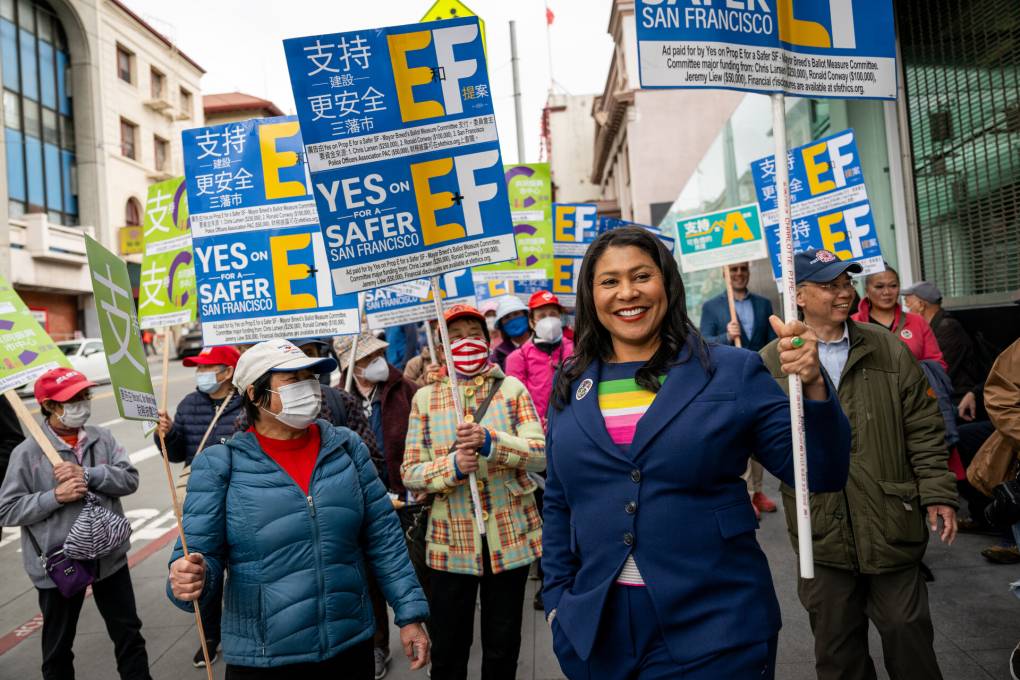
"caption": "San Francisco Mayor London Breed walks with voters on Super Tuesday during a Get-Out-The-Vote walk for Prop C, E, and F in Chinatown, San Francisco, on March 5, 2024.",
"description": null,
"title": "240305-ElectionFileSF-60-BL_qut (1)",
"credit": "Beth LaBerge/KQED",
"status": "inherit",
"altTag": "Mayor London Breed, in a blue suit and colorful shirt, smiles big, carrying a blue sign that says E and F with big letters.",
"isLoading": false,
"fetchFailed": false
},
"news_11977233": {
"type": "attachments",
"id": "news_11977233",
"meta": {
"index": "attachments_1716263798",
"site": "news",
"id": "11977233",
"found": true
},
"parent": 11977217,
"imgSizes": {
"twentyfourteen-full-width": {
"file": "https://cdn.kqed.org/wp-content/uploads/sites/10/2024/02/GettyImages-1292520931-1-1024x576.jpg",
"width": 1024,
"mimeType": "image/jpeg",
"height": 576
},
"thumbnail": {
"file": "https://cdn.kqed.org/wp-content/uploads/sites/10/2024/02/GettyImages-1292520931-1-160x107.jpg",
"width": 160,
"mimeType": "image/jpeg",
"height": 107
},
"post-thumbnail": {
"file": "https://cdn.kqed.org/wp-content/uploads/sites/10/2024/02/GettyImages-1292520931-1-672x372.jpg",
"width": 672,
"mimeType": "image/jpeg",
"height": 372
},
"kqedFullSize": {
"file": "https://cdn.kqed.org/wp-content/uploads/sites/10/2024/02/GettyImages-1292520931-1.jpg",
"width": 1024,
"height": 683
},
"large": {
"file": "https://cdn.kqed.org/wp-content/uploads/sites/10/2024/02/GettyImages-1292520931-1-1020x680.jpg",
"width": 1020,
"mimeType": "image/jpeg",
"height": 680
},
"medium": {
"file": "https://cdn.kqed.org/wp-content/uploads/sites/10/2024/02/GettyImages-1292520931-1-800x534.jpg",
"width": 800,
"mimeType": "image/jpeg",
"height": 534
}
},
"publishDate": 1709063089,
"modified": 1709063156,
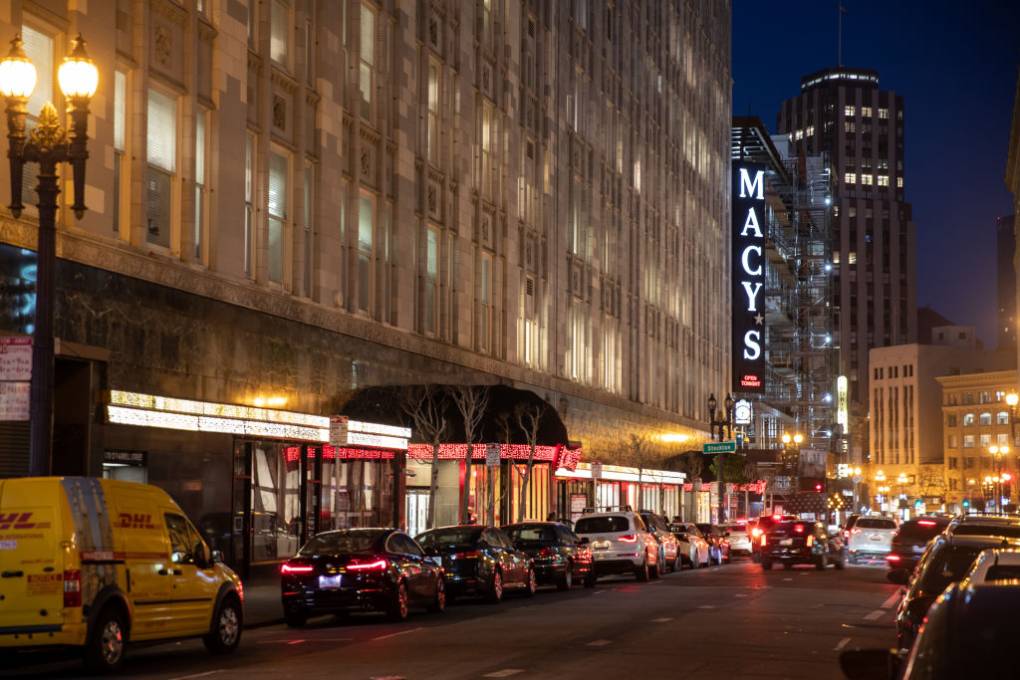
"caption": "A view of Macy's exterior on Dec. 21, 2020 in San Francisco.",
"description": null,
"title": "San Francisco Celebrates The Holiday Season",
"credit": "Miikka Skaffari/Getty Images",
"status": "inherit",
"altTag": "A nighttime shot of the vertical Macy's sign in San Francisco.",
"isLoading": false,
"fetchFailed": false
},
"news_11975179": {
"type": "attachments",
"id": "news_11975179",
"meta": {
"index": "attachments_1716263798",
"site": "news",
"id": "11975179",
"found": true
},
"parent": 11975156,
"imgSizes": {
"twentyfourteen-full-width": {
"file": "https://cdn.kqed.org/wp-content/uploads/sites/10/2024/02/IMG_5659-1038x576.jpg",
"width": 1038,
"mimeType": "image/jpeg",
"height": 576
},
"thumbnail": {
"file": "https://cdn.kqed.org/wp-content/uploads/sites/10/2024/02/IMG_5659-160x120.jpg",
"width": 160,
"mimeType": "image/jpeg",
"height": 120
},
"post-thumbnail": {
"file": "https://cdn.kqed.org/wp-content/uploads/sites/10/2024/02/IMG_5659-672x372.jpg",
"width": 672,
"mimeType": "image/jpeg",
"height": 372
},
"kqedFullSize": {
"file": "https://cdn.kqed.org/wp-content/uploads/sites/10/2024/02/IMG_5659-scaled.jpg",
"width": 2560,
"height": 1920
},
"2048x2048": {
"file": "https://cdn.kqed.org/wp-content/uploads/sites/10/2024/02/IMG_5659-2048x1536.jpg",
"width": 2048,
"mimeType": "image/jpeg",
"height": 1536
},
"large": {
"file": "https://cdn.kqed.org/wp-content/uploads/sites/10/2024/02/IMG_5659-1020x765.jpg",
"width": 1020,
"mimeType": "image/jpeg",
"height": 765
},
"1536x1536": {
"file": "https://cdn.kqed.org/wp-content/uploads/sites/10/2024/02/IMG_5659-1536x1152.jpg",
"width": 1536,
"mimeType": "image/jpeg",
"height": 1152
},
"full-width": {
"file": "https://cdn.kqed.org/wp-content/uploads/sites/10/2024/02/IMG_5659-1920x1440.jpg",
"width": 1920,
"mimeType": "image/jpeg",
"height": 1440
},
"medium": {
"file": "https://cdn.kqed.org/wp-content/uploads/sites/10/2024/02/IMG_5659-800x600.jpg",
"width": 800,
"mimeType": "image/jpeg",
"height": 600
}
},
"publishDate": 1707436919,
"modified": 1708478350,
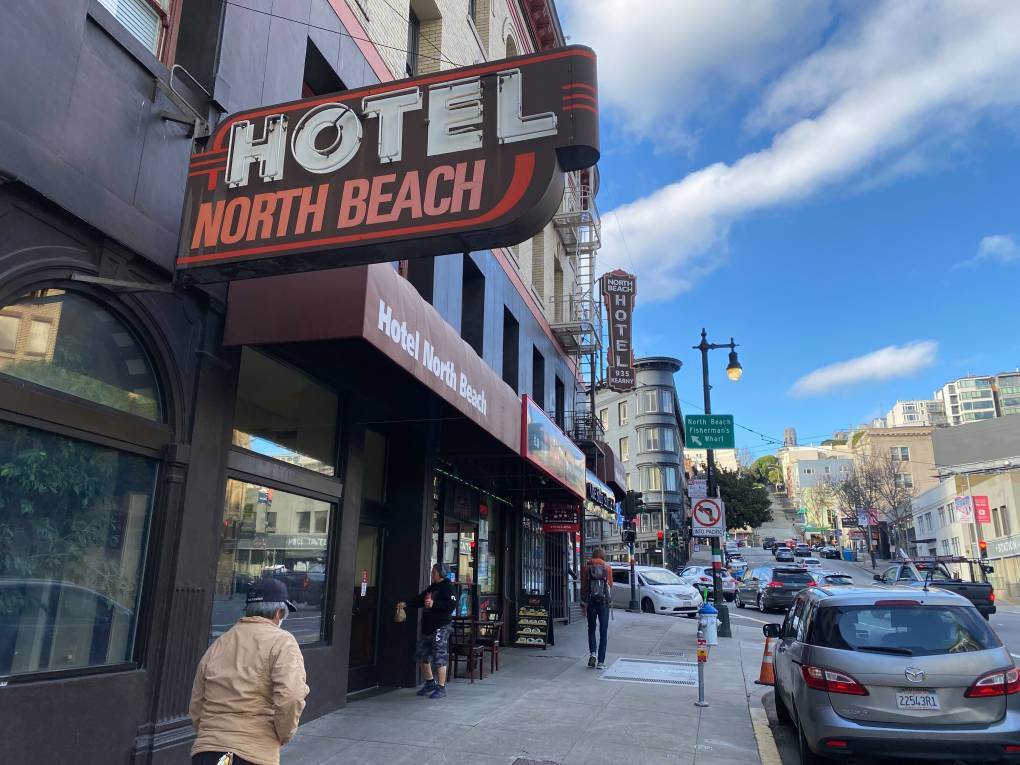
"caption": "Mayor London Breed walked back plans to open the permanent supportive housing site at Hotel North Beach, 935 Kearny St., just days after first announcing the idea.",
"description": null,
"title": "IMG_5659",
"credit": "Sydney Johnson/KQED",
"status": "inherit",
"altTag": "The exterior signage of the North Beach Hotel.",
"isLoading": false,
"fetchFailed": false
},
"news_11973966": {
"type": "attachments",
"id": "news_11973966",
"meta": {
"index": "attachments_1716263798",
"site": "news",
"id": "11973966",
"found": true
},
"parent": 0,
"imgSizes": {
"twentyfourteen-full-width": {
"file": "https://cdn.kqed.org/wp-content/uploads/sites/10/2024/01/240126-LURIE-FUNDING-MD-01-KQED-1038x576.jpg",
"width": 1038,
"mimeType": "image/jpeg",
"height": 576
},
"thumbnail": {
"file": "https://cdn.kqed.org/wp-content/uploads/sites/10/2024/01/240126-LURIE-FUNDING-MD-01-KQED-160x107.jpg",
"width": 160,
"mimeType": "image/jpeg",
"height": 107
},
"post-thumbnail": {
"file": "https://cdn.kqed.org/wp-content/uploads/sites/10/2024/01/240126-LURIE-FUNDING-MD-01-KQED-672x372.jpg",
"width": 672,
"mimeType": "image/jpeg",
"height": 372
},
"kqedFullSize": {
"file": "https://cdn.kqed.org/wp-content/uploads/sites/10/2024/01/240126-LURIE-FUNDING-MD-01-KQED.jpg?ver=1706390427",
"width": 2000,
"height": 1333
},
"large": {
"file": "https://cdn.kqed.org/wp-content/uploads/sites/10/2024/01/240126-LURIE-FUNDING-MD-01-KQED-1020x680.jpg",
"width": 1020,
"mimeType": "image/jpeg",
"height": 680
},
"1536x1536": {
"file": "https://cdn.kqed.org/wp-content/uploads/sites/10/2024/01/240126-LURIE-FUNDING-MD-01-KQED-1536x1024.jpg",
"width": 1536,
"mimeType": "image/jpeg",
"height": 1024
},
"full-width": {
"file": "https://cdn.kqed.org/wp-content/uploads/sites/10/2024/01/240126-LURIE-FUNDING-MD-01-KQED-1920x1280.jpg",
"width": 1920,
"mimeType": "image/jpeg",
"height": 1280
},
"medium": {
"file": "https://cdn.kqed.org/wp-content/uploads/sites/10/2024/01/240126-LURIE-FUNDING-MD-01-KQED-800x533.jpg",
"width": 800,
"mimeType": "image/jpeg",
"height": 533
}
},
"publishDate": 1706324673,
"modified": 1706390450,
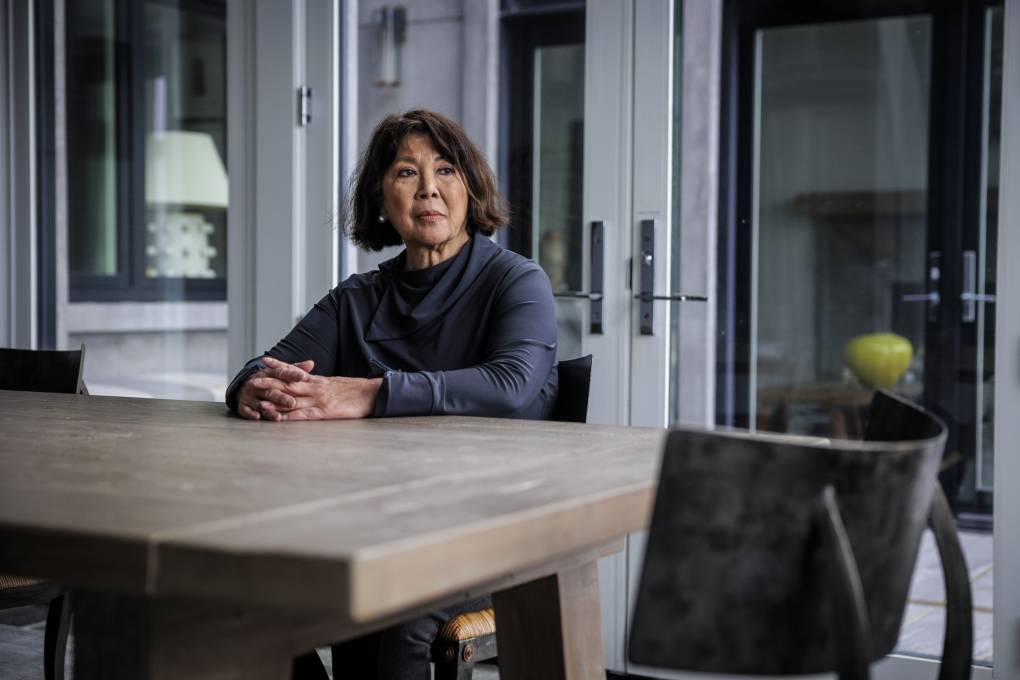
"caption": "Betty Louie in her home in San Francisco on Jan. 26, 2024.",
"description": null,
"title": "Betty Louie in her home in San Francisco on Jan. 26, 2024.",
"credit": "Martin do Nascimento/KQED",
"status": "inherit",
"altTag": "A person with long hair sits at large table in a home.",
"isLoading": false,
"fetchFailed": false
},
"news_11973430": {
"type": "attachments",
"id": "news_11973430",
"meta": {
"index": "attachments_1716263798",
"site": "news",
"id": "11973430",
"found": true
},
"parent": 0,
"imgSizes": {
"twentyfourteen-full-width": {
"file": "https://cdn.kqed.org/wp-content/uploads/sites/10/2024/01/240122-PORTSMOUTHSQUARE-35-BL-KQED-1038x576.jpg",
"width": 1038,
"mimeType": "image/jpeg",
"height": 576
},
"thumbnail": {
"file": "https://cdn.kqed.org/wp-content/uploads/sites/10/2024/01/240122-PORTSMOUTHSQUARE-35-BL-KQED-160x107.jpg",
"width": 160,
"mimeType": "image/jpeg",
"height": 107
},
"post-thumbnail": {
"file": "https://cdn.kqed.org/wp-content/uploads/sites/10/2024/01/240122-PORTSMOUTHSQUARE-35-BL-KQED-672x372.jpg",
"width": 672,
"mimeType": "image/jpeg",
"height": 372
},
"kqedFullSize": {
"file": "https://cdn.kqed.org/wp-content/uploads/sites/10/2024/01/240122-PORTSMOUTHSQUARE-35-BL-KQED.jpg",
"width": 2000,
"height": 1333
},
"large": {
"file": "https://cdn.kqed.org/wp-content/uploads/sites/10/2024/01/240122-PORTSMOUTHSQUARE-35-BL-KQED-1020x680.jpg",
"width": 1020,
"mimeType": "image/jpeg",
"height": 680
},
"1536x1536": {
"file": "https://cdn.kqed.org/wp-content/uploads/sites/10/2024/01/240122-PORTSMOUTHSQUARE-35-BL-KQED-1536x1024.jpg",
"width": 1536,
"mimeType": "image/jpeg",
"height": 1024
},
"full-width": {
"file": "https://cdn.kqed.org/wp-content/uploads/sites/10/2024/01/240122-PORTSMOUTHSQUARE-35-BL-KQED-1920x1280.jpg",
"width": 1920,
"mimeType": "image/jpeg",
"height": 1280
},
"medium": {
"file": "https://cdn.kqed.org/wp-content/uploads/sites/10/2024/01/240122-PORTSMOUTHSQUARE-35-BL-KQED-800x533.jpg",
"width": 800,
"mimeType": "image/jpeg",
"height": 533
}
},
"publishDate": 1706042322,
"modified": 1706143709,
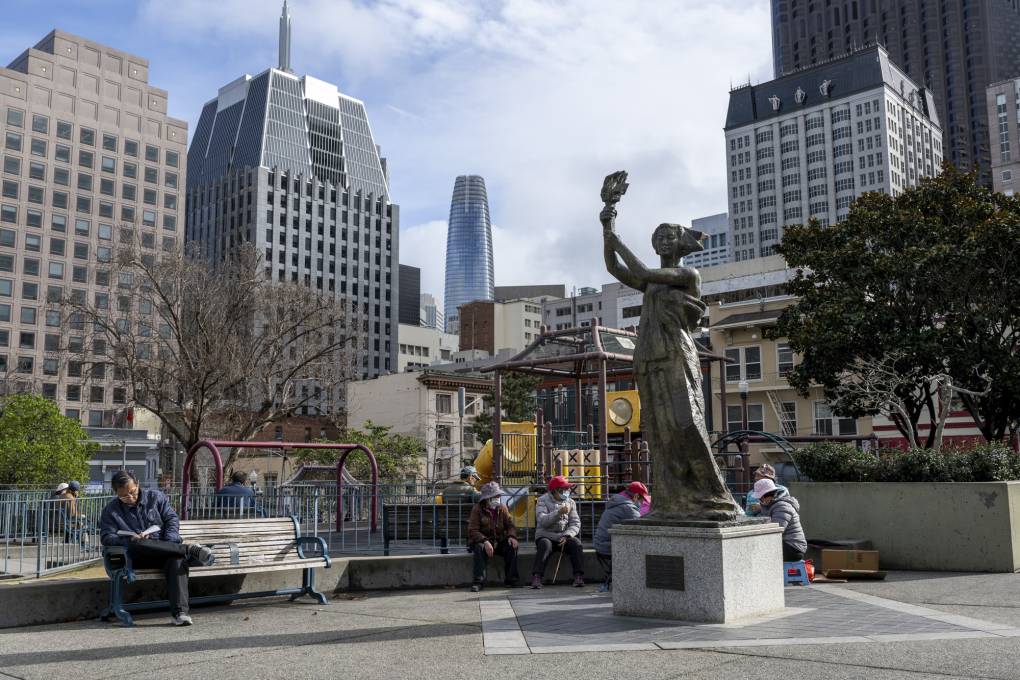
"caption": "People sit near the Goddess of Democracy statue in Portsmouth Square in San Francisco's Chinatown neighborhood on Jan. 22, 2024.",
"description": null,
"title": "240122-PORTSMOUTHSQUARE-35-BL-KQED",
"credit": "Beth LaBerge/KQED",
"status": "inherit",
"altTag": "People sit on a bench with a statue in front of them. Tall buildings surround them in the background.",
"isLoading": false,
"fetchFailed": false
},
"news_11968474": {
"type": "attachments",
"id": "news_11968474",
"meta": {
"index": "attachments_1716263798",
"site": "news",
"id": "11968474",
"found": true
},
"parent": 11968382,
"imgSizes": {
"twentyfourteen-full-width": {
"file": "https://ww2.kqed.org/app/uploads/sites/10/2023/11/231127-VendorRally-31-BL-qut-1038x576.jpg",
"width": 1038,
"mimeType": "image/jpeg",
"height": 576
},
"thumbnail": {
"file": "https://ww2.kqed.org/app/uploads/sites/10/2023/11/231127-VendorRally-31-BL-qut-160x107.jpg",
"width": 160,
"mimeType": "image/jpeg",
"height": 107
},
"post-thumbnail": {
"file": "https://ww2.kqed.org/app/uploads/sites/10/2023/11/231127-VendorRally-31-BL-qut-672x372.jpg",
"width": 672,
"mimeType": "image/jpeg",
"height": 372
},
"kqedFullSize": {
"file": "https://ww2.kqed.org/app/uploads/sites/10/2023/11/231127-VendorRally-31-BL-qut.jpg",
"width": 1920,
"height": 1280
},
"large": {
"file": "https://ww2.kqed.org/app/uploads/sites/10/2023/11/231127-VendorRally-31-BL-qut-1020x680.jpg",
"width": 1020,
"mimeType": "image/jpeg",
"height": 680
},
"1536x1536": {
"file": "https://ww2.kqed.org/app/uploads/sites/10/2023/11/231127-VendorRally-31-BL-qut-1536x1024.jpg",
"width": 1536,
"mimeType": "image/jpeg",
"height": 1024
},
"medium": {
"file": "https://ww2.kqed.org/app/uploads/sites/10/2023/11/231127-VendorRally-31-BL-qut-800x533.jpg",
"width": 800,
"mimeType": "image/jpeg",
"height": 533
}
},
"publishDate": 1701204135,
"modified": 1701207278,
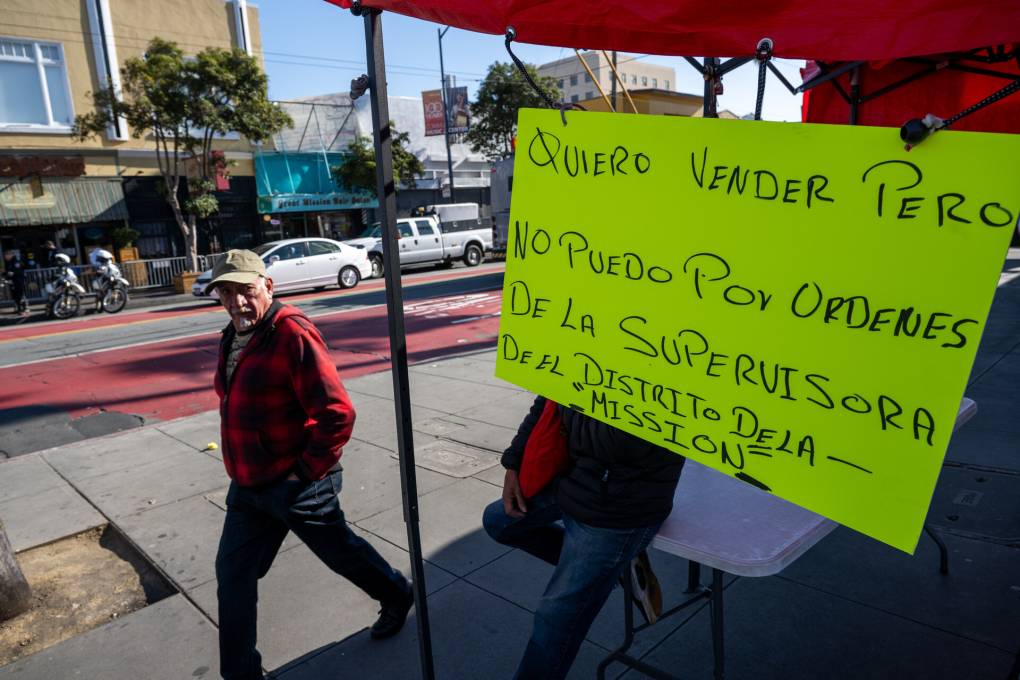
"caption": "Shelters and tables set up by street vendors sit empty near the 24th Street BART plaza on Nov. 27, 2023, the first day of a 90-day street vending ban in the area, which vendors showed up to protest. The sign in Spanish says: 'I want to sell, but I can't due to orders from the supervisor of the Mission District.'",
"description": null,
"title": "231127-VendorRally-31-BL-qut",
"credit": "Beth LaBerge/KQED",
"status": "inherit",
"altTag": "A yellow sign in Spanish hangs from an empty temporary shelter on the street.",
"isLoading": false,
"fetchFailed": false
},
"news_11966994": {
"type": "attachments",
"id": "news_11966994",
"meta": {
"index": "attachments_1716263798",
"site": "news",
"id": "11966994",
"found": true
},
"parent": 11966960,
"imgSizes": {
"twentyfourteen-full-width": {
"file": "https://ww2.kqed.org/app/uploads/sites/10/2023/11/GettyImages-1773056039-1024x576.jpg",
"width": 1024,
"mimeType": "image/jpeg",
"height": 576
},
"thumbnail": {
"file": "https://ww2.kqed.org/app/uploads/sites/10/2023/11/GettyImages-1773056039-160x107.jpg",
"width": 160,
"mimeType": "image/jpeg",
"height": 107
},
"post-thumbnail": {
"file": "https://ww2.kqed.org/app/uploads/sites/10/2023/11/GettyImages-1773056039-672x372.jpg",
"width": 672,
"mimeType": "image/jpeg",
"height": 372
},
"kqedFullSize": {
"file": "https://ww2.kqed.org/app/uploads/sites/10/2023/11/GettyImages-1773056039.jpg",
"width": 1024,
"height": 683
},
"large": {
"file": "https://ww2.kqed.org/app/uploads/sites/10/2023/11/GettyImages-1773056039-1020x680.jpg",
"width": 1020,
"mimeType": "image/jpeg",
"height": 680
},
"medium": {
"file": "https://ww2.kqed.org/app/uploads/sites/10/2023/11/GettyImages-1773056039-800x534.jpg",
"width": 800,
"mimeType": "image/jpeg",
"height": 534
}
},
"publishDate": 1699576330,
"modified": 1699577926,
"caption": "People walk under signage advertising the Asia-Pacific Economic Cooperation (APEC) meetings ahead of the summit at the Moscone Center in San Francisco on Nov. 9, 2023. ",
"description": null,
"title": "US-ASIA-PACIFIC-DIPLOMACY-ECONOMY-SUMMIT-PREP",
"credit": "Loren Elliott/AFP via Getty Images",
"status": "inherit",
"altTag": "A street scene in San Francisco from above, with an advertising banner in the foreground that reads \"APEC is going to be Epic.\"",
"isLoading": false,
"fetchFailed": false
},
"news_11966014": {
"type": "attachments",
"id": "news_11966014",
"meta": {
"index": "attachments_1716263798",
"site": "news",
"id": "11966014",
"found": true
},
"title": "012_KQED_LondonBreedQA_05232023-qut",
"publishDate": 1698780974,
"status": "inherit",
"parent": 11966012,
"modified": 1724350663,
"caption": "San Francisco Mayor London Breed speaks with a crowd gathered for a Q&A session about the fentanyl drug crisis in San Francisco at UN Plaza on May 23, 2023.",
"credit": "Beth LaBerge/KQED",
"altTag": null,
"description": null,
"imgSizes": {
"medium": {
"file": "https://cdn.kqed.org/wp-content/uploads/sites/10/2023/10/012_KQED_LondonBreedQA_05232023-qut-800x533.jpg",
"width": 800,
"height": 533,
"mimeType": "image/jpeg"
},
"large": {
"file": "https://cdn.kqed.org/wp-content/uploads/sites/10/2023/10/012_KQED_LondonBreedQA_05232023-qut-1020x680.jpg",
"width": 1020,
"height": 680,
"mimeType": "image/jpeg"
},
"thumbnail": {
"file": "https://cdn.kqed.org/wp-content/uploads/sites/10/2023/10/012_KQED_LondonBreedQA_05232023-qut-160x107.jpg",
"width": 160,
"height": 107,
"mimeType": "image/jpeg"
},
"1536x1536": {
"file": "https://cdn.kqed.org/wp-content/uploads/sites/10/2023/10/012_KQED_LondonBreedQA_05232023-qut-1536x1024.jpg",
"width": 1536,
"height": 1024,
"mimeType": "image/jpeg"
},
"post-thumbnail": {
"file": "https://cdn.kqed.org/wp-content/uploads/sites/10/2023/10/012_KQED_LondonBreedQA_05232023-qut-672x372.jpg",
"width": 672,
"height": 372,
"mimeType": "image/jpeg"
},
"twentyfourteen-full-width": {
"file": "https://cdn.kqed.org/wp-content/uploads/sites/10/2023/10/012_KQED_LondonBreedQA_05232023-qut-1038x576.jpg",
"width": 1038,
"height": 576,
"mimeType": "image/jpeg"
},
"kqedFullSize": {
"file": "https://cdn.kqed.org/wp-content/uploads/sites/10/2023/10/012_KQED_LondonBreedQA_05232023-qut.jpg",
"width": 1920,
"height": 1280
}
},
"isLoading": false,
"fetchFailed": false
},
"news_11965817": {
"type": "attachments",
"id": "news_11965817",
"meta": {
"index": "attachments_1716263798",
"site": "news",
"id": "11965817",
"found": true
},
"parent": 11965813,
"imgSizes": {
"twentyfourteen-full-width": {
"file": "https://ww2.kqed.org/app/uploads/sites/10/2023/10/GettyImages-53134889-1024x576.jpg",
"width": 1024,
"mimeType": "image/jpeg",
"height": 576
},
"thumbnail": {
"file": "https://ww2.kqed.org/app/uploads/sites/10/2023/10/GettyImages-53134889-160x107.jpg",
"width": 160,
"mimeType": "image/jpeg",
"height": 107
},
"post-thumbnail": {
"file": "https://ww2.kqed.org/app/uploads/sites/10/2023/10/GettyImages-53134889-672x372.jpg",
"width": 672,
"mimeType": "image/jpeg",
"height": 372
},
"kqedFullSize": {
"file": "https://ww2.kqed.org/app/uploads/sites/10/2023/10/GettyImages-53134889.jpg",
"width": 1024,
"height": 683
},
"large": {
"file": "https://ww2.kqed.org/app/uploads/sites/10/2023/10/GettyImages-53134889-1020x680.jpg",
"width": 1020,
"mimeType": "image/jpeg",
"height": 680
},
"medium": {
"file": "https://ww2.kqed.org/app/uploads/sites/10/2023/10/GettyImages-53134889-800x534.jpg",
"width": 800,
"mimeType": "image/jpeg",
"height": 534
}
},
"publishDate": 1698441940,
"modified": 1698452289,
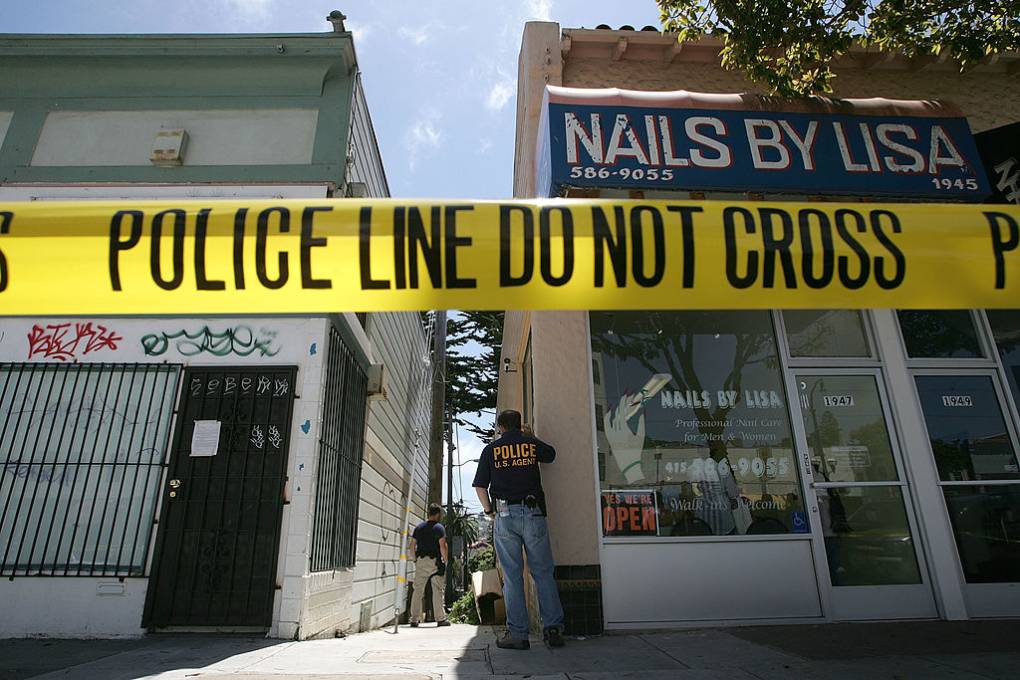
"caption": "San Francisco has announced a plan to charge some drug dealers with homicide. It comes on the heels of an increase in enforcement, working with federal agencies.",
"description": null,
"title": "Federal Agents Raid Medical Marijuana Club",
"credit": "Justin Sullivan/Getty Images",
"status": "inherit",
"altTag": "Two U.S. agents stand behind a police tape line in an alley",
"isLoading": false,
"fetchFailed": false
},
"news_11959529": {
"type": "attachments",
"id": "news_11959529",
"meta": {
"index": "attachments_1716263798",
"site": "news",
"id": "11959529",
"found": true
},
"parent": 11959477,
"imgSizes": {
"twentyfourteen-full-width": {
"file": "https://ww2.kqed.org/app/uploads/sites/10/2023/08/GettyImages-1604391476-1038x576.jpg",
"width": 1038,
"mimeType": "image/jpeg",
"height": 576
},
"thumbnail": {
"file": "https://ww2.kqed.org/app/uploads/sites/10/2023/08/GettyImages-1604391476-160x109.jpg",
"width": 160,
"mimeType": "image/jpeg",
"height": 109
},
"post-thumbnail": {
"file": "https://ww2.kqed.org/app/uploads/sites/10/2023/08/GettyImages-1604391476-672x372.jpg",
"width": 672,
"mimeType": "image/jpeg",
"height": 372
},
"kqedFullSize": {
"file": "https://ww2.kqed.org/app/uploads/sites/10/2023/08/GettyImages-1604391476-scaled.jpg",
"width": 2560,
"height": 1746
},
"2048x2048": {
"file": "https://ww2.kqed.org/app/uploads/sites/10/2023/08/GettyImages-1604391476-2048x1397.jpg",
"width": 2048,
"mimeType": "image/jpeg",
"height": 1397
},
"large": {
"file": "https://ww2.kqed.org/app/uploads/sites/10/2023/08/GettyImages-1604391476-1020x696.jpg",
"width": 1020,
"mimeType": "image/jpeg",
"height": 696
},
"1536x1536": {
"file": "https://ww2.kqed.org/app/uploads/sites/10/2023/08/GettyImages-1604391476-1536x1047.jpg",
"width": 1536,
"mimeType": "image/jpeg",
"height": 1047
},
"full-width": {
"file": "https://ww2.kqed.org/app/uploads/sites/10/2023/08/GettyImages-1604391476-1920x1309.jpg",
"width": 1920,
"mimeType": "image/jpeg",
"height": 1309
},
"medium": {
"file": "https://ww2.kqed.org/app/uploads/sites/10/2023/08/GettyImages-1604391476-800x546.jpg",
"width": 800,
"mimeType": "image/jpeg",
"height": 546
}
},
"publishDate": 1693352758,
"modified": 1698362034,
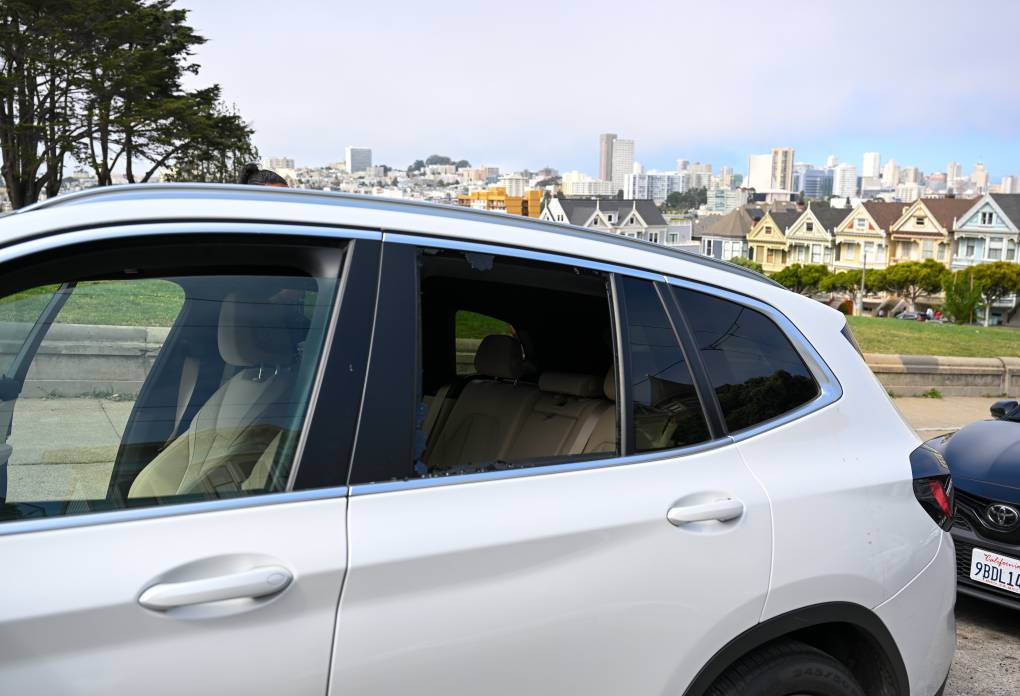
"caption": "A car with a broken back-seat window is parked next to Alamo Square Park in San Francisco on Aug. 9, 2023.",
"description": null,
"title": "Car break-ins in San Francisco",
"credit": "Car break-ins have been at epidemic levels in San FranTayfun Coskun/Anadolu Agency via Getty Images",
"status": "inherit",
"altTag": "A white parked car with a rear broken window.",
"isLoading": false,
"fetchFailed": false
},
"news_11954568": {
"type": "attachments",
"id": "news_11954568",
"meta": {
"index": "attachments_1716263798",
"site": "news",
"id": "11954568",
"found": true
},
"parent": 0,
"imgSizes": {
"twentyfourteen-full-width": {
"file": "https://ww2.kqed.org/app/uploads/sites/10/2023/06/015_KQED_LondonBreedQA_05232023-1038x576.jpg",
"width": 1038,
"mimeType": "image/jpeg",
"height": 576
},
"thumbnail": {
"file": "https://ww2.kqed.org/app/uploads/sites/10/2023/06/015_KQED_LondonBreedQA_05232023-160x107.jpg",
"width": 160,
"mimeType": "image/jpeg",
"height": 107
},
"post-thumbnail": {
"file": "https://ww2.kqed.org/app/uploads/sites/10/2023/06/015_KQED_LondonBreedQA_05232023-672x372.jpg",
"width": 672,
"mimeType": "image/jpeg",
"height": 372
},
"kqedFullSize": {
"file": "https://ww2.kqed.org/app/uploads/sites/10/2023/06/015_KQED_LondonBreedQA_05232023.jpg",
"width": 1920,
"height": 1280
},
"large": {
"file": "https://ww2.kqed.org/app/uploads/sites/10/2023/06/015_KQED_LondonBreedQA_05232023-1020x680.jpg",
"width": 1020,
"mimeType": "image/jpeg",
"height": 680
},
"1536x1536": {
"file": "https://ww2.kqed.org/app/uploads/sites/10/2023/06/015_KQED_LondonBreedQA_05232023-1536x1024.jpg",
"width": 1536,
"mimeType": "image/jpeg",
"height": 1024
},
"medium": {
"file": "https://ww2.kqed.org/app/uploads/sites/10/2023/06/015_KQED_LondonBreedQA_05232023-800x533.jpg",
"width": 800,
"mimeType": "image/jpeg",
"height": 533
}
},
"publishDate": 1688063923,
"modified": 1695771204,
"caption": "San Francisco Mayor London Breed and San Francisco Board of Supervisors President Aaron Peskin speak with a crowd gathered for a Q&A about the fentanyl drug crisis in San Francisco at UN Plaza on May 23, 2023.",
"description": null,
"title": "015_KQED_LondonBreedQA_05232023",
"credit": "Beth LaBerge/KQED",
"status": "inherit",
"altTag": "Mayor London Breed speaks outside at a lectern, next to a bearded white man",
"isLoading": false,
"fetchFailed": false
},
"news_11962484": {
"type": "attachments",
"id": "news_11962484",
"meta": {
"index": "attachments_1716263798",
"site": "news",
"id": "11962484",
"found": true
},
"parent": 0,
"imgSizes": {
"twentyfourteen-full-width": {
"file": "https://ww2.kqed.org/app/uploads/sites/10/2023/09/230926-DANIEL-LURIE-MD-06-KQED-1038x576.jpg",
"width": 1038,
"mimeType": "image/jpeg",
"height": 576
},
"thumbnail": {
"file": "https://ww2.kqed.org/app/uploads/sites/10/2023/09/230926-DANIEL-LURIE-MD-06-KQED-160x107.jpg",
"width": 160,
"mimeType": "image/jpeg",
"height": 107
},
"post-thumbnail": {
"file": "https://ww2.kqed.org/app/uploads/sites/10/2023/09/230926-DANIEL-LURIE-MD-06-KQED-672x372.jpg",
"width": 672,
"mimeType": "image/jpeg",
"height": 372
},
"kqedFullSize": {
"file": "https://ww2.kqed.org/app/uploads/sites/10/2023/09/230926-DANIEL-LURIE-MD-06-KQED.jpg",
"width": 1920,
"height": 1280
},
"large": {
"file": "https://ww2.kqed.org/app/uploads/sites/10/2023/09/230926-DANIEL-LURIE-MD-06-KQED-1020x680.jpg",
"width": 1020,
"mimeType": "image/jpeg",
"height": 680
},
"1536x1536": {
"file": "https://ww2.kqed.org/app/uploads/sites/10/2023/09/230926-DANIEL-LURIE-MD-06-KQED-1536x1024.jpg",
"width": 1536,
"mimeType": "image/jpeg",
"height": 1024
},
"medium": {
"file": "https://ww2.kqed.org/app/uploads/sites/10/2023/09/230926-DANIEL-LURIE-MD-06-KQED-800x533.jpg",
"width": 800,
"mimeType": "image/jpeg",
"height": 533
}
},
"publishDate": 1695757750,
"modified": 1695757776,
"caption": "Daniel Lurie announces his candidacy for Mayor of San Francisco at the Portrero Hill Neighborhood House in San Francisco on Sept. 26, 2023. ",
"description": null,
"title": "230926-DANIEL LURIE-MD-06-KQED",
"credit": "Martin do Nascimento/KQED",
"status": "inherit",
"altTag": "A person in a tie speaks at a podium.",
"isLoading": false,
"fetchFailed": false
}
},
"audioPlayerReducer": {
"postId": "stream_live",
"isPaused": true,
"isPlaying": false,
"pfsActive": false,
"pledgeModalIsOpen": true,
"playerDrawerIsOpen": false,
"liveAudioPlayStartedAt": 0,
"liveAudioPlayContext": ""
},
"authorsReducer": {
"scottshafer": {
"type": "authors",
"id": "255",
"meta": {
"index": "authors_1716337520",
"id": "255",
"found": true
},
"name": "Scott Shafer",
"firstName": "Scott",
"lastName": "Shafer",
"slug": "scottshafer",
"email": "sshafer@kqed.org",
"display_author_email": false,
"staff_mastheads": [
"news"
],
"title": "KQED Contributor",
"bio": "Scott Shafer is a senior editor with the KQED Politics and Government desk. He is co-host of Political Breakdown, the award-winning radio show and podcast with a personal take on the world of politics. Scott came to KQED in 1998 to host the statewide\u003cem> California Report\u003c/em>. Prior to that he had extended stints in politics and government\u003cem>.\u003c/em> He uses that inside experience at KQED in his, reporting, hosting and analysis for the politics desk. Scott collaborated \u003cem>Political Breakdown a\u003c/em>nd on \u003cem>The Political Mind of Jerry Brown, \u003c/em>an eight-part series about the life and extraordinary political career of the former governor. For fun, he plays water polo with the San Francisco Tsunami.",
"avatar": "https://secure.gravatar.com/avatar/a62ebae45b79d7aed1a39a0e3bf68104?s=600&d=blank&r=g",
"twitter": "scottshafer",
"bluesky": null,
"facebook": null,
"instagram": null,
"linkedin": null,
"sites": [
{
"site": "news",
"roles": [
"editor"
]
},
{
"site": "stateofhealth",
"roles": [
"author"
]
},
{
"site": "science",
"roles": [
"author"
]
},
{
"site": "forum",
"roles": [
"subscriber"
]
},
{
"site": "liveblog",
"roles": [
"author"
]
}
],
"headData": {
"title": "Scott Shafer | KQED",
"description": "KQED Contributor",
"ogImgSrc": "https://secure.gravatar.com/avatar/a62ebae45b79d7aed1a39a0e3bf68104?s=600&d=blank&r=g",
"twImgSrc": "https://secure.gravatar.com/avatar/a62ebae45b79d7aed1a39a0e3bf68104?s=600&d=blank&r=g"
},
"isLoading": false,
"link": "/author/scottshafer"
},
"matthewgreen": {
"type": "authors",
"id": "1263",
"meta": {
"index": "authors_1716337520",
"id": "1263",
"found": true
},
"name": "Matthew Green",
"firstName": "Matthew",
"lastName": "Green",
"slug": "matthewgreen",
"email": "mgreen@kqed.org",
"display_author_email": false,
"staff_mastheads": [],
"title": "KQED Editor/Reporter",
"bio": "Matthew Green is a digital media producer for KQED News. He previously produced \u003ca href=\"http://www.kqed.org/lowdown\">The Lowdown\u003c/a>, KQED’s multimedia news education blog. Matthew's written for numerous Bay Area publications, including the Oakland Tribune and San Francisco Chronicle. He also taught journalism classes at Fremont High School in East Oakland.\r\n\r\nEmail: mgreen@kqed.org; Twitter: @MGreenKQED",
"avatar": "https://secure.gravatar.com/avatar/3bf498d1267ca02c8494f33d8cfc575e?s=600&d=blank&r=g",
"twitter": "MGreenKQED",
"facebook": null,
"instagram": null,
"linkedin": null,
"sites": [
{
"site": "news",
"roles": []
},
{
"site": "lowdown",
"roles": []
},
{
"site": "science",
"roles": []
},
{
"site": "education",
"roles": []
},
{
"site": "quest",
"roles": []
},
{
"site": "liveblog",
"roles": []
}
],
"headData": {
"title": "Matthew Green | KQED",
"description": "KQED Editor/Reporter",
"ogImgSrc": "https://secure.gravatar.com/avatar/3bf498d1267ca02c8494f33d8cfc575e?s=600&d=blank&r=g",
"twImgSrc": "https://secure.gravatar.com/avatar/3bf498d1267ca02c8494f33d8cfc575e?s=600&d=blank&r=g"
},
"isLoading": false,
"link": "/author/matthewgreen"
},
"ecruzguevarra": {
"type": "authors",
"id": "8654",
"meta": {
"index": "authors_1716337520",
"id": "8654",
"found": true
},
"name": "Ericka Cruz Guevarra",
"firstName": "Ericka",
"lastName": "Cruz Guevarra",
"slug": "ecruzguevarra",
"email": "ecruzguevarra@kqed.org",
"display_author_email": true,
"staff_mastheads": [
"news"
],
"title": "Producer, The Bay Podcast",
"bio": "Ericka Cruz Guevarra is host of \u003ca href=\"https://www.kqed.org/podcasts/thebay\">\u003cem>The Bay\u003c/em>\u003c/a> podcast at KQED. Before host, she was the show’s producer. Her work in that capacity includes a three-part reported series on policing in Vallejo, which won a 2020 excellence in journalism award from the Society of Professional Journalists. Ericka has worked as a breaking news reporter at Oregon Public Broadcasting, helped produce the Code Switch podcast, and was KQED’s inaugural Raul Ramirez Diversity Fund intern. She’s also an alumna of NPR’s Next Generation Radio program. Send her an email if you have strong feelings about whether Fairfield and Suisun City are the Bay. Ericka is represented by SAG-AFTRA.",
"avatar": "https://secure.gravatar.com/avatar/accefc1de4bafc7e234b69bcb9b6f6536c130fd84709bc3069ef11a78787e1bb?s=600&d=blank&r=g",
"twitter": "NotoriousECG",
"bluesky": null,
"facebook": null,
"instagram": null,
"linkedin": null,
"sites": [
{
"site": "arts",
"roles": [
"subscriber"
]
},
{
"site": "news",
"roles": [
"editor",
"manage_categories"
]
},
{
"site": "futureofyou",
"roles": [
"subscriber"
]
},
{
"site": "stateofhealth",
"roles": [
"subscriber"
]
},
{
"site": "science",
"roles": [
"editor"
]
},
{
"site": "forum",
"roles": [
"subscriber"
]
}
],
"headData": {
"title": "Ericka Cruz Guevarra | KQED",
"description": "Producer, The Bay Podcast",
"ogImgSrc": "https://secure.gravatar.com/avatar/accefc1de4bafc7e234b69bcb9b6f6536c130fd84709bc3069ef11a78787e1bb?s=600&d=blank&r=g",
"twImgSrc": "https://secure.gravatar.com/avatar/accefc1de4bafc7e234b69bcb9b6f6536c130fd84709bc3069ef11a78787e1bb?s=600&d=blank&r=g"
},
"isLoading": false,
"link": "/author/ecruzguevarra"
},
"amontecillo": {
"type": "authors",
"id": "11649",
"meta": {
"index": "authors_1716337520",
"id": "11649",
"found": true
},
"name": "Alan Montecillo",
"firstName": "Alan",
"lastName": "Montecillo",
"slug": "amontecillo",
"email": "amontecillo@kqed.org",
"display_author_email": false,
"staff_mastheads": [
"news"
],
"title": "KQED Contributor",
"bio": "Alan Montecillo is the senior editor of \u003cem>\u003ca href=\"http://kqed.org/thebay\">The Bay\u003c/a>, \u003c/em> KQED's local news podcast. Before moving to the Bay Area, he worked as a senior talk show producer for WILL in Champaign-Urbana, Illinois and at Oregon Public Broadcasting in Portland, Oregon. He has won journalism awards from the Society of Professional Journalists Northern California, the Public Media Journalists Association, The Signal Awards, and has also received a regional Edward R. Murrow award. Alan is a Filipino American from Hong Kong and a graduate of Reed College.",
"avatar": "https://secure.gravatar.com/avatar/268f53a2066899ea9efdd8a5900218b17c822d9862cbc9326cccec53ef41d349?s=600&d=blank&r=g",
"twitter": "alanmontecillo",
"bluesky": null,
"facebook": null,
"instagram": null,
"linkedin": null,
"sites": [
{
"site": "",
"roles": [
"editor"
]
},
{
"site": "news",
"roles": [
"editor",
"manage_categories"
]
}
],
"headData": {
"title": "Alan Montecillo | KQED",
"description": "KQED Contributor",
"ogImgSrc": "https://secure.gravatar.com/avatar/268f53a2066899ea9efdd8a5900218b17c822d9862cbc9326cccec53ef41d349?s=600&d=blank&r=g",
"twImgSrc": "https://secure.gravatar.com/avatar/268f53a2066899ea9efdd8a5900218b17c822d9862cbc9326cccec53ef41d349?s=600&d=blank&r=g"
},
"isLoading": false,
"link": "/author/amontecillo"
},
"jrodriguez": {
"type": "authors",
"id": "11690",
"meta": {
"index": "authors_1716337520",
"id": "11690",
"found": true
},
"name": "Joe Fitzgerald Rodriguez",
"firstName": "Joe",
"lastName": "Fitzgerald Rodriguez",
"slug": "jrodriguez",
"email": "jrodriguez@kqed.org",
"display_author_email": true,
"staff_mastheads": [
"news"
],
"title": "Reporter and Producer",
"bio": "Joe Fitzgerald Rodriguez is a reporter and digital producer for KQED covering politics. Joe most recently wrote for the \u003cem>San Francisco Examiner\u003c/em> as a political columnist covering The City. He was raised in San Francisco and has spent his reporting career in his beloved, foggy, city by the bay. Joe was 12-years-old when he conducted his first interview in journalism, grilling former San Francisco Mayor Willie Brown for the Marina Middle School newspaper, \u003cem>The Penguin Press, \u003c/em>and he continues to report on the San Francisco Bay Area to this day.",
"avatar": "https://secure.gravatar.com/avatar/2247beb0564c1e9c62228d5649d2edac?s=600&d=blank&r=g",
"twitter": "FitztheReporter",
"facebook": null,
"instagram": "https://www.instagram.com/fitzthereporter/",
"linkedin": null,
"sites": [
{
"site": "",
"roles": [
"editor"
]
},
{
"site": "arts",
"roles": [
"editor"
]
},
{
"site": "news",
"roles": [
"editor"
]
},
{
"site": "science",
"roles": [
"editor"
]
},
{
"site": "elections",
"roles": [
"editor"
]
},
{
"site": "liveblog",
"roles": [
"editor"
]
}
],
"headData": {
"title": "Joe Fitzgerald Rodriguez | KQED",
"description": "Reporter and Producer",
"ogImgSrc": "https://secure.gravatar.com/avatar/2247beb0564c1e9c62228d5649d2edac?s=600&d=blank&r=g",
"twImgSrc": "https://secure.gravatar.com/avatar/2247beb0564c1e9c62228d5649d2edac?s=600&d=blank&r=g"
},
"isLoading": false,
"link": "/author/jrodriguez"
},
"mesquinca": {
"type": "authors",
"id": "11802",
"meta": {
"index": "authors_1716337520",
"id": "11802",
"found": true
},
"name": "Maria Esquinca",
"firstName": "Maria",
"lastName": "Esquinca",
"slug": "mesquinca",
"email": "mesquinca@kqed.org",
"display_author_email": false,
"staff_mastheads": [],
"title": "Producer, The Bay",
"bio": "María Esquinca is a producer of The Bay. Before that, she was a New York Women’s Foundation IGNITE Fellow at Latino USA. She worked at Radio Bilingue where she covered the San Joaquin Valley. Maria has interned at WLRN, News 21, The New York Times Student Journalism Institute and at Crain’s Detroit Business as a Dow Jones News Fund Business Reporting Intern. She is an MFA graduate from the University of Miami. In 2017, she graduated from the Walter Cronkite School of Journalism and Mass Communication with a Master of Mass Communication. A fronteriza, she was born in Ciudad Juárez, Chihuahua, Mexico and grew up in El Paso, Texas.",
"avatar": "https://secure.gravatar.com/avatar/77cedba18aae91da775038ba06dcd8d0?s=600&d=blank&r=g",
"twitter": "@m_esquinca",
"facebook": null,
"instagram": null,
"linkedin": null,
"sites": [
{
"site": "news",
"roles": []
}
],
"headData": {
"title": "Maria Esquinca | KQED",
"description": "Producer, The Bay",
"ogImgSrc": "https://secure.gravatar.com/avatar/77cedba18aae91da775038ba06dcd8d0?s=600&d=blank&r=g",
"twImgSrc": "https://secure.gravatar.com/avatar/77cedba18aae91da775038ba06dcd8d0?s=600&d=blank&r=g"
},
"isLoading": false,
"link": "/author/mesquinca"
},
"sjohnson": {
"type": "authors",
"id": "11840",
"meta": {
"index": "authors_1716337520",
"id": "11840",
"found": true
},
"name": "Sydney Johnson",
"firstName": "Sydney",
"lastName": "Johnson",
"slug": "sjohnson",
"email": "sjohnson@kqed.org",
"display_author_email": false,
"staff_mastheads": [
"news"
],
"title": "KQED Reporter",
"bio": "Sydney Johnson is a general assignment reporter at KQED. She previously reported on public health and city government at the San Francisco Examiner, and before that, she covered statewide education policy for EdSource. Her reporting has won multiple local, state and national awards. Sydney is a graduate of the University of California, Berkeley and lives in San Francisco.",
"avatar": "https://secure.gravatar.com/avatar/97855f2719b72ad6190b7c535fe642c8?s=600&d=blank&r=g",
"twitter": "sydneyfjohnson",
"facebook": null,
"instagram": null,
"linkedin": null,
"sites": [
{
"site": "news",
"roles": [
"editor"
]
}
],
"headData": {
"title": "Sydney Johnson | KQED",
"description": "KQED Reporter",
"ogImgSrc": "https://secure.gravatar.com/avatar/97855f2719b72ad6190b7c535fe642c8?s=600&d=blank&r=g",
"twImgSrc": "https://secure.gravatar.com/avatar/97855f2719b72ad6190b7c535fe642c8?s=600&d=blank&r=g"
},
"isLoading": false,
"link": "/author/sjohnson"
},
"naltenberg": {
"type": "authors",
"id": "11896",
"meta": {
"index": "authors_1716337520",
"id": "11896",
"found": true
},
"name": "Nik Altenberg",
"firstName": "Nik",
"lastName": "Altenberg",
"slug": "naltenberg",
"email": "naltenberg@kqed.org",
"display_author_email": false,
"staff_mastheads": [],
"title": "KQED Contributor",
"bio": "Nik Altenberg is an on-call reporter for KQED and a copy editor and fact checker for Santa Cruz Local. Nik’s reporting interests include policing, public health, environment, immigration, housing and the places where these issues intersect.",
"avatar": "https://secure.gravatar.com/avatar/e391b3a18ce4a53a7ca3f3065c74418b?s=600&d=blank&r=g",
"twitter": null,
"facebook": null,
"instagram": "https://www.instagram.com/nikaltenberg/",
"linkedin": null,
"sites": [
{
"site": "news",
"roles": []
}
],
"headData": {
"title": "Nik Altenberg | KQED",
"description": "KQED Contributor",
"ogImgSrc": "https://secure.gravatar.com/avatar/e391b3a18ce4a53a7ca3f3065c74418b?s=600&d=blank&r=g",
"twImgSrc": "https://secure.gravatar.com/avatar/e391b3a18ce4a53a7ca3f3065c74418b?s=600&d=blank&r=g"
},
"isLoading": false,
"link": "/author/naltenberg"
}
},
"pagesReducer": {
"news_tag_london-breed": {
"type": "terms",
"id": "news_6931",
"meta": {
"index": "terms_1716263798",
"site": "news",
"id": "6931",
"score": 9.30472
},
"featImg": null,
"name": "London Breed",
"description": null,
"taxonomy": "tag",
"headData": {
"twImgId": null,
"twTitle": null,
"ogTitle": null,
"ogImgId": null,
"twDescription": null,
"description": null,
"title": "London Breed Archives | KQED News",
"ogDescription": null
},
"ttid": 6955,
"slug": "london-breed",
"isLoading": false,
"title": "London Breed",
"pageMeta": {
"site": "news",
"WpPageTemplate": "page-topic-editorial",
"currentPage": 8
},
"blocks": [
{
"blockName": "kqed/post-list",
"attrs": {
"layout": "cardArticle2",
"query": "posts/news?tag=london-breed",
"seeMore": false,
"paginated": true,
"page": 8
}
},
{
"blockName": "kqed/ad"
}
]
}
},
"pfsSessionReducer": {},
"postsReducer": {
"stream_live": {
"type": "live",
"id": "stream_live",
"audioUrl": "https://streams.kqed.org/kqedradio",
"title": "Live Stream",
"excerpt": "Live Stream information currently unavailable.",
"link": "/radio",
"featImg": "",
"label": {
"name": "KQED Live",
"link": "/"
}
},
"stream_kqedNewscast": {
"type": "posts",
"id": "stream_kqedNewscast",
"audioUrl": "https://www.kqed.org/.stream/anon/radio/RDnews/newscast.mp3?_=1",
"title": "KQED Newscast",
"featImg": "",
"label": {
"name": "88.5 FM",
"link": "/"
}
},
"news_11978236": {
"type": "posts",
"id": "news_11978236",
"meta": {
"index": "posts_1716263798",
"site": "news",
"id": "11978236",
"score": null,
"sort": [
1709703185000
]
},
"parent": 0,
"labelTerm": {
"site": "news"
},
"blocks": [],
"publishDate": 1709703185,
"format": "standard",
"title": "Propositions E and F in San Francisco Appear Headed for Victory",
"headTitle": "Propositions E and F in San Francisco Appear Headed for Victory | KQED",
"content": "\u003cp>\u003ca href=\"https://www.kqed.org/liveblog/election-2024\">\u003cstrong>\u003cem>Primary Election 2024 Live Updates: Follow KQED reporters as we cover election results from across California and the Bay Area.\u003c/em>\u003c/strong>\u003c/a>\u003c/p>\n\u003cp>San Francisco voters are poised to approve ballot Propositions E and F, public safety measures authored by Mayor London Breed that would expand the powers of the San Francisco Police Department and require drug treatment for some welfare recipients.\u003c/p>\n\u003cp>In returns early Wednesday, 60% of voters supported \u003ca href=\"https://www.kqed.org/elections/results/sanfrancisco/proposition-e\">Proposition E\u003c/a> and 63% supported \u003ca href=\"https://www.kqed.org/elections/results/sanfrancisco/proposition-f\">Proposition F\u003c/a>, with roughly 105,000 votes tallied.\u003c/p>\n\u003cp>The measures rode a wave of anti-crime sentiment in San Francisco, where voters appear energized by brazen thefts and street violence seen in viral internet videos and on television news.\u003c/p>\n\u003cp>“It is clear that people want to see changes around public safety. What’s exciting about this for me is I get the kinds of tools I need to continue the work we’re doing,” Mayor Breed said to reporters at Anina Lounge in Hayes Valley, where she was surrounded by a raucous party with supporters.\u003c/p>\n\u003cp>[ad fullwidth]\u003c/p>\n\u003cp>Breed’s critics have said the electorate seems motivated by how they feel about crime, not the reality of how much crime is actually occurring.\u003c/p>\n\u003cp>Her allies hope the success of Proposition E and F will demonstrate the mayor is taking action on San Franciscans’ concerns about crime and open-air drug use, as Breed campaigns for reelection in November.\u003c/p>\n\u003cp>“Crime in 2023 was down to the lowest it’s been in 10 years, not including the pandemic,” she said. “And I know that people are starting to feel the difference, and we have to make sure we continue that momentum. And these are additional tools that are going to help us deliver some real results for San Francisco.”\u003c/p>\n\u003cfigure id=\"attachment_11978416\" class=\"wp-caption aligncenter\" style=\"max-width: 2000px\">\u003cimg loading=\"lazy\" decoding=\"async\" src=\"https://cdn.kqed.org/wp-content/uploads/sites/10/2024/03/240305-ELECTIONFILESF-119-BL-KQED.jpg\" alt=\"\" width=\"2000\" height=\"1333\" class=\"size-full wp-image-11978416\" srcset=\"https://cdn.kqed.org/wp-content/uploads/sites/10/2024/03/240305-ELECTIONFILESF-119-BL-KQED.jpg 2000w, https://cdn.kqed.org/wp-content/uploads/sites/10/2024/03/240305-ELECTIONFILESF-119-BL-KQED-800x533.jpg 800w, https://cdn.kqed.org/wp-content/uploads/sites/10/2024/03/240305-ELECTIONFILESF-119-BL-KQED-1020x680.jpg 1020w, https://cdn.kqed.org/wp-content/uploads/sites/10/2024/03/240305-ELECTIONFILESF-119-BL-KQED-160x107.jpg 160w, https://cdn.kqed.org/wp-content/uploads/sites/10/2024/03/240305-ELECTIONFILESF-119-BL-KQED-1536x1024.jpg 1536w, https://cdn.kqed.org/wp-content/uploads/sites/10/2024/03/240305-ELECTIONFILESF-119-BL-KQED-1920x1280.jpg 1920w\" sizes=\"(max-width: 2000px) 100vw, 2000px\">\u003cfigcaption class=\"wp-caption-text\">Mayor London Breed and state Sen. Scott Wiener read election results during a SF Dems for Change Super Tuesday election night party at Anina in San Francisco on March 5, 2024. \u003ccite>(Beth LaBerge/KQED)\u003c/cite>\u003c/figcaption>\u003c/figure>\n\u003cp>Since September 1, property crime in San Francisco is down 30% and violent crime down 4% compared to the same time period from the previous year, according to Breed’s office.\u003c/p>\n\u003cp>Breed added that the Police Commission “in some instances, has gone too far, and Proposition E is making it clear that, look, we want reforms, but we want balance and we want safety. We can have all of them.”\u003c/p>\n\u003cp>Proposition E would weaken the authority of the citizen-led San Francisco Police Commission. It would also allow the San Francisco Police Department to deploy surveillance technology like facial recognition, implement public surveillance cameras and drones, loosen restrictions around vehicle chases, and exempt officers from filing paperwork after using force on a suspect, so long as the person suffered no injuries.\u003c/p>\n\u003cp>The Yes on E campaign raised $849,000, with its top contributors including Ron Conway, a tech sector investor, and Chris Larsen, the CEO of Ripple. A separate campaign for Proposition E started by mayoral candidate Daniel Lurie raised $699,000.\u003c/p>\n\u003cp>The ACLU of Northern California led the opposition to Proposition E and raised $200,000 to beat it. The organization argued more police chases would endanger lives, and expanding police surveillance power will infringe on privacy rights.\u003c/p>\n\u003cp>[aside label='More Election Coverage' tag='election-2024']Proposition F would allow the city to require welfare recipients to be drug tested and enter treatment programs if they’re suspected of using illegal drugs. If a person declined treatment, they would no longer get cash and could be evicted from their housing. More than 5,000 San Franciscans used welfare last year, according to the County Adult Assistance Program. The Human Services Agency administers the program, and estimates roughly 30% of city welfare recipients have a substance use disorder.\u003c/p>\n\u003cp>The Yes on F campaign raised $650,000. There was substantial funding raised against Proposition F.\u003c/p>\n\u003cp>Both ballot measures were born from frustration.\u003c/p>\n\u003cp>In 2022, Breed clashed with her own appointee to the Police Commission, Max Carter-Oberstone. He now serves as the body’s vice president and has led multiple reform efforts.\u003c/p>\n\u003cp>Breed authored Proposition E to weaken the Police Commission and reject its recent policy changes. If approved, public hearings would be required to be held in all 10 district stations before the Commission could amend the SFPD’s procedures. Only the chief of police could veto the new hearing process, which would allow the SFPD to slow the Commission’s efforts when they disagree.\u003c/p>\n\u003cp>\u003c/p>\n\u003cp>Breed also voiced concern with the city’s welfare system. Last week she revealed 40 people arrested for drug use in the Tenderloin and South of Market over the last year were defrauding the County Adult Assistance Program by falsely claiming they live in San Francisco, which is a requirement to be eligible for the welfare program.\u003c/p>\n\n",
"stats": {
"hasVideo": false,
"hasChartOrMap": false,
"hasAudio": false,
"hasPolis": false,
"wordCount": 813,
"hasGoogleForm": false,
"hasGallery": false,
"hasHearkenModule": false,
"iframeSrcs": [],
"paragraphCount": 21
},
"modified": 1709757229,
"excerpt": "San Francisco voters are poised to approve the public safety measures authored by Mayor London Breed.",
"headData": {
"twImgId": "",
"twTitle": "",
"ogTitle": "",
"ogImgId": "",
"twDescription": "",
"description": "San Francisco voters are poised to approve the public safety measures authored by Mayor London Breed.",
"title": "Propositions E and F in San Francisco Appear Headed for Victory | KQED",
"ogDescription": "",
"schema": {
"@context": "https://schema.org",
"@type": "NewsArticle",
"headline": "Propositions E and F in San Francisco Appear Headed for Victory",
"datePublished": "2024-03-05T21:33:05-08:00",
"dateModified": "2024-03-06T12:33:49-08:00",
"image": "https://cdn.kqed.org/wp-content/uploads/2020/02/KQED-OG-Image@1x.png",
"isAccessibleForFree": "True",
"publisher": {
"@type": "NewsMediaOrganization",
"@id": "https://www.kqed.org/#organization",
"name": "KQED",
"logo": "https://cdn.kqed.org/wp-content/uploads/2020/02/KQED-OG-Image@1x.png",
"url": "https://www.kqed.org",
"sameAs": [
"https://www.facebook.com/KQED",
"https://twitter.com/KQED",
"https://www.instagram.com/kqed/",
"https://www.tiktok.com/@kqedofficial",
"https://www.linkedin.com/company/kqed",
"https://www.youtube.com/channel/UCeC0IOo7i1P_61zVUWbJ4nw"
]
}
}
},
"guestAuthors": [],
"slug": "propositions-e-and-f-in-san-francisco-appear-headed-for-victory",
"status": "publish",
"excludeFromSiteSearch": "Include",
"sticky": false,
"WpOldSlug": "props-e-and-f-pass-prewrite",
"articleAge": "0",
"path": "/news/11978236/propositions-e-and-f-in-san-francisco-appear-headed-for-victory",
"audioTrackLength": null,
"parsedContent": [
{
"type": "contentString",
"content": "\u003cdiv class=\"post-body\">\u003cp>\u003cp>\u003ca href=\"https://www.kqed.org/liveblog/election-2024\">\u003cstrong>\u003cem>Primary Election 2024 Live Updates: Follow KQED reporters as we cover election results from across California and the Bay Area.\u003c/em>\u003c/strong>\u003c/a>\u003c/p>\n\u003cp>San Francisco voters are poised to approve ballot Propositions E and F, public safety measures authored by Mayor London Breed that would expand the powers of the San Francisco Police Department and require drug treatment for some welfare recipients.\u003c/p>\n\u003cp>In returns early Wednesday, 60% of voters supported \u003ca href=\"https://www.kqed.org/elections/results/sanfrancisco/proposition-e\">Proposition E\u003c/a> and 63% supported \u003ca href=\"https://www.kqed.org/elections/results/sanfrancisco/proposition-f\">Proposition F\u003c/a>, with roughly 105,000 votes tallied.\u003c/p>\n\u003cp>The measures rode a wave of anti-crime sentiment in San Francisco, where voters appear energized by brazen thefts and street violence seen in viral internet videos and on television news.\u003c/p>\n\u003cp>“It is clear that people want to see changes around public safety. What’s exciting about this for me is I get the kinds of tools I need to continue the work we’re doing,” Mayor Breed said to reporters at Anina Lounge in Hayes Valley, where she was surrounded by a raucous party with supporters.\u003c/p>\n\u003cp>\u003c/p>\u003c/div>",
"attributes": {
"named": {},
"numeric": []
}
},
{
"type": "component",
"content": "",
"name": "ad",
"attributes": {
"named": {
"label": "fullwidth"
},
"numeric": [
"fullwidth"
]
}
},
{
"type": "contentString",
"content": "\u003cdiv class=\"post-body\">\u003cp>\u003c/p>\n\u003cp>Breed’s critics have said the electorate seems motivated by how they feel about crime, not the reality of how much crime is actually occurring.\u003c/p>\n\u003cp>Her allies hope the success of Proposition E and F will demonstrate the mayor is taking action on San Franciscans’ concerns about crime and open-air drug use, as Breed campaigns for reelection in November.\u003c/p>\n\u003cp>“Crime in 2023 was down to the lowest it’s been in 10 years, not including the pandemic,” she said. “And I know that people are starting to feel the difference, and we have to make sure we continue that momentum. And these are additional tools that are going to help us deliver some real results for San Francisco.”\u003c/p>\n\u003cfigure id=\"attachment_11978416\" class=\"wp-caption aligncenter\" style=\"max-width: 2000px\">\u003cimg loading=\"lazy\" decoding=\"async\" src=\"https://cdn.kqed.org/wp-content/uploads/sites/10/2024/03/240305-ELECTIONFILESF-119-BL-KQED.jpg\" alt=\"\" width=\"2000\" height=\"1333\" class=\"size-full wp-image-11978416\" srcset=\"https://cdn.kqed.org/wp-content/uploads/sites/10/2024/03/240305-ELECTIONFILESF-119-BL-KQED.jpg 2000w, https://cdn.kqed.org/wp-content/uploads/sites/10/2024/03/240305-ELECTIONFILESF-119-BL-KQED-800x533.jpg 800w, https://cdn.kqed.org/wp-content/uploads/sites/10/2024/03/240305-ELECTIONFILESF-119-BL-KQED-1020x680.jpg 1020w, https://cdn.kqed.org/wp-content/uploads/sites/10/2024/03/240305-ELECTIONFILESF-119-BL-KQED-160x107.jpg 160w, https://cdn.kqed.org/wp-content/uploads/sites/10/2024/03/240305-ELECTIONFILESF-119-BL-KQED-1536x1024.jpg 1536w, https://cdn.kqed.org/wp-content/uploads/sites/10/2024/03/240305-ELECTIONFILESF-119-BL-KQED-1920x1280.jpg 1920w\" sizes=\"(max-width: 2000px) 100vw, 2000px\">\u003cfigcaption class=\"wp-caption-text\">Mayor London Breed and state Sen. Scott Wiener read election results during a SF Dems for Change Super Tuesday election night party at Anina in San Francisco on March 5, 2024. \u003ccite>(Beth LaBerge/KQED)\u003c/cite>\u003c/figcaption>\u003c/figure>\n\u003cp>Since September 1, property crime in San Francisco is down 30% and violent crime down 4% compared to the same time period from the previous year, according to Breed’s office.\u003c/p>\n\u003cp>Breed added that the Police Commission “in some instances, has gone too far, and Proposition E is making it clear that, look, we want reforms, but we want balance and we want safety. We can have all of them.”\u003c/p>\n\u003cp>Proposition E would weaken the authority of the citizen-led San Francisco Police Commission. It would also allow the San Francisco Police Department to deploy surveillance technology like facial recognition, implement public surveillance cameras and drones, loosen restrictions around vehicle chases, and exempt officers from filing paperwork after using force on a suspect, so long as the person suffered no injuries.\u003c/p>\n\u003cp>The Yes on E campaign raised $849,000, with its top contributors including Ron Conway, a tech sector investor, and Chris Larsen, the CEO of Ripple. A separate campaign for Proposition E started by mayoral candidate Daniel Lurie raised $699,000.\u003c/p>\n\u003cp>The ACLU of Northern California led the opposition to Proposition E and raised $200,000 to beat it. The organization argued more police chases would endanger lives, and expanding police surveillance power will infringe on privacy rights.\u003c/p>\n\u003cp>\u003c/p>\u003c/div>",
"attributes": {
"named": {},
"numeric": []
}
},
{
"type": "component",
"content": "",
"name": "aside",
"attributes": {
"named": {
"label": "More Election Coverage ",
"tag": "election-2024"
},
"numeric": []
}
},
{
"type": "contentString",
"content": "\u003cdiv class=\"post-body\">\u003cp>Proposition F would allow the city to require welfare recipients to be drug tested and enter treatment programs if they’re suspected of using illegal drugs. If a person declined treatment, they would no longer get cash and could be evicted from their housing. More than 5,000 San Franciscans used welfare last year, according to the County Adult Assistance Program. The Human Services Agency administers the program, and estimates roughly 30% of city welfare recipients have a substance use disorder.\u003c/p>\n\u003cp>The Yes on F campaign raised $650,000. There was substantial funding raised against Proposition F.\u003c/p>\n\u003cp>Both ballot measures were born from frustration.\u003c/p>\n\u003cp>In 2022, Breed clashed with her own appointee to the Police Commission, Max Carter-Oberstone. He now serves as the body’s vice president and has led multiple reform efforts.\u003c/p>\n\u003cp>Breed authored Proposition E to weaken the Police Commission and reject its recent policy changes. If approved, public hearings would be required to be held in all 10 district stations before the Commission could amend the SFPD’s procedures. Only the chief of police could veto the new hearing process, which would allow the SFPD to slow the Commission’s efforts when they disagree.\u003c/p>\n\u003cp>\u003c/p>\n\u003cp>Breed also voiced concern with the city’s welfare system. Last week she revealed 40 people arrested for drug use in the Tenderloin and South of Market over the last year were defrauding the County Adult Assistance Program by falsely claiming they live in San Francisco, which is a requirement to be eligible for the welfare program.\u003c/p>\n\n\u003c/div>\u003c/p>",
"attributes": {
"named": {},
"numeric": []
}
}
],
"link": "/news/11978236/propositions-e-and-f-in-san-francisco-appear-headed-for-victory",
"authors": [
"11690"
],
"categories": [
"news_6188",
"news_8",
"news_13"
],
"tags": [
"news_32839",
"news_6931",
"news_17968",
"news_38"
],
"featImg": "news_11978246",
"label": "news"
},
"news_11977217": {
"type": "posts",
"id": "news_11977217",
"meta": {
"index": "posts_1716263798",
"site": "news",
"id": "11977217",
"score": null,
"sort": [
1709079166000
]
},
"guestAuthors": [],
"slug": "macys-to-close-flagship-san-francisco-union-square-store",
"title": "Macy's to Close Flagship San Francisco Union Square Store",
"publishDate": 1709079166,
"format": "standard",
"headTitle": "Macy’s to Close Flagship San Francisco Union Square Store | KQED",
"labelTerm": {
"site": "news"
},
"content": "\u003cp>Macy’s plans to shutter its massive flagship store in San Francisco’s Union Square, in a major blow to the city’s already sluggish downtown recovery efforts, city officials said.\u003c/p>\n\u003cp>The 700,000-square-foot location is among the roughly 150 “underproductive stores” across the country that the retailer has \u003ca href=\"https://apnews.com/article/macys-fourthquarter-tony-spring-investor-adb135fab8bf9ddf6d01119bfcbffb83\">slated for closure through 2026\u003c/a>, including 50 by the end of the year, Macy’s announced Tuesday after posting a fourth-quarter loss and declining sales.\u003c/p>\n\u003cp>Mayor London Breed confirmed that Macy’s, which owns the property, intends to sell it within the next few years but said the company assured her that the location is not part of the first wave of closures and that the store would remain open until at least the end of the year.\u003c/p>\n\u003cp>“It will remain open until whatever decision happens around the sale and transition,” Breed said at a press conference. “We do believe this could be still an opportunity for San Francisco. I mean, this is an iconic location.”\u003c/p>\n\u003cp>[ad fullwidth]\u003c/p>\n\u003cp>Breed stressed that the retailer’s move to close the department store was strictly a business decision and not based on other issues like crime, which she said had significantly declined in recent months.\u003c/p>\n\u003cp>“We know this has nothing to do with that decision,” said Breed, who \u003ca href=\"https://www.sfchronicle.com/sf/article/mayor-london-breed-election-18678601.php\">faces a tough reelection bid,\u003c/a> as voters express concerns about safety, homelessness and economic development, particularly downtown. “It’s really a larger business decision that Macy’s has made.”\u003c/p>\n\u003cp>The 150 stores on the chopping block account for less than 10% of Macy’s total sales, the company said.\u003c/p>\n\u003cp>“Our new strategy is designed to create a more modern Macy’s, Inc. and enhance the customer experience,” the company told KQED in an email, noting that it also aims to \u003ca href=\"https://apnews.com/article/macys-smallformat-stores-retail-8e2c4fc2ea5a66e3ebd6ff4b83d93667\">expand its line of boutique stores\u003c/a> over the next year. “We intend to close approximately 150 Macy’s stores while further investing in our 350 go-forward fleet over the next three years.”\u003c/p>\n\u003cp>[aside label=\"related coverage\" tag=\"london-breed\"]The Union Square location, which Macy’s has operated since 1947, stretches almost an entire city block and employs at least 400 people, according to the United Food and Commercial Workers Local 5, the union representing its workers.\u003c/p>\n\u003cp>The store’s imminent demise will be among the largest single retail closures in San Francisco’s history. It comes amid an ongoing exodus of major retailers from the city’s downtown, which has struggled to recover from the pandemic.\u003c/p>\n\u003cp>Last June, \u003ca href=\"https://www.cnn.com/2023/06/12/business/westfield-giving-up-sf-mall/index.html#:~:text=The%20mall%20operator's%20decision%20to,%2C%20retailers%2C%20and%20employees.%E2%80%9D\">Westfield announced plans \u003c/a>to give up its nearby San Francisco Centre mall on Market Street, the city’s largest indoor shopping center. And just over two months later, the city’s last remaining Nordstrom store, located inside the mall, \u003ca href=\"https://www.sfgate.com/local/article/nordstrom-closure-sf-centre-mall-18336862.php\">closed its doors\u003c/a>.\u003c/p>\n\u003cp>Breed waved aside concerns about other major retailers leaving the city, emphasizing that Neiman Marcus, also in Union Square, is committed to staying here and has “no plans to make any decisions around exiting San Francisco.”\u003c/p>\n\u003cp>“So many of our luxury retailers are doing really well in Union Square,” she said.\u003c/p>\n\u003cp>The Union Square Alliance, a collective of business owners in the neighborhood’s 27-block radius, said in a statement that the store “could still be open for years to come” as Macy’s looks for a buyer.\u003c/p>\n\u003cp>“In all likelihood, there will be a holiday shopping season and Macy’s great tree in 2024,” said Marisa Rodriguez, the group’s CEO. “Having said that, the situation is fluid, and there is no getting around the fact that this announcement hurts. For generations, Macy’s has been synonymous with Union Square.”\u003c/p>\n\u003cp>[pullquote align=\"right\" size=\"medium\" citation=\"Aaron Peskin, president, SF Board of Supervisors\"]‘Macy’s was one of the last holdouts against the national trend of retail closures and consolidations. … but as with every seeming blow to our downtown recovery, I see a potential opportunity.’[/pullquote]Rodriguez urged the city to negotiate with Macy’s to keep the store open.\u003c/p>\n\u003cp>“However, if that does not come to pass, our expectation is that a new owner for this iconic site will come forward to continue a fresh and vibrant vision at this critical location,” she said.\u003c/p>\n\u003cp>San Francisco Board of Supervisors President Aaron Peskin, whose district includes Union Square, said he was “devastated” to hear the news and urged the city to aggressively invest in the neighborhood ahead of the store’s closure. The location had “potential for mixed-use, food & beverage and residential on the upper floors,” Peskin said in a statement.\u003c/p>\n\u003cp>“Macy’s was one of the last holdouts against the national trend of retail closures and consolidations,” he added, “but as with every seeming blow to our downtown recovery, I see a potential opportunity.”\u003c/p>\n\u003cp>Breed acknowledged that the closure is emblematic of the dramatic change that downtown San Francisco is experiencing and pledged to continue working with Macy’s and any future owner to develop the site in a way that best served the city.\u003c/p>\n\u003cp>“We are going to see a bit of a shift downtown,” she said. “Instead of penalizing and focusing on fees and taxes and other things, our goal is to focus on how do we incentivize? How do we get people excited about investing in downtown for the possibilities of university soccer stadiums, day spas and other opportunities that we know people have an interest in?”\u003c/p>\n\u003cp>But Breed admitted that the closure announcement still comes as a major disappointment.\u003c/p>\n\u003cp>“Macy’s has always meant a lot to the people of this city,” she said in an earlier statement. “It’s where families came to shop for the holidays. It’s where many people from my community got their first jobs or even held jobs for decades. It’s hard to think of Macy’s not being part of our city anymore.”\u003c/p>\n\u003cp>\u003c/p>\n",
"blocks": [],
"excerpt": "The 700,000-square-foot location is among the roughly 150 'underproductive stores' across the country that the retailer has slated for closure through 2026.",
"status": "publish",
"parent": 0,
"modified": 1721155732,
"stats": {
"hasAudio": false,
"hasVideo": false,
"hasChartOrMap": false,
"iframeSrcs": [],
"hasGoogleForm": false,
"hasGallery": false,
"hasHearkenModule": false,
"hasPolis": false,
"paragraphCount": 25,
"wordCount": 1046
},
"headData": {
"title": "Macy's to Close Flagship San Francisco Union Square Store | KQED",
"description": "The 700,000-square-foot location is among the roughly 150 'underproductive stores' across the country that the retailer has slated for closure through 2026.",
"ogTitle": "",
"ogDescription": "",
"ogImgId": "",
"twTitle": "",
"twDescription": "",
"twImgId": "",
"schema": {
"@context": "https://schema.org",
"@type": "NewsArticle",
"headline": "Macy's to Close Flagship San Francisco Union Square Store",
"datePublished": "2024-02-27T16:12:46-08:00",
"dateModified": "2024-07-16T11:48:52-07:00",
"image": "https://cdn.kqed.org/wp-content/uploads/2020/02/KQED-OG-Image@1x.png",
"isAccessibleForFree": "True",
"publisher": {
"@type": "NewsMediaOrganization",
"@id": "https://www.kqed.org/#organization",
"name": "KQED",
"logo": "https://cdn.kqed.org/wp-content/uploads/2020/02/KQED-OG-Image@1x.png",
"url": "https://www.kqed.org",
"sameAs": [
"https://www.facebook.com/KQED",
"https://twitter.com/KQED",
"https://www.instagram.com/kqed/",
"https://www.tiktok.com/@kqedofficial",
"https://www.linkedin.com/company/kqed",
"https://www.youtube.com/channel/UCeC0IOo7i1P_61zVUWbJ4nw"
]
}
}
},
"sticky": false,
"excludeFromSiteSearch": "Include",
"articleAge": "0",
"path": "/news/11977217/macys-to-close-flagship-san-francisco-union-square-store",
"audioTrackLength": null,
"parsedContent": [
{
"type": "contentString",
"content": "\u003cdiv class=\"post-body\">\u003cp>\u003cp>Macy’s plans to shutter its massive flagship store in San Francisco’s Union Square, in a major blow to the city’s already sluggish downtown recovery efforts, city officials said.\u003c/p>\n\u003cp>The 700,000-square-foot location is among the roughly 150 “underproductive stores” across the country that the retailer has \u003ca href=\"https://apnews.com/article/macys-fourthquarter-tony-spring-investor-adb135fab8bf9ddf6d01119bfcbffb83\">slated for closure through 2026\u003c/a>, including 50 by the end of the year, Macy’s announced Tuesday after posting a fourth-quarter loss and declining sales.\u003c/p>\n\u003cp>Mayor London Breed confirmed that Macy’s, which owns the property, intends to sell it within the next few years but said the company assured her that the location is not part of the first wave of closures and that the store would remain open until at least the end of the year.\u003c/p>\n\u003cp>“It will remain open until whatever decision happens around the sale and transition,” Breed said at a press conference. “We do believe this could be still an opportunity for San Francisco. I mean, this is an iconic location.”\u003c/p>\n\u003cp>\u003c/p>\u003c/div>",
"attributes": {
"named": {},
"numeric": []
}
},
{
"type": "component",
"content": "",
"name": "ad",
"attributes": {
"named": {
"label": "fullwidth"
},
"numeric": [
"fullwidth"
]
}
},
{
"type": "contentString",
"content": "\u003cdiv class=\"post-body\">\u003cp>\u003c/p>\n\u003cp>Breed stressed that the retailer’s move to close the department store was strictly a business decision and not based on other issues like crime, which she said had significantly declined in recent months.\u003c/p>\n\u003cp>“We know this has nothing to do with that decision,” said Breed, who \u003ca href=\"https://www.sfchronicle.com/sf/article/mayor-london-breed-election-18678601.php\">faces a tough reelection bid,\u003c/a> as voters express concerns about safety, homelessness and economic development, particularly downtown. “It’s really a larger business decision that Macy’s has made.”\u003c/p>\n\u003cp>The 150 stores on the chopping block account for less than 10% of Macy’s total sales, the company said.\u003c/p>\n\u003cp>“Our new strategy is designed to create a more modern Macy’s, Inc. and enhance the customer experience,” the company told KQED in an email, noting that it also aims to \u003ca href=\"https://apnews.com/article/macys-smallformat-stores-retail-8e2c4fc2ea5a66e3ebd6ff4b83d93667\">expand its line of boutique stores\u003c/a> over the next year. “We intend to close approximately 150 Macy’s stores while further investing in our 350 go-forward fleet over the next three years.”\u003c/p>\n\u003cp>\u003c/p>\u003c/div>",
"attributes": {
"named": {},
"numeric": []
}
},
{
"type": "component",
"content": "",
"name": "aside",
"attributes": {
"named": {
"label": "related coverage ",
"tag": "london-breed"
},
"numeric": []
}
},
{
"type": "contentString",
"content": "\u003cdiv class=\"post-body\">\u003cp>The Union Square location, which Macy’s has operated since 1947, stretches almost an entire city block and employs at least 400 people, according to the United Food and Commercial Workers Local 5, the union representing its workers.\u003c/p>\n\u003cp>The store’s imminent demise will be among the largest single retail closures in San Francisco’s history. It comes amid an ongoing exodus of major retailers from the city’s downtown, which has struggled to recover from the pandemic.\u003c/p>\n\u003cp>Last June, \u003ca href=\"https://www.cnn.com/2023/06/12/business/westfield-giving-up-sf-mall/index.html#:~:text=The%20mall%20operator's%20decision%20to,%2C%20retailers%2C%20and%20employees.%E2%80%9D\">Westfield announced plans \u003c/a>to give up its nearby San Francisco Centre mall on Market Street, the city’s largest indoor shopping center. And just over two months later, the city’s last remaining Nordstrom store, located inside the mall, \u003ca href=\"https://www.sfgate.com/local/article/nordstrom-closure-sf-centre-mall-18336862.php\">closed its doors\u003c/a>.\u003c/p>\n\u003cp>Breed waved aside concerns about other major retailers leaving the city, emphasizing that Neiman Marcus, also in Union Square, is committed to staying here and has “no plans to make any decisions around exiting San Francisco.”\u003c/p>\n\u003cp>“So many of our luxury retailers are doing really well in Union Square,” she said.\u003c/p>\n\u003cp>The Union Square Alliance, a collective of business owners in the neighborhood’s 27-block radius, said in a statement that the store “could still be open for years to come” as Macy’s looks for a buyer.\u003c/p>\n\u003cp>“In all likelihood, there will be a holiday shopping season and Macy’s great tree in 2024,” said Marisa Rodriguez, the group’s CEO. “Having said that, the situation is fluid, and there is no getting around the fact that this announcement hurts. For generations, Macy’s has been synonymous with Union Square.”\u003c/p>\n\u003cp>\u003c/p>\u003c/div>",
"attributes": {
"named": {},
"numeric": []
}
},
{
"type": "component",
"content": "‘Macy’s was one of the last holdouts against the national trend of retail closures and consolidations. … but as with every seeming blow to our downtown recovery, I see a potential opportunity.’",
"name": "pullquote",
"attributes": {
"named": {
"align": "right",
"size": "medium",
"citation": "Aaron Peskin, president, SF Board of Supervisors",
"label": ""
},
"numeric": []
}
},
{
"type": "contentString",
"content": "\u003cdiv class=\"post-body\">\u003cp>Rodriguez urged the city to negotiate with Macy’s to keep the store open.\u003c/p>\n\u003cp>“However, if that does not come to pass, our expectation is that a new owner for this iconic site will come forward to continue a fresh and vibrant vision at this critical location,” she said.\u003c/p>\n\u003cp>San Francisco Board of Supervisors President Aaron Peskin, whose district includes Union Square, said he was “devastated” to hear the news and urged the city to aggressively invest in the neighborhood ahead of the store’s closure. The location had “potential for mixed-use, food & beverage and residential on the upper floors,” Peskin said in a statement.\u003c/p>\n\u003cp>“Macy’s was one of the last holdouts against the national trend of retail closures and consolidations,” he added, “but as with every seeming blow to our downtown recovery, I see a potential opportunity.”\u003c/p>\n\u003cp>Breed acknowledged that the closure is emblematic of the dramatic change that downtown San Francisco is experiencing and pledged to continue working with Macy’s and any future owner to develop the site in a way that best served the city.\u003c/p>\n\u003cp>“We are going to see a bit of a shift downtown,” she said. “Instead of penalizing and focusing on fees and taxes and other things, our goal is to focus on how do we incentivize? How do we get people excited about investing in downtown for the possibilities of university soccer stadiums, day spas and other opportunities that we know people have an interest in?”\u003c/p>\n\u003cp>But Breed admitted that the closure announcement still comes as a major disappointment.\u003c/p>\n\u003cp>“Macy’s has always meant a lot to the people of this city,” she said in an earlier statement. “It’s where families came to shop for the holidays. It’s where many people from my community got their first jobs or even held jobs for decades. It’s hard to think of Macy’s not being part of our city anymore.”\u003c/p>\n\u003cp>\u003c/p>\n\u003c/div>\u003c/p>",
"attributes": {
"named": {},
"numeric": []
}
}
],
"link": "/news/11977217/macys-to-close-flagship-san-francisco-union-square-store",
"authors": [
"1263"
],
"categories": [
"news_8"
],
"tags": [
"news_195",
"news_6931",
"news_38",
"news_18881"
],
"featImg": "news_11977233",
"label": "news"
},
"news_11976472": {
"type": "posts",
"id": "news_11976472",
"meta": {
"index": "posts_1716263798",
"site": "news",
"id": "11976472",
"score": null,
"sort": [
1708479242000
]
},
"parent": 0,
"labelTerm": {
"site": "news"
},
"blocks": [],
"publishDate": 1708479242,
"format": "standard",
"title": "SF Mayor London Breed Reverses Course on Proposed Sober Living Site After Community Pushback",
"headTitle": "SF Mayor London Breed Reverses Course on Proposed Sober Living Site After Community Pushback | KQED",
"content": "\u003cp>San Francisco Mayor London Breed walked back plans Tuesday to open a sober living permanent supportive housing site near Chinatown, less than two weeks after first announcing the idea.\u003c/p>\n\u003cp>“After meeting with many community members, we have decided to pursue an alternative location for the Sober Living project that had been proposed at the North Beach Hotel,” Breed said through a spokesperson, in an email to KQED. “It became clear from my conversations with many in the area that this support was not there.”\u003c/p>\n\u003cp>The mayor on Feb. 8 \u003ca href=\"https://www.kqed.org/news/11975156/san-francisco-to-open-first-permanent-supportive-housing-for-the-sober-community\">announced that the city intended to open\u003c/a> 149 units at the hotel, wedged between North Beach and Chinatown, to people recovering from addiction, a move advocates said would provide relief to those seeking a drug- and alcohol-free living environment.[pullquote size=\"medium\" align=\"right\" citation=\"Letter from Chinese Consolidated Benevolent Association\"]‘We have deep concerns regarding the proposed site and believe there are alternatives that may be more suitable.’[/pullquote]Although San Francisco offers multiple housing programs for people recovering from drug addiction, most of the residential sites are only for temporary, limited stays. The facility Breed proposed would have offered permanent residency, while also providing social services, with case managers on site to help prevent or respond to relapses.\u003c/p>\n\u003cp>But when Breed, who faces a challenging reelection bid this year, publicly announced the project earlier this month, she was interrupted by a handful of local business owners who criticized her for not including them in planning conversations about it. One \u003ca href=\"https://sfstandard.com/2024/02/17/san-francisco-sober-housing-chinatown-north-beach/?taid=65d30b7688998b0001e422ce&utm_campaign=trueanthem&utm_medium=social&utm_source=twitter\">nearby restaurant owner\u003c/a> said that the new facility could damage the neighborhood’s character.\u003c/p>\n\u003cp>On Feb. 15, the Chinese Consolidated Benevolent Association wrote a formal letter of opposition to the project.\u003c/p>\n\u003cp>“Many members of the Chinatown community felt that there was a glaring absence of proactive outreach and engagement prior to this proposal being brought forward,” the letter reads. “We understand that all neighbors must work on this issue, and we are willing to do our part. However, we have deep concerns regarding the proposed site and believe there are alternatives that may be more suitable.”\u003c/p>\n\u003cp>Meanwhile, opponents of the the project have also accused the city of circumventing fair housing laws that prevent local governments from only offering public housing to applicants who are sober, as such restrictions could discriminate against people in recovery and make it even harder for them to access shelter.\u003c/p>\n\u003cp>The city has yet to finalize its purchase of the building, and had previously planned to conduct community outreach meetings in the coming weeks.\u003c/p>\n\u003cp>City officials said they would continue to pursue sober housing options at a new site.\u003c/p>\n\u003cp>“We think it’s absolutely critical that we continue to expand and diversify the types of housing we offer, especially to people committed to their sobriety,” said Emily Cohen, deputy director for communications and legislative affairs at the city’s Department of Homelessness and Supportive Housing.\u003c/p>\n\u003cp>In announcing the change of plan, Breed said she is still “firmly committed to establishing this new sober housing program at another location” and that the city needs to “establish different paths for people who need support, and sober housing absolutely will be a part of our strategy here in San Francisco.”\u003c/p>\n\u003cp>[ad fullwidth]\u003c/p>\n\u003cp>\u003c/p>\n",
"stats": {
"hasVideo": false,
"hasChartOrMap": false,
"hasAudio": false,
"hasPolis": false,
"wordCount": 555,
"hasGoogleForm": false,
"hasGallery": false,
"hasHearkenModule": false,
"iframeSrcs": [],
"paragraphCount": 13
},
"modified": 1708541771,
"excerpt": "The decision comes less than two weeks after the mayor announced the opening of 149 units at a hotel wedged between North Beach and Chinatown.",
"headData": {
"twImgId": "",
"twTitle": "",
"ogTitle": "",
"ogImgId": "",
"twDescription": "",
"description": "The decision comes less than two weeks after the mayor announced the opening of 149 units at a hotel wedged between North Beach and Chinatown.",
"title": "SF Mayor London Breed Reverses Course on Proposed Sober Living Site After Community Pushback | KQED",
"ogDescription": "",
"schema": {
"@context": "https://schema.org",
"@type": "NewsArticle",
"headline": "SF Mayor London Breed Reverses Course on Proposed Sober Living Site After Community Pushback",
"datePublished": "2024-02-20T17:34:02-08:00",
"dateModified": "2024-02-21T10:56:11-08:00",
"image": "https://cdn.kqed.org/wp-content/uploads/2020/02/KQED-OG-Image@1x.png",
"isAccessibleForFree": "True",
"publisher": {
"@type": "NewsMediaOrganization",
"@id": "https://www.kqed.org/#organization",
"name": "KQED",
"logo": "https://cdn.kqed.org/wp-content/uploads/2020/02/KQED-OG-Image@1x.png",
"url": "https://www.kqed.org",
"sameAs": [
"https://www.facebook.com/KQED",
"https://twitter.com/KQED",
"https://www.instagram.com/kqed/",
"https://www.tiktok.com/@kqedofficial",
"https://www.linkedin.com/company/kqed",
"https://www.youtube.com/channel/UCeC0IOo7i1P_61zVUWbJ4nw"
]
}
}
},
"guestAuthors": [],
"slug": "san-francisco-mayor-breed-reverses-course-on-proposed-sober-living-site-after-community-pushback",
"status": "publish",
"excludeFromSiteSearch": "Include",
"sticky": false,
"articleAge": "0",
"path": "/news/11976472/san-francisco-mayor-breed-reverses-course-on-proposed-sober-living-site-after-community-pushback",
"audioTrackLength": null,
"parsedContent": [
{
"type": "contentString",
"content": "\u003cdiv class=\"post-body\">\u003cp>\u003cp>San Francisco Mayor London Breed walked back plans Tuesday to open a sober living permanent supportive housing site near Chinatown, less than two weeks after first announcing the idea.\u003c/p>\n\u003cp>“After meeting with many community members, we have decided to pursue an alternative location for the Sober Living project that had been proposed at the North Beach Hotel,” Breed said through a spokesperson, in an email to KQED. “It became clear from my conversations with many in the area that this support was not there.”\u003c/p>\n\u003cp>The mayor on Feb. 8 \u003ca href=\"https://www.kqed.org/news/11975156/san-francisco-to-open-first-permanent-supportive-housing-for-the-sober-community\">announced that the city intended to open\u003c/a> 149 units at the hotel, wedged between North Beach and Chinatown, to people recovering from addiction, a move advocates said would provide relief to those seeking a drug- and alcohol-free living environment.\u003c/p>\u003c/div>",
"attributes": {
"named": {},
"numeric": []
}
},
{
"type": "component",
"content": "‘We have deep concerns regarding the proposed site and believe there are alternatives that may be more suitable.’",
"name": "pullquote",
"attributes": {
"named": {
"size": "medium",
"align": "right",
"citation": "Letter from Chinese Consolidated Benevolent Association",
"label": ""
},
"numeric": []
}
},
{
"type": "contentString",
"content": "\u003cdiv class=\"post-body\">\u003cp>Although San Francisco offers multiple housing programs for people recovering from drug addiction, most of the residential sites are only for temporary, limited stays. The facility Breed proposed would have offered permanent residency, while also providing social services, with case managers on site to help prevent or respond to relapses.\u003c/p>\n\u003cp>But when Breed, who faces a challenging reelection bid this year, publicly announced the project earlier this month, she was interrupted by a handful of local business owners who criticized her for not including them in planning conversations about it. One \u003ca href=\"https://sfstandard.com/2024/02/17/san-francisco-sober-housing-chinatown-north-beach/?taid=65d30b7688998b0001e422ce&utm_campaign=trueanthem&utm_medium=social&utm_source=twitter\">nearby restaurant owner\u003c/a> said that the new facility could damage the neighborhood’s character.\u003c/p>\n\u003cp>On Feb. 15, the Chinese Consolidated Benevolent Association wrote a formal letter of opposition to the project.\u003c/p>\n\u003cp>“Many members of the Chinatown community felt that there was a glaring absence of proactive outreach and engagement prior to this proposal being brought forward,” the letter reads. “We understand that all neighbors must work on this issue, and we are willing to do our part. However, we have deep concerns regarding the proposed site and believe there are alternatives that may be more suitable.”\u003c/p>\n\u003cp>Meanwhile, opponents of the the project have also accused the city of circumventing fair housing laws that prevent local governments from only offering public housing to applicants who are sober, as such restrictions could discriminate against people in recovery and make it even harder for them to access shelter.\u003c/p>\n\u003cp>The city has yet to finalize its purchase of the building, and had previously planned to conduct community outreach meetings in the coming weeks.\u003c/p>\n\u003cp>City officials said they would continue to pursue sober housing options at a new site.\u003c/p>\n\u003cp>“We think it’s absolutely critical that we continue to expand and diversify the types of housing we offer, especially to people committed to their sobriety,” said Emily Cohen, deputy director for communications and legislative affairs at the city’s Department of Homelessness and Supportive Housing.\u003c/p>\n\u003cp>In announcing the change of plan, Breed said she is still “firmly committed to establishing this new sober housing program at another location” and that the city needs to “establish different paths for people who need support, and sober housing absolutely will be a part of our strategy here in San Francisco.”\u003c/p>\n\u003cp>\u003c/p>\u003c/div>",
"attributes": {
"named": {},
"numeric": []
}
},
{
"type": "component",
"content": "",
"name": "ad",
"attributes": {
"named": {
"label": "fullwidth"
},
"numeric": [
"fullwidth"
]
}
},
{
"type": "contentString",
"content": "\u003cdiv class=\"post-body\">\u003cp>\u003c/p>\n\u003cp>\u003c/p>\n\u003c/div>\u003c/p>",
"attributes": {
"named": {},
"numeric": []
}
}
],
"link": "/news/11976472/san-francisco-mayor-breed-reverses-course-on-proposed-sober-living-site-after-community-pushback",
"authors": [
"11840"
],
"categories": [
"news_31795",
"news_457",
"news_6266",
"news_28250",
"news_8",
"news_13"
],
"tags": [
"news_25968",
"news_25959",
"news_1775",
"news_6931",
"news_38",
"news_33837"
],
"featImg": "news_11975179",
"label": "news"
},
"news_11974740": {
"type": "posts",
"id": "news_11974740",
"meta": {
"index": "posts_1716263798",
"site": "news",
"id": "11974740",
"score": null,
"sort": [
1707220816000
]
},
"guestAuthors": [],
"slug": "mayor-breeds-past-donors-rally-behind-daniel-luries-bid-for-office",
"title": "Mayor Breed's Past Donors Rally Behind Daniel Lurie's Bid for Office",
"publishDate": 1707220816,
"format": "standard",
"headTitle": "Mayor Breed’s Past Donors Rally Behind Daniel Lurie’s Bid for Office | KQED",
"labelTerm": {
"site": "news"
},
"content": "\u003cp>Betty Louie knows the value of a dollar.\u003c/p>\n\u003cp>She was 5 years old when she was taught to count change for customers behind the counter of China Bazaar, the Chinatown staple her parents opened in the 1940s after emigrating from Taishan and Hong Kong, China, respectively.\u003c/p>\n\u003cp>Louie, a San Francisco native, ran her family’s shop until retiring in 2012. Now in her 70s, Louie, who lives in the Sea Cliff neighborhood, plays tennis and watches ballet.\u003c/p>\n\u003cp>“One of the things my dad said to me many, many years ago, ‘America has been good to me,’” Louie said. “And with that, he always made sure to give back to the community. They were working, but everything they did, they gave back. So that just became part of who I was.”[pullquote size=\"medium\" align=\"right\" citation=\"Betty Louie, campaign donor\"]‘“I think I feel the same as a lot of businesses where we’re concerned about the overall reputation of San Francisco not being as clean.’[/pullquote]\u003c/p>\n\u003cp>Louie, an advocate for Chinatown merchants, has donated to political campaigns since Willie Brown’s 1999 mayoral reelection, records show. In 2018, when London Breed pitched her a vision of a prosperous, safe San Francisco during her first mayoral run, Louie donated $500, the maximum legal limit for an individual donor. She gave the maximum to Breed again in 2022 for her reelection.\u003c/p>\n\u003cfigure id=\"attachment_11974597\" class=\"wp-caption aligncenter\" style=\"max-width: 1920px\">\u003ca href=\"https://cdn.kqed.org/wp-content/uploads/sites/10/2024/02/230905-TheStudReopening-16-BL_qut.jpg\">\u003cimg loading=\"lazy\" decoding=\"async\" class=\"size-full wp-image-11974597\" src=\"https://cdn.kqed.org/wp-content/uploads/sites/10/2024/02/230905-TheStudReopening-16-BL_qut.jpg\" alt=\"An African American woman wearing a navy blue blazer with a rainbow strips on her shirt, stands at a podium with a white man wearing glasses behind her.\" width=\"1920\" height=\"1280\" srcset=\"https://cdn.kqed.org/wp-content/uploads/sites/10/2024/02/230905-TheStudReopening-16-BL_qut.jpg 1920w, https://cdn.kqed.org/wp-content/uploads/sites/10/2024/02/230905-TheStudReopening-16-BL_qut-800x533.jpg 800w, https://cdn.kqed.org/wp-content/uploads/sites/10/2024/02/230905-TheStudReopening-16-BL_qut-1020x680.jpg 1020w, https://cdn.kqed.org/wp-content/uploads/sites/10/2024/02/230905-TheStudReopening-16-BL_qut-160x107.jpg 160w, https://cdn.kqed.org/wp-content/uploads/sites/10/2024/02/230905-TheStudReopening-16-BL_qut-1536x1024.jpg 1536w\" sizes=\"(max-width: 1920px) 100vw, 1920px\">\u003c/a>\u003cfigcaption class=\"wp-caption-text\">San Francisco Mayor London Breed speaks during a press conference to announce a new location of The Stud, a longtime LGBTQ+ venue, on Folsom Street in the Leather and LGBTQ Cultural District in San Francisco on Sept. 5, 2023, after its closure at its former site in 2020. \u003ccite>(Beth LaBerge/KQED)\u003c/cite>\u003c/figcaption>\u003c/figure>\n\u003cp>Louie is somewhat typical of campaign donors. They’re usually people who own property in the city or pay substantial taxes like business owners. She’s a landlord, and her properties include Cathay House, an easily recognizable part of Chinatown’s silhouette because of its pagoda-style terracing. It’s a small palace on a hill that would be recognizable to anyone who’s ever climbed California street in a cable car. One of her commercial tenants is Mister Jiu’s, a Michelin-star restaurant whose owner, Brandon Jew, was crowned the best chef in California at the 2022 James Beard Foundation Awards.\u003c/p>\n\u003cp>[ad fullwidth]\u003c/p>\n\u003cp>In the years following her initial donation to Breed, Louie has seen racism rise in San Francisco. Anti-Asian hate crimes \u003ca href=\"https://www.kqed.org/news/11961693/californias-anti-asian-hate-crimes-decline-but-long-term-pattern-persists\">jumped from 89 in 2020 to 247 in 2021\u003c/a>. In 2022, according to \u003ca href=\"https://oag.ca.gov/system/files/attachments/press-docs/Hate%20Crime%20In%20CA%202022f.pdf\">California’s Department of Justice data (PDF)\u003c/a>, hate crimes decreased to 140. Louie still agrees with Breed’s pro-police stance, but her faith in Breed’s execution began to waver last year.\u003c/p>\n\u003cp>Like many San Franciscans, Louie is fearful of crime and the effect it has had on local businesses. The foot traffic to Chinatown shops had noticeably dipped, according to Louie.\u003c/p>\n\u003cfigure id=\"attachment_11974574\" class=\"wp-caption aligncenter\" style=\"max-width: 2000px\">\u003ca href=\"https://ww2.kqed.org/app/uploads/sites/10/2024/02/240202-DANIEL-LURIE-AD-MD-01-KQED_1.jpg\">\u003cimg loading=\"lazy\" decoding=\"async\" class=\"size-full wp-image-11974574\" src=\"https://ww2.kqed.org/app/uploads/sites/10/2024/02/240202-DANIEL-LURIE-AD-MD-01-KQED_1.jpg\" alt=\"A campaign ad of a man wearing a white dress shirt and blue tie on the side of a building.\" width=\"2000\" height=\"1333\" srcset=\"https://cdn.kqed.org/wp-content/uploads/sites/10/2024/02/240202-DANIEL-LURIE-AD-MD-01-KQED_1.jpg 2000w, https://cdn.kqed.org/wp-content/uploads/sites/10/2024/02/240202-DANIEL-LURIE-AD-MD-01-KQED_1-800x533.jpg 800w, https://cdn.kqed.org/wp-content/uploads/sites/10/2024/02/240202-DANIEL-LURIE-AD-MD-01-KQED_1-1020x680.jpg 1020w, https://cdn.kqed.org/wp-content/uploads/sites/10/2024/02/240202-DANIEL-LURIE-AD-MD-01-KQED_1-160x107.jpg 160w, https://cdn.kqed.org/wp-content/uploads/sites/10/2024/02/240202-DANIEL-LURIE-AD-MD-01-KQED_1-1536x1024.jpg 1536w, https://cdn.kqed.org/wp-content/uploads/sites/10/2024/02/240202-DANIEL-LURIE-AD-MD-01-KQED_1-1920x1280.jpg 1920w\" sizes=\"(max-width: 2000px) 100vw, 2000px\">\u003c/a>\u003cfigcaption class=\"wp-caption-text\">A campaign ad for Daniel Lurie in the Financial District of San Francisco on Feb. 1, 2024. \u003ccite>(Martin do Nascimento/KQED)\u003c/cite>\u003c/figcaption>\u003c/figure>\n\u003cp>[aside postID=\"news_11959648,news_11973503,news_11962351\" label=\"Related Stories\"]In October, she donated $500 to Daniel Lurie, one of Breed’s opponents. She isn’t the only one. Campaign finance records show 90 people who donated to Breed’s past campaigns have now given to Lurie, heir to the Levi Strauss fortune and CEO of the Tipping Point, a nonprofit combating poverty. Seventeen of the 90 have given to both this election cycle.\u003c/p>\n\u003cp>KQED verified the crossover donors through publicly accessible entries from the San Francisco Ethics Commission. According to experts interviewed by KQED, the donors serve as a bellwether for how voters feel about Breed leading into the mayor’s race.\u003c/p>\n\u003cp>“I think I feel the same as a lot of businesses where we’re concerned about the overall reputation of San Francisco not being as clean,” Louie said. “The crime still has to be brought under control. And I think there’s also people saying, ‘Hey, we’ve given plenty of time to try and fix the problems, and she hasn’t done it.’ So we need new blood.”\u003c/p>\n\u003cp>Crime is playing an outsize role in elections in San Francisco. In 2023, violent crime increased by just 3% while crime overall dropped 8%, \u003ca href=\"https://www.sanfranciscopolice.org/sites/default/files/2024-02/SFPDCrimeReport_Dec2023_20240201.pdf\">according to the San Francisco Police Department (PDF)\u003c/a>. Crime rates are still far below the highs of the 1990s, and San Francisco’s violent crime spiked less than San Mateo, Sacramento and Contra Costa counties, according to \u003ca href=\"https://www.ppic.org/publication/crime-trends-in-california/\">the most recently available statewide data\u003c/a>. Social media has contributed to heightened public safety fears.\u003c/p>\n\u003cp>Polls show \u003ca href=\"https://www.nytimes.com/2023/12/12/us/san-francisco-mayor-challengers.html\">voters are disillusioned\u003c/a> with Breed. One poll released Wednesday by Lurie’s campaign showed he would win a ranked-choice voting election, beating Breed by 11 percentage points. But Jim Ross, who ran Gov. Gavin Newsom’s San Francisco mayoral campaign in 2003, said that donor actions are a stronger indicator of voter mood than polling.\u003c/p>\n\u003cp>“If they’ve invested in a candidate, it takes a lot to move them off that candidate,” Ross said. “This is actually dollars in the bank, not just words to an interviewer.”\u003c/p>\n\u003cp>[pullquote size=\"medium\" align=\"right\" citation=\"Daniel Lurie, philanthropist and San Francisco mayoral candidate\"]‘What I’ve seen and what I’ve heard from people is that they are tired of this mayor and the supervisors (being) unable to work together to bring progress to issues that everyone wants to see addressed.’[/pullquote]But the crossover donors aren’t a clear sign that Breed will need to pack up her City Hall office. Jane Kim, a former supervisor who is now California director of the Working Families Party, thinks most voters feel much like Louie — dissatisfied but not yet decided.\u003c/p>\n\u003cp>“I’m not even sure they’re settled on ‘We don’t want London,’ to be honest,” she said. “I think everyone is shopping for who that best leader is. And I think London is still on that list.”\u003c/p>\n\u003cp>Breed declined to comment at a Feb. 1 campaign event for Proposition C, which would waive property transfer taxes to convert offices into residences.\u003c/p>\n\u003cp>Lurie’s campaign has raised more than $500,000 from 1,500 donors in just under 100 days since he declared. Breed raised $658,000.\u003c/p>\n\u003cp>“What I’ve seen and what I’ve heard from people is that they are tired of this mayor and the supervisors (being) unable to work together to bring progress to issues that everyone wants to see addressed,” Lurie said. “The mayor’s not bringing people together. And what we see from the mayor is finger-pointing and excuses.”\u003c/p>\n\u003cp>David Latterman, a senior director of product research in the tech industry, doesn’t think the crossover donors showed a significant dip in enthusiasm for Breed. Latterman, the former principal of the research firm Fall Line Analytics who has worked as a political consultant for state Sen. Scott Wiener, said Breed is bearing the brunt of voters’ frustration with crime. He told KQED that Lurie hadn’t offered a stark enough contrast with Breed to capitalize.\u003c/p>\n\u003cfigure id=\"attachment_11962480\" class=\"wp-caption aligncenter\" style=\"max-width: 1920px\">\u003ca href=\"https://cdn.kqed.org/wp-content/uploads/sites/10/2023/09/230926-DANIEL-LURIE-MD-04-KQED.jpg\">\u003cimg loading=\"lazy\" decoding=\"async\" class=\"size-full wp-image-11962480\" src=\"https://cdn.kqed.org/wp-content/uploads/sites/10/2023/09/230926-DANIEL-LURIE-MD-04-KQED.jpg\" alt='A person holds up a sign that reads \"Daniel Lurie for Mayor\" in a large indoor crowd.' width=\"1920\" height=\"1280\" srcset=\"https://cdn.kqed.org/wp-content/uploads/sites/10/2023/09/230926-DANIEL-LURIE-MD-04-KQED.jpg 1920w, https://cdn.kqed.org/wp-content/uploads/sites/10/2023/09/230926-DANIEL-LURIE-MD-04-KQED-800x533.jpg 800w, https://cdn.kqed.org/wp-content/uploads/sites/10/2023/09/230926-DANIEL-LURIE-MD-04-KQED-1020x680.jpg 1020w, https://cdn.kqed.org/wp-content/uploads/sites/10/2023/09/230926-DANIEL-LURIE-MD-04-KQED-160x107.jpg 160w, https://cdn.kqed.org/wp-content/uploads/sites/10/2023/09/230926-DANIEL-LURIE-MD-04-KQED-1536x1024.jpg 1536w\" sizes=\"(max-width: 1920px) 100vw, 1920px\">\u003c/a>\u003cfigcaption class=\"wp-caption-text\">Supporters of Daniel Lurie hold up signs as he announces his candidacy for Mayor of San Francisco at the Potrero Hill Neighborhood House in San Francisco on Sept. 26, 2023. \u003ccite>(Martin do Nascimento/KQED)\u003c/cite>\u003c/figcaption>\u003c/figure>\n\u003cp>“I think there’s an outside chance she’s beatable,” Latterman said. “I still have not handicapped her to lose this race because you have to have an alternative who people envision as a mayor, (who) they see as a leader who can do her politics generally but much more effective and strong.\u003c/p>\n\u003cp>“People don’t know a damned thing about Lurie. They don’t know if he’s that guy.”\u003c/p>\n\u003cp>Latterman said it would take a few hundred more donors crossing over to signal Breed is losing enough contributors to endanger her campaign. Ross said the donors are also significant because they’re more powerful measures of success than the gobs of cash raised by independent expenditure committees.\u003c/p>\n\u003cp>Independent expenditure committee money is usually spent on TV and internet advertisements. According to Ross, mayoral campaigns are won and lost based on the strength of the “retail campaign,” which are candidate meet-and-greets held in local shops and people’s living rooms.\u003c/p>\n\u003cp>Ross said Newsom did “a thousand events.”\u003c/p>\n\u003cp>“They want to talk to the mayor. They want to touch them,” he continued.\u003c/p>\n\u003cp>Commercial real estate broker Zach Haupert, who lives in San Francisco with his wife and two young children, connected with Breed and Lurie at events.\u003c/p>\n\u003cp>Haupert, who grew up in Indiana and moved to the city in 2007, met Breed at a candidate luncheon in 2018 at the Old Clam House on Bayshore, one of the city’s oldest restaurants. It was after the death of Mayor Ed Lee, the moment that thrust the responsibility of leadership on Breed’s shoulders. As the then-Board of Supervisors president, she became acting mayor.\u003c/p>\n\u003cp>At the Clam House, Breed recounted what led her to that moment: growing up in the Fillmore, a historically Black San Francisco community, she rose out of a family touched by drug addiction and poverty to become a prominent city leader.\u003c/p>\n\u003cp>“Her personal story was hugely important to me,” Haupert said.\u003c/p>\n\u003cp>He felt inspired. He donated $500 to her campaign. Since then, Haupert saw the streets surrounding his business fall into decline. His office in the South Beach neighborhood became “lined with encampments” during the pandemic, he said.\u003c/p>\n\u003cp>“We end up chasing off people trying to break into our building, more or less just vandalizing everything that’s in their path,” he said.\u003c/p>\n\u003cp>Haupert agrees with Breed’s solutions for crime, which include raises to retain police officers but feels she hasn’t gotten the job done. His dissatisfaction led him to attend Lurie’s campaign kickoff at the Potrero Hill Neighborhood House in September.\u003c/p>\n\u003cp>“I listened to him speak, and I was fully on board and empowered by what his plan is,” Haupert said.\u003c/p>\n\u003cp>That sets Haupert apart from Louie, who is still on the fence about the candidates. Kim said while it’s unusual to see donors like Haupert spurn a candidate they’ve previously supported in a reelection year, “I think we’re also in very different political times in San Francisco.”\u003c/p>\n\u003cp>Louie is ready for candidates to deliver.\u003c/p>\n\u003cp>[ad floatright]\u003c/p>\n\u003cp>“At this point, I think people are really looking for results because they’ve had a lot of the talk,” she said.\u003c/p>\n\n",
"blocks": [],
"excerpt": "Campaign finance records show 90 people who donated to Mayor Breed’s past campaigns have now given to Daniel Lurie, heir to the Levi Strauss fortune and CEO of the Tipping Point, a nonprofit combating poverty.",
"status": "publish",
"parent": 0,
"modified": 1722986802,
"stats": {
"hasAudio": false,
"hasVideo": false,
"hasChartOrMap": false,
"iframeSrcs": [],
"hasGoogleForm": false,
"hasGallery": false,
"hasHearkenModule": false,
"hasPolis": false,
"paragraphCount": 39,
"wordCount": 1848
},
"headData": {
"title": "Mayor Breed's Past Donors Rally Behind Daniel Lurie's Bid for Office | KQED",
"description": "Campaign finance records show 90 people who donated to Mayor Breed’s past campaigns have now given to Daniel Lurie, heir to the Levi Strauss fortune and CEO of the Tipping Point, a nonprofit combating poverty.",
"ogTitle": "",
"ogDescription": "",
"ogImgId": "",
"twTitle": "",
"twDescription": "",
"twImgId": "",
"schema": {
"@context": "https://schema.org",
"@type": "NewsArticle",
"headline": "Mayor Breed's Past Donors Rally Behind Daniel Lurie's Bid for Office",
"datePublished": "2024-02-06T04:00:16-08:00",
"dateModified": "2024-08-06T16:26:42-07:00",
"image": "https://cdn.kqed.org/wp-content/uploads/2020/02/KQED-OG-Image@1x.png",
"isAccessibleForFree": "True",
"publisher": {
"@type": "NewsMediaOrganization",
"@id": "https://www.kqed.org/#organization",
"name": "KQED",
"logo": "https://cdn.kqed.org/wp-content/uploads/2020/02/KQED-OG-Image@1x.png",
"url": "https://www.kqed.org",
"sameAs": [
"https://www.facebook.com/KQED",
"https://twitter.com/KQED",
"https://www.instagram.com/kqed/",
"https://www.tiktok.com/@kqedofficial",
"https://www.linkedin.com/company/kqed",
"https://www.youtube.com/channel/UCeC0IOo7i1P_61zVUWbJ4nw"
]
}
}
},
"sticky": false,
"excludeFromSiteSearch": "Include",
"articleAge": "0",
"path": "/news/11974740/mayor-breeds-past-donors-rally-behind-daniel-luries-bid-for-office",
"audioTrackLength": null,
"parsedContent": [
{
"type": "contentString",
"content": "\u003cdiv class=\"post-body\">\u003cp>\u003cp>Betty Louie knows the value of a dollar.\u003c/p>\n\u003cp>She was 5 years old when she was taught to count change for customers behind the counter of China Bazaar, the Chinatown staple her parents opened in the 1940s after emigrating from Taishan and Hong Kong, China, respectively.\u003c/p>\n\u003cp>Louie, a San Francisco native, ran her family’s shop until retiring in 2012. Now in her 70s, Louie, who lives in the Sea Cliff neighborhood, plays tennis and watches ballet.\u003c/p>\n\u003cp>“One of the things my dad said to me many, many years ago, ‘America has been good to me,’” Louie said. “And with that, he always made sure to give back to the community. They were working, but everything they did, they gave back. So that just became part of who I was.”\u003c/p>\u003c/div>",
"attributes": {
"named": {},
"numeric": []
}
},
{
"type": "component",
"content": "‘“I think I feel the same as a lot of businesses where we’re concerned about the overall reputation of San Francisco not being as clean.’",
"name": "pullquote",
"attributes": {
"named": {
"size": "medium",
"align": "right",
"citation": "Betty Louie, campaign donor",
"label": ""
},
"numeric": []
}
},
{
"type": "contentString",
"content": "\u003cdiv class=\"post-body\">\u003cp>\u003c/p>\n\u003cp>Louie, an advocate for Chinatown merchants, has donated to political campaigns since Willie Brown’s 1999 mayoral reelection, records show. In 2018, when London Breed pitched her a vision of a prosperous, safe San Francisco during her first mayoral run, Louie donated $500, the maximum legal limit for an individual donor. She gave the maximum to Breed again in 2022 for her reelection.\u003c/p>\n\u003cfigure id=\"attachment_11974597\" class=\"wp-caption aligncenter\" style=\"max-width: 1920px\">\u003ca href=\"https://cdn.kqed.org/wp-content/uploads/sites/10/2024/02/230905-TheStudReopening-16-BL_qut.jpg\">\u003cimg loading=\"lazy\" decoding=\"async\" class=\"size-full wp-image-11974597\" src=\"https://cdn.kqed.org/wp-content/uploads/sites/10/2024/02/230905-TheStudReopening-16-BL_qut.jpg\" alt=\"An African American woman wearing a navy blue blazer with a rainbow strips on her shirt, stands at a podium with a white man wearing glasses behind her.\" width=\"1920\" height=\"1280\" srcset=\"https://cdn.kqed.org/wp-content/uploads/sites/10/2024/02/230905-TheStudReopening-16-BL_qut.jpg 1920w, https://cdn.kqed.org/wp-content/uploads/sites/10/2024/02/230905-TheStudReopening-16-BL_qut-800x533.jpg 800w, https://cdn.kqed.org/wp-content/uploads/sites/10/2024/02/230905-TheStudReopening-16-BL_qut-1020x680.jpg 1020w, https://cdn.kqed.org/wp-content/uploads/sites/10/2024/02/230905-TheStudReopening-16-BL_qut-160x107.jpg 160w, https://cdn.kqed.org/wp-content/uploads/sites/10/2024/02/230905-TheStudReopening-16-BL_qut-1536x1024.jpg 1536w\" sizes=\"(max-width: 1920px) 100vw, 1920px\">\u003c/a>\u003cfigcaption class=\"wp-caption-text\">San Francisco Mayor London Breed speaks during a press conference to announce a new location of The Stud, a longtime LGBTQ+ venue, on Folsom Street in the Leather and LGBTQ Cultural District in San Francisco on Sept. 5, 2023, after its closure at its former site in 2020. \u003ccite>(Beth LaBerge/KQED)\u003c/cite>\u003c/figcaption>\u003c/figure>\n\u003cp>Louie is somewhat typical of campaign donors. They’re usually people who own property in the city or pay substantial taxes like business owners. She’s a landlord, and her properties include Cathay House, an easily recognizable part of Chinatown’s silhouette because of its pagoda-style terracing. It’s a small palace on a hill that would be recognizable to anyone who’s ever climbed California street in a cable car. One of her commercial tenants is Mister Jiu’s, a Michelin-star restaurant whose owner, Brandon Jew, was crowned the best chef in California at the 2022 James Beard Foundation Awards.\u003c/p>\n\u003cp>\u003c/p>\u003c/div>",
"attributes": {
"named": {},
"numeric": []
}
},
{
"type": "component",
"content": "",
"name": "ad",
"attributes": {
"named": {
"label": "fullwidth"
},
"numeric": [
"fullwidth"
]
}
},
{
"type": "contentString",
"content": "\u003cdiv class=\"post-body\">\u003cp>\u003c/p>\n\u003cp>In the years following her initial donation to Breed, Louie has seen racism rise in San Francisco. Anti-Asian hate crimes \u003ca href=\"https://www.kqed.org/news/11961693/californias-anti-asian-hate-crimes-decline-but-long-term-pattern-persists\">jumped from 89 in 2020 to 247 in 2021\u003c/a>. In 2022, according to \u003ca href=\"https://oag.ca.gov/system/files/attachments/press-docs/Hate%20Crime%20In%20CA%202022f.pdf\">California’s Department of Justice data (PDF)\u003c/a>, hate crimes decreased to 140. Louie still agrees with Breed’s pro-police stance, but her faith in Breed’s execution began to waver last year.\u003c/p>\n\u003cp>Like many San Franciscans, Louie is fearful of crime and the effect it has had on local businesses. The foot traffic to Chinatown shops had noticeably dipped, according to Louie.\u003c/p>\n\u003cfigure id=\"attachment_11974574\" class=\"wp-caption aligncenter\" style=\"max-width: 2000px\">\u003ca href=\"https://ww2.kqed.org/app/uploads/sites/10/2024/02/240202-DANIEL-LURIE-AD-MD-01-KQED_1.jpg\">\u003cimg loading=\"lazy\" decoding=\"async\" class=\"size-full wp-image-11974574\" src=\"https://ww2.kqed.org/app/uploads/sites/10/2024/02/240202-DANIEL-LURIE-AD-MD-01-KQED_1.jpg\" alt=\"A campaign ad of a man wearing a white dress shirt and blue tie on the side of a building.\" width=\"2000\" height=\"1333\" srcset=\"https://cdn.kqed.org/wp-content/uploads/sites/10/2024/02/240202-DANIEL-LURIE-AD-MD-01-KQED_1.jpg 2000w, https://cdn.kqed.org/wp-content/uploads/sites/10/2024/02/240202-DANIEL-LURIE-AD-MD-01-KQED_1-800x533.jpg 800w, https://cdn.kqed.org/wp-content/uploads/sites/10/2024/02/240202-DANIEL-LURIE-AD-MD-01-KQED_1-1020x680.jpg 1020w, https://cdn.kqed.org/wp-content/uploads/sites/10/2024/02/240202-DANIEL-LURIE-AD-MD-01-KQED_1-160x107.jpg 160w, https://cdn.kqed.org/wp-content/uploads/sites/10/2024/02/240202-DANIEL-LURIE-AD-MD-01-KQED_1-1536x1024.jpg 1536w, https://cdn.kqed.org/wp-content/uploads/sites/10/2024/02/240202-DANIEL-LURIE-AD-MD-01-KQED_1-1920x1280.jpg 1920w\" sizes=\"(max-width: 2000px) 100vw, 2000px\">\u003c/a>\u003cfigcaption class=\"wp-caption-text\">A campaign ad for Daniel Lurie in the Financial District of San Francisco on Feb. 1, 2024. \u003ccite>(Martin do Nascimento/KQED)\u003c/cite>\u003c/figcaption>\u003c/figure>\n\u003cp>\u003c/p>\u003c/div>",
"attributes": {
"named": {},
"numeric": []
}
},
{
"type": "component",
"content": "",
"name": "aside",
"attributes": {
"named": {
"postid": "news_11959648,news_11973503,news_11962351",
"label": "Related Stories "
},
"numeric": []
}
},
{
"type": "contentString",
"content": "\u003cdiv class=\"post-body\">\u003cp>In October, she donated $500 to Daniel Lurie, one of Breed’s opponents. She isn’t the only one. Campaign finance records show 90 people who donated to Breed’s past campaigns have now given to Lurie, heir to the Levi Strauss fortune and CEO of the Tipping Point, a nonprofit combating poverty. Seventeen of the 90 have given to both this election cycle.\u003c/p>\n\u003cp>KQED verified the crossover donors through publicly accessible entries from the San Francisco Ethics Commission. According to experts interviewed by KQED, the donors serve as a bellwether for how voters feel about Breed leading into the mayor’s race.\u003c/p>\n\u003cp>“I think I feel the same as a lot of businesses where we’re concerned about the overall reputation of San Francisco not being as clean,” Louie said. “The crime still has to be brought under control. And I think there’s also people saying, ‘Hey, we’ve given plenty of time to try and fix the problems, and she hasn’t done it.’ So we need new blood.”\u003c/p>\n\u003cp>Crime is playing an outsize role in elections in San Francisco. In 2023, violent crime increased by just 3% while crime overall dropped 8%, \u003ca href=\"https://www.sanfranciscopolice.org/sites/default/files/2024-02/SFPDCrimeReport_Dec2023_20240201.pdf\">according to the San Francisco Police Department (PDF)\u003c/a>. Crime rates are still far below the highs of the 1990s, and San Francisco’s violent crime spiked less than San Mateo, Sacramento and Contra Costa counties, according to \u003ca href=\"https://www.ppic.org/publication/crime-trends-in-california/\">the most recently available statewide data\u003c/a>. Social media has contributed to heightened public safety fears.\u003c/p>\n\u003cp>Polls show \u003ca href=\"https://www.nytimes.com/2023/12/12/us/san-francisco-mayor-challengers.html\">voters are disillusioned\u003c/a> with Breed. One poll released Wednesday by Lurie’s campaign showed he would win a ranked-choice voting election, beating Breed by 11 percentage points. But Jim Ross, who ran Gov. Gavin Newsom’s San Francisco mayoral campaign in 2003, said that donor actions are a stronger indicator of voter mood than polling.\u003c/p>\n\u003cp>“If they’ve invested in a candidate, it takes a lot to move them off that candidate,” Ross said. “This is actually dollars in the bank, not just words to an interviewer.”\u003c/p>\n\u003cp>\u003c/p>\u003c/div>",
"attributes": {
"named": {},
"numeric": []
}
},
{
"type": "component",
"content": "‘What I’ve seen and what I’ve heard from people is that they are tired of this mayor and the supervisors (being) unable to work together to bring progress to issues that everyone wants to see addressed.’",
"name": "pullquote",
"attributes": {
"named": {
"size": "medium",
"align": "right",
"citation": "Daniel Lurie, philanthropist and San Francisco mayoral candidate",
"label": ""
},
"numeric": []
}
},
{
"type": "contentString",
"content": "\u003cdiv class=\"post-body\">\u003cp>But the crossover donors aren’t a clear sign that Breed will need to pack up her City Hall office. Jane Kim, a former supervisor who is now California director of the Working Families Party, thinks most voters feel much like Louie — dissatisfied but not yet decided.\u003c/p>\n\u003cp>“I’m not even sure they’re settled on ‘We don’t want London,’ to be honest,” she said. “I think everyone is shopping for who that best leader is. And I think London is still on that list.”\u003c/p>\n\u003cp>Breed declined to comment at a Feb. 1 campaign event for Proposition C, which would waive property transfer taxes to convert offices into residences.\u003c/p>\n\u003cp>Lurie’s campaign has raised more than $500,000 from 1,500 donors in just under 100 days since he declared. Breed raised $658,000.\u003c/p>\n\u003cp>“What I’ve seen and what I’ve heard from people is that they are tired of this mayor and the supervisors (being) unable to work together to bring progress to issues that everyone wants to see addressed,” Lurie said. “The mayor’s not bringing people together. And what we see from the mayor is finger-pointing and excuses.”\u003c/p>\n\u003cp>David Latterman, a senior director of product research in the tech industry, doesn’t think the crossover donors showed a significant dip in enthusiasm for Breed. Latterman, the former principal of the research firm Fall Line Analytics who has worked as a political consultant for state Sen. Scott Wiener, said Breed is bearing the brunt of voters’ frustration with crime. He told KQED that Lurie hadn’t offered a stark enough contrast with Breed to capitalize.\u003c/p>\n\u003cfigure id=\"attachment_11962480\" class=\"wp-caption aligncenter\" style=\"max-width: 1920px\">\u003ca href=\"https://cdn.kqed.org/wp-content/uploads/sites/10/2023/09/230926-DANIEL-LURIE-MD-04-KQED.jpg\">\u003cimg loading=\"lazy\" decoding=\"async\" class=\"size-full wp-image-11962480\" src=\"https://cdn.kqed.org/wp-content/uploads/sites/10/2023/09/230926-DANIEL-LURIE-MD-04-KQED.jpg\" alt='A person holds up a sign that reads \"Daniel Lurie for Mayor\" in a large indoor crowd.' width=\"1920\" height=\"1280\" srcset=\"https://cdn.kqed.org/wp-content/uploads/sites/10/2023/09/230926-DANIEL-LURIE-MD-04-KQED.jpg 1920w, https://cdn.kqed.org/wp-content/uploads/sites/10/2023/09/230926-DANIEL-LURIE-MD-04-KQED-800x533.jpg 800w, https://cdn.kqed.org/wp-content/uploads/sites/10/2023/09/230926-DANIEL-LURIE-MD-04-KQED-1020x680.jpg 1020w, https://cdn.kqed.org/wp-content/uploads/sites/10/2023/09/230926-DANIEL-LURIE-MD-04-KQED-160x107.jpg 160w, https://cdn.kqed.org/wp-content/uploads/sites/10/2023/09/230926-DANIEL-LURIE-MD-04-KQED-1536x1024.jpg 1536w\" sizes=\"(max-width: 1920px) 100vw, 1920px\">\u003c/a>\u003cfigcaption class=\"wp-caption-text\">Supporters of Daniel Lurie hold up signs as he announces his candidacy for Mayor of San Francisco at the Potrero Hill Neighborhood House in San Francisco on Sept. 26, 2023. \u003ccite>(Martin do Nascimento/KQED)\u003c/cite>\u003c/figcaption>\u003c/figure>\n\u003cp>“I think there’s an outside chance she’s beatable,” Latterman said. “I still have not handicapped her to lose this race because you have to have an alternative who people envision as a mayor, (who) they see as a leader who can do her politics generally but much more effective and strong.\u003c/p>\n\u003cp>“People don’t know a damned thing about Lurie. They don’t know if he’s that guy.”\u003c/p>\n\u003cp>Latterman said it would take a few hundred more donors crossing over to signal Breed is losing enough contributors to endanger her campaign. Ross said the donors are also significant because they’re more powerful measures of success than the gobs of cash raised by independent expenditure committees.\u003c/p>\n\u003cp>Independent expenditure committee money is usually spent on TV and internet advertisements. According to Ross, mayoral campaigns are won and lost based on the strength of the “retail campaign,” which are candidate meet-and-greets held in local shops and people’s living rooms.\u003c/p>\n\u003cp>Ross said Newsom did “a thousand events.”\u003c/p>\n\u003cp>“They want to talk to the mayor. They want to touch them,” he continued.\u003c/p>\n\u003cp>Commercial real estate broker Zach Haupert, who lives in San Francisco with his wife and two young children, connected with Breed and Lurie at events.\u003c/p>\n\u003cp>Haupert, who grew up in Indiana and moved to the city in 2007, met Breed at a candidate luncheon in 2018 at the Old Clam House on Bayshore, one of the city’s oldest restaurants. It was after the death of Mayor Ed Lee, the moment that thrust the responsibility of leadership on Breed’s shoulders. As the then-Board of Supervisors president, she became acting mayor.\u003c/p>\n\u003cp>At the Clam House, Breed recounted what led her to that moment: growing up in the Fillmore, a historically Black San Francisco community, she rose out of a family touched by drug addiction and poverty to become a prominent city leader.\u003c/p>\n\u003cp>“Her personal story was hugely important to me,” Haupert said.\u003c/p>\n\u003cp>He felt inspired. He donated $500 to her campaign. Since then, Haupert saw the streets surrounding his business fall into decline. His office in the South Beach neighborhood became “lined with encampments” during the pandemic, he said.\u003c/p>\n\u003cp>“We end up chasing off people trying to break into our building, more or less just vandalizing everything that’s in their path,” he said.\u003c/p>\n\u003cp>Haupert agrees with Breed’s solutions for crime, which include raises to retain police officers but feels she hasn’t gotten the job done. His dissatisfaction led him to attend Lurie’s campaign kickoff at the Potrero Hill Neighborhood House in September.\u003c/p>\n\u003cp>“I listened to him speak, and I was fully on board and empowered by what his plan is,” Haupert said.\u003c/p>\n\u003cp>That sets Haupert apart from Louie, who is still on the fence about the candidates. Kim said while it’s unusual to see donors like Haupert spurn a candidate they’ve previously supported in a reelection year, “I think we’re also in very different political times in San Francisco.”\u003c/p>\n\u003cp>Louie is ready for candidates to deliver.\u003c/p>\n\u003cp>\u003c/p>\u003c/div>",
"attributes": {
"named": {},
"numeric": []
}
},
{
"type": "component",
"content": "",
"name": "ad",
"attributes": {
"named": {
"label": "floatright"
},
"numeric": [
"floatright"
]
}
},
{
"type": "contentString",
"content": "\u003cdiv class=\"post-body\">\u003cp>\u003c/p>\n\u003cp>“At this point, I think people are really looking for results because they’ve had a lot of the talk,” she said.\u003c/p>\n\n\u003c/div>\u003c/p>",
"attributes": {
"named": {},
"numeric": []
}
}
],
"link": "/news/11974740/mayor-breeds-past-donors-rally-behind-daniel-luries-bid-for-office",
"authors": [
"11690"
],
"categories": [
"news_8",
"news_13"
],
"tags": [
"news_20118",
"news_27626",
"news_6931",
"news_38"
],
"featImg": "news_11973966",
"label": "news"
},
"news_11973503": {
"type": "posts",
"id": "news_11973503",
"meta": {
"index": "posts_1716263798",
"site": "news",
"id": "11973503",
"score": null,
"sort": [
1706196647000
]
},
"guestAuthors": [],
"slug": "sf-chinatown-weighs-in-on-controversial-monuments-in-portsmouth-square",
"title": "SF Chinatown Weighs in on Controversial Monuments in Portsmouth Square",
"publishDate": 1706196647,
"format": "standard",
"headTitle": "SF Chinatown Weighs in on Controversial Monuments in Portsmouth Square | KQED",
"labelTerm": {
"site": "news"
},
"content": "\u003cp>Portsmouth Square, a one-block plaza at the heart of San Francisco’s historic Chinatown, is \u003ca href=\"https://sfrecpark.org/1166/Portsmouth-Square\">slated to undergo a major facelift\u003c/a>.[pullquote size=\"medium\" align=\"right\" citation=\"Allison Cummings, senior registrar, San Francisco Arts Commission Civic Art Collection\"]‘We’re in a moment of work, doing deep work with the community to understand what they want and what makes sense for the park.’[/pullquote]The project is nearly a decade in the making. But before breaking ground, the city must decide what to do with nearly a dozen controversial public artworks, monuments and plaques currently at the park.\u003c/p>\n\u003cp>Reconsidering, contextualizing or outright removing public artwork that can represent different things to different people is not a simple process. But it is increasingly necessary, according to community members and the city’s public art curators.\u003c/p>\n\u003cp>“We’re in a moment of work, doing deep work with the community to understand what they want and what makes sense for the park,” said Allison Cummings, senior registrar for the city’s civic art collection. “Things are moving all over the palace in the park, and nothing will be in the same place that it’s in now. What is the story that’s going to be told?”\u003c/p>\n\u003cp>[ad fullwidth]\u003c/p>\n\u003ch2>Protest and public art\u003c/h2>\n\u003cp>Colloquially known as the “living room” of one of the country’s oldest Chinatowns, Portsmouth Square is recognized as the city’s first park — originally called Plaza de Yerba Buena — established while California was still part of Mexico.\u003c/p>\n\u003cp>Since then, it’s become a gathering place and geographic symbol for the Chinatown community. On any given day, it’s bustling with people headed to nearby transit lines, huddled playing cards and those looking for a reprieve from dense housing framing the park.\u003c/p>\n\u003cfigure id=\"attachment_11973429\" class=\"wp-caption aligncenter\" style=\"max-width: 2000px\">\u003cimg loading=\"lazy\" decoding=\"async\" class=\"size-full wp-image-11973429\" src=\"https://cdn.kqed.org/wp-content/uploads/sites/10/2024/01/240122-PORTSMOUTHSQUARE-29-BL-KQED.jpg\" alt=\"People fill Portsmouth Square in San Francisco's Chinatown neighborhood on Jan. 22, 2024.\" width=\"2000\" height=\"1333\" srcset=\"https://cdn.kqed.org/wp-content/uploads/sites/10/2024/01/240122-PORTSMOUTHSQUARE-29-BL-KQED.jpg 2000w, https://cdn.kqed.org/wp-content/uploads/sites/10/2024/01/240122-PORTSMOUTHSQUARE-29-BL-KQED-800x533.jpg 800w, https://cdn.kqed.org/wp-content/uploads/sites/10/2024/01/240122-PORTSMOUTHSQUARE-29-BL-KQED-1020x680.jpg 1020w, https://cdn.kqed.org/wp-content/uploads/sites/10/2024/01/240122-PORTSMOUTHSQUARE-29-BL-KQED-160x107.jpg 160w, https://cdn.kqed.org/wp-content/uploads/sites/10/2024/01/240122-PORTSMOUTHSQUARE-29-BL-KQED-1536x1024.jpg 1536w, https://cdn.kqed.org/wp-content/uploads/sites/10/2024/01/240122-PORTSMOUTHSQUARE-29-BL-KQED-1920x1280.jpg 1920w\" sizes=\"(max-width: 2000px) 100vw, 2000px\">\u003cfigcaption class=\"wp-caption-text\">People fill Portsmouth Square in San Francisco’s Chinatown neighborhood on Jan. 22, 2024. \u003ccite>(Beth LaBerge/KQED)\u003c/cite>\u003c/figcaption>\u003c/figure>\n\u003cp>“This is the birthplace of San Francisco, and it’s the living room for Chinatown. Most of the people you see here live in Chinatown,” Chinatown expert and historian David Lei said. “Generations of Chinese have started out this way, as poor immigrants, and here, you can put a roof over you and your family’s head. The purpose is to allow people to have a chance.”[pullquote size=\"medium\" align=\"right\" citation=\"David Lei, Chinatown expert and historian\"]‘This is the birthplace of San Francisco, and it’s the living room for Chinatown. Most of the people you see here live in Chinatown.’[/pullquote]Reckonings over controversial public art and monuments took off across the Bay Area amid nationwide protests against police brutality in 2020 — after a Minneapolis police officer killed George Floyd. The discussions led to the removal of statues like the one of \u003ca href=\"https://www.mercurynews.com/2021/11/09/example-of-what-systematic-racism-is-controversial-san-jose-statue-will-officially-be-removed/\">Thomas Fallon, a former San José mayor\u003c/a>, who played a role in the U.S. annexation of California.\u003c/p>\n\u003cp>In San Francisco, activists toppled and vandalized multiple statues in 2020 that critics said celebrated racist and colonialist histories. That prompted the city to remove a 12-foot bronze statue of \u003ca href=\"https://www.kqed.org/news/11825103/san-francisco-removes-controversial-christopher-columbus-statue-on-telegraph-hill\">Christopher Columbus\u003c/a> the day before protestors had planned to pull it down. Mayor London Breed then directed the Arts Commission to review its public art collection and refine processes around monuments and memorials.\u003c/p>\n\u003cp>Last year, San Francisco’s Art Commission updated its \u003ca href=\"https://sfartscommission.org/sites/default/files/documents/SF_MMAC_Final_Report_07_2023.pdf\">procedures for reviewing public artwork\u003c/a> that may uphold racist, colonialist or other harmful narratives. Also, in 2023, the city received a \u003ca href=\"https://sfartscommission.org/our-role-impact/press-room/press-release/mayor-london-breed-announces-san-francisco-arts-commission\">$3 million grant\u003c/a> to implement those new recommendations, starting with an equity audit of the current monuments and memorials in the city’s Civic Art Collection later this year and community outreach.\u003c/p>\n\u003ch2>Representation as history\u003c/h2>\n\u003cp>As the Columbus statue now sits in storage and awaits its public review, three pieces at Portsmouth Square are in the very early stages of the updated review process. Those are the Goddess of Democracy monument, a monument to Scottish novelist Robert Louis Stevenson, and a zodiac sculpture on the children’s playground.\u003c/p>\n\u003cp>“There’s arguably no artwork in Portsmouth Square that actually commemorates Asian American history,” said Hoi Leung, curator and deputy director of the Chinese Culture Center. She added that no current artwork at the park is by artists of Asian descent, either.\u003c/p>\n\u003cfigure id=\"attachment_11973426\" class=\"wp-caption aligncenter\" style=\"max-width: 2000px\">\u003cimg loading=\"lazy\" decoding=\"async\" class=\"size-full wp-image-11973426\" src=\"https://cdn.kqed.org/wp-content/uploads/sites/10/2024/01/240122-PORTSMOUTHSQUARE-11-BL-KQED.jpg\" alt=\"Birds fly above a pedestrian bridge connecting a Hilton to Portsmouth Square in San Francisco's Chinatown neighborhood on Jan. 22, 2024.\" width=\"2000\" height=\"1333\" srcset=\"https://cdn.kqed.org/wp-content/uploads/sites/10/2024/01/240122-PORTSMOUTHSQUARE-11-BL-KQED.jpg 2000w, https://cdn.kqed.org/wp-content/uploads/sites/10/2024/01/240122-PORTSMOUTHSQUARE-11-BL-KQED-800x533.jpg 800w, https://cdn.kqed.org/wp-content/uploads/sites/10/2024/01/240122-PORTSMOUTHSQUARE-11-BL-KQED-1020x680.jpg 1020w, https://cdn.kqed.org/wp-content/uploads/sites/10/2024/01/240122-PORTSMOUTHSQUARE-11-BL-KQED-160x107.jpg 160w, https://cdn.kqed.org/wp-content/uploads/sites/10/2024/01/240122-PORTSMOUTHSQUARE-11-BL-KQED-1536x1024.jpg 1536w, https://cdn.kqed.org/wp-content/uploads/sites/10/2024/01/240122-PORTSMOUTHSQUARE-11-BL-KQED-1920x1280.jpg 1920w\" sizes=\"(max-width: 2000px) 100vw, 2000px\">\u003cfigcaption class=\"wp-caption-text\">Birds fly above a pedestrian bridge connecting a Hilton to Portsmouth Square in San Francisco’s Chinatown neighborhood on Jan. 22, 2024. \u003ccite>(Beth LaBerge/KQED)\u003c/cite>\u003c/figcaption>\u003c/figure>\n\u003cp>Over the last year, the Chinese Culture Center of San Francisco, the Chinatown Community Development Center, the Manilatown Heritage Foundation, and other community organizations, gathered residents and historians to discuss what type of art and interpretation they would like to see to increase public education and understanding about the park and its history.\u003c/p>\n\u003cp>San Francisco Arts Commission, Planning Department and Recreation and Parks oversee different elements of the redesign. Their next community feedback meeting is on \u003ca href=\"https://sfrecpark.org/CivicAlerts.aspx?AID=1698\">Jan. 30\u003c/a> at 808 Kearny St. in room 402.[pullquote size=\"medium\" align=\"right\" citation=\"Hoi Leung, curator and deputy director, Chinese Culture Center\"]‘There’s arguably no artwork in Portsmouth Square that actually commemorates Asian American history.’[/pullquote]At the meetings, Leung said, community members shared that monuments in the park today do little to represent the historical or contemporary contributions and lived experiences of Chinese or Asian Americans.\u003c/p>\n\u003cp>The Robert Louis Stevenson monument, for example, felt out of touch with some locals who attended one of the recent feedback meetings. The \u003cem>Treasure Island\u003c/em> author only briefly stayed in the city and had little to do with the Chinatown community directly.\u003c/p>\n\u003cp>“There were a lot of vocal opinions about how we have to remove the school monument because it’s racist, and Robert Louis Stevenson had nothing to do with Chinatown. A lot of those comments,” Leung told KQED.\u003c/p>\n\u003cp>A stone monument honoring the state’s first public schoolhouse that opened at the site of the park in 1848 also exemplifies the frustration some park-goers have. That’s because the school did not allow students of Asian descent to enroll, and many Chinese immigrants in the neighborhood were excluded from any opportunities the school provided.\u003c/p>\n\u003cp>More than a dozen community members said at a feedback session in October that they would like to see the schoolhouse monument removed because it upholds racist narratives by excluding information on how Chinese students were barred from attending the school. Some said they would rather see artwork depicting the story of segregated Chinese schools and more history of the Chinese Exclusion Act.\u003c/p>\n\u003cp>But opinions differ.\u003c/p>\n\u003cp>Lei said he would “make a fuss” if the entire statue were removed.\u003c/p>\n\u003cfigure id=\"attachment_11973432\" class=\"wp-caption aligncenter\" style=\"max-width: 2000px\">\u003cimg loading=\"lazy\" decoding=\"async\" class=\"size-full wp-image-11973432\" src=\"https://cdn.kqed.org/wp-content/uploads/sites/10/2024/01/240122-PORTSMOUTHSQUARE-13-BL-KQED.jpg\" alt=\"Historian David Lei sits on a pedestrian bridge connecting a Hilton to Portsmouth Square in San Francisco's Chinatown neighborhood on Jan. 22, 2024.\" width=\"2000\" height=\"1333\" srcset=\"https://cdn.kqed.org/wp-content/uploads/sites/10/2024/01/240122-PORTSMOUTHSQUARE-13-BL-KQED.jpg 2000w, https://cdn.kqed.org/wp-content/uploads/sites/10/2024/01/240122-PORTSMOUTHSQUARE-13-BL-KQED-800x533.jpg 800w, https://cdn.kqed.org/wp-content/uploads/sites/10/2024/01/240122-PORTSMOUTHSQUARE-13-BL-KQED-1020x680.jpg 1020w, https://cdn.kqed.org/wp-content/uploads/sites/10/2024/01/240122-PORTSMOUTHSQUARE-13-BL-KQED-160x107.jpg 160w, https://cdn.kqed.org/wp-content/uploads/sites/10/2024/01/240122-PORTSMOUTHSQUARE-13-BL-KQED-1536x1024.jpg 1536w, https://cdn.kqed.org/wp-content/uploads/sites/10/2024/01/240122-PORTSMOUTHSQUARE-13-BL-KQED-1920x1280.jpg 1920w\" sizes=\"(max-width: 2000px) 100vw, 2000px\">\u003cfigcaption class=\"wp-caption-text\">Historian David Lei sits on a pedestrian bridge connecting a Hilton to Portsmouth Square in San Francisco’s Chinatown neighborhood on Jan. 22, 2024. \u003ccite>(Beth LaBerge/KQED)\u003c/cite>\u003c/figcaption>\u003c/figure>\n\u003cp>“A lot of people say, ‘Well, there’s a whole history of [Chinese immigrants] not being able to go,’” Lei said. “They only hear part of it, but there is so much to say.”\u003c/p>\n\u003cp>The monument needs more historical context, he said, but removing the piece completely could also overlook some important history about the school, which was founded by William Leidesdorff — an affluent Black and Jewish man and one of the earliest founders of the city — who is also left off the plaque.[pullquote size=\"medium\" align=\"right\" citation=\"Hoi Leung, curator and deputy director, Chinese Culture Center\"]‘This is a museum without walls. We hope that people who care about this come out and add to the pool of endless stories that this park can be a repository for.’[/pullquote]“This is such an important opportunity to actually empower the community’s voice. Whether it’s ‘remove’ or ‘not remove.’ The point is to give agency to the community to have a voice during that process,” said Jenny Leung, executive director of the Chinese Culture Center. “So often, it’s just about removing pieces or putting them right back where they were. But there are ways to make room for these stories.”\u003c/p>\n\u003cp>Hoi Leung added that the feedback meetings are a chance for the community to finally weigh in on what art and interpretation at the park can look like moving forward.\u003c/p>\n\u003cp>“This is a museum without walls,” she said. “We hope that people who care about this come out and add to the pool of endless stories that this park can be a repository for.”\u003c/p>\n\u003ch2>Art for future generations\u003c/h2>\n\u003cp>Pieces in Portsmouth Square won’t be the first civic artwork to undergo the city’s revamped review process. Recently, the Arts Commission approved the removal of the bust of former mayor James Phelan, who advocated for Chinese exclusion. The city plans to replace the piece with a similar bronze bust on a sandstone plinth of Ed Lee, the city’s first Asian American mayor, who died in 2017.\u003c/p>\n\u003cp>Lei, the historian, said Portsmouth Square could integrate technology like QR codes to create more didactic educational experiences and go beyond a physical plaque’s limited word count. That, he said, could be used to tell stories about the historic buildings that flank Portsmouth Square, some of which were the site of former legal offices that handled cases that have shaped the American fabric, like \u003cem>Tape v. Hurley\u003c/em>.\u003c/p>\n\u003cfigure id=\"attachment_11973428\" class=\"wp-caption aligncenter\" style=\"max-width: 2000px\">\u003cimg loading=\"lazy\" decoding=\"async\" class=\"size-full wp-image-11973428\" src=\"https://cdn.kqed.org/wp-content/uploads/sites/10/2024/01/240122-PORTSMOUTHSQUARE-23-BL-KQED.jpg\" alt=\"Historian David Lei points to a school house memorial plaque in Portsmouth Square in San Francisco's Chinatown neighborhood on Jan. 22, 2024.\" width=\"2000\" height=\"1333\" srcset=\"https://cdn.kqed.org/wp-content/uploads/sites/10/2024/01/240122-PORTSMOUTHSQUARE-23-BL-KQED.jpg 2000w, https://cdn.kqed.org/wp-content/uploads/sites/10/2024/01/240122-PORTSMOUTHSQUARE-23-BL-KQED-800x533.jpg 800w, https://cdn.kqed.org/wp-content/uploads/sites/10/2024/01/240122-PORTSMOUTHSQUARE-23-BL-KQED-1020x680.jpg 1020w, https://cdn.kqed.org/wp-content/uploads/sites/10/2024/01/240122-PORTSMOUTHSQUARE-23-BL-KQED-160x107.jpg 160w, https://cdn.kqed.org/wp-content/uploads/sites/10/2024/01/240122-PORTSMOUTHSQUARE-23-BL-KQED-1536x1024.jpg 1536w, https://cdn.kqed.org/wp-content/uploads/sites/10/2024/01/240122-PORTSMOUTHSQUARE-23-BL-KQED-1920x1280.jpg 1920w\" sizes=\"(max-width: 2000px) 100vw, 2000px\">\u003cfigcaption class=\"wp-caption-text\">Historian David Lei points to a school house memorial plaque in Portsmouth Square in San Francisco’s Chinatown neighborhood on Jan. 22, 2024. \u003ccite>(Beth LaBerge/KQED)\u003c/cite>\u003c/figcaption>\u003c/figure>\n\u003cp>Years before the landmark ruling of\u003cem> Brown v. Board of Education\u003c/em>, members of San Francisco’s Chinatown community fought for Mamie Tape, a Chinese American who was barred from attending a San Francisco public school because of her ethnic background. Her family successfully challenged the school’s decision and won in 1885.[aside label='More Stories on Chinatown' tag='chinatown']But new artwork for Portsmouth Square is not only about sharing new narratives; it’s about highlighting contemporary art and activism that’s exploding in the neighborhood today.\u003c/p>\n\u003cp>The site was a center for activism at the height of anti-Asian attacks during the pandemic — and a center for healing across generations.\u003c/p>\n\u003cp>Portsmouth Square’s redevelopment will also coincide with a full renovation of the adjacent brick-and-mortar space run by the Chinatown Media & Arts Collaborative, a multidisciplinary, multiracial art and cultural hub founded in 2017.\u003c/p>\n\u003cp>“We’re thinking about what we want to leave for the next generation as well,” Hoi Leung said. “What’s critical about this moment is that there is a reckoning for needing to reexamine these monuments and commemoration — and Chinatown should fully participate in it.”\u003c/p>\n\u003cp>[ad floatright]\u003c/p>\n",
"blocks": [],
"excerpt": "San Francisco is implementing new processes for replacing and redefining art in public spaces. Several pieces at the historic Portsmouth Square will soon be up for review.",
"status": "publish",
"parent": 0,
"modified": 1721157396,
"stats": {
"hasAudio": false,
"hasVideo": false,
"hasChartOrMap": false,
"iframeSrcs": [],
"hasGoogleForm": false,
"hasGallery": false,
"hasHearkenModule": false,
"hasPolis": false,
"paragraphCount": 30,
"wordCount": 1838
},
"headData": {
"title": "SF Chinatown Weighs in on Controversial Monuments in Portsmouth Square | KQED",
"description": "San Francisco is implementing new processes for replacing and redefining art in public spaces. Several pieces at the historic Portsmouth Square will soon be up for review.",
"ogTitle": "",
"ogDescription": "",
"ogImgId": "",
"twTitle": "",
"twDescription": "",
"twImgId": "",
"schema": {
"@context": "https://schema.org",
"@type": "NewsArticle",
"headline": "SF Chinatown Weighs in on Controversial Monuments in Portsmouth Square",
"datePublished": "2024-01-25T07:30:47-08:00",
"dateModified": "2024-07-16T12:16:36-07:00",
"image": "https://cdn.kqed.org/wp-content/uploads/2020/02/KQED-OG-Image@1x.png",
"isAccessibleForFree": "True",
"publisher": {
"@type": "NewsMediaOrganization",
"@id": "https://www.kqed.org/#organization",
"name": "KQED",
"logo": "https://cdn.kqed.org/wp-content/uploads/2020/02/KQED-OG-Image@1x.png",
"url": "https://www.kqed.org",
"sameAs": [
"https://www.facebook.com/KQED",
"https://twitter.com/KQED",
"https://www.instagram.com/kqed/",
"https://www.tiktok.com/@kqedofficial",
"https://www.linkedin.com/company/kqed",
"https://www.youtube.com/channel/UCeC0IOo7i1P_61zVUWbJ4nw"
]
}
}
},
"audioUrl": "https://traffic.omny.fm/d/clips/0af137ef-751e-4b19-a055-aaef00d2d578/ffca7e9f-6831-41c5-bcaf-aaef00f5a073/0f27bf12-8acd-4740-af05-b107015bcf26/audio.mp3",
"sticky": false,
"excludeFromSiteSearch": "Include",
"articleAge": "0",
"path": "/news/11973503/sf-chinatown-weighs-in-on-controversial-monuments-in-portsmouth-square",
"audioTrackLength": null,
"parsedContent": [
{
"type": "contentString",
"content": "\u003cdiv class=\"post-body\">\u003cp>\u003cp>Portsmouth Square, a one-block plaza at the heart of San Francisco’s historic Chinatown, is \u003ca href=\"https://sfrecpark.org/1166/Portsmouth-Square\">slated to undergo a major facelift\u003c/a>.\u003c/p>\u003c/div>",
"attributes": {
"named": {},
"numeric": []
}
},
{
"type": "component",
"content": "‘We’re in a moment of work, doing deep work with the community to understand what they want and what makes sense for the park.’",
"name": "pullquote",
"attributes": {
"named": {
"size": "medium",
"align": "right",
"citation": "Allison Cummings, senior registrar, San Francisco Arts Commission Civic Art Collection",
"label": ""
},
"numeric": []
}
},
{
"type": "contentString",
"content": "\u003cdiv class=\"post-body\">\u003cp>The project is nearly a decade in the making. But before breaking ground, the city must decide what to do with nearly a dozen controversial public artworks, monuments and plaques currently at the park.\u003c/p>\n\u003cp>Reconsidering, contextualizing or outright removing public artwork that can represent different things to different people is not a simple process. But it is increasingly necessary, according to community members and the city’s public art curators.\u003c/p>\n\u003cp>“We’re in a moment of work, doing deep work with the community to understand what they want and what makes sense for the park,” said Allison Cummings, senior registrar for the city’s civic art collection. “Things are moving all over the palace in the park, and nothing will be in the same place that it’s in now. What is the story that’s going to be told?”\u003c/p>\n\u003cp>\u003c/p>\u003c/div>",
"attributes": {
"named": {},
"numeric": []
}
},
{
"type": "component",
"content": "",
"name": "ad",
"attributes": {
"named": {
"label": "fullwidth"
},
"numeric": [
"fullwidth"
]
}
},
{
"type": "contentString",
"content": "\u003cdiv class=\"post-body\">\u003cp>\u003c/p>\n\u003ch2>Protest and public art\u003c/h2>\n\u003cp>Colloquially known as the “living room” of one of the country’s oldest Chinatowns, Portsmouth Square is recognized as the city’s first park — originally called Plaza de Yerba Buena — established while California was still part of Mexico.\u003c/p>\n\u003cp>Since then, it’s become a gathering place and geographic symbol for the Chinatown community. On any given day, it’s bustling with people headed to nearby transit lines, huddled playing cards and those looking for a reprieve from dense housing framing the park.\u003c/p>\n\u003cfigure id=\"attachment_11973429\" class=\"wp-caption aligncenter\" style=\"max-width: 2000px\">\u003cimg loading=\"lazy\" decoding=\"async\" class=\"size-full wp-image-11973429\" src=\"https://cdn.kqed.org/wp-content/uploads/sites/10/2024/01/240122-PORTSMOUTHSQUARE-29-BL-KQED.jpg\" alt=\"People fill Portsmouth Square in San Francisco's Chinatown neighborhood on Jan. 22, 2024.\" width=\"2000\" height=\"1333\" srcset=\"https://cdn.kqed.org/wp-content/uploads/sites/10/2024/01/240122-PORTSMOUTHSQUARE-29-BL-KQED.jpg 2000w, https://cdn.kqed.org/wp-content/uploads/sites/10/2024/01/240122-PORTSMOUTHSQUARE-29-BL-KQED-800x533.jpg 800w, https://cdn.kqed.org/wp-content/uploads/sites/10/2024/01/240122-PORTSMOUTHSQUARE-29-BL-KQED-1020x680.jpg 1020w, https://cdn.kqed.org/wp-content/uploads/sites/10/2024/01/240122-PORTSMOUTHSQUARE-29-BL-KQED-160x107.jpg 160w, https://cdn.kqed.org/wp-content/uploads/sites/10/2024/01/240122-PORTSMOUTHSQUARE-29-BL-KQED-1536x1024.jpg 1536w, https://cdn.kqed.org/wp-content/uploads/sites/10/2024/01/240122-PORTSMOUTHSQUARE-29-BL-KQED-1920x1280.jpg 1920w\" sizes=\"(max-width: 2000px) 100vw, 2000px\">\u003cfigcaption class=\"wp-caption-text\">People fill Portsmouth Square in San Francisco’s Chinatown neighborhood on Jan. 22, 2024. \u003ccite>(Beth LaBerge/KQED)\u003c/cite>\u003c/figcaption>\u003c/figure>\n\u003cp>“This is the birthplace of San Francisco, and it’s the living room for Chinatown. Most of the people you see here live in Chinatown,” Chinatown expert and historian David Lei said. “Generations of Chinese have started out this way, as poor immigrants, and here, you can put a roof over you and your family’s head. The purpose is to allow people to have a chance.”\u003c/p>\u003c/div>",
"attributes": {
"named": {},
"numeric": []
}
},
{
"type": "component",
"content": "‘This is the birthplace of San Francisco, and it’s the living room for Chinatown. Most of the people you see here live in Chinatown.’",
"name": "pullquote",
"attributes": {
"named": {
"size": "medium",
"align": "right",
"citation": "David Lei, Chinatown expert and historian",
"label": ""
},
"numeric": []
}
},
{
"type": "contentString",
"content": "\u003cdiv class=\"post-body\">\u003cp>Reckonings over controversial public art and monuments took off across the Bay Area amid nationwide protests against police brutality in 2020 — after a Minneapolis police officer killed George Floyd. The discussions led to the removal of statues like the one of \u003ca href=\"https://www.mercurynews.com/2021/11/09/example-of-what-systematic-racism-is-controversial-san-jose-statue-will-officially-be-removed/\">Thomas Fallon, a former San José mayor\u003c/a>, who played a role in the U.S. annexation of California.\u003c/p>\n\u003cp>In San Francisco, activists toppled and vandalized multiple statues in 2020 that critics said celebrated racist and colonialist histories. That prompted the city to remove a 12-foot bronze statue of \u003ca href=\"https://www.kqed.org/news/11825103/san-francisco-removes-controversial-christopher-columbus-statue-on-telegraph-hill\">Christopher Columbus\u003c/a> the day before protestors had planned to pull it down. Mayor London Breed then directed the Arts Commission to review its public art collection and refine processes around monuments and memorials.\u003c/p>\n\u003cp>Last year, San Francisco’s Art Commission updated its \u003ca href=\"https://sfartscommission.org/sites/default/files/documents/SF_MMAC_Final_Report_07_2023.pdf\">procedures for reviewing public artwork\u003c/a> that may uphold racist, colonialist or other harmful narratives. Also, in 2023, the city received a \u003ca href=\"https://sfartscommission.org/our-role-impact/press-room/press-release/mayor-london-breed-announces-san-francisco-arts-commission\">$3 million grant\u003c/a> to implement those new recommendations, starting with an equity audit of the current monuments and memorials in the city’s Civic Art Collection later this year and community outreach.\u003c/p>\n\u003ch2>Representation as history\u003c/h2>\n\u003cp>As the Columbus statue now sits in storage and awaits its public review, three pieces at Portsmouth Square are in the very early stages of the updated review process. Those are the Goddess of Democracy monument, a monument to Scottish novelist Robert Louis Stevenson, and a zodiac sculpture on the children’s playground.\u003c/p>\n\u003cp>“There’s arguably no artwork in Portsmouth Square that actually commemorates Asian American history,” said Hoi Leung, curator and deputy director of the Chinese Culture Center. She added that no current artwork at the park is by artists of Asian descent, either.\u003c/p>\n\u003cfigure id=\"attachment_11973426\" class=\"wp-caption aligncenter\" style=\"max-width: 2000px\">\u003cimg loading=\"lazy\" decoding=\"async\" class=\"size-full wp-image-11973426\" src=\"https://cdn.kqed.org/wp-content/uploads/sites/10/2024/01/240122-PORTSMOUTHSQUARE-11-BL-KQED.jpg\" alt=\"Birds fly above a pedestrian bridge connecting a Hilton to Portsmouth Square in San Francisco's Chinatown neighborhood on Jan. 22, 2024.\" width=\"2000\" height=\"1333\" srcset=\"https://cdn.kqed.org/wp-content/uploads/sites/10/2024/01/240122-PORTSMOUTHSQUARE-11-BL-KQED.jpg 2000w, https://cdn.kqed.org/wp-content/uploads/sites/10/2024/01/240122-PORTSMOUTHSQUARE-11-BL-KQED-800x533.jpg 800w, https://cdn.kqed.org/wp-content/uploads/sites/10/2024/01/240122-PORTSMOUTHSQUARE-11-BL-KQED-1020x680.jpg 1020w, https://cdn.kqed.org/wp-content/uploads/sites/10/2024/01/240122-PORTSMOUTHSQUARE-11-BL-KQED-160x107.jpg 160w, https://cdn.kqed.org/wp-content/uploads/sites/10/2024/01/240122-PORTSMOUTHSQUARE-11-BL-KQED-1536x1024.jpg 1536w, https://cdn.kqed.org/wp-content/uploads/sites/10/2024/01/240122-PORTSMOUTHSQUARE-11-BL-KQED-1920x1280.jpg 1920w\" sizes=\"(max-width: 2000px) 100vw, 2000px\">\u003cfigcaption class=\"wp-caption-text\">Birds fly above a pedestrian bridge connecting a Hilton to Portsmouth Square in San Francisco’s Chinatown neighborhood on Jan. 22, 2024. \u003ccite>(Beth LaBerge/KQED)\u003c/cite>\u003c/figcaption>\u003c/figure>\n\u003cp>Over the last year, the Chinese Culture Center of San Francisco, the Chinatown Community Development Center, the Manilatown Heritage Foundation, and other community organizations, gathered residents and historians to discuss what type of art and interpretation they would like to see to increase public education and understanding about the park and its history.\u003c/p>\n\u003cp>San Francisco Arts Commission, Planning Department and Recreation and Parks oversee different elements of the redesign. Their next community feedback meeting is on \u003ca href=\"https://sfrecpark.org/CivicAlerts.aspx?AID=1698\">Jan. 30\u003c/a> at 808 Kearny St. in room 402.\u003c/p>\u003c/div>",
"attributes": {
"named": {},
"numeric": []
}
},
{
"type": "component",
"content": "‘There’s arguably no artwork in Portsmouth Square that actually commemorates Asian American history.’",
"name": "pullquote",
"attributes": {
"named": {
"size": "medium",
"align": "right",
"citation": "Hoi Leung, curator and deputy director, Chinese Culture Center",
"label": ""
},
"numeric": []
}
},
{
"type": "contentString",
"content": "\u003cdiv class=\"post-body\">\u003cp>At the meetings, Leung said, community members shared that monuments in the park today do little to represent the historical or contemporary contributions and lived experiences of Chinese or Asian Americans.\u003c/p>\n\u003cp>The Robert Louis Stevenson monument, for example, felt out of touch with some locals who attended one of the recent feedback meetings. The \u003cem>Treasure Island\u003c/em> author only briefly stayed in the city and had little to do with the Chinatown community directly.\u003c/p>\n\u003cp>“There were a lot of vocal opinions about how we have to remove the school monument because it’s racist, and Robert Louis Stevenson had nothing to do with Chinatown. A lot of those comments,” Leung told KQED.\u003c/p>\n\u003cp>A stone monument honoring the state’s first public schoolhouse that opened at the site of the park in 1848 also exemplifies the frustration some park-goers have. That’s because the school did not allow students of Asian descent to enroll, and many Chinese immigrants in the neighborhood were excluded from any opportunities the school provided.\u003c/p>\n\u003cp>More than a dozen community members said at a feedback session in October that they would like to see the schoolhouse monument removed because it upholds racist narratives by excluding information on how Chinese students were barred from attending the school. Some said they would rather see artwork depicting the story of segregated Chinese schools and more history of the Chinese Exclusion Act.\u003c/p>\n\u003cp>But opinions differ.\u003c/p>\n\u003cp>Lei said he would “make a fuss” if the entire statue were removed.\u003c/p>\n\u003cfigure id=\"attachment_11973432\" class=\"wp-caption aligncenter\" style=\"max-width: 2000px\">\u003cimg loading=\"lazy\" decoding=\"async\" class=\"size-full wp-image-11973432\" src=\"https://cdn.kqed.org/wp-content/uploads/sites/10/2024/01/240122-PORTSMOUTHSQUARE-13-BL-KQED.jpg\" alt=\"Historian David Lei sits on a pedestrian bridge connecting a Hilton to Portsmouth Square in San Francisco's Chinatown neighborhood on Jan. 22, 2024.\" width=\"2000\" height=\"1333\" srcset=\"https://cdn.kqed.org/wp-content/uploads/sites/10/2024/01/240122-PORTSMOUTHSQUARE-13-BL-KQED.jpg 2000w, https://cdn.kqed.org/wp-content/uploads/sites/10/2024/01/240122-PORTSMOUTHSQUARE-13-BL-KQED-800x533.jpg 800w, https://cdn.kqed.org/wp-content/uploads/sites/10/2024/01/240122-PORTSMOUTHSQUARE-13-BL-KQED-1020x680.jpg 1020w, https://cdn.kqed.org/wp-content/uploads/sites/10/2024/01/240122-PORTSMOUTHSQUARE-13-BL-KQED-160x107.jpg 160w, https://cdn.kqed.org/wp-content/uploads/sites/10/2024/01/240122-PORTSMOUTHSQUARE-13-BL-KQED-1536x1024.jpg 1536w, https://cdn.kqed.org/wp-content/uploads/sites/10/2024/01/240122-PORTSMOUTHSQUARE-13-BL-KQED-1920x1280.jpg 1920w\" sizes=\"(max-width: 2000px) 100vw, 2000px\">\u003cfigcaption class=\"wp-caption-text\">Historian David Lei sits on a pedestrian bridge connecting a Hilton to Portsmouth Square in San Francisco’s Chinatown neighborhood on Jan. 22, 2024. \u003ccite>(Beth LaBerge/KQED)\u003c/cite>\u003c/figcaption>\u003c/figure>\n\u003cp>“A lot of people say, ‘Well, there’s a whole history of [Chinese immigrants] not being able to go,’” Lei said. “They only hear part of it, but there is so much to say.”\u003c/p>\n\u003cp>The monument needs more historical context, he said, but removing the piece completely could also overlook some important history about the school, which was founded by William Leidesdorff — an affluent Black and Jewish man and one of the earliest founders of the city — who is also left off the plaque.\u003c/p>\u003c/div>",
"attributes": {
"named": {},
"numeric": []
}
},
{
"type": "component",
"content": "‘This is a museum without walls. We hope that people who care about this come out and add to the pool of endless stories that this park can be a repository for.’",
"name": "pullquote",
"attributes": {
"named": {
"size": "medium",
"align": "right",
"citation": "Hoi Leung, curator and deputy director, Chinese Culture Center",
"label": ""
},
"numeric": []
}
},
{
"type": "contentString",
"content": "\u003cdiv class=\"post-body\">\u003cp>“This is such an important opportunity to actually empower the community’s voice. Whether it’s ‘remove’ or ‘not remove.’ The point is to give agency to the community to have a voice during that process,” said Jenny Leung, executive director of the Chinese Culture Center. “So often, it’s just about removing pieces or putting them right back where they were. But there are ways to make room for these stories.”\u003c/p>\n\u003cp>Hoi Leung added that the feedback meetings are a chance for the community to finally weigh in on what art and interpretation at the park can look like moving forward.\u003c/p>\n\u003cp>“This is a museum without walls,” she said. “We hope that people who care about this come out and add to the pool of endless stories that this park can be a repository for.”\u003c/p>\n\u003ch2>Art for future generations\u003c/h2>\n\u003cp>Pieces in Portsmouth Square won’t be the first civic artwork to undergo the city’s revamped review process. Recently, the Arts Commission approved the removal of the bust of former mayor James Phelan, who advocated for Chinese exclusion. The city plans to replace the piece with a similar bronze bust on a sandstone plinth of Ed Lee, the city’s first Asian American mayor, who died in 2017.\u003c/p>\n\u003cp>Lei, the historian, said Portsmouth Square could integrate technology like QR codes to create more didactic educational experiences and go beyond a physical plaque’s limited word count. That, he said, could be used to tell stories about the historic buildings that flank Portsmouth Square, some of which were the site of former legal offices that handled cases that have shaped the American fabric, like \u003cem>Tape v. Hurley\u003c/em>.\u003c/p>\n\u003cfigure id=\"attachment_11973428\" class=\"wp-caption aligncenter\" style=\"max-width: 2000px\">\u003cimg loading=\"lazy\" decoding=\"async\" class=\"size-full wp-image-11973428\" src=\"https://cdn.kqed.org/wp-content/uploads/sites/10/2024/01/240122-PORTSMOUTHSQUARE-23-BL-KQED.jpg\" alt=\"Historian David Lei points to a school house memorial plaque in Portsmouth Square in San Francisco's Chinatown neighborhood on Jan. 22, 2024.\" width=\"2000\" height=\"1333\" srcset=\"https://cdn.kqed.org/wp-content/uploads/sites/10/2024/01/240122-PORTSMOUTHSQUARE-23-BL-KQED.jpg 2000w, https://cdn.kqed.org/wp-content/uploads/sites/10/2024/01/240122-PORTSMOUTHSQUARE-23-BL-KQED-800x533.jpg 800w, https://cdn.kqed.org/wp-content/uploads/sites/10/2024/01/240122-PORTSMOUTHSQUARE-23-BL-KQED-1020x680.jpg 1020w, https://cdn.kqed.org/wp-content/uploads/sites/10/2024/01/240122-PORTSMOUTHSQUARE-23-BL-KQED-160x107.jpg 160w, https://cdn.kqed.org/wp-content/uploads/sites/10/2024/01/240122-PORTSMOUTHSQUARE-23-BL-KQED-1536x1024.jpg 1536w, https://cdn.kqed.org/wp-content/uploads/sites/10/2024/01/240122-PORTSMOUTHSQUARE-23-BL-KQED-1920x1280.jpg 1920w\" sizes=\"(max-width: 2000px) 100vw, 2000px\">\u003cfigcaption class=\"wp-caption-text\">Historian David Lei points to a school house memorial plaque in Portsmouth Square in San Francisco’s Chinatown neighborhood on Jan. 22, 2024. \u003ccite>(Beth LaBerge/KQED)\u003c/cite>\u003c/figcaption>\u003c/figure>\n\u003cp>Years before the landmark ruling of\u003cem> Brown v. Board of Education\u003c/em>, members of San Francisco’s Chinatown community fought for Mamie Tape, a Chinese American who was barred from attending a San Francisco public school because of her ethnic background. Her family successfully challenged the school’s decision and won in 1885.\u003c/p>\u003c/div>",
"attributes": {
"named": {},
"numeric": []
}
},
{
"type": "component",
"content": "",
"name": "aside",
"attributes": {
"named": {
"label": "More Stories on Chinatown ",
"tag": "chinatown"
},
"numeric": []
}
},
{
"type": "contentString",
"content": "\u003cdiv class=\"post-body\">\u003cp>But new artwork for Portsmouth Square is not only about sharing new narratives; it’s about highlighting contemporary art and activism that’s exploding in the neighborhood today.\u003c/p>\n\u003cp>The site was a center for activism at the height of anti-Asian attacks during the pandemic — and a center for healing across generations.\u003c/p>\n\u003cp>Portsmouth Square’s redevelopment will also coincide with a full renovation of the adjacent brick-and-mortar space run by the Chinatown Media & Arts Collaborative, a multidisciplinary, multiracial art and cultural hub founded in 2017.\u003c/p>\n\u003cp>“We’re thinking about what we want to leave for the next generation as well,” Hoi Leung said. “What’s critical about this moment is that there is a reckoning for needing to reexamine these monuments and commemoration — and Chinatown should fully participate in it.”\u003c/p>\n\u003cp>\u003c/p>\u003c/div>",
"attributes": {
"named": {},
"numeric": []
}
},
{
"type": "component",
"content": "",
"name": "ad",
"attributes": {
"named": {
"label": "floatright"
},
"numeric": [
"floatright"
]
}
},
{
"type": "contentString",
"content": "\u003cdiv class=\"post-body\">\u003cp>\u003c/p>\n\u003c/div>\u003c/p>",
"attributes": {
"named": {},
"numeric": []
}
}
],
"link": "/news/11973503/sf-chinatown-weighs-in-on-controversial-monuments-in-portsmouth-square",
"authors": [
"11840"
],
"categories": [
"news_29992",
"news_8"
],
"tags": [
"news_19133",
"news_393",
"news_17725",
"news_27626",
"news_6931",
"news_27959",
"news_19216",
"news_38",
"news_30076"
],
"featImg": "news_11973430",
"label": "news"
},
"news_11968382": {
"type": "posts",
"id": "news_11968382",
"meta": {
"index": "posts_1716263798",
"site": "news",
"id": "11968382",
"score": null,
"sort": [
1701201645000
]
},
"guestAuthors": [],
"slug": "on-first-day-of-mission-street-vending-ban-vendors-urge-city-to-postpone-rules",
"title": "On First Day of Mission Street Vending Ban, Vendors Implore City to Reconsider",
"publishDate": 1701201645,
"format": "standard",
"headTitle": "On First Day of Mission Street Vending Ban, Vendors Implore City to Reconsider | KQED",
"labelTerm": {
"site": "news"
},
"content": "\u003cp>Street vendors in San Francisco’s Mission District are urging Mayor London Breed and Supervisor Hillary Ronen to postpone \u003ca href=\"https://www.kqed.org/news/11968298/sfs-mission-street-vending-ban-begins\">a street- vending ban \u003c/a>— that began on Monday — until after the holiday shopping season.[pullquote align=\"right\" size=\"medium\" citation=\"Gladys Maigua, Mission street vendor\"]‘We’re hardworking, honest people. We’ve complied with all the laws, the requirements that the city has given us. This is our request: that we want to keep working this December.’[/pullquote]The \u003ca href=\"https://sfpublicworks.org/sites/default/files/Order208803.docx.pdf\">90-day rule\u003c/a>, which prohibits street vendors from selling goods within 300 feet of Mission Street between 14th and Cesar Chavez streets, marks the city’s latest attempt to crack down on illegal transactions, retail theft and violent crime near the neighborhood’s BART plazas.\u003c/p>\n\u003cp>But, at a rally on Monday afternoon, a group of street vendors and community advocates said the ban comes at the busiest time of the year and will be a major gut punch to the more than 100 permitted vendors in the neighborhood, most of whom are lower-income immigrants struggling to make a living.\u003c/p>\n\u003cp>“We’re working hard, without selling things that one shouldn’t be selling,” José Barajas, a permitted vendor who has been selling flowers in the Mission for more than 20 years and is part of the Mission Street Vendors Association, said in Spanish at Monday’s event. “We’re selling things the right way. They want to remove us because of other problems that we do not have.”\u003c/p>\n\u003cp>Relocating even a block or two away from his usual spot near the 24th Street BART plaza could really hurt his sales, Barajas added. As he spoke, eight motorcycle police officers stood guard on that stretch of sidewalk, devoid of the street vendors that normally set up shop there.\u003c/p>\n\u003cfigure id=\"attachment_11968473\" class=\"wp-caption alignnone\" style=\"max-width: 1920px\">\u003ca href=\"https://ww2.kqed.org/app/uploads/sites/10/2023/11/231127-VendorRally-03-BL-qut.jpg\">\u003cimg loading=\"lazy\" decoding=\"async\" class=\"size-full wp-image-11968473\" src=\"https://ww2.kqed.org/app/uploads/sites/10/2023/11/231127-VendorRally-03-BL-qut.jpg\" alt=\"Two police officers cross a busy intersection in San Francisco.\" width=\"1920\" height=\"1280\" srcset=\"https://cdn.kqed.org/wp-content/uploads/sites/10/2023/11/231127-VendorRally-03-BL-qut.jpg 1920w, https://cdn.kqed.org/wp-content/uploads/sites/10/2023/11/231127-VendorRally-03-BL-qut-800x533.jpg 800w, https://cdn.kqed.org/wp-content/uploads/sites/10/2023/11/231127-VendorRally-03-BL-qut-1020x680.jpg 1020w, https://cdn.kqed.org/wp-content/uploads/sites/10/2023/11/231127-VendorRally-03-BL-qut-160x107.jpg 160w, https://cdn.kqed.org/wp-content/uploads/sites/10/2023/11/231127-VendorRally-03-BL-qut-1536x1024.jpg 1536w\" sizes=\"(max-width: 1920px) 100vw, 1920px\">\u003c/a>\u003cfigcaption class=\"wp-caption-text\">San Francisco police officers walk across Mission Street at 24th Street during a press conference held by the recently formed Mission Street Vendors Association in San Francisco on Nov. 27, 2023, in opposition to the new temporary street-vending ban. \u003ccite>(Beth LaBerge/KQED)\u003c/cite>\u003c/figcaption>\u003c/figure>\n\u003cp>Gladys Maigua, another Mission Street vendor who spoke at Monday’s rally, emphasized that December is the most important and profitable month for most vendors.\u003c/p>\n\u003cp>“We’re hardworking, honest people. We’ve complied with all the laws, the requirements that the city has given us,” she said in Spanish. “This is our request: that we want to keep working this December.”\u003c/p>\n\u003cp>Three San Francisco Public Works department crews — each accompanied by two police officers — plan to monitor this stretch of Mission Street through Feb. 24 from 9 a.m. to 8 p.m., Monday through Friday, and 8 a.m. to 4 p.m. on Saturday and Sunday, Rachel Gordon, a spokesperson for the agency, said in an email to KQED.\u003c/p>\n\u003cp>Anyone found vending in the off-limits areas during those times will first be issued a verbal or written warning, with repeat offenders subject to potential fines ranging from $100 to $1,000, Gordon said. Inspectors also can impound the items being sold.\u003c/p>\n\u003cp>[ad fullwidth]\u003c/p>\n\u003cp>“We need to disrupt the dangerous conditions around unpermitted vending and create a safer neighborhood for residents, small businesses, and our permitted street vendors,” Mayor London Breed said in a press announcement about the changes.\u003c/p>\n\u003cp>On Monday, the city also announced that space in two nearby marketplaces will be made available starting this week for permitted street vendors to sell their goods while the ban remains in effect. Tiangue Marketplace (on Mission Street between 17th and 18th streets) will be open daily from 10 a.m. to 6 p.m., and La Placita (on 24th between Capp and Lilac streets) will be open Tuesday through Saturday from 10:00 a.m. to 6 p.m., the city said.\u003c/p>\n\u003cp>Three Mission-based nonprofits — Calle 24 Latino Cultural District, Clecha, and the Latino Task Force Resource Hub — will help oversee the temporary marketplaces.\u003c/p>\n\u003cfigure id=\"attachment_11968476\" class=\"wp-caption alignnone\" style=\"max-width: 1920px\">\u003ca href=\"https://ww2.kqed.org/app/uploads/sites/10/2023/11/231127-VendorRally-15-BL-qut.jpg\">\u003cimg loading=\"lazy\" decoding=\"async\" class=\"size-full wp-image-11968476\" src=\"https://ww2.kqed.org/app/uploads/sites/10/2023/11/231127-VendorRally-15-BL-qut.jpg\" alt=\"An older Latina speaks in front of microphones at an outdoor event. Behind her is a small crowd of people, and pigeons flying above them.\" width=\"1920\" height=\"1280\" srcset=\"https://cdn.kqed.org/wp-content/uploads/sites/10/2023/11/231127-VendorRally-15-BL-qut.jpg 1920w, https://cdn.kqed.org/wp-content/uploads/sites/10/2023/11/231127-VendorRally-15-BL-qut-800x533.jpg 800w, https://cdn.kqed.org/wp-content/uploads/sites/10/2023/11/231127-VendorRally-15-BL-qut-1020x680.jpg 1020w, https://cdn.kqed.org/wp-content/uploads/sites/10/2023/11/231127-VendorRally-15-BL-qut-160x107.jpg 160w, https://cdn.kqed.org/wp-content/uploads/sites/10/2023/11/231127-VendorRally-15-BL-qut-1536x1024.jpg 1536w\" sizes=\"(max-width: 1920px) 100vw, 1920px\">\u003c/a>\u003cfigcaption class=\"wp-caption-text\">Sofia Lopez, a permitted street vendor, speaks at Monday’s press event at the 24th Street BART plaza, on the first day of the temporary street-vending ban on Mission Street. \u003ccite>(Beth LaBerge/KQED)\u003c/cite>\u003c/figcaption>\u003c/figure>\n\u003cp>The city is paying about $150,000 per month to rent the two spaces, and marketplace stalls are free for permitted vendors, said Supervisor Ronen, a strong proponent of the ban, whose district includes most of the Mission District.\u003c/p>\n\u003cp>Ronen, who spoke at Monday’s rally, said multiple stalls at both marketplaces were still available and encouraged vendors to apply for them, adding that the city would consider opening a third site if more space is needed. She also urged people to do their holiday shopping at the new temporary sites, emphasizing that the program’s success will depend on community support.\u003c/p>\n\u003cp>But, unlike most other speakers at the rally, she did not support postponing the ban.\u003c/p>\n\u003cp>“The problem with vending on Mission Street is not these people behind me,” Ronen said, referring to the vendors at the rally. “The problem is that there is another element of stealing and selling stolen goods, and it has become dangerous here.”[aside label=\"Related Stories\" postID=news_11968298,news_11923790]Conditions have gotten so dangerous near the two Mission BART stations that Public Works employees now don bulletproof vests when checking for vending permits, Ronen said, noting that she receives daily calls and emails from her constituents imploring the city to crack down on illegal street activity in the area.\u003c/p>\n\u003cp>But despite demands from vendors to stave off the ban until the new year, it’s highly unlikely the city will delay the plan now that it’s in effect. Ronen said that her office will meet with vendors and other city agencies to evaluate the impacts of the temporary ban and determine the next steps.\u003c/p>\n\u003cp>The mayor’s office will also host a resource fair to help vendors with other entrepreneurship opportunities and provide additional immigration, health and housing support, Breed said in the press statement.\u003c/p>\n\u003cp>“We want to support people who are trying to make a living and following our permits and guidelines, and these new spaces and support will do just that,” Breed said. “This is about helping the entire Mission community and making sure that merchants, residents, and City workers feel safe and that the neighborhood can thrive.”\u003c/p>\n\u003cp>California lawmakers \u003ca href=\"https://leginfo.legislature.ca.gov/faces/billTextClient.xhtml?bill_id=201720180SB946&search_keywords=vendor\">decriminalized street vending in 2018\u003c/a>. But as complaints over sidewalk safety increased, San Francisco officials created a new system last year allowing vendors to apply for permits. \u003ca href=\"https://sf.gov/apply-street-vending-permit\">In the online application\u003c/a>, vendors must agree to only sell items that they have legitimately procured. In most cases, the city has waived the $430 application fee to encourage more participation.\u003c/p>\n\u003cfigure id=\"attachment_11968475\" class=\"wp-caption alignnone\" style=\"max-width: 1920px\">\u003ca href=\"https://ww2.kqed.org/app/uploads/sites/10/2023/11/231127-VendorRally-17-BL-qut.jpg\">\u003cimg loading=\"lazy\" decoding=\"async\" class=\"size-full wp-image-11968475\" src=\"https://ww2.kqed.org/app/uploads/sites/10/2023/11/231127-VendorRally-17-BL-qut.jpg\" alt=\"A middle-aged white woman speaks into multiple microphones at an outside event, with a crowd of people standing behind her.\" width=\"1920\" height=\"1280\" srcset=\"https://cdn.kqed.org/wp-content/uploads/sites/10/2023/11/231127-VendorRally-17-BL-qut.jpg 1920w, https://cdn.kqed.org/wp-content/uploads/sites/10/2023/11/231127-VendorRally-17-BL-qut-800x533.jpg 800w, https://cdn.kqed.org/wp-content/uploads/sites/10/2023/11/231127-VendorRally-17-BL-qut-1020x680.jpg 1020w, https://cdn.kqed.org/wp-content/uploads/sites/10/2023/11/231127-VendorRally-17-BL-qut-160x107.jpg 160w, https://cdn.kqed.org/wp-content/uploads/sites/10/2023/11/231127-VendorRally-17-BL-qut-1536x1024.jpg 1536w\" sizes=\"(max-width: 1920px) 100vw, 1920px\">\u003c/a>\u003cfigcaption class=\"wp-caption-text\">San Francisco Supervisor Hillary Ronen speaks during a press conference at 24th Street BART plaza in San Francisco on Monday, held by the newly formed Mission Street Vendors Association, about the new street-vending ban she supports. \u003ccite>(Beth LaBerge/KQED)\u003c/cite>\u003c/figcaption>\u003c/figure>\n\u003cp>In July 2022, before that permit process launched, \u003ca href=\"https://www.kqed.org/news/11923790/the-fences-didnt-help-24th-street-mission-bart-vendors-brace-for-new-permit-system-amid-crackdown-on-sale-of-stolen-goods\">BART erected fences around the 24th Street BART Plaza\u003c/a> — over which it has jurisdiction — to steer vendors onto the sidewalk where Public Works employees could then cite and force them to move. The approach was met with fierce criticism from vendors and community members who said it did little to resolve issues of crime and stolen goods while making it harder to simply pass through the otherwise bustling, vibrant cultural center. Less than two months later, after protesters repeatedly tore down the fences, BART abandoned the plan.\u003c/p>\n\u003cp>However, several months ago, in late September, \u003ca href=\"https://missionlocal.org/2023/09/new-barricades-erected-at-16th-st-bart-plaza-to-deter-vendors/\">BART erected similar temporary barricades\u003c/a> around the 16th Street BART plaza to deter street vending.\u003c/p>\n\u003cp>George Brown, 27, who grew up in San Francisco, said he has a street-vending permit to sell refurbished household items, which helps supplement his income as a desk clerk at a nursing home.\u003c/p>\n\u003cp>“There’s been a lot of anger because they made us get these permits, go downtown and fill out paperwork, and then blame everybody for the crime that’s happening,” Brown told KQED at Monday’s press event. “It’s just like all that work for nothing.”\u003c/p>\n\u003cp>[ad floatright]\u003c/p>\n",
"blocks": [],
"excerpt": "The 90-day rule prohibits street vendors from selling goods on Mission Street between 14th and Cesar Chavez streets. But vendors say the ban will decimate their sales during the year's busiest shopping period.",
"status": "publish",
"parent": 0,
"modified": 1721129310,
"stats": {
"hasAudio": false,
"hasVideo": false,
"hasChartOrMap": false,
"iframeSrcs": [],
"hasGoogleForm": false,
"hasGallery": false,
"hasHearkenModule": false,
"hasPolis": false,
"paragraphCount": 25,
"wordCount": 1392
},
"headData": {
"title": "On First Day of Mission Street Vending Ban, Vendors Implore City to Reconsider | KQED",
"description": "The 90-day rule prohibits street vendors from selling goods on Mission Street between 14th and Cesar Chavez streets. But vendors say the ban will decimate their sales during the year's busiest shopping period.",
"ogTitle": "",
"ogDescription": "",
"ogImgId": "",
"twTitle": "",
"twDescription": "",
"twImgId": "",
"schema": {
"@context": "https://schema.org",
"@type": "NewsArticle",
"headline": "On First Day of Mission Street Vending Ban, Vendors Implore City to Reconsider",
"datePublished": "2023-11-28T12:00:45-08:00",
"dateModified": "2024-07-16T04:28:30-07:00",
"image": "https://cdn.kqed.org/wp-content/uploads/2020/02/KQED-OG-Image@1x.png",
"isAccessibleForFree": "True",
"publisher": {
"@type": "NewsMediaOrganization",
"@id": "https://www.kqed.org/#organization",
"name": "KQED",
"logo": "https://cdn.kqed.org/wp-content/uploads/2020/02/KQED-OG-Image@1x.png",
"url": "https://www.kqed.org",
"sameAs": [
"https://www.facebook.com/KQED",
"https://twitter.com/KQED",
"https://www.instagram.com/kqed/",
"https://www.tiktok.com/@kqedofficial",
"https://www.linkedin.com/company/kqed",
"https://www.youtube.com/channel/UCeC0IOo7i1P_61zVUWbJ4nw"
]
}
}
},
"sticky": false,
"excludeFromSiteSearch": "Include",
"showOnAuthorArchivePages": "Yes",
"articleAge": "0",
"path": "/news/11968382/on-first-day-of-mission-street-vending-ban-vendors-urge-city-to-postpone-rules",
"audioTrackLength": null,
"parsedContent": [
{
"type": "contentString",
"content": "\u003cdiv class=\"post-body\">\u003cp>\u003cp>Street vendors in San Francisco’s Mission District are urging Mayor London Breed and Supervisor Hillary Ronen to postpone \u003ca href=\"https://www.kqed.org/news/11968298/sfs-mission-street-vending-ban-begins\">a street- vending ban \u003c/a>— that began on Monday — until after the holiday shopping season.\u003c/p>\u003c/div>",
"attributes": {
"named": {},
"numeric": []
}
},
{
"type": "component",
"content": "‘We’re hardworking, honest people. We’ve complied with all the laws, the requirements that the city has given us. This is our request: that we want to keep working this December.’",
"name": "pullquote",
"attributes": {
"named": {
"align": "right",
"size": "medium",
"citation": "Gladys Maigua, Mission street vendor",
"label": ""
},
"numeric": []
}
},
{
"type": "contentString",
"content": "\u003cdiv class=\"post-body\">\u003cp>The \u003ca href=\"https://sfpublicworks.org/sites/default/files/Order208803.docx.pdf\">90-day rule\u003c/a>, which prohibits street vendors from selling goods within 300 feet of Mission Street between 14th and Cesar Chavez streets, marks the city’s latest attempt to crack down on illegal transactions, retail theft and violent crime near the neighborhood’s BART plazas.\u003c/p>\n\u003cp>But, at a rally on Monday afternoon, a group of street vendors and community advocates said the ban comes at the busiest time of the year and will be a major gut punch to the more than 100 permitted vendors in the neighborhood, most of whom are lower-income immigrants struggling to make a living.\u003c/p>\n\u003cp>“We’re working hard, without selling things that one shouldn’t be selling,” José Barajas, a permitted vendor who has been selling flowers in the Mission for more than 20 years and is part of the Mission Street Vendors Association, said in Spanish at Monday’s event. “We’re selling things the right way. They want to remove us because of other problems that we do not have.”\u003c/p>\n\u003cp>Relocating even a block or two away from his usual spot near the 24th Street BART plaza could really hurt his sales, Barajas added. As he spoke, eight motorcycle police officers stood guard on that stretch of sidewalk, devoid of the street vendors that normally set up shop there.\u003c/p>\n\u003cfigure id=\"attachment_11968473\" class=\"wp-caption alignnone\" style=\"max-width: 1920px\">\u003ca href=\"https://ww2.kqed.org/app/uploads/sites/10/2023/11/231127-VendorRally-03-BL-qut.jpg\">\u003cimg loading=\"lazy\" decoding=\"async\" class=\"size-full wp-image-11968473\" src=\"https://ww2.kqed.org/app/uploads/sites/10/2023/11/231127-VendorRally-03-BL-qut.jpg\" alt=\"Two police officers cross a busy intersection in San Francisco.\" width=\"1920\" height=\"1280\" srcset=\"https://cdn.kqed.org/wp-content/uploads/sites/10/2023/11/231127-VendorRally-03-BL-qut.jpg 1920w, https://cdn.kqed.org/wp-content/uploads/sites/10/2023/11/231127-VendorRally-03-BL-qut-800x533.jpg 800w, https://cdn.kqed.org/wp-content/uploads/sites/10/2023/11/231127-VendorRally-03-BL-qut-1020x680.jpg 1020w, https://cdn.kqed.org/wp-content/uploads/sites/10/2023/11/231127-VendorRally-03-BL-qut-160x107.jpg 160w, https://cdn.kqed.org/wp-content/uploads/sites/10/2023/11/231127-VendorRally-03-BL-qut-1536x1024.jpg 1536w\" sizes=\"(max-width: 1920px) 100vw, 1920px\">\u003c/a>\u003cfigcaption class=\"wp-caption-text\">San Francisco police officers walk across Mission Street at 24th Street during a press conference held by the recently formed Mission Street Vendors Association in San Francisco on Nov. 27, 2023, in opposition to the new temporary street-vending ban. \u003ccite>(Beth LaBerge/KQED)\u003c/cite>\u003c/figcaption>\u003c/figure>\n\u003cp>Gladys Maigua, another Mission Street vendor who spoke at Monday’s rally, emphasized that December is the most important and profitable month for most vendors.\u003c/p>\n\u003cp>“We’re hardworking, honest people. We’ve complied with all the laws, the requirements that the city has given us,” she said in Spanish. “This is our request: that we want to keep working this December.”\u003c/p>\n\u003cp>Three San Francisco Public Works department crews — each accompanied by two police officers — plan to monitor this stretch of Mission Street through Feb. 24 from 9 a.m. to 8 p.m., Monday through Friday, and 8 a.m. to 4 p.m. on Saturday and Sunday, Rachel Gordon, a spokesperson for the agency, said in an email to KQED.\u003c/p>\n\u003cp>Anyone found vending in the off-limits areas during those times will first be issued a verbal or written warning, with repeat offenders subject to potential fines ranging from $100 to $1,000, Gordon said. Inspectors also can impound the items being sold.\u003c/p>\n\u003cp>\u003c/p>\u003c/div>",
"attributes": {
"named": {},
"numeric": []
}
},
{
"type": "component",
"content": "",
"name": "ad",
"attributes": {
"named": {
"label": "fullwidth"
},
"numeric": [
"fullwidth"
]
}
},
{
"type": "contentString",
"content": "\u003cdiv class=\"post-body\">\u003cp>\u003c/p>\n\u003cp>“We need to disrupt the dangerous conditions around unpermitted vending and create a safer neighborhood for residents, small businesses, and our permitted street vendors,” Mayor London Breed said in a press announcement about the changes.\u003c/p>\n\u003cp>On Monday, the city also announced that space in two nearby marketplaces will be made available starting this week for permitted street vendors to sell their goods while the ban remains in effect. Tiangue Marketplace (on Mission Street between 17th and 18th streets) will be open daily from 10 a.m. to 6 p.m., and La Placita (on 24th between Capp and Lilac streets) will be open Tuesday through Saturday from 10:00 a.m. to 6 p.m., the city said.\u003c/p>\n\u003cp>Three Mission-based nonprofits — Calle 24 Latino Cultural District, Clecha, and the Latino Task Force Resource Hub — will help oversee the temporary marketplaces.\u003c/p>\n\u003cfigure id=\"attachment_11968476\" class=\"wp-caption alignnone\" style=\"max-width: 1920px\">\u003ca href=\"https://ww2.kqed.org/app/uploads/sites/10/2023/11/231127-VendorRally-15-BL-qut.jpg\">\u003cimg loading=\"lazy\" decoding=\"async\" class=\"size-full wp-image-11968476\" src=\"https://ww2.kqed.org/app/uploads/sites/10/2023/11/231127-VendorRally-15-BL-qut.jpg\" alt=\"An older Latina speaks in front of microphones at an outdoor event. Behind her is a small crowd of people, and pigeons flying above them.\" width=\"1920\" height=\"1280\" srcset=\"https://cdn.kqed.org/wp-content/uploads/sites/10/2023/11/231127-VendorRally-15-BL-qut.jpg 1920w, https://cdn.kqed.org/wp-content/uploads/sites/10/2023/11/231127-VendorRally-15-BL-qut-800x533.jpg 800w, https://cdn.kqed.org/wp-content/uploads/sites/10/2023/11/231127-VendorRally-15-BL-qut-1020x680.jpg 1020w, https://cdn.kqed.org/wp-content/uploads/sites/10/2023/11/231127-VendorRally-15-BL-qut-160x107.jpg 160w, https://cdn.kqed.org/wp-content/uploads/sites/10/2023/11/231127-VendorRally-15-BL-qut-1536x1024.jpg 1536w\" sizes=\"(max-width: 1920px) 100vw, 1920px\">\u003c/a>\u003cfigcaption class=\"wp-caption-text\">Sofia Lopez, a permitted street vendor, speaks at Monday’s press event at the 24th Street BART plaza, on the first day of the temporary street-vending ban on Mission Street. \u003ccite>(Beth LaBerge/KQED)\u003c/cite>\u003c/figcaption>\u003c/figure>\n\u003cp>The city is paying about $150,000 per month to rent the two spaces, and marketplace stalls are free for permitted vendors, said Supervisor Ronen, a strong proponent of the ban, whose district includes most of the Mission District.\u003c/p>\n\u003cp>Ronen, who spoke at Monday’s rally, said multiple stalls at both marketplaces were still available and encouraged vendors to apply for them, adding that the city would consider opening a third site if more space is needed. She also urged people to do their holiday shopping at the new temporary sites, emphasizing that the program’s success will depend on community support.\u003c/p>\n\u003cp>But, unlike most other speakers at the rally, she did not support postponing the ban.\u003c/p>\n\u003cp>“The problem with vending on Mission Street is not these people behind me,” Ronen said, referring to the vendors at the rally. “The problem is that there is another element of stealing and selling stolen goods, and it has become dangerous here.”\u003c/p>\u003c/div>",
"attributes": {
"named": {},
"numeric": []
}
},
{
"type": "component",
"content": "",
"name": "aside",
"attributes": {
"named": {
"label": "Related Stories ",
"postid": "news_11968298,news_11923790"
},
"numeric": []
}
},
{
"type": "contentString",
"content": "\u003cdiv class=\"post-body\">\u003cp>Conditions have gotten so dangerous near the two Mission BART stations that Public Works employees now don bulletproof vests when checking for vending permits, Ronen said, noting that she receives daily calls and emails from her constituents imploring the city to crack down on illegal street activity in the area.\u003c/p>\n\u003cp>But despite demands from vendors to stave off the ban until the new year, it’s highly unlikely the city will delay the plan now that it’s in effect. Ronen said that her office will meet with vendors and other city agencies to evaluate the impacts of the temporary ban and determine the next steps.\u003c/p>\n\u003cp>The mayor’s office will also host a resource fair to help vendors with other entrepreneurship opportunities and provide additional immigration, health and housing support, Breed said in the press statement.\u003c/p>\n\u003cp>“We want to support people who are trying to make a living and following our permits and guidelines, and these new spaces and support will do just that,” Breed said. “This is about helping the entire Mission community and making sure that merchants, residents, and City workers feel safe and that the neighborhood can thrive.”\u003c/p>\n\u003cp>California lawmakers \u003ca href=\"https://leginfo.legislature.ca.gov/faces/billTextClient.xhtml?bill_id=201720180SB946&search_keywords=vendor\">decriminalized street vending in 2018\u003c/a>. But as complaints over sidewalk safety increased, San Francisco officials created a new system last year allowing vendors to apply for permits. \u003ca href=\"https://sf.gov/apply-street-vending-permit\">In the online application\u003c/a>, vendors must agree to only sell items that they have legitimately procured. In most cases, the city has waived the $430 application fee to encourage more participation.\u003c/p>\n\u003cfigure id=\"attachment_11968475\" class=\"wp-caption alignnone\" style=\"max-width: 1920px\">\u003ca href=\"https://ww2.kqed.org/app/uploads/sites/10/2023/11/231127-VendorRally-17-BL-qut.jpg\">\u003cimg loading=\"lazy\" decoding=\"async\" class=\"size-full wp-image-11968475\" src=\"https://ww2.kqed.org/app/uploads/sites/10/2023/11/231127-VendorRally-17-BL-qut.jpg\" alt=\"A middle-aged white woman speaks into multiple microphones at an outside event, with a crowd of people standing behind her.\" width=\"1920\" height=\"1280\" srcset=\"https://cdn.kqed.org/wp-content/uploads/sites/10/2023/11/231127-VendorRally-17-BL-qut.jpg 1920w, https://cdn.kqed.org/wp-content/uploads/sites/10/2023/11/231127-VendorRally-17-BL-qut-800x533.jpg 800w, https://cdn.kqed.org/wp-content/uploads/sites/10/2023/11/231127-VendorRally-17-BL-qut-1020x680.jpg 1020w, https://cdn.kqed.org/wp-content/uploads/sites/10/2023/11/231127-VendorRally-17-BL-qut-160x107.jpg 160w, https://cdn.kqed.org/wp-content/uploads/sites/10/2023/11/231127-VendorRally-17-BL-qut-1536x1024.jpg 1536w\" sizes=\"(max-width: 1920px) 100vw, 1920px\">\u003c/a>\u003cfigcaption class=\"wp-caption-text\">San Francisco Supervisor Hillary Ronen speaks during a press conference at 24th Street BART plaza in San Francisco on Monday, held by the newly formed Mission Street Vendors Association, about the new street-vending ban she supports. \u003ccite>(Beth LaBerge/KQED)\u003c/cite>\u003c/figcaption>\u003c/figure>\n\u003cp>In July 2022, before that permit process launched, \u003ca href=\"https://www.kqed.org/news/11923790/the-fences-didnt-help-24th-street-mission-bart-vendors-brace-for-new-permit-system-amid-crackdown-on-sale-of-stolen-goods\">BART erected fences around the 24th Street BART Plaza\u003c/a> — over which it has jurisdiction — to steer vendors onto the sidewalk where Public Works employees could then cite and force them to move. The approach was met with fierce criticism from vendors and community members who said it did little to resolve issues of crime and stolen goods while making it harder to simply pass through the otherwise bustling, vibrant cultural center. Less than two months later, after protesters repeatedly tore down the fences, BART abandoned the plan.\u003c/p>\n\u003cp>However, several months ago, in late September, \u003ca href=\"https://missionlocal.org/2023/09/new-barricades-erected-at-16th-st-bart-plaza-to-deter-vendors/\">BART erected similar temporary barricades\u003c/a> around the 16th Street BART plaza to deter street vending.\u003c/p>\n\u003cp>George Brown, 27, who grew up in San Francisco, said he has a street-vending permit to sell refurbished household items, which helps supplement his income as a desk clerk at a nursing home.\u003c/p>\n\u003cp>“There’s been a lot of anger because they made us get these permits, go downtown and fill out paperwork, and then blame everybody for the crime that’s happening,” Brown told KQED at Monday’s press event. “It’s just like all that work for nothing.”\u003c/p>\n\u003cp>\u003c/p>\u003c/div>",
"attributes": {
"named": {},
"numeric": []
}
},
{
"type": "component",
"content": "",
"name": "ad",
"attributes": {
"named": {
"label": "floatright"
},
"numeric": [
"floatright"
]
}
},
{
"type": "contentString",
"content": "\u003cdiv class=\"post-body\">\u003cp>\u003c/p>\n\u003c/div>\u003c/p>",
"attributes": {
"named": {},
"numeric": []
}
}
],
"link": "/news/11968382/on-first-day-of-mission-street-vending-ban-vendors-urge-city-to-postpone-rules",
"authors": [
"11840",
"11896"
],
"categories": [
"news_8"
],
"tags": [
"news_27626",
"news_24298",
"news_19904",
"news_6931",
"news_5270",
"news_38"
],
"featImg": "news_11968474",
"label": "news"
},
"news_11967004": {
"type": "posts",
"id": "news_11967004",
"meta": {
"index": "posts_1716263798",
"site": "news",
"id": "11967004",
"score": null,
"sort": [
1699614049000
]
},
"guestAuthors": [],
"slug": "thousands-are-coming-to-sf-next-week-heres-how-itll-affect-life-in-the-city",
"title": "Thousands Are Coming to SF Next Week for APEC. Here’s How It’ll Affect Life in the City",
"publishDate": 1699614049,
"format": "audio",
"headTitle": "Thousands Are Coming to SF Next Week for APEC. Here’s How It’ll Affect Life in the City | KQED",
"labelTerm": {},
"content": "\u003cp>\u003ca href=\"#episode-transcript\">\u003ci>\u003cspan style=\"font-weight: 400\">View the full episode transcript.\u003c/span>\u003c/i>\u003c/a>\u003c/p>\n\u003cp>Next week, San Francisco is hosting its largest international event since 1945. The Asia-Pacific Economic Cooperation conference — or APEC — is expected to bring at least 10,000 visitors and foreign dignitaries to the city. With lots to prove to its guests, including President Joe Biden, San Francisco has ramped up preparations that have already affected local residents.\u003c/p>\n\u003cp id=\"embed-code\" class=\"inconsolata\">\n\u003c!-- iframe plugin v.4.3 wordpress.org/plugins/iframe/ -->\u003cbr>\n\u003ciframe loading=\"lazy\" frameborder=\"0\" height=\"200\" scrolling=\"no\" src=\"https://playlist.megaphone.fm/?e=KQINC8767008858&light=true\" width=\"100%\" class=\"iframe-class\">\u003c/iframe>\n\u003c/p>\n\u003cp>\u003cstrong>Links:\u003c/strong>\u003c/p>\n\u003cul>\n\u003cli>\u003ca href=\"https://kqed.applytojob.com/apply/g81IJAEpax/Intern-The-Bay-Podcast\" target=\"_blank\" rel=\"noopener noreferrer\">Apply to be our intern!\u003c/a>\u003c/li>\n\u003cli style=\"font-weight: 400\">\u003ca href=\"https://sf.gov/apec-2023\" target=\"_blank\" rel=\"noopener\">\u003cspan style=\"font-weight: 400\">APEC 2023 San Francisco City Guide \u003c/span>\u003c/a>\u003c/li>\n\u003cli style=\"font-weight: 400\">\u003cspan style=\"font-weight: 400\">KQED: \u003c/span>\u003ca href=\"https://www.kqed.org/news/11965942\" target=\"_blank\" rel=\"noopener\">\u003cspan style=\"font-weight: 400\">From Street Closures to Security Checks, What to Know About SF APEC 2023\u003c/span>\u003c/a>\u003c/li>\n\u003c/ul>\n\u003ch2 id=\"episode-transcript\">Episode Transcript\u003c/h2>\n\u003cp>\u003ci>\u003cspan style=\"font-weight: 400\">A full transcript will be available 1–2 workdays after the episode’s publication.\u003c/span>\u003c/i>\u003c/p>\n\u003cp>[ad fullwidth]\u003c/p>\n\u003cp>\u003cstrong>Ericka Cruz Guevarra: \u003c/strong>Hey, it’s Ericka. Quick little note. The bay is looking for an intern. This is a 16 hour a week paid opportunity to help us make this show. The internship runs from January through June of 2024. So if you’ve got love for local news, the Bay Area and podcasting. Let’s chat. The deadline to apply is November 17th. We’ll give you a link to the application in our show notes. All right. Here’s the show.\u003c/p>\n\u003cp>\u003cstrong>Ericka Cruz Guevarra: \u003c/strong>I’m Ericka Cruz Guevarra and welcome to the bay. Local news to keep you rooted. San Francisco has been preparing for months for the Asia Pacific Economic Cooperation Conference, or APEC. Thousands of visitors, business leaders and foreign dignitaries are expected to flood the city, and local officials are hoping they’ll spend lots of money here and come away with a good impression of San Francisco. And if you live, work or commute into the city, there are several ways that this conference is going to affect you.\u003c/p>\n\u003cp>\u003cstrong>Sydney Johnson: \u003c/strong>It’s been dubbed the largest international event that San Francisco has hosted since 1945.\u003c/p>\n\u003cp>\u003cstrong>Ericka Cruz Guevarra: \u003c/strong>APEC is already having an impact on traffic in the city’s south of market and people living in homeless encampments say they’re being asked to move out of sight because between Maryland and Breed’s reelection and all that bad press about the so-called doom loop, the city’s got a lot to prove. Today, how San Francisco is preparing for APEC and how it might affect you.\u003c/p>\n\u003cp>\u003cstrong>Sydney Johnson: \u003c/strong>A lot of people are comparing it to when San Francisco hosted the Super Bowl a few years ago. But think of this as like a Super Bowl for presidents and prime ministers.\u003c/p>\n\u003cp>\u003cstrong>Ericka Cruz Guevarra: \u003c/strong>Sydney Johnson is a reporter for KQED.\u003c/p>\n\u003cp>\u003cstrong>Sydney Johnson: \u003c/strong>Roughly, it will be taking place from about November 11th to the 19th. But most of the events and an impact for people who are in the city or commuting in and out of the city will be around the 14th to the 17th. Tens of thousands of people are expected to come to the event, whether those are attendees, journalists, company CEOs, presidents, prime ministers, President Biden will be there, along with more than a dozen other heads of state Indonesia, Thailand, Mexico, the Philippines.\u003c/p>\n\u003cp>\u003cstrong>Sydney Johnson: \u003c/strong>Even China’s president Xi Jinping, is expected to join. Although not officially confirmed yet, there is a lot riding on this. For one, there is a lot of important diplomacy work that’s going to be happening inside meetings all week. But it’s also a big chance for San Francisco to really put its best foot forward, so to speak, and try to counter some of those so-called doom loop narratives that we’ve been hearing all about around crime and homelessness. So there’s a lot riding on this event.\u003c/p>\n\u003cp>\u003cstrong>Ericka Cruz Guevarra: \u003c/strong>Let’s talk about driving into the city. Should I drive into San Francisco from Vallejo next week or no?\u003c/p>\n\u003cp>\u003cstrong>Sydney Johnson: \u003c/strong>It really wouldn’t if I were. You and I have some friends in other industries whose bosses have, you know, straight up told them, don’t come in next week. Work from home. There is going to be a lane on the Bay Bridge that’s closed going both ways. And also there’s going to be freeway on ramps and off ramps in the downtown area that are totally closed as well. So it’s important to check that, too. You might not even be able to get off at the stop that you need to if you did wait through all of that traffic. Bart and Caltrain are not planning any disruptions. So really, if you have to get into the city, that could be your safest route. But still do plan to give yourself extra time if you are going to commute in and out of San Francisco next week.\u003c/p>\n\u003cp>\u003cstrong>Ericka Cruz Guevarra: \u003c/strong>Certain streets will be closed off as well. And as we were talking about earlier, there to be a lot of security, Secret Service and heads of state. What is that going to look like and what neighborhoods will be affected the most by this?\u003c/p>\n\u003cp>\u003cstrong>Sydney Johnson: \u003c/strong>So streets around Soma, Nob Hill and the eastern waterfront are going to be most impacted on certain blocks. You will have to do a security check to get through. It will pretty much just be a bag check. But residents and employees of businesses in those areas will all be subject to that type of screening. There are also going to be some blocks in these areas where cars cannot pass through and others where cars that do need to pass through, say, like commercial delivery trucks, they will have to go through a vehicle screening.\u003c/p>\n\u003cp>\u003cstrong>Sydney Johnson: \u003c/strong>So, you know, definitely on the one hand, you’re going to want to probably avoid some of that if you can. But obviously, some people won’t be able to choose that. And it’s important to know that businesses in those areas will be open. You know, if you need to go to your pharmacy or pick up groceries, you can still do that, but you’ll probably have to be on foot. And, you know, it might also be a sight to see.\u003c/p>\n\u003cp>\u003cstrong>Ericka Cruz Guevarra: \u003c/strong>And I know another thing folks are anticipating are protests all around San Francisco. Can you talk a little bit about that as well?\u003c/p>\n\u003cp>\u003cstrong>Sydney Johnson: \u003c/strong>Certainly what we’ve heard already is that there are groups that are planning protests both around the specific leaders that are going to be in town that week. These are some of the wealthiest, most powerful leaders that are going to be flying in on private jets. And there’s definitely going to be some climate protesters happening, as well as civil rights protesters. And there are also protesters who are planning to come out and criticize some of the CEOs and companies that are going to be represented at this conference. Also, there’s definitely going to be planned disruptions from the city, but also disruptions to those plans from protesters.\u003c/p>\n\u003cp>\u003cstrong>Ericka Cruz Guevarra: \u003c/strong>I know we are still a few days away, but there has been a lot of prep already starting. And if you live in San Francisco, you’ve probably seen a little bit of it. What has been the mood in San Francisco in the last couple of days in this sort of lead up into APEC?\u003c/p>\n\u003cp>\u003cstrong>Sydney Johnson: \u003c/strong>I think there’s some anxiety. You know, people want to put San Francisco in a really positive light and there’s some excitement that comes with that, too, right? It’s a really big opportunity for San Francisco to, you know, show everything that it’s capable of, of being and providing. The city has been advertising this event on bus stops and billboards doing door to door outreach to businesses and residents in the high security zone areas. So, you know, let’s just say it’s really hard to not know that APEC is happening in San Francisco right now. If you live or work here.\u003c/p>\n\u003cp>\u003cstrong>Ericka Cruz Guevarra: \u003c/strong>Coming up, what San Francisco is doing to try and impress its visitors. Stay with us.\u003c/p>\n\u003cp>\u003cstrong>Ericka Cruz Guevarra: \u003c/strong>It clearly is a really big deal that San Francisco is holding this. I mean, these adjustments being made to the city are, I think, a clear indication of that. But I think there is also, of course, the this bigger question of the city’s image here. London Breed is up for reelection next year. So how is the city been preparing for APEC on this front?\u003c/p>\n\u003cp>\u003cstrong>Sydney Johnson: \u003c/strong>London Breed really wants to say, hey, come to our city, do business here, visit us.\u003c/p>\n\u003cp>\u003cstrong>Mayor London Breed: \u003c/strong>A successful APEC’s what it looks like for me is that everyone is able to do what they intend to do in a safe way.\u003c/p>\n\u003cp>\u003cstrong>Sydney Johnson: \u003c/strong>And she actually talked about this recently on KQED Forum.\u003c/p>\n\u003cp>\u003cstrong>Mayor London Breed: \u003c/strong>Whether it’s the folks who are attending the CEO summit and the various events, going to our restaurants, shopping in our various shopping areas, it’s not just about APEC. It’s about our communities. It’s about the money that conventions and tourism generates to help support this population.\u003c/p>\n\u003cp>\u003cstrong>Sydney Johnson: \u003c/strong>So San Francisco has been raising millions of dollars over the last few months from companies like Apple. Actually, one of the biggest donors was a casino in the North Bay. With that money, San Francisco has been really just trying to get prepared for this event. The city has really cleaned up. U.N. Plaza, I walked through there yesterday and there’s a new skatepark and some new greenery that’s been out there. So, you know, of course, I think Brad wants this to be a safe and, you know, politically successful event as a place where, you know, San Francisco can say, look, we can host these types of of events and we can really be a global city. But, you know, also really hoping to put San Francisco in a better light that it’s been recently.\u003c/p>\n\u003cp>\u003cstrong>Ericka Cruz Guevarra: \u003c/strong>What is this meant for homelessness? That is such a huge part of the image that San Francisco has really been known for. So what does this mean for for folks on the streets?\u003c/p>\n\u003cp>\u003cstrong>Sydney Johnson: \u003c/strong>So the city started doing outreach around a park and, you know, homelessness in the areas around these venues weeks, if not months ago. Well, I have been told by city officials is that the vicinity around the conference, so the areas near Mosconi Center and Nob Hill are definitely going to be prioritized. And so, you know, there’s kind of this big elephant in the room because San Francisco also has a lack of shelter beds and and housing overall for people who need it. There’s probably going to be some relief there because we’re getting into the winter months and the city will be opening up some of its winter shelter beds that usually only come online when the weather gets colder.\u003c/p>\n\u003cp>\u003cstrong>Sydney Johnson: \u003c/strong>And that means that there’s going to be a little over 300 more shelter beds that are open. But that’s still such a drop in the bucket. And there’s going to be a lot of back and forth over priorities. Should a bed be prioritized for someone who is, you know, sleeping right outside a conference venue, or should it be for someone who’s been on the waitlist already waiting for a spot in a shelter for potentially days? You know, I just looked at the city’s online shelter waitlist and it has over 400 people on it.\u003c/p>\n\u003cp>\u003cstrong>Ericka Cruz Guevarra: \u003c/strong>What does this mean for sweeps then? Has that been happening already in some of these areas where a peak is going to happen?\u003c/p>\n\u003cp>\u003cstrong>Sydney Johnson: \u003c/strong>Yes, they have been asking people to move. I was walking around Soma kind of in the area where the conference is going to be, and I actually ended up talking to two people. Earnings are Tage and Matt and they’ve been sleeping rough outside in that area for several weeks. And they told me that a week ago they were sleeping in an alley under the 80 freeway overpass and they were woken up by a team of street crews, police, public works asking them to move. Matt told me that he heard that Biden was going to be coming into town and that it was going to be near the area that they had been staying in and they didn’t receive an offer for a shelter.\u003c/p>\n\u003cp>\u003cstrong>Sydney Johnson: \u003c/strong>That’s what they told me. And the city is required to offer that when it does these types of resolutions. So it’s complicated because the city is also right now facing this lawsuit over how it handles homelessness and particularly how it treats people during encampment clearings. But I asked, what are you guys going to do now? You know, the conference is a week away and they’re still in kind of the area that they’ve been staying at. And Taj just said they don’t know and they’re just trying to stay anywhere that they won’t get harassed.\u003c/p>\n\u003cp>\u003cstrong>Ericka Cruz Guevarra: \u003c/strong>I mean, city leaders seem really concerned about making sure that APEC goes well. Do you think that whatever happens next week is going to affect the city’s image at all?\u003c/p>\n\u003cp>\u003cstrong>Sydney Johnson: \u003c/strong>I do. I think that what happens next week is important. I think that the stories that come out of it and the stories that we tell ourselves about it is going to have an impact. But I also think we’ve seen, you know, this pendulum swing back and forth a lot over the years, for decades even. And in many ways, San Francisco has always represented a little bit more than what it actually is as a progressive city, in my view. So I think the real question is whether the city will be able to keep up the positive image if it is able to achieve that next week.\u003c/p>\n\u003cp>\u003cstrong>Ericka Cruz Guevarra: \u003c/strong>I think that’s a big question here. Like, are things just going to kind of revert back to the way they were before APEC and before all these heads of state came to San Francisco? Like once APEC is over? I think that’s a big question on people’s minds.\u003c/p>\n\u003cp>\u003cstrong>Sydney Johnson: \u003c/strong>It is, and it’s definitely on my mind, too. You know, that was on Taj and Matt’s mind to you know, the flipside to that I did hear was that these types of events show what the city can do. It shows that the city can really make San Francisco look great and it can open up more, you know, shelter beds and these differing agencies can be mobilized. But the the will and the resources to give actual long term solutions to these problems that are going to exist well beyond APEC. I think that’s where a lot of the disappointment has sunk in. But really, you know, that’s one of those things that we’ll have to see once that happens.\u003c/p>\n\u003cp>\u003cstrong>Ericka Cruz Guevarra: \u003c/strong>Well, Sydney, I guess we’ll be watching what happens next week. Thanks so much for joining us.\u003c/p>\n\u003cp>\u003cstrong>Sydney Johnson: \u003c/strong>Of course. Thank you.\u003c/p>\n\u003cp>\u003cstrong>Ericka Cruz Guevarra: \u003c/strong>That was Sydney Johnson, a reporter for KQED. Again, APEC takes place in downtown San Francisco this Saturday through next Friday. You can sign up to get alerts about APEC related disruptions by texting APEC 2023 to 888777. That’s APEC 2023 to 888777. We’ll also leave you a link to the city’s guide on how to prepare for street closures, transit impact, all that jazz in our show notes.\u003c/p>\n\u003cp>\u003cstrong>Ericka Cruz Guevarra: \u003c/strong>This 30 minute conversation with Sydney was cut down and edited by producer Maria Esquinca. Allen Montecillo is our senior editor. He scored this episode and added all the tape shout out as well To the rest of our podcast squad here at KQED. That’s Jen Chien, our director of podcasts. Katie Sprenger, our podcast operations manager. Cesar Saldana, our podcast engagement producer. Maha Sanad, our podcast engagement intern. And Holly Kernan, our Chief Content officer. The Bay is a production of member supported KQED in San Francisco. I’m Ericka Cruz Guevarra. Thanks for listening. Peace.\u003c/p>\n\u003cp>[ad floatright]\u003c/p>\n\u003cp> \u003c/p>\n\n",
"blocks": [],
"excerpt": "With lots to prove to its visitors, including President Joe Biden, San Francisco has ramped up preparations for The Asia-Pacific Economic Cooperation conference — or APEC. ",
"status": "publish",
"parent": 0,
"modified": 1722986809,
"stats": {
"hasAudio": true,
"hasVideo": false,
"hasChartOrMap": false,
"iframeSrcs": [],
"hasGoogleForm": false,
"hasGallery": false,
"hasHearkenModule": false,
"hasPolis": false,
"paragraphCount": 44,
"wordCount": 2839
},
"headData": {
"title": "Thousands Are Coming to SF Next Week for APEC. Here’s How It’ll Affect Life in the City | KQED",
"description": "With lots to prove to its visitors, including President Joe Biden, San Francisco has ramped up preparations for The Asia-Pacific Economic Cooperation conference — or APEC. ",
"ogTitle": "",
"ogDescription": "",
"ogImgId": "",
"twTitle": "",
"twDescription": "",
"twImgId": "",
"schema": {
"@context": "https://schema.org",
"@type": "NewsArticle",
"headline": "Thousands Are Coming to SF Next Week for APEC. Here’s How It’ll Affect Life in the City",
"datePublished": "2023-11-10T03:00:49-08:00",
"dateModified": "2024-08-06T16:26:49-07:00",
"image": "https://cdn.kqed.org/wp-content/uploads/2020/02/KQED-OG-Image@1x.png",
"isAccessibleForFree": "True",
"publisher": {
"@type": "NewsMediaOrganization",
"@id": "https://www.kqed.org/#organization",
"name": "KQED",
"logo": "https://cdn.kqed.org/wp-content/uploads/2020/02/KQED-OG-Image@1x.png",
"url": "https://www.kqed.org",
"sameAs": [
"https://www.facebook.com/KQED",
"https://twitter.com/KQED",
"https://www.instagram.com/kqed/",
"https://www.tiktok.com/@kqedofficial",
"https://www.linkedin.com/company/kqed",
"https://www.youtube.com/channel/UCeC0IOo7i1P_61zVUWbJ4nw"
]
}
}
},
"source": "The Bay",
"sourceUrl": "https://www.kqed.org/podcasts/thebay",
"audioUrl": "https://www.podtrac.com/pts/redirect.mp3/chrt.fm/track/G6C7C3/traffic.megaphone.fm/KQINC8848715021.mp3?updated=1699567969",
"sticky": false,
"excludeFromSiteSearch": "Include",
"articleAge": "0",
"path": "/news/11967004/thousands-are-coming-to-sf-next-week-heres-how-itll-affect-life-in-the-city",
"audioTrackLength": null,
"parsedContent": [
{
"type": "contentString",
"content": "\u003cdiv class=\"post-body\">\u003cp>\u003cp>\u003ca href=\"#episode-transcript\">\u003ci>\u003cspan style=\"font-weight: 400\">View the full episode transcript.\u003c/span>\u003c/i>\u003c/a>\u003c/p>\n\u003cp>Next week, San Francisco is hosting its largest international event since 1945. The Asia-Pacific Economic Cooperation conference — or APEC — is expected to bring at least 10,000 visitors and foreign dignitaries to the city. With lots to prove to its guests, including President Joe Biden, San Francisco has ramped up preparations that have already affected local residents.\u003c/p>\n\u003cp id=\"embed-code\" class=\"inconsolata\">\n\u003c!-- iframe plugin v.4.3 wordpress.org/plugins/iframe/ -->\u003cbr>\n\u003ciframe loading=\"lazy\" frameborder=\"0\" height=\"200\" scrolling=\"no\" src=\"https://playlist.megaphone.fm/?e=KQINC8767008858&light=true\" width=\"100%\" class=\"iframe-class\">\u003c/iframe>\n\u003c/p>\n\u003cp>\u003cstrong>Links:\u003c/strong>\u003c/p>\n\u003cul>\n\u003cli>\u003ca href=\"https://kqed.applytojob.com/apply/g81IJAEpax/Intern-The-Bay-Podcast\" target=\"_blank\" rel=\"noopener noreferrer\">Apply to be our intern!\u003c/a>\u003c/li>\n\u003cli style=\"font-weight: 400\">\u003ca href=\"https://sf.gov/apec-2023\" target=\"_blank\" rel=\"noopener\">\u003cspan style=\"font-weight: 400\">APEC 2023 San Francisco City Guide \u003c/span>\u003c/a>\u003c/li>\n\u003cli style=\"font-weight: 400\">\u003cspan style=\"font-weight: 400\">KQED: \u003c/span>\u003ca href=\"https://www.kqed.org/news/11965942\" target=\"_blank\" rel=\"noopener\">\u003cspan style=\"font-weight: 400\">From Street Closures to Security Checks, What to Know About SF APEC 2023\u003c/span>\u003c/a>\u003c/li>\n\u003c/ul>\u003c/div>",
"attributes": {
"named": {},
"numeric": []
}
},
{
"type": "contentString",
"content": "\u003cdiv class=\"post-content post-body\">\u003ch2 id=\"episode-transcript\">Episode Transcript\u003c/h2>\n\u003cp>\u003ci>\u003cspan style=\"font-weight: 400\">A full transcript will be available 1–2 workdays after the episode’s publication.\u003c/span>\u003c/i>\u003c/p>\n\u003cp>\u003c/p>\n\u003cp>\u003cstrong>Ericka Cruz Guevarra: \u003c/strong>Hey, it’s Ericka. Quick little note. The bay is looking for an intern. This is a 16 hour a week paid opportunity to help us make this show. The internship runs from January through June of 2024. So if you’ve got love for local news, the Bay Area and podcasting. Let’s chat. The deadline to apply is November 17th. We’ll give you a link to the application in our show notes. All right. Here’s the show.\u003c/p>\n\u003cp>\u003cstrong>Ericka Cruz Guevarra: \u003c/strong>I’m Ericka Cruz Guevarra and welcome to the bay. Local news to keep you rooted. San Francisco has been preparing for months for the Asia Pacific Economic Cooperation Conference, or APEC. Thousands of visitors, business leaders and foreign dignitaries are expected to flood the city, and local officials are hoping they’ll spend lots of money here and come away with a good impression of San Francisco. And if you live, work or commute into the city, there are several ways that this conference is going to affect you.\u003c/p>\n\u003cp>\u003cstrong>Sydney Johnson: \u003c/strong>It’s been dubbed the largest international event that San Francisco has hosted since 1945.\u003c/p>\n\u003cp>\u003cstrong>Ericka Cruz Guevarra: \u003c/strong>APEC is already having an impact on traffic in the city’s south of market and people living in homeless encampments say they’re being asked to move out of sight because between Maryland and Breed’s reelection and all that bad press about the so-called doom loop, the city’s got a lot to prove. Today, how San Francisco is preparing for APEC and how it might affect you.\u003c/p>\n\u003cp>\u003cstrong>Sydney Johnson: \u003c/strong>A lot of people are comparing it to when San Francisco hosted the Super Bowl a few years ago. But think of this as like a Super Bowl for presidents and prime ministers.\u003c/p>\n\u003cp>\u003cstrong>Ericka Cruz Guevarra: \u003c/strong>Sydney Johnson is a reporter for KQED.\u003c/p>\n\u003cp>\u003cstrong>Sydney Johnson: \u003c/strong>Roughly, it will be taking place from about November 11th to the 19th. But most of the events and an impact for people who are in the city or commuting in and out of the city will be around the 14th to the 17th. Tens of thousands of people are expected to come to the event, whether those are attendees, journalists, company CEOs, presidents, prime ministers, President Biden will be there, along with more than a dozen other heads of state Indonesia, Thailand, Mexico, the Philippines.\u003c/p>\n\u003cp>\u003cstrong>Sydney Johnson: \u003c/strong>Even China’s president Xi Jinping, is expected to join. Although not officially confirmed yet, there is a lot riding on this. For one, there is a lot of important diplomacy work that’s going to be happening inside meetings all week. But it’s also a big chance for San Francisco to really put its best foot forward, so to speak, and try to counter some of those so-called doom loop narratives that we’ve been hearing all about around crime and homelessness. So there’s a lot riding on this event.\u003c/p>\n\u003cp>\u003cstrong>Ericka Cruz Guevarra: \u003c/strong>Let’s talk about driving into the city. Should I drive into San Francisco from Vallejo next week or no?\u003c/p>\n\u003cp>\u003cstrong>Sydney Johnson: \u003c/strong>It really wouldn’t if I were. You and I have some friends in other industries whose bosses have, you know, straight up told them, don’t come in next week. Work from home. There is going to be a lane on the Bay Bridge that’s closed going both ways. And also there’s going to be freeway on ramps and off ramps in the downtown area that are totally closed as well. So it’s important to check that, too. You might not even be able to get off at the stop that you need to if you did wait through all of that traffic. Bart and Caltrain are not planning any disruptions. So really, if you have to get into the city, that could be your safest route. But still do plan to give yourself extra time if you are going to commute in and out of San Francisco next week.\u003c/p>\n\u003cp>\u003cstrong>Ericka Cruz Guevarra: \u003c/strong>Certain streets will be closed off as well. And as we were talking about earlier, there to be a lot of security, Secret Service and heads of state. What is that going to look like and what neighborhoods will be affected the most by this?\u003c/p>\n\u003cp>\u003cstrong>Sydney Johnson: \u003c/strong>So streets around Soma, Nob Hill and the eastern waterfront are going to be most impacted on certain blocks. You will have to do a security check to get through. It will pretty much just be a bag check. But residents and employees of businesses in those areas will all be subject to that type of screening. There are also going to be some blocks in these areas where cars cannot pass through and others where cars that do need to pass through, say, like commercial delivery trucks, they will have to go through a vehicle screening.\u003c/p>\n\u003cp>\u003cstrong>Sydney Johnson: \u003c/strong>So, you know, definitely on the one hand, you’re going to want to probably avoid some of that if you can. But obviously, some people won’t be able to choose that. And it’s important to know that businesses in those areas will be open. You know, if you need to go to your pharmacy or pick up groceries, you can still do that, but you’ll probably have to be on foot. And, you know, it might also be a sight to see.\u003c/p>\n\u003cp>\u003cstrong>Ericka Cruz Guevarra: \u003c/strong>And I know another thing folks are anticipating are protests all around San Francisco. Can you talk a little bit about that as well?\u003c/p>\n\u003cp>\u003cstrong>Sydney Johnson: \u003c/strong>Certainly what we’ve heard already is that there are groups that are planning protests both around the specific leaders that are going to be in town that week. These are some of the wealthiest, most powerful leaders that are going to be flying in on private jets. And there’s definitely going to be some climate protesters happening, as well as civil rights protesters. And there are also protesters who are planning to come out and criticize some of the CEOs and companies that are going to be represented at this conference. Also, there’s definitely going to be planned disruptions from the city, but also disruptions to those plans from protesters.\u003c/p>\n\u003cp>\u003cstrong>Ericka Cruz Guevarra: \u003c/strong>I know we are still a few days away, but there has been a lot of prep already starting. And if you live in San Francisco, you’ve probably seen a little bit of it. What has been the mood in San Francisco in the last couple of days in this sort of lead up into APEC?\u003c/p>\n\u003cp>\u003cstrong>Sydney Johnson: \u003c/strong>I think there’s some anxiety. You know, people want to put San Francisco in a really positive light and there’s some excitement that comes with that, too, right? It’s a really big opportunity for San Francisco to, you know, show everything that it’s capable of, of being and providing. The city has been advertising this event on bus stops and billboards doing door to door outreach to businesses and residents in the high security zone areas. So, you know, let’s just say it’s really hard to not know that APEC is happening in San Francisco right now. If you live or work here.\u003c/p>\n\u003cp>\u003cstrong>Ericka Cruz Guevarra: \u003c/strong>Coming up, what San Francisco is doing to try and impress its visitors. Stay with us.\u003c/p>\n\u003cp>\u003cstrong>Ericka Cruz Guevarra: \u003c/strong>It clearly is a really big deal that San Francisco is holding this. I mean, these adjustments being made to the city are, I think, a clear indication of that. But I think there is also, of course, the this bigger question of the city’s image here. London Breed is up for reelection next year. So how is the city been preparing for APEC on this front?\u003c/p>\n\u003cp>\u003cstrong>Sydney Johnson: \u003c/strong>London Breed really wants to say, hey, come to our city, do business here, visit us.\u003c/p>\n\u003cp>\u003cstrong>Mayor London Breed: \u003c/strong>A successful APEC’s what it looks like for me is that everyone is able to do what they intend to do in a safe way.\u003c/p>\n\u003cp>\u003cstrong>Sydney Johnson: \u003c/strong>And she actually talked about this recently on KQED Forum.\u003c/p>\n\u003cp>\u003cstrong>Mayor London Breed: \u003c/strong>Whether it’s the folks who are attending the CEO summit and the various events, going to our restaurants, shopping in our various shopping areas, it’s not just about APEC. It’s about our communities. It’s about the money that conventions and tourism generates to help support this population.\u003c/p>\n\u003cp>\u003cstrong>Sydney Johnson: \u003c/strong>So San Francisco has been raising millions of dollars over the last few months from companies like Apple. Actually, one of the biggest donors was a casino in the North Bay. With that money, San Francisco has been really just trying to get prepared for this event. The city has really cleaned up. U.N. Plaza, I walked through there yesterday and there’s a new skatepark and some new greenery that’s been out there. So, you know, of course, I think Brad wants this to be a safe and, you know, politically successful event as a place where, you know, San Francisco can say, look, we can host these types of of events and we can really be a global city. But, you know, also really hoping to put San Francisco in a better light that it’s been recently.\u003c/p>\n\u003cp>\u003cstrong>Ericka Cruz Guevarra: \u003c/strong>What is this meant for homelessness? That is such a huge part of the image that San Francisco has really been known for. So what does this mean for for folks on the streets?\u003c/p>\n\u003cp>\u003cstrong>Sydney Johnson: \u003c/strong>So the city started doing outreach around a park and, you know, homelessness in the areas around these venues weeks, if not months ago. Well, I have been told by city officials is that the vicinity around the conference, so the areas near Mosconi Center and Nob Hill are definitely going to be prioritized. And so, you know, there’s kind of this big elephant in the room because San Francisco also has a lack of shelter beds and and housing overall for people who need it. There’s probably going to be some relief there because we’re getting into the winter months and the city will be opening up some of its winter shelter beds that usually only come online when the weather gets colder.\u003c/p>\n\u003cp>\u003cstrong>Sydney Johnson: \u003c/strong>And that means that there’s going to be a little over 300 more shelter beds that are open. But that’s still such a drop in the bucket. And there’s going to be a lot of back and forth over priorities. Should a bed be prioritized for someone who is, you know, sleeping right outside a conference venue, or should it be for someone who’s been on the waitlist already waiting for a spot in a shelter for potentially days? You know, I just looked at the city’s online shelter waitlist and it has over 400 people on it.\u003c/p>\n\u003cp>\u003cstrong>Ericka Cruz Guevarra: \u003c/strong>What does this mean for sweeps then? Has that been happening already in some of these areas where a peak is going to happen?\u003c/p>\n\u003cp>\u003cstrong>Sydney Johnson: \u003c/strong>Yes, they have been asking people to move. I was walking around Soma kind of in the area where the conference is going to be, and I actually ended up talking to two people. Earnings are Tage and Matt and they’ve been sleeping rough outside in that area for several weeks. And they told me that a week ago they were sleeping in an alley under the 80 freeway overpass and they were woken up by a team of street crews, police, public works asking them to move. Matt told me that he heard that Biden was going to be coming into town and that it was going to be near the area that they had been staying in and they didn’t receive an offer for a shelter.\u003c/p>\n\u003cp>\u003cstrong>Sydney Johnson: \u003c/strong>That’s what they told me. And the city is required to offer that when it does these types of resolutions. So it’s complicated because the city is also right now facing this lawsuit over how it handles homelessness and particularly how it treats people during encampment clearings. But I asked, what are you guys going to do now? You know, the conference is a week away and they’re still in kind of the area that they’ve been staying at. And Taj just said they don’t know and they’re just trying to stay anywhere that they won’t get harassed.\u003c/p>\n\u003cp>\u003cstrong>Ericka Cruz Guevarra: \u003c/strong>I mean, city leaders seem really concerned about making sure that APEC goes well. Do you think that whatever happens next week is going to affect the city’s image at all?\u003c/p>\n\u003cp>\u003cstrong>Sydney Johnson: \u003c/strong>I do. I think that what happens next week is important. I think that the stories that come out of it and the stories that we tell ourselves about it is going to have an impact. But I also think we’ve seen, you know, this pendulum swing back and forth a lot over the years, for decades even. And in many ways, San Francisco has always represented a little bit more than what it actually is as a progressive city, in my view. So I think the real question is whether the city will be able to keep up the positive image if it is able to achieve that next week.\u003c/p>\n\u003cp>\u003cstrong>Ericka Cruz Guevarra: \u003c/strong>I think that’s a big question here. Like, are things just going to kind of revert back to the way they were before APEC and before all these heads of state came to San Francisco? Like once APEC is over? I think that’s a big question on people’s minds.\u003c/p>\n\u003cp>\u003cstrong>Sydney Johnson: \u003c/strong>It is, and it’s definitely on my mind, too. You know, that was on Taj and Matt’s mind to you know, the flipside to that I did hear was that these types of events show what the city can do. It shows that the city can really make San Francisco look great and it can open up more, you know, shelter beds and these differing agencies can be mobilized. But the the will and the resources to give actual long term solutions to these problems that are going to exist well beyond APEC. I think that’s where a lot of the disappointment has sunk in. But really, you know, that’s one of those things that we’ll have to see once that happens.\u003c/p>\n\u003cp>\u003cstrong>Ericka Cruz Guevarra: \u003c/strong>Well, Sydney, I guess we’ll be watching what happens next week. Thanks so much for joining us.\u003c/p>\n\u003cp>\u003cstrong>Sydney Johnson: \u003c/strong>Of course. Thank you.\u003c/p>\n\u003cp>\u003cstrong>Ericka Cruz Guevarra: \u003c/strong>That was Sydney Johnson, a reporter for KQED. Again, APEC takes place in downtown San Francisco this Saturday through next Friday. You can sign up to get alerts about APEC related disruptions by texting APEC 2023 to 888777. That’s APEC 2023 to 888777. We’ll also leave you a link to the city’s guide on how to prepare for street closures, transit impact, all that jazz in our show notes.\u003c/p>\n\u003cp>\u003cstrong>Ericka Cruz Guevarra: \u003c/strong>This 30 minute conversation with Sydney was cut down and edited by producer Maria Esquinca. Allen Montecillo is our senior editor. He scored this episode and added all the tape shout out as well To the rest of our podcast squad here at KQED. That’s Jen Chien, our director of podcasts. Katie Sprenger, our podcast operations manager. Cesar Saldana, our podcast engagement producer. Maha Sanad, our podcast engagement intern. And Holly Kernan, our Chief Content officer. The Bay is a production of member supported KQED in San Francisco. I’m Ericka Cruz Guevarra. Thanks for listening. Peace.\u003c/p>\n\u003cp>\u003c/p>\n\u003cp> \u003c/p>\n\n\u003c/div>"
}
],
"link": "/news/11967004/thousands-are-coming-to-sf-next-week-heres-how-itll-affect-life-in-the-city",
"authors": [
"8654",
"11840",
"11649",
"11802"
],
"programs": [
"news_28779"
],
"categories": [
"news_8",
"news_33520"
],
"tags": [
"news_1867",
"news_6931",
"news_22598"
],
"featImg": "news_11966994",
"label": "source_news_11967004"
},
"news_11966012": {
"type": "posts",
"id": "news_11966012",
"meta": {
"index": "posts_1716263798",
"site": "news",
"id": "11966012",
"score": null,
"sort": [
1698832814000
]
},
"guestAuthors": [],
"slug": "should-some-drug-dealers-be-charged-with-murder",
"title": "Should Some Drug Dealers Be Charged With Murder?",
"publishDate": 1698832814,
"format": "audio",
"headTitle": "Should Some Drug Dealers Be Charged With Murder? | KQED",
"labelTerm": {},
"content": "\u003cp>\u003ca href=\"#episode-transcript\">\u003ci>\u003cspan style=\"font-weight: 400\">View the full episode transcript.\u003c/span>\u003c/i>\u003c/a>\u003c/p>\n\u003cp>\u003cspan style=\"font-weight: 400\">Mayor London Breed and Gov. Gavin Newsom have \u003ca href=\"https://www.kqed.org/news/11965813/sf-wants-to-charge-drug-dealers-with-homicide-but-could-it-lead-to-more-overdose-deaths\">announced a plan\u003c/a> for San Francisco to charge some drug dealers with murder starting next year. Will it scare suppliers from selling in San Francisco, or deter people from seeking help?\u003c/span>\u003c/p>\n\u003cp>\u003ca href=\"https://kqed.applytojob.com/apply/g81IJAEpax/Intern-The-Bay-Podcast\" target=\"_blank\" rel=\"noopener noreferrer\">\u003cem>Apply to be our intern!\u003c/em>\u003c/a>\u003c/p>\n\u003cp>\u003c!-- iframe plugin v.4.3 wordpress.org/plugins/iframe/ -->\u003cbr>\n\u003ciframe loading=\"lazy\" frameborder=\"0\" height=\"200\" scrolling=\"no\" src=\"https://playlist.megaphone.fm/?e=KQINC7719690643\" width=\"100%\" class=\"iframe-class\">\u003c/iframe>\u003c/p>\n\u003ch2 id=\"episode-transcript\">Episode Transcript\u003c/h2>\n\u003cp>\u003ci>\u003cspan style=\"font-weight: 400\">This is a computer-generated transcript. While our team has reviewed it, there may be errors.\u003c/span>\u003c/i>\u003c/p>\n\u003cp>[ad fullwidth]\u003c/p>\n\u003cp>\u003cstrong>Ericka Cruz Guevarra: \u003c/strong>Hey, it’s Ericka. Quick little note. The bay is looking for an intern. This is a 16 hour a week paid opportunity to help us make this show. The internship runs from January through June of 2024. So if you’ve got love for local news, the Bay Area and podcasting. Let’s chat. The deadline to apply is November 17th. We’ll give you a link to the application in our show notes. All right. Here’s the show.\u003c/p>\n\u003cp>\u003cstrong>Ericka Cruz Guevarra: \u003c/strong>I’m Ericka Cruz Guevarra and welcome to the bay. Local news to keep you rooted. San Francisco wants to send a message to drug dealers that if your drugs lead to an overdose death, then you can be charged with murder. Starting next year, San Francisco is going to start investigating drug overdose deaths as homicides. And Mayor London Breed hopes this will scare dealers out of town.\u003c/p>\n\u003cp>\u003cstrong>Mayor London Breed: \u003c/strong>Do you want to send a message loud and clear to those who come to San Francisco or who deal drugs in any capacity in San Francisco, especially a deadly substance like fentanyl, that you will be held accountable?\u003c/p>\n\u003cp>\u003cstrong>Ericka Cruz Guevarra: \u003c/strong>Today we talk with KQED, Sydney Johnson, about this new policy change and whether it can help address the city’s overdose crisis. Stay with us.\u003c/p>\n\u003cp>\u003cstrong>Ericka Cruz Guevarra: \u003c/strong>How bad is San Francisco’s overdose problem? So far this year.\u003c/p>\n\u003cp>\u003cstrong>Sydney Johnson: \u003c/strong>San Francisco is currently on track to have more overdose deaths this year than it’s ever experienced in the city’s history.\u003c/p>\n\u003cp>\u003cstrong>Ericka Cruz Guevarra: \u003c/strong>Sydney Johnson is a reporter for KQED.\u003c/p>\n\u003cp>\u003cstrong>Sydney Johnson: \u003c/strong>In 2020, there were 725 overdose deaths, and the city has had at least 625. As of September four this year alone. That’s putting it on track to go past 2020s record. We know that the drug supply has become increasingly more dangerous. It’s riskier because fentanyl is far more prevalent and the illicit drug supply than it was, say, you know, five years ago. Then you can look at the reasons why perhaps it’s getting worse from, you know, what what the city is doing about it type of perspective. And that’s kind of where we get into some of the politics that we’re going to be discussing here, which is how the city is responding.\u003c/p>\n\u003cp>\u003cstrong>Mayor London Breed: \u003c/strong>Well. Hi, everyone. I’m San Francisco Mayor London Breed and today along with the governor.\u003c/p>\n\u003cp>\u003cstrong>Sydney Johnson: \u003c/strong>So last week San Francisco Mayor London Breed said that San Francisco will begin charging some drug dealers with homicide if an overdose death can be clearly traced back to them.\u003c/p>\n\u003cp>\u003cstrong>Mayor London Breed: \u003c/strong>And this is an important step necessary to address public safety in San Francisco. And we are grateful to our public safety partners and especially to our governor, for.\u003c/p>\n\u003cp>\u003cstrong>Sydney Johnson: \u003c/strong>She announced this alongside Governor Gavin Newsom, who is supporting this. District attorney Brooke Jenkins has mentioned wanting to take this step in the past. The city’s police chief is behind it. There are also leaders from the California Highway Patrol and from the National Guard that are supportive of this as well. So she did not necessarily make this decision without some pretty notable support.\u003c/p>\n\u003cp>\u003cstrong>Ericka Cruz Guevarra: \u003c/strong>What does she say about the rationale behind this at the press conference?\u003c/p>\n\u003cp>\u003cstrong>Sydney Johnson: \u003c/strong>Essentially, Breed said that the idea is to deter drug dealing in San Francisco by sending a message to dealers that the city will not tolerate opioid dealing and it will not tolerate overdose deaths.\u003c/p>\n\u003cp>\u003cstrong>Mayor London Breed: \u003c/strong>We’ve seen on average at least 500 people lose their lives to just fentanyl alone. And how deadly this drug is is impacting the quality of life of San Francisco differently than almost any other drug we’ve encountered.\u003c/p>\n\u003cp>\u003cstrong>Sydney Johnson: \u003c/strong>And she also said it could potentially provide some sort of justice for families and friends of the deceased.\u003c/p>\n\u003cp>\u003cstrong>Mayor London Breed: \u003c/strong>Well, we hope that dealers will decide that San Francisco is not the place for them to be dealing, period. And these people who are dealing these drugs need to be held accountable in a way that they haven’t been before. And this will be a tool necessary to do so.\u003c/p>\n\u003cp>\u003cstrong>Ericka Cruz Guevarra: \u003c/strong>How is this different from the way that overdoses are investigated now in San Francisco?\u003c/p>\n\u003cp>\u003cstrong>Sydney Johnson: \u003c/strong>So selling illicit substances is a crime and the city arrests and jails people who are caught for drug dealing sometimes. But overdose deaths are not typically investigated as a murder, you know, unless there’s some sort of foul play suspected. Often cases are handled by the medical examiner who can determine what substances led to an accidental overdose death. And that’s partly because it’s difficult to assign blame sometimes for overdose deaths, even to a supplier. You know, people sometimes use drugs in their community with friends, a partner, you know, even family. In some cases, people won’t want to press those kinds of charges.\u003c/p>\n\u003cp>\u003cstrong>Ericka Cruz Guevarra: \u003c/strong>How will this actually work and how will the police go about investigating these cases?\u003c/p>\n\u003cp>\u003cstrong>Sydney Johnson: \u003c/strong>So Breed announced that local and state agencies would be working together. This actually started in April when Mayor Breed announced a new partnership with the Cal Guard and with the California Highway Patrol. And the plan then was to better coordinate these agencies so they can better tackle drug dealing and trafficking. And this announcement last week about charging some drug dealers with homicide charges takes that a step further. So there’s still some lingering questions about what this will actually look like.\u003c/p>\n\u003cp>\u003cstrong>Sydney Johnson: \u003c/strong>And not every overdose death will be investigated as a homicide. Certainly, some will still be declared accidental. But Breed said that in cases where at the scene of an overdose death, there’s ample evidence to trace an overdose death back to a specific person or supplier, that those cases could be investigated using the same process that law enforcement would use in the case of a homicide. So calling on witnesses, gathering evidence and ultimately presenting murder charges that would go through the courts.\u003c/p>\n\u003cp>\u003cstrong>Ericka Cruz Guevarra: \u003c/strong>I know that the mayor is really touting this as a way to really discourage drug crime and overdose deaths in San Francisco. Do we know if it would actually do that? What do experts say?\u003c/p>\n\u003cp>\u003cstrong>Sydney Johnson: \u003c/strong>We don’t know what the actual outcome of this will look like, but there is certainly already some pushback and research that would suggest that it’s possibly going to have some unintended outcomes. That’s concerning people like Angela Chan, who’s the assistant chief attorney at the San Francisco Public Defender’s office.\u003c/p>\n\u003cp>\u003cstrong>Angela Chan: \u003c/strong>This approach that the city right now is taking is really damaging and harmful.\u003c/p>\n\u003cp>\u003cstrong>Sydney Johnson: \u003c/strong>She said that this could cause some people to avoid calling 911 for help when overdoses do happen, and it could entrench people into even more shame and fear, making it less likely to seek treatment or call for help.\u003c/p>\n\u003cp>\u003cstrong>Angela Chan: \u003c/strong>What we know for 50 years of the war on drugs is the best way and the most effective way to address this is to treat this as what it really is, which is a public health crisis, and to offer people treatment, low barrier treatment, also to offer harm reduction supplies such as Narcan, such as fentanyl, testing, stress.\u003c/p>\n\u003cp>\u003cstrong>Sydney Johnson: \u003c/strong>Health. Right. 360 is one of the city’s largest drug treatment providers. And they came out very opposed to this, basically saying that this is a repeat of many failed war on drugs tactics and really had some similar concerns as the public defender’s office saying that this would further increase shame and make it more difficult for people who don’t want to get in trouble with the law to get help and really is deterring, I think, some people from potentially, you know, entering treatment, but also just getting help for their friends in those emergency situations.\u003c/p>\n\u003cp>\u003cstrong>Ericka Cruz Guevarra: \u003c/strong>I want to come back to these prosecutions, Sydney, because that’s really what we’re talking about here. Is San Francisco an outlier in doing this?\u003c/p>\n\u003cp>\u003cstrong>Sydney Johnson: \u003c/strong>San Francisco is not necessarily an outlier here. This is a strategy that other cities and even some states have been talking about for years as fentanyl has caused more and more chaos in the drug supply. More leaders have touted this as an option to come out swinging tough on crime. But we don’t necessarily have a great data set at this point for how often these charges are leading to convictions or whether it’s having a noticeable impact on the drug crisis in those communities. We can look at San Diego County as an example. And there, you know, the worst year on record for drug overdose deaths was in 2021.\u003c/p>\n\u003cp>\u003cstrong>Sydney Johnson: \u003c/strong>We saw then that there was 1300 overdose deaths and last year was almost exactly the same. There was just a handful fewer. And this year, the most recent data we have available for San Diego County is from August. And by then, for the year to date, there were 732 overdose deaths. Was slightly less, but still on track to be pretty close to the year prior. So even though San Diego was being pointed to by Mayor London Breed as a place that is doing this and having some success with it, you know, in short, it’s it’s really difficult to know if that is even having the impact that they want it to have.\u003c/p>\n\u003cp>\u003cstrong>Ericka Cruz Guevarra: \u003c/strong>I guess, Sydney, it seems like it remains to be seen if this will work the way London Breed wants it to work. But it seems like everyone is worried about the city’s overdose crisis. And this is one way that the city is trying to address this. Why do you think this is happening now, though?\u003c/p>\n\u003cp>\u003cstrong>Sydney Johnson: \u003c/strong>So if we zoom out, there’s several different things at play here. Breed says that this new approach will start next year, which is an election year here in San Francisco. And drugs and homelessness are major platform issues for breed and other candidates. So Breed is right now positioning herself as a tougher on crime. Mayor. Just two weeks ago, she announced there’s going to be a ballot measure that will go before voters next year that would do a handful of different things to strengthen local police.\u003c/p>\n\u003cp>\u003cstrong>Sydney Johnson: \u003c/strong>That ballot measure would strengthen police by giving them more freedom to do things like car chases. It would reduce some of their reporting and documentation requirements, which was a big product of some of the anti-bias push that we saw in 2020. And it would even weaken the Police Citizen Oversight Commission. So this more recent announcement seems to go hand in hand with some of those types of announcements she’s been making.\u003c/p>\n\u003cp>\u003cstrong>Ericka Cruz Guevarra: \u003c/strong>Well, what questions do you have moving forward, Sydney, about this policy and how it’s going to work, I guess, moving forward?\u003c/p>\n\u003cp>\u003cstrong>Sydney Johnson: \u003c/strong>I’m really curious what cases the city does choose to make a model out of this. You know, if it really is something that they’re going to lean into or something that they’re kind of using as, you know, maybe more of a threat right now. And I’ll certainly be following the overdose death numbers closely. I think for me, that should be the the thing that we’re paying attention to the most here.\u003c/p>\n\u003cp>\u003cstrong>Sydney Johnson: \u003c/strong>You know, fentanyl is an issue across the state and across the country. San Francisco is no different in its struggle to get a grip on this crisis. But locally, overdose deaths have only increased following some of the changes the city made this year to its approach. And even though it’s hard to attribute that to any one thing, you know, it’ll be really interesting to see if that trajectory does continue or change over time. And, you know, I certainly hope it doesn’t.\u003c/p>\n\u003cp>\u003cstrong>Ericka Cruz Guevarra: \u003c/strong>And I’m sure a lot of cities are going to be watching to see what happens in San Francisco. Thank you so much, Sydney, for sharing your reporting. I appreciate it.\u003c/p>\n\u003cp>\u003cstrong>Sydney Johnson: \u003c/strong>Thanks, Ericka.\u003c/p>\n\u003cp>[ad floatright]\u003c/p>\n\u003cp>\u003cstrong>Ericka Cruz Guevarra: \u003c/strong>That was Sydney Johnson, a reporter for KQED. This 28 minute conversation with Sidney was cut down and edited by producer Maria Esquinca. Allan Montecillo is our senior editor. He scored this episode and added all the tape. Music courtesy of the audio network. The Bay is a production of member supported KQED in San Francisco. I’m Ericka Cruz Guevarra. Thanks for listening. Talk to you next time.\u003c/p>\n\n",
"blocks": [],
"excerpt": "Mayor London Breed and Gov. Gavin Newsom have announced a plan for San Francisco to charge some drug dealers with murder starting next year.",
"status": "publish",
"parent": 0,
"modified": 1738095905,
"stats": {
"hasAudio": true,
"hasVideo": false,
"hasChartOrMap": false,
"iframeSrcs": [],
"hasGoogleForm": false,
"hasGallery": false,
"hasHearkenModule": false,
"hasPolis": false,
"paragraphCount": 47,
"wordCount": 2303
},
"headData": {
"title": "Should Some Drug Dealers Be Charged With Murder? | KQED",
"description": "Mayor London Breed and Gov. Gavin Newsom have announced a plan for San Francisco to charge some drug dealers with murder starting next year.",
"ogTitle": "",
"ogDescription": "",
"ogImgId": "",
"twTitle": "",
"twDescription": "",
"twImgId": "",
"schema": {
"@context": "https://schema.org",
"@type": "NewsArticle",
"headline": "Should Some Drug Dealers Be Charged With Murder?",
"datePublished": "2023-11-01T03:00:14-07:00",
"dateModified": "2025-01-28T12:25:05-08:00",
"image": "https://cdn.kqed.org/wp-content/uploads/2020/02/KQED-OG-Image@1x.png",
"isAccessibleForFree": "True",
"publisher": {
"@type": "NewsMediaOrganization",
"@id": "https://www.kqed.org/#organization",
"name": "KQED",
"logo": "https://cdn.kqed.org/wp-content/uploads/2020/02/KQED-OG-Image@1x.png",
"url": "https://www.kqed.org",
"sameAs": [
"https://www.facebook.com/KQED",
"https://twitter.com/KQED",
"https://www.instagram.com/kqed/",
"https://www.tiktok.com/@kqedofficial",
"https://www.linkedin.com/company/kqed",
"https://www.youtube.com/channel/UCeC0IOo7i1P_61zVUWbJ4nw"
]
}
}
},
"source": "The Bay",
"sourceUrl": "https://www.kqed.org/podcasts/thebay",
"audioUrl": "https://www.podtrac.com/pts/redirect.mp3/chrt.fm/track/G6C7C3/traffic.megaphone.fm/KQINC7719690643.mp3?updated=1698781039",
"sticky": false,
"excludeFromSiteSearch": "Include",
"articleAge": "0",
"path": "/news/11966012/should-some-drug-dealers-be-charged-with-murder",
"audioTrackLength": null,
"parsedContent": [
{
"type": "contentString",
"content": "\u003cdiv class=\"post-body\">\u003cp>\u003cp>\u003ca href=\"#episode-transcript\">\u003ci>\u003cspan style=\"font-weight: 400\">View the full episode transcript.\u003c/span>\u003c/i>\u003c/a>\u003c/p>\n\u003cp>\u003cspan style=\"font-weight: 400\">Mayor London Breed and Gov. Gavin Newsom have \u003ca href=\"https://www.kqed.org/news/11965813/sf-wants-to-charge-drug-dealers-with-homicide-but-could-it-lead-to-more-overdose-deaths\">announced a plan\u003c/a> for San Francisco to charge some drug dealers with murder starting next year. Will it scare suppliers from selling in San Francisco, or deter people from seeking help?\u003c/span>\u003c/p>\n\u003cp>\u003ca href=\"https://kqed.applytojob.com/apply/g81IJAEpax/Intern-The-Bay-Podcast\" target=\"_blank\" rel=\"noopener noreferrer\">\u003cem>Apply to be our intern!\u003c/em>\u003c/a>\u003c/p>\n\u003cp>\u003c!-- iframe plugin v.4.3 wordpress.org/plugins/iframe/ -->\u003cbr>\n\u003ciframe loading=\"lazy\" frameborder=\"0\" height=\"200\" scrolling=\"no\" src=\"https://playlist.megaphone.fm/?e=KQINC7719690643\" width=\"100%\" class=\"iframe-class\">\u003c/iframe>\u003c/div>",
"attributes": {
"named": {},
"numeric": []
}
},
{
"type": "contentString",
"content": "\u003cdiv class=\"post-content post-body\">\u003ch2 id=\"episode-transcript\">Episode Transcript\u003c/h2>\n\u003cp>\u003ci>\u003cspan style=\"font-weight: 400\">This is a computer-generated transcript. While our team has reviewed it, there may be errors.\u003c/span>\u003c/i>\u003c/p>\n\u003cp>\u003c/p>\n\u003cp>\u003cstrong>Ericka Cruz Guevarra: \u003c/strong>Hey, it’s Ericka. Quick little note. The bay is looking for an intern. This is a 16 hour a week paid opportunity to help us make this show. The internship runs from January through June of 2024. So if you’ve got love for local news, the Bay Area and podcasting. Let’s chat. The deadline to apply is November 17th. We’ll give you a link to the application in our show notes. All right. Here’s the show.\u003c/p>\n\u003cp>\u003cstrong>Ericka Cruz Guevarra: \u003c/strong>I’m Ericka Cruz Guevarra and welcome to the bay. Local news to keep you rooted. San Francisco wants to send a message to drug dealers that if your drugs lead to an overdose death, then you can be charged with murder. Starting next year, San Francisco is going to start investigating drug overdose deaths as homicides. And Mayor London Breed hopes this will scare dealers out of town.\u003c/p>\n\u003cp>\u003cstrong>Mayor London Breed: \u003c/strong>Do you want to send a message loud and clear to those who come to San Francisco or who deal drugs in any capacity in San Francisco, especially a deadly substance like fentanyl, that you will be held accountable?\u003c/p>\n\u003cp>\u003cstrong>Ericka Cruz Guevarra: \u003c/strong>Today we talk with KQED, Sydney Johnson, about this new policy change and whether it can help address the city’s overdose crisis. Stay with us.\u003c/p>\n\u003cp>\u003cstrong>Ericka Cruz Guevarra: \u003c/strong>How bad is San Francisco’s overdose problem? So far this year.\u003c/p>\n\u003cp>\u003cstrong>Sydney Johnson: \u003c/strong>San Francisco is currently on track to have more overdose deaths this year than it’s ever experienced in the city’s history.\u003c/p>\n\u003cp>\u003cstrong>Ericka Cruz Guevarra: \u003c/strong>Sydney Johnson is a reporter for KQED.\u003c/p>\n\u003cp>\u003cstrong>Sydney Johnson: \u003c/strong>In 2020, there were 725 overdose deaths, and the city has had at least 625. As of September four this year alone. That’s putting it on track to go past 2020s record. We know that the drug supply has become increasingly more dangerous. It’s riskier because fentanyl is far more prevalent and the illicit drug supply than it was, say, you know, five years ago. Then you can look at the reasons why perhaps it’s getting worse from, you know, what what the city is doing about it type of perspective. And that’s kind of where we get into some of the politics that we’re going to be discussing here, which is how the city is responding.\u003c/p>\n\u003cp>\u003cstrong>Mayor London Breed: \u003c/strong>Well. Hi, everyone. I’m San Francisco Mayor London Breed and today along with the governor.\u003c/p>\n\u003cp>\u003cstrong>Sydney Johnson: \u003c/strong>So last week San Francisco Mayor London Breed said that San Francisco will begin charging some drug dealers with homicide if an overdose death can be clearly traced back to them.\u003c/p>\n\u003cp>\u003cstrong>Mayor London Breed: \u003c/strong>And this is an important step necessary to address public safety in San Francisco. And we are grateful to our public safety partners and especially to our governor, for.\u003c/p>\n\u003cp>\u003cstrong>Sydney Johnson: \u003c/strong>She announced this alongside Governor Gavin Newsom, who is supporting this. District attorney Brooke Jenkins has mentioned wanting to take this step in the past. The city’s police chief is behind it. There are also leaders from the California Highway Patrol and from the National Guard that are supportive of this as well. So she did not necessarily make this decision without some pretty notable support.\u003c/p>\n\u003cp>\u003cstrong>Ericka Cruz Guevarra: \u003c/strong>What does she say about the rationale behind this at the press conference?\u003c/p>\n\u003cp>\u003cstrong>Sydney Johnson: \u003c/strong>Essentially, Breed said that the idea is to deter drug dealing in San Francisco by sending a message to dealers that the city will not tolerate opioid dealing and it will not tolerate overdose deaths.\u003c/p>\n\u003cp>\u003cstrong>Mayor London Breed: \u003c/strong>We’ve seen on average at least 500 people lose their lives to just fentanyl alone. And how deadly this drug is is impacting the quality of life of San Francisco differently than almost any other drug we’ve encountered.\u003c/p>\n\u003cp>\u003cstrong>Sydney Johnson: \u003c/strong>And she also said it could potentially provide some sort of justice for families and friends of the deceased.\u003c/p>\n\u003cp>\u003cstrong>Mayor London Breed: \u003c/strong>Well, we hope that dealers will decide that San Francisco is not the place for them to be dealing, period. And these people who are dealing these drugs need to be held accountable in a way that they haven’t been before. And this will be a tool necessary to do so.\u003c/p>\n\u003cp>\u003cstrong>Ericka Cruz Guevarra: \u003c/strong>How is this different from the way that overdoses are investigated now in San Francisco?\u003c/p>\n\u003cp>\u003cstrong>Sydney Johnson: \u003c/strong>So selling illicit substances is a crime and the city arrests and jails people who are caught for drug dealing sometimes. But overdose deaths are not typically investigated as a murder, you know, unless there’s some sort of foul play suspected. Often cases are handled by the medical examiner who can determine what substances led to an accidental overdose death. And that’s partly because it’s difficult to assign blame sometimes for overdose deaths, even to a supplier. You know, people sometimes use drugs in their community with friends, a partner, you know, even family. In some cases, people won’t want to press those kinds of charges.\u003c/p>\n\u003cp>\u003cstrong>Ericka Cruz Guevarra: \u003c/strong>How will this actually work and how will the police go about investigating these cases?\u003c/p>\n\u003cp>\u003cstrong>Sydney Johnson: \u003c/strong>So Breed announced that local and state agencies would be working together. This actually started in April when Mayor Breed announced a new partnership with the Cal Guard and with the California Highway Patrol. And the plan then was to better coordinate these agencies so they can better tackle drug dealing and trafficking. And this announcement last week about charging some drug dealers with homicide charges takes that a step further. So there’s still some lingering questions about what this will actually look like.\u003c/p>\n\u003cp>\u003cstrong>Sydney Johnson: \u003c/strong>And not every overdose death will be investigated as a homicide. Certainly, some will still be declared accidental. But Breed said that in cases where at the scene of an overdose death, there’s ample evidence to trace an overdose death back to a specific person or supplier, that those cases could be investigated using the same process that law enforcement would use in the case of a homicide. So calling on witnesses, gathering evidence and ultimately presenting murder charges that would go through the courts.\u003c/p>\n\u003cp>\u003cstrong>Ericka Cruz Guevarra: \u003c/strong>I know that the mayor is really touting this as a way to really discourage drug crime and overdose deaths in San Francisco. Do we know if it would actually do that? What do experts say?\u003c/p>\n\u003cp>\u003cstrong>Sydney Johnson: \u003c/strong>We don’t know what the actual outcome of this will look like, but there is certainly already some pushback and research that would suggest that it’s possibly going to have some unintended outcomes. That’s concerning people like Angela Chan, who’s the assistant chief attorney at the San Francisco Public Defender’s office.\u003c/p>\n\u003cp>\u003cstrong>Angela Chan: \u003c/strong>This approach that the city right now is taking is really damaging and harmful.\u003c/p>\n\u003cp>\u003cstrong>Sydney Johnson: \u003c/strong>She said that this could cause some people to avoid calling 911 for help when overdoses do happen, and it could entrench people into even more shame and fear, making it less likely to seek treatment or call for help.\u003c/p>\n\u003cp>\u003cstrong>Angela Chan: \u003c/strong>What we know for 50 years of the war on drugs is the best way and the most effective way to address this is to treat this as what it really is, which is a public health crisis, and to offer people treatment, low barrier treatment, also to offer harm reduction supplies such as Narcan, such as fentanyl, testing, stress.\u003c/p>\n\u003cp>\u003cstrong>Sydney Johnson: \u003c/strong>Health. Right. 360 is one of the city’s largest drug treatment providers. And they came out very opposed to this, basically saying that this is a repeat of many failed war on drugs tactics and really had some similar concerns as the public defender’s office saying that this would further increase shame and make it more difficult for people who don’t want to get in trouble with the law to get help and really is deterring, I think, some people from potentially, you know, entering treatment, but also just getting help for their friends in those emergency situations.\u003c/p>\n\u003cp>\u003cstrong>Ericka Cruz Guevarra: \u003c/strong>I want to come back to these prosecutions, Sydney, because that’s really what we’re talking about here. Is San Francisco an outlier in doing this?\u003c/p>\n\u003cp>\u003cstrong>Sydney Johnson: \u003c/strong>San Francisco is not necessarily an outlier here. This is a strategy that other cities and even some states have been talking about for years as fentanyl has caused more and more chaos in the drug supply. More leaders have touted this as an option to come out swinging tough on crime. But we don’t necessarily have a great data set at this point for how often these charges are leading to convictions or whether it’s having a noticeable impact on the drug crisis in those communities. We can look at San Diego County as an example. And there, you know, the worst year on record for drug overdose deaths was in 2021.\u003c/p>\n\u003cp>\u003cstrong>Sydney Johnson: \u003c/strong>We saw then that there was 1300 overdose deaths and last year was almost exactly the same. There was just a handful fewer. And this year, the most recent data we have available for San Diego County is from August. And by then, for the year to date, there were 732 overdose deaths. Was slightly less, but still on track to be pretty close to the year prior. So even though San Diego was being pointed to by Mayor London Breed as a place that is doing this and having some success with it, you know, in short, it’s it’s really difficult to know if that is even having the impact that they want it to have.\u003c/p>\n\u003cp>\u003cstrong>Ericka Cruz Guevarra: \u003c/strong>I guess, Sydney, it seems like it remains to be seen if this will work the way London Breed wants it to work. But it seems like everyone is worried about the city’s overdose crisis. And this is one way that the city is trying to address this. Why do you think this is happening now, though?\u003c/p>\n\u003cp>\u003cstrong>Sydney Johnson: \u003c/strong>So if we zoom out, there’s several different things at play here. Breed says that this new approach will start next year, which is an election year here in San Francisco. And drugs and homelessness are major platform issues for breed and other candidates. So Breed is right now positioning herself as a tougher on crime. Mayor. Just two weeks ago, she announced there’s going to be a ballot measure that will go before voters next year that would do a handful of different things to strengthen local police.\u003c/p>\n\u003cp>\u003cstrong>Sydney Johnson: \u003c/strong>That ballot measure would strengthen police by giving them more freedom to do things like car chases. It would reduce some of their reporting and documentation requirements, which was a big product of some of the anti-bias push that we saw in 2020. And it would even weaken the Police Citizen Oversight Commission. So this more recent announcement seems to go hand in hand with some of those types of announcements she’s been making.\u003c/p>\n\u003cp>\u003cstrong>Ericka Cruz Guevarra: \u003c/strong>Well, what questions do you have moving forward, Sydney, about this policy and how it’s going to work, I guess, moving forward?\u003c/p>\n\u003cp>\u003cstrong>Sydney Johnson: \u003c/strong>I’m really curious what cases the city does choose to make a model out of this. You know, if it really is something that they’re going to lean into or something that they’re kind of using as, you know, maybe more of a threat right now. And I’ll certainly be following the overdose death numbers closely. I think for me, that should be the the thing that we’re paying attention to the most here.\u003c/p>\n\u003cp>\u003cstrong>Sydney Johnson: \u003c/strong>You know, fentanyl is an issue across the state and across the country. San Francisco is no different in its struggle to get a grip on this crisis. But locally, overdose deaths have only increased following some of the changes the city made this year to its approach. And even though it’s hard to attribute that to any one thing, you know, it’ll be really interesting to see if that trajectory does continue or change over time. And, you know, I certainly hope it doesn’t.\u003c/p>\n\u003cp>\u003cstrong>Ericka Cruz Guevarra: \u003c/strong>And I’m sure a lot of cities are going to be watching to see what happens in San Francisco. Thank you so much, Sydney, for sharing your reporting. I appreciate it.\u003c/p>\n\u003cp>\u003cstrong>Sydney Johnson: \u003c/strong>Thanks, Ericka.\u003c/p>\n\u003cp>\u003c/p>\n\u003cp>\u003cstrong>Ericka Cruz Guevarra: \u003c/strong>That was Sydney Johnson, a reporter for KQED. This 28 minute conversation with Sidney was cut down and edited by producer Maria Esquinca. Allan Montecillo is our senior editor. He scored this episode and added all the tape. Music courtesy of the audio network. The Bay is a production of member supported KQED in San Francisco. I’m Ericka Cruz Guevarra. Thanks for listening. Talk to you next time.\u003c/p>\n\n\u003c/div>"
}
],
"link": "/news/11966012/should-some-drug-dealers-be-charged-with-murder",
"authors": [
"8654",
"11840",
"11802",
"11649"
],
"programs": [
"news_28779"
],
"categories": [
"news_8",
"news_33520"
],
"tags": [
"news_25968",
"news_6931",
"news_22774",
"news_22598"
],
"featImg": "news_11966014",
"label": "source_news_11966012"
},
"news_11965813": {
"type": "posts",
"id": "news_11965813",
"meta": {
"index": "posts_1716263798",
"site": "news",
"id": "11965813",
"score": null,
"sort": [
1698444047000
]
},
"guestAuthors": [],
"slug": "sf-wants-to-charge-drug-dealers-with-homicide-but-could-it-lead-to-more-overdose-deaths",
"title": "SF Wants to Charge Drug Dealers With Homicide — But Could It Lead to More Overdose Deaths?",
"publishDate": 1698444047,
"format": "standard",
"headTitle": "SF Wants to Charge Drug Dealers With Homicide — But Could It Lead to More Overdose Deaths? | KQED",
"labelTerm": {
"site": "news"
},
"content": "\u003cp>Starting next year, drug dealers in San Francisco could be charged with murder if the opioids they sell lead to overdoses—but some experts say that plan could instead lead to more deaths.\u003c/p>\n\u003cp>Gov. Gavin Newsom and San Francisco Mayor London Breed announced Friday morning that law enforcement officials in California and San Francisco will investigate drug overdose deaths as homicides beginning in 2024.\u003c/p>\n\u003cp>The plan aims to deter drug dealing and hold suppliers accountable for overdose deaths. But many public health and criminal justice advocates are concerned it will, instead, lead to an increase in the already high number of overdose deaths. They say this latest effort to crack down on drug dealing \u003ca href=\"https://www.kqed.org/news/11948421/newsoms-plan-to-crack-down-on-fentanyl-in-san-francisco-could-cause-more-harm-than-good-some-addiction-experts-say\">could further worsen San Francisco’s drug overdose crisis\u003c/a> by creating more chaotic conditions in the drug trade and deterring people from calling 9-1-1 when help is needed.\u003c/p>\n\u003cp>[pullquote size=\"medium\" align=\"right\" citation=\"Angela Chan, San Francisco public defender's office\"]‘It’s going to deter people from calling 9-1-1 and getting an ambulance, getting doctors and help to this.’[/pullquote]“It’s more of the same failed policy and regressive \u003ca href=\"https://www.kqed.org/news/11929022/is-sf-reviving-the-war-on-drugs-former-cop-health-experts-say-yes\">War on Drugs\u003c/a>. This latest announcement threatens homicide prosecutions, but will only further increase, unfortunately, overdose deaths,” Angela Chan, assistant chief attorney at San Francisco’s public defender’s office, told KQED.\u003c/p>\n\u003cp>“It’s going to deter people from calling 9-1-1 and getting an ambulance, getting doctors and help to this,” Chan said. It’s not uncommon for people to use drugs with their supplier, who could be a friend or \u003ca href=\"https://www.wsj.com/articles/prosecutors-treat-opioid-overdoses-as-homicides-snagging-friends-relatives-1513538404\">even a family member\u003c/a>. “People who are overdosing need immediate emergency care, and every second matters.”\u003c/p>\n\u003cp>Breed and Newsom’s plan is to combine personnel from the San Francisco Police Department, the San Francisco District Attorney’s Office, the California Highway Patrol and the California National Guard to jointly investigate opioid deaths in San Francisco similar to homicide cases and to pursue murder charges against drug dealers. City officials did not say exactly when next year the group would begin this work or how many staff would be assigned to it.\u003c/p>\n\u003cp>“We have already been working with these state agencies to deal with the open-air drug dealing that’s been happening in San Francisco,” Mayor London Breed told reporters on Friday, “we plan to take it a step further.”\u003c/p>\n\u003cp>“This is impacting the quality of life in San Francisco more than any other drug we’ve encountered,” Breed said. “We must treat the trafficking and sale of fentanyl more severely, and people must be put on notice that pushing this drug could lead to homicide charges.”\u003c/p>\n\u003cp>[ad fullwidth]\u003c/p>\n\u003cp>Under the plan, the law enforcement task force would investigate opioid cases as a homicide if there is sufficient evidence from an overdose death scene to trace it to a specific dealer. Medical examiners currently determine what substances are involved in an overdose death, and evidence from the scene where a person overdoses could then be used by the district attorney’s office to file murder charges against the supplier.\u003c/p>\n\u003cp>This dramatic shift to charging some drug dealers with murder comes after Breed and Newsom \u003ca href=\"https://www.kqed.org/news/11948062/newsom-taps-chp-national-guard-to-fight-san-franciscos-fentanyl-crisis\">earlier this year announced\u003c/a> that state law enforcement agencies would assist San Francisco in cracking down on drug dealing and drug trafficking.\u003c/p>\n\u003cp>Before that, the state added more than $1 billion to support the National Guard’s efforts to combat fentanyl trafficking, and state law enforcement seized 594% more fentanyl in 2022 compared to 2021, according to Newsom’s office.\u003c/p>\n\u003cp>[aside postID=news_11950467,news_11945418,news_11948421,mindshift_62310 label='More on the Opioid Crisis']Efforts to increase punishments for drug dealers are also escalating locally and nationally. In California, at least two dealers have been convicted of murder charges related to a fentanyl overdose death since last year. Breed’s plan will have San Francisco follow San Diego and Santa Clara counties, which have already moved to charge some dealers with homicide.\u003c/p>\n\u003cp>“We hope that dealers will decide that San Francisco is not the place for them to be dealing,” Breed said. “People who are dealing these drugs need to be accountable in a way they haven’t been before.”\u003c/p>\n\u003cp>Nationwide, just 28 people in the country faced drug-induced homicide prosecutions in 2007, but that spiked to nearly 700 people in 2018, based on an \u003ca href=\"https://www.healthinjustice.org/drug-induced-homicide\">analysis\u003c/a> of media reports from Northeastern University School of Law.\u003c/p>\n\u003cp>Fatal drug deaths have increased, as well, across the country and the Bay Area in recent years.\u003c/p>\n\u003cp>San Francisco is currently on track to have its deadliest year on record for overdose deaths. There have been \u003ca href=\"https://sf.gov/data/preliminary-unintentional-drug-overdose-deaths\">619 overdose deaths\u003c/a> in the city from January to September, according to data from the office of the medical examiner. San Francisco is projected to have 200 more overdose-related fatalities this year than last year.\u003c/p>\n\u003cp>“Treating opioid deaths similarly to homicides only serves to stigmatize those battling substance use disorders and can discourage individuals from seeking assistance,” said Gary McCoy, vice president of policy and public affairs at HealthRight 360, which provides drug treatment services in San Francisco. “Such an approach also exacerbates cycles of incarceration without achieving the essential objectives of overdose prevention and saving lives in public health.”\u003c/p>\n\u003cp>The worsening of the city’s overdose crisis that occurred in tandem with those changes has experts, like Chan, deeply concerned about the city’s efforts to move further in that direction.\u003c/p>\n\u003cp>Public health and harm reduction advocates in San Francisco have for many years been pushing the city to open up more services to address the demand for drugs, like supportive housing, more treatment options and \u003ca href=\"https://www.kqed.org/news/11959803/in-act-of-civil-disobedience-activists-set-up-safe-drug-consumption-site-in-san-francisco\">safe consumption sites\u003c/a> where people struggling with addiction can use drugs in a medically supervised setting and doctors can reverse an overdose.\u003c/p>\n\u003cp>“They announce policy after policy that is focused on criminalizing, police-centered approaches, rather than public health approaches,” Chan said. “We urge the mayor, the governor and other city officials, including our DA, to take stock of how much of a failure this approach has been and how harmful it’s been in terms of increasing overdoses.”\u003c/p>\n\u003cp>\u003cem>KQED senior editor Tyche Hendricks and reporter Oscar Palma contributed to this story. \u003c/em>\u003c/p>\n\u003cp>[ad floatright]\u003c/p>\n",
"blocks": [],
"excerpt": "Law enforcement agencies want harsher punishments for drug dealers, but critics say it could stop people from calling for help when there are overdoses. ",
"status": "publish",
"parent": 0,
"modified": 1738095912,
"stats": {
"hasAudio": false,
"hasVideo": false,
"hasChartOrMap": false,
"iframeSrcs": [],
"hasGoogleForm": false,
"hasGallery": false,
"hasHearkenModule": false,
"hasPolis": false,
"paragraphCount": 23,
"wordCount": 1078
},
"headData": {
"title": "SF Wants to Charge Drug Dealers With Homicide — But Could It Lead to More Overdose Deaths? | KQED",
"description": "Law enforcement agencies want harsher punishments for drug dealers, but critics say it could stop people from calling for help when there are overdoses. ",
"ogTitle": "",
"ogDescription": "",
"ogImgId": "",
"twTitle": "",
"twDescription": "",
"twImgId": "",
"schema": {
"@context": "https://schema.org",
"@type": "NewsArticle",
"headline": "SF Wants to Charge Drug Dealers With Homicide — But Could It Lead to More Overdose Deaths?",
"datePublished": "2023-10-27T15:00:47-07:00",
"dateModified": "2025-01-28T12:25:12-08:00",
"image": "https://cdn.kqed.org/wp-content/uploads/2020/02/KQED-OG-Image@1x.png",
"isAccessibleForFree": "True",
"publisher": {
"@type": "NewsMediaOrganization",
"@id": "https://www.kqed.org/#organization",
"name": "KQED",
"logo": "https://cdn.kqed.org/wp-content/uploads/2020/02/KQED-OG-Image@1x.png",
"url": "https://www.kqed.org",
"sameAs": [
"https://www.facebook.com/KQED",
"https://twitter.com/KQED",
"https://www.instagram.com/kqed/",
"https://www.tiktok.com/@kqedofficial",
"https://www.linkedin.com/company/kqed",
"https://www.youtube.com/channel/UCeC0IOo7i1P_61zVUWbJ4nw"
]
}
}
},
"sticky": false,
"excludeFromSiteSearch": "Include",
"articleAge": "0",
"path": "/news/11965813/sf-wants-to-charge-drug-dealers-with-homicide-but-could-it-lead-to-more-overdose-deaths",
"audioTrackLength": null,
"parsedContent": [
{
"type": "contentString",
"content": "\u003cdiv class=\"post-body\">\u003cp>\u003cp>Starting next year, drug dealers in San Francisco could be charged with murder if the opioids they sell lead to overdoses—but some experts say that plan could instead lead to more deaths.\u003c/p>\n\u003cp>Gov. Gavin Newsom and San Francisco Mayor London Breed announced Friday morning that law enforcement officials in California and San Francisco will investigate drug overdose deaths as homicides beginning in 2024.\u003c/p>\n\u003cp>The plan aims to deter drug dealing and hold suppliers accountable for overdose deaths. But many public health and criminal justice advocates are concerned it will, instead, lead to an increase in the already high number of overdose deaths. They say this latest effort to crack down on drug dealing \u003ca href=\"https://www.kqed.org/news/11948421/newsoms-plan-to-crack-down-on-fentanyl-in-san-francisco-could-cause-more-harm-than-good-some-addiction-experts-say\">could further worsen San Francisco’s drug overdose crisis\u003c/a> by creating more chaotic conditions in the drug trade and deterring people from calling 9-1-1 when help is needed.\u003c/p>\n\u003cp>\u003c/p>\u003c/div>",
"attributes": {
"named": {},
"numeric": []
}
},
{
"type": "component",
"content": "‘It’s going to deter people from calling 9-1-1 and getting an ambulance, getting doctors and help to this.’",
"name": "pullquote",
"attributes": {
"named": {
"size": "medium",
"align": "right",
"citation": "Angela Chan, San Francisco public defender's office",
"label": ""
},
"numeric": []
}
},
{
"type": "contentString",
"content": "\u003cdiv class=\"post-body\">\u003cp>“It’s more of the same failed policy and regressive \u003ca href=\"https://www.kqed.org/news/11929022/is-sf-reviving-the-war-on-drugs-former-cop-health-experts-say-yes\">War on Drugs\u003c/a>. This latest announcement threatens homicide prosecutions, but will only further increase, unfortunately, overdose deaths,” Angela Chan, assistant chief attorney at San Francisco’s public defender’s office, told KQED.\u003c/p>\n\u003cp>“It’s going to deter people from calling 9-1-1 and getting an ambulance, getting doctors and help to this,” Chan said. It’s not uncommon for people to use drugs with their supplier, who could be a friend or \u003ca href=\"https://www.wsj.com/articles/prosecutors-treat-opioid-overdoses-as-homicides-snagging-friends-relatives-1513538404\">even a family member\u003c/a>. “People who are overdosing need immediate emergency care, and every second matters.”\u003c/p>\n\u003cp>Breed and Newsom’s plan is to combine personnel from the San Francisco Police Department, the San Francisco District Attorney’s Office, the California Highway Patrol and the California National Guard to jointly investigate opioid deaths in San Francisco similar to homicide cases and to pursue murder charges against drug dealers. City officials did not say exactly when next year the group would begin this work or how many staff would be assigned to it.\u003c/p>\n\u003cp>“We have already been working with these state agencies to deal with the open-air drug dealing that’s been happening in San Francisco,” Mayor London Breed told reporters on Friday, “we plan to take it a step further.”\u003c/p>\n\u003cp>“This is impacting the quality of life in San Francisco more than any other drug we’ve encountered,” Breed said. “We must treat the trafficking and sale of fentanyl more severely, and people must be put on notice that pushing this drug could lead to homicide charges.”\u003c/p>\n\u003cp>\u003c/p>\u003c/div>",
"attributes": {
"named": {},
"numeric": []
}
},
{
"type": "component",
"content": "",
"name": "ad",
"attributes": {
"named": {
"label": "fullwidth"
},
"numeric": [
"fullwidth"
]
}
},
{
"type": "contentString",
"content": "\u003cdiv class=\"post-body\">\u003cp>\u003c/p>\n\u003cp>Under the plan, the law enforcement task force would investigate opioid cases as a homicide if there is sufficient evidence from an overdose death scene to trace it to a specific dealer. Medical examiners currently determine what substances are involved in an overdose death, and evidence from the scene where a person overdoses could then be used by the district attorney’s office to file murder charges against the supplier.\u003c/p>\n\u003cp>This dramatic shift to charging some drug dealers with murder comes after Breed and Newsom \u003ca href=\"https://www.kqed.org/news/11948062/newsom-taps-chp-national-guard-to-fight-san-franciscos-fentanyl-crisis\">earlier this year announced\u003c/a> that state law enforcement agencies would assist San Francisco in cracking down on drug dealing and drug trafficking.\u003c/p>\n\u003cp>Before that, the state added more than $1 billion to support the National Guard’s efforts to combat fentanyl trafficking, and state law enforcement seized 594% more fentanyl in 2022 compared to 2021, according to Newsom’s office.\u003c/p>\n\u003cp>\u003c/p>\u003c/div>",
"attributes": {
"named": {},
"numeric": []
}
},
{
"type": "component",
"content": "",
"name": "aside",
"attributes": {
"named": {
"postid": "news_11950467,news_11945418,news_11948421,mindshift_62310",
"label": "More on the Opioid Crisis "
},
"numeric": []
}
},
{
"type": "contentString",
"content": "\u003cdiv class=\"post-body\">\u003cp>Efforts to increase punishments for drug dealers are also escalating locally and nationally. In California, at least two dealers have been convicted of murder charges related to a fentanyl overdose death since last year. Breed’s plan will have San Francisco follow San Diego and Santa Clara counties, which have already moved to charge some dealers with homicide.\u003c/p>\n\u003cp>“We hope that dealers will decide that San Francisco is not the place for them to be dealing,” Breed said. “People who are dealing these drugs need to be accountable in a way they haven’t been before.”\u003c/p>\n\u003cp>Nationwide, just 28 people in the country faced drug-induced homicide prosecutions in 2007, but that spiked to nearly 700 people in 2018, based on an \u003ca href=\"https://www.healthinjustice.org/drug-induced-homicide\">analysis\u003c/a> of media reports from Northeastern University School of Law.\u003c/p>\n\u003cp>Fatal drug deaths have increased, as well, across the country and the Bay Area in recent years.\u003c/p>\n\u003cp>San Francisco is currently on track to have its deadliest year on record for overdose deaths. There have been \u003ca href=\"https://sf.gov/data/preliminary-unintentional-drug-overdose-deaths\">619 overdose deaths\u003c/a> in the city from January to September, according to data from the office of the medical examiner. San Francisco is projected to have 200 more overdose-related fatalities this year than last year.\u003c/p>\n\u003cp>“Treating opioid deaths similarly to homicides only serves to stigmatize those battling substance use disorders and can discourage individuals from seeking assistance,” said Gary McCoy, vice president of policy and public affairs at HealthRight 360, which provides drug treatment services in San Francisco. “Such an approach also exacerbates cycles of incarceration without achieving the essential objectives of overdose prevention and saving lives in public health.”\u003c/p>\n\u003cp>The worsening of the city’s overdose crisis that occurred in tandem with those changes has experts, like Chan, deeply concerned about the city’s efforts to move further in that direction.\u003c/p>\n\u003cp>Public health and harm reduction advocates in San Francisco have for many years been pushing the city to open up more services to address the demand for drugs, like supportive housing, more treatment options and \u003ca href=\"https://www.kqed.org/news/11959803/in-act-of-civil-disobedience-activists-set-up-safe-drug-consumption-site-in-san-francisco\">safe consumption sites\u003c/a> where people struggling with addiction can use drugs in a medically supervised setting and doctors can reverse an overdose.\u003c/p>\n\u003cp>“They announce policy after policy that is focused on criminalizing, police-centered approaches, rather than public health approaches,” Chan said. “We urge the mayor, the governor and other city officials, including our DA, to take stock of how much of a failure this approach has been and how harmful it’s been in terms of increasing overdoses.”\u003c/p>\n\u003cp>\u003cem>KQED senior editor Tyche Hendricks and reporter Oscar Palma contributed to this story. \u003c/em>\u003c/p>\n\u003cp>\u003c/p>\u003c/div>",
"attributes": {
"named": {},
"numeric": []
}
},
{
"type": "component",
"content": "",
"name": "ad",
"attributes": {
"named": {
"label": "floatright"
},
"numeric": [
"floatright"
]
}
},
{
"type": "contentString",
"content": "\u003cdiv class=\"post-body\">\u003cp>\u003c/p>\n\u003c/div>\u003c/p>",
"attributes": {
"named": {},
"numeric": []
}
}
],
"link": "/news/11965813/sf-wants-to-charge-drug-dealers-with-homicide-but-could-it-lead-to-more-overdose-deaths",
"authors": [
"11840"
],
"categories": [
"news_457",
"news_8"
],
"tags": [
"news_30249",
"news_27626",
"news_6931",
"news_22774",
"news_29747",
"news_20331"
],
"featImg": "news_11965817",
"label": "news"
},
"news_11965720": {
"type": "posts",
"id": "news_11965720",
"meta": {
"index": "posts_1716263798",
"site": "news",
"id": "11965720",
"score": null,
"sort": [
1698361549000
]
},
"guestAuthors": [],
"slug": "car-break-ins-could-become-easier-to-prosecute-under-new-california-bill",
"title": "Car Break-Ins Could Become Easier to Prosecute Under New California Bill",
"publishDate": 1698361549,
"format": "standard",
"headTitle": "Car Break-Ins Could Become Easier to Prosecute Under New California Bill | KQED",
"labelTerm": {
"site": "news"
},
"content": "\u003cp>A San Francisco lawmaker hopes to get a handle on the rash of \u003ca href=\"https://www.kqed.org/news/11959799/how-to-avoid-a-car-break-in-bay-area\">brazen car break-ins\u003c/a> throughout the city by changing state law to make it easier to prosecute suspects.\u003c/p>\n\u003cp>The new state bill introduced Thursday by state Sen. Scott Wiener would expand the legal definition of auto burglary to include the act of forcibly entering a vehicle with the intent to commit theft. That change would allow prosecutors to pursue burglary charges without the current hurdle of first having to prove that a car was locked.\u003c/p>\n\u003cp>“This is a commonsense measure to address an issue that has been plaguing San Francisco for a long time,” Wiener said Thursday during a press conference at San Francisco’s Palace of Fine Arts, one of the city’s iconic tourist destinations that have become a hotspot for car break-ins.\u003c/p>\n\u003cp>The new bill — Wiener’s third attempt at such legislation — comes amid mounting public frustration in San Francisco and other California cities over the frequency of break-ins and the dearth of prosecutions.\u003c/p>\n\u003cp>Car break-ins and smash-and-grab incidents have spiked since the start of the pandemic, giving San Francisco the dubious distinction of having one of the highest car break-in rates of any major American city. This year alone, there have already been more than 15,000 car break-ins here, San Francisco District Attorney Brooke Jenkins, who joined Wiener on Thursday, told reporters. The vast majority of those incidents, she noted, have not been prosecuted.\u003c/p>\n\u003cp>[ad fullwidth]\u003c/p>\n\u003cp>“My prosecutors could go into court today even having an eyewitness to an auto burglary, but without having an individual who owns or possesses the car say they locked the doors, could be required to dismiss the case,” Jenkins said.[aside label=\"related coverage\" tag=\"auto-burglaries\"]The city’s roughly 11,000 break-ins in the first half of this year resulted in just 86 felony auto burglary cases, about half of which actually ended in a conviction, Jenkins said. Many of those incidents happened in popular tourist destinations like the Marina District, Fisherman’s Wharf and near Civic Center.\u003c/p>\n\u003cp>In August, \u003ca href=\"https://www.sfchronicle.com/sf/article/car-break-ins-san-francisco-tourism-police-18328516.php\">an incident at the Palace of Fine Arts\u003c/a> epitomized the city’s struggle with the issue when thieves bashed in the window of a rental car that was parked just around the corner from where San Francisco law enforcement officials — including Jenkins and the police chief — were holding a press conference to announce new strategies to crack down on … car break-ins.\u003c/p>\n\u003cp>“Can you imagine being a tourist, going to a city and not only having your rental car broken into but having your passport stolen … then to return to the city you came from and tell everyone about this bad experience,” San Francisco Mayor London Breed said at the same press event.\u003c/p>\n\u003cp>Sharky Laguana, CEO of Bandago, a van rental company, who also joined Wiener on Thursday, has far more first-hand experience than most with the city’s car break-in woes.\u003c/p>\n\u003cp>He said every van in his company’s fleet, often used by touring bands and artists, has been broken into at least two times in the city.\u003c/p>\n\u003cp>Laguana said he even once chased down a person who broke into one of the vans right in front of him.\u003c/p>\n\u003cp>“As a car rental company, we see so many of our customers get broken into,” he said. “Customers have lost film gear, music gear. … It’s frustrating how difficult it’s been to find progress on this issue.”\u003c/p>\n\u003cp>Cassandra Costello, executive vice president of San Francisco Travel, which promotes tourism in the city, applauded the new legislation.\u003c/p>\n\u003cp>\u003c/p>\n\u003cp>“We need to send a message that auto burglaries are not tolerated in San Francisco,” she told reporters. “Having unnecessary red tape is hurting our ability to prosecute these crimes.”\u003c/p>\n\n",
"blocks": [],
"excerpt": "The bill, introduced by San Francisco state Sen. Scott Wiener, would broaden the legal definition of auto burglary, allowing prosecutors to pursue charges without first proving a vehicle was locked.",
"status": "publish",
"parent": 0,
"modified": 1721125450,
"stats": {
"hasAudio": false,
"hasVideo": false,
"hasChartOrMap": false,
"iframeSrcs": [],
"hasGoogleForm": false,
"hasGallery": false,
"hasHearkenModule": false,
"hasPolis": false,
"paragraphCount": 16,
"wordCount": 664
},
"headData": {
"title": "Car Break-Ins Could Become Easier to Prosecute Under New California Bill | KQED",
"description": "The bill, introduced by San Francisco state Sen. Scott Wiener, would broaden the legal definition of auto burglary, allowing prosecutors to pursue charges without first proving a vehicle was locked.",
"ogTitle": "",
"ogDescription": "",
"ogImgId": "",
"twTitle": "",
"twDescription": "",
"twImgId": "",
"schema": {
"@context": "https://schema.org",
"@type": "NewsArticle",
"headline": "Car Break-Ins Could Become Easier to Prosecute Under New California Bill",
"datePublished": "2023-10-26T16:05:49-07:00",
"dateModified": "2024-07-16T03:24:10-07:00",
"image": "https://cdn.kqed.org/wp-content/uploads/2020/02/KQED-OG-Image@1x.png",
"isAccessibleForFree": "True",
"publisher": {
"@type": "NewsMediaOrganization",
"@id": "https://www.kqed.org/#organization",
"name": "KQED",
"logo": "https://cdn.kqed.org/wp-content/uploads/2020/02/KQED-OG-Image@1x.png",
"url": "https://www.kqed.org",
"sameAs": [
"https://www.facebook.com/KQED",
"https://twitter.com/KQED",
"https://www.instagram.com/kqed/",
"https://www.tiktok.com/@kqedofficial",
"https://www.linkedin.com/company/kqed",
"https://www.youtube.com/channel/UCeC0IOo7i1P_61zVUWbJ4nw"
]
}
}
},
"sticky": false,
"excludeFromSiteSearch": "Include",
"articleAge": "0",
"path": "/news/11965720/car-break-ins-could-become-easier-to-prosecute-under-new-california-bill",
"audioTrackLength": null,
"parsedContent": [
{
"type": "contentString",
"content": "\u003cdiv class=\"post-body\">\u003cp>\u003cp>A San Francisco lawmaker hopes to get a handle on the rash of \u003ca href=\"https://www.kqed.org/news/11959799/how-to-avoid-a-car-break-in-bay-area\">brazen car break-ins\u003c/a> throughout the city by changing state law to make it easier to prosecute suspects.\u003c/p>\n\u003cp>The new state bill introduced Thursday by state Sen. Scott Wiener would expand the legal definition of auto burglary to include the act of forcibly entering a vehicle with the intent to commit theft. That change would allow prosecutors to pursue burglary charges without the current hurdle of first having to prove that a car was locked.\u003c/p>\n\u003cp>“This is a commonsense measure to address an issue that has been plaguing San Francisco for a long time,” Wiener said Thursday during a press conference at San Francisco’s Palace of Fine Arts, one of the city’s iconic tourist destinations that have become a hotspot for car break-ins.\u003c/p>\n\u003cp>The new bill — Wiener’s third attempt at such legislation — comes amid mounting public frustration in San Francisco and other California cities over the frequency of break-ins and the dearth of prosecutions.\u003c/p>\n\u003cp>Car break-ins and smash-and-grab incidents have spiked since the start of the pandemic, giving San Francisco the dubious distinction of having one of the highest car break-in rates of any major American city. This year alone, there have already been more than 15,000 car break-ins here, San Francisco District Attorney Brooke Jenkins, who joined Wiener on Thursday, told reporters. The vast majority of those incidents, she noted, have not been prosecuted.\u003c/p>\n\u003cp>\u003c/p>\u003c/div>",
"attributes": {
"named": {},
"numeric": []
}
},
{
"type": "component",
"content": "",
"name": "ad",
"attributes": {
"named": {
"label": "fullwidth"
},
"numeric": [
"fullwidth"
]
}
},
{
"type": "contentString",
"content": "\u003cdiv class=\"post-body\">\u003cp>\u003c/p>\n\u003cp>“My prosecutors could go into court today even having an eyewitness to an auto burglary, but without having an individual who owns or possesses the car say they locked the doors, could be required to dismiss the case,” Jenkins said.\u003c/p>\u003c/div>",
"attributes": {
"named": {},
"numeric": []
}
},
{
"type": "component",
"content": "",
"name": "aside",
"attributes": {
"named": {
"label": "related coverage ",
"tag": "auto-burglaries"
},
"numeric": []
}
},
{
"type": "contentString",
"content": "\u003cdiv class=\"post-body\">\u003cp>The city’s roughly 11,000 break-ins in the first half of this year resulted in just 86 felony auto burglary cases, about half of which actually ended in a conviction, Jenkins said. Many of those incidents happened in popular tourist destinations like the Marina District, Fisherman’s Wharf and near Civic Center.\u003c/p>\n\u003cp>In August, \u003ca href=\"https://www.sfchronicle.com/sf/article/car-break-ins-san-francisco-tourism-police-18328516.php\">an incident at the Palace of Fine Arts\u003c/a> epitomized the city’s struggle with the issue when thieves bashed in the window of a rental car that was parked just around the corner from where San Francisco law enforcement officials — including Jenkins and the police chief — were holding a press conference to announce new strategies to crack down on … car break-ins.\u003c/p>\n\u003cp>“Can you imagine being a tourist, going to a city and not only having your rental car broken into but having your passport stolen … then to return to the city you came from and tell everyone about this bad experience,” San Francisco Mayor London Breed said at the same press event.\u003c/p>\n\u003cp>Sharky Laguana, CEO of Bandago, a van rental company, who also joined Wiener on Thursday, has far more first-hand experience than most with the city’s car break-in woes.\u003c/p>\n\u003cp>He said every van in his company’s fleet, often used by touring bands and artists, has been broken into at least two times in the city.\u003c/p>\n\u003cp>Laguana said he even once chased down a person who broke into one of the vans right in front of him.\u003c/p>\n\u003cp>“As a car rental company, we see so many of our customers get broken into,” he said. “Customers have lost film gear, music gear. … It’s frustrating how difficult it’s been to find progress on this issue.”\u003c/p>\n\u003cp>Cassandra Costello, executive vice president of San Francisco Travel, which promotes tourism in the city, applauded the new legislation.\u003c/p>\n\u003cp>\u003c/p>\n\u003cp>“We need to send a message that auto burglaries are not tolerated in San Francisco,” she told reporters. “Having unnecessary red tape is hurting our ability to prosecute these crimes.”\u003c/p>\n\n\u003c/div>\u003c/p>",
"attributes": {
"named": {},
"numeric": []
}
}
],
"link": "/news/11965720/car-break-ins-could-become-easier-to-prosecute-under-new-california-bill",
"authors": [
"11840"
],
"categories": [
"news_8"
],
"tags": [
"news_30101",
"news_31298",
"news_17725",
"news_27626",
"news_6931",
"news_116",
"news_38"
],
"featImg": "news_11959529",
"label": "news"
},
"news_11962497": {
"type": "posts",
"id": "news_11962497",
"meta": {
"index": "posts_1716263798",
"site": "news",
"id": "11962497",
"score": null,
"sort": [
1695772277000
]
},
"parent": 0,
"labelTerm": {
"site": "news"
},
"blocks": [],
"publishDate": 1695772277,
"format": "standard",
"title": "Breed Proposes Mandatory Drug Screening, Treatment to Receive Cash Assistance From City",
"headTitle": "Breed Proposes Mandatory Drug Screening, Treatment to Receive Cash Assistance From City | KQED",
"content": "\u003cp>San Francisco Mayor London Breed wants to require residents with \u003ca href=\"https://www.kqed.org/news/11959733/san-franciscans-want-you-to-know-recovery-is-possible\">substance-use disorders\u003c/a> to enroll in treatment programs before being able to receive welfare funds from the city.\u003c/p>\n\u003cp>“We are here because we need to make a significant change,” Breed said at a press conference Tuesday morning. “No more ‘anything goes’ without accountability. No more handouts without accountability. In order to get resources from our city, you will need to be in a substance-use disorder program.”\u003c/p>\n\u003cp>The mayor’s announcement comes amid a notable uptick in overdose deaths in San Francisco this year — with 563 reported through August — putting the city on track to have its deadliest overdose year on record, according to \u003ca href=\"https://sf.gov/resource/2020/ocme-accidental-overdose-reports\">data \u003c/a>from the city’s Office of the Chief Medical Examiner.\u003c/p>\n\u003cp>[pullquote align=\"right\" size=\"medium\" citation=\"SF Mayor London Breed\"]‘We are here because we need to make a significant change. … No more handouts without accountability.’[/pullquote]Breed’s proposal focuses on San Francisco’s County Adult Assistance Programs, which provides monthly payments of $697 to lower-income residents with housing, and about $105 to those who are unhoused. Roughly 5,200 residents are currently enrolled in the program.\u003c/p>\n\u003cp>If approved, the mayor’s plan would require all adult recipients, 18 to 65, identified as having substance-abuse disorder to participate in some form of treatment in order to continue receiving their monthly payments from the city. The new rule would not apply to recipients who are supporting their children.\u003c/p>\n\u003cp>“We are proposing to require everyone who is receiving cash assistance through this program to first go through a screening to determine if they have a substance-use disorder,” Trent Roar, director of San Francisco’s Human Services Agency, which oversees the welfare program, said at Tuesday’s press conference. “Those who choose not to get assistance will no longer receive cash assistance.”\u003c/p>\n\u003cp>The proposal will have to first pass the full Board of Supervisors, where it’s sure to face some opposition.\u003c/p>\n\u003cp>A handful of the city’s more moderate supervisors, including Matt Dorsey, Catherine Stefani and Rafael Mandelman, have already endorsed Breed’s proposal.[aside label=\"Related Coverage\" postID=\"news_11959803,news_11950520,news_11927871\"]“I strongly support Mayor Breed’s initiative, which will better incentivize treatment and recovery for a population that’s at wildly disproportionate risk for drug addiction and overdose fatalities,” said Dorsey, who spoke at Breed’s press conference, noting that he, too, is recovering from drug addiction. “We’re facing an unprecedented loss of life in San Francisco, and we know coercive interventions can work.”\u003c/p>\n\u003cp>But Supervisor Aaron Peskin, the president of the board, and among its more progressive members, was quick to criticize the mayor’s approach, calling it politically motivated and wholly unrealistic.\u003c/p>\n\u003cp>“Mayor Breed does not have the ability, nor the will, to organize our many public safety resources to close down drug supermarkets and open-air fencing of stolen goods,” Peskin said. So “\u003cspan style=\"font-weight: 400\">how does she think she will find the resources to drug-test thousands of welfare recipients? \u003c/span>The answer is she can’t, and she won’t, and this would simply be silly politics if the issues we face as a city were not so serious.”\u003c/p>\n\u003cp>Soon after Breed’s announcement, Supervisor Dean Preston, another progressive member of the board, took to the social media to lambast the proposal.\u003c/p>\n\u003cp>It “singles out already-vulnerable people and makes it even harder for them to get the support they need to survive,” \u003ca href=\"https://twitter.com/DeanPreston/status/1706749342017896880\">he wrote\u003c/a> on the social media site X, formerly known as Twitter. “I am appalled to see this type of proposal — usually pushed by Republicans in states like Florida or Texas — in San Francisco.”\u003c/p>\n\u003cp>[ad fullwidth]\u003c/p>\n\u003cp>Several harm-reduction advocates also decried Breed’s plan, noting it flies in the face of\u003ca href=\"https://www.sciencedirect.com/science/article/abs/pii/S0955395921003066\"> public health research\u003c/a> showing that coercive approaches to drug treatment can often backfire and acerbate the problem — and, in many instances, \u003ca href=\"https://www.clasp.org/wp-content/uploads/2022/01/2019_drug-testing-and-public-_0.pdf\">end up proving more expensive (PDF)\u003c/a> to implement.\u003c/p>\n\u003cp>Some critics of Breed’s plan also questioned how people in the program would be fairly assessed, since a drug test alone cannot determine if someone has a substance-use disorder.\u003c/p>\n\u003cp>“Withholding the little amount people get on general assistance because of drug use is inhumane and paternalistic. It’s costly, and we don’t have enough treatment capacity,” said Vitka Eisen, CEO of HealthRIGHT360, a public health nonprofit that contracts with the city to provide services. “We have tried coercive policies again and again and yet here we are. All that coercion did not stop the substance-use disorders, it only resulted in more harm to people.”[pullquote align=\"right\" size=\"medium\" citation=\"Vitka Eisen, CEO, HealthRIGHT360\"]‘Withholding the little amount people get on general assistance because of drug use is inhumane and paternalistic. It’s costly, and we don’t have enough treatment capacity.’[/pullquote]Breed’s proposal is reminiscent of the\u003ca href=\"https://www.kqed.org/news/11802346/gov-newsom-once-again-takes-on-homelessness-this-time-statewide\"> Care Not Cash initiative \u003c/a>that Gavin Newsom spearheaded while serving as a city supervisor in 2002. That plan, which was passed by voters and went into effect in 2004, after Newsom became mayor, slashed welfare cash payments from the city, diverting most of it to subsidize housing and food costs.\u003c/p>\n\u003cp>But the lack of affordable housing options created major roadblocks, prompting the city to purchase numerous single-room occupancy (SRO) hotels in the Tenderloin and South of Market neighborhoods. Conditions in those buildings, however, quickly deteriorated, repelling many would-be residents who continued to cycle in and out of emergency shelters, \u003ca href=\"https://www.sfchronicle.com/projects/2022/san-francisco-sros/\">a 2022 \u003cem>San Francisco Chronicle\u003c/em> investigation found\u003c/a>.\u003c/p>\n\u003cp>Now, two decades later, the city continues to grapple with an epidemic of homelessness and an alarming increase in drug overdose deaths.\u003c/p>\n\u003cp>“Care Not Cash limited people’s ability to have any money to live on,” Eisen said. “I think it’s resulted in more misery.”\u003c/p>\n\u003cp>Breed on Tuesday acknowledged the controversial nature of her proposal, and said she’s prepared for “a fight” to convince the board to approve it.\u003c/p>\n\u003cp>“Everyone will have an excuse for why we shouldn’t do this. We will do everything we can to move forward and get people into treatment, controversial or not,” Breed said. “I’m tired of people telling me ‘No’ and saying what we can’t do. This is something, and this is better than nothing at all.”\u003c/p>\n\u003cp>[ad floatright]\u003c/p>\n",
"stats": {
"hasVideo": false,
"hasChartOrMap": false,
"hasAudio": false,
"hasPolis": false,
"wordCount": 1129,
"hasGoogleForm": false,
"hasGallery": false,
"hasHearkenModule": false,
"iframeSrcs": [],
"paragraphCount": 22
},
"modified": 1695832502,
"excerpt": "Amid an uptick in drug overdoses in San Francisco, Mayor London Breed wants to require residents with substance-use disorders to participate in treatment programs in order to receive welfare benefits.",
"headData": {
"twImgId": "",
"twTitle": "",
"ogTitle": "",
"ogImgId": "",
"twDescription": "",
"description": "Amid an uptick in drug overdoses in San Francisco, Mayor London Breed wants to require residents with substance-use disorders to participate in treatment programs in order to receive welfare benefits.",
"title": "Breed Proposes Mandatory Drug Screening, Treatment to Receive Cash Assistance From City | KQED",
"ogDescription": "",
"schema": {
"@context": "https://schema.org",
"@type": "NewsArticle",
"headline": "Breed Proposes Mandatory Drug Screening, Treatment to Receive Cash Assistance From City",
"datePublished": "2023-09-26T16:51:17-07:00",
"dateModified": "2023-09-27T09:35:02-07:00",
"image": "https://cdn.kqed.org/wp-content/uploads/2020/02/KQED-OG-Image@1x.png",
"isAccessibleForFree": "True",
"publisher": {
"@type": "NewsMediaOrganization",
"@id": "https://www.kqed.org/#organization",
"name": "KQED",
"logo": "https://cdn.kqed.org/wp-content/uploads/2020/02/KQED-OG-Image@1x.png",
"url": "https://www.kqed.org",
"sameAs": [
"https://www.facebook.com/KQED",
"https://twitter.com/KQED",
"https://www.instagram.com/kqed/",
"https://www.tiktok.com/@kqedofficial",
"https://www.linkedin.com/company/kqed",
"https://www.youtube.com/channel/UCeC0IOo7i1P_61zVUWbJ4nw"
]
}
}
},
"guestAuthors": [],
"slug": "sf-mayor-breed-proposes-drug-screening-treatment-requirement-to-receive-cash-assistance-from-city",
"status": "publish",
"excludeFromSiteSearch": "Include",
"articleAge": "0",
"path": "/news/11962497/sf-mayor-breed-proposes-drug-screening-treatment-requirement-to-receive-cash-assistance-from-city",
"audioTrackLength": null,
"parsedContent": [
{
"type": "contentString",
"content": "\u003cdiv class=\"post-body\">\u003cp>\u003cp>San Francisco Mayor London Breed wants to require residents with \u003ca href=\"https://www.kqed.org/news/11959733/san-franciscans-want-you-to-know-recovery-is-possible\">substance-use disorders\u003c/a> to enroll in treatment programs before being able to receive welfare funds from the city.\u003c/p>\n\u003cp>“We are here because we need to make a significant change,” Breed said at a press conference Tuesday morning. “No more ‘anything goes’ without accountability. No more handouts without accountability. In order to get resources from our city, you will need to be in a substance-use disorder program.”\u003c/p>\n\u003cp>The mayor’s announcement comes amid a notable uptick in overdose deaths in San Francisco this year — with 563 reported through August — putting the city on track to have its deadliest overdose year on record, according to \u003ca href=\"https://sf.gov/resource/2020/ocme-accidental-overdose-reports\">data \u003c/a>from the city’s Office of the Chief Medical Examiner.\u003c/p>\n\u003cp>\u003c/p>\u003c/div>",
"attributes": {
"named": {},
"numeric": []
}
},
{
"type": "component",
"content": "‘We are here because we need to make a significant change. … No more handouts without accountability.’",
"name": "pullquote",
"attributes": {
"named": {
"align": "right",
"size": "medium",
"citation": "SF Mayor London Breed",
"label": ""
},
"numeric": []
}
},
{
"type": "contentString",
"content": "\u003cdiv class=\"post-body\">\u003cp>Breed’s proposal focuses on San Francisco’s County Adult Assistance Programs, which provides monthly payments of $697 to lower-income residents with housing, and about $105 to those who are unhoused. Roughly 5,200 residents are currently enrolled in the program.\u003c/p>\n\u003cp>If approved, the mayor’s plan would require all adult recipients, 18 to 65, identified as having substance-abuse disorder to participate in some form of treatment in order to continue receiving their monthly payments from the city. The new rule would not apply to recipients who are supporting their children.\u003c/p>\n\u003cp>“We are proposing to require everyone who is receiving cash assistance through this program to first go through a screening to determine if they have a substance-use disorder,” Trent Roar, director of San Francisco’s Human Services Agency, which oversees the welfare program, said at Tuesday’s press conference. “Those who choose not to get assistance will no longer receive cash assistance.”\u003c/p>\n\u003cp>The proposal will have to first pass the full Board of Supervisors, where it’s sure to face some opposition.\u003c/p>\n\u003cp>A handful of the city’s more moderate supervisors, including Matt Dorsey, Catherine Stefani and Rafael Mandelman, have already endorsed Breed’s proposal.\u003c/p>\u003c/div>",
"attributes": {
"named": {},
"numeric": []
}
},
{
"type": "component",
"content": "",
"name": "aside",
"attributes": {
"named": {
"label": "Related Coverage ",
"postid": "news_11959803,news_11950520,news_11927871"
},
"numeric": []
}
},
{
"type": "contentString",
"content": "\u003cdiv class=\"post-body\">\u003cp>“I strongly support Mayor Breed’s initiative, which will better incentivize treatment and recovery for a population that’s at wildly disproportionate risk for drug addiction and overdose fatalities,” said Dorsey, who spoke at Breed’s press conference, noting that he, too, is recovering from drug addiction. “We’re facing an unprecedented loss of life in San Francisco, and we know coercive interventions can work.”\u003c/p>\n\u003cp>But Supervisor Aaron Peskin, the president of the board, and among its more progressive members, was quick to criticize the mayor’s approach, calling it politically motivated and wholly unrealistic.\u003c/p>\n\u003cp>“Mayor Breed does not have the ability, nor the will, to organize our many public safety resources to close down drug supermarkets and open-air fencing of stolen goods,” Peskin said. So “\u003cspan style=\"font-weight: 400\">how does she think she will find the resources to drug-test thousands of welfare recipients? \u003c/span>The answer is she can’t, and she won’t, and this would simply be silly politics if the issues we face as a city were not so serious.”\u003c/p>\n\u003cp>Soon after Breed’s announcement, Supervisor Dean Preston, another progressive member of the board, took to the social media to lambast the proposal.\u003c/p>\n\u003cp>It “singles out already-vulnerable people and makes it even harder for them to get the support they need to survive,” \u003ca href=\"https://twitter.com/DeanPreston/status/1706749342017896880\">he wrote\u003c/a> on the social media site X, formerly known as Twitter. “I am appalled to see this type of proposal — usually pushed by Republicans in states like Florida or Texas — in San Francisco.”\u003c/p>\n\u003cp>\u003c/p>\u003c/div>",
"attributes": {
"named": {},
"numeric": []
}
},
{
"type": "component",
"content": "",
"name": "ad",
"attributes": {
"named": {
"label": "fullwidth"
},
"numeric": [
"fullwidth"
]
}
},
{
"type": "contentString",
"content": "\u003cdiv class=\"post-body\">\u003cp>\u003c/p>\n\u003cp>Several harm-reduction advocates also decried Breed’s plan, noting it flies in the face of\u003ca href=\"https://www.sciencedirect.com/science/article/abs/pii/S0955395921003066\"> public health research\u003c/a> showing that coercive approaches to drug treatment can often backfire and acerbate the problem — and, in many instances, \u003ca href=\"https://www.clasp.org/wp-content/uploads/2022/01/2019_drug-testing-and-public-_0.pdf\">end up proving more expensive (PDF)\u003c/a> to implement.\u003c/p>\n\u003cp>Some critics of Breed’s plan also questioned how people in the program would be fairly assessed, since a drug test alone cannot determine if someone has a substance-use disorder.\u003c/p>\n\u003cp>“Withholding the little amount people get on general assistance because of drug use is inhumane and paternalistic. It’s costly, and we don’t have enough treatment capacity,” said Vitka Eisen, CEO of HealthRIGHT360, a public health nonprofit that contracts with the city to provide services. “We have tried coercive policies again and again and yet here we are. All that coercion did not stop the substance-use disorders, it only resulted in more harm to people.”\u003c/p>\u003c/div>",
"attributes": {
"named": {},
"numeric": []
}
},
{
"type": "component",
"content": "‘Withholding the little amount people get on general assistance because of drug use is inhumane and paternalistic. It’s costly, and we don’t have enough treatment capacity.’",
"name": "pullquote",
"attributes": {
"named": {
"align": "right",
"size": "medium",
"citation": "Vitka Eisen, CEO, HealthRIGHT360",
"label": ""
},
"numeric": []
}
},
{
"type": "contentString",
"content": "\u003cdiv class=\"post-body\">\u003cp>Breed’s proposal is reminiscent of the\u003ca href=\"https://www.kqed.org/news/11802346/gov-newsom-once-again-takes-on-homelessness-this-time-statewide\"> Care Not Cash initiative \u003c/a>that Gavin Newsom spearheaded while serving as a city supervisor in 2002. That plan, which was passed by voters and went into effect in 2004, after Newsom became mayor, slashed welfare cash payments from the city, diverting most of it to subsidize housing and food costs.\u003c/p>\n\u003cp>But the lack of affordable housing options created major roadblocks, prompting the city to purchase numerous single-room occupancy (SRO) hotels in the Tenderloin and South of Market neighborhoods. Conditions in those buildings, however, quickly deteriorated, repelling many would-be residents who continued to cycle in and out of emergency shelters, \u003ca href=\"https://www.sfchronicle.com/projects/2022/san-francisco-sros/\">a 2022 \u003cem>San Francisco Chronicle\u003c/em> investigation found\u003c/a>.\u003c/p>\n\u003cp>Now, two decades later, the city continues to grapple with an epidemic of homelessness and an alarming increase in drug overdose deaths.\u003c/p>\n\u003cp>“Care Not Cash limited people’s ability to have any money to live on,” Eisen said. “I think it’s resulted in more misery.”\u003c/p>\n\u003cp>Breed on Tuesday acknowledged the controversial nature of her proposal, and said she’s prepared for “a fight” to convince the board to approve it.\u003c/p>\n\u003cp>“Everyone will have an excuse for why we shouldn’t do this. We will do everything we can to move forward and get people into treatment, controversial or not,” Breed said. “I’m tired of people telling me ‘No’ and saying what we can’t do. This is something, and this is better than nothing at all.”\u003c/p>\n\u003cp>\u003c/p>\u003c/div>",
"attributes": {
"named": {},
"numeric": []
}
},
{
"type": "component",
"content": "",
"name": "ad",
"attributes": {
"named": {
"label": "floatright"
},
"numeric": [
"floatright"
]
}
},
{
"type": "contentString",
"content": "\u003cdiv class=\"post-body\">\u003cp>\u003c/p>\n\u003c/div>\u003c/p>",
"attributes": {
"named": {},
"numeric": []
}
}
],
"link": "/news/11962497/sf-mayor-breed-proposes-drug-screening-treatment-requirement-to-receive-cash-assistance-from-city",
"authors": [
"11840"
],
"categories": [
"news_8"
],
"tags": [
"news_33249",
"news_33250",
"news_25959",
"news_27626",
"news_6931",
"news_33251"
],
"featImg": "news_11954568",
"label": "news"
},
"news_11962351": {
"type": "posts",
"id": "news_11962351",
"meta": {
"index": "posts_1716263798",
"site": "news",
"id": "11962351",
"score": null,
"sort": [
1695744052000
]
},
"guestAuthors": [],
"slug": "daniel-lurie-san-francisco-mayors-race-london-breed",
"title": "Daniel Lurie Jumps Into San Francisco Mayor's Race Against London Breed",
"publishDate": 1695744052,
"format": "standard",
"headTitle": "Daniel Lurie Jumps Into San Francisco Mayor’s Race Against London Breed | KQED",
"labelTerm": {
"site": "news"
},
"content": "\u003cp>Philanthropist Daniel Lurie, who founded the anti-poverty organization Tipping Point Community, announced Tuesday that he will run for mayor of San Francisco, challenging incumbent \u003ca href=\"https://www.kqed.org/forum/2010101893348/s-f-mayor-london-breed-on-how-to-prevent-an-economic-doom-loop-and-her-new-budget\">London Breed\u003c/a> in next year’s election at a time of widespread dissatisfaction with city government.\u003c/p>\n\u003cp>“I fundamentally believe we are facing a crisis in leadership and the direction that we’re headed is deeply concerning to me,” Lurie told KQED. “I really believe that if we continue in this direction, that my children will not love San Francisco the way that I always have.” [pullquote size=\"medium\" align=\"right\" citation=\"Daniel Lurie, San Francisco mayoral candidate\"]‘I fundamentally believe we are facing a crisis in leadership and the direction that we’re headed is deeply concerning to me.’[/pullquote] The 46-year-old, who was born and raised in San Francisco, is heir to the Levi Strauss fortune through his mother, Mimi Haas. He says his top priority as mayor would be public safety, adding that open drug dealing and property crimes in parts of the city creates the feeling that “there are no rules — there is this sense of disorder and chaos that we are all feeling.”\u003c/p>\n\u003cp>The way Lurie sees it, Mayor Breed has failed to lead a concerted, organized effort against crime.\u003c/p>\n\u003cp>“We have a serious lack of coordination across the criminal justice system,” he said. “We have department heads who are off doing whatever it is that they want and they’re siloed.”\u003c/p>\n\u003cp>His pledge to hold weekly department head meetings in the mayor’s office is unlikely to ignite a groundswell of support for Lurie’s candidacy. But his campaign is hoping that given widespread discontent with city government, Lurie will appeal to voters who simply want better results on key problems facing San Francisco.\u003c/p>\n\u003cp>[ad fullwidth]\u003c/p>\n\u003cp>“If there is a lane that is more about effectiveness and good government, that’s his lane,” said Lurie’s pollster David Binder.\u003c/p>\n\u003cp>Lurie has a long way to go in raising his name ID among voters, but he’ll have time before the November 2024 election. Binder thinks Lurie’s work with Tipping Point — addressing poverty, education and homelessness, among other things — will get voters’ attention.\u003c/p>\n\u003cp>“It provides an opportunity for someone like Daniel really coming from the outside, not being an elected official to take an interest in curiosity among the voters,” Binder said.\u003cstrong> \u003c/strong>\u003c/p>\n\u003cp>Binder said Lurie will try to avoid defining himself as progressive or moderate, but he might find that difficult in the world of San Francisco politics.\u003c/p>\n\u003cp>[aside postID=news_11959648 hero='https://ww2.kqed.org/app/uploads/sites/10/2023/08/20230823-HomelessLawsuit-05-JY-KQED-1020x680.jpg']In an interview with KQED, for example, Lurie said he supported the recall of three San Francisco School Board members in 2022. But when asked whether he supported the recall of ousted District Attorney Chesa Boudin, Lurie pivoted to say he supported Suzy Loftus — Breed’s appointee to the position — whom Boudin narrowly defeated when she faced voters.\u003c/p>\n\u003cp>Pressed on his position, Lurie said he \u003cem>did\u003c/em> vote to recall Boudin, adding that while he supports criminal justice reform “I think how [Boudin] went about [running the DA’s office] was kind of blowing up the system and not having a plan in place to fill that system.”\u003c/p>\n\u003cp>On dealing with the city’s large unhoused population, an issue that has vexed San Francisco mayors since the 1980s, Lurie offered few specifics or new ideas, saying it was important to create more shelter beds and hold organizations funded by the city accountable for better results.\u003c/p>\n\u003cp>Lurie will have plenty of time to sharpen his positions and ideas — the election is more than a year away — and present himself as someone willing to shake up the status quo.\u003c/p>\n\u003cp>“I’m going to be able to look at these issues and solutions with a fresh perspective. And I will not be beholden to interests that are holding our city back,” Lurie said.\u003c/p>\n\u003cfigure id=\"attachment_11962480\" class=\"wp-caption alignnone\" style=\"max-width: 1920px\">\u003cimg loading=\"lazy\" decoding=\"async\" class=\"size-full wp-image-11962480\" src=\"https://ww2.kqed.org/app/uploads/sites/10/2023/09/230926-DANIEL-LURIE-MD-04-KQED.jpg\" alt=\"\" width=\"1920\" height=\"1280\" srcset=\"https://cdn.kqed.org/wp-content/uploads/sites/10/2023/09/230926-DANIEL-LURIE-MD-04-KQED.jpg 1920w, https://cdn.kqed.org/wp-content/uploads/sites/10/2023/09/230926-DANIEL-LURIE-MD-04-KQED-800x533.jpg 800w, https://cdn.kqed.org/wp-content/uploads/sites/10/2023/09/230926-DANIEL-LURIE-MD-04-KQED-1020x680.jpg 1020w, https://cdn.kqed.org/wp-content/uploads/sites/10/2023/09/230926-DANIEL-LURIE-MD-04-KQED-160x107.jpg 160w, https://cdn.kqed.org/wp-content/uploads/sites/10/2023/09/230926-DANIEL-LURIE-MD-04-KQED-1536x1024.jpg 1536w\" sizes=\"(max-width: 1920px) 100vw, 1920px\">\u003cfigcaption class=\"wp-caption-text\">Supporters of Daniel Lurie hold up signs as he announces his candidacy for Mayor of San Francisco at the Portrero Hill Neighborhood House in San Francisco on Sept. 26, 2023. \u003ccite>(Martin do Nascimento/KQED)\u003c/cite>\u003c/figcaption>\u003c/figure>\n\u003cp>But Maggie Muir, who is managing Breed’s reelection campaign, says a political outsider like Lurie will have to convince voters he’s up to the challenge of managing a city like San Francisco with its $14 billion budget and byzantine bureaucracy.\u003c/p>\n\u003cp>“I think the issue with a candidate like Daniel Lurie, who may have great intentions and be a real nice guy, is he essentially has no experience, or the level of experience needed to make progress on the challenges that are facing the city,” Muir said. “He’s never had to address and resolve issues at this level of seriousness and complexity.”\u003c/p>\n\u003cp>But Dr. Nadine Burke Harris, founder of the Bayview Child Health Center in San Francisco, noted that Lurie’s Tipping Point foundation was an early supporter of that effort and the Center for Youth Wellness, an organization she started later. Harris said Lurie not only helped fund programs addressing hardships the city faces, but also demanded accountability and results.\u003c/p>\n\u003cp>Harris said Lurie would be “a fantastic mayor.” [pullquote size=\"medium\" align=\"right\" citation=\"Maggie Muir, reelection campaign manager, London Breed\"]‘I think the issue with a candidate like Daniel Lurie, who may have great intentions and be a real nice guy, is he essentially has no experience or the level of experience needed to make progress on the challenges that are facing the city.’[/pullquote]“He cares deeply, deeply, deeply and passionately about the city of San Francisco and its people and its future,” Harris said.\u003c/p>\n\u003cp>Harris, a pediatrician and the former surgeon general of California, said Lurie has the skills to be an effective leader. “He’s smart. He knows how to get things done. He knows how to bring people together. And I think that he’s a good bridge,” Harris said.\u003c/p>\n\u003cp>Harris added that previously she supported Breed and voted for her, but while she “respects and admires her tremendously on a personal level, I think San Francisco needs new leadership.”\u003c/p>\n\u003cp>While Lurie has never before sought elected office, he’s been active for years in civic affairs. In 2013, he spearheaded the city’s successful effort to host the 50th Super Bowl. Then-Mayor Ed Lee then tapped him to chair the Bay Area Super Bowl 50 Host Committee, where he helped raise $13 million to invest in lower-income communities.\u003c/p>\n\u003cp>Lurie considered running for mayor in 2019 but ultimately chose not to because, he said, he knew London Breed and was inspired by her candidacy.\u003c/p>\n\u003cp>“I was really excited about the prospect of Mayor Breed. … to see a woman in charge, a woman leading our city. And I was very hopeful and that’s why I decided not to run,” Lurie said.\u003c/p>\n\u003cp>He says running against Breed now isn’t personal but rather that “this is about our city and people.”\u003c/p>\n\u003cp>Polls show city residents overwhelmingly believe San Francisco is “on the wrong track” and heading in the wrong direction, and Mayor Breed’s approval ratings are well below 50% — a warning sign for incumbents.\u003c/p>\n\u003cp>Veteran campaign consultant Eric Jaye, who has worked on numerous mayoral campaigns, including ones for Gavin Newsom and Willie Brown, is skeptical of Lurie’s candidacy and message, calling him “a lovely person who means well,” but doubts he has “the steely resolve to take on the corrupt administration, the corrupt and failing cartel that runs our city and create actual change.”[aside label='More Around San Francisco' tag='san-francisco-police-department']“He has no history of making hard decisions, of being willing to make enemies, of being willing to take on powerful forces from any corner,” Jaye said.\u003c/p>\n\u003cp>In addition to Lurie, San Francisco Supervisor Ahsha Safaí, who like Breed is relatively moderate, has also filed to run. More than a dozen other less well-known candidates are running as well.\u003c/p>\n\u003cp>San Francisco uses ranked choice voting to elect its mayor, and pollster Binder thinks that could help Lurie.\u003c/p>\n\u003cp>“I think that benefits him because he’s more likely to get the second and third choice votes from those who are picking someone else for first choice rather than the mayor,” Binder said.\u003c/p>\n\u003cp>While Breed is currently unpopular with voters, her positions on many key issues — for example taking a tougher approach to open-air fentanyl dealing and homeless encampments and increasing police department staffing — are in line with a significant segment of the population.\u003c/p>\n\u003cp>The question she’ll have to answer is whether or not she can present a vision for the city and convince voters she can deliver on it.\u003c/p>\n\u003cp>[ad floatright]\u003c/p>\n",
"blocks": [],
"excerpt": "Citing 'a crisis in leadership,' Lurie thinks dissatisfaction over homelessness and public safety will fuel the campaign of a political novice.",
"status": "publish",
"parent": 0,
"modified": 1722979263,
"stats": {
"hasAudio": false,
"hasVideo": false,
"hasChartOrMap": false,
"iframeSrcs": [],
"hasGoogleForm": false,
"hasGallery": false,
"hasHearkenModule": false,
"hasPolis": false,
"paragraphCount": 33,
"wordCount": 1545
},
"headData": {
"title": "Daniel Lurie Jumps Into San Francisco Mayor's Race Against London Breed | KQED",
"description": "Citing 'a crisis in leadership,' Lurie thinks dissatisfaction over homelessness and public safety will fuel the campaign of a political novice.",
"ogTitle": "",
"ogDescription": "",
"ogImgId": "",
"twTitle": "",
"twDescription": "",
"twImgId": "",
"schema": {
"@context": "https://schema.org",
"@type": "NewsArticle",
"headline": "Daniel Lurie Jumps Into San Francisco Mayor's Race Against London Breed",
"datePublished": "2023-09-26T09:00:52-07:00",
"dateModified": "2024-08-06T14:21:03-07:00",
"image": "https://cdn.kqed.org/wp-content/uploads/2020/02/KQED-OG-Image@1x.png",
"isAccessibleForFree": "True",
"publisher": {
"@type": "NewsMediaOrganization",
"@id": "https://www.kqed.org/#organization",
"name": "KQED",
"logo": "https://cdn.kqed.org/wp-content/uploads/2020/02/KQED-OG-Image@1x.png",
"url": "https://www.kqed.org",
"sameAs": [
"https://www.facebook.com/KQED",
"https://twitter.com/KQED",
"https://www.instagram.com/kqed/",
"https://www.tiktok.com/@kqedofficial",
"https://www.linkedin.com/company/kqed",
"https://www.youtube.com/channel/UCeC0IOo7i1P_61zVUWbJ4nw"
]
}
}
},
"sticky": false,
"excludeFromSiteSearch": "Include",
"articleAge": "0",
"path": "/news/11962351/daniel-lurie-san-francisco-mayors-race-london-breed",
"audioTrackLength": null,
"parsedContent": [
{
"type": "contentString",
"content": "\u003cdiv class=\"post-body\">\u003cp>\u003cp>Philanthropist Daniel Lurie, who founded the anti-poverty organization Tipping Point Community, announced Tuesday that he will run for mayor of San Francisco, challenging incumbent \u003ca href=\"https://www.kqed.org/forum/2010101893348/s-f-mayor-london-breed-on-how-to-prevent-an-economic-doom-loop-and-her-new-budget\">London Breed\u003c/a> in next year’s election at a time of widespread dissatisfaction with city government.\u003c/p>\n\u003cp>“I fundamentally believe we are facing a crisis in leadership and the direction that we’re headed is deeply concerning to me,” Lurie told KQED. “I really believe that if we continue in this direction, that my children will not love San Francisco the way that I always have.” \u003c/p>\u003c/div>",
"attributes": {
"named": {},
"numeric": []
}
},
{
"type": "component",
"content": "‘I fundamentally believe we are facing a crisis in leadership and the direction that we’re headed is deeply concerning to me.’",
"name": "pullquote",
"attributes": {
"named": {
"size": "medium",
"align": "right",
"citation": "Daniel Lurie, San Francisco mayoral candidate",
"label": ""
},
"numeric": []
}
},
{
"type": "contentString",
"content": "\u003cdiv class=\"post-body\">\u003cp> The 46-year-old, who was born and raised in San Francisco, is heir to the Levi Strauss fortune through his mother, Mimi Haas. He says his top priority as mayor would be public safety, adding that open drug dealing and property crimes in parts of the city creates the feeling that “there are no rules — there is this sense of disorder and chaos that we are all feeling.”\u003c/p>\n\u003cp>The way Lurie sees it, Mayor Breed has failed to lead a concerted, organized effort against crime.\u003c/p>\n\u003cp>“We have a serious lack of coordination across the criminal justice system,” he said. “We have department heads who are off doing whatever it is that they want and they’re siloed.”\u003c/p>\n\u003cp>His pledge to hold weekly department head meetings in the mayor’s office is unlikely to ignite a groundswell of support for Lurie’s candidacy. But his campaign is hoping that given widespread discontent with city government, Lurie will appeal to voters who simply want better results on key problems facing San Francisco.\u003c/p>\n\u003cp>\u003c/p>\u003c/div>",
"attributes": {
"named": {},
"numeric": []
}
},
{
"type": "component",
"content": "",
"name": "ad",
"attributes": {
"named": {
"label": "fullwidth"
},
"numeric": [
"fullwidth"
]
}
},
{
"type": "contentString",
"content": "\u003cdiv class=\"post-body\">\u003cp>\u003c/p>\n\u003cp>“If there is a lane that is more about effectiveness and good government, that’s his lane,” said Lurie’s pollster David Binder.\u003c/p>\n\u003cp>Lurie has a long way to go in raising his name ID among voters, but he’ll have time before the November 2024 election. Binder thinks Lurie’s work with Tipping Point — addressing poverty, education and homelessness, among other things — will get voters’ attention.\u003c/p>\n\u003cp>“It provides an opportunity for someone like Daniel really coming from the outside, not being an elected official to take an interest in curiosity among the voters,” Binder said.\u003cstrong> \u003c/strong>\u003c/p>\n\u003cp>Binder said Lurie will try to avoid defining himself as progressive or moderate, but he might find that difficult in the world of San Francisco politics.\u003c/p>\n\u003cp>\u003c/p>\u003c/div>",
"attributes": {
"named": {},
"numeric": []
}
},
{
"type": "component",
"content": "",
"name": "aside",
"attributes": {
"named": {
"postid": "news_11959648",
"hero": "https://ww2.kqed.org/app/uploads/sites/10/2023/08/20230823-HomelessLawsuit-05-JY-KQED-1020x680.jpg",
"label": ""
},
"numeric": []
}
},
{
"type": "contentString",
"content": "\u003cdiv class=\"post-body\">\u003cp>In an interview with KQED, for example, Lurie said he supported the recall of three San Francisco School Board members in 2022. But when asked whether he supported the recall of ousted District Attorney Chesa Boudin, Lurie pivoted to say he supported Suzy Loftus — Breed’s appointee to the position — whom Boudin narrowly defeated when she faced voters.\u003c/p>\n\u003cp>Pressed on his position, Lurie said he \u003cem>did\u003c/em> vote to recall Boudin, adding that while he supports criminal justice reform “I think how [Boudin] went about [running the DA’s office] was kind of blowing up the system and not having a plan in place to fill that system.”\u003c/p>\n\u003cp>On dealing with the city’s large unhoused population, an issue that has vexed San Francisco mayors since the 1980s, Lurie offered few specifics or new ideas, saying it was important to create more shelter beds and hold organizations funded by the city accountable for better results.\u003c/p>\n\u003cp>Lurie will have plenty of time to sharpen his positions and ideas — the election is more than a year away — and present himself as someone willing to shake up the status quo.\u003c/p>\n\u003cp>“I’m going to be able to look at these issues and solutions with a fresh perspective. And I will not be beholden to interests that are holding our city back,” Lurie said.\u003c/p>\n\u003cfigure id=\"attachment_11962480\" class=\"wp-caption alignnone\" style=\"max-width: 1920px\">\u003cimg loading=\"lazy\" decoding=\"async\" class=\"size-full wp-image-11962480\" src=\"https://ww2.kqed.org/app/uploads/sites/10/2023/09/230926-DANIEL-LURIE-MD-04-KQED.jpg\" alt=\"\" width=\"1920\" height=\"1280\" srcset=\"https://cdn.kqed.org/wp-content/uploads/sites/10/2023/09/230926-DANIEL-LURIE-MD-04-KQED.jpg 1920w, https://cdn.kqed.org/wp-content/uploads/sites/10/2023/09/230926-DANIEL-LURIE-MD-04-KQED-800x533.jpg 800w, https://cdn.kqed.org/wp-content/uploads/sites/10/2023/09/230926-DANIEL-LURIE-MD-04-KQED-1020x680.jpg 1020w, https://cdn.kqed.org/wp-content/uploads/sites/10/2023/09/230926-DANIEL-LURIE-MD-04-KQED-160x107.jpg 160w, https://cdn.kqed.org/wp-content/uploads/sites/10/2023/09/230926-DANIEL-LURIE-MD-04-KQED-1536x1024.jpg 1536w\" sizes=\"(max-width: 1920px) 100vw, 1920px\">\u003cfigcaption class=\"wp-caption-text\">Supporters of Daniel Lurie hold up signs as he announces his candidacy for Mayor of San Francisco at the Portrero Hill Neighborhood House in San Francisco on Sept. 26, 2023. \u003ccite>(Martin do Nascimento/KQED)\u003c/cite>\u003c/figcaption>\u003c/figure>\n\u003cp>But Maggie Muir, who is managing Breed’s reelection campaign, says a political outsider like Lurie will have to convince voters he’s up to the challenge of managing a city like San Francisco with its $14 billion budget and byzantine bureaucracy.\u003c/p>\n\u003cp>“I think the issue with a candidate like Daniel Lurie, who may have great intentions and be a real nice guy, is he essentially has no experience, or the level of experience needed to make progress on the challenges that are facing the city,” Muir said. “He’s never had to address and resolve issues at this level of seriousness and complexity.”\u003c/p>\n\u003cp>But Dr. Nadine Burke Harris, founder of the Bayview Child Health Center in San Francisco, noted that Lurie’s Tipping Point foundation was an early supporter of that effort and the Center for Youth Wellness, an organization she started later. Harris said Lurie not only helped fund programs addressing hardships the city faces, but also demanded accountability and results.\u003c/p>\n\u003cp>Harris said Lurie would be “a fantastic mayor.” \u003c/p>\u003c/div>",
"attributes": {
"named": {},
"numeric": []
}
},
{
"type": "component",
"content": "‘I think the issue with a candidate like Daniel Lurie, who may have great intentions and be a real nice guy, is he essentially has no experience or the level of experience needed to make progress on the challenges that are facing the city.’",
"name": "pullquote",
"attributes": {
"named": {
"size": "medium",
"align": "right",
"citation": "Maggie Muir, reelection campaign manager, London Breed",
"label": ""
},
"numeric": []
}
},
{
"type": "contentString",
"content": "\u003cdiv class=\"post-body\">\u003cp>“He cares deeply, deeply, deeply and passionately about the city of San Francisco and its people and its future,” Harris said.\u003c/p>\n\u003cp>Harris, a pediatrician and the former surgeon general of California, said Lurie has the skills to be an effective leader. “He’s smart. He knows how to get things done. He knows how to bring people together. And I think that he’s a good bridge,” Harris said.\u003c/p>\n\u003cp>Harris added that previously she supported Breed and voted for her, but while she “respects and admires her tremendously on a personal level, I think San Francisco needs new leadership.”\u003c/p>\n\u003cp>While Lurie has never before sought elected office, he’s been active for years in civic affairs. In 2013, he spearheaded the city’s successful effort to host the 50th Super Bowl. Then-Mayor Ed Lee then tapped him to chair the Bay Area Super Bowl 50 Host Committee, where he helped raise $13 million to invest in lower-income communities.\u003c/p>\n\u003cp>Lurie considered running for mayor in 2019 but ultimately chose not to because, he said, he knew London Breed and was inspired by her candidacy.\u003c/p>\n\u003cp>“I was really excited about the prospect of Mayor Breed. … to see a woman in charge, a woman leading our city. And I was very hopeful and that’s why I decided not to run,” Lurie said.\u003c/p>\n\u003cp>He says running against Breed now isn’t personal but rather that “this is about our city and people.”\u003c/p>\n\u003cp>Polls show city residents overwhelmingly believe San Francisco is “on the wrong track” and heading in the wrong direction, and Mayor Breed’s approval ratings are well below 50% — a warning sign for incumbents.\u003c/p>\n\u003cp>Veteran campaign consultant Eric Jaye, who has worked on numerous mayoral campaigns, including ones for Gavin Newsom and Willie Brown, is skeptical of Lurie’s candidacy and message, calling him “a lovely person who means well,” but doubts he has “the steely resolve to take on the corrupt administration, the corrupt and failing cartel that runs our city and create actual change.”\u003c/p>\u003c/div>",
"attributes": {
"named": {},
"numeric": []
}
},
{
"type": "component",
"content": "",
"name": "aside",
"attributes": {
"named": {
"label": "More Around San Francisco ",
"tag": "san-francisco-police-department"
},
"numeric": []
}
},
{
"type": "contentString",
"content": "\u003cdiv class=\"post-body\">\u003cp>“He has no history of making hard decisions, of being willing to make enemies, of being willing to take on powerful forces from any corner,” Jaye said.\u003c/p>\n\u003cp>In addition to Lurie, San Francisco Supervisor Ahsha Safaí, who like Breed is relatively moderate, has also filed to run. More than a dozen other less well-known candidates are running as well.\u003c/p>\n\u003cp>San Francisco uses ranked choice voting to elect its mayor, and pollster Binder thinks that could help Lurie.\u003c/p>\n\u003cp>“I think that benefits him because he’s more likely to get the second and third choice votes from those who are picking someone else for first choice rather than the mayor,” Binder said.\u003c/p>\n\u003cp>While Breed is currently unpopular with voters, her positions on many key issues — for example taking a tougher approach to open-air fentanyl dealing and homeless encampments and increasing police department staffing — are in line with a significant segment of the population.\u003c/p>\n\u003cp>The question she’ll have to answer is whether or not she can present a vision for the city and convince voters she can deliver on it.\u003c/p>\n\u003cp>\u003c/p>\u003c/div>",
"attributes": {
"named": {},
"numeric": []
}
},
{
"type": "component",
"content": "",
"name": "ad",
"attributes": {
"named": {
"label": "floatright"
},
"numeric": [
"floatright"
]
}
},
{
"type": "contentString",
"content": "\u003cdiv class=\"post-body\">\u003cp>\u003c/p>\n\u003c/div>\u003c/p>",
"attributes": {
"named": {},
"numeric": []
}
}
],
"link": "/news/11962351/daniel-lurie-san-francisco-mayors-race-london-breed",
"authors": [
"255"
],
"categories": [
"news_8",
"news_13"
],
"tags": [
"news_6931",
"news_17968",
"news_38",
"news_34371"
],
"featImg": "news_11962484",
"label": "news"
}
},
"podcastsReducer": {
"isFetching": false,
"fetchFailed": false,
"hasFetched": false,
"podcasts": {}
},
"radioProgramsReducer": {
"isFetching": false,
"fetchFailed": false,
"hasFetched": false,
"radioPrograms": {}
},
"radioSearchSegmentsReducer": {},
"programsReducer": {
"all-things-considered": {
"id": "all-things-considered",
"title": "All Things Considered",
"info": "Every weekday, \u003cem>All Things Considered\u003c/em> hosts Robert Siegel, Audie Cornish, Ari Shapiro, and Kelly McEvers present the program's trademark mix of news, interviews, commentaries, reviews, and offbeat features. Michel Martin hosts on the weekends.",
"airtime": "MON-FRI 1pm-2pm, 4:30pm-6:30pm\u003cbr />SAT-SUN 5pm-6pm",
"imageSrc": "https://cdn.kqed.org/wp-content/uploads/2024/04/All-Things-Considered-Podcast-Tile-360x360-1.jpg",
"officialWebsiteLink": "https://www.npr.org/programs/all-things-considered/",
"meta": {
"site": "news",
"source": "npr"
},
"link": "/radio/program/all-things-considered"
},
"american-suburb-podcast": {
"id": "american-suburb-podcast",
"title": "American Suburb: The Podcast",
"tagline": "The flip side of gentrification, told through one town",
"info": "Gentrification is changing cities across America, forcing people from neighborhoods they have long called home. Call them the displaced. Now those priced out of the Bay Area are looking for a better life in an unlikely place. American Suburb follows this migration to one California town along the Delta, 45 miles from San Francisco. But is this once sleepy suburb ready for them?",
"imageSrc": "https://cdn.kqed.org/wp-content/uploads/2024/04/American-Suburb-Podcast-Tile-703x703-1.jpg",
"officialWebsiteLink": "/news/series/american-suburb-podcast",
"meta": {
"site": "news",
"source": "kqed",
"order": 19
},
"link": "/news/series/american-suburb-podcast/",
"subscribe": {
"npr": "https://rpb3r.app.goo.gl/RBrW",
"apple": "https://itunes.apple.com/WebObjects/MZStore.woa/wa/viewPodcast?mt=2&id=1287748328",
"tuneIn": "https://tunein.com/radio/American-Suburb-p1086805/",
"rss": "https://ww2.kqed.org/news/series/american-suburb-podcast/feed/podcast",
"google": "https://podcasts.google.com/feed/aHR0cHM6Ly9mZWVkcy5tZWdhcGhvbmUuZm0vS1FJTkMzMDExODgxNjA5"
}
},
"baycurious": {
"id": "baycurious",
"title": "Bay Curious",
"tagline": "Exploring the Bay Area, one question at a time",
"info": "KQED’s new podcast, Bay Curious, gets to the bottom of the mysteries — both profound and peculiar — that give the Bay Area its unique identity. And we’ll do it with your help! You ask the questions. You decide what Bay Curious investigates. And you join us on the journey to find the answers.",
"imageSrc": "https://cdn.kqed.org/wp-content/uploads/2024/04/Bay-Curious-Podcast-Tile-703x703-1.jpg",
"imageAlt": "KQED Bay Curious",
"officialWebsiteLink": "/news/series/baycurious",
"meta": {
"site": "news",
"source": "kqed",
"order": 3
},
"link": "/podcasts/baycurious",
"subscribe": {
"apple": "https://podcasts.apple.com/us/podcast/bay-curious/id1172473406",
"npr": "https://www.npr.org/podcasts/500557090/bay-curious",
"rss": "https://ww2.kqed.org/news/category/bay-curious-podcast/feed/podcast",
"amazon": "https://music.amazon.com/podcasts/9a90d476-aa04-455d-9a4c-0871ed6216d4/bay-curious",
"stitcher": "https://www.stitcher.com/podcast/kqed/bay-curious",
"spotify": "https://open.spotify.com/show/6O76IdmhixfijmhTZLIJ8k"
}
},
"bbc-world-service": {
"id": "bbc-world-service",
"title": "BBC World Service",
"info": "The day's top stories from BBC News compiled twice daily in the week, once at weekends.",
"airtime": "MON-FRI 9pm-10pm, TUE-FRI 1am-2am",
"imageSrc": "https://cdn.kqed.org/wp-content/uploads/2024/04/BBC-World-Service-Podcast-Tile-360x360-1.jpg",
"officialWebsiteLink": "https://www.bbc.co.uk/sounds/play/live:bbc_world_service",
"meta": {
"site": "news",
"source": "BBC World Service"
},
"link": "/radio/program/bbc-world-service",
"subscribe": {
"apple": "https://itunes.apple.com/us/podcast/global-news-podcast/id135067274?mt=2",
"tuneIn": "https://tunein.com/radio/BBC-World-Service-p455581/",
"rss": "https://podcasts.files.bbci.co.uk/p02nq0gn.rss"
}
},
"californiareport": {
"id": "californiareport",
"title": "The California Report",
"tagline": "California, day by day",
"info": "KQED’s statewide radio news program providing daily coverage of issues, trends and public policy decisions.",
"imageSrc": "https://cdn.kqed.org/wp-content/uploads/2024/04/The-California-Report-Podcast-Tile-703x703-1.jpg",
"imageAlt": "KQED The California Report",
"officialWebsiteLink": "/californiareport",
"meta": {
"site": "news",
"source": "kqed",
"order": 8
},
"link": "/californiareport",
"subscribe": {
"apple": "https://podcasts.apple.com/us/podcast/kqeds-the-california-report/id79681292",
"amazon": "https://music.amazon.com/podcasts/26099305-72af-4542-9dde-ac1807fe36d5/kqed-s-the-california-report",
"npr": "https://www.npr.org/podcasts/432285393/the-california-report",
"stitcher": "https://www.stitcher.com/podcast/kqedfm-kqeds-the-california-report-podcast-8838",
"rss": "https://ww2.kqed.org/news/tag/tcram/feed/podcast"
}
},
"californiareportmagazine": {
"id": "californiareportmagazine",
"title": "The California Report Magazine",
"tagline": "Your state, your stories",
"info": "Every week, The California Report Magazine takes you on a road trip for the ears: to visit the places and meet the people who make California unique. The in-depth storytelling podcast from the California Report.",
"airtime": "FRI 4:30pm-5pm, 6:30pm-7pm, 11pm-11:30pm",
"imageSrc": "https://cdn.kqed.org/wp-content/uploads/2024/04/The-California-Report-Magazine-Podcast-Tile-703x703-1.jpg",
"imageAlt": "KQED The California Report Magazine",
"officialWebsiteLink": "/californiareportmagazine",
"meta": {
"site": "news",
"source": "kqed",
"order": 10
},
"link": "/californiareportmagazine",
"subscribe": {
"apple": "https://podcasts.apple.com/us/podcast/the-california-report-magazine/id1314750545",
"google": "https://podcasts.google.com/feed/aHR0cHM6Ly9mZWVkcy5tZWdhcGhvbmUuZm0vS1FJTkM3NjkwNjk1OTAz",
"npr": "https://www.npr.org/podcasts/564733126/the-california-report-magazine",
"stitcher": "https://www.stitcher.com/podcast/kqed/the-california-report-magazine",
"rss": "https://ww2.kqed.org/news/tag/tcrmag/feed/podcast"
}
},
"city-arts": {
"id": "city-arts",
"title": "City Arts & Lectures",
"info": "A one-hour radio program to hear celebrated writers, artists and thinkers address contemporary ideas and values, often discussing the creative process. Please note: tapes or transcripts are not available",
"imageSrc": "https://ww2.kqed.org/radio/wp-content/uploads/sites/50/2018/05/cityartsandlecture-300x300.jpg",
"officialWebsiteLink": "https://www.cityarts.net/",
"airtime": "SUN 1pm-2pm, TUE 10pm, WED 1am",
"meta": {
"site": "news",
"source": "City Arts & Lectures"
},
"link": "https://www.cityarts.net",
"subscribe": {
"tuneIn": "https://tunein.com/radio/City-Arts-and-Lectures-p692/",
"rss": "https://www.cityarts.net/feed/"
}
},
"closealltabs": {
"id": "closealltabs",
"title": "Close All Tabs",
"tagline": "Your irreverent guide to the trends redefining our world",
"info": "Close All Tabs breaks down how digital culture shapes our world through thoughtful insights and irreverent humor.",
"imageSrc": "https://cdn.kqed.org/wp-content/uploads/2025/02/CAT_2_Tile-scaled.jpg",
"imageAlt": "KQED Close All Tabs",
"officialWebsiteLink": "/podcasts/closealltabs",
"meta": {
"site": "news",
"source": "kqed",
"order": 1
},
"link": "/podcasts/closealltabs",
"subscribe": {
"apple": "https://podcasts.apple.com/us/podcast/close-all-tabs/id214663465",
"rss": "https://feeds.megaphone.fm/KQINC6993880386",
"amazon": "https://music.amazon.com/podcasts/92d9d4ac-67a3-4eed-b10a-fb45d45b1ef2/close-all-tabs",
"spotify": "https://open.spotify.com/show/6LAJFHnGK1pYXYzv6SIol6?si=deb0cae19813417c"
}
},
"code-switch-life-kit": {
"id": "code-switch-life-kit",
"title": "Code Switch / Life Kit",
"info": "\u003cem>Code Switch\u003c/em>, which listeners will hear in the first part of the hour, has fearless and much-needed conversations about race. Hosted by journalists of color, the show tackles the subject of race head-on, exploring how it impacts every part of society — from politics and pop culture to history, sports and more.\u003cbr />\u003cbr />\u003cem>Life Kit\u003c/em>, which will be in the second part of the hour, guides you through spaces and feelings no one prepares you for — from finances to mental health, from workplace microaggressions to imposter syndrome, from relationships to parenting. The show features experts with real world experience and shares their knowledge. Because everyone needs a little help being human.\u003cbr />\u003cbr />\u003ca href=\"https://www.npr.org/podcasts/510312/codeswitch\">\u003cem>Code Switch\u003c/em> offical site and podcast\u003c/a>\u003cbr />\u003ca href=\"https://www.npr.org/lifekit\">\u003cem>Life Kit\u003c/em> offical site and podcast\u003c/a>\u003cbr />",
"airtime": "SUN 9pm-10pm",
"imageSrc": "https://cdn.kqed.org/wp-content/uploads/2024/04/Code-Switch-Life-Kit-Podcast-Tile-360x360-1.jpg",
"meta": {
"site": "radio",
"source": "npr"
},
"link": "/radio/program/code-switch-life-kit",
"subscribe": {
"apple": "https://podcasts.apple.com/podcast/1112190608?mt=2&at=11l79Y&ct=nprdirectory",
"google": "https://podcasts.google.com/feed/aHR0cHM6Ly93d3cubnByLm9yZy9yc3MvcG9kY2FzdC5waHA_aWQ9NTEwMzEy",
"spotify": "https://open.spotify.com/show/3bExJ9JQpkwNhoHvaIIuyV",
"rss": "https://feeds.npr.org/510312/podcast.xml"
}
},
"commonwealth-club": {
"id": "commonwealth-club",
"title": "Commonwealth Club of California Podcast",
"info": "The Commonwealth Club of California is the nation's oldest and largest public affairs forum. As a non-partisan forum, The Club brings to the public airwaves diverse viewpoints on important topics. The Club's weekly radio broadcast - the oldest in the U.S., dating back to 1924 - is carried across the nation on public radio stations and is now podcasting. Our website archive features audio of our recent programs, as well as selected speeches from our long and distinguished history. This podcast feed is usually updated twice a week and is always un-edited.",
"airtime": "THU 10pm, FRI 1am",
"imageSrc": "https://cdn.kqed.org/wp-content/uploads/2024/04/Commonwealth-Club-Podcast-Tile-360x360-1.jpg",
"officialWebsiteLink": "https://www.commonwealthclub.org/podcasts",
"meta": {
"site": "news",
"source": "Commonwealth Club of California"
},
"link": "/radio/program/commonwealth-club",
"subscribe": {
"apple": "https://itunes.apple.com/us/podcast/commonwealth-club-of-california-podcast/id976334034?mt=2",
"google": "https://podcasts.google.com/feed/aHR0cDovL3d3dy5jb21tb253ZWFsdGhjbHViLm9yZy9hdWRpby9wb2RjYXN0L3dlZWtseS54bWw",
"tuneIn": "https://tunein.com/radio/Commonwealth-Club-of-California-p1060/"
}
},
"forum": {
"id": "forum",
"title": "Forum",
"tagline": "The conversation starts here",
"info": "KQED’s live call-in program discussing local, state, national and international issues, as well as in-depth interviews.",
"airtime": "MON-FRI 9am-11am, 10pm-11pm",
"imageSrc": "https://cdn.kqed.org/wp-content/uploads/2024/04/Forum-Podcast-Tile-703x703-1.jpg",
"imageAlt": "KQED Forum with Mina Kim and Alexis Madrigal",
"officialWebsiteLink": "/forum",
"meta": {
"site": "news",
"source": "kqed",
"order": 9
},
"link": "/forum",
"subscribe": {
"apple": "https://podcasts.apple.com/us/podcast/kqeds-forum/id73329719",
"google": "https://podcasts.google.com/feed/aHR0cHM6Ly9mZWVkcy5tZWdhcGhvbmUuZm0vS1FJTkM5NTU3MzgxNjMz",
"npr": "https://www.npr.org/podcasts/432307980/forum",
"stitcher": "https://www.stitcher.com/podcast/kqedfm-kqeds-forum-podcast",
"rss": "https://feeds.megaphone.fm/KQINC9557381633"
}
},
"freakonomics-radio": {
"id": "freakonomics-radio",
"title": "Freakonomics Radio",
"info": "Freakonomics Radio is a one-hour award-winning podcast and public-radio project hosted by Stephen Dubner, with co-author Steve Levitt as a regular guest. It is produced in partnership with WNYC.",
"imageSrc": "https://ww2.kqed.org/news/wp-content/uploads/sites/10/2018/05/freakonomicsRadio.png",
"officialWebsiteLink": "http://freakonomics.com/",
"airtime": "SUN 1am-2am, SAT 3pm-4pm",
"meta": {
"site": "radio",
"source": "WNYC"
},
"link": "/radio/program/freakonomics-radio",
"subscribe": {
"npr": "https://rpb3r.app.goo.gl/4s8b",
"apple": "https://itunes.apple.com/us/podcast/freakonomics-radio/id354668519",
"tuneIn": "https://tunein.com/podcasts/WNYC-Podcasts/Freakonomics-Radio-p272293/",
"rss": "https://feeds.feedburner.com/freakonomicsradio"
}
},
"fresh-air": {
"id": "fresh-air",
"title": "Fresh Air",
"info": "Hosted by Terry Gross, \u003cem>Fresh Air from WHYY\u003c/em> is the Peabody Award-winning weekday magazine of contemporary arts and issues. One of public radio's most popular programs, Fresh Air features intimate conversations with today's biggest luminaries.",
"airtime": "MON-FRI 7pm-8pm",
"imageSrc": "https://cdn.kqed.org/wp-content/uploads/2024/04/Fresh-Air-Podcast-Tile-360x360-1.jpg",
"officialWebsiteLink": "https://www.npr.org/programs/fresh-air/",
"meta": {
"site": "radio",
"source": "npr"
},
"link": "/radio/program/fresh-air",
"subscribe": {
"npr": "https://rpb3r.app.goo.gl/4s8b",
"apple": "https://itunes.apple.com/WebObjects/MZStore.woa/wa/viewPodcast?s=143441&mt=2&id=214089682&at=11l79Y&ct=nprdirectory",
"tuneIn": "https://tunein.com/radio/Fresh-Air-p17/",
"rss": "https://feeds.npr.org/381444908/podcast.xml"
}
},
"here-and-now": {
"id": "here-and-now",
"title": "Here & Now",
"info": "A live production of NPR and WBUR Boston, in collaboration with stations across the country, Here & Now reflects the fluid world of news as it's happening in the middle of the day, with timely, in-depth news, interviews and conversation. Hosted by Robin Young, Jeremy Hobson and Tonya Mosley.",
"airtime": "MON-THU 11am-12pm",
"imageSrc": "https://cdn.kqed.org/wp-content/uploads/2024/04/Here-And-Now-Podcast-Tile-360x360-1.jpg",
"officialWebsiteLink": "http://www.wbur.org/hereandnow",
"meta": {
"site": "news",
"source": "npr"
},
"link": "/radio/program/here-and-now",
"subsdcribe": {
"apple": "https://itunes.apple.com/WebObjects/MZStore.woa/wa/viewPodcast?mt=2&id=426698661",
"tuneIn": "https://tunein.com/radio/Here--Now-p211/",
"rss": "https://feeds.npr.org/510051/podcast.xml"
}
},
"hidden-brain": {
"id": "hidden-brain",
"title": "Hidden Brain",
"info": "Shankar Vedantam uses science and storytelling to reveal the unconscious patterns that drive human behavior, shape our choices and direct our relationships.",
"imageSrc": "https://ww2.kqed.org/radio/wp-content/uploads/sites/50/2018/05/hiddenbrain.jpg",
"officialWebsiteLink": "https://www.npr.org/series/423302056/hidden-brain",
"airtime": "SUN 7pm-8pm",
"meta": {
"site": "news",
"source": "NPR"
},
"link": "/radio/program/hidden-brain",
"subscribe": {
"apple": "https://itunes.apple.com/us/podcast/hidden-brain/id1028908750?mt=2",
"tuneIn": "https://tunein.com/podcasts/Science-Podcasts/Hidden-Brain-p787503/",
"rss": "https://feeds.npr.org/510308/podcast.xml"
}
},
"how-i-built-this": {
"id": "how-i-built-this",
"title": "How I Built This with Guy Raz",
"info": "Guy Raz dives into the stories behind some of the world's best known companies. How I Built This weaves a narrative journey about innovators, entrepreneurs and idealists—and the movements they built.",
"imageSrc": "https://ww2.kqed.org/news/wp-content/uploads/sites/10/2018/05/howIBuiltThis.png",
"officialWebsiteLink": "https://www.npr.org/podcasts/510313/how-i-built-this",
"airtime": "SUN 7:30pm-8pm",
"meta": {
"site": "news",
"source": "npr"
},
"link": "/radio/program/how-i-built-this",
"subscribe": {
"npr": "https://rpb3r.app.goo.gl/3zxy",
"apple": "https://itunes.apple.com/us/podcast/how-i-built-this-with-guy-raz/id1150510297?mt=2",
"tuneIn": "https://tunein.com/podcasts/Arts--Culture-Podcasts/How-I-Built-This-p910896/",
"rss": "https://feeds.npr.org/510313/podcast.xml"
}
},
"hyphenacion": {
"id": "hyphenacion",
"title": "Hyphenación",
"tagline": "Where conversation and cultura meet",
"info": "What kind of no sabo word is Hyphenación? For us, it’s about living within a hyphenation. Like being a third-gen Mexican-American from the Texas border now living that Bay Area Chicano life. Like Xorje! Each week we bring together a couple of hyphenated Latinos to talk all about personal life choices: family, careers, relationships, belonging … everything is on the table. ",
"imageSrc": "https://cdn.kqed.org/wp-content/uploads/2025/03/Hyphenacion_FinalAssets_PodcastTile.png",
"imageAlt": "KQED Hyphenación",
"officialWebsiteLink": "/podcasts/hyphenacion",
"meta": {
"site": "news",
"source": "kqed",
"order": 15
},
"link": "/podcasts/hyphenacion",
"subscribe": {
"apple": "https://podcasts.apple.com/us/podcast/hyphenaci%C3%B3n/id1191591838",
"spotify": "https://open.spotify.com/show/2p3Fifq96nw9BPcmFdIq0o?si=39209f7b25774f38",
"youtube": "https://www.youtube.com/c/kqedarts",
"amazon": "https://music.amazon.com/podcasts/6c3dd23c-93fb-4aab-97ba-1725fa6315f1/hyphenaci%C3%B3n",
"rss": "https://feeds.megaphone.fm/KQINC2275451163"
}
},
"jerrybrown": {
"id": "jerrybrown",
"title": "The Political Mind of Jerry Brown",
"tagline": "Lessons from a lifetime in politics",
"info": "The Political Mind of Jerry Brown brings listeners the wisdom of the former Governor, Mayor, and presidential candidate. Scott Shafer interviewed Brown for more than 40 hours, covering the former governor's life and half-century in the political game – and Brown has some lessons he'd like to share. ",
"imageSrc": "https://cdn.kqed.org/wp-content/uploads/2024/04/The-Political-Mind-of-Jerry-Brown-Podcast-Tile-703x703-1.jpg",
"imageAlt": "KQED The Political Mind of Jerry Brown",
"officialWebsiteLink": "/podcasts/jerrybrown",
"meta": {
"site": "news",
"source": "kqed",
"order": 18
},
"link": "/podcasts/jerrybrown",
"subscribe": {
"npr": "https://www.npr.org/podcasts/790253322/the-political-mind-of-jerry-brown",
"apple": "https://itunes.apple.com/us/podcast/id1492194549",
"rss": "https://ww2.kqed.org/news/series/jerrybrown/feed/podcast/",
"tuneIn": "http://tun.in/pjGcK",
"stitcher": "https://www.stitcher.com/podcast/kqed/the-political-mind-of-jerry-brown",
"spotify": "https://open.spotify.com/show/54C1dmuyFyKMFttY6X2j6r?si=K8SgRCoISNK6ZbjpXrX5-w",
"amazon": "https://music.amazon.com/podcasts/44420f75-3b0e-4301-ab3b-16da6b09e543/the-political-mind-of-jerry-brown"
}
},
"latino-usa": {
"id": "latino-usa",
"title": "Latino USA",
"airtime": "MON 1am-2am, SUN 6pm-7pm",
"info": "Latino USA, the radio journal of news and culture, is the only national, English-language radio program produced from a Latino perspective.",
"imageSrc": "https://ww2.kqed.org/radio/wp-content/uploads/sites/50/2018/04/latinoUsa.jpg",
"officialWebsiteLink": "http://latinousa.org/",
"meta": {
"site": "news",
"source": "npr"
},
"link": "/radio/program/latino-usa",
"subscribe": {
"npr": "https://rpb3r.app.goo.gl/xtTd",
"apple": "https://itunes.apple.com/WebObjects/MZStore.woa/wa/viewPodcast?s=143441&mt=2&id=79681317&at=11l79Y&ct=nprdirectory",
"tuneIn": "https://tunein.com/radio/Latino-USA-p621/",
"rss": "https://feeds.npr.org/510016/podcast.xml"
}
},
"marketplace": {
"id": "marketplace",
"title": "Marketplace",
"info": "Our flagship program, helmed by Kai Ryssdal, examines what the day in money delivered, through stories, conversations, newsworthy numbers and more. Updated Monday through Friday at about 3:30 p.m. PT.",
"airtime": "MON-FRI 4pm-4:30pm, MON-WED 6:30pm-7pm",
"imageSrc": "https://cdn.kqed.org/wp-content/uploads/2024/04/Marketplace-Podcast-Tile-360x360-1.jpg",
"officialWebsiteLink": "https://www.marketplace.org/",
"meta": {
"site": "news",
"source": "American Public Media"
},
"link": "/radio/program/marketplace",
"subscribe": {
"apple": "https://itunes.apple.com/WebObjects/MZStore.woa/wa/viewPodcast?s=143441&mt=2&id=201853034&at=11l79Y&ct=nprdirectory",
"tuneIn": "https://tunein.com/radio/APM-Marketplace-p88/",
"rss": "https://feeds.publicradio.org/public_feeds/marketplace-pm/rss/rss"
}
},
"masters-of-scale": {
"id": "masters-of-scale",
"title": "Masters of Scale",
"info": "Masters of Scale is an original podcast in which LinkedIn co-founder and Greylock Partner Reid Hoffman sets out to describe and prove theories that explain how great entrepreneurs take their companies from zero to a gazillion in ingenious fashion.",
"airtime": "Every other Wednesday June 12 through October 16 at 8pm (repeats Thursdays at 2am)",
"imageSrc": "https://cdn.kqed.org/wp-content/uploads/2024/04/Masters-of-Scale-Podcast-Tile-360x360-1.jpg",
"officialWebsiteLink": "https://mastersofscale.com/",
"meta": {
"site": "radio",
"source": "WaitWhat"
},
"link": "/radio/program/masters-of-scale",
"subscribe": {
"apple": "http://mastersofscale.app.link/",
"rss": "https://rss.art19.com/masters-of-scale"
}
},
"mindshift": {
"id": "mindshift",
"title": "MindShift",
"tagline": "A podcast about the future of learning and how we raise our kids",
"info": "The MindShift podcast explores the innovations in education that are shaping how kids learn. Hosts Ki Sung and Katrina Schwartz introduce listeners to educators, researchers, parents and students who are developing effective ways to improve how kids learn. We cover topics like how fed-up administrators are developing surprising tactics to deal with classroom disruptions; how listening to podcasts are helping kids develop reading skills; the consequences of overparenting; and why interdisciplinary learning can engage students on all ends of the traditional achievement spectrum. This podcast is part of the MindShift education site, a division of KQED News. KQED is an NPR/PBS member station based in San Francisco. You can also visit the MindShift website for episodes and supplemental blog posts or tweet us \u003ca href=\"https://twitter.com/MindShiftKQED\">@MindShiftKQED\u003c/a> or visit us at \u003ca href=\"/mindshift\">MindShift.KQED.org\u003c/a>",
"imageSrc": "https://cdn.kqed.org/wp-content/uploads/2024/04/Mindshift-Podcast-Tile-703x703-1.jpg",
"imageAlt": "KQED MindShift: How We Will Learn",
"officialWebsiteLink": "/mindshift/",
"meta": {
"site": "news",
"source": "kqed",
"order": 12
},
"link": "/podcasts/mindshift",
"subscribe": {
"apple": "https://podcasts.apple.com/us/podcast/mindshift-podcast/id1078765985",
"google": "https://podcasts.google.com/feed/aHR0cHM6Ly9mZWVkcy5tZWdhcGhvbmUuZm0vS1FJTkM1NzY0NjAwNDI5",
"npr": "https://www.npr.org/podcasts/464615685/mind-shift-podcast",
"stitcher": "https://www.stitcher.com/podcast/kqed/stories-teachers-share",
"spotify": "https://open.spotify.com/show/0MxSpNYZKNprFLCl7eEtyx"
}
},
"morning-edition": {
"id": "morning-edition",
"title": "Morning Edition",
"info": "\u003cem>Morning Edition\u003c/em> takes listeners around the country and the world with multi-faceted stories and commentaries every weekday. Hosts Steve Inskeep, David Greene and Rachel Martin bring you the latest breaking news and features to prepare you for the day.",
"airtime": "MON-FRI 3am-9am",
"imageSrc": "https://cdn.kqed.org/wp-content/uploads/2024/04/Morning-Edition-Podcast-Tile-360x360-1.jpg",
"officialWebsiteLink": "https://www.npr.org/programs/morning-edition/",
"meta": {
"site": "news",
"source": "npr"
},
"link": "/radio/program/morning-edition"
},
"onourwatch": {
"id": "onourwatch",
"title": "On Our Watch",
"tagline": "Deeply-reported investigative journalism",
"info": "For decades, the process for how police police themselves has been inconsistent – if not opaque. In some states, like California, these proceedings were completely hidden. After a new police transparency law unsealed scores of internal affairs files, our reporters set out to examine these cases and the shadow world of police discipline. On Our Watch brings listeners into the rooms where officers are questioned and witnesses are interrogated to find out who this system is really protecting. Is it the officers, or the public they've sworn to serve?",
"imageSrc": "https://cdn.kqed.org/wp-content/uploads/2024/04/On-Our-Watch-Podcast-Tile-703x703-1.jpg",
"imageAlt": "On Our Watch from NPR and KQED",
"officialWebsiteLink": "/podcasts/onourwatch",
"meta": {
"site": "news",
"source": "kqed",
"order": 11
},
"link": "/podcasts/onourwatch",
"subscribe": {
"apple": "https://podcasts.apple.com/podcast/id1567098962",
"google": "https://podcasts.google.com/feed/aHR0cHM6Ly9mZWVkcy5ucHIub3JnLzUxMDM2MC9wb2RjYXN0LnhtbD9zYz1nb29nbGVwb2RjYXN0cw",
"npr": "https://rpb3r.app.goo.gl/onourwatch",
"spotify": "https://open.spotify.com/show/0OLWoyizopu6tY1XiuX70x",
"tuneIn": "https://tunein.com/radio/On-Our-Watch-p1436229/",
"stitcher": "https://www.stitcher.com/show/on-our-watch",
"rss": "https://feeds.npr.org/510360/podcast.xml"
}
},
"on-the-media": {
"id": "on-the-media",
"title": "On The Media",
"info": "Our weekly podcast explores how the media 'sausage' is made, casts an incisive eye on fluctuations in the marketplace of ideas, and examines threats to the freedom of information and expression in America and abroad. For one hour a week, the show tries to lift the veil from the process of \"making media,\" especially news media, because it's through that lens that we see the world and the world sees us",
"airtime": "SUN 2pm-3pm, MON 12am-1am",
"imageSrc": "https://ww2.kqed.org/radio/wp-content/uploads/sites/50/2018/04/onTheMedia.png",
"officialWebsiteLink": "https://www.wnycstudios.org/shows/otm",
"meta": {
"site": "news",
"source": "wnyc"
},
"link": "/radio/program/on-the-media",
"subscribe": {
"apple": "https://itunes.apple.com/us/podcast/on-the-media/id73330715?mt=2",
"tuneIn": "https://tunein.com/radio/On-the-Media-p69/",
"rss": "http://feeds.wnyc.org/onthemedia"
}
},
"pbs-newshour": {
"id": "pbs-newshour",
"title": "PBS NewsHour",
"info": "Analysis, background reports and updates from the PBS NewsHour putting today's news in context.",
"airtime": "MON-FRI 3pm-4pm",
"imageSrc": "https://cdn.kqed.org/wp-content/uploads/2024/04/PBS-News-Hour-Podcast-Tile-360x360-1.jpg",
"officialWebsiteLink": "https://www.pbs.org/newshour/",
"meta": {
"site": "news",
"source": "pbs"
},
"link": "/radio/program/pbs-newshour",
"subscribe": {
"apple": "https://itunes.apple.com/us/podcast/pbs-newshour-full-show/id394432287?mt=2",
"tuneIn": "https://tunein.com/radio/PBS-NewsHour---Full-Show-p425698/",
"rss": "https://www.pbs.org/newshour/feeds/rss/podcasts/show"
}
},
"perspectives": {
"id": "perspectives",
"title": "Perspectives",
"tagline": "KQED's series of daily listener commentaries since 1991",
"info": "KQED's series of daily listener commentaries since 1991.",
"imageSrc": "https://cdn.kqed.org/wp-content/uploads/2025/01/Perspectives_Tile_Final.jpg",
"imageAlt": "KQED Perspectives",
"officialWebsiteLink": "/perspectives/",
"meta": {
"site": "radio",
"source": "kqed",
"order": 14
},
"link": "/perspectives",
"subscribe": {
"apple": "https://podcasts.apple.com/us/podcast/id73801135",
"npr": "https://www.npr.org/podcasts/432309616/perspectives",
"rss": "https://ww2.kqed.org/perspectives/category/perspectives/feed/",
"google": "https://podcasts.google.com/feed/aHR0cHM6Ly93dzIua3FlZC5vcmcvcGVyc3BlY3RpdmVzL2NhdGVnb3J5L3BlcnNwZWN0aXZlcy9mZWVkLw"
}
},
"planet-money": {
"id": "planet-money",
"title": "Planet Money",
"info": "The economy explained. Imagine you could call up a friend and say, Meet me at the bar and tell me what's going on with the economy. Now imagine that's actually a fun evening.",
"airtime": "SUN 3pm-4pm",
"imageSrc": "https://ww2.kqed.org/radio/wp-content/uploads/sites/50/2018/04/planetmoney.jpg",
"officialWebsiteLink": "https://www.npr.org/sections/money/",
"meta": {
"site": "news",
"source": "npr"
},
"link": "/radio/program/planet-money",
"subscribe": {
"npr": "https://rpb3r.app.goo.gl/M4f5",
"apple": "https://itunes.apple.com/us/podcast/planet-money/id290783428?mt=2",
"tuneIn": "https://tunein.com/podcasts/Business--Economics-Podcasts/Planet-Money-p164680/",
"rss": "https://feeds.npr.org/510289/podcast.xml"
}
},
"politicalbreakdown": {
"id": "politicalbreakdown",
"title": "Political Breakdown",
"tagline": "Politics from a personal perspective",
"info": "Political Breakdown is a new series that explores the political intersection of California and the nation. Each week hosts Scott Shafer and Marisa Lagos are joined with a new special guest to unpack politics -- with personality — and offer an insider’s glimpse at how politics happens.",
"airtime": "THU 6:30pm-7pm",
"imageSrc": "https://cdn.kqed.org/wp-content/uploads/2024/04/Political-Breakdown-2024-Podcast-Tile-703x703-1.jpg",
"imageAlt": "KQED Political Breakdown",
"officialWebsiteLink": "/podcasts/politicalbreakdown",
"meta": {
"site": "radio",
"source": "kqed",
"order": 5
},
"link": "/podcasts/politicalbreakdown",
"subscribe": {
"apple": "https://podcasts.apple.com/us/podcast/political-breakdown/id1327641087",
"amazon": "https://music.amazon.com/podcasts/e0c2d153-ad36-4c8d-901d-f1da6a724824/political-breakdown",
"npr": "https://www.npr.org/podcasts/572155894/political-breakdown",
"stitcher": "https://www.stitcher.com/podcast/kqed/political-breakdown",
"spotify": "https://open.spotify.com/show/07RVyIjIdk2WDuVehvBMoN",
"rss": "https://ww2.kqed.org/news/tag/political-breakdown/feed/podcast"
}
},
"possible": {
"id": "possible",
"title": "Possible",
"info": "Possible is hosted by entrepreneur Reid Hoffman and writer Aria Finger. Together in Possible, Hoffman and Finger lead enlightening discussions about building a brighter collective future. The show features interviews with visionary guests like Trevor Noah, Sam Altman and Janette Sadik-Khan. Possible paints an optimistic portrait of the world we can create through science, policy, business, art and our shared humanity. It asks: What if everything goes right for once? How can we get there? Each episode also includes a short fiction story generated by advanced AI GPT-4, serving as a thought-provoking springboard to speculate how humanity could leverage technology for good.",
"airtime": "SUN 2pm",
"imageSrc": "https://cdn.kqed.org/wp-content/uploads/2024/04/Possible-Podcast-Tile-360x360-1.jpg",
"officialWebsiteLink": "https://www.possible.fm/",
"meta": {
"site": "news",
"source": "Possible"
},
"link": "/radio/program/possible",
"subscribe": {
"apple": "https://podcasts.apple.com/us/podcast/possible/id1677184070",
"spotify": "https://open.spotify.com/show/730YpdUSNlMyPQwNnyjp4k"
}
},
"pri-the-world": {
"id": "pri-the-world",
"title": "PRI's The World: Latest Edition",
"info": "Each weekday, host Marco Werman and his team of producers bring you the world's most interesting stories in an hour of radio that reminds us just how small our planet really is.",
"airtime": "MON-FRI 2pm-3pm",
"imageSrc": "https://cdn.kqed.org/wp-content/uploads/2024/04/The-World-Podcast-Tile-360x360-1.jpg",
"officialWebsiteLink": "https://www.pri.org/programs/the-world",
"meta": {
"site": "news",
"source": "PRI"
},
"link": "/radio/program/pri-the-world",
"subscribe": {
"apple": "https://itunes.apple.com/us/podcast/pris-the-world-latest-edition/id278196007?mt=2",
"tuneIn": "https://tunein.com/podcasts/News--Politics-Podcasts/PRIs-The-World-p24/",
"rss": "http://feeds.feedburner.com/pri/theworld"
}
},
"radiolab": {
"id": "radiolab",
"title": "Radiolab",
"info": "A two-time Peabody Award-winner, Radiolab is an investigation told through sounds and stories, and centered around one big idea. In the Radiolab world, information sounds like music and science and culture collide. Hosted by Jad Abumrad and Robert Krulwich, the show is designed for listeners who demand skepticism, but appreciate wonder. WNYC Studios is the producer of other leading podcasts including Freakonomics Radio, Death, Sex & Money, On the Media and many more.",
"airtime": "SUN 12am-1am, SAT 2pm-3pm",
"imageSrc": "https://ww2.kqed.org/radio/wp-content/uploads/sites/50/2018/04/radiolab1400.png",
"officialWebsiteLink": "https://www.wnycstudios.org/shows/radiolab/",
"meta": {
"site": "science",
"source": "WNYC"
},
"link": "/radio/program/radiolab",
"subscribe": {
"apple": "https://itunes.apple.com/us/podcast/radiolab/id152249110?mt=2",
"tuneIn": "https://tunein.com/radio/RadioLab-p68032/",
"rss": "https://feeds.wnyc.org/radiolab"
}
},
"reveal": {
"id": "reveal",
"title": "Reveal",
"info": "Created by The Center for Investigative Reporting and PRX, Reveal is public radios first one-hour weekly radio show and podcast dedicated to investigative reporting. Credible, fact based and without a partisan agenda, Reveal combines the power and artistry of driveway moment storytelling with data-rich reporting on critically important issues. The result is stories that inform and inspire, arming our listeners with information to right injustices, hold the powerful accountable and improve lives.Reveal is hosted by Al Letson and showcases the award-winning work of CIR and newsrooms large and small across the nation. In a radio and podcast market crowded with choices, Reveal focuses on important and often surprising stories that illuminate the world for our listeners.",
"airtime": "SAT 4pm-5pm",
"imageSrc": "https://ww2.kqed.org/radio/wp-content/uploads/sites/50/2018/04/reveal300px.png",
"officialWebsiteLink": "https://www.revealnews.org/episodes/",
"meta": {
"site": "news",
"source": "npr"
},
"link": "/radio/program/reveal",
"subscribe": {
"apple": "https://itunes.apple.com/us/podcast/reveal/id886009669",
"tuneIn": "https://tunein.com/radio/Reveal-p679597/",
"rss": "http://feeds.revealradio.org/revealpodcast"
}
},
"rightnowish": {
"id": "rightnowish",
"title": "Rightnowish",
"tagline": "Art is where you find it",
"info": "Rightnowish digs into life in the Bay Area right now… ish. Journalist Pendarvis Harshaw takes us to galleries painted on the sides of liquor stores in West Oakland. We'll dance in warehouses in the Bayview, make smoothies with kids in South Berkeley, and listen to classical music in a 1984 Cutlass Supreme in Richmond. Every week, Pen talks to movers and shakers about how the Bay Area shapes what they create, and how they shape the place we call home.",
"imageSrc": "https://cdn.kqed.org/wp-content/uploads/2024/04/Rightnowish-Podcast-Tile-500x500-1.jpg",
"imageAlt": "KQED Rightnowish with Pendarvis Harshaw",
"officialWebsiteLink": "/podcasts/rightnowish",
"meta": {
"site": "arts",
"source": "kqed",
"order": 16
},
"link": "/podcasts/rightnowish",
"subscribe": {
"npr": "https://www.npr.org/podcasts/721590300/rightnowish",
"rss": "https://ww2.kqed.org/arts/programs/rightnowish/feed/podcast",
"apple": "https://podcasts.apple.com/us/podcast/rightnowish/id1482187648",
"stitcher": "https://www.stitcher.com/podcast/kqed/rightnowish",
"google": "https://podcasts.google.com/feed/aHR0cHM6Ly9mZWVkcy5tZWdhcGhvbmUuZm0vS1FJTkMxMjU5MTY3NDc4",
"spotify": "https://open.spotify.com/show/7kEJuafTzTVan7B78ttz1I"
}
},
"science-friday": {
"id": "science-friday",
"title": "Science Friday",
"info": "Science Friday is a weekly science talk show, broadcast live over public radio stations nationwide. Each week, the show focuses on science topics that are in the news and tries to bring an educated, balanced discussion to bear on the scientific issues at hand. Panels of expert guests join host Ira Flatow, a veteran science journalist, to discuss science and to take questions from listeners during the call-in portion of the program.",
"airtime": "FRI 11am-1pm",
"imageSrc": "https://cdn.kqed.org/wp-content/uploads/2024/04/Science-Friday-Podcast-Tile-360x360-1.jpg",
"officialWebsiteLink": "https://www.wnycstudios.org/shows/science-friday",
"meta": {
"site": "news",
"source": "npr"
},
"link": "/radio/program/science-friday",
"subscribe": {
"apple": "https://itunes.apple.com/WebObjects/MZStore.woa/wa/viewPodcast?s=143441&mt=2&id=73329284&at=11l79Y&ct=nprdirectory",
"tuneIn": "https://tunein.com/radio/Science-Friday-p394/",
"rss": "http://feeds.wnyc.org/science-friday"
}
},
"snap-judgment": {
"id": "snap-judgment",
"title": "Snap Judgment",
"tagline": "Real stories with killer beats",
"info": "The Snap Judgment radio show and podcast mixes real stories with killer beats to produce cinematic, dramatic radio. Snap's musical brand of storytelling dares listeners to see the world through the eyes of another. This is storytelling... with a BEAT!! Snap first aired on public radio stations nationwide in July 2010. Today, Snap Judgment airs on over 450 public radio stations and is brought to the airwaves by KQED & PRX.",
"airtime": "SAT 1pm-2pm, 9pm-10pm",
"imageSrc": "https://cdn.kqed.org/wp-content/uploads/2024/05/Snap-Judgment-Podcast-Tile-703x703-1.jpg",
"imageAlt": "KQED Snap Judgment",
"officialWebsiteLink": "https://snapjudgment.org",
"meta": {
"site": "arts",
"source": "kqed",
"order": 4
},
"link": "https://snapjudgment.org",
"subscribe": {
"apple": "https://podcasts.apple.com/us/podcast/snap-judgment/id283657561",
"npr": "https://www.npr.org/podcasts/449018144/snap-judgment",
"stitcher": "https://www.pandora.com/podcast/snap-judgment/PC:241?source=stitcher-sunset",
"spotify": "https://open.spotify.com/show/3Cct7ZWmxHNAtLgBTqjC5v",
"rss": "https://snap.feed.snapjudgment.org/"
}
},
"soldout": {
"id": "soldout",
"title": "SOLD OUT: Rethinking Housing in America",
"tagline": "A new future for housing",
"info": "Sold Out: Rethinking Housing in America",
"imageSrc": "https://cdn.kqed.org/wp-content/uploads/2024/04/Sold-Out-Podcast-Tile-703x703-1.jpg",
"imageAlt": "KQED Sold Out: Rethinking Housing in America",
"officialWebsiteLink": "/podcasts/soldout",
"meta": {
"site": "news",
"source": "kqed",
"order": 13
},
"link": "/podcasts/soldout",
"subscribe": {
"npr": "https://www.npr.org/podcasts/911586047/s-o-l-d-o-u-t-a-new-future-for-housing",
"apple": "https://podcasts.apple.com/us/podcast/introducing-sold-out-rethinking-housing-in-america/id1531354937",
"rss": "https://feeds.megaphone.fm/soldout",
"spotify": "https://open.spotify.com/show/38dTBSk2ISFoPiyYNoKn1X",
"stitcher": "https://www.stitcher.com/podcast/kqed/sold-out-rethinking-housing-in-america",
"tunein": "https://tunein.com/radio/SOLD-OUT-Rethinking-Housing-in-America-p1365871/"
}
},
"spooked": {
"id": "spooked",
"title": "Spooked",
"tagline": "True-life supernatural stories",
"info": "",
"imageSrc": "https://cdn.kqed.org/wp-content/uploads/2024/10/Spooked-Podcast-Tile-703x703-1.jpg",
"imageAlt": "KQED Spooked",
"officialWebsiteLink": "https://spookedpodcast.org/",
"meta": {
"site": "news",
"source": "kqed",
"order": 7
},
"link": "https://spookedpodcast.org/",
"subscribe": {
"apple": "https://podcasts.apple.com/us/podcast/spooked/id1279361017",
"npr": "https://www.npr.org/podcasts/549547848/snap-judgment-presents-spooked",
"spotify": "https://open.spotify.com/show/76571Rfl3m7PLJQZKQIGCT",
"rss": "https://feeds.simplecast.com/TBotaapn"
}
},
"tech-nation": {
"id": "tech-nation",
"title": "Tech Nation Radio Podcast",
"info": "Tech Nation is a weekly public radio program, hosted by Dr. Moira Gunn. Founded in 1993, it has grown from a simple interview show to a multi-faceted production, featuring conversations with noted technology and science leaders, and a weekly science and technology-related commentary.",
"airtime": "FRI 10pm",
"imageSrc": "https://cdn.kqed.org/wp-content/uploads/2024/04/Tech-Nation-Radio-Podcast-Tile-360x360-1.jpg",
"officialWebsiteLink": "http://technation.podomatic.com/",
"meta": {
"site": "science",
"source": "Tech Nation Media"
},
"link": "/radio/program/tech-nation",
"subscribe": {
"rss": "https://technation.podomatic.com/rss2.xml"
}
},
"ted-radio-hour": {
"id": "ted-radio-hour",
"title": "TED Radio Hour",
"info": "The TED Radio Hour is a journey through fascinating ideas, astonishing inventions, fresh approaches to old problems, and new ways to think and create.",
"airtime": "SUN 3pm-4pm, SAT 10pm-11pm",
"imageSrc": "https://ww2.kqed.org/radio/wp-content/uploads/sites/50/2018/04/tedRadioHour.jpg",
"officialWebsiteLink": "https://www.npr.org/programs/ted-radio-hour/?showDate=2018-06-22",
"meta": {
"site": "news",
"source": "npr"
},
"link": "/radio/program/ted-radio-hour",
"subscribe": {
"npr": "https://rpb3r.app.goo.gl/8vsS",
"apple": "https://itunes.apple.com/WebObjects/MZStore.woa/wa/viewPodcast?s=143441&mt=2&id=523121474&at=11l79Y&ct=nprdirectory",
"tuneIn": "https://tunein.com/radio/TED-Radio-Hour-p418021/",
"rss": "https://feeds.npr.org/510298/podcast.xml"
}
},
"thebay": {
"id": "thebay",
"title": "The Bay",
"tagline": "Local news to keep you rooted",
"info": "Host Devin Katayama walks you through the biggest story of the day with reporters and newsmakers.",
"imageSrc": "https://cdn.kqed.org/wp-content/uploads/2024/04/The-Bay-Podcast-Tile-703x703-1.jpg",
"imageAlt": "KQED The Bay",
"officialWebsiteLink": "/podcasts/thebay",
"meta": {
"site": "radio",
"source": "kqed",
"order": 2
},
"link": "/podcasts/thebay",
"subscribe": {
"apple": "https://podcasts.apple.com/us/podcast/the-bay/id1350043452",
"amazon": "https://music.amazon.com/podcasts/d800ea4c-7a2c-42f2-b861-edaf78a5db0b/the-bay",
"npr": "https://www.npr.org/podcasts/586725995/the-bay",
"stitcher": "https://www.stitcher.com/podcast/kqed/the-bay",
"spotify": "https://open.spotify.com/show/4BIKBKIujizLHlIlBNaAqQ",
"rss": "https://feeds.megaphone.fm/KQINC8259786327"
}
},
"thelatest": {
"id": "thelatest",
"title": "The Latest",
"tagline": "Trusted local news in real time",
"info": "",
"imageSrc": "https://cdn.kqed.org/wp-content/uploads/2025/05/The-Latest-2025-Podcast-Tile-703x703-1.jpg",
"imageAlt": "KQED The Latest",
"officialWebsiteLink": "/thelatest",
"meta": {
"site": "news",
"source": "kqed",
"order": 6
},
"link": "/thelatest",
"subscribe": {
"apple": "https://podcasts.apple.com/us/podcast/the-latest-from-kqed/id1197721799",
"npr": "https://www.npr.org/podcasts/1257949365/the-latest-from-k-q-e-d",
"spotify": "https://open.spotify.com/show/5KIIXMgM9GTi5AepwOYvIZ?si=bd3053fec7244dba",
"rss": "https://feeds.megaphone.fm/KQINC9137121918"
}
},
"theleap": {
"id": "theleap",
"title": "The Leap",
"tagline": "What if you closed your eyes, and jumped?",
"info": "Stories about people making dramatic, risky changes, told by award-winning public radio reporter Judy Campbell.",
"imageSrc": "https://cdn.kqed.org/wp-content/uploads/2024/04/The-Leap-Podcast-Tile-703x703-1.jpg",
"imageAlt": "KQED The Leap",
"officialWebsiteLink": "/podcasts/theleap",
"meta": {
"site": "news",
"source": "kqed",
"order": 17
},
"link": "/podcasts/theleap",
"subscribe": {
"apple": "https://podcasts.apple.com/us/podcast/the-leap/id1046668171",
"npr": "https://www.npr.org/podcasts/447248267/the-leap",
"stitcher": "https://www.stitcher.com/podcast/kqed/the-leap",
"spotify": "https://open.spotify.com/show/3sSlVHHzU0ytLwuGs1SD1U",
"rss": "https://ww2.kqed.org/news/programs/the-leap/feed/podcast"
}
},
"the-moth-radio-hour": {
"id": "the-moth-radio-hour",
"title": "The Moth Radio Hour",
"info": "Since its launch in 1997, The Moth has presented thousands of true stories, told live and without notes, to standing-room-only crowds worldwide. Moth storytellers stand alone, under a spotlight, with only a microphone and a roomful of strangers. The storyteller and the audience embark on a high-wire act of shared experience which is both terrifying and exhilarating. Since 2008, The Moth podcast has featured many of our favorite stories told live on Moth stages around the country. For information on all of our programs and live events, visit themoth.org.",
"airtime": "SAT 8pm-9pm and SUN 11am-12pm",
"imageSrc": "https://ww2.kqed.org/radio/wp-content/uploads/sites/50/2018/04/theMoth.jpg",
"officialWebsiteLink": "https://themoth.org/",
"meta": {
"site": "arts",
"source": "prx"
},
"link": "/radio/program/the-moth-radio-hour",
"subscribe": {
"apple": "https://itunes.apple.com/us/podcast/the-moth-podcast/id275699983?mt=2",
"tuneIn": "https://tunein.com/radio/The-Moth-p273888/",
"rss": "http://feeds.themoth.org/themothpodcast"
}
},
"the-new-yorker-radio-hour": {
"id": "the-new-yorker-radio-hour",
"title": "The New Yorker Radio Hour",
"info": "The New Yorker Radio Hour is a weekly program presented by the magazine's editor, David Remnick, and produced by WNYC Studios and The New Yorker. Each episode features a diverse mix of interviews, profiles, storytelling, and an occasional burst of humor inspired by the magazine, and shaped by its writers, artists, and editors. This isn't a radio version of a magazine, but something all its own, reflecting the rich possibilities of audio storytelling and conversation. Theme music for the show was composed and performed by Merrill Garbus of tUnE-YArDs.",
"airtime": "SAT 10am-11am",
"imageSrc": "https://cdn.kqed.org/wp-content/uploads/2024/04/The-New-Yorker-Podcast-Tile-360x360-1.jpg",
"officialWebsiteLink": "https://www.wnycstudios.org/shows/tnyradiohour",
"meta": {
"site": "arts",
"source": "WNYC"
},
"link": "/radio/program/the-new-yorker-radio-hour",
"subscribe": {
"apple": "https://itunes.apple.com/us/podcast/id1050430296",
"tuneIn": "https://tunein.com/podcasts/WNYC-Podcasts/New-Yorker-Radio-Hour-p803804/",
"rss": "https://feeds.feedburner.com/newyorkerradiohour"
}
},
"the-sam-sanders-show": {
"id": "the-sam-sanders-show",
"title": "The Sam Sanders Show",
"info": "One of public radio's most dynamic voices, Sam Sanders helped launch The NPR Politics Podcast and hosted NPR's hit show It's Been A Minute. Now, the award-winning host returns with something brand new, The Sam Sanders Show. Every week, Sam Sanders and friends dig into the culture that shapes our lives: what's driving the biggest trends, how artists really think, and even the memes you can't stop scrolling past. Sam is beloved for his way of unpacking the world and bringing you up close to fresh currents and engaging conversations. The Sam Sanders Show is smart, funny and always a good time.",
"airtime": "FRI 12-1pm AND SAT 11am-12pm",
"imageSrc": "https://cdn.kqed.org/wp-content/uploads/2025/11/The-Sam-Sanders-Show-Podcast-Tile-400x400-1.jpg",
"officialWebsiteLink": "https://www.kcrw.com/shows/the-sam-sanders-show/latest",
"meta": {
"site": "arts",
"source": "KCRW"
},
"link": "https://www.kcrw.com/shows/the-sam-sanders-show/latest",
"subscribe": {
"rss": "https://feed.cdnstream1.com/zjb/feed/download/ac/28/59/ac28594c-e1d0-4231-8728-61865cdc80e8.xml"
}
},
"the-splendid-table": {
"id": "the-splendid-table",
"title": "The Splendid Table",
"info": "\u003cem>The Splendid Table\u003c/em> hosts our nation's conversations about cooking, sustainability and food culture.",
"imageSrc": "https://cdn.kqed.org/wp-content/uploads/2024/04/The-Splendid-Table-Podcast-Tile-360x360-1.jpg",
"officialWebsiteLink": "https://www.splendidtable.org/",
"airtime": "SUN 10-11 pm",
"meta": {
"site": "radio",
"source": "npr"
},
"link": "/radio/program/the-splendid-table"
},
"this-american-life": {
"id": "this-american-life",
"title": "This American Life",
"info": "This American Life is a weekly public radio show, heard by 2.2 million people on more than 500 stations. Another 2.5 million people download the weekly podcast. It is hosted by Ira Glass, produced in collaboration with Chicago Public Media, delivered to stations by PRX The Public Radio Exchange, and has won all of the major broadcasting awards.",
"airtime": "SAT 12pm-1pm, 7pm-8pm",
"imageSrc": "https://ww2.kqed.org/radio/wp-content/uploads/sites/50/2018/04/thisAmericanLife.png",
"officialWebsiteLink": "https://www.thisamericanlife.org/",
"meta": {
"site": "news",
"source": "wbez"
},
"link": "/radio/program/this-american-life",
"subscribe": {
"apple": "https://itunes.apple.com/WebObjects/MZStore.woa/wa/viewPodcast?s=143441&mt=2&id=201671138&at=11l79Y&ct=nprdirectory",
"rss": "https://www.thisamericanlife.org/podcast/rss.xml"
}
},
"tinydeskradio": {
"id": "tinydeskradio",
"title": "Tiny Desk Radio",
"info": "We're bringing the best of Tiny Desk to the airwaves, only on public radio.",
"airtime": "SUN 8pm and SAT 9pm",
"imageSrc": "https://cdn.kqed.org/wp-content/uploads/2025/04/300x300-For-Member-Station-Logo-Tiny-Desk-Radio-@2x.png",
"officialWebsiteLink": "https://www.npr.org/series/g-s1-52030/tiny-desk-radio",
"meta": {
"site": "news",
"source": "npr"
},
"link": "/radio/program/tinydeskradio",
"subscribe": {
"rss": "https://feeds.npr.org/g-s1-52030/rss.xml"
}
},
"wait-wait-dont-tell-me": {
"id": "wait-wait-dont-tell-me",
"title": "Wait Wait... Don't Tell Me!",
"info": "Peter Sagal and Bill Kurtis host the weekly NPR News quiz show alongside some of the best and brightest news and entertainment personalities.",
"airtime": "SUN 10am-11am, SAT 11am-12pm, SAT 6pm-7pm",
"imageSrc": "https://cdn.kqed.org/wp-content/uploads/2024/04/Wait-Wait-Podcast-Tile-300x300-1.jpg",
"officialWebsiteLink": "https://www.npr.org/programs/wait-wait-dont-tell-me/",
"meta": {
"site": "news",
"source": "npr"
},
"link": "/radio/program/wait-wait-dont-tell-me",
"subscribe": {
"npr": "https://rpb3r.app.goo.gl/Xogv",
"apple": "https://itunes.apple.com/WebObjects/MZStore.woa/wa/viewPodcast?s=143441&mt=2&id=121493804&at=11l79Y&ct=nprdirectory",
"tuneIn": "https://tunein.com/radio/Wait-Wait-Dont-Tell-Me-p46/",
"rss": "https://feeds.npr.org/344098539/podcast.xml"
}
},
"weekend-edition-saturday": {
"id": "weekend-edition-saturday",
"title": "Weekend Edition Saturday",
"info": "Weekend Edition Saturday wraps up the week's news and offers a mix of analysis and features on a wide range of topics, including arts, sports, entertainment, and human interest stories. The two-hour program is hosted by NPR's Peabody Award-winning Scott Simon.",
"airtime": "SAT 5am-10am",
"imageSrc": "https://cdn.kqed.org/wp-content/uploads/2024/04/Weekend-Edition-Podcast-Tile-360x360-1.jpg",
"officialWebsiteLink": "https://www.npr.org/programs/weekend-edition-saturday/",
"meta": {
"site": "news",
"source": "npr"
},
"link": "/radio/program/weekend-edition-saturday"
},
"weekend-edition-sunday": {
"id": "weekend-edition-sunday",
"title": "Weekend Edition Sunday",
"info": "Weekend Edition Sunday features interviews with newsmakers, artists, scientists, politicians, musicians, writers, theologians and historians. The program has covered news events from Nelson Mandela's 1990 release from a South African prison to the capture of Saddam Hussein.",
"airtime": "SUN 5am-10am",
"imageSrc": "https://cdn.kqed.org/wp-content/uploads/2024/04/Weekend-Edition-Podcast-Tile-360x360-1.jpg",
"officialWebsiteLink": "https://www.npr.org/programs/weekend-edition-sunday/",
"meta": {
"site": "news",
"source": "npr"
},
"link": "/radio/program/weekend-edition-sunday"
}
},
"racesReducer": {},
"racesGenElectionReducer": {},
"racesGenElection2026Reducer": {},
"radioSchedulesReducer": {},
"listsReducer": {
"posts/news?tag=london-breed": {
"isFetching": false,
"latestQuery": {
"from": 84,
"size": 12
},
"vitalsOnly": false,
"totalRequested": 12,
"isLoading": false,
"isLoadingMore": true,
"total": {
"value": 281,
"relation": "eq"
},
"items": [
"news_11978236",
"news_11977217",
"news_11976472",
"news_11974740",
"news_11973503",
"news_11968382",
"news_11967004",
"news_11966012",
"news_11965813",
"news_11965720",
"news_11962497",
"news_11962351"
],
"complete": true
}
},
"recallGuideReducer": {
"intros": {},
"policy": {},
"candidates": {}
},
"savedArticleReducer": {
"articles": [],
"status": {}
},
"newslettersReducer": {
"isFetching": false,
"fetchFailed": false,
"hasFetched": false,
"newsletters": {},
"isSubscribing": false,
"isUnsubscribing": false,
"subscribedNewsletters": {}
},
"termsReducer": {
"about": {
"name": "About",
"type": "terms",
"id": "about",
"slug": "about",
"link": "/about",
"taxonomy": "site"
},
"arts": {
"name": "Arts & Culture",
"grouping": [
"arts",
"pop",
"trulyca"
],
"description": "KQED Arts provides daily in-depth coverage of the Bay Area's music, art, film, performing arts, literature and arts news, as well as cultural commentary and criticism.",
"type": "terms",
"id": "arts",
"slug": "arts",
"link": "/arts",
"taxonomy": "site"
},
"artschool": {
"name": "Art School",
"parent": "arts",
"type": "terms",
"id": "artschool",
"slug": "artschool",
"link": "/artschool",
"taxonomy": "site"
},
"bayareabites": {
"name": "KQED food",
"grouping": [
"food",
"bayareabites",
"checkplease"
],
"parent": "food",
"type": "terms",
"id": "bayareabites",
"slug": "bayareabites",
"link": "/food",
"taxonomy": "site"
},
"bayareahiphop": {
"name": "Bay Area Hiphop",
"type": "terms",
"id": "bayareahiphop",
"slug": "bayareahiphop",
"link": "/bayareahiphop",
"taxonomy": "site"
},
"campaign21": {
"name": "Campaign 21",
"type": "terms",
"id": "campaign21",
"slug": "campaign21",
"link": "/campaign21",
"taxonomy": "site"
},
"careers": {
"name": "Careers",
"type": "terms",
"id": "careers",
"slug": "careers",
"link": "/careers",
"taxonomy": "site"
},
"checkplease": {
"name": "KQED food",
"grouping": [
"food",
"bayareabites",
"checkplease"
],
"parent": "food",
"type": "terms",
"id": "checkplease",
"slug": "checkplease",
"link": "/food",
"taxonomy": "site"
},
"education": {
"name": "Education",
"grouping": [
"education"
],
"type": "terms",
"id": "education",
"slug": "education",
"link": "/education",
"taxonomy": "site"
},
"elections": {
"name": "Elections",
"type": "terms",
"id": "elections",
"slug": "elections",
"link": "/elections",
"taxonomy": "site"
},
"events": {
"name": "Events",
"type": "terms",
"id": "events",
"slug": "events",
"link": "/events",
"taxonomy": "site"
},
"event": {
"name": "Event",
"alias": "events",
"type": "terms",
"id": "event",
"slug": "event",
"link": "/event",
"taxonomy": "site"
},
"filmschoolshorts": {
"name": "Film School Shorts",
"type": "terms",
"id": "filmschoolshorts",
"slug": "filmschoolshorts",
"link": "/filmschoolshorts",
"taxonomy": "site"
},
"food": {
"name": "KQED food",
"grouping": [
"food",
"bayareabites",
"checkplease"
],
"type": "terms",
"id": "food",
"slug": "food",
"link": "/food",
"taxonomy": "site"
},
"forum": {
"name": "Forum",
"relatedContentQuery": "posts/forum?",
"parent": "news",
"type": "terms",
"id": "forum",
"slug": "forum",
"link": "/forum",
"taxonomy": "site"
},
"futureofyou": {
"name": "Future of You",
"grouping": [
"science",
"futureofyou"
],
"parent": "science",
"type": "terms",
"id": "futureofyou",
"slug": "futureofyou",
"link": "/futureofyou",
"taxonomy": "site"
},
"jpepinheart": {
"name": "KQED food",
"relatedContentQuery": "posts/food,bayareabites,checkplease",
"parent": "food",
"type": "terms",
"id": "jpepinheart",
"slug": "jpepinheart",
"link": "/food",
"taxonomy": "site"
},
"liveblog": {
"name": "Live Blog",
"type": "terms",
"id": "liveblog",
"slug": "liveblog",
"link": "/liveblog",
"taxonomy": "site"
},
"livetv": {
"name": "Live TV",
"parent": "tv",
"type": "terms",
"id": "livetv",
"slug": "livetv",
"link": "/livetv",
"taxonomy": "site"
},
"lowdown": {
"name": "The Lowdown",
"relatedContentQuery": "posts/lowdown?",
"parent": "news",
"type": "terms",
"id": "lowdown",
"slug": "lowdown",
"link": "/lowdown",
"taxonomy": "site"
},
"mindshift": {
"name": "Mindshift",
"parent": "news",
"description": "MindShift explores the future of education by highlighting the innovative – and sometimes counterintuitive – ways educators and parents are helping all children succeed.",
"type": "terms",
"id": "mindshift",
"slug": "mindshift",
"link": "/mindshift",
"taxonomy": "site"
},
"news": {
"name": "News",
"grouping": [
"news",
"forum"
],
"type": "terms",
"id": "news",
"slug": "news",
"link": "/news",
"taxonomy": "site"
},
"newsletters": {
"name": "newsletters",
"type": "terms",
"id": "newsletters",
"slug": "newsletters",
"link": "/newsletters",
"taxonomy": "site"
},
"perspectives": {
"name": "Perspectives",
"parent": "radio",
"type": "terms",
"id": "perspectives",
"slug": "perspectives",
"link": "/perspectives",
"taxonomy": "site"
},
"podcasts": {
"name": "Podcasts",
"type": "terms",
"id": "podcasts",
"slug": "podcasts",
"link": "/podcasts",
"taxonomy": "site"
},
"pop": {
"name": "Pop",
"parent": "arts",
"type": "terms",
"id": "pop",
"slug": "pop",
"link": "/pop",
"taxonomy": "site"
},
"pressroom": {
"name": "Pressroom",
"type": "terms",
"id": "pressroom",
"slug": "pressroom",
"link": "/pressroom",
"taxonomy": "site"
},
"quest": {
"name": "Quest",
"parent": "science",
"type": "terms",
"id": "quest",
"slug": "quest",
"link": "/quest",
"taxonomy": "site"
},
"radio": {
"name": "Radio",
"grouping": [
"forum",
"perspectives"
],
"description": "Listen to KQED Public Radio – home of Forum and The California Report – on 88.5 FM in San Francisco, 89.3 FM in Sacramento, 88.3 FM in Santa Rosa and 88.1 FM in Martinez.",
"type": "terms",
"id": "radio",
"slug": "radio",
"link": "/radio",
"taxonomy": "site"
},
"root": {
"name": "KQED",
"image": "https://ww2.kqed.org/app/uploads/2020/02/KQED-OG-Image@1x.png",
"imageWidth": 1200,
"imageHeight": 630,
"headData": {
"title": "KQED | News, Radio, Podcasts, TV | Public Media for Northern California",
"description": "KQED provides public radio, television, and independent reporting on issues that matter to the Bay Area. We’re the NPR and PBS member station for Northern California."
},
"type": "terms",
"id": "root",
"slug": "root",
"link": "/root",
"taxonomy": "site"
},
"science": {
"name": "Science",
"grouping": [
"science",
"futureofyou"
],
"description": "KQED Science brings you award-winning science and environment coverage from the Bay Area and beyond.",
"type": "terms",
"id": "science",
"slug": "science",
"link": "/science",
"taxonomy": "site"
},
"stateofhealth": {
"name": "State of Health",
"parent": "science",
"type": "terms",
"id": "stateofhealth",
"slug": "stateofhealth",
"link": "/stateofhealth",
"taxonomy": "site"
},
"support": {
"name": "Support",
"type": "terms",
"id": "support",
"slug": "support",
"link": "/support",
"taxonomy": "site"
},
"thedolist": {
"name": "The Do List",
"parent": "arts",
"type": "terms",
"id": "thedolist",
"slug": "thedolist",
"link": "/thedolist",
"taxonomy": "site"
},
"trulyca": {
"name": "Truly CA",
"grouping": [
"arts",
"pop",
"trulyca"
],
"parent": "arts",
"type": "terms",
"id": "trulyca",
"slug": "trulyca",
"link": "/trulyca",
"taxonomy": "site"
},
"tv": {
"name": "TV",
"type": "terms",
"id": "tv",
"slug": "tv",
"link": "/tv",
"taxonomy": "site"
},
"voterguide": {
"name": "Voter Guide",
"parent": "elections",
"alias": "elections",
"type": "terms",
"id": "voterguide",
"slug": "voterguide",
"link": "/voterguide",
"taxonomy": "site"
},
"guiaelectoral": {
"name": "Guia Electoral",
"parent": "elections",
"alias": "elections",
"type": "terms",
"id": "guiaelectoral",
"slug": "guiaelectoral",
"link": "/guiaelectoral",
"taxonomy": "site"
},
"news_tag_london-breed": {
"isLoading": true
},
"news_6931": {
"type": "terms",
"id": "news_6931",
"meta": {
"index": "terms_1716263798",
"site": "news",
"id": "6931",
"found": true
},
"relationships": {},
"featImg": null,
"name": "London Breed",
"description": null,
"taxonomy": "tag",
"headData": {
"twImgId": null,
"twTitle": null,
"ogTitle": null,
"ogImgId": null,
"twDescription": null,
"description": null,
"title": "London Breed Archives | KQED News",
"ogDescription": null
},
"ttid": 6955,
"slug": "london-breed",
"isLoading": false,
"link": "/news/tag/london-breed"
},
"source_news_11967004": {
"type": "terms",
"id": "source_news_11967004",
"meta": {
"override": true
},
"name": "The Bay",
"link": "https://www.kqed.org/podcasts/thebay",
"isLoading": false
},
"source_news_11966012": {
"type": "terms",
"id": "source_news_11966012",
"meta": {
"override": true
},
"name": "The Bay",
"link": "https://www.kqed.org/podcasts/thebay",
"isLoading": false
},
"news_6188": {
"type": "terms",
"id": "news_6188",
"meta": {
"index": "terms_1716263798",
"site": "news",
"id": "6188",
"found": true
},
"relationships": {},
"featImg": null,
"name": "Law and Justice",
"description": null,
"taxonomy": "category",
"headData": {
"twImgId": null,
"twTitle": null,
"ogTitle": null,
"ogImgId": null,
"twDescription": null,
"description": null,
"title": "Law and Justice Archives | KQED News",
"ogDescription": null
},
"ttid": 6212,
"slug": "law-and-justice",
"isLoading": false,
"link": "/news/category/law-and-justice"
},
"news_8": {
"type": "terms",
"id": "news_8",
"meta": {
"index": "terms_1716263798",
"site": "news",
"id": "8",
"found": true
},
"relationships": {},
"featImg": null,
"name": "News",
"description": null,
"taxonomy": "category",
"headData": {
"twImgId": null,
"twTitle": null,
"ogTitle": null,
"ogImgId": null,
"twDescription": null,
"description": null,
"title": "News Archives | KQED News",
"ogDescription": null
},
"ttid": 8,
"slug": "news",
"isLoading": false,
"link": "/news/category/news"
},
"news_13": {
"type": "terms",
"id": "news_13",
"meta": {
"index": "terms_1716263798",
"site": "news",
"id": "13",
"found": true
},
"relationships": {},
"name": "Politics",
"slug": "politics",
"taxonomy": "category",
"description": null,
"featImg": null,
"headData": {
"title": "Politics | KQED News",
"description": null,
"ogTitle": null,
"ogDescription": null,
"ogImgId": null,
"twTitle": null,
"twDescription": null,
"twImgId": null
},
"ttid": 13,
"isLoading": false,
"link": "/news/category/politics"
},
"news_32839": {
"type": "terms",
"id": "news_32839",
"meta": {
"index": "terms_1716263798",
"site": "news",
"id": "32839",
"found": true
},
"relationships": {},
"featImg": null,
"name": "Election 2024",
"description": null,
"taxonomy": "tag",
"headData": {
"twImgId": null,
"twTitle": null,
"ogTitle": null,
"ogImgId": null,
"twDescription": null,
"description": null,
"title": "Election 2024 Archives | KQED News",
"ogDescription": null
},
"ttid": 32856,
"slug": "election-2024",
"isLoading": false,
"link": "/news/tag/election-2024"
},
"news_17968": {
"type": "terms",
"id": "news_17968",
"meta": {
"index": "terms_1716263798",
"site": "news",
"id": "17968",
"found": true
},
"relationships": {},
"name": "Politics",
"slug": "politics",
"taxonomy": "tag",
"description": null,
"featImg": null,
"headData": {
"title": "Politics | KQED News",
"description": null,
"ogTitle": null,
"ogDescription": null,
"ogImgId": null,
"twTitle": null,
"twDescription": null,
"twImgId": null
},
"ttid": 18002,
"isLoading": false,
"link": "/news/tag/politics"
},
"news_38": {
"type": "terms",
"id": "news_38",
"meta": {
"index": "terms_1716263798",
"site": "news",
"id": "38",
"found": true
},
"relationships": {},
"featImg": null,
"name": "San Francisco",
"description": null,
"taxonomy": "tag",
"headData": {
"twImgId": null,
"twTitle": null,
"ogTitle": null,
"ogImgId": null,
"twDescription": null,
"description": null,
"title": "San Francisco Archives | KQED News",
"ogDescription": null
},
"ttid": 58,
"slug": "san-francisco",
"isLoading": false,
"link": "/news/tag/san-francisco"
},
"news_195": {
"type": "terms",
"id": "news_195",
"meta": {
"index": "terms_1716263798",
"site": "news",
"id": "195",
"found": true
},
"relationships": {},
"featImg": null,
"name": "Aaron Peskin",
"description": null,
"taxonomy": "tag",
"headData": {
"twImgId": null,
"twTitle": null,
"ogTitle": null,
"ogImgId": null,
"twDescription": null,
"description": null,
"title": "Aaron Peskin Archives | KQED News",
"ogDescription": null
},
"ttid": 203,
"slug": "aaron-peskin",
"isLoading": false,
"link": "/news/tag/aaron-peskin"
},
"news_18881": {
"type": "terms",
"id": "news_18881",
"meta": {
"index": "terms_1716263798",
"site": "news",
"id": "18881",
"found": true
},
"relationships": {},
"featImg": null,
"name": "Union Square",
"description": null,
"taxonomy": "tag",
"headData": {
"twImgId": null,
"twTitle": null,
"ogTitle": null,
"ogImgId": null,
"twDescription": null,
"description": null,
"title": "Union Square Archives | KQED News",
"ogDescription": null
},
"ttid": 18898,
"slug": "union-square",
"isLoading": false,
"link": "/news/tag/union-square"
},
"news_31795": {
"type": "terms",
"id": "news_31795",
"meta": {
"index": "terms_1716263798",
"site": "news",
"id": "31795",
"found": true
},
"relationships": {},
"featImg": null,
"name": "California",
"description": null,
"taxonomy": "category",
"headData": {
"twImgId": null,
"twTitle": null,
"ogTitle": null,
"ogImgId": null,
"twDescription": null,
"description": null,
"title": "California Archives | KQED News",
"ogDescription": null
},
"ttid": 31812,
"slug": "california",
"isLoading": false,
"link": "/news/category/california"
},
"news_457": {
"type": "terms",
"id": "news_457",
"meta": {
"index": "terms_1716263798",
"site": "news",
"id": "457",
"found": true
},
"relationships": {},
"featImg": null,
"name": "Health",
"description": null,
"taxonomy": "category",
"headData": {
"twImgId": null,
"twTitle": null,
"ogTitle": null,
"ogImgId": null,
"twDescription": null,
"description": null,
"title": "Health Archives | KQED News",
"ogDescription": null
},
"ttid": 16998,
"slug": "health",
"isLoading": false,
"link": "/news/category/health"
},
"news_6266": {
"type": "terms",
"id": "news_6266",
"meta": {
"index": "terms_1716263798",
"site": "news",
"id": "6266",
"found": true
},
"relationships": {},
"featImg": null,
"name": "Housing",
"description": null,
"taxonomy": "category",
"headData": {
"twImgId": null,
"twTitle": null,
"ogTitle": null,
"ogImgId": null,
"twDescription": null,
"description": null,
"title": "Housing Archives | KQED News",
"ogDescription": null
},
"ttid": 6290,
"slug": "housing",
"isLoading": false,
"link": "/news/category/housing"
},
"news_28250": {
"type": "terms",
"id": "news_28250",
"meta": {
"index": "terms_1716263798",
"site": "news",
"id": "28250",
"found": true
},
"relationships": {},
"featImg": null,
"name": "Local",
"description": null,
"taxonomy": "category",
"headData": {
"twImgId": null,
"twTitle": null,
"ogTitle": null,
"ogImgId": null,
"twDescription": null,
"description": null,
"title": "Local Archives | KQED News",
"ogDescription": null
},
"ttid": 28267,
"slug": "local",
"isLoading": false,
"link": "/news/category/local"
},
"news_25968": {
"type": "terms",
"id": "news_25968",
"meta": {
"index": "terms_1716263798",
"site": "news",
"id": "25968",
"found": true
},
"relationships": {},
"featImg": null,
"name": "drug addiction",
"description": null,
"taxonomy": "tag",
"headData": {
"twImgId": null,
"twTitle": null,
"ogTitle": null,
"ogImgId": null,
"twDescription": null,
"description": null,
"title": "drug addiction Archives | KQED News",
"ogDescription": null
},
"ttid": 25985,
"slug": "drug-addiction",
"isLoading": false,
"link": "/news/tag/drug-addiction"
},
"news_25959": {
"type": "terms",
"id": "news_25959",
"meta": {
"index": "terms_1716263798",
"site": "news",
"id": "25959",
"found": true
},
"relationships": {},
"featImg": null,
"name": "drug treatment",
"description": null,
"taxonomy": "tag",
"headData": {
"twImgId": null,
"twTitle": null,
"ogTitle": null,
"ogImgId": null,
"twDescription": null,
"description": null,
"title": "drug treatment Archives | KQED News",
"ogDescription": null
},
"ttid": 25976,
"slug": "drug-treatment",
"isLoading": false,
"link": "/news/tag/drug-treatment"
},
"news_1775": {
"type": "terms",
"id": "news_1775",
"meta": {
"index": "terms_1716263798",
"site": "news",
"id": "1775",
"found": true
},
"relationships": {},
"featImg": null,
"name": "housing",
"description": null,
"taxonomy": "tag",
"headData": {
"twImgId": null,
"twTitle": null,
"ogTitle": null,
"ogImgId": null,
"twDescription": null,
"description": null,
"title": "housing Archives | KQED News",
"ogDescription": null
},
"ttid": 1790,
"slug": "housing",
"isLoading": false,
"link": "/news/tag/housing"
},
"news_33734": {
"type": "terms",
"id": "news_33734",
"meta": {
"index": "terms_1716263798",
"site": "news",
"id": "33734",
"found": true
},
"relationships": {},
"featImg": null,
"name": "Local Politics",
"description": null,
"taxonomy": "interest",
"headData": {
"twImgId": null,
"twTitle": null,
"ogTitle": null,
"ogImgId": null,
"twDescription": null,
"description": null,
"title": "Local Politics Archives | KQED News",
"ogDescription": null
},
"ttid": 33751,
"slug": "local-politics",
"isLoading": false,
"link": "/news/interest/local-politics"
},
"news_33733": {
"type": "terms",
"id": "news_33733",
"meta": {
"index": "terms_1716263798",
"site": "news",
"id": "33733",
"found": true
},
"relationships": {},
"featImg": null,
"name": "News",
"description": null,
"taxonomy": "interest",
"headData": {
"twImgId": null,
"twTitle": null,
"ogTitle": null,
"ogImgId": null,
"twDescription": null,
"description": null,
"title": "News Archives | KQED News",
"ogDescription": null
},
"ttid": 33750,
"slug": "news",
"isLoading": false,
"link": "/news/interest/news"
},
"news_20118": {
"type": "terms",
"id": "news_20118",
"meta": {
"index": "terms_1716263798",
"site": "news",
"id": "20118",
"found": true
},
"relationships": {},
"featImg": null,
"name": "campaign contributions",
"description": null,
"taxonomy": "tag",
"headData": {
"twImgId": null,
"twTitle": null,
"ogTitle": null,
"ogImgId": null,
"twDescription": null,
"description": null,
"title": "campaign contributions Archives | KQED News",
"ogDescription": null
},
"ttid": 20135,
"slug": "campaign-contributions",
"isLoading": false,
"link": "/news/tag/campaign-contributions"
},
"news_27626": {
"type": "terms",
"id": "news_27626",
"meta": {
"index": "terms_1716263798",
"site": "news",
"id": "27626",
"found": true
},
"relationships": {},
"featImg": null,
"name": "featured-news",
"description": null,
"taxonomy": "tag",
"headData": {
"twImgId": null,
"twTitle": null,
"ogTitle": null,
"ogImgId": null,
"twDescription": null,
"description": null,
"title": "featured-news Archives | KQED News",
"ogDescription": null
},
"ttid": 27643,
"slug": "featured-news",
"isLoading": false,
"link": "/news/tag/featured-news"
},
"news_29992": {
"type": "terms",
"id": "news_29992",
"meta": {
"index": "terms_1716263798",
"site": "news",
"id": "29992",
"found": true
},
"relationships": {},
"featImg": null,
"name": "Arts",
"description": null,
"taxonomy": "category",
"headData": {
"twImgId": null,
"twTitle": null,
"ogTitle": null,
"ogImgId": null,
"twDescription": null,
"description": null,
"title": "Arts Archives | KQED News",
"ogDescription": null
},
"ttid": 30009,
"slug": "arts",
"isLoading": false,
"link": "/news/category/arts"
},
"news_19133": {
"type": "terms",
"id": "news_19133",
"meta": {
"index": "terms_1716263798",
"site": "news",
"id": "19133",
"found": true
},
"relationships": {},
"featImg": null,
"name": "Arts",
"description": null,
"taxonomy": "tag",
"headData": {
"twImgId": null,
"twTitle": null,
"ogTitle": null,
"ogImgId": null,
"twDescription": null,
"description": null,
"title": "Arts Archives | KQED News",
"ogDescription": null
},
"ttid": 19150,
"slug": "arts",
"isLoading": false,
"link": "/news/tag/arts"
},
"news_393": {
"type": "terms",
"id": "news_393",
"meta": {
"index": "terms_1716263798",
"site": "news",
"id": "393",
"found": true
},
"relationships": {},
"featImg": null,
"name": "Chinatown",
"description": null,
"taxonomy": "tag",
"headData": {
"twImgId": null,
"twTitle": null,
"ogTitle": null,
"ogImgId": null,
"twDescription": null,
"description": null,
"title": "Chinatown Archives | KQED News",
"ogDescription": null
},
"ttid": 401,
"slug": "chinatown",
"isLoading": false,
"link": "/news/tag/chinatown"
},
"news_17725": {
"type": "terms",
"id": "news_17725",
"meta": {
"index": "terms_1716263798",
"site": "news",
"id": "17725",
"found": true
},
"relationships": {},
"featImg": null,
"name": "criminal justice",
"description": null,
"taxonomy": "tag",
"headData": {
"twImgId": null,
"twTitle": null,
"ogTitle": null,
"ogImgId": null,
"twDescription": null,
"description": null,
"title": "criminal justice Archives | KQED News",
"ogDescription": null
},
"ttid": 17759,
"slug": "criminal-justice",
"isLoading": false,
"link": "/news/tag/criminal-justice"
},
"news_27959": {
"type": "terms",
"id": "news_27959",
"meta": {
"index": "terms_1716263798",
"site": "news",
"id": "27959",
"found": true
},
"relationships": {},
"featImg": null,
"name": "portsmouth square",
"description": null,
"taxonomy": "tag",
"headData": {
"twImgId": null,
"twTitle": null,
"ogTitle": null,
"ogImgId": null,
"twDescription": null,
"description": null,
"title": "portsmouth square Archives | KQED News",
"ogDescription": null
},
"ttid": 27976,
"slug": "portsmouth-square",
"isLoading": false,
"link": "/news/tag/portsmouth-square"
},
"news_19216": {
"type": "terms",
"id": "news_19216",
"meta": {
"index": "terms_1716263798",
"site": "news",
"id": "19216",
"found": true
},
"relationships": {},
"featImg": null,
"name": "racism",
"description": null,
"taxonomy": "tag",
"headData": {
"twImgId": null,
"twTitle": null,
"ogTitle": null,
"ogImgId": null,
"twDescription": null,
"description": null,
"title": "racism Archives | KQED News",
"ogDescription": null
},
"ttid": 19233,
"slug": "racism",
"isLoading": false,
"link": "/news/tag/racism"
},
"news_30076": {
"type": "terms",
"id": "news_30076",
"meta": {
"index": "terms_1716263798",
"site": "news",
"id": "30076",
"found": true
},
"relationships": {},
"featImg": null,
"name": "San Francisco Chinatown",
"description": null,
"taxonomy": "tag",
"headData": {
"twImgId": null,
"twTitle": null,
"ogTitle": null,
"ogImgId": null,
"twDescription": null,
"description": null,
"title": "San Francisco Chinatown Archives | KQED News",
"ogDescription": null
},
"ttid": 30093,
"slug": "san-francisco-chinatown",
"isLoading": false,
"link": "/news/tag/san-francisco-chinatown"
},
"news_24298": {
"type": "terms",
"id": "news_24298",
"meta": {
"index": "terms_1716263798",
"site": "news",
"id": "24298",
"found": true
},
"relationships": {},
"featImg": null,
"name": "hillary ronen",
"description": null,
"taxonomy": "tag",
"headData": {
"twImgId": null,
"twTitle": null,
"ogTitle": null,
"ogImgId": null,
"twDescription": null,
"description": null,
"title": "hillary ronen Archives | KQED News",
"ogDescription": null
},
"ttid": 24315,
"slug": "hillary-ronen",
"isLoading": false,
"link": "/news/tag/hillary-ronen"
},
"news_19904": {
"type": "terms",
"id": "news_19904",
"meta": {
"index": "terms_1716263798",
"site": "news",
"id": "19904",
"found": true
},
"relationships": {},
"name": "Labor",
"slug": "labor",
"taxonomy": "tag",
"description": null,
"featImg": null,
"headData": {
"title": "Labor | KQED News",
"description": null,
"ogTitle": null,
"ogDescription": null,
"ogImgId": null,
"twTitle": null,
"twDescription": null,
"twImgId": null
},
"ttid": 19921,
"isLoading": false,
"link": "/news/tag/labor"
},
"news_5270": {
"type": "terms",
"id": "news_5270",
"meta": {
"index": "terms_1716263798",
"site": "news",
"id": "5270",
"found": true
},
"relationships": {},
"featImg": null,
"name": "Mission District",
"description": null,
"taxonomy": "tag",
"headData": {
"twImgId": null,
"twTitle": null,
"ogTitle": null,
"ogImgId": null,
"twDescription": null,
"description": null,
"title": "Mission District Archives | KQED News",
"ogDescription": null
},
"ttid": 5292,
"slug": "mission-district",
"isLoading": false,
"link": "/news/tag/mission-district"
},
"news_28779": {
"type": "terms",
"id": "news_28779",
"meta": {
"index": "terms_1716263798",
"site": "news",
"id": "28779",
"found": true
},
"relationships": {},
"featImg": null,
"name": "The Bay",
"description": null,
"taxonomy": "program",
"headData": {
"twImgId": null,
"twTitle": null,
"ogTitle": null,
"ogImgId": null,
"twDescription": null,
"description": "The Bay is a daily news and culture program from KQED that covers the latest headlines, trends, and stories that matter to the Bay Area.",
"title": "The Bay Area Archives | KQED",
"ogDescription": null
},
"ttid": 28796,
"slug": "the-bay",
"isLoading": false,
"link": "/news/program/the-bay"
},
"news_33520": {
"type": "terms",
"id": "news_33520",
"meta": {
"index": "terms_1716263798",
"site": "news",
"id": "33520",
"found": true
},
"relationships": {},
"featImg": null,
"name": "Podcast",
"description": null,
"taxonomy": "category",
"headData": {
"twImgId": null,
"twTitle": null,
"ogTitle": null,
"ogImgId": null,
"twDescription": null,
"description": null,
"title": "Podcast Archives | KQED News",
"ogDescription": null
},
"ttid": 33537,
"slug": "podcast",
"isLoading": false,
"link": "/news/category/podcast"
},
"news_1867": {
"type": "terms",
"id": "news_1867",
"meta": {
"index": "terms_1716263798",
"site": "news",
"id": "1867",
"found": true
},
"relationships": {},
"featImg": null,
"name": "APEC",
"description": null,
"taxonomy": "tag",
"headData": {
"twImgId": null,
"twTitle": null,
"ogTitle": null,
"ogImgId": null,
"twDescription": null,
"description": null,
"title": "APEC Archives | KQED News",
"ogDescription": null
},
"ttid": 1882,
"slug": "apec",
"isLoading": false,
"link": "/news/tag/apec"
},
"news_22598": {
"type": "terms",
"id": "news_22598",
"meta": {
"index": "terms_1716263798",
"site": "news",
"id": "22598",
"found": true
},
"relationships": {},
"featImg": null,
"name": "The Bay",
"description": "\u003cimg class=\"alignnone size-medium wp-image-11638190\" src=\"https://ww2.kqed.org/news/wp-content/uploads/sites/10/2018/02/TheBay_1200x6301.png\" alt=\"\" />\r\n\u003cbr/>\r\n\r\nEvery good story starts local. So that’s where we start. \u003ci>The Bay\u003c/i> is storytelling for daily news. KQED host Devin Katayama talks with reporters to help us make sense of what’s happening in the Bay Area. One story. One conversation. One idea.\r\n\r\n\u003cstrong>Subscribe to The Bay:\u003c/strong>\r\n\r\n\u003ca href=\"https://itunes.apple.com/us/podcast/the-bay/id1350043452?mt=2\">\u003cimg src=\"https://ww2.kqed.org/news/wp-content/uploads/sites/10/2018/01/Listen_on_Apple_Podcasts_sRGB_US-e1515635079510.png\" />\u003c/a>",
"taxonomy": "tag",
"headData": {
"twImgId": null,
"twTitle": null,
"ogTitle": null,
"ogImgId": null,
"twDescription": null,
"description": "Every good story starts local. So that’s where we start. The Bay is storytelling for daily news. KQED host Devin Katayama talks with reporters to help us make sense of what’s happening in the Bay Area. One story. One conversation. One idea. Subscribe to The Bay:",
"title": "The Bay Archives | KQED News",
"ogDescription": null
},
"ttid": 22615,
"slug": "the-bay",
"isLoading": false,
"link": "/news/tag/the-bay"
},
"news_22774": {
"type": "terms",
"id": "news_22774",
"meta": {
"index": "terms_1716263798",
"site": "news",
"id": "22774",
"found": true
},
"relationships": {},
"featImg": null,
"name": "opioids",
"description": null,
"taxonomy": "tag",
"headData": {
"twImgId": null,
"twTitle": null,
"ogTitle": null,
"ogImgId": null,
"twDescription": null,
"description": null,
"title": "opioids Archives | KQED News",
"ogDescription": null
},
"ttid": 22791,
"slug": "opioids",
"isLoading": false,
"link": "/news/tag/opioids"
},
"news_30249": {
"type": "terms",
"id": "news_30249",
"meta": {
"index": "terms_1716263798",
"site": "news",
"id": "30249",
"found": true
},
"relationships": {},
"featImg": null,
"name": "drug overdoses",
"description": null,
"taxonomy": "tag",
"headData": {
"twImgId": null,
"twTitle": null,
"ogTitle": null,
"ogImgId": null,
"twDescription": null,
"description": null,
"title": "drug overdoses Archives | KQED News",
"ogDescription": null
},
"ttid": 30266,
"slug": "drug-overdoses",
"isLoading": false,
"link": "/news/tag/drug-overdoses"
},
"news_29747": {
"type": "terms",
"id": "news_29747",
"meta": {
"index": "terms_1716263798",
"site": "news",
"id": "29747",
"found": true
},
"relationships": {},
"featImg": null,
"name": "overdose deaths",
"description": null,
"taxonomy": "tag",
"headData": {
"twImgId": null,
"twTitle": null,
"ogTitle": null,
"ogImgId": null,
"twDescription": null,
"description": null,
"title": "overdose deaths Archives | KQED News",
"ogDescription": null
},
"ttid": 29764,
"slug": "overdose-deaths",
"isLoading": false,
"link": "/news/tag/overdose-deaths"
},
"news_20331": {
"type": "terms",
"id": "news_20331",
"meta": {
"index": "terms_1716263798",
"site": "news",
"id": "20331",
"found": true
},
"relationships": {},
"featImg": null,
"name": "SFPD",
"description": null,
"taxonomy": "tag",
"headData": {
"twImgId": null,
"twTitle": null,
"ogTitle": null,
"ogImgId": null,
"twDescription": null,
"description": null,
"title": "SFPD Archives | KQED News",
"ogDescription": null
},
"ttid": 20348,
"slug": "sfpd",
"isLoading": false,
"link": "/news/tag/sfpd"
},
"news_30101": {
"type": "terms",
"id": "news_30101",
"meta": {
"index": "terms_1716263798",
"site": "news",
"id": "30101",
"found": true
},
"relationships": {},
"name": "auto burglaries",
"slug": "auto-burglaries",
"taxonomy": "tag",
"description": null,
"featImg": null,
"headData": {
"title": "auto burglaries | KQED News",
"description": null,
"ogTitle": null,
"ogDescription": null,
"ogImgId": null,
"twTitle": null,
"twDescription": null,
"twImgId": null,
"metaRobotsNoIndex": "noindex"
},
"ttid": 30118,
"isLoading": false,
"link": "/news/tag/auto-burglaries"
},
"news_31298": {
"type": "terms",
"id": "news_31298",
"meta": {
"index": "terms_1716263798",
"site": "news",
"id": "31298",
"found": true
},
"relationships": {},
"name": "Brooke Jenkins",
"slug": "brooke-jenkins",
"taxonomy": "tag",
"description": null,
"featImg": null,
"headData": {
"title": "Brooke Jenkins | KQED News",
"description": null,
"ogTitle": null,
"ogDescription": null,
"ogImgId": null,
"twTitle": null,
"twDescription": null,
"twImgId": null,
"metaRobotsNoIndex": "index"
},
"ttid": 31315,
"isLoading": false,
"link": "/news/tag/brooke-jenkins"
},
"news_116": {
"type": "terms",
"id": "news_116",
"meta": {
"index": "terms_1716263798",
"site": "news",
"id": "116",
"found": true
},
"relationships": {},
"featImg": null,
"name": "police",
"description": null,
"taxonomy": "tag",
"headData": {
"twImgId": null,
"twTitle": null,
"ogTitle": null,
"ogImgId": null,
"twDescription": null,
"description": null,
"title": "police Archives | KQED News",
"ogDescription": null
},
"ttid": 120,
"slug": "police",
"isLoading": false,
"link": "/news/tag/police"
},
"news_33251": {
"type": "terms",
"id": "news_33251",
"meta": {
"index": "terms_1716263798",
"site": "news",
"id": "33251",
"found": true
},
"relationships": {},
"featImg": null,
"name": "san francisco drug use",
"description": null,
"taxonomy": "tag",
"headData": {
"twImgId": null,
"twTitle": null,
"ogTitle": null,
"ogImgId": null,
"twDescription": null,
"description": null,
"title": "san francisco drug use Archives | KQED News",
"ogDescription": null
},
"ttid": 33268,
"slug": "san-francisco-drug-use",
"isLoading": false,
"link": "/news/tag/san-francisco-drug-use"
},
"news_34371": {
"type": "terms",
"id": "news_34371",
"meta": {
"index": "terms_1716263798",
"site": "news",
"id": "34371",
"found": true
},
"relationships": {},
"name": "San Francisco Mayor Election",
"slug": "san-francisco-mayor-election",
"taxonomy": "tag",
"description": null,
"featImg": null,
"headData": {
"title": "San Francisco Mayor Election Archives | KQED News",
"description": null,
"ogTitle": null,
"ogDescription": null,
"ogImgId": null,
"twTitle": null,
"twDescription": null,
"twImgId": null
},
"ttid": 34388,
"isLoading": false,
"link": "/news/tag/san-francisco-mayor-election"
}
},
"userPermissionsReducer": {
"wpLoggedIn": false
},
"eventsReducer": {},
"fssReducer": {},
"tvDailyScheduleReducer": {},
"tvWeeklyScheduleReducer": {},
"tvPrimetimeScheduleReducer": {},
"tvMonthlyScheduleReducer": {},
"userAccountReducer": {
"user": {
"email": null,
"emailStatus": "EMAIL_UNVALIDATED",
"loggedStatus": "LOGGED_OUT",
"loggingChecked": false,
"articles": [],
"firstName": null,
"lastName": null,
"phoneNumber": null,
"fetchingMembership": false,
"membershipError": false,
"memberships": [
{
"id": null,
"startDate": null,
"firstName": null,
"lastName": null,
"familyNumber": null,
"memberNumber": null,
"memberSince": null,
"expirationDate": null,
"pfsEligible": false,
"isSustaining": false,
"membershipLevel": "Prospect",
"membershipStatus": "Non Member",
"lastGiftDate": null,
"renewalDate": null,
"lastDonationAmount": null
}
]
},
"authModal": {
"isOpen": false,
"view": "LANDING_VIEW"
},
"error": null
},
"youthMediaReducer": {},
"checkPleaseReducer": {
"filterData": {
"region": {
"key": "Restaurant Region",
"filters": [
"Any Region"
]
},
"cuisine": {
"key": "Restaurant Cuisine",
"filters": [
"Any Cuisine"
]
}
},
"restaurantDataById": {},
"restaurantIdsSorted": [],
"error": null
},
"userAgentReducer": {
"userAgent": "Mozilla/5.0 AppleWebKit/537.36 (KHTML, like Gecko; compatible; ClaudeBot/1.0; +claudebot@anthropic.com)",
"isBot": true
},
"requestOutcomesReducer": {
"notFound": []
}
}