Browse all our stories on Vice President Kamala Harris, including archive coverage of her accomplishments — and controversies — during her time in Bay Area and California politics before 2020.
The Oakland-born, Berkeley-raised Harris was San Francisco district attorney from 2004–10, California attorney general from 2011–17 and United States senator for California from 2017–21. In 2020, she became the first woman, the first Black woman and the first South Asian woman to be elected to vice president.
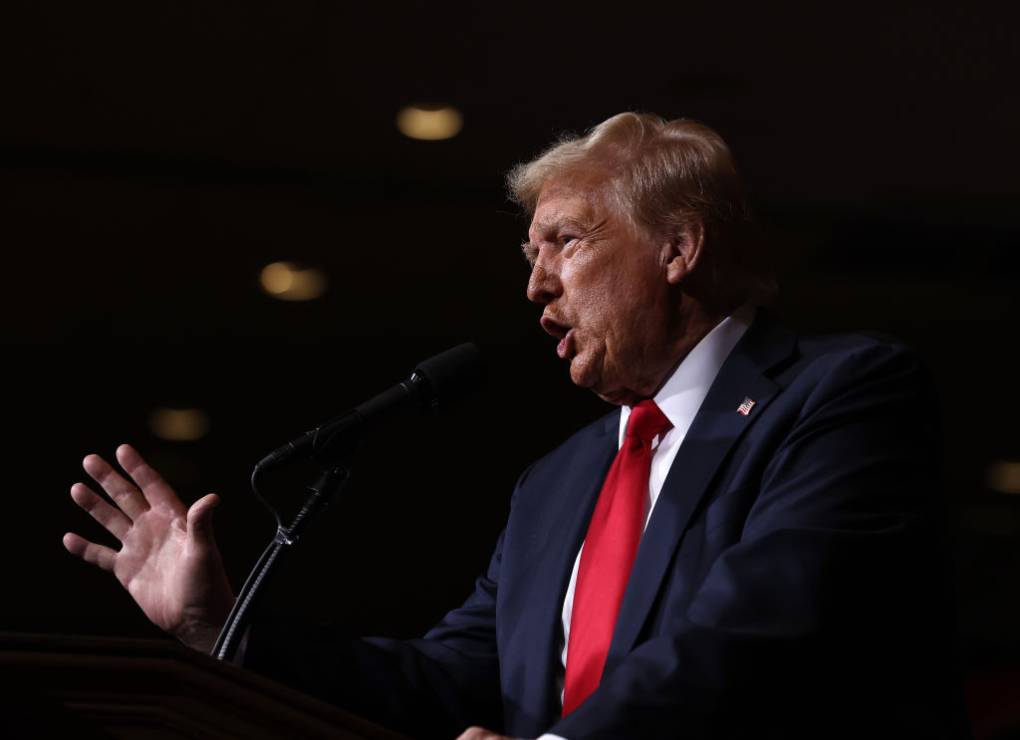
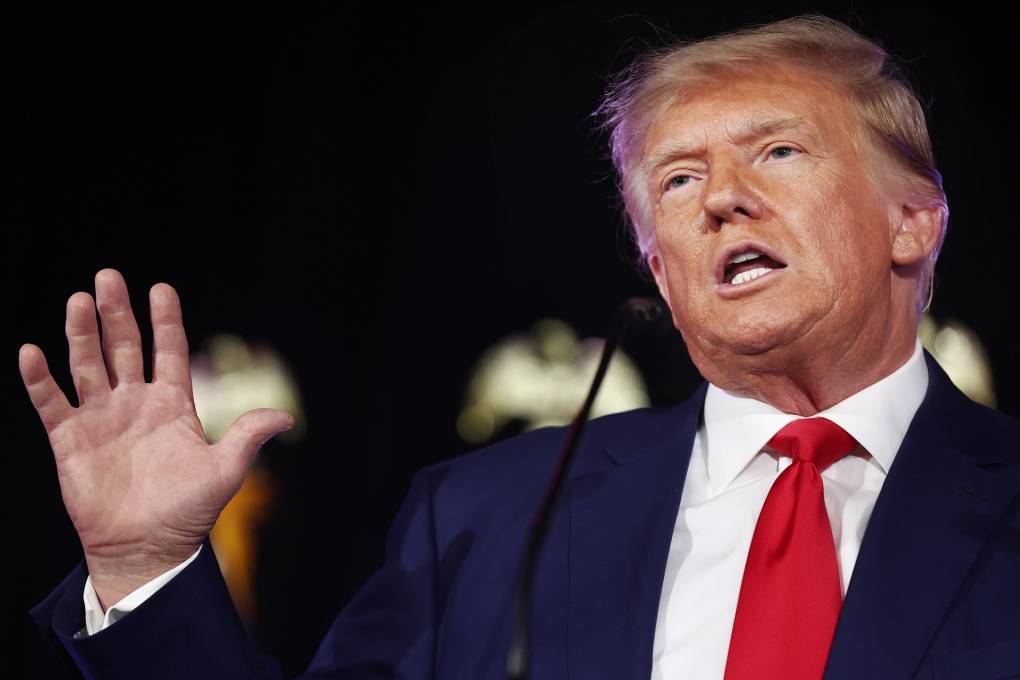
Why Is Donald Trump Campaigning in California, a State He's Almost Certain to Lose?
A Defining Moment For Kamala Harris - Her Actions During Foreclosure Crisis
Kamala Harris Took on Big Banks After the Foreclosure Crisis. It Helped Define Her Career
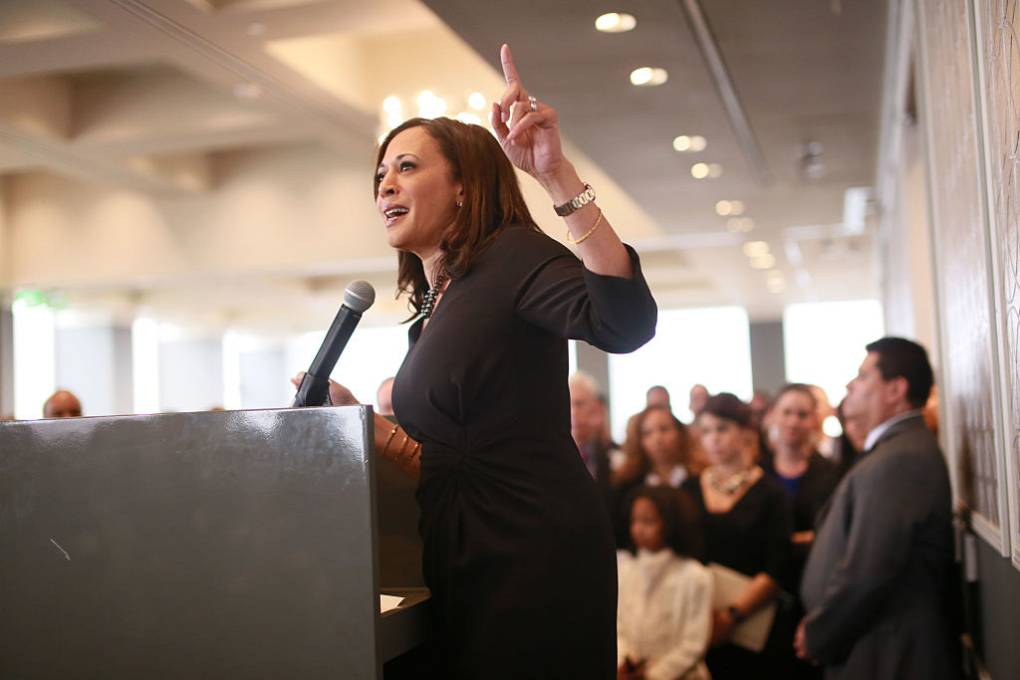
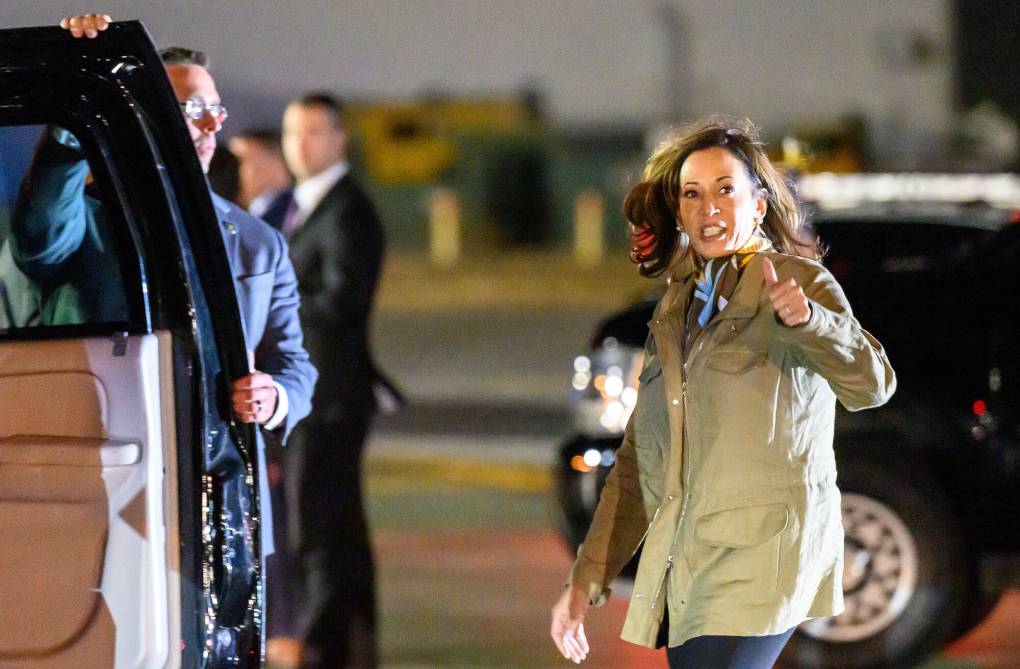
‘Underdog’ Vice President Harris Implores San Francisco Supporters to Help Her Win the White House
How Kamala Harris Was Shaped by The Rainbow Sign, Berkeley’s 1970s Black Cultural Center
Capitol Hill Hearing Exposes Project 2025 as an Extreme Republican Agenda
California Teamsters Council Backs Harris-Walz in Break With National Chapter
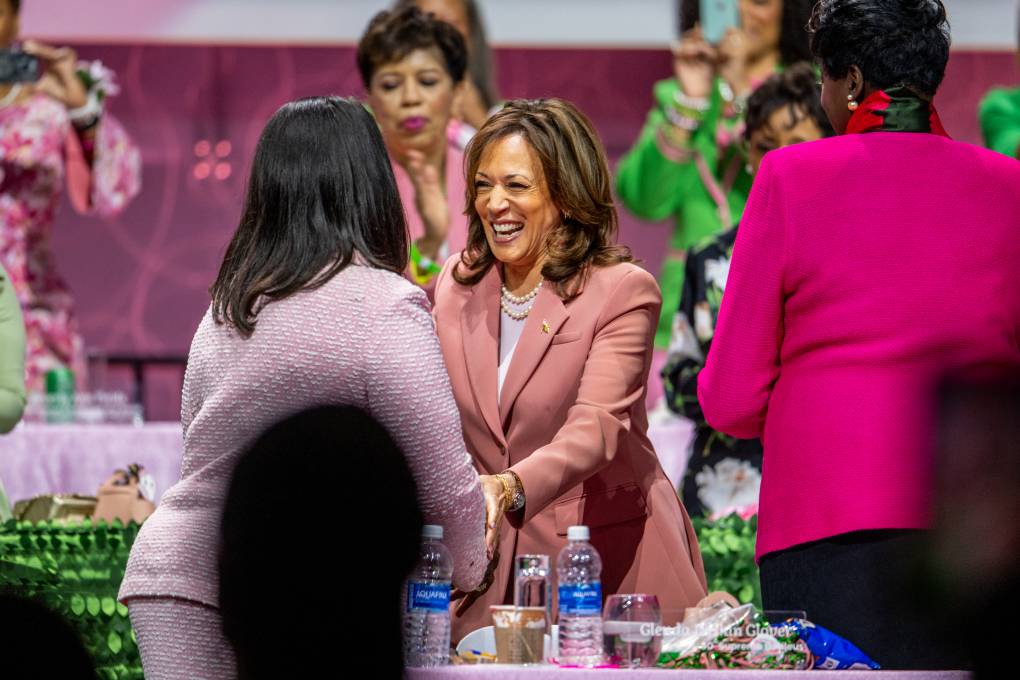
What Are the 'Divine 9' and How Are They Helping Kamala Harris?
Fact-Check Reveals Trump's Inaccurate Claims About California and Kamala Harris
Taylor Swift Endorses Kamala Harris — and Raises Fears of AI Election Misinformation
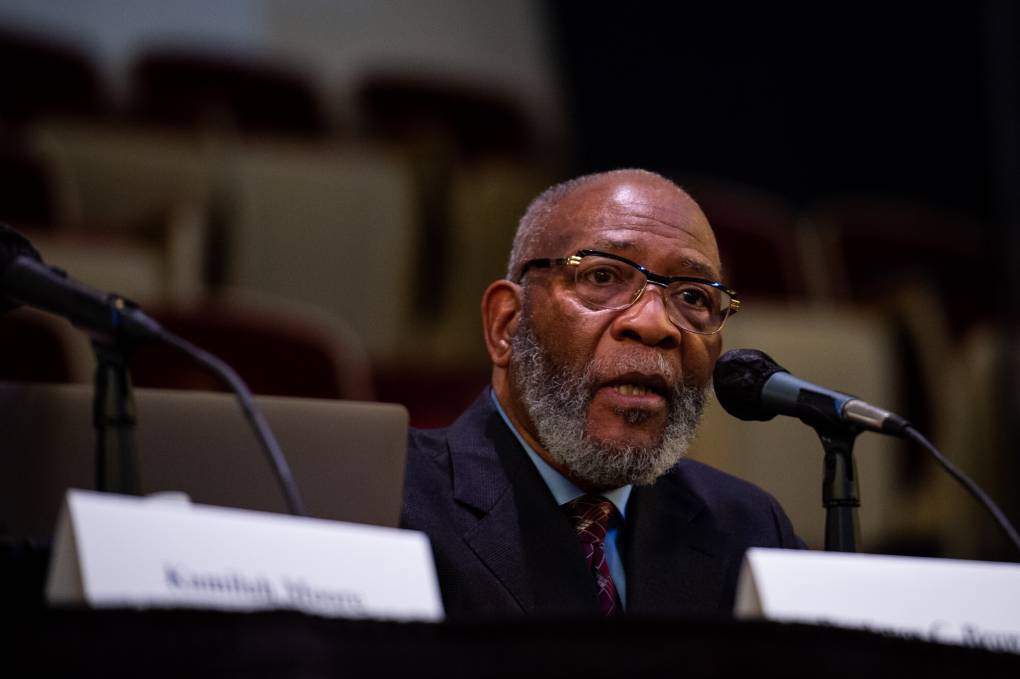
Kamala Harris Embraced Reparations 5 Years Ago. Her SF Pastor Says Criticism Is Unjust
What Do Harris and Trump Need to Accomplish in Tuesday’s Debate?
window.__IS_SSR__=true
window.__INITIAL_STATE__={
"attachmentsReducer": {
"audio_0": {
"type": "attachments",
"id": "audio_0",
"imgSizes": {
"kqedFullSize": {
"file": "https://ww2.kqed.org/news/wp-content/themes/KQED-unified/img/audio_bgs/background0.jpg"
}
}
},
"audio_1": {
"type": "attachments",
"id": "audio_1",
"imgSizes": {
"kqedFullSize": {
"file": "https://ww2.kqed.org/news/wp-content/themes/KQED-unified/img/audio_bgs/background1.jpg"
}
}
},
"audio_2": {
"type": "attachments",
"id": "audio_2",
"imgSizes": {
"kqedFullSize": {
"file": "https://ww2.kqed.org/news/wp-content/themes/KQED-unified/img/audio_bgs/background2.jpg"
}
}
},
"audio_3": {
"type": "attachments",
"id": "audio_3",
"imgSizes": {
"kqedFullSize": {
"file": "https://ww2.kqed.org/news/wp-content/themes/KQED-unified/img/audio_bgs/background3.jpg"
}
}
},
"audio_4": {
"type": "attachments",
"id": "audio_4",
"imgSizes": {
"kqedFullSize": {
"file": "https://ww2.kqed.org/news/wp-content/themes/KQED-unified/img/audio_bgs/background4.jpg"
}
}
},
"placeholder": {
"type": "attachments",
"id": "placeholder",
"imgSizes": {
"thumbnail": {
"file": "https://cdn.kqed.org/wp-content/uploads/2024/12/KQED-Default-Image-816638274-2000x1333-1-160x107.jpg",
"width": 160,
"height": 107,
"mimeType": "image/jpeg"
},
"medium": {
"file": "https://cdn.kqed.org/wp-content/uploads/2024/12/KQED-Default-Image-816638274-2000x1333-1-800x533.jpg",
"width": 800,
"height": 533,
"mimeType": "image/jpeg"
},
"medium_large": {
"file": "https://cdn.kqed.org/wp-content/uploads/2024/12/KQED-Default-Image-816638274-2000x1333-1-768x512.jpg",
"width": 768,
"height": 512,
"mimeType": "image/jpeg"
},
"large": {
"file": "https://cdn.kqed.org/wp-content/uploads/2024/12/KQED-Default-Image-816638274-2000x1333-1-1020x680.jpg",
"width": 1020,
"height": 680,
"mimeType": "image/jpeg"
},
"1536x1536": {
"file": "https://cdn.kqed.org/wp-content/uploads/2024/12/KQED-Default-Image-816638274-2000x1333-1-1536x1024.jpg",
"width": 1536,
"height": 1024,
"mimeType": "image/jpeg"
},
"fd-lrg": {
"file": "https://cdn.kqed.org/wp-content/uploads/2024/12/KQED-Default-Image-816638274-2000x1333-1-1536x1024.jpg",
"width": 1536,
"height": 1024,
"mimeType": "image/jpeg"
},
"fd-med": {
"file": "https://cdn.kqed.org/wp-content/uploads/2024/12/KQED-Default-Image-816638274-2000x1333-1-1020x680.jpg",
"width": 1020,
"height": 680,
"mimeType": "image/jpeg"
},
"fd-sm": {
"file": "https://cdn.kqed.org/wp-content/uploads/2024/12/KQED-Default-Image-816638274-2000x1333-1-800x533.jpg",
"width": 800,
"height": 533,
"mimeType": "image/jpeg"
},
"post-thumbnail": {
"file": "https://cdn.kqed.org/wp-content/uploads/2024/12/KQED-Default-Image-816638274-2000x1333-1-672x372.jpg",
"width": 672,
"height": 372,
"mimeType": "image/jpeg"
},
"twentyfourteen-full-width": {
"file": "https://cdn.kqed.org/wp-content/uploads/2024/12/KQED-Default-Image-816638274-2000x1333-1-1038x576.jpg",
"width": 1038,
"height": 576,
"mimeType": "image/jpeg"
},
"xxsmall": {
"file": "https://cdn.kqed.org/wp-content/uploads/2024/12/KQED-Default-Image-816638274-2000x1333-1-160x107.jpg",
"width": 160,
"height": 107,
"mimeType": "image/jpeg"
},
"xsmall": {
"file": "https://cdn.kqed.org/wp-content/uploads/2024/12/KQED-Default-Image-816638274-2000x1333-1-672x372.jpg",
"width": 672,
"height": 372,
"mimeType": "image/jpeg"
},
"small": {
"file": "https://cdn.kqed.org/wp-content/uploads/2024/12/KQED-Default-Image-816638274-2000x1333-1-672x372.jpg",
"width": 672,
"height": 372,
"mimeType": "image/jpeg"
},
"xlarge": {
"file": "https://cdn.kqed.org/wp-content/uploads/2024/12/KQED-Default-Image-816638274-2000x1333-1-1020x680.jpg",
"width": 1020,
"height": 680,
"mimeType": "image/jpeg"
},
"full-width": {
"file": "https://cdn.kqed.org/wp-content/uploads/2024/12/KQED-Default-Image-816638274-2000x1333-1-1920x1280.jpg",
"width": 1920,
"height": 1280,
"mimeType": "image/jpeg"
},
"guest-author-32": {
"file": "https://cdn.kqed.org/wp-content/uploads/2025/01/KQED-Default-Image-816638274-1333x1333-1-160x160.jpg",
"width": 32,
"height": 32,
"mimeType": "image/jpeg"
},
"guest-author-50": {
"file": "https://cdn.kqed.org/wp-content/uploads/2025/01/KQED-Default-Image-816638274-1333x1333-1-160x160.jpg",
"width": 50,
"height": 50,
"mimeType": "image/jpeg"
},
"guest-author-64": {
"file": "https://cdn.kqed.org/wp-content/uploads/2025/01/KQED-Default-Image-816638274-1333x1333-1-160x160.jpg",
"width": 64,
"height": 64,
"mimeType": "image/jpeg"
},
"guest-author-96": {
"file": "https://cdn.kqed.org/wp-content/uploads/2025/01/KQED-Default-Image-816638274-1333x1333-1-160x160.jpg",
"width": 96,
"height": 96,
"mimeType": "image/jpeg"
},
"guest-author-128": {
"file": "https://cdn.kqed.org/wp-content/uploads/2025/01/KQED-Default-Image-816638274-1333x1333-1-160x160.jpg",
"width": 128,
"height": 128,
"mimeType": "image/jpeg"
},
"detail": {
"file": "https://cdn.kqed.org/wp-content/uploads/2025/01/KQED-Default-Image-816638274-1333x1333-1-160x160.jpg",
"width": 160,
"height": 160,
"mimeType": "image/jpeg"
},
"kqedFullSize": {
"file": "https://cdn.kqed.org/wp-content/uploads/2024/12/KQED-Default-Image-816638274-2000x1333-1.jpg",
"width": 2000,
"height": 1333
}
}
},
"news_12009292": {
"type": "attachments",
"id": "news_12009292",
"meta": {
"index": "attachments_1716263798",
"site": "news",
"id": "12009292",
"found": true
},
"title": "Donald Trump Holds Presidential Campaign Rally In Reno, Nevada",
"publishDate": 1728764153,
"status": "inherit",
"parent": 12009289,
"modified": 1728764200,
"caption": "Republican presidential nominee, former US President Donald Trump, speaks during a campaign rally at the Grand Sierra Resort on Oct. 11, 2024 in Reno, Nevada. ",
"credit": "Justin Sullivan/Getty Images",
"altTag": null,
"description": null,
"imgSizes": {
"medium": {
"file": "https://cdn.kqed.org/wp-content/uploads/sites/10/2024/10/GettyImages-2178029340-800x580.jpg",
"width": 800,
"height": 580,
"mimeType": "image/jpeg"
},
"large": {
"file": "https://cdn.kqed.org/wp-content/uploads/sites/10/2024/10/GettyImages-2178029340-1020x740.jpg",
"width": 1020,
"height": 740,
"mimeType": "image/jpeg"
},
"thumbnail": {
"file": "https://cdn.kqed.org/wp-content/uploads/sites/10/2024/10/GettyImages-2178029340-160x116.jpg",
"width": 160,
"height": 116,
"mimeType": "image/jpeg"
},
"post-thumbnail": {
"file": "https://cdn.kqed.org/wp-content/uploads/sites/10/2024/10/GettyImages-2178029340-672x372.jpg",
"width": 672,
"height": 372,
"mimeType": "image/jpeg"
},
"twentyfourteen-full-width": {
"file": "https://cdn.kqed.org/wp-content/uploads/sites/10/2024/10/GettyImages-2178029340-1024x576.jpg",
"width": 1024,
"height": 576,
"mimeType": "image/jpeg"
},
"kqedFullSize": {
"file": "https://cdn.kqed.org/wp-content/uploads/sites/10/2024/10/GettyImages-2178029340.jpg",
"width": 1024,
"height": 743
}
},
"isLoading": false,
"fetchFailed": false
},
"news_12008805": {
"type": "attachments",
"id": "news_12008805",
"meta": {
"index": "attachments_1716263798",
"site": "news",
"id": "12008805",
"found": true
},
"title": "USA: Politics: CA Attorney General Kamala Harris to Run for Senate",
"publishDate": 1728513335,
"status": "inherit",
"parent": 12008786,
"modified": 1728518767,
"caption": "Kamala Harris, then-California attorney general, speaks to supporters at a gathering in Los Angeles on Jan. 11, 2015, shortly after announcing plans to run for U.S. Senate.",
"credit": "Sandy Huffaker/Corbis via Getty Images",
"altTag": "Kamala Harris stands at a lectern, delivering a speech with an audience behind her.",
"description": null,
"imgSizes": {
"medium": {
"file": "https://cdn.kqed.org/wp-content/uploads/sites/10/2024/10/GettyImages-526583572-800x534.jpg",
"width": 800,
"height": 534,
"mimeType": "image/jpeg"
},
"large": {
"file": "https://cdn.kqed.org/wp-content/uploads/sites/10/2024/10/GettyImages-526583572-1020x680.jpg",
"width": 1020,
"height": 680,
"mimeType": "image/jpeg"
},
"thumbnail": {
"file": "https://cdn.kqed.org/wp-content/uploads/sites/10/2024/10/GettyImages-526583572-160x107.jpg",
"width": 160,
"height": 107,
"mimeType": "image/jpeg"
},
"post-thumbnail": {
"file": "https://cdn.kqed.org/wp-content/uploads/sites/10/2024/10/GettyImages-526583572-672x372.jpg",
"width": 672,
"height": 372,
"mimeType": "image/jpeg"
},
"twentyfourteen-full-width": {
"file": "https://cdn.kqed.org/wp-content/uploads/sites/10/2024/10/GettyImages-526583572-1024x576.jpg",
"width": 1024,
"height": 576,
"mimeType": "image/jpeg"
},
"kqedFullSize": {
"file": "https://cdn.kqed.org/wp-content/uploads/sites/10/2024/10/GettyImages-526583572.jpg",
"width": 1024,
"height": 683
}
},
"isLoading": false,
"fetchFailed": false
},
"news_12007015": {
"type": "attachments",
"id": "news_12007015",
"meta": {
"index": "attachments_1716263798",
"site": "news",
"id": "12007015",
"found": true
},
"title": "US-POLITICS-HARRIS",
"publishDate": 1727564353,
"status": "inherit",
"parent": 12007013,
"modified": 1727720126,
"caption": "U.S. Vice President and Democratic presidential candidate Kamala Harris gives a thumbs up as she walks to a vehicle after arriving at San Francisco International Airport in San Francisco, California, on Sept. 27, 2024.",
"credit": "Josh Edelson/AFP via Getty Images",
"altTag": "VP Harris gives a thumbs-up as she walks to a car.",
"description": null,
"imgSizes": {
"medium": {
"file": "https://cdn.kqed.org/wp-content/uploads/sites/10/2024/09/GettyImages-2174099092_qed-800x525.jpg",
"width": 800,
"height": 525,
"mimeType": "image/jpeg"
},
"large": {
"file": "https://cdn.kqed.org/wp-content/uploads/sites/10/2024/09/GettyImages-2174099092_qed-1020x669.jpg",
"width": 1020,
"height": 669,
"mimeType": "image/jpeg"
},
"thumbnail": {
"file": "https://cdn.kqed.org/wp-content/uploads/sites/10/2024/09/GettyImages-2174099092_qed-160x105.jpg",
"width": 160,
"height": 105,
"mimeType": "image/jpeg"
},
"1536x1536": {
"file": "https://cdn.kqed.org/wp-content/uploads/sites/10/2024/09/GettyImages-2174099092_qed-1536x1008.jpg",
"width": 1536,
"height": 1008,
"mimeType": "image/jpeg"
},
"post-thumbnail": {
"file": "https://cdn.kqed.org/wp-content/uploads/sites/10/2024/09/GettyImages-2174099092_qed-672x372.jpg",
"width": 672,
"height": 372,
"mimeType": "image/jpeg"
},
"twentyfourteen-full-width": {
"file": "https://cdn.kqed.org/wp-content/uploads/sites/10/2024/09/GettyImages-2174099092_qed-1038x576.jpg",
"width": 1038,
"height": 576,
"mimeType": "image/jpeg"
},
"full-width": {
"file": "https://cdn.kqed.org/wp-content/uploads/sites/10/2024/09/GettyImages-2174099092_qed-1920x1260.jpg",
"width": 1920,
"height": 1260,
"mimeType": "image/jpeg"
},
"kqedFullSize": {
"file": "https://cdn.kqed.org/wp-content/uploads/sites/10/2024/09/GettyImages-2174099092_qed.jpg",
"width": 2000,
"height": 1312
}
},
"isLoading": false,
"fetchFailed": false
},
"news_11901129": {
"type": "attachments",
"id": "news_11901129",
"meta": {
"index": "attachments_1716263798",
"site": "news",
"id": "11901129",
"found": true
},
"parent": 11901099,
"imgSizes": {
"twentyfourteen-full-width": {
"file": "https://ww2.kqed.org/app/uploads/sites/10/2022/01/rainbow-collage3-1038x576.jpg",
"width": 1038,
"mimeType": "image/jpeg",
"height": 576
},
"thumbnail": {
"file": "https://ww2.kqed.org/app/uploads/sites/10/2022/01/rainbow-collage3-160x104.jpg",
"width": 160,
"mimeType": "image/jpeg",
"height": 104
},
"post-thumbnail": {
"file": "https://ww2.kqed.org/app/uploads/sites/10/2022/01/rainbow-collage3-672x372.jpg",
"width": 672,
"mimeType": "image/jpeg",
"height": 372
},
"kqedFullSize": {
"file": "https://ww2.kqed.org/app/uploads/sites/10/2022/01/rainbow-collage3.jpg",
"width": 1790,
"height": 1160
},
"large": {
"file": "https://ww2.kqed.org/app/uploads/sites/10/2022/01/rainbow-collage3-1020x661.jpg",
"width": 1020,
"mimeType": "image/jpeg",
"height": 661
},
"1536x1536": {
"file": "https://ww2.kqed.org/app/uploads/sites/10/2022/01/rainbow-collage3-1536x995.jpg",
"width": 1536,
"mimeType": "image/jpeg",
"height": 995
},
"medium": {
"file": "https://ww2.kqed.org/app/uploads/sites/10/2022/01/rainbow-collage3-800x518.jpg",
"width": 800,
"mimeType": "image/jpeg",
"height": 518
}
},
"publishDate": 1641594916,
"modified": 1641602056,
"caption": "Images from The Rainbow Sign, a 1970s Black cultural Institution in Berkeley that hosted the likes of Nina Simone, Taj Mahal and James Baldwin. A young Kamala Harris is pictured at bottom left.",
"description": null,
"title": "rainbow-collage3",
"credit": "Photo collage by Anna Vignet/KQED",
"status": "inherit",
"altTag": "A photo collage of images from the Rainbow Sign cultural venue.",
"isLoading": false,
"fetchFailed": false
},
"news_12006275": {
"type": "attachments",
"id": "news_12006275",
"meta": {
"index": "attachments_1716263798",
"site": "news",
"id": "12006275",
"found": true
},
"title": "Senate Democrats Hold Press Conference On Project 2025 Policy Agenda",
"publishDate": 1727221102,
"status": "inherit",
"parent": 12006200,
"modified": 1727221442,
"caption": "A sign that says \"Exposing Project 2025\" is seen during a news conference on \"Project 2025\" at the U.S. Capitol on Sept. 12, 2024, in Washington, DC. The Heritage Foundation's Project 2025 promotes conservative and right-wing policies aimed at reshaping the U.S. government, like consolidating executive power if Donald Trump wins the Presidential election in November. ",
"credit": "Kent Nishimura/Getty Images",
"altTag": null,
"description": null,
"imgSizes": {
"medium": {
"file": "https://cdn.kqed.org/wp-content/uploads/sites/10/2024/09/Project2025Getty1-800x533.jpg",
"width": 800,
"height": 533,
"mimeType": "image/jpeg"
},
"large": {
"file": "https://cdn.kqed.org/wp-content/uploads/sites/10/2024/09/Project2025Getty1-1020x680.jpg",
"width": 1020,
"height": 680,
"mimeType": "image/jpeg"
},
"thumbnail": {
"file": "https://cdn.kqed.org/wp-content/uploads/sites/10/2024/09/Project2025Getty1-160x107.jpg",
"width": 160,
"height": 107,
"mimeType": "image/jpeg"
},
"1536x1536": {
"file": "https://cdn.kqed.org/wp-content/uploads/sites/10/2024/09/Project2025Getty1-1536x1024.jpg",
"width": 1536,
"height": 1024,
"mimeType": "image/jpeg"
},
"post-thumbnail": {
"file": "https://cdn.kqed.org/wp-content/uploads/sites/10/2024/09/Project2025Getty1-672x372.jpg",
"width": 672,
"height": 372,
"mimeType": "image/jpeg"
},
"twentyfourteen-full-width": {
"file": "https://cdn.kqed.org/wp-content/uploads/sites/10/2024/09/Project2025Getty1-1038x576.jpg",
"width": 1038,
"height": 576,
"mimeType": "image/jpeg"
},
"full-width": {
"file": "https://cdn.kqed.org/wp-content/uploads/sites/10/2024/09/Project2025Getty1-1920x1280.jpg",
"width": 1920,
"height": 1280,
"mimeType": "image/jpeg"
},
"kqedFullSize": {
"file": "https://cdn.kqed.org/wp-content/uploads/sites/10/2024/09/Project2025Getty1.jpg",
"width": 2000,
"height": 1333
}
},
"isLoading": false,
"fetchFailed": false
},
"news_12001529": {
"type": "attachments",
"id": "news_12001529",
"meta": {
"index": "attachments_1716263798",
"site": "news",
"id": "12001529",
"found": true
},
"title": "TOPSHOT-US-VOTE-POLITICS-DEMOCRATIC-CONVENTION",
"publishDate": 1724387291,
"status": "inherit",
"parent": 12001412,
"modified": 1724387982,
"caption": "Vice President Kamala Harris arrives to formally accept the Democratic Party nomination for president on the last day of the Democratic National Convention on Aug. 22, 2024. ",
"credit": "Saul Loeb/AFP via Getty Images",
"altTag": null,
"description": null,
"imgSizes": {
"medium": {
"file": "https://cdn.kqed.org/wp-content/uploads/sites/10/2024/08/GettyImages-2167179772_qed-800x533.jpg",
"width": 800,
"height": 533,
"mimeType": "image/jpeg"
},
"large": {
"file": "https://cdn.kqed.org/wp-content/uploads/sites/10/2024/08/GettyImages-2167179772_qed-1020x680.jpg",
"width": 1020,
"height": 680,
"mimeType": "image/jpeg"
},
"thumbnail": {
"file": "https://cdn.kqed.org/wp-content/uploads/sites/10/2024/08/GettyImages-2167179772_qed-160x107.jpg",
"width": 160,
"height": 107,
"mimeType": "image/jpeg"
},
"1536x1536": {
"file": "https://cdn.kqed.org/wp-content/uploads/sites/10/2024/08/GettyImages-2167179772_qed-1536x1024.jpg",
"width": 1536,
"height": 1024,
"mimeType": "image/jpeg"
},
"post-thumbnail": {
"file": "https://cdn.kqed.org/wp-content/uploads/sites/10/2024/08/GettyImages-2167179772_qed-672x372.jpg",
"width": 672,
"height": 372,
"mimeType": "image/jpeg"
},
"twentyfourteen-full-width": {
"file": "https://cdn.kqed.org/wp-content/uploads/sites/10/2024/08/GettyImages-2167179772_qed-1038x576.jpg",
"width": 1038,
"height": 576,
"mimeType": "image/jpeg"
},
"full-width": {
"file": "https://cdn.kqed.org/wp-content/uploads/sites/10/2024/08/GettyImages-2167179772_qed-1920x1280.jpg",
"width": 1920,
"height": 1280,
"mimeType": "image/jpeg"
},
"kqedFullSize": {
"file": "https://cdn.kqed.org/wp-content/uploads/sites/10/2024/08/GettyImages-2167179772_qed.jpg",
"width": 2000,
"height": 1333
}
},
"isLoading": false,
"fetchFailed": false
},
"news_12005106": {
"type": "attachments",
"id": "news_12005106",
"meta": {
"index": "attachments_1716263798",
"site": "news",
"id": "12005106",
"found": true
},
"title": "Vice President Kamala Harris Speaks At The Alpha Kappa Alpha Sorority, Inc's 71st Boule In Dallas",
"publishDate": 1726614187,
"status": "inherit",
"parent": 12005105,
"modified": 1726614187,
"caption": "DALLAS, TEXAS - JULY 10: U.S. Vice President Kamala Harris greets members of the Alpha Kappa Alpha Sorority ahead of speaking at the Kay Bailey Hutchison Convention Center on July 10, 2024 in Dallas, Texas. The Vice President spoke to approximately 20,000 members from her sorority in a continued effort to rally support ahead of the upcoming November Presidential election. (Photo by Brandon Bell/Getty Images)",
"credit": null,
"altTag": null,
"description": null,
"imgSizes": {
"medium": {
"file": "https://cdn.kqed.org/wp-content/uploads/sites/10/2024/09/GettyImages-2161523449-800x533.jpg",
"width": 800,
"height": 533,
"mimeType": "image/jpeg"
},
"large": {
"file": "https://cdn.kqed.org/wp-content/uploads/sites/10/2024/09/GettyImages-2161523449-1020x680.jpg",
"width": 1020,
"height": 680,
"mimeType": "image/jpeg"
},
"thumbnail": {
"file": "https://cdn.kqed.org/wp-content/uploads/sites/10/2024/09/GettyImages-2161523449-160x107.jpg",
"width": 160,
"height": 107,
"mimeType": "image/jpeg"
},
"1536x1536": {
"file": "https://cdn.kqed.org/wp-content/uploads/sites/10/2024/09/GettyImages-2161523449-1536x1024.jpg",
"width": 1536,
"height": 1024,
"mimeType": "image/jpeg"
},
"2048x2048": {
"file": "https://cdn.kqed.org/wp-content/uploads/sites/10/2024/09/GettyImages-2161523449-2048x1365.jpg",
"width": 2048,
"height": 1365,
"mimeType": "image/jpeg"
},
"post-thumbnail": {
"file": "https://cdn.kqed.org/wp-content/uploads/sites/10/2024/09/GettyImages-2161523449-672x372.jpg",
"width": 672,
"height": 372,
"mimeType": "image/jpeg"
},
"twentyfourteen-full-width": {
"file": "https://cdn.kqed.org/wp-content/uploads/sites/10/2024/09/GettyImages-2161523449-1038x576.jpg",
"width": 1038,
"height": 576,
"mimeType": "image/jpeg"
},
"full-width": {
"file": "https://cdn.kqed.org/wp-content/uploads/sites/10/2024/09/GettyImages-2161523449-1920x1280.jpg",
"width": 1920,
"height": 1280,
"mimeType": "image/jpeg"
},
"kqedFullSize": {
"file": "https://cdn.kqed.org/wp-content/uploads/sites/10/2024/09/GettyImages-2161523449-scaled.jpg",
"width": 2560,
"height": 1707
}
},
"isLoading": false,
"fetchFailed": false
},
"news_11971091": {
"type": "attachments",
"id": "news_11971091",
"meta": {
"index": "attachments_1716263798",
"site": "news",
"id": "11971091",
"found": true
},
"title": "Donald Trump Delivers Remarks At Nevada Recruitment Event",
"publishDate": 1703793049,
"status": "inherit",
"parent": 0,
"modified": 1726466386,
"caption": "Former U.S. President and Republican presidential candidate Donald Trump delivers remarks at a Nevada Republican volunteer recruiting event at Fervent: A Calvary Chapel on July 8, 2023, in Las Vegas. ",
"credit": "Mario Tama/Getty Images",
"altTag": "An older white man with a navy blue suit and red tie gestures as he speaks.",
"description": null,
"imgSizes": {
"medium": {
"file": "https://cdn.kqed.org/wp-content/uploads/sites/10/2023/12/GettyImages-1527386991-800x533.jpg",
"width": 800,
"height": 533,
"mimeType": "image/jpeg"
},
"large": {
"file": "https://cdn.kqed.org/wp-content/uploads/sites/10/2023/12/GettyImages-1527386991-1020x680.jpg",
"width": 1020,
"height": 680,
"mimeType": "image/jpeg"
},
"thumbnail": {
"file": "https://cdn.kqed.org/wp-content/uploads/sites/10/2023/12/GettyImages-1527386991-160x107.jpg",
"width": 160,
"height": 107,
"mimeType": "image/jpeg"
},
"1536x1536": {
"file": "https://cdn.kqed.org/wp-content/uploads/sites/10/2023/12/GettyImages-1527386991-1536x1024.jpg",
"width": 1536,
"height": 1024,
"mimeType": "image/jpeg"
},
"post-thumbnail": {
"file": "https://cdn.kqed.org/wp-content/uploads/sites/10/2023/12/GettyImages-1527386991-672x372.jpg",
"width": 672,
"height": 372,
"mimeType": "image/jpeg"
},
"twentyfourteen-full-width": {
"file": "https://cdn.kqed.org/wp-content/uploads/sites/10/2023/12/GettyImages-1527386991-1038x576.jpg",
"width": 1038,
"height": 576,
"mimeType": "image/jpeg"
},
"kqedFullSize": {
"file": "https://cdn.kqed.org/wp-content/uploads/sites/10/2023/12/GettyImages-1527386991.jpg",
"width": 1920,
"height": 1280
}
},
"isLoading": false,
"fetchFailed": false
},
"news_11628746": {
"type": "attachments",
"id": "news_11628746",
"meta": {
"index": "attachments_1716263798",
"site": "news",
"id": "11628746",
"found": true
},
"parent": 11628745,
"imgSizes": {
"small": {
"file": "https://ww2.kqed.org/app/uploads/sites/10/2017/11/gettyimages-633867894_wide-e7e50676b602d043d45f3b34ff18568758f6cebe-520x293.jpg",
"width": 520,
"mimeType": "image/jpeg",
"height": 293
},
"twentyfourteen-full-width": {
"file": "https://ww2.kqed.org/app/uploads/sites/10/2017/11/gettyimages-633867894_wide-e7e50676b602d043d45f3b34ff18568758f6cebe-1038x576.jpg",
"width": 1038,
"mimeType": "image/jpeg",
"height": 576
},
"thumbnail": {
"file": "https://ww2.kqed.org/app/uploads/sites/10/2017/11/gettyimages-633867894_wide-e7e50676b602d043d45f3b34ff18568758f6cebe-160x90.jpg",
"width": 160,
"mimeType": "image/jpeg",
"height": 90
},
"fd-sm": {
"file": "https://ww2.kqed.org/app/uploads/sites/10/2017/11/gettyimages-633867894_wide-e7e50676b602d043d45f3b34ff18568758f6cebe-960x540.jpg",
"width": 960,
"mimeType": "image/jpeg",
"height": 540
},
"post-thumbnail": {
"file": "https://ww2.kqed.org/app/uploads/sites/10/2017/11/gettyimages-633867894_wide-e7e50676b602d043d45f3b34ff18568758f6cebe-672x372.jpg",
"width": 672,
"mimeType": "image/jpeg",
"height": 372
},
"xsmall": {
"file": "https://ww2.kqed.org/app/uploads/sites/10/2017/11/gettyimages-633867894_wide-e7e50676b602d043d45f3b34ff18568758f6cebe-375x211.jpg",
"width": 375,
"mimeType": "image/jpeg",
"height": 211
},
"kqedFullSize": {
"file": "https://ww2.kqed.org/app/uploads/sites/10/2017/11/gettyimages-633867894_wide-e7e50676b602d043d45f3b34ff18568758f6cebe-e1510069404712.jpg",
"width": 1920,
"height": 1080
},
"large": {
"file": "https://ww2.kqed.org/app/uploads/sites/10/2017/11/gettyimages-633867894_wide-e7e50676b602d043d45f3b34ff18568758f6cebe-1020x574.jpg",
"width": 1020,
"mimeType": "image/jpeg",
"height": 574
},
"xlarge": {
"file": "https://ww2.kqed.org/app/uploads/sites/10/2017/11/gettyimages-633867894_wide-e7e50676b602d043d45f3b34ff18568758f6cebe-1180x664.jpg",
"width": 1180,
"mimeType": "image/jpeg",
"height": 664
},
"guest-author-50": {
"file": "https://ww2.kqed.org/app/uploads/sites/10/2017/11/gettyimages-633867894_wide-e7e50676b602d043d45f3b34ff18568758f6cebe-50x50.jpg",
"width": 50,
"mimeType": "image/jpeg",
"height": 50
},
"guest-author-96": {
"file": "https://ww2.kqed.org/app/uploads/sites/10/2017/11/gettyimages-633867894_wide-e7e50676b602d043d45f3b34ff18568758f6cebe-96x96.jpg",
"width": 96,
"mimeType": "image/jpeg",
"height": 96
},
"medium": {
"file": "https://ww2.kqed.org/app/uploads/sites/10/2017/11/gettyimages-633867894_wide-e7e50676b602d043d45f3b34ff18568758f6cebe-800x450.jpg",
"width": 800,
"mimeType": "image/jpeg",
"height": 450
},
"guest-author-64": {
"file": "https://ww2.kqed.org/app/uploads/sites/10/2017/11/gettyimages-633867894_wide-e7e50676b602d043d45f3b34ff18568758f6cebe-64x64.jpg",
"width": 64,
"mimeType": "image/jpeg",
"height": 64
},
"guest-author-32": {
"file": "https://ww2.kqed.org/app/uploads/sites/10/2017/11/gettyimages-633867894_wide-e7e50676b602d043d45f3b34ff18568758f6cebe-32x32.jpg",
"width": 32,
"mimeType": "image/jpeg",
"height": 32
},
"fd-lrg": {
"file": "https://ww2.kqed.org/app/uploads/sites/10/2017/11/gettyimages-633867894_wide-e7e50676b602d043d45f3b34ff18568758f6cebe-1920x1080.jpg",
"width": 1920,
"mimeType": "image/jpeg",
"height": 1080
},
"fd-med": {
"file": "https://ww2.kqed.org/app/uploads/sites/10/2017/11/gettyimages-633867894_wide-e7e50676b602d043d45f3b34ff18568758f6cebe-1180x664.jpg",
"width": 1180,
"mimeType": "image/jpeg",
"height": 664
},
"full-width": {
"file": "https://ww2.kqed.org/app/uploads/sites/10/2017/11/gettyimages-633867894_wide-e7e50676b602d043d45f3b34ff18568758f6cebe-1920x1080.jpg",
"width": 1920,
"mimeType": "image/jpeg",
"height": 1080
},
"detail": {
"file": "https://ww2.kqed.org/app/uploads/sites/10/2017/11/gettyimages-633867894_wide-e7e50676b602d043d45f3b34ff18568758f6cebe-150x150.jpg",
"width": 150,
"mimeType": "image/jpeg",
"height": 150
},
"guest-author-128": {
"file": "https://ww2.kqed.org/app/uploads/sites/10/2017/11/gettyimages-633867894_wide-e7e50676b602d043d45f3b34ff18568758f6cebe-128x128.jpg",
"width": 128,
"mimeType": "image/jpeg",
"height": 128
},
"xxsmall": {
"file": "https://ww2.kqed.org/app/uploads/sites/10/2017/11/gettyimages-633867894_wide-e7e50676b602d043d45f3b34ff18568758f6cebe-240x135.jpg",
"width": 240,
"mimeType": "image/jpeg",
"height": 135
}
},
"publishDate": 1510069197,
"modified": 1510069428,
"caption": "Taylor Swift performing in February in Houston.",
"description": "Taylor Swift performing in February in Houston.",
"title": "gettyimages-633867894_wide-e7e50676b602d043d45f3b34ff18568758f6cebe",
"credit": "John Shearer/Getty Images for DIRECTV",
"status": "inherit",
"isLoading": false,
"fetchFailed": false
},
"news_12003624": {
"type": "attachments",
"id": "news_12003624",
"meta": {
"index": "attachments_1716263798",
"site": "news",
"id": "12003624",
"found": true
},
"title": "022_KQED_CAReparationsTaskForce_04132022_qed",
"publishDate": 1725905507,
"status": "inherit",
"parent": 12003610,
"modified": 1725914980,
"caption": "Dr. Amos C Brown, pastor of San Francisco's Third Baptist Church, speaks during a meeting of the California Reparations Task Force on April 14, 2022. Brown has defended Vice President Kamala Harris from conservative news outlets that have accused them of sharing anti-American views.",
"credit": "Beth LaBerge/KQED",
"altTag": "A Black man wearing glasses and business suit sits in front of a microphone inside a building.",
"description": null,
"imgSizes": {
"medium": {
"file": "https://cdn.kqed.org/wp-content/uploads/sites/10/2024/09/022_KQED_CAReparationsTaskForce_04132022_qed-800x532.jpg",
"width": 800,
"height": 532,
"mimeType": "image/jpeg"
},
"large": {
"file": "https://cdn.kqed.org/wp-content/uploads/sites/10/2024/09/022_KQED_CAReparationsTaskForce_04132022_qed-1020x679.jpg",
"width": 1020,
"height": 679,
"mimeType": "image/jpeg"
},
"thumbnail": {
"file": "https://cdn.kqed.org/wp-content/uploads/sites/10/2024/09/022_KQED_CAReparationsTaskForce_04132022_qed-160x106.jpg",
"width": 160,
"height": 106,
"mimeType": "image/jpeg"
},
"1536x1536": {
"file": "https://cdn.kqed.org/wp-content/uploads/sites/10/2024/09/022_KQED_CAReparationsTaskForce_04132022_qed-1536x1022.jpg",
"width": 1536,
"height": 1022,
"mimeType": "image/jpeg"
},
"post-thumbnail": {
"file": "https://cdn.kqed.org/wp-content/uploads/sites/10/2024/09/022_KQED_CAReparationsTaskForce_04132022_qed-672x372.jpg",
"width": 672,
"height": 372,
"mimeType": "image/jpeg"
},
"twentyfourteen-full-width": {
"file": "https://cdn.kqed.org/wp-content/uploads/sites/10/2024/09/022_KQED_CAReparationsTaskForce_04132022_qed-1038x576.jpg",
"width": 1038,
"height": 576,
"mimeType": "image/jpeg"
},
"full-width": {
"file": "https://cdn.kqed.org/wp-content/uploads/sites/10/2024/09/022_KQED_CAReparationsTaskForce_04132022_qed-1920x1278.jpg",
"width": 1920,
"height": 1278,
"mimeType": "image/jpeg"
},
"kqedFullSize": {
"file": "https://cdn.kqed.org/wp-content/uploads/sites/10/2024/09/022_KQED_CAReparationsTaskForce_04132022_qed.jpg",
"width": 2000,
"height": 1331
}
},
"isLoading": false,
"fetchFailed": false
},
"news_12003496": {
"type": "attachments",
"id": "news_12003496",
"meta": {
"index": "attachments_1716263798",
"site": "news",
"id": "12003496",
"found": true
},
"title": "Trump v Harris debate",
"publishDate": 1725666531,
"status": "inherit",
"parent": 12003480,
"modified": 1725666689,
"caption": "Vice President Kamala Harris and former President Donald J. Trump will participate in a televised debate on ABC News on Tuesday, Sept. 10. ",
"credit": null,
"altTag": null,
"description": "Vice President Kamala Harris and former President Donald J. Trump will participate in a televised debate on ABC News on Tuesday, Sept. 10. ",
"imgSizes": {
"medium": {
"file": "https://cdn.kqed.org/wp-content/uploads/sites/10/2024/09/Trump-v-Harris-debate-800x534.jpg",
"width": 800,
"height": 534,
"mimeType": "image/jpeg"
},
"large": {
"file": "https://cdn.kqed.org/wp-content/uploads/sites/10/2024/09/Trump-v-Harris-debate-1020x681.jpg",
"width": 1020,
"height": 681,
"mimeType": "image/jpeg"
},
"thumbnail": {
"file": "https://cdn.kqed.org/wp-content/uploads/sites/10/2024/09/Trump-v-Harris-debate-160x107.jpg",
"width": 160,
"height": 107,
"mimeType": "image/jpeg"
},
"post-thumbnail": {
"file": "https://cdn.kqed.org/wp-content/uploads/sites/10/2024/09/Trump-v-Harris-debate-672x372.jpg",
"width": 672,
"height": 372,
"mimeType": "image/jpeg"
},
"twentyfourteen-full-width": {
"file": "https://cdn.kqed.org/wp-content/uploads/sites/10/2024/09/Trump-v-Harris-debate-1038x576.jpg",
"width": 1038,
"height": 576,
"mimeType": "image/jpeg"
},
"kqedFullSize": {
"file": "https://cdn.kqed.org/wp-content/uploads/sites/10/2024/09/Trump-v-Harris-debate.jpg",
"width": 1079,
"height": 720
}
},
"isLoading": false,
"fetchFailed": false
}
},
"audioPlayerReducer": {
"postId": "stream_live",
"isPaused": true,
"isPlaying": false,
"pfsActive": false,
"pledgeModalIsOpen": true,
"playerDrawerIsOpen": false,
"liveAudioPlayStartedAt": 0,
"liveAudioPlayContext": ""
},
"authorsReducer": {
"byline_news_12009289": {
"type": "authors",
"id": "byline_news_12009289",
"meta": {
"override": true
},
"slug": "byline_news_12009289",
"name": "Michael R. Blood and Meg Kinnard, Associated Press",
"isLoading": false
},
"byline_news_12004810": {
"type": "authors",
"id": "byline_news_12004810",
"meta": {
"override": true
},
"slug": "byline_news_12004810",
"name": "\u003ca href=\"https://calmatters.org/author/yue-yu\">Yue Stella Yu, \u003c/a>CalMatters",
"isLoading": false
},
"gmarzorati": {
"type": "authors",
"id": "227",
"meta": {
"index": "authors_1716337520",
"id": "227",
"found": true
},
"name": "Guy Marzorati",
"firstName": "Guy",
"lastName": "Marzorati",
"slug": "gmarzorati",
"email": "gmarzorati@KQED.org",
"display_author_email": true,
"staff_mastheads": [
"news"
],
"title": "Correspondent",
"bio": "Guy Marzorati is a correspondent on KQED's California Politics and Government Desk, based in San Jose. A graduate of Santa Clara University, Guy joined KQED in 2013. He reports on state and local politics and produces KQED's digital voter guide.",
"avatar": "https://secure.gravatar.com/avatar/e7038b8dbfd55b104369b76b1cd0b9de?s=600&d=blank&r=g",
"twitter": "guymarzorati",
"facebook": null,
"instagram": null,
"linkedin": null,
"sites": [
{
"site": "",
"roles": [
"editor"
]
},
{
"site": "news",
"roles": [
"editor"
]
},
{
"site": "science",
"roles": [
"editor"
]
},
{
"site": "forum",
"roles": [
"editor"
]
},
{
"site": "elections",
"roles": [
"editor"
]
},
{
"site": "liveblog",
"roles": [
"editor"
]
}
],
"headData": {
"title": "Guy Marzorati | KQED",
"description": "Correspondent",
"ogImgSrc": "https://secure.gravatar.com/avatar/e7038b8dbfd55b104369b76b1cd0b9de?s=600&d=blank&r=g",
"twImgSrc": "https://secure.gravatar.com/avatar/e7038b8dbfd55b104369b76b1cd0b9de?s=600&d=blank&r=g"
},
"isLoading": false,
"link": "/author/gmarzorati"
},
"sasha-khokha": {
"type": "authors",
"id": "254",
"meta": {
"index": "authors_1716337520",
"id": "254",
"found": true
},
"name": "Sasha Khokha",
"firstName": "Sasha",
"lastName": "Khokha",
"slug": "sasha-khokha",
"email": "skhokha@kqed.org",
"display_author_email": true,
"staff_mastheads": [
"news"
],
"title": "Host, The California Report Magazine",
"bio": "Sasha Khokha is the host of \u003cem>The California Report's \u003c/em> weekly magazine program, which takes listeners on sound-rich excursions to meet the people that make the Golden State unique -- through audio documentaries and long-form stories. As \u003cem>The California Report's\u003c/em> Central Valley Bureau Chief based in Fresno for nearly a dozen years, Sasha brought the lives and concerns of rural Californians to listeners around the state. Her reporting helped expose the hidden price immigrant women janitors and farmworkers may pay to keep their jobs: sexual assault at work. It inspired two new California laws to protect them from sexual harassment. She was a key member of the reporting team for the Frontline film \u003cem>Rape on the Night Shift, \u003c/em>which was nominated for two national Emmys. Sasha has also won a national Edward R. Murrow and a national PRNDI award for investigative reporting, as well as multiple prizes from the Society for Professional Journalists. Sasha is a proud alum of the UC Berkeley Graduate School of Journalism and Brown University and a member of the South Asian Journalists Association.",
"avatar": "https://secure.gravatar.com/avatar/e4b5e1541aaeea2aa356aa1fb2a68950?s=600&d=blank&r=g",
"twitter": "KQEDSashaKhokha",
"facebook": null,
"instagram": null,
"linkedin": null,
"sites": [
{
"site": "news",
"roles": [
"editor"
]
},
{
"site": "stateofhealth",
"roles": [
"author"
]
},
{
"site": "science",
"roles": [
"author"
]
},
{
"site": "quest",
"roles": [
"subscriber"
]
}
],
"headData": {
"title": "Sasha Khokha | KQED",
"description": "Host, The California Report Magazine",
"ogImgSrc": "https://secure.gravatar.com/avatar/e4b5e1541aaeea2aa356aa1fb2a68950?s=600&d=blank&r=g",
"twImgSrc": "https://secure.gravatar.com/avatar/e4b5e1541aaeea2aa356aa1fb2a68950?s=600&d=blank&r=g"
},
"isLoading": false,
"link": "/author/sasha-khokha"
},
"scottshafer": {
"type": "authors",
"id": "255",
"meta": {
"index": "authors_1716337520",
"id": "255",
"found": true
},
"name": "Scott Shafer",
"firstName": "Scott",
"lastName": "Shafer",
"slug": "scottshafer",
"email": "sshafer@kqed.org",
"display_author_email": false,
"staff_mastheads": [
"news"
],
"title": "KQED Contributor",
"bio": "Scott Shafer is a senior editor with the KQED Politics and Government desk. He is co-host of Political Breakdown, the award-winning radio show and podcast with a personal take on the world of politics. Scott came to KQED in 1998 to host the statewide\u003cem> California Report\u003c/em>. Prior to that he had extended stints in politics and government\u003cem>.\u003c/em> He uses that inside experience at KQED in his, reporting, hosting and analysis for the politics desk. Scott collaborated \u003cem>Political Breakdown a\u003c/em>nd on \u003cem>The Political Mind of Jerry Brown, \u003c/em>an eight-part series about the life and extraordinary political career of the former governor. For fun, he plays water polo with the San Francisco Tsunami.",
"avatar": "https://secure.gravatar.com/avatar/a62ebae45b79d7aed1a39a0e3bf68104?s=600&d=blank&r=g",
"twitter": "scottshafer",
"bluesky": null,
"facebook": null,
"instagram": null,
"linkedin": null,
"sites": [
{
"site": "news",
"roles": [
"editor"
]
},
{
"site": "stateofhealth",
"roles": [
"author"
]
},
{
"site": "science",
"roles": [
"author"
]
},
{
"site": "forum",
"roles": [
"subscriber"
]
},
{
"site": "liveblog",
"roles": [
"author"
]
}
],
"headData": {
"title": "Scott Shafer | KQED",
"description": "KQED Contributor",
"ogImgSrc": "https://secure.gravatar.com/avatar/a62ebae45b79d7aed1a39a0e3bf68104?s=600&d=blank&r=g",
"twImgSrc": "https://secure.gravatar.com/avatar/a62ebae45b79d7aed1a39a0e3bf68104?s=600&d=blank&r=g"
},
"isLoading": false,
"link": "/author/scottshafer"
},
"shossaini": {
"type": "authors",
"id": "3214",
"meta": {
"index": "authors_1716337520",
"id": "3214",
"found": true
},
"name": "Sara Hossaini",
"firstName": "Sara",
"lastName": "Hossaini",
"slug": "shossaini",
"email": "shossaini@kqed.org",
"display_author_email": true,
"staff_mastheads": [
"news"
],
"title": "KQED Reporter",
"bio": "Sara Hossaini came to general assignment reporting at KQED in 2013 after two winters reporting at Wyoming Public Radio. She holds a bachelor's degree in broadcast journalism from the University of Nebraska-Lincoln. Her radio romance began after a bitter breakup with documentary film (Ok, maybe it's still complicated). Her first simultaneous jobs in San Francisco were as Associate Producer on a PBS film series through the Center for Asian American Media and as a butler. She likes to trot, plot and make things with her hands.",
"avatar": "https://secure.gravatar.com/avatar/060e9f56b9554e17942e89f413242774?s=600&d=blank&r=g",
"twitter": "mshossaini",
"facebook": null,
"instagram": null,
"linkedin": null,
"sites": [
{
"site": "news",
"roles": [
"author"
]
},
{
"site": "stateofhealth",
"roles": [
"author"
]
}
],
"headData": {
"title": "Sara Hossaini | KQED",
"description": "KQED Reporter",
"ogImgSrc": "https://secure.gravatar.com/avatar/060e9f56b9554e17942e89f413242774?s=600&d=blank&r=g",
"twImgSrc": "https://secure.gravatar.com/avatar/060e9f56b9554e17942e89f413242774?s=600&d=blank&r=g"
},
"isLoading": false,
"link": "/author/shossaini"
},
"mlagos": {
"type": "authors",
"id": "3239",
"meta": {
"index": "authors_1716337520",
"id": "3239",
"found": true
},
"name": "Marisa Lagos",
"firstName": "Marisa",
"lastName": "Lagos",
"slug": "mlagos",
"email": "mlagos@kqed.org",
"display_author_email": false,
"staff_mastheads": [
"news"
],
"title": "KQED Contributor",
"bio": "Marisa Lagos is a correspondent for KQED’s California Politics and Government Desk and co-hosts the award-winning show and podcast, Political Breakdown. At KQED, Lagos also conducts reporting, analysis and investigations into state, local and national politics for radio, TV, online and onstage. In 2022, she and co-host, Scott Shafer, moderated the only gubernatorial debate in California. In 2020, the \u003ci>Washington Post\u003c/i> named her one of the top political journalists in California; she was nominated for a Peabody and won several other awards for her work investigating the 2017 California wildfires. She has worked at the \u003ci>San Francisco Chronicle\u003c/i>, \u003ci>San Francisco Examiner\u003c/i> and \u003ci>Los Angeles Times\u003c/i>. A UC Santa Barbara graduate, she lives in San Francisco with her two sons and husband.",
"avatar": "https://secure.gravatar.com/avatar/a261a0d3696fc066871ef96b85b5e7d2?s=600&d=blank&r=g",
"twitter": "@mlagos",
"facebook": null,
"instagram": null,
"linkedin": null,
"sites": [
{
"site": "arts",
"roles": [
"author"
]
},
{
"site": "news",
"roles": [
"editor"
]
},
{
"site": "science",
"roles": [
"editor"
]
},
{
"site": "forum",
"roles": [
"author"
]
},
{
"site": "liveblog",
"roles": [
"author"
]
}
],
"headData": {
"title": "Marisa Lagos | KQED",
"description": "KQED Contributor",
"ogImgSrc": "https://secure.gravatar.com/avatar/a261a0d3696fc066871ef96b85b5e7d2?s=600&d=blank&r=g",
"twImgSrc": "https://secure.gravatar.com/avatar/a261a0d3696fc066871ef96b85b5e7d2?s=600&d=blank&r=g"
},
"isLoading": false,
"link": "/author/mlagos"
},
"kmizuguchi": {
"type": "authors",
"id": "11739",
"meta": {
"index": "authors_1716337520",
"id": "11739",
"found": true
},
"name": "Keith Mizuguchi",
"firstName": "Keith",
"lastName": "Mizuguchi",
"slug": "kmizuguchi",
"email": "kmizuguchi@kqed.org",
"display_author_email": false,
"staff_mastheads": [],
"title": "KQED Contributor",
"bio": null,
"avatar": "https://secure.gravatar.com/avatar/64d8a7de0723d4099b9fe4e915136103febcc20809abce228ee4415bcb237023?s=600&d=blank&r=g",
"twitter": null,
"bluesky": null,
"facebook": null,
"instagram": null,
"linkedin": null,
"sites": [
{
"site": "news",
"roles": [
"editor"
]
},
{
"site": "science",
"roles": [
"editor"
]
}
],
"headData": {
"title": "Keith Mizuguchi | KQED",
"description": "KQED Contributor",
"ogImgSrc": "https://secure.gravatar.com/avatar/64d8a7de0723d4099b9fe4e915136103febcc20809abce228ee4415bcb237023?s=600&d=blank&r=g",
"twImgSrc": "https://secure.gravatar.com/avatar/64d8a7de0723d4099b9fe4e915136103febcc20809abce228ee4415bcb237023?s=600&d=blank&r=g"
},
"isLoading": false,
"link": "/author/kmizuguchi"
},
"naltenberg": {
"type": "authors",
"id": "11896",
"meta": {
"index": "authors_1716337520",
"id": "11896",
"found": true
},
"name": "Nik Altenberg",
"firstName": "Nik",
"lastName": "Altenberg",
"slug": "naltenberg",
"email": "naltenberg@kqed.org",
"display_author_email": false,
"staff_mastheads": [],
"title": "KQED Contributor",
"bio": "Nik Altenberg is an on-call reporter for KQED and a copy editor and fact checker for Santa Cruz Local. Nik’s reporting interests include policing, public health, environment, immigration, housing and the places where these issues intersect.",
"avatar": "https://secure.gravatar.com/avatar/e391b3a18ce4a53a7ca3f3065c74418b?s=600&d=blank&r=g",
"twitter": null,
"facebook": null,
"instagram": "https://www.instagram.com/nikaltenberg/",
"linkedin": null,
"sites": [
{
"site": "news",
"roles": []
}
],
"headData": {
"title": "Nik Altenberg | KQED",
"description": "KQED Contributor",
"ogImgSrc": "https://secure.gravatar.com/avatar/e391b3a18ce4a53a7ca3f3065c74418b?s=600&d=blank&r=g",
"twImgSrc": "https://secure.gravatar.com/avatar/e391b3a18ce4a53a7ca3f3065c74418b?s=600&d=blank&r=g"
},
"isLoading": false,
"link": "/author/naltenberg"
},
"kdebenedetti": {
"type": "authors",
"id": "11913",
"meta": {
"index": "authors_1716337520",
"id": "11913",
"found": true
},
"name": "Katie DeBenedetti",
"firstName": "Katie",
"lastName": "DeBenedetti",
"slug": "kdebenedetti",
"email": "kdebenedetti@kqed.org",
"display_author_email": false,
"staff_mastheads": [
"news",
"science"
],
"title": "KQED Contributor",
"bio": "Katie DeBenedetti is a digital reporter covering daily news for the Express Desk. Prior to joining KQED as a culture reporting intern in January 2024, she covered education and city government for the Napa Valley Register.",
"avatar": "https://secure.gravatar.com/avatar/6e31073cb8f7e4214ab03f42771d0f45?s=600&d=blank&r=g",
"twitter": null,
"facebook": null,
"instagram": null,
"linkedin": null,
"sites": [
{
"site": "news",
"roles": [
"author"
]
},
{
"site": "science",
"roles": [
"author"
]
},
{
"site": "liveblog",
"roles": [
"author"
]
}
],
"headData": {
"title": "Katie DeBenedetti | KQED",
"description": "KQED Contributor",
"ogImgSrc": "https://secure.gravatar.com/avatar/6e31073cb8f7e4214ab03f42771d0f45?s=600&d=blank&r=g",
"twImgSrc": "https://secure.gravatar.com/avatar/6e31073cb8f7e4214ab03f42771d0f45?s=600&d=blank&r=g"
},
"isLoading": false,
"link": "/author/kdebenedetti"
},
"emanoukian": {
"type": "authors",
"id": "11925",
"meta": {
"index": "authors_1716337520",
"id": "11925",
"found": true
},
"name": "Elize Manoukian",
"firstName": "Elize",
"lastName": "Manoukian",
"slug": "emanoukian",
"email": "emanoukian@KQED.org",
"display_author_email": false,
"staff_mastheads": [
"news"
],
"title": "Digital News Editor",
"bio": "Elize Manoukian is an award-winning audio producer and Senior Editor on the Express Desk, KQED's digital news platform. Her work has appeared on KPFA, Interlochen Public Radio, Oregon Public Broadcast, the New York Daily News, LA Times and the San Diego Union-Tribune.",
"avatar": "https://secure.gravatar.com/avatar/4525f1a8e46ccb30933b32653d9772064cfefe3fa655eb45b3b3a80341f6bdad?s=600&d=blank&r=g",
"twitter": null,
"bluesky": null,
"facebook": null,
"instagram": null,
"linkedin": null,
"sites": [
{
"site": "arts",
"roles": [
"editor"
]
},
{
"site": "news",
"roles": [
"editor"
]
},
{
"site": "science",
"roles": [
"editor"
]
}
],
"headData": {
"title": "Elize Manoukian | KQED",
"description": "Digital News Editor",
"ogImgSrc": "https://secure.gravatar.com/avatar/4525f1a8e46ccb30933b32653d9772064cfefe3fa655eb45b3b3a80341f6bdad?s=600&d=blank&r=g",
"twImgSrc": "https://secure.gravatar.com/avatar/4525f1a8e46ccb30933b32653d9772064cfefe3fa655eb45b3b3a80341f6bdad?s=600&d=blank&r=g"
},
"isLoading": false,
"link": "/author/emanoukian"
}
},
"pagesReducer": {
"news_tag_kamala-harris": {
"type": "terms",
"id": "news_61",
"meta": {
"index": "terms_1716263798",
"site": "news",
"id": "61",
"score": 8.937076
},
"name": "Kamala Harris",
"slug": "kamala-harris",
"taxonomy": "tag",
"description": "Browse all our stories on Vice President Kamala Harris, including archive coverage of her accomplishments — and controversies — during her time in Bay Area and California politics before 2020.\r\n\r\nThe Oakland-born, Berkeley-raised Harris was San Francisco district attorney from 2004–10, California attorney general from 2011–17 and United States senator for California from 2017–21. In 2020, she became the first woman, the first Black woman and the first South Asian woman to be elected to vice president.",
"featImg": null,
"headData": {
"title": "Kamala Harris Archives | KQED News",
"description": "Browse all our stories on Vice President Kamala Harris, including archive coverage of her accomplishments — and controversies — during her time in Bay Area and California politics before 2020. The Oakland-born, Berkeley-raised Harris was San Francisco district attorney from 2004–10, California attorney general from 2011–17 and United States senator for California from 2017–21. In 2020, she became the first woman, the first Black woman and the first South Asian woman to be elected to vice president.",
"ogTitle": null,
"ogDescription": null,
"ogImgId": null,
"twTitle": null,
"twDescription": null,
"twImgId": null
},
"ttid": 62,
"isLoading": false,
"title": "Kamala Harris",
"pageMeta": {
"site": "news",
"WpPageTemplate": "page-topic-editorial",
"currentPage": 4
},
"blocks": [
{
"blockName": "kqed/company-paragraph",
"content": "Browse all our stories on Vice President Kamala Harris, including archive coverage of her accomplishments — and controversies — during her time in Bay Area and California politics before 2020.\r\n\r\nThe Oakland-born, Berkeley-raised Harris was San Francisco district attorney from 2004–10, California attorney general from 2011–17 and United States senator for California from 2017–21. In 2020, she became the first woman, the first Black woman and the first South Asian woman to be elected to vice president."
},
{
"blockName": "kqed/post-list",
"attrs": {
"layout": "cardArticle2",
"query": "posts/news?tag=kamala-harris",
"seeMore": false,
"paginated": true,
"page": 4
}
},
{
"blockName": "kqed/ad"
}
]
}
},
"pfsSessionReducer": {},
"postsReducer": {
"stream_live": {
"type": "live",
"id": "stream_live",
"audioUrl": "https://streams.kqed.org/kqedradio",
"title": "Live Stream",
"excerpt": "Live Stream information currently unavailable.",
"link": "/radio",
"featImg": "",
"label": {
"name": "KQED Live",
"link": "/"
}
},
"stream_kqedNewscast": {
"type": "posts",
"id": "stream_kqedNewscast",
"audioUrl": "https://www.kqed.org/.stream/anon/radio/RDnews/newscast.mp3?_=1",
"title": "KQED Newscast",
"featImg": "",
"label": {
"name": "88.5 FM",
"link": "/"
}
},
"news_12009289": {
"type": "posts",
"id": "news_12009289",
"meta": {
"index": "posts_1716263798",
"site": "news",
"id": "12009289",
"score": null,
"sort": [
1728767068000
]
},
"guestAuthors": [],
"slug": "why-is-donald-trump-campaigning-in-california-a-state-hes-almost-certain-to-lose",
"title": "Why Is Donald Trump Campaigning in California, a State He's Almost Certain to Lose?",
"publishDate": 1728767068,
"format": "standard",
"headTitle": "Why Is Donald Trump Campaigning in California, a State He’s Almost Certain to Lose? | KQED",
"labelTerm": {
"site": "news"
},
"content": "\u003cp>With the presidency on the line in battlegrounds like Wisconsin and Pennsylvania, why would \u003ca href=\"https://apnews.com/hub/donald-trump\">Donald Trump\u003c/a> venture \u003ca href=\"https://interactives.ap.org/embeds/ziEfd/39/\">into California\u003c/a>, one of the most solidly Democratic states, just weeks before Election Day?\u003c/p>\n\u003cp>Trump is almost certain to lose California, and that won’t change after his scheduled Saturday stop in Coachella, a desert city east of Los Angeles best known for the annual music festival bearing its name. Still, there are practical reasons for him to visit, despite the Republican nominee’s prospects Nov. 5 in the most populous state.\u003c/p>\n\u003cp>The former president lost California in \u003ca href=\"https://blog.ap.org/behind-the-news/calling-the-2020-presidential-race-state-by-state\">a landslide in 2020\u003c/a>. He did get 6 million-plus votes, more than any GOP presidential candidate before, and his margins topped 70% in some rural counties that typically favor conservatives on the ballot.\u003c/p>\n\u003cp>[ad fullwidth]\u003c/p>\n\u003cp>That’s an enormous pool of potential volunteers to work on state races and participate in phone banks into the most contested states. And Trump is likely to draw extensive media coverage in the Los Angeles market, the second-largest in the country.\u003c/p>\n\u003cp>Trump is visiting Coachella in between stops in Nevada, at a roundtable in Las Vegas for Latinos earlier Saturday, and Arizona, for a rally Sunday in Prescott Valley. He narrowly lost those two swing states to Democrat \u003ca href=\"https://apnews.com/hub/joe-biden\">Joe Biden\u003c/a> in 2020.[aside postID='elections_1950' label='2024 Voter Guide: California, Bay Area and National General Election' hero='https://cdn.kqed.org/wp-content/uploads/sites/80/2024/09/Aside-California-Voter-Guide-2024-General-Election-1200x1200-1.png' herolink='https://www.kqed.org/voterguide']Going to California gives Trump the “ability to swoop in and leverage this big population of Trump supporters,” said Tim Lineberger, who was communications director for Trump’s 2016 campaign in Michigan and also worked in the former president’s administration. He’s “coming here and activating that.”\u003c/p>\n\u003cp>Lineberger recalled Californians making calls to Michigan voters in 2016 on Trump’s behalf and said the campaign’s decision to go into safe, Democratic turf at this point was “an aggressive, offensive play.”\u003c/p>\n\u003cp>California is also a fountain of campaign cash for both parties, and Trump will be fundraising. Photos with the former president in Coachella were priced at $25,000, which comes with special seating for two. A “VIP Experience” was priced at $5,000.\u003c/p>\n\u003cp>With congressional races in California in play that could determine which party controls the House, the Coachella rally “is a get-out-the-vote type of thing that motivates and energizes Republicans in California, when they are not as close to what is going on in the national campaign,” Republican consultant Tim Rosales said.\u003c/p>\n\u003cp>Rosales also said to look for Trump to continue his long-running spat with Democratic Gov. Gavin Newsom.\u003c/p>\n\u003cp>For Republicans, “It’s motivating when you can pick at California a little bit and the governor … will take the bait,” Rosales said.\u003c/p>\n\u003cp>Newsom on Wednesday predicted Trump would be denigrating the state at the rally, overlooking its strengths as the world’s fifth-largest economy. The governor said that for the first time in a decade, California has more Fortune 500 companies than any other state.\u003c/p>\n\u003cp>“You know, that’s not what Trump is going to say,” he predicted.\u003c/p>\n\u003cp>Jim Brulte, a former chairman of the California Republican Party, said he thinks Trump is angling for something that has eluded him in previous campaigns: winning more total votes than his Democratic opponent.\u003c/p>\n\u003cp>“I believe Donald Trump is coming to California because he wants to win not only in the Electoral College, but he wants to win the popular vote. There are more registered voters in California than there are residents in 46 of the other 49 states,” Brulte said.[aside label=\"Related Stories\" postID=\"news_12004699,news_11997712,news_12004810\"]The Trump National Golf Club Los Angeles sits on the Pacific Coast, south of the city. But Trump has long had a conflicted relationship with California, where a Republican has not carried the state since 1988 and Democrats outnumber registered Republicans by about 2-to-1.\u003c/p>\n\u003cp>California was home to the so-called Trump resistance during his time in office, and Trump often depicts California as representing all he sees wrong in America. As president, he called the homeless crises in Los Angeles and San Francisco disgraceful and threatened to intercede.\u003c/p>\n\u003cp>He is likely to spend time on Saturday linking California’s problems to Vice President \u003ca href=\"https://apnews.com/hub/kamala-harris\">Kamala Harris\u003c/a>, the Democratic nominee and a San Francisco Bay Area native who was California’s attorney general and represented the state in the Senate.\u003c/p>\n\u003cp>His campaign issued a statement alleging that under Harris, “the notorious ‘California Dream’ has turned into a nightmare for everyday Americans.”\u003c/p>\n\u003cp>Jessica Millan Patterson, chairwoman of the state GOP, said she looked forward to hearing Trump contrast his agenda with a Democratic White House that “has left Californians less safe and with less money in their pockets.”\u003c/p>\n\u003cp>Republicans, she promised, “will do our part to secure a House majority.”\u003c/p>\n\u003cp>\u003c/p>\n",
"blocks": [],
"excerpt": "California is one of the most solidly Democratic states and it's one he's almost certain to lose to Kamala Harris. So why is Donald Trump venturing into California this weekend? ",
"status": "publish",
"parent": 0,
"modified": 1728767112,
"stats": {
"hasAudio": false,
"hasVideo": false,
"hasChartOrMap": false,
"iframeSrcs": [],
"hasGoogleForm": false,
"hasGallery": false,
"hasHearkenModule": false,
"hasPolis": false,
"paragraphCount": 21,
"wordCount": 866
},
"headData": {
"title": "Why Is Donald Trump Campaigning in California, a State He's Almost Certain to Lose? | KQED",
"description": "California is one of the most solidly Democratic states and it's one he's almost certain to lose to Kamala Harris. So why is Donald Trump venturing into California this weekend? ",
"ogTitle": "",
"ogDescription": "",
"ogImgId": "",
"twTitle": "",
"twDescription": "",
"twImgId": "",
"schema": {
"@context": "https://schema.org",
"@type": "NewsArticle",
"headline": "Why Is Donald Trump Campaigning in California, a State He's Almost Certain to Lose?",
"datePublished": "2024-10-12T14:04:28-07:00",
"dateModified": "2024-10-12T14:05:12-07:00",
"image": "https://cdn.kqed.org/wp-content/uploads/2020/02/KQED-OG-Image@1x.png",
"isAccessibleForFree": "True",
"publisher": {
"@type": "NewsMediaOrganization",
"@id": "https://www.kqed.org/#organization",
"name": "KQED",
"logo": "https://cdn.kqed.org/wp-content/uploads/2020/02/KQED-OG-Image@1x.png",
"url": "https://www.kqed.org",
"sameAs": [
"https://www.facebook.com/KQED",
"https://twitter.com/KQED",
"https://www.instagram.com/kqed/",
"https://www.tiktok.com/@kqedofficial",
"https://www.linkedin.com/company/kqed",
"https://www.youtube.com/channel/UCeC0IOo7i1P_61zVUWbJ4nw"
]
}
}
},
"sticky": false,
"nprByline": "Michael R. Blood and Meg Kinnard, Associated Press",
"nprStoryId": "kqed-12009289",
"excludeFromSiteSearch": "Include",
"showOnAuthorArchivePages": "No",
"articleAge": "0",
"path": "/news/12009289/why-is-donald-trump-campaigning-in-california-a-state-hes-almost-certain-to-lose",
"audioTrackLength": null,
"parsedContent": [
{
"type": "contentString",
"content": "\u003cdiv class=\"post-body\">\u003cp>\u003cp>With the presidency on the line in battlegrounds like Wisconsin and Pennsylvania, why would \u003ca href=\"https://apnews.com/hub/donald-trump\">Donald Trump\u003c/a> venture \u003ca href=\"https://interactives.ap.org/embeds/ziEfd/39/\">into California\u003c/a>, one of the most solidly Democratic states, just weeks before Election Day?\u003c/p>\n\u003cp>Trump is almost certain to lose California, and that won’t change after his scheduled Saturday stop in Coachella, a desert city east of Los Angeles best known for the annual music festival bearing its name. Still, there are practical reasons for him to visit, despite the Republican nominee’s prospects Nov. 5 in the most populous state.\u003c/p>\n\u003cp>The former president lost California in \u003ca href=\"https://blog.ap.org/behind-the-news/calling-the-2020-presidential-race-state-by-state\">a landslide in 2020\u003c/a>. He did get 6 million-plus votes, more than any GOP presidential candidate before, and his margins topped 70% in some rural counties that typically favor conservatives on the ballot.\u003c/p>\n\u003cp>\u003c/p>\u003c/div>",
"attributes": {
"named": {},
"numeric": []
}
},
{
"type": "component",
"content": "",
"name": "ad",
"attributes": {
"named": {
"label": "fullwidth"
},
"numeric": [
"fullwidth"
]
}
},
{
"type": "contentString",
"content": "\u003cdiv class=\"post-body\">\u003cp>\u003c/p>\n\u003cp>That’s an enormous pool of potential volunteers to work on state races and participate in phone banks into the most contested states. And Trump is likely to draw extensive media coverage in the Los Angeles market, the second-largest in the country.\u003c/p>\n\u003cp>Trump is visiting Coachella in between stops in Nevada, at a roundtable in Las Vegas for Latinos earlier Saturday, and Arizona, for a rally Sunday in Prescott Valley. He narrowly lost those two swing states to Democrat \u003ca href=\"https://apnews.com/hub/joe-biden\">Joe Biden\u003c/a> in 2020.\u003c/p>\u003c/div>",
"attributes": {
"named": {},
"numeric": []
}
},
{
"type": "component",
"content": "",
"name": "aside",
"attributes": {
"named": {
"postid": "elections_1950",
"label": "2024 Voter Guide: California, Bay Area and National General Election ",
"hero": "https://cdn.kqed.org/wp-content/uploads/sites/80/2024/09/Aside-California-Voter-Guide-2024-General-Election-1200x1200-1.png",
"herolink": "https://www.kqed.org/voterguide"
},
"numeric": []
}
},
{
"type": "contentString",
"content": "\u003cdiv class=\"post-body\">\u003cp>Going to California gives Trump the “ability to swoop in and leverage this big population of Trump supporters,” said Tim Lineberger, who was communications director for Trump’s 2016 campaign in Michigan and also worked in the former president’s administration. He’s “coming here and activating that.”\u003c/p>\n\u003cp>Lineberger recalled Californians making calls to Michigan voters in 2016 on Trump’s behalf and said the campaign’s decision to go into safe, Democratic turf at this point was “an aggressive, offensive play.”\u003c/p>\n\u003cp>California is also a fountain of campaign cash for both parties, and Trump will be fundraising. Photos with the former president in Coachella were priced at $25,000, which comes with special seating for two. A “VIP Experience” was priced at $5,000.\u003c/p>\n\u003cp>With congressional races in California in play that could determine which party controls the House, the Coachella rally “is a get-out-the-vote type of thing that motivates and energizes Republicans in California, when they are not as close to what is going on in the national campaign,” Republican consultant Tim Rosales said.\u003c/p>\n\u003cp>Rosales also said to look for Trump to continue his long-running spat with Democratic Gov. Gavin Newsom.\u003c/p>\n\u003cp>For Republicans, “It’s motivating when you can pick at California a little bit and the governor … will take the bait,” Rosales said.\u003c/p>\n\u003cp>Newsom on Wednesday predicted Trump would be denigrating the state at the rally, overlooking its strengths as the world’s fifth-largest economy. The governor said that for the first time in a decade, California has more Fortune 500 companies than any other state.\u003c/p>\n\u003cp>“You know, that’s not what Trump is going to say,” he predicted.\u003c/p>\n\u003cp>Jim Brulte, a former chairman of the California Republican Party, said he thinks Trump is angling for something that has eluded him in previous campaigns: winning more total votes than his Democratic opponent.\u003c/p>\n\u003cp>“I believe Donald Trump is coming to California because he wants to win not only in the Electoral College, but he wants to win the popular vote. There are more registered voters in California than there are residents in 46 of the other 49 states,” Brulte said.\u003c/p>\u003c/div>",
"attributes": {
"named": {},
"numeric": []
}
},
{
"type": "component",
"content": "",
"name": "aside",
"attributes": {
"named": {
"label": "Related Stories ",
"postid": "news_12004699,news_11997712,news_12004810"
},
"numeric": []
}
},
{
"type": "contentString",
"content": "\u003cdiv class=\"post-body\">\u003cp>The Trump National Golf Club Los Angeles sits on the Pacific Coast, south of the city. But Trump has long had a conflicted relationship with California, where a Republican has not carried the state since 1988 and Democrats outnumber registered Republicans by about 2-to-1.\u003c/p>\n\u003cp>California was home to the so-called Trump resistance during his time in office, and Trump often depicts California as representing all he sees wrong in America. As president, he called the homeless crises in Los Angeles and San Francisco disgraceful and threatened to intercede.\u003c/p>\n\u003cp>He is likely to spend time on Saturday linking California’s problems to Vice President \u003ca href=\"https://apnews.com/hub/kamala-harris\">Kamala Harris\u003c/a>, the Democratic nominee and a San Francisco Bay Area native who was California’s attorney general and represented the state in the Senate.\u003c/p>\n\u003cp>His campaign issued a statement alleging that under Harris, “the notorious ‘California Dream’ has turned into a nightmare for everyday Americans.”\u003c/p>\n\u003cp>Jessica Millan Patterson, chairwoman of the state GOP, said she looked forward to hearing Trump contrast his agenda with a Democratic White House that “has left Californians less safe and with less money in their pockets.”\u003c/p>\n\u003cp>Republicans, she promised, “will do our part to secure a House majority.”\u003c/p>\n\u003cp>\u003c/p>\n\u003c/div>\u003c/p>",
"attributes": {
"named": {},
"numeric": []
}
}
],
"link": "/news/12009289/why-is-donald-trump-campaigning-in-california-a-state-hes-almost-certain-to-lose",
"authors": [
"byline_news_12009289"
],
"categories": [
"news_31795",
"news_8",
"news_13"
],
"tags": [
"news_21983",
"news_1323",
"news_32839",
"news_3037",
"news_61",
"news_21447"
],
"featImg": "news_12009292",
"label": "news"
},
"news_12008854": {
"type": "posts",
"id": "news_12008854",
"meta": {
"index": "posts_1716263798",
"site": "news",
"id": "12008854",
"score": null,
"sort": [
1728576847000
]
},
"guestAuthors": [],
"slug": "a-defining-moment-for-kamala-harris-her-actions-during-foreclosure-crisis",
"title": "A Defining Moment For Kamala Harris - Her Actions During Foreclosure Crisis",
"publishDate": 1728576847,
"format": "standard",
"headTitle": "A Defining Moment For Kamala Harris – Her Actions During Foreclosure Crisis | KQED",
"labelTerm": {},
"content": "\u003cp>\u003cb>Here are the morning’s top stories on Thursday, October 10, 2024…\u003c/b>\u003c/p>\n\u003cul>\n\u003cli style=\"font-weight: 400\">\u003cspan style=\"font-weight: 400\">On the campaign trail, Vice President Kamala Harris often talks about standing up for voters. One of her biggest tests of this promise came more than a decade ago, during \u003c/span>\u003ca href=\"https://www.kqed.org/news/12008786/kamala-harris-took-on-big-banks-after-the-foreclosure-crisis-it-helped-define-her-career\">\u003cspan style=\"font-weight: 400\">the peak of the subprime mortgage crisis\u003c/span>\u003c/a>\u003cspan style=\"font-weight: 400\">. \u003c/span>\u003c/li>\n\u003cli style=\"font-weight: 400\">\u003cspan style=\"font-weight: 400\">Riverside’s city council \u003c/span>\u003ca href=\"https://www.kvcrnews.org/local-news/2024-10-09/riverside-rejects-proposed-law-banning-items-at-protests\">\u003cspan style=\"font-weight: 400\">struck down a proposal\u003c/span>\u003c/a>\u003cspan style=\"font-weight: 400\"> by the city attorney and police department to prohibit items that could be used as weapons during protests.\u003c/span>\u003c/li>\n\u003cli style=\"font-weight: 400\">\u003cspan style=\"font-weight: 400\">Health officials have confirmed a third human bird flu case in the Central Valley. \u003c/span>\u003ca href=\"https://www.cdph.ca.gov/programs/cid/dcdc/pages/Bird-Flu.aspx#\">The state Department of Public Health\u003c/a> is also investigating two other presumptive positive cases.\u003c/li>\n\u003c/ul>\n\u003ch2>\u003ca href=\"https://www.kqed.org/news/12008786/kamala-harris-took-on-big-banks-after-the-foreclosure-crisis-it-helped-define-her-career\">\u003cb>Kamala Harris Took On Big Banks After The Foreclosure Crisis. It Helped Define Her Career\u003c/b>\u003c/a>\u003c/h2>\n\u003cp>\u003cspan style=\"font-weight: 400\">It was the fall of 2011, and the American housing market was in freefall — California was ground zero. \u003c/span>\u003cspan style=\"font-weight: 400\">Hundreds of thousands of Californians had already lost their homes to foreclosure, and millions more were underwater on their mortgages, owing more than their homes were worth. Many were facing exploding mortgage payments as adjustable-rate loans skyrocketed.\u003c/span>\u003c/p>\n\u003cp>As California’s newly elected attorney general, Kamala Harris took office as policymakers were grappling with the worst economic crisis in decades, and Californians were suffering: In 2009, as the subprime mortgage crisis began to peak, more than 3.5 million California households were delinquent on their mortgages; Florida was the next highest state with 3.1 million families behind.\u003c/p>\n\u003cp>As Harris assumed her role, other state attorneys general were negotiating as a group with the five largest banks over their outsize responsibility for the foreclosure crisis. But California wasn’t initially part of that group. In her autobiography, “The Truths We Hold,” Harris recounts instructing her staff on her first day to join those multi-state settlement talks. By the fall, however, she made the risky decision \u003ca href=\"https://documents.latimes.com/harris-letter-housing-investigation/\">to pull out\u003c/a>, convinced that the banks were gunning for a deal that wouldn’t offer homeowners enough money or new protections — and would shield the banks from future probes.\u003c/p>\n\u003cp>That decision would prove pivotal in shaping Harris’ political career and public image, becoming a frequent reference point in her campaign narratives — including during \u003ca href=\"https://www.kqed.org/news/12001412/kamala-harris-and-the-biggest-speech-of-her-life-5-takeaways-from-the-dnc\">her speech this summer\u003c/a> at the Democratic National Convention in Chicago.\u003c/p>\n\u003ch2 class=\"ArtP-headline\">\u003ca href=\"https://www.kvcrnews.org/local-news/2024-10-09/riverside-rejects-proposed-law-banning-items-at-protests\">\u003cstrong>Riverside Rejects Proposed Law Banning Face Coverings And Other Items At Protests\u003c/strong>\u003c/a>\u003c/h2>\n\u003cp>Riverside’s city council has rejected a \u003ca class=\"Link\" href=\"https://riversideca.legistar.com/View.ashx?M=F&ID=13336283&GUID=8825352C-A3DE-4857-94B5-77AAD2BB0283\" target=\"_blank\" rel=\"noopener\" data-cms-ai=\"0\">\u003cu>proposal\u003c/u>\u003c/a> from the city attorney and police department to ban items like flag poles, wooden sticks and other potential weapons at protests, as well as restrict face coverings except for medical or religious reasons.\u003c/p>\n\u003cp>[ad fullwidth]\u003c/p>\n\u003cp>In a 5-2 decision on Tuesday, council members raised concerns that the ordinance could infringe on constitutional rights and lead to potential legal challenges.\u003c/p>\n\u003cp>The \u003ca class=\"Link\" href=\"https://riversideca.legistar.com/View.ashx?M=F&ID=13336210&GUID=4A11E679-D376-43E0-85C7-EF7FAE519725\" target=\"_blank\" rel=\"noopener\" data-cms-ai=\"0\">\u003cu>ordinance\u003c/u>\u003c/a>, proposed by Police Chief Larry Gonzalez and City Attorney Jack Liu, was modeled after similar policies at the University of California and California State University aimed at curbing violent protests.\u003c/p>\n\u003ch2>\u003ca href=\"https://www.cdc.gov/media/releases/2024/s1009-human-case-bird-flu.html\">\u003cstrong>Third Human Bird Flu Case Confirmed In Central Valley\u003c/strong>\u003c/a>\u003c/h2>\n\u003cp>\u003cspan style=\"font-weight: 400\">The Centers for Disease Control and Prevention \u003c/span>\u003ca href=\"https://www.cdc.gov/media/releases/2024/s1009-human-case-bird-flu.html\">\u003cspan style=\"font-weight: 400\">has confirmed a third case \u003c/span>\u003c/a>\u003cspan style=\"font-weight: 400\">of human bird flu in the Central Valley.\u003c/span>\u003c/p>\n\u003cp>\u003cspan style=\"font-weight: 400\">State health officials say\u003c/span>\u003ca href=\"https://www.kqed.org/news/12007854/california-bird-flu-2-more-human-cases-confirmed-in-central-valley-cattle-farms\">\u003cspan style=\"font-weight: 400\"> like the previous two cases\u003c/span>\u003c/a>\u003cspan style=\"font-weight: 400\">, the person had contact with infected dairy cattle. In all three cases, the infected individual experienced minor symptoms and was not hospitalized.\u003c/span>\u003c/p>\n\u003cp>\u003c/p>\n\u003cp>\u003cspan style=\"font-weight: 400\">The state is also investigating two other presumptive positive cases. As of Thursday morning, the US Department of Agriculture is reporting 99 livestock herds have been affected in California.\u003c/span>\u003c/p>\n\n",
"blocks": [],
"excerpt": null,
"status": "publish",
"parent": 0,
"modified": 1729131777,
"stats": {
"hasAudio": false,
"hasVideo": false,
"hasChartOrMap": false,
"iframeSrcs": [],
"hasGoogleForm": false,
"hasGallery": false,
"hasHearkenModule": false,
"hasPolis": false,
"paragraphCount": 13,
"wordCount": 590
},
"headData": {
"title": "A Defining Moment For Kamala Harris - Her Actions During Foreclosure Crisis | KQED",
"description": "Here are the morning’s top stories on Thursday, October 10, 2024… On the campaign trail, Vice President Kamala Harris often talks about standing up for voters. One of her biggest tests of this promise came more than a decade ago, during the peak of the subprime mortgage crisis. Riverside’s city council struck down a proposal by the city attorney and police department to prohibit items that could be used as weapons during protests. Health officials have confirmed a third human bird flu case in the Central Valley. The state Department of Public Health is also investigating two other presumptive positive",
"ogTitle": "",
"ogDescription": "",
"ogImgId": "",
"twTitle": "",
"twDescription": "",
"twImgId": "",
"schema": {
"@context": "https://schema.org",
"@type": "NewsArticle",
"headline": "A Defining Moment For Kamala Harris - Her Actions During Foreclosure Crisis",
"datePublished": "2024-10-10T09:14:07-07:00",
"dateModified": "2024-10-16T19:22:57-07:00",
"image": "https://cdn.kqed.org/wp-content/uploads/2020/02/KQED-OG-Image@1x.png",
"isAccessibleForFree": "True",
"publisher": {
"@type": "NewsMediaOrganization",
"@id": "https://www.kqed.org/#organization",
"name": "KQED",
"logo": "https://cdn.kqed.org/wp-content/uploads/2020/02/KQED-OG-Image@1x.png",
"url": "https://www.kqed.org",
"sameAs": [
"https://www.facebook.com/KQED",
"https://twitter.com/KQED",
"https://www.instagram.com/kqed/",
"https://www.tiktok.com/@kqedofficial",
"https://www.linkedin.com/company/kqed",
"https://www.youtube.com/channel/UCeC0IOo7i1P_61zVUWbJ4nw"
]
}
}
},
"source": "The California Report",
"sourceUrl": "https://www.kqed.org/news/tag/tcrarchive/",
"audioUrl": "https://www.podtrac.com/pts/redirect.mp3/chrt.fm/track/G6C7C3/traffic.megaphone.fm/KQINC4375240741.mp3?updated=1728567662",
"sticky": false,
"nprStoryId": "kqed-12008854",
"excludeFromSiteSearch": "Include",
"articleAge": "0",
"path": "/news/12008854/a-defining-moment-for-kamala-harris-her-actions-during-foreclosure-crisis",
"audioTrackLength": null,
"parsedContent": [
{
"type": "contentString",
"content": "\u003cdiv class=\"post-body\">\u003cp>\u003cp>\u003cb>Here are the morning’s top stories on Thursday, October 10, 2024…\u003c/b>\u003c/p>\n\u003cul>\n\u003cli style=\"font-weight: 400\">\u003cspan style=\"font-weight: 400\">On the campaign trail, Vice President Kamala Harris often talks about standing up for voters. One of her biggest tests of this promise came more than a decade ago, during \u003c/span>\u003ca href=\"https://www.kqed.org/news/12008786/kamala-harris-took-on-big-banks-after-the-foreclosure-crisis-it-helped-define-her-career\">\u003cspan style=\"font-weight: 400\">the peak of the subprime mortgage crisis\u003c/span>\u003c/a>\u003cspan style=\"font-weight: 400\">. \u003c/span>\u003c/li>\n\u003cli style=\"font-weight: 400\">\u003cspan style=\"font-weight: 400\">Riverside’s city council \u003c/span>\u003ca href=\"https://www.kvcrnews.org/local-news/2024-10-09/riverside-rejects-proposed-law-banning-items-at-protests\">\u003cspan style=\"font-weight: 400\">struck down a proposal\u003c/span>\u003c/a>\u003cspan style=\"font-weight: 400\"> by the city attorney and police department to prohibit items that could be used as weapons during protests.\u003c/span>\u003c/li>\n\u003cli style=\"font-weight: 400\">\u003cspan style=\"font-weight: 400\">Health officials have confirmed a third human bird flu case in the Central Valley. \u003c/span>\u003ca href=\"https://www.cdph.ca.gov/programs/cid/dcdc/pages/Bird-Flu.aspx#\">The state Department of Public Health\u003c/a> is also investigating two other presumptive positive cases.\u003c/li>\n\u003c/ul>\n\u003ch2>\u003ca href=\"https://www.kqed.org/news/12008786/kamala-harris-took-on-big-banks-after-the-foreclosure-crisis-it-helped-define-her-career\">\u003cb>Kamala Harris Took On Big Banks After The Foreclosure Crisis. It Helped Define Her Career\u003c/b>\u003c/a>\u003c/h2>\n\u003cp>\u003cspan style=\"font-weight: 400\">It was the fall of 2011, and the American housing market was in freefall — California was ground zero. \u003c/span>\u003cspan style=\"font-weight: 400\">Hundreds of thousands of Californians had already lost their homes to foreclosure, and millions more were underwater on their mortgages, owing more than their homes were worth. Many were facing exploding mortgage payments as adjustable-rate loans skyrocketed.\u003c/span>\u003c/p>\n\u003cp>As California’s newly elected attorney general, Kamala Harris took office as policymakers were grappling with the worst economic crisis in decades, and Californians were suffering: In 2009, as the subprime mortgage crisis began to peak, more than 3.5 million California households were delinquent on their mortgages; Florida was the next highest state with 3.1 million families behind.\u003c/p>\n\u003cp>As Harris assumed her role, other state attorneys general were negotiating as a group with the five largest banks over their outsize responsibility for the foreclosure crisis. But California wasn’t initially part of that group. In her autobiography, “The Truths We Hold,” Harris recounts instructing her staff on her first day to join those multi-state settlement talks. By the fall, however, she made the risky decision \u003ca href=\"https://documents.latimes.com/harris-letter-housing-investigation/\">to pull out\u003c/a>, convinced that the banks were gunning for a deal that wouldn’t offer homeowners enough money or new protections — and would shield the banks from future probes.\u003c/p>\n\u003cp>That decision would prove pivotal in shaping Harris’ political career and public image, becoming a frequent reference point in her campaign narratives — including during \u003ca href=\"https://www.kqed.org/news/12001412/kamala-harris-and-the-biggest-speech-of-her-life-5-takeaways-from-the-dnc\">her speech this summer\u003c/a> at the Democratic National Convention in Chicago.\u003c/p>\n\u003ch2 class=\"ArtP-headline\">\u003ca href=\"https://www.kvcrnews.org/local-news/2024-10-09/riverside-rejects-proposed-law-banning-items-at-protests\">\u003cstrong>Riverside Rejects Proposed Law Banning Face Coverings And Other Items At Protests\u003c/strong>\u003c/a>\u003c/h2>\n\u003cp>Riverside’s city council has rejected a \u003ca class=\"Link\" href=\"https://riversideca.legistar.com/View.ashx?M=F&ID=13336283&GUID=8825352C-A3DE-4857-94B5-77AAD2BB0283\" target=\"_blank\" rel=\"noopener\" data-cms-ai=\"0\">\u003cu>proposal\u003c/u>\u003c/a> from the city attorney and police department to ban items like flag poles, wooden sticks and other potential weapons at protests, as well as restrict face coverings except for medical or religious reasons.\u003c/p>\n\u003cp>\u003c/p>\u003c/div>",
"attributes": {
"named": {},
"numeric": []
}
},
{
"type": "component",
"content": "",
"name": "ad",
"attributes": {
"named": {
"label": "fullwidth"
},
"numeric": [
"fullwidth"
]
}
},
{
"type": "contentString",
"content": "\u003cdiv class=\"post-body\">\u003cp>\u003c/p>\n\u003cp>In a 5-2 decision on Tuesday, council members raised concerns that the ordinance could infringe on constitutional rights and lead to potential legal challenges.\u003c/p>\n\u003cp>The \u003ca class=\"Link\" href=\"https://riversideca.legistar.com/View.ashx?M=F&ID=13336210&GUID=4A11E679-D376-43E0-85C7-EF7FAE519725\" target=\"_blank\" rel=\"noopener\" data-cms-ai=\"0\">\u003cu>ordinance\u003c/u>\u003c/a>, proposed by Police Chief Larry Gonzalez and City Attorney Jack Liu, was modeled after similar policies at the University of California and California State University aimed at curbing violent protests.\u003c/p>\n\u003ch2>\u003ca href=\"https://www.cdc.gov/media/releases/2024/s1009-human-case-bird-flu.html\">\u003cstrong>Third Human Bird Flu Case Confirmed In Central Valley\u003c/strong>\u003c/a>\u003c/h2>\n\u003cp>\u003cspan style=\"font-weight: 400\">The Centers for Disease Control and Prevention \u003c/span>\u003ca href=\"https://www.cdc.gov/media/releases/2024/s1009-human-case-bird-flu.html\">\u003cspan style=\"font-weight: 400\">has confirmed a third case \u003c/span>\u003c/a>\u003cspan style=\"font-weight: 400\">of human bird flu in the Central Valley.\u003c/span>\u003c/p>\n\u003cp>\u003cspan style=\"font-weight: 400\">State health officials say\u003c/span>\u003ca href=\"https://www.kqed.org/news/12007854/california-bird-flu-2-more-human-cases-confirmed-in-central-valley-cattle-farms\">\u003cspan style=\"font-weight: 400\"> like the previous two cases\u003c/span>\u003c/a>\u003cspan style=\"font-weight: 400\">, the person had contact with infected dairy cattle. In all three cases, the infected individual experienced minor symptoms and was not hospitalized.\u003c/span>\u003c/p>\n\u003cp>\u003c/p>\n\u003cp>\u003cspan style=\"font-weight: 400\">The state is also investigating two other presumptive positive cases. As of Thursday morning, the US Department of Agriculture is reporting 99 livestock herds have been affected in California.\u003c/span>\u003c/p>\n\n\u003c/div>\u003c/p>",
"attributes": {
"named": {},
"numeric": []
}
}
],
"link": "/news/12008854/a-defining-moment-for-kamala-harris-her-actions-during-foreclosure-crisis",
"authors": [
"11739"
],
"programs": [
"news_72"
],
"categories": [
"news_33520",
"news_34018"
],
"tags": [
"news_33648",
"news_34636",
"news_34617",
"news_61",
"news_2766",
"news_745",
"news_22732",
"news_21998",
"news_21268"
],
"featImg": "news_12008805",
"label": "source_news_12008854"
},
"news_12008786": {
"type": "posts",
"id": "news_12008786",
"meta": {
"index": "posts_1716263798",
"site": "news",
"id": "12008786",
"score": null,
"sort": [
1728558030000
]
},
"guestAuthors": [],
"slug": "kamala-harris-took-on-big-banks-after-the-foreclosure-crisis-it-helped-define-her-career",
"title": "Kamala Harris Took on Big Banks After the Foreclosure Crisis. It Helped Define Her Career",
"publishDate": 1728558030,
"format": "standard",
"headTitle": "Kamala Harris Took on Big Banks After the Foreclosure Crisis. It Helped Define Her Career | KQED",
"labelTerm": {
"term": 72,
"site": "news"
},
"content": "\u003cp>It was the fall of 2011, and the American housing market was in freefall — California was ground zero.\u003c/p>\n\u003cp>Hundreds of thousands of Californians had already lost their homes to foreclosure, and millions more were underwater on their mortgages, owing more than their homes were worth. Many were facing exploding mortgage payments as adjustable-rate loans skyrocketed.\u003c/p>\n\u003cp>At the Mission Economic Development Agency (MEDA) in San Francisco, frantic homeowners streamed in daily, asking for help. It was a scene repeating itself at similar nonprofits across California, which was among the hardest-hit states, suffering around one-third of overall foreclosures nationally.\u003c/p>\n\u003cp>At the time, Jacqueline Marcelos was one of two mortgage counselors at MEDA, an asset development organization that she’d first walked into for help herself: She and her husband were the\u003ca href=\"https://www.cbsnews.com/sanfrancisco/news/ex-real-estate-agent-sentenced-in-sf-mortgage-scheme-targeting-immigrants/\"> victims of mortgage fraud\u003c/a>, one of more than a dozen families that a real estate agent had bilked out of money. As a result, Marcelos had lost her home to foreclosure.\u003c/p>\n\u003cp>Now a counselor at MEDA, Marcelos and her colleagues knew that families seeking their help were likely weeks or months away from losing their homes.\u003c/p>\n\u003cp>[ad fullwidth]\u003c/p>\n\u003cp>“We used to have around 26 clients per month. It was a lot,” she said. “The banks never did respond on time. They were always asking you for more documentation. They were continuing doing the foreclosure procedures even though you were under review.”\u003c/p>\n\u003cp>“And then one day, Kamala Harris came in,” she said.\u003c/p>\n\u003ch2>Trial by fire\u003c/h2>\n\u003cp>California’s newly elected attorney general, Harris, took office as policymakers were grappling with the worst economic crisis in decades, and Californians were suffering: In 2009, as the subprime mortgage crisis began to peak, more than 3.5 million California households were delinquent on their mortgages; Florida was the next highest state with 3.1 million families behind.\u003c/p>\n\u003cp>As Harris assumed her role, other state attorneys general were negotiating as a group with the five largest banks over their outsize responsibility for the foreclosure crisis. But California wasn’t initially part of that group.\u003c/p>\n\u003cp>In her autobiography, “The Truths We Hold,” Harris recounts instructing her staff on her first day to join those multi-state settlement talks. By the fall, however, she made the risky decision \u003ca href=\"https://documents.latimes.com/harris-letter-housing-investigation/\">to pull out\u003c/a>, convinced that the banks were gunning for a deal that wouldn’t offer homeowners enough money or new protections — and would shield the banks from future probes.\u003c/p>\n\u003cp>That decision would prove pivotal in shaping Harris’ political career and public image, becoming a frequent reference point in her campaign narratives — including during \u003ca href=\"https://www.kqed.org/news/12001412/kamala-harris-and-the-biggest-speech-of-her-life-5-takeaways-from-the-dnc\">her speech this summer\u003c/a> at the Democratic National Convention in Chicago.\u003c/p>\n\u003cp>“As Attorney General of California, I took on the big banks, delivered $20 billion for middle-class families who faced foreclosure, and helped pass a homeowner bill of rights — one of the first of its kind in the nation,” she told the cheering crowd.\u003c/p>\n\u003cp>The subprime mortgage crisis wasn’t new to Harris: As San Francisco district attorney, her office had taken on several related mortgage fraud cases, including prosecuting the real estate agent who defrauded Marcelos. But now, as top prosecutor of the largest state in the nation, the stakes were significantly higher.\u003c/p>\n\u003cp>With a presidential election on the horizon, the Obama administration wanted Harris and the other attorneys general to strike a deal, which most of the other states were eager to do. And the banks were breathing down her neck.\u003c/p>\n\u003cp>“When she walked away and rejected what was put on the table, there was enormous pressure immediately upon her to show the next steps and … there were a lot of people who were leaning on her to change her mind,” said Nathan Barankin, her chief of staff at the time.\u003c/p>\n\u003cp>https://youtu.be/QbycqFzva5Q\u003c/p>\n\u003cp>“She felt very, very strongly that the reason why she needed to reject what they had put on the table was because there had not been an adequate investigation into exactly what had happened and, more importantly, what the consequences were of the misbehavior by these big banks,” he said. “Her focus at that time, together with the executive team and so many other folks in the attorney general’s office, was to create and execute that investigation.”\u003c/p>\n\u003cp>This led Harris to a conference room at MEDA on Nov. 22, 2011, alongside Marcelos, and surrounded by San Franciscans who had lost their homes or were in the process of losing them. It was one of several meetings she held around the state with distressed homeowners and their advocates.\u003c/p>\n\u003cp>\u003cb>“\u003c/b>I wanted to be here today to hear these stories,” she told the group, according to a video of the meeting. “There are a lot of people who are debating and talking about it and thinking about it from a perspective that is intellectual or perhaps political or academic. But the reality is, this issue is about each of you at this table and the experiences that you’ve had.”\u003c/p>\n\u003cp>She added, “We’re talking about folks who have believed in the American Dream.”\u003c/p>\n\u003cp>Marcelos said that at that meeting, the attorney general was “very friendly, very approachable. ” Harris, she said, “understood the pain of all the families that were present and acknowledged [it],” giving them hope for systemic change.\u003c/p>\n\u003ch2>A formative settlement\u003c/h2>\n\u003cp>In January 2012, Harris demanded to talk directly to one of the key players in the settlement talks: JP Morgan Chase CEO Jamie Dimon. According to her book, the call devolved into a yelling match, with Dimon accusing Harris of “trying to steal from my shareholders,” to which Harris fired back, “Your shareholders? My shareholders are the homeowners of California.”\u003c/p>\n\u003cp>Within two weeks of that call, Harris and the other attorneys general had \u003ca href=\"https://oag.ca.gov/news/press-releases/attorney-general-kamala-d-harris-secures-18-billion-california-commitment\">struck a deal\u003c/a> with the mortgage lenders.\u003c/p>\n\u003cp>[aside label=\"Related coverage\" postID=\"news_12000397,news_10966388,news_10346121\"]\u003c/p>\n\u003cp>California ultimately secured $20 billion, far exceeding the original offer of $2 to $4 billion, with the bulk aimed at lowering mortgage principals for homeowners. The main goal was to keep people in their homes and reduce the amount they owed so they weren’t paying a mortgage higher than the worth of their home. More than 84,000 families received principal reductions totaling $9.2 billion,\u003ca href=\"https://oag.ca.gov/sites/all/files/agweb/pdfs/mortgage_settlement/04-report-by-the-numbers.pdf\"> according to a 2013 report\u003c/a> by the state-appointed monitor.\u003c/p>\n\u003cp>However, many Californians still lost their homes after the settlement, noted Ira Rheingold, the executive director of the National Association of Consumer Advocates. According to the same state monitor’s report, another $9.2 billion of the settlement went toward lowering the amount people owed on mortgages, which resulted in short sales. In those cases, the homeowners avoided foreclosure and were able to walk away without debt or bad credit — but they still lost their homes.\u003c/p>\n\u003cp>Despite this, Rheingold praised Harris’ work, saying the settlement came out of “the failure of the federal government to take appropriate action.”\u003c/p>\n\u003cp>“I think she did the best she could under those circumstances for California homeowners,” he said. ”The only place where principal reduction was being offered to consumers was through the AG settlement. It wasn’t nearly enough, but that was the one place.”\u003c/p>\n\u003cp>Rheingold said Harris’ involvement ensured two other crucial provisions of the settlement. First, it included reforms to lending operations that “set the stage for later rules and regulations around the mortgage servicing industry.” Second, Harris forced the banks to allow California to appoint its own monitor to ensure compliance with the agreement.\u003c/p>\n\u003cp>That monitor was Katie Porter, a consumer protection attorney who is now a Southern California congresswoman. Porter noted that the settlement itself was hundreds of pages long and incredibly complicated. Her role, as Harris laid out when she called to offer Porter the job, was partly to ensure that the people who needed help could actually navigate it.\u003c/p>\n\u003cp>“She didn’t want these to be hollow promises,” Porter said. “She didn’t view her job as the press conference announcing the settlement. She viewed her job as actually getting the banks to stop doing illegal things and start helping the families that got hurt.”\u003c/p>\n\u003cp>Porter said she’s proud of what the settlement meant for tens of thousands of Californians who were able to get out from underwater mortgages. But she agrees it didn’t include something many would have liked to see: criminal accountability for the bank executives and others who took advantage of consumers.\u003c/p>\n\u003cp>“We know that a lot of these mortgage executives made a lot of money and walked away even as families and homeowners struggled,” Porter said. “And for me, what that illustrates is sort of a larger problem about corporate accountability.”\u003c/p>\n\u003cp>That said, Harris’ mortgage strike team did prosecute dozens of people for fraud and other mortgage-related crimes when she was attorney general.\u003c/p>\n\u003cp>Both Porter and Marcelos, from MEDA, highlighted Harris’ next move after negotiating the settlement: successfully pushing state lawmakers to approve the Homeowners Bill of Rights, which codified into law many of the settlement’s rules and reforms that would have otherwise expired after a few years.\u003c/p>\n\u003cp>“No settlement is perfect,” said Porter. But, she added, “If you ask yourself, did this settlement force banks to change illegal unlawful practices that they had been committing for a decade? The answer is yes.”\u003c/p>\n\u003cp>Marcelos agreed, noting that while many of those homeowners Harris met with in November 2011 at MEDA had already lost their homes after the Homeowner Bill of Rights passed, she was repeatedly able to invoke the law to banks, preventing her new clients from losing their homes to foreclosure.\u003c/p>\n\u003ch2>Not ‘someone else’s problem’\u003c/h2>\n\u003cp>Porter said that Harris’ handling of the mortgage crisis illustrates who she is as a politician and leader as she seeks the presidency.\u003c/p>\n\u003cp>“The important thing in this moment for people who are asking themselves, ‘What do we know about Kamala Harris and how is she going to lead and govern?’ is that she wasn’t someone who said, ‘This is someone else’s problem. Let’s let the federal government solve this. Or sooner or later, Congress will get around to this.’ This is somebody who went and tried a different avenue.”\u003c/p>\n\u003cp>Barankin, her former chief of staff, argues there is a throughline in Harris’ public service: Her insistence on doing the research, sitting down with those impacted and basing a resolution on those real-life conversations. He notes her successful cases as attorney general \u003ca href=\"https://oag.ca.gov/news/press-releases/attorney-general-kamala-d-harris-obtains-11-billion-judgment-against-predatory\">prosecuting a for-profit college \u003c/a>that was preying on low income Californians; and \u003ca href=\"https://oag.ca.gov/news/press-releases/attorney-general-kamala-d-harris-announces-criminal-charges-against-senior\">going after a website\u003c/a> that was being used to prostitute and traffic young women. One of those young women \u003ca href=\"https://www.google.com/search?q=backpage+DNC+speech&rlz=1C5GCCM_en___US1096&oq=backp&gs_lcrp=EgZjaHJvbWUqCAgAEEUYJxg7MggIABBFGCcYOzIOCAEQRRgnGDsYgAQYigUyBggCEEUYQDIGCAMQRRg5Mg0IBBAAGIMBGLEDGIAEMgYIBRBFGDwyBggGEEUYPDIGCAcQRRg80gEIMjU0MGowajeoAgCwAgA&sourceid=chrome&ie=UTF-8#fpstate=ive&vld=cid:3097828a,vid:yV_de6j_JVY,st:0\">spoke on the vice president’s behalf \u003c/a>at the Democratic convention this summer.\u003c/p>\n\u003cp>[ad floatright]\u003c/p>\n\u003cp>“It was not enough for her to just look at a spreadsheet of mortgages,” Barankin said. “She wanted to go to those neighborhoods. She wanted to meet the homeowners who had lost their homes. She wanted to meet their neighbors. She wanted to see the communities that had been impacted by this misconduct by the banks.”\u003c/p>\n\n",
"blocks": [],
"excerpt": "As California’s attorney general, Kamala Harris took a bold stand against major banks, securing a $20 billion settlement for homeowners facing foreclosure, a move that helped solidify her reputation as a formidable political leader.\r\n",
"status": "publish",
"parent": 0,
"modified": 1728580141,
"stats": {
"hasAudio": false,
"hasVideo": false,
"hasChartOrMap": false,
"iframeSrcs": [],
"hasGoogleForm": false,
"hasGallery": false,
"hasHearkenModule": false,
"hasPolis": false,
"paragraphCount": 42,
"wordCount": 1922
},
"headData": {
"title": "Kamala Harris Took on Big Banks After the Foreclosure Crisis. It Helped Define Her Career | KQED",
"description": "As California’s attorney general, Kamala Harris took a bold stand against major banks, securing a $20 billion settlement for homeowners facing foreclosure, a move that helped solidify her reputation as a formidable political leader.\r\n",
"ogTitle": "",
"ogDescription": "",
"ogImgId": "",
"twTitle": "",
"twDescription": "",
"twImgId": "",
"schema": {
"@context": "https://schema.org",
"@type": "NewsArticle",
"headline": "Kamala Harris Took on Big Banks After the Foreclosure Crisis. It Helped Define Her Career",
"datePublished": "2024-10-10T04:00:30-07:00",
"dateModified": "2024-10-10T10:09:01-07:00",
"image": "https://cdn.kqed.org/wp-content/uploads/2020/02/KQED-OG-Image@1x.png",
"isAccessibleForFree": "True",
"publisher": {
"@type": "NewsMediaOrganization",
"@id": "https://www.kqed.org/#organization",
"name": "KQED",
"logo": "https://cdn.kqed.org/wp-content/uploads/2020/02/KQED-OG-Image@1x.png",
"url": "https://www.kqed.org",
"sameAs": [
"https://www.facebook.com/KQED",
"https://twitter.com/KQED",
"https://www.instagram.com/kqed/",
"https://www.tiktok.com/@kqedofficial",
"https://www.linkedin.com/company/kqed",
"https://www.youtube.com/channel/UCeC0IOo7i1P_61zVUWbJ4nw"
]
}
}
},
"audioUrl": "https://traffic.omny.fm/d/clips/0af137ef-751e-4b19-a055-aaef00d2d578/ffca7e9f-6831-41c5-bcaf-aaef00f5a073/c911b505-99cf-40ce-8e0e-b2050106223d/audio.mp3",
"sticky": false,
"nprStoryId": "kqed-12008786",
"excludeFromSiteSearch": "Include",
"articleAge": "0",
"path": "/news/12008786/kamala-harris-took-on-big-banks-after-the-foreclosure-crisis-it-helped-define-her-career",
"audioTrackLength": null,
"parsedContent": [
{
"type": "contentString",
"content": "\u003cdiv class=\"post-body\">\u003cp>\u003cp>It was the fall of 2011, and the American housing market was in freefall — California was ground zero.\u003c/p>\n\u003cp>Hundreds of thousands of Californians had already lost their homes to foreclosure, and millions more were underwater on their mortgages, owing more than their homes were worth. Many were facing exploding mortgage payments as adjustable-rate loans skyrocketed.\u003c/p>\n\u003cp>At the Mission Economic Development Agency (MEDA) in San Francisco, frantic homeowners streamed in daily, asking for help. It was a scene repeating itself at similar nonprofits across California, which was among the hardest-hit states, suffering around one-third of overall foreclosures nationally.\u003c/p>\n\u003cp>At the time, Jacqueline Marcelos was one of two mortgage counselors at MEDA, an asset development organization that she’d first walked into for help herself: She and her husband were the\u003ca href=\"https://www.cbsnews.com/sanfrancisco/news/ex-real-estate-agent-sentenced-in-sf-mortgage-scheme-targeting-immigrants/\"> victims of mortgage fraud\u003c/a>, one of more than a dozen families that a real estate agent had bilked out of money. As a result, Marcelos had lost her home to foreclosure.\u003c/p>\n\u003cp>Now a counselor at MEDA, Marcelos and her colleagues knew that families seeking their help were likely weeks or months away from losing their homes.\u003c/p>\n\u003cp>\u003c/p>\u003c/div>",
"attributes": {
"named": {},
"numeric": []
}
},
{
"type": "component",
"content": "",
"name": "ad",
"attributes": {
"named": {
"label": "fullwidth"
},
"numeric": [
"fullwidth"
]
}
},
{
"type": "contentString",
"content": "\u003cdiv class=\"post-body\">\u003cp>\u003c/p>\n\u003cp>“We used to have around 26 clients per month. It was a lot,” she said. “The banks never did respond on time. They were always asking you for more documentation. They were continuing doing the foreclosure procedures even though you were under review.”\u003c/p>\n\u003cp>“And then one day, Kamala Harris came in,” she said.\u003c/p>\n\u003ch2>Trial by fire\u003c/h2>\n\u003cp>California’s newly elected attorney general, Harris, took office as policymakers were grappling with the worst economic crisis in decades, and Californians were suffering: In 2009, as the subprime mortgage crisis began to peak, more than 3.5 million California households were delinquent on their mortgages; Florida was the next highest state with 3.1 million families behind.\u003c/p>\n\u003cp>As Harris assumed her role, other state attorneys general were negotiating as a group with the five largest banks over their outsize responsibility for the foreclosure crisis. But California wasn’t initially part of that group.\u003c/p>\n\u003cp>In her autobiography, “The Truths We Hold,” Harris recounts instructing her staff on her first day to join those multi-state settlement talks. By the fall, however, she made the risky decision \u003ca href=\"https://documents.latimes.com/harris-letter-housing-investigation/\">to pull out\u003c/a>, convinced that the banks were gunning for a deal that wouldn’t offer homeowners enough money or new protections — and would shield the banks from future probes.\u003c/p>\n\u003cp>That decision would prove pivotal in shaping Harris’ political career and public image, becoming a frequent reference point in her campaign narratives — including during \u003ca href=\"https://www.kqed.org/news/12001412/kamala-harris-and-the-biggest-speech-of-her-life-5-takeaways-from-the-dnc\">her speech this summer\u003c/a> at the Democratic National Convention in Chicago.\u003c/p>\n\u003cp>“As Attorney General of California, I took on the big banks, delivered $20 billion for middle-class families who faced foreclosure, and helped pass a homeowner bill of rights — one of the first of its kind in the nation,” she told the cheering crowd.\u003c/p>\n\u003cp>The subprime mortgage crisis wasn’t new to Harris: As San Francisco district attorney, her office had taken on several related mortgage fraud cases, including prosecuting the real estate agent who defrauded Marcelos. But now, as top prosecutor of the largest state in the nation, the stakes were significantly higher.\u003c/p>\n\u003cp>With a presidential election on the horizon, the Obama administration wanted Harris and the other attorneys general to strike a deal, which most of the other states were eager to do. And the banks were breathing down her neck.\u003c/p>\n\u003cp>“When she walked away and rejected what was put on the table, there was enormous pressure immediately upon her to show the next steps and … there were a lot of people who were leaning on her to change her mind,” said Nathan Barankin, her chief of staff at the time.\u003c/p>\u003c/p>\u003cp>\u003cspan class='utils-parseShortcode-shortcodes-__youtubeShortcode__embedYoutube'>\n \u003cspan class='utils-parseShortcode-shortcodes-__youtubeShortcode__embedYoutubeInside'>\n \u003ciframe\n loading='lazy'\n class='utils-parseShortcode-shortcodes-__youtubeShortcode__youtubePlayer'\n type='text/html'\n src='//www.youtube.com/embed/QbycqFzva5Q'\n title='//www.youtube.com/embed/QbycqFzva5Q'\n allowfullscreen='true'\n style='border:0;'>\u003c/iframe>\n \u003c/span>\n \u003c/span>\u003c/p>\u003cp>\u003cp>“She felt very, very strongly that the reason why she needed to reject what they had put on the table was because there had not been an adequate investigation into exactly what had happened and, more importantly, what the consequences were of the misbehavior by these big banks,” he said. “Her focus at that time, together with the executive team and so many other folks in the attorney general’s office, was to create and execute that investigation.”\u003c/p>\n\u003cp>This led Harris to a conference room at MEDA on Nov. 22, 2011, alongside Marcelos, and surrounded by San Franciscans who had lost their homes or were in the process of losing them. It was one of several meetings she held around the state with distressed homeowners and their advocates.\u003c/p>\n\u003cp>\u003cb>“\u003c/b>I wanted to be here today to hear these stories,” she told the group, according to a video of the meeting. “There are a lot of people who are debating and talking about it and thinking about it from a perspective that is intellectual or perhaps political or academic. But the reality is, this issue is about each of you at this table and the experiences that you’ve had.”\u003c/p>\n\u003cp>She added, “We’re talking about folks who have believed in the American Dream.”\u003c/p>\n\u003cp>Marcelos said that at that meeting, the attorney general was “very friendly, very approachable. ” Harris, she said, “understood the pain of all the families that were present and acknowledged [it],” giving them hope for systemic change.\u003c/p>\n\u003ch2>A formative settlement\u003c/h2>\n\u003cp>In January 2012, Harris demanded to talk directly to one of the key players in the settlement talks: JP Morgan Chase CEO Jamie Dimon. According to her book, the call devolved into a yelling match, with Dimon accusing Harris of “trying to steal from my shareholders,” to which Harris fired back, “Your shareholders? My shareholders are the homeowners of California.”\u003c/p>\n\u003cp>Within two weeks of that call, Harris and the other attorneys general had \u003ca href=\"https://oag.ca.gov/news/press-releases/attorney-general-kamala-d-harris-secures-18-billion-california-commitment\">struck a deal\u003c/a> with the mortgage lenders.\u003c/p>\n\u003cp>\u003c/p>\u003c/div>",
"attributes": {
"named": {},
"numeric": []
}
},
{
"type": "component",
"content": "",
"name": "aside",
"attributes": {
"named": {
"label": "Related coverage ",
"postid": "news_12000397,news_10966388,news_10346121"
},
"numeric": []
}
},
{
"type": "contentString",
"content": "\u003cdiv class=\"post-body\">\u003cp>\u003c/p>\n\u003cp>California ultimately secured $20 billion, far exceeding the original offer of $2 to $4 billion, with the bulk aimed at lowering mortgage principals for homeowners. The main goal was to keep people in their homes and reduce the amount they owed so they weren’t paying a mortgage higher than the worth of their home. More than 84,000 families received principal reductions totaling $9.2 billion,\u003ca href=\"https://oag.ca.gov/sites/all/files/agweb/pdfs/mortgage_settlement/04-report-by-the-numbers.pdf\"> according to a 2013 report\u003c/a> by the state-appointed monitor.\u003c/p>\n\u003cp>However, many Californians still lost their homes after the settlement, noted Ira Rheingold, the executive director of the National Association of Consumer Advocates. According to the same state monitor’s report, another $9.2 billion of the settlement went toward lowering the amount people owed on mortgages, which resulted in short sales. In those cases, the homeowners avoided foreclosure and were able to walk away without debt or bad credit — but they still lost their homes.\u003c/p>\n\u003cp>Despite this, Rheingold praised Harris’ work, saying the settlement came out of “the failure of the federal government to take appropriate action.”\u003c/p>\n\u003cp>“I think she did the best she could under those circumstances for California homeowners,” he said. ”The only place where principal reduction was being offered to consumers was through the AG settlement. It wasn’t nearly enough, but that was the one place.”\u003c/p>\n\u003cp>Rheingold said Harris’ involvement ensured two other crucial provisions of the settlement. First, it included reforms to lending operations that “set the stage for later rules and regulations around the mortgage servicing industry.” Second, Harris forced the banks to allow California to appoint its own monitor to ensure compliance with the agreement.\u003c/p>\n\u003cp>That monitor was Katie Porter, a consumer protection attorney who is now a Southern California congresswoman. Porter noted that the settlement itself was hundreds of pages long and incredibly complicated. Her role, as Harris laid out when she called to offer Porter the job, was partly to ensure that the people who needed help could actually navigate it.\u003c/p>\n\u003cp>“She didn’t want these to be hollow promises,” Porter said. “She didn’t view her job as the press conference announcing the settlement. She viewed her job as actually getting the banks to stop doing illegal things and start helping the families that got hurt.”\u003c/p>\n\u003cp>Porter said she’s proud of what the settlement meant for tens of thousands of Californians who were able to get out from underwater mortgages. But she agrees it didn’t include something many would have liked to see: criminal accountability for the bank executives and others who took advantage of consumers.\u003c/p>\n\u003cp>“We know that a lot of these mortgage executives made a lot of money and walked away even as families and homeowners struggled,” Porter said. “And for me, what that illustrates is sort of a larger problem about corporate accountability.”\u003c/p>\n\u003cp>That said, Harris’ mortgage strike team did prosecute dozens of people for fraud and other mortgage-related crimes when she was attorney general.\u003c/p>\n\u003cp>Both Porter and Marcelos, from MEDA, highlighted Harris’ next move after negotiating the settlement: successfully pushing state lawmakers to approve the Homeowners Bill of Rights, which codified into law many of the settlement’s rules and reforms that would have otherwise expired after a few years.\u003c/p>\n\u003cp>“No settlement is perfect,” said Porter. But, she added, “If you ask yourself, did this settlement force banks to change illegal unlawful practices that they had been committing for a decade? The answer is yes.”\u003c/p>\n\u003cp>Marcelos agreed, noting that while many of those homeowners Harris met with in November 2011 at MEDA had already lost their homes after the Homeowner Bill of Rights passed, she was repeatedly able to invoke the law to banks, preventing her new clients from losing their homes to foreclosure.\u003c/p>\n\u003ch2>Not ‘someone else’s problem’\u003c/h2>\n\u003cp>Porter said that Harris’ handling of the mortgage crisis illustrates who she is as a politician and leader as she seeks the presidency.\u003c/p>\n\u003cp>“The important thing in this moment for people who are asking themselves, ‘What do we know about Kamala Harris and how is she going to lead and govern?’ is that she wasn’t someone who said, ‘This is someone else’s problem. Let’s let the federal government solve this. Or sooner or later, Congress will get around to this.’ This is somebody who went and tried a different avenue.”\u003c/p>\n\u003cp>Barankin, her former chief of staff, argues there is a throughline in Harris’ public service: Her insistence on doing the research, sitting down with those impacted and basing a resolution on those real-life conversations. He notes her successful cases as attorney general \u003ca href=\"https://oag.ca.gov/news/press-releases/attorney-general-kamala-d-harris-obtains-11-billion-judgment-against-predatory\">prosecuting a for-profit college \u003c/a>that was preying on low income Californians; and \u003ca href=\"https://oag.ca.gov/news/press-releases/attorney-general-kamala-d-harris-announces-criminal-charges-against-senior\">going after a website\u003c/a> that was being used to prostitute and traffic young women. One of those young women \u003ca href=\"https://www.google.com/search?q=backpage+DNC+speech&rlz=1C5GCCM_en___US1096&oq=backp&gs_lcrp=EgZjaHJvbWUqCAgAEEUYJxg7MggIABBFGCcYOzIOCAEQRRgnGDsYgAQYigUyBggCEEUYQDIGCAMQRRg5Mg0IBBAAGIMBGLEDGIAEMgYIBRBFGDwyBggGEEUYPDIGCAcQRRg80gEIMjU0MGowajeoAgCwAgA&sourceid=chrome&ie=UTF-8#fpstate=ive&vld=cid:3097828a,vid:yV_de6j_JVY,st:0\">spoke on the vice president’s behalf \u003c/a>at the Democratic convention this summer.\u003c/p>\n\u003cp>\u003c/p>\u003c/div>",
"attributes": {
"named": {},
"numeric": []
}
},
{
"type": "component",
"content": "",
"name": "ad",
"attributes": {
"named": {
"label": "floatright"
},
"numeric": [
"floatright"
]
}
},
{
"type": "contentString",
"content": "\u003cdiv class=\"post-body\">\u003cp>\u003c/p>\n\u003cp>“It was not enough for her to just look at a spreadsheet of mortgages,” Barankin said. “She wanted to go to those neighborhoods. She wanted to meet the homeowners who had lost their homes. She wanted to meet their neighbors. She wanted to see the communities that had been impacted by this misconduct by the banks.”\u003c/p>\n\n\u003c/div>\u003c/p>",
"attributes": {
"named": {},
"numeric": []
}
}
],
"link": "/news/12008786/kamala-harris-took-on-big-banks-after-the-foreclosure-crisis-it-helped-define-her-career",
"authors": [
"3239"
],
"programs": [
"news_72"
],
"categories": [
"news_8",
"news_13"
],
"tags": [
"news_1323",
"news_32839",
"news_27626",
"news_34377",
"news_1776",
"news_1775",
"news_61",
"news_17968",
"news_29111"
],
"featImg": "news_12008805",
"label": "news_72"
},
"news_12007013": {
"type": "posts",
"id": "news_12007013",
"meta": {
"index": "posts_1716263798",
"site": "news",
"id": "12007013",
"score": null,
"sort": [
1727569165000
]
},
"guestAuthors": [],
"slug": "underdog-vice-president-harris-implores-san-francisco-supporters-to-help-her-win-the-white-house",
"title": "‘Underdog’ Vice President Harris Implores San Francisco Supporters to Help Her Win the White House",
"publishDate": 1727569165,
"format": "standard",
"headTitle": "‘Underdog’ Vice President Harris Implores San Francisco Supporters to Help Her Win the White House | KQED",
"labelTerm": {
"site": "news"
},
"content": "\u003cp>\u003cspan style=\"font-weight: 400\">With just over a month left before Election Day, Vice President Kamala Harris spoke to a boisterous and rapt crowd at a fundraiser for her presidential campaign in San Francisco — the city where she first was elected to public office. \u003c/span>\u003c/p>\n\u003cp>\u003cspan style=\"font-weight: 400\">“It really is good to be home — so many friends, my goodness,” she said to sustained applause and wild cheering. “OK, c’mon — we have work to do. Let’s sit down\u003c/span>\u003cspan style=\"font-weight: 400\">.”\u003c/span>\u003c/p>\n\u003cp>\u003cspan style=\"font-weight: 400\">Thousands of people gathered inside the cavernous Palace of Fine Arts along San Francisco’s northern waterfront — a Greco-Roman building originally built for the 1915 Panama-Pacific International Exposition. They packed into chairs and onto a balcony to hear Harris lay out her vision for America in a truncated stump speech that hit on her main messages, including her plans to strengthen the middle class, lower costs and sign a national abortion law.\u003c/span>\u003c/p>\n\u003cp>\u003cspan style=\"font-weight: 400\">She also warned the adoring crowd of the danger of returning former President Donald Trump to the White House.\u003c/span>\u003c/p>\n\u003cp>\u003cspan style=\"font-weight: 400\">“\u003c/span>\u003cspan style=\"font-weight: 400\">In many ways, he is an unserious man, he is an unserious man — however the consequences of putting him back in the White House are extremely serious,” Harris said before listing some of what she sees as those consequences including: cuts to Social Security and Medicaid, ending the Affordable Care Act, and imposing tariffs on foreign goods, which she called the “Trump tax hike.”\u003c/span>\u003c/p>\n\u003cp>[ad fullwidth]\u003c/p>\n\u003cp>\u003cspan style=\"font-weight: 400\">Harris warned the crowd that this was a “margin of error race,” saying she believed she was the underdog and imploring them to work hard for the next 38 days. \u003c/span>\u003c/p>\n\u003cp>\u003cspan style=\"font-weight: 400\">“We are leaving it all on the field,” she said. “The leaders in this room have done so much already — and I am gonna ask for a little bit more. Each one of you is part of large networks, and I am asking you to activate those networks, tell your friends and colleagues and neighbors what is at stake, tell them why you came out today.”\u003c/span>\u003c/p>\n\u003cp>\u003cspan style=\"font-weight: 400\">Tickets for the fundraiser started at $500 and went up to $926,300 for the title of event chair, as well as four tickets, a reception with Harris, lunch and a photo with the vice president. \u003c/span>\u003c/p>\n\u003cp>\u003cspan style=\"font-weight: 400\">According to an invite sent out last week, San Francisco City Attorney David Chiu is among the hosts. In the invitation, Chiu wrote that he’s known Harris for 26 years since they were prosecutors together and that with the presidential race, “incredibly close … she needs our support more than ever.”\u003c/span>\u003c/p>\n\u003cp>\u003cspan style=\"font-weight: 400\">Harris traveled to the Bay Area after\u003c/span>\u003ca href=\"https://www.npr.org/2024/09/27/nx-s1-5127374/harris-arizona-border-migration-asylum\">\u003cspan style=\"font-weight: 400\"> spending Friday at the border in Arizona\u003c/span>\u003c/a>\u003cspan style=\"font-weight: 400\">, where she made her first detailed remarks on how she plans to tackle border security and immigration reform since declaring her candidacy in July. \u003c/span>\u003c/p>\n\u003cp>\u003cspan style=\"font-weight: 400\">The crowd in San Francisco was packed with a who’s who of local and state elected leaders, including California Lt. Governor Eleni Kounalakis, Treasurer Fiona Ma and Controller Malia Cohen. Also in attendance was longtime Harris friend and BART Board member Lateefah Simon, who is running for the Oakland congressional seat long held by Rep. Barbara Lee, \u003c/span>\u003c/p>\n\u003cp>\u003cspan style=\"font-weight: 400\">Among those firing up the crowd ahead of Harris: Former Speaker Nancy Pelosi, who gave brief remarks, and R&B singer Andra Day. \u003c/span>\u003c/p>\n\u003cp>\u003cspan style=\"font-weight: 400\">After the event, Cohen said she hoped that Harris — who she considers a mentor — inspired attendees to get out and campaign.\u003c/span>\u003c/p>\n\u003cp>\u003c/p>\n\u003cp>\u003cspan style=\"font-weight: 400\">“Today was very special. I brought my 4-year-old daughter,” she said. “Personally, I’m very proud and excited of Kamala. I’m fired up. I’m energized … I hope everyone gets off the sideline and gets into the game and really does more than just put up a sign.”\u003c/span>\u003c/p>\n\n",
"blocks": [],
"excerpt": "Vice President Kamala Harris was in San Francisco Saturday, raising money for her presidential campaign just over a month before Election Day.",
"status": "publish",
"parent": 0,
"modified": 1727722693,
"stats": {
"hasAudio": false,
"hasVideo": false,
"hasChartOrMap": false,
"iframeSrcs": [],
"hasGoogleForm": false,
"hasGallery": false,
"hasHearkenModule": false,
"hasPolis": false,
"paragraphCount": 16,
"wordCount": 650
},
"headData": {
"title": "‘Underdog’ Vice President Harris Implores San Francisco Supporters to Help Her Win the White House | KQED",
"description": "Vice President Kamala Harris was in San Francisco Saturday, raising money for her presidential campaign just over a month before Election Day.",
"ogTitle": "",
"ogDescription": "",
"ogImgId": "",
"twTitle": "",
"twDescription": "",
"twImgId": "",
"schema": {
"@context": "https://schema.org",
"@type": "NewsArticle",
"headline": "‘Underdog’ Vice President Harris Implores San Francisco Supporters to Help Her Win the White House",
"datePublished": "2024-09-28T17:19:25-07:00",
"dateModified": "2024-09-30T11:58:13-07:00",
"image": "https://cdn.kqed.org/wp-content/uploads/2020/02/KQED-OG-Image@1x.png",
"isAccessibleForFree": "True",
"publisher": {
"@type": "NewsMediaOrganization",
"@id": "https://www.kqed.org/#organization",
"name": "KQED",
"logo": "https://cdn.kqed.org/wp-content/uploads/2020/02/KQED-OG-Image@1x.png",
"url": "https://www.kqed.org",
"sameAs": [
"https://www.facebook.com/KQED",
"https://twitter.com/KQED",
"https://www.instagram.com/kqed/",
"https://www.tiktok.com/@kqedofficial",
"https://www.linkedin.com/company/kqed",
"https://www.youtube.com/channel/UCeC0IOo7i1P_61zVUWbJ4nw"
]
}
}
},
"sticky": false,
"nprStoryId": "kqed-12007013",
"excludeFromSiteSearch": "Include",
"articleAge": "0",
"path": "/news/12007013/underdog-vice-president-harris-implores-san-francisco-supporters-to-help-her-win-the-white-house",
"audioTrackLength": null,
"parsedContent": [
{
"type": "contentString",
"content": "\u003cdiv class=\"post-body\">\u003cp>\u003cp>\u003cspan style=\"font-weight: 400\">With just over a month left before Election Day, Vice President Kamala Harris spoke to a boisterous and rapt crowd at a fundraiser for her presidential campaign in San Francisco — the city where she first was elected to public office. \u003c/span>\u003c/p>\n\u003cp>\u003cspan style=\"font-weight: 400\">“It really is good to be home — so many friends, my goodness,” she said to sustained applause and wild cheering. “OK, c’mon — we have work to do. Let’s sit down\u003c/span>\u003cspan style=\"font-weight: 400\">.”\u003c/span>\u003c/p>\n\u003cp>\u003cspan style=\"font-weight: 400\">Thousands of people gathered inside the cavernous Palace of Fine Arts along San Francisco’s northern waterfront — a Greco-Roman building originally built for the 1915 Panama-Pacific International Exposition. They packed into chairs and onto a balcony to hear Harris lay out her vision for America in a truncated stump speech that hit on her main messages, including her plans to strengthen the middle class, lower costs and sign a national abortion law.\u003c/span>\u003c/p>\n\u003cp>\u003cspan style=\"font-weight: 400\">She also warned the adoring crowd of the danger of returning former President Donald Trump to the White House.\u003c/span>\u003c/p>\n\u003cp>\u003cspan style=\"font-weight: 400\">“\u003c/span>\u003cspan style=\"font-weight: 400\">In many ways, he is an unserious man, he is an unserious man — however the consequences of putting him back in the White House are extremely serious,” Harris said before listing some of what she sees as those consequences including: cuts to Social Security and Medicaid, ending the Affordable Care Act, and imposing tariffs on foreign goods, which she called the “Trump tax hike.”\u003c/span>\u003c/p>\n\u003cp>\u003c/p>\u003c/div>",
"attributes": {
"named": {},
"numeric": []
}
},
{
"type": "component",
"content": "",
"name": "ad",
"attributes": {
"named": {
"label": "fullwidth"
},
"numeric": [
"fullwidth"
]
}
},
{
"type": "contentString",
"content": "\u003cdiv class=\"post-body\">\u003cp>\u003c/p>\n\u003cp>\u003cspan style=\"font-weight: 400\">Harris warned the crowd that this was a “margin of error race,” saying she believed she was the underdog and imploring them to work hard for the next 38 days. \u003c/span>\u003c/p>\n\u003cp>\u003cspan style=\"font-weight: 400\">“We are leaving it all on the field,” she said. “The leaders in this room have done so much already — and I am gonna ask for a little bit more. Each one of you is part of large networks, and I am asking you to activate those networks, tell your friends and colleagues and neighbors what is at stake, tell them why you came out today.”\u003c/span>\u003c/p>\n\u003cp>\u003cspan style=\"font-weight: 400\">Tickets for the fundraiser started at $500 and went up to $926,300 for the title of event chair, as well as four tickets, a reception with Harris, lunch and a photo with the vice president. \u003c/span>\u003c/p>\n\u003cp>\u003cspan style=\"font-weight: 400\">According to an invite sent out last week, San Francisco City Attorney David Chiu is among the hosts. In the invitation, Chiu wrote that he’s known Harris for 26 years since they were prosecutors together and that with the presidential race, “incredibly close … she needs our support more than ever.”\u003c/span>\u003c/p>\n\u003cp>\u003cspan style=\"font-weight: 400\">Harris traveled to the Bay Area after\u003c/span>\u003ca href=\"https://www.npr.org/2024/09/27/nx-s1-5127374/harris-arizona-border-migration-asylum\">\u003cspan style=\"font-weight: 400\"> spending Friday at the border in Arizona\u003c/span>\u003c/a>\u003cspan style=\"font-weight: 400\">, where she made her first detailed remarks on how she plans to tackle border security and immigration reform since declaring her candidacy in July. \u003c/span>\u003c/p>\n\u003cp>\u003cspan style=\"font-weight: 400\">The crowd in San Francisco was packed with a who’s who of local and state elected leaders, including California Lt. Governor Eleni Kounalakis, Treasurer Fiona Ma and Controller Malia Cohen. Also in attendance was longtime Harris friend and BART Board member Lateefah Simon, who is running for the Oakland congressional seat long held by Rep. Barbara Lee, \u003c/span>\u003c/p>\n\u003cp>\u003cspan style=\"font-weight: 400\">Among those firing up the crowd ahead of Harris: Former Speaker Nancy Pelosi, who gave brief remarks, and R&B singer Andra Day. \u003c/span>\u003c/p>\n\u003cp>\u003cspan style=\"font-weight: 400\">After the event, Cohen said she hoped that Harris — who she considers a mentor — inspired attendees to get out and campaign.\u003c/span>\u003c/p>\n\u003cp>\u003c/p>\n\u003cp>\u003cspan style=\"font-weight: 400\">“Today was very special. I brought my 4-year-old daughter,” she said. “Personally, I’m very proud and excited of Kamala. I’m fired up. I’m energized … I hope everyone gets off the sideline and gets into the game and really does more than just put up a sign.”\u003c/span>\u003c/p>\n\n\u003c/div>\u003c/p>",
"attributes": {
"named": {},
"numeric": []
}
}
],
"link": "/news/12007013/underdog-vice-president-harris-implores-san-francisco-supporters-to-help-her-win-the-white-house",
"authors": [
"3239"
],
"categories": [
"news_31795",
"news_28250",
"news_8",
"news_13"
],
"tags": [
"news_32839",
"news_61"
],
"featImg": "news_12007015",
"label": "news"
},
"news_11901099": {
"type": "posts",
"id": "news_11901099",
"meta": {
"index": "posts_1716263798",
"site": "news",
"id": "11901099",
"score": null,
"sort": [
1727434842000
]
},
"guestAuthors": [],
"slug": "remembering-the-rainbow-sign-the-short-but-powerful-reign-of-berkeleys-1970s-black-cultural-center",
"title": "How Kamala Harris Was Shaped by The Rainbow Sign, Berkeley’s 1970s Black Cultural Center",
"publishDate": 1727434842,
"format": "standard",
"headTitle": "How Kamala Harris Was Shaped by The Rainbow Sign, Berkeley’s 1970s Black Cultural Center | KQED",
"labelTerm": {
"term": 26731,
"site": "news"
},
"content": "\u003cp>\u003cem>This is an updated version of a story originally published in January, 2022. As Kamala Harris takes center stage as a presidential candidate and tries to tell the nation her story, we wanted to revisit The Rainbow Sign and its influence on her as a child growing up in Berkeley. \u003ca href=\"http://itunes.apple.com/us/podcast/the-california-report-magazine/id1314750545?mt=2\">Listen to this and more in-depth storytelling by subscribing to The California Report Magazine podcast\u003c/a>.\u003c/em>\u003c/p>\n\u003cp>[dropcap]T[/dropcap]oday, it’s an unassuming beige building on a busy Berkeley street. But in the 1970s, it housed a groundbreaking center for Black culture, politics and art — a place that profoundly shaped Vice President Kamala Harris’ young life.\u003c/p>\n\u003cp>The Rainbow Sign hosted dozens of high-profile Black luminaries, including James Baldwin, Nina Simone, Maya Angelou and Shirley Chisholm, the first Black woman elected to Congress who, in another first, went on to run for president in 1972.\u003c/p>\n\u003cfigure id=\"attachment_11901153\" class=\"wp-caption aligncenter\" style=\"max-width: 1340px\">\u003ca href=\"https://ww2.kqed.org/app/uploads/sites/10/2022/01/image5.png\">\u003cimg loading=\"lazy\" decoding=\"async\" class=\"size-full wp-image-11901153\" src=\"https://ww2.kqed.org/app/uploads/sites/10/2022/01/image5.png\" alt=\"Author James Baldwin greet a young child and mother at the door.\" width=\"1340\" height=\"1308\" srcset=\"https://cdn.kqed.org/wp-content/uploads/sites/10/2022/01/image5.png 1340w, https://cdn.kqed.org/wp-content/uploads/sites/10/2022/01/image5-800x781.png 800w, https://cdn.kqed.org/wp-content/uploads/sites/10/2022/01/image5-1020x996.png 1020w, https://cdn.kqed.org/wp-content/uploads/sites/10/2022/01/image5-160x156.png 160w\" sizes=\"(max-width: 1340px) 100vw, 1340px\">\u003c/a>\u003cfigcaption class=\"wp-caption-text\">Author James Baldwin greets visitors to The Rainbow Sign in Berkeley in the 1970s. \u003ccite>(Courtesy Odette Pollar)\u003c/cite>\u003c/figcaption>\u003c/figure>\n\u003cfigure id=\"attachment_11901155\" class=\"wp-caption aligncenter\" style=\"max-width: 1370px\">\u003ca href=\"https://ww2.kqed.org/app/uploads/sites/10/2022/01/image14.png\">\u003cimg loading=\"lazy\" decoding=\"async\" class=\"size-full wp-image-11901155\" src=\"https://ww2.kqed.org/app/uploads/sites/10/2022/01/image14.png\" alt=\"Author James Baldwin smokes a cigarette with a woman.\" width=\"1370\" height=\"1376\" srcset=\"https://cdn.kqed.org/wp-content/uploads/sites/10/2022/01/image14.png 1370w, https://cdn.kqed.org/wp-content/uploads/sites/10/2022/01/image14-800x804.png 800w, https://cdn.kqed.org/wp-content/uploads/sites/10/2022/01/image14-1020x1024.png 1020w, https://cdn.kqed.org/wp-content/uploads/sites/10/2022/01/image14-160x161.png 160w\" sizes=\"(max-width: 1370px) 100vw, 1370px\">\u003c/a>\u003cfigcaption class=\"wp-caption-text\">Baldwin and The Rainbow Sign founder Mary Ann Pollar take a smoke break. \u003ccite>(Courtesy Odette Pollar)\u003c/cite>\u003c/figcaption>\u003c/figure>\n\u003cp>Located at the corner of Grove (now Martin Luther King Jr. Way) and Derby streets in Berkeley, The Rainbow Sign was a Black-centered space that was open to all — as a performance venue, a political organizing nexus and a legendary cafe. Its founder, \u003ca href=\"https://www.kqed.org/arts/13926548/mary-ann-pollar-presents-rainbow-sign-berkeley-nina-simone-bob-dylan\">Mary Ann Pollar\u003c/a>, saw it as part of a movement for the liberation of all people through art, education and community building.\u003c/p>\n\u003cfigure id=\"attachment_11901145\" class=\"wp-caption aligncenter\" style=\"max-width: 1086px\">\u003ca href=\"https://ww2.kqed.org/app/uploads/sites/10/2022/01/Copy-of-thumb_513741919.937318_1024.jpg\">\u003cimg loading=\"lazy\" decoding=\"async\" class=\"size-full wp-image-11901145\" src=\"https://ww2.kqed.org/app/uploads/sites/10/2022/01/Copy-of-thumb_513741919.937318_1024.jpg\" alt=\"A flyer that says 'The Rainbow Sign' with a picture of a man.\" width=\"1086\" height=\"724\" srcset=\"https://cdn.kqed.org/wp-content/uploads/sites/10/2022/01/Copy-of-thumb_513741919.937318_1024.jpg 1086w, https://cdn.kqed.org/wp-content/uploads/sites/10/2022/01/Copy-of-thumb_513741919.937318_1024-800x533.jpg 800w, https://cdn.kqed.org/wp-content/uploads/sites/10/2022/01/Copy-of-thumb_513741919.937318_1024-1020x680.jpg 1020w, https://cdn.kqed.org/wp-content/uploads/sites/10/2022/01/Copy-of-thumb_513741919.937318_1024-160x107.jpg 160w\" sizes=\"(max-width: 1086px) 100vw, 1086px\">\u003c/a>\u003cfigcaption class=\"wp-caption-text\">An invitation for the opening night of The Rainbow Sign in 1971. \u003ccite>(Courtesy Odette Pollar )\u003c/cite>\u003c/figcaption>\u003c/figure>\n\u003cp>The Rainbow Sign opened its doors in 1971, but was forced to shut down just six years later, in 1977, after its founders couldn’t raise enough money to buy the building.\u003c/p>\n\u003cp>Despite its short existence, the venue left an indelible mark on many young people in the community who attended events in the intimate wood-paneled hall and had the unique opportunity to engage with its legendary performers and guests.\u003c/p>\n\u003cfigure id=\"attachment_11901143\" class=\"wp-caption aligncenter\" style=\"max-width: 2560px\">\u003ca href=\"https://ww2.kqed.org/app/uploads/sites/10/2022/01/Art.16-scaled.jpg\">\u003cimg loading=\"lazy\" decoding=\"async\" class=\"size-full wp-image-11901143\" src=\"https://ww2.kqed.org/app/uploads/sites/10/2022/01/Art.16-scaled.jpg\" alt=\"Kamala Harris as a young girl.\" width=\"2560\" height=\"1753\" srcset=\"https://cdn.kqed.org/wp-content/uploads/sites/10/2022/01/Art.16-scaled.jpg 2560w, https://cdn.kqed.org/wp-content/uploads/sites/10/2022/01/Art.16-800x548.jpg 800w, https://cdn.kqed.org/wp-content/uploads/sites/10/2022/01/Art.16-1020x698.jpg 1020w, https://cdn.kqed.org/wp-content/uploads/sites/10/2022/01/Art.16-160x110.jpg 160w, https://cdn.kqed.org/wp-content/uploads/sites/10/2022/01/Art.16-1536x1052.jpg 1536w, https://cdn.kqed.org/wp-content/uploads/sites/10/2022/01/Art.16-2048x1402.jpg 2048w, https://cdn.kqed.org/wp-content/uploads/sites/10/2022/01/Art.16-1920x1315.jpg 1920w\" sizes=\"(max-width: 2560px) 100vw, 2560px\">\u003c/a>\u003cfigcaption class=\"wp-caption-text\">Kamala Harris, at age seven, in Berkeley. In her memoir, Harris recalls attending events as a young girl at The Rainbow Sign, including a Nina Simone concert. \u003ccite>(Courtesy Kamala Harris/Penguin Random House)\u003c/cite>\u003c/figcaption>\u003c/figure>\n\u003cfigure id=\"attachment_11901151\" class=\"wp-caption alignright\" style=\"max-width: 187px\">\u003ca href=\"https://ww2.kqed.org/app/uploads/sites/10/2022/01/RS-nina-simone-brochure.jpg\">\u003cimg loading=\"lazy\" decoding=\"async\" class=\" wp-image-11901151\" src=\"https://ww2.kqed.org/app/uploads/sites/10/2022/01/RS-nina-simone-brochure.jpg\" alt=\"A flyer for a Nina Simone performance.\" width=\"187\" height=\"280\" srcset=\"https://cdn.kqed.org/wp-content/uploads/sites/10/2022/01/RS-nina-simone-brochure.jpg 468w, https://cdn.kqed.org/wp-content/uploads/sites/10/2022/01/RS-nina-simone-brochure-160x240.jpg 160w\" sizes=\"(max-width: 187px) 100vw, 187px\">\u003c/a>\u003cfigcaption class=\"wp-caption-text\">A flyer for a series of Nina Simone performances at The Rainbow Sign, one of which Kamala Harris attended when she was seven. \u003ccite>(Courtesy Odette Pollar)\u003c/cite>\u003c/figcaption>\u003c/figure>\n\u003cp>As a young girl in Berkeley in the 1970s, Harris was among those impressionable visitors. In her 2019 autobiography, “The Truths We Hold: An American Journey,” she describes her experience attending concerts and events, including one particular memory from when she was seven of seeing Nina Simone perform.\u003c/p>\n\u003cblockquote>\u003cp>\u003cem>“My favorite night of the week was Thursday. On Thursdays, you could always find us in an unassuming beige building on the corner of what was then Grove Street and Derby. Once a mortuary, the building I knew was bursting with life, home to a pioneering black cultural center, the Rainbow Sign. … It was where I learned that artistic expression, ambition and intelligence were cool. It was where I came to understand that there is no better way to feed someone’s brain than by bringing together food, poetry, politics, music, dance and art.”\u003c/em>\u003c/p>\u003c/blockquote>\n\u003cp>This week, The California Report Magazine takes you inside The Rainbow Sign to hear from some of the artists, audience members and cultural and political leaders whose lives were shaped by this remarkable California cultural landmark.\u003c/p>\n\u003cfigure id=\"attachment_11901149\" class=\"wp-caption aligncenter\" style=\"max-width: 900px\">\u003ca href=\"https://ww2.kqed.org/app/uploads/sites/10/2022/01/rainbowsign_dance_750.png\">\u003cimg loading=\"lazy\" decoding=\"async\" class=\"wp-image-11901149\" src=\"https://ww2.kqed.org/app/uploads/sites/10/2022/01/rainbowsign_dance_750.png\" alt=\"Women in a dance class.\" width=\"900\" height=\"601\" srcset=\"https://cdn.kqed.org/wp-content/uploads/sites/10/2022/01/rainbowsign_dance_750.png 750w, https://cdn.kqed.org/wp-content/uploads/sites/10/2022/01/rainbowsign_dance_750-160x107.png 160w\" sizes=\"(max-width: 900px) 100vw, 900px\">\u003c/a>\u003cfigcaption class=\"wp-caption-text\">A dance class at The Rainbow Sign in the 1970s. \u003ccite>(Courtesy Odette Pollar)\u003c/cite>\u003c/figcaption>\u003c/figure>\n\u003cfigure id=\"attachment_11901148\" class=\"wp-caption aligncenter\" style=\"max-width: 2560px\">\u003ca href=\"https://ww2.kqed.org/app/uploads/sites/10/2022/01/IMG_4523-scaled.jpg\">\u003cimg loading=\"lazy\" decoding=\"async\" class=\"size-full wp-image-11901148\" src=\"https://ww2.kqed.org/app/uploads/sites/10/2022/01/IMG_4523-scaled.jpg\" alt=\"The front of a building with columns.\" width=\"2560\" height=\"1920\" srcset=\"https://cdn.kqed.org/wp-content/uploads/sites/10/2022/01/IMG_4523-scaled.jpg 2560w, https://cdn.kqed.org/wp-content/uploads/sites/10/2022/01/IMG_4523-800x600.jpg 800w, https://cdn.kqed.org/wp-content/uploads/sites/10/2022/01/IMG_4523-1020x765.jpg 1020w, https://cdn.kqed.org/wp-content/uploads/sites/10/2022/01/IMG_4523-160x120.jpg 160w, https://cdn.kqed.org/wp-content/uploads/sites/10/2022/01/IMG_4523-1536x1152.jpg 1536w, https://cdn.kqed.org/wp-content/uploads/sites/10/2022/01/IMG_4523-2048x1536.jpg 2048w, https://cdn.kqed.org/wp-content/uploads/sites/10/2022/01/IMG_4523-1920x1440.jpg 1920w\" sizes=\"(max-width: 2560px) 100vw, 2560px\">\u003c/a>\u003cfigcaption class=\"wp-caption-text\">The building on Martin Luther King Jr. Way and Derby streets in Berkeley, where The Rainbow Sign was once located. \u003ccite>(Marisa Lagos/KQED)\u003c/cite>\u003c/figcaption>\u003c/figure>\n\u003cp>Special thanks to Tessa Rissacher and Max Lopez, who as UC Berkeley undergraduate students worked to compile an extensive \u003ca href=\"https://revolution.berkeley.edu/projects/rainbow-sign/\">online archive\u003c/a> of documents, photographs and memorabilia from The Rainbow Sign.\u003c/p>\n\u003cp>\u003cem>Audio excerpted from “The Truths We Hold: An American Journey” by Kamala Harris, read by the author. Copyright 2019 by Kamala D. Harris. Production copyright 2019, Penguin Random House LLC. All rights reserved.\u003c/em>\u003c/p>\n\u003cp>[ad fullwidth]\u003c/p>\n\u003cp>\u003c/p>\n",
"blocks": [],
"excerpt": "In its six short years of existence, the center hosted the likes of Nina Simone, James Baldwin, Maya Angelou and Shirley Chisholm — and profoundly affected a young girl from Berkeley named Kamala Harris.",
"status": "publish",
"parent": 0,
"modified": 1727466871,
"stats": {
"hasAudio": false,
"hasVideo": false,
"hasChartOrMap": false,
"iframeSrcs": [],
"hasGoogleForm": false,
"hasGallery": false,
"hasHearkenModule": false,
"hasPolis": false,
"paragraphCount": 13,
"wordCount": 682
},
"headData": {
"title": "How Kamala Harris Was Shaped by The Rainbow Sign, Berkeley’s 1970s Black Cultural Center | KQED",
"description": "In its six short years of existence, the center hosted the likes of Nina Simone, James Baldwin, Maya Angelou and Shirley Chisholm — and profoundly affected a young girl from Berkeley named Kamala Harris.",
"ogTitle": "",
"ogDescription": "",
"ogImgId": "",
"twTitle": "",
"twDescription": "",
"twImgId": "",
"schema": {
"@context": "https://schema.org",
"@type": "NewsArticle",
"headline": "How Kamala Harris Was Shaped by The Rainbow Sign, Berkeley’s 1970s Black Cultural Center",
"datePublished": "2024-09-27T04:00:42-07:00",
"dateModified": "2024-09-27T12:54:31-07:00",
"image": "https://cdn.kqed.org/wp-content/uploads/2020/02/KQED-OG-Image@1x.png",
"isAccessibleForFree": "True",
"publisher": {
"@type": "NewsMediaOrganization",
"@id": "https://www.kqed.org/#organization",
"name": "KQED",
"logo": "https://cdn.kqed.org/wp-content/uploads/2020/02/KQED-OG-Image@1x.png",
"url": "https://www.kqed.org",
"sameAs": [
"https://www.facebook.com/KQED",
"https://twitter.com/KQED",
"https://www.instagram.com/kqed/",
"https://www.tiktok.com/@kqedofficial",
"https://www.linkedin.com/company/kqed",
"https://www.youtube.com/channel/UCeC0IOo7i1P_61zVUWbJ4nw"
]
}
}
},
"audioUrl": "https://www.podtrac.com/pts/redirect.mp3/chrt.fm/track/G6C7C3/traffic.megaphone.fm/KQINC3614347662.mp3?updated=1727204002",
"sticky": false,
"excludeFromSiteSearch": "Include",
"articleAge": "0",
"path": "/news/11901099/remembering-the-rainbow-sign-the-short-but-powerful-reign-of-berkeleys-1970s-black-cultural-center",
"audioTrackLength": null,
"parsedContent": [
{
"type": "contentString",
"content": "\u003cdiv class=\"post-body\">\u003cp>\u003cp>\u003cem>This is an updated version of a story originally published in January, 2022. As Kamala Harris takes center stage as a presidential candidate and tries to tell the nation her story, we wanted to revisit The Rainbow Sign and its influence on her as a child growing up in Berkeley. \u003ca href=\"http://itunes.apple.com/us/podcast/the-california-report-magazine/id1314750545?mt=2\">Listen to this and more in-depth storytelling by subscribing to The California Report Magazine podcast\u003c/a>.\u003c/em>\u003c/p>\n\u003cp>\u003c/p>\u003cp>\u003cspan class=\"utils-parseShortcode-shortcodes-__dropcapShortcode__dropcap\">T\u003c/span>\u003c/p>\u003cp>oday, it’s an unassuming beige building on a busy Berkeley street. But in the 1970s, it housed a groundbreaking center for Black culture, politics and art — a place that profoundly shaped Vice President Kamala Harris’ young life.\u003c/p>\n\u003cp>The Rainbow Sign hosted dozens of high-profile Black luminaries, including James Baldwin, Nina Simone, Maya Angelou and Shirley Chisholm, the first Black woman elected to Congress who, in another first, went on to run for president in 1972.\u003c/p>\n\u003cfigure id=\"attachment_11901153\" class=\"wp-caption aligncenter\" style=\"max-width: 1340px\">\u003ca href=\"https://ww2.kqed.org/app/uploads/sites/10/2022/01/image5.png\">\u003cimg loading=\"lazy\" decoding=\"async\" class=\"size-full wp-image-11901153\" src=\"https://ww2.kqed.org/app/uploads/sites/10/2022/01/image5.png\" alt=\"Author James Baldwin greet a young child and mother at the door.\" width=\"1340\" height=\"1308\" srcset=\"https://cdn.kqed.org/wp-content/uploads/sites/10/2022/01/image5.png 1340w, https://cdn.kqed.org/wp-content/uploads/sites/10/2022/01/image5-800x781.png 800w, https://cdn.kqed.org/wp-content/uploads/sites/10/2022/01/image5-1020x996.png 1020w, https://cdn.kqed.org/wp-content/uploads/sites/10/2022/01/image5-160x156.png 160w\" sizes=\"(max-width: 1340px) 100vw, 1340px\">\u003c/a>\u003cfigcaption class=\"wp-caption-text\">Author James Baldwin greets visitors to The Rainbow Sign in Berkeley in the 1970s. \u003ccite>(Courtesy Odette Pollar)\u003c/cite>\u003c/figcaption>\u003c/figure>\n\u003cfigure id=\"attachment_11901155\" class=\"wp-caption aligncenter\" style=\"max-width: 1370px\">\u003ca href=\"https://ww2.kqed.org/app/uploads/sites/10/2022/01/image14.png\">\u003cimg loading=\"lazy\" decoding=\"async\" class=\"size-full wp-image-11901155\" src=\"https://ww2.kqed.org/app/uploads/sites/10/2022/01/image14.png\" alt=\"Author James Baldwin smokes a cigarette with a woman.\" width=\"1370\" height=\"1376\" srcset=\"https://cdn.kqed.org/wp-content/uploads/sites/10/2022/01/image14.png 1370w, https://cdn.kqed.org/wp-content/uploads/sites/10/2022/01/image14-800x804.png 800w, https://cdn.kqed.org/wp-content/uploads/sites/10/2022/01/image14-1020x1024.png 1020w, https://cdn.kqed.org/wp-content/uploads/sites/10/2022/01/image14-160x161.png 160w\" sizes=\"(max-width: 1370px) 100vw, 1370px\">\u003c/a>\u003cfigcaption class=\"wp-caption-text\">Baldwin and The Rainbow Sign founder Mary Ann Pollar take a smoke break. \u003ccite>(Courtesy Odette Pollar)\u003c/cite>\u003c/figcaption>\u003c/figure>\n\u003cp>Located at the corner of Grove (now Martin Luther King Jr. Way) and Derby streets in Berkeley, The Rainbow Sign was a Black-centered space that was open to all — as a performance venue, a political organizing nexus and a legendary cafe. Its founder, \u003ca href=\"https://www.kqed.org/arts/13926548/mary-ann-pollar-presents-rainbow-sign-berkeley-nina-simone-bob-dylan\">Mary Ann Pollar\u003c/a>, saw it as part of a movement for the liberation of all people through art, education and community building.\u003c/p>\n\u003cfigure id=\"attachment_11901145\" class=\"wp-caption aligncenter\" style=\"max-width: 1086px\">\u003ca href=\"https://ww2.kqed.org/app/uploads/sites/10/2022/01/Copy-of-thumb_513741919.937318_1024.jpg\">\u003cimg loading=\"lazy\" decoding=\"async\" class=\"size-full wp-image-11901145\" src=\"https://ww2.kqed.org/app/uploads/sites/10/2022/01/Copy-of-thumb_513741919.937318_1024.jpg\" alt=\"A flyer that says 'The Rainbow Sign' with a picture of a man.\" width=\"1086\" height=\"724\" srcset=\"https://cdn.kqed.org/wp-content/uploads/sites/10/2022/01/Copy-of-thumb_513741919.937318_1024.jpg 1086w, https://cdn.kqed.org/wp-content/uploads/sites/10/2022/01/Copy-of-thumb_513741919.937318_1024-800x533.jpg 800w, https://cdn.kqed.org/wp-content/uploads/sites/10/2022/01/Copy-of-thumb_513741919.937318_1024-1020x680.jpg 1020w, https://cdn.kqed.org/wp-content/uploads/sites/10/2022/01/Copy-of-thumb_513741919.937318_1024-160x107.jpg 160w\" sizes=\"(max-width: 1086px) 100vw, 1086px\">\u003c/a>\u003cfigcaption class=\"wp-caption-text\">An invitation for the opening night of The Rainbow Sign in 1971. \u003ccite>(Courtesy Odette Pollar )\u003c/cite>\u003c/figcaption>\u003c/figure>\n\u003cp>The Rainbow Sign opened its doors in 1971, but was forced to shut down just six years later, in 1977, after its founders couldn’t raise enough money to buy the building.\u003c/p>\n\u003cp>Despite its short existence, the venue left an indelible mark on many young people in the community who attended events in the intimate wood-paneled hall and had the unique opportunity to engage with its legendary performers and guests.\u003c/p>\n\u003cfigure id=\"attachment_11901143\" class=\"wp-caption aligncenter\" style=\"max-width: 2560px\">\u003ca href=\"https://ww2.kqed.org/app/uploads/sites/10/2022/01/Art.16-scaled.jpg\">\u003cimg loading=\"lazy\" decoding=\"async\" class=\"size-full wp-image-11901143\" src=\"https://ww2.kqed.org/app/uploads/sites/10/2022/01/Art.16-scaled.jpg\" alt=\"Kamala Harris as a young girl.\" width=\"2560\" height=\"1753\" srcset=\"https://cdn.kqed.org/wp-content/uploads/sites/10/2022/01/Art.16-scaled.jpg 2560w, https://cdn.kqed.org/wp-content/uploads/sites/10/2022/01/Art.16-800x548.jpg 800w, https://cdn.kqed.org/wp-content/uploads/sites/10/2022/01/Art.16-1020x698.jpg 1020w, https://cdn.kqed.org/wp-content/uploads/sites/10/2022/01/Art.16-160x110.jpg 160w, https://cdn.kqed.org/wp-content/uploads/sites/10/2022/01/Art.16-1536x1052.jpg 1536w, https://cdn.kqed.org/wp-content/uploads/sites/10/2022/01/Art.16-2048x1402.jpg 2048w, https://cdn.kqed.org/wp-content/uploads/sites/10/2022/01/Art.16-1920x1315.jpg 1920w\" sizes=\"(max-width: 2560px) 100vw, 2560px\">\u003c/a>\u003cfigcaption class=\"wp-caption-text\">Kamala Harris, at age seven, in Berkeley. In her memoir, Harris recalls attending events as a young girl at The Rainbow Sign, including a Nina Simone concert. \u003ccite>(Courtesy Kamala Harris/Penguin Random House)\u003c/cite>\u003c/figcaption>\u003c/figure>\n\u003cfigure id=\"attachment_11901151\" class=\"wp-caption alignright\" style=\"max-width: 187px\">\u003ca href=\"https://ww2.kqed.org/app/uploads/sites/10/2022/01/RS-nina-simone-brochure.jpg\">\u003cimg loading=\"lazy\" decoding=\"async\" class=\" wp-image-11901151\" src=\"https://ww2.kqed.org/app/uploads/sites/10/2022/01/RS-nina-simone-brochure.jpg\" alt=\"A flyer for a Nina Simone performance.\" width=\"187\" height=\"280\" srcset=\"https://cdn.kqed.org/wp-content/uploads/sites/10/2022/01/RS-nina-simone-brochure.jpg 468w, https://cdn.kqed.org/wp-content/uploads/sites/10/2022/01/RS-nina-simone-brochure-160x240.jpg 160w\" sizes=\"(max-width: 187px) 100vw, 187px\">\u003c/a>\u003cfigcaption class=\"wp-caption-text\">A flyer for a series of Nina Simone performances at The Rainbow Sign, one of which Kamala Harris attended when she was seven. \u003ccite>(Courtesy Odette Pollar)\u003c/cite>\u003c/figcaption>\u003c/figure>\n\u003cp>As a young girl in Berkeley in the 1970s, Harris was among those impressionable visitors. In her 2019 autobiography, “The Truths We Hold: An American Journey,” she describes her experience attending concerts and events, including one particular memory from when she was seven of seeing Nina Simone perform.\u003c/p>\n\u003cblockquote>\u003cp>\u003cem>“My favorite night of the week was Thursday. On Thursdays, you could always find us in an unassuming beige building on the corner of what was then Grove Street and Derby. Once a mortuary, the building I knew was bursting with life, home to a pioneering black cultural center, the Rainbow Sign. … It was where I learned that artistic expression, ambition and intelligence were cool. It was where I came to understand that there is no better way to feed someone’s brain than by bringing together food, poetry, politics, music, dance and art.”\u003c/em>\u003c/p>\u003c/blockquote>\n\u003cp>This week, The California Report Magazine takes you inside The Rainbow Sign to hear from some of the artists, audience members and cultural and political leaders whose lives were shaped by this remarkable California cultural landmark.\u003c/p>\n\u003cfigure id=\"attachment_11901149\" class=\"wp-caption aligncenter\" style=\"max-width: 900px\">\u003ca href=\"https://ww2.kqed.org/app/uploads/sites/10/2022/01/rainbowsign_dance_750.png\">\u003cimg loading=\"lazy\" decoding=\"async\" class=\"wp-image-11901149\" src=\"https://ww2.kqed.org/app/uploads/sites/10/2022/01/rainbowsign_dance_750.png\" alt=\"Women in a dance class.\" width=\"900\" height=\"601\" srcset=\"https://cdn.kqed.org/wp-content/uploads/sites/10/2022/01/rainbowsign_dance_750.png 750w, https://cdn.kqed.org/wp-content/uploads/sites/10/2022/01/rainbowsign_dance_750-160x107.png 160w\" sizes=\"(max-width: 900px) 100vw, 900px\">\u003c/a>\u003cfigcaption class=\"wp-caption-text\">A dance class at The Rainbow Sign in the 1970s. \u003ccite>(Courtesy Odette Pollar)\u003c/cite>\u003c/figcaption>\u003c/figure>\n\u003cfigure id=\"attachment_11901148\" class=\"wp-caption aligncenter\" style=\"max-width: 2560px\">\u003ca href=\"https://ww2.kqed.org/app/uploads/sites/10/2022/01/IMG_4523-scaled.jpg\">\u003cimg loading=\"lazy\" decoding=\"async\" class=\"size-full wp-image-11901148\" src=\"https://ww2.kqed.org/app/uploads/sites/10/2022/01/IMG_4523-scaled.jpg\" alt=\"The front of a building with columns.\" width=\"2560\" height=\"1920\" srcset=\"https://cdn.kqed.org/wp-content/uploads/sites/10/2022/01/IMG_4523-scaled.jpg 2560w, https://cdn.kqed.org/wp-content/uploads/sites/10/2022/01/IMG_4523-800x600.jpg 800w, https://cdn.kqed.org/wp-content/uploads/sites/10/2022/01/IMG_4523-1020x765.jpg 1020w, https://cdn.kqed.org/wp-content/uploads/sites/10/2022/01/IMG_4523-160x120.jpg 160w, https://cdn.kqed.org/wp-content/uploads/sites/10/2022/01/IMG_4523-1536x1152.jpg 1536w, https://cdn.kqed.org/wp-content/uploads/sites/10/2022/01/IMG_4523-2048x1536.jpg 2048w, https://cdn.kqed.org/wp-content/uploads/sites/10/2022/01/IMG_4523-1920x1440.jpg 1920w\" sizes=\"(max-width: 2560px) 100vw, 2560px\">\u003c/a>\u003cfigcaption class=\"wp-caption-text\">The building on Martin Luther King Jr. Way and Derby streets in Berkeley, where The Rainbow Sign was once located. \u003ccite>(Marisa Lagos/KQED)\u003c/cite>\u003c/figcaption>\u003c/figure>\n\u003cp>Special thanks to Tessa Rissacher and Max Lopez, who as UC Berkeley undergraduate students worked to compile an extensive \u003ca href=\"https://revolution.berkeley.edu/projects/rainbow-sign/\">online archive\u003c/a> of documents, photographs and memorabilia from The Rainbow Sign.\u003c/p>\n\u003cp>\u003cem>Audio excerpted from “The Truths We Hold: An American Journey” by Kamala Harris, read by the author. Copyright 2019 by Kamala D. Harris. Production copyright 2019, Penguin Random House LLC. All rights reserved.\u003c/em>\u003c/p>\n\u003cp>\u003c/p>\u003c/div>",
"attributes": {
"named": {},
"numeric": []
}
},
{
"type": "component",
"content": "",
"name": "ad",
"attributes": {
"named": {
"label": "fullwidth"
},
"numeric": [
"fullwidth"
]
}
},
{
"type": "contentString",
"content": "\u003cdiv class=\"post-body\">\u003cp>\u003c/p>\n\u003cp>\u003c/p>\n\u003c/div>\u003c/p>",
"attributes": {
"named": {},
"numeric": []
}
}
],
"link": "/news/11901099/remembering-the-rainbow-sign-the-short-but-powerful-reign-of-berkeleys-1970s-black-cultural-center",
"authors": [
"254",
"3239"
],
"programs": [
"news_72",
"news_26731"
],
"categories": [
"news_223",
"news_8",
"news_33520"
],
"tags": [
"news_19133",
"news_29600",
"news_27626",
"news_61",
"news_17968"
],
"featImg": "news_11901129",
"label": "news_26731"
},
"news_12006200": {
"type": "posts",
"id": "news_12006200",
"meta": {
"index": "posts_1716263798",
"site": "news",
"id": "12006200",
"score": null,
"sort": [
1727221662000
]
},
"guestAuthors": [],
"slug": "capitol-hill-hearing-exposes-project-2025-as-an-extreme-republican-agenda",
"title": "Capitol Hill Hearing Exposes Project 2025 as an Extreme Republican Agenda",
"publishDate": 1727221662,
"format": "standard",
"headTitle": "Capitol Hill Hearing Exposes Project 2025 as an Extreme Republican Agenda | KQED",
"labelTerm": {
"site": "news"
},
"content": "\u003cp>North Bay Congressman Jared Huffman’s Stop Project 2025 Task Force held its first congressional hearing on Tuesday focused on exposing the nearly one thousand-page conservative playbook many see as a sweeping MAGA manifesto.\u003c/p>\n\u003cp>For two hours on Capitol Hill, Congressman Huffman joined the Democratic Steering and Policy Committee in a multimedia presentation and testimony that directly targeted the blueprint fueled by former \u003ca href=\"https://apnews.com/hub/donald-trump\">Trump\u003c/a> administration officials and led by the Heritage Foundation, a prominent conservative think tank.\u003c/p>\n\u003cp>Huffman called the \u003ca href=\"https://static.project2025.org/2025_MandateForLeadership_FULL.pdf\">plan\u003c/a> for the next Republican president breathtakingly extreme, noting that the final of its four “pillars” — the “Playbook” — is left conspicuously secret, only to be revealed upon the “President’s utterance of ‘So help me God.’”\u003c/p>\n\u003cp>[ad fullwidth]\u003c/p>\n\u003cp>“Firing tens of thousands of career civil servants and then replacing them with MAGA loyalists,” Huffman said, “directing the FBI, the Justice Department and the IRS to investigate Trump’s perceived enemies … even deploying active duty military on our streets is downright scary.”\u003c/p>\n\u003cp>Project 2025 outlines an ambitious right-wing agenda to reshape the American government, blurring church and state while curtailing rights for many individuals. Key proposals include a nationwide FDA ban on abortion medication, the elimination of Head Start and the removal of a daily overtime requirement for workers.\u003c/p>\n\u003cfigure id=\"attachment_11991765\" class=\"wp-caption aligncenter\" style=\"max-width: 2000px\">\u003cimg loading=\"lazy\" decoding=\"async\" class=\"size-full wp-image-11991765\" src=\"https://cdn.kqed.org/wp-content/uploads/sites/10/2024/06/240624-JARED-HUFFMAN-ON-OB-03-KQED.jpg\" alt=\"\" width=\"2000\" height=\"1333\" srcset=\"https://cdn.kqed.org/wp-content/uploads/sites/10/2024/06/240624-JARED-HUFFMAN-ON-OB-03-KQED.jpg 2000w, https://cdn.kqed.org/wp-content/uploads/sites/10/2024/06/240624-JARED-HUFFMAN-ON-OB-03-KQED-800x533.jpg 800w, https://cdn.kqed.org/wp-content/uploads/sites/10/2024/06/240624-JARED-HUFFMAN-ON-OB-03-KQED-1020x680.jpg 1020w, https://cdn.kqed.org/wp-content/uploads/sites/10/2024/06/240624-JARED-HUFFMAN-ON-OB-03-KQED-160x107.jpg 160w, https://cdn.kqed.org/wp-content/uploads/sites/10/2024/06/240624-JARED-HUFFMAN-ON-OB-03-KQED-1536x1024.jpg 1536w, https://cdn.kqed.org/wp-content/uploads/sites/10/2024/06/240624-JARED-HUFFMAN-ON-OB-03-KQED-1920x1280.jpg 1920w\" sizes=\"(max-width: 2000px) 100vw, 2000px\">\u003cfigcaption class=\"wp-caption-text\">North Bay Congressman Jared Huffman at KQED in San Francisco on June 24, 2024. Huffman’s Stop Project 2025 Task Force held its inaugural congressional hearing on Tuesday, aiming to expose a nearly thousand-page conservative playbook viewed by many as a sweeping MAGA manifesto. \u003ccite>(Martin do Nascimento/KQED)\u003c/cite>\u003c/figcaption>\u003c/figure>\n\u003cp>Ultrasound Tech Suki O. told lawmakers she was tired of wiping away tears after being forced to tell women they were too far along to terminate pregnancies under the strict abortion ban in her home state of Georgia.\u003c/p>\n\u003cp>\u003cstrong>“\u003c/strong>I question anyone who sees what’s happened in my home state of Georgia and believes that is a model to expand nationwide in a total ban on abortion,” Suki said. “We now know with certainty that if the policies outlined in Project 2025 are put in place, more women, not just in Georgia, but across the country, will die.”\u003c/p>\n\u003cp>[aside postID=news_12005901 hero='https://cdn.kqed.org/wp-content/uploads/sites/10/2024/09/US-and-California-Flags-Getty-1020x680.jpg']\u003c/p>\n\u003cp>Michigan United Auto Worker JJ Jewell described regularly working 12-hour days on the Ford manufacturing line, reporting for work well before dawn. Jewell said Project 2025’s proposed dismantling of the standard workweek by giving employers the flexibility “to calculate the overtime period over a longer number of weeks” would hurt hourly workers.\u003c/p>\n\u003cp>“It’s part of a larger goal to make corporations richer at the expense of the workers. We actually keep the wheels turning, both figuratively and literally,” Jewell said. “If we allow [them] to take away our ability to earn fair overtime pay, we’re letting them strip away a key source of income for families like mine.”\u003c/p>\n\u003cp>Republican political consultant Mike Madrid of Sacramento calls the document concerning.\u003c/p>\n\u003cp>“When people find out about it, they are very much opposed to it,” Madrid said, who believes that much of the material doesn’t reflect conservative philosophy as much as it does a populist, nationalist agenda. He added that unexpected wins, like the overturning of Roe v. Wade, are propelling the movement.\u003c/p>\n\u003cp>“This is something that even most Republicans never believed would happen,” Madrid said. “But we’re at that point now where the Republican Party, when in a position of influence, is moving forward aggressively on some of these basic rights … regulatory protections, tax structures. Basically, our way of life [is] being upturned.”\u003c/p>\n\u003cp>\u003c/p>\n",
"blocks": [],
"excerpt": "North Bay Congressman Jared Huffman condemned the conservative Project 2025 plan as extreme, citing its call to replace civil servants with MAGA loyalists and use military force domestically.",
"status": "publish",
"parent": 0,
"modified": 1727474825,
"stats": {
"hasAudio": false,
"hasVideo": false,
"hasChartOrMap": false,
"iframeSrcs": [],
"hasGoogleForm": false,
"hasGallery": false,
"hasHearkenModule": false,
"hasPolis": false,
"paragraphCount": 15,
"wordCount": 649
},
"headData": {
"title": "Capitol Hill Hearing Exposes Project 2025 as an Extreme Republican Agenda | KQED",
"description": "North Bay Congressman Jared Huffman condemned the conservative Project 2025 plan as extreme, citing its call to replace civil servants with MAGA loyalists and use military force domestically.",
"ogTitle": "",
"ogDescription": "",
"ogImgId": "",
"twTitle": "",
"twDescription": "",
"twImgId": "",
"schema": {
"@context": "https://schema.org",
"@type": "NewsArticle",
"headline": "Capitol Hill Hearing Exposes Project 2025 as an Extreme Republican Agenda",
"datePublished": "2024-09-24T16:47:42-07:00",
"dateModified": "2024-09-27T15:07:05-07:00",
"image": "https://cdn.kqed.org/wp-content/uploads/2020/02/KQED-OG-Image@1x.png",
"isAccessibleForFree": "True",
"publisher": {
"@type": "NewsMediaOrganization",
"@id": "https://www.kqed.org/#organization",
"name": "KQED",
"logo": "https://cdn.kqed.org/wp-content/uploads/2020/02/KQED-OG-Image@1x.png",
"url": "https://www.kqed.org",
"sameAs": [
"https://www.facebook.com/KQED",
"https://twitter.com/KQED",
"https://www.instagram.com/kqed/",
"https://www.tiktok.com/@kqedofficial",
"https://www.linkedin.com/company/kqed",
"https://www.youtube.com/channel/UCeC0IOo7i1P_61zVUWbJ4nw"
]
}
}
},
"audioUrl": "https://traffic.omny.fm/d/clips/0af137ef-751e-4b19-a055-aaef00d2d578/ffca7e9f-6831-41c5-bcaf-aaef00f5a073/0418e13a-edea-4aa9-ab16-b1f601002775/audio.mp3",
"sticky": false,
"nprStoryId": "kqed-12006200",
"excludeFromSiteSearch": "Include",
"articleAge": "0",
"path": "/news/12006200/capitol-hill-hearing-exposes-project-2025-as-an-extreme-republican-agenda",
"audioTrackLength": null,
"parsedContent": [
{
"type": "contentString",
"content": "\u003cdiv class=\"post-body\">\u003cp>\u003cp>North Bay Congressman Jared Huffman’s Stop Project 2025 Task Force held its first congressional hearing on Tuesday focused on exposing the nearly one thousand-page conservative playbook many see as a sweeping MAGA manifesto.\u003c/p>\n\u003cp>For two hours on Capitol Hill, Congressman Huffman joined the Democratic Steering and Policy Committee in a multimedia presentation and testimony that directly targeted the blueprint fueled by former \u003ca href=\"https://apnews.com/hub/donald-trump\">Trump\u003c/a> administration officials and led by the Heritage Foundation, a prominent conservative think tank.\u003c/p>\n\u003cp>Huffman called the \u003ca href=\"https://static.project2025.org/2025_MandateForLeadership_FULL.pdf\">plan\u003c/a> for the next Republican president breathtakingly extreme, noting that the final of its four “pillars” — the “Playbook” — is left conspicuously secret, only to be revealed upon the “President’s utterance of ‘So help me God.’”\u003c/p>\n\u003cp>\u003c/p>\u003c/div>",
"attributes": {
"named": {},
"numeric": []
}
},
{
"type": "component",
"content": "",
"name": "ad",
"attributes": {
"named": {
"label": "fullwidth"
},
"numeric": [
"fullwidth"
]
}
},
{
"type": "contentString",
"content": "\u003cdiv class=\"post-body\">\u003cp>\u003c/p>\n\u003cp>“Firing tens of thousands of career civil servants and then replacing them with MAGA loyalists,” Huffman said, “directing the FBI, the Justice Department and the IRS to investigate Trump’s perceived enemies … even deploying active duty military on our streets is downright scary.”\u003c/p>\n\u003cp>Project 2025 outlines an ambitious right-wing agenda to reshape the American government, blurring church and state while curtailing rights for many individuals. Key proposals include a nationwide FDA ban on abortion medication, the elimination of Head Start and the removal of a daily overtime requirement for workers.\u003c/p>\n\u003cfigure id=\"attachment_11991765\" class=\"wp-caption aligncenter\" style=\"max-width: 2000px\">\u003cimg loading=\"lazy\" decoding=\"async\" class=\"size-full wp-image-11991765\" src=\"https://cdn.kqed.org/wp-content/uploads/sites/10/2024/06/240624-JARED-HUFFMAN-ON-OB-03-KQED.jpg\" alt=\"\" width=\"2000\" height=\"1333\" srcset=\"https://cdn.kqed.org/wp-content/uploads/sites/10/2024/06/240624-JARED-HUFFMAN-ON-OB-03-KQED.jpg 2000w, https://cdn.kqed.org/wp-content/uploads/sites/10/2024/06/240624-JARED-HUFFMAN-ON-OB-03-KQED-800x533.jpg 800w, https://cdn.kqed.org/wp-content/uploads/sites/10/2024/06/240624-JARED-HUFFMAN-ON-OB-03-KQED-1020x680.jpg 1020w, https://cdn.kqed.org/wp-content/uploads/sites/10/2024/06/240624-JARED-HUFFMAN-ON-OB-03-KQED-160x107.jpg 160w, https://cdn.kqed.org/wp-content/uploads/sites/10/2024/06/240624-JARED-HUFFMAN-ON-OB-03-KQED-1536x1024.jpg 1536w, https://cdn.kqed.org/wp-content/uploads/sites/10/2024/06/240624-JARED-HUFFMAN-ON-OB-03-KQED-1920x1280.jpg 1920w\" sizes=\"(max-width: 2000px) 100vw, 2000px\">\u003cfigcaption class=\"wp-caption-text\">North Bay Congressman Jared Huffman at KQED in San Francisco on June 24, 2024. Huffman’s Stop Project 2025 Task Force held its inaugural congressional hearing on Tuesday, aiming to expose a nearly thousand-page conservative playbook viewed by many as a sweeping MAGA manifesto. \u003ccite>(Martin do Nascimento/KQED)\u003c/cite>\u003c/figcaption>\u003c/figure>\n\u003cp>Ultrasound Tech Suki O. told lawmakers she was tired of wiping away tears after being forced to tell women they were too far along to terminate pregnancies under the strict abortion ban in her home state of Georgia.\u003c/p>\n\u003cp>\u003cstrong>“\u003c/strong>I question anyone who sees what’s happened in my home state of Georgia and believes that is a model to expand nationwide in a total ban on abortion,” Suki said. “We now know with certainty that if the policies outlined in Project 2025 are put in place, more women, not just in Georgia, but across the country, will die.”\u003c/p>\n\u003cp>\u003c/p>\u003c/div>",
"attributes": {
"named": {},
"numeric": []
}
},
{
"type": "component",
"content": "",
"name": "aside",
"attributes": {
"named": {
"postid": "news_12005901",
"hero": "https://cdn.kqed.org/wp-content/uploads/sites/10/2024/09/US-and-California-Flags-Getty-1020x680.jpg",
"label": ""
},
"numeric": []
}
},
{
"type": "contentString",
"content": "\u003cdiv class=\"post-body\">\u003cp>\u003c/p>\n\u003cp>Michigan United Auto Worker JJ Jewell described regularly working 12-hour days on the Ford manufacturing line, reporting for work well before dawn. Jewell said Project 2025’s proposed dismantling of the standard workweek by giving employers the flexibility “to calculate the overtime period over a longer number of weeks” would hurt hourly workers.\u003c/p>\n\u003cp>“It’s part of a larger goal to make corporations richer at the expense of the workers. We actually keep the wheels turning, both figuratively and literally,” Jewell said. “If we allow [them] to take away our ability to earn fair overtime pay, we’re letting them strip away a key source of income for families like mine.”\u003c/p>\n\u003cp>Republican political consultant Mike Madrid of Sacramento calls the document concerning.\u003c/p>\n\u003cp>“When people find out about it, they are very much opposed to it,” Madrid said, who believes that much of the material doesn’t reflect conservative philosophy as much as it does a populist, nationalist agenda. He added that unexpected wins, like the overturning of Roe v. Wade, are propelling the movement.\u003c/p>\n\u003cp>“This is something that even most Republicans never believed would happen,” Madrid said. “But we’re at that point now where the Republican Party, when in a position of influence, is moving forward aggressively on some of these basic rights … regulatory protections, tax structures. Basically, our way of life [is] being upturned.”\u003c/p>\n\u003cp>\u003c/p>\n\u003c/div>\u003c/p>",
"attributes": {
"named": {},
"numeric": []
}
}
],
"link": "/news/12006200/capitol-hill-hearing-exposes-project-2025-as-an-extreme-republican-agenda",
"authors": [
"3214"
],
"categories": [
"news_8",
"news_13"
],
"tags": [
"news_1323",
"news_34377",
"news_2563",
"news_61",
"news_6615",
"news_17968",
"news_29111",
"news_34224",
"news_28983"
],
"featImg": "news_12006275",
"label": "news"
},
"news_12005501": {
"type": "posts",
"id": "news_12005501",
"meta": {
"index": "posts_1716263798",
"site": "news",
"id": "12005501",
"score": null,
"sort": [
1726788114000
]
},
"guestAuthors": [],
"slug": "california-teamsters-council-backs-harris-walz-in-break-with-national-chapter",
"title": "California Teamsters Council Backs Harris-Walz in Break With National Chapter",
"publishDate": 1726788114,
"format": "standard",
"headTitle": "California Teamsters Council Backs Harris-Walz in Break With National Chapter | KQED",
"labelTerm": {
"site": "news"
},
"content": "\u003cp>Two West Coast councils of the International Brotherhood of Teamsters endorsed the \u003ca href=\"https://www.kqed.org/news/tag/kamala-harris\">Kamala Harris\u003c/a> and Tim Walz presidential ticket late Wednesday. The endorsement was part of a rush by regional and local Teamsters to throw their support behind the Democratic ticket following a decision by the national leadership to forgo an endorsement altogether.\u003c/p>\n\u003cp>Workers “deserve a committed administration that will relentlessly advocate for their rights, ensure their safety, and prioritize the needs of working people,” said Chris Griswold, president of Joint Council 42. Together with Joint Council 7, the two unions represent about 300,000 workers in California, Nevada, Hawaii, Guam and Saipan.\u003c/p>\n\u003cp>[ad fullwidth]\u003c/p>\n\u003cp>The decision by national leadership not to back the Democratic candidate is both a break from most other major unions and decades of Teamsters endorsements. The Harris-Walz ticket racked up Teamsters endorsements from joint councils in key swing states, including Wisconsin, Michigan and Pennsylvania, following the announcement.\u003c/p>\n\u003cp>[aside postID=news_12004374 hero='https://cdn.kqed.org/wp-content/uploads/sites/10/2024/09/TaylorSwiftAP1-1020x680.jpg']\u003c/p>\n\u003cp>For Bill Gould, a former chairman of the National Labor Relations Board and professor of labor and employment law at Stanford University, the non-endorsement from national Teamsters leadership was “ludicrous” because Harris and former President Donald Trump’s records on labor stand in stark contrast to each other.\u003c/p>\n\u003cp>“Trump has been antagonistic towards organized labor and created the most anti-labor National Labor Relations Board ever,” Gould said. Meanwhile, the Joe Biden and Harris administration has been very pro-labor, he said.\u003c/p>\n\u003cp>Sean O’Brien, Teamsters president who made the recommendation to the executive board to forgo a presidential endorsement, is “an interesting character. We just don’t really know the entire background of how this all came about,” Gould said.\u003c/p>\n\u003cp>In a statement, Teamsters executive leadership said it had considered nationwide polling of its members that favored Trump over Harris but “found no definitive support among members for either party’s nominee.” Earlier polling had favored Biden before he withdrew from the race.\u003c/p>\n\u003cp>\u003c/p>\n",
"blocks": [],
"excerpt": "Several councils endorsed the Democratic ticket after national leadership chose to forgo a presidential endorsement.",
"status": "publish",
"parent": 0,
"modified": 1728425294,
"stats": {
"hasAudio": false,
"hasVideo": false,
"hasChartOrMap": false,
"iframeSrcs": [],
"hasGoogleForm": false,
"hasGallery": false,
"hasHearkenModule": false,
"hasPolis": false,
"paragraphCount": 10,
"wordCount": 350
},
"headData": {
"title": "California Teamsters Council Backs Harris-Walz in Break With National Chapter | KQED",
"description": "Several councils endorsed the Democratic ticket after national leadership chose to forgo a presidential endorsement.",
"ogTitle": "",
"ogDescription": "",
"ogImgId": "",
"twTitle": "",
"twDescription": "",
"twImgId": "",
"schema": {
"@context": "https://schema.org",
"@type": "NewsArticle",
"headline": "California Teamsters Council Backs Harris-Walz in Break With National Chapter",
"datePublished": "2024-09-19T16:21:54-07:00",
"dateModified": "2024-10-08T15:08:14-07:00",
"image": "https://cdn.kqed.org/wp-content/uploads/2020/02/KQED-OG-Image@1x.png",
"isAccessibleForFree": "True",
"publisher": {
"@type": "NewsMediaOrganization",
"@id": "https://www.kqed.org/#organization",
"name": "KQED",
"logo": "https://cdn.kqed.org/wp-content/uploads/2020/02/KQED-OG-Image@1x.png",
"url": "https://www.kqed.org",
"sameAs": [
"https://www.facebook.com/KQED",
"https://twitter.com/KQED",
"https://www.instagram.com/kqed/",
"https://www.tiktok.com/@kqedofficial",
"https://www.linkedin.com/company/kqed",
"https://www.youtube.com/channel/UCeC0IOo7i1P_61zVUWbJ4nw"
]
}
}
},
"sticky": false,
"nprStoryId": "kqed-12005501",
"excludeFromSiteSearch": "Include",
"articleAge": "0",
"path": "/news/12005501/california-teamsters-council-backs-harris-walz-in-break-with-national-chapter",
"audioTrackLength": null,
"parsedContent": [
{
"type": "contentString",
"content": "\u003cdiv class=\"post-body\">\u003cp>\u003cp>Two West Coast councils of the International Brotherhood of Teamsters endorsed the \u003ca href=\"https://www.kqed.org/news/tag/kamala-harris\">Kamala Harris\u003c/a> and Tim Walz presidential ticket late Wednesday. The endorsement was part of a rush by regional and local Teamsters to throw their support behind the Democratic ticket following a decision by the national leadership to forgo an endorsement altogether.\u003c/p>\n\u003cp>Workers “deserve a committed administration that will relentlessly advocate for their rights, ensure their safety, and prioritize the needs of working people,” said Chris Griswold, president of Joint Council 42. Together with Joint Council 7, the two unions represent about 300,000 workers in California, Nevada, Hawaii, Guam and Saipan.\u003c/p>\n\u003cp>\u003c/p>\u003c/div>",
"attributes": {
"named": {},
"numeric": []
}
},
{
"type": "component",
"content": "",
"name": "ad",
"attributes": {
"named": {
"label": "fullwidth"
},
"numeric": [
"fullwidth"
]
}
},
{
"type": "contentString",
"content": "\u003cdiv class=\"post-body\">\u003cp>\u003c/p>\n\u003cp>The decision by national leadership not to back the Democratic candidate is both a break from most other major unions and decades of Teamsters endorsements. The Harris-Walz ticket racked up Teamsters endorsements from joint councils in key swing states, including Wisconsin, Michigan and Pennsylvania, following the announcement.\u003c/p>\n\u003cp>\u003c/p>\u003c/div>",
"attributes": {
"named": {},
"numeric": []
}
},
{
"type": "component",
"content": "",
"name": "aside",
"attributes": {
"named": {
"postid": "news_12004374",
"hero": "https://cdn.kqed.org/wp-content/uploads/sites/10/2024/09/TaylorSwiftAP1-1020x680.jpg",
"label": ""
},
"numeric": []
}
},
{
"type": "contentString",
"content": "\u003cdiv class=\"post-body\">\u003cp>\u003c/p>\n\u003cp>For Bill Gould, a former chairman of the National Labor Relations Board and professor of labor and employment law at Stanford University, the non-endorsement from national Teamsters leadership was “ludicrous” because Harris and former President Donald Trump’s records on labor stand in stark contrast to each other.\u003c/p>\n\u003cp>“Trump has been antagonistic towards organized labor and created the most anti-labor National Labor Relations Board ever,” Gould said. Meanwhile, the Joe Biden and Harris administration has been very pro-labor, he said.\u003c/p>\n\u003cp>Sean O’Brien, Teamsters president who made the recommendation to the executive board to forgo a presidential endorsement, is “an interesting character. We just don’t really know the entire background of how this all came about,” Gould said.\u003c/p>\n\u003cp>In a statement, Teamsters executive leadership said it had considered nationwide polling of its members that favored Trump over Harris but “found no definitive support among members for either party’s nominee.” Earlier polling had favored Biden before he withdrew from the race.\u003c/p>\n\u003cp>\u003c/p>\n\u003c/div>\u003c/p>",
"attributes": {
"named": {},
"numeric": []
}
}
],
"link": "/news/12005501/california-teamsters-council-backs-harris-walz-in-break-with-national-chapter",
"authors": [
"11896"
],
"categories": [
"news_8",
"news_13"
],
"tags": [
"news_18538",
"news_34377",
"news_61",
"news_20482",
"news_17968",
"news_29111",
"news_29290",
"news_794"
],
"featImg": "news_12001529",
"label": "news"
},
"news_12005105": {
"type": "posts",
"id": "news_12005105",
"meta": {
"index": "posts_1716263798",
"site": "news",
"id": "12005105",
"score": null,
"sort": [
1726617928000
]
},
"guestAuthors": [],
"slug": "what-are-the-divine-9-and-how-are-they-helping-kamala-harris",
"title": "What Are the 'Divine 9' and How Are They Helping Kamala Harris?",
"publishDate": 1726617928,
"format": "audio",
"headTitle": "What Are the ‘Divine 9’ and How Are They Helping Kamala Harris? | KQED",
"labelTerm": {},
"content": "\u003cp>A national network of Black sororities and fraternities might just be Vice President Kamala Harris’ secret weapon. Known as the Divine Nine, with more than 2.5 million members nationwide, they’re in high gear to help usher Harris into the presidency. Scott talks with one member: Los Angeles Congresswoman Sydney Kamlager-Dove.\u003c/p>\n\u003cp>[ad fullwidth]\u003c/p>\u003cp>\u003c/p>\n",
"blocks": [],
"excerpt": null,
"status": "publish",
"parent": 0,
"modified": 1728601080,
"stats": {
"hasAudio": false,
"hasVideo": false,
"hasChartOrMap": false,
"iframeSrcs": [],
"hasGoogleForm": false,
"hasGallery": false,
"hasHearkenModule": false,
"hasPolis": false,
"paragraphCount": 3,
"wordCount": 57
},
"headData": {
"title": "What Are the 'Divine 9' and How Are They Helping Kamala Harris? | KQED",
"description": "A national network of Black sororities and fraternities might just be Vice President Kamala Harris’ secret weapon. Known as the Divine Nine, with more than 2.5 million members nationwide, they’re in high gear to help usher Harris into the presidency. Scott talks with one member: Los Angeles Congresswoman Sydney Kamlager-Dove.",
"ogTitle": "",
"ogDescription": "",
"ogImgId": "",
"twTitle": "",
"twDescription": "",
"twImgId": "",
"schema": {
"@context": "https://schema.org",
"@type": "NewsArticle",
"headline": "What Are the 'Divine 9' and How Are They Helping Kamala Harris?",
"datePublished": "2024-09-17T17:05:28-07:00",
"dateModified": "2024-10-10T15:58:00-07:00",
"image": "https://cdn.kqed.org/wp-content/uploads/2020/02/KQED-OG-Image@1x.png",
"isAccessibleForFree": "True",
"publisher": {
"@type": "NewsMediaOrganization",
"@id": "https://www.kqed.org/#organization",
"name": "KQED",
"logo": "https://cdn.kqed.org/wp-content/uploads/2020/02/KQED-OG-Image@1x.png",
"url": "https://www.kqed.org",
"sameAs": [
"https://www.facebook.com/KQED",
"https://twitter.com/KQED",
"https://www.instagram.com/kqed/",
"https://www.tiktok.com/@kqedofficial",
"https://www.linkedin.com/company/kqed",
"https://www.youtube.com/channel/UCeC0IOo7i1P_61zVUWbJ4nw"
]
}
}
},
"source": "Political Breakdown",
"audioUrl": "https://www.podtrac.com/pts/redirect.mp3/chrt.fm/track/G6C7C3/traffic.megaphone.fm/KQINC7356481213.mp3?updated=1726615052",
"sticky": false,
"nprStoryId": "kqed-12005105",
"excludeFromSiteSearch": "Include",
"articleAge": "0",
"path": "/news/12005105/what-are-the-divine-9-and-how-are-they-helping-kamala-harris",
"audioTrackLength": null,
"parsedContent": [
{
"type": "contentString",
"content": "\u003cdiv class=\"post-body\">\u003cp>\u003cp>A national network of Black sororities and fraternities might just be Vice President Kamala Harris’ secret weapon. Known as the Divine Nine, with more than 2.5 million members nationwide, they’re in high gear to help usher Harris into the presidency. Scott talks with one member: Los Angeles Congresswoman Sydney Kamlager-Dove.\u003c/p>\n\u003cp>\u003c/p>\u003c/div>",
"attributes": {
"named": {},
"numeric": []
}
},
{
"type": "component",
"content": "",
"name": "ad",
"attributes": {
"named": {
"label": "fullwidth"
},
"numeric": [
"fullwidth"
]
}
},
{
"type": "contentString",
"content": "\u003cdiv class=\"post-body\">\u003cp>\u003c/p>\u003cp>\u003c/p>\n\u003c/div>\u003c/p>",
"attributes": {
"named": {},
"numeric": []
}
}
],
"link": "/news/12005105/what-are-the-divine-9-and-how-are-they-helping-kamala-harris",
"authors": [
"255"
],
"programs": [
"news_33544"
],
"categories": [
"news_8",
"news_33520",
"news_13"
],
"tags": [
"news_34538",
"news_32839",
"news_34377",
"news_61",
"news_22235",
"news_17968"
],
"featImg": "news_12005106",
"label": "source_news_12005105"
},
"news_12004810": {
"type": "posts",
"id": "news_12004810",
"meta": {
"index": "posts_1716263798",
"site": "news",
"id": "12004810",
"score": null,
"sort": [
1726439442000
]
},
"guestAuthors": [],
"slug": "fact-check-reveals-trumps-inaccurate-claims-about-california-and-kamala-harris",
"title": "Fact-Check Reveals Trump's Inaccurate Claims About California and Kamala Harris",
"publishDate": 1726439442,
"format": "standard",
"headTitle": "Fact-Check Reveals Trump’s Inaccurate Claims About California and Kamala Harris | KQED",
"labelTerm": {
"term": 18481,
"site": "news"
},
"content": "\u003cp>Overlooking the Pacific Ocean from his \u003ca href=\"https://www.latimes.com/california/story/2024-09-13/trump-golf-course-rancho-palos-verdes-landslides\">own golf course in Rancho Palos Verdes\u003c/a>, former president Donald Trump praised his California property as one of the most beautiful in the world.\u003c/p>\n\u003cp>The rest of the state, however, is being destroyed by rampant crime, sweeping homelessness and unauthorized immigrants — and it’s spurring a mass exodus, Trump said at a press conference today.\u003c/p>\n\u003cp>“The state of California is a mess,” said Trump.\u003c/p>\n\u003cp>“We cannot allow Comrade Kamala Harris and the communist left to do to America what they did to California,” said the former president, who had held a fundraiser in Los Angeles on Thursday night and plans one later today in the Bay Area community of Woodside to cash in on \u003ca href=\"https://calmatters.org/politics/elections/2024/07/kamala-harris-donald-trump-campaign-money-california/\">California’s lucrative trove of donors\u003c/a>.\u003c/p>\n\u003cp>Attacking California is something Trump didn’t even do once in his first — and \u003ca href=\"https://x.com/meridithmcgraw/status/1834311545729225026\">he says only\u003c/a> — presidential debate with Vice President Kamala Harris Tuesday night in Philadelphia. Political experts perceived it as a missed opportunity: After all, his allies have for decades decried California as too liberal for the rest of the nation — \u003ca href=\"https://calmatters.org/politics/elections/2024/08/kamala-harris-california-record-democrats/\">partly why there has never been a California Democrat elected president\u003c/a>.\u003c/p>\n\u003cp>[ad fullwidth]\u003c/p>\n\u003cp>The jury is still out on how much Harris’ California ties could hurt her chance among undecided voters. For most Michigan and Arizona voters who spoke to CalMatters last month, Harris’ record in the White House \u003ca href=\"https://calmatters.org/politics/elections/2024/08/kamala-harris-california-record-democrats/\">mattered more\u003c/a> than her California brand.\u003c/p>\n\u003cp>Trump, who repeatedly mispronounced Harris’s first name, also blamed Harris for federal economic and border policies and insisted he outperformed her \u003ca href=\"https://calmatters.org/newsletter/presidential-debate-kamala-harris-donald-trump/\">during the debate\u003c/a>.\u003c/p>\n\u003cp>The Harris campaign’s rapid response team \u003ca href=\"https://x.com/KamalaHQ\">posted about some of Trump’s statements\u003c/a>, but has not directly responded to what he said about her record or her home state.\u003c/p>\n\u003cp>How much of the many, many things Trump said about California and Harris’ record is accurate? Here’s our fact check on some notable claims:\u003c/p>\n\u003ch3>State of the state\u003c/h3>\n\u003cp>\u003cstrong>What Trump said\u003c/strong>:\u003cbr>\n“California has the highest inflation, highest taxes, the highest gas prices, the most illegal aliens, the most regulations, the most expensive utilities, and it ranks as the third worst state to start a business.”\u003c/p>\n\u003cp>\u003cstrong>Facts\u003c/strong>:\u003c/p>\n\u003cul class=\"wp-block-list\">\n\u003cli>\u003cstrong>Inflation\u003c/strong>: Inflation rates fluctuate month to month. Florida had the highest inflation at 4% as of March, while California had the seventh highest, at 3.6%, according to an \u003ca href=\"https://www.usatoday.com/story/money/2024/04/09/states-highest-lowest-inflation/73184932007/\">analysis of the Bureau of Labor Statistics data\u003c/a> by Moody’s Analytics. Even according to U.S. Senate Republicans’ own inflation tracker, as of August, \u003ca href=\"https://www.jec.senate.gov/public/index.cfm/republicans/california-inflation-report/\">California\u003c/a> ranked 5th for increased monthly inflation costs since January 2021 and had a cumulative inflation rate lower than Florida and \u003ca href=\"https://www.jec.senate.gov/public/index.cfm/republicans/state-inflation-tracker\">other states in the West region\u003c/a>.\u003c/li>\n\u003cli>\u003cstrong>Taxes:\u003c/strong> California does have the highest state sales tax at 7.25%, but \u003ca href=\"https://taxfoundation.org/data/all/state/2024-sales-taxes/\">ranks 8th\u003c/a> in total state and local sales tax rates this year, according to the Tax Foundation. California’s property tax rate is at 0.75%, \u003ca href=\"https://www.businessinsider.com/personal-finance/mortgages/property-tax-by-state\">the 34th highest\u003c/a> of all 50 states. The state also has a progressive income tax rate while other states have a flat rate for all.\u003c/li>\n\u003cli>\u003cstrong>Gas prices\u003c/strong>: It is true. California does have the highest gas price of all states, at $4.76 a gallon as of today, \u003ca href=\"https://gasprices.aaa.com/?state=CA\">according to the AAA\u003c/a>. The national average is $3.23.\u003c/li>\n\u003cli>\u003cstrong>Unauthorized immigrants\u003c/strong>: California is estimated to have the largest population of undocumented immigrants, at \u003ca href=\"https://www.pewresearch.org/short-reads/2024/07/22/what-we-know-about-unauthorized-immigrants-living-in-the-us/\">1.8 million\u003c/a>, based on a Pew Research Center estimate of 2022 Census figures. But California is also the only state where that population decreased from 2019 to 2022, while the populations in Republican-led Florida and Texas grew the most.\u003c/li>\n\u003cli>\u003cstrong>Utility rates\u003c/strong>: \u003ca href=\"https://www.eia.gov/electricity/monthly/epm_table_grapher.php?t=epmt_5_6_a\">As of June\u003c/a>, Hawaii — not California — had the highest electricity rates, averaging 42.4 cents per kilowatt hour for residential customers, according to the U.S. Energy Information Administration. In California, residential customers paid an average of 33.0 cents per kilowatt hour. \u003ca href=\"https://www.forbes.com/home-improvement/living/monthly-utility-costs-by-state/#states_with_the_most_expensive_utilities_section\">A Forbes analysis\u003c/a> of monthly utility bills by state ranked Alaska the most expensive, followed by Hawaii, Connecticut, West Virginia and Georgia.\u003c/li>\n\u003cli>\u003cstrong>Worst state to start a business\u003c/strong>: It depends which ranking you look at, but \u003ca href=\"https://www.forbes.com/advisor/business/best-states-to-start-a-business/#state_by_state_ranking_the_best_states_to_start_a_business_section\">according to Forbes\u003c/a>, California is the 37th best state to start a business this year.\u003c/li>\n\u003c/ul>\n\u003ch3>Crime in California\u003c/h3>\n\u003cp>\u003cstrong>What Trump said:\u003c/strong> Trump blamed the “destruction” of San Francisco on Gov. Gavin Newsom and Harris. He said murders rose “significantly” and car thefts “went through the roof” while Harris was state attorney general. He argued that Harris was lenient in prosecuting several cases, that she had endorsed defunding the police and that “the police don’t endorse her.”\u003c/p>\n\u003cp>\u003cstrong>Facts:\u003c/strong>\u003c/p>\n\u003cul class=\"wp-block-list\">\n\u003cli>\u003cstrong>Crime stats\u003c/strong>: When Harris was California attorney general between 2011 and 2017, homicide rates fluctuated, with an average of 1,819 homicides — or 4.7 per 100,000 people — each year, according to \u003ca href=\"https://data-openjustice.doj.ca.gov/sites/default/files/2023-06/Crime%20In%20CA%202022f.pdf\">the state Department of Justice\u003c/a>. Vehicle thefts ebbed and flowed, averaging 164,000 or 424.9 per 100,000 people. Both rates were far lower than during the 1990s.\u003c/li>\n\u003cli>\u003cstrong>Leniency\u003c/strong>: Despite claims she’s soft on crime, Harris has a mixed record. As a local prosecutor, Harris \u003ca href=\"https://calmatters.org/politics/elections/2024/08/kamala-harris-prosecutor-california-san-francisco/\">did not pursue the death penalty against a cop killer\u003c/a> — a case Trump used during the press conference to justify his claim. But years later, Harris prosecuted a woman with mental illness for assaulting police officers. As California’s attorney general, Harris defended \u003ca href=\"https://calmatters.org/politics/elections/2024/08/kamala-harris-prosecutor-california-san-francisco/\">the state’s death penalty\u003c/a> even though she personally opposed it. Harris remained neutral on various ballot measures about reducing penalties for low-level offenses and \u003ca href=\"https://www.politico.com/news/2024/07/29/kamala-harris-california-criminal-justice-00171490\">allowing earlier release for more offenders\u003c/a>.\u003c/li>\n\u003cli>\u003cstrong>Defund the police\u003c/strong>: It is true that Harris \u003ca href=\"https://www.politifact.com/factchecks/2024/jul/30/donald-trump/fact-checking-trumps-false-statement-that-kamala-h/\">expressed support for redirecting some money\u003c/a> and “reimagining” public safety during her 2020 presidential campaign, weeks after George Floyd was murdered by a police officer in Minneapolis, sparking waves of protests against law enforcement. “This whole movement is about rightly saying, we need to take a look at these budgets and figure out whether it reflects the right priorities,” she said at the time. After President Joe Biden tapped her as his running mate, however, she denounced the “defund” movement.\u003c/li>\n\u003cli>\u003cstrong>Police endorsements\u003c/strong>: \u003ca href=\"https://thehill.com/homenews/campaign/4865127-law-enforcement-endorse-kamala-harris/\">More than 100 law enforcement officials\u003c/a> — including sheriffs, former and current police chiefs and FBI agents — endorsed Harris last week.\u003c/li>\n\u003c/ul>\n\u003cfigure id=\"attachment_12004813\" class=\"wp-caption aligncenter\" style=\"max-width: 2560px\">\u003ca href=\"https://cdn.kqed.org/wp-content/uploads/sites/10/2024/09/091024_PresidentialDebate_FM_CM-04-scaled-1.jpg\">\u003cimg loading=\"lazy\" decoding=\"async\" class=\"size-full wp-image-12004813\" src=\"https://cdn.kqed.org/wp-content/uploads/sites/10/2024/09/091024_PresidentialDebate_FM_CM-04-scaled-1.jpg\" alt=\"Several people are seating facing a split screen showing a man and woman.\" width=\"2560\" height=\"1708\" srcset=\"https://cdn.kqed.org/wp-content/uploads/sites/10/2024/09/091024_PresidentialDebate_FM_CM-04-scaled-1.jpg 2560w, https://cdn.kqed.org/wp-content/uploads/sites/10/2024/09/091024_PresidentialDebate_FM_CM-04-scaled-1-800x534.jpg 800w, https://cdn.kqed.org/wp-content/uploads/sites/10/2024/09/091024_PresidentialDebate_FM_CM-04-scaled-1-1020x681.jpg 1020w, https://cdn.kqed.org/wp-content/uploads/sites/10/2024/09/091024_PresidentialDebate_FM_CM-04-scaled-1-160x107.jpg 160w, https://cdn.kqed.org/wp-content/uploads/sites/10/2024/09/091024_PresidentialDebate_FM_CM-04-scaled-1-1536x1025.jpg 1536w, https://cdn.kqed.org/wp-content/uploads/sites/10/2024/09/091024_PresidentialDebate_FM_CM-04-scaled-1-2048x1366.jpg 2048w, https://cdn.kqed.org/wp-content/uploads/sites/10/2024/09/091024_PresidentialDebate_FM_CM-04-scaled-1-1920x1281.jpg 1920w\" sizes=\"(max-width: 2560px) 100vw, 2560px\">\u003c/a>\u003cfigcaption class=\"wp-caption-text\">People watch the presidential debate between former President Donald Trump and Vice President Kamala Harris at KQED headquarters in San Francisco on Sept. 10, 2024. \u003ccite>(Florence Middleton/CalMatters)\u003c/cite>\u003c/figcaption>\u003c/figure>\n\u003ch3>Immigration and the border\u003c/h3>\n\u003cp>\u003cstrong>What Trump said:\u003c/strong> He lambasted Harris for supporting “sanctuary cities” for undocumented immigrants while she was San Francisco’s district attorney, claiming she shielded “illegal aliens” who committed murders and refused to deport them.\u003c/p>\n\u003cp>\u003cstrong>Facts:\u003c/strong>\u003c/p>\n\u003cul class=\"wp-block-list\">\n\u003cli>\u003cstrong>Sanctuary city policy\u003c/strong>: The San Francisco city ordinance — which prevented officials from handing over unauthorized migrants to Immigration and Customs Enforcement even if they committed a felony — \u003ca href=\"https://www.factcheck.org/2024/08/trumps-false-and-misleading-claims-about-harris-record-on-crime/\">dates to 1985\u003c/a>. It was originally aimed at protecting asylum seekers from El Salvador and Guatemala, but was extended in 1989 to cover all immigrants. Harris — who was district attorney from 2004 to 2011 — \u003ca href=\"https://www.cnn.com/2019/02/11/politics/kfile-kamala-harris-undocumented-juveniles/index.html\">supported changing the policy\u003c/a> to report undocumented immigrants arrested on suspicion of a felony in 2008.\u003c/li>\n\u003cli>\u003cstrong>Prosecuting unauthorized immigrants\u003c/strong>: Trump said Harris offered sanctuary in 2008 to Edwin Ramos, a Salvadoran migrant who was charged with three counts of murder and who had prior convictions for assault and attempted robbery. Similarly, Trump mentioned the case of Rony Aguilera, a Honduran immigrant who murdered a 14-year-old boy in 2008. It is true city officials did not turn him over to federal agents at the time — under the sanctuary city policy that Harris helped change that year. Ramos was \u003ca href=\"https://www.sfgate.com/crime/article/SF-killer-Edwin-Ramos-sentenced-in-triple-slaying-3625545.php\">sentenced to life in prison in 2014\u003c/a>, and Aguilera was sentenced to 40 years to life in prison \u003ca href=\"https://www.sfgate.com/crime/article/s-f-gang-member-sentenced-in-teen-s-slaying-4847595.php\">in 2013\u003c/a>.\u003c/li>\n\u003c/ul>\n\u003ch3>Homelessness\u003c/h3>\n\u003cp>\u003cstrong>What Trump said:\u003c/strong> “After Kamala Harris and Gavin Newscum took charge of San Francisco, homelessness increased by over 200%.”\u003c/p>\n\u003cp>\u003cstrong>Facts:\u003c/strong> Homelessness has grown in California, but not by that much. From 2007 to 2023, the number of people experiencing homelessness grew \u003ca href=\"https://www.huduser.gov/portal/sites/default/files/pdf/2023-AHAR-Part-1.pdf\">by 30.5%\u003c/a>, according to a report to Congress. In San Francisco, the point-in-time count of homeless people this year reached the lowest level since 2015, \u003ca href=\"https://www.sf.gov/news/new-data-san-francisco-street-homelessness-hits-10-year-low\">according to the city\u003c/a>. Nearly 186,000 Californians live on the streets or homeless shelters, up 8% from 2022, \u003ca href=\"https://calmatters.org/housing/homelessness/2024/09/pit-count-analysis-2024/\">according to a new CalMatters analysis\u003c/a>. \u003ca href=\"https://shou.senate.ca.gov/sites/shou.senate.ca.gov/files/Homelessness%20in%20CA%202023%20Numbers%20-%201.2024.pdf\">As of last year\u003c/a>, California accounted for nearly 30% of the nation’s homeless population and roughly half of the unsheltered population. [aside postID=\"forum_2010101907043,news_12000992,news_12004347\" label=\"Related Stories\"]\u003c/p>\n\u003ch3>California exodus\u003c/h3>\n\u003cp>\u003cstrong>What Trump said\u003c/strong>: He claimed the state has the most number of people leaving.\u003c/p>\n\u003cp>\u003cstrong>Facts: \u003c/strong>It is true that California \u003ca href=\"https://www.census.gov/newsroom/press-releases/2023/population-trends-return-to-pre-pandemic-norms.html\">shed the most people\u003c/a> last year — 75,423, according to the Census Bureau. But it’s not just a California problem: \u003ca href=\"https://www.newsweek.com/population-map-reveals-states-growing-shrinking-1893641#:~:text=The%20states%20that%20lost%20the,same%20reasons%2C%22%20Poston%20said.\">New York\u003c/a> lost the most population between 2020 and 2022, losing 2.6% of its population, according to Census data. The \u003ca href=\"https://calmatters.org/newsletters/whatmatters/2023/02/california-population-exodus-housing/\">reasons for California’s shrinking population\u003c/a> are complicated: Some died, some moved to other states due to the high cost of living, and some left the country altogether.\u003c/p>\n\u003cp>[ad floatright]\u003c/p>\n\u003cp>\u003cem>Editor’s note: This story has been updated to clarify California’s crime rates.\u003c/em>\u003c/p>\n\n",
"blocks": [],
"excerpt": "Donald Trump didn’t attack California or Kamala Harris’s home-state record during their presidential debate. He didn’t miss his chance on a fundraising visit, blasting the state on crime, homelessness and more.",
"status": "publish",
"parent": 0,
"modified": 1727475106,
"stats": {
"hasAudio": false,
"hasVideo": false,
"hasChartOrMap": false,
"iframeSrcs": [],
"hasGoogleForm": false,
"hasGallery": false,
"hasHearkenModule": false,
"hasPolis": false,
"paragraphCount": 22,
"wordCount": 1560
},
"headData": {
"title": "Fact-Check Reveals Trump's Inaccurate Claims About California and Kamala Harris | KQED",
"description": "Donald Trump didn’t attack California or Kamala Harris’s home-state record during their presidential debate. He didn’t miss his chance on a fundraising visit, blasting the state on crime, homelessness and more.",
"ogTitle": "",
"ogDescription": "",
"ogImgId": "",
"twTitle": "",
"twDescription": "",
"twImgId": "",
"schema": {
"@context": "https://schema.org",
"@type": "NewsArticle",
"headline": "Fact-Check Reveals Trump's Inaccurate Claims About California and Kamala Harris",
"datePublished": "2024-09-15T15:30:42-07:00",
"dateModified": "2024-09-27T15:11:46-07:00",
"image": "https://cdn.kqed.org/wp-content/uploads/2020/02/KQED-OG-Image@1x.png",
"isAccessibleForFree": "True",
"publisher": {
"@type": "NewsMediaOrganization",
"@id": "https://www.kqed.org/#organization",
"name": "KQED",
"logo": "https://cdn.kqed.org/wp-content/uploads/2020/02/KQED-OG-Image@1x.png",
"url": "https://www.kqed.org",
"sameAs": [
"https://www.facebook.com/KQED",
"https://twitter.com/KQED",
"https://www.instagram.com/kqed/",
"https://www.tiktok.com/@kqedofficial",
"https://www.linkedin.com/company/kqed",
"https://www.youtube.com/channel/UCeC0IOo7i1P_61zVUWbJ4nw"
]
}
}
},
"sticky": false,
"nprByline": "\u003ca href=\"https://calmatters.org/author/yue-yu\">Yue Stella Yu, \u003c/a>CalMatters",
"nprStoryId": "kqed-12004810",
"templateType": "standard",
"featuredImageType": "standard",
"excludeFromSiteSearch": "Include",
"showOnAuthorArchivePages": "No",
"articleAge": "0",
"path": "/news/12004810/fact-check-reveals-trumps-inaccurate-claims-about-california-and-kamala-harris",
"audioTrackLength": null,
"parsedContent": [
{
"type": "contentString",
"content": "\u003cdiv class=\"post-body\">\u003cp>\u003cp>Overlooking the Pacific Ocean from his \u003ca href=\"https://www.latimes.com/california/story/2024-09-13/trump-golf-course-rancho-palos-verdes-landslides\">own golf course in Rancho Palos Verdes\u003c/a>, former president Donald Trump praised his California property as one of the most beautiful in the world.\u003c/p>\n\u003cp>The rest of the state, however, is being destroyed by rampant crime, sweeping homelessness and unauthorized immigrants — and it’s spurring a mass exodus, Trump said at a press conference today.\u003c/p>\n\u003cp>“The state of California is a mess,” said Trump.\u003c/p>\n\u003cp>“We cannot allow Comrade Kamala Harris and the communist left to do to America what they did to California,” said the former president, who had held a fundraiser in Los Angeles on Thursday night and plans one later today in the Bay Area community of Woodside to cash in on \u003ca href=\"https://calmatters.org/politics/elections/2024/07/kamala-harris-donald-trump-campaign-money-california/\">California’s lucrative trove of donors\u003c/a>.\u003c/p>\n\u003cp>Attacking California is something Trump didn’t even do once in his first — and \u003ca href=\"https://x.com/meridithmcgraw/status/1834311545729225026\">he says only\u003c/a> — presidential debate with Vice President Kamala Harris Tuesday night in Philadelphia. Political experts perceived it as a missed opportunity: After all, his allies have for decades decried California as too liberal for the rest of the nation — \u003ca href=\"https://calmatters.org/politics/elections/2024/08/kamala-harris-california-record-democrats/\">partly why there has never been a California Democrat elected president\u003c/a>.\u003c/p>\n\u003cp>\u003c/p>\u003c/div>",
"attributes": {
"named": {},
"numeric": []
}
},
{
"type": "component",
"content": "",
"name": "ad",
"attributes": {
"named": {
"label": "fullwidth"
},
"numeric": [
"fullwidth"
]
}
},
{
"type": "contentString",
"content": "\u003cdiv class=\"post-body\">\u003cp>\u003c/p>\n\u003cp>The jury is still out on how much Harris’ California ties could hurt her chance among undecided voters. For most Michigan and Arizona voters who spoke to CalMatters last month, Harris’ record in the White House \u003ca href=\"https://calmatters.org/politics/elections/2024/08/kamala-harris-california-record-democrats/\">mattered more\u003c/a> than her California brand.\u003c/p>\n\u003cp>Trump, who repeatedly mispronounced Harris’s first name, also blamed Harris for federal economic and border policies and insisted he outperformed her \u003ca href=\"https://calmatters.org/newsletter/presidential-debate-kamala-harris-donald-trump/\">during the debate\u003c/a>.\u003c/p>\n\u003cp>The Harris campaign’s rapid response team \u003ca href=\"https://x.com/KamalaHQ\">posted about some of Trump’s statements\u003c/a>, but has not directly responded to what he said about her record or her home state.\u003c/p>\n\u003cp>How much of the many, many things Trump said about California and Harris’ record is accurate? Here’s our fact check on some notable claims:\u003c/p>\n\u003ch3>State of the state\u003c/h3>\n\u003cp>\u003cstrong>What Trump said\u003c/strong>:\u003cbr>\n“California has the highest inflation, highest taxes, the highest gas prices, the most illegal aliens, the most regulations, the most expensive utilities, and it ranks as the third worst state to start a business.”\u003c/p>\n\u003cp>\u003cstrong>Facts\u003c/strong>:\u003c/p>\n\u003cul class=\"wp-block-list\">\n\u003cli>\u003cstrong>Inflation\u003c/strong>: Inflation rates fluctuate month to month. Florida had the highest inflation at 4% as of March, while California had the seventh highest, at 3.6%, according to an \u003ca href=\"https://www.usatoday.com/story/money/2024/04/09/states-highest-lowest-inflation/73184932007/\">analysis of the Bureau of Labor Statistics data\u003c/a> by Moody’s Analytics. Even according to U.S. Senate Republicans’ own inflation tracker, as of August, \u003ca href=\"https://www.jec.senate.gov/public/index.cfm/republicans/california-inflation-report/\">California\u003c/a> ranked 5th for increased monthly inflation costs since January 2021 and had a cumulative inflation rate lower than Florida and \u003ca href=\"https://www.jec.senate.gov/public/index.cfm/republicans/state-inflation-tracker\">other states in the West region\u003c/a>.\u003c/li>\n\u003cli>\u003cstrong>Taxes:\u003c/strong> California does have the highest state sales tax at 7.25%, but \u003ca href=\"https://taxfoundation.org/data/all/state/2024-sales-taxes/\">ranks 8th\u003c/a> in total state and local sales tax rates this year, according to the Tax Foundation. California’s property tax rate is at 0.75%, \u003ca href=\"https://www.businessinsider.com/personal-finance/mortgages/property-tax-by-state\">the 34th highest\u003c/a> of all 50 states. The state also has a progressive income tax rate while other states have a flat rate for all.\u003c/li>\n\u003cli>\u003cstrong>Gas prices\u003c/strong>: It is true. California does have the highest gas price of all states, at $4.76 a gallon as of today, \u003ca href=\"https://gasprices.aaa.com/?state=CA\">according to the AAA\u003c/a>. The national average is $3.23.\u003c/li>\n\u003cli>\u003cstrong>Unauthorized immigrants\u003c/strong>: California is estimated to have the largest population of undocumented immigrants, at \u003ca href=\"https://www.pewresearch.org/short-reads/2024/07/22/what-we-know-about-unauthorized-immigrants-living-in-the-us/\">1.8 million\u003c/a>, based on a Pew Research Center estimate of 2022 Census figures. But California is also the only state where that population decreased from 2019 to 2022, while the populations in Republican-led Florida and Texas grew the most.\u003c/li>\n\u003cli>\u003cstrong>Utility rates\u003c/strong>: \u003ca href=\"https://www.eia.gov/electricity/monthly/epm_table_grapher.php?t=epmt_5_6_a\">As of June\u003c/a>, Hawaii — not California — had the highest electricity rates, averaging 42.4 cents per kilowatt hour for residential customers, according to the U.S. Energy Information Administration. In California, residential customers paid an average of 33.0 cents per kilowatt hour. \u003ca href=\"https://www.forbes.com/home-improvement/living/monthly-utility-costs-by-state/#states_with_the_most_expensive_utilities_section\">A Forbes analysis\u003c/a> of monthly utility bills by state ranked Alaska the most expensive, followed by Hawaii, Connecticut, West Virginia and Georgia.\u003c/li>\n\u003cli>\u003cstrong>Worst state to start a business\u003c/strong>: It depends which ranking you look at, but \u003ca href=\"https://www.forbes.com/advisor/business/best-states-to-start-a-business/#state_by_state_ranking_the_best_states_to_start_a_business_section\">according to Forbes\u003c/a>, California is the 37th best state to start a business this year.\u003c/li>\n\u003c/ul>\n\u003ch3>Crime in California\u003c/h3>\n\u003cp>\u003cstrong>What Trump said:\u003c/strong> Trump blamed the “destruction” of San Francisco on Gov. Gavin Newsom and Harris. He said murders rose “significantly” and car thefts “went through the roof” while Harris was state attorney general. He argued that Harris was lenient in prosecuting several cases, that she had endorsed defunding the police and that “the police don’t endorse her.”\u003c/p>\n\u003cp>\u003cstrong>Facts:\u003c/strong>\u003c/p>\n\u003cul class=\"wp-block-list\">\n\u003cli>\u003cstrong>Crime stats\u003c/strong>: When Harris was California attorney general between 2011 and 2017, homicide rates fluctuated, with an average of 1,819 homicides — or 4.7 per 100,000 people — each year, according to \u003ca href=\"https://data-openjustice.doj.ca.gov/sites/default/files/2023-06/Crime%20In%20CA%202022f.pdf\">the state Department of Justice\u003c/a>. Vehicle thefts ebbed and flowed, averaging 164,000 or 424.9 per 100,000 people. Both rates were far lower than during the 1990s.\u003c/li>\n\u003cli>\u003cstrong>Leniency\u003c/strong>: Despite claims she’s soft on crime, Harris has a mixed record. As a local prosecutor, Harris \u003ca href=\"https://calmatters.org/politics/elections/2024/08/kamala-harris-prosecutor-california-san-francisco/\">did not pursue the death penalty against a cop killer\u003c/a> — a case Trump used during the press conference to justify his claim. But years later, Harris prosecuted a woman with mental illness for assaulting police officers. As California’s attorney general, Harris defended \u003ca href=\"https://calmatters.org/politics/elections/2024/08/kamala-harris-prosecutor-california-san-francisco/\">the state’s death penalty\u003c/a> even though she personally opposed it. Harris remained neutral on various ballot measures about reducing penalties for low-level offenses and \u003ca href=\"https://www.politico.com/news/2024/07/29/kamala-harris-california-criminal-justice-00171490\">allowing earlier release for more offenders\u003c/a>.\u003c/li>\n\u003cli>\u003cstrong>Defund the police\u003c/strong>: It is true that Harris \u003ca href=\"https://www.politifact.com/factchecks/2024/jul/30/donald-trump/fact-checking-trumps-false-statement-that-kamala-h/\">expressed support for redirecting some money\u003c/a> and “reimagining” public safety during her 2020 presidential campaign, weeks after George Floyd was murdered by a police officer in Minneapolis, sparking waves of protests against law enforcement. “This whole movement is about rightly saying, we need to take a look at these budgets and figure out whether it reflects the right priorities,” she said at the time. After President Joe Biden tapped her as his running mate, however, she denounced the “defund” movement.\u003c/li>\n\u003cli>\u003cstrong>Police endorsements\u003c/strong>: \u003ca href=\"https://thehill.com/homenews/campaign/4865127-law-enforcement-endorse-kamala-harris/\">More than 100 law enforcement officials\u003c/a> — including sheriffs, former and current police chiefs and FBI agents — endorsed Harris last week.\u003c/li>\n\u003c/ul>\n\u003cfigure id=\"attachment_12004813\" class=\"wp-caption aligncenter\" style=\"max-width: 2560px\">\u003ca href=\"https://cdn.kqed.org/wp-content/uploads/sites/10/2024/09/091024_PresidentialDebate_FM_CM-04-scaled-1.jpg\">\u003cimg loading=\"lazy\" decoding=\"async\" class=\"size-full wp-image-12004813\" src=\"https://cdn.kqed.org/wp-content/uploads/sites/10/2024/09/091024_PresidentialDebate_FM_CM-04-scaled-1.jpg\" alt=\"Several people are seating facing a split screen showing a man and woman.\" width=\"2560\" height=\"1708\" srcset=\"https://cdn.kqed.org/wp-content/uploads/sites/10/2024/09/091024_PresidentialDebate_FM_CM-04-scaled-1.jpg 2560w, https://cdn.kqed.org/wp-content/uploads/sites/10/2024/09/091024_PresidentialDebate_FM_CM-04-scaled-1-800x534.jpg 800w, https://cdn.kqed.org/wp-content/uploads/sites/10/2024/09/091024_PresidentialDebate_FM_CM-04-scaled-1-1020x681.jpg 1020w, https://cdn.kqed.org/wp-content/uploads/sites/10/2024/09/091024_PresidentialDebate_FM_CM-04-scaled-1-160x107.jpg 160w, https://cdn.kqed.org/wp-content/uploads/sites/10/2024/09/091024_PresidentialDebate_FM_CM-04-scaled-1-1536x1025.jpg 1536w, https://cdn.kqed.org/wp-content/uploads/sites/10/2024/09/091024_PresidentialDebate_FM_CM-04-scaled-1-2048x1366.jpg 2048w, https://cdn.kqed.org/wp-content/uploads/sites/10/2024/09/091024_PresidentialDebate_FM_CM-04-scaled-1-1920x1281.jpg 1920w\" sizes=\"(max-width: 2560px) 100vw, 2560px\">\u003c/a>\u003cfigcaption class=\"wp-caption-text\">People watch the presidential debate between former President Donald Trump and Vice President Kamala Harris at KQED headquarters in San Francisco on Sept. 10, 2024. \u003ccite>(Florence Middleton/CalMatters)\u003c/cite>\u003c/figcaption>\u003c/figure>\n\u003ch3>Immigration and the border\u003c/h3>\n\u003cp>\u003cstrong>What Trump said:\u003c/strong> He lambasted Harris for supporting “sanctuary cities” for undocumented immigrants while she was San Francisco’s district attorney, claiming she shielded “illegal aliens” who committed murders and refused to deport them.\u003c/p>\n\u003cp>\u003cstrong>Facts:\u003c/strong>\u003c/p>\n\u003cul class=\"wp-block-list\">\n\u003cli>\u003cstrong>Sanctuary city policy\u003c/strong>: The San Francisco city ordinance — which prevented officials from handing over unauthorized migrants to Immigration and Customs Enforcement even if they committed a felony — \u003ca href=\"https://www.factcheck.org/2024/08/trumps-false-and-misleading-claims-about-harris-record-on-crime/\">dates to 1985\u003c/a>. It was originally aimed at protecting asylum seekers from El Salvador and Guatemala, but was extended in 1989 to cover all immigrants. Harris — who was district attorney from 2004 to 2011 — \u003ca href=\"https://www.cnn.com/2019/02/11/politics/kfile-kamala-harris-undocumented-juveniles/index.html\">supported changing the policy\u003c/a> to report undocumented immigrants arrested on suspicion of a felony in 2008.\u003c/li>\n\u003cli>\u003cstrong>Prosecuting unauthorized immigrants\u003c/strong>: Trump said Harris offered sanctuary in 2008 to Edwin Ramos, a Salvadoran migrant who was charged with three counts of murder and who had prior convictions for assault and attempted robbery. Similarly, Trump mentioned the case of Rony Aguilera, a Honduran immigrant who murdered a 14-year-old boy in 2008. It is true city officials did not turn him over to federal agents at the time — under the sanctuary city policy that Harris helped change that year. Ramos was \u003ca href=\"https://www.sfgate.com/crime/article/SF-killer-Edwin-Ramos-sentenced-in-triple-slaying-3625545.php\">sentenced to life in prison in 2014\u003c/a>, and Aguilera was sentenced to 40 years to life in prison \u003ca href=\"https://www.sfgate.com/crime/article/s-f-gang-member-sentenced-in-teen-s-slaying-4847595.php\">in 2013\u003c/a>.\u003c/li>\n\u003c/ul>\n\u003ch3>Homelessness\u003c/h3>\n\u003cp>\u003cstrong>What Trump said:\u003c/strong> “After Kamala Harris and Gavin Newscum took charge of San Francisco, homelessness increased by over 200%.”\u003c/p>\n\u003cp>\u003cstrong>Facts:\u003c/strong> Homelessness has grown in California, but not by that much. From 2007 to 2023, the number of people experiencing homelessness grew \u003ca href=\"https://www.huduser.gov/portal/sites/default/files/pdf/2023-AHAR-Part-1.pdf\">by 30.5%\u003c/a>, according to a report to Congress. In San Francisco, the point-in-time count of homeless people this year reached the lowest level since 2015, \u003ca href=\"https://www.sf.gov/news/new-data-san-francisco-street-homelessness-hits-10-year-low\">according to the city\u003c/a>. Nearly 186,000 Californians live on the streets or homeless shelters, up 8% from 2022, \u003ca href=\"https://calmatters.org/housing/homelessness/2024/09/pit-count-analysis-2024/\">according to a new CalMatters analysis\u003c/a>. \u003ca href=\"https://shou.senate.ca.gov/sites/shou.senate.ca.gov/files/Homelessness%20in%20CA%202023%20Numbers%20-%201.2024.pdf\">As of last year\u003c/a>, California accounted for nearly 30% of the nation’s homeless population and roughly half of the unsheltered population. \u003c/p>\u003c/div>",
"attributes": {
"named": {},
"numeric": []
}
},
{
"type": "component",
"content": "",
"name": "aside",
"attributes": {
"named": {
"postid": "forum_2010101907043,news_12000992,news_12004347",
"label": "Related Stories "
},
"numeric": []
}
},
{
"type": "contentString",
"content": "\u003cdiv class=\"post-body\">\u003cp>\u003c/p>\n\u003ch3>California exodus\u003c/h3>\n\u003cp>\u003cstrong>What Trump said\u003c/strong>: He claimed the state has the most number of people leaving.\u003c/p>\n\u003cp>\u003cstrong>Facts: \u003c/strong>It is true that California \u003ca href=\"https://www.census.gov/newsroom/press-releases/2023/population-trends-return-to-pre-pandemic-norms.html\">shed the most people\u003c/a> last year — 75,423, according to the Census Bureau. But it’s not just a California problem: \u003ca href=\"https://www.newsweek.com/population-map-reveals-states-growing-shrinking-1893641#:~:text=The%20states%20that%20lost%20the,same%20reasons%2C%22%20Poston%20said.\">New York\u003c/a> lost the most population between 2020 and 2022, losing 2.6% of its population, according to Census data. The \u003ca href=\"https://calmatters.org/newsletters/whatmatters/2023/02/california-population-exodus-housing/\">reasons for California’s shrinking population\u003c/a> are complicated: Some died, some moved to other states due to the high cost of living, and some left the country altogether.\u003c/p>\n\u003cp>\u003c/p>\u003c/div>",
"attributes": {
"named": {},
"numeric": []
}
},
{
"type": "component",
"content": "",
"name": "ad",
"attributes": {
"named": {
"label": "floatright"
},
"numeric": [
"floatright"
]
}
},
{
"type": "contentString",
"content": "\u003cdiv class=\"post-body\">\u003cp>\u003c/p>\n\u003cp>\u003cem>Editor’s note: This story has been updated to clarify California’s crime rates.\u003c/em>\u003c/p>\n\n\u003c/div>\u003c/p>",
"attributes": {
"named": {},
"numeric": []
}
}
],
"link": "/news/12004810/fact-check-reveals-trumps-inaccurate-claims-about-california-and-kamala-harris",
"authors": [
"byline_news_12004810"
],
"categories": [
"news_1169",
"news_8",
"news_13"
],
"tags": [
"news_17626",
"news_1323",
"news_32839",
"news_4020",
"news_20202",
"news_61",
"news_17968",
"news_29111"
],
"affiliates": [
"news_18481"
],
"featImg": "news_11971091",
"label": "news_18481"
},
"news_12004374": {
"type": "posts",
"id": "news_12004374",
"meta": {
"index": "posts_1716263798",
"site": "news",
"id": "12004374",
"score": null,
"sort": [
1726092272000
]
},
"guestAuthors": [],
"slug": "taylor-swift-endorses-kamala-harris-and-raises-fears-of-ai-election-misinformation",
"title": "Taylor Swift Endorses Kamala Harris — and Raises Fears of AI Election Misinformation",
"publishDate": 1726092272,
"format": "standard",
"headTitle": "Taylor Swift Endorses Kamala Harris — and Raises Fears of AI Election Misinformation | KQED",
"labelTerm": {
"site": "news"
},
"content": "\u003cp>Taylor Swift’s much-anticipated \u003ca href=\"https://www.kqed.org/arts/13964057/taylor-swift-endorses-kamala-harris-for-president-after-debate\">endorsement of Vice President Kamala Harris\u003c/a> also called out an \u003ca href=\"https://www.kqed.org/news/tag/ai\">AI\u003c/a>-generated image of the pop superstar shared by former President Donald Trump. In doing so, she added her voice to a chorus of concerns over the technology and its potential for election-related misinformation.\u003c/p>\n\u003cp>The image \u003ca href=\"https://truthsocial.com/@realDonaldTrump/posts/112984762512136574\">reposted by Trump\u003c/a> last month on Truth Social, his right-wing social media platform, shows Swift posing Uncle Sam-style and saying she “wants YOU” to vote for Trump. The former president added a message: “I accept!”\u003c/p>\n\u003cp>After Tuesday’s debate, Swift expressed alarm over the doctored image in \u003ca href=\"https://www.instagram.com/p/C_wtAOKOW1z/\">her Instagram post\u003c/a> endorsing Harris.\u003c/p>\n\u003cp>“Recently I was made aware that AI of ‘me’ falsely endorsing Donald Trump’s presidential run was posted to his site. It really conjured up my fears around AI and the dangers of spreading misinformation,” she wrote. “It brought me to the conclusion that I need to be very transparent about my actual plans for this election as a voter. The simplest way to combat misinformation is with the truth.”\u003c/p>\n\u003cp>[ad fullwidth]\u003c/p>\n\u003cp>As much as \u003ca href=\"https://www.kqed.org/arts/13963687/taylor-swift-fans-election-kamala-harris-trump-swifties\">Swift’s fans\u003c/a> were outraged by the photo — and some called on her to denounce it sooner — one AI expert says that a less partisan and provocative use of AI could pose a bigger threat to election integrity.\u003c/p>\n\u003cp>Lucas Hansen, a co-founder of the Berkeley-based AI knowledge nonprofit CivAI, said two kinds of AI content are at play in the election: inflammatory posts, like the one of Swift, as well as a post on social media site, X from Elon Musk that shows Harris donning a red suit with a communist hammer and sickle symbol, and other content that’s aimed less at angering voters and more at affecting their behavior.\u003c/p>\n\u003cp>In New Hampshire, for example, some voters received robocalls ahead of the March primary election using an assumed AI-generated voice resembling that of President Joe Biden. The calls told voters to “save their vote” for the November general election.\u003c/p>\n\u003cp>[aside postID=news_12000310 hero='https://cdn.kqed.org/wp-content/uploads/sites/10/2024/08/240815-CITYATTORNEYDEEPFAKES-06-BL-KQED-1020x680.jpg']\u003c/p>\n\u003cp>“That was discouraging people from turning out to the primary in New Hampshire, and that’s not inflammatory, but it can be substantially more effective,” Hansen said. “I think a lot of the highest impact things that we’ll see before and during the election are of that type.”\u003c/p>\n\u003cp>To show what AI is capable of, CivAI has been modeling other ways that it could be used to impact voting in the run-up to election day. Hansen said that could look like doctored news articles that resemble real publications publicizing a fake suspected shooting near a polling place or misinformation telling voters that they can avoid paying to park at a polling place by showing up to a certain location during a very tight time frame, “close to when polls close and not a legitimate place.”\u003c/p>\n\u003cp>It’s more likely that voters will be tricked by this kind of AI-generated content than by deepfakes of the candidates or celebrities like Swift, according to Hansen, who expects to see production of this kind of content ramp up — especially in swing states and targeting swing voters.\u003c/p>\n\u003cp>Another CivAI model shows how AI might use highly personalized content to target voters. One of its demos uses LinkedIn to find out a person’s top concerns and writes them an email about a fake, plausible-sounding tax or regulation supposedly proposed by a candidate on one of those issues.\u003c/p>\n\u003cp>Hansen tried it out on his sister, a freelance artist. The email to her said Biden planned to impose additional taxes on freelancers.\u003c/p>\n\u003cp>“That’s so targeted and so specific that a lot of people just wouldn’t think that’s possible to do right now at any sort of automated level,” Hansen said.\u003c/p>\n\u003cp>Jonathan Mehta Stein, the executive director of the nonpartisan watchdog group Common Cause, said that conspiracy theorists who believe election fraud is rampant could also use AI to mimic the sophisticated systems that elections officials run to detect duplicate voters.\u003c/p>\n\u003cp>“You can use AI to mimic that work, but with none of the controls and none of the safeguards” that elections officials use, he said. “You can create hugely erroneous lists of voters that you want to challenge.”\u003c/p>\n\u003cp>Inflammatory content is also still a concern, especially as high-performing AI tools become more accessible. About a month ago, X added a beta version of Grok 2.0 for its premium members, which is an AI image generation feature using a tool from Black Forest Labs.\u003c/p>\n\u003cp>“It’s the first extremely easily available image generation tool that’s high quality,” Hansen told KQED.\u003c/p>\n\u003cp>[aside postID=news_12002254 hero='https://cdn.kqed.org/wp-content/uploads/sites/10/2024/08/ScottWienerAP1-1020x680.jpg']\u003c/p>\n\u003cp>Though many people can detect such deepfakes, some are tougher to spot, he said — like one photo posted on X of Trump giving a thumbs up, surrounded by people wearing shirts that say “Walz’s for Trump.” It was captioned, “The *entire* Tim Walz Family just endorsed Donald J. TRUMP for President 2024!”\u003c/p>\n\u003cp>Although the \u003ca href=\"https://apnews.com/article/walz-family-nebraska-trump-elelction-2f2e29586b0e9ebe094ff2cf546e1ae4\">\u003cem>Associated Press\u003c/em>\u003c/a> confirmed that some distant cousins of the Democratic vice presidential nominee did pose for a separate photo in Trump shirts, the image that showed Trump surrounded by supposed Walz relatives was AI-generated.\u003c/p>\n\u003cp>Hansen said that even as someone with a lot of experience detecting deepfake images, this one didn’t have any of the normal “tells,” like messed up hands or background blurring.\u003c/p>\n\u003cp>Though he said these images are often debunked and mostly sow division, he “expect[s] that we’ll see a large increase in the volume of those sorts of debates as a result of how accessible Grok is.”\u003c/p>\n\u003cp>Stein said the most significant risk could be how this content affects voters’ trust in politics.\u003c/p>\n\u003cp>“The danger is not that 10,000 voters will be deceived by a deepfake and change who they’re voting for,” though it’s possible, he said. “The danger is that 10 million voters who are awash in disinformation between now and Election Day throw up their hands and say, ‘Forget it, I’m not voting at all.’”\u003c/p>\n\u003cp>A bigger impact of the fake photos of Swift might be her response itself — since her post pointing people to vote.gov, the site has received more than 337,000 visits as of Wednesday afternoon, \u003ca href=\"https://x.com/elenammoore/status/1833936170301960507?s=46&t=7BBzFwo6eYLzJIVfAlumEQ\">according to \u003cem>NPR\u003c/em>\u003c/a>.\u003c/p>\n\u003cp>[ad floatright]\u003c/p>\n",
"blocks": [],
"excerpt": "The pop superstar called out an AI-generated image of her that former President Trump shared. Such “deepfakes” are only a slice of the content experts are worried about.",
"status": "publish",
"parent": 0,
"modified": 1766016028,
"stats": {
"hasAudio": false,
"hasVideo": false,
"hasChartOrMap": false,
"iframeSrcs": [],
"hasGoogleForm": false,
"hasGallery": false,
"hasHearkenModule": false,
"hasPolis": false,
"paragraphCount": 28,
"wordCount": 1145
},
"headData": {
"title": "Taylor Swift Endorses Kamala Harris — and Raises Fears of AI Election Misinformation | KQED",
"description": "The pop superstar called out an AI-generated image of her that former President Trump shared. Such “deepfakes” are only a slice of the content experts are worried about.",
"ogTitle": "",
"ogDescription": "",
"ogImgId": "",
"twTitle": "",
"twDescription": "",
"twImgId": "",
"schema": {
"@context": "https://schema.org",
"@type": "NewsArticle",
"headline": "Taylor Swift Endorses Kamala Harris — and Raises Fears of AI Election Misinformation",
"datePublished": "2024-09-11T15:04:32-07:00",
"dateModified": "2025-12-17T16:00:28-08:00",
"image": "https://cdn.kqed.org/wp-content/uploads/2020/02/KQED-OG-Image@1x.png",
"isAccessibleForFree": "True",
"publisher": {
"@type": "NewsMediaOrganization",
"@id": "https://www.kqed.org/#organization",
"name": "KQED",
"logo": "https://cdn.kqed.org/wp-content/uploads/2020/02/KQED-OG-Image@1x.png",
"url": "https://www.kqed.org",
"sameAs": [
"https://www.facebook.com/KQED",
"https://twitter.com/KQED",
"https://www.instagram.com/kqed/",
"https://www.tiktok.com/@kqedofficial",
"https://www.linkedin.com/company/kqed",
"https://www.youtube.com/channel/UCeC0IOo7i1P_61zVUWbJ4nw"
]
}
}
},
"primaryCategory": {
"termId": 8,
"slug": "news",
"name": "News"
},
"sticky": false,
"nprStoryId": "kqed-12004374",
"templateType": "standard",
"featuredImageType": "standard",
"excludeFromSiteSearch": "Include",
"articleAge": "0",
"path": "/news/12004374/taylor-swift-endorses-kamala-harris-and-raises-fears-of-ai-election-misinformation",
"audioTrackLength": null,
"parsedContent": [
{
"type": "contentString",
"content": "\u003cdiv class=\"post-body\">\u003cp>\u003cp>Taylor Swift’s much-anticipated \u003ca href=\"https://www.kqed.org/arts/13964057/taylor-swift-endorses-kamala-harris-for-president-after-debate\">endorsement of Vice President Kamala Harris\u003c/a> also called out an \u003ca href=\"https://www.kqed.org/news/tag/ai\">AI\u003c/a>-generated image of the pop superstar shared by former President Donald Trump. In doing so, she added her voice to a chorus of concerns over the technology and its potential for election-related misinformation.\u003c/p>\n\u003cp>The image \u003ca href=\"https://truthsocial.com/@realDonaldTrump/posts/112984762512136574\">reposted by Trump\u003c/a> last month on Truth Social, his right-wing social media platform, shows Swift posing Uncle Sam-style and saying she “wants YOU” to vote for Trump. The former president added a message: “I accept!”\u003c/p>\n\u003cp>After Tuesday’s debate, Swift expressed alarm over the doctored image in \u003ca href=\"https://www.instagram.com/p/C_wtAOKOW1z/\">her Instagram post\u003c/a> endorsing Harris.\u003c/p>\n\u003cp>“Recently I was made aware that AI of ‘me’ falsely endorsing Donald Trump’s presidential run was posted to his site. It really conjured up my fears around AI and the dangers of spreading misinformation,” she wrote. “It brought me to the conclusion that I need to be very transparent about my actual plans for this election as a voter. The simplest way to combat misinformation is with the truth.”\u003c/p>\n\u003cp>\u003c/p>\u003c/div>",
"attributes": {
"named": {},
"numeric": []
}
},
{
"type": "component",
"content": "",
"name": "ad",
"attributes": {
"named": {
"label": "fullwidth"
},
"numeric": [
"fullwidth"
]
}
},
{
"type": "contentString",
"content": "\u003cdiv class=\"post-body\">\u003cp>\u003c/p>\n\u003cp>As much as \u003ca href=\"https://www.kqed.org/arts/13963687/taylor-swift-fans-election-kamala-harris-trump-swifties\">Swift’s fans\u003c/a> were outraged by the photo — and some called on her to denounce it sooner — one AI expert says that a less partisan and provocative use of AI could pose a bigger threat to election integrity.\u003c/p>\n\u003cp>Lucas Hansen, a co-founder of the Berkeley-based AI knowledge nonprofit CivAI, said two kinds of AI content are at play in the election: inflammatory posts, like the one of Swift, as well as a post on social media site, X from Elon Musk that shows Harris donning a red suit with a communist hammer and sickle symbol, and other content that’s aimed less at angering voters and more at affecting their behavior.\u003c/p>\n\u003cp>In New Hampshire, for example, some voters received robocalls ahead of the March primary election using an assumed AI-generated voice resembling that of President Joe Biden. The calls told voters to “save their vote” for the November general election.\u003c/p>\n\u003cp>\u003c/p>\u003c/div>",
"attributes": {
"named": {},
"numeric": []
}
},
{
"type": "component",
"content": "",
"name": "aside",
"attributes": {
"named": {
"postid": "news_12000310",
"hero": "https://cdn.kqed.org/wp-content/uploads/sites/10/2024/08/240815-CITYATTORNEYDEEPFAKES-06-BL-KQED-1020x680.jpg",
"label": ""
},
"numeric": []
}
},
{
"type": "contentString",
"content": "\u003cdiv class=\"post-body\">\u003cp>\u003c/p>\n\u003cp>“That was discouraging people from turning out to the primary in New Hampshire, and that’s not inflammatory, but it can be substantially more effective,” Hansen said. “I think a lot of the highest impact things that we’ll see before and during the election are of that type.”\u003c/p>\n\u003cp>To show what AI is capable of, CivAI has been modeling other ways that it could be used to impact voting in the run-up to election day. Hansen said that could look like doctored news articles that resemble real publications publicizing a fake suspected shooting near a polling place or misinformation telling voters that they can avoid paying to park at a polling place by showing up to a certain location during a very tight time frame, “close to when polls close and not a legitimate place.”\u003c/p>\n\u003cp>It’s more likely that voters will be tricked by this kind of AI-generated content than by deepfakes of the candidates or celebrities like Swift, according to Hansen, who expects to see production of this kind of content ramp up — especially in swing states and targeting swing voters.\u003c/p>\n\u003cp>Another CivAI model shows how AI might use highly personalized content to target voters. One of its demos uses LinkedIn to find out a person’s top concerns and writes them an email about a fake, plausible-sounding tax or regulation supposedly proposed by a candidate on one of those issues.\u003c/p>\n\u003cp>Hansen tried it out on his sister, a freelance artist. The email to her said Biden planned to impose additional taxes on freelancers.\u003c/p>\n\u003cp>“That’s so targeted and so specific that a lot of people just wouldn’t think that’s possible to do right now at any sort of automated level,” Hansen said.\u003c/p>\n\u003cp>Jonathan Mehta Stein, the executive director of the nonpartisan watchdog group Common Cause, said that conspiracy theorists who believe election fraud is rampant could also use AI to mimic the sophisticated systems that elections officials run to detect duplicate voters.\u003c/p>\n\u003cp>“You can use AI to mimic that work, but with none of the controls and none of the safeguards” that elections officials use, he said. “You can create hugely erroneous lists of voters that you want to challenge.”\u003c/p>\n\u003cp>Inflammatory content is also still a concern, especially as high-performing AI tools become more accessible. About a month ago, X added a beta version of Grok 2.0 for its premium members, which is an AI image generation feature using a tool from Black Forest Labs.\u003c/p>\n\u003cp>“It’s the first extremely easily available image generation tool that’s high quality,” Hansen told KQED.\u003c/p>\n\u003cp>\u003c/p>\u003c/div>",
"attributes": {
"named": {},
"numeric": []
}
},
{
"type": "component",
"content": "",
"name": "aside",
"attributes": {
"named": {
"postid": "news_12002254",
"hero": "https://cdn.kqed.org/wp-content/uploads/sites/10/2024/08/ScottWienerAP1-1020x680.jpg",
"label": ""
},
"numeric": []
}
},
{
"type": "contentString",
"content": "\u003cdiv class=\"post-body\">\u003cp>\u003c/p>\n\u003cp>Though many people can detect such deepfakes, some are tougher to spot, he said — like one photo posted on X of Trump giving a thumbs up, surrounded by people wearing shirts that say “Walz’s for Trump.” It was captioned, “The *entire* Tim Walz Family just endorsed Donald J. TRUMP for President 2024!”\u003c/p>\n\u003cp>Although the \u003ca href=\"https://apnews.com/article/walz-family-nebraska-trump-elelction-2f2e29586b0e9ebe094ff2cf546e1ae4\">\u003cem>Associated Press\u003c/em>\u003c/a> confirmed that some distant cousins of the Democratic vice presidential nominee did pose for a separate photo in Trump shirts, the image that showed Trump surrounded by supposed Walz relatives was AI-generated.\u003c/p>\n\u003cp>Hansen said that even as someone with a lot of experience detecting deepfake images, this one didn’t have any of the normal “tells,” like messed up hands or background blurring.\u003c/p>\n\u003cp>Though he said these images are often debunked and mostly sow division, he “expect[s] that we’ll see a large increase in the volume of those sorts of debates as a result of how accessible Grok is.”\u003c/p>\n\u003cp>Stein said the most significant risk could be how this content affects voters’ trust in politics.\u003c/p>\n\u003cp>“The danger is not that 10,000 voters will be deceived by a deepfake and change who they’re voting for,” though it’s possible, he said. “The danger is that 10 million voters who are awash in disinformation between now and Election Day throw up their hands and say, ‘Forget it, I’m not voting at all.’”\u003c/p>\n\u003cp>A bigger impact of the fake photos of Swift might be her response itself — since her post pointing people to vote.gov, the site has received more than 337,000 visits as of Wednesday afternoon, \u003ca href=\"https://x.com/elenammoore/status/1833936170301960507?s=46&t=7BBzFwo6eYLzJIVfAlumEQ\">according to \u003cem>NPR\u003c/em>\u003c/a>.\u003c/p>\n\u003cp>\u003c/p>\u003c/div>",
"attributes": {
"named": {},
"numeric": []
}
},
{
"type": "component",
"content": "",
"name": "ad",
"attributes": {
"named": {
"label": "floatright"
},
"numeric": [
"floatright"
]
}
},
{
"type": "contentString",
"content": "\u003cdiv class=\"post-body\">\u003cp>\u003c/p>\n\u003c/div>\u003c/p>",
"attributes": {
"named": {},
"numeric": []
}
}
],
"link": "/news/12004374/taylor-swift-endorses-kamala-harris-and-raises-fears-of-ai-election-misinformation",
"authors": [
"11913"
],
"categories": [
"news_29992",
"news_8",
"news_13"
],
"tags": [
"news_25184",
"news_32664",
"news_19133",
"news_22973",
"news_1323",
"news_34377",
"news_61",
"news_1425",
"news_17968",
"news_29111",
"news_32936",
"news_1631",
"news_20572",
"news_20147"
],
"featImg": "news_11628746",
"label": "news"
},
"news_12003610": {
"type": "posts",
"id": "news_12003610",
"meta": {
"index": "posts_1716263798",
"site": "news",
"id": "12003610",
"score": null,
"sort": [
1725966054000
]
},
"guestAuthors": [],
"slug": "kamala-harris-embraced-reparations-5-years-ago-her-sf-pastor-says-criticism-is-unjust",
"title": "Kamala Harris Embraced Reparations 5 Years Ago. Her SF Pastor Says Criticism Is Unjust",
"publishDate": 1725966054,
"format": "standard",
"headTitle": "Kamala Harris Embraced Reparations 5 Years Ago. Her SF Pastor Says Criticism Is Unjust | KQED",
"labelTerm": {
"site": "news"
},
"content": "\u003cp>[dropcap]S[/dropcap]ince the whirlwind start of her presidential campaign less than two months ago, Kamala Harris has pushed hard to be viewed as someone who, as she said in her Democratic National Convention speech, can \u003ca href=\"https://www.kqed.org/news/12001412/kamala-harris-and-the-biggest-speech-of-her-life-5-takeaways-from-the-dnc\">“chart a new way forward” for Americans\u003c/a>.\u003c/p>\n\u003cp>A Harris presidency would represent several firsts — the first woman, the first Black woman and the first Asian American — for the country. If elected, civil rights leaders and activists are hopeful she will also become the first president to push for establishing a national commission to study reparations.\u003c/p>\n\u003cp>In 2019, during her initial run as a presidential candidate, Harris, then a U.S. senator, \u003ca href=\"https://www.theroot.com/exclusive-kamala-harris-calls-for-decriminalization-of-1832883951\">called\u003c/a> for “some form of reparations.” As a senator, she supported congressional legislation that, for decades, has sought to create a national commission to study and develop reparation proposals for African Americans.\u003c/p>\n\u003cfigure id=\"attachment_12001528\" class=\"wp-caption aligncenter\" style=\"max-width: 2000px\">\u003ca href=\"https://cdn.kqed.org/wp-content/uploads/sites/10/2024/08/GettyImages-2167179651_qed.jpg\">\u003cimg loading=\"lazy\" decoding=\"async\" class=\"size-full wp-image-12001528\" src=\"https://cdn.kqed.org/wp-content/uploads/sites/10/2024/08/GettyImages-2167179651_qed.jpg\" alt=\"A woman wearing a black suit stands in front of a podium with a flag in the background.\" width=\"2000\" height=\"1333\" srcset=\"https://cdn.kqed.org/wp-content/uploads/sites/10/2024/08/GettyImages-2167179651_qed.jpg 2000w, https://cdn.kqed.org/wp-content/uploads/sites/10/2024/08/GettyImages-2167179651_qed-800x533.jpg 800w, https://cdn.kqed.org/wp-content/uploads/sites/10/2024/08/GettyImages-2167179651_qed-1020x680.jpg 1020w, https://cdn.kqed.org/wp-content/uploads/sites/10/2024/08/GettyImages-2167179651_qed-160x107.jpg 160w, https://cdn.kqed.org/wp-content/uploads/sites/10/2024/08/GettyImages-2167179651_qed-1536x1024.jpg 1536w, https://cdn.kqed.org/wp-content/uploads/sites/10/2024/08/GettyImages-2167179651_qed-1920x1280.jpg 1920w\" sizes=\"(max-width: 2000px) 100vw, 2000px\">\u003c/a>\u003cfigcaption class=\"wp-caption-text\">Vice President Kamala Harris, the 2024 Democratic presidential nominee, speaks on the last day of the Democratic National Convention at the United Center in Chicago, Illinois, on Aug. 22, 2024. \u003ccite>(Saul Loeb/AFP via Getty Images)\u003c/cite>\u003c/figcaption>\u003c/figure>\n\u003cp>California, Harris’ home state, was the first to establish a statewide commission to study reparations. The California Reparations Task Force, which \u003ca href=\"https://www.kqed.org/reparations\">KQED has reported on since its inception\u003c/a>, published its final report in June 2023. It included over 100 policy proposals, as well as a plan to provide direct cash payments to eligible residents.\u003c/p>\n\u003cp>This year, the \u003ca href=\"https://www.kqed.org/news/11976617/state-lawmakers-propose-14-bills-to-provide-reparations-for-black-californians\">California Legislative Black Caucus prioritized 14 bills\u003c/a> that were drawn from the work of the task force, including a centerpiece bill to create a state agency to implement task force recommendations and determine eligibility. \u003ca href=\"https://www.kqed.org/news/12002804/centerpiece-reparations-bill-derailed-by-newsoms-late-request-heres-why\">Last-minute pressure from Gov. Gavin Newsom derailed the bill\u003c/a>.\u003c/p>\n\u003cp>[ad fullwidth]\u003c/p>\n\u003cp>This evening, Harris will participate in the only scheduled presidential debate. Conservative media personalities have assailed her position on reparations as extremist and zeroed in on Harris’ relationship with her pastor, Rev. Amos C. Brown of San Francisco’s Third Baptist Church.\u003c/p>\n\u003cp>Brown, who led the closing prayer at the Democratic National Convention on the night Harris accepted the nomination, was a member of the California Reparations Task Force. Days after the \u003ca href=\"https://www.kqed.org/news/12003327/san-francisco-man-charged-with-hate-crime-after-brutal-attack-on-chef\">brutal attack on a Black woman in the Financial District on Sept. 1\u003c/a>, Brown, who does not shy away from bringing politics into the pulpit, invited law enforcement and city officials to Third Baptist to address the spate of anti-Black hate crimes in the city.\u003c/p>\n\u003cp>In the gravelly, Southern drawl that reveals his Mississippi roots, Brown told the small crowd in the pews that the failure of legislators to support reparations was another form of violence.\u003c/p>\n\u003cp>“We must do something. The time is now for us to stop talking, to stop analyzing. We don’t need to make it a paralysis of an analysis,” Brown, who was also on San Francisco’s reparations commission, told KQED on Thursday. “We have the facts. We got a report on the diagnosis. Now let’s give some sensible, safe prognosis.”\u003c/p>\n\u003cp>Conservative outlet the\u003ci> Washington Free Beacon\u003c/i> has published \u003ca href=\"https://freebeacon.com/elections/kamala-harris-taps-her-radical-pastor-for-dnc-convention-prayer/\">multiple stories\u003c/a> about Harris’ association with Brown, suggesting they share anti-American views. The stories replicate the controversy incited over former President Barack Obama’s connection with Rev. Jeremiah Wright, Obama’s former pastor who was critical of the United States immediately after 9/11.\u003c/p>\n\u003cp>“We have supported state terrorism against the Palestinians and Black South Africans, and now we are indignant because the stuff we have done overseas is now brought right back into our own front yards. America’s chickens are coming home to roost,” Wright said to his congregation in 2001.\u003c/p>\n\u003cp>At a memorial service for 9/11 victims, Brown, who knows Wright from their time studying at United Theological Seminary, said, “America, is there anything you did to set up this climate? What did you do, either intentionally or unintentionally?”\u003c/p>\n\u003cp>In 2008, Brown, the president of San Francisco’s NAACP chapter, wrote an impassioned defense of Wright in the \u003ci>San Francisco Chronicle\u003c/i>.\u003c/p>\n\u003cp>“We are not angry; we are not inflammatory; we just tell the truth with passion and enthusiasm. And we will not be silent when persons mischaracterize our witness as anger,” he wrote.\u003c/p>\n\u003cp>https://www.youtube.com/watch?v=TT_KXUR-zls&t=147s\u003c/p>\n\u003cp>Marne Campbell, a professor at Loyola Marymount University who provided research for California’s Reparations Task Force, said she makes a point of discussing Obama’s 2008 campaign and the Wright controversy with her African American Studies students.\u003c/p>\n\u003cp>“People don’t really understand that Black theology is a theology of liberation,” she said. “Language is used in a different kind of way. But in the end, people hear this message and think it’s anti-American. They think, ‘You want to take something away from white people and give it to Black people.”\u003c/p>\n\u003cp>Nolan Higdon, a professor of history and media studies at UC Santa Cruz, said the strategy of cherry-picking quotes to spread hate is antithetical to democracy. He added that Republicans over the last 50 years have used race-baiting to scare white people into voting for their candidates.\u003c/p>\n\u003cp>“To amplify fear, division and hate, that’s something that all too often politicians do, and it may be good in the short term for their party or election, but it’s really bad in the long term for the country,” Higdon said.\u003c/p>\n\u003cp>Higdon said the attack on Brown is also an attack on the Black church, which has long been a safe space to discuss politics.\u003c/p>\n\u003cp>“And even after slavery, living in the Jim Crow era, the Black church is one of the few, if not only, space in a lot of these communities where Blacks could congregate and talk about these issues,” he said.\u003c/p>\n\u003cp>The scrutiny over Harris’ reparations stance has also fed into online conspiracies and bizarre memes questioning the legitimacy of her candidacy. One of the most prominent critics of reparations in Congress disparaged Harris for pushing a divisive racial agenda.\u003c/p>\n\u003cp>“Americans are done with reparations,” Rep. Burgess Owens (R-Utah), who is Black and grew up in the segregated South, said on \u003ci>Fox News\u003c/i> in July. “If you look at Vice President Harris, if she were a white person, she would not be sitting in the place she’s sitting now.”\u003c/p>\n\u003cp>In front of a room filled with Black journalists attending the National Association of Black Journalists conference in Chicago on July 31, former President Donald Trump disputed Harris’ heritage and ethnicity in remarks many attendees viewed as racist.\u003c/p>\n\u003cp>“I remember back in 2019, 2020 on Twitter, seeing some of the same actors in that space using that same kind of rhetoric — Kamala Harris isn’t Black. Kamala Harris just became Black. Or Kamala Harris isn’t African American,” King Williams, an Atlanta-based journalist, said.\u003c/p>\n\u003cp>Campbell, who identifies as mixed race, has noticed similar talking points in the reparations argument around Harris.\u003c/p>\n\u003cp>“Because her father is Jamaican, people on both sides say, ‘You don’t have the same experience as Black people born in America,’ but she does. And she is a Black person born in America,” Campbell said.\u003c/p>\n\u003cp>When asked about Trump’s false claims about her identity in her first televised interview as the Democratic nominee, Harris declined to entertain the tirades about her race and gender. “Same old, tired playbook,” she said to CNN’s Dana Bash. “Next question, please.”\u003c/p>\n\u003cp>Over the weekend, her campaign \u003ca href=\"https://kamalaharris.com/issues/\">posted\u003c/a> a list of policy positions, including protecting civil rights and freedoms, but there was no mention of reparations. The DNC platform, which includes support for Congress to study reparations, was built for President Joe Biden’s reelection campaign. Biden has spoken candidly about race, but he backed off of reparations legislation.[aside postID=\"news_12002804,news_11999415,news_11992846\" label=\"Related Stories\"]\u003c/p>\n\u003cp>The issue of reparations has been a politically fraught and risky topic for Democrats for decades, though Republicans have essentially never wavered from their opposition. A 2021 poll by Pew Research Center found that just 38% of voters supported a committee to study reparations. Sixty percent of Democrats supported the formation and almost three-quarters of Republican respondents were opposed.\u003c/p>\n\u003cp>The \u003ca href=\"https://www.aamchealthjustice.org/resources/policy/reparations\">AAMC Center for Health Justice\u003c/a> surveyed Americans across the country and found high support among liberals and conservatives for seven of the California Reparations Task Force’s recommendations that would disproportionately benefit communities of color, including prohibiting rent increases on run-down apartments and increasing investment in public schools.\u003c/p>\n\u003cp>“You can look at the bottom line and be concerned about how we are going to pay for this, but at the same time, all of the things that [the task force is] recommending are only things that are going to benefit everyone,” Campbell said.\u003c/p>\n\u003cp>Five years ago, Harris said she supported some form of reparations for descendants of enslaved Americans.\u003c/p>\n\u003cp>“We’re looking at more than 200 years of slavery. We’re looking at almost 100 years of Jim Crow. We’re looking at legalized segregation and, in fact, segregation on so many levels that exist today based on race,” she said \u003ca href=\"https://www.theroot.com/exclusive-kamala-harris-calls-for-decriminalization-of-1832883951\">in a 2019 interview with \u003ci>the Root\u003c/i>.\u003c/a> “And there has not been any kind of intervention.”\u003c/p>\n\u003cp>Brown, who also served on San Francisco’s reparations commission, said those who seek to use reparations to attack Harris are misguided.\u003c/p>\n\u003cp>“They don’t know history,” Brown told KQED. “Anybody who just cancels out and says no, they don’t respect the humanity of Black people, and they have a deep, deep problem. For we are human, and we deserve the same thing that other human beings have received in terms of repair for harms done.\u003c/p>\n\u003cp>“That’s what reparations is all about, repairing the harm that was done to an individual, to a people, to a situation.”\u003c/p>\n\u003cp>[ad floatright]\u003c/p>\n\u003cp>\u003ci>KQED’s Maria Fernanda Bernal contributed to the story.\u003c/i>\u003c/p>\n\n",
"blocks": [],
"excerpt": "Sixteen years after conservative media outlets incited a controversy involving a Black pastor during former President Barack Obama’s first run for the White House, the same has happened to Vice President Kamala Harris. ",
"status": "publish",
"parent": 0,
"modified": 1725991358,
"stats": {
"hasAudio": false,
"hasVideo": true,
"hasChartOrMap": false,
"iframeSrcs": [],
"hasGoogleForm": false,
"hasGallery": false,
"hasHearkenModule": false,
"hasPolis": false,
"paragraphCount": 39,
"wordCount": 1707
},
"headData": {
"title": "Kamala Harris Embraced Reparations 5 Years Ago. Her SF Pastor Says Criticism Is Unjust | KQED",
"description": "Sixteen years after conservative media outlets incited a controversy involving a Black pastor during former President Barack Obama’s first run for the White House, the same has happened to Vice President Kamala Harris. ",
"ogTitle": "",
"ogDescription": "",
"ogImgId": "",
"twTitle": "",
"twDescription": "",
"twImgId": "",
"schema": {
"@context": "https://schema.org",
"@type": "NewsArticle",
"headline": "Kamala Harris Embraced Reparations 5 Years Ago. Her SF Pastor Says Criticism Is Unjust",
"datePublished": "2024-09-10T04:00:54-07:00",
"dateModified": "2024-09-10T11:02:38-07:00",
"image": "https://cdn.kqed.org/wp-content/uploads/2020/02/KQED-OG-Image@1x.png",
"isAccessibleForFree": "True",
"publisher": {
"@type": "NewsMediaOrganization",
"@id": "https://www.kqed.org/#organization",
"name": "KQED",
"logo": "https://cdn.kqed.org/wp-content/uploads/2020/02/KQED-OG-Image@1x.png",
"url": "https://www.kqed.org",
"sameAs": [
"https://www.facebook.com/KQED",
"https://twitter.com/KQED",
"https://www.instagram.com/kqed/",
"https://www.tiktok.com/@kqedofficial",
"https://www.linkedin.com/company/kqed",
"https://www.youtube.com/channel/UCeC0IOo7i1P_61zVUWbJ4nw"
]
}
}
},
"sticky": false,
"nprStoryId": "kqed-12003610",
"excludeFromSiteSearch": "Include",
"articleAge": "0",
"path": "/news/12003610/kamala-harris-embraced-reparations-5-years-ago-her-sf-pastor-says-criticism-is-unjust",
"audioTrackLength": null,
"parsedContent": [
{
"type": "contentString",
"content": "\u003cdiv class=\"post-body\">\u003cp>\u003cp>\u003c/p>\u003cp>\u003cspan class=\"utils-parseShortcode-shortcodes-__dropcapShortcode__dropcap\">S\u003c/span>\u003c/p>\u003cp>ince the whirlwind start of her presidential campaign less than two months ago, Kamala Harris has pushed hard to be viewed as someone who, as she said in her Democratic National Convention speech, can \u003ca href=\"https://www.kqed.org/news/12001412/kamala-harris-and-the-biggest-speech-of-her-life-5-takeaways-from-the-dnc\">“chart a new way forward” for Americans\u003c/a>.\u003c/p>\n\u003cp>A Harris presidency would represent several firsts — the first woman, the first Black woman and the first Asian American — for the country. If elected, civil rights leaders and activists are hopeful she will also become the first president to push for establishing a national commission to study reparations.\u003c/p>\n\u003cp>In 2019, during her initial run as a presidential candidate, Harris, then a U.S. senator, \u003ca href=\"https://www.theroot.com/exclusive-kamala-harris-calls-for-decriminalization-of-1832883951\">called\u003c/a> for “some form of reparations.” As a senator, she supported congressional legislation that, for decades, has sought to create a national commission to study and develop reparation proposals for African Americans.\u003c/p>\n\u003cfigure id=\"attachment_12001528\" class=\"wp-caption aligncenter\" style=\"max-width: 2000px\">\u003ca href=\"https://cdn.kqed.org/wp-content/uploads/sites/10/2024/08/GettyImages-2167179651_qed.jpg\">\u003cimg loading=\"lazy\" decoding=\"async\" class=\"size-full wp-image-12001528\" src=\"https://cdn.kqed.org/wp-content/uploads/sites/10/2024/08/GettyImages-2167179651_qed.jpg\" alt=\"A woman wearing a black suit stands in front of a podium with a flag in the background.\" width=\"2000\" height=\"1333\" srcset=\"https://cdn.kqed.org/wp-content/uploads/sites/10/2024/08/GettyImages-2167179651_qed.jpg 2000w, https://cdn.kqed.org/wp-content/uploads/sites/10/2024/08/GettyImages-2167179651_qed-800x533.jpg 800w, https://cdn.kqed.org/wp-content/uploads/sites/10/2024/08/GettyImages-2167179651_qed-1020x680.jpg 1020w, https://cdn.kqed.org/wp-content/uploads/sites/10/2024/08/GettyImages-2167179651_qed-160x107.jpg 160w, https://cdn.kqed.org/wp-content/uploads/sites/10/2024/08/GettyImages-2167179651_qed-1536x1024.jpg 1536w, https://cdn.kqed.org/wp-content/uploads/sites/10/2024/08/GettyImages-2167179651_qed-1920x1280.jpg 1920w\" sizes=\"(max-width: 2000px) 100vw, 2000px\">\u003c/a>\u003cfigcaption class=\"wp-caption-text\">Vice President Kamala Harris, the 2024 Democratic presidential nominee, speaks on the last day of the Democratic National Convention at the United Center in Chicago, Illinois, on Aug. 22, 2024. \u003ccite>(Saul Loeb/AFP via Getty Images)\u003c/cite>\u003c/figcaption>\u003c/figure>\n\u003cp>California, Harris’ home state, was the first to establish a statewide commission to study reparations. The California Reparations Task Force, which \u003ca href=\"https://www.kqed.org/reparations\">KQED has reported on since its inception\u003c/a>, published its final report in June 2023. It included over 100 policy proposals, as well as a plan to provide direct cash payments to eligible residents.\u003c/p>\n\u003cp>This year, the \u003ca href=\"https://www.kqed.org/news/11976617/state-lawmakers-propose-14-bills-to-provide-reparations-for-black-californians\">California Legislative Black Caucus prioritized 14 bills\u003c/a> that were drawn from the work of the task force, including a centerpiece bill to create a state agency to implement task force recommendations and determine eligibility. \u003ca href=\"https://www.kqed.org/news/12002804/centerpiece-reparations-bill-derailed-by-newsoms-late-request-heres-why\">Last-minute pressure from Gov. Gavin Newsom derailed the bill\u003c/a>.\u003c/p>\n\u003cp>\u003c/p>\u003c/div>",
"attributes": {
"named": {},
"numeric": []
}
},
{
"type": "component",
"content": "",
"name": "ad",
"attributes": {
"named": {
"label": "fullwidth"
},
"numeric": [
"fullwidth"
]
}
},
{
"type": "contentString",
"content": "\u003cdiv class=\"post-body\">\u003cp>\u003c/p>\n\u003cp>This evening, Harris will participate in the only scheduled presidential debate. Conservative media personalities have assailed her position on reparations as extremist and zeroed in on Harris’ relationship with her pastor, Rev. Amos C. Brown of San Francisco’s Third Baptist Church.\u003c/p>\n\u003cp>Brown, who led the closing prayer at the Democratic National Convention on the night Harris accepted the nomination, was a member of the California Reparations Task Force. Days after the \u003ca href=\"https://www.kqed.org/news/12003327/san-francisco-man-charged-with-hate-crime-after-brutal-attack-on-chef\">brutal attack on a Black woman in the Financial District on Sept. 1\u003c/a>, Brown, who does not shy away from bringing politics into the pulpit, invited law enforcement and city officials to Third Baptist to address the spate of anti-Black hate crimes in the city.\u003c/p>\n\u003cp>In the gravelly, Southern drawl that reveals his Mississippi roots, Brown told the small crowd in the pews that the failure of legislators to support reparations was another form of violence.\u003c/p>\n\u003cp>“We must do something. The time is now for us to stop talking, to stop analyzing. We don’t need to make it a paralysis of an analysis,” Brown, who was also on San Francisco’s reparations commission, told KQED on Thursday. “We have the facts. We got a report on the diagnosis. Now let’s give some sensible, safe prognosis.”\u003c/p>\n\u003cp>Conservative outlet the\u003ci> Washington Free Beacon\u003c/i> has published \u003ca href=\"https://freebeacon.com/elections/kamala-harris-taps-her-radical-pastor-for-dnc-convention-prayer/\">multiple stories\u003c/a> about Harris’ association with Brown, suggesting they share anti-American views. The stories replicate the controversy incited over former President Barack Obama’s connection with Rev. Jeremiah Wright, Obama’s former pastor who was critical of the United States immediately after 9/11.\u003c/p>\n\u003cp>“We have supported state terrorism against the Palestinians and Black South Africans, and now we are indignant because the stuff we have done overseas is now brought right back into our own front yards. America’s chickens are coming home to roost,” Wright said to his congregation in 2001.\u003c/p>\n\u003cp>At a memorial service for 9/11 victims, Brown, who knows Wright from their time studying at United Theological Seminary, said, “America, is there anything you did to set up this climate? What did you do, either intentionally or unintentionally?”\u003c/p>\n\u003cp>In 2008, Brown, the president of San Francisco’s NAACP chapter, wrote an impassioned defense of Wright in the \u003ci>San Francisco Chronicle\u003c/i>.\u003c/p>\n\u003cp>“We are not angry; we are not inflammatory; we just tell the truth with passion and enthusiasm. And we will not be silent when persons mischaracterize our witness as anger,” he wrote.\u003c/p>\u003c/p>\u003cp>\u003cspan class='utils-parseShortcode-shortcodes-__youtubeShortcode__embedYoutube'>\n \u003cspan class='utils-parseShortcode-shortcodes-__youtubeShortcode__embedYoutubeInside'>\n \u003ciframe\n loading='lazy'\n class='utils-parseShortcode-shortcodes-__youtubeShortcode__youtubePlayer'\n type='text/html'\n src='//www.youtube.com/embed/TT_KXUR-zls'\n title='//www.youtube.com/embed/TT_KXUR-zls'\n allowfullscreen='true'\n style='border:0;'>\u003c/iframe>\n \u003c/span>\n \u003c/span>\u003c/p>\u003cp>\u003cp>Marne Campbell, a professor at Loyola Marymount University who provided research for California’s Reparations Task Force, said she makes a point of discussing Obama’s 2008 campaign and the Wright controversy with her African American Studies students.\u003c/p>\n\u003cp>“People don’t really understand that Black theology is a theology of liberation,” she said. “Language is used in a different kind of way. But in the end, people hear this message and think it’s anti-American. They think, ‘You want to take something away from white people and give it to Black people.”\u003c/p>\n\u003cp>Nolan Higdon, a professor of history and media studies at UC Santa Cruz, said the strategy of cherry-picking quotes to spread hate is antithetical to democracy. He added that Republicans over the last 50 years have used race-baiting to scare white people into voting for their candidates.\u003c/p>\n\u003cp>“To amplify fear, division and hate, that’s something that all too often politicians do, and it may be good in the short term for their party or election, but it’s really bad in the long term for the country,” Higdon said.\u003c/p>\n\u003cp>Higdon said the attack on Brown is also an attack on the Black church, which has long been a safe space to discuss politics.\u003c/p>\n\u003cp>“And even after slavery, living in the Jim Crow era, the Black church is one of the few, if not only, space in a lot of these communities where Blacks could congregate and talk about these issues,” he said.\u003c/p>\n\u003cp>The scrutiny over Harris’ reparations stance has also fed into online conspiracies and bizarre memes questioning the legitimacy of her candidacy. One of the most prominent critics of reparations in Congress disparaged Harris for pushing a divisive racial agenda.\u003c/p>\n\u003cp>“Americans are done with reparations,” Rep. Burgess Owens (R-Utah), who is Black and grew up in the segregated South, said on \u003ci>Fox News\u003c/i> in July. “If you look at Vice President Harris, if she were a white person, she would not be sitting in the place she’s sitting now.”\u003c/p>\n\u003cp>In front of a room filled with Black journalists attending the National Association of Black Journalists conference in Chicago on July 31, former President Donald Trump disputed Harris’ heritage and ethnicity in remarks many attendees viewed as racist.\u003c/p>\n\u003cp>“I remember back in 2019, 2020 on Twitter, seeing some of the same actors in that space using that same kind of rhetoric — Kamala Harris isn’t Black. Kamala Harris just became Black. Or Kamala Harris isn’t African American,” King Williams, an Atlanta-based journalist, said.\u003c/p>\n\u003cp>Campbell, who identifies as mixed race, has noticed similar talking points in the reparations argument around Harris.\u003c/p>\n\u003cp>“Because her father is Jamaican, people on both sides say, ‘You don’t have the same experience as Black people born in America,’ but she does. And she is a Black person born in America,” Campbell said.\u003c/p>\n\u003cp>When asked about Trump’s false claims about her identity in her first televised interview as the Democratic nominee, Harris declined to entertain the tirades about her race and gender. “Same old, tired playbook,” she said to CNN’s Dana Bash. “Next question, please.”\u003c/p>\n\u003cp>Over the weekend, her campaign \u003ca href=\"https://kamalaharris.com/issues/\">posted\u003c/a> a list of policy positions, including protecting civil rights and freedoms, but there was no mention of reparations. The DNC platform, which includes support for Congress to study reparations, was built for President Joe Biden’s reelection campaign. Biden has spoken candidly about race, but he backed off of reparations legislation.\u003c/p>\u003c/div>",
"attributes": {
"named": {},
"numeric": []
}
},
{
"type": "component",
"content": "",
"name": "aside",
"attributes": {
"named": {
"postid": "news_12002804,news_11999415,news_11992846",
"label": "Related Stories "
},
"numeric": []
}
},
{
"type": "contentString",
"content": "\u003cdiv class=\"post-body\">\u003cp>\u003c/p>\n\u003cp>The issue of reparations has been a politically fraught and risky topic for Democrats for decades, though Republicans have essentially never wavered from their opposition. A 2021 poll by Pew Research Center found that just 38% of voters supported a committee to study reparations. Sixty percent of Democrats supported the formation and almost three-quarters of Republican respondents were opposed.\u003c/p>\n\u003cp>The \u003ca href=\"https://www.aamchealthjustice.org/resources/policy/reparations\">AAMC Center for Health Justice\u003c/a> surveyed Americans across the country and found high support among liberals and conservatives for seven of the California Reparations Task Force’s recommendations that would disproportionately benefit communities of color, including prohibiting rent increases on run-down apartments and increasing investment in public schools.\u003c/p>\n\u003cp>“You can look at the bottom line and be concerned about how we are going to pay for this, but at the same time, all of the things that [the task force is] recommending are only things that are going to benefit everyone,” Campbell said.\u003c/p>\n\u003cp>Five years ago, Harris said she supported some form of reparations for descendants of enslaved Americans.\u003c/p>\n\u003cp>“We’re looking at more than 200 years of slavery. We’re looking at almost 100 years of Jim Crow. We’re looking at legalized segregation and, in fact, segregation on so many levels that exist today based on race,” she said \u003ca href=\"https://www.theroot.com/exclusive-kamala-harris-calls-for-decriminalization-of-1832883951\">in a 2019 interview with \u003ci>the Root\u003c/i>.\u003c/a> “And there has not been any kind of intervention.”\u003c/p>\n\u003cp>Brown, who also served on San Francisco’s reparations commission, said those who seek to use reparations to attack Harris are misguided.\u003c/p>\n\u003cp>“They don’t know history,” Brown told KQED. “Anybody who just cancels out and says no, they don’t respect the humanity of Black people, and they have a deep, deep problem. For we are human, and we deserve the same thing that other human beings have received in terms of repair for harms done.\u003c/p>\n\u003cp>“That’s what reparations is all about, repairing the harm that was done to an individual, to a people, to a situation.”\u003c/p>\n\u003cp>\u003c/p>\u003c/div>",
"attributes": {
"named": {},
"numeric": []
}
},
{
"type": "component",
"content": "",
"name": "ad",
"attributes": {
"named": {
"label": "floatright"
},
"numeric": [
"floatright"
]
}
},
{
"type": "contentString",
"content": "\u003cdiv class=\"post-body\">\u003cp>\u003c/p>\n\u003cp>\u003ci>KQED’s Maria Fernanda Bernal contributed to the story.\u003c/i>\u003c/p>\n\n\u003c/div>\u003c/p>",
"attributes": {
"named": {},
"numeric": []
}
}
],
"link": "/news/12003610/kamala-harris-embraced-reparations-5-years-ago-her-sf-pastor-says-criticism-is-unjust",
"authors": [
"11925"
],
"categories": [
"news_8"
],
"tags": [
"news_30652",
"news_33935",
"news_27626",
"news_34512",
"news_61"
],
"featImg": "news_12003624",
"label": "news"
},
"news_12003480": {
"type": "posts",
"id": "news_12003480",
"meta": {
"index": "posts_1716263798",
"site": "news",
"id": "12003480",
"score": null,
"sort": [
1725666765000
]
},
"guestAuthors": [],
"slug": "what-do-harris-and-trump-need-to-accomplish-in-tuesdays-debate",
"title": "What Do Harris and Trump Need to Accomplish in Tuesday’s Debate?",
"publishDate": 1725666765,
"format": "audio",
"headTitle": "What Do Harris and Trump Need to Accomplish in Tuesday’s Debate? | KQED",
"labelTerm": {},
"content": "\u003cp>Next week could be the most consequential week in politics before the November election, with former President Donald Trump and Vice President Kamala set to square off in their one and only scheduled debate. Scott, Marisa and Guy talk about the stakes for both Harris and Trump, what they need to accomplish and how they might try to define themselves. Plus, San Jose Mayor Matt Mahan seems to be itching for a debate with Governor Gavin Newsom over a high profile ballot measure aimed at toughening up penalties for retail theft.\u003c/p>\n\u003cp>[ad fullwidth]\u003c/p>\u003cp>\u003c/p>\n",
"blocks": [],
"excerpt": null,
"status": "publish",
"parent": 0,
"modified": 1728427151,
"stats": {
"hasAudio": false,
"hasVideo": false,
"hasChartOrMap": false,
"iframeSrcs": [],
"hasGoogleForm": false,
"hasGallery": false,
"hasHearkenModule": false,
"hasPolis": false,
"paragraphCount": 3,
"wordCount": 93
},
"headData": {
"title": "What Do Harris and Trump Need to Accomplish in Tuesday’s Debate? | KQED",
"description": "Next week could be the most consequential week in politics before the November election, with former President Donald Trump and Vice President Kamala set to square off in their one and only scheduled debate. Scott, Marisa and Guy talk about the stakes for both Harris and Trump, what they need to accomplish and how they might try to define themselves. Plus, San Jose Mayor Matt Mahan seems to be itching for a debate with Governor Gavin Newsom over a high profile ballot measure aimed at toughening up penalties for retail theft.",
"ogTitle": "",
"ogDescription": "",
"ogImgId": "",
"twTitle": "",
"twDescription": "",
"twImgId": "",
"schema": {
"@context": "https://schema.org",
"@type": "NewsArticle",
"headline": "What Do Harris and Trump Need to Accomplish in Tuesday’s Debate?",
"datePublished": "2024-09-06T16:52:45-07:00",
"dateModified": "2024-10-08T15:39:11-07:00",
"image": "https://cdn.kqed.org/wp-content/uploads/2020/02/KQED-OG-Image@1x.png",
"isAccessibleForFree": "True",
"publisher": {
"@type": "NewsMediaOrganization",
"@id": "https://www.kqed.org/#organization",
"name": "KQED",
"logo": "https://cdn.kqed.org/wp-content/uploads/2020/02/KQED-OG-Image@1x.png",
"url": "https://www.kqed.org",
"sameAs": [
"https://www.facebook.com/KQED",
"https://twitter.com/KQED",
"https://www.instagram.com/kqed/",
"https://www.tiktok.com/@kqedofficial",
"https://www.linkedin.com/company/kqed",
"https://www.youtube.com/channel/UCeC0IOo7i1P_61zVUWbJ4nw"
]
}
}
},
"source": "Political Breakdown",
"audioUrl": "https://www.podtrac.com/pts/redirect.mp3/chrt.fm/track/G6C7C3/traffic.megaphone.fm/KQINC4628947022.mp3?updated=1725667013",
"sticky": false,
"nprStoryId": "kqed-12003480",
"excludeFromSiteSearch": "Include",
"articleAge": "0",
"path": "/news/12003480/what-do-harris-and-trump-need-to-accomplish-in-tuesdays-debate",
"audioTrackLength": null,
"parsedContent": [
{
"type": "contentString",
"content": "\u003cdiv class=\"post-body\">\u003cp>\u003cp>Next week could be the most consequential week in politics before the November election, with former President Donald Trump and Vice President Kamala set to square off in their one and only scheduled debate. Scott, Marisa and Guy talk about the stakes for both Harris and Trump, what they need to accomplish and how they might try to define themselves. Plus, San Jose Mayor Matt Mahan seems to be itching for a debate with Governor Gavin Newsom over a high profile ballot measure aimed at toughening up penalties for retail theft.\u003c/p>\n\u003cp>\u003c/p>\u003c/div>",
"attributes": {
"named": {},
"numeric": []
}
},
{
"type": "component",
"content": "",
"name": "ad",
"attributes": {
"named": {
"label": "fullwidth"
},
"numeric": [
"fullwidth"
]
}
},
{
"type": "contentString",
"content": "\u003cdiv class=\"post-body\">\u003cp>\u003c/p>\u003cp>\u003c/p>\n\u003c/div>\u003c/p>",
"attributes": {
"named": {},
"numeric": []
}
}
],
"link": "/news/12003480/what-do-harris-and-trump-need-to-accomplish-in-tuesdays-debate",
"authors": [
"255",
"3239",
"227"
],
"programs": [
"news_33544"
],
"categories": [
"news_33520",
"news_21291"
],
"tags": [
"news_1323",
"news_32839",
"news_34377",
"news_16",
"news_61",
"news_31197",
"news_22235",
"news_17968",
"news_29111",
"news_3611",
"news_34195"
],
"featImg": "news_12003496",
"label": "source_news_12003480"
}
},
"podcastsReducer": {
"isFetching": false,
"fetchFailed": false,
"hasFetched": false,
"podcasts": {}
},
"radioProgramsReducer": {
"isFetching": false,
"fetchFailed": false,
"hasFetched": false,
"radioPrograms": {}
},
"radioSearchSegmentsReducer": {},
"programsReducer": {
"all-things-considered": {
"id": "all-things-considered",
"title": "All Things Considered",
"info": "Every weekday, \u003cem>All Things Considered\u003c/em> hosts Robert Siegel, Audie Cornish, Ari Shapiro, and Kelly McEvers present the program's trademark mix of news, interviews, commentaries, reviews, and offbeat features. Michel Martin hosts on the weekends.",
"airtime": "MON-FRI 1pm-2pm, 4:30pm-6:30pm\u003cbr />SAT-SUN 5pm-6pm",
"imageSrc": "https://cdn.kqed.org/wp-content/uploads/2024/04/All-Things-Considered-Podcast-Tile-360x360-1.jpg",
"officialWebsiteLink": "https://www.npr.org/programs/all-things-considered/",
"meta": {
"site": "news",
"source": "npr"
},
"link": "/radio/program/all-things-considered"
},
"american-suburb-podcast": {
"id": "american-suburb-podcast",
"title": "American Suburb: The Podcast",
"tagline": "The flip side of gentrification, told through one town",
"info": "Gentrification is changing cities across America, forcing people from neighborhoods they have long called home. Call them the displaced. Now those priced out of the Bay Area are looking for a better life in an unlikely place. American Suburb follows this migration to one California town along the Delta, 45 miles from San Francisco. But is this once sleepy suburb ready for them?",
"imageSrc": "https://cdn.kqed.org/wp-content/uploads/2024/04/American-Suburb-Podcast-Tile-703x703-1.jpg",
"officialWebsiteLink": "/news/series/american-suburb-podcast",
"meta": {
"site": "news",
"source": "kqed",
"order": 19
},
"link": "/news/series/american-suburb-podcast/",
"subscribe": {
"npr": "https://rpb3r.app.goo.gl/RBrW",
"apple": "https://itunes.apple.com/WebObjects/MZStore.woa/wa/viewPodcast?mt=2&id=1287748328",
"tuneIn": "https://tunein.com/radio/American-Suburb-p1086805/",
"rss": "https://ww2.kqed.org/news/series/american-suburb-podcast/feed/podcast",
"google": "https://podcasts.google.com/feed/aHR0cHM6Ly9mZWVkcy5tZWdhcGhvbmUuZm0vS1FJTkMzMDExODgxNjA5"
}
},
"baycurious": {
"id": "baycurious",
"title": "Bay Curious",
"tagline": "Exploring the Bay Area, one question at a time",
"info": "KQED’s new podcast, Bay Curious, gets to the bottom of the mysteries — both profound and peculiar — that give the Bay Area its unique identity. And we’ll do it with your help! You ask the questions. You decide what Bay Curious investigates. And you join us on the journey to find the answers.",
"imageSrc": "https://cdn.kqed.org/wp-content/uploads/2024/04/Bay-Curious-Podcast-Tile-703x703-1.jpg",
"imageAlt": "KQED Bay Curious",
"officialWebsiteLink": "/news/series/baycurious",
"meta": {
"site": "news",
"source": "kqed",
"order": 3
},
"link": "/podcasts/baycurious",
"subscribe": {
"apple": "https://podcasts.apple.com/us/podcast/bay-curious/id1172473406",
"npr": "https://www.npr.org/podcasts/500557090/bay-curious",
"rss": "https://ww2.kqed.org/news/category/bay-curious-podcast/feed/podcast",
"amazon": "https://music.amazon.com/podcasts/9a90d476-aa04-455d-9a4c-0871ed6216d4/bay-curious",
"stitcher": "https://www.stitcher.com/podcast/kqed/bay-curious",
"spotify": "https://open.spotify.com/show/6O76IdmhixfijmhTZLIJ8k"
}
},
"bbc-world-service": {
"id": "bbc-world-service",
"title": "BBC World Service",
"info": "The day's top stories from BBC News compiled twice daily in the week, once at weekends.",
"airtime": "MON-FRI 9pm-10pm, TUE-FRI 1am-2am",
"imageSrc": "https://cdn.kqed.org/wp-content/uploads/2024/04/BBC-World-Service-Podcast-Tile-360x360-1.jpg",
"officialWebsiteLink": "https://www.bbc.co.uk/sounds/play/live:bbc_world_service",
"meta": {
"site": "news",
"source": "BBC World Service"
},
"link": "/radio/program/bbc-world-service",
"subscribe": {
"apple": "https://itunes.apple.com/us/podcast/global-news-podcast/id135067274?mt=2",
"tuneIn": "https://tunein.com/radio/BBC-World-Service-p455581/",
"rss": "https://podcasts.files.bbci.co.uk/p02nq0gn.rss"
}
},
"californiareport": {
"id": "californiareport",
"title": "The California Report",
"tagline": "California, day by day",
"info": "KQED’s statewide radio news program providing daily coverage of issues, trends and public policy decisions.",
"imageSrc": "https://cdn.kqed.org/wp-content/uploads/2024/04/The-California-Report-Podcast-Tile-703x703-1.jpg",
"imageAlt": "KQED The California Report",
"officialWebsiteLink": "/californiareport",
"meta": {
"site": "news",
"source": "kqed",
"order": 8
},
"link": "/californiareport",
"subscribe": {
"apple": "https://podcasts.apple.com/us/podcast/kqeds-the-california-report/id79681292",
"amazon": "https://music.amazon.com/podcasts/26099305-72af-4542-9dde-ac1807fe36d5/kqed-s-the-california-report",
"npr": "https://www.npr.org/podcasts/432285393/the-california-report",
"stitcher": "https://www.stitcher.com/podcast/kqedfm-kqeds-the-california-report-podcast-8838",
"rss": "https://ww2.kqed.org/news/tag/tcram/feed/podcast"
}
},
"californiareportmagazine": {
"id": "californiareportmagazine",
"title": "The California Report Magazine",
"tagline": "Your state, your stories",
"info": "Every week, The California Report Magazine takes you on a road trip for the ears: to visit the places and meet the people who make California unique. The in-depth storytelling podcast from the California Report.",
"airtime": "FRI 4:30pm-5pm, 6:30pm-7pm, 11pm-11:30pm",
"imageSrc": "https://cdn.kqed.org/wp-content/uploads/2024/04/The-California-Report-Magazine-Podcast-Tile-703x703-1.jpg",
"imageAlt": "KQED The California Report Magazine",
"officialWebsiteLink": "/californiareportmagazine",
"meta": {
"site": "news",
"source": "kqed",
"order": 10
},
"link": "/californiareportmagazine",
"subscribe": {
"apple": "https://podcasts.apple.com/us/podcast/the-california-report-magazine/id1314750545",
"google": "https://podcasts.google.com/feed/aHR0cHM6Ly9mZWVkcy5tZWdhcGhvbmUuZm0vS1FJTkM3NjkwNjk1OTAz",
"npr": "https://www.npr.org/podcasts/564733126/the-california-report-magazine",
"stitcher": "https://www.stitcher.com/podcast/kqed/the-california-report-magazine",
"rss": "https://ww2.kqed.org/news/tag/tcrmag/feed/podcast"
}
},
"city-arts": {
"id": "city-arts",
"title": "City Arts & Lectures",
"info": "A one-hour radio program to hear celebrated writers, artists and thinkers address contemporary ideas and values, often discussing the creative process. Please note: tapes or transcripts are not available",
"imageSrc": "https://ww2.kqed.org/radio/wp-content/uploads/sites/50/2018/05/cityartsandlecture-300x300.jpg",
"officialWebsiteLink": "https://www.cityarts.net/",
"airtime": "SUN 1pm-2pm, TUE 10pm, WED 1am",
"meta": {
"site": "news",
"source": "City Arts & Lectures"
},
"link": "https://www.cityarts.net",
"subscribe": {
"tuneIn": "https://tunein.com/radio/City-Arts-and-Lectures-p692/",
"rss": "https://www.cityarts.net/feed/"
}
},
"closealltabs": {
"id": "closealltabs",
"title": "Close All Tabs",
"tagline": "Your irreverent guide to the trends redefining our world",
"info": "Close All Tabs breaks down how digital culture shapes our world through thoughtful insights and irreverent humor.",
"imageSrc": "https://cdn.kqed.org/wp-content/uploads/2025/02/CAT_2_Tile-scaled.jpg",
"imageAlt": "KQED Close All Tabs",
"officialWebsiteLink": "/podcasts/closealltabs",
"meta": {
"site": "news",
"source": "kqed",
"order": 1
},
"link": "/podcasts/closealltabs",
"subscribe": {
"apple": "https://podcasts.apple.com/us/podcast/close-all-tabs/id214663465",
"rss": "https://feeds.megaphone.fm/KQINC6993880386",
"amazon": "https://music.amazon.com/podcasts/92d9d4ac-67a3-4eed-b10a-fb45d45b1ef2/close-all-tabs",
"spotify": "https://open.spotify.com/show/6LAJFHnGK1pYXYzv6SIol6?si=deb0cae19813417c"
}
},
"code-switch-life-kit": {
"id": "code-switch-life-kit",
"title": "Code Switch / Life Kit",
"info": "\u003cem>Code Switch\u003c/em>, which listeners will hear in the first part of the hour, has fearless and much-needed conversations about race. Hosted by journalists of color, the show tackles the subject of race head-on, exploring how it impacts every part of society — from politics and pop culture to history, sports and more.\u003cbr />\u003cbr />\u003cem>Life Kit\u003c/em>, which will be in the second part of the hour, guides you through spaces and feelings no one prepares you for — from finances to mental health, from workplace microaggressions to imposter syndrome, from relationships to parenting. The show features experts with real world experience and shares their knowledge. Because everyone needs a little help being human.\u003cbr />\u003cbr />\u003ca href=\"https://www.npr.org/podcasts/510312/codeswitch\">\u003cem>Code Switch\u003c/em> offical site and podcast\u003c/a>\u003cbr />\u003ca href=\"https://www.npr.org/lifekit\">\u003cem>Life Kit\u003c/em> offical site and podcast\u003c/a>\u003cbr />",
"airtime": "SUN 9pm-10pm",
"imageSrc": "https://cdn.kqed.org/wp-content/uploads/2024/04/Code-Switch-Life-Kit-Podcast-Tile-360x360-1.jpg",
"meta": {
"site": "radio",
"source": "npr"
},
"link": "/radio/program/code-switch-life-kit",
"subscribe": {
"apple": "https://podcasts.apple.com/podcast/1112190608?mt=2&at=11l79Y&ct=nprdirectory",
"google": "https://podcasts.google.com/feed/aHR0cHM6Ly93d3cubnByLm9yZy9yc3MvcG9kY2FzdC5waHA_aWQ9NTEwMzEy",
"spotify": "https://open.spotify.com/show/3bExJ9JQpkwNhoHvaIIuyV",
"rss": "https://feeds.npr.org/510312/podcast.xml"
}
},
"commonwealth-club": {
"id": "commonwealth-club",
"title": "Commonwealth Club of California Podcast",
"info": "The Commonwealth Club of California is the nation's oldest and largest public affairs forum. As a non-partisan forum, The Club brings to the public airwaves diverse viewpoints on important topics. The Club's weekly radio broadcast - the oldest in the U.S., dating back to 1924 - is carried across the nation on public radio stations and is now podcasting. Our website archive features audio of our recent programs, as well as selected speeches from our long and distinguished history. This podcast feed is usually updated twice a week and is always un-edited.",
"airtime": "THU 10pm, FRI 1am",
"imageSrc": "https://cdn.kqed.org/wp-content/uploads/2024/04/Commonwealth-Club-Podcast-Tile-360x360-1.jpg",
"officialWebsiteLink": "https://www.commonwealthclub.org/podcasts",
"meta": {
"site": "news",
"source": "Commonwealth Club of California"
},
"link": "/radio/program/commonwealth-club",
"subscribe": {
"apple": "https://itunes.apple.com/us/podcast/commonwealth-club-of-california-podcast/id976334034?mt=2",
"google": "https://podcasts.google.com/feed/aHR0cDovL3d3dy5jb21tb253ZWFsdGhjbHViLm9yZy9hdWRpby9wb2RjYXN0L3dlZWtseS54bWw",
"tuneIn": "https://tunein.com/radio/Commonwealth-Club-of-California-p1060/"
}
},
"forum": {
"id": "forum",
"title": "Forum",
"tagline": "The conversation starts here",
"info": "KQED’s live call-in program discussing local, state, national and international issues, as well as in-depth interviews.",
"airtime": "MON-FRI 9am-11am, 10pm-11pm",
"imageSrc": "https://cdn.kqed.org/wp-content/uploads/2024/04/Forum-Podcast-Tile-703x703-1.jpg",
"imageAlt": "KQED Forum with Mina Kim and Alexis Madrigal",
"officialWebsiteLink": "/forum",
"meta": {
"site": "news",
"source": "kqed",
"order": 9
},
"link": "/forum",
"subscribe": {
"apple": "https://podcasts.apple.com/us/podcast/kqeds-forum/id73329719",
"google": "https://podcasts.google.com/feed/aHR0cHM6Ly9mZWVkcy5tZWdhcGhvbmUuZm0vS1FJTkM5NTU3MzgxNjMz",
"npr": "https://www.npr.org/podcasts/432307980/forum",
"stitcher": "https://www.stitcher.com/podcast/kqedfm-kqeds-forum-podcast",
"rss": "https://feeds.megaphone.fm/KQINC9557381633"
}
},
"freakonomics-radio": {
"id": "freakonomics-radio",
"title": "Freakonomics Radio",
"info": "Freakonomics Radio is a one-hour award-winning podcast and public-radio project hosted by Stephen Dubner, with co-author Steve Levitt as a regular guest. It is produced in partnership with WNYC.",
"imageSrc": "https://ww2.kqed.org/news/wp-content/uploads/sites/10/2018/05/freakonomicsRadio.png",
"officialWebsiteLink": "http://freakonomics.com/",
"airtime": "SUN 1am-2am, SAT 3pm-4pm",
"meta": {
"site": "radio",
"source": "WNYC"
},
"link": "/radio/program/freakonomics-radio",
"subscribe": {
"npr": "https://rpb3r.app.goo.gl/4s8b",
"apple": "https://itunes.apple.com/us/podcast/freakonomics-radio/id354668519",
"tuneIn": "https://tunein.com/podcasts/WNYC-Podcasts/Freakonomics-Radio-p272293/",
"rss": "https://feeds.feedburner.com/freakonomicsradio"
}
},
"fresh-air": {
"id": "fresh-air",
"title": "Fresh Air",
"info": "Hosted by Terry Gross, \u003cem>Fresh Air from WHYY\u003c/em> is the Peabody Award-winning weekday magazine of contemporary arts and issues. One of public radio's most popular programs, Fresh Air features intimate conversations with today's biggest luminaries.",
"airtime": "MON-FRI 7pm-8pm",
"imageSrc": "https://cdn.kqed.org/wp-content/uploads/2024/04/Fresh-Air-Podcast-Tile-360x360-1.jpg",
"officialWebsiteLink": "https://www.npr.org/programs/fresh-air/",
"meta": {
"site": "radio",
"source": "npr"
},
"link": "/radio/program/fresh-air",
"subscribe": {
"npr": "https://rpb3r.app.goo.gl/4s8b",
"apple": "https://itunes.apple.com/WebObjects/MZStore.woa/wa/viewPodcast?s=143441&mt=2&id=214089682&at=11l79Y&ct=nprdirectory",
"tuneIn": "https://tunein.com/radio/Fresh-Air-p17/",
"rss": "https://feeds.npr.org/381444908/podcast.xml"
}
},
"here-and-now": {
"id": "here-and-now",
"title": "Here & Now",
"info": "A live production of NPR and WBUR Boston, in collaboration with stations across the country, Here & Now reflects the fluid world of news as it's happening in the middle of the day, with timely, in-depth news, interviews and conversation. Hosted by Robin Young, Jeremy Hobson and Tonya Mosley.",
"airtime": "MON-THU 11am-12pm",
"imageSrc": "https://cdn.kqed.org/wp-content/uploads/2024/04/Here-And-Now-Podcast-Tile-360x360-1.jpg",
"officialWebsiteLink": "http://www.wbur.org/hereandnow",
"meta": {
"site": "news",
"source": "npr"
},
"link": "/radio/program/here-and-now",
"subsdcribe": {
"apple": "https://itunes.apple.com/WebObjects/MZStore.woa/wa/viewPodcast?mt=2&id=426698661",
"tuneIn": "https://tunein.com/radio/Here--Now-p211/",
"rss": "https://feeds.npr.org/510051/podcast.xml"
}
},
"hidden-brain": {
"id": "hidden-brain",
"title": "Hidden Brain",
"info": "Shankar Vedantam uses science and storytelling to reveal the unconscious patterns that drive human behavior, shape our choices and direct our relationships.",
"imageSrc": "https://ww2.kqed.org/radio/wp-content/uploads/sites/50/2018/05/hiddenbrain.jpg",
"officialWebsiteLink": "https://www.npr.org/series/423302056/hidden-brain",
"airtime": "SUN 7pm-8pm",
"meta": {
"site": "news",
"source": "NPR"
},
"link": "/radio/program/hidden-brain",
"subscribe": {
"apple": "https://itunes.apple.com/us/podcast/hidden-brain/id1028908750?mt=2",
"tuneIn": "https://tunein.com/podcasts/Science-Podcasts/Hidden-Brain-p787503/",
"rss": "https://feeds.npr.org/510308/podcast.xml"
}
},
"how-i-built-this": {
"id": "how-i-built-this",
"title": "How I Built This with Guy Raz",
"info": "Guy Raz dives into the stories behind some of the world's best known companies. How I Built This weaves a narrative journey about innovators, entrepreneurs and idealists—and the movements they built.",
"imageSrc": "https://ww2.kqed.org/news/wp-content/uploads/sites/10/2018/05/howIBuiltThis.png",
"officialWebsiteLink": "https://www.npr.org/podcasts/510313/how-i-built-this",
"airtime": "SUN 7:30pm-8pm",
"meta": {
"site": "news",
"source": "npr"
},
"link": "/radio/program/how-i-built-this",
"subscribe": {
"npr": "https://rpb3r.app.goo.gl/3zxy",
"apple": "https://itunes.apple.com/us/podcast/how-i-built-this-with-guy-raz/id1150510297?mt=2",
"tuneIn": "https://tunein.com/podcasts/Arts--Culture-Podcasts/How-I-Built-This-p910896/",
"rss": "https://feeds.npr.org/510313/podcast.xml"
}
},
"hyphenacion": {
"id": "hyphenacion",
"title": "Hyphenación",
"tagline": "Where conversation and cultura meet",
"info": "What kind of no sabo word is Hyphenación? For us, it’s about living within a hyphenation. Like being a third-gen Mexican-American from the Texas border now living that Bay Area Chicano life. Like Xorje! Each week we bring together a couple of hyphenated Latinos to talk all about personal life choices: family, careers, relationships, belonging … everything is on the table. ",
"imageSrc": "https://cdn.kqed.org/wp-content/uploads/2025/03/Hyphenacion_FinalAssets_PodcastTile.png",
"imageAlt": "KQED Hyphenación",
"officialWebsiteLink": "/podcasts/hyphenacion",
"meta": {
"site": "news",
"source": "kqed",
"order": 15
},
"link": "/podcasts/hyphenacion",
"subscribe": {
"apple": "https://podcasts.apple.com/us/podcast/hyphenaci%C3%B3n/id1191591838",
"spotify": "https://open.spotify.com/show/2p3Fifq96nw9BPcmFdIq0o?si=39209f7b25774f38",
"youtube": "https://www.youtube.com/c/kqedarts",
"amazon": "https://music.amazon.com/podcasts/6c3dd23c-93fb-4aab-97ba-1725fa6315f1/hyphenaci%C3%B3n",
"rss": "https://feeds.megaphone.fm/KQINC2275451163"
}
},
"jerrybrown": {
"id": "jerrybrown",
"title": "The Political Mind of Jerry Brown",
"tagline": "Lessons from a lifetime in politics",
"info": "The Political Mind of Jerry Brown brings listeners the wisdom of the former Governor, Mayor, and presidential candidate. Scott Shafer interviewed Brown for more than 40 hours, covering the former governor's life and half-century in the political game – and Brown has some lessons he'd like to share. ",
"imageSrc": "https://cdn.kqed.org/wp-content/uploads/2024/04/The-Political-Mind-of-Jerry-Brown-Podcast-Tile-703x703-1.jpg",
"imageAlt": "KQED The Political Mind of Jerry Brown",
"officialWebsiteLink": "/podcasts/jerrybrown",
"meta": {
"site": "news",
"source": "kqed",
"order": 18
},
"link": "/podcasts/jerrybrown",
"subscribe": {
"npr": "https://www.npr.org/podcasts/790253322/the-political-mind-of-jerry-brown",
"apple": "https://itunes.apple.com/us/podcast/id1492194549",
"rss": "https://ww2.kqed.org/news/series/jerrybrown/feed/podcast/",
"tuneIn": "http://tun.in/pjGcK",
"stitcher": "https://www.stitcher.com/podcast/kqed/the-political-mind-of-jerry-brown",
"spotify": "https://open.spotify.com/show/54C1dmuyFyKMFttY6X2j6r?si=K8SgRCoISNK6ZbjpXrX5-w",
"amazon": "https://music.amazon.com/podcasts/44420f75-3b0e-4301-ab3b-16da6b09e543/the-political-mind-of-jerry-brown"
}
},
"latino-usa": {
"id": "latino-usa",
"title": "Latino USA",
"airtime": "MON 1am-2am, SUN 6pm-7pm",
"info": "Latino USA, the radio journal of news and culture, is the only national, English-language radio program produced from a Latino perspective.",
"imageSrc": "https://ww2.kqed.org/radio/wp-content/uploads/sites/50/2018/04/latinoUsa.jpg",
"officialWebsiteLink": "http://latinousa.org/",
"meta": {
"site": "news",
"source": "npr"
},
"link": "/radio/program/latino-usa",
"subscribe": {
"npr": "https://rpb3r.app.goo.gl/xtTd",
"apple": "https://itunes.apple.com/WebObjects/MZStore.woa/wa/viewPodcast?s=143441&mt=2&id=79681317&at=11l79Y&ct=nprdirectory",
"tuneIn": "https://tunein.com/radio/Latino-USA-p621/",
"rss": "https://feeds.npr.org/510016/podcast.xml"
}
},
"marketplace": {
"id": "marketplace",
"title": "Marketplace",
"info": "Our flagship program, helmed by Kai Ryssdal, examines what the day in money delivered, through stories, conversations, newsworthy numbers and more. Updated Monday through Friday at about 3:30 p.m. PT.",
"airtime": "MON-FRI 4pm-4:30pm, MON-WED 6:30pm-7pm",
"imageSrc": "https://cdn.kqed.org/wp-content/uploads/2024/04/Marketplace-Podcast-Tile-360x360-1.jpg",
"officialWebsiteLink": "https://www.marketplace.org/",
"meta": {
"site": "news",
"source": "American Public Media"
},
"link": "/radio/program/marketplace",
"subscribe": {
"apple": "https://itunes.apple.com/WebObjects/MZStore.woa/wa/viewPodcast?s=143441&mt=2&id=201853034&at=11l79Y&ct=nprdirectory",
"tuneIn": "https://tunein.com/radio/APM-Marketplace-p88/",
"rss": "https://feeds.publicradio.org/public_feeds/marketplace-pm/rss/rss"
}
},
"masters-of-scale": {
"id": "masters-of-scale",
"title": "Masters of Scale",
"info": "Masters of Scale is an original podcast in which LinkedIn co-founder and Greylock Partner Reid Hoffman sets out to describe and prove theories that explain how great entrepreneurs take their companies from zero to a gazillion in ingenious fashion.",
"airtime": "Every other Wednesday June 12 through October 16 at 8pm (repeats Thursdays at 2am)",
"imageSrc": "https://cdn.kqed.org/wp-content/uploads/2024/04/Masters-of-Scale-Podcast-Tile-360x360-1.jpg",
"officialWebsiteLink": "https://mastersofscale.com/",
"meta": {
"site": "radio",
"source": "WaitWhat"
},
"link": "/radio/program/masters-of-scale",
"subscribe": {
"apple": "http://mastersofscale.app.link/",
"rss": "https://rss.art19.com/masters-of-scale"
}
},
"mindshift": {
"id": "mindshift",
"title": "MindShift",
"tagline": "A podcast about the future of learning and how we raise our kids",
"info": "The MindShift podcast explores the innovations in education that are shaping how kids learn. Hosts Ki Sung and Katrina Schwartz introduce listeners to educators, researchers, parents and students who are developing effective ways to improve how kids learn. We cover topics like how fed-up administrators are developing surprising tactics to deal with classroom disruptions; how listening to podcasts are helping kids develop reading skills; the consequences of overparenting; and why interdisciplinary learning can engage students on all ends of the traditional achievement spectrum. This podcast is part of the MindShift education site, a division of KQED News. KQED is an NPR/PBS member station based in San Francisco. You can also visit the MindShift website for episodes and supplemental blog posts or tweet us \u003ca href=\"https://twitter.com/MindShiftKQED\">@MindShiftKQED\u003c/a> or visit us at \u003ca href=\"/mindshift\">MindShift.KQED.org\u003c/a>",
"imageSrc": "https://cdn.kqed.org/wp-content/uploads/2024/04/Mindshift-Podcast-Tile-703x703-1.jpg",
"imageAlt": "KQED MindShift: How We Will Learn",
"officialWebsiteLink": "/mindshift/",
"meta": {
"site": "news",
"source": "kqed",
"order": 12
},
"link": "/podcasts/mindshift",
"subscribe": {
"apple": "https://podcasts.apple.com/us/podcast/mindshift-podcast/id1078765985",
"google": "https://podcasts.google.com/feed/aHR0cHM6Ly9mZWVkcy5tZWdhcGhvbmUuZm0vS1FJTkM1NzY0NjAwNDI5",
"npr": "https://www.npr.org/podcasts/464615685/mind-shift-podcast",
"stitcher": "https://www.stitcher.com/podcast/kqed/stories-teachers-share",
"spotify": "https://open.spotify.com/show/0MxSpNYZKNprFLCl7eEtyx"
}
},
"morning-edition": {
"id": "morning-edition",
"title": "Morning Edition",
"info": "\u003cem>Morning Edition\u003c/em> takes listeners around the country and the world with multi-faceted stories and commentaries every weekday. Hosts Steve Inskeep, David Greene and Rachel Martin bring you the latest breaking news and features to prepare you for the day.",
"airtime": "MON-FRI 3am-9am",
"imageSrc": "https://cdn.kqed.org/wp-content/uploads/2024/04/Morning-Edition-Podcast-Tile-360x360-1.jpg",
"officialWebsiteLink": "https://www.npr.org/programs/morning-edition/",
"meta": {
"site": "news",
"source": "npr"
},
"link": "/radio/program/morning-edition"
},
"onourwatch": {
"id": "onourwatch",
"title": "On Our Watch",
"tagline": "Deeply-reported investigative journalism",
"info": "For decades, the process for how police police themselves has been inconsistent – if not opaque. In some states, like California, these proceedings were completely hidden. After a new police transparency law unsealed scores of internal affairs files, our reporters set out to examine these cases and the shadow world of police discipline. On Our Watch brings listeners into the rooms where officers are questioned and witnesses are interrogated to find out who this system is really protecting. Is it the officers, or the public they've sworn to serve?",
"imageSrc": "https://cdn.kqed.org/wp-content/uploads/2024/04/On-Our-Watch-Podcast-Tile-703x703-1.jpg",
"imageAlt": "On Our Watch from NPR and KQED",
"officialWebsiteLink": "/podcasts/onourwatch",
"meta": {
"site": "news",
"source": "kqed",
"order": 11
},
"link": "/podcasts/onourwatch",
"subscribe": {
"apple": "https://podcasts.apple.com/podcast/id1567098962",
"google": "https://podcasts.google.com/feed/aHR0cHM6Ly9mZWVkcy5ucHIub3JnLzUxMDM2MC9wb2RjYXN0LnhtbD9zYz1nb29nbGVwb2RjYXN0cw",
"npr": "https://rpb3r.app.goo.gl/onourwatch",
"spotify": "https://open.spotify.com/show/0OLWoyizopu6tY1XiuX70x",
"tuneIn": "https://tunein.com/radio/On-Our-Watch-p1436229/",
"stitcher": "https://www.stitcher.com/show/on-our-watch",
"rss": "https://feeds.npr.org/510360/podcast.xml"
}
},
"on-the-media": {
"id": "on-the-media",
"title": "On The Media",
"info": "Our weekly podcast explores how the media 'sausage' is made, casts an incisive eye on fluctuations in the marketplace of ideas, and examines threats to the freedom of information and expression in America and abroad. For one hour a week, the show tries to lift the veil from the process of \"making media,\" especially news media, because it's through that lens that we see the world and the world sees us",
"airtime": "SUN 2pm-3pm, MON 12am-1am",
"imageSrc": "https://ww2.kqed.org/radio/wp-content/uploads/sites/50/2018/04/onTheMedia.png",
"officialWebsiteLink": "https://www.wnycstudios.org/shows/otm",
"meta": {
"site": "news",
"source": "wnyc"
},
"link": "/radio/program/on-the-media",
"subscribe": {
"apple": "https://itunes.apple.com/us/podcast/on-the-media/id73330715?mt=2",
"tuneIn": "https://tunein.com/radio/On-the-Media-p69/",
"rss": "http://feeds.wnyc.org/onthemedia"
}
},
"pbs-newshour": {
"id": "pbs-newshour",
"title": "PBS NewsHour",
"info": "Analysis, background reports and updates from the PBS NewsHour putting today's news in context.",
"airtime": "MON-FRI 3pm-4pm",
"imageSrc": "https://cdn.kqed.org/wp-content/uploads/2024/04/PBS-News-Hour-Podcast-Tile-360x360-1.jpg",
"officialWebsiteLink": "https://www.pbs.org/newshour/",
"meta": {
"site": "news",
"source": "pbs"
},
"link": "/radio/program/pbs-newshour",
"subscribe": {
"apple": "https://itunes.apple.com/us/podcast/pbs-newshour-full-show/id394432287?mt=2",
"tuneIn": "https://tunein.com/radio/PBS-NewsHour---Full-Show-p425698/",
"rss": "https://www.pbs.org/newshour/feeds/rss/podcasts/show"
}
},
"perspectives": {
"id": "perspectives",
"title": "Perspectives",
"tagline": "KQED's series of daily listener commentaries since 1991",
"info": "KQED's series of daily listener commentaries since 1991.",
"imageSrc": "https://cdn.kqed.org/wp-content/uploads/2025/01/Perspectives_Tile_Final.jpg",
"imageAlt": "KQED Perspectives",
"officialWebsiteLink": "/perspectives/",
"meta": {
"site": "radio",
"source": "kqed",
"order": 14
},
"link": "/perspectives",
"subscribe": {
"apple": "https://podcasts.apple.com/us/podcast/id73801135",
"npr": "https://www.npr.org/podcasts/432309616/perspectives",
"rss": "https://ww2.kqed.org/perspectives/category/perspectives/feed/",
"google": "https://podcasts.google.com/feed/aHR0cHM6Ly93dzIua3FlZC5vcmcvcGVyc3BlY3RpdmVzL2NhdGVnb3J5L3BlcnNwZWN0aXZlcy9mZWVkLw"
}
},
"planet-money": {
"id": "planet-money",
"title": "Planet Money",
"info": "The economy explained. Imagine you could call up a friend and say, Meet me at the bar and tell me what's going on with the economy. Now imagine that's actually a fun evening.",
"airtime": "SUN 3pm-4pm",
"imageSrc": "https://ww2.kqed.org/radio/wp-content/uploads/sites/50/2018/04/planetmoney.jpg",
"officialWebsiteLink": "https://www.npr.org/sections/money/",
"meta": {
"site": "news",
"source": "npr"
},
"link": "/radio/program/planet-money",
"subscribe": {
"npr": "https://rpb3r.app.goo.gl/M4f5",
"apple": "https://itunes.apple.com/us/podcast/planet-money/id290783428?mt=2",
"tuneIn": "https://tunein.com/podcasts/Business--Economics-Podcasts/Planet-Money-p164680/",
"rss": "https://feeds.npr.org/510289/podcast.xml"
}
},
"politicalbreakdown": {
"id": "politicalbreakdown",
"title": "Political Breakdown",
"tagline": "Politics from a personal perspective",
"info": "Political Breakdown is a new series that explores the political intersection of California and the nation. Each week hosts Scott Shafer and Marisa Lagos are joined with a new special guest to unpack politics -- with personality — and offer an insider’s glimpse at how politics happens.",
"airtime": "THU 6:30pm-7pm",
"imageSrc": "https://cdn.kqed.org/wp-content/uploads/2024/04/Political-Breakdown-2024-Podcast-Tile-703x703-1.jpg",
"imageAlt": "KQED Political Breakdown",
"officialWebsiteLink": "/podcasts/politicalbreakdown",
"meta": {
"site": "radio",
"source": "kqed",
"order": 5
},
"link": "/podcasts/politicalbreakdown",
"subscribe": {
"apple": "https://podcasts.apple.com/us/podcast/political-breakdown/id1327641087",
"amazon": "https://music.amazon.com/podcasts/e0c2d153-ad36-4c8d-901d-f1da6a724824/political-breakdown",
"npr": "https://www.npr.org/podcasts/572155894/political-breakdown",
"stitcher": "https://www.stitcher.com/podcast/kqed/political-breakdown",
"spotify": "https://open.spotify.com/show/07RVyIjIdk2WDuVehvBMoN",
"rss": "https://ww2.kqed.org/news/tag/political-breakdown/feed/podcast"
}
},
"possible": {
"id": "possible",
"title": "Possible",
"info": "Possible is hosted by entrepreneur Reid Hoffman and writer Aria Finger. Together in Possible, Hoffman and Finger lead enlightening discussions about building a brighter collective future. The show features interviews with visionary guests like Trevor Noah, Sam Altman and Janette Sadik-Khan. Possible paints an optimistic portrait of the world we can create through science, policy, business, art and our shared humanity. It asks: What if everything goes right for once? How can we get there? Each episode also includes a short fiction story generated by advanced AI GPT-4, serving as a thought-provoking springboard to speculate how humanity could leverage technology for good.",
"airtime": "SUN 2pm",
"imageSrc": "https://cdn.kqed.org/wp-content/uploads/2024/04/Possible-Podcast-Tile-360x360-1.jpg",
"officialWebsiteLink": "https://www.possible.fm/",
"meta": {
"site": "news",
"source": "Possible"
},
"link": "/radio/program/possible",
"subscribe": {
"apple": "https://podcasts.apple.com/us/podcast/possible/id1677184070",
"spotify": "https://open.spotify.com/show/730YpdUSNlMyPQwNnyjp4k"
}
},
"pri-the-world": {
"id": "pri-the-world",
"title": "PRI's The World: Latest Edition",
"info": "Each weekday, host Marco Werman and his team of producers bring you the world's most interesting stories in an hour of radio that reminds us just how small our planet really is.",
"airtime": "MON-FRI 2pm-3pm",
"imageSrc": "https://cdn.kqed.org/wp-content/uploads/2024/04/The-World-Podcast-Tile-360x360-1.jpg",
"officialWebsiteLink": "https://www.pri.org/programs/the-world",
"meta": {
"site": "news",
"source": "PRI"
},
"link": "/radio/program/pri-the-world",
"subscribe": {
"apple": "https://itunes.apple.com/us/podcast/pris-the-world-latest-edition/id278196007?mt=2",
"tuneIn": "https://tunein.com/podcasts/News--Politics-Podcasts/PRIs-The-World-p24/",
"rss": "http://feeds.feedburner.com/pri/theworld"
}
},
"radiolab": {
"id": "radiolab",
"title": "Radiolab",
"info": "A two-time Peabody Award-winner, Radiolab is an investigation told through sounds and stories, and centered around one big idea. In the Radiolab world, information sounds like music and science and culture collide. Hosted by Jad Abumrad and Robert Krulwich, the show is designed for listeners who demand skepticism, but appreciate wonder. WNYC Studios is the producer of other leading podcasts including Freakonomics Radio, Death, Sex & Money, On the Media and many more.",
"airtime": "SUN 12am-1am, SAT 2pm-3pm",
"imageSrc": "https://ww2.kqed.org/radio/wp-content/uploads/sites/50/2018/04/radiolab1400.png",
"officialWebsiteLink": "https://www.wnycstudios.org/shows/radiolab/",
"meta": {
"site": "science",
"source": "WNYC"
},
"link": "/radio/program/radiolab",
"subscribe": {
"apple": "https://itunes.apple.com/us/podcast/radiolab/id152249110?mt=2",
"tuneIn": "https://tunein.com/radio/RadioLab-p68032/",
"rss": "https://feeds.wnyc.org/radiolab"
}
},
"reveal": {
"id": "reveal",
"title": "Reveal",
"info": "Created by The Center for Investigative Reporting and PRX, Reveal is public radios first one-hour weekly radio show and podcast dedicated to investigative reporting. Credible, fact based and without a partisan agenda, Reveal combines the power and artistry of driveway moment storytelling with data-rich reporting on critically important issues. The result is stories that inform and inspire, arming our listeners with information to right injustices, hold the powerful accountable and improve lives.Reveal is hosted by Al Letson and showcases the award-winning work of CIR and newsrooms large and small across the nation. In a radio and podcast market crowded with choices, Reveal focuses on important and often surprising stories that illuminate the world for our listeners.",
"airtime": "SAT 4pm-5pm",
"imageSrc": "https://ww2.kqed.org/radio/wp-content/uploads/sites/50/2018/04/reveal300px.png",
"officialWebsiteLink": "https://www.revealnews.org/episodes/",
"meta": {
"site": "news",
"source": "npr"
},
"link": "/radio/program/reveal",
"subscribe": {
"apple": "https://itunes.apple.com/us/podcast/reveal/id886009669",
"tuneIn": "https://tunein.com/radio/Reveal-p679597/",
"rss": "http://feeds.revealradio.org/revealpodcast"
}
},
"rightnowish": {
"id": "rightnowish",
"title": "Rightnowish",
"tagline": "Art is where you find it",
"info": "Rightnowish digs into life in the Bay Area right now… ish. Journalist Pendarvis Harshaw takes us to galleries painted on the sides of liquor stores in West Oakland. We'll dance in warehouses in the Bayview, make smoothies with kids in South Berkeley, and listen to classical music in a 1984 Cutlass Supreme in Richmond. Every week, Pen talks to movers and shakers about how the Bay Area shapes what they create, and how they shape the place we call home.",
"imageSrc": "https://cdn.kqed.org/wp-content/uploads/2024/04/Rightnowish-Podcast-Tile-500x500-1.jpg",
"imageAlt": "KQED Rightnowish with Pendarvis Harshaw",
"officialWebsiteLink": "/podcasts/rightnowish",
"meta": {
"site": "arts",
"source": "kqed",
"order": 16
},
"link": "/podcasts/rightnowish",
"subscribe": {
"npr": "https://www.npr.org/podcasts/721590300/rightnowish",
"rss": "https://ww2.kqed.org/arts/programs/rightnowish/feed/podcast",
"apple": "https://podcasts.apple.com/us/podcast/rightnowish/id1482187648",
"stitcher": "https://www.stitcher.com/podcast/kqed/rightnowish",
"google": "https://podcasts.google.com/feed/aHR0cHM6Ly9mZWVkcy5tZWdhcGhvbmUuZm0vS1FJTkMxMjU5MTY3NDc4",
"spotify": "https://open.spotify.com/show/7kEJuafTzTVan7B78ttz1I"
}
},
"science-friday": {
"id": "science-friday",
"title": "Science Friday",
"info": "Science Friday is a weekly science talk show, broadcast live over public radio stations nationwide. Each week, the show focuses on science topics that are in the news and tries to bring an educated, balanced discussion to bear on the scientific issues at hand. Panels of expert guests join host Ira Flatow, a veteran science journalist, to discuss science and to take questions from listeners during the call-in portion of the program.",
"airtime": "FRI 11am-1pm",
"imageSrc": "https://cdn.kqed.org/wp-content/uploads/2024/04/Science-Friday-Podcast-Tile-360x360-1.jpg",
"officialWebsiteLink": "https://www.wnycstudios.org/shows/science-friday",
"meta": {
"site": "news",
"source": "npr"
},
"link": "/radio/program/science-friday",
"subscribe": {
"apple": "https://itunes.apple.com/WebObjects/MZStore.woa/wa/viewPodcast?s=143441&mt=2&id=73329284&at=11l79Y&ct=nprdirectory",
"tuneIn": "https://tunein.com/radio/Science-Friday-p394/",
"rss": "http://feeds.wnyc.org/science-friday"
}
},
"snap-judgment": {
"id": "snap-judgment",
"title": "Snap Judgment",
"tagline": "Real stories with killer beats",
"info": "The Snap Judgment radio show and podcast mixes real stories with killer beats to produce cinematic, dramatic radio. Snap's musical brand of storytelling dares listeners to see the world through the eyes of another. This is storytelling... with a BEAT!! Snap first aired on public radio stations nationwide in July 2010. Today, Snap Judgment airs on over 450 public radio stations and is brought to the airwaves by KQED & PRX.",
"airtime": "SAT 1pm-2pm, 9pm-10pm",
"imageSrc": "https://cdn.kqed.org/wp-content/uploads/2024/05/Snap-Judgment-Podcast-Tile-703x703-1.jpg",
"imageAlt": "KQED Snap Judgment",
"officialWebsiteLink": "https://snapjudgment.org",
"meta": {
"site": "arts",
"source": "kqed",
"order": 4
},
"link": "https://snapjudgment.org",
"subscribe": {
"apple": "https://podcasts.apple.com/us/podcast/snap-judgment/id283657561",
"npr": "https://www.npr.org/podcasts/449018144/snap-judgment",
"stitcher": "https://www.pandora.com/podcast/snap-judgment/PC:241?source=stitcher-sunset",
"spotify": "https://open.spotify.com/show/3Cct7ZWmxHNAtLgBTqjC5v",
"rss": "https://snap.feed.snapjudgment.org/"
}
},
"soldout": {
"id": "soldout",
"title": "SOLD OUT: Rethinking Housing in America",
"tagline": "A new future for housing",
"info": "Sold Out: Rethinking Housing in America",
"imageSrc": "https://cdn.kqed.org/wp-content/uploads/2024/04/Sold-Out-Podcast-Tile-703x703-1.jpg",
"imageAlt": "KQED Sold Out: Rethinking Housing in America",
"officialWebsiteLink": "/podcasts/soldout",
"meta": {
"site": "news",
"source": "kqed",
"order": 13
},
"link": "/podcasts/soldout",
"subscribe": {
"npr": "https://www.npr.org/podcasts/911586047/s-o-l-d-o-u-t-a-new-future-for-housing",
"apple": "https://podcasts.apple.com/us/podcast/introducing-sold-out-rethinking-housing-in-america/id1531354937",
"rss": "https://feeds.megaphone.fm/soldout",
"spotify": "https://open.spotify.com/show/38dTBSk2ISFoPiyYNoKn1X",
"stitcher": "https://www.stitcher.com/podcast/kqed/sold-out-rethinking-housing-in-america",
"tunein": "https://tunein.com/radio/SOLD-OUT-Rethinking-Housing-in-America-p1365871/"
}
},
"spooked": {
"id": "spooked",
"title": "Spooked",
"tagline": "True-life supernatural stories",
"info": "",
"imageSrc": "https://cdn.kqed.org/wp-content/uploads/2024/10/Spooked-Podcast-Tile-703x703-1.jpg",
"imageAlt": "KQED Spooked",
"officialWebsiteLink": "https://spookedpodcast.org/",
"meta": {
"site": "news",
"source": "kqed",
"order": 7
},
"link": "https://spookedpodcast.org/",
"subscribe": {
"apple": "https://podcasts.apple.com/us/podcast/spooked/id1279361017",
"npr": "https://www.npr.org/podcasts/549547848/snap-judgment-presents-spooked",
"spotify": "https://open.spotify.com/show/76571Rfl3m7PLJQZKQIGCT",
"rss": "https://feeds.simplecast.com/TBotaapn"
}
},
"tech-nation": {
"id": "tech-nation",
"title": "Tech Nation Radio Podcast",
"info": "Tech Nation is a weekly public radio program, hosted by Dr. Moira Gunn. Founded in 1993, it has grown from a simple interview show to a multi-faceted production, featuring conversations with noted technology and science leaders, and a weekly science and technology-related commentary.",
"airtime": "FRI 10pm",
"imageSrc": "https://cdn.kqed.org/wp-content/uploads/2024/04/Tech-Nation-Radio-Podcast-Tile-360x360-1.jpg",
"officialWebsiteLink": "http://technation.podomatic.com/",
"meta": {
"site": "science",
"source": "Tech Nation Media"
},
"link": "/radio/program/tech-nation",
"subscribe": {
"rss": "https://technation.podomatic.com/rss2.xml"
}
},
"ted-radio-hour": {
"id": "ted-radio-hour",
"title": "TED Radio Hour",
"info": "The TED Radio Hour is a journey through fascinating ideas, astonishing inventions, fresh approaches to old problems, and new ways to think and create.",
"airtime": "SUN 3pm-4pm, SAT 10pm-11pm",
"imageSrc": "https://ww2.kqed.org/radio/wp-content/uploads/sites/50/2018/04/tedRadioHour.jpg",
"officialWebsiteLink": "https://www.npr.org/programs/ted-radio-hour/?showDate=2018-06-22",
"meta": {
"site": "news",
"source": "npr"
},
"link": "/radio/program/ted-radio-hour",
"subscribe": {
"npr": "https://rpb3r.app.goo.gl/8vsS",
"apple": "https://itunes.apple.com/WebObjects/MZStore.woa/wa/viewPodcast?s=143441&mt=2&id=523121474&at=11l79Y&ct=nprdirectory",
"tuneIn": "https://tunein.com/radio/TED-Radio-Hour-p418021/",
"rss": "https://feeds.npr.org/510298/podcast.xml"
}
},
"thebay": {
"id": "thebay",
"title": "The Bay",
"tagline": "Local news to keep you rooted",
"info": "Host Devin Katayama walks you through the biggest story of the day with reporters and newsmakers.",
"imageSrc": "https://cdn.kqed.org/wp-content/uploads/2024/04/The-Bay-Podcast-Tile-703x703-1.jpg",
"imageAlt": "KQED The Bay",
"officialWebsiteLink": "/podcasts/thebay",
"meta": {
"site": "radio",
"source": "kqed",
"order": 2
},
"link": "/podcasts/thebay",
"subscribe": {
"apple": "https://podcasts.apple.com/us/podcast/the-bay/id1350043452",
"amazon": "https://music.amazon.com/podcasts/d800ea4c-7a2c-42f2-b861-edaf78a5db0b/the-bay",
"npr": "https://www.npr.org/podcasts/586725995/the-bay",
"stitcher": "https://www.stitcher.com/podcast/kqed/the-bay",
"spotify": "https://open.spotify.com/show/4BIKBKIujizLHlIlBNaAqQ",
"rss": "https://feeds.megaphone.fm/KQINC8259786327"
}
},
"thelatest": {
"id": "thelatest",
"title": "The Latest",
"tagline": "Trusted local news in real time",
"info": "",
"imageSrc": "https://cdn.kqed.org/wp-content/uploads/2025/05/The-Latest-2025-Podcast-Tile-703x703-1.jpg",
"imageAlt": "KQED The Latest",
"officialWebsiteLink": "/thelatest",
"meta": {
"site": "news",
"source": "kqed",
"order": 6
},
"link": "/thelatest",
"subscribe": {
"apple": "https://podcasts.apple.com/us/podcast/the-latest-from-kqed/id1197721799",
"npr": "https://www.npr.org/podcasts/1257949365/the-latest-from-k-q-e-d",
"spotify": "https://open.spotify.com/show/5KIIXMgM9GTi5AepwOYvIZ?si=bd3053fec7244dba",
"rss": "https://feeds.megaphone.fm/KQINC9137121918"
}
},
"theleap": {
"id": "theleap",
"title": "The Leap",
"tagline": "What if you closed your eyes, and jumped?",
"info": "Stories about people making dramatic, risky changes, told by award-winning public radio reporter Judy Campbell.",
"imageSrc": "https://cdn.kqed.org/wp-content/uploads/2024/04/The-Leap-Podcast-Tile-703x703-1.jpg",
"imageAlt": "KQED The Leap",
"officialWebsiteLink": "/podcasts/theleap",
"meta": {
"site": "news",
"source": "kqed",
"order": 17
},
"link": "/podcasts/theleap",
"subscribe": {
"apple": "https://podcasts.apple.com/us/podcast/the-leap/id1046668171",
"npr": "https://www.npr.org/podcasts/447248267/the-leap",
"stitcher": "https://www.stitcher.com/podcast/kqed/the-leap",
"spotify": "https://open.spotify.com/show/3sSlVHHzU0ytLwuGs1SD1U",
"rss": "https://ww2.kqed.org/news/programs/the-leap/feed/podcast"
}
},
"the-moth-radio-hour": {
"id": "the-moth-radio-hour",
"title": "The Moth Radio Hour",
"info": "Since its launch in 1997, The Moth has presented thousands of true stories, told live and without notes, to standing-room-only crowds worldwide. Moth storytellers stand alone, under a spotlight, with only a microphone and a roomful of strangers. The storyteller and the audience embark on a high-wire act of shared experience which is both terrifying and exhilarating. Since 2008, The Moth podcast has featured many of our favorite stories told live on Moth stages around the country. For information on all of our programs and live events, visit themoth.org.",
"airtime": "SAT 8pm-9pm and SUN 11am-12pm",
"imageSrc": "https://ww2.kqed.org/radio/wp-content/uploads/sites/50/2018/04/theMoth.jpg",
"officialWebsiteLink": "https://themoth.org/",
"meta": {
"site": "arts",
"source": "prx"
},
"link": "/radio/program/the-moth-radio-hour",
"subscribe": {
"apple": "https://itunes.apple.com/us/podcast/the-moth-podcast/id275699983?mt=2",
"tuneIn": "https://tunein.com/radio/The-Moth-p273888/",
"rss": "http://feeds.themoth.org/themothpodcast"
}
},
"the-new-yorker-radio-hour": {
"id": "the-new-yorker-radio-hour",
"title": "The New Yorker Radio Hour",
"info": "The New Yorker Radio Hour is a weekly program presented by the magazine's editor, David Remnick, and produced by WNYC Studios and The New Yorker. Each episode features a diverse mix of interviews, profiles, storytelling, and an occasional burst of humor inspired by the magazine, and shaped by its writers, artists, and editors. This isn't a radio version of a magazine, but something all its own, reflecting the rich possibilities of audio storytelling and conversation. Theme music for the show was composed and performed by Merrill Garbus of tUnE-YArDs.",
"airtime": "SAT 10am-11am",
"imageSrc": "https://cdn.kqed.org/wp-content/uploads/2024/04/The-New-Yorker-Podcast-Tile-360x360-1.jpg",
"officialWebsiteLink": "https://www.wnycstudios.org/shows/tnyradiohour",
"meta": {
"site": "arts",
"source": "WNYC"
},
"link": "/radio/program/the-new-yorker-radio-hour",
"subscribe": {
"apple": "https://itunes.apple.com/us/podcast/id1050430296",
"tuneIn": "https://tunein.com/podcasts/WNYC-Podcasts/New-Yorker-Radio-Hour-p803804/",
"rss": "https://feeds.feedburner.com/newyorkerradiohour"
}
},
"the-sam-sanders-show": {
"id": "the-sam-sanders-show",
"title": "The Sam Sanders Show",
"info": "One of public radio's most dynamic voices, Sam Sanders helped launch The NPR Politics Podcast and hosted NPR's hit show It's Been A Minute. Now, the award-winning host returns with something brand new, The Sam Sanders Show. Every week, Sam Sanders and friends dig into the culture that shapes our lives: what's driving the biggest trends, how artists really think, and even the memes you can't stop scrolling past. Sam is beloved for his way of unpacking the world and bringing you up close to fresh currents and engaging conversations. The Sam Sanders Show is smart, funny and always a good time.",
"airtime": "FRI 12-1pm AND SAT 11am-12pm",
"imageSrc": "https://cdn.kqed.org/wp-content/uploads/2025/11/The-Sam-Sanders-Show-Podcast-Tile-400x400-1.jpg",
"officialWebsiteLink": "https://www.kcrw.com/shows/the-sam-sanders-show/latest",
"meta": {
"site": "arts",
"source": "KCRW"
},
"link": "https://www.kcrw.com/shows/the-sam-sanders-show/latest",
"subscribe": {
"rss": "https://feed.cdnstream1.com/zjb/feed/download/ac/28/59/ac28594c-e1d0-4231-8728-61865cdc80e8.xml"
}
},
"the-splendid-table": {
"id": "the-splendid-table",
"title": "The Splendid Table",
"info": "\u003cem>The Splendid Table\u003c/em> hosts our nation's conversations about cooking, sustainability and food culture.",
"imageSrc": "https://cdn.kqed.org/wp-content/uploads/2024/04/The-Splendid-Table-Podcast-Tile-360x360-1.jpg",
"officialWebsiteLink": "https://www.splendidtable.org/",
"airtime": "SUN 10-11 pm",
"meta": {
"site": "radio",
"source": "npr"
},
"link": "/radio/program/the-splendid-table"
},
"this-american-life": {
"id": "this-american-life",
"title": "This American Life",
"info": "This American Life is a weekly public radio show, heard by 2.2 million people on more than 500 stations. Another 2.5 million people download the weekly podcast. It is hosted by Ira Glass, produced in collaboration with Chicago Public Media, delivered to stations by PRX The Public Radio Exchange, and has won all of the major broadcasting awards.",
"airtime": "SAT 12pm-1pm, 7pm-8pm",
"imageSrc": "https://ww2.kqed.org/radio/wp-content/uploads/sites/50/2018/04/thisAmericanLife.png",
"officialWebsiteLink": "https://www.thisamericanlife.org/",
"meta": {
"site": "news",
"source": "wbez"
},
"link": "/radio/program/this-american-life",
"subscribe": {
"apple": "https://itunes.apple.com/WebObjects/MZStore.woa/wa/viewPodcast?s=143441&mt=2&id=201671138&at=11l79Y&ct=nprdirectory",
"rss": "https://www.thisamericanlife.org/podcast/rss.xml"
}
},
"tinydeskradio": {
"id": "tinydeskradio",
"title": "Tiny Desk Radio",
"info": "We're bringing the best of Tiny Desk to the airwaves, only on public radio.",
"airtime": "SUN 8pm and SAT 9pm",
"imageSrc": "https://cdn.kqed.org/wp-content/uploads/2025/04/300x300-For-Member-Station-Logo-Tiny-Desk-Radio-@2x.png",
"officialWebsiteLink": "https://www.npr.org/series/g-s1-52030/tiny-desk-radio",
"meta": {
"site": "news",
"source": "npr"
},
"link": "/radio/program/tinydeskradio",
"subscribe": {
"rss": "https://feeds.npr.org/g-s1-52030/rss.xml"
}
},
"wait-wait-dont-tell-me": {
"id": "wait-wait-dont-tell-me",
"title": "Wait Wait... Don't Tell Me!",
"info": "Peter Sagal and Bill Kurtis host the weekly NPR News quiz show alongside some of the best and brightest news and entertainment personalities.",
"airtime": "SUN 10am-11am, SAT 11am-12pm, SAT 6pm-7pm",
"imageSrc": "https://cdn.kqed.org/wp-content/uploads/2024/04/Wait-Wait-Podcast-Tile-300x300-1.jpg",
"officialWebsiteLink": "https://www.npr.org/programs/wait-wait-dont-tell-me/",
"meta": {
"site": "news",
"source": "npr"
},
"link": "/radio/program/wait-wait-dont-tell-me",
"subscribe": {
"npr": "https://rpb3r.app.goo.gl/Xogv",
"apple": "https://itunes.apple.com/WebObjects/MZStore.woa/wa/viewPodcast?s=143441&mt=2&id=121493804&at=11l79Y&ct=nprdirectory",
"tuneIn": "https://tunein.com/radio/Wait-Wait-Dont-Tell-Me-p46/",
"rss": "https://feeds.npr.org/344098539/podcast.xml"
}
},
"weekend-edition-saturday": {
"id": "weekend-edition-saturday",
"title": "Weekend Edition Saturday",
"info": "Weekend Edition Saturday wraps up the week's news and offers a mix of analysis and features on a wide range of topics, including arts, sports, entertainment, and human interest stories. The two-hour program is hosted by NPR's Peabody Award-winning Scott Simon.",
"airtime": "SAT 5am-10am",
"imageSrc": "https://cdn.kqed.org/wp-content/uploads/2024/04/Weekend-Edition-Podcast-Tile-360x360-1.jpg",
"officialWebsiteLink": "https://www.npr.org/programs/weekend-edition-saturday/",
"meta": {
"site": "news",
"source": "npr"
},
"link": "/radio/program/weekend-edition-saturday"
},
"weekend-edition-sunday": {
"id": "weekend-edition-sunday",
"title": "Weekend Edition Sunday",
"info": "Weekend Edition Sunday features interviews with newsmakers, artists, scientists, politicians, musicians, writers, theologians and historians. The program has covered news events from Nelson Mandela's 1990 release from a South African prison to the capture of Saddam Hussein.",
"airtime": "SUN 5am-10am",
"imageSrc": "https://cdn.kqed.org/wp-content/uploads/2024/04/Weekend-Edition-Podcast-Tile-360x360-1.jpg",
"officialWebsiteLink": "https://www.npr.org/programs/weekend-edition-sunday/",
"meta": {
"site": "news",
"source": "npr"
},
"link": "/radio/program/weekend-edition-sunday"
}
},
"racesReducer": {},
"racesGenElectionReducer": {},
"racesGenElection2026Reducer": {},
"radioSchedulesReducer": {},
"listsReducer": {
"posts/news?tag=kamala-harris": {
"isFetching": false,
"latestQuery": {
"from": 36,
"size": 12
},
"vitalsOnly": false,
"totalRequested": 12,
"isLoading": false,
"isLoadingMore": true,
"total": {
"value": 331,
"relation": "eq"
},
"items": [
"news_12009289",
"news_12008854",
"news_12008786",
"news_12007013",
"news_11901099",
"news_12006200",
"news_12005501",
"news_12005105",
"news_12004810",
"news_12004374",
"news_12003610",
"news_12003480"
],
"complete": true
}
},
"recallGuideReducer": {
"intros": {},
"policy": {},
"candidates": {}
},
"savedArticleReducer": {
"articles": [],
"status": {}
},
"newslettersReducer": {
"isFetching": false,
"fetchFailed": false,
"hasFetched": false,
"newsletters": {},
"isSubscribing": false,
"isUnsubscribing": false,
"subscribedNewsletters": {}
},
"termsReducer": {
"about": {
"name": "About",
"type": "terms",
"id": "about",
"slug": "about",
"link": "/about",
"taxonomy": "site"
},
"arts": {
"name": "Arts & Culture",
"grouping": [
"arts",
"pop",
"trulyca"
],
"description": "KQED Arts provides daily in-depth coverage of the Bay Area's music, art, film, performing arts, literature and arts news, as well as cultural commentary and criticism.",
"type": "terms",
"id": "arts",
"slug": "arts",
"link": "/arts",
"taxonomy": "site"
},
"artschool": {
"name": "Art School",
"parent": "arts",
"type": "terms",
"id": "artschool",
"slug": "artschool",
"link": "/artschool",
"taxonomy": "site"
},
"bayareabites": {
"name": "KQED food",
"grouping": [
"food",
"bayareabites",
"checkplease"
],
"parent": "food",
"type": "terms",
"id": "bayareabites",
"slug": "bayareabites",
"link": "/food",
"taxonomy": "site"
},
"bayareahiphop": {
"name": "Bay Area Hiphop",
"type": "terms",
"id": "bayareahiphop",
"slug": "bayareahiphop",
"link": "/bayareahiphop",
"taxonomy": "site"
},
"campaign21": {
"name": "Campaign 21",
"type": "terms",
"id": "campaign21",
"slug": "campaign21",
"link": "/campaign21",
"taxonomy": "site"
},
"careers": {
"name": "Careers",
"type": "terms",
"id": "careers",
"slug": "careers",
"link": "/careers",
"taxonomy": "site"
},
"checkplease": {
"name": "KQED food",
"grouping": [
"food",
"bayareabites",
"checkplease"
],
"parent": "food",
"type": "terms",
"id": "checkplease",
"slug": "checkplease",
"link": "/food",
"taxonomy": "site"
},
"education": {
"name": "Education",
"grouping": [
"education"
],
"type": "terms",
"id": "education",
"slug": "education",
"link": "/education",
"taxonomy": "site"
},
"elections": {
"name": "Elections",
"type": "terms",
"id": "elections",
"slug": "elections",
"link": "/elections",
"taxonomy": "site"
},
"events": {
"name": "Events",
"type": "terms",
"id": "events",
"slug": "events",
"link": "/events",
"taxonomy": "site"
},
"event": {
"name": "Event",
"alias": "events",
"type": "terms",
"id": "event",
"slug": "event",
"link": "/event",
"taxonomy": "site"
},
"filmschoolshorts": {
"name": "Film School Shorts",
"type": "terms",
"id": "filmschoolshorts",
"slug": "filmschoolshorts",
"link": "/filmschoolshorts",
"taxonomy": "site"
},
"food": {
"name": "KQED food",
"grouping": [
"food",
"bayareabites",
"checkplease"
],
"type": "terms",
"id": "food",
"slug": "food",
"link": "/food",
"taxonomy": "site"
},
"forum": {
"name": "Forum",
"relatedContentQuery": "posts/forum?",
"parent": "news",
"type": "terms",
"id": "forum",
"slug": "forum",
"link": "/forum",
"taxonomy": "site"
},
"futureofyou": {
"name": "Future of You",
"grouping": [
"science",
"futureofyou"
],
"parent": "science",
"type": "terms",
"id": "futureofyou",
"slug": "futureofyou",
"link": "/futureofyou",
"taxonomy": "site"
},
"jpepinheart": {
"name": "KQED food",
"relatedContentQuery": "posts/food,bayareabites,checkplease",
"parent": "food",
"type": "terms",
"id": "jpepinheart",
"slug": "jpepinheart",
"link": "/food",
"taxonomy": "site"
},
"liveblog": {
"name": "Live Blog",
"type": "terms",
"id": "liveblog",
"slug": "liveblog",
"link": "/liveblog",
"taxonomy": "site"
},
"livetv": {
"name": "Live TV",
"parent": "tv",
"type": "terms",
"id": "livetv",
"slug": "livetv",
"link": "/livetv",
"taxonomy": "site"
},
"lowdown": {
"name": "The Lowdown",
"relatedContentQuery": "posts/lowdown?",
"parent": "news",
"type": "terms",
"id": "lowdown",
"slug": "lowdown",
"link": "/lowdown",
"taxonomy": "site"
},
"mindshift": {
"name": "Mindshift",
"parent": "news",
"description": "MindShift explores the future of education by highlighting the innovative – and sometimes counterintuitive – ways educators and parents are helping all children succeed.",
"type": "terms",
"id": "mindshift",
"slug": "mindshift",
"link": "/mindshift",
"taxonomy": "site"
},
"news": {
"name": "News",
"grouping": [
"news",
"forum"
],
"type": "terms",
"id": "news",
"slug": "news",
"link": "/news",
"taxonomy": "site"
},
"newsletters": {
"name": "newsletters",
"type": "terms",
"id": "newsletters",
"slug": "newsletters",
"link": "/newsletters",
"taxonomy": "site"
},
"perspectives": {
"name": "Perspectives",
"parent": "radio",
"type": "terms",
"id": "perspectives",
"slug": "perspectives",
"link": "/perspectives",
"taxonomy": "site"
},
"podcasts": {
"name": "Podcasts",
"type": "terms",
"id": "podcasts",
"slug": "podcasts",
"link": "/podcasts",
"taxonomy": "site"
},
"pop": {
"name": "Pop",
"parent": "arts",
"type": "terms",
"id": "pop",
"slug": "pop",
"link": "/pop",
"taxonomy": "site"
},
"pressroom": {
"name": "Pressroom",
"type": "terms",
"id": "pressroom",
"slug": "pressroom",
"link": "/pressroom",
"taxonomy": "site"
},
"quest": {
"name": "Quest",
"parent": "science",
"type": "terms",
"id": "quest",
"slug": "quest",
"link": "/quest",
"taxonomy": "site"
},
"radio": {
"name": "Radio",
"grouping": [
"forum",
"perspectives"
],
"description": "Listen to KQED Public Radio – home of Forum and The California Report – on 88.5 FM in San Francisco, 89.3 FM in Sacramento, 88.3 FM in Santa Rosa and 88.1 FM in Martinez.",
"type": "terms",
"id": "radio",
"slug": "radio",
"link": "/radio",
"taxonomy": "site"
},
"root": {
"name": "KQED",
"image": "https://ww2.kqed.org/app/uploads/2020/02/KQED-OG-Image@1x.png",
"imageWidth": 1200,
"imageHeight": 630,
"headData": {
"title": "KQED | News, Radio, Podcasts, TV | Public Media for Northern California",
"description": "KQED provides public radio, television, and independent reporting on issues that matter to the Bay Area. We’re the NPR and PBS member station for Northern California."
},
"type": "terms",
"id": "root",
"slug": "root",
"link": "/root",
"taxonomy": "site"
},
"science": {
"name": "Science",
"grouping": [
"science",
"futureofyou"
],
"description": "KQED Science brings you award-winning science and environment coverage from the Bay Area and beyond.",
"type": "terms",
"id": "science",
"slug": "science",
"link": "/science",
"taxonomy": "site"
},
"stateofhealth": {
"name": "State of Health",
"parent": "science",
"type": "terms",
"id": "stateofhealth",
"slug": "stateofhealth",
"link": "/stateofhealth",
"taxonomy": "site"
},
"support": {
"name": "Support",
"type": "terms",
"id": "support",
"slug": "support",
"link": "/support",
"taxonomy": "site"
},
"thedolist": {
"name": "The Do List",
"parent": "arts",
"type": "terms",
"id": "thedolist",
"slug": "thedolist",
"link": "/thedolist",
"taxonomy": "site"
},
"trulyca": {
"name": "Truly CA",
"grouping": [
"arts",
"pop",
"trulyca"
],
"parent": "arts",
"type": "terms",
"id": "trulyca",
"slug": "trulyca",
"link": "/trulyca",
"taxonomy": "site"
},
"tv": {
"name": "TV",
"type": "terms",
"id": "tv",
"slug": "tv",
"link": "/tv",
"taxonomy": "site"
},
"voterguide": {
"name": "Voter Guide",
"parent": "elections",
"alias": "elections",
"type": "terms",
"id": "voterguide",
"slug": "voterguide",
"link": "/voterguide",
"taxonomy": "site"
},
"guiaelectoral": {
"name": "Guia Electoral",
"parent": "elections",
"alias": "elections",
"type": "terms",
"id": "guiaelectoral",
"slug": "guiaelectoral",
"link": "/guiaelectoral",
"taxonomy": "site"
},
"news_tag_kamala-harris": {
"isLoading": true
},
"news_61": {
"type": "terms",
"id": "news_61",
"meta": {
"index": "terms_1716263798",
"site": "news",
"id": "61",
"found": true
},
"relationships": {},
"name": "Kamala Harris",
"slug": "kamala-harris",
"taxonomy": "tag",
"description": "Browse all our stories on Vice President Kamala Harris, including archive coverage of her accomplishments — and controversies — during her time in Bay Area and California politics before 2020.\r\n\r\nThe Oakland-born, Berkeley-raised Harris was San Francisco district attorney from 2004–10, California attorney general from 2011–17 and United States senator for California from 2017–21. In 2020, she became the first woman, the first Black woman and the first South Asian woman to be elected to vice president.",
"featImg": null,
"headData": {
"title": "Kamala Harris Archives | KQED News",
"description": "Browse all our stories on Vice President Kamala Harris, including archive coverage of her accomplishments — and controversies — during her time in Bay Area and California politics before 2020. The Oakland-born, Berkeley-raised Harris was San Francisco district attorney from 2004–10, California attorney general from 2011–17 and United States senator for California from 2017–21. In 2020, she became the first woman, the first Black woman and the first South Asian woman to be elected to vice president.",
"ogTitle": null,
"ogDescription": null,
"ogImgId": null,
"twTitle": null,
"twDescription": null,
"twImgId": null
},
"ttid": 62,
"isLoading": false,
"link": "/news/tag/kamala-harris"
},
"source_news_12008854": {
"type": "terms",
"id": "source_news_12008854",
"meta": {
"override": true
},
"name": "The California Report",
"link": "https://www.kqed.org/news/tag/tcrarchive/",
"isLoading": false
},
"source_news_12005105": {
"type": "terms",
"id": "source_news_12005105",
"meta": {
"override": true
},
"name": "Political Breakdown",
"isLoading": false
},
"source_news_12003480": {
"type": "terms",
"id": "source_news_12003480",
"meta": {
"override": true
},
"name": "Political Breakdown",
"isLoading": false
},
"news_31795": {
"type": "terms",
"id": "news_31795",
"meta": {
"index": "terms_1716263798",
"site": "news",
"id": "31795",
"found": true
},
"relationships": {},
"featImg": null,
"name": "California",
"description": null,
"taxonomy": "category",
"headData": {
"twImgId": null,
"twTitle": null,
"ogTitle": null,
"ogImgId": null,
"twDescription": null,
"description": null,
"title": "California Archives | KQED News",
"ogDescription": null
},
"ttid": 31812,
"slug": "california",
"isLoading": false,
"link": "/news/category/california"
},
"news_8": {
"type": "terms",
"id": "news_8",
"meta": {
"index": "terms_1716263798",
"site": "news",
"id": "8",
"found": true
},
"relationships": {},
"featImg": null,
"name": "News",
"description": null,
"taxonomy": "category",
"headData": {
"twImgId": null,
"twTitle": null,
"ogTitle": null,
"ogImgId": null,
"twDescription": null,
"description": null,
"title": "News Archives | KQED News",
"ogDescription": null
},
"ttid": 8,
"slug": "news",
"isLoading": false,
"link": "/news/category/news"
},
"news_13": {
"type": "terms",
"id": "news_13",
"meta": {
"index": "terms_1716263798",
"site": "news",
"id": "13",
"found": true
},
"relationships": {},
"name": "Politics",
"slug": "politics",
"taxonomy": "category",
"description": null,
"featImg": null,
"headData": {
"title": "Politics | KQED News",
"description": null,
"ogTitle": null,
"ogDescription": null,
"ogImgId": null,
"twTitle": null,
"twDescription": null,
"twImgId": null
},
"ttid": 13,
"isLoading": false,
"link": "/news/category/politics"
},
"news_21983": {
"type": "terms",
"id": "news_21983",
"meta": {
"index": "terms_1716263798",
"site": "news",
"id": "21983",
"found": true
},
"relationships": {},
"featImg": null,
"name": "democratic party",
"description": null,
"taxonomy": "tag",
"headData": {
"twImgId": null,
"twTitle": null,
"ogTitle": null,
"ogImgId": null,
"twDescription": null,
"description": null,
"title": "democratic party Archives | KQED News",
"ogDescription": null
},
"ttid": 22000,
"slug": "democratic-party",
"isLoading": false,
"link": "/news/tag/democratic-party"
},
"news_1323": {
"type": "terms",
"id": "news_1323",
"meta": {
"index": "terms_1716263798",
"site": "news",
"id": "1323",
"found": true
},
"relationships": {},
"featImg": null,
"name": "Donald Trump",
"description": null,
"taxonomy": "tag",
"headData": {
"twImgId": null,
"twTitle": null,
"ogTitle": null,
"ogImgId": null,
"twDescription": null,
"description": null,
"title": "Donald Trump Archives | KQED News",
"ogDescription": null
},
"ttid": 1335,
"slug": "donald-trump",
"isLoading": false,
"link": "/news/tag/donald-trump"
},
"news_32839": {
"type": "terms",
"id": "news_32839",
"meta": {
"index": "terms_1716263798",
"site": "news",
"id": "32839",
"found": true
},
"relationships": {},
"featImg": null,
"name": "Election 2024",
"description": null,
"taxonomy": "tag",
"headData": {
"twImgId": null,
"twTitle": null,
"ogTitle": null,
"ogImgId": null,
"twDescription": null,
"description": null,
"title": "Election 2024 Archives | KQED News",
"ogDescription": null
},
"ttid": 32856,
"slug": "election-2024",
"isLoading": false,
"link": "/news/tag/election-2024"
},
"news_3037": {
"type": "terms",
"id": "news_3037",
"meta": {
"index": "terms_1716263798",
"site": "news",
"id": "3037",
"found": true
},
"relationships": {},
"featImg": null,
"name": "GOP",
"description": null,
"taxonomy": "tag",
"headData": {
"twImgId": null,
"twTitle": null,
"ogTitle": null,
"ogImgId": null,
"twDescription": null,
"description": null,
"title": "GOP Archives | KQED News",
"ogDescription": null
},
"ttid": 3055,
"slug": "gop",
"isLoading": false,
"link": "/news/tag/gop"
},
"news_21447": {
"type": "terms",
"id": "news_21447",
"meta": {
"index": "terms_1716263798",
"site": "news",
"id": "21447",
"found": true
},
"relationships": {},
"featImg": null,
"name": "Republican Party",
"description": null,
"taxonomy": "tag",
"headData": {
"twImgId": null,
"twTitle": null,
"ogTitle": null,
"ogImgId": null,
"twDescription": null,
"description": null,
"title": "Republican Party Archives | KQED News",
"ogDescription": null
},
"ttid": 21464,
"slug": "republican-party",
"isLoading": false,
"link": "/news/tag/republican-party"
},
"news_33738": {
"type": "terms",
"id": "news_33738",
"meta": {
"index": "terms_1716263798",
"site": "news",
"id": "33738",
"found": true
},
"relationships": {},
"featImg": null,
"name": "California",
"description": null,
"taxonomy": "interest",
"headData": {
"twImgId": null,
"twTitle": null,
"ogTitle": null,
"ogImgId": null,
"twDescription": null,
"description": null,
"title": "California Archives | KQED News",
"ogDescription": null
},
"ttid": 33755,
"slug": "california",
"isLoading": false,
"link": "/news/interest/california"
},
"news_33733": {
"type": "terms",
"id": "news_33733",
"meta": {
"index": "terms_1716263798",
"site": "news",
"id": "33733",
"found": true
},
"relationships": {},
"featImg": null,
"name": "News",
"description": null,
"taxonomy": "interest",
"headData": {
"twImgId": null,
"twTitle": null,
"ogTitle": null,
"ogImgId": null,
"twDescription": null,
"description": null,
"title": "News Archives | KQED News",
"ogDescription": null
},
"ttid": 33750,
"slug": "news",
"isLoading": false,
"link": "/news/interest/news"
},
"news_72": {
"type": "terms",
"id": "news_72",
"meta": {
"index": "terms_1716263798",
"site": "news",
"id": "72",
"found": true
},
"relationships": {},
"featImg": "https://ww2.kqed.org/app/uploads/sites/10/2014/10/TCR-2-Logo-Web-Banners-03.png",
"name": "The California Report",
"description": null,
"taxonomy": "program",
"headData": {
"twImgId": null,
"twTitle": null,
"ogTitle": null,
"ogImgId": null,
"twDescription": null,
"description": null,
"title": "The California Report Archives | KQED News",
"ogDescription": null
},
"ttid": 6969,
"slug": "the-california-report",
"isLoading": false,
"link": "/news/program/the-california-report"
},
"news_33520": {
"type": "terms",
"id": "news_33520",
"meta": {
"index": "terms_1716263798",
"site": "news",
"id": "33520",
"found": true
},
"relationships": {},
"featImg": null,
"name": "Podcast",
"description": null,
"taxonomy": "category",
"headData": {
"twImgId": null,
"twTitle": null,
"ogTitle": null,
"ogImgId": null,
"twDescription": null,
"description": null,
"title": "Podcast Archives | KQED News",
"ogDescription": null
},
"ttid": 33537,
"slug": "podcast",
"isLoading": false,
"link": "/news/category/podcast"
},
"news_34018": {
"type": "terms",
"id": "news_34018",
"meta": {
"index": "terms_1716263798",
"site": "news",
"id": "34018",
"found": true
},
"relationships": {},
"featImg": null,
"name": "tcr",
"description": null,
"taxonomy": "category",
"headData": {
"twImgId": null,
"twTitle": null,
"ogTitle": null,
"ogImgId": null,
"twDescription": null,
"description": null,
"title": "tcr Archives | KQED News",
"ogDescription": null
},
"ttid": 34035,
"slug": "tcr",
"isLoading": false,
"link": "/news/category/tcr"
},
"news_33648": {
"type": "terms",
"id": "news_33648",
"meta": {
"index": "terms_1716263798",
"site": "news",
"id": "33648",
"found": true
},
"relationships": {},
"featImg": null,
"name": "bird flu",
"description": null,
"taxonomy": "tag",
"headData": {
"twImgId": null,
"twTitle": null,
"ogTitle": null,
"ogImgId": null,
"twDescription": null,
"description": null,
"title": "bird flu Archives | KQED News",
"ogDescription": null
},
"ttid": 33665,
"slug": "bird-flu",
"isLoading": false,
"link": "/news/tag/bird-flu"
},
"news_34636": {
"type": "terms",
"id": "news_34636",
"meta": {
"index": "terms_1716263798",
"site": "news",
"id": "34636",
"found": true
},
"relationships": {},
"name": "foreclosure crisis",
"slug": "foreclosure-crisis",
"taxonomy": "tag",
"description": null,
"featImg": null,
"headData": {
"title": "foreclosure crisis | KQED News",
"description": null,
"ogTitle": null,
"ogDescription": null,
"ogImgId": null,
"twTitle": null,
"twDescription": null,
"twImgId": null,
"metaRobotsNoIndex": "noindex"
},
"ttid": 34653,
"isLoading": false,
"link": "/news/tag/foreclosure-crisis"
},
"news_34617": {
"type": "terms",
"id": "news_34617",
"meta": {
"index": "terms_1716263798",
"site": "news",
"id": "34617",
"found": true
},
"relationships": {},
"name": "H5N1",
"slug": "h5n1",
"taxonomy": "tag",
"description": null,
"featImg": null,
"headData": {
"title": "H5N1 | KQED News",
"description": null,
"ogTitle": null,
"ogDescription": null,
"ogImgId": null,
"twTitle": null,
"twDescription": null,
"twImgId": null,
"metaRobotsNoIndex": "noindex"
},
"ttid": 34634,
"isLoading": false,
"link": "/news/tag/h5n1"
},
"news_2766": {
"type": "terms",
"id": "news_2766",
"meta": {
"index": "terms_1716263798",
"site": "news",
"id": "2766",
"found": true
},
"relationships": {},
"featImg": null,
"name": "mortgages",
"description": null,
"taxonomy": "tag",
"headData": {
"twImgId": null,
"twTitle": null,
"ogTitle": null,
"ogImgId": null,
"twDescription": null,
"description": null,
"title": "mortgages Archives | KQED News",
"ogDescription": null
},
"ttid": 2784,
"slug": "mortgages",
"isLoading": false,
"link": "/news/tag/mortgages"
},
"news_745": {
"type": "terms",
"id": "news_745",
"meta": {
"index": "terms_1716263798",
"site": "news",
"id": "745",
"found": true
},
"relationships": {},
"featImg": null,
"name": "protests",
"description": null,
"taxonomy": "tag",
"headData": {
"twImgId": null,
"twTitle": null,
"ogTitle": null,
"ogImgId": null,
"twDescription": null,
"description": null,
"title": "protests Archives | KQED News",
"ogDescription": null
},
"ttid": 754,
"slug": "protests",
"isLoading": false,
"link": "/news/tag/protests"
},
"news_22732": {
"type": "terms",
"id": "news_22732",
"meta": {
"index": "terms_1716263798",
"site": "news",
"id": "22732",
"found": true
},
"relationships": {},
"featImg": null,
"name": "Riverside",
"description": null,
"taxonomy": "tag",
"headData": {
"twImgId": null,
"twTitle": null,
"ogTitle": null,
"ogImgId": null,
"twDescription": null,
"description": null,
"title": "Riverside Archives | KQED News",
"ogDescription": null
},
"ttid": 22749,
"slug": "riverside",
"isLoading": false,
"link": "/news/tag/riverside"
},
"news_21998": {
"type": "terms",
"id": "news_21998",
"meta": {
"index": "terms_1716263798",
"site": "news",
"id": "21998",
"found": true
},
"relationships": {},
"featImg": null,
"name": "TCRAM",
"description": null,
"taxonomy": "tag",
"headData": {
"twImgId": null,
"twTitle": null,
"ogTitle": null,
"ogImgId": null,
"twDescription": null,
"description": null,
"title": "TCRAM Archives | KQED News",
"ogDescription": null
},
"ttid": 22015,
"slug": "tcram",
"isLoading": false,
"link": "/news/tag/tcram"
},
"news_21268": {
"type": "terms",
"id": "news_21268",
"meta": {
"index": "terms_1716263798",
"site": "news",
"id": "21268",
"found": true
},
"relationships": {},
"featImg": null,
"name": "tcrarchive",
"description": null,
"taxonomy": "tag",
"headData": {
"twImgId": null,
"twTitle": null,
"ogTitle": null,
"ogImgId": null,
"twDescription": null,
"description": null,
"title": "tcrarchive Archives | KQED News",
"ogDescription": null
},
"ttid": 21285,
"slug": "tcrarchive",
"isLoading": false,
"link": "/news/tag/tcrarchive"
},
"news_27626": {
"type": "terms",
"id": "news_27626",
"meta": {
"index": "terms_1716263798",
"site": "news",
"id": "27626",
"found": true
},
"relationships": {},
"featImg": null,
"name": "featured-news",
"description": null,
"taxonomy": "tag",
"headData": {
"twImgId": null,
"twTitle": null,
"ogTitle": null,
"ogImgId": null,
"twDescription": null,
"description": null,
"title": "featured-news Archives | KQED News",
"ogDescription": null
},
"ttid": 27643,
"slug": "featured-news",
"isLoading": false,
"link": "/news/tag/featured-news"
},
"news_34377": {
"type": "terms",
"id": "news_34377",
"meta": {
"index": "terms_1716263798",
"site": "news",
"id": "34377",
"found": true
},
"relationships": {},
"name": "featured-politics",
"slug": "featured-politics",
"taxonomy": "tag",
"description": null,
"featImg": null,
"headData": {
"title": "featured-politics Archives | KQED News",
"description": null,
"ogTitle": null,
"ogDescription": null,
"ogImgId": null,
"twTitle": null,
"twDescription": null,
"twImgId": null
},
"ttid": 34394,
"isLoading": false,
"link": "/news/tag/featured-politics"
},
"news_1776": {
"type": "terms",
"id": "news_1776",
"meta": {
"index": "terms_1716263798",
"site": "news",
"id": "1776",
"found": true
},
"relationships": {},
"featImg": null,
"name": "foreclosure",
"description": null,
"taxonomy": "tag",
"headData": {
"twImgId": null,
"twTitle": null,
"ogTitle": null,
"ogImgId": null,
"twDescription": null,
"description": null,
"title": "foreclosure Archives | KQED News",
"ogDescription": null
},
"ttid": 1791,
"slug": "foreclosure",
"isLoading": false,
"link": "/news/tag/foreclosure"
},
"news_1775": {
"type": "terms",
"id": "news_1775",
"meta": {
"index": "terms_1716263798",
"site": "news",
"id": "1775",
"found": true
},
"relationships": {},
"featImg": null,
"name": "housing",
"description": null,
"taxonomy": "tag",
"headData": {
"twImgId": null,
"twTitle": null,
"ogTitle": null,
"ogImgId": null,
"twDescription": null,
"description": null,
"title": "housing Archives | KQED News",
"ogDescription": null
},
"ttid": 1790,
"slug": "housing",
"isLoading": false,
"link": "/news/tag/housing"
},
"news_17968": {
"type": "terms",
"id": "news_17968",
"meta": {
"index": "terms_1716263798",
"site": "news",
"id": "17968",
"found": true
},
"relationships": {},
"name": "Politics",
"slug": "politics",
"taxonomy": "tag",
"description": null,
"featImg": null,
"headData": {
"title": "Politics | KQED News",
"description": null,
"ogTitle": null,
"ogDescription": null,
"ogImgId": null,
"twTitle": null,
"twDescription": null,
"twImgId": null
},
"ttid": 18002,
"isLoading": false,
"link": "/news/tag/politics"
},
"news_29111": {
"type": "terms",
"id": "news_29111",
"meta": {
"index": "terms_1716263798",
"site": "news",
"id": "29111",
"found": true
},
"relationships": {},
"name": "Presidential Election",
"slug": "presidential-election",
"taxonomy": "tag",
"description": null,
"featImg": null,
"headData": {
"title": "Presidential Election Archives | KQED News",
"description": null,
"ogTitle": null,
"ogDescription": null,
"ogImgId": null,
"twTitle": null,
"twDescription": null,
"twImgId": null
},
"ttid": 29128,
"isLoading": false,
"link": "/news/tag/presidential-election"
},
"news_33739": {
"type": "terms",
"id": "news_33739",
"meta": {
"index": "terms_1716263798",
"site": "news",
"id": "33739",
"found": true
},
"relationships": {},
"featImg": null,
"name": "Housing",
"description": null,
"taxonomy": "interest",
"headData": {
"twImgId": null,
"twTitle": null,
"ogTitle": null,
"ogImgId": null,
"twDescription": null,
"description": null,
"title": "Housing Archives | KQED News",
"ogDescription": null
},
"ttid": 33756,
"slug": "housing",
"isLoading": false,
"link": "/news/interest/housing"
},
"news_28250": {
"type": "terms",
"id": "news_28250",
"meta": {
"index": "terms_1716263798",
"site": "news",
"id": "28250",
"found": true
},
"relationships": {},
"featImg": null,
"name": "Local",
"description": null,
"taxonomy": "category",
"headData": {
"twImgId": null,
"twTitle": null,
"ogTitle": null,
"ogImgId": null,
"twDescription": null,
"description": null,
"title": "Local Archives | KQED News",
"ogDescription": null
},
"ttid": 28267,
"slug": "local",
"isLoading": false,
"link": "/news/category/local"
},
"news_33729": {
"type": "terms",
"id": "news_33729",
"meta": {
"index": "terms_1716263798",
"site": "news",
"id": "33729",
"found": true
},
"relationships": {},
"featImg": null,
"name": "San Francisco",
"description": null,
"taxonomy": "interest",
"headData": {
"twImgId": null,
"twTitle": null,
"ogTitle": null,
"ogImgId": null,
"twDescription": null,
"description": null,
"title": "San Francisco Archives | KQED News",
"ogDescription": null
},
"ttid": 33746,
"slug": "san-francisco",
"isLoading": false,
"link": "/news/interest/san-francisco"
},
"news_26731": {
"type": "terms",
"id": "news_26731",
"meta": {
"index": "terms_1716263798",
"site": "news",
"id": "26731",
"found": true
},
"relationships": {},
"featImg": null,
"name": "The California Report Magazine",
"description": null,
"taxonomy": "program",
"headData": {
"twImgId": null,
"twTitle": null,
"ogTitle": null,
"ogImgId": null,
"twDescription": null,
"description": null,
"title": "The California Report Magazine Archives | KQED News",
"ogDescription": null
},
"ttid": 26748,
"slug": "the-california-report-magazine",
"isLoading": false,
"link": "/news/program/the-california-report-magazine"
},
"news_223": {
"type": "terms",
"id": "news_223",
"meta": {
"index": "terms_1716263798",
"site": "news",
"id": "223",
"found": true
},
"relationships": {},
"featImg": null,
"name": "Arts and Culture",
"description": null,
"taxonomy": "category",
"headData": {
"twImgId": null,
"twTitle": null,
"ogTitle": null,
"ogImgId": null,
"twDescription": null,
"description": null,
"title": "Arts and Culture Archives | KQED News",
"ogDescription": null
},
"ttid": 231,
"slug": "arts-and-culture",
"isLoading": false,
"link": "/news/category/arts-and-culture"
},
"news_19133": {
"type": "terms",
"id": "news_19133",
"meta": {
"index": "terms_1716263798",
"site": "news",
"id": "19133",
"found": true
},
"relationships": {},
"featImg": null,
"name": "Arts",
"description": null,
"taxonomy": "tag",
"headData": {
"twImgId": null,
"twTitle": null,
"ogTitle": null,
"ogImgId": null,
"twDescription": null,
"description": null,
"title": "Arts Archives | KQED News",
"ogDescription": null
},
"ttid": 19150,
"slug": "arts",
"isLoading": false,
"link": "/news/tag/arts"
},
"news_29600": {
"type": "terms",
"id": "news_29600",
"meta": {
"index": "terms_1716263798",
"site": "news",
"id": "29600",
"found": true
},
"relationships": {},
"featImg": null,
"name": "black history",
"description": null,
"taxonomy": "tag",
"headData": {
"twImgId": null,
"twTitle": null,
"ogTitle": null,
"ogImgId": null,
"twDescription": null,
"description": null,
"title": "black history Archives | KQED News",
"ogDescription": null
},
"ttid": 29617,
"slug": "black-history",
"isLoading": false,
"link": "/news/tag/black-history"
},
"news_33736": {
"type": "terms",
"id": "news_33736",
"meta": {
"index": "terms_1716263798",
"site": "news",
"id": "33736",
"found": true
},
"relationships": {},
"featImg": null,
"name": "Arts and Culture",
"description": null,
"taxonomy": "interest",
"headData": {
"twImgId": null,
"twTitle": null,
"ogTitle": null,
"ogImgId": null,
"twDescription": null,
"description": null,
"title": "Arts and Culture Archives | KQED News",
"ogDescription": null
},
"ttid": 33753,
"slug": "arts-and-culture",
"isLoading": false,
"link": "/news/interest/arts-and-culture"
},
"news_33742": {
"type": "terms",
"id": "news_33742",
"meta": {
"index": "terms_1716263798",
"site": "news",
"id": "33742",
"found": true
},
"relationships": {},
"featImg": null,
"name": "Berkeley",
"description": null,
"taxonomy": "interest",
"headData": {
"twImgId": null,
"twTitle": null,
"ogTitle": null,
"ogImgId": null,
"twDescription": null,
"description": null,
"title": "Berkeley Archives | KQED News",
"ogDescription": null
},
"ttid": 33759,
"slug": "berkeley",
"isLoading": false,
"link": "/news/interest/berkeley"
},
"news_33741": {
"type": "terms",
"id": "news_33741",
"meta": {
"index": "terms_1716263798",
"site": "news",
"id": "33741",
"found": true
},
"relationships": {},
"featImg": null,
"name": "East Bay",
"description": null,
"taxonomy": "interest",
"headData": {
"twImgId": null,
"twTitle": null,
"ogTitle": null,
"ogImgId": null,
"twDescription": null,
"description": null,
"title": "East Bay Archives | KQED News",
"ogDescription": null
},
"ttid": 33758,
"slug": "east-bay",
"isLoading": false,
"link": "/news/interest/east-bay"
},
"news_33734": {
"type": "terms",
"id": "news_33734",
"meta": {
"index": "terms_1716263798",
"site": "news",
"id": "33734",
"found": true
},
"relationships": {},
"featImg": null,
"name": "Local Politics",
"description": null,
"taxonomy": "interest",
"headData": {
"twImgId": null,
"twTitle": null,
"ogTitle": null,
"ogImgId": null,
"twDescription": null,
"description": null,
"title": "Local Politics Archives | KQED News",
"ogDescription": null
},
"ttid": 33751,
"slug": "local-politics",
"isLoading": false,
"link": "/news/interest/local-politics"
},
"news_2563": {
"type": "terms",
"id": "news_2563",
"meta": {
"index": "terms_1716263798",
"site": "news",
"id": "2563",
"found": true
},
"relationships": {},
"featImg": null,
"name": "Jared Huffman",
"description": null,
"taxonomy": "tag",
"headData": {
"twImgId": null,
"twTitle": null,
"ogTitle": null,
"ogImgId": null,
"twDescription": null,
"description": null,
"title": "Jared Huffman Archives | KQED News",
"ogDescription": null
},
"ttid": 2578,
"slug": "jared-huffman",
"isLoading": false,
"link": "/news/tag/jared-huffman"
},
"news_6615": {
"type": "terms",
"id": "news_6615",
"meta": {
"index": "terms_1716263798",
"site": "news",
"id": "6615",
"found": true
},
"relationships": {},
"featImg": null,
"name": "North Bay",
"description": null,
"taxonomy": "tag",
"headData": {
"twImgId": null,
"twTitle": null,
"ogTitle": null,
"ogImgId": null,
"twDescription": null,
"description": null,
"title": "North Bay Archives | KQED News",
"ogDescription": null
},
"ttid": 6639,
"slug": "north-bay",
"isLoading": false,
"link": "/news/tag/north-bay"
},
"news_34224": {
"type": "terms",
"id": "news_34224",
"meta": {
"index": "terms_1716263798",
"site": "news",
"id": "34224",
"found": true
},
"relationships": {},
"name": "project 2025",
"slug": "project-2025",
"taxonomy": "tag",
"description": null,
"featImg": null,
"headData": {
"title": "project 2025 Archives | KQED News",
"description": null,
"ogTitle": null,
"ogDescription": null,
"ogImgId": null,
"twTitle": null,
"twDescription": null,
"twImgId": null
},
"ttid": 34241,
"isLoading": false,
"link": "/news/tag/project-2025"
},
"news_28983": {
"type": "terms",
"id": "news_28983",
"meta": {
"index": "terms_1716263798",
"site": "news",
"id": "28983",
"found": true
},
"relationships": {},
"featImg": null,
"name": "U.S. Capitol",
"description": null,
"taxonomy": "tag",
"headData": {
"twImgId": null,
"twTitle": null,
"ogTitle": null,
"ogImgId": null,
"twDescription": null,
"description": null,
"title": "U.S. Capitol Archives | KQED News",
"ogDescription": null
},
"ttid": 29000,
"slug": "u-s-capitol",
"isLoading": false,
"link": "/news/tag/u-s-capitol"
},
"news_33743": {
"type": "terms",
"id": "news_33743",
"meta": {
"index": "terms_1716263798",
"site": "news",
"id": "33743",
"found": true
},
"relationships": {},
"featImg": null,
"name": "North Bay",
"description": null,
"taxonomy": "interest",
"headData": {
"twImgId": null,
"twTitle": null,
"ogTitle": null,
"ogImgId": null,
"twDescription": null,
"description": null,
"title": "North Bay Archives | KQED News",
"ogDescription": null
},
"ttid": 33760,
"slug": "north-bay",
"isLoading": false,
"link": "/news/interest/north-bay"
},
"news_18538": {
"type": "terms",
"id": "news_18538",
"meta": {
"index": "terms_1716263798",
"site": "news",
"id": "18538",
"found": true
},
"relationships": {},
"featImg": null,
"name": "California",
"description": null,
"taxonomy": "tag",
"headData": {
"twImgId": null,
"twTitle": null,
"ogTitle": null,
"ogImgId": null,
"twDescription": null,
"description": null,
"title": "California Archives | KQED News",
"ogDescription": null
},
"ttid": 31,
"slug": "california",
"isLoading": false,
"link": "/news/tag/california"
},
"news_20482": {
"type": "terms",
"id": "news_20482",
"meta": {
"index": "terms_1716263798",
"site": "news",
"id": "20482",
"found": true
},
"relationships": {},
"featImg": null,
"name": "labor unions",
"description": null,
"taxonomy": "tag",
"headData": {
"twImgId": null,
"twTitle": null,
"ogTitle": null,
"ogImgId": null,
"twDescription": null,
"description": null,
"title": "labor unions Archives | KQED News",
"ogDescription": null
},
"ttid": 20499,
"slug": "labor-unions",
"isLoading": false,
"link": "/news/tag/labor-unions"
},
"news_29290": {
"type": "terms",
"id": "news_29290",
"meta": {
"index": "terms_1716263798",
"site": "news",
"id": "29290",
"found": true
},
"relationships": {},
"featImg": null,
"name": "teamsters",
"description": null,
"taxonomy": "tag",
"headData": {
"twImgId": null,
"twTitle": null,
"ogTitle": null,
"ogImgId": null,
"twDescription": null,
"description": null,
"title": "teamsters Archives | KQED News",
"ogDescription": null
},
"ttid": 29307,
"slug": "teamsters",
"isLoading": false,
"link": "/news/tag/teamsters"
},
"news_794": {
"type": "terms",
"id": "news_794",
"meta": {
"index": "terms_1716263798",
"site": "news",
"id": "794",
"found": true
},
"relationships": {},
"name": "Unions",
"slug": "unions",
"taxonomy": "tag",
"description": null,
"featImg": null,
"headData": {
"title": "Unions | KQED News",
"description": null,
"ogTitle": null,
"ogDescription": null,
"ogImgId": null,
"twTitle": null,
"twDescription": null,
"twImgId": null
},
"ttid": 804,
"isLoading": false,
"link": "/news/tag/unions"
},
"news_33544": {
"type": "terms",
"id": "news_33544",
"meta": {
"index": "terms_1716263798",
"site": "news",
"id": "33544",
"found": true
},
"relationships": {},
"featImg": null,
"name": "Political Breakdown",
"description": null,
"taxonomy": "program",
"headData": {
"twImgId": null,
"twTitle": null,
"ogTitle": null,
"ogImgId": null,
"twDescription": null,
"description": null,
"title": "Political Breakdown Archives | KQED News",
"ogDescription": null
},
"ttid": 33561,
"slug": "political-breakdown",
"isLoading": false,
"link": "/news/program/political-breakdown"
},
"news_34538": {
"type": "terms",
"id": "news_34538",
"meta": {
"index": "terms_1716263798",
"site": "news",
"id": "34538",
"found": true
},
"relationships": {},
"name": "divine nine",
"slug": "divine-nine",
"taxonomy": "tag",
"description": null,
"featImg": null,
"headData": {
"title": "divine nine | KQED News",
"description": null,
"ogTitle": null,
"ogDescription": null,
"ogImgId": null,
"twTitle": null,
"twDescription": null,
"twImgId": null,
"metaRobotsNoIndex": "noindex"
},
"ttid": 34555,
"isLoading": false,
"link": "/news/tag/divine-nine"
},
"news_22235": {
"type": "terms",
"id": "news_22235",
"meta": {
"index": "terms_1716263798",
"site": "news",
"id": "22235",
"found": true
},
"relationships": {},
"featImg": null,
"name": "Political Breakdown",
"description": "\u003cimg class=\"alignnone size-medium wp-image-11638190\" src=\"https://ww2.kqed.org/news/wp-content/uploads/sites/10/2018/01/PB-for-FB-links.png\" alt=\"\" />\r\n\r\nJoin hosts\u003cstrong> Scott Shafer\u003c/strong> and \u003cstrong>Marisa Lagos\u003c/strong> as they unpack the week in politics with a California perspective. Featuring interviews with reporters and other insiders involved in the craft of politics—including elected officials, candidates, pollsters, campaign managers, fundraisers, and other political players—\u003ci>Political Breakdown \u003c/i>pulls back the curtain to offer an insider’s glimpse at how politics works today.\r\n\r\n\u003ca href=\"https://itunes.apple.com/us/podcast/political-breakdown/id1327641087?mt=2\">\u003cimg src=\"https://ww2.kqed.org/news/wp-content/uploads/sites/10/2018/01/Listen_on_Apple_Podcasts_sRGB_US-e1515635079510.png\" />\u003c/a>",
"taxonomy": "tag",
"headData": {
"twImgId": null,
"twTitle": null,
"ogTitle": null,
"ogImgId": null,
"twDescription": null,
"description": "Join hosts Scott Shafer and Marisa Lagos as they unpack the week in politics with a California perspective. Featuring interviews with reporters and other insiders involved in the craft of politics—including elected officials, candidates, pollsters, campaign managers, fundraisers, and other political players—Political Breakdown pulls back the curtain to offer an insider’s glimpse at how politics works today.",
"title": "Political Breakdown Archives | KQED News",
"ogDescription": null
},
"ttid": 22252,
"slug": "political-breakdown",
"isLoading": false,
"link": "/news/tag/political-breakdown"
},
"news_1169": {
"type": "terms",
"id": "news_1169",
"meta": {
"index": "terms_1716263798",
"site": "news",
"id": "1169",
"found": true
},
"relationships": {},
"featImg": null,
"name": "Immigration",
"description": null,
"taxonomy": "category",
"headData": {
"twImgId": null,
"twTitle": null,
"ogTitle": null,
"ogImgId": null,
"twDescription": null,
"description": null,
"title": "Immigration Archives | KQED News",
"ogDescription": null
},
"ttid": 1180,
"slug": "immigration",
"isLoading": false,
"link": "/news/category/immigration"
},
"news_17626": {
"type": "terms",
"id": "news_17626",
"meta": {
"index": "terms_1716263798",
"site": "news",
"id": "17626",
"found": true
},
"relationships": {},
"featImg": null,
"name": "crime",
"description": null,
"taxonomy": "tag",
"headData": {
"twImgId": null,
"twTitle": null,
"ogTitle": null,
"ogImgId": null,
"twDescription": null,
"description": null,
"title": "crime Archives | KQED News",
"ogDescription": null
},
"ttid": 17660,
"slug": "crime",
"isLoading": false,
"link": "/news/tag/crime"
},
"news_4020": {
"type": "terms",
"id": "news_4020",
"meta": {
"index": "terms_1716263798",
"site": "news",
"id": "4020",
"found": true
},
"relationships": {},
"name": "Homelessness",
"slug": "homelessness",
"taxonomy": "tag",
"description": null,
"featImg": null,
"headData": {
"title": "Homelessness | KQED News",
"description": null,
"ogTitle": null,
"ogDescription": null,
"ogImgId": null,
"twTitle": null,
"twDescription": null,
"twImgId": null,
"metaRobotsNoIndex": "index"
},
"ttid": 4039,
"isLoading": false,
"link": "/news/tag/homelessness"
},
"news_20202": {
"type": "terms",
"id": "news_20202",
"meta": {
"index": "terms_1716263798",
"site": "news",
"id": "20202",
"found": true
},
"relationships": {},
"featImg": null,
"name": "immigration",
"description": null,
"taxonomy": "tag",
"headData": {
"twImgId": null,
"twTitle": null,
"ogTitle": null,
"ogImgId": null,
"twDescription": null,
"description": null,
"title": "immigration Archives | KQED News",
"ogDescription": null
},
"ttid": 20219,
"slug": "immigration",
"isLoading": false,
"link": "/news/tag/immigration"
},
"news_18481": {
"type": "terms",
"id": "news_18481",
"meta": {
"index": "terms_1716263798",
"site": "news",
"id": "18481",
"found": true
},
"relationships": {},
"featImg": null,
"name": "CALmatters",
"description": null,
"taxonomy": "affiliate",
"headData": {
"twImgId": null,
"twTitle": null,
"ogTitle": null,
"ogImgId": null,
"twDescription": null,
"description": null,
"title": "CALmatters Archives | KQED Arts",
"ogDescription": null
},
"ttid": 18515,
"slug": "calmatters",
"isLoading": false,
"link": "/news/affiliate/calmatters"
},
"news_29992": {
"type": "terms",
"id": "news_29992",
"meta": {
"index": "terms_1716263798",
"site": "news",
"id": "29992",
"found": true
},
"relationships": {},
"featImg": null,
"name": "Arts",
"description": null,
"taxonomy": "category",
"headData": {
"twImgId": null,
"twTitle": null,
"ogTitle": null,
"ogImgId": null,
"twDescription": null,
"description": null,
"title": "Arts Archives | KQED News",
"ogDescription": null
},
"ttid": 30009,
"slug": "arts",
"isLoading": false,
"link": "/news/category/arts"
},
"news_25184": {
"type": "terms",
"id": "news_25184",
"meta": {
"index": "terms_1716263798",
"site": "news",
"id": "25184",
"found": true
},
"relationships": {},
"featImg": null,
"name": "AI",
"description": null,
"taxonomy": "tag",
"headData": {
"twImgId": null,
"twTitle": null,
"ogTitle": null,
"ogImgId": null,
"twDescription": null,
"description": null,
"title": "AI Archives | KQED News",
"ogDescription": null
},
"ttid": 25201,
"slug": "ai",
"isLoading": false,
"link": "/news/tag/ai"
},
"news_32664": {
"type": "terms",
"id": "news_32664",
"meta": {
"index": "terms_1716263798",
"site": "news",
"id": "32664",
"found": true
},
"relationships": {},
"name": "AI software",
"slug": "ai-software",
"taxonomy": "tag",
"description": null,
"featImg": null,
"headData": {
"title": "AI software | KQED News",
"description": null,
"ogTitle": null,
"ogDescription": null,
"ogImgId": null,
"twTitle": null,
"twDescription": null,
"twImgId": null
},
"ttid": 32681,
"isLoading": false,
"link": "/news/tag/ai-software"
},
"news_22973": {
"type": "terms",
"id": "news_22973",
"meta": {
"index": "terms_1716263798",
"site": "news",
"id": "22973",
"found": true
},
"relationships": {},
"featImg": null,
"name": "culture",
"description": null,
"taxonomy": "tag",
"headData": {
"twImgId": null,
"twTitle": null,
"ogTitle": null,
"ogImgId": null,
"twDescription": null,
"description": null,
"title": "culture Archives | KQED News",
"ogDescription": null
},
"ttid": 22990,
"slug": "culture",
"isLoading": false,
"link": "/news/tag/culture"
},
"news_1425": {
"type": "terms",
"id": "news_1425",
"meta": {
"index": "terms_1716263798",
"site": "news",
"id": "1425",
"found": true
},
"relationships": {},
"featImg": null,
"name": "music",
"description": null,
"taxonomy": "tag",
"headData": {
"twImgId": null,
"twTitle": null,
"ogTitle": null,
"ogImgId": null,
"twDescription": null,
"description": null,
"title": "music Archives | KQED News",
"ogDescription": null
},
"ttid": 1437,
"slug": "music",
"isLoading": false,
"link": "/news/tag/music"
},
"news_32936": {
"type": "terms",
"id": "news_32936",
"meta": {
"index": "terms_1716263798",
"site": "news",
"id": "32936",
"found": true
},
"relationships": {},
"name": "taylor swift",
"slug": "taylor-swift",
"taxonomy": "tag",
"description": null,
"featImg": null,
"headData": {
"title": "taylor swift | KQED News",
"description": null,
"ogTitle": null,
"ogDescription": null,
"ogImgId": null,
"twTitle": null,
"twDescription": null,
"twImgId": null,
"metaRobotsNoIndex": "noindex"
},
"ttid": 32953,
"isLoading": false,
"link": "/news/tag/taylor-swift"
},
"news_1631": {
"type": "terms",
"id": "news_1631",
"meta": {
"index": "terms_1716263798",
"site": "news",
"id": "1631",
"found": true
},
"relationships": {},
"name": "Technology",
"slug": "technology",
"taxonomy": "tag",
"description": null,
"featImg": null,
"headData": {
"title": "Technology | KQED News",
"description": null,
"ogTitle": null,
"ogDescription": null,
"ogImgId": null,
"twTitle": null,
"twDescription": null,
"twImgId": null
},
"ttid": 1643,
"isLoading": false,
"link": "/news/tag/technology"
},
"news_20572": {
"type": "terms",
"id": "news_20572",
"meta": {
"index": "terms_1716263798",
"site": "news",
"id": "20572",
"found": true
},
"relationships": {},
"featImg": null,
"name": "voter registration",
"description": null,
"taxonomy": "tag",
"headData": {
"twImgId": null,
"twTitle": null,
"ogTitle": null,
"ogImgId": null,
"twDescription": null,
"description": null,
"title": "voter registration Archives | KQED News",
"ogDescription": null
},
"ttid": 20589,
"slug": "voter-registration",
"isLoading": false,
"link": "/news/tag/voter-registration"
},
"news_20147": {
"type": "terms",
"id": "news_20147",
"meta": {
"index": "terms_1716263798",
"site": "news",
"id": "20147",
"found": true
},
"relationships": {},
"featImg": null,
"name": "voters",
"description": null,
"taxonomy": "tag",
"headData": {
"twImgId": null,
"twTitle": null,
"ogTitle": null,
"ogImgId": null,
"twDescription": null,
"description": null,
"title": "voters Archives | KQED News",
"ogDescription": null
},
"ttid": 20164,
"slug": "voters",
"isLoading": false,
"link": "/news/tag/voters"
},
"news_30652": {
"type": "terms",
"id": "news_30652",
"meta": {
"index": "terms_1716263798",
"site": "news",
"id": "30652",
"found": true
},
"relationships": {},
"featImg": null,
"name": "california-reparations",
"description": null,
"taxonomy": "tag",
"headData": {
"twImgId": null,
"twTitle": null,
"ogTitle": null,
"ogImgId": null,
"twDescription": null,
"description": null,
"title": "california-reparations Archives | KQED News",
"ogDescription": null
},
"ttid": 30669,
"slug": "california-reparations",
"isLoading": false,
"link": "/news/tag/california-reparations"
},
"news_33935": {
"type": "terms",
"id": "news_33935",
"meta": {
"index": "terms_1716263798",
"site": "news",
"id": "33935",
"found": true
},
"relationships": {},
"featImg": null,
"name": "featured-california-reparations",
"description": null,
"taxonomy": "tag",
"headData": {
"twImgId": null,
"twTitle": null,
"ogTitle": null,
"ogImgId": null,
"twDescription": null,
"description": null,
"title": "featured-california-reparations Archives | KQED News",
"ogDescription": null
},
"ttid": 33952,
"slug": "featured-california-reparations",
"isLoading": false,
"link": "/news/tag/featured-california-reparations"
},
"news_34512": {
"type": "terms",
"id": "news_34512",
"meta": {
"index": "terms_1716263798",
"site": "news",
"id": "34512",
"found": true
},
"relationships": {},
"name": "featured-reparations",
"slug": "featured-reparations",
"taxonomy": "tag",
"description": null,
"featImg": null,
"headData": {
"title": "featured-reparations | KQED News",
"description": null,
"ogTitle": null,
"ogDescription": null,
"ogImgId": null,
"twTitle": null,
"twDescription": null,
"twImgId": null
},
"ttid": 34529,
"isLoading": false,
"link": "/news/tag/featured-reparations"
},
"news_21291": {
"type": "terms",
"id": "news_21291",
"meta": {
"index": "terms_1716263798",
"site": "news",
"id": "21291",
"found": true
},
"relationships": {},
"featImg": null,
"name": "Uncategorized",
"description": null,
"taxonomy": "category",
"headData": {
"twImgId": null,
"twTitle": null,
"ogTitle": null,
"ogImgId": null,
"twDescription": null,
"description": null,
"title": "Uncategorized Archives | KQED News",
"ogDescription": null
},
"ttid": 21308,
"slug": "uncategorized",
"isLoading": false,
"link": "/news/category/uncategorized"
},
"news_16": {
"type": "terms",
"id": "news_16",
"meta": {
"index": "terms_1716263798",
"site": "news",
"id": "16",
"found": true
},
"relationships": {},
"featImg": null,
"name": "Gavin Newsom",
"description": null,
"taxonomy": "tag",
"headData": {
"twImgId": null,
"twTitle": null,
"ogTitle": null,
"ogImgId": null,
"twDescription": null,
"description": null,
"title": "Gavin Newsom Archives | KQED News",
"ogDescription": null
},
"ttid": 16,
"slug": "gavin-newsom",
"isLoading": false,
"link": "/news/tag/gavin-newsom"
},
"news_31197": {
"type": "terms",
"id": "news_31197",
"meta": {
"index": "terms_1716263798",
"site": "news",
"id": "31197",
"found": true
},
"relationships": {},
"name": "Matt Mahan",
"slug": "matt-mahan",
"taxonomy": "tag",
"description": null,
"featImg": null,
"headData": {
"title": "Matt Mahan | KQED News",
"description": null,
"ogTitle": null,
"ogDescription": null,
"ogImgId": null,
"twTitle": null,
"twDescription": null,
"twImgId": null
},
"ttid": 31214,
"isLoading": false,
"link": "/news/tag/matt-mahan"
},
"news_3611": {
"type": "terms",
"id": "news_3611",
"meta": {
"index": "terms_1716263798",
"site": "news",
"id": "3611",
"found": true
},
"relationships": {},
"featImg": null,
"name": "Proposition 36",
"description": null,
"taxonomy": "tag",
"headData": {
"twImgId": null,
"twTitle": null,
"ogTitle": null,
"ogImgId": null,
"twDescription": null,
"description": null,
"title": "Proposition 36 Archives | KQED News",
"ogDescription": null
},
"ttid": 3629,
"slug": "proposition-36",
"isLoading": false,
"link": "/news/tag/proposition-36"
},
"news_34195": {
"type": "terms",
"id": "news_34195",
"meta": {
"index": "terms_1716263798",
"site": "news",
"id": "34195",
"found": true
},
"relationships": {},
"name": "retail theft",
"slug": "retail-theft",
"taxonomy": "tag",
"description": null,
"featImg": null,
"headData": {
"title": "retail theft Archives | KQED News",
"description": null,
"ogTitle": null,
"ogDescription": null,
"ogImgId": null,
"twTitle": null,
"twDescription": null,
"twImgId": null
},
"ttid": 34212,
"isLoading": false,
"link": "/news/tag/retail-theft"
}
},
"userPermissionsReducer": {
"wpLoggedIn": false
},
"eventsReducer": {},
"fssReducer": {},
"tvDailyScheduleReducer": {},
"tvWeeklyScheduleReducer": {},
"tvPrimetimeScheduleReducer": {},
"tvMonthlyScheduleReducer": {},
"userAccountReducer": {
"user": {
"email": null,
"emailStatus": "EMAIL_UNVALIDATED",
"loggedStatus": "LOGGED_OUT",
"loggingChecked": false,
"articles": [],
"firstName": null,
"lastName": null,
"phoneNumber": null,
"fetchingMembership": false,
"membershipError": false,
"memberships": [
{
"id": null,
"startDate": null,
"firstName": null,
"lastName": null,
"familyNumber": null,
"memberNumber": null,
"memberSince": null,
"expirationDate": null,
"pfsEligible": false,
"isSustaining": false,
"membershipLevel": "Prospect",
"membershipStatus": "Non Member",
"lastGiftDate": null,
"renewalDate": null,
"lastDonationAmount": null
}
]
},
"authModal": {
"isOpen": false,
"view": "LANDING_VIEW"
},
"error": null
},
"youthMediaReducer": {},
"checkPleaseReducer": {
"filterData": {
"region": {
"key": "Restaurant Region",
"filters": [
"Any Region"
]
},
"cuisine": {
"key": "Restaurant Cuisine",
"filters": [
"Any Cuisine"
]
}
},
"restaurantDataById": {},
"restaurantIdsSorted": [],
"error": null
},
"userAgentReducer": {
"userAgent": "Mozilla/5.0 AppleWebKit/537.36 (KHTML, like Gecko; compatible; ClaudeBot/1.0; +claudebot@anthropic.com)",
"isBot": true
},
"requestOutcomesReducer": {
"notFound": []
}
}