window.__IS_SSR__=true
window.__INITIAL_STATE__={
"attachmentsReducer": {
"audio_0": {
"type": "attachments",
"id": "audio_0",
"imgSizes": {
"kqedFullSize": {
"file": "https://ww2.kqed.org/news/wp-content/themes/KQED-unified/img/audio_bgs/background0.jpg"
}
}
},
"audio_1": {
"type": "attachments",
"id": "audio_1",
"imgSizes": {
"kqedFullSize": {
"file": "https://ww2.kqed.org/news/wp-content/themes/KQED-unified/img/audio_bgs/background1.jpg"
}
}
},
"audio_2": {
"type": "attachments",
"id": "audio_2",
"imgSizes": {
"kqedFullSize": {
"file": "https://ww2.kqed.org/news/wp-content/themes/KQED-unified/img/audio_bgs/background2.jpg"
}
}
},
"audio_3": {
"type": "attachments",
"id": "audio_3",
"imgSizes": {
"kqedFullSize": {
"file": "https://ww2.kqed.org/news/wp-content/themes/KQED-unified/img/audio_bgs/background3.jpg"
}
}
},
"audio_4": {
"type": "attachments",
"id": "audio_4",
"imgSizes": {
"kqedFullSize": {
"file": "https://ww2.kqed.org/news/wp-content/themes/KQED-unified/img/audio_bgs/background4.jpg"
}
}
},
"placeholder": {
"type": "attachments",
"id": "placeholder",
"imgSizes": {
"thumbnail": {
"file": "https://cdn.kqed.org/wp-content/uploads/2024/12/KQED-Default-Image-816638274-2000x1333-1-160x107.jpg",
"width": 160,
"height": 107,
"mimeType": "image/jpeg"
},
"medium": {
"file": "https://cdn.kqed.org/wp-content/uploads/2024/12/KQED-Default-Image-816638274-2000x1333-1-800x533.jpg",
"width": 800,
"height": 533,
"mimeType": "image/jpeg"
},
"medium_large": {
"file": "https://cdn.kqed.org/wp-content/uploads/2024/12/KQED-Default-Image-816638274-2000x1333-1-768x512.jpg",
"width": 768,
"height": 512,
"mimeType": "image/jpeg"
},
"large": {
"file": "https://cdn.kqed.org/wp-content/uploads/2024/12/KQED-Default-Image-816638274-2000x1333-1-1020x680.jpg",
"width": 1020,
"height": 680,
"mimeType": "image/jpeg"
},
"1536x1536": {
"file": "https://cdn.kqed.org/wp-content/uploads/2024/12/KQED-Default-Image-816638274-2000x1333-1-1536x1024.jpg",
"width": 1536,
"height": 1024,
"mimeType": "image/jpeg"
},
"fd-lrg": {
"file": "https://cdn.kqed.org/wp-content/uploads/2024/12/KQED-Default-Image-816638274-2000x1333-1-1536x1024.jpg",
"width": 1536,
"height": 1024,
"mimeType": "image/jpeg"
},
"fd-med": {
"file": "https://cdn.kqed.org/wp-content/uploads/2024/12/KQED-Default-Image-816638274-2000x1333-1-1020x680.jpg",
"width": 1020,
"height": 680,
"mimeType": "image/jpeg"
},
"fd-sm": {
"file": "https://cdn.kqed.org/wp-content/uploads/2024/12/KQED-Default-Image-816638274-2000x1333-1-800x533.jpg",
"width": 800,
"height": 533,
"mimeType": "image/jpeg"
},
"post-thumbnail": {
"file": "https://cdn.kqed.org/wp-content/uploads/2024/12/KQED-Default-Image-816638274-2000x1333-1-672x372.jpg",
"width": 672,
"height": 372,
"mimeType": "image/jpeg"
},
"twentyfourteen-full-width": {
"file": "https://cdn.kqed.org/wp-content/uploads/2024/12/KQED-Default-Image-816638274-2000x1333-1-1038x576.jpg",
"width": 1038,
"height": 576,
"mimeType": "image/jpeg"
},
"xxsmall": {
"file": "https://cdn.kqed.org/wp-content/uploads/2024/12/KQED-Default-Image-816638274-2000x1333-1-160x107.jpg",
"width": 160,
"height": 107,
"mimeType": "image/jpeg"
},
"xsmall": {
"file": "https://cdn.kqed.org/wp-content/uploads/2024/12/KQED-Default-Image-816638274-2000x1333-1-672x372.jpg",
"width": 672,
"height": 372,
"mimeType": "image/jpeg"
},
"small": {
"file": "https://cdn.kqed.org/wp-content/uploads/2024/12/KQED-Default-Image-816638274-2000x1333-1-672x372.jpg",
"width": 672,
"height": 372,
"mimeType": "image/jpeg"
},
"xlarge": {
"file": "https://cdn.kqed.org/wp-content/uploads/2024/12/KQED-Default-Image-816638274-2000x1333-1-1020x680.jpg",
"width": 1020,
"height": 680,
"mimeType": "image/jpeg"
},
"full-width": {
"file": "https://cdn.kqed.org/wp-content/uploads/2024/12/KQED-Default-Image-816638274-2000x1333-1-1920x1280.jpg",
"width": 1920,
"height": 1280,
"mimeType": "image/jpeg"
},
"guest-author-32": {
"file": "https://cdn.kqed.org/wp-content/uploads/2025/01/KQED-Default-Image-816638274-1333x1333-1-160x160.jpg",
"width": 32,
"height": 32,
"mimeType": "image/jpeg"
},
"guest-author-50": {
"file": "https://cdn.kqed.org/wp-content/uploads/2025/01/KQED-Default-Image-816638274-1333x1333-1-160x160.jpg",
"width": 50,
"height": 50,
"mimeType": "image/jpeg"
},
"guest-author-64": {
"file": "https://cdn.kqed.org/wp-content/uploads/2025/01/KQED-Default-Image-816638274-1333x1333-1-160x160.jpg",
"width": 64,
"height": 64,
"mimeType": "image/jpeg"
},
"guest-author-96": {
"file": "https://cdn.kqed.org/wp-content/uploads/2025/01/KQED-Default-Image-816638274-1333x1333-1-160x160.jpg",
"width": 96,
"height": 96,
"mimeType": "image/jpeg"
},
"guest-author-128": {
"file": "https://cdn.kqed.org/wp-content/uploads/2025/01/KQED-Default-Image-816638274-1333x1333-1-160x160.jpg",
"width": 128,
"height": 128,
"mimeType": "image/jpeg"
},
"detail": {
"file": "https://cdn.kqed.org/wp-content/uploads/2025/01/KQED-Default-Image-816638274-1333x1333-1-160x160.jpg",
"width": 160,
"height": 160,
"mimeType": "image/jpeg"
},
"kqedFullSize": {
"file": "https://cdn.kqed.org/wp-content/uploads/2024/12/KQED-Default-Image-816638274-2000x1333-1.jpg",
"width": 2000,
"height": 1333
}
}
},
"news_11972130": {
"type": "attachments",
"id": "news_11972130",
"meta": {
"index": "attachments_1716263798",
"site": "news",
"id": "11972130",
"found": true
},
"parent": 0,
"imgSizes": {
"twentyfourteen-full-width": {
"file": "https://cdn.kqed.org/wp-content/uploads/sites/10/2024/01/IMG_7300-1038x576.jpeg",
"width": 1038,
"mimeType": "image/jpeg",
"height": 576
},
"thumbnail": {
"file": "https://cdn.kqed.org/wp-content/uploads/sites/10/2024/01/IMG_7300-160x107.jpeg",
"width": 160,
"mimeType": "image/jpeg",
"height": 107
},
"post-thumbnail": {
"file": "https://cdn.kqed.org/wp-content/uploads/sites/10/2024/01/IMG_7300-672x372.jpeg",
"width": 672,
"mimeType": "image/jpeg",
"height": 372
},
"kqedFullSize": {
"file": "https://cdn.kqed.org/wp-content/uploads/sites/10/2024/01/IMG_7300.jpeg",
"width": 1920,
"height": 1280
},
"large": {
"file": "https://cdn.kqed.org/wp-content/uploads/sites/10/2024/01/IMG_7300-1020x680.jpeg",
"width": 1020,
"mimeType": "image/jpeg",
"height": 680
},
"1536x1536": {
"file": "https://cdn.kqed.org/wp-content/uploads/sites/10/2024/01/IMG_7300-1536x1024.jpeg",
"width": 1536,
"mimeType": "image/jpeg",
"height": 1024
},
"medium": {
"file": "https://cdn.kqed.org/wp-content/uploads/sites/10/2024/01/IMG_7300-800x533.jpeg",
"width": 800,
"mimeType": "image/jpeg",
"height": 533
}
},
"publishDate": 1704846320,
"modified": 1704853112,
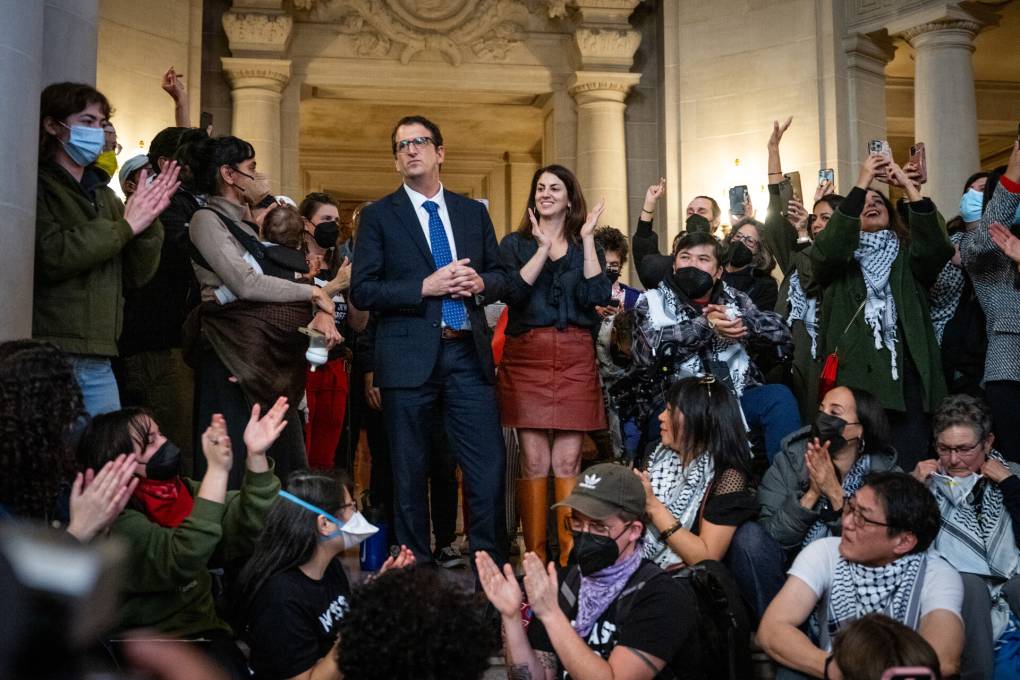
"caption": "San Francisco Supervisor Dean Preston (in suit and tie) speaks to supporters, alongside Supervisor Hillary Ronen, at City Hall in San Francisco on Jan. 9, 2024, after the full Board of Supervisors approved a Gaza cease-fire resolution that the two co-sponsored. ",
"description": null,
"title": "IMG_7300",
"credit": "Beth LaBerge/KQED",
"status": "inherit",
"altTag": null,
"isLoading": false,
"fetchFailed": false
},
"news_11971528": {
"type": "attachments",
"id": "news_11971528",
"meta": {
"index": "attachments_1716263798",
"site": "news",
"id": "11971528",
"found": true
},
"parent": 11971518,
"imgSizes": {
"twentyfourteen-full-width": {
"file": "https://cdn.kqed.org/wp-content/uploads/sites/10/2024/01/11172023-Jummah-For-Palestine-RL-CM-17-1038x576.jpg",
"width": 1038,
"mimeType": "image/jpeg",
"height": 576
},
"thumbnail": {
"file": "https://cdn.kqed.org/wp-content/uploads/sites/10/2024/01/11172023-Jummah-For-Palestine-RL-CM-17-160x107.jpg",
"width": 160,
"mimeType": "image/jpeg",
"height": 107
},
"post-thumbnail": {
"file": "https://cdn.kqed.org/wp-content/uploads/sites/10/2024/01/11172023-Jummah-For-Palestine-RL-CM-17-672x372.jpg",
"width": 672,
"mimeType": "image/jpeg",
"height": 372
},
"kqedFullSize": {
"file": "https://cdn.kqed.org/wp-content/uploads/sites/10/2024/01/11172023-Jummah-For-Palestine-RL-CM-17.jpg",
"width": 2000,
"height": 1333
},
"large": {
"file": "https://cdn.kqed.org/wp-content/uploads/sites/10/2024/01/11172023-Jummah-For-Palestine-RL-CM-17-1020x680.jpg",
"width": 1020,
"mimeType": "image/jpeg",
"height": 680
},
"1536x1536": {
"file": "https://cdn.kqed.org/wp-content/uploads/sites/10/2024/01/11172023-Jummah-For-Palestine-RL-CM-17-1536x1024.jpg",
"width": 1536,
"mimeType": "image/jpeg",
"height": 1024
},
"full-width": {
"file": "https://cdn.kqed.org/wp-content/uploads/sites/10/2024/01/11172023-Jummah-For-Palestine-RL-CM-17-1920x1280.jpg",
"width": 1920,
"mimeType": "image/jpeg",
"height": 1280
},
"medium": {
"file": "https://cdn.kqed.org/wp-content/uploads/sites/10/2024/01/11172023-Jummah-For-Palestine-RL-CM-17-800x533.jpg",
"width": 800,
"mimeType": "image/jpeg",
"height": 533
}
},
"publishDate": 1704313620,
"modified": 1704313685,
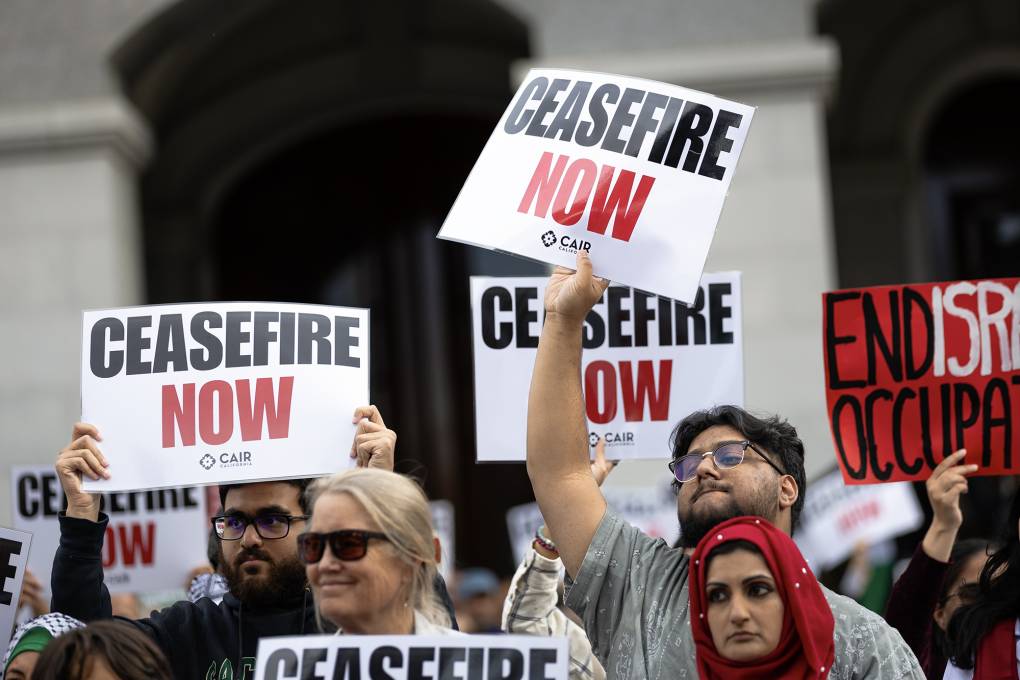
"caption": "Protesters gather during a press conference urging elected officials to call for a ceasefire in the Israel-Hamas conflict, at the state Capitol in Sacramento on Nov. 17, 2023. ",
"description": null,
"title": "11172023-Jummah-For-Palestine-RL-CM-17",
"credit": "Rahul Lal/CalMatters",
"status": "inherit",
"altTag": "Several people hold signs that read \"Ceasefire Now\" outside.",
"isLoading": false,
"fetchFailed": false
},
"news_11968940": {
"type": "attachments",
"id": "news_11968940",
"meta": {
"index": "attachments_1716263798",
"site": "news",
"id": "11968940",
"found": true
},
"parent": 0,
"imgSizes": {
"twentyfourteen-full-width": {
"file": "https://cdn.kqed.org/wp-content/uploads/sites/10/2023/12/20231201-Ahmed-Gaza-012-JY-KQED-1038x576.jpg",
"width": 1038,
"mimeType": "image/jpeg",
"height": 576
},
"thumbnail": {
"file": "https://cdn.kqed.org/wp-content/uploads/sites/10/2023/12/20231201-Ahmed-Gaza-012-JY-KQED-160x107.jpg",
"width": 160,
"mimeType": "image/jpeg",
"height": 107
},
"post-thumbnail": {
"file": "https://cdn.kqed.org/wp-content/uploads/sites/10/2023/12/20231201-Ahmed-Gaza-012-JY-KQED-672x372.jpg",
"width": 672,
"mimeType": "image/jpeg",
"height": 372
},
"kqedFullSize": {
"file": "https://cdn.kqed.org/wp-content/uploads/sites/10/2023/12/20231201-Ahmed-Gaza-012-JY-KQED.jpg",
"width": 2000,
"height": 1333
},
"large": {
"file": "https://cdn.kqed.org/wp-content/uploads/sites/10/2023/12/20231201-Ahmed-Gaza-012-JY-KQED-1020x680.jpg",
"width": 1020,
"mimeType": "image/jpeg",
"height": 680
},
"1536x1536": {
"file": "https://cdn.kqed.org/wp-content/uploads/sites/10/2023/12/20231201-Ahmed-Gaza-012-JY-KQED-1536x1024.jpg",
"width": 1536,
"mimeType": "image/jpeg",
"height": 1024
},
"full-width": {
"file": "https://cdn.kqed.org/wp-content/uploads/sites/10/2023/12/20231201-Ahmed-Gaza-012-JY-KQED-1920x1280.jpg",
"width": 1920,
"mimeType": "image/jpeg",
"height": 1280
},
"medium": {
"file": "https://cdn.kqed.org/wp-content/uploads/sites/10/2023/12/20231201-Ahmed-Gaza-012-JY-KQED-800x533.jpg",
"width": 800,
"mimeType": "image/jpeg",
"height": 533
}
},
"publishDate": 1701712021,
"modified": 1702587296,
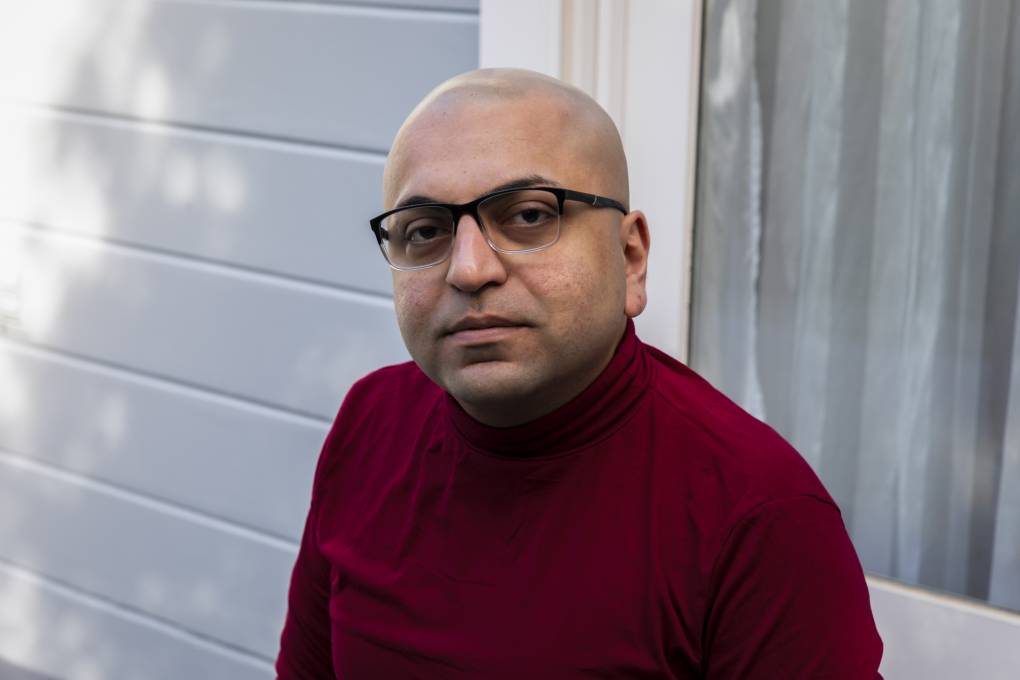
"caption": "Ahmed Fouad Alkhatib sits for a portrait at his host mother’s home in Pacifica on Friday, Dec. 1, 2023. Alkhatib left his home in Gaza in 2005 as a 15-year-old and has not been able to return.",
"description": null,
"title": "Ahmed Gaza",
"credit": "Juliana Yamada/KQED",
"status": "inherit",
"altTag": "A person with a bald head and wearing glasses looks at the camera.",
"isLoading": false,
"fetchFailed": false
},
"news_11969080": {
"type": "attachments",
"id": "news_11969080",
"meta": {
"index": "attachments_1716263798",
"site": "news",
"id": "11969080",
"found": true
},
"parent": 0,
"imgSizes": {
"twentyfourteen-full-width": {
"file": "https://ww2.kqed.org/app/uploads/sites/10/2023/12/231112-APECProtest-41-BL-KQED-1038x576.jpg",
"width": 1038,
"mimeType": "image/jpeg",
"height": 576
},
"thumbnail": {
"file": "https://ww2.kqed.org/app/uploads/sites/10/2023/12/231112-APECProtest-41-BL-KQED-160x107.jpg",
"width": 160,
"mimeType": "image/jpeg",
"height": 107
},
"post-thumbnail": {
"file": "https://ww2.kqed.org/app/uploads/sites/10/2023/12/231112-APECProtest-41-BL-KQED-672x372.jpg",
"width": 672,
"mimeType": "image/jpeg",
"height": 372
},
"kqedFullSize": {
"file": "https://ww2.kqed.org/app/uploads/sites/10/2023/12/231112-APECProtest-41-BL-KQED.jpg",
"width": 2000,
"height": 1333
},
"large": {
"file": "https://ww2.kqed.org/app/uploads/sites/10/2023/12/231112-APECProtest-41-BL-KQED-1020x680.jpg",
"width": 1020,
"mimeType": "image/jpeg",
"height": 680
},
"1536x1536": {
"file": "https://ww2.kqed.org/app/uploads/sites/10/2023/12/231112-APECProtest-41-BL-KQED-1536x1024.jpg",
"width": 1536,
"mimeType": "image/jpeg",
"height": 1024
},
"full-width": {
"file": "https://ww2.kqed.org/app/uploads/sites/10/2023/12/231112-APECProtest-41-BL-KQED-1920x1280.jpg",
"width": 1920,
"mimeType": "image/jpeg",
"height": 1280
},
"medium": {
"file": "https://ww2.kqed.org/app/uploads/sites/10/2023/12/231112-APECProtest-41-BL-KQED-800x533.jpg",
"width": 800,
"mimeType": "image/jpeg",
"height": 533
}
},
"publishDate": 1701809262,
"modified": 1701816295,
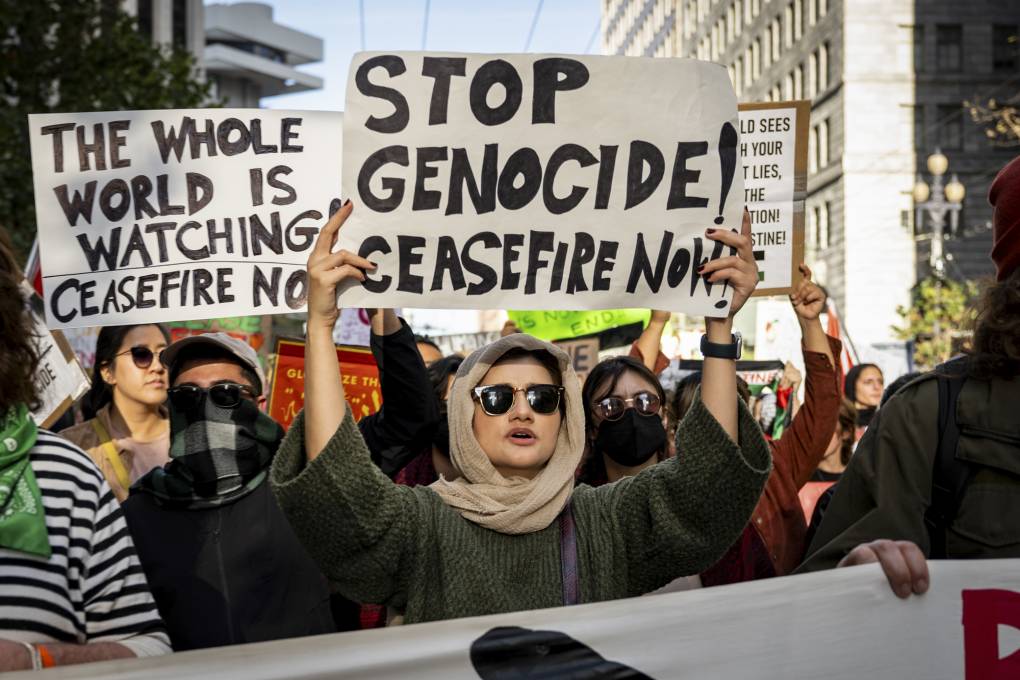
"caption": "Thousands of demonstrators march in downtown San Francisco on Nov. 12, 2023.",
"description": null,
"title": "231112-APECProtest-41-BL-KQED",
"credit": "Beth LaBerge/KQED",
"status": "inherit",
"altTag": "A large group of people holding signs in an outdoor urban setting.",
"isLoading": false,
"fetchFailed": false
},
"news_11968406": {
"type": "attachments",
"id": "news_11968406",
"meta": {
"index": "attachments_1716263798",
"site": "news",
"id": "11968406",
"found": true
},
"parent": 11968400,
"imgSizes": {
"twentyfourteen-full-width": {
"file": "https://ww2.kqed.org/app/uploads/sites/10/2023/11/231116-BayBridgeShutdown-015-BL-qut-1038x576.jpg",
"width": 1038,
"mimeType": "image/jpeg",
"height": 576
},
"thumbnail": {
"file": "https://ww2.kqed.org/app/uploads/sites/10/2023/11/231116-BayBridgeShutdown-015-BL-qut-160x107.jpg",
"width": 160,
"mimeType": "image/jpeg",
"height": 107
},
"post-thumbnail": {
"file": "https://ww2.kqed.org/app/uploads/sites/10/2023/11/231116-BayBridgeShutdown-015-BL-qut-672x372.jpg",
"width": 672,
"mimeType": "image/jpeg",
"height": 372
},
"kqedFullSize": {
"file": "https://ww2.kqed.org/app/uploads/sites/10/2023/11/231116-BayBridgeShutdown-015-BL-qut.jpg",
"width": 1920,
"height": 1280
},
"large": {
"file": "https://ww2.kqed.org/app/uploads/sites/10/2023/11/231116-BayBridgeShutdown-015-BL-qut-1020x680.jpg",
"width": 1020,
"mimeType": "image/jpeg",
"height": 680
},
"1536x1536": {
"file": "https://ww2.kqed.org/app/uploads/sites/10/2023/11/231116-BayBridgeShutdown-015-BL-qut-1536x1024.jpg",
"width": 1536,
"mimeType": "image/jpeg",
"height": 1024
},
"medium": {
"file": "https://ww2.kqed.org/app/uploads/sites/10/2023/11/231116-BayBridgeShutdown-015-BL-qut-800x533.jpg",
"width": 800,
"mimeType": "image/jpeg",
"height": 533
}
},
"publishDate": 1701131826,
"modified": 1701132071,
"caption": "Protesters demanding a cease-fire in the Israel-Hamas war in Gaza block all westbound lanes of the Bay Bridge on Nov. 16. The Oakland City Council on Monday evening will consider adopting a resolution calling on Congress to demand a cease-fire in Gaza and the release of all hostages.",
"description": null,
"title": "231116-BayBridgeShutdown-015-BL-qut",
"credit": "Beth LaBerge/KQED",
"status": "inherit",
"altTag": null,
"isLoading": false,
"fetchFailed": false
},
"news_11967684": {
"type": "attachments",
"id": "news_11967684",
"meta": {
"index": "attachments_1716263798",
"site": "news",
"id": "11967684",
"found": true
},
"parent": 11967633,
"imgSizes": {
"twentyfourteen-full-width": {
"file": "https://ww2.kqed.org/app/uploads/sites/10/2023/11/GettyImages-1542268740-1038x576.jpg",
"width": 1038,
"mimeType": "image/jpeg",
"height": 576
},
"thumbnail": {
"file": "https://ww2.kqed.org/app/uploads/sites/10/2023/11/GettyImages-1542268740-160x107.jpg",
"width": 160,
"mimeType": "image/jpeg",
"height": 107
},
"post-thumbnail": {
"file": "https://ww2.kqed.org/app/uploads/sites/10/2023/11/GettyImages-1542268740-672x372.jpg",
"width": 672,
"mimeType": "image/jpeg",
"height": 372
},
"kqedFullSize": {
"file": "https://ww2.kqed.org/app/uploads/sites/10/2023/11/GettyImages-1542268740-scaled.jpg",
"width": 2560,
"height": 1707
},
"2048x2048": {
"file": "https://ww2.kqed.org/app/uploads/sites/10/2023/11/GettyImages-1542268740-2048x1365.jpg",
"width": 2048,
"mimeType": "image/jpeg",
"height": 1365
},
"large": {
"file": "https://ww2.kqed.org/app/uploads/sites/10/2023/11/GettyImages-1542268740-1020x680.jpg",
"width": 1020,
"mimeType": "image/jpeg",
"height": 680
},
"1536x1536": {
"file": "https://ww2.kqed.org/app/uploads/sites/10/2023/11/GettyImages-1542268740-1536x1024.jpg",
"width": 1536,
"mimeType": "image/jpeg",
"height": 1024
},
"full-width": {
"file": "https://ww2.kqed.org/app/uploads/sites/10/2023/11/GettyImages-1542268740-1920x1280.jpg",
"width": 1920,
"mimeType": "image/jpeg",
"height": 1280
},
"medium": {
"file": "https://ww2.kqed.org/app/uploads/sites/10/2023/11/GettyImages-1542268740-800x533.jpg",
"width": 800,
"mimeType": "image/jpeg",
"height": 533
}
},
"publishDate": 1700171605,
"modified": 1700171645,
"caption": "Israeli President Isaac Herzog addresses a joint meeting of Congress in the House chamber of the U.S. Capitol on Wednesday, July 19, 2023.",
"description": null,
"title": "Isaac Herzog Joint Meeting",
"credit": "Tom Williams/CQ-Roll Call, Inc via Getty Images",
"status": "inherit",
"altTag": null,
"isLoading": false,
"fetchFailed": false
},
"news_11967609": {
"type": "attachments",
"id": "news_11967609",
"meta": {
"index": "attachments_1716263798",
"site": "news",
"id": "11967609",
"found": true
},
"parent": 11970292,
"imgSizes": {
"twentyfourteen-full-width": {
"file": "https://cdn.kqed.org/wp-content/uploads/sites/10/2023/11/231116-BayBridgeShutdown-003-BL-1-1038x576.jpg",
"width": 1038,
"mimeType": "image/jpeg",
"height": 576
},
"thumbnail": {
"file": "https://cdn.kqed.org/wp-content/uploads/sites/10/2023/11/231116-BayBridgeShutdown-003-BL-1-160x107.jpg",
"width": 160,
"mimeType": "image/jpeg",
"height": 107
},
"post-thumbnail": {
"file": "https://cdn.kqed.org/wp-content/uploads/sites/10/2023/11/231116-BayBridgeShutdown-003-BL-1-672x372.jpg",
"width": 672,
"mimeType": "image/jpeg",
"height": 372
},
"kqedFullSize": {
"file": "https://cdn.kqed.org/wp-content/uploads/sites/10/2023/11/231116-BayBridgeShutdown-003-BL-1.jpg",
"width": 1920,
"height": 1280
},
"large": {
"file": "https://cdn.kqed.org/wp-content/uploads/sites/10/2023/11/231116-BayBridgeShutdown-003-BL-1-1020x680.jpg",
"width": 1020,
"mimeType": "image/jpeg",
"height": 680
},
"1536x1536": {
"file": "https://cdn.kqed.org/wp-content/uploads/sites/10/2023/11/231116-BayBridgeShutdown-003-BL-1-1536x1024.jpg",
"width": 1536,
"mimeType": "image/jpeg",
"height": 1024
},
"medium": {
"file": "https://cdn.kqed.org/wp-content/uploads/sites/10/2023/11/231116-BayBridgeShutdown-003-BL-1-800x533.jpg",
"width": 800,
"mimeType": "image/jpeg",
"height": 533
}
},
"publishDate": 1700165161,
"modified": 1702928607,
"caption": "Protesters demanding a cease-fire in the Israel-Hamas war in Gaza blocked all westbound lanes of the Bay Bridge Thursday morning, unfurling banners reading \"stop genocide\" and \"no US military aid to Israel.\"",
"description": null,
"title": "231116-BayBridgeShutdown-003-BL",
"credit": "Beth LaBerge/KQED",
"status": "inherit",
"altTag": "A woman yells into megaphone surrounding by protesters on a bridge. Police are in the background.",
"isLoading": false,
"fetchFailed": false
},
"news_11967365": {
"type": "attachments",
"id": "news_11967365",
"meta": {
"index": "attachments_1716263798",
"site": "news",
"id": "11967365",
"found": true
},
"parent": 0,
"imgSizes": {
"twentyfourteen-full-width": {
"file": "https://cdn.kqed.org/wp-content/uploads/sites/10/2023/11/231114-APECProtest-05-JY-1038x576.jpg",
"width": 1038,
"mimeType": "image/jpeg",
"height": 576
},
"thumbnail": {
"file": "https://cdn.kqed.org/wp-content/uploads/sites/10/2023/11/231114-APECProtest-05-JY-160x107.jpg",
"width": 160,
"mimeType": "image/jpeg",
"height": 107
},
"post-thumbnail": {
"file": "https://cdn.kqed.org/wp-content/uploads/sites/10/2023/11/231114-APECProtest-05-JY-672x372.jpg",
"width": 672,
"mimeType": "image/jpeg",
"height": 372
},
"kqedFullSize": {
"file": "https://cdn.kqed.org/wp-content/uploads/sites/10/2023/11/231114-APECProtest-05-JY.jpg",
"width": 1920,
"height": 1280
},
"large": {
"file": "https://cdn.kqed.org/wp-content/uploads/sites/10/2023/11/231114-APECProtest-05-JY-1020x680.jpg",
"width": 1020,
"mimeType": "image/jpeg",
"height": 680
},
"1536x1536": {
"file": "https://cdn.kqed.org/wp-content/uploads/sites/10/2023/11/231114-APECProtest-05-JY-1536x1024.jpg",
"width": 1536,
"mimeType": "image/jpeg",
"height": 1024
},
"medium": {
"file": "https://cdn.kqed.org/wp-content/uploads/sites/10/2023/11/231114-APECProtest-05-JY-800x533.jpg",
"width": 800,
"mimeType": "image/jpeg",
"height": 533
}
},
"publishDate": 1700015940,
"modified": 1704843251,
"caption": "Demonstrators gather outside San Francisco's Powell Street BART station during a protest calling for a cease-fire in Gaza on Nov. 14, 2023.",
"description": null,
"title": "231114-APECProtest-05-JY",
"credit": "Juliana Yamada/KQED",
"status": "inherit",
"altTag": "People in a crowd hold protest signs.",
"isLoading": false,
"fetchFailed": false
},
"news_11967100": {
"type": "attachments",
"id": "news_11967100",
"meta": {
"index": "attachments_1716263798",
"site": "news",
"id": "11967100",
"found": true
},
"parent": 0,
"imgSizes": {
"twentyfourteen-full-width": {
"file": "https://ww2.kqed.org/app/uploads/sites/10/2023/11/231112-APECProtest-15-BL-1038x576.jpg",
"width": 1038,
"mimeType": "image/jpeg",
"height": 576
},
"thumbnail": {
"file": "https://ww2.kqed.org/app/uploads/sites/10/2023/11/231112-APECProtest-15-BL-160x107.jpg",
"width": 160,
"mimeType": "image/jpeg",
"height": 107
},
"post-thumbnail": {
"file": "https://ww2.kqed.org/app/uploads/sites/10/2023/11/231112-APECProtest-15-BL-672x372.jpg",
"width": 672,
"mimeType": "image/jpeg",
"height": 372
},
"kqedFullSize": {
"file": "https://ww2.kqed.org/app/uploads/sites/10/2023/11/231112-APECProtest-15-BL.jpg",
"width": 1920,
"height": 1280
},
"large": {
"file": "https://ww2.kqed.org/app/uploads/sites/10/2023/11/231112-APECProtest-15-BL-1020x680.jpg",
"width": 1020,
"mimeType": "image/jpeg",
"height": 680
},
"1536x1536": {
"file": "https://ww2.kqed.org/app/uploads/sites/10/2023/11/231112-APECProtest-15-BL-1536x1024.jpg",
"width": 1536,
"mimeType": "image/jpeg",
"height": 1024
},
"medium": {
"file": "https://ww2.kqed.org/app/uploads/sites/10/2023/11/231112-APECProtest-15-BL-800x533.jpg",
"width": 800,
"mimeType": "image/jpeg",
"height": 533
}
},
"publishDate": 1699844669,
"modified": 1699912609,
"caption": "Thousands of demonstrators rally in downtown San Francisco on Nov. 12, 2023, in opposition to the APEC international economic summit.",
"description": null,
"title": "231112-APECProtest-15-BL",
"credit": "Beth LaBerge/KQED",
"status": "inherit",
"altTag": "A large crowd of people holding signs and flags faces a stage with people on it holding a sign that reads, 'shut down APEC.'",
"isLoading": false,
"fetchFailed": false
},
"news_11966437": {
"type": "attachments",
"id": "news_11966437",
"meta": {
"index": "attachments_1716263798",
"site": "news",
"id": "11966437",
"found": true
},
"parent": 11966423,
"imgSizes": {
"twentyfourteen-full-width": {
"file": "https://ww2.kqed.org/app/uploads/sites/10/2030/11/KSM_PalestineRally_010-qut-1038x576.jpg",
"width": 1038,
"mimeType": "image/jpeg",
"height": 576
},
"thumbnail": {
"file": "https://ww2.kqed.org/app/uploads/sites/10/2030/11/KSM_PalestineRally_010-qut-160x107.jpg",
"width": 160,
"mimeType": "image/jpeg",
"height": 107
},
"post-thumbnail": {
"file": "https://ww2.kqed.org/app/uploads/sites/10/2030/11/KSM_PalestineRally_010-qut-672x372.jpg",
"width": 672,
"mimeType": "image/jpeg",
"height": 372
},
"kqedFullSize": {
"file": "https://ww2.kqed.org/app/uploads/sites/10/2030/11/KSM_PalestineRally_010-qut.jpg",
"width": 1920,
"height": 1280
},
"large": {
"file": "https://ww2.kqed.org/app/uploads/sites/10/2030/11/KSM_PalestineRally_010-qut-1020x680.jpg",
"width": 1020,
"mimeType": "image/jpeg",
"height": 680
},
"1536x1536": {
"file": "https://ww2.kqed.org/app/uploads/sites/10/2030/11/KSM_PalestineRally_010-qut-1536x1024.jpg",
"width": 1536,
"mimeType": "image/jpeg",
"height": 1024
},
"medium": {
"file": "https://ww2.kqed.org/app/uploads/sites/10/2030/11/KSM_PalestineRally_010-qut-800x533.jpg",
"width": 800,
"mimeType": "image/jpeg",
"height": 533
}
},
"publishDate": 1699143016,
"modified": 1699143403,
"caption": "Young men wave Palestinian flags at the International Day of Solidarity: Free Palestine rally in front of City Hall in San Francisco on Nov. 4, 2023.",
"description": null,
"title": "KSM_PalestineRally_010-qut",
"credit": "Kathryn Styer Martínez for KQED",
"status": "inherit",
"altTag": "Men standing on cars wave Palestinian flags amid a crowd.",
"isLoading": false,
"fetchFailed": false
},
"news_11966268": {
"type": "attachments",
"id": "news_11966268",
"meta": {
"index": "attachments_1716263798",
"site": "news",
"id": "11966268",
"found": true
},
"parent": 11976509,
"imgSizes": {
"twentyfourteen-full-width": {
"file": "https://cdn.kqed.org/wp-content/uploads/sites/10/2023/11/230211-GAZA-LAWSUIT-MD-01-KQED-1038x576.jpg",
"width": 1038,
"mimeType": "image/jpeg",
"height": 576
},
"thumbnail": {
"file": "https://cdn.kqed.org/wp-content/uploads/sites/10/2023/11/230211-GAZA-LAWSUIT-MD-01-KQED-160x107.jpg",
"width": 160,
"mimeType": "image/jpeg",
"height": 107
},
"post-thumbnail": {
"file": "https://cdn.kqed.org/wp-content/uploads/sites/10/2023/11/230211-GAZA-LAWSUIT-MD-01-KQED-672x372.jpg",
"width": 672,
"mimeType": "image/jpeg",
"height": 372
},
"kqedFullSize": {
"file": "https://cdn.kqed.org/wp-content/uploads/sites/10/2023/11/230211-GAZA-LAWSUIT-MD-01-KQED.jpg?ver=1698969062",
"width": 2000,
"height": 1333
},
"large": {
"file": "https://cdn.kqed.org/wp-content/uploads/sites/10/2023/11/230211-GAZA-LAWSUIT-MD-01-KQED-1020x680.jpg",
"width": 1020,
"mimeType": "image/jpeg",
"height": 680
},
"1536x1536": {
"file": "https://cdn.kqed.org/wp-content/uploads/sites/10/2023/11/230211-GAZA-LAWSUIT-MD-01-KQED-1536x1024.jpg",
"width": 1536,
"mimeType": "image/jpeg",
"height": 1024
},
"full-width": {
"file": "https://cdn.kqed.org/wp-content/uploads/sites/10/2023/11/230211-GAZA-LAWSUIT-MD-01-KQED-1920x1280.jpg",
"width": 1920,
"mimeType": "image/jpeg",
"height": 1280
},
"medium": {
"file": "https://cdn.kqed.org/wp-content/uploads/sites/10/2023/11/230211-GAZA-LAWSUIT-MD-01-KQED-800x533.jpg",
"width": 800,
"mimeType": "image/jpeg",
"height": 533
}
},
"publishDate": 1698962032,
"modified": 1708548695,
"caption": "Attorney Ghassan J. Shamieh announces the filing of a lawsuit against the Biden administration to ensure the safe evacuation of US citizens from the Gaza Strip in front of the Phillip Burton Federal Building in San Francisco on Nov. 2, 2023.",
"description": null,
"title": "230211-GAZA LAWSUIT-MD-01-KQED",
"credit": "Martin do Nascimento/KQED",
"status": "inherit",
"altTag": "A person with a beard and wearing a suit speaks at a bank of microphones in front of a large building.",
"isLoading": false,
"fetchFailed": false
},
"news_11965771": {
"type": "attachments",
"id": "news_11965771",
"meta": {
"index": "attachments_1716263798",
"site": "news",
"id": "11965771",
"found": true
},
"parent": 11965770,
"imgSizes": {
"twentyfourteen-full-width": {
"file": "https://ww2.kqed.org/app/uploads/sites/10/2023/10/gettyimages-1238754440-71b4adae9b304a022fb2f3c82ef9207d66f5cf96-1038x576.jpg",
"width": 1038,
"mimeType": "image/jpeg",
"height": 576
},
"thumbnail": {
"file": "https://ww2.kqed.org/app/uploads/sites/10/2023/10/gettyimages-1238754440-71b4adae9b304a022fb2f3c82ef9207d66f5cf96-160x120.jpg",
"width": 160,
"mimeType": "image/jpeg",
"height": 120
},
"post-thumbnail": {
"file": "https://ww2.kqed.org/app/uploads/sites/10/2023/10/gettyimages-1238754440-71b4adae9b304a022fb2f3c82ef9207d66f5cf96-672x372.jpg",
"width": 672,
"mimeType": "image/jpeg",
"height": 372
},
"kqedFullSize": {
"file": "https://ww2.kqed.org/app/uploads/sites/10/2023/10/gettyimages-1238754440-71b4adae9b304a022fb2f3c82ef9207d66f5cf96-scaled.jpg",
"width": 2560,
"height": 1920
},
"2048x2048": {
"file": "https://ww2.kqed.org/app/uploads/sites/10/2023/10/gettyimages-1238754440-71b4adae9b304a022fb2f3c82ef9207d66f5cf96-2048x1536.jpg",
"width": 2048,
"mimeType": "image/jpeg",
"height": 1536
},
"large": {
"file": "https://ww2.kqed.org/app/uploads/sites/10/2023/10/gettyimages-1238754440-71b4adae9b304a022fb2f3c82ef9207d66f5cf96-1020x765.jpg",
"width": 1020,
"mimeType": "image/jpeg",
"height": 765
},
"1536x1536": {
"file": "https://ww2.kqed.org/app/uploads/sites/10/2023/10/gettyimages-1238754440-71b4adae9b304a022fb2f3c82ef9207d66f5cf96-1536x1152.jpg",
"width": 1536,
"mimeType": "image/jpeg",
"height": 1152
},
"full-width": {
"file": "https://ww2.kqed.org/app/uploads/sites/10/2023/10/gettyimages-1238754440-71b4adae9b304a022fb2f3c82ef9207d66f5cf96-1920x1440.jpg",
"width": 1920,
"mimeType": "image/jpeg",
"height": 1440
},
"medium": {
"file": "https://ww2.kqed.org/app/uploads/sites/10/2023/10/gettyimages-1238754440-71b4adae9b304a022fb2f3c82ef9207d66f5cf96-800x600.jpg",
"width": 800,
"mimeType": "image/jpeg",
"height": 600
}
},
"publishDate": 1698433750,
"modified": 1698441605,
"caption": "An Israeli settler stands with an Israeli flag before a man holding up a Palestinian flag during a demonstration attended by Palestinians, Israelis, and other foreign activists in the east Jerusalem neighborhood of Sheikh Jarrah on Feb. 25, 2022, denouncing the evacuation of Palestinian families from their homes and settlement activity in the Palestinian Territories and east Jerusalem.",
"description": "An Israeli settler stands with an Israeli flag before a man holding up a Palestinian flag during a demonstration attended by Palestinians, Israelis, and other foreign activists in the east Jerusalem neighbourhood of Sheikh Jarrah on February 25, 2022, denouncing the evacuation of Palestinian families from their homes and settlement activity in the Palestinian Territories and east Jerusalem. - Israel captured east Jerusalem in the Six-Day War of 1967 and later annexed it, in a move not recognised by the international community. More than 200,000 Jewish settlers have since moved into the city's eastern sector, fuelling tensions with Palestinians, who claim it as the capital of their future state. (Photo by AHMAD GHARABLI / AFP) (Photo by AHMAD GHARABLI/AFP via Getty Images)",
"title": "An Israeli settler stands with an Israeli flag before a man holding up a Palestinian flag during a demonstration in the East Jerusalem neighborhood of Sheikh Jarrah in February 2022.",
"credit": null,
"status": "inherit",
"altTag": null,
"isLoading": false,
"fetchFailed": false
}
},
"audioPlayerReducer": {
"postId": "stream_live",
"isPaused": true,
"isPlaying": false,
"pfsActive": false,
"pledgeModalIsOpen": true,
"playerDrawerIsOpen": false,
"liveAudioPlayStartedAt": 0,
"liveAudioPlayContext": ""
},
"authorsReducer": {
"byline_news_11971518": {
"type": "authors",
"id": "byline_news_11971518",
"meta": {
"override": true
},
"slug": "byline_news_11971518",
"name": "Sameea Kamal",
"isLoading": false
},
"byline_news_11965770": {
"type": "authors",
"id": "byline_news_11965770",
"meta": {
"override": true
},
"slug": "byline_news_11965770",
"name": "\u003ca href=\"https://www.npr.org/people/776048102/rachel-treisman\">Rachel Treisman\u003c/a>",
"isLoading": false
},
"dmarks": {
"type": "authors",
"id": "182",
"meta": {
"index": "authors_1716337520",
"id": "182",
"found": true
},
"name": "David Marks",
"firstName": "David",
"lastName": "Marks",
"slug": "dmarks",
"email": "dmarks@kqed.org",
"display_author_email": false,
"staff_mastheads": [],
"title": "KQED Editor",
"bio": "David Marks is a senior digital editor for KQED News. \u003c/a>Reach him at dmarks@kqed.org.",
"avatar": "https://secure.gravatar.com/avatar/b88bd6227ce6cb96ae33fefaf42b2a29?s=600&d=mm&r=g",
"twitter": "divadskram",
"facebook": null,
"instagram": null,
"linkedin": null,
"sites": [
{
"site": "news",
"roles": []
},
{
"site": "science",
"roles": []
},
{
"site": "perspectives",
"roles": []
},
{
"site": "liveblog",
"roles": []
}
],
"headData": {
"title": "David Marks | KQED",
"description": "KQED Editor",
"ogImgSrc": "https://secure.gravatar.com/avatar/b88bd6227ce6cb96ae33fefaf42b2a29?s=600&d=mm&r=g",
"twImgSrc": "https://secure.gravatar.com/avatar/b88bd6227ce6cb96ae33fefaf42b2a29?s=600&d=mm&r=g"
},
"isLoading": false,
"link": "/author/dmarks"
},
"gmarzorati": {
"type": "authors",
"id": "227",
"meta": {
"index": "authors_1716337520",
"id": "227",
"found": true
},
"name": "Guy Marzorati",
"firstName": "Guy",
"lastName": "Marzorati",
"slug": "gmarzorati",
"email": "gmarzorati@KQED.org",
"display_author_email": true,
"staff_mastheads": [
"news"
],
"title": "Correspondent",
"bio": "Guy Marzorati is a correspondent on KQED's California Politics and Government Desk, based in San Jose. A graduate of Santa Clara University, Guy joined KQED in 2013. He reports on state and local politics and produces KQED's digital voter guide.",
"avatar": "https://secure.gravatar.com/avatar/e7038b8dbfd55b104369b76b1cd0b9de?s=600&d=blank&r=g",
"twitter": "guymarzorati",
"facebook": null,
"instagram": null,
"linkedin": null,
"sites": [
{
"site": "",
"roles": [
"editor"
]
},
{
"site": "news",
"roles": [
"editor"
]
},
{
"site": "science",
"roles": [
"editor"
]
},
{
"site": "forum",
"roles": [
"editor"
]
},
{
"site": "elections",
"roles": [
"editor"
]
},
{
"site": "liveblog",
"roles": [
"editor"
]
}
],
"headData": {
"title": "Guy Marzorati | KQED",
"description": "Correspondent",
"ogImgSrc": "https://secure.gravatar.com/avatar/e7038b8dbfd55b104369b76b1cd0b9de?s=600&d=blank&r=g",
"twImgSrc": "https://secure.gravatar.com/avatar/e7038b8dbfd55b104369b76b1cd0b9de?s=600&d=blank&r=g"
},
"isLoading": false,
"link": "/author/gmarzorati"
},
"kqed": {
"type": "authors",
"id": "236",
"meta": {
"index": "authors_1716337520",
"id": "236",
"found": true
},
"name": "KQED News Staff",
"firstName": "KQED News Staff",
"lastName": null,
"slug": "kqed",
"email": "faq@kqed.org",
"display_author_email": false,
"staff_mastheads": [],
"title": null,
"bio": null,
"avatar": "https://secure.gravatar.com/avatar/ef0e801a68c4c54afa9180db14084167?s=600&d=blank&r=g",
"twitter": null,
"facebook": null,
"instagram": null,
"linkedin": null,
"sites": [
{
"site": "arts",
"roles": [
"contributor"
]
},
{
"site": "news",
"roles": [
"editor"
]
},
{
"site": "futureofyou",
"roles": [
"author"
]
}
],
"headData": {
"title": "KQED News Staff | KQED",
"description": null,
"ogImgSrc": "https://secure.gravatar.com/avatar/ef0e801a68c4c54afa9180db14084167?s=600&d=blank&r=g",
"twImgSrc": "https://secure.gravatar.com/avatar/ef0e801a68c4c54afa9180db14084167?s=600&d=blank&r=g"
},
"isLoading": false,
"link": "/author/kqed"
},
"matthewgreen": {
"type": "authors",
"id": "1263",
"meta": {
"index": "authors_1716337520",
"id": "1263",
"found": true
},
"name": "Matthew Green",
"firstName": "Matthew",
"lastName": "Green",
"slug": "matthewgreen",
"email": "mgreen@kqed.org",
"display_author_email": false,
"staff_mastheads": [],
"title": "KQED Editor/Reporter",
"bio": "Matthew Green is a digital media producer for KQED News. He previously produced \u003ca href=\"http://www.kqed.org/lowdown\">The Lowdown\u003c/a>, KQED’s multimedia news education blog. Matthew's written for numerous Bay Area publications, including the Oakland Tribune and San Francisco Chronicle. He also taught journalism classes at Fremont High School in East Oakland.\r\n\r\nEmail: mgreen@kqed.org; Twitter: @MGreenKQED",
"avatar": "https://secure.gravatar.com/avatar/3bf498d1267ca02c8494f33d8cfc575e?s=600&d=blank&r=g",
"twitter": "MGreenKQED",
"facebook": null,
"instagram": null,
"linkedin": null,
"sites": [
{
"site": "news",
"roles": []
},
{
"site": "lowdown",
"roles": []
},
{
"site": "science",
"roles": []
},
{
"site": "education",
"roles": []
},
{
"site": "quest",
"roles": []
},
{
"site": "liveblog",
"roles": []
}
],
"headData": {
"title": "Matthew Green | KQED",
"description": "KQED Editor/Reporter",
"ogImgSrc": "https://secure.gravatar.com/avatar/3bf498d1267ca02c8494f33d8cfc575e?s=600&d=blank&r=g",
"twImgSrc": "https://secure.gravatar.com/avatar/3bf498d1267ca02c8494f33d8cfc575e?s=600&d=blank&r=g"
},
"isLoading": false,
"link": "/author/matthewgreen"
},
"mlagos": {
"type": "authors",
"id": "3239",
"meta": {
"index": "authors_1716337520",
"id": "3239",
"found": true
},
"name": "Marisa Lagos",
"firstName": "Marisa",
"lastName": "Lagos",
"slug": "mlagos",
"email": "mlagos@kqed.org",
"display_author_email": false,
"staff_mastheads": [
"news"
],
"title": "KQED Contributor",
"bio": "Marisa Lagos is a correspondent for KQED’s California Politics and Government Desk and co-hosts the award-winning show and podcast, Political Breakdown. At KQED, Lagos also conducts reporting, analysis and investigations into state, local and national politics for radio, TV, online and onstage. In 2022, she and co-host, Scott Shafer, moderated the only gubernatorial debate in California. In 2020, the \u003ci>Washington Post\u003c/i> named her one of the top political journalists in California; she was nominated for a Peabody and won several other awards for her work investigating the 2017 California wildfires. She has worked at the \u003ci>San Francisco Chronicle\u003c/i>, \u003ci>San Francisco Examiner\u003c/i> and \u003ci>Los Angeles Times\u003c/i>. A UC Santa Barbara graduate, she lives in San Francisco with her two sons and husband.",
"avatar": "https://secure.gravatar.com/avatar/a261a0d3696fc066871ef96b85b5e7d2?s=600&d=blank&r=g",
"twitter": "@mlagos",
"facebook": null,
"instagram": null,
"linkedin": null,
"sites": [
{
"site": "arts",
"roles": [
"author"
]
},
{
"site": "news",
"roles": [
"editor"
]
},
{
"site": "science",
"roles": [
"editor"
]
},
{
"site": "forum",
"roles": [
"author"
]
},
{
"site": "liveblog",
"roles": [
"author"
]
}
],
"headData": {
"title": "Marisa Lagos | KQED",
"description": "KQED Contributor",
"ogImgSrc": "https://secure.gravatar.com/avatar/a261a0d3696fc066871ef96b85b5e7d2?s=600&d=blank&r=g",
"twImgSrc": "https://secure.gravatar.com/avatar/a261a0d3696fc066871ef96b85b5e7d2?s=600&d=blank&r=g"
},
"isLoading": false,
"link": "/author/mlagos"
},
"ecruzguevarra": {
"type": "authors",
"id": "8654",
"meta": {
"index": "authors_1716337520",
"id": "8654",
"found": true
},
"name": "Ericka Cruz Guevarra",
"firstName": "Ericka",
"lastName": "Cruz Guevarra",
"slug": "ecruzguevarra",
"email": "ecruzguevarra@kqed.org",
"display_author_email": true,
"staff_mastheads": [
"news"
],
"title": "Producer, The Bay Podcast",
"bio": "Ericka Cruz Guevarra is host of \u003ca href=\"https://www.kqed.org/podcasts/thebay\">\u003cem>The Bay\u003c/em>\u003c/a> podcast at KQED. Before host, she was the show’s producer. Her work in that capacity includes a three-part reported series on policing in Vallejo, which won a 2020 excellence in journalism award from the Society of Professional Journalists. Ericka has worked as a breaking news reporter at Oregon Public Broadcasting, helped produce the Code Switch podcast, and was KQED’s inaugural Raul Ramirez Diversity Fund intern. She’s also an alumna of NPR’s Next Generation Radio program. Send her an email if you have strong feelings about whether Fairfield and Suisun City are the Bay. Ericka is represented by SAG-AFTRA.",
"avatar": "https://secure.gravatar.com/avatar/accefc1de4bafc7e234b69bcb9b6f6536c130fd84709bc3069ef11a78787e1bb?s=600&d=blank&r=g",
"twitter": "NotoriousECG",
"bluesky": null,
"facebook": null,
"instagram": null,
"linkedin": null,
"sites": [
{
"site": "arts",
"roles": [
"subscriber"
]
},
{
"site": "news",
"roles": [
"editor",
"manage_categories"
]
},
{
"site": "futureofyou",
"roles": [
"subscriber"
]
},
{
"site": "stateofhealth",
"roles": [
"subscriber"
]
},
{
"site": "science",
"roles": [
"editor"
]
},
{
"site": "forum",
"roles": [
"subscriber"
]
}
],
"headData": {
"title": "Ericka Cruz Guevarra | KQED",
"description": "Producer, The Bay Podcast",
"ogImgSrc": "https://secure.gravatar.com/avatar/accefc1de4bafc7e234b69bcb9b6f6536c130fd84709bc3069ef11a78787e1bb?s=600&d=blank&r=g",
"twImgSrc": "https://secure.gravatar.com/avatar/accefc1de4bafc7e234b69bcb9b6f6536c130fd84709bc3069ef11a78787e1bb?s=600&d=blank&r=g"
},
"isLoading": false,
"link": "/author/ecruzguevarra"
},
"aehsanipour": {
"type": "authors",
"id": "11580",
"meta": {
"index": "authors_1716337520",
"id": "11580",
"found": true
},
"name": "Asal Ehsanipour",
"firstName": "Asal",
"lastName": "Ehsanipour",
"slug": "aehsanipour",
"email": "aehsanipour@kqed.org",
"display_author_email": false,
"staff_mastheads": [],
"title": "Reporter and Producer",
"bio": "Asal Ehsanipour is a producer and reporter for Rightnowish, Bay Curious and The California Report Magazine. She is also a producer for \u003ca href=\"https://www.thedoubleshift.com/\">The Double Shift\u003c/a>, a podcast about a new generation of working mothers. In 2018, Asal was named an Emerging Journalist Fellow by the Journalism and Women’s Symposium. Her work has appeared on KQED, KALW, PRI’s The World, and in several food and travel publications.",
"avatar": "https://secure.gravatar.com/avatar/c0e210438f5dca1b76921ff9f0eada52?s=600&d=blank&r=g",
"twitter": null,
"facebook": null,
"instagram": null,
"linkedin": null,
"sites": [
{
"site": "arts",
"roles": []
},
{
"site": "news",
"roles": [
"author",
"edit_others_posts"
]
}
],
"headData": {
"title": "Asal Ehsanipour | KQED",
"description": "Reporter and Producer",
"ogImgSrc": "https://secure.gravatar.com/avatar/c0e210438f5dca1b76921ff9f0eada52?s=600&d=blank&r=g",
"twImgSrc": "https://secure.gravatar.com/avatar/c0e210438f5dca1b76921ff9f0eada52?s=600&d=blank&r=g"
},
"isLoading": false,
"link": "/author/aehsanipour"
},
"ccabreralomeli": {
"type": "authors",
"id": "11708",
"meta": {
"index": "authors_1716337520",
"id": "11708",
"found": true
},
"name": "Carlos Cabrera-Lomelí",
"firstName": "Carlos",
"lastName": "Cabrera-Lomelí",
"slug": "ccabreralomeli",
"email": "ccabreralomeli@KQED.org",
"display_author_email": true,
"staff_mastheads": [
"news"
],
"title": "Community Reporter",
"bio": "Carlos Cabrera-Lomelí is a community reporter with KQED's digital engagement team. He also reports and co-produces for KQED's bilingual news hub KQED en Español. He grew up in San Francisco's Mission District and has previously worked with Univision, 48 Hills and REFORMA in Mexico City.",
"avatar": "https://secure.gravatar.com/avatar/c309be9665e484f887b818c89e273ecc673004f426f36b24d00a4d813a2e0518?s=600&d=blank&r=g",
"twitter": "@LomeliCabrera",
"bluesky": null,
"facebook": null,
"instagram": null,
"linkedin": null,
"sites": [
{
"site": "arts",
"roles": [
"editor"
]
},
{
"site": "news",
"roles": [
"editor"
]
},
{
"site": "about",
"roles": [
"editor"
]
},
{
"site": "science",
"roles": [
"editor"
]
},
{
"site": "perspectives",
"roles": [
"editor"
]
},
{
"site": "elections",
"roles": [
"editor"
]
},
{
"site": "liveblog",
"roles": [
"contributor"
]
}
],
"headData": {
"title": "Carlos Cabrera-Lomelí | KQED",
"description": "Community Reporter",
"ogImgSrc": "https://secure.gravatar.com/avatar/c309be9665e484f887b818c89e273ecc673004f426f36b24d00a4d813a2e0518?s=600&d=blank&r=g",
"twImgSrc": "https://secure.gravatar.com/avatar/c309be9665e484f887b818c89e273ecc673004f426f36b24d00a4d813a2e0518?s=600&d=blank&r=g"
},
"isLoading": false,
"link": "/author/ccabreralomeli"
},
"eromero": {
"type": "authors",
"id": "11746",
"meta": {
"index": "authors_1716337520",
"id": "11746",
"found": true
},
"name": "Ezra David Romero",
"firstName": "Ezra David",
"lastName": "Romero",
"slug": "eromero",
"email": "eromero@kqed.org",
"display_author_email": true,
"staff_mastheads": [
"news",
"science"
],
"title": "Climate Reporter",
"bio": "Ezra David Romero is a climate reporter for KQED News. He covers the absence and excess of water in the Bay Area — think sea level rise, flooding and drought. For nearly a decade he’s covered how warming temperatures are altering the lives of Californians. He’s reported on farmers worried their pistachio trees aren’t getting enough sleep, families desperate for water, scientists studying dying giant sequoias, and alongside firefighters containing wildfires. His work has appeared on local stations across California and nationally on public radio shows like Morning Edition, Here and Now, All Things Considered and Science Friday. ",
"avatar": "https://secure.gravatar.com/avatar/c76404d287c10ed40224227551ac36e24352c7306f106632caf6fead76f8801f?s=600&d=blank&r=g",
"twitter": "ezraromero",
"bluesky": null,
"facebook": null,
"instagram": null,
"linkedin": null,
"sites": [
{
"site": "arts",
"roles": [
"editor"
]
},
{
"site": "news",
"roles": [
"editor"
]
},
{
"site": "science",
"roles": [
"editor"
]
},
{
"site": "liveblog",
"roles": [
"author"
]
}
],
"headData": {
"title": "Ezra David Romero | KQED",
"description": "Climate Reporter",
"ogImgSrc": "https://secure.gravatar.com/avatar/c76404d287c10ed40224227551ac36e24352c7306f106632caf6fead76f8801f?s=600&d=blank&r=g",
"twImgSrc": "https://secure.gravatar.com/avatar/c76404d287c10ed40224227551ac36e24352c7306f106632caf6fead76f8801f?s=600&d=blank&r=g"
},
"isLoading": false,
"link": "/author/eromero"
},
"jlara": {
"type": "authors",
"id": "11761",
"meta": {
"index": "authors_1716337520",
"id": "11761",
"found": true
},
"name": "Juan Carlos Lara",
"firstName": "Juan Carlos",
"lastName": "Lara",
"slug": "jlara",
"email": "jlara@kqed.org",
"display_author_email": false,
"staff_mastheads": [],
"title": "KQED Contributor",
"bio": null,
"avatar": "https://secure.gravatar.com/avatar/19e2052b9b05657c5ff2af2121846e9c?s=600&d=blank&r=g",
"twitter": null,
"facebook": null,
"instagram": null,
"linkedin": null,
"sites": [
{
"site": "arts",
"roles": [
"editor"
]
},
{
"site": "news",
"roles": [
"editor"
]
},
{
"site": "forum",
"roles": [
"editor"
]
},
{
"site": "liveblog",
"roles": [
"contributor"
]
}
],
"headData": {
"title": "Juan Carlos Lara | KQED",
"description": "KQED Contributor",
"ogImgSrc": "https://secure.gravatar.com/avatar/19e2052b9b05657c5ff2af2121846e9c?s=600&d=blank&r=g",
"twImgSrc": "https://secure.gravatar.com/avatar/19e2052b9b05657c5ff2af2121846e9c?s=600&d=blank&r=g"
},
"isLoading": false,
"link": "/author/jlara"
},
"mesquinca": {
"type": "authors",
"id": "11802",
"meta": {
"index": "authors_1716337520",
"id": "11802",
"found": true
},
"name": "Maria Esquinca",
"firstName": "Maria",
"lastName": "Esquinca",
"slug": "mesquinca",
"email": "mesquinca@kqed.org",
"display_author_email": false,
"staff_mastheads": [],
"title": "Producer, The Bay",
"bio": "María Esquinca is a producer of The Bay. Before that, she was a New York Women’s Foundation IGNITE Fellow at Latino USA. She worked at Radio Bilingue where she covered the San Joaquin Valley. Maria has interned at WLRN, News 21, The New York Times Student Journalism Institute and at Crain’s Detroit Business as a Dow Jones News Fund Business Reporting Intern. She is an MFA graduate from the University of Miami. In 2017, she graduated from the Walter Cronkite School of Journalism and Mass Communication with a Master of Mass Communication. A fronteriza, she was born in Ciudad Juárez, Chihuahua, Mexico and grew up in El Paso, Texas.",
"avatar": "https://secure.gravatar.com/avatar/77cedba18aae91da775038ba06dcd8d0?s=600&d=blank&r=g",
"twitter": "@m_esquinca",
"facebook": null,
"instagram": null,
"linkedin": null,
"sites": [
{
"site": "news",
"roles": []
}
],
"headData": {
"title": "Maria Esquinca | KQED",
"description": "Producer, The Bay",
"ogImgSrc": "https://secure.gravatar.com/avatar/77cedba18aae91da775038ba06dcd8d0?s=600&d=blank&r=g",
"twImgSrc": "https://secure.gravatar.com/avatar/77cedba18aae91da775038ba06dcd8d0?s=600&d=blank&r=g"
},
"isLoading": false,
"link": "/author/mesquinca"
},
"sjohnson": {
"type": "authors",
"id": "11840",
"meta": {
"index": "authors_1716337520",
"id": "11840",
"found": true
},
"name": "Sydney Johnson",
"firstName": "Sydney",
"lastName": "Johnson",
"slug": "sjohnson",
"email": "sjohnson@kqed.org",
"display_author_email": false,
"staff_mastheads": [
"news"
],
"title": "KQED Reporter",
"bio": "Sydney Johnson is a general assignment reporter at KQED. She previously reported on public health and city government at the San Francisco Examiner, and before that, she covered statewide education policy for EdSource. Her reporting has won multiple local, state and national awards. Sydney is a graduate of the University of California, Berkeley and lives in San Francisco.",
"avatar": "https://secure.gravatar.com/avatar/97855f2719b72ad6190b7c535fe642c8?s=600&d=blank&r=g",
"twitter": "sydneyfjohnson",
"facebook": null,
"instagram": null,
"linkedin": null,
"sites": [
{
"site": "news",
"roles": [
"editor"
]
}
],
"headData": {
"title": "Sydney Johnson | KQED",
"description": "KQED Reporter",
"ogImgSrc": "https://secure.gravatar.com/avatar/97855f2719b72ad6190b7c535fe642c8?s=600&d=blank&r=g",
"twImgSrc": "https://secure.gravatar.com/avatar/97855f2719b72ad6190b7c535fe642c8?s=600&d=blank&r=g"
},
"isLoading": false,
"link": "/author/sjohnson"
}
},
"pagesReducer": {
"news_tag_israel-hamas-war": {
"type": "terms",
"id": "news_33333",
"meta": {
"index": "terms_1716263798",
"site": "news",
"id": "33333",
"score": 9.55735
},
"featImg": null,
"name": "Israel-Hamas War",
"description": null,
"taxonomy": "tag",
"headData": {
"twImgId": null,
"twTitle": null,
"ogTitle": null,
"ogImgId": null,
"twDescription": null,
"description": null,
"title": "Israel-Hamas War Archives | KQED News",
"ogDescription": null
},
"ttid": 33350,
"slug": "israel-hamas-war",
"isLoading": false,
"title": "Israel-Hamas War",
"pageMeta": {
"site": "news",
"WpPageTemplate": "page-topic-editorial",
"currentPage": 11
},
"blocks": [
{
"blockName": "kqed/post-list",
"attrs": {
"layout": "cardArticle2",
"query": "posts/news?tag=israel-hamas-war",
"seeMore": false,
"paginated": true,
"page": 11
}
},
{
"blockName": "kqed/ad"
}
]
}
},
"pfsSessionReducer": {},
"postsReducer": {
"stream_live": {
"type": "live",
"id": "stream_live",
"audioUrl": "https://streams.kqed.org/kqedradio",
"title": "Live Stream",
"excerpt": "Live Stream information currently unavailable.",
"link": "/radio",
"featImg": "",
"label": {
"name": "KQED Live",
"link": "/"
}
},
"stream_kqedNewscast": {
"type": "posts",
"id": "stream_kqedNewscast",
"audioUrl": "https://www.kqed.org/.stream/anon/radio/RDnews/newscast.mp3?_=1",
"title": "KQED Newscast",
"featImg": "",
"label": {
"name": "88.5 FM",
"link": "/"
}
},
"news_11972100": {
"type": "posts",
"id": "news_11972100",
"meta": {
"index": "posts_1716263798",
"site": "news",
"id": "11972100",
"score": null,
"sort": [
1704844583000
]
},
"parent": 0,
"labelTerm": {
"site": "news"
},
"blocks": [],
"publishDate": 1704844583,
"format": "standard",
"title": "San Francisco Supervisors Approve Gaza Cease-Fire Resolution",
"headTitle": "San Francisco Supervisors Approve Gaza Cease-Fire Resolution | KQED",
"content": "\u003cp>San Francisco supervisors on Tuesday officially called for an immediate cease-fire in Gaza, making the city among the largest in the country to pass \u003ca href=\"https://www.kqed.org/news/11971971/san-francisco-is-considering-a-gaza-cease-fire-resolution-what-is-a-resolution\">such a resolution\u003c/a>.[pullquote align=\"right\" size=\"medium\" citation=\"Supervisor Hillary Ronen\"]‘Our actions today take a stand on this issue, and it will help push our government to change its actions. Today is one of those days where it feels like San Francisco is still here.’[/pullquote]Approved by a vote of 8–3, the resolution also demands the release of all hostages and an increase in humanitarian aid to Gaza and condemns antisemitic, anti-Palestinian and Islamophobic rhetoric and attacks.\u003c/p>\n\u003cp>“Our actions today take a stand on this issue, and it will help push our government to change its actions,” Supervisor Hillary Ronen, a co-sponsor of the resolution, said at Tuesday’s packed Board of Supervisors meeting. “Today is one of those days where it feels like San Francisco is still here.”\u003c/p>\n\u003cp>Hoping to build consensus around the vote, board President Aaron Peskin introduced a last-minute amendment to the resolution, including a statement explicitly condemning attacks by both Hamas and Israel and urging the Biden administration to similarly call for a cease-fire. The amendment, which Peskin read aloud at the meeting, also calls for new leadership in Israel and Gaza and urges the international community to investigate and hold both governments accountable for potential war crimes, including gender-based violence.\u003c/p>\n\u003cp>Although successfully incorporated into the original resolution, Peskin’s additions were not enough to gain the board’s unanimous approval. Supervisors Matt Dorsey, Catherine Stefani and Rafael Mandelman voted against the final resolution, arguing it didn’t adequately condemn Hamas’ actions and fell short of identifying the group as a U.S.-designated foreign terrorist organization.\u003c/p>\n\u003cp>“I don’t know how you have a cease-fire with a terrorist organization — they don’t adhere to the rules of war,” Stefani said at Tuesday’s meeting. “I cannot sign for a resolution that won’t, at a minimum, call for the removal of Hamas.”\u003c/p>\n\u003cp>[ad fullwidth]\u003c/p>\n\u003cp>Despite the lack of unanimity, Supervisor Dean Preston, who introduced the \u003ca href=\"https://s3.documentcloud.org/documents/24190172/preston-ceasefire-resolution-draft-12-4.pdf\">original three-page resolution\u003c/a> last month, said its passage, while largely symbolic, was nonetheless momentous.\u003c/p>\n\u003cp>“This crisis has directly affected our constituents, and we should be doing everything we can to support and amplify their calls for peace,” he said in a press release shortly after the vote.\u003c/p>\n\u003cp>In approving the resolution, San Francisco joins dozens of other U.S cities, including \u003ca href=\"https://www.cbsnews.com/sanfrancisco/news/richmond-city-council-gaza-israel-resolution-ethnic-cleansing/\">Richmond\u003c/a> and \u003ca href=\"https://www.kqed.org/news/11968400/oakland-city-council-set-to-vote-on-gaza-cease-fire-resolution\">Oakland\u003c/a>, that have called for a cease-fire in Gaza, where a \u003ca href=\"https://www.reuters.com/world/middle-east/wrapup-blinken-uae-saudi-israel-monday-seeking-avert-wider-middle-east-war-2024-01-07/\">relentless barrage of Israeli air strikes and ground combat operations\u003c/a> over the last three months have killed more than 23,000 Palestinians and displaced nearly 85% of the population, according to the Gazan authorities.[aside postID=\"news_11971971\" hero='https://cdn.kqed.org/wp-content/uploads/sites/10/2023/11/231114-APECProtest-05-JY-1020x680.jpg']Israel launched its military campaign in Gaza shortly after Hamas fighters \u003ca href=\"https://www.nytimes.com/2023/10/15/world/middleeast/israel-music-festival-massacre.html\">attacked southern Israel on Oct. 7\u003c/a>, killing an estimated 1,200 people, according to Israeli authorities.\u003c/p>\n\u003cp>Much like how it played out in both East Bay cities, the debate over the issue in San Francisco has been contentious and drawn national attention, with some opponents decrying the effort as inherently antisemitic — even though Preston and Ronen, its co-sponsors, are both Jewish.\u003c/p>\n\u003cp>Dozens of community members who filled the chamber on Tuesday stood and cheered after the resolution passed, overshadowing a smaller group of dissenters, who had called for more support for Jewish and Israeli communities and an explicit condemnation of Hamas.\u003c/p>\n\u003cp>“This is the most gut-wrenching issue I have faced on the Board of Supervisors,” Supervisor Ahsha Safaí, who is Iranian-American and the only member of the board born in the Middle East, said at Tuesday’s meeting. “I have never received more calls, emails, text messages, people grabbing me wherever I am where people will tell me how they feel about this moment.”\u003c/p>\n\u003cp>\u003c/p>\n\u003cp>“I have thought about nothing more since Oct. 7,” Safaí said. “This resolution will allow some people in our communities to feel heard and seen for the first time. I hope this does not raise additional fear and anxiety in the community as well.”\u003c/p>\n\n",
"stats": {
"hasVideo": false,
"hasChartOrMap": false,
"hasAudio": false,
"hasPolis": false,
"wordCount": 744,
"hasGoogleForm": false,
"hasGallery": false,
"hasHearkenModule": false,
"iframeSrcs": [],
"paragraphCount": 14
},
"modified": 1704913599,
"excerpt": "The resolution approved Tuesday also calls for the release of hostages and more humanitarian aid to Gaza, and condemns all forms of antisemitism and Islamophobia.",
"headData": {
"twImgId": "",
"twTitle": "",
"ogTitle": "",
"ogImgId": "",
"twDescription": "",
"description": "The resolution approved Tuesday also calls for the release of hostages and more humanitarian aid to Gaza, and condemns all forms of antisemitism and Islamophobia.",
"title": "San Francisco Supervisors Approve Gaza Cease-Fire Resolution | KQED",
"ogDescription": "",
"schema": {
"@context": "https://schema.org",
"@type": "NewsArticle",
"headline": "San Francisco Supervisors Approve Gaza Cease-Fire Resolution",
"datePublished": "2024-01-09T15:56:23-08:00",
"dateModified": "2024-01-10T11:06:39-08:00",
"image": "https://cdn.kqed.org/wp-content/uploads/2020/02/KQED-OG-Image@1x.png",
"isAccessibleForFree": "True",
"publisher": {
"@type": "NewsMediaOrganization",
"@id": "https://www.kqed.org/#organization",
"name": "KQED",
"logo": "https://cdn.kqed.org/wp-content/uploads/2020/02/KQED-OG-Image@1x.png",
"url": "https://www.kqed.org",
"sameAs": [
"https://www.facebook.com/KQED",
"https://twitter.com/KQED",
"https://www.instagram.com/kqed/",
"https://www.tiktok.com/@kqedofficial",
"https://www.linkedin.com/company/kqed",
"https://www.youtube.com/channel/UCeC0IOo7i1P_61zVUWbJ4nw"
]
}
}
},
"guestAuthors": [],
"slug": "san-francisco-supervisors-approve-gaza-cease-fire-resolution",
"status": "publish",
"excludeFromSiteSearch": "Include",
"sticky": false,
"articleAge": "0",
"path": "/news/11972100/san-francisco-supervisors-approve-gaza-cease-fire-resolution",
"audioTrackLength": null,
"parsedContent": [
{
"type": "contentString",
"content": "\u003cdiv class=\"post-body\">\u003cp>\u003cp>San Francisco supervisors on Tuesday officially called for an immediate cease-fire in Gaza, making the city among the largest in the country to pass \u003ca href=\"https://www.kqed.org/news/11971971/san-francisco-is-considering-a-gaza-cease-fire-resolution-what-is-a-resolution\">such a resolution\u003c/a>.\u003c/p>\u003c/div>",
"attributes": {
"named": {},
"numeric": []
}
},
{
"type": "component",
"content": "‘Our actions today take a stand on this issue, and it will help push our government to change its actions. Today is one of those days where it feels like San Francisco is still here.’",
"name": "pullquote",
"attributes": {
"named": {
"align": "right",
"size": "medium",
"citation": "Supervisor Hillary Ronen",
"label": ""
},
"numeric": []
}
},
{
"type": "contentString",
"content": "\u003cdiv class=\"post-body\">\u003cp>Approved by a vote of 8–3, the resolution also demands the release of all hostages and an increase in humanitarian aid to Gaza and condemns antisemitic, anti-Palestinian and Islamophobic rhetoric and attacks.\u003c/p>\n\u003cp>“Our actions today take a stand on this issue, and it will help push our government to change its actions,” Supervisor Hillary Ronen, a co-sponsor of the resolution, said at Tuesday’s packed Board of Supervisors meeting. “Today is one of those days where it feels like San Francisco is still here.”\u003c/p>\n\u003cp>Hoping to build consensus around the vote, board President Aaron Peskin introduced a last-minute amendment to the resolution, including a statement explicitly condemning attacks by both Hamas and Israel and urging the Biden administration to similarly call for a cease-fire. The amendment, which Peskin read aloud at the meeting, also calls for new leadership in Israel and Gaza and urges the international community to investigate and hold both governments accountable for potential war crimes, including gender-based violence.\u003c/p>\n\u003cp>Although successfully incorporated into the original resolution, Peskin’s additions were not enough to gain the board’s unanimous approval. Supervisors Matt Dorsey, Catherine Stefani and Rafael Mandelman voted against the final resolution, arguing it didn’t adequately condemn Hamas’ actions and fell short of identifying the group as a U.S.-designated foreign terrorist organization.\u003c/p>\n\u003cp>“I don’t know how you have a cease-fire with a terrorist organization — they don’t adhere to the rules of war,” Stefani said at Tuesday’s meeting. “I cannot sign for a resolution that won’t, at a minimum, call for the removal of Hamas.”\u003c/p>\n\u003cp>\u003c/p>\u003c/div>",
"attributes": {
"named": {},
"numeric": []
}
},
{
"type": "component",
"content": "",
"name": "ad",
"attributes": {
"named": {
"label": "fullwidth"
},
"numeric": [
"fullwidth"
]
}
},
{
"type": "contentString",
"content": "\u003cdiv class=\"post-body\">\u003cp>\u003c/p>\n\u003cp>Despite the lack of unanimity, Supervisor Dean Preston, who introduced the \u003ca href=\"https://s3.documentcloud.org/documents/24190172/preston-ceasefire-resolution-draft-12-4.pdf\">original three-page resolution\u003c/a> last month, said its passage, while largely symbolic, was nonetheless momentous.\u003c/p>\n\u003cp>“This crisis has directly affected our constituents, and we should be doing everything we can to support and amplify their calls for peace,” he said in a press release shortly after the vote.\u003c/p>\n\u003cp>In approving the resolution, San Francisco joins dozens of other U.S cities, including \u003ca href=\"https://www.cbsnews.com/sanfrancisco/news/richmond-city-council-gaza-israel-resolution-ethnic-cleansing/\">Richmond\u003c/a> and \u003ca href=\"https://www.kqed.org/news/11968400/oakland-city-council-set-to-vote-on-gaza-cease-fire-resolution\">Oakland\u003c/a>, that have called for a cease-fire in Gaza, where a \u003ca href=\"https://www.reuters.com/world/middle-east/wrapup-blinken-uae-saudi-israel-monday-seeking-avert-wider-middle-east-war-2024-01-07/\">relentless barrage of Israeli air strikes and ground combat operations\u003c/a> over the last three months have killed more than 23,000 Palestinians and displaced nearly 85% of the population, according to the Gazan authorities.\u003c/p>\u003c/div>",
"attributes": {
"named": {},
"numeric": []
}
},
{
"type": "component",
"content": "",
"name": "aside",
"attributes": {
"named": {
"postid": "news_11971971",
"hero": "https://cdn.kqed.org/wp-content/uploads/sites/10/2023/11/231114-APECProtest-05-JY-1020x680.jpg",
"label": ""
},
"numeric": []
}
},
{
"type": "contentString",
"content": "\u003cdiv class=\"post-body\">\u003cp>Israel launched its military campaign in Gaza shortly after Hamas fighters \u003ca href=\"https://www.nytimes.com/2023/10/15/world/middleeast/israel-music-festival-massacre.html\">attacked southern Israel on Oct. 7\u003c/a>, killing an estimated 1,200 people, according to Israeli authorities.\u003c/p>\n\u003cp>Much like how it played out in both East Bay cities, the debate over the issue in San Francisco has been contentious and drawn national attention, with some opponents decrying the effort as inherently antisemitic — even though Preston and Ronen, its co-sponsors, are both Jewish.\u003c/p>\n\u003cp>Dozens of community members who filled the chamber on Tuesday stood and cheered after the resolution passed, overshadowing a smaller group of dissenters, who had called for more support for Jewish and Israeli communities and an explicit condemnation of Hamas.\u003c/p>\n\u003cp>“This is the most gut-wrenching issue I have faced on the Board of Supervisors,” Supervisor Ahsha Safaí, who is Iranian-American and the only member of the board born in the Middle East, said at Tuesday’s meeting. “I have never received more calls, emails, text messages, people grabbing me wherever I am where people will tell me how they feel about this moment.”\u003c/p>\n\u003cp>\u003c/p>\n\u003cp>“I have thought about nothing more since Oct. 7,” Safaí said. “This resolution will allow some people in our communities to feel heard and seen for the first time. I hope this does not raise additional fear and anxiety in the community as well.”\u003c/p>\n\n\u003c/div>\u003c/p>",
"attributes": {
"named": {},
"numeric": []
}
}
],
"link": "/news/11972100/san-francisco-supervisors-approve-gaza-cease-fire-resolution",
"authors": [
"11840"
],
"categories": [
"news_8"
],
"tags": [
"news_33448",
"news_33717",
"news_27045",
"news_27626",
"news_6631",
"news_24298",
"news_33333"
],
"featImg": "news_11972130",
"label": "news"
},
"news_11971518": {
"type": "posts",
"id": "news_11971518",
"meta": {
"index": "posts_1716263798",
"site": "news",
"id": "11971518",
"score": null,
"sort": [
1704319259000
]
},
"parent": 0,
"labelTerm": {
"site": "news",
"term": 18481
},
"blocks": [],
"publishDate": 1704319259,
"format": "standard",
"title": "California Politicians Navigate Israel-Hamas War as Legislature Reconvenes",
"headTitle": "California Politicians Navigate Israel-Hamas War as Legislature Reconvenes | KQED",
"content": "\u003cp>As the war in Gaza rages on, \u003ca href=\"https://pro.morningconsult.com/instant-intel/gaza-cease-fire-poll-december-2023\">public opinion across America\u003c/a> is slowly but steadily shifting: Nearly 60% of voters support a cease-fire, compared to 53% in November.\u003c/p>\n\u003cp>But in California — home to both the largest Arab-American population and the second-largest Jewish community in the U.S. — some politicians are still trying to find the right approach in their response to the conflict.\u003c/p>\n\u003cp>[pullquote size=\"medium\" align=\"right\" citation=\"Ahmed Soboh, chairperson, Islamic Shura Council of Southern California\"]‘That’s the concern we’re having with many elected officials. There’s no solid, strong opposition of the massacre (in Gaza), no solid support for a cease-fire, even though we say this is what we want.’[/pullquote]As the death toll in Gaza \u003ca href=\"https://apnews.com/article/israel-hamas-war-news-12-16-2023-7df1ec6f336d1cd357903d6b848a1a1a\">topped 18,000 in mid-December\u003c/a>, Gov. Gavin Newsom met with leaders from the Arab and Muslim communities a month after he held a similar meeting with Jewish community leaders.\u003c/p>\n\u003cp>And as the state Legislature reconvenes today, 17 Assembly Republicans plan to introduce a \u003ca href=\"https://asmrc.org/16-assemblymembers-sign-on-to-co-author-resolution-condemning-hamas/\">resolution that condemns Hamas\u003c/a> “in the harshest terms” and denounces “all instances of antisemitism.” The resolution doesn’t mention the humanitarian crisis in Gaza after the Israeli military’s bombardment.\u003c/p>\n\u003cp>In the aftermath of Hamas’ Oct. 7 attack that killed 1,200, Newsom’s initial response and trip to Israel, as well as the reaction of other state leaders, \u003ca href=\"https://calmatters.org/politics/2023/11/gaza-war-california-leaders/\">left many in California’s Arab and Muslim communities feeling unheard\u003c/a>. Most visibly, at the California Democratic Party convention in November, pro-Palestinian protesters called the governor out by name.\u003c/p>\n\u003cp>[ad fullwidth]\u003c/p>\n\u003cp>[aside postID=\"news_11969094,news_11967845,news_11968400\" label=\"Related Stories\"]As he promised, Newsom met with leaders of California Muslim and Arab communities on Dec. 16. The hour-long Zoom meeting included 15 leaders from various chapters of the Council on American Islamic Relations, from mosques and from Palestinian Christian and Muslim communities.\u003c/p>\n\u003cp>Asked about takeaways from the meeting, Newsom’s office said Tuesday: “The administration is actively engaging with Muslim and Jewish community leaders across the state to support the safety and security of California’s diverse communities.”\u003c/p>\n\u003cp>Attendees described it as a positive meeting — one in which their concerns were not dismissed or rejected, unlike experiences some California residents have had with elected officials.\u003c/p>\n\u003cp>“He listened, he expressed empathy and sympathy … and understands our concern,” said Ahmed Soboh, chairperson of the Islamic Shura Council of Southern California, an advisory board for mosques in the region.\u003c/p>\n\u003cp>Attendees had six requests of Newsom, including to call for an immediate cease-fire and humanitarian aid; to address civil rights violations and of freedom of speech of Californians who spoke in support of Palestinians.\u003c/p>\n\u003cp>Soboh said Newsom was “alarmed and concerned” when attendees brought up people being fired from jobs or punished on college campuses, but the conversation didn’t go as far as they’d hoped.\u003c/p>\n\u003cp>“We did not get a solid action plan that he will strongly publicly stand up for the rights of Palestinians,” he said.\u003c/p>\n\u003cp>“That’s the concern we’re having with many elected officials. There’s no solid, strong opposition of the massacre (in Gaza), no solid support for a cease-fire, even though we say this is what we want,” Soboh said. “They say, ‘I’ll take your sentiments and suggestions,’ but no one will come out and say it with the same strength and support for Israel and the Jewish community. We don’t see it for the Muslim community or the people of Gaza.”\u003c/p>\n\u003cp>Basim Elkarra, executive director of the Sacramento and Central Valley chapter of the Council on American Islamic Relations — whose parents were born in Gaza — said he shared with the governor that he had lost 73 members of his extended family and that Palestinians in Gaza are starving and have limited access to water.\u003c/p>\n\u003cp>But he acknowledged that the governor is in a difficult situation politically.\u003c/p>\n\u003cp>“It’s very difficult for him to say anything or put out an announcement that can contradict Biden’s stance at the moment,” Elkarra said. “We still hope that somehow he’ll come out stronger.”\u003c/p>\n\u003cp>He also acknowledged that Newsom delivered on his promise to \u003ca href=\"https://calmatters.org/newsletter/california-budget-deficit/#wm-story-1\">send medical and other aid to Gaza\u003c/a>.\u003c/p>\n\u003cp>At the meeting, attendees asked the governor to “utilize his relationship with the president and other lawmakers to bring awareness to our sentiment and demands,” according to the Shura Council.\u003c/p>\n\u003cp>But for Assembly Republicans, the state’s response against Hamas has not been strong enough. That, according to Assembly Republican Leader \u003ca href=\"https://calmatters.org/legislator-tracker/james-gallagher-1981/\">James Gallagher\u003c/a>, is why they authored the resolution. It was also in response, he said, to \u003ca href=\"https://calmatters.org/newsletter/climate-change-california/#wm-story-2\">rhetoric by pro-Palestinian advocates at some city council meetings that he said sought to justify Hamas’ actions.\u003c/a>\u003c/p>\n\u003cp>“That’s why I think it’s even more so that we as a state, as leaders of the state, need to say absolutely not,” Gallagher said. “This is horrific, it’s barbarous, and it needs to be condemned, unequivocally.”\u003c/p>\n\u003cp>\u003ca href=\"https://www.dropbox.com/scl/fi/eoq0q3zrucpet7v6i8aka/Resolution-Condemning-Hamas-Final.pdf?rlkey=jjibar2p1ffxckwhbrmjpb6md&dl=0\">The resolution\u003c/a> is expected to be introduced as soon as this week. It also notes that at least one Californian, who was at a music festival that was attacked on Oct. 7, remains a hostage: Hersh Goldberg-Polin, 23, whose parents \u003ca href=\"https://x.com/GavinNewsom/status/1715779704962322790?s=20\">Newsom met on his brief Israel visit\u003c/a>.\u003c/p>\n\u003cp>Gallagher added that the resolution was sent to all members of the Assembly with invitations to sign on as co-authors, including Democrats. The list of co-authors includes all but one Republican in the Assembly: \u003ca href=\"https://calmatters.org/legislator-tracker/bill-essayli-1985/\">Bill Essayli\u003c/a> of Riverside.\u003c/p>\n\u003cfigure id=\"attachment_11971529\" class=\"wp-caption aligncenter\" style=\"max-width: 2000px\">\u003ca href=\"https://cdn.kqed.org/wp-content/uploads/sites/10/2024/01/12052022-Assembly-Republicans-Presser-RL-CM-14.jpg\">\u003cimg loading=\"lazy\" decoding=\"async\" class=\"size-full wp-image-11971529\" src=\"https://cdn.kqed.org/wp-content/uploads/sites/10/2024/01/12052022-Assembly-Republicans-Presser-RL-CM-14.jpg\" alt=\"A man wearing a blue business suit and tie stands at a podium with people behind him.\" width=\"2000\" height=\"1333\" srcset=\"https://cdn.kqed.org/wp-content/uploads/sites/10/2024/01/12052022-Assembly-Republicans-Presser-RL-CM-14.jpg 2000w, https://cdn.kqed.org/wp-content/uploads/sites/10/2024/01/12052022-Assembly-Republicans-Presser-RL-CM-14-800x533.jpg 800w, https://cdn.kqed.org/wp-content/uploads/sites/10/2024/01/12052022-Assembly-Republicans-Presser-RL-CM-14-1020x680.jpg 1020w, https://cdn.kqed.org/wp-content/uploads/sites/10/2024/01/12052022-Assembly-Republicans-Presser-RL-CM-14-160x107.jpg 160w, https://cdn.kqed.org/wp-content/uploads/sites/10/2024/01/12052022-Assembly-Republicans-Presser-RL-CM-14-1536x1024.jpg 1536w, https://cdn.kqed.org/wp-content/uploads/sites/10/2024/01/12052022-Assembly-Republicans-Presser-RL-CM-14-1920x1280.jpg 1920w\" sizes=\"(max-width: 2000px) 100vw, 2000px\">\u003c/a>\u003cfigcaption class=\"wp-caption-text\">Assemblymember Bill Essayli speaks at a press conference before a swearing-in ceremony for newly elected Republican representatives at the state Capitol in Sacramento on Dec. 5, 2022. \u003ccite>(Rahul Lal/CalMatters)\u003c/cite>\u003c/figcaption>\u003c/figure>\n\u003cp>In a statement on X, the social media platform formerly known as Twitter, Essayli, who is the only Arab American in the Legislature, said that he has been clear about condemning Hamas and the terrorist acts they committed on Oct. 7 and that the resolution was drafted without input from any Jewish legislators.\u003c/p>\n\u003cp>“The Legislative Jewish Caucus has requested that we work with them rather than make this a divisive partisan issue,” Essayli wrote. “Now more than ever, we must come together to reject terrorism and work toward peace.”\u003c/p>\n\u003cp>The Jewish Community Relations Council, based in the Bay Area, told CalMatters it supports the resolution, saying that the “moral clarity of the language should be praised.”\u003c/p>\n\u003cp>“Considering that seven Americans are still held in captivity by Hamas, it sadly remains timely,” said Jeremy Russell, spokesperson for the council. “If this is passed, it will be seen as a statement of support similar to when Gov. Gavin Newsom visited Israel in the wake of the attacks. We hope that members of the state Legislature will also visit Israel soon to bear witness to Hamas’ atrocities.”\u003c/p>\n\u003cp>The California Legislative Jewish Caucus declined to comment on the specifics of the Assembly Republicans’ resolution. But Sen. \u003ca href=\"https://calmatters.org/legislator-tracker/scott-wiener-1970/\">Scott Wiener\u003c/a> and Assemblymember \u003ca href=\"https://calmatters.org/legislator-tracker/jesse-gabriel-1981/\">Jesse Gabriel\u003c/a>, the co-chairpersons of the 19-member caucus, told CalMatters they have been responding to “the surge in antisemitism in California and the incredible trauma inflicted on our community in Israel and around the world.”\u003c/p>\n\u003cp>[ad floatright]\u003c/p>\n\u003cp>“We remain focused on the legislative and budget work needed to protect and support our community and plan to unveil a package of priority bills and actions in the coming weeks,” the two Democrats said in a statement Tuesday evening. “Our Caucus is best positioned to lead on these issues, and we intend to do so in an authentic, thoughtful, and inclusive manner.”\u003c/p>\n\n",
"stats": {
"hasVideo": false,
"hasChartOrMap": false,
"hasAudio": false,
"hasPolis": false,
"wordCount": 1328,
"hasGoogleForm": false,
"hasGallery": false,
"hasHearkenModule": false,
"iframeSrcs": [],
"paragraphCount": 30
},
"modified": 1704320641,
"excerpt": "As the state Legislature reconvenes, the Israel-Hamas war and the Gaza humanitarian crisis remain on the agenda. Assembly Republicans plan a resolution condemning Hamas, while Gov. Newsom has met with Palestinian groups.",
"headData": {
"twImgId": "",
"twTitle": "",
"ogTitle": "",
"ogImgId": "",
"twDescription": "",
"description": "As the state Legislature reconvenes, the Israel-Hamas war and the Gaza humanitarian crisis remain on the agenda. Assembly Republicans plan a resolution condemning Hamas, while Gov. Newsom has met with Palestinian groups.",
"title": "California Politicians Navigate Israel-Hamas War as Legislature Reconvenes | KQED",
"ogDescription": "",
"schema": {
"@context": "https://schema.org",
"@type": "NewsArticle",
"headline": "California Politicians Navigate Israel-Hamas War as Legislature Reconvenes",
"datePublished": "2024-01-03T14:00:59-08:00",
"dateModified": "2024-01-03T14:24:01-08:00",
"image": "https://cdn.kqed.org/wp-content/uploads/2020/02/KQED-OG-Image@1x.png",
"isAccessibleForFree": "True",
"publisher": {
"@type": "NewsMediaOrganization",
"@id": "https://www.kqed.org/#organization",
"name": "KQED",
"logo": "https://cdn.kqed.org/wp-content/uploads/2020/02/KQED-OG-Image@1x.png",
"url": "https://www.kqed.org",
"sameAs": [
"https://www.facebook.com/KQED",
"https://twitter.com/KQED",
"https://www.instagram.com/kqed/",
"https://www.tiktok.com/@kqedofficial",
"https://www.linkedin.com/company/kqed",
"https://www.youtube.com/channel/UCeC0IOo7i1P_61zVUWbJ4nw"
]
}
}
},
"guestAuthors": [],
"slug": "california-politicians-navigate-israel-hamas-war-as-legislature-reconvenes",
"status": "publish",
"nprByline": "Sameea Kamal",
"excludeFromSiteSearch": "Include",
"sticky": false,
"showOnAuthorArchivePages": "No",
"articleAge": "0",
"path": "/news/11971518/california-politicians-navigate-israel-hamas-war-as-legislature-reconvenes",
"audioTrackLength": null,
"parsedContent": [
{
"type": "contentString",
"content": "\u003cdiv class=\"post-body\">\u003cp>\u003cp>As the war in Gaza rages on, \u003ca href=\"https://pro.morningconsult.com/instant-intel/gaza-cease-fire-poll-december-2023\">public opinion across America\u003c/a> is slowly but steadily shifting: Nearly 60% of voters support a cease-fire, compared to 53% in November.\u003c/p>\n\u003cp>But in California — home to both the largest Arab-American population and the second-largest Jewish community in the U.S. — some politicians are still trying to find the right approach in their response to the conflict.\u003c/p>\n\u003cp>\u003c/p>\u003c/div>",
"attributes": {
"named": {},
"numeric": []
}
},
{
"type": "component",
"content": "‘That’s the concern we’re having with many elected officials. There’s no solid, strong opposition of the massacre (in Gaza), no solid support for a cease-fire, even though we say this is what we want.’",
"name": "pullquote",
"attributes": {
"named": {
"size": "medium",
"align": "right",
"citation": "Ahmed Soboh, chairperson, Islamic Shura Council of Southern California",
"label": ""
},
"numeric": []
}
},
{
"type": "contentString",
"content": "\u003cdiv class=\"post-body\">\u003cp>As the death toll in Gaza \u003ca href=\"https://apnews.com/article/israel-hamas-war-news-12-16-2023-7df1ec6f336d1cd357903d6b848a1a1a\">topped 18,000 in mid-December\u003c/a>, Gov. Gavin Newsom met with leaders from the Arab and Muslim communities a month after he held a similar meeting with Jewish community leaders.\u003c/p>\n\u003cp>And as the state Legislature reconvenes today, 17 Assembly Republicans plan to introduce a \u003ca href=\"https://asmrc.org/16-assemblymembers-sign-on-to-co-author-resolution-condemning-hamas/\">resolution that condemns Hamas\u003c/a> “in the harshest terms” and denounces “all instances of antisemitism.” The resolution doesn’t mention the humanitarian crisis in Gaza after the Israeli military’s bombardment.\u003c/p>\n\u003cp>In the aftermath of Hamas’ Oct. 7 attack that killed 1,200, Newsom’s initial response and trip to Israel, as well as the reaction of other state leaders, \u003ca href=\"https://calmatters.org/politics/2023/11/gaza-war-california-leaders/\">left many in California’s Arab and Muslim communities feeling unheard\u003c/a>. Most visibly, at the California Democratic Party convention in November, pro-Palestinian protesters called the governor out by name.\u003c/p>\n\u003cp>\u003c/p>\u003c/div>",
"attributes": {
"named": {},
"numeric": []
}
},
{
"type": "component",
"content": "",
"name": "ad",
"attributes": {
"named": {
"label": "fullwidth"
},
"numeric": [
"fullwidth"
]
}
},
{
"type": "contentString",
"content": "\u003cdiv class=\"post-body\">\u003cp>\u003c/p>\n\u003cp>\u003c/p>\u003c/div>",
"attributes": {
"named": {},
"numeric": []
}
},
{
"type": "component",
"content": "",
"name": "aside",
"attributes": {
"named": {
"postid": "news_11969094,news_11967845,news_11968400",
"label": "Related Stories "
},
"numeric": []
}
},
{
"type": "contentString",
"content": "\u003cdiv class=\"post-body\">\u003cp>As he promised, Newsom met with leaders of California Muslim and Arab communities on Dec. 16. The hour-long Zoom meeting included 15 leaders from various chapters of the Council on American Islamic Relations, from mosques and from Palestinian Christian and Muslim communities.\u003c/p>\n\u003cp>Asked about takeaways from the meeting, Newsom’s office said Tuesday: “The administration is actively engaging with Muslim and Jewish community leaders across the state to support the safety and security of California’s diverse communities.”\u003c/p>\n\u003cp>Attendees described it as a positive meeting — one in which their concerns were not dismissed or rejected, unlike experiences some California residents have had with elected officials.\u003c/p>\n\u003cp>“He listened, he expressed empathy and sympathy … and understands our concern,” said Ahmed Soboh, chairperson of the Islamic Shura Council of Southern California, an advisory board for mosques in the region.\u003c/p>\n\u003cp>Attendees had six requests of Newsom, including to call for an immediate cease-fire and humanitarian aid; to address civil rights violations and of freedom of speech of Californians who spoke in support of Palestinians.\u003c/p>\n\u003cp>Soboh said Newsom was “alarmed and concerned” when attendees brought up people being fired from jobs or punished on college campuses, but the conversation didn’t go as far as they’d hoped.\u003c/p>\n\u003cp>“We did not get a solid action plan that he will strongly publicly stand up for the rights of Palestinians,” he said.\u003c/p>\n\u003cp>“That’s the concern we’re having with many elected officials. There’s no solid, strong opposition of the massacre (in Gaza), no solid support for a cease-fire, even though we say this is what we want,” Soboh said. “They say, ‘I’ll take your sentiments and suggestions,’ but no one will come out and say it with the same strength and support for Israel and the Jewish community. We don’t see it for the Muslim community or the people of Gaza.”\u003c/p>\n\u003cp>Basim Elkarra, executive director of the Sacramento and Central Valley chapter of the Council on American Islamic Relations — whose parents were born in Gaza — said he shared with the governor that he had lost 73 members of his extended family and that Palestinians in Gaza are starving and have limited access to water.\u003c/p>\n\u003cp>But he acknowledged that the governor is in a difficult situation politically.\u003c/p>\n\u003cp>“It’s very difficult for him to say anything or put out an announcement that can contradict Biden’s stance at the moment,” Elkarra said. “We still hope that somehow he’ll come out stronger.”\u003c/p>\n\u003cp>He also acknowledged that Newsom delivered on his promise to \u003ca href=\"https://calmatters.org/newsletter/california-budget-deficit/#wm-story-1\">send medical and other aid to Gaza\u003c/a>.\u003c/p>\n\u003cp>At the meeting, attendees asked the governor to “utilize his relationship with the president and other lawmakers to bring awareness to our sentiment and demands,” according to the Shura Council.\u003c/p>\n\u003cp>But for Assembly Republicans, the state’s response against Hamas has not been strong enough. That, according to Assembly Republican Leader \u003ca href=\"https://calmatters.org/legislator-tracker/james-gallagher-1981/\">James Gallagher\u003c/a>, is why they authored the resolution. It was also in response, he said, to \u003ca href=\"https://calmatters.org/newsletter/climate-change-california/#wm-story-2\">rhetoric by pro-Palestinian advocates at some city council meetings that he said sought to justify Hamas’ actions.\u003c/a>\u003c/p>\n\u003cp>“That’s why I think it’s even more so that we as a state, as leaders of the state, need to say absolutely not,” Gallagher said. “This is horrific, it’s barbarous, and it needs to be condemned, unequivocally.”\u003c/p>\n\u003cp>\u003ca href=\"https://www.dropbox.com/scl/fi/eoq0q3zrucpet7v6i8aka/Resolution-Condemning-Hamas-Final.pdf?rlkey=jjibar2p1ffxckwhbrmjpb6md&dl=0\">The resolution\u003c/a> is expected to be introduced as soon as this week. It also notes that at least one Californian, who was at a music festival that was attacked on Oct. 7, remains a hostage: Hersh Goldberg-Polin, 23, whose parents \u003ca href=\"https://x.com/GavinNewsom/status/1715779704962322790?s=20\">Newsom met on his brief Israel visit\u003c/a>.\u003c/p>\n\u003cp>Gallagher added that the resolution was sent to all members of the Assembly with invitations to sign on as co-authors, including Democrats. The list of co-authors includes all but one Republican in the Assembly: \u003ca href=\"https://calmatters.org/legislator-tracker/bill-essayli-1985/\">Bill Essayli\u003c/a> of Riverside.\u003c/p>\n\u003cfigure id=\"attachment_11971529\" class=\"wp-caption aligncenter\" style=\"max-width: 2000px\">\u003ca href=\"https://cdn.kqed.org/wp-content/uploads/sites/10/2024/01/12052022-Assembly-Republicans-Presser-RL-CM-14.jpg\">\u003cimg loading=\"lazy\" decoding=\"async\" class=\"size-full wp-image-11971529\" src=\"https://cdn.kqed.org/wp-content/uploads/sites/10/2024/01/12052022-Assembly-Republicans-Presser-RL-CM-14.jpg\" alt=\"A man wearing a blue business suit and tie stands at a podium with people behind him.\" width=\"2000\" height=\"1333\" srcset=\"https://cdn.kqed.org/wp-content/uploads/sites/10/2024/01/12052022-Assembly-Republicans-Presser-RL-CM-14.jpg 2000w, https://cdn.kqed.org/wp-content/uploads/sites/10/2024/01/12052022-Assembly-Republicans-Presser-RL-CM-14-800x533.jpg 800w, https://cdn.kqed.org/wp-content/uploads/sites/10/2024/01/12052022-Assembly-Republicans-Presser-RL-CM-14-1020x680.jpg 1020w, https://cdn.kqed.org/wp-content/uploads/sites/10/2024/01/12052022-Assembly-Republicans-Presser-RL-CM-14-160x107.jpg 160w, https://cdn.kqed.org/wp-content/uploads/sites/10/2024/01/12052022-Assembly-Republicans-Presser-RL-CM-14-1536x1024.jpg 1536w, https://cdn.kqed.org/wp-content/uploads/sites/10/2024/01/12052022-Assembly-Republicans-Presser-RL-CM-14-1920x1280.jpg 1920w\" sizes=\"(max-width: 2000px) 100vw, 2000px\">\u003c/a>\u003cfigcaption class=\"wp-caption-text\">Assemblymember Bill Essayli speaks at a press conference before a swearing-in ceremony for newly elected Republican representatives at the state Capitol in Sacramento on Dec. 5, 2022. \u003ccite>(Rahul Lal/CalMatters)\u003c/cite>\u003c/figcaption>\u003c/figure>\n\u003cp>In a statement on X, the social media platform formerly known as Twitter, Essayli, who is the only Arab American in the Legislature, said that he has been clear about condemning Hamas and the terrorist acts they committed on Oct. 7 and that the resolution was drafted without input from any Jewish legislators.\u003c/p>\n\u003cp>“The Legislative Jewish Caucus has requested that we work with them rather than make this a divisive partisan issue,” Essayli wrote. “Now more than ever, we must come together to reject terrorism and work toward peace.”\u003c/p>\n\u003cp>The Jewish Community Relations Council, based in the Bay Area, told CalMatters it supports the resolution, saying that the “moral clarity of the language should be praised.”\u003c/p>\n\u003cp>“Considering that seven Americans are still held in captivity by Hamas, it sadly remains timely,” said Jeremy Russell, spokesperson for the council. “If this is passed, it will be seen as a statement of support similar to when Gov. Gavin Newsom visited Israel in the wake of the attacks. We hope that members of the state Legislature will also visit Israel soon to bear witness to Hamas’ atrocities.”\u003c/p>\n\u003cp>The California Legislative Jewish Caucus declined to comment on the specifics of the Assembly Republicans’ resolution. But Sen. \u003ca href=\"https://calmatters.org/legislator-tracker/scott-wiener-1970/\">Scott Wiener\u003c/a> and Assemblymember \u003ca href=\"https://calmatters.org/legislator-tracker/jesse-gabriel-1981/\">Jesse Gabriel\u003c/a>, the co-chairpersons of the 19-member caucus, told CalMatters they have been responding to “the surge in antisemitism in California and the incredible trauma inflicted on our community in Israel and around the world.”\u003c/p>\n\u003cp>\u003c/p>\u003c/div>",
"attributes": {
"named": {},
"numeric": []
}
},
{
"type": "component",
"content": "",
"name": "ad",
"attributes": {
"named": {
"label": "floatright"
},
"numeric": [
"floatright"
]
}
},
{
"type": "contentString",
"content": "\u003cdiv class=\"post-body\">\u003cp>\u003c/p>\n\u003cp>“We remain focused on the legislative and budget work needed to protect and support our community and plan to unveil a package of priority bills and actions in the coming weeks,” the two Democrats said in a statement Tuesday evening. “Our Caucus is best positioned to lead on these issues, and we intend to do so in an authentic, thoughtful, and inclusive manner.”\u003c/p>\n\n\u003c/div>\u003c/p>",
"attributes": {
"named": {},
"numeric": []
}
}
],
"link": "/news/11971518/california-politicians-navigate-israel-hamas-war-as-legislature-reconvenes",
"authors": [
"byline_news_11971518"
],
"categories": [
"news_8"
],
"tags": [
"news_27626",
"news_6631",
"news_33333"
],
"affiliates": [
"news_18481"
],
"featImg": "news_11971528",
"label": "news_18481"
},
"news_11969805": {
"type": "posts",
"id": "news_11969805",
"meta": {
"index": "posts_1716263798",
"site": "news",
"id": "11969805",
"score": null,
"sort": [
1702641602000
]
},
"parent": 0,
"labelTerm": {
"site": "news",
"term": 26731
},
"blocks": [],
"publishDate": 1702641602,
"format": "standard",
"title": "'I'm Pro-Humanity': One Palestinian's Call for Peace in the Face of Tragedy",
"headTitle": "‘I’m Pro-Humanity’: One Palestinian’s Call for Peace in the Face of Tragedy | KQED",
"content": "\u003cp>“I really didn’t want to come here today,” Ahmed Fouad Alkhatib, 33, said into his microphone before dozens of people at the San Francisco Jewish Community Center (SFJCC).\u003c/p>\n\u003cp>Just weeks before, Hamas attacked Israel, killing 1,200 people and taking over 200 hostages. In response, Israel began bombing Gaza, and the death toll was already mounting. Tensions in that SFJCC room were palpable.\u003c/p>\n\u003cp>The event was held in conjunction with \u003ca href=\"https://parentscirclefriends.org/mission/\">American Friends of the Parent Circle\u003c/a>, a joint Israeli-Palestinian organization of over 600 families, all of whom have lost an immediate family member to the ongoing conflict. This forum was meant to be an apolitical space for shared grief and hope.\u003c/p>\n\u003cp>But Alkhatib was feeling more grief than hope at that moment.\u003c/p>\n\u003cp>[pullquote size=\"medium\" align=\"right\" citation=\"Ahmed Fouad Alkhatib\"]‘Human life is one of the most valuable things in this universe. Whether it be an Israeli or a Palestinian life, we can build allyship even around the loss of life.’[/pullquote]Alkhatib’s uncle in Gaza had just died in the Israel-Hamas War. His cousin’s 13-year-old daughter had died earlier in the week after an Israeli airstrike hit the four-story building where Alkhatib grew up. Most of his family members survived by climbing out from under the rubble.\u003c/p>\n\u003cp>[ad fullwidth]\u003c/p>\n\u003cp>But despite his personal pain, Alkhatib asked the gathered audience to set politics aside and make an effort to see the similarities between Israelis and Palestinians instead of just their differences. He mourned the Israeli victims of Hamas’ attack and the Gazan victims of Israel’s retaliation. He reprimanded people who tore down posters of the Israeli hostages and assertively condemned Hamas.\u003c/p>\n\u003cp>“I’m pro-humanity,” he said to roaring applause.\u003c/p>\n\u003ch2>Growing Up in Gaza\u003c/h2>\n\u003cp>Alkhatib spent the first years of his life living in Saudi Arabia, where his Palestinian-born parents were working in the medical field. He would visit family in Gaza several times a year but didn’t move there until he was 10. His family moved back just three months before \u003ca href=\"https://legacy.npr.org/news/specials/mideast/history/timeline.html\">the Second Intifada\u003c/a>, a particularly violent time between Israel and the Palestinian territories.\u003c/p>\n\u003cp>But Alkhatib said there were still pockets of serenity under occupation. He recalled trips to the sea, flying kites with neighborhood kids, and wedding receptions that would flow through the night and into the morning.\u003c/p>\n\u003cfigure id=\"attachment_11968941\" class=\"wp-caption aligncenter\" style=\"max-width: 2000px\">\u003ca href=\"https://cdn.kqed.org/wp-content/uploads/sites/10/2023/12/20231201-Ahmed-Gaza-017-JY-KQED.jpg\">\u003cimg loading=\"lazy\" decoding=\"async\" class=\"size-full wp-image-11968941\" src=\"https://cdn.kqed.org/wp-content/uploads/sites/10/2023/12/20231201-Ahmed-Gaza-017-JY-KQED.jpg\" alt=\"A hand holds a photo of a family sitting on a sofa.\" width=\"2000\" height=\"1333\" srcset=\"https://cdn.kqed.org/wp-content/uploads/sites/10/2023/12/20231201-Ahmed-Gaza-017-JY-KQED.jpg 2000w, https://cdn.kqed.org/wp-content/uploads/sites/10/2023/12/20231201-Ahmed-Gaza-017-JY-KQED-800x533.jpg 800w, https://cdn.kqed.org/wp-content/uploads/sites/10/2023/12/20231201-Ahmed-Gaza-017-JY-KQED-1020x680.jpg 1020w, https://cdn.kqed.org/wp-content/uploads/sites/10/2023/12/20231201-Ahmed-Gaza-017-JY-KQED-160x107.jpg 160w, https://cdn.kqed.org/wp-content/uploads/sites/10/2023/12/20231201-Ahmed-Gaza-017-JY-KQED-1536x1024.jpg 1536w, https://cdn.kqed.org/wp-content/uploads/sites/10/2023/12/20231201-Ahmed-Gaza-017-JY-KQED-1920x1280.jpg 1920w\" sizes=\"(max-width: 2000px) 100vw, 2000px\">\u003c/a>\u003cfigcaption class=\"wp-caption-text\">Ahmed Fouad Alkhatib holds a photo of his brother Mohammed, sister-in-law Aya, and their four children, Fouad, Tala, Ahmed, and Maria, in his host mother’s home in Pacifica, on Friday, Dec. 1, 2023. Alkhatib is from Gaza, where his brother and his family are still living and suffering under the current bombardment. \u003ccite>(Juliana Yamada/KQED)\u003c/cite>\u003c/figcaption>\u003c/figure>\n\u003cp>“There was beauty in the midst of misery, there was happiness in the midst of violence and war,” he said.\u003c/p>\n\u003cp>But he had trouble getting used to the hum of war tanks and the hassle of checkpoints. Even though he was supposed to act like the occupation didn’t bother him, he couldn’t.\u003c/p>\n\u003cp>“I struggled with the violence and the fear as a child,” he said. “There was this unspoken social pressure to suppress any sense of fear and overreaction to the violence and to tough it out.”\u003c/p>\n\u003cp>[aside postID=\"news_11963865,news_11969094,news_11968400\" label=\"Related Stories\"]As a child, Alkhatib was startled by loud noises — he said the other children would laugh at him when he would jump or hide. He said he always felt like an old man trapped in a child’s body, more concerned with the news than playing video games. Though he came from an apolitical family, Alkhatib dreamt of being a politician or a diplomat. As a preteen, he would analyze the political and military situation with his classmates.\u003c/p>\n\u003cp>“People would endearingly mock me as a junior Middle East analyst,” he said.\u003c/p>\n\u003cp>Alkhatib loved to eavesdrop on grown-up conversations. He remembered his Uncle Riyad sharing stories about working with a group of day laborers in South Israel in the 1990s — a time when Alkhatib said it was more common for Israelis and Palestinians to work side by side.\u003c/p>\n\u003cp>“[Palestinian day laborers] formed these super tight bonds with Israeli communities,” Alkhatib said.\u003c/p>\n\u003cp>Those stories of the close, trusting relationships that Palestinians and Israelis once had lingered in Alkhatib’s mind. Even as a kid, he hated the Israeli occupation but believed using suicide bombings to oppose it — a tactic that had become common during the Second Intifada — was wrong, a sometimes unpopular opinion.\u003c/p>\n\u003cp>Alkhatib would debate this with his classmates and was surprised when others agreed with him.\u003c/p>\n\u003cp>“Several students began speaking up and saying, ‘Actually, he’s right. I think it’s wrong. And our religion, our culture, our morality should prevent us from targeting civilians and anyone who’s not carrying a weapon.’ And it was then that I realized the power of persuasion and how people want to say what they believe, but they’re timid,” Alkhatib said.\u003c/p>\n\u003cp>It was a life lesson that stuck with him.\u003c/p>\n\u003cp>One day, Alkhatib said he was walking home from the seventh grade with three friends when an Israeli airstrike landed nearby, leveling a police station. He said his friends had been a little behind him, and when Alkhatib ran back to look for them, there was a second airstrike.\u003c/p>\n\u003cp>“And that’s where I discovered my dead friends,” he said.\u003c/p>\n\u003cp>The blast, which caused permanent hearing damage to his left ear and the memory of those dead bodies, was a turning point for him.\u003c/p>\n\u003cp>“That was the seed that planted my serious desire to get out of the Gaza Strip,” he said. “I knew that I had no future in Gaza. I knew that I wanted something different.”\u003c/p>\n\u003ch2>Youth exchange to the US\u003c/h2>\n\u003cp>When he was 15, Alkhatib finally got that chance he’d hoped for. He was accepted to the highly coveted \u003ca href=\"https://www.yesprograms.org/\">Youth Exchange and Study Program\u003c/a>, an initiative by the U.S. State Department to repair relationships with majority Muslim countries after 9/11. The program brought high school students to study abroad in the United States for a year.\u003c/p>\n\u003cfigure id=\"attachment_11968938\" class=\"wp-caption aligncenter\" style=\"max-width: 2000px\">\u003ca href=\"https://cdn.kqed.org/wp-content/uploads/sites/10/2023/12/20231201-Ahmed-Gaza-001-JY-KQED.jpg\">\u003cimg loading=\"lazy\" decoding=\"async\" class=\"size-full wp-image-11968938\" src=\"https://cdn.kqed.org/wp-content/uploads/sites/10/2023/12/20231201-Ahmed-Gaza-001-JY-KQED.jpg\" alt=\"A person with a bald head and wearing glasses looks at the camera while standing beside a person with long hair.\" width=\"2000\" height=\"1333\" srcset=\"https://cdn.kqed.org/wp-content/uploads/sites/10/2023/12/20231201-Ahmed-Gaza-001-JY-KQED.jpg 2000w, https://cdn.kqed.org/wp-content/uploads/sites/10/2023/12/20231201-Ahmed-Gaza-001-JY-KQED-800x533.jpg 800w, https://cdn.kqed.org/wp-content/uploads/sites/10/2023/12/20231201-Ahmed-Gaza-001-JY-KQED-1020x680.jpg 1020w, https://cdn.kqed.org/wp-content/uploads/sites/10/2023/12/20231201-Ahmed-Gaza-001-JY-KQED-160x107.jpg 160w, https://cdn.kqed.org/wp-content/uploads/sites/10/2023/12/20231201-Ahmed-Gaza-001-JY-KQED-1536x1024.jpg 1536w, https://cdn.kqed.org/wp-content/uploads/sites/10/2023/12/20231201-Ahmed-Gaza-001-JY-KQED-1920x1280.jpg 1920w\" sizes=\"(max-width: 2000px) 100vw, 2000px\">\u003c/a>\u003cfigcaption class=\"wp-caption-text\">Ahmed Fouad Alkhatib (left) and his host mother, Delia McGrath (right), stand for a portrait at McGrath’s home in Pacifica on Friday, Dec. 1, 2023. Alkhatib was stranded from Gaza in the United States as a 15-year-old in 2005 and still has family in Gaza today. \u003ccite>(Juliana Yamada/KQED)\u003c/cite>\u003c/figcaption>\u003c/figure>\n\u003cp>In 2005, four years after the explosion that killed his friends, Alkhatib moved to Pacifica, a small beach town just south of San Francisco. His host mom was Delia McGrath, a woman in her 60s.\u003c/p>\n\u003cp>“She would take me to school,” Alkhatib said. “She would make me breakfast. She helped me get on my feet. I call her my U.S. mom.”\u003c/p>\n\u003cp>McGrath was a retired social worker and a Buddhist. During Alkhatib’s exchange program, she taught him about the power of meditation and forgiveness.\u003c/p>\n\u003cp>“To me, as a child coming from a war zone like Gaza, it was a very unusual concept,” Alkhatib said. “This idea that somehow you’re going to be angry and you’re going to express it, but you’re going to work methodically through a set of approaches and beliefs to turn that anger around and to work through it.”\u003c/p>\n\u003cp>Meditating with McGrath, Alkhatib said, helped him process his trauma and gave him space to transform his pain into something more positive.\u003c/p>\n\u003cp>During that year, they also began attending the \u003ca href=\"https://www.smc-connect.org/locations/jewish-palestinian-living-room-dialogue\">Living Room Dialogue\u003c/a>, a Jewish Palestinian group based in San Mateo. It was the first time Alkhatib had ever had face-to-face conversations with Jews or Israelis — that type of interaction was socially criminalized back in Gaza.\u003c/p>\n\u003cp>“I quickly realized that Israelis, in a different way, can also experience pain, suffering, hardships, the impact of horror and terrorism and violence,” he said.\u003c/p>\n\u003cp>That intuition Alkhatib had as a child in Gaza crystallized; Palestinians and Israelis had more in common than he’d thought. He came to believe in the possibility of building mutual empathy.\u003c/p>\n\u003cp>“I mean, the whole idea of this group wasn’t that we sing Kumbaya together and we all believe the same thing,” Alkhatib said. “But if we could, at minimum, respect each other’s humanity, respect each other’s unique individuality, and respect our specific experiences that led us to believe what we believe, we can still disagree politically while being friends.”\u003c/p>\n\u003cp>Alkhatib was going through a metamorphosis. And back home, Gaza was also changing.\u003c/p>\n\u003ch2>Applying for political asylum\u003c/h2>\n\u003cp>In 2005, \u003ca href=\"https://embassies.gov.il/MFA/AboutIsrael/Maps/Pages/Israels%20Disengagement%20Plan-%202005.aspx\">Israel unilaterally disengaged from the Gaza Strip\u003c/a>, removing all its troops and settlers. As \u003ca href=\"https://www.npr.org/transcripts/1198908227\">Hamas continued to rise in power over the next year\u003c/a>, the group’s leaders intensified calls for armed resistance and rejected a two-state solution.\u003c/p>\n\u003cp>That didn’t sit right with Alkhatib. He was scared from afar of what it meant for Gaza.\u003c/p>\n\u003cp>“It was a period of increased radicalization in the Gaza Strip,” Alkhatib remembered.\u003c/p>\n\u003cp>In 2006, \u003ca href=\"https://www.theguardian.com/world/2006/jan/26/israel1\">Hamas won Gaza’s first legislative election\u003c/a>.\u003c/p>\n\u003cp>“I knew that it would be a disaster for our people and certainly for Gaza,” Alkhatib said. “And that it sealed my fate in terms of never being able to go back.”\u003c/p>\n\u003cfigure id=\"attachment_11968939\" class=\"wp-caption aligncenter\" style=\"max-width: 2000px\">\u003ca href=\"https://cdn.kqed.org/wp-content/uploads/sites/10/2023/12/20231201-Ahmed-Gaza-011-JY-KQED.jpg\">\u003cimg loading=\"lazy\" decoding=\"async\" class=\"size-full wp-image-11968939\" src=\"https://cdn.kqed.org/wp-content/uploads/sites/10/2023/12/20231201-Ahmed-Gaza-011-JY-KQED.jpg\" alt=\"A person with a bald head and wearing glasses is seen reflected in a mirror hanging from a tree in a yard.\" width=\"2000\" height=\"1333\" srcset=\"https://cdn.kqed.org/wp-content/uploads/sites/10/2023/12/20231201-Ahmed-Gaza-011-JY-KQED.jpg 2000w, https://cdn.kqed.org/wp-content/uploads/sites/10/2023/12/20231201-Ahmed-Gaza-011-JY-KQED-800x533.jpg 800w, https://cdn.kqed.org/wp-content/uploads/sites/10/2023/12/20231201-Ahmed-Gaza-011-JY-KQED-1020x680.jpg 1020w, https://cdn.kqed.org/wp-content/uploads/sites/10/2023/12/20231201-Ahmed-Gaza-011-JY-KQED-160x107.jpg 160w, https://cdn.kqed.org/wp-content/uploads/sites/10/2023/12/20231201-Ahmed-Gaza-011-JY-KQED-1536x1024.jpg 1536w, https://cdn.kqed.org/wp-content/uploads/sites/10/2023/12/20231201-Ahmed-Gaza-011-JY-KQED-1920x1280.jpg 1920w\" sizes=\"(max-width: 2000px) 100vw, 2000px\">\u003c/a>\u003cfigcaption class=\"wp-caption-text\">Ahmed Fouad Alkhatib is seen in a peace sign-shaped mirror at his host mother’s home in Pacifica, Calif., on Friday, Dec. 1, 2023. Alkhatib is from Gaza and has called for a “pro-humanity” approach to the current conflict. \u003ccite>(Juliana Yamada/KQED)\u003c/cite>\u003c/figcaption>\u003c/figure>\n\u003cp>Alkhatib said Hamas hated the cultural exchange program he participated in through the U.S. State Department.\u003c/p>\n\u003cp>“They thought that we were being trained as spies and we were being brainwashed,” he said.\u003c/p>\n\u003cp>So, with McGrath’s help, Alkhatib applied for political asylum.\u003c/p>\n\u003cp>At 24 years old, Alkhatib was naturalized as a U.S. citizen and settled into watching developments in the Middle East from afar. He had a diverse friend group and continued to deepen his relationship with Jews and Israelis. But he often found himself out of step with people he thought he would have most in common with.\u003c/p>\n\u003cp>“I had a hard time being around other Arab American and Palestinian American and Muslim American communities and individuals for a variety of reasons,” Alkhatib explained. “Like, people wanting to out-Palestinian me.”\u003c/p>\n\u003cp>According to Alkhatib, many activists had never lived in Gaza. Though they cared about the politics, they had lived their whole lives in the diaspora — looking from the outside into the conflict. Alkhatib was an insider with lived experience, but he felt they didn’t care what he had to say.\u003c/p>\n\u003cp>“Or they felt that I went too far in promoting peace and coexistence at the expense of describing what was really happening on the ground and that I was merely being tokenized and letting people take advantage of me,” Alkhatib said. “Maybe some of those criticisms were accurate, but at the end of the day, I never wanted my actions to be guided by others’ projections onto me.”\u003c/p>\n\u003cp>Over the years, Alkhatib forged his own type of advocacy, \u003ca href=\"https://www.haaretz.com/opinion/2017-04-30/ty-article/.premium/an-israeli-airstrike-on-gaza-nearly-killed-me-but-i-recognize-both-sides-trauma/0000017f-eff2-d8a1-a5ff-fffa80520000\">publishing think pieces in Jewish and Israeli publications\u003c/a> to share his traumatic childhood in Gaza and appealing for coexistence. He tried to establish a humanitarian airport in the Gaza Strip. Alkhatib explained that he is constantly trying to build bridges.\u003c/p>\n\u003cp>But Alkhatib said that being in the middle, this no man’s land, bursting in shades of gray, can be a lonely place. Especially now, since the latest Israel-Hamas War started on Oct. 7, 2023.\u003c/p>\n\u003ch2>Maintaining the message despite great personal loss\u003c/h2>\n\u003cp>The newest resurgence of violence between Israel and Hamas has brought with it deep divides in communities around the country. Friends aren’t speaking to one another, families have difficulty discussing the news at holiday gatherings. Alkhatib doesn’t believe that “picking a side” is helpful right now.\u003c/p>\n\u003cp>“You know, pro-Israel or anti-Palestinian; anti-Israel and pro-Palestinian; I’m not pro-this, and I’m not anti-that,” he said.\u003c/p>\n\u003cp>He condemns hardliners on the Israeli right and wants a future for Gaza without Hamas. He is calling for a cease-fire and demanding all the Israeli hostages be released. Alkhatib believes these stances can coexist — Palestinian and Jewish pain don’t have to compete, he said.\u003c/p>\n\u003cp>“Human life is one of the most valuable things in this universe,” Alkhatib said. “Whether it be an Israeli or a Palestinian life, we can build allyship even around the loss of life.”\u003c/p>\n\u003cp>Alkhatib is worried about his family in Gaza. Some of them have died, and others are living on the street with nowhere to return home. He believes more of his family members were killed in an airstrike earlier this week in Southern Gaza. But despite it all, Alkhatib’s commitment to peace is unwavering.\u003c/p>\n\u003cp>“I don’t think it’s helpful to further inflame tensions because I need to keep nurturing this side of me that is compassionate and this commitment to love and to not hate,” Alkhatib said. “And at the same time, I understand why people are upset. I really do. And if somebody’s gonna be upset, it is me. I am frustrated. I am angry. I am worried. I am anxious, but I’m not hateful.”\u003c/p>\n\u003cp>[ad floatright]\u003c/p>\n\u003cp>\u003cem>\u003ca href=\"https://www.kqed.org/news/tag/israel-hamas-war\">Find more coverage of the Israel-Hamas war on KQED\u003c/a> and NPR, including perspectives from Jewish and Israeli people.\u003c/em>\u003c/p>\n\n",
"stats": {
"hasVideo": false,
"hasChartOrMap": false,
"hasAudio": false,
"hasPolis": false,
"wordCount": 2350,
"hasGoogleForm": false,
"hasGallery": false,
"hasHearkenModule": false,
"iframeSrcs": [],
"paragraphCount": 58
},
"modified": 1702691059,
"excerpt": "Ahmed Fouad Alkhatib has watched from afar as the Israeli bombings in Gaza have killed and displaced family members. But he’s still preaching peace.",
"headData": {
"twImgId": "",
"twTitle": "",
"ogTitle": "",
"ogImgId": "",
"twDescription": "",
"description": "Ahmed Fouad Alkhatib has watched from afar as the Israeli bombings in Gaza have killed and displaced family members. But he’s still preaching peace.",
"title": "'I'm Pro-Humanity': One Palestinian's Call for Peace in the Face of Tragedy | KQED",
"ogDescription": "",
"schema": {
"@context": "https://schema.org",
"@type": "NewsArticle",
"headline": "'I'm Pro-Humanity': One Palestinian's Call for Peace in the Face of Tragedy",
"datePublished": "2023-12-15T04:00:02-08:00",
"dateModified": "2023-12-15T17:44:19-08:00",
"image": "https://cdn.kqed.org/wp-content/uploads/2020/02/KQED-OG-Image@1x.png",
"isAccessibleForFree": "True",
"publisher": {
"@type": "NewsMediaOrganization",
"@id": "https://www.kqed.org/#organization",
"name": "KQED",
"logo": "https://cdn.kqed.org/wp-content/uploads/2020/02/KQED-OG-Image@1x.png",
"url": "https://www.kqed.org",
"sameAs": [
"https://www.facebook.com/KQED",
"https://twitter.com/KQED",
"https://www.instagram.com/kqed/",
"https://www.tiktok.com/@kqedofficial",
"https://www.linkedin.com/company/kqed",
"https://www.youtube.com/channel/UCeC0IOo7i1P_61zVUWbJ4nw"
]
}
}
},
"guestAuthors": [],
"slug": "im-pro-humanity-one-palestinians-call-for-peace-in-the-face-of-tragedy",
"status": "publish",
"audioUrl": "https://traffic.omny.fm/d/clips/0af137ef-751e-4b19-a055-aaef00d2d578/ffca7e9f-6831-41c5-bcaf-aaef00f5a073/d62f0495-c26b-44ee-a84e-b0d90161d96c/audio.mp3",
"excludeFromSiteSearch": "Include",
"sticky": false,
"articleAge": "0",
"path": "/news/11969805/im-pro-humanity-one-palestinians-call-for-peace-in-the-face-of-tragedy",
"audioTrackLength": null,
"parsedContent": [
{
"type": "contentString",
"content": "\u003cdiv class=\"post-body\">\u003cp>\u003cp>“I really didn’t want to come here today,” Ahmed Fouad Alkhatib, 33, said into his microphone before dozens of people at the San Francisco Jewish Community Center (SFJCC).\u003c/p>\n\u003cp>Just weeks before, Hamas attacked Israel, killing 1,200 people and taking over 200 hostages. In response, Israel began bombing Gaza, and the death toll was already mounting. Tensions in that SFJCC room were palpable.\u003c/p>\n\u003cp>The event was held in conjunction with \u003ca href=\"https://parentscirclefriends.org/mission/\">American Friends of the Parent Circle\u003c/a>, a joint Israeli-Palestinian organization of over 600 families, all of whom have lost an immediate family member to the ongoing conflict. This forum was meant to be an apolitical space for shared grief and hope.\u003c/p>\n\u003cp>But Alkhatib was feeling more grief than hope at that moment.\u003c/p>\n\u003cp>\u003c/p>\u003c/div>",
"attributes": {
"named": {},
"numeric": []
}
},
{
"type": "component",
"content": "‘Human life is one of the most valuable things in this universe. Whether it be an Israeli or a Palestinian life, we can build allyship even around the loss of life.’",
"name": "pullquote",
"attributes": {
"named": {
"size": "medium",
"align": "right",
"citation": "Ahmed Fouad Alkhatib",
"label": ""
},
"numeric": []
}
},
{
"type": "contentString",
"content": "\u003cdiv class=\"post-body\">\u003cp>Alkhatib’s uncle in Gaza had just died in the Israel-Hamas War. His cousin’s 13-year-old daughter had died earlier in the week after an Israeli airstrike hit the four-story building where Alkhatib grew up. Most of his family members survived by climbing out from under the rubble.\u003c/p>\n\u003cp>\u003c/p>\u003c/div>",
"attributes": {
"named": {},
"numeric": []
}
},
{
"type": "component",
"content": "",
"name": "ad",
"attributes": {
"named": {
"label": "fullwidth"
},
"numeric": [
"fullwidth"
]
}
},
{
"type": "contentString",
"content": "\u003cdiv class=\"post-body\">\u003cp>\u003c/p>\n\u003cp>But despite his personal pain, Alkhatib asked the gathered audience to set politics aside and make an effort to see the similarities between Israelis and Palestinians instead of just their differences. He mourned the Israeli victims of Hamas’ attack and the Gazan victims of Israel’s retaliation. He reprimanded people who tore down posters of the Israeli hostages and assertively condemned Hamas.\u003c/p>\n\u003cp>“I’m pro-humanity,” he said to roaring applause.\u003c/p>\n\u003ch2>Growing Up in Gaza\u003c/h2>\n\u003cp>Alkhatib spent the first years of his life living in Saudi Arabia, where his Palestinian-born parents were working in the medical field. He would visit family in Gaza several times a year but didn’t move there until he was 10. His family moved back just three months before \u003ca href=\"https://legacy.npr.org/news/specials/mideast/history/timeline.html\">the Second Intifada\u003c/a>, a particularly violent time between Israel and the Palestinian territories.\u003c/p>\n\u003cp>But Alkhatib said there were still pockets of serenity under occupation. He recalled trips to the sea, flying kites with neighborhood kids, and wedding receptions that would flow through the night and into the morning.\u003c/p>\n\u003cfigure id=\"attachment_11968941\" class=\"wp-caption aligncenter\" style=\"max-width: 2000px\">\u003ca href=\"https://cdn.kqed.org/wp-content/uploads/sites/10/2023/12/20231201-Ahmed-Gaza-017-JY-KQED.jpg\">\u003cimg loading=\"lazy\" decoding=\"async\" class=\"size-full wp-image-11968941\" src=\"https://cdn.kqed.org/wp-content/uploads/sites/10/2023/12/20231201-Ahmed-Gaza-017-JY-KQED.jpg\" alt=\"A hand holds a photo of a family sitting on a sofa.\" width=\"2000\" height=\"1333\" srcset=\"https://cdn.kqed.org/wp-content/uploads/sites/10/2023/12/20231201-Ahmed-Gaza-017-JY-KQED.jpg 2000w, https://cdn.kqed.org/wp-content/uploads/sites/10/2023/12/20231201-Ahmed-Gaza-017-JY-KQED-800x533.jpg 800w, https://cdn.kqed.org/wp-content/uploads/sites/10/2023/12/20231201-Ahmed-Gaza-017-JY-KQED-1020x680.jpg 1020w, https://cdn.kqed.org/wp-content/uploads/sites/10/2023/12/20231201-Ahmed-Gaza-017-JY-KQED-160x107.jpg 160w, https://cdn.kqed.org/wp-content/uploads/sites/10/2023/12/20231201-Ahmed-Gaza-017-JY-KQED-1536x1024.jpg 1536w, https://cdn.kqed.org/wp-content/uploads/sites/10/2023/12/20231201-Ahmed-Gaza-017-JY-KQED-1920x1280.jpg 1920w\" sizes=\"(max-width: 2000px) 100vw, 2000px\">\u003c/a>\u003cfigcaption class=\"wp-caption-text\">Ahmed Fouad Alkhatib holds a photo of his brother Mohammed, sister-in-law Aya, and their four children, Fouad, Tala, Ahmed, and Maria, in his host mother’s home in Pacifica, on Friday, Dec. 1, 2023. Alkhatib is from Gaza, where his brother and his family are still living and suffering under the current bombardment. \u003ccite>(Juliana Yamada/KQED)\u003c/cite>\u003c/figcaption>\u003c/figure>\n\u003cp>“There was beauty in the midst of misery, there was happiness in the midst of violence and war,” he said.\u003c/p>\n\u003cp>But he had trouble getting used to the hum of war tanks and the hassle of checkpoints. Even though he was supposed to act like the occupation didn’t bother him, he couldn’t.\u003c/p>\n\u003cp>“I struggled with the violence and the fear as a child,” he said. “There was this unspoken social pressure to suppress any sense of fear and overreaction to the violence and to tough it out.”\u003c/p>\n\u003cp>\u003c/p>\u003c/div>",
"attributes": {
"named": {},
"numeric": []
}
},
{
"type": "component",
"content": "",
"name": "aside",
"attributes": {
"named": {
"postid": "news_11963865,news_11969094,news_11968400",
"label": "Related Stories "
},
"numeric": []
}
},
{
"type": "contentString",
"content": "\u003cdiv class=\"post-body\">\u003cp>As a child, Alkhatib was startled by loud noises — he said the other children would laugh at him when he would jump or hide. He said he always felt like an old man trapped in a child’s body, more concerned with the news than playing video games. Though he came from an apolitical family, Alkhatib dreamt of being a politician or a diplomat. As a preteen, he would analyze the political and military situation with his classmates.\u003c/p>\n\u003cp>“People would endearingly mock me as a junior Middle East analyst,” he said.\u003c/p>\n\u003cp>Alkhatib loved to eavesdrop on grown-up conversations. He remembered his Uncle Riyad sharing stories about working with a group of day laborers in South Israel in the 1990s — a time when Alkhatib said it was more common for Israelis and Palestinians to work side by side.\u003c/p>\n\u003cp>“[Palestinian day laborers] formed these super tight bonds with Israeli communities,” Alkhatib said.\u003c/p>\n\u003cp>Those stories of the close, trusting relationships that Palestinians and Israelis once had lingered in Alkhatib’s mind. Even as a kid, he hated the Israeli occupation but believed using suicide bombings to oppose it — a tactic that had become common during the Second Intifada — was wrong, a sometimes unpopular opinion.\u003c/p>\n\u003cp>Alkhatib would debate this with his classmates and was surprised when others agreed with him.\u003c/p>\n\u003cp>“Several students began speaking up and saying, ‘Actually, he’s right. I think it’s wrong. And our religion, our culture, our morality should prevent us from targeting civilians and anyone who’s not carrying a weapon.’ And it was then that I realized the power of persuasion and how people want to say what they believe, but they’re timid,” Alkhatib said.\u003c/p>\n\u003cp>It was a life lesson that stuck with him.\u003c/p>\n\u003cp>One day, Alkhatib said he was walking home from the seventh grade with three friends when an Israeli airstrike landed nearby, leveling a police station. He said his friends had been a little behind him, and when Alkhatib ran back to look for them, there was a second airstrike.\u003c/p>\n\u003cp>“And that’s where I discovered my dead friends,” he said.\u003c/p>\n\u003cp>The blast, which caused permanent hearing damage to his left ear and the memory of those dead bodies, was a turning point for him.\u003c/p>\n\u003cp>“That was the seed that planted my serious desire to get out of the Gaza Strip,” he said. “I knew that I had no future in Gaza. I knew that I wanted something different.”\u003c/p>\n\u003ch2>Youth exchange to the US\u003c/h2>\n\u003cp>When he was 15, Alkhatib finally got that chance he’d hoped for. He was accepted to the highly coveted \u003ca href=\"https://www.yesprograms.org/\">Youth Exchange and Study Program\u003c/a>, an initiative by the U.S. State Department to repair relationships with majority Muslim countries after 9/11. The program brought high school students to study abroad in the United States for a year.\u003c/p>\n\u003cfigure id=\"attachment_11968938\" class=\"wp-caption aligncenter\" style=\"max-width: 2000px\">\u003ca href=\"https://cdn.kqed.org/wp-content/uploads/sites/10/2023/12/20231201-Ahmed-Gaza-001-JY-KQED.jpg\">\u003cimg loading=\"lazy\" decoding=\"async\" class=\"size-full wp-image-11968938\" src=\"https://cdn.kqed.org/wp-content/uploads/sites/10/2023/12/20231201-Ahmed-Gaza-001-JY-KQED.jpg\" alt=\"A person with a bald head and wearing glasses looks at the camera while standing beside a person with long hair.\" width=\"2000\" height=\"1333\" srcset=\"https://cdn.kqed.org/wp-content/uploads/sites/10/2023/12/20231201-Ahmed-Gaza-001-JY-KQED.jpg 2000w, https://cdn.kqed.org/wp-content/uploads/sites/10/2023/12/20231201-Ahmed-Gaza-001-JY-KQED-800x533.jpg 800w, https://cdn.kqed.org/wp-content/uploads/sites/10/2023/12/20231201-Ahmed-Gaza-001-JY-KQED-1020x680.jpg 1020w, https://cdn.kqed.org/wp-content/uploads/sites/10/2023/12/20231201-Ahmed-Gaza-001-JY-KQED-160x107.jpg 160w, https://cdn.kqed.org/wp-content/uploads/sites/10/2023/12/20231201-Ahmed-Gaza-001-JY-KQED-1536x1024.jpg 1536w, https://cdn.kqed.org/wp-content/uploads/sites/10/2023/12/20231201-Ahmed-Gaza-001-JY-KQED-1920x1280.jpg 1920w\" sizes=\"(max-width: 2000px) 100vw, 2000px\">\u003c/a>\u003cfigcaption class=\"wp-caption-text\">Ahmed Fouad Alkhatib (left) and his host mother, Delia McGrath (right), stand for a portrait at McGrath’s home in Pacifica on Friday, Dec. 1, 2023. Alkhatib was stranded from Gaza in the United States as a 15-year-old in 2005 and still has family in Gaza today. \u003ccite>(Juliana Yamada/KQED)\u003c/cite>\u003c/figcaption>\u003c/figure>\n\u003cp>In 2005, four years after the explosion that killed his friends, Alkhatib moved to Pacifica, a small beach town just south of San Francisco. His host mom was Delia McGrath, a woman in her 60s.\u003c/p>\n\u003cp>“She would take me to school,” Alkhatib said. “She would make me breakfast. She helped me get on my feet. I call her my U.S. mom.”\u003c/p>\n\u003cp>McGrath was a retired social worker and a Buddhist. During Alkhatib’s exchange program, she taught him about the power of meditation and forgiveness.\u003c/p>\n\u003cp>“To me, as a child coming from a war zone like Gaza, it was a very unusual concept,” Alkhatib said. “This idea that somehow you’re going to be angry and you’re going to express it, but you’re going to work methodically through a set of approaches and beliefs to turn that anger around and to work through it.”\u003c/p>\n\u003cp>Meditating with McGrath, Alkhatib said, helped him process his trauma and gave him space to transform his pain into something more positive.\u003c/p>\n\u003cp>During that year, they also began attending the \u003ca href=\"https://www.smc-connect.org/locations/jewish-palestinian-living-room-dialogue\">Living Room Dialogue\u003c/a>, a Jewish Palestinian group based in San Mateo. It was the first time Alkhatib had ever had face-to-face conversations with Jews or Israelis — that type of interaction was socially criminalized back in Gaza.\u003c/p>\n\u003cp>“I quickly realized that Israelis, in a different way, can also experience pain, suffering, hardships, the impact of horror and terrorism and violence,” he said.\u003c/p>\n\u003cp>That intuition Alkhatib had as a child in Gaza crystallized; Palestinians and Israelis had more in common than he’d thought. He came to believe in the possibility of building mutual empathy.\u003c/p>\n\u003cp>“I mean, the whole idea of this group wasn’t that we sing Kumbaya together and we all believe the same thing,” Alkhatib said. “But if we could, at minimum, respect each other’s humanity, respect each other’s unique individuality, and respect our specific experiences that led us to believe what we believe, we can still disagree politically while being friends.”\u003c/p>\n\u003cp>Alkhatib was going through a metamorphosis. And back home, Gaza was also changing.\u003c/p>\n\u003ch2>Applying for political asylum\u003c/h2>\n\u003cp>In 2005, \u003ca href=\"https://embassies.gov.il/MFA/AboutIsrael/Maps/Pages/Israels%20Disengagement%20Plan-%202005.aspx\">Israel unilaterally disengaged from the Gaza Strip\u003c/a>, removing all its troops and settlers. As \u003ca href=\"https://www.npr.org/transcripts/1198908227\">Hamas continued to rise in power over the next year\u003c/a>, the group’s leaders intensified calls for armed resistance and rejected a two-state solution.\u003c/p>\n\u003cp>That didn’t sit right with Alkhatib. He was scared from afar of what it meant for Gaza.\u003c/p>\n\u003cp>“It was a period of increased radicalization in the Gaza Strip,” Alkhatib remembered.\u003c/p>\n\u003cp>In 2006, \u003ca href=\"https://www.theguardian.com/world/2006/jan/26/israel1\">Hamas won Gaza’s first legislative election\u003c/a>.\u003c/p>\n\u003cp>“I knew that it would be a disaster for our people and certainly for Gaza,” Alkhatib said. “And that it sealed my fate in terms of never being able to go back.”\u003c/p>\n\u003cfigure id=\"attachment_11968939\" class=\"wp-caption aligncenter\" style=\"max-width: 2000px\">\u003ca href=\"https://cdn.kqed.org/wp-content/uploads/sites/10/2023/12/20231201-Ahmed-Gaza-011-JY-KQED.jpg\">\u003cimg loading=\"lazy\" decoding=\"async\" class=\"size-full wp-image-11968939\" src=\"https://cdn.kqed.org/wp-content/uploads/sites/10/2023/12/20231201-Ahmed-Gaza-011-JY-KQED.jpg\" alt=\"A person with a bald head and wearing glasses is seen reflected in a mirror hanging from a tree in a yard.\" width=\"2000\" height=\"1333\" srcset=\"https://cdn.kqed.org/wp-content/uploads/sites/10/2023/12/20231201-Ahmed-Gaza-011-JY-KQED.jpg 2000w, https://cdn.kqed.org/wp-content/uploads/sites/10/2023/12/20231201-Ahmed-Gaza-011-JY-KQED-800x533.jpg 800w, https://cdn.kqed.org/wp-content/uploads/sites/10/2023/12/20231201-Ahmed-Gaza-011-JY-KQED-1020x680.jpg 1020w, https://cdn.kqed.org/wp-content/uploads/sites/10/2023/12/20231201-Ahmed-Gaza-011-JY-KQED-160x107.jpg 160w, https://cdn.kqed.org/wp-content/uploads/sites/10/2023/12/20231201-Ahmed-Gaza-011-JY-KQED-1536x1024.jpg 1536w, https://cdn.kqed.org/wp-content/uploads/sites/10/2023/12/20231201-Ahmed-Gaza-011-JY-KQED-1920x1280.jpg 1920w\" sizes=\"(max-width: 2000px) 100vw, 2000px\">\u003c/a>\u003cfigcaption class=\"wp-caption-text\">Ahmed Fouad Alkhatib is seen in a peace sign-shaped mirror at his host mother’s home in Pacifica, Calif., on Friday, Dec. 1, 2023. Alkhatib is from Gaza and has called for a “pro-humanity” approach to the current conflict. \u003ccite>(Juliana Yamada/KQED)\u003c/cite>\u003c/figcaption>\u003c/figure>\n\u003cp>Alkhatib said Hamas hated the cultural exchange program he participated in through the U.S. State Department.\u003c/p>\n\u003cp>“They thought that we were being trained as spies and we were being brainwashed,” he said.\u003c/p>\n\u003cp>So, with McGrath’s help, Alkhatib applied for political asylum.\u003c/p>\n\u003cp>At 24 years old, Alkhatib was naturalized as a U.S. citizen and settled into watching developments in the Middle East from afar. He had a diverse friend group and continued to deepen his relationship with Jews and Israelis. But he often found himself out of step with people he thought he would have most in common with.\u003c/p>\n\u003cp>“I had a hard time being around other Arab American and Palestinian American and Muslim American communities and individuals for a variety of reasons,” Alkhatib explained. “Like, people wanting to out-Palestinian me.”\u003c/p>\n\u003cp>According to Alkhatib, many activists had never lived in Gaza. Though they cared about the politics, they had lived their whole lives in the diaspora — looking from the outside into the conflict. Alkhatib was an insider with lived experience, but he felt they didn’t care what he had to say.\u003c/p>\n\u003cp>“Or they felt that I went too far in promoting peace and coexistence at the expense of describing what was really happening on the ground and that I was merely being tokenized and letting people take advantage of me,” Alkhatib said. “Maybe some of those criticisms were accurate, but at the end of the day, I never wanted my actions to be guided by others’ projections onto me.”\u003c/p>\n\u003cp>Over the years, Alkhatib forged his own type of advocacy, \u003ca href=\"https://www.haaretz.com/opinion/2017-04-30/ty-article/.premium/an-israeli-airstrike-on-gaza-nearly-killed-me-but-i-recognize-both-sides-trauma/0000017f-eff2-d8a1-a5ff-fffa80520000\">publishing think pieces in Jewish and Israeli publications\u003c/a> to share his traumatic childhood in Gaza and appealing for coexistence. He tried to establish a humanitarian airport in the Gaza Strip. Alkhatib explained that he is constantly trying to build bridges.\u003c/p>\n\u003cp>But Alkhatib said that being in the middle, this no man’s land, bursting in shades of gray, can be a lonely place. Especially now, since the latest Israel-Hamas War started on Oct. 7, 2023.\u003c/p>\n\u003ch2>Maintaining the message despite great personal loss\u003c/h2>\n\u003cp>The newest resurgence of violence between Israel and Hamas has brought with it deep divides in communities around the country. Friends aren’t speaking to one another, families have difficulty discussing the news at holiday gatherings. Alkhatib doesn’t believe that “picking a side” is helpful right now.\u003c/p>\n\u003cp>“You know, pro-Israel or anti-Palestinian; anti-Israel and pro-Palestinian; I’m not pro-this, and I’m not anti-that,” he said.\u003c/p>\n\u003cp>He condemns hardliners on the Israeli right and wants a future for Gaza without Hamas. He is calling for a cease-fire and demanding all the Israeli hostages be released. Alkhatib believes these stances can coexist — Palestinian and Jewish pain don’t have to compete, he said.\u003c/p>\n\u003cp>“Human life is one of the most valuable things in this universe,” Alkhatib said. “Whether it be an Israeli or a Palestinian life, we can build allyship even around the loss of life.”\u003c/p>\n\u003cp>Alkhatib is worried about his family in Gaza. Some of them have died, and others are living on the street with nowhere to return home. He believes more of his family members were killed in an airstrike earlier this week in Southern Gaza. But despite it all, Alkhatib’s commitment to peace is unwavering.\u003c/p>\n\u003cp>“I don’t think it’s helpful to further inflame tensions because I need to keep nurturing this side of me that is compassionate and this commitment to love and to not hate,” Alkhatib said. “And at the same time, I understand why people are upset. I really do. And if somebody’s gonna be upset, it is me. I am frustrated. I am angry. I am worried. I am anxious, but I’m not hateful.”\u003c/p>\n\u003cp>\u003c/p>\u003c/div>",
"attributes": {
"named": {},
"numeric": []
}
},
{
"type": "component",
"content": "",
"name": "ad",
"attributes": {
"named": {
"label": "floatright"
},
"numeric": [
"floatright"
]
}
},
{
"type": "contentString",
"content": "\u003cdiv class=\"post-body\">\u003cp>\u003c/p>\n\u003cp>\u003cem>\u003ca href=\"https://www.kqed.org/news/tag/israel-hamas-war\">Find more coverage of the Israel-Hamas war on KQED\u003c/a> and NPR, including perspectives from Jewish and Israeli people.\u003c/em>\u003c/p>\n\n\u003c/div>\u003c/p>",
"attributes": {
"named": {},
"numeric": []
}
}
],
"link": "/news/11969805/im-pro-humanity-one-palestinians-call-for-peace-in-the-face-of-tragedy",
"authors": [
"11580"
],
"programs": [
"news_72",
"news_26731"
],
"categories": [
"news_8"
],
"tags": [
"news_33448",
"news_27626",
"news_6631",
"news_1741",
"news_33333",
"news_33338"
],
"featImg": "news_11968940",
"label": "news_26731"
},
"news_11969094": {
"type": "posts",
"id": "news_11969094",
"meta": {
"index": "posts_1716263798",
"site": "news",
"id": "11969094",
"score": null,
"sort": [
1701817255000
]
},
"guestAuthors": [],
"slug": "sf-supervisor-preston-calls-for-city-to-adopt-resolution-demanding-gaza-cease-fire",
"title": "San Francisco Supervisor Calls for City to Adopt Gaza Cease-Fire Resolution",
"publishDate": 1701817255,
"format": "standard",
"headTitle": "San Francisco Supervisor Calls for City to Adopt Gaza Cease-Fire Resolution | KQED",
"labelTerm": {
"site": "news"
},
"content": "\u003cp>San Francisco Supervisor Dean Preston will introduce a resolution at this afternoon’s Board of Supervisors meeting calling for a cease-fire in Gaza as well as for the release of all hostages — a proposal that’s already getting pushback from some Jewish groups and is sure to attract a passionate public response.\u003c/p>\n\u003cp>The \u003ca href=\"https://s3.documentcloud.org/documents/24190172/preston-ceasefire-resolution-draft-12-4.pdf\">three-page resolution\u003c/a>, which Preston said was crafted with input from multiple stakeholders in both the Jewish and Arab communities, condemns antisemitic, anti-Palestinian and Islamophobic rhetoric and attacks.\u003c/p>\n\u003cp>[pullquote size=\"medium\" align=\"right\" citation=\"SF Supervisor Dean Preston\"]‘I believe really strongly that the things we’re calling for in this resolution are directly related to what people are experiencing here, in terms of rising antisemitism, rising Islamophobia.’[/pullquote]Preston said that after feedback from numerous communities, it also includes a specific reference to the Oct. 7 Hamas attack on Israel.\u003c/p>\n\u003cp>But it doesn’t include an explicit condemnation of Hamas.\u003c/p>\n\u003cp>“The focus was on trying to really address the situation in the moment and focus on bringing folks together and toward a goal of saving lives and not trying to, you know, assign relative blame, not trying to advance sort of different visions of long term solutions for the region,” he said.\u003c/p>\n\u003cp>[ad fullwidth]\u003c/p>\n\u003cp>“But instead to focus on the immediate humanitarian crisis, the fact that hostages are still being held, the fact that there is no cease-fire and the fact that humanitarian aid is not getting to people who need it.”\u003c/p>\n\u003cp>[aside postID=\"news_11968400,news_11967845,news_11967536\" label=\"Related Stories\"]If the resolution is approved, San Francisco would become the third Bay Area city, after Richmond and \u003ca href=\"https://www.kqed.org/news/11968400/oakland-city-council-set-to-vote-on-gaza-cease-fire-resolution\">Oakland\u003c/a>, to call for a cease-fire. Debates in both East Bay cities \u003ca href=\"https://omny.fm/shows/kqed-segmented-audio/oakland-city-council-meeting-sparks-controversy-ov\">attracted national attention and accusations of antisemitism after some speakers defended Hamas\u003c/a>.\u003c/p>\n\u003cp>While Preston’s resolution appears carefully crafted to incorporate concerns raised by the Jewish and Arab communities, it’s still sure to be controversial.\u003c/p>\n\u003cp>It notes that at least 15,000 Palestinians and more than 1,200 Israelis have been killed since Oct. 7 by “armed violence” and states that hundreds of thousands of Gazan lives are at risk — as well as the lives of more than 137 remaining Israeli hostages.\u003c/p>\n\u003cp>In addition to a cease-fire, the resolution urges the Biden administration and Congress to call for humanitarian aid and the release of all hostages.\u003c/p>\n\u003cp>But at least one Jewish group is already pushing back, saying the resolution isn’t strong enough in its statements about Hamas and could create a forum for the spread of antisemitism.\u003c/p>\n\u003cp>The Jewish Community Relations Council, a pro-Israel organization, is holding a vigil for Israeli hostages ahead of the 2 p.m. Board of Supervisors meeting that will include some members of the board and state Sen. Scott Wiener.\u003c/p>\n\u003cp>In a written statement, JCRC cited concerns that even considering the resolution will “create another forum for provocateurs to spread lies about Israel and Hamas and fuel antisemitism.”\u003c/p>\n\u003cp>“JCRC Bay Area has many concerns about the pending resolution,” the statement reads. “It fails to condemn or hold Hamas responsible for the pogrom of October 7, nor does it recognize that Hamas is an impediment to any sustained and peaceful ceasefire. It does not recognize that Hamas has failed to adhere to the temporary ceasefire in effect since October 24.”\u003c/p>\n\u003cp>The resolution does hold Hamas responsible for the attack, however, noting that following the “brutal attack by Hamas militants on Israelis on October 7, 2023, San Francisco Israelis, Jews and others have experienced, and continue to experience, shock, trauma, grief, and fear, compounded by rising antisemitism in our nation and our city.”\u003c/p>\n\u003cp>But a Muslim group praised Preston for authoring the resolution and urged the public to attend today’s meeting to support it.\u003c/p>\n\u003cp>In a statement, the executive director of the local office of the Council on American-Islamic Relations, Zahra Billoo, applauded what she called a resolution “for a sustained ceasefire to bring an end to the atrocities that Israel is committing in Gaza.”\u003c/p>\n\u003cp>“While some may question the value of local governments weighing in on international conflicts, resolutions like this communicate very strongly that ‘We see you. We care about this also,’” Billoo said. “It is also an important way for communities and local legislators to articulate that U.S. funding should be focused in the U.S. We don’t have money for schools or homes but are sending billions of dollars to Israel.”\u003c/p>\n\u003cp>Preston — who is Jewish and the son of Holocaust survivors — said he’s received “thousands” of calls and letters from San Franciscans who want the city government to weigh in.\u003c/p>\n\u003cp>\u003c/p>\n\u003cp>“I understand that’s not a consensus and that there’s some folks that don’t want to see a resolution and don’t want to see the board take action,” he said. “I believe really strongly that the things we’re calling for in this resolution are directly related to what people are experiencing here, in terms of rising antisemitism, rising Islamophobia…So I do think that local legislators have an increased interest and duty to act.”\u003c/p>\n\n",
"blocks": [],
"excerpt": "San Francisco Supervisor Dean Preston will introduce a resolution at this afternoon’s Board of Supervisors meeting calling for a cease-fire in Gaza as well as for the release of all hostages.",
"status": "publish",
"parent": 0,
"modified": 1721132821,
"stats": {
"hasAudio": false,
"hasVideo": false,
"hasChartOrMap": false,
"iframeSrcs": [],
"hasGoogleForm": false,
"hasGallery": false,
"hasHearkenModule": false,
"hasPolis": false,
"paragraphCount": 22,
"wordCount": 901
},
"headData": {
"title": "San Francisco Supervisor Calls for City to Adopt Gaza Cease-Fire Resolution | KQED",
"description": "San Francisco Supervisor Dean Preston will introduce a resolution at this afternoon’s Board of Supervisors meeting calling for a cease-fire in Gaza as well as for the release of all hostages.",
"ogTitle": "",
"ogDescription": "",
"ogImgId": "",
"twTitle": "",
"twDescription": "",
"twImgId": "",
"schema": {
"@context": "https://schema.org",
"@type": "NewsArticle",
"headline": "San Francisco Supervisor Calls for City to Adopt Gaza Cease-Fire Resolution",
"datePublished": "2023-12-05T15:00:55-08:00",
"dateModified": "2024-07-16T05:27:01-07:00",
"image": "https://cdn.kqed.org/wp-content/uploads/2020/02/KQED-OG-Image@1x.png",
"isAccessibleForFree": "True",
"publisher": {
"@type": "NewsMediaOrganization",
"@id": "https://www.kqed.org/#organization",
"name": "KQED",
"logo": "https://cdn.kqed.org/wp-content/uploads/2020/02/KQED-OG-Image@1x.png",
"url": "https://www.kqed.org",
"sameAs": [
"https://www.facebook.com/KQED",
"https://twitter.com/KQED",
"https://www.instagram.com/kqed/",
"https://www.tiktok.com/@kqedofficial",
"https://www.linkedin.com/company/kqed",
"https://www.youtube.com/channel/UCeC0IOo7i1P_61zVUWbJ4nw"
]
}
}
},
"sticky": false,
"excludeFromSiteSearch": "Include",
"articleAge": "0",
"path": "/news/11969094/sf-supervisor-preston-calls-for-city-to-adopt-resolution-demanding-gaza-cease-fire",
"audioTrackLength": null,
"parsedContent": [
{
"type": "contentString",
"content": "\u003cdiv class=\"post-body\">\u003cp>\u003cp>San Francisco Supervisor Dean Preston will introduce a resolution at this afternoon’s Board of Supervisors meeting calling for a cease-fire in Gaza as well as for the release of all hostages — a proposal that’s already getting pushback from some Jewish groups and is sure to attract a passionate public response.\u003c/p>\n\u003cp>The \u003ca href=\"https://s3.documentcloud.org/documents/24190172/preston-ceasefire-resolution-draft-12-4.pdf\">three-page resolution\u003c/a>, which Preston said was crafted with input from multiple stakeholders in both the Jewish and Arab communities, condemns antisemitic, anti-Palestinian and Islamophobic rhetoric and attacks.\u003c/p>\n\u003cp>\u003c/p>\u003c/div>",
"attributes": {
"named": {},
"numeric": []
}
},
{
"type": "component",
"content": "‘I believe really strongly that the things we’re calling for in this resolution are directly related to what people are experiencing here, in terms of rising antisemitism, rising Islamophobia.’",
"name": "pullquote",
"attributes": {
"named": {
"size": "medium",
"align": "right",
"citation": "SF Supervisor Dean Preston",
"label": ""
},
"numeric": []
}
},
{
"type": "contentString",
"content": "\u003cdiv class=\"post-body\">\u003cp>Preston said that after feedback from numerous communities, it also includes a specific reference to the Oct. 7 Hamas attack on Israel.\u003c/p>\n\u003cp>But it doesn’t include an explicit condemnation of Hamas.\u003c/p>\n\u003cp>“The focus was on trying to really address the situation in the moment and focus on bringing folks together and toward a goal of saving lives and not trying to, you know, assign relative blame, not trying to advance sort of different visions of long term solutions for the region,” he said.\u003c/p>\n\u003cp>\u003c/p>\u003c/div>",
"attributes": {
"named": {},
"numeric": []
}
},
{
"type": "component",
"content": "",
"name": "ad",
"attributes": {
"named": {
"label": "fullwidth"
},
"numeric": [
"fullwidth"
]
}
},
{
"type": "contentString",
"content": "\u003cdiv class=\"post-body\">\u003cp>\u003c/p>\n\u003cp>“But instead to focus on the immediate humanitarian crisis, the fact that hostages are still being held, the fact that there is no cease-fire and the fact that humanitarian aid is not getting to people who need it.”\u003c/p>\n\u003cp>\u003c/p>\u003c/div>",
"attributes": {
"named": {},
"numeric": []
}
},
{
"type": "component",
"content": "",
"name": "aside",
"attributes": {
"named": {
"postid": "news_11968400,news_11967845,news_11967536",
"label": "Related Stories "
},
"numeric": []
}
},
{
"type": "contentString",
"content": "\u003cdiv class=\"post-body\">\u003cp>If the resolution is approved, San Francisco would become the third Bay Area city, after Richmond and \u003ca href=\"https://www.kqed.org/news/11968400/oakland-city-council-set-to-vote-on-gaza-cease-fire-resolution\">Oakland\u003c/a>, to call for a cease-fire. Debates in both East Bay cities \u003ca href=\"https://omny.fm/shows/kqed-segmented-audio/oakland-city-council-meeting-sparks-controversy-ov\">attracted national attention and accusations of antisemitism after some speakers defended Hamas\u003c/a>.\u003c/p>\n\u003cp>While Preston’s resolution appears carefully crafted to incorporate concerns raised by the Jewish and Arab communities, it’s still sure to be controversial.\u003c/p>\n\u003cp>It notes that at least 15,000 Palestinians and more than 1,200 Israelis have been killed since Oct. 7 by “armed violence” and states that hundreds of thousands of Gazan lives are at risk — as well as the lives of more than 137 remaining Israeli hostages.\u003c/p>\n\u003cp>In addition to a cease-fire, the resolution urges the Biden administration and Congress to call for humanitarian aid and the release of all hostages.\u003c/p>\n\u003cp>But at least one Jewish group is already pushing back, saying the resolution isn’t strong enough in its statements about Hamas and could create a forum for the spread of antisemitism.\u003c/p>\n\u003cp>The Jewish Community Relations Council, a pro-Israel organization, is holding a vigil for Israeli hostages ahead of the 2 p.m. Board of Supervisors meeting that will include some members of the board and state Sen. Scott Wiener.\u003c/p>\n\u003cp>In a written statement, JCRC cited concerns that even considering the resolution will “create another forum for provocateurs to spread lies about Israel and Hamas and fuel antisemitism.”\u003c/p>\n\u003cp>“JCRC Bay Area has many concerns about the pending resolution,” the statement reads. “It fails to condemn or hold Hamas responsible for the pogrom of October 7, nor does it recognize that Hamas is an impediment to any sustained and peaceful ceasefire. It does not recognize that Hamas has failed to adhere to the temporary ceasefire in effect since October 24.”\u003c/p>\n\u003cp>The resolution does hold Hamas responsible for the attack, however, noting that following the “brutal attack by Hamas militants on Israelis on October 7, 2023, San Francisco Israelis, Jews and others have experienced, and continue to experience, shock, trauma, grief, and fear, compounded by rising antisemitism in our nation and our city.”\u003c/p>\n\u003cp>But a Muslim group praised Preston for authoring the resolution and urged the public to attend today’s meeting to support it.\u003c/p>\n\u003cp>In a statement, the executive director of the local office of the Council on American-Islamic Relations, Zahra Billoo, applauded what she called a resolution “for a sustained ceasefire to bring an end to the atrocities that Israel is committing in Gaza.”\u003c/p>\n\u003cp>“While some may question the value of local governments weighing in on international conflicts, resolutions like this communicate very strongly that ‘We see you. We care about this also,’” Billoo said. “It is also an important way for communities and local legislators to articulate that U.S. funding should be focused in the U.S. We don’t have money for schools or homes but are sending billions of dollars to Israel.”\u003c/p>\n\u003cp>Preston — who is Jewish and the son of Holocaust survivors — said he’s received “thousands” of calls and letters from San Franciscans who want the city government to weigh in.\u003c/p>\n\u003cp>\u003c/p>\n\u003cp>“I understand that’s not a consensus and that there’s some folks that don’t want to see a resolution and don’t want to see the board take action,” he said. “I believe really strongly that the things we’re calling for in this resolution are directly related to what people are experiencing here, in terms of rising antisemitism, rising Islamophobia…So I do think that local legislators have an increased interest and duty to act.”\u003c/p>\n\n\u003c/div>\u003c/p>",
"attributes": {
"named": {},
"numeric": []
}
}
],
"link": "/news/11969094/sf-supervisor-preston-calls-for-city-to-adopt-resolution-demanding-gaza-cease-fire",
"authors": [
"3239"
],
"categories": [
"news_8"
],
"tags": [
"news_33448",
"news_27045",
"news_27626",
"news_6631",
"news_33333",
"news_30889"
],
"featImg": "news_11969080",
"label": "news"
},
"news_11968400": {
"type": "posts",
"id": "news_11968400",
"meta": {
"index": "posts_1716263798",
"site": "news",
"id": "11968400",
"score": null,
"sort": [
1701132076000
]
},
"guestAuthors": [],
"slug": "oakland-city-council-set-to-vote-on-gaza-cease-fire-resolution",
"title": "Oakland City Council Unanimously Adopts Resolution Demanding Gaza Cease-fire",
"publishDate": 1701132076,
"format": "standard",
"headTitle": "Oakland City Council Unanimously Adopts Resolution Demanding Gaza Cease-fire | KQED",
"labelTerm": {
"site": "news"
},
"content": "\u003cp>\u003cb>Update, 10:25 p.m. Monday:\u003c/b>\u003c/p>\n\u003cp>The Oakland City Council unanimously voted to pass a \u003ca href=\"https://oakland.legistar.com/LegislationDetail.aspx?ID=6426870&GUID=0B829E4E-DACD-4245-B5FA-3365F4E66CEB&Options=&Search=\">resolution\u003c/a> late Monday night to call on Congress to demand a cease-fire in Gaza and the release of all hostages on both sides of the conflict.\u003c/p>\n\u003cp>“I want Jewish children to live as much as I want Palestinian children to live, but we’ve got to acknowledge the imbalance and disproportionate death on one side,” said District 3 Councilmember Carroll Fife, who introduced the resolution. “I reject the fact that Oakland is not united. We stand together on what counts when it counts.”\u003c/p>\n\u003cp>Fife credited Muslim and Jewish leaders with helping write the resolution. The resolution cited the city’s official motto, “Love Life” and vowed council support of \u003ca href=\"https://www.govtrack.us/congress/bills/118/hres786\">U.S. House Resolution 786\u003c/a>, which calls for “an immediate de-escalation and cease-fire in Israel and occupied Palestine.”\u003c/p>\n\u003cp>Dan Kalb, District 1 Councilmember, asked for amendments, but his motion failed. His amendments would have included condemning Hamas for the attack on Oct. 7, murdering more than 1,200 people and holding over 200 people hostage. He also wanted the resolution to address his view that the people on both sides of the conflict are victims of Hamas.\u003c/p>\n\u003cp>[ad fullwidth]\u003c/p>\n\u003cp>“Not even clearly mentioning the Hamas mass murder on Oct. 7 is sending the wrong message, and an embarrassing message,” he said when introducing the amendments. He ultimately voted to pass the cease-fire resolution as is.\u003c/p>\n\u003cp>“I do believe that these amendments do not take away from the cease-fire; they broaden the support for this measure,” he said to represent the views of all Oakland residents.\u003c/p>\n\u003cp>District 7 Councilmember Treva Reid voted in favor of the resolution but was the lone supporter of Kalb in his amendments.\u003c/p>\n\u003cp>“There are many, many more facts that we would have to put into this resolution if we weren’t going to add anything more to it,” said Nikki Fortunato Bas, council president and District 2 Councilmember, who did not support Kalb’s amendments. “I believe this council needs to be on the record to our federal and state legislators to do everything possible to call for a cease-fire and a realistic path to peace and self-determination.”\u003c/p>\n\u003cp>\u003cstrong>Update, 6:30 p.m. Monday: \u003c/strong>\u003cbr>\nIn her opening remarks at Monday evening’s Oakland City Council meeting, Councilmember Carroll Fife framed the resolution she introduced as an even-handed response intended to give a unified voice to Oakland’s diverse communities, one that began following a dialog she initiated with the city’s Muslim and Jewish leaders on Oct. 8.\u003c/p>\n\u003cp>“I wanted to acknowledge the real pain that people were experiencing,” Fife said. “I wanted to have a conversation with organizers… to chart a path forward. I deeply believe that the resolution that is in front of us today does that work. I think it is mild in response to what is happening in the Middle East right now. It is a moderate approach to the atrocities that are occurring.”\u003c/p>\n\u003cp>During public comment, some insisted the resolution be amended to include language condemning Hamas.\u003c/p>\n\u003cp>“There will be no Palestinian-Israeli peace with [Hamas] in power and that’s why this resolution must be amended to acknowledge the atrocities of Hamas and include its removal from power,” said Tye Gregory, CEO of the Jewish Community Relations Council Bay Area, which has \u003ca href=\"https://jcrcbayarea.salsalabs.org/telloaklandnohamas/index.html\">previously called for such an amendment\u003c/a>. Gregory identified himself as a “proud gay Jewish Zionist” who believes in a two-state solution.\u003c/p>\n\u003cp>Oakland resident Naomi Katz said she worries failing to condemn Hamas would lead to a rise in antisemitism.\u003c/p>\n\u003cp>“A resolution that does not clearly state in no uncertain terms that Hamas is a terror organization that needs to be eradicated… not only invites antisemitism into our city, it fans the flames of anti-Semitism that already exists,” Katz said.\u003c/p>\n\u003cp>Many other public commenters, however, at least half a dozen of whom identified themselves as Jewish, said they fully support the resolution as it stands and pushed for its passage without amendment.\u003c/p>\n\u003cp>“I’m a descendant of people who have survived genocide, displacement, ethnic cleansing and persecution because of who they are,” said Oakland resident Elizabeth Diamond. “I refuse to be silent. Never again means never again for anyone, including Palestinians. I ask the City Council to speak up by passing this resolution without amendment. Never again is now.”\u003c/p>\n\u003cp>“I’m an anti-Zionist Jew and I’ve lived here 12 years… I am the granddaughter of two German Jewish Holocaust survivors and I call for a ceasefire now,” said a resident who identified themselves as Gianni. “My grandfather escaped the Nazis and then returned to Germany as an American soldier and helped liberate concentration camps. And he saw firsthand what violence you can do to other people, when you dehumanize them. The Jewish people are not safer by denying life and sovereignty to Palestinians… Pass the resolution without amendment please.”\u003c/p>\n\u003cp>“As a Jewish Oakland resident I’ve been horrified day after day at the scale of murder and destruction wrought by Israel’s U.S.-funded bombs,” said Lee Goodman. “We have an important role to play in creating the political pressure at the national level to stop U.S. tax dollars from funding mass murder… This amendment to condemn Hamas is a distraction and deflection.”\u003c/p>\n\u003cp>Nadal, a commenter who identified himself as Palestinian, said he worries about increasing Islamophobia and urged the Council to pass the resolution.\u003c/p>\n\u003cp>“Oakland’s Arab and Muslim communities have never been so vulnerable and we need you now to protect us,” he said. “We urge you to reject any amendments made by extremists and racists calling for increased violence and warfare… please stand strong and stand up for humanity.”\u003c/p>\n\u003cp>One commenter, Samira, who identified herself as a Palestinian American “with family still living in Palestine,” drew a direct line between Oakland’s history of being at the forefront of the fight for racial justice and the plight of Palestinians.\u003c/p>\n\u003cp>“Some of my family… asked about Oakland because they had heard about the Black Panther Party,” she said. “And they were really excited at the potential that a city who had such a historic, revolutionary force behind them … would be here today to stand in solidarity with Palestine. I know it might be hard to think about how Oakland could connect to Palestine. but it’s important to remember that all of these liberations are united… and for the ability to just be a person in a place without getting massacred by a violent police force.”\u003c/p>\n\u003cp>\u003cstrong>Original story:\u003c/strong>\u003cbr>\nThe Oakland City Council will consider adopting a \u003ca href=\"https://oakland.legistar.com/LegislationDetail.aspx?ID=6426870&GUID=0B829E4E-DACD-4245-B5FA-3365F4E66CEB&Options=&Search=\">resolution\u003c/a> Monday night calling on Congress to demand a cease-fire in \u003ca href=\"https://www.kqed.org/news/tag/gaza/\">Gaza\u003c/a> and the release of all hostages, both Jewish and Palestinian.\u003c/p>\n\u003cp>“This is a time for diplomatic solutions, not military might, because the only pathway to lasting peace and justice will require addressing the root causes of the crisis,” wrote Councilmember Carroll Fife, who introduced the resolution, \u003ca href=\"https://www.instagram.com/p/Cz66ZkLya_l/?utm_source=ig_web_copy_link&igshid=MzRlODBiNWFlZA==\">in an Instagram post\u003c/a>.\u003c/p>\n\u003cp>Fife, and the “Oakland-wide Muslim and Jewish leaders” she credited with writing the resolution, cite the city’s official motto, “Love Life,” and want the council to support \u003ca href=\"https://www.govtrack.us/congress/bills/118/hres786\">U.S. House Resolution 786\u003c/a>, which calls for “an immediate de-escalation and cease-fire in Israel and occupied Palestine.”\u003c/p>\n\u003cp>[aside label='Related Coverage' tag='gaza']The Oakland proposal comes as a temporary truce between Israel and Hamas has allowed the freeing of hostages, as well as some desperately needed humanitarian aid, to flow into the Gaza Strip, \u003ca href=\"https://www.npr.org/2023/11/27/1215330196/israel-and-hamas-hint-at-extending-truce-as-more-captives-are-slated-to-be-freed\">according to reporting from NPR\u003c/a>. The more than 2 million Palestinians who live in Gaza have faced dire shortages of food, water, medical supplies and fuel amid Israel’s ongoing siege of the territory. Israel’s heavy bombardment and invasion of Gaza began after Hamas militants killed more than 1,200 people and kidnapped approximately 240 others in a cross-border attack into Southern Israel on Oct. 7.\u003c/p>\n\u003cp>Israel’s attacks on Gaza have now killed more than 13,000 people, according to Gaza health officials. Among the dead are more than 5,350 children, \u003ca href=\"https://www.unicef.org/press-releases/gazas-children-running-out-time-water-shortages-spark-disease-alarm\">according to UNICEF\u003c/a>.\u003c/p>\n\u003cp>Protesters at numerous Oakland demonstrations in recent weeks have demanded a cease-fire in Gaza and an end to U.S. military aid to Israel, including actions at an Oakland City Council meeting, \u003ca href=\"https://oaklandside.org/2023/11/03/protest-port-of-oakland-gaza-ceasefire/\">at the Port of Oakland\u003c/a>, and the \u003ca href=\"https://oaklandside.org/2023/11/14/jewish-protest-oakland-ceasefire-gaza/\">federal building in downtown Oakland\u003c/a>. On Nov. 16, hundreds of demonstrators \u003ca href=\"https://www.kqed.org/news/11967536/protesters-calling-for-gaza-ceasefire-block-bay-bridges-westbound-lanes\">shut down the Bay Bridge for hours\u003c/a> during the Asia-Pacific Economic Cooperation Summit.\u003c/p>\n\u003cp>Fife’s resolution also calls for the unrestricted entry of aid into Gaza, the restoration of critical supplies in Gaza and the respect for international law. If passed, the Oakland resolution would also condemn “the recent rise of Antisemitic, Islamophobic, racist, homophobic, and xenophobic attacks in our city and across the nation.”\u003c/p>\n\u003cp>Oakland is not the first Bay Area city to consider a resolution; the Richmond City Council \u003ca href=\"https://www.ci.richmond.ca.us/CivicAlerts.aspx?AID=2357\">approved a similar resolution last month\u003c/a>, calling Israel’s actions “ethnic cleansing” and “collective punishment.” The Oakland resolution does not mention either but does recognize the loss of life on both sides of the conflict while also noting that “over 1.5 million Palestinians” still face “displacement, homelessness, and starvation.”\u003c/p>\n\u003cp>Other city councilmembers have also voiced their support for a cease-fire. On Nov. 13, council president Nikki Fortunato Bas \u003ca href=\"https://x.com/nikki4oakland/status/1724170722229289300?s=20\">issued a statement\u003c/a> addressed to President Joe Biden and congressional leaders asking them to call for a cease-fire, saying she “mourns every life lost” and that the loss of life on both sides of the conflict is “unforgivable and inhumane.”\u003c/p>\n\u003cp>Councilmember Dan Kalb, on the other hand, has criticized how other local leaders and organizations have talked about the war. He \u003ca href=\"https://oaklandside.org/2023/11/22/oakland-is-next-to-consider-a-gaza-ceasefire-resolution/\">told The Oaklandside\u003c/a> that anything in the resolution delegitimizing Israel’s existence or making “false accusations” would be unacceptable.\u003c/p>\n\u003cp>The group Jewish Community Relations Council Bay Area \u003ca href=\"https://twitter.com/SFJCRC/status/1727064232611520795\">wrote in a social media post\u003c/a>, ”We are dismayed by the resolution’s silence. It calls for an immediate ceasefire but says nothing about the atrocities #Hamas committed.”\u003c/p>\n\u003cp>Another group, Jewish Voice for Peace, \u003ca href=\"https://twitter.com/JVPBayArea/status/1727141888233521161\">called on the City Council to approve the resolution\u003c/a> and encouraged community members to attend Monday’s meeting.\u003c/p>\n\u003cp>[ad floatright]\u003c/p>\n\u003cp>\u003cem>This story has been updated to include more voices from Monday evening’s public comment period.\u003c/em>\u003c/p>\n\n",
"blocks": [],
"excerpt": "The Oakland City Council resolution calls on Congress to demand a cease-fire in Gaza, the release of all hostages and unrestricted entry of humanitarian aid into Gaza.\r\n",
"status": "publish",
"parent": 0,
"modified": 1721127594,
"stats": {
"hasAudio": false,
"hasVideo": false,
"hasChartOrMap": false,
"iframeSrcs": [],
"hasGoogleForm": false,
"hasGallery": false,
"hasHearkenModule": false,
"hasPolis": false,
"paragraphCount": 38,
"wordCount": 1828
},
"headData": {
"title": "Oakland City Council Unanimously Adopts Resolution Demanding Gaza Cease-fire | KQED",
"description": "The Oakland City Council resolution calls on Congress to demand a cease-fire in Gaza, the release of all hostages and unrestricted entry of humanitarian aid into Gaza.\r\n",
"ogTitle": "",
"ogDescription": "",
"ogImgId": "",
"twTitle": "",
"twDescription": "",
"twImgId": "",
"schema": {
"@context": "https://schema.org",
"@type": "NewsArticle",
"headline": "Oakland City Council Unanimously Adopts Resolution Demanding Gaza Cease-fire",
"datePublished": "2023-11-27T16:41:16-08:00",
"dateModified": "2024-07-16T03:59:54-07:00",
"image": "https://cdn.kqed.org/wp-content/uploads/2020/02/KQED-OG-Image@1x.png",
"isAccessibleForFree": "True",
"publisher": {
"@type": "NewsMediaOrganization",
"@id": "https://www.kqed.org/#organization",
"name": "KQED",
"logo": "https://cdn.kqed.org/wp-content/uploads/2020/02/KQED-OG-Image@1x.png",
"url": "https://www.kqed.org",
"sameAs": [
"https://www.facebook.com/KQED",
"https://twitter.com/KQED",
"https://www.instagram.com/kqed/",
"https://www.tiktok.com/@kqedofficial",
"https://www.linkedin.com/company/kqed",
"https://www.youtube.com/channel/UCeC0IOo7i1P_61zVUWbJ4nw"
]
}
}
},
"sticky": false,
"excludeFromSiteSearch": "Include",
"articleAge": "0",
"path": "/news/11968400/oakland-city-council-set-to-vote-on-gaza-cease-fire-resolution",
"audioTrackLength": null,
"parsedContent": [
{
"type": "contentString",
"content": "\u003cdiv class=\"post-body\">\u003cp>\u003cp>\u003cb>Update, 10:25 p.m. Monday:\u003c/b>\u003c/p>\n\u003cp>The Oakland City Council unanimously voted to pass a \u003ca href=\"https://oakland.legistar.com/LegislationDetail.aspx?ID=6426870&GUID=0B829E4E-DACD-4245-B5FA-3365F4E66CEB&Options=&Search=\">resolution\u003c/a> late Monday night to call on Congress to demand a cease-fire in Gaza and the release of all hostages on both sides of the conflict.\u003c/p>\n\u003cp>“I want Jewish children to live as much as I want Palestinian children to live, but we’ve got to acknowledge the imbalance and disproportionate death on one side,” said District 3 Councilmember Carroll Fife, who introduced the resolution. “I reject the fact that Oakland is not united. We stand together on what counts when it counts.”\u003c/p>\n\u003cp>Fife credited Muslim and Jewish leaders with helping write the resolution. The resolution cited the city’s official motto, “Love Life” and vowed council support of \u003ca href=\"https://www.govtrack.us/congress/bills/118/hres786\">U.S. House Resolution 786\u003c/a>, which calls for “an immediate de-escalation and cease-fire in Israel and occupied Palestine.”\u003c/p>\n\u003cp>Dan Kalb, District 1 Councilmember, asked for amendments, but his motion failed. His amendments would have included condemning Hamas for the attack on Oct. 7, murdering more than 1,200 people and holding over 200 people hostage. He also wanted the resolution to address his view that the people on both sides of the conflict are victims of Hamas.\u003c/p>\n\u003cp>\u003c/p>\u003c/div>",
"attributes": {
"named": {},
"numeric": []
}
},
{
"type": "component",
"content": "",
"name": "ad",
"attributes": {
"named": {
"label": "fullwidth"
},
"numeric": [
"fullwidth"
]
}
},
{
"type": "contentString",
"content": "\u003cdiv class=\"post-body\">\u003cp>\u003c/p>\n\u003cp>“Not even clearly mentioning the Hamas mass murder on Oct. 7 is sending the wrong message, and an embarrassing message,” he said when introducing the amendments. He ultimately voted to pass the cease-fire resolution as is.\u003c/p>\n\u003cp>“I do believe that these amendments do not take away from the cease-fire; they broaden the support for this measure,” he said to represent the views of all Oakland residents.\u003c/p>\n\u003cp>District 7 Councilmember Treva Reid voted in favor of the resolution but was the lone supporter of Kalb in his amendments.\u003c/p>\n\u003cp>“There are many, many more facts that we would have to put into this resolution if we weren’t going to add anything more to it,” said Nikki Fortunato Bas, council president and District 2 Councilmember, who did not support Kalb’s amendments. “I believe this council needs to be on the record to our federal and state legislators to do everything possible to call for a cease-fire and a realistic path to peace and self-determination.”\u003c/p>\n\u003cp>\u003cstrong>Update, 6:30 p.m. Monday: \u003c/strong>\u003cbr>\nIn her opening remarks at Monday evening’s Oakland City Council meeting, Councilmember Carroll Fife framed the resolution she introduced as an even-handed response intended to give a unified voice to Oakland’s diverse communities, one that began following a dialog she initiated with the city’s Muslim and Jewish leaders on Oct. 8.\u003c/p>\n\u003cp>“I wanted to acknowledge the real pain that people were experiencing,” Fife said. “I wanted to have a conversation with organizers… to chart a path forward. I deeply believe that the resolution that is in front of us today does that work. I think it is mild in response to what is happening in the Middle East right now. It is a moderate approach to the atrocities that are occurring.”\u003c/p>\n\u003cp>During public comment, some insisted the resolution be amended to include language condemning Hamas.\u003c/p>\n\u003cp>“There will be no Palestinian-Israeli peace with [Hamas] in power and that’s why this resolution must be amended to acknowledge the atrocities of Hamas and include its removal from power,” said Tye Gregory, CEO of the Jewish Community Relations Council Bay Area, which has \u003ca href=\"https://jcrcbayarea.salsalabs.org/telloaklandnohamas/index.html\">previously called for such an amendment\u003c/a>. Gregory identified himself as a “proud gay Jewish Zionist” who believes in a two-state solution.\u003c/p>\n\u003cp>Oakland resident Naomi Katz said she worries failing to condemn Hamas would lead to a rise in antisemitism.\u003c/p>\n\u003cp>“A resolution that does not clearly state in no uncertain terms that Hamas is a terror organization that needs to be eradicated… not only invites antisemitism into our city, it fans the flames of anti-Semitism that already exists,” Katz said.\u003c/p>\n\u003cp>Many other public commenters, however, at least half a dozen of whom identified themselves as Jewish, said they fully support the resolution as it stands and pushed for its passage without amendment.\u003c/p>\n\u003cp>“I’m a descendant of people who have survived genocide, displacement, ethnic cleansing and persecution because of who they are,” said Oakland resident Elizabeth Diamond. “I refuse to be silent. Never again means never again for anyone, including Palestinians. I ask the City Council to speak up by passing this resolution without amendment. Never again is now.”\u003c/p>\n\u003cp>“I’m an anti-Zionist Jew and I’ve lived here 12 years… I am the granddaughter of two German Jewish Holocaust survivors and I call for a ceasefire now,” said a resident who identified themselves as Gianni. “My grandfather escaped the Nazis and then returned to Germany as an American soldier and helped liberate concentration camps. And he saw firsthand what violence you can do to other people, when you dehumanize them. The Jewish people are not safer by denying life and sovereignty to Palestinians… Pass the resolution without amendment please.”\u003c/p>\n\u003cp>“As a Jewish Oakland resident I’ve been horrified day after day at the scale of murder and destruction wrought by Israel’s U.S.-funded bombs,” said Lee Goodman. “We have an important role to play in creating the political pressure at the national level to stop U.S. tax dollars from funding mass murder… This amendment to condemn Hamas is a distraction and deflection.”\u003c/p>\n\u003cp>Nadal, a commenter who identified himself as Palestinian, said he worries about increasing Islamophobia and urged the Council to pass the resolution.\u003c/p>\n\u003cp>“Oakland’s Arab and Muslim communities have never been so vulnerable and we need you now to protect us,” he said. “We urge you to reject any amendments made by extremists and racists calling for increased violence and warfare… please stand strong and stand up for humanity.”\u003c/p>\n\u003cp>One commenter, Samira, who identified herself as a Palestinian American “with family still living in Palestine,” drew a direct line between Oakland’s history of being at the forefront of the fight for racial justice and the plight of Palestinians.\u003c/p>\n\u003cp>“Some of my family… asked about Oakland because they had heard about the Black Panther Party,” she said. “And they were really excited at the potential that a city who had such a historic, revolutionary force behind them … would be here today to stand in solidarity with Palestine. I know it might be hard to think about how Oakland could connect to Palestine. but it’s important to remember that all of these liberations are united… and for the ability to just be a person in a place without getting massacred by a violent police force.”\u003c/p>\n\u003cp>\u003cstrong>Original story:\u003c/strong>\u003cbr>\nThe Oakland City Council will consider adopting a \u003ca href=\"https://oakland.legistar.com/LegislationDetail.aspx?ID=6426870&GUID=0B829E4E-DACD-4245-B5FA-3365F4E66CEB&Options=&Search=\">resolution\u003c/a> Monday night calling on Congress to demand a cease-fire in \u003ca href=\"https://www.kqed.org/news/tag/gaza/\">Gaza\u003c/a> and the release of all hostages, both Jewish and Palestinian.\u003c/p>\n\u003cp>“This is a time for diplomatic solutions, not military might, because the only pathway to lasting peace and justice will require addressing the root causes of the crisis,” wrote Councilmember Carroll Fife, who introduced the resolution, \u003ca href=\"https://www.instagram.com/p/Cz66ZkLya_l/?utm_source=ig_web_copy_link&igshid=MzRlODBiNWFlZA==\">in an Instagram post\u003c/a>.\u003c/p>\n\u003cp>Fife, and the “Oakland-wide Muslim and Jewish leaders” she credited with writing the resolution, cite the city’s official motto, “Love Life,” and want the council to support \u003ca href=\"https://www.govtrack.us/congress/bills/118/hres786\">U.S. House Resolution 786\u003c/a>, which calls for “an immediate de-escalation and cease-fire in Israel and occupied Palestine.”\u003c/p>\n\u003cp>\u003c/p>\u003c/div>",
"attributes": {
"named": {},
"numeric": []
}
},
{
"type": "component",
"content": "",
"name": "aside",
"attributes": {
"named": {
"label": "Related Coverage ",
"tag": "gaza"
},
"numeric": []
}
},
{
"type": "contentString",
"content": "\u003cdiv class=\"post-body\">\u003cp>The Oakland proposal comes as a temporary truce between Israel and Hamas has allowed the freeing of hostages, as well as some desperately needed humanitarian aid, to flow into the Gaza Strip, \u003ca href=\"https://www.npr.org/2023/11/27/1215330196/israel-and-hamas-hint-at-extending-truce-as-more-captives-are-slated-to-be-freed\">according to reporting from NPR\u003c/a>. The more than 2 million Palestinians who live in Gaza have faced dire shortages of food, water, medical supplies and fuel amid Israel’s ongoing siege of the territory. Israel’s heavy bombardment and invasion of Gaza began after Hamas militants killed more than 1,200 people and kidnapped approximately 240 others in a cross-border attack into Southern Israel on Oct. 7.\u003c/p>\n\u003cp>Israel’s attacks on Gaza have now killed more than 13,000 people, according to Gaza health officials. Among the dead are more than 5,350 children, \u003ca href=\"https://www.unicef.org/press-releases/gazas-children-running-out-time-water-shortages-spark-disease-alarm\">according to UNICEF\u003c/a>.\u003c/p>\n\u003cp>Protesters at numerous Oakland demonstrations in recent weeks have demanded a cease-fire in Gaza and an end to U.S. military aid to Israel, including actions at an Oakland City Council meeting, \u003ca href=\"https://oaklandside.org/2023/11/03/protest-port-of-oakland-gaza-ceasefire/\">at the Port of Oakland\u003c/a>, and the \u003ca href=\"https://oaklandside.org/2023/11/14/jewish-protest-oakland-ceasefire-gaza/\">federal building in downtown Oakland\u003c/a>. On Nov. 16, hundreds of demonstrators \u003ca href=\"https://www.kqed.org/news/11967536/protesters-calling-for-gaza-ceasefire-block-bay-bridges-westbound-lanes\">shut down the Bay Bridge for hours\u003c/a> during the Asia-Pacific Economic Cooperation Summit.\u003c/p>\n\u003cp>Fife’s resolution also calls for the unrestricted entry of aid into Gaza, the restoration of critical supplies in Gaza and the respect for international law. If passed, the Oakland resolution would also condemn “the recent rise of Antisemitic, Islamophobic, racist, homophobic, and xenophobic attacks in our city and across the nation.”\u003c/p>\n\u003cp>Oakland is not the first Bay Area city to consider a resolution; the Richmond City Council \u003ca href=\"https://www.ci.richmond.ca.us/CivicAlerts.aspx?AID=2357\">approved a similar resolution last month\u003c/a>, calling Israel’s actions “ethnic cleansing” and “collective punishment.” The Oakland resolution does not mention either but does recognize the loss of life on both sides of the conflict while also noting that “over 1.5 million Palestinians” still face “displacement, homelessness, and starvation.”\u003c/p>\n\u003cp>Other city councilmembers have also voiced their support for a cease-fire. On Nov. 13, council president Nikki Fortunato Bas \u003ca href=\"https://x.com/nikki4oakland/status/1724170722229289300?s=20\">issued a statement\u003c/a> addressed to President Joe Biden and congressional leaders asking them to call for a cease-fire, saying she “mourns every life lost” and that the loss of life on both sides of the conflict is “unforgivable and inhumane.”\u003c/p>\n\u003cp>Councilmember Dan Kalb, on the other hand, has criticized how other local leaders and organizations have talked about the war. He \u003ca href=\"https://oaklandside.org/2023/11/22/oakland-is-next-to-consider-a-gaza-ceasefire-resolution/\">told The Oaklandside\u003c/a> that anything in the resolution delegitimizing Israel’s existence or making “false accusations” would be unacceptable.\u003c/p>\n\u003cp>The group Jewish Community Relations Council Bay Area \u003ca href=\"https://twitter.com/SFJCRC/status/1727064232611520795\">wrote in a social media post\u003c/a>, ”We are dismayed by the resolution’s silence. It calls for an immediate ceasefire but says nothing about the atrocities #Hamas committed.”\u003c/p>\n\u003cp>Another group, Jewish Voice for Peace, \u003ca href=\"https://twitter.com/JVPBayArea/status/1727141888233521161\">called on the City Council to approve the resolution\u003c/a> and encouraged community members to attend Monday’s meeting.\u003c/p>\n\u003cp>\u003c/p>\u003c/div>",
"attributes": {
"named": {},
"numeric": []
}
},
{
"type": "component",
"content": "",
"name": "ad",
"attributes": {
"named": {
"label": "floatright"
},
"numeric": [
"floatright"
]
}
},
{
"type": "contentString",
"content": "\u003cdiv class=\"post-body\">\u003cp>\u003c/p>\n\u003cp>\u003cem>This story has been updated to include more voices from Monday evening’s public comment period.\u003c/em>\u003c/p>\n\n\u003c/div>\u003c/p>",
"attributes": {
"named": {},
"numeric": []
}
}
],
"link": "/news/11968400/oakland-city-council-set-to-vote-on-gaza-cease-fire-resolution",
"authors": [
"11746",
"182"
],
"categories": [
"news_8",
"news_13"
],
"tags": [
"news_20013",
"news_27626",
"news_6631",
"news_33333",
"news_17968"
],
"featImg": "news_11968406",
"label": "news"
},
"news_11967633": {
"type": "posts",
"id": "news_11967633",
"meta": {
"index": "posts_1716263798",
"site": "news",
"id": "11967633",
"score": null,
"sort": [
1700218825000
]
},
"guestAuthors": [],
"slug": "heres-where-bay-area-electeds-stand-on-israels-siege-of-gaza",
"title": "Here’s Where Bay Area Electeds Stand on Israel’s Siege of Gaza",
"publishDate": 1700218825,
"format": "audio",
"headTitle": "Here’s Where Bay Area Electeds Stand on Israel’s Siege of Gaza | KQED",
"labelTerm": {},
"content": "\u003cp>\u003ca href=\"#episode-transcript\">\u003ci>\u003cspan style=\"font-weight: 400\">View the full episode transcript.\u003c/span>\u003c/i>\u003c/a>\u003c/p>\n\u003cp>\u003cspan style=\"font-weight: 400\">With thousands of people taking to the streets on either side of the issue of Israel’s siege of Gaza, how are the Bay Area’s representatives in Congress weighing their position on the issue?\u003c/span>\u003c/p>\n\u003cp>\u003c!-- iframe plugin v.4.3 wordpress.org/plugins/iframe/ -->\u003cbr>\n\u003ciframe loading=\"lazy\" frameborder=\"0\" height=\"200\" scrolling=\"no\" src=\"https://playlist.megaphone.fm/?e=KQINC4669437820\" width=\"100%\" class=\"iframe-class\">\u003c/iframe>\u003c/p>\n\u003cp>\u003cstrong>Links:\u003c/strong>\u003c/p>\n\u003cul>\n\u003cli>\u003ca href=\"https://kqed.applytojob.com/apply/g81IJAEpax/Intern-The-Bay-Podcast\">Apply to be our intern!\u003c/a>\u003c/li>\n\u003c/ul>\n\u003ch2 id=\"episode-transcript\">Episode Transcript\u003c/h2>\n\u003cp>\u003ci>\u003cspan style=\"font-weight: 400\">This is a computer-generated transcript. While our team has reviewed it, there may be errors.\u003c/span>\u003c/i>\u003c/p>\n\u003cp>[ad fullwidth]\u003c/p>\n\u003cp>\u003cstrong>Ericka Cruz Guevarra: \u003c/strong> Hey, it’s Ericka and it’s deadline day. If you want to be our intern here at the bay and help us make this show, you better get your application in. It’s 16 hours a week. Yes, it is paid. And you get to work with me. So get that app in. Check out the link in our show notes for that. All right. Here’s the show.\u003c/p>\n\u003cp>\u003cstrong>Ericka Cruz Guevarra: \u003c/strong>I’m Ericka Cruz Guevarra and welcome to the bay. Local news to keep you rooted. Hamas’s attack on Israel and Israel’s siege of Gaza in response has drawn thousands of people to the streets in protest. You’ll hear demands for a ceasefire and calls to bring home the Israeli hostages. You’ll also hear cries to call your reps. So amidst the protests and public outrage, how exactly are our Bay Area representatives weighing their stance in Congress?\u003c/p>\n\u003cp>\u003cstrong>Marisa Lagos: \u003c/strong>It’s not just what is my sort of emotional reaction to what’s happening in Gaza. It’s the broader diplomatic, political, economic and military picture.\u003c/p>\n\u003cp>\u003cstrong>Ericka Cruz Guevarra: \u003c/strong>Today I talk with KQED political correspondent Marisa Lagos about where the Bay Area’s representatives in Congress stand on the situation in Gaza. So, Marisa, we sent you on a little journey to see where the Bay Area’s elected leaders and our congressional delegation stands on Israel and Palestine and what’s happening in Gaza. And one person that you wanted to talk to to sort of get inside the minds of these electeds was Congressman Ro Khanna. Remind us who he is and why did you want to talk to him?\u003c/p>\n\u003cp>\u003cstrong>Marisa Lagos: \u003c/strong>Well, one, because he’s willing to talk honestly. He is one of our most accessible public officials in the Bay Area. And it’s not just that he’ll jump on the phone with you. It’s that he’s unusually sort of willing to be open about his thought processes and like answer tough questions, I would say. When he started his career, he was very much aligned with the sort of Bernie Sanders wing of the party.\u003c/p>\n\u003cp>\u003cstrong>Marisa Lagos: \u003c/strong>But over the years in Congress, we’ve seen him become a pragmatic progressive. There’s thoughts that he might want to run for president one day. He represents Silicon Valley, and I think he often is taking a little bit of a less sort of reflexive, progressive stance, one that’s more nuanced and one that at times might sort of alienate some of his constituencies, quite frankly.\u003c/p>\n\u003cp>\u003cstrong>Ericka Cruz Guevarra: \u003c/strong>Well, how does he describe the politics around this particular issue in this moment? This seems to be one of those thornier ones.\u003c/p>\n\u003cp>\u003cstrong>Marisa Lagos: \u003c/strong>Yeah, we talked a couple of days ago, right after he had actually talked to the head of the United Nations agency that assist Palestinian refugees.\u003c/p>\n\u003cp>\u003cstrong>Ro Khanna: \u003c/strong>Well, it’s one of the most morally complex issues I’ve had to deal with in my seven years in Congress.\u003c/p>\n\u003cp>\u003cstrong>Marisa Lagos: \u003c/strong>You know, he described the October 7th attack by Hamas against Israeli citizens as brutal.\u003c/p>\n\u003cp>\u003cstrong>Ro Khanna: \u003c/strong>And hostages were take it said, what had to be some response to that, to hold that Israel perpetrated that act of terror accountable.\u003c/p>\n\u003cp>\u003cstrong>Marisa Lagos: \u003c/strong>And I think that, you know, he was very clear in his feeling that while Israel has a right to, you know, defend itself, you cannot rationalize 500 civilian casualties in order to get to one Hamas fighter.\u003c/p>\n\u003cp>\u003cstrong>Ro Khanna: \u003c/strong>It’s just heartbreaking to watch that devastation. I’m fighting in Gaza, 1.5 million people displaced. Today I hosted a member’s briefing with the commissioner general open where he said 60 squirrels had been hit with bombs.\u003c/p>\n\u003cp>\u003cstrong>Marisa Lagos: \u003c/strong>So I do think that he, you know, is starting this needle and is definitely, on a personal level, very empathetic and and sort of watching very closely what is happening in Gaza to civilians there. You know, I think pretty strong language from a member of Congress. That.\u003c/p>\n\u003cp>\u003cstrong>Ro Khanna: \u003c/strong>They shouldn’t be bombing on their schools. They shouldn’t be bombing mosques, churches, hospitals. And if they married Hamas terrorists, they’re off with 500 civilians.\u003c/p>\n\u003cp>\u003cstrong>Ericka Cruz Guevarra: \u003c/strong>Strong language. But that being said, what has his official position been on this issue?\u003c/p>\n\u003cp>\u003cstrong>Marisa Lagos: \u003c/strong>He opposes a cease fire like most members of Congress. He says that he cannot make that argument.\u003c/p>\n\u003cp>\u003cstrong>Ro Khanna: \u003c/strong>That’s the biggest trauma for the state of Israel since its founding.\u003c/p>\n\u003cp>\u003cstrong>Marisa Lagos: \u003c/strong>You know, he says that Israel needs to be responding in a way that does protect civilian life. But he has pretty much rejected flatly outright calls for an actual cease fire.\u003c/p>\n\u003cp>\u003cstrong>Ro Khanna: \u003c/strong>I mean, the United States may have agreed to a cease fire after 911.\u003c/p>\n\u003cp>\u003cstrong>Marisa Lagos: \u003c/strong>So what we’re hearing from folks who are protesting is that they want a cease fire now. They want an end to the shelling, the fighting. They want Israel to essentially withdraw and engage in diplomatic talks. The argument, obviously, from folks who want a cease fire is that you have more than 11,000 civilians who have been collateral damage in this horrific assault and that that is sort of the only option for actually saving lives. On the other side, you have a lot of politicians like Ro Khanna saying, no, that’s not reasonable.\u003c/p>\n\u003cp>\u003cstrong>Ro Khanna: \u003c/strong>They’re starting to understand that. Just psychologically, Pat And I told her, Sam said I spoke with them. It is just very. You can’t take any action against this terrorism that just happened to you.\u003c/p>\n\u003cp>\u003cstrong>Ericka Cruz Guevarra: \u003c/strong>Why is that? Marisa, like, how does someone like Ro Khanna, who is seeing what’s happening in Gaza and is pretty horrified by it, then how does he come to that sort of political calculation? Like what are all the things that he’s weighing here?\u003c/p>\n\u003cp>\u003cstrong>Marisa Lagos: \u003c/strong>Well, I think he’s thinking about. Both his sort of personal beliefs around this. I think he’s thinking about what a cease fire means. Obviously thinking about, you know, what’s happening in Gaza, but also from the perspective of the Israeli government and the citizens there. And, you know, how horrifying what happened on October 7th was. And so I think that he is thinking about this, you know, in the context of like how we might respond to a terror attack at home here in the U.S..\u003c/p>\n\u003cp>\u003cstrong>Ericka Cruz Guevarra: \u003c/strong>And I imagine he’s also thinking about his constituents and the needs of his particular district. How does he talk about that?\u003c/p>\n\u003cp>\u003cstrong>Marisa Lagos: \u003c/strong>Yeah, I mean, I think he’s definitely. Listening both to constituents who are calling and writing and protesting in the streets. I think to be clear, it’s not to say that for someone like him, he’s only hearing from constituents calling for a cease fire. Right.\u003c/p>\n\u003cp>\u003cstrong>Ro Khanna: \u003c/strong>And certainly a constituent feedback has an impact.\u003c/p>\n\u003cp>\u003cstrong>Marisa Lagos: \u003c/strong>He also, as we mentioned, represents Silicon Valley. I think that there are business, tech, military interests that align here.\u003c/p>\n\u003cp>\u003cstrong>Ro Khanna: \u003c/strong>There’s obviously play a role that the army military ties with Israel and it certainly has ties to Silicon Valley. Intel in my district is the largest private sector employer in Israel.\u003c/p>\n\u003cp>\u003cstrong>Marisa Lagos: \u003c/strong>He sits on committees. He’s getting briefings that we’re not privy to likely like, those are the things that I think a lot of members of Congress are talking about that goes into this. It’s not just what is my sort of emotional reaction to what’s happening in Gaza. It’s the broader diplomatic, political, economic and military picture.\u003c/p>\n\u003cp>\u003cstrong>Ericka Cruz Guevarra: \u003c/strong>Well, zooming out here, how does Roxana’s stance on this issue, which is to oppose a ceasefire, how does that square with the rest of the Bay Area’s congressional delegation? Are most Bay Area representatives pretty much on the same page on this?\u003c/p>\n\u003cp>\u003cstrong>Marisa Lagos: \u003c/strong>We’ve actually seen a number of joint statements from folks like Nancy Pelosi, zoe lofgren, from the peninsula, Anna Eshoo, who also represents, you know, parts of San Jose, Silicon Valley. Many of them have made comments similar to Khanna’s, talking about the need to protect civilian life. They all have called for some sort of humanitarian pause or pauses in order to allow civilians to escape Gaza. But they almost entirely and in unity, have spoken very powerfully and strongly in support for Israel and, you know, its ability to defend itself. In some cases, it’s sort of obligation to defend itself.\u003c/p>\n\u003cp>\u003cstrong>Marisa Lagos: \u003c/strong>And I was sort of surprised. I mean, we do live in one of the most progressive regions in the United States. We have, compared to many parts of the country, a much larger both Jewish and Arab Muslim populations. And so this is definitely something that people here care about and are thinking about. We’ve seen protests there. There’s one going on as we tape this Thursday morning blocking the entire Bay Bridge. But there is not a lot of daylight between what our representatives are saying or our senators, for that matter, and the position, the official position of the United States.\u003c/p>\n\u003cp>\u003cstrong>Ericka Cruz Guevarra: \u003c/strong>Coming up, why most Bay area congressmembers oppose a ceasefire in Gaza. All except for one. We’ll be right back.\u003c/p>\n\u003cp>\u003cstrong>Ericka Cruz Guevarra: \u003c/strong>Well, can you maybe tick through some of the notable folks and the range of their stances on this, Marisa? And especially like the folks who are opposed to a cease fire. Why? Why is that?\u003c/p>\n\u003cp>\u003cstrong>Marisa Lagos: \u003c/strong>I mean, Nancy Pelosi called a cease fire a gift to Hamas. Other than Joe Biden, I feel like she has spoken most personally about this issue. They’re both Catholic. They’ve spent time in the region.\u003c/p>\n\u003cp>\u003cstrong>Nancy Pelosi: \u003c/strong>Mike Pappas was their head of interfaith council. And he said that that Christians, Catholics, everyone, every religion was mourning for the Israelis and sending their support.\u003c/p>\n\u003cp>\u003cstrong>Marisa Lagos: \u003c/strong>She was on stage with us in October here at KQED and has been just absolute in her support for Israel.\u003c/p>\n\u003cp>\u003cstrong>Nancy Pelosi: \u003c/strong>I mean, I’m not a big fan of the current government of of Israel. And all that you say is a concern. But none of it none of it makes any difference when when military force comes in and starts killing civilians and kidnaping and the rest.\u003c/p>\n\u003cp>\u003cstrong>Marisa Lagos: \u003c/strong>Other members of Congress are maybe sort of less personally attached to this or just don’t have the kind of history that somebody like Nancy Pelosi does. Kevin Mullane, for example, on the peninsula, a relatively new member of Congress, he has also supported Israel defending itself. He has called for Unitarian pause. These members, whatever they’re doing, and they are steadfast in their support for the Israeli position at this point, or at least Israel’s, you know, ability to defend itself are definitely getting their own sort of incoming from their constituents. And I think, yeah, I think it’s a tough one. I think it’s a tough one for all of them.\u003c/p>\n\u003cp>\u003cstrong>Ericka Cruz Guevarra: \u003c/strong>Okay. So for the most part, California’s congressional delegation is pretty lockstep on this, as you say. But there is one huge exception, and that’s Representative Barbara Lee, who represents parts of the East Bay, including Oakland. And she’s kind of a lone wolf in terms of her position on the conflict compared to the rest of the California delegation. Right. Tell me about that.\u003c/p>\n\u003cp>\u003cstrong>Marisa Lagos: \u003c/strong>She is the one member of our delegation from the Bay Area who has called for a cease fire and actually co-sponsored a resolution in Congress calling for that. You know, this fits with not just her district, but Barbara Lee is sort of historic positioning when it comes to conflict.\u003c/p>\n\u003cp>\u003cstrong>Barbara Lee: \u003c/strong>Mr. Speaker, members, I rise today really with a very heavy heart.\u003c/p>\n\u003cp>\u003cstrong>Marisa Lagos: \u003c/strong>She is probably best known as the only member of Congress who voted against military authorized resolution right after 911.\u003c/p>\n\u003cp>\u003cstrong>Barbara Lee: \u003c/strong>September 11th changed the world. Our deepest fears now haunt us. Yet I am convinced that military action will not prevent further acts of international terrorism against the United States. This is a very complex…\u003c/p>\n\u003cp>\u003cstrong>Marisa Lagos: \u003c/strong>You know, she explicitly said that what happened was horrific, but she did not believe that our action was going to make it less likely that somebody would attack us again. You could sort of superimpose that argument on to what is happening now that folks who support a cease fire believe that what the Israeli military is doing in Gaza is actually sort of making the situation more dynamic, more likely to cause harm to civilians, and that she just does not, you know, see that as the right call from a military diplomatic perspective.\u003c/p>\n\u003cp>\u003cstrong>Ericka Cruz Guevarra: \u003c/strong>Well, it’s so interesting to sort of get a sense of all the different ways our representatives are sort of weighing their decisions and how they’re making them and how they’re navigating it. But one thing I find really interesting is that there are so many things, Marissa, that I feel like divide Democrats and Republicans, but this issue doesn’t seem to divide them all that much at all. But the divide that I feel like I am seeing is happening within the Democratic Party specifically. Is that an accurate way to think about this?\u003c/p>\n\u003cp>\u003cstrong>Marisa Lagos: \u003c/strong>100%, I mean, when you look at the actual voters, if you look at the public, Democrats are pretty split. So NPR, PBS actually put out a poll just this week. When you just ask about their sympathies in the conflict, it was evenly split between Israel and Palestinian groups. Even more striking is that you have more than half of Democrats saying that Israel’s response so far has been too much.\u003c/p>\n\u003cp>\u003cstrong>Marisa Lagos: \u003c/strong>That’s 56%. And Democrats, meanwhile, around 52% of Republicans say it’s been about right. I think that in general policy in the U.S. since essentially Israel’s founding, has been in support of Israel. I mean, since essentially 1948, we have seen in general a pretty strong sort of American policy towards not just supporting Israel from a diplomatic perspective, but giving it money.\u003c/p>\n\u003cp>\u003cstrong>Janine Zacharia: \u003c/strong>When I was in Washington and long before that, that Israel pretty much enjoyed bipartisan support for sure.\u003c/p>\n\u003cp>\u003cstrong>Marisa Lagos: \u003c/strong>I talked to Janine Zacharia. She’s a Stanford lecturer. She is a former Washington Post Jerusalem bureau chief. And she talked about the fact that there is a real sea change, particularly among Democrats, when we talk about this issue.\u003c/p>\n\u003cp>\u003cstrong>Janine Zacharia: \u003c/strong>And she didn’t have anybody so forcefully or really at all saying that this was a kind of a legitimate resistance the way that you had after the October 7th massacres.\u003c/p>\n\u003cp>\u003cstrong>Marisa Lagos: \u003c/strong>Young people, people who are not white people who are under the age of 45 are far more likely to say that Israel’s response has been too much.\u003c/p>\n\u003cp>\u003cstrong>Janine Zacharia: \u003c/strong>On the Democratic side, there has become a splintering on this issue. That feels new.\u003c/p>\n\u003cp>\u003cstrong>Ericka Cruz Guevarra: \u003c/strong>Well, what is this all going to mean moving forward, Marissa, that we are seeing some of these fissures and these splits among Democrats on this issue, especially with the election?\u003c/p>\n\u003cp>\u003cstrong>Marisa Lagos: \u003c/strong>You know, I don’t see that this issue is going to threaten any individual member of Congress in the Bay Area. Like everything in politics, these folks are going to be defending their record on a wide variety of issues from the economy, how they’re dealing with issues here at home, homelessness and affordability, all those things. In general, people are not one issue voters for, you know, that type of office. That’s not to say nobody will take this into account and choose to change their vote.\u003c/p>\n\u003cp>\u003cstrong>Marisa Lagos: \u003c/strong>But I haven’t seen any like, you know, real, you know, challenging from sort of well-funded, serious candidates to any of these people. I think for Joe Biden, it’s an open question. And I think this gets back to sort of this question of like, does it all matter? Does the protests matter? Does the calling of your representative matter? We have seen the language of even President Biden shift significantly over recent weeks as Israel’s response has gotten more intense and has caused so many civilian casualties.\u003c/p>\n\u003cp>\u003cstrong>Joe Biden: \u003c/strong>You have a circumstance where the first war crimes being committed by Hamas, by having their headquarters, their military hidden under a hospital. And that’s a fact. That’s what’s happened.\u003c/p>\n\u003cp>\u003cstrong>Marisa Lagos: \u003c/strong>Just Wednesday night in the Bay Area. The president defended Israel’s assault on a hospital in Gaza. But he’s also talking very forcefully about, in the long run, a two state solution.\u003c/p>\n\u003cp>\u003cstrong>Joe Biden: \u003c/strong>But I can tell you, I don’t think it all ends until there’s a two state solution. I made it clear to the Israelis, I think it’s a big mistake for them to think they’re going to occupy Gaza and maintain Gaza. I don’t think that works. And so I think you’re going to see first.\u003c/p>\n\u003cp>\u003cstrong>Marisa Lagos: \u003c/strong>Everyone I talked to from, you know, the congressmen to these experts at Stanford said that is in part because of what the public is saying and doing. Right. Like, I don’t think they’re going to change the American position towards Israel overnight. But I do think that if you are in elected office, you are looking around and seeing where the public is. And you’re going to, if not switch your position immediately, at least be taking that into account as things moves forward.\u003c/p>\n\u003cp>\u003cstrong>Ericka Cruz Guevarra: \u003c/strong>Marissa, thank you so much.\u003c/p>\n\u003cp>\u003cstrong>Marisa Lagos: \u003c/strong>My pleasure.\u003c/p>\n\u003cp>\u003cstrong>Ericka Cruz Guevarra: \u003c/strong>That was Marisa Lagos, a political correspondent for KQED and co-host of the Political Breakdown podcast. By the way, KQED has got a whole guide on how to call your representative. You can find it at kqed.org/explainers. This 35 minute conversation with Marisa was cut down, edited and produced by Maria Esquinca. I pitched this episode, scored it, and added all the tape. Guy Marzorati was our editor.\u003c/p>\n\u003cp>[ad floatright]\u003c/p>\n\u003cp>\u003cstrong>Ericka Cruz Guevarra: \u003c/strong>The rest of our podcast team at KQED includes Jen Chien, art director of podcasts. Katie Sprenger, our podcast operations manager, Cesar Saldana, our podcast engagement producer, Maha Sanad, our podcast Engagement Intern. And Holly Kernan, our Chief Content Officer. And I’m Ericka Cruz Guevarra. Thank you so much for listening this week. Hope you all have a restful weekend. Peace.\u003c/p>\n\n",
"blocks": [],
"excerpt": "How are the Bay Area’s representatives in Congress weighing their position on what's happening in Gaza?",
"status": "publish",
"parent": 0,
"modified": 1721129563,
"stats": {
"hasAudio": true,
"hasVideo": false,
"hasChartOrMap": false,
"iframeSrcs": [],
"hasGoogleForm": false,
"hasGallery": false,
"hasHearkenModule": false,
"hasPolis": false,
"paragraphCount": 72,
"wordCount": 3363
},
"headData": {
"title": "Here’s Where Bay Area Electeds Stand on Israel’s Siege of Gaza | KQED",
"description": "How are the Bay Area’s representatives in Congress weighing their position on what's happening in Gaza?",
"ogTitle": "",
"ogDescription": "",
"ogImgId": "",
"twTitle": "",
"twDescription": "",
"twImgId": "",
"schema": {
"@context": "https://schema.org",
"@type": "NewsArticle",
"headline": "Here’s Where Bay Area Electeds Stand on Israel’s Siege of Gaza",
"datePublished": "2023-11-17T03:00:25-08:00",
"dateModified": "2024-07-16T04:32:43-07:00",
"image": "https://cdn.kqed.org/wp-content/uploads/2020/02/KQED-OG-Image@1x.png",
"isAccessibleForFree": "True",
"publisher": {
"@type": "NewsMediaOrganization",
"@id": "https://www.kqed.org/#organization",
"name": "KQED",
"logo": "https://cdn.kqed.org/wp-content/uploads/2020/02/KQED-OG-Image@1x.png",
"url": "https://www.kqed.org",
"sameAs": [
"https://www.facebook.com/KQED",
"https://twitter.com/KQED",
"https://www.instagram.com/kqed/",
"https://www.tiktok.com/@kqedofficial",
"https://www.linkedin.com/company/kqed",
"https://www.youtube.com/channel/UCeC0IOo7i1P_61zVUWbJ4nw"
]
}
}
},
"source": "The Bay",
"sourceUrl": "https://www.kqed.org/podcasts/thebay",
"audioUrl": "https://www.podtrac.com/pts/redirect.mp3/chrt.fm/track/G6C7C3/traffic.megaphone.fm/KQINC4669437820.mp3",
"sticky": false,
"excludeFromSiteSearch": "Include",
"articleAge": "0",
"path": "/news/11967633/heres-where-bay-area-electeds-stand-on-israels-siege-of-gaza",
"audioTrackLength": null,
"parsedContent": [
{
"type": "contentString",
"content": "\u003cdiv class=\"post-body\">\u003cp>\u003cp>\u003ca href=\"#episode-transcript\">\u003ci>\u003cspan style=\"font-weight: 400\">View the full episode transcript.\u003c/span>\u003c/i>\u003c/a>\u003c/p>\n\u003cp>\u003cspan style=\"font-weight: 400\">With thousands of people taking to the streets on either side of the issue of Israel’s siege of Gaza, how are the Bay Area’s representatives in Congress weighing their position on the issue?\u003c/span>\u003c/p>\n\u003cp>\u003c!-- iframe plugin v.4.3 wordpress.org/plugins/iframe/ -->\u003cbr>\n\u003ciframe loading=\"lazy\" frameborder=\"0\" height=\"200\" scrolling=\"no\" src=\"https://playlist.megaphone.fm/?e=KQINC4669437820\" width=\"100%\" class=\"iframe-class\">\u003c/iframe>\u003c/p>\n\u003cp>\u003cstrong>Links:\u003c/strong>\u003c/p>\n\u003cul>\n\u003cli>\u003ca href=\"https://kqed.applytojob.com/apply/g81IJAEpax/Intern-The-Bay-Podcast\">Apply to be our intern!\u003c/a>\u003c/li>\n\u003c/ul>\u003c/div>",
"attributes": {
"named": {},
"numeric": []
}
},
{
"type": "contentString",
"content": "\u003cdiv class=\"post-content post-body\">\u003ch2 id=\"episode-transcript\">Episode Transcript\u003c/h2>\n\u003cp>\u003ci>\u003cspan style=\"font-weight: 400\">This is a computer-generated transcript. While our team has reviewed it, there may be errors.\u003c/span>\u003c/i>\u003c/p>\n\u003cp>\u003c/p>\n\u003cp>\u003cstrong>Ericka Cruz Guevarra: \u003c/strong> Hey, it’s Ericka and it’s deadline day. If you want to be our intern here at the bay and help us make this show, you better get your application in. It’s 16 hours a week. Yes, it is paid. And you get to work with me. So get that app in. Check out the link in our show notes for that. All right. Here’s the show.\u003c/p>\n\u003cp>\u003cstrong>Ericka Cruz Guevarra: \u003c/strong>I’m Ericka Cruz Guevarra and welcome to the bay. Local news to keep you rooted. Hamas’s attack on Israel and Israel’s siege of Gaza in response has drawn thousands of people to the streets in protest. You’ll hear demands for a ceasefire and calls to bring home the Israeli hostages. You’ll also hear cries to call your reps. So amidst the protests and public outrage, how exactly are our Bay Area representatives weighing their stance in Congress?\u003c/p>\n\u003cp>\u003cstrong>Marisa Lagos: \u003c/strong>It’s not just what is my sort of emotional reaction to what’s happening in Gaza. It’s the broader diplomatic, political, economic and military picture.\u003c/p>\n\u003cp>\u003cstrong>Ericka Cruz Guevarra: \u003c/strong>Today I talk with KQED political correspondent Marisa Lagos about where the Bay Area’s representatives in Congress stand on the situation in Gaza. So, Marisa, we sent you on a little journey to see where the Bay Area’s elected leaders and our congressional delegation stands on Israel and Palestine and what’s happening in Gaza. And one person that you wanted to talk to to sort of get inside the minds of these electeds was Congressman Ro Khanna. Remind us who he is and why did you want to talk to him?\u003c/p>\n\u003cp>\u003cstrong>Marisa Lagos: \u003c/strong>Well, one, because he’s willing to talk honestly. He is one of our most accessible public officials in the Bay Area. And it’s not just that he’ll jump on the phone with you. It’s that he’s unusually sort of willing to be open about his thought processes and like answer tough questions, I would say. When he started his career, he was very much aligned with the sort of Bernie Sanders wing of the party.\u003c/p>\n\u003cp>\u003cstrong>Marisa Lagos: \u003c/strong>But over the years in Congress, we’ve seen him become a pragmatic progressive. There’s thoughts that he might want to run for president one day. He represents Silicon Valley, and I think he often is taking a little bit of a less sort of reflexive, progressive stance, one that’s more nuanced and one that at times might sort of alienate some of his constituencies, quite frankly.\u003c/p>\n\u003cp>\u003cstrong>Ericka Cruz Guevarra: \u003c/strong>Well, how does he describe the politics around this particular issue in this moment? This seems to be one of those thornier ones.\u003c/p>\n\u003cp>\u003cstrong>Marisa Lagos: \u003c/strong>Yeah, we talked a couple of days ago, right after he had actually talked to the head of the United Nations agency that assist Palestinian refugees.\u003c/p>\n\u003cp>\u003cstrong>Ro Khanna: \u003c/strong>Well, it’s one of the most morally complex issues I’ve had to deal with in my seven years in Congress.\u003c/p>\n\u003cp>\u003cstrong>Marisa Lagos: \u003c/strong>You know, he described the October 7th attack by Hamas against Israeli citizens as brutal.\u003c/p>\n\u003cp>\u003cstrong>Ro Khanna: \u003c/strong>And hostages were take it said, what had to be some response to that, to hold that Israel perpetrated that act of terror accountable.\u003c/p>\n\u003cp>\u003cstrong>Marisa Lagos: \u003c/strong>And I think that, you know, he was very clear in his feeling that while Israel has a right to, you know, defend itself, you cannot rationalize 500 civilian casualties in order to get to one Hamas fighter.\u003c/p>\n\u003cp>\u003cstrong>Ro Khanna: \u003c/strong>It’s just heartbreaking to watch that devastation. I’m fighting in Gaza, 1.5 million people displaced. Today I hosted a member’s briefing with the commissioner general open where he said 60 squirrels had been hit with bombs.\u003c/p>\n\u003cp>\u003cstrong>Marisa Lagos: \u003c/strong>So I do think that he, you know, is starting this needle and is definitely, on a personal level, very empathetic and and sort of watching very closely what is happening in Gaza to civilians there. You know, I think pretty strong language from a member of Congress. That.\u003c/p>\n\u003cp>\u003cstrong>Ro Khanna: \u003c/strong>They shouldn’t be bombing on their schools. They shouldn’t be bombing mosques, churches, hospitals. And if they married Hamas terrorists, they’re off with 500 civilians.\u003c/p>\n\u003cp>\u003cstrong>Ericka Cruz Guevarra: \u003c/strong>Strong language. But that being said, what has his official position been on this issue?\u003c/p>\n\u003cp>\u003cstrong>Marisa Lagos: \u003c/strong>He opposes a cease fire like most members of Congress. He says that he cannot make that argument.\u003c/p>\n\u003cp>\u003cstrong>Ro Khanna: \u003c/strong>That’s the biggest trauma for the state of Israel since its founding.\u003c/p>\n\u003cp>\u003cstrong>Marisa Lagos: \u003c/strong>You know, he says that Israel needs to be responding in a way that does protect civilian life. But he has pretty much rejected flatly outright calls for an actual cease fire.\u003c/p>\n\u003cp>\u003cstrong>Ro Khanna: \u003c/strong>I mean, the United States may have agreed to a cease fire after 911.\u003c/p>\n\u003cp>\u003cstrong>Marisa Lagos: \u003c/strong>So what we’re hearing from folks who are protesting is that they want a cease fire now. They want an end to the shelling, the fighting. They want Israel to essentially withdraw and engage in diplomatic talks. The argument, obviously, from folks who want a cease fire is that you have more than 11,000 civilians who have been collateral damage in this horrific assault and that that is sort of the only option for actually saving lives. On the other side, you have a lot of politicians like Ro Khanna saying, no, that’s not reasonable.\u003c/p>\n\u003cp>\u003cstrong>Ro Khanna: \u003c/strong>They’re starting to understand that. Just psychologically, Pat And I told her, Sam said I spoke with them. It is just very. You can’t take any action against this terrorism that just happened to you.\u003c/p>\n\u003cp>\u003cstrong>Ericka Cruz Guevarra: \u003c/strong>Why is that? Marisa, like, how does someone like Ro Khanna, who is seeing what’s happening in Gaza and is pretty horrified by it, then how does he come to that sort of political calculation? Like what are all the things that he’s weighing here?\u003c/p>\n\u003cp>\u003cstrong>Marisa Lagos: \u003c/strong>Well, I think he’s thinking about. Both his sort of personal beliefs around this. I think he’s thinking about what a cease fire means. Obviously thinking about, you know, what’s happening in Gaza, but also from the perspective of the Israeli government and the citizens there. And, you know, how horrifying what happened on October 7th was. And so I think that he is thinking about this, you know, in the context of like how we might respond to a terror attack at home here in the U.S..\u003c/p>\n\u003cp>\u003cstrong>Ericka Cruz Guevarra: \u003c/strong>And I imagine he’s also thinking about his constituents and the needs of his particular district. How does he talk about that?\u003c/p>\n\u003cp>\u003cstrong>Marisa Lagos: \u003c/strong>Yeah, I mean, I think he’s definitely. Listening both to constituents who are calling and writing and protesting in the streets. I think to be clear, it’s not to say that for someone like him, he’s only hearing from constituents calling for a cease fire. Right.\u003c/p>\n\u003cp>\u003cstrong>Ro Khanna: \u003c/strong>And certainly a constituent feedback has an impact.\u003c/p>\n\u003cp>\u003cstrong>Marisa Lagos: \u003c/strong>He also, as we mentioned, represents Silicon Valley. I think that there are business, tech, military interests that align here.\u003c/p>\n\u003cp>\u003cstrong>Ro Khanna: \u003c/strong>There’s obviously play a role that the army military ties with Israel and it certainly has ties to Silicon Valley. Intel in my district is the largest private sector employer in Israel.\u003c/p>\n\u003cp>\u003cstrong>Marisa Lagos: \u003c/strong>He sits on committees. He’s getting briefings that we’re not privy to likely like, those are the things that I think a lot of members of Congress are talking about that goes into this. It’s not just what is my sort of emotional reaction to what’s happening in Gaza. It’s the broader diplomatic, political, economic and military picture.\u003c/p>\n\u003cp>\u003cstrong>Ericka Cruz Guevarra: \u003c/strong>Well, zooming out here, how does Roxana’s stance on this issue, which is to oppose a ceasefire, how does that square with the rest of the Bay Area’s congressional delegation? Are most Bay Area representatives pretty much on the same page on this?\u003c/p>\n\u003cp>\u003cstrong>Marisa Lagos: \u003c/strong>We’ve actually seen a number of joint statements from folks like Nancy Pelosi, zoe lofgren, from the peninsula, Anna Eshoo, who also represents, you know, parts of San Jose, Silicon Valley. Many of them have made comments similar to Khanna’s, talking about the need to protect civilian life. They all have called for some sort of humanitarian pause or pauses in order to allow civilians to escape Gaza. But they almost entirely and in unity, have spoken very powerfully and strongly in support for Israel and, you know, its ability to defend itself. In some cases, it’s sort of obligation to defend itself.\u003c/p>\n\u003cp>\u003cstrong>Marisa Lagos: \u003c/strong>And I was sort of surprised. I mean, we do live in one of the most progressive regions in the United States. We have, compared to many parts of the country, a much larger both Jewish and Arab Muslim populations. And so this is definitely something that people here care about and are thinking about. We’ve seen protests there. There’s one going on as we tape this Thursday morning blocking the entire Bay Bridge. But there is not a lot of daylight between what our representatives are saying or our senators, for that matter, and the position, the official position of the United States.\u003c/p>\n\u003cp>\u003cstrong>Ericka Cruz Guevarra: \u003c/strong>Coming up, why most Bay area congressmembers oppose a ceasefire in Gaza. All except for one. We’ll be right back.\u003c/p>\n\u003cp>\u003cstrong>Ericka Cruz Guevarra: \u003c/strong>Well, can you maybe tick through some of the notable folks and the range of their stances on this, Marisa? And especially like the folks who are opposed to a cease fire. Why? Why is that?\u003c/p>\n\u003cp>\u003cstrong>Marisa Lagos: \u003c/strong>I mean, Nancy Pelosi called a cease fire a gift to Hamas. Other than Joe Biden, I feel like she has spoken most personally about this issue. They’re both Catholic. They’ve spent time in the region.\u003c/p>\n\u003cp>\u003cstrong>Nancy Pelosi: \u003c/strong>Mike Pappas was their head of interfaith council. And he said that that Christians, Catholics, everyone, every religion was mourning for the Israelis and sending their support.\u003c/p>\n\u003cp>\u003cstrong>Marisa Lagos: \u003c/strong>She was on stage with us in October here at KQED and has been just absolute in her support for Israel.\u003c/p>\n\u003cp>\u003cstrong>Nancy Pelosi: \u003c/strong>I mean, I’m not a big fan of the current government of of Israel. And all that you say is a concern. But none of it none of it makes any difference when when military force comes in and starts killing civilians and kidnaping and the rest.\u003c/p>\n\u003cp>\u003cstrong>Marisa Lagos: \u003c/strong>Other members of Congress are maybe sort of less personally attached to this or just don’t have the kind of history that somebody like Nancy Pelosi does. Kevin Mullane, for example, on the peninsula, a relatively new member of Congress, he has also supported Israel defending itself. He has called for Unitarian pause. These members, whatever they’re doing, and they are steadfast in their support for the Israeli position at this point, or at least Israel’s, you know, ability to defend itself are definitely getting their own sort of incoming from their constituents. And I think, yeah, I think it’s a tough one. I think it’s a tough one for all of them.\u003c/p>\n\u003cp>\u003cstrong>Ericka Cruz Guevarra: \u003c/strong>Okay. So for the most part, California’s congressional delegation is pretty lockstep on this, as you say. But there is one huge exception, and that’s Representative Barbara Lee, who represents parts of the East Bay, including Oakland. And she’s kind of a lone wolf in terms of her position on the conflict compared to the rest of the California delegation. Right. Tell me about that.\u003c/p>\n\u003cp>\u003cstrong>Marisa Lagos: \u003c/strong>She is the one member of our delegation from the Bay Area who has called for a cease fire and actually co-sponsored a resolution in Congress calling for that. You know, this fits with not just her district, but Barbara Lee is sort of historic positioning when it comes to conflict.\u003c/p>\n\u003cp>\u003cstrong>Barbara Lee: \u003c/strong>Mr. Speaker, members, I rise today really with a very heavy heart.\u003c/p>\n\u003cp>\u003cstrong>Marisa Lagos: \u003c/strong>She is probably best known as the only member of Congress who voted against military authorized resolution right after 911.\u003c/p>\n\u003cp>\u003cstrong>Barbara Lee: \u003c/strong>September 11th changed the world. Our deepest fears now haunt us. Yet I am convinced that military action will not prevent further acts of international terrorism against the United States. This is a very complex…\u003c/p>\n\u003cp>\u003cstrong>Marisa Lagos: \u003c/strong>You know, she explicitly said that what happened was horrific, but she did not believe that our action was going to make it less likely that somebody would attack us again. You could sort of superimpose that argument on to what is happening now that folks who support a cease fire believe that what the Israeli military is doing in Gaza is actually sort of making the situation more dynamic, more likely to cause harm to civilians, and that she just does not, you know, see that as the right call from a military diplomatic perspective.\u003c/p>\n\u003cp>\u003cstrong>Ericka Cruz Guevarra: \u003c/strong>Well, it’s so interesting to sort of get a sense of all the different ways our representatives are sort of weighing their decisions and how they’re making them and how they’re navigating it. But one thing I find really interesting is that there are so many things, Marissa, that I feel like divide Democrats and Republicans, but this issue doesn’t seem to divide them all that much at all. But the divide that I feel like I am seeing is happening within the Democratic Party specifically. Is that an accurate way to think about this?\u003c/p>\n\u003cp>\u003cstrong>Marisa Lagos: \u003c/strong>100%, I mean, when you look at the actual voters, if you look at the public, Democrats are pretty split. So NPR, PBS actually put out a poll just this week. When you just ask about their sympathies in the conflict, it was evenly split between Israel and Palestinian groups. Even more striking is that you have more than half of Democrats saying that Israel’s response so far has been too much.\u003c/p>\n\u003cp>\u003cstrong>Marisa Lagos: \u003c/strong>That’s 56%. And Democrats, meanwhile, around 52% of Republicans say it’s been about right. I think that in general policy in the U.S. since essentially Israel’s founding, has been in support of Israel. I mean, since essentially 1948, we have seen in general a pretty strong sort of American policy towards not just supporting Israel from a diplomatic perspective, but giving it money.\u003c/p>\n\u003cp>\u003cstrong>Janine Zacharia: \u003c/strong>When I was in Washington and long before that, that Israel pretty much enjoyed bipartisan support for sure.\u003c/p>\n\u003cp>\u003cstrong>Marisa Lagos: \u003c/strong>I talked to Janine Zacharia. She’s a Stanford lecturer. She is a former Washington Post Jerusalem bureau chief. And she talked about the fact that there is a real sea change, particularly among Democrats, when we talk about this issue.\u003c/p>\n\u003cp>\u003cstrong>Janine Zacharia: \u003c/strong>And she didn’t have anybody so forcefully or really at all saying that this was a kind of a legitimate resistance the way that you had after the October 7th massacres.\u003c/p>\n\u003cp>\u003cstrong>Marisa Lagos: \u003c/strong>Young people, people who are not white people who are under the age of 45 are far more likely to say that Israel’s response has been too much.\u003c/p>\n\u003cp>\u003cstrong>Janine Zacharia: \u003c/strong>On the Democratic side, there has become a splintering on this issue. That feels new.\u003c/p>\n\u003cp>\u003cstrong>Ericka Cruz Guevarra: \u003c/strong>Well, what is this all going to mean moving forward, Marissa, that we are seeing some of these fissures and these splits among Democrats on this issue, especially with the election?\u003c/p>\n\u003cp>\u003cstrong>Marisa Lagos: \u003c/strong>You know, I don’t see that this issue is going to threaten any individual member of Congress in the Bay Area. Like everything in politics, these folks are going to be defending their record on a wide variety of issues from the economy, how they’re dealing with issues here at home, homelessness and affordability, all those things. In general, people are not one issue voters for, you know, that type of office. That’s not to say nobody will take this into account and choose to change their vote.\u003c/p>\n\u003cp>\u003cstrong>Marisa Lagos: \u003c/strong>But I haven’t seen any like, you know, real, you know, challenging from sort of well-funded, serious candidates to any of these people. I think for Joe Biden, it’s an open question. And I think this gets back to sort of this question of like, does it all matter? Does the protests matter? Does the calling of your representative matter? We have seen the language of even President Biden shift significantly over recent weeks as Israel’s response has gotten more intense and has caused so many civilian casualties.\u003c/p>\n\u003cp>\u003cstrong>Joe Biden: \u003c/strong>You have a circumstance where the first war crimes being committed by Hamas, by having their headquarters, their military hidden under a hospital. And that’s a fact. That’s what’s happened.\u003c/p>\n\u003cp>\u003cstrong>Marisa Lagos: \u003c/strong>Just Wednesday night in the Bay Area. The president defended Israel’s assault on a hospital in Gaza. But he’s also talking very forcefully about, in the long run, a two state solution.\u003c/p>\n\u003cp>\u003cstrong>Joe Biden: \u003c/strong>But I can tell you, I don’t think it all ends until there’s a two state solution. I made it clear to the Israelis, I think it’s a big mistake for them to think they’re going to occupy Gaza and maintain Gaza. I don’t think that works. And so I think you’re going to see first.\u003c/p>\n\u003cp>\u003cstrong>Marisa Lagos: \u003c/strong>Everyone I talked to from, you know, the congressmen to these experts at Stanford said that is in part because of what the public is saying and doing. Right. Like, I don’t think they’re going to change the American position towards Israel overnight. But I do think that if you are in elected office, you are looking around and seeing where the public is. And you’re going to, if not switch your position immediately, at least be taking that into account as things moves forward.\u003c/p>\n\u003cp>\u003cstrong>Ericka Cruz Guevarra: \u003c/strong>Marissa, thank you so much.\u003c/p>\n\u003cp>\u003cstrong>Marisa Lagos: \u003c/strong>My pleasure.\u003c/p>\n\u003cp>\u003cstrong>Ericka Cruz Guevarra: \u003c/strong>That was Marisa Lagos, a political correspondent for KQED and co-host of the Political Breakdown podcast. By the way, KQED has got a whole guide on how to call your representative. You can find it at kqed.org/explainers. This 35 minute conversation with Marisa was cut down, edited and produced by Maria Esquinca. I pitched this episode, scored it, and added all the tape. Guy Marzorati was our editor.\u003c/p>\n\u003cp>\u003c/p>\n\u003cp>\u003cstrong>Ericka Cruz Guevarra: \u003c/strong>The rest of our podcast team at KQED includes Jen Chien, art director of podcasts. Katie Sprenger, our podcast operations manager, Cesar Saldana, our podcast engagement producer, Maha Sanad, our podcast Engagement Intern. And Holly Kernan, our Chief Content Officer. And I’m Ericka Cruz Guevarra. Thank you so much for listening this week. Hope you all have a restful weekend. Peace.\u003c/p>\n\n\u003c/div>"
}
],
"link": "/news/11967633/heres-where-bay-area-electeds-stand-on-israels-siege-of-gaza",
"authors": [
"8654",
"3239",
"11802",
"227"
],
"programs": [
"news_28779"
],
"categories": [
"news_8",
"news_33520"
],
"tags": [
"news_30358",
"news_6631",
"news_33333",
"news_177",
"news_22598"
],
"featImg": "news_11967684",
"label": "source_news_11967633"
},
"news_11967536": {
"type": "posts",
"id": "news_11967536",
"meta": {
"index": "posts_1716263798",
"site": "news",
"id": "11967536",
"score": null,
"sort": [
1700154098000
]
},
"parent": 0,
"labelTerm": {
"site": "news"
},
"blocks": [],
"publishDate": 1700154098,
"format": "standard",
"title": "Bay Bridge Reopens After Protesters Calling for Gaza Cease-Fire Shut Down Westbound Lanes",
"headTitle": "Bay Bridge Reopens After Protesters Calling for Gaza Cease-Fire Shut Down Westbound Lanes | KQED",
"content": "\u003cp>\u003cstrong>Update, 11:50 a.m. Thursday: \u003c/strong>\u003cbr>\nAll westbound lanes of the Bay Bridge are now open, \u003ca href=\"https://x.com/CHPSanFrancisco/status/1725241638354661858?s=20\">according to the California Highway Patrol\u003c/a>, while the westbound approaches and toll plaza remain temporarily closed while the backup clears.\u003c/p>\n\u003cp>\u003cstrong>Original story:\u003c/strong>\u003cbr>\nDemonstrators calling for a cease-fire in the war between Israel and Hamas in Gaza blocked all westbound lanes of the Bay Bridge early Thursday, instantly causing a major commute tie-up.\u003c/p>\n\u003cp>The protesters blocked all traffic on the upper deck of the eastern span of the bridge shortly before 8 a.m., unfurling banners demanding an immediate cease-fire in the conflict that has cost the lives of \u003ca href=\"https://apnews.com/article/israel-hamas-war-live-updates-11-14-2023-6c346be5bc9246902792a228ccf4ecff\">more than 11,000 Palestinians and about 1,200 Israelis\u003c/a>, according to Gazan and Israeli health officials.\u003c/p>\n\u003cp>https://twitter.com/_chrisalam/status/1725183671706194244?s=20\u003c/p>\n\u003cp>The action marks an escalation of the ongoing Bay Area protests against Israel’s bombardment and invasion of Gaza, which followed the Hamas attack in southern Israel early last month.\u003c/p>\n\u003cp>[ad fullwidth]\u003c/p>\n\u003cp>In a press release, protest organizers said more than 200 people participated in Thursday’s action, which included a “die-in,” with demonstrators lying on the bridge deck and covering themselves with white sheets and placards reading “11,000 dead” and “stop the genocide.”\u003c/p>\n\u003cfigure id=\"attachment_11967614\" class=\"wp-caption aligncenter\" style=\"max-width: 1920px\">\u003cimg decoding=\"async\" loading=\"lazy\" class=\"size-full wp-image-11967614\" src=\"https://ww2.kqed.org/app/uploads/sites/10/2023/11/231116-BayBridgeShutdown-011-BL.jpg\" alt=\"A person lays on a paved road with a sheet over them.\" width=\"1920\" height=\"1280\" srcset=\"https://ww2.kqed.org/app/uploads/sites/10/2023/11/231116-BayBridgeShutdown-011-BL.jpg 1920w, https://ww2.kqed.org/app/uploads/sites/10/2023/11/231116-BayBridgeShutdown-011-BL-800x533.jpg 800w, https://ww2.kqed.org/app/uploads/sites/10/2023/11/231116-BayBridgeShutdown-011-BL-1020x680.jpg 1020w, https://ww2.kqed.org/app/uploads/sites/10/2023/11/231116-BayBridgeShutdown-011-BL-160x107.jpg 160w, https://ww2.kqed.org/app/uploads/sites/10/2023/11/231116-BayBridgeShutdown-011-BL-1536x1024.jpg 1536w\" sizes=\"(max-width: 1920px) 100vw, 1920px\">\u003cfigcaption class=\"wp-caption-text\">Protesters taking part in Thursday’s Bay Bridge shutdown staged a ‘die-in’ on the deck of the bridge. \u003ccite>(Beth LaBerge/KQED)\u003c/cite>\u003c/figcaption>\u003c/figure>\n\u003cp>The demonstration was largely directed toward President Joe Biden, who is in San Francisco today for the ongoing Asia-Pacific Economic Cooperation (APEC) conference, already the target of \u003ca href=\"https://www.kqed.org/news/11967349/thousands-call-for-gaza-ceasefire-as-global-leaders-arrive-for-apec-in-san-francisco\">numerous other protest actions\u003c/a>.\u003c/p>\n\u003cp>“What would you do if this was your people, your family, your cousins? Every Palestinian I know from Gaza has lost so much family,” Oakland resident Sabrin Amtair, with the Arab Resource and Organizing Center and Palestinian Youth Movement, which helped organize the protest, told KQED while on the bridge.\u003c/p>\n\u003cp>“We can’t continue and act like this is not happening when Joe Biden is in town.”\u003c/p>\n\u003cfigure id=\"attachment_11967622\" class=\"wp-caption aligncenter\" style=\"max-width: 1920px\">\u003cimg decoding=\"async\" loading=\"lazy\" class=\"size-full wp-image-11967622\" src=\"https://ww2.kqed.org/app/uploads/sites/10/2023/11/231116-BayBridgeShutdown-015-BL.jpg\" alt=\"A person in a wheelchair holds a protest sign with a line of police on the left and behind them.\" width=\"1920\" height=\"1280\" srcset=\"https://ww2.kqed.org/app/uploads/sites/10/2023/11/231116-BayBridgeShutdown-015-BL.jpg 1920w, https://ww2.kqed.org/app/uploads/sites/10/2023/11/231116-BayBridgeShutdown-015-BL-800x533.jpg 800w, https://ww2.kqed.org/app/uploads/sites/10/2023/11/231116-BayBridgeShutdown-015-BL-1020x680.jpg 1020w, https://ww2.kqed.org/app/uploads/sites/10/2023/11/231116-BayBridgeShutdown-015-BL-160x107.jpg 160w, https://ww2.kqed.org/app/uploads/sites/10/2023/11/231116-BayBridgeShutdown-015-BL-1536x1024.jpg 1536w\" sizes=\"(max-width: 1920px) 100vw, 1920px\">\u003cfigcaption class=\"wp-caption-text\">A demonstrator holds a sign reading ‘ceasefire now!’ while facing a line of CHP officers during a protest that shut down all westbound lanes of the Bay Bridge Thursday morning. \u003ccite>(Beth LaBerge/KQED)\u003c/cite>\u003c/figcaption>\u003c/figure>\n\u003cp>Just before 9 a.m., California Highway Patrol officers in riot gear arrived at the scene and issued a call for the demonstrators to disperse.\u003c/p>\n\u003cp>Officers then formed a line facing the demonstrators, many of whom had their hands raised as they chanted, “Peaceful protest.”\u003c/p>\n\u003cfigure id=\"attachment_11967616\" class=\"wp-caption aligncenter\" style=\"max-width: 1920px\">\u003cimg decoding=\"async\" loading=\"lazy\" class=\"size-full wp-image-11967616\" src=\"https://ww2.kqed.org/app/uploads/sites/10/2023/11/231116-BayBridgeShutdown-019-BL.jpg\" alt=\"A person raises their arms wearing a reflective vest with a line of police in front of them.\" width=\"1920\" height=\"1280\" srcset=\"https://ww2.kqed.org/app/uploads/sites/10/2023/11/231116-BayBridgeShutdown-019-BL.jpg 1920w, https://ww2.kqed.org/app/uploads/sites/10/2023/11/231116-BayBridgeShutdown-019-BL-800x533.jpg 800w, https://ww2.kqed.org/app/uploads/sites/10/2023/11/231116-BayBridgeShutdown-019-BL-1020x680.jpg 1020w, https://ww2.kqed.org/app/uploads/sites/10/2023/11/231116-BayBridgeShutdown-019-BL-160x107.jpg 160w, https://ww2.kqed.org/app/uploads/sites/10/2023/11/231116-BayBridgeShutdown-019-BL-1536x1024.jpg 1536w\" sizes=\"(max-width: 1920px) 100vw, 1920px\">\u003cfigcaption class=\"wp-caption-text\">A protester raises his hands in front of a line of CHP officers during a demonstration demanding a cease-fire in the Israel-Hamas war in Gaza which blocked all westbound lanes of the Bay Bridge Thursday morning. \u003ccite>(Beth LaBerge/KQED)\u003c/cite>\u003c/figcaption>\u003c/figure>\n\u003cp>Law enforcement officers from both the CHP and the San Francisco Sheriff’s Department, with buses staged on the other side of the demonstration, then began arresting demonstrators and towing their vehicles.\u003c/p>\n\u003cfigure id=\"attachment_11967563\" class=\"wp-caption aligncenter\" style=\"max-width: 2560px\">\u003cimg decoding=\"async\" loading=\"lazy\" class=\"size-full wp-image-11967563\" src=\"https://ww2.kqed.org/app/uploads/sites/10/2023/11/DSC_5559-scaled.jpg\" alt=\"\" width=\"2560\" height=\"1707\" srcset=\"https://ww2.kqed.org/app/uploads/sites/10/2023/11/DSC_5559-scaled.jpg 2560w, https://ww2.kqed.org/app/uploads/sites/10/2023/11/DSC_5559-800x533.jpg 800w, https://ww2.kqed.org/app/uploads/sites/10/2023/11/DSC_5559-1020x680.jpg 1020w, https://ww2.kqed.org/app/uploads/sites/10/2023/11/DSC_5559-160x107.jpg 160w, https://ww2.kqed.org/app/uploads/sites/10/2023/11/DSC_5559-1536x1024.jpg 1536w, https://ww2.kqed.org/app/uploads/sites/10/2023/11/DSC_5559-2048x1365.jpg 2048w, https://ww2.kqed.org/app/uploads/sites/10/2023/11/DSC_5559-1920x1280.jpg 1920w\" sizes=\"(max-width: 2560px) 100vw, 2560px\">\u003cfigcaption class=\"wp-caption-text\">Law enforcement officers with California Highway Patrol and the San Francisco Sheriff’s Dept. escort arrested protesters to buses on the upper deck of the Bay Bridge’s eastern span Thursday morning. \u003ccite>(Beth LaBerge/KQED)\u003c/cite>\u003c/figcaption>\u003c/figure>\n\u003cp>At around 10 a.m., Ezery Beauchamp, CHP’s Golden Gate Division chief, said approximately 50 people had been arrested so far and that more arrests were expected. He also indicated it would take some time to remove demonstrators’ vehicles from the bridge because keys to those vehicles had been tossed into the bay.\u003c/p>\n\u003cp>“We could still have 5, 10, 15 more cars to tow each time we work our way through the next set of vehicles,” Beauchamp told reporters on the bridge. “We’re finding abandoned cars and more protesters. We estimate another 25 to 50 arrests could be made today.”\u003c/p>\n\u003cfigure id=\"attachment_11967611\" class=\"wp-caption aligncenter\" style=\"max-width: 1920px\">\u003cimg decoding=\"async\" loading=\"lazy\" class=\"size-full wp-image-11967611\" src=\"https://ww2.kqed.org/app/uploads/sites/10/2023/11/231116-BayBridgeShutdown-006-BL.jpg\" alt=\"A woman speaks into a megaphone with a group of protesters surrounding her.\" width=\"1920\" height=\"1280\" srcset=\"https://ww2.kqed.org/app/uploads/sites/10/2023/11/231116-BayBridgeShutdown-006-BL.jpg 1920w, https://ww2.kqed.org/app/uploads/sites/10/2023/11/231116-BayBridgeShutdown-006-BL-800x533.jpg 800w, https://ww2.kqed.org/app/uploads/sites/10/2023/11/231116-BayBridgeShutdown-006-BL-1020x680.jpg 1020w, https://ww2.kqed.org/app/uploads/sites/10/2023/11/231116-BayBridgeShutdown-006-BL-160x107.jpg 160w, https://ww2.kqed.org/app/uploads/sites/10/2023/11/231116-BayBridgeShutdown-006-BL-1536x1024.jpg 1536w\" sizes=\"(max-width: 1920px) 100vw, 1920px\">\u003cfigcaption class=\"wp-caption-text\">Protesters demanding a cease-fire in the Israel-Hamas war in Gaza speak into a megaphone after blocking all westbound lanes of the Bay Bridge Thursday. \u003ccite>(Beth LaBerge/KQED)\u003c/cite>\u003c/figcaption>\u003c/figure>\n\u003cp>Beauchamp \u003ca href=\"https://x.com/CaltransD4/status/1725188131669028912?s=20\">advised commuters to seek alternate routes\u003c/a>, as the demonstration continued, and did not give an estimated reopening time.\u003c/p>\n\u003cp>On the other side of Treasure Island, the upper deck of the bridge’s west span was eerily empty during the normally crammed peak commute hour.\u003c/p>\n\u003cfigure id=\"attachment_11967547\" class=\"wp-caption aligncenter\" style=\"max-width: 1512px\">\u003cimg decoding=\"async\" loading=\"lazy\" class=\"size-full wp-image-11967547\" src=\"https://ww2.kqed.org/app/uploads/sites/10/2023/11/WestBound.jpg\" alt=\"\" width=\"1512\" height=\"1402\" srcset=\"https://ww2.kqed.org/app/uploads/sites/10/2023/11/WestBound.jpg 1512w, https://ww2.kqed.org/app/uploads/sites/10/2023/11/WestBound-800x742.jpg 800w, https://ww2.kqed.org/app/uploads/sites/10/2023/11/WestBound-1020x946.jpg 1020w, https://ww2.kqed.org/app/uploads/sites/10/2023/11/WestBound-160x148.jpg 160w\" sizes=\"(max-width: 1512px) 100vw, 1512px\">\u003cfigcaption class=\"wp-caption-text\">All lanes of the upper deck of the Bay Bridge’s western span were empty Thursday morning just after 8 a.m. as demonstrators shut down all traffic east of Treasure Island. \u003ccite>(KQED)\u003c/cite>\u003c/figcaption>\u003c/figure>\n\u003cp>\u003cem>This story has been udpated.\u003c/em>\u003c/p>\n\u003cp>\u003c/p>\n\u003cp>\u003cem>KQED’s Christopher Alam, Beth LaBerge, Dan Brekke and David Marks contributed to this story.\u003c/em>\u003c/p>\n\n",
"stats": {
"hasVideo": false,
"hasChartOrMap": false,
"hasAudio": false,
"hasPolis": false,
"wordCount": 777,
"hasGoogleForm": false,
"hasGallery": false,
"hasHearkenModule": false,
"iframeSrcs": [],
"paragraphCount": 19
},
"modified": 1700255437,
"excerpt": "Demonstrators calling for a cease-fire in the war between Israel and Hamas in Gaza blocked all westbound lanes of the Bay Bridge early Thursday, instantly causing a major commute tie-up.",
"headData": {
"twImgId": "",
"twTitle": "",
"ogTitle": "",
"ogImgId": "",
"twDescription": "",
"description": "Demonstrators calling for a cease-fire in the war between Israel and Hamas in Gaza blocked all westbound lanes of the Bay Bridge early Thursday, instantly causing a major commute tie-up.",
"title": "Bay Bridge Reopens After Protesters Calling for Gaza Cease-Fire Shut Down Westbound Lanes | KQED",
"ogDescription": "",
"schema": {
"@context": "https://schema.org",
"@type": "NewsArticle",
"headline": "Bay Bridge Reopens After Protesters Calling for Gaza Cease-Fire Shut Down Westbound Lanes",
"datePublished": "2023-11-16T09:01:38-08:00",
"dateModified": "2023-11-17T13:10:37-08:00",
"image": "https://cdn.kqed.org/wp-content/uploads/2020/02/KQED-OG-Image@1x.png",
"isAccessibleForFree": "True",
"publisher": {
"@type": "NewsMediaOrganization",
"@id": "https://www.kqed.org/#organization",
"name": "KQED",
"logo": "https://cdn.kqed.org/wp-content/uploads/2020/02/KQED-OG-Image@1x.png",
"url": "https://www.kqed.org",
"sameAs": [
"https://www.facebook.com/KQED",
"https://twitter.com/KQED",
"https://www.instagram.com/kqed/",
"https://www.tiktok.com/@kqedofficial",
"https://www.linkedin.com/company/kqed",
"https://www.youtube.com/channel/UCeC0IOo7i1P_61zVUWbJ4nw"
]
}
}
},
"guestAuthors": [],
"slug": "protesters-calling-for-gaza-ceasefire-block-bay-bridges-westbound-lanes",
"status": "publish",
"excludeFromSiteSearch": "Include",
"articleAge": "0",
"path": "/news/11967536/protesters-calling-for-gaza-ceasefire-block-bay-bridges-westbound-lanes",
"audioTrackLength": null,
"parsedContent": [
{
"type": "contentString",
"content": "\u003cdiv class=\"post-body\">\u003cp>\u003cp>\u003cstrong>Update, 11:50 a.m. Thursday: \u003c/strong>\u003cbr>\nAll westbound lanes of the Bay Bridge are now open, \u003ca href=\"https://x.com/CHPSanFrancisco/status/1725241638354661858?s=20\">according to the California Highway Patrol\u003c/a>, while the westbound approaches and toll plaza remain temporarily closed while the backup clears.\u003c/p>\n\u003cp>\u003cstrong>Original story:\u003c/strong>\u003cbr>\nDemonstrators calling for a cease-fire in the war between Israel and Hamas in Gaza blocked all westbound lanes of the Bay Bridge early Thursday, instantly causing a major commute tie-up.\u003c/p>\n\u003cp>The protesters blocked all traffic on the upper deck of the eastern span of the bridge shortly before 8 a.m., unfurling banners demanding an immediate cease-fire in the conflict that has cost the lives of \u003ca href=\"https://apnews.com/article/israel-hamas-war-live-updates-11-14-2023-6c346be5bc9246902792a228ccf4ecff\">more than 11,000 Palestinians and about 1,200 Israelis\u003c/a>, according to Gazan and Israeli health officials.\u003c/p>\u003c/p>\u003c/div>",
"attributes": {
"named": {},
"numeric": []
}
},
{
"type": "component",
"content": "",
"name": "singleTwitterStatus",
"attributes": {
"named": {
"id": "1725183671706194244"
},
"numeric": []
}
},
{
"type": "contentString",
"content": "\u003cdiv class=\"post-body\">\u003cp>\n\u003cp>The action marks an escalation of the ongoing Bay Area protests against Israel’s bombardment and invasion of Gaza, which followed the Hamas attack in southern Israel early last month.\u003c/p>\n\u003cp>\u003c/p>\u003c/div>",
"attributes": {
"named": {},
"numeric": []
}
},
{
"type": "component",
"content": "",
"name": "ad",
"attributes": {
"named": {
"label": "fullwidth"
},
"numeric": [
"fullwidth"
]
}
},
{
"type": "contentString",
"content": "\u003cdiv class=\"post-body\">\u003cp>\u003c/p>\n\u003cp>In a press release, protest organizers said more than 200 people participated in Thursday’s action, which included a “die-in,” with demonstrators lying on the bridge deck and covering themselves with white sheets and placards reading “11,000 dead” and “stop the genocide.”\u003c/p>\n\u003cfigure id=\"attachment_11967614\" class=\"wp-caption aligncenter\" style=\"max-width: 1920px\">\u003cimg decoding=\"async\" loading=\"lazy\" class=\"size-full wp-image-11967614\" src=\"https://ww2.kqed.org/app/uploads/sites/10/2023/11/231116-BayBridgeShutdown-011-BL.jpg\" alt=\"A person lays on a paved road with a sheet over them.\" width=\"1920\" height=\"1280\" srcset=\"https://ww2.kqed.org/app/uploads/sites/10/2023/11/231116-BayBridgeShutdown-011-BL.jpg 1920w, https://ww2.kqed.org/app/uploads/sites/10/2023/11/231116-BayBridgeShutdown-011-BL-800x533.jpg 800w, https://ww2.kqed.org/app/uploads/sites/10/2023/11/231116-BayBridgeShutdown-011-BL-1020x680.jpg 1020w, https://ww2.kqed.org/app/uploads/sites/10/2023/11/231116-BayBridgeShutdown-011-BL-160x107.jpg 160w, https://ww2.kqed.org/app/uploads/sites/10/2023/11/231116-BayBridgeShutdown-011-BL-1536x1024.jpg 1536w\" sizes=\"(max-width: 1920px) 100vw, 1920px\">\u003cfigcaption class=\"wp-caption-text\">Protesters taking part in Thursday’s Bay Bridge shutdown staged a ‘die-in’ on the deck of the bridge. \u003ccite>(Beth LaBerge/KQED)\u003c/cite>\u003c/figcaption>\u003c/figure>\n\u003cp>The demonstration was largely directed toward President Joe Biden, who is in San Francisco today for the ongoing Asia-Pacific Economic Cooperation (APEC) conference, already the target of \u003ca href=\"https://www.kqed.org/news/11967349/thousands-call-for-gaza-ceasefire-as-global-leaders-arrive-for-apec-in-san-francisco\">numerous other protest actions\u003c/a>.\u003c/p>\n\u003cp>“What would you do if this was your people, your family, your cousins? Every Palestinian I know from Gaza has lost so much family,” Oakland resident Sabrin Amtair, with the Arab Resource and Organizing Center and Palestinian Youth Movement, which helped organize the protest, told KQED while on the bridge.\u003c/p>\n\u003cp>“We can’t continue and act like this is not happening when Joe Biden is in town.”\u003c/p>\n\u003cfigure id=\"attachment_11967622\" class=\"wp-caption aligncenter\" style=\"max-width: 1920px\">\u003cimg decoding=\"async\" loading=\"lazy\" class=\"size-full wp-image-11967622\" src=\"https://ww2.kqed.org/app/uploads/sites/10/2023/11/231116-BayBridgeShutdown-015-BL.jpg\" alt=\"A person in a wheelchair holds a protest sign with a line of police on the left and behind them.\" width=\"1920\" height=\"1280\" srcset=\"https://ww2.kqed.org/app/uploads/sites/10/2023/11/231116-BayBridgeShutdown-015-BL.jpg 1920w, https://ww2.kqed.org/app/uploads/sites/10/2023/11/231116-BayBridgeShutdown-015-BL-800x533.jpg 800w, https://ww2.kqed.org/app/uploads/sites/10/2023/11/231116-BayBridgeShutdown-015-BL-1020x680.jpg 1020w, https://ww2.kqed.org/app/uploads/sites/10/2023/11/231116-BayBridgeShutdown-015-BL-160x107.jpg 160w, https://ww2.kqed.org/app/uploads/sites/10/2023/11/231116-BayBridgeShutdown-015-BL-1536x1024.jpg 1536w\" sizes=\"(max-width: 1920px) 100vw, 1920px\">\u003cfigcaption class=\"wp-caption-text\">A demonstrator holds a sign reading ‘ceasefire now!’ while facing a line of CHP officers during a protest that shut down all westbound lanes of the Bay Bridge Thursday morning. \u003ccite>(Beth LaBerge/KQED)\u003c/cite>\u003c/figcaption>\u003c/figure>\n\u003cp>Just before 9 a.m., California Highway Patrol officers in riot gear arrived at the scene and issued a call for the demonstrators to disperse.\u003c/p>\n\u003cp>Officers then formed a line facing the demonstrators, many of whom had their hands raised as they chanted, “Peaceful protest.”\u003c/p>\n\u003cfigure id=\"attachment_11967616\" class=\"wp-caption aligncenter\" style=\"max-width: 1920px\">\u003cimg decoding=\"async\" loading=\"lazy\" class=\"size-full wp-image-11967616\" src=\"https://ww2.kqed.org/app/uploads/sites/10/2023/11/231116-BayBridgeShutdown-019-BL.jpg\" alt=\"A person raises their arms wearing a reflective vest with a line of police in front of them.\" width=\"1920\" height=\"1280\" srcset=\"https://ww2.kqed.org/app/uploads/sites/10/2023/11/231116-BayBridgeShutdown-019-BL.jpg 1920w, https://ww2.kqed.org/app/uploads/sites/10/2023/11/231116-BayBridgeShutdown-019-BL-800x533.jpg 800w, https://ww2.kqed.org/app/uploads/sites/10/2023/11/231116-BayBridgeShutdown-019-BL-1020x680.jpg 1020w, https://ww2.kqed.org/app/uploads/sites/10/2023/11/231116-BayBridgeShutdown-019-BL-160x107.jpg 160w, https://ww2.kqed.org/app/uploads/sites/10/2023/11/231116-BayBridgeShutdown-019-BL-1536x1024.jpg 1536w\" sizes=\"(max-width: 1920px) 100vw, 1920px\">\u003cfigcaption class=\"wp-caption-text\">A protester raises his hands in front of a line of CHP officers during a demonstration demanding a cease-fire in the Israel-Hamas war in Gaza which blocked all westbound lanes of the Bay Bridge Thursday morning. \u003ccite>(Beth LaBerge/KQED)\u003c/cite>\u003c/figcaption>\u003c/figure>\n\u003cp>Law enforcement officers from both the CHP and the San Francisco Sheriff’s Department, with buses staged on the other side of the demonstration, then began arresting demonstrators and towing their vehicles.\u003c/p>\n\u003cfigure id=\"attachment_11967563\" class=\"wp-caption aligncenter\" style=\"max-width: 2560px\">\u003cimg decoding=\"async\" loading=\"lazy\" class=\"size-full wp-image-11967563\" src=\"https://ww2.kqed.org/app/uploads/sites/10/2023/11/DSC_5559-scaled.jpg\" alt=\"\" width=\"2560\" height=\"1707\" srcset=\"https://ww2.kqed.org/app/uploads/sites/10/2023/11/DSC_5559-scaled.jpg 2560w, https://ww2.kqed.org/app/uploads/sites/10/2023/11/DSC_5559-800x533.jpg 800w, https://ww2.kqed.org/app/uploads/sites/10/2023/11/DSC_5559-1020x680.jpg 1020w, https://ww2.kqed.org/app/uploads/sites/10/2023/11/DSC_5559-160x107.jpg 160w, https://ww2.kqed.org/app/uploads/sites/10/2023/11/DSC_5559-1536x1024.jpg 1536w, https://ww2.kqed.org/app/uploads/sites/10/2023/11/DSC_5559-2048x1365.jpg 2048w, https://ww2.kqed.org/app/uploads/sites/10/2023/11/DSC_5559-1920x1280.jpg 1920w\" sizes=\"(max-width: 2560px) 100vw, 2560px\">\u003cfigcaption class=\"wp-caption-text\">Law enforcement officers with California Highway Patrol and the San Francisco Sheriff’s Dept. escort arrested protesters to buses on the upper deck of the Bay Bridge’s eastern span Thursday morning. \u003ccite>(Beth LaBerge/KQED)\u003c/cite>\u003c/figcaption>\u003c/figure>\n\u003cp>At around 10 a.m., Ezery Beauchamp, CHP’s Golden Gate Division chief, said approximately 50 people had been arrested so far and that more arrests were expected. He also indicated it would take some time to remove demonstrators’ vehicles from the bridge because keys to those vehicles had been tossed into the bay.\u003c/p>\n\u003cp>“We could still have 5, 10, 15 more cars to tow each time we work our way through the next set of vehicles,” Beauchamp told reporters on the bridge. “We’re finding abandoned cars and more protesters. We estimate another 25 to 50 arrests could be made today.”\u003c/p>\n\u003cfigure id=\"attachment_11967611\" class=\"wp-caption aligncenter\" style=\"max-width: 1920px\">\u003cimg decoding=\"async\" loading=\"lazy\" class=\"size-full wp-image-11967611\" src=\"https://ww2.kqed.org/app/uploads/sites/10/2023/11/231116-BayBridgeShutdown-006-BL.jpg\" alt=\"A woman speaks into a megaphone with a group of protesters surrounding her.\" width=\"1920\" height=\"1280\" srcset=\"https://ww2.kqed.org/app/uploads/sites/10/2023/11/231116-BayBridgeShutdown-006-BL.jpg 1920w, https://ww2.kqed.org/app/uploads/sites/10/2023/11/231116-BayBridgeShutdown-006-BL-800x533.jpg 800w, https://ww2.kqed.org/app/uploads/sites/10/2023/11/231116-BayBridgeShutdown-006-BL-1020x680.jpg 1020w, https://ww2.kqed.org/app/uploads/sites/10/2023/11/231116-BayBridgeShutdown-006-BL-160x107.jpg 160w, https://ww2.kqed.org/app/uploads/sites/10/2023/11/231116-BayBridgeShutdown-006-BL-1536x1024.jpg 1536w\" sizes=\"(max-width: 1920px) 100vw, 1920px\">\u003cfigcaption class=\"wp-caption-text\">Protesters demanding a cease-fire in the Israel-Hamas war in Gaza speak into a megaphone after blocking all westbound lanes of the Bay Bridge Thursday. \u003ccite>(Beth LaBerge/KQED)\u003c/cite>\u003c/figcaption>\u003c/figure>\n\u003cp>Beauchamp \u003ca href=\"https://x.com/CaltransD4/status/1725188131669028912?s=20\">advised commuters to seek alternate routes\u003c/a>, as the demonstration continued, and did not give an estimated reopening time.\u003c/p>\n\u003cp>On the other side of Treasure Island, the upper deck of the bridge’s west span was eerily empty during the normally crammed peak commute hour.\u003c/p>\n\u003cfigure id=\"attachment_11967547\" class=\"wp-caption aligncenter\" style=\"max-width: 1512px\">\u003cimg decoding=\"async\" loading=\"lazy\" class=\"size-full wp-image-11967547\" src=\"https://ww2.kqed.org/app/uploads/sites/10/2023/11/WestBound.jpg\" alt=\"\" width=\"1512\" height=\"1402\" srcset=\"https://ww2.kqed.org/app/uploads/sites/10/2023/11/WestBound.jpg 1512w, https://ww2.kqed.org/app/uploads/sites/10/2023/11/WestBound-800x742.jpg 800w, https://ww2.kqed.org/app/uploads/sites/10/2023/11/WestBound-1020x946.jpg 1020w, https://ww2.kqed.org/app/uploads/sites/10/2023/11/WestBound-160x148.jpg 160w\" sizes=\"(max-width: 1512px) 100vw, 1512px\">\u003cfigcaption class=\"wp-caption-text\">All lanes of the upper deck of the Bay Bridge’s western span were empty Thursday morning just after 8 a.m. as demonstrators shut down all traffic east of Treasure Island. \u003ccite>(KQED)\u003c/cite>\u003c/figcaption>\u003c/figure>\n\u003cp>\u003cem>This story has been udpated.\u003c/em>\u003c/p>\n\u003cp>\u003c/p>\n\u003cp>\u003cem>KQED’s Christopher Alam, Beth LaBerge, Dan Brekke and David Marks contributed to this story.\u003c/em>\u003c/p>\n\n\u003c/div>\u003c/p>",
"attributes": {
"named": {},
"numeric": []
}
}
],
"link": "/news/11967536/protesters-calling-for-gaza-ceasefire-block-bay-bridges-westbound-lanes",
"authors": [
"236"
],
"categories": [
"news_8",
"news_1397"
],
"tags": [
"news_1867",
"news_231",
"news_27626",
"news_6631",
"news_33333",
"news_17968",
"news_20517"
],
"featImg": "news_11967609",
"label": "news"
},
"news_11967349": {
"type": "posts",
"id": "news_11967349",
"meta": {
"index": "posts_1716263798",
"site": "news",
"id": "11967349",
"score": null,
"sort": [
1700017116000
]
},
"parent": 0,
"labelTerm": {
"site": "news"
},
"blocks": [],
"publishDate": 1700017116,
"format": "standard",
"title": "Thousands Call for Gaza Cease-Fire as Global Leaders Arrive for APEC in San Francisco",
"headTitle": "Thousands Call for Gaza Cease-Fire as Global Leaders Arrive for APEC in San Francisco | KQED",
"content": "\u003cp>Thousands of protesters calling for a cease-fire in Gaza rallied outside the Powell Street BART station in downtown San Francisco on Tuesday evening, as dozens of world leaders and CEOs, including President Joe Biden, gather in the city for the Asia-Pacific Economic Cooperation (APEC) conference.\u003c/p>\n\u003cp>Tuesday’s demonstrations, organized by a coalition that includes the Palestinian Youth Movement and the Bay Area chapter of the Party for Socialism and Liberation, \u003ca href=\"https://www.kqed.org/news/11967074/as-apec-kicks-off-protestors-are-descending-on-san-francisco-heres-what-you-need-to-know\">follow a steady drumbeat of actions\u003c/a> across the Bay Area in recent weeks urging an end to U.S. military aid to Israel, and an end to Israel’s attacks on Gaza.\u003c/p>\n\u003cp>“APEC is a really big deal. Just the fact that tons of heads of state from all over the world are coming here today to meet with Biden and negotiate policies that we know … play a role in expansion of neoliberal policies that affect theft of land and resources all over the world,” Suzanne Ali, a San Francisco-based organizer with Palestinian Youth Movement, told KQED.\u003c/p>\n\u003cp>[ad fullwidth]\u003c/p>\n\u003cp>Protesters at the event condemned Biden’s ongoing support for Israel, which launched a ground invasion of Gaza on Oct. 27 after weeks of heavy air strikes. Israel’s attacks followed the Oct. 7 Hamas incursion from Gaza into Southern Israel, when militants killed at least 1,200 people and took more than 230 hostages, according to Israel’s Foreign Ministry. More than 11,100 civilians in Gaza have been killed since Oct. 7 by Israeli attacks, largely airstrikes, according to Gaza’s health ministry. As of last week, \u003ca href=\"https://www.cnn.com/2023/11/07/middleeast/palestinian-israeli-deaths-gaza-dg/index.html\">nearly half of them were children\u003c/a>.\u003c/p>\n\u003cp>Demonstrators at Tuesday’s rally demanded an end to the invasion and to the rising death toll of Palestinian civilians in Gaza. An energetic crowd of hundreds of protesters quickly grew to approximately 3,000, many carrying signs and waving Palestinian flags outside the Powell Street BART station just after 5 p.m.\u003c/p>\n\u003cfigure id=\"attachment_11967362\" class=\"wp-caption aligncenter\" style=\"max-width: 1920px\">\u003cimg decoding=\"async\" loading=\"lazy\" class=\"size-full wp-image-11967362\" src=\"https://ww2.kqed.org/app/uploads/sites/10/2023/11/231114-APECProtest-02-JY.jpg\" alt=\"Blue and yellow protest signs are held above a group of people while a man waves a Palestinian flag on scaffolding above them.\" width=\"1920\" height=\"1280\" srcset=\"https://ww2.kqed.org/app/uploads/sites/10/2023/11/231114-APECProtest-02-JY.jpg 1920w, https://ww2.kqed.org/app/uploads/sites/10/2023/11/231114-APECProtest-02-JY-800x533.jpg 800w, https://ww2.kqed.org/app/uploads/sites/10/2023/11/231114-APECProtest-02-JY-1020x680.jpg 1020w, https://ww2.kqed.org/app/uploads/sites/10/2023/11/231114-APECProtest-02-JY-160x107.jpg 160w, https://ww2.kqed.org/app/uploads/sites/10/2023/11/231114-APECProtest-02-JY-1536x1024.jpg 1536w\" sizes=\"(max-width: 1920px) 100vw, 1920px\">\u003cfigcaption class=\"wp-caption-text\">Demonstrators rally on Market Street during a protest calling for a cease-fire in the Israel-Hamas war in San Francisco on Nov. 14, 2023, during arrivals by world leaders to the APEC summit. \u003ccite>(Juliana Yamada/KQED)\u003c/cite>\u003c/figcaption>\u003c/figure>\n\u003cp>Amid chants of “cease-fire now” and “money for jobs and education, not for war and occupation,” speakers took to megaphones to decry the use of U.S. taxpayer dollars for what they called “Israeli genocide” and directed many remarks directly at Biden.\u003c/p>\n\u003cp>“Despite the millions of us that have been in the streets for Gaza and for Palestine, Joe Biden and his administration continue to ignore the people,” Sanika Mahajan, an organizer with the Party for Socialism and Liberation, told the crowd.”This is our chance because Joe Biden is here in San Francisco. This is our chance to tell Joe Biden where the people stand.”\u003c/p>\n\u003cp>Some protesters wanted Joe Biden and other world leaders attending APEC to heed their message about the importance of prioritizing domestic issues such as health care and education as they demonstrated on Market Street.\u003c/p>\n\u003cp>Jose Carlos Riquelme, a resident of Hayward, and Delia Calderon of San Francisco, both Peruvians, said Peruvian President Dina Boluarte – whose administration \u003ca href=\"https://www.thenation.com/article/activism/peru-youth-indigenous-protests-dina-boluarte/\">has been blamed for the deaths of dozens of pro-Democracy demonstrators over the last year\u003c/a> – needed to hear such a message as well. Boluarte is also in San Francisco for APEC.\u003c/p>\n\u003cp>“[Boluarte] has to listen… She and everyone has to hear that what the world needs is peace, money for education and not the killing of other brothers and sisters [in the global south],” Calderon told KQED in Spanish.\u003c/p>\n\u003cp>“We are here for all of humanity, for all the people who have been murdered, segregated, marginalized, disabled, exposed to poverty, condemned to poverty… We are here because we want that to change. This generation is struggling more than ever and we want this to stop now.”\u003c/p>\n\u003cfigure id=\"attachment_11967370\" class=\"wp-caption aligncenter\" style=\"max-width: 1920px\">\u003cimg decoding=\"async\" loading=\"lazy\" class=\"size-full wp-image-11967370\" src=\"https://ww2.kqed.org/app/uploads/sites/10/2023/11/231114-APECProtest-06-JY.jpg\" alt=\"A group of about 100 people walk on a city street while holding protest signs.\" width=\"1920\" height=\"1280\" srcset=\"https://ww2.kqed.org/app/uploads/sites/10/2023/11/231114-APECProtest-06-JY.jpg 1920w, https://ww2.kqed.org/app/uploads/sites/10/2023/11/231114-APECProtest-06-JY-800x533.jpg 800w, https://ww2.kqed.org/app/uploads/sites/10/2023/11/231114-APECProtest-06-JY-1020x680.jpg 1020w, https://ww2.kqed.org/app/uploads/sites/10/2023/11/231114-APECProtest-06-JY-160x107.jpg 160w, https://ww2.kqed.org/app/uploads/sites/10/2023/11/231114-APECProtest-06-JY-1536x1024.jpg 1536w\" sizes=\"(max-width: 1920px) 100vw, 1920px\">\u003cfigcaption class=\"wp-caption-text\">Demonstrators march on Market Street during a protest calling for a cease-fire in the Israel-Hamas war in San Francisco on Nov. 14, 2023. \u003ccite>(Juliana Yamada/KQED)\u003c/cite>\u003c/figcaption>\u003c/figure>\n\u003cp>Around 6 p.m., the crowd began marching east along Market Street, snarling traffic and \u003ca href=\"https://x.com/SFMTA_Muni/status/1724608696167358574?s=20\">backing up Muni buses\u003c/a>, to demonstrate outside a campaign fundraiser event scheduled to be attended by Biden and Vice President Kamala Harris.\u003c/p>\n\u003cp>In addition to the Palestinian Youth Movement, other groups organized and supported Tuesday’s rally in San Francisco, which brought together activists from across the Bay Area, including organizers from the ANSWER Coalition, the U.S. Palestinian Community Network, San Francisco State University General Union of Palestine Students, and Stanford Students for Justice in Palestine.\u003c/p>\n\u003cp>Many \u003ca href=\"https://www.kqed.org/news/11966423/thousands-of-protestors-rally-in-san-francisco-calling-for-immediate-cease-fire-in-gaza\">protests calling for a cease-fire\u003c/a> have been happening across the Bay Area in recent weeks.\u003c/p>\n\u003cp>On Monday, \u003ca href=\"https://oaklandside.org/2023/11/14/jewish-protest-oakland-ceasefire-gaza/\">hundreds of Jewish protesters and supporters occupied the Oakland Federal Building,\u003c/a> also demanding a cease-fire in Gaza. That event, which culminated in numerous arrests, has been recognized as one of the largest Jewish civil disobedience actions in the Bay Area.\u003c/p>\n\u003cp>[aside label='Related Coverage' tag='israel-hamas-war']Organizers of Tuesday’s demonstration said they are working in solidarity with other groups protesting this week’s global leaders summit in San Francisco. That includes groups like No to APEC, a broad coalition of human rights advocates, climate activists and anti-capitalist organizations. A protest that No to APEC organized earlier this week aimed to call out CEOs, heads of state and other dignitaries attending the event for workers’ rights violations, climate degradation and more.\u003c/p>\n\u003cp>Sponsors of APEC include major U.S. consumer corporations like Amazon, as well as weapons manufacturers like Boeing.\u003c/p>\n\u003cp>“Millions of people in the U.S. and around the world have been protesting relentlessly in the streets in support of Palestine,” said Party for Socialism and Liberation organizer Saul Kanowitz in a press statement announcing Tuesday’s San Francisco protest. “While the majority of Americans support a cease-fire, the Biden administration and Congress have ignored our demands and continue to enable Israel.”\u003c/p>\n\u003cfigure id=\"attachment_11967374\" class=\"wp-caption aligncenter\" style=\"max-width: 1920px\">\u003cimg decoding=\"async\" loading=\"lazy\" class=\"size-full wp-image-11967374\" src=\"https://ww2.kqed.org/app/uploads/sites/10/2023/11/231114-APECProtest-07-JY.jpg\" alt=\"A woman is highlighted by a light at night wearing a Palestine scarf and hijab.\" width=\"1920\" height=\"1280\" srcset=\"https://ww2.kqed.org/app/uploads/sites/10/2023/11/231114-APECProtest-07-JY.jpg 1920w, https://ww2.kqed.org/app/uploads/sites/10/2023/11/231114-APECProtest-07-JY-800x533.jpg 800w, https://ww2.kqed.org/app/uploads/sites/10/2023/11/231114-APECProtest-07-JY-1020x680.jpg 1020w, https://ww2.kqed.org/app/uploads/sites/10/2023/11/231114-APECProtest-07-JY-160x107.jpg 160w, https://ww2.kqed.org/app/uploads/sites/10/2023/11/231114-APECProtest-07-JY-1536x1024.jpg 1536w\" sizes=\"(max-width: 1920px) 100vw, 1920px\">\u003cfigcaption class=\"wp-caption-text\">Lnmia Zahi participates in Tuesday evening’s protest calling for a cease-fire in the Israel-Hamas war in downtown San Francisco. \u003ccite>(Juliana Yamada/KQED)\u003c/cite>\u003c/figcaption>\u003c/figure>\n\u003cp>Nearly half of U.S. Democrats (46%) disapprove of how President Biden is handling the Israel-Hamas conflict, \u003ca href=\"https://apnews.com/article/israel-palestinians-apnorc-poll-biden-democrats-42b195c5a577a40ff981d26afbff9997\">according to a recent poll by The Associated Press-NORC Center for Public Affairs Research\u003c/a>. A similar number of Democrats (44%) said the U.S. is too supportive of Israel, and not supportive enough of Palestinians, according to the poll. A slightly higher number of Democrats (45%) said U.S. support of Israel is “about right.”\u003c/p>\n\u003cp>“Right now, it’s a critical moment. Over 66% of voters support the demand for a cease-fire,” said Ali of the Palestinian Youth Movement, referring to findings from a recent poll from Data for Progress. “This being a world event is really important for us to have this opportunity to make our demands clear.”\u003c/p>\n\u003cp>A majority of Democrat and Republican lawmakers in Washington have continued to voice their support for Israel. But a small group of congressional lawmakers, including East Bay Rep. Barbara Lee, has \u003ca href=\"https://jayapal.house.gov/2023/10/17/jayapal-casar-lee-mcgovern-castro-escobar-garcia-release-statement-calling-for-ceasefire/\">supported calls for a cease-fire\u003c/a>.\u003c/p>\n\u003cp>\u003cem>This story has been updated.\u003c/em>\u003c/p>\n\u003cp>[ad floatright]\u003c/p>\n",
"stats": {
"hasVideo": false,
"hasChartOrMap": false,
"hasAudio": false,
"hasPolis": false,
"wordCount": 1226,
"hasGoogleForm": false,
"hasGallery": false,
"hasHearkenModule": false,
"iframeSrcs": [],
"paragraphCount": 24
},
"modified": 1700076030,
"excerpt": "About 3,000 protesters gathered outside the Powell Street BART station on Tuesday evening, decrying continued U.S. monetary support for Israel and directing their remarks at President Joe Biden, who just arrived for APEC.",
"headData": {
"twImgId": "",
"twTitle": "",
"ogTitle": "",
"ogImgId": "",
"twDescription": "",
"description": "About 3,000 protesters gathered outside the Powell Street BART station on Tuesday evening, decrying continued U.S. monetary support for Israel and directing their remarks at President Joe Biden, who just arrived for APEC.",
"title": "Thousands Call for Gaza Cease-Fire as Global Leaders Arrive for APEC in San Francisco | KQED",
"ogDescription": "",
"schema": {
"@context": "https://schema.org",
"@type": "NewsArticle",
"headline": "Thousands Call for Gaza Cease-Fire as Global Leaders Arrive for APEC in San Francisco",
"datePublished": "2023-11-14T18:58:36-08:00",
"dateModified": "2023-11-15T11:20:30-08:00",
"image": "https://cdn.kqed.org/wp-content/uploads/2020/02/KQED-OG-Image@1x.png",
"isAccessibleForFree": "True",
"publisher": {
"@type": "NewsMediaOrganization",
"@id": "https://www.kqed.org/#organization",
"name": "KQED",
"logo": "https://cdn.kqed.org/wp-content/uploads/2020/02/KQED-OG-Image@1x.png",
"url": "https://www.kqed.org",
"sameAs": [
"https://www.facebook.com/KQED",
"https://twitter.com/KQED",
"https://www.instagram.com/kqed/",
"https://www.tiktok.com/@kqedofficial",
"https://www.linkedin.com/company/kqed",
"https://www.youtube.com/channel/UCeC0IOo7i1P_61zVUWbJ4nw"
]
}
}
},
"guestAuthors": [],
"slug": "thousands-call-for-gaza-ceasefire-as-global-leaders-arrive-for-apec-in-san-francisco",
"status": "publish",
"excludeFromSiteSearch": "Include",
"articleAge": "0",
"path": "/news/11967349/thousands-call-for-gaza-ceasefire-as-global-leaders-arrive-for-apec-in-san-francisco",
"audioTrackLength": null,
"parsedContent": [
{
"type": "contentString",
"content": "\u003cdiv class=\"post-body\">\u003cp>\u003cp>Thousands of protesters calling for a cease-fire in Gaza rallied outside the Powell Street BART station in downtown San Francisco on Tuesday evening, as dozens of world leaders and CEOs, including President Joe Biden, gather in the city for the Asia-Pacific Economic Cooperation (APEC) conference.\u003c/p>\n\u003cp>Tuesday’s demonstrations, organized by a coalition that includes the Palestinian Youth Movement and the Bay Area chapter of the Party for Socialism and Liberation, \u003ca href=\"https://www.kqed.org/news/11967074/as-apec-kicks-off-protestors-are-descending-on-san-francisco-heres-what-you-need-to-know\">follow a steady drumbeat of actions\u003c/a> across the Bay Area in recent weeks urging an end to U.S. military aid to Israel, and an end to Israel’s attacks on Gaza.\u003c/p>\n\u003cp>“APEC is a really big deal. Just the fact that tons of heads of state from all over the world are coming here today to meet with Biden and negotiate policies that we know … play a role in expansion of neoliberal policies that affect theft of land and resources all over the world,” Suzanne Ali, a San Francisco-based organizer with Palestinian Youth Movement, told KQED.\u003c/p>\n\u003cp>\u003c/p>\u003c/div>",
"attributes": {
"named": {},
"numeric": []
}
},
{
"type": "component",
"content": "",
"name": "ad",
"attributes": {
"named": {
"label": "fullwidth"
},
"numeric": [
"fullwidth"
]
}
},
{
"type": "contentString",
"content": "\u003cdiv class=\"post-body\">\u003cp>\u003c/p>\n\u003cp>Protesters at the event condemned Biden’s ongoing support for Israel, which launched a ground invasion of Gaza on Oct. 27 after weeks of heavy air strikes. Israel’s attacks followed the Oct. 7 Hamas incursion from Gaza into Southern Israel, when militants killed at least 1,200 people and took more than 230 hostages, according to Israel’s Foreign Ministry. More than 11,100 civilians in Gaza have been killed since Oct. 7 by Israeli attacks, largely airstrikes, according to Gaza’s health ministry. As of last week, \u003ca href=\"https://www.cnn.com/2023/11/07/middleeast/palestinian-israeli-deaths-gaza-dg/index.html\">nearly half of them were children\u003c/a>.\u003c/p>\n\u003cp>Demonstrators at Tuesday’s rally demanded an end to the invasion and to the rising death toll of Palestinian civilians in Gaza. An energetic crowd of hundreds of protesters quickly grew to approximately 3,000, many carrying signs and waving Palestinian flags outside the Powell Street BART station just after 5 p.m.\u003c/p>\n\u003cfigure id=\"attachment_11967362\" class=\"wp-caption aligncenter\" style=\"max-width: 1920px\">\u003cimg decoding=\"async\" loading=\"lazy\" class=\"size-full wp-image-11967362\" src=\"https://ww2.kqed.org/app/uploads/sites/10/2023/11/231114-APECProtest-02-JY.jpg\" alt=\"Blue and yellow protest signs are held above a group of people while a man waves a Palestinian flag on scaffolding above them.\" width=\"1920\" height=\"1280\" srcset=\"https://ww2.kqed.org/app/uploads/sites/10/2023/11/231114-APECProtest-02-JY.jpg 1920w, https://ww2.kqed.org/app/uploads/sites/10/2023/11/231114-APECProtest-02-JY-800x533.jpg 800w, https://ww2.kqed.org/app/uploads/sites/10/2023/11/231114-APECProtest-02-JY-1020x680.jpg 1020w, https://ww2.kqed.org/app/uploads/sites/10/2023/11/231114-APECProtest-02-JY-160x107.jpg 160w, https://ww2.kqed.org/app/uploads/sites/10/2023/11/231114-APECProtest-02-JY-1536x1024.jpg 1536w\" sizes=\"(max-width: 1920px) 100vw, 1920px\">\u003cfigcaption class=\"wp-caption-text\">Demonstrators rally on Market Street during a protest calling for a cease-fire in the Israel-Hamas war in San Francisco on Nov. 14, 2023, during arrivals by world leaders to the APEC summit. \u003ccite>(Juliana Yamada/KQED)\u003c/cite>\u003c/figcaption>\u003c/figure>\n\u003cp>Amid chants of “cease-fire now” and “money for jobs and education, not for war and occupation,” speakers took to megaphones to decry the use of U.S. taxpayer dollars for what they called “Israeli genocide” and directed many remarks directly at Biden.\u003c/p>\n\u003cp>“Despite the millions of us that have been in the streets for Gaza and for Palestine, Joe Biden and his administration continue to ignore the people,” Sanika Mahajan, an organizer with the Party for Socialism and Liberation, told the crowd.”This is our chance because Joe Biden is here in San Francisco. This is our chance to tell Joe Biden where the people stand.”\u003c/p>\n\u003cp>Some protesters wanted Joe Biden and other world leaders attending APEC to heed their message about the importance of prioritizing domestic issues such as health care and education as they demonstrated on Market Street.\u003c/p>\n\u003cp>Jose Carlos Riquelme, a resident of Hayward, and Delia Calderon of San Francisco, both Peruvians, said Peruvian President Dina Boluarte – whose administration \u003ca href=\"https://www.thenation.com/article/activism/peru-youth-indigenous-protests-dina-boluarte/\">has been blamed for the deaths of dozens of pro-Democracy demonstrators over the last year\u003c/a> – needed to hear such a message as well. Boluarte is also in San Francisco for APEC.\u003c/p>\n\u003cp>“[Boluarte] has to listen… She and everyone has to hear that what the world needs is peace, money for education and not the killing of other brothers and sisters [in the global south],” Calderon told KQED in Spanish.\u003c/p>\n\u003cp>“We are here for all of humanity, for all the people who have been murdered, segregated, marginalized, disabled, exposed to poverty, condemned to poverty… We are here because we want that to change. This generation is struggling more than ever and we want this to stop now.”\u003c/p>\n\u003cfigure id=\"attachment_11967370\" class=\"wp-caption aligncenter\" style=\"max-width: 1920px\">\u003cimg decoding=\"async\" loading=\"lazy\" class=\"size-full wp-image-11967370\" src=\"https://ww2.kqed.org/app/uploads/sites/10/2023/11/231114-APECProtest-06-JY.jpg\" alt=\"A group of about 100 people walk on a city street while holding protest signs.\" width=\"1920\" height=\"1280\" srcset=\"https://ww2.kqed.org/app/uploads/sites/10/2023/11/231114-APECProtest-06-JY.jpg 1920w, https://ww2.kqed.org/app/uploads/sites/10/2023/11/231114-APECProtest-06-JY-800x533.jpg 800w, https://ww2.kqed.org/app/uploads/sites/10/2023/11/231114-APECProtest-06-JY-1020x680.jpg 1020w, https://ww2.kqed.org/app/uploads/sites/10/2023/11/231114-APECProtest-06-JY-160x107.jpg 160w, https://ww2.kqed.org/app/uploads/sites/10/2023/11/231114-APECProtest-06-JY-1536x1024.jpg 1536w\" sizes=\"(max-width: 1920px) 100vw, 1920px\">\u003cfigcaption class=\"wp-caption-text\">Demonstrators march on Market Street during a protest calling for a cease-fire in the Israel-Hamas war in San Francisco on Nov. 14, 2023. \u003ccite>(Juliana Yamada/KQED)\u003c/cite>\u003c/figcaption>\u003c/figure>\n\u003cp>Around 6 p.m., the crowd began marching east along Market Street, snarling traffic and \u003ca href=\"https://x.com/SFMTA_Muni/status/1724608696167358574?s=20\">backing up Muni buses\u003c/a>, to demonstrate outside a campaign fundraiser event scheduled to be attended by Biden and Vice President Kamala Harris.\u003c/p>\n\u003cp>In addition to the Palestinian Youth Movement, other groups organized and supported Tuesday’s rally in San Francisco, which brought together activists from across the Bay Area, including organizers from the ANSWER Coalition, the U.S. Palestinian Community Network, San Francisco State University General Union of Palestine Students, and Stanford Students for Justice in Palestine.\u003c/p>\n\u003cp>Many \u003ca href=\"https://www.kqed.org/news/11966423/thousands-of-protestors-rally-in-san-francisco-calling-for-immediate-cease-fire-in-gaza\">protests calling for a cease-fire\u003c/a> have been happening across the Bay Area in recent weeks.\u003c/p>\n\u003cp>On Monday, \u003ca href=\"https://oaklandside.org/2023/11/14/jewish-protest-oakland-ceasefire-gaza/\">hundreds of Jewish protesters and supporters occupied the Oakland Federal Building,\u003c/a> also demanding a cease-fire in Gaza. That event, which culminated in numerous arrests, has been recognized as one of the largest Jewish civil disobedience actions in the Bay Area.\u003c/p>\n\u003cp>\u003c/p>\u003c/div>",
"attributes": {
"named": {},
"numeric": []
}
},
{
"type": "component",
"content": "",
"name": "aside",
"attributes": {
"named": {
"label": "Related Coverage ",
"tag": "israel-hamas-war"
},
"numeric": []
}
},
{
"type": "contentString",
"content": "\u003cdiv class=\"post-body\">\u003cp>Organizers of Tuesday’s demonstration said they are working in solidarity with other groups protesting this week’s global leaders summit in San Francisco. That includes groups like No to APEC, a broad coalition of human rights advocates, climate activists and anti-capitalist organizations. A protest that No to APEC organized earlier this week aimed to call out CEOs, heads of state and other dignitaries attending the event for workers’ rights violations, climate degradation and more.\u003c/p>\n\u003cp>Sponsors of APEC include major U.S. consumer corporations like Amazon, as well as weapons manufacturers like Boeing.\u003c/p>\n\u003cp>“Millions of people in the U.S. and around the world have been protesting relentlessly in the streets in support of Palestine,” said Party for Socialism and Liberation organizer Saul Kanowitz in a press statement announcing Tuesday’s San Francisco protest. “While the majority of Americans support a cease-fire, the Biden administration and Congress have ignored our demands and continue to enable Israel.”\u003c/p>\n\u003cfigure id=\"attachment_11967374\" class=\"wp-caption aligncenter\" style=\"max-width: 1920px\">\u003cimg decoding=\"async\" loading=\"lazy\" class=\"size-full wp-image-11967374\" src=\"https://ww2.kqed.org/app/uploads/sites/10/2023/11/231114-APECProtest-07-JY.jpg\" alt=\"A woman is highlighted by a light at night wearing a Palestine scarf and hijab.\" width=\"1920\" height=\"1280\" srcset=\"https://ww2.kqed.org/app/uploads/sites/10/2023/11/231114-APECProtest-07-JY.jpg 1920w, https://ww2.kqed.org/app/uploads/sites/10/2023/11/231114-APECProtest-07-JY-800x533.jpg 800w, https://ww2.kqed.org/app/uploads/sites/10/2023/11/231114-APECProtest-07-JY-1020x680.jpg 1020w, https://ww2.kqed.org/app/uploads/sites/10/2023/11/231114-APECProtest-07-JY-160x107.jpg 160w, https://ww2.kqed.org/app/uploads/sites/10/2023/11/231114-APECProtest-07-JY-1536x1024.jpg 1536w\" sizes=\"(max-width: 1920px) 100vw, 1920px\">\u003cfigcaption class=\"wp-caption-text\">Lnmia Zahi participates in Tuesday evening’s protest calling for a cease-fire in the Israel-Hamas war in downtown San Francisco. \u003ccite>(Juliana Yamada/KQED)\u003c/cite>\u003c/figcaption>\u003c/figure>\n\u003cp>Nearly half of U.S. Democrats (46%) disapprove of how President Biden is handling the Israel-Hamas conflict, \u003ca href=\"https://apnews.com/article/israel-palestinians-apnorc-poll-biden-democrats-42b195c5a577a40ff981d26afbff9997\">according to a recent poll by The Associated Press-NORC Center for Public Affairs Research\u003c/a>. A similar number of Democrats (44%) said the U.S. is too supportive of Israel, and not supportive enough of Palestinians, according to the poll. A slightly higher number of Democrats (45%) said U.S. support of Israel is “about right.”\u003c/p>\n\u003cp>“Right now, it’s a critical moment. Over 66% of voters support the demand for a cease-fire,” said Ali of the Palestinian Youth Movement, referring to findings from a recent poll from Data for Progress. “This being a world event is really important for us to have this opportunity to make our demands clear.”\u003c/p>\n\u003cp>A majority of Democrat and Republican lawmakers in Washington have continued to voice their support for Israel. But a small group of congressional lawmakers, including East Bay Rep. Barbara Lee, has \u003ca href=\"https://jayapal.house.gov/2023/10/17/jayapal-casar-lee-mcgovern-castro-escobar-garcia-release-statement-calling-for-ceasefire/\">supported calls for a cease-fire\u003c/a>.\u003c/p>\n\u003cp>\u003cem>This story has been updated.\u003c/em>\u003c/p>\n\u003cp>\u003c/p>\u003c/div>",
"attributes": {
"named": {},
"numeric": []
}
},
{
"type": "component",
"content": "",
"name": "ad",
"attributes": {
"named": {
"label": "floatright"
},
"numeric": [
"floatright"
]
}
},
{
"type": "contentString",
"content": "\u003cdiv class=\"post-body\">\u003cp>\u003c/p>\n\u003c/div>\u003c/p>",
"attributes": {
"named": {},
"numeric": []
}
}
],
"link": "/news/11967349/thousands-call-for-gaza-ceasefire-as-global-leaders-arrive-for-apec-in-san-francisco",
"authors": [
"11708",
"11840"
],
"categories": [
"news_8",
"news_13"
],
"tags": [
"news_1867",
"news_27626",
"news_6631",
"news_1741",
"news_33333",
"news_717",
"news_17968"
],
"featImg": "news_11967365",
"label": "news"
},
"news_11967074": {
"type": "posts",
"id": "news_11967074",
"meta": {
"index": "posts_1716263798",
"site": "news",
"id": "11967074",
"score": null,
"sort": [
1699843340000
]
},
"guestAuthors": [],
"slug": "as-apec-kicks-off-protestors-are-descending-on-san-francisco-heres-what-you-need-to-know",
"title": "As APEC Kicks Off, Protesters Are Descending on San Francisco. Here’s What You Need to Know",
"publishDate": 1699843340,
"format": "standard",
"headTitle": "As APEC Kicks Off, Protesters Are Descending on San Francisco. Here’s What You Need to Know | KQED",
"labelTerm": {
"site": "news"
},
"content": "\u003cp>Thousands of protesters and activists rallied in downtown San Francisco Sunday in opposition to the \u003ca href=\"https://www.apec.org/\">Asia-Pacific Economic Cooperation\u003c/a> summit, which brings together heads of state and over a thousand CEOs from 21 APEC member states from\u003ca href=\"https://www.kqed.org/news/11965942/from-street-closures-to-security-checks-what-to-know-about-sf-apec-2023\"> Nov. 11-17\u003c/a>. The APEC summit has drawn an estimated 20,000 people and put San Francisco on the world stage.\u003c/p>\n\u003cp>The “mass mobilization” on Sunday kicked off a week of protests organized by the \u003ca href=\"https://www.instagram.com/no2apec/\">No to APEC Coalition\u003c/a>. Here’s a guide to help you understand who the activists are, why they are protesting the APEC summit, and what they have planned in the coming days.\u003c/p>\n\u003cp>\u003cb>Who are the activists?\u003c/b>\u003c/p>\n\u003cp>[aside postID=\"news_11965942,news_11966968,news_11966960\" label=\"Related Stories\"]The No to APEC Coalition is incredibly diverse and represents over \u003ca href=\"https://docs.google.com/document/d/1VvZ_NCXd5sIS1N7F4QSbfmWKJOY5npGKbMeOg-Rpc9s/edit\">100 grassroots community action organizations\u003c/a> nationwide, active in the fields of migrant and immigration rights, indigenous rights, human rights, labor rights, climate and environmental justice groups, women’s rights groups and more. Activists are also protesting the Israel-Hamas war, joining the growing international calls for a cease-fire.\u003c/p>\n\u003cp>Bay Area climate organizer Nik Evasco describes it as “a very broad intersectional coalition that touches on diaspora peoples from the Global South, labor and the climate bloc … anti-militarist groups … and people who are really focused on certain opposition to certain particular world leaders like Xi Jinping or [Bongbong Marcos].”\u003c/p>\n\u003cfigure id=\"attachment_11967111\" class=\"wp-caption alignnone\" style=\"max-width: 1920px\">\u003cimg loading=\"lazy\" decoding=\"async\" class=\"wp-image-11967111 size-full\" src=\"https://ww2.kqed.org/app/uploads/sites/10/2023/11/231112-APECProtest-65-BL.jpg\" alt='A young woman holds a sign that says \"your missiles will never be stronger than our spirit\" in a crowd of people.' width=\"1920\" height=\"1280\" srcset=\"https://cdn.kqed.org/wp-content/uploads/sites/10/2023/11/231112-APECProtest-65-BL.jpg 1920w, https://cdn.kqed.org/wp-content/uploads/sites/10/2023/11/231112-APECProtest-65-BL-800x533.jpg 800w, https://cdn.kqed.org/wp-content/uploads/sites/10/2023/11/231112-APECProtest-65-BL-1020x680.jpg 1020w, https://cdn.kqed.org/wp-content/uploads/sites/10/2023/11/231112-APECProtest-65-BL-160x107.jpg 160w, https://cdn.kqed.org/wp-content/uploads/sites/10/2023/11/231112-APECProtest-65-BL-1536x1024.jpg 1536w\" sizes=\"(max-width: 1920px) 100vw, 1920px\">\u003cfigcaption class=\"wp-caption-text\">Zayna Elkarra protests alongside thousands of demonstrators in downtown San Francisco on Nov. 12, 2023, in opposition to the APEC international economic summit. \u003ccite>(Beth LaBerge/KQED)\u003c/cite>\u003c/figcaption>\u003c/figure>\n\u003cp>Suzanne Ali from the Palestinian Youth Movement took part in the action Sunday to protest the Israel-Hamas war.\u003c/p>\n\u003cp>[ad fullwidth]\u003c/p>\n\u003cp>“We gather to declare to the U.S. government and to the whole world that the masses here and the masses all over the world stand on the side of justice, of dignity, of liberation, and on the side of Palestinian people,” Ali said.\u003c/p>\n\u003cp>Mwezi Odom, a member of the African People’s Socialist Party, said APEC represents colonialism.\u003c/p>\n\u003cp>“When we say ‘shut down APEC,’ we mean shut down colonialism,” Odom said. “Because colonialism takes on all these different forms, and we begin to lose sight of what was the root cause of the oppression of the people of the world.”\u003c/p>\n\u003cfigure id=\"attachment_11967103\" class=\"wp-caption alignnone\" style=\"max-width: 1920px\">\u003cimg loading=\"lazy\" decoding=\"async\" class=\"wp-image-11967103 size-full\" src=\"https://ww2.kqed.org/app/uploads/sites/10/2023/11/231112-APECProtest-54-BL.jpg\" alt='An older woman uses a walker with a sign that says \"free Palestine\" in a large crowd.' width=\"1920\" height=\"1280\" srcset=\"https://cdn.kqed.org/wp-content/uploads/sites/10/2023/11/231112-APECProtest-54-BL.jpg 1920w, https://cdn.kqed.org/wp-content/uploads/sites/10/2023/11/231112-APECProtest-54-BL-800x533.jpg 800w, https://cdn.kqed.org/wp-content/uploads/sites/10/2023/11/231112-APECProtest-54-BL-1020x680.jpg 1020w, https://cdn.kqed.org/wp-content/uploads/sites/10/2023/11/231112-APECProtest-54-BL-160x107.jpg 160w, https://cdn.kqed.org/wp-content/uploads/sites/10/2023/11/231112-APECProtest-54-BL-1536x1024.jpg 1536w\" sizes=\"(max-width: 1920px) 100vw, 1920px\">\u003cfigcaption class=\"wp-caption-text\">Lovinia Alfaris marches in downtown San Francisco. \u003ccite>(Beth LaBerge/KQED)\u003c/cite>\u003c/figcaption>\u003c/figure>\n\u003cp>San Francisco resident Brandon Lee was among the protesters on Sunday who were concerned about environmental issues and workers’ rights.\u003c/p>\n\u003cp>\u003cb>“\u003c/b>I spent nine years working with the Igorot indigenous people of northern Luzon [in the Philippines], and they protested APEC because APEC’s policies, like the Mining Act of 1995, opened up the mining industry,” said Lee. “That mining industry really exploited the indigenous people’s land and destroyed the environment, displacing the indigenous people. And when the indigenous people protested, they’re met with violence.”\u003c/p>\n\u003cp>\u003cb>Why are they protesting at APEC?\u003c/b>\u003c/p>\n\u003cp>In their \u003ca href=\"https://mailchi.mp/00b4b06d1eac/wfblockparty-15106304?e=4d32bf2590\">media advisory\u003c/a>, the coalition said that companies sponsoring the summit, such as Amazon and Microsoft, have a legacy of causing environmental harm and that APEC’s free trade agenda harms millions of workers, women, and migrants in the U.S. and across the Asia-Pacific. Spokesperson Rhonda Ramiro said the coalition aims to “expose APEC’s false solutions and build a movement to address the very real crises of climate change, economic crisis, and militarization.”\u003c/p>\n\u003cfigure id=\"attachment_11967098\" class=\"wp-caption alignnone\" style=\"max-width: 1920px\">\u003cimg loading=\"lazy\" decoding=\"async\" class=\"wp-image-11967098 size-full\" src=\"https://ww2.kqed.org/app/uploads/sites/10/2023/11/231112-APECProtest-07-BL.jpg\" alt=\"People holding flags and signs face a stage with people standing in front of microphones behind a large sign.\" width=\"1920\" height=\"1280\" srcset=\"https://cdn.kqed.org/wp-content/uploads/sites/10/2023/11/231112-APECProtest-07-BL.jpg 1920w, https://cdn.kqed.org/wp-content/uploads/sites/10/2023/11/231112-APECProtest-07-BL-800x533.jpg 800w, https://cdn.kqed.org/wp-content/uploads/sites/10/2023/11/231112-APECProtest-07-BL-1020x680.jpg 1020w, https://cdn.kqed.org/wp-content/uploads/sites/10/2023/11/231112-APECProtest-07-BL-160x107.jpg 160w, https://cdn.kqed.org/wp-content/uploads/sites/10/2023/11/231112-APECProtest-07-BL-1536x1024.jpg 1536w\" sizes=\"(max-width: 1920px) 100vw, 1920px\">\u003cfigcaption class=\"wp-caption-text\">Speakers kick off a rally at the Embarcadero Plaza in opposition to the APEC international economic summit. \u003ccite>(Beth LaBerge/KQED)\u003c/cite>\u003c/figcaption>\u003c/figure>\n\u003cp>In the days leading up to the summit, the coalition and other activists have been \u003ca href=\"https://www.sfchronicle.com/sf/article/apec-asia-pacific-conference-18442936.php\">protesting the attendance of heads of state\u003c/a> whom they consider responsible for human rights abuses, including China’s Xi Jinping, Philippines President Bongbong Marcos and Peru’s Dina Boluarte.\u003c/p>\n\u003cp>In the media advisory, Brandon Lee of the International Coalition for Human Rights in the Philippines describes APEC as“ a tool of big business and the ruling elite to increase their profits at the expense of people and the planet,” adding that “APEC will not be epic. It will be a waste of millions of taxpayer dollars, and it will only result in further worker exploitation and environmental destruction.”\u003c/p>\n\u003cp>APEC leaders have been promoting the organization — along with President Biden’s \u003ca href=\"https://www.pbs.org/newshour/politics/biden-launches-new-trade-deal-with-indo-pacific-nations-warns-long-haul-for-inflation-recovery\">Indo-Pacific Economic Framework\u003c/a> — as a better way to connect global economies and peoples and to create clean and green economies.\u003c/p>\n\u003cfigure id=\"attachment_11967104\" class=\"wp-caption alignnone\" style=\"max-width: 1920px\">\u003cimg loading=\"lazy\" decoding=\"async\" class=\"wp-image-11967104 size-full\" src=\"https://ww2.kqed.org/app/uploads/sites/10/2023/11/231112-APECProtest-57-BL.jpg\" alt=\"A young woman wearing a red and white head covering and a black shirt raises her arm in the air among a crowd of people holding signs.\" width=\"1920\" height=\"1280\" srcset=\"https://cdn.kqed.org/wp-content/uploads/sites/10/2023/11/231112-APECProtest-57-BL.jpg 1920w, https://cdn.kqed.org/wp-content/uploads/sites/10/2023/11/231112-APECProtest-57-BL-800x533.jpg 800w, https://cdn.kqed.org/wp-content/uploads/sites/10/2023/11/231112-APECProtest-57-BL-1020x680.jpg 1020w, https://cdn.kqed.org/wp-content/uploads/sites/10/2023/11/231112-APECProtest-57-BL-160x107.jpg 160w, https://cdn.kqed.org/wp-content/uploads/sites/10/2023/11/231112-APECProtest-57-BL-1536x1024.jpg 1536w\" sizes=\"(max-width: 1920px) 100vw, 1920px\">\u003cfigcaption class=\"wp-caption-text\">Amaani Cassim marches in downtown San Francisco. \u003ccite>(Beth LaBerge/KQED)\u003c/cite>\u003c/figcaption>\u003c/figure>\n\u003cp>But climate activist Nik Evasco said what they’ve seen happening is “giveaways to corporations, deregulation of countries, particularly in the global South, and the opening up of natural resources for exploitation … resources that tend to often be in lands that are in indigenous communities or in environmentally precious areas.”\u003c/p>\n\u003cp>“When you have world leaders representing a huge portion of the global economy and of the world population meeting with CEOs from ExxonMobil to Lockheed Martin to big tech and security, it doesn’t take a cynic to think that maybe the trade that’s being negotiated really isn’t in the best interest of the people,” Evasco said.\u003c/p>\n\u003cp>\u003cb>What protests and actions are planned?\u003cbr>\n\u003c/b>\u003c/p>\n\u003cp>The coalition started with a counter-summit at San Francisco State University on Saturday, Nov. 10.\u003c/p>\n\u003cp>On Sunday, the “mass mobilization” began at Harry Bridges Plaza in the Embarcadero and made its way to Moscone Center.\u003c/p>\n\u003cp>Demonstrators gave speeches that lasted nearly three hours at the plaza before the crowd headed down Market Street. The protesters shut down Howard and Fifth streets in the afternoon near the security perimeter set up by law enforcement near the Moscone Center.\u003c/p>\n\u003cfigure id=\"attachment_11967114\" class=\"wp-caption alignnone\" style=\"max-width: 1920px\">\u003cimg loading=\"lazy\" decoding=\"async\" class=\"wp-image-11967114 size-full\" src=\"https://ww2.kqed.org/app/uploads/sites/10/2023/11/231112-APECProtest-66-BL.jpg\" alt=\"A large group of people hold signs behind a barrier in the street.\" width=\"1920\" height=\"1280\" srcset=\"https://cdn.kqed.org/wp-content/uploads/sites/10/2023/11/231112-APECProtest-66-BL.jpg 1920w, https://cdn.kqed.org/wp-content/uploads/sites/10/2023/11/231112-APECProtest-66-BL-800x533.jpg 800w, https://cdn.kqed.org/wp-content/uploads/sites/10/2023/11/231112-APECProtest-66-BL-1020x680.jpg 1020w, https://cdn.kqed.org/wp-content/uploads/sites/10/2023/11/231112-APECProtest-66-BL-160x107.jpg 160w, https://cdn.kqed.org/wp-content/uploads/sites/10/2023/11/231112-APECProtest-66-BL-1536x1024.jpg 1536w\" sizes=\"(max-width: 1920px) 100vw, 1920px\">\u003cfigcaption class=\"wp-caption-text\">Thousands of demonstrators march on Market Street. \u003ccite>(Beth LaBerge/KQED)\u003c/cite>\u003c/figcaption>\u003c/figure>\n\u003cp>Protests are expected to continue throughout the week, including at the APEC CEO Summit on Wednesday, Nov. 15, and more protests planned for the CEO meetings from Nov. 14-16.\u003c/p>\n\u003cp>Nik Evasco said they would focus particularly on the CEO summit, which he referred to as “one of the biggest causes for concern of the entire negotiations,” and said they would plan street protests to “shut down the CEO summit.”\u003c/p>\n\u003cp>“When the people like the CEO of ExxonMobil have literally direct access … to people like Joe Biden or [Bongbong] Marcos from the Philippines or [Xi] Jinping,” Evasco said. “That type of unfettered access to world leaders when they’re negotiating a framework that could dictate how trade is done for decades to come is just unacceptable.”\u003c/p>\n\u003cp>[ad floatright]\u003c/p>\n\u003cp>\u003cem>KQED’s Attila Pelit, Annelise Finney, Dana Cronin, Rachael Vasquez, and Spencer Whitney contributed reporting to this story.\u003c/em>\u003c/p>\n\n",
"blocks": [],
"excerpt": "Thousands of protesters rallied in downtown San Francisco Sunday in opposition to the APEC summit, which is being held this week and attended by heads of state and over one thousand CEOs from 21 APEC member states.",
"status": "publish",
"parent": 0,
"modified": 1721129568,
"stats": {
"hasAudio": false,
"hasVideo": false,
"hasChartOrMap": false,
"iframeSrcs": [],
"hasGoogleForm": false,
"hasGallery": false,
"hasHearkenModule": false,
"hasPolis": false,
"paragraphCount": 28,
"wordCount": 1139
},
"headData": {
"title": "As APEC Kicks Off, Protesters Are Descending on San Francisco. Here’s What You Need to Know | KQED",
"description": "Thousands of protesters rallied in downtown San Francisco Sunday in opposition to the APEC summit, which is being held this week and attended by heads of state and over one thousand CEOs from 21 APEC member states.",
"ogTitle": "",
"ogDescription": "",
"ogImgId": "",
"twTitle": "",
"twDescription": "",
"twImgId": "",
"schema": {
"@context": "https://schema.org",
"@type": "NewsArticle",
"headline": "As APEC Kicks Off, Protesters Are Descending on San Francisco. Here’s What You Need to Know",
"datePublished": "2023-11-12T18:42:20-08:00",
"dateModified": "2024-07-16T04:32:48-07:00",
"image": "https://cdn.kqed.org/wp-content/uploads/2020/02/KQED-OG-Image@1x.png",
"isAccessibleForFree": "True",
"publisher": {
"@type": "NewsMediaOrganization",
"@id": "https://www.kqed.org/#organization",
"name": "KQED",
"logo": "https://cdn.kqed.org/wp-content/uploads/2020/02/KQED-OG-Image@1x.png",
"url": "https://www.kqed.org",
"sameAs": [
"https://www.facebook.com/KQED",
"https://twitter.com/KQED",
"https://www.instagram.com/kqed/",
"https://www.tiktok.com/@kqedofficial",
"https://www.linkedin.com/company/kqed",
"https://www.youtube.com/channel/UCeC0IOo7i1P_61zVUWbJ4nw"
]
}
}
},
"audioUrl": "https://ww2.kqed.org/app/uploads/sites/10/2023/11/APEC-Protest-Superspot.mp3",
"sticky": false,
"excludeFromSiteSearch": "Include",
"articleAge": "0",
"path": "/news/11967074/as-apec-kicks-off-protestors-are-descending-on-san-francisco-heres-what-you-need-to-know",
"audioTrackLength": null,
"parsedContent": [
{
"type": "contentString",
"content": "\u003cdiv class=\"post-body\">\u003cp>\u003cp>Thousands of protesters and activists rallied in downtown San Francisco Sunday in opposition to the \u003ca href=\"https://www.apec.org/\">Asia-Pacific Economic Cooperation\u003c/a> summit, which brings together heads of state and over a thousand CEOs from 21 APEC member states from\u003ca href=\"https://www.kqed.org/news/11965942/from-street-closures-to-security-checks-what-to-know-about-sf-apec-2023\"> Nov. 11-17\u003c/a>. The APEC summit has drawn an estimated 20,000 people and put San Francisco on the world stage.\u003c/p>\n\u003cp>The “mass mobilization” on Sunday kicked off a week of protests organized by the \u003ca href=\"https://www.instagram.com/no2apec/\">No to APEC Coalition\u003c/a>. Here’s a guide to help you understand who the activists are, why they are protesting the APEC summit, and what they have planned in the coming days.\u003c/p>\n\u003cp>\u003cb>Who are the activists?\u003c/b>\u003c/p>\n\u003cp>\u003c/p>\u003c/div>",
"attributes": {
"named": {},
"numeric": []
}
},
{
"type": "component",
"content": "",
"name": "aside",
"attributes": {
"named": {
"postid": "news_11965942,news_11966968,news_11966960",
"label": "Related Stories "
},
"numeric": []
}
},
{
"type": "contentString",
"content": "\u003cdiv class=\"post-body\">\u003cp>The No to APEC Coalition is incredibly diverse and represents over \u003ca href=\"https://docs.google.com/document/d/1VvZ_NCXd5sIS1N7F4QSbfmWKJOY5npGKbMeOg-Rpc9s/edit\">100 grassroots community action organizations\u003c/a> nationwide, active in the fields of migrant and immigration rights, indigenous rights, human rights, labor rights, climate and environmental justice groups, women’s rights groups and more. Activists are also protesting the Israel-Hamas war, joining the growing international calls for a cease-fire.\u003c/p>\n\u003cp>Bay Area climate organizer Nik Evasco describes it as “a very broad intersectional coalition that touches on diaspora peoples from the Global South, labor and the climate bloc … anti-militarist groups … and people who are really focused on certain opposition to certain particular world leaders like Xi Jinping or [Bongbong Marcos].”\u003c/p>\n\u003cfigure id=\"attachment_11967111\" class=\"wp-caption alignnone\" style=\"max-width: 1920px\">\u003cimg loading=\"lazy\" decoding=\"async\" class=\"wp-image-11967111 size-full\" src=\"https://ww2.kqed.org/app/uploads/sites/10/2023/11/231112-APECProtest-65-BL.jpg\" alt='A young woman holds a sign that says \"your missiles will never be stronger than our spirit\" in a crowd of people.' width=\"1920\" height=\"1280\" srcset=\"https://cdn.kqed.org/wp-content/uploads/sites/10/2023/11/231112-APECProtest-65-BL.jpg 1920w, https://cdn.kqed.org/wp-content/uploads/sites/10/2023/11/231112-APECProtest-65-BL-800x533.jpg 800w, https://cdn.kqed.org/wp-content/uploads/sites/10/2023/11/231112-APECProtest-65-BL-1020x680.jpg 1020w, https://cdn.kqed.org/wp-content/uploads/sites/10/2023/11/231112-APECProtest-65-BL-160x107.jpg 160w, https://cdn.kqed.org/wp-content/uploads/sites/10/2023/11/231112-APECProtest-65-BL-1536x1024.jpg 1536w\" sizes=\"(max-width: 1920px) 100vw, 1920px\">\u003cfigcaption class=\"wp-caption-text\">Zayna Elkarra protests alongside thousands of demonstrators in downtown San Francisco on Nov. 12, 2023, in opposition to the APEC international economic summit. \u003ccite>(Beth LaBerge/KQED)\u003c/cite>\u003c/figcaption>\u003c/figure>\n\u003cp>Suzanne Ali from the Palestinian Youth Movement took part in the action Sunday to protest the Israel-Hamas war.\u003c/p>\n\u003cp>\u003c/p>\u003c/div>",
"attributes": {
"named": {},
"numeric": []
}
},
{
"type": "component",
"content": "",
"name": "ad",
"attributes": {
"named": {
"label": "fullwidth"
},
"numeric": [
"fullwidth"
]
}
},
{
"type": "contentString",
"content": "\u003cdiv class=\"post-body\">\u003cp>\u003c/p>\n\u003cp>“We gather to declare to the U.S. government and to the whole world that the masses here and the masses all over the world stand on the side of justice, of dignity, of liberation, and on the side of Palestinian people,” Ali said.\u003c/p>\n\u003cp>Mwezi Odom, a member of the African People’s Socialist Party, said APEC represents colonialism.\u003c/p>\n\u003cp>“When we say ‘shut down APEC,’ we mean shut down colonialism,” Odom said. “Because colonialism takes on all these different forms, and we begin to lose sight of what was the root cause of the oppression of the people of the world.”\u003c/p>\n\u003cfigure id=\"attachment_11967103\" class=\"wp-caption alignnone\" style=\"max-width: 1920px\">\u003cimg loading=\"lazy\" decoding=\"async\" class=\"wp-image-11967103 size-full\" src=\"https://ww2.kqed.org/app/uploads/sites/10/2023/11/231112-APECProtest-54-BL.jpg\" alt='An older woman uses a walker with a sign that says \"free Palestine\" in a large crowd.' width=\"1920\" height=\"1280\" srcset=\"https://cdn.kqed.org/wp-content/uploads/sites/10/2023/11/231112-APECProtest-54-BL.jpg 1920w, https://cdn.kqed.org/wp-content/uploads/sites/10/2023/11/231112-APECProtest-54-BL-800x533.jpg 800w, https://cdn.kqed.org/wp-content/uploads/sites/10/2023/11/231112-APECProtest-54-BL-1020x680.jpg 1020w, https://cdn.kqed.org/wp-content/uploads/sites/10/2023/11/231112-APECProtest-54-BL-160x107.jpg 160w, https://cdn.kqed.org/wp-content/uploads/sites/10/2023/11/231112-APECProtest-54-BL-1536x1024.jpg 1536w\" sizes=\"(max-width: 1920px) 100vw, 1920px\">\u003cfigcaption class=\"wp-caption-text\">Lovinia Alfaris marches in downtown San Francisco. \u003ccite>(Beth LaBerge/KQED)\u003c/cite>\u003c/figcaption>\u003c/figure>\n\u003cp>San Francisco resident Brandon Lee was among the protesters on Sunday who were concerned about environmental issues and workers’ rights.\u003c/p>\n\u003cp>\u003cb>“\u003c/b>I spent nine years working with the Igorot indigenous people of northern Luzon [in the Philippines], and they protested APEC because APEC’s policies, like the Mining Act of 1995, opened up the mining industry,” said Lee. “That mining industry really exploited the indigenous people’s land and destroyed the environment, displacing the indigenous people. And when the indigenous people protested, they’re met with violence.”\u003c/p>\n\u003cp>\u003cb>Why are they protesting at APEC?\u003c/b>\u003c/p>\n\u003cp>In their \u003ca href=\"https://mailchi.mp/00b4b06d1eac/wfblockparty-15106304?e=4d32bf2590\">media advisory\u003c/a>, the coalition said that companies sponsoring the summit, such as Amazon and Microsoft, have a legacy of causing environmental harm and that APEC’s free trade agenda harms millions of workers, women, and migrants in the U.S. and across the Asia-Pacific. Spokesperson Rhonda Ramiro said the coalition aims to “expose APEC’s false solutions and build a movement to address the very real crises of climate change, economic crisis, and militarization.”\u003c/p>\n\u003cfigure id=\"attachment_11967098\" class=\"wp-caption alignnone\" style=\"max-width: 1920px\">\u003cimg loading=\"lazy\" decoding=\"async\" class=\"wp-image-11967098 size-full\" src=\"https://ww2.kqed.org/app/uploads/sites/10/2023/11/231112-APECProtest-07-BL.jpg\" alt=\"People holding flags and signs face a stage with people standing in front of microphones behind a large sign.\" width=\"1920\" height=\"1280\" srcset=\"https://cdn.kqed.org/wp-content/uploads/sites/10/2023/11/231112-APECProtest-07-BL.jpg 1920w, https://cdn.kqed.org/wp-content/uploads/sites/10/2023/11/231112-APECProtest-07-BL-800x533.jpg 800w, https://cdn.kqed.org/wp-content/uploads/sites/10/2023/11/231112-APECProtest-07-BL-1020x680.jpg 1020w, https://cdn.kqed.org/wp-content/uploads/sites/10/2023/11/231112-APECProtest-07-BL-160x107.jpg 160w, https://cdn.kqed.org/wp-content/uploads/sites/10/2023/11/231112-APECProtest-07-BL-1536x1024.jpg 1536w\" sizes=\"(max-width: 1920px) 100vw, 1920px\">\u003cfigcaption class=\"wp-caption-text\">Speakers kick off a rally at the Embarcadero Plaza in opposition to the APEC international economic summit. \u003ccite>(Beth LaBerge/KQED)\u003c/cite>\u003c/figcaption>\u003c/figure>\n\u003cp>In the days leading up to the summit, the coalition and other activists have been \u003ca href=\"https://www.sfchronicle.com/sf/article/apec-asia-pacific-conference-18442936.php\">protesting the attendance of heads of state\u003c/a> whom they consider responsible for human rights abuses, including China’s Xi Jinping, Philippines President Bongbong Marcos and Peru’s Dina Boluarte.\u003c/p>\n\u003cp>In the media advisory, Brandon Lee of the International Coalition for Human Rights in the Philippines describes APEC as“ a tool of big business and the ruling elite to increase their profits at the expense of people and the planet,” adding that “APEC will not be epic. It will be a waste of millions of taxpayer dollars, and it will only result in further worker exploitation and environmental destruction.”\u003c/p>\n\u003cp>APEC leaders have been promoting the organization — along with President Biden’s \u003ca href=\"https://www.pbs.org/newshour/politics/biden-launches-new-trade-deal-with-indo-pacific-nations-warns-long-haul-for-inflation-recovery\">Indo-Pacific Economic Framework\u003c/a> — as a better way to connect global economies and peoples and to create clean and green economies.\u003c/p>\n\u003cfigure id=\"attachment_11967104\" class=\"wp-caption alignnone\" style=\"max-width: 1920px\">\u003cimg loading=\"lazy\" decoding=\"async\" class=\"wp-image-11967104 size-full\" src=\"https://ww2.kqed.org/app/uploads/sites/10/2023/11/231112-APECProtest-57-BL.jpg\" alt=\"A young woman wearing a red and white head covering and a black shirt raises her arm in the air among a crowd of people holding signs.\" width=\"1920\" height=\"1280\" srcset=\"https://cdn.kqed.org/wp-content/uploads/sites/10/2023/11/231112-APECProtest-57-BL.jpg 1920w, https://cdn.kqed.org/wp-content/uploads/sites/10/2023/11/231112-APECProtest-57-BL-800x533.jpg 800w, https://cdn.kqed.org/wp-content/uploads/sites/10/2023/11/231112-APECProtest-57-BL-1020x680.jpg 1020w, https://cdn.kqed.org/wp-content/uploads/sites/10/2023/11/231112-APECProtest-57-BL-160x107.jpg 160w, https://cdn.kqed.org/wp-content/uploads/sites/10/2023/11/231112-APECProtest-57-BL-1536x1024.jpg 1536w\" sizes=\"(max-width: 1920px) 100vw, 1920px\">\u003cfigcaption class=\"wp-caption-text\">Amaani Cassim marches in downtown San Francisco. \u003ccite>(Beth LaBerge/KQED)\u003c/cite>\u003c/figcaption>\u003c/figure>\n\u003cp>But climate activist Nik Evasco said what they’ve seen happening is “giveaways to corporations, deregulation of countries, particularly in the global South, and the opening up of natural resources for exploitation … resources that tend to often be in lands that are in indigenous communities or in environmentally precious areas.”\u003c/p>\n\u003cp>“When you have world leaders representing a huge portion of the global economy and of the world population meeting with CEOs from ExxonMobil to Lockheed Martin to big tech and security, it doesn’t take a cynic to think that maybe the trade that’s being negotiated really isn’t in the best interest of the people,” Evasco said.\u003c/p>\n\u003cp>\u003cb>What protests and actions are planned?\u003cbr>\n\u003c/b>\u003c/p>\n\u003cp>The coalition started with a counter-summit at San Francisco State University on Saturday, Nov. 10.\u003c/p>\n\u003cp>On Sunday, the “mass mobilization” began at Harry Bridges Plaza in the Embarcadero and made its way to Moscone Center.\u003c/p>\n\u003cp>Demonstrators gave speeches that lasted nearly three hours at the plaza before the crowd headed down Market Street. The protesters shut down Howard and Fifth streets in the afternoon near the security perimeter set up by law enforcement near the Moscone Center.\u003c/p>\n\u003cfigure id=\"attachment_11967114\" class=\"wp-caption alignnone\" style=\"max-width: 1920px\">\u003cimg loading=\"lazy\" decoding=\"async\" class=\"wp-image-11967114 size-full\" src=\"https://ww2.kqed.org/app/uploads/sites/10/2023/11/231112-APECProtest-66-BL.jpg\" alt=\"A large group of people hold signs behind a barrier in the street.\" width=\"1920\" height=\"1280\" srcset=\"https://cdn.kqed.org/wp-content/uploads/sites/10/2023/11/231112-APECProtest-66-BL.jpg 1920w, https://cdn.kqed.org/wp-content/uploads/sites/10/2023/11/231112-APECProtest-66-BL-800x533.jpg 800w, https://cdn.kqed.org/wp-content/uploads/sites/10/2023/11/231112-APECProtest-66-BL-1020x680.jpg 1020w, https://cdn.kqed.org/wp-content/uploads/sites/10/2023/11/231112-APECProtest-66-BL-160x107.jpg 160w, https://cdn.kqed.org/wp-content/uploads/sites/10/2023/11/231112-APECProtest-66-BL-1536x1024.jpg 1536w\" sizes=\"(max-width: 1920px) 100vw, 1920px\">\u003cfigcaption class=\"wp-caption-text\">Thousands of demonstrators march on Market Street. \u003ccite>(Beth LaBerge/KQED)\u003c/cite>\u003c/figcaption>\u003c/figure>\n\u003cp>Protests are expected to continue throughout the week, including at the APEC CEO Summit on Wednesday, Nov. 15, and more protests planned for the CEO meetings from Nov. 14-16.\u003c/p>\n\u003cp>Nik Evasco said they would focus particularly on the CEO summit, which he referred to as “one of the biggest causes for concern of the entire negotiations,” and said they would plan street protests to “shut down the CEO summit.”\u003c/p>\n\u003cp>“When the people like the CEO of ExxonMobil have literally direct access … to people like Joe Biden or [Bongbong] Marcos from the Philippines or [Xi] Jinping,” Evasco said. “That type of unfettered access to world leaders when they’re negotiating a framework that could dictate how trade is done for decades to come is just unacceptable.”\u003c/p>\n\u003cp>\u003c/p>\u003c/div>",
"attributes": {
"named": {},
"numeric": []
}
},
{
"type": "component",
"content": "",
"name": "ad",
"attributes": {
"named": {
"label": "floatright"
},
"numeric": [
"floatright"
]
}
},
{
"type": "contentString",
"content": "\u003cdiv class=\"post-body\">\u003cp>\u003c/p>\n\u003cp>\u003cem>KQED’s Attila Pelit, Annelise Finney, Dana Cronin, Rachael Vasquez, and Spencer Whitney contributed reporting to this story.\u003c/em>\u003c/p>\n\n\u003c/div>\u003c/p>",
"attributes": {
"named": {},
"numeric": []
}
}
],
"link": "/news/11967074/as-apec-kicks-off-protestors-are-descending-on-san-francisco-heres-what-you-need-to-know",
"authors": [
"236"
],
"categories": [
"news_8"
],
"tags": [
"news_1867",
"news_27626",
"news_6631",
"news_33333",
"news_17968",
"news_745"
],
"featImg": "news_11967100",
"label": "news"
},
"news_11966423": {
"type": "posts",
"id": "news_11966423",
"meta": {
"index": "posts_1716263798",
"site": "news",
"id": "11966423",
"score": null,
"sort": [
1699207236000
]
},
"parent": 0,
"labelTerm": {
"site": "news"
},
"blocks": [],
"publishDate": 1699207236,
"format": "standard",
"title": "Thousands of Protesters Rally in San Francisco, Calling for Immediate Cease-Fire in Gaza",
"headTitle": "Thousands of Protesters Rally in San Francisco, Calling for Immediate Cease-Fire in Gaza | KQED",
"content": "\u003cp>Palestinian people and their allies are continuing calls for a ceasefire in the war between Israel and Hamas. Thousands of people filled San Francisco’s Civic Center on Saturday, joining nationwide rallies calling for an end to the fighting and for the U.S. to stop sending aid to Israel. The rally was the biggest so far in the Bay Area since the war began on October 7, and one of numerous actions in other cities, including a massive demonstration in Washington, D.C., with \u003ca href=\"https://newsroom.ap.org/detail/ProtestmarchesbythousandsinEuropedemandhalttoIsraelibombingofGazaunderpolicewatch/193a9aaca97df2c5c6a515f756a40a34/text?Query=Palestine%20protests&mediaType=text&sortBy=arrivaldatetime:desc&dateRange=Anytime&totalCount=31¤tItemNo=1\">other demonstrations\u003c/a> taking place across Europe.\u003c/p>\n\u003cfigure id=\"attachment_11966446\" class=\"wp-caption alignnone\" style=\"max-width: 1920px\">\u003cimg decoding=\"async\" loading=\"lazy\" class=\"size-full wp-image-11966446\" src=\"https://ww2.kqed.org/app/uploads/sites/10/2030/11/KSM_PalestineRally_018-qut.jpg\" alt=\"A woman waves a Palestinian flag amid a crowd of protesters.\" width=\"1920\" height=\"1280\" srcset=\"https://ww2.kqed.org/app/uploads/sites/10/2030/11/KSM_PalestineRally_018-qut.jpg 1920w, https://ww2.kqed.org/app/uploads/sites/10/2030/11/KSM_PalestineRally_018-qut-800x533.jpg 800w, https://ww2.kqed.org/app/uploads/sites/10/2030/11/KSM_PalestineRally_018-qut-1020x680.jpg 1020w, https://ww2.kqed.org/app/uploads/sites/10/2030/11/KSM_PalestineRally_018-qut-160x107.jpg 160w, https://ww2.kqed.org/app/uploads/sites/10/2030/11/KSM_PalestineRally_018-qut-1536x1024.jpg 1536w\" sizes=\"(max-width: 1920px) 100vw, 1920px\">\u003cfigcaption class=\"wp-caption-text\">A woman waves a Palestinian flag at the International Day of Solidarity: Free Palestine rally in front of City Hall in San Francisco on Nov. 4, 2023. \u003ccite>(Kathryn Styer Martínez for KQED)\u003c/cite>\u003c/figcaption>\u003c/figure>\n\u003cp>“I am optimistic about the unbelievable outpouring. Just coming here on BART this morning, half the car was people with signs,” said Seth Morrison, a member of the national board of Jewish Voice for Peace Action, at the rally. “I’m seeing all over the country our JVP chapters, our actions are bigger than ever.”\u003c/p>\n\u003cfigure id=\"attachment_11966449\" class=\"wp-caption alignnone\" style=\"max-width: 1920px\">\u003cimg decoding=\"async\" loading=\"lazy\" class=\"size-full wp-image-11966449\" src=\"https://ww2.kqed.org/app/uploads/sites/10/2030/11/KSM_PalestineRally_004-qut.jpg\" alt=\"An older white man in a blue and white cap and a Palestinian flag draped around his neck looks away with a blurred crowd in the back.\" width=\"1920\" height=\"1280\" srcset=\"https://ww2.kqed.org/app/uploads/sites/10/2030/11/KSM_PalestineRally_004-qut.jpg 1920w, https://ww2.kqed.org/app/uploads/sites/10/2030/11/KSM_PalestineRally_004-qut-800x533.jpg 800w, https://ww2.kqed.org/app/uploads/sites/10/2030/11/KSM_PalestineRally_004-qut-1020x680.jpg 1020w, https://ww2.kqed.org/app/uploads/sites/10/2030/11/KSM_PalestineRally_004-qut-160x107.jpg 160w, https://ww2.kqed.org/app/uploads/sites/10/2030/11/KSM_PalestineRally_004-qut-1536x1024.jpg 1536w\" sizes=\"(max-width: 1920px) 100vw, 1920px\">\u003cfigcaption class=\"wp-caption-text\">Seth Morrison, 72, attends the International Day of Solidarity: Free Palestine rally. Morrison, who lives in El Cerrito, has been organizing with Jewish Voice for Peace since 2011. \u003ccite>(Kathryn Styer Martínez for KQED)\u003c/cite>\u003c/figcaption>\u003c/figure>\n\u003cp>Suzanne Ali, an organizer with the Palestinian Youth Movement Bay Area Chapter, says she hopes the marches happening across the country draw attention to the thousands of Palestinians that have been killed in Gaza since the war began.\u003c/p>\n\u003cp>“What we’re seeing today is a shock to the human conscience. People need to focus on the real root issue of violence which is Israeli settler colonial occupation.”\u003c/p>\n\u003cfigure id=\"attachment_11966451\" class=\"wp-caption alignnone\" style=\"max-width: 1708px\">\u003cimg decoding=\"async\" loading=\"lazy\" class=\"size-full wp-image-11966451\" src=\"https://ww2.kqed.org/app/uploads/sites/10/2030/11/KSM_PalestineRally_001-qut-scaled-e1699144666510.jpg\" alt=\"A young Palestinian-American woman speaks to reporters.\" width=\"1708\" height=\"1260\" srcset=\"https://ww2.kqed.org/app/uploads/sites/10/2030/11/KSM_PalestineRally_001-qut-scaled-e1699144666510.jpg 1708w, https://ww2.kqed.org/app/uploads/sites/10/2030/11/KSM_PalestineRally_001-qut-scaled-e1699144666510-800x590.jpg 800w, https://ww2.kqed.org/app/uploads/sites/10/2030/11/KSM_PalestineRally_001-qut-scaled-e1699144666510-1020x752.jpg 1020w, https://ww2.kqed.org/app/uploads/sites/10/2030/11/KSM_PalestineRally_001-qut-scaled-e1699144666510-160x118.jpg 160w, https://ww2.kqed.org/app/uploads/sites/10/2030/11/KSM_PalestineRally_001-qut-scaled-e1699144666510-1536x1133.jpg 1536w\" sizes=\"(max-width: 1708px) 100vw, 1708px\">\u003cfigcaption class=\"wp-caption-text\">Suzanne Ali, 25, speaks with reporters at the International Day of Solidarity: Free Palestine rally. Ali of San Francisco is an organizer with the Palestinian Youth Movement. \u003ccite>(Kathryn Styer Martínez for KQED)\u003c/cite>\u003c/figcaption>\u003c/figure>\n\u003cp>Andrea Muir said she has family in Gaza that have been displaced from their home, and that one of her cousins has died as a result of the fighting.\u003c/p>\n\u003cp>“It doesn’t feel right to sit at home,” said Muir.\u003c/p>\n\u003cp>It’s been a month since Hamas launched an unprecedented cross-border attack into Israel from Gaza, killing at least 1,400 people and taking approximately 240 hostages, according to the Israeli government. In the weeks since, Israel’s unrelenting attacks on Gaza have killed \u003ca href=\"https://newsroom.ap.org/detail/LiveupdatesPalestiniansreportdeadlyIsraeliairstrikesincludinginsouthernGaza/5f45787afc214e279f2ec4b160b7a910/text?Query=Washington%20DC%20&mediaType=text&sortBy=arrivaldatetime:desc&dateRange=Anytime&totalCount=128¤tItemNo=1\">more than 9,400 people\u003c/a>, at least 3,600 of whom were children, according to the \u003ca href=\"https://apnews.com/article/israel-hamas-war-gaza-health-ministry-health-death-toll-59470820308b31f1faf73c703400b033\">Health Ministry in Gaza\u003c/a>. Over \u003ca href=\"https://newsroom.ap.org/detail/ThesenumbersshowthestaggeringtolloftheIsrael-Hamaswar/5c9dc40bec95a8408c83f3c2fb759da0/text?Query=Israel&mediaType=text&sortBy=arrivaldatetime:desc&dateRange=Anytime&totalCount=685¤tItemNo=0\">1.4 million people have been displaced\u003c/a>. Calls for a cease-fire, \u003ca href=\"https://www.nytimes.com/live/2023/11/03/world/israel-hamas-war-gaza-news/blinken-expected-to-push-netanyahu-for-humanitarian-pauses-in-military-operations?smid=url-share\">including a call for a humanitarian pause from U.S. Secretary of State Antony Blinken on Friday\u003c/a>, have so far been rebuffed by Israel, as supplies of food, water and medicine in Gaza run dangerously low.\u003c/p>\n\u003cp>[ad fullwidth]\u003c/p>\n\u003cp>The Bay Area has seen a series of vigils and rallies in recent weeks. Last Saturday \u003ca href=\"https://www.kqed.org/arts/13937170/the-art-of-protest-in-san-francisco-5-messages-from-the-gaza-rally\">an estimated 15,000 protesters marched up Market Street in downtown San Francisco and onto the Highway 101\u003c/a>. The following day, hundreds attended a tightly guarded pro-Israel rally in downtown San Francisco at Yerba Buena Gardens.\u003c/p>\n\u003cfigure id=\"attachment_11966448\" class=\"wp-caption alignnone\" style=\"max-width: 1920px\">\u003cimg decoding=\"async\" loading=\"lazy\" class=\"size-full wp-image-11966448\" src=\"https://ww2.kqed.org/app/uploads/sites/10/2030/11/KSM_PalestineRally_022-qut.jpg\" alt=\"A crowd of people on the lawn in front of San Francisco City Hall in the background.\" width=\"1920\" height=\"1280\" srcset=\"https://ww2.kqed.org/app/uploads/sites/10/2030/11/KSM_PalestineRally_022-qut.jpg 1920w, https://ww2.kqed.org/app/uploads/sites/10/2030/11/KSM_PalestineRally_022-qut-800x533.jpg 800w, https://ww2.kqed.org/app/uploads/sites/10/2030/11/KSM_PalestineRally_022-qut-1020x680.jpg 1020w, https://ww2.kqed.org/app/uploads/sites/10/2030/11/KSM_PalestineRally_022-qut-160x107.jpg 160w, https://ww2.kqed.org/app/uploads/sites/10/2030/11/KSM_PalestineRally_022-qut-1536x1024.jpg 1536w\" sizes=\"(max-width: 1920px) 100vw, 1920px\">\u003cfigcaption class=\"wp-caption-text\">Thousands gather at the International Day of Solidarity: Free Palestine rally in front of City Hall. \u003ccite>(Kathryn Styer Martínez for KQED)\u003c/cite>\u003c/figcaption>\u003c/figure>\n\u003cp>Dozens of Bay Area residents traveled to Washington D.C. this weekend, joining the march there calling for an end to U.S. aid to Israel, an end to the siege of Gaza, and for an immediate ceasefire.\u003c/p>\n\u003cp>“I have to do what I can in this moment and onwards to ensure that more Palestinians aren’t displaced from their lands, like my grandparents, using U.S. taxpayer dollars,” said Rami Abdelkarim, an organizer with the Palestinian Youth Movement in the Bay Area. “I want to join the people who refuse to sit idly by while our country funds the destruction and the displacement of my ancestors and my people.”\u003c/p>\n\u003cfigure id=\"attachment_11966456\" class=\"wp-caption alignnone\" style=\"max-width: 1920px\">\u003cimg decoding=\"async\" loading=\"lazy\" class=\"size-full wp-image-11966456\" src=\"https://ww2.kqed.org/app/uploads/sites/10/2030/11/KSM_PalestineRally_007-qut.jpg\" alt=\"A crowd of protesters hold signs.\" width=\"1920\" height=\"1280\" srcset=\"https://ww2.kqed.org/app/uploads/sites/10/2030/11/KSM_PalestineRally_007-qut.jpg 1920w, https://ww2.kqed.org/app/uploads/sites/10/2030/11/KSM_PalestineRally_007-qut-800x533.jpg 800w, https://ww2.kqed.org/app/uploads/sites/10/2030/11/KSM_PalestineRally_007-qut-1020x680.jpg 1020w, https://ww2.kqed.org/app/uploads/sites/10/2030/11/KSM_PalestineRally_007-qut-160x107.jpg 160w, https://ww2.kqed.org/app/uploads/sites/10/2030/11/KSM_PalestineRally_007-qut-1536x1024.jpg 1536w\" sizes=\"(max-width: 1920px) 100vw, 1920px\">\u003cfigcaption class=\"wp-caption-text\">Thousands showed up to attend the International Day of Solidarity: Free Palestine rally. \u003ccite>(Kathryn Styer Martínez for KQED)\u003c/cite>\u003c/figcaption>\u003c/figure>\n\u003cp>San Francisco rally attendee Kisae Hussein said she feels a moral obligation to protest because her country, the United States, is spending tax dollars to support Israel.\u003c/p>\n\u003cp>“It’s hard not to feel despair when there’s all these marches and our representatives are still doing what they’re doing,” she said. “But if there’s enough pushback, if we boycott, divest, sanction, if we keep moving forward with these actions I think we have to have hope that something will happen despite how impossible it may seem.”\u003c/p>\n\u003cfigure id=\"attachment_11966454\" class=\"wp-caption alignnone\" style=\"max-width: 1920px\">\u003cimg decoding=\"async\" loading=\"lazy\" class=\"size-full wp-image-11966454\" src=\"https://ww2.kqed.org/app/uploads/sites/10/2030/11/KSM_PalestineRally_013-qut.jpg\" alt=\"A young boy with a Palestinian flag looks into the camera as protesters chant and hold signs behind him.\" width=\"1920\" height=\"1280\" srcset=\"https://ww2.kqed.org/app/uploads/sites/10/2030/11/KSM_PalestineRally_013-qut.jpg 1920w, https://ww2.kqed.org/app/uploads/sites/10/2030/11/KSM_PalestineRally_013-qut-800x533.jpg 800w, https://ww2.kqed.org/app/uploads/sites/10/2030/11/KSM_PalestineRally_013-qut-1020x680.jpg 1020w, https://ww2.kqed.org/app/uploads/sites/10/2030/11/KSM_PalestineRally_013-qut-160x107.jpg 160w, https://ww2.kqed.org/app/uploads/sites/10/2030/11/KSM_PalestineRally_013-qut-1536x1024.jpg 1536w\" sizes=\"(max-width: 1920px) 100vw, 1920px\">\u003cfigcaption class=\"wp-caption-text\">Adam Shain, 6, attends the International Day of Solidarity: Free Palestine rally with his mom Faten, who says they currently have family in Jordan and Palestine. \u003ccite>(Kathryn Styer Martínez for KQED)\u003c/cite>\u003c/figcaption>\u003c/figure>\n\u003cp>\u003cspan style=\"font-weight: 400\">The response to the protesters’ calls by California politicians has been mixed. \u003c/span>California’s leading Senate candidates, running to fill the late Senator Dianne Feinstein’s seat, have largely \u003ca href=\"https://www.sfchronicle.com/politics/article/california-senate-israel-18429179.php\">expressed support for Israel’s response to the Hamas attacks. \u003c/a>Meanwhile, East Bay Rep. Barbara Lee is \u003ca href=\"https://twitter.com/RepBarbaraLee/status/1714466926032744879\">calling for a cease-fire\u003c/a> and is stressing that Israel must respond “\u003ca href=\"https://twitter.com/RepBarbaraLee/status/1712925097042853891\">within the framework of international law\u003c/a>.”\u003c/p>\n\u003cp>While the White House has not called for a cease-fire thus far, President Biden on Wednesday did \u003ca href=\"https://newsroom.ap.org/detail/BidencallsforhumanitarianpauseinIsrael-Hamaswar/422ed95081e5fe224dd9f0ed7920c4e8/text?Query=Biden%20Israel&mediaType=text&sortBy=arrivaldatetime:desc&dateRange=Anytime&totalCount=218¤tItemNo=25\">call for a humanitarian pause\u003c/a> in Gaza, at a time of mounting pressure from human rights groups, and even members of his own Democratic Party. But a majority of the U.S. Congress continues to support the Israeli military. The House of Representatives recently \u003ca href=\"https://newsroom.ap.org/detail/Houseapprovesnearly145billioninmilitaryaidforIsraelBidenvowstovetotheGOPapproach/b7bfe528b12ac5954cfd5c034f11320d/text?Query=Israel&mediaType=text&sortBy=arrivaldatetime:desc&dateRange=Anytime&totalCount=673¤tItemNo=3\">approved $14.5 billion in military aid\u003c/a> for Israel.\u003c/p>\n\u003cp>On Thursday, \u003ca href=\"https://www.kqed.org/news/11966303/san-francisco-law-firm-sues-biden-administration-in-push-to-immediately-evacuate-palestinian-americans-stuck-in-gaza\">a San Francisco law firm sued the Biden administration\u003c/a> in a push to evacuate Palestinian-Americans trapped in Gaza, saying that while some American citizens have been evacuated, the administration has so far failed to bring Palestinian-Americans home to safety.\u003c/p>\n\u003cfigure id=\"attachment_11966460\" class=\"wp-caption alignnone\" style=\"max-width: 1920px\">\u003cimg decoding=\"async\" loading=\"lazy\" class=\"size-full wp-image-11966460\" src=\"https://ww2.kqed.org/app/uploads/sites/10/2030/11/KSM_PalestineRally_016_TONED-qut.jpg\" alt=\"A crowd of protesters with signs and Palestinian flags gathered on the steps of San Francisco City Hall.\" width=\"1920\" height=\"1280\" srcset=\"https://ww2.kqed.org/app/uploads/sites/10/2030/11/KSM_PalestineRally_016_TONED-qut.jpg 1920w, https://ww2.kqed.org/app/uploads/sites/10/2030/11/KSM_PalestineRally_016_TONED-qut-800x533.jpg 800w, https://ww2.kqed.org/app/uploads/sites/10/2030/11/KSM_PalestineRally_016_TONED-qut-1020x680.jpg 1020w, https://ww2.kqed.org/app/uploads/sites/10/2030/11/KSM_PalestineRally_016_TONED-qut-160x107.jpg 160w, https://ww2.kqed.org/app/uploads/sites/10/2030/11/KSM_PalestineRally_016_TONED-qut-1536x1024.jpg 1536w\" sizes=\"(max-width: 1920px) 100vw, 1920px\">\u003cfigcaption class=\"wp-caption-text\">Attendees at the International Day of Solidarity: Free Palestine rally in front of City Hall call for the Israeli military to cease fire in Palestine. \u003ccite>(Kathryn Styer Martínez for KQED)\u003c/cite>\u003c/figcaption>\u003c/figure>\n\u003cp>The Bay Area’s Jewish Community Relations Council CEO Tyler Gregory said the JCRC and the Jewish Community are calling on the Biden administration to do everything to provide humanitarian aid and work with Israelis to minimize loss of life. But, he added, Israel would not live with a cease-fire until the hostages are returned and Hamas is “no longer ruling the Gaza Strip.”\u003c/p>\n\u003cp>“We think that it’s reasonable that Israel has the right to self-defense and to try to reclaim its hostages,” Gregory said on Friday. “And we know that the United States would do the exact same thing. There is a lot of hypocrisy going around by those that are denying Israel the right to finish this.”\u003c/p>\n\u003cp>\u003ca href=\"https://www.ohchr.org/en/press-releases/2023/11/gaza-running-out-time-un-experts-warn-demanding-ceasefire-prevent-genocide-0\">United Nations experts are warning\u003c/a> that Gaza is “running out of time” and are calling for an immediate cease-fire “to prevent genocide.” Amnesty International has referred to Israeli governance of Palestinians as “oppressive and discriminatory” and “a system of apartheid.”\u003c/p>\n\u003cp>Organizers are planning more actions in the weeks ahead, including a protest at the Oakland Federal Building on Thursday.\u003c/p>\n\u003cp>\u003cem>KQED’s Juan Carlos Lara, Annelise Finney, Attila Pelit, David Marks and Azul Dahlstrom-Eckman contributed to this story.\u003c/em>\u003c/p>\n\u003cp>\u003cem>This story has been updated. \u003c/em>\u003c/p>\n\u003cp>[ad floatright]\u003c/p>\n",
"stats": {
"hasVideo": false,
"hasChartOrMap": false,
"hasAudio": false,
"hasPolis": false,
"wordCount": 1269,
"hasGoogleForm": false,
"hasGallery": false,
"hasHearkenModule": false,
"iframeSrcs": [],
"paragraphCount": 23
},
"modified": 1700000849,
"excerpt": "Protesters gathered at San Francisco's Civic Center calling for an immediate cease-fire in Gaza, with a massive sister protest taking place in Washington, DC, and other cities around the world.",
"headData": {
"twImgId": "",
"twTitle": "",
"ogTitle": "",
"ogImgId": "",
"twDescription": "",
"description": "Protesters gathered at San Francisco's Civic Center calling for an immediate cease-fire in Gaza, with a massive sister protest taking place in Washington, DC, and other cities around the world.",
"title": "Thousands of Protesters Rally in San Francisco, Calling for Immediate Cease-Fire in Gaza | KQED",
"ogDescription": "",
"schema": {
"@context": "https://schema.org",
"@type": "NewsArticle",
"headline": "Thousands of Protesters Rally in San Francisco, Calling for Immediate Cease-Fire in Gaza",
"datePublished": "2023-11-05T10:00:36-08:00",
"dateModified": "2023-11-14T14:27:29-08:00",
"image": "https://cdn.kqed.org/wp-content/uploads/2020/02/KQED-OG-Image@1x.png",
"isAccessibleForFree": "True",
"publisher": {
"@type": "NewsMediaOrganization",
"@id": "https://www.kqed.org/#organization",
"name": "KQED",
"logo": "https://cdn.kqed.org/wp-content/uploads/2020/02/KQED-OG-Image@1x.png",
"url": "https://www.kqed.org",
"sameAs": [
"https://www.facebook.com/KQED",
"https://twitter.com/KQED",
"https://www.instagram.com/kqed/",
"https://www.tiktok.com/@kqedofficial",
"https://www.linkedin.com/company/kqed",
"https://www.youtube.com/channel/UCeC0IOo7i1P_61zVUWbJ4nw"
]
}
}
},
"guestAuthors": [],
"slug": "thousands-of-protestors-rally-in-san-francisco-calling-for-immediate-cease-fire-in-gaza",
"status": "publish",
"excludeFromSiteSearch": "Include",
"articleAge": "0",
"path": "/news/11966423/thousands-of-protestors-rally-in-san-francisco-calling-for-immediate-cease-fire-in-gaza",
"audioTrackLength": null,
"parsedContent": [
{
"type": "contentString",
"content": "\u003cdiv class=\"post-body\">\u003cp>\u003cp>Palestinian people and their allies are continuing calls for a ceasefire in the war between Israel and Hamas. Thousands of people filled San Francisco’s Civic Center on Saturday, joining nationwide rallies calling for an end to the fighting and for the U.S. to stop sending aid to Israel. The rally was the biggest so far in the Bay Area since the war began on October 7, and one of numerous actions in other cities, including a massive demonstration in Washington, D.C., with \u003ca href=\"https://newsroom.ap.org/detail/ProtestmarchesbythousandsinEuropedemandhalttoIsraelibombingofGazaunderpolicewatch/193a9aaca97df2c5c6a515f756a40a34/text?Query=Palestine%20protests&mediaType=text&sortBy=arrivaldatetime:desc&dateRange=Anytime&totalCount=31¤tItemNo=1\">other demonstrations\u003c/a> taking place across Europe.\u003c/p>\n\u003cfigure id=\"attachment_11966446\" class=\"wp-caption alignnone\" style=\"max-width: 1920px\">\u003cimg decoding=\"async\" loading=\"lazy\" class=\"size-full wp-image-11966446\" src=\"https://ww2.kqed.org/app/uploads/sites/10/2030/11/KSM_PalestineRally_018-qut.jpg\" alt=\"A woman waves a Palestinian flag amid a crowd of protesters.\" width=\"1920\" height=\"1280\" srcset=\"https://ww2.kqed.org/app/uploads/sites/10/2030/11/KSM_PalestineRally_018-qut.jpg 1920w, https://ww2.kqed.org/app/uploads/sites/10/2030/11/KSM_PalestineRally_018-qut-800x533.jpg 800w, https://ww2.kqed.org/app/uploads/sites/10/2030/11/KSM_PalestineRally_018-qut-1020x680.jpg 1020w, https://ww2.kqed.org/app/uploads/sites/10/2030/11/KSM_PalestineRally_018-qut-160x107.jpg 160w, https://ww2.kqed.org/app/uploads/sites/10/2030/11/KSM_PalestineRally_018-qut-1536x1024.jpg 1536w\" sizes=\"(max-width: 1920px) 100vw, 1920px\">\u003cfigcaption class=\"wp-caption-text\">A woman waves a Palestinian flag at the International Day of Solidarity: Free Palestine rally in front of City Hall in San Francisco on Nov. 4, 2023. \u003ccite>(Kathryn Styer Martínez for KQED)\u003c/cite>\u003c/figcaption>\u003c/figure>\n\u003cp>“I am optimistic about the unbelievable outpouring. Just coming here on BART this morning, half the car was people with signs,” said Seth Morrison, a member of the national board of Jewish Voice for Peace Action, at the rally. “I’m seeing all over the country our JVP chapters, our actions are bigger than ever.”\u003c/p>\n\u003cfigure id=\"attachment_11966449\" class=\"wp-caption alignnone\" style=\"max-width: 1920px\">\u003cimg decoding=\"async\" loading=\"lazy\" class=\"size-full wp-image-11966449\" src=\"https://ww2.kqed.org/app/uploads/sites/10/2030/11/KSM_PalestineRally_004-qut.jpg\" alt=\"An older white man in a blue and white cap and a Palestinian flag draped around his neck looks away with a blurred crowd in the back.\" width=\"1920\" height=\"1280\" srcset=\"https://ww2.kqed.org/app/uploads/sites/10/2030/11/KSM_PalestineRally_004-qut.jpg 1920w, https://ww2.kqed.org/app/uploads/sites/10/2030/11/KSM_PalestineRally_004-qut-800x533.jpg 800w, https://ww2.kqed.org/app/uploads/sites/10/2030/11/KSM_PalestineRally_004-qut-1020x680.jpg 1020w, https://ww2.kqed.org/app/uploads/sites/10/2030/11/KSM_PalestineRally_004-qut-160x107.jpg 160w, https://ww2.kqed.org/app/uploads/sites/10/2030/11/KSM_PalestineRally_004-qut-1536x1024.jpg 1536w\" sizes=\"(max-width: 1920px) 100vw, 1920px\">\u003cfigcaption class=\"wp-caption-text\">Seth Morrison, 72, attends the International Day of Solidarity: Free Palestine rally. Morrison, who lives in El Cerrito, has been organizing with Jewish Voice for Peace since 2011. \u003ccite>(Kathryn Styer Martínez for KQED)\u003c/cite>\u003c/figcaption>\u003c/figure>\n\u003cp>Suzanne Ali, an organizer with the Palestinian Youth Movement Bay Area Chapter, says she hopes the marches happening across the country draw attention to the thousands of Palestinians that have been killed in Gaza since the war began.\u003c/p>\n\u003cp>“What we’re seeing today is a shock to the human conscience. People need to focus on the real root issue of violence which is Israeli settler colonial occupation.”\u003c/p>\n\u003cfigure id=\"attachment_11966451\" class=\"wp-caption alignnone\" style=\"max-width: 1708px\">\u003cimg decoding=\"async\" loading=\"lazy\" class=\"size-full wp-image-11966451\" src=\"https://ww2.kqed.org/app/uploads/sites/10/2030/11/KSM_PalestineRally_001-qut-scaled-e1699144666510.jpg\" alt=\"A young Palestinian-American woman speaks to reporters.\" width=\"1708\" height=\"1260\" srcset=\"https://ww2.kqed.org/app/uploads/sites/10/2030/11/KSM_PalestineRally_001-qut-scaled-e1699144666510.jpg 1708w, https://ww2.kqed.org/app/uploads/sites/10/2030/11/KSM_PalestineRally_001-qut-scaled-e1699144666510-800x590.jpg 800w, https://ww2.kqed.org/app/uploads/sites/10/2030/11/KSM_PalestineRally_001-qut-scaled-e1699144666510-1020x752.jpg 1020w, https://ww2.kqed.org/app/uploads/sites/10/2030/11/KSM_PalestineRally_001-qut-scaled-e1699144666510-160x118.jpg 160w, https://ww2.kqed.org/app/uploads/sites/10/2030/11/KSM_PalestineRally_001-qut-scaled-e1699144666510-1536x1133.jpg 1536w\" sizes=\"(max-width: 1708px) 100vw, 1708px\">\u003cfigcaption class=\"wp-caption-text\">Suzanne Ali, 25, speaks with reporters at the International Day of Solidarity: Free Palestine rally. Ali of San Francisco is an organizer with the Palestinian Youth Movement. \u003ccite>(Kathryn Styer Martínez for KQED)\u003c/cite>\u003c/figcaption>\u003c/figure>\n\u003cp>Andrea Muir said she has family in Gaza that have been displaced from their home, and that one of her cousins has died as a result of the fighting.\u003c/p>\n\u003cp>“It doesn’t feel right to sit at home,” said Muir.\u003c/p>\n\u003cp>It’s been a month since Hamas launched an unprecedented cross-border attack into Israel from Gaza, killing at least 1,400 people and taking approximately 240 hostages, according to the Israeli government. In the weeks since, Israel’s unrelenting attacks on Gaza have killed \u003ca href=\"https://newsroom.ap.org/detail/LiveupdatesPalestiniansreportdeadlyIsraeliairstrikesincludinginsouthernGaza/5f45787afc214e279f2ec4b160b7a910/text?Query=Washington%20DC%20&mediaType=text&sortBy=arrivaldatetime:desc&dateRange=Anytime&totalCount=128¤tItemNo=1\">more than 9,400 people\u003c/a>, at least 3,600 of whom were children, according to the \u003ca href=\"https://apnews.com/article/israel-hamas-war-gaza-health-ministry-health-death-toll-59470820308b31f1faf73c703400b033\">Health Ministry in Gaza\u003c/a>. Over \u003ca href=\"https://newsroom.ap.org/detail/ThesenumbersshowthestaggeringtolloftheIsrael-Hamaswar/5c9dc40bec95a8408c83f3c2fb759da0/text?Query=Israel&mediaType=text&sortBy=arrivaldatetime:desc&dateRange=Anytime&totalCount=685¤tItemNo=0\">1.4 million people have been displaced\u003c/a>. Calls for a cease-fire, \u003ca href=\"https://www.nytimes.com/live/2023/11/03/world/israel-hamas-war-gaza-news/blinken-expected-to-push-netanyahu-for-humanitarian-pauses-in-military-operations?smid=url-share\">including a call for a humanitarian pause from U.S. Secretary of State Antony Blinken on Friday\u003c/a>, have so far been rebuffed by Israel, as supplies of food, water and medicine in Gaza run dangerously low.\u003c/p>\n\u003cp>\u003c/p>\u003c/div>",
"attributes": {
"named": {},
"numeric": []
}
},
{
"type": "component",
"content": "",
"name": "ad",
"attributes": {
"named": {
"label": "fullwidth"
},
"numeric": [
"fullwidth"
]
}
},
{
"type": "contentString",
"content": "\u003cdiv class=\"post-body\">\u003cp>\u003c/p>\n\u003cp>The Bay Area has seen a series of vigils and rallies in recent weeks. Last Saturday \u003ca href=\"https://www.kqed.org/arts/13937170/the-art-of-protest-in-san-francisco-5-messages-from-the-gaza-rally\">an estimated 15,000 protesters marched up Market Street in downtown San Francisco and onto the Highway 101\u003c/a>. The following day, hundreds attended a tightly guarded pro-Israel rally in downtown San Francisco at Yerba Buena Gardens.\u003c/p>\n\u003cfigure id=\"attachment_11966448\" class=\"wp-caption alignnone\" style=\"max-width: 1920px\">\u003cimg decoding=\"async\" loading=\"lazy\" class=\"size-full wp-image-11966448\" src=\"https://ww2.kqed.org/app/uploads/sites/10/2030/11/KSM_PalestineRally_022-qut.jpg\" alt=\"A crowd of people on the lawn in front of San Francisco City Hall in the background.\" width=\"1920\" height=\"1280\" srcset=\"https://ww2.kqed.org/app/uploads/sites/10/2030/11/KSM_PalestineRally_022-qut.jpg 1920w, https://ww2.kqed.org/app/uploads/sites/10/2030/11/KSM_PalestineRally_022-qut-800x533.jpg 800w, https://ww2.kqed.org/app/uploads/sites/10/2030/11/KSM_PalestineRally_022-qut-1020x680.jpg 1020w, https://ww2.kqed.org/app/uploads/sites/10/2030/11/KSM_PalestineRally_022-qut-160x107.jpg 160w, https://ww2.kqed.org/app/uploads/sites/10/2030/11/KSM_PalestineRally_022-qut-1536x1024.jpg 1536w\" sizes=\"(max-width: 1920px) 100vw, 1920px\">\u003cfigcaption class=\"wp-caption-text\">Thousands gather at the International Day of Solidarity: Free Palestine rally in front of City Hall. \u003ccite>(Kathryn Styer Martínez for KQED)\u003c/cite>\u003c/figcaption>\u003c/figure>\n\u003cp>Dozens of Bay Area residents traveled to Washington D.C. this weekend, joining the march there calling for an end to U.S. aid to Israel, an end to the siege of Gaza, and for an immediate ceasefire.\u003c/p>\n\u003cp>“I have to do what I can in this moment and onwards to ensure that more Palestinians aren’t displaced from their lands, like my grandparents, using U.S. taxpayer dollars,” said Rami Abdelkarim, an organizer with the Palestinian Youth Movement in the Bay Area. “I want to join the people who refuse to sit idly by while our country funds the destruction and the displacement of my ancestors and my people.”\u003c/p>\n\u003cfigure id=\"attachment_11966456\" class=\"wp-caption alignnone\" style=\"max-width: 1920px\">\u003cimg decoding=\"async\" loading=\"lazy\" class=\"size-full wp-image-11966456\" src=\"https://ww2.kqed.org/app/uploads/sites/10/2030/11/KSM_PalestineRally_007-qut.jpg\" alt=\"A crowd of protesters hold signs.\" width=\"1920\" height=\"1280\" srcset=\"https://ww2.kqed.org/app/uploads/sites/10/2030/11/KSM_PalestineRally_007-qut.jpg 1920w, https://ww2.kqed.org/app/uploads/sites/10/2030/11/KSM_PalestineRally_007-qut-800x533.jpg 800w, https://ww2.kqed.org/app/uploads/sites/10/2030/11/KSM_PalestineRally_007-qut-1020x680.jpg 1020w, https://ww2.kqed.org/app/uploads/sites/10/2030/11/KSM_PalestineRally_007-qut-160x107.jpg 160w, https://ww2.kqed.org/app/uploads/sites/10/2030/11/KSM_PalestineRally_007-qut-1536x1024.jpg 1536w\" sizes=\"(max-width: 1920px) 100vw, 1920px\">\u003cfigcaption class=\"wp-caption-text\">Thousands showed up to attend the International Day of Solidarity: Free Palestine rally. \u003ccite>(Kathryn Styer Martínez for KQED)\u003c/cite>\u003c/figcaption>\u003c/figure>\n\u003cp>San Francisco rally attendee Kisae Hussein said she feels a moral obligation to protest because her country, the United States, is spending tax dollars to support Israel.\u003c/p>\n\u003cp>“It’s hard not to feel despair when there’s all these marches and our representatives are still doing what they’re doing,” she said. “But if there’s enough pushback, if we boycott, divest, sanction, if we keep moving forward with these actions I think we have to have hope that something will happen despite how impossible it may seem.”\u003c/p>\n\u003cfigure id=\"attachment_11966454\" class=\"wp-caption alignnone\" style=\"max-width: 1920px\">\u003cimg decoding=\"async\" loading=\"lazy\" class=\"size-full wp-image-11966454\" src=\"https://ww2.kqed.org/app/uploads/sites/10/2030/11/KSM_PalestineRally_013-qut.jpg\" alt=\"A young boy with a Palestinian flag looks into the camera as protesters chant and hold signs behind him.\" width=\"1920\" height=\"1280\" srcset=\"https://ww2.kqed.org/app/uploads/sites/10/2030/11/KSM_PalestineRally_013-qut.jpg 1920w, https://ww2.kqed.org/app/uploads/sites/10/2030/11/KSM_PalestineRally_013-qut-800x533.jpg 800w, https://ww2.kqed.org/app/uploads/sites/10/2030/11/KSM_PalestineRally_013-qut-1020x680.jpg 1020w, https://ww2.kqed.org/app/uploads/sites/10/2030/11/KSM_PalestineRally_013-qut-160x107.jpg 160w, https://ww2.kqed.org/app/uploads/sites/10/2030/11/KSM_PalestineRally_013-qut-1536x1024.jpg 1536w\" sizes=\"(max-width: 1920px) 100vw, 1920px\">\u003cfigcaption class=\"wp-caption-text\">Adam Shain, 6, attends the International Day of Solidarity: Free Palestine rally with his mom Faten, who says they currently have family in Jordan and Palestine. \u003ccite>(Kathryn Styer Martínez for KQED)\u003c/cite>\u003c/figcaption>\u003c/figure>\n\u003cp>\u003cspan style=\"font-weight: 400\">The response to the protesters’ calls by California politicians has been mixed. \u003c/span>California’s leading Senate candidates, running to fill the late Senator Dianne Feinstein’s seat, have largely \u003ca href=\"https://www.sfchronicle.com/politics/article/california-senate-israel-18429179.php\">expressed support for Israel’s response to the Hamas attacks. \u003c/a>Meanwhile, East Bay Rep. Barbara Lee is \u003ca href=\"https://twitter.com/RepBarbaraLee/status/1714466926032744879\">calling for a cease-fire\u003c/a> and is stressing that Israel must respond “\u003ca href=\"https://twitter.com/RepBarbaraLee/status/1712925097042853891\">within the framework of international law\u003c/a>.”\u003c/p>\n\u003cp>While the White House has not called for a cease-fire thus far, President Biden on Wednesday did \u003ca href=\"https://newsroom.ap.org/detail/BidencallsforhumanitarianpauseinIsrael-Hamaswar/422ed95081e5fe224dd9f0ed7920c4e8/text?Query=Biden%20Israel&mediaType=text&sortBy=arrivaldatetime:desc&dateRange=Anytime&totalCount=218¤tItemNo=25\">call for a humanitarian pause\u003c/a> in Gaza, at a time of mounting pressure from human rights groups, and even members of his own Democratic Party. But a majority of the U.S. Congress continues to support the Israeli military. The House of Representatives recently \u003ca href=\"https://newsroom.ap.org/detail/Houseapprovesnearly145billioninmilitaryaidforIsraelBidenvowstovetotheGOPapproach/b7bfe528b12ac5954cfd5c034f11320d/text?Query=Israel&mediaType=text&sortBy=arrivaldatetime:desc&dateRange=Anytime&totalCount=673¤tItemNo=3\">approved $14.5 billion in military aid\u003c/a> for Israel.\u003c/p>\n\u003cp>On Thursday, \u003ca href=\"https://www.kqed.org/news/11966303/san-francisco-law-firm-sues-biden-administration-in-push-to-immediately-evacuate-palestinian-americans-stuck-in-gaza\">a San Francisco law firm sued the Biden administration\u003c/a> in a push to evacuate Palestinian-Americans trapped in Gaza, saying that while some American citizens have been evacuated, the administration has so far failed to bring Palestinian-Americans home to safety.\u003c/p>\n\u003cfigure id=\"attachment_11966460\" class=\"wp-caption alignnone\" style=\"max-width: 1920px\">\u003cimg decoding=\"async\" loading=\"lazy\" class=\"size-full wp-image-11966460\" src=\"https://ww2.kqed.org/app/uploads/sites/10/2030/11/KSM_PalestineRally_016_TONED-qut.jpg\" alt=\"A crowd of protesters with signs and Palestinian flags gathered on the steps of San Francisco City Hall.\" width=\"1920\" height=\"1280\" srcset=\"https://ww2.kqed.org/app/uploads/sites/10/2030/11/KSM_PalestineRally_016_TONED-qut.jpg 1920w, https://ww2.kqed.org/app/uploads/sites/10/2030/11/KSM_PalestineRally_016_TONED-qut-800x533.jpg 800w, https://ww2.kqed.org/app/uploads/sites/10/2030/11/KSM_PalestineRally_016_TONED-qut-1020x680.jpg 1020w, https://ww2.kqed.org/app/uploads/sites/10/2030/11/KSM_PalestineRally_016_TONED-qut-160x107.jpg 160w, https://ww2.kqed.org/app/uploads/sites/10/2030/11/KSM_PalestineRally_016_TONED-qut-1536x1024.jpg 1536w\" sizes=\"(max-width: 1920px) 100vw, 1920px\">\u003cfigcaption class=\"wp-caption-text\">Attendees at the International Day of Solidarity: Free Palestine rally in front of City Hall call for the Israeli military to cease fire in Palestine. \u003ccite>(Kathryn Styer Martínez for KQED)\u003c/cite>\u003c/figcaption>\u003c/figure>\n\u003cp>The Bay Area’s Jewish Community Relations Council CEO Tyler Gregory said the JCRC and the Jewish Community are calling on the Biden administration to do everything to provide humanitarian aid and work with Israelis to minimize loss of life. But, he added, Israel would not live with a cease-fire until the hostages are returned and Hamas is “no longer ruling the Gaza Strip.”\u003c/p>\n\u003cp>“We think that it’s reasonable that Israel has the right to self-defense and to try to reclaim its hostages,” Gregory said on Friday. “And we know that the United States would do the exact same thing. There is a lot of hypocrisy going around by those that are denying Israel the right to finish this.”\u003c/p>\n\u003cp>\u003ca href=\"https://www.ohchr.org/en/press-releases/2023/11/gaza-running-out-time-un-experts-warn-demanding-ceasefire-prevent-genocide-0\">United Nations experts are warning\u003c/a> that Gaza is “running out of time” and are calling for an immediate cease-fire “to prevent genocide.” Amnesty International has referred to Israeli governance of Palestinians as “oppressive and discriminatory” and “a system of apartheid.”\u003c/p>\n\u003cp>Organizers are planning more actions in the weeks ahead, including a protest at the Oakland Federal Building on Thursday.\u003c/p>\n\u003cp>\u003cem>KQED’s Juan Carlos Lara, Annelise Finney, Attila Pelit, David Marks and Azul Dahlstrom-Eckman contributed to this story.\u003c/em>\u003c/p>\n\u003cp>\u003cem>This story has been updated. \u003c/em>\u003c/p>\n\u003cp>\u003c/p>\u003c/div>",
"attributes": {
"named": {},
"numeric": []
}
},
{
"type": "component",
"content": "",
"name": "ad",
"attributes": {
"named": {
"label": "floatright"
},
"numeric": [
"floatright"
]
}
},
{
"type": "contentString",
"content": "\u003cdiv class=\"post-body\">\u003cp>\u003c/p>\n\u003c/div>\u003c/p>",
"attributes": {
"named": {},
"numeric": []
}
}
],
"link": "/news/11966423/thousands-of-protestors-rally-in-san-francisco-calling-for-immediate-cease-fire-in-gaza",
"authors": [
"236"
],
"categories": [
"news_8"
],
"tags": [
"news_33448",
"news_27626",
"news_6631",
"news_1741",
"news_33333",
"news_33449",
"news_33440",
"news_17968"
],
"featImg": "news_11966437",
"label": "news"
},
"news_11966303": {
"type": "posts",
"id": "news_11966303",
"meta": {
"index": "posts_1716263798",
"site": "news",
"id": "11966303",
"score": null,
"sort": [
1699009231000
]
},
"guestAuthors": [],
"slug": "san-francisco-law-firm-sues-biden-administration-in-push-to-immediately-evacuate-palestinian-americans-stuck-in-gaza",
"title": "San Francisco Firm Sues Biden Administration in Push to Evacuate Americans Trapped in Gaza",
"publishDate": 1699009231,
"format": "standard",
"headTitle": "San Francisco Firm Sues Biden Administration in Push to Evacuate Americans Trapped in Gaza | KQED",
"labelTerm": {
"site": "news"
},
"content": "\u003cp>\u003cstrong>Update, 1 p.m. Saturday\u003c/strong>: An 81-year-old Palestinian-American woman from the San Francisco Peninsula, who had been stuck in Gaza since the Israel-Hamas war erupted last month, was able to cross safely into Egypt on Friday through the Rafah border crossing, the attorney representing her family \u003ca href=\"https://www.facebook.com/gshamiehesq/posts/pfbid0rrFzPjMnqgZxdhk1onV2bokBHnGM4bxe7ba5CLjzgTrgh3b1JYPmmAttw2YPUcFhl\">said in a social media post\u003c/a>.\u003c/p>\n\u003cp>\u003cstrong>Original story, 4 a.m. Friday\u003c/strong>:\u003cbr>\nA San Francisco law firm this week sued the Biden administration for failing to quickly evacuate several Palestinian-Americans who are among the hundreds of U.S. citizens still trapped in the war-torn Gaza Strip.\u003c/p>\n\u003cp>The lawsuits, filed in U.S. District Court for the Northern District of California, name U.S. Secretary of State Antony Blinken and Defense Secretary Lloyd Austin as defendants, claiming the government has not upheld its constitutional duty to bring American citizens home from a war zone.\u003c/p>\n\u003cp>“We are asking, we are demanding, that the United States implement an emergency evacuation order and evacuate all U.S. citizens from Gaza immediately and safely,” said Ghassan Shamieh, an attorney with the firm Shamieh, Shamieh, and Ternieden, which is representing the families of two Palestinian-American women.\u003c/p>\n\u003cp>“We are here to make sure that our government knows that we will hold them accountable for the safety of every single one of its citizens until they are evacuated safely,” he told reporters early Thursday afternoon, in front of the Phillip Burton Federal Building in San Francisco.\u003c/p>\n\u003cp>[pullquote align=\"right\" size=\"medium\" citation=\"Ghassan Shamieh, immigration attorney, Law Offices of Shamieh, Shamieh & Ternieden\"]‘We are asking, we are demanding, that the United States implement an emergency evacuation order and evacuate all U.S. citizens from Gaza immediately and safely.’[/pullquote]Shamieh said that the women, one of whom is an 81-year-old grandmother from the San Francisco Peninsula, had unsuccessfully tried multiple times in the last two days to enter Egypt through the Rafah border crossing, \u003ca href=\"https://www.theguardian.com/world/2023/nov/01/israel-hamas-war-gaza-injured-egypt-rafah-crossing\">which was just reopened on Wednesday\u003c/a>.\u003c/p>\n\u003cp>This legal action, Shamieh said, is among at least seven similar suits spearheaded by the Michigan-based Arab American Civil Rights League on behalf of U.S. clients stranded in Gaza.\u003c/p>\n\u003cp>“We have no doubt that the United States, the most powerful country in the world, could obtain clearance for all of its citizens,” Shamieh said. He noted that he would withdraw the legal challenges if his clients are immediately evacuated.\u003c/p>\n\u003cp>That, at least partially, came to pass just hours later, when Shamieh announced late Thursday afternoon that the younger of the two women had successfully crossed into Egypt, even as the 81-year-old was still stuck in Gaza.\u003c/p>\n\u003cp>[ad fullwidth]\u003c/p>\n\u003cp>“We consider this a clear legal victory for our client, and we attribute this victory to the mounting legal and public pressure the US government is currently facing,” Shamieh said in a subsequent press release.\u003c/p>\n\u003cp>The evacuated woman’s grandson, who joined Shamieh at his early afternoon press event, said he had received a Facetime call from his grandmother in Gaza the previous week, after being unable to reach her for days.\u003c/p>\n\u003cp>“‘This may be the last time that I’ll see you,’” Asher Rous, the grandson, said his grandmother told him. He recounted her saying that the bombings were getting worse and that she didn’t know what was going to happen.\u003c/p>\n\u003cp>“‘I just wanted to say my goodbyes,’” his grandmother told him.\u003c/p>\n\u003cp>[aside label=\"Related Stories\" postID=\"news_11964576,forum_2010101894698,arts_13937170\"]The news of her safe passage comes as hundreds of civilians with foreign passports are poised to leave Gaza for the first time since Israel began its relentless missile attacks some three weeks ago in its resolve to destroy Hamas. The bombardment, in retaliation for Hamas’s brutal Oct. 7 attack on Israel that killed more than 1,400 people, has obliterated huge swaths of Gaza. As of Thursday,\u003ca href=\"https://apnews.com/article/israel-hamas-war-gaza-news-11-2-2023-6a398d4aeba979aef24960efc31eb772\"> more than 9,000 Palestinians\u003c/a> had so far been killed in the three-week bombing campaign, the Gaza Health Ministry said.\u003c/p>\n\u003cp>The State Department has been in contact with about \u003ca href=\"https://www.npr.org/2023/11/02/1210094192/more-foreign-citizens-including-about-400-americans-are-set-to-depart-gaza\">400 American citizens trying to flee Gaza\u003c/a>, according to the State Department, and President Biden said “74 American folks” had been able to leave Gaza on Thursday.\u003c/p>\n\u003cp>State Department spokesperson Matthew Miller declined to comment on the pending litigation, but stressed that the Biden administration “has no higher priority than getting those American citizens out of Gaza, getting them out as soon as possible.”\u003c/p>\n\u003cp>“It’s been a difficult process. … when you have Hamas controlling one side of the border and just not being willing to let anyone go,” Miller added. “That said, we continue to work on it, we have made progress, and I hope that we can get them out in the coming days.”\u003c/p>\n\u003cp>\u003c/p>\n",
"blocks": [],
"excerpt": "The suit claims that the U.S. State Department is violating the civil rights of the American citizens in Gaza who are desperately attempting to cross into Egypt.",
"status": "publish",
"parent": 0,
"modified": 1722644965,
"stats": {
"hasAudio": false,
"hasVideo": false,
"hasChartOrMap": false,
"iframeSrcs": [],
"hasGoogleForm": false,
"hasGallery": false,
"hasHearkenModule": false,
"hasPolis": false,
"paragraphCount": 19,
"wordCount": 819
},
"headData": {
"title": "San Francisco Firm Sues Biden Administration in Push to Evacuate Americans Trapped in Gaza | KQED",
"description": "The suit claims that the U.S. State Department is violating the civil rights of the American citizens in Gaza who are desperately attempting to cross into Egypt.",
"ogTitle": "",
"ogDescription": "",
"ogImgId": "",
"twTitle": "",
"twDescription": "",
"twImgId": "",
"schema": {
"@context": "https://schema.org",
"@type": "NewsArticle",
"headline": "San Francisco Firm Sues Biden Administration in Push to Evacuate Americans Trapped in Gaza",
"datePublished": "2023-11-03T04:00:31-07:00",
"dateModified": "2024-08-02T17:29:25-07:00",
"image": "https://cdn.kqed.org/wp-content/uploads/2020/02/KQED-OG-Image@1x.png",
"isAccessibleForFree": "True",
"publisher": {
"@type": "NewsMediaOrganization",
"@id": "https://www.kqed.org/#organization",
"name": "KQED",
"logo": "https://cdn.kqed.org/wp-content/uploads/2020/02/KQED-OG-Image@1x.png",
"url": "https://www.kqed.org",
"sameAs": [
"https://www.facebook.com/KQED",
"https://twitter.com/KQED",
"https://www.instagram.com/kqed/",
"https://www.tiktok.com/@kqedofficial",
"https://www.linkedin.com/company/kqed",
"https://www.youtube.com/channel/UCeC0IOo7i1P_61zVUWbJ4nw"
]
}
}
},
"sticky": false,
"excludeFromSiteSearch": "Include",
"articleAge": "0",
"path": "/news/11966303/san-francisco-law-firm-sues-biden-administration-in-push-to-immediately-evacuate-palestinian-americans-stuck-in-gaza",
"audioTrackLength": null,
"parsedContent": [
{
"type": "contentString",
"content": "\u003cdiv class=\"post-body\">\u003cp>\u003cp>\u003cstrong>Update, 1 p.m. Saturday\u003c/strong>: An 81-year-old Palestinian-American woman from the San Francisco Peninsula, who had been stuck in Gaza since the Israel-Hamas war erupted last month, was able to cross safely into Egypt on Friday through the Rafah border crossing, the attorney representing her family \u003ca href=\"https://www.facebook.com/gshamiehesq/posts/pfbid0rrFzPjMnqgZxdhk1onV2bokBHnGM4bxe7ba5CLjzgTrgh3b1JYPmmAttw2YPUcFhl\">said in a social media post\u003c/a>.\u003c/p>\n\u003cp>\u003cstrong>Original story, 4 a.m. Friday\u003c/strong>:\u003cbr>\nA San Francisco law firm this week sued the Biden administration for failing to quickly evacuate several Palestinian-Americans who are among the hundreds of U.S. citizens still trapped in the war-torn Gaza Strip.\u003c/p>\n\u003cp>The lawsuits, filed in U.S. District Court for the Northern District of California, name U.S. Secretary of State Antony Blinken and Defense Secretary Lloyd Austin as defendants, claiming the government has not upheld its constitutional duty to bring American citizens home from a war zone.\u003c/p>\n\u003cp>“We are asking, we are demanding, that the United States implement an emergency evacuation order and evacuate all U.S. citizens from Gaza immediately and safely,” said Ghassan Shamieh, an attorney with the firm Shamieh, Shamieh, and Ternieden, which is representing the families of two Palestinian-American women.\u003c/p>\n\u003cp>“We are here to make sure that our government knows that we will hold them accountable for the safety of every single one of its citizens until they are evacuated safely,” he told reporters early Thursday afternoon, in front of the Phillip Burton Federal Building in San Francisco.\u003c/p>\n\u003cp>\u003c/p>\u003c/div>",
"attributes": {
"named": {},
"numeric": []
}
},
{
"type": "component",
"content": "‘We are asking, we are demanding, that the United States implement an emergency evacuation order and evacuate all U.S. citizens from Gaza immediately and safely.’",
"name": "pullquote",
"attributes": {
"named": {
"align": "right",
"size": "medium",
"citation": "Ghassan Shamieh, immigration attorney, Law Offices of Shamieh, Shamieh & Ternieden",
"label": ""
},
"numeric": []
}
},
{
"type": "contentString",
"content": "\u003cdiv class=\"post-body\">\u003cp>Shamieh said that the women, one of whom is an 81-year-old grandmother from the San Francisco Peninsula, had unsuccessfully tried multiple times in the last two days to enter Egypt through the Rafah border crossing, \u003ca href=\"https://www.theguardian.com/world/2023/nov/01/israel-hamas-war-gaza-injured-egypt-rafah-crossing\">which was just reopened on Wednesday\u003c/a>.\u003c/p>\n\u003cp>This legal action, Shamieh said, is among at least seven similar suits spearheaded by the Michigan-based Arab American Civil Rights League on behalf of U.S. clients stranded in Gaza.\u003c/p>\n\u003cp>“We have no doubt that the United States, the most powerful country in the world, could obtain clearance for all of its citizens,” Shamieh said. He noted that he would withdraw the legal challenges if his clients are immediately evacuated.\u003c/p>\n\u003cp>That, at least partially, came to pass just hours later, when Shamieh announced late Thursday afternoon that the younger of the two women had successfully crossed into Egypt, even as the 81-year-old was still stuck in Gaza.\u003c/p>\n\u003cp>\u003c/p>\u003c/div>",
"attributes": {
"named": {},
"numeric": []
}
},
{
"type": "component",
"content": "",
"name": "ad",
"attributes": {
"named": {
"label": "fullwidth"
},
"numeric": [
"fullwidth"
]
}
},
{
"type": "contentString",
"content": "\u003cdiv class=\"post-body\">\u003cp>\u003c/p>\n\u003cp>“We consider this a clear legal victory for our client, and we attribute this victory to the mounting legal and public pressure the US government is currently facing,” Shamieh said in a subsequent press release.\u003c/p>\n\u003cp>The evacuated woman’s grandson, who joined Shamieh at his early afternoon press event, said he had received a Facetime call from his grandmother in Gaza the previous week, after being unable to reach her for days.\u003c/p>\n\u003cp>“‘This may be the last time that I’ll see you,’” Asher Rous, the grandson, said his grandmother told him. He recounted her saying that the bombings were getting worse and that she didn’t know what was going to happen.\u003c/p>\n\u003cp>“‘I just wanted to say my goodbyes,’” his grandmother told him.\u003c/p>\n\u003cp>\u003c/p>\u003c/div>",
"attributes": {
"named": {},
"numeric": []
}
},
{
"type": "component",
"content": "",
"name": "aside",
"attributes": {
"named": {
"label": "Related Stories ",
"postid": "news_11964576,forum_2010101894698,arts_13937170"
},
"numeric": []
}
},
{
"type": "contentString",
"content": "\u003cdiv class=\"post-body\">\u003cp>The news of her safe passage comes as hundreds of civilians with foreign passports are poised to leave Gaza for the first time since Israel began its relentless missile attacks some three weeks ago in its resolve to destroy Hamas. The bombardment, in retaliation for Hamas’s brutal Oct. 7 attack on Israel that killed more than 1,400 people, has obliterated huge swaths of Gaza. As of Thursday,\u003ca href=\"https://apnews.com/article/israel-hamas-war-gaza-news-11-2-2023-6a398d4aeba979aef24960efc31eb772\"> more than 9,000 Palestinians\u003c/a> had so far been killed in the three-week bombing campaign, the Gaza Health Ministry said.\u003c/p>\n\u003cp>The State Department has been in contact with about \u003ca href=\"https://www.npr.org/2023/11/02/1210094192/more-foreign-citizens-including-about-400-americans-are-set-to-depart-gaza\">400 American citizens trying to flee Gaza\u003c/a>, according to the State Department, and President Biden said “74 American folks” had been able to leave Gaza on Thursday.\u003c/p>\n\u003cp>State Department spokesperson Matthew Miller declined to comment on the pending litigation, but stressed that the Biden administration “has no higher priority than getting those American citizens out of Gaza, getting them out as soon as possible.”\u003c/p>\n\u003cp>“It’s been a difficult process. … when you have Hamas controlling one side of the border and just not being willing to let anyone go,” Miller added. “That said, we continue to work on it, we have made progress, and I hope that we can get them out in the coming days.”\u003c/p>\n\u003cp>\u003c/p>\n\u003c/div>\u003c/p>",
"attributes": {
"named": {},
"numeric": []
}
}
],
"link": "/news/11966303/san-francisco-law-firm-sues-biden-administration-in-push-to-immediately-evacuate-palestinian-americans-stuck-in-gaza",
"authors": [
"1263",
"11761"
],
"categories": [
"news_6188",
"news_8"
],
"tags": [
"news_6631",
"news_33333",
"news_717",
"news_33439",
"news_33440"
],
"featImg": "news_11966268",
"label": "news"
},
"news_11965770": {
"type": "posts",
"id": "news_11965770",
"meta": {
"index": "posts_1716263798",
"site": "news",
"id": "11965770",
"score": null,
"sort": [
1698437737000
]
},
"parent": 0,
"labelTerm": {
"site": "news",
"term": 253
},
"blocks": [],
"publishDate": 1698437737,
"format": "standard",
"title": "Is Biden's Goal of a 2-State Solution to the Israeli-Palestinian Conflict Still Possible?",
"headTitle": "Is Biden’s Goal of a 2-State Solution to the Israeli-Palestinian Conflict Still Possible? | KQED",
"content": "\u003cp>Israel continues to respond to Hamas’ unprecedented attack on its people, bombarding Gaza and preparing for a ground offensive. Humanitarian groups and some foreign leaders are calling for a cease-fire. But what are the prospects for long-term peace? [pullquote size=\"medium\" align=\"right\" citation=\"President Joe Biden\"]‘In our view, it has to be a two-state solution. And that means a concentrated effort for all the parties — Israelis, Palestinians, regional partners, global leaders — to put us on a path toward peace.’[/pullquote]President Biden \u003ca href=\"https://www.youtube.com/watch?v=lQv_L-NBiNg\">said Wednesday\u003c/a> that there is no going back to the status quo before Oct. 7 — meaning in part that when the crisis is over, there must be a view of what comes next.\u003c/p>\n\u003cp>“In our view, it has to be a two-state solution,” he said, \u003ca href=\"https://sv.usembassy.gov/president-bidens-statement-during-his-visit-to-tel-aviv/\">reiterating a comment\u003c/a> he made during his visit to Israel. “And that means a concentrated effort for all the parties — Israelis, Palestinians, regional partners, global leaders — to put us on a path toward peace.”\u003c/p>\n\u003cp>The two-state solution calls for establishing an independent state for Palestinians alongside that of Israel. And U.S. support for it is nothing new: For decades, it has been the primary proposed framework for resolving the Israeli-Palestinian conflict.\u003c/p>\n\u003cp>[ad fullwidth]\u003c/p>\n\u003cp>But failed peace talks, logistical questions, expanded Israeli settlements, Palestinian attacks and recurring clashes have kept it from becoming a reality. The two-state solution has seen dwindling support from both Palestinians and Israelis over the years. And its prospects now seem dimmer than ever, in light of Hamas’ attack on Israel and Israel’s response.\u003c/p>\n\u003cp>Dennis Ross, who was the chief U.S. negotiator at the 2000 Camp David summit between Israeli and Palestinian leaders, \u003ca href=\"https://www.npr.org/2023/10/19/1207243717/23-years-ago-israelis-and-palestinians-were-talking-about-a-two-state-solution\">told NPR\u003c/a> that as heartbreaking as the situation is in the Middle East right now, eventually “there needs to be a day after.”\u003c/p>\n\u003cp>“We have to understand: Israelis aren’t going anyplace, and Palestinians aren’t going anyplace,” Ross said. “Somehow, given that, we have to find a way towards coexistence, and obviously, we’re not there now.”\u003c/p>\n\u003ch2>Where did the two-state solution come from?\u003c/h2>\n\u003cp>The Israeli-Palestinian conflict is long-running and complex but primarily rooted in a \u003ca href=\"https://www.cfr.org/backgrounder/what-us-policy-israeli-palestinian-conflict#chapter-title-0-1\">dispute over land\u003c/a> with immense historical and religious significance to Jews and Muslims (as well as Christians).\u003c/p>\n\u003cp>Jewish proponents of the Zionist movement began moving to Ottoman Palestine — which was predominantly Arab — in the late 19th century, seeking safety from European antisemitism in their ancient homeland. Many more followed suit after the Holocaust. [aside postID=news_11965403 hero='https://ww2.kqed.org/app/uploads/sites/10/2023/10/231019-GazaRally-011-BL-qut-1020x680.jpg']Tensions grew between the two groups. Britain — which had governed Palestine since 1922 — referred the issue to the United Nations. The U.N. General Assembly voted in 1947 to divide Palestine into two states, one Jewish and one Arab.\u003c/p>\n\u003cp>The \u003ca href=\"https://www.britannica.com/topic/United-Nations-Resolution-181\">partition plan\u003c/a> was rejected by the Arab community, in part due to concerns about how much land and access to resources it would get. But the plan was embraced by the Jewish community as legal justification for the establishment of Israel.\u003c/p>\n\u003cp>Israel \u003ca href=\"https://www.un.org/unispal/timeline/#:~:text=MAY%201948%3A%20Great%20Britain%20terminates,Nakba%20(%E2%80%9Ccatastrophe%E2%80%9D).\">declared independence\u003c/a> in May 1948. Five Arab nations \u003ca href=\"https://history.state.gov/milestones/1945-1952/arab-israeli-war\">immediately invaded\u003c/a> the new country, prompting a major Israeli offensive and many months of fighting. That resulted in the permanent displacement of thousands of Palestinians, which some refer to as \u003ca href=\"https://www.un.org/unispal/about-the-nakba/\">the Nakba\u003c/a>, meaning “catastrophe” in Arabic.\u003c/p>\n\u003cp>Another major turning point came in 1967, with Israel’s decisive victory in the \u003ca href=\"https://www.britannica.com/event/Six-Day-War\">Six-Day War\u003c/a> against Egypt, Syria and Jordan.\u003c/p>\n\u003cp>Israel gained territory \u003ca href=\"https://www.wilsoncenter.org/publication/the-1967-six-day-war\">four times its original size\u003c/a>, taking control of the Sinai Peninsula, the Golan Heights, the West Bank, the Gaza Strip and East Jerusalem.\u003c/p>\n\u003cp>Those territories have been a major point of contention and \u003ca href=\"https://www.npr.org/2023/10/19/1206720312/biden-israel-palestinians-presidents-mideast-peace\">peace negotiations\u003c/a> ever since. The U.N. \u003ca href=\"https://peacemaker.un.org/middle-east-resolution242\">issued a resolution\u003c/a> in 1967 calling for Israeli troops to withdraw from areas it captured, though the resolution’s \u003ca href=\"https://www.britannica.com/topic/United-Nations-Resolution-242\">meaning has been disputed\u003c/a>.\u003c/p>\n\u003cp>That set up the current occupation of the West Bank and Gaza, which are collectively \u003ca href=\"https://www.state.gov/reports/2022-report-on-international-religious-freedom/israel-west-bank-and-gaza/west-bank-and-gaza/#:~:text=Section%20I.-,Religious%20Demography,Gaza%20Strip%20(midyear%202022).\">home to some 5 million Palestinians\u003c/a>. (Israel pulled troops and settlers \u003ca href=\"https://embassies.gov.il/MFA/AboutIsrael/Maps/Pages/Israels%20Disengagement%20Plan-%202005.aspx#:~:text=With%20the%20implementation%20of%20the,settlements%20in%20Samaria%2C%20was%20completed.\">out of Gaza \u003c/a>in 2005, but it’s still considered an occupied territory because the withdrawal was done without any agreement and Israel still \u003ca href=\"https://www.unicef.org/mena/documents/gaza-strip-humanitarian-impact-15-years-blockade-june-2022\">exerts control\u003c/a> over it.)\u003c/p>\n\u003cp>The two-state solution was baked into Israel’s creation but didn’t necessarily play out as planned, says Jon Alterman, director of the Middle East Program at the Center for Strategic and International Studies.\u003c/p>\n\u003cp>“What started off in the U.N.’s mind as a 50-50 split of Mandatory Palestine, after the 1948 war — which was initiated by the Arab armies — it was more than 50 percent for Israel. After 1967, it was 100 percent-plus for Israel,” he says. “And now Israel is, I think, the only country that’s hard to draw on a map.”\u003c/p>\n\u003ch2>Has the two-state solution ever come close to reality?\u003c/h2>\n\u003cp>U.S. President Bill Clinton brought Palestine Liberation Organization (PLO) leader Yasser Arafat and Israeli Prime Minister Yitzhak Rabin together in 1993 to negotiate the agreement that came to be known as the \u003ca href=\"https://history.state.gov/milestones/1993-2000/oslo\">Oslo Accords\u003c/a>.\u003c/p>\n\u003cp>In it, Israel officially recognized the PLO as the representative of the Palestinian people and a partner in future negotiations, and the PLO renounced terrorism and recognized Israel’s right to exist.\u003c/p>\n\u003cp>The deal raised expectations for a two-state solution. But it quickly \u003ca href=\"https://www.npr.org/2023/10/19/1206720312/biden-israel-palestinians-presidents-mideast-peace\">began to unravel\u003c/a> after a series of events, including a 1994 attack on a mosque in Hebron by an American Jewish settler and Rabin’s assassination in 1995 by an Israeli settler opposed to the agreement.\u003c/p>\n\u003cp>Almost immediately after the Oslo Accords were signed, Israel enhanced its policy of fragmenting Gaza from the West Bank and East Jerusalem, says Atalia Omer, a professor of religion, conflict and peace studies at the Keough School of Global Affairs at the University of Notre Dame.\u003c/p>\n\u003cp>At the same time, Israeli settlements continued to proliferate in the West Bank — on occupied land that the Palestinians hoped would be part of their state.\u003c/p>\n\u003cp>And that has continued in the years since. The population of Israeli settlers in the occupied West Bank, including East Jerusalem, grew from 520,000 to more than 700,000 between 2012 and 2022, according to the \u003ca href=\"https://www.ohchr.org/en/news/2023/03/human-rights-council-hears-current-israeli-plan-double-settler-population-occupied\">U.N. Office of the High Commissioner for Human Rights\u003c/a>.\u003c/p>\n\u003cp>“Settlements continue to eat into Palestinian spaces,” Omer says. “And over the course of the 30 years since the Oslo Accords — signed in the White House in September 1993 — the settlements completely prevented the possibility of a contiguous sovereign Palestinian state within that two-state framework.”\u003c/p>\n\u003ch2>What are the other obstacles?\u003c/h2>\n\u003cp>Discussions of a two-state solution center on a number of core issues, as the \u003ca href=\"https://www.cfr.org/backgrounder/what-us-policy-israeli-palestinian-conflict#chapter-title-0-1\">Council on Foreign Relations\u003c/a> explains.\u003c/p>\n\u003cp>One is how exactly the borders would be drawn. Most international diplomacy favors Israel reverting to a version of its pre-1967 borders, without a consensus on how that would account for the Palestinians living within those borders or the Jewish Israelis beyond them.\u003c/p>\n\u003cp>Israel has annexed the whole city of Jerusalem as its capital, while Palestinians claim East Jerusalem as the capital of their state — which makes for another logistical question.\u003c/p>\n\u003cp>There’s also the major question of Palestinian refugees of the wars of 1948 and 1967. The survivors and their descendants live mostly in Jordan, Lebanon and Syria and claim the right to return to Israel based on a 1948 \u003ca href=\"https://www.unrwa.org/content/resolution-194#:~:text=The%20United%20Nations%20General%20Assembly,not%20to%20return%20and%20for\">U.N. General Assembly resolution\u003c/a>. Israel views that right to return as a threat to its existence as a Jewish state and believes those refugees should go to the Palestinian state instead.\u003c/p>\n\u003cp>Security looms large, too. Israel views certain Palestinian militant groups as existential threats — including Hamas, which governs Gaza and whose \u003ca href=\"https://www.bbc.com/news/world-middle-east-39775103\">founding charter\u003c/a> called for the obliteration of Israel — and wants them to disarm. Israel wants to maintain the ability to act in Palestinian areas against security threats. Palestinians want an end to Israel’s military occupation and full control over their own security.\u003c/p>\n\u003cp>Both sides want recognition of their respective states by the other and the international community. Palestinians also want acknowledgment of and redress for their forced displacement, Omer says.\u003c/p>\n\u003cp>“There needs to be a recognition and kind of naming, and then put in place mechanisms to redress — how can Palestinians be compensated for historical injustice they experienced — and then figure out ways of respecting Jewish citizens in the space through principles of equality and democracy,” Omer says.\u003c/p>\n\u003ch2>Where did peace negotiations stand before this war?\u003c/h2>\n\u003cp>There has been little progress since the turn of the millennium. The collapse of the 2000 peace process fueled the \u003ca href=\"https://www.vox.com/2018/11/20/18080066/israel-palestine-intifadas-first-second\">Second Intifada\u003c/a>, a major Palestinian uprising in the Israel-occupied Palestinian territories and Israel.\u003c/p>\n\u003cp>It ended in 2005 with some 1,000 Israelis and 3,200 Palestinians dead, along with heightened skepticism of the peace process on both sides. Those feelings seem to have prevailed in the years since, which have been marked by terrorist attacks, military raids, rocket fire, border clashes and \u003ca href=\"https://www.nytimes.com/2023/10/07/world/middleeast/israel-gaza-conflict-timeline.html\">other incidents\u003c/a>. [pullquote size=\"medium\" align=\"right\" citation=\"Jon Alterman, director, Middle East Program at the Center for Strategic and International Studies\"]‘As a fundamental proposition, it’s hard to have productive peace talks when no side sees either urgency or necessity to reach an agreement.’[/pullquote]“As a fundamental proposition, it’s hard to have productive peace talks when no side sees either urgency or necessity to reach an agreement,” says Alterman, of the Center for Strategic and International Studies.\u003c/p>\n\u003cp>He says that from an Israeli perspective, security was improving, Palestinian demands were diminishing and it would be politically divisive to make concessions to them. Palestinians, meanwhile, had a sense that they couldn’t make an agreement with the \u003ca href=\"https://www.npr.org/2023/07/24/1189720508/israel-politics-netanyahu-judiciary\">right-wing government\u003c/a> of Prime Minister Benjamin Netanyahu and that it wasn’t worth giving up rights when demographics were in their favor in the long run.\u003c/p>\n\u003cp>All the while, support for a two-state solution has shrunk considerably among \u003ca href=\"https://www.npr.org/live-updates/biden-israel-gaza-hamas-palestine#palestinian-and-israeli-support-for-a-two-state-solution-is-shrinking-polls-show\">both Israelis and Palestinians\u003c/a>.\u003c/p>\n\u003cp>A \u003ca href=\"https://news.gallup.com/poll/512828/palestinians-lack-faith-biden-two-state-solution.aspx?utm_source=google&utm_medium=rss&utm_campaign=syndication#:~:text=Generational%20Divide%20on%20the%20Two,Palestinians%20aged%2046%20and%20older.\">Gallup poll\u003c/a> released last week — conducted before Hamas’ attack on Israel — found that just 24% of Palestinians living in the West Bank, Gaza and East Jerusalem supported a two-state solution. That figure is down from 59% in 2012.\u003c/p>\n\u003cp>A \u003ca href=\"https://www.pewresearch.org/short-reads/2023/09/26/israelis-have-grown-more-skeptical-of-a-two-state-solution/\">Pew Research Center poll\u003c/a> released in September found that only 35% of Israelis think “a way can be found for Israel and an independent Palestinian state to coexist peacefully,” a decline of 15 percentage points since 2013.\u003c/p>\n\u003cp>“A decent number of Israelis and Palestinians have come to conclude that it’s not a solution, that the nature of Israeli behavior, especially in the West Bank, makes a Palestinian state unviable,” says Alterman, noting that many members of the Israeli government want to \u003ca href=\"https://www.npr.org/2020/06/14/875593140/as-israel-vows-annexation-palestinian-leaders-embark-on-risky-form-of-protest\">annex the West Bank \u003c/a>altogether.\u003c/p>\n\u003cp>He says it’s too early to say where the current conflict will go, though many Israelis believe Israeli politics are more likely to move to the right than the left in the wake of Hamas’ attack, which killed some 1,400 people in Israel and resulted in more than 220 hostages taken.\u003c/p>\n\u003cp>“When I talk to Israeli officials, I don’t get any sense that part of the strategy is providing a political horizon for Palestinians,” he added, “which is what a peace agreement would ostensibly be.”\u003c/p>\n\u003cp>That doesn’t mean Israeli citizens aren’t pushing for peace at all. Sally Abed is a member of \u003ca href=\"https://www.standing-together.org/about-us\">Standing Together\u003c/a>, an organization that aims to improve Arab-Jewish relations within Israel, and she’s also a Palestinian.\u003c/p>\n\u003cp>“I really don’t want to think that we needed to endure such loss, such atrocities here in Israel,” \u003ca href=\"https://www.npr.org/2023/10/21/1207763482/peace-activists-in-israel-speak-about-their-hopes-for-the-end-of-war\">she told NPR\u003c/a>. “But maybe now I really hope that from this dark corner, we can have this shift in the paradigm on how we actually look at these wars and how, actually, we look at the Israeli control over Gaza and over the West Bank, and really have a different outlook on what our leadership actually should look like.”\u003c/p>\n\u003ch2>What are the alternatives?\u003c/h2>\n\u003cp>There are alternatives to a two-state solution — including a one-state solution, a confederation, annexation and maintaining the status quo — at least in theory.\u003c/p>\n\u003cp>\u003ca href=\"https://www.rand.org/pubs/research_reports/RRA725-1.html\">Rand Corp. focus groups\u003c/a> conducted in 2018 and 2019 found that none of those was acceptable to a majority of both Israelis and Palestinians, underscoring the deep complexities and emotions involved.\u003c/p>\n\u003cp>Alterman says one of the biggest challenges for Israelis is balancing the need for a Jewish state and a democratic state.\u003c/p>\n\u003cp>“If you have a one-state solution that gives citizenship to all of the natural-born residents of Mandatory Palestine — which includes Gaza and the West Bank — you don’t have a Jewish majority,” he explained. “A substantial line of thought [in Israel] is that it’s more important that Israel be Jewish than democratic.”\u003c/p>\n\u003cp>In contrast, most Americans — 73% — would choose a democratic over a Jewish Israel, according to a \u003ca href=\"https://arabcenterdc.org/resource/americans-opt-for-a-democratic-israel-not-a-jewish-state/\">University of Maryland and Ipsos poll\u003c/a> conducted this year.\u003c/p>\n\u003cp>Omer is one of many who see the current reality as that of a single state. She points to the exclusionary practices and annexationist policies of the right-wing Netanyahu government, like a \u003ca href=\"https://www.aljazeera.com/news/2018/7/19/israel-passes-controversial-jewish-nation-state-law\">2018 law that demoted Arabic\u003c/a> as one of Israel’s official languages, and the recent findings of human rights groups \u003ca href=\"https://www.npr.org/2021/01/12/956020789/israeli-human-rights-group-says-the-country-pursues-nondemocratic-apartheid-regi\">in and beyond Israel\u003c/a> that its practices toward Palestinians \u003ca href=\"https://www.amnesty.org/en/latest/campaigns/2022/02/israels-system-of-apartheid/\">amount to apartheid\u003c/a>.\u003c/p>\n\u003cp>She says some Israeli and Palestinian activists support a one-state solution, but in \u003ca href=\"https://www.vox.com/2018/11/20/18080094/what-are-the-two-state-solution-and-the-one-state-solution\">different formats\u003c/a> and for different reasons. [aside postID=news_11964835 hero='https://ww2.kqed.org/app/uploads/sites/10/2023/10/231008-Pro-Palestine-March-in-San-Francisco-21-AC-KQED-1020x680.jpg']Some leftists and Palestinians support the creation of a democratic, secular country in which Arab Muslims would outnumber Jews. But some rightists and Israelis would prefer to see Israel annex the West Bank — either forcing out Palestinians or denying them the right to vote — \u003ca href=\"https://www.ohchr.org/en/news/2020/06/israeli-annexation-parts-palestinian-west-bank-would-break-international-law-un\">which is illegal\u003c/a> under international human rights law.\u003c/p>\n\u003cp>Some activists, like the group \u003ca href=\"https://www.alandforall.org/english/?d=ltr\">A Land for All\u003c/a>, argue that solutions based on separation have failed in the past, and they are instead pushing for a \u003ca href=\"https://www.alandforall.org/english-program/?d=ltr\">confederal framework\u003c/a>, with two sovereign states sharing the capital of Jerusalem and an open border.\u003c/p>\n\u003cp>Omer says there are “historical examples of life together in this space that is not within the paradigm of domination.” She acknowledges that it’s hard to imagine those kinds of possibilities in this moment but says the need for change is clear.\u003c/p>\n\u003cp>“What we can see depends on, also, an expression of how the paradigm that had been there before Oct. 7 is completely collapsing,” she says. “And all these contradictions just cannot be sustained anymore.”\u003c/p>\n\u003cp>[ad floatright]\u003c/p>\n",
"stats": {
"hasVideo": false,
"hasChartOrMap": false,
"hasAudio": false,
"hasPolis": false,
"wordCount": 2550,
"hasGoogleForm": false,
"hasGallery": false,
"hasHearkenModule": false,
"iframeSrcs": [],
"paragraphCount": 53
},
"modified": 1700512478,
"excerpt": "The push to establish an independent state for Palestinians alongside that of Israel has long been the primary proposed framework among U.S. leaders for resolving the decades-old conflict.\r\n",
"headData": {
"twImgId": "",
"twTitle": "",
"ogTitle": "",
"ogImgId": "",
"twDescription": "",
"description": "The push to establish an independent state for Palestinians alongside that of Israel has long been the primary proposed framework among U.S. leaders for resolving the decades-old conflict.\r\n",
"title": "Is Biden's Goal of a 2-State Solution to the Israeli-Palestinian Conflict Still Possible? | KQED",
"ogDescription": "",
"schema": {
"@context": "https://schema.org",
"@type": "NewsArticle",
"headline": "Is Biden's Goal of a 2-State Solution to the Israeli-Palestinian Conflict Still Possible?",
"datePublished": "2023-10-27T13:15:37-07:00",
"dateModified": "2023-11-20T12:34:38-08:00",
"image": "https://cdn.kqed.org/wp-content/uploads/2020/02/KQED-OG-Image@1x.png",
"isAccessibleForFree": "True",
"publisher": {
"@type": "NewsMediaOrganization",
"@id": "https://www.kqed.org/#organization",
"name": "KQED",
"logo": "https://cdn.kqed.org/wp-content/uploads/2020/02/KQED-OG-Image@1x.png",
"url": "https://www.kqed.org",
"sameAs": [
"https://www.facebook.com/KQED",
"https://twitter.com/KQED",
"https://www.instagram.com/kqed/",
"https://www.tiktok.com/@kqedofficial",
"https://www.linkedin.com/company/kqed",
"https://www.youtube.com/channel/UCeC0IOo7i1P_61zVUWbJ4nw"
]
}
}
},
"guestAuthors": [],
"slug": "biden-pushes-for-two-state-solution-in-israeli-palestinian-conflict",
"status": "publish",
"nprApiLink": "http://api.npr.org/query?id=1208694837&apiKey=MDAxOTAwOTE4MDEyMTkxMDAzNjczZDljZA004",
"nprStoryDate": "Fri, 27 Oct 2023 05:16:00 -0400",
"excludeFromSiteSearch": "Include",
"nprLastModifiedDate": "Fri, 27 Oct 2023 05:16:18 -0400",
"nprHtmlLink": "https://www.npr.org/2023/10/27/1208694837/two-state-solution-israeli-palestinian-conflict?ft=nprml&f=1208694837",
"nprImageAgency": "AFP via Getty Images",
"nprStoryId": "1208694837",
"nprByline": "\u003ca href=\"https://www.npr.org/people/776048102/rachel-treisman\">Rachel Treisman\u003c/a>",
"nprImageCredit": "Ahmad Gharabli",
"showOnAuthorArchivePages": "No",
"articleAge": "0",
"nprRetrievedStory": "1",
"nprPubDate": "Fri, 27 Oct 2023 05:16:00 -0400",
"path": "/news/11965770/biden-pushes-for-two-state-solution-in-israeli-palestinian-conflict",
"audioTrackLength": null,
"parsedContent": [
{
"type": "contentString",
"content": "\u003cdiv class=\"post-body\">\u003cp>\u003cp>Israel continues to respond to Hamas’ unprecedented attack on its people, bombarding Gaza and preparing for a ground offensive. Humanitarian groups and some foreign leaders are calling for a cease-fire. But what are the prospects for long-term peace? \u003c/p>\u003c/div>",
"attributes": {
"named": {},
"numeric": []
}
},
{
"type": "component",
"content": "‘In our view, it has to be a two-state solution. And that means a concentrated effort for all the parties — Israelis, Palestinians, regional partners, global leaders — to put us on a path toward peace.’",
"name": "pullquote",
"attributes": {
"named": {
"size": "medium",
"align": "right",
"citation": "President Joe Biden",
"label": ""
},
"numeric": []
}
},
{
"type": "contentString",
"content": "\u003cdiv class=\"post-body\">\u003cp>President Biden \u003ca href=\"https://www.youtube.com/watch?v=lQv_L-NBiNg\">said Wednesday\u003c/a> that there is no going back to the status quo before Oct. 7 — meaning in part that when the crisis is over, there must be a view of what comes next.\u003c/p>\n\u003cp>“In our view, it has to be a two-state solution,” he said, \u003ca href=\"https://sv.usembassy.gov/president-bidens-statement-during-his-visit-to-tel-aviv/\">reiterating a comment\u003c/a> he made during his visit to Israel. “And that means a concentrated effort for all the parties — Israelis, Palestinians, regional partners, global leaders — to put us on a path toward peace.”\u003c/p>\n\u003cp>The two-state solution calls for establishing an independent state for Palestinians alongside that of Israel. And U.S. support for it is nothing new: For decades, it has been the primary proposed framework for resolving the Israeli-Palestinian conflict.\u003c/p>\n\u003cp>\u003c/p>\u003c/div>",
"attributes": {
"named": {},
"numeric": []
}
},
{
"type": "component",
"content": "",
"name": "ad",
"attributes": {
"named": {
"label": "fullwidth"
},
"numeric": [
"fullwidth"
]
}
},
{
"type": "contentString",
"content": "\u003cdiv class=\"post-body\">\u003cp>\u003c/p>\n\u003cp>But failed peace talks, logistical questions, expanded Israeli settlements, Palestinian attacks and recurring clashes have kept it from becoming a reality. The two-state solution has seen dwindling support from both Palestinians and Israelis over the years. And its prospects now seem dimmer than ever, in light of Hamas’ attack on Israel and Israel’s response.\u003c/p>\n\u003cp>Dennis Ross, who was the chief U.S. negotiator at the 2000 Camp David summit between Israeli and Palestinian leaders, \u003ca href=\"https://www.npr.org/2023/10/19/1207243717/23-years-ago-israelis-and-palestinians-were-talking-about-a-two-state-solution\">told NPR\u003c/a> that as heartbreaking as the situation is in the Middle East right now, eventually “there needs to be a day after.”\u003c/p>\n\u003cp>“We have to understand: Israelis aren’t going anyplace, and Palestinians aren’t going anyplace,” Ross said. “Somehow, given that, we have to find a way towards coexistence, and obviously, we’re not there now.”\u003c/p>\n\u003ch2>Where did the two-state solution come from?\u003c/h2>\n\u003cp>The Israeli-Palestinian conflict is long-running and complex but primarily rooted in a \u003ca href=\"https://www.cfr.org/backgrounder/what-us-policy-israeli-palestinian-conflict#chapter-title-0-1\">dispute over land\u003c/a> with immense historical and religious significance to Jews and Muslims (as well as Christians).\u003c/p>\n\u003cp>Jewish proponents of the Zionist movement began moving to Ottoman Palestine — which was predominantly Arab — in the late 19th century, seeking safety from European antisemitism in their ancient homeland. Many more followed suit after the Holocaust. \u003c/p>\u003c/div>",
"attributes": {
"named": {},
"numeric": []
}
},
{
"type": "component",
"content": "",
"name": "aside",
"attributes": {
"named": {
"postid": "news_11965403",
"hero": "https://ww2.kqed.org/app/uploads/sites/10/2023/10/231019-GazaRally-011-BL-qut-1020x680.jpg",
"label": ""
},
"numeric": []
}
},
{
"type": "contentString",
"content": "\u003cdiv class=\"post-body\">\u003cp>Tensions grew between the two groups. Britain — which had governed Palestine since 1922 — referred the issue to the United Nations. The U.N. General Assembly voted in 1947 to divide Palestine into two states, one Jewish and one Arab.\u003c/p>\n\u003cp>The \u003ca href=\"https://www.britannica.com/topic/United-Nations-Resolution-181\">partition plan\u003c/a> was rejected by the Arab community, in part due to concerns about how much land and access to resources it would get. But the plan was embraced by the Jewish community as legal justification for the establishment of Israel.\u003c/p>\n\u003cp>Israel \u003ca href=\"https://www.un.org/unispal/timeline/#:~:text=MAY%201948%3A%20Great%20Britain%20terminates,Nakba%20(%E2%80%9Ccatastrophe%E2%80%9D).\">declared independence\u003c/a> in May 1948. Five Arab nations \u003ca href=\"https://history.state.gov/milestones/1945-1952/arab-israeli-war\">immediately invaded\u003c/a> the new country, prompting a major Israeli offensive and many months of fighting. That resulted in the permanent displacement of thousands of Palestinians, which some refer to as \u003ca href=\"https://www.un.org/unispal/about-the-nakba/\">the Nakba\u003c/a>, meaning “catastrophe” in Arabic.\u003c/p>\n\u003cp>Another major turning point came in 1967, with Israel’s decisive victory in the \u003ca href=\"https://www.britannica.com/event/Six-Day-War\">Six-Day War\u003c/a> against Egypt, Syria and Jordan.\u003c/p>\n\u003cp>Israel gained territory \u003ca href=\"https://www.wilsoncenter.org/publication/the-1967-six-day-war\">four times its original size\u003c/a>, taking control of the Sinai Peninsula, the Golan Heights, the West Bank, the Gaza Strip and East Jerusalem.\u003c/p>\n\u003cp>Those territories have been a major point of contention and \u003ca href=\"https://www.npr.org/2023/10/19/1206720312/biden-israel-palestinians-presidents-mideast-peace\">peace negotiations\u003c/a> ever since. The U.N. \u003ca href=\"https://peacemaker.un.org/middle-east-resolution242\">issued a resolution\u003c/a> in 1967 calling for Israeli troops to withdraw from areas it captured, though the resolution’s \u003ca href=\"https://www.britannica.com/topic/United-Nations-Resolution-242\">meaning has been disputed\u003c/a>.\u003c/p>\n\u003cp>That set up the current occupation of the West Bank and Gaza, which are collectively \u003ca href=\"https://www.state.gov/reports/2022-report-on-international-religious-freedom/israel-west-bank-and-gaza/west-bank-and-gaza/#:~:text=Section%20I.-,Religious%20Demography,Gaza%20Strip%20(midyear%202022).\">home to some 5 million Palestinians\u003c/a>. (Israel pulled troops and settlers \u003ca href=\"https://embassies.gov.il/MFA/AboutIsrael/Maps/Pages/Israels%20Disengagement%20Plan-%202005.aspx#:~:text=With%20the%20implementation%20of%20the,settlements%20in%20Samaria%2C%20was%20completed.\">out of Gaza \u003c/a>in 2005, but it’s still considered an occupied territory because the withdrawal was done without any agreement and Israel still \u003ca href=\"https://www.unicef.org/mena/documents/gaza-strip-humanitarian-impact-15-years-blockade-june-2022\">exerts control\u003c/a> over it.)\u003c/p>\n\u003cp>The two-state solution was baked into Israel’s creation but didn’t necessarily play out as planned, says Jon Alterman, director of the Middle East Program at the Center for Strategic and International Studies.\u003c/p>\n\u003cp>“What started off in the U.N.’s mind as a 50-50 split of Mandatory Palestine, after the 1948 war — which was initiated by the Arab armies — it was more than 50 percent for Israel. After 1967, it was 100 percent-plus for Israel,” he says. “And now Israel is, I think, the only country that’s hard to draw on a map.”\u003c/p>\n\u003ch2>Has the two-state solution ever come close to reality?\u003c/h2>\n\u003cp>U.S. President Bill Clinton brought Palestine Liberation Organization (PLO) leader Yasser Arafat and Israeli Prime Minister Yitzhak Rabin together in 1993 to negotiate the agreement that came to be known as the \u003ca href=\"https://history.state.gov/milestones/1993-2000/oslo\">Oslo Accords\u003c/a>.\u003c/p>\n\u003cp>In it, Israel officially recognized the PLO as the representative of the Palestinian people and a partner in future negotiations, and the PLO renounced terrorism and recognized Israel’s right to exist.\u003c/p>\n\u003cp>The deal raised expectations for a two-state solution. But it quickly \u003ca href=\"https://www.npr.org/2023/10/19/1206720312/biden-israel-palestinians-presidents-mideast-peace\">began to unravel\u003c/a> after a series of events, including a 1994 attack on a mosque in Hebron by an American Jewish settler and Rabin’s assassination in 1995 by an Israeli settler opposed to the agreement.\u003c/p>\n\u003cp>Almost immediately after the Oslo Accords were signed, Israel enhanced its policy of fragmenting Gaza from the West Bank and East Jerusalem, says Atalia Omer, a professor of religion, conflict and peace studies at the Keough School of Global Affairs at the University of Notre Dame.\u003c/p>\n\u003cp>At the same time, Israeli settlements continued to proliferate in the West Bank — on occupied land that the Palestinians hoped would be part of their state.\u003c/p>\n\u003cp>And that has continued in the years since. The population of Israeli settlers in the occupied West Bank, including East Jerusalem, grew from 520,000 to more than 700,000 between 2012 and 2022, according to the \u003ca href=\"https://www.ohchr.org/en/news/2023/03/human-rights-council-hears-current-israeli-plan-double-settler-population-occupied\">U.N. Office of the High Commissioner for Human Rights\u003c/a>.\u003c/p>\n\u003cp>“Settlements continue to eat into Palestinian spaces,” Omer says. “And over the course of the 30 years since the Oslo Accords — signed in the White House in September 1993 — the settlements completely prevented the possibility of a contiguous sovereign Palestinian state within that two-state framework.”\u003c/p>\n\u003ch2>What are the other obstacles?\u003c/h2>\n\u003cp>Discussions of a two-state solution center on a number of core issues, as the \u003ca href=\"https://www.cfr.org/backgrounder/what-us-policy-israeli-palestinian-conflict#chapter-title-0-1\">Council on Foreign Relations\u003c/a> explains.\u003c/p>\n\u003cp>One is how exactly the borders would be drawn. Most international diplomacy favors Israel reverting to a version of its pre-1967 borders, without a consensus on how that would account for the Palestinians living within those borders or the Jewish Israelis beyond them.\u003c/p>\n\u003cp>Israel has annexed the whole city of Jerusalem as its capital, while Palestinians claim East Jerusalem as the capital of their state — which makes for another logistical question.\u003c/p>\n\u003cp>There’s also the major question of Palestinian refugees of the wars of 1948 and 1967. The survivors and their descendants live mostly in Jordan, Lebanon and Syria and claim the right to return to Israel based on a 1948 \u003ca href=\"https://www.unrwa.org/content/resolution-194#:~:text=The%20United%20Nations%20General%20Assembly,not%20to%20return%20and%20for\">U.N. General Assembly resolution\u003c/a>. Israel views that right to return as a threat to its existence as a Jewish state and believes those refugees should go to the Palestinian state instead.\u003c/p>\n\u003cp>Security looms large, too. Israel views certain Palestinian militant groups as existential threats — including Hamas, which governs Gaza and whose \u003ca href=\"https://www.bbc.com/news/world-middle-east-39775103\">founding charter\u003c/a> called for the obliteration of Israel — and wants them to disarm. Israel wants to maintain the ability to act in Palestinian areas against security threats. Palestinians want an end to Israel’s military occupation and full control over their own security.\u003c/p>\n\u003cp>Both sides want recognition of their respective states by the other and the international community. Palestinians also want acknowledgment of and redress for their forced displacement, Omer says.\u003c/p>\n\u003cp>“There needs to be a recognition and kind of naming, and then put in place mechanisms to redress — how can Palestinians be compensated for historical injustice they experienced — and then figure out ways of respecting Jewish citizens in the space through principles of equality and democracy,” Omer says.\u003c/p>\n\u003ch2>Where did peace negotiations stand before this war?\u003c/h2>\n\u003cp>There has been little progress since the turn of the millennium. The collapse of the 2000 peace process fueled the \u003ca href=\"https://www.vox.com/2018/11/20/18080066/israel-palestine-intifadas-first-second\">Second Intifada\u003c/a>, a major Palestinian uprising in the Israel-occupied Palestinian territories and Israel.\u003c/p>\n\u003cp>It ended in 2005 with some 1,000 Israelis and 3,200 Palestinians dead, along with heightened skepticism of the peace process on both sides. Those feelings seem to have prevailed in the years since, which have been marked by terrorist attacks, military raids, rocket fire, border clashes and \u003ca href=\"https://www.nytimes.com/2023/10/07/world/middleeast/israel-gaza-conflict-timeline.html\">other incidents\u003c/a>. \u003c/p>\u003c/div>",
"attributes": {
"named": {},
"numeric": []
}
},
{
"type": "component",
"content": "‘As a fundamental proposition, it’s hard to have productive peace talks when no side sees either urgency or necessity to reach an agreement.’",
"name": "pullquote",
"attributes": {
"named": {
"size": "medium",
"align": "right",
"citation": "Jon Alterman, director, Middle East Program at the Center for Strategic and International Studies",
"label": ""
},
"numeric": []
}
},
{
"type": "contentString",
"content": "\u003cdiv class=\"post-body\">\u003cp>“As a fundamental proposition, it’s hard to have productive peace talks when no side sees either urgency or necessity to reach an agreement,” says Alterman, of the Center for Strategic and International Studies.\u003c/p>\n\u003cp>He says that from an Israeli perspective, security was improving, Palestinian demands were diminishing and it would be politically divisive to make concessions to them. Palestinians, meanwhile, had a sense that they couldn’t make an agreement with the \u003ca href=\"https://www.npr.org/2023/07/24/1189720508/israel-politics-netanyahu-judiciary\">right-wing government\u003c/a> of Prime Minister Benjamin Netanyahu and that it wasn’t worth giving up rights when demographics were in their favor in the long run.\u003c/p>\n\u003cp>All the while, support for a two-state solution has shrunk considerably among \u003ca href=\"https://www.npr.org/live-updates/biden-israel-gaza-hamas-palestine#palestinian-and-israeli-support-for-a-two-state-solution-is-shrinking-polls-show\">both Israelis and Palestinians\u003c/a>.\u003c/p>\n\u003cp>A \u003ca href=\"https://news.gallup.com/poll/512828/palestinians-lack-faith-biden-two-state-solution.aspx?utm_source=google&utm_medium=rss&utm_campaign=syndication#:~:text=Generational%20Divide%20on%20the%20Two,Palestinians%20aged%2046%20and%20older.\">Gallup poll\u003c/a> released last week — conducted before Hamas’ attack on Israel — found that just 24% of Palestinians living in the West Bank, Gaza and East Jerusalem supported a two-state solution. That figure is down from 59% in 2012.\u003c/p>\n\u003cp>A \u003ca href=\"https://www.pewresearch.org/short-reads/2023/09/26/israelis-have-grown-more-skeptical-of-a-two-state-solution/\">Pew Research Center poll\u003c/a> released in September found that only 35% of Israelis think “a way can be found for Israel and an independent Palestinian state to coexist peacefully,” a decline of 15 percentage points since 2013.\u003c/p>\n\u003cp>“A decent number of Israelis and Palestinians have come to conclude that it’s not a solution, that the nature of Israeli behavior, especially in the West Bank, makes a Palestinian state unviable,” says Alterman, noting that many members of the Israeli government want to \u003ca href=\"https://www.npr.org/2020/06/14/875593140/as-israel-vows-annexation-palestinian-leaders-embark-on-risky-form-of-protest\">annex the West Bank \u003c/a>altogether.\u003c/p>\n\u003cp>He says it’s too early to say where the current conflict will go, though many Israelis believe Israeli politics are more likely to move to the right than the left in the wake of Hamas’ attack, which killed some 1,400 people in Israel and resulted in more than 220 hostages taken.\u003c/p>\n\u003cp>“When I talk to Israeli officials, I don’t get any sense that part of the strategy is providing a political horizon for Palestinians,” he added, “which is what a peace agreement would ostensibly be.”\u003c/p>\n\u003cp>That doesn’t mean Israeli citizens aren’t pushing for peace at all. Sally Abed is a member of \u003ca href=\"https://www.standing-together.org/about-us\">Standing Together\u003c/a>, an organization that aims to improve Arab-Jewish relations within Israel, and she’s also a Palestinian.\u003c/p>\n\u003cp>“I really don’t want to think that we needed to endure such loss, such atrocities here in Israel,” \u003ca href=\"https://www.npr.org/2023/10/21/1207763482/peace-activists-in-israel-speak-about-their-hopes-for-the-end-of-war\">she told NPR\u003c/a>. “But maybe now I really hope that from this dark corner, we can have this shift in the paradigm on how we actually look at these wars and how, actually, we look at the Israeli control over Gaza and over the West Bank, and really have a different outlook on what our leadership actually should look like.”\u003c/p>\n\u003ch2>What are the alternatives?\u003c/h2>\n\u003cp>There are alternatives to a two-state solution — including a one-state solution, a confederation, annexation and maintaining the status quo — at least in theory.\u003c/p>\n\u003cp>\u003ca href=\"https://www.rand.org/pubs/research_reports/RRA725-1.html\">Rand Corp. focus groups\u003c/a> conducted in 2018 and 2019 found that none of those was acceptable to a majority of both Israelis and Palestinians, underscoring the deep complexities and emotions involved.\u003c/p>\n\u003cp>Alterman says one of the biggest challenges for Israelis is balancing the need for a Jewish state and a democratic state.\u003c/p>\n\u003cp>“If you have a one-state solution that gives citizenship to all of the natural-born residents of Mandatory Palestine — which includes Gaza and the West Bank — you don’t have a Jewish majority,” he explained. “A substantial line of thought [in Israel] is that it’s more important that Israel be Jewish than democratic.”\u003c/p>\n\u003cp>In contrast, most Americans — 73% — would choose a democratic over a Jewish Israel, according to a \u003ca href=\"https://arabcenterdc.org/resource/americans-opt-for-a-democratic-israel-not-a-jewish-state/\">University of Maryland and Ipsos poll\u003c/a> conducted this year.\u003c/p>\n\u003cp>Omer is one of many who see the current reality as that of a single state. She points to the exclusionary practices and annexationist policies of the right-wing Netanyahu government, like a \u003ca href=\"https://www.aljazeera.com/news/2018/7/19/israel-passes-controversial-jewish-nation-state-law\">2018 law that demoted Arabic\u003c/a> as one of Israel’s official languages, and the recent findings of human rights groups \u003ca href=\"https://www.npr.org/2021/01/12/956020789/israeli-human-rights-group-says-the-country-pursues-nondemocratic-apartheid-regi\">in and beyond Israel\u003c/a> that its practices toward Palestinians \u003ca href=\"https://www.amnesty.org/en/latest/campaigns/2022/02/israels-system-of-apartheid/\">amount to apartheid\u003c/a>.\u003c/p>\n\u003cp>She says some Israeli and Palestinian activists support a one-state solution, but in \u003ca href=\"https://www.vox.com/2018/11/20/18080094/what-are-the-two-state-solution-and-the-one-state-solution\">different formats\u003c/a> and for different reasons. \u003c/p>\u003c/div>",
"attributes": {
"named": {},
"numeric": []
}
},
{
"type": "component",
"content": "",
"name": "aside",
"attributes": {
"named": {
"postid": "news_11964835",
"hero": "https://ww2.kqed.org/app/uploads/sites/10/2023/10/231008-Pro-Palestine-March-in-San-Francisco-21-AC-KQED-1020x680.jpg",
"label": ""
},
"numeric": []
}
},
{
"type": "contentString",
"content": "\u003cdiv class=\"post-body\">\u003cp>Some leftists and Palestinians support the creation of a democratic, secular country in which Arab Muslims would outnumber Jews. But some rightists and Israelis would prefer to see Israel annex the West Bank — either forcing out Palestinians or denying them the right to vote — \u003ca href=\"https://www.ohchr.org/en/news/2020/06/israeli-annexation-parts-palestinian-west-bank-would-break-international-law-un\">which is illegal\u003c/a> under international human rights law.\u003c/p>\n\u003cp>Some activists, like the group \u003ca href=\"https://www.alandforall.org/english/?d=ltr\">A Land for All\u003c/a>, argue that solutions based on separation have failed in the past, and they are instead pushing for a \u003ca href=\"https://www.alandforall.org/english-program/?d=ltr\">confederal framework\u003c/a>, with two sovereign states sharing the capital of Jerusalem and an open border.\u003c/p>\n\u003cp>Omer says there are “historical examples of life together in this space that is not within the paradigm of domination.” She acknowledges that it’s hard to imagine those kinds of possibilities in this moment but says the need for change is clear.\u003c/p>\n\u003cp>“What we can see depends on, also, an expression of how the paradigm that had been there before Oct. 7 is completely collapsing,” she says. “And all these contradictions just cannot be sustained anymore.”\u003c/p>\n\u003cp>\u003c/p>\u003c/div>",
"attributes": {
"named": {},
"numeric": []
}
},
{
"type": "component",
"content": "",
"name": "ad",
"attributes": {
"named": {
"label": "floatright"
},
"numeric": [
"floatright"
]
}
},
{
"type": "contentString",
"content": "\u003cdiv class=\"post-body\">\u003cp>\u003c/p>\n\u003c/div>\u003c/p>",
"attributes": {
"named": {},
"numeric": []
}
}
],
"link": "/news/11965770/biden-pushes-for-two-state-solution-in-israeli-palestinian-conflict",
"authors": [
"byline_news_11965770"
],
"categories": [
"news_8",
"news_13"
],
"tags": [
"news_6631",
"news_33331",
"news_1741",
"news_33333",
"news_717",
"news_29475",
"news_17968"
],
"affiliates": [
"news_253"
],
"featImg": "news_11965771",
"label": "news_253"
}
},
"podcastsReducer": {
"isFetching": false,
"fetchFailed": false,
"hasFetched": false,
"podcasts": {}
},
"radioProgramsReducer": {
"isFetching": false,
"fetchFailed": false,
"hasFetched": false,
"radioPrograms": {}
},
"radioSearchSegmentsReducer": {},
"programsReducer": {
"all-things-considered": {
"id": "all-things-considered",
"title": "All Things Considered",
"info": "Every weekday, \u003cem>All Things Considered\u003c/em> hosts Robert Siegel, Audie Cornish, Ari Shapiro, and Kelly McEvers present the program's trademark mix of news, interviews, commentaries, reviews, and offbeat features. Michel Martin hosts on the weekends.",
"airtime": "MON-FRI 1pm-2pm, 4:30pm-6:30pm\u003cbr />SAT-SUN 5pm-6pm",
"imageSrc": "https://cdn.kqed.org/wp-content/uploads/2024/04/All-Things-Considered-Podcast-Tile-360x360-1.jpg",
"officialWebsiteLink": "https://www.npr.org/programs/all-things-considered/",
"meta": {
"site": "news",
"source": "npr"
},
"link": "/radio/program/all-things-considered"
},
"american-suburb-podcast": {
"id": "american-suburb-podcast",
"title": "American Suburb: The Podcast",
"tagline": "The flip side of gentrification, told through one town",
"info": "Gentrification is changing cities across America, forcing people from neighborhoods they have long called home. Call them the displaced. Now those priced out of the Bay Area are looking for a better life in an unlikely place. American Suburb follows this migration to one California town along the Delta, 45 miles from San Francisco. But is this once sleepy suburb ready for them?",
"imageSrc": "https://cdn.kqed.org/wp-content/uploads/2024/04/American-Suburb-Podcast-Tile-703x703-1.jpg",
"officialWebsiteLink": "/news/series/american-suburb-podcast",
"meta": {
"site": "news",
"source": "kqed",
"order": 19
},
"link": "/news/series/american-suburb-podcast/",
"subscribe": {
"npr": "https://rpb3r.app.goo.gl/RBrW",
"apple": "https://itunes.apple.com/WebObjects/MZStore.woa/wa/viewPodcast?mt=2&id=1287748328",
"tuneIn": "https://tunein.com/radio/American-Suburb-p1086805/",
"rss": "https://ww2.kqed.org/news/series/american-suburb-podcast/feed/podcast",
"google": "https://podcasts.google.com/feed/aHR0cHM6Ly9mZWVkcy5tZWdhcGhvbmUuZm0vS1FJTkMzMDExODgxNjA5"
}
},
"baycurious": {
"id": "baycurious",
"title": "Bay Curious",
"tagline": "Exploring the Bay Area, one question at a time",
"info": "KQED’s new podcast, Bay Curious, gets to the bottom of the mysteries — both profound and peculiar — that give the Bay Area its unique identity. And we’ll do it with your help! You ask the questions. You decide what Bay Curious investigates. And you join us on the journey to find the answers.",
"imageSrc": "https://cdn.kqed.org/wp-content/uploads/2024/04/Bay-Curious-Podcast-Tile-703x703-1.jpg",
"imageAlt": "KQED Bay Curious",
"officialWebsiteLink": "/news/series/baycurious",
"meta": {
"site": "news",
"source": "kqed",
"order": 3
},
"link": "/podcasts/baycurious",
"subscribe": {
"apple": "https://podcasts.apple.com/us/podcast/bay-curious/id1172473406",
"npr": "https://www.npr.org/podcasts/500557090/bay-curious",
"rss": "https://ww2.kqed.org/news/category/bay-curious-podcast/feed/podcast",
"amazon": "https://music.amazon.com/podcasts/9a90d476-aa04-455d-9a4c-0871ed6216d4/bay-curious",
"stitcher": "https://www.stitcher.com/podcast/kqed/bay-curious",
"spotify": "https://open.spotify.com/show/6O76IdmhixfijmhTZLIJ8k"
}
},
"bbc-world-service": {
"id": "bbc-world-service",
"title": "BBC World Service",
"info": "The day's top stories from BBC News compiled twice daily in the week, once at weekends.",
"airtime": "MON-FRI 9pm-10pm, TUE-FRI 1am-2am",
"imageSrc": "https://cdn.kqed.org/wp-content/uploads/2024/04/BBC-World-Service-Podcast-Tile-360x360-1.jpg",
"officialWebsiteLink": "https://www.bbc.co.uk/sounds/play/live:bbc_world_service",
"meta": {
"site": "news",
"source": "BBC World Service"
},
"link": "/radio/program/bbc-world-service",
"subscribe": {
"apple": "https://itunes.apple.com/us/podcast/global-news-podcast/id135067274?mt=2",
"tuneIn": "https://tunein.com/radio/BBC-World-Service-p455581/",
"rss": "https://podcasts.files.bbci.co.uk/p02nq0gn.rss"
}
},
"californiareport": {
"id": "californiareport",
"title": "The California Report",
"tagline": "California, day by day",
"info": "KQED’s statewide radio news program providing daily coverage of issues, trends and public policy decisions.",
"imageSrc": "https://cdn.kqed.org/wp-content/uploads/2024/04/The-California-Report-Podcast-Tile-703x703-1.jpg",
"imageAlt": "KQED The California Report",
"officialWebsiteLink": "/californiareport",
"meta": {
"site": "news",
"source": "kqed",
"order": 8
},
"link": "/californiareport",
"subscribe": {
"apple": "https://podcasts.apple.com/us/podcast/kqeds-the-california-report/id79681292",
"amazon": "https://music.amazon.com/podcasts/26099305-72af-4542-9dde-ac1807fe36d5/kqed-s-the-california-report",
"npr": "https://www.npr.org/podcasts/432285393/the-california-report",
"stitcher": "https://www.stitcher.com/podcast/kqedfm-kqeds-the-california-report-podcast-8838",
"rss": "https://ww2.kqed.org/news/tag/tcram/feed/podcast"
}
},
"californiareportmagazine": {
"id": "californiareportmagazine",
"title": "The California Report Magazine",
"tagline": "Your state, your stories",
"info": "Every week, The California Report Magazine takes you on a road trip for the ears: to visit the places and meet the people who make California unique. The in-depth storytelling podcast from the California Report.",
"airtime": "FRI 4:30pm-5pm, 6:30pm-7pm, 11pm-11:30pm",
"imageSrc": "https://cdn.kqed.org/wp-content/uploads/2024/04/The-California-Report-Magazine-Podcast-Tile-703x703-1.jpg",
"imageAlt": "KQED The California Report Magazine",
"officialWebsiteLink": "/californiareportmagazine",
"meta": {
"site": "news",
"source": "kqed",
"order": 10
},
"link": "/californiareportmagazine",
"subscribe": {
"apple": "https://podcasts.apple.com/us/podcast/the-california-report-magazine/id1314750545",
"google": "https://podcasts.google.com/feed/aHR0cHM6Ly9mZWVkcy5tZWdhcGhvbmUuZm0vS1FJTkM3NjkwNjk1OTAz",
"npr": "https://www.npr.org/podcasts/564733126/the-california-report-magazine",
"stitcher": "https://www.stitcher.com/podcast/kqed/the-california-report-magazine",
"rss": "https://ww2.kqed.org/news/tag/tcrmag/feed/podcast"
}
},
"city-arts": {
"id": "city-arts",
"title": "City Arts & Lectures",
"info": "A one-hour radio program to hear celebrated writers, artists and thinkers address contemporary ideas and values, often discussing the creative process. Please note: tapes or transcripts are not available",
"imageSrc": "https://ww2.kqed.org/radio/wp-content/uploads/sites/50/2018/05/cityartsandlecture-300x300.jpg",
"officialWebsiteLink": "https://www.cityarts.net/",
"airtime": "SUN 1pm-2pm, TUE 10pm, WED 1am",
"meta": {
"site": "news",
"source": "City Arts & Lectures"
},
"link": "https://www.cityarts.net",
"subscribe": {
"tuneIn": "https://tunein.com/radio/City-Arts-and-Lectures-p692/",
"rss": "https://www.cityarts.net/feed/"
}
},
"closealltabs": {
"id": "closealltabs",
"title": "Close All Tabs",
"tagline": "Your irreverent guide to the trends redefining our world",
"info": "Close All Tabs breaks down how digital culture shapes our world through thoughtful insights and irreverent humor.",
"imageSrc": "https://cdn.kqed.org/wp-content/uploads/2025/02/CAT_2_Tile-scaled.jpg",
"imageAlt": "KQED Close All Tabs",
"officialWebsiteLink": "/podcasts/closealltabs",
"meta": {
"site": "news",
"source": "kqed",
"order": 1
},
"link": "/podcasts/closealltabs",
"subscribe": {
"apple": "https://podcasts.apple.com/us/podcast/close-all-tabs/id214663465",
"rss": "https://feeds.megaphone.fm/KQINC6993880386",
"amazon": "https://music.amazon.com/podcasts/92d9d4ac-67a3-4eed-b10a-fb45d45b1ef2/close-all-tabs",
"spotify": "https://open.spotify.com/show/6LAJFHnGK1pYXYzv6SIol6?si=deb0cae19813417c"
}
},
"code-switch-life-kit": {
"id": "code-switch-life-kit",
"title": "Code Switch / Life Kit",
"info": "\u003cem>Code Switch\u003c/em>, which listeners will hear in the first part of the hour, has fearless and much-needed conversations about race. Hosted by journalists of color, the show tackles the subject of race head-on, exploring how it impacts every part of society — from politics and pop culture to history, sports and more.\u003cbr />\u003cbr />\u003cem>Life Kit\u003c/em>, which will be in the second part of the hour, guides you through spaces and feelings no one prepares you for — from finances to mental health, from workplace microaggressions to imposter syndrome, from relationships to parenting. The show features experts with real world experience and shares their knowledge. Because everyone needs a little help being human.\u003cbr />\u003cbr />\u003ca href=\"https://www.npr.org/podcasts/510312/codeswitch\">\u003cem>Code Switch\u003c/em> offical site and podcast\u003c/a>\u003cbr />\u003ca href=\"https://www.npr.org/lifekit\">\u003cem>Life Kit\u003c/em> offical site and podcast\u003c/a>\u003cbr />",
"airtime": "SUN 9pm-10pm",
"imageSrc": "https://cdn.kqed.org/wp-content/uploads/2024/04/Code-Switch-Life-Kit-Podcast-Tile-360x360-1.jpg",
"meta": {
"site": "radio",
"source": "npr"
},
"link": "/radio/program/code-switch-life-kit",
"subscribe": {
"apple": "https://podcasts.apple.com/podcast/1112190608?mt=2&at=11l79Y&ct=nprdirectory",
"google": "https://podcasts.google.com/feed/aHR0cHM6Ly93d3cubnByLm9yZy9yc3MvcG9kY2FzdC5waHA_aWQ9NTEwMzEy",
"spotify": "https://open.spotify.com/show/3bExJ9JQpkwNhoHvaIIuyV",
"rss": "https://feeds.npr.org/510312/podcast.xml"
}
},
"commonwealth-club": {
"id": "commonwealth-club",
"title": "Commonwealth Club of California Podcast",
"info": "The Commonwealth Club of California is the nation's oldest and largest public affairs forum. As a non-partisan forum, The Club brings to the public airwaves diverse viewpoints on important topics. The Club's weekly radio broadcast - the oldest in the U.S., dating back to 1924 - is carried across the nation on public radio stations and is now podcasting. Our website archive features audio of our recent programs, as well as selected speeches from our long and distinguished history. This podcast feed is usually updated twice a week and is always un-edited.",
"airtime": "THU 10pm, FRI 1am",
"imageSrc": "https://cdn.kqed.org/wp-content/uploads/2024/04/Commonwealth-Club-Podcast-Tile-360x360-1.jpg",
"officialWebsiteLink": "https://www.commonwealthclub.org/podcasts",
"meta": {
"site": "news",
"source": "Commonwealth Club of California"
},
"link": "/radio/program/commonwealth-club",
"subscribe": {
"apple": "https://itunes.apple.com/us/podcast/commonwealth-club-of-california-podcast/id976334034?mt=2",
"google": "https://podcasts.google.com/feed/aHR0cDovL3d3dy5jb21tb253ZWFsdGhjbHViLm9yZy9hdWRpby9wb2RjYXN0L3dlZWtseS54bWw",
"tuneIn": "https://tunein.com/radio/Commonwealth-Club-of-California-p1060/"
}
},
"forum": {
"id": "forum",
"title": "Forum",
"tagline": "The conversation starts here",
"info": "KQED’s live call-in program discussing local, state, national and international issues, as well as in-depth interviews.",
"airtime": "MON-FRI 9am-11am, 10pm-11pm",
"imageSrc": "https://cdn.kqed.org/wp-content/uploads/2024/04/Forum-Podcast-Tile-703x703-1.jpg",
"imageAlt": "KQED Forum with Mina Kim and Alexis Madrigal",
"officialWebsiteLink": "/forum",
"meta": {
"site": "news",
"source": "kqed",
"order": 9
},
"link": "/forum",
"subscribe": {
"apple": "https://podcasts.apple.com/us/podcast/kqeds-forum/id73329719",
"google": "https://podcasts.google.com/feed/aHR0cHM6Ly9mZWVkcy5tZWdhcGhvbmUuZm0vS1FJTkM5NTU3MzgxNjMz",
"npr": "https://www.npr.org/podcasts/432307980/forum",
"stitcher": "https://www.stitcher.com/podcast/kqedfm-kqeds-forum-podcast",
"rss": "https://feeds.megaphone.fm/KQINC9557381633"
}
},
"freakonomics-radio": {
"id": "freakonomics-radio",
"title": "Freakonomics Radio",
"info": "Freakonomics Radio is a one-hour award-winning podcast and public-radio project hosted by Stephen Dubner, with co-author Steve Levitt as a regular guest. It is produced in partnership with WNYC.",
"imageSrc": "https://ww2.kqed.org/news/wp-content/uploads/sites/10/2018/05/freakonomicsRadio.png",
"officialWebsiteLink": "http://freakonomics.com/",
"airtime": "SUN 1am-2am, SAT 3pm-4pm",
"meta": {
"site": "radio",
"source": "WNYC"
},
"link": "/radio/program/freakonomics-radio",
"subscribe": {
"npr": "https://rpb3r.app.goo.gl/4s8b",
"apple": "https://itunes.apple.com/us/podcast/freakonomics-radio/id354668519",
"tuneIn": "https://tunein.com/podcasts/WNYC-Podcasts/Freakonomics-Radio-p272293/",
"rss": "https://feeds.feedburner.com/freakonomicsradio"
}
},
"fresh-air": {
"id": "fresh-air",
"title": "Fresh Air",
"info": "Hosted by Terry Gross, \u003cem>Fresh Air from WHYY\u003c/em> is the Peabody Award-winning weekday magazine of contemporary arts and issues. One of public radio's most popular programs, Fresh Air features intimate conversations with today's biggest luminaries.",
"airtime": "MON-FRI 7pm-8pm",
"imageSrc": "https://cdn.kqed.org/wp-content/uploads/2024/04/Fresh-Air-Podcast-Tile-360x360-1.jpg",
"officialWebsiteLink": "https://www.npr.org/programs/fresh-air/",
"meta": {
"site": "radio",
"source": "npr"
},
"link": "/radio/program/fresh-air",
"subscribe": {
"npr": "https://rpb3r.app.goo.gl/4s8b",
"apple": "https://itunes.apple.com/WebObjects/MZStore.woa/wa/viewPodcast?s=143441&mt=2&id=214089682&at=11l79Y&ct=nprdirectory",
"tuneIn": "https://tunein.com/radio/Fresh-Air-p17/",
"rss": "https://feeds.npr.org/381444908/podcast.xml"
}
},
"here-and-now": {
"id": "here-and-now",
"title": "Here & Now",
"info": "A live production of NPR and WBUR Boston, in collaboration with stations across the country, Here & Now reflects the fluid world of news as it's happening in the middle of the day, with timely, in-depth news, interviews and conversation. Hosted by Robin Young, Jeremy Hobson and Tonya Mosley.",
"airtime": "MON-THU 11am-12pm",
"imageSrc": "https://cdn.kqed.org/wp-content/uploads/2024/04/Here-And-Now-Podcast-Tile-360x360-1.jpg",
"officialWebsiteLink": "http://www.wbur.org/hereandnow",
"meta": {
"site": "news",
"source": "npr"
},
"link": "/radio/program/here-and-now",
"subsdcribe": {
"apple": "https://itunes.apple.com/WebObjects/MZStore.woa/wa/viewPodcast?mt=2&id=426698661",
"tuneIn": "https://tunein.com/radio/Here--Now-p211/",
"rss": "https://feeds.npr.org/510051/podcast.xml"
}
},
"hidden-brain": {
"id": "hidden-brain",
"title": "Hidden Brain",
"info": "Shankar Vedantam uses science and storytelling to reveal the unconscious patterns that drive human behavior, shape our choices and direct our relationships.",
"imageSrc": "https://ww2.kqed.org/radio/wp-content/uploads/sites/50/2018/05/hiddenbrain.jpg",
"officialWebsiteLink": "https://www.npr.org/series/423302056/hidden-brain",
"airtime": "SUN 7pm-8pm",
"meta": {
"site": "news",
"source": "NPR"
},
"link": "/radio/program/hidden-brain",
"subscribe": {
"apple": "https://itunes.apple.com/us/podcast/hidden-brain/id1028908750?mt=2",
"tuneIn": "https://tunein.com/podcasts/Science-Podcasts/Hidden-Brain-p787503/",
"rss": "https://feeds.npr.org/510308/podcast.xml"
}
},
"how-i-built-this": {
"id": "how-i-built-this",
"title": "How I Built This with Guy Raz",
"info": "Guy Raz dives into the stories behind some of the world's best known companies. How I Built This weaves a narrative journey about innovators, entrepreneurs and idealists—and the movements they built.",
"imageSrc": "https://ww2.kqed.org/news/wp-content/uploads/sites/10/2018/05/howIBuiltThis.png",
"officialWebsiteLink": "https://www.npr.org/podcasts/510313/how-i-built-this",
"airtime": "SUN 7:30pm-8pm",
"meta": {
"site": "news",
"source": "npr"
},
"link": "/radio/program/how-i-built-this",
"subscribe": {
"npr": "https://rpb3r.app.goo.gl/3zxy",
"apple": "https://itunes.apple.com/us/podcast/how-i-built-this-with-guy-raz/id1150510297?mt=2",
"tuneIn": "https://tunein.com/podcasts/Arts--Culture-Podcasts/How-I-Built-This-p910896/",
"rss": "https://feeds.npr.org/510313/podcast.xml"
}
},
"hyphenacion": {
"id": "hyphenacion",
"title": "Hyphenación",
"tagline": "Where conversation and cultura meet",
"info": "What kind of no sabo word is Hyphenación? For us, it’s about living within a hyphenation. Like being a third-gen Mexican-American from the Texas border now living that Bay Area Chicano life. Like Xorje! Each week we bring together a couple of hyphenated Latinos to talk all about personal life choices: family, careers, relationships, belonging … everything is on the table. ",
"imageSrc": "https://cdn.kqed.org/wp-content/uploads/2025/03/Hyphenacion_FinalAssets_PodcastTile.png",
"imageAlt": "KQED Hyphenación",
"officialWebsiteLink": "/podcasts/hyphenacion",
"meta": {
"site": "news",
"source": "kqed",
"order": 15
},
"link": "/podcasts/hyphenacion",
"subscribe": {
"apple": "https://podcasts.apple.com/us/podcast/hyphenaci%C3%B3n/id1191591838",
"spotify": "https://open.spotify.com/show/2p3Fifq96nw9BPcmFdIq0o?si=39209f7b25774f38",
"youtube": "https://www.youtube.com/c/kqedarts",
"amazon": "https://music.amazon.com/podcasts/6c3dd23c-93fb-4aab-97ba-1725fa6315f1/hyphenaci%C3%B3n",
"rss": "https://feeds.megaphone.fm/KQINC2275451163"
}
},
"jerrybrown": {
"id": "jerrybrown",
"title": "The Political Mind of Jerry Brown",
"tagline": "Lessons from a lifetime in politics",
"info": "The Political Mind of Jerry Brown brings listeners the wisdom of the former Governor, Mayor, and presidential candidate. Scott Shafer interviewed Brown for more than 40 hours, covering the former governor's life and half-century in the political game – and Brown has some lessons he'd like to share. ",
"imageSrc": "https://cdn.kqed.org/wp-content/uploads/2024/04/The-Political-Mind-of-Jerry-Brown-Podcast-Tile-703x703-1.jpg",
"imageAlt": "KQED The Political Mind of Jerry Brown",
"officialWebsiteLink": "/podcasts/jerrybrown",
"meta": {
"site": "news",
"source": "kqed",
"order": 18
},
"link": "/podcasts/jerrybrown",
"subscribe": {
"npr": "https://www.npr.org/podcasts/790253322/the-political-mind-of-jerry-brown",
"apple": "https://itunes.apple.com/us/podcast/id1492194549",
"rss": "https://ww2.kqed.org/news/series/jerrybrown/feed/podcast/",
"tuneIn": "http://tun.in/pjGcK",
"stitcher": "https://www.stitcher.com/podcast/kqed/the-political-mind-of-jerry-brown",
"spotify": "https://open.spotify.com/show/54C1dmuyFyKMFttY6X2j6r?si=K8SgRCoISNK6ZbjpXrX5-w",
"amazon": "https://music.amazon.com/podcasts/44420f75-3b0e-4301-ab3b-16da6b09e543/the-political-mind-of-jerry-brown"
}
},
"latino-usa": {
"id": "latino-usa",
"title": "Latino USA",
"airtime": "MON 1am-2am, SUN 6pm-7pm",
"info": "Latino USA, the radio journal of news and culture, is the only national, English-language radio program produced from a Latino perspective.",
"imageSrc": "https://ww2.kqed.org/radio/wp-content/uploads/sites/50/2018/04/latinoUsa.jpg",
"officialWebsiteLink": "http://latinousa.org/",
"meta": {
"site": "news",
"source": "npr"
},
"link": "/radio/program/latino-usa",
"subscribe": {
"npr": "https://rpb3r.app.goo.gl/xtTd",
"apple": "https://itunes.apple.com/WebObjects/MZStore.woa/wa/viewPodcast?s=143441&mt=2&id=79681317&at=11l79Y&ct=nprdirectory",
"tuneIn": "https://tunein.com/radio/Latino-USA-p621/",
"rss": "https://feeds.npr.org/510016/podcast.xml"
}
},
"marketplace": {
"id": "marketplace",
"title": "Marketplace",
"info": "Our flagship program, helmed by Kai Ryssdal, examines what the day in money delivered, through stories, conversations, newsworthy numbers and more. Updated Monday through Friday at about 3:30 p.m. PT.",
"airtime": "MON-FRI 4pm-4:30pm, MON-WED 6:30pm-7pm",
"imageSrc": "https://cdn.kqed.org/wp-content/uploads/2024/04/Marketplace-Podcast-Tile-360x360-1.jpg",
"officialWebsiteLink": "https://www.marketplace.org/",
"meta": {
"site": "news",
"source": "American Public Media"
},
"link": "/radio/program/marketplace",
"subscribe": {
"apple": "https://itunes.apple.com/WebObjects/MZStore.woa/wa/viewPodcast?s=143441&mt=2&id=201853034&at=11l79Y&ct=nprdirectory",
"tuneIn": "https://tunein.com/radio/APM-Marketplace-p88/",
"rss": "https://feeds.publicradio.org/public_feeds/marketplace-pm/rss/rss"
}
},
"masters-of-scale": {
"id": "masters-of-scale",
"title": "Masters of Scale",
"info": "Masters of Scale is an original podcast in which LinkedIn co-founder and Greylock Partner Reid Hoffman sets out to describe and prove theories that explain how great entrepreneurs take their companies from zero to a gazillion in ingenious fashion.",
"airtime": "Every other Wednesday June 12 through October 16 at 8pm (repeats Thursdays at 2am)",
"imageSrc": "https://cdn.kqed.org/wp-content/uploads/2024/04/Masters-of-Scale-Podcast-Tile-360x360-1.jpg",
"officialWebsiteLink": "https://mastersofscale.com/",
"meta": {
"site": "radio",
"source": "WaitWhat"
},
"link": "/radio/program/masters-of-scale",
"subscribe": {
"apple": "http://mastersofscale.app.link/",
"rss": "https://rss.art19.com/masters-of-scale"
}
},
"mindshift": {
"id": "mindshift",
"title": "MindShift",
"tagline": "A podcast about the future of learning and how we raise our kids",
"info": "The MindShift podcast explores the innovations in education that are shaping how kids learn. Hosts Ki Sung and Katrina Schwartz introduce listeners to educators, researchers, parents and students who are developing effective ways to improve how kids learn. We cover topics like how fed-up administrators are developing surprising tactics to deal with classroom disruptions; how listening to podcasts are helping kids develop reading skills; the consequences of overparenting; and why interdisciplinary learning can engage students on all ends of the traditional achievement spectrum. This podcast is part of the MindShift education site, a division of KQED News. KQED is an NPR/PBS member station based in San Francisco. You can also visit the MindShift website for episodes and supplemental blog posts or tweet us \u003ca href=\"https://twitter.com/MindShiftKQED\">@MindShiftKQED\u003c/a> or visit us at \u003ca href=\"/mindshift\">MindShift.KQED.org\u003c/a>",
"imageSrc": "https://cdn.kqed.org/wp-content/uploads/2024/04/Mindshift-Podcast-Tile-703x703-1.jpg",
"imageAlt": "KQED MindShift: How We Will Learn",
"officialWebsiteLink": "/mindshift/",
"meta": {
"site": "news",
"source": "kqed",
"order": 12
},
"link": "/podcasts/mindshift",
"subscribe": {
"apple": "https://podcasts.apple.com/us/podcast/mindshift-podcast/id1078765985",
"google": "https://podcasts.google.com/feed/aHR0cHM6Ly9mZWVkcy5tZWdhcGhvbmUuZm0vS1FJTkM1NzY0NjAwNDI5",
"npr": "https://www.npr.org/podcasts/464615685/mind-shift-podcast",
"stitcher": "https://www.stitcher.com/podcast/kqed/stories-teachers-share",
"spotify": "https://open.spotify.com/show/0MxSpNYZKNprFLCl7eEtyx"
}
},
"morning-edition": {
"id": "morning-edition",
"title": "Morning Edition",
"info": "\u003cem>Morning Edition\u003c/em> takes listeners around the country and the world with multi-faceted stories and commentaries every weekday. Hosts Steve Inskeep, David Greene and Rachel Martin bring you the latest breaking news and features to prepare you for the day.",
"airtime": "MON-FRI 3am-9am",
"imageSrc": "https://cdn.kqed.org/wp-content/uploads/2024/04/Morning-Edition-Podcast-Tile-360x360-1.jpg",
"officialWebsiteLink": "https://www.npr.org/programs/morning-edition/",
"meta": {
"site": "news",
"source": "npr"
},
"link": "/radio/program/morning-edition"
},
"onourwatch": {
"id": "onourwatch",
"title": "On Our Watch",
"tagline": "Deeply-reported investigative journalism",
"info": "For decades, the process for how police police themselves has been inconsistent – if not opaque. In some states, like California, these proceedings were completely hidden. After a new police transparency law unsealed scores of internal affairs files, our reporters set out to examine these cases and the shadow world of police discipline. On Our Watch brings listeners into the rooms where officers are questioned and witnesses are interrogated to find out who this system is really protecting. Is it the officers, or the public they've sworn to serve?",
"imageSrc": "https://cdn.kqed.org/wp-content/uploads/2024/04/On-Our-Watch-Podcast-Tile-703x703-1.jpg",
"imageAlt": "On Our Watch from NPR and KQED",
"officialWebsiteLink": "/podcasts/onourwatch",
"meta": {
"site": "news",
"source": "kqed",
"order": 11
},
"link": "/podcasts/onourwatch",
"subscribe": {
"apple": "https://podcasts.apple.com/podcast/id1567098962",
"google": "https://podcasts.google.com/feed/aHR0cHM6Ly9mZWVkcy5ucHIub3JnLzUxMDM2MC9wb2RjYXN0LnhtbD9zYz1nb29nbGVwb2RjYXN0cw",
"npr": "https://rpb3r.app.goo.gl/onourwatch",
"spotify": "https://open.spotify.com/show/0OLWoyizopu6tY1XiuX70x",
"tuneIn": "https://tunein.com/radio/On-Our-Watch-p1436229/",
"stitcher": "https://www.stitcher.com/show/on-our-watch",
"rss": "https://feeds.npr.org/510360/podcast.xml"
}
},
"on-the-media": {
"id": "on-the-media",
"title": "On The Media",
"info": "Our weekly podcast explores how the media 'sausage' is made, casts an incisive eye on fluctuations in the marketplace of ideas, and examines threats to the freedom of information and expression in America and abroad. For one hour a week, the show tries to lift the veil from the process of \"making media,\" especially news media, because it's through that lens that we see the world and the world sees us",
"airtime": "SUN 2pm-3pm, MON 12am-1am",
"imageSrc": "https://ww2.kqed.org/radio/wp-content/uploads/sites/50/2018/04/onTheMedia.png",
"officialWebsiteLink": "https://www.wnycstudios.org/shows/otm",
"meta": {
"site": "news",
"source": "wnyc"
},
"link": "/radio/program/on-the-media",
"subscribe": {
"apple": "https://itunes.apple.com/us/podcast/on-the-media/id73330715?mt=2",
"tuneIn": "https://tunein.com/radio/On-the-Media-p69/",
"rss": "http://feeds.wnyc.org/onthemedia"
}
},
"pbs-newshour": {
"id": "pbs-newshour",
"title": "PBS NewsHour",
"info": "Analysis, background reports and updates from the PBS NewsHour putting today's news in context.",
"airtime": "MON-FRI 3pm-4pm",
"imageSrc": "https://cdn.kqed.org/wp-content/uploads/2024/04/PBS-News-Hour-Podcast-Tile-360x360-1.jpg",
"officialWebsiteLink": "https://www.pbs.org/newshour/",
"meta": {
"site": "news",
"source": "pbs"
},
"link": "/radio/program/pbs-newshour",
"subscribe": {
"apple": "https://itunes.apple.com/us/podcast/pbs-newshour-full-show/id394432287?mt=2",
"tuneIn": "https://tunein.com/radio/PBS-NewsHour---Full-Show-p425698/",
"rss": "https://www.pbs.org/newshour/feeds/rss/podcasts/show"
}
},
"perspectives": {
"id": "perspectives",
"title": "Perspectives",
"tagline": "KQED's series of daily listener commentaries since 1991",
"info": "KQED's series of daily listener commentaries since 1991.",
"imageSrc": "https://cdn.kqed.org/wp-content/uploads/2025/01/Perspectives_Tile_Final.jpg",
"imageAlt": "KQED Perspectives",
"officialWebsiteLink": "/perspectives/",
"meta": {
"site": "radio",
"source": "kqed",
"order": 14
},
"link": "/perspectives",
"subscribe": {
"apple": "https://podcasts.apple.com/us/podcast/id73801135",
"npr": "https://www.npr.org/podcasts/432309616/perspectives",
"rss": "https://ww2.kqed.org/perspectives/category/perspectives/feed/",
"google": "https://podcasts.google.com/feed/aHR0cHM6Ly93dzIua3FlZC5vcmcvcGVyc3BlY3RpdmVzL2NhdGVnb3J5L3BlcnNwZWN0aXZlcy9mZWVkLw"
}
},
"planet-money": {
"id": "planet-money",
"title": "Planet Money",
"info": "The economy explained. Imagine you could call up a friend and say, Meet me at the bar and tell me what's going on with the economy. Now imagine that's actually a fun evening.",
"airtime": "SUN 3pm-4pm",
"imageSrc": "https://ww2.kqed.org/radio/wp-content/uploads/sites/50/2018/04/planetmoney.jpg",
"officialWebsiteLink": "https://www.npr.org/sections/money/",
"meta": {
"site": "news",
"source": "npr"
},
"link": "/radio/program/planet-money",
"subscribe": {
"npr": "https://rpb3r.app.goo.gl/M4f5",
"apple": "https://itunes.apple.com/us/podcast/planet-money/id290783428?mt=2",
"tuneIn": "https://tunein.com/podcasts/Business--Economics-Podcasts/Planet-Money-p164680/",
"rss": "https://feeds.npr.org/510289/podcast.xml"
}
},
"politicalbreakdown": {
"id": "politicalbreakdown",
"title": "Political Breakdown",
"tagline": "Politics from a personal perspective",
"info": "Political Breakdown is a new series that explores the political intersection of California and the nation. Each week hosts Scott Shafer and Marisa Lagos are joined with a new special guest to unpack politics -- with personality — and offer an insider’s glimpse at how politics happens.",
"airtime": "THU 6:30pm-7pm",
"imageSrc": "https://cdn.kqed.org/wp-content/uploads/2024/04/Political-Breakdown-2024-Podcast-Tile-703x703-1.jpg",
"imageAlt": "KQED Political Breakdown",
"officialWebsiteLink": "/podcasts/politicalbreakdown",
"meta": {
"site": "radio",
"source": "kqed",
"order": 5
},
"link": "/podcasts/politicalbreakdown",
"subscribe": {
"apple": "https://podcasts.apple.com/us/podcast/political-breakdown/id1327641087",
"amazon": "https://music.amazon.com/podcasts/e0c2d153-ad36-4c8d-901d-f1da6a724824/political-breakdown",
"npr": "https://www.npr.org/podcasts/572155894/political-breakdown",
"stitcher": "https://www.stitcher.com/podcast/kqed/political-breakdown",
"spotify": "https://open.spotify.com/show/07RVyIjIdk2WDuVehvBMoN",
"rss": "https://ww2.kqed.org/news/tag/political-breakdown/feed/podcast"
}
},
"possible": {
"id": "possible",
"title": "Possible",
"info": "Possible is hosted by entrepreneur Reid Hoffman and writer Aria Finger. Together in Possible, Hoffman and Finger lead enlightening discussions about building a brighter collective future. The show features interviews with visionary guests like Trevor Noah, Sam Altman and Janette Sadik-Khan. Possible paints an optimistic portrait of the world we can create through science, policy, business, art and our shared humanity. It asks: What if everything goes right for once? How can we get there? Each episode also includes a short fiction story generated by advanced AI GPT-4, serving as a thought-provoking springboard to speculate how humanity could leverage technology for good.",
"airtime": "SUN 2pm",
"imageSrc": "https://cdn.kqed.org/wp-content/uploads/2024/04/Possible-Podcast-Tile-360x360-1.jpg",
"officialWebsiteLink": "https://www.possible.fm/",
"meta": {
"site": "news",
"source": "Possible"
},
"link": "/radio/program/possible",
"subscribe": {
"apple": "https://podcasts.apple.com/us/podcast/possible/id1677184070",
"spotify": "https://open.spotify.com/show/730YpdUSNlMyPQwNnyjp4k"
}
},
"pri-the-world": {
"id": "pri-the-world",
"title": "PRI's The World: Latest Edition",
"info": "Each weekday, host Marco Werman and his team of producers bring you the world's most interesting stories in an hour of radio that reminds us just how small our planet really is.",
"airtime": "MON-FRI 2pm-3pm",
"imageSrc": "https://cdn.kqed.org/wp-content/uploads/2024/04/The-World-Podcast-Tile-360x360-1.jpg",
"officialWebsiteLink": "https://www.pri.org/programs/the-world",
"meta": {
"site": "news",
"source": "PRI"
},
"link": "/radio/program/pri-the-world",
"subscribe": {
"apple": "https://itunes.apple.com/us/podcast/pris-the-world-latest-edition/id278196007?mt=2",
"tuneIn": "https://tunein.com/podcasts/News--Politics-Podcasts/PRIs-The-World-p24/",
"rss": "http://feeds.feedburner.com/pri/theworld"
}
},
"radiolab": {
"id": "radiolab",
"title": "Radiolab",
"info": "A two-time Peabody Award-winner, Radiolab is an investigation told through sounds and stories, and centered around one big idea. In the Radiolab world, information sounds like music and science and culture collide. Hosted by Jad Abumrad and Robert Krulwich, the show is designed for listeners who demand skepticism, but appreciate wonder. WNYC Studios is the producer of other leading podcasts including Freakonomics Radio, Death, Sex & Money, On the Media and many more.",
"airtime": "SUN 12am-1am, SAT 2pm-3pm",
"imageSrc": "https://ww2.kqed.org/radio/wp-content/uploads/sites/50/2018/04/radiolab1400.png",
"officialWebsiteLink": "https://www.wnycstudios.org/shows/radiolab/",
"meta": {
"site": "science",
"source": "WNYC"
},
"link": "/radio/program/radiolab",
"subscribe": {
"apple": "https://itunes.apple.com/us/podcast/radiolab/id152249110?mt=2",
"tuneIn": "https://tunein.com/radio/RadioLab-p68032/",
"rss": "https://feeds.wnyc.org/radiolab"
}
},
"reveal": {
"id": "reveal",
"title": "Reveal",
"info": "Created by The Center for Investigative Reporting and PRX, Reveal is public radios first one-hour weekly radio show and podcast dedicated to investigative reporting. Credible, fact based and without a partisan agenda, Reveal combines the power and artistry of driveway moment storytelling with data-rich reporting on critically important issues. The result is stories that inform and inspire, arming our listeners with information to right injustices, hold the powerful accountable and improve lives.Reveal is hosted by Al Letson and showcases the award-winning work of CIR and newsrooms large and small across the nation. In a radio and podcast market crowded with choices, Reveal focuses on important and often surprising stories that illuminate the world for our listeners.",
"airtime": "SAT 4pm-5pm",
"imageSrc": "https://ww2.kqed.org/radio/wp-content/uploads/sites/50/2018/04/reveal300px.png",
"officialWebsiteLink": "https://www.revealnews.org/episodes/",
"meta": {
"site": "news",
"source": "npr"
},
"link": "/radio/program/reveal",
"subscribe": {
"apple": "https://itunes.apple.com/us/podcast/reveal/id886009669",
"tuneIn": "https://tunein.com/radio/Reveal-p679597/",
"rss": "http://feeds.revealradio.org/revealpodcast"
}
},
"rightnowish": {
"id": "rightnowish",
"title": "Rightnowish",
"tagline": "Art is where you find it",
"info": "Rightnowish digs into life in the Bay Area right now… ish. Journalist Pendarvis Harshaw takes us to galleries painted on the sides of liquor stores in West Oakland. We'll dance in warehouses in the Bayview, make smoothies with kids in South Berkeley, and listen to classical music in a 1984 Cutlass Supreme in Richmond. Every week, Pen talks to movers and shakers about how the Bay Area shapes what they create, and how they shape the place we call home.",
"imageSrc": "https://cdn.kqed.org/wp-content/uploads/2024/04/Rightnowish-Podcast-Tile-500x500-1.jpg",
"imageAlt": "KQED Rightnowish with Pendarvis Harshaw",
"officialWebsiteLink": "/podcasts/rightnowish",
"meta": {
"site": "arts",
"source": "kqed",
"order": 16
},
"link": "/podcasts/rightnowish",
"subscribe": {
"npr": "https://www.npr.org/podcasts/721590300/rightnowish",
"rss": "https://ww2.kqed.org/arts/programs/rightnowish/feed/podcast",
"apple": "https://podcasts.apple.com/us/podcast/rightnowish/id1482187648",
"stitcher": "https://www.stitcher.com/podcast/kqed/rightnowish",
"google": "https://podcasts.google.com/feed/aHR0cHM6Ly9mZWVkcy5tZWdhcGhvbmUuZm0vS1FJTkMxMjU5MTY3NDc4",
"spotify": "https://open.spotify.com/show/7kEJuafTzTVan7B78ttz1I"
}
},
"science-friday": {
"id": "science-friday",
"title": "Science Friday",
"info": "Science Friday is a weekly science talk show, broadcast live over public radio stations nationwide. Each week, the show focuses on science topics that are in the news and tries to bring an educated, balanced discussion to bear on the scientific issues at hand. Panels of expert guests join host Ira Flatow, a veteran science journalist, to discuss science and to take questions from listeners during the call-in portion of the program.",
"airtime": "FRI 11am-1pm",
"imageSrc": "https://cdn.kqed.org/wp-content/uploads/2024/04/Science-Friday-Podcast-Tile-360x360-1.jpg",
"officialWebsiteLink": "https://www.wnycstudios.org/shows/science-friday",
"meta": {
"site": "news",
"source": "npr"
},
"link": "/radio/program/science-friday",
"subscribe": {
"apple": "https://itunes.apple.com/WebObjects/MZStore.woa/wa/viewPodcast?s=143441&mt=2&id=73329284&at=11l79Y&ct=nprdirectory",
"tuneIn": "https://tunein.com/radio/Science-Friday-p394/",
"rss": "http://feeds.wnyc.org/science-friday"
}
},
"snap-judgment": {
"id": "snap-judgment",
"title": "Snap Judgment",
"tagline": "Real stories with killer beats",
"info": "The Snap Judgment radio show and podcast mixes real stories with killer beats to produce cinematic, dramatic radio. Snap's musical brand of storytelling dares listeners to see the world through the eyes of another. This is storytelling... with a BEAT!! Snap first aired on public radio stations nationwide in July 2010. Today, Snap Judgment airs on over 450 public radio stations and is brought to the airwaves by KQED & PRX.",
"airtime": "SAT 1pm-2pm, 9pm-10pm",
"imageSrc": "https://cdn.kqed.org/wp-content/uploads/2024/05/Snap-Judgment-Podcast-Tile-703x703-1.jpg",
"imageAlt": "KQED Snap Judgment",
"officialWebsiteLink": "https://snapjudgment.org",
"meta": {
"site": "arts",
"source": "kqed",
"order": 4
},
"link": "https://snapjudgment.org",
"subscribe": {
"apple": "https://podcasts.apple.com/us/podcast/snap-judgment/id283657561",
"npr": "https://www.npr.org/podcasts/449018144/snap-judgment",
"stitcher": "https://www.pandora.com/podcast/snap-judgment/PC:241?source=stitcher-sunset",
"spotify": "https://open.spotify.com/show/3Cct7ZWmxHNAtLgBTqjC5v",
"rss": "https://snap.feed.snapjudgment.org/"
}
},
"soldout": {
"id": "soldout",
"title": "SOLD OUT: Rethinking Housing in America",
"tagline": "A new future for housing",
"info": "Sold Out: Rethinking Housing in America",
"imageSrc": "https://cdn.kqed.org/wp-content/uploads/2024/04/Sold-Out-Podcast-Tile-703x703-1.jpg",
"imageAlt": "KQED Sold Out: Rethinking Housing in America",
"officialWebsiteLink": "/podcasts/soldout",
"meta": {
"site": "news",
"source": "kqed",
"order": 13
},
"link": "/podcasts/soldout",
"subscribe": {
"npr": "https://www.npr.org/podcasts/911586047/s-o-l-d-o-u-t-a-new-future-for-housing",
"apple": "https://podcasts.apple.com/us/podcast/introducing-sold-out-rethinking-housing-in-america/id1531354937",
"rss": "https://feeds.megaphone.fm/soldout",
"spotify": "https://open.spotify.com/show/38dTBSk2ISFoPiyYNoKn1X",
"stitcher": "https://www.stitcher.com/podcast/kqed/sold-out-rethinking-housing-in-america",
"tunein": "https://tunein.com/radio/SOLD-OUT-Rethinking-Housing-in-America-p1365871/"
}
},
"spooked": {
"id": "spooked",
"title": "Spooked",
"tagline": "True-life supernatural stories",
"info": "",
"imageSrc": "https://cdn.kqed.org/wp-content/uploads/2024/10/Spooked-Podcast-Tile-703x703-1.jpg",
"imageAlt": "KQED Spooked",
"officialWebsiteLink": "https://spookedpodcast.org/",
"meta": {
"site": "news",
"source": "kqed",
"order": 7
},
"link": "https://spookedpodcast.org/",
"subscribe": {
"apple": "https://podcasts.apple.com/us/podcast/spooked/id1279361017",
"npr": "https://www.npr.org/podcasts/549547848/snap-judgment-presents-spooked",
"spotify": "https://open.spotify.com/show/76571Rfl3m7PLJQZKQIGCT",
"rss": "https://feeds.simplecast.com/TBotaapn"
}
},
"tech-nation": {
"id": "tech-nation",
"title": "Tech Nation Radio Podcast",
"info": "Tech Nation is a weekly public radio program, hosted by Dr. Moira Gunn. Founded in 1993, it has grown from a simple interview show to a multi-faceted production, featuring conversations with noted technology and science leaders, and a weekly science and technology-related commentary.",
"airtime": "FRI 10pm",
"imageSrc": "https://cdn.kqed.org/wp-content/uploads/2024/04/Tech-Nation-Radio-Podcast-Tile-360x360-1.jpg",
"officialWebsiteLink": "http://technation.podomatic.com/",
"meta": {
"site": "science",
"source": "Tech Nation Media"
},
"link": "/radio/program/tech-nation",
"subscribe": {
"rss": "https://technation.podomatic.com/rss2.xml"
}
},
"ted-radio-hour": {
"id": "ted-radio-hour",
"title": "TED Radio Hour",
"info": "The TED Radio Hour is a journey through fascinating ideas, astonishing inventions, fresh approaches to old problems, and new ways to think and create.",
"airtime": "SUN 3pm-4pm, SAT 10pm-11pm",
"imageSrc": "https://ww2.kqed.org/radio/wp-content/uploads/sites/50/2018/04/tedRadioHour.jpg",
"officialWebsiteLink": "https://www.npr.org/programs/ted-radio-hour/?showDate=2018-06-22",
"meta": {
"site": "news",
"source": "npr"
},
"link": "/radio/program/ted-radio-hour",
"subscribe": {
"npr": "https://rpb3r.app.goo.gl/8vsS",
"apple": "https://itunes.apple.com/WebObjects/MZStore.woa/wa/viewPodcast?s=143441&mt=2&id=523121474&at=11l79Y&ct=nprdirectory",
"tuneIn": "https://tunein.com/radio/TED-Radio-Hour-p418021/",
"rss": "https://feeds.npr.org/510298/podcast.xml"
}
},
"thebay": {
"id": "thebay",
"title": "The Bay",
"tagline": "Local news to keep you rooted",
"info": "Host Devin Katayama walks you through the biggest story of the day with reporters and newsmakers.",
"imageSrc": "https://cdn.kqed.org/wp-content/uploads/2024/04/The-Bay-Podcast-Tile-703x703-1.jpg",
"imageAlt": "KQED The Bay",
"officialWebsiteLink": "/podcasts/thebay",
"meta": {
"site": "radio",
"source": "kqed",
"order": 2
},
"link": "/podcasts/thebay",
"subscribe": {
"apple": "https://podcasts.apple.com/us/podcast/the-bay/id1350043452",
"amazon": "https://music.amazon.com/podcasts/d800ea4c-7a2c-42f2-b861-edaf78a5db0b/the-bay",
"npr": "https://www.npr.org/podcasts/586725995/the-bay",
"stitcher": "https://www.stitcher.com/podcast/kqed/the-bay",
"spotify": "https://open.spotify.com/show/4BIKBKIujizLHlIlBNaAqQ",
"rss": "https://feeds.megaphone.fm/KQINC8259786327"
}
},
"thelatest": {
"id": "thelatest",
"title": "The Latest",
"tagline": "Trusted local news in real time",
"info": "",
"imageSrc": "https://cdn.kqed.org/wp-content/uploads/2025/05/The-Latest-2025-Podcast-Tile-703x703-1.jpg",
"imageAlt": "KQED The Latest",
"officialWebsiteLink": "/thelatest",
"meta": {
"site": "news",
"source": "kqed",
"order": 6
},
"link": "/thelatest",
"subscribe": {
"apple": "https://podcasts.apple.com/us/podcast/the-latest-from-kqed/id1197721799",
"npr": "https://www.npr.org/podcasts/1257949365/the-latest-from-k-q-e-d",
"spotify": "https://open.spotify.com/show/5KIIXMgM9GTi5AepwOYvIZ?si=bd3053fec7244dba",
"rss": "https://feeds.megaphone.fm/KQINC9137121918"
}
},
"theleap": {
"id": "theleap",
"title": "The Leap",
"tagline": "What if you closed your eyes, and jumped?",
"info": "Stories about people making dramatic, risky changes, told by award-winning public radio reporter Judy Campbell.",
"imageSrc": "https://cdn.kqed.org/wp-content/uploads/2024/04/The-Leap-Podcast-Tile-703x703-1.jpg",
"imageAlt": "KQED The Leap",
"officialWebsiteLink": "/podcasts/theleap",
"meta": {
"site": "news",
"source": "kqed",
"order": 17
},
"link": "/podcasts/theleap",
"subscribe": {
"apple": "https://podcasts.apple.com/us/podcast/the-leap/id1046668171",
"npr": "https://www.npr.org/podcasts/447248267/the-leap",
"stitcher": "https://www.stitcher.com/podcast/kqed/the-leap",
"spotify": "https://open.spotify.com/show/3sSlVHHzU0ytLwuGs1SD1U",
"rss": "https://ww2.kqed.org/news/programs/the-leap/feed/podcast"
}
},
"the-moth-radio-hour": {
"id": "the-moth-radio-hour",
"title": "The Moth Radio Hour",
"info": "Since its launch in 1997, The Moth has presented thousands of true stories, told live and without notes, to standing-room-only crowds worldwide. Moth storytellers stand alone, under a spotlight, with only a microphone and a roomful of strangers. The storyteller and the audience embark on a high-wire act of shared experience which is both terrifying and exhilarating. Since 2008, The Moth podcast has featured many of our favorite stories told live on Moth stages around the country. For information on all of our programs and live events, visit themoth.org.",
"airtime": "SAT 8pm-9pm and SUN 11am-12pm",
"imageSrc": "https://ww2.kqed.org/radio/wp-content/uploads/sites/50/2018/04/theMoth.jpg",
"officialWebsiteLink": "https://themoth.org/",
"meta": {
"site": "arts",
"source": "prx"
},
"link": "/radio/program/the-moth-radio-hour",
"subscribe": {
"apple": "https://itunes.apple.com/us/podcast/the-moth-podcast/id275699983?mt=2",
"tuneIn": "https://tunein.com/radio/The-Moth-p273888/",
"rss": "http://feeds.themoth.org/themothpodcast"
}
},
"the-new-yorker-radio-hour": {
"id": "the-new-yorker-radio-hour",
"title": "The New Yorker Radio Hour",
"info": "The New Yorker Radio Hour is a weekly program presented by the magazine's editor, David Remnick, and produced by WNYC Studios and The New Yorker. Each episode features a diverse mix of interviews, profiles, storytelling, and an occasional burst of humor inspired by the magazine, and shaped by its writers, artists, and editors. This isn't a radio version of a magazine, but something all its own, reflecting the rich possibilities of audio storytelling and conversation. Theme music for the show was composed and performed by Merrill Garbus of tUnE-YArDs.",
"airtime": "SAT 10am-11am",
"imageSrc": "https://cdn.kqed.org/wp-content/uploads/2024/04/The-New-Yorker-Podcast-Tile-360x360-1.jpg",
"officialWebsiteLink": "https://www.wnycstudios.org/shows/tnyradiohour",
"meta": {
"site": "arts",
"source": "WNYC"
},
"link": "/radio/program/the-new-yorker-radio-hour",
"subscribe": {
"apple": "https://itunes.apple.com/us/podcast/id1050430296",
"tuneIn": "https://tunein.com/podcasts/WNYC-Podcasts/New-Yorker-Radio-Hour-p803804/",
"rss": "https://feeds.feedburner.com/newyorkerradiohour"
}
},
"the-sam-sanders-show": {
"id": "the-sam-sanders-show",
"title": "The Sam Sanders Show",
"info": "One of public radio's most dynamic voices, Sam Sanders helped launch The NPR Politics Podcast and hosted NPR's hit show It's Been A Minute. Now, the award-winning host returns with something brand new, The Sam Sanders Show. Every week, Sam Sanders and friends dig into the culture that shapes our lives: what's driving the biggest trends, how artists really think, and even the memes you can't stop scrolling past. Sam is beloved for his way of unpacking the world and bringing you up close to fresh currents and engaging conversations. The Sam Sanders Show is smart, funny and always a good time.",
"airtime": "FRI 12-1pm AND SAT 11am-12pm",
"imageSrc": "https://cdn.kqed.org/wp-content/uploads/2025/11/The-Sam-Sanders-Show-Podcast-Tile-400x400-1.jpg",
"officialWebsiteLink": "https://www.kcrw.com/shows/the-sam-sanders-show/latest",
"meta": {
"site": "arts",
"source": "KCRW"
},
"link": "https://www.kcrw.com/shows/the-sam-sanders-show/latest",
"subscribe": {
"rss": "https://feed.cdnstream1.com/zjb/feed/download/ac/28/59/ac28594c-e1d0-4231-8728-61865cdc80e8.xml"
}
},
"the-splendid-table": {
"id": "the-splendid-table",
"title": "The Splendid Table",
"info": "\u003cem>The Splendid Table\u003c/em> hosts our nation's conversations about cooking, sustainability and food culture.",
"imageSrc": "https://cdn.kqed.org/wp-content/uploads/2024/04/The-Splendid-Table-Podcast-Tile-360x360-1.jpg",
"officialWebsiteLink": "https://www.splendidtable.org/",
"airtime": "SUN 10-11 pm",
"meta": {
"site": "radio",
"source": "npr"
},
"link": "/radio/program/the-splendid-table"
},
"this-american-life": {
"id": "this-american-life",
"title": "This American Life",
"info": "This American Life is a weekly public radio show, heard by 2.2 million people on more than 500 stations. Another 2.5 million people download the weekly podcast. It is hosted by Ira Glass, produced in collaboration with Chicago Public Media, delivered to stations by PRX The Public Radio Exchange, and has won all of the major broadcasting awards.",
"airtime": "SAT 12pm-1pm, 7pm-8pm",
"imageSrc": "https://ww2.kqed.org/radio/wp-content/uploads/sites/50/2018/04/thisAmericanLife.png",
"officialWebsiteLink": "https://www.thisamericanlife.org/",
"meta": {
"site": "news",
"source": "wbez"
},
"link": "/radio/program/this-american-life",
"subscribe": {
"apple": "https://itunes.apple.com/WebObjects/MZStore.woa/wa/viewPodcast?s=143441&mt=2&id=201671138&at=11l79Y&ct=nprdirectory",
"rss": "https://www.thisamericanlife.org/podcast/rss.xml"
}
},
"tinydeskradio": {
"id": "tinydeskradio",
"title": "Tiny Desk Radio",
"info": "We're bringing the best of Tiny Desk to the airwaves, only on public radio.",
"airtime": "SUN 8pm and SAT 9pm",
"imageSrc": "https://cdn.kqed.org/wp-content/uploads/2025/04/300x300-For-Member-Station-Logo-Tiny-Desk-Radio-@2x.png",
"officialWebsiteLink": "https://www.npr.org/series/g-s1-52030/tiny-desk-radio",
"meta": {
"site": "news",
"source": "npr"
},
"link": "/radio/program/tinydeskradio",
"subscribe": {
"rss": "https://feeds.npr.org/g-s1-52030/rss.xml"
}
},
"wait-wait-dont-tell-me": {
"id": "wait-wait-dont-tell-me",
"title": "Wait Wait... Don't Tell Me!",
"info": "Peter Sagal and Bill Kurtis host the weekly NPR News quiz show alongside some of the best and brightest news and entertainment personalities.",
"airtime": "SUN 10am-11am, SAT 11am-12pm, SAT 6pm-7pm",
"imageSrc": "https://cdn.kqed.org/wp-content/uploads/2024/04/Wait-Wait-Podcast-Tile-300x300-1.jpg",
"officialWebsiteLink": "https://www.npr.org/programs/wait-wait-dont-tell-me/",
"meta": {
"site": "news",
"source": "npr"
},
"link": "/radio/program/wait-wait-dont-tell-me",
"subscribe": {
"npr": "https://rpb3r.app.goo.gl/Xogv",
"apple": "https://itunes.apple.com/WebObjects/MZStore.woa/wa/viewPodcast?s=143441&mt=2&id=121493804&at=11l79Y&ct=nprdirectory",
"tuneIn": "https://tunein.com/radio/Wait-Wait-Dont-Tell-Me-p46/",
"rss": "https://feeds.npr.org/344098539/podcast.xml"
}
},
"weekend-edition-saturday": {
"id": "weekend-edition-saturday",
"title": "Weekend Edition Saturday",
"info": "Weekend Edition Saturday wraps up the week's news and offers a mix of analysis and features on a wide range of topics, including arts, sports, entertainment, and human interest stories. The two-hour program is hosted by NPR's Peabody Award-winning Scott Simon.",
"airtime": "SAT 5am-10am",
"imageSrc": "https://cdn.kqed.org/wp-content/uploads/2024/04/Weekend-Edition-Podcast-Tile-360x360-1.jpg",
"officialWebsiteLink": "https://www.npr.org/programs/weekend-edition-saturday/",
"meta": {
"site": "news",
"source": "npr"
},
"link": "/radio/program/weekend-edition-saturday"
},
"weekend-edition-sunday": {
"id": "weekend-edition-sunday",
"title": "Weekend Edition Sunday",
"info": "Weekend Edition Sunday features interviews with newsmakers, artists, scientists, politicians, musicians, writers, theologians and historians. The program has covered news events from Nelson Mandela's 1990 release from a South African prison to the capture of Saddam Hussein.",
"airtime": "SUN 5am-10am",
"imageSrc": "https://cdn.kqed.org/wp-content/uploads/2024/04/Weekend-Edition-Podcast-Tile-360x360-1.jpg",
"officialWebsiteLink": "https://www.npr.org/programs/weekend-edition-sunday/",
"meta": {
"site": "news",
"source": "npr"
},
"link": "/radio/program/weekend-edition-sunday"
}
},
"racesReducer": {},
"racesGenElectionReducer": {},
"racesGenElection2026Reducer": {},
"racesGenElection2026PresidentialReducer": {},
"radioSchedulesReducer": {},
"listsReducer": {
"posts/news?tag=israel-hamas-war": {
"isFetching": false,
"latestQuery": {
"from": 120,
"size": 12
},
"vitalsOnly": false,
"totalRequested": 12,
"isLoading": false,
"isLoadingMore": true,
"total": {
"value": 139,
"relation": "eq"
},
"items": [
"news_11972100",
"news_11971518",
"news_11969805",
"news_11969094",
"news_11968400",
"news_11967633",
"news_11967536",
"news_11967349",
"news_11967074",
"news_11966423",
"news_11966303",
"news_11965770"
],
"complete": true
}
},
"recallGuideReducer": {
"intros": {},
"policy": {},
"candidates": {}
},
"savedArticleReducer": {
"articles": [],
"status": {}
},
"newslettersReducer": {
"isFetching": false,
"fetchFailed": false,
"hasFetched": false,
"newsletters": {},
"isSubscribing": false,
"isUnsubscribing": false,
"subscribedNewsletters": {}
},
"termsReducer": {
"about": {
"name": "About",
"type": "terms",
"id": "about",
"slug": "about",
"link": "/about",
"taxonomy": "site"
},
"arts": {
"name": "Arts & Culture",
"grouping": [
"arts",
"pop",
"trulyca"
],
"description": "KQED Arts provides daily in-depth coverage of the Bay Area's music, art, film, performing arts, literature and arts news, as well as cultural commentary and criticism.",
"type": "terms",
"id": "arts",
"slug": "arts",
"link": "/arts",
"taxonomy": "site"
},
"artschool": {
"name": "Art School",
"parent": "arts",
"type": "terms",
"id": "artschool",
"slug": "artschool",
"link": "/artschool",
"taxonomy": "site"
},
"bayareabites": {
"name": "KQED food",
"grouping": [
"food",
"bayareabites",
"checkplease"
],
"parent": "food",
"type": "terms",
"id": "bayareabites",
"slug": "bayareabites",
"link": "/food",
"taxonomy": "site"
},
"bayareahiphop": {
"name": "Bay Area Hiphop",
"type": "terms",
"id": "bayareahiphop",
"slug": "bayareahiphop",
"link": "/bayareahiphop",
"taxonomy": "site"
},
"campaign21": {
"name": "Campaign 21",
"type": "terms",
"id": "campaign21",
"slug": "campaign21",
"link": "/campaign21",
"taxonomy": "site"
},
"careers": {
"name": "Careers",
"type": "terms",
"id": "careers",
"slug": "careers",
"link": "/careers",
"taxonomy": "site"
},
"checkplease": {
"name": "KQED food",
"grouping": [
"food",
"bayareabites",
"checkplease"
],
"parent": "food",
"type": "terms",
"id": "checkplease",
"slug": "checkplease",
"link": "/food",
"taxonomy": "site"
},
"education": {
"name": "Education",
"grouping": [
"education"
],
"type": "terms",
"id": "education",
"slug": "education",
"link": "/education",
"taxonomy": "site"
},
"elections": {
"name": "Elections",
"type": "terms",
"id": "elections",
"slug": "elections",
"link": "/elections",
"taxonomy": "site"
},
"events": {
"name": "Events",
"type": "terms",
"id": "events",
"slug": "events",
"link": "/events",
"taxonomy": "site"
},
"event": {
"name": "Event",
"alias": "events",
"type": "terms",
"id": "event",
"slug": "event",
"link": "/event",
"taxonomy": "site"
},
"filmschoolshorts": {
"name": "Film School Shorts",
"type": "terms",
"id": "filmschoolshorts",
"slug": "filmschoolshorts",
"link": "/filmschoolshorts",
"taxonomy": "site"
},
"food": {
"name": "KQED food",
"grouping": [
"food",
"bayareabites",
"checkplease"
],
"type": "terms",
"id": "food",
"slug": "food",
"link": "/food",
"taxonomy": "site"
},
"forum": {
"name": "Forum",
"relatedContentQuery": "posts/forum?",
"parent": "news",
"type": "terms",
"id": "forum",
"slug": "forum",
"link": "/forum",
"taxonomy": "site"
},
"futureofyou": {
"name": "Future of You",
"grouping": [
"science",
"futureofyou"
],
"parent": "science",
"type": "terms",
"id": "futureofyou",
"slug": "futureofyou",
"link": "/futureofyou",
"taxonomy": "site"
},
"jpepinheart": {
"name": "KQED food",
"relatedContentQuery": "posts/food,bayareabites,checkplease",
"parent": "food",
"type": "terms",
"id": "jpepinheart",
"slug": "jpepinheart",
"link": "/food",
"taxonomy": "site"
},
"liveblog": {
"name": "Live Blog",
"type": "terms",
"id": "liveblog",
"slug": "liveblog",
"link": "/liveblog",
"taxonomy": "site"
},
"livetv": {
"name": "Live TV",
"parent": "tv",
"type": "terms",
"id": "livetv",
"slug": "livetv",
"link": "/livetv",
"taxonomy": "site"
},
"lowdown": {
"name": "The Lowdown",
"relatedContentQuery": "posts/lowdown?",
"parent": "news",
"type": "terms",
"id": "lowdown",
"slug": "lowdown",
"link": "/lowdown",
"taxonomy": "site"
},
"mindshift": {
"name": "Mindshift",
"parent": "news",
"description": "MindShift explores the future of education by highlighting the innovative – and sometimes counterintuitive – ways educators and parents are helping all children succeed.",
"type": "terms",
"id": "mindshift",
"slug": "mindshift",
"link": "/mindshift",
"taxonomy": "site"
},
"news": {
"name": "News",
"grouping": [
"news",
"forum"
],
"type": "terms",
"id": "news",
"slug": "news",
"link": "/news",
"taxonomy": "site"
},
"newsletters": {
"name": "newsletters",
"type": "terms",
"id": "newsletters",
"slug": "newsletters",
"link": "/newsletters",
"taxonomy": "site"
},
"perspectives": {
"name": "Perspectives",
"parent": "radio",
"type": "terms",
"id": "perspectives",
"slug": "perspectives",
"link": "/perspectives",
"taxonomy": "site"
},
"podcasts": {
"name": "Podcasts",
"type": "terms",
"id": "podcasts",
"slug": "podcasts",
"link": "/podcasts",
"taxonomy": "site"
},
"pop": {
"name": "Pop",
"parent": "arts",
"type": "terms",
"id": "pop",
"slug": "pop",
"link": "/pop",
"taxonomy": "site"
},
"pressroom": {
"name": "Pressroom",
"type": "terms",
"id": "pressroom",
"slug": "pressroom",
"link": "/pressroom",
"taxonomy": "site"
},
"quest": {
"name": "Quest",
"parent": "science",
"type": "terms",
"id": "quest",
"slug": "quest",
"link": "/quest",
"taxonomy": "site"
},
"radio": {
"name": "Radio",
"grouping": [
"forum",
"perspectives"
],
"description": "Listen to KQED Public Radio – home of Forum and The California Report – on 88.5 FM in San Francisco, 89.3 FM in Sacramento, 88.3 FM in Santa Rosa and 88.1 FM in Martinez.",
"type": "terms",
"id": "radio",
"slug": "radio",
"link": "/radio",
"taxonomy": "site"
},
"root": {
"name": "KQED",
"image": "https://ww2.kqed.org/app/uploads/2020/02/KQED-OG-Image@1x.png",
"imageWidth": 1200,
"imageHeight": 630,
"headData": {
"title": "KQED | News, Radio, Podcasts, TV | Public Media for Northern California",
"description": "KQED provides public radio, television, and independent reporting on issues that matter to the Bay Area. We’re the NPR and PBS member station for Northern California."
},
"type": "terms",
"id": "root",
"slug": "root",
"link": "/root",
"taxonomy": "site"
},
"science": {
"name": "Science",
"grouping": [
"science",
"futureofyou"
],
"description": "KQED Science brings you award-winning science and environment coverage from the Bay Area and beyond.",
"type": "terms",
"id": "science",
"slug": "science",
"link": "/science",
"taxonomy": "site"
},
"stateofhealth": {
"name": "State of Health",
"parent": "science",
"type": "terms",
"id": "stateofhealth",
"slug": "stateofhealth",
"link": "/stateofhealth",
"taxonomy": "site"
},
"support": {
"name": "Support",
"type": "terms",
"id": "support",
"slug": "support",
"link": "/support",
"taxonomy": "site"
},
"thedolist": {
"name": "The Do List",
"parent": "arts",
"type": "terms",
"id": "thedolist",
"slug": "thedolist",
"link": "/thedolist",
"taxonomy": "site"
},
"trulyca": {
"name": "Truly CA",
"grouping": [
"arts",
"pop",
"trulyca"
],
"parent": "arts",
"type": "terms",
"id": "trulyca",
"slug": "trulyca",
"link": "/trulyca",
"taxonomy": "site"
},
"tv": {
"name": "TV",
"type": "terms",
"id": "tv",
"slug": "tv",
"link": "/tv",
"taxonomy": "site"
},
"voterguide": {
"name": "Voter Guide",
"parent": "elections",
"alias": "elections",
"type": "terms",
"id": "voterguide",
"slug": "voterguide",
"link": "/voterguide",
"taxonomy": "site"
},
"guiaelectoral": {
"name": "Guia Electoral",
"parent": "elections",
"alias": "elections",
"type": "terms",
"id": "guiaelectoral",
"slug": "guiaelectoral",
"link": "/guiaelectoral",
"taxonomy": "site"
},
"news_tag_israel-hamas-war": {
"isLoading": true
},
"news_33333": {
"type": "terms",
"id": "news_33333",
"meta": {
"index": "terms_1716263798",
"site": "news",
"id": "33333",
"found": true
},
"relationships": {},
"featImg": null,
"name": "Israel-Hamas War",
"description": null,
"taxonomy": "tag",
"headData": {
"twImgId": null,
"twTitle": null,
"ogTitle": null,
"ogImgId": null,
"twDescription": null,
"description": null,
"title": "Israel-Hamas War Archives | KQED News",
"ogDescription": null
},
"ttid": 33350,
"slug": "israel-hamas-war",
"isLoading": false,
"link": "/news/tag/israel-hamas-war"
},
"source_news_11967633": {
"type": "terms",
"id": "source_news_11967633",
"meta": {
"override": true
},
"name": "The Bay",
"link": "https://www.kqed.org/podcasts/thebay",
"isLoading": false
},
"news_8": {
"type": "terms",
"id": "news_8",
"meta": {
"index": "terms_1716263798",
"site": "news",
"id": "8",
"found": true
},
"relationships": {},
"featImg": null,
"name": "News",
"description": null,
"taxonomy": "category",
"headData": {
"twImgId": null,
"twTitle": null,
"ogTitle": null,
"ogImgId": null,
"twDescription": null,
"description": null,
"title": "News Archives | KQED News",
"ogDescription": null
},
"ttid": 8,
"slug": "news",
"isLoading": false,
"link": "/news/category/news"
},
"news_33448": {
"type": "terms",
"id": "news_33448",
"meta": {
"index": "terms_1716263798",
"site": "news",
"id": "33448",
"found": true
},
"relationships": {},
"featImg": null,
"name": "cease-fire",
"description": null,
"taxonomy": "tag",
"headData": {
"twImgId": null,
"twTitle": null,
"ogTitle": null,
"ogImgId": null,
"twDescription": null,
"description": null,
"title": "cease-fire Archives | KQED News",
"ogDescription": null
},
"ttid": 33465,
"slug": "cease-fire",
"isLoading": false,
"link": "/news/tag/cease-fire"
},
"news_33717": {
"type": "terms",
"id": "news_33717",
"meta": {
"index": "terms_1716263798",
"site": "news",
"id": "33717",
"found": true
},
"relationships": {},
"name": "cease-fire resolution",
"slug": "cease-fire-resolution",
"taxonomy": "tag",
"description": null,
"featImg": null,
"headData": {
"title": "cease-fire resolution | KQED News",
"description": null,
"ogTitle": null,
"ogDescription": null,
"ogImgId": null,
"twTitle": null,
"twDescription": null,
"twImgId": null,
"metaRobotsNoIndex": "noindex"
},
"ttid": 33734,
"isLoading": false,
"link": "/news/tag/cease-fire-resolution"
},
"news_27045": {
"type": "terms",
"id": "news_27045",
"meta": {
"index": "terms_1716263798",
"site": "news",
"id": "27045",
"found": true
},
"relationships": {},
"featImg": null,
"name": "Dean Preston",
"description": null,
"taxonomy": "tag",
"headData": {
"twImgId": null,
"twTitle": null,
"ogTitle": null,
"ogImgId": null,
"twDescription": null,
"description": null,
"title": "Dean Preston Archives | KQED News",
"ogDescription": null
},
"ttid": 27062,
"slug": "dean-preston",
"isLoading": false,
"link": "/news/tag/dean-preston"
},
"news_27626": {
"type": "terms",
"id": "news_27626",
"meta": {
"index": "terms_1716263798",
"site": "news",
"id": "27626",
"found": true
},
"relationships": {},
"featImg": null,
"name": "featured-news",
"description": null,
"taxonomy": "tag",
"headData": {
"twImgId": null,
"twTitle": null,
"ogTitle": null,
"ogImgId": null,
"twDescription": null,
"description": null,
"title": "featured-news Archives | KQED News",
"ogDescription": null
},
"ttid": 27643,
"slug": "featured-news",
"isLoading": false,
"link": "/news/tag/featured-news"
},
"news_6631": {
"type": "terms",
"id": "news_6631",
"meta": {
"index": "terms_1716263798",
"site": "news",
"id": "6631",
"found": true
},
"relationships": {},
"featImg": null,
"name": "Gaza",
"description": null,
"taxonomy": "tag",
"headData": {
"twImgId": null,
"twTitle": null,
"ogTitle": null,
"ogImgId": null,
"twDescription": null,
"description": null,
"title": "Gaza Archives | KQED News",
"ogDescription": null
},
"ttid": 6655,
"slug": "gaza",
"isLoading": false,
"link": "/news/tag/gaza"
},
"news_24298": {
"type": "terms",
"id": "news_24298",
"meta": {
"index": "terms_1716263798",
"site": "news",
"id": "24298",
"found": true
},
"relationships": {},
"featImg": null,
"name": "hillary ronen",
"description": null,
"taxonomy": "tag",
"headData": {
"twImgId": null,
"twTitle": null,
"ogTitle": null,
"ogImgId": null,
"twDescription": null,
"description": null,
"title": "hillary ronen Archives | KQED News",
"ogDescription": null
},
"ttid": 24315,
"slug": "hillary-ronen",
"isLoading": false,
"link": "/news/tag/hillary-ronen"
},
"news_18481": {
"type": "terms",
"id": "news_18481",
"meta": {
"index": "terms_1716263798",
"site": "news",
"id": "18481",
"found": true
},
"relationships": {},
"featImg": null,
"name": "CALmatters",
"description": null,
"taxonomy": "affiliate",
"headData": {
"twImgId": null,
"twTitle": null,
"ogTitle": null,
"ogImgId": null,
"twDescription": null,
"description": null,
"title": "CALmatters Archives | KQED Arts",
"ogDescription": null
},
"ttid": 18515,
"slug": "calmatters",
"isLoading": false,
"link": "/news/affiliate/calmatters"
},
"news_72": {
"type": "terms",
"id": "news_72",
"meta": {
"index": "terms_1716263798",
"site": "news",
"id": "72",
"found": true
},
"relationships": {},
"featImg": "https://ww2.kqed.org/app/uploads/sites/10/2014/10/TCR-2-Logo-Web-Banners-03.png",
"name": "The California Report",
"description": null,
"taxonomy": "program",
"headData": {
"twImgId": null,
"twTitle": null,
"ogTitle": null,
"ogImgId": null,
"twDescription": null,
"description": null,
"title": "The California Report Archives | KQED News",
"ogDescription": null
},
"ttid": 6969,
"slug": "the-california-report",
"isLoading": false,
"link": "/news/program/the-california-report"
},
"news_26731": {
"type": "terms",
"id": "news_26731",
"meta": {
"index": "terms_1716263798",
"site": "news",
"id": "26731",
"found": true
},
"relationships": {},
"featImg": null,
"name": "The California Report Magazine",
"description": null,
"taxonomy": "program",
"headData": {
"twImgId": null,
"twTitle": null,
"ogTitle": null,
"ogImgId": null,
"twDescription": null,
"description": null,
"title": "The California Report Magazine Archives | KQED News",
"ogDescription": null
},
"ttid": 26748,
"slug": "the-california-report-magazine",
"isLoading": false,
"link": "/news/program/the-california-report-magazine"
},
"news_1741": {
"type": "terms",
"id": "news_1741",
"meta": {
"index": "terms_1716263798",
"site": "news",
"id": "1741",
"found": true
},
"relationships": {},
"featImg": null,
"name": "Israel",
"description": null,
"taxonomy": "tag",
"headData": {
"twImgId": null,
"twTitle": null,
"ogTitle": null,
"ogImgId": null,
"twDescription": null,
"description": null,
"title": "Israel Archives | KQED News",
"ogDescription": null
},
"ttid": 1753,
"slug": "israel",
"isLoading": false,
"link": "/news/tag/israel"
},
"news_33338": {
"type": "terms",
"id": "news_33338",
"meta": {
"index": "terms_1716263798",
"site": "news",
"id": "33338",
"found": true
},
"relationships": {},
"featImg": null,
"name": "Palestinian",
"description": null,
"taxonomy": "tag",
"headData": {
"twImgId": null,
"twTitle": null,
"ogTitle": null,
"ogImgId": null,
"twDescription": null,
"description": null,
"title": "Palestinian Archives | KQED News",
"ogDescription": null
},
"ttid": 33355,
"slug": "palestinian",
"isLoading": false,
"link": "/news/tag/palestinian"
},
"news_30889": {
"type": "terms",
"id": "news_30889",
"meta": {
"index": "terms_1716263798",
"site": "news",
"id": "30889",
"found": true
},
"relationships": {},
"featImg": null,
"name": "SF Board of Supervisors",
"description": null,
"taxonomy": "tag",
"headData": {
"twImgId": null,
"twTitle": null,
"ogTitle": null,
"ogImgId": null,
"twDescription": null,
"description": null,
"title": "SF Board of Supervisors Archives | KQED News",
"ogDescription": null
},
"ttid": 30906,
"slug": "sf-board-of-supervisors",
"isLoading": false,
"link": "/news/tag/sf-board-of-supervisors"
},
"news_13": {
"type": "terms",
"id": "news_13",
"meta": {
"index": "terms_1716263798",
"site": "news",
"id": "13",
"found": true
},
"relationships": {},
"name": "Politics",
"slug": "politics",
"taxonomy": "category",
"description": null,
"featImg": null,
"headData": {
"title": "Politics | KQED News",
"description": null,
"ogTitle": null,
"ogDescription": null,
"ogImgId": null,
"twTitle": null,
"twDescription": null,
"twImgId": null
},
"ttid": 13,
"isLoading": false,
"link": "/news/category/politics"
},
"news_20013": {
"type": "terms",
"id": "news_20013",
"meta": {
"index": "terms_1716263798",
"site": "news",
"id": "20013",
"found": true
},
"relationships": {},
"featImg": null,
"name": "education",
"description": null,
"taxonomy": "tag",
"headData": {
"twImgId": null,
"twTitle": null,
"ogTitle": null,
"ogImgId": null,
"twDescription": null,
"description": null,
"title": "education Archives | KQED News",
"ogDescription": null
},
"ttid": 20030,
"slug": "education",
"isLoading": false,
"link": "/news/tag/education"
},
"news_17968": {
"type": "terms",
"id": "news_17968",
"meta": {
"index": "terms_1716263798",
"site": "news",
"id": "17968",
"found": true
},
"relationships": {},
"name": "Politics",
"slug": "politics",
"taxonomy": "tag",
"description": null,
"featImg": null,
"headData": {
"title": "Politics | KQED News",
"description": null,
"ogTitle": null,
"ogDescription": null,
"ogImgId": null,
"twTitle": null,
"twDescription": null,
"twImgId": null
},
"ttid": 18002,
"isLoading": false,
"link": "/news/tag/politics"
},
"news_28779": {
"type": "terms",
"id": "news_28779",
"meta": {
"index": "terms_1716263798",
"site": "news",
"id": "28779",
"found": true
},
"relationships": {},
"featImg": null,
"name": "The Bay",
"description": null,
"taxonomy": "program",
"headData": {
"twImgId": null,
"twTitle": null,
"ogTitle": null,
"ogImgId": null,
"twDescription": null,
"description": "The Bay is a daily news and culture program from KQED that covers the latest headlines, trends, and stories that matter to the Bay Area.",
"title": "The Bay Area Archives | KQED",
"ogDescription": null
},
"ttid": 28796,
"slug": "the-bay",
"isLoading": false,
"link": "/news/program/the-bay"
},
"news_33520": {
"type": "terms",
"id": "news_33520",
"meta": {
"index": "terms_1716263798",
"site": "news",
"id": "33520",
"found": true
},
"relationships": {},
"featImg": null,
"name": "Podcast",
"description": null,
"taxonomy": "category",
"headData": {
"twImgId": null,
"twTitle": null,
"ogTitle": null,
"ogImgId": null,
"twDescription": null,
"description": null,
"title": "Podcast Archives | KQED News",
"ogDescription": null
},
"ttid": 33537,
"slug": "podcast",
"isLoading": false,
"link": "/news/category/podcast"
},
"news_30358": {
"type": "terms",
"id": "news_30358",
"meta": {
"index": "terms_1716263798",
"site": "news",
"id": "30358",
"found": true
},
"relationships": {},
"name": "congressional delegation",
"slug": "congressional-delegation",
"taxonomy": "tag",
"description": null,
"featImg": null,
"headData": {
"title": "congressional delegation | KQED News",
"description": null,
"ogTitle": null,
"ogDescription": null,
"ogImgId": null,
"twTitle": null,
"twDescription": null,
"twImgId": null,
"metaRobotsNoIndex": "noindex"
},
"ttid": 30375,
"isLoading": false,
"link": "/news/tag/congressional-delegation"
},
"news_177": {
"type": "terms",
"id": "news_177",
"meta": {
"index": "terms_1716263798",
"site": "news",
"id": "177",
"found": true
},
"relationships": {},
"featImg": null,
"name": "Nancy Pelosi",
"description": null,
"taxonomy": "tag",
"headData": {
"twImgId": null,
"twTitle": null,
"ogTitle": null,
"ogImgId": null,
"twDescription": null,
"description": null,
"title": "Nancy Pelosi Archives | KQED News",
"ogDescription": null
},
"ttid": 184,
"slug": "nancy-pelosi",
"isLoading": false,
"link": "/news/tag/nancy-pelosi"
},
"news_22598": {
"type": "terms",
"id": "news_22598",
"meta": {
"index": "terms_1716263798",
"site": "news",
"id": "22598",
"found": true
},
"relationships": {},
"featImg": null,
"name": "The Bay",
"description": "\u003cimg class=\"alignnone size-medium wp-image-11638190\" src=\"https://ww2.kqed.org/news/wp-content/uploads/sites/10/2018/02/TheBay_1200x6301.png\" alt=\"\" />\r\n\u003cbr/>\r\n\r\nEvery good story starts local. So that’s where we start. \u003ci>The Bay\u003c/i> is storytelling for daily news. KQED host Devin Katayama talks with reporters to help us make sense of what’s happening in the Bay Area. One story. One conversation. One idea.\r\n\r\n\u003cstrong>Subscribe to The Bay:\u003c/strong>\r\n\r\n\u003ca href=\"https://itunes.apple.com/us/podcast/the-bay/id1350043452?mt=2\">\u003cimg src=\"https://ww2.kqed.org/news/wp-content/uploads/sites/10/2018/01/Listen_on_Apple_Podcasts_sRGB_US-e1515635079510.png\" />\u003c/a>",
"taxonomy": "tag",
"headData": {
"twImgId": null,
"twTitle": null,
"ogTitle": null,
"ogImgId": null,
"twDescription": null,
"description": "Every good story starts local. So that’s where we start. The Bay is storytelling for daily news. KQED host Devin Katayama talks with reporters to help us make sense of what’s happening in the Bay Area. One story. One conversation. One idea. Subscribe to The Bay:",
"title": "The Bay Archives | KQED News",
"ogDescription": null
},
"ttid": 22615,
"slug": "the-bay",
"isLoading": false,
"link": "/news/tag/the-bay"
},
"news_1397": {
"type": "terms",
"id": "news_1397",
"meta": {
"index": "terms_1716263798",
"site": "news",
"id": "1397",
"found": true
},
"relationships": {},
"featImg": null,
"name": "Transportation",
"description": null,
"taxonomy": "category",
"headData": {
"twImgId": null,
"twTitle": null,
"ogTitle": null,
"ogImgId": null,
"twDescription": null,
"description": null,
"title": "Transportation Archives | KQED News",
"ogDescription": null
},
"ttid": 1409,
"slug": "transportation",
"isLoading": false,
"link": "/news/category/transportation"
},
"news_1867": {
"type": "terms",
"id": "news_1867",
"meta": {
"index": "terms_1716263798",
"site": "news",
"id": "1867",
"found": true
},
"relationships": {},
"featImg": null,
"name": "APEC",
"description": null,
"taxonomy": "tag",
"headData": {
"twImgId": null,
"twTitle": null,
"ogTitle": null,
"ogImgId": null,
"twDescription": null,
"description": null,
"title": "APEC Archives | KQED News",
"ogDescription": null
},
"ttid": 1882,
"slug": "apec",
"isLoading": false,
"link": "/news/tag/apec"
},
"news_231": {
"type": "terms",
"id": "news_231",
"meta": {
"index": "terms_1716263798",
"site": "news",
"id": "231",
"found": true
},
"relationships": {},
"featImg": null,
"name": "Bay Bridge",
"description": null,
"taxonomy": "tag",
"headData": {
"twImgId": null,
"twTitle": null,
"ogTitle": null,
"ogImgId": null,
"twDescription": null,
"description": null,
"title": "Bay Bridge Archives | KQED News",
"ogDescription": null
},
"ttid": 239,
"slug": "bay-bridge",
"isLoading": false,
"link": "/news/tag/bay-bridge"
},
"news_20517": {
"type": "terms",
"id": "news_20517",
"meta": {
"index": "terms_1716263798",
"site": "news",
"id": "20517",
"found": true
},
"relationships": {},
"featImg": null,
"name": "transportation",
"description": null,
"taxonomy": "tag",
"headData": {
"twImgId": null,
"twTitle": null,
"ogTitle": null,
"ogImgId": null,
"twDescription": null,
"description": null,
"title": "transportation Archives | KQED News",
"ogDescription": null
},
"ttid": 20534,
"slug": "transportation",
"isLoading": false,
"link": "/news/tag/transportation"
},
"news_717": {
"type": "terms",
"id": "news_717",
"meta": {
"index": "terms_1716263798",
"site": "news",
"id": "717",
"found": true
},
"relationships": {},
"featImg": null,
"name": "Joe Biden",
"description": null,
"taxonomy": "tag",
"headData": {
"twImgId": null,
"twTitle": null,
"ogTitle": null,
"ogImgId": null,
"twDescription": null,
"description": null,
"title": "Joe Biden Archives | KQED News",
"ogDescription": null
},
"ttid": 726,
"slug": "joe-biden",
"isLoading": false,
"link": "/news/tag/joe-biden"
},
"news_745": {
"type": "terms",
"id": "news_745",
"meta": {
"index": "terms_1716263798",
"site": "news",
"id": "745",
"found": true
},
"relationships": {},
"featImg": null,
"name": "protests",
"description": null,
"taxonomy": "tag",
"headData": {
"twImgId": null,
"twTitle": null,
"ogTitle": null,
"ogImgId": null,
"twDescription": null,
"description": null,
"title": "protests Archives | KQED News",
"ogDescription": null
},
"ttid": 754,
"slug": "protests",
"isLoading": false,
"link": "/news/tag/protests"
},
"news_33449": {
"type": "terms",
"id": "news_33449",
"meta": {
"index": "terms_1716263798",
"site": "news",
"id": "33449",
"found": true
},
"relationships": {},
"featImg": null,
"name": "Middle East Conflict",
"description": null,
"taxonomy": "tag",
"headData": {
"twImgId": null,
"twTitle": null,
"ogTitle": null,
"ogImgId": null,
"twDescription": null,
"description": null,
"title": "Middle East Conflict Archives | KQED News",
"ogDescription": null
},
"ttid": 33466,
"slug": "middle-east-conflict",
"isLoading": false,
"link": "/news/tag/middle-east-conflict"
},
"news_33440": {
"type": "terms",
"id": "news_33440",
"meta": {
"index": "terms_1716263798",
"site": "news",
"id": "33440",
"found": true
},
"relationships": {},
"featImg": null,
"name": "Palestinians",
"description": null,
"taxonomy": "tag",
"headData": {
"twImgId": null,
"twTitle": null,
"ogTitle": null,
"ogImgId": null,
"twDescription": null,
"description": null,
"title": "Palestinians Archives | KQED News",
"ogDescription": null
},
"ttid": 33457,
"slug": "palestinians",
"isLoading": false,
"link": "/news/tag/palestinians"
},
"news_6188": {
"type": "terms",
"id": "news_6188",
"meta": {
"index": "terms_1716263798",
"site": "news",
"id": "6188",
"found": true
},
"relationships": {},
"featImg": null,
"name": "Law and Justice",
"description": null,
"taxonomy": "category",
"headData": {
"twImgId": null,
"twTitle": null,
"ogTitle": null,
"ogImgId": null,
"twDescription": null,
"description": null,
"title": "Law and Justice Archives | KQED News",
"ogDescription": null
},
"ttid": 6212,
"slug": "law-and-justice",
"isLoading": false,
"link": "/news/category/law-and-justice"
},
"news_33439": {
"type": "terms",
"id": "news_33439",
"meta": {
"index": "terms_1716263798",
"site": "news",
"id": "33439",
"found": true
},
"relationships": {},
"featImg": null,
"name": "Palestinian-Americans",
"description": null,
"taxonomy": "tag",
"headData": {
"twImgId": null,
"twTitle": null,
"ogTitle": null,
"ogImgId": null,
"twDescription": null,
"description": null,
"title": "Palestinian-Americans Archives | KQED News",
"ogDescription": null
},
"ttid": 33456,
"slug": "palestinian-americans",
"isLoading": false,
"link": "/news/tag/palestinian-americans"
},
"news_33331": {
"type": "terms",
"id": "news_33331",
"meta": {
"index": "terms_1716263798",
"site": "news",
"id": "33331",
"found": true
},
"relationships": {},
"featImg": null,
"name": "hamas",
"description": null,
"taxonomy": "tag",
"headData": {
"twImgId": null,
"twTitle": null,
"ogTitle": null,
"ogImgId": null,
"twDescription": null,
"description": null,
"title": "hamas Archives | KQED News",
"ogDescription": null
},
"ttid": 33348,
"slug": "hamas",
"isLoading": false,
"link": "/news/tag/hamas"
},
"news_29475": {
"type": "terms",
"id": "news_29475",
"meta": {
"index": "terms_1716263798",
"site": "news",
"id": "29475",
"found": true
},
"relationships": {},
"featImg": null,
"name": "palestine",
"description": null,
"taxonomy": "tag",
"headData": {
"twImgId": null,
"twTitle": null,
"ogTitle": null,
"ogImgId": null,
"twDescription": null,
"description": null,
"title": "palestine Archives | KQED News",
"ogDescription": null
},
"ttid": 29492,
"slug": "palestine",
"isLoading": false,
"link": "/news/tag/palestine"
},
"news_253": {
"type": "terms",
"id": "news_253",
"meta": {
"index": "terms_1716263798",
"site": "news",
"id": "253",
"found": true
},
"relationships": {},
"featImg": null,
"name": "NPR",
"description": null,
"taxonomy": "affiliate",
"headData": {
"twImgId": null,
"twTitle": null,
"ogTitle": null,
"ogImgId": null,
"twDescription": null,
"description": "KQED is the NPR station for the Bay Area, providing award-winning news, programming, and community engagement.",
"title": "NPR Archives - Get the Latest News and Reports from California | KQED",
"ogDescription": null
},
"ttid": 7083,
"slug": "npr",
"isLoading": false,
"link": "/news/affiliate/npr"
}
},
"userPermissionsReducer": {
"wpLoggedIn": false
},
"eventsReducer": {},
"fssReducer": {},
"tvDailyScheduleReducer": {},
"tvWeeklyScheduleReducer": {},
"tvPrimetimeScheduleReducer": {},
"tvMonthlyScheduleReducer": {},
"userAccountReducer": {
"user": {
"email": null,
"emailStatus": "EMAIL_UNVALIDATED",
"loggedStatus": "LOGGED_OUT",
"loggingChecked": false,
"articles": [],
"firstName": null,
"lastName": null,
"phoneNumber": null,
"fetchingMembership": false,
"membershipError": false,
"memberships": [
{
"id": null,
"startDate": null,
"firstName": null,
"lastName": null,
"familyNumber": null,
"memberNumber": null,
"memberSince": null,
"expirationDate": null,
"pfsEligible": false,
"isSustaining": false,
"membershipLevel": "Prospect",
"membershipStatus": "Non Member",
"lastGiftDate": null,
"renewalDate": null,
"lastDonationAmount": null
}
]
},
"authModal": {
"isOpen": false,
"view": "LANDING_VIEW"
},
"error": null
},
"youthMediaReducer": {},
"checkPleaseReducer": {
"filterData": {
"region": {
"key": "Restaurant Region",
"filters": [
"Any Region"
]
},
"cuisine": {
"key": "Restaurant Cuisine",
"filters": [
"Any Cuisine"
]
}
},
"restaurantDataById": {},
"restaurantIdsSorted": [],
"error": null
},
"userAgentReducer": {
"userAgent": "Mozilla/5.0 AppleWebKit/537.36 (KHTML, like Gecko; compatible; ClaudeBot/1.0; +claudebot@anthropic.com)",
"isBot": true
},
"requestOutcomesReducer": {
"notFound": []
}
}