window.__IS_SSR__=true
window.__INITIAL_STATE__={
"attachmentsReducer": {
"audio_0": {
"type": "attachments",
"id": "audio_0",
"imgSizes": {
"kqedFullSize": {
"file": "https://ww2.kqed.org/news/wp-content/themes/KQED-unified/img/audio_bgs/background0.jpg"
}
}
},
"audio_1": {
"type": "attachments",
"id": "audio_1",
"imgSizes": {
"kqedFullSize": {
"file": "https://ww2.kqed.org/news/wp-content/themes/KQED-unified/img/audio_bgs/background1.jpg"
}
}
},
"audio_2": {
"type": "attachments",
"id": "audio_2",
"imgSizes": {
"kqedFullSize": {
"file": "https://ww2.kqed.org/news/wp-content/themes/KQED-unified/img/audio_bgs/background2.jpg"
}
}
},
"audio_3": {
"type": "attachments",
"id": "audio_3",
"imgSizes": {
"kqedFullSize": {
"file": "https://ww2.kqed.org/news/wp-content/themes/KQED-unified/img/audio_bgs/background3.jpg"
}
}
},
"audio_4": {
"type": "attachments",
"id": "audio_4",
"imgSizes": {
"kqedFullSize": {
"file": "https://ww2.kqed.org/news/wp-content/themes/KQED-unified/img/audio_bgs/background4.jpg"
}
}
},
"placeholder": {
"type": "attachments",
"id": "placeholder",
"imgSizes": {
"thumbnail": {
"file": "https://cdn.kqed.org/wp-content/uploads/2024/12/KQED-Default-Image-816638274-2000x1333-1-160x107.jpg",
"width": 160,
"height": 107,
"mimeType": "image/jpeg"
},
"medium": {
"file": "https://cdn.kqed.org/wp-content/uploads/2024/12/KQED-Default-Image-816638274-2000x1333-1-800x533.jpg",
"width": 800,
"height": 533,
"mimeType": "image/jpeg"
},
"medium_large": {
"file": "https://cdn.kqed.org/wp-content/uploads/2024/12/KQED-Default-Image-816638274-2000x1333-1-768x512.jpg",
"width": 768,
"height": 512,
"mimeType": "image/jpeg"
},
"large": {
"file": "https://cdn.kqed.org/wp-content/uploads/2024/12/KQED-Default-Image-816638274-2000x1333-1-1020x680.jpg",
"width": 1020,
"height": 680,
"mimeType": "image/jpeg"
},
"1536x1536": {
"file": "https://cdn.kqed.org/wp-content/uploads/2024/12/KQED-Default-Image-816638274-2000x1333-1-1536x1024.jpg",
"width": 1536,
"height": 1024,
"mimeType": "image/jpeg"
},
"fd-lrg": {
"file": "https://cdn.kqed.org/wp-content/uploads/2024/12/KQED-Default-Image-816638274-2000x1333-1-1536x1024.jpg",
"width": 1536,
"height": 1024,
"mimeType": "image/jpeg"
},
"fd-med": {
"file": "https://cdn.kqed.org/wp-content/uploads/2024/12/KQED-Default-Image-816638274-2000x1333-1-1020x680.jpg",
"width": 1020,
"height": 680,
"mimeType": "image/jpeg"
},
"fd-sm": {
"file": "https://cdn.kqed.org/wp-content/uploads/2024/12/KQED-Default-Image-816638274-2000x1333-1-800x533.jpg",
"width": 800,
"height": 533,
"mimeType": "image/jpeg"
},
"post-thumbnail": {
"file": "https://cdn.kqed.org/wp-content/uploads/2024/12/KQED-Default-Image-816638274-2000x1333-1-672x372.jpg",
"width": 672,
"height": 372,
"mimeType": "image/jpeg"
},
"twentyfourteen-full-width": {
"file": "https://cdn.kqed.org/wp-content/uploads/2024/12/KQED-Default-Image-816638274-2000x1333-1-1038x576.jpg",
"width": 1038,
"height": 576,
"mimeType": "image/jpeg"
},
"xxsmall": {
"file": "https://cdn.kqed.org/wp-content/uploads/2024/12/KQED-Default-Image-816638274-2000x1333-1-160x107.jpg",
"width": 160,
"height": 107,
"mimeType": "image/jpeg"
},
"xsmall": {
"file": "https://cdn.kqed.org/wp-content/uploads/2024/12/KQED-Default-Image-816638274-2000x1333-1-672x372.jpg",
"width": 672,
"height": 372,
"mimeType": "image/jpeg"
},
"small": {
"file": "https://cdn.kqed.org/wp-content/uploads/2024/12/KQED-Default-Image-816638274-2000x1333-1-672x372.jpg",
"width": 672,
"height": 372,
"mimeType": "image/jpeg"
},
"xlarge": {
"file": "https://cdn.kqed.org/wp-content/uploads/2024/12/KQED-Default-Image-816638274-2000x1333-1-1020x680.jpg",
"width": 1020,
"height": 680,
"mimeType": "image/jpeg"
},
"full-width": {
"file": "https://cdn.kqed.org/wp-content/uploads/2024/12/KQED-Default-Image-816638274-2000x1333-1-1920x1280.jpg",
"width": 1920,
"height": 1280,
"mimeType": "image/jpeg"
},
"guest-author-32": {
"file": "https://cdn.kqed.org/wp-content/uploads/2025/01/KQED-Default-Image-816638274-1333x1333-1-160x160.jpg",
"width": 32,
"height": 32,
"mimeType": "image/jpeg"
},
"guest-author-50": {
"file": "https://cdn.kqed.org/wp-content/uploads/2025/01/KQED-Default-Image-816638274-1333x1333-1-160x160.jpg",
"width": 50,
"height": 50,
"mimeType": "image/jpeg"
},
"guest-author-64": {
"file": "https://cdn.kqed.org/wp-content/uploads/2025/01/KQED-Default-Image-816638274-1333x1333-1-160x160.jpg",
"width": 64,
"height": 64,
"mimeType": "image/jpeg"
},
"guest-author-96": {
"file": "https://cdn.kqed.org/wp-content/uploads/2025/01/KQED-Default-Image-816638274-1333x1333-1-160x160.jpg",
"width": 96,
"height": 96,
"mimeType": "image/jpeg"
},
"guest-author-128": {
"file": "https://cdn.kqed.org/wp-content/uploads/2025/01/KQED-Default-Image-816638274-1333x1333-1-160x160.jpg",
"width": 128,
"height": 128,
"mimeType": "image/jpeg"
},
"detail": {
"file": "https://cdn.kqed.org/wp-content/uploads/2025/01/KQED-Default-Image-816638274-1333x1333-1-160x160.jpg",
"width": 160,
"height": 160,
"mimeType": "image/jpeg"
},
"kqedFullSize": {
"file": "https://cdn.kqed.org/wp-content/uploads/2024/12/KQED-Default-Image-816638274-2000x1333-1.jpg",
"width": 2000,
"height": 1333
}
}
},
"news_11622623": {
"type": "attachments",
"id": "news_11622623",
"meta": {
"index": "attachments_1716263798",
"site": "news",
"id": "11622623",
"found": true
},
"parent": 11622517,
"imgSizes": {
"small": {
"file": "https://ww2.kqed.org/app/uploads/sites/10/2017/10/Airbnb-520x347.jpg",
"width": 520,
"mimeType": "image/jpeg",
"height": 347
},
"twentyfourteen-full-width": {
"file": "https://ww2.kqed.org/app/uploads/sites/10/2017/10/Airbnb-1038x576.jpg",
"width": 1038,
"mimeType": "image/jpeg",
"height": 576
},
"thumbnail": {
"file": "https://ww2.kqed.org/app/uploads/sites/10/2017/10/Airbnb-160x107.jpg",
"width": 160,
"mimeType": "image/jpeg",
"height": 107
},
"fd-sm": {
"file": "https://ww2.kqed.org/app/uploads/sites/10/2017/10/Airbnb-960x640.jpg",
"width": 960,
"mimeType": "image/jpeg",
"height": 640
},
"post-thumbnail": {
"file": "https://ww2.kqed.org/app/uploads/sites/10/2017/10/Airbnb-672x372.jpg",
"width": 672,
"mimeType": "image/jpeg",
"height": 372
},
"xsmall": {
"file": "https://ww2.kqed.org/app/uploads/sites/10/2017/10/Airbnb-375x250.jpg",
"width": 375,
"mimeType": "image/jpeg",
"height": 250
},
"kqedFullSize": {
"file": "https://ww2.kqed.org/app/uploads/sites/10/2017/10/Airbnb.jpg",
"width": 1920,
"height": 1280
},
"large": {
"file": "https://ww2.kqed.org/app/uploads/sites/10/2017/10/Airbnb-1020x680.jpg",
"width": 1020,
"mimeType": "image/jpeg",
"height": 680
},
"xlarge": {
"file": "https://ww2.kqed.org/app/uploads/sites/10/2017/10/Airbnb-1180x787.jpg",
"width": 1180,
"mimeType": "image/jpeg",
"height": 787
},
"guest-author-50": {
"file": "https://ww2.kqed.org/app/uploads/sites/10/2017/10/Airbnb-50x50.jpg",
"width": 50,
"mimeType": "image/jpeg",
"height": 50
},
"guest-author-96": {
"file": "https://ww2.kqed.org/app/uploads/sites/10/2017/10/Airbnb-96x96.jpg",
"width": 96,
"mimeType": "image/jpeg",
"height": 96
},
"medium": {
"file": "https://ww2.kqed.org/app/uploads/sites/10/2017/10/Airbnb-800x533.jpg",
"width": 800,
"mimeType": "image/jpeg",
"height": 533
},
"guest-author-64": {
"file": "https://ww2.kqed.org/app/uploads/sites/10/2017/10/Airbnb-64x64.jpg",
"width": 64,
"mimeType": "image/jpeg",
"height": 64
},
"guest-author-32": {
"file": "https://ww2.kqed.org/app/uploads/sites/10/2017/10/Airbnb-32x32.jpg",
"width": 32,
"mimeType": "image/jpeg",
"height": 32
},
"fd-lrg": {
"file": "https://ww2.kqed.org/app/uploads/sites/10/2017/10/Airbnb-1920x1280.jpg",
"width": 1920,
"mimeType": "image/jpeg",
"height": 1280
},
"fd-med": {
"file": "https://ww2.kqed.org/app/uploads/sites/10/2017/10/Airbnb-1180x787.jpg",
"width": 1180,
"mimeType": "image/jpeg",
"height": 787
},
"full-width": {
"file": "https://ww2.kqed.org/app/uploads/sites/10/2017/10/Airbnb-1920x1280.jpg",
"width": 1920,
"mimeType": "image/jpeg",
"height": 1280
},
"detail": {
"file": "https://ww2.kqed.org/app/uploads/sites/10/2017/10/Airbnb-150x150.jpg",
"width": 150,
"mimeType": "image/jpeg",
"height": 150
},
"guest-author-128": {
"file": "https://ww2.kqed.org/app/uploads/sites/10/2017/10/Airbnb-128x128.jpg",
"width": 128,
"mimeType": "image/jpeg",
"height": 128
},
"xxsmall": {
"file": "https://ww2.kqed.org/app/uploads/sites/10/2017/10/Airbnb-240x160.jpg",
"width": 240,
"mimeType": "image/jpeg",
"height": 160
}
},
"publishDate": 1507763247,
"modified": 1507765084,
"caption": "After Airbnb activated its disaster response tool to help those impacted by the fires on Monday, more than 200 people signed up so far to host evacuees.",
"description": "After Airbnb activated its disaster response tool to help those impacted by the fires on Monday, more than 200 people have signed up to host evacuees.",
"title": "Airbnb",
"credit": "Carl Court/Getty Images",
"status": "inherit",
"isLoading": false,
"fetchFailed": false
},
"news_11620862": {
"type": "attachments",
"id": "news_11620862",
"meta": {
"index": "attachments_1716263798",
"site": "news",
"id": "11620862",
"found": true
},
"parent": 11620861,
"imgSizes": {
"small": {
"file": "https://ww2.kqed.org/app/uploads/sites/10/2017/10/gettyimages-856646990-274d580d00647fc0991f421e47cb36c6bf3e1ad8-520x390.jpg",
"width": 520,
"mimeType": "image/jpeg",
"height": 390
},
"twentyfourteen-full-width": {
"file": "https://ww2.kqed.org/app/uploads/sites/10/2017/10/gettyimages-856646990-274d580d00647fc0991f421e47cb36c6bf3e1ad8-1038x576.jpg",
"width": 1038,
"mimeType": "image/jpeg",
"height": 576
},
"thumbnail": {
"file": "https://ww2.kqed.org/app/uploads/sites/10/2017/10/gettyimages-856646990-274d580d00647fc0991f421e47cb36c6bf3e1ad8-160x120.jpg",
"width": 160,
"mimeType": "image/jpeg",
"height": 120
},
"fd-sm": {
"file": "https://ww2.kqed.org/app/uploads/sites/10/2017/10/gettyimages-856646990-274d580d00647fc0991f421e47cb36c6bf3e1ad8-960x720.jpg",
"width": 960,
"mimeType": "image/jpeg",
"height": 720
},
"post-thumbnail": {
"file": "https://ww2.kqed.org/app/uploads/sites/10/2017/10/gettyimages-856646990-274d580d00647fc0991f421e47cb36c6bf3e1ad8-672x372.jpg",
"width": 672,
"mimeType": "image/jpeg",
"height": 372
},
"xsmall": {
"file": "https://ww2.kqed.org/app/uploads/sites/10/2017/10/gettyimages-856646990-274d580d00647fc0991f421e47cb36c6bf3e1ad8-375x281.jpg",
"width": 375,
"mimeType": "image/jpeg",
"height": 281
},
"kqedFullSize": {
"file": "https://ww2.kqed.org/app/uploads/sites/10/2017/10/gettyimages-856646990-274d580d00647fc0991f421e47cb36c6bf3e1ad8-e1507132598584.jpg",
"width": 1920,
"height": 1439
},
"large": {
"file": "https://ww2.kqed.org/app/uploads/sites/10/2017/10/gettyimages-856646990-274d580d00647fc0991f421e47cb36c6bf3e1ad8-1020x765.jpg",
"width": 1020,
"mimeType": "image/jpeg",
"height": 765
},
"xlarge": {
"file": "https://ww2.kqed.org/app/uploads/sites/10/2017/10/gettyimages-856646990-274d580d00647fc0991f421e47cb36c6bf3e1ad8-1180x885.jpg",
"width": 1180,
"mimeType": "image/jpeg",
"height": 885
},
"guest-author-50": {
"file": "https://ww2.kqed.org/app/uploads/sites/10/2017/10/gettyimages-856646990-274d580d00647fc0991f421e47cb36c6bf3e1ad8-50x50.jpg",
"width": 50,
"mimeType": "image/jpeg",
"height": 50
},
"guest-author-96": {
"file": "https://ww2.kqed.org/app/uploads/sites/10/2017/10/gettyimages-856646990-274d580d00647fc0991f421e47cb36c6bf3e1ad8-96x96.jpg",
"width": 96,
"mimeType": "image/jpeg",
"height": 96
},
"medium": {
"file": "https://ww2.kqed.org/app/uploads/sites/10/2017/10/gettyimages-856646990-274d580d00647fc0991f421e47cb36c6bf3e1ad8-800x600.jpg",
"width": 800,
"mimeType": "image/jpeg",
"height": 600
},
"guest-author-64": {
"file": "https://ww2.kqed.org/app/uploads/sites/10/2017/10/gettyimages-856646990-274d580d00647fc0991f421e47cb36c6bf3e1ad8-64x64.jpg",
"width": 64,
"mimeType": "image/jpeg",
"height": 64
},
"guest-author-32": {
"file": "https://ww2.kqed.org/app/uploads/sites/10/2017/10/gettyimages-856646990-274d580d00647fc0991f421e47cb36c6bf3e1ad8-32x32.jpg",
"width": 32,
"mimeType": "image/jpeg",
"height": 32
},
"fd-lrg": {
"file": "https://ww2.kqed.org/app/uploads/sites/10/2017/10/gettyimages-856646990-274d580d00647fc0991f421e47cb36c6bf3e1ad8-1920x1439.jpg",
"width": 1920,
"mimeType": "image/jpeg",
"height": 1439
},
"fd-med": {
"file": "https://ww2.kqed.org/app/uploads/sites/10/2017/10/gettyimages-856646990-274d580d00647fc0991f421e47cb36c6bf3e1ad8-1180x885.jpg",
"width": 1180,
"mimeType": "image/jpeg",
"height": 885
},
"full-width": {
"file": "https://ww2.kqed.org/app/uploads/sites/10/2017/10/gettyimages-856646990-274d580d00647fc0991f421e47cb36c6bf3e1ad8-1920x1439.jpg",
"width": 1920,
"mimeType": "image/jpeg",
"height": 1439
},
"detail": {
"file": "https://ww2.kqed.org/app/uploads/sites/10/2017/10/gettyimages-856646990-274d580d00647fc0991f421e47cb36c6bf3e1ad8-150x150.jpg",
"width": 150,
"mimeType": "image/jpeg",
"height": 150
},
"guest-author-128": {
"file": "https://ww2.kqed.org/app/uploads/sites/10/2017/10/gettyimages-856646990-274d580d00647fc0991f421e47cb36c6bf3e1ad8-128x128.jpg",
"width": 128,
"mimeType": "image/jpeg",
"height": 128
},
"xxsmall": {
"file": "https://ww2.kqed.org/app/uploads/sites/10/2017/10/gettyimages-856646990-274d580d00647fc0991f421e47cb36c6bf3e1ad8-240x180.jpg",
"width": 240,
"mimeType": "image/jpeg",
"height": 180
}
},
"publishDate": 1507132162,
"modified": 1507249965,
"caption": "Police form a perimeter around the road leading to the Mandalay Bay Resort and Casino after a gunman killed 58 people and injured more than 500 others when he opened fire Sunday night on a country music concert in Las Vegas.",
"description": null,
"title": null,
"credit": "Mark Ralston/AFP/Getty Images",
"status": "inherit",
"isLoading": false,
"fetchFailed": false
},
"news_11616963": {
"type": "attachments",
"id": "news_11616963",
"meta": {
"index": "attachments_1716263798",
"site": "news",
"id": "11616963",
"found": true
},
"parent": 11616959,
"imgSizes": {
"small": {
"file": "https://ww2.kqed.org/app/uploads/sites/10/2017/09/GoogleBuilding-520x340.jpg",
"width": 520,
"mimeType": "image/jpeg",
"height": 340
},
"twentyfourteen-full-width": {
"file": "https://ww2.kqed.org/app/uploads/sites/10/2017/09/GoogleBuilding-1038x576.jpg",
"width": 1038,
"mimeType": "image/jpeg",
"height": 576
},
"thumbnail": {
"file": "https://ww2.kqed.org/app/uploads/sites/10/2017/09/GoogleBuilding-160x105.jpg",
"width": 160,
"mimeType": "image/jpeg",
"height": 105
},
"fd-sm": {
"file": "https://ww2.kqed.org/app/uploads/sites/10/2017/09/GoogleBuilding-960x628.jpg",
"width": 960,
"mimeType": "image/jpeg",
"height": 628
},
"post-thumbnail": {
"file": "https://ww2.kqed.org/app/uploads/sites/10/2017/09/GoogleBuilding-672x372.jpg",
"width": 672,
"mimeType": "image/jpeg",
"height": 372
},
"xsmall": {
"file": "https://ww2.kqed.org/app/uploads/sites/10/2017/09/GoogleBuilding-375x245.jpg",
"width": 375,
"mimeType": "image/jpeg",
"height": 245
},
"kqedFullSize": {
"file": "https://ww2.kqed.org/app/uploads/sites/10/2017/09/GoogleBuilding.jpg",
"width": 1920,
"height": 1256
},
"large": {
"file": "https://ww2.kqed.org/app/uploads/sites/10/2017/09/GoogleBuilding-1020x667.jpg",
"width": 1020,
"mimeType": "image/jpeg",
"height": 667
},
"xlarge": {
"file": "https://ww2.kqed.org/app/uploads/sites/10/2017/09/GoogleBuilding-1180x772.jpg",
"width": 1180,
"mimeType": "image/jpeg",
"height": 772
},
"guest-author-50": {
"file": "https://ww2.kqed.org/app/uploads/sites/10/2017/09/GoogleBuilding-50x50.jpg",
"width": 50,
"mimeType": "image/jpeg",
"height": 50
},
"guest-author-96": {
"file": "https://ww2.kqed.org/app/uploads/sites/10/2017/09/GoogleBuilding-96x96.jpg",
"width": 96,
"mimeType": "image/jpeg",
"height": 96
},
"medium": {
"file": "https://ww2.kqed.org/app/uploads/sites/10/2017/09/GoogleBuilding-800x523.jpg",
"width": 800,
"mimeType": "image/jpeg",
"height": 523
},
"guest-author-64": {
"file": "https://ww2.kqed.org/app/uploads/sites/10/2017/09/GoogleBuilding-64x64.jpg",
"width": 64,
"mimeType": "image/jpeg",
"height": 64
},
"guest-author-32": {
"file": "https://ww2.kqed.org/app/uploads/sites/10/2017/09/GoogleBuilding-32x32.jpg",
"width": 32,
"mimeType": "image/jpeg",
"height": 32
},
"fd-lrg": {
"file": "https://ww2.kqed.org/app/uploads/sites/10/2017/09/GoogleBuilding-1920x1256.jpg",
"width": 1920,
"mimeType": "image/jpeg",
"height": 1256
},
"fd-med": {
"file": "https://ww2.kqed.org/app/uploads/sites/10/2017/09/GoogleBuilding-1180x772.jpg",
"width": 1180,
"mimeType": "image/jpeg",
"height": 772
},
"full-width": {
"file": "https://ww2.kqed.org/app/uploads/sites/10/2017/09/GoogleBuilding-1920x1256.jpg",
"width": 1920,
"mimeType": "image/jpeg",
"height": 1256
},
"detail": {
"file": "https://ww2.kqed.org/app/uploads/sites/10/2017/09/GoogleBuilding-150x150.jpg",
"width": 150,
"mimeType": "image/jpeg",
"height": 150
},
"guest-author-128": {
"file": "https://ww2.kqed.org/app/uploads/sites/10/2017/09/GoogleBuilding-128x128.jpg",
"width": 128,
"mimeType": "image/jpeg",
"height": 128
},
"xxsmall": {
"file": "https://ww2.kqed.org/app/uploads/sites/10/2017/09/GoogleBuilding-240x157.jpg",
"width": 240,
"mimeType": "image/jpeg",
"height": 157
}
},
"publishDate": 1505423594,
"modified": 1505423727,
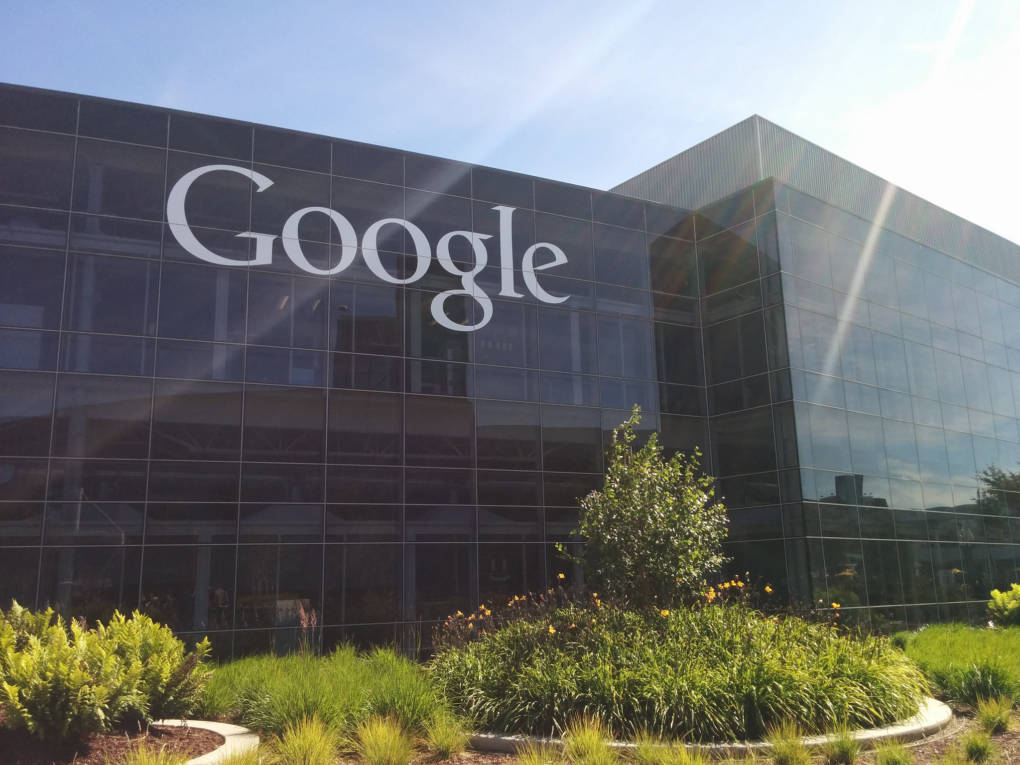
"caption": "Google headquarters in Mountain View.",
"description": "Google headquarters in Mountain View.",
"title": "GoogleBuilding",
"credit": "Justin Sullivan/Getty Images",
"status": "inherit",
"isLoading": false,
"fetchFailed": false
},
"news_11611408": {
"type": "attachments",
"id": "news_11611408",
"meta": {
"index": "attachments_1716263798",
"site": "news",
"id": "11611408",
"found": true
},
"parent": 11611386,
"imgSizes": {
"small": {
"file": "https://ww2.kqed.org/app/uploads/sites/10/2017/08/Pichai-520x422.jpg",
"width": 520,
"mimeType": "image/jpeg",
"height": 422
},
"twentyfourteen-full-width": {
"file": "https://ww2.kqed.org/app/uploads/sites/10/2017/08/Pichai-1038x576.jpg",
"width": 1038,
"mimeType": "image/jpeg",
"height": 576
},
"thumbnail": {
"file": "https://ww2.kqed.org/app/uploads/sites/10/2017/08/Pichai-160x130.jpg",
"width": 160,
"mimeType": "image/jpeg",
"height": 130
},
"fd-sm": {
"file": "https://ww2.kqed.org/app/uploads/sites/10/2017/08/Pichai-960x780.jpg",
"width": 960,
"mimeType": "image/jpeg",
"height": 780
},
"post-thumbnail": {
"file": "https://ww2.kqed.org/app/uploads/sites/10/2017/08/Pichai-672x372.jpg",
"width": 672,
"mimeType": "image/jpeg",
"height": 372
},
"xsmall": {
"file": "https://ww2.kqed.org/app/uploads/sites/10/2017/08/Pichai-375x304.jpg",
"width": 375,
"mimeType": "image/jpeg",
"height": 304
},
"kqedFullSize": {
"file": "https://ww2.kqed.org/app/uploads/sites/10/2017/08/Pichai.jpg",
"width": 3154,
"height": 2561
},
"large": {
"file": "https://ww2.kqed.org/app/uploads/sites/10/2017/08/Pichai-1020x828.jpg",
"width": 1020,
"mimeType": "image/jpeg",
"height": 828
},
"xlarge": {
"file": "https://ww2.kqed.org/app/uploads/sites/10/2017/08/Pichai-1180x958.jpg",
"width": 1180,
"mimeType": "image/jpeg",
"height": 958
},
"guest-author-50": {
"file": "https://ww2.kqed.org/app/uploads/sites/10/2017/08/Pichai-50x50.jpg",
"width": 50,
"mimeType": "image/jpeg",
"height": 50
},
"guest-author-96": {
"file": "https://ww2.kqed.org/app/uploads/sites/10/2017/08/Pichai-96x96.jpg",
"width": 96,
"mimeType": "image/jpeg",
"height": 96
},
"medium": {
"file": "https://ww2.kqed.org/app/uploads/sites/10/2017/08/Pichai-800x650.jpg",
"width": 800,
"mimeType": "image/jpeg",
"height": 650
},
"guest-author-64": {
"file": "https://ww2.kqed.org/app/uploads/sites/10/2017/08/Pichai-64x64.jpg",
"width": 64,
"mimeType": "image/jpeg",
"height": 64
},
"guest-author-32": {
"file": "https://ww2.kqed.org/app/uploads/sites/10/2017/08/Pichai-32x32.jpg",
"width": 32,
"mimeType": "image/jpeg",
"height": 32
},
"fd-lrg": {
"file": "https://ww2.kqed.org/app/uploads/sites/10/2017/08/Pichai-1920x1559.jpg",
"width": 1920,
"mimeType": "image/jpeg",
"height": 1559
},
"fd-med": {
"file": "https://ww2.kqed.org/app/uploads/sites/10/2017/08/Pichai-1180x958.jpg",
"width": 1180,
"mimeType": "image/jpeg",
"height": 958
},
"full-width": {
"file": "https://ww2.kqed.org/app/uploads/sites/10/2017/08/Pichai-1920x1559.jpg",
"width": 1920,
"mimeType": "image/jpeg",
"height": 1559
},
"detail": {
"file": "https://ww2.kqed.org/app/uploads/sites/10/2017/08/Pichai-150x150.jpg",
"width": 150,
"mimeType": "image/jpeg",
"height": 150
},
"guest-author-128": {
"file": "https://ww2.kqed.org/app/uploads/sites/10/2017/08/Pichai-128x128.jpg",
"width": 128,
"mimeType": "image/jpeg",
"height": 128
},
"xxsmall": {
"file": "https://ww2.kqed.org/app/uploads/sites/10/2017/08/Pichai-240x195.jpg",
"width": 240,
"mimeType": "image/jpeg",
"height": 195
}
},
"publishDate": 1502486897,
"modified": 1502491209,
"caption": "Sundar Pichai takes a selfie with girls at the Technovation Challenge at the Google campus in Mountain View. The competition drew aspiring girl coders and entrepreneurs from around the world. ",
"description": null,
"title": "Sundar Pichai",
"credit": "Queena Sook Kim/KQED",
"status": "inherit",
"isLoading": false,
"fetchFailed": false
},
"news_11610882": {
"type": "attachments",
"id": "news_11610882",
"meta": {
"index": "attachments_1716263798",
"site": "news",
"id": "11610882",
"found": true
},
"parent": 11610881,
"imgSizes": {
"small": {
"file": "https://ww2.kqed.org/app/uploads/sites/10/2017/08/gettyimages-529707282-ad80b2ac3e1d1bd1d0f318759bc29ed1e40d41b7-520x390.jpg",
"width": 520,
"mimeType": "image/jpeg",
"height": 390
},
"twentyfourteen-full-width": {
"file": "https://ww2.kqed.org/app/uploads/sites/10/2017/08/gettyimages-529707282-ad80b2ac3e1d1bd1d0f318759bc29ed1e40d41b7-1038x576.jpg",
"width": 1038,
"mimeType": "image/jpeg",
"height": 576
},
"thumbnail": {
"file": "https://ww2.kqed.org/app/uploads/sites/10/2017/08/gettyimages-529707282-ad80b2ac3e1d1bd1d0f318759bc29ed1e40d41b7-160x120.jpg",
"width": 160,
"mimeType": "image/jpeg",
"height": 120
},
"fd-sm": {
"file": "https://ww2.kqed.org/app/uploads/sites/10/2017/08/gettyimages-529707282-ad80b2ac3e1d1bd1d0f318759bc29ed1e40d41b7-960x720.jpg",
"width": 960,
"mimeType": "image/jpeg",
"height": 720
},
"post-thumbnail": {
"file": "https://ww2.kqed.org/app/uploads/sites/10/2017/08/gettyimages-529707282-ad80b2ac3e1d1bd1d0f318759bc29ed1e40d41b7-672x372.jpg",
"width": 672,
"mimeType": "image/jpeg",
"height": 372
},
"xsmall": {
"file": "https://ww2.kqed.org/app/uploads/sites/10/2017/08/gettyimages-529707282-ad80b2ac3e1d1bd1d0f318759bc29ed1e40d41b7-375x281.jpg",
"width": 375,
"mimeType": "image/jpeg",
"height": 281
},
"kqedFullSize": {
"file": "https://ww2.kqed.org/app/uploads/sites/10/2017/08/gettyimages-529707282-ad80b2ac3e1d1bd1d0f318759bc29ed1e40d41b7-e1502319847139.jpg",
"width": 1920,
"height": 1440
},
"large": {
"file": "https://ww2.kqed.org/app/uploads/sites/10/2017/08/gettyimages-529707282-ad80b2ac3e1d1bd1d0f318759bc29ed1e40d41b7-1020x765.jpg",
"width": 1020,
"mimeType": "image/jpeg",
"height": 765
},
"xlarge": {
"file": "https://ww2.kqed.org/app/uploads/sites/10/2017/08/gettyimages-529707282-ad80b2ac3e1d1bd1d0f318759bc29ed1e40d41b7-1180x885.jpg",
"width": 1180,
"mimeType": "image/jpeg",
"height": 885
},
"guest-author-50": {
"file": "https://ww2.kqed.org/app/uploads/sites/10/2017/08/gettyimages-529707282-ad80b2ac3e1d1bd1d0f318759bc29ed1e40d41b7-50x50.jpg",
"width": 50,
"mimeType": "image/jpeg",
"height": 50
},
"guest-author-96": {
"file": "https://ww2.kqed.org/app/uploads/sites/10/2017/08/gettyimages-529707282-ad80b2ac3e1d1bd1d0f318759bc29ed1e40d41b7-96x96.jpg",
"width": 96,
"mimeType": "image/jpeg",
"height": 96
},
"medium": {
"file": "https://ww2.kqed.org/app/uploads/sites/10/2017/08/gettyimages-529707282-ad80b2ac3e1d1bd1d0f318759bc29ed1e40d41b7-800x600.jpg",
"width": 800,
"mimeType": "image/jpeg",
"height": 600
},
"guest-author-64": {
"file": "https://ww2.kqed.org/app/uploads/sites/10/2017/08/gettyimages-529707282-ad80b2ac3e1d1bd1d0f318759bc29ed1e40d41b7-64x64.jpg",
"width": 64,
"mimeType": "image/jpeg",
"height": 64
},
"guest-author-32": {
"file": "https://ww2.kqed.org/app/uploads/sites/10/2017/08/gettyimages-529707282-ad80b2ac3e1d1bd1d0f318759bc29ed1e40d41b7-32x32.jpg",
"width": 32,
"mimeType": "image/jpeg",
"height": 32
},
"fd-lrg": {
"file": "https://ww2.kqed.org/app/uploads/sites/10/2017/08/gettyimages-529707282-ad80b2ac3e1d1bd1d0f318759bc29ed1e40d41b7-1920x1440.jpg",
"width": 1920,
"mimeType": "image/jpeg",
"height": 1440
},
"fd-med": {
"file": "https://ww2.kqed.org/app/uploads/sites/10/2017/08/gettyimages-529707282-ad80b2ac3e1d1bd1d0f318759bc29ed1e40d41b7-1180x885.jpg",
"width": 1180,
"mimeType": "image/jpeg",
"height": 885
},
"full-width": {
"file": "https://ww2.kqed.org/app/uploads/sites/10/2017/08/gettyimages-529707282-ad80b2ac3e1d1bd1d0f318759bc29ed1e40d41b7-1920x1440.jpg",
"width": 1920,
"mimeType": "image/jpeg",
"height": 1440
},
"detail": {
"file": "https://ww2.kqed.org/app/uploads/sites/10/2017/08/gettyimages-529707282-ad80b2ac3e1d1bd1d0f318759bc29ed1e40d41b7-150x150.jpg",
"width": 150,
"mimeType": "image/jpeg",
"height": 150
},
"guest-author-128": {
"file": "https://ww2.kqed.org/app/uploads/sites/10/2017/08/gettyimages-529707282-ad80b2ac3e1d1bd1d0f318759bc29ed1e40d41b7-128x128.jpg",
"width": 128,
"mimeType": "image/jpeg",
"height": 128
},
"xxsmall": {
"file": "https://ww2.kqed.org/app/uploads/sites/10/2017/08/gettyimages-529707282-ad80b2ac3e1d1bd1d0f318759bc29ed1e40d41b7-240x180.jpg",
"width": 240,
"mimeType": "image/jpeg",
"height": 180
}
},
"publishDate": 1502319666,
"modified": 1502319800,
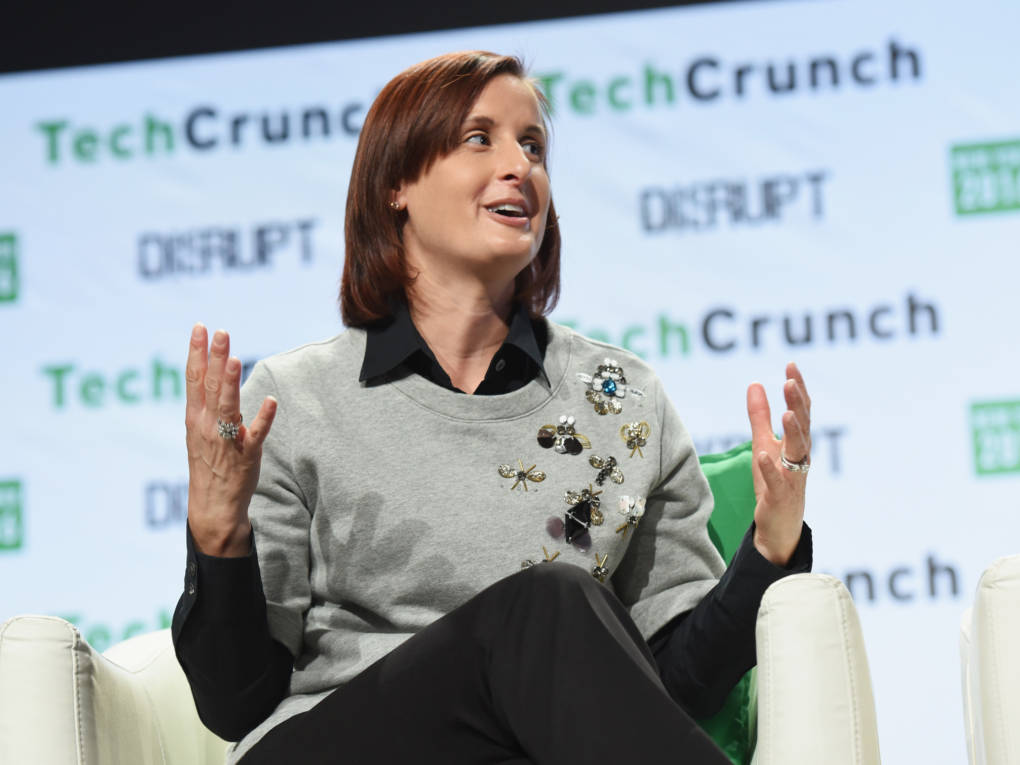
"caption": "Danielle Brown speaks during TechCrunch Disrupt NY 2016. She is Google's new chief diversity officer, a position she previously held at Intel.",
"description": "Danielle Brown speaks during TechCrunch Disrupt NY 2016. She is Google's new chief diversity officer, a position she previously held at Intel.",
"title": "Danielle Brown speaks during TechCrunch Disrupt NY 2016. She is Google's new chief diversity officer, a position she previously held at Intel.",
"credit": "Noam Galai/Getty Images for TechCrunch",
"status": "inherit",
"isLoading": false,
"fetchFailed": false
},
"news_11610754": {
"type": "attachments",
"id": "news_11610754",
"meta": {
"index": "attachments_1716263798",
"site": "news",
"id": "11610754",
"found": true
},
"parent": 11610747,
"imgSizes": {
"small": {
"file": "https://ww2.kqed.org/app/uploads/sites/10/2017/08/Sundar-Pichai-520x350.jpg",
"width": 520,
"mimeType": "image/jpeg",
"height": 350
},
"twentyfourteen-full-width": {
"file": "https://ww2.kqed.org/app/uploads/sites/10/2017/08/Sundar-Pichai-1038x576.jpg",
"width": 1038,
"mimeType": "image/jpeg",
"height": 576
},
"thumbnail": {
"file": "https://ww2.kqed.org/app/uploads/sites/10/2017/08/Sundar-Pichai-160x108.jpg",
"width": 160,
"mimeType": "image/jpeg",
"height": 108
},
"fd-sm": {
"file": "https://ww2.kqed.org/app/uploads/sites/10/2017/08/Sundar-Pichai-960x646.jpg",
"width": 960,
"mimeType": "image/jpeg",
"height": 646
},
"post-thumbnail": {
"file": "https://ww2.kqed.org/app/uploads/sites/10/2017/08/Sundar-Pichai-672x372.jpg",
"width": 672,
"mimeType": "image/jpeg",
"height": 372
},
"xsmall": {
"file": "https://ww2.kqed.org/app/uploads/sites/10/2017/08/Sundar-Pichai-375x252.jpg",
"width": 375,
"mimeType": "image/jpeg",
"height": 252
},
"kqedFullSize": {
"file": "https://ww2.kqed.org/app/uploads/sites/10/2017/08/Sundar-Pichai-e1502303282229.jpg",
"width": 1920,
"height": 1292
},
"large": {
"file": "https://ww2.kqed.org/app/uploads/sites/10/2017/08/Sundar-Pichai-1020x686.jpg",
"width": 1020,
"mimeType": "image/jpeg",
"height": 686
},
"xlarge": {
"file": "https://ww2.kqed.org/app/uploads/sites/10/2017/08/Sundar-Pichai-1180x794.jpg",
"width": 1180,
"mimeType": "image/jpeg",
"height": 794
},
"guest-author-50": {
"file": "https://ww2.kqed.org/app/uploads/sites/10/2017/08/Sundar-Pichai-50x50.jpg",
"width": 50,
"mimeType": "image/jpeg",
"height": 50
},
"guest-author-96": {
"file": "https://ww2.kqed.org/app/uploads/sites/10/2017/08/Sundar-Pichai-96x96.jpg",
"width": 96,
"mimeType": "image/jpeg",
"height": 96
},
"medium": {
"file": "https://ww2.kqed.org/app/uploads/sites/10/2017/08/Sundar-Pichai-800x538.jpg",
"width": 800,
"mimeType": "image/jpeg",
"height": 538
},
"guest-author-64": {
"file": "https://ww2.kqed.org/app/uploads/sites/10/2017/08/Sundar-Pichai-64x64.jpg",
"width": 64,
"mimeType": "image/jpeg",
"height": 64
},
"guest-author-32": {
"file": "https://ww2.kqed.org/app/uploads/sites/10/2017/08/Sundar-Pichai-32x32.jpg",
"width": 32,
"mimeType": "image/jpeg",
"height": 32
},
"fd-lrg": {
"file": "https://ww2.kqed.org/app/uploads/sites/10/2017/08/Sundar-Pichai-1920x1292.jpg",
"width": 1920,
"mimeType": "image/jpeg",
"height": 1292
},
"fd-med": {
"file": "https://ww2.kqed.org/app/uploads/sites/10/2017/08/Sundar-Pichai-1180x794.jpg",
"width": 1180,
"mimeType": "image/jpeg",
"height": 794
},
"full-width": {
"file": "https://ww2.kqed.org/app/uploads/sites/10/2017/08/Sundar-Pichai-1920x1292.jpg",
"width": 1920,
"mimeType": "image/jpeg",
"height": 1292
},
"detail": {
"file": "https://ww2.kqed.org/app/uploads/sites/10/2017/08/Sundar-Pichai-150x150.jpg",
"width": 150,
"mimeType": "image/jpeg",
"height": 150
},
"guest-author-128": {
"file": "https://ww2.kqed.org/app/uploads/sites/10/2017/08/Sundar-Pichai-128x128.jpg",
"width": 128,
"mimeType": "image/jpeg",
"height": 128
},
"xxsmall": {
"file": "https://ww2.kqed.org/app/uploads/sites/10/2017/08/Sundar-Pichai-240x162.jpg",
"width": 240,
"mimeType": "image/jpeg",
"height": 162
}
},
"publishDate": 1502242339,
"modified": 1502313796,
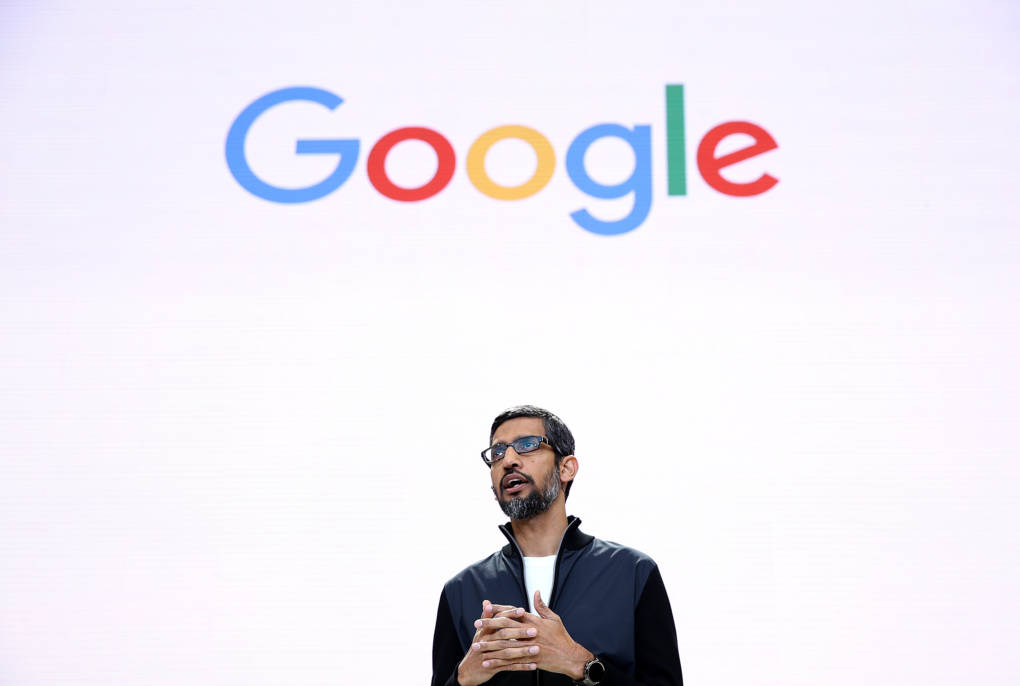
"caption": "Google CEO Sundar Pichai said in a blog post that to suggest a group of colleagues have traits that make them less \"biologically suited” for engineering jobs is contrary to Google’s basic values. He is pictured here at Google I/O 2017 Conference in Mountain View.",
"description": "Google CEO Sundar Pichai said in a blog post that to suggest a group of colleagues has traits that make them less \"biologically suited” for engineering jobs is contrary to Google’s basic values. He is pictured here at Google I/O 2017 Conference in Mountain View.",
"title": "Google CEO Sundar Pichai Opens I/O Developer Conference",
"credit": "Justin Sullivan/Getty Images",
"status": "inherit",
"isLoading": false,
"fetchFailed": false
},
"news_11610581": {
"type": "attachments",
"id": "news_11610581",
"meta": {
"index": "attachments_1716263798",
"site": "news",
"id": "11610581",
"found": true
},
"parent": 11610580,
"imgSizes": {
"small": {
"file": "https://ww2.kqed.org/app/uploads/sites/10/2017/08/gettyimages-532150054-27af64387ec8663a1d3158f431523db7a7356511-520x390.jpg",
"width": 520,
"mimeType": "image/jpeg",
"height": 390
},
"twentyfourteen-full-width": {
"file": "https://ww2.kqed.org/app/uploads/sites/10/2017/08/gettyimages-532150054-27af64387ec8663a1d3158f431523db7a7356511-1038x576.jpg",
"width": 1038,
"mimeType": "image/jpeg",
"height": 576
},
"thumbnail": {
"file": "https://ww2.kqed.org/app/uploads/sites/10/2017/08/gettyimages-532150054-27af64387ec8663a1d3158f431523db7a7356511-160x120.jpg",
"width": 160,
"mimeType": "image/jpeg",
"height": 120
},
"fd-sm": {
"file": "https://ww2.kqed.org/app/uploads/sites/10/2017/08/gettyimages-532150054-27af64387ec8663a1d3158f431523db7a7356511-960x720.jpg",
"width": 960,
"mimeType": "image/jpeg",
"height": 720
},
"post-thumbnail": {
"file": "https://ww2.kqed.org/app/uploads/sites/10/2017/08/gettyimages-532150054-27af64387ec8663a1d3158f431523db7a7356511-672x372.jpg",
"width": 672,
"mimeType": "image/jpeg",
"height": 372
},
"xsmall": {
"file": "https://ww2.kqed.org/app/uploads/sites/10/2017/08/gettyimages-532150054-27af64387ec8663a1d3158f431523db7a7356511-375x281.jpg",
"width": 375,
"mimeType": "image/jpeg",
"height": 281
},
"kqedFullSize": {
"file": "https://ww2.kqed.org/app/uploads/sites/10/2017/08/gettyimages-532150054-27af64387ec8663a1d3158f431523db7a7356511-e1502216813706.jpg",
"width": 1920,
"height": 1440
},
"large": {
"file": "https://ww2.kqed.org/app/uploads/sites/10/2017/08/gettyimages-532150054-27af64387ec8663a1d3158f431523db7a7356511-1020x765.jpg",
"width": 1020,
"mimeType": "image/jpeg",
"height": 765
},
"xlarge": {
"file": "https://ww2.kqed.org/app/uploads/sites/10/2017/08/gettyimages-532150054-27af64387ec8663a1d3158f431523db7a7356511-1180x885.jpg",
"width": 1180,
"mimeType": "image/jpeg",
"height": 885
},
"guest-author-50": {
"file": "https://ww2.kqed.org/app/uploads/sites/10/2017/08/gettyimages-532150054-27af64387ec8663a1d3158f431523db7a7356511-50x50.jpg",
"width": 50,
"mimeType": "image/jpeg",
"height": 50
},
"guest-author-96": {
"file": "https://ww2.kqed.org/app/uploads/sites/10/2017/08/gettyimages-532150054-27af64387ec8663a1d3158f431523db7a7356511-96x96.jpg",
"width": 96,
"mimeType": "image/jpeg",
"height": 96
},
"medium": {
"file": "https://ww2.kqed.org/app/uploads/sites/10/2017/08/gettyimages-532150054-27af64387ec8663a1d3158f431523db7a7356511-800x600.jpg",
"width": 800,
"mimeType": "image/jpeg",
"height": 600
},
"guest-author-64": {
"file": "https://ww2.kqed.org/app/uploads/sites/10/2017/08/gettyimages-532150054-27af64387ec8663a1d3158f431523db7a7356511-64x64.jpg",
"width": 64,
"mimeType": "image/jpeg",
"height": 64
},
"guest-author-32": {
"file": "https://ww2.kqed.org/app/uploads/sites/10/2017/08/gettyimages-532150054-27af64387ec8663a1d3158f431523db7a7356511-32x32.jpg",
"width": 32,
"mimeType": "image/jpeg",
"height": 32
},
"fd-lrg": {
"file": "https://ww2.kqed.org/app/uploads/sites/10/2017/08/gettyimages-532150054-27af64387ec8663a1d3158f431523db7a7356511-1920x1440.jpg",
"width": 1920,
"mimeType": "image/jpeg",
"height": 1440
},
"fd-med": {
"file": "https://ww2.kqed.org/app/uploads/sites/10/2017/08/gettyimages-532150054-27af64387ec8663a1d3158f431523db7a7356511-1180x885.jpg",
"width": 1180,
"mimeType": "image/jpeg",
"height": 885
},
"full-width": {
"file": "https://ww2.kqed.org/app/uploads/sites/10/2017/08/gettyimages-532150054-27af64387ec8663a1d3158f431523db7a7356511-1920x1440.jpg",
"width": 1920,
"mimeType": "image/jpeg",
"height": 1440
},
"detail": {
"file": "https://ww2.kqed.org/app/uploads/sites/10/2017/08/gettyimages-532150054-27af64387ec8663a1d3158f431523db7a7356511-150x150.jpg",
"width": 150,
"mimeType": "image/jpeg",
"height": 150
},
"guest-author-128": {
"file": "https://ww2.kqed.org/app/uploads/sites/10/2017/08/gettyimages-532150054-27af64387ec8663a1d3158f431523db7a7356511-128x128.jpg",
"width": 128,
"mimeType": "image/jpeg",
"height": 128
},
"xxsmall": {
"file": "https://ww2.kqed.org/app/uploads/sites/10/2017/08/gettyimages-532150054-27af64387ec8663a1d3158f431523db7a7356511-240x180.jpg",
"width": 240,
"mimeType": "image/jpeg",
"height": 180
}
},
"publishDate": 1502216370,
"modified": 1502216836,
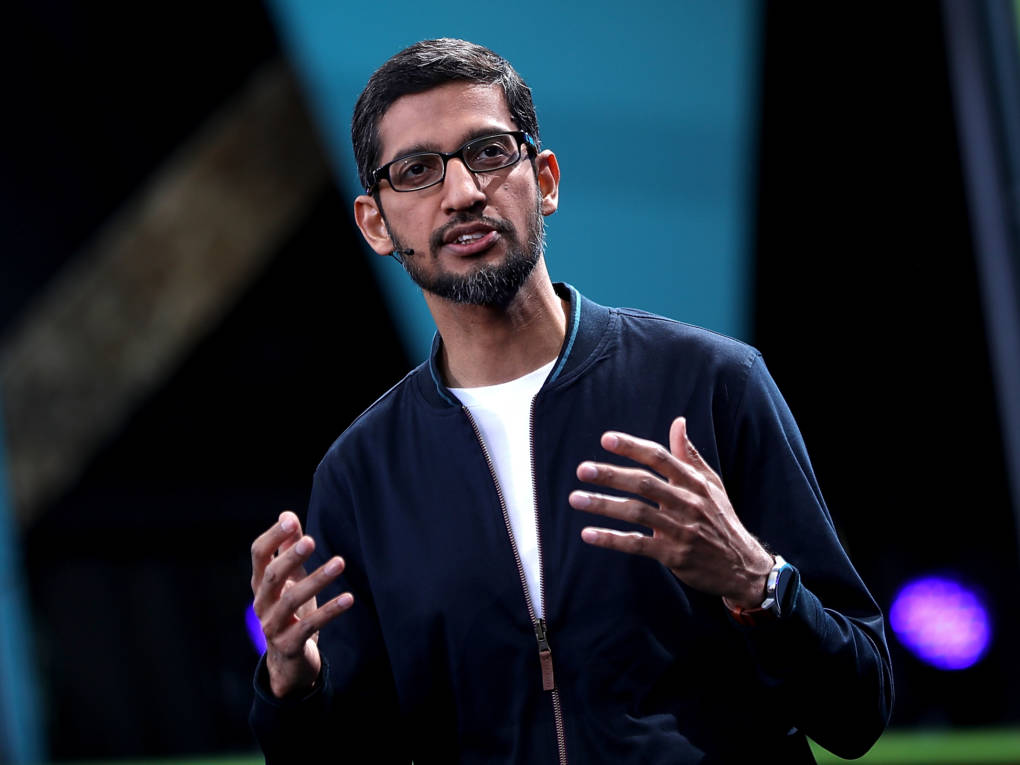
"caption": "Google CEO Sundar Pichai says that he supports the right of workers to express themselves but that a senior engineer's memo had gone too far.",
"description": "Google CEO Sundar Pichai says that he supports the right of workers to express themselves but that a senior engineer's memo had gone too far.",
"title": "Google CEO Sundar Pichai says that he supports the right of workers to express themselves but that a senior engineer's memo had gone too far.",
"credit": "Justin Sullivan/Getty Images",
"status": "inherit",
"isLoading": false,
"fetchFailed": false
},
"news_11610428": {
"type": "attachments",
"id": "news_11610428",
"meta": {
"index": "attachments_1716263798",
"site": "news",
"id": "11610428",
"found": true
},
"parent": 11610426,
"imgSizes": {
"small": {
"file": "https://ww2.kqed.org/app/uploads/sites/10/2017/08/gurls_080717_final-520x520.jpg",
"width": 520,
"mimeType": "image/jpeg",
"height": 520
},
"twentyfourteen-full-width": {
"file": "https://ww2.kqed.org/app/uploads/sites/10/2017/08/gurls_080717_final-1038x576.jpg",
"width": 1038,
"mimeType": "image/jpeg",
"height": 576
},
"thumbnail": {
"file": "https://ww2.kqed.org/app/uploads/sites/10/2017/08/gurls_080717_final-160x160.jpg",
"width": 160,
"mimeType": "image/jpeg",
"height": 160
},
"fd-sm": {
"file": "https://ww2.kqed.org/app/uploads/sites/10/2017/08/gurls_080717_final-960x960.jpg",
"width": 960,
"mimeType": "image/jpeg",
"height": 960
},
"post-thumbnail": {
"file": "https://ww2.kqed.org/app/uploads/sites/10/2017/08/gurls_080717_final-672x372.jpg",
"width": 672,
"mimeType": "image/jpeg",
"height": 372
},
"xsmall": {
"file": "https://ww2.kqed.org/app/uploads/sites/10/2017/08/gurls_080717_final-375x375.jpg",
"width": 375,
"mimeType": "image/jpeg",
"height": 375
},
"kqedFullSize": {
"file": "https://ww2.kqed.org/app/uploads/sites/10/2017/08/gurls_080717_final.jpg",
"width": 1920,
"height": 1920
},
"large": {
"file": "https://ww2.kqed.org/app/uploads/sites/10/2017/08/gurls_080717_final-1020x1020.jpg",
"width": 1020,
"mimeType": "image/jpeg",
"height": 1020
},
"xlarge": {
"file": "https://ww2.kqed.org/app/uploads/sites/10/2017/08/gurls_080717_final-1180x1180.jpg",
"width": 1180,
"mimeType": "image/jpeg",
"height": 1180
},
"guest-author-50": {
"file": "https://ww2.kqed.org/app/uploads/sites/10/2017/08/gurls_080717_final-50x50.jpg",
"width": 50,
"mimeType": "image/jpeg",
"height": 50
},
"guest-author-96": {
"file": "https://ww2.kqed.org/app/uploads/sites/10/2017/08/gurls_080717_final-96x96.jpg",
"width": 96,
"mimeType": "image/jpeg",
"height": 96
},
"medium": {
"file": "https://ww2.kqed.org/app/uploads/sites/10/2017/08/gurls_080717_final-800x800.jpg",
"width": 800,
"mimeType": "image/jpeg",
"height": 800
},
"guest-author-64": {
"file": "https://ww2.kqed.org/app/uploads/sites/10/2017/08/gurls_080717_final-64x64.jpg",
"width": 64,
"mimeType": "image/jpeg",
"height": 64
},
"guest-author-32": {
"file": "https://ww2.kqed.org/app/uploads/sites/10/2017/08/gurls_080717_final-32x32.jpg",
"width": 32,
"mimeType": "image/jpeg",
"height": 32
},
"fd-lrg": {
"file": "https://ww2.kqed.org/app/uploads/sites/10/2017/08/gurls_080717_final-1920x1920.jpg",
"width": 1920,
"mimeType": "image/jpeg",
"height": 1920
},
"fd-med": {
"file": "https://ww2.kqed.org/app/uploads/sites/10/2017/08/gurls_080717_final-1180x1180.jpg",
"width": 1180,
"mimeType": "image/jpeg",
"height": 1180
},
"full-width": {
"file": "https://ww2.kqed.org/app/uploads/sites/10/2017/08/gurls_080717_final-1920x1920.jpg",
"width": 1920,
"mimeType": "image/jpeg",
"height": 1920
},
"detail": {
"file": "https://ww2.kqed.org/app/uploads/sites/10/2017/08/gurls_080717_final-150x150.jpg",
"width": 150,
"mimeType": "image/jpeg",
"height": 150
},
"guest-author-128": {
"file": "https://ww2.kqed.org/app/uploads/sites/10/2017/08/gurls_080717_final-128x128.jpg",
"width": 128,
"mimeType": "image/jpeg",
"height": 128
},
"xxsmall": {
"file": "https://ww2.kqed.org/app/uploads/sites/10/2017/08/gurls_080717_final-240x240.jpg",
"width": 240,
"mimeType": "image/jpeg",
"height": 240
}
},
"publishDate": 1502139762,
"modified": 1502139800,
"caption": null,
"description": null,
"title": "gurls_080717_final",
"credit": null,
"status": "inherit",
"isLoading": false,
"fetchFailed": false
},
"news_11610386": {
"type": "attachments",
"id": "news_11610386",
"meta": {
"index": "attachments_1716263798",
"site": "news",
"id": "11610386",
"found": true
},
"parent": 11610382,
"imgSizes": {
"small": {
"file": "https://ww2.kqed.org/app/uploads/sites/10/2017/08/GoogleCampus-520x342.jpg",
"width": 520,
"mimeType": "image/jpeg",
"height": 342
},
"twentyfourteen-full-width": {
"file": "https://ww2.kqed.org/app/uploads/sites/10/2017/08/GoogleCampus-1038x576.jpg",
"width": 1038,
"mimeType": "image/jpeg",
"height": 576
},
"thumbnail": {
"file": "https://ww2.kqed.org/app/uploads/sites/10/2017/08/GoogleCampus-160x105.jpg",
"width": 160,
"mimeType": "image/jpeg",
"height": 105
},
"fd-sm": {
"file": "https://ww2.kqed.org/app/uploads/sites/10/2017/08/GoogleCampus-960x632.jpg",
"width": 960,
"mimeType": "image/jpeg",
"height": 632
},
"post-thumbnail": {
"file": "https://ww2.kqed.org/app/uploads/sites/10/2017/08/GoogleCampus-672x372.jpg",
"width": 672,
"mimeType": "image/jpeg",
"height": 372
},
"xsmall": {
"file": "https://ww2.kqed.org/app/uploads/sites/10/2017/08/GoogleCampus-375x247.jpg",
"width": 375,
"mimeType": "image/jpeg",
"height": 247
},
"kqedFullSize": {
"file": "https://ww2.kqed.org/app/uploads/sites/10/2017/08/GoogleCampus.jpg",
"width": 1920,
"height": 1263
},
"large": {
"file": "https://ww2.kqed.org/app/uploads/sites/10/2017/08/GoogleCampus-1020x671.jpg",
"width": 1020,
"mimeType": "image/jpeg",
"height": 671
},
"xlarge": {
"file": "https://ww2.kqed.org/app/uploads/sites/10/2017/08/GoogleCampus-1180x776.jpg",
"width": 1180,
"mimeType": "image/jpeg",
"height": 776
},
"guest-author-50": {
"file": "https://ww2.kqed.org/app/uploads/sites/10/2017/08/GoogleCampus-50x50.jpg",
"width": 50,
"mimeType": "image/jpeg",
"height": 50
},
"guest-author-96": {
"file": "https://ww2.kqed.org/app/uploads/sites/10/2017/08/GoogleCampus-96x96.jpg",
"width": 96,
"mimeType": "image/jpeg",
"height": 96
},
"medium": {
"file": "https://ww2.kqed.org/app/uploads/sites/10/2017/08/GoogleCampus-800x526.jpg",
"width": 800,
"mimeType": "image/jpeg",
"height": 526
},
"guest-author-64": {
"file": "https://ww2.kqed.org/app/uploads/sites/10/2017/08/GoogleCampus-64x64.jpg",
"width": 64,
"mimeType": "image/jpeg",
"height": 64
},
"guest-author-32": {
"file": "https://ww2.kqed.org/app/uploads/sites/10/2017/08/GoogleCampus-32x32.jpg",
"width": 32,
"mimeType": "image/jpeg",
"height": 32
},
"fd-lrg": {
"file": "https://ww2.kqed.org/app/uploads/sites/10/2017/08/GoogleCampus-1920x1263.jpg",
"width": 1920,
"mimeType": "image/jpeg",
"height": 1263
},
"fd-med": {
"file": "https://ww2.kqed.org/app/uploads/sites/10/2017/08/GoogleCampus-1180x776.jpg",
"width": 1180,
"mimeType": "image/jpeg",
"height": 776
},
"full-width": {
"file": "https://ww2.kqed.org/app/uploads/sites/10/2017/08/GoogleCampus-1920x1263.jpg",
"width": 1920,
"mimeType": "image/jpeg",
"height": 1263
},
"detail": {
"file": "https://ww2.kqed.org/app/uploads/sites/10/2017/08/GoogleCampus-150x150.jpg",
"width": 150,
"mimeType": "image/jpeg",
"height": 150
},
"guest-author-128": {
"file": "https://ww2.kqed.org/app/uploads/sites/10/2017/08/GoogleCampus-128x128.jpg",
"width": 128,
"mimeType": "image/jpeg",
"height": 128
},
"xxsmall": {
"file": "https://ww2.kqed.org/app/uploads/sites/10/2017/08/GoogleCampus-240x158.jpg",
"width": 240,
"mimeType": "image/jpeg",
"height": 158
}
},
"publishDate": 1502129305,
"modified": 1502129375,
"caption": "A man rides a bike at the Googleplex in Menlo Park.",
"description": "A man rides a bike at the Googleplex in Menlo Park.",
"title": "GoogleCampus",
"credit": "JOSH EDELSON/AFP/Getty Images",
"status": "inherit",
"isLoading": false,
"fetchFailed": false
},
"news_11535264": {
"type": "attachments",
"id": "news_11535264",
"meta": {
"index": "attachments_1716263798",
"site": "news",
"id": "11535264",
"found": true
},
"parent": 11535258,
"imgSizes": {
"small": {
"file": "https://ww2.kqed.org/app/uploads/sites/10/2017/06/Vestager-520x340.jpg",
"width": 520,
"mimeType": "image/jpeg",
"height": 340
},
"twentyfourteen-full-width": {
"file": "https://ww2.kqed.org/app/uploads/sites/10/2017/06/Vestager-1038x576.jpg",
"width": 1038,
"mimeType": "image/jpeg",
"height": 576
},
"thumbnail": {
"file": "https://ww2.kqed.org/app/uploads/sites/10/2017/06/Vestager-160x105.jpg",
"width": 160,
"mimeType": "image/jpeg",
"height": 105
},
"fd-sm": {
"file": "https://ww2.kqed.org/app/uploads/sites/10/2017/06/Vestager-960x629.jpg",
"width": 960,
"mimeType": "image/jpeg",
"height": 629
},
"post-thumbnail": {
"file": "https://ww2.kqed.org/app/uploads/sites/10/2017/06/Vestager-672x372.jpg",
"width": 672,
"mimeType": "image/jpeg",
"height": 372
},
"xsmall": {
"file": "https://ww2.kqed.org/app/uploads/sites/10/2017/06/Vestager-375x246.jpg",
"width": 375,
"mimeType": "image/jpeg",
"height": 246
},
"kqedFullSize": {
"file": "https://ww2.kqed.org/app/uploads/sites/10/2017/06/Vestager.jpg",
"width": 1920,
"height": 1257
},
"large": {
"file": "https://ww2.kqed.org/app/uploads/sites/10/2017/06/Vestager-1020x668.jpg",
"width": 1020,
"mimeType": "image/jpeg",
"height": 668
},
"xlarge": {
"file": "https://ww2.kqed.org/app/uploads/sites/10/2017/06/Vestager-1180x773.jpg",
"width": 1180,
"mimeType": "image/jpeg",
"height": 773
},
"guest-author-50": {
"file": "https://ww2.kqed.org/app/uploads/sites/10/2017/06/Vestager-50x50.jpg",
"width": 50,
"mimeType": "image/jpeg",
"height": 50
},
"guest-author-96": {
"file": "https://ww2.kqed.org/app/uploads/sites/10/2017/06/Vestager-96x96.jpg",
"width": 96,
"mimeType": "image/jpeg",
"height": 96
},
"medium": {
"file": "https://ww2.kqed.org/app/uploads/sites/10/2017/06/Vestager-800x524.jpg",
"width": 800,
"mimeType": "image/jpeg",
"height": 524
},
"guest-author-64": {
"file": "https://ww2.kqed.org/app/uploads/sites/10/2017/06/Vestager-64x64.jpg",
"width": 64,
"mimeType": "image/jpeg",
"height": 64
},
"guest-author-32": {
"file": "https://ww2.kqed.org/app/uploads/sites/10/2017/06/Vestager-32x32.jpg",
"width": 32,
"mimeType": "image/jpeg",
"height": 32
},
"fd-lrg": {
"file": "https://ww2.kqed.org/app/uploads/sites/10/2017/06/Vestager-1920x1257.jpg",
"width": 1920,
"mimeType": "image/jpeg",
"height": 1257
},
"fd-med": {
"file": "https://ww2.kqed.org/app/uploads/sites/10/2017/06/Vestager-1180x773.jpg",
"width": 1180,
"mimeType": "image/jpeg",
"height": 773
},
"full-width": {
"file": "https://ww2.kqed.org/app/uploads/sites/10/2017/06/Vestager-1920x1257.jpg",
"width": 1920,
"mimeType": "image/jpeg",
"height": 1257
},
"detail": {
"file": "https://ww2.kqed.org/app/uploads/sites/10/2017/06/Vestager-150x150.jpg",
"width": 150,
"mimeType": "image/jpeg",
"height": 150
},
"guest-author-128": {
"file": "https://ww2.kqed.org/app/uploads/sites/10/2017/06/Vestager-128x128.jpg",
"width": 128,
"mimeType": "image/jpeg",
"height": 128
},
"xxsmall": {
"file": "https://ww2.kqed.org/app/uploads/sites/10/2017/06/Vestager-240x157.jpg",
"width": 240,
"mimeType": "image/jpeg",
"height": 157
}
},
"publishDate": 1498586992,
"modified": 1498587069,
"caption": "European Commissioner for Competition Margrethe Vestager gives a press conference on the antitrust case against Google in Brussels, on June 27, 2017. ",
"description": "European Commissioner for Competition Margrethe Vestager gives a press conference on the antitrust case against Google in Brussels, on June 27, 2017. ",
"title": "Vestager",
"credit": "EMMANUEL DUNAND/AFP/Getty Images",
"status": "inherit",
"isLoading": false,
"fetchFailed": false
},
"news_11528808": {
"type": "attachments",
"id": "news_11528808",
"meta": {
"index": "attachments_1716263798",
"site": "news",
"id": "11528808",
"found": true
},
"parent": 11528804,
"imgSizes": {
"small": {
"file": "https://ww2.kqed.org/app/uploads/sites/10/2017/06/18036828960_b3cf13123c_k-520x390.jpg",
"width": 520,
"mimeType": "image/jpeg",
"height": 390
},
"twentyfourteen-full-width": {
"file": "https://ww2.kqed.org/app/uploads/sites/10/2017/06/18036828960_b3cf13123c_k-1038x576.jpg",
"width": 1038,
"mimeType": "image/jpeg",
"height": 576
},
"thumbnail": {
"file": "https://ww2.kqed.org/app/uploads/sites/10/2017/06/18036828960_b3cf13123c_k-160x120.jpg",
"width": 160,
"mimeType": "image/jpeg",
"height": 120
},
"fd-sm": {
"file": "https://ww2.kqed.org/app/uploads/sites/10/2017/06/18036828960_b3cf13123c_k-960x720.jpg",
"width": 960,
"mimeType": "image/jpeg",
"height": 720
},
"post-thumbnail": {
"file": "https://ww2.kqed.org/app/uploads/sites/10/2017/06/18036828960_b3cf13123c_k-672x372.jpg",
"width": 672,
"mimeType": "image/jpeg",
"height": 372
},
"xsmall": {
"file": "https://ww2.kqed.org/app/uploads/sites/10/2017/06/18036828960_b3cf13123c_k-375x281.jpg",
"width": 375,
"mimeType": "image/jpeg",
"height": 281
},
"kqedFullSize": {
"file": "https://ww2.kqed.org/app/uploads/sites/10/2017/06/18036828960_b3cf13123c_k-e1515458971813.jpg",
"width": 1920,
"height": 1440
},
"large": {
"file": "https://ww2.kqed.org/app/uploads/sites/10/2017/06/18036828960_b3cf13123c_k-1020x765.jpg",
"width": 1020,
"mimeType": "image/jpeg",
"height": 765
},
"xlarge": {
"file": "https://ww2.kqed.org/app/uploads/sites/10/2017/06/18036828960_b3cf13123c_k-1180x885.jpg",
"width": 1180,
"mimeType": "image/jpeg",
"height": 885
},
"guest-author-50": {
"file": "https://ww2.kqed.org/app/uploads/sites/10/2017/06/18036828960_b3cf13123c_k-50x50.jpg",
"width": 50,
"mimeType": "image/jpeg",
"height": 50
},
"guest-author-96": {
"file": "https://ww2.kqed.org/app/uploads/sites/10/2017/06/18036828960_b3cf13123c_k-96x96.jpg",
"width": 96,
"mimeType": "image/jpeg",
"height": 96
},
"medium": {
"file": "https://ww2.kqed.org/app/uploads/sites/10/2017/06/18036828960_b3cf13123c_k-800x600.jpg",
"width": 800,
"mimeType": "image/jpeg",
"height": 600
},
"guest-author-64": {
"file": "https://ww2.kqed.org/app/uploads/sites/10/2017/06/18036828960_b3cf13123c_k-64x64.jpg",
"width": 64,
"mimeType": "image/jpeg",
"height": 64
},
"guest-author-32": {
"file": "https://ww2.kqed.org/app/uploads/sites/10/2017/06/18036828960_b3cf13123c_k-32x32.jpg",
"width": 32,
"mimeType": "image/jpeg",
"height": 32
},
"fd-lrg": {
"file": "https://ww2.kqed.org/app/uploads/sites/10/2017/06/18036828960_b3cf13123c_k-1920x1440.jpg",
"width": 1920,
"mimeType": "image/jpeg",
"height": 1440
},
"fd-med": {
"file": "https://ww2.kqed.org/app/uploads/sites/10/2017/06/18036828960_b3cf13123c_k-1180x885.jpg",
"width": 1180,
"mimeType": "image/jpeg",
"height": 885
},
"full-width": {
"file": "https://ww2.kqed.org/app/uploads/sites/10/2017/06/18036828960_b3cf13123c_k-1920x1440.jpg",
"width": 1920,
"mimeType": "image/jpeg",
"height": 1440
},
"detail": {
"file": "https://ww2.kqed.org/app/uploads/sites/10/2017/06/18036828960_b3cf13123c_k-150x150.jpg",
"width": 150,
"mimeType": "image/jpeg",
"height": 150
},
"guest-author-128": {
"file": "https://ww2.kqed.org/app/uploads/sites/10/2017/06/18036828960_b3cf13123c_k-128x128.jpg",
"width": 128,
"mimeType": "image/jpeg",
"height": 128
},
"xxsmall": {
"file": "https://ww2.kqed.org/app/uploads/sites/10/2017/06/18036828960_b3cf13123c_k-240x180.jpg",
"width": 240,
"mimeType": "image/jpeg",
"height": 180
}
},
"publishDate": 1498263681,
"modified": 1498263726,
"caption": "The Google headquarters in Mountain View.",
"description": null,
"title": "18036828960_b3cf13123c_k",
"credit": "Servizi Multimediali/Flickr",
"status": "inherit",
"isLoading": false,
"fetchFailed": false
},
"news_11477268": {
"type": "attachments",
"id": "news_11477268",
"meta": {
"index": "attachments_1716263798",
"site": "news",
"id": "11477268",
"found": true
},
"parent": 11477255,
"imgSizes": {
"small": {
"file": "https://ww2.kqed.org/app/uploads/sites/10/2017/05/screenaddiction-768x565-520x383.jpg",
"width": 520,
"mimeType": "image/jpeg",
"height": 383
},
"thumbnail": {
"file": "https://ww2.kqed.org/app/uploads/sites/10/2017/05/screenaddiction-768x565-160x118.jpg",
"width": 160,
"mimeType": "image/jpeg",
"height": 118
},
"post-thumbnail": {
"file": "https://ww2.kqed.org/app/uploads/sites/10/2017/05/screenaddiction-768x565-672x372.jpg",
"width": 672,
"mimeType": "image/jpeg",
"height": 372
},
"xsmall": {
"file": "https://ww2.kqed.org/app/uploads/sites/10/2017/05/screenaddiction-768x565-375x276.jpg",
"width": 375,
"mimeType": "image/jpeg",
"height": 276
},
"kqedFullSize": {
"file": "https://ww2.kqed.org/app/uploads/sites/10/2017/05/screenaddiction-768x565.jpg",
"width": 768,
"height": 565
},
"guest-author-50": {
"file": "https://ww2.kqed.org/app/uploads/sites/10/2017/05/screenaddiction-768x565-50x50.jpg",
"width": 50,
"mimeType": "image/jpeg",
"height": 50
},
"guest-author-96": {
"file": "https://ww2.kqed.org/app/uploads/sites/10/2017/05/screenaddiction-768x565-96x96.jpg",
"width": 96,
"mimeType": "image/jpeg",
"height": 96
},
"guest-author-64": {
"file": "https://ww2.kqed.org/app/uploads/sites/10/2017/05/screenaddiction-768x565-64x64.jpg",
"width": 64,
"mimeType": "image/jpeg",
"height": 64
},
"detail": {
"file": "https://ww2.kqed.org/app/uploads/sites/10/2017/05/screenaddiction-768x565-150x150.jpg",
"width": 150,
"mimeType": "image/jpeg",
"height": 150
},
"guest-author-32": {
"file": "https://ww2.kqed.org/app/uploads/sites/10/2017/05/screenaddiction-768x565-32x32.jpg",
"width": 32,
"mimeType": "image/jpeg",
"height": 32
},
"guest-author-128": {
"file": "https://ww2.kqed.org/app/uploads/sites/10/2017/05/screenaddiction-768x565-128x128.jpg",
"width": 128,
"mimeType": "image/jpeg",
"height": 128
},
"xxsmall": {
"file": "https://ww2.kqed.org/app/uploads/sites/10/2017/05/screenaddiction-768x565-240x177.jpg",
"width": 240,
"mimeType": "image/jpeg",
"height": 177
}
},
"publishDate": 1495736318,
"modified": 1495736342,
"caption": null,
"description": null,
"title": "screenaddiction-768x565",
"credit": "IvanNikulin/iStock",
"status": "inherit",
"isLoading": false,
"fetchFailed": false
}
},
"audioPlayerReducer": {
"postId": "stream_live",
"isPaused": true,
"isPlaying": false,
"pfsActive": false,
"pledgeModalIsOpen": true,
"playerDrawerIsOpen": false,
"liveAudioPlayStartedAt": 0,
"liveAudioPlayContext": ""
},
"authorsReducer": {
"byline_news_11620861": {
"type": "authors",
"id": "byline_news_11620861",
"meta": {
"override": true
},
"slug": "byline_news_11620861",
"name": "\u003cstrong/>Laura Sydell\u003c/br>NPR\u003cstrong>",
"isLoading": false
},
"byline_news_11616959": {
"type": "authors",
"id": "byline_news_11616959",
"meta": {
"override": true
},
"slug": "byline_news_11616959",
"name": "\u003cstrong>Ryan Nakashima \u003cbr> Associated Press\u003c/strong>",
"isLoading": false
},
"byline_news_11610881": {
"type": "authors",
"id": "byline_news_11610881",
"meta": {
"override": true
},
"slug": "byline_news_11610881",
"name": "Aarti Shahani",
"isLoading": false
},
"byline_news_11610580": {
"type": "authors",
"id": "byline_news_11610580",
"meta": {
"override": true
},
"slug": "byline_news_11610580",
"name": "Laura Sydell",
"isLoading": false
},
"byline_news_11610382": {
"type": "authors",
"id": "byline_news_11610382",
"meta": {
"override": true
},
"slug": "byline_news_11610382",
"name": "Laura Sydell",
"isLoading": false
},
"byline_news_11535258": {
"type": "authors",
"id": "byline_news_11535258",
"meta": {
"override": true
},
"slug": "byline_news_11535258",
"name": "Bill Chappell",
"isLoading": false
},
"byline_news_11528804": {
"type": "authors",
"id": "byline_news_11528804",
"meta": {
"override": true
},
"slug": "byline_news_11528804",
"name": "\u003cstrong>Associated Press\u003c/strong>",
"isLoading": false
},
"jbrooks": {
"type": "authors",
"id": "80",
"meta": {
"index": "authors_1716337520",
"id": "80",
"found": true
},
"name": "Jon Brooks",
"firstName": "Jon",
"lastName": "Brooks",
"slug": "jbrooks",
"email": "jbrooks@kqed.org",
"display_author_email": true,
"staff_mastheads": [
"science"
],
"title": "Digital Editor",
"bio": "Jon Brooks is a former Digital Editor for KQED Science. He is the former editor of KQED’s daily news blog, News Fix. In 2014, he won a California Journalism Award for his coverage of ride services like Uber and Lyft and the taxi industry. A veteran blogger, he previously worked for Yahoo! in various news writing and editing roles. Jon is also a playwright whose work has been produced in San Francisco, New York, Italy, and around the U.S. He has written about film for his own blog and studied film at Boston University.",
"avatar": "https://secure.gravatar.com/avatar/98887f7ed1c876ed414d4c915e969584?s=600&d=blank&r=g",
"twitter": "jbrooksfoy",
"facebook": null,
"instagram": null,
"linkedin": null,
"sites": [
{
"site": "arts",
"roles": [
"Contributor",
"editor"
]
},
{
"site": "news",
"roles": [
"author"
]
},
{
"site": "futureofyou",
"roles": [
"administrator"
]
},
{
"site": "mindshift",
"roles": [
"editor"
]
},
{
"site": "stateofhealth",
"roles": [
"editor"
]
},
{
"site": "science",
"roles": [
"administrator"
]
},
{
"site": "quest",
"roles": [
"editor"
]
}
],
"headData": {
"title": "Jon Brooks | KQED",
"description": "Digital Editor",
"ogImgSrc": "https://secure.gravatar.com/avatar/98887f7ed1c876ed414d4c915e969584?s=600&d=blank&r=g",
"twImgSrc": "https://secure.gravatar.com/avatar/98887f7ed1c876ed414d4c915e969584?s=600&d=blank&r=g"
},
"isLoading": false,
"link": "/author/jbrooks"
},
"markfiore": {
"type": "authors",
"id": "3236",
"meta": {
"index": "authors_1716337520",
"id": "3236",
"found": true
},
"name": "Mark Fiore",
"firstName": "Mark",
"lastName": "Fiore",
"slug": "markfiore",
"email": "mark@markfiore.com",
"display_author_email": false,
"staff_mastheads": [
"news"
],
"title": "KQED News Cartoonist",
"bio": "\u003ca href=\"http://www.MarkFiore.com\">MarkFiore.com\u003c/a> | \u003ca href=\"https://twitter.com/markfiore\">Follow on Twitter\u003c/a> | \u003ca href=\"https://www.facebook.com/pages/Mark-Fiore-Animated-Political-Cartoons/94451707396?ref=bookmarks\">Facebook\u003c/a> | \u003ca href=\"mailto:mark@markfiore.com\">email\u003c/a>\r\n\r\nPulitzer Prize-winner, Mark Fiore, who the Wall Street Journal has called “the undisputed guru of the form,” creates animated political cartoons in San Francisco, where his work has been featured regularly on the San Francisco Chronicle’s web site, SFGate.com. His work has appeared on Newsweek.com, Slate.com, CBSNews.com, MotherJones.com, DailyKos.com and NPR’s web site. Fiore’s political animation has appeared on CNN, Frontline, Bill Moyers Journal, Salon.com and cable and broadcast outlets across the globe.\r\n\r\nBeginning his professional life by drawing traditional political cartoons for newspapers, Fiore’s work appeared in publications ranging from the Washington Post to the Los Angeles Times. In the late 1990s, he began to experiment with animating political cartoons and, after a short stint at the San Jose Mercury News as their staff cartoonist, Fiore devoted all his energies to animation.\r\nGrowing up in California, Fiore also spent a good portion of his life in the backwoods of Idaho. It was this combination that shaped him politically. Mark majored in political science at Colorado College, where, in a perfect send-off for a cartoonist, he received his diploma in 1991 as commencement speaker Dick Cheney smiled approvingly.\r\nMark Fiore was awarded the Pulitzer Prize for political cartooning in 2010, a Robert F. Kennedy Journalism Award in 2004 and has twice received an Online Journalism Award for commentary from the Online News Association (2002, 2008). Fiore has received two awards for his work in new media from the National Cartoonists Society (2001, 2002), and in 2006 received The James Madison Freedom of Information Award from The Society of Professional Journalists.",
"avatar": "https://secure.gravatar.com/avatar/fc4e2a612b15b67bad0c6f0e1db4ca9b?s=600&d=blank&r=g",
"twitter": "MarkFiore",
"facebook": null,
"instagram": "https://www.instagram.com/markfiore/?hl=en",
"linkedin": null,
"sites": [
{
"site": "arts",
"roles": [
"contributor"
]
},
{
"site": "news",
"roles": [
"editor"
]
},
{
"site": "futureofyou",
"roles": [
"editor"
]
},
{
"site": "science",
"roles": [
"editor"
]
}
],
"headData": {
"title": "Mark Fiore | KQED",
"description": "KQED News Cartoonist",
"ogImgSrc": "https://secure.gravatar.com/avatar/fc4e2a612b15b67bad0c6f0e1db4ca9b?s=600&d=blank&r=g",
"twImgSrc": "https://secure.gravatar.com/avatar/fc4e2a612b15b67bad0c6f0e1db4ca9b?s=600&d=blank&r=g"
},
"isLoading": false,
"link": "/author/markfiore"
},
"qkim": {
"type": "authors",
"id": "11099",
"meta": {
"index": "authors_1716337520",
"id": "11099",
"found": true
},
"name": "Queena Sook Kim",
"firstName": "Queena",
"lastName": "Kim",
"slug": "qkim",
"email": "qkim@kqed.org",
"display_author_email": false,
"staff_mastheads": [
"news"
],
"title": "Senior Editor",
"bio": "\u003cspan style=\"font-weight: 400;\">Queena Sook Kim is a former senior editor of the weekend desk at KQED. Before taking on that post, she was the Senior Editor of the Silicon Valley Desk and was the \u003c/span>\u003cspan style=\"font-weight: 400;\">host of The California Report. The daily morning show airs on KQED in San Francisco, one of the nation’s largest NPR affiliates, and on 30 stations across the state. In that role, she produces and reports on news, politics and life in the Golden State. Queena likes to take sideways look at the larger trends changing the state. One of her favorite stories asked\u003c/span>\u003ca href=\"https://ww2.kqed.org/news/2015/02/15/why-the-heck-do-mexican-reporters-on-public-radio-say-their-names-that-way\"> \u003cspan style=\"font-weight: 400;\">why Latino journalists “over’pronounce” their Spanish surnames\u003c/span>\u003c/a>\u003cspan style=\"font-weight: 400;\"> as a way of looking at how immigration is creating a culture shift in California.\u003c/span>\r\n\r\n\u003cspan style=\"font-weight: 400;\">Before joining The California Report, Queena was a \u003ca href=\"http://www.marketplace.org/people/queena-kim\">Senior Reporter covering technology for Marketplace\u003c/a>, the daily business show that airs on public radio. Queena covered daily tech business stories and reported on larger technology trends. She did a series of stories looking at role of social engineering in hacking and on a start-up in Silicon Valley that’s trying to use technology, instead of animals, to make meat that bleeds.\u003c/span>\r\n\r\n\u003cspan style=\"font-weight: 400;\">Queena started her career as a business journalist at the Wall Street Journal, where she spent four years covering the paper, home building and toy industries. She wrote A1 stories about the unusually aggressive tactics KB Home took against its home buyers. and the resurgence of “Cracker” architecture in Florida. She also wrote section front stories on marketing trends and\u003c/span>\r\n\r\n\u003cspan style=\"font-weight: 400;\">As a journalist, Queena has spent much of her career helping start-up editorial products. She was on the founding editorial team of The Bay Citizen, an experimental, online news site in San Francisco that was funded by the late hillbilly billionaire Warren Hellman. In 2009, Queena received a grant from the Corporation of Public Broadcasting to start-up a podcast called \u003ca href=\"https://soundcloud.com/cyberfrequencies\">CyberFrequencies\u003c/a>, which reported on the culture of technology. She also helped start-up two radio shows - Off-Ramp and Pacific Drift - for KPCC, the NPR-affiliate in Los Angeles. Off-Ramp was awarded 1st Place for news and Public Affairs programming by the PRINDI and the L.A. Press club. \u003ca href=\"https://soundcloud.com/queena-sook-kim\">Queena’s stories have appeared \u003c/a>on NPR’s Day to Day, Hearing Voices, WNYC’s Studio 360, WBUR’s Here and Now, BBC’s Global Perspectives and New York Times’ multimedia page.\u003c/span>\r\n\r\n\u003cspan style=\"font-weight: 400;\">In 1994, Queena won a Fulbright Grant to teach and study in Seoul, South Korea. She was also selected to be a Teach For America Corps Member in 1991 and taught elementary school in the Inglewood Unified School District in Southern California.\u003c/span>\r\n\r\n\u003cspan style=\"font-weight: 400;\">Queena is a frequent public speaker and has given talks at UC Berkeley, Stanford University, San Francisco State University, PRINDI conference and the Craigslist Foundation Boot Camp. Queena went to UC Berkeley’s Graduate School of Journalism and graduated cum laude from New York University with a B.A. in Politics. She grew up in Southern California and lives in Berkeley, Ca in a big fixer on which she spends most weekends, well, fixing.\u003c/span>",
"avatar": "https://secure.gravatar.com/avatar/b72382fd0db351b99f8a31939f4853fc?s=600&d=blank&r=g",
"twitter": "queenasookkim",
"facebook": null,
"instagram": null,
"linkedin": null,
"sites": [
{
"site": "news",
"roles": [
"subscriber"
]
},
{
"site": "forum",
"roles": [
"author"
]
},
{
"site": "breakingnews",
"roles": [
"editor"
]
}
],
"headData": {
"title": "Queena Sook Kim | KQED",
"description": "Senior Editor",
"ogImgSrc": "https://secure.gravatar.com/avatar/b72382fd0db351b99f8a31939f4853fc?s=600&d=blank&r=g",
"twImgSrc": "https://secure.gravatar.com/avatar/b72382fd0db351b99f8a31939f4853fc?s=600&d=blank&r=g"
},
"isLoading": false,
"link": "/author/qkim"
},
"mcheng": {
"type": "authors",
"id": "11392",
"meta": {
"index": "authors_1716337520",
"id": "11392",
"found": true
},
"name": "Michelle Cheng",
"firstName": "Michelle",
"lastName": "Cheng",
"slug": "mcheng",
"email": "michellebrittany15@gmail.com",
"display_author_email": false,
"staff_mastheads": [],
"title": "KQED Contributor",
"bio": "Michelle Cheng is an on-call interactive producer at KQED. She has written for FiveThirtyEight, Forbes, and MIT Technology Review. She received her undergraduate degree at Boston University -- but doesn't miss the cold. Prior to becoming a journalist, she was a competitive dancer. Reach her at mcheng@kqed.org or on Twitter @mbcheng15.",
"avatar": "https://secure.gravatar.com/avatar/14ee002b5eca4a81008be56ade91b3e326b80fbd81023881c7df7a7d2ed1499c?s=600&d=blank&r=g",
"twitter": null,
"bluesky": null,
"facebook": null,
"instagram": null,
"linkedin": null,
"sites": [
{
"site": "news",
"roles": [
"subscriber"
]
}
],
"headData": {
"title": "Michelle Cheng | KQED",
"description": "KQED Contributor",
"ogImgSrc": "https://secure.gravatar.com/avatar/14ee002b5eca4a81008be56ade91b3e326b80fbd81023881c7df7a7d2ed1499c?s=600&d=blank&r=g",
"twImgSrc": "https://secure.gravatar.com/avatar/14ee002b5eca4a81008be56ade91b3e326b80fbd81023881c7df7a7d2ed1499c?s=600&d=blank&r=g"
},
"isLoading": false,
"link": "/author/mcheng"
}
},
"pagesReducer": {
"news_tag_google": {
"type": "terms",
"id": "news_93",
"meta": {
"index": "terms_1716263798",
"site": "news",
"id": "93",
"score": 8.458717
},
"featImg": null,
"name": "Google",
"description": null,
"taxonomy": "tag",
"headData": {
"twImgId": null,
"twTitle": null,
"ogTitle": null,
"ogImgId": null,
"twDescription": null,
"description": null,
"title": "Google Archives | KQED News",
"ogDescription": null
},
"ttid": 96,
"slug": "google",
"isLoading": false,
"title": "Google",
"pageMeta": {
"site": "news",
"WpPageTemplate": "page-topic-editorial",
"currentPage": 14
},
"blocks": [
{
"blockName": "kqed/post-list",
"attrs": {
"layout": "cardArticle2",
"query": "posts/news?tag=google",
"seeMore": false,
"paginated": true,
"page": 14
}
},
{
"blockName": "kqed/ad"
}
]
}
},
"pfsSessionReducer": {},
"postsReducer": {
"stream_live": {
"type": "live",
"id": "stream_live",
"audioUrl": "https://streams.kqed.org/kqedradio",
"title": "Live Stream",
"excerpt": "Live Stream information currently unavailable.",
"link": "/radio",
"featImg": "",
"label": {
"name": "KQED Live",
"link": "/"
}
},
"stream_kqedNewscast": {
"type": "posts",
"id": "stream_kqedNewscast",
"audioUrl": "https://www.kqed.org/.stream/anon/radio/RDnews/newscast.mp3?_=1",
"title": "KQED Newscast",
"featImg": "",
"label": {
"name": "88.5 FM",
"link": "/"
}
},
"news_11622517": {
"type": "posts",
"id": "news_11622517",
"meta": {
"index": "posts_1716263798",
"site": "news",
"id": "11622517",
"score": null,
"sort": [
1507765814000
]
},
"guestAuthors": [],
"slug": "tech-giants-respond-to-wildfires-close-to-home",
"title": "Tech Giants Respond to Wildfires Close to Home",
"publishDate": 1507765814,
"format": "standard",
"headTitle": "Tech Giants Respond to Wildfires Close to Home | KQED",
"labelTerm": {
"term": 72,
"site": "news"
},
"content": "\u003cp>As deadly wildfires \u003ca href=\"https://ww2.kqed.org/news/2017/10/11/at-least-21-dead-3500-structures-destroyed-in-northern-california-fires/\" target=\"_blank\" rel=\"noopener\">continue to rip through Northern California\u003c/a>, Bay Area-based tech giants are responding to the crisis with digital features and by working with local communities.\u003c/p>\n\u003cp>Since Airbnb \u003ca href=\"https://www.airbnb.com/welcome/evacuees/northerncaliforniafireevacuees\">activated its disaster response tool\u003c/a> to help those impacted by the fires on Monday, more than 200 people have signed up to host people who have been displaced. As part of that program, hosts in nearby areas are able to make their spaces available for free through Oct. 30.\u003c/p>\n\u003cp>Lara McCole and her husband, who have been Airbnb hosts for two years, decided to open their East Richmond home to evacuees Tuesday morning after hearing about it on the news. McCole said that several evacuees contacted them within a few hours, including a Santa Rosa couple who lost their home to the fire. The couple is now confirmed to stay with them later this week.\u003c/p>\n\u003cp>“It’s a great opportunity for the community to support other people in the community,” said McCole, whose sister in Southern California also recently evacuated because of a fire. “A lot of people just told us their stories. I wish I had more availability and can take more people in. … It’s heartbreaking.”\u003c/p>\n\u003cfigure id=\"attachment_11622664\" class=\"wp-caption aligncenter\" style=\"max-width: 800px\">\u003cimg loading=\"lazy\" decoding=\"async\" class=\"size-medium wp-image-11622664\" src=\"https://ww2.kqed.org/news/wp-content/uploads/sites/10/2017/10/HomesAndDebris-800x530.jpg\" alt=\"Firefighters work near burned homes and debris in Santa Rosa's Coffey Park subdivision.\" width=\"800\" height=\"530\" srcset=\"https://cdn.kqed.org/wp-content/uploads/sites/10/2017/10/HomesAndDebris-800x530.jpg 800w, https://cdn.kqed.org/wp-content/uploads/sites/10/2017/10/HomesAndDebris-160x106.jpg 160w, https://cdn.kqed.org/wp-content/uploads/sites/10/2017/10/HomesAndDebris-1020x676.jpg 1020w, https://cdn.kqed.org/wp-content/uploads/sites/10/2017/10/HomesAndDebris.jpg 1920w, https://cdn.kqed.org/wp-content/uploads/sites/10/2017/10/HomesAndDebris-1180x782.jpg 1180w, https://cdn.kqed.org/wp-content/uploads/sites/10/2017/10/HomesAndDebris-960x636.jpg 960w, https://cdn.kqed.org/wp-content/uploads/sites/10/2017/10/HomesAndDebris-240x159.jpg 240w, https://cdn.kqed.org/wp-content/uploads/sites/10/2017/10/HomesAndDebris-375x248.jpg 375w, https://cdn.kqed.org/wp-content/uploads/sites/10/2017/10/HomesAndDebris-520x345.jpg 520w\" sizes=\"(max-width: 800px) 100vw, 800px\">\u003cfigcaption class=\"wp-caption-text\">Firefighters work near burned homes and debris in Santa Rosa’s Coffey Park subdivision. \u003ccite>(Sheraz Sadiq/KQED)\u003c/cite>\u003c/figcaption>\u003c/figure>\n\u003cp>While San Francisco began \u003ca href=\"https://ww2.kqed.org/news/2017/05/01/san-francisco-and-airbnb-reach-agreement-to-settle-lawsuit/\">imposing short-term rental regulations on Airbnb a few years ago\u003c/a>, the city is currently allowing people to bypass the normal regulations, said Lauren Jones, San Francisco’s Department of Technology communications director.\u003c/p>\n\u003cp>[ad fullwidth]\u003c/p>\n\u003cp>“We may have different approaches on how to tackle the problem, but we ultimately have the same goal, which is to serve the residents, businesses and visitors,” said Jones.\u003c/p>\n\u003cp>In the past few days, other tech companies have responded with online tools to help those in need — which helps with the widespread power outage. Since the fires began, Facebook activated its Safety Check feature in many of the affected areas.\u003c/p>\n\u003cp>Google has launched an \u003ca href=\"https://www.google.com/search?q=napa+valley&source=lnms&sa=X&ved=0ahUKEwin_KS00enWAhWEw1QKHVD-DAQQ_AUICSgA&biw=1279&bih=581&dpr=2\" target=\"_blank\" rel=\"noopener\">SOS alert\u003c/a> on its search engines, which compiles updates, maps and links to resources.\u003c/p>\n\u003cp>[contextly_sidebar id=”E9WFT6JspFgLlwWQLirW2MfsTXF5wAqG”]\u003c/p>\n\u003cp>While many roads continue to be shut down, Lyft is offering \u003ca href=\"https://www.lyft.com/invite/SAFERIDESNORCAL\" target=\"_blank\" rel=\"noopener\">relief rides\u003c/a> to assist riders from the evacuation sites to hospitals and vice versa.\u003c/p>\n\u003cp>Due to the poor air quality in the city, Uber is offering \u003ca href=\"https://www.uber.com/blog/san-francisco/our-initial-response-to-the-california-wildfires/\" target=\"_blank\" rel=\"noopener\">free and discounted rides\u003c/a> to and from certain San Francisco Public Library branches serving as filtered air centers.\u003c/p>\n\u003cp>The ride-hailing company is also partnering with \u003ca href=\"https://www.openhand.org/\" target=\"_blank\" rel=\"noopener\">Project Open Hand\u003c/a> to provide free rides for seniors and low-income individuals.\u003c/p>\n\u003cp>“We continue to monitor the situation and will be adjusting our response, depending on the conditions and needs in the emergency area,” said an Uber spokesperson.\u003c/p>\n\u003cp>Many of the tech giants are also donating to local communities and organizations, which is one of the most effective ways in times of crisis.\u003c/p>\n\u003cp>\u003c/p>\n\u003cp>Facebook is contributing $1 million to local organizations in Northern and Southern California responding to the fires, according to Facebook’s spokesperson. Google says it’s donating $500,000 to support those impacted by the fires.\u003c/p>\n\n",
"blocks": [],
"excerpt": "Since Airbnb activated its disaster response tool, more than 200 people have signed up to host evacuees for free.",
"status": "publish",
"parent": 0,
"modified": 1722638734,
"stats": {
"hasAudio": false,
"hasVideo": false,
"hasChartOrMap": false,
"iframeSrcs": [],
"hasGoogleForm": false,
"hasGallery": false,
"hasHearkenModule": false,
"hasPolis": false,
"paragraphCount": 17,
"wordCount": 530
},
"headData": {
"title": "Tech Giants Respond to Wildfires Close to Home | KQED",
"description": "Since Airbnb activated its disaster response tool, more than 200 people have signed up to host evacuees for free.",
"ogTitle": "",
"ogDescription": "",
"ogImgId": "",
"twTitle": "",
"twDescription": "",
"twImgId": "",
"schema": {
"@context": "https://schema.org",
"@type": "NewsArticle",
"headline": "Tech Giants Respond to Wildfires Close to Home",
"datePublished": "2017-10-11T16:50:14-07:00",
"dateModified": "2024-08-02T15:45:34-07:00",
"image": "https://cdn.kqed.org/wp-content/uploads/2020/02/KQED-OG-Image@1x.png",
"isAccessibleForFree": "True",
"publisher": {
"@type": "NewsMediaOrganization",
"@id": "https://www.kqed.org/#organization",
"name": "KQED",
"logo": "https://cdn.kqed.org/wp-content/uploads/2020/02/KQED-OG-Image@1x.png",
"url": "https://www.kqed.org",
"sameAs": [
"https://www.facebook.com/KQED",
"https://twitter.com/KQED",
"https://www.instagram.com/kqed/",
"https://www.tiktok.com/@kqedofficial",
"https://www.linkedin.com/company/kqed",
"https://www.youtube.com/channel/UCeC0IOo7i1P_61zVUWbJ4nw"
]
}
}
},
"sticky": false,
"path": "/news/11622517/tech-giants-respond-to-wildfires-close-to-home",
"audioTrackLength": null,
"parsedContent": [
{
"type": "contentString",
"content": "\u003cdiv class=\"post-body\">\u003cp>\u003cp>As deadly wildfires \u003ca href=\"https://ww2.kqed.org/news/2017/10/11/at-least-21-dead-3500-structures-destroyed-in-northern-california-fires/\" target=\"_blank\" rel=\"noopener\">continue to rip through Northern California\u003c/a>, Bay Area-based tech giants are responding to the crisis with digital features and by working with local communities.\u003c/p>\n\u003cp>Since Airbnb \u003ca href=\"https://www.airbnb.com/welcome/evacuees/northerncaliforniafireevacuees\">activated its disaster response tool\u003c/a> to help those impacted by the fires on Monday, more than 200 people have signed up to host people who have been displaced. As part of that program, hosts in nearby areas are able to make their spaces available for free through Oct. 30.\u003c/p>\n\u003cp>Lara McCole and her husband, who have been Airbnb hosts for two years, decided to open their East Richmond home to evacuees Tuesday morning after hearing about it on the news. McCole said that several evacuees contacted them within a few hours, including a Santa Rosa couple who lost their home to the fire. The couple is now confirmed to stay with them later this week.\u003c/p>\n\u003cp>“It’s a great opportunity for the community to support other people in the community,” said McCole, whose sister in Southern California also recently evacuated because of a fire. “A lot of people just told us their stories. I wish I had more availability and can take more people in. … It’s heartbreaking.”\u003c/p>\n\u003cfigure id=\"attachment_11622664\" class=\"wp-caption aligncenter\" style=\"max-width: 800px\">\u003cimg loading=\"lazy\" decoding=\"async\" class=\"size-medium wp-image-11622664\" src=\"https://ww2.kqed.org/news/wp-content/uploads/sites/10/2017/10/HomesAndDebris-800x530.jpg\" alt=\"Firefighters work near burned homes and debris in Santa Rosa's Coffey Park subdivision.\" width=\"800\" height=\"530\" srcset=\"https://cdn.kqed.org/wp-content/uploads/sites/10/2017/10/HomesAndDebris-800x530.jpg 800w, https://cdn.kqed.org/wp-content/uploads/sites/10/2017/10/HomesAndDebris-160x106.jpg 160w, https://cdn.kqed.org/wp-content/uploads/sites/10/2017/10/HomesAndDebris-1020x676.jpg 1020w, https://cdn.kqed.org/wp-content/uploads/sites/10/2017/10/HomesAndDebris.jpg 1920w, https://cdn.kqed.org/wp-content/uploads/sites/10/2017/10/HomesAndDebris-1180x782.jpg 1180w, https://cdn.kqed.org/wp-content/uploads/sites/10/2017/10/HomesAndDebris-960x636.jpg 960w, https://cdn.kqed.org/wp-content/uploads/sites/10/2017/10/HomesAndDebris-240x159.jpg 240w, https://cdn.kqed.org/wp-content/uploads/sites/10/2017/10/HomesAndDebris-375x248.jpg 375w, https://cdn.kqed.org/wp-content/uploads/sites/10/2017/10/HomesAndDebris-520x345.jpg 520w\" sizes=\"(max-width: 800px) 100vw, 800px\">\u003cfigcaption class=\"wp-caption-text\">Firefighters work near burned homes and debris in Santa Rosa’s Coffey Park subdivision. \u003ccite>(Sheraz Sadiq/KQED)\u003c/cite>\u003c/figcaption>\u003c/figure>\n\u003cp>While San Francisco began \u003ca href=\"https://ww2.kqed.org/news/2017/05/01/san-francisco-and-airbnb-reach-agreement-to-settle-lawsuit/\">imposing short-term rental regulations on Airbnb a few years ago\u003c/a>, the city is currently allowing people to bypass the normal regulations, said Lauren Jones, San Francisco’s Department of Technology communications director.\u003c/p>\n\u003cp>\u003c/p>\u003c/div>",
"attributes": {
"named": {},
"numeric": []
}
},
{
"type": "component",
"content": "",
"name": "ad",
"attributes": {
"named": {
"label": "fullwidth"
},
"numeric": [
"fullwidth"
]
}
},
{
"type": "contentString",
"content": "\u003cdiv class=\"post-body\">\u003cp>\u003c/p>\n\u003cp>“We may have different approaches on how to tackle the problem, but we ultimately have the same goal, which is to serve the residents, businesses and visitors,” said Jones.\u003c/p>\n\u003cp>In the past few days, other tech companies have responded with online tools to help those in need — which helps with the widespread power outage. Since the fires began, Facebook activated its Safety Check feature in many of the affected areas.\u003c/p>\n\u003cp>Google has launched an \u003ca href=\"https://www.google.com/search?q=napa+valley&source=lnms&sa=X&ved=0ahUKEwin_KS00enWAhWEw1QKHVD-DAQQ_AUICSgA&biw=1279&bih=581&dpr=2\" target=\"_blank\" rel=\"noopener\">SOS alert\u003c/a> on its search engines, which compiles updates, maps and links to resources.\u003c/p>\n\u003cp>\u003c/p>\u003cp>\u003c/p>\u003cp>\u003c/p>\n\u003cp>While many roads continue to be shut down, Lyft is offering \u003ca href=\"https://www.lyft.com/invite/SAFERIDESNORCAL\" target=\"_blank\" rel=\"noopener\">relief rides\u003c/a> to assist riders from the evacuation sites to hospitals and vice versa.\u003c/p>\n\u003cp>Due to the poor air quality in the city, Uber is offering \u003ca href=\"https://www.uber.com/blog/san-francisco/our-initial-response-to-the-california-wildfires/\" target=\"_blank\" rel=\"noopener\">free and discounted rides\u003c/a> to and from certain San Francisco Public Library branches serving as filtered air centers.\u003c/p>\n\u003cp>The ride-hailing company is also partnering with \u003ca href=\"https://www.openhand.org/\" target=\"_blank\" rel=\"noopener\">Project Open Hand\u003c/a> to provide free rides for seniors and low-income individuals.\u003c/p>\n\u003cp>“We continue to monitor the situation and will be adjusting our response, depending on the conditions and needs in the emergency area,” said an Uber spokesperson.\u003c/p>\n\u003cp>Many of the tech giants are also donating to local communities and organizations, which is one of the most effective ways in times of crisis.\u003c/p>\n\u003cp>\u003c/p>\n\u003cp>Facebook is contributing $1 million to local organizations in Northern and Southern California responding to the fires, according to Facebook’s spokesperson. Google says it’s donating $500,000 to support those impacted by the fires.\u003c/p>\n\n\u003c/div>\u003c/p>",
"attributes": {
"named": {},
"numeric": []
}
}
],
"link": "/news/11622517/tech-giants-respond-to-wildfires-close-to-home",
"authors": [
"11392"
],
"programs": [
"news_6944",
"news_72"
],
"categories": [
"news_19906",
"news_8",
"news_248"
],
"tags": [
"news_1735",
"news_249",
"news_93",
"news_4524",
"news_21774",
"news_38",
"news_17286",
"news_4523",
"news_4463"
],
"featImg": "news_11622623",
"label": "news_72"
},
"news_11620861": {
"type": "posts",
"id": "news_11620861",
"meta": {
"index": "posts_1716263798",
"site": "news",
"id": "11620861",
"score": null,
"sort": [
1507132795000
]
},
"parent": 0,
"labelTerm": {},
"blocks": [],
"publishDate": 1507132795,
"format": "standard",
"disqusTitle": "Facebook, Google Spread Misinformation About Las Vegas Shooting. What Went Wrong?",
"title": "Facebook, Google Spread Misinformation About Las Vegas Shooting. What Went Wrong?",
"headTitle": "The California Report | KQED News",
"content": "\u003cp>In the hours just after the massacre in Las Vegas, some fake news started showing up on Google and Facebook. A man was falsely accused of being the shooter. His name bubbled up on Facebook emergency sites and when you searched his name on Google, links of sites connecting him with the shooting topped the first page.\u003c/p>\n\u003cp>It appears to be another case of automation working so fast that humans can't keep pace. Unfortunately, these powerful tech companies continue to be a main destination for news and it's not clear how they can solve the problem.\u003c/p>\n\u003cp>In this particular case, the man's name first appeared on a message board on a site called 4chan. It's known as a gathering spot for underground hackers and the \"alt-right.\" Everyone who posts is anonymous. And we're not publishing the man's name because he's been through enough.\u003c/p>\n\u003cp>Shortly after the shooting, police announced that a woman named Marilou Danley was a person of interest. She had been living with the shooter in his Nevada home.\u003c/p>\n\u003cp>On a message board called /Pol/- Politically Incorrect, someone said her ex-husband was the shooter. His Facebook page indicated he was a liberal, and the far-right trolls on Pol went to work to spread the word.\u003c/p>\n\u003cp>[ad fullwidth]\u003c/p>\n\u003cp>Even after police identified the shooter, the wrong man's name appeared for hours in tweets. On Facebook, it appeared on an official \u003ca href=\"https://www.fastcompany.com/40475749/facebooks-safety-check-page-for-the-las-vegas-shooting-promotes-alt-right-news\" target=\"_blank\" rel=\"noopener\">\"safety check\" page\u003c/a> for the Las Vegas shooting, which displayed a post from a site called Alt-Right News. And on Google, top searches linked to sites that said he was the shooter. When you searched his name, a 4chan thread about him was promoted as a top story.\u003c/p>\n\u003cp>So, why did parts of these hugely powerful companies continue to point to an innocent man?\u003c/p>\n\u003cp>Bill Hartzer, an expert on search, says Google is constantly crawling the web and picking up new information as it appears. The innocent man went from hardly having anything online to have a whole bunch of stuff.\u003c/p>\n\u003cp>\"Google has not had the time to really vet the search results yet,\" Hartzer says. \"So what they'll do is they will show what they know about this particular name or this particular keyword.\"\u003c/p>\n\u003cp>In a statement, Google said the results should not have appeared, but the company will \"continue to make algorithmic improvements to prevent this from happening in the future.\"\u003c/p>\n\u003cp>One improvement that Greg Sterling thinks Google should make is putting less weight on certain websites, like 4chan. \"In this particular context had they weighted sites that were deemed credible more heavily you might not have seen that,\" says Sterling, a contributing editor at Search Engine Land. On the other hand, he says \"if news sites ... were given some sort of preference in this context, you might not have seen that.\"\u003c/p>\n\u003cp>Unfortunately, it seemed like Facebook was giving those same sites credibility. In a statement, Facebook said it was working on a way to fix the issue that caused the fake news to appear. (Disclosure: Facebook pays NPR and other leading news organizations to produce live video streams that run on the site.)\u003c/p>\n\u003cp>But Sterling says part of the issue with having these companies determine what's news is that they're run by engineers. \"For the most part the engineers and the people who are running Google search don't think like journalists,\" he says. \"They think like engineers running a product that's very important.\"\u003c/p>\n\u003cp>And then there is the scale of what Google and Facebook do. They are huge. And that's only possible because computers do a lot of the work. Yochai Benkler, a law professor at Harvard, says that with such massive scale, even if there were humans helping out there would be mistakes.\u003c/p>\n\u003cp>Benkler says that even if Facebook and Google blocked sites like 4chan, it wouldn't solve the problem. \"Tomorrow in another situation like this someone will find some other workaround,\" Benkler says. \"It's not realistic to imagine perfect filtering in real time in moments of such crisis.\"\u003c/p>\n\u003cp>\u003c/p>\n\u003cp>But, for the man who spent hours being accused of mass murder, the technical problems at Google and Facebook probably aren't much comfort. And they won't be much comfort to the next person who lands in the crosshairs of fake news.\u003c/p>\n\u003cdiv class=\"fullattribution\">Copyright 2017 NPR. To see more, visit http://www.npr.org/.\u003cimg src=\"https://www.google-analytics.com/__utm.gif?utmac=UA-5828686-4&utmdt=Facebook%2C+Google+Spread+Misinformation+About+Las+Vegas+Shooting.+What+Went+Wrong%3F&utme=8(APIKey)9(MDAxOTAwOTE4MDEyMTkxMDAzNjczZDljZA004)\">\u003c/div>\n\n",
"disqusIdentifier": "11620861 https://ww2.kqed.org/news/?p=11620861",
"disqusUrl": "https://ww2.kqed.org/news/2017/10/04/facebook-google-spread-misinformation-about-las-vegas-shooting-what-went-wrong/",
"stats": {
"hasVideo": false,
"hasChartOrMap": false,
"hasAudio": false,
"hasPolis": false,
"wordCount": 738,
"hasGoogleForm": false,
"hasGallery": false,
"hasHearkenModule": false,
"iframeSrcs": [],
"paragraphCount": 18
},
"modified": 1507250237,
"excerpt": "The platforms promoted the name of a man falsely accused of being the shooter by surfacing less credible sites. ",
"headData": {
"twImgId": "",
"twTitle": "",
"ogTitle": "",
"ogImgId": "",
"twDescription": "",
"description": "The platforms promoted the name of a man falsely accused of being the shooter by surfacing less credible sites. ",
"title": "Facebook, Google Spread Misinformation About Las Vegas Shooting. What Went Wrong? | KQED",
"ogDescription": "",
"schema": {
"@context": "https://schema.org",
"@type": "NewsArticle",
"headline": "Facebook, Google Spread Misinformation About Las Vegas Shooting. What Went Wrong?",
"datePublished": "2017-10-04T08:59:55-07:00",
"dateModified": "2017-10-05T17:37:17-07:00",
"image": "https://cdn.kqed.org/wp-content/uploads/2020/02/KQED-OG-Image@1x.png",
"isAccessibleForFree": "True",
"publisher": {
"@type": "NewsMediaOrganization",
"@id": "https://www.kqed.org/#organization",
"name": "KQED",
"logo": "https://cdn.kqed.org/wp-content/uploads/2020/02/KQED-OG-Image@1x.png",
"url": "https://www.kqed.org",
"sameAs": [
"https://www.facebook.com/KQED",
"https://twitter.com/KQED",
"https://www.instagram.com/kqed/",
"https://www.tiktok.com/@kqedofficial",
"https://www.linkedin.com/company/kqed",
"https://www.youtube.com/channel/UCeC0IOo7i1P_61zVUWbJ4nw"
]
}
}
},
"guestAuthors": [],
"slug": "facebook-google-spread-misinformation-about-las-vegas-shooting-what-went-wrong",
"status": "publish",
"nprApiLink": "http://api.npr.org/query?id=555320532&apiKey=MDAxOTAwOTE4MDEyMTkxMDAzNjczZDljZA004",
"nprStoryDate": "Tue, 03 Oct 2017 18:16:00 -0400",
"nprLastModifiedDate": "Wed, 04 Oct 2017 09:52:22 -0400",
"nprHtmlLink": "http://www.npr.org/sections/alltechconsidered/2017/10/03/555320532/facebook-google-spread-misinformation-about-las-vegas-shooting-what-went-wrong?ft=nprml&f=555320532",
"nprAudio": "https://ondemand.npr.org/anon.npr-mp3/npr/atc/2017/10/20171003_atc_facebook_google_spread_misinformation_about_las_vegas_shooting_what_went_wrong.mp3?orgId=1&topicId=1019&d=238&p=2&story=555320532&t=progseg&e=555295128&seg=4&ft=nprml&f=555320532",
"nprImageAgency": "AFP/Getty Images",
"source": "NPR",
"nprAudioM3u": "http://api.npr.org/m3u/1555425851-f4ef71.m3u?orgId=1&topicId=1019&d=238&p=2&story=555320532&t=progseg&e=555295128&seg=4&ft=nprml&f=555320532",
"nprStoryId": "555320532",
"sourceUrl": "www.npr.org",
"nprByline": "\u003cstrong/>Laura Sydell\u003c/br>NPR\u003cstrong>",
"nprImageCredit": "Mark Ralston",
"nprRetrievedStory": "1",
"nprPubDate": "Wed, 04 Oct 2017 09:35:00 -0400",
"path": "/news/11620861/facebook-google-spread-misinformation-about-las-vegas-shooting-what-went-wrong",
"audioUrl": "https://ondemand.npr.org/anon.npr-mp3/npr/atc/2017/10/20171003_atc_facebook_google_spread_misinformation_about_las_vegas_shooting_what_went_wrong.mp3?orgId=1&topicId=1019&d=238&p=2&story=555320532&t=progseg&e=555295128&seg=4&ft=nprml&f=555320532",
"audioTrackLength": null,
"parsedContent": [
{
"type": "contentString",
"content": "\u003cdiv class=\"post-body\">\u003cp>\u003cp>In the hours just after the massacre in Las Vegas, some fake news started showing up on Google and Facebook. A man was falsely accused of being the shooter. His name bubbled up on Facebook emergency sites and when you searched his name on Google, links of sites connecting him with the shooting topped the first page.\u003c/p>\n\u003cp>It appears to be another case of automation working so fast that humans can't keep pace. Unfortunately, these powerful tech companies continue to be a main destination for news and it's not clear how they can solve the problem.\u003c/p>\n\u003cp>In this particular case, the man's name first appeared on a message board on a site called 4chan. It's known as a gathering spot for underground hackers and the \"alt-right.\" Everyone who posts is anonymous. And we're not publishing the man's name because he's been through enough.\u003c/p>\n\u003cp>Shortly after the shooting, police announced that a woman named Marilou Danley was a person of interest. She had been living with the shooter in his Nevada home.\u003c/p>\n\u003cp>On a message board called /Pol/- Politically Incorrect, someone said her ex-husband was the shooter. His Facebook page indicated he was a liberal, and the far-right trolls on Pol went to work to spread the word.\u003c/p>\n\u003cp>\u003c/p>\u003c/div>",
"attributes": {
"named": {},
"numeric": []
}
},
{
"type": "component",
"content": "",
"name": "ad",
"attributes": {
"named": {
"label": "fullwidth"
},
"numeric": [
"fullwidth"
]
}
},
{
"type": "contentString",
"content": "\u003cdiv class=\"post-body\">\u003cp>\u003c/p>\n\u003cp>Even after police identified the shooter, the wrong man's name appeared for hours in tweets. On Facebook, it appeared on an official \u003ca href=\"https://www.fastcompany.com/40475749/facebooks-safety-check-page-for-the-las-vegas-shooting-promotes-alt-right-news\" target=\"_blank\" rel=\"noopener\">\"safety check\" page\u003c/a> for the Las Vegas shooting, which displayed a post from a site called Alt-Right News. And on Google, top searches linked to sites that said he was the shooter. When you searched his name, a 4chan thread about him was promoted as a top story.\u003c/p>\n\u003cp>So, why did parts of these hugely powerful companies continue to point to an innocent man?\u003c/p>\n\u003cp>Bill Hartzer, an expert on search, says Google is constantly crawling the web and picking up new information as it appears. The innocent man went from hardly having anything online to have a whole bunch of stuff.\u003c/p>\n\u003cp>\"Google has not had the time to really vet the search results yet,\" Hartzer says. \"So what they'll do is they will show what they know about this particular name or this particular keyword.\"\u003c/p>\n\u003cp>In a statement, Google said the results should not have appeared, but the company will \"continue to make algorithmic improvements to prevent this from happening in the future.\"\u003c/p>\n\u003cp>One improvement that Greg Sterling thinks Google should make is putting less weight on certain websites, like 4chan. \"In this particular context had they weighted sites that were deemed credible more heavily you might not have seen that,\" says Sterling, a contributing editor at Search Engine Land. On the other hand, he says \"if news sites ... were given some sort of preference in this context, you might not have seen that.\"\u003c/p>\n\u003cp>Unfortunately, it seemed like Facebook was giving those same sites credibility. In a statement, Facebook said it was working on a way to fix the issue that caused the fake news to appear. (Disclosure: Facebook pays NPR and other leading news organizations to produce live video streams that run on the site.)\u003c/p>\n\u003cp>But Sterling says part of the issue with having these companies determine what's news is that they're run by engineers. \"For the most part the engineers and the people who are running Google search don't think like journalists,\" he says. \"They think like engineers running a product that's very important.\"\u003c/p>\n\u003cp>And then there is the scale of what Google and Facebook do. They are huge. And that's only possible because computers do a lot of the work. Yochai Benkler, a law professor at Harvard, says that with such massive scale, even if there were humans helping out there would be mistakes.\u003c/p>\n\u003cp>Benkler says that even if Facebook and Google blocked sites like 4chan, it wouldn't solve the problem. \"Tomorrow in another situation like this someone will find some other workaround,\" Benkler says. \"It's not realistic to imagine perfect filtering in real time in moments of such crisis.\"\u003c/p>\n\u003cp>\u003c/p>\n\u003cp>But, for the man who spent hours being accused of mass murder, the technical problems at Google and Facebook probably aren't much comfort. And they won't be much comfort to the next person who lands in the crosshairs of fake news.\u003c/p>\n\u003cdiv class=\"fullattribution\">Copyright 2017 NPR. To see more, visit http://www.npr.org/.\u003cimg src=\"https://www.google-analytics.com/__utm.gif?utmac=UA-5828686-4&utmdt=Facebook%2C+Google+Spread+Misinformation+About+Las+Vegas+Shooting.+What+Went+Wrong%3F&utme=8(APIKey)9(MDAxOTAwOTE4MDEyMTkxMDAzNjczZDljZA004)\">\u003c/div>\n\n\u003c/div>\u003c/p>",
"attributes": {
"named": {},
"numeric": []
}
}
],
"link": "/news/11620861/facebook-google-spread-misinformation-about-las-vegas-shooting-what-went-wrong",
"authors": [
"byline_news_11620861"
],
"programs": [
"news_6944",
"news_72"
],
"categories": [
"news_6188",
"news_8",
"news_248"
],
"tags": [
"news_249",
"news_20261",
"news_93",
"news_21720"
],
"featImg": "news_11620862",
"label": "source_news_11620861"
},
"news_11616959": {
"type": "posts",
"id": "news_11616959",
"meta": {
"index": "posts_1716263798",
"site": "news",
"id": "11616959",
"score": null,
"sort": [
1505424180000
]
},
"guestAuthors": [],
"slug": "google-hit-with-class-action-lawsuit-over-gender-pay",
"title": "Google Hit With Class Action Lawsuit Over Gender Pay",
"publishDate": 1505424180,
"format": "standard",
"headTitle": "Google Hit With Class Action Lawsuit Over Gender Pay | KQED",
"labelTerm": {
"term": 72,
"site": "news"
},
"content": "\u003cp>MENLO PARK — Google faces a new lawsuit accusing it of gender-based pay discrimination. A lawyer representing three female former Google employees is seeking class-action status for the claim.\u003c/p>\n\u003cp>The suit, filed Thursday in San Francisco Superior Court, follows a federal labor investigation that made a preliminary finding of systemic pay discrimination among the 21,000 employees at Google’s headquarters in Mountain View. \u003c/p>\n\u003cp>The initial stages of the review found women earned less than men in nearly every job classification.\u003c/p>\n\u003cp>Google disputes those findings and says its \u003ca href=\"https://www.blog.google/topics/diversity/our-focus-pay-equity/\" target=\"_blank\">analysis\u003c/a> shows no gender pay gap.\u003c/p>\n\u003cp>The suit, led by lawyer James Finberg of Altshuler Berzon LLP, is on behalf of three women — Kelly Ellis, Holly Pease and Kelli Wisuri — who all quit after being put on career tracks that they claimed would pay them less than their male counterparts. The suit aims to represent thousands of Google employees in California and seeks lost wages and a slice of Google’s profits.\u003c/p>\n\u003cp>[ad fullwidth]\u003c/p>\n\u003cp>“I have come forward to correct a pervasive problem of gender bias at Google,” Ellis said in a statement. She says she quit Google in 2014 after male engineers with similar experience were hired to higher-paying job levels and she was denied a promotion despite excellent performance reviews. “It is time to stop ignoring these issues in tech.”\u003c/p>\n\u003cp>Google spokeswoman Gina Scigliano said the company will review the suit in detail, “but we disagree with the central allegations.”\u003c/p>\n\u003cp>“Job levels and promotions are determined through rigorous hiring and promotion committees, and must pass multiple levels of review, including checks to make sure there is no gender bias in these decisions,” she said.\u003c/p>\n\u003cp>[contextly_sidebar id=”vmnoHQ8RUyZa9HDGRruytm3nULc333iM”]\u003c/p>\n\u003cp>Charges of gender discrimination have swirled at Alphabet Inc.-owned Google since the U.S. Labor Department \u003ca href=\"https://apnews.com/2b773678cfde4cc58eee4acd6d8061a8/lawsuit-seeks-ban-google-us-government-contracts\" target=\"_blank\">sued\u003c/a> in January to bar Google from doing business with the federal government until it released thousands of documents related to an audit over its pay practices. The sides have been battling in court over how much information Google must turn over.\u003c/p>\n\u003cp>\u003c/p>\n\u003cp>The lawsuit also follows the \u003ca href=\"https://ww2.kqed.org/news/2017/08/09/googles-firing-of-engineer-a-clear-cut-legal-decision/\" target=\"_blank\">firing\u003c/a> of male engineer James Damore, who wrote a memo circulated on internal message boards that blamed inherent differences between men and women for the underrepresentation of women in engineering roles.\u003c/p>\n\n",
"blocks": [],
"excerpt": "It follows a federal labor investigation that made a preliminary finding of systemic pay discrimination among the 21,000 employees at Google's headquarters.",
"status": "publish",
"parent": 0,
"modified": 1740181023,
"stats": {
"hasAudio": false,
"hasVideo": false,
"hasChartOrMap": false,
"iframeSrcs": [],
"hasGoogleForm": false,
"hasGallery": false,
"hasHearkenModule": false,
"hasPolis": false,
"paragraphCount": 13,
"wordCount": 395
},
"headData": {
"title": "Google Hit With Class Action Lawsuit Over Gender Pay | KQED",
"description": "It follows a federal labor investigation that made a preliminary finding of systemic pay discrimination among the 21,000 employees at Google's headquarters.",
"ogTitle": "",
"ogDescription": "",
"ogImgId": "",
"twTitle": "",
"twDescription": "",
"twImgId": "",
"schema": {
"@context": "https://schema.org",
"@type": "NewsArticle",
"headline": "Google Hit With Class Action Lawsuit Over Gender Pay",
"datePublished": "2017-09-14T14:23:00-07:00",
"dateModified": "2025-02-21T15:37:03-08:00",
"image": "https://cdn.kqed.org/wp-content/uploads/2020/02/KQED-OG-Image@1x.png",
"isAccessibleForFree": "True",
"publisher": {
"@type": "NewsMediaOrganization",
"@id": "https://www.kqed.org/#organization",
"name": "KQED",
"logo": "https://cdn.kqed.org/wp-content/uploads/2020/02/KQED-OG-Image@1x.png",
"url": "https://www.kqed.org",
"sameAs": [
"https://www.facebook.com/KQED",
"https://twitter.com/KQED",
"https://www.instagram.com/kqed/",
"https://www.tiktok.com/@kqedofficial",
"https://www.linkedin.com/company/kqed",
"https://www.youtube.com/channel/UCeC0IOo7i1P_61zVUWbJ4nw"
]
}
}
},
"sticky": false,
"nprByline": "\u003cstrong>Ryan Nakashima \u003cbr> Associated Press\u003c/strong>",
"path": "/news/11616959/google-hit-with-class-action-lawsuit-over-gender-pay",
"audioTrackLength": null,
"parsedContent": [
{
"type": "contentString",
"content": "\u003cdiv class=\"post-body\">\u003cp>\u003cp>MENLO PARK — Google faces a new lawsuit accusing it of gender-based pay discrimination. A lawyer representing three female former Google employees is seeking class-action status for the claim.\u003c/p>\n\u003cp>The suit, filed Thursday in San Francisco Superior Court, follows a federal labor investigation that made a preliminary finding of systemic pay discrimination among the 21,000 employees at Google’s headquarters in Mountain View. \u003c/p>\n\u003cp>The initial stages of the review found women earned less than men in nearly every job classification.\u003c/p>\n\u003cp>Google disputes those findings and says its \u003ca href=\"https://www.blog.google/topics/diversity/our-focus-pay-equity/\" target=\"_blank\">analysis\u003c/a> shows no gender pay gap.\u003c/p>\n\u003cp>The suit, led by lawyer James Finberg of Altshuler Berzon LLP, is on behalf of three women — Kelly Ellis, Holly Pease and Kelli Wisuri — who all quit after being put on career tracks that they claimed would pay them less than their male counterparts. The suit aims to represent thousands of Google employees in California and seeks lost wages and a slice of Google’s profits.\u003c/p>\n\u003cp>\u003c/p>\u003c/div>",
"attributes": {
"named": {},
"numeric": []
}
},
{
"type": "component",
"content": "",
"name": "ad",
"attributes": {
"named": {
"label": "fullwidth"
},
"numeric": [
"fullwidth"
]
}
},
{
"type": "contentString",
"content": "\u003cdiv class=\"post-body\">\u003cp>\u003c/p>\n\u003cp>“I have come forward to correct a pervasive problem of gender bias at Google,” Ellis said in a statement. She says she quit Google in 2014 after male engineers with similar experience were hired to higher-paying job levels and she was denied a promotion despite excellent performance reviews. “It is time to stop ignoring these issues in tech.”\u003c/p>\n\u003cp>Google spokeswoman Gina Scigliano said the company will review the suit in detail, “but we disagree with the central allegations.”\u003c/p>\n\u003cp>“Job levels and promotions are determined through rigorous hiring and promotion committees, and must pass multiple levels of review, including checks to make sure there is no gender bias in these decisions,” she said.\u003c/p>\n\u003cp>\u003c/p>\u003cp>\u003c/p>\u003cp>\u003c/p>\n\u003cp>Charges of gender discrimination have swirled at Alphabet Inc.-owned Google since the U.S. Labor Department \u003ca href=\"https://apnews.com/2b773678cfde4cc58eee4acd6d8061a8/lawsuit-seeks-ban-google-us-government-contracts\" target=\"_blank\">sued\u003c/a> in January to bar Google from doing business with the federal government until it released thousands of documents related to an audit over its pay practices. The sides have been battling in court over how much information Google must turn over.\u003c/p>\n\u003cp>\u003c/p>\n\u003cp>The lawsuit also follows the \u003ca href=\"https://ww2.kqed.org/news/2017/08/09/googles-firing-of-engineer-a-clear-cut-legal-decision/\" target=\"_blank\">firing\u003c/a> of male engineer James Damore, who wrote a memo circulated on internal message boards that blamed inherent differences between men and women for the underrepresentation of women in engineering roles.\u003c/p>\n\n\u003c/div>\u003c/p>",
"attributes": {
"named": {},
"numeric": []
}
}
],
"link": "/news/11616959/google-hit-with-class-action-lawsuit-over-gender-pay",
"authors": [
"byline_news_11616959"
],
"programs": [
"news_6944",
"news_72"
],
"categories": [
"news_1758",
"news_6188",
"news_8",
"news_33520"
],
"tags": [
"news_17611",
"news_17921",
"news_93",
"news_21443",
"news_17286",
"news_1631"
],
"featImg": "news_11616963",
"label": "news_72"
},
"news_11611386": {
"type": "posts",
"id": "news_11611386",
"meta": {
"index": "posts_1716263798",
"site": "news",
"id": "11611386",
"score": null,
"sort": [
1502493042000
]
},
"parent": 0,
"labelTerm": {
"site": "news",
"term": 6944
},
"blocks": [],
"publishDate": 1502493042,
"format": "audio",
"disqusTitle": "Google CEO Makes First Public Appearance Since Controversial Memo",
"title": "Google CEO Makes First Public Appearance Since Controversial Memo",
"headTitle": "News Fix | KQED News",
"content": "\u003cp>Google CEO \u003ca href=\"https://twitter.com/sundarpichai\">Sundar Pichai\u003c/a> made his first public appearance Thursday since Google engineer James Damore was fired after writing \u003ca href=\"https://medium.com/@Cernovich/full-james-damore-memo-uncensored-memo-with-charts-and-cites-339f3d2d05f\">a memo\u003c/a> arguing that biological differences disadvantaged women in the field of engineering.\u003c/p>\n\u003cp>Pichai made his remarks at an event celebrating \u003ca href=\"https://edsource.org/2017/from-kabul-to-mountain-view-worlds-top-girl-coders-headed-to-california-this-summer/583482\">girl coders from around the world\u003c/a>. He didn't mention Damore's memo by name, but his unscheduled speech was clearly a response to it.\u003c/p>\n\u003cp>“To the girls who dream of being an engineer or an entrepreneur and who dream of creating amazing things, I want you to know there’s a place for you in this industry,” Pichai said on a stage at Google’s Mountain View campus. “There’s a place for you at Google. Don’t let anybody tell you otherwise. You belong here, and we need you.”\u003c/p>\n\u003cp>The comments came \u003ca href=\"http://www.npr.org/sections/thetwo-way/2017/08/10/542724804/google-cancels-town-hall-after-employees-controversial-diversity-memo?utm_source=facebook.com&utm_medium=social&utm_campaign=npr&utm_term=nprnews&utm_content=20170810\">after Pichai canceled an all-staff meeting\u003c/a> that was to take place on Thursday afternoon. He canceled the meeting after screen shots of suggested questions from employees were leaked to the conservative website Breitbart, making employees who were named feel unsafe, a Google spokesman said.\u003c/p>\n\u003cp>The outcry surrounding Damore's memo is considered Pichai's biggest test since he was named CEO in 2015. While Damore’s firing has come under attack by conservatives for stifling free speech, \u003ca href=\"https://www.theguardian.com/technology/2017/apr/07/google-pay-disparities-women-labor-department-lawsuit\">the Department of Labor has accused\u003c/a> Google of paying women less than men. There could also be a \u003ca href=\"https://www.theguardian.com/technology/2017/aug/08/google-women-discrimination-class-action-lawsuit\">class-action lawsuit\u003c/a> alleging sexism and pay inequity.\u003c/p>\n\u003cp>[ad fullwidth]\u003c/p>\n\u003cp>\u003c/p>\n\u003cp>Google disputes the Department of Labor's findings. In a blog post, the tech giant said it conducts a \u003ca href=\"https://www.blog.google/topics/diversity/our-focus-pay-equity/\" target=\"_blank\" rel=\"noopener noreferrer\">rigorous analysis\u003c/a> of its pay practices every year. It has declined to comment on the possible class action.\u003c/p>\n\n",
"disqusIdentifier": "11611386 https://ww2.kqed.org/news/?p=11611386",
"disqusUrl": "https://ww2.kqed.org/news/2017/08/11/google-ceo-makes-first-public-appearance-since-anti-diversity-memo/",
"stats": {
"hasVideo": false,
"hasChartOrMap": false,
"hasAudio": false,
"hasPolis": false,
"wordCount": 288,
"hasGoogleForm": false,
"hasGallery": false,
"hasHearkenModule": false,
"iframeSrcs": [],
"paragraphCount": 8
},
"modified": 1515457718,
"excerpt": "Sundar Pachai told a group of girl coders from around the world that 'there's a place for you at Google.'",
"headData": {
"twImgId": "",
"twTitle": "",
"ogTitle": "",
"ogImgId": "",
"twDescription": "",
"description": "Sundar Pachai told a group of girl coders from around the world that 'there's a place for you at Google.'",
"title": "Google CEO Makes First Public Appearance Since Controversial Memo | KQED",
"ogDescription": "",
"schema": {
"@context": "https://schema.org",
"@type": "NewsArticle",
"headline": "Google CEO Makes First Public Appearance Since Controversial Memo",
"datePublished": "2017-08-11T16:10:42-07:00",
"dateModified": "2018-01-08T16:28:38-08:00",
"image": "https://cdn.kqed.org/wp-content/uploads/2020/02/KQED-OG-Image@1x.png",
"isAccessibleForFree": "True",
"publisher": {
"@type": "NewsMediaOrganization",
"@id": "https://www.kqed.org/#organization",
"name": "KQED",
"logo": "https://cdn.kqed.org/wp-content/uploads/2020/02/KQED-OG-Image@1x.png",
"url": "https://www.kqed.org",
"sameAs": [
"https://www.facebook.com/KQED",
"https://twitter.com/KQED",
"https://www.instagram.com/kqed/",
"https://www.tiktok.com/@kqedofficial",
"https://www.linkedin.com/company/kqed",
"https://www.youtube.com/channel/UCeC0IOo7i1P_61zVUWbJ4nw"
]
}
}
},
"guestAuthors": [],
"slug": "google-ceo-makes-first-public-appearance-since-anti-diversity-memo",
"status": "publish",
"audioUrl": "http://www.kqed.org/.stream/anon/radio/RDnews/2017/08/20170811GoogleCEO.mp3",
"path": "/news/11611386/google-ceo-makes-first-public-appearance-since-anti-diversity-memo",
"audioTrackLength": null,
"parsedContent": [
{
"type": "contentString",
"content": "\u003cdiv class=\"post-body\">\u003cp>\u003cp>Google CEO \u003ca href=\"https://twitter.com/sundarpichai\">Sundar Pichai\u003c/a> made his first public appearance Thursday since Google engineer James Damore was fired after writing \u003ca href=\"https://medium.com/@Cernovich/full-james-damore-memo-uncensored-memo-with-charts-and-cites-339f3d2d05f\">a memo\u003c/a> arguing that biological differences disadvantaged women in the field of engineering.\u003c/p>\n\u003cp>Pichai made his remarks at an event celebrating \u003ca href=\"https://edsource.org/2017/from-kabul-to-mountain-view-worlds-top-girl-coders-headed-to-california-this-summer/583482\">girl coders from around the world\u003c/a>. He didn't mention Damore's memo by name, but his unscheduled speech was clearly a response to it.\u003c/p>\n\u003cp>“To the girls who dream of being an engineer or an entrepreneur and who dream of creating amazing things, I want you to know there’s a place for you in this industry,” Pichai said on a stage at Google’s Mountain View campus. “There’s a place for you at Google. Don’t let anybody tell you otherwise. You belong here, and we need you.”\u003c/p>\n\u003cp>The comments came \u003ca href=\"http://www.npr.org/sections/thetwo-way/2017/08/10/542724804/google-cancels-town-hall-after-employees-controversial-diversity-memo?utm_source=facebook.com&utm_medium=social&utm_campaign=npr&utm_term=nprnews&utm_content=20170810\">after Pichai canceled an all-staff meeting\u003c/a> that was to take place on Thursday afternoon. He canceled the meeting after screen shots of suggested questions from employees were leaked to the conservative website Breitbart, making employees who were named feel unsafe, a Google spokesman said.\u003c/p>\n\u003cp>The outcry surrounding Damore's memo is considered Pichai's biggest test since he was named CEO in 2015. While Damore’s firing has come under attack by conservatives for stifling free speech, \u003ca href=\"https://www.theguardian.com/technology/2017/apr/07/google-pay-disparities-women-labor-department-lawsuit\">the Department of Labor has accused\u003c/a> Google of paying women less than men. There could also be a \u003ca href=\"https://www.theguardian.com/technology/2017/aug/08/google-women-discrimination-class-action-lawsuit\">class-action lawsuit\u003c/a> alleging sexism and pay inequity.\u003c/p>\n\u003cp>\u003c/p>\u003c/div>",
"attributes": {
"named": {},
"numeric": []
}
},
{
"type": "component",
"content": "",
"name": "ad",
"attributes": {
"named": {
"label": "fullwidth"
},
"numeric": [
"fullwidth"
]
}
},
{
"type": "contentString",
"content": "\u003cdiv class=\"post-body\">\u003cp>\u003c/p>\n\u003cp>\u003c/p>\n\u003cp>Google disputes the Department of Labor's findings. In a blog post, the tech giant said it conducts a \u003ca href=\"https://www.blog.google/topics/diversity/our-focus-pay-equity/\" target=\"_blank\" rel=\"noopener noreferrer\">rigorous analysis\u003c/a> of its pay practices every year. It has declined to comment on the possible class action.\u003c/p>\n\n\u003c/div>\u003c/p>",
"attributes": {
"named": {},
"numeric": []
}
}
],
"link": "/news/11611386/google-ceo-makes-first-public-appearance-since-anti-diversity-memo",
"authors": [
"11099"
],
"programs": [
"news_6944"
],
"categories": [
"news_8",
"news_248"
],
"tags": [
"news_17687",
"news_93",
"news_21443"
],
"featImg": "news_11611408",
"label": "news_6944"
},
"news_11610881": {
"type": "posts",
"id": "news_11610881",
"meta": {
"index": "posts_1716263798",
"site": "news",
"id": "11610881",
"score": null,
"sort": [
1502350206000
]
},
"guestAuthors": [
{
"ID": "98603",
"displayName": "Aarti Shahani",
"firstName": "Aarti",
"lastName": "Shahani",
"userLogin": "aarti-shahani",
"userEmail": "ashahani@kqed.org",
"linkedAccount": "aartishahani",
"website": "",
"description": "",
"userNicename": "aarti-shahani",
"type": "guest-author",
"nickname": "",
"wpUser": {
"data": {
"ID": "1340",
"user_login": "aartishahani",
"user_pass": "$P$B.vIl8eKxqrnNTv0RASejEt40gkvV/.",
"user_nicename": "aartishahani",
"user_email": "ashahani@kqed.org",
"user_url": "",
"user_registered": "2012-03-02 20:10:44",
"user_activation_key": "",
"user_status": "0",
"display_name": "Aarti Shahani",
"spam": "0",
"deleted": "0"
},
"ID": 1340,
"caps": {
"subscriber": true
},
"cap_key": "wp_10_capabilities",
"roles": [
"subscriber"
],
"allcaps": {
"read": true,
"level_0": true,
"read_tribe_event": true,
"read_tribe_organizer": true,
"read_tribe_venue": true,
"subscriber": true
},
"filter": null
}
}
],
"slug": "is-the-memo-controversy-a-pivot-point-on-diversity-for-google",
"title": "Is the Memo Controversy a Pivot Point on Diversity for Google?",
"publishDate": 1502350206,
"format": "standard",
"headTitle": "Is the Memo Controversy a Pivot Point on Diversity for Google? | KQED",
"labelTerm": {},
"content": "\u003cp>Google fired a male employee after he wrote an incendiary memo \u003ca href=\"http://www.npr.org/sections/alltechconsidered/2017/08/08/542210855/google-ceo-cuts-vacation-short-to-deal-with-crisis-over-diversity-memo\">about women at work\u003c/a>. But now what?\u003c/p>\n\u003cp>The tech giant has a \u003ca href=\"http://www.npr.org/sections/alltechconsidered/2016/07/19/486511816/why-some-diversity-thinkers-arent-buying-the-tech-industrys-excuses\">poor track record\u003c/a> when it comes to diversity. A new leader at Google could have the solution — if her bosses want to listen.\u003c/p>\n\u003cp>At the center of this storm is the company’s new chief diversity officer, Danielle Brown. Just a few weeks into the job, she’s been out front. In her own memo, she rebuked the controversial post by the fired male employee, saying simply: “It advanced incorrect assumptions about gender.”\u003c/p>\n\u003cp>She also said diversity is a “fundamental part” of Google’s values. “We are unequivocal in our belief that diversity and inclusion are critical to our success as a company, and we’ll continue to stand for that and be committed to it for the long haul,” she wrote.\u003c/p>\n\u003cp>But what Google does next — what commitment it makes, if any, to look more like the rest of America — remains to be seen. What Brown did just before coming to Google may provide a clue.\u003c/p>\n\u003cp>[ad fullwidth]\u003c/p>\n\u003cp>\u003c!-- iframe plugin v.4.3 wordpress.org/plugins/iframe/ -->\u003cbr>\n\u003ciframe loading=\"lazy\" src=\"https://www.npr.org/player/embed/542412661/542468331\" width=\"100%\" height=\"290\" frameborder=\"0\" scrolling=\"no\" title=\"NPR embedded audio player\" class=\"iframe-class\">\u003c/iframe>\u003c/p>\n\u003cp>Brown talked with NPR last year, while at the chipmaker Intel. “I think maybe two or three specific things that explain our success,” she said. “The first thing is accountability. Setting these goals, communicating the goals, tying pay to the goals. I think that’s been key.”\u003c/p>\n\u003cp>She was at an important place at an important time. Intel had decided to do something \u003ca href=\"http://www.npr.org/sections/alltechconsidered/2016/02/03/465270938/intel-discloses-diversity-data-challenges-tech-industry-to-follow-suit\">no other tech giant had done before\u003c/a>: publicly state how many women and underrepresented minorities it wanted to recruit, and how many it managed to retain. Of all new hires, Intel told the world, at least 40 percent would have to be women or underrepresented minorities.\u003c/p>\n\u003cp>“I think publishing the data, showing our employees the data, and regularly looking at and talking about our data — transparency really helps us see where we’re hurting, where we need to fix, and jibe in with quick solutions,” she explained.\u003c/p>\n\u003cp>[contextly_sidebar id=”ppkvdsvV39cD1q8bfeQ9VXD2tl59FCoS”]\u003c/p>\n\u003cp>Google has thrown money at the diversity problem — more than a quarter-billion dollars, \u003ca href=\"https://www.axios.com/googles-diversity-efforts-are-making-little-progress-2470784457.html\">according to Axios\u003c/a>. But this company, which values metrics so much, has not publicly stated any measurable goals when it comes to diversity hiring or employee retention.\u003c/p>\n\u003cp>In its latest \u003ca href=\"https://www.google.com/diversity/\">diversity report\u003c/a>, Google said 31 percent of its employees are women and that women represent 20 percent of the company’s tech workers, up from 17 percent three years ago.\u003c/p>\n\u003cp>But Google hasn’t disclosed the numbers of new hires or of exits by gender and race. And the company has \u003ca href=\"https://www.axios.com/googles-diversity-efforts-are-making-little-progress-2470784457.html\">little to show\u003c/a> for its efforts thus far.\u003c/p>\n\u003cp>This heated moment could be a teachable one. The lesson from Intel, Brown explained when she was that company’s diversity czar, was: Public pressure and scrutiny make goals more real.\u003c/p>\n\u003cp>“We did make tremendous progress on women this year,” she said at the time. “And specifically what we were able to do this year is help really narrow the gap in female representation.”\u003c/p>\n\u003cp>\u003c/p>\n\u003cp>NPR requested an interview with Brown, to talk about her plans at her new company. A Google spokesperson declined NPR’s request and said: “I can’t tell you what the strategy is going to be. I can’t say one way or the other if Danielle is going to try to mimic her work at Intel. But the spirit of her success record — that’s something we’d like to have here.”\u003c/p>\n\u003cdiv class=\"fullattribution\">Copyright 2017 NPR. To see more, visit http://www.npr.org/.\u003cimg decoding=\"async\" src=\"https://www.google-analytics.com/__utm.gif?utmac=UA-5828686-4&utmdt=Is+The+Memo+Controversy+A+Pivot+Point+On+Diversity+For+Google%3F&utme=8(APIKey)9(MDAxOTAwOTE4MDEyMTkxMDAzNjczZDljZA004)\">\u003c/div>\n\n",
"blocks": [],
"excerpt": "Once Google is done putting out fires in the wake of a male employee's incendiary memo about gender, the company will have to think about how to tackle its long-standing diversity problem.",
"status": "publish",
"parent": 0,
"modified": 1740181028,
"stats": {
"hasAudio": false,
"hasVideo": false,
"hasChartOrMap": false,
"iframeSrcs": [],
"hasGoogleForm": false,
"hasGallery": false,
"hasHearkenModule": false,
"hasPolis": false,
"paragraphCount": 18,
"wordCount": 626
},
"headData": {
"title": "Is the Memo Controversy a Pivot Point on Diversity for Google? | KQED",
"description": "Once Google is done putting out fires in the wake of a male employee's incendiary memo about gender, the company will have to think about how to tackle its long-standing diversity problem.",
"ogTitle": "",
"ogDescription": "",
"ogImgId": "",
"twTitle": "",
"twDescription": "",
"twImgId": "",
"schema": {
"@context": "https://schema.org",
"@type": "NewsArticle",
"headline": "Is the Memo Controversy a Pivot Point on Diversity for Google?",
"datePublished": "2017-08-10T00:30:06-07:00",
"dateModified": "2025-02-21T15:37:08-08:00",
"image": "https://cdn.kqed.org/wp-content/uploads/2020/02/KQED-OG-Image@1x.png",
"isAccessibleForFree": "True",
"publisher": {
"@type": "NewsMediaOrganization",
"@id": "https://www.kqed.org/#organization",
"name": "KQED",
"logo": "https://cdn.kqed.org/wp-content/uploads/2020/02/KQED-OG-Image@1x.png",
"url": "https://www.kqed.org",
"sameAs": [
"https://www.facebook.com/KQED",
"https://twitter.com/KQED",
"https://www.instagram.com/kqed/",
"https://www.tiktok.com/@kqedofficial",
"https://www.linkedin.com/company/kqed",
"https://www.youtube.com/channel/UCeC0IOo7i1P_61zVUWbJ4nw"
]
}
}
},
"source": "NPR",
"sourceUrl": "http://www.npr.org/",
"sticky": false,
"nprImageCredit": "Noam Galai",
"nprByline": "Aarti Shahani",
"nprImageAgency": "Getty Images for TechCrunch",
"nprStoryId": "542412661",
"nprApiLink": "http://api.npr.org/query?id=542412661&apiKey=MDAxOTAwOTE4MDEyMTkxMDAzNjczZDljZA004",
"nprHtmlLink": "http://www.npr.org/sections/alltechconsidered/2017/08/09/542412661/is-the-memo-controversy-a-pivot-point-on-diversity-for-google?ft=nprml&f=542412661",
"nprRetrievedStory": "1",
"nprPubDate": "Wed, 09 Aug 2017 17:47:00 -0400",
"nprStoryDate": "Wed, 09 Aug 2017 14:13:00 -0400",
"nprLastModifiedDate": "Wed, 09 Aug 2017 16:57:55 -0400",
"nprAudio": "https://ondemand.npr.org/anon.npr-mp3/npr/atc/2017/08/20170809_atc_is_the_memo_controversy_a_pivot_point_on_diversity_for_google.mp3?orgId=1&topicId=1006&d=177&p=2&story=542412661&t=progseg&e=542351245&seg=18&ft=nprml&f=542412661",
"nprAudioM3u": "http://api.npr.org/m3u/1542468331-dfe83f.m3u?orgId=1&topicId=1006&d=177&p=2&story=542412661&t=progseg&e=542351245&seg=18&ft=nprml&f=542412661",
"path": "/news/11610881/is-the-memo-controversy-a-pivot-point-on-diversity-for-google",
"audioUrl": "https://ondemand.npr.org/anon.npr-mp3/npr/atc/2017/08/20170809_atc_is_the_memo_controversy_a_pivot_point_on_diversity_for_google.mp3?orgId=1&topicId=1006&d=177&p=2&story=542412661&t=progseg&e=542351245&seg=18&ft=nprml&f=542412661",
"audioTrackLength": null,
"parsedContent": [
{
"type": "contentString",
"content": "\u003cdiv class=\"post-body\">\u003cp>\u003cp>Google fired a male employee after he wrote an incendiary memo \u003ca href=\"http://www.npr.org/sections/alltechconsidered/2017/08/08/542210855/google-ceo-cuts-vacation-short-to-deal-with-crisis-over-diversity-memo\">about women at work\u003c/a>. But now what?\u003c/p>\n\u003cp>The tech giant has a \u003ca href=\"http://www.npr.org/sections/alltechconsidered/2016/07/19/486511816/why-some-diversity-thinkers-arent-buying-the-tech-industrys-excuses\">poor track record\u003c/a> when it comes to diversity. A new leader at Google could have the solution — if her bosses want to listen.\u003c/p>\n\u003cp>At the center of this storm is the company’s new chief diversity officer, Danielle Brown. Just a few weeks into the job, she’s been out front. In her own memo, she rebuked the controversial post by the fired male employee, saying simply: “It advanced incorrect assumptions about gender.”\u003c/p>\n\u003cp>She also said diversity is a “fundamental part” of Google’s values. “We are unequivocal in our belief that diversity and inclusion are critical to our success as a company, and we’ll continue to stand for that and be committed to it for the long haul,” she wrote.\u003c/p>\n\u003cp>But what Google does next — what commitment it makes, if any, to look more like the rest of America — remains to be seen. What Brown did just before coming to Google may provide a clue.\u003c/p>\n\u003cp>\u003c/p>\u003c/div>",
"attributes": {
"named": {},
"numeric": []
}
},
{
"type": "component",
"content": "",
"name": "ad",
"attributes": {
"named": {
"label": "fullwidth"
},
"numeric": [
"fullwidth"
]
}
},
{
"type": "contentString",
"content": "\u003cdiv class=\"post-body\">\u003cp>\u003c/p>\n\u003cp>\u003c!-- iframe plugin v.4.3 wordpress.org/plugins/iframe/ -->\u003cbr>\n\u003ciframe loading=\"lazy\" src=\"https://www.npr.org/player/embed/542412661/542468331\" width=\"100%\" height=\"290\" frameborder=\"0\" scrolling=\"no\" title=\"NPR embedded audio player\" class=\"iframe-class\">\u003c/iframe>\u003c/p>\n\u003cp>Brown talked with NPR last year, while at the chipmaker Intel. “I think maybe two or three specific things that explain our success,” she said. “The first thing is accountability. Setting these goals, communicating the goals, tying pay to the goals. I think that’s been key.”\u003c/p>\n\u003cp>She was at an important place at an important time. Intel had decided to do something \u003ca href=\"http://www.npr.org/sections/alltechconsidered/2016/02/03/465270938/intel-discloses-diversity-data-challenges-tech-industry-to-follow-suit\">no other tech giant had done before\u003c/a>: publicly state how many women and underrepresented minorities it wanted to recruit, and how many it managed to retain. Of all new hires, Intel told the world, at least 40 percent would have to be women or underrepresented minorities.\u003c/p>\n\u003cp>“I think publishing the data, showing our employees the data, and regularly looking at and talking about our data — transparency really helps us see where we’re hurting, where we need to fix, and jibe in with quick solutions,” she explained.\u003c/p>\n\u003cp>\u003c/p>\u003cp>\u003c/p>\u003cp>\u003c/p>\n\u003cp>Google has thrown money at the diversity problem — more than a quarter-billion dollars, \u003ca href=\"https://www.axios.com/googles-diversity-efforts-are-making-little-progress-2470784457.html\">according to Axios\u003c/a>. But this company, which values metrics so much, has not publicly stated any measurable goals when it comes to diversity hiring or employee retention.\u003c/p>\n\u003cp>In its latest \u003ca href=\"https://www.google.com/diversity/\">diversity report\u003c/a>, Google said 31 percent of its employees are women and that women represent 20 percent of the company’s tech workers, up from 17 percent three years ago.\u003c/p>\n\u003cp>But Google hasn’t disclosed the numbers of new hires or of exits by gender and race. And the company has \u003ca href=\"https://www.axios.com/googles-diversity-efforts-are-making-little-progress-2470784457.html\">little to show\u003c/a> for its efforts thus far.\u003c/p>\n\u003cp>This heated moment could be a teachable one. The lesson from Intel, Brown explained when she was that company’s diversity czar, was: Public pressure and scrutiny make goals more real.\u003c/p>\n\u003cp>“We did make tremendous progress on women this year,” she said at the time. “And specifically what we were able to do this year is help really narrow the gap in female representation.”\u003c/p>\n\u003cp>\u003c/p>\n\u003cp>NPR requested an interview with Brown, to talk about her plans at her new company. A Google spokesperson declined NPR’s request and said: “I can’t tell you what the strategy is going to be. I can’t say one way or the other if Danielle is going to try to mimic her work at Intel. But the spirit of her success record — that’s something we’d like to have here.”\u003c/p>\n\u003cdiv class=\"fullattribution\">Copyright 2017 NPR. To see more, visit http://www.npr.org/.\u003cimg decoding=\"async\" src=\"https://www.google-analytics.com/__utm.gif?utmac=UA-5828686-4&utmdt=Is+The+Memo+Controversy+A+Pivot+Point+On+Diversity+For+Google%3F&utme=8(APIKey)9(MDAxOTAwOTE4MDEyMTkxMDAzNjczZDljZA004)\">\u003c/div>\n\n\u003c/div>\u003c/p>",
"attributes": {
"named": {},
"numeric": []
}
}
],
"link": "/news/11610881/is-the-memo-controversy-a-pivot-point-on-diversity-for-google",
"authors": [
"byline_news_11610881"
],
"programs": [
"news_6944",
"news_72"
],
"categories": [
"news_6188",
"news_8",
"news_33520",
"news_248"
],
"tags": [
"news_93",
"news_17286",
"news_1631",
"news_17041"
],
"featImg": "news_11610882",
"label": "source_news_11610881"
},
"news_11610747": {
"type": "posts",
"id": "news_11610747",
"meta": {
"index": "posts_1716263798",
"site": "news",
"id": "11610747",
"score": null,
"sort": [
1502306120000
]
},
"guestAuthors": [],
"slug": "googles-firing-of-engineer-a-clear-cut-legal-decision",
"title": "Google's Firing of Engineer a Clear-Cut Legal Decision",
"publishDate": 1502306120,
"format": "audio",
"headTitle": "Google’s Firing of Engineer a Clear-Cut Legal Decision | KQED",
"labelTerm": {
"term": 72,
"site": "news"
},
"content": "\u003cp>Google on Monday \u003ca href=\"https://www.bloomberg.com/news/articles/2017-08-08/google-fires-employee-behind-controversial-diversity-memo\">fired\u003c/a> James Damore, the engineer who wrote a \u003ca href=\"http://gizmodo.com/exclusive-heres-the-full-10-page-anti-diversity-screed-1797564320\">10-page memo\u003c/a> saying the gender gap in computer engineering is due to “biological” differences that disadvantage women. All of this has sparked a heated debate. But among many lawyers, Google’s action was clear-cut.\u003c/p>\n\u003cp>\u003ca href=\"https://law.stanford.edu/directory/richard-thompson-ford/\">Richard Ford\u003c/a> is a professor at Stanford Law School. He says that while the government must honor your First Amendment right to free speech, the law is pretty clear that employers don’t have to.\u003c/p>\n\u003cp>“Employers have broad latitude to fire employees based on ideas that are antithetical to the ethos of the workplace,” Ford said.\u003c/p>\n\u003cp>There are exceptions. An employer can’t fire somebody because of their race, religion or — in California — because of their political activity.\u003c/p>\n\u003cp>[contextly_sidebar id=”YpuYsKUoqH2Jv21QlEF5SKtxzmdhCai9″]\u003c/p>\n\u003cp>In the case of Damore, Google CEO Sundar Pichai said \u003ca href=\"https://www.blog.google/topics/diversity/note-employees-ceo-sundar-pichai/\">in a blog post\u003c/a> that to suggest a group of colleagues have traits that make them less “biologically suited” to engineering is contrary to Google’s basic values.\u003c/p>\n\u003cp>[ad fullwidth]\u003c/p>\n\u003cp>But legally, if Google didn’t fire Damore, the company could have been liable.\u003c/p>\n\u003cp>At Google, pay raises and promotions for engineers are determined in part by peer review. So if Damore gave a woman engineer a negative review, the woman could have a case because of his memo, Ford said.\u003c/p>\n\u003cp>“There is case law with respect to that,” Ford said. “Employers have been held liable when they’ve done nothing to repudiate or correct for those points of view.”\u003c/p>\n\u003cp>\u003c/p>\n\u003cp>And at that point, he said, the burden is on the employer to prove that sexism wasn’t a factor in blocking a female engineer’s promotion or pay raise.\u003c/p>\n\n",
"blocks": [],
"excerpt": "Google could have been liable if it didn't fire the author of a memo saying the gender gap in tech is due to ‘biological’ differences that disadvantage women.",
"status": "publish",
"parent": 0,
"modified": 1740181034,
"stats": {
"hasAudio": false,
"hasVideo": false,
"hasChartOrMap": false,
"iframeSrcs": [],
"hasGoogleForm": false,
"hasGallery": false,
"hasHearkenModule": false,
"hasPolis": false,
"paragraphCount": 12,
"wordCount": 302
},
"headData": {
"title": "Google's Firing of Engineer a Clear-Cut Legal Decision | KQED",
"description": "Google could have been liable if it didn't fire the author of a memo saying the gender gap in tech is due to ‘biological’ differences that disadvantage women.",
"ogTitle": "",
"ogDescription": "",
"ogImgId": "",
"twTitle": "",
"twDescription": "",
"twImgId": "",
"schema": {
"@context": "https://schema.org",
"@type": "NewsArticle",
"headline": "Google's Firing of Engineer a Clear-Cut Legal Decision",
"datePublished": "2017-08-09T12:15:20-07:00",
"dateModified": "2025-02-21T15:37:14-08:00",
"image": "https://cdn.kqed.org/wp-content/uploads/2020/02/KQED-OG-Image@1x.png",
"isAccessibleForFree": "True",
"publisher": {
"@type": "NewsMediaOrganization",
"@id": "https://www.kqed.org/#organization",
"name": "KQED",
"logo": "https://cdn.kqed.org/wp-content/uploads/2020/02/KQED-OG-Image@1x.png",
"url": "https://www.kqed.org",
"sameAs": [
"https://www.facebook.com/KQED",
"https://twitter.com/KQED",
"https://www.instagram.com/kqed/",
"https://www.tiktok.com/@kqedofficial",
"https://www.linkedin.com/company/kqed",
"https://www.youtube.com/channel/UCeC0IOo7i1P_61zVUWbJ4nw"
]
}
}
},
"audioUrl": "http://www.kqed.org/.stream/anon/radio/tcr/2017/08/170809dtcr.mp3",
"sticky": false,
"path": "/news/11610747/googles-firing-of-engineer-a-clear-cut-legal-decision",
"audioTrackLength": null,
"parsedContent": [
{
"type": "contentString",
"content": "\u003cdiv class=\"post-body\">\u003cp>\u003cp>Google on Monday \u003ca href=\"https://www.bloomberg.com/news/articles/2017-08-08/google-fires-employee-behind-controversial-diversity-memo\">fired\u003c/a> James Damore, the engineer who wrote a \u003ca href=\"http://gizmodo.com/exclusive-heres-the-full-10-page-anti-diversity-screed-1797564320\">10-page memo\u003c/a> saying the gender gap in computer engineering is due to “biological” differences that disadvantage women. All of this has sparked a heated debate. But among many lawyers, Google’s action was clear-cut.\u003c/p>\n\u003cp>\u003ca href=\"https://law.stanford.edu/directory/richard-thompson-ford/\">Richard Ford\u003c/a> is a professor at Stanford Law School. He says that while the government must honor your First Amendment right to free speech, the law is pretty clear that employers don’t have to.\u003c/p>\n\u003cp>“Employers have broad latitude to fire employees based on ideas that are antithetical to the ethos of the workplace,” Ford said.\u003c/p>\n\u003cp>There are exceptions. An employer can’t fire somebody because of their race, religion or — in California — because of their political activity.\u003c/p>\n\u003cp>\u003c/p>\u003cp>\u003c/p>\u003cp>\u003c/p>\n\u003cp>In the case of Damore, Google CEO Sundar Pichai said \u003ca href=\"https://www.blog.google/topics/diversity/note-employees-ceo-sundar-pichai/\">in a blog post\u003c/a> that to suggest a group of colleagues have traits that make them less “biologically suited” to engineering is contrary to Google’s basic values.\u003c/p>\n\u003cp>\u003c/p>\u003c/div>",
"attributes": {
"named": {},
"numeric": []
}
},
{
"type": "component",
"content": "",
"name": "ad",
"attributes": {
"named": {
"label": "fullwidth"
},
"numeric": [
"fullwidth"
]
}
},
{
"type": "contentString",
"content": "\u003cdiv class=\"post-body\">\u003cp>\u003c/p>\n\u003cp>But legally, if Google didn’t fire Damore, the company could have been liable.\u003c/p>\n\u003cp>At Google, pay raises and promotions for engineers are determined in part by peer review. So if Damore gave a woman engineer a negative review, the woman could have a case because of his memo, Ford said.\u003c/p>\n\u003cp>“There is case law with respect to that,” Ford said. “Employers have been held liable when they’ve done nothing to repudiate or correct for those points of view.”\u003c/p>\n\u003cp>\u003c/p>\n\u003cp>And at that point, he said, the burden is on the employer to prove that sexism wasn’t a factor in blocking a female engineer’s promotion or pay raise.\u003c/p>\n\n\u003c/div>\u003c/p>",
"attributes": {
"named": {},
"numeric": []
}
}
],
"link": "/news/11610747/googles-firing-of-engineer-a-clear-cut-legal-decision",
"authors": [
"11099"
],
"programs": [
"news_6944",
"news_72"
],
"categories": [
"news_6188",
"news_8",
"news_33520",
"news_248"
],
"tags": [
"news_93",
"news_21443",
"news_17286",
"news_1631"
],
"featImg": "news_11610754",
"label": "news_72"
},
"news_11610580": {
"type": "posts",
"id": "news_11610580",
"meta": {
"index": "posts_1716263798",
"site": "news",
"id": "11610580",
"score": null,
"sort": [
1502217124000
]
},
"guestAuthors": [],
"slug": "google-ceo-cuts-vacation-short-to-deal-with-crisis-over-diversity-memo",
"title": "Google CEO Cuts Vacation Short to Deal With Crisis Over Diversity Memo",
"publishDate": 1502217124,
"format": "standard",
"headTitle": "Google CEO Cuts Vacation Short to Deal With Crisis Over Diversity Memo | KQED",
"labelTerm": {},
"content": "\u003cp>Google CEO Sundar Pichai cut his vacation short and returned to the company’s Mountain View headquarters as criticism mounted over a senior engineer’s \u003ca href=\"http://www.npr.org/sections/thetwo-way/2017/08/07/542020041/google-grapples-with-fallout-after-employee-slams-diversity-efforts\">controversial memo\u003c/a> condemning Google’s diversity initiatives. The engineer was subsequently fired.\u003c/p>\n\u003cp>The memo, which some inside Google jokingly called a “manifesto,” was widely shared inside and outside the company.\u003c/p>\n\u003cp>James Damore \u003ca href=\"https://assets.documentcloud.org/documents/3914586/Googles-Ideological-Echo-Chamber.pdf\">wrote\u003c/a> that “biological causes” are part of the reason women aren’t represented equally in its tech departments and leadership. In addition, Damore said men have a “higher drive for status.”\u003c/p>\n\u003cp>[contextly_sidebar id=”o4MdZedeqCFhMC3UGpgCkIin4iblZwmR”]\u003c/p>\n\u003cp>Damore also criticized the company for being an “ideological echo chamber” that made it hard to dissent from “Google’s left bias” and “politically correct monoculture.” He also faulted the company for offering mentoring and other opportunities to its employees based on gender or race.\u003c/p>\n\u003cp>[ad fullwidth]\u003c/p>\n\u003cp>Pichai \u003ca href=\"https://www.blog.google/topics/diversity/note-employees-ceo-sundar-pichai/\">released a memo\u003c/a> of his own Monday night about the situation. Pichai said that he supported the right of workers to express themselves but that the memo had gone too far. The CEO wrote:\u003c/p>\n\u003cblockquote>\u003cp>“The memo has clearly impacted our co-workers, some of whom are hurting and feel judged based on their gender. Our co-workers shouldn’t have to worry that each time they open their mouths to speak in a meeting, they have to prove that they are not like the memo states, being ‘agreeable’ rather than ‘assertive,’ showing a ‘lower stress tolerance,’ or being ‘neurotic.’ “\u003c/p>\u003c/blockquote>\n\u003cp>Pichai said portions of Damore’s memo violate “our Code of Conduct and cross the line by advancing harmful gender stereotypes in our workplace.” Pichai has scheduled an all-staff meeting to discuss the situation.\u003c/p>\n\u003cp>\u003c!-- iframe plugin v.4.3 wordpress.org/plugins/iframe/ -->\u003cbr>\n\u003ciframe loading=\"lazy\" src=\"https://www.npr.org/player/embed/542210855/542286113\" width=\"100%\" height=\"290\" frameborder=\"0\" scrolling=\"no\" title=\"NPR embedded audio player\" class=\"iframe-class\">\u003c/iframe>\u003c/p>\n\u003cp>In an email to \u003cem>The New York Times\u003c/em>, Damore said he is likely to \u003ca href=\"https://www.nytimes.com/2017/08/07/business/google-women-engineer-fired-memo.html\">pursue legal action\u003c/a>. “I have a legal right to express my concerns about the terms and conditions of my working environment and to bring up potentially illegal behavior, which is what my document does,” Damore said.\u003c/p>\n\u003cp>Meanwhile, social media continues to churn with tweets and posts on both sides of the issue. Conservative sites like \u003ca href=\"http://thefederalist.com/2017/08/08/google-fires-engineer-noticing-men-women-different/\">The Federalist\u003c/a> saw the firing as proof of Damore’s point that Google does not tolerate diversity of opinion.\u003c/p>\n\u003cp>However, former Google employee Kelly Ellis, who \u003ca href=\"http://www.npr.org/2017/08/07/542087066/google-engineers-criticism-of-diversity-programs-sparks-controversy\">told NPR on Monday\u003c/a> that she thought Google should fire Damore, sent out tweets supporting the decision. Ellis says she left Google because she was sexually harassed.\u003c/p>\n\u003cp>\u003c/p>\n\u003cp>Ellis said Google promotes employees and determines salaries based on peer evaluations. Therefore, she says, Damore’s bias against women could harm female colleagues.\u003c/p>\n\u003cdiv class=\"fullattribution\">Copyright 2017 NPR. To see more, visit http://www.npr.org/.\u003cimg decoding=\"async\" src=\"https://www.google-analytics.com/__utm.gif?utmac=UA-5828686-4&utmdt=Google+CEO+Cuts+Vacation+Short+To+Deal+With+Crisis+Over+Diversity+Memo&utme=8(APIKey)9(MDAxOTAwOTE4MDEyMTkxMDAzNjczZDljZA004)\">\u003c/div>\n\n",
"blocks": [],
"excerpt": "CEO Sundar Pichai says that he supports the right of workers to express themselves but that a senior engineer's memo had gone too far. The memo's author says he is weighing legal action.",
"status": "publish",
"parent": 0,
"modified": 1740181040,
"stats": {
"hasAudio": false,
"hasVideo": false,
"hasChartOrMap": false,
"iframeSrcs": [],
"hasGoogleForm": false,
"hasGallery": false,
"hasHearkenModule": false,
"hasPolis": false,
"paragraphCount": 15,
"wordCount": 467
},
"headData": {
"title": "Google CEO Cuts Vacation Short to Deal With Crisis Over Diversity Memo | KQED",
"description": "CEO Sundar Pichai says that he supports the right of workers to express themselves but that a senior engineer's memo had gone too far. The memo's author says he is weighing legal action.",
"ogTitle": "",
"ogDescription": "",
"ogImgId": "",
"twTitle": "",
"twDescription": "",
"twImgId": "",
"schema": {
"@context": "https://schema.org",
"@type": "NewsArticle",
"headline": "Google CEO Cuts Vacation Short to Deal With Crisis Over Diversity Memo",
"datePublished": "2017-08-08T11:32:04-07:00",
"dateModified": "2025-02-21T15:37:20-08:00",
"image": "https://cdn.kqed.org/wp-content/uploads/2020/02/KQED-OG-Image@1x.png",
"isAccessibleForFree": "True",
"publisher": {
"@type": "NewsMediaOrganization",
"@id": "https://www.kqed.org/#organization",
"name": "KQED",
"logo": "https://cdn.kqed.org/wp-content/uploads/2020/02/KQED-OG-Image@1x.png",
"url": "https://www.kqed.org",
"sameAs": [
"https://www.facebook.com/KQED",
"https://twitter.com/KQED",
"https://www.instagram.com/kqed/",
"https://www.tiktok.com/@kqedofficial",
"https://www.linkedin.com/company/kqed",
"https://www.youtube.com/channel/UCeC0IOo7i1P_61zVUWbJ4nw"
]
}
}
},
"source": "NPR",
"sourceUrl": "http://www.npr.org/",
"sticky": false,
"nprImageCredit": "Justin Sullivan",
"nprByline": "Laura Sydell",
"nprImageAgency": "Getty Images",
"nprStoryId": "542210855",
"nprApiLink": "http://api.npr.org/query?id=542210855&apiKey=MDAxOTAwOTE4MDEyMTkxMDAzNjczZDljZA004",
"nprHtmlLink": "http://www.npr.org/sections/alltechconsidered/2017/08/08/542210855/google-ceo-cuts-vacation-short-to-deal-with-crisis-over-diversity-memo?ft=nprml&f=542210855",
"nprRetrievedStory": "1",
"nprPubDate": "Tue, 08 Aug 2017 14:08:00 -0400",
"nprStoryDate": "Tue, 08 Aug 2017 12:53:50 -0400",
"nprLastModifiedDate": "Tue, 08 Aug 2017 14:08:55 -0400",
"path": "/news/11610580/google-ceo-cuts-vacation-short-to-deal-with-crisis-over-diversity-memo",
"audioTrackLength": null,
"parsedContent": [
{
"type": "contentString",
"content": "\u003cdiv class=\"post-body\">\u003cp>\u003cp>Google CEO Sundar Pichai cut his vacation short and returned to the company’s Mountain View headquarters as criticism mounted over a senior engineer’s \u003ca href=\"http://www.npr.org/sections/thetwo-way/2017/08/07/542020041/google-grapples-with-fallout-after-employee-slams-diversity-efforts\">controversial memo\u003c/a> condemning Google’s diversity initiatives. The engineer was subsequently fired.\u003c/p>\n\u003cp>The memo, which some inside Google jokingly called a “manifesto,” was widely shared inside and outside the company.\u003c/p>\n\u003cp>James Damore \u003ca href=\"https://assets.documentcloud.org/documents/3914586/Googles-Ideological-Echo-Chamber.pdf\">wrote\u003c/a> that “biological causes” are part of the reason women aren’t represented equally in its tech departments and leadership. In addition, Damore said men have a “higher drive for status.”\u003c/p>\n\u003cp>\u003c/p>\u003cp>\u003c/p>\u003cp>\u003c/p>\n\u003cp>Damore also criticized the company for being an “ideological echo chamber” that made it hard to dissent from “Google’s left bias” and “politically correct monoculture.” He also faulted the company for offering mentoring and other opportunities to its employees based on gender or race.\u003c/p>\n\u003cp>\u003c/p>\u003c/div>",
"attributes": {
"named": {},
"numeric": []
}
},
{
"type": "component",
"content": "",
"name": "ad",
"attributes": {
"named": {
"label": "fullwidth"
},
"numeric": [
"fullwidth"
]
}
},
{
"type": "contentString",
"content": "\u003cdiv class=\"post-body\">\u003cp>\u003c/p>\n\u003cp>Pichai \u003ca href=\"https://www.blog.google/topics/diversity/note-employees-ceo-sundar-pichai/\">released a memo\u003c/a> of his own Monday night about the situation. Pichai said that he supported the right of workers to express themselves but that the memo had gone too far. The CEO wrote:\u003c/p>\n\u003cblockquote>\u003cp>“The memo has clearly impacted our co-workers, some of whom are hurting and feel judged based on their gender. Our co-workers shouldn’t have to worry that each time they open their mouths to speak in a meeting, they have to prove that they are not like the memo states, being ‘agreeable’ rather than ‘assertive,’ showing a ‘lower stress tolerance,’ or being ‘neurotic.’ “\u003c/p>\u003c/blockquote>\n\u003cp>Pichai said portions of Damore’s memo violate “our Code of Conduct and cross the line by advancing harmful gender stereotypes in our workplace.” Pichai has scheduled an all-staff meeting to discuss the situation.\u003c/p>\n\u003cp>\u003c!-- iframe plugin v.4.3 wordpress.org/plugins/iframe/ -->\u003cbr>\n\u003ciframe loading=\"lazy\" src=\"https://www.npr.org/player/embed/542210855/542286113\" width=\"100%\" height=\"290\" frameborder=\"0\" scrolling=\"no\" title=\"NPR embedded audio player\" class=\"iframe-class\">\u003c/iframe>\u003c/p>\n\u003cp>In an email to \u003cem>The New York Times\u003c/em>, Damore said he is likely to \u003ca href=\"https://www.nytimes.com/2017/08/07/business/google-women-engineer-fired-memo.html\">pursue legal action\u003c/a>. “I have a legal right to express my concerns about the terms and conditions of my working environment and to bring up potentially illegal behavior, which is what my document does,” Damore said.\u003c/p>\n\u003cp>Meanwhile, social media continues to churn with tweets and posts on both sides of the issue. Conservative sites like \u003ca href=\"http://thefederalist.com/2017/08/08/google-fires-engineer-noticing-men-women-different/\">The Federalist\u003c/a> saw the firing as proof of Damore’s point that Google does not tolerate diversity of opinion.\u003c/p>\n\u003cp>However, former Google employee Kelly Ellis, who \u003ca href=\"http://www.npr.org/2017/08/07/542087066/google-engineers-criticism-of-diversity-programs-sparks-controversy\">told NPR on Monday\u003c/a> that she thought Google should fire Damore, sent out tweets supporting the decision. Ellis says she left Google because she was sexually harassed.\u003c/p>\n\u003cp>\u003c/p>\n\u003cp>Ellis said Google promotes employees and determines salaries based on peer evaluations. Therefore, she says, Damore’s bias against women could harm female colleagues.\u003c/p>\n\u003cdiv class=\"fullattribution\">Copyright 2017 NPR. To see more, visit http://www.npr.org/.\u003cimg decoding=\"async\" src=\"https://www.google-analytics.com/__utm.gif?utmac=UA-5828686-4&utmdt=Google+CEO+Cuts+Vacation+Short+To+Deal+With+Crisis+Over+Diversity+Memo&utme=8(APIKey)9(MDAxOTAwOTE4MDEyMTkxMDAzNjczZDljZA004)\">\u003c/div>\n\n\u003c/div>\u003c/p>",
"attributes": {
"named": {},
"numeric": []
}
}
],
"link": "/news/11610580/google-ceo-cuts-vacation-short-to-deal-with-crisis-over-diversity-memo",
"authors": [
"byline_news_11610580"
],
"programs": [
"news_6944",
"news_72"
],
"categories": [
"news_34551",
"news_8",
"news_33520",
"news_248"
],
"tags": [
"news_17687",
"news_93",
"news_19904",
"news_17286",
"news_1631"
],
"affiliates": [
"news_253"
],
"featImg": "news_11610581",
"label": "source_news_11610580"
},
"news_11610426": {
"type": "posts",
"id": "news_11610426",
"meta": {
"index": "posts_1716263798",
"site": "news",
"id": "11610426",
"score": null,
"sort": [
1502144534000
]
},
"parent": 0,
"labelTerm": {
"site": "news",
"term": 18515
},
"blocks": [],
"publishDate": 1502144534,
"format": "standard",
"disqusTitle": "The 'Google Manifesto' Goes Viral",
"title": "The 'Google Manifesto' Goes Viral",
"headTitle": "Mark Fiore: Drawn to the Bay | KQED News",
"content": "\u003cp>In what's being called the \"Google manifesto\" \u003ca href=\"https://ww2.kqed.org/news/2017/08/07/google-grapples-with-fallout-after-employee-slams-diversity-efforts/\">an engineer at the company wrote that \"biological causes\" are why women are underrepresented\u003c/a> in Google's tech and leadership positions. \u003c/p>\n\u003cp>The leaked internal document was written by an anonymous software engineer who bashed Google's ongoing diversity efforts, writing that men have a \"higher drive for status.\"\u003c/p>\n\u003cp>[ad fullwidth]\u003c/p>\u003cp>\u003c/p>\n",
"disqusIdentifier": "11610426 https://ww2.kqed.org/news/?p=11610426",
"disqusUrl": "https://ww2.kqed.org/news/2017/08/07/the-google-manifesto-goes-viral/",
"stats": {
"hasVideo": false,
"hasChartOrMap": false,
"hasAudio": false,
"hasPolis": false,
"wordCount": 59,
"hasGoogleForm": false,
"hasGallery": false,
"hasHearkenModule": false,
"iframeSrcs": [],
"paragraphCount": 4
},
"modified": 1502144534,
"excerpt": "In what's being called the \"Google manifesto\" an engineer at the company wrote that \"biological causes\" are why women are underrepresented in Google's tech and leadership positions.",
"headData": {
"twImgId": "",
"twTitle": "",
"ogTitle": "",
"ogImgId": "",
"twDescription": "",
"description": "In what's being called the "Google manifesto" an engineer at the company wrote that "biological causes" are why women are underrepresented in Google's tech and leadership positions.",
"title": "The 'Google Manifesto' Goes Viral | KQED",
"ogDescription": "",
"schema": {
"@context": "https://schema.org",
"@type": "NewsArticle",
"headline": "The 'Google Manifesto' Goes Viral",
"datePublished": "2017-08-07T15:22:14-07:00",
"dateModified": "2017-08-07T15:22:14-07:00",
"image": "https://cdn.kqed.org/wp-content/uploads/2020/02/KQED-OG-Image@1x.png",
"isAccessibleForFree": "True",
"publisher": {
"@type": "NewsMediaOrganization",
"@id": "https://www.kqed.org/#organization",
"name": "KQED",
"logo": "https://cdn.kqed.org/wp-content/uploads/2020/02/KQED-OG-Image@1x.png",
"url": "https://www.kqed.org",
"sameAs": [
"https://www.facebook.com/KQED",
"https://twitter.com/KQED",
"https://www.instagram.com/kqed/",
"https://www.tiktok.com/@kqedofficial",
"https://www.linkedin.com/company/kqed",
"https://www.youtube.com/channel/UCeC0IOo7i1P_61zVUWbJ4nw"
]
}
}
},
"guestAuthors": [],
"slug": "the-google-manifesto-goes-viral",
"status": "publish",
"path": "/news/11610426/the-google-manifesto-goes-viral",
"audioTrackLength": null,
"parsedContent": [
{
"type": "contentString",
"content": "\u003cdiv class=\"post-body\">\u003cp>\u003cp>In what's being called the \"Google manifesto\" \u003ca href=\"https://ww2.kqed.org/news/2017/08/07/google-grapples-with-fallout-after-employee-slams-diversity-efforts/\">an engineer at the company wrote that \"biological causes\" are why women are underrepresented\u003c/a> in Google's tech and leadership positions. \u003c/p>\n\u003cp>The leaked internal document was written by an anonymous software engineer who bashed Google's ongoing diversity efforts, writing that men have a \"higher drive for status.\"\u003c/p>\n\u003cp>\u003c/p>\u003c/div>",
"attributes": {
"named": {},
"numeric": []
}
},
{
"type": "component",
"content": "",
"name": "ad",
"attributes": {
"named": {
"label": "fullwidth"
},
"numeric": [
"fullwidth"
]
}
},
{
"type": "contentString",
"content": "\u003cdiv class=\"post-body\">\u003cp>\u003c/p>\u003cp>\u003c/p>\n\u003c/div>\u003c/p>",
"attributes": {
"named": {},
"numeric": []
}
}
],
"link": "/news/11610426/the-google-manifesto-goes-viral",
"authors": [
"3236"
],
"series": [
"news_18515"
],
"categories": [
"news_1758",
"news_8",
"news_248"
],
"tags": [
"news_17687",
"news_20150",
"news_93",
"news_20949"
],
"featImg": "news_11610428",
"label": "news_18515"
},
"news_11610382": {
"type": "posts",
"id": "news_11610382",
"meta": {
"index": "posts_1716263798",
"site": "news",
"id": "11610382",
"score": null,
"sort": [
1502130960000
]
},
"guestAuthors": [],
"slug": "google-grapples-with-fallout-after-employee-slams-diversity-efforts",
"title": "Google Reportedly Fires Employee Who Slammed Diversity Efforts",
"publishDate": 1502130960,
"format": "standard",
"headTitle": "Google Reportedly Fires Employee Who Slammed Diversity Efforts | KQED",
"labelTerm": {},
"content": "\u003cp>\u003cstrong>Updated 11:30 p.m. ET\u003c/strong>\u003c/p>\n\u003cp>A senior software engineer reportedly has been fired by Google after a memo he wrote criticizing diversity initiatives was leaked and sparked protests on social media.\u003c/p>\n\u003cp>The 3,300-word document that has been shared across Google’s internal networks says “biological causes” are part of the reason women aren’t represented equally in its tech departments and leadership. The senior engineer also cited “men’s higher drive for status.”\u003c/p>\n\u003cp>Another software engineer who used to work for Google, Kelly Ellis, says some women who still work at the company stayed home on Monday because the memo made them “uncomfortable going back to work.”\u003c/p>\n\u003cp>Now, \u003ca href=\"https://www.bloomberg.com/news/articles/2017-08-08/google-fires-employee-behind-controversial-diversity-memo\">Bloomberg\u003c/a> and Reuters report the memo was written by James Damore and Google has fired him for “perpetuating gender stereotypes.” The news services say Damore confirmed the dismissal by email.\u003c/p>\n\u003cp>[ad fullwidth]\u003c/p>\n\u003cp>The memo that some have jokingly called a “manifesto” has been shared across Google’s internal networks and says “biological causes” are part of the reason women aren’t represented equally in its tech departments and leadership. The senior engineer also cited “men’s higher drive for status.” He criticized Google for being an “ideological echo chamber” that made it hard to dissent from “Google’s left bias” and “politically correct monoculture.”\u003c/p>\n\u003cp>Not enough has been done, the engineer said, to encourage a diversity of viewpoints and ideologies at Google. The author also faulted the company for offering mentoring and other opportunities to its employees based on gender or race.\u003c/p>\n\u003cp>Google also has been pushing more employees to take its classes on “unconscious bias.”\u003c/p>\n\u003cp>Ellis left Google in 2014 after she was sexually harassed. When she read the leaked document it didn’t surprise her “because I saw similar language when I was at Google being shared on internal message boards and other different internal forums.”\u003c/p>\n\u003cp>Ellis said although he isn’t a manager, the “manifesto” author’s opinions directly impact his female peers. “The main input to Google’s performance review process, which is how they slot engineers, which determines pay — the main input to that is peer review,” says Ellis. “It’s your peers writing feedback on your work.”\u003c/p>\n\u003cp>Danielle Brown, Google’s vice president of diversity sent out a company-wide memo in response to the document. She stated, “Diversity and inclusion are a fundamental part of our values and the culture we continue to cultivate. We are unequivocal in our belief that diversity and inclusion are critical to our success as a company.”\u003c/p>\n\u003cp>According to Brown, Ari Balogh, a vice president in engineering who heads the department in which the employee works, wrote a note in response to the “manifesto” in which Balogh stressed the importance of Google being open and inclusive. He wrote, “We cannot allow stereotyping and harmful assumptions to play any part.”\u003c/p>\n\u003cp>The “manifesto” made headlines over the weekend after reports from \u003ca href=\"https://motherboard.vice.com/en_us/article/kzbm4a/employees-anti-diversity-manifesto-goes-internally-viral-at-google\">Motherboard\u003c/a> and \u003ca href=\"http://gizmodo.com/exclusive-heres-the-full-10-page-anti-diversity-screed-1797564320\">Gizmodo\u003c/a>. In it, the author equated the company’s effort to attract more women to work in technology to (hypothetical, we assume) efforts to achieve gender balance in other areas, such as “the homeless, work-related and violent deaths, prisons, and school dropouts.”\u003c/p>\n\u003cp>Wide sharing of the document has highlighted struggles with gender equality and the wage gap in the tech industry and particularly at Google, which was sued by the federal government earlier this year for refusing to share compensation amounts and other data.\u003c/p>\n\u003cp>In April, a Department of Labor official accused Google of practicing \u003ca href=\"http://www.npr.org/sections/thetwo-way/2017/04/08/523129221/google-accused-of-underpaying-female-employees\">“systemic” discrimination against female employees\u003c/a>.\u003c/p>\n\u003cp>Google maintains an online graphic of its employee demographics; \u003ca href=\"https://www.google.com/diversity/\">here’s the current breakdown\u003c/a>:\u003c/p>\n\u003cul>\n\u003cli>Women make up 25 percent of the company’s leadership\u003c/li>\n\u003c/ul>\n\u003cul>\n\u003cli>Women hold 20 percent of technology jobs\u003c/li>\n\u003c/ul>\n\u003cul>\n\u003cli>Overall, 31 percent of Google’s employees are female\u003c/li>\n\u003c/ul>\n\u003cul>\n\u003cli>56 percent of employees are white; 35 percent are Asian\u003c/li>\n\u003c/ul>\n\u003cul>\n\u003cli>4 percent are Hispanic, 4 percent are mixed-race, and 2 percent are black\u003c/li>\n\u003c/ul>\n\u003cp>Another engineer, Yonatan Zunger, who recently left Google, \u003ca href=\"https://medium.com/@yonatanzunger/so-about-this-googlers-manifesto-1e3773ed1788\">wrote an essay\u003c/a> in which he explored three main reactions to the post. From that essay:\u003c/p>\n\u003cul>\n\u003cli>(1) Despite speaking very authoritatively, the author does not appear to understand gender.\u003c/li>\n\u003c/ul>\n\u003cul>\n\u003cli>(2) Perhaps more interestingly, the author does not appear to understand engineering.\u003c/li>\n\u003c/ul>\n\u003cul>\n\u003cli>(3) And most seriously, the author does not appear to understand the consequences of what he wrote, either for others or himself.\u003c/li>\n\u003c/ul>\n\u003cp>Addressing the engineer who wrote the document, Zunger wrote, “If you hadn’t written this manifesto, then maybe we’d be having a conversation about the skills you need to learn to not be blocked in your career — which are precisely the ones you described as ‘female skills.'”\u003c/p>\n\u003cp>As for the author’s feeling that their views couldn’t be discussed openly, Zunger called the author’s views “fundamentally corrosive” to any organization.\u003c/p>\n\u003cp>Another response came from software developer Sarah Mei, who devoted a string of tweets to criticize both the document and the way its argument was presented.\u003c/p>\n\u003cp>“This guy almost certainly thinks of himself as a ‘computer scientist’, but he does exactly what you’re not supposed to do as a scientist,” \u003ca href=\"https://twitter.com/sarahmei/status/893972255713050624\">Mei wrote\u003c/a>. “He draws a conclusion favorable to his ego, and then works backwards from there, constructing an argument to justify it.”\u003c/p>\n\u003cp>\u003ca href=\"https://twitter.com/sarahmei/status/893953228756221952\">In another tweet\u003c/a>, Mei said, “This google dude literally works at the company that made it _trivially easy_ to locate relevant social science research.”\u003c/p>\n\u003cp>As for the author, the engineer who wrote the document said it was intended to prompt an honest discussion — one that could explore “blind spots” that can develop from inherent or unconscious biases.\u003c/p>\n\u003cp>In a footnote to the document, the author added, “Of course, I may be biased and only see evidence that supports my viewpoint.”\u003c/p>\n\u003cp>At times, the author appears to take conflicting positions.\u003c/p>\n\u003cp>The engineer began the document by stating, “I value diversity and inclusion, am not denying that sexism exists, and don’t endorse using stereotypes.”\u003c/p>\n\u003cp>\u003c/p>\n\u003cp>The message ended with a similar sentiment — but with the added notion, “Stereotypes are much more accurate and responsive to new information than the [company’s] training suggests.”\u003c/p>\n\n",
"blocks": [],
"excerpt": "In a 3,300-word document that has been shared across Google's internal networks, an engineer at the company said \"biological causes\" are part of the reason women aren't represented equally.",
"status": "publish",
"parent": 0,
"modified": 1740181047,
"stats": {
"hasAudio": false,
"hasVideo": false,
"hasChartOrMap": false,
"iframeSrcs": [],
"hasGoogleForm": false,
"hasGallery": false,
"hasHearkenModule": false,
"hasPolis": false,
"paragraphCount": 29,
"wordCount": 1099
},
"headData": {
"title": "Google Reportedly Fires Employee Who Slammed Diversity Efforts | KQED",
"description": "In a 3,300-word document that has been shared across Google's internal networks, an engineer at the company said "biological causes" are part of the reason women aren't represented equally.",
"ogTitle": "",
"ogDescription": "",
"ogImgId": "",
"twTitle": "",
"twDescription": "",
"twImgId": "",
"schema": {
"@context": "https://schema.org",
"@type": "NewsArticle",
"headline": "Google Reportedly Fires Employee Who Slammed Diversity Efforts",
"datePublished": "2017-08-07T11:36:00-07:00",
"dateModified": "2025-02-21T15:37:27-08:00",
"image": "https://cdn.kqed.org/wp-content/uploads/2020/02/KQED-OG-Image@1x.png",
"isAccessibleForFree": "True",
"publisher": {
"@type": "NewsMediaOrganization",
"@id": "https://www.kqed.org/#organization",
"name": "KQED",
"logo": "https://cdn.kqed.org/wp-content/uploads/2020/02/KQED-OG-Image@1x.png",
"url": "https://www.kqed.org",
"sameAs": [
"https://www.facebook.com/KQED",
"https://twitter.com/KQED",
"https://www.instagram.com/kqed/",
"https://www.tiktok.com/@kqedofficial",
"https://www.linkedin.com/company/kqed",
"https://www.youtube.com/channel/UCeC0IOo7i1P_61zVUWbJ4nw"
]
}
}
},
"source": "NPR",
"sourceUrl": "http://www.npr.org/",
"sticky": false,
"nprImageCredit": "Marcio Jose Sanchez",
"nprByline": "Laura Sydell",
"nprImageAgency": "AP",
"nprStoryId": "542020041",
"nprApiLink": "http://api.npr.org/query?id=542020041&apiKey=MDAxOTAwOTE4MDEyMTkxMDAzNjczZDljZA004",
"nprHtmlLink": "http://www.npr.org/sections/thetwo-way/2017/08/07/542020041/google-grapples-with-fallout-after-employee-slams-diversity-efforts?ft=nprml&f=542020041",
"nprRetrievedStory": "1",
"nprPubDate": "Mon, 07 Aug 2017 23:54:00 -0400",
"nprStoryDate": "Mon, 07 Aug 2017 11:36:00 -0400",
"nprLastModifiedDate": "Mon, 07 Aug 2017 23:54:34 -0400",
"path": "/news/11610382/google-grapples-with-fallout-after-employee-slams-diversity-efforts",
"audioTrackLength": null,
"parsedContent": [
{
"type": "contentString",
"content": "\u003cdiv class=\"post-body\">\u003cp>\u003cp>\u003cstrong>Updated 11:30 p.m. ET\u003c/strong>\u003c/p>\n\u003cp>A senior software engineer reportedly has been fired by Google after a memo he wrote criticizing diversity initiatives was leaked and sparked protests on social media.\u003c/p>\n\u003cp>The 3,300-word document that has been shared across Google’s internal networks says “biological causes” are part of the reason women aren’t represented equally in its tech departments and leadership. The senior engineer also cited “men’s higher drive for status.”\u003c/p>\n\u003cp>Another software engineer who used to work for Google, Kelly Ellis, says some women who still work at the company stayed home on Monday because the memo made them “uncomfortable going back to work.”\u003c/p>\n\u003cp>Now, \u003ca href=\"https://www.bloomberg.com/news/articles/2017-08-08/google-fires-employee-behind-controversial-diversity-memo\">Bloomberg\u003c/a> and Reuters report the memo was written by James Damore and Google has fired him for “perpetuating gender stereotypes.” The news services say Damore confirmed the dismissal by email.\u003c/p>\n\u003cp>\u003c/p>\u003c/div>",
"attributes": {
"named": {},
"numeric": []
}
},
{
"type": "component",
"content": "",
"name": "ad",
"attributes": {
"named": {
"label": "fullwidth"
},
"numeric": [
"fullwidth"
]
}
},
{
"type": "contentString",
"content": "\u003cdiv class=\"post-body\">\u003cp>\u003c/p>\n\u003cp>The memo that some have jokingly called a “manifesto” has been shared across Google’s internal networks and says “biological causes” are part of the reason women aren’t represented equally in its tech departments and leadership. The senior engineer also cited “men’s higher drive for status.” He criticized Google for being an “ideological echo chamber” that made it hard to dissent from “Google’s left bias” and “politically correct monoculture.”\u003c/p>\n\u003cp>Not enough has been done, the engineer said, to encourage a diversity of viewpoints and ideologies at Google. The author also faulted the company for offering mentoring and other opportunities to its employees based on gender or race.\u003c/p>\n\u003cp>Google also has been pushing more employees to take its classes on “unconscious bias.”\u003c/p>\n\u003cp>Ellis left Google in 2014 after she was sexually harassed. When she read the leaked document it didn’t surprise her “because I saw similar language when I was at Google being shared on internal message boards and other different internal forums.”\u003c/p>\n\u003cp>Ellis said although he isn’t a manager, the “manifesto” author’s opinions directly impact his female peers. “The main input to Google’s performance review process, which is how they slot engineers, which determines pay — the main input to that is peer review,” says Ellis. “It’s your peers writing feedback on your work.”\u003c/p>\n\u003cp>Danielle Brown, Google’s vice president of diversity sent out a company-wide memo in response to the document. She stated, “Diversity and inclusion are a fundamental part of our values and the culture we continue to cultivate. We are unequivocal in our belief that diversity and inclusion are critical to our success as a company.”\u003c/p>\n\u003cp>According to Brown, Ari Balogh, a vice president in engineering who heads the department in which the employee works, wrote a note in response to the “manifesto” in which Balogh stressed the importance of Google being open and inclusive. He wrote, “We cannot allow stereotyping and harmful assumptions to play any part.”\u003c/p>\n\u003cp>The “manifesto” made headlines over the weekend after reports from \u003ca href=\"https://motherboard.vice.com/en_us/article/kzbm4a/employees-anti-diversity-manifesto-goes-internally-viral-at-google\">Motherboard\u003c/a> and \u003ca href=\"http://gizmodo.com/exclusive-heres-the-full-10-page-anti-diversity-screed-1797564320\">Gizmodo\u003c/a>. In it, the author equated the company’s effort to attract more women to work in technology to (hypothetical, we assume) efforts to achieve gender balance in other areas, such as “the homeless, work-related and violent deaths, prisons, and school dropouts.”\u003c/p>\n\u003cp>Wide sharing of the document has highlighted struggles with gender equality and the wage gap in the tech industry and particularly at Google, which was sued by the federal government earlier this year for refusing to share compensation amounts and other data.\u003c/p>\n\u003cp>In April, a Department of Labor official accused Google of practicing \u003ca href=\"http://www.npr.org/sections/thetwo-way/2017/04/08/523129221/google-accused-of-underpaying-female-employees\">“systemic” discrimination against female employees\u003c/a>.\u003c/p>\n\u003cp>Google maintains an online graphic of its employee demographics; \u003ca href=\"https://www.google.com/diversity/\">here’s the current breakdown\u003c/a>:\u003c/p>\n\u003cul>\n\u003cli>Women make up 25 percent of the company’s leadership\u003c/li>\n\u003c/ul>\n\u003cul>\n\u003cli>Women hold 20 percent of technology jobs\u003c/li>\n\u003c/ul>\n\u003cul>\n\u003cli>Overall, 31 percent of Google’s employees are female\u003c/li>\n\u003c/ul>\n\u003cul>\n\u003cli>56 percent of employees are white; 35 percent are Asian\u003c/li>\n\u003c/ul>\n\u003cul>\n\u003cli>4 percent are Hispanic, 4 percent are mixed-race, and 2 percent are black\u003c/li>\n\u003c/ul>\n\u003cp>Another engineer, Yonatan Zunger, who recently left Google, \u003ca href=\"https://medium.com/@yonatanzunger/so-about-this-googlers-manifesto-1e3773ed1788\">wrote an essay\u003c/a> in which he explored three main reactions to the post. From that essay:\u003c/p>\n\u003cul>\n\u003cli>(1) Despite speaking very authoritatively, the author does not appear to understand gender.\u003c/li>\n\u003c/ul>\n\u003cul>\n\u003cli>(2) Perhaps more interestingly, the author does not appear to understand engineering.\u003c/li>\n\u003c/ul>\n\u003cul>\n\u003cli>(3) And most seriously, the author does not appear to understand the consequences of what he wrote, either for others or himself.\u003c/li>\n\u003c/ul>\n\u003cp>Addressing the engineer who wrote the document, Zunger wrote, “If you hadn’t written this manifesto, then maybe we’d be having a conversation about the skills you need to learn to not be blocked in your career — which are precisely the ones you described as ‘female skills.'”\u003c/p>\n\u003cp>As for the author’s feeling that their views couldn’t be discussed openly, Zunger called the author’s views “fundamentally corrosive” to any organization.\u003c/p>\n\u003cp>Another response came from software developer Sarah Mei, who devoted a string of tweets to criticize both the document and the way its argument was presented.\u003c/p>\n\u003cp>“This guy almost certainly thinks of himself as a ‘computer scientist’, but he does exactly what you’re not supposed to do as a scientist,” \u003ca href=\"https://twitter.com/sarahmei/status/893972255713050624\">Mei wrote\u003c/a>. “He draws a conclusion favorable to his ego, and then works backwards from there, constructing an argument to justify it.”\u003c/p>\n\u003cp>\u003ca href=\"https://twitter.com/sarahmei/status/893953228756221952\">In another tweet\u003c/a>, Mei said, “This google dude literally works at the company that made it _trivially easy_ to locate relevant social science research.”\u003c/p>\n\u003cp>As for the author, the engineer who wrote the document said it was intended to prompt an honest discussion — one that could explore “blind spots” that can develop from inherent or unconscious biases.\u003c/p>\n\u003cp>In a footnote to the document, the author added, “Of course, I may be biased and only see evidence that supports my viewpoint.”\u003c/p>\n\u003cp>At times, the author appears to take conflicting positions.\u003c/p>\n\u003cp>The engineer began the document by stating, “I value diversity and inclusion, am not denying that sexism exists, and don’t endorse using stereotypes.”\u003c/p>\n\u003cp>\u003c/p>\n\u003cp>The message ended with a similar sentiment — but with the added notion, “Stereotypes are much more accurate and responsive to new information than the [company’s] training suggests.”\u003c/p>\n\n\u003c/div>\u003c/p>",
"attributes": {
"named": {},
"numeric": []
}
}
],
"link": "/news/11610382/google-grapples-with-fallout-after-employee-slams-diversity-efforts",
"authors": [
"byline_news_11610382"
],
"programs": [
"news_6944",
"news_72"
],
"categories": [
"news_1758",
"news_34551",
"news_8",
"news_33520",
"news_248"
],
"tags": [
"news_17687",
"news_93",
"news_21443",
"news_19904",
"news_17286",
"news_1631"
],
"featImg": "news_11610386",
"label": "source_news_11610382"
},
"news_11535258": {
"type": "posts",
"id": "news_11535258",
"meta": {
"index": "posts_1716263798",
"site": "news",
"id": "11535258",
"score": null,
"sort": [
1498587552000
]
},
"parent": 0,
"labelTerm": {},
"blocks": [],
"publishDate": 1498587552,
"format": "standard",
"disqusTitle": "Google Hit With $2.7 Billion Fine by European Antitrust Monitor",
"title": "Google Hit With $2.7 Billion Fine by European Antitrust Monitor",
"headTitle": "The California Report | KQED News",
"content": "\u003cp>The European Commission has fined Google 2.42 billion euros ($2.72 billion) after finding that the company used its dominant search engine to drive people toward another Google product, its shopping service.\u003c/p>\n\u003cp>\"What Google has done is illegal under EU antitrust rules,\" said European Commissioner for Competition Margrethe Vestager. \"It denied other companies the chance to compete on the merits and to innovate. And most importantly, it denied European consumers a genuine choice of services and the full benefits of innovation.\"\u003c/p>\n\u003cp>The amount of the fine, \u003ca href=\"http://europa.eu/rapid/press-release_IP-17-1784_en.htm\">the European Commission said\u003c/a>, is due to \"the duration and gravity\" of Google's actions. It gave the company 90 days to change its practices and display rivals' services in the same way it displays its own.\u003c/p>\n\u003cp>\u003ca href=\"https://www.blog.google/topics/google-europe/european-commission-decision-shopping-google-story/\">Google said\u003c/a> it will review the fine and is considering an appeal. The company also defended the way it handles online shopping, saying that it connects users with advertisers \"in ways that are useful for both.\"\u003c/p>\n\u003cp>\"We respectfully disagree with the conclusions announced today,\" said Google general counsel Kent Walker.\u003c/p>\n\u003cp>[ad fullwidth]\u003c/p>\n\u003cp>The fine centers around Google's comparison shopping service — which has been known by names from Froogle and Google Product Search to Google Shopping — and its prominent display in related search results.\u003c/p>\n\u003cp>Vestager said Google \"abused its market dominance ... by promoting its own comparison shopping service in its search results, and demoting those of competitors.\"\u003c/p>\n\u003cp>[contextly_sidebar id=\"38esMKI4PXSLIZVAnwodwRcBK0QmFrgw\"]\u003c/p>\n\u003cp>That behavior, Vestager said, went too far. While acknowledging that Google's strategy included a plan to make its shopping product better than anyone else's, she said that the way the company treated its rivals and \"systematically\" ranked its own service at or near the top of the rankings went beyond the normal scope of competition.\u003c/p>\n\u003cp>Google adopted the same practice in all 13 EU countries where it unveiled its shopping service, the European Commission says, starting with Germany and the United Kingdom in 2008 and, most recently, with Austria, Belgium, Denmark, Norway, Poland and Sweden in late 2013.\u003c/p>\n\u003cp>As for the effects of Google's strategy, the commission says that traffic to Google's comparison shopping service rose \"45-fold in the United Kingdom, 35-fold in Germany, 19-fold in France, 29-fold in the Netherlands, 17-fold in Spain and 14-fold in Italy.\"\u003c/p>\n\u003cp>The commission says that Google's rivals saw their traffic plummet — by 85 percent in the United Kingdom, 92 percent in Germany and 80 percent in France.\u003c/p>\n\u003cp>\u003c/p>\n\u003cp>\"These sudden drops could also not be explained by other factors,\" the European body adds. \u003c/p>\n\u003cdiv class=\"fullattribution\">Copyright 2017 NPR. To see more, visit http://www.npr.org/.\u003cimg src=\"https://www.google-analytics.com/__utm.gif?utmac=UA-5828686-4&utmdt=Google+Hit+With+%242.7+Billion+Fine+By+European+Antitrust+Monitor&utme=8(APIKey)9(MDAxOTAwOTE4MDEyMTkxMDAzNjczZDljZA004)\">\u003c/div>\n\n",
"disqusIdentifier": "11535258 https://ww2.kqed.org/news/?p=11535258",
"disqusUrl": "https://ww2.kqed.org/news/2017/06/27/google-hit-with-2-7-billion-fine-by-european-antitrust-monitor/",
"stats": {
"hasVideo": false,
"hasChartOrMap": false,
"hasAudio": false,
"hasPolis": false,
"wordCount": 438,
"hasGoogleForm": false,
"hasGallery": false,
"hasHearkenModule": false,
"iframeSrcs": [],
"paragraphCount": 15
},
"modified": 1498587553,
"excerpt": "The European Commission says Google 'abused its market dominance as a search engine by promoting its own comparison shopping service in its search results, and demoting those of competitors.'",
"headData": {
"twImgId": "",
"twTitle": "",
"ogTitle": "",
"ogImgId": "",
"twDescription": "",
"description": "The European Commission says Google 'abused its market dominance as a search engine by promoting its own comparison shopping service in its search results, and demoting those of competitors.'",
"title": "Google Hit With $2.7 Billion Fine by European Antitrust Monitor | KQED",
"ogDescription": "",
"schema": {
"@context": "https://schema.org",
"@type": "NewsArticle",
"headline": "Google Hit With $2.7 Billion Fine by European Antitrust Monitor",
"datePublished": "2017-06-27T11:19:12-07:00",
"dateModified": "2017-06-27T11:19:13-07:00",
"image": "https://cdn.kqed.org/wp-content/uploads/2020/02/KQED-OG-Image@1x.png",
"isAccessibleForFree": "True",
"publisher": {
"@type": "NewsMediaOrganization",
"@id": "https://www.kqed.org/#organization",
"name": "KQED",
"logo": "https://cdn.kqed.org/wp-content/uploads/2020/02/KQED-OG-Image@1x.png",
"url": "https://www.kqed.org",
"sameAs": [
"https://www.facebook.com/KQED",
"https://twitter.com/KQED",
"https://www.instagram.com/kqed/",
"https://www.tiktok.com/@kqedofficial",
"https://www.linkedin.com/company/kqed",
"https://www.youtube.com/channel/UCeC0IOo7i1P_61zVUWbJ4nw"
]
}
}
},
"guestAuthors": [],
"slug": "google-hit-with-2-7-billion-fine-by-european-antitrust-monitor",
"status": "publish",
"sourceUrl": "http://www.npr.org/",
"nprApiLink": "http://api.npr.org/query?id=534524024&apiKey=MDAxOTAwOTE4MDEyMTkxMDAzNjczZDljZA004",
"nprByline": "Bill Chappell",
"nprStoryDate": "Tue, 27 Jun 2017 06:56:00 -0400",
"nprLastModifiedDate": "Tue, 27 Jun 2017 10:37:07 -0400",
"nprHtmlLink": "http://www.npr.org/sections/thetwo-way/2017/06/27/534524024/google-hit-with-2-7-billion-fine-by-european-antitrust-monitor?ft=nprml&f=534524024",
"nprImageAgency": "AP",
"nprImageCredit": "Darko Vojinovic",
"source": "NPR",
"nprStoryId": "534524024",
"nprRetrievedStory": "1",
"nprPubDate": "Tue, 27 Jun 2017 10:37:00 -0400",
"path": "/news/11535258/google-hit-with-2-7-billion-fine-by-european-antitrust-monitor",
"audioTrackLength": null,
"parsedContent": [
{
"type": "contentString",
"content": "\u003cdiv class=\"post-body\">\u003cp>\u003cp>The European Commission has fined Google 2.42 billion euros ($2.72 billion) after finding that the company used its dominant search engine to drive people toward another Google product, its shopping service.\u003c/p>\n\u003cp>\"What Google has done is illegal under EU antitrust rules,\" said European Commissioner for Competition Margrethe Vestager. \"It denied other companies the chance to compete on the merits and to innovate. And most importantly, it denied European consumers a genuine choice of services and the full benefits of innovation.\"\u003c/p>\n\u003cp>The amount of the fine, \u003ca href=\"http://europa.eu/rapid/press-release_IP-17-1784_en.htm\">the European Commission said\u003c/a>, is due to \"the duration and gravity\" of Google's actions. It gave the company 90 days to change its practices and display rivals' services in the same way it displays its own.\u003c/p>\n\u003cp>\u003ca href=\"https://www.blog.google/topics/google-europe/european-commission-decision-shopping-google-story/\">Google said\u003c/a> it will review the fine and is considering an appeal. The company also defended the way it handles online shopping, saying that it connects users with advertisers \"in ways that are useful for both.\"\u003c/p>\n\u003cp>\"We respectfully disagree with the conclusions announced today,\" said Google general counsel Kent Walker.\u003c/p>\n\u003cp>\u003c/p>\u003c/div>",
"attributes": {
"named": {},
"numeric": []
}
},
{
"type": "component",
"content": "",
"name": "ad",
"attributes": {
"named": {
"label": "fullwidth"
},
"numeric": [
"fullwidth"
]
}
},
{
"type": "contentString",
"content": "\u003cdiv class=\"post-body\">\u003cp>\u003c/p>\n\u003cp>The fine centers around Google's comparison shopping service — which has been known by names from Froogle and Google Product Search to Google Shopping — and its prominent display in related search results.\u003c/p>\n\u003cp>Vestager said Google \"abused its market dominance ... by promoting its own comparison shopping service in its search results, and demoting those of competitors.\"\u003c/p>\n\u003cp>\u003c/p>\u003cp>\u003c/p>\u003cp>\u003c/p>\n\u003cp>That behavior, Vestager said, went too far. While acknowledging that Google's strategy included a plan to make its shopping product better than anyone else's, she said that the way the company treated its rivals and \"systematically\" ranked its own service at or near the top of the rankings went beyond the normal scope of competition.\u003c/p>\n\u003cp>Google adopted the same practice in all 13 EU countries where it unveiled its shopping service, the European Commission says, starting with Germany and the United Kingdom in 2008 and, most recently, with Austria, Belgium, Denmark, Norway, Poland and Sweden in late 2013.\u003c/p>\n\u003cp>As for the effects of Google's strategy, the commission says that traffic to Google's comparison shopping service rose \"45-fold in the United Kingdom, 35-fold in Germany, 19-fold in France, 29-fold in the Netherlands, 17-fold in Spain and 14-fold in Italy.\"\u003c/p>\n\u003cp>The commission says that Google's rivals saw their traffic plummet — by 85 percent in the United Kingdom, 92 percent in Germany and 80 percent in France.\u003c/p>\n\u003cp>\u003c/p>\n\u003cp>\"These sudden drops could also not be explained by other factors,\" the European body adds. \u003c/p>\n\u003cdiv class=\"fullattribution\">Copyright 2017 NPR. To see more, visit http://www.npr.org/.\u003cimg src=\"https://www.google-analytics.com/__utm.gif?utmac=UA-5828686-4&utmdt=Google+Hit+With+%242.7+Billion+Fine+By+European+Antitrust+Monitor&utme=8(APIKey)9(MDAxOTAwOTE4MDEyMTkxMDAzNjczZDljZA004)\">\u003c/div>\n\n\u003c/div>\u003c/p>",
"attributes": {
"named": {},
"numeric": []
}
}
],
"link": "/news/11535258/google-hit-with-2-7-billion-fine-by-european-antitrust-monitor",
"authors": [
"byline_news_11535258"
],
"programs": [
"news_6944",
"news_72"
],
"categories": [
"news_1758",
"news_6188",
"news_8",
"news_248"
],
"tags": [
"news_93",
"news_17286"
],
"affiliates": [
"news_253"
],
"featImg": "news_11535264",
"label": "source_news_11535258"
},
"news_11528804": {
"type": "posts",
"id": "news_11528804",
"meta": {
"index": "posts_1716263798",
"site": "news",
"id": "11528804",
"score": null,
"sort": [
1498332653000
]
},
"guestAuthors": [],
"slug": "google-to-stop-reading-your-gmail-to-help-sell-ads",
"title": "Google to Stop Reading Your Gmail to Help Sell Ads",
"publishDate": 1498332653,
"format": "standard",
"headTitle": "Google to Stop Reading Your Gmail to Help Sell Ads | KQED",
"labelTerm": {
"term": 72,
"site": "news"
},
"content": "\u003cp>Google is going to stop reading your Gmail in search of opportunities to sell ads.\u003c/p>\n\u003cp>The change \u003ca href=\"https://blog.google/products/gmail/g-suite-gains-traction-in-the-enterprise-g-suites-gmail-and-consumer-gmail-to-more-closely-align/\" target=\"_blank\" rel=\"noopener noreferrer\">announced Friday\u003c/a> will end a practice that Google has embraced since the company introduced Gmail in 2004. The practice has raised concerns among privacy watchdogs and creeped out some users.\u003c/p>\n\u003cp>To help finance the free service, Google scanned through what Gmail users were discussing and then showed ads connected to some of the topics. Someone writing about running, for instance, might see ads for Nike or Asics shoes.\u003c/p>\n\u003cp>Google still plans to show ads within Gmail. But instead of scanning through email content, the company’s software will rely on other signals to determine which ads are most likely to appeal to each of its 1.2 billion Gmail users.\u003c/p>\n\u003cp>The Mountain View company said it would stop the ad-driven scanning of Gmail later this year.\u003c/p>\n\u003cp>[ad fullwidth]\u003c/p>\n\u003cp>Google says it’s changing course so that its free Gmail service operates more like the subscription version it has sold to more than 3 million companies. The paid Gmail doesn’t include ads, so the company has never tried to scan the content of those users’ emails for marketing purposes.\u003c/p>\n\u003cp>Despite that, Google said some of its business customers incorrectly assumed the company was scanning those accounts as well. By ending all scanning, Google hopes to end the confusion and sell Gmail to even more businesses.\u003c/p>\n\u003cp>\u003c/p>\n\u003cp>Gmail now ranks as the world’s largest email service, an indication that most people didn’t care about Google’s scanning methods. Both Microsoft and Apple have publicly skewered Google for having the audacity to mine users’ emails for ad sales, but those attacks didn’t undercut Gmail’s popularity.\u003c/p>\n\n",
"blocks": [],
"excerpt": "Google announced on Friday it would stop the practice it has used since 2004.",
"status": "publish",
"parent": 0,
"modified": 1721101966,
"stats": {
"hasAudio": false,
"hasVideo": false,
"hasChartOrMap": false,
"iframeSrcs": [],
"hasGoogleForm": false,
"hasGallery": false,
"hasHearkenModule": false,
"hasPolis": false,
"paragraphCount": 10,
"wordCount": 296
},
"headData": {
"title": "Google to Stop Reading Your Gmail to Help Sell Ads | KQED",
"description": "Google announced on Friday it would stop the practice it has used since 2004.",
"ogTitle": "",
"ogDescription": "",
"ogImgId": "",
"twTitle": "",
"twDescription": "",
"twImgId": "",
"schema": {
"@context": "https://schema.org",
"@type": "NewsArticle",
"headline": "Google to Stop Reading Your Gmail to Help Sell Ads",
"datePublished": "2017-06-24T12:30:53-07:00",
"dateModified": "2024-07-15T20:52:46-07:00",
"image": "https://cdn.kqed.org/wp-content/uploads/2020/02/KQED-OG-Image@1x.png",
"isAccessibleForFree": "True",
"publisher": {
"@type": "NewsMediaOrganization",
"@id": "https://www.kqed.org/#organization",
"name": "KQED",
"logo": "https://cdn.kqed.org/wp-content/uploads/2020/02/KQED-OG-Image@1x.png",
"url": "https://www.kqed.org",
"sameAs": [
"https://www.facebook.com/KQED",
"https://twitter.com/KQED",
"https://www.instagram.com/kqed/",
"https://www.tiktok.com/@kqedofficial",
"https://www.linkedin.com/company/kqed",
"https://www.youtube.com/channel/UCeC0IOo7i1P_61zVUWbJ4nw"
]
}
}
},
"sticky": false,
"nprByline": "\u003cstrong>Associated Press\u003c/strong>",
"path": "/news/11528804/google-to-stop-reading-your-gmail-to-help-sell-ads",
"audioTrackLength": null,
"parsedContent": [
{
"type": "contentString",
"content": "\u003cdiv class=\"post-body\">\u003cp>\u003cp>Google is going to stop reading your Gmail in search of opportunities to sell ads.\u003c/p>\n\u003cp>The change \u003ca href=\"https://blog.google/products/gmail/g-suite-gains-traction-in-the-enterprise-g-suites-gmail-and-consumer-gmail-to-more-closely-align/\" target=\"_blank\" rel=\"noopener noreferrer\">announced Friday\u003c/a> will end a practice that Google has embraced since the company introduced Gmail in 2004. The practice has raised concerns among privacy watchdogs and creeped out some users.\u003c/p>\n\u003cp>To help finance the free service, Google scanned through what Gmail users were discussing and then showed ads connected to some of the topics. Someone writing about running, for instance, might see ads for Nike or Asics shoes.\u003c/p>\n\u003cp>Google still plans to show ads within Gmail. But instead of scanning through email content, the company’s software will rely on other signals to determine which ads are most likely to appeal to each of its 1.2 billion Gmail users.\u003c/p>\n\u003cp>The Mountain View company said it would stop the ad-driven scanning of Gmail later this year.\u003c/p>\n\u003cp>\u003c/p>\u003c/div>",
"attributes": {
"named": {},
"numeric": []
}
},
{
"type": "component",
"content": "",
"name": "ad",
"attributes": {
"named": {
"label": "fullwidth"
},
"numeric": [
"fullwidth"
]
}
},
{
"type": "contentString",
"content": "\u003cdiv class=\"post-body\">\u003cp>\u003c/p>\n\u003cp>Google says it’s changing course so that its free Gmail service operates more like the subscription version it has sold to more than 3 million companies. The paid Gmail doesn’t include ads, so the company has never tried to scan the content of those users’ emails for marketing purposes.\u003c/p>\n\u003cp>Despite that, Google said some of its business customers incorrectly assumed the company was scanning those accounts as well. By ending all scanning, Google hopes to end the confusion and sell Gmail to even more businesses.\u003c/p>\n\u003cp>\u003c/p>\n\u003cp>Gmail now ranks as the world’s largest email service, an indication that most people didn’t care about Google’s scanning methods. Both Microsoft and Apple have publicly skewered Google for having the audacity to mine users’ emails for ad sales, but those attacks didn’t undercut Gmail’s popularity.\u003c/p>\n\n\u003c/div>\u003c/p>",
"attributes": {
"named": {},
"numeric": []
}
}
],
"link": "/news/11528804/google-to-stop-reading-your-gmail-to-help-sell-ads",
"authors": [
"byline_news_11528804"
],
"programs": [
"news_6944",
"news_72"
],
"categories": [
"news_8",
"news_248"
],
"tags": [
"news_93",
"news_2125",
"news_1631"
],
"featImg": "news_11528808",
"label": "news_72"
},
"news_11477255": {
"type": "posts",
"id": "news_11477255",
"meta": {
"index": "posts_1716263798",
"site": "news",
"id": "11477255",
"score": null,
"sort": [
1495737341000
]
},
"parent": 0,
"labelTerm": {
"site": "futureofyou"
},
"blocks": [],
"publishDate": 1495737341,
"format": "standard",
"disqusTitle": "Tech Insiders Call Out Facebook for Literally Manipulating Your Brain",
"title": "Tech Insiders Call Out Facebook for Literally Manipulating Your Brain",
"headTitle": "The California Report | KQED News",
"content": "\u003cp>In today's world, you'd have to be looking at your phone all the time not to notice that people are looking at their phones all the time.\u003c/p>\n\u003caside>‘The tycoons of social media have to stop pretending that they're friendly nerd-gods building a better world, and admit they're just tobacco farmers in t-shirts selling an addictive product to children.'\u003ccite>Bill Maher, on his HBO show\u003c/cite>\u003c/aside>\n\u003cp>Some proud device owners are so enamored of their digital companions that even \u003ca target=\"_blank\" rel=\"nofollow\" href=\"https://www.youtube.com/watch?v=fTOZjXjaCaE\">crossing a busy street\u003c/a> doesn't merit a little look-see at the 3-D world. Last year, when it came to \u003ca target=\"_blank\" rel=\"nofollow\" href=\"https://ww2.kqed.org/futureofyou/2016/07/22/the-number-of-accident-reports-related-to-pokemon-go-is-getting-scary/\">playing\u003c/a> Pokémon Go, \u003ca target=\"_blank\" rel=\"nofollow\" href=\"https://www.youtube.com/watch?time_continue=1&v=KvA9ZgC73vc\">driving a car\u003c/a> or \u003ca target=\"_blank\" rel=\"nofollow\" href=\"http://www.cnn.com/2016/07/15/health/pokemon-go-players-fall-down-cliff/\">walking toward a cliff\u003c/a> didn't rate everyone's full attention, either.\u003c/p>\n\u003cp>Recently, \u003ca target=\"_blank\" rel=\"nofollow\" href=\"http://www.tristanharris.com/\">Tristan Harris\u003c/a>, a former “design ethicist” at Google, has been on a crusade of sorts calling out big companies like Facebook, Google and Apple for using behavioral techniques and neuroscience to keep you clicking, texting and scrolling in ways that foster compulsivity.\u003c/p>\n\u003cp>The issue is starting to get a lot of media attention — last month, “60 Minutes” ran a \u003ca target=\"_blank\" rel=\"nofollow\" href=\"http://www.cbsnews.com/news/brain-hacking-tech-insiders-60-minutes/\">segment\u003c/a> on it with Harris and other tech insiders. That was followed by the comedian and tele-muckraker Bill Maher addressing the subject in one of his HBO commentaries.\u003c/p>\n\u003cp>“The tycoons of social media have to stop pretending that they're friendly nerd-gods building a better world, and admit they're just tobacco farmers in t-shirts selling an addictive product to children,” Maher opined. “Because let's face it, checking your ‘likes' is the new smoking.”\u003c/p>\n\u003cp>[ad fullwidth]\u003c/p>\n\u003cp>“Apple, Google, Facebook? They are essentially drug dealers.”\u003c/p>\n\u003cp>\u003cem>Here's Maher's take (replete with his signature politically incorrect raunchiness):\u003c/em>\u003c/p>\n\u003cp>[youtube https://www.youtube.com/watch?v=KDqoTDM7tio?version=3&rel=1&fs=1&autohide=2&showsearch=0&showinfo=1&iv_load_policy=1&wmode=transparent&w=640&h=390]\u003c/p>\n\u003cp>While the comedian's view may seem a bit hyperbolic, KQED's Lesley McClurg recently reported \u003ca href=\"https://ww2.kqed.org/futureofyou/2017/05/25/tristan-harris-brain-hacking/\" target=\"_blank\" rel=\"nofollow\" id=\"rssmi_more\">Read More ...\u003c/a> \u003c/p>\n\u003cp>\u003c/p>\n\u003cp>Source:: \u003ca href=\"https://ww2.kqed.org/futureofyou/2017/05/25/tristan-harris-brain-hacking/\" target=\"_blank\" title=\"Tech Insiders Call Out Facebook for Literally Manipulating Your Brain\" rel=\"nofollow\">Future of You\u003c/a>\u003c/p>\n\n",
"disqusIdentifier": "11477255 https://ww2.kqed.org/news/?p=11477255",
"disqusUrl": "https://ww2.kqed.org/news/2017/05/25/tech-insiders-call-out-facebook-for-literally-manipulating-your-brain/",
"stats": {
"hasVideo": true,
"hasChartOrMap": false,
"hasAudio": false,
"hasPolis": false,
"wordCount": 357,
"hasGoogleForm": false,
"hasGallery": false,
"hasHearkenModule": false,
"iframeSrcs": [],
"paragraphCount": 12
},
"modified": 1495737341,
"excerpt": "A former Google ethicist is on a crusade to make people aware of what he says are manipulative techniques by tech companies to foster compulsive use.",
"headData": {
"twImgId": "",
"twTitle": "",
"ogTitle": "",
"ogImgId": "",
"twDescription": "",
"description": "A former Google ethicist is on a crusade to make people aware of what he says are manipulative techniques by tech companies to foster compulsive use.",
"title": "Tech Insiders Call Out Facebook for Literally Manipulating Your Brain | KQED",
"ogDescription": "",
"schema": {
"@context": "https://schema.org",
"@type": "NewsArticle",
"headline": "Tech Insiders Call Out Facebook for Literally Manipulating Your Brain",
"datePublished": "2017-05-25T11:35:41-07:00",
"dateModified": "2017-05-25T11:35:41-07:00",
"image": "https://cdn.kqed.org/wp-content/uploads/2020/02/KQED-OG-Image@1x.png",
"isAccessibleForFree": "True",
"publisher": {
"@type": "NewsMediaOrganization",
"@id": "https://www.kqed.org/#organization",
"name": "KQED",
"logo": "https://cdn.kqed.org/wp-content/uploads/2020/02/KQED-OG-Image@1x.png",
"url": "https://www.kqed.org",
"sameAs": [
"https://www.facebook.com/KQED",
"https://twitter.com/KQED",
"https://www.instagram.com/kqed/",
"https://www.tiktok.com/@kqedofficial",
"https://www.linkedin.com/company/kqed",
"https://www.youtube.com/channel/UCeC0IOo7i1P_61zVUWbJ4nw"
]
}
}
},
"guestAuthors": [],
"slug": "tech-insiders-call-out-facebook-for-literally-manipulating-your-brain",
"status": "publish",
"redirect": {
"type": "external",
"url": "https://ww2.kqed.org/futureofyou/2017/05/25/tristan-harris-brain-hacking/"
},
"rssmiSourceLink": "https://ww2.kqed.org/futureofyou/2017/05/25/tristan-harris-brain-hacking/",
"path": "/news/11477255/tech-insiders-call-out-facebook-for-literally-manipulating-your-brain",
"audioTrackLength": null,
"parsedContent": [
{
"type": "contentString",
"content": "\u003cdiv class=\"post-body\">\u003cp>\u003cp>In today's world, you'd have to be looking at your phone all the time not to notice that people are looking at their phones all the time.\u003c/p>\n\u003caside>‘The tycoons of social media have to stop pretending that they're friendly nerd-gods building a better world, and admit they're just tobacco farmers in t-shirts selling an addictive product to children.'\u003ccite>Bill Maher, on his HBO show\u003c/cite>\u003c/aside>\n\u003cp>Some proud device owners are so enamored of their digital companions that even \u003ca target=\"_blank\" rel=\"nofollow\" href=\"https://www.youtube.com/watch?v=fTOZjXjaCaE\">crossing a busy street\u003c/a> doesn't merit a little look-see at the 3-D world. Last year, when it came to \u003ca target=\"_blank\" rel=\"nofollow\" href=\"https://ww2.kqed.org/futureofyou/2016/07/22/the-number-of-accident-reports-related-to-pokemon-go-is-getting-scary/\">playing\u003c/a> Pokémon Go, \u003ca target=\"_blank\" rel=\"nofollow\" href=\"https://www.youtube.com/watch?time_continue=1&v=KvA9ZgC73vc\">driving a car\u003c/a> or \u003ca target=\"_blank\" rel=\"nofollow\" href=\"http://www.cnn.com/2016/07/15/health/pokemon-go-players-fall-down-cliff/\">walking toward a cliff\u003c/a> didn't rate everyone's full attention, either.\u003c/p>\n\u003cp>Recently, \u003ca target=\"_blank\" rel=\"nofollow\" href=\"http://www.tristanharris.com/\">Tristan Harris\u003c/a>, a former “design ethicist” at Google, has been on a crusade of sorts calling out big companies like Facebook, Google and Apple for using behavioral techniques and neuroscience to keep you clicking, texting and scrolling in ways that foster compulsivity.\u003c/p>\n\u003cp>The issue is starting to get a lot of media attention — last month, “60 Minutes” ran a \u003ca target=\"_blank\" rel=\"nofollow\" href=\"http://www.cbsnews.com/news/brain-hacking-tech-insiders-60-minutes/\">segment\u003c/a> on it with Harris and other tech insiders. That was followed by the comedian and tele-muckraker Bill Maher addressing the subject in one of his HBO commentaries.\u003c/p>\n\u003cp>“The tycoons of social media have to stop pretending that they're friendly nerd-gods building a better world, and admit they're just tobacco farmers in t-shirts selling an addictive product to children,” Maher opined. “Because let's face it, checking your ‘likes' is the new smoking.”\u003c/p>\n\u003cp>\u003c/p>\u003c/div>",
"attributes": {
"named": {},
"numeric": []
}
},
{
"type": "component",
"content": "",
"name": "ad",
"attributes": {
"named": {
"label": "fullwidth"
},
"numeric": [
"fullwidth"
]
}
},
{
"type": "contentString",
"content": "\u003cdiv class=\"post-body\">\u003cp>\u003c/p>\n\u003cp>“Apple, Google, Facebook? They are essentially drug dealers.”\u003c/p>\n\u003cp>\u003cem>Here's Maher's take (replete with his signature politically incorrect raunchiness):\u003c/em>\u003c/p>\n\u003cp>\u003c/p>\u003cp>\u003cspan class='utils-parseShortcode-shortcodes-__youtubeShortcode__embedYoutube'>\n \u003cspan class='utils-parseShortcode-shortcodes-__youtubeShortcode__embedYoutubeInside'>\n \u003ciframe\n loading='lazy'\n class='utils-parseShortcode-shortcodes-__youtubeShortcode__youtubePlayer'\n type='text/html'\n src='//www.youtube.com/embed/KDqoTDM7tio?version=3'\n title='//www.youtube.com/embed/KDqoTDM7tio?version=3'\n allowfullscreen='true'\n style='border:0;'>\u003c/iframe>\n \u003c/span>\n \u003c/span>\u003c/p>\u003cp>\u003c/p>\n\u003cp>While the comedian's view may seem a bit hyperbolic, KQED's Lesley McClurg recently reported \u003ca href=\"https://ww2.kqed.org/futureofyou/2017/05/25/tristan-harris-brain-hacking/\" target=\"_blank\" rel=\"nofollow\" id=\"rssmi_more\">Read More ...\u003c/a> \u003c/p>\n\u003cp>\u003c/p>\n\u003cp>Source:: \u003ca href=\"https://ww2.kqed.org/futureofyou/2017/05/25/tristan-harris-brain-hacking/\" target=\"_blank\" title=\"Tech Insiders Call Out Facebook for Literally Manipulating Your Brain\" rel=\"nofollow\">Future of You\u003c/a>\u003c/p>\n\n\u003c/div>\u003c/p>",
"attributes": {
"named": {},
"numeric": []
}
}
],
"link": "https://ww2.kqed.org/futureofyou/2017/05/25/tristan-harris-brain-hacking/",
"authors": [
"80"
],
"programs": [
"news_6944",
"news_72"
],
"categories": [
"news_8",
"news_248"
],
"tags": [
"news_249",
"news_93"
],
"featImg": "news_11477268",
"label": "news"
}
},
"podcastsReducer": {
"isFetching": false,
"fetchFailed": false,
"hasFetched": false,
"podcasts": {}
},
"radioProgramsReducer": {
"isFetching": false,
"fetchFailed": false,
"hasFetched": false,
"radioPrograms": {}
},
"radioSearchSegmentsReducer": {},
"programsReducer": {
"all-things-considered": {
"id": "all-things-considered",
"title": "All Things Considered",
"info": "Every weekday, \u003cem>All Things Considered\u003c/em> hosts Robert Siegel, Audie Cornish, Ari Shapiro, and Kelly McEvers present the program's trademark mix of news, interviews, commentaries, reviews, and offbeat features. Michel Martin hosts on the weekends.",
"airtime": "MON-FRI 1pm-2pm, 4:30pm-6:30pm\u003cbr />SAT-SUN 5pm-6pm",
"imageSrc": "https://cdn.kqed.org/wp-content/uploads/2024/04/All-Things-Considered-Podcast-Tile-360x360-1.jpg",
"officialWebsiteLink": "https://www.npr.org/programs/all-things-considered/",
"meta": {
"site": "news",
"source": "npr"
},
"link": "/radio/program/all-things-considered"
},
"american-suburb-podcast": {
"id": "american-suburb-podcast",
"title": "American Suburb: The Podcast",
"tagline": "The flip side of gentrification, told through one town",
"info": "Gentrification is changing cities across America, forcing people from neighborhoods they have long called home. Call them the displaced. Now those priced out of the Bay Area are looking for a better life in an unlikely place. American Suburb follows this migration to one California town along the Delta, 45 miles from San Francisco. But is this once sleepy suburb ready for them?",
"imageSrc": "https://cdn.kqed.org/wp-content/uploads/2024/04/American-Suburb-Podcast-Tile-703x703-1.jpg",
"officialWebsiteLink": "/news/series/american-suburb-podcast",
"meta": {
"site": "news",
"source": "kqed",
"order": 19
},
"link": "/news/series/american-suburb-podcast/",
"subscribe": {
"npr": "https://rpb3r.app.goo.gl/RBrW",
"apple": "https://itunes.apple.com/WebObjects/MZStore.woa/wa/viewPodcast?mt=2&id=1287748328",
"tuneIn": "https://tunein.com/radio/American-Suburb-p1086805/",
"rss": "https://ww2.kqed.org/news/series/american-suburb-podcast/feed/podcast",
"google": "https://podcasts.google.com/feed/aHR0cHM6Ly9mZWVkcy5tZWdhcGhvbmUuZm0vS1FJTkMzMDExODgxNjA5"
}
},
"baycurious": {
"id": "baycurious",
"title": "Bay Curious",
"tagline": "Exploring the Bay Area, one question at a time",
"info": "KQED’s new podcast, Bay Curious, gets to the bottom of the mysteries — both profound and peculiar — that give the Bay Area its unique identity. And we’ll do it with your help! You ask the questions. You decide what Bay Curious investigates. And you join us on the journey to find the answers.",
"imageSrc": "https://cdn.kqed.org/wp-content/uploads/2024/04/Bay-Curious-Podcast-Tile-703x703-1.jpg",
"imageAlt": "KQED Bay Curious",
"officialWebsiteLink": "/news/series/baycurious",
"meta": {
"site": "news",
"source": "kqed",
"order": 3
},
"link": "/podcasts/baycurious",
"subscribe": {
"apple": "https://podcasts.apple.com/us/podcast/bay-curious/id1172473406",
"npr": "https://www.npr.org/podcasts/500557090/bay-curious",
"rss": "https://ww2.kqed.org/news/category/bay-curious-podcast/feed/podcast",
"amazon": "https://music.amazon.com/podcasts/9a90d476-aa04-455d-9a4c-0871ed6216d4/bay-curious",
"stitcher": "https://www.stitcher.com/podcast/kqed/bay-curious",
"spotify": "https://open.spotify.com/show/6O76IdmhixfijmhTZLIJ8k"
}
},
"bbc-world-service": {
"id": "bbc-world-service",
"title": "BBC World Service",
"info": "The day's top stories from BBC News compiled twice daily in the week, once at weekends.",
"airtime": "MON-FRI 9pm-10pm, TUE-FRI 1am-2am",
"imageSrc": "https://cdn.kqed.org/wp-content/uploads/2024/04/BBC-World-Service-Podcast-Tile-360x360-1.jpg",
"officialWebsiteLink": "https://www.bbc.co.uk/sounds/play/live:bbc_world_service",
"meta": {
"site": "news",
"source": "BBC World Service"
},
"link": "/radio/program/bbc-world-service",
"subscribe": {
"apple": "https://itunes.apple.com/us/podcast/global-news-podcast/id135067274?mt=2",
"tuneIn": "https://tunein.com/radio/BBC-World-Service-p455581/",
"rss": "https://podcasts.files.bbci.co.uk/p02nq0gn.rss"
}
},
"californiareport": {
"id": "californiareport",
"title": "The California Report",
"tagline": "California, day by day",
"info": "KQED’s statewide radio news program providing daily coverage of issues, trends and public policy decisions.",
"imageSrc": "https://cdn.kqed.org/wp-content/uploads/2024/04/The-California-Report-Podcast-Tile-703x703-1.jpg",
"imageAlt": "KQED The California Report",
"officialWebsiteLink": "/californiareport",
"meta": {
"site": "news",
"source": "kqed",
"order": 8
},
"link": "/californiareport",
"subscribe": {
"apple": "https://podcasts.apple.com/us/podcast/kqeds-the-california-report/id79681292",
"amazon": "https://music.amazon.com/podcasts/26099305-72af-4542-9dde-ac1807fe36d5/kqed-s-the-california-report",
"npr": "https://www.npr.org/podcasts/432285393/the-california-report",
"stitcher": "https://www.stitcher.com/podcast/kqedfm-kqeds-the-california-report-podcast-8838",
"rss": "https://ww2.kqed.org/news/tag/tcram/feed/podcast"
}
},
"californiareportmagazine": {
"id": "californiareportmagazine",
"title": "The California Report Magazine",
"tagline": "Your state, your stories",
"info": "Every week, The California Report Magazine takes you on a road trip for the ears: to visit the places and meet the people who make California unique. The in-depth storytelling podcast from the California Report.",
"airtime": "FRI 4:30pm-5pm, 6:30pm-7pm, 11pm-11:30pm",
"imageSrc": "https://cdn.kqed.org/wp-content/uploads/2024/04/The-California-Report-Magazine-Podcast-Tile-703x703-1.jpg",
"imageAlt": "KQED The California Report Magazine",
"officialWebsiteLink": "/californiareportmagazine",
"meta": {
"site": "news",
"source": "kqed",
"order": 10
},
"link": "/californiareportmagazine",
"subscribe": {
"apple": "https://podcasts.apple.com/us/podcast/the-california-report-magazine/id1314750545",
"google": "https://podcasts.google.com/feed/aHR0cHM6Ly9mZWVkcy5tZWdhcGhvbmUuZm0vS1FJTkM3NjkwNjk1OTAz",
"npr": "https://www.npr.org/podcasts/564733126/the-california-report-magazine",
"stitcher": "https://www.stitcher.com/podcast/kqed/the-california-report-magazine",
"rss": "https://ww2.kqed.org/news/tag/tcrmag/feed/podcast"
}
},
"city-arts": {
"id": "city-arts",
"title": "City Arts & Lectures",
"info": "A one-hour radio program to hear celebrated writers, artists and thinkers address contemporary ideas and values, often discussing the creative process. Please note: tapes or transcripts are not available",
"imageSrc": "https://ww2.kqed.org/radio/wp-content/uploads/sites/50/2018/05/cityartsandlecture-300x300.jpg",
"officialWebsiteLink": "https://www.cityarts.net/",
"airtime": "SUN 1pm-2pm, TUE 10pm, WED 1am",
"meta": {
"site": "news",
"source": "City Arts & Lectures"
},
"link": "https://www.cityarts.net",
"subscribe": {
"tuneIn": "https://tunein.com/radio/City-Arts-and-Lectures-p692/",
"rss": "https://www.cityarts.net/feed/"
}
},
"closealltabs": {
"id": "closealltabs",
"title": "Close All Tabs",
"tagline": "Your irreverent guide to the trends redefining our world",
"info": "Close All Tabs breaks down how digital culture shapes our world through thoughtful insights and irreverent humor.",
"imageSrc": "https://cdn.kqed.org/wp-content/uploads/2025/02/CAT_2_Tile-scaled.jpg",
"imageAlt": "KQED Close All Tabs",
"officialWebsiteLink": "/podcasts/closealltabs",
"meta": {
"site": "news",
"source": "kqed",
"order": 1
},
"link": "/podcasts/closealltabs",
"subscribe": {
"apple": "https://podcasts.apple.com/us/podcast/close-all-tabs/id214663465",
"rss": "https://feeds.megaphone.fm/KQINC6993880386",
"amazon": "https://music.amazon.com/podcasts/92d9d4ac-67a3-4eed-b10a-fb45d45b1ef2/close-all-tabs",
"spotify": "https://open.spotify.com/show/6LAJFHnGK1pYXYzv6SIol6?si=deb0cae19813417c"
}
},
"code-switch-life-kit": {
"id": "code-switch-life-kit",
"title": "Code Switch / Life Kit",
"info": "\u003cem>Code Switch\u003c/em>, which listeners will hear in the first part of the hour, has fearless and much-needed conversations about race. Hosted by journalists of color, the show tackles the subject of race head-on, exploring how it impacts every part of society — from politics and pop culture to history, sports and more.\u003cbr />\u003cbr />\u003cem>Life Kit\u003c/em>, which will be in the second part of the hour, guides you through spaces and feelings no one prepares you for — from finances to mental health, from workplace microaggressions to imposter syndrome, from relationships to parenting. The show features experts with real world experience and shares their knowledge. Because everyone needs a little help being human.\u003cbr />\u003cbr />\u003ca href=\"https://www.npr.org/podcasts/510312/codeswitch\">\u003cem>Code Switch\u003c/em> offical site and podcast\u003c/a>\u003cbr />\u003ca href=\"https://www.npr.org/lifekit\">\u003cem>Life Kit\u003c/em> offical site and podcast\u003c/a>\u003cbr />",
"airtime": "SUN 9pm-10pm",
"imageSrc": "https://cdn.kqed.org/wp-content/uploads/2024/04/Code-Switch-Life-Kit-Podcast-Tile-360x360-1.jpg",
"meta": {
"site": "radio",
"source": "npr"
},
"link": "/radio/program/code-switch-life-kit",
"subscribe": {
"apple": "https://podcasts.apple.com/podcast/1112190608?mt=2&at=11l79Y&ct=nprdirectory",
"google": "https://podcasts.google.com/feed/aHR0cHM6Ly93d3cubnByLm9yZy9yc3MvcG9kY2FzdC5waHA_aWQ9NTEwMzEy",
"spotify": "https://open.spotify.com/show/3bExJ9JQpkwNhoHvaIIuyV",
"rss": "https://feeds.npr.org/510312/podcast.xml"
}
},
"commonwealth-club": {
"id": "commonwealth-club",
"title": "Commonwealth Club of California Podcast",
"info": "The Commonwealth Club of California is the nation's oldest and largest public affairs forum. As a non-partisan forum, The Club brings to the public airwaves diverse viewpoints on important topics. The Club's weekly radio broadcast - the oldest in the U.S., dating back to 1924 - is carried across the nation on public radio stations and is now podcasting. Our website archive features audio of our recent programs, as well as selected speeches from our long and distinguished history. This podcast feed is usually updated twice a week and is always un-edited.",
"airtime": "THU 10pm, FRI 1am",
"imageSrc": "https://cdn.kqed.org/wp-content/uploads/2024/04/Commonwealth-Club-Podcast-Tile-360x360-1.jpg",
"officialWebsiteLink": "https://www.commonwealthclub.org/podcasts",
"meta": {
"site": "news",
"source": "Commonwealth Club of California"
},
"link": "/radio/program/commonwealth-club",
"subscribe": {
"apple": "https://itunes.apple.com/us/podcast/commonwealth-club-of-california-podcast/id976334034?mt=2",
"google": "https://podcasts.google.com/feed/aHR0cDovL3d3dy5jb21tb253ZWFsdGhjbHViLm9yZy9hdWRpby9wb2RjYXN0L3dlZWtseS54bWw",
"tuneIn": "https://tunein.com/radio/Commonwealth-Club-of-California-p1060/"
}
},
"forum": {
"id": "forum",
"title": "Forum",
"tagline": "The conversation starts here",
"info": "KQED’s live call-in program discussing local, state, national and international issues, as well as in-depth interviews.",
"airtime": "MON-FRI 9am-11am, 10pm-11pm",
"imageSrc": "https://cdn.kqed.org/wp-content/uploads/2024/04/Forum-Podcast-Tile-703x703-1.jpg",
"imageAlt": "KQED Forum with Mina Kim and Alexis Madrigal",
"officialWebsiteLink": "/forum",
"meta": {
"site": "news",
"source": "kqed",
"order": 9
},
"link": "/forum",
"subscribe": {
"apple": "https://podcasts.apple.com/us/podcast/kqeds-forum/id73329719",
"google": "https://podcasts.google.com/feed/aHR0cHM6Ly9mZWVkcy5tZWdhcGhvbmUuZm0vS1FJTkM5NTU3MzgxNjMz",
"npr": "https://www.npr.org/podcasts/432307980/forum",
"stitcher": "https://www.stitcher.com/podcast/kqedfm-kqeds-forum-podcast",
"rss": "https://feeds.megaphone.fm/KQINC9557381633"
}
},
"freakonomics-radio": {
"id": "freakonomics-radio",
"title": "Freakonomics Radio",
"info": "Freakonomics Radio is a one-hour award-winning podcast and public-radio project hosted by Stephen Dubner, with co-author Steve Levitt as a regular guest. It is produced in partnership with WNYC.",
"imageSrc": "https://ww2.kqed.org/news/wp-content/uploads/sites/10/2018/05/freakonomicsRadio.png",
"officialWebsiteLink": "http://freakonomics.com/",
"airtime": "SUN 1am-2am, SAT 3pm-4pm",
"meta": {
"site": "radio",
"source": "WNYC"
},
"link": "/radio/program/freakonomics-radio",
"subscribe": {
"npr": "https://rpb3r.app.goo.gl/4s8b",
"apple": "https://itunes.apple.com/us/podcast/freakonomics-radio/id354668519",
"tuneIn": "https://tunein.com/podcasts/WNYC-Podcasts/Freakonomics-Radio-p272293/",
"rss": "https://feeds.feedburner.com/freakonomicsradio"
}
},
"fresh-air": {
"id": "fresh-air",
"title": "Fresh Air",
"info": "Hosted by Terry Gross, \u003cem>Fresh Air from WHYY\u003c/em> is the Peabody Award-winning weekday magazine of contemporary arts and issues. One of public radio's most popular programs, Fresh Air features intimate conversations with today's biggest luminaries.",
"airtime": "MON-FRI 7pm-8pm",
"imageSrc": "https://cdn.kqed.org/wp-content/uploads/2024/04/Fresh-Air-Podcast-Tile-360x360-1.jpg",
"officialWebsiteLink": "https://www.npr.org/programs/fresh-air/",
"meta": {
"site": "radio",
"source": "npr"
},
"link": "/radio/program/fresh-air",
"subscribe": {
"npr": "https://rpb3r.app.goo.gl/4s8b",
"apple": "https://itunes.apple.com/WebObjects/MZStore.woa/wa/viewPodcast?s=143441&mt=2&id=214089682&at=11l79Y&ct=nprdirectory",
"tuneIn": "https://tunein.com/radio/Fresh-Air-p17/",
"rss": "https://feeds.npr.org/381444908/podcast.xml"
}
},
"here-and-now": {
"id": "here-and-now",
"title": "Here & Now",
"info": "A live production of NPR and WBUR Boston, in collaboration with stations across the country, Here & Now reflects the fluid world of news as it's happening in the middle of the day, with timely, in-depth news, interviews and conversation. Hosted by Robin Young, Jeremy Hobson and Tonya Mosley.",
"airtime": "MON-THU 11am-12pm",
"imageSrc": "https://cdn.kqed.org/wp-content/uploads/2024/04/Here-And-Now-Podcast-Tile-360x360-1.jpg",
"officialWebsiteLink": "http://www.wbur.org/hereandnow",
"meta": {
"site": "news",
"source": "npr"
},
"link": "/radio/program/here-and-now",
"subsdcribe": {
"apple": "https://itunes.apple.com/WebObjects/MZStore.woa/wa/viewPodcast?mt=2&id=426698661",
"tuneIn": "https://tunein.com/radio/Here--Now-p211/",
"rss": "https://feeds.npr.org/510051/podcast.xml"
}
},
"hidden-brain": {
"id": "hidden-brain",
"title": "Hidden Brain",
"info": "Shankar Vedantam uses science and storytelling to reveal the unconscious patterns that drive human behavior, shape our choices and direct our relationships.",
"imageSrc": "https://ww2.kqed.org/radio/wp-content/uploads/sites/50/2018/05/hiddenbrain.jpg",
"officialWebsiteLink": "https://www.npr.org/series/423302056/hidden-brain",
"airtime": "SUN 7pm-8pm",
"meta": {
"site": "news",
"source": "NPR"
},
"link": "/radio/program/hidden-brain",
"subscribe": {
"apple": "https://itunes.apple.com/us/podcast/hidden-brain/id1028908750?mt=2",
"tuneIn": "https://tunein.com/podcasts/Science-Podcasts/Hidden-Brain-p787503/",
"rss": "https://feeds.npr.org/510308/podcast.xml"
}
},
"how-i-built-this": {
"id": "how-i-built-this",
"title": "How I Built This with Guy Raz",
"info": "Guy Raz dives into the stories behind some of the world's best known companies. How I Built This weaves a narrative journey about innovators, entrepreneurs and idealists—and the movements they built.",
"imageSrc": "https://ww2.kqed.org/news/wp-content/uploads/sites/10/2018/05/howIBuiltThis.png",
"officialWebsiteLink": "https://www.npr.org/podcasts/510313/how-i-built-this",
"airtime": "SUN 7:30pm-8pm",
"meta": {
"site": "news",
"source": "npr"
},
"link": "/radio/program/how-i-built-this",
"subscribe": {
"npr": "https://rpb3r.app.goo.gl/3zxy",
"apple": "https://itunes.apple.com/us/podcast/how-i-built-this-with-guy-raz/id1150510297?mt=2",
"tuneIn": "https://tunein.com/podcasts/Arts--Culture-Podcasts/How-I-Built-This-p910896/",
"rss": "https://feeds.npr.org/510313/podcast.xml"
}
},
"hyphenacion": {
"id": "hyphenacion",
"title": "Hyphenación",
"tagline": "Where conversation and cultura meet",
"info": "What kind of no sabo word is Hyphenación? For us, it’s about living within a hyphenation. Like being a third-gen Mexican-American from the Texas border now living that Bay Area Chicano life. Like Xorje! Each week we bring together a couple of hyphenated Latinos to talk all about personal life choices: family, careers, relationships, belonging … everything is on the table. ",
"imageSrc": "https://cdn.kqed.org/wp-content/uploads/2025/03/Hyphenacion_FinalAssets_PodcastTile.png",
"imageAlt": "KQED Hyphenación",
"officialWebsiteLink": "/podcasts/hyphenacion",
"meta": {
"site": "news",
"source": "kqed",
"order": 15
},
"link": "/podcasts/hyphenacion",
"subscribe": {
"apple": "https://podcasts.apple.com/us/podcast/hyphenaci%C3%B3n/id1191591838",
"spotify": "https://open.spotify.com/show/2p3Fifq96nw9BPcmFdIq0o?si=39209f7b25774f38",
"youtube": "https://www.youtube.com/c/kqedarts",
"amazon": "https://music.amazon.com/podcasts/6c3dd23c-93fb-4aab-97ba-1725fa6315f1/hyphenaci%C3%B3n",
"rss": "https://feeds.megaphone.fm/KQINC2275451163"
}
},
"jerrybrown": {
"id": "jerrybrown",
"title": "The Political Mind of Jerry Brown",
"tagline": "Lessons from a lifetime in politics",
"info": "The Political Mind of Jerry Brown brings listeners the wisdom of the former Governor, Mayor, and presidential candidate. Scott Shafer interviewed Brown for more than 40 hours, covering the former governor's life and half-century in the political game – and Brown has some lessons he'd like to share. ",
"imageSrc": "https://cdn.kqed.org/wp-content/uploads/2024/04/The-Political-Mind-of-Jerry-Brown-Podcast-Tile-703x703-1.jpg",
"imageAlt": "KQED The Political Mind of Jerry Brown",
"officialWebsiteLink": "/podcasts/jerrybrown",
"meta": {
"site": "news",
"source": "kqed",
"order": 18
},
"link": "/podcasts/jerrybrown",
"subscribe": {
"npr": "https://www.npr.org/podcasts/790253322/the-political-mind-of-jerry-brown",
"apple": "https://itunes.apple.com/us/podcast/id1492194549",
"rss": "https://ww2.kqed.org/news/series/jerrybrown/feed/podcast/",
"tuneIn": "http://tun.in/pjGcK",
"stitcher": "https://www.stitcher.com/podcast/kqed/the-political-mind-of-jerry-brown",
"spotify": "https://open.spotify.com/show/54C1dmuyFyKMFttY6X2j6r?si=K8SgRCoISNK6ZbjpXrX5-w",
"amazon": "https://music.amazon.com/podcasts/44420f75-3b0e-4301-ab3b-16da6b09e543/the-political-mind-of-jerry-brown"
}
},
"latino-usa": {
"id": "latino-usa",
"title": "Latino USA",
"airtime": "MON 1am-2am, SUN 6pm-7pm",
"info": "Latino USA, the radio journal of news and culture, is the only national, English-language radio program produced from a Latino perspective.",
"imageSrc": "https://ww2.kqed.org/radio/wp-content/uploads/sites/50/2018/04/latinoUsa.jpg",
"officialWebsiteLink": "http://latinousa.org/",
"meta": {
"site": "news",
"source": "npr"
},
"link": "/radio/program/latino-usa",
"subscribe": {
"npr": "https://rpb3r.app.goo.gl/xtTd",
"apple": "https://itunes.apple.com/WebObjects/MZStore.woa/wa/viewPodcast?s=143441&mt=2&id=79681317&at=11l79Y&ct=nprdirectory",
"tuneIn": "https://tunein.com/radio/Latino-USA-p621/",
"rss": "https://feeds.npr.org/510016/podcast.xml"
}
},
"marketplace": {
"id": "marketplace",
"title": "Marketplace",
"info": "Our flagship program, helmed by Kai Ryssdal, examines what the day in money delivered, through stories, conversations, newsworthy numbers and more. Updated Monday through Friday at about 3:30 p.m. PT.",
"airtime": "MON-FRI 4pm-4:30pm, MON-WED 6:30pm-7pm",
"imageSrc": "https://cdn.kqed.org/wp-content/uploads/2024/04/Marketplace-Podcast-Tile-360x360-1.jpg",
"officialWebsiteLink": "https://www.marketplace.org/",
"meta": {
"site": "news",
"source": "American Public Media"
},
"link": "/radio/program/marketplace",
"subscribe": {
"apple": "https://itunes.apple.com/WebObjects/MZStore.woa/wa/viewPodcast?s=143441&mt=2&id=201853034&at=11l79Y&ct=nprdirectory",
"tuneIn": "https://tunein.com/radio/APM-Marketplace-p88/",
"rss": "https://feeds.publicradio.org/public_feeds/marketplace-pm/rss/rss"
}
},
"masters-of-scale": {
"id": "masters-of-scale",
"title": "Masters of Scale",
"info": "Masters of Scale is an original podcast in which LinkedIn co-founder and Greylock Partner Reid Hoffman sets out to describe and prove theories that explain how great entrepreneurs take their companies from zero to a gazillion in ingenious fashion.",
"airtime": "Every other Wednesday June 12 through October 16 at 8pm (repeats Thursdays at 2am)",
"imageSrc": "https://cdn.kqed.org/wp-content/uploads/2024/04/Masters-of-Scale-Podcast-Tile-360x360-1.jpg",
"officialWebsiteLink": "https://mastersofscale.com/",
"meta": {
"site": "radio",
"source": "WaitWhat"
},
"link": "/radio/program/masters-of-scale",
"subscribe": {
"apple": "http://mastersofscale.app.link/",
"rss": "https://rss.art19.com/masters-of-scale"
}
},
"mindshift": {
"id": "mindshift",
"title": "MindShift",
"tagline": "A podcast about the future of learning and how we raise our kids",
"info": "The MindShift podcast explores the innovations in education that are shaping how kids learn. Hosts Ki Sung and Katrina Schwartz introduce listeners to educators, researchers, parents and students who are developing effective ways to improve how kids learn. We cover topics like how fed-up administrators are developing surprising tactics to deal with classroom disruptions; how listening to podcasts are helping kids develop reading skills; the consequences of overparenting; and why interdisciplinary learning can engage students on all ends of the traditional achievement spectrum. This podcast is part of the MindShift education site, a division of KQED News. KQED is an NPR/PBS member station based in San Francisco. You can also visit the MindShift website for episodes and supplemental blog posts or tweet us \u003ca href=\"https://twitter.com/MindShiftKQED\">@MindShiftKQED\u003c/a> or visit us at \u003ca href=\"/mindshift\">MindShift.KQED.org\u003c/a>",
"imageSrc": "https://cdn.kqed.org/wp-content/uploads/2024/04/Mindshift-Podcast-Tile-703x703-1.jpg",
"imageAlt": "KQED MindShift: How We Will Learn",
"officialWebsiteLink": "/mindshift/",
"meta": {
"site": "news",
"source": "kqed",
"order": 12
},
"link": "/podcasts/mindshift",
"subscribe": {
"apple": "https://podcasts.apple.com/us/podcast/mindshift-podcast/id1078765985",
"google": "https://podcasts.google.com/feed/aHR0cHM6Ly9mZWVkcy5tZWdhcGhvbmUuZm0vS1FJTkM1NzY0NjAwNDI5",
"npr": "https://www.npr.org/podcasts/464615685/mind-shift-podcast",
"stitcher": "https://www.stitcher.com/podcast/kqed/stories-teachers-share",
"spotify": "https://open.spotify.com/show/0MxSpNYZKNprFLCl7eEtyx"
}
},
"morning-edition": {
"id": "morning-edition",
"title": "Morning Edition",
"info": "\u003cem>Morning Edition\u003c/em> takes listeners around the country and the world with multi-faceted stories and commentaries every weekday. Hosts Steve Inskeep, David Greene and Rachel Martin bring you the latest breaking news and features to prepare you for the day.",
"airtime": "MON-FRI 3am-9am",
"imageSrc": "https://cdn.kqed.org/wp-content/uploads/2024/04/Morning-Edition-Podcast-Tile-360x360-1.jpg",
"officialWebsiteLink": "https://www.npr.org/programs/morning-edition/",
"meta": {
"site": "news",
"source": "npr"
},
"link": "/radio/program/morning-edition"
},
"onourwatch": {
"id": "onourwatch",
"title": "On Our Watch",
"tagline": "Deeply-reported investigative journalism",
"info": "For decades, the process for how police police themselves has been inconsistent – if not opaque. In some states, like California, these proceedings were completely hidden. After a new police transparency law unsealed scores of internal affairs files, our reporters set out to examine these cases and the shadow world of police discipline. On Our Watch brings listeners into the rooms where officers are questioned and witnesses are interrogated to find out who this system is really protecting. Is it the officers, or the public they've sworn to serve?",
"imageSrc": "https://cdn.kqed.org/wp-content/uploads/2024/04/On-Our-Watch-Podcast-Tile-703x703-1.jpg",
"imageAlt": "On Our Watch from NPR and KQED",
"officialWebsiteLink": "/podcasts/onourwatch",
"meta": {
"site": "news",
"source": "kqed",
"order": 11
},
"link": "/podcasts/onourwatch",
"subscribe": {
"apple": "https://podcasts.apple.com/podcast/id1567098962",
"google": "https://podcasts.google.com/feed/aHR0cHM6Ly9mZWVkcy5ucHIub3JnLzUxMDM2MC9wb2RjYXN0LnhtbD9zYz1nb29nbGVwb2RjYXN0cw",
"npr": "https://rpb3r.app.goo.gl/onourwatch",
"spotify": "https://open.spotify.com/show/0OLWoyizopu6tY1XiuX70x",
"tuneIn": "https://tunein.com/radio/On-Our-Watch-p1436229/",
"stitcher": "https://www.stitcher.com/show/on-our-watch",
"rss": "https://feeds.npr.org/510360/podcast.xml"
}
},
"on-the-media": {
"id": "on-the-media",
"title": "On The Media",
"info": "Our weekly podcast explores how the media 'sausage' is made, casts an incisive eye on fluctuations in the marketplace of ideas, and examines threats to the freedom of information and expression in America and abroad. For one hour a week, the show tries to lift the veil from the process of \"making media,\" especially news media, because it's through that lens that we see the world and the world sees us",
"airtime": "SUN 2pm-3pm, MON 12am-1am",
"imageSrc": "https://ww2.kqed.org/radio/wp-content/uploads/sites/50/2018/04/onTheMedia.png",
"officialWebsiteLink": "https://www.wnycstudios.org/shows/otm",
"meta": {
"site": "news",
"source": "wnyc"
},
"link": "/radio/program/on-the-media",
"subscribe": {
"apple": "https://itunes.apple.com/us/podcast/on-the-media/id73330715?mt=2",
"tuneIn": "https://tunein.com/radio/On-the-Media-p69/",
"rss": "http://feeds.wnyc.org/onthemedia"
}
},
"pbs-newshour": {
"id": "pbs-newshour",
"title": "PBS NewsHour",
"info": "Analysis, background reports and updates from the PBS NewsHour putting today's news in context.",
"airtime": "MON-FRI 3pm-4pm",
"imageSrc": "https://cdn.kqed.org/wp-content/uploads/2024/04/PBS-News-Hour-Podcast-Tile-360x360-1.jpg",
"officialWebsiteLink": "https://www.pbs.org/newshour/",
"meta": {
"site": "news",
"source": "pbs"
},
"link": "/radio/program/pbs-newshour",
"subscribe": {
"apple": "https://itunes.apple.com/us/podcast/pbs-newshour-full-show/id394432287?mt=2",
"tuneIn": "https://tunein.com/radio/PBS-NewsHour---Full-Show-p425698/",
"rss": "https://www.pbs.org/newshour/feeds/rss/podcasts/show"
}
},
"perspectives": {
"id": "perspectives",
"title": "Perspectives",
"tagline": "KQED's series of daily listener commentaries since 1991",
"info": "KQED's series of daily listener commentaries since 1991.",
"imageSrc": "https://cdn.kqed.org/wp-content/uploads/2025/01/Perspectives_Tile_Final.jpg",
"imageAlt": "KQED Perspectives",
"officialWebsiteLink": "/perspectives/",
"meta": {
"site": "radio",
"source": "kqed",
"order": 14
},
"link": "/perspectives",
"subscribe": {
"apple": "https://podcasts.apple.com/us/podcast/id73801135",
"npr": "https://www.npr.org/podcasts/432309616/perspectives",
"rss": "https://ww2.kqed.org/perspectives/category/perspectives/feed/",
"google": "https://podcasts.google.com/feed/aHR0cHM6Ly93dzIua3FlZC5vcmcvcGVyc3BlY3RpdmVzL2NhdGVnb3J5L3BlcnNwZWN0aXZlcy9mZWVkLw"
}
},
"planet-money": {
"id": "planet-money",
"title": "Planet Money",
"info": "The economy explained. Imagine you could call up a friend and say, Meet me at the bar and tell me what's going on with the economy. Now imagine that's actually a fun evening.",
"airtime": "SUN 3pm-4pm",
"imageSrc": "https://ww2.kqed.org/radio/wp-content/uploads/sites/50/2018/04/planetmoney.jpg",
"officialWebsiteLink": "https://www.npr.org/sections/money/",
"meta": {
"site": "news",
"source": "npr"
},
"link": "/radio/program/planet-money",
"subscribe": {
"npr": "https://rpb3r.app.goo.gl/M4f5",
"apple": "https://itunes.apple.com/us/podcast/planet-money/id290783428?mt=2",
"tuneIn": "https://tunein.com/podcasts/Business--Economics-Podcasts/Planet-Money-p164680/",
"rss": "https://feeds.npr.org/510289/podcast.xml"
}
},
"politicalbreakdown": {
"id": "politicalbreakdown",
"title": "Political Breakdown",
"tagline": "Politics from a personal perspective",
"info": "Political Breakdown is a new series that explores the political intersection of California and the nation. Each week hosts Scott Shafer and Marisa Lagos are joined with a new special guest to unpack politics -- with personality — and offer an insider’s glimpse at how politics happens.",
"airtime": "THU 6:30pm-7pm",
"imageSrc": "https://cdn.kqed.org/wp-content/uploads/2024/04/Political-Breakdown-2024-Podcast-Tile-703x703-1.jpg",
"imageAlt": "KQED Political Breakdown",
"officialWebsiteLink": "/podcasts/politicalbreakdown",
"meta": {
"site": "radio",
"source": "kqed",
"order": 5
},
"link": "/podcasts/politicalbreakdown",
"subscribe": {
"apple": "https://podcasts.apple.com/us/podcast/political-breakdown/id1327641087",
"amazon": "https://music.amazon.com/podcasts/e0c2d153-ad36-4c8d-901d-f1da6a724824/political-breakdown",
"npr": "https://www.npr.org/podcasts/572155894/political-breakdown",
"stitcher": "https://www.stitcher.com/podcast/kqed/political-breakdown",
"spotify": "https://open.spotify.com/show/07RVyIjIdk2WDuVehvBMoN",
"rss": "https://ww2.kqed.org/news/tag/political-breakdown/feed/podcast"
}
},
"possible": {
"id": "possible",
"title": "Possible",
"info": "Possible is hosted by entrepreneur Reid Hoffman and writer Aria Finger. Together in Possible, Hoffman and Finger lead enlightening discussions about building a brighter collective future. The show features interviews with visionary guests like Trevor Noah, Sam Altman and Janette Sadik-Khan. Possible paints an optimistic portrait of the world we can create through science, policy, business, art and our shared humanity. It asks: What if everything goes right for once? How can we get there? Each episode also includes a short fiction story generated by advanced AI GPT-4, serving as a thought-provoking springboard to speculate how humanity could leverage technology for good.",
"airtime": "SUN 2pm",
"imageSrc": "https://cdn.kqed.org/wp-content/uploads/2024/04/Possible-Podcast-Tile-360x360-1.jpg",
"officialWebsiteLink": "https://www.possible.fm/",
"meta": {
"site": "news",
"source": "Possible"
},
"link": "/radio/program/possible",
"subscribe": {
"apple": "https://podcasts.apple.com/us/podcast/possible/id1677184070",
"spotify": "https://open.spotify.com/show/730YpdUSNlMyPQwNnyjp4k"
}
},
"pri-the-world": {
"id": "pri-the-world",
"title": "PRI's The World: Latest Edition",
"info": "Each weekday, host Marco Werman and his team of producers bring you the world's most interesting stories in an hour of radio that reminds us just how small our planet really is.",
"airtime": "MON-FRI 2pm-3pm",
"imageSrc": "https://cdn.kqed.org/wp-content/uploads/2024/04/The-World-Podcast-Tile-360x360-1.jpg",
"officialWebsiteLink": "https://www.pri.org/programs/the-world",
"meta": {
"site": "news",
"source": "PRI"
},
"link": "/radio/program/pri-the-world",
"subscribe": {
"apple": "https://itunes.apple.com/us/podcast/pris-the-world-latest-edition/id278196007?mt=2",
"tuneIn": "https://tunein.com/podcasts/News--Politics-Podcasts/PRIs-The-World-p24/",
"rss": "http://feeds.feedburner.com/pri/theworld"
}
},
"radiolab": {
"id": "radiolab",
"title": "Radiolab",
"info": "A two-time Peabody Award-winner, Radiolab is an investigation told through sounds and stories, and centered around one big idea. In the Radiolab world, information sounds like music and science and culture collide. Hosted by Jad Abumrad and Robert Krulwich, the show is designed for listeners who demand skepticism, but appreciate wonder. WNYC Studios is the producer of other leading podcasts including Freakonomics Radio, Death, Sex & Money, On the Media and many more.",
"airtime": "SUN 12am-1am, SAT 2pm-3pm",
"imageSrc": "https://ww2.kqed.org/radio/wp-content/uploads/sites/50/2018/04/radiolab1400.png",
"officialWebsiteLink": "https://www.wnycstudios.org/shows/radiolab/",
"meta": {
"site": "science",
"source": "WNYC"
},
"link": "/radio/program/radiolab",
"subscribe": {
"apple": "https://itunes.apple.com/us/podcast/radiolab/id152249110?mt=2",
"tuneIn": "https://tunein.com/radio/RadioLab-p68032/",
"rss": "https://feeds.wnyc.org/radiolab"
}
},
"reveal": {
"id": "reveal",
"title": "Reveal",
"info": "Created by The Center for Investigative Reporting and PRX, Reveal is public radios first one-hour weekly radio show and podcast dedicated to investigative reporting. Credible, fact based and without a partisan agenda, Reveal combines the power and artistry of driveway moment storytelling with data-rich reporting on critically important issues. The result is stories that inform and inspire, arming our listeners with information to right injustices, hold the powerful accountable and improve lives.Reveal is hosted by Al Letson and showcases the award-winning work of CIR and newsrooms large and small across the nation. In a radio and podcast market crowded with choices, Reveal focuses on important and often surprising stories that illuminate the world for our listeners.",
"airtime": "SAT 4pm-5pm",
"imageSrc": "https://ww2.kqed.org/radio/wp-content/uploads/sites/50/2018/04/reveal300px.png",
"officialWebsiteLink": "https://www.revealnews.org/episodes/",
"meta": {
"site": "news",
"source": "npr"
},
"link": "/radio/program/reveal",
"subscribe": {
"apple": "https://itunes.apple.com/us/podcast/reveal/id886009669",
"tuneIn": "https://tunein.com/radio/Reveal-p679597/",
"rss": "http://feeds.revealradio.org/revealpodcast"
}
},
"rightnowish": {
"id": "rightnowish",
"title": "Rightnowish",
"tagline": "Art is where you find it",
"info": "Rightnowish digs into life in the Bay Area right now… ish. Journalist Pendarvis Harshaw takes us to galleries painted on the sides of liquor stores in West Oakland. We'll dance in warehouses in the Bayview, make smoothies with kids in South Berkeley, and listen to classical music in a 1984 Cutlass Supreme in Richmond. Every week, Pen talks to movers and shakers about how the Bay Area shapes what they create, and how they shape the place we call home.",
"imageSrc": "https://cdn.kqed.org/wp-content/uploads/2024/04/Rightnowish-Podcast-Tile-500x500-1.jpg",
"imageAlt": "KQED Rightnowish with Pendarvis Harshaw",
"officialWebsiteLink": "/podcasts/rightnowish",
"meta": {
"site": "arts",
"source": "kqed",
"order": 16
},
"link": "/podcasts/rightnowish",
"subscribe": {
"npr": "https://www.npr.org/podcasts/721590300/rightnowish",
"rss": "https://ww2.kqed.org/arts/programs/rightnowish/feed/podcast",
"apple": "https://podcasts.apple.com/us/podcast/rightnowish/id1482187648",
"stitcher": "https://www.stitcher.com/podcast/kqed/rightnowish",
"google": "https://podcasts.google.com/feed/aHR0cHM6Ly9mZWVkcy5tZWdhcGhvbmUuZm0vS1FJTkMxMjU5MTY3NDc4",
"spotify": "https://open.spotify.com/show/7kEJuafTzTVan7B78ttz1I"
}
},
"science-friday": {
"id": "science-friday",
"title": "Science Friday",
"info": "Science Friday is a weekly science talk show, broadcast live over public radio stations nationwide. Each week, the show focuses on science topics that are in the news and tries to bring an educated, balanced discussion to bear on the scientific issues at hand. Panels of expert guests join host Ira Flatow, a veteran science journalist, to discuss science and to take questions from listeners during the call-in portion of the program.",
"airtime": "FRI 11am-1pm",
"imageSrc": "https://cdn.kqed.org/wp-content/uploads/2024/04/Science-Friday-Podcast-Tile-360x360-1.jpg",
"officialWebsiteLink": "https://www.wnycstudios.org/shows/science-friday",
"meta": {
"site": "news",
"source": "npr"
},
"link": "/radio/program/science-friday",
"subscribe": {
"apple": "https://itunes.apple.com/WebObjects/MZStore.woa/wa/viewPodcast?s=143441&mt=2&id=73329284&at=11l79Y&ct=nprdirectory",
"tuneIn": "https://tunein.com/radio/Science-Friday-p394/",
"rss": "http://feeds.wnyc.org/science-friday"
}
},
"snap-judgment": {
"id": "snap-judgment",
"title": "Snap Judgment",
"tagline": "Real stories with killer beats",
"info": "The Snap Judgment radio show and podcast mixes real stories with killer beats to produce cinematic, dramatic radio. Snap's musical brand of storytelling dares listeners to see the world through the eyes of another. This is storytelling... with a BEAT!! Snap first aired on public radio stations nationwide in July 2010. Today, Snap Judgment airs on over 450 public radio stations and is brought to the airwaves by KQED & PRX.",
"airtime": "SAT 1pm-2pm, 9pm-10pm",
"imageSrc": "https://cdn.kqed.org/wp-content/uploads/2024/05/Snap-Judgment-Podcast-Tile-703x703-1.jpg",
"imageAlt": "KQED Snap Judgment",
"officialWebsiteLink": "https://snapjudgment.org",
"meta": {
"site": "arts",
"source": "kqed",
"order": 4
},
"link": "https://snapjudgment.org",
"subscribe": {
"apple": "https://podcasts.apple.com/us/podcast/snap-judgment/id283657561",
"npr": "https://www.npr.org/podcasts/449018144/snap-judgment",
"stitcher": "https://www.pandora.com/podcast/snap-judgment/PC:241?source=stitcher-sunset",
"spotify": "https://open.spotify.com/show/3Cct7ZWmxHNAtLgBTqjC5v",
"rss": "https://snap.feed.snapjudgment.org/"
}
},
"soldout": {
"id": "soldout",
"title": "SOLD OUT: Rethinking Housing in America",
"tagline": "A new future for housing",
"info": "Sold Out: Rethinking Housing in America",
"imageSrc": "https://cdn.kqed.org/wp-content/uploads/2024/04/Sold-Out-Podcast-Tile-703x703-1.jpg",
"imageAlt": "KQED Sold Out: Rethinking Housing in America",
"officialWebsiteLink": "/podcasts/soldout",
"meta": {
"site": "news",
"source": "kqed",
"order": 13
},
"link": "/podcasts/soldout",
"subscribe": {
"npr": "https://www.npr.org/podcasts/911586047/s-o-l-d-o-u-t-a-new-future-for-housing",
"apple": "https://podcasts.apple.com/us/podcast/introducing-sold-out-rethinking-housing-in-america/id1531354937",
"rss": "https://feeds.megaphone.fm/soldout",
"spotify": "https://open.spotify.com/show/38dTBSk2ISFoPiyYNoKn1X",
"stitcher": "https://www.stitcher.com/podcast/kqed/sold-out-rethinking-housing-in-america",
"tunein": "https://tunein.com/radio/SOLD-OUT-Rethinking-Housing-in-America-p1365871/"
}
},
"spooked": {
"id": "spooked",
"title": "Spooked",
"tagline": "True-life supernatural stories",
"info": "",
"imageSrc": "https://cdn.kqed.org/wp-content/uploads/2024/10/Spooked-Podcast-Tile-703x703-1.jpg",
"imageAlt": "KQED Spooked",
"officialWebsiteLink": "https://spookedpodcast.org/",
"meta": {
"site": "news",
"source": "kqed",
"order": 7
},
"link": "https://spookedpodcast.org/",
"subscribe": {
"apple": "https://podcasts.apple.com/us/podcast/spooked/id1279361017",
"npr": "https://www.npr.org/podcasts/549547848/snap-judgment-presents-spooked",
"spotify": "https://open.spotify.com/show/76571Rfl3m7PLJQZKQIGCT",
"rss": "https://feeds.simplecast.com/TBotaapn"
}
},
"tech-nation": {
"id": "tech-nation",
"title": "Tech Nation Radio Podcast",
"info": "Tech Nation is a weekly public radio program, hosted by Dr. Moira Gunn. Founded in 1993, it has grown from a simple interview show to a multi-faceted production, featuring conversations with noted technology and science leaders, and a weekly science and technology-related commentary.",
"airtime": "FRI 10pm",
"imageSrc": "https://cdn.kqed.org/wp-content/uploads/2024/04/Tech-Nation-Radio-Podcast-Tile-360x360-1.jpg",
"officialWebsiteLink": "http://technation.podomatic.com/",
"meta": {
"site": "science",
"source": "Tech Nation Media"
},
"link": "/radio/program/tech-nation",
"subscribe": {
"rss": "https://technation.podomatic.com/rss2.xml"
}
},
"ted-radio-hour": {
"id": "ted-radio-hour",
"title": "TED Radio Hour",
"info": "The TED Radio Hour is a journey through fascinating ideas, astonishing inventions, fresh approaches to old problems, and new ways to think and create.",
"airtime": "SUN 3pm-4pm, SAT 10pm-11pm",
"imageSrc": "https://ww2.kqed.org/radio/wp-content/uploads/sites/50/2018/04/tedRadioHour.jpg",
"officialWebsiteLink": "https://www.npr.org/programs/ted-radio-hour/?showDate=2018-06-22",
"meta": {
"site": "news",
"source": "npr"
},
"link": "/radio/program/ted-radio-hour",
"subscribe": {
"npr": "https://rpb3r.app.goo.gl/8vsS",
"apple": "https://itunes.apple.com/WebObjects/MZStore.woa/wa/viewPodcast?s=143441&mt=2&id=523121474&at=11l79Y&ct=nprdirectory",
"tuneIn": "https://tunein.com/radio/TED-Radio-Hour-p418021/",
"rss": "https://feeds.npr.org/510298/podcast.xml"
}
},
"thebay": {
"id": "thebay",
"title": "The Bay",
"tagline": "Local news to keep you rooted",
"info": "Host Devin Katayama walks you through the biggest story of the day with reporters and newsmakers.",
"imageSrc": "https://cdn.kqed.org/wp-content/uploads/2024/04/The-Bay-Podcast-Tile-703x703-1.jpg",
"imageAlt": "KQED The Bay",
"officialWebsiteLink": "/podcasts/thebay",
"meta": {
"site": "radio",
"source": "kqed",
"order": 2
},
"link": "/podcasts/thebay",
"subscribe": {
"apple": "https://podcasts.apple.com/us/podcast/the-bay/id1350043452",
"amazon": "https://music.amazon.com/podcasts/d800ea4c-7a2c-42f2-b861-edaf78a5db0b/the-bay",
"npr": "https://www.npr.org/podcasts/586725995/the-bay",
"stitcher": "https://www.stitcher.com/podcast/kqed/the-bay",
"spotify": "https://open.spotify.com/show/4BIKBKIujizLHlIlBNaAqQ",
"rss": "https://feeds.megaphone.fm/KQINC8259786327"
}
},
"thelatest": {
"id": "thelatest",
"title": "The Latest",
"tagline": "Trusted local news in real time",
"info": "",
"imageSrc": "https://cdn.kqed.org/wp-content/uploads/2025/05/The-Latest-2025-Podcast-Tile-703x703-1.jpg",
"imageAlt": "KQED The Latest",
"officialWebsiteLink": "/thelatest",
"meta": {
"site": "news",
"source": "kqed",
"order": 6
},
"link": "/thelatest",
"subscribe": {
"apple": "https://podcasts.apple.com/us/podcast/the-latest-from-kqed/id1197721799",
"npr": "https://www.npr.org/podcasts/1257949365/the-latest-from-k-q-e-d",
"spotify": "https://open.spotify.com/show/5KIIXMgM9GTi5AepwOYvIZ?si=bd3053fec7244dba",
"rss": "https://feeds.megaphone.fm/KQINC9137121918"
}
},
"theleap": {
"id": "theleap",
"title": "The Leap",
"tagline": "What if you closed your eyes, and jumped?",
"info": "Stories about people making dramatic, risky changes, told by award-winning public radio reporter Judy Campbell.",
"imageSrc": "https://cdn.kqed.org/wp-content/uploads/2024/04/The-Leap-Podcast-Tile-703x703-1.jpg",
"imageAlt": "KQED The Leap",
"officialWebsiteLink": "/podcasts/theleap",
"meta": {
"site": "news",
"source": "kqed",
"order": 17
},
"link": "/podcasts/theleap",
"subscribe": {
"apple": "https://podcasts.apple.com/us/podcast/the-leap/id1046668171",
"npr": "https://www.npr.org/podcasts/447248267/the-leap",
"stitcher": "https://www.stitcher.com/podcast/kqed/the-leap",
"spotify": "https://open.spotify.com/show/3sSlVHHzU0ytLwuGs1SD1U",
"rss": "https://ww2.kqed.org/news/programs/the-leap/feed/podcast"
}
},
"the-moth-radio-hour": {
"id": "the-moth-radio-hour",
"title": "The Moth Radio Hour",
"info": "Since its launch in 1997, The Moth has presented thousands of true stories, told live and without notes, to standing-room-only crowds worldwide. Moth storytellers stand alone, under a spotlight, with only a microphone and a roomful of strangers. The storyteller and the audience embark on a high-wire act of shared experience which is both terrifying and exhilarating. Since 2008, The Moth podcast has featured many of our favorite stories told live on Moth stages around the country. For information on all of our programs and live events, visit themoth.org.",
"airtime": "SAT 8pm-9pm and SUN 11am-12pm",
"imageSrc": "https://ww2.kqed.org/radio/wp-content/uploads/sites/50/2018/04/theMoth.jpg",
"officialWebsiteLink": "https://themoth.org/",
"meta": {
"site": "arts",
"source": "prx"
},
"link": "/radio/program/the-moth-radio-hour",
"subscribe": {
"apple": "https://itunes.apple.com/us/podcast/the-moth-podcast/id275699983?mt=2",
"tuneIn": "https://tunein.com/radio/The-Moth-p273888/",
"rss": "http://feeds.themoth.org/themothpodcast"
}
},
"the-new-yorker-radio-hour": {
"id": "the-new-yorker-radio-hour",
"title": "The New Yorker Radio Hour",
"info": "The New Yorker Radio Hour is a weekly program presented by the magazine's editor, David Remnick, and produced by WNYC Studios and The New Yorker. Each episode features a diverse mix of interviews, profiles, storytelling, and an occasional burst of humor inspired by the magazine, and shaped by its writers, artists, and editors. This isn't a radio version of a magazine, but something all its own, reflecting the rich possibilities of audio storytelling and conversation. Theme music for the show was composed and performed by Merrill Garbus of tUnE-YArDs.",
"airtime": "SAT 10am-11am",
"imageSrc": "https://cdn.kqed.org/wp-content/uploads/2024/04/The-New-Yorker-Podcast-Tile-360x360-1.jpg",
"officialWebsiteLink": "https://www.wnycstudios.org/shows/tnyradiohour",
"meta": {
"site": "arts",
"source": "WNYC"
},
"link": "/radio/program/the-new-yorker-radio-hour",
"subscribe": {
"apple": "https://itunes.apple.com/us/podcast/id1050430296",
"tuneIn": "https://tunein.com/podcasts/WNYC-Podcasts/New-Yorker-Radio-Hour-p803804/",
"rss": "https://feeds.feedburner.com/newyorkerradiohour"
}
},
"the-sam-sanders-show": {
"id": "the-sam-sanders-show",
"title": "The Sam Sanders Show",
"info": "One of public radio's most dynamic voices, Sam Sanders helped launch The NPR Politics Podcast and hosted NPR's hit show It's Been A Minute. Now, the award-winning host returns with something brand new, The Sam Sanders Show. Every week, Sam Sanders and friends dig into the culture that shapes our lives: what's driving the biggest trends, how artists really think, and even the memes you can't stop scrolling past. Sam is beloved for his way of unpacking the world and bringing you up close to fresh currents and engaging conversations. The Sam Sanders Show is smart, funny and always a good time.",
"airtime": "FRI 12-1pm AND SAT 11am-12pm",
"imageSrc": "https://cdn.kqed.org/wp-content/uploads/2025/11/The-Sam-Sanders-Show-Podcast-Tile-400x400-1.jpg",
"officialWebsiteLink": "https://www.kcrw.com/shows/the-sam-sanders-show/latest",
"meta": {
"site": "arts",
"source": "KCRW"
},
"link": "https://www.kcrw.com/shows/the-sam-sanders-show/latest",
"subscribe": {
"rss": "https://feed.cdnstream1.com/zjb/feed/download/ac/28/59/ac28594c-e1d0-4231-8728-61865cdc80e8.xml"
}
},
"the-splendid-table": {
"id": "the-splendid-table",
"title": "The Splendid Table",
"info": "\u003cem>The Splendid Table\u003c/em> hosts our nation's conversations about cooking, sustainability and food culture.",
"imageSrc": "https://cdn.kqed.org/wp-content/uploads/2024/04/The-Splendid-Table-Podcast-Tile-360x360-1.jpg",
"officialWebsiteLink": "https://www.splendidtable.org/",
"airtime": "SUN 10-11 pm",
"meta": {
"site": "radio",
"source": "npr"
},
"link": "/radio/program/the-splendid-table"
},
"this-american-life": {
"id": "this-american-life",
"title": "This American Life",
"info": "This American Life is a weekly public radio show, heard by 2.2 million people on more than 500 stations. Another 2.5 million people download the weekly podcast. It is hosted by Ira Glass, produced in collaboration with Chicago Public Media, delivered to stations by PRX The Public Radio Exchange, and has won all of the major broadcasting awards.",
"airtime": "SAT 12pm-1pm, 7pm-8pm",
"imageSrc": "https://ww2.kqed.org/radio/wp-content/uploads/sites/50/2018/04/thisAmericanLife.png",
"officialWebsiteLink": "https://www.thisamericanlife.org/",
"meta": {
"site": "news",
"source": "wbez"
},
"link": "/radio/program/this-american-life",
"subscribe": {
"apple": "https://itunes.apple.com/WebObjects/MZStore.woa/wa/viewPodcast?s=143441&mt=2&id=201671138&at=11l79Y&ct=nprdirectory",
"rss": "https://www.thisamericanlife.org/podcast/rss.xml"
}
},
"tinydeskradio": {
"id": "tinydeskradio",
"title": "Tiny Desk Radio",
"info": "We're bringing the best of Tiny Desk to the airwaves, only on public radio.",
"airtime": "SUN 8pm and SAT 9pm",
"imageSrc": "https://cdn.kqed.org/wp-content/uploads/2025/04/300x300-For-Member-Station-Logo-Tiny-Desk-Radio-@2x.png",
"officialWebsiteLink": "https://www.npr.org/series/g-s1-52030/tiny-desk-radio",
"meta": {
"site": "news",
"source": "npr"
},
"link": "/radio/program/tinydeskradio",
"subscribe": {
"rss": "https://feeds.npr.org/g-s1-52030/rss.xml"
}
},
"wait-wait-dont-tell-me": {
"id": "wait-wait-dont-tell-me",
"title": "Wait Wait... Don't Tell Me!",
"info": "Peter Sagal and Bill Kurtis host the weekly NPR News quiz show alongside some of the best and brightest news and entertainment personalities.",
"airtime": "SUN 10am-11am, SAT 11am-12pm, SAT 6pm-7pm",
"imageSrc": "https://cdn.kqed.org/wp-content/uploads/2024/04/Wait-Wait-Podcast-Tile-300x300-1.jpg",
"officialWebsiteLink": "https://www.npr.org/programs/wait-wait-dont-tell-me/",
"meta": {
"site": "news",
"source": "npr"
},
"link": "/radio/program/wait-wait-dont-tell-me",
"subscribe": {
"npr": "https://rpb3r.app.goo.gl/Xogv",
"apple": "https://itunes.apple.com/WebObjects/MZStore.woa/wa/viewPodcast?s=143441&mt=2&id=121493804&at=11l79Y&ct=nprdirectory",
"tuneIn": "https://tunein.com/radio/Wait-Wait-Dont-Tell-Me-p46/",
"rss": "https://feeds.npr.org/344098539/podcast.xml"
}
},
"weekend-edition-saturday": {
"id": "weekend-edition-saturday",
"title": "Weekend Edition Saturday",
"info": "Weekend Edition Saturday wraps up the week's news and offers a mix of analysis and features on a wide range of topics, including arts, sports, entertainment, and human interest stories. The two-hour program is hosted by NPR's Peabody Award-winning Scott Simon.",
"airtime": "SAT 5am-10am",
"imageSrc": "https://cdn.kqed.org/wp-content/uploads/2024/04/Weekend-Edition-Podcast-Tile-360x360-1.jpg",
"officialWebsiteLink": "https://www.npr.org/programs/weekend-edition-saturday/",
"meta": {
"site": "news",
"source": "npr"
},
"link": "/radio/program/weekend-edition-saturday"
},
"weekend-edition-sunday": {
"id": "weekend-edition-sunday",
"title": "Weekend Edition Sunday",
"info": "Weekend Edition Sunday features interviews with newsmakers, artists, scientists, politicians, musicians, writers, theologians and historians. The program has covered news events from Nelson Mandela's 1990 release from a South African prison to the capture of Saddam Hussein.",
"airtime": "SUN 5am-10am",
"imageSrc": "https://cdn.kqed.org/wp-content/uploads/2024/04/Weekend-Edition-Podcast-Tile-360x360-1.jpg",
"officialWebsiteLink": "https://www.npr.org/programs/weekend-edition-sunday/",
"meta": {
"site": "news",
"source": "npr"
},
"link": "/radio/program/weekend-edition-sunday"
}
},
"racesReducer": {},
"racesGenElectionReducer": {},
"racesGenElection2026Reducer": {},
"racesGenElection2026PresidentialReducer": {},
"radioSchedulesReducer": {},
"listsReducer": {
"posts/news?tag=google": {
"isFetching": false,
"latestQuery": {
"from": 156,
"size": 12
},
"vitalsOnly": false,
"totalRequested": 12,
"isLoading": false,
"isLoadingMore": true,
"total": {
"value": 283,
"relation": "eq"
},
"items": [
"news_11622517",
"news_11620861",
"news_11616959",
"news_11611386",
"news_11610881",
"news_11610747",
"news_11610580",
"news_11610426",
"news_11610382",
"news_11535258",
"news_11528804",
"news_11477255"
],
"complete": true
}
},
"recallGuideReducer": {
"intros": {},
"policy": {},
"candidates": {}
},
"savedArticleReducer": {
"articles": [],
"status": {}
},
"newslettersReducer": {
"isFetching": false,
"fetchFailed": false,
"hasFetched": false,
"newsletters": {},
"isSubscribing": false,
"isUnsubscribing": false,
"subscribedNewsletters": {}
},
"termsReducer": {
"about": {
"name": "About",
"type": "terms",
"id": "about",
"slug": "about",
"link": "/about",
"taxonomy": "site"
},
"arts": {
"name": "Arts & Culture",
"grouping": [
"arts",
"pop",
"trulyca"
],
"description": "KQED Arts provides daily in-depth coverage of the Bay Area's music, art, film, performing arts, literature and arts news, as well as cultural commentary and criticism.",
"type": "terms",
"id": "arts",
"slug": "arts",
"link": "/arts",
"taxonomy": "site"
},
"artschool": {
"name": "Art School",
"parent": "arts",
"type": "terms",
"id": "artschool",
"slug": "artschool",
"link": "/artschool",
"taxonomy": "site"
},
"bayareabites": {
"name": "KQED food",
"grouping": [
"food",
"bayareabites",
"checkplease"
],
"parent": "food",
"type": "terms",
"id": "bayareabites",
"slug": "bayareabites",
"link": "/food",
"taxonomy": "site"
},
"bayareahiphop": {
"name": "Bay Area Hiphop",
"type": "terms",
"id": "bayareahiphop",
"slug": "bayareahiphop",
"link": "/bayareahiphop",
"taxonomy": "site"
},
"campaign21": {
"name": "Campaign 21",
"type": "terms",
"id": "campaign21",
"slug": "campaign21",
"link": "/campaign21",
"taxonomy": "site"
},
"careers": {
"name": "Careers",
"type": "terms",
"id": "careers",
"slug": "careers",
"link": "/careers",
"taxonomy": "site"
},
"checkplease": {
"name": "KQED food",
"grouping": [
"food",
"bayareabites",
"checkplease"
],
"parent": "food",
"type": "terms",
"id": "checkplease",
"slug": "checkplease",
"link": "/food",
"taxonomy": "site"
},
"education": {
"name": "Education",
"grouping": [
"education"
],
"type": "terms",
"id": "education",
"slug": "education",
"link": "/education",
"taxonomy": "site"
},
"elections": {
"name": "Elections",
"type": "terms",
"id": "elections",
"slug": "elections",
"link": "/elections",
"taxonomy": "site"
},
"events": {
"name": "Events",
"type": "terms",
"id": "events",
"slug": "events",
"link": "/events",
"taxonomy": "site"
},
"event": {
"name": "Event",
"alias": "events",
"type": "terms",
"id": "event",
"slug": "event",
"link": "/event",
"taxonomy": "site"
},
"filmschoolshorts": {
"name": "Film School Shorts",
"type": "terms",
"id": "filmschoolshorts",
"slug": "filmschoolshorts",
"link": "/filmschoolshorts",
"taxonomy": "site"
},
"food": {
"name": "KQED food",
"grouping": [
"food",
"bayareabites",
"checkplease"
],
"type": "terms",
"id": "food",
"slug": "food",
"link": "/food",
"taxonomy": "site"
},
"forum": {
"name": "Forum",
"relatedContentQuery": "posts/forum?",
"parent": "news",
"type": "terms",
"id": "forum",
"slug": "forum",
"link": "/forum",
"taxonomy": "site"
},
"futureofyou": {
"name": "Future of You",
"grouping": [
"science",
"futureofyou"
],
"parent": "science",
"type": "terms",
"id": "futureofyou",
"slug": "futureofyou",
"link": "/futureofyou",
"taxonomy": "site"
},
"jpepinheart": {
"name": "KQED food",
"relatedContentQuery": "posts/food,bayareabites,checkplease",
"parent": "food",
"type": "terms",
"id": "jpepinheart",
"slug": "jpepinheart",
"link": "/food",
"taxonomy": "site"
},
"liveblog": {
"name": "Live Blog",
"type": "terms",
"id": "liveblog",
"slug": "liveblog",
"link": "/liveblog",
"taxonomy": "site"
},
"livetv": {
"name": "Live TV",
"parent": "tv",
"type": "terms",
"id": "livetv",
"slug": "livetv",
"link": "/livetv",
"taxonomy": "site"
},
"lowdown": {
"name": "The Lowdown",
"relatedContentQuery": "posts/lowdown?",
"parent": "news",
"type": "terms",
"id": "lowdown",
"slug": "lowdown",
"link": "/lowdown",
"taxonomy": "site"
},
"mindshift": {
"name": "Mindshift",
"parent": "news",
"description": "MindShift explores the future of education by highlighting the innovative – and sometimes counterintuitive – ways educators and parents are helping all children succeed.",
"type": "terms",
"id": "mindshift",
"slug": "mindshift",
"link": "/mindshift",
"taxonomy": "site"
},
"news": {
"name": "News",
"grouping": [
"news",
"forum"
],
"type": "terms",
"id": "news",
"slug": "news",
"link": "/news",
"taxonomy": "site"
},
"newsletters": {
"name": "newsletters",
"type": "terms",
"id": "newsletters",
"slug": "newsletters",
"link": "/newsletters",
"taxonomy": "site"
},
"perspectives": {
"name": "Perspectives",
"parent": "radio",
"type": "terms",
"id": "perspectives",
"slug": "perspectives",
"link": "/perspectives",
"taxonomy": "site"
},
"podcasts": {
"name": "Podcasts",
"type": "terms",
"id": "podcasts",
"slug": "podcasts",
"link": "/podcasts",
"taxonomy": "site"
},
"pop": {
"name": "Pop",
"parent": "arts",
"type": "terms",
"id": "pop",
"slug": "pop",
"link": "/pop",
"taxonomy": "site"
},
"pressroom": {
"name": "Pressroom",
"type": "terms",
"id": "pressroom",
"slug": "pressroom",
"link": "/pressroom",
"taxonomy": "site"
},
"quest": {
"name": "Quest",
"parent": "science",
"type": "terms",
"id": "quest",
"slug": "quest",
"link": "/quest",
"taxonomy": "site"
},
"radio": {
"name": "Radio",
"grouping": [
"forum",
"perspectives"
],
"description": "Listen to KQED Public Radio – home of Forum and The California Report – on 88.5 FM in San Francisco, 89.3 FM in Sacramento, 88.3 FM in Santa Rosa and 88.1 FM in Martinez.",
"type": "terms",
"id": "radio",
"slug": "radio",
"link": "/radio",
"taxonomy": "site"
},
"root": {
"name": "KQED",
"image": "https://ww2.kqed.org/app/uploads/2020/02/KQED-OG-Image@1x.png",
"imageWidth": 1200,
"imageHeight": 630,
"headData": {
"title": "KQED | News, Radio, Podcasts, TV | Public Media for Northern California",
"description": "KQED provides public radio, television, and independent reporting on issues that matter to the Bay Area. We’re the NPR and PBS member station for Northern California."
},
"type": "terms",
"id": "root",
"slug": "root",
"link": "/root",
"taxonomy": "site"
},
"science": {
"name": "Science",
"grouping": [
"science",
"futureofyou"
],
"description": "KQED Science brings you award-winning science and environment coverage from the Bay Area and beyond.",
"type": "terms",
"id": "science",
"slug": "science",
"link": "/science",
"taxonomy": "site"
},
"stateofhealth": {
"name": "State of Health",
"parent": "science",
"type": "terms",
"id": "stateofhealth",
"slug": "stateofhealth",
"link": "/stateofhealth",
"taxonomy": "site"
},
"support": {
"name": "Support",
"type": "terms",
"id": "support",
"slug": "support",
"link": "/support",
"taxonomy": "site"
},
"thedolist": {
"name": "The Do List",
"parent": "arts",
"type": "terms",
"id": "thedolist",
"slug": "thedolist",
"link": "/thedolist",
"taxonomy": "site"
},
"trulyca": {
"name": "Truly CA",
"grouping": [
"arts",
"pop",
"trulyca"
],
"parent": "arts",
"type": "terms",
"id": "trulyca",
"slug": "trulyca",
"link": "/trulyca",
"taxonomy": "site"
},
"tv": {
"name": "TV",
"type": "terms",
"id": "tv",
"slug": "tv",
"link": "/tv",
"taxonomy": "site"
},
"voterguide": {
"name": "Voter Guide",
"parent": "elections",
"alias": "elections",
"type": "terms",
"id": "voterguide",
"slug": "voterguide",
"link": "/voterguide",
"taxonomy": "site"
},
"guiaelectoral": {
"name": "Guia Electoral",
"parent": "elections",
"alias": "elections",
"type": "terms",
"id": "guiaelectoral",
"slug": "guiaelectoral",
"link": "/guiaelectoral",
"taxonomy": "site"
},
"news_tag_google": {
"isLoading": true
},
"news_93": {
"type": "terms",
"id": "news_93",
"meta": {
"index": "terms_1716263798",
"site": "news",
"id": "93",
"found": true
},
"relationships": {},
"featImg": null,
"name": "Google",
"description": null,
"taxonomy": "tag",
"headData": {
"twImgId": null,
"twTitle": null,
"ogTitle": null,
"ogImgId": null,
"twDescription": null,
"description": null,
"title": "Google Archives | KQED News",
"ogDescription": null
},
"ttid": 96,
"slug": "google",
"isLoading": false,
"link": "/news/tag/google"
},
"source_news_11620861": {
"type": "terms",
"id": "source_news_11620861",
"meta": {
"override": true
},
"name": "NPR",
"link": "www.npr.org",
"isLoading": false
},
"source_news_11610881": {
"type": "terms",
"id": "source_news_11610881",
"meta": {
"override": true
},
"name": "NPR",
"link": "http://www.npr.org/",
"isLoading": false
},
"source_news_11610580": {
"type": "terms",
"id": "source_news_11610580",
"meta": {
"override": true
},
"name": "NPR",
"link": "http://www.npr.org/",
"isLoading": false
},
"source_news_11610382": {
"type": "terms",
"id": "source_news_11610382",
"meta": {
"override": true
},
"name": "NPR",
"link": "http://www.npr.org/",
"isLoading": false
},
"source_news_11535258": {
"type": "terms",
"id": "source_news_11535258",
"meta": {
"override": true
},
"name": "NPR",
"link": "http://www.npr.org/",
"isLoading": false
},
"news_6944": {
"type": "terms",
"id": "news_6944",
"meta": {
"index": "terms_1716263798",
"site": "news",
"id": "6944",
"found": true
},
"relationships": {},
"featImg": "https://ww2.kqed.org/app/uploads/sites/10/2014/10/News-Fix-Logo-Web-Banners-04.png",
"name": "News Fix",
"description": null,
"taxonomy": "program",
"headData": {
"twImgId": null,
"twTitle": null,
"ogTitle": null,
"ogImgId": null,
"twDescription": null,
"description": "The News Fix is a daily news podcast from KQED that breaks down the latest headlines and provides in-depth analysis of the stories that matter to the Bay Area.",
"title": "News Fix - Daily Dose of Bay Area News | KQED",
"ogDescription": null
},
"ttid": 6968,
"slug": "news-fix",
"isLoading": false,
"link": "/news/program/news-fix"
},
"news_72": {
"type": "terms",
"id": "news_72",
"meta": {
"index": "terms_1716263798",
"site": "news",
"id": "72",
"found": true
},
"relationships": {},
"featImg": "https://ww2.kqed.org/app/uploads/sites/10/2014/10/TCR-2-Logo-Web-Banners-03.png",
"name": "The California Report",
"description": null,
"taxonomy": "program",
"headData": {
"twImgId": null,
"twTitle": null,
"ogTitle": null,
"ogImgId": null,
"twDescription": null,
"description": null,
"title": "The California Report Archives | KQED News",
"ogDescription": null
},
"ttid": 6969,
"slug": "the-california-report",
"isLoading": false,
"link": "/news/program/the-california-report"
},
"news_19906": {
"type": "terms",
"id": "news_19906",
"meta": {
"index": "terms_1716263798",
"site": "news",
"id": "19906",
"found": true
},
"relationships": {},
"featImg": null,
"name": "Environment",
"description": null,
"taxonomy": "category",
"headData": {
"twImgId": null,
"twTitle": null,
"ogTitle": null,
"ogImgId": null,
"twDescription": null,
"description": null,
"title": "Environment Archives | KQED News",
"ogDescription": null
},
"ttid": 19923,
"slug": "environment",
"isLoading": false,
"link": "/news/category/environment"
},
"news_8": {
"type": "terms",
"id": "news_8",
"meta": {
"index": "terms_1716263798",
"site": "news",
"id": "8",
"found": true
},
"relationships": {},
"featImg": null,
"name": "News",
"description": null,
"taxonomy": "category",
"headData": {
"twImgId": null,
"twTitle": null,
"ogTitle": null,
"ogImgId": null,
"twDescription": null,
"description": null,
"title": "News Archives | KQED News",
"ogDescription": null
},
"ttid": 8,
"slug": "news",
"isLoading": false,
"link": "/news/category/news"
},
"news_248": {
"type": "terms",
"id": "news_248",
"meta": {
"index": "terms_1716263798",
"site": "news",
"id": "248",
"found": true
},
"relationships": {},
"featImg": null,
"name": "Technology",
"description": null,
"taxonomy": "category",
"headData": {
"twImgId": null,
"twTitle": null,
"ogTitle": null,
"ogImgId": null,
"twDescription": null,
"description": null,
"title": "Technology Archives | KQED News",
"ogDescription": null
},
"ttid": 256,
"slug": "technology",
"isLoading": false,
"link": "/news/category/technology"
},
"news_1735": {
"type": "terms",
"id": "news_1735",
"meta": {
"index": "terms_1716263798",
"site": "news",
"id": "1735",
"found": true
},
"relationships": {},
"featImg": null,
"name": "Airbnb",
"description": null,
"taxonomy": "tag",
"headData": {
"twImgId": null,
"twTitle": null,
"ogTitle": null,
"ogImgId": null,
"twDescription": null,
"description": null,
"title": "Airbnb Archives | KQED News",
"ogDescription": null
},
"ttid": 1747,
"slug": "airbnb",
"isLoading": false,
"link": "/news/tag/airbnb"
},
"news_249": {
"type": "terms",
"id": "news_249",
"meta": {
"index": "terms_1716263798",
"site": "news",
"id": "249",
"found": true
},
"relationships": {},
"featImg": null,
"name": "Facebook",
"description": null,
"taxonomy": "tag",
"headData": {
"twImgId": null,
"twTitle": null,
"ogTitle": null,
"ogImgId": null,
"twDescription": null,
"description": null,
"title": "Facebook Archives | KQED News",
"ogDescription": null
},
"ttid": 257,
"slug": "facebook",
"isLoading": false,
"link": "/news/tag/facebook"
},
"news_4524": {
"type": "terms",
"id": "news_4524",
"meta": {
"index": "terms_1716263798",
"site": "news",
"id": "4524",
"found": true
},
"relationships": {},
"featImg": null,
"name": "Lyft",
"description": null,
"taxonomy": "tag",
"headData": {
"twImgId": null,
"twTitle": null,
"ogTitle": null,
"ogImgId": null,
"twDescription": null,
"description": null,
"title": "Lyft Archives | KQED News",
"ogDescription": null
},
"ttid": 4543,
"slug": "lyft",
"isLoading": false,
"link": "/news/tag/lyft"
},
"news_21774": {
"type": "terms",
"id": "news_21774",
"meta": {
"index": "terms_1716263798",
"site": "news",
"id": "21774",
"found": true
},
"relationships": {},
"featImg": null,
"name": "North Bay Fires Information",
"description": "Follow the below articles to find shelters, track the fires, official updates, how to protect your health and how to donate.",
"taxonomy": "tag",
"headData": {
"twImgId": null,
"twTitle": null,
"ogTitle": null,
"ogImgId": null,
"twDescription": null,
"description": "Follow the below articles to find shelters, track the fires, official updates, how to protect your health and how to donate.",
"title": "North Bay Fires Information Archives | KQED News",
"ogDescription": null
},
"ttid": 21791,
"slug": "north-bay-fires-information",
"isLoading": false,
"link": "/news/tag/north-bay-fires-information"
},
"news_38": {
"type": "terms",
"id": "news_38",
"meta": {
"index": "terms_1716263798",
"site": "news",
"id": "38",
"found": true
},
"relationships": {},
"featImg": null,
"name": "San Francisco",
"description": null,
"taxonomy": "tag",
"headData": {
"twImgId": null,
"twTitle": null,
"ogTitle": null,
"ogImgId": null,
"twDescription": null,
"description": null,
"title": "San Francisco Archives | KQED News",
"ogDescription": null
},
"ttid": 58,
"slug": "san-francisco",
"isLoading": false,
"link": "/news/tag/san-francisco"
},
"news_17286": {
"type": "terms",
"id": "news_17286",
"meta": {
"index": "terms_1716263798",
"site": "news",
"id": "17286",
"found": true
},
"relationships": {},
"featImg": null,
"name": "tcr",
"description": null,
"taxonomy": "tag",
"headData": {
"twImgId": null,
"twTitle": null,
"ogTitle": null,
"ogImgId": null,
"twDescription": null,
"description": null,
"title": "tcr Archives | KQED News",
"ogDescription": null
},
"ttid": 17318,
"slug": "tcr",
"isLoading": false,
"link": "/news/tag/tcr"
},
"news_4523": {
"type": "terms",
"id": "news_4523",
"meta": {
"index": "terms_1716263798",
"site": "news",
"id": "4523",
"found": true
},
"relationships": {},
"featImg": null,
"name": "Uber",
"description": null,
"taxonomy": "tag",
"headData": {
"twImgId": null,
"twTitle": null,
"ogTitle": null,
"ogImgId": null,
"twDescription": null,
"description": null,
"title": "Uber Archives | KQED News",
"ogDescription": null
},
"ttid": 4542,
"slug": "uber",
"isLoading": false,
"link": "/news/tag/uber"
},
"news_4463": {
"type": "terms",
"id": "news_4463",
"meta": {
"index": "terms_1716263798",
"site": "news",
"id": "4463",
"found": true
},
"relationships": {},
"featImg": null,
"name": "wildfires",
"description": null,
"taxonomy": "tag",
"headData": {
"twImgId": null,
"twTitle": null,
"ogTitle": null,
"ogImgId": null,
"twDescription": null,
"description": null,
"title": "wildfires Archives | KQED News",
"ogDescription": null
},
"ttid": 4482,
"slug": "wildfires",
"isLoading": false,
"link": "/news/tag/wildfires"
},
"news_6188": {
"type": "terms",
"id": "news_6188",
"meta": {
"index": "terms_1716263798",
"site": "news",
"id": "6188",
"found": true
},
"relationships": {},
"featImg": null,
"name": "Law and Justice",
"description": null,
"taxonomy": "category",
"headData": {
"twImgId": null,
"twTitle": null,
"ogTitle": null,
"ogImgId": null,
"twDescription": null,
"description": null,
"title": "Law and Justice Archives | KQED News",
"ogDescription": null
},
"ttid": 6212,
"slug": "law-and-justice",
"isLoading": false,
"link": "/news/category/law-and-justice"
},
"news_20261": {
"type": "terms",
"id": "news_20261",
"meta": {
"index": "terms_1716263798",
"site": "news",
"id": "20261",
"found": true
},
"relationships": {},
"featImg": null,
"name": "fake news",
"description": null,
"taxonomy": "tag",
"headData": {
"twImgId": null,
"twTitle": null,
"ogTitle": null,
"ogImgId": null,
"twDescription": null,
"description": null,
"title": "fake news Archives | KQED News",
"ogDescription": null
},
"ttid": 20278,
"slug": "fake-news",
"isLoading": false,
"link": "/news/tag/fake-news"
},
"news_21720": {
"type": "terms",
"id": "news_21720",
"meta": {
"index": "terms_1716263798",
"site": "news",
"id": "21720",
"found": true
},
"relationships": {},
"featImg": null,
"name": "Las Vegas shooting",
"description": null,
"taxonomy": "tag",
"headData": {
"twImgId": null,
"twTitle": null,
"ogTitle": null,
"ogImgId": null,
"twDescription": null,
"description": null,
"title": "Las Vegas shooting Archives | KQED News",
"ogDescription": null
},
"ttid": 21737,
"slug": "las-vegas-shooting",
"isLoading": false,
"link": "/news/tag/las-vegas-shooting"
},
"news_1758": {
"type": "terms",
"id": "news_1758",
"meta": {
"index": "terms_1716263798",
"site": "news",
"id": "1758",
"found": true
},
"relationships": {},
"featImg": null,
"name": "Economy",
"description": null,
"taxonomy": "category",
"headData": {
"twImgId": null,
"twTitle": null,
"ogTitle": null,
"ogImgId": null,
"twDescription": null,
"description": "Full coverage of the economy",
"title": "Economy Archives | KQED News",
"ogDescription": null
},
"ttid": 2648,
"slug": "economy",
"isLoading": false,
"link": "/news/category/economy"
},
"news_33520": {
"type": "terms",
"id": "news_33520",
"meta": {
"index": "terms_1716263798",
"site": "news",
"id": "33520",
"found": true
},
"relationships": {},
"featImg": null,
"name": "Podcast",
"description": null,
"taxonomy": "category",
"headData": {
"twImgId": null,
"twTitle": null,
"ogTitle": null,
"ogImgId": null,
"twDescription": null,
"description": null,
"title": "Podcast Archives | KQED News",
"ogDescription": null
},
"ttid": 33537,
"slug": "podcast",
"isLoading": false,
"link": "/news/category/podcast"
},
"news_17611": {
"type": "terms",
"id": "news_17611",
"meta": {
"index": "terms_1716263798",
"site": "news",
"id": "17611",
"found": true
},
"relationships": {},
"featImg": null,
"name": "business",
"description": null,
"taxonomy": "tag",
"headData": {
"twImgId": null,
"twTitle": null,
"ogTitle": null,
"ogImgId": null,
"twDescription": null,
"description": null,
"title": "business Archives | KQED News",
"ogDescription": null
},
"ttid": 17645,
"slug": "business",
"isLoading": false,
"link": "/news/tag/business"
},
"news_17921": {
"type": "terms",
"id": "news_17921",
"meta": {
"index": "terms_1716263798",
"site": "news",
"id": "17921",
"found": true
},
"relationships": {},
"featImg": null,
"name": "gender equality",
"description": null,
"taxonomy": "tag",
"headData": {
"twImgId": null,
"twTitle": null,
"ogTitle": null,
"ogImgId": null,
"twDescription": null,
"description": null,
"title": "gender equality Archives | KQED News",
"ogDescription": null
},
"ttid": 17955,
"slug": "gender-equality",
"isLoading": false,
"link": "/news/tag/gender-equality"
},
"news_21443": {
"type": "terms",
"id": "news_21443",
"meta": {
"index": "terms_1716263798",
"site": "news",
"id": "21443",
"found": true
},
"relationships": {},
"featImg": null,
"name": "james damore",
"description": null,
"taxonomy": "tag",
"headData": {
"twImgId": null,
"twTitle": null,
"ogTitle": null,
"ogImgId": null,
"twDescription": null,
"description": null,
"title": "james damore Archives | KQED News",
"ogDescription": null
},
"ttid": 21460,
"slug": "james-damore",
"isLoading": false,
"link": "/news/tag/james-damore"
},
"news_1631": {
"type": "terms",
"id": "news_1631",
"meta": {
"index": "terms_1716263798",
"site": "news",
"id": "1631",
"found": true
},
"relationships": {},
"name": "Technology",
"slug": "technology",
"taxonomy": "tag",
"description": null,
"featImg": null,
"headData": {
"title": "Technology | KQED News",
"description": null,
"ogTitle": null,
"ogDescription": null,
"ogImgId": null,
"twTitle": null,
"twDescription": null,
"twImgId": null
},
"ttid": 1643,
"isLoading": false,
"link": "/news/tag/technology"
},
"news_17687": {
"type": "terms",
"id": "news_17687",
"meta": {
"index": "terms_1716263798",
"site": "news",
"id": "17687",
"found": true
},
"relationships": {},
"featImg": null,
"name": "diversity",
"description": null,
"taxonomy": "tag",
"headData": {
"twImgId": null,
"twTitle": null,
"ogTitle": null,
"ogImgId": null,
"twDescription": null,
"description": null,
"title": "diversity Archives | KQED News",
"ogDescription": null
},
"ttid": 17721,
"slug": "diversity",
"isLoading": false,
"link": "/news/tag/diversity"
},
"news_17041": {
"type": "terms",
"id": "news_17041",
"meta": {
"index": "terms_1716263798",
"site": "news",
"id": "17041",
"found": true
},
"relationships": {},
"featImg": null,
"name": "the-california-report-featured",
"description": null,
"taxonomy": "tag",
"headData": {
"twImgId": null,
"twTitle": null,
"ogTitle": null,
"ogImgId": null,
"twDescription": null,
"description": null,
"title": "the-california-report-featured Archives | KQED News",
"ogDescription": null
},
"ttid": 17067,
"slug": "the-california-report-featured",
"isLoading": false,
"link": "/news/tag/the-california-report-featured"
},
"news_34551": {
"type": "terms",
"id": "news_34551",
"meta": {
"index": "terms_1716263798",
"site": "news",
"id": "34551",
"found": true
},
"relationships": {},
"name": "Labor",
"slug": "labor",
"taxonomy": "category",
"description": "We examine worker safety, workplace regulation, employment trends and union organizing.",
"featImg": null,
"headData": {
"title": "Labor | KQED News",
"description": "We examine worker safety, workplace regulation, employment trends and union organizing.",
"ogTitle": null,
"ogDescription": null,
"ogImgId": null,
"twTitle": null,
"twDescription": null,
"twImgId": null
},
"ttid": 34568,
"isLoading": false,
"link": "/news/category/labor"
},
"news_19904": {
"type": "terms",
"id": "news_19904",
"meta": {
"index": "terms_1716263798",
"site": "news",
"id": "19904",
"found": true
},
"relationships": {},
"name": "Labor",
"slug": "labor",
"taxonomy": "tag",
"description": null,
"featImg": null,
"headData": {
"title": "Labor | KQED News",
"description": null,
"ogTitle": null,
"ogDescription": null,
"ogImgId": null,
"twTitle": null,
"twDescription": null,
"twImgId": null
},
"ttid": 19921,
"isLoading": false,
"link": "/news/tag/labor"
},
"news_253": {
"type": "terms",
"id": "news_253",
"meta": {
"index": "terms_1716263798",
"site": "news",
"id": "253",
"found": true
},
"relationships": {},
"featImg": null,
"name": "NPR",
"description": null,
"taxonomy": "affiliate",
"headData": {
"twImgId": null,
"twTitle": null,
"ogTitle": null,
"ogImgId": null,
"twDescription": null,
"description": "KQED is the NPR station for the Bay Area, providing award-winning news, programming, and community engagement.",
"title": "NPR Archives - Get the Latest News and Reports from California | KQED",
"ogDescription": null
},
"ttid": 7083,
"slug": "npr",
"isLoading": false,
"link": "/news/affiliate/npr"
},
"news_18515": {
"type": "terms",
"id": "news_18515",
"meta": {
"index": "terms_1716263798",
"site": "news",
"id": "18515",
"found": true
},
"relationships": {},
"featImg": "https://ww2.kqed.org/app/uploads/sites/10/2015/09/DrawnBayHeader.jpg",
"name": "Mark Fiore: Drawn to the Bay",
"description": "\"Mark Fiore: Drawn to the Bay\" is a look at the Bay Area through the eyes of a longtime local cartoonist. Sometimes current, sometimes quirky, always interesting and engaging, you can find Drawn to the Bay here and on KQED’s Facebook, Twitter and Instagram feeds Monday through Friday. Mark Fiore is a Pulitzer Prize-winning political animator and cartoonist who hatched in California before the Intertubes were even invented.\r\n",
"taxonomy": "series",
"headData": {
"twImgId": null,
"twTitle": null,
"ogTitle": null,
"ogImgId": null,
"twDescription": null,
"description": "\"Mark Fiore: Drawn to the Bay\" is a look at the Bay Area through the eyes of a longtime local cartoonist. Sometimes current, sometimes quirky, always interesting and engaging, you can find Drawn to the Bay here and on KQED’s Facebook, Twitter and Instagram feeds Monday through Friday. Mark Fiore is a Pulitzer Prize-winning political animator and cartoonist who hatched in California before the Intertubes were even invented.",
"title": "Mark Fiore: Drawn to the Bay Archives | KQED News",
"ogDescription": null
},
"ttid": 18549,
"slug": "mark-fiore-drawn-to-the-bay",
"isLoading": false,
"link": "/news/series/mark-fiore-drawn-to-the-bay"
},
"news_20150": {
"type": "terms",
"id": "news_20150",
"meta": {
"index": "terms_1716263798",
"site": "news",
"id": "20150",
"found": true
},
"relationships": {},
"featImg": null,
"name": "exclude",
"description": null,
"taxonomy": "tag",
"headData": {
"twImgId": null,
"twTitle": null,
"ogTitle": null,
"ogImgId": null,
"twDescription": null,
"description": null,
"title": "exclude Archives | KQED News",
"ogDescription": null
},
"ttid": 20167,
"slug": "exclude",
"isLoading": false,
"link": "/news/tag/exclude"
},
"news_20949": {
"type": "terms",
"id": "news_20949",
"meta": {
"index": "terms_1716263798",
"site": "news",
"id": "20949",
"found": true
},
"relationships": {},
"featImg": null,
"name": "mark-fiore-drawn-to-the-bay-featured",
"description": null,
"taxonomy": "tag",
"headData": {
"twImgId": null,
"twTitle": null,
"ogTitle": null,
"ogImgId": null,
"twDescription": null,
"description": null,
"title": "mark-fiore-drawn-to-the-bay-featured Archives | KQED News",
"ogDescription": null
},
"ttid": 20966,
"slug": "mark-fiore-drawn-to-the-bay-featured",
"isLoading": false,
"link": "/news/tag/mark-fiore-drawn-to-the-bay-featured"
},
"news_2125": {
"type": "terms",
"id": "news_2125",
"meta": {
"index": "terms_1716263798",
"site": "news",
"id": "2125",
"found": true
},
"relationships": {},
"featImg": null,
"name": "online privacy",
"description": null,
"taxonomy": "tag",
"headData": {
"twImgId": null,
"twTitle": null,
"ogTitle": null,
"ogImgId": null,
"twDescription": null,
"description": null,
"title": "online privacy Archives | KQED News",
"ogDescription": null
},
"ttid": 2140,
"slug": "online-privacy",
"isLoading": false,
"link": "/news/tag/online-privacy"
}
},
"userPermissionsReducer": {
"wpLoggedIn": false
},
"eventsReducer": {},
"fssReducer": {},
"tvDailyScheduleReducer": {},
"tvWeeklyScheduleReducer": {},
"tvPrimetimeScheduleReducer": {},
"tvMonthlyScheduleReducer": {},
"userAccountReducer": {
"user": {
"email": null,
"emailStatus": "EMAIL_UNVALIDATED",
"loggedStatus": "LOGGED_OUT",
"loggingChecked": false,
"articles": [],
"firstName": null,
"lastName": null,
"phoneNumber": null,
"fetchingMembership": false,
"membershipError": false,
"memberships": [
{
"id": null,
"startDate": null,
"firstName": null,
"lastName": null,
"familyNumber": null,
"memberNumber": null,
"memberSince": null,
"expirationDate": null,
"pfsEligible": false,
"isSustaining": false,
"membershipLevel": "Prospect",
"membershipStatus": "Non Member",
"lastGiftDate": null,
"renewalDate": null,
"lastDonationAmount": null
}
]
},
"authModal": {
"isOpen": false,
"view": "LANDING_VIEW"
},
"error": null
},
"youthMediaReducer": {},
"checkPleaseReducer": {
"filterData": {
"region": {
"key": "Restaurant Region",
"filters": [
"Any Region"
]
},
"cuisine": {
"key": "Restaurant Cuisine",
"filters": [
"Any Cuisine"
]
}
},
"restaurantDataById": {},
"restaurantIdsSorted": [],
"error": null
},
"userAgentReducer": {
"userAgent": "Mozilla/5.0 AppleWebKit/537.36 (KHTML, like Gecko; compatible; ClaudeBot/1.0; +claudebot@anthropic.com)",
"isBot": true
},
"requestOutcomesReducer": {
"notFound": []
}
}