window.__IS_SSR__=true
window.__INITIAL_STATE__={
"attachmentsReducer": {
"audio_0": {
"type": "attachments",
"id": "audio_0",
"imgSizes": {
"kqedFullSize": {
"file": "https://ww2.kqed.org/news/wp-content/themes/KQED-unified/img/audio_bgs/background0.jpg"
}
}
},
"audio_1": {
"type": "attachments",
"id": "audio_1",
"imgSizes": {
"kqedFullSize": {
"file": "https://ww2.kqed.org/news/wp-content/themes/KQED-unified/img/audio_bgs/background1.jpg"
}
}
},
"audio_2": {
"type": "attachments",
"id": "audio_2",
"imgSizes": {
"kqedFullSize": {
"file": "https://ww2.kqed.org/news/wp-content/themes/KQED-unified/img/audio_bgs/background2.jpg"
}
}
},
"audio_3": {
"type": "attachments",
"id": "audio_3",
"imgSizes": {
"kqedFullSize": {
"file": "https://ww2.kqed.org/news/wp-content/themes/KQED-unified/img/audio_bgs/background3.jpg"
}
}
},
"audio_4": {
"type": "attachments",
"id": "audio_4",
"imgSizes": {
"kqedFullSize": {
"file": "https://ww2.kqed.org/news/wp-content/themes/KQED-unified/img/audio_bgs/background4.jpg"
}
}
},
"placeholder": {
"type": "attachments",
"id": "placeholder",
"imgSizes": {
"thumbnail": {
"file": "https://cdn.kqed.org/wp-content/uploads/2024/12/KQED-Default-Image-816638274-2000x1333-1-160x107.jpg",
"width": 160,
"height": 107,
"mimeType": "image/jpeg"
},
"medium": {
"file": "https://cdn.kqed.org/wp-content/uploads/2024/12/KQED-Default-Image-816638274-2000x1333-1-800x533.jpg",
"width": 800,
"height": 533,
"mimeType": "image/jpeg"
},
"medium_large": {
"file": "https://cdn.kqed.org/wp-content/uploads/2024/12/KQED-Default-Image-816638274-2000x1333-1-768x512.jpg",
"width": 768,
"height": 512,
"mimeType": "image/jpeg"
},
"large": {
"file": "https://cdn.kqed.org/wp-content/uploads/2024/12/KQED-Default-Image-816638274-2000x1333-1-1020x680.jpg",
"width": 1020,
"height": 680,
"mimeType": "image/jpeg"
},
"1536x1536": {
"file": "https://cdn.kqed.org/wp-content/uploads/2024/12/KQED-Default-Image-816638274-2000x1333-1-1536x1024.jpg",
"width": 1536,
"height": 1024,
"mimeType": "image/jpeg"
},
"fd-lrg": {
"file": "https://cdn.kqed.org/wp-content/uploads/2024/12/KQED-Default-Image-816638274-2000x1333-1-1536x1024.jpg",
"width": 1536,
"height": 1024,
"mimeType": "image/jpeg"
},
"fd-med": {
"file": "https://cdn.kqed.org/wp-content/uploads/2024/12/KQED-Default-Image-816638274-2000x1333-1-1020x680.jpg",
"width": 1020,
"height": 680,
"mimeType": "image/jpeg"
},
"fd-sm": {
"file": "https://cdn.kqed.org/wp-content/uploads/2024/12/KQED-Default-Image-816638274-2000x1333-1-800x533.jpg",
"width": 800,
"height": 533,
"mimeType": "image/jpeg"
},
"post-thumbnail": {
"file": "https://cdn.kqed.org/wp-content/uploads/2024/12/KQED-Default-Image-816638274-2000x1333-1-672x372.jpg",
"width": 672,
"height": 372,
"mimeType": "image/jpeg"
},
"twentyfourteen-full-width": {
"file": "https://cdn.kqed.org/wp-content/uploads/2024/12/KQED-Default-Image-816638274-2000x1333-1-1038x576.jpg",
"width": 1038,
"height": 576,
"mimeType": "image/jpeg"
},
"xxsmall": {
"file": "https://cdn.kqed.org/wp-content/uploads/2024/12/KQED-Default-Image-816638274-2000x1333-1-160x107.jpg",
"width": 160,
"height": 107,
"mimeType": "image/jpeg"
},
"xsmall": {
"file": "https://cdn.kqed.org/wp-content/uploads/2024/12/KQED-Default-Image-816638274-2000x1333-1-672x372.jpg",
"width": 672,
"height": 372,
"mimeType": "image/jpeg"
},
"small": {
"file": "https://cdn.kqed.org/wp-content/uploads/2024/12/KQED-Default-Image-816638274-2000x1333-1-672x372.jpg",
"width": 672,
"height": 372,
"mimeType": "image/jpeg"
},
"xlarge": {
"file": "https://cdn.kqed.org/wp-content/uploads/2024/12/KQED-Default-Image-816638274-2000x1333-1-1020x680.jpg",
"width": 1020,
"height": 680,
"mimeType": "image/jpeg"
},
"full-width": {
"file": "https://cdn.kqed.org/wp-content/uploads/2024/12/KQED-Default-Image-816638274-2000x1333-1-1920x1280.jpg",
"width": 1920,
"height": 1280,
"mimeType": "image/jpeg"
},
"guest-author-32": {
"file": "https://cdn.kqed.org/wp-content/uploads/2025/01/KQED-Default-Image-816638274-1333x1333-1-160x160.jpg",
"width": 32,
"height": 32,
"mimeType": "image/jpeg"
},
"guest-author-50": {
"file": "https://cdn.kqed.org/wp-content/uploads/2025/01/KQED-Default-Image-816638274-1333x1333-1-160x160.jpg",
"width": 50,
"height": 50,
"mimeType": "image/jpeg"
},
"guest-author-64": {
"file": "https://cdn.kqed.org/wp-content/uploads/2025/01/KQED-Default-Image-816638274-1333x1333-1-160x160.jpg",
"width": 64,
"height": 64,
"mimeType": "image/jpeg"
},
"guest-author-96": {
"file": "https://cdn.kqed.org/wp-content/uploads/2025/01/KQED-Default-Image-816638274-1333x1333-1-160x160.jpg",
"width": 96,
"height": 96,
"mimeType": "image/jpeg"
},
"guest-author-128": {
"file": "https://cdn.kqed.org/wp-content/uploads/2025/01/KQED-Default-Image-816638274-1333x1333-1-160x160.jpg",
"width": 128,
"height": 128,
"mimeType": "image/jpeg"
},
"detail": {
"file": "https://cdn.kqed.org/wp-content/uploads/2025/01/KQED-Default-Image-816638274-1333x1333-1-160x160.jpg",
"width": 160,
"height": 160,
"mimeType": "image/jpeg"
},
"kqedFullSize": {
"file": "https://cdn.kqed.org/wp-content/uploads/2024/12/KQED-Default-Image-816638274-2000x1333-1.jpg",
"width": 2000,
"height": 1333
}
}
},
"news_11719945": {
"type": "attachments",
"id": "news_11719945",
"meta": {
"index": "attachments_1716263798",
"site": "news",
"id": "11719945",
"found": true
},
"parent": 11719917,
"imgSizes": {
"twentyfourteen-full-width": {
"file": "https://ww2.kqed.org/app/uploads/sites/10/2019/01/e7ee4f62-rs11522_452938222-e1548184779248-1038x576.jpg",
"width": 1038,
"mimeType": "image/jpeg",
"height": 576
},
"thumbnail": {
"file": "https://ww2.kqed.org/app/uploads/sites/10/2019/01/e7ee4f62-rs11522_452938222-e1548184779248-160x111.jpg",
"width": 160,
"mimeType": "image/jpeg",
"height": 111
},
"post-thumbnail": {
"file": "https://ww2.kqed.org/app/uploads/sites/10/2019/01/e7ee4f62-rs11522_452938222-e1548184779248-672x372.jpg",
"width": 672,
"mimeType": "image/jpeg",
"height": 372
},
"kqedFullSize": {
"file": "https://ww2.kqed.org/app/uploads/sites/10/2019/01/e7ee4f62-rs11522_452938222-e1548184779248.jpg",
"width": 1920,
"height": 1331
},
"large": {
"file": "https://ww2.kqed.org/app/uploads/sites/10/2019/01/e7ee4f62-rs11522_452938222-e1548184779248-1020x707.jpg",
"width": 1020,
"mimeType": "image/jpeg",
"height": 707
},
"complete_open_graph": {
"file": "https://ww2.kqed.org/app/uploads/sites/10/2019/01/e7ee4f62-rs11522_452938222-e1548184779248-1200x832.jpg",
"width": 1200,
"mimeType": "image/jpeg",
"height": 832
},
"guest-author-50": {
"file": "https://ww2.kqed.org/app/uploads/sites/10/2019/01/e7ee4f62-rs11522_452938222-e1548184779248-50x50.jpg",
"width": 50,
"mimeType": "image/jpeg",
"height": 50
},
"guest-author-96": {
"file": "https://ww2.kqed.org/app/uploads/sites/10/2019/01/e7ee4f62-rs11522_452938222-e1548184779248-96x96.jpg",
"width": 96,
"mimeType": "image/jpeg",
"height": 96
},
"medium": {
"file": "https://ww2.kqed.org/app/uploads/sites/10/2019/01/e7ee4f62-rs11522_452938222-e1548184779248-800x555.jpg",
"width": 800,
"mimeType": "image/jpeg",
"height": 555
},
"guest-author-64": {
"file": "https://ww2.kqed.org/app/uploads/sites/10/2019/01/e7ee4f62-rs11522_452938222-e1548184779248-64x64.jpg",
"width": 64,
"mimeType": "image/jpeg",
"height": 64
},
"guest-author-32": {
"file": "https://ww2.kqed.org/app/uploads/sites/10/2019/01/e7ee4f62-rs11522_452938222-e1548184779248-32x32.jpg",
"width": 32,
"mimeType": "image/jpeg",
"height": 32
},
"full-width": {
"file": "https://ww2.kqed.org/app/uploads/sites/10/2019/01/e7ee4f62-rs11522_452938222-e1548184779248-1920x1331.jpg",
"width": 1920,
"mimeType": "image/jpeg",
"height": 1331
},
"detail": {
"file": "https://ww2.kqed.org/app/uploads/sites/10/2019/01/e7ee4f62-rs11522_452938222-e1548184779248-150x150.jpg",
"width": 150,
"mimeType": "image/jpeg",
"height": 150
},
"guest-author-128": {
"file": "https://ww2.kqed.org/app/uploads/sites/10/2019/01/e7ee4f62-rs11522_452938222-e1548184779248-128x128.jpg",
"width": 128,
"mimeType": "image/jpeg",
"height": 128
}
},
"publishDate": 1548180157,
"modified": 1548780934,
"caption": "PG&E followed through on Tuesday, Jan. 29, 2019, on its promise to file for bankruptcy protection. ",
"description": null,
"title": "PG&E",
"credit": "Justin Sullivan/Getty Images",
"status": "inherit",
"isLoading": false,
"fetchFailed": false
},
"news_11721817": {
"type": "attachments",
"id": "news_11721817",
"meta": {
"index": "attachments_1716263798",
"site": "news",
"id": "11721817",
"found": true
},
"parent": 11721763,
"imgSizes": {
"twentyfourteen-full-width": {
"file": "https://ww2.kqed.org/app/uploads/sites/10/2019/01/RS34829_GettyImages-1060031314-1038x576.jpg",
"width": 1038,
"mimeType": "image/jpeg",
"height": 576
},
"thumbnail": {
"file": "https://ww2.kqed.org/app/uploads/sites/10/2019/01/RS34829_GettyImages-1060031314-160x107.jpg",
"width": 160,
"mimeType": "image/jpeg",
"height": 107
},
"post-thumbnail": {
"file": "https://ww2.kqed.org/app/uploads/sites/10/2019/01/RS34829_GettyImages-1060031314-672x372.jpg",
"width": 672,
"mimeType": "image/jpeg",
"height": 372
},
"kqedFullSize": {
"file": "https://ww2.kqed.org/app/uploads/sites/10/2019/01/RS34829_GettyImages-1060031314-e1548730248406.jpg",
"width": 2500,
"height": 1666
},
"large": {
"file": "https://ww2.kqed.org/app/uploads/sites/10/2019/01/RS34829_GettyImages-1060031314-1020x680.jpg",
"width": 1020,
"mimeType": "image/jpeg",
"height": 680
},
"complete_open_graph": {
"file": "https://ww2.kqed.org/app/uploads/sites/10/2019/01/RS34829_GettyImages-1060031314-1200x800.jpg",
"width": 1200,
"mimeType": "image/jpeg",
"height": 800
},
"guest-author-50": {
"file": "https://ww2.kqed.org/app/uploads/sites/10/2019/01/RS34829_GettyImages-1060031314-50x50.jpg",
"width": 50,
"mimeType": "image/jpeg",
"height": 50
},
"guest-author-96": {
"file": "https://ww2.kqed.org/app/uploads/sites/10/2019/01/RS34829_GettyImages-1060031314-96x96.jpg",
"width": 96,
"mimeType": "image/jpeg",
"height": 96
},
"medium": {
"file": "https://ww2.kqed.org/app/uploads/sites/10/2019/01/RS34829_GettyImages-1060031314-800x533.jpg",
"width": 800,
"mimeType": "image/jpeg",
"height": 533
},
"guest-author-64": {
"file": "https://ww2.kqed.org/app/uploads/sites/10/2019/01/RS34829_GettyImages-1060031314-64x64.jpg",
"width": 64,
"mimeType": "image/jpeg",
"height": 64
},
"guest-author-32": {
"file": "https://ww2.kqed.org/app/uploads/sites/10/2019/01/RS34829_GettyImages-1060031314-32x32.jpg",
"width": 32,
"mimeType": "image/jpeg",
"height": 32
},
"full-width": {
"file": "https://ww2.kqed.org/app/uploads/sites/10/2019/01/RS34829_GettyImages-1060031314-1920x1279.jpg",
"width": 1920,
"mimeType": "image/jpeg",
"height": 1279
},
"detail": {
"file": "https://ww2.kqed.org/app/uploads/sites/10/2019/01/RS34829_GettyImages-1060031314-150x150.jpg",
"width": 150,
"mimeType": "image/jpeg",
"height": 150
},
"guest-author-128": {
"file": "https://ww2.kqed.org/app/uploads/sites/10/2019/01/RS34829_GettyImages-1060031314-128x128.jpg",
"width": 128,
"mimeType": "image/jpeg",
"height": 128
}
},
"publishDate": 1548730008,
"modified": 1548783904,
"caption": "Eric England (R) looks through his friend's car that was burned by the Camp Fire on November 10, 2018, in Paradise, California. Before the filing, PG&E sought to assure the public that it would continue making safety investments in an attempt to avoid future catastrophic wildfires.",
"description": null,
"title": "Rapidly-Spreading Wildfire In California's Butte County Prompts Evacuations",
"credit": "Justin Sullivan/Getty Images",
"status": "inherit",
"isLoading": false,
"fetchFailed": false
},
"news_11721656": {
"type": "attachments",
"id": "news_11721656",
"meta": {
"index": "attachments_1716263798",
"site": "news",
"id": "11721656",
"found": true
},
"parent": 11721648,
"imgSizes": {
"twentyfourteen-full-width": {
"file": "https://ww2.kqed.org/app/uploads/sites/10/2019/01/GettyImages-1060763298-1038x576.jpg",
"width": 1038,
"mimeType": "image/jpeg",
"height": 576
},
"thumbnail": {
"file": "https://ww2.kqed.org/app/uploads/sites/10/2019/01/GettyImages-1060763298-160x110.jpg",
"width": 160,
"mimeType": "image/jpeg",
"height": 110
},
"post-thumbnail": {
"file": "https://ww2.kqed.org/app/uploads/sites/10/2019/01/GettyImages-1060763298-672x372.jpg",
"width": 672,
"mimeType": "image/jpeg",
"height": 372
},
"kqedFullSize": {
"file": "https://ww2.kqed.org/app/uploads/sites/10/2019/01/GettyImages-1060763298-e1548712638618.jpg",
"width": 1920,
"height": 1320
},
"large": {
"file": "https://ww2.kqed.org/app/uploads/sites/10/2019/01/GettyImages-1060763298-1020x701.jpg",
"width": 1020,
"mimeType": "image/jpeg",
"height": 701
},
"complete_open_graph": {
"file": "https://ww2.kqed.org/app/uploads/sites/10/2019/01/GettyImages-1060763298-1200x825.jpg",
"width": 1200,
"mimeType": "image/jpeg",
"height": 825
},
"guest-author-50": {
"file": "https://ww2.kqed.org/app/uploads/sites/10/2019/01/GettyImages-1060763298-50x50.jpg",
"width": 50,
"mimeType": "image/jpeg",
"height": 50
},
"guest-author-96": {
"file": "https://ww2.kqed.org/app/uploads/sites/10/2019/01/GettyImages-1060763298-96x96.jpg",
"width": 96,
"mimeType": "image/jpeg",
"height": 96
},
"medium": {
"file": "https://ww2.kqed.org/app/uploads/sites/10/2019/01/GettyImages-1060763298-800x550.jpg",
"width": 800,
"mimeType": "image/jpeg",
"height": 550
},
"guest-author-64": {
"file": "https://ww2.kqed.org/app/uploads/sites/10/2019/01/GettyImages-1060763298-64x64.jpg",
"width": 64,
"mimeType": "image/jpeg",
"height": 64
},
"guest-author-32": {
"file": "https://ww2.kqed.org/app/uploads/sites/10/2019/01/GettyImages-1060763298-32x32.jpg",
"width": 32,
"mimeType": "image/jpeg",
"height": 32
},
"full-width": {
"file": "https://ww2.kqed.org/app/uploads/sites/10/2019/01/GettyImages-1060763298-1920x1320.jpg",
"width": 1920,
"mimeType": "image/jpeg",
"height": 1320
},
"detail": {
"file": "https://ww2.kqed.org/app/uploads/sites/10/2019/01/GettyImages-1060763298-150x150.jpg",
"width": 150,
"mimeType": "image/jpeg",
"height": 150
},
"guest-author-128": {
"file": "https://ww2.kqed.org/app/uploads/sites/10/2019/01/GettyImages-1060763298-128x128.jpg",
"width": 128,
"mimeType": "image/jpeg",
"height": 128
}
},
"publishDate": 1548712586,
"modified": 1548720821,
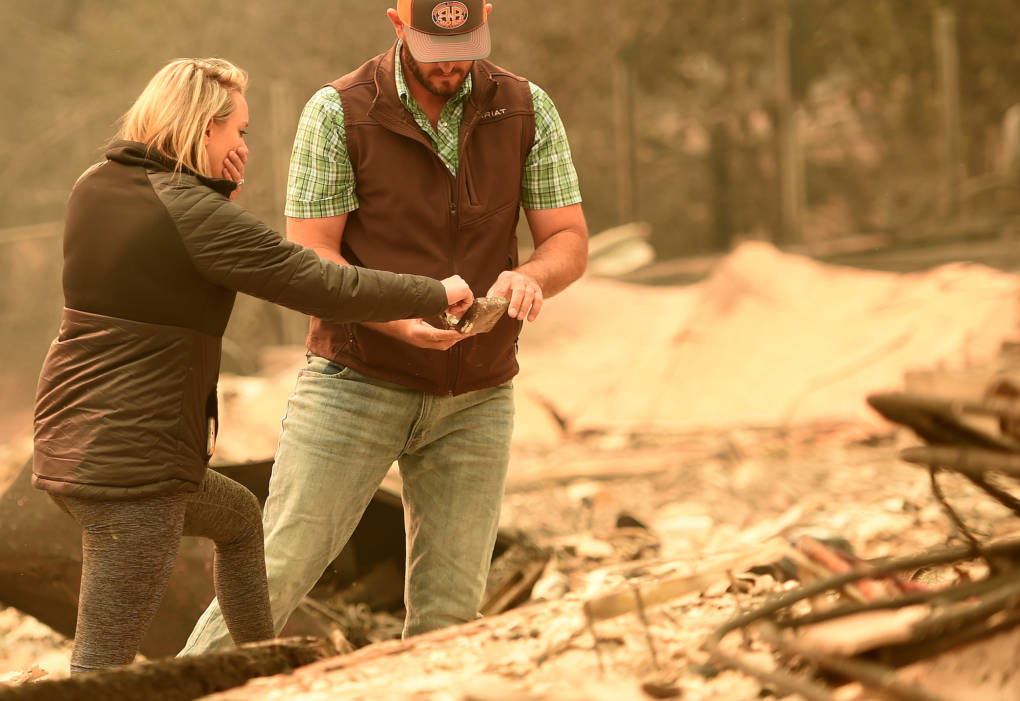
"caption": "Chris (R) and Nancy (L) Brown find the knife Chris won on their first date while looking over the remains of their burned home in Paradise, California, on Nov. 12, 2018. ",
"description": "Chris (R) and Nancy (L) Brown find the knife Chris won on their first date while looking over the remains of their burned home in Paradise, California on November 12, 2018. ",
"title": "US-FIRE-CALIFORNIA-ENVIORNMENT-WEATHER",
"credit": "JOSH EDELSON/AFP/Getty Images",
"status": "inherit",
"isLoading": false,
"fetchFailed": false
},
"news_11720258": {
"type": "attachments",
"id": "news_11720258",
"meta": {
"index": "attachments_1716263798",
"site": "news",
"id": "11720258",
"found": true
},
"parent": 11720214,
"imgSizes": {
"twentyfourteen-full-width": {
"file": "https://ww2.kqed.org/app/uploads/sites/10/2019/01/RS34774_Image-from-iOS-42-qut-1038x576.jpg",
"width": 1038,
"mimeType": "image/jpeg",
"height": 576
},
"thumbnail": {
"file": "https://ww2.kqed.org/app/uploads/sites/10/2019/01/RS34774_Image-from-iOS-42-qut-160x120.jpg",
"width": 160,
"mimeType": "image/jpeg",
"height": 120
},
"post-thumbnail": {
"file": "https://ww2.kqed.org/app/uploads/sites/10/2019/01/RS34774_Image-from-iOS-42-qut-672x372.jpg",
"width": 672,
"mimeType": "image/jpeg",
"height": 372
},
"kqedFullSize": {
"file": "https://ww2.kqed.org/app/uploads/sites/10/2019/01/RS34774_Image-from-iOS-42-qut.jpg",
"width": 1920,
"height": 1440
},
"large": {
"file": "https://ww2.kqed.org/app/uploads/sites/10/2019/01/RS34774_Image-from-iOS-42-qut-1020x765.jpg",
"width": 1020,
"mimeType": "image/jpeg",
"height": 765
},
"complete_open_graph": {
"file": "https://ww2.kqed.org/app/uploads/sites/10/2019/01/RS34774_Image-from-iOS-42-qut-1200x900.jpg",
"width": 1200,
"mimeType": "image/jpeg",
"height": 900
},
"guest-author-50": {
"file": "https://ww2.kqed.org/app/uploads/sites/10/2019/01/RS34774_Image-from-iOS-42-qut-50x50.jpg",
"width": 50,
"mimeType": "image/jpeg",
"height": 50
},
"guest-author-96": {
"file": "https://ww2.kqed.org/app/uploads/sites/10/2019/01/RS34774_Image-from-iOS-42-qut-96x96.jpg",
"width": 96,
"mimeType": "image/jpeg",
"height": 96
},
"medium": {
"file": "https://ww2.kqed.org/app/uploads/sites/10/2019/01/RS34774_Image-from-iOS-42-qut-800x600.jpg",
"width": 800,
"mimeType": "image/jpeg",
"height": 600
},
"guest-author-64": {
"file": "https://ww2.kqed.org/app/uploads/sites/10/2019/01/RS34774_Image-from-iOS-42-qut-64x64.jpg",
"width": 64,
"mimeType": "image/jpeg",
"height": 64
},
"guest-author-32": {
"file": "https://ww2.kqed.org/app/uploads/sites/10/2019/01/RS34774_Image-from-iOS-42-qut-32x32.jpg",
"width": 32,
"mimeType": "image/jpeg",
"height": 32
},
"full-width": {
"file": "https://ww2.kqed.org/app/uploads/sites/10/2019/01/RS34774_Image-from-iOS-42-qut-1920x1440.jpg",
"width": 1920,
"mimeType": "image/jpeg",
"height": 1440
},
"detail": {
"file": "https://ww2.kqed.org/app/uploads/sites/10/2019/01/RS34774_Image-from-iOS-42-qut-150x150.jpg",
"width": 150,
"mimeType": "image/jpeg",
"height": 150
},
"guest-author-128": {
"file": "https://ww2.kqed.org/app/uploads/sites/10/2019/01/RS34774_Image-from-iOS-42-qut-128x128.jpg",
"width": 128,
"mimeType": "image/jpeg",
"height": 128
}
},
"publishDate": 1548275283,
"modified": 1548275365,
"caption": "April Whitley sits in her home in Chico in January 2019. She's lived in the home for three years, but she is being evicted so her landlord's daughter, who lost her home in the Camp Fire, can move in.",
"description": "April Whitley sits in her home in Chico in January 2019. She's lived in the home for three years, but she is being evicted so her landlord's daughter, who lost her home in the Camp Fire, can move in.",
"title": "RS34774_Image from iOS (42)-qut",
"credit": "Sonja Hutson/KQED",
"status": "inherit",
"isLoading": false,
"fetchFailed": false
},
"news_11716009": {
"type": "attachments",
"id": "news_11716009",
"meta": {
"index": "attachments_1716263798",
"site": "news",
"id": "11716009",
"found": true
},
"parent": 11716007,
"imgSizes": {
"twentyfourteen-full-width": {
"file": "https://ww2.kqed.org/app/uploads/sites/10/2019/01/ap_18337858678274-1-_wide-b3661194cac55bc29a698691365a275445ad4201-1-e1546644392947-1038x576.jpg",
"width": 1038,
"mimeType": "image/jpeg",
"height": 576
},
"thumbnail": {
"file": "https://ww2.kqed.org/app/uploads/sites/10/2019/01/ap_18337858678274-1-_wide-b3661194cac55bc29a698691365a275445ad4201-1-e1546644392947-160x90.jpg",
"width": 160,
"mimeType": "image/jpeg",
"height": 90
},
"post-thumbnail": {
"file": "https://ww2.kqed.org/app/uploads/sites/10/2019/01/ap_18337858678274-1-_wide-b3661194cac55bc29a698691365a275445ad4201-1-e1546644392947-672x372.jpg",
"width": 672,
"mimeType": "image/jpeg",
"height": 372
},
"kqedFullSize": {
"file": "https://ww2.kqed.org/app/uploads/sites/10/2019/01/ap_18337858678274-1-_wide-b3661194cac55bc29a698691365a275445ad4201-1-e1546644392947.jpg",
"width": 1920,
"height": 1079
},
"large": {
"file": "https://ww2.kqed.org/app/uploads/sites/10/2019/01/ap_18337858678274-1-_wide-b3661194cac55bc29a698691365a275445ad4201-1-e1546644392947-1020x573.jpg",
"width": 1020,
"mimeType": "image/jpeg",
"height": 573
},
"complete_open_graph": {
"file": "https://ww2.kqed.org/app/uploads/sites/10/2019/01/ap_18337858678274-1-_wide-b3661194cac55bc29a698691365a275445ad4201-1-e1546644392947-1200x674.jpg",
"width": 1200,
"mimeType": "image/jpeg",
"height": 674
},
"guest-author-50": {
"file": "https://ww2.kqed.org/app/uploads/sites/10/2019/01/ap_18337858678274-1-_wide-b3661194cac55bc29a698691365a275445ad4201-1-e1546644392947-50x50.jpg",
"width": 50,
"mimeType": "image/jpeg",
"height": 50
},
"guest-author-96": {
"file": "https://ww2.kqed.org/app/uploads/sites/10/2019/01/ap_18337858678274-1-_wide-b3661194cac55bc29a698691365a275445ad4201-1-e1546644392947-96x96.jpg",
"width": 96,
"mimeType": "image/jpeg",
"height": 96
},
"medium": {
"file": "https://ww2.kqed.org/app/uploads/sites/10/2019/01/ap_18337858678274-1-_wide-b3661194cac55bc29a698691365a275445ad4201-1-e1546644392947-800x450.jpg",
"width": 800,
"mimeType": "image/jpeg",
"height": 450
},
"guest-author-64": {
"file": "https://ww2.kqed.org/app/uploads/sites/10/2019/01/ap_18337858678274-1-_wide-b3661194cac55bc29a698691365a275445ad4201-1-e1546644392947-64x64.jpg",
"width": 64,
"mimeType": "image/jpeg",
"height": 64
},
"guest-author-32": {
"file": "https://ww2.kqed.org/app/uploads/sites/10/2019/01/ap_18337858678274-1-_wide-b3661194cac55bc29a698691365a275445ad4201-1-e1546644392947-32x32.jpg",
"width": 32,
"mimeType": "image/jpeg",
"height": 32
},
"full-width": {
"file": "https://ww2.kqed.org/app/uploads/sites/10/2019/01/ap_18337858678274-1-_wide-b3661194cac55bc29a698691365a275445ad4201-1-e1546644392947-1920x1079.jpg",
"width": 1920,
"mimeType": "image/jpeg",
"height": 1079
},
"detail": {
"file": "https://ww2.kqed.org/app/uploads/sites/10/2019/01/ap_18337858678274-1-_wide-b3661194cac55bc29a698691365a275445ad4201-1-e1546644392947-150x150.jpg",
"width": 150,
"mimeType": "image/jpeg",
"height": 150
},
"guest-author-128": {
"file": "https://ww2.kqed.org/app/uploads/sites/10/2019/01/ap_18337858678274-1-_wide-b3661194cac55bc29a698691365a275445ad4201-1-e1546644392947-128x128.jpg",
"width": 128,
"mimeType": "image/jpeg",
"height": 128
}
},
"publishDate": 1546640023,
"modified": 1568388994,
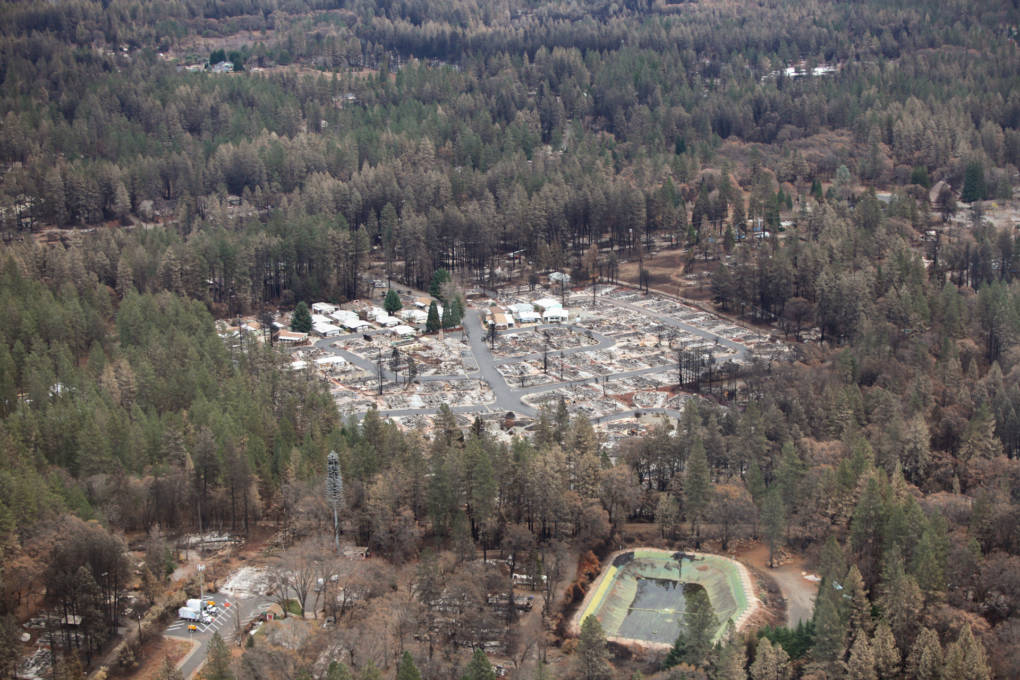
"caption": "The remains of a mobile home park in Paradise burned by the November 2018 Camp Fire. ",
"description": "Homes leveled by the November Camp Fire line the Ridgewood Mobile Home Park retirement community in Paradise, Calif. The state's largest utility, PG",
"title": "Homes leveled by the November Camp Fire line the Ridgewood Mobile Home Park retirement community in Paradise, Calif. The state's largest utility, PG&E, may face billions in liability costs if found responsible for igniting the fire.",
"credit": "Noah Berger/AP",
"status": "inherit",
"isLoading": false,
"fetchFailed": false
},
"news_11719755": {
"type": "attachments",
"id": "news_11719755",
"meta": {
"index": "attachments_1716263798",
"site": "news",
"id": "11719755",
"found": true
},
"parent": 11719092,
"imgSizes": {
"twentyfourteen-full-width": {
"file": "https://ww2.kqed.org/app/uploads/sites/10/2019/01/476dbdd3-rs34330_camp-fire-aerials_1204-14-qut-1038x576.jpg",
"width": 1038,
"mimeType": "image/jpeg",
"height": 576
},
"thumbnail": {
"file": "https://ww2.kqed.org/app/uploads/sites/10/2019/01/476dbdd3-rs34330_camp-fire-aerials_1204-14-qut-160x107.jpg",
"width": 160,
"mimeType": "image/jpeg",
"height": 107
},
"post-thumbnail": {
"file": "https://ww2.kqed.org/app/uploads/sites/10/2019/01/476dbdd3-rs34330_camp-fire-aerials_1204-14-qut-672x372.jpg",
"width": 672,
"mimeType": "image/jpeg",
"height": 372
},
"kqedFullSize": {
"file": "https://ww2.kqed.org/app/uploads/sites/10/2019/01/476dbdd3-rs34330_camp-fire-aerials_1204-14-qut.jpg",
"width": 1920,
"height": 1280
},
"large": {
"file": "https://ww2.kqed.org/app/uploads/sites/10/2019/01/476dbdd3-rs34330_camp-fire-aerials_1204-14-qut-1020x680.jpg",
"width": 1020,
"mimeType": "image/jpeg",
"height": 680
},
"complete_open_graph": {
"file": "https://ww2.kqed.org/app/uploads/sites/10/2019/01/476dbdd3-rs34330_camp-fire-aerials_1204-14-qut-1200x800.jpg",
"width": 1200,
"mimeType": "image/jpeg",
"height": 800
},
"guest-author-50": {
"file": "https://ww2.kqed.org/app/uploads/sites/10/2019/01/476dbdd3-rs34330_camp-fire-aerials_1204-14-qut-50x50.jpg",
"width": 50,
"mimeType": "image/jpeg",
"height": 50
},
"guest-author-96": {
"file": "https://ww2.kqed.org/app/uploads/sites/10/2019/01/476dbdd3-rs34330_camp-fire-aerials_1204-14-qut-96x96.jpg",
"width": 96,
"mimeType": "image/jpeg",
"height": 96
},
"medium": {
"file": "https://ww2.kqed.org/app/uploads/sites/10/2019/01/476dbdd3-rs34330_camp-fire-aerials_1204-14-qut-800x533.jpg",
"width": 800,
"mimeType": "image/jpeg",
"height": 533
},
"guest-author-64": {
"file": "https://ww2.kqed.org/app/uploads/sites/10/2019/01/476dbdd3-rs34330_camp-fire-aerials_1204-14-qut-64x64.jpg",
"width": 64,
"mimeType": "image/jpeg",
"height": 64
},
"guest-author-32": {
"file": "https://ww2.kqed.org/app/uploads/sites/10/2019/01/476dbdd3-rs34330_camp-fire-aerials_1204-14-qut-32x32.jpg",
"width": 32,
"mimeType": "image/jpeg",
"height": 32
},
"full-width": {
"file": "https://ww2.kqed.org/app/uploads/sites/10/2019/01/476dbdd3-rs34330_camp-fire-aerials_1204-14-qut-1920x1280.jpg",
"width": 1920,
"mimeType": "image/jpeg",
"height": 1280
},
"detail": {
"file": "https://ww2.kqed.org/app/uploads/sites/10/2019/01/476dbdd3-rs34330_camp-fire-aerials_1204-14-qut-150x150.jpg",
"width": 150,
"mimeType": "image/jpeg",
"height": 150
},
"guest-author-128": {
"file": "https://ww2.kqed.org/app/uploads/sites/10/2019/01/476dbdd3-rs34330_camp-fire-aerials_1204-14-qut-128x128.jpg",
"width": 128,
"mimeType": "image/jpeg",
"height": 128
}
},
"publishDate": 1548028501,
"modified": 1548028560,
"caption": "An aerial view of Paradise nearly a month after the Camp Fire decimated the town.",
"description": "An aerial view of Paradise nearly a month after the Camp Fire decimated the town.",
"title": "RS34330_Camp Fire aerials_1204-14-qut",
"credit": "Adam Grossberg/KQED",
"status": "inherit",
"isLoading": false,
"fetchFailed": false
},
"news_11718752": {
"type": "attachments",
"id": "news_11718752",
"meta": {
"index": "attachments_1716263798",
"site": "news",
"id": "11718752",
"found": true
},
"parent": 11718604,
"imgSizes": {
"twentyfourteen-full-width": {
"file": "https://ww2.kqed.org/app/uploads/sites/10/2019/01/Ramsey-1038x576.jpg",
"width": 1038,
"mimeType": "image/jpeg",
"height": 576
},
"thumbnail": {
"file": "https://ww2.kqed.org/app/uploads/sites/10/2019/01/Ramsey-160x105.jpg",
"width": 160,
"mimeType": "image/jpeg",
"height": 105
},
"post-thumbnail": {
"file": "https://ww2.kqed.org/app/uploads/sites/10/2019/01/Ramsey-672x372.jpg",
"width": 672,
"mimeType": "image/jpeg",
"height": 372
},
"kqedFullSize": {
"file": "https://ww2.kqed.org/app/uploads/sites/10/2019/01/Ramsey.jpg",
"width": 1920,
"height": 1265
},
"large": {
"file": "https://ww2.kqed.org/app/uploads/sites/10/2019/01/Ramsey-1020x672.jpg",
"width": 1020,
"mimeType": "image/jpeg",
"height": 672
},
"complete_open_graph": {
"file": "https://ww2.kqed.org/app/uploads/sites/10/2019/01/Ramsey-1200x791.jpg",
"width": 1200,
"mimeType": "image/jpeg",
"height": 791
},
"guest-author-50": {
"file": "https://ww2.kqed.org/app/uploads/sites/10/2019/01/Ramsey-50x50.jpg",
"width": 50,
"mimeType": "image/jpeg",
"height": 50
},
"guest-author-96": {
"file": "https://ww2.kqed.org/app/uploads/sites/10/2019/01/Ramsey-96x96.jpg",
"width": 96,
"mimeType": "image/jpeg",
"height": 96
},
"medium": {
"file": "https://ww2.kqed.org/app/uploads/sites/10/2019/01/Ramsey-800x527.jpg",
"width": 800,
"mimeType": "image/jpeg",
"height": 527
},
"guest-author-64": {
"file": "https://ww2.kqed.org/app/uploads/sites/10/2019/01/Ramsey-64x64.jpg",
"width": 64,
"mimeType": "image/jpeg",
"height": 64
},
"guest-author-32": {
"file": "https://ww2.kqed.org/app/uploads/sites/10/2019/01/Ramsey-32x32.jpg",
"width": 32,
"mimeType": "image/jpeg",
"height": 32
},
"full-width": {
"file": "https://ww2.kqed.org/app/uploads/sites/10/2019/01/Ramsey-1920x1265.jpg",
"width": 1920,
"mimeType": "image/jpeg",
"height": 1265
},
"detail": {
"file": "https://ww2.kqed.org/app/uploads/sites/10/2019/01/Ramsey-150x150.jpg",
"width": 150,
"mimeType": "image/jpeg",
"height": 150
},
"guest-author-128": {
"file": "https://ww2.kqed.org/app/uploads/sites/10/2019/01/Ramsey-128x128.jpg",
"width": 128,
"mimeType": "image/jpeg",
"height": 128
}
},
"publishDate": 1547681173,
"modified": 1547686357,
"caption": "Camp Fire survivor Jerillyn Ramsey, 73, stands in front of the entrance to the Silver Dollar fairgrounds in Chico on Jan. 12, 2018. It is the only shelter still open after the Camp Fire ignited on Nov. 8. If it closes, she would have no place to go.",
"description": "Camp Fire survivor Jerillyn Ramsey, 73, stands in front of the entrance to the Silver Dollar fairgrounds in Chico on Jan. 12, 2018. It is the only shelter still open after the Camp Fire ignited on Nov. 8. If it closes, she would have no place to go.",
"title": "Ramsey",
"credit": "Sonja Hutson/KQED",
"status": "inherit",
"isLoading": false,
"fetchFailed": false
},
"news_11706179": {
"type": "attachments",
"id": "news_11706179",
"meta": {
"index": "attachments_1716263798",
"site": "news",
"id": "11706179",
"found": true
},
"parent": 11706131,
"imgSizes": {
"twentyfourteen-full-width": {
"file": "https://ww2.kqed.org/app/uploads/sites/10/2018/11/gettyimages-1060356618-e1542166444868-1038x576.jpg",
"width": 1038,
"mimeType": "image/jpeg",
"height": 576
},
"thumbnail": {
"file": "https://ww2.kqed.org/app/uploads/sites/10/2018/11/gettyimages-1060356618-e1542166444868-160x107.jpg",
"width": 160,
"mimeType": "image/jpeg",
"height": 107
},
"post-thumbnail": {
"file": "https://ww2.kqed.org/app/uploads/sites/10/2018/11/gettyimages-1060356618-e1542166444868-672x372.jpg",
"width": 672,
"mimeType": "image/jpeg",
"height": 372
},
"kqedFullSize": {
"file": "https://ww2.kqed.org/app/uploads/sites/10/2018/11/gettyimages-1060356618-e1542166444868.jpg",
"width": 1920,
"height": 1278
},
"large": {
"file": "https://ww2.kqed.org/app/uploads/sites/10/2018/11/gettyimages-1060356618-e1542166444868-1020x679.jpg",
"width": 1020,
"mimeType": "image/jpeg",
"height": 679
},
"complete_open_graph": {
"file": "https://ww2.kqed.org/app/uploads/sites/10/2018/11/gettyimages-1060356618-e1542166444868-1200x799.jpg",
"width": 1200,
"mimeType": "image/jpeg",
"height": 799
},
"guest-author-50": {
"file": "https://ww2.kqed.org/app/uploads/sites/10/2018/11/gettyimages-1060356618-e1542166444868-50x50.jpg",
"width": 50,
"mimeType": "image/jpeg",
"height": 50
},
"guest-author-96": {
"file": "https://ww2.kqed.org/app/uploads/sites/10/2018/11/gettyimages-1060356618-e1542166444868-96x96.jpg",
"width": 96,
"mimeType": "image/jpeg",
"height": 96
},
"medium": {
"file": "https://ww2.kqed.org/app/uploads/sites/10/2018/11/gettyimages-1060356618-e1542166444868-800x533.jpg",
"width": 800,
"mimeType": "image/jpeg",
"height": 533
},
"guest-author-64": {
"file": "https://ww2.kqed.org/app/uploads/sites/10/2018/11/gettyimages-1060356618-e1542166444868-64x64.jpg",
"width": 64,
"mimeType": "image/jpeg",
"height": 64
},
"guest-author-32": {
"file": "https://ww2.kqed.org/app/uploads/sites/10/2018/11/gettyimages-1060356618-e1542166444868-32x32.jpg",
"width": 32,
"mimeType": "image/jpeg",
"height": 32
},
"full-width": {
"file": "https://ww2.kqed.org/app/uploads/sites/10/2018/11/gettyimages-1060356618-e1542166444868-1920x1278.jpg",
"width": 1920,
"mimeType": "image/jpeg",
"height": 1278
},
"detail": {
"file": "https://ww2.kqed.org/app/uploads/sites/10/2018/11/gettyimages-1060356618-e1542166444868-150x150.jpg",
"width": 150,
"mimeType": "image/jpeg",
"height": 150
},
"guest-author-128": {
"file": "https://ww2.kqed.org/app/uploads/sites/10/2018/11/gettyimages-1060356618-e1542166444868-128x128.jpg",
"width": 128,
"mimeType": "image/jpeg",
"height": 128
}
},
"publishDate": 1542166120,
"modified": 1555551488,
"caption": "PG&E transmission towers on the Caribou-Palermo line are seen against a smoky landscape adjacent to the Feather River in Butte County last November. The towers are close to the spot where officials say the Camp Fire began.",
"description": "PG&E transmission line towers on the Caribou-Palermo line are seen against a smoky landscape adjacent to the Feather River in Butte County and close to the spot where officials say the Camp Fire began.",
"title": "PG&E-Camp Fire",
"credit": "Josh Edelson/AFP-Getty Images",
"status": "inherit",
"isLoading": false,
"fetchFailed": false
},
"news_11718338": {
"type": "attachments",
"id": "news_11718338",
"meta": {
"index": "attachments_1716263798",
"site": "news",
"id": "11718338",
"found": true
},
"parent": 11718337,
"imgSizes": {
"twentyfourteen-full-width": {
"file": "https://ww2.kqed.org/app/uploads/sites/10/2019/01/image-from-ios-3-_wide-b25b5bd6173f6d679f9c81f58a5af945cdf68e39-e1547585705801-1038x576.jpg",
"width": 1038,
"mimeType": "image/jpeg",
"height": 576
},
"thumbnail": {
"file": "https://ww2.kqed.org/app/uploads/sites/10/2019/01/image-from-ios-3-_wide-b25b5bd6173f6d679f9c81f58a5af945cdf68e39-e1547585705801-160x90.jpg",
"width": 160,
"mimeType": "image/jpeg",
"height": 90
},
"post-thumbnail": {
"file": "https://ww2.kqed.org/app/uploads/sites/10/2019/01/image-from-ios-3-_wide-b25b5bd6173f6d679f9c81f58a5af945cdf68e39-e1547585705801-672x372.jpg",
"width": 672,
"mimeType": "image/jpeg",
"height": 372
},
"kqedFullSize": {
"file": "https://ww2.kqed.org/app/uploads/sites/10/2019/01/image-from-ios-3-_wide-b25b5bd6173f6d679f9c81f58a5af945cdf68e39-e1547585705801.jpg",
"width": 1920,
"height": 1080
},
"large": {
"file": "https://ww2.kqed.org/app/uploads/sites/10/2019/01/image-from-ios-3-_wide-b25b5bd6173f6d679f9c81f58a5af945cdf68e39-e1547585705801-1020x574.jpg",
"width": 1020,
"mimeType": "image/jpeg",
"height": 574
},
"complete_open_graph": {
"file": "https://ww2.kqed.org/app/uploads/sites/10/2019/01/image-from-ios-3-_wide-b25b5bd6173f6d679f9c81f58a5af945cdf68e39-e1547585705801-1200x675.jpg",
"width": 1200,
"mimeType": "image/jpeg",
"height": 675
},
"guest-author-50": {
"file": "https://ww2.kqed.org/app/uploads/sites/10/2019/01/image-from-ios-3-_wide-b25b5bd6173f6d679f9c81f58a5af945cdf68e39-e1547585705801-50x50.jpg",
"width": 50,
"mimeType": "image/jpeg",
"height": 50
},
"guest-author-96": {
"file": "https://ww2.kqed.org/app/uploads/sites/10/2019/01/image-from-ios-3-_wide-b25b5bd6173f6d679f9c81f58a5af945cdf68e39-e1547585705801-96x96.jpg",
"width": 96,
"mimeType": "image/jpeg",
"height": 96
},
"medium": {
"file": "https://ww2.kqed.org/app/uploads/sites/10/2019/01/image-from-ios-3-_wide-b25b5bd6173f6d679f9c81f58a5af945cdf68e39-e1547585705801-800x450.jpg",
"width": 800,
"mimeType": "image/jpeg",
"height": 450
},
"guest-author-64": {
"file": "https://ww2.kqed.org/app/uploads/sites/10/2019/01/image-from-ios-3-_wide-b25b5bd6173f6d679f9c81f58a5af945cdf68e39-e1547585705801-64x64.jpg",
"width": 64,
"mimeType": "image/jpeg",
"height": 64
},
"guest-author-32": {
"file": "https://ww2.kqed.org/app/uploads/sites/10/2019/01/image-from-ios-3-_wide-b25b5bd6173f6d679f9c81f58a5af945cdf68e39-e1547585705801-32x32.jpg",
"width": 32,
"mimeType": "image/jpeg",
"height": 32
},
"full-width": {
"file": "https://ww2.kqed.org/app/uploads/sites/10/2019/01/image-from-ios-3-_wide-b25b5bd6173f6d679f9c81f58a5af945cdf68e39-e1547585705801-1920x1080.jpg",
"width": 1920,
"mimeType": "image/jpeg",
"height": 1080
},
"detail": {
"file": "https://ww2.kqed.org/app/uploads/sites/10/2019/01/image-from-ios-3-_wide-b25b5bd6173f6d679f9c81f58a5af945cdf68e39-e1547585705801-150x150.jpg",
"width": 150,
"mimeType": "image/jpeg",
"height": 150
},
"guest-author-128": {
"file": "https://ww2.kqed.org/app/uploads/sites/10/2019/01/image-from-ios-3-_wide-b25b5bd6173f6d679f9c81f58a5af945cdf68e39-e1547585705801-128x128.jpg",
"width": 128,
"mimeType": "image/jpeg",
"height": 128
}
},
"publishDate": 1547585497,
"modified": 1557410344,
"caption": "After the Camp Fire in November, thousands of people whose homes were destroyed in and around Paradise were forced to seek refuge in nearby Chico. ",
"description": "After the Camp Fire in November, thousands of people whose homes were destroyed in and around Paradise were forced to seek refuge in nearby Chico. Some 700 people, some in their RVs, are still living at a Red Cross shelter at the Chico fairgrounds. The shelter is expected to close at the end of January.",
"title": "After the Camp Fire in November, thousands of people whose homes were destroyed were forced to seek refuge in nearby Chico, Calif. Some 700 people, some in their RVs, are still living at a Red Cross shelter at the Chico fairgrounds. The shelter is expected to close at the end of January.",
"credit": "Kirk Siegler/NPR",
"status": "inherit",
"isLoading": false,
"fetchFailed": false
},
"news_11706744": {
"type": "attachments",
"id": "news_11706744",
"meta": {
"index": "attachments_1716263798",
"site": "news",
"id": "11706744",
"found": true
},
"parent": 11706641,
"imgSizes": {
"twentyfourteen-full-width": {
"file": "https://ww2.kqed.org/app/uploads/sites/10/2018/11/PGEWorker-1038x576.jpg",
"width": 1038,
"mimeType": "image/jpeg",
"height": 576
},
"thumbnail": {
"file": "https://ww2.kqed.org/app/uploads/sites/10/2018/11/PGEWorker-160x109.jpg",
"width": 160,
"mimeType": "image/jpeg",
"height": 109
},
"post-thumbnail": {
"file": "https://ww2.kqed.org/app/uploads/sites/10/2018/11/PGEWorker-672x372.jpg",
"width": 672,
"mimeType": "image/jpeg",
"height": 372
},
"kqedFullSize": {
"file": "https://ww2.kqed.org/app/uploads/sites/10/2018/11/PGEWorker.jpg",
"width": 1920,
"height": 1308
},
"large": {
"file": "https://ww2.kqed.org/app/uploads/sites/10/2018/11/PGEWorker-1020x695.jpg",
"width": 1020,
"mimeType": "image/jpeg",
"height": 695
},
"complete_open_graph": {
"file": "https://ww2.kqed.org/app/uploads/sites/10/2018/11/PGEWorker-1200x818.jpg",
"width": 1200,
"mimeType": "image/jpeg",
"height": 818
},
"guest-author-50": {
"file": "https://ww2.kqed.org/app/uploads/sites/10/2018/11/PGEWorker-50x50.jpg",
"width": 50,
"mimeType": "image/jpeg",
"height": 50
},
"guest-author-96": {
"file": "https://ww2.kqed.org/app/uploads/sites/10/2018/11/PGEWorker-96x96.jpg",
"width": 96,
"mimeType": "image/jpeg",
"height": 96
},
"medium": {
"file": "https://ww2.kqed.org/app/uploads/sites/10/2018/11/PGEWorker-800x545.jpg",
"width": 800,
"mimeType": "image/jpeg",
"height": 545
},
"guest-author-64": {
"file": "https://ww2.kqed.org/app/uploads/sites/10/2018/11/PGEWorker-64x64.jpg",
"width": 64,
"mimeType": "image/jpeg",
"height": 64
},
"guest-author-32": {
"file": "https://ww2.kqed.org/app/uploads/sites/10/2018/11/PGEWorker-32x32.jpg",
"width": 32,
"mimeType": "image/jpeg",
"height": 32
},
"full-width": {
"file": "https://ww2.kqed.org/app/uploads/sites/10/2018/11/PGEWorker-1920x1308.jpg",
"width": 1920,
"mimeType": "image/jpeg",
"height": 1308
},
"detail": {
"file": "https://ww2.kqed.org/app/uploads/sites/10/2018/11/PGEWorker-150x150.jpg",
"width": 150,
"mimeType": "image/jpeg",
"height": 150
},
"guest-author-128": {
"file": "https://ww2.kqed.org/app/uploads/sites/10/2018/11/PGEWorker-128x128.jpg",
"width": 128,
"mimeType": "image/jpeg",
"height": 128
}
},
"publishDate": 1542332663,
"modified": 1568389105,
"caption": "A PG&E worker clears fallen power cables from a road in the Butte County town of Paradise after the Camp Fire swept through the community in November 2018. ",
"description": "A PG&E worker clears fallen power cables from the road on Nov. 13, 2018, in Paradise, after the town was decimated by the Camp Fire.",
"title": "PGEWorker",
"credit": "Anne Wernikoff/KQED",
"status": "inherit",
"isLoading": false,
"fetchFailed": false
},
"news_11717847": {
"type": "attachments",
"id": "news_11717847",
"meta": {
"index": "attachments_1716263798",
"site": "news",
"id": "11717847",
"found": true
},
"parent": 11717846,
"imgSizes": {
"twentyfourteen-full-width": {
"file": "https://ww2.kqed.org/app/uploads/sites/10/2019/01/ap_615295480226-706a2273ec8f6b0fad30bc02457eba90590772cd-1038x576.jpg",
"width": 1038,
"mimeType": "image/jpeg",
"height": 576
},
"thumbnail": {
"file": "https://ww2.kqed.org/app/uploads/sites/10/2019/01/ap_615295480226-706a2273ec8f6b0fad30bc02457eba90590772cd-160x120.jpg",
"width": 160,
"mimeType": "image/jpeg",
"height": 120
},
"post-thumbnail": {
"file": "https://ww2.kqed.org/app/uploads/sites/10/2019/01/ap_615295480226-706a2273ec8f6b0fad30bc02457eba90590772cd-672x372.jpg",
"width": 672,
"mimeType": "image/jpeg",
"height": 372
},
"kqedFullSize": {
"file": "https://ww2.kqed.org/app/uploads/sites/10/2019/01/ap_615295480226-706a2273ec8f6b0fad30bc02457eba90590772cd.jpg",
"width": 3645,
"height": 2734
},
"large": {
"file": "https://ww2.kqed.org/app/uploads/sites/10/2019/01/ap_615295480226-706a2273ec8f6b0fad30bc02457eba90590772cd-1020x765.jpg",
"width": 1020,
"mimeType": "image/jpeg",
"height": 765
},
"complete_open_graph": {
"file": "https://ww2.kqed.org/app/uploads/sites/10/2019/01/ap_615295480226-706a2273ec8f6b0fad30bc02457eba90590772cd-1200x900.jpg",
"width": 1200,
"mimeType": "image/jpeg",
"height": 900
},
"guest-author-50": {
"file": "https://ww2.kqed.org/app/uploads/sites/10/2019/01/ap_615295480226-706a2273ec8f6b0fad30bc02457eba90590772cd-50x50.jpg",
"width": 50,
"mimeType": "image/jpeg",
"height": 50
},
"guest-author-96": {
"file": "https://ww2.kqed.org/app/uploads/sites/10/2019/01/ap_615295480226-706a2273ec8f6b0fad30bc02457eba90590772cd-96x96.jpg",
"width": 96,
"mimeType": "image/jpeg",
"height": 96
},
"medium": {
"file": "https://ww2.kqed.org/app/uploads/sites/10/2019/01/ap_615295480226-706a2273ec8f6b0fad30bc02457eba90590772cd-800x600.jpg",
"width": 800,
"mimeType": "image/jpeg",
"height": 600
},
"guest-author-64": {
"file": "https://ww2.kqed.org/app/uploads/sites/10/2019/01/ap_615295480226-706a2273ec8f6b0fad30bc02457eba90590772cd-64x64.jpg",
"width": 64,
"mimeType": "image/jpeg",
"height": 64
},
"guest-author-32": {
"file": "https://ww2.kqed.org/app/uploads/sites/10/2019/01/ap_615295480226-706a2273ec8f6b0fad30bc02457eba90590772cd-32x32.jpg",
"width": 32,
"mimeType": "image/jpeg",
"height": 32
},
"full-width": {
"file": "https://ww2.kqed.org/app/uploads/sites/10/2019/01/ap_615295480226-706a2273ec8f6b0fad30bc02457eba90590772cd-1920x1440.jpg",
"width": 1920,
"mimeType": "image/jpeg",
"height": 1440
},
"detail": {
"file": "https://ww2.kqed.org/app/uploads/sites/10/2019/01/ap_615295480226-706a2273ec8f6b0fad30bc02457eba90590772cd-150x150.jpg",
"width": 150,
"mimeType": "image/jpeg",
"height": 150
},
"guest-author-128": {
"file": "https://ww2.kqed.org/app/uploads/sites/10/2019/01/ap_615295480226-706a2273ec8f6b0fad30bc02457eba90590772cd-128x128.jpg",
"width": 128,
"mimeType": "image/jpeg",
"height": 128
}
},
"publishDate": 1547310155,
"modified": 1547310814,
"caption": "Winter is peak time for prescribed burns, deliberately set fires designed to eliminate leaves and other flammable material that could fuel a larger forest fire. But the partial government shutdown is interfering with this and other preparations for the fire season.",
"description": "Winter is peak time for prescribed burns, deliberately set fires designed to eliminate leaves and other flammable material that could fuel a larger forest fire. But the partial government shutdown is interfering with this and other preparations for the fire season.",
"title": "Winter is peak time for prescribed burns, deliberately set fires designed to eliminate leaves and other flammable material that could fuel a larger forest fire. But the partial government shutdown is interfering with this and other preparations for the fire season.",
"credit": "Wayne Parry/AP",
"status": "inherit",
"isLoading": false,
"fetchFailed": false
}
},
"audioPlayerReducer": {
"postId": "stream_live",
"isPaused": true,
"isPlaying": false,
"pfsActive": false,
"pledgeModalIsOpen": true,
"playerDrawerIsOpen": false,
"liveAudioPlayStartedAt": 0,
"liveAudioPlayContext": ""
},
"authorsReducer": {
"byline_news_11721648": {
"type": "authors",
"id": "byline_news_11721648",
"meta": {
"override": true
},
"slug": "byline_news_11721648",
"name": "Kathleen Ronayne \u003cbr> The Associated Press",
"isLoading": false
},
"byline_news_11719092": {
"type": "authors",
"id": "byline_news_11719092",
"meta": {
"override": true
},
"slug": "byline_news_11719092",
"name": "\u003ca href=\"https://twitter.com/tessacotsirilos\">Teresa Cotsirilos\u003c/a>\u003c/br>KALW",
"isLoading": false
},
"byline_news_11718337": {
"type": "authors",
"id": "byline_news_11718337",
"meta": {
"override": true
},
"slug": "byline_news_11718337",
"name": "Kirk Siegler",
"isLoading": false
},
"byline_news_11717846": {
"type": "authors",
"id": "byline_news_11717846",
"meta": {
"override": true
},
"slug": "byline_news_11717846",
"name": "Nathan Rott",
"isLoading": false
},
"lisapickoffwhite-2": {
"type": "authors",
"id": "199",
"meta": {
"index": "authors_1716337520",
"id": "199",
"found": true
},
"name": "Lisa Pickoff-White",
"firstName": "Lisa",
"lastName": "Pickoff-White",
"slug": "lisapickoffwhite-2",
"email": "lpickoffwhite@kqed.org",
"display_author_email": false,
"staff_mastheads": [
"news"
],
"title": "Data Journalist, Senior Producer",
"bio": "Lisa Pickoff-White is KQED's data reporter. Lisa specializes in simplifying complex topics and bringing them to life through compelling visuals, including photography and data visualizations. She previously has worked at the Center for Investigative Reporting and other national outlets. Her work has been honored with awards from the Online News Association, Investigative Reporters and Editors, the Society of Professional Journalists and SXSW Interactive. \u003cstrong> \u003c/strong>",
"avatar": "https://secure.gravatar.com/avatar/5513c5f3967df792aa65bee2501e84d6?s=600&d=blank&r=g",
"twitter": "pickoffwhite",
"facebook": null,
"instagram": null,
"linkedin": null,
"sites": [
{
"site": "",
"roles": [
"editor"
]
},
{
"site": "arts",
"roles": []
},
{
"site": "news",
"roles": [
"administrator"
]
},
{
"site": "about",
"roles": [
"editor"
]
},
{
"site": "stateofhealth",
"roles": [
"administrator"
]
},
{
"site": "science",
"roles": [
"editor"
]
},
{
"site": "quest",
"roles": [
"editor"
]
},
{
"site": "forum",
"roles": [
"editor"
]
}
],
"headData": {
"title": "Lisa Pickoff-White | KQED",
"description": "Data Journalist, Senior Producer",
"ogImgSrc": "https://secure.gravatar.com/avatar/5513c5f3967df792aa65bee2501e84d6?s=600&d=blank&r=g",
"twImgSrc": "https://secure.gravatar.com/avatar/5513c5f3967df792aa65bee2501e84d6?s=600&d=blank&r=g"
},
"isLoading": false,
"link": "/author/lisapickoffwhite-2"
},
"danbrekke": {
"type": "authors",
"id": "222",
"meta": {
"index": "authors_1716337520",
"id": "222",
"found": true
},
"name": "Dan Brekke",
"firstName": "Dan",
"lastName": "Brekke",
"slug": "danbrekke",
"email": "dbrekke@kqed.org",
"display_author_email": true,
"staff_mastheads": [
"news",
"science"
],
"title": "KQED Editor and Reporter",
"bio": "Dan Brekke is a reporter and editor for KQED News, responsible for coverage of topics ranging from California water issues to the Bay Area's transportation challenges. In a newsroom career that began in Chicago in 1972, Dan has worked for \u003cem>The San Francisco Examiner,\u003c/em> Wired and TechTV and has been published in The New York Times, The New York Times Magazine, Business 2.0, Salon and elsewhere.\r\n\r\nSince joining KQED in 2007, Dan has reported, edited and produced both radio and online features and breaking news pieces. He has shared as both editor and reporter in four Society of Professional Journalists Norcal Excellence in Journalism awards and one Edward R. Murrow regional award. He was chosen for a spring 2017 residency at the Mesa Refuge to advance his research on California salmon.\r\n\r\nEmail Dan at: \u003ca href=\"mailto:dbrekke@kqed.org\">dbrekke@kqed.org\u003c/a>\r\n\r\n\u003cstrong>Twitter:\u003c/strong> \u003ca href=\"https://twitter.com/danbrekke\" rel=\"noopener noreferrer\">twitter.com/danbrekke\u003c/a>\r\n\u003cstrong>Facebook:\u003c/strong> \u003ca href=\"https://www.facebook.com/danbrekke\" rel=\"noopener noreferrer\">www.facebook.com/danbrekke\u003c/a>\r\n\u003cstrong>LinkedIn:\u003c/strong> \u003ca href=\"https://www.linkedin.com/in/danbrekke\" rel=\"noopener noreferrer\">www.linkedin.com/in/danbrekke\u003c/a>",
"avatar": "https://secure.gravatar.com/avatar/c8126230345efca3f7aa89b1a402be45?s=600&d=mm&r=g",
"twitter": "danbrekke",
"facebook": null,
"instagram": "https://www.instagram.com/dan.brekke/",
"linkedin": "https://www.linkedin.com/in/danbrekke/",
"sites": [
{
"site": "news",
"roles": [
"administrator",
"create_posts"
]
},
{
"site": "stateofhealth",
"roles": [
"editor"
]
},
{
"site": "science",
"roles": [
"editor"
]
},
{
"site": "quest",
"roles": [
"contributor"
]
},
{
"site": "food",
"roles": [
"contributor"
]
},
{
"site": "forum",
"roles": [
"contributor"
]
},
{
"site": "liveblog",
"roles": [
"editor"
]
}
],
"headData": {
"title": "Dan Brekke | KQED",
"description": "KQED Editor and Reporter",
"ogImgSrc": "https://secure.gravatar.com/avatar/c8126230345efca3f7aa89b1a402be45?s=600&d=mm&r=g",
"twImgSrc": "https://secure.gravatar.com/avatar/c8126230345efca3f7aa89b1a402be45?s=600&d=mm&r=g"
},
"isLoading": false,
"link": "/author/danbrekke"
},
"matthewgreen": {
"type": "authors",
"id": "1263",
"meta": {
"index": "authors_1716337520",
"id": "1263",
"found": true
},
"name": "Matthew Green",
"firstName": "Matthew",
"lastName": "Green",
"slug": "matthewgreen",
"email": "mgreen@kqed.org",
"display_author_email": false,
"staff_mastheads": [],
"title": "KQED Editor/Reporter",
"bio": "Matthew Green is a digital media producer for KQED News. He previously produced \u003ca href=\"http://www.kqed.org/lowdown\">The Lowdown\u003c/a>, KQED’s multimedia news education blog. Matthew's written for numerous Bay Area publications, including the Oakland Tribune and San Francisco Chronicle. He also taught journalism classes at Fremont High School in East Oakland.\r\n\r\nEmail: mgreen@kqed.org; Twitter: @MGreenKQED",
"avatar": "https://secure.gravatar.com/avatar/3bf498d1267ca02c8494f33d8cfc575e?s=600&d=blank&r=g",
"twitter": "MGreenKQED",
"facebook": null,
"instagram": null,
"linkedin": null,
"sites": [
{
"site": "news",
"roles": []
},
{
"site": "lowdown",
"roles": []
},
{
"site": "science",
"roles": []
},
{
"site": "education",
"roles": []
},
{
"site": "quest",
"roles": []
},
{
"site": "liveblog",
"roles": []
}
],
"headData": {
"title": "Matthew Green | KQED",
"description": "KQED Editor/Reporter",
"ogImgSrc": "https://secure.gravatar.com/avatar/3bf498d1267ca02c8494f33d8cfc575e?s=600&d=blank&r=g",
"twImgSrc": "https://secure.gravatar.com/avatar/3bf498d1267ca02c8494f33d8cfc575e?s=600&d=blank&r=g"
},
"isLoading": false,
"link": "/author/matthewgreen"
},
"peterjonshuler": {
"type": "authors",
"id": "1329",
"meta": {
"index": "authors_1716337520",
"id": "1329",
"found": true
},
"name": "Peter Jon Shuler",
"firstName": "Peter Jon",
"lastName": "Shuler",
"slug": "peterjonshuler",
"email": "pshuler@kqed.org",
"display_author_email": false,
"staff_mastheads": [],
"title": null,
"bio": "Peter is a general assignment reporter covering Northern California news for KQED’s daily radio newscasts. He reports on a wide range of stories from current court cases to San Jose city hall.\r\n\r\nSince joining KQED in 1990, Peter has covered everything from the beginnings of the World Wide Web to the dot-com bust, from preserving Silicon Valley's open space to the preservation of historic Valley landmarks.\r\n\r\nPeter caught the radio bug at WAUS-FM while still a student at Andrews University in his home town of Berrien Springs, MI. He did local news and hosted a classical music program. Since then, he has pursued a variety of assignments, including production work at WBAI in New York and broadcasting to the English language community of Geneva, Switzerland via Radio 74. Email: \u003ca href=\"mailto:pshuler@kqed.org\">pshuler@kqed.org\u003c/a>",
"avatar": "https://secure.gravatar.com/avatar/4bcbeaf7cf49fec98284db283a33a47b?s=600&d=blank&r=g",
"twitter": null,
"facebook": null,
"instagram": null,
"linkedin": null,
"sites": [
{
"site": "news",
"roles": [
"contributor"
]
}
],
"headData": {
"title": "Peter Jon Shuler | KQED",
"description": null,
"ogImgSrc": "https://secure.gravatar.com/avatar/4bcbeaf7cf49fec98284db283a33a47b?s=600&d=blank&r=g",
"twImgSrc": "https://secure.gravatar.com/avatar/4bcbeaf7cf49fec98284db283a33a47b?s=600&d=blank&r=g"
},
"isLoading": false,
"link": "/author/peterjonshuler"
},
"shossaini": {
"type": "authors",
"id": "3214",
"meta": {
"index": "authors_1716337520",
"id": "3214",
"found": true
},
"name": "Sara Hossaini",
"firstName": "Sara",
"lastName": "Hossaini",
"slug": "shossaini",
"email": "shossaini@kqed.org",
"display_author_email": true,
"staff_mastheads": [
"news"
],
"title": "KQED Reporter",
"bio": "Sara Hossaini came to general assignment reporting at KQED in 2013 after two winters reporting at Wyoming Public Radio. She holds a bachelor's degree in broadcast journalism from the University of Nebraska-Lincoln. Her radio romance began after a bitter breakup with documentary film (Ok, maybe it's still complicated). Her first simultaneous jobs in San Francisco were as Associate Producer on a PBS film series through the Center for Asian American Media and as a butler. She likes to trot, plot and make things with her hands.",
"avatar": "https://secure.gravatar.com/avatar/060e9f56b9554e17942e89f413242774?s=600&d=blank&r=g",
"twitter": "mshossaini",
"facebook": null,
"instagram": null,
"linkedin": null,
"sites": [
{
"site": "news",
"roles": [
"author"
]
},
{
"site": "stateofhealth",
"roles": [
"author"
]
}
],
"headData": {
"title": "Sara Hossaini | KQED",
"description": "KQED Reporter",
"ogImgSrc": "https://secure.gravatar.com/avatar/060e9f56b9554e17942e89f413242774?s=600&d=blank&r=g",
"twImgSrc": "https://secure.gravatar.com/avatar/060e9f56b9554e17942e89f413242774?s=600&d=blank&r=g"
},
"isLoading": false,
"link": "/author/shossaini"
},
"mlagos": {
"type": "authors",
"id": "3239",
"meta": {
"index": "authors_1716337520",
"id": "3239",
"found": true
},
"name": "Marisa Lagos",
"firstName": "Marisa",
"lastName": "Lagos",
"slug": "mlagos",
"email": "mlagos@kqed.org",
"display_author_email": false,
"staff_mastheads": [
"news"
],
"title": "KQED Contributor",
"bio": "Marisa Lagos is a correspondent for KQED’s California Politics and Government Desk and co-hosts the award-winning show and podcast, Political Breakdown. At KQED, Lagos also conducts reporting, analysis and investigations into state, local and national politics for radio, TV, online and onstage. In 2022, she and co-host, Scott Shafer, moderated the only gubernatorial debate in California. In 2020, the \u003ci>Washington Post\u003c/i> named her one of the top political journalists in California; she was nominated for a Peabody and won several other awards for her work investigating the 2017 California wildfires. She has worked at the \u003ci>San Francisco Chronicle\u003c/i>, \u003ci>San Francisco Examiner\u003c/i> and \u003ci>Los Angeles Times\u003c/i>. A UC Santa Barbara graduate, she lives in San Francisco with her two sons and husband.",
"avatar": "https://secure.gravatar.com/avatar/a261a0d3696fc066871ef96b85b5e7d2?s=600&d=blank&r=g",
"twitter": "@mlagos",
"facebook": null,
"instagram": null,
"linkedin": null,
"sites": [
{
"site": "arts",
"roles": [
"author"
]
},
{
"site": "news",
"roles": [
"editor"
]
},
{
"site": "science",
"roles": [
"editor"
]
},
{
"site": "forum",
"roles": [
"author"
]
},
{
"site": "liveblog",
"roles": [
"author"
]
}
],
"headData": {
"title": "Marisa Lagos | KQED",
"description": "KQED Contributor",
"ogImgSrc": "https://secure.gravatar.com/avatar/a261a0d3696fc066871ef96b85b5e7d2?s=600&d=blank&r=g",
"twImgSrc": "https://secure.gravatar.com/avatar/a261a0d3696fc066871ef96b85b5e7d2?s=600&d=blank&r=g"
},
"isLoading": false,
"link": "/author/mlagos"
},
"shutson": {
"type": "authors",
"id": "11216",
"meta": {
"index": "authors_1716337520",
"id": "11216",
"found": true
},
"name": "Sonja Hutson",
"firstName": "Sonja",
"lastName": "Hutson",
"slug": "shutson",
"email": "shutson@kqed.org",
"display_author_email": false,
"staff_mastheads": [],
"title": "KQED Contributor",
"bio": "Sonja Hutson is a former reporter for KQED's Silicon Valley desk and weekend newscasts. She primarily covers tech and housing. Sonja is a Bay Area native and now lives in San Francisco. When she's not working, you can find her camping, skiing, scuba diving, and struggling with the New York Times Crossword. Email: \u003ca href=\"mailto:shutson@kqed.org\">shutson@kqed.org. \u003c/a>Twitter: \u003ca href=\"https://twitter.com/SonjaHutson\">@SonjaHutson\u003c/a>",
"avatar": "https://secure.gravatar.com/avatar/7537c5e36818614e599b6c0f41d72b7a?s=600&d=blank&r=g",
"twitter": "SonjaHutson",
"facebook": null,
"instagram": null,
"linkedin": null,
"sites": [
{
"site": "arts",
"roles": [
"author"
]
},
{
"site": "news",
"roles": [
"subscriber"
]
}
],
"headData": {
"title": "Sonja Hutson | KQED",
"description": "KQED Contributor",
"ogImgSrc": "https://secure.gravatar.com/avatar/7537c5e36818614e599b6c0f41d72b7a?s=600&d=blank&r=g",
"twImgSrc": "https://secure.gravatar.com/avatar/7537c5e36818614e599b6c0f41d72b7a?s=600&d=blank&r=g"
},
"isLoading": false,
"link": "/author/shutson"
},
"jsepulvado": {
"type": "authors",
"id": "11298",
"meta": {
"index": "authors_1716337520",
"id": "11298",
"found": true
},
"name": "John Sepulvado",
"firstName": "John",
"lastName": "Sepulvado",
"slug": "jsepulvado",
"email": "jsepulvado@KQED.org",
"display_author_email": false,
"staff_mastheads": [],
"title": null,
"bio": "John Sepulvado is a former morning host of \u003cem>The California Report\u003c/em>. Prior to joining KQED in September 2016, John was the local host of NPR’s \u003cem>Weekend Edition\u003c/em> at Oregon Public Broadcasting (OPB). He has also served as a producer for America Public Media’s \u003cem>Marketplace Weekend\u003c/em> and worked as a national correspondent for CNN and as news director at WUSF in Tampa, Florida. John has earned prestigious RTDNA Murrow and PRNDI awards for investigative reporting, and helped CNN take home a Peabody Award for coverage of the 2010 Gulf oil spill. John attended Florida A&M in Tallahassee and is also a member of Phi Theta Kappa. He left KQED in 2019.",
"avatar": "https://secure.gravatar.com/avatar/b976d3c4cf11750a793b670e5acb7a1c?s=600&d=blank&r=g",
"twitter": null,
"facebook": null,
"instagram": null,
"linkedin": null,
"sites": [
{
"site": "news",
"roles": [
"author",
"edit_others_posts"
]
}
],
"headData": {
"title": "John Sepulvado | KQED",
"description": null,
"ogImgSrc": "https://secure.gravatar.com/avatar/b976d3c4cf11750a793b670e5acb7a1c?s=600&d=blank&r=g",
"twImgSrc": "https://secure.gravatar.com/avatar/b976d3c4cf11750a793b670e5acb7a1c?s=600&d=blank&r=g"
},
"isLoading": false,
"link": "/author/jsepulvado"
},
"mwiley": {
"type": "authors",
"id": "11526",
"meta": {
"index": "authors_1716337520",
"id": "11526",
"found": true
},
"name": "Michelle Wiley",
"firstName": "Michelle",
"lastName": "Wiley",
"slug": "mwiley",
"email": "mwiley@KQED.org",
"display_author_email": true,
"staff_mastheads": [],
"title": null,
"bio": "Michelle Wiley was the senior editor of weekends.",
"avatar": "https://secure.gravatar.com/avatar/3b897d82a09e8587e8e73fa69fbcc635?s=600&d=blank&r=g",
"twitter": "michelleewiley",
"facebook": null,
"instagram": null,
"linkedin": null,
"sites": [
{
"site": "",
"roles": [
"editor"
]
},
{
"site": "arts",
"roles": [
"editor"
]
},
{
"site": "news",
"roles": [
"subscriber"
]
},
{
"site": "lowdown",
"roles": [
"editor"
]
},
{
"site": "science",
"roles": [
"editor"
]
},
{
"site": "podcasts",
"roles": [
"editor"
]
}
],
"headData": {
"title": "Michelle Wiley | KQED",
"description": null,
"ogImgSrc": "https://secure.gravatar.com/avatar/3b897d82a09e8587e8e73fa69fbcc635?s=600&d=blank&r=g",
"twImgSrc": "https://secure.gravatar.com/avatar/3b897d82a09e8587e8e73fa69fbcc635?s=600&d=blank&r=g"
},
"isLoading": false,
"link": "/author/mwiley"
},
"ljamali": {
"type": "authors",
"id": "11552",
"meta": {
"index": "authors_1716337520",
"id": "11552",
"found": true
},
"name": "Lily Jamali",
"firstName": "Lily",
"lastName": "Jamali",
"slug": "ljamali",
"email": "ljamali@kqed.org",
"display_author_email": false,
"staff_mastheads": [],
"title": "KQED Contributor",
"bio": "Lily was the former co-host of the daily morning show, The California Report.",
"avatar": "https://secure.gravatar.com/avatar/dbf7b30d159e697731046a10d25a9e29?s=600&d=blank&r=g",
"twitter": "lilyjamali",
"facebook": null,
"instagram": null,
"linkedin": null,
"sites": [
{
"site": "news",
"roles": [
"create_posts",
"subscriber"
]
},
{
"site": "forum",
"roles": [
"editor"
]
}
],
"headData": {
"title": "Lily Jamali | KQED",
"description": "KQED Contributor",
"ogImgSrc": "https://secure.gravatar.com/avatar/dbf7b30d159e697731046a10d25a9e29?s=600&d=blank&r=g",
"twImgSrc": "https://secure.gravatar.com/avatar/dbf7b30d159e697731046a10d25a9e29?s=600&d=blank&r=g"
},
"isLoading": false,
"link": "/author/ljamali"
}
},
"pagesReducer": {
"news_tag_camp-fire": {
"type": "terms",
"id": "news_24483",
"meta": {
"index": "terms_1716263798",
"site": "news",
"id": "24483",
"score": 9.304781
},
"featImg": null,
"name": "Camp Fire",
"description": null,
"taxonomy": "tag",
"headData": {
"twImgId": null,
"twTitle": null,
"ogTitle": null,
"ogImgId": null,
"twDescription": null,
"description": null,
"title": "Camp Fire Archives | KQED News",
"ogDescription": null
},
"ttid": 24500,
"slug": "camp-fire",
"isLoading": false,
"title": "Camp Fire",
"pageMeta": {
"site": "news",
"WpPageTemplate": "page-topic-editorial",
"currentPage": 9
},
"blocks": [
{
"blockName": "kqed/post-list",
"attrs": {
"layout": "cardArticle2",
"query": "posts/news?tag=camp-fire",
"seeMore": false,
"paginated": true,
"page": 9
}
},
{
"blockName": "kqed/ad"
}
]
}
},
"pfsSessionReducer": {},
"postsReducer": {
"stream_live": {
"type": "live",
"id": "stream_live",
"audioUrl": "https://streams.kqed.org/kqedradio",
"title": "Live Stream",
"excerpt": "Live Stream information currently unavailable.",
"link": "/radio",
"featImg": "",
"label": {
"name": "KQED Live",
"link": "/"
}
},
"stream_kqedNewscast": {
"type": "posts",
"id": "stream_kqedNewscast",
"audioUrl": "https://www.kqed.org/.stream/anon/radio/RDnews/newscast.mp3?_=1",
"title": "KQED Newscast",
"featImg": "",
"label": {
"name": "88.5 FM",
"link": "/"
}
},
"news_11721861": {
"type": "posts",
"id": "news_11721861",
"meta": {
"index": "posts_1716263798",
"site": "news",
"id": "11721861",
"score": null,
"sort": [
1548752707000
]
},
"guestAuthors": [],
"slug": "pge-files-for-chapter-11-bankruptcy-protection",
"title": "PG&E Files for Chapter 11 Bankruptcy Protection",
"publishDate": 1548752707,
"format": "audio",
"headTitle": "PG&E Files for Chapter 11 Bankruptcy Protection | KQED",
"labelTerm": {
"term": 72,
"site": "news"
},
"content": "\u003cp>Pacific Gas and Electric Co. and its parent company on Tuesday filed for Chapter 11 bankruptcy protection, a move the company \u003ca href=\"https://www.kqed.org/news/11717965/pge-announces-plans-for-bankruptcy-protection\" target=\"_blank\" rel=\"noopener\">insists\u003c/a> is necessary to contend with tens of billions of dollars in potential liabilities growing out of the calamitous wildfire seasons of 2017 and 2018.\u003c/p>\n\u003cp>In a simple \u003ca href=\"https://assets.documentcloud.org/documents/5698778/034138272896.pdf\" target=\"_blank\" rel=\"noopener\">voluntary petition\u003c/a> filed just after midnight Tuesday morning with the U.S. Bankruptcy Court for the Northern District of California in San Francisco, PG&E estimated its liabilities at about $51 billion and its assets at more than $71 billion.\u003c/p>\n\u003cp>Despite that solvency, PG&E officials argued that they need the Chapter 11 protection because they are unable to borrow enough cash to cover operating costs. As part of the filing, PG&E is asking the court to approve $5.5 billion in financing from nine major banks that will allow the company to keep paying its bills.\u003c/p>\n\u003cp>Judge Dennis Montali, who was assigned the case and oversaw PG&E’s previous bankruptcy proceedings 18 years ago, refused to authorize that emergency financing until Thursday. Instead, at a 90-minute hearing packed with dozens of PG&E lawyers and attorneys representing a wide range of other interested parties, Montali mostly dealt with scheduling future court dates.\u003c/p>\n\u003cp>He did, however, temporarily approve two motions thatPG&E argued were central to keeping the business operating: one that will let them use existing bank accounts, and another to allow them continued access to gas and electric markets.\u003c/p>\n\u003cp>“We haven’t even had 14 hours to absorb what was filed,” Montali said, joking at one point that “some of us try to sleep.”\u003c/p>\n\u003cp>And in a somewhat unusual statement for a bankruptcy judge, Montali also pledged to let the public weigh in on the case, even if they are not parties to the bankruptcy proceedings.\u003c/p>\n\u003cp>“I feel very strongly that the public … should be given their day in court and I will not deny it — but I have to deny it today,” he said, adding that the public comments won’t “have to be in response to a specific motion.”\u003c/p>\n\u003cp>“It will be an opportunity to get things off their chest,” he added. “I can’t solve all their problems, but I can at least listen to them.”\u003c/p>\n\u003cp>Before the hearing, PG&E filed more than two dozen other motions and documents with the bankruptcy court, including one asking the court to let it keep paying its employees’ wages and benefits for the next 30 days. The company estimates that it will need $61 million for wages and $72 million for benefit payments over the next month.\u003c/p>\n\u003cp>It also requested $130 million to be paid out to about 14,000 employees in special bonuses for fiscal year 2018. The bonuses are intended to reward managers who prioritize safety, help customers, among other things. The average bonus was $13,000.\u003c/p>\n\u003cp>The company is also asking the court to reject a ruling by federal energy regulators that would force them to keep paying renewable energy suppliers the same rates negotiated before the bankruptcy filing. Montali said all of those motions will be considered at Thursday’s hearing.\u003c/p>\n\u003cp>PG&E is pledging to not just keep the lights on but is also asking the court to allow it to continue customer programs that help promote clean energy and support low-income customers.\u003c/p>\n\u003ch2>Hearing the ‘calls for change’\u003c/h2>\n\u003cp>In a written statement, interim PG&E CEO John Simon said the company will continue to focus on wildfire safety, adding that leaders there have “heard the calls for change” and are committed to emerging from bankruptcy with an “energy system our customers want and deserve.”\u003c/p>\n\u003cp>“Throughout this process, we are fully committed to enhancing our wildfire safety efforts, as well as helping restoration and rebuilding efforts across the communities impacted by the devastating Northern California wildfires,” Simon said. “We also intend to work together with our customers, employees and other stakeholders to create a more sustainable foundation for the delivery of safe, reliable and affordable service in the years ahead.”\u003c/p>\n\u003cp>When it announced its intention on Jan. 14 to file for bankruptcy protection, the state’s biggest utility said two years of horrendously costly wildfires had created such a massive potential debt that it needed a bankruptcy court to help restructure the company for its future viability.\u003c/p>\n\u003cp>The bulk of that feared debt could come in the form of damage awards and settlements with the 6,000-plus plaintiffs who have filed suit against the company so far after the two seasons of fires.\u003c/p>\n\u003cp>PG&E’s view remained unchanged despite last week’s finding that the company’s equipment was not responsible for the Tubbs Fire — the October 2017 blaze that killed 22 people and destroyed about 5,000 homes in Sonoma County.\u003c/p>\n\u003cp>In its statement following the bankruptcy announcement, PG&E noted that it had long believed it was not responsible for the Tubbs Fire and said that the decision to file for Chapter 11 reorganization was reached with the assumption that the utility would not be held liable for that blaze.\u003c/p>\n\u003cp>The company was also unmoved by \u003ca href=\"https://www.prnewswire.com/news-releases/bluemountain-capital-management-llc-delivers-second-open-letter-to-board-of-directors-of-pge-corporation-nyse-pcg--board-of-directors-of-pacific-gas-and-electric-company-300782167.html\" target=\"_blank\" rel=\"noopener\">demands\u003c/a> from one investor, BlueMountain Capital Management, that it shelve the bankruptcy filing. BlueMountain has promised to try to replace PG&E’s board of directors at the company’s annual shareholder meeting in May.\u003c/p>\n\u003ch2>Big shareholder angered by filing\u003c/h2>\n\u003cp>Executives at at the firm, which is one of PG&E’s largest shareholders, reacted angrily to the filing. In a written statement, Blue Mountain officials said they will continue to push for new leadership and would propose a “new slate” of directors by Feb. 21.\u003c/p>\n\u003cp>“Today’s filing is the latest example of how the (PG&E) board continues to fail the company, wildfire victims, customers, employees, creditors, shareholders and the people of California. We urge all stakeholders to support change at PG&E,” Blue Mountain officials said in a written statement.\u003c/p>\n\u003cp>The company is one of 53,878 shareholders that stand to lose out because of the bankruptcy filing.\u003c/p>\n\u003caside class=\"alignright\">\n\u003ch3>\u003ca href=\"https://www.kqed.org/news/tag/pge\">PG&E Bankruptcy: How We Got Here\u003c/a>\u003c/h3>\n\u003cfigure>\u003ca href=\"https://www.kqed.org/news/tag/pge\">\u003cimg decoding=\"async\" src=\"https://u.s.kqed.net/2019/01/14/PGEWorkersLift.jpg\" alt=\"\">\u003c/a>\u003c/figure>\n\u003c/aside>\n\u003cp>State Sen. Bill Dodd (D-Napa), who took the lead last year in negotiating a state response to wildfires, agreed with Blue Mountain executives that the company needs new leadership.\u003c/p>\n\u003cp>“Given its track record of obfuscation and mismanagement, I’m not surprised PG&E claims it can no longer meet its financial obligations,” Dodd said in a written statement.\u003c/p>\n\u003cp>PG&E stock plummeted after a series of 2017 wildfires that swept through Napa, Sonoma and Mendocino counties, as well as Lake, Butte, Solano and Yuba counties. The utility had been warning for a year that it could face bankruptcy if the state didn’t give it some relief.\u003c/p>\n\u003cp>Lawmakers did agree to soften the blow of those 2017 fires by creating a process for the utility to issue ratepayer-backed bonds to pay for costs related to the fires. Less than two months after Gov. Jerry Brown signed that bill, SB 901, the Camp Fire broke out in Butte County on Nov. 8.\u003c/p>\n\u003cp>In less than a day, that blaze became the deadliest and most destructive in state history, killing 86 people and destroying nearly 14,000 homes.\u003c/p>\n\u003cp>Then, in early January, the company’s bond rating was slashed to junk status, making it prohibitively expensive for PG&E to borrow capital. A week later, the company announced in a U.S. Securities and Exchange Commission filing that it intended to file for bankruptcy as early as Jan. 29.\u003c/p>\n\u003cp>Assemblyman Chris Holden, who chairs the Assembly’s utility committee, said early Tuesday that he had hoped to see PG&E avoid bankruptcy but is well aware that the future of the company is now in the hands of a bankruptcy court.\u003c/p>\n\u003ch2>Hoping to protect ‘most vulnerable’\u003c/h2>\n\u003cp>“Our goal all along was to protect the most vulnerable, but now the bankruptcy court will be managing the future of PG&E and its creditors, including the damages of fire victims for which the utility is deemed responsible,” Holden said.\u003c/p>\n\u003cp>He pledged to keep working with lawmakers and the governor to protect victims, provide safe and affordable power for ratepayers and maintain the state’s aggressive renewable energy goals.\u003c/p>\n\u003cp>“We will help to provide direction to the Public Utilities Commission, who will be representing Californian’s interests in the bankruptcy proceeding,” he said.\u003c/p>\n\u003cp>But it’s not clear how much power lawmakers or regulators will have to do those things. While service to the 16 million people in PG&E’s territory will not be interrupted, the filing raises huge questions — for ratepayers who could end up paying more, for the wildfire victims who have sued the utility and for the company’s creditors and shareholders.\u003c/p>\n\u003cp>Even before the bankruptcy filing by the utility and parent company Pacific Gas and Electric Corp., PG&E started skipping some payments to fire victims who reached settlements with the company in a 2015 Butte County blaze.\u003c/p>\n\u003cp>Dodd argued that victims should not have to stay in line behind creditors — as will likely happen in a bankruptcy court.\u003c/p>\n\u003cp>“Wildfire victims shouldn’t have to deal with the uncertainty this causes, which in many respects re-victimizes them,” he said. “Where PG&E has broken the law, it’s unconscionable for it to be protected from paying any of those damaged.”\u003c/p>\n\u003cp>State Sen. Jerry Hill (D-San Mateo), who represents victims from the deadly San Bruno blast that PG&E gas equipment caused in 2010, said that the CPUC needs to ensure that the PG&E reorganization benefits consumers.\u003c/p>\n\u003cp>“I believe the Legislature, and [with] our new governor’s help and assistance and direction, that the PUC could come back with some strong requirements on that reorganization that puts the balance of power more in the hands of the ratepayers, more in the hands of the consumer and the victims, rather than in the pockets of PG&E shareholders,” Hill said.\u003c/p>\n\u003cp>[ad fullwidth]\u003c/p>\n\u003cp>[ad floatright]\u003c/p>\n",
"blocks": [],
"excerpt": "State's biggest utility follows through on promise to file bankruptcy to allow it to handle what it says are tens of billions of dollars in potential wildfire liabilities. ",
"status": "publish",
"parent": 0,
"modified": 1722634404,
"stats": {
"hasAudio": false,
"hasVideo": false,
"hasChartOrMap": false,
"iframeSrcs": [],
"hasGoogleForm": false,
"hasGallery": false,
"hasHearkenModule": false,
"hasPolis": false,
"paragraphCount": 41,
"wordCount": 1759
},
"headData": {
"title": "PG&E Files for Chapter 11 Bankruptcy Protection | KQED",
"description": "State's biggest utility follows through on promise to file bankruptcy to allow it to handle what it says are tens of billions of dollars in potential wildfire liabilities. ",
"ogTitle": "",
"ogDescription": "",
"ogImgId": "",
"twTitle": "",
"twDescription": "",
"twImgId": "",
"schema": {
"@context": "https://schema.org",
"@type": "NewsArticle",
"headline": "PG&E Files for Chapter 11 Bankruptcy Protection",
"datePublished": "2019-01-29T01:05:07-08:00",
"dateModified": "2024-08-02T14:33:24-07:00",
"image": "https://cdn.kqed.org/wp-content/uploads/2020/02/KQED-OG-Image@1x.png",
"isAccessibleForFree": "True",
"publisher": {
"@type": "NewsMediaOrganization",
"@id": "https://www.kqed.org/#organization",
"name": "KQED",
"logo": "https://cdn.kqed.org/wp-content/uploads/2020/02/KQED-OG-Image@1x.png",
"url": "https://www.kqed.org",
"sameAs": [
"https://www.facebook.com/KQED",
"https://twitter.com/KQED",
"https://www.instagram.com/kqed/",
"https://www.tiktok.com/@kqedofficial",
"https://www.linkedin.com/company/kqed",
"https://www.youtube.com/channel/UCeC0IOo7i1P_61zVUWbJ4nw"
]
}
}
},
"audioUrl": "https://www.kqed.org/.stream/anon/radio/tcr/2019/01/JamaliSandovalPGE.mp3",
"sticky": false,
"audioTrackLength": 219,
"path": "/news/11721861/pge-files-for-chapter-11-bankruptcy-protection",
"audioDuration": 222000,
"parsedContent": [
{
"type": "contentString",
"content": "\u003cdiv class=\"post-body\">\u003cp>\u003cp>Pacific Gas and Electric Co. and its parent company on Tuesday filed for Chapter 11 bankruptcy protection, a move the company \u003ca href=\"https://www.kqed.org/news/11717965/pge-announces-plans-for-bankruptcy-protection\" target=\"_blank\" rel=\"noopener\">insists\u003c/a> is necessary to contend with tens of billions of dollars in potential liabilities growing out of the calamitous wildfire seasons of 2017 and 2018.\u003c/p>\n\u003cp>In a simple \u003ca href=\"https://assets.documentcloud.org/documents/5698778/034138272896.pdf\" target=\"_blank\" rel=\"noopener\">voluntary petition\u003c/a> filed just after midnight Tuesday morning with the U.S. Bankruptcy Court for the Northern District of California in San Francisco, PG&E estimated its liabilities at about $51 billion and its assets at more than $71 billion.\u003c/p>\n\u003cp>Despite that solvency, PG&E officials argued that they need the Chapter 11 protection because they are unable to borrow enough cash to cover operating costs. As part of the filing, PG&E is asking the court to approve $5.5 billion in financing from nine major banks that will allow the company to keep paying its bills.\u003c/p>\n\u003cp>Judge Dennis Montali, who was assigned the case and oversaw PG&E’s previous bankruptcy proceedings 18 years ago, refused to authorize that emergency financing until Thursday. Instead, at a 90-minute hearing packed with dozens of PG&E lawyers and attorneys representing a wide range of other interested parties, Montali mostly dealt with scheduling future court dates.\u003c/p>\n\u003cp>He did, however, temporarily approve two motions thatPG&E argued were central to keeping the business operating: one that will let them use existing bank accounts, and another to allow them continued access to gas and electric markets.\u003c/p>\n\u003cp>“We haven’t even had 14 hours to absorb what was filed,” Montali said, joking at one point that “some of us try to sleep.”\u003c/p>\n\u003cp>And in a somewhat unusual statement for a bankruptcy judge, Montali also pledged to let the public weigh in on the case, even if they are not parties to the bankruptcy proceedings.\u003c/p>\n\u003cp>“I feel very strongly that the public … should be given their day in court and I will not deny it — but I have to deny it today,” he said, adding that the public comments won’t “have to be in response to a specific motion.”\u003c/p>\n\u003cp>“It will be an opportunity to get things off their chest,” he added. “I can’t solve all their problems, but I can at least listen to them.”\u003c/p>\n\u003cp>Before the hearing, PG&E filed more than two dozen other motions and documents with the bankruptcy court, including one asking the court to let it keep paying its employees’ wages and benefits for the next 30 days. The company estimates that it will need $61 million for wages and $72 million for benefit payments over the next month.\u003c/p>\n\u003cp>It also requested $130 million to be paid out to about 14,000 employees in special bonuses for fiscal year 2018. The bonuses are intended to reward managers who prioritize safety, help customers, among other things. The average bonus was $13,000.\u003c/p>\n\u003cp>The company is also asking the court to reject a ruling by federal energy regulators that would force them to keep paying renewable energy suppliers the same rates negotiated before the bankruptcy filing. Montali said all of those motions will be considered at Thursday’s hearing.\u003c/p>\n\u003cp>PG&E is pledging to not just keep the lights on but is also asking the court to allow it to continue customer programs that help promote clean energy and support low-income customers.\u003c/p>\n\u003ch2>Hearing the ‘calls for change’\u003c/h2>\n\u003cp>In a written statement, interim PG&E CEO John Simon said the company will continue to focus on wildfire safety, adding that leaders there have “heard the calls for change” and are committed to emerging from bankruptcy with an “energy system our customers want and deserve.”\u003c/p>\n\u003cp>“Throughout this process, we are fully committed to enhancing our wildfire safety efforts, as well as helping restoration and rebuilding efforts across the communities impacted by the devastating Northern California wildfires,” Simon said. “We also intend to work together with our customers, employees and other stakeholders to create a more sustainable foundation for the delivery of safe, reliable and affordable service in the years ahead.”\u003c/p>\n\u003cp>When it announced its intention on Jan. 14 to file for bankruptcy protection, the state’s biggest utility said two years of horrendously costly wildfires had created such a massive potential debt that it needed a bankruptcy court to help restructure the company for its future viability.\u003c/p>\n\u003cp>The bulk of that feared debt could come in the form of damage awards and settlements with the 6,000-plus plaintiffs who have filed suit against the company so far after the two seasons of fires.\u003c/p>\n\u003cp>PG&E’s view remained unchanged despite last week’s finding that the company’s equipment was not responsible for the Tubbs Fire — the October 2017 blaze that killed 22 people and destroyed about 5,000 homes in Sonoma County.\u003c/p>\n\u003cp>In its statement following the bankruptcy announcement, PG&E noted that it had long believed it was not responsible for the Tubbs Fire and said that the decision to file for Chapter 11 reorganization was reached with the assumption that the utility would not be held liable for that blaze.\u003c/p>\n\u003cp>The company was also unmoved by \u003ca href=\"https://www.prnewswire.com/news-releases/bluemountain-capital-management-llc-delivers-second-open-letter-to-board-of-directors-of-pge-corporation-nyse-pcg--board-of-directors-of-pacific-gas-and-electric-company-300782167.html\" target=\"_blank\" rel=\"noopener\">demands\u003c/a> from one investor, BlueMountain Capital Management, that it shelve the bankruptcy filing. BlueMountain has promised to try to replace PG&E’s board of directors at the company’s annual shareholder meeting in May.\u003c/p>\n\u003ch2>Big shareholder angered by filing\u003c/h2>\n\u003cp>Executives at at the firm, which is one of PG&E’s largest shareholders, reacted angrily to the filing. In a written statement, Blue Mountain officials said they will continue to push for new leadership and would propose a “new slate” of directors by Feb. 21.\u003c/p>\n\u003cp>“Today’s filing is the latest example of how the (PG&E) board continues to fail the company, wildfire victims, customers, employees, creditors, shareholders and the people of California. We urge all stakeholders to support change at PG&E,” Blue Mountain officials said in a written statement.\u003c/p>\n\u003cp>The company is one of 53,878 shareholders that stand to lose out because of the bankruptcy filing.\u003c/p>\n\u003caside class=\"alignright\">\n\u003ch3>\u003ca href=\"https://www.kqed.org/news/tag/pge\">PG&E Bankruptcy: How We Got Here\u003c/a>\u003c/h3>\n\u003cfigure>\u003ca href=\"https://www.kqed.org/news/tag/pge\">\u003cimg decoding=\"async\" src=\"https://u.s.kqed.net/2019/01/14/PGEWorkersLift.jpg\" alt=\"\">\u003c/a>\u003c/figure>\n\u003c/aside>\n\u003cp>State Sen. Bill Dodd (D-Napa), who took the lead last year in negotiating a state response to wildfires, agreed with Blue Mountain executives that the company needs new leadership.\u003c/p>\n\u003cp>“Given its track record of obfuscation and mismanagement, I’m not surprised PG&E claims it can no longer meet its financial obligations,” Dodd said in a written statement.\u003c/p>\n\u003cp>PG&E stock plummeted after a series of 2017 wildfires that swept through Napa, Sonoma and Mendocino counties, as well as Lake, Butte, Solano and Yuba counties. The utility had been warning for a year that it could face bankruptcy if the state didn’t give it some relief.\u003c/p>\n\u003cp>Lawmakers did agree to soften the blow of those 2017 fires by creating a process for the utility to issue ratepayer-backed bonds to pay for costs related to the fires. Less than two months after Gov. Jerry Brown signed that bill, SB 901, the Camp Fire broke out in Butte County on Nov. 8.\u003c/p>\n\u003cp>In less than a day, that blaze became the deadliest and most destructive in state history, killing 86 people and destroying nearly 14,000 homes.\u003c/p>\n\u003cp>Then, in early January, the company’s bond rating was slashed to junk status, making it prohibitively expensive for PG&E to borrow capital. A week later, the company announced in a U.S. Securities and Exchange Commission filing that it intended to file for bankruptcy as early as Jan. 29.\u003c/p>\n\u003cp>Assemblyman Chris Holden, who chairs the Assembly’s utility committee, said early Tuesday that he had hoped to see PG&E avoid bankruptcy but is well aware that the future of the company is now in the hands of a bankruptcy court.\u003c/p>\n\u003ch2>Hoping to protect ‘most vulnerable’\u003c/h2>\n\u003cp>“Our goal all along was to protect the most vulnerable, but now the bankruptcy court will be managing the future of PG&E and its creditors, including the damages of fire victims for which the utility is deemed responsible,” Holden said.\u003c/p>\n\u003cp>He pledged to keep working with lawmakers and the governor to protect victims, provide safe and affordable power for ratepayers and maintain the state’s aggressive renewable energy goals.\u003c/p>\n\u003cp>“We will help to provide direction to the Public Utilities Commission, who will be representing Californian’s interests in the bankruptcy proceeding,” he said.\u003c/p>\n\u003cp>But it’s not clear how much power lawmakers or regulators will have to do those things. While service to the 16 million people in PG&E’s territory will not be interrupted, the filing raises huge questions — for ratepayers who could end up paying more, for the wildfire victims who have sued the utility and for the company’s creditors and shareholders.\u003c/p>\n\u003cp>Even before the bankruptcy filing by the utility and parent company Pacific Gas and Electric Corp., PG&E started skipping some payments to fire victims who reached settlements with the company in a 2015 Butte County blaze.\u003c/p>\n\u003cp>Dodd argued that victims should not have to stay in line behind creditors — as will likely happen in a bankruptcy court.\u003c/p>\n\u003cp>“Wildfire victims shouldn’t have to deal with the uncertainty this causes, which in many respects re-victimizes them,” he said. “Where PG&E has broken the law, it’s unconscionable for it to be protected from paying any of those damaged.”\u003c/p>\n\u003cp>State Sen. Jerry Hill (D-San Mateo), who represents victims from the deadly San Bruno blast that PG&E gas equipment caused in 2010, said that the CPUC needs to ensure that the PG&E reorganization benefits consumers.\u003c/p>\n\u003cp>“I believe the Legislature, and [with] our new governor’s help and assistance and direction, that the PUC could come back with some strong requirements on that reorganization that puts the balance of power more in the hands of the ratepayers, more in the hands of the consumer and the victims, rather than in the pockets of PG&E shareholders,” Hill said.\u003c/p>\n\u003cp>\u003c/p>\u003c/div>",
"attributes": {
"named": {},
"numeric": []
}
},
{
"type": "component",
"content": "",
"name": "ad",
"attributes": {
"named": {
"label": "fullwidth"
},
"numeric": [
"fullwidth"
]
}
},
{
"type": "contentString",
"content": "\u003cdiv class=\"post-body\">\u003cp>\u003c/p>\n\u003cp>\u003c/p>\u003c/div>",
"attributes": {
"named": {},
"numeric": []
}
},
{
"type": "component",
"content": "",
"name": "ad",
"attributes": {
"named": {
"label": "floatright"
},
"numeric": [
"floatright"
]
}
},
{
"type": "contentString",
"content": "\u003cdiv class=\"post-body\">\u003cp>\u003c/p>\n\u003c/div>\u003c/p>",
"attributes": {
"named": {},
"numeric": []
}
}
],
"link": "/news/11721861/pge-files-for-chapter-11-bankruptcy-protection",
"authors": [
"3239",
"199",
"222"
],
"programs": [
"news_72"
],
"categories": [
"news_1758",
"news_19906",
"news_6188",
"news_8",
"news_13"
],
"tags": [
"news_24483",
"news_140",
"news_24803",
"news_17041",
"news_4463"
],
"featImg": "news_11719945",
"label": "news_72"
},
"news_11721763": {
"type": "posts",
"id": "news_11721763",
"meta": {
"index": "posts_1716263798",
"site": "news",
"id": "11721763",
"score": null,
"sort": [
1548751612000
]
},
"guestAuthors": [],
"slug": "pge-just-filed-for-bankruptcy-heres-what-happens-next",
"title": "PG&E Just Filed for Bankruptcy: Here's What Happens Next",
"publishDate": 1548751612,
"format": "image",
"headTitle": "PG&E Just Filed for Bankruptcy: Here’s What Happens Next | KQED",
"labelTerm": {
"term": 72,
"site": "news"
},
"content": "\u003cp>PG&E’s Chapter 11 bankruptcy filing early Tuesday marks the beginning of a long and expensive process that will likely leave ratepayers, wildfire victims, creditors and shareholders ultimately unhappy.\u003c/p>\n\u003cp>That’s because despite promises from state politicians that they will fight for victims of the wildfires caused by PG&E, and for the 16 million people who rely on the utility for their gas and electric service, the whole point of bankruptcy is that no one will be made whole.\u003c/p>\n\u003cp>At its core, Chapter 11 bankruptcy is aimed at allowing a company to restructure its operations and get rid of some debts when it doesn’t have enough money to pay all those obligations.\u003c/p>\n\u003cp>Before the filing, PG&E sought to assure the public that it would continue making safety investments in an attempt to avoid future catastrophic wildfires.\u003c/p>\n\u003cp>“PG&E remains committed to assisting the communities affected by wildfires in Northern California, and its restoration and rebuilding efforts will continue,” the statement said.\u003c/p>\n\u003cp>The company also said it would continue to pay workers and provide health care benefits.\u003c/p>\n\u003caside class=\"alignright\">\n\u003ch3>\u003ca href=\"https://www.kqed.org/news/tag/pge\">PG&E Bankruptcy: How We Got Here\u003c/a>\u003c/h3>\n\u003cfigure>\u003ca href=\"https://www.kqed.org/news/tag/pge\">\u003cimg decoding=\"async\" src=\"https://u.s.kqed.net/2019/01/14/PGEWorkersLift.jpg\" alt=\"\">\u003c/a>\u003c/figure>\n\u003c/aside>\n\u003cp>Ratepayers are still paying off costs associated with PG&E’s first bankruptcy 18 years ago.\u003c/p>\n\u003ch3>Here’s what happens now:\u003c/h3>\n\u003cp>The bankruptcy case was assigned to U.S. Bankruptcy Judge Dennis Montali early Tuesday morning. He’s the judge who handled PG&E’s last bankruptcy case in 2001.\u003c/p>\n\u003cp>Montali will have approval power over all major business decisions, such as how money will be spent or how the business will be run. PG&E will file a litany of first-day motions to keep the business running without disruption — including paying wages and critical vendors.\u003c/p>\n\u003cp>Within a few days, the judge will hold a first hearing in which PG&E is expected to ask him to approve $5.5 billion in financing to fund the company’s ongoing operations. PG&E needs the loans because it has no available credit left, according to a U.S. Securities and Exchange Commission filing, and won’t qualify for regular financing since its bonds have been downgraded to junk status. The utility requested that Montali approve $1.5 billion of the financing by Wednesday, Jan. 30, and then the rest at a later hearing.\u003c/p>\n\u003caside class=\"alignright\">\n\u003ch3>\u003ca href=\"https://www.kqed.org/news/11716710/ratings-service-slashes-pge-credit-to-junk-status\">Ratings Service Slashes PG&E Credit to Junk Status\u003c/a>\u003c/h3>\n\u003cfigure>\u003ca href=\"https://www.kqed.org/news/11716710/ratings-service-slashes-pge-credit-to-junk-status\">\u003cimg decoding=\"async\" src=\"https://ww2.kqed.org/news/wp-content/uploads/sites/10/2019/01/GettyImages-1070764816-e1546977212860-1020x696.jpg\" alt=\"\">\u003c/a>\u003c/figure>\n\u003c/aside>\n\u003cp>Approval of the “debtor in possession” financing could be contentious, since the new creditors would take priority over older lenders in getting their money back. The California Public Utilities Commission, the utility’s regulator, took the unusual step of pre-approving the bankruptcy loans on Monday, right before PG&E could officially enter Chapter 11. Ultimately, other creditors may object to the financing.\u003c/p>\n\u003cp>Assuming that financing is approved, the real process begins. The bankruptcy filing is a reset of sorts, putting all debts accrued before the filing on hold until the judge approves them. That means other creditors and vendors who did work before the filing get in line with everyone else PG&E owes. That includes wildfire victims, creating uncertainty for how or when they might get paid, if ever.\u003c/p>\n\u003cp>Bankruptcy is expected to take two to three years. To exit Chapter 11, the company will have to get a signoff from the judge and also from state regulators, who have the power to approve any increases to rates.\u003c/p>\n\u003cp>[ad fullwidth]\u003c/p>\n\u003cp>\u003c/p>\n",
"blocks": [],
"excerpt": "Utility's filing marks the beginning of a long and expensive process that will likely leave ratepayers, wildfire victims, creditors and shareholders ultimately unhappy.\r\n\r\n",
"status": "publish",
"parent": 0,
"modified": 1722634410,
"stats": {
"hasAudio": false,
"hasVideo": false,
"hasChartOrMap": false,
"iframeSrcs": [],
"hasGoogleForm": false,
"hasGallery": false,
"hasHearkenModule": false,
"hasPolis": false,
"paragraphCount": 15,
"wordCount": 589
},
"headData": {
"title": "PG&E Just Filed for Bankruptcy: Here's What Happens Next | KQED",
"description": "Utility's filing marks the beginning of a long and expensive process that will likely leave ratepayers, wildfire victims, creditors and shareholders ultimately unhappy.\r\n\r\n",
"ogTitle": "",
"ogDescription": "",
"ogImgId": "",
"twTitle": "",
"twDescription": "",
"twImgId": "",
"schema": {
"@context": "https://schema.org",
"@type": "NewsArticle",
"headline": "PG&E Just Filed for Bankruptcy: Here's What Happens Next",
"datePublished": "2019-01-29T00:46:52-08:00",
"dateModified": "2024-08-02T14:33:30-07:00",
"image": "https://cdn.kqed.org/wp-content/uploads/2020/02/KQED-OG-Image@1x.png",
"isAccessibleForFree": "True",
"publisher": {
"@type": "NewsMediaOrganization",
"@id": "https://www.kqed.org/#organization",
"name": "KQED",
"logo": "https://cdn.kqed.org/wp-content/uploads/2020/02/KQED-OG-Image@1x.png",
"url": "https://www.kqed.org",
"sameAs": [
"https://www.facebook.com/KQED",
"https://twitter.com/KQED",
"https://www.instagram.com/kqed/",
"https://www.tiktok.com/@kqedofficial",
"https://www.linkedin.com/company/kqed",
"https://www.youtube.com/channel/UCeC0IOo7i1P_61zVUWbJ4nw"
]
}
}
},
"sticky": false,
"path": "/news/11721763/pge-just-filed-for-bankruptcy-heres-what-happens-next",
"audioTrackLength": null,
"parsedContent": [
{
"type": "contentString",
"content": "\u003cdiv class=\"post-body\">\u003cp>\u003cp>PG&E’s Chapter 11 bankruptcy filing early Tuesday marks the beginning of a long and expensive process that will likely leave ratepayers, wildfire victims, creditors and shareholders ultimately unhappy.\u003c/p>\n\u003cp>That’s because despite promises from state politicians that they will fight for victims of the wildfires caused by PG&E, and for the 16 million people who rely on the utility for their gas and electric service, the whole point of bankruptcy is that no one will be made whole.\u003c/p>\n\u003cp>At its core, Chapter 11 bankruptcy is aimed at allowing a company to restructure its operations and get rid of some debts when it doesn’t have enough money to pay all those obligations.\u003c/p>\n\u003cp>Before the filing, PG&E sought to assure the public that it would continue making safety investments in an attempt to avoid future catastrophic wildfires.\u003c/p>\n\u003cp>“PG&E remains committed to assisting the communities affected by wildfires in Northern California, and its restoration and rebuilding efforts will continue,” the statement said.\u003c/p>\n\u003cp>The company also said it would continue to pay workers and provide health care benefits.\u003c/p>\n\u003caside class=\"alignright\">\n\u003ch3>\u003ca href=\"https://www.kqed.org/news/tag/pge\">PG&E Bankruptcy: How We Got Here\u003c/a>\u003c/h3>\n\u003cfigure>\u003ca href=\"https://www.kqed.org/news/tag/pge\">\u003cimg decoding=\"async\" src=\"https://u.s.kqed.net/2019/01/14/PGEWorkersLift.jpg\" alt=\"\">\u003c/a>\u003c/figure>\n\u003c/aside>\n\u003cp>Ratepayers are still paying off costs associated with PG&E’s first bankruptcy 18 years ago.\u003c/p>\n\u003ch3>Here’s what happens now:\u003c/h3>\n\u003cp>The bankruptcy case was assigned to U.S. Bankruptcy Judge Dennis Montali early Tuesday morning. He’s the judge who handled PG&E’s last bankruptcy case in 2001.\u003c/p>\n\u003cp>Montali will have approval power over all major business decisions, such as how money will be spent or how the business will be run. PG&E will file a litany of first-day motions to keep the business running without disruption — including paying wages and critical vendors.\u003c/p>\n\u003cp>Within a few days, the judge will hold a first hearing in which PG&E is expected to ask him to approve $5.5 billion in financing to fund the company’s ongoing operations. PG&E needs the loans because it has no available credit left, according to a U.S. Securities and Exchange Commission filing, and won’t qualify for regular financing since its bonds have been downgraded to junk status. The utility requested that Montali approve $1.5 billion of the financing by Wednesday, Jan. 30, and then the rest at a later hearing.\u003c/p>\n\u003caside class=\"alignright\">\n\u003ch3>\u003ca href=\"https://www.kqed.org/news/11716710/ratings-service-slashes-pge-credit-to-junk-status\">Ratings Service Slashes PG&E Credit to Junk Status\u003c/a>\u003c/h3>\n\u003cfigure>\u003ca href=\"https://www.kqed.org/news/11716710/ratings-service-slashes-pge-credit-to-junk-status\">\u003cimg decoding=\"async\" src=\"https://ww2.kqed.org/news/wp-content/uploads/sites/10/2019/01/GettyImages-1070764816-e1546977212860-1020x696.jpg\" alt=\"\">\u003c/a>\u003c/figure>\n\u003c/aside>\n\u003cp>Approval of the “debtor in possession” financing could be contentious, since the new creditors would take priority over older lenders in getting their money back. The California Public Utilities Commission, the utility’s regulator, took the unusual step of pre-approving the bankruptcy loans on Monday, right before PG&E could officially enter Chapter 11. Ultimately, other creditors may object to the financing.\u003c/p>\n\u003cp>Assuming that financing is approved, the real process begins. The bankruptcy filing is a reset of sorts, putting all debts accrued before the filing on hold until the judge approves them. That means other creditors and vendors who did work before the filing get in line with everyone else PG&E owes. That includes wildfire victims, creating uncertainty for how or when they might get paid, if ever.\u003c/p>\n\u003cp>Bankruptcy is expected to take two to three years. To exit Chapter 11, the company will have to get a signoff from the judge and also from state regulators, who have the power to approve any increases to rates.\u003c/p>\n\u003cp>\u003c/p>\u003c/div>",
"attributes": {
"named": {},
"numeric": []
}
},
{
"type": "component",
"content": "",
"name": "ad",
"attributes": {
"named": {
"label": "fullwidth"
},
"numeric": [
"fullwidth"
]
}
},
{
"type": "contentString",
"content": "\u003cdiv class=\"post-body\">\u003cp>\u003c/p>\n\u003cp>\u003c/p>\n\u003c/div>\u003c/p>",
"attributes": {
"named": {},
"numeric": []
}
}
],
"link": "/news/11721763/pge-just-filed-for-bankruptcy-heres-what-happens-next",
"authors": [
"3239",
"199"
],
"programs": [
"news_72"
],
"categories": [
"news_1758",
"news_19906",
"news_6188",
"news_8"
],
"tags": [
"news_24483",
"news_19542",
"news_140",
"news_24802",
"news_4463"
],
"featImg": "news_11721817",
"label": "news_72"
},
"news_11721648": {
"type": "posts",
"id": "news_11721648",
"meta": {
"index": "posts_1716263798",
"site": "news",
"id": "11721648",
"score": null,
"sort": [
1548715486000
]
},
"guestAuthors": [],
"slug": "insurance-claims-from-californias-deadly-november-wildfires-top-11-4-billion",
"title": "Insurance Claims From California's Deadly November Wildfires Top $11.4 Billion",
"publishDate": 1548715486,
"format": "audio",
"headTitle": "Insurance Claims From California’s Deadly November Wildfires Top $11.4 Billion | KQED",
"labelTerm": {
"term": 72,
"site": "news"
},
"content": "\u003cp>Insurance claims from California’s deadly November 2018 wildfires have topped $11.4 billion, making the series of fires one of the most expensive in state history, officials said Monday.\u003c/p>\n\u003cp>More than $8 billion of those losses are from the fire that leveled the town of Paradise, killing 86 people and destroying nearly 14,000 homes, state Insurance Commissioner Ricardo Lara said. Roughly $3 billion worth of damage is related to two Southern California wildfires that ignited during the same week.\u003c/p>\n\u003cp>“We have a long way to go before we can feel whole again,” Lara said after announcing the numbers.\u003c/p>\n\u003caside class=\"alignright\">\n\u003ch3>\u003ca href=\"https://www.kqed.org/news/tag/pge\">PG&E Bankruptcy: How We Got Here\u003c/a>\u003c/h3>\n\u003cfigure>\u003ca href=\"https://www.kqed.org/news/tag/pge\">\u003cimg decoding=\"async\" src=\"https://u.s.kqed.net/2019/01/14/PGEWorkersLift.jpg\" alt=\"\">\u003c/a>\u003c/figure>\n\u003c/aside>\n\u003cp>The $11.4 billion total is slightly below the losses claimed from 2017 wildfires that ripped through Northern California wine country in October and Southern California in December.\u003c/p>\n\u003cp>While far more houses were destroyed in last year’s wildfires, home values are much lower in rural California communities, officials said last year.\u003c/p>\n\u003cp>The losses could keep rising. In all, wildfire insurance claims in California last year neared $12.4 billion, Lara said.\u003c/p>\n\u003cp>The new numbers come as Pacific Gas & Electric Corp., the nation’s largest utility, \u003ca href=\"https://www.kqed.org/news/tag/pge\" target=\"_blank\" rel=\"noopener\">prepares to file for bankruptcy\u003c/a> as early as Tuesday. State officials have not yet determined the cause of all of last year’s wildfires, but PG&E equipment is suspected in the Paradise blaze.\u003c/p>\n\u003cp>California law makes utilities entirely liable for damage from wildfires sparked by their equipment, even if the utility isn’t found negligent. PG&E has said it faces billions in possible damages from fires.\u003c/p>\n\u003cp>[ad fullwidth]\u003c/p>\n\u003cp>Regardless of what happens with the utility, California’s insurers are prepared to pay out all the claims, most of which were filed by residential property owners, Lara said.\u003c/p>\n\u003cp>“We are confident that the insurers have the money to make sure that we make people whole,” Lara said.\u003c/p>\n\u003cp>\u003c/p>\n",
"blocks": [],
"excerpt": "More than $8 billion of that total stems from the Camp Fire, which leveled the town of Paradise, killing 86 people and destroying nearly 14,000 homes.",
"status": "publish",
"parent": 0,
"modified": 1722635743,
"stats": {
"hasAudio": false,
"hasVideo": false,
"hasChartOrMap": false,
"iframeSrcs": [],
"hasGoogleForm": false,
"hasGallery": false,
"hasHearkenModule": false,
"hasPolis": false,
"paragraphCount": 12,
"wordCount": 325
},
"headData": {
"title": "Insurance Claims From California's Deadly November Wildfires Top $11.4 Billion | KQED",
"description": "More than $8 billion of that total stems from the Camp Fire, which leveled the town of Paradise, killing 86 people and destroying nearly 14,000 homes.",
"ogTitle": "",
"ogDescription": "",
"ogImgId": "",
"twTitle": "",
"twDescription": "",
"twImgId": "",
"schema": {
"@context": "https://schema.org",
"@type": "NewsArticle",
"headline": "Insurance Claims From California's Deadly November Wildfires Top $11.4 Billion",
"datePublished": "2019-01-28T14:44:46-08:00",
"dateModified": "2024-08-02T14:55:43-07:00",
"image": "https://cdn.kqed.org/wp-content/uploads/2020/02/KQED-OG-Image@1x.png",
"isAccessibleForFree": "True",
"publisher": {
"@type": "NewsMediaOrganization",
"@id": "https://www.kqed.org/#organization",
"name": "KQED",
"logo": "https://cdn.kqed.org/wp-content/uploads/2020/02/KQED-OG-Image@1x.png",
"url": "https://www.kqed.org",
"sameAs": [
"https://www.facebook.com/KQED",
"https://twitter.com/KQED",
"https://www.instagram.com/kqed/",
"https://www.tiktok.com/@kqedofficial",
"https://www.linkedin.com/company/kqed",
"https://www.youtube.com/channel/UCeC0IOo7i1P_61zVUWbJ4nw"
]
}
}
},
"audioUrl": "https://www.kqed.org/.stream/anon/radio/tcr/2019/01/CampFireClaims.mp3",
"sticky": false,
"nprByline": "Kathleen Ronayne \u003cbr> The Associated Press",
"audioTrackLength": 66,
"path": "/news/11721648/insurance-claims-from-californias-deadly-november-wildfires-top-11-4-billion",
"parsedContent": [
{
"type": "contentString",
"content": "\u003cdiv class=\"post-body\">\u003cp>\u003cp>Insurance claims from California’s deadly November 2018 wildfires have topped $11.4 billion, making the series of fires one of the most expensive in state history, officials said Monday.\u003c/p>\n\u003cp>More than $8 billion of those losses are from the fire that leveled the town of Paradise, killing 86 people and destroying nearly 14,000 homes, state Insurance Commissioner Ricardo Lara said. Roughly $3 billion worth of damage is related to two Southern California wildfires that ignited during the same week.\u003c/p>\n\u003cp>“We have a long way to go before we can feel whole again,” Lara said after announcing the numbers.\u003c/p>\n\u003caside class=\"alignright\">\n\u003ch3>\u003ca href=\"https://www.kqed.org/news/tag/pge\">PG&E Bankruptcy: How We Got Here\u003c/a>\u003c/h3>\n\u003cfigure>\u003ca href=\"https://www.kqed.org/news/tag/pge\">\u003cimg decoding=\"async\" src=\"https://u.s.kqed.net/2019/01/14/PGEWorkersLift.jpg\" alt=\"\">\u003c/a>\u003c/figure>\n\u003c/aside>\n\u003cp>The $11.4 billion total is slightly below the losses claimed from 2017 wildfires that ripped through Northern California wine country in October and Southern California in December.\u003c/p>\n\u003cp>While far more houses were destroyed in last year’s wildfires, home values are much lower in rural California communities, officials said last year.\u003c/p>\n\u003cp>The losses could keep rising. In all, wildfire insurance claims in California last year neared $12.4 billion, Lara said.\u003c/p>\n\u003cp>The new numbers come as Pacific Gas & Electric Corp., the nation’s largest utility, \u003ca href=\"https://www.kqed.org/news/tag/pge\" target=\"_blank\" rel=\"noopener\">prepares to file for bankruptcy\u003c/a> as early as Tuesday. State officials have not yet determined the cause of all of last year’s wildfires, but PG&E equipment is suspected in the Paradise blaze.\u003c/p>\n\u003cp>California law makes utilities entirely liable for damage from wildfires sparked by their equipment, even if the utility isn’t found negligent. PG&E has said it faces billions in possible damages from fires.\u003c/p>\n\u003cp>\u003c/p>\u003c/div>",
"attributes": {
"named": {},
"numeric": []
}
},
{
"type": "component",
"content": "",
"name": "ad",
"attributes": {
"named": {
"label": "fullwidth"
},
"numeric": [
"fullwidth"
]
}
},
{
"type": "contentString",
"content": "\u003cdiv class=\"post-body\">\u003cp>\u003c/p>\n\u003cp>Regardless of what happens with the utility, California’s insurers are prepared to pay out all the claims, most of which were filed by residential property owners, Lara said.\u003c/p>\n\u003cp>“We are confident that the insurers have the money to make sure that we make people whole,” Lara said.\u003c/p>\n\u003cp>\u003c/p>\n\u003c/div>\u003c/p>",
"attributes": {
"named": {},
"numeric": []
}
}
],
"link": "/news/11721648/insurance-claims-from-californias-deadly-november-wildfires-top-11-4-billion",
"authors": [
"byline_news_11721648"
],
"programs": [
"news_72"
],
"categories": [
"news_1758",
"news_19906",
"news_6266",
"news_8"
],
"tags": [
"news_24483",
"news_22753",
"news_140",
"news_4463"
],
"featImg": "news_11721656",
"label": "news_72"
},
"news_11720214": {
"type": "posts",
"id": "news_11720214",
"meta": {
"index": "posts_1716263798",
"site": "news",
"id": "11720214",
"score": null,
"sort": [
1548277203000
]
},
"guestAuthors": [],
"slug": "chico-residents-face-evictions-to-make-room-for-camp-fire-victims",
"title": "Chico Residents Face Evictions to Make Room for Camp Fire Victims",
"publishDate": 1548277203,
"format": "audio",
"headTitle": "Chico Residents Face Evictions to Make Room for Camp Fire Victims | KQED",
"labelTerm": {
"term": 72,
"site": "news"
},
"content": "\u003cp>April Whitley has lived in her Chico home with her husband and two kids for the last three years, but they won’t for much longer.\u003c/p>\n\u003cp>Whitley said her landlord called at the end of November to tell her she needed to move out because she wanted her daughter — who lost her home in the Camp Fire — to live there.\u003c/p>\n\u003caside class=\"alignright\">\n\u003ch3>\u003ca href=\"https://www.kqed.org/news/11718337/in-the-aftermath-of-the-camp-fire-a-slow-simmering-crisis-in-chico\" target=\"_blank\" rel=\"noopener\">In the Aftermath of the Camp Fire, a Slow, Simmering Crisis in Chico\u003c/a>\u003c/h3>\n\u003cfigure>\u003ca href=\"https://www.kqed.org/news/11718337/in-the-aftermath-of-the-camp-fire-a-slow-simmering-crisis-in-chico\" target=\"_blank\" rel=\"noopener\">\u003cimg decoding=\"async\" src=\"https://u.s.kqed.net/2019/01/16/ChicoCar.jpg\" alt=\"\">\u003c/a>\u003c/figure>\n\u003c/aside>\n\u003cp>“My initial reaction was, ‘Oh my gosh, I have nowhere to go.’ There’s nowhere in Chico,” Whitley said.\u003c/p>\n\u003cp>The influx of people displaced by the Camp Fire have taken up whatever spaces were left in an already tight rental market in Butte County. According to Butte County’s Housing Authority, every single unit is occupied, and renters are now essentially playing a game of \u003ca href=\"https://www.kqed.org/news/11718604/camp-fire-survivors-in-lone-remaining-shelter-face-uncertain-future\" target=\"_blank\" rel=\"noopener\">housing “musical chairs,”\u003c/a> with fierce competition whenever a space opens up.\u003c/p>\n\u003cp>Now, landlords like Whitley’s are evicting tenants to make room for their own family members affected by the Camp Fire. Whitley’s landlord did not respond to a request for comment.\u003c/p>\n\u003cp>[ad fullwidth]\u003c/p>\n\u003cp>Whitley said she tried buying a house, but because she doesn’t have much extra cash, she said the post-fire market has been even harder for her to navigate.\u003c/p>\n\u003cp>“We don’t have the cash that folks from Paradise have with their insurance money, so we can’t compete in bidding wars that are happening right now,” she said.\u003c/p>\n\u003cp>Unable to find a home they can afford in Chico or the surrounding areas, Whitley and her family are moving to her brother’s place in Capay, a small community outside Sacramento nearly two hours away.\u003c/p>\n\u003cp>The plan is for her two kids to stay in her brother’s extra bedrooms, while Whitley and her husband live in an RV on her brother’s property.\u003c/p>\n\u003cfigure id=\"attachment_11720257\" class=\"wp-caption aligncenter\" style=\"max-width: 800px\">\u003cimg loading=\"lazy\" decoding=\"async\" class=\"size-medium wp-image-11720257\" src=\"https://ww2.kqed.org/news/wp-content/uploads/sites/10/2019/01/RS34775_Image-from-iOS-41-qut-800x600.jpg\" alt=\"This is the RV that Whitley and her husband plan to live in on her brother's property in Capay, an unincorporated town nearly two hours from Chico.\" width=\"800\" height=\"600\" srcset=\"https://cdn.kqed.org/wp-content/uploads/sites/10/2019/01/RS34775_Image-from-iOS-41-qut-800x600.jpg 800w, https://cdn.kqed.org/wp-content/uploads/sites/10/2019/01/RS34775_Image-from-iOS-41-qut-160x120.jpg 160w, https://cdn.kqed.org/wp-content/uploads/sites/10/2019/01/RS34775_Image-from-iOS-41-qut-1020x765.jpg 1020w, https://cdn.kqed.org/wp-content/uploads/sites/10/2019/01/RS34775_Image-from-iOS-41-qut-1200x900.jpg 1200w, https://cdn.kqed.org/wp-content/uploads/sites/10/2019/01/RS34775_Image-from-iOS-41-qut.jpg 1920w\" sizes=\"(max-width: 800px) 100vw, 800px\">\u003cfigcaption class=\"wp-caption-text\">This is the RV that Whitley and her husband plan to live in on her brother’s property in Capay, an unincorporated town nearly two hours from Chico. \u003ccite>(Sonja Hutson/KQED)\u003c/cite>\u003c/figcaption>\u003c/figure>\n\u003cp>The city passed an \u003ca href=\"http://www.chico.ca.us/documents/ORD2522-Emergency-PriceGouging-CampFire.pdf\" target=\"_blank\" rel=\"noopener\">emergency ordinance\u003c/a> after the fire preventing landlords from evicting existing tenants in order to jack up rents for fire victims, but \u003ca href=\"https://www.legalmatch.com/law-library/article/owner-move-in-omi-evictions.html\" target=\"_blank\" rel=\"noopener\">owner move-in evictions\u003c/a> are legal. Chico Mayor Randall Stone said they are just another hurdle the city has to deal with after the fire.\u003c/p>\n\u003cp>“What we can do, we’ve done, from a legal standpoint,” Stone said. “We can just provide resources to make it easier and better, trying to preserve the tax base and the employment base as much as humanly possible.”\u003c/p>\n\u003cp>\u003c/p>\n\u003cp>Stone said he’s working to encourage development through permit fee reduction and legislation that would require the construction of affordable housing.\u003c/p>\n\n",
"blocks": [],
"excerpt": "Owner move-in evictions are legal and allow a landlord to evict a tenant if the unit will be taken over by the landlord or a close relative.",
"status": "publish",
"parent": 0,
"modified": 1722638509,
"stats": {
"hasAudio": false,
"hasVideo": false,
"hasChartOrMap": false,
"iframeSrcs": [],
"hasGoogleForm": false,
"hasGallery": false,
"hasHearkenModule": false,
"hasPolis": false,
"paragraphCount": 14,
"wordCount": 478
},
"headData": {
"title": "Chico Residents Face Evictions to Make Room for Camp Fire Victims | KQED",
"description": "Owner move-in evictions are legal and allow a landlord to evict a tenant if the unit will be taken over by the landlord or a close relative.",
"ogTitle": "",
"ogDescription": "",
"ogImgId": "",
"twTitle": "",
"twDescription": "",
"twImgId": "",
"schema": {
"@context": "https://schema.org",
"@type": "NewsArticle",
"headline": "Chico Residents Face Evictions to Make Room for Camp Fire Victims",
"datePublished": "2019-01-23T13:00:03-08:00",
"dateModified": "2024-08-02T15:41:49-07:00",
"image": "https://cdn.kqed.org/wp-content/uploads/2020/02/KQED-OG-Image@1x.png",
"isAccessibleForFree": "True",
"publisher": {
"@type": "NewsMediaOrganization",
"@id": "https://www.kqed.org/#organization",
"name": "KQED",
"logo": "https://cdn.kqed.org/wp-content/uploads/2020/02/KQED-OG-Image@1x.png",
"url": "https://www.kqed.org",
"sameAs": [
"https://www.facebook.com/KQED",
"https://twitter.com/KQED",
"https://www.instagram.com/kqed/",
"https://www.tiktok.com/@kqedofficial",
"https://www.linkedin.com/company/kqed",
"https://www.youtube.com/channel/UCeC0IOo7i1P_61zVUWbJ4nw"
]
}
}
},
"audioUrl": "https://www.kqed.org/.stream/anon/radio/tcr/2019/01/HutsonChicoOMI.mp3",
"sticky": false,
"audioTrackLength": 113,
"path": "/news/11720214/chico-residents-face-evictions-to-make-room-for-camp-fire-victims",
"parsedContent": [
{
"type": "contentString",
"content": "\u003cdiv class=\"post-body\">\u003cp>\u003cp>April Whitley has lived in her Chico home with her husband and two kids for the last three years, but they won’t for much longer.\u003c/p>\n\u003cp>Whitley said her landlord called at the end of November to tell her she needed to move out because she wanted her daughter — who lost her home in the Camp Fire — to live there.\u003c/p>\n\u003caside class=\"alignright\">\n\u003ch3>\u003ca href=\"https://www.kqed.org/news/11718337/in-the-aftermath-of-the-camp-fire-a-slow-simmering-crisis-in-chico\" target=\"_blank\" rel=\"noopener\">In the Aftermath of the Camp Fire, a Slow, Simmering Crisis in Chico\u003c/a>\u003c/h3>\n\u003cfigure>\u003ca href=\"https://www.kqed.org/news/11718337/in-the-aftermath-of-the-camp-fire-a-slow-simmering-crisis-in-chico\" target=\"_blank\" rel=\"noopener\">\u003cimg decoding=\"async\" src=\"https://u.s.kqed.net/2019/01/16/ChicoCar.jpg\" alt=\"\">\u003c/a>\u003c/figure>\n\u003c/aside>\n\u003cp>“My initial reaction was, ‘Oh my gosh, I have nowhere to go.’ There’s nowhere in Chico,” Whitley said.\u003c/p>\n\u003cp>The influx of people displaced by the Camp Fire have taken up whatever spaces were left in an already tight rental market in Butte County. According to Butte County’s Housing Authority, every single unit is occupied, and renters are now essentially playing a game of \u003ca href=\"https://www.kqed.org/news/11718604/camp-fire-survivors-in-lone-remaining-shelter-face-uncertain-future\" target=\"_blank\" rel=\"noopener\">housing “musical chairs,”\u003c/a> with fierce competition whenever a space opens up.\u003c/p>\n\u003cp>Now, landlords like Whitley’s are evicting tenants to make room for their own family members affected by the Camp Fire. Whitley’s landlord did not respond to a request for comment.\u003c/p>\n\u003cp>\u003c/p>\u003c/div>",
"attributes": {
"named": {},
"numeric": []
}
},
{
"type": "component",
"content": "",
"name": "ad",
"attributes": {
"named": {
"label": "fullwidth"
},
"numeric": [
"fullwidth"
]
}
},
{
"type": "contentString",
"content": "\u003cdiv class=\"post-body\">\u003cp>\u003c/p>\n\u003cp>Whitley said she tried buying a house, but because she doesn’t have much extra cash, she said the post-fire market has been even harder for her to navigate.\u003c/p>\n\u003cp>“We don’t have the cash that folks from Paradise have with their insurance money, so we can’t compete in bidding wars that are happening right now,” she said.\u003c/p>\n\u003cp>Unable to find a home they can afford in Chico or the surrounding areas, Whitley and her family are moving to her brother’s place in Capay, a small community outside Sacramento nearly two hours away.\u003c/p>\n\u003cp>The plan is for her two kids to stay in her brother’s extra bedrooms, while Whitley and her husband live in an RV on her brother’s property.\u003c/p>\n\u003cfigure id=\"attachment_11720257\" class=\"wp-caption aligncenter\" style=\"max-width: 800px\">\u003cimg loading=\"lazy\" decoding=\"async\" class=\"size-medium wp-image-11720257\" src=\"https://ww2.kqed.org/news/wp-content/uploads/sites/10/2019/01/RS34775_Image-from-iOS-41-qut-800x600.jpg\" alt=\"This is the RV that Whitley and her husband plan to live in on her brother's property in Capay, an unincorporated town nearly two hours from Chico.\" width=\"800\" height=\"600\" srcset=\"https://cdn.kqed.org/wp-content/uploads/sites/10/2019/01/RS34775_Image-from-iOS-41-qut-800x600.jpg 800w, https://cdn.kqed.org/wp-content/uploads/sites/10/2019/01/RS34775_Image-from-iOS-41-qut-160x120.jpg 160w, https://cdn.kqed.org/wp-content/uploads/sites/10/2019/01/RS34775_Image-from-iOS-41-qut-1020x765.jpg 1020w, https://cdn.kqed.org/wp-content/uploads/sites/10/2019/01/RS34775_Image-from-iOS-41-qut-1200x900.jpg 1200w, https://cdn.kqed.org/wp-content/uploads/sites/10/2019/01/RS34775_Image-from-iOS-41-qut.jpg 1920w\" sizes=\"(max-width: 800px) 100vw, 800px\">\u003cfigcaption class=\"wp-caption-text\">This is the RV that Whitley and her husband plan to live in on her brother’s property in Capay, an unincorporated town nearly two hours from Chico. \u003ccite>(Sonja Hutson/KQED)\u003c/cite>\u003c/figcaption>\u003c/figure>\n\u003cp>The city passed an \u003ca href=\"http://www.chico.ca.us/documents/ORD2522-Emergency-PriceGouging-CampFire.pdf\" target=\"_blank\" rel=\"noopener\">emergency ordinance\u003c/a> after the fire preventing landlords from evicting existing tenants in order to jack up rents for fire victims, but \u003ca href=\"https://www.legalmatch.com/law-library/article/owner-move-in-omi-evictions.html\" target=\"_blank\" rel=\"noopener\">owner move-in evictions\u003c/a> are legal. Chico Mayor Randall Stone said they are just another hurdle the city has to deal with after the fire.\u003c/p>\n\u003cp>“What we can do, we’ve done, from a legal standpoint,” Stone said. “We can just provide resources to make it easier and better, trying to preserve the tax base and the employment base as much as humanly possible.”\u003c/p>\n\u003cp>\u003c/p>\n\u003cp>Stone said he’s working to encourage development through permit fee reduction and legislation that would require the construction of affordable housing.\u003c/p>\n\n\u003c/div>\u003c/p>",
"attributes": {
"named": {},
"numeric": []
}
}
],
"link": "/news/11720214/chico-residents-face-evictions-to-make-room-for-camp-fire-victims",
"authors": [
"11216"
],
"programs": [
"news_72"
],
"categories": [
"news_6266",
"news_8"
],
"tags": [
"news_24483",
"news_21883",
"news_4463"
],
"featImg": "news_11720258",
"label": "news_72"
},
"news_11717685": {
"type": "posts",
"id": "news_11717685",
"meta": {
"index": "posts_1716263798",
"site": "news",
"id": "11717685",
"score": null,
"sort": [
1548208844000
]
},
"guestAuthors": [],
"slug": "firm-involved-in-sf-shipyard-controversy-awarded-huge-state-contract-for-campfire-cleanup",
"title": "SF Activists to Newsom: Ditch Camp Fire Cleanup Deal with Controversial Firm",
"publishDate": 1548208844,
"format": "standard",
"headTitle": "SF Activists to Newsom: Ditch Camp Fire Cleanup Deal with Controversial Firm | KQED",
"labelTerm": {
"term": 72,
"site": "news"
},
"content": "\u003cp>\u003cem>This article was originally published Jan. 11 and updated Jan. 22.\u003c/em>\u003c/p>\n\u003cp>A small group of Bayview-Hunters Point residents and local activists gathered outside the California State Building in San Francisco Monday, urging Gov. Gavin Newsom to dump a large Camp Fire cleanup contract recently awarded to a company accused of widespread fraud.\u003c/p>\n\u003cp>In early January, a state disaster agency selected Tetra Tech, Inc. for a contract valued at about $250 million to remove debris from the massive area in Butte County destroyed by the November blaze.\u003c/p>\n\u003cp>The decision, though, is being challenged by a range of community activists and local elected officials, who have raised serious concerns about the company’s integrity.\u003c/p>\n\u003cp>Tetra Tetra EC, a subsidiary of the larger firm, faces accusations that it falsified soil testing data at the former Hunters Point Naval Shipyard, where it was hired by the Navy more than 15 years ago — and paid upwards of $280 million — to remove radioactive material.\u003c/p>\n\u003cp>[ad fullwidth]\u003c/p>\n\u003cp>Two former cleanup employees working for the subsidiary \u003ca href=\"https://www.kqed.org/news/11717685/firm-involved-in-sf-shipyard-controversy-awarded-huge-state-contract-for-campfire-cleanup\" target=\"_blank\" rel=\"noopener\">were sentenced to prison\u003c/a> last year after admitting to fabricating soil testing results at the site.\u003c/p>\n\u003cp>And last week, the U.S. Justice Department filed suit against the subsidiary, accusing its top managers of ordering employees to commit widespread fraud during the shipyard cleanup effort.\u003c/p>\n\u003cp>“Tetra Tech’s fraud was initiated and directed by Tetra Tech’s corporate managers,” the Justice Department said \u003ca href=\"https://www.documentcloud.org/documents/5684913-28-Main.html\" target=\"_blank\" rel=\"noopener\">in federal court documents filed last week.\u003c/a>\u003c/p>\n\u003cp>“The people in Butte County need to know that Tetra Tech defrauded Hunters Point,” said Charles Bonner, an attorney who filed a class-action lawsuit against the company on behalf of Hunters Point residents in May and helped lead the rally on Monday. “They’ve defrauded other communities. And they will definitely defraud the people in Butte County … They make money by taking the money and not doing the cleanup job.”\u003c/p>\n\u003cp>Hunters Point residents involved in the suit claim to have suffered major health impacts as a result of the company’s fraudulent reporting.\u003c/p>\n\u003cfigure id=\"attachment_11661883\" class=\"wp-caption alignnone\" style=\"max-width: 800px\">\u003ca href=\"https://ww2.kqed.org/news/wp-content/uploads/sites/10/2018/04/ShipyardLarge.jpg\">\u003cimg loading=\"lazy\" decoding=\"async\" class=\"wp-image-11661883 size-medium\" src=\"https://ww2.kqed.org/news/wp-content/uploads/sites/10/2018/04/ShipyardLarge-800x515.jpg\" alt=\"An aerial view of the Hunters Point Naval Shipyard.\" width=\"800\" height=\"515\" srcset=\"https://cdn.kqed.org/wp-content/uploads/sites/10/2018/04/ShipyardLarge-800x515.jpg 800w, https://cdn.kqed.org/wp-content/uploads/sites/10/2018/04/ShipyardLarge-160x103.jpg 160w, https://cdn.kqed.org/wp-content/uploads/sites/10/2018/04/ShipyardLarge-1020x657.jpg 1020w, https://cdn.kqed.org/wp-content/uploads/sites/10/2018/04/ShipyardLarge-1200x773.jpg 1200w, https://cdn.kqed.org/wp-content/uploads/sites/10/2018/04/ShipyardLarge-1180x760.jpg 1180w, https://cdn.kqed.org/wp-content/uploads/sites/10/2018/04/ShipyardLarge-960x618.jpg 960w, https://cdn.kqed.org/wp-content/uploads/sites/10/2018/04/ShipyardLarge-240x155.jpg 240w, https://cdn.kqed.org/wp-content/uploads/sites/10/2018/04/ShipyardLarge-375x242.jpg 375w, https://cdn.kqed.org/wp-content/uploads/sites/10/2018/04/ShipyardLarge-520x335.jpg 520w, https://cdn.kqed.org/wp-content/uploads/sites/10/2018/04/ShipyardLarge.jpg 1863w\" sizes=\"(max-width: 800px) 100vw, 800px\">\u003c/a>\u003cfigcaption class=\"wp-caption-text\">An aerial view of the Hunters Point Naval Shipyard. \u003ccite>(Molly Samuel/KQED)\u003c/cite>\u003c/figcaption>\u003c/figure>\n\u003cp>For its part, Tetra Tech, Inc., the parent company, has repeatedly denied wrongdoing at the former shipyard, arguing that any deception was committed by a few “rogue” employees employed by its subsidiary.\u003c/p>\n\u003cp>\u003ca href=\"https://www2.calrecycle.ca.gov/Contracts/Advertisement/1944\" target=\"_blank\" rel=\"noopener\">CalRecyle\u003c/a>, the state agency in charge of wildfire cleanup that selected the firm for the Camp Fire contract, said in a statement that it had determined the firm was both “responsive and responsible while offering CalRecycle the lowest project price.” Tetra Tech, Inc. (the parent company) was awarded the job after a competitive public bidding process.\u003c/p>\n\u003cp>Gov. Newsom’s office hasn’t officially responded to concerns about the Tetra Tech contract, but a spokesman noted the contract was awarded under the previous administration and that, regardless, the governor does not have the unilateral authority to cancel state contracts. He also noted that only two firms submitted bids for the contract, given the dearth of companies that take on this degree of cleanup work.\u003c/p>\n\u003cp>November’s Camp Fire, the most destructive wildfire ever recorded in California, killed 85 people and destroyed nearly 14,000 homes in and around the foothill town of Paradise.\u003c/p>\n\u003cp>Cleanup of the 240-square-mile area charred by the fire will be a massive undertaking, involving the removal of millions of tons of debris and potentially toxic material, in what is expected to ultimately cost upwards of $3 billion.\u003c/p>\n\u003cp>As the \u003ca href=\"https://www.sfchronicle.com/green/article/Suspect-shipyard-contractor-gets-huge-state-13521866.php\">San Francisco Chronicle recently reported\u003c/a>, CalRecycle has leaned heavily on Tetra Tech, the parent company, in the past year for help with other fire cleanups. Its crews have been sent to remove debris following the Carr Fire in Shasta County \u003cspan style=\"font-weight: 400\">(a $14.4 million contract) \u003c/span>and the Mendocino Complex Fire ($1.5 million).\u003c/p>\n\u003cp>The current $250 million job, though, is the largest single award for wildfire cleanup CalRecycle has doled out.\u003c/p>\n\u003cp>San Francisco Supervisor Shamann Walton, who represents the Bayview-Hunters Point neighborhood, called the decision to hire Tetra Tech shocking.\u003c/p>\n\u003cp>\u003c/p>\n\u003cp>“It’s a little bit troublesome that an entity that definitely was caught being fraudulent has another opportunity to be rewarded with a contract and to continue to oversee and do some of the testing in other areas in our state,” he said . “I can tell you that I will do everything in my power to make sure Tetra Tech never has an opportunity to work here in San Francisco.”\u003c/p>\n\n",
"blocks": [],
"excerpt": "Bayview community leaders and activists are demanding the state drop its contract with Tetra Tech, a firm charged with falsifying testing data at San Francisco's former Naval shipyard. ",
"status": "publish",
"parent": 0,
"modified": 1722640513,
"stats": {
"hasAudio": false,
"hasVideo": false,
"hasChartOrMap": false,
"iframeSrcs": [],
"hasGoogleForm": false,
"hasGallery": false,
"hasHearkenModule": false,
"hasPolis": false,
"paragraphCount": 21,
"wordCount": 768
},
"headData": {
"title": "SF Activists to Newsom: Ditch Camp Fire Cleanup Deal with Controversial Firm | KQED",
"description": "Bayview community leaders and activists are demanding the state drop its contract with Tetra Tech, a firm charged with falsifying testing data at San Francisco's former Naval shipyard. ",
"ogTitle": "",
"ogDescription": "",
"ogImgId": "",
"twTitle": "",
"twDescription": "",
"twImgId": "",
"schema": {
"@context": "https://schema.org",
"@type": "NewsArticle",
"headline": "SF Activists to Newsom: Ditch Camp Fire Cleanup Deal with Controversial Firm",
"datePublished": "2019-01-22T18:00:44-08:00",
"dateModified": "2024-08-02T16:15:13-07:00",
"image": "https://cdn.kqed.org/wp-content/uploads/2020/02/KQED-OG-Image@1x.png",
"isAccessibleForFree": "True",
"publisher": {
"@type": "NewsMediaOrganization",
"@id": "https://www.kqed.org/#organization",
"name": "KQED",
"logo": "https://cdn.kqed.org/wp-content/uploads/2020/02/KQED-OG-Image@1x.png",
"url": "https://www.kqed.org",
"sameAs": [
"https://www.facebook.com/KQED",
"https://twitter.com/KQED",
"https://www.instagram.com/kqed/",
"https://www.tiktok.com/@kqedofficial",
"https://www.linkedin.com/company/kqed",
"https://www.youtube.com/channel/UCeC0IOo7i1P_61zVUWbJ4nw"
]
}
}
},
"sticky": false,
"path": "/news/11717685/firm-involved-in-sf-shipyard-controversy-awarded-huge-state-contract-for-campfire-cleanup",
"audioTrackLength": null,
"parsedContent": [
{
"type": "contentString",
"content": "\u003cdiv class=\"post-body\">\u003cp>\u003cp>\u003cem>This article was originally published Jan. 11 and updated Jan. 22.\u003c/em>\u003c/p>\n\u003cp>A small group of Bayview-Hunters Point residents and local activists gathered outside the California State Building in San Francisco Monday, urging Gov. Gavin Newsom to dump a large Camp Fire cleanup contract recently awarded to a company accused of widespread fraud.\u003c/p>\n\u003cp>In early January, a state disaster agency selected Tetra Tech, Inc. for a contract valued at about $250 million to remove debris from the massive area in Butte County destroyed by the November blaze.\u003c/p>\n\u003cp>The decision, though, is being challenged by a range of community activists and local elected officials, who have raised serious concerns about the company’s integrity.\u003c/p>\n\u003cp>Tetra Tetra EC, a subsidiary of the larger firm, faces accusations that it falsified soil testing data at the former Hunters Point Naval Shipyard, where it was hired by the Navy more than 15 years ago — and paid upwards of $280 million — to remove radioactive material.\u003c/p>\n\u003cp>\u003c/p>\u003c/div>",
"attributes": {
"named": {},
"numeric": []
}
},
{
"type": "component",
"content": "",
"name": "ad",
"attributes": {
"named": {
"label": "fullwidth"
},
"numeric": [
"fullwidth"
]
}
},
{
"type": "contentString",
"content": "\u003cdiv class=\"post-body\">\u003cp>\u003c/p>\n\u003cp>Two former cleanup employees working for the subsidiary \u003ca href=\"https://www.kqed.org/news/11717685/firm-involved-in-sf-shipyard-controversy-awarded-huge-state-contract-for-campfire-cleanup\" target=\"_blank\" rel=\"noopener\">were sentenced to prison\u003c/a> last year after admitting to fabricating soil testing results at the site.\u003c/p>\n\u003cp>And last week, the U.S. Justice Department filed suit against the subsidiary, accusing its top managers of ordering employees to commit widespread fraud during the shipyard cleanup effort.\u003c/p>\n\u003cp>“Tetra Tech’s fraud was initiated and directed by Tetra Tech’s corporate managers,” the Justice Department said \u003ca href=\"https://www.documentcloud.org/documents/5684913-28-Main.html\" target=\"_blank\" rel=\"noopener\">in federal court documents filed last week.\u003c/a>\u003c/p>\n\u003cp>“The people in Butte County need to know that Tetra Tech defrauded Hunters Point,” said Charles Bonner, an attorney who filed a class-action lawsuit against the company on behalf of Hunters Point residents in May and helped lead the rally on Monday. “They’ve defrauded other communities. And they will definitely defraud the people in Butte County … They make money by taking the money and not doing the cleanup job.”\u003c/p>\n\u003cp>Hunters Point residents involved in the suit claim to have suffered major health impacts as a result of the company’s fraudulent reporting.\u003c/p>\n\u003cfigure id=\"attachment_11661883\" class=\"wp-caption alignnone\" style=\"max-width: 800px\">\u003ca href=\"https://ww2.kqed.org/news/wp-content/uploads/sites/10/2018/04/ShipyardLarge.jpg\">\u003cimg loading=\"lazy\" decoding=\"async\" class=\"wp-image-11661883 size-medium\" src=\"https://ww2.kqed.org/news/wp-content/uploads/sites/10/2018/04/ShipyardLarge-800x515.jpg\" alt=\"An aerial view of the Hunters Point Naval Shipyard.\" width=\"800\" height=\"515\" srcset=\"https://cdn.kqed.org/wp-content/uploads/sites/10/2018/04/ShipyardLarge-800x515.jpg 800w, https://cdn.kqed.org/wp-content/uploads/sites/10/2018/04/ShipyardLarge-160x103.jpg 160w, https://cdn.kqed.org/wp-content/uploads/sites/10/2018/04/ShipyardLarge-1020x657.jpg 1020w, https://cdn.kqed.org/wp-content/uploads/sites/10/2018/04/ShipyardLarge-1200x773.jpg 1200w, https://cdn.kqed.org/wp-content/uploads/sites/10/2018/04/ShipyardLarge-1180x760.jpg 1180w, https://cdn.kqed.org/wp-content/uploads/sites/10/2018/04/ShipyardLarge-960x618.jpg 960w, https://cdn.kqed.org/wp-content/uploads/sites/10/2018/04/ShipyardLarge-240x155.jpg 240w, https://cdn.kqed.org/wp-content/uploads/sites/10/2018/04/ShipyardLarge-375x242.jpg 375w, https://cdn.kqed.org/wp-content/uploads/sites/10/2018/04/ShipyardLarge-520x335.jpg 520w, https://cdn.kqed.org/wp-content/uploads/sites/10/2018/04/ShipyardLarge.jpg 1863w\" sizes=\"(max-width: 800px) 100vw, 800px\">\u003c/a>\u003cfigcaption class=\"wp-caption-text\">An aerial view of the Hunters Point Naval Shipyard. \u003ccite>(Molly Samuel/KQED)\u003c/cite>\u003c/figcaption>\u003c/figure>\n\u003cp>For its part, Tetra Tech, Inc., the parent company, has repeatedly denied wrongdoing at the former shipyard, arguing that any deception was committed by a few “rogue” employees employed by its subsidiary.\u003c/p>\n\u003cp>\u003ca href=\"https://www2.calrecycle.ca.gov/Contracts/Advertisement/1944\" target=\"_blank\" rel=\"noopener\">CalRecyle\u003c/a>, the state agency in charge of wildfire cleanup that selected the firm for the Camp Fire contract, said in a statement that it had determined the firm was both “responsive and responsible while offering CalRecycle the lowest project price.” Tetra Tech, Inc. (the parent company) was awarded the job after a competitive public bidding process.\u003c/p>\n\u003cp>Gov. Newsom’s office hasn’t officially responded to concerns about the Tetra Tech contract, but a spokesman noted the contract was awarded under the previous administration and that, regardless, the governor does not have the unilateral authority to cancel state contracts. He also noted that only two firms submitted bids for the contract, given the dearth of companies that take on this degree of cleanup work.\u003c/p>\n\u003cp>November’s Camp Fire, the most destructive wildfire ever recorded in California, killed 85 people and destroyed nearly 14,000 homes in and around the foothill town of Paradise.\u003c/p>\n\u003cp>Cleanup of the 240-square-mile area charred by the fire will be a massive undertaking, involving the removal of millions of tons of debris and potentially toxic material, in what is expected to ultimately cost upwards of $3 billion.\u003c/p>\n\u003cp>As the \u003ca href=\"https://www.sfchronicle.com/green/article/Suspect-shipyard-contractor-gets-huge-state-13521866.php\">San Francisco Chronicle recently reported\u003c/a>, CalRecycle has leaned heavily on Tetra Tech, the parent company, in the past year for help with other fire cleanups. Its crews have been sent to remove debris following the Carr Fire in Shasta County \u003cspan style=\"font-weight: 400\">(a $14.4 million contract) \u003c/span>and the Mendocino Complex Fire ($1.5 million).\u003c/p>\n\u003cp>The current $250 million job, though, is the largest single award for wildfire cleanup CalRecycle has doled out.\u003c/p>\n\u003cp>San Francisco Supervisor Shamann Walton, who represents the Bayview-Hunters Point neighborhood, called the decision to hire Tetra Tech shocking.\u003c/p>\n\u003cp>\u003c/p>\n\u003cp>“It’s a little bit troublesome that an entity that definitely was caught being fraudulent has another opportunity to be rewarded with a contract and to continue to oversee and do some of the testing in other areas in our state,” he said . “I can tell you that I will do everything in my power to make sure Tetra Tech never has an opportunity to work here in San Francisco.”\u003c/p>\n\n\u003c/div>\u003c/p>",
"attributes": {
"named": {},
"numeric": []
}
}
],
"link": "/news/11717685/firm-involved-in-sf-shipyard-controversy-awarded-huge-state-contract-for-campfire-cleanup",
"authors": [
"1263",
"1329",
"3214"
],
"programs": [
"news_72"
],
"categories": [
"news_19906",
"news_8"
],
"tags": [
"news_24483",
"news_20023",
"news_4463"
],
"featImg": "news_11716009",
"label": "news_72"
},
"news_11719917": {
"type": "posts",
"id": "news_11719917",
"meta": {
"index": "posts_1716263798",
"site": "news",
"id": "11719917",
"score": null,
"sort": [
1548198021000
]
},
"parent": 0,
"labelTerm": {
"site": "news",
"term": 72
},
"blocks": [],
"publishDate": 1548198021,
"format": "audio",
"disqusTitle": "PG&E Says Bankruptcy Could Take 3 Years as Shareholders Fight Filing",
"title": "PG&E Says Bankruptcy Could Take 3 Years as Shareholders Fight Filing",
"headTitle": "The California Report | KQED News",
"content": "\u003cp>A week after announcing that \u003ca href=\"https://www.kqed.org/news/11717965/pge-announces-plans-for-bankruptcy-protection\">the company will file for bankruptcy protection\u003c/a> at month's end, Pacific Gas and Electric officials \u003ca href=\"https://www.sec.gov/Archives/edgar/data/75488/000095015719000075/form8-k.htm\">said they have secured financing\u003c/a> to continue safe operations while the Chapter 11 case proceeds.\u003c/p>\n\u003cp>In a filing with the Securities and Exchange Commission, PG&E wrote that it entered into an agreement with four major banks to provide $5.5 billion in \"debtor-in-possession,\" or DIP loans.\u003c/p>\n\u003caside class=\"alignright\">\n\u003ch3>\u003ca href=\"https://www.kqed.org/news/tag/pge\">PG&E Bankruptcy: How We Got Here\u003c/a>\u003c/h3>\n\u003cfigure>\u003ca href=\"https://www.kqed.org/news/tag/pge\">\u003cimg src=\"https://u.s.kqed.net/2019/01/14/PGEWorkersLift.jpg\" alt=\"\">\u003c/a>\u003c/figure>\n\u003c/aside>\n\u003cp>\"PG&E expects that the DIP Facilities will provide it with sufficient liquidity to fund its ongoing operations, including its ability to provide safe service to customers during the Chapter 11 cases,\" the filing states, adding that the company expects the Chapter 11 proceedings to take two years, but that the loans could be extended to a third year.\u003c/p>\n\u003cp>It's the latest twist in a bankruptcy case that \u003ca href=\"https://www.kqed.org/news/11718176/what-does-pges-bankruptcy-mean-for-you\">could have huge implications\u003c/a> for California ratepayers, fire victims and the state's fight against climate change. PG&E announced on Jan. 14 that it plans to file for Chapter 11 protections around Jan. 29, citing the more than $30 billion in potential liabilities from a series of devastating wildfires that the company is suspected of starting.\u003c/p>\n\u003cp>The filing will also have huge repercussions for PG&E's shareholders — including New York-based BlueMountain Capital Management.\u003c/p>\n\u003cp>[ad fullwidth]\u003c/p>\n\u003cp>While most investors have bailed on PG&E since November's deadly Camp Fire in Butte County, the hedge fund has more than doubled its stake, and says it currently holds about 2 percent of outstanding shares.\u003c/p>\n\u003cp>And one of the firm's leaders told KQED that entering Chapter 11 doesn't make sense for PG&E — at least not yet.\u003c/p>\n\u003cp>\"There hasn't been a single judgment issued against the company from the 2017 or 2018 wildfire claims. Many of them are in pretrial orders, which could take a few years,\" said Omar Vaishnavi, a partner at BlueMountain Capital Management, in an exclusive interview with KQED's \u003cem>The California Report\u003c/em>.\u003c/p>\n\u003cp>\"Even when a decision happens against the company in the future, the company could appeal that decision, which means that these cases could go on for four or five, even up to 10 years in some cases.\"\u003c/p>\n\u003caside class=\"alignright\">\n\u003ch3>\u003ca href=\"https://www.kqed.org/news/11718123/s-f-considers-buying-some-of-pges-infrastructure-in-wake-of-bankruptcy-plans\">S.F. Considers Buying Some of PG&E’s Infrastructure in Wake of Bankruptcy Plans\u003c/a>\u003c/h3>\n\u003cfigure>\u003ca href=\"https://www.kqed.org/news/11718123/s-f-considers-buying-some-of-pges-infrastructure-in-wake-of-bankruptcy-plans\">\u003cimg src=\"https://ww2.kqed.org/news/wp-content/uploads/sites/10/2019/01/PGETrucksSF-1180x787.jpg\" alt=\"\">\u003c/a>\u003c/figure>\n\u003c/aside>\n\u003cp>In addition to questioning the rush to enter into bankruptcy protection, Vaishnavi takes issue with the utility's estimate that the liability it faces from those fires could exceed $30 billion.\u003c/p>\n\u003cp>\"There's multiple avenues to reduce those liabilities from that $30 billion figure to something much lower than that,\" Vaishnavi said.\u003c/p>\n\u003cp>The options include settling claims to lower the amount it ultimately pays out, as Sempra Energy's San Diego Gas & Electric did following a devastating fire in 2007.\u003c/p>\n\u003cp>But PG&E's liabilities could still end up being higher than the company is currently worth. While its investigation into the Camp Fire's cause is ongoing, Cal Fire has already ruled that PG&E equipment was involved in at least 18 of the more than 170 fires that swept Northern California in October 2017.\u003c/p>\n\u003cp>Nonetheless, Vaishnavi argues, PG&E is far more valuable than it's worth on paper.\u003c/p>\n\u003cp>\u003c/p>\n\u003cp>\"PG&E is one of the largest and most attractive utilities in the country,\" he said. \"It starts with where it's located. It's in California, and one of the most important initiatives California has outlined is growth in clean energy. PG&E is very important to ensure that growth plan.\"\u003c/p>\n\n",
"disqusIdentifier": "11719917 https://ww2.kqed.org/news/?p=11719917",
"disqusUrl": "https://ww2.kqed.org/news/2019/01/22/pge-says-bankruptcy-could-take-3-years-as-shareholders-fight-filing/",
"stats": {
"hasVideo": false,
"hasChartOrMap": false,
"hasAudio": false,
"hasPolis": false,
"wordCount": 609,
"hasGoogleForm": false,
"hasGallery": false,
"hasHearkenModule": false,
"iframeSrcs": [],
"paragraphCount": 17
},
"modified": 1548274783,
"excerpt": "In the latest twist in a case that could have huge implications for Californians, PG&E has secured loans to keep operating during a possible bankruptcy. But shareholders argued the bankruptcy is unnecessary.",
"headData": {
"twImgId": "",
"twTitle": "",
"ogTitle": "",
"ogImgId": "",
"twDescription": "",
"description": "In the latest twist in a case that could have huge implications for Californians, PG&E has secured loans to keep operating during a possible bankruptcy. But shareholders argued the bankruptcy is unnecessary.",
"title": "PG&E Says Bankruptcy Could Take 3 Years as Shareholders Fight Filing | KQED",
"ogDescription": "",
"schema": {
"@context": "https://schema.org",
"@type": "NewsArticle",
"headline": "PG&E Says Bankruptcy Could Take 3 Years as Shareholders Fight Filing",
"datePublished": "2019-01-22T15:00:21-08:00",
"dateModified": "2019-01-23T12:19:43-08:00",
"image": "https://cdn.kqed.org/wp-content/uploads/2020/02/KQED-OG-Image@1x.png",
"isAccessibleForFree": "True",
"publisher": {
"@type": "NewsMediaOrganization",
"@id": "https://www.kqed.org/#organization",
"name": "KQED",
"logo": "https://cdn.kqed.org/wp-content/uploads/2020/02/KQED-OG-Image@1x.png",
"url": "https://www.kqed.org",
"sameAs": [
"https://www.facebook.com/KQED",
"https://twitter.com/KQED",
"https://www.instagram.com/kqed/",
"https://www.tiktok.com/@kqedofficial",
"https://www.linkedin.com/company/kqed",
"https://www.youtube.com/channel/UCeC0IOo7i1P_61zVUWbJ4nw"
]
}
}
},
"guestAuthors": [],
"slug": "pge-says-bankruptcy-could-take-3-years-as-shareholders-fight-filing",
"status": "publish",
"audioUrl": "https://www.kqed.org/.stream/anon/radio/tcr/2019/01/JamaliPGE.mp3",
"audioTrackLength": 109,
"path": "/news/11719917/pge-says-bankruptcy-could-take-3-years-as-shareholders-fight-filing",
"audioDuration": 111000,
"parsedContent": [
{
"type": "contentString",
"content": "\u003cdiv class=\"post-body\">\u003cp>\u003cp>A week after announcing that \u003ca href=\"https://www.kqed.org/news/11717965/pge-announces-plans-for-bankruptcy-protection\">the company will file for bankruptcy protection\u003c/a> at month's end, Pacific Gas and Electric officials \u003ca href=\"https://www.sec.gov/Archives/edgar/data/75488/000095015719000075/form8-k.htm\">said they have secured financing\u003c/a> to continue safe operations while the Chapter 11 case proceeds.\u003c/p>\n\u003cp>In a filing with the Securities and Exchange Commission, PG&E wrote that it entered into an agreement with four major banks to provide $5.5 billion in \"debtor-in-possession,\" or DIP loans.\u003c/p>\n\u003caside class=\"alignright\">\n\u003ch3>\u003ca href=\"https://www.kqed.org/news/tag/pge\">PG&E Bankruptcy: How We Got Here\u003c/a>\u003c/h3>\n\u003cfigure>\u003ca href=\"https://www.kqed.org/news/tag/pge\">\u003cimg src=\"https://u.s.kqed.net/2019/01/14/PGEWorkersLift.jpg\" alt=\"\">\u003c/a>\u003c/figure>\n\u003c/aside>\n\u003cp>\"PG&E expects that the DIP Facilities will provide it with sufficient liquidity to fund its ongoing operations, including its ability to provide safe service to customers during the Chapter 11 cases,\" the filing states, adding that the company expects the Chapter 11 proceedings to take two years, but that the loans could be extended to a third year.\u003c/p>\n\u003cp>It's the latest twist in a bankruptcy case that \u003ca href=\"https://www.kqed.org/news/11718176/what-does-pges-bankruptcy-mean-for-you\">could have huge implications\u003c/a> for California ratepayers, fire victims and the state's fight against climate change. PG&E announced on Jan. 14 that it plans to file for Chapter 11 protections around Jan. 29, citing the more than $30 billion in potential liabilities from a series of devastating wildfires that the company is suspected of starting.\u003c/p>\n\u003cp>The filing will also have huge repercussions for PG&E's shareholders — including New York-based BlueMountain Capital Management.\u003c/p>\n\u003cp>\u003c/p>\u003c/div>",
"attributes": {
"named": {},
"numeric": []
}
},
{
"type": "component",
"content": "",
"name": "ad",
"attributes": {
"named": {
"label": "fullwidth"
},
"numeric": [
"fullwidth"
]
}
},
{
"type": "contentString",
"content": "\u003cdiv class=\"post-body\">\u003cp>\u003c/p>\n\u003cp>While most investors have bailed on PG&E since November's deadly Camp Fire in Butte County, the hedge fund has more than doubled its stake, and says it currently holds about 2 percent of outstanding shares.\u003c/p>\n\u003cp>And one of the firm's leaders told KQED that entering Chapter 11 doesn't make sense for PG&E — at least not yet.\u003c/p>\n\u003cp>\"There hasn't been a single judgment issued against the company from the 2017 or 2018 wildfire claims. Many of them are in pretrial orders, which could take a few years,\" said Omar Vaishnavi, a partner at BlueMountain Capital Management, in an exclusive interview with KQED's \u003cem>The California Report\u003c/em>.\u003c/p>\n\u003cp>\"Even when a decision happens against the company in the future, the company could appeal that decision, which means that these cases could go on for four or five, even up to 10 years in some cases.\"\u003c/p>\n\u003caside class=\"alignright\">\n\u003ch3>\u003ca href=\"https://www.kqed.org/news/11718123/s-f-considers-buying-some-of-pges-infrastructure-in-wake-of-bankruptcy-plans\">S.F. Considers Buying Some of PG&E’s Infrastructure in Wake of Bankruptcy Plans\u003c/a>\u003c/h3>\n\u003cfigure>\u003ca href=\"https://www.kqed.org/news/11718123/s-f-considers-buying-some-of-pges-infrastructure-in-wake-of-bankruptcy-plans\">\u003cimg src=\"https://ww2.kqed.org/news/wp-content/uploads/sites/10/2019/01/PGETrucksSF-1180x787.jpg\" alt=\"\">\u003c/a>\u003c/figure>\n\u003c/aside>\n\u003cp>In addition to questioning the rush to enter into bankruptcy protection, Vaishnavi takes issue with the utility's estimate that the liability it faces from those fires could exceed $30 billion.\u003c/p>\n\u003cp>\"There's multiple avenues to reduce those liabilities from that $30 billion figure to something much lower than that,\" Vaishnavi said.\u003c/p>\n\u003cp>The options include settling claims to lower the amount it ultimately pays out, as Sempra Energy's San Diego Gas & Electric did following a devastating fire in 2007.\u003c/p>\n\u003cp>But PG&E's liabilities could still end up being higher than the company is currently worth. While its investigation into the Camp Fire's cause is ongoing, Cal Fire has already ruled that PG&E equipment was involved in at least 18 of the more than 170 fires that swept Northern California in October 2017.\u003c/p>\n\u003cp>Nonetheless, Vaishnavi argues, PG&E is far more valuable than it's worth on paper.\u003c/p>\n\u003cp>\u003c/p>\n\u003cp>\"PG&E is one of the largest and most attractive utilities in the country,\" he said. \"It starts with where it's located. It's in California, and one of the most important initiatives California has outlined is growth in clean energy. PG&E is very important to ensure that growth plan.\"\u003c/p>\n\n\u003c/div>\u003c/p>",
"attributes": {
"named": {},
"numeric": []
}
}
],
"link": "/news/11719917/pge-says-bankruptcy-could-take-3-years-as-shareholders-fight-filing",
"authors": [
"11552",
"3239"
],
"programs": [
"news_72"
],
"categories": [
"news_19906",
"news_6188",
"news_8",
"news_13"
],
"tags": [
"news_24483",
"news_19542",
"news_140",
"news_24802",
"news_4463"
],
"featImg": "news_11719945",
"label": "news_72"
},
"news_11719092": {
"type": "posts",
"id": "news_11719092",
"meta": {
"index": "posts_1716263798",
"site": "news",
"id": "11719092",
"score": null,
"sort": [
1548028631000
]
},
"guestAuthors": [],
"slug": "add-benzene-in-the-water-to-the-list-of-post-wildfire-concerns-in-paradise",
"title": "Add Benzene in the Water to the List of Post-Wildfire Concerns in Paradise",
"publishDate": 1548028631,
"format": "image",
"headTitle": "Add Benzene in the Water to the List of Post-Wildfire Concerns in Paradise | KQED",
"labelTerm": {
"term": 72,
"site": "news"
},
"content": "\u003cp>Officials in Paradise are trying to understand how much of the city’s water supply has been contaminated with a carcinogenic chemical as a result of last November’s deadly Camp Fire.\u003c/p>\n\u003cp>The Paradise Irrigation District announced earlier this month that tests had come back positive for benzene — a flammable chemical used in the production of gasoline and plastic — but the extent of the contamination is still unclear.\u003c/p>\n\u003caside class=\"alignright\">\n\u003ch3>\u003ca href=\"https://www.kqed.org/news/11716135/paradise-wants-to-help-people-move-back-but-is-it-safe\" rel=\"noopener\" target=\"_blank\">Paradise Wants to Help People Move Back, But Is It Safe?\u003c/a>\u003c/h3>\n\u003cfigure>\u003ca href=\"https://www.kqed.org/news/11716135/paradise-wants-to-help-people-move-back-but-is-it-safe\">\u003cimg decoding=\"async\" src=\"https://ww2.kqed.org/news/wp-content/uploads/sites/10/2019/01/RS33962_Image-from-iOS-5-qut-1.jpg\" alt=\"\">\u003c/a>\u003c/figure>\n\u003c/aside>\n\u003cp>Samples collected at some residential water meters didn’t contain any benzene. Other samples did, and one revealed benzene levels about 15 times the state limit for drinking water. According to the Center for Disease Control and Prevention, \u003ca href=\"https://emergency.cdc.gov/agent/benzene/basics/facts.asp\" target=\"_blank\" rel=\"noopener\">long-term exposure\u003c/a> to benzene can cause anemia or cancer.\u003c/p>\n\u003cp>The November fire burned down close to 14,000 homes and effectively melted some of the plastic piping in Paradise’s water system, releasing benzene into the water supply, according to Reese Crenshaw, an engineer with the state Division of Drinking Water.\u003c/p>\n\u003cp>According to Crenshaw and other state officials, this is only the second time that they know of that this has happened. The first was in Santa Rosa, where officials discovered benzene contamination after the devastating Tubbs Fire in 2017. \u003c/p>\n\u003cp>[ad fullwidth]\u003c/p>\n\u003cp>Ben Horenstein, Santa Rosa’s former water director, said he’d never considered what a wildfire could do to the plastic in their water system. Then he received a complaint from a resident who told him the water smelled and tasted like petroleum.\u003c/p>\n\u003cp>“I have to believe this has occurred elsewhere, and it was unbeknownst to the water agency or the residents,” Horenstein said.\u003c/p>\n\u003cp>It took Santa Rosa the better part of last year to identify the extent of their benzene problem and to replace the damaged piping. Horenstein and other local officials initially expected the project to cost around $47 million, but it only ended up costing $5 to $6 million. The contamination of the system was limited, and flushing the pipes proved very effective, he said.\u003c/p>\n\u003cp>Officials in Paradise are still trying to map the extent of the damage to its water system and what it means for people who just want to return home. Mickey Rich, a spokeswoman with the Paradise Immigration District, said the community is working closely with the Division of Drinking Water and other agencies so their case can be a model to others.\u003c/p>\n\u003cp>“In the end, we’re going to have safe water again,” Rich said.\u003c/p>\n\u003cp>Horenstein said the benzene problems in Santa Rosa led to proactive testing in Paradise and the development of a testing protocol that could help other communities hit by fires in the future.\u003c/p>\n\u003cp>Running water is being restored in Paradise, but the Paradise Irrigation District has advised residents \u003ca href=\"https://pidwater.com/wqadvisory\" target=\"_blank\" rel=\"noopener\">against drinking, bathing or brushing their teeth\u003c/a> with the tap water until they have more information.\u003c/p>\n\u003cp>Paradise’s drinking water isn’t the only water the Camp Fire contaminated. Several area streams show elevated levels of aluminum, iron and antimony. The metals may be residue from the homes and cars the Camp Fire burned, which were then washed into local streams by winter rains. \u003c/p>\n\u003cp>Officials are still analyzing the area’s watershed contamination.\u003c/p>\n\u003cp>\u003c/p>\n\u003cp>\u003cem>KCHO reporter Marc Albert contributed to this story.\u003c/em>\u003c/p>\n\n",
"blocks": [],
"excerpt": "Officials in Paradise are still trying to map the extent of the damage to its water system and what it means for people who just want to return home.",
"status": "publish",
"parent": 0,
"modified": 1721106489,
"stats": {
"hasAudio": false,
"hasVideo": false,
"hasChartOrMap": false,
"iframeSrcs": [],
"hasGoogleForm": false,
"hasGallery": false,
"hasHearkenModule": false,
"hasPolis": false,
"paragraphCount": 17,
"wordCount": 557
},
"headData": {
"title": "Add Benzene in the Water to the List of Post-Wildfire Concerns in Paradise | KQED",
"description": "Officials in Paradise are still trying to map the extent of the damage to its water system and what it means for people who just want to return home.",
"ogTitle": "",
"ogDescription": "",
"ogImgId": "",
"twTitle": "",
"twDescription": "",
"twImgId": "",
"schema": {
"@context": "https://schema.org",
"@type": "NewsArticle",
"headline": "Add Benzene in the Water to the List of Post-Wildfire Concerns in Paradise",
"datePublished": "2019-01-20T15:57:11-08:00",
"dateModified": "2024-07-15T22:08:09-07:00",
"image": "https://cdn.kqed.org/wp-content/uploads/2020/02/KQED-OG-Image@1x.png",
"isAccessibleForFree": "True",
"publisher": {
"@type": "NewsMediaOrganization",
"@id": "https://www.kqed.org/#organization",
"name": "KQED",
"logo": "https://cdn.kqed.org/wp-content/uploads/2020/02/KQED-OG-Image@1x.png",
"url": "https://www.kqed.org",
"sameAs": [
"https://www.facebook.com/KQED",
"https://twitter.com/KQED",
"https://www.instagram.com/kqed/",
"https://www.tiktok.com/@kqedofficial",
"https://www.linkedin.com/company/kqed",
"https://www.youtube.com/channel/UCeC0IOo7i1P_61zVUWbJ4nw"
]
}
}
},
"sticky": false,
"nprByline": "\u003ca href=\"https://twitter.com/tessacotsirilos\">Teresa Cotsirilos\u003c/a>\u003c/br>KALW",
"audioTrackLength": 171,
"path": "/news/11719092/add-benzene-in-the-water-to-the-list-of-post-wildfire-concerns-in-paradise",
"audioUrl": "https://www.kqed.org/.stream/anon/radio/tcr/2019/01/ParadiseWaterCotsirilistcram190117.mp3",
"audioDuration": 174000,
"parsedContent": [
{
"type": "contentString",
"content": "\u003cdiv class=\"post-body\">\u003cp>\u003cp>Officials in Paradise are trying to understand how much of the city’s water supply has been contaminated with a carcinogenic chemical as a result of last November’s deadly Camp Fire.\u003c/p>\n\u003cp>The Paradise Irrigation District announced earlier this month that tests had come back positive for benzene — a flammable chemical used in the production of gasoline and plastic — but the extent of the contamination is still unclear.\u003c/p>\n\u003caside class=\"alignright\">\n\u003ch3>\u003ca href=\"https://www.kqed.org/news/11716135/paradise-wants-to-help-people-move-back-but-is-it-safe\" rel=\"noopener\" target=\"_blank\">Paradise Wants to Help People Move Back, But Is It Safe?\u003c/a>\u003c/h3>\n\u003cfigure>\u003ca href=\"https://www.kqed.org/news/11716135/paradise-wants-to-help-people-move-back-but-is-it-safe\">\u003cimg decoding=\"async\" src=\"https://ww2.kqed.org/news/wp-content/uploads/sites/10/2019/01/RS33962_Image-from-iOS-5-qut-1.jpg\" alt=\"\">\u003c/a>\u003c/figure>\n\u003c/aside>\n\u003cp>Samples collected at some residential water meters didn’t contain any benzene. Other samples did, and one revealed benzene levels about 15 times the state limit for drinking water. According to the Center for Disease Control and Prevention, \u003ca href=\"https://emergency.cdc.gov/agent/benzene/basics/facts.asp\" target=\"_blank\" rel=\"noopener\">long-term exposure\u003c/a> to benzene can cause anemia or cancer.\u003c/p>\n\u003cp>The November fire burned down close to 14,000 homes and effectively melted some of the plastic piping in Paradise’s water system, releasing benzene into the water supply, according to Reese Crenshaw, an engineer with the state Division of Drinking Water.\u003c/p>\n\u003cp>According to Crenshaw and other state officials, this is only the second time that they know of that this has happened. The first was in Santa Rosa, where officials discovered benzene contamination after the devastating Tubbs Fire in 2017. \u003c/p>\n\u003cp>\u003c/p>\u003c/div>",
"attributes": {
"named": {},
"numeric": []
}
},
{
"type": "component",
"content": "",
"name": "ad",
"attributes": {
"named": {
"label": "fullwidth"
},
"numeric": [
"fullwidth"
]
}
},
{
"type": "contentString",
"content": "\u003cdiv class=\"post-body\">\u003cp>\u003c/p>\n\u003cp>Ben Horenstein, Santa Rosa’s former water director, said he’d never considered what a wildfire could do to the plastic in their water system. Then he received a complaint from a resident who told him the water smelled and tasted like petroleum.\u003c/p>\n\u003cp>“I have to believe this has occurred elsewhere, and it was unbeknownst to the water agency or the residents,” Horenstein said.\u003c/p>\n\u003cp>It took Santa Rosa the better part of last year to identify the extent of their benzene problem and to replace the damaged piping. Horenstein and other local officials initially expected the project to cost around $47 million, but it only ended up costing $5 to $6 million. The contamination of the system was limited, and flushing the pipes proved very effective, he said.\u003c/p>\n\u003cp>Officials in Paradise are still trying to map the extent of the damage to its water system and what it means for people who just want to return home. Mickey Rich, a spokeswoman with the Paradise Immigration District, said the community is working closely with the Division of Drinking Water and other agencies so their case can be a model to others.\u003c/p>\n\u003cp>“In the end, we’re going to have safe water again,” Rich said.\u003c/p>\n\u003cp>Horenstein said the benzene problems in Santa Rosa led to proactive testing in Paradise and the development of a testing protocol that could help other communities hit by fires in the future.\u003c/p>\n\u003cp>Running water is being restored in Paradise, but the Paradise Irrigation District has advised residents \u003ca href=\"https://pidwater.com/wqadvisory\" target=\"_blank\" rel=\"noopener\">against drinking, bathing or brushing their teeth\u003c/a> with the tap water until they have more information.\u003c/p>\n\u003cp>Paradise’s drinking water isn’t the only water the Camp Fire contaminated. Several area streams show elevated levels of aluminum, iron and antimony. The metals may be residue from the homes and cars the Camp Fire burned, which were then washed into local streams by winter rains. \u003c/p>\n\u003cp>Officials are still analyzing the area’s watershed contamination.\u003c/p>\n\u003cp>\u003c/p>\n\u003cp>\u003cem>KCHO reporter Marc Albert contributed to this story.\u003c/em>\u003c/p>\n\n\u003c/div>\u003c/p>",
"attributes": {
"named": {},
"numeric": []
}
}
],
"link": "/news/11719092/add-benzene-in-the-water-to-the-list-of-post-wildfire-concerns-in-paradise",
"authors": [
"byline_news_11719092"
],
"programs": [
"news_72"
],
"categories": [
"news_19906",
"news_457",
"news_8"
],
"tags": [
"news_31711",
"news_24483",
"news_22753"
],
"featImg": "news_11719755",
"label": "news_72"
},
"news_11718604": {
"type": "posts",
"id": "news_11718604",
"meta": {
"index": "posts_1716263798",
"site": "news",
"id": "11718604",
"score": null,
"sort": [
1547730015000
]
},
"parent": 0,
"labelTerm": {
"site": "news",
"term": 72
},
"blocks": [],
"publishDate": 1547730015,
"format": "audio",
"disqusTitle": "Camp Fire Survivors in Lone Remaining Shelter Face Uncertain Future",
"title": "Camp Fire Survivors in Lone Remaining Shelter Face Uncertain Future",
"headTitle": "The California Report | KQED News",
"content": "\u003cp>Hundreds of victims of California's deadliest wildfire have been worried about whether they will have a roof over their heads in the coming weeks.\u003c/p>\n\u003cp>More than two months since the Camp Fire erupted in Butte County on Nov. 8, there is one remaining shelter in Chico — and the contract ends at the end of this month.\u003c/p>\n\u003cp>The Silver Dollar fairgrounds at the southern end of Chico is currently serving as a shelter for more than 600 Camp Fire survivors. Nearly 14,000 homes were lost in the blaze that took at least 86 lives.\u003c/p>\n\u003caside class=\"alignright\">\n\u003ch3>\u003ca href=\"https://www.kqed.org/news/11718337/in-the-aftermath-of-the-camp-fire-a-slow-simmering-crisis-in-chico\">In the Aftermath of the Camp Fire, a Slow, Simmering Crisis in Chico\u003c/a>\u003c/h3>\n\u003cfigure>\u003ca href=\"https://www.kqed.org/news/11718337/in-the-aftermath-of-the-camp-fire-a-slow-simmering-crisis-in-chico\">\u003cimg src=\"https://u.s.kqed.net/2019/01/16/ChicoCar.jpg\" alt=\"\">\u003c/a>\u003c/figure>\n\u003c/aside>\n\u003cp>The shelter at the fairgrounds, owned by the state of California, is operated by the American Red Cross and has trailers and a dormitory to house the evacuees. In order to keep the shelter up and running, the Red Cross has been in negotiations with the fairgrounds' management to extend the contract so evacuees can continue to use the facilities.\u003c/p>\n\u003cp>One evacuee is Jerillyn Ramsey, 73. She is worried that negotiations to extend the lease for the shelter could fall through. Ramsey's home in Paradise burned to the ground during the fires and she has no place to go.\u003c/p>\n\u003cp>\"Basically, I would probably have to live in a tent with homeless people or on the street,\" Ramsey said. \"I'm a senior. I don't know really what I would do ... live in my car?\"\u003c/p>\n\u003cp>[ad fullwidth]\u003c/p>\n\u003cp>There has been a serious housing shortage for Camp Fire survivors. The vacancy rate for housing in Butte County before the fire was around 1 to 2 percent, or roughly 1,000 housing units. Now the vacancy rate is 0 percent, according to Ed Mayer, executive director of Butte County's Housing Authority.\u003c/p>\n\u003cp>\"Every single unit that is available has been occupied,\" Mayer told KQED. \"So we are now involved in a game of musical chairs. You're not going to find a house unless someone leaves their chair. And when someone does leave their chair, there will be many households who are vying for that one seat.\"\u003c/p>\n\u003cp>Caseworkers from several agencies and organizations, including the County's Housing Authority, Red Cross and U.S. Department of Housing and Urban Development, have been trying to help people find available housing.\u003c/p>\n\u003cp>Mayer said finding a new home for displaced survivors has been an \"uphill battle.\" On any given day, more than a dozen caseworkers have been calling landlords -- not just near Butte County but throughout California -- to find a new place for survivors to stay, he said.\u003c/p>\n\u003cp>\u003c/p>\n",
"disqusIdentifier": "11718604 https://ww2.kqed.org/news/?p=11718604",
"disqusUrl": "https://ww2.kqed.org/news/2019/01/17/camp-fire-survivors-in-lone-remaining-shelter-face-uncertain-future/",
"stats": {
"hasVideo": false,
"hasChartOrMap": false,
"hasAudio": false,
"hasPolis": false,
"wordCount": 432,
"hasGoogleForm": false,
"hasGallery": false,
"hasHearkenModule": false,
"iframeSrcs": [],
"paragraphCount": 12
},
"modified": 1547686808,
"excerpt": "More than 600 people living at Chico fairgrounds are worried about whether they'll have a roof over their heads in the coming weeks.",
"headData": {
"twImgId": "",
"twTitle": "",
"ogTitle": "",
"ogImgId": "",
"twDescription": "",
"description": "More than 600 people living at Chico fairgrounds are worried about whether they'll have a roof over their heads in the coming weeks.",
"title": "Camp Fire Survivors in Lone Remaining Shelter Face Uncertain Future | KQED",
"ogDescription": "",
"schema": {
"@context": "https://schema.org",
"@type": "NewsArticle",
"headline": "Camp Fire Survivors in Lone Remaining Shelter Face Uncertain Future",
"datePublished": "2019-01-17T05:00:15-08:00",
"dateModified": "2019-01-16T17:00:08-08:00",
"image": "https://cdn.kqed.org/wp-content/uploads/2020/02/KQED-OG-Image@1x.png",
"isAccessibleForFree": "True",
"publisher": {
"@type": "NewsMediaOrganization",
"@id": "https://www.kqed.org/#organization",
"name": "KQED",
"logo": "https://cdn.kqed.org/wp-content/uploads/2020/02/KQED-OG-Image@1x.png",
"url": "https://www.kqed.org",
"sameAs": [
"https://www.facebook.com/KQED",
"https://twitter.com/KQED",
"https://www.instagram.com/kqed/",
"https://www.tiktok.com/@kqedofficial",
"https://www.linkedin.com/company/kqed",
"https://www.youtube.com/channel/UCeC0IOo7i1P_61zVUWbJ4nw"
]
}
}
},
"guestAuthors": [],
"slug": "camp-fire-survivors-in-lone-remaining-shelter-face-uncertain-future",
"status": "publish",
"audioUrl": "https://www.kqed.org/.stream/anon/radio/tcr/2019/01/HutsonRedCrossSheltersChicoTCRAM.mp3",
"audioTrackLength": 107,
"path": "/news/11718604/camp-fire-survivors-in-lone-remaining-shelter-face-uncertain-future",
"audioDuration": 109000,
"parsedContent": [
{
"type": "contentString",
"content": "\u003cdiv class=\"post-body\">\u003cp>\u003cp>Hundreds of victims of California's deadliest wildfire have been worried about whether they will have a roof over their heads in the coming weeks.\u003c/p>\n\u003cp>More than two months since the Camp Fire erupted in Butte County on Nov. 8, there is one remaining shelter in Chico — and the contract ends at the end of this month.\u003c/p>\n\u003cp>The Silver Dollar fairgrounds at the southern end of Chico is currently serving as a shelter for more than 600 Camp Fire survivors. Nearly 14,000 homes were lost in the blaze that took at least 86 lives.\u003c/p>\n\u003caside class=\"alignright\">\n\u003ch3>\u003ca href=\"https://www.kqed.org/news/11718337/in-the-aftermath-of-the-camp-fire-a-slow-simmering-crisis-in-chico\">In the Aftermath of the Camp Fire, a Slow, Simmering Crisis in Chico\u003c/a>\u003c/h3>\n\u003cfigure>\u003ca href=\"https://www.kqed.org/news/11718337/in-the-aftermath-of-the-camp-fire-a-slow-simmering-crisis-in-chico\">\u003cimg src=\"https://u.s.kqed.net/2019/01/16/ChicoCar.jpg\" alt=\"\">\u003c/a>\u003c/figure>\n\u003c/aside>\n\u003cp>The shelter at the fairgrounds, owned by the state of California, is operated by the American Red Cross and has trailers and a dormitory to house the evacuees. In order to keep the shelter up and running, the Red Cross has been in negotiations with the fairgrounds' management to extend the contract so evacuees can continue to use the facilities.\u003c/p>\n\u003cp>One evacuee is Jerillyn Ramsey, 73. She is worried that negotiations to extend the lease for the shelter could fall through. Ramsey's home in Paradise burned to the ground during the fires and she has no place to go.\u003c/p>\n\u003cp>\"Basically, I would probably have to live in a tent with homeless people or on the street,\" Ramsey said. \"I'm a senior. I don't know really what I would do ... live in my car?\"\u003c/p>\n\u003cp>\u003c/p>\u003c/div>",
"attributes": {
"named": {},
"numeric": []
}
},
{
"type": "component",
"content": "",
"name": "ad",
"attributes": {
"named": {
"label": "fullwidth"
},
"numeric": [
"fullwidth"
]
}
},
{
"type": "contentString",
"content": "\u003cdiv class=\"post-body\">\u003cp>\u003c/p>\n\u003cp>There has been a serious housing shortage for Camp Fire survivors. The vacancy rate for housing in Butte County before the fire was around 1 to 2 percent, or roughly 1,000 housing units. Now the vacancy rate is 0 percent, according to Ed Mayer, executive director of Butte County's Housing Authority.\u003c/p>\n\u003cp>\"Every single unit that is available has been occupied,\" Mayer told KQED. \"So we are now involved in a game of musical chairs. You're not going to find a house unless someone leaves their chair. And when someone does leave their chair, there will be many households who are vying for that one seat.\"\u003c/p>\n\u003cp>Caseworkers from several agencies and organizations, including the County's Housing Authority, Red Cross and U.S. Department of Housing and Urban Development, have been trying to help people find available housing.\u003c/p>\n\u003cp>Mayer said finding a new home for displaced survivors has been an \"uphill battle.\" On any given day, more than a dozen caseworkers have been calling landlords -- not just near Butte County but throughout California -- to find a new place for survivors to stay, he said.\u003c/p>\n\u003cp>\u003c/p>\n\u003c/div>\u003c/p>",
"attributes": {
"named": {},
"numeric": []
}
}
],
"link": "/news/11718604/camp-fire-survivors-in-lone-remaining-shelter-face-uncertain-future",
"authors": [
"11216"
],
"programs": [
"news_72"
],
"categories": [
"news_19906",
"news_6266",
"news_8"
],
"tags": [
"news_22754",
"news_24483",
"news_1775",
"news_17041",
"news_4463"
],
"featImg": "news_11718752",
"label": "news_72"
},
"news_11718542": {
"type": "posts",
"id": "news_11718542",
"meta": {
"index": "posts_1716263798",
"site": "news",
"id": "11718542",
"score": null,
"sort": [
1547608513000
]
},
"parent": 0,
"labelTerm": {
"site": "news",
"term": 72
},
"blocks": [],
"publishDate": 1547608513,
"format": "image",
"disqusTitle": "Butte County Is Latest to Take PG&E to Court for Camp Fire",
"title": "Butte County Is Latest to Take PG&E to Court for Camp Fire",
"headTitle": "The California Report | KQED News",
"content": "\u003cp>Butte County filed suit against PG&E on Tuesday, alleging that the company's failure to respond to extreme weather conditions in the hours before November's Camp Fire played a central role in sparking the catastrophe.\u003c/p>\n\u003cp>The Nov. 8 fire killed 86 people and destroyed nearly 14,000 homes in and around the town of Paradise, a community the suit describes as \"effectively eradicated\" by the blaze.\u003c/p>\n\u003cp>The suit joins dozens of others filed against PG&E in the weeks since the blaze erupted, and like the others alleges that a long history of negligent operations by the utility led to the blaze. Cal Fire investigators are still studying the fire's cause.\u003c/p>\n\u003cp>The day after the Camp Fire sprang to life, \u003ca href=\"https://www.kqed.org/news/11705306/pge-transmission-line-may-be-tied-to-disastrous-butte-county-fire\" target=\"_blank\" rel=\"noopener\">PG&E told state regulators\u003c/a> that it had experienced an unexplained outage on the 115-kilovolt Caribou-Palermo transmission line at about the same time and place the blaze was first reported. That initial report indicated an aerial patrol later on the fire's first day found damage to a transmission tower at the ignition site.\u003c/p>\n\u003cp>Subsequent reports from the company have said further inspections revealed that a broken hook on a transmission tower may have allowed an electrically charged piece of equipment to swing free, causing an electrical arc. A second possible ignition site, about a mile away from the first, involved \u003ca href=\"https://www.kqed.org/news/11711958/pge-details-damage-to-power-lines-in-area-where-camp-fire-began\" target=\"_blank\" rel=\"noopener\">a broken PG&E pole\u003c/a> and downed power lines.\u003c/p>\n\u003cp>[ad fullwidth]\u003c/p>\n\u003cp>The \u003ca href=\"https://assets.documentcloud.org/documents/5685129/19CV00151.pdf\" target=\"_blank\" rel=\"noopener\">Butte County suit\u003c/a>, filed by County Counsel Bruce Alpert, alleges PG&E failed to adequately maintain its power lines and other equipment, and broke state law by not properly managing vegetation around the lines.\u003c/p>\n\u003cp>The county's complaint adds that PG&E chose not to shut down electricity flowing through lines in the fire area despite a host of hazardous conditions, including drought, low humidity and tinder-like dry vegetation. Winds in the area where the fire started gusted as high as 52 mph the morning of Nov. 8.\u003c/p>\n\u003cp>\"It is clear that the Camp Fire resulted from PG&E’s willful and conscious disregard of public safety,\" the lawsuit says.\u003c/p>\n\u003cp>Alpert, the county counsel, said he filed the suit to \"demonstrate to the public that we're moving forward after this horrendous occurrence in Butte County. We're seeking to make the taxpayers of Butte County whole with respect to all of the costs and damages.\"\u003c/p>\n\u003cp>The county is seeking damages for repair and replacement of damaged or destroyed property, loss of wages and business profits and more. The lawsuit does not outline a specific monetary amount.\u003c/p>\n\u003cp>The Butte County suit came one day after \u003ca href=\"https://www.kqed.org/news/11717965/pge-announces-plans-for-bankruptcy-protection\" target=\"_blank\" rel=\"noopener\">PG&E announced\u003c/a> it plans to file for Chapter 11 bankruptcy protection at the end of the month. The company says it faces at least $30 billion in wildfire-related liabilities.\u003c/p>\n\u003cp>Lawyers for the thousands of plaintiffs who have filed actions against the utility -- so far, most of the suits arise from the 2017 North Bay fires, with a growing number coming from Camp Fire victims -- say that the bankruptcy proceeding will likely force a pause in litigation.\u003c/p>\n\u003cp>PG&E's reorganization under Chapter 11 is also likely to reduce how much plaintiffs will receive if their lawsuits are successful.\u003c/p>\n\u003cp>PG&E said in a statement Tuesday that safety is its top concern. \"We are aware of lawsuits regarding the Camp Fire. Our focus continues to be helping our communities recover and rebuild,\" spokeswoman Lynsey Paulo said.\u003c/p>\n\u003cp>\u003c/p>\n\u003cp>\u003cem>This story contains reporting from The Associated Press.\u003c/em>\u003c/p>\n\n",
"disqusIdentifier": "11718542 https://ww2.kqed.org/news/?p=11718542",
"disqusUrl": "https://ww2.kqed.org/news/2019/01/15/butte-county-is-latest-to-take-pge-to-court-for-camp-fire/",
"stats": {
"hasVideo": false,
"hasChartOrMap": false,
"hasAudio": false,
"hasPolis": false,
"wordCount": 591,
"hasGoogleForm": false,
"hasGallery": false,
"hasHearkenModule": false,
"iframeSrcs": [],
"paragraphCount": 17
},
"modified": 1547682629,
"excerpt": "County action joins dozens of similar suits filed since the November catastrophe that killed 86 and destroyed nearly 14,000 homes. ",
"headData": {
"twImgId": "",
"twTitle": "",
"ogTitle": "",
"ogImgId": "",
"twDescription": "",
"description": "County action joins dozens of similar suits filed since the November catastrophe that killed 86 and destroyed nearly 14,000 homes. ",
"title": "Butte County Is Latest to Take PG&E to Court for Camp Fire | KQED",
"ogDescription": "",
"schema": {
"@context": "https://schema.org",
"@type": "NewsArticle",
"headline": "Butte County Is Latest to Take PG&E to Court for Camp Fire",
"datePublished": "2019-01-15T19:15:13-08:00",
"dateModified": "2019-01-16T15:50:29-08:00",
"image": "https://cdn.kqed.org/wp-content/uploads/2020/02/KQED-OG-Image@1x.png",
"isAccessibleForFree": "True",
"publisher": {
"@type": "NewsMediaOrganization",
"@id": "https://www.kqed.org/#organization",
"name": "KQED",
"logo": "https://cdn.kqed.org/wp-content/uploads/2020/02/KQED-OG-Image@1x.png",
"url": "https://www.kqed.org",
"sameAs": [
"https://www.facebook.com/KQED",
"https://twitter.com/KQED",
"https://www.instagram.com/kqed/",
"https://www.tiktok.com/@kqedofficial",
"https://www.linkedin.com/company/kqed",
"https://www.youtube.com/channel/UCeC0IOo7i1P_61zVUWbJ4nw"
]
}
}
},
"guestAuthors": [],
"slug": "butte-county-is-latest-to-take-pge-to-court-for-camp-fire",
"status": "publish",
"path": "/news/11718542/butte-county-is-latest-to-take-pge-to-court-for-camp-fire",
"audioTrackLength": null,
"parsedContent": [
{
"type": "contentString",
"content": "\u003cdiv class=\"post-body\">\u003cp>\u003cp>Butte County filed suit against PG&E on Tuesday, alleging that the company's failure to respond to extreme weather conditions in the hours before November's Camp Fire played a central role in sparking the catastrophe.\u003c/p>\n\u003cp>The Nov. 8 fire killed 86 people and destroyed nearly 14,000 homes in and around the town of Paradise, a community the suit describes as \"effectively eradicated\" by the blaze.\u003c/p>\n\u003cp>The suit joins dozens of others filed against PG&E in the weeks since the blaze erupted, and like the others alleges that a long history of negligent operations by the utility led to the blaze. Cal Fire investigators are still studying the fire's cause.\u003c/p>\n\u003cp>The day after the Camp Fire sprang to life, \u003ca href=\"https://www.kqed.org/news/11705306/pge-transmission-line-may-be-tied-to-disastrous-butte-county-fire\" target=\"_blank\" rel=\"noopener\">PG&E told state regulators\u003c/a> that it had experienced an unexplained outage on the 115-kilovolt Caribou-Palermo transmission line at about the same time and place the blaze was first reported. That initial report indicated an aerial patrol later on the fire's first day found damage to a transmission tower at the ignition site.\u003c/p>\n\u003cp>Subsequent reports from the company have said further inspections revealed that a broken hook on a transmission tower may have allowed an electrically charged piece of equipment to swing free, causing an electrical arc. A second possible ignition site, about a mile away from the first, involved \u003ca href=\"https://www.kqed.org/news/11711958/pge-details-damage-to-power-lines-in-area-where-camp-fire-began\" target=\"_blank\" rel=\"noopener\">a broken PG&E pole\u003c/a> and downed power lines.\u003c/p>\n\u003cp>\u003c/p>\u003c/div>",
"attributes": {
"named": {},
"numeric": []
}
},
{
"type": "component",
"content": "",
"name": "ad",
"attributes": {
"named": {
"label": "fullwidth"
},
"numeric": [
"fullwidth"
]
}
},
{
"type": "contentString",
"content": "\u003cdiv class=\"post-body\">\u003cp>\u003c/p>\n\u003cp>The \u003ca href=\"https://assets.documentcloud.org/documents/5685129/19CV00151.pdf\" target=\"_blank\" rel=\"noopener\">Butte County suit\u003c/a>, filed by County Counsel Bruce Alpert, alleges PG&E failed to adequately maintain its power lines and other equipment, and broke state law by not properly managing vegetation around the lines.\u003c/p>\n\u003cp>The county's complaint adds that PG&E chose not to shut down electricity flowing through lines in the fire area despite a host of hazardous conditions, including drought, low humidity and tinder-like dry vegetation. Winds in the area where the fire started gusted as high as 52 mph the morning of Nov. 8.\u003c/p>\n\u003cp>\"It is clear that the Camp Fire resulted from PG&E’s willful and conscious disregard of public safety,\" the lawsuit says.\u003c/p>\n\u003cp>Alpert, the county counsel, said he filed the suit to \"demonstrate to the public that we're moving forward after this horrendous occurrence in Butte County. We're seeking to make the taxpayers of Butte County whole with respect to all of the costs and damages.\"\u003c/p>\n\u003cp>The county is seeking damages for repair and replacement of damaged or destroyed property, loss of wages and business profits and more. The lawsuit does not outline a specific monetary amount.\u003c/p>\n\u003cp>The Butte County suit came one day after \u003ca href=\"https://www.kqed.org/news/11717965/pge-announces-plans-for-bankruptcy-protection\" target=\"_blank\" rel=\"noopener\">PG&E announced\u003c/a> it plans to file for Chapter 11 bankruptcy protection at the end of the month. The company says it faces at least $30 billion in wildfire-related liabilities.\u003c/p>\n\u003cp>Lawyers for the thousands of plaintiffs who have filed actions against the utility -- so far, most of the suits arise from the 2017 North Bay fires, with a growing number coming from Camp Fire victims -- say that the bankruptcy proceeding will likely force a pause in litigation.\u003c/p>\n\u003cp>PG&E's reorganization under Chapter 11 is also likely to reduce how much plaintiffs will receive if their lawsuits are successful.\u003c/p>\n\u003cp>PG&E said in a statement Tuesday that safety is its top concern. \"We are aware of lawsuits regarding the Camp Fire. Our focus continues to be helping our communities recover and rebuild,\" spokeswoman Lynsey Paulo said.\u003c/p>\n\u003cp>\u003c/p>\n\u003cp>\u003cem>This story contains reporting from The Associated Press.\u003c/em>\u003c/p>\n\n\u003c/div>\u003c/p>",
"attributes": {
"named": {},
"numeric": []
}
}
],
"link": "/news/11718542/butte-county-is-latest-to-take-pge-to-court-for-camp-fire",
"authors": [
"222"
],
"programs": [
"news_72"
],
"categories": [
"news_6188",
"news_8"
],
"tags": [
"news_22754",
"news_24483",
"news_140",
"news_4463"
],
"featImg": "news_11706179",
"label": "news_72"
},
"news_11718337": {
"type": "posts",
"id": "news_11718337",
"meta": {
"index": "posts_1716263798",
"site": "news",
"id": "11718337",
"score": null,
"sort": [
1547586022000
]
},
"parent": 0,
"labelTerm": {},
"blocks": [],
"publishDate": 1547586022,
"format": "image",
"disqusTitle": "In the Aftermath of the Camp Fire, a Slow, Simmering Crisis in Chico",
"title": "In the Aftermath of the Camp Fire, a Slow, Simmering Crisis in Chico",
"headTitle": "The California Report | KQED News",
"content": "\u003cp>The quaint college town and farming hub of Chico is clogged. People are living out of every hotel in town. Campers line neighborhood streets and the country roads that fan out into the walnut and citrus orchards. Every guesthouse and guest room is full.\u003c/p>\n\u003cp>\"I live in a bedroom, I've lost everything I had,\" says Brian Grahlman, 70, one of thousands of victims of last November's \u003ca href=\"https://www.kqed.org/news/11705243/california-wildfires-what-you-need-to-know\" target=\"_blank\" rel=\"noopener\">Camp Fire\u003c/a> that nearly destroyed the town of Paradise, 15 miles from Chico.\u003c/p>\n\u003cp>Grahlman narrowly escaped the fire. Now he's living in a spare room in his daughter's house in Chico. His home in Paradise is gone. His wife has to stay with her daughter nearby.\u003c/p>\n\u003cp>\"Everybody I know is living with somebody else,\" he says.\u003c/p>\n\u003cp>Before the Camp Fire, the small city of Chico in Butte County was already grappling with a severe housing shortage — vacancy rates for the county routinely hovered between 1 and 2 percent. Rents far outpaced wages and homelessness was rising.\u003c/p>\n\u003cp>[ad fullwidth]\u003c/p>\n\u003cp>Like a lot of rural communities, the area has also been \u003ca href=\"https://www.chicoer.com/2019/01/13/2-overdose-victims-released-7-others-in-good-condition/\">hard hit by the opioid crisis\u003c/a> and other addiction issues that are straining health care and police.\u003c/p>\n\u003cp>Then, literally overnight, Chico's bedroom community of Paradise almost entirely burned to the ground: 19,000 buildings were destroyed, and thousands of people were displaced. According to one of the world's leading reinsurers, Germany's Munich Re, the Camp Fire was deemed the \u003ca href=\"https://www.munichre.com/en/media-relations/publications/press-releases/2019/2019-01-08-press-release/index.html?ref=Twitter&tid=%23Natcat2018%20Year%20End%20report\">most expensive natural disaster\u003c/a> in the world in 2018.\u003c/p>\n\u003cp>More than two months later, there's a sense of a slow, simmering crisis in Chico.\u003c/p>\n\u003ch3>'There is no plan'\u003c/h3>\n\u003cp>It's estimated that Chico has had to take in up to 20,000 new people. There's been a 30 percent spike in traffic accidents. Crime is up. Classrooms are overflowing.\u003c/p>\n\u003cfigure id=\"attachment_11718339\" class=\"wp-caption aligncenter\" style=\"max-width: 800px\">\u003cimg class=\"size-medium wp-image-11718339\" src=\"https://ww2.kqed.org/news/wp-content/uploads/sites/10/2019/01/image-from-ios-2-_sq-07fb17bf120ca557635dd3656bc8d84cdc019905-800x800.jpg\" alt=\"Brian Grahlman and his dog, Scout, narrowly escaped the Camp Fire. His home in Paradise was destroyed, and for now he is living with his daughter in Chico.\" width=\"800\" height=\"800\">\u003cfigcaption class=\"wp-caption-text\">Brian Grahlman and his dog, Scout, narrowly escaped the Camp Fire. His home in Paradise was destroyed, and for now he is living with his daughter in Chico. \u003ccite>(Kirk Siegler/NPR)\u003c/cite>\u003c/figcaption>\u003c/figure>\n\u003cp>\"The people who live here are just as stressed as we are who have moved here,\" Grahlman says. \"It's very difficult and there's no short-term solution.\"\u003c/p>\n\u003cp>So what is the plan?\u003c/p>\n\u003cp>\"The plan is, there is no plan,\" says Chico Mayor Randall Stone. \"As scary as that sounds, it's just a world that we have to get used to.\"\u003c/p>\n\u003cp>Stone became mayor not long after the Camp Fire ignited. His town's infrastructure just wasn't built for the influx of fire refugees, he says, particularly the roads. The thousands of newcomers don't always know where they're going.\u003c/p>\n\u003cp>\"As you're driving around it feels like everyone's constantly looking for an address,\" Stone says. \"We're the traffic equivalent of a clogged toilet.\"\u003c/p>\n\u003ch3>Pulling Disaster Funds?\u003c/h3>\n\u003cp>In terms of short-term solutions, this rural region has had no choice but to rely heavily on state and federal disaster funds. So folks here reacted with shock and confusion when President Trump threatened to cut off federal disaster aid\u003ca href=\"https://twitter.com/realDonaldTrump/status/1083022011574747137?ref_src=twsrc%5Etfw%7Ctwcamp%5Etweetembed%7Ctwterm%5E1083022011574747137&ref_url=https%3A%2F%2Fseamus.npr.org%2Ftemplates%2Fpreview%2FtwitterPreview.php%3FtweetId%3D1083022011574747137%26hideMedia%3Dtrue\"> in a tweet \u003c/a>about how federal forests are managed in California.\u003c/p>\n\u003cp>https://twitter.com/realDonaldTrump/status/1083022011574747137\u003c/p>\n\u003cp>The bulk of the forests in this state are either privately owned or managed by the federal government. But officials like Stone didn't have time to try to decipher or fact-check the president's tweet.\u003c/p>\n\u003cp>The Trump Twitter scare seemed to follow a pattern. One day it looks like things might be getting better, and then there's another setback.\u003c/p>\n\u003cp>\"You have the president of the United States saying that he's yanking back FEMA funding already,\" Stone says. \"I don't think we took too much to heart, but you can see how volatile things get.\"\u003c/p>\n\u003ch3>Chico is Fully Occupied\u003c/h3>\n\u003cp>The single most immediate concern is what to do about the nearly 700 people who — more than two months on — are still living in their cars or RVs at a Red Cross shelter at the Chico fairgrounds.\u003c/p>\n\u003cfigure id=\"attachment_11718340\" class=\"wp-caption aligncenter\" style=\"max-width: 800px\">\u003cimg class=\"wp-image-11718340 size-medium\" src=\"https://ww2.kqed.org/news/wp-content/uploads/sites/10/2019/01/image-from-ios-4-fcac4a2fb2c31ba472991da9a3c6e8b684f5709d-800x600.jpg\" alt='A message, written in white spray paint on a car window, reads \"any help is help.\" The car sits in the parking lot of a shelter in Chico where, more than two months after the fire, 700 victims still live.' width=\"800\" height=\"600\">\u003cfigcaption class=\"wp-caption-text\">A message, written in white spray paint on a car window, says \"any help is help.\" The car sits in the parking lot of a shelter in Chico where, more than two months after the fire, 700 victims still live. \u003ccite>(Kirk Siegler/NPR)\u003c/cite>\u003c/figcaption>\u003c/figure>\n\u003cp>The Red Cross is expected to pull up stakes at the end of the month. But the shelter is still seeing new arrivals. After weeks of couch surfing or paying out of pocket for a hotel, people have nowhere else to go.\u003c/p>\n\u003cp>\"Literally we are playing a game of musical chairs,\" says Ed Mayer, director of the Housing Authority of Butte County. \"In order for someone to find a home in Chico, somebody has to leave Chico, because we are fully, fully occupied.\"\u003c/p>\n\u003cp>Five of Mayer's employees lost their homes in the fire, and most of the rest of his staff are housing displaced families. Federal HUD staffers moved into his office recently to work with his office to find willing landlords across the entire western U.S. Fire victims have already been relocated to Idaho, Montana, Arizona, Utah and Colorado.\u003c/p>\n\u003cp>\u003c!-- iframe plugin v.4.3 wordpress.org/plugins/iframe/ -->\u003cbr>\n\u003ciframe src=\"https://www.npr.org/player/embed/685137701/685434162\" width=\"100%\" height=\"290\" frameborder=\"0\" scrolling=\"no\" title=\"NPR embedded audio player\" class=\"iframe-class\">\u003c/iframe>\u003c/p>\n\u003cp>Since the fire, Mayer has been saying what a lot of other people are afraid to say: Folks are going to have to move out of the region.\u003c/p>\n\u003cp>\"We may have natural disasters like the Camp Fire, but we [also] have man-made disasters,\" Mayer says.\u003c/p>\n\u003cp>California communities are simply not able to absorb a large natural disaster like the Camp Fire, Mayer says, because the region also has an ongoing housing shortage. It's widely feared that, with climate change and future wildfires, the housing crunch could only get worse.\u003c/p>\n\u003cp>Many Chico leaders point to the irony that, in a region with an ongoing affordable housing crisis, if and when Paradise rebuilds, the new town will probably have tougher building codes and be more expensive.\u003c/p>\n\u003cp>And that new town won't even happen for years.\u003c/p>\n\u003cp>\u003c/p>\n\u003cp>\u003cem>Editor's Note: NPR's Kirk Siegler is based temporarily in Butte County. Along with other reporters, he will be covering the cleanup and recovery effort in and around Paradise. If you want to share your story email, natdesk@npr.org with \"Paradise\" in the subject line.\u003c/em>\u003c/p>\n\u003cdiv class=\"fullattribution\">Copyright 2019 NPR. To see more, visit https://www.npr.org.\u003cimg src=\"https://www.google-analytics.com/__utm.gif?utmac=UA-5828686-4&utmdt=In+The+Aftermath+Of+The+Camp+Fire%2C+A+Slow%2C+Simmering+Crisis+In+Nearby+Chico&utme=8(APIKey)9(MDAxOTAwOTE4MDEyMTkxMDAzNjczZDljZA004)\">\u003c/div>\n\n",
"disqusIdentifier": "11718337 https://ww2.kqed.org/news/?p=11718337",
"disqusUrl": "https://ww2.kqed.org/news/2019/01/15/in-the-aftermath-of-the-camp-fire-a-slow-simmering-crisis-in-chico/",
"stats": {
"hasVideo": false,
"hasChartOrMap": false,
"hasAudio": false,
"hasPolis": false,
"wordCount": 1046,
"hasGoogleForm": false,
"hasGallery": false,
"hasHearkenModule": false,
"iframeSrcs": [],
"paragraphCount": 31
},
"modified": 1547595703,
"excerpt": "More than two months after the Camp Fire, the small city of Chico is struggling to handle an influx of an estimated 20,000 new people from neighboring Paradise.",
"headData": {
"twImgId": "",
"twTitle": "",
"ogTitle": "",
"ogImgId": "",
"twDescription": "",
"description": "More than two months after the Camp Fire, the small city of Chico is struggling to handle an influx of an estimated 20,000 new people from neighboring Paradise.",
"title": "In the Aftermath of the Camp Fire, a Slow, Simmering Crisis in Chico | KQED",
"ogDescription": "",
"schema": {
"@context": "https://schema.org",
"@type": "NewsArticle",
"headline": "In the Aftermath of the Camp Fire, a Slow, Simmering Crisis in Chico",
"datePublished": "2019-01-15T13:00:22-08:00",
"dateModified": "2019-01-15T15:41:43-08:00",
"image": "https://cdn.kqed.org/wp-content/uploads/2020/02/KQED-OG-Image@1x.png",
"isAccessibleForFree": "True",
"publisher": {
"@type": "NewsMediaOrganization",
"@id": "https://www.kqed.org/#organization",
"name": "KQED",
"logo": "https://cdn.kqed.org/wp-content/uploads/2020/02/KQED-OG-Image@1x.png",
"url": "https://www.kqed.org",
"sameAs": [
"https://www.facebook.com/KQED",
"https://twitter.com/KQED",
"https://www.instagram.com/kqed/",
"https://www.tiktok.com/@kqedofficial",
"https://www.linkedin.com/company/kqed",
"https://www.youtube.com/channel/UCeC0IOo7i1P_61zVUWbJ4nw"
]
}
}
},
"guestAuthors": [],
"slug": "in-the-aftermath-of-the-camp-fire-a-slow-simmering-crisis-in-chico",
"status": "publish",
"nprApiLink": "http://api.npr.org/query?id=685137701&apiKey=MDAxOTAwOTE4MDEyMTkxMDAzNjczZDljZA004",
"nprStoryDate": "Mon, 14 Jan 2019 17:05:00 -0500",
"nprLastModifiedDate": "Tue, 15 Jan 2019 14:52:21 -0500",
"nprHtmlLink": "https://www.npr.org/2019/01/14/685137701/in-the-aftermath-of-the-camp-fire-a-slow-simmering-crisis-in-nearby-chico?ft=nprml&f=685137701",
"nprAudio": "https://ondemand.npr.org/anon.npr-mp3/npr/me/2019/01/20190115_me_chico_overwhelmed.mp3?orgId=1&topicId=1003&d=248&p=3&story=685137701&ft=nprml&f=685137701",
"nprImageAgency": "NPR",
"source": "NPR",
"nprAudioM3u": "http://api.npr.org/m3u/1685434162-e357da.m3u?orgId=1&topicId=1003&d=248&p=3&story=685137701&ft=nprml&f=685137701",
"nprStoryId": "685137701",
"sourceUrl": "https://www.npr.org/",
"nprByline": "Kirk Siegler",
"audioTrackLength": 249,
"nprImageCredit": "Kirk Siegler",
"nprRetrievedStory": "1",
"nprPubDate": "Tue, 15 Jan 2019 14:52:00 -0500",
"path": "/news/11718337/in-the-aftermath-of-the-camp-fire-a-slow-simmering-crisis-in-chico",
"audioUrl": "https://ondemand.npr.org/anon.npr-mp3/npr/me/2019/01/20190115_me_chico_overwhelmed.mp3?orgId=1&topicId=1003&d=248&p=3&story=685137701&ft=nprml&f=685137701",
"parsedContent": [
{
"type": "contentString",
"content": "\u003cdiv class=\"post-body\">\u003cp>\u003cp>The quaint college town and farming hub of Chico is clogged. People are living out of every hotel in town. Campers line neighborhood streets and the country roads that fan out into the walnut and citrus orchards. Every guesthouse and guest room is full.\u003c/p>\n\u003cp>\"I live in a bedroom, I've lost everything I had,\" says Brian Grahlman, 70, one of thousands of victims of last November's \u003ca href=\"https://www.kqed.org/news/11705243/california-wildfires-what-you-need-to-know\" target=\"_blank\" rel=\"noopener\">Camp Fire\u003c/a> that nearly destroyed the town of Paradise, 15 miles from Chico.\u003c/p>\n\u003cp>Grahlman narrowly escaped the fire. Now he's living in a spare room in his daughter's house in Chico. His home in Paradise is gone. His wife has to stay with her daughter nearby.\u003c/p>\n\u003cp>\"Everybody I know is living with somebody else,\" he says.\u003c/p>\n\u003cp>Before the Camp Fire, the small city of Chico in Butte County was already grappling with a severe housing shortage — vacancy rates for the county routinely hovered between 1 and 2 percent. Rents far outpaced wages and homelessness was rising.\u003c/p>\n\u003cp>\u003c/p>\u003c/div>",
"attributes": {
"named": {},
"numeric": []
}
},
{
"type": "component",
"content": "",
"name": "ad",
"attributes": {
"named": {
"label": "fullwidth"
},
"numeric": [
"fullwidth"
]
}
},
{
"type": "contentString",
"content": "\u003cdiv class=\"post-body\">\u003cp>\u003c/p>\n\u003cp>Like a lot of rural communities, the area has also been \u003ca href=\"https://www.chicoer.com/2019/01/13/2-overdose-victims-released-7-others-in-good-condition/\">hard hit by the opioid crisis\u003c/a> and other addiction issues that are straining health care and police.\u003c/p>\n\u003cp>Then, literally overnight, Chico's bedroom community of Paradise almost entirely burned to the ground: 19,000 buildings were destroyed, and thousands of people were displaced. According to one of the world's leading reinsurers, Germany's Munich Re, the Camp Fire was deemed the \u003ca href=\"https://www.munichre.com/en/media-relations/publications/press-releases/2019/2019-01-08-press-release/index.html?ref=Twitter&tid=%23Natcat2018%20Year%20End%20report\">most expensive natural disaster\u003c/a> in the world in 2018.\u003c/p>\n\u003cp>More than two months later, there's a sense of a slow, simmering crisis in Chico.\u003c/p>\n\u003ch3>'There is no plan'\u003c/h3>\n\u003cp>It's estimated that Chico has had to take in up to 20,000 new people. There's been a 30 percent spike in traffic accidents. Crime is up. Classrooms are overflowing.\u003c/p>\n\u003cfigure id=\"attachment_11718339\" class=\"wp-caption aligncenter\" style=\"max-width: 800px\">\u003cimg class=\"size-medium wp-image-11718339\" src=\"https://ww2.kqed.org/news/wp-content/uploads/sites/10/2019/01/image-from-ios-2-_sq-07fb17bf120ca557635dd3656bc8d84cdc019905-800x800.jpg\" alt=\"Brian Grahlman and his dog, Scout, narrowly escaped the Camp Fire. His home in Paradise was destroyed, and for now he is living with his daughter in Chico.\" width=\"800\" height=\"800\">\u003cfigcaption class=\"wp-caption-text\">Brian Grahlman and his dog, Scout, narrowly escaped the Camp Fire. His home in Paradise was destroyed, and for now he is living with his daughter in Chico. \u003ccite>(Kirk Siegler/NPR)\u003c/cite>\u003c/figcaption>\u003c/figure>\n\u003cp>\"The people who live here are just as stressed as we are who have moved here,\" Grahlman says. \"It's very difficult and there's no short-term solution.\"\u003c/p>\n\u003cp>So what is the plan?\u003c/p>\n\u003cp>\"The plan is, there is no plan,\" says Chico Mayor Randall Stone. \"As scary as that sounds, it's just a world that we have to get used to.\"\u003c/p>\n\u003cp>Stone became mayor not long after the Camp Fire ignited. His town's infrastructure just wasn't built for the influx of fire refugees, he says, particularly the roads. The thousands of newcomers don't always know where they're going.\u003c/p>\n\u003cp>\"As you're driving around it feels like everyone's constantly looking for an address,\" Stone says. \"We're the traffic equivalent of a clogged toilet.\"\u003c/p>\n\u003ch3>Pulling Disaster Funds?\u003c/h3>\n\u003cp>In terms of short-term solutions, this rural region has had no choice but to rely heavily on state and federal disaster funds. So folks here reacted with shock and confusion when President Trump threatened to cut off federal disaster aid\u003ca href=\"https://twitter.com/realDonaldTrump/status/1083022011574747137?ref_src=twsrc%5Etfw%7Ctwcamp%5Etweetembed%7Ctwterm%5E1083022011574747137&ref_url=https%3A%2F%2Fseamus.npr.org%2Ftemplates%2Fpreview%2FtwitterPreview.php%3FtweetId%3D1083022011574747137%26hideMedia%3Dtrue\"> in a tweet \u003c/a>about how federal forests are managed in California.\u003c/p>\u003c/p>\u003c/div>",
"attributes": {
"named": {},
"numeric": []
}
},
{
"type": "component",
"content": "",
"name": "singleTwitterStatus",
"attributes": {
"named": {
"id": "1083022011574747137"
},
"numeric": []
}
},
{
"type": "contentString",
"content": "\u003cdiv class=\"post-body\">\u003cp>\n\u003cp>The bulk of the forests in this state are either privately owned or managed by the federal government. But officials like Stone didn't have time to try to decipher or fact-check the president's tweet.\u003c/p>\n\u003cp>The Trump Twitter scare seemed to follow a pattern. One day it looks like things might be getting better, and then there's another setback.\u003c/p>\n\u003cp>\"You have the president of the United States saying that he's yanking back FEMA funding already,\" Stone says. \"I don't think we took too much to heart, but you can see how volatile things get.\"\u003c/p>\n\u003ch3>Chico is Fully Occupied\u003c/h3>\n\u003cp>The single most immediate concern is what to do about the nearly 700 people who — more than two months on — are still living in their cars or RVs at a Red Cross shelter at the Chico fairgrounds.\u003c/p>\n\u003cfigure id=\"attachment_11718340\" class=\"wp-caption aligncenter\" style=\"max-width: 800px\">\u003cimg class=\"wp-image-11718340 size-medium\" src=\"https://ww2.kqed.org/news/wp-content/uploads/sites/10/2019/01/image-from-ios-4-fcac4a2fb2c31ba472991da9a3c6e8b684f5709d-800x600.jpg\" alt='A message, written in white spray paint on a car window, reads \"any help is help.\" The car sits in the parking lot of a shelter in Chico where, more than two months after the fire, 700 victims still live.' width=\"800\" height=\"600\">\u003cfigcaption class=\"wp-caption-text\">A message, written in white spray paint on a car window, says \"any help is help.\" The car sits in the parking lot of a shelter in Chico where, more than two months after the fire, 700 victims still live. \u003ccite>(Kirk Siegler/NPR)\u003c/cite>\u003c/figcaption>\u003c/figure>\n\u003cp>The Red Cross is expected to pull up stakes at the end of the month. But the shelter is still seeing new arrivals. After weeks of couch surfing or paying out of pocket for a hotel, people have nowhere else to go.\u003c/p>\n\u003cp>\"Literally we are playing a game of musical chairs,\" says Ed Mayer, director of the Housing Authority of Butte County. \"In order for someone to find a home in Chico, somebody has to leave Chico, because we are fully, fully occupied.\"\u003c/p>\n\u003cp>Five of Mayer's employees lost their homes in the fire, and most of the rest of his staff are housing displaced families. Federal HUD staffers moved into his office recently to work with his office to find willing landlords across the entire western U.S. Fire victims have already been relocated to Idaho, Montana, Arizona, Utah and Colorado.\u003c/p>\n\u003cp>\u003c!-- iframe plugin v.4.3 wordpress.org/plugins/iframe/ -->\u003cbr>\n\u003ciframe src=\"https://www.npr.org/player/embed/685137701/685434162\" width=\"100%\" height=\"290\" frameborder=\"0\" scrolling=\"no\" title=\"NPR embedded audio player\" class=\"iframe-class\">\u003c/iframe>\u003c/p>\n\u003cp>Since the fire, Mayer has been saying what a lot of other people are afraid to say: Folks are going to have to move out of the region.\u003c/p>\n\u003cp>\"We may have natural disasters like the Camp Fire, but we [also] have man-made disasters,\" Mayer says.\u003c/p>\n\u003cp>California communities are simply not able to absorb a large natural disaster like the Camp Fire, Mayer says, because the region also has an ongoing housing shortage. It's widely feared that, with climate change and future wildfires, the housing crunch could only get worse.\u003c/p>\n\u003cp>Many Chico leaders point to the irony that, in a region with an ongoing affordable housing crisis, if and when Paradise rebuilds, the new town will probably have tougher building codes and be more expensive.\u003c/p>\n\u003cp>And that new town won't even happen for years.\u003c/p>\n\u003cp>\u003c/p>\n\u003cp>\u003cem>Editor's Note: NPR's Kirk Siegler is based temporarily in Butte County. Along with other reporters, he will be covering the cleanup and recovery effort in and around Paradise. If you want to share your story email, natdesk@npr.org with \"Paradise\" in the subject line.\u003c/em>\u003c/p>\n\u003cdiv class=\"fullattribution\">Copyright 2019 NPR. To see more, visit https://www.npr.org.\u003cimg src=\"https://www.google-analytics.com/__utm.gif?utmac=UA-5828686-4&utmdt=In+The+Aftermath+Of+The+Camp+Fire%2C+A+Slow%2C+Simmering+Crisis+In+Nearby+Chico&utme=8(APIKey)9(MDAxOTAwOTE4MDEyMTkxMDAzNjczZDljZA004)\">\u003c/div>\n\n\u003c/div>\u003c/p>",
"attributes": {
"named": {},
"numeric": []
}
}
],
"link": "/news/11718337/in-the-aftermath-of-the-camp-fire-a-slow-simmering-crisis-in-chico",
"authors": [
"byline_news_11718337"
],
"programs": [
"news_72"
],
"categories": [
"news_19906",
"news_8"
],
"tags": [
"news_22754",
"news_24483",
"news_24512",
"news_4463"
],
"affiliates": [
"news_253"
],
"featImg": "news_11718338",
"label": "source_news_11718337"
},
"news_11717965": {
"type": "posts",
"id": "news_11717965",
"meta": {
"index": "posts_1716263798",
"site": "news",
"id": "11717965",
"score": null,
"sort": [
1547485382000
]
},
"parent": 0,
"labelTerm": {
"site": "news",
"term": 72
},
"blocks": [],
"publishDate": 1547485382,
"format": "image",
"disqusTitle": "PG&E, Facing Vast Payout for Wildfires, Says It Will File for Bankruptcy",
"title": "PG&E, Facing Vast Payout for Wildfires, Says It Will File for Bankruptcy",
"headTitle": "The California Report | KQED News",
"content": "\u003cp>[dropcap]P[/dropcap]acific Gas and Electric said it plans to file for bankruptcy protection amid potentially vast liabilities resulting from the deadly California wildfires. The announcement Monday, in the form of \u003ca href=\"https://www.documentcloud.org/documents/5684167-PG-E-Chapter-11-Filing.html\" target=\"_blank\" rel=\"noopener\">a filing with the federal Securities and Exchange Commission\u003c/a>, follows the resignation of the utility's chief executive, Geisha Williams, a day earlier. John Simon, the company's general counsel since 2017, will serve as interim chief executive.\u003c/p>\n\u003cp>Officials are investigating whether the utility's equipment sparked the \u003ca href=\"https://www.kqed.org/news/11705243/california-wildfires-what-you-need-to-know\" target=\"_blank\" rel=\"noopener\">Camp Fire\u003c/a> in November, a blaze that killed 86 people and destroyed nearly 14,000 homes.\u003c/p>\n\u003cp>In addition, Cal Fire investigators have ruled that PG&E equipment was involved in at least 18 of the more than 170 fires that swept Northern California in October 2017. The agency found that the company may have broken state law in 11 of those incidents and referred the cases for possible prosecution.\u003c/p>\n\u003cp>The utility says it is facing at least $30 billion in potential liabilities from the wildfires in 2017 and 2018. Those liability payouts could be delayed or reduced by a bankruptcy filing.\u003c/p>\n\u003caside class=\"alignright\">\n\u003ch3>\u003ca href=\"https://www.kqed.org/news/11717228/judge-proposes-draconian-steps-to-end-pge-sparked-wildfires\">Judge Proposes Sweeping Measures to Stop 'PG&E-Inflicted' Wildfires\u003c/a>\u003c/h3>\n\u003cfigure>\u003ca href=\"https://www.kqed.org/news/11717228/judge-proposes-draconian-steps-to-end-pge-sparked-wildfires\">\u003cimg src=\"https://ww2.kqed.org/news/wp-content/uploads/sites/10/2018/11/PGEPowerPole-1180x804.jpg\" alt=\"\">\u003c/a>\u003c/figure>\n\u003c/aside>\n\u003cp>Among other uncertainties facing the company, PG&E said in Monday's SEC filing that it could be found \u003ca href=\"https://www.kqed.org/news/11717228/judge-proposes-draconian-steps-to-end-pge-sparked-wildfires\" target=\"_blank\" rel=\"noopener\">in violation of its criminal probation\u003c/a> imposed after a 2016 conviction for breaking federal pipeline safety laws. That case arose from the 2010 San Bruno natural gas pipeline blast, which killed eight people and devastated a neighborhood in the Peninsula suburb.\u003c/p>\n\u003cp>The judge overseeing the company's probation last week proposed added conditions of supervision, including requiring the company to immediately undertake new inspections of its entire electrical system. In periods of extreme fire danger, the utility would also be barred from operating any part of its power grid that it cannot certify as safe.\u003c/p>\n\u003cp>PG&E also cited \u003ca href=\"https://www.kqed.org/news/11716710/ratings-service-slashes-pge-credit-to-junk-status\" target=\"_blank\" rel=\"noopener\">recent decisions by ratings services\u003c/a> to downgrade the company's credit to \"below investment grade\" — or junk — status as making it far more difficult to raise capital. The company added that it intends to skip a $21.6 million interest payment due Tuesday on one series of its outstanding bonds — a step that could lead to a default on that obligation next month.\u003c/p>\n\u003caside class=\"pullquote alignright\">'Part of what PG&E is doing right now is bargaining with the state of California.'\u003ccite>Michael Wara, director of Stanford's Climate and Energy Policy Program\u003c/cite>\u003c/aside>\n\u003cp>Nevertheless, the company said it will be able to gain access to capital and resources it needs to continue providing service to customers as it restructures. PG&E shares plunged 50 percent in Monday morning trading on the New York Stock Exchange.\u003c/p>\n\u003cp>Chapter 11 of the federal Bankruptcy Code grants companies temporary protection from creditors while allowing a company's operations to continue.\u003c/p>\n\u003cp>Chapter 11 reorganization represents \"the only viable option to address the company's responsibilities to its stakeholders,\" said Richard Kelly, chairman of the board of directors of PG&E, in a statement.\u003c/p>\n\u003cp>\"The Chapter 11 process allows us to work with these many constituents in one court-supervised forum to comprehensively address our potential liabilities and to implement appropriate changes,\" Kelly added.\u003c/p>\n\u003cp>In the filing, PG&E stated the company is working with creditors and several large banks to ensure electricity and natural gas can be provided while bankruptcy proceedings progress.\u003c/p>\n\u003cp>[ad fullwidth]\u003c/p>\n\u003cp>Experts say PG&E's announcement needs to be met with some caution as it does not mean a bankruptcy filing is a given.\u003c/p>\n\u003cp>\"Part of what PG&E is doing right now is bargaining with the state of California,\" said Michael Wara, director of Stanford's Climate and Energy Policy Program. \"The company has, according to these filings, enough cash to weather six months to a year operating. But PG&E is unhealthy. It is a sick company. Fire victims will get cents on the dollar. Gov. Newsom will have to make this decision.\"\u003c/p>\n\u003cp>Newsom released a statement urging the company to honor its commitments and debts to customers, energy suppliers and wildfire victims.\u003c/p>\n\u003cfigure id=\"attachment_11718112\" class=\"wp-caption aligncenter\" style=\"max-width: 800px\">\u003cimg class=\"size-medium wp-image-11718112\" src=\"https://ww2.kqed.org/news/wp-content/uploads/sites/10/2019/01/NewsomTrumpBrown-800x541.jpg\" alt=\"Then-Lt. Gov. Gavin Newsom, President Trump and then-Gov. Jerry Brown view devastation caused by the Camp Fire in Paradise on Nov. 17, 2018.\" width=\"800\" height=\"541\" srcset=\"https://ww2.kqed.org/app/uploads/sites/10/2019/01/NewsomTrumpBrown-800x541.jpg 800w, https://ww2.kqed.org/app/uploads/sites/10/2019/01/NewsomTrumpBrown-160x108.jpg 160w, https://ww2.kqed.org/app/uploads/sites/10/2019/01/NewsomTrumpBrown-1020x690.jpg 1020w, https://ww2.kqed.org/app/uploads/sites/10/2019/01/NewsomTrumpBrown-1200x812.jpg 1200w, https://ww2.kqed.org/app/uploads/sites/10/2019/01/NewsomTrumpBrown.jpg 1920w\" sizes=\"(max-width: 800px) 100vw, 800px\">\u003cfigcaption class=\"wp-caption-text\">Then-Lt. Gov. Gavin Newsom, President Trump and then-Gov. Jerry Brown view devastation caused by the Camp Fire in Paradise on Nov. 17, 2018. \u003ccite>(SAUL LOEB/AFP/Getty Images)\u003c/cite>\u003c/figcaption>\u003c/figure>\n\u003cp>During a press conference Monday afternoon Newsom emphasized that he has been speaking with PG&E representatives, and preparing for a possible bankruptcy filing with the California Independent System Operator and Public Utilities Commission. Newsom said that \"the consequences of distrust and mistrust\" between California and PG&E would not be helpful, adding, however, \"I am not naive.\"\u003c/p>\n\u003cp>The California Public Utilities Commission said in an emailed statement that in coordination with the governor's office and other agencies it \"continues to closely monitor PG&E, including developments regarding its leadership, financial status, and legal filings, and is prepared to respond as appropriate.\"\u003c/p>\n\u003cp>\"The CPUC always takes care to ensure that the utilities can provide all customers electric and natural gas service,\" CPUC spokesman Christopher Chow wrote. \"At this point, PG&E has sufficient resources to continue to safely meet its core responsibilities and obligations.\"\u003c/p>\n\u003ch2>Analysts: PG&E Moving into Bankruptcy Protection Quickly\u003c/h2>\n\u003cp>\"In my time, this is the biggest utility failure I've seen,\" said Jacob Kilstein, a securities analyst at Argus Research.\u003c/p>\n\u003caside class=\"alignright\">\n\u003ch3>\u003ca href=\"https://www.kqed.org/news/11718123/s-f-considers-buying-some-of-pges-infrastructure-in-wake-of-bankruptcy-plans\" target=\"_blank\">S.F. Considers Buying Some of PG&E’s Infrastructure in Wake of Bankruptcy Plans\u003c/a>\u003c/h3>\n\u003cfigure>\u003ca href=\"https://www.kqed.org/news/11718123/s-f-considers-buying-some-of-pges-infrastructure-in-wake-of-bankruptcy-plans\" target=\"_blank\">\u003cimg src=\"https://ww2.kqed.org/news/wp-content/uploads/sites/10/2019/01/PGETrucksSF-1180x787.jpg\" alt=\"\">\u003c/a>\u003c/figure>\n\u003c/aside>\n\u003cp>Kilstein said he was surprised to see PG&E announce its plans to declare bankruptcy.\u003c/p>\n\u003cp>\"I thought the state would serve as a buffer to this and make sure to work something out, as they did with 2017 fires,\" he said.\u003c/p>\n\u003cp>PG&E said it does not expect any impact to its delivery of electricity or natural gas to customers, and the company remains committed to helping communities affected by wildfires in Northern California. Restoration and rebuilding efforts will continue, the company said.\u003c/p>\n\u003cp>Compared to other utility bankruptcies — like that of Texas's \u003ca href=\"https://www.investors.com/research/futures/energy-future-holdings-one-of-the-largest-ever-energy-bankruptcies-nears-finish/\" target=\"_blank\" rel=\"noopener\">Energy Future Holdings\u003c/a>, which took about a year of negotiating before the company formally filed for debt protection in 2014 — PG&E is moving into bankruptcy proceedings very rapidly. That should be a red flag for investors and court claimants alike, according to Douglas Baird, a law professor and bankruptcy specialist at the University of Chicago.\u003c/p>\n\u003cp>\"What you don't want is a free fall entry into bankruptcy,\" Baird said. \"They hope to line up what's called 'debtor in possession' financing. They hope to do a lot of things. But free fall bankruptcy is not generally a good idea.\"\u003c/p>\n\u003cp>PG&E bankruptcy rumors last week prompted the Cal ISO, which oversees the state's electrical grid and monitors the financial status of power companies operating in the state, to issue \u003ca href=\"http://www.caiso.com/Documents/ISOCreditRequirements-PG-E.html\" target=\"_blank\" rel=\"noopener\">a statement\u003c/a> late Friday assuring energy suppliers that the company had sufficient credit to meet its obligations.\u003c/p>\n\u003cp>\"The fact that Cal ISO had to say that was really concerning,\" said Stanford's Wara.\u003c/p>\n\u003ch2>The Lights Will Stay On, But Rates Could Go Up\u003c/h2>\n\u003cp>\"Consumers should not be frightened when they hear that PG&E may decide to file for bankruptcy,\" Mindy Spatt, with San Francisco-based utility watchdog group The Utility Reform Network, said Sunday. \"Their lights are not going to go out. The little blue trucks are not going to stop coming when something goes wrong.\"\u003c/p>\n\u003cp>What bankruptcy might do in the long term, according to Spatt, is force consumers to pay more, just as they did after the utility filed for Chapter 11 bankruptcy in the midst of the energy deregulation meltdown of 2001.\u003c/p>\n\u003caside class=\"alignright\">\n\u003ch3>\u003ca href=\"https://www.kqed.org/news/11716710/ratings-service-slashes-pge-credit-to-junk-status\">Ratings Service Slashes PG&E Credit to Junk Status\u003c/a>\u003c/h3>\n\u003cfigure>\u003ca href=\"https://www.kqed.org/news/11716710/ratings-service-slashes-pge-credit-to-junk-status\">\u003cimg src=\"https://ww2.kqed.org/news/wp-content/uploads/sites/10/2019/01/GettyImages-1070764816-1180x805.jpg\" alt=\"\">\u003c/a>\u003c/figure>\n\u003c/aside>\n\u003cp>\"Basically, what ended up happening is that our rates went up to cover PG&E's debt,\" Spatt said.\u003c/p>\n\u003cp>San Mateo County state Sen. Jerry Hill said Sunday that legislators will work to protect ratepayers.\u003c/p>\n\u003cp>\"PG&E will do what they always do, and that is to act in their best interest, regardless of the consequences,\" Hill said. \"But that's why we have an important role to play in state government to make sure that ratepayers are protected, that workers are protected and that we not be saddled with a long debt.\"\u003c/p>\n\u003cp>One of the big questions now facing PG&E is whether it will be broken up into smaller utilities, for instance by splitting its gas and electric operations into stand-alone companies. That's a move the company has \u003ca href=\"https://www.kqed.org/news/11716007/devastating-wildfires-force-pge-to-plan-sale-of-gas-assets\" target=\"_blank\" rel=\"noopener\">reportedly contemplated\u003c/a> since last summer and one that the California Public Utilities Commission will discuss as part of a range of possible regulatory actions.\u003c/p>\n\u003cp>\"The future is definitely in question,\" said UC Berkeley Professor Severin Borenstein. \"Somebody is not going to get their money. In the longer run, the state is considering other alternatives than a large, investor-owned utility.\"\u003c/p>\n\u003cp>\u003cem>This story includes reporting from The Associated Press. \u003c/em>\u003c/p>\n\u003cp>[ad floatright]\u003c/p>\n",
"disqusIdentifier": "11717965 https://ww2.kqed.org/news/?p=11717965",
"disqusUrl": "https://ww2.kqed.org/news/2019/01/14/pge-announces-plans-for-bankruptcy-protection/",
"stats": {
"hasVideo": false,
"hasChartOrMap": false,
"hasAudio": false,
"hasPolis": false,
"wordCount": 1492,
"hasGoogleForm": false,
"hasGallery": false,
"hasHearkenModule": false,
"iframeSrcs": [],
"paragraphCount": 36
},
"modified": 1547520950,
"excerpt": "Company, citing the potential of more than $30 billion in liabilities due to the catastrophic wildfires of 2017-18, says Chapter 11 filing will be 'only viable option' for meeting financial obligations. Experts say company's gas and electric service should be unaffected. ",
"headData": {
"twImgId": "",
"twTitle": "",
"ogTitle": "",
"ogImgId": "",
"twDescription": "",
"description": "Company, citing the potential of more than $30 billion in liabilities due to the catastrophic wildfires of 2017-18, says Chapter 11 filing will be 'only viable option' for meeting financial obligations. Experts say company's gas and electric service should be unaffected. ",
"title": "PG&E, Facing Vast Payout for Wildfires, Says It Will File for Bankruptcy | KQED",
"ogDescription": "",
"schema": {
"@context": "https://schema.org",
"@type": "NewsArticle",
"headline": "PG&E, Facing Vast Payout for Wildfires, Says It Will File for Bankruptcy",
"datePublished": "2019-01-14T09:03:02-08:00",
"dateModified": "2019-01-14T18:55:50-08:00",
"image": "https://cdn.kqed.org/wp-content/uploads/2020/02/KQED-OG-Image@1x.png",
"isAccessibleForFree": "True",
"publisher": {
"@type": "NewsMediaOrganization",
"@id": "https://www.kqed.org/#organization",
"name": "KQED",
"logo": "https://cdn.kqed.org/wp-content/uploads/2020/02/KQED-OG-Image@1x.png",
"url": "https://www.kqed.org",
"sameAs": [
"https://www.facebook.com/KQED",
"https://twitter.com/KQED",
"https://www.instagram.com/kqed/",
"https://www.tiktok.com/@kqedofficial",
"https://www.linkedin.com/company/kqed",
"https://www.youtube.com/channel/UCeC0IOo7i1P_61zVUWbJ4nw"
]
}
}
},
"guestAuthors": [],
"slug": "pge-announces-plans-for-bankruptcy-protection",
"status": "publish",
"audioUrl": "https://www.kqed.org/.stream/anon/radio/tcr/2019/01/WaraSepulvado2wayPGE.mp3",
"audioTrackLength": 264,
"path": "/news/11717965/pge-announces-plans-for-bankruptcy-protection",
"audioDuration": 266000,
"parsedContent": [
{
"type": "contentString",
"content": "\u003cdiv class=\"post-body\">\u003cp>\u003cp>\u003c/p>\u003cp>\u003cspan class=\"utils-parseShortcode-shortcodes-__dropcapShortcode__dropcap\">P\u003c/span>\u003c/p>\u003cp>acific Gas and Electric said it plans to file for bankruptcy protection amid potentially vast liabilities resulting from the deadly California wildfires. The announcement Monday, in the form of \u003ca href=\"https://www.documentcloud.org/documents/5684167-PG-E-Chapter-11-Filing.html\" target=\"_blank\" rel=\"noopener\">a filing with the federal Securities and Exchange Commission\u003c/a>, follows the resignation of the utility's chief executive, Geisha Williams, a day earlier. John Simon, the company's general counsel since 2017, will serve as interim chief executive.\u003c/p>\n\u003cp>Officials are investigating whether the utility's equipment sparked the \u003ca href=\"https://www.kqed.org/news/11705243/california-wildfires-what-you-need-to-know\" target=\"_blank\" rel=\"noopener\">Camp Fire\u003c/a> in November, a blaze that killed 86 people and destroyed nearly 14,000 homes.\u003c/p>\n\u003cp>In addition, Cal Fire investigators have ruled that PG&E equipment was involved in at least 18 of the more than 170 fires that swept Northern California in October 2017. The agency found that the company may have broken state law in 11 of those incidents and referred the cases for possible prosecution.\u003c/p>\n\u003cp>The utility says it is facing at least $30 billion in potential liabilities from the wildfires in 2017 and 2018. Those liability payouts could be delayed or reduced by a bankruptcy filing.\u003c/p>\n\u003caside class=\"alignright\">\n\u003ch3>\u003ca href=\"https://www.kqed.org/news/11717228/judge-proposes-draconian-steps-to-end-pge-sparked-wildfires\">Judge Proposes Sweeping Measures to Stop 'PG&E-Inflicted' Wildfires\u003c/a>\u003c/h3>\n\u003cfigure>\u003ca href=\"https://www.kqed.org/news/11717228/judge-proposes-draconian-steps-to-end-pge-sparked-wildfires\">\u003cimg src=\"https://ww2.kqed.org/news/wp-content/uploads/sites/10/2018/11/PGEPowerPole-1180x804.jpg\" alt=\"\">\u003c/a>\u003c/figure>\n\u003c/aside>\n\u003cp>Among other uncertainties facing the company, PG&E said in Monday's SEC filing that it could be found \u003ca href=\"https://www.kqed.org/news/11717228/judge-proposes-draconian-steps-to-end-pge-sparked-wildfires\" target=\"_blank\" rel=\"noopener\">in violation of its criminal probation\u003c/a> imposed after a 2016 conviction for breaking federal pipeline safety laws. That case arose from the 2010 San Bruno natural gas pipeline blast, which killed eight people and devastated a neighborhood in the Peninsula suburb.\u003c/p>\n\u003cp>The judge overseeing the company's probation last week proposed added conditions of supervision, including requiring the company to immediately undertake new inspections of its entire electrical system. In periods of extreme fire danger, the utility would also be barred from operating any part of its power grid that it cannot certify as safe.\u003c/p>\n\u003cp>PG&E also cited \u003ca href=\"https://www.kqed.org/news/11716710/ratings-service-slashes-pge-credit-to-junk-status\" target=\"_blank\" rel=\"noopener\">recent decisions by ratings services\u003c/a> to downgrade the company's credit to \"below investment grade\" — or junk — status as making it far more difficult to raise capital. The company added that it intends to skip a $21.6 million interest payment due Tuesday on one series of its outstanding bonds — a step that could lead to a default on that obligation next month.\u003c/p>\n\u003caside class=\"pullquote alignright\">'Part of what PG&E is doing right now is bargaining with the state of California.'\u003ccite>Michael Wara, director of Stanford's Climate and Energy Policy Program\u003c/cite>\u003c/aside>\n\u003cp>Nevertheless, the company said it will be able to gain access to capital and resources it needs to continue providing service to customers as it restructures. PG&E shares plunged 50 percent in Monday morning trading on the New York Stock Exchange.\u003c/p>\n\u003cp>Chapter 11 of the federal Bankruptcy Code grants companies temporary protection from creditors while allowing a company's operations to continue.\u003c/p>\n\u003cp>Chapter 11 reorganization represents \"the only viable option to address the company's responsibilities to its stakeholders,\" said Richard Kelly, chairman of the board of directors of PG&E, in a statement.\u003c/p>\n\u003cp>\"The Chapter 11 process allows us to work with these many constituents in one court-supervised forum to comprehensively address our potential liabilities and to implement appropriate changes,\" Kelly added.\u003c/p>\n\u003cp>In the filing, PG&E stated the company is working with creditors and several large banks to ensure electricity and natural gas can be provided while bankruptcy proceedings progress.\u003c/p>\n\u003cp>\u003c/p>\u003c/div>",
"attributes": {
"named": {},
"numeric": []
}
},
{
"type": "component",
"content": "",
"name": "ad",
"attributes": {
"named": {
"label": "fullwidth"
},
"numeric": [
"fullwidth"
]
}
},
{
"type": "contentString",
"content": "\u003cdiv class=\"post-body\">\u003cp>\u003c/p>\n\u003cp>Experts say PG&E's announcement needs to be met with some caution as it does not mean a bankruptcy filing is a given.\u003c/p>\n\u003cp>\"Part of what PG&E is doing right now is bargaining with the state of California,\" said Michael Wara, director of Stanford's Climate and Energy Policy Program. \"The company has, according to these filings, enough cash to weather six months to a year operating. But PG&E is unhealthy. It is a sick company. Fire victims will get cents on the dollar. Gov. Newsom will have to make this decision.\"\u003c/p>\n\u003cp>Newsom released a statement urging the company to honor its commitments and debts to customers, energy suppliers and wildfire victims.\u003c/p>\n\u003cfigure id=\"attachment_11718112\" class=\"wp-caption aligncenter\" style=\"max-width: 800px\">\u003cimg class=\"size-medium wp-image-11718112\" src=\"https://ww2.kqed.org/news/wp-content/uploads/sites/10/2019/01/NewsomTrumpBrown-800x541.jpg\" alt=\"Then-Lt. Gov. Gavin Newsom, President Trump and then-Gov. Jerry Brown view devastation caused by the Camp Fire in Paradise on Nov. 17, 2018.\" width=\"800\" height=\"541\" srcset=\"https://ww2.kqed.org/app/uploads/sites/10/2019/01/NewsomTrumpBrown-800x541.jpg 800w, https://ww2.kqed.org/app/uploads/sites/10/2019/01/NewsomTrumpBrown-160x108.jpg 160w, https://ww2.kqed.org/app/uploads/sites/10/2019/01/NewsomTrumpBrown-1020x690.jpg 1020w, https://ww2.kqed.org/app/uploads/sites/10/2019/01/NewsomTrumpBrown-1200x812.jpg 1200w, https://ww2.kqed.org/app/uploads/sites/10/2019/01/NewsomTrumpBrown.jpg 1920w\" sizes=\"(max-width: 800px) 100vw, 800px\">\u003cfigcaption class=\"wp-caption-text\">Then-Lt. Gov. Gavin Newsom, President Trump and then-Gov. Jerry Brown view devastation caused by the Camp Fire in Paradise on Nov. 17, 2018. \u003ccite>(SAUL LOEB/AFP/Getty Images)\u003c/cite>\u003c/figcaption>\u003c/figure>\n\u003cp>During a press conference Monday afternoon Newsom emphasized that he has been speaking with PG&E representatives, and preparing for a possible bankruptcy filing with the California Independent System Operator and Public Utilities Commission. Newsom said that \"the consequences of distrust and mistrust\" between California and PG&E would not be helpful, adding, however, \"I am not naive.\"\u003c/p>\n\u003cp>The California Public Utilities Commission said in an emailed statement that in coordination with the governor's office and other agencies it \"continues to closely monitor PG&E, including developments regarding its leadership, financial status, and legal filings, and is prepared to respond as appropriate.\"\u003c/p>\n\u003cp>\"The CPUC always takes care to ensure that the utilities can provide all customers electric and natural gas service,\" CPUC spokesman Christopher Chow wrote. \"At this point, PG&E has sufficient resources to continue to safely meet its core responsibilities and obligations.\"\u003c/p>\n\u003ch2>Analysts: PG&E Moving into Bankruptcy Protection Quickly\u003c/h2>\n\u003cp>\"In my time, this is the biggest utility failure I've seen,\" said Jacob Kilstein, a securities analyst at Argus Research.\u003c/p>\n\u003caside class=\"alignright\">\n\u003ch3>\u003ca href=\"https://www.kqed.org/news/11718123/s-f-considers-buying-some-of-pges-infrastructure-in-wake-of-bankruptcy-plans\" target=\"_blank\">S.F. Considers Buying Some of PG&E’s Infrastructure in Wake of Bankruptcy Plans\u003c/a>\u003c/h3>\n\u003cfigure>\u003ca href=\"https://www.kqed.org/news/11718123/s-f-considers-buying-some-of-pges-infrastructure-in-wake-of-bankruptcy-plans\" target=\"_blank\">\u003cimg src=\"https://ww2.kqed.org/news/wp-content/uploads/sites/10/2019/01/PGETrucksSF-1180x787.jpg\" alt=\"\">\u003c/a>\u003c/figure>\n\u003c/aside>\n\u003cp>Kilstein said he was surprised to see PG&E announce its plans to declare bankruptcy.\u003c/p>\n\u003cp>\"I thought the state would serve as a buffer to this and make sure to work something out, as they did with 2017 fires,\" he said.\u003c/p>\n\u003cp>PG&E said it does not expect any impact to its delivery of electricity or natural gas to customers, and the company remains committed to helping communities affected by wildfires in Northern California. Restoration and rebuilding efforts will continue, the company said.\u003c/p>\n\u003cp>Compared to other utility bankruptcies — like that of Texas's \u003ca href=\"https://www.investors.com/research/futures/energy-future-holdings-one-of-the-largest-ever-energy-bankruptcies-nears-finish/\" target=\"_blank\" rel=\"noopener\">Energy Future Holdings\u003c/a>, which took about a year of negotiating before the company formally filed for debt protection in 2014 — PG&E is moving into bankruptcy proceedings very rapidly. That should be a red flag for investors and court claimants alike, according to Douglas Baird, a law professor and bankruptcy specialist at the University of Chicago.\u003c/p>\n\u003cp>\"What you don't want is a free fall entry into bankruptcy,\" Baird said. \"They hope to line up what's called 'debtor in possession' financing. They hope to do a lot of things. But free fall bankruptcy is not generally a good idea.\"\u003c/p>\n\u003cp>PG&E bankruptcy rumors last week prompted the Cal ISO, which oversees the state's electrical grid and monitors the financial status of power companies operating in the state, to issue \u003ca href=\"http://www.caiso.com/Documents/ISOCreditRequirements-PG-E.html\" target=\"_blank\" rel=\"noopener\">a statement\u003c/a> late Friday assuring energy suppliers that the company had sufficient credit to meet its obligations.\u003c/p>\n\u003cp>\"The fact that Cal ISO had to say that was really concerning,\" said Stanford's Wara.\u003c/p>\n\u003ch2>The Lights Will Stay On, But Rates Could Go Up\u003c/h2>\n\u003cp>\"Consumers should not be frightened when they hear that PG&E may decide to file for bankruptcy,\" Mindy Spatt, with San Francisco-based utility watchdog group The Utility Reform Network, said Sunday. \"Their lights are not going to go out. The little blue trucks are not going to stop coming when something goes wrong.\"\u003c/p>\n\u003cp>What bankruptcy might do in the long term, according to Spatt, is force consumers to pay more, just as they did after the utility filed for Chapter 11 bankruptcy in the midst of the energy deregulation meltdown of 2001.\u003c/p>\n\u003caside class=\"alignright\">\n\u003ch3>\u003ca href=\"https://www.kqed.org/news/11716710/ratings-service-slashes-pge-credit-to-junk-status\">Ratings Service Slashes PG&E Credit to Junk Status\u003c/a>\u003c/h3>\n\u003cfigure>\u003ca href=\"https://www.kqed.org/news/11716710/ratings-service-slashes-pge-credit-to-junk-status\">\u003cimg src=\"https://ww2.kqed.org/news/wp-content/uploads/sites/10/2019/01/GettyImages-1070764816-1180x805.jpg\" alt=\"\">\u003c/a>\u003c/figure>\n\u003c/aside>\n\u003cp>\"Basically, what ended up happening is that our rates went up to cover PG&E's debt,\" Spatt said.\u003c/p>\n\u003cp>San Mateo County state Sen. Jerry Hill said Sunday that legislators will work to protect ratepayers.\u003c/p>\n\u003cp>\"PG&E will do what they always do, and that is to act in their best interest, regardless of the consequences,\" Hill said. \"But that's why we have an important role to play in state government to make sure that ratepayers are protected, that workers are protected and that we not be saddled with a long debt.\"\u003c/p>\n\u003cp>One of the big questions now facing PG&E is whether it will be broken up into smaller utilities, for instance by splitting its gas and electric operations into stand-alone companies. That's a move the company has \u003ca href=\"https://www.kqed.org/news/11716007/devastating-wildfires-force-pge-to-plan-sale-of-gas-assets\" target=\"_blank\" rel=\"noopener\">reportedly contemplated\u003c/a> since last summer and one that the California Public Utilities Commission will discuss as part of a range of possible regulatory actions.\u003c/p>\n\u003cp>\"The future is definitely in question,\" said UC Berkeley Professor Severin Borenstein. \"Somebody is not going to get their money. In the longer run, the state is considering other alternatives than a large, investor-owned utility.\"\u003c/p>\n\u003cp>\u003cem>This story includes reporting from The Associated Press. \u003c/em>\u003c/p>\n\u003cp>\u003c/p>\u003c/div>",
"attributes": {
"named": {},
"numeric": []
}
},
{
"type": "component",
"content": "",
"name": "ad",
"attributes": {
"named": {
"label": "floatright"
},
"numeric": [
"floatright"
]
}
},
{
"type": "contentString",
"content": "\u003cdiv class=\"post-body\">\u003cp>\u003c/p>\n\u003c/div>\u003c/p>",
"attributes": {
"named": {},
"numeric": []
}
}
],
"link": "/news/11717965/pge-announces-plans-for-bankruptcy-protection",
"authors": [
"199",
"11298",
"11526"
],
"programs": [
"news_72"
],
"categories": [
"news_1758",
"news_19906",
"news_6188",
"news_8"
],
"tags": [
"news_24483",
"news_19542",
"news_140",
"news_24803",
"news_17041",
"news_4463"
],
"featImg": "news_11706744",
"label": "news_72"
},
"news_11717846": {
"type": "posts",
"id": "news_11717846",
"meta": {
"index": "posts_1716263798",
"site": "news",
"id": "11717846",
"score": null,
"sort": [
1547310847000
]
},
"guestAuthors": [],
"slug": "shutdown-hampers-wildfire-preparedness-and-training-across-the-country",
"title": "Shutdown Hampers Wildfire Preparedness and Training Across the Country",
"publishDate": 1547310847,
"format": "standard",
"headTitle": "Shutdown Hampers Wildfire Preparedness and Training Across the Country | KQED",
"labelTerm": {
"term": 72,
"site": "news"
},
"content": "\u003cp>In California and the southeast U.S., forest cleanup and fuel mitigation projects, intended to reduce the risk of catastrophic wildfire, are being postponed. In Tennessee, a wildland fire training academy was canceled. In Montana, a workshop designed to help forest managers better prepare communities for fire risk has been scuttled.\u003c/p>\n\u003cp>As the partial government shutdown stretches into its third week, becoming the longest shutdown in U.S. history, hundreds of thousands of federal workers remain furloughed.\u003c/p>\n\u003cp>That includes thousands of people at the U.S. Forest Service, the National Park Service and the Bureau of Land Management, who would otherwise be preparing for the upcoming fire season or working on projects to reduce wildfire risk.\u003c/p>\n\u003cp>That lost time is raising concerns from fire officials around the country.\u003c/p>\n\u003cp>“We’re fortunate in that fire potential and the fire danger is relatively low across the country at this point,” said Dan Smith, the fire director for the National Association of State Foresters and a board member for the National Wildfire Coordinating Group. “But this is the time of year where we make plans and work out processes for the coming year.”\u003c/p>\n\u003cp>[ad fullwidth]\u003c/p>\n\u003cp>With few federal workers left on the job, much of that important planning, training and contracting, he said, is being canceled or postponed.\u003c/p>\n\u003cp>So too are fuels mitigation projects – prescribed fires or thinning operations – that \u003ca href=\"https://www.npr.org/2018/09/27/649649316/fire-ecologists-say-more-fires-should-be-left-to-burn-so-why-arent-they\">fire ecologists and forest managers say are vital\u003c/a> to reducing the threat of massive, deadly wildfires that have become all too common in many parts of the country.\u003c/p>\n\u003cp>“This is the prime time of year for a lot of acreage being burned, especially in the southeast,” said Jim Karels, the director of the Florida Forest Service, a state agency that has continued to do its own prescribed fires. “[Federal agencies] are missing quite a few good burning days and a lot of opportunities to reduce fuel.”\u003c/p>\n\u003cp>That’s also the case in California, which is still recovering from the most destructive and deadly fire season in its history.\u003c/p>\n\u003cp>President Donald Trump has repeatedly criticized California for its forest management policies, tweeting about it again this week and threatening to cut off emergency funds to the state. Last month he also issued an \u003ca href=\"https://www.whitehouse.gov/presidential-actions/eo-promoting-active-management-americas-forests-rangelands-federal-lands-improve-conditions-reduce-wildfire-risk/\">Executive Order\u003c/a> calling for more “active management” of forests and other federal lands to reduce wildfire risk.\u003c/p>\n\u003cp>But more than half of the forests in California are under federal control, where prescribed fire – widely viewed as one of the most useful forest management tools – is no longer happening.\u003c/p>\n\u003cp>Forest managers have already lost out on at least 14 good days for burning, the California Tahoe Conservancy \u003ca href=\"http://www.capradio.org/articles/2019/01/09/government-shutdown-having-major-impact-on-wildfire-prevention-efforts-in-california-officials-say/\">told Capital Public Radio\u003c/a>.\u003c/p>\n\u003cp>“Every week is critical,” said Patrick Wright, the executive director of the conservation group. “Hundreds, if not thousands, of acres could be affected if the shutdown continues for an extended period. There’s the potential for missing an entire field season.”\u003c/p>\n\u003cp>Asked how many fuels mitigation projects like prescribed fire or thinning efforts have been affected by the ongoing shutdown, John Haynes, deputy director of communications at the U.S. Forest Service, wrote in an email: “We are unable to speculate on specific impacts such as those you are asking about while the government is ongoing and ever-changing.”\u003c/p>\n\u003cp>Training opportunities for state, federal and local firefighters are also being put off.\u003c/p>\n\u003cp>The \u003ca href=\"https://gacc.nifc.gov/sacc/dc/kykic/academy/index.htm\">Tennessee-Kentucky Wildland Fire Academy\u003c/a>, a 25-course, two-week training event, was canceled earlier this month.\u003c/p>\n\u003cp>Tim Phelps, the Forestry Communications and Outreach Leader at the Tennessee Department of Agriculture, said that roughly two-thirds of the academy’s attendees and many of its presenters were federal employees.\u003c/p>\n\u003cp>“That limits much-needed training, everything from basic firefighting to more advanced courses,” he said. “We’re scrambling to figure out how to now get our state folks the training that they need.”\u003c/p>\n\u003cp>Phelps and other state land offices said that this shouldn’t immediately affect their ability to respond to wildfires. State and local firefighting agencies put out the majority of the nation’s wildfires and can find other ways to get critical training.\u003c/p>\n\u003cp>It could be a setback, though, for individuals who are looking for specific qualifications for the upcoming fire season, and it could disrupt the larger flow of the country’s fire management structure.\u003c/p>\n\u003cp>“Some of the training sessions that are being canceled feed people into our incident management teams, and our incident management teams have some critical shortages in them. So it just puts us behind in that process of developing a pipeline of succession,” Michael DeGrosky, chief of the Fire Protection Bureau at Montana’s Department of Natural Resources and Conservation, \u003ca href=\"http://www.mtpr.org/post/montana-wildfire-preparation-affected-gov-shutdown\">told Montana Public Radio\u003c/a>.\u003c/p>\n\u003cp>A three-day workshop in Montana that aimed to improve the way fire and natural-resource managers work with communities to build wildfire resilience was also canceled due to the ongoing shutdown.\u003c/p>\n\u003cp>While the workshop’s cancellation won’t impact the immediate preparedness of firefighters in that state or others, Philip Higuera, an assistant professor at the University of Montana and one of the workshop’s organizers, said it’s a setback.\u003c/p>\n\u003cp>\u003c/p>\n\u003cp>“This is an example of how the shutdown has more far-reaching consequences than we – citizens, scientists, or politicians – initially anticipate,” he said.\u003c/p>\n\u003cdiv class=\"fullattribution\">Copyright 2019 NPR. To see more, visit https://www.npr.org.\u003cimg decoding=\"async\" src=\"https://www.google-analytics.com/__utm.gif?utmac=UA-5828686-4&utmdt=Shutdown+Hampers+Wildfire+Preparedness+and+Training+Across+The+Country&utme=8(APIKey)9(MDAxOTAwOTE4MDEyMTkxMDAzNjczZDljZA004)\">\u003c/div>\n\n",
"blocks": [],
"excerpt": "Firefighters and forest managers are losing valuable time to train and prepare for the upcoming fire season as the partial government shutdown continues.",
"status": "publish",
"parent": 0,
"modified": 1722638513,
"stats": {
"hasAudio": false,
"hasVideo": false,
"hasChartOrMap": false,
"iframeSrcs": [],
"hasGoogleForm": false,
"hasGallery": false,
"hasHearkenModule": false,
"hasPolis": false,
"paragraphCount": 26,
"wordCount": 922
},
"headData": {
"title": "Shutdown Hampers Wildfire Preparedness and Training Across the Country | KQED",
"description": "Firefighters and forest managers are losing valuable time to train and prepare for the upcoming fire season as the partial government shutdown continues.",
"ogTitle": "",
"ogDescription": "",
"ogImgId": "",
"twTitle": "",
"twDescription": "",
"twImgId": "",
"schema": {
"@context": "https://schema.org",
"@type": "NewsArticle",
"headline": "Shutdown Hampers Wildfire Preparedness and Training Across the Country",
"datePublished": "2019-01-12T08:34:07-08:00",
"dateModified": "2024-08-02T15:41:53-07:00",
"image": "https://cdn.kqed.org/wp-content/uploads/2020/02/KQED-OG-Image@1x.png",
"isAccessibleForFree": "True",
"publisher": {
"@type": "NewsMediaOrganization",
"@id": "https://www.kqed.org/#organization",
"name": "KQED",
"logo": "https://cdn.kqed.org/wp-content/uploads/2020/02/KQED-OG-Image@1x.png",
"url": "https://www.kqed.org",
"sameAs": [
"https://www.facebook.com/KQED",
"https://twitter.com/KQED",
"https://www.instagram.com/kqed/",
"https://www.tiktok.com/@kqedofficial",
"https://www.linkedin.com/company/kqed",
"https://www.youtube.com/channel/UCeC0IOo7i1P_61zVUWbJ4nw"
]
}
}
},
"sticky": false,
"nprImageCredit": "Wayne Parry",
"nprByline": "Nathan Rott",
"nprImageAgency": "AP",
"nprStoryId": "684459574",
"nprApiLink": "http://api.npr.org/query?id=684459574&apiKey=MDAxOTAwOTE4MDEyMTkxMDAzNjczZDljZA004",
"nprHtmlLink": "https://www.npr.org/2019/01/12/684459574/shutdown-hampers-wildfire-preparedness-and-training-across-the-country?ft=nprml&f=684459574",
"nprRetrievedStory": "1",
"nprPubDate": "Sat, 12 Jan 2019 06:00:00 -0500",
"nprStoryDate": "Sat, 12 Jan 2019 06:00:11 -0500",
"nprLastModifiedDate": "Sat, 12 Jan 2019 06:00:11 -0500",
"path": "/news/11717846/shutdown-hampers-wildfire-preparedness-and-training-across-the-country",
"audioTrackLength": null,
"parsedContent": [
{
"type": "contentString",
"content": "\u003cdiv class=\"post-body\">\u003cp>\u003cp>In California and the southeast U.S., forest cleanup and fuel mitigation projects, intended to reduce the risk of catastrophic wildfire, are being postponed. In Tennessee, a wildland fire training academy was canceled. In Montana, a workshop designed to help forest managers better prepare communities for fire risk has been scuttled.\u003c/p>\n\u003cp>As the partial government shutdown stretches into its third week, becoming the longest shutdown in U.S. history, hundreds of thousands of federal workers remain furloughed.\u003c/p>\n\u003cp>That includes thousands of people at the U.S. Forest Service, the National Park Service and the Bureau of Land Management, who would otherwise be preparing for the upcoming fire season or working on projects to reduce wildfire risk.\u003c/p>\n\u003cp>That lost time is raising concerns from fire officials around the country.\u003c/p>\n\u003cp>“We’re fortunate in that fire potential and the fire danger is relatively low across the country at this point,” said Dan Smith, the fire director for the National Association of State Foresters and a board member for the National Wildfire Coordinating Group. “But this is the time of year where we make plans and work out processes for the coming year.”\u003c/p>\n\u003cp>\u003c/p>\u003c/div>",
"attributes": {
"named": {},
"numeric": []
}
},
{
"type": "component",
"content": "",
"name": "ad",
"attributes": {
"named": {
"label": "fullwidth"
},
"numeric": [
"fullwidth"
]
}
},
{
"type": "contentString",
"content": "\u003cdiv class=\"post-body\">\u003cp>\u003c/p>\n\u003cp>With few federal workers left on the job, much of that important planning, training and contracting, he said, is being canceled or postponed.\u003c/p>\n\u003cp>So too are fuels mitigation projects – prescribed fires or thinning operations – that \u003ca href=\"https://www.npr.org/2018/09/27/649649316/fire-ecologists-say-more-fires-should-be-left-to-burn-so-why-arent-they\">fire ecologists and forest managers say are vital\u003c/a> to reducing the threat of massive, deadly wildfires that have become all too common in many parts of the country.\u003c/p>\n\u003cp>“This is the prime time of year for a lot of acreage being burned, especially in the southeast,” said Jim Karels, the director of the Florida Forest Service, a state agency that has continued to do its own prescribed fires. “[Federal agencies] are missing quite a few good burning days and a lot of opportunities to reduce fuel.”\u003c/p>\n\u003cp>That’s also the case in California, which is still recovering from the most destructive and deadly fire season in its history.\u003c/p>\n\u003cp>President Donald Trump has repeatedly criticized California for its forest management policies, tweeting about it again this week and threatening to cut off emergency funds to the state. Last month he also issued an \u003ca href=\"https://www.whitehouse.gov/presidential-actions/eo-promoting-active-management-americas-forests-rangelands-federal-lands-improve-conditions-reduce-wildfire-risk/\">Executive Order\u003c/a> calling for more “active management” of forests and other federal lands to reduce wildfire risk.\u003c/p>\n\u003cp>But more than half of the forests in California are under federal control, where prescribed fire – widely viewed as one of the most useful forest management tools – is no longer happening.\u003c/p>\n\u003cp>Forest managers have already lost out on at least 14 good days for burning, the California Tahoe Conservancy \u003ca href=\"http://www.capradio.org/articles/2019/01/09/government-shutdown-having-major-impact-on-wildfire-prevention-efforts-in-california-officials-say/\">told Capital Public Radio\u003c/a>.\u003c/p>\n\u003cp>“Every week is critical,” said Patrick Wright, the executive director of the conservation group. “Hundreds, if not thousands, of acres could be affected if the shutdown continues for an extended period. There’s the potential for missing an entire field season.”\u003c/p>\n\u003cp>Asked how many fuels mitigation projects like prescribed fire or thinning efforts have been affected by the ongoing shutdown, John Haynes, deputy director of communications at the U.S. Forest Service, wrote in an email: “We are unable to speculate on specific impacts such as those you are asking about while the government is ongoing and ever-changing.”\u003c/p>\n\u003cp>Training opportunities for state, federal and local firefighters are also being put off.\u003c/p>\n\u003cp>The \u003ca href=\"https://gacc.nifc.gov/sacc/dc/kykic/academy/index.htm\">Tennessee-Kentucky Wildland Fire Academy\u003c/a>, a 25-course, two-week training event, was canceled earlier this month.\u003c/p>\n\u003cp>Tim Phelps, the Forestry Communications and Outreach Leader at the Tennessee Department of Agriculture, said that roughly two-thirds of the academy’s attendees and many of its presenters were federal employees.\u003c/p>\n\u003cp>“That limits much-needed training, everything from basic firefighting to more advanced courses,” he said. “We’re scrambling to figure out how to now get our state folks the training that they need.”\u003c/p>\n\u003cp>Phelps and other state land offices said that this shouldn’t immediately affect their ability to respond to wildfires. State and local firefighting agencies put out the majority of the nation’s wildfires and can find other ways to get critical training.\u003c/p>\n\u003cp>It could be a setback, though, for individuals who are looking for specific qualifications for the upcoming fire season, and it could disrupt the larger flow of the country’s fire management structure.\u003c/p>\n\u003cp>“Some of the training sessions that are being canceled feed people into our incident management teams, and our incident management teams have some critical shortages in them. So it just puts us behind in that process of developing a pipeline of succession,” Michael DeGrosky, chief of the Fire Protection Bureau at Montana’s Department of Natural Resources and Conservation, \u003ca href=\"http://www.mtpr.org/post/montana-wildfire-preparation-affected-gov-shutdown\">told Montana Public Radio\u003c/a>.\u003c/p>\n\u003cp>A three-day workshop in Montana that aimed to improve the way fire and natural-resource managers work with communities to build wildfire resilience was also canceled due to the ongoing shutdown.\u003c/p>\n\u003cp>While the workshop’s cancellation won’t impact the immediate preparedness of firefighters in that state or others, Philip Higuera, an assistant professor at the University of Montana and one of the workshop’s organizers, said it’s a setback.\u003c/p>\n\u003cp>\u003c/p>\n\u003cp>“This is an example of how the shutdown has more far-reaching consequences than we – citizens, scientists, or politicians – initially anticipate,” he said.\u003c/p>\n\u003cdiv class=\"fullattribution\">Copyright 2019 NPR. To see more, visit https://www.npr.org.\u003cimg decoding=\"async\" src=\"https://www.google-analytics.com/__utm.gif?utmac=UA-5828686-4&utmdt=Shutdown+Hampers+Wildfire+Preparedness+and+Training+Across+The+Country&utme=8(APIKey)9(MDAxOTAwOTE4MDEyMTkxMDAzNjczZDljZA004)\">\u003c/div>\n\n\u003c/div>\u003c/p>",
"attributes": {
"named": {},
"numeric": []
}
}
],
"link": "/news/11717846/shutdown-hampers-wildfire-preparedness-and-training-across-the-country",
"authors": [
"byline_news_11717846"
],
"programs": [
"news_72"
],
"categories": [
"news_19906",
"news_8",
"news_13"
],
"tags": [
"news_24483",
"news_24796",
"news_212",
"news_4463"
],
"featImg": "news_11717847",
"label": "news_72"
}
},
"podcastsReducer": {
"isFetching": false,
"fetchFailed": false,
"hasFetched": false,
"podcasts": {}
},
"radioProgramsReducer": {
"isFetching": false,
"fetchFailed": false,
"hasFetched": false,
"radioPrograms": {}
},
"radioSearchSegmentsReducer": {},
"programsReducer": {
"all-things-considered": {
"id": "all-things-considered",
"title": "All Things Considered",
"info": "Every weekday, \u003cem>All Things Considered\u003c/em> hosts Robert Siegel, Audie Cornish, Ari Shapiro, and Kelly McEvers present the program's trademark mix of news, interviews, commentaries, reviews, and offbeat features. Michel Martin hosts on the weekends.",
"airtime": "MON-FRI 1pm-2pm, 4:30pm-6:30pm\u003cbr />SAT-SUN 5pm-6pm",
"imageSrc": "https://cdn.kqed.org/wp-content/uploads/2024/04/All-Things-Considered-Podcast-Tile-360x360-1.jpg",
"officialWebsiteLink": "https://www.npr.org/programs/all-things-considered/",
"meta": {
"site": "news",
"source": "npr"
},
"link": "/radio/program/all-things-considered"
},
"american-suburb-podcast": {
"id": "american-suburb-podcast",
"title": "American Suburb: The Podcast",
"tagline": "The flip side of gentrification, told through one town",
"info": "Gentrification is changing cities across America, forcing people from neighborhoods they have long called home. Call them the displaced. Now those priced out of the Bay Area are looking for a better life in an unlikely place. American Suburb follows this migration to one California town along the Delta, 45 miles from San Francisco. But is this once sleepy suburb ready for them?",
"imageSrc": "https://cdn.kqed.org/wp-content/uploads/2024/04/American-Suburb-Podcast-Tile-703x703-1.jpg",
"officialWebsiteLink": "/news/series/american-suburb-podcast",
"meta": {
"site": "news",
"source": "kqed",
"order": 19
},
"link": "/news/series/american-suburb-podcast/",
"subscribe": {
"npr": "https://rpb3r.app.goo.gl/RBrW",
"apple": "https://itunes.apple.com/WebObjects/MZStore.woa/wa/viewPodcast?mt=2&id=1287748328",
"tuneIn": "https://tunein.com/radio/American-Suburb-p1086805/",
"rss": "https://ww2.kqed.org/news/series/american-suburb-podcast/feed/podcast",
"google": "https://podcasts.google.com/feed/aHR0cHM6Ly9mZWVkcy5tZWdhcGhvbmUuZm0vS1FJTkMzMDExODgxNjA5"
}
},
"baycurious": {
"id": "baycurious",
"title": "Bay Curious",
"tagline": "Exploring the Bay Area, one question at a time",
"info": "KQED’s new podcast, Bay Curious, gets to the bottom of the mysteries — both profound and peculiar — that give the Bay Area its unique identity. And we’ll do it with your help! You ask the questions. You decide what Bay Curious investigates. And you join us on the journey to find the answers.",
"imageSrc": "https://cdn.kqed.org/wp-content/uploads/2024/04/Bay-Curious-Podcast-Tile-703x703-1.jpg",
"imageAlt": "KQED Bay Curious",
"officialWebsiteLink": "/news/series/baycurious",
"meta": {
"site": "news",
"source": "kqed",
"order": 3
},
"link": "/podcasts/baycurious",
"subscribe": {
"apple": "https://podcasts.apple.com/us/podcast/bay-curious/id1172473406",
"npr": "https://www.npr.org/podcasts/500557090/bay-curious",
"rss": "https://ww2.kqed.org/news/category/bay-curious-podcast/feed/podcast",
"amazon": "https://music.amazon.com/podcasts/9a90d476-aa04-455d-9a4c-0871ed6216d4/bay-curious",
"stitcher": "https://www.stitcher.com/podcast/kqed/bay-curious",
"spotify": "https://open.spotify.com/show/6O76IdmhixfijmhTZLIJ8k"
}
},
"bbc-world-service": {
"id": "bbc-world-service",
"title": "BBC World Service",
"info": "The day's top stories from BBC News compiled twice daily in the week, once at weekends.",
"airtime": "MON-FRI 9pm-10pm, TUE-FRI 1am-2am",
"imageSrc": "https://cdn.kqed.org/wp-content/uploads/2024/04/BBC-World-Service-Podcast-Tile-360x360-1.jpg",
"officialWebsiteLink": "https://www.bbc.co.uk/sounds/play/live:bbc_world_service",
"meta": {
"site": "news",
"source": "BBC World Service"
},
"link": "/radio/program/bbc-world-service",
"subscribe": {
"apple": "https://itunes.apple.com/us/podcast/global-news-podcast/id135067274?mt=2",
"tuneIn": "https://tunein.com/radio/BBC-World-Service-p455581/",
"rss": "https://podcasts.files.bbci.co.uk/p02nq0gn.rss"
}
},
"californiareport": {
"id": "californiareport",
"title": "The California Report",
"tagline": "California, day by day",
"info": "KQED’s statewide radio news program providing daily coverage of issues, trends and public policy decisions.",
"imageSrc": "https://cdn.kqed.org/wp-content/uploads/2024/04/The-California-Report-Podcast-Tile-703x703-1.jpg",
"imageAlt": "KQED The California Report",
"officialWebsiteLink": "/californiareport",
"meta": {
"site": "news",
"source": "kqed",
"order": 8
},
"link": "/californiareport",
"subscribe": {
"apple": "https://podcasts.apple.com/us/podcast/kqeds-the-california-report/id79681292",
"amazon": "https://music.amazon.com/podcasts/26099305-72af-4542-9dde-ac1807fe36d5/kqed-s-the-california-report",
"npr": "https://www.npr.org/podcasts/432285393/the-california-report",
"stitcher": "https://www.stitcher.com/podcast/kqedfm-kqeds-the-california-report-podcast-8838",
"rss": "https://ww2.kqed.org/news/tag/tcram/feed/podcast"
}
},
"californiareportmagazine": {
"id": "californiareportmagazine",
"title": "The California Report Magazine",
"tagline": "Your state, your stories",
"info": "Every week, The California Report Magazine takes you on a road trip for the ears: to visit the places and meet the people who make California unique. The in-depth storytelling podcast from the California Report.",
"airtime": "FRI 4:30pm-5pm, 6:30pm-7pm, 11pm-11:30pm",
"imageSrc": "https://cdn.kqed.org/wp-content/uploads/2024/04/The-California-Report-Magazine-Podcast-Tile-703x703-1.jpg",
"imageAlt": "KQED The California Report Magazine",
"officialWebsiteLink": "/californiareportmagazine",
"meta": {
"site": "news",
"source": "kqed",
"order": 10
},
"link": "/californiareportmagazine",
"subscribe": {
"apple": "https://podcasts.apple.com/us/podcast/the-california-report-magazine/id1314750545",
"google": "https://podcasts.google.com/feed/aHR0cHM6Ly9mZWVkcy5tZWdhcGhvbmUuZm0vS1FJTkM3NjkwNjk1OTAz",
"npr": "https://www.npr.org/podcasts/564733126/the-california-report-magazine",
"stitcher": "https://www.stitcher.com/podcast/kqed/the-california-report-magazine",
"rss": "https://ww2.kqed.org/news/tag/tcrmag/feed/podcast"
}
},
"city-arts": {
"id": "city-arts",
"title": "City Arts & Lectures",
"info": "A one-hour radio program to hear celebrated writers, artists and thinkers address contemporary ideas and values, often discussing the creative process. Please note: tapes or transcripts are not available",
"imageSrc": "https://ww2.kqed.org/radio/wp-content/uploads/sites/50/2018/05/cityartsandlecture-300x300.jpg",
"officialWebsiteLink": "https://www.cityarts.net/",
"airtime": "SUN 1pm-2pm, TUE 10pm, WED 1am",
"meta": {
"site": "news",
"source": "City Arts & Lectures"
},
"link": "https://www.cityarts.net",
"subscribe": {
"tuneIn": "https://tunein.com/radio/City-Arts-and-Lectures-p692/",
"rss": "https://www.cityarts.net/feed/"
}
},
"closealltabs": {
"id": "closealltabs",
"title": "Close All Tabs",
"tagline": "Your irreverent guide to the trends redefining our world",
"info": "Close All Tabs breaks down how digital culture shapes our world through thoughtful insights and irreverent humor.",
"imageSrc": "https://cdn.kqed.org/wp-content/uploads/2025/02/CAT_2_Tile-scaled.jpg",
"imageAlt": "KQED Close All Tabs",
"officialWebsiteLink": "/podcasts/closealltabs",
"meta": {
"site": "news",
"source": "kqed",
"order": 1
},
"link": "/podcasts/closealltabs",
"subscribe": {
"apple": "https://podcasts.apple.com/us/podcast/close-all-tabs/id214663465",
"rss": "https://feeds.megaphone.fm/KQINC6993880386",
"amazon": "https://music.amazon.com/podcasts/92d9d4ac-67a3-4eed-b10a-fb45d45b1ef2/close-all-tabs",
"spotify": "https://open.spotify.com/show/6LAJFHnGK1pYXYzv6SIol6?si=deb0cae19813417c"
}
},
"code-switch-life-kit": {
"id": "code-switch-life-kit",
"title": "Code Switch / Life Kit",
"info": "\u003cem>Code Switch\u003c/em>, which listeners will hear in the first part of the hour, has fearless and much-needed conversations about race. Hosted by journalists of color, the show tackles the subject of race head-on, exploring how it impacts every part of society — from politics and pop culture to history, sports and more.\u003cbr />\u003cbr />\u003cem>Life Kit\u003c/em>, which will be in the second part of the hour, guides you through spaces and feelings no one prepares you for — from finances to mental health, from workplace microaggressions to imposter syndrome, from relationships to parenting. The show features experts with real world experience and shares their knowledge. Because everyone needs a little help being human.\u003cbr />\u003cbr />\u003ca href=\"https://www.npr.org/podcasts/510312/codeswitch\">\u003cem>Code Switch\u003c/em> offical site and podcast\u003c/a>\u003cbr />\u003ca href=\"https://www.npr.org/lifekit\">\u003cem>Life Kit\u003c/em> offical site and podcast\u003c/a>\u003cbr />",
"airtime": "SUN 9pm-10pm",
"imageSrc": "https://cdn.kqed.org/wp-content/uploads/2024/04/Code-Switch-Life-Kit-Podcast-Tile-360x360-1.jpg",
"meta": {
"site": "radio",
"source": "npr"
},
"link": "/radio/program/code-switch-life-kit",
"subscribe": {
"apple": "https://podcasts.apple.com/podcast/1112190608?mt=2&at=11l79Y&ct=nprdirectory",
"google": "https://podcasts.google.com/feed/aHR0cHM6Ly93d3cubnByLm9yZy9yc3MvcG9kY2FzdC5waHA_aWQ9NTEwMzEy",
"spotify": "https://open.spotify.com/show/3bExJ9JQpkwNhoHvaIIuyV",
"rss": "https://feeds.npr.org/510312/podcast.xml"
}
},
"commonwealth-club": {
"id": "commonwealth-club",
"title": "Commonwealth Club of California Podcast",
"info": "The Commonwealth Club of California is the nation's oldest and largest public affairs forum. As a non-partisan forum, The Club brings to the public airwaves diverse viewpoints on important topics. The Club's weekly radio broadcast - the oldest in the U.S., dating back to 1924 - is carried across the nation on public radio stations and is now podcasting. Our website archive features audio of our recent programs, as well as selected speeches from our long and distinguished history. This podcast feed is usually updated twice a week and is always un-edited.",
"airtime": "THU 10pm, FRI 1am",
"imageSrc": "https://cdn.kqed.org/wp-content/uploads/2024/04/Commonwealth-Club-Podcast-Tile-360x360-1.jpg",
"officialWebsiteLink": "https://www.commonwealthclub.org/podcasts",
"meta": {
"site": "news",
"source": "Commonwealth Club of California"
},
"link": "/radio/program/commonwealth-club",
"subscribe": {
"apple": "https://itunes.apple.com/us/podcast/commonwealth-club-of-california-podcast/id976334034?mt=2",
"google": "https://podcasts.google.com/feed/aHR0cDovL3d3dy5jb21tb253ZWFsdGhjbHViLm9yZy9hdWRpby9wb2RjYXN0L3dlZWtseS54bWw",
"tuneIn": "https://tunein.com/radio/Commonwealth-Club-of-California-p1060/"
}
},
"forum": {
"id": "forum",
"title": "Forum",
"tagline": "The conversation starts here",
"info": "KQED’s live call-in program discussing local, state, national and international issues, as well as in-depth interviews.",
"airtime": "MON-FRI 9am-11am, 10pm-11pm",
"imageSrc": "https://cdn.kqed.org/wp-content/uploads/2024/04/Forum-Podcast-Tile-703x703-1.jpg",
"imageAlt": "KQED Forum with Mina Kim and Alexis Madrigal",
"officialWebsiteLink": "/forum",
"meta": {
"site": "news",
"source": "kqed",
"order": 9
},
"link": "/forum",
"subscribe": {
"apple": "https://podcasts.apple.com/us/podcast/kqeds-forum/id73329719",
"google": "https://podcasts.google.com/feed/aHR0cHM6Ly9mZWVkcy5tZWdhcGhvbmUuZm0vS1FJTkM5NTU3MzgxNjMz",
"npr": "https://www.npr.org/podcasts/432307980/forum",
"stitcher": "https://www.stitcher.com/podcast/kqedfm-kqeds-forum-podcast",
"rss": "https://feeds.megaphone.fm/KQINC9557381633"
}
},
"freakonomics-radio": {
"id": "freakonomics-radio",
"title": "Freakonomics Radio",
"info": "Freakonomics Radio is a one-hour award-winning podcast and public-radio project hosted by Stephen Dubner, with co-author Steve Levitt as a regular guest. It is produced in partnership with WNYC.",
"imageSrc": "https://ww2.kqed.org/news/wp-content/uploads/sites/10/2018/05/freakonomicsRadio.png",
"officialWebsiteLink": "http://freakonomics.com/",
"airtime": "SUN 1am-2am, SAT 3pm-4pm",
"meta": {
"site": "radio",
"source": "WNYC"
},
"link": "/radio/program/freakonomics-radio",
"subscribe": {
"npr": "https://rpb3r.app.goo.gl/4s8b",
"apple": "https://itunes.apple.com/us/podcast/freakonomics-radio/id354668519",
"tuneIn": "https://tunein.com/podcasts/WNYC-Podcasts/Freakonomics-Radio-p272293/",
"rss": "https://feeds.feedburner.com/freakonomicsradio"
}
},
"fresh-air": {
"id": "fresh-air",
"title": "Fresh Air",
"info": "Hosted by Terry Gross, \u003cem>Fresh Air from WHYY\u003c/em> is the Peabody Award-winning weekday magazine of contemporary arts and issues. One of public radio's most popular programs, Fresh Air features intimate conversations with today's biggest luminaries.",
"airtime": "MON-FRI 7pm-8pm",
"imageSrc": "https://cdn.kqed.org/wp-content/uploads/2024/04/Fresh-Air-Podcast-Tile-360x360-1.jpg",
"officialWebsiteLink": "https://www.npr.org/programs/fresh-air/",
"meta": {
"site": "radio",
"source": "npr"
},
"link": "/radio/program/fresh-air",
"subscribe": {
"npr": "https://rpb3r.app.goo.gl/4s8b",
"apple": "https://itunes.apple.com/WebObjects/MZStore.woa/wa/viewPodcast?s=143441&mt=2&id=214089682&at=11l79Y&ct=nprdirectory",
"tuneIn": "https://tunein.com/radio/Fresh-Air-p17/",
"rss": "https://feeds.npr.org/381444908/podcast.xml"
}
},
"here-and-now": {
"id": "here-and-now",
"title": "Here & Now",
"info": "A live production of NPR and WBUR Boston, in collaboration with stations across the country, Here & Now reflects the fluid world of news as it's happening in the middle of the day, with timely, in-depth news, interviews and conversation. Hosted by Robin Young, Jeremy Hobson and Tonya Mosley.",
"airtime": "MON-THU 11am-12pm",
"imageSrc": "https://cdn.kqed.org/wp-content/uploads/2024/04/Here-And-Now-Podcast-Tile-360x360-1.jpg",
"officialWebsiteLink": "http://www.wbur.org/hereandnow",
"meta": {
"site": "news",
"source": "npr"
},
"link": "/radio/program/here-and-now",
"subsdcribe": {
"apple": "https://itunes.apple.com/WebObjects/MZStore.woa/wa/viewPodcast?mt=2&id=426698661",
"tuneIn": "https://tunein.com/radio/Here--Now-p211/",
"rss": "https://feeds.npr.org/510051/podcast.xml"
}
},
"hidden-brain": {
"id": "hidden-brain",
"title": "Hidden Brain",
"info": "Shankar Vedantam uses science and storytelling to reveal the unconscious patterns that drive human behavior, shape our choices and direct our relationships.",
"imageSrc": "https://ww2.kqed.org/radio/wp-content/uploads/sites/50/2018/05/hiddenbrain.jpg",
"officialWebsiteLink": "https://www.npr.org/series/423302056/hidden-brain",
"airtime": "SUN 7pm-8pm",
"meta": {
"site": "news",
"source": "NPR"
},
"link": "/radio/program/hidden-brain",
"subscribe": {
"apple": "https://itunes.apple.com/us/podcast/hidden-brain/id1028908750?mt=2",
"tuneIn": "https://tunein.com/podcasts/Science-Podcasts/Hidden-Brain-p787503/",
"rss": "https://feeds.npr.org/510308/podcast.xml"
}
},
"how-i-built-this": {
"id": "how-i-built-this",
"title": "How I Built This with Guy Raz",
"info": "Guy Raz dives into the stories behind some of the world's best known companies. How I Built This weaves a narrative journey about innovators, entrepreneurs and idealists—and the movements they built.",
"imageSrc": "https://ww2.kqed.org/news/wp-content/uploads/sites/10/2018/05/howIBuiltThis.png",
"officialWebsiteLink": "https://www.npr.org/podcasts/510313/how-i-built-this",
"airtime": "SUN 7:30pm-8pm",
"meta": {
"site": "news",
"source": "npr"
},
"link": "/radio/program/how-i-built-this",
"subscribe": {
"npr": "https://rpb3r.app.goo.gl/3zxy",
"apple": "https://itunes.apple.com/us/podcast/how-i-built-this-with-guy-raz/id1150510297?mt=2",
"tuneIn": "https://tunein.com/podcasts/Arts--Culture-Podcasts/How-I-Built-This-p910896/",
"rss": "https://feeds.npr.org/510313/podcast.xml"
}
},
"hyphenacion": {
"id": "hyphenacion",
"title": "Hyphenación",
"tagline": "Where conversation and cultura meet",
"info": "What kind of no sabo word is Hyphenación? For us, it’s about living within a hyphenation. Like being a third-gen Mexican-American from the Texas border now living that Bay Area Chicano life. Like Xorje! Each week we bring together a couple of hyphenated Latinos to talk all about personal life choices: family, careers, relationships, belonging … everything is on the table. ",
"imageSrc": "https://cdn.kqed.org/wp-content/uploads/2025/03/Hyphenacion_FinalAssets_PodcastTile.png",
"imageAlt": "KQED Hyphenación",
"officialWebsiteLink": "/podcasts/hyphenacion",
"meta": {
"site": "news",
"source": "kqed",
"order": 15
},
"link": "/podcasts/hyphenacion",
"subscribe": {
"apple": "https://podcasts.apple.com/us/podcast/hyphenaci%C3%B3n/id1191591838",
"spotify": "https://open.spotify.com/show/2p3Fifq96nw9BPcmFdIq0o?si=39209f7b25774f38",
"youtube": "https://www.youtube.com/c/kqedarts",
"amazon": "https://music.amazon.com/podcasts/6c3dd23c-93fb-4aab-97ba-1725fa6315f1/hyphenaci%C3%B3n",
"rss": "https://feeds.megaphone.fm/KQINC2275451163"
}
},
"jerrybrown": {
"id": "jerrybrown",
"title": "The Political Mind of Jerry Brown",
"tagline": "Lessons from a lifetime in politics",
"info": "The Political Mind of Jerry Brown brings listeners the wisdom of the former Governor, Mayor, and presidential candidate. Scott Shafer interviewed Brown for more than 40 hours, covering the former governor's life and half-century in the political game – and Brown has some lessons he'd like to share. ",
"imageSrc": "https://cdn.kqed.org/wp-content/uploads/2024/04/The-Political-Mind-of-Jerry-Brown-Podcast-Tile-703x703-1.jpg",
"imageAlt": "KQED The Political Mind of Jerry Brown",
"officialWebsiteLink": "/podcasts/jerrybrown",
"meta": {
"site": "news",
"source": "kqed",
"order": 18
},
"link": "/podcasts/jerrybrown",
"subscribe": {
"npr": "https://www.npr.org/podcasts/790253322/the-political-mind-of-jerry-brown",
"apple": "https://itunes.apple.com/us/podcast/id1492194549",
"rss": "https://ww2.kqed.org/news/series/jerrybrown/feed/podcast/",
"tuneIn": "http://tun.in/pjGcK",
"stitcher": "https://www.stitcher.com/podcast/kqed/the-political-mind-of-jerry-brown",
"spotify": "https://open.spotify.com/show/54C1dmuyFyKMFttY6X2j6r?si=K8SgRCoISNK6ZbjpXrX5-w",
"amazon": "https://music.amazon.com/podcasts/44420f75-3b0e-4301-ab3b-16da6b09e543/the-political-mind-of-jerry-brown"
}
},
"latino-usa": {
"id": "latino-usa",
"title": "Latino USA",
"airtime": "MON 1am-2am, SUN 6pm-7pm",
"info": "Latino USA, the radio journal of news and culture, is the only national, English-language radio program produced from a Latino perspective.",
"imageSrc": "https://ww2.kqed.org/radio/wp-content/uploads/sites/50/2018/04/latinoUsa.jpg",
"officialWebsiteLink": "http://latinousa.org/",
"meta": {
"site": "news",
"source": "npr"
},
"link": "/radio/program/latino-usa",
"subscribe": {
"npr": "https://rpb3r.app.goo.gl/xtTd",
"apple": "https://itunes.apple.com/WebObjects/MZStore.woa/wa/viewPodcast?s=143441&mt=2&id=79681317&at=11l79Y&ct=nprdirectory",
"tuneIn": "https://tunein.com/radio/Latino-USA-p621/",
"rss": "https://feeds.npr.org/510016/podcast.xml"
}
},
"marketplace": {
"id": "marketplace",
"title": "Marketplace",
"info": "Our flagship program, helmed by Kai Ryssdal, examines what the day in money delivered, through stories, conversations, newsworthy numbers and more. Updated Monday through Friday at about 3:30 p.m. PT.",
"airtime": "MON-FRI 4pm-4:30pm, MON-WED 6:30pm-7pm",
"imageSrc": "https://cdn.kqed.org/wp-content/uploads/2024/04/Marketplace-Podcast-Tile-360x360-1.jpg",
"officialWebsiteLink": "https://www.marketplace.org/",
"meta": {
"site": "news",
"source": "American Public Media"
},
"link": "/radio/program/marketplace",
"subscribe": {
"apple": "https://itunes.apple.com/WebObjects/MZStore.woa/wa/viewPodcast?s=143441&mt=2&id=201853034&at=11l79Y&ct=nprdirectory",
"tuneIn": "https://tunein.com/radio/APM-Marketplace-p88/",
"rss": "https://feeds.publicradio.org/public_feeds/marketplace-pm/rss/rss"
}
},
"masters-of-scale": {
"id": "masters-of-scale",
"title": "Masters of Scale",
"info": "Masters of Scale is an original podcast in which LinkedIn co-founder and Greylock Partner Reid Hoffman sets out to describe and prove theories that explain how great entrepreneurs take their companies from zero to a gazillion in ingenious fashion.",
"airtime": "Every other Wednesday June 12 through October 16 at 8pm (repeats Thursdays at 2am)",
"imageSrc": "https://cdn.kqed.org/wp-content/uploads/2024/04/Masters-of-Scale-Podcast-Tile-360x360-1.jpg",
"officialWebsiteLink": "https://mastersofscale.com/",
"meta": {
"site": "radio",
"source": "WaitWhat"
},
"link": "/radio/program/masters-of-scale",
"subscribe": {
"apple": "http://mastersofscale.app.link/",
"rss": "https://rss.art19.com/masters-of-scale"
}
},
"mindshift": {
"id": "mindshift",
"title": "MindShift",
"tagline": "A podcast about the future of learning and how we raise our kids",
"info": "The MindShift podcast explores the innovations in education that are shaping how kids learn. Hosts Ki Sung and Katrina Schwartz introduce listeners to educators, researchers, parents and students who are developing effective ways to improve how kids learn. We cover topics like how fed-up administrators are developing surprising tactics to deal with classroom disruptions; how listening to podcasts are helping kids develop reading skills; the consequences of overparenting; and why interdisciplinary learning can engage students on all ends of the traditional achievement spectrum. This podcast is part of the MindShift education site, a division of KQED News. KQED is an NPR/PBS member station based in San Francisco. You can also visit the MindShift website for episodes and supplemental blog posts or tweet us \u003ca href=\"https://twitter.com/MindShiftKQED\">@MindShiftKQED\u003c/a> or visit us at \u003ca href=\"/mindshift\">MindShift.KQED.org\u003c/a>",
"imageSrc": "https://cdn.kqed.org/wp-content/uploads/2024/04/Mindshift-Podcast-Tile-703x703-1.jpg",
"imageAlt": "KQED MindShift: How We Will Learn",
"officialWebsiteLink": "/mindshift/",
"meta": {
"site": "news",
"source": "kqed",
"order": 12
},
"link": "/podcasts/mindshift",
"subscribe": {
"apple": "https://podcasts.apple.com/us/podcast/mindshift-podcast/id1078765985",
"google": "https://podcasts.google.com/feed/aHR0cHM6Ly9mZWVkcy5tZWdhcGhvbmUuZm0vS1FJTkM1NzY0NjAwNDI5",
"npr": "https://www.npr.org/podcasts/464615685/mind-shift-podcast",
"stitcher": "https://www.stitcher.com/podcast/kqed/stories-teachers-share",
"spotify": "https://open.spotify.com/show/0MxSpNYZKNprFLCl7eEtyx"
}
},
"morning-edition": {
"id": "morning-edition",
"title": "Morning Edition",
"info": "\u003cem>Morning Edition\u003c/em> takes listeners around the country and the world with multi-faceted stories and commentaries every weekday. Hosts Steve Inskeep, David Greene and Rachel Martin bring you the latest breaking news and features to prepare you for the day.",
"airtime": "MON-FRI 3am-9am",
"imageSrc": "https://cdn.kqed.org/wp-content/uploads/2024/04/Morning-Edition-Podcast-Tile-360x360-1.jpg",
"officialWebsiteLink": "https://www.npr.org/programs/morning-edition/",
"meta": {
"site": "news",
"source": "npr"
},
"link": "/radio/program/morning-edition"
},
"onourwatch": {
"id": "onourwatch",
"title": "On Our Watch",
"tagline": "Deeply-reported investigative journalism",
"info": "For decades, the process for how police police themselves has been inconsistent – if not opaque. In some states, like California, these proceedings were completely hidden. After a new police transparency law unsealed scores of internal affairs files, our reporters set out to examine these cases and the shadow world of police discipline. On Our Watch brings listeners into the rooms where officers are questioned and witnesses are interrogated to find out who this system is really protecting. Is it the officers, or the public they've sworn to serve?",
"imageSrc": "https://cdn.kqed.org/wp-content/uploads/2024/04/On-Our-Watch-Podcast-Tile-703x703-1.jpg",
"imageAlt": "On Our Watch from NPR and KQED",
"officialWebsiteLink": "/podcasts/onourwatch",
"meta": {
"site": "news",
"source": "kqed",
"order": 11
},
"link": "/podcasts/onourwatch",
"subscribe": {
"apple": "https://podcasts.apple.com/podcast/id1567098962",
"google": "https://podcasts.google.com/feed/aHR0cHM6Ly9mZWVkcy5ucHIub3JnLzUxMDM2MC9wb2RjYXN0LnhtbD9zYz1nb29nbGVwb2RjYXN0cw",
"npr": "https://rpb3r.app.goo.gl/onourwatch",
"spotify": "https://open.spotify.com/show/0OLWoyizopu6tY1XiuX70x",
"tuneIn": "https://tunein.com/radio/On-Our-Watch-p1436229/",
"stitcher": "https://www.stitcher.com/show/on-our-watch",
"rss": "https://feeds.npr.org/510360/podcast.xml"
}
},
"on-the-media": {
"id": "on-the-media",
"title": "On The Media",
"info": "Our weekly podcast explores how the media 'sausage' is made, casts an incisive eye on fluctuations in the marketplace of ideas, and examines threats to the freedom of information and expression in America and abroad. For one hour a week, the show tries to lift the veil from the process of \"making media,\" especially news media, because it's through that lens that we see the world and the world sees us",
"airtime": "SUN 2pm-3pm, MON 12am-1am",
"imageSrc": "https://ww2.kqed.org/radio/wp-content/uploads/sites/50/2018/04/onTheMedia.png",
"officialWebsiteLink": "https://www.wnycstudios.org/shows/otm",
"meta": {
"site": "news",
"source": "wnyc"
},
"link": "/radio/program/on-the-media",
"subscribe": {
"apple": "https://itunes.apple.com/us/podcast/on-the-media/id73330715?mt=2",
"tuneIn": "https://tunein.com/radio/On-the-Media-p69/",
"rss": "http://feeds.wnyc.org/onthemedia"
}
},
"pbs-newshour": {
"id": "pbs-newshour",
"title": "PBS NewsHour",
"info": "Analysis, background reports and updates from the PBS NewsHour putting today's news in context.",
"airtime": "MON-FRI 3pm-4pm",
"imageSrc": "https://cdn.kqed.org/wp-content/uploads/2024/04/PBS-News-Hour-Podcast-Tile-360x360-1.jpg",
"officialWebsiteLink": "https://www.pbs.org/newshour/",
"meta": {
"site": "news",
"source": "pbs"
},
"link": "/radio/program/pbs-newshour",
"subscribe": {
"apple": "https://itunes.apple.com/us/podcast/pbs-newshour-full-show/id394432287?mt=2",
"tuneIn": "https://tunein.com/radio/PBS-NewsHour---Full-Show-p425698/",
"rss": "https://www.pbs.org/newshour/feeds/rss/podcasts/show"
}
},
"perspectives": {
"id": "perspectives",
"title": "Perspectives",
"tagline": "KQED's series of daily listener commentaries since 1991",
"info": "KQED's series of daily listener commentaries since 1991.",
"imageSrc": "https://cdn.kqed.org/wp-content/uploads/2025/01/Perspectives_Tile_Final.jpg",
"imageAlt": "KQED Perspectives",
"officialWebsiteLink": "/perspectives/",
"meta": {
"site": "radio",
"source": "kqed",
"order": 14
},
"link": "/perspectives",
"subscribe": {
"apple": "https://podcasts.apple.com/us/podcast/id73801135",
"npr": "https://www.npr.org/podcasts/432309616/perspectives",
"rss": "https://ww2.kqed.org/perspectives/category/perspectives/feed/",
"google": "https://podcasts.google.com/feed/aHR0cHM6Ly93dzIua3FlZC5vcmcvcGVyc3BlY3RpdmVzL2NhdGVnb3J5L3BlcnNwZWN0aXZlcy9mZWVkLw"
}
},
"planet-money": {
"id": "planet-money",
"title": "Planet Money",
"info": "The economy explained. Imagine you could call up a friend and say, Meet me at the bar and tell me what's going on with the economy. Now imagine that's actually a fun evening.",
"airtime": "SUN 3pm-4pm",
"imageSrc": "https://ww2.kqed.org/radio/wp-content/uploads/sites/50/2018/04/planetmoney.jpg",
"officialWebsiteLink": "https://www.npr.org/sections/money/",
"meta": {
"site": "news",
"source": "npr"
},
"link": "/radio/program/planet-money",
"subscribe": {
"npr": "https://rpb3r.app.goo.gl/M4f5",
"apple": "https://itunes.apple.com/us/podcast/planet-money/id290783428?mt=2",
"tuneIn": "https://tunein.com/podcasts/Business--Economics-Podcasts/Planet-Money-p164680/",
"rss": "https://feeds.npr.org/510289/podcast.xml"
}
},
"politicalbreakdown": {
"id": "politicalbreakdown",
"title": "Political Breakdown",
"tagline": "Politics from a personal perspective",
"info": "Political Breakdown is a new series that explores the political intersection of California and the nation. Each week hosts Scott Shafer and Marisa Lagos are joined with a new special guest to unpack politics -- with personality — and offer an insider’s glimpse at how politics happens.",
"airtime": "THU 6:30pm-7pm",
"imageSrc": "https://cdn.kqed.org/wp-content/uploads/2024/04/Political-Breakdown-2024-Podcast-Tile-703x703-1.jpg",
"imageAlt": "KQED Political Breakdown",
"officialWebsiteLink": "/podcasts/politicalbreakdown",
"meta": {
"site": "radio",
"source": "kqed",
"order": 5
},
"link": "/podcasts/politicalbreakdown",
"subscribe": {
"apple": "https://podcasts.apple.com/us/podcast/political-breakdown/id1327641087",
"amazon": "https://music.amazon.com/podcasts/e0c2d153-ad36-4c8d-901d-f1da6a724824/political-breakdown",
"npr": "https://www.npr.org/podcasts/572155894/political-breakdown",
"stitcher": "https://www.stitcher.com/podcast/kqed/political-breakdown",
"spotify": "https://open.spotify.com/show/07RVyIjIdk2WDuVehvBMoN",
"rss": "https://ww2.kqed.org/news/tag/political-breakdown/feed/podcast"
}
},
"possible": {
"id": "possible",
"title": "Possible",
"info": "Possible is hosted by entrepreneur Reid Hoffman and writer Aria Finger. Together in Possible, Hoffman and Finger lead enlightening discussions about building a brighter collective future. The show features interviews with visionary guests like Trevor Noah, Sam Altman and Janette Sadik-Khan. Possible paints an optimistic portrait of the world we can create through science, policy, business, art and our shared humanity. It asks: What if everything goes right for once? How can we get there? Each episode also includes a short fiction story generated by advanced AI GPT-4, serving as a thought-provoking springboard to speculate how humanity could leverage technology for good.",
"airtime": "SUN 2pm",
"imageSrc": "https://cdn.kqed.org/wp-content/uploads/2024/04/Possible-Podcast-Tile-360x360-1.jpg",
"officialWebsiteLink": "https://www.possible.fm/",
"meta": {
"site": "news",
"source": "Possible"
},
"link": "/radio/program/possible",
"subscribe": {
"apple": "https://podcasts.apple.com/us/podcast/possible/id1677184070",
"spotify": "https://open.spotify.com/show/730YpdUSNlMyPQwNnyjp4k"
}
},
"pri-the-world": {
"id": "pri-the-world",
"title": "PRI's The World: Latest Edition",
"info": "Each weekday, host Marco Werman and his team of producers bring you the world's most interesting stories in an hour of radio that reminds us just how small our planet really is.",
"airtime": "MON-FRI 2pm-3pm",
"imageSrc": "https://cdn.kqed.org/wp-content/uploads/2024/04/The-World-Podcast-Tile-360x360-1.jpg",
"officialWebsiteLink": "https://www.pri.org/programs/the-world",
"meta": {
"site": "news",
"source": "PRI"
},
"link": "/radio/program/pri-the-world",
"subscribe": {
"apple": "https://itunes.apple.com/us/podcast/pris-the-world-latest-edition/id278196007?mt=2",
"tuneIn": "https://tunein.com/podcasts/News--Politics-Podcasts/PRIs-The-World-p24/",
"rss": "http://feeds.feedburner.com/pri/theworld"
}
},
"radiolab": {
"id": "radiolab",
"title": "Radiolab",
"info": "A two-time Peabody Award-winner, Radiolab is an investigation told through sounds and stories, and centered around one big idea. In the Radiolab world, information sounds like music and science and culture collide. Hosted by Jad Abumrad and Robert Krulwich, the show is designed for listeners who demand skepticism, but appreciate wonder. WNYC Studios is the producer of other leading podcasts including Freakonomics Radio, Death, Sex & Money, On the Media and many more.",
"airtime": "SUN 12am-1am, SAT 2pm-3pm",
"imageSrc": "https://ww2.kqed.org/radio/wp-content/uploads/sites/50/2018/04/radiolab1400.png",
"officialWebsiteLink": "https://www.wnycstudios.org/shows/radiolab/",
"meta": {
"site": "science",
"source": "WNYC"
},
"link": "/radio/program/radiolab",
"subscribe": {
"apple": "https://itunes.apple.com/us/podcast/radiolab/id152249110?mt=2",
"tuneIn": "https://tunein.com/radio/RadioLab-p68032/",
"rss": "https://feeds.wnyc.org/radiolab"
}
},
"reveal": {
"id": "reveal",
"title": "Reveal",
"info": "Created by The Center for Investigative Reporting and PRX, Reveal is public radios first one-hour weekly radio show and podcast dedicated to investigative reporting. Credible, fact based and without a partisan agenda, Reveal combines the power and artistry of driveway moment storytelling with data-rich reporting on critically important issues. The result is stories that inform and inspire, arming our listeners with information to right injustices, hold the powerful accountable and improve lives.Reveal is hosted by Al Letson and showcases the award-winning work of CIR and newsrooms large and small across the nation. In a radio and podcast market crowded with choices, Reveal focuses on important and often surprising stories that illuminate the world for our listeners.",
"airtime": "SAT 4pm-5pm",
"imageSrc": "https://ww2.kqed.org/radio/wp-content/uploads/sites/50/2018/04/reveal300px.png",
"officialWebsiteLink": "https://www.revealnews.org/episodes/",
"meta": {
"site": "news",
"source": "npr"
},
"link": "/radio/program/reveal",
"subscribe": {
"apple": "https://itunes.apple.com/us/podcast/reveal/id886009669",
"tuneIn": "https://tunein.com/radio/Reveal-p679597/",
"rss": "http://feeds.revealradio.org/revealpodcast"
}
},
"rightnowish": {
"id": "rightnowish",
"title": "Rightnowish",
"tagline": "Art is where you find it",
"info": "Rightnowish digs into life in the Bay Area right now… ish. Journalist Pendarvis Harshaw takes us to galleries painted on the sides of liquor stores in West Oakland. We'll dance in warehouses in the Bayview, make smoothies with kids in South Berkeley, and listen to classical music in a 1984 Cutlass Supreme in Richmond. Every week, Pen talks to movers and shakers about how the Bay Area shapes what they create, and how they shape the place we call home.",
"imageSrc": "https://cdn.kqed.org/wp-content/uploads/2024/04/Rightnowish-Podcast-Tile-500x500-1.jpg",
"imageAlt": "KQED Rightnowish with Pendarvis Harshaw",
"officialWebsiteLink": "/podcasts/rightnowish",
"meta": {
"site": "arts",
"source": "kqed",
"order": 16
},
"link": "/podcasts/rightnowish",
"subscribe": {
"npr": "https://www.npr.org/podcasts/721590300/rightnowish",
"rss": "https://ww2.kqed.org/arts/programs/rightnowish/feed/podcast",
"apple": "https://podcasts.apple.com/us/podcast/rightnowish/id1482187648",
"stitcher": "https://www.stitcher.com/podcast/kqed/rightnowish",
"google": "https://podcasts.google.com/feed/aHR0cHM6Ly9mZWVkcy5tZWdhcGhvbmUuZm0vS1FJTkMxMjU5MTY3NDc4",
"spotify": "https://open.spotify.com/show/7kEJuafTzTVan7B78ttz1I"
}
},
"science-friday": {
"id": "science-friday",
"title": "Science Friday",
"info": "Science Friday is a weekly science talk show, broadcast live over public radio stations nationwide. Each week, the show focuses on science topics that are in the news and tries to bring an educated, balanced discussion to bear on the scientific issues at hand. Panels of expert guests join host Ira Flatow, a veteran science journalist, to discuss science and to take questions from listeners during the call-in portion of the program.",
"airtime": "FRI 11am-1pm",
"imageSrc": "https://cdn.kqed.org/wp-content/uploads/2024/04/Science-Friday-Podcast-Tile-360x360-1.jpg",
"officialWebsiteLink": "https://www.wnycstudios.org/shows/science-friday",
"meta": {
"site": "news",
"source": "npr"
},
"link": "/radio/program/science-friday",
"subscribe": {
"apple": "https://itunes.apple.com/WebObjects/MZStore.woa/wa/viewPodcast?s=143441&mt=2&id=73329284&at=11l79Y&ct=nprdirectory",
"tuneIn": "https://tunein.com/radio/Science-Friday-p394/",
"rss": "http://feeds.wnyc.org/science-friday"
}
},
"snap-judgment": {
"id": "snap-judgment",
"title": "Snap Judgment",
"tagline": "Real stories with killer beats",
"info": "The Snap Judgment radio show and podcast mixes real stories with killer beats to produce cinematic, dramatic radio. Snap's musical brand of storytelling dares listeners to see the world through the eyes of another. This is storytelling... with a BEAT!! Snap first aired on public radio stations nationwide in July 2010. Today, Snap Judgment airs on over 450 public radio stations and is brought to the airwaves by KQED & PRX.",
"airtime": "SAT 1pm-2pm, 9pm-10pm",
"imageSrc": "https://cdn.kqed.org/wp-content/uploads/2024/05/Snap-Judgment-Podcast-Tile-703x703-1.jpg",
"imageAlt": "KQED Snap Judgment",
"officialWebsiteLink": "https://snapjudgment.org",
"meta": {
"site": "arts",
"source": "kqed",
"order": 4
},
"link": "https://snapjudgment.org",
"subscribe": {
"apple": "https://podcasts.apple.com/us/podcast/snap-judgment/id283657561",
"npr": "https://www.npr.org/podcasts/449018144/snap-judgment",
"stitcher": "https://www.pandora.com/podcast/snap-judgment/PC:241?source=stitcher-sunset",
"spotify": "https://open.spotify.com/show/3Cct7ZWmxHNAtLgBTqjC5v",
"rss": "https://snap.feed.snapjudgment.org/"
}
},
"soldout": {
"id": "soldout",
"title": "SOLD OUT: Rethinking Housing in America",
"tagline": "A new future for housing",
"info": "Sold Out: Rethinking Housing in America",
"imageSrc": "https://cdn.kqed.org/wp-content/uploads/2024/04/Sold-Out-Podcast-Tile-703x703-1.jpg",
"imageAlt": "KQED Sold Out: Rethinking Housing in America",
"officialWebsiteLink": "/podcasts/soldout",
"meta": {
"site": "news",
"source": "kqed",
"order": 13
},
"link": "/podcasts/soldout",
"subscribe": {
"npr": "https://www.npr.org/podcasts/911586047/s-o-l-d-o-u-t-a-new-future-for-housing",
"apple": "https://podcasts.apple.com/us/podcast/introducing-sold-out-rethinking-housing-in-america/id1531354937",
"rss": "https://feeds.megaphone.fm/soldout",
"spotify": "https://open.spotify.com/show/38dTBSk2ISFoPiyYNoKn1X",
"stitcher": "https://www.stitcher.com/podcast/kqed/sold-out-rethinking-housing-in-america",
"tunein": "https://tunein.com/radio/SOLD-OUT-Rethinking-Housing-in-America-p1365871/"
}
},
"spooked": {
"id": "spooked",
"title": "Spooked",
"tagline": "True-life supernatural stories",
"info": "",
"imageSrc": "https://cdn.kqed.org/wp-content/uploads/2024/10/Spooked-Podcast-Tile-703x703-1.jpg",
"imageAlt": "KQED Spooked",
"officialWebsiteLink": "https://spookedpodcast.org/",
"meta": {
"site": "news",
"source": "kqed",
"order": 7
},
"link": "https://spookedpodcast.org/",
"subscribe": {
"apple": "https://podcasts.apple.com/us/podcast/spooked/id1279361017",
"npr": "https://www.npr.org/podcasts/549547848/snap-judgment-presents-spooked",
"spotify": "https://open.spotify.com/show/76571Rfl3m7PLJQZKQIGCT",
"rss": "https://feeds.simplecast.com/TBotaapn"
}
},
"tech-nation": {
"id": "tech-nation",
"title": "Tech Nation Radio Podcast",
"info": "Tech Nation is a weekly public radio program, hosted by Dr. Moira Gunn. Founded in 1993, it has grown from a simple interview show to a multi-faceted production, featuring conversations with noted technology and science leaders, and a weekly science and technology-related commentary.",
"airtime": "FRI 10pm",
"imageSrc": "https://cdn.kqed.org/wp-content/uploads/2024/04/Tech-Nation-Radio-Podcast-Tile-360x360-1.jpg",
"officialWebsiteLink": "http://technation.podomatic.com/",
"meta": {
"site": "science",
"source": "Tech Nation Media"
},
"link": "/radio/program/tech-nation",
"subscribe": {
"rss": "https://technation.podomatic.com/rss2.xml"
}
},
"ted-radio-hour": {
"id": "ted-radio-hour",
"title": "TED Radio Hour",
"info": "The TED Radio Hour is a journey through fascinating ideas, astonishing inventions, fresh approaches to old problems, and new ways to think and create.",
"airtime": "SUN 3pm-4pm, SAT 10pm-11pm",
"imageSrc": "https://ww2.kqed.org/radio/wp-content/uploads/sites/50/2018/04/tedRadioHour.jpg",
"officialWebsiteLink": "https://www.npr.org/programs/ted-radio-hour/?showDate=2018-06-22",
"meta": {
"site": "news",
"source": "npr"
},
"link": "/radio/program/ted-radio-hour",
"subscribe": {
"npr": "https://rpb3r.app.goo.gl/8vsS",
"apple": "https://itunes.apple.com/WebObjects/MZStore.woa/wa/viewPodcast?s=143441&mt=2&id=523121474&at=11l79Y&ct=nprdirectory",
"tuneIn": "https://tunein.com/radio/TED-Radio-Hour-p418021/",
"rss": "https://feeds.npr.org/510298/podcast.xml"
}
},
"thebay": {
"id": "thebay",
"title": "The Bay",
"tagline": "Local news to keep you rooted",
"info": "Host Devin Katayama walks you through the biggest story of the day with reporters and newsmakers.",
"imageSrc": "https://cdn.kqed.org/wp-content/uploads/2024/04/The-Bay-Podcast-Tile-703x703-1.jpg",
"imageAlt": "KQED The Bay",
"officialWebsiteLink": "/podcasts/thebay",
"meta": {
"site": "radio",
"source": "kqed",
"order": 2
},
"link": "/podcasts/thebay",
"subscribe": {
"apple": "https://podcasts.apple.com/us/podcast/the-bay/id1350043452",
"amazon": "https://music.amazon.com/podcasts/d800ea4c-7a2c-42f2-b861-edaf78a5db0b/the-bay",
"npr": "https://www.npr.org/podcasts/586725995/the-bay",
"stitcher": "https://www.stitcher.com/podcast/kqed/the-bay",
"spotify": "https://open.spotify.com/show/4BIKBKIujizLHlIlBNaAqQ",
"rss": "https://feeds.megaphone.fm/KQINC8259786327"
}
},
"thelatest": {
"id": "thelatest",
"title": "The Latest",
"tagline": "Trusted local news in real time",
"info": "",
"imageSrc": "https://cdn.kqed.org/wp-content/uploads/2025/05/The-Latest-2025-Podcast-Tile-703x703-1.jpg",
"imageAlt": "KQED The Latest",
"officialWebsiteLink": "/thelatest",
"meta": {
"site": "news",
"source": "kqed",
"order": 6
},
"link": "/thelatest",
"subscribe": {
"apple": "https://podcasts.apple.com/us/podcast/the-latest-from-kqed/id1197721799",
"npr": "https://www.npr.org/podcasts/1257949365/the-latest-from-k-q-e-d",
"spotify": "https://open.spotify.com/show/5KIIXMgM9GTi5AepwOYvIZ?si=bd3053fec7244dba",
"rss": "https://feeds.megaphone.fm/KQINC9137121918"
}
},
"theleap": {
"id": "theleap",
"title": "The Leap",
"tagline": "What if you closed your eyes, and jumped?",
"info": "Stories about people making dramatic, risky changes, told by award-winning public radio reporter Judy Campbell.",
"imageSrc": "https://cdn.kqed.org/wp-content/uploads/2024/04/The-Leap-Podcast-Tile-703x703-1.jpg",
"imageAlt": "KQED The Leap",
"officialWebsiteLink": "/podcasts/theleap",
"meta": {
"site": "news",
"source": "kqed",
"order": 17
},
"link": "/podcasts/theleap",
"subscribe": {
"apple": "https://podcasts.apple.com/us/podcast/the-leap/id1046668171",
"npr": "https://www.npr.org/podcasts/447248267/the-leap",
"stitcher": "https://www.stitcher.com/podcast/kqed/the-leap",
"spotify": "https://open.spotify.com/show/3sSlVHHzU0ytLwuGs1SD1U",
"rss": "https://ww2.kqed.org/news/programs/the-leap/feed/podcast"
}
},
"the-moth-radio-hour": {
"id": "the-moth-radio-hour",
"title": "The Moth Radio Hour",
"info": "Since its launch in 1997, The Moth has presented thousands of true stories, told live and without notes, to standing-room-only crowds worldwide. Moth storytellers stand alone, under a spotlight, with only a microphone and a roomful of strangers. The storyteller and the audience embark on a high-wire act of shared experience which is both terrifying and exhilarating. Since 2008, The Moth podcast has featured many of our favorite stories told live on Moth stages around the country. For information on all of our programs and live events, visit themoth.org.",
"airtime": "SAT 8pm-9pm and SUN 11am-12pm",
"imageSrc": "https://ww2.kqed.org/radio/wp-content/uploads/sites/50/2018/04/theMoth.jpg",
"officialWebsiteLink": "https://themoth.org/",
"meta": {
"site": "arts",
"source": "prx"
},
"link": "/radio/program/the-moth-radio-hour",
"subscribe": {
"apple": "https://itunes.apple.com/us/podcast/the-moth-podcast/id275699983?mt=2",
"tuneIn": "https://tunein.com/radio/The-Moth-p273888/",
"rss": "http://feeds.themoth.org/themothpodcast"
}
},
"the-new-yorker-radio-hour": {
"id": "the-new-yorker-radio-hour",
"title": "The New Yorker Radio Hour",
"info": "The New Yorker Radio Hour is a weekly program presented by the magazine's editor, David Remnick, and produced by WNYC Studios and The New Yorker. Each episode features a diverse mix of interviews, profiles, storytelling, and an occasional burst of humor inspired by the magazine, and shaped by its writers, artists, and editors. This isn't a radio version of a magazine, but something all its own, reflecting the rich possibilities of audio storytelling and conversation. Theme music for the show was composed and performed by Merrill Garbus of tUnE-YArDs.",
"airtime": "SAT 10am-11am",
"imageSrc": "https://cdn.kqed.org/wp-content/uploads/2024/04/The-New-Yorker-Podcast-Tile-360x360-1.jpg",
"officialWebsiteLink": "https://www.wnycstudios.org/shows/tnyradiohour",
"meta": {
"site": "arts",
"source": "WNYC"
},
"link": "/radio/program/the-new-yorker-radio-hour",
"subscribe": {
"apple": "https://itunes.apple.com/us/podcast/id1050430296",
"tuneIn": "https://tunein.com/podcasts/WNYC-Podcasts/New-Yorker-Radio-Hour-p803804/",
"rss": "https://feeds.feedburner.com/newyorkerradiohour"
}
},
"the-sam-sanders-show": {
"id": "the-sam-sanders-show",
"title": "The Sam Sanders Show",
"info": "One of public radio's most dynamic voices, Sam Sanders helped launch The NPR Politics Podcast and hosted NPR's hit show It's Been A Minute. Now, the award-winning host returns with something brand new, The Sam Sanders Show. Every week, Sam Sanders and friends dig into the culture that shapes our lives: what's driving the biggest trends, how artists really think, and even the memes you can't stop scrolling past. Sam is beloved for his way of unpacking the world and bringing you up close to fresh currents and engaging conversations. The Sam Sanders Show is smart, funny and always a good time.",
"airtime": "FRI 12-1pm AND SAT 11am-12pm",
"imageSrc": "https://cdn.kqed.org/wp-content/uploads/2025/11/The-Sam-Sanders-Show-Podcast-Tile-400x400-1.jpg",
"officialWebsiteLink": "https://www.kcrw.com/shows/the-sam-sanders-show/latest",
"meta": {
"site": "arts",
"source": "KCRW"
},
"link": "https://www.kcrw.com/shows/the-sam-sanders-show/latest",
"subscribe": {
"rss": "https://feed.cdnstream1.com/zjb/feed/download/ac/28/59/ac28594c-e1d0-4231-8728-61865cdc80e8.xml"
}
},
"the-splendid-table": {
"id": "the-splendid-table",
"title": "The Splendid Table",
"info": "\u003cem>The Splendid Table\u003c/em> hosts our nation's conversations about cooking, sustainability and food culture.",
"imageSrc": "https://cdn.kqed.org/wp-content/uploads/2024/04/The-Splendid-Table-Podcast-Tile-360x360-1.jpg",
"officialWebsiteLink": "https://www.splendidtable.org/",
"airtime": "SUN 10-11 pm",
"meta": {
"site": "radio",
"source": "npr"
},
"link": "/radio/program/the-splendid-table"
},
"this-american-life": {
"id": "this-american-life",
"title": "This American Life",
"info": "This American Life is a weekly public radio show, heard by 2.2 million people on more than 500 stations. Another 2.5 million people download the weekly podcast. It is hosted by Ira Glass, produced in collaboration with Chicago Public Media, delivered to stations by PRX The Public Radio Exchange, and has won all of the major broadcasting awards.",
"airtime": "SAT 12pm-1pm, 7pm-8pm",
"imageSrc": "https://ww2.kqed.org/radio/wp-content/uploads/sites/50/2018/04/thisAmericanLife.png",
"officialWebsiteLink": "https://www.thisamericanlife.org/",
"meta": {
"site": "news",
"source": "wbez"
},
"link": "/radio/program/this-american-life",
"subscribe": {
"apple": "https://itunes.apple.com/WebObjects/MZStore.woa/wa/viewPodcast?s=143441&mt=2&id=201671138&at=11l79Y&ct=nprdirectory",
"rss": "https://www.thisamericanlife.org/podcast/rss.xml"
}
},
"tinydeskradio": {
"id": "tinydeskradio",
"title": "Tiny Desk Radio",
"info": "We're bringing the best of Tiny Desk to the airwaves, only on public radio.",
"airtime": "SUN 8pm and SAT 9pm",
"imageSrc": "https://cdn.kqed.org/wp-content/uploads/2025/04/300x300-For-Member-Station-Logo-Tiny-Desk-Radio-@2x.png",
"officialWebsiteLink": "https://www.npr.org/series/g-s1-52030/tiny-desk-radio",
"meta": {
"site": "news",
"source": "npr"
},
"link": "/radio/program/tinydeskradio",
"subscribe": {
"rss": "https://feeds.npr.org/g-s1-52030/rss.xml"
}
},
"wait-wait-dont-tell-me": {
"id": "wait-wait-dont-tell-me",
"title": "Wait Wait... Don't Tell Me!",
"info": "Peter Sagal and Bill Kurtis host the weekly NPR News quiz show alongside some of the best and brightest news and entertainment personalities.",
"airtime": "SUN 10am-11am, SAT 11am-12pm, SAT 6pm-7pm",
"imageSrc": "https://cdn.kqed.org/wp-content/uploads/2024/04/Wait-Wait-Podcast-Tile-300x300-1.jpg",
"officialWebsiteLink": "https://www.npr.org/programs/wait-wait-dont-tell-me/",
"meta": {
"site": "news",
"source": "npr"
},
"link": "/radio/program/wait-wait-dont-tell-me",
"subscribe": {
"npr": "https://rpb3r.app.goo.gl/Xogv",
"apple": "https://itunes.apple.com/WebObjects/MZStore.woa/wa/viewPodcast?s=143441&mt=2&id=121493804&at=11l79Y&ct=nprdirectory",
"tuneIn": "https://tunein.com/radio/Wait-Wait-Dont-Tell-Me-p46/",
"rss": "https://feeds.npr.org/344098539/podcast.xml"
}
},
"weekend-edition-saturday": {
"id": "weekend-edition-saturday",
"title": "Weekend Edition Saturday",
"info": "Weekend Edition Saturday wraps up the week's news and offers a mix of analysis and features on a wide range of topics, including arts, sports, entertainment, and human interest stories. The two-hour program is hosted by NPR's Peabody Award-winning Scott Simon.",
"airtime": "SAT 5am-10am",
"imageSrc": "https://cdn.kqed.org/wp-content/uploads/2024/04/Weekend-Edition-Podcast-Tile-360x360-1.jpg",
"officialWebsiteLink": "https://www.npr.org/programs/weekend-edition-saturday/",
"meta": {
"site": "news",
"source": "npr"
},
"link": "/radio/program/weekend-edition-saturday"
},
"weekend-edition-sunday": {
"id": "weekend-edition-sunday",
"title": "Weekend Edition Sunday",
"info": "Weekend Edition Sunday features interviews with newsmakers, artists, scientists, politicians, musicians, writers, theologians and historians. The program has covered news events from Nelson Mandela's 1990 release from a South African prison to the capture of Saddam Hussein.",
"airtime": "SUN 5am-10am",
"imageSrc": "https://cdn.kqed.org/wp-content/uploads/2024/04/Weekend-Edition-Podcast-Tile-360x360-1.jpg",
"officialWebsiteLink": "https://www.npr.org/programs/weekend-edition-sunday/",
"meta": {
"site": "news",
"source": "npr"
},
"link": "/radio/program/weekend-edition-sunday"
}
},
"racesReducer": {},
"racesGenElectionReducer": {},
"racesGenElection2026Reducer": {},
"radioSchedulesReducer": {},
"listsReducer": {
"posts/news?tag=camp-fire": {
"isFetching": false,
"latestQuery": {
"from": 96,
"size": 12
},
"vitalsOnly": false,
"totalRequested": 12,
"isLoading": false,
"isLoadingMore": true,
"total": {
"value": 208,
"relation": "eq"
},
"items": [
"news_11721861",
"news_11721763",
"news_11721648",
"news_11720214",
"news_11717685",
"news_11719917",
"news_11719092",
"news_11718604",
"news_11718542",
"news_11718337",
"news_11717965",
"news_11717846"
],
"complete": true
}
},
"recallGuideReducer": {
"intros": {},
"policy": {},
"candidates": {}
},
"savedArticleReducer": {
"articles": [],
"status": {}
},
"newslettersReducer": {
"isFetching": false,
"fetchFailed": false,
"hasFetched": false,
"newsletters": {},
"isSubscribing": false,
"isUnsubscribing": false,
"subscribedNewsletters": {}
},
"termsReducer": {
"about": {
"name": "About",
"type": "terms",
"id": "about",
"slug": "about",
"link": "/about",
"taxonomy": "site"
},
"arts": {
"name": "Arts & Culture",
"grouping": [
"arts",
"pop",
"trulyca"
],
"description": "KQED Arts provides daily in-depth coverage of the Bay Area's music, art, film, performing arts, literature and arts news, as well as cultural commentary and criticism.",
"type": "terms",
"id": "arts",
"slug": "arts",
"link": "/arts",
"taxonomy": "site"
},
"artschool": {
"name": "Art School",
"parent": "arts",
"type": "terms",
"id": "artschool",
"slug": "artschool",
"link": "/artschool",
"taxonomy": "site"
},
"bayareabites": {
"name": "KQED food",
"grouping": [
"food",
"bayareabites",
"checkplease"
],
"parent": "food",
"type": "terms",
"id": "bayareabites",
"slug": "bayareabites",
"link": "/food",
"taxonomy": "site"
},
"bayareahiphop": {
"name": "Bay Area Hiphop",
"type": "terms",
"id": "bayareahiphop",
"slug": "bayareahiphop",
"link": "/bayareahiphop",
"taxonomy": "site"
},
"campaign21": {
"name": "Campaign 21",
"type": "terms",
"id": "campaign21",
"slug": "campaign21",
"link": "/campaign21",
"taxonomy": "site"
},
"careers": {
"name": "Careers",
"type": "terms",
"id": "careers",
"slug": "careers",
"link": "/careers",
"taxonomy": "site"
},
"checkplease": {
"name": "KQED food",
"grouping": [
"food",
"bayareabites",
"checkplease"
],
"parent": "food",
"type": "terms",
"id": "checkplease",
"slug": "checkplease",
"link": "/food",
"taxonomy": "site"
},
"education": {
"name": "Education",
"grouping": [
"education"
],
"type": "terms",
"id": "education",
"slug": "education",
"link": "/education",
"taxonomy": "site"
},
"elections": {
"name": "Elections",
"type": "terms",
"id": "elections",
"slug": "elections",
"link": "/elections",
"taxonomy": "site"
},
"events": {
"name": "Events",
"type": "terms",
"id": "events",
"slug": "events",
"link": "/events",
"taxonomy": "site"
},
"event": {
"name": "Event",
"alias": "events",
"type": "terms",
"id": "event",
"slug": "event",
"link": "/event",
"taxonomy": "site"
},
"filmschoolshorts": {
"name": "Film School Shorts",
"type": "terms",
"id": "filmschoolshorts",
"slug": "filmschoolshorts",
"link": "/filmschoolshorts",
"taxonomy": "site"
},
"food": {
"name": "KQED food",
"grouping": [
"food",
"bayareabites",
"checkplease"
],
"type": "terms",
"id": "food",
"slug": "food",
"link": "/food",
"taxonomy": "site"
},
"forum": {
"name": "Forum",
"relatedContentQuery": "posts/forum?",
"parent": "news",
"type": "terms",
"id": "forum",
"slug": "forum",
"link": "/forum",
"taxonomy": "site"
},
"futureofyou": {
"name": "Future of You",
"grouping": [
"science",
"futureofyou"
],
"parent": "science",
"type": "terms",
"id": "futureofyou",
"slug": "futureofyou",
"link": "/futureofyou",
"taxonomy": "site"
},
"jpepinheart": {
"name": "KQED food",
"relatedContentQuery": "posts/food,bayareabites,checkplease",
"parent": "food",
"type": "terms",
"id": "jpepinheart",
"slug": "jpepinheart",
"link": "/food",
"taxonomy": "site"
},
"liveblog": {
"name": "Live Blog",
"type": "terms",
"id": "liveblog",
"slug": "liveblog",
"link": "/liveblog",
"taxonomy": "site"
},
"livetv": {
"name": "Live TV",
"parent": "tv",
"type": "terms",
"id": "livetv",
"slug": "livetv",
"link": "/livetv",
"taxonomy": "site"
},
"lowdown": {
"name": "The Lowdown",
"relatedContentQuery": "posts/lowdown?",
"parent": "news",
"type": "terms",
"id": "lowdown",
"slug": "lowdown",
"link": "/lowdown",
"taxonomy": "site"
},
"mindshift": {
"name": "Mindshift",
"parent": "news",
"description": "MindShift explores the future of education by highlighting the innovative – and sometimes counterintuitive – ways educators and parents are helping all children succeed.",
"type": "terms",
"id": "mindshift",
"slug": "mindshift",
"link": "/mindshift",
"taxonomy": "site"
},
"news": {
"name": "News",
"grouping": [
"news",
"forum"
],
"type": "terms",
"id": "news",
"slug": "news",
"link": "/news",
"taxonomy": "site"
},
"newsletters": {
"name": "newsletters",
"type": "terms",
"id": "newsletters",
"slug": "newsletters",
"link": "/newsletters",
"taxonomy": "site"
},
"perspectives": {
"name": "Perspectives",
"parent": "radio",
"type": "terms",
"id": "perspectives",
"slug": "perspectives",
"link": "/perspectives",
"taxonomy": "site"
},
"podcasts": {
"name": "Podcasts",
"type": "terms",
"id": "podcasts",
"slug": "podcasts",
"link": "/podcasts",
"taxonomy": "site"
},
"pop": {
"name": "Pop",
"parent": "arts",
"type": "terms",
"id": "pop",
"slug": "pop",
"link": "/pop",
"taxonomy": "site"
},
"pressroom": {
"name": "Pressroom",
"type": "terms",
"id": "pressroom",
"slug": "pressroom",
"link": "/pressroom",
"taxonomy": "site"
},
"quest": {
"name": "Quest",
"parent": "science",
"type": "terms",
"id": "quest",
"slug": "quest",
"link": "/quest",
"taxonomy": "site"
},
"radio": {
"name": "Radio",
"grouping": [
"forum",
"perspectives"
],
"description": "Listen to KQED Public Radio – home of Forum and The California Report – on 88.5 FM in San Francisco, 89.3 FM in Sacramento, 88.3 FM in Santa Rosa and 88.1 FM in Martinez.",
"type": "terms",
"id": "radio",
"slug": "radio",
"link": "/radio",
"taxonomy": "site"
},
"root": {
"name": "KQED",
"image": "https://ww2.kqed.org/app/uploads/2020/02/KQED-OG-Image@1x.png",
"imageWidth": 1200,
"imageHeight": 630,
"headData": {
"title": "KQED | News, Radio, Podcasts, TV | Public Media for Northern California",
"description": "KQED provides public radio, television, and independent reporting on issues that matter to the Bay Area. We’re the NPR and PBS member station for Northern California."
},
"type": "terms",
"id": "root",
"slug": "root",
"link": "/root",
"taxonomy": "site"
},
"science": {
"name": "Science",
"grouping": [
"science",
"futureofyou"
],
"description": "KQED Science brings you award-winning science and environment coverage from the Bay Area and beyond.",
"type": "terms",
"id": "science",
"slug": "science",
"link": "/science",
"taxonomy": "site"
},
"stateofhealth": {
"name": "State of Health",
"parent": "science",
"type": "terms",
"id": "stateofhealth",
"slug": "stateofhealth",
"link": "/stateofhealth",
"taxonomy": "site"
},
"support": {
"name": "Support",
"type": "terms",
"id": "support",
"slug": "support",
"link": "/support",
"taxonomy": "site"
},
"thedolist": {
"name": "The Do List",
"parent": "arts",
"type": "terms",
"id": "thedolist",
"slug": "thedolist",
"link": "/thedolist",
"taxonomy": "site"
},
"trulyca": {
"name": "Truly CA",
"grouping": [
"arts",
"pop",
"trulyca"
],
"parent": "arts",
"type": "terms",
"id": "trulyca",
"slug": "trulyca",
"link": "/trulyca",
"taxonomy": "site"
},
"tv": {
"name": "TV",
"type": "terms",
"id": "tv",
"slug": "tv",
"link": "/tv",
"taxonomy": "site"
},
"voterguide": {
"name": "Voter Guide",
"parent": "elections",
"alias": "elections",
"type": "terms",
"id": "voterguide",
"slug": "voterguide",
"link": "/voterguide",
"taxonomy": "site"
},
"guiaelectoral": {
"name": "Guia Electoral",
"parent": "elections",
"alias": "elections",
"type": "terms",
"id": "guiaelectoral",
"slug": "guiaelectoral",
"link": "/guiaelectoral",
"taxonomy": "site"
},
"news_tag_camp-fire": {
"isLoading": true
},
"news_24483": {
"type": "terms",
"id": "news_24483",
"meta": {
"index": "terms_1716263798",
"site": "news",
"id": "24483",
"found": true
},
"relationships": {},
"featImg": null,
"name": "Camp Fire",
"description": null,
"taxonomy": "tag",
"headData": {
"twImgId": null,
"twTitle": null,
"ogTitle": null,
"ogImgId": null,
"twDescription": null,
"description": null,
"title": "Camp Fire Archives | KQED News",
"ogDescription": null
},
"ttid": 24500,
"slug": "camp-fire",
"isLoading": false,
"link": "/news/tag/camp-fire"
},
"source_news_11718337": {
"type": "terms",
"id": "source_news_11718337",
"meta": {
"override": true
},
"name": "NPR",
"link": "https://www.npr.org/",
"isLoading": false
},
"news_72": {
"type": "terms",
"id": "news_72",
"meta": {
"index": "terms_1716263798",
"site": "news",
"id": "72",
"found": true
},
"relationships": {},
"featImg": "https://ww2.kqed.org/app/uploads/sites/10/2014/10/TCR-2-Logo-Web-Banners-03.png",
"name": "The California Report",
"description": null,
"taxonomy": "program",
"headData": {
"twImgId": null,
"twTitle": null,
"ogTitle": null,
"ogImgId": null,
"twDescription": null,
"description": null,
"title": "The California Report Archives | KQED News",
"ogDescription": null
},
"ttid": 6969,
"slug": "the-california-report",
"isLoading": false,
"link": "/news/program/the-california-report"
},
"news_1758": {
"type": "terms",
"id": "news_1758",
"meta": {
"index": "terms_1716263798",
"site": "news",
"id": "1758",
"found": true
},
"relationships": {},
"featImg": null,
"name": "Economy",
"description": null,
"taxonomy": "category",
"headData": {
"twImgId": null,
"twTitle": null,
"ogTitle": null,
"ogImgId": null,
"twDescription": null,
"description": "Full coverage of the economy",
"title": "Economy Archives | KQED News",
"ogDescription": null
},
"ttid": 2648,
"slug": "economy",
"isLoading": false,
"link": "/news/category/economy"
},
"news_19906": {
"type": "terms",
"id": "news_19906",
"meta": {
"index": "terms_1716263798",
"site": "news",
"id": "19906",
"found": true
},
"relationships": {},
"featImg": null,
"name": "Environment",
"description": null,
"taxonomy": "category",
"headData": {
"twImgId": null,
"twTitle": null,
"ogTitle": null,
"ogImgId": null,
"twDescription": null,
"description": null,
"title": "Environment Archives | KQED News",
"ogDescription": null
},
"ttid": 19923,
"slug": "environment",
"isLoading": false,
"link": "/news/category/environment"
},
"news_6188": {
"type": "terms",
"id": "news_6188",
"meta": {
"index": "terms_1716263798",
"site": "news",
"id": "6188",
"found": true
},
"relationships": {},
"featImg": null,
"name": "Law and Justice",
"description": null,
"taxonomy": "category",
"headData": {
"twImgId": null,
"twTitle": null,
"ogTitle": null,
"ogImgId": null,
"twDescription": null,
"description": null,
"title": "Law and Justice Archives | KQED News",
"ogDescription": null
},
"ttid": 6212,
"slug": "law-and-justice",
"isLoading": false,
"link": "/news/category/law-and-justice"
},
"news_8": {
"type": "terms",
"id": "news_8",
"meta": {
"index": "terms_1716263798",
"site": "news",
"id": "8",
"found": true
},
"relationships": {},
"featImg": null,
"name": "News",
"description": null,
"taxonomy": "category",
"headData": {
"twImgId": null,
"twTitle": null,
"ogTitle": null,
"ogImgId": null,
"twDescription": null,
"description": null,
"title": "News Archives | KQED News",
"ogDescription": null
},
"ttid": 8,
"slug": "news",
"isLoading": false,
"link": "/news/category/news"
},
"news_13": {
"type": "terms",
"id": "news_13",
"meta": {
"index": "terms_1716263798",
"site": "news",
"id": "13",
"found": true
},
"relationships": {},
"name": "Politics",
"slug": "politics",
"taxonomy": "category",
"description": null,
"featImg": null,
"headData": {
"title": "Politics | KQED News",
"description": null,
"ogTitle": null,
"ogDescription": null,
"ogImgId": null,
"twTitle": null,
"twDescription": null,
"twImgId": null
},
"ttid": 13,
"isLoading": false,
"link": "/news/category/politics"
},
"news_140": {
"type": "terms",
"id": "news_140",
"meta": {
"index": "terms_1716263798",
"site": "news",
"id": "140",
"found": true
},
"relationships": {},
"featImg": null,
"name": "PG&E",
"description": null,
"taxonomy": "tag",
"headData": {
"twImgId": null,
"twTitle": null,
"ogTitle": null,
"ogImgId": null,
"twDescription": null,
"description": null,
"title": "PG&E Archives | KQED News",
"ogDescription": null
},
"ttid": 144,
"slug": "pge",
"isLoading": false,
"link": "/news/tag/pge"
},
"news_24803": {
"type": "terms",
"id": "news_24803",
"meta": {
"index": "terms_1716263798",
"site": "news",
"id": "24803",
"found": true
},
"relationships": {},
"featImg": null,
"name": "PGE-featured",
"description": null,
"taxonomy": "tag",
"headData": {
"twImgId": null,
"twTitle": null,
"ogTitle": null,
"ogImgId": null,
"twDescription": null,
"description": null,
"title": "PGE-featured Archives | KQED News",
"ogDescription": null
},
"ttid": 24820,
"slug": "pge-featured",
"isLoading": false,
"link": "/news/tag/pge-featured"
},
"news_17041": {
"type": "terms",
"id": "news_17041",
"meta": {
"index": "terms_1716263798",
"site": "news",
"id": "17041",
"found": true
},
"relationships": {},
"featImg": null,
"name": "the-california-report-featured",
"description": null,
"taxonomy": "tag",
"headData": {
"twImgId": null,
"twTitle": null,
"ogTitle": null,
"ogImgId": null,
"twDescription": null,
"description": null,
"title": "the-california-report-featured Archives | KQED News",
"ogDescription": null
},
"ttid": 17067,
"slug": "the-california-report-featured",
"isLoading": false,
"link": "/news/tag/the-california-report-featured"
},
"news_4463": {
"type": "terms",
"id": "news_4463",
"meta": {
"index": "terms_1716263798",
"site": "news",
"id": "4463",
"found": true
},
"relationships": {},
"featImg": null,
"name": "wildfires",
"description": null,
"taxonomy": "tag",
"headData": {
"twImgId": null,
"twTitle": null,
"ogTitle": null,
"ogImgId": null,
"twDescription": null,
"description": null,
"title": "wildfires Archives | KQED News",
"ogDescription": null
},
"ttid": 4482,
"slug": "wildfires",
"isLoading": false,
"link": "/news/tag/wildfires"
},
"news_19542": {
"type": "terms",
"id": "news_19542",
"meta": {
"index": "terms_1716263798",
"site": "news",
"id": "19542",
"found": true
},
"relationships": {},
"featImg": null,
"name": "featured",
"description": null,
"taxonomy": "tag",
"headData": {
"twImgId": null,
"twTitle": null,
"ogTitle": null,
"ogImgId": null,
"twDescription": null,
"description": null,
"title": "featured Archives | KQED News",
"ogDescription": null
},
"ttid": 19559,
"slug": "featured",
"isLoading": false,
"link": "/news/tag/featured"
},
"news_24802": {
"type": "terms",
"id": "news_24802",
"meta": {
"index": "terms_1716263798",
"site": "news",
"id": "24802",
"found": true
},
"relationships": {},
"featImg": null,
"name": "PG&E bankruptcy",
"description": null,
"taxonomy": "tag",
"headData": {
"twImgId": null,
"twTitle": null,
"ogTitle": null,
"ogImgId": null,
"twDescription": null,
"description": null,
"title": "PG&E bankruptcy Archives | KQED News",
"ogDescription": null
},
"ttid": 24819,
"slug": "pge-bankruptcy",
"isLoading": false,
"link": "/news/tag/pge-bankruptcy"
},
"news_6266": {
"type": "terms",
"id": "news_6266",
"meta": {
"index": "terms_1716263798",
"site": "news",
"id": "6266",
"found": true
},
"relationships": {},
"featImg": null,
"name": "Housing",
"description": null,
"taxonomy": "category",
"headData": {
"twImgId": null,
"twTitle": null,
"ogTitle": null,
"ogImgId": null,
"twDescription": null,
"description": null,
"title": "Housing Archives | KQED News",
"ogDescription": null
},
"ttid": 6290,
"slug": "housing",
"isLoading": false,
"link": "/news/category/housing"
},
"news_22753": {
"type": "terms",
"id": "news_22753",
"meta": {
"index": "terms_1716263798",
"site": "news",
"id": "22753",
"found": true
},
"relationships": {},
"featImg": null,
"name": "Paradise",
"description": null,
"taxonomy": "tag",
"headData": {
"twImgId": null,
"twTitle": null,
"ogTitle": null,
"ogImgId": null,
"twDescription": null,
"description": null,
"title": "Paradise Archives | KQED News",
"ogDescription": null
},
"ttid": 22770,
"slug": "paradise",
"isLoading": false,
"link": "/news/tag/paradise"
},
"news_21883": {
"type": "terms",
"id": "news_21883",
"meta": {
"index": "terms_1716263798",
"site": "news",
"id": "21883",
"found": true
},
"relationships": {},
"featImg": null,
"name": "eviction",
"description": null,
"taxonomy": "tag",
"headData": {
"twImgId": null,
"twTitle": null,
"ogTitle": null,
"ogImgId": null,
"twDescription": null,
"description": null,
"title": "eviction Archives | KQED News",
"ogDescription": null
},
"ttid": 21900,
"slug": "eviction",
"isLoading": false,
"link": "/news/tag/eviction"
},
"news_20023": {
"type": "terms",
"id": "news_20023",
"meta": {
"index": "terms_1716263798",
"site": "news",
"id": "20023",
"found": true
},
"relationships": {},
"featImg": null,
"name": "environment",
"description": null,
"taxonomy": "tag",
"headData": {
"twImgId": null,
"twTitle": null,
"ogTitle": null,
"ogImgId": null,
"twDescription": null,
"description": null,
"title": "environment Archives | KQED News",
"ogDescription": null
},
"ttid": 20040,
"slug": "environment",
"isLoading": false,
"link": "/news/tag/environment"
},
"news_457": {
"type": "terms",
"id": "news_457",
"meta": {
"index": "terms_1716263798",
"site": "news",
"id": "457",
"found": true
},
"relationships": {},
"featImg": null,
"name": "Health",
"description": null,
"taxonomy": "category",
"headData": {
"twImgId": null,
"twTitle": null,
"ogTitle": null,
"ogImgId": null,
"twDescription": null,
"description": null,
"title": "Health Archives | KQED News",
"ogDescription": null
},
"ttid": 16998,
"slug": "health",
"isLoading": false,
"link": "/news/category/health"
},
"news_31711": {
"type": "terms",
"id": "news_31711",
"meta": {
"index": "terms_1716263798",
"site": "news",
"id": "31711",
"found": true
},
"relationships": {},
"name": "#water",
"slug": "water",
"taxonomy": "tag",
"description": null,
"featImg": null,
"headData": {
"title": "#water | KQED News",
"description": null,
"ogTitle": null,
"ogDescription": null,
"ogImgId": null,
"twTitle": null,
"twDescription": null,
"twImgId": null
},
"ttid": 31728,
"isLoading": false,
"link": "/news/tag/water"
},
"news_22754": {
"type": "terms",
"id": "news_22754",
"meta": {
"index": "terms_1716263798",
"site": "news",
"id": "22754",
"found": true
},
"relationships": {},
"featImg": null,
"name": "Butte County",
"description": null,
"taxonomy": "tag",
"headData": {
"twImgId": null,
"twTitle": null,
"ogTitle": null,
"ogImgId": null,
"twDescription": null,
"description": null,
"title": "Butte County Archives | KQED News",
"ogDescription": null
},
"ttid": 22771,
"slug": "butte-county",
"isLoading": false,
"link": "/news/tag/butte-county"
},
"news_1775": {
"type": "terms",
"id": "news_1775",
"meta": {
"index": "terms_1716263798",
"site": "news",
"id": "1775",
"found": true
},
"relationships": {},
"featImg": null,
"name": "housing",
"description": null,
"taxonomy": "tag",
"headData": {
"twImgId": null,
"twTitle": null,
"ogTitle": null,
"ogImgId": null,
"twDescription": null,
"description": null,
"title": "housing Archives | KQED News",
"ogDescription": null
},
"ttid": 1790,
"slug": "housing",
"isLoading": false,
"link": "/news/tag/housing"
},
"news_24512": {
"type": "terms",
"id": "news_24512",
"meta": {
"index": "terms_1716263798",
"site": "news",
"id": "24512",
"found": true
},
"relationships": {},
"featImg": null,
"name": "chico",
"description": null,
"taxonomy": "tag",
"headData": {
"twImgId": null,
"twTitle": null,
"ogTitle": null,
"ogImgId": null,
"twDescription": null,
"description": null,
"title": "chico Archives | KQED News",
"ogDescription": null
},
"ttid": 24529,
"slug": "chico",
"isLoading": false,
"link": "/news/tag/chico"
},
"news_253": {
"type": "terms",
"id": "news_253",
"meta": {
"index": "terms_1716263798",
"site": "news",
"id": "253",
"found": true
},
"relationships": {},
"featImg": null,
"name": "NPR",
"description": null,
"taxonomy": "affiliate",
"headData": {
"twImgId": null,
"twTitle": null,
"ogTitle": null,
"ogImgId": null,
"twDescription": null,
"description": "KQED is the NPR station for the Bay Area, providing award-winning news, programming, and community engagement.",
"title": "NPR Archives - Get the Latest News and Reports from California | KQED",
"ogDescription": null
},
"ttid": 7083,
"slug": "npr",
"isLoading": false,
"link": "/news/affiliate/npr"
},
"news_24796": {
"type": "terms",
"id": "news_24796",
"meta": {
"index": "terms_1716263798",
"site": "news",
"id": "24796",
"found": true
},
"relationships": {},
"featImg": null,
"name": "Federal government shutdown",
"description": null,
"taxonomy": "tag",
"headData": {
"twImgId": null,
"twTitle": null,
"ogTitle": null,
"ogImgId": null,
"twDescription": null,
"description": null,
"title": "Federal government shutdown Archives | KQED News",
"ogDescription": null
},
"ttid": 24813,
"slug": "federal-government-shutdown",
"isLoading": false,
"link": "/news/tag/federal-government-shutdown"
},
"news_212": {
"type": "terms",
"id": "news_212",
"meta": {
"index": "terms_1716263798",
"site": "news",
"id": "212",
"found": true
},
"relationships": {},
"featImg": null,
"name": "Fire",
"description": null,
"taxonomy": "tag",
"headData": {
"twImgId": null,
"twTitle": null,
"ogTitle": null,
"ogImgId": null,
"twDescription": null,
"description": null,
"title": "Fire Archives | KQED News",
"ogDescription": null
},
"ttid": 220,
"slug": "fire",
"isLoading": false,
"link": "/news/tag/fire"
}
},
"userPermissionsReducer": {
"wpLoggedIn": false
},
"eventsReducer": {},
"fssReducer": {},
"tvDailyScheduleReducer": {},
"tvWeeklyScheduleReducer": {},
"tvPrimetimeScheduleReducer": {},
"tvMonthlyScheduleReducer": {},
"userAccountReducer": {
"user": {
"email": null,
"emailStatus": "EMAIL_UNVALIDATED",
"loggedStatus": "LOGGED_OUT",
"loggingChecked": false,
"articles": [],
"firstName": null,
"lastName": null,
"phoneNumber": null,
"fetchingMembership": false,
"membershipError": false,
"memberships": [
{
"id": null,
"startDate": null,
"firstName": null,
"lastName": null,
"familyNumber": null,
"memberNumber": null,
"memberSince": null,
"expirationDate": null,
"pfsEligible": false,
"isSustaining": false,
"membershipLevel": "Prospect",
"membershipStatus": "Non Member",
"lastGiftDate": null,
"renewalDate": null,
"lastDonationAmount": null
}
]
},
"authModal": {
"isOpen": false,
"view": "LANDING_VIEW"
},
"error": null
},
"youthMediaReducer": {},
"checkPleaseReducer": {
"filterData": {
"region": {
"key": "Restaurant Region",
"filters": [
"Any Region"
]
},
"cuisine": {
"key": "Restaurant Cuisine",
"filters": [
"Any Cuisine"
]
}
},
"restaurantDataById": {},
"restaurantIdsSorted": [],
"error": null
},
"userAgentReducer": {
"userAgent": "Mozilla/5.0 AppleWebKit/537.36 (KHTML, like Gecko; compatible; ClaudeBot/1.0; +claudebot@anthropic.com)",
"isBot": true
},
"requestOutcomesReducer": {
"notFound": []
}
}