window.__IS_SSR__=true
window.__INITIAL_STATE__={
"attachmentsReducer": {
"audio_0": {
"type": "attachments",
"id": "audio_0",
"imgSizes": {
"kqedFullSize": {
"file": "https://ww2.kqed.org/news/wp-content/themes/KQED-unified/img/audio_bgs/background0.jpg"
}
}
},
"audio_1": {
"type": "attachments",
"id": "audio_1",
"imgSizes": {
"kqedFullSize": {
"file": "https://ww2.kqed.org/news/wp-content/themes/KQED-unified/img/audio_bgs/background1.jpg"
}
}
},
"audio_2": {
"type": "attachments",
"id": "audio_2",
"imgSizes": {
"kqedFullSize": {
"file": "https://ww2.kqed.org/news/wp-content/themes/KQED-unified/img/audio_bgs/background2.jpg"
}
}
},
"audio_3": {
"type": "attachments",
"id": "audio_3",
"imgSizes": {
"kqedFullSize": {
"file": "https://ww2.kqed.org/news/wp-content/themes/KQED-unified/img/audio_bgs/background3.jpg"
}
}
},
"audio_4": {
"type": "attachments",
"id": "audio_4",
"imgSizes": {
"kqedFullSize": {
"file": "https://ww2.kqed.org/news/wp-content/themes/KQED-unified/img/audio_bgs/background4.jpg"
}
}
},
"placeholder": {
"type": "attachments",
"id": "placeholder",
"imgSizes": {
"thumbnail": {
"file": "https://cdn.kqed.org/wp-content/uploads/2024/12/KQED-Default-Image-816638274-2000x1333-1-160x107.jpg",
"width": 160,
"height": 107,
"mimeType": "image/jpeg"
},
"medium": {
"file": "https://cdn.kqed.org/wp-content/uploads/2024/12/KQED-Default-Image-816638274-2000x1333-1-800x533.jpg",
"width": 800,
"height": 533,
"mimeType": "image/jpeg"
},
"medium_large": {
"file": "https://cdn.kqed.org/wp-content/uploads/2024/12/KQED-Default-Image-816638274-2000x1333-1-768x512.jpg",
"width": 768,
"height": 512,
"mimeType": "image/jpeg"
},
"large": {
"file": "https://cdn.kqed.org/wp-content/uploads/2024/12/KQED-Default-Image-816638274-2000x1333-1-1020x680.jpg",
"width": 1020,
"height": 680,
"mimeType": "image/jpeg"
},
"1536x1536": {
"file": "https://cdn.kqed.org/wp-content/uploads/2024/12/KQED-Default-Image-816638274-2000x1333-1-1536x1024.jpg",
"width": 1536,
"height": 1024,
"mimeType": "image/jpeg"
},
"fd-lrg": {
"file": "https://cdn.kqed.org/wp-content/uploads/2024/12/KQED-Default-Image-816638274-2000x1333-1-1536x1024.jpg",
"width": 1536,
"height": 1024,
"mimeType": "image/jpeg"
},
"fd-med": {
"file": "https://cdn.kqed.org/wp-content/uploads/2024/12/KQED-Default-Image-816638274-2000x1333-1-1020x680.jpg",
"width": 1020,
"height": 680,
"mimeType": "image/jpeg"
},
"fd-sm": {
"file": "https://cdn.kqed.org/wp-content/uploads/2024/12/KQED-Default-Image-816638274-2000x1333-1-800x533.jpg",
"width": 800,
"height": 533,
"mimeType": "image/jpeg"
},
"post-thumbnail": {
"file": "https://cdn.kqed.org/wp-content/uploads/2024/12/KQED-Default-Image-816638274-2000x1333-1-672x372.jpg",
"width": 672,
"height": 372,
"mimeType": "image/jpeg"
},
"twentyfourteen-full-width": {
"file": "https://cdn.kqed.org/wp-content/uploads/2024/12/KQED-Default-Image-816638274-2000x1333-1-1038x576.jpg",
"width": 1038,
"height": 576,
"mimeType": "image/jpeg"
},
"xxsmall": {
"file": "https://cdn.kqed.org/wp-content/uploads/2024/12/KQED-Default-Image-816638274-2000x1333-1-160x107.jpg",
"width": 160,
"height": 107,
"mimeType": "image/jpeg"
},
"xsmall": {
"file": "https://cdn.kqed.org/wp-content/uploads/2024/12/KQED-Default-Image-816638274-2000x1333-1-672x372.jpg",
"width": 672,
"height": 372,
"mimeType": "image/jpeg"
},
"small": {
"file": "https://cdn.kqed.org/wp-content/uploads/2024/12/KQED-Default-Image-816638274-2000x1333-1-672x372.jpg",
"width": 672,
"height": 372,
"mimeType": "image/jpeg"
},
"xlarge": {
"file": "https://cdn.kqed.org/wp-content/uploads/2024/12/KQED-Default-Image-816638274-2000x1333-1-1020x680.jpg",
"width": 1020,
"height": 680,
"mimeType": "image/jpeg"
},
"full-width": {
"file": "https://cdn.kqed.org/wp-content/uploads/2024/12/KQED-Default-Image-816638274-2000x1333-1-1920x1280.jpg",
"width": 1920,
"height": 1280,
"mimeType": "image/jpeg"
},
"guest-author-32": {
"file": "https://cdn.kqed.org/wp-content/uploads/2025/01/KQED-Default-Image-816638274-1333x1333-1-160x160.jpg",
"width": 32,
"height": 32,
"mimeType": "image/jpeg"
},
"guest-author-50": {
"file": "https://cdn.kqed.org/wp-content/uploads/2025/01/KQED-Default-Image-816638274-1333x1333-1-160x160.jpg",
"width": 50,
"height": 50,
"mimeType": "image/jpeg"
},
"guest-author-64": {
"file": "https://cdn.kqed.org/wp-content/uploads/2025/01/KQED-Default-Image-816638274-1333x1333-1-160x160.jpg",
"width": 64,
"height": 64,
"mimeType": "image/jpeg"
},
"guest-author-96": {
"file": "https://cdn.kqed.org/wp-content/uploads/2025/01/KQED-Default-Image-816638274-1333x1333-1-160x160.jpg",
"width": 96,
"height": 96,
"mimeType": "image/jpeg"
},
"guest-author-128": {
"file": "https://cdn.kqed.org/wp-content/uploads/2025/01/KQED-Default-Image-816638274-1333x1333-1-160x160.jpg",
"width": 128,
"height": 128,
"mimeType": "image/jpeg"
},
"detail": {
"file": "https://cdn.kqed.org/wp-content/uploads/2025/01/KQED-Default-Image-816638274-1333x1333-1-160x160.jpg",
"width": 160,
"height": 160,
"mimeType": "image/jpeg"
},
"kqedFullSize": {
"file": "https://cdn.kqed.org/wp-content/uploads/2024/12/KQED-Default-Image-816638274-2000x1333-1.jpg",
"width": 2000,
"height": 1333
}
}
},
"news_11526185": {
"type": "attachments",
"id": "news_11526185",
"meta": {
"index": "attachments_1716263798",
"site": "news",
"id": "11526185",
"found": true
},
"parent": 11526026,
"imgSizes": {
"small": {
"file": "https://ww2.kqed.org/app/uploads/sites/10/2017/06/MitchM-520x347.jpg",
"width": 520,
"mimeType": "image/jpeg",
"height": 347
},
"twentyfourteen-full-width": {
"file": "https://ww2.kqed.org/app/uploads/sites/10/2017/06/MitchM-1038x576.jpg",
"width": 1038,
"mimeType": "image/jpeg",
"height": 576
},
"thumbnail": {
"file": "https://ww2.kqed.org/app/uploads/sites/10/2017/06/MitchM-160x107.jpg",
"width": 160,
"mimeType": "image/jpeg",
"height": 107
},
"fd-sm": {
"file": "https://ww2.kqed.org/app/uploads/sites/10/2017/06/MitchM-960x640.jpg",
"width": 960,
"mimeType": "image/jpeg",
"height": 640
},
"post-thumbnail": {
"file": "https://ww2.kqed.org/app/uploads/sites/10/2017/06/MitchM-672x372.jpg",
"width": 672,
"mimeType": "image/jpeg",
"height": 372
},
"xsmall": {
"file": "https://ww2.kqed.org/app/uploads/sites/10/2017/06/MitchM-375x250.jpg",
"width": 375,
"mimeType": "image/jpeg",
"height": 250
},
"kqedFullSize": {
"file": "https://ww2.kqed.org/app/uploads/sites/10/2017/06/MitchM.jpg",
"width": 1920,
"height": 1280
},
"large": {
"file": "https://ww2.kqed.org/app/uploads/sites/10/2017/06/MitchM-1020x680.jpg",
"width": 1020,
"mimeType": "image/jpeg",
"height": 680
},
"xlarge": {
"file": "https://ww2.kqed.org/app/uploads/sites/10/2017/06/MitchM-1180x787.jpg",
"width": 1180,
"mimeType": "image/jpeg",
"height": 787
},
"guest-author-50": {
"file": "https://ww2.kqed.org/app/uploads/sites/10/2017/06/MitchM-50x50.jpg",
"width": 50,
"mimeType": "image/jpeg",
"height": 50
},
"guest-author-96": {
"file": "https://ww2.kqed.org/app/uploads/sites/10/2017/06/MitchM-96x96.jpg",
"width": 96,
"mimeType": "image/jpeg",
"height": 96
},
"medium": {
"file": "https://ww2.kqed.org/app/uploads/sites/10/2017/06/MitchM-800x533.jpg",
"width": 800,
"mimeType": "image/jpeg",
"height": 533
},
"guest-author-64": {
"file": "https://ww2.kqed.org/app/uploads/sites/10/2017/06/MitchM-64x64.jpg",
"width": 64,
"mimeType": "image/jpeg",
"height": 64
},
"guest-author-32": {
"file": "https://ww2.kqed.org/app/uploads/sites/10/2017/06/MitchM-32x32.jpg",
"width": 32,
"mimeType": "image/jpeg",
"height": 32
},
"fd-lrg": {
"file": "https://ww2.kqed.org/app/uploads/sites/10/2017/06/MitchM-1920x1280.jpg",
"width": 1920,
"mimeType": "image/jpeg",
"height": 1280
},
"fd-med": {
"file": "https://ww2.kqed.org/app/uploads/sites/10/2017/06/MitchM-1180x787.jpg",
"width": 1180,
"mimeType": "image/jpeg",
"height": 787
},
"full-width": {
"file": "https://ww2.kqed.org/app/uploads/sites/10/2017/06/MitchM-1920x1280.jpg",
"width": 1920,
"mimeType": "image/jpeg",
"height": 1280
},
"detail": {
"file": "https://ww2.kqed.org/app/uploads/sites/10/2017/06/MitchM-150x150.jpg",
"width": 150,
"mimeType": "image/jpeg",
"height": 150
},
"guest-author-128": {
"file": "https://ww2.kqed.org/app/uploads/sites/10/2017/06/MitchM-128x128.jpg",
"width": 128,
"mimeType": "image/jpeg",
"height": 128
},
"xxsmall": {
"file": "https://ww2.kqed.org/app/uploads/sites/10/2017/06/MitchM-240x160.jpg",
"width": 240,
"mimeType": "image/jpeg",
"height": 160
}
},
"publishDate": 1498154547,
"modified": 1498154584,
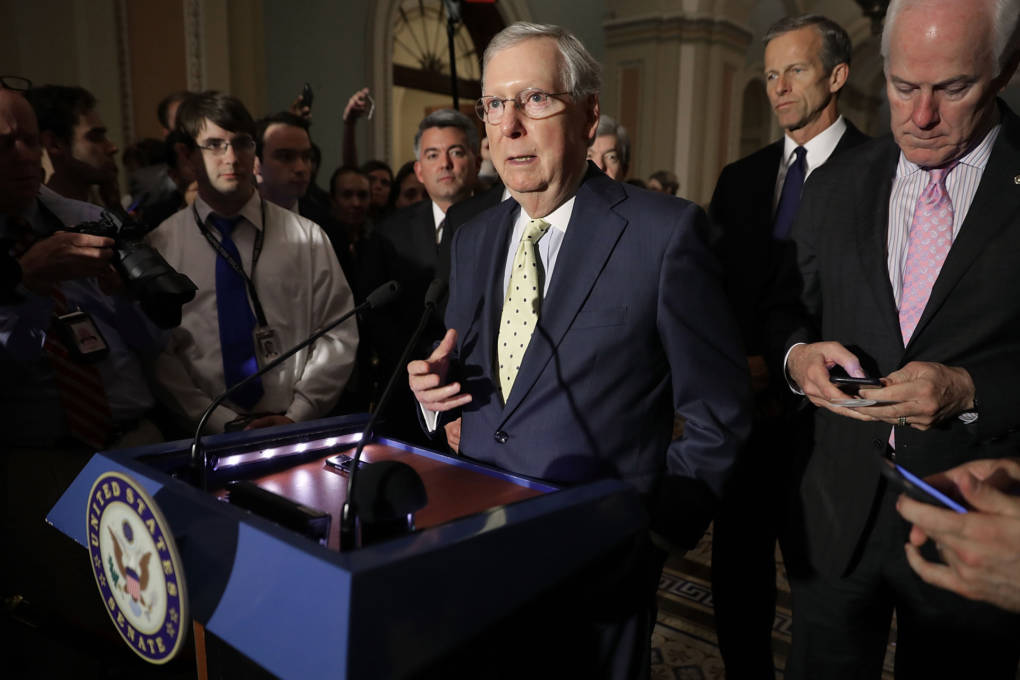
"caption": "Senate Majority Leader Mitch McConnell, joined by other Republican senators, meets with reporters following a closed-door strategy session, at the Capitol on Tuesday.",
"description": "Senate Majority Leader Mitch McConnell, joined by other Republican senators, meets with reporters following a closed-door strategy session, at the Capitol on Tuesday.",
"title": "MitchM",
"credit": "Chip Somodevilla/Getty Images",
"status": "inherit",
"isLoading": false,
"fetchFailed": false
},
"news_11526098": {
"type": "attachments",
"id": "news_11526098",
"meta": {
"index": "attachments_1716263798",
"site": "news",
"id": "11526098",
"found": true
},
"parent": 11526039,
"imgSizes": {
"small": {
"file": "https://ww2.kqed.org/app/uploads/sites/10/2017/06/draft_062217_final-520x520.jpg",
"width": 520,
"mimeType": "image/jpeg",
"height": 520
},
"twentyfourteen-full-width": {
"file": "https://ww2.kqed.org/app/uploads/sites/10/2017/06/draft_062217_final-1038x576.jpg",
"width": 1038,
"mimeType": "image/jpeg",
"height": 576
},
"thumbnail": {
"file": "https://ww2.kqed.org/app/uploads/sites/10/2017/06/draft_062217_final-160x160.jpg",
"width": 160,
"mimeType": "image/jpeg",
"height": 160
},
"fd-sm": {
"file": "https://ww2.kqed.org/app/uploads/sites/10/2017/06/draft_062217_final-960x960.jpg",
"width": 960,
"mimeType": "image/jpeg",
"height": 960
},
"post-thumbnail": {
"file": "https://ww2.kqed.org/app/uploads/sites/10/2017/06/draft_062217_final-672x372.jpg",
"width": 672,
"mimeType": "image/jpeg",
"height": 372
},
"xsmall": {
"file": "https://ww2.kqed.org/app/uploads/sites/10/2017/06/draft_062217_final-375x375.jpg",
"width": 375,
"mimeType": "image/jpeg",
"height": 375
},
"kqedFullSize": {
"file": "https://ww2.kqed.org/app/uploads/sites/10/2017/06/draft_062217_final.jpg",
"width": 1920,
"height": 1920
},
"large": {
"file": "https://ww2.kqed.org/app/uploads/sites/10/2017/06/draft_062217_final-1020x1020.jpg",
"width": 1020,
"mimeType": "image/jpeg",
"height": 1020
},
"xlarge": {
"file": "https://ww2.kqed.org/app/uploads/sites/10/2017/06/draft_062217_final-1180x1180.jpg",
"width": 1180,
"mimeType": "image/jpeg",
"height": 1180
},
"guest-author-50": {
"file": "https://ww2.kqed.org/app/uploads/sites/10/2017/06/draft_062217_final-50x50.jpg",
"width": 50,
"mimeType": "image/jpeg",
"height": 50
},
"guest-author-96": {
"file": "https://ww2.kqed.org/app/uploads/sites/10/2017/06/draft_062217_final-96x96.jpg",
"width": 96,
"mimeType": "image/jpeg",
"height": 96
},
"medium": {
"file": "https://ww2.kqed.org/app/uploads/sites/10/2017/06/draft_062217_final-800x800.jpg",
"width": 800,
"mimeType": "image/jpeg",
"height": 800
},
"guest-author-64": {
"file": "https://ww2.kqed.org/app/uploads/sites/10/2017/06/draft_062217_final-64x64.jpg",
"width": 64,
"mimeType": "image/jpeg",
"height": 64
},
"guest-author-32": {
"file": "https://ww2.kqed.org/app/uploads/sites/10/2017/06/draft_062217_final-32x32.jpg",
"width": 32,
"mimeType": "image/jpeg",
"height": 32
},
"fd-lrg": {
"file": "https://ww2.kqed.org/app/uploads/sites/10/2017/06/draft_062217_final-1920x1920.jpg",
"width": 1920,
"mimeType": "image/jpeg",
"height": 1920
},
"fd-med": {
"file": "https://ww2.kqed.org/app/uploads/sites/10/2017/06/draft_062217_final-1180x1180.jpg",
"width": 1180,
"mimeType": "image/jpeg",
"height": 1180
},
"full-width": {
"file": "https://ww2.kqed.org/app/uploads/sites/10/2017/06/draft_062217_final-1920x1920.jpg",
"width": 1920,
"mimeType": "image/jpeg",
"height": 1920
},
"detail": {
"file": "https://ww2.kqed.org/app/uploads/sites/10/2017/06/draft_062217_final-150x150.jpg",
"width": 150,
"mimeType": "image/jpeg",
"height": 150
},
"guest-author-128": {
"file": "https://ww2.kqed.org/app/uploads/sites/10/2017/06/draft_062217_final-128x128.jpg",
"width": 128,
"mimeType": "image/jpeg",
"height": 128
},
"xxsmall": {
"file": "https://ww2.kqed.org/app/uploads/sites/10/2017/06/draft_062217_final-240x240.jpg",
"width": 240,
"mimeType": "image/jpeg",
"height": 240
}
},
"publishDate": 1498150765,
"modified": 1498150792,
"caption": null,
"description": null,
"title": "draft_062217_final",
"credit": null,
"status": "inherit",
"isLoading": false,
"fetchFailed": false
},
"news_11474422": {
"type": "attachments",
"id": "news_11474422",
"meta": {
"index": "attachments_1716263798",
"site": "news",
"id": "11474422",
"found": true
},
"parent": 11465283,
"imgSizes": {
"small": {
"file": "https://ww2.kqed.org/app/uploads/sites/10/2017/05/congress_health01-qut-520x278.jpg",
"width": 520,
"mimeType": "image/jpeg",
"height": 278
},
"twentyfourteen-full-width": {
"file": "https://ww2.kqed.org/app/uploads/sites/10/2017/05/congress_health01-qut-1038x576.jpg",
"width": 1038,
"mimeType": "image/jpeg",
"height": 576
},
"thumbnail": {
"file": "https://ww2.kqed.org/app/uploads/sites/10/2017/05/congress_health01-qut-160x86.jpg",
"width": 160,
"mimeType": "image/jpeg",
"height": 86
},
"fd-sm": {
"file": "https://ww2.kqed.org/app/uploads/sites/10/2017/05/congress_health01-qut-960x514.jpg",
"width": 960,
"mimeType": "image/jpeg",
"height": 514
},
"post-thumbnail": {
"file": "https://ww2.kqed.org/app/uploads/sites/10/2017/05/congress_health01-qut-672x372.jpg",
"width": 672,
"mimeType": "image/jpeg",
"height": 372
},
"xsmall": {
"file": "https://ww2.kqed.org/app/uploads/sites/10/2017/05/congress_health01-qut-375x201.jpg",
"width": 375,
"mimeType": "image/jpeg",
"height": 201
},
"kqedFullSize": {
"file": "https://ww2.kqed.org/app/uploads/sites/10/2017/05/congress_health01-qut.jpg",
"width": 1920,
"height": 1028
},
"large": {
"file": "https://ww2.kqed.org/app/uploads/sites/10/2017/05/congress_health01-qut-1020x546.jpg",
"width": 1020,
"mimeType": "image/jpeg",
"height": 546
},
"xlarge": {
"file": "https://ww2.kqed.org/app/uploads/sites/10/2017/05/congress_health01-qut-1180x632.jpg",
"width": 1180,
"mimeType": "image/jpeg",
"height": 632
},
"guest-author-50": {
"file": "https://ww2.kqed.org/app/uploads/sites/10/2017/05/congress_health01-qut-50x50.jpg",
"width": 50,
"mimeType": "image/jpeg",
"height": 50
},
"guest-author-96": {
"file": "https://ww2.kqed.org/app/uploads/sites/10/2017/05/congress_health01-qut-96x96.jpg",
"width": 96,
"mimeType": "image/jpeg",
"height": 96
},
"medium": {
"file": "https://ww2.kqed.org/app/uploads/sites/10/2017/05/congress_health01-qut-800x428.jpg",
"width": 800,
"mimeType": "image/jpeg",
"height": 428
},
"guest-author-64": {
"file": "https://ww2.kqed.org/app/uploads/sites/10/2017/05/congress_health01-qut-64x64.jpg",
"width": 64,
"mimeType": "image/jpeg",
"height": 64
},
"guest-author-32": {
"file": "https://ww2.kqed.org/app/uploads/sites/10/2017/05/congress_health01-qut-32x32.jpg",
"width": 32,
"mimeType": "image/jpeg",
"height": 32
},
"fd-lrg": {
"file": "https://ww2.kqed.org/app/uploads/sites/10/2017/05/congress_health01-qut-1920x1028.jpg",
"width": 1920,
"mimeType": "image/jpeg",
"height": 1028
},
"fd-med": {
"file": "https://ww2.kqed.org/app/uploads/sites/10/2017/05/congress_health01-qut-1180x632.jpg",
"width": 1180,
"mimeType": "image/jpeg",
"height": 632
},
"full-width": {
"file": "https://ww2.kqed.org/app/uploads/sites/10/2017/05/congress_health01-qut-1920x1028.jpg",
"width": 1920,
"mimeType": "image/jpeg",
"height": 1028
},
"detail": {
"file": "https://ww2.kqed.org/app/uploads/sites/10/2017/05/congress_health01-qut-150x150.jpg",
"width": 150,
"mimeType": "image/jpeg",
"height": 150
},
"guest-author-128": {
"file": "https://ww2.kqed.org/app/uploads/sites/10/2017/05/congress_health01-qut-128x128.jpg",
"width": 128,
"mimeType": "image/jpeg",
"height": 128
},
"xxsmall": {
"file": "https://ww2.kqed.org/app/uploads/sites/10/2017/05/congress_health01-qut-240x129.jpg",
"width": 240,
"mimeType": "image/jpeg",
"height": 129
}
},
"publishDate": 1495594163,
"modified": 1495594197,
"caption": "What health insurance does your lawmaker have? KQED asked.",
"description": null,
"title": "congress_health01-qut",
"credit": "Mark Fiore/KQED",
"status": "inherit",
"isLoading": false,
"fetchFailed": false
},
"news_11440366": {
"type": "attachments",
"id": "news_11440366",
"meta": {
"index": "attachments_1716263798",
"site": "news",
"id": "11440366",
"found": true
},
"parent": 11440106,
"imgSizes": {
"small": {
"file": "https://ww2.kqed.org/app/uploads/sites/10/2017/05/RyanWalks2-520x355.jpg",
"width": 520,
"mimeType": "image/jpeg",
"height": 355
},
"twentyfourteen-full-width": {
"file": "https://ww2.kqed.org/app/uploads/sites/10/2017/05/RyanWalks2-1038x576.jpg",
"width": 1038,
"mimeType": "image/jpeg",
"height": 576
},
"thumbnail": {
"file": "https://ww2.kqed.org/app/uploads/sites/10/2017/05/RyanWalks2-160x109.jpg",
"width": 160,
"mimeType": "image/jpeg",
"height": 109
},
"fd-sm": {
"file": "https://ww2.kqed.org/app/uploads/sites/10/2017/05/RyanWalks2-960x655.jpg",
"width": 960,
"mimeType": "image/jpeg",
"height": 655
},
"post-thumbnail": {
"file": "https://ww2.kqed.org/app/uploads/sites/10/2017/05/RyanWalks2-672x372.jpg",
"width": 672,
"mimeType": "image/jpeg",
"height": 372
},
"xsmall": {
"file": "https://ww2.kqed.org/app/uploads/sites/10/2017/05/RyanWalks2-375x256.jpg",
"width": 375,
"mimeType": "image/jpeg",
"height": 256
},
"kqedFullSize": {
"file": "https://ww2.kqed.org/app/uploads/sites/10/2017/05/RyanWalks2.jpg",
"width": 1920,
"height": 1310
},
"large": {
"file": "https://ww2.kqed.org/app/uploads/sites/10/2017/05/RyanWalks2-1020x696.jpg",
"width": 1020,
"mimeType": "image/jpeg",
"height": 696
},
"xlarge": {
"file": "https://ww2.kqed.org/app/uploads/sites/10/2017/05/RyanWalks2-1180x805.jpg",
"width": 1180,
"mimeType": "image/jpeg",
"height": 805
},
"guest-author-50": {
"file": "https://ww2.kqed.org/app/uploads/sites/10/2017/05/RyanWalks2-50x50.jpg",
"width": 50,
"mimeType": "image/jpeg",
"height": 50
},
"guest-author-96": {
"file": "https://ww2.kqed.org/app/uploads/sites/10/2017/05/RyanWalks2-96x96.jpg",
"width": 96,
"mimeType": "image/jpeg",
"height": 96
},
"medium": {
"file": "https://ww2.kqed.org/app/uploads/sites/10/2017/05/RyanWalks2-800x546.jpg",
"width": 800,
"mimeType": "image/jpeg",
"height": 546
},
"guest-author-64": {
"file": "https://ww2.kqed.org/app/uploads/sites/10/2017/05/RyanWalks2-64x64.jpg",
"width": 64,
"mimeType": "image/jpeg",
"height": 64
},
"guest-author-32": {
"file": "https://ww2.kqed.org/app/uploads/sites/10/2017/05/RyanWalks2-32x32.jpg",
"width": 32,
"mimeType": "image/jpeg",
"height": 32
},
"fd-lrg": {
"file": "https://ww2.kqed.org/app/uploads/sites/10/2017/05/RyanWalks2-1920x1310.jpg",
"width": 1920,
"mimeType": "image/jpeg",
"height": 1310
},
"fd-med": {
"file": "https://ww2.kqed.org/app/uploads/sites/10/2017/05/RyanWalks2-1180x805.jpg",
"width": 1180,
"mimeType": "image/jpeg",
"height": 805
},
"full-width": {
"file": "https://ww2.kqed.org/app/uploads/sites/10/2017/05/RyanWalks2-1920x1310.jpg",
"width": 1920,
"mimeType": "image/jpeg",
"height": 1310
},
"detail": {
"file": "https://ww2.kqed.org/app/uploads/sites/10/2017/05/RyanWalks2-150x150.jpg",
"width": 150,
"mimeType": "image/jpeg",
"height": 150
},
"guest-author-128": {
"file": "https://ww2.kqed.org/app/uploads/sites/10/2017/05/RyanWalks2-128x128.jpg",
"width": 128,
"mimeType": "image/jpeg",
"height": 128
},
"xxsmall": {
"file": "https://ww2.kqed.org/app/uploads/sites/10/2017/05/RyanWalks2-240x164.jpg",
"width": 240,
"mimeType": "image/jpeg",
"height": 164
}
},
"publishDate": 1493924366,
"modified": 1493924414,
"caption": "House Speaker Paul Ryan walks to the House chamber ahead of a vote on Capitol Hill May 3, 2017.",
"description": "House Speaker Paul Ryan walks to the House chamber ahead of a vote on Capitol Hill May 3, 2017.",
"title": "RyanWalks2",
"credit": "Eric Thayer/Getty Images",
"status": "inherit",
"isLoading": false,
"fetchFailed": false
},
"news_11439183": {
"type": "attachments",
"id": "news_11439183",
"meta": {
"index": "attachments_1716263798",
"site": "news",
"id": "11439183",
"found": true
},
"parent": 11439084,
"imgSizes": {
"small": {
"file": "https://ww2.kqed.org/app/uploads/sites/10/2017/05/MCCarthy-520x344.jpg",
"width": 520,
"mimeType": "image/jpeg",
"height": 344
},
"twentyfourteen-full-width": {
"file": "https://ww2.kqed.org/app/uploads/sites/10/2017/05/MCCarthy-1038x576.jpg",
"width": 1038,
"mimeType": "image/jpeg",
"height": 576
},
"thumbnail": {
"file": "https://ww2.kqed.org/app/uploads/sites/10/2017/05/MCCarthy-160x106.jpg",
"width": 160,
"mimeType": "image/jpeg",
"height": 106
},
"fd-sm": {
"file": "https://ww2.kqed.org/app/uploads/sites/10/2017/05/MCCarthy-960x636.jpg",
"width": 960,
"mimeType": "image/jpeg",
"height": 636
},
"post-thumbnail": {
"file": "https://ww2.kqed.org/app/uploads/sites/10/2017/05/MCCarthy-672x372.jpg",
"width": 672,
"mimeType": "image/jpeg",
"height": 372
},
"xsmall": {
"file": "https://ww2.kqed.org/app/uploads/sites/10/2017/05/MCCarthy-375x248.jpg",
"width": 375,
"mimeType": "image/jpeg",
"height": 248
},
"kqedFullSize": {
"file": "https://ww2.kqed.org/app/uploads/sites/10/2017/05/MCCarthy.jpg",
"width": 1920,
"height": 1271
},
"large": {
"file": "https://ww2.kqed.org/app/uploads/sites/10/2017/05/MCCarthy-1020x675.jpg",
"width": 1020,
"mimeType": "image/jpeg",
"height": 675
},
"xlarge": {
"file": "https://ww2.kqed.org/app/uploads/sites/10/2017/05/MCCarthy-1180x781.jpg",
"width": 1180,
"mimeType": "image/jpeg",
"height": 781
},
"guest-author-50": {
"file": "https://ww2.kqed.org/app/uploads/sites/10/2017/05/MCCarthy-50x50.jpg",
"width": 50,
"mimeType": "image/jpeg",
"height": 50
},
"guest-author-96": {
"file": "https://ww2.kqed.org/app/uploads/sites/10/2017/05/MCCarthy-96x96.jpg",
"width": 96,
"mimeType": "image/jpeg",
"height": 96
},
"medium": {
"file": "https://ww2.kqed.org/app/uploads/sites/10/2017/05/MCCarthy-800x530.jpg",
"width": 800,
"mimeType": "image/jpeg",
"height": 530
},
"guest-author-64": {
"file": "https://ww2.kqed.org/app/uploads/sites/10/2017/05/MCCarthy-64x64.jpg",
"width": 64,
"mimeType": "image/jpeg",
"height": 64
},
"guest-author-32": {
"file": "https://ww2.kqed.org/app/uploads/sites/10/2017/05/MCCarthy-32x32.jpg",
"width": 32,
"mimeType": "image/jpeg",
"height": 32
},
"fd-lrg": {
"file": "https://ww2.kqed.org/app/uploads/sites/10/2017/05/MCCarthy-1920x1271.jpg",
"width": 1920,
"mimeType": "image/jpeg",
"height": 1271
},
"fd-med": {
"file": "https://ww2.kqed.org/app/uploads/sites/10/2017/05/MCCarthy-1180x781.jpg",
"width": 1180,
"mimeType": "image/jpeg",
"height": 781
},
"full-width": {
"file": "https://ww2.kqed.org/app/uploads/sites/10/2017/05/MCCarthy-1920x1271.jpg",
"width": 1920,
"mimeType": "image/jpeg",
"height": 1271
},
"detail": {
"file": "https://ww2.kqed.org/app/uploads/sites/10/2017/05/MCCarthy-150x150.jpg",
"width": 150,
"mimeType": "image/jpeg",
"height": 150
},
"guest-author-128": {
"file": "https://ww2.kqed.org/app/uploads/sites/10/2017/05/MCCarthy-128x128.jpg",
"width": 128,
"mimeType": "image/jpeg",
"height": 128
},
"xxsmall": {
"file": "https://ww2.kqed.org/app/uploads/sites/10/2017/05/MCCarthy-240x159.jpg",
"width": 240,
"mimeType": "image/jpeg",
"height": 159
}
},
"publishDate": 1493858636,
"modified": 1493858666,
"caption": "House Majority Leader Kevin McCarthy, seen walking to the House chamber on Wednesday, says he has the votes needed to pass the GOP health care bill on Thursday.",
"description": "House Majority Leader Kevin McCarthy, seen walking to the House chamber on Wednesday, says he has the votes needed to pass the GOP health care bill on Thursday.",
"title": "MCCarthy",
"credit": "Eric Thayer/Getty Images",
"status": "inherit",
"isLoading": false,
"fetchFailed": false
},
"news_11374269": {
"type": "attachments",
"id": "news_11374269",
"meta": {
"index": "attachments_1716263798",
"site": "news",
"id": "11374269",
"found": true
},
"parent": 11374179,
"imgSizes": {
"small": {
"file": "https://ww2.kqed.org/app/uploads/sites/10/2017/03/paul-ryan-1920-520x347.jpg",
"width": 520,
"mimeType": "image/jpeg",
"height": 347
},
"twentyfourteen-full-width": {
"file": "https://ww2.kqed.org/app/uploads/sites/10/2017/03/paul-ryan-1920-1038x576.jpg",
"width": 1038,
"mimeType": "image/jpeg",
"height": 576
},
"thumbnail": {
"file": "https://ww2.kqed.org/app/uploads/sites/10/2017/03/paul-ryan-1920-160x107.jpg",
"width": 160,
"mimeType": "image/jpeg",
"height": 107
},
"fd-sm": {
"file": "https://ww2.kqed.org/app/uploads/sites/10/2017/03/paul-ryan-1920-960x640.jpg",
"width": 960,
"mimeType": "image/jpeg",
"height": 640
},
"post-thumbnail": {
"file": "https://ww2.kqed.org/app/uploads/sites/10/2017/03/paul-ryan-1920-672x372.jpg",
"width": 672,
"mimeType": "image/jpeg",
"height": 372
},
"xsmall": {
"file": "https://ww2.kqed.org/app/uploads/sites/10/2017/03/paul-ryan-1920-375x250.jpg",
"width": 375,
"mimeType": "image/jpeg",
"height": 250
},
"kqedFullSize": {
"file": "https://ww2.kqed.org/app/uploads/sites/10/2017/03/paul-ryan-1920.jpg",
"width": 1920,
"height": 1280
},
"large": {
"file": "https://ww2.kqed.org/app/uploads/sites/10/2017/03/paul-ryan-1920-1020x680.jpg",
"width": 1020,
"mimeType": "image/jpeg",
"height": 680
},
"xlarge": {
"file": "https://ww2.kqed.org/app/uploads/sites/10/2017/03/paul-ryan-1920-1180x787.jpg",
"width": 1180,
"mimeType": "image/jpeg",
"height": 787
},
"guest-author-50": {
"file": "https://ww2.kqed.org/app/uploads/sites/10/2017/03/paul-ryan-1920-50x50.jpg",
"width": 50,
"mimeType": "image/jpeg",
"height": 50
},
"guest-author-96": {
"file": "https://ww2.kqed.org/app/uploads/sites/10/2017/03/paul-ryan-1920-96x96.jpg",
"width": 96,
"mimeType": "image/jpeg",
"height": 96
},
"medium": {
"file": "https://ww2.kqed.org/app/uploads/sites/10/2017/03/paul-ryan-1920-800x533.jpg",
"width": 800,
"mimeType": "image/jpeg",
"height": 533
},
"guest-author-64": {
"file": "https://ww2.kqed.org/app/uploads/sites/10/2017/03/paul-ryan-1920-64x64.jpg",
"width": 64,
"mimeType": "image/jpeg",
"height": 64
},
"guest-author-32": {
"file": "https://ww2.kqed.org/app/uploads/sites/10/2017/03/paul-ryan-1920-32x32.jpg",
"width": 32,
"mimeType": "image/jpeg",
"height": 32
},
"fd-lrg": {
"file": "https://ww2.kqed.org/app/uploads/sites/10/2017/03/paul-ryan-1920-1920x1280.jpg",
"width": 1920,
"mimeType": "image/jpeg",
"height": 1280
},
"fd-med": {
"file": "https://ww2.kqed.org/app/uploads/sites/10/2017/03/paul-ryan-1920-1180x787.jpg",
"width": 1180,
"mimeType": "image/jpeg",
"height": 787
},
"full-width": {
"file": "https://ww2.kqed.org/app/uploads/sites/10/2017/03/paul-ryan-1920-1920x1280.jpg",
"width": 1920,
"mimeType": "image/jpeg",
"height": 1280
},
"detail": {
"file": "https://ww2.kqed.org/app/uploads/sites/10/2017/03/paul-ryan-1920-150x150.jpg",
"width": 150,
"mimeType": "image/jpeg",
"height": 150
},
"guest-author-128": {
"file": "https://ww2.kqed.org/app/uploads/sites/10/2017/03/paul-ryan-1920-128x128.jpg",
"width": 128,
"mimeType": "image/jpeg",
"height": 128
},
"xxsmall": {
"file": "https://ww2.kqed.org/app/uploads/sites/10/2017/03/paul-ryan-1920-240x160.jpg",
"width": 240,
"mimeType": "image/jpeg",
"height": 160
}
},
"publishDate": 1490387769,
"modified": 1490392590,
"caption": "House Speaker Paul Ryan holds a news conference to announce that the Republican Party has decided not to vote on its health bill on Friday. 'We were close,' he said, but the votes weren't there to pass it.",
"description": null,
"title": "paul-ryan-1920",
"credit": "Chip Somodevilla/Getty Images",
"status": "inherit",
"isLoading": false,
"fetchFailed": false
},
"news_11374095": {
"type": "attachments",
"id": "news_11374095",
"meta": {
"index": "attachments_1716263798",
"site": "news",
"id": "11374095",
"found": true
},
"parent": 11374080,
"imgSizes": {
"small": {
"file": "https://ww2.kqed.org/app/uploads/sites/10/2017/03/GettyImages-657288306-520x341.jpg",
"width": 520,
"mimeType": "image/jpeg",
"height": 341
},
"twentyfourteen-full-width": {
"file": "https://ww2.kqed.org/app/uploads/sites/10/2017/03/GettyImages-657288306-1038x576.jpg",
"width": 1038,
"mimeType": "image/jpeg",
"height": 576
},
"thumbnail": {
"file": "https://ww2.kqed.org/app/uploads/sites/10/2017/03/GettyImages-657288306-160x105.jpg",
"width": 160,
"mimeType": "image/jpeg",
"height": 105
},
"fd-sm": {
"file": "https://ww2.kqed.org/app/uploads/sites/10/2017/03/GettyImages-657288306-960x629.jpg",
"width": 960,
"mimeType": "image/jpeg",
"height": 629
},
"post-thumbnail": {
"file": "https://ww2.kqed.org/app/uploads/sites/10/2017/03/GettyImages-657288306-672x372.jpg",
"width": 672,
"mimeType": "image/jpeg",
"height": 372
},
"xsmall": {
"file": "https://ww2.kqed.org/app/uploads/sites/10/2017/03/GettyImages-657288306-375x246.jpg",
"width": 375,
"mimeType": "image/jpeg",
"height": 246
},
"kqedFullSize": {
"file": "https://ww2.kqed.org/app/uploads/sites/10/2017/03/GettyImages-657288306-e1490381364299.jpg",
"width": 1920,
"height": 1257
},
"large": {
"file": "https://ww2.kqed.org/app/uploads/sites/10/2017/03/GettyImages-657288306-1020x668.jpg",
"width": 1020,
"mimeType": "image/jpeg",
"height": 668
},
"xlarge": {
"file": "https://ww2.kqed.org/app/uploads/sites/10/2017/03/GettyImages-657288306-1180x773.jpg",
"width": 1180,
"mimeType": "image/jpeg",
"height": 773
},
"guest-author-50": {
"file": "https://ww2.kqed.org/app/uploads/sites/10/2017/03/GettyImages-657288306-50x50.jpg",
"width": 50,
"mimeType": "image/jpeg",
"height": 50
},
"guest-author-96": {
"file": "https://ww2.kqed.org/app/uploads/sites/10/2017/03/GettyImages-657288306-96x96.jpg",
"width": 96,
"mimeType": "image/jpeg",
"height": 96
},
"medium": {
"file": "https://ww2.kqed.org/app/uploads/sites/10/2017/03/GettyImages-657288306-800x524.jpg",
"width": 800,
"mimeType": "image/jpeg",
"height": 524
},
"guest-author-64": {
"file": "https://ww2.kqed.org/app/uploads/sites/10/2017/03/GettyImages-657288306-64x64.jpg",
"width": 64,
"mimeType": "image/jpeg",
"height": 64
},
"guest-author-32": {
"file": "https://ww2.kqed.org/app/uploads/sites/10/2017/03/GettyImages-657288306-32x32.jpg",
"width": 32,
"mimeType": "image/jpeg",
"height": 32
},
"fd-lrg": {
"file": "https://ww2.kqed.org/app/uploads/sites/10/2017/03/GettyImages-657288306-1920x1257.jpg",
"width": 1920,
"mimeType": "image/jpeg",
"height": 1257
},
"fd-med": {
"file": "https://ww2.kqed.org/app/uploads/sites/10/2017/03/GettyImages-657288306-1180x773.jpg",
"width": 1180,
"mimeType": "image/jpeg",
"height": 773
},
"full-width": {
"file": "https://ww2.kqed.org/app/uploads/sites/10/2017/03/GettyImages-657288306-1920x1257.jpg",
"width": 1920,
"mimeType": "image/jpeg",
"height": 1257
},
"detail": {
"file": "https://ww2.kqed.org/app/uploads/sites/10/2017/03/GettyImages-657288306-150x150.jpg",
"width": 150,
"mimeType": "image/jpeg",
"height": 150
},
"guest-author-128": {
"file": "https://ww2.kqed.org/app/uploads/sites/10/2017/03/GettyImages-657288306-128x128.jpg",
"width": 128,
"mimeType": "image/jpeg",
"height": 128
},
"xxsmall": {
"file": "https://ww2.kqed.org/app/uploads/sites/10/2017/03/GettyImages-657288306-240x157.jpg",
"width": 240,
"mimeType": "image/jpeg",
"height": 157
}
},
"publishDate": 1490381314,
"modified": 1490381358,
"caption": "President Donald Trump speaks during a National Economic Council meeting in the Oval Office at the White House March 24, 2017.",
"description": null,
"title": "President Trump Holds a National Economic Council Meeting",
"credit": "Olivier Douliery-Pool/Getty Images",
"status": "inherit",
"isLoading": false,
"fetchFailed": false
},
"news_11373080": {
"type": "attachments",
"id": "news_11373080",
"meta": {
"index": "attachments_1716263798",
"site": "news",
"id": "11373080",
"found": true
},
"parent": 11372927,
"imgSizes": {
"small": {
"file": "https://ww2.kqed.org/app/uploads/sites/10/2017/03/TrumpFresno-1920x1254-520x340.jpg",
"width": 520,
"mimeType": "image/jpeg",
"height": 340
},
"twentyfourteen-full-width": {
"file": "https://ww2.kqed.org/app/uploads/sites/10/2017/03/TrumpFresno-1920x1254-1038x576.jpg",
"width": 1038,
"mimeType": "image/jpeg",
"height": 576
},
"thumbnail": {
"file": "https://ww2.kqed.org/app/uploads/sites/10/2017/03/TrumpFresno-1920x1254-160x105.jpg",
"width": 160,
"mimeType": "image/jpeg",
"height": 105
},
"fd-sm": {
"file": "https://ww2.kqed.org/app/uploads/sites/10/2017/03/TrumpFresno-1920x1254-960x627.jpg",
"width": 960,
"mimeType": "image/jpeg",
"height": 627
},
"post-thumbnail": {
"file": "https://ww2.kqed.org/app/uploads/sites/10/2017/03/TrumpFresno-1920x1254-672x372.jpg",
"width": 672,
"mimeType": "image/jpeg",
"height": 372
},
"xsmall": {
"file": "https://ww2.kqed.org/app/uploads/sites/10/2017/03/TrumpFresno-1920x1254-375x245.jpg",
"width": 375,
"mimeType": "image/jpeg",
"height": 245
},
"kqedFullSize": {
"file": "https://ww2.kqed.org/app/uploads/sites/10/2017/03/TrumpFresno-1920x1254.jpg",
"width": 1920,
"height": 1254
},
"large": {
"file": "https://ww2.kqed.org/app/uploads/sites/10/2017/03/TrumpFresno-1920x1254-1020x666.jpg",
"width": 1020,
"mimeType": "image/jpeg",
"height": 666
},
"xlarge": {
"file": "https://ww2.kqed.org/app/uploads/sites/10/2017/03/TrumpFresno-1920x1254-1180x771.jpg",
"width": 1180,
"mimeType": "image/jpeg",
"height": 771
},
"guest-author-50": {
"file": "https://ww2.kqed.org/app/uploads/sites/10/2017/03/TrumpFresno-1920x1254-50x50.jpg",
"width": 50,
"mimeType": "image/jpeg",
"height": 50
},
"guest-author-96": {
"file": "https://ww2.kqed.org/app/uploads/sites/10/2017/03/TrumpFresno-1920x1254-96x96.jpg",
"width": 96,
"mimeType": "image/jpeg",
"height": 96
},
"medium": {
"file": "https://ww2.kqed.org/app/uploads/sites/10/2017/03/TrumpFresno-1920x1254-800x523.jpg",
"width": 800,
"mimeType": "image/jpeg",
"height": 523
},
"guest-author-64": {
"file": "https://ww2.kqed.org/app/uploads/sites/10/2017/03/TrumpFresno-1920x1254-64x64.jpg",
"width": 64,
"mimeType": "image/jpeg",
"height": 64
},
"guest-author-32": {
"file": "https://ww2.kqed.org/app/uploads/sites/10/2017/03/TrumpFresno-1920x1254-32x32.jpg",
"width": 32,
"mimeType": "image/jpeg",
"height": 32
},
"fd-lrg": {
"file": "https://ww2.kqed.org/app/uploads/sites/10/2017/03/TrumpFresno-1920x1254-1920x1254.jpg",
"width": 1920,
"mimeType": "image/jpeg",
"height": 1254
},
"fd-med": {
"file": "https://ww2.kqed.org/app/uploads/sites/10/2017/03/TrumpFresno-1920x1254-1180x771.jpg",
"width": 1180,
"mimeType": "image/jpeg",
"height": 771
},
"full-width": {
"file": "https://ww2.kqed.org/app/uploads/sites/10/2017/03/TrumpFresno-1920x1254-1920x1254.jpg",
"width": 1920,
"mimeType": "image/jpeg",
"height": 1254
},
"detail": {
"file": "https://ww2.kqed.org/app/uploads/sites/10/2017/03/TrumpFresno-1920x1254-150x150.jpg",
"width": 150,
"mimeType": "image/jpeg",
"height": 150
},
"guest-author-128": {
"file": "https://ww2.kqed.org/app/uploads/sites/10/2017/03/TrumpFresno-1920x1254-128x128.jpg",
"width": 128,
"mimeType": "image/jpeg",
"height": 128
},
"xxsmall": {
"file": "https://ww2.kqed.org/app/uploads/sites/10/2017/03/TrumpFresno-1920x1254-240x157.jpg",
"width": 240,
"mimeType": "image/jpeg",
"height": 157
}
},
"publishDate": 1490319655,
"modified": 1490319712,
"caption": "Donald Trump speaks at a rally in Fresno on May 27. Repealing and replacing the Affordable Care Act could hurt the voter base that helped put Trump in power.",
"description": "Donald Trump speaks at a rally in Fresno on May 27. Repealing and replacing the Affordable Care Act could hurt the voter base that helped put Trump in power.",
"title": "TrumpFresno-1920x1254",
"credit": "Spencer Platt/Getty Images",
"status": "inherit",
"isLoading": false,
"fetchFailed": false
},
"news_11372628": {
"type": "attachments",
"id": "news_11372628",
"meta": {
"index": "attachments_1716263798",
"site": "news",
"id": "11372628",
"found": true
},
"parent": 11372627,
"imgSizes": {
"small": {
"file": "https://ww2.kqed.org/app/uploads/sites/10/2017/03/gettyimages-655763698_custom-b1da7ad7ab2a8fea53792d4aea07dd622aa0b026-520x324.jpg",
"width": 520,
"mimeType": "image/jpeg",
"height": 324
},
"twentyfourteen-full-width": {
"file": "https://ww2.kqed.org/app/uploads/sites/10/2017/03/gettyimages-655763698_custom-b1da7ad7ab2a8fea53792d4aea07dd622aa0b026-1038x576.jpg",
"width": 1038,
"mimeType": "image/jpeg",
"height": 576
},
"thumbnail": {
"file": "https://ww2.kqed.org/app/uploads/sites/10/2017/03/gettyimages-655763698_custom-b1da7ad7ab2a8fea53792d4aea07dd622aa0b026-160x100.jpg",
"width": 160,
"mimeType": "image/jpeg",
"height": 100
},
"fd-sm": {
"file": "https://ww2.kqed.org/app/uploads/sites/10/2017/03/gettyimages-655763698_custom-b1da7ad7ab2a8fea53792d4aea07dd622aa0b026-960x597.jpg",
"width": 960,
"mimeType": "image/jpeg",
"height": 597
},
"post-thumbnail": {
"file": "https://ww2.kqed.org/app/uploads/sites/10/2017/03/gettyimages-655763698_custom-b1da7ad7ab2a8fea53792d4aea07dd622aa0b026-672x372.jpg",
"width": 672,
"mimeType": "image/jpeg",
"height": 372
},
"xsmall": {
"file": "https://ww2.kqed.org/app/uploads/sites/10/2017/03/gettyimages-655763698_custom-b1da7ad7ab2a8fea53792d4aea07dd622aa0b026-375x233.jpg",
"width": 375,
"mimeType": "image/jpeg",
"height": 233
},
"kqedFullSize": {
"file": "https://ww2.kqed.org/app/uploads/sites/10/2017/03/gettyimages-655763698_custom-b1da7ad7ab2a8fea53792d4aea07dd622aa0b026-e1490298463724.jpg",
"width": 1920,
"height": 1195
},
"large": {
"file": "https://ww2.kqed.org/app/uploads/sites/10/2017/03/gettyimages-655763698_custom-b1da7ad7ab2a8fea53792d4aea07dd622aa0b026-1020x635.jpg",
"width": 1020,
"mimeType": "image/jpeg",
"height": 635
},
"xlarge": {
"file": "https://ww2.kqed.org/app/uploads/sites/10/2017/03/gettyimages-655763698_custom-b1da7ad7ab2a8fea53792d4aea07dd622aa0b026-1180x734.jpg",
"width": 1180,
"mimeType": "image/jpeg",
"height": 734
},
"guest-author-50": {
"file": "https://ww2.kqed.org/app/uploads/sites/10/2017/03/gettyimages-655763698_custom-b1da7ad7ab2a8fea53792d4aea07dd622aa0b026-50x50.jpg",
"width": 50,
"mimeType": "image/jpeg",
"height": 50
},
"guest-author-96": {
"file": "https://ww2.kqed.org/app/uploads/sites/10/2017/03/gettyimages-655763698_custom-b1da7ad7ab2a8fea53792d4aea07dd622aa0b026-96x96.jpg",
"width": 96,
"mimeType": "image/jpeg",
"height": 96
},
"medium": {
"file": "https://ww2.kqed.org/app/uploads/sites/10/2017/03/gettyimages-655763698_custom-b1da7ad7ab2a8fea53792d4aea07dd622aa0b026-800x498.jpg",
"width": 800,
"mimeType": "image/jpeg",
"height": 498
},
"guest-author-64": {
"file": "https://ww2.kqed.org/app/uploads/sites/10/2017/03/gettyimages-655763698_custom-b1da7ad7ab2a8fea53792d4aea07dd622aa0b026-64x64.jpg",
"width": 64,
"mimeType": "image/jpeg",
"height": 64
},
"guest-author-32": {
"file": "https://ww2.kqed.org/app/uploads/sites/10/2017/03/gettyimages-655763698_custom-b1da7ad7ab2a8fea53792d4aea07dd622aa0b026-32x32.jpg",
"width": 32,
"mimeType": "image/jpeg",
"height": 32
},
"fd-lrg": {
"file": "https://ww2.kqed.org/app/uploads/sites/10/2017/03/gettyimages-655763698_custom-b1da7ad7ab2a8fea53792d4aea07dd622aa0b026-1920x1195.jpg",
"width": 1920,
"mimeType": "image/jpeg",
"height": 1195
},
"fd-med": {
"file": "https://ww2.kqed.org/app/uploads/sites/10/2017/03/gettyimages-655763698_custom-b1da7ad7ab2a8fea53792d4aea07dd622aa0b026-1180x734.jpg",
"width": 1180,
"mimeType": "image/jpeg",
"height": 734
},
"full-width": {
"file": "https://ww2.kqed.org/app/uploads/sites/10/2017/03/gettyimages-655763698_custom-b1da7ad7ab2a8fea53792d4aea07dd622aa0b026-1920x1195.jpg",
"width": 1920,
"mimeType": "image/jpeg",
"height": 1195
},
"detail": {
"file": "https://ww2.kqed.org/app/uploads/sites/10/2017/03/gettyimages-655763698_custom-b1da7ad7ab2a8fea53792d4aea07dd622aa0b026-150x150.jpg",
"width": 150,
"mimeType": "image/jpeg",
"height": 150
},
"guest-author-128": {
"file": "https://ww2.kqed.org/app/uploads/sites/10/2017/03/gettyimages-655763698_custom-b1da7ad7ab2a8fea53792d4aea07dd622aa0b026-128x128.jpg",
"width": 128,
"mimeType": "image/jpeg",
"height": 128
},
"xxsmall": {
"file": "https://ww2.kqed.org/app/uploads/sites/10/2017/03/gettyimages-655763698_custom-b1da7ad7ab2a8fea53792d4aea07dd622aa0b026-240x149.jpg",
"width": 240,
"mimeType": "image/jpeg",
"height": 149
}
},
"publishDate": 1490298309,
"modified": 1490298433,
"caption": "The Republican health bill is in jeopardy with resistance from conservative House members. The bill's fate could have big implications for President Trump.",
"description": "The Republican health bill is in jeopardy with resistance from conservative House members. The bill's fate could have big implications for President Trump.",
"title": "The Republican health bill is in jeopardy with resistance from conservative House members. The bill's fate could have big implications for President Trump.",
"credit": "Mark Wilson/Getty Images",
"status": "inherit",
"isLoading": false,
"fetchFailed": false
},
"stateofhealth_307289": {
"type": "attachments",
"id": "stateofhealth_307289",
"meta": {
"index": "attachments_1716263798",
"site": "stateofhealth",
"id": "307289",
"found": true
},
"parent": 307288,
"imgSizes": {
"small": {
"file": "https://ww2.kqed.org/app/uploads/sites/27/2017/03/cut-money_770-520x346.jpg",
"width": 520,
"mimeType": "image/jpeg",
"height": 346
},
"thumbnail": {
"file": "https://ww2.kqed.org/app/uploads/sites/27/2017/03/cut-money_770-160x107.jpg",
"width": 160,
"mimeType": "image/jpeg",
"height": 107
},
"post-thumbnail": {
"file": "https://ww2.kqed.org/app/uploads/sites/27/2017/03/cut-money_770-672x372.jpg",
"width": 672,
"mimeType": "image/jpeg",
"height": 372
},
"xsmall": {
"file": "https://ww2.kqed.org/app/uploads/sites/27/2017/03/cut-money_770-375x250.jpg",
"width": 375,
"mimeType": "image/jpeg",
"height": 250
},
"kqedFullSize": {
"file": "https://ww2.kqed.org/app/uploads/sites/27/2017/03/cut-money_770.jpg",
"width": 770,
"height": 513
},
"guest-author-50": {
"file": "https://ww2.kqed.org/app/uploads/sites/27/2017/03/cut-money_770-50x50.jpg",
"width": 50,
"mimeType": "image/jpeg",
"height": 50
},
"guest-author-96": {
"file": "https://ww2.kqed.org/app/uploads/sites/27/2017/03/cut-money_770-96x96.jpg",
"width": 96,
"mimeType": "image/jpeg",
"height": 96
},
"guest-author-64": {
"file": "https://ww2.kqed.org/app/uploads/sites/27/2017/03/cut-money_770-64x64.jpg",
"width": 64,
"mimeType": "image/jpeg",
"height": 64
},
"guest-author-32": {
"file": "https://ww2.kqed.org/app/uploads/sites/27/2017/03/cut-money_770-32x32.jpg",
"width": 32,
"mimeType": "image/jpeg",
"height": 32
},
"detail": {
"file": "https://ww2.kqed.org/app/uploads/sites/27/2017/03/cut-money_770-150x150.jpg",
"width": 150,
"mimeType": "image/jpeg",
"height": 150
},
"medium_large": {
"file": "https://ww2.kqed.org/app/uploads/sites/27/2017/03/cut-money_770-768x512.jpg",
"width": 768,
"mimeType": "image/jpeg",
"height": 512
},
"guest-author-128": {
"file": "https://ww2.kqed.org/app/uploads/sites/27/2017/03/cut-money_770-128x128.jpg",
"width": 128,
"mimeType": "image/jpeg",
"height": 128
},
"xxsmall": {
"file": "https://ww2.kqed.org/app/uploads/sites/27/2017/03/cut-money_770-240x160.jpg",
"width": 240,
"mimeType": "image/jpeg",
"height": 160
}
},
"publishDate": 1490216572,
"modified": 1490216572,
"caption": null,
"description": null,
"title": "cut-money_770",
"credit": null,
"status": "inherit",
"isLoading": false,
"fetchFailed": false
},
"news_11365771": {
"type": "attachments",
"id": "news_11365771",
"meta": {
"index": "attachments_1716263798",
"site": "news",
"id": "11365771",
"found": true
},
"parent": 11365660,
"imgSizes": {
"small": {
"file": "https://ww2.kqed.org/app/uploads/sites/10/2017/03/RS24665_crowd-qut-520x293.jpg",
"width": 520,
"mimeType": "image/jpeg",
"height": 293
},
"twentyfourteen-full-width": {
"file": "https://ww2.kqed.org/app/uploads/sites/10/2017/03/RS24665_crowd-qut-1038x576.jpg",
"width": 1038,
"mimeType": "image/jpeg",
"height": 576
},
"thumbnail": {
"file": "https://ww2.kqed.org/app/uploads/sites/10/2017/03/RS24665_crowd-qut-160x90.jpg",
"width": 160,
"mimeType": "image/jpeg",
"height": 90
},
"fd-sm": {
"file": "https://ww2.kqed.org/app/uploads/sites/10/2017/03/RS24665_crowd-qut-960x540.jpg",
"width": 960,
"mimeType": "image/jpeg",
"height": 540
},
"post-thumbnail": {
"file": "https://ww2.kqed.org/app/uploads/sites/10/2017/03/RS24665_crowd-qut-672x372.jpg",
"width": 672,
"mimeType": "image/jpeg",
"height": 372
},
"xsmall": {
"file": "https://ww2.kqed.org/app/uploads/sites/10/2017/03/RS24665_crowd-qut-375x211.jpg",
"width": 375,
"mimeType": "image/jpeg",
"height": 211
},
"kqedFullSize": {
"file": "https://ww2.kqed.org/app/uploads/sites/10/2017/03/RS24665_crowd-qut.jpg",
"width": 1920,
"height": 1080
},
"large": {
"file": "https://ww2.kqed.org/app/uploads/sites/10/2017/03/RS24665_crowd-qut-1020x574.jpg",
"width": 1020,
"mimeType": "image/jpeg",
"height": 574
},
"xlarge": {
"file": "https://ww2.kqed.org/app/uploads/sites/10/2017/03/RS24665_crowd-qut-1180x664.jpg",
"width": 1180,
"mimeType": "image/jpeg",
"height": 664
},
"guest-author-50": {
"file": "https://ww2.kqed.org/app/uploads/sites/10/2017/03/RS24665_crowd-qut-50x50.jpg",
"width": 50,
"mimeType": "image/jpeg",
"height": 50
},
"guest-author-96": {
"file": "https://ww2.kqed.org/app/uploads/sites/10/2017/03/RS24665_crowd-qut-96x96.jpg",
"width": 96,
"mimeType": "image/jpeg",
"height": 96
},
"medium": {
"file": "https://ww2.kqed.org/app/uploads/sites/10/2017/03/RS24665_crowd-qut-800x450.jpg",
"width": 800,
"mimeType": "image/jpeg",
"height": 450
},
"guest-author-64": {
"file": "https://ww2.kqed.org/app/uploads/sites/10/2017/03/RS24665_crowd-qut-64x64.jpg",
"width": 64,
"mimeType": "image/jpeg",
"height": 64
},
"guest-author-32": {
"file": "https://ww2.kqed.org/app/uploads/sites/10/2017/03/RS24665_crowd-qut-32x32.jpg",
"width": 32,
"mimeType": "image/jpeg",
"height": 32
},
"fd-lrg": {
"file": "https://ww2.kqed.org/app/uploads/sites/10/2017/03/RS24665_crowd-qut-1920x1080.jpg",
"width": 1920,
"mimeType": "image/jpeg",
"height": 1080
},
"fd-med": {
"file": "https://ww2.kqed.org/app/uploads/sites/10/2017/03/RS24665_crowd-qut-1180x664.jpg",
"width": 1180,
"mimeType": "image/jpeg",
"height": 664
},
"full-width": {
"file": "https://ww2.kqed.org/app/uploads/sites/10/2017/03/RS24665_crowd-qut-1920x1080.jpg",
"width": 1920,
"mimeType": "image/jpeg",
"height": 1080
},
"detail": {
"file": "https://ww2.kqed.org/app/uploads/sites/10/2017/03/RS24665_crowd-qut-150x150.jpg",
"width": 150,
"mimeType": "image/jpeg",
"height": 150
},
"guest-author-128": {
"file": "https://ww2.kqed.org/app/uploads/sites/10/2017/03/RS24665_crowd-qut-128x128.jpg",
"width": 128,
"mimeType": "image/jpeg",
"height": 128
},
"xxsmall": {
"file": "https://ww2.kqed.org/app/uploads/sites/10/2017/03/RS24665_crowd-qut-240x135.jpg",
"width": 240,
"mimeType": "image/jpeg",
"height": 135
}
},
"publishDate": 1489888744,
"modified": 1489888777,
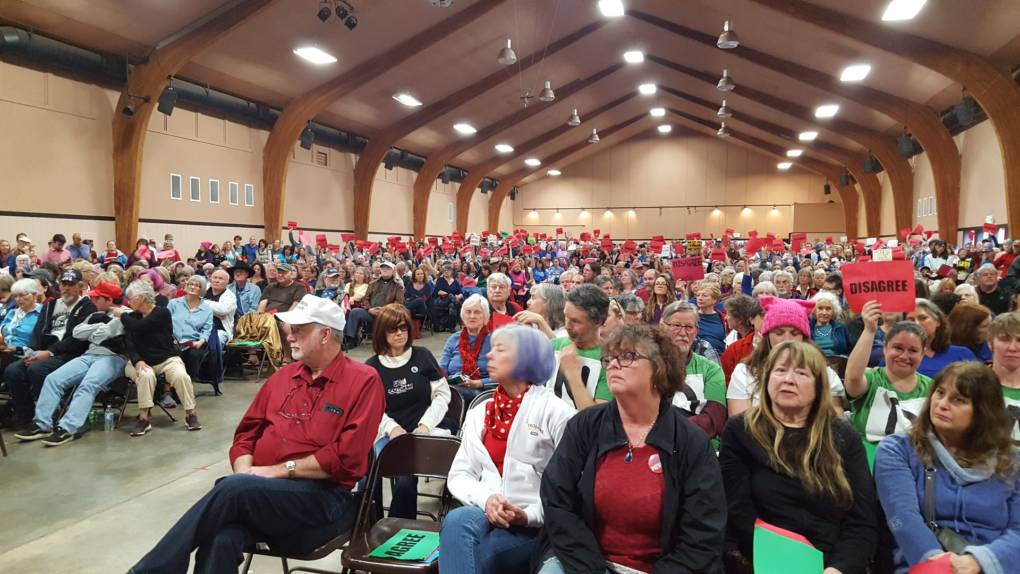
"caption": "More than 1,400 people attended a town hall held by Republican Congressman Doug LaMalfa on Saturday March 18, 2017.\n",
"description": "More than 1,400 people attended a town hall held by Republican Congressman Doug LaMalfa on Saturday March 18, 2017.\n",
"title": "RS24665_crowd-qut",
"credit": "Katie Orr/KQED",
"status": "inherit",
"isLoading": false,
"fetchFailed": false
},
"news_11357768": {
"type": "attachments",
"id": "news_11357768",
"meta": {
"index": "attachments_1716263798",
"site": "news",
"id": "11357768",
"found": true
},
"parent": 11357765,
"imgSizes": {
"small": {
"file": "https://ww2.kqed.org/app/uploads/sites/10/2017/03/paul-ryan-health-care-1920-520x293.jpg",
"width": 520,
"mimeType": "image/jpeg",
"height": 293
},
"twentyfourteen-full-width": {
"file": "https://ww2.kqed.org/app/uploads/sites/10/2017/03/paul-ryan-health-care-1920-1038x576.jpg",
"width": 1038,
"mimeType": "image/jpeg",
"height": 576
},
"thumbnail": {
"file": "https://ww2.kqed.org/app/uploads/sites/10/2017/03/paul-ryan-health-care-1920-160x90.jpg",
"width": 160,
"mimeType": "image/jpeg",
"height": 90
},
"fd-sm": {
"file": "https://ww2.kqed.org/app/uploads/sites/10/2017/03/paul-ryan-health-care-1920-960x540.jpg",
"width": 960,
"mimeType": "image/jpeg",
"height": 540
},
"post-thumbnail": {
"file": "https://ww2.kqed.org/app/uploads/sites/10/2017/03/paul-ryan-health-care-1920-672x372.jpg",
"width": 672,
"mimeType": "image/jpeg",
"height": 372
},
"xsmall": {
"file": "https://ww2.kqed.org/app/uploads/sites/10/2017/03/paul-ryan-health-care-1920-375x211.jpg",
"width": 375,
"mimeType": "image/jpeg",
"height": 211
},
"kqedFullSize": {
"file": "https://ww2.kqed.org/app/uploads/sites/10/2017/03/paul-ryan-health-care-1920.jpg",
"width": 1920,
"height": 1080
},
"large": {
"file": "https://ww2.kqed.org/app/uploads/sites/10/2017/03/paul-ryan-health-care-1920-1020x574.jpg",
"width": 1020,
"mimeType": "image/jpeg",
"height": 574
},
"xlarge": {
"file": "https://ww2.kqed.org/app/uploads/sites/10/2017/03/paul-ryan-health-care-1920-1180x664.jpg",
"width": 1180,
"mimeType": "image/jpeg",
"height": 664
},
"guest-author-50": {
"file": "https://ww2.kqed.org/app/uploads/sites/10/2017/03/paul-ryan-health-care-1920-50x50.jpg",
"width": 50,
"mimeType": "image/jpeg",
"height": 50
},
"guest-author-96": {
"file": "https://ww2.kqed.org/app/uploads/sites/10/2017/03/paul-ryan-health-care-1920-96x96.jpg",
"width": 96,
"mimeType": "image/jpeg",
"height": 96
},
"medium": {
"file": "https://ww2.kqed.org/app/uploads/sites/10/2017/03/paul-ryan-health-care-1920-800x450.jpg",
"width": 800,
"mimeType": "image/jpeg",
"height": 450
},
"guest-author-64": {
"file": "https://ww2.kqed.org/app/uploads/sites/10/2017/03/paul-ryan-health-care-1920-64x64.jpg",
"width": 64,
"mimeType": "image/jpeg",
"height": 64
},
"guest-author-32": {
"file": "https://ww2.kqed.org/app/uploads/sites/10/2017/03/paul-ryan-health-care-1920-32x32.jpg",
"width": 32,
"mimeType": "image/jpeg",
"height": 32
},
"fd-lrg": {
"file": "https://ww2.kqed.org/app/uploads/sites/10/2017/03/paul-ryan-health-care-1920-1920x1080.jpg",
"width": 1920,
"mimeType": "image/jpeg",
"height": 1080
},
"fd-med": {
"file": "https://ww2.kqed.org/app/uploads/sites/10/2017/03/paul-ryan-health-care-1920-1180x664.jpg",
"width": 1180,
"mimeType": "image/jpeg",
"height": 664
},
"full-width": {
"file": "https://ww2.kqed.org/app/uploads/sites/10/2017/03/paul-ryan-health-care-1920-1920x1080.jpg",
"width": 1920,
"mimeType": "image/jpeg",
"height": 1080
},
"detail": {
"file": "https://ww2.kqed.org/app/uploads/sites/10/2017/03/paul-ryan-health-care-1920-150x150.jpg",
"width": 150,
"mimeType": "image/jpeg",
"height": 150
},
"guest-author-128": {
"file": "https://ww2.kqed.org/app/uploads/sites/10/2017/03/paul-ryan-health-care-1920-128x128.jpg",
"width": 128,
"mimeType": "image/jpeg",
"height": 128
},
"xxsmall": {
"file": "https://ww2.kqed.org/app/uploads/sites/10/2017/03/paul-ryan-health-care-1920-240x135.jpg",
"width": 240,
"mimeType": "image/jpeg",
"height": 135
}
},
"publishDate": 1489439360,
"modified": 1489441444,
"caption": "U.S. Speaker of the House Paul Ryan (R-WI) explains the Republican plan to replace the Affordable Care Act during his weekly press conference at the U.S. Capitol on March 9, 2017. in Washington, D.C. During his remarks, Ryan said, 'We made a promise to repeal and replace Obamacare. Now it's time to do it.'",
"description": null,
"title": "paul-ryan-health-care-1920",
"credit": "Win McNamee/Getty Images",
"status": "inherit",
"isLoading": false,
"fetchFailed": false
}
},
"audioPlayerReducer": {
"postId": "stream_live",
"isPaused": true,
"isPlaying": false,
"pfsActive": false,
"pledgeModalIsOpen": true,
"playerDrawerIsOpen": false,
"liveAudioPlayStartedAt": 0,
"liveAudioPlayContext": ""
},
"authorsReducer": {
"byline_news_11526026": {
"type": "authors",
"id": "byline_news_11526026",
"meta": {
"override": true
},
"slug": "byline_news_11526026",
"name": "\u003cstrong>\u003ca href=\"http://www.npr.org/people/409798174/danielle-kurtzleben\" target=\"_blank\">Danielle Kurtzleben\u003c/a>\u003c/strong>\u003cbr>\u003cstrong>\u003ca href=\"http://www.npr.org/2017/06/22/533947844/senate-republicans-reveal-long-awaited-affordable-care-act-repeal-bill\" target=\"_blank\">NPR\u003c/strong>",
"isLoading": false
},
"byline_news_11440106": {
"type": "authors",
"id": "byline_news_11440106",
"meta": {
"override": true
},
"slug": "byline_news_11440106",
"name": "Domenico Montanaro and Brian Naylor",
"isLoading": false
},
"byline_news_11439084": {
"type": "authors",
"id": "byline_news_11439084",
"meta": {
"override": true
},
"slug": "byline_news_11439084",
"name": "Alison Kodjak",
"isLoading": false
},
"byline_news_11374179": {
"type": "authors",
"id": "byline_news_11374179",
"meta": {
"override": true
},
"slug": "byline_news_11374179",
"name": "\u003cstrong>\u003ca href=\"http://www.npr.org/people/404496424/jessica-taylor\">Jessica Taylor\u003c/a>\u003cbr />\u003ca href=\"http://www.npr.org/\">NPR\u003c/a>\u003c/strong>",
"isLoading": false
},
"byline_news_11374080": {
"type": "authors",
"id": "byline_news_11374080",
"meta": {
"override": true
},
"slug": "byline_news_11374080",
"name": "\u003cstrong>Susan Davis\u003cbr>NPR\u003c/strong>",
"isLoading": false
},
"byline_news_11372627": {
"type": "authors",
"id": "byline_news_11372627",
"meta": {
"override": true
},
"slug": "byline_news_11372627",
"name": "Jessica Taylor",
"isLoading": false
},
"byline_stateofhealth_307288": {
"type": "authors",
"id": "byline_stateofhealth_307288",
"meta": {
"override": true
},
"slug": "byline_stateofhealth_307288",
"name": " \u003ca href=\"http://californiahealthline.org/news/author/anna-gorman/\" target=\"_blank\">\u003cstrong>Anna Gorman\u003c/strong>\u003c/a>",
"isLoading": false
},
"byline_news_11357765": {
"type": "authors",
"id": "byline_news_11357765",
"meta": {
"override": true
},
"slug": "byline_news_11357765",
"name": "\u003cstrong>\u003ca href=\"http://www.npr.org/people/409798174/danielle-kurtzleben\">Danielle Kurtzleben\u003c/a>\u003c/strong>\u003cbr />\u003cstrong>NPR\u003c/strong>",
"isLoading": false
},
"markfiore": {
"type": "authors",
"id": "3236",
"meta": {
"index": "authors_1716337520",
"id": "3236",
"found": true
},
"name": "Mark Fiore",
"firstName": "Mark",
"lastName": "Fiore",
"slug": "markfiore",
"email": "mark@markfiore.com",
"display_author_email": false,
"staff_mastheads": [
"news"
],
"title": "KQED News Cartoonist",
"bio": "\u003ca href=\"http://www.MarkFiore.com\">MarkFiore.com\u003c/a> | \u003ca href=\"https://twitter.com/markfiore\">Follow on Twitter\u003c/a> | \u003ca href=\"https://www.facebook.com/pages/Mark-Fiore-Animated-Political-Cartoons/94451707396?ref=bookmarks\">Facebook\u003c/a> | \u003ca href=\"mailto:mark@markfiore.com\">email\u003c/a>\r\n\r\nPulitzer Prize-winner, Mark Fiore, who the Wall Street Journal has called “the undisputed guru of the form,” creates animated political cartoons in San Francisco, where his work has been featured regularly on the San Francisco Chronicle’s web site, SFGate.com. His work has appeared on Newsweek.com, Slate.com, CBSNews.com, MotherJones.com, DailyKos.com and NPR’s web site. Fiore’s political animation has appeared on CNN, Frontline, Bill Moyers Journal, Salon.com and cable and broadcast outlets across the globe.\r\n\r\nBeginning his professional life by drawing traditional political cartoons for newspapers, Fiore’s work appeared in publications ranging from the Washington Post to the Los Angeles Times. In the late 1990s, he began to experiment with animating political cartoons and, after a short stint at the San Jose Mercury News as their staff cartoonist, Fiore devoted all his energies to animation.\r\nGrowing up in California, Fiore also spent a good portion of his life in the backwoods of Idaho. It was this combination that shaped him politically. Mark majored in political science at Colorado College, where, in a perfect send-off for a cartoonist, he received his diploma in 1991 as commencement speaker Dick Cheney smiled approvingly.\r\nMark Fiore was awarded the Pulitzer Prize for political cartooning in 2010, a Robert F. Kennedy Journalism Award in 2004 and has twice received an Online Journalism Award for commentary from the Online News Association (2002, 2008). Fiore has received two awards for his work in new media from the National Cartoonists Society (2001, 2002), and in 2006 received The James Madison Freedom of Information Award from The Society of Professional Journalists.",
"avatar": "https://secure.gravatar.com/avatar/fc4e2a612b15b67bad0c6f0e1db4ca9b?s=600&d=blank&r=g",
"twitter": "MarkFiore",
"facebook": null,
"instagram": "https://www.instagram.com/markfiore/?hl=en",
"linkedin": null,
"sites": [
{
"site": "arts",
"roles": [
"contributor"
]
},
{
"site": "news",
"roles": [
"editor"
]
},
{
"site": "futureofyou",
"roles": [
"editor"
]
},
{
"site": "science",
"roles": [
"editor"
]
}
],
"headData": {
"title": "Mark Fiore | KQED",
"description": "KQED News Cartoonist",
"ogImgSrc": "https://secure.gravatar.com/avatar/fc4e2a612b15b67bad0c6f0e1db4ca9b?s=600&d=blank&r=g",
"twImgSrc": "https://secure.gravatar.com/avatar/fc4e2a612b15b67bad0c6f0e1db4ca9b?s=600&d=blank&r=g"
},
"isLoading": false,
"link": "/author/markfiore"
},
"korr": {
"type": "authors",
"id": "11200",
"meta": {
"index": "authors_1716337520",
"id": "11200",
"found": true
},
"name": "Katie Orr",
"firstName": "Katie",
"lastName": "Orr",
"slug": "korr",
"email": "korr@kqed.org",
"display_author_email": false,
"staff_mastheads": [],
"title": "KQED Contributor",
"bio": "Katie Orr was a Sacramento-based reporter for KQED's Politics and Government Desk, covering the state Capitol and a variety of issues including women in politics, voting and elections and legislation. Prior to joining KQED in 2016, Katie was state government reporter for Capital Public Radio in Sacramento. She's also worked for KPBS in San Diego, where she covered City Hall.\r\n\r\nKatie received her masters degree in political science from San Diego State University and holds a Bachelors degree in broadcast journalism from Arizona State University.\r\n\r\nIn 2015 Katie won a national Clarion Award for a series of stories she did on women in California politics. She's been honored by the Society for Professional Journalists and, in 2013, was named by \u003cem>The Washington Post\u003c/em> as one of the country's top state Capitol reporters. She's also reported for the award-winning documentary series \u003cem>The View from Here \u003c/em>and was part of the team that won national PRNDI and Gabriel Awards in 2015. She lives in Sacramento with her husband. Twitter: @1KatieOrr",
"avatar": "https://secure.gravatar.com/avatar/41a40b25845adc78f50808670860449e?s=600&d=blank&r=g",
"twitter": "1katieorr",
"facebook": null,
"instagram": null,
"linkedin": null,
"sites": [
{
"site": "news",
"roles": [
"subscriber"
]
},
{
"site": "stateofhealth",
"roles": [
"author"
]
},
{
"site": "forum",
"roles": [
"author"
]
}
],
"headData": {
"title": "Katie Orr | KQED",
"description": "KQED Contributor",
"ogImgSrc": "https://secure.gravatar.com/avatar/41a40b25845adc78f50808670860449e?s=600&d=blank&r=g",
"twImgSrc": "https://secure.gravatar.com/avatar/41a40b25845adc78f50808670860449e?s=600&d=blank&r=g"
},
"isLoading": false,
"link": "/author/korr"
},
"rlevi": {
"type": "authors",
"id": "11260",
"meta": {
"index": "authors_1716337520",
"id": "11260",
"found": true
},
"name": "Ryan Levi",
"firstName": "Ryan",
"lastName": "Levi",
"slug": "rlevi",
"email": "rlevi@KQED.org",
"display_author_email": false,
"staff_mastheads": [],
"title": "KQED Contributor",
"bio": "Ryan Levi was a reporter and podcast producer at KQED News from 2016-2019. He worked on \u003ca href=\"https://www.kqed.org/news/series/baycurious\">Bay Curious\u003c/a>, \u003ca href=\"https://www.kqed.org/news/tag/the-bay/\">The Bay, \u003c/a>and \u003ca href=\"https://podcasts.apple.com/us/podcast/the-california-report-magazine/id1314750545\">The California Report Magazine\u003c/a>, as well as hosting and producing the weekly \u003ca href=\"https://www.kqed.org/news/program/qedup/\">Q'ed Up podcast. \u003c/a>He also helped inaugurate KQED's weekend news coverage in 2017 as one of two original digital producers. Ryan holds degrees in multimedia journalism and Spanish from the University of Missouri.",
"avatar": "https://secure.gravatar.com/avatar/4cb2ddd028ac8807d1adf09609c5555d?s=600&d=blank&r=g",
"twitter": "ryan_levi",
"facebook": null,
"instagram": null,
"linkedin": null,
"sites": [
{
"site": "arts",
"roles": [
"editor"
]
},
{
"site": "news",
"roles": [
"subscriber"
]
},
{
"site": "stateofhealth",
"roles": [
"editor"
]
},
{
"site": "science",
"roles": [
"editor"
]
},
{
"site": "forum",
"roles": [
"administrator"
]
},
{
"site": "perspectives",
"roles": [
"administrator"
]
}
],
"headData": {
"title": "Ryan Levi | KQED",
"description": "KQED Contributor",
"ogImgSrc": "https://secure.gravatar.com/avatar/4cb2ddd028ac8807d1adf09609c5555d?s=600&d=blank&r=g",
"twImgSrc": "https://secure.gravatar.com/avatar/4cb2ddd028ac8807d1adf09609c5555d?s=600&d=blank&r=g"
},
"isLoading": false,
"link": "/author/rlevi"
}
},
"pagesReducer": {
"news_tag_affordable-care-act": {
"type": "terms",
"id": "news_2409",
"meta": {
"index": "terms_1716263798",
"site": "news",
"id": "2409",
"score": 9.103905
},
"featImg": null,
"name": "Affordable Care Act",
"description": null,
"taxonomy": "tag",
"headData": {
"twImgId": null,
"twTitle": null,
"ogTitle": null,
"ogImgId": null,
"twDescription": null,
"description": null,
"title": "Affordable Care Act Archives | KQED News",
"ogDescription": null
},
"ttid": 2424,
"slug": "affordable-care-act",
"isLoading": false,
"title": "Affordable Care Act",
"pageMeta": {
"site": "news",
"WpPageTemplate": "page-topic-editorial",
"currentPage": 6
},
"blocks": [
{
"blockName": "kqed/post-list",
"attrs": {
"layout": "cardArticle2",
"query": "posts/news?tag=affordable-care-act",
"seeMore": false,
"paginated": true,
"page": 6
}
},
{
"blockName": "kqed/ad"
}
]
}
},
"pfsSessionReducer": {},
"postsReducer": {
"stream_live": {
"type": "live",
"id": "stream_live",
"audioUrl": "https://streams.kqed.org/kqedradio",
"title": "Live Stream",
"excerpt": "Live Stream information currently unavailable.",
"link": "/radio",
"featImg": "",
"label": {
"name": "KQED Live",
"link": "/"
}
},
"stream_kqedNewscast": {
"type": "posts",
"id": "stream_kqedNewscast",
"audioUrl": "https://www.kqed.org/.stream/anon/radio/RDnews/newscast.mp3?_=1",
"title": "KQED Newscast",
"featImg": "",
"label": {
"name": "88.5 FM",
"link": "/"
}
},
"news_11526026": {
"type": "posts",
"id": "news_11526026",
"meta": {
"index": "posts_1716263798",
"site": "news",
"id": "11526026",
"score": null,
"sort": [
1498155900000
]
},
"parent": 0,
"labelTerm": {},
"blocks": [],
"publishDate": 1498155900,
"format": "standard",
"disqusTitle": "Senate Republicans Reveal Long-Awaited Affordable Care Act Repeal Bill",
"title": "Senate Republicans Reveal Long-Awaited Affordable Care Act Repeal Bill",
"headTitle": "The California Report | KQED News",
"content": "\u003cp>\u003cem>Updated at 2:32 p.m. ET Thursday\u003c/em>\u003c/p>\n\u003cp>Senate Republicans unveiled \u003ca href=\"https://www.documentcloud.org/documents/3872487-SenateHCBill.html\" target=\"_blank\" rel=\"noopener noreferrer\">their long-awaited health care overhaul proposal\u003c/a> on Thursday. The Senate bill, called the \"Better Care Reconciliation Act,\" would repeal major parts of the Affordable Care Act, also known as Obamacare. The broad outlines of it look a lot like the House bill, the American Health Care Act, which was passed in May.\u003c/p>\n\u003cp>In a lot of ways, the Senate's bill looks like the House bill: It rolls back the ACA's Medicaid expansion — making for deep spending cuts to that program, compared to current law. The Senate bill also proposes eliminating many ACA taxes, and the employer penalties associated with the employer and individual mandates would be repealed retroactively, dating back to the start of 2016. And like the House bill, young adults up to the age of 26 could stay on their parents' health care plans.\u003c/p>\n\u003cp>Larry Levitt, a health policy expert at the Kaiser Family Foundation, \u003ca href=\"https://twitter.com/larry_levitt/status/877910700315729920\" target=\"_blank\" rel=\"noopener noreferrer\">summed up his thoughts on the bill\u003c/a> on Twitter on Thursday: \"In broad strokes, the Senate bill is just like the House: Big tax cuts, big cut in federal heath spending, big increase in the uninsured.\"\u003c/p>\n\u003cp>As with the House bill, the Senate proposal also allows insurance companies to charge older people five times more than younger people — under the ACA, that ratio is 3 to 1. That's just one provision that could hit older Americans hard.\u003c/p>\n\u003cp>[ad fullwidth]\u003c/p>\n\u003cp>A small group of Republican senators has written the bill in secret in recent weeks, with many Americans and even some fellow Republicans eagerly awaiting details about what's in the bill. After the bill was released on Thursday, protesters gathered outside Senate Majority Leader Mitch McConnell's office. \u003ca href=\"https://twitter.com/NBCNightlyNews/status/877915310526939136\" target=\"_blank\" rel=\"noopener noreferrer\">Video from NBC\u003c/a> showed police removing some of those protesters from the hallway.\u003c/p>\n\u003cp>https://twitter.com/NBCNightlyNews/status/877915310526939136\u003c/p>\n\u003ch3>Big Changes to Medicaid\u003c/h3>\n\u003cp>Some of the biggest changes this bill makes are to Medicaid, the entitlement program that provides health care to low-income Americans. In that sense, it looks like the House bill, which the CBO said would cut Medicaid by $834 billion over a decade (relative to current law), with a loss of 14 million beneficiaries.\u003c/p>\n\u003cp>Both bills roll back a Medicaid expansion undertaken under the Affordable Care Act. That law extended the program to some low-income Americans above the poverty level. The Senate proposal would roll back that expansion, though it would do so more slowly than the House bill proposes.\u003c/p>\n\u003cp>As with the House, the Senate also proposes giving states either a per capita cap on Medicaid spending or a block grant of funds. That's a fundamental change; currently the program is \"\u003ca href=\"http://www.commonwealthfund.org/publications/newsletters/headlines-in-health-policy/2017/jan/january-23-2017/medicaid\" target=\"_blank\" rel=\"noopener noreferrer\">open-ended\u003c/a>,\" meaning funding increases as need increases.\u003c/p>\n\u003cp>But there's another change on top of that. Those caps would vary based on the rate of inflation, and the inflation rate the Senate would attach to those caps is one that is lower than the inflation rate the House attached.\u003c/p>\n\u003cp>That might sound like a minor wonky change, but it's not, says one former Medicaid administrator.\u003c/p>\n\u003cp>\"That's a big deal. It's a big shift,\" said John Corlett, president of the Center for Community Solutions who also served as a director of Ohio's Medicaid program. \"It means billions of dollars less in federal aid to states for their Medicaid programs.\"\u003c/p>\n\u003ch3>Tax Cuts for Richer Americans\u003c/h3>\n\u003cp>The Senate bill is also much like the House bill in that it would repeal most of the taxes associated with Obamacare. (It would bump out the implementation of the so-called \"Cadillac Tax\" on expensive, employer-sponsored health care plans, from 2025 to 2026.)\u003c/p>\n\u003cp>Repealing those taxes, as the \u003ca href=\"http://www.taxpolicycenter.org/taxvox/new-cbo-ahca-score-confirms-what-we-already-knew\" target=\"_blank\" rel=\"noopener noreferrer\">Tax Policy Center reported\u003c/a> in May (regarding the AHCA), would overwhelmingly benefit higher-income Americans. The taxes in Obamacare were largely progressive, as Kyle Pomerleau of the right-leaning Tax Foundation told NPR.\u003c/p>\n\u003cp>To one health policy expert, those tax cuts, combined with the cuts to Medicaid, mean the bill isn't a health care overhaul.\u003c/p>\n\u003cp>\"It is a tax cut bill, and they had to find a way to finance it, and Medicaid beneficiaries are going to be the ones who hurt,\" said Nicholas Bagley, a University of Michigan Law School professor who specializes in health law.\u003c/p>\n\u003cp>There are a few other ways the Senate bill mirrors the House bill. It bans the use of any federal funds for any health care plan that covers abortion, except in the cases of rape, incest or where the pregnancy puts the mother's life in danger.\u003c/p>\n\u003cp>As of 2020, the bill also eliminates cost-sharing subsidies that help low-income Americans pay for their insurance.\u003c/p>\n\u003cp>But it also has some key differences from the House bill. For example, it cuts the upper-income limit that determines who gets premium tax credits. Currently, that upper limit is at 400 percent of the poverty level. This bill would limit that to 350 percent.\u003c/p>\n\u003cp>The Senate's proposal allows states substantial freedom in determining their own health care programs — even more freedom than the House bill allows for. Under the Affordable Care Act, states can apply for \"innovation waivers\" exempting them from parts of the law and allowing them to determine their own health care systems, to an extent.\u003c/p>\n\u003cp>However, there are strict rules in place stating that states getting those waivers must provide coverage that is \"at least as comprehensive\" as they would be otherwise, as the \u003ca href=\"https://www.cms.gov/CCIIO/Programs-and-Initiatives/State-Innovation-Waivers/Section_1332_State_Innovation_Waivers-.html\" target=\"_blank\" rel=\"noopener noreferrer\">Centers for Medicare and Medicaid Services\u003c/a> explains.\u003c/p>\n\u003cp>The Senate proposal greatly widens that loophole, saying that states can get those waivers, provided their alternate plans simply don't grow the deficit.\u003c/p>\n\u003cp>\u003c/p>\n\u003cp>[documentcloud url=\"https://www.documentcloud.org/documents/3872487-SenateHCBill\" notes=\"true\" text=\"true\" search=\"true\" sidebar=\"true\" pdf=\"true\" responsive=\"true\" page=\"1\"]\u003c/p>\n\u003cdiv class=\"fullattribution\">Copyright 2017 NPR. To see more, visit http://www.npr.org/.\u003cimg src=\"https://www.google-analytics.com/__utm.gif?utmac=UA-5828686-4&utmdt=Senate+Republicans+Reveal+Long-Awaited+Affordable+Care+Act+Repeal+Bill&utme=8(APIKey)9(MDAxOTAwOTE4MDEyMTkxMDAzNjczZDljZA004)\">\u003c/div>\n\n",
"disqusIdentifier": "11526026 https://ww2.kqed.org/news/?p=11526026",
"disqusUrl": "https://ww2.kqed.org/news/2017/06/22/senate-republicans-reveal-obamacare-repeal-bill/",
"stats": {
"hasVideo": false,
"hasChartOrMap": false,
"hasAudio": false,
"hasPolis": false,
"wordCount": 978,
"hasGoogleForm": false,
"hasGallery": false,
"hasHearkenModule": false,
"iframeSrcs": [],
"paragraphCount": 25
},
"modified": 1618878710,
"excerpt": "The Senate's long-awaited 'Better Care Reconciliation Act' was written largely in secret, with even many Senate Republicans unaware of what was in it.",
"headData": {
"twImgId": "",
"twTitle": "",
"ogTitle": "",
"ogImgId": "",
"twDescription": "",
"description": "The Senate's long-awaited 'Better Care Reconciliation Act' was written largely in secret, with even many Senate Republicans unaware of what was in it.",
"title": "Senate Republicans Reveal Long-Awaited Affordable Care Act Repeal Bill | KQED",
"ogDescription": "",
"schema": {
"@context": "https://schema.org",
"@type": "NewsArticle",
"headline": "Senate Republicans Reveal Long-Awaited Affordable Care Act Repeal Bill",
"datePublished": "2017-06-22T11:25:00-07:00",
"dateModified": "2021-04-19T17:31:50-07:00",
"image": "https://cdn.kqed.org/wp-content/uploads/2020/02/KQED-OG-Image@1x.png",
"isAccessibleForFree": "True",
"publisher": {
"@type": "NewsMediaOrganization",
"@id": "https://www.kqed.org/#organization",
"name": "KQED",
"logo": "https://cdn.kqed.org/wp-content/uploads/2020/02/KQED-OG-Image@1x.png",
"url": "https://www.kqed.org",
"sameAs": [
"https://www.facebook.com/KQED",
"https://twitter.com/KQED",
"https://www.instagram.com/kqed/",
"https://www.tiktok.com/@kqedofficial",
"https://www.linkedin.com/company/kqed",
"https://www.youtube.com/channel/UCeC0IOo7i1P_61zVUWbJ4nw"
]
}
}
},
"guestAuthors": [],
"slug": "senate-republicans-reveal-obamacare-repeal-bill",
"status": "publish",
"nprApiLink": "http://api.npr.org/query?id=533947844&apiKey=MDAxOTAwOTE4MDEyMTkxMDAzNjczZDljZA004",
"templateType": "standard",
"nprStoryDate": "Thu, 22 Jun 2017 11:25:00 -0400",
"nprLastModifiedDate": "Thu, 22 Jun 2017 14:32:04 -0400",
"featuredImageType": "standard",
"nprHtmlLink": "http://www.npr.org/2017/06/22/533947844/senate-republicans-reveal-long-awaited-affordable-care-act-repeal-bill?ft=nprml&f=533947844",
"nprImageAgency": "AP",
"source": "NPR",
"nprStoryId": "533947844",
"sourceUrl": "http://www.npr.org/",
"nprByline": "\u003cstrong>\u003ca href=\"http://www.npr.org/people/409798174/danielle-kurtzleben\" target=\"_blank\">Danielle Kurtzleben\u003c/a>\u003c/strong>\u003cbr>\u003cstrong>\u003ca href=\"http://www.npr.org/2017/06/22/533947844/senate-republicans-reveal-long-awaited-affordable-care-act-repeal-bill\" target=\"_blank\">NPR\u003c/strong>",
"nprImageCredit": "J. Scott Applewhite",
"nprRetrievedStory": "1",
"nprPubDate": "Thu, 22 Jun 2017 14:32:00 -0400",
"path": "/news/11526026/senate-republicans-reveal-obamacare-repeal-bill",
"audioTrackLength": null,
"parsedContent": [
{
"type": "contentString",
"content": "\u003cdiv class=\"post-body\">\u003cp>\u003cp>\u003cem>Updated at 2:32 p.m. ET Thursday\u003c/em>\u003c/p>\n\u003cp>Senate Republicans unveiled \u003ca href=\"https://www.documentcloud.org/documents/3872487-SenateHCBill.html\" target=\"_blank\" rel=\"noopener noreferrer\">their long-awaited health care overhaul proposal\u003c/a> on Thursday. The Senate bill, called the \"Better Care Reconciliation Act,\" would repeal major parts of the Affordable Care Act, also known as Obamacare. The broad outlines of it look a lot like the House bill, the American Health Care Act, which was passed in May.\u003c/p>\n\u003cp>In a lot of ways, the Senate's bill looks like the House bill: It rolls back the ACA's Medicaid expansion — making for deep spending cuts to that program, compared to current law. The Senate bill also proposes eliminating many ACA taxes, and the employer penalties associated with the employer and individual mandates would be repealed retroactively, dating back to the start of 2016. And like the House bill, young adults up to the age of 26 could stay on their parents' health care plans.\u003c/p>\n\u003cp>Larry Levitt, a health policy expert at the Kaiser Family Foundation, \u003ca href=\"https://twitter.com/larry_levitt/status/877910700315729920\" target=\"_blank\" rel=\"noopener noreferrer\">summed up his thoughts on the bill\u003c/a> on Twitter on Thursday: \"In broad strokes, the Senate bill is just like the House: Big tax cuts, big cut in federal heath spending, big increase in the uninsured.\"\u003c/p>\n\u003cp>As with the House bill, the Senate proposal also allows insurance companies to charge older people five times more than younger people — under the ACA, that ratio is 3 to 1. That's just one provision that could hit older Americans hard.\u003c/p>\n\u003cp>\u003c/p>\u003c/div>",
"attributes": {
"named": {},
"numeric": []
}
},
{
"type": "component",
"content": "",
"name": "ad",
"attributes": {
"named": {
"label": "fullwidth"
},
"numeric": [
"fullwidth"
]
}
},
{
"type": "contentString",
"content": "\u003cdiv class=\"post-body\">\u003cp>\u003c/p>\n\u003cp>A small group of Republican senators has written the bill in secret in recent weeks, with many Americans and even some fellow Republicans eagerly awaiting details about what's in the bill. After the bill was released on Thursday, protesters gathered outside Senate Majority Leader Mitch McConnell's office. \u003ca href=\"https://twitter.com/NBCNightlyNews/status/877915310526939136\" target=\"_blank\" rel=\"noopener noreferrer\">Video from NBC\u003c/a> showed police removing some of those protesters from the hallway.\u003c/p>\u003c/p>\u003c/div>",
"attributes": {
"named": {},
"numeric": []
}
},
{
"type": "component",
"content": "",
"name": "singleTwitterStatus",
"attributes": {
"named": {
"id": "877915310526939136"
},
"numeric": []
}
},
{
"type": "contentString",
"content": "\u003cdiv class=\"post-body\">\u003cp>\n\u003ch3>Big Changes to Medicaid\u003c/h3>\n\u003cp>Some of the biggest changes this bill makes are to Medicaid, the entitlement program that provides health care to low-income Americans. In that sense, it looks like the House bill, which the CBO said would cut Medicaid by $834 billion over a decade (relative to current law), with a loss of 14 million beneficiaries.\u003c/p>\n\u003cp>Both bills roll back a Medicaid expansion undertaken under the Affordable Care Act. That law extended the program to some low-income Americans above the poverty level. The Senate proposal would roll back that expansion, though it would do so more slowly than the House bill proposes.\u003c/p>\n\u003cp>As with the House, the Senate also proposes giving states either a per capita cap on Medicaid spending or a block grant of funds. That's a fundamental change; currently the program is \"\u003ca href=\"http://www.commonwealthfund.org/publications/newsletters/headlines-in-health-policy/2017/jan/january-23-2017/medicaid\" target=\"_blank\" rel=\"noopener noreferrer\">open-ended\u003c/a>,\" meaning funding increases as need increases.\u003c/p>\n\u003cp>But there's another change on top of that. Those caps would vary based on the rate of inflation, and the inflation rate the Senate would attach to those caps is one that is lower than the inflation rate the House attached.\u003c/p>\n\u003cp>That might sound like a minor wonky change, but it's not, says one former Medicaid administrator.\u003c/p>\n\u003cp>\"That's a big deal. It's a big shift,\" said John Corlett, president of the Center for Community Solutions who also served as a director of Ohio's Medicaid program. \"It means billions of dollars less in federal aid to states for their Medicaid programs.\"\u003c/p>\n\u003ch3>Tax Cuts for Richer Americans\u003c/h3>\n\u003cp>The Senate bill is also much like the House bill in that it would repeal most of the taxes associated with Obamacare. (It would bump out the implementation of the so-called \"Cadillac Tax\" on expensive, employer-sponsored health care plans, from 2025 to 2026.)\u003c/p>\n\u003cp>Repealing those taxes, as the \u003ca href=\"http://www.taxpolicycenter.org/taxvox/new-cbo-ahca-score-confirms-what-we-already-knew\" target=\"_blank\" rel=\"noopener noreferrer\">Tax Policy Center reported\u003c/a> in May (regarding the AHCA), would overwhelmingly benefit higher-income Americans. The taxes in Obamacare were largely progressive, as Kyle Pomerleau of the right-leaning Tax Foundation told NPR.\u003c/p>\n\u003cp>To one health policy expert, those tax cuts, combined with the cuts to Medicaid, mean the bill isn't a health care overhaul.\u003c/p>\n\u003cp>\"It is a tax cut bill, and they had to find a way to finance it, and Medicaid beneficiaries are going to be the ones who hurt,\" said Nicholas Bagley, a University of Michigan Law School professor who specializes in health law.\u003c/p>\n\u003cp>There are a few other ways the Senate bill mirrors the House bill. It bans the use of any federal funds for any health care plan that covers abortion, except in the cases of rape, incest or where the pregnancy puts the mother's life in danger.\u003c/p>\n\u003cp>As of 2020, the bill also eliminates cost-sharing subsidies that help low-income Americans pay for their insurance.\u003c/p>\n\u003cp>But it also has some key differences from the House bill. For example, it cuts the upper-income limit that determines who gets premium tax credits. Currently, that upper limit is at 400 percent of the poverty level. This bill would limit that to 350 percent.\u003c/p>\n\u003cp>The Senate's proposal allows states substantial freedom in determining their own health care programs — even more freedom than the House bill allows for. Under the Affordable Care Act, states can apply for \"innovation waivers\" exempting them from parts of the law and allowing them to determine their own health care systems, to an extent.\u003c/p>\n\u003cp>However, there are strict rules in place stating that states getting those waivers must provide coverage that is \"at least as comprehensive\" as they would be otherwise, as the \u003ca href=\"https://www.cms.gov/CCIIO/Programs-and-Initiatives/State-Innovation-Waivers/Section_1332_State_Innovation_Waivers-.html\" target=\"_blank\" rel=\"noopener noreferrer\">Centers for Medicare and Medicaid Services\u003c/a> explains.\u003c/p>\n\u003cp>The Senate proposal greatly widens that loophole, saying that states can get those waivers, provided their alternate plans simply don't grow the deficit.\u003c/p>\n\u003cp>\u003c/p>\n\u003cp>\u003c/p>\u003c/div>",
"attributes": {
"named": {},
"numeric": []
}
},
{
"type": "component",
"content": "",
"name": "documentcloud",
"attributes": {
"named": {
"url": "https://www.documentcloud.org/documents/3872487-SenateHCBill",
"notes": "true",
"text": "true",
"search": "true",
"sidebar": "true",
"pdf": "true",
"responsive": "true",
"page": "1",
"label": ""
},
"numeric": []
}
},
{
"type": "contentString",
"content": "\u003cdiv class=\"post-body\">\u003cp>\u003c/p>\n\u003cdiv class=\"fullattribution\">Copyright 2017 NPR. To see more, visit http://www.npr.org/.\u003cimg src=\"https://www.google-analytics.com/__utm.gif?utmac=UA-5828686-4&utmdt=Senate+Republicans+Reveal+Long-Awaited+Affordable+Care+Act+Repeal+Bill&utme=8(APIKey)9(MDAxOTAwOTE4MDEyMTkxMDAzNjczZDljZA004)\">\u003c/div>\n\n\u003c/div>\u003c/p>",
"attributes": {
"named": {},
"numeric": []
}
}
],
"link": "/news/11526026/senate-republicans-reveal-obamacare-repeal-bill",
"authors": [
"byline_news_11526026"
],
"programs": [
"news_6944",
"news_72"
],
"categories": [
"news_457",
"news_8",
"news_13"
],
"tags": [
"news_2409",
"news_21167",
"news_19542",
"news_1054",
"news_2605",
"news_20666",
"news_3890",
"news_17041"
],
"affiliates": [
"news_253"
],
"featImg": "news_11526185",
"label": "source_news_11526026"
},
"news_11526039": {
"type": "posts",
"id": "news_11526039",
"meta": {
"index": "posts_1716263798",
"site": "news",
"id": "11526039",
"score": null,
"sort": [
1498155397000
]
},
"guestAuthors": [],
"slug": "senate-republicans-unveil-health-care-overhaul-bill",
"title": "Senate Republicans Unveil Health Care Overhaul Bill",
"publishDate": 1498155397,
"format": "standard",
"headTitle": "Senate Republicans Unveil Health Care Overhaul Bill | KQED",
"labelTerm": {
"term": 18515,
"site": "news"
},
"content": "\u003cp>Senate Majority Leader Mitch McConnell \u003ca href=\"https://ww2.kqed.org/news/2017/06/22/senate-republicans-reveal-obamacare-repeal-bill/\">unveiled Republicans’ health care overhaul bill\u003c/a>, which would impose deep spending cuts to Medicaid.\u003c/p>\n\u003cp>Much like the House version, the Senate’s “Better Care Reconciliation Act” begins to dismantle the Affordable Care Act while doling out substantial tax cuts.\u003c/p>\n\u003cp>[ad fullwidth]\u003c/p>\u003cp>\u003c/p>\n",
"blocks": [],
"excerpt": "Senate Majority Leader Mitch McConnell unveiled Republicans' health care overhaul bill, which would impose deep spending cuts to Medicaid. ",
"status": "publish",
"parent": 0,
"modified": 1721153007,
"stats": {
"hasAudio": false,
"hasVideo": false,
"hasChartOrMap": false,
"iframeSrcs": [],
"hasGoogleForm": false,
"hasGallery": false,
"hasHearkenModule": false,
"hasPolis": false,
"paragraphCount": 4,
"wordCount": 51
},
"headData": {
"title": "Senate Republicans Unveil Health Care Overhaul Bill | KQED",
"description": "Senate Majority Leader Mitch McConnell unveiled Republicans' health care overhaul bill, which would impose deep spending cuts to Medicaid. ",
"ogTitle": "",
"ogDescription": "",
"ogImgId": "",
"twTitle": "",
"twDescription": "",
"twImgId": "",
"schema": {
"@context": "https://schema.org",
"@type": "NewsArticle",
"headline": "Senate Republicans Unveil Health Care Overhaul Bill",
"datePublished": "2017-06-22T11:16:37-07:00",
"dateModified": "2024-07-16T11:03:27-07:00",
"image": "https://cdn.kqed.org/wp-content/uploads/2020/02/KQED-OG-Image@1x.png",
"isAccessibleForFree": "True",
"publisher": {
"@type": "NewsMediaOrganization",
"@id": "https://www.kqed.org/#organization",
"name": "KQED",
"logo": "https://cdn.kqed.org/wp-content/uploads/2020/02/KQED-OG-Image@1x.png",
"url": "https://www.kqed.org",
"sameAs": [
"https://www.facebook.com/KQED",
"https://twitter.com/KQED",
"https://www.instagram.com/kqed/",
"https://www.tiktok.com/@kqedofficial",
"https://www.linkedin.com/company/kqed",
"https://www.youtube.com/channel/UCeC0IOo7i1P_61zVUWbJ4nw"
]
}
}
},
"sticky": false,
"path": "/news/11526039/senate-republicans-unveil-health-care-overhaul-bill",
"audioTrackLength": null,
"parsedContent": [
{
"type": "contentString",
"content": "\u003cdiv class=\"post-body\">\u003cp>\u003cp>Senate Majority Leader Mitch McConnell \u003ca href=\"https://ww2.kqed.org/news/2017/06/22/senate-republicans-reveal-obamacare-repeal-bill/\">unveiled Republicans’ health care overhaul bill\u003c/a>, which would impose deep spending cuts to Medicaid.\u003c/p>\n\u003cp>Much like the House version, the Senate’s “Better Care Reconciliation Act” begins to dismantle the Affordable Care Act while doling out substantial tax cuts.\u003c/p>\n\u003cp>\u003c/p>\u003c/div>",
"attributes": {
"named": {},
"numeric": []
}
},
{
"type": "component",
"content": "",
"name": "ad",
"attributes": {
"named": {
"label": "fullwidth"
},
"numeric": [
"fullwidth"
]
}
},
{
"type": "contentString",
"content": "\u003cdiv class=\"post-body\">\u003cp>\u003c/p>\u003cp>\u003c/p>\n\u003c/div>\u003c/p>",
"attributes": {
"named": {},
"numeric": []
}
}
],
"link": "/news/11526039/senate-republicans-unveil-health-care-overhaul-bill",
"authors": [
"3236"
],
"series": [
"news_18515"
],
"categories": [
"news_1758",
"news_457",
"news_8",
"news_13",
"news_356"
],
"tags": [
"news_2409",
"news_20651",
"news_20150",
"news_20949",
"news_21171",
"news_3890",
"news_17628"
],
"featImg": "news_11526098",
"label": "news_18515"
},
"news_11465283": {
"type": "posts",
"id": "news_11465283",
"meta": {
"index": "posts_1716263798",
"site": "news",
"id": "11465283",
"score": null,
"sort": [
1495665962000
]
},
"guestAuthors": [],
"slug": "what-health-insurance-does-your-lawmaker-have",
"title": "What Health Insurance Does Your California Representative Have?",
"publishDate": 1495665962,
"format": "image",
"headTitle": "What Health Insurance Does Your California Representative Have? | KQED",
"labelTerm": {
"term": 72,
"site": "news"
},
"content": "\u003cp>As Congress continues to battle over the \u003ca href=\"https://www.bloomberg.com/politics/articles/2017-05-18/house-may-be-forced-to-vote-again-on-gop-s-obamacare-repeal-bill\" target=\"_blank\" rel=\"noopener noreferrer\">future of health care\u003c/a> in America and, by extension, the fate of millions of Californians who currently receive coverage through the Affordable Care Act (ACA), we found ourselves asking a simple question: Where do California’s lawmakers get their health insurance?\u003c/p>\n\u003cp>Before the ACA fully went into effect in 2014, members of Congress received their coverage through the \u003ca href=\"https://www.opm.gov/healthcare-insurance/healthcare/\" target=\"_blank\" rel=\"noopener noreferrer\">Federal Employees Health Benefits Program\u003c/a>, or FEHB. But the ACA required lawmakers and their staff to leave FEHB and get coverage through the local insurance marketplaces, called “exchanges,” set up by the new law. Many started receiving this new coverage on Jan. 1, 2014.\u003c/p>\n\u003cp>Now, if a representative or senator wants to get health care as part of their work in Washington, D.C., they are eligible to purchase a private plan through \u003ca href=\"https://dchealthlink.com/\" target=\"_blank\" rel=\"noopener noreferrer\">DC Health Link\u003c/a>, the local exchange for residents of Washington, D.C.\u003c/p>\n\u003cp>[contextly_sidebar id=”MBzhimnqr8SJObj8liKRnDzKFQNodx1V”]\u003c/p>\n\u003cp>Lawmakers aren’t required to get their coverage through the DC exchange; they can choose to be insured through a spouse’s job, Medicare, or purchase a private individual health policy outside of the exchange. But if lawmakers do purchase a “gold plan” on DC Health Link, the federal government will pay about three-quarters of the cost — a tempting incentive that’s not available elsewhere.\u003c/p>\n\u003cp>[ad fullwidth]\u003c/p>\n\u003cp>\u003c/p>\n\u003cp>KQED reached out to California’s members of Congress to see what insurance they each have. We will continue to update the post as we receive responses.\u003c/p>\n\u003cdiv class=\"callout aligncenter\">\n\u003cdiv class=\"tableauPlaceholder\" id=\"viz1528915032110\" style=\"position: relative\">\u003cnoscript>\u003ca href=\"#\">\u003cimg alt=\"Dashboard 1 \" src=\"https://public.tableau.com/static/images/WM/WM-Legionre/Dashboard1/1_rss.png\" style=\"border: none\">\u003c/a>\u003c/noscript>\u003cobject class=\"tableauViz\" style=\"display:none;\">\u003cparam name=\"host_url\" value=\"https%3A%2F%2Fpublic.tableau.com%2F\">\u003cparam name=\"embed_code_version\" value=\"3\">\u003cparam name=\"site_root\" value=\"\">\u003cparam name=\"name\" value=\"WM-Legionre/Dashboard1\">\u003cparam name=\"tabs\" value=\"no\">\u003cparam name=\"toolbar\" value=\"yes\">\u003cparam name=\"static_image\" value=\"https://public.tableau.com/static/images/WM/WM-Legionre/Dashboard1/1.png\">\u003cparam name=\"animate_transition\" value=\"yes\">\u003cparam name=\"display_static_image\" value=\"yes\">\u003cparam name=\"display_spinner\" value=\"yes\">\u003cparam name=\"display_overlay\" value=\"yes\">\u003cparam name=\"display_count\" value=\"yes\">\u003cparam name=\"filter\" value=\"publish=yes\">\u003c/object>\u003c/div>\n\u003cp> \u003cscript type=\"text/javascript\"> var divElement = document.getElementById('viz1528915032110'); var vizElement = divElement.getElementsByTagName('object')[0]; if ( divElement.offsetWidth > 800 ) { vizElement.style.minWidth='500px';vizElement.style.maxWidth='900px';vizElement.style.width='100%';vizElement.style.height='627px';} else if ( divElement.offsetWidth > 500 ) { vizElement.style.minWidth='500px';vizElement.style.maxWidth='900px';vizElement.style.width='100%';vizElement.style.height='627px';} else { vizElement.style.width='100%';vizElement.style.height='727px';} var scriptElement = document.createElement('script'); scriptElement.src = 'https://public.tableau.com/javascripts/api/viz_v1.js'; vizElement.parentNode.insertBefore(scriptElement, vizElement); \u003c/script>\u003c/p>\n\u003c/div>\n\n",
"blocks": [],
"excerpt": "Lawmakers don't have to get coverage through the DC exchange; they can opt to be insured through a spouse's job, Medicare, or buy a private individual health policy outside of the exchange. ",
"status": "publish",
"parent": 0,
"modified": 1738187193,
"stats": {
"hasAudio": false,
"hasVideo": false,
"hasChartOrMap": false,
"iframeSrcs": [],
"hasGoogleForm": false,
"hasGallery": false,
"hasHearkenModule": false,
"hasPolis": false,
"paragraphCount": 9,
"wordCount": 342
},
"headData": {
"title": "What Health Insurance Does Your California Representative Have? | KQED",
"description": "Lawmakers don't have to get coverage through the DC exchange; they can opt to be insured through a spouse's job, Medicare, or buy a private individual health policy outside of the exchange. ",
"ogTitle": "",
"ogDescription": "",
"ogImgId": "",
"twTitle": "",
"twDescription": "",
"twImgId": "",
"schema": {
"@context": "https://schema.org",
"@type": "NewsArticle",
"headline": "What Health Insurance Does Your California Representative Have?",
"datePublished": "2017-05-24T15:46:02-07:00",
"dateModified": "2025-01-29T13:46:33-08:00",
"image": "https://cdn.kqed.org/wp-content/uploads/2020/02/KQED-OG-Image@1x.png",
"isAccessibleForFree": "True",
"publisher": {
"@type": "NewsMediaOrganization",
"@id": "https://www.kqed.org/#organization",
"name": "KQED",
"logo": "https://cdn.kqed.org/wp-content/uploads/2020/02/KQED-OG-Image@1x.png",
"url": "https://www.kqed.org",
"sameAs": [
"https://www.facebook.com/KQED",
"https://twitter.com/KQED",
"https://www.instagram.com/kqed/",
"https://www.tiktok.com/@kqedofficial",
"https://www.linkedin.com/company/kqed",
"https://www.youtube.com/channel/UCeC0IOo7i1P_61zVUWbJ4nw"
]
}
}
},
"sticky": false,
"path": "/news/11465283/what-health-insurance-does-your-lawmaker-have",
"audioTrackLength": null,
"parsedContent": [
{
"type": "contentString",
"content": "\u003cdiv class=\"post-body\">\u003cp>\u003cp>As Congress continues to battle over the \u003ca href=\"https://www.bloomberg.com/politics/articles/2017-05-18/house-may-be-forced-to-vote-again-on-gop-s-obamacare-repeal-bill\" target=\"_blank\" rel=\"noopener noreferrer\">future of health care\u003c/a> in America and, by extension, the fate of millions of Californians who currently receive coverage through the Affordable Care Act (ACA), we found ourselves asking a simple question: Where do California’s lawmakers get their health insurance?\u003c/p>\n\u003cp>Before the ACA fully went into effect in 2014, members of Congress received their coverage through the \u003ca href=\"https://www.opm.gov/healthcare-insurance/healthcare/\" target=\"_blank\" rel=\"noopener noreferrer\">Federal Employees Health Benefits Program\u003c/a>, or FEHB. But the ACA required lawmakers and their staff to leave FEHB and get coverage through the local insurance marketplaces, called “exchanges,” set up by the new law. Many started receiving this new coverage on Jan. 1, 2014.\u003c/p>\n\u003cp>Now, if a representative or senator wants to get health care as part of their work in Washington, D.C., they are eligible to purchase a private plan through \u003ca href=\"https://dchealthlink.com/\" target=\"_blank\" rel=\"noopener noreferrer\">DC Health Link\u003c/a>, the local exchange for residents of Washington, D.C.\u003c/p>\n\u003cp>\u003c/p>\u003cp>\u003c/p>\u003cp>\u003c/p>\n\u003cp>Lawmakers aren’t required to get their coverage through the DC exchange; they can choose to be insured through a spouse’s job, Medicare, or purchase a private individual health policy outside of the exchange. But if lawmakers do purchase a “gold plan” on DC Health Link, the federal government will pay about three-quarters of the cost — a tempting incentive that’s not available elsewhere.\u003c/p>\n\u003cp>\u003c/p>\u003c/div>",
"attributes": {
"named": {},
"numeric": []
}
},
{
"type": "component",
"content": "",
"name": "ad",
"attributes": {
"named": {
"label": "fullwidth"
},
"numeric": [
"fullwidth"
]
}
},
{
"type": "contentString",
"content": "\u003cdiv class=\"post-body\">\u003cp>\u003c/p>\n\u003cp>\u003c/p>\n\u003cp>KQED reached out to California’s members of Congress to see what insurance they each have. We will continue to update the post as we receive responses.\u003c/p>\n\u003cdiv class=\"callout aligncenter\">\n\u003cdiv class=\"tableauPlaceholder\" id=\"viz1528915032110\" style=\"position: relative\">\u003cnoscript>\u003ca href=\"#\">\u003cimg alt=\"Dashboard 1 \" src=\"https://public.tableau.com/static/images/WM/WM-Legionre/Dashboard1/1_rss.png\" style=\"border: none\">\u003c/a>\u003c/noscript>\u003cobject class=\"tableauViz\" style=\"display:none;\">\u003cparam name=\"host_url\" value=\"https%3A%2F%2Fpublic.tableau.com%2F\">\u003cparam name=\"embed_code_version\" value=\"3\">\u003cparam name=\"site_root\" value=\"\">\u003cparam name=\"name\" value=\"WM-Legionre/Dashboard1\">\u003cparam name=\"tabs\" value=\"no\">\u003cparam name=\"toolbar\" value=\"yes\">\u003cparam name=\"static_image\" value=\"https://public.tableau.com/static/images/WM/WM-Legionre/Dashboard1/1.png\">\u003cparam name=\"animate_transition\" value=\"yes\">\u003cparam name=\"display_static_image\" value=\"yes\">\u003cparam name=\"display_spinner\" value=\"yes\">\u003cparam name=\"display_overlay\" value=\"yes\">\u003cparam name=\"display_count\" value=\"yes\">\u003cparam name=\"filter\" value=\"publish=yes\">\u003c/object>\u003c/div>\n\u003cp> \u003cscript type=\"text/javascript\"> var divElement = document.getElementById('viz1528915032110'); var vizElement = divElement.getElementsByTagName('object')[0]; if ( divElement.offsetWidth > 800 ) { vizElement.style.minWidth='500px';vizElement.style.maxWidth='900px';vizElement.style.width='100%';vizElement.style.height='627px';} else if ( divElement.offsetWidth > 500 ) { vizElement.style.minWidth='500px';vizElement.style.maxWidth='900px';vizElement.style.width='100%';vizElement.style.height='627px';} else { vizElement.style.width='100%';vizElement.style.height='727px';} var scriptElement = document.createElement('script'); scriptElement.src = 'https://public.tableau.com/javascripts/api/viz_v1.js'; vizElement.parentNode.insertBefore(scriptElement, vizElement); \u003c/script>\u003c/p>\n\u003c/div>\n\n\u003c/div>\u003c/p>",
"attributes": {
"named": {},
"numeric": []
}
}
],
"link": "/news/11465283/what-health-insurance-does-your-lawmaker-have",
"authors": [
"11260"
],
"programs": [
"news_6944",
"news_72"
],
"categories": [
"news_457",
"news_8",
"news_33520",
"news_13"
],
"tags": [
"news_2409",
"news_20890",
"news_20651",
"news_18543"
],
"featImg": "news_11474422",
"label": "news_72"
},
"news_11440106": {
"type": "posts",
"id": "news_11440106",
"meta": {
"index": "posts_1716263798",
"site": "news",
"id": "11440106",
"score": null,
"sort": [
1493916148000
]
},
"guestAuthors": [],
"slug": "a-gop-health-care-bill-is-expected-to-pass-but-still-has-a-long-way-to-go",
"title": "House Passes GOP Health Care Bill, But It Still Has a Long Way to Go",
"publishDate": 1493916148,
"format": "standard",
"headTitle": "House Passes GOP Health Care Bill, But It Still Has a Long Way to Go | KQED",
"labelTerm": {},
"content": "\u003cp>\u003cstrong>Update, 1:25 p.m., Thursday:\u003c/strong>\u003cbr>\nThe House voted Thursday to narrowly approve a Republican-drafted measure that would eliminate many of the provisions of the Affordable Care Act — the first step toward keeping one of President Trump’s campaign pledges and a victory for GOP lawmakers who have long railed against Obamacare, as the ACA is commonly known. The vote was 217-213.\u003c/p>\n\u003cp>The measure moves to the Senate, where its fate is far from certain.\u003c/p>\n\u003cp>After passing the measure, House Republicans jumped on buses for a quick trip to an unusual victory lap event in the White House Rose Garden — given that the measure has a long way before it actually becomes law.\u003c/p>\n\u003cp>[contextly_sidebar id=”tLBOmNSoftUFhfMXsUMurzLjMnS7I88a”]\u003c/p>\n\u003cp>Trump promised that premiums and deductibles would be coming down under the GOP plan and said that he feels “confident” the measure will make it through the Senate. “It’s going to be an unbelievable victory when we get it through the Senate,” he added. Trump also praised House Speaker Paul Ryan as “a genius” for engineering Thursday’s legislative win.\u003c/p>\n\u003cp>[ad fullwidth]\u003c/p>\n\u003cp>Speaking after Trump in the Rose Garden, Ryan asserted the GOP bill was “the beginning of the end of Obamacare.”\u003c/p>\n\u003cp>House Majority Leader Kevin McCarthy told lawmakers “finally after years of waiting, we have the chance to do something good today.”\u003c/p>\n\u003cp>Democrats accused Republicans of ramming the bill through without fully understanding its provisions or its implications.\u003c/p>\n\u003cp>\u003cimg loading=\"lazy\" decoding=\"async\" class=\"aligncenter size-medium wp-image-11440299\" src=\"https://ww2.kqed.org/news/wp-content/uploads/sites/10/2017/05/McCarthy_ModifiedGOP-800x800.png\" alt=\"\" width=\"800\" height=\"800\" srcset=\"https://cdn.kqed.org/wp-content/uploads/sites/10/2017/05/McCarthy_ModifiedGOP-800x800.png 800w, https://cdn.kqed.org/wp-content/uploads/sites/10/2017/05/McCarthy_ModifiedGOP-160x160.png 160w, https://cdn.kqed.org/wp-content/uploads/sites/10/2017/05/McCarthy_ModifiedGOP-960x960.png 960w, https://cdn.kqed.org/wp-content/uploads/sites/10/2017/05/McCarthy_ModifiedGOP-240x240.png 240w, https://cdn.kqed.org/wp-content/uploads/sites/10/2017/05/McCarthy_ModifiedGOP-375x375.png 375w, https://cdn.kqed.org/wp-content/uploads/sites/10/2017/05/McCarthy_ModifiedGOP-520x520.png 520w, https://cdn.kqed.org/wp-content/uploads/sites/10/2017/05/McCarthy_ModifiedGOP-32x32.png 32w, https://cdn.kqed.org/wp-content/uploads/sites/10/2017/05/McCarthy_ModifiedGOP-50x50.png 50w, https://cdn.kqed.org/wp-content/uploads/sites/10/2017/05/McCarthy_ModifiedGOP-64x64.png 64w, https://cdn.kqed.org/wp-content/uploads/sites/10/2017/05/McCarthy_ModifiedGOP-96x96.png 96w, https://cdn.kqed.org/wp-content/uploads/sites/10/2017/05/McCarthy_ModifiedGOP-128x128.png 128w, https://cdn.kqed.org/wp-content/uploads/sites/10/2017/05/McCarthy_ModifiedGOP-150x150.png 150w, https://cdn.kqed.org/wp-content/uploads/sites/10/2017/05/McCarthy_ModifiedGOP.png 1000w\" sizes=\"auto, (max-width: 800px) 100vw, 800px\">\u003c/p>\n\u003cp>All Republican representatives from California \u003ca href=\"https://ww2.kqed.org/news/2017/05/04/how-your-california-rep-voted-on-gop-health-care-bill/\" target=\"_blank\">voted for the bill\u003c/a>.\u003c/p>\n\u003cp>The bill included last-minute amendments designed to draw votes from the most conservative House Republicans in the House Freedom Caucus, as well as from their more moderate counterparts.\u003c/p>\n\u003cp>The changes were necessary after the original bill \u003ca href=\"http://www.npr.org/2017/03/24/521395060/ryan-trump-meet-as-more-republicans-defect-from-health-care-bill\">was pulled\u003c/a> from the floor in March when it became apparent it would not pass. And last week, GOP leaders considered bringing it back, but then \u003ca href=\"http://www.npr.org/2017/04/28/526050474/congress-passes-spending-bill-to-avoid-shutdown-again-punts-on-health-care\">decided not to risk another vote\u003c/a>.\u003c/p>\n\u003cp>[contextly_sidebar id=”qEVVPcKYRU6s9yEbCbNdQE46SAXieUvA”]\u003c/p>\n\u003cp>Republican members had their arms twisted by Trump in phone calls, and attended a last-minute pep rally Thursday morning, in which GOP House leaders reportedly told them it was \u003ca href=\"http://www.foxbusiness.com/markets/2017/05/04/gop-revives-struggling-health-care-bill-and-plans-house-vote.html\">“time to live or die by this day.”\u003c/a>\u003c/p>\n\u003cp>The measure, known as the American Health Care Act, was called “a monstrosity” by House Minority Leader Nancy Pelosi, who said centrist Republicans who voted for the bill will have “walked the plank from moderate to radical,” adding “you will glow in the dark,” after voting for the bill.\u003c/p>\n\u003cp>\u003cimg loading=\"lazy\" decoding=\"async\" class=\"aligncenter size-medium wp-image-11440300\" src=\"https://ww2.kqed.org/news/wp-content/uploads/sites/10/2017/05/Pelosi_ModifiedBill-800x800.png\" alt=\"\" width=\"800\" height=\"800\" srcset=\"https://cdn.kqed.org/wp-content/uploads/sites/10/2017/05/Pelosi_ModifiedBill-800x800.png 800w, https://cdn.kqed.org/wp-content/uploads/sites/10/2017/05/Pelosi_ModifiedBill-160x160.png 160w, https://cdn.kqed.org/wp-content/uploads/sites/10/2017/05/Pelosi_ModifiedBill-960x960.png 960w, https://cdn.kqed.org/wp-content/uploads/sites/10/2017/05/Pelosi_ModifiedBill-240x240.png 240w, https://cdn.kqed.org/wp-content/uploads/sites/10/2017/05/Pelosi_ModifiedBill-375x375.png 375w, https://cdn.kqed.org/wp-content/uploads/sites/10/2017/05/Pelosi_ModifiedBill-520x520.png 520w, https://cdn.kqed.org/wp-content/uploads/sites/10/2017/05/Pelosi_ModifiedBill-32x32.png 32w, https://cdn.kqed.org/wp-content/uploads/sites/10/2017/05/Pelosi_ModifiedBill-50x50.png 50w, https://cdn.kqed.org/wp-content/uploads/sites/10/2017/05/Pelosi_ModifiedBill-64x64.png 64w, https://cdn.kqed.org/wp-content/uploads/sites/10/2017/05/Pelosi_ModifiedBill-96x96.png 96w, https://cdn.kqed.org/wp-content/uploads/sites/10/2017/05/Pelosi_ModifiedBill-128x128.png 128w, https://cdn.kqed.org/wp-content/uploads/sites/10/2017/05/Pelosi_ModifiedBill-150x150.png 150w, https://cdn.kqed.org/wp-content/uploads/sites/10/2017/05/Pelosi_ModifiedBill.png 1000w\" sizes=\"auto, (max-width: 800px) 100vw, 800px\">\u003c/p>\n\u003cp>\u003cstrong>Original Post:\u003c/strong>\u003cbr>\nRepublicans appear to have finally gotten their health care bill.\u003c/p>\n\u003cp>After seven years of repeal-and-replace rhetoric against the Affordable Care Act, two presidential campaigns waged for and against it and a recent high-profile failure, GOP House leaders say they have the votes for their bill.\u003c/p>\n\u003cp>The trouble is this bill is likely never to become law — at least in its current iteration.\u003c/p>\n\u003cp>Here’s why: While the bill is expected to pass the House (narrowly) Thursday afternoon, it still has to go to the Senate. It’s being done with a wink and a promise that the Senate will overhaul substantial portions of the bill.\u003c/p>\n\u003cp>“This thing is going to the United States Senate. It’s going to change in my view in the United States Senate in some way,” Rep. Tom Cole of Oklahoma, a deputy whip in the House, told \u003cem>NPR’s Morning Edition\u003c/em>. (He’s one of the people in charge of making sure Republicans have the votes.) “Then we have to have a conference to work out the differences. \u003cem>If\u003c/em> we can do that, then it has to still pass the House and the Senate again before it ever gets to the president. So at some point, you just have to move.”\u003c/p>\n\u003cp>\u003c!-- iframe plugin v.4.3 wordpress.org/plugins/iframe/ -->\u003cbr>\n\u003ciframe loading=\"lazy\" src=\"https://www.npr.org/player/embed/526833507/526833508\" width=\"100%\" height=\"290\" frameborder=\"0\" scrolling=\"no\" title=\"NPR embedded audio player\" class=\"iframe-class\">\u003c/iframe>\u003c/p>\n\u003cp>Sure, the Senate is controlled by Republicans, too, but they have an even slimmer majority there with equally fractious divisions. If they lose three votes, the bill goes down.\u003c/p>\n\u003cp>Sen. Tom Cotton of Arkansas has been doing a delicate dance on Medicaid expansion. His state took federal money to expand Medicaid, but he’s called it a “welfare program” and said “\u003ca href=\"http://www.mediaite.com/online/gop-senator-republican-healthcare-plan-is-not-going-to-work-to-bring-down-premiums/\">able-bodied adults\u003c/a>” shouldn’t be on it.\u003c/p>\n\u003cp>After an angry town hall, he changed his tune, saying the House bill was “\u003ca href=\"https://www.arktimes.com/ArkansasBlog/archives/2017/04/18/tom-cottons-obamacare-repeal-dance\">moving too fast; I didn’t think it got it right\u003c/a>.” He also has indicated he’s against it in its current form because, “I simply think that it’s not going to work to bring down premiums for working Arkansans or working Americans around the country.”\u003c/p>\n\u003cp>Other senators, like Sens. Lisa Murkowski of Alaska, Susan Collins of Maine, Bob Corker of Tennessee, Rob Portman of Ohio and Bill Cassidy of Louisiana, are in favor of repeal, but \u003ca href=\"https://www.corker.senate.gov/public/index.cfm/2017/1/senators-introduce-amendment-to-improve-process-for-repealing-and-replacing-health-care-law-in-timely-fashion\">want something “stable” \u003c/a>to replace it. They have indicated that affordability, coverage and rural access (like what the bill means for rural hospitals) are key.\u003c/p>\n\u003cp>Senate Majority Leader Mitch McConnell is going to allow amendments. That means the bill will change. And if even a comma is inserted, it has to pass the House — again.\u003c/p>\n\u003cp>And that is inevitably going to bring back this whole game of whack-a-mole in the House.\u003c/p>\n\u003cp>Exhausted yet?\u003c/p>\n\u003cp>Wait, there’s more. Because Democrats aren’t going to sign onto something that guts the coverage mandates of the Affordable Care Act, Republicans can’t get 60 votes to advance the legislation.\u003c/p>\n\u003cp>[contextly_sidebar id=”VajiqRclxG7Eyq4VufiI3TOZ6hfrnGMq”]\u003c/p>\n\u003cp>So in order to pass it, they’re going to have to use the process known as \u003cstrong>reconciliation\u003c/strong>. That allows legislation to pass with just a majority (plus one). But there’s a catch — it has to be tied to the budget.\u003c/p>\n\u003cp>Get ready to hear a whole lot more about the \u003cstrong>“Byrd Rule.”\u003c/strong> What’s that? The Committee for a Responsible Federal Budget \u003ca href=\"http://www.crfb.org/blogs/byrd-rule-and-its-effect-health-reform-short-guide\">explains it this way\u003c/a>:\u003c/p>\n\u003cblockquote>\u003cp>“Although reconciliation bills are granted many privileges that are not available to most other legislation (see Reconciliation 101), they remain bound by several conditions. Some of these restrictions championed by former Senator Robert Byrd (D-WV) and established in Section 313 of the Budget Act are jointly referred to as the ‘Byrd Rule.’ The Byrd Rule disallows “extraneous matter” from being included in a reconciliation bill, extraneous matter being defined in three major categories of restrictions.\u003c/p>\n\u003cp>“First, reconciliation legislation must only involve budget-related changes and cannot include policies that have no fiscal impact, that have ‘merely incidental’ fiscal impacts, or that increase the deficit if the committee did not follow its reconciliation instructions (including proposals outside of a committee’s proper jurisdiction—more on this below). Second, reconciliation bills cannot change Social Security spending or dedicated revenue, which are considered ‘off-budget.’ And finally, provisions in a reconciliation bill cannot increase the deficit in any fiscal year after the window of the reconciliation bill (usually ten years in the future) unless the costs outside the budget window are offset by other savings in the bill.”\u003c/p>\u003c/blockquote>\n\u003cp>The umpire of what qualifies under the Byrd Rule is the \u003cstrong>Senate parliamentarian\u003c/strong>. Her name is Elizabeth MacDonough. \u003ca href=\"http://www.politico.com/story/2015/01/senate-parliamentarian-elizabeth-macdonough-obamacare-114274\">Politico\u003c/a> wrote of her in 2015:\u003c/p>\n\u003cblockquote>\u003cp>“[S]he may very well be the most powerful person in Washington in determining how far Republicans can go in trying to repeal Obamacare. As the Senate parliamentarian, MacDonough will make the decisions on which pieces of the law qualify to be repealed using a complicated budget procedure called reconciliation. Her decisions would allow Senate Republicans to vote to kill major provisions of the health care law under a simple 51-vote majority without giving Democrats a chance to filibuster.”\u003c/p>\u003c/blockquote>\n\u003cp>MacDonough was appointed in 2012, and even though she’s liked on Capitol Hill by both sides, past parliamentarians (\u003ca href=\"http://www.politico.com/story/2012/02/new-parliamentarian-knows-her-way-around-072526\">known colloquially on the Hill as “parls”\u003c/a>) have come under fire because the majority party didn’t like how they ruled. \u003ca href=\"http://www.politico.com/story/2015/01/senate-parliamentarian-elizabeth-macdonough-obamacare-114274\">More from Politico\u003c/a>:\u003c/p>\n\u003cblockquote>\u003cp>“Republicans protested decisions by then-parliamentarian Alan Frumin in the 2010 health care reform fight, when Democrats used the budget fast-track tool to pass a small part of the Affordable Care Act. In 2001, Republicans fired Robert Dove as parliamentarian after he ruled against them on how many reconciliation bills could be used. That was actually his second stint in the job: Democrats had fired Dove when they took the majority in 1987.”\u003c/p>\u003c/blockquote>\n\u003cp>Reconciliation — and what fits and doesn’t fit into it — isn’t the GOP’s only complication. Their biggest one is the policy itself. It has a lot of shortcomings.\u003c/p>\n\u003cp>The nonpartisan \u003cstrong>Congressional Budget Office\u003c/strong> said of the last iteration of the House bill that it would save money but would leave some 24 million without insurance.\u003c/p>\n\u003cp>So the GOP bill would be less generous in terms of benefits and cover fewer. And the only reason it would save money is because the repeal bill would \u003ca href=\"http://www.politico.com/story/2017/03/trump-obamacare-promises-236021\">cut $880 billion from Medicaid\u003c/a>.\u003c/p>\n\u003cp>That would break Trump’s promises of “insurance for everybody” and “no cuts to Social Security, Medicare & Medicaid.”\u003c/p>\n\u003cp>The CBO won’t get out an analysis of the bill before Republicans are planning to vote. Politically, that gives them a chance to wipe their brows and not have to defend something that could be difficult to defend.\u003c/p>\n\u003cp>It’s morally questionable, though, to vote on something without knowing its cost or consequences. And what happens when the CBO score does come out — and they’ve already voted for it without the opportunity to make changes?\u003c/p>\n\u003cp>And there’s the issue of the popular \u003cstrong>pre-existing conditions\u003c/strong> provision in Obamacare — that requires insurance companies to cover people with pre-existing conditions.\u003c/p>\n\u003cp>Trump claimed as late as this week that this bill would guarantee people with pre-existing conditions would continue to be covered. But Republicans’ attempts at doing that are very different from how Obamacare achieves it.\u003c/p>\n\u003cp>The GOP plan would essentially allow states to take sicker people out of the broader pool of people buying coverage and put them into a “high-risk pool.” That, in theory, would bring down the cost of insurance for healthier people, but drive up the cost for the sick. Depending upon how much costs increase, that could shut some or many of the people who definitely need health care out of the insurance market.\u003c/p>\n\u003cp>High-risk pools \u003ca href=\"http://www.npr.org/2017/02/03/513311344/republicans-consider-restoring-high-risk-pools-in-obamacare-replacement\">haven’t shown great results\u003c/a> where they have been currently implemented. Part of the problem has been funding. That’s why Trump picked up two more votes with a proposal for $8 billion more for those pools, but experts say that’s not even likely enough.\u003c/p>\n\u003cp>[contextly_sidebar id=”eunRwEXPkmqidH6LoEqaj64hk4ZeBZMv”]\u003c/p>\n\u003cp>The U.S. government already has very high-profile high-risk pools, Medicare and Medicaid. Medicare, health care for the elderly, is popular but expensive.\u003c/p>\n\u003cp>A big point of Obamacare was to not go down that potentially problematic funding lane. Healthier people might pay a little more, but if you got sick, it wouldn’t bankrupt you.\u003c/p>\n\u003cp>So why the rush to get this through if it has all these holes and it may not be what eventually becomes law anyway? Politics. The House finally has a chance to tell its base it did something, it passed \u003cem>something\u003c/em> to repeal and replace Obamacare.\u003c/p>\n\u003cp>The House goes on recess next week, and Republicans want to get this done and hand Trump a win before then.\u003c/p>\n\u003cp>It’s a huge relief for House Speaker Paul Ryan, who was feeling the heat of not being able to govern House Republicans.\u003c/p>\n\u003cp>It’s a huge relief for Trump, who has been made to look ineffectual with no legislative wins to speak of in his first 100 days and little other major accomplishments in that time — despite Republicans being in charge of the White House, the House and Senate.\u003c/p>\n\u003cp>But remember, the GOP plan that failed previously had just a \u003ca href=\"https://poll.qu.edu/national/release-detail?ReleaseID=2443\">17 percent approval rating\u003c/a>. And, policywise, it hasn’t changed all that much.\u003c/p>\n\u003cp>President Obama ran into a similar problem — health care is very difficult to message about but very easy to poke holes in. And Democrats lost control of the House in 2010 because of health care.\u003c/p>\n\u003cp>Now, the Affordable Care Act, Obama’s signature legislative achievement, has had a resurgence in public opinion. Gallup found approval of the ACA at 55 percent this month, the first time it’s ever reached a majority in the poll.\u003c/p>\n\u003cp>https://twitter.com/realDonaldTrump/status/858659215451271168\u003c/p>\n\u003cp>President Trump says the GOP bill can’t be compared to the ACA “because Obamacare is dead.”\u003c/p>\n\u003cp>First of all, that’s not true. The last CBO analysis of the ACA said it’s not in a death spiral.\u003c/p>\n\u003cp>Second, anything that comes after Obamacare has to be compared to it.\u003c/p>\n\u003cp>[ad floatright]\u003c/p>\n\u003cp>What’s that you say, health care \u003cem>and\u003c/em> legislating are complicated? Yes, they are, and there’s still a long way to go.\u003c/p>\n\u003cdiv class=\"fullattribution\">Copyright 2017 NPR. To see more, visit http://www.npr.org/.\u003cimg decoding=\"async\" src=\"https://www.google-analytics.com/__utm.gif?utmac=UA-5828686-4&utmdt=GOP+Expected+To+Pass+Its+Health+Care+Bill+At+Long+Last%2C+But+Still+A+Long+Way+To+Go&utme=8(APIKey)9(MDAxOTAwOTE4MDEyMTkxMDAzNjczZDljZA004)\">\u003c/div>\n\n",
"blocks": [],
"excerpt": "The House voted Thursday to repeal and replace the Affordable Care Act. But this bill will likely never become law, at least not in its current form.",
"status": "publish",
"parent": 0,
"modified": 1738187227,
"stats": {
"hasAudio": false,
"hasVideo": false,
"hasChartOrMap": false,
"iframeSrcs": [],
"hasGoogleForm": false,
"hasGallery": false,
"hasHearkenModule": false,
"hasPolis": false,
"paragraphCount": 65,
"wordCount": 2248
},
"headData": {
"title": "House Passes GOP Health Care Bill, But It Still Has a Long Way to Go | KQED",
"description": "The House voted Thursday to repeal and replace the Affordable Care Act. But this bill will likely never become law, at least not in its current form.",
"ogTitle": "",
"ogDescription": "",
"ogImgId": "",
"twTitle": "",
"twDescription": "",
"twImgId": "",
"schema": {
"@context": "https://schema.org",
"@type": "NewsArticle",
"headline": "House Passes GOP Health Care Bill, But It Still Has a Long Way to Go",
"datePublished": "2017-05-04T09:42:28-07:00",
"dateModified": "2025-01-29T13:47:07-08:00",
"image": "https://cdn.kqed.org/wp-content/uploads/2020/02/KQED-OG-Image@1x.png",
"isAccessibleForFree": "True",
"publisher": {
"@type": "NewsMediaOrganization",
"@id": "https://www.kqed.org/#organization",
"name": "KQED",
"logo": "https://cdn.kqed.org/wp-content/uploads/2020/02/KQED-OG-Image@1x.png",
"url": "https://www.kqed.org",
"sameAs": [
"https://www.facebook.com/KQED",
"https://twitter.com/KQED",
"https://www.instagram.com/kqed/",
"https://www.tiktok.com/@kqedofficial",
"https://www.linkedin.com/company/kqed",
"https://www.youtube.com/channel/UCeC0IOo7i1P_61zVUWbJ4nw"
]
}
}
},
"source": "NPR",
"sourceUrl": "http://www.npr.org/",
"sticky": false,
"nprImageCredit": "J. Scott Applewhite",
"nprByline": "Domenico Montanaro and Brian Naylor",
"nprImageAgency": "AP",
"nprStoryId": "526854352",
"nprApiLink": "http://api.npr.org/query?id=526854352&apiKey=MDAxOTAwOTE4MDEyMTkxMDAzNjczZDljZA004",
"nprHtmlLink": "http://www.npr.org/2017/05/04/526854352/gop-expected-to-pass-its-health-care-bill-at-long-last-but-still-a-long-way-to-g?ft=nprml&f=526854352",
"nprRetrievedStory": "1",
"nprPubDate": "Thu, 04 May 2017 12:18:00 -0400",
"nprStoryDate": "Thu, 04 May 2017 10:45:00 -0400",
"nprLastModifiedDate": "Thu, 04 May 2017 12:18:16 -0400",
"path": "/news/11440106/a-gop-health-care-bill-is-expected-to-pass-but-still-has-a-long-way-to-go",
"audioTrackLength": null,
"parsedContent": [
{
"type": "contentString",
"content": "\u003cdiv class=\"post-body\">\u003cp>\u003cp>\u003cstrong>Update, 1:25 p.m., Thursday:\u003c/strong>\u003cbr>\nThe House voted Thursday to narrowly approve a Republican-drafted measure that would eliminate many of the provisions of the Affordable Care Act — the first step toward keeping one of President Trump’s campaign pledges and a victory for GOP lawmakers who have long railed against Obamacare, as the ACA is commonly known. The vote was 217-213.\u003c/p>\n\u003cp>The measure moves to the Senate, where its fate is far from certain.\u003c/p>\n\u003cp>After passing the measure, House Republicans jumped on buses for a quick trip to an unusual victory lap event in the White House Rose Garden — given that the measure has a long way before it actually becomes law.\u003c/p>\n\u003cp>\u003c/p>\u003cp>\u003c/p>\u003cp>\u003c/p>\n\u003cp>Trump promised that premiums and deductibles would be coming down under the GOP plan and said that he feels “confident” the measure will make it through the Senate. “It’s going to be an unbelievable victory when we get it through the Senate,” he added. Trump also praised House Speaker Paul Ryan as “a genius” for engineering Thursday’s legislative win.\u003c/p>\n\u003cp>\u003c/p>\u003c/div>",
"attributes": {
"named": {},
"numeric": []
}
},
{
"type": "component",
"content": "",
"name": "ad",
"attributes": {
"named": {
"label": "fullwidth"
},
"numeric": [
"fullwidth"
]
}
},
{
"type": "contentString",
"content": "\u003cdiv class=\"post-body\">\u003cp>\u003c/p>\n\u003cp>Speaking after Trump in the Rose Garden, Ryan asserted the GOP bill was “the beginning of the end of Obamacare.”\u003c/p>\n\u003cp>House Majority Leader Kevin McCarthy told lawmakers “finally after years of waiting, we have the chance to do something good today.”\u003c/p>\n\u003cp>Democrats accused Republicans of ramming the bill through without fully understanding its provisions or its implications.\u003c/p>\n\u003cp>\u003cimg loading=\"lazy\" decoding=\"async\" class=\"aligncenter size-medium wp-image-11440299\" src=\"https://ww2.kqed.org/news/wp-content/uploads/sites/10/2017/05/McCarthy_ModifiedGOP-800x800.png\" alt=\"\" width=\"800\" height=\"800\" srcset=\"https://cdn.kqed.org/wp-content/uploads/sites/10/2017/05/McCarthy_ModifiedGOP-800x800.png 800w, https://cdn.kqed.org/wp-content/uploads/sites/10/2017/05/McCarthy_ModifiedGOP-160x160.png 160w, https://cdn.kqed.org/wp-content/uploads/sites/10/2017/05/McCarthy_ModifiedGOP-960x960.png 960w, https://cdn.kqed.org/wp-content/uploads/sites/10/2017/05/McCarthy_ModifiedGOP-240x240.png 240w, https://cdn.kqed.org/wp-content/uploads/sites/10/2017/05/McCarthy_ModifiedGOP-375x375.png 375w, https://cdn.kqed.org/wp-content/uploads/sites/10/2017/05/McCarthy_ModifiedGOP-520x520.png 520w, https://cdn.kqed.org/wp-content/uploads/sites/10/2017/05/McCarthy_ModifiedGOP-32x32.png 32w, https://cdn.kqed.org/wp-content/uploads/sites/10/2017/05/McCarthy_ModifiedGOP-50x50.png 50w, https://cdn.kqed.org/wp-content/uploads/sites/10/2017/05/McCarthy_ModifiedGOP-64x64.png 64w, https://cdn.kqed.org/wp-content/uploads/sites/10/2017/05/McCarthy_ModifiedGOP-96x96.png 96w, https://cdn.kqed.org/wp-content/uploads/sites/10/2017/05/McCarthy_ModifiedGOP-128x128.png 128w, https://cdn.kqed.org/wp-content/uploads/sites/10/2017/05/McCarthy_ModifiedGOP-150x150.png 150w, https://cdn.kqed.org/wp-content/uploads/sites/10/2017/05/McCarthy_ModifiedGOP.png 1000w\" sizes=\"auto, (max-width: 800px) 100vw, 800px\">\u003c/p>\n\u003cp>All Republican representatives from California \u003ca href=\"https://ww2.kqed.org/news/2017/05/04/how-your-california-rep-voted-on-gop-health-care-bill/\" target=\"_blank\">voted for the bill\u003c/a>.\u003c/p>\n\u003cp>The bill included last-minute amendments designed to draw votes from the most conservative House Republicans in the House Freedom Caucus, as well as from their more moderate counterparts.\u003c/p>\n\u003cp>The changes were necessary after the original bill \u003ca href=\"http://www.npr.org/2017/03/24/521395060/ryan-trump-meet-as-more-republicans-defect-from-health-care-bill\">was pulled\u003c/a> from the floor in March when it became apparent it would not pass. And last week, GOP leaders considered bringing it back, but then \u003ca href=\"http://www.npr.org/2017/04/28/526050474/congress-passes-spending-bill-to-avoid-shutdown-again-punts-on-health-care\">decided not to risk another vote\u003c/a>.\u003c/p>\n\u003cp>\u003c/p>\u003cp>\u003c/p>\u003cp>\u003c/p>\n\u003cp>Republican members had their arms twisted by Trump in phone calls, and attended a last-minute pep rally Thursday morning, in which GOP House leaders reportedly told them it was \u003ca href=\"http://www.foxbusiness.com/markets/2017/05/04/gop-revives-struggling-health-care-bill-and-plans-house-vote.html\">“time to live or die by this day.”\u003c/a>\u003c/p>\n\u003cp>The measure, known as the American Health Care Act, was called “a monstrosity” by House Minority Leader Nancy Pelosi, who said centrist Republicans who voted for the bill will have “walked the plank from moderate to radical,” adding “you will glow in the dark,” after voting for the bill.\u003c/p>\n\u003cp>\u003cimg loading=\"lazy\" decoding=\"async\" class=\"aligncenter size-medium wp-image-11440300\" src=\"https://ww2.kqed.org/news/wp-content/uploads/sites/10/2017/05/Pelosi_ModifiedBill-800x800.png\" alt=\"\" width=\"800\" height=\"800\" srcset=\"https://cdn.kqed.org/wp-content/uploads/sites/10/2017/05/Pelosi_ModifiedBill-800x800.png 800w, https://cdn.kqed.org/wp-content/uploads/sites/10/2017/05/Pelosi_ModifiedBill-160x160.png 160w, https://cdn.kqed.org/wp-content/uploads/sites/10/2017/05/Pelosi_ModifiedBill-960x960.png 960w, https://cdn.kqed.org/wp-content/uploads/sites/10/2017/05/Pelosi_ModifiedBill-240x240.png 240w, https://cdn.kqed.org/wp-content/uploads/sites/10/2017/05/Pelosi_ModifiedBill-375x375.png 375w, https://cdn.kqed.org/wp-content/uploads/sites/10/2017/05/Pelosi_ModifiedBill-520x520.png 520w, https://cdn.kqed.org/wp-content/uploads/sites/10/2017/05/Pelosi_ModifiedBill-32x32.png 32w, https://cdn.kqed.org/wp-content/uploads/sites/10/2017/05/Pelosi_ModifiedBill-50x50.png 50w, https://cdn.kqed.org/wp-content/uploads/sites/10/2017/05/Pelosi_ModifiedBill-64x64.png 64w, https://cdn.kqed.org/wp-content/uploads/sites/10/2017/05/Pelosi_ModifiedBill-96x96.png 96w, https://cdn.kqed.org/wp-content/uploads/sites/10/2017/05/Pelosi_ModifiedBill-128x128.png 128w, https://cdn.kqed.org/wp-content/uploads/sites/10/2017/05/Pelosi_ModifiedBill-150x150.png 150w, https://cdn.kqed.org/wp-content/uploads/sites/10/2017/05/Pelosi_ModifiedBill.png 1000w\" sizes=\"auto, (max-width: 800px) 100vw, 800px\">\u003c/p>\n\u003cp>\u003cstrong>Original Post:\u003c/strong>\u003cbr>\nRepublicans appear to have finally gotten their health care bill.\u003c/p>\n\u003cp>After seven years of repeal-and-replace rhetoric against the Affordable Care Act, two presidential campaigns waged for and against it and a recent high-profile failure, GOP House leaders say they have the votes for their bill.\u003c/p>\n\u003cp>The trouble is this bill is likely never to become law — at least in its current iteration.\u003c/p>\n\u003cp>Here’s why: While the bill is expected to pass the House (narrowly) Thursday afternoon, it still has to go to the Senate. It’s being done with a wink and a promise that the Senate will overhaul substantial portions of the bill.\u003c/p>\n\u003cp>“This thing is going to the United States Senate. It’s going to change in my view in the United States Senate in some way,” Rep. Tom Cole of Oklahoma, a deputy whip in the House, told \u003cem>NPR’s Morning Edition\u003c/em>. (He’s one of the people in charge of making sure Republicans have the votes.) “Then we have to have a conference to work out the differences. \u003cem>If\u003c/em> we can do that, then it has to still pass the House and the Senate again before it ever gets to the president. So at some point, you just have to move.”\u003c/p>\n\u003cp>\u003c!-- iframe plugin v.4.3 wordpress.org/plugins/iframe/ -->\u003cbr>\n\u003ciframe loading=\"lazy\" src=\"https://www.npr.org/player/embed/526833507/526833508\" width=\"100%\" height=\"290\" frameborder=\"0\" scrolling=\"no\" title=\"NPR embedded audio player\" class=\"iframe-class\">\u003c/iframe>\u003c/p>\n\u003cp>Sure, the Senate is controlled by Republicans, too, but they have an even slimmer majority there with equally fractious divisions. If they lose three votes, the bill goes down.\u003c/p>\n\u003cp>Sen. Tom Cotton of Arkansas has been doing a delicate dance on Medicaid expansion. His state took federal money to expand Medicaid, but he’s called it a “welfare program” and said “\u003ca href=\"http://www.mediaite.com/online/gop-senator-republican-healthcare-plan-is-not-going-to-work-to-bring-down-premiums/\">able-bodied adults\u003c/a>” shouldn’t be on it.\u003c/p>\n\u003cp>After an angry town hall, he changed his tune, saying the House bill was “\u003ca href=\"https://www.arktimes.com/ArkansasBlog/archives/2017/04/18/tom-cottons-obamacare-repeal-dance\">moving too fast; I didn’t think it got it right\u003c/a>.” He also has indicated he’s against it in its current form because, “I simply think that it’s not going to work to bring down premiums for working Arkansans or working Americans around the country.”\u003c/p>\n\u003cp>Other senators, like Sens. Lisa Murkowski of Alaska, Susan Collins of Maine, Bob Corker of Tennessee, Rob Portman of Ohio and Bill Cassidy of Louisiana, are in favor of repeal, but \u003ca href=\"https://www.corker.senate.gov/public/index.cfm/2017/1/senators-introduce-amendment-to-improve-process-for-repealing-and-replacing-health-care-law-in-timely-fashion\">want something “stable” \u003c/a>to replace it. They have indicated that affordability, coverage and rural access (like what the bill means for rural hospitals) are key.\u003c/p>\n\u003cp>Senate Majority Leader Mitch McConnell is going to allow amendments. That means the bill will change. And if even a comma is inserted, it has to pass the House — again.\u003c/p>\n\u003cp>And that is inevitably going to bring back this whole game of whack-a-mole in the House.\u003c/p>\n\u003cp>Exhausted yet?\u003c/p>\n\u003cp>Wait, there’s more. Because Democrats aren’t going to sign onto something that guts the coverage mandates of the Affordable Care Act, Republicans can’t get 60 votes to advance the legislation.\u003c/p>\n\u003cp>\u003c/p>\u003cp>\u003c/p>\u003cp>\u003c/p>\n\u003cp>So in order to pass it, they’re going to have to use the process known as \u003cstrong>reconciliation\u003c/strong>. That allows legislation to pass with just a majority (plus one). But there’s a catch — it has to be tied to the budget.\u003c/p>\n\u003cp>Get ready to hear a whole lot more about the \u003cstrong>“Byrd Rule.”\u003c/strong> What’s that? The Committee for a Responsible Federal Budget \u003ca href=\"http://www.crfb.org/blogs/byrd-rule-and-its-effect-health-reform-short-guide\">explains it this way\u003c/a>:\u003c/p>\n\u003cblockquote>\u003cp>“Although reconciliation bills are granted many privileges that are not available to most other legislation (see Reconciliation 101), they remain bound by several conditions. Some of these restrictions championed by former Senator Robert Byrd (D-WV) and established in Section 313 of the Budget Act are jointly referred to as the ‘Byrd Rule.’ The Byrd Rule disallows “extraneous matter” from being included in a reconciliation bill, extraneous matter being defined in three major categories of restrictions.\u003c/p>\n\u003cp>“First, reconciliation legislation must only involve budget-related changes and cannot include policies that have no fiscal impact, that have ‘merely incidental’ fiscal impacts, or that increase the deficit if the committee did not follow its reconciliation instructions (including proposals outside of a committee’s proper jurisdiction—more on this below). Second, reconciliation bills cannot change Social Security spending or dedicated revenue, which are considered ‘off-budget.’ And finally, provisions in a reconciliation bill cannot increase the deficit in any fiscal year after the window of the reconciliation bill (usually ten years in the future) unless the costs outside the budget window are offset by other savings in the bill.”\u003c/p>\u003c/blockquote>\n\u003cp>The umpire of what qualifies under the Byrd Rule is the \u003cstrong>Senate parliamentarian\u003c/strong>. Her name is Elizabeth MacDonough. \u003ca href=\"http://www.politico.com/story/2015/01/senate-parliamentarian-elizabeth-macdonough-obamacare-114274\">Politico\u003c/a> wrote of her in 2015:\u003c/p>\n\u003cblockquote>\u003cp>“[S]he may very well be the most powerful person in Washington in determining how far Republicans can go in trying to repeal Obamacare. As the Senate parliamentarian, MacDonough will make the decisions on which pieces of the law qualify to be repealed using a complicated budget procedure called reconciliation. Her decisions would allow Senate Republicans to vote to kill major provisions of the health care law under a simple 51-vote majority without giving Democrats a chance to filibuster.”\u003c/p>\u003c/blockquote>\n\u003cp>MacDonough was appointed in 2012, and even though she’s liked on Capitol Hill by both sides, past parliamentarians (\u003ca href=\"http://www.politico.com/story/2012/02/new-parliamentarian-knows-her-way-around-072526\">known colloquially on the Hill as “parls”\u003c/a>) have come under fire because the majority party didn’t like how they ruled. \u003ca href=\"http://www.politico.com/story/2015/01/senate-parliamentarian-elizabeth-macdonough-obamacare-114274\">More from Politico\u003c/a>:\u003c/p>\n\u003cblockquote>\u003cp>“Republicans protested decisions by then-parliamentarian Alan Frumin in the 2010 health care reform fight, when Democrats used the budget fast-track tool to pass a small part of the Affordable Care Act. In 2001, Republicans fired Robert Dove as parliamentarian after he ruled against them on how many reconciliation bills could be used. That was actually his second stint in the job: Democrats had fired Dove when they took the majority in 1987.”\u003c/p>\u003c/blockquote>\n\u003cp>Reconciliation — and what fits and doesn’t fit into it — isn’t the GOP’s only complication. Their biggest one is the policy itself. It has a lot of shortcomings.\u003c/p>\n\u003cp>The nonpartisan \u003cstrong>Congressional Budget Office\u003c/strong> said of the last iteration of the House bill that it would save money but would leave some 24 million without insurance.\u003c/p>\n\u003cp>So the GOP bill would be less generous in terms of benefits and cover fewer. And the only reason it would save money is because the repeal bill would \u003ca href=\"http://www.politico.com/story/2017/03/trump-obamacare-promises-236021\">cut $880 billion from Medicaid\u003c/a>.\u003c/p>\n\u003cp>That would break Trump’s promises of “insurance for everybody” and “no cuts to Social Security, Medicare & Medicaid.”\u003c/p>\n\u003cp>The CBO won’t get out an analysis of the bill before Republicans are planning to vote. Politically, that gives them a chance to wipe their brows and not have to defend something that could be difficult to defend.\u003c/p>\n\u003cp>It’s morally questionable, though, to vote on something without knowing its cost or consequences. And what happens when the CBO score does come out — and they’ve already voted for it without the opportunity to make changes?\u003c/p>\n\u003cp>And there’s the issue of the popular \u003cstrong>pre-existing conditions\u003c/strong> provision in Obamacare — that requires insurance companies to cover people with pre-existing conditions.\u003c/p>\n\u003cp>Trump claimed as late as this week that this bill would guarantee people with pre-existing conditions would continue to be covered. But Republicans’ attempts at doing that are very different from how Obamacare achieves it.\u003c/p>\n\u003cp>The GOP plan would essentially allow states to take sicker people out of the broader pool of people buying coverage and put them into a “high-risk pool.” That, in theory, would bring down the cost of insurance for healthier people, but drive up the cost for the sick. Depending upon how much costs increase, that could shut some or many of the people who definitely need health care out of the insurance market.\u003c/p>\n\u003cp>High-risk pools \u003ca href=\"http://www.npr.org/2017/02/03/513311344/republicans-consider-restoring-high-risk-pools-in-obamacare-replacement\">haven’t shown great results\u003c/a> where they have been currently implemented. Part of the problem has been funding. That’s why Trump picked up two more votes with a proposal for $8 billion more for those pools, but experts say that’s not even likely enough.\u003c/p>\n\u003cp>\u003c/p>\u003cp>\u003c/p>\u003cp>\u003c/p>\n\u003cp>The U.S. government already has very high-profile high-risk pools, Medicare and Medicaid. Medicare, health care for the elderly, is popular but expensive.\u003c/p>\n\u003cp>A big point of Obamacare was to not go down that potentially problematic funding lane. Healthier people might pay a little more, but if you got sick, it wouldn’t bankrupt you.\u003c/p>\n\u003cp>So why the rush to get this through if it has all these holes and it may not be what eventually becomes law anyway? Politics. The House finally has a chance to tell its base it did something, it passed \u003cem>something\u003c/em> to repeal and replace Obamacare.\u003c/p>\n\u003cp>The House goes on recess next week, and Republicans want to get this done and hand Trump a win before then.\u003c/p>\n\u003cp>It’s a huge relief for House Speaker Paul Ryan, who was feeling the heat of not being able to govern House Republicans.\u003c/p>\n\u003cp>It’s a huge relief for Trump, who has been made to look ineffectual with no legislative wins to speak of in his first 100 days and little other major accomplishments in that time — despite Republicans being in charge of the White House, the House and Senate.\u003c/p>\n\u003cp>But remember, the GOP plan that failed previously had just a \u003ca href=\"https://poll.qu.edu/national/release-detail?ReleaseID=2443\">17 percent approval rating\u003c/a>. And, policywise, it hasn’t changed all that much.\u003c/p>\n\u003cp>President Obama ran into a similar problem — health care is very difficult to message about but very easy to poke holes in. And Democrats lost control of the House in 2010 because of health care.\u003c/p>\n\u003cp>Now, the Affordable Care Act, Obama’s signature legislative achievement, has had a resurgence in public opinion. Gallup found approval of the ACA at 55 percent this month, the first time it’s ever reached a majority in the poll.\u003c/p>\u003c/p>\u003c/div>",
"attributes": {
"named": {},
"numeric": []
}
},
{
"type": "component",
"content": "",
"name": "singleTwitterStatus",
"attributes": {
"named": {
"id": "858659215451271168"
},
"numeric": []
}
},
{
"type": "contentString",
"content": "\u003cdiv class=\"post-body\">\u003cp>\n\u003cp>President Trump says the GOP bill can’t be compared to the ACA “because Obamacare is dead.”\u003c/p>\n\u003cp>First of all, that’s not true. The last CBO analysis of the ACA said it’s not in a death spiral.\u003c/p>\n\u003cp>Second, anything that comes after Obamacare has to be compared to it.\u003c/p>\n\u003cp>\u003c/p>\u003c/div>",
"attributes": {
"named": {},
"numeric": []
}
},
{
"type": "component",
"content": "",
"name": "ad",
"attributes": {
"named": {
"label": "floatright"
},
"numeric": [
"floatright"
]
}
},
{
"type": "contentString",
"content": "\u003cdiv class=\"post-body\">\u003cp>\u003c/p>\n\u003cp>What’s that you say, health care \u003cem>and\u003c/em> legislating are complicated? Yes, they are, and there’s still a long way to go.\u003c/p>\n\u003cdiv class=\"fullattribution\">Copyright 2017 NPR. To see more, visit http://www.npr.org/.\u003cimg decoding=\"async\" src=\"https://www.google-analytics.com/__utm.gif?utmac=UA-5828686-4&utmdt=GOP+Expected+To+Pass+Its+Health+Care+Bill+At+Long+Last%2C+But+Still+A+Long+Way+To+Go&utme=8(APIKey)9(MDAxOTAwOTE4MDEyMTkxMDAzNjczZDljZA004)\">\u003c/div>\n\n\u003c/div>\u003c/p>",
"attributes": {
"named": {},
"numeric": []
}
}
],
"link": "/news/11440106/a-gop-health-care-bill-is-expected-to-pass-but-still-has-a-long-way-to-go",
"authors": [
"byline_news_11440106"
],
"programs": [
"news_6944",
"news_72"
],
"categories": [
"news_457",
"news_8",
"news_33520",
"news_13"
],
"tags": [
"news_2409",
"news_19542",
"news_18543",
"news_3890",
"news_17286",
"news_17041",
"news_387"
],
"affiliates": [
"news_253"
],
"featImg": "news_11440366",
"label": "source_news_11440106"
},
"news_11439084": {
"type": "posts",
"id": "news_11439084",
"meta": {
"index": "posts_1716263798",
"site": "news",
"id": "11439084",
"score": null,
"sort": [
1493857020000
]
},
"parent": 0,
"labelTerm": {},
"blocks": [],
"publishDate": 1493857020,
"format": "standard",
"disqusTitle": "House to Vote on GOP Health Bill Thursday, Leadership Sure of Support",
"title": "House to Vote on GOP Health Bill Thursday, Leadership Sure of Support",
"headTitle": "The California Report | KQED News",
"content": "\u003cp>\u003cstrong>Updated at 7:15 p.m. ET\u003c/strong>\u003c/p>\n\u003cp>House Republicans are bringing their health care bill back for a vote on Thursday. The American Health Care Act \u003ca href=\"https://ww2.kqed.org/news/2017/03/24/republicans-kill-health-care-vote-as-gop-members-defect/\" target=\"_blank\">was pulled from the House floor\u003c/a> just minutes before an expected vote in March, which was seen as a stark failure of Republicans on a key campaign promise.\u003c/p>\n\u003cp>House Majority Leader Kevin McCarthy said Wednesday evening that they are confident in having enough votes to pass the bill in its latest form early Thursday afternoon.\u003c/p>\n\u003cp>As they have tried to \u003ca href=\"http://www.npr.org/2017/04/27/525918227/new-health-care-bill-needs-moderate-republicans-support-what-do-they-want\">gather enough support\u003c/a> to get their health care bill passed, Republican lawmakers keep adding pots of money to the proposal to \u003ca href=\"http://www.npr.org/2017/05/01/526436036/president-trump-promotes-revised-version-of-gop-health-care-bill\">pay the costs \u003c/a>of people with high medical costs. The cash would very likely go to \"high-risk pools,\" which pay the expenses of the very sick so that insurance companies don't have to.\u003c/p>\n\u003cp>The AHCA is the latest in a long line of attempts to transform the health care system. Those that have passed include Medicare, then Medicaid, and then Obamacare. Now we move to Trumpcare, or whatever it eventually is labeled, which seems to be turning into another big federal program to pay the bills for people with expensive illnesses.\u003c/p>\n\u003cp>[ad fullwidth]\u003c/p>\n\u003cp>House Speaker Paul Ryan made the case for high-risk pools on the \u003cem>Charlie Rose\u003c/em> television show in January.\u003c/p>\n\u003cp>\"By having taxpayers, I think, step up and focus on, through risk pools subsidizing care for people with catastrophic illnesses, those losses don't have to be covered by everybody else [buying insurance] and we stabilize their plans,\" Ryan said.\u003c/p>\n\u003cp>[contextly_sidebar id=\"bZFN5iHKXAJ9q0OtVHpvwKXGGMWNPH3U\"]\u003c/p>\n\u003cp>The original version of the House bill, called the American Health Care Act, includes a \"\u003ca href=\"https://energycommerce.house.gov/news-center/blog-posts/ahca-patient-and-state-stability-fund\">Patient and State Stability Fund\u003c/a>\" with $100 billion over 10 years that would allow states to help defray their citizens' health costs or lower their premiums.\u003c/p>\n\u003cp>Later amendments added an additional $30 billion to create a federal \u003ca href=\"http://amendments-rules.house.gov/amendments/hirisk0246171129382938.pdf\"> \"invisible\" high-risk pool\u003c/a>, with money to reimburse insurers who cover patients with expensive illnesses and to pay for \u003ca href=\"https://mcsally.house.gov/media-center/press-releases/rep-mcsally-secures-15-billion-ahca-maternity-care-substance-abuse\">prenatal and childbirth care\u003c/a>.\u003c/p>\n\u003cp>And on Tuesday night, \u003ca href=\"https://upton.house.gov/\">Rep. Fred Upton\u003c/a>, R-Mich., proposed adding an additional $8 billion over five years to ensure that sick people get adequate coverage through high-risk pools.\u003c/p>\n\u003cp>\"It's our understanding that the $8 billion over the five years will more than cover those that might be impacted,\" Upton said Wednesday after a meeting at the White House. \"And as a consequence, [it] keeps to our pledge for those that in fact would be otherwise denied because of pre-existing illnesses.\"\u003c/p>\n\u003cfigure id=\"attachment_11439088\" class=\"wp-caption aligncenter\" style=\"max-width: 800px\">\u003cimg src=\"https://ww2.kqed.org/news/wp-content/uploads/sites/10/2017/05/GettyImages-678036942-800x533.jpg\" alt=\"Rep. Fred Upton (R-MI) stands outside the Capitol Building after a vote on May 3, 2017, in Washington, D.C. The moderate Republican announced he would support his party's health care bill after adding an amendment he believes will help prevent people with pre-existing medical conditions from losing coverage. \" width=\"800\" height=\"533\" class=\"size-medium wp-image-11439088\" srcset=\"https://ww2.kqed.org/app/uploads/sites/10/2017/05/GettyImages-678036942-800x533.jpg 800w, https://ww2.kqed.org/app/uploads/sites/10/2017/05/GettyImages-678036942-160x107.jpg 160w, https://ww2.kqed.org/app/uploads/sites/10/2017/05/GettyImages-678036942-1020x680.jpg 1020w, https://ww2.kqed.org/app/uploads/sites/10/2017/05/GettyImages-678036942-1920x1280.jpg 1920w, https://ww2.kqed.org/app/uploads/sites/10/2017/05/GettyImages-678036942-1180x787.jpg 1180w, https://ww2.kqed.org/app/uploads/sites/10/2017/05/GettyImages-678036942-960x640.jpg 960w, https://ww2.kqed.org/app/uploads/sites/10/2017/05/GettyImages-678036942-240x160.jpg 240w, https://ww2.kqed.org/app/uploads/sites/10/2017/05/GettyImages-678036942-375x250.jpg 375w, https://ww2.kqed.org/app/uploads/sites/10/2017/05/GettyImages-678036942-520x347.jpg 520w, https://ww2.kqed.org/app/uploads/sites/10/2017/05/GettyImages-678036942.jpg 2048w\" sizes=\"(max-width: 800px) 100vw, 800px\">\u003cfigcaption class=\"wp-caption-text\">Rep. Fred Upton (R-MI) stands outside the Capitol Building after a vote on May 3, 2017, in Washington, D.C. The moderate Republican announced he would support his party's health care bill after adding an amendment he believes will help prevent people with pre-existing medical conditions from losing coverage. \u003ccite>(Zach Gibson/Getty Images)\u003c/cite>\u003c/figcaption>\u003c/figure>\n\u003cp>Ryan says the goal of the Republican bill is to offer more and cheaper health insurance choices. By separating out those who have expensive medical conditions, the remaining customers for individual insurance could buy stripped-down policies with fewer benefits at a lower price.\u003c/p>\n\u003cp>Several states have \u003ca href=\"http://kff.org/health-reform/issue-brief/high-risk-pools-for-uninsurable-individuals/\">tried high-risk pools\u003c/a> in the past, but they were typically underfunded, leaving millions of people with \u003ca href=\"http://www.npr.org/sections/health-shots/2017/02/18/514991567/gop-leaders-urge-return-to-high-risk-insurance-pools-that-critics-call-costly\">no access\u003c/a> to adequate health care. Lawmakers hope that by putting the heft and money of the federal government behind them, they may work better.\u003c/p>\n\u003cp>The federal government is already in the business. It pays for the health care of more than 40 percent of the population, through Medicare, Medicaid, the military and the Department of Veterans Affairs, according to \u003ca href=\"https://www.census.gov/content/dam/Census/library/publications/2016/demo/p60-257.pdf\">the Census Bureau\u003c/a>.\u003c/p>\n\u003cp>Medicare is essentially a giant high-risk pool. The program, which pays for health care for people over 65, was created in 1965 because that population couldn't get affordable private health insurance precisely because their health costs were too high.\u003c/p>\n\u003cp>Last year the federal government spent about \u003ca href=\"http://kff.org/medicare/issue-brief/the-facts-on-medicare-spending-and-financing/\">$591 billion\u003c/a> on Medicare, according to the Kaiser Family Foundation.\u003c/p>\n\u003cp>Medicaid, which covers the poor or disabled, is essentially another high-risk pool, paid for with about \u003ca href=\"http://kff.org/medicaid/state-indicator/total-medicaid-spending/?currentTimeframe=0&sortModel=%7B%22colId%22:%22Location%22,%22sort%22:%22asc%22%7D\">$550 billion\u003c/a> in tax money in 2016.\u003c/p>\n\u003cp>And then there's the Veterans Health Administration, which pays for the care of many people who have served in the military.\u003c/p>\n\u003cp>Covering the people that commercial insurance left behind was also the goal of the Affordable Care Act.\u003c/p>\n\u003cp>The law was designed to ensure that people in the individual insurance market who have pre-existing medical conditions, who were often shut out of traditional insurance plans, could get coverage. Obamacare tries to achieve that goal by requiring everyone, sick and healthy, to buy insurance so that the cost is spread among a broad population.\u003c/p>\n\u003cp>[contextly_sidebar id=\"41Q8pQzXUUg9qptEWcmD4yIbg1Xgi2Ju\"]\u003c/p>\n\u003cp>That led to higher premiums for many people who are young and healthy because they subsidize those who are sicker and older, and also because they have to buy insurance with a generous menu of benefits mandated by the government.\u003c/p>\n\u003cp>The Republican plan aims to cut those premiums by getting rid of Obamacare rules requiring that policies offer a broad menu of benefits, including prescription coverage and maternity care; limit how much more companies can charge older people; and require insurers to charge the same price for people with existing medical conditions.\u003c/p>\n\u003cp>But many Republican members of Congress, including Upton, aren't willing to see those with more medical needs shut out of the system once again.\u003c/p>\n\u003cp>\"We're talking about some way to finance a social goal that was established by the Affordable Care Act,\" says \u003ca href=\"http://www.aei.org/scholar/joseph-antos/\">Joe Antos\u003c/a>, a resident scholar at the conservative American Enterprise Institute. \"I don't think Republicans want to go back on that. They agree that we've turned that corner.\"\u003c/p>\n\u003cp>Antos says the big difference between what's being contemplated by the House Republicans this week and Medicare or other government health programs is that high-risk pools or subsidies would very likely still be run through private health insurers, which have incentives to save money and be efficient.\u003c/p>\n\u003cp>Zack Cooper, a professor of health policy and economics at Yale, agrees.\u003c/p>\n\u003cp>\"Once you've decided to cover everybody, you're sort of arguing over where the money comes from,\" he says. \"The ACA makes me subsidize you. The high-risk pools are simply doing that through taxation.\"\u003c/p>\n\u003cp>So far the House GOP bill doesn't require states to create high-risk pools, but some of the money is allocated specifically to that purpose. Such pools could be separate state-run insurance programs similar to traditional Medicare or Medicaid, or \"invisible\" systems where individuals buy their insurance on the regular market but the government pays the expenses of the people deemed high risk.\u003c/p>\n\u003cp>Maine has an \u003ca href=\"http://healthaffairs.org/blog/2017/03/02/invisible-high-risk-pools-how-congress-can-lower-premiums-and-deal-with-pre-existing-conditions/\">invisible risk pool\u003c/a> where insurance companies have to turn over to the state 90 percent of the premium paid by anyone the company deems high risk. That prevents companies from abusing the high-risk status, Antos says, because insurers would be forgoing income from patients who don't have high medical costs.\u003c/p>\n\u003cp>After Maine established its high-risk pool, premiums for people in their 20s fell an average $5,000 a year, and people in their 60s saw their costs decline by about $7,000. At the same time, enrollment in private insurance rose, according to a study in \u003cem>Health Affairs\u003c/em>.\u003c/p>\n\u003cp>The Republican bill doesn't mandate a Maine-like system. And the flexibility in the bill, combined with limits on the money available, could be a problem, says \u003ca href=\"http://www.urban.org/author/linda-j-blumberg\">Linda Blumberg\u003c/a>, a senior fellow at the left-leaning Urban Institute. Especially since the pot of money is limited.\u003c/p>\n\u003cp>\"We're going to provide X dollars, then we'll let the states figure out what benefits they can get for these people for the money that we're providing,\" Blumberg says.\u003c/p>\n\u003cp>Emily Gee, a health economist at the Democrat-allied Center for American Progress, says the Republican proposal needs about \u003ca href=\"https://www.americanprogress.org/issues/healthcare/news/2017/05/03/431827/upton-amendment-aca-repeal-bill-will-almost-no-effect/\">$20 billion more per year\u003c/a> to adequately pay the costs of high-risk patients.\u003c/p>\n\u003cp>And that's a real risk, says Yale's Cooper.\u003c/p>\n\u003cp>Government has a track record of creating programs to help the needy but not funding them adequately to ensure that they offer quality services, he says. It's a common complaint about Medicaid, where lawmakers frequently point out that it doesn't pay doctors enough.\u003c/p>\n\u003cp>[ad floatright]\u003c/p>\n\u003cp>\"This is trying to get people off the books,\" Cooper says. \"The fear is once you get them off the books, you forget about them.\" \u003c/p>\n\u003cdiv class=\"fullattribution\">Copyright 2017 NPR. To see more, visit http://www.npr.org/.\u003cimg src=\"https://www.google-analytics.com/__utm.gif?utmac=UA-5828686-4&utmdt=House+To+Vote+On+GOP+Health+Care+Bill+Thursday+With+Leadership+Sure+Of+Support&utme=8(APIKey)9(MDAxOTAwOTE4MDEyMTkxMDAzNjczZDljZA004)\">\u003c/div>\n\n",
"disqusIdentifier": "11439084 https://ww2.kqed.org/news/?p=11439084",
"disqusUrl": "https://ww2.kqed.org/news/2017/05/03/is-the-gop-health-bill-morphing-into-yet-another-big-federal-program/",
"stats": {
"hasVideo": false,
"hasChartOrMap": false,
"hasAudio": false,
"hasPolis": false,
"wordCount": 1424,
"hasGoogleForm": false,
"hasGallery": false,
"hasHearkenModule": false,
"iframeSrcs": [],
"paragraphCount": 40
},
"modified": 1493859404,
"excerpt": "After a series of changes, including one to create federal high-risk pools, the Republicans' health care plan is headed back to the House floor for a vote. The majority leader says it will pass.",
"headData": {
"twImgId": "",
"twTitle": "",
"ogTitle": "",
"ogImgId": "",
"twDescription": "",
"description": "After a series of changes, including one to create federal high-risk pools, the Republicans' health care plan is headed back to the House floor for a vote. The majority leader says it will pass.",
"title": "House to Vote on GOP Health Bill Thursday, Leadership Sure of Support | KQED",
"ogDescription": "",
"schema": {
"@context": "https://schema.org",
"@type": "NewsArticle",
"headline": "House to Vote on GOP Health Bill Thursday, Leadership Sure of Support",
"datePublished": "2017-05-03T17:17:00-07:00",
"dateModified": "2017-05-03T17:56:44-07:00",
"image": "https://cdn.kqed.org/wp-content/uploads/2020/02/KQED-OG-Image@1x.png",
"isAccessibleForFree": "True",
"publisher": {
"@type": "NewsMediaOrganization",
"@id": "https://www.kqed.org/#organization",
"name": "KQED",
"logo": "https://cdn.kqed.org/wp-content/uploads/2020/02/KQED-OG-Image@1x.png",
"url": "https://www.kqed.org",
"sameAs": [
"https://www.facebook.com/KQED",
"https://twitter.com/KQED",
"https://www.instagram.com/kqed/",
"https://www.tiktok.com/@kqedofficial",
"https://www.linkedin.com/company/kqed",
"https://www.youtube.com/channel/UCeC0IOo7i1P_61zVUWbJ4nw"
]
}
}
},
"guestAuthors": [],
"slug": "is-the-gop-health-bill-morphing-into-yet-another-big-federal-program",
"status": "publish",
"sourceUrl": "http://www.npr.org/",
"nprApiLink": "http://api.npr.org/query?id=526771424&apiKey=MDAxOTAwOTE4MDEyMTkxMDAzNjczZDljZA004",
"nprByline": "Alison Kodjak",
"nprStoryDate": "Wed, 03 May 2017 17:17:00 -0400",
"nprLastModifiedDate": "Wed, 03 May 2017 20:00:00 -0400",
"nprHtmlLink": "http://www.npr.org/sections/health-shots/2017/05/03/526771424/is-the-gop-health-bill-morphing-into-yet-another-big-federal-program?ft=nprml&f=526771424",
"nprImageAgency": "AP",
"nprImageCredit": "Cliff Owen",
"source": "NPR",
"nprStoryId": "526771424",
"nprRetrievedStory": "1",
"nprPubDate": "Wed, 03 May 2017 20:00:00 -0400",
"path": "/news/11439084/is-the-gop-health-bill-morphing-into-yet-another-big-federal-program",
"audioTrackLength": null,
"parsedContent": [
{
"type": "contentString",
"content": "\u003cdiv class=\"post-body\">\u003cp>\u003cp>\u003cstrong>Updated at 7:15 p.m. ET\u003c/strong>\u003c/p>\n\u003cp>House Republicans are bringing their health care bill back for a vote on Thursday. The American Health Care Act \u003ca href=\"https://ww2.kqed.org/news/2017/03/24/republicans-kill-health-care-vote-as-gop-members-defect/\" target=\"_blank\">was pulled from the House floor\u003c/a> just minutes before an expected vote in March, which was seen as a stark failure of Republicans on a key campaign promise.\u003c/p>\n\u003cp>House Majority Leader Kevin McCarthy said Wednesday evening that they are confident in having enough votes to pass the bill in its latest form early Thursday afternoon.\u003c/p>\n\u003cp>As they have tried to \u003ca href=\"http://www.npr.org/2017/04/27/525918227/new-health-care-bill-needs-moderate-republicans-support-what-do-they-want\">gather enough support\u003c/a> to get their health care bill passed, Republican lawmakers keep adding pots of money to the proposal to \u003ca href=\"http://www.npr.org/2017/05/01/526436036/president-trump-promotes-revised-version-of-gop-health-care-bill\">pay the costs \u003c/a>of people with high medical costs. The cash would very likely go to \"high-risk pools,\" which pay the expenses of the very sick so that insurance companies don't have to.\u003c/p>\n\u003cp>The AHCA is the latest in a long line of attempts to transform the health care system. Those that have passed include Medicare, then Medicaid, and then Obamacare. Now we move to Trumpcare, or whatever it eventually is labeled, which seems to be turning into another big federal program to pay the bills for people with expensive illnesses.\u003c/p>\n\u003cp>\u003c/p>\u003c/div>",
"attributes": {
"named": {},
"numeric": []
}
},
{
"type": "component",
"content": "",
"name": "ad",
"attributes": {
"named": {
"label": "fullwidth"
},
"numeric": [
"fullwidth"
]
}
},
{
"type": "contentString",
"content": "\u003cdiv class=\"post-body\">\u003cp>\u003c/p>\n\u003cp>House Speaker Paul Ryan made the case for high-risk pools on the \u003cem>Charlie Rose\u003c/em> television show in January.\u003c/p>\n\u003cp>\"By having taxpayers, I think, step up and focus on, through risk pools subsidizing care for people with catastrophic illnesses, those losses don't have to be covered by everybody else [buying insurance] and we stabilize their plans,\" Ryan said.\u003c/p>\n\u003cp>\u003c/p>\u003cp>\u003c/p>\u003cp>\u003c/p>\n\u003cp>The original version of the House bill, called the American Health Care Act, includes a \"\u003ca href=\"https://energycommerce.house.gov/news-center/blog-posts/ahca-patient-and-state-stability-fund\">Patient and State Stability Fund\u003c/a>\" with $100 billion over 10 years that would allow states to help defray their citizens' health costs or lower their premiums.\u003c/p>\n\u003cp>Later amendments added an additional $30 billion to create a federal \u003ca href=\"http://amendments-rules.house.gov/amendments/hirisk0246171129382938.pdf\"> \"invisible\" high-risk pool\u003c/a>, with money to reimburse insurers who cover patients with expensive illnesses and to pay for \u003ca href=\"https://mcsally.house.gov/media-center/press-releases/rep-mcsally-secures-15-billion-ahca-maternity-care-substance-abuse\">prenatal and childbirth care\u003c/a>.\u003c/p>\n\u003cp>And on Tuesday night, \u003ca href=\"https://upton.house.gov/\">Rep. Fred Upton\u003c/a>, R-Mich., proposed adding an additional $8 billion over five years to ensure that sick people get adequate coverage through high-risk pools.\u003c/p>\n\u003cp>\"It's our understanding that the $8 billion over the five years will more than cover those that might be impacted,\" Upton said Wednesday after a meeting at the White House. \"And as a consequence, [it] keeps to our pledge for those that in fact would be otherwise denied because of pre-existing illnesses.\"\u003c/p>\n\u003cfigure id=\"attachment_11439088\" class=\"wp-caption aligncenter\" style=\"max-width: 800px\">\u003cimg src=\"https://ww2.kqed.org/news/wp-content/uploads/sites/10/2017/05/GettyImages-678036942-800x533.jpg\" alt=\"Rep. Fred Upton (R-MI) stands outside the Capitol Building after a vote on May 3, 2017, in Washington, D.C. The moderate Republican announced he would support his party's health care bill after adding an amendment he believes will help prevent people with pre-existing medical conditions from losing coverage. \" width=\"800\" height=\"533\" class=\"size-medium wp-image-11439088\" srcset=\"https://ww2.kqed.org/app/uploads/sites/10/2017/05/GettyImages-678036942-800x533.jpg 800w, https://ww2.kqed.org/app/uploads/sites/10/2017/05/GettyImages-678036942-160x107.jpg 160w, https://ww2.kqed.org/app/uploads/sites/10/2017/05/GettyImages-678036942-1020x680.jpg 1020w, https://ww2.kqed.org/app/uploads/sites/10/2017/05/GettyImages-678036942-1920x1280.jpg 1920w, https://ww2.kqed.org/app/uploads/sites/10/2017/05/GettyImages-678036942-1180x787.jpg 1180w, https://ww2.kqed.org/app/uploads/sites/10/2017/05/GettyImages-678036942-960x640.jpg 960w, https://ww2.kqed.org/app/uploads/sites/10/2017/05/GettyImages-678036942-240x160.jpg 240w, https://ww2.kqed.org/app/uploads/sites/10/2017/05/GettyImages-678036942-375x250.jpg 375w, https://ww2.kqed.org/app/uploads/sites/10/2017/05/GettyImages-678036942-520x347.jpg 520w, https://ww2.kqed.org/app/uploads/sites/10/2017/05/GettyImages-678036942.jpg 2048w\" sizes=\"(max-width: 800px) 100vw, 800px\">\u003cfigcaption class=\"wp-caption-text\">Rep. Fred Upton (R-MI) stands outside the Capitol Building after a vote on May 3, 2017, in Washington, D.C. The moderate Republican announced he would support his party's health care bill after adding an amendment he believes will help prevent people with pre-existing medical conditions from losing coverage. \u003ccite>(Zach Gibson/Getty Images)\u003c/cite>\u003c/figcaption>\u003c/figure>\n\u003cp>Ryan says the goal of the Republican bill is to offer more and cheaper health insurance choices. By separating out those who have expensive medical conditions, the remaining customers for individual insurance could buy stripped-down policies with fewer benefits at a lower price.\u003c/p>\n\u003cp>Several states have \u003ca href=\"http://kff.org/health-reform/issue-brief/high-risk-pools-for-uninsurable-individuals/\">tried high-risk pools\u003c/a> in the past, but they were typically underfunded, leaving millions of people with \u003ca href=\"http://www.npr.org/sections/health-shots/2017/02/18/514991567/gop-leaders-urge-return-to-high-risk-insurance-pools-that-critics-call-costly\">no access\u003c/a> to adequate health care. Lawmakers hope that by putting the heft and money of the federal government behind them, they may work better.\u003c/p>\n\u003cp>The federal government is already in the business. It pays for the health care of more than 40 percent of the population, through Medicare, Medicaid, the military and the Department of Veterans Affairs, according to \u003ca href=\"https://www.census.gov/content/dam/Census/library/publications/2016/demo/p60-257.pdf\">the Census Bureau\u003c/a>.\u003c/p>\n\u003cp>Medicare is essentially a giant high-risk pool. The program, which pays for health care for people over 65, was created in 1965 because that population couldn't get affordable private health insurance precisely because their health costs were too high.\u003c/p>\n\u003cp>Last year the federal government spent about \u003ca href=\"http://kff.org/medicare/issue-brief/the-facts-on-medicare-spending-and-financing/\">$591 billion\u003c/a> on Medicare, according to the Kaiser Family Foundation.\u003c/p>\n\u003cp>Medicaid, which covers the poor or disabled, is essentially another high-risk pool, paid for with about \u003ca href=\"http://kff.org/medicaid/state-indicator/total-medicaid-spending/?currentTimeframe=0&sortModel=%7B%22colId%22:%22Location%22,%22sort%22:%22asc%22%7D\">$550 billion\u003c/a> in tax money in 2016.\u003c/p>\n\u003cp>And then there's the Veterans Health Administration, which pays for the care of many people who have served in the military.\u003c/p>\n\u003cp>Covering the people that commercial insurance left behind was also the goal of the Affordable Care Act.\u003c/p>\n\u003cp>The law was designed to ensure that people in the individual insurance market who have pre-existing medical conditions, who were often shut out of traditional insurance plans, could get coverage. Obamacare tries to achieve that goal by requiring everyone, sick and healthy, to buy insurance so that the cost is spread among a broad population.\u003c/p>\n\u003cp>\u003c/p>\u003cp>\u003c/p>\u003cp>\u003c/p>\n\u003cp>That led to higher premiums for many people who are young and healthy because they subsidize those who are sicker and older, and also because they have to buy insurance with a generous menu of benefits mandated by the government.\u003c/p>\n\u003cp>The Republican plan aims to cut those premiums by getting rid of Obamacare rules requiring that policies offer a broad menu of benefits, including prescription coverage and maternity care; limit how much more companies can charge older people; and require insurers to charge the same price for people with existing medical conditions.\u003c/p>\n\u003cp>But many Republican members of Congress, including Upton, aren't willing to see those with more medical needs shut out of the system once again.\u003c/p>\n\u003cp>\"We're talking about some way to finance a social goal that was established by the Affordable Care Act,\" says \u003ca href=\"http://www.aei.org/scholar/joseph-antos/\">Joe Antos\u003c/a>, a resident scholar at the conservative American Enterprise Institute. \"I don't think Republicans want to go back on that. They agree that we've turned that corner.\"\u003c/p>\n\u003cp>Antos says the big difference between what's being contemplated by the House Republicans this week and Medicare or other government health programs is that high-risk pools or subsidies would very likely still be run through private health insurers, which have incentives to save money and be efficient.\u003c/p>\n\u003cp>Zack Cooper, a professor of health policy and economics at Yale, agrees.\u003c/p>\n\u003cp>\"Once you've decided to cover everybody, you're sort of arguing over where the money comes from,\" he says. \"The ACA makes me subsidize you. The high-risk pools are simply doing that through taxation.\"\u003c/p>\n\u003cp>So far the House GOP bill doesn't require states to create high-risk pools, but some of the money is allocated specifically to that purpose. Such pools could be separate state-run insurance programs similar to traditional Medicare or Medicaid, or \"invisible\" systems where individuals buy their insurance on the regular market but the government pays the expenses of the people deemed high risk.\u003c/p>\n\u003cp>Maine has an \u003ca href=\"http://healthaffairs.org/blog/2017/03/02/invisible-high-risk-pools-how-congress-can-lower-premiums-and-deal-with-pre-existing-conditions/\">invisible risk pool\u003c/a> where insurance companies have to turn over to the state 90 percent of the premium paid by anyone the company deems high risk. That prevents companies from abusing the high-risk status, Antos says, because insurers would be forgoing income from patients who don't have high medical costs.\u003c/p>\n\u003cp>After Maine established its high-risk pool, premiums for people in their 20s fell an average $5,000 a year, and people in their 60s saw their costs decline by about $7,000. At the same time, enrollment in private insurance rose, according to a study in \u003cem>Health Affairs\u003c/em>.\u003c/p>\n\u003cp>The Republican bill doesn't mandate a Maine-like system. And the flexibility in the bill, combined with limits on the money available, could be a problem, says \u003ca href=\"http://www.urban.org/author/linda-j-blumberg\">Linda Blumberg\u003c/a>, a senior fellow at the left-leaning Urban Institute. Especially since the pot of money is limited.\u003c/p>\n\u003cp>\"We're going to provide X dollars, then we'll let the states figure out what benefits they can get for these people for the money that we're providing,\" Blumberg says.\u003c/p>\n\u003cp>Emily Gee, a health economist at the Democrat-allied Center for American Progress, says the Republican proposal needs about \u003ca href=\"https://www.americanprogress.org/issues/healthcare/news/2017/05/03/431827/upton-amendment-aca-repeal-bill-will-almost-no-effect/\">$20 billion more per year\u003c/a> to adequately pay the costs of high-risk patients.\u003c/p>\n\u003cp>And that's a real risk, says Yale's Cooper.\u003c/p>\n\u003cp>Government has a track record of creating programs to help the needy but not funding them adequately to ensure that they offer quality services, he says. It's a common complaint about Medicaid, where lawmakers frequently point out that it doesn't pay doctors enough.\u003c/p>\n\u003cp>\u003c/p>\u003c/div>",
"attributes": {
"named": {},
"numeric": []
}
},
{
"type": "component",
"content": "",
"name": "ad",
"attributes": {
"named": {
"label": "floatright"
},
"numeric": [
"floatright"
]
}
},
{
"type": "contentString",
"content": "\u003cdiv class=\"post-body\">\u003cp>\u003c/p>\n\u003cp>\"This is trying to get people off the books,\" Cooper says. \"The fear is once you get them off the books, you forget about them.\" \u003c/p>\n\u003cdiv class=\"fullattribution\">Copyright 2017 NPR. To see more, visit http://www.npr.org/.\u003cimg src=\"https://www.google-analytics.com/__utm.gif?utmac=UA-5828686-4&utmdt=House+To+Vote+On+GOP+Health+Care+Bill+Thursday+With+Leadership+Sure+Of+Support&utme=8(APIKey)9(MDAxOTAwOTE4MDEyMTkxMDAzNjczZDljZA004)\">\u003c/div>\n\n\u003c/div>\u003c/p>",
"attributes": {
"named": {},
"numeric": []
}
}
],
"link": "/news/11439084/is-the-gop-health-bill-morphing-into-yet-another-big-federal-program",
"authors": [
"byline_news_11439084"
],
"programs": [
"news_6944",
"news_72"
],
"categories": [
"news_457",
"news_8",
"news_13"
],
"tags": [
"news_2409",
"news_1323",
"news_19542",
"news_3890",
"news_17041"
],
"featImg": "news_11439183",
"label": "source_news_11439084"
},
"news_11374179": {
"type": "posts",
"id": "news_11374179",
"meta": {
"index": "posts_1716263798",
"site": "news",
"id": "11374179",
"score": null,
"sort": [
1490390100000
]
},
"parent": 0,
"labelTerm": {},
"blocks": [],
"publishDate": 1490390100,
"format": "standard",
"disqusTitle": "Republicans Admit Defeat on Health Care: 'Obamacare Is the Law of the Land'",
"title": "Republicans Admit Defeat on Health Care: 'Obamacare Is the Law of the Land'",
"headTitle": "The California Report | KQED News",
"content": "\u003cp>\u003cstrong>Updated at 5 p.m. ET\u003c/strong>\u003c/p>\n\u003cp>House Republicans scrapped a vote on their health care replacement plan Friday after defections from both the right and center that made it clear the bill would not pass.\u003c/p>\n\u003cp>In a frank press conference, a dejected House Speaker Paul Ryan admitted that fulfilling the GOP's pledge to repeal the Affordable Care Act was tougher than they expected.\u003c/p>\n\u003cp>[contextly_sidebar id=\"JRtbelEmEhe4L83sNO5eVlbh2bZWEvwq\"]\u003c/p>\n\u003cp>\"Moving from an opposition party to a governing party comes with growing pains, and, well, we're feeling those growing pains now,\" Ryan said.\u003c/p>\n\u003cp>[ad fullwidth]\u003c/p>\n\u003cp>\"I will not sugarcoat this,\" the House Speaker conceded. \"This is a disappointing day for us.\"\u003c/p>\n\u003cp>The way forward for Republicans on exactly how to replace Obamacare remains murky -- or if they even will try again.\u003c/p>\n\u003cp>[contextly_sidebar id=\"tiZT7HIYt552HeLPhGt3b2wj9cor3zLb\"]\u003c/p>\n\u003cp>\"Obamacare is the law of the land. It is going to remain the law of the land,\" Ryan admitted. \"We're going to be living with Obamacare for the foreseeable future.\"\u003c/p>\n\u003cp>But President Trump tried to spin the setback as a defeat for Democrats who wouldn't cross the aisle to support the bill -- despite making entreaties to the minority party.\u003c/p>\n\u003cp>\"The best thing we can do politically speaking is let Obamacare explode,\" he argued in the Oval Office. \"It is exploding right now.\"\u003c/p>\n\u003cp>Ryan had already delayed the bill a day to try and muster support. President Trump delivered an ultimatum to House Republicans -- pass the GOP replacement, the American Health Care Act, or Obamacare will stand.\u003c/p>\n\u003cp>[contextly_sidebar id=\"x5D3W5Bqz23yDEOqB4aWCBth9JinADZQ\"]\u003c/p>\n\u003cp>Ultimately, the votes never came together for a fractured GOP caucus, and Ryan traveled to the White House to tell President Trump he was pulling the bill.\u003c/p>\n\u003cp>Democrats, meanwhile, were more than happy to take a victory lap in the GOP's defeat. House Minority Leader Nancy Pelosi, whose caucus was decimated in 2010 after the health care bill was passed, appeared flanked by Democratic leadership to gloat just a day after the seventh anniversary of the bill's signing.\u003c/p>\n\u003cp>\"It's pretty exciting for us,\" the California Democrat said, beaming. \"Yesterday the anniversary. Today a victory for us.\"\u003c/p>\n\u003cp>The inability of Republican to reach consensus on a bill, given its control of the House, Senate and White House, badly hurts its image as a party that can govern, and Ryan admitted as much on Friday.\u003c/p>\n\u003cp>[contextly_sidebar id=\"m6hbHO7x7mJhsNuXbEuX9WQYy6jlW24C\"]\u003c/p>\n\u003cp>The GOP has vowed repeatedly over the past eight years that it would repeal and replace Obamacare. The legislative stalemate endangers Trump's and the GOP's agenda and casts a cloud over the legislative path forward after an election waged almost entirely as the antithesis to a progressive agenda enacted by former President Barack Obama, Trump's predecessor.\u003c/p>\n\u003cp>The risks were high for President Trump on the bill. He has hyped a brand of someone able to strike the best deals. Being unable to get this through, after giving an ultimatum to congressional Republicans Thursday, raises questions about just how good a dealmaker he is and underscores his lack of legislative and policy experience upon entering the White House.\u003c/p>\n\u003cp>Vice President Mike Pence, who canceled a trip out of Washington, had hoped to make one last sale in a meeting with the roughly 40-member, hard-line conservative Freedom Caucus, which had also refused to budge from its ideological objections to the bill.\u003c/p>\n\u003cp>In an attempt to win the caucus over, an amendment was added to the bill late Wednesday night, cutting \u003ca href=\"http://www.npr.org/sections/health-shots/2017/03/23/521220359/gop-health-bill-changes-could-kill-protections-for-people-with-preexisting-condiessential%20health%20benefits\" target=\"_blank\">essential health benefits\u003c/a>, 10 types of medical care that insurance companies are required to cover. The Freedom Caucus wants to see premiums come down and believes cutting benefits is the way to do that.\u003c/p>\n\u003cp>But that also had an effect on moderates. For example, Rep. Barbara Comstock, R-Va., who represents a swing district in the D.C. suburbs, \u003ca href=\"https://twitter.com/jennaportnoy/status/845317544202375169\" target=\"_blank\">said\u003c/a> she wouldn't back the bill, joining more moderate Republicans who are top 2018 Democratic targets and don't want to take a tough vote that might come back to bite them during the midterms.\u003c/p>\n\u003cp>Rep. David Joyce, R-Ohio, another centrist Republican, announced he wouldn't support the bill either, saying in a \u003ca href=\"https://twitter.com/RepDaveJoyce/status/845325913696874496\" target=\"_blank\">statement\u003c/a> that the GOP's replacement plan was no better than Obamacare.\u003c/p>\n\u003cp>And House Appropriations Committee Chairman Rodney Frelinghuysen, R-N.J., also broke ranks with GOP leadership on Friday, \u003ca href=\"https://www.facebook.com/rfrelinghuysen/posts/816598255160874\" target=\"_blank\">announcing\u003c/a> that he was a no vote. His reasoning: The current bill adds too many new costs and barriers, along with taking away benefits requirements.\u003c/p>\n\u003cp>White House press secretary Sean Spicer had maintained at his daily briefing that a vote was still slated for this afternoon. He said Trump had \"left everything on the field\" to try to woo Republican members, having contacted over 120 members. But his tone and tense were notable.\u003c/p>\n\u003cp>Spicer wouldn't concede that the bill might fail, but did admit that \"at the end of the day, you can't force somebody to do something.\"\u003c/p>\n\u003cp>He added, \"At the end of the day, this isn't a dictatorship.\"\u003c/p>\n\u003cp>\u003c/p>\n\u003cp>Copyright 2017 NPR. To see more, visit http://www.npr.org/.\u003c/p>\n\n",
"disqusIdentifier": "11374179 https://ww2.kqed.org/news/?p=11374179",
"disqusUrl": "https://ww2.kqed.org/news/2017/03/24/republicans-kill-health-care-vote-as-gop-members-defect/",
"stats": {
"hasVideo": false,
"hasChartOrMap": false,
"hasAudio": false,
"hasPolis": false,
"wordCount": 843,
"hasGoogleForm": false,
"hasGallery": false,
"hasHearkenModule": false,
"iframeSrcs": [],
"paragraphCount": 31
},
"modified": 1490392673,
"excerpt": "House Republicans have scrapped a vote on their health care replacement plan after defections from both the right and center that made it clear the bill would not pass. Speaker Paul Ryan told President Trump the votes simply weren't there to pass the measure, and Trump agreed to halt the vote.",
"headData": {
"twImgId": "",
"twTitle": "",
"ogTitle": "",
"ogImgId": "",
"twDescription": "",
"description": "House Republicans have scrapped a vote on their health care replacement plan after defections from both the right and center that made it clear the bill would not pass. Speaker Paul Ryan told President Trump the votes simply weren't there to pass the measure, and Trump agreed to halt the vote.",
"title": "Republicans Admit Defeat on Health Care: 'Obamacare Is the Law of the Land' | KQED",
"ogDescription": "",
"schema": {
"@context": "https://schema.org",
"@type": "NewsArticle",
"headline": "Republicans Admit Defeat on Health Care: 'Obamacare Is the Law of the Land'",
"datePublished": "2017-03-24T14:15:00-07:00",
"dateModified": "2017-03-24T14:57:53-07:00",
"image": "https://cdn.kqed.org/wp-content/uploads/2020/02/KQED-OG-Image@1x.png",
"isAccessibleForFree": "True",
"publisher": {
"@type": "NewsMediaOrganization",
"@id": "https://www.kqed.org/#organization",
"name": "KQED",
"logo": "https://cdn.kqed.org/wp-content/uploads/2020/02/KQED-OG-Image@1x.png",
"url": "https://www.kqed.org",
"sameAs": [
"https://www.facebook.com/KQED",
"https://twitter.com/KQED",
"https://www.instagram.com/kqed/",
"https://www.tiktok.com/@kqedofficial",
"https://www.linkedin.com/company/kqed",
"https://www.youtube.com/channel/UCeC0IOo7i1P_61zVUWbJ4nw"
]
}
}
},
"guestAuthors": [],
"slug": "republicans-kill-health-care-vote-as-gop-members-defect",
"status": "publish",
"sourceUrl": "http://www.npr.org/",
"nprApiLink": "http://api.npr.org/query?id=521395060&apiKey=MDAxOTAwOTE4MDEyMTkxMDAzNjczZDljZA004",
"nprByline": "\u003cstrong>\u003ca href=\"http://www.npr.org/people/404496424/jessica-taylor\">Jessica Taylor\u003c/a>\u003cbr />\u003ca href=\"http://www.npr.org/\">NPR\u003c/a>\u003c/strong>",
"nprStoryDate": "Fri, 24 Mar 2017 14:43:00 -0400",
"nprLastModifiedDate": "Fri, 24 Mar 2017 17:05:52 -0400",
"nprHtmlLink": "http://www.npr.org/2017/03/24/521395060/ryan-trump-meet-as-more-republicans-defect-from-health-care-bill?ft=nprml&f=521395060",
"nprImageAgency": "Getty Images",
"nprImageCredit": "Win McNamee",
"source": "NPR",
"nprStoryId": "521395060",
"nprRetrievedStory": "1",
"nprPubDate": "Fri, 24 Mar 2017 17:05:00 -0400",
"path": "/news/11374179/republicans-kill-health-care-vote-as-gop-members-defect",
"audioTrackLength": null,
"parsedContent": [
{
"type": "contentString",
"content": "\u003cdiv class=\"post-body\">\u003cp>\u003cp>\u003cstrong>Updated at 5 p.m. ET\u003c/strong>\u003c/p>\n\u003cp>House Republicans scrapped a vote on their health care replacement plan Friday after defections from both the right and center that made it clear the bill would not pass.\u003c/p>\n\u003cp>In a frank press conference, a dejected House Speaker Paul Ryan admitted that fulfilling the GOP's pledge to repeal the Affordable Care Act was tougher than they expected.\u003c/p>\n\u003cp>\u003c/p>\u003cp>\u003c/p>\u003cp>\u003c/p>\n\u003cp>\"Moving from an opposition party to a governing party comes with growing pains, and, well, we're feeling those growing pains now,\" Ryan said.\u003c/p>\n\u003cp>\u003c/p>\u003c/div>",
"attributes": {
"named": {},
"numeric": []
}
},
{
"type": "component",
"content": "",
"name": "ad",
"attributes": {
"named": {
"label": "fullwidth"
},
"numeric": [
"fullwidth"
]
}
},
{
"type": "contentString",
"content": "\u003cdiv class=\"post-body\">\u003cp>\u003c/p>\n\u003cp>\"I will not sugarcoat this,\" the House Speaker conceded. \"This is a disappointing day for us.\"\u003c/p>\n\u003cp>The way forward for Republicans on exactly how to replace Obamacare remains murky -- or if they even will try again.\u003c/p>\n\u003cp>\u003c/p>\u003cp>\u003c/p>\u003cp>\u003c/p>\n\u003cp>\"Obamacare is the law of the land. It is going to remain the law of the land,\" Ryan admitted. \"We're going to be living with Obamacare for the foreseeable future.\"\u003c/p>\n\u003cp>But President Trump tried to spin the setback as a defeat for Democrats who wouldn't cross the aisle to support the bill -- despite making entreaties to the minority party.\u003c/p>\n\u003cp>\"The best thing we can do politically speaking is let Obamacare explode,\" he argued in the Oval Office. \"It is exploding right now.\"\u003c/p>\n\u003cp>Ryan had already delayed the bill a day to try and muster support. President Trump delivered an ultimatum to House Republicans -- pass the GOP replacement, the American Health Care Act, or Obamacare will stand.\u003c/p>\n\u003cp>\u003c/p>\u003cp>\u003c/p>\u003cp>\u003c/p>\n\u003cp>Ultimately, the votes never came together for a fractured GOP caucus, and Ryan traveled to the White House to tell President Trump he was pulling the bill.\u003c/p>\n\u003cp>Democrats, meanwhile, were more than happy to take a victory lap in the GOP's defeat. House Minority Leader Nancy Pelosi, whose caucus was decimated in 2010 after the health care bill was passed, appeared flanked by Democratic leadership to gloat just a day after the seventh anniversary of the bill's signing.\u003c/p>\n\u003cp>\"It's pretty exciting for us,\" the California Democrat said, beaming. \"Yesterday the anniversary. Today a victory for us.\"\u003c/p>\n\u003cp>The inability of Republican to reach consensus on a bill, given its control of the House, Senate and White House, badly hurts its image as a party that can govern, and Ryan admitted as much on Friday.\u003c/p>\n\u003cp>\u003c/p>\u003cp>\u003c/p>\u003cp>\u003c/p>\n\u003cp>The GOP has vowed repeatedly over the past eight years that it would repeal and replace Obamacare. The legislative stalemate endangers Trump's and the GOP's agenda and casts a cloud over the legislative path forward after an election waged almost entirely as the antithesis to a progressive agenda enacted by former President Barack Obama, Trump's predecessor.\u003c/p>\n\u003cp>The risks were high for President Trump on the bill. He has hyped a brand of someone able to strike the best deals. Being unable to get this through, after giving an ultimatum to congressional Republicans Thursday, raises questions about just how good a dealmaker he is and underscores his lack of legislative and policy experience upon entering the White House.\u003c/p>\n\u003cp>Vice President Mike Pence, who canceled a trip out of Washington, had hoped to make one last sale in a meeting with the roughly 40-member, hard-line conservative Freedom Caucus, which had also refused to budge from its ideological objections to the bill.\u003c/p>\n\u003cp>In an attempt to win the caucus over, an amendment was added to the bill late Wednesday night, cutting \u003ca href=\"http://www.npr.org/sections/health-shots/2017/03/23/521220359/gop-health-bill-changes-could-kill-protections-for-people-with-preexisting-condiessential%20health%20benefits\" target=\"_blank\">essential health benefits\u003c/a>, 10 types of medical care that insurance companies are required to cover. The Freedom Caucus wants to see premiums come down and believes cutting benefits is the way to do that.\u003c/p>\n\u003cp>But that also had an effect on moderates. For example, Rep. Barbara Comstock, R-Va., who represents a swing district in the D.C. suburbs, \u003ca href=\"https://twitter.com/jennaportnoy/status/845317544202375169\" target=\"_blank\">said\u003c/a> she wouldn't back the bill, joining more moderate Republicans who are top 2018 Democratic targets and don't want to take a tough vote that might come back to bite them during the midterms.\u003c/p>\n\u003cp>Rep. David Joyce, R-Ohio, another centrist Republican, announced he wouldn't support the bill either, saying in a \u003ca href=\"https://twitter.com/RepDaveJoyce/status/845325913696874496\" target=\"_blank\">statement\u003c/a> that the GOP's replacement plan was no better than Obamacare.\u003c/p>\n\u003cp>And House Appropriations Committee Chairman Rodney Frelinghuysen, R-N.J., also broke ranks with GOP leadership on Friday, \u003ca href=\"https://www.facebook.com/rfrelinghuysen/posts/816598255160874\" target=\"_blank\">announcing\u003c/a> that he was a no vote. His reasoning: The current bill adds too many new costs and barriers, along with taking away benefits requirements.\u003c/p>\n\u003cp>White House press secretary Sean Spicer had maintained at his daily briefing that a vote was still slated for this afternoon. He said Trump had \"left everything on the field\" to try to woo Republican members, having contacted over 120 members. But his tone and tense were notable.\u003c/p>\n\u003cp>Spicer wouldn't concede that the bill might fail, but did admit that \"at the end of the day, you can't force somebody to do something.\"\u003c/p>\n\u003cp>He added, \"At the end of the day, this isn't a dictatorship.\"\u003c/p>\n\u003cp>\u003c/p>\n\u003cp>Copyright 2017 NPR. To see more, visit http://www.npr.org/.\u003c/p>\n\n\u003c/div>\u003c/p>",
"attributes": {
"named": {},
"numeric": []
}
}
],
"link": "/news/11374179/republicans-kill-health-care-vote-as-gop-members-defect",
"authors": [
"byline_news_11374179"
],
"programs": [
"news_6944",
"news_72"
],
"categories": [
"news_457",
"news_8",
"news_13"
],
"tags": [
"news_2409",
"news_20651",
"news_19542",
"news_3890",
"news_17041"
],
"featImg": "news_11374269",
"label": "source_news_11374179"
},
"news_11374080": {
"type": "posts",
"id": "news_11374080",
"meta": {
"index": "posts_1716263798",
"site": "news",
"id": "11374080",
"score": null,
"sort": [
1490381523000
]
},
"parent": 0,
"labelTerm": {},
"blocks": [],
"publishDate": 1490381523,
"format": "standard",
"disqusTitle": "Trump Faces Most Consequential Day of His Presidency So Far",
"title": "Trump Faces Most Consequential Day of His Presidency So Far",
"headTitle": "The California Report | KQED News",
"content": "\u003cp>Throughout the campaign, President Trump billed himself as a master negotiator who would make the \"best deals\" for the American people.\u003c/p>\n\u003cp>That reputation and the reach of the president's bully pulpit face a tough test Friday after he \u003ca href=\"http://www.npr.org/2017/03/23/521239749/in-major-blow-to-trump-gop-health-care-bill-vote-delayed\">gave House Republicans an ultimatum\u003c/a> to vote to repeal and replace the Affordable Care Act — or leave Obamacare in place.\u003c/p>\n\u003cp>A vote is now expected sometime Friday afternoon, though the GOP plan known as the American Health Care Act still remains in limbo as members on both the right and the center of the Republican caucus find parts of it difficult to stomach.\u003c/p>\n\u003cp>After a caucus meeting late Thursday, however, there were signs the stalemate was beginning to thaw. Some members suggested that the White House's ultimatum might have pushed some legislators to realize that this is perhaps their make-or-break moment to fulfill a campaign promise they've long been running on.\u003c/p>\n\u003cp>\"In politics there is always another day, but there are certain critical moments where things come to a head, and I think tomorrow is one of those moments, one of those test moments for this conference,\" Rep. Tom Cole, R-Okla., said after House Republicans met Thursday night. \"I hope we're up to it.\"\u003c/p>\n\u003cp>[ad fullwidth]\u003c/p>\n\u003cp>\"It's one thing to be in the fight and try to score a touchdown, but sometimes on the fourth down, you kick the field goal,\" said Rep. Joe Barton, R-Texas. \"It's a good bill and we should vote for it.\"\u003c/p>\n\u003cp>The looming showdown follows a tumultuous day that saw a long-promised vote on the Republican alternative bill — originally slated for the seventh anniversary of Obamacare's signing — hurriedly postponed after it became clear there weren't enough votes to pass it.\u003c/p>\n\u003cp>GOP leaders and the Trump White House have been wooing the ideological opposite ends of the House Republican caucus to try to salvage a deal. But the attempts to meet the demands of the conservative House Freedom Caucus — who are under pressure from conservative interest groups not to bend — and the most moderate members of the Tuesday Group — who could face electoral backlash in 2018 in their swing districts — were often at odds.\u003c/p>\n\u003cp>Freedom Caucus members were signaling late Thursday night that some of their demands were being met. An amendment released after the GOP meeting would repeal \u003ca href=\"http://www.npr.org/sections/health-shots/2017/03/23/521220359/gop-health-bill-changes-could-kill-protections-for-people-with-preexisting-condi\">essential health benefits\u003c/a> and let states set their own standards for that part of health insurance coverage for individuals purchasing coverage with a tax credit. It would also provide additional money for a fund for mental health and substance abuse disorders and maternity care.\u003c/p>\n\u003cp>But some of those concessions — namely the repeal of essential health benefits in Obamacare — could also be nonstarters with more centrist Republicans.\u003c/p>\n\u003cp>\"I do not think that it lowers premiums and I do not think that it covers enough people,\" Rep. Leonard Lance, R-N.J., told NPR's Kelly McEvers on \u003cem>All Things Considered\u003c/em> Thursday before the conference meeting. Lance represents one of 23 GOP-held districts that Trump did not carry last November and is expected to be a top Democratic target in 2018.\u003c/p>\n\u003cp>Trump has lobbied members on the bill but has seemed reluctant to put his full political weight behind the issue and at times appeared daunted by the task before him. \"Nobody knew that health care could be so complicated,\" the president bemoaned last month, an incredulous statement to anyone who knows how intricate and nuanced health care policy really is.\u003c/p>\n\u003cp>He has hit the campaign trail with full-fledged campaign rallies to try to generate support for the bill, but at his appearance this week in Louisville, Kentucky, Trump barely even touched on the subject.\u003c/p>\n\u003cp>And, perhaps most telling, for a man who loves putting his name on everything from skyscrapers to steaks, he has eschewed the moniker \"Trumpcare\" for the GOP's effort to repeal and replace the Affordable Care Act.\u003c/p>\n\u003cp>House Speaker Paul Ryan also has a lot of political capital riding on the outcome of Friday's vote. He has tried to work with a president he withdrew support from during the campaign, but if the vote fails it could destroy the already fragile relationship between the two and ignite a blame game between the White House and GOP congressional leaders. There were \u003ca href=\"https://www.nytimes.com/2017/03/23/us/politics/trump-health-care-bill-regrets.html?smid=tw-nytimes&smtyp=cur&_r=0\">already signs\u003c/a> that was beginning to happen Thursday night, with the \u003cem>New York Times\u003c/em> reporting that Trump has told his aides he regrets going along with Ryan's push to overhaul health care before tackling tax cuts and other legislative issues.\u003c/p>\n\u003cp>The frustration and exhaustion of the political brinkmanship pushed almost entirely by the White House was evident on Ryan's face as he emerged from the Republican conference meeting Thursday evening. He didn't take any questions from reporters and simply spouted off a terse statement: \"For 7½ years we have been promising the American people that we will repeal and replace this broken law because it's collapsing and it's failing families. And tomorrow we're proceeding.\"\u003c/p>\n\u003cp>Ultimately, the House vote could be an exercise in legislative futility. If the bill does pass, it will be changed in the Senate, where it also faces an uphill battle. And this is just Part 1 of the three-part plan by Republicans to overhaul and replace Obamacare.\u003c/p>\n\u003cp>But if the first bill dies in the House, the broader message could be devastating for both Trump and House Republicans. The failure would signal that they haven't yet found a way to govern in Washington despite finally holding both the White House and control of Congress. The setback would spell doom for many of Trump's other priorities, including tax reform, and exacerbate what's already been a bad week for the White House, which began with FBI Director James Comey confirming to Congress that the agency is investigating possible ties between the Trump campaign and the Russian government.\u003c/p>\n\u003cp>In many ways, Republicans have backed themselves into a no-win situation. If they rush to pass an unpopular bill riddled with problems, they're giving Democrats plenty of ammunition to use in the midterm elections, and GOP members on defense at town halls over health care could be further put on their heels. But if the bill fails, the discord and disarray in the GOP overshadowed by Trump's unlikely win last November will only be magnified, and this could be just the beginning of headaches for Republicans at both ends of Pennsylvania Avenue.\u003c/p>\n\u003cp>[ad floatright]\u003c/p>\n\u003cp>\u003cem>NPR's Barbara Sprunt contributed to this report.\u003c/em>\u003c/p>\n\u003cdiv class=\"fullattribution\">Copyright 2017 NPR. To see more, visit http://www.npr.org/.\u003cimg src=\"https://www.google-analytics.com/__utm.gif?utmac=UA-5828686-4&utmdt=Trump+Faces+Most+Consequential+Day+Of+His+Presidency+So+Far+&utme=8(APIKey)9(MDAxOTAwOTE4MDEyMTkxMDAzNjczZDljZA004)\">\u003c/div>\n\n",
"disqusIdentifier": "11374080 https://ww2.kqed.org/news/?p=11374080",
"disqusUrl": "https://ww2.kqed.org/news/2017/03/24/trump-faces-most-consequential-day-of-his-presidency-so-far/",
"stats": {
"hasVideo": false,
"hasChartOrMap": false,
"hasAudio": false,
"hasPolis": false,
"wordCount": 1115,
"hasGoogleForm": false,
"hasGallery": false,
"hasHearkenModule": false,
"iframeSrcs": [],
"paragraphCount": 22
},
"modified": 1490391071,
"excerpt": "The president's reputation as a dealmaker is on the line Friday as House Republicans face a politically perilous vote to repeal and replace the Affordable Care Act.",
"headData": {
"twImgId": "",
"twTitle": "",
"ogTitle": "",
"ogImgId": "",
"twDescription": "",
"description": "The president's reputation as a dealmaker is on the line Friday as House Republicans face a politically perilous vote to repeal and replace the Affordable Care Act.",
"title": "Trump Faces Most Consequential Day of His Presidency So Far | KQED",
"ogDescription": "",
"schema": {
"@context": "https://schema.org",
"@type": "NewsArticle",
"headline": "Trump Faces Most Consequential Day of His Presidency So Far",
"datePublished": "2017-03-24T11:52:03-07:00",
"dateModified": "2017-03-24T14:31:11-07:00",
"image": "https://cdn.kqed.org/wp-content/uploads/2020/02/KQED-OG-Image@1x.png",
"isAccessibleForFree": "True",
"publisher": {
"@type": "NewsMediaOrganization",
"@id": "https://www.kqed.org/#organization",
"name": "KQED",
"logo": "https://cdn.kqed.org/wp-content/uploads/2020/02/KQED-OG-Image@1x.png",
"url": "https://www.kqed.org",
"sameAs": [
"https://www.facebook.com/KQED",
"https://twitter.com/KQED",
"https://www.instagram.com/kqed/",
"https://www.tiktok.com/@kqedofficial",
"https://www.linkedin.com/company/kqed",
"https://www.youtube.com/channel/UCeC0IOo7i1P_61zVUWbJ4nw"
]
}
}
},
"guestAuthors": [],
"slug": "trump-faces-most-consequential-day-of-his-presidency-so-far",
"status": "publish",
"sourceUrl": "http://www.npr.org/",
"nprApiLink": "http://api.npr.org/query?id=521329141&apiKey=MDAxOTAwOTE4MDEyMTkxMDAzNjczZDljZA004",
"nprByline": "\u003cstrong>Susan Davis\u003cbr>NPR\u003c/strong>",
"nprStoryDate": "Fri, 24 Mar 2017 07:38:00 -0400",
"nprLastModifiedDate": "Fri, 24 Mar 2017 12:16:27 -0400",
"nprHtmlLink": "http://www.npr.org/2017/03/24/521329141/trump-faces-most-consequential-day-of-his-presidency-so-far?ft=nprml&f=521329141",
"nprImageAgency": "AP",
"nprImageCredit": "Andrew Harnik",
"source": "NPR",
"nprStoryId": "521329141",
"nprRetrievedStory": "1",
"nprPubDate": "Fri, 24 Mar 2017 12:16:00 -0400",
"path": "/news/11374080/trump-faces-most-consequential-day-of-his-presidency-so-far",
"audioTrackLength": null,
"parsedContent": [
{
"type": "contentString",
"content": "\u003cdiv class=\"post-body\">\u003cp>\u003cp>Throughout the campaign, President Trump billed himself as a master negotiator who would make the \"best deals\" for the American people.\u003c/p>\n\u003cp>That reputation and the reach of the president's bully pulpit face a tough test Friday after he \u003ca href=\"http://www.npr.org/2017/03/23/521239749/in-major-blow-to-trump-gop-health-care-bill-vote-delayed\">gave House Republicans an ultimatum\u003c/a> to vote to repeal and replace the Affordable Care Act — or leave Obamacare in place.\u003c/p>\n\u003cp>A vote is now expected sometime Friday afternoon, though the GOP plan known as the American Health Care Act still remains in limbo as members on both the right and the center of the Republican caucus find parts of it difficult to stomach.\u003c/p>\n\u003cp>After a caucus meeting late Thursday, however, there were signs the stalemate was beginning to thaw. Some members suggested that the White House's ultimatum might have pushed some legislators to realize that this is perhaps their make-or-break moment to fulfill a campaign promise they've long been running on.\u003c/p>\n\u003cp>\"In politics there is always another day, but there are certain critical moments where things come to a head, and I think tomorrow is one of those moments, one of those test moments for this conference,\" Rep. Tom Cole, R-Okla., said after House Republicans met Thursday night. \"I hope we're up to it.\"\u003c/p>\n\u003cp>\u003c/p>\u003c/div>",
"attributes": {
"named": {},
"numeric": []
}
},
{
"type": "component",
"content": "",
"name": "ad",
"attributes": {
"named": {
"label": "fullwidth"
},
"numeric": [
"fullwidth"
]
}
},
{
"type": "contentString",
"content": "\u003cdiv class=\"post-body\">\u003cp>\u003c/p>\n\u003cp>\"It's one thing to be in the fight and try to score a touchdown, but sometimes on the fourth down, you kick the field goal,\" said Rep. Joe Barton, R-Texas. \"It's a good bill and we should vote for it.\"\u003c/p>\n\u003cp>The looming showdown follows a tumultuous day that saw a long-promised vote on the Republican alternative bill — originally slated for the seventh anniversary of Obamacare's signing — hurriedly postponed after it became clear there weren't enough votes to pass it.\u003c/p>\n\u003cp>GOP leaders and the Trump White House have been wooing the ideological opposite ends of the House Republican caucus to try to salvage a deal. But the attempts to meet the demands of the conservative House Freedom Caucus — who are under pressure from conservative interest groups not to bend — and the most moderate members of the Tuesday Group — who could face electoral backlash in 2018 in their swing districts — were often at odds.\u003c/p>\n\u003cp>Freedom Caucus members were signaling late Thursday night that some of their demands were being met. An amendment released after the GOP meeting would repeal \u003ca href=\"http://www.npr.org/sections/health-shots/2017/03/23/521220359/gop-health-bill-changes-could-kill-protections-for-people-with-preexisting-condi\">essential health benefits\u003c/a> and let states set their own standards for that part of health insurance coverage for individuals purchasing coverage with a tax credit. It would also provide additional money for a fund for mental health and substance abuse disorders and maternity care.\u003c/p>\n\u003cp>But some of those concessions — namely the repeal of essential health benefits in Obamacare — could also be nonstarters with more centrist Republicans.\u003c/p>\n\u003cp>\"I do not think that it lowers premiums and I do not think that it covers enough people,\" Rep. Leonard Lance, R-N.J., told NPR's Kelly McEvers on \u003cem>All Things Considered\u003c/em> Thursday before the conference meeting. Lance represents one of 23 GOP-held districts that Trump did not carry last November and is expected to be a top Democratic target in 2018.\u003c/p>\n\u003cp>Trump has lobbied members on the bill but has seemed reluctant to put his full political weight behind the issue and at times appeared daunted by the task before him. \"Nobody knew that health care could be so complicated,\" the president bemoaned last month, an incredulous statement to anyone who knows how intricate and nuanced health care policy really is.\u003c/p>\n\u003cp>He has hit the campaign trail with full-fledged campaign rallies to try to generate support for the bill, but at his appearance this week in Louisville, Kentucky, Trump barely even touched on the subject.\u003c/p>\n\u003cp>And, perhaps most telling, for a man who loves putting his name on everything from skyscrapers to steaks, he has eschewed the moniker \"Trumpcare\" for the GOP's effort to repeal and replace the Affordable Care Act.\u003c/p>\n\u003cp>House Speaker Paul Ryan also has a lot of political capital riding on the outcome of Friday's vote. He has tried to work with a president he withdrew support from during the campaign, but if the vote fails it could destroy the already fragile relationship between the two and ignite a blame game between the White House and GOP congressional leaders. There were \u003ca href=\"https://www.nytimes.com/2017/03/23/us/politics/trump-health-care-bill-regrets.html?smid=tw-nytimes&smtyp=cur&_r=0\">already signs\u003c/a> that was beginning to happen Thursday night, with the \u003cem>New York Times\u003c/em> reporting that Trump has told his aides he regrets going along with Ryan's push to overhaul health care before tackling tax cuts and other legislative issues.\u003c/p>\n\u003cp>The frustration and exhaustion of the political brinkmanship pushed almost entirely by the White House was evident on Ryan's face as he emerged from the Republican conference meeting Thursday evening. He didn't take any questions from reporters and simply spouted off a terse statement: \"For 7½ years we have been promising the American people that we will repeal and replace this broken law because it's collapsing and it's failing families. And tomorrow we're proceeding.\"\u003c/p>\n\u003cp>Ultimately, the House vote could be an exercise in legislative futility. If the bill does pass, it will be changed in the Senate, where it also faces an uphill battle. And this is just Part 1 of the three-part plan by Republicans to overhaul and replace Obamacare.\u003c/p>\n\u003cp>But if the first bill dies in the House, the broader message could be devastating for both Trump and House Republicans. The failure would signal that they haven't yet found a way to govern in Washington despite finally holding both the White House and control of Congress. The setback would spell doom for many of Trump's other priorities, including tax reform, and exacerbate what's already been a bad week for the White House, which began with FBI Director James Comey confirming to Congress that the agency is investigating possible ties between the Trump campaign and the Russian government.\u003c/p>\n\u003cp>In many ways, Republicans have backed themselves into a no-win situation. If they rush to pass an unpopular bill riddled with problems, they're giving Democrats plenty of ammunition to use in the midterm elections, and GOP members on defense at town halls over health care could be further put on their heels. But if the bill fails, the discord and disarray in the GOP overshadowed by Trump's unlikely win last November will only be magnified, and this could be just the beginning of headaches for Republicans at both ends of Pennsylvania Avenue.\u003c/p>\n\u003cp>\u003c/p>\u003c/div>",
"attributes": {
"named": {},
"numeric": []
}
},
{
"type": "component",
"content": "",
"name": "ad",
"attributes": {
"named": {
"label": "floatright"
},
"numeric": [
"floatright"
]
}
},
{
"type": "contentString",
"content": "\u003cdiv class=\"post-body\">\u003cp>\u003c/p>\n\u003cp>\u003cem>NPR's Barbara Sprunt contributed to this report.\u003c/em>\u003c/p>\n\u003cdiv class=\"fullattribution\">Copyright 2017 NPR. To see more, visit http://www.npr.org/.\u003cimg src=\"https://www.google-analytics.com/__utm.gif?utmac=UA-5828686-4&utmdt=Trump+Faces+Most+Consequential+Day+Of+His+Presidency+So+Far+&utme=8(APIKey)9(MDAxOTAwOTE4MDEyMTkxMDAzNjczZDljZA004)\">\u003c/div>\n\n\u003c/div>\u003c/p>",
"attributes": {
"named": {},
"numeric": []
}
}
],
"link": "/news/11374080/trump-faces-most-consequential-day-of-his-presidency-so-far",
"authors": [
"byline_news_11374080"
],
"programs": [
"news_6944",
"news_72"
],
"categories": [
"news_457",
"news_6188",
"news_8",
"news_13"
],
"tags": [
"news_2409",
"news_1323",
"news_19542",
"news_3890"
],
"featImg": "news_11374095",
"label": "source_news_11374080"
},
"news_11372927": {
"type": "posts",
"id": "news_11372927",
"meta": {
"index": "posts_1716263798",
"site": "news",
"id": "11372927",
"score": null,
"sort": [
1490339759000
]
},
"guestAuthors": [],
"slug": "rural-california-counties-could-be-hit-hard-under-obamacare-repeal",
"title": "Rural California Counties Could Be Hit Hard Under Obamacare Repeal",
"publishDate": 1490339759,
"format": "audio",
"headTitle": "Rural California Counties Could Be Hit Hard Under Obamacare Repeal | KQED",
"labelTerm": {
"term": 72,
"site": "news"
},
"content": "\u003cp>On Thursday, House Republicans postponed a vote on their proposed health care bill to replace the Affordable Care Act after it became clear they didn’t have the votes to pass it.\u003c/p>\n\u003cp>The White House \u003ca href=\"https://ww2.kqed.org/news/2017/03/23/in-major-blow-to-trump-gop-health-care-bill-vote-delayed/\" target=\"_blank\">reacted to the delay with an ultimatum\u003c/a>: Vote for the current GOP health care replacement plan, or leave the Affordable Care Act in place and suffer the consequences.\u003c/p>\n\u003cp>[contextly_sidebar id=”fRsksZiAgI3kVFBXYFDVBdAQtMC7VBTH”]\u003c/p>\n\u003cp>Replacing the Affordable Care Act (ACA) has long been a goal of the GOP — but getting rid of Obamacare may actually hurt the voter base that helped put them in power.\u003c/p>\n\u003cp>In California, it was largely \u003ca href=\"http://www.politico.com/2016-election/results/map/president/california/\" target=\"_blank\">rural counties\u003c/a> that voted to elect Donald Trump president. Trump made repealing the ACA one of his key campaign talking points. But Dr. Anthony Iton with the California Endowment says those counties are among those with the most to lose should the ACA be repealed.\u003c/p>\n\u003cp>[ad fullwidth]\u003c/p>\n\u003cp>“There are 25 counties that voted for President Trump,” Iton says. “And 23 of those 25 counties have \u003ca href=\"http://www.calendow.org/wp-content/uploads/MORTALITY-BRIEFING-FINAL-011817-FINAL-FINAL-2.pdf\" target=\"_blank\">rising white mortality rates\u003c/a>.”\u003c/p>\n\u003cp>Iton says people in those counties are dying of drug overdoses, alcohol-related illnesses, suicides and accidents. And he says many of the underlying causes of those premature deaths can be treated with services currently offered through the ACA, like mental health care and substance abuse treatment.\u003c/p>\n\u003cp>“Those are the things that are in jeopardy right now of being essentially withdrawn from these populations, particularly in rural areas where there’s a relatively thinly stretched health care delivery system,” he says.\u003c/p>\n\u003cp>[contextly_sidebar id=”66k6CGSzre1KxsaavuOcYMAIZq1PShR5″]\u003c/p>\n\u003cp>Rural Sierra County voted overwhelmingly for Trump in November. Supervisor Lee Adams, a Democrat, says nearly a third of the county’s 3,000 residents are enrolled in Obamacare.\u003c/p>\n\u003cp>“I think most are hoping for the best, and until the shoe drops they still are hopeful that everything is going to be fine,” he says.\u003c/p>\n\u003cp>\u003c/p>\n\u003cp>But Adams says a repeal of the ACA could have a significant negative impact on the county, where the economy has been struggling and about 14 percent of the population live below the poverty line.\u003c/p>\n\n",
"blocks": [],
"excerpt": "Repealing and replacing the Affordable Care Act could hurt the voter base that helped put Republicans in power.",
"status": "publish",
"parent": 0,
"modified": 1738187262,
"stats": {
"hasAudio": false,
"hasVideo": false,
"hasChartOrMap": false,
"iframeSrcs": [],
"hasGoogleForm": false,
"hasGallery": false,
"hasHearkenModule": false,
"hasPolis": false,
"paragraphCount": 14,
"wordCount": 363
},
"headData": {
"title": "Rural California Counties Could Be Hit Hard Under Obamacare Repeal | KQED",
"description": "Repealing and replacing the Affordable Care Act could hurt the voter base that helped put Republicans in power.",
"ogTitle": "",
"ogDescription": "",
"ogImgId": "",
"twTitle": "",
"twDescription": "",
"twImgId": "",
"schema": {
"@context": "https://schema.org",
"@type": "NewsArticle",
"headline": "Rural California Counties Could Be Hit Hard Under Obamacare Repeal",
"datePublished": "2017-03-24T00:15:59-07:00",
"dateModified": "2025-01-29T13:47:42-08:00",
"image": "https://cdn.kqed.org/wp-content/uploads/2020/02/KQED-OG-Image@1x.png",
"isAccessibleForFree": "True",
"publisher": {
"@type": "NewsMediaOrganization",
"@id": "https://www.kqed.org/#organization",
"name": "KQED",
"logo": "https://cdn.kqed.org/wp-content/uploads/2020/02/KQED-OG-Image@1x.png",
"url": "https://www.kqed.org",
"sameAs": [
"https://www.facebook.com/KQED",
"https://twitter.com/KQED",
"https://www.instagram.com/kqed/",
"https://www.tiktok.com/@kqedofficial",
"https://www.linkedin.com/company/kqed",
"https://www.youtube.com/channel/UCeC0IOo7i1P_61zVUWbJ4nw"
]
}
}
},
"audioUrl": "http://www.kqed.org/.stream/anon/radio/tcr/2017/03/2017-03-24b-tcr.mp3",
"guestFields": "0",
"sticky": false,
"path": "/news/11372927/rural-california-counties-could-be-hit-hard-under-obamacare-repeal",
"audioTrackLength": null,
"parsedContent": [
{
"type": "contentString",
"content": "\u003cdiv class=\"post-body\">\u003cp>\u003cp>On Thursday, House Republicans postponed a vote on their proposed health care bill to replace the Affordable Care Act after it became clear they didn’t have the votes to pass it.\u003c/p>\n\u003cp>The White House \u003ca href=\"https://ww2.kqed.org/news/2017/03/23/in-major-blow-to-trump-gop-health-care-bill-vote-delayed/\" target=\"_blank\">reacted to the delay with an ultimatum\u003c/a>: Vote for the current GOP health care replacement plan, or leave the Affordable Care Act in place and suffer the consequences.\u003c/p>\n\u003cp>\u003c/p>\u003cp>\u003c/p>\u003cp>\u003c/p>\n\u003cp>Replacing the Affordable Care Act (ACA) has long been a goal of the GOP — but getting rid of Obamacare may actually hurt the voter base that helped put them in power.\u003c/p>\n\u003cp>In California, it was largely \u003ca href=\"http://www.politico.com/2016-election/results/map/president/california/\" target=\"_blank\">rural counties\u003c/a> that voted to elect Donald Trump president. Trump made repealing the ACA one of his key campaign talking points. But Dr. Anthony Iton with the California Endowment says those counties are among those with the most to lose should the ACA be repealed.\u003c/p>\n\u003cp>\u003c/p>\u003c/div>",
"attributes": {
"named": {},
"numeric": []
}
},
{
"type": "component",
"content": "",
"name": "ad",
"attributes": {
"named": {
"label": "fullwidth"
},
"numeric": [
"fullwidth"
]
}
},
{
"type": "contentString",
"content": "\u003cdiv class=\"post-body\">\u003cp>\u003c/p>\n\u003cp>“There are 25 counties that voted for President Trump,” Iton says. “And 23 of those 25 counties have \u003ca href=\"http://www.calendow.org/wp-content/uploads/MORTALITY-BRIEFING-FINAL-011817-FINAL-FINAL-2.pdf\" target=\"_blank\">rising white mortality rates\u003c/a>.”\u003c/p>\n\u003cp>Iton says people in those counties are dying of drug overdoses, alcohol-related illnesses, suicides and accidents. And he says many of the underlying causes of those premature deaths can be treated with services currently offered through the ACA, like mental health care and substance abuse treatment.\u003c/p>\n\u003cp>“Those are the things that are in jeopardy right now of being essentially withdrawn from these populations, particularly in rural areas where there’s a relatively thinly stretched health care delivery system,” he says.\u003c/p>\n\u003cp>\u003c/p>\u003cp>\u003c/p>\u003cp>\u003c/p>\n\u003cp>Rural Sierra County voted overwhelmingly for Trump in November. Supervisor Lee Adams, a Democrat, says nearly a third of the county’s 3,000 residents are enrolled in Obamacare.\u003c/p>\n\u003cp>“I think most are hoping for the best, and until the shoe drops they still are hopeful that everything is going to be fine,” he says.\u003c/p>\n\u003cp>\u003c/p>\n\u003cp>But Adams says a repeal of the ACA could have a significant negative impact on the county, where the economy has been struggling and about 14 percent of the population live below the poverty line.\u003c/p>\n\n\u003c/div>\u003c/p>",
"attributes": {
"named": {},
"numeric": []
}
}
],
"link": "/news/11372927/rural-california-counties-could-be-hit-hard-under-obamacare-repeal",
"authors": [
"11200"
],
"programs": [
"news_6944",
"news_72"
],
"categories": [
"news_457",
"news_8",
"news_33520",
"news_13"
],
"tags": [
"news_2409",
"news_20651",
"news_1323",
"news_18543",
"news_3890",
"news_17286",
"news_17041"
],
"featImg": "news_11373080",
"label": "news_72"
},
"news_11372627": {
"type": "posts",
"id": "news_11372627",
"meta": {
"index": "posts_1716263798",
"site": "news",
"id": "11372627",
"score": null,
"sort": [
1490308620000
]
},
"parent": 0,
"labelTerm": {},
"blocks": [],
"publishDate": 1490308620,
"format": "image",
"disqusTitle": "Trump Ultimatum for House GOP: Vote on Health Bill or Affordable Care Act Stands",
"title": "Trump Ultimatum for House GOP: Vote on Health Bill or Affordable Care Act Stands",
"headTitle": "The California Report | KQED News",
"content": "\u003cp>\u003cstrong>Updated at 8:48 p.m. ET\u003c/strong>\u003c/p>\n\u003cp>The White House issued an ultimatum to House Republicans on Thursday — vote for the current GOP health care replacement plan or leave the Affordable Care Act in place and suffer the political consequences.\u003c/p>\n\u003cp>According to NPR's Susan Davis, a source inside a GOP conference meeting Thursday evening said that Office of Management and Budget Director Mick Mulvaney told Republican lawmakers that President Trump is done negotiating over the health care bill and wants a vote on Friday. The former South Carolina congressman told his former colleagues that if the House does not pass the bill, the president is moving on to other priorities and leaving the law known as Obamacare in place.\u003c/p>\n\u003cp>House Speaker Paul Ryan emerged from the conference meeting to issue a terse statement: \"For seven and a half years we have been promising the American people that we will repeal and replace this broken law because it's collapsing and it's failing families. And tomorrow we're proceeding.\" Ryan then left the gathering of reporters without taking questions.\u003c/p>\n\u003cp>The threat from President Trump threatens to imperil one of Republicans' longtime campaign pledges — that they would repeal and replace Obamacare — just as they have finally wrested control of both the legislative and executive branch.\u003c/p>\n\u003cp>[ad fullwidth]\u003c/p>\n\u003cp>But there's been little comity on the critical issue in the House GOP conference on exactly how to do that, with defectors from both the right and the center refusing to support the bill.\u003c/p>\n\u003cp>[contextly_sidebar id=\"wVYM4jFRhUgI19liMGcQBJyNoq6EFo0V\"]\u003c/p>\n\u003cp>A Thursday vote was originally slated, but late afternoon that was postponed when it became clear the votes were not there to pass the bill. House Majority Leader Kevin McCarthy tried downplay the task ahead, \u003ca href=\"http://gantdaily.com/2017/03/23/gop-leader-kevin-mccarthy-we-hope-to-vote-friday/\">saying on CNN\u003c/a> that leadership just needs to convince \"a couple more\" lawmakers to give their support. \"We'll start the debate [Friday] morning,\" he said.\u003c/p>\n\u003cp>There's little indication, though, that a delay in the vote could move the whip count.\u003c/p>\n\u003cp>Trump, famous for his deal-making abilities, has tried to woo both unhappy factions of the GOP conference with little success. No consensus was reached during a meeting with the president and the roughly 40 members of the House Freedom Caucus at the White House Thursday afternoon. Vice President Pence met with the maybe two dozen moderates in the so-called Tuesday Group, many of whom are also opposed to the bill.\u003c/p>\n\u003cp>White House press secretary Sean Spicer had insisted Thursday afternoon, about an hour before the delay, that the vote for the night was still on (though no time was set). He tried to spin the meeting with the Freedom Caucus as a \"very positive step.\"\u003c/p>\n\u003cp>But that's not the same thing as having the votes.\u003c/p>\n\u003cp>Republican leadership can lose up to 22 Republican votes and still pass the legislation. (That's if everyone who is supposed to vote does so. With the full 435 House members voting, it takes 218 votes to pass. But there are five vacancies, and Democratic Rep. Bobby Rush of Illinois, who is dealing with the death of his wife, is not expected to vote. That drops the total to 429, a majority of which is 215. That's the magic number if everyone votes. There are 237 Republicans.)\u003c/p>\n\u003cp>Mark Meadows, a representative from North Carolina and chairman of the Freedom Caucus, emerged after the meeting with the president and said there was still no deal.\u003c/p>\n\u003cp>[contextly_sidebar id=\"T4zeQSdjfKs79ugbfaAAk0lrRfD80Yk9\"]\u003c/p>\n\u003cp>\"We're certainly trying to get to yes,\" Meadows said, \"but indeed we've made very reasonable requests, and we're hopeful that those reasonable requests will be listened to and ultimately agreed to.\"\u003c/p>\n\u003cp>It's a familiar story — Republicans, once again, unable to hold their fractious conference together to get enough votes. It happened continually during the Obama presidency.\u003c/p>\n\u003cp>John Boehner, when he was speaker of the GOP-controlled House, once likened his job to keeping \u003ca href=\"http://www.npr.org/2012/05/23/153503856/remember-the-debt-ceiling-debate-its-back\">218 frogs in a wheelbarrow\u003c/a>.\u003c/p>\n\u003cp>But this is a crucial first test of Trump's and Republicans' ability to govern. It's the first time in a decade that the GOP has control of the House, Senate and White House.\u003c/p>\n\u003cp>For many members, this is their first time legislating under a Republican president. That has presented opportunity — and complication. Throw into the mix that Trump did well in many of the Freedom Caucus' members' districts in the presidential election, and you have a complex, intertwined political situation.\u003c/p>\n\u003cp>The Tuesday Group is seen as being steadfast in its objections to the bill — that it would drive up the cost for seniors and increase the rolls of the uninsured.\u003c/p>\n\u003cp>That puts a lot on the Freedom Caucus. But despite Trump's popularity in their districts, many of those Freedom Caucus members have steadfast ideological objections to this bill, too.\u003c/p>\n\u003cp>For one thing, it keeps premiums too high, they believe. Dave Brat, a Virginia representative who defeated former Majority Leader Eric Cantor, said he wants to see an \"ironclad\" document from the White House that shows premiums would be lowered under this bill.\u003c/p>\n\u003cp>[contextly_sidebar id=\"rm2GER2VVYbowOaRmsdtvhyHklZi0p57\"]\u003c/p>\n\u003cp>The Congressional Budget Office estimated that the bill would increase premiums as much as 15 to 20 percent in the short run. The caucus believes that to lower those premiums, it's necessary to cut \"\u003ca href=\"http://www.npr.org/sections/health-shots/2017/03/23/521220359/gop-health-bill-changes-could-kill-protections-for-people-with-preexisting-condi?live=1\">essential health benefits\u003c/a>.\" Those are types of coverage that insurance companies are required to provide.\u003c/p>\n\u003cp>Of course, that is a nonstarter with moderates.\u003c/p>\n\u003cp>Many of those Freedom Caucus members would also like to eliminate popular provisions, like allowing children to stay on their parents' plans until age 26 and requiring insurance companies to provide plans for those with pre-existing conditions. That, however, is seen as nonnegotiable.\u003c/p>\n\u003cp>And they'd like to see the Medicaid expansion funds to states sunset sooner than 2020, as is proposed in the current bill. The CBO, however, projects 24 million people could lose their health insurance under the Republican health care plan, most of that from the proposed Medicaid rollbacks. That presents Republicans with a potentially very dicey political situation ahead of the midterms and next presidential election.\u003c/p>\n\u003cp>Spicer said Trump was working the phones through 11 p.m. ET Wednesday night. If this bill fails, it would mar an essential image Trump has tried to create of himself — of a shrewd businessman who makes the best deals.\u003c/p>\n\u003cp>The song that seemed to snarkily play in the background at nearly every Trump rally in 2016 was the Rolling Stones' \"You Can't Always Get What You Want.\" The White House seemed to make that its explicit sell to House members who have a problem with the bill.\u003c/p>\n\u003cp>Spicer chided that GOP members \"took free votes\" over eight years of the Obama presidency on repealing Obamacare. Now, he said, the party has to \"keep our word.\"\u003c/p>\n\u003cp>He added, \"At the end of the day, we can't make people vote.\"\u003c/p>\n\u003cp>But Trump and Ryan have set this bill up as the only vehicle to repeal and replace the Affordable Care Act.\u003c/p>\n\u003cp>[ad floatright]\u003c/p>\n\u003cp>If it doesn't pass, it \u003ca href=\"http://www.npr.org/2017/03/20/520535490/trump-faces-critical-phase-as-he-tries-to-make-his-rhetoric-reality\">endangers their entire agenda\u003c/a>. \u003c/p>\n\u003cdiv class=\"fullattribution\">Copyright 2017 NPR. To see more, visit http://www.npr.org/.\u003cimg src=\"https://www.google-analytics.com/__utm.gif?utmac=UA-5828686-4&utmdt=Trump+Ultimatum+For+House+GOP%3A+Vote+On+Health+Bill+Or+Affordable+Care+Act+Stands&utme=8(APIKey)9(MDAxOTAwOTE4MDEyMTkxMDAzNjczZDljZA004)\">\u003c/div>\n\n",
"disqusIdentifier": "11372627 https://ww2.kqed.org/news/?p=11372627",
"disqusUrl": "https://ww2.kqed.org/news/2017/03/23/in-major-blow-to-trump-gop-health-care-bill-vote-delayed/",
"stats": {
"hasVideo": false,
"hasChartOrMap": false,
"hasAudio": false,
"hasPolis": false,
"wordCount": 1199,
"hasGoogleForm": false,
"hasGallery": false,
"hasHearkenModule": false,
"iframeSrcs": [],
"paragraphCount": 36
},
"modified": 1490316925,
"excerpt": "The message from the White House comes as House Republicans canceled a vote planned for Thursday. The bill has faced opposition from the center and right within the party.",
"headData": {
"twImgId": "",
"twTitle": "",
"ogTitle": "",
"ogImgId": "",
"twDescription": "",
"description": "The message from the White House comes as House Republicans canceled a vote planned for Thursday. The bill has faced opposition from the center and right within the party.",
"title": "Trump Ultimatum for House GOP: Vote on Health Bill or Affordable Care Act Stands | KQED",
"ogDescription": "",
"schema": {
"@context": "https://schema.org",
"@type": "NewsArticle",
"headline": "Trump Ultimatum for House GOP: Vote on Health Bill or Affordable Care Act Stands",
"datePublished": "2017-03-23T15:37:00-07:00",
"dateModified": "2017-03-23T17:55:25-07:00",
"image": "https://cdn.kqed.org/wp-content/uploads/2020/02/KQED-OG-Image@1x.png",
"isAccessibleForFree": "True",
"publisher": {
"@type": "NewsMediaOrganization",
"@id": "https://www.kqed.org/#organization",
"name": "KQED",
"logo": "https://cdn.kqed.org/wp-content/uploads/2020/02/KQED-OG-Image@1x.png",
"url": "https://www.kqed.org",
"sameAs": [
"https://www.facebook.com/KQED",
"https://twitter.com/KQED",
"https://www.instagram.com/kqed/",
"https://www.tiktok.com/@kqedofficial",
"https://www.linkedin.com/company/kqed",
"https://www.youtube.com/channel/UCeC0IOo7i1P_61zVUWbJ4nw"
]
}
}
},
"guestAuthors": [],
"slug": "in-major-blow-to-trump-gop-health-care-bill-vote-delayed",
"status": "publish",
"sourceUrl": "http://www.npr.org/",
"nprApiLink": "http://api.npr.org/query?id=521239749&apiKey=MDAxOTAwOTE4MDEyMTkxMDAzNjczZDljZA004",
"nprByline": "Jessica Taylor",
"nprStoryDate": "Thu, 23 Mar 2017 15:37:00 -0400",
"nprLastModifiedDate": "Thu, 23 Mar 2017 20:50:15 -0400",
"nprHtmlLink": "http://www.npr.org/2017/03/23/521239749/in-major-blow-to-trump-gop-health-care-bill-vote-delayed?ft=nprml&f=521239749",
"nprImageAgency": "Getty Images",
"nprImageCredit": "Mark Wilson",
"source": "NPR",
"nprStoryId": "521239749",
"nprRetrievedStory": "1",
"nprPubDate": "Thu, 23 Mar 2017 20:50:00 -0400",
"path": "/news/11372627/in-major-blow-to-trump-gop-health-care-bill-vote-delayed",
"audioTrackLength": null,
"parsedContent": [
{
"type": "contentString",
"content": "\u003cdiv class=\"post-body\">\u003cp>\u003cp>\u003cstrong>Updated at 8:48 p.m. ET\u003c/strong>\u003c/p>\n\u003cp>The White House issued an ultimatum to House Republicans on Thursday — vote for the current GOP health care replacement plan or leave the Affordable Care Act in place and suffer the political consequences.\u003c/p>\n\u003cp>According to NPR's Susan Davis, a source inside a GOP conference meeting Thursday evening said that Office of Management and Budget Director Mick Mulvaney told Republican lawmakers that President Trump is done negotiating over the health care bill and wants a vote on Friday. The former South Carolina congressman told his former colleagues that if the House does not pass the bill, the president is moving on to other priorities and leaving the law known as Obamacare in place.\u003c/p>\n\u003cp>House Speaker Paul Ryan emerged from the conference meeting to issue a terse statement: \"For seven and a half years we have been promising the American people that we will repeal and replace this broken law because it's collapsing and it's failing families. And tomorrow we're proceeding.\" Ryan then left the gathering of reporters without taking questions.\u003c/p>\n\u003cp>The threat from President Trump threatens to imperil one of Republicans' longtime campaign pledges — that they would repeal and replace Obamacare — just as they have finally wrested control of both the legislative and executive branch.\u003c/p>\n\u003cp>\u003c/p>\u003c/div>",
"attributes": {
"named": {},
"numeric": []
}
},
{
"type": "component",
"content": "",
"name": "ad",
"attributes": {
"named": {
"label": "fullwidth"
},
"numeric": [
"fullwidth"
]
}
},
{
"type": "contentString",
"content": "\u003cdiv class=\"post-body\">\u003cp>\u003c/p>\n\u003cp>But there's been little comity on the critical issue in the House GOP conference on exactly how to do that, with defectors from both the right and the center refusing to support the bill.\u003c/p>\n\u003cp>\u003c/p>\u003cp>\u003c/p>\u003cp>\u003c/p>\n\u003cp>A Thursday vote was originally slated, but late afternoon that was postponed when it became clear the votes were not there to pass the bill. House Majority Leader Kevin McCarthy tried downplay the task ahead, \u003ca href=\"http://gantdaily.com/2017/03/23/gop-leader-kevin-mccarthy-we-hope-to-vote-friday/\">saying on CNN\u003c/a> that leadership just needs to convince \"a couple more\" lawmakers to give their support. \"We'll start the debate [Friday] morning,\" he said.\u003c/p>\n\u003cp>There's little indication, though, that a delay in the vote could move the whip count.\u003c/p>\n\u003cp>Trump, famous for his deal-making abilities, has tried to woo both unhappy factions of the GOP conference with little success. No consensus was reached during a meeting with the president and the roughly 40 members of the House Freedom Caucus at the White House Thursday afternoon. Vice President Pence met with the maybe two dozen moderates in the so-called Tuesday Group, many of whom are also opposed to the bill.\u003c/p>\n\u003cp>White House press secretary Sean Spicer had insisted Thursday afternoon, about an hour before the delay, that the vote for the night was still on (though no time was set). He tried to spin the meeting with the Freedom Caucus as a \"very positive step.\"\u003c/p>\n\u003cp>But that's not the same thing as having the votes.\u003c/p>\n\u003cp>Republican leadership can lose up to 22 Republican votes and still pass the legislation. (That's if everyone who is supposed to vote does so. With the full 435 House members voting, it takes 218 votes to pass. But there are five vacancies, and Democratic Rep. Bobby Rush of Illinois, who is dealing with the death of his wife, is not expected to vote. That drops the total to 429, a majority of which is 215. That's the magic number if everyone votes. There are 237 Republicans.)\u003c/p>\n\u003cp>Mark Meadows, a representative from North Carolina and chairman of the Freedom Caucus, emerged after the meeting with the president and said there was still no deal.\u003c/p>\n\u003cp>\u003c/p>\u003cp>\u003c/p>\u003cp>\u003c/p>\n\u003cp>\"We're certainly trying to get to yes,\" Meadows said, \"but indeed we've made very reasonable requests, and we're hopeful that those reasonable requests will be listened to and ultimately agreed to.\"\u003c/p>\n\u003cp>It's a familiar story — Republicans, once again, unable to hold their fractious conference together to get enough votes. It happened continually during the Obama presidency.\u003c/p>\n\u003cp>John Boehner, when he was speaker of the GOP-controlled House, once likened his job to keeping \u003ca href=\"http://www.npr.org/2012/05/23/153503856/remember-the-debt-ceiling-debate-its-back\">218 frogs in a wheelbarrow\u003c/a>.\u003c/p>\n\u003cp>But this is a crucial first test of Trump's and Republicans' ability to govern. It's the first time in a decade that the GOP has control of the House, Senate and White House.\u003c/p>\n\u003cp>For many members, this is their first time legislating under a Republican president. That has presented opportunity — and complication. Throw into the mix that Trump did well in many of the Freedom Caucus' members' districts in the presidential election, and you have a complex, intertwined political situation.\u003c/p>\n\u003cp>The Tuesday Group is seen as being steadfast in its objections to the bill — that it would drive up the cost for seniors and increase the rolls of the uninsured.\u003c/p>\n\u003cp>That puts a lot on the Freedom Caucus. But despite Trump's popularity in their districts, many of those Freedom Caucus members have steadfast ideological objections to this bill, too.\u003c/p>\n\u003cp>For one thing, it keeps premiums too high, they believe. Dave Brat, a Virginia representative who defeated former Majority Leader Eric Cantor, said he wants to see an \"ironclad\" document from the White House that shows premiums would be lowered under this bill.\u003c/p>\n\u003cp>\u003c/p>\u003cp>\u003c/p>\u003cp>\u003c/p>\n\u003cp>The Congressional Budget Office estimated that the bill would increase premiums as much as 15 to 20 percent in the short run. The caucus believes that to lower those premiums, it's necessary to cut \"\u003ca href=\"http://www.npr.org/sections/health-shots/2017/03/23/521220359/gop-health-bill-changes-could-kill-protections-for-people-with-preexisting-condi?live=1\">essential health benefits\u003c/a>.\" Those are types of coverage that insurance companies are required to provide.\u003c/p>\n\u003cp>Of course, that is a nonstarter with moderates.\u003c/p>\n\u003cp>Many of those Freedom Caucus members would also like to eliminate popular provisions, like allowing children to stay on their parents' plans until age 26 and requiring insurance companies to provide plans for those with pre-existing conditions. That, however, is seen as nonnegotiable.\u003c/p>\n\u003cp>And they'd like to see the Medicaid expansion funds to states sunset sooner than 2020, as is proposed in the current bill. The CBO, however, projects 24 million people could lose their health insurance under the Republican health care plan, most of that from the proposed Medicaid rollbacks. That presents Republicans with a potentially very dicey political situation ahead of the midterms and next presidential election.\u003c/p>\n\u003cp>Spicer said Trump was working the phones through 11 p.m. ET Wednesday night. If this bill fails, it would mar an essential image Trump has tried to create of himself — of a shrewd businessman who makes the best deals.\u003c/p>\n\u003cp>The song that seemed to snarkily play in the background at nearly every Trump rally in 2016 was the Rolling Stones' \"You Can't Always Get What You Want.\" The White House seemed to make that its explicit sell to House members who have a problem with the bill.\u003c/p>\n\u003cp>Spicer chided that GOP members \"took free votes\" over eight years of the Obama presidency on repealing Obamacare. Now, he said, the party has to \"keep our word.\"\u003c/p>\n\u003cp>He added, \"At the end of the day, we can't make people vote.\"\u003c/p>\n\u003cp>But Trump and Ryan have set this bill up as the only vehicle to repeal and replace the Affordable Care Act.\u003c/p>\n\u003cp>\u003c/p>\u003c/div>",
"attributes": {
"named": {},
"numeric": []
}
},
{
"type": "component",
"content": "",
"name": "ad",
"attributes": {
"named": {
"label": "floatright"
},
"numeric": [
"floatright"
]
}
},
{
"type": "contentString",
"content": "\u003cdiv class=\"post-body\">\u003cp>\u003c/p>\n\u003cp>If it doesn't pass, it \u003ca href=\"http://www.npr.org/2017/03/20/520535490/trump-faces-critical-phase-as-he-tries-to-make-his-rhetoric-reality\">endangers their entire agenda\u003c/a>. \u003c/p>\n\u003cdiv class=\"fullattribution\">Copyright 2017 NPR. To see more, visit http://www.npr.org/.\u003cimg src=\"https://www.google-analytics.com/__utm.gif?utmac=UA-5828686-4&utmdt=Trump+Ultimatum+For+House+GOP%3A+Vote+On+Health+Bill+Or+Affordable+Care+Act+Stands&utme=8(APIKey)9(MDAxOTAwOTE4MDEyMTkxMDAzNjczZDljZA004)\">\u003c/div>\n\n\u003c/div>\u003c/p>",
"attributes": {
"named": {},
"numeric": []
}
}
],
"link": "/news/11372627/in-major-blow-to-trump-gop-health-care-bill-vote-delayed",
"authors": [
"byline_news_11372627"
],
"programs": [
"news_6944",
"news_72"
],
"categories": [
"news_457",
"news_8",
"news_13"
],
"tags": [
"news_2409",
"news_20651",
"news_1323",
"news_19542",
"news_3890",
"news_17286",
"news_17041"
],
"affiliates": [
"news_253"
],
"featImg": "news_11372628",
"label": "source_news_11372627"
},
"stateofhealth_307288": {
"type": "posts",
"id": "stateofhealth_307288",
"meta": {
"index": "posts_1716263798",
"site": "stateofhealth",
"id": "307288",
"score": null,
"sort": [
1490216691000
]
},
"parent": 0,
"labelTerm": {
"site": "stateofhealth"
},
"blocks": [],
"publishDate": 1490216691,
"format": "standard",
"disqusTitle": "California Officials: State Will Lose $24 Billion by Decade’s End Under GOP Health Plan",
"title": "California Officials: State Will Lose $24 Billion by Decade’s End Under GOP Health Plan",
"headTitle": "State of Health | KQED News",
"content": "\u003cp>California would lose $24.3 billion in federal funding by 2027 for low-income health coverage under the current Republican plan to replace the Affordable Care Act, according to \u003ca href=\"https://www.gov.ca.gov/docs/3.21.17_AHCA_Fiscal_Analysis.pdf\" target=\"_blank\">a new state analysis\u003c/a> released Wednesday.\u003c/p>\n\u003cp>The bill, up for a vote in the House on Thursday, represents a “massive and significant fiscal shift” from the federal to state governments by setting caps on spending, reducing the amount of money available for new enrollees and eliminating other funding for hospitals and Planned Parenthood, the analysis said. The analysis, based on internal cost, utilization and enrollment data, was sent Tuesday to the state’s secretary of Health and Human Services.\u003c/p>\n\u003cp>“It’s really devastating,” said Mari Cantwell, state Medicaid director with the California Department of Health Care Services, who co-wrote the analysis. “It raises some serious questions about whether we can continue to operate the program the way we do today.”\u003c/p>\n\u003cp>Although the analysis didn’t explain how the state would deal with the federal cuts, Cantwell said it would have to look at changes to eligibility, benefits or provider rates — or all three.\u003c/p>\n\u003cp>The Republican bill, called the American Health Care Act, would dramatically change funding for the Medicaid program, known as Medi-Cal in California. Since its inception, Medicaid funding has been open-ended, based on need. Under the new bill, federal money would be capped either through block grants or fixed per-capita amounts.\u003c/p>\n\u003cp>[ad fullwidth]\u003c/p>\n\u003cp>Medi-Cal provides coverage to 13.5 million low-income residents, about half of California’s children and a third of the adults. About 3.7 million people of those became newly eligible for the publicly funded health coverage through the Affordable Care Act, helping to reduce the state’s uninsurance rate from 17 percent in 2013 to about 7 percent in 2016, according to the \u003ca href=\"http://laborcenter.berkeley.edu/medi-cal-expansion-under-ahca/\" target=\"_blank\">UC Berkeley Labor Center for Education and Research\u003c/a>.\u003c/p>\n\u003cp>The public insurance program is funded jointly by California and the federal government and provides health, dental, mental health, long-term care and other services. The Affordable Care Act allowed states to expand their Medicaid programs in 2014 to low-income childless adults, and the federal government is paying nearly all the costs for those new beneficiaries.\u003c/p>\n\u003cp>The bill could put hospitals, clinics and other providers in a tenuous financial position by forcing them to live within the cost limits while at the same time seeing more uninsured patients, the analysis said.\u003c/p>\n\u003cp>California health officials said they estimated that Medi-Cal costs would exceed per-capita caps by nearly $680 million in 2020, with the gap growing to $5.28 billion by 2027. That spending limit could have a “devastating and chilling effect” on any increases in provider payments or plan rates, according to the analysis.\u003c/p>\n\u003cp>The state also expects an additional $3.3 billion in costs in 2020, growing to $13 billion by 2027, because of a change that reduces federal funds for new enrollees and for people who have a break in coverage. The bill would require certain beneficiaries to renew coverage every six months rather than once a year, which state officials say will cause many to lose their coverage.\u003c/p>\n\u003cp>According to the analysis, the state would face additional costs from other federal cuts, including to a program that pays for in-home care for elderly and disabled residents. In addition, the proposed freeze on federal funding to organizations that provide abortions would make the state responsible for $400 million in payments to Planned Parenthood, which serves more than 600,000 people in Medi-Cal and a state family planning program.\u003c/p>\n\u003cp>A new study by UC Berkeley’s Labor Center released Wednesday also warned of dramatic cuts in federal Medi-Cal funding that would threaten coverage for low-income adults. The center estimated that the state would have to increase spending by $10 billion each year to maintain coverage for those who became eligible for coverage under the Affordable Care Act. Without that funding, the researchers wrote, 3.7 million people could lose coverage by 2027.\u003c/p>\n\u003cp>\u003c/p>\n\u003cp>\u003cem>This story was produced by \u003ca href=\"http://khn.org/\" target=\"_blank\">Kaiser Health News\u003c/a>, an editorially independent program of the \u003ca href=\"http://kff.org/\" target=\"\">Kaiser Family Foundation\u003c/a>.\u003c/em>\u003c/p>\n\n",
"disqusIdentifier": "307288 https://ww2.kqed.org/stateofhealth/?p=307288",
"disqusUrl": "https://ww2.kqed.org/stateofhealth/2017/03/22/california-officials-state-will-lose-24-billion-by-decades-end-under-gop-health-plan/",
"stats": {
"hasVideo": false,
"hasChartOrMap": false,
"hasAudio": false,
"hasPolis": false,
"wordCount": 703,
"hasGoogleForm": false,
"hasGallery": false,
"hasHearkenModule": false,
"iframeSrcs": [],
"paragraphCount": 15
},
"modified": 1490216691,
"excerpt": "“It’s challenging to see how it would not … jeopardize the entire [Medicaid] program,” a top health official said.",
"headData": {
"twImgId": "",
"twTitle": "",
"ogTitle": "",
"ogImgId": "",
"twDescription": "",
"description": "“It’s challenging to see how it would not … jeopardize the entire program,” a top health official said.",
"title": "California Officials: State Will Lose $24 Billion by Decade’s End Under GOP Health Plan | KQED",
"ogDescription": "",
"schema": {
"@context": "https://schema.org",
"@type": "Article",
"headline": "California Officials: State Will Lose $24 Billion by Decade’s End Under GOP Health Plan",
"datePublished": "2017-03-22T14:04:51-07:00",
"dateModified": "2017-03-22T14:04:51-07:00",
"image": "https://cdn.kqed.org/wp-content/uploads/2020/02/KQED-OG-Image@1x.png"
}
},
"guestAuthors": [],
"slug": "california-officials-state-will-lose-24-billion-by-decades-end-under-gop-health-plan",
"status": "publish",
"nprByline": " \u003ca href=\"http://californiahealthline.org/news/author/anna-gorman/\" target=\"_blank\">\u003cstrong>Anna Gorman\u003c/strong>\u003c/a>",
"path": "/stateofhealth/307288/california-officials-state-will-lose-24-billion-by-decades-end-under-gop-health-plan",
"audioTrackLength": null,
"parsedContent": [
{
"type": "contentString",
"content": "\u003cdiv class=\"post-body\">\u003cp>\u003cp>California would lose $24.3 billion in federal funding by 2027 for low-income health coverage under the current Republican plan to replace the Affordable Care Act, according to \u003ca href=\"https://www.gov.ca.gov/docs/3.21.17_AHCA_Fiscal_Analysis.pdf\" target=\"_blank\">a new state analysis\u003c/a> released Wednesday.\u003c/p>\n\u003cp>The bill, up for a vote in the House on Thursday, represents a “massive and significant fiscal shift” from the federal to state governments by setting caps on spending, reducing the amount of money available for new enrollees and eliminating other funding for hospitals and Planned Parenthood, the analysis said. The analysis, based on internal cost, utilization and enrollment data, was sent Tuesday to the state’s secretary of Health and Human Services.\u003c/p>\n\u003cp>“It’s really devastating,” said Mari Cantwell, state Medicaid director with the California Department of Health Care Services, who co-wrote the analysis. “It raises some serious questions about whether we can continue to operate the program the way we do today.”\u003c/p>\n\u003cp>Although the analysis didn’t explain how the state would deal with the federal cuts, Cantwell said it would have to look at changes to eligibility, benefits or provider rates — or all three.\u003c/p>\n\u003cp>The Republican bill, called the American Health Care Act, would dramatically change funding for the Medicaid program, known as Medi-Cal in California. Since its inception, Medicaid funding has been open-ended, based on need. Under the new bill, federal money would be capped either through block grants or fixed per-capita amounts.\u003c/p>\n\u003cp>\u003c/p>\u003c/div>",
"attributes": {
"named": {},
"numeric": []
}
},
{
"type": "component",
"content": "",
"name": "ad",
"attributes": {
"named": {
"label": "fullwidth"
},
"numeric": [
"fullwidth"
]
}
},
{
"type": "contentString",
"content": "\u003cdiv class=\"post-body\">\u003cp>\u003c/p>\n\u003cp>Medi-Cal provides coverage to 13.5 million low-income residents, about half of California’s children and a third of the adults. About 3.7 million people of those became newly eligible for the publicly funded health coverage through the Affordable Care Act, helping to reduce the state’s uninsurance rate from 17 percent in 2013 to about 7 percent in 2016, according to the \u003ca href=\"http://laborcenter.berkeley.edu/medi-cal-expansion-under-ahca/\" target=\"_blank\">UC Berkeley Labor Center for Education and Research\u003c/a>.\u003c/p>\n\u003cp>The public insurance program is funded jointly by California and the federal government and provides health, dental, mental health, long-term care and other services. The Affordable Care Act allowed states to expand their Medicaid programs in 2014 to low-income childless adults, and the federal government is paying nearly all the costs for those new beneficiaries.\u003c/p>\n\u003cp>The bill could put hospitals, clinics and other providers in a tenuous financial position by forcing them to live within the cost limits while at the same time seeing more uninsured patients, the analysis said.\u003c/p>\n\u003cp>California health officials said they estimated that Medi-Cal costs would exceed per-capita caps by nearly $680 million in 2020, with the gap growing to $5.28 billion by 2027. That spending limit could have a “devastating and chilling effect” on any increases in provider payments or plan rates, according to the analysis.\u003c/p>\n\u003cp>The state also expects an additional $3.3 billion in costs in 2020, growing to $13 billion by 2027, because of a change that reduces federal funds for new enrollees and for people who have a break in coverage. The bill would require certain beneficiaries to renew coverage every six months rather than once a year, which state officials say will cause many to lose their coverage.\u003c/p>\n\u003cp>According to the analysis, the state would face additional costs from other federal cuts, including to a program that pays for in-home care for elderly and disabled residents. In addition, the proposed freeze on federal funding to organizations that provide abortions would make the state responsible for $400 million in payments to Planned Parenthood, which serves more than 600,000 people in Medi-Cal and a state family planning program.\u003c/p>\n\u003cp>A new study by UC Berkeley’s Labor Center released Wednesday also warned of dramatic cuts in federal Medi-Cal funding that would threaten coverage for low-income adults. The center estimated that the state would have to increase spending by $10 billion each year to maintain coverage for those who became eligible for coverage under the Affordable Care Act. Without that funding, the researchers wrote, 3.7 million people could lose coverage by 2027.\u003c/p>\n\u003cp>\u003c/p>\n\u003cp>\u003cem>This story was produced by \u003ca href=\"http://khn.org/\" target=\"_blank\">Kaiser Health News\u003c/a>, an editorially independent program of the \u003ca href=\"http://kff.org/\" target=\"\">Kaiser Family Foundation\u003c/a>.\u003c/em>\u003c/p>\n\n\u003c/div>\u003c/p>",
"attributes": {
"named": {},
"numeric": []
}
}
],
"link": "/stateofhealth/307288/california-officials-state-will-lose-24-billion-by-decades-end-under-gop-health-plan",
"authors": [
"byline_stateofhealth_307288"
],
"categories": [
"stateofhealth_15",
"stateofhealth_14"
],
"tags": [
"stateofhealth_2808",
"stateofhealth_2519",
"stateofhealth_365"
],
"featImg": "stateofhealth_307289",
"label": "stateofhealth"
},
"news_11365660": {
"type": "posts",
"id": "news_11365660",
"meta": {
"index": "posts_1716263798",
"site": "news",
"id": "11365660",
"score": null,
"sort": [
1489951373000
]
},
"guestAuthors": [],
"slug": "republican-congressman-faces-hostile-crowd-in-nevada-county-town-hall",
"title": "Republican Congressman Faces Boisterous Crowd at Nevada County Town Hall",
"publishDate": 1489951373,
"format": "audio",
"headTitle": "Republican Congressman Faces Boisterous Crowd at Nevada County Town Hall | KQED",
"labelTerm": {
"term": 72,
"site": "news"
},
"content": "\u003cp>Republican congressman Doug LaMalfa drew more than 1,400 people to a town hall Saturday at the Nevada County Fairgrounds about an hour north of Sacramento.\u003c/p>\n\u003cp>The crowd peppered LaMalfa with questions on the environment and immigration. LaMalfa backed the idea of building a wall along the border with Mexico, saying the country has to defend its borders.\u003c/p>\n\u003cp>But health care dominated much of the two-hour discussion. Many in the crowd appeared eager to voice their support for the Affordable Care Act and their displeasure with \u003ca href=\"https://housegop.leadpages.co/healthcare/\" target=\"_blank\" rel=\"noopener\">Republican efforts\u003c/a> to repeal and replace it.\u003c/p>\n\u003cfigure id=\"attachment_11365772\" class=\"wp-caption alignnone\" style=\"max-width: 800px\">\u003cimg loading=\"lazy\" decoding=\"async\" class=\"size-medium wp-image-11365772\" src=\"https://ww2.kqed.org/news/wp-content/uploads/sites/10/2017/03/RS24666_LaMalfa-qut-800x450.jpg\" alt=\"Republican Congressman Doug LaMalfa listens to voters after a town hall on Saturday March 18, 2017.\" width=\"800\" height=\"450\" srcset=\"https://cdn.kqed.org/wp-content/uploads/sites/10/2017/03/RS24666_LaMalfa-qut-800x450.jpg 800w, https://cdn.kqed.org/wp-content/uploads/sites/10/2017/03/RS24666_LaMalfa-qut-160x90.jpg 160w, https://cdn.kqed.org/wp-content/uploads/sites/10/2017/03/RS24666_LaMalfa-qut-1020x574.jpg 1020w, https://cdn.kqed.org/wp-content/uploads/sites/10/2017/03/RS24666_LaMalfa-qut.jpg 1920w, https://cdn.kqed.org/wp-content/uploads/sites/10/2017/03/RS24666_LaMalfa-qut-1180x664.jpg 1180w, https://cdn.kqed.org/wp-content/uploads/sites/10/2017/03/RS24666_LaMalfa-qut-960x540.jpg 960w, https://cdn.kqed.org/wp-content/uploads/sites/10/2017/03/RS24666_LaMalfa-qut-240x135.jpg 240w, https://cdn.kqed.org/wp-content/uploads/sites/10/2017/03/RS24666_LaMalfa-qut-375x211.jpg 375w, https://cdn.kqed.org/wp-content/uploads/sites/10/2017/03/RS24666_LaMalfa-qut-520x293.jpg 520w\" sizes=\"(max-width: 800px) 100vw, 800px\">\u003cfigcaption class=\"wp-caption-text\">Republican congressman Doug LaMalfa listens to voters after a town hall on Saturday, March 18, 2017. \u003ccite>(Katie Orr/KQED)\u003c/cite>\u003c/figcaption>\u003c/figure>\n\u003cp>Some, including Stan Bunstock from Oroville, had very personal stories to share.\u003c/p>\n\u003cp>“Myself I would have died. I would have lost everything,” he said. “I had esophageal cancer. Thank God for the Affordable Care Act.”\u003c/p>\n\u003cp>[ad fullwidth]\u003c/p>\n\u003cp>Facing a rowdy crowd, LaMalfa maintained that the Affordable Care Act is in a death spiral and he defended his party’s plan to overhaul health care.\u003c/p>\n\u003cp>“We have to have a system that offers more choices. And you’re having less and less choices,” LaMalfa said to boos. Many in the crowd chanted “24 million,” the number of people the \u003ca href=\"https://www.cbo.gov/sites/default/files/115th-congress-2017-2018/costestimate/americanhealthcareact.pdf\" target=\"_blank\" rel=\"noopener\">Congressional Budget Office\u003c/a> estimates could lose insurance under the Republican plan.\u003c/p>\n\u003cp>Still, LaMalfa says he’s heard from hundreds of middle-class families who are seeing big premium increases under the Affordable Care Act.\u003c/p>\n\u003cp>\u003c/p>\n\u003cp>Those in attendance held up either green or red signs to signal whether they agreed or not with LaMalfa. The congressman often faced a sea of red when responding to questions. Still, Nevada County is a rare spot of blue in a solidly red district that \u003ca href=\"http://www.nytimes.com/elections/results/california-president-clinton-trump\" target=\"_blank\" rel=\"noopener\">voted largely\u003c/a> for President Donald Trump.\u003c/p>\n\n",
"blocks": [],
"excerpt": "Health care dominated the conversation at a weekend town hall by Republican congressman Doug LaMalfa. ",
"status": "publish",
"parent": 0,
"modified": 1721109904,
"stats": {
"hasAudio": false,
"hasVideo": false,
"hasChartOrMap": false,
"iframeSrcs": [],
"hasGoogleForm": false,
"hasGallery": false,
"hasHearkenModule": false,
"hasPolis": false,
"paragraphCount": 11,
"wordCount": 313
},
"headData": {
"title": "Republican Congressman Faces Boisterous Crowd at Nevada County Town Hall | KQED",
"description": "Health care dominated the conversation at a weekend town hall by Republican congressman Doug LaMalfa. ",
"ogTitle": "",
"ogDescription": "",
"ogImgId": "",
"twTitle": "",
"twDescription": "",
"twImgId": "",
"schema": {
"@context": "https://schema.org",
"@type": "NewsArticle",
"headline": "Republican Congressman Faces Boisterous Crowd at Nevada County Town Hall",
"datePublished": "2017-03-19T12:22:53-07:00",
"dateModified": "2024-07-15T23:05:04-07:00",
"image": "https://cdn.kqed.org/wp-content/uploads/2020/02/KQED-OG-Image@1x.png",
"isAccessibleForFree": "True",
"publisher": {
"@type": "NewsMediaOrganization",
"@id": "https://www.kqed.org/#organization",
"name": "KQED",
"logo": "https://cdn.kqed.org/wp-content/uploads/2020/02/KQED-OG-Image@1x.png",
"url": "https://www.kqed.org",
"sameAs": [
"https://www.facebook.com/KQED",
"https://twitter.com/KQED",
"https://www.instagram.com/kqed/",
"https://www.tiktok.com/@kqedofficial",
"https://www.linkedin.com/company/kqed",
"https://www.youtube.com/channel/UCeC0IOo7i1P_61zVUWbJ4nw"
]
}
}
},
"audioUrl": "http://www.kqed.org/.stream/anon/radio/tcr/2017/03/2017-03-20a-tcr.mp3",
"guestFields": "0",
"sticky": false,
"path": "/news/11365660/republican-congressman-faces-hostile-crowd-in-nevada-county-town-hall",
"audioTrackLength": null,
"parsedContent": [
{
"type": "contentString",
"content": "\u003cdiv class=\"post-body\">\u003cp>\u003cp>Republican congressman Doug LaMalfa drew more than 1,400 people to a town hall Saturday at the Nevada County Fairgrounds about an hour north of Sacramento.\u003c/p>\n\u003cp>The crowd peppered LaMalfa with questions on the environment and immigration. LaMalfa backed the idea of building a wall along the border with Mexico, saying the country has to defend its borders.\u003c/p>\n\u003cp>But health care dominated much of the two-hour discussion. Many in the crowd appeared eager to voice their support for the Affordable Care Act and their displeasure with \u003ca href=\"https://housegop.leadpages.co/healthcare/\" target=\"_blank\" rel=\"noopener\">Republican efforts\u003c/a> to repeal and replace it.\u003c/p>\n\u003cfigure id=\"attachment_11365772\" class=\"wp-caption alignnone\" style=\"max-width: 800px\">\u003cimg loading=\"lazy\" decoding=\"async\" class=\"size-medium wp-image-11365772\" src=\"https://ww2.kqed.org/news/wp-content/uploads/sites/10/2017/03/RS24666_LaMalfa-qut-800x450.jpg\" alt=\"Republican Congressman Doug LaMalfa listens to voters after a town hall on Saturday March 18, 2017.\" width=\"800\" height=\"450\" srcset=\"https://cdn.kqed.org/wp-content/uploads/sites/10/2017/03/RS24666_LaMalfa-qut-800x450.jpg 800w, https://cdn.kqed.org/wp-content/uploads/sites/10/2017/03/RS24666_LaMalfa-qut-160x90.jpg 160w, https://cdn.kqed.org/wp-content/uploads/sites/10/2017/03/RS24666_LaMalfa-qut-1020x574.jpg 1020w, https://cdn.kqed.org/wp-content/uploads/sites/10/2017/03/RS24666_LaMalfa-qut.jpg 1920w, https://cdn.kqed.org/wp-content/uploads/sites/10/2017/03/RS24666_LaMalfa-qut-1180x664.jpg 1180w, https://cdn.kqed.org/wp-content/uploads/sites/10/2017/03/RS24666_LaMalfa-qut-960x540.jpg 960w, https://cdn.kqed.org/wp-content/uploads/sites/10/2017/03/RS24666_LaMalfa-qut-240x135.jpg 240w, https://cdn.kqed.org/wp-content/uploads/sites/10/2017/03/RS24666_LaMalfa-qut-375x211.jpg 375w, https://cdn.kqed.org/wp-content/uploads/sites/10/2017/03/RS24666_LaMalfa-qut-520x293.jpg 520w\" sizes=\"(max-width: 800px) 100vw, 800px\">\u003cfigcaption class=\"wp-caption-text\">Republican congressman Doug LaMalfa listens to voters after a town hall on Saturday, March 18, 2017. \u003ccite>(Katie Orr/KQED)\u003c/cite>\u003c/figcaption>\u003c/figure>\n\u003cp>Some, including Stan Bunstock from Oroville, had very personal stories to share.\u003c/p>\n\u003cp>“Myself I would have died. I would have lost everything,” he said. “I had esophageal cancer. Thank God for the Affordable Care Act.”\u003c/p>\n\u003cp>\u003c/p>\u003c/div>",
"attributes": {
"named": {},
"numeric": []
}
},
{
"type": "component",
"content": "",
"name": "ad",
"attributes": {
"named": {
"label": "fullwidth"
},
"numeric": [
"fullwidth"
]
}
},
{
"type": "contentString",
"content": "\u003cdiv class=\"post-body\">\u003cp>\u003c/p>\n\u003cp>Facing a rowdy crowd, LaMalfa maintained that the Affordable Care Act is in a death spiral and he defended his party’s plan to overhaul health care.\u003c/p>\n\u003cp>“We have to have a system that offers more choices. And you’re having less and less choices,” LaMalfa said to boos. Many in the crowd chanted “24 million,” the number of people the \u003ca href=\"https://www.cbo.gov/sites/default/files/115th-congress-2017-2018/costestimate/americanhealthcareact.pdf\" target=\"_blank\" rel=\"noopener\">Congressional Budget Office\u003c/a> estimates could lose insurance under the Republican plan.\u003c/p>\n\u003cp>Still, LaMalfa says he’s heard from hundreds of middle-class families who are seeing big premium increases under the Affordable Care Act.\u003c/p>\n\u003cp>\u003c/p>\n\u003cp>Those in attendance held up either green or red signs to signal whether they agreed or not with LaMalfa. The congressman often faced a sea of red when responding to questions. Still, Nevada County is a rare spot of blue in a solidly red district that \u003ca href=\"http://www.nytimes.com/elections/results/california-president-clinton-trump\" target=\"_blank\" rel=\"noopener\">voted largely\u003c/a> for President Donald Trump.\u003c/p>\n\n\u003c/div>\u003c/p>",
"attributes": {
"named": {},
"numeric": []
}
}
],
"link": "/news/11365660/republican-congressman-faces-hostile-crowd-in-nevada-county-town-hall",
"authors": [
"11200"
],
"programs": [
"news_6944",
"news_72"
],
"categories": [
"news_8",
"news_13"
],
"tags": [
"news_2409",
"news_20651",
"news_1323",
"news_3890",
"news_17968",
"news_17286"
],
"featImg": "news_11365771",
"label": "news_72"
},
"news_11357765": {
"type": "posts",
"id": "news_11357765",
"meta": {
"index": "posts_1716263798",
"site": "news",
"id": "11357765",
"score": null,
"sort": [
1489441740000
]
},
"parent": 0,
"labelTerm": {},
"blocks": [],
"publishDate": 1489441740,
"format": "standard",
"disqusTitle": "GOP Health Care Bill Could Leave 24M More Without Coverage by 2026, CBO Says",
"title": "GOP Health Care Bill Could Leave 24M More Without Coverage by 2026, CBO Says",
"headTitle": "The California Report | KQED News",
"content": "\u003cp>The Congressional Budget Office has released a report on the potential impact of the House GOP health care bill. It estimates that the bill would reduce the federal deficit by $337 billion between 2017 and 2026. It also estimates that compared with current law, 14 million more people would be uninsured by 2018, and 24 million more would be uninsured by 2026.\u003c/p>\n\u003cp>Just over 28 million Americans were uninsured in the first half of 2016, according to the \u003ca href=\"http://www.usatoday.com/story/news/politics/2017/01/27/fact-check-trump-aca-uninsured/97131654/\" target=\"_blank\">latest data from the Census Bureau\u003c/a>. The CBO estimates that in 2026, there would likewise be 28 million uninsured Americans if the current healthcare laws remained in place. However, 52 million would be uninsured under the Republican repeal and replace plan thus far, also known as the American Health Care Act.\u003c/p>\n\u003cp>Much of the initial spike in uninsured Americans would come from repealing the individual mandate.\u003c/p>\n\u003cp>\"Some of those people would choose not to have insurance because they chose to be covered by insurance under current law only to avoid paying the penalties, and some people would forgo insurance in response to higher premiums,\" the CBO wrote.\u003c/p>\n\u003cp>But overall, a big chunk of that increase in the uninsured comes from Medicaid, as the Republican bill rolls back the Affordable Care Act's Medicaid expansion. In 2026, 14 million fewer people would be enrolled in Medicaid under the GOP healthcare bill, accounting for half the total increase in uninsured.\u003c/p>\n\u003cp>[ad fullwidth]\u003c/p>\n\u003cp>While the number of uninsured Americans would immediately climb, the trajectory for premiums is more complicated. In the near future, average premiums for single people buying insurance in the individual market would be up to 20 percent higher than they would be under Obamacare.\u003c/p>\n\u003cp>However, those premiums would eventually settle \u003cem>below\u003c/em> where they would be under Obamacare. By 2026, those same premiums would be 10 percent below where they would be under the Affordable Care Act.\u003c/p>\n\u003cp>Importantly, that doesn't mean that everyone's premiums would fall. The GOP's bill expands how much more insurers can charge older people than younger people. Under the AHCA, older Americans could be charged five times more than younger people, up from three times under current law.\u003c/p>\n\u003cp>That means premiums would be \"substantially\" smaller for younger insurance-buyers and \"substantially\" bigger for older Americans, the CBO wrote.\u003c/p>\n\u003cp>The Republicans' new plan would reduce the deficit by just under $34 billion a year, on average, over the next 10 years. For fiscal year 2016, the total federal budget deficit was $587 billion.\u003c/p>\n\u003cp>The AHCA is just the first part of the Republicans' plan to repeal and replace the Affordable Care Act, also known as Obamacare. The bill, written as part of the budget reconciliation process, can only make fiscal-related changes. Part two of the GOP's process \u003ca href=\"http://www.speaker.gov/general/three-phases-repeal-and-replace\" target=\"_blank\">as described by House Speaker Paul Ryan\u003c/a> will include deregulation. Part three will include changes to the law that could not be made in the reconciliation bill. \u003c/p>\n\u003cp>\u003ca href=\"https://apps.npr.org/documents/document.html?id=3516457-CBO-Report-On-American-Health-Care-Act\" target=\"_blank\">Read the CBO's report.\u003c/a>\u003c/p>\n\u003cp>\u003c/p>\n\u003cp>Copyright 2017 NPR. To see more, visit http://www.npr.org/.\u003c/p>\n\n",
"disqusIdentifier": "11357765 https://ww2.kqed.org/news/?p=11357765",
"disqusUrl": "https://ww2.kqed.org/news/2017/03/13/gop-health-care-bill-could-leave-24m-more-without-coverage-by-2026-cbo-says/",
"stats": {
"hasVideo": false,
"hasChartOrMap": false,
"hasAudio": false,
"hasPolis": false,
"wordCount": 505,
"hasGoogleForm": false,
"hasGallery": false,
"hasHearkenModule": false,
"iframeSrcs": [],
"paragraphCount": 15
},
"modified": 1489442331,
"excerpt": "The Congressional Budget Office has released a report on the potential impact of the House GOP health care bill.",
"headData": {
"twImgId": "",
"twTitle": "",
"ogTitle": "",
"ogImgId": "",
"twDescription": "",
"description": "The Congressional Budget Office has released a report on the potential impact of the House GOP health care bill.",
"title": "GOP Health Care Bill Could Leave 24M More Without Coverage by 2026, CBO Says | KQED",
"ogDescription": "",
"schema": {
"@context": "https://schema.org",
"@type": "NewsArticle",
"headline": "GOP Health Care Bill Could Leave 24M More Without Coverage by 2026, CBO Says",
"datePublished": "2017-03-13T14:49:00-07:00",
"dateModified": "2017-03-13T14:58:51-07:00",
"image": "https://cdn.kqed.org/wp-content/uploads/2020/02/KQED-OG-Image@1x.png",
"isAccessibleForFree": "True",
"publisher": {
"@type": "NewsMediaOrganization",
"@id": "https://www.kqed.org/#organization",
"name": "KQED",
"logo": "https://cdn.kqed.org/wp-content/uploads/2020/02/KQED-OG-Image@1x.png",
"url": "https://www.kqed.org",
"sameAs": [
"https://www.facebook.com/KQED",
"https://twitter.com/KQED",
"https://www.instagram.com/kqed/",
"https://www.tiktok.com/@kqedofficial",
"https://www.linkedin.com/company/kqed",
"https://www.youtube.com/channel/UCeC0IOo7i1P_61zVUWbJ4nw"
]
}
}
},
"guestAuthors": [],
"slug": "gop-health-care-bill-could-leave-24m-more-without-coverage-by-2026-cbo-says",
"status": "publish",
"sourceUrl": "http://www.npr.org/",
"nprApiLink": "http://api.npr.org/query?id=520031463&apiKey=MDAxOTAwOTE4MDEyMTkxMDAzNjczZDljZA004",
"nprByline": "\u003cstrong>\u003ca href=\"http://www.npr.org/people/409798174/danielle-kurtzleben\">Danielle Kurtzleben\u003c/a>\u003c/strong>\u003cbr />\u003cstrong>NPR\u003c/strong>",
"nprStoryDate": "Mon, 13 Mar 2017 16:49:00 -0400",
"nprLastModifiedDate": "Mon, 13 Mar 2017 17:34:35 -0400",
"nprHtmlLink": "http://www.npr.org/2017/03/13/520031463/gop-health-care-bill-could-leave-24m-without-coverage-by-2026-cbo-says?ft=nprml&f=520031463",
"nprImageAgency": "AP",
"nprImageCredit": "J. Scott Applewhite",
"source": "NPR",
"nprStoryId": "520031463",
"nprRetrievedStory": "1",
"nprPubDate": "Mon, 13 Mar 2017 17:34:00 -0400",
"path": "/news/11357765/gop-health-care-bill-could-leave-24m-more-without-coverage-by-2026-cbo-says",
"audioTrackLength": null,
"parsedContent": [
{
"type": "contentString",
"content": "\u003cdiv class=\"post-body\">\u003cp>\u003cp>The Congressional Budget Office has released a report on the potential impact of the House GOP health care bill. It estimates that the bill would reduce the federal deficit by $337 billion between 2017 and 2026. It also estimates that compared with current law, 14 million more people would be uninsured by 2018, and 24 million more would be uninsured by 2026.\u003c/p>\n\u003cp>Just over 28 million Americans were uninsured in the first half of 2016, according to the \u003ca href=\"http://www.usatoday.com/story/news/politics/2017/01/27/fact-check-trump-aca-uninsured/97131654/\" target=\"_blank\">latest data from the Census Bureau\u003c/a>. The CBO estimates that in 2026, there would likewise be 28 million uninsured Americans if the current healthcare laws remained in place. However, 52 million would be uninsured under the Republican repeal and replace plan thus far, also known as the American Health Care Act.\u003c/p>\n\u003cp>Much of the initial spike in uninsured Americans would come from repealing the individual mandate.\u003c/p>\n\u003cp>\"Some of those people would choose not to have insurance because they chose to be covered by insurance under current law only to avoid paying the penalties, and some people would forgo insurance in response to higher premiums,\" the CBO wrote.\u003c/p>\n\u003cp>But overall, a big chunk of that increase in the uninsured comes from Medicaid, as the Republican bill rolls back the Affordable Care Act's Medicaid expansion. In 2026, 14 million fewer people would be enrolled in Medicaid under the GOP healthcare bill, accounting for half the total increase in uninsured.\u003c/p>\n\u003cp>\u003c/p>\u003c/div>",
"attributes": {
"named": {},
"numeric": []
}
},
{
"type": "component",
"content": "",
"name": "ad",
"attributes": {
"named": {
"label": "fullwidth"
},
"numeric": [
"fullwidth"
]
}
},
{
"type": "contentString",
"content": "\u003cdiv class=\"post-body\">\u003cp>\u003c/p>\n\u003cp>While the number of uninsured Americans would immediately climb, the trajectory for premiums is more complicated. In the near future, average premiums for single people buying insurance in the individual market would be up to 20 percent higher than they would be under Obamacare.\u003c/p>\n\u003cp>However, those premiums would eventually settle \u003cem>below\u003c/em> where they would be under Obamacare. By 2026, those same premiums would be 10 percent below where they would be under the Affordable Care Act.\u003c/p>\n\u003cp>Importantly, that doesn't mean that everyone's premiums would fall. The GOP's bill expands how much more insurers can charge older people than younger people. Under the AHCA, older Americans could be charged five times more than younger people, up from three times under current law.\u003c/p>\n\u003cp>That means premiums would be \"substantially\" smaller for younger insurance-buyers and \"substantially\" bigger for older Americans, the CBO wrote.\u003c/p>\n\u003cp>The Republicans' new plan would reduce the deficit by just under $34 billion a year, on average, over the next 10 years. For fiscal year 2016, the total federal budget deficit was $587 billion.\u003c/p>\n\u003cp>The AHCA is just the first part of the Republicans' plan to repeal and replace the Affordable Care Act, also known as Obamacare. The bill, written as part of the budget reconciliation process, can only make fiscal-related changes. Part two of the GOP's process \u003ca href=\"http://www.speaker.gov/general/three-phases-repeal-and-replace\" target=\"_blank\">as described by House Speaker Paul Ryan\u003c/a> will include deregulation. Part three will include changes to the law that could not be made in the reconciliation bill. \u003c/p>\n\u003cp>\u003ca href=\"https://apps.npr.org/documents/document.html?id=3516457-CBO-Report-On-American-Health-Care-Act\" target=\"_blank\">Read the CBO's report.\u003c/a>\u003c/p>\n\u003cp>\u003c/p>\n\u003cp>Copyright 2017 NPR. To see more, visit http://www.npr.org/.\u003c/p>\n\n\u003c/div>\u003c/p>",
"attributes": {
"named": {},
"numeric": []
}
}
],
"link": "/news/11357765/gop-health-care-bill-could-leave-24m-more-without-coverage-by-2026-cbo-says",
"authors": [
"byline_news_11357765"
],
"programs": [
"news_6944",
"news_72"
],
"categories": [
"news_8"
],
"tags": [
"news_2409",
"news_20651",
"news_3037"
],
"featImg": "news_11357768",
"label": "source_news_11357765"
}
},
"podcastsReducer": {
"isFetching": false,
"fetchFailed": false,
"hasFetched": false,
"podcasts": {}
},
"radioProgramsReducer": {
"isFetching": false,
"fetchFailed": false,
"hasFetched": false,
"radioPrograms": {}
},
"radioSearchSegmentsReducer": {},
"programsReducer": {
"all-things-considered": {
"id": "all-things-considered",
"title": "All Things Considered",
"info": "Every weekday, \u003cem>All Things Considered\u003c/em> hosts Robert Siegel, Audie Cornish, Ari Shapiro, and Kelly McEvers present the program's trademark mix of news, interviews, commentaries, reviews, and offbeat features. Michel Martin hosts on the weekends.",
"airtime": "MON-FRI 1pm-2pm, 4:30pm-6:30pm\u003cbr />SAT-SUN 5pm-6pm",
"imageSrc": "https://cdn.kqed.org/wp-content/uploads/2024/04/All-Things-Considered-Podcast-Tile-360x360-1.jpg",
"officialWebsiteLink": "https://www.npr.org/programs/all-things-considered/",
"meta": {
"site": "news",
"source": "npr"
},
"link": "/radio/program/all-things-considered"
},
"american-suburb-podcast": {
"id": "american-suburb-podcast",
"title": "American Suburb: The Podcast",
"tagline": "The flip side of gentrification, told through one town",
"info": "Gentrification is changing cities across America, forcing people from neighborhoods they have long called home. Call them the displaced. Now those priced out of the Bay Area are looking for a better life in an unlikely place. American Suburb follows this migration to one California town along the Delta, 45 miles from San Francisco. But is this once sleepy suburb ready for them?",
"imageSrc": "https://cdn.kqed.org/wp-content/uploads/2024/04/American-Suburb-Podcast-Tile-703x703-1.jpg",
"officialWebsiteLink": "/news/series/american-suburb-podcast",
"meta": {
"site": "news",
"source": "kqed",
"order": 19
},
"link": "/news/series/american-suburb-podcast/",
"subscribe": {
"npr": "https://rpb3r.app.goo.gl/RBrW",
"apple": "https://itunes.apple.com/WebObjects/MZStore.woa/wa/viewPodcast?mt=2&id=1287748328",
"tuneIn": "https://tunein.com/radio/American-Suburb-p1086805/",
"rss": "https://ww2.kqed.org/news/series/american-suburb-podcast/feed/podcast",
"google": "https://podcasts.google.com/feed/aHR0cHM6Ly9mZWVkcy5tZWdhcGhvbmUuZm0vS1FJTkMzMDExODgxNjA5"
}
},
"baycurious": {
"id": "baycurious",
"title": "Bay Curious",
"tagline": "Exploring the Bay Area, one question at a time",
"info": "KQED’s new podcast, Bay Curious, gets to the bottom of the mysteries — both profound and peculiar — that give the Bay Area its unique identity. And we’ll do it with your help! You ask the questions. You decide what Bay Curious investigates. And you join us on the journey to find the answers.",
"imageSrc": "https://cdn.kqed.org/wp-content/uploads/2024/04/Bay-Curious-Podcast-Tile-703x703-1.jpg",
"imageAlt": "KQED Bay Curious",
"officialWebsiteLink": "/news/series/baycurious",
"meta": {
"site": "news",
"source": "kqed",
"order": 3
},
"link": "/podcasts/baycurious",
"subscribe": {
"apple": "https://podcasts.apple.com/us/podcast/bay-curious/id1172473406",
"npr": "https://www.npr.org/podcasts/500557090/bay-curious",
"rss": "https://ww2.kqed.org/news/category/bay-curious-podcast/feed/podcast",
"amazon": "https://music.amazon.com/podcasts/9a90d476-aa04-455d-9a4c-0871ed6216d4/bay-curious",
"stitcher": "https://www.stitcher.com/podcast/kqed/bay-curious",
"spotify": "https://open.spotify.com/show/6O76IdmhixfijmhTZLIJ8k"
}
},
"bbc-world-service": {
"id": "bbc-world-service",
"title": "BBC World Service",
"info": "The day's top stories from BBC News compiled twice daily in the week, once at weekends.",
"airtime": "MON-FRI 9pm-10pm, TUE-FRI 1am-2am",
"imageSrc": "https://cdn.kqed.org/wp-content/uploads/2024/04/BBC-World-Service-Podcast-Tile-360x360-1.jpg",
"officialWebsiteLink": "https://www.bbc.co.uk/sounds/play/live:bbc_world_service",
"meta": {
"site": "news",
"source": "BBC World Service"
},
"link": "/radio/program/bbc-world-service",
"subscribe": {
"apple": "https://itunes.apple.com/us/podcast/global-news-podcast/id135067274?mt=2",
"tuneIn": "https://tunein.com/radio/BBC-World-Service-p455581/",
"rss": "https://podcasts.files.bbci.co.uk/p02nq0gn.rss"
}
},
"californiareport": {
"id": "californiareport",
"title": "The California Report",
"tagline": "California, day by day",
"info": "KQED’s statewide radio news program providing daily coverage of issues, trends and public policy decisions.",
"imageSrc": "https://cdn.kqed.org/wp-content/uploads/2024/04/The-California-Report-Podcast-Tile-703x703-1.jpg",
"imageAlt": "KQED The California Report",
"officialWebsiteLink": "/californiareport",
"meta": {
"site": "news",
"source": "kqed",
"order": 8
},
"link": "/californiareport",
"subscribe": {
"apple": "https://podcasts.apple.com/us/podcast/kqeds-the-california-report/id79681292",
"amazon": "https://music.amazon.com/podcasts/26099305-72af-4542-9dde-ac1807fe36d5/kqed-s-the-california-report",
"npr": "https://www.npr.org/podcasts/432285393/the-california-report",
"stitcher": "https://www.stitcher.com/podcast/kqedfm-kqeds-the-california-report-podcast-8838",
"rss": "https://ww2.kqed.org/news/tag/tcram/feed/podcast"
}
},
"californiareportmagazine": {
"id": "californiareportmagazine",
"title": "The California Report Magazine",
"tagline": "Your state, your stories",
"info": "Every week, The California Report Magazine takes you on a road trip for the ears: to visit the places and meet the people who make California unique. The in-depth storytelling podcast from the California Report.",
"airtime": "FRI 4:30pm-5pm, 6:30pm-7pm, 11pm-11:30pm",
"imageSrc": "https://cdn.kqed.org/wp-content/uploads/2024/04/The-California-Report-Magazine-Podcast-Tile-703x703-1.jpg",
"imageAlt": "KQED The California Report Magazine",
"officialWebsiteLink": "/californiareportmagazine",
"meta": {
"site": "news",
"source": "kqed",
"order": 10
},
"link": "/californiareportmagazine",
"subscribe": {
"apple": "https://podcasts.apple.com/us/podcast/the-california-report-magazine/id1314750545",
"google": "https://podcasts.google.com/feed/aHR0cHM6Ly9mZWVkcy5tZWdhcGhvbmUuZm0vS1FJTkM3NjkwNjk1OTAz",
"npr": "https://www.npr.org/podcasts/564733126/the-california-report-magazine",
"stitcher": "https://www.stitcher.com/podcast/kqed/the-california-report-magazine",
"rss": "https://ww2.kqed.org/news/tag/tcrmag/feed/podcast"
}
},
"city-arts": {
"id": "city-arts",
"title": "City Arts & Lectures",
"info": "A one-hour radio program to hear celebrated writers, artists and thinkers address contemporary ideas and values, often discussing the creative process. Please note: tapes or transcripts are not available",
"imageSrc": "https://ww2.kqed.org/radio/wp-content/uploads/sites/50/2018/05/cityartsandlecture-300x300.jpg",
"officialWebsiteLink": "https://www.cityarts.net/",
"airtime": "SUN 1pm-2pm, TUE 10pm, WED 1am",
"meta": {
"site": "news",
"source": "City Arts & Lectures"
},
"link": "https://www.cityarts.net",
"subscribe": {
"tuneIn": "https://tunein.com/radio/City-Arts-and-Lectures-p692/",
"rss": "https://www.cityarts.net/feed/"
}
},
"closealltabs": {
"id": "closealltabs",
"title": "Close All Tabs",
"tagline": "Your irreverent guide to the trends redefining our world",
"info": "Close All Tabs breaks down how digital culture shapes our world through thoughtful insights and irreverent humor.",
"imageSrc": "https://cdn.kqed.org/wp-content/uploads/2025/02/CAT_2_Tile-scaled.jpg",
"imageAlt": "KQED Close All Tabs",
"officialWebsiteLink": "/podcasts/closealltabs",
"meta": {
"site": "news",
"source": "kqed",
"order": 1
},
"link": "/podcasts/closealltabs",
"subscribe": {
"apple": "https://podcasts.apple.com/us/podcast/close-all-tabs/id214663465",
"rss": "https://feeds.megaphone.fm/KQINC6993880386",
"amazon": "https://music.amazon.com/podcasts/92d9d4ac-67a3-4eed-b10a-fb45d45b1ef2/close-all-tabs",
"spotify": "https://open.spotify.com/show/6LAJFHnGK1pYXYzv6SIol6?si=deb0cae19813417c"
}
},
"code-switch-life-kit": {
"id": "code-switch-life-kit",
"title": "Code Switch / Life Kit",
"info": "\u003cem>Code Switch\u003c/em>, which listeners will hear in the first part of the hour, has fearless and much-needed conversations about race. Hosted by journalists of color, the show tackles the subject of race head-on, exploring how it impacts every part of society — from politics and pop culture to history, sports and more.\u003cbr />\u003cbr />\u003cem>Life Kit\u003c/em>, which will be in the second part of the hour, guides you through spaces and feelings no one prepares you for — from finances to mental health, from workplace microaggressions to imposter syndrome, from relationships to parenting. The show features experts with real world experience and shares their knowledge. Because everyone needs a little help being human.\u003cbr />\u003cbr />\u003ca href=\"https://www.npr.org/podcasts/510312/codeswitch\">\u003cem>Code Switch\u003c/em> offical site and podcast\u003c/a>\u003cbr />\u003ca href=\"https://www.npr.org/lifekit\">\u003cem>Life Kit\u003c/em> offical site and podcast\u003c/a>\u003cbr />",
"airtime": "SUN 9pm-10pm",
"imageSrc": "https://cdn.kqed.org/wp-content/uploads/2024/04/Code-Switch-Life-Kit-Podcast-Tile-360x360-1.jpg",
"meta": {
"site": "radio",
"source": "npr"
},
"link": "/radio/program/code-switch-life-kit",
"subscribe": {
"apple": "https://podcasts.apple.com/podcast/1112190608?mt=2&at=11l79Y&ct=nprdirectory",
"google": "https://podcasts.google.com/feed/aHR0cHM6Ly93d3cubnByLm9yZy9yc3MvcG9kY2FzdC5waHA_aWQ9NTEwMzEy",
"spotify": "https://open.spotify.com/show/3bExJ9JQpkwNhoHvaIIuyV",
"rss": "https://feeds.npr.org/510312/podcast.xml"
}
},
"commonwealth-club": {
"id": "commonwealth-club",
"title": "Commonwealth Club of California Podcast",
"info": "The Commonwealth Club of California is the nation's oldest and largest public affairs forum. As a non-partisan forum, The Club brings to the public airwaves diverse viewpoints on important topics. The Club's weekly radio broadcast - the oldest in the U.S., dating back to 1924 - is carried across the nation on public radio stations and is now podcasting. Our website archive features audio of our recent programs, as well as selected speeches from our long and distinguished history. This podcast feed is usually updated twice a week and is always un-edited.",
"airtime": "THU 10pm, FRI 1am",
"imageSrc": "https://cdn.kqed.org/wp-content/uploads/2024/04/Commonwealth-Club-Podcast-Tile-360x360-1.jpg",
"officialWebsiteLink": "https://www.commonwealthclub.org/podcasts",
"meta": {
"site": "news",
"source": "Commonwealth Club of California"
},
"link": "/radio/program/commonwealth-club",
"subscribe": {
"apple": "https://itunes.apple.com/us/podcast/commonwealth-club-of-california-podcast/id976334034?mt=2",
"google": "https://podcasts.google.com/feed/aHR0cDovL3d3dy5jb21tb253ZWFsdGhjbHViLm9yZy9hdWRpby9wb2RjYXN0L3dlZWtseS54bWw",
"tuneIn": "https://tunein.com/radio/Commonwealth-Club-of-California-p1060/"
}
},
"forum": {
"id": "forum",
"title": "Forum",
"tagline": "The conversation starts here",
"info": "KQED’s live call-in program discussing local, state, national and international issues, as well as in-depth interviews.",
"airtime": "MON-FRI 9am-11am, 10pm-11pm",
"imageSrc": "https://cdn.kqed.org/wp-content/uploads/2024/04/Forum-Podcast-Tile-703x703-1.jpg",
"imageAlt": "KQED Forum with Mina Kim and Alexis Madrigal",
"officialWebsiteLink": "/forum",
"meta": {
"site": "news",
"source": "kqed",
"order": 9
},
"link": "/forum",
"subscribe": {
"apple": "https://podcasts.apple.com/us/podcast/kqeds-forum/id73329719",
"google": "https://podcasts.google.com/feed/aHR0cHM6Ly9mZWVkcy5tZWdhcGhvbmUuZm0vS1FJTkM5NTU3MzgxNjMz",
"npr": "https://www.npr.org/podcasts/432307980/forum",
"stitcher": "https://www.stitcher.com/podcast/kqedfm-kqeds-forum-podcast",
"rss": "https://feeds.megaphone.fm/KQINC9557381633"
}
},
"freakonomics-radio": {
"id": "freakonomics-radio",
"title": "Freakonomics Radio",
"info": "Freakonomics Radio is a one-hour award-winning podcast and public-radio project hosted by Stephen Dubner, with co-author Steve Levitt as a regular guest. It is produced in partnership with WNYC.",
"imageSrc": "https://ww2.kqed.org/news/wp-content/uploads/sites/10/2018/05/freakonomicsRadio.png",
"officialWebsiteLink": "http://freakonomics.com/",
"airtime": "SUN 1am-2am, SAT 3pm-4pm",
"meta": {
"site": "radio",
"source": "WNYC"
},
"link": "/radio/program/freakonomics-radio",
"subscribe": {
"npr": "https://rpb3r.app.goo.gl/4s8b",
"apple": "https://itunes.apple.com/us/podcast/freakonomics-radio/id354668519",
"tuneIn": "https://tunein.com/podcasts/WNYC-Podcasts/Freakonomics-Radio-p272293/",
"rss": "https://feeds.feedburner.com/freakonomicsradio"
}
},
"fresh-air": {
"id": "fresh-air",
"title": "Fresh Air",
"info": "Hosted by Terry Gross, \u003cem>Fresh Air from WHYY\u003c/em> is the Peabody Award-winning weekday magazine of contemporary arts and issues. One of public radio's most popular programs, Fresh Air features intimate conversations with today's biggest luminaries.",
"airtime": "MON-FRI 7pm-8pm",
"imageSrc": "https://cdn.kqed.org/wp-content/uploads/2024/04/Fresh-Air-Podcast-Tile-360x360-1.jpg",
"officialWebsiteLink": "https://www.npr.org/programs/fresh-air/",
"meta": {
"site": "radio",
"source": "npr"
},
"link": "/radio/program/fresh-air",
"subscribe": {
"npr": "https://rpb3r.app.goo.gl/4s8b",
"apple": "https://itunes.apple.com/WebObjects/MZStore.woa/wa/viewPodcast?s=143441&mt=2&id=214089682&at=11l79Y&ct=nprdirectory",
"tuneIn": "https://tunein.com/radio/Fresh-Air-p17/",
"rss": "https://feeds.npr.org/381444908/podcast.xml"
}
},
"here-and-now": {
"id": "here-and-now",
"title": "Here & Now",
"info": "A live production of NPR and WBUR Boston, in collaboration with stations across the country, Here & Now reflects the fluid world of news as it's happening in the middle of the day, with timely, in-depth news, interviews and conversation. Hosted by Robin Young, Jeremy Hobson and Tonya Mosley.",
"airtime": "MON-THU 11am-12pm",
"imageSrc": "https://cdn.kqed.org/wp-content/uploads/2024/04/Here-And-Now-Podcast-Tile-360x360-1.jpg",
"officialWebsiteLink": "http://www.wbur.org/hereandnow",
"meta": {
"site": "news",
"source": "npr"
},
"link": "/radio/program/here-and-now",
"subsdcribe": {
"apple": "https://itunes.apple.com/WebObjects/MZStore.woa/wa/viewPodcast?mt=2&id=426698661",
"tuneIn": "https://tunein.com/radio/Here--Now-p211/",
"rss": "https://feeds.npr.org/510051/podcast.xml"
}
},
"hidden-brain": {
"id": "hidden-brain",
"title": "Hidden Brain",
"info": "Shankar Vedantam uses science and storytelling to reveal the unconscious patterns that drive human behavior, shape our choices and direct our relationships.",
"imageSrc": "https://ww2.kqed.org/radio/wp-content/uploads/sites/50/2018/05/hiddenbrain.jpg",
"officialWebsiteLink": "https://www.npr.org/series/423302056/hidden-brain",
"airtime": "SUN 7pm-8pm",
"meta": {
"site": "news",
"source": "NPR"
},
"link": "/radio/program/hidden-brain",
"subscribe": {
"apple": "https://itunes.apple.com/us/podcast/hidden-brain/id1028908750?mt=2",
"tuneIn": "https://tunein.com/podcasts/Science-Podcasts/Hidden-Brain-p787503/",
"rss": "https://feeds.npr.org/510308/podcast.xml"
}
},
"how-i-built-this": {
"id": "how-i-built-this",
"title": "How I Built This with Guy Raz",
"info": "Guy Raz dives into the stories behind some of the world's best known companies. How I Built This weaves a narrative journey about innovators, entrepreneurs and idealists—and the movements they built.",
"imageSrc": "https://ww2.kqed.org/news/wp-content/uploads/sites/10/2018/05/howIBuiltThis.png",
"officialWebsiteLink": "https://www.npr.org/podcasts/510313/how-i-built-this",
"airtime": "SUN 7:30pm-8pm",
"meta": {
"site": "news",
"source": "npr"
},
"link": "/radio/program/how-i-built-this",
"subscribe": {
"npr": "https://rpb3r.app.goo.gl/3zxy",
"apple": "https://itunes.apple.com/us/podcast/how-i-built-this-with-guy-raz/id1150510297?mt=2",
"tuneIn": "https://tunein.com/podcasts/Arts--Culture-Podcasts/How-I-Built-This-p910896/",
"rss": "https://feeds.npr.org/510313/podcast.xml"
}
},
"hyphenacion": {
"id": "hyphenacion",
"title": "Hyphenación",
"tagline": "Where conversation and cultura meet",
"info": "What kind of no sabo word is Hyphenación? For us, it’s about living within a hyphenation. Like being a third-gen Mexican-American from the Texas border now living that Bay Area Chicano life. Like Xorje! Each week we bring together a couple of hyphenated Latinos to talk all about personal life choices: family, careers, relationships, belonging … everything is on the table. ",
"imageSrc": "https://cdn.kqed.org/wp-content/uploads/2025/03/Hyphenacion_FinalAssets_PodcastTile.png",
"imageAlt": "KQED Hyphenación",
"officialWebsiteLink": "/podcasts/hyphenacion",
"meta": {
"site": "news",
"source": "kqed",
"order": 15
},
"link": "/podcasts/hyphenacion",
"subscribe": {
"apple": "https://podcasts.apple.com/us/podcast/hyphenaci%C3%B3n/id1191591838",
"spotify": "https://open.spotify.com/show/2p3Fifq96nw9BPcmFdIq0o?si=39209f7b25774f38",
"youtube": "https://www.youtube.com/c/kqedarts",
"amazon": "https://music.amazon.com/podcasts/6c3dd23c-93fb-4aab-97ba-1725fa6315f1/hyphenaci%C3%B3n",
"rss": "https://feeds.megaphone.fm/KQINC2275451163"
}
},
"jerrybrown": {
"id": "jerrybrown",
"title": "The Political Mind of Jerry Brown",
"tagline": "Lessons from a lifetime in politics",
"info": "The Political Mind of Jerry Brown brings listeners the wisdom of the former Governor, Mayor, and presidential candidate. Scott Shafer interviewed Brown for more than 40 hours, covering the former governor's life and half-century in the political game – and Brown has some lessons he'd like to share. ",
"imageSrc": "https://cdn.kqed.org/wp-content/uploads/2024/04/The-Political-Mind-of-Jerry-Brown-Podcast-Tile-703x703-1.jpg",
"imageAlt": "KQED The Political Mind of Jerry Brown",
"officialWebsiteLink": "/podcasts/jerrybrown",
"meta": {
"site": "news",
"source": "kqed",
"order": 18
},
"link": "/podcasts/jerrybrown",
"subscribe": {
"npr": "https://www.npr.org/podcasts/790253322/the-political-mind-of-jerry-brown",
"apple": "https://itunes.apple.com/us/podcast/id1492194549",
"rss": "https://ww2.kqed.org/news/series/jerrybrown/feed/podcast/",
"tuneIn": "http://tun.in/pjGcK",
"stitcher": "https://www.stitcher.com/podcast/kqed/the-political-mind-of-jerry-brown",
"spotify": "https://open.spotify.com/show/54C1dmuyFyKMFttY6X2j6r?si=K8SgRCoISNK6ZbjpXrX5-w",
"amazon": "https://music.amazon.com/podcasts/44420f75-3b0e-4301-ab3b-16da6b09e543/the-political-mind-of-jerry-brown"
}
},
"latino-usa": {
"id": "latino-usa",
"title": "Latino USA",
"airtime": "MON 1am-2am, SUN 6pm-7pm",
"info": "Latino USA, the radio journal of news and culture, is the only national, English-language radio program produced from a Latino perspective.",
"imageSrc": "https://ww2.kqed.org/radio/wp-content/uploads/sites/50/2018/04/latinoUsa.jpg",
"officialWebsiteLink": "http://latinousa.org/",
"meta": {
"site": "news",
"source": "npr"
},
"link": "/radio/program/latino-usa",
"subscribe": {
"npr": "https://rpb3r.app.goo.gl/xtTd",
"apple": "https://itunes.apple.com/WebObjects/MZStore.woa/wa/viewPodcast?s=143441&mt=2&id=79681317&at=11l79Y&ct=nprdirectory",
"tuneIn": "https://tunein.com/radio/Latino-USA-p621/",
"rss": "https://feeds.npr.org/510016/podcast.xml"
}
},
"marketplace": {
"id": "marketplace",
"title": "Marketplace",
"info": "Our flagship program, helmed by Kai Ryssdal, examines what the day in money delivered, through stories, conversations, newsworthy numbers and more. Updated Monday through Friday at about 3:30 p.m. PT.",
"airtime": "MON-FRI 4pm-4:30pm, MON-WED 6:30pm-7pm",
"imageSrc": "https://cdn.kqed.org/wp-content/uploads/2024/04/Marketplace-Podcast-Tile-360x360-1.jpg",
"officialWebsiteLink": "https://www.marketplace.org/",
"meta": {
"site": "news",
"source": "American Public Media"
},
"link": "/radio/program/marketplace",
"subscribe": {
"apple": "https://itunes.apple.com/WebObjects/MZStore.woa/wa/viewPodcast?s=143441&mt=2&id=201853034&at=11l79Y&ct=nprdirectory",
"tuneIn": "https://tunein.com/radio/APM-Marketplace-p88/",
"rss": "https://feeds.publicradio.org/public_feeds/marketplace-pm/rss/rss"
}
},
"masters-of-scale": {
"id": "masters-of-scale",
"title": "Masters of Scale",
"info": "Masters of Scale is an original podcast in which LinkedIn co-founder and Greylock Partner Reid Hoffman sets out to describe and prove theories that explain how great entrepreneurs take their companies from zero to a gazillion in ingenious fashion.",
"airtime": "Every other Wednesday June 12 through October 16 at 8pm (repeats Thursdays at 2am)",
"imageSrc": "https://cdn.kqed.org/wp-content/uploads/2024/04/Masters-of-Scale-Podcast-Tile-360x360-1.jpg",
"officialWebsiteLink": "https://mastersofscale.com/",
"meta": {
"site": "radio",
"source": "WaitWhat"
},
"link": "/radio/program/masters-of-scale",
"subscribe": {
"apple": "http://mastersofscale.app.link/",
"rss": "https://rss.art19.com/masters-of-scale"
}
},
"mindshift": {
"id": "mindshift",
"title": "MindShift",
"tagline": "A podcast about the future of learning and how we raise our kids",
"info": "The MindShift podcast explores the innovations in education that are shaping how kids learn. Hosts Ki Sung and Katrina Schwartz introduce listeners to educators, researchers, parents and students who are developing effective ways to improve how kids learn. We cover topics like how fed-up administrators are developing surprising tactics to deal with classroom disruptions; how listening to podcasts are helping kids develop reading skills; the consequences of overparenting; and why interdisciplinary learning can engage students on all ends of the traditional achievement spectrum. This podcast is part of the MindShift education site, a division of KQED News. KQED is an NPR/PBS member station based in San Francisco. You can also visit the MindShift website for episodes and supplemental blog posts or tweet us \u003ca href=\"https://twitter.com/MindShiftKQED\">@MindShiftKQED\u003c/a> or visit us at \u003ca href=\"/mindshift\">MindShift.KQED.org\u003c/a>",
"imageSrc": "https://cdn.kqed.org/wp-content/uploads/2024/04/Mindshift-Podcast-Tile-703x703-1.jpg",
"imageAlt": "KQED MindShift: How We Will Learn",
"officialWebsiteLink": "/mindshift/",
"meta": {
"site": "news",
"source": "kqed",
"order": 12
},
"link": "/podcasts/mindshift",
"subscribe": {
"apple": "https://podcasts.apple.com/us/podcast/mindshift-podcast/id1078765985",
"google": "https://podcasts.google.com/feed/aHR0cHM6Ly9mZWVkcy5tZWdhcGhvbmUuZm0vS1FJTkM1NzY0NjAwNDI5",
"npr": "https://www.npr.org/podcasts/464615685/mind-shift-podcast",
"stitcher": "https://www.stitcher.com/podcast/kqed/stories-teachers-share",
"spotify": "https://open.spotify.com/show/0MxSpNYZKNprFLCl7eEtyx"
}
},
"morning-edition": {
"id": "morning-edition",
"title": "Morning Edition",
"info": "\u003cem>Morning Edition\u003c/em> takes listeners around the country and the world with multi-faceted stories and commentaries every weekday. Hosts Steve Inskeep, David Greene and Rachel Martin bring you the latest breaking news and features to prepare you for the day.",
"airtime": "MON-FRI 3am-9am",
"imageSrc": "https://cdn.kqed.org/wp-content/uploads/2024/04/Morning-Edition-Podcast-Tile-360x360-1.jpg",
"officialWebsiteLink": "https://www.npr.org/programs/morning-edition/",
"meta": {
"site": "news",
"source": "npr"
},
"link": "/radio/program/morning-edition"
},
"onourwatch": {
"id": "onourwatch",
"title": "On Our Watch",
"tagline": "Deeply-reported investigative journalism",
"info": "For decades, the process for how police police themselves has been inconsistent – if not opaque. In some states, like California, these proceedings were completely hidden. After a new police transparency law unsealed scores of internal affairs files, our reporters set out to examine these cases and the shadow world of police discipline. On Our Watch brings listeners into the rooms where officers are questioned and witnesses are interrogated to find out who this system is really protecting. Is it the officers, or the public they've sworn to serve?",
"imageSrc": "https://cdn.kqed.org/wp-content/uploads/2024/04/On-Our-Watch-Podcast-Tile-703x703-1.jpg",
"imageAlt": "On Our Watch from NPR and KQED",
"officialWebsiteLink": "/podcasts/onourwatch",
"meta": {
"site": "news",
"source": "kqed",
"order": 11
},
"link": "/podcasts/onourwatch",
"subscribe": {
"apple": "https://podcasts.apple.com/podcast/id1567098962",
"google": "https://podcasts.google.com/feed/aHR0cHM6Ly9mZWVkcy5ucHIub3JnLzUxMDM2MC9wb2RjYXN0LnhtbD9zYz1nb29nbGVwb2RjYXN0cw",
"npr": "https://rpb3r.app.goo.gl/onourwatch",
"spotify": "https://open.spotify.com/show/0OLWoyizopu6tY1XiuX70x",
"tuneIn": "https://tunein.com/radio/On-Our-Watch-p1436229/",
"stitcher": "https://www.stitcher.com/show/on-our-watch",
"rss": "https://feeds.npr.org/510360/podcast.xml"
}
},
"on-the-media": {
"id": "on-the-media",
"title": "On The Media",
"info": "Our weekly podcast explores how the media 'sausage' is made, casts an incisive eye on fluctuations in the marketplace of ideas, and examines threats to the freedom of information and expression in America and abroad. For one hour a week, the show tries to lift the veil from the process of \"making media,\" especially news media, because it's through that lens that we see the world and the world sees us",
"airtime": "SUN 2pm-3pm, MON 12am-1am",
"imageSrc": "https://ww2.kqed.org/radio/wp-content/uploads/sites/50/2018/04/onTheMedia.png",
"officialWebsiteLink": "https://www.wnycstudios.org/shows/otm",
"meta": {
"site": "news",
"source": "wnyc"
},
"link": "/radio/program/on-the-media",
"subscribe": {
"apple": "https://itunes.apple.com/us/podcast/on-the-media/id73330715?mt=2",
"tuneIn": "https://tunein.com/radio/On-the-Media-p69/",
"rss": "http://feeds.wnyc.org/onthemedia"
}
},
"pbs-newshour": {
"id": "pbs-newshour",
"title": "PBS NewsHour",
"info": "Analysis, background reports and updates from the PBS NewsHour putting today's news in context.",
"airtime": "MON-FRI 3pm-4pm",
"imageSrc": "https://cdn.kqed.org/wp-content/uploads/2024/04/PBS-News-Hour-Podcast-Tile-360x360-1.jpg",
"officialWebsiteLink": "https://www.pbs.org/newshour/",
"meta": {
"site": "news",
"source": "pbs"
},
"link": "/radio/program/pbs-newshour",
"subscribe": {
"apple": "https://itunes.apple.com/us/podcast/pbs-newshour-full-show/id394432287?mt=2",
"tuneIn": "https://tunein.com/radio/PBS-NewsHour---Full-Show-p425698/",
"rss": "https://www.pbs.org/newshour/feeds/rss/podcasts/show"
}
},
"perspectives": {
"id": "perspectives",
"title": "Perspectives",
"tagline": "KQED's series of daily listener commentaries since 1991",
"info": "KQED's series of daily listener commentaries since 1991.",
"imageSrc": "https://cdn.kqed.org/wp-content/uploads/2025/01/Perspectives_Tile_Final.jpg",
"imageAlt": "KQED Perspectives",
"officialWebsiteLink": "/perspectives/",
"meta": {
"site": "radio",
"source": "kqed",
"order": 14
},
"link": "/perspectives",
"subscribe": {
"apple": "https://podcasts.apple.com/us/podcast/id73801135",
"npr": "https://www.npr.org/podcasts/432309616/perspectives",
"rss": "https://ww2.kqed.org/perspectives/category/perspectives/feed/",
"google": "https://podcasts.google.com/feed/aHR0cHM6Ly93dzIua3FlZC5vcmcvcGVyc3BlY3RpdmVzL2NhdGVnb3J5L3BlcnNwZWN0aXZlcy9mZWVkLw"
}
},
"planet-money": {
"id": "planet-money",
"title": "Planet Money",
"info": "The economy explained. Imagine you could call up a friend and say, Meet me at the bar and tell me what's going on with the economy. Now imagine that's actually a fun evening.",
"airtime": "SUN 3pm-4pm",
"imageSrc": "https://ww2.kqed.org/radio/wp-content/uploads/sites/50/2018/04/planetmoney.jpg",
"officialWebsiteLink": "https://www.npr.org/sections/money/",
"meta": {
"site": "news",
"source": "npr"
},
"link": "/radio/program/planet-money",
"subscribe": {
"npr": "https://rpb3r.app.goo.gl/M4f5",
"apple": "https://itunes.apple.com/us/podcast/planet-money/id290783428?mt=2",
"tuneIn": "https://tunein.com/podcasts/Business--Economics-Podcasts/Planet-Money-p164680/",
"rss": "https://feeds.npr.org/510289/podcast.xml"
}
},
"politicalbreakdown": {
"id": "politicalbreakdown",
"title": "Political Breakdown",
"tagline": "Politics from a personal perspective",
"info": "Political Breakdown is a new series that explores the political intersection of California and the nation. Each week hosts Scott Shafer and Marisa Lagos are joined with a new special guest to unpack politics -- with personality — and offer an insider’s glimpse at how politics happens.",
"airtime": "THU 6:30pm-7pm",
"imageSrc": "https://cdn.kqed.org/wp-content/uploads/2024/04/Political-Breakdown-2024-Podcast-Tile-703x703-1.jpg",
"imageAlt": "KQED Political Breakdown",
"officialWebsiteLink": "/podcasts/politicalbreakdown",
"meta": {
"site": "radio",
"source": "kqed",
"order": 5
},
"link": "/podcasts/politicalbreakdown",
"subscribe": {
"apple": "https://podcasts.apple.com/us/podcast/political-breakdown/id1327641087",
"amazon": "https://music.amazon.com/podcasts/e0c2d153-ad36-4c8d-901d-f1da6a724824/political-breakdown",
"npr": "https://www.npr.org/podcasts/572155894/political-breakdown",
"stitcher": "https://www.stitcher.com/podcast/kqed/political-breakdown",
"spotify": "https://open.spotify.com/show/07RVyIjIdk2WDuVehvBMoN",
"rss": "https://ww2.kqed.org/news/tag/political-breakdown/feed/podcast"
}
},
"possible": {
"id": "possible",
"title": "Possible",
"info": "Possible is hosted by entrepreneur Reid Hoffman and writer Aria Finger. Together in Possible, Hoffman and Finger lead enlightening discussions about building a brighter collective future. The show features interviews with visionary guests like Trevor Noah, Sam Altman and Janette Sadik-Khan. Possible paints an optimistic portrait of the world we can create through science, policy, business, art and our shared humanity. It asks: What if everything goes right for once? How can we get there? Each episode also includes a short fiction story generated by advanced AI GPT-4, serving as a thought-provoking springboard to speculate how humanity could leverage technology for good.",
"airtime": "SUN 2pm",
"imageSrc": "https://cdn.kqed.org/wp-content/uploads/2024/04/Possible-Podcast-Tile-360x360-1.jpg",
"officialWebsiteLink": "https://www.possible.fm/",
"meta": {
"site": "news",
"source": "Possible"
},
"link": "/radio/program/possible",
"subscribe": {
"apple": "https://podcasts.apple.com/us/podcast/possible/id1677184070",
"spotify": "https://open.spotify.com/show/730YpdUSNlMyPQwNnyjp4k"
}
},
"pri-the-world": {
"id": "pri-the-world",
"title": "PRI's The World: Latest Edition",
"info": "Each weekday, host Marco Werman and his team of producers bring you the world's most interesting stories in an hour of radio that reminds us just how small our planet really is.",
"airtime": "MON-FRI 2pm-3pm",
"imageSrc": "https://cdn.kqed.org/wp-content/uploads/2024/04/The-World-Podcast-Tile-360x360-1.jpg",
"officialWebsiteLink": "https://www.pri.org/programs/the-world",
"meta": {
"site": "news",
"source": "PRI"
},
"link": "/radio/program/pri-the-world",
"subscribe": {
"apple": "https://itunes.apple.com/us/podcast/pris-the-world-latest-edition/id278196007?mt=2",
"tuneIn": "https://tunein.com/podcasts/News--Politics-Podcasts/PRIs-The-World-p24/",
"rss": "http://feeds.feedburner.com/pri/theworld"
}
},
"radiolab": {
"id": "radiolab",
"title": "Radiolab",
"info": "A two-time Peabody Award-winner, Radiolab is an investigation told through sounds and stories, and centered around one big idea. In the Radiolab world, information sounds like music and science and culture collide. Hosted by Jad Abumrad and Robert Krulwich, the show is designed for listeners who demand skepticism, but appreciate wonder. WNYC Studios is the producer of other leading podcasts including Freakonomics Radio, Death, Sex & Money, On the Media and many more.",
"airtime": "SUN 12am-1am, SAT 2pm-3pm",
"imageSrc": "https://ww2.kqed.org/radio/wp-content/uploads/sites/50/2018/04/radiolab1400.png",
"officialWebsiteLink": "https://www.wnycstudios.org/shows/radiolab/",
"meta": {
"site": "science",
"source": "WNYC"
},
"link": "/radio/program/radiolab",
"subscribe": {
"apple": "https://itunes.apple.com/us/podcast/radiolab/id152249110?mt=2",
"tuneIn": "https://tunein.com/radio/RadioLab-p68032/",
"rss": "https://feeds.wnyc.org/radiolab"
}
},
"reveal": {
"id": "reveal",
"title": "Reveal",
"info": "Created by The Center for Investigative Reporting and PRX, Reveal is public radios first one-hour weekly radio show and podcast dedicated to investigative reporting. Credible, fact based and without a partisan agenda, Reveal combines the power and artistry of driveway moment storytelling with data-rich reporting on critically important issues. The result is stories that inform and inspire, arming our listeners with information to right injustices, hold the powerful accountable and improve lives.Reveal is hosted by Al Letson and showcases the award-winning work of CIR and newsrooms large and small across the nation. In a radio and podcast market crowded with choices, Reveal focuses on important and often surprising stories that illuminate the world for our listeners.",
"airtime": "SAT 4pm-5pm",
"imageSrc": "https://ww2.kqed.org/radio/wp-content/uploads/sites/50/2018/04/reveal300px.png",
"officialWebsiteLink": "https://www.revealnews.org/episodes/",
"meta": {
"site": "news",
"source": "npr"
},
"link": "/radio/program/reveal",
"subscribe": {
"apple": "https://itunes.apple.com/us/podcast/reveal/id886009669",
"tuneIn": "https://tunein.com/radio/Reveal-p679597/",
"rss": "http://feeds.revealradio.org/revealpodcast"
}
},
"rightnowish": {
"id": "rightnowish",
"title": "Rightnowish",
"tagline": "Art is where you find it",
"info": "Rightnowish digs into life in the Bay Area right now… ish. Journalist Pendarvis Harshaw takes us to galleries painted on the sides of liquor stores in West Oakland. We'll dance in warehouses in the Bayview, make smoothies with kids in South Berkeley, and listen to classical music in a 1984 Cutlass Supreme in Richmond. Every week, Pen talks to movers and shakers about how the Bay Area shapes what they create, and how they shape the place we call home.",
"imageSrc": "https://cdn.kqed.org/wp-content/uploads/2024/04/Rightnowish-Podcast-Tile-500x500-1.jpg",
"imageAlt": "KQED Rightnowish with Pendarvis Harshaw",
"officialWebsiteLink": "/podcasts/rightnowish",
"meta": {
"site": "arts",
"source": "kqed",
"order": 16
},
"link": "/podcasts/rightnowish",
"subscribe": {
"npr": "https://www.npr.org/podcasts/721590300/rightnowish",
"rss": "https://ww2.kqed.org/arts/programs/rightnowish/feed/podcast",
"apple": "https://podcasts.apple.com/us/podcast/rightnowish/id1482187648",
"stitcher": "https://www.stitcher.com/podcast/kqed/rightnowish",
"google": "https://podcasts.google.com/feed/aHR0cHM6Ly9mZWVkcy5tZWdhcGhvbmUuZm0vS1FJTkMxMjU5MTY3NDc4",
"spotify": "https://open.spotify.com/show/7kEJuafTzTVan7B78ttz1I"
}
},
"science-friday": {
"id": "science-friday",
"title": "Science Friday",
"info": "Science Friday is a weekly science talk show, broadcast live over public radio stations nationwide. Each week, the show focuses on science topics that are in the news and tries to bring an educated, balanced discussion to bear on the scientific issues at hand. Panels of expert guests join host Ira Flatow, a veteran science journalist, to discuss science and to take questions from listeners during the call-in portion of the program.",
"airtime": "FRI 11am-1pm",
"imageSrc": "https://cdn.kqed.org/wp-content/uploads/2024/04/Science-Friday-Podcast-Tile-360x360-1.jpg",
"officialWebsiteLink": "https://www.wnycstudios.org/shows/science-friday",
"meta": {
"site": "news",
"source": "npr"
},
"link": "/radio/program/science-friday",
"subscribe": {
"apple": "https://itunes.apple.com/WebObjects/MZStore.woa/wa/viewPodcast?s=143441&mt=2&id=73329284&at=11l79Y&ct=nprdirectory",
"tuneIn": "https://tunein.com/radio/Science-Friday-p394/",
"rss": "http://feeds.wnyc.org/science-friday"
}
},
"snap-judgment": {
"id": "snap-judgment",
"title": "Snap Judgment",
"tagline": "Real stories with killer beats",
"info": "The Snap Judgment radio show and podcast mixes real stories with killer beats to produce cinematic, dramatic radio. Snap's musical brand of storytelling dares listeners to see the world through the eyes of another. This is storytelling... with a BEAT!! Snap first aired on public radio stations nationwide in July 2010. Today, Snap Judgment airs on over 450 public radio stations and is brought to the airwaves by KQED & PRX.",
"airtime": "SAT 1pm-2pm, 9pm-10pm",
"imageSrc": "https://cdn.kqed.org/wp-content/uploads/2024/05/Snap-Judgment-Podcast-Tile-703x703-1.jpg",
"imageAlt": "KQED Snap Judgment",
"officialWebsiteLink": "https://snapjudgment.org",
"meta": {
"site": "arts",
"source": "kqed",
"order": 4
},
"link": "https://snapjudgment.org",
"subscribe": {
"apple": "https://podcasts.apple.com/us/podcast/snap-judgment/id283657561",
"npr": "https://www.npr.org/podcasts/449018144/snap-judgment",
"stitcher": "https://www.pandora.com/podcast/snap-judgment/PC:241?source=stitcher-sunset",
"spotify": "https://open.spotify.com/show/3Cct7ZWmxHNAtLgBTqjC5v",
"rss": "https://snap.feed.snapjudgment.org/"
}
},
"soldout": {
"id": "soldout",
"title": "SOLD OUT: Rethinking Housing in America",
"tagline": "A new future for housing",
"info": "Sold Out: Rethinking Housing in America",
"imageSrc": "https://cdn.kqed.org/wp-content/uploads/2024/04/Sold-Out-Podcast-Tile-703x703-1.jpg",
"imageAlt": "KQED Sold Out: Rethinking Housing in America",
"officialWebsiteLink": "/podcasts/soldout",
"meta": {
"site": "news",
"source": "kqed",
"order": 13
},
"link": "/podcasts/soldout",
"subscribe": {
"npr": "https://www.npr.org/podcasts/911586047/s-o-l-d-o-u-t-a-new-future-for-housing",
"apple": "https://podcasts.apple.com/us/podcast/introducing-sold-out-rethinking-housing-in-america/id1531354937",
"rss": "https://feeds.megaphone.fm/soldout",
"spotify": "https://open.spotify.com/show/38dTBSk2ISFoPiyYNoKn1X",
"stitcher": "https://www.stitcher.com/podcast/kqed/sold-out-rethinking-housing-in-america",
"tunein": "https://tunein.com/radio/SOLD-OUT-Rethinking-Housing-in-America-p1365871/"
}
},
"spooked": {
"id": "spooked",
"title": "Spooked",
"tagline": "True-life supernatural stories",
"info": "",
"imageSrc": "https://cdn.kqed.org/wp-content/uploads/2024/10/Spooked-Podcast-Tile-703x703-1.jpg",
"imageAlt": "KQED Spooked",
"officialWebsiteLink": "https://spookedpodcast.org/",
"meta": {
"site": "news",
"source": "kqed",
"order": 7
},
"link": "https://spookedpodcast.org/",
"subscribe": {
"apple": "https://podcasts.apple.com/us/podcast/spooked/id1279361017",
"npr": "https://www.npr.org/podcasts/549547848/snap-judgment-presents-spooked",
"spotify": "https://open.spotify.com/show/76571Rfl3m7PLJQZKQIGCT",
"rss": "https://feeds.simplecast.com/TBotaapn"
}
},
"tech-nation": {
"id": "tech-nation",
"title": "Tech Nation Radio Podcast",
"info": "Tech Nation is a weekly public radio program, hosted by Dr. Moira Gunn. Founded in 1993, it has grown from a simple interview show to a multi-faceted production, featuring conversations with noted technology and science leaders, and a weekly science and technology-related commentary.",
"airtime": "FRI 10pm",
"imageSrc": "https://cdn.kqed.org/wp-content/uploads/2024/04/Tech-Nation-Radio-Podcast-Tile-360x360-1.jpg",
"officialWebsiteLink": "http://technation.podomatic.com/",
"meta": {
"site": "science",
"source": "Tech Nation Media"
},
"link": "/radio/program/tech-nation",
"subscribe": {
"rss": "https://technation.podomatic.com/rss2.xml"
}
},
"ted-radio-hour": {
"id": "ted-radio-hour",
"title": "TED Radio Hour",
"info": "The TED Radio Hour is a journey through fascinating ideas, astonishing inventions, fresh approaches to old problems, and new ways to think and create.",
"airtime": "SUN 3pm-4pm, SAT 10pm-11pm",
"imageSrc": "https://ww2.kqed.org/radio/wp-content/uploads/sites/50/2018/04/tedRadioHour.jpg",
"officialWebsiteLink": "https://www.npr.org/programs/ted-radio-hour/?showDate=2018-06-22",
"meta": {
"site": "news",
"source": "npr"
},
"link": "/radio/program/ted-radio-hour",
"subscribe": {
"npr": "https://rpb3r.app.goo.gl/8vsS",
"apple": "https://itunes.apple.com/WebObjects/MZStore.woa/wa/viewPodcast?s=143441&mt=2&id=523121474&at=11l79Y&ct=nprdirectory",
"tuneIn": "https://tunein.com/radio/TED-Radio-Hour-p418021/",
"rss": "https://feeds.npr.org/510298/podcast.xml"
}
},
"thebay": {
"id": "thebay",
"title": "The Bay",
"tagline": "Local news to keep you rooted",
"info": "Host Devin Katayama walks you through the biggest story of the day with reporters and newsmakers.",
"imageSrc": "https://cdn.kqed.org/wp-content/uploads/2024/04/The-Bay-Podcast-Tile-703x703-1.jpg",
"imageAlt": "KQED The Bay",
"officialWebsiteLink": "/podcasts/thebay",
"meta": {
"site": "radio",
"source": "kqed",
"order": 2
},
"link": "/podcasts/thebay",
"subscribe": {
"apple": "https://podcasts.apple.com/us/podcast/the-bay/id1350043452",
"amazon": "https://music.amazon.com/podcasts/d800ea4c-7a2c-42f2-b861-edaf78a5db0b/the-bay",
"npr": "https://www.npr.org/podcasts/586725995/the-bay",
"stitcher": "https://www.stitcher.com/podcast/kqed/the-bay",
"spotify": "https://open.spotify.com/show/4BIKBKIujizLHlIlBNaAqQ",
"rss": "https://feeds.megaphone.fm/KQINC8259786327"
}
},
"thelatest": {
"id": "thelatest",
"title": "The Latest",
"tagline": "Trusted local news in real time",
"info": "",
"imageSrc": "https://cdn.kqed.org/wp-content/uploads/2025/05/The-Latest-2025-Podcast-Tile-703x703-1.jpg",
"imageAlt": "KQED The Latest",
"officialWebsiteLink": "/thelatest",
"meta": {
"site": "news",
"source": "kqed",
"order": 6
},
"link": "/thelatest",
"subscribe": {
"apple": "https://podcasts.apple.com/us/podcast/the-latest-from-kqed/id1197721799",
"npr": "https://www.npr.org/podcasts/1257949365/the-latest-from-k-q-e-d",
"spotify": "https://open.spotify.com/show/5KIIXMgM9GTi5AepwOYvIZ?si=bd3053fec7244dba",
"rss": "https://feeds.megaphone.fm/KQINC9137121918"
}
},
"theleap": {
"id": "theleap",
"title": "The Leap",
"tagline": "What if you closed your eyes, and jumped?",
"info": "Stories about people making dramatic, risky changes, told by award-winning public radio reporter Judy Campbell.",
"imageSrc": "https://cdn.kqed.org/wp-content/uploads/2024/04/The-Leap-Podcast-Tile-703x703-1.jpg",
"imageAlt": "KQED The Leap",
"officialWebsiteLink": "/podcasts/theleap",
"meta": {
"site": "news",
"source": "kqed",
"order": 17
},
"link": "/podcasts/theleap",
"subscribe": {
"apple": "https://podcasts.apple.com/us/podcast/the-leap/id1046668171",
"npr": "https://www.npr.org/podcasts/447248267/the-leap",
"stitcher": "https://www.stitcher.com/podcast/kqed/the-leap",
"spotify": "https://open.spotify.com/show/3sSlVHHzU0ytLwuGs1SD1U",
"rss": "https://ww2.kqed.org/news/programs/the-leap/feed/podcast"
}
},
"the-moth-radio-hour": {
"id": "the-moth-radio-hour",
"title": "The Moth Radio Hour",
"info": "Since its launch in 1997, The Moth has presented thousands of true stories, told live and without notes, to standing-room-only crowds worldwide. Moth storytellers stand alone, under a spotlight, with only a microphone and a roomful of strangers. The storyteller and the audience embark on a high-wire act of shared experience which is both terrifying and exhilarating. Since 2008, The Moth podcast has featured many of our favorite stories told live on Moth stages around the country. For information on all of our programs and live events, visit themoth.org.",
"airtime": "SAT 8pm-9pm and SUN 11am-12pm",
"imageSrc": "https://ww2.kqed.org/radio/wp-content/uploads/sites/50/2018/04/theMoth.jpg",
"officialWebsiteLink": "https://themoth.org/",
"meta": {
"site": "arts",
"source": "prx"
},
"link": "/radio/program/the-moth-radio-hour",
"subscribe": {
"apple": "https://itunes.apple.com/us/podcast/the-moth-podcast/id275699983?mt=2",
"tuneIn": "https://tunein.com/radio/The-Moth-p273888/",
"rss": "http://feeds.themoth.org/themothpodcast"
}
},
"the-new-yorker-radio-hour": {
"id": "the-new-yorker-radio-hour",
"title": "The New Yorker Radio Hour",
"info": "The New Yorker Radio Hour is a weekly program presented by the magazine's editor, David Remnick, and produced by WNYC Studios and The New Yorker. Each episode features a diverse mix of interviews, profiles, storytelling, and an occasional burst of humor inspired by the magazine, and shaped by its writers, artists, and editors. This isn't a radio version of a magazine, but something all its own, reflecting the rich possibilities of audio storytelling and conversation. Theme music for the show was composed and performed by Merrill Garbus of tUnE-YArDs.",
"airtime": "SAT 10am-11am",
"imageSrc": "https://cdn.kqed.org/wp-content/uploads/2024/04/The-New-Yorker-Podcast-Tile-360x360-1.jpg",
"officialWebsiteLink": "https://www.wnycstudios.org/shows/tnyradiohour",
"meta": {
"site": "arts",
"source": "WNYC"
},
"link": "/radio/program/the-new-yorker-radio-hour",
"subscribe": {
"apple": "https://itunes.apple.com/us/podcast/id1050430296",
"tuneIn": "https://tunein.com/podcasts/WNYC-Podcasts/New-Yorker-Radio-Hour-p803804/",
"rss": "https://feeds.feedburner.com/newyorkerradiohour"
}
},
"the-sam-sanders-show": {
"id": "the-sam-sanders-show",
"title": "The Sam Sanders Show",
"info": "One of public radio's most dynamic voices, Sam Sanders helped launch The NPR Politics Podcast and hosted NPR's hit show It's Been A Minute. Now, the award-winning host returns with something brand new, The Sam Sanders Show. Every week, Sam Sanders and friends dig into the culture that shapes our lives: what's driving the biggest trends, how artists really think, and even the memes you can't stop scrolling past. Sam is beloved for his way of unpacking the world and bringing you up close to fresh currents and engaging conversations. The Sam Sanders Show is smart, funny and always a good time.",
"airtime": "FRI 12-1pm AND SAT 11am-12pm",
"imageSrc": "https://cdn.kqed.org/wp-content/uploads/2025/11/The-Sam-Sanders-Show-Podcast-Tile-400x400-1.jpg",
"officialWebsiteLink": "https://www.kcrw.com/shows/the-sam-sanders-show/latest",
"meta": {
"site": "arts",
"source": "KCRW"
},
"link": "https://www.kcrw.com/shows/the-sam-sanders-show/latest",
"subscribe": {
"rss": "https://feed.cdnstream1.com/zjb/feed/download/ac/28/59/ac28594c-e1d0-4231-8728-61865cdc80e8.xml"
}
},
"the-splendid-table": {
"id": "the-splendid-table",
"title": "The Splendid Table",
"info": "\u003cem>The Splendid Table\u003c/em> hosts our nation's conversations about cooking, sustainability and food culture.",
"imageSrc": "https://cdn.kqed.org/wp-content/uploads/2024/04/The-Splendid-Table-Podcast-Tile-360x360-1.jpg",
"officialWebsiteLink": "https://www.splendidtable.org/",
"airtime": "SUN 10-11 pm",
"meta": {
"site": "radio",
"source": "npr"
},
"link": "/radio/program/the-splendid-table"
},
"this-american-life": {
"id": "this-american-life",
"title": "This American Life",
"info": "This American Life is a weekly public radio show, heard by 2.2 million people on more than 500 stations. Another 2.5 million people download the weekly podcast. It is hosted by Ira Glass, produced in collaboration with Chicago Public Media, delivered to stations by PRX The Public Radio Exchange, and has won all of the major broadcasting awards.",
"airtime": "SAT 12pm-1pm, 7pm-8pm",
"imageSrc": "https://ww2.kqed.org/radio/wp-content/uploads/sites/50/2018/04/thisAmericanLife.png",
"officialWebsiteLink": "https://www.thisamericanlife.org/",
"meta": {
"site": "news",
"source": "wbez"
},
"link": "/radio/program/this-american-life",
"subscribe": {
"apple": "https://itunes.apple.com/WebObjects/MZStore.woa/wa/viewPodcast?s=143441&mt=2&id=201671138&at=11l79Y&ct=nprdirectory",
"rss": "https://www.thisamericanlife.org/podcast/rss.xml"
}
},
"tinydeskradio": {
"id": "tinydeskradio",
"title": "Tiny Desk Radio",
"info": "We're bringing the best of Tiny Desk to the airwaves, only on public radio.",
"airtime": "SUN 8pm and SAT 9pm",
"imageSrc": "https://cdn.kqed.org/wp-content/uploads/2025/04/300x300-For-Member-Station-Logo-Tiny-Desk-Radio-@2x.png",
"officialWebsiteLink": "https://www.npr.org/series/g-s1-52030/tiny-desk-radio",
"meta": {
"site": "news",
"source": "npr"
},
"link": "/radio/program/tinydeskradio",
"subscribe": {
"rss": "https://feeds.npr.org/g-s1-52030/rss.xml"
}
},
"wait-wait-dont-tell-me": {
"id": "wait-wait-dont-tell-me",
"title": "Wait Wait... Don't Tell Me!",
"info": "Peter Sagal and Bill Kurtis host the weekly NPR News quiz show alongside some of the best and brightest news and entertainment personalities.",
"airtime": "SUN 10am-11am, SAT 11am-12pm, SAT 6pm-7pm",
"imageSrc": "https://cdn.kqed.org/wp-content/uploads/2024/04/Wait-Wait-Podcast-Tile-300x300-1.jpg",
"officialWebsiteLink": "https://www.npr.org/programs/wait-wait-dont-tell-me/",
"meta": {
"site": "news",
"source": "npr"
},
"link": "/radio/program/wait-wait-dont-tell-me",
"subscribe": {
"npr": "https://rpb3r.app.goo.gl/Xogv",
"apple": "https://itunes.apple.com/WebObjects/MZStore.woa/wa/viewPodcast?s=143441&mt=2&id=121493804&at=11l79Y&ct=nprdirectory",
"tuneIn": "https://tunein.com/radio/Wait-Wait-Dont-Tell-Me-p46/",
"rss": "https://feeds.npr.org/344098539/podcast.xml"
}
},
"weekend-edition-saturday": {
"id": "weekend-edition-saturday",
"title": "Weekend Edition Saturday",
"info": "Weekend Edition Saturday wraps up the week's news and offers a mix of analysis and features on a wide range of topics, including arts, sports, entertainment, and human interest stories. The two-hour program is hosted by NPR's Peabody Award-winning Scott Simon.",
"airtime": "SAT 5am-10am",
"imageSrc": "https://cdn.kqed.org/wp-content/uploads/2024/04/Weekend-Edition-Podcast-Tile-360x360-1.jpg",
"officialWebsiteLink": "https://www.npr.org/programs/weekend-edition-saturday/",
"meta": {
"site": "news",
"source": "npr"
},
"link": "/radio/program/weekend-edition-saturday"
},
"weekend-edition-sunday": {
"id": "weekend-edition-sunday",
"title": "Weekend Edition Sunday",
"info": "Weekend Edition Sunday features interviews with newsmakers, artists, scientists, politicians, musicians, writers, theologians and historians. The program has covered news events from Nelson Mandela's 1990 release from a South African prison to the capture of Saddam Hussein.",
"airtime": "SUN 5am-10am",
"imageSrc": "https://cdn.kqed.org/wp-content/uploads/2024/04/Weekend-Edition-Podcast-Tile-360x360-1.jpg",
"officialWebsiteLink": "https://www.npr.org/programs/weekend-edition-sunday/",
"meta": {
"site": "news",
"source": "npr"
},
"link": "/radio/program/weekend-edition-sunday"
}
},
"racesReducer": {},
"racesGenElectionReducer": {},
"racesGenElection2026Reducer": {},
"radioSchedulesReducer": {},
"listsReducer": {
"posts/news?tag=affordable-care-act": {
"isFetching": false,
"latestQuery": {
"from": 60,
"size": 12
},
"vitalsOnly": false,
"totalRequested": 12,
"isLoading": false,
"isLoadingMore": true,
"total": {
"value": 104,
"relation": "eq"
},
"items": [
"news_11526026",
"news_11526039",
"news_11465283",
"news_11440106",
"news_11439084",
"news_11374179",
"news_11374080",
"news_11372927",
"news_11372627",
"stateofhealth_307288",
"news_11365660",
"news_11357765"
],
"complete": true
}
},
"recallGuideReducer": {
"intros": {},
"policy": {},
"candidates": {}
},
"savedArticleReducer": {
"articles": [],
"status": {}
},
"newslettersReducer": {
"isFetching": false,
"fetchFailed": false,
"hasFetched": false,
"newsletters": {},
"isSubscribing": false,
"isUnsubscribing": false,
"subscribedNewsletters": {}
},
"termsReducer": {
"about": {
"name": "About",
"type": "terms",
"id": "about",
"slug": "about",
"link": "/about",
"taxonomy": "site"
},
"arts": {
"name": "Arts & Culture",
"grouping": [
"arts",
"pop",
"trulyca"
],
"description": "KQED Arts provides daily in-depth coverage of the Bay Area's music, art, film, performing arts, literature and arts news, as well as cultural commentary and criticism.",
"type": "terms",
"id": "arts",
"slug": "arts",
"link": "/arts",
"taxonomy": "site"
},
"artschool": {
"name": "Art School",
"parent": "arts",
"type": "terms",
"id": "artschool",
"slug": "artschool",
"link": "/artschool",
"taxonomy": "site"
},
"bayareabites": {
"name": "KQED food",
"grouping": [
"food",
"bayareabites",
"checkplease"
],
"parent": "food",
"type": "terms",
"id": "bayareabites",
"slug": "bayareabites",
"link": "/food",
"taxonomy": "site"
},
"bayareahiphop": {
"name": "Bay Area Hiphop",
"type": "terms",
"id": "bayareahiphop",
"slug": "bayareahiphop",
"link": "/bayareahiphop",
"taxonomy": "site"
},
"campaign21": {
"name": "Campaign 21",
"type": "terms",
"id": "campaign21",
"slug": "campaign21",
"link": "/campaign21",
"taxonomy": "site"
},
"careers": {
"name": "Careers",
"type": "terms",
"id": "careers",
"slug": "careers",
"link": "/careers",
"taxonomy": "site"
},
"checkplease": {
"name": "KQED food",
"grouping": [
"food",
"bayareabites",
"checkplease"
],
"parent": "food",
"type": "terms",
"id": "checkplease",
"slug": "checkplease",
"link": "/food",
"taxonomy": "site"
},
"education": {
"name": "Education",
"grouping": [
"education"
],
"type": "terms",
"id": "education",
"slug": "education",
"link": "/education",
"taxonomy": "site"
},
"elections": {
"name": "Elections",
"type": "terms",
"id": "elections",
"slug": "elections",
"link": "/elections",
"taxonomy": "site"
},
"events": {
"name": "Events",
"type": "terms",
"id": "events",
"slug": "events",
"link": "/events",
"taxonomy": "site"
},
"event": {
"name": "Event",
"alias": "events",
"type": "terms",
"id": "event",
"slug": "event",
"link": "/event",
"taxonomy": "site"
},
"filmschoolshorts": {
"name": "Film School Shorts",
"type": "terms",
"id": "filmschoolshorts",
"slug": "filmschoolshorts",
"link": "/filmschoolshorts",
"taxonomy": "site"
},
"food": {
"name": "KQED food",
"grouping": [
"food",
"bayareabites",
"checkplease"
],
"type": "terms",
"id": "food",
"slug": "food",
"link": "/food",
"taxonomy": "site"
},
"forum": {
"name": "Forum",
"relatedContentQuery": "posts/forum?",
"parent": "news",
"type": "terms",
"id": "forum",
"slug": "forum",
"link": "/forum",
"taxonomy": "site"
},
"futureofyou": {
"name": "Future of You",
"grouping": [
"science",
"futureofyou"
],
"parent": "science",
"type": "terms",
"id": "futureofyou",
"slug": "futureofyou",
"link": "/futureofyou",
"taxonomy": "site"
},
"jpepinheart": {
"name": "KQED food",
"relatedContentQuery": "posts/food,bayareabites,checkplease",
"parent": "food",
"type": "terms",
"id": "jpepinheart",
"slug": "jpepinheart",
"link": "/food",
"taxonomy": "site"
},
"liveblog": {
"name": "Live Blog",
"type": "terms",
"id": "liveblog",
"slug": "liveblog",
"link": "/liveblog",
"taxonomy": "site"
},
"livetv": {
"name": "Live TV",
"parent": "tv",
"type": "terms",
"id": "livetv",
"slug": "livetv",
"link": "/livetv",
"taxonomy": "site"
},
"lowdown": {
"name": "The Lowdown",
"relatedContentQuery": "posts/lowdown?",
"parent": "news",
"type": "terms",
"id": "lowdown",
"slug": "lowdown",
"link": "/lowdown",
"taxonomy": "site"
},
"mindshift": {
"name": "Mindshift",
"parent": "news",
"description": "MindShift explores the future of education by highlighting the innovative – and sometimes counterintuitive – ways educators and parents are helping all children succeed.",
"type": "terms",
"id": "mindshift",
"slug": "mindshift",
"link": "/mindshift",
"taxonomy": "site"
},
"news": {
"name": "News",
"grouping": [
"news",
"forum"
],
"type": "terms",
"id": "news",
"slug": "news",
"link": "/news",
"taxonomy": "site"
},
"newsletters": {
"name": "newsletters",
"type": "terms",
"id": "newsletters",
"slug": "newsletters",
"link": "/newsletters",
"taxonomy": "site"
},
"perspectives": {
"name": "Perspectives",
"parent": "radio",
"type": "terms",
"id": "perspectives",
"slug": "perspectives",
"link": "/perspectives",
"taxonomy": "site"
},
"podcasts": {
"name": "Podcasts",
"type": "terms",
"id": "podcasts",
"slug": "podcasts",
"link": "/podcasts",
"taxonomy": "site"
},
"pop": {
"name": "Pop",
"parent": "arts",
"type": "terms",
"id": "pop",
"slug": "pop",
"link": "/pop",
"taxonomy": "site"
},
"pressroom": {
"name": "Pressroom",
"type": "terms",
"id": "pressroom",
"slug": "pressroom",
"link": "/pressroom",
"taxonomy": "site"
},
"quest": {
"name": "Quest",
"parent": "science",
"type": "terms",
"id": "quest",
"slug": "quest",
"link": "/quest",
"taxonomy": "site"
},
"radio": {
"name": "Radio",
"grouping": [
"forum",
"perspectives"
],
"description": "Listen to KQED Public Radio – home of Forum and The California Report – on 88.5 FM in San Francisco, 89.3 FM in Sacramento, 88.3 FM in Santa Rosa and 88.1 FM in Martinez.",
"type": "terms",
"id": "radio",
"slug": "radio",
"link": "/radio",
"taxonomy": "site"
},
"root": {
"name": "KQED",
"image": "https://ww2.kqed.org/app/uploads/2020/02/KQED-OG-Image@1x.png",
"imageWidth": 1200,
"imageHeight": 630,
"headData": {
"title": "KQED | News, Radio, Podcasts, TV | Public Media for Northern California",
"description": "KQED provides public radio, television, and independent reporting on issues that matter to the Bay Area. We’re the NPR and PBS member station for Northern California."
},
"type": "terms",
"id": "root",
"slug": "root",
"link": "/root",
"taxonomy": "site"
},
"science": {
"name": "Science",
"grouping": [
"science",
"futureofyou"
],
"description": "KQED Science brings you award-winning science and environment coverage from the Bay Area and beyond.",
"type": "terms",
"id": "science",
"slug": "science",
"link": "/science",
"taxonomy": "site"
},
"stateofhealth": {
"name": "State of Health",
"parent": "science",
"type": "terms",
"id": "stateofhealth",
"slug": "stateofhealth",
"link": "/stateofhealth",
"taxonomy": "site"
},
"support": {
"name": "Support",
"type": "terms",
"id": "support",
"slug": "support",
"link": "/support",
"taxonomy": "site"
},
"thedolist": {
"name": "The Do List",
"parent": "arts",
"type": "terms",
"id": "thedolist",
"slug": "thedolist",
"link": "/thedolist",
"taxonomy": "site"
},
"trulyca": {
"name": "Truly CA",
"grouping": [
"arts",
"pop",
"trulyca"
],
"parent": "arts",
"type": "terms",
"id": "trulyca",
"slug": "trulyca",
"link": "/trulyca",
"taxonomy": "site"
},
"tv": {
"name": "TV",
"type": "terms",
"id": "tv",
"slug": "tv",
"link": "/tv",
"taxonomy": "site"
},
"voterguide": {
"name": "Voter Guide",
"parent": "elections",
"alias": "elections",
"type": "terms",
"id": "voterguide",
"slug": "voterguide",
"link": "/voterguide",
"taxonomy": "site"
},
"guiaelectoral": {
"name": "Guia Electoral",
"parent": "elections",
"alias": "elections",
"type": "terms",
"id": "guiaelectoral",
"slug": "guiaelectoral",
"link": "/guiaelectoral",
"taxonomy": "site"
},
"news_tag_affordable-care-act": {
"isLoading": true
},
"news_2409": {
"type": "terms",
"id": "news_2409",
"meta": {
"index": "terms_1716263798",
"site": "news",
"id": "2409",
"found": true
},
"relationships": {},
"featImg": null,
"name": "Affordable Care Act",
"description": null,
"taxonomy": "tag",
"headData": {
"twImgId": null,
"twTitle": null,
"ogTitle": null,
"ogImgId": null,
"twDescription": null,
"description": null,
"title": "Affordable Care Act Archives | KQED News",
"ogDescription": null
},
"ttid": 2424,
"slug": "affordable-care-act",
"isLoading": false,
"link": "/news/tag/affordable-care-act"
},
"source_news_11526026": {
"type": "terms",
"id": "source_news_11526026",
"meta": {
"override": true
},
"name": "NPR",
"link": "http://www.npr.org/",
"isLoading": false
},
"source_news_11440106": {
"type": "terms",
"id": "source_news_11440106",
"meta": {
"override": true
},
"name": "NPR",
"link": "http://www.npr.org/",
"isLoading": false
},
"source_news_11439084": {
"type": "terms",
"id": "source_news_11439084",
"meta": {
"override": true
},
"name": "NPR",
"link": "http://www.npr.org/",
"isLoading": false
},
"source_news_11374179": {
"type": "terms",
"id": "source_news_11374179",
"meta": {
"override": true
},
"name": "NPR",
"link": "http://www.npr.org/",
"isLoading": false
},
"source_news_11374080": {
"type": "terms",
"id": "source_news_11374080",
"meta": {
"override": true
},
"name": "NPR",
"link": "http://www.npr.org/",
"isLoading": false
},
"source_news_11372627": {
"type": "terms",
"id": "source_news_11372627",
"meta": {
"override": true
},
"name": "NPR",
"link": "http://www.npr.org/",
"isLoading": false
},
"source_news_11357765": {
"type": "terms",
"id": "source_news_11357765",
"meta": {
"override": true
},
"name": "NPR",
"link": "http://www.npr.org/",
"isLoading": false
},
"news_6944": {
"type": "terms",
"id": "news_6944",
"meta": {
"index": "terms_1716263798",
"site": "news",
"id": "6944",
"found": true
},
"relationships": {},
"featImg": "https://ww2.kqed.org/app/uploads/sites/10/2014/10/News-Fix-Logo-Web-Banners-04.png",
"name": "News Fix",
"description": null,
"taxonomy": "program",
"headData": {
"twImgId": null,
"twTitle": null,
"ogTitle": null,
"ogImgId": null,
"twDescription": null,
"description": "The News Fix is a daily news podcast from KQED that breaks down the latest headlines and provides in-depth analysis of the stories that matter to the Bay Area.",
"title": "News Fix - Daily Dose of Bay Area News | KQED",
"ogDescription": null
},
"ttid": 6968,
"slug": "news-fix",
"isLoading": false,
"link": "/news/program/news-fix"
},
"news_72": {
"type": "terms",
"id": "news_72",
"meta": {
"index": "terms_1716263798",
"site": "news",
"id": "72",
"found": true
},
"relationships": {},
"featImg": "https://ww2.kqed.org/app/uploads/sites/10/2014/10/TCR-2-Logo-Web-Banners-03.png",
"name": "The California Report",
"description": null,
"taxonomy": "program",
"headData": {
"twImgId": null,
"twTitle": null,
"ogTitle": null,
"ogImgId": null,
"twDescription": null,
"description": null,
"title": "The California Report Archives | KQED News",
"ogDescription": null
},
"ttid": 6969,
"slug": "the-california-report",
"isLoading": false,
"link": "/news/program/the-california-report"
},
"news_457": {
"type": "terms",
"id": "news_457",
"meta": {
"index": "terms_1716263798",
"site": "news",
"id": "457",
"found": true
},
"relationships": {},
"featImg": null,
"name": "Health",
"description": null,
"taxonomy": "category",
"headData": {
"twImgId": null,
"twTitle": null,
"ogTitle": null,
"ogImgId": null,
"twDescription": null,
"description": null,
"title": "Health Archives | KQED News",
"ogDescription": null
},
"ttid": 16998,
"slug": "health",
"isLoading": false,
"link": "/news/category/health"
},
"news_8": {
"type": "terms",
"id": "news_8",
"meta": {
"index": "terms_1716263798",
"site": "news",
"id": "8",
"found": true
},
"relationships": {},
"featImg": null,
"name": "News",
"description": null,
"taxonomy": "category",
"headData": {
"twImgId": null,
"twTitle": null,
"ogTitle": null,
"ogImgId": null,
"twDescription": null,
"description": null,
"title": "News Archives | KQED News",
"ogDescription": null
},
"ttid": 8,
"slug": "news",
"isLoading": false,
"link": "/news/category/news"
},
"news_13": {
"type": "terms",
"id": "news_13",
"meta": {
"index": "terms_1716263798",
"site": "news",
"id": "13",
"found": true
},
"relationships": {},
"name": "Politics",
"slug": "politics",
"taxonomy": "category",
"description": null,
"featImg": null,
"headData": {
"title": "Politics | KQED News",
"description": null,
"ogTitle": null,
"ogDescription": null,
"ogImgId": null,
"twTitle": null,
"twDescription": null,
"twImgId": null
},
"ttid": 13,
"isLoading": false,
"link": "/news/category/politics"
},
"news_21167": {
"type": "terms",
"id": "news_21167",
"meta": {
"index": "terms_1716263798",
"site": "news",
"id": "21167",
"found": true
},
"relationships": {},
"name": "Affordable Health Care Act",
"slug": "affordable-health-care-act",
"taxonomy": "tag",
"description": null,
"featImg": null,
"headData": {
"title": "Affordable Health Care Act | KQED News",
"description": null,
"ogTitle": null,
"ogDescription": null,
"ogImgId": null,
"twTitle": null,
"twDescription": null,
"twImgId": null,
"metaRobotsNoIndex": "noindex"
},
"ttid": 21184,
"isLoading": false,
"link": "/news/tag/affordable-health-care-act"
},
"news_19542": {
"type": "terms",
"id": "news_19542",
"meta": {
"index": "terms_1716263798",
"site": "news",
"id": "19542",
"found": true
},
"relationships": {},
"featImg": null,
"name": "featured",
"description": null,
"taxonomy": "tag",
"headData": {
"twImgId": null,
"twTitle": null,
"ogTitle": null,
"ogImgId": null,
"twDescription": null,
"description": null,
"title": "featured Archives | KQED News",
"ogDescription": null
},
"ttid": 19559,
"slug": "featured",
"isLoading": false,
"link": "/news/tag/featured"
},
"news_1054": {
"type": "terms",
"id": "news_1054",
"meta": {
"index": "terms_1716263798",
"site": "news",
"id": "1054",
"found": true
},
"relationships": {},
"featImg": null,
"name": "health insurance",
"description": null,
"taxonomy": "tag",
"headData": {
"twImgId": null,
"twTitle": null,
"ogTitle": null,
"ogImgId": null,
"twDescription": null,
"description": null,
"title": "health insurance Archives | KQED News",
"ogDescription": null
},
"ttid": 1065,
"slug": "health-insurance",
"isLoading": false,
"link": "/news/tag/health-insurance"
},
"news_2605": {
"type": "terms",
"id": "news_2605",
"meta": {
"index": "terms_1716263798",
"site": "news",
"id": "2605",
"found": true
},
"relationships": {},
"featImg": null,
"name": "Medi-Cal",
"description": null,
"taxonomy": "tag",
"headData": {
"twImgId": null,
"twTitle": null,
"ogTitle": null,
"ogImgId": null,
"twDescription": null,
"description": null,
"title": "Medi-Cal Archives | KQED News",
"ogDescription": null
},
"ttid": 2621,
"slug": "medi-cal",
"isLoading": false,
"link": "/news/tag/medi-cal"
},
"news_20666": {
"type": "terms",
"id": "news_20666",
"meta": {
"index": "terms_1716263798",
"site": "news",
"id": "20666",
"found": true
},
"relationships": {},
"featImg": null,
"name": "Medicaid",
"description": null,
"taxonomy": "tag",
"headData": {
"twImgId": null,
"twTitle": null,
"ogTitle": null,
"ogImgId": null,
"twDescription": null,
"description": null,
"title": "Medicaid Archives | KQED News",
"ogDescription": null
},
"ttid": 20683,
"slug": "medicaid",
"isLoading": false,
"link": "/news/tag/medicaid"
},
"news_3890": {
"type": "terms",
"id": "news_3890",
"meta": {
"index": "terms_1716263798",
"site": "news",
"id": "3890",
"found": true
},
"relationships": {},
"featImg": null,
"name": "Obamacare",
"description": null,
"taxonomy": "tag",
"headData": {
"twImgId": null,
"twTitle": null,
"ogTitle": null,
"ogImgId": null,
"twDescription": null,
"description": null,
"title": "Obamacare Archives | KQED News",
"ogDescription": null
},
"ttid": 3909,
"slug": "obamacare",
"isLoading": false,
"link": "/news/tag/obamacare"
},
"news_17041": {
"type": "terms",
"id": "news_17041",
"meta": {
"index": "terms_1716263798",
"site": "news",
"id": "17041",
"found": true
},
"relationships": {},
"featImg": null,
"name": "the-california-report-featured",
"description": null,
"taxonomy": "tag",
"headData": {
"twImgId": null,
"twTitle": null,
"ogTitle": null,
"ogImgId": null,
"twDescription": null,
"description": null,
"title": "the-california-report-featured Archives | KQED News",
"ogDescription": null
},
"ttid": 17067,
"slug": "the-california-report-featured",
"isLoading": false,
"link": "/news/tag/the-california-report-featured"
},
"news_253": {
"type": "terms",
"id": "news_253",
"meta": {
"index": "terms_1716263798",
"site": "news",
"id": "253",
"found": true
},
"relationships": {},
"featImg": null,
"name": "NPR",
"description": null,
"taxonomy": "affiliate",
"headData": {
"twImgId": null,
"twTitle": null,
"ogTitle": null,
"ogImgId": null,
"twDescription": null,
"description": "KQED is the NPR station for the Bay Area, providing award-winning news, programming, and community engagement.",
"title": "NPR Archives - Get the Latest News and Reports from California | KQED",
"ogDescription": null
},
"ttid": 7083,
"slug": "npr",
"isLoading": false,
"link": "/news/affiliate/npr"
},
"news_18515": {
"type": "terms",
"id": "news_18515",
"meta": {
"index": "terms_1716263798",
"site": "news",
"id": "18515",
"found": true
},
"relationships": {},
"featImg": "https://ww2.kqed.org/app/uploads/sites/10/2015/09/DrawnBayHeader.jpg",
"name": "Mark Fiore: Drawn to the Bay",
"description": "\"Mark Fiore: Drawn to the Bay\" is a look at the Bay Area through the eyes of a longtime local cartoonist. Sometimes current, sometimes quirky, always interesting and engaging, you can find Drawn to the Bay here and on KQED’s Facebook, Twitter and Instagram feeds Monday through Friday. Mark Fiore is a Pulitzer Prize-winning political animator and cartoonist who hatched in California before the Intertubes were even invented.\r\n",
"taxonomy": "series",
"headData": {
"twImgId": null,
"twTitle": null,
"ogTitle": null,
"ogImgId": null,
"twDescription": null,
"description": "\"Mark Fiore: Drawn to the Bay\" is a look at the Bay Area through the eyes of a longtime local cartoonist. Sometimes current, sometimes quirky, always interesting and engaging, you can find Drawn to the Bay here and on KQED’s Facebook, Twitter and Instagram feeds Monday through Friday. Mark Fiore is a Pulitzer Prize-winning political animator and cartoonist who hatched in California before the Intertubes were even invented.",
"title": "Mark Fiore: Drawn to the Bay Archives | KQED News",
"ogDescription": null
},
"ttid": 18549,
"slug": "mark-fiore-drawn-to-the-bay",
"isLoading": false,
"link": "/news/series/mark-fiore-drawn-to-the-bay"
},
"news_1758": {
"type": "terms",
"id": "news_1758",
"meta": {
"index": "terms_1716263798",
"site": "news",
"id": "1758",
"found": true
},
"relationships": {},
"featImg": null,
"name": "Economy",
"description": null,
"taxonomy": "category",
"headData": {
"twImgId": null,
"twTitle": null,
"ogTitle": null,
"ogImgId": null,
"twDescription": null,
"description": "Full coverage of the economy",
"title": "Economy Archives | KQED News",
"ogDescription": null
},
"ttid": 2648,
"slug": "economy",
"isLoading": false,
"link": "/news/category/economy"
},
"news_356": {
"type": "terms",
"id": "news_356",
"meta": {
"index": "terms_1716263798",
"site": "news",
"id": "356",
"found": true
},
"relationships": {},
"featImg": null,
"name": "Science",
"description": null,
"taxonomy": "category",
"headData": {
"twImgId": null,
"twTitle": null,
"ogTitle": null,
"ogImgId": null,
"twDescription": null,
"description": null,
"title": "Science Archives | KQED News",
"ogDescription": null
},
"ttid": 364,
"slug": "science",
"isLoading": false,
"link": "/news/category/science"
},
"news_20651": {
"type": "terms",
"id": "news_20651",
"meta": {
"index": "terms_1716263798",
"site": "news",
"id": "20651",
"found": true
},
"relationships": {},
"name": "American Health Care Act",
"slug": "american-health-care-act",
"taxonomy": "tag",
"description": null,
"featImg": null,
"headData": {
"title": "American Health Care Act | KQED News",
"description": null,
"ogTitle": null,
"ogDescription": null,
"ogImgId": null,
"twTitle": null,
"twDescription": null,
"twImgId": null,
"metaRobotsNoIndex": "noindex"
},
"ttid": 20668,
"isLoading": false,
"link": "/news/tag/american-health-care-act"
},
"news_20150": {
"type": "terms",
"id": "news_20150",
"meta": {
"index": "terms_1716263798",
"site": "news",
"id": "20150",
"found": true
},
"relationships": {},
"featImg": null,
"name": "exclude",
"description": null,
"taxonomy": "tag",
"headData": {
"twImgId": null,
"twTitle": null,
"ogTitle": null,
"ogImgId": null,
"twDescription": null,
"description": null,
"title": "exclude Archives | KQED News",
"ogDescription": null
},
"ttid": 20167,
"slug": "exclude",
"isLoading": false,
"link": "/news/tag/exclude"
},
"news_20949": {
"type": "terms",
"id": "news_20949",
"meta": {
"index": "terms_1716263798",
"site": "news",
"id": "20949",
"found": true
},
"relationships": {},
"featImg": null,
"name": "mark-fiore-drawn-to-the-bay-featured",
"description": null,
"taxonomy": "tag",
"headData": {
"twImgId": null,
"twTitle": null,
"ogTitle": null,
"ogImgId": null,
"twDescription": null,
"description": null,
"title": "mark-fiore-drawn-to-the-bay-featured Archives | KQED News",
"ogDescription": null
},
"ttid": 20966,
"slug": "mark-fiore-drawn-to-the-bay-featured",
"isLoading": false,
"link": "/news/tag/mark-fiore-drawn-to-the-bay-featured"
},
"news_21171": {
"type": "terms",
"id": "news_21171",
"meta": {
"index": "terms_1716263798",
"site": "news",
"id": "21171",
"found": true
},
"relationships": {},
"featImg": null,
"name": "Mitch McConnell",
"description": null,
"taxonomy": "tag",
"headData": {
"twImgId": null,
"twTitle": null,
"ogTitle": null,
"ogImgId": null,
"twDescription": null,
"description": null,
"title": "Mitch McConnell Archives | KQED News",
"ogDescription": null
},
"ttid": 21188,
"slug": "mitch-mcconnell",
"isLoading": false,
"link": "/news/tag/mitch-mcconnell"
},
"news_17628": {
"type": "terms",
"id": "news_17628",
"meta": {
"index": "terms_1716263798",
"site": "news",
"id": "17628",
"found": true
},
"relationships": {},
"featImg": null,
"name": "U.S. Senate",
"description": null,
"taxonomy": "tag",
"headData": {
"twImgId": null,
"twTitle": null,
"ogTitle": null,
"ogImgId": null,
"twDescription": null,
"description": null,
"title": "U.S. Senate Archives | KQED News",
"ogDescription": null
},
"ttid": 17662,
"slug": "u-s-senate",
"isLoading": false,
"link": "/news/tag/u-s-senate"
},
"news_33520": {
"type": "terms",
"id": "news_33520",
"meta": {
"index": "terms_1716263798",
"site": "news",
"id": "33520",
"found": true
},
"relationships": {},
"featImg": null,
"name": "Podcast",
"description": null,
"taxonomy": "category",
"headData": {
"twImgId": null,
"twTitle": null,
"ogTitle": null,
"ogImgId": null,
"twDescription": null,
"description": null,
"title": "Podcast Archives | KQED News",
"ogDescription": null
},
"ttid": 33537,
"slug": "podcast",
"isLoading": false,
"link": "/news/category/podcast"
},
"news_20890": {
"type": "terms",
"id": "news_20890",
"meta": {
"index": "terms_1716263798",
"site": "news",
"id": "20890",
"found": true
},
"relationships": {},
"name": "ahca",
"slug": "ahca",
"taxonomy": "tag",
"description": null,
"featImg": null,
"headData": {
"title": "ahca | KQED News",
"description": null,
"ogTitle": null,
"ogDescription": null,
"ogImgId": null,
"twTitle": null,
"twDescription": null,
"twImgId": null,
"metaRobotsNoIndex": "noindex"
},
"ttid": 20907,
"isLoading": false,
"link": "/news/tag/ahca"
},
"news_18543": {
"type": "terms",
"id": "news_18543",
"meta": {
"index": "terms_1716263798",
"site": "news",
"id": "18543",
"found": true
},
"relationships": {},
"featImg": null,
"name": "Health",
"description": null,
"taxonomy": "tag",
"headData": {
"twImgId": null,
"twTitle": null,
"ogTitle": null,
"ogImgId": null,
"twDescription": null,
"description": null,
"title": "Health Archives | KQED News",
"ogDescription": null
},
"ttid": 466,
"slug": "health",
"isLoading": false,
"link": "/news/tag/health"
},
"news_17286": {
"type": "terms",
"id": "news_17286",
"meta": {
"index": "terms_1716263798",
"site": "news",
"id": "17286",
"found": true
},
"relationships": {},
"featImg": null,
"name": "tcr",
"description": null,
"taxonomy": "tag",
"headData": {
"twImgId": null,
"twTitle": null,
"ogTitle": null,
"ogImgId": null,
"twDescription": null,
"description": null,
"title": "tcr Archives | KQED News",
"ogDescription": null
},
"ttid": 17318,
"slug": "tcr",
"isLoading": false,
"link": "/news/tag/tcr"
},
"news_387": {
"type": "terms",
"id": "news_387",
"meta": {
"index": "terms_1716263798",
"site": "news",
"id": "387",
"found": true
},
"relationships": {},
"featImg": null,
"name": "U.S. House of Representatives",
"description": null,
"taxonomy": "tag",
"headData": {
"twImgId": null,
"twTitle": null,
"ogTitle": null,
"ogImgId": null,
"twDescription": null,
"description": null,
"title": "U.S. House of Representatives Archives | KQED News",
"ogDescription": null
},
"ttid": 395,
"slug": "u-s-house-of-representatives",
"isLoading": false,
"link": "/news/tag/u-s-house-of-representatives"
},
"news_1323": {
"type": "terms",
"id": "news_1323",
"meta": {
"index": "terms_1716263798",
"site": "news",
"id": "1323",
"found": true
},
"relationships": {},
"featImg": null,
"name": "Donald Trump",
"description": null,
"taxonomy": "tag",
"headData": {
"twImgId": null,
"twTitle": null,
"ogTitle": null,
"ogImgId": null,
"twDescription": null,
"description": null,
"title": "Donald Trump Archives | KQED News",
"ogDescription": null
},
"ttid": 1335,
"slug": "donald-trump",
"isLoading": false,
"link": "/news/tag/donald-trump"
},
"news_6188": {
"type": "terms",
"id": "news_6188",
"meta": {
"index": "terms_1716263798",
"site": "news",
"id": "6188",
"found": true
},
"relationships": {},
"featImg": null,
"name": "Law and Justice",
"description": null,
"taxonomy": "category",
"headData": {
"twImgId": null,
"twTitle": null,
"ogTitle": null,
"ogImgId": null,
"twDescription": null,
"description": null,
"title": "Law and Justice Archives | KQED News",
"ogDescription": null
},
"ttid": 6212,
"slug": "law-and-justice",
"isLoading": false,
"link": "/news/category/law-and-justice"
},
"stateofhealth_15": {
"type": "terms",
"id": "stateofhealth_15",
"meta": {
"index": "terms_1716263798",
"site": "stateofhealth",
"id": "15",
"found": true
},
"relationships": {},
"featImg": null,
"name": "Obamacare",
"description": "The Affordable Care Act celebrates its seventh birthday this year. California has embraced the law, but will it survive a new Congress and President? \r\n",
"taxonomy": "category",
"headData": {
"twImgId": null,
"twTitle": null,
"ogTitle": null,
"ogImgId": null,
"twDescription": null,
"description": "The Affordable Care Act celebrates its seventh birthday this year. California has embraced the law, but will it survive a new Congress and President?",
"title": "Obamacare Archives | KQED Arts",
"ogDescription": null
},
"ttid": 15,
"slug": "reform",
"isLoading": false,
"link": "/stateofhealth/category/reform"
},
"stateofhealth_14": {
"type": "terms",
"id": "stateofhealth_14",
"meta": {
"index": "terms_1716263798",
"site": "stateofhealth",
"id": "14",
"found": true
},
"relationships": {},
"featImg": null,
"name": "Policy",
"description": "Actions by people in power – lawmakers, regulators and the like – can make a difference to your health, for better or for worse. We keep you informed",
"taxonomy": "category",
"headData": {
"twImgId": null,
"twTitle": null,
"ogTitle": null,
"ogImgId": null,
"twDescription": null,
"description": "Actions by people in power – lawmakers, regulators and the like – can make a difference to your health, for better or for worse. We keep you informed",
"title": "Policy Archives | KQED Arts",
"ogDescription": null
},
"ttid": 14,
"slug": "policy",
"isLoading": false,
"link": "/stateofhealth/category/policy"
},
"stateofhealth_2808": {
"type": "terms",
"id": "stateofhealth_2808",
"meta": {
"index": "terms_1716263798",
"site": "stateofhealth",
"id": "2808",
"found": true
},
"relationships": {},
"featImg": null,
"name": "featured",
"description": null,
"taxonomy": "tag",
"headData": {
"twImgId": null,
"twTitle": null,
"ogTitle": null,
"ogImgId": null,
"twDescription": null,
"description": null,
"title": "featured Archives | KQED Arts",
"ogDescription": null
},
"ttid": 2817,
"slug": "featured",
"isLoading": false,
"link": "/stateofhealth/tag/featured"
},
"stateofhealth_2519": {
"type": "terms",
"id": "stateofhealth_2519",
"meta": {
"index": "terms_1716263798",
"site": "stateofhealth",
"id": "2519",
"found": true
},
"relationships": {},
"featImg": null,
"name": "News",
"description": null,
"taxonomy": "tag",
"headData": {
"twImgId": null,
"twTitle": null,
"ogTitle": null,
"ogImgId": null,
"twDescription": null,
"description": null,
"title": "News Archives | KQED Arts",
"ogDescription": null
},
"ttid": 2528,
"slug": "news",
"isLoading": false,
"link": "/stateofhealth/tag/news"
},
"stateofhealth_365": {
"type": "terms",
"id": "stateofhealth_365",
"meta": {
"index": "terms_1716263798",
"site": "stateofhealth",
"id": "365",
"found": true
},
"relationships": {},
"featImg": null,
"name": "Obamacare",
"description": null,
"taxonomy": "tag",
"headData": {
"twImgId": null,
"twTitle": null,
"ogTitle": null,
"ogImgId": null,
"twDescription": null,
"description": null,
"title": "Obamacare Archives | KQED Arts",
"ogDescription": null
},
"ttid": 366,
"slug": "obamacare",
"isLoading": false,
"link": "/stateofhealth/tag/obamacare"
},
"news_17968": {
"type": "terms",
"id": "news_17968",
"meta": {
"index": "terms_1716263798",
"site": "news",
"id": "17968",
"found": true
},
"relationships": {},
"name": "Politics",
"slug": "politics",
"taxonomy": "tag",
"description": null,
"featImg": null,
"headData": {
"title": "Politics | KQED News",
"description": null,
"ogTitle": null,
"ogDescription": null,
"ogImgId": null,
"twTitle": null,
"twDescription": null,
"twImgId": null
},
"ttid": 18002,
"isLoading": false,
"link": "/news/tag/politics"
},
"news_3037": {
"type": "terms",
"id": "news_3037",
"meta": {
"index": "terms_1716263798",
"site": "news",
"id": "3037",
"found": true
},
"relationships": {},
"featImg": null,
"name": "GOP",
"description": null,
"taxonomy": "tag",
"headData": {
"twImgId": null,
"twTitle": null,
"ogTitle": null,
"ogImgId": null,
"twDescription": null,
"description": null,
"title": "GOP Archives | KQED News",
"ogDescription": null
},
"ttid": 3055,
"slug": "gop",
"isLoading": false,
"link": "/news/tag/gop"
}
},
"userPermissionsReducer": {
"wpLoggedIn": false
},
"eventsReducer": {},
"fssReducer": {},
"tvDailyScheduleReducer": {},
"tvWeeklyScheduleReducer": {},
"tvPrimetimeScheduleReducer": {},
"tvMonthlyScheduleReducer": {},
"userAccountReducer": {
"user": {
"email": null,
"emailStatus": "EMAIL_UNVALIDATED",
"loggedStatus": "LOGGED_OUT",
"loggingChecked": false,
"articles": [],
"firstName": null,
"lastName": null,
"phoneNumber": null,
"fetchingMembership": false,
"membershipError": false,
"memberships": [
{
"id": null,
"startDate": null,
"firstName": null,
"lastName": null,
"familyNumber": null,
"memberNumber": null,
"memberSince": null,
"expirationDate": null,
"pfsEligible": false,
"isSustaining": false,
"membershipLevel": "Prospect",
"membershipStatus": "Non Member",
"lastGiftDate": null,
"renewalDate": null,
"lastDonationAmount": null
}
]
},
"authModal": {
"isOpen": false,
"view": "LANDING_VIEW"
},
"error": null
},
"youthMediaReducer": {},
"checkPleaseReducer": {
"filterData": {
"region": {
"key": "Restaurant Region",
"filters": [
"Any Region"
]
},
"cuisine": {
"key": "Restaurant Cuisine",
"filters": [
"Any Cuisine"
]
}
},
"restaurantDataById": {},
"restaurantIdsSorted": [],
"error": null
},
"userAgentReducer": {
"userAgent": "Mozilla/5.0 AppleWebKit/537.36 (KHTML, like Gecko; compatible; ClaudeBot/1.0; +claudebot@anthropic.com)",
"isBot": true
},
"requestOutcomesReducer": {
"notFound": []
}
}