It seems that almost everyone in the Bay Area has a housing horror story to tell. Anecdotes abound of renters spending months looking for a new place, and the pound of flesh extracted when they do find one. Equally scary are the stories from aspiring, seemingly qualified homeowners who are turned away by banks.
Throughout 2014, KQED brought out the facts and stories behind the Bay Area housing crisis as part of our series called ‘Priced Out.’ We told the stories of people struggling and surviving amidst the increasing cost of living. We examined the changing neighborhoods and cities in the Bay Area, looked at who is getting evicted and why, as well as the potential solutions that have emerged.
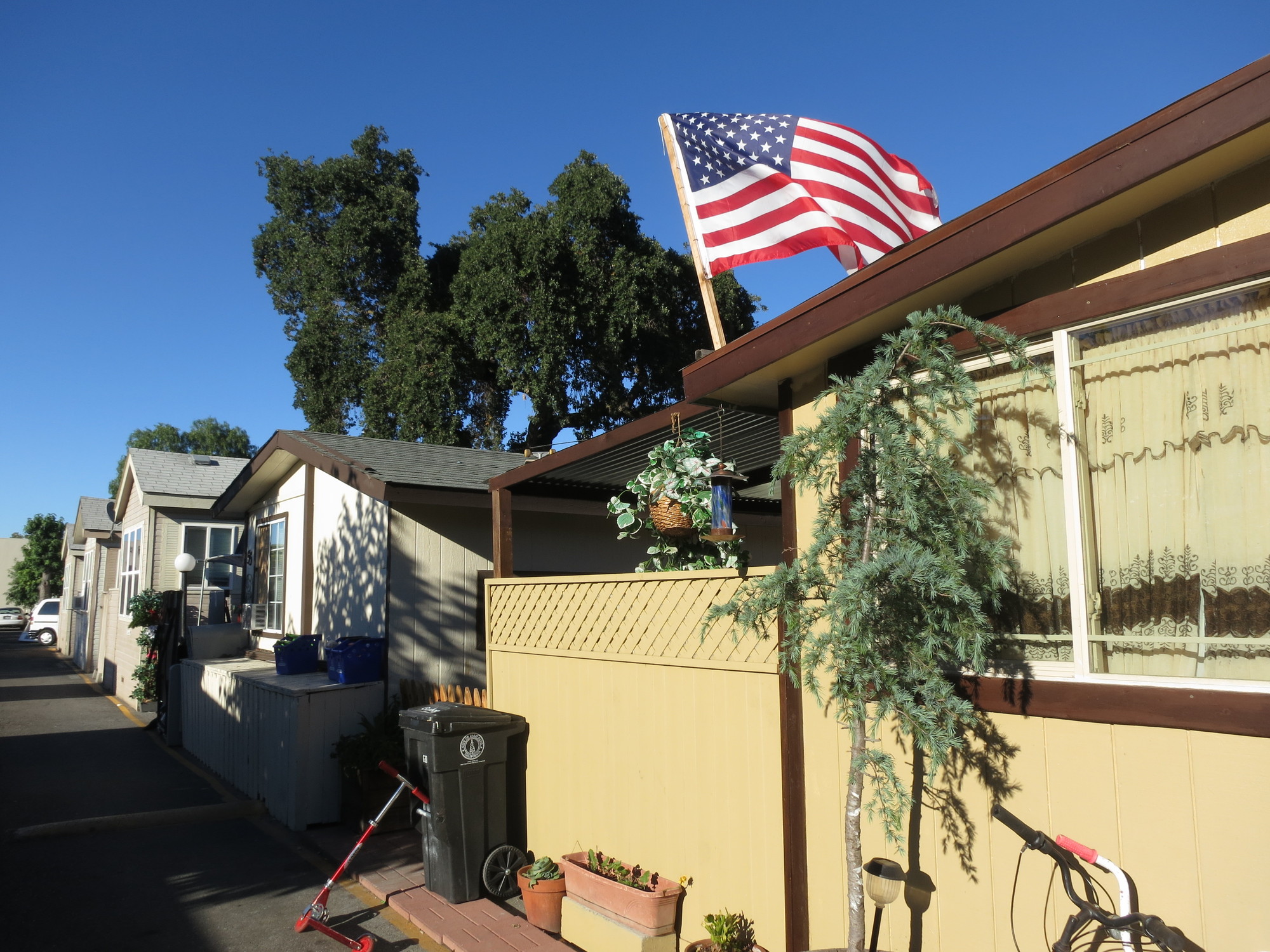
Residents, Neighbors Fight to Save Palo Alto Mobile Home Park
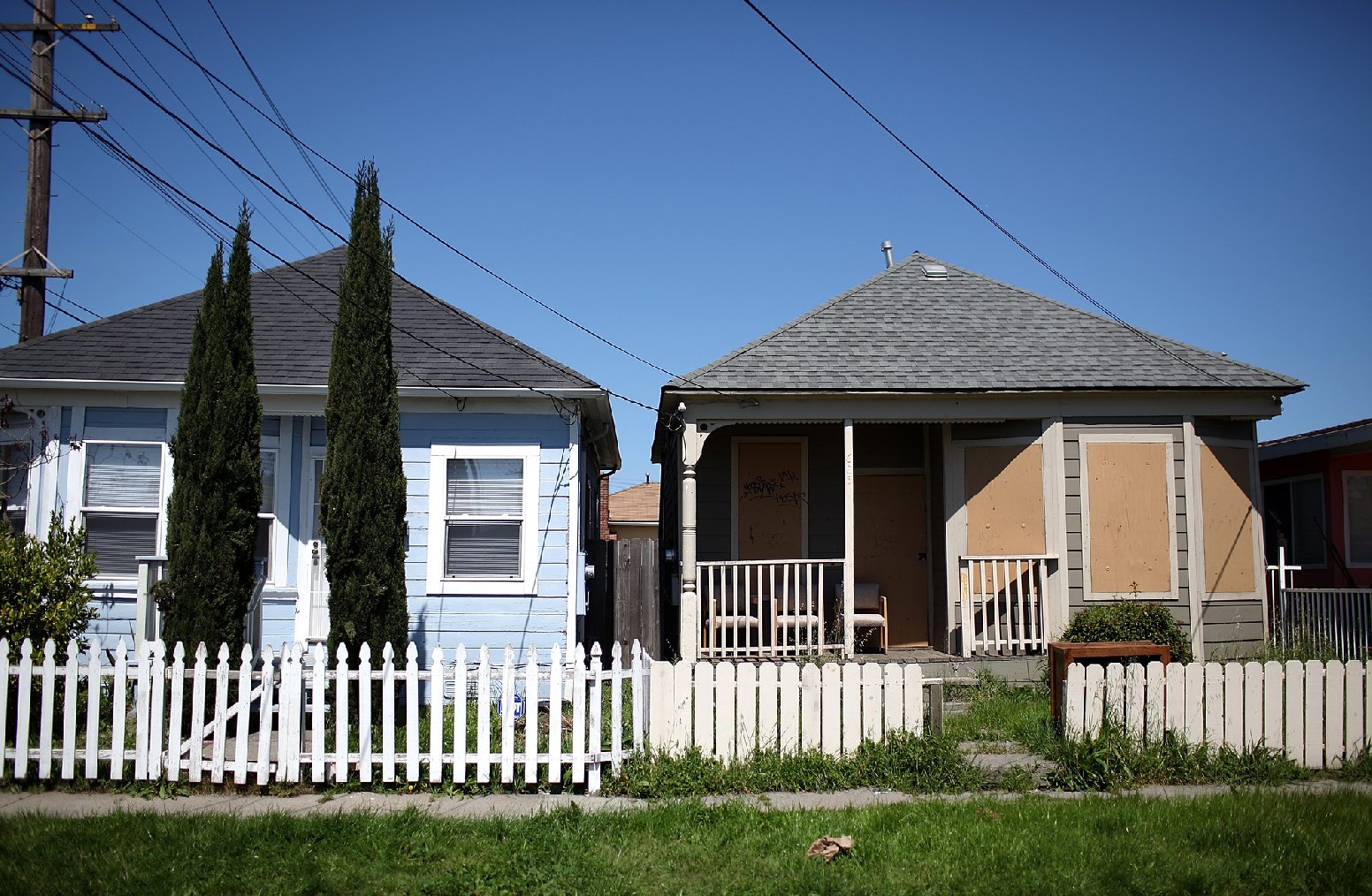
'Underwater' Homes: A Crisis Persists in Bay Area, Nationwide
Richmond City Council Approves Increase in City's Minimum Wage
Oakland Imposes New Rules to Slow Down Rent Increases
In SF's Mission District, Evicted Artists Hold Garage Sale to Pay for Move
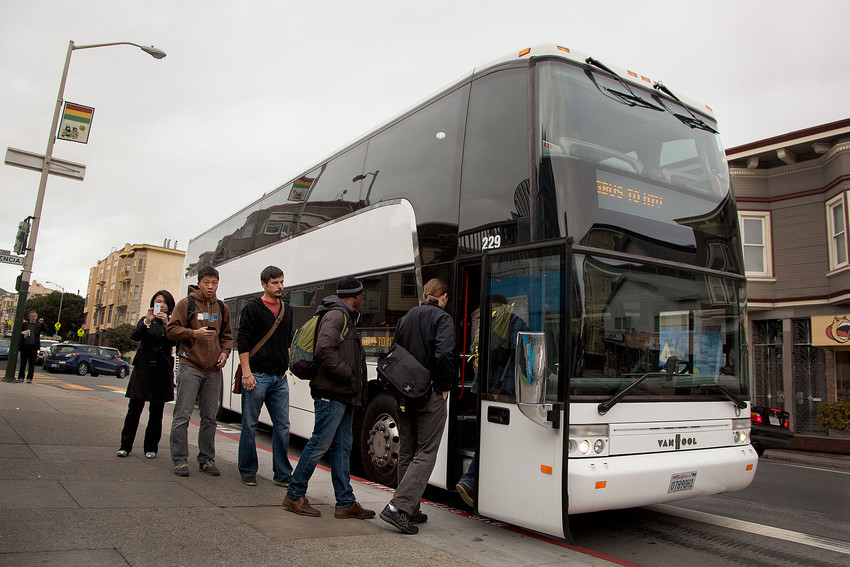
San Francisco Activists Sue City Over Tech Bus Plan
Airbnb Tug of War: Opponents, Supporters Rally in San Francisco
Albany Continues Clearing Out Homeless Encampment at Bulb
SF City Attorney Sues Two Landlords Over Short-Term Rentals
City Settles Lawsuit With Plaintiffs Living in Tent Village on Albany Bulb
Proposed Bayview Homeless Shelter Stirs Up Controversy
A Call for San Francisco to Boost Eviction Defense Funding
window.__IS_SSR__=true
window.__INITIAL_STATE__={
"attachmentsReducer": {
"audio_0": {
"type": "attachments",
"id": "audio_0",
"imgSizes": {
"kqedFullSize": {
"file": "https://ww2.kqed.org/news/wp-content/themes/KQED-unified/img/audio_bgs/background0.jpg"
}
}
},
"audio_1": {
"type": "attachments",
"id": "audio_1",
"imgSizes": {
"kqedFullSize": {
"file": "https://ww2.kqed.org/news/wp-content/themes/KQED-unified/img/audio_bgs/background1.jpg"
}
}
},
"audio_2": {
"type": "attachments",
"id": "audio_2",
"imgSizes": {
"kqedFullSize": {
"file": "https://ww2.kqed.org/news/wp-content/themes/KQED-unified/img/audio_bgs/background2.jpg"
}
}
},
"audio_3": {
"type": "attachments",
"id": "audio_3",
"imgSizes": {
"kqedFullSize": {
"file": "https://ww2.kqed.org/news/wp-content/themes/KQED-unified/img/audio_bgs/background3.jpg"
}
}
},
"audio_4": {
"type": "attachments",
"id": "audio_4",
"imgSizes": {
"kqedFullSize": {
"file": "https://ww2.kqed.org/news/wp-content/themes/KQED-unified/img/audio_bgs/background4.jpg"
}
}
},
"placeholder": {
"type": "attachments",
"id": "placeholder",
"imgSizes": {
"thumbnail": {
"file": "https://cdn.kqed.org/wp-content/uploads/2024/12/KQED-Default-Image-816638274-2000x1333-1-160x107.jpg",
"width": 160,
"height": 107,
"mimeType": "image/jpeg"
},
"medium": {
"file": "https://cdn.kqed.org/wp-content/uploads/2024/12/KQED-Default-Image-816638274-2000x1333-1-800x533.jpg",
"width": 800,
"height": 533,
"mimeType": "image/jpeg"
},
"medium_large": {
"file": "https://cdn.kqed.org/wp-content/uploads/2024/12/KQED-Default-Image-816638274-2000x1333-1-768x512.jpg",
"width": 768,
"height": 512,
"mimeType": "image/jpeg"
},
"large": {
"file": "https://cdn.kqed.org/wp-content/uploads/2024/12/KQED-Default-Image-816638274-2000x1333-1-1020x680.jpg",
"width": 1020,
"height": 680,
"mimeType": "image/jpeg"
},
"1536x1536": {
"file": "https://cdn.kqed.org/wp-content/uploads/2024/12/KQED-Default-Image-816638274-2000x1333-1-1536x1024.jpg",
"width": 1536,
"height": 1024,
"mimeType": "image/jpeg"
},
"fd-lrg": {
"file": "https://cdn.kqed.org/wp-content/uploads/2024/12/KQED-Default-Image-816638274-2000x1333-1-1536x1024.jpg",
"width": 1536,
"height": 1024,
"mimeType": "image/jpeg"
},
"fd-med": {
"file": "https://cdn.kqed.org/wp-content/uploads/2024/12/KQED-Default-Image-816638274-2000x1333-1-1020x680.jpg",
"width": 1020,
"height": 680,
"mimeType": "image/jpeg"
},
"fd-sm": {
"file": "https://cdn.kqed.org/wp-content/uploads/2024/12/KQED-Default-Image-816638274-2000x1333-1-800x533.jpg",
"width": 800,
"height": 533,
"mimeType": "image/jpeg"
},
"post-thumbnail": {
"file": "https://cdn.kqed.org/wp-content/uploads/2024/12/KQED-Default-Image-816638274-2000x1333-1-672x372.jpg",
"width": 672,
"height": 372,
"mimeType": "image/jpeg"
},
"twentyfourteen-full-width": {
"file": "https://cdn.kqed.org/wp-content/uploads/2024/12/KQED-Default-Image-816638274-2000x1333-1-1038x576.jpg",
"width": 1038,
"height": 576,
"mimeType": "image/jpeg"
},
"xxsmall": {
"file": "https://cdn.kqed.org/wp-content/uploads/2024/12/KQED-Default-Image-816638274-2000x1333-1-160x107.jpg",
"width": 160,
"height": 107,
"mimeType": "image/jpeg"
},
"xsmall": {
"file": "https://cdn.kqed.org/wp-content/uploads/2024/12/KQED-Default-Image-816638274-2000x1333-1-672x372.jpg",
"width": 672,
"height": 372,
"mimeType": "image/jpeg"
},
"small": {
"file": "https://cdn.kqed.org/wp-content/uploads/2024/12/KQED-Default-Image-816638274-2000x1333-1-672x372.jpg",
"width": 672,
"height": 372,
"mimeType": "image/jpeg"
},
"xlarge": {
"file": "https://cdn.kqed.org/wp-content/uploads/2024/12/KQED-Default-Image-816638274-2000x1333-1-1020x680.jpg",
"width": 1020,
"height": 680,
"mimeType": "image/jpeg"
},
"full-width": {
"file": "https://cdn.kqed.org/wp-content/uploads/2024/12/KQED-Default-Image-816638274-2000x1333-1-1920x1280.jpg",
"width": 1920,
"height": 1280,
"mimeType": "image/jpeg"
},
"guest-author-32": {
"file": "https://cdn.kqed.org/wp-content/uploads/2025/01/KQED-Default-Image-816638274-1333x1333-1-160x160.jpg",
"width": 32,
"height": 32,
"mimeType": "image/jpeg"
},
"guest-author-50": {
"file": "https://cdn.kqed.org/wp-content/uploads/2025/01/KQED-Default-Image-816638274-1333x1333-1-160x160.jpg",
"width": 50,
"height": 50,
"mimeType": "image/jpeg"
},
"guest-author-64": {
"file": "https://cdn.kqed.org/wp-content/uploads/2025/01/KQED-Default-Image-816638274-1333x1333-1-160x160.jpg",
"width": 64,
"height": 64,
"mimeType": "image/jpeg"
},
"guest-author-96": {
"file": "https://cdn.kqed.org/wp-content/uploads/2025/01/KQED-Default-Image-816638274-1333x1333-1-160x160.jpg",
"width": 96,
"height": 96,
"mimeType": "image/jpeg"
},
"guest-author-128": {
"file": "https://cdn.kqed.org/wp-content/uploads/2025/01/KQED-Default-Image-816638274-1333x1333-1-160x160.jpg",
"width": 128,
"height": 128,
"mimeType": "image/jpeg"
},
"detail": {
"file": "https://cdn.kqed.org/wp-content/uploads/2025/01/KQED-Default-Image-816638274-1333x1333-1-160x160.jpg",
"width": 160,
"height": 160,
"mimeType": "image/jpeg"
},
"kqedFullSize": {
"file": "https://cdn.kqed.org/wp-content/uploads/2024/12/KQED-Default-Image-816638274-2000x1333-1.jpg",
"width": 2000,
"height": 1333
}
}
},
"news_135788": {
"type": "attachments",
"id": "news_135788",
"meta": {
"index": "attachments_1716263798",
"site": "news",
"id": "135788",
"found": true
},
"parent": 135774,
"imgSizes": {
"kqedFullSize": {
"file": "https://ww2.kqed.org/app/uploads/sites/10/2014/05/RS5553_IMG_2068-lpr.jpg",
"width": 2000,
"height": 1500
}
},
"publishDate": 1399937332,
"modified": 1399937332,
"caption": "The Buena Vista Mobile Home Park in Palo Alto, whose owners want to sell to developers of luxury housing. (Francesca Segre/KQED)",
"description": "The Buena Vista Mobile Home Park in Palo Alto, whose owners want to sell to developers of luxury housing. (Francesca Segre/KQED)",
"title": "Buena Vista Mobile Home Park-Palo Alto",
"credit": null,
"status": "inherit",
"isLoading": false,
"fetchFailed": false
},
"news_124461": {
"type": "attachments",
"id": "news_124461",
"meta": {
"index": "attachments_1716263798",
"site": "news",
"id": "124461",
"found": true
},
"parent": 124394,
"imgSizes": {
"kqedFullSize": {
"file": "https://ww2.kqed.org/app/uploads/sites/10/2014/01/RS612_foreclosure20120511-lpr.jpg",
"width": 1552,
"height": 1014
}
},
"publishDate": 1390610091,
"modified": 1390610091,
"caption": "Homes in Richmond, California. (Justin Sullivan/Getty Images)",
"description": "Homes in Richmond, California. (Justin Sullivan/Getty Images)",
"title": "Foreclosure-Richmond ",
"credit": null,
"status": "inherit",
"isLoading": false,
"fetchFailed": false
},
"news_82906": {
"type": "attachments",
"id": "news_82906",
"meta": {
"index": "attachments_1716263798",
"site": "news",
"id": "82906",
"found": true
},
"parent": 82902,
"imgSizes": {
"kqedFullSize": {
"file": "https://ww2.kqed.org/app/uploads/sites/10/2012/12/money-piggy-bank-flickr-kenteegarden.jpg",
"width": 300,
"height": 204
}
},
"publishDate": 1355423084,
"modified": 1355423084,
"caption": "Flicker/Kenteegarden",
"description": null,
"title": "money piggy bank flickr kenteegarden",
"credit": null,
"status": "inherit",
"isLoading": false,
"fetchFailed": false
},
"news_103801": {
"type": "attachments",
"id": "news_103801",
"meta": {
"index": "attachments_1716263798",
"site": "news",
"id": "103801",
"found": true
},
"parent": 103615,
"imgSizes": {
"kqedFullSize": {
"file": "https://ww2.kqed.org/app/uploads/sites/10/2013/07/for-rent-think-stock-1024x1024.jpg",
"width": 1024,
"height": 1024
}
},
"publishDate": 1374007895,
"modified": 1374007895,
"caption": "(File photo/iStock)",
"description": "(File photo/iStock)",
"title": "For Rent-Generic",
"credit": null,
"status": "inherit",
"isLoading": false,
"fetchFailed": false
},
"news_135178": {
"type": "attachments",
"id": "news_135178",
"meta": {
"index": "attachments_1716263798",
"site": "news",
"id": "135178",
"found": true
},
"parent": 135170,
"imgSizes": {
"kqedFullSize": {
"file": "https://ww2.kqed.org/app/uploads/sites/10/2014/05/eviction-garage-sale.jpg",
"width": 533,
"height": 400
}
},
"publishDate": 1399338058,
"modified": 1399338058,
"caption": "The sticker on each item for sale at the garage sale held by longtime mission artists Yolanda Lopez and he son Rio Yanez. (Lydia Chavez/Mission Local)",
"description": null,
"title": "eviction garage sale",
"credit": null,
"status": "inherit",
"isLoading": false,
"fetchFailed": false
},
"news_127502": {
"type": "attachments",
"id": "news_127502",
"meta": {
"index": "attachments_1716263798",
"site": "news",
"id": "127502",
"found": true
},
"parent": 127442,
"imgSizes": {
"kqedFullSize": {
"file": "https://ww2.kqed.org/app/uploads/sites/10/2014/02/RS8537_IMG_9782-scr.jpg",
"width": 850,
"height": 567
}
},
"publishDate": 1393286859,
"modified": 1393286859,
"caption": "Workers board a private bus at 24th and Valencia streets. (Mark Andrew Boyer/KQED)",
"description": "Workers board a private bus at 24th and Valencia streets. (Mark Andrew Boyer/KQED)",
"title": "Tech bus",
"credit": null,
"status": "inherit",
"isLoading": false,
"fetchFailed": false
},
"news_134714": {
"type": "attachments",
"id": "news_134714",
"meta": {
"index": "attachments_1716263798",
"site": "news",
"id": "134714",
"found": true
},
"parent": 134700,
"imgSizes": {
"kqedFullSize": {
"file": "https://ww2.kqed.org/app/uploads/sites/10/2014/04/IMG_3470-copy.jpg",
"width": 800,
"height": 533
}
},
"publishDate": 1398881627,
"modified": 1398881627,
"caption": "Kathryn Blum holds a handmade sign at Tuesday's Airbnb rally (Mark Andrew Boyer/KQED)",
"description": null,
"title": "IMG_3470-copy",
"credit": null,
"status": "inherit",
"isLoading": false,
"fetchFailed": false
},
"news_133757": {
"type": "attachments",
"id": "news_133757",
"meta": {
"index": "attachments_1716263798",
"site": "news",
"id": "133757",
"found": true
},
"parent": 133682,
"imgSizes": {
"kqedFullSize": {
"file": "https://ww2.kqed.org/app/uploads/sites/10/2014/04/RS9642_182561864-lpr.jpg",
"width": 1705,
"height": 923
}
},
"publishDate": 1398370382,
"modified": 1493673892,
"caption": "Airbnb is a very popular way to find short-term rentals. 2013 file photo. ",
"description": null,
"title": "RS9642_182561864-lpr",
"credit": "Chris Weeks/Getty Images",
"status": "inherit",
"isLoading": false,
"fetchFailed": false
},
"news_111666": {
"type": "attachments",
"id": "news_111666",
"meta": {
"index": "attachments_1716263798",
"site": "news",
"id": "111666",
"found": true
},
"parent": 111655,
"imgSizes": {
"kqedFullSize": {
"file": "https://ww2.kqed.org/app/uploads/sites/10/2013/09/Albanybulb_11sept2013-640.jpg",
"width": 640,
"height": 427
}
},
"publishDate": 1379534210,
"modified": 1379534210,
"caption": "Recylced metal sculptures by Osha Neumann, an advocate for the residents living on the Albany Bulb, can be found on the north shore of the small peninsula. (Sara Bloomberg/KQED)",
"description": null,
"title": "Albanybulb_11sept2013-640",
"credit": null,
"status": "inherit",
"isLoading": false,
"fetchFailed": false
},
"news_133131": {
"type": "attachments",
"id": "news_133131",
"meta": {
"index": "attachments_1716263798",
"site": "news",
"id": "133131",
"found": true
},
"parent": 133034,
"imgSizes": {
"kqedFullSize": {
"file": "https://ww2.kqed.org/app/uploads/sites/10/2014/04/RS9600_IMG_2650-copy-hpf.jpg",
"width": 640,
"height": 427
}
},
"publishDate": 1397842270,
"modified": 1397842270,
"caption": "Clients of Mother Brown's Dining Room hang out in front of the soup kitchen. (Mark Andrew Boyer/KQED)",
"description": null,
"title": "RS9600_IMG_2650 copy-hpf",
"credit": null,
"status": "inherit",
"isLoading": false,
"fetchFailed": false
}
},
"audioPlayerReducer": {
"postId": "stream_live",
"isPaused": true,
"isPlaying": false,
"pfsActive": false,
"pledgeModalIsOpen": true,
"playerDrawerIsOpen": false,
"liveAudioPlayStartedAt": 0,
"liveAudioPlayContext": ""
},
"authorsReducer": {
"andrewstelzer": {
"type": "authors",
"id": "213",
"meta": {
"index": "authors_1716337520",
"id": "213",
"found": true
},
"name": "Andrew Stelzer",
"firstName": "Andrew",
"lastName": "Stelzer",
"slug": "andrewstelzer",
"email": "andrewstelzer@gmail.com",
"display_author_email": false,
"staff_mastheads": [],
"title": null,
"bio": "Andrew Stelzer has been reporting for KQED since 2010, and is a producer at \u003ca href=\"http://www.radioproject.org\" target=\"_blank\">Making Contact\u003c/a> in Oakland.. His work has been featured on programs including \u003ca href=\"http://www.npr.org/templates/story/story.php?storyId=5010\" target=\"_blank\">NPR’s Weekend Edition\u003c/a>, \u003ca href=\"http://www.theworld.org/\" target=\"_blank\">PRI’s The World\u003c/a>, \u003ca href=\"http://www.studio360.org/\" target=\"_blank\">Studio 360\u003c/a>, \u003ca href=\"http://marketplace.publicradio.org/\" target=\"_blank\">Marketplace\u003c/a>,\u003ca href=\"http://www.loe.org/\" target=\"_blank\">Living on Earth\u003c/a>, \u003ca href=\"http://www.onthemedia.org/\" target=\"_blank\">On the Media\u003c/a>, \u003ca href=\"http://www.latinousa.org/index.html\" target=\"_blank\">Latino USA,\u003c/a> \u003ca href=\"http://www.onlyagame.org/\" rel=\"tag\">Only a Game,\u003c/a> \u003ca href=\"http://www.tswi.org/\" target=\"_blank\">Radio Netherlands,\u003c/a> \u003ca href=\"http://worldradio.ch/index.shtml\" target=\"_blank\">World Radio Switzerland,\u003c/a> and \u003ca href=\"http://www.rfi.fr/langues/statiques/rfi_anglais.asp\" target=\"_blank\">Radio France International\u003c/a>. Andrew has written for publications including \u003ca href=\"http://www.inthesetimes.com/site/about/author/2369\" target=\"_blank\">In These Times\u003c/a>, \u003ca href=\"http://www.progressive.org/\" target=\"_blank\">The Progressive\u003c/a>, \u003ca href=\"http://ipsnews.net/\" target=\"_blank\">Interpress Service\u003c/a>, \u003ca href=\"http://www.tampabay.com/\" target=\"_blank\">The St. Petersburg Times\u003c/a>, and \u003ca href=\"http://www.eastbayexpress.com/ebx/Home\" target=\"_blank\">The East Bay Express\u003c/a>.\r\n\r\nAndrew’s work has received numerous awards from the Society of Professional Journalists, the National Lesbian and Gay Journalists Association, and the National Council on Crime and Delinquency.\r\n\r\nHe previously was a reporter at \u003ca href=\"http://www.wmnf.org/\" target=\"_blank\">WMNF\u003c/a> radio in Tampa, FL, and reporter and youth advocate st \u003ca href=\"http://www.kboo.org/\" target=\"_blank\">KBOO \u003c/a> in Portland, Oregon. Andrew has conducted radio production trainings around the world, from Algeria, to New Orleans, to the desert of Southern Jordan.",
"avatar": "https://secure.gravatar.com/avatar/14c7e75469395cb2468d45c9f6896ca9?s=600&d=blank&r=g",
"twitter": null,
"facebook": null,
"instagram": null,
"linkedin": null,
"sites": [
{
"site": "arts",
"roles": [
"contributor"
]
},
{
"site": "news",
"roles": [
"author"
]
},
{
"site": "stateofhealth",
"roles": [
"author"
]
}
],
"headData": {
"title": "Andrew Stelzer | KQED",
"description": null,
"ogImgSrc": "https://secure.gravatar.com/avatar/14c7e75469395cb2468d45c9f6896ca9?s=600&d=blank&r=g",
"twImgSrc": "https://secure.gravatar.com/avatar/14c7e75469395cb2468d45c9f6896ca9?s=600&d=blank&r=g"
},
"isLoading": false,
"link": "/author/andrewstelzer"
},
"bgoebel": {
"type": "authors",
"id": "214",
"meta": {
"index": "authors_1716337520",
"id": "214",
"found": true
},
"name": "Bryan Goebel",
"firstName": "Bryan",
"lastName": "Goebel",
"slug": "bgoebel",
"email": "bgoebel@kqed.org",
"display_author_email": false,
"staff_mastheads": [],
"title": null,
"bio": "Bryan Goebel is a reporter focused on transportation and housing issues. He was previously the editor of Streetsblog San Francisco, and an anchor/editor at KCBS Radio. He's a lifelong Californian and has also worked at radio stations in Barstow, Redding and Sacramento.",
"avatar": "https://secure.gravatar.com/avatar/7fdd6b065bfe9a23a71bcfa80848df88?s=600&d=blank&r=g",
"twitter": "velobry",
"facebook": null,
"instagram": null,
"linkedin": null,
"sites": [
{
"site": "news",
"roles": [
"subscriber"
]
},
{
"site": "stateofhealth",
"roles": [
"subscriber"
]
}
],
"headData": {
"title": "Bryan Goebel | KQED",
"description": null,
"ogImgSrc": "https://secure.gravatar.com/avatar/7fdd6b065bfe9a23a71bcfa80848df88?s=600&d=blank&r=g",
"twImgSrc": "https://secure.gravatar.com/avatar/7fdd6b065bfe9a23a71bcfa80848df88?s=600&d=blank&r=g"
},
"isLoading": false,
"link": "/author/bgoebel"
},
"danbrekke": {
"type": "authors",
"id": "222",
"meta": {
"index": "authors_1716337520",
"id": "222",
"found": true
},
"name": "Dan Brekke",
"firstName": "Dan",
"lastName": "Brekke",
"slug": "danbrekke",
"email": "dbrekke@kqed.org",
"display_author_email": true,
"staff_mastheads": [
"news",
"science"
],
"title": "KQED Editor and Reporter",
"bio": "Dan Brekke is a reporter and editor for KQED News, responsible for coverage of topics ranging from California water issues to the Bay Area's transportation challenges. In a newsroom career that began in Chicago in 1972, Dan has worked for \u003cem>The San Francisco Examiner,\u003c/em> Wired and TechTV and has been published in The New York Times, The New York Times Magazine, Business 2.0, Salon and elsewhere.\r\n\r\nSince joining KQED in 2007, Dan has reported, edited and produced both radio and online features and breaking news pieces. He has shared as both editor and reporter in four Society of Professional Journalists Norcal Excellence in Journalism awards and one Edward R. Murrow regional award. He was chosen for a spring 2017 residency at the Mesa Refuge to advance his research on California salmon.\r\n\r\nEmail Dan at: \u003ca href=\"mailto:dbrekke@kqed.org\">dbrekke@kqed.org\u003c/a>\r\n\r\n\u003cstrong>Twitter:\u003c/strong> \u003ca href=\"https://twitter.com/danbrekke\" rel=\"noopener noreferrer\">twitter.com/danbrekke\u003c/a>\r\n\u003cstrong>Facebook:\u003c/strong> \u003ca href=\"https://www.facebook.com/danbrekke\" rel=\"noopener noreferrer\">www.facebook.com/danbrekke\u003c/a>\r\n\u003cstrong>LinkedIn:\u003c/strong> \u003ca href=\"https://www.linkedin.com/in/danbrekke\" rel=\"noopener noreferrer\">www.linkedin.com/in/danbrekke\u003c/a>",
"avatar": "https://secure.gravatar.com/avatar/8f1f0d2a978fb3b23426c922c7e2af558fa36905b49c4ce76a97dc3c72d27226?s=600&d=mm&r=g",
"twitter": "danbrekke",
"bluesky": null,
"facebook": null,
"instagram": "https://www.instagram.com/dan.brekke/",
"linkedin": "https://www.linkedin.com/in/danbrekke/",
"sites": [
{
"site": "news",
"roles": [
"administrator",
"create_posts"
]
},
{
"site": "stateofhealth",
"roles": [
"editor"
]
},
{
"site": "science",
"roles": [
"editor"
]
},
{
"site": "quest",
"roles": [
"contributor"
]
},
{
"site": "food",
"roles": [
"contributor"
]
},
{
"site": "forum",
"roles": [
"contributor"
]
},
{
"site": "elections",
"roles": [
"editor"
]
},
{
"site": "liveblog",
"roles": [
"editor"
]
}
],
"headData": {
"title": "Dan Brekke | KQED",
"description": "KQED Editor and Reporter",
"ogImgSrc": "https://secure.gravatar.com/avatar/8f1f0d2a978fb3b23426c922c7e2af558fa36905b49c4ce76a97dc3c72d27226?s=600&d=mm&r=g",
"twImgSrc": "https://secure.gravatar.com/avatar/8f1f0d2a978fb3b23426c922c7e2af558fa36905b49c4ce76a97dc3c72d27226?s=600&d=mm&r=g"
},
"isLoading": false,
"link": "/author/danbrekke"
},
"fsegre": {
"type": "authors",
"id": "226",
"meta": {
"index": "authors_1716337520",
"id": "226",
"found": true
},
"name": "Francesca Segre",
"firstName": "Francesca",
"lastName": "Segre",
"slug": "fsegre",
"email": "Francesca.segre@gmail.com",
"display_author_email": false,
"staff_mastheads": [],
"title": null,
"bio": null,
"avatar": "https://secure.gravatar.com/avatar/a6fef4038bf839e8d97305f7eb03fd2b?s=600&d=blank&r=g",
"twitter": null,
"facebook": null,
"instagram": null,
"linkedin": null,
"sites": [
{
"site": "news",
"roles": [
"subscriber"
]
},
{
"site": "mindshift",
"roles": [
"subscriber"
]
}
],
"headData": {
"title": "Francesca Segre | KQED",
"description": null,
"ogImgSrc": "https://secure.gravatar.com/avatar/a6fef4038bf839e8d97305f7eb03fd2b?s=600&d=blank&r=g",
"twImgSrc": "https://secure.gravatar.com/avatar/a6fef4038bf839e8d97305f7eb03fd2b?s=600&d=blank&r=g"
},
"isLoading": false,
"link": "/author/fsegre"
},
"katrinaschwartz": {
"type": "authors",
"id": "234",
"meta": {
"index": "authors_1716337520",
"id": "234",
"found": true
},
"name": "Katrina Schwartz",
"firstName": "Katrina",
"lastName": "Schwartz",
"slug": "katrinaschwartz",
"email": "kschwartz@kqed.org",
"display_author_email": false,
"staff_mastheads": [
"news"
],
"title": "Producer",
"bio": "Katrina Schwartz is a journalist based in San Francisco. She's worked at KPCC public radio in LA and has reported on air and online for KQED since 2010. She covered how teaching and learning is changing for MindShift between 2012 and 2020. She is the co-host of the MindShift podcast and now produces KQED's Bay Curious podcast.",
"avatar": "https://secure.gravatar.com/avatar/edb4ee79070447a018538c9aae6eeecf28786515b8a0c30e43b6b7dce5aa44c8?s=600&d=blank&r=g",
"twitter": "kschwart",
"bluesky": null,
"facebook": null,
"instagram": null,
"linkedin": null,
"sites": [
{
"site": "",
"roles": [
"editor"
]
},
{
"site": "news",
"roles": [
"editor"
]
},
{
"site": "mindshift",
"roles": [
"administrator"
]
},
{
"site": "stateofhealth",
"roles": [
"author"
]
},
{
"site": "science",
"roles": [
"editor"
]
}
],
"headData": {
"title": "Katrina Schwartz | KQED",
"description": "Producer",
"ogImgSrc": "https://secure.gravatar.com/avatar/edb4ee79070447a018538c9aae6eeecf28786515b8a0c30e43b6b7dce5aa44c8?s=600&d=blank&r=g",
"twImgSrc": "https://secure.gravatar.com/avatar/edb4ee79070447a018538c9aae6eeecf28786515b8a0c30e43b6b7dce5aa44c8?s=600&d=blank&r=g"
},
"isLoading": false,
"link": "/author/katrinaschwartz"
},
"kqed": {
"type": "authors",
"id": "236",
"meta": {
"index": "authors_1716337520",
"id": "236",
"found": true
},
"name": "KQED News Staff",
"firstName": "KQED News Staff",
"lastName": null,
"slug": "kqed",
"email": "faq@kqed.org",
"display_author_email": false,
"staff_mastheads": [],
"title": null,
"bio": null,
"avatar": "https://secure.gravatar.com/avatar/ef0e801a68c4c54afa9180db14084167?s=600&d=blank&r=g",
"twitter": null,
"facebook": null,
"instagram": null,
"linkedin": null,
"sites": [
{
"site": "arts",
"roles": [
"contributor"
]
},
{
"site": "news",
"roles": [
"editor"
]
},
{
"site": "futureofyou",
"roles": [
"author"
]
}
],
"headData": {
"title": "KQED News Staff | KQED",
"description": null,
"ogImgSrc": "https://secure.gravatar.com/avatar/ef0e801a68c4c54afa9180db14084167?s=600&d=blank&r=g",
"twImgSrc": "https://secure.gravatar.com/avatar/ef0e801a68c4c54afa9180db14084167?s=600&d=blank&r=g"
},
"isLoading": false,
"link": "/author/kqed"
},
"mboyer": {
"type": "authors",
"id": "242",
"meta": {
"index": "authors_1716337520",
"id": "242",
"found": true
},
"name": "Mark Andrew Boyer",
"firstName": "Mark Andrew",
"lastName": "Boyer",
"slug": "mboyer",
"email": "mboyer@kqed.org",
"display_author_email": false,
"staff_mastheads": [],
"title": null,
"bio": null,
"avatar": "https://secure.gravatar.com/avatar/97f25e563059e57d6a08f9c09b43851a?s=600&d=blank&r=g",
"twitter": null,
"facebook": null,
"instagram": null,
"linkedin": null,
"sites": [
{
"site": "news",
"roles": [
"contributor"
]
}
],
"headData": {
"title": "Mark Andrew Boyer | KQED",
"description": null,
"ogImgSrc": "https://secure.gravatar.com/avatar/97f25e563059e57d6a08f9c09b43851a?s=600&d=blank&r=g",
"twImgSrc": "https://secure.gravatar.com/avatar/97f25e563059e57d6a08f9c09b43851a?s=600&d=blank&r=g"
},
"isLoading": false,
"link": "/author/mboyer"
},
"patyollin": {
"type": "authors",
"id": "247",
"meta": {
"index": "authors_1716337520",
"id": "247",
"found": true
},
"name": "Patricia Yollin",
"firstName": "Patricia",
"lastName": "Yollin",
"slug": "patyollin",
"email": "pyollin@kqed.org",
"display_author_email": false,
"staff_mastheads": [],
"title": "KQED Contributor",
"bio": "Pat Yollin has written about lots of stuff, including organ transplants, wayward penguins at the San Francisco Zoo, the comeback of the cream puff, New York on the fifth anniversary of 9/11, a Slow Food gathering in Italy, and the microcredit movement in Northern California. Among her favorite stories: an interview with George Lucas at Skywalker Ranch that broke the story about his plan to build a cultural museum, and a pirate Trader Joe's operation in Vancouver that prompted the grocery chain to sue -- and lose. She joined KQED in 2013 and was previously a reporter and editor at the San Francisco Chronicle, the Hearst-owned San Francisco Examiner and the Hayward Daily Review.",
"avatar": "https://secure.gravatar.com/avatar/0a18ac41a263665c04b25b2c7d6b817c?s=600&d=blank&r=g",
"twitter": null,
"facebook": null,
"instagram": null,
"linkedin": null,
"sites": [
{
"site": "arts",
"roles": [
"subscriber"
]
},
{
"site": "news",
"roles": [
"subscriber"
]
},
{
"site": "futureofyou",
"roles": [
"editor"
]
},
{
"site": "lowdown",
"roles": [
"editor"
]
},
{
"site": "stateofhealth",
"roles": [
"editor"
]
}
],
"headData": {
"title": "Patricia Yollin | KQED",
"description": "KQED Contributor",
"ogImgSrc": "https://secure.gravatar.com/avatar/0a18ac41a263665c04b25b2c7d6b817c?s=600&d=blank&r=g",
"twImgSrc": "https://secure.gravatar.com/avatar/0a18ac41a263665c04b25b2c7d6b817c?s=600&d=blank&r=g"
},
"isLoading": false,
"link": "/author/patyollin"
},
"aemslie": {
"type": "authors",
"id": "3206",
"meta": {
"index": "authors_1716337520",
"id": "3206",
"found": true
},
"name": "Alex Emslie",
"firstName": "Alex",
"lastName": "Emslie",
"slug": "aemslie",
"email": "aemslie@kqed.org",
"display_author_email": true,
"staff_mastheads": [
"news"
],
"title": "KQED Senior Editor",
"bio": "Alex Emslie is senior editor of talent and development at KQED, where he manages dozens of early career journalists and oversees news department internships.\r\n\r\nHe is a former carpenter and proud graduate of City College of San Francisco and San Francisco State University, where he studied journalism and criminal justice before joining KQED in 2013.\r\n\r\nAlex produced investigative journalism focused on \u003ca href=\"https://www.kqed.org/news/11667594/the-trials-of-marvin-mutch-video\">criminal justice\u003c/a> and policing for most of a decade. He has broken major stories about \u003ca href=\"https://www.kqed.org/news/135682/amid-a-series-of-vallejo-police-shootings-one-officers-name-stands-out\">police use of deadly force\u003c/a>, \u003ca href=\"https://www.kqed.org/news/10454955/racist-texts-prompt-sfpd-internal-investigation\">officer misconduct\u003c/a> and \u003ca href=\"https://www.kqed.org/news/11712239/terrorist-or-troll-judge-to-weigh-whether-oakland-man-really-intended-to-attack-bay-area\">other\u003c/a> \u003ca href=\"https://www.kqed.org/news/11221414/hayward-paid-159000-to-husband-of-retired-police-chief-documents-show\">high\u003c/a>-\u003ca href=\"https://www.kqed.org/news/10622762/the-forgotten-tracking-two-homicides-in-san-francisco-public-housing\">profile\u003c/a> \u003ca href=\"https://www.kqed.org/news/11624516/federal-agency-promoted-ranger-just-months-after-his-gun-was-stolen-and-used-in-steinle-killing\">cases\u003c/a>. He co-founded the \u003ca href=\"https://projects.scpr.org/california-reporting-project/\">California Reporting Project\u003c/a> in 2019 to obtain and report on previously confidential police internal investigations. The effort produced well over 100 original stories and changed the course of multiple criminal cases.\r\n\r\nHis work has been recognized with numerous journalism awards, including a national Edward R. Murrow award for several years of \u003ca href=\"https://www.kqed.org/news/11688481/sfpd-officers-in-mario-woods-case-recount-shooting-in-newly-filed-depositions\">reporting\u003c/a> on the San Francisco Police shooting of Mario Woods. His \u003ca href=\"https://www.kqed.org/news/147854/half-of-those-killed-by-san-francisco-police-are-mentally-ill\">reporting\u003c/a> on police killings of people in psychiatric crisis was cited in amicus briefs before the U.S. Supreme Court.\r\n\r\nAlex now enjoys mentoring the next generation of journalists at KQED.",
"avatar": "https://secure.gravatar.com/avatar/e691e65209f20e9da202bd730ead5663?s=600&d=blank&r=g",
"twitter": "SFNewsReporter",
"facebook": null,
"instagram": null,
"linkedin": null,
"sites": [
{
"site": "arts",
"roles": [
"editor"
]
},
{
"site": "news",
"roles": [
"editor"
]
},
{
"site": "mindshift",
"roles": [
"editor"
]
},
{
"site": "stateofhealth",
"roles": [
"editor"
]
},
{
"site": "science",
"roles": [
"administrator"
]
}
],
"headData": {
"title": "Alex Emslie | KQED",
"description": "KQED Senior Editor",
"ogImgSrc": "https://secure.gravatar.com/avatar/e691e65209f20e9da202bd730ead5663?s=600&d=blank&r=g",
"twImgSrc": "https://secure.gravatar.com/avatar/e691e65209f20e9da202bd730ead5663?s=600&d=blank&r=g"
},
"isLoading": false,
"link": "/author/aemslie"
}
},
"pagesReducer": {
"news_series_priced-out": {
"type": "terms",
"id": "news_18549",
"meta": {
"index": "terms_1716263798",
"site": "news",
"id": "18549",
"score": 14.65037
},
"featImg": null,
"name": "Priced Out",
"description": "It seems that almost everyone in the Bay Area has a housing horror story to tell. Anecdotes abound of renters spending months looking for a new place, and the pound of flesh extracted when they do find one. Equally scary are the stories from aspiring, seemingly qualified homeowners who are turned away by banks. \r\n \r\nThroughout 2014, KQED brought out the facts and stories behind the Bay Area housing crisis as part of our series called ‘Priced Out.’ We told the stories of people struggling and surviving amidst the increasing cost of living. We examined the changing neighborhoods and cities in the Bay Area, looked at who is getting evicted and why, as well as the potential solutions that have emerged.",
"taxonomy": "series",
"headData": {
"twImgId": null,
"twTitle": null,
"ogTitle": null,
"ogImgId": null,
"twDescription": null,
"description": "It seems that almost everyone in the Bay Area has a housing horror story to tell. Anecdotes abound of renters spending months looking for a new place, and the pound of flesh extracted when they do find one. Equally scary are the stories from aspiring, seemingly qualified homeowners who are turned away by banks. Throughout 2014, KQED brought out the facts and stories behind the Bay Area housing crisis as part of our series called ‘Priced Out.’ We told the stories of people struggling and surviving amidst the increasing cost of living. We examined the changing neighborhoods and cities in the Bay Area, looked at who is getting evicted and why, as well as the potential solutions that have emerged.",
"title": "Priced Out Archives | KQED News",
"ogDescription": null
},
"ttid": 5066,
"slug": "priced-out",
"isLoading": false,
"title": "Priced Out",
"pageMeta": {
"site": "news",
"WpPageTemplate": "page-topic-editorial",
"currentPage": 7
},
"blocks": [
{
"blockName": "kqed/company-paragraph",
"content": "It seems that almost everyone in the Bay Area has a housing horror story to tell. Anecdotes abound of renters spending months looking for a new place, and the pound of flesh extracted when they do find one. Equally scary are the stories from aspiring, seemingly qualified homeowners who are turned away by banks. \r\n \r\nThroughout 2014, KQED brought out the facts and stories behind the Bay Area housing crisis as part of our series called ‘Priced Out.’ We told the stories of people struggling and surviving amidst the increasing cost of living. We examined the changing neighborhoods and cities in the Bay Area, looked at who is getting evicted and why, as well as the potential solutions that have emerged."
},
{
"blockName": "kqed/post-list",
"attrs": {
"layout": "cardArticle2",
"query": "posts/news?series=priced-out",
"seeMore": false,
"paginated": true,
"page": 7
}
},
{
"blockName": "kqed/ad"
}
]
}
},
"pfsSessionReducer": {},
"postsReducer": {
"stream_live": {
"type": "live",
"id": "stream_live",
"audioUrl": "https://streams.kqed.org/kqedradio",
"title": "Live Stream",
"excerpt": "Live Stream information currently unavailable.",
"link": "/radio",
"featImg": "",
"label": {
"name": "KQED Live",
"link": "/"
}
},
"stream_kqedNewscast": {
"type": "posts",
"id": "stream_kqedNewscast",
"audioUrl": "https://www.kqed.org/.stream/anon/radio/RDnews/newscast.mp3?_=1",
"title": "KQED Newscast",
"featImg": "",
"label": {
"name": "88.5 FM",
"link": "/"
}
},
"news_135774": {
"type": "posts",
"id": "news_135774",
"meta": {
"index": "posts_1716263798",
"site": "news",
"id": "135774",
"score": null,
"sort": [
1399937684000
]
},
"parent": 0,
"labelTerm": {
"site": "news",
"term": 6944
},
"blocks": [],
"publishDate": 1399937684,
"format": "aside",
"disqusTitle": "Residents, Neighbors Fight to Save Palo Alto Mobile Home Park ",
"title": "Residents, Neighbors Fight to Save Palo Alto Mobile Home Park ",
"headTitle": "Priced Out | News Fix | KQED News",
"content": "\u003cfigure id=\"attachment_135788\" class=\"wp-caption aligncenter\" style=\"max-width: 640px\">\u003ca href=\"http://ww2.kqed.org/news/wp-content/uploads/sites/10/2014/05/RS5553_IMG_2068-lpr.jpg\">\u003cimg class=\"size-medium wp-image-135788\" src=\"http://ww2.kqed.org/news/wp-content/uploads/sites/10/2014/05/RS5553_IMG_2068-lpr-640x480.jpg\" alt=\"The Buena Vista Mobile Home Park in Palo Alto, whose owners want to sell to developers of luxury housing. (Francesca Segre/KQED)\" width=\"640\" height=\"480\">\u003c/a>\u003cfigcaption class=\"wp-caption-text\">The Buena Vista Mobile Home Park in Palo Alto, whose owners want to sell to developers of luxury housing. (Francesca Segre/KQED)\u003c/figcaption>\u003c/figure>\n\u003cp>Low-income residents of Palo Alto’s only mobile home park are rallying tonight with some of their better-off neighbors to keep open this rare source of affordable housing in the city. The owners of the Buena Vista Mobile Home Park want to sell the 4.5-acre parcel to developers who plan to build luxury housing.\u003c/p>\n\u003cp>Most of the Buena Vista Mobile Home Park residents are Latino and low income. If they have to move, it’s unlikely they could afford to stay in Palo Alto. They pay about $700 to rent a space in the development in a city where the median home price is roughly $2 million.\u003c/p>\n\u003cp>The mobile home park is surrounded by single-family homes, and many neighbors say they don’t want to see the residents leave.\u003c/p>\n\u003cp>“It’s horrible, losing 400 neighbors,” says Winter Dellenbach who organized tonight’s rally and the group Friends of Buena Vista. “They are a big part of economic and ethnic diversity, which adds to the richness in the city. There’s more than one way to be rich — it’s not all counted in shares.”\u003c/p>\n\u003cp>The Friends of Buena Vista has the support of 10 churches and synagogues, the League of Women Voters, the Palo Alto school board and many other groups. “We are now a town of millionaires and billionaires. We have such pride. We can’t get enough of ourselves and our ability to invent and engineer — but if we can’t figure out how not to dispossess 400 of us, then I think we’re bankrupt,” Dellenbach says.\u003c/p>\n\u003cp>[ad fullwidth]\u003c/p>\n\u003cp>\u003cstrong>What’s on the Table?\u003c/strong>\u003c/p>\n\u003cp>The Buena Vista Mobile Home Park Homeowners Association has twice offered to buy the property so the residents could stay, but the property owners, the Jisser family, have yet to entertain the offer. “It is their right under the law to go out of business, and they have chosen to do so,” says Margaret Nanda, attorney for the owners of the mobile home park.\u003c/p>\n\u003cp>The owners have focused on how much they would have to pay residents to move out, which they are obligated to do under \u003ca href=\"http://www.cityofpaloalto.org/civicax/filebank/documents/34254\" target=\"_blank\">Palo Alto’s Mobile Home Park Conversion Ordinance\u003c/a>. Nanda points out that under state law, “Mitigation assistance cannot exceed the reasonable cost of relocation.”\u003c/p>\n\u003cp>Tonight a city-appointed hearing officer, Craig Labadie, will consider the relocation packages that the Jisser family is offering residents. The amounts vary depending on the age, size and condition of the mobile home and whether the residents would be moving to another mobile home or an apartment. On average, the owners are offering about $15,000 to buy each mobile home and up to roughly $5,000 in moving expenses.\u003c/p>\n\u003cp>The offers are not enough, says Melissa Morris, an affordable housing lawyer with the Law Foundation of Silicon Valley who represents the Buena Vista residents. She will be calling an expert witness, Kenneth Baar, to testify in the hearing. He has found that the real cost for these residents to move will be closer to $100,000 per home. Morris says she hopes the hearing officer will find that the relocation packages proposed are not adequate, and “perhaps then the owner will realize his best bet economically is to come to the table (about selling to the residents.)”\u003c/p>\n\u003cp>\u003cstrong>Now What for Buena Vista?\u003c/strong>\u003c/p>\n\u003cp>Labadie will listen to both sides of the argument over the next three nights but has not said when he will make a determination on whether the relocation packages on offer are sufficient. Both sides have an opportunity to appeal his decision to the City Council and then to the courts.\u003c/p>\n\u003cp>“We welcome the beginning of the process. We hope it’s an orderly hearing and that everyone has the opportunity to air their view,” says owners' attorney Nanda. “We hope it’s not an adversarial hearing like a trial.”\u003c/p>\n\u003cp>Residents' attorney Morris says there’s a lot of political will to preserve the park. “There are a lot of people and dollars who want to save the park,” Ms. Morris says, “but the owner has not been willing to play ball.”\u003c/p>\n\u003cp>\u003c/p>\n\u003cp>Meanwhile, Winter Dellenbach is trying to appeal to the Palo Alto she believes still exists. “People think of us as a go-go tech community. But under that is a college town with good values. We pride ourselves on taking care of each other.”\u003c/p>\n\n",
"disqusIdentifier": "135774 http://ww2.kqed.org/news/?p=135774",
"disqusUrl": "https://ww2.kqed.org/news/2014/05/12/residents-neighbors-fight-to-save-palo-alto-mobile-home-park/",
"stats": {
"hasVideo": false,
"hasChartOrMap": false,
"hasAudio": false,
"hasPolis": false,
"wordCount": 794,
"hasGoogleForm": false,
"hasGallery": false,
"hasHearkenModule": false,
"iframeSrcs": [],
"paragraphCount": 17
},
"modified": 1399940547,
"excerpt": "Mobile-home dwellers, mostly Latino and low income, would likely be forced to leave town if land is sold.",
"headData": {
"twImgId": "",
"twTitle": "",
"ogTitle": "",
"ogImgId": "",
"twDescription": "",
"description": "Mobile-home dwellers, mostly Latino and low income, would likely be forced to leave town if land is sold.",
"title": "Residents, Neighbors Fight to Save Palo Alto Mobile Home Park | KQED",
"ogDescription": "",
"schema": {
"@context": "https://schema.org",
"@type": "NewsArticle",
"headline": "Residents, Neighbors Fight to Save Palo Alto Mobile Home Park ",
"datePublished": "2014-05-12T16:34:44-07:00",
"dateModified": "2014-05-12T17:22:27-07:00",
"image": "https://cdn.kqed.org/wp-content/uploads/2020/02/KQED-OG-Image@1x.png",
"isAccessibleForFree": "True",
"publisher": {
"@type": "NewsMediaOrganization",
"@id": "https://www.kqed.org/#organization",
"name": "KQED",
"logo": "https://cdn.kqed.org/wp-content/uploads/2020/02/KQED-OG-Image@1x.png",
"url": "https://www.kqed.org",
"sameAs": [
"https://www.facebook.com/KQED",
"https://twitter.com/KQED",
"https://www.instagram.com/kqed/",
"https://www.tiktok.com/@kqedofficial",
"https://www.linkedin.com/company/kqed",
"https://www.youtube.com/channel/UCeC0IOo7i1P_61zVUWbJ4nw"
]
}
}
},
"guestAuthors": [],
"slug": "residents-neighbors-fight-to-save-palo-alto-mobile-home-park",
"status": "publish",
"customPermalink": "palo-alto-residents-fight-to-save-mobile-home-park/",
"path": "/news/135774/residents-neighbors-fight-to-save-palo-alto-mobile-home-park",
"audioTrackLength": null,
"parsedContent": [
{
"type": "contentString",
"content": "\u003cdiv class=\"post-body\">\u003cp>\u003cfigure id=\"attachment_135788\" class=\"wp-caption aligncenter\" style=\"max-width: 640px\">\u003ca href=\"http://ww2.kqed.org/news/wp-content/uploads/sites/10/2014/05/RS5553_IMG_2068-lpr.jpg\">\u003cimg class=\"size-medium wp-image-135788\" src=\"http://ww2.kqed.org/news/wp-content/uploads/sites/10/2014/05/RS5553_IMG_2068-lpr-640x480.jpg\" alt=\"The Buena Vista Mobile Home Park in Palo Alto, whose owners want to sell to developers of luxury housing. (Francesca Segre/KQED)\" width=\"640\" height=\"480\">\u003c/a>\u003cfigcaption class=\"wp-caption-text\">The Buena Vista Mobile Home Park in Palo Alto, whose owners want to sell to developers of luxury housing. (Francesca Segre/KQED)\u003c/figcaption>\u003c/figure>\n\u003cp>Low-income residents of Palo Alto’s only mobile home park are rallying tonight with some of their better-off neighbors to keep open this rare source of affordable housing in the city. The owners of the Buena Vista Mobile Home Park want to sell the 4.5-acre parcel to developers who plan to build luxury housing.\u003c/p>\n\u003cp>Most of the Buena Vista Mobile Home Park residents are Latino and low income. If they have to move, it’s unlikely they could afford to stay in Palo Alto. They pay about $700 to rent a space in the development in a city where the median home price is roughly $2 million.\u003c/p>\n\u003cp>The mobile home park is surrounded by single-family homes, and many neighbors say they don’t want to see the residents leave.\u003c/p>\n\u003cp>“It’s horrible, losing 400 neighbors,” says Winter Dellenbach who organized tonight’s rally and the group Friends of Buena Vista. “They are a big part of economic and ethnic diversity, which adds to the richness in the city. There’s more than one way to be rich — it’s not all counted in shares.”\u003c/p>\n\u003cp>The Friends of Buena Vista has the support of 10 churches and synagogues, the League of Women Voters, the Palo Alto school board and many other groups. “We are now a town of millionaires and billionaires. We have such pride. We can’t get enough of ourselves and our ability to invent and engineer — but if we can’t figure out how not to dispossess 400 of us, then I think we’re bankrupt,” Dellenbach says.\u003c/p>\n\u003cp>\u003c/p>\u003c/div>",
"attributes": {
"named": {},
"numeric": []
}
},
{
"type": "component",
"content": "",
"name": "ad",
"attributes": {
"named": {
"label": "fullwidth"
},
"numeric": [
"fullwidth"
]
}
},
{
"type": "contentString",
"content": "\u003cdiv class=\"post-body\">\u003cp>\u003c/p>\n\u003cp>\u003cstrong>What’s on the Table?\u003c/strong>\u003c/p>\n\u003cp>The Buena Vista Mobile Home Park Homeowners Association has twice offered to buy the property so the residents could stay, but the property owners, the Jisser family, have yet to entertain the offer. “It is their right under the law to go out of business, and they have chosen to do so,” says Margaret Nanda, attorney for the owners of the mobile home park.\u003c/p>\n\u003cp>The owners have focused on how much they would have to pay residents to move out, which they are obligated to do under \u003ca href=\"http://www.cityofpaloalto.org/civicax/filebank/documents/34254\" target=\"_blank\">Palo Alto’s Mobile Home Park Conversion Ordinance\u003c/a>. Nanda points out that under state law, “Mitigation assistance cannot exceed the reasonable cost of relocation.”\u003c/p>\n\u003cp>Tonight a city-appointed hearing officer, Craig Labadie, will consider the relocation packages that the Jisser family is offering residents. The amounts vary depending on the age, size and condition of the mobile home and whether the residents would be moving to another mobile home or an apartment. On average, the owners are offering about $15,000 to buy each mobile home and up to roughly $5,000 in moving expenses.\u003c/p>\n\u003cp>The offers are not enough, says Melissa Morris, an affordable housing lawyer with the Law Foundation of Silicon Valley who represents the Buena Vista residents. She will be calling an expert witness, Kenneth Baar, to testify in the hearing. He has found that the real cost for these residents to move will be closer to $100,000 per home. Morris says she hopes the hearing officer will find that the relocation packages proposed are not adequate, and “perhaps then the owner will realize his best bet economically is to come to the table (about selling to the residents.)”\u003c/p>\n\u003cp>\u003cstrong>Now What for Buena Vista?\u003c/strong>\u003c/p>\n\u003cp>Labadie will listen to both sides of the argument over the next three nights but has not said when he will make a determination on whether the relocation packages on offer are sufficient. Both sides have an opportunity to appeal his decision to the City Council and then to the courts.\u003c/p>\n\u003cp>“We welcome the beginning of the process. We hope it’s an orderly hearing and that everyone has the opportunity to air their view,” says owners' attorney Nanda. “We hope it’s not an adversarial hearing like a trial.”\u003c/p>\n\u003cp>Residents' attorney Morris says there’s a lot of political will to preserve the park. “There are a lot of people and dollars who want to save the park,” Ms. Morris says, “but the owner has not been willing to play ball.”\u003c/p>\n\u003cp>\u003c/p>\n\u003cp>Meanwhile, Winter Dellenbach is trying to appeal to the Palo Alto she believes still exists. “People think of us as a go-go tech community. But under that is a college town with good values. We pride ourselves on taking care of each other.”\u003c/p>\n\n\u003c/div>\u003c/p>",
"attributes": {
"named": {},
"numeric": []
}
}
],
"link": "/news/135774/residents-neighbors-fight-to-save-palo-alto-mobile-home-park",
"authors": [
"226"
],
"programs": [
"news_6944"
],
"series": [
"news_18549"
],
"categories": [
"news_6266"
],
"tags": [
"news_3921",
"news_1775",
"news_4652",
"news_803"
],
"featImg": "news_135788",
"label": "news_6944"
},
"news_135435": {
"type": "posts",
"id": "news_135435",
"meta": {
"index": "posts_1716263798",
"site": "news",
"id": "135435",
"score": null,
"sort": [
1399573106000
]
},
"parent": 0,
"labelTerm": {
"site": "news",
"term": 6944
},
"blocks": [],
"publishDate": 1399573106,
"format": "aside",
"disqusTitle": "'Underwater' Homes: A Crisis Persists in Bay Area, Nationwide",
"title": "'Underwater' Homes: A Crisis Persists in Bay Area, Nationwide",
"headTitle": "Priced Out | News Fix | KQED News",
"content": "\u003cfigure id=\"attachment_124461\" class=\"wp-caption alignright\" style=\"max-width: 300px\">\u003ca href=\"http://ww2.kqed.org/news/wp-content/uploads/sites/10/2014/01/RS612_foreclosure20120511-lpr.jpg\">\u003cimg class=\"size-thumbnail wp-image-124461\" src=\"http://ww2.kqed.org/news/wp-content/uploads/sites/10/2014/01/RS612_foreclosure20120511-lpr-300x300.jpg\" alt=\"Homes in Richmond, California. (Justin Sullivan/Getty Images)\" width=\"300\" height=\"300\">\u003c/a>\u003cfigcaption class=\"wp-caption-text\">Homes in Richmond, California. (Justin Sullivan/Getty Images)\u003c/figcaption>\u003c/figure>\n\u003cp>A new study on the continuing fallout from the collapse of the housing market calls on both loan holders and government at all levels to take stronger action to address the still widespread crisis of \"underwater homes\" — properties for which mortgage payers owe more than their homes are worth.\u003c/p>\n\u003cp>One of the solutions suggested — seizure of underwater homes by local governments under eminent domain — is already being attempted by the city of Richmond in the face of fierce opposition from the local real estate industry.\u003c/p>\n\u003cp>The report, \"Underwater America,\" was produced under the auspices of \u003ca href=\"http://diversity.berkeley.edu/haas-institute\" target=\"_blank\">UC Berkeley's Haas Institute for a Fair and Inclusive Society\u003c/a> and catalogs cities and ZIP codes still burdened with large numbers of underwater homes years after the declared end of the Great Recession.\u003c/p>\n\u003cp>The study, using \u003ca href=\"http://www.zillow.com/research/2013-q4-negative-equity-6371/\" target=\"_blank\">data from real estate data firm Zillow\u003c/a>, names Hartford, Connecticut as the hardest-hit U.S. city, with 56 percent of homes underwater. Among ZIP codes, a swath of more than a dozen zones northwest of Atlanta shows underwater numbers ranging from 65 percent to 76 percent.\u003c/p>\n\u003cp>The list of hardest-hit cities includes several in the Bay Area and Northern California: Vallejo is listed at No. 25, with 36 percent of homes underwater. Others in the region include Stockton, Modesto, Fairfield, Antioch, Richmond, Sacramento and Salinas. Other California cities named are concentrated in the exurban belt north and east of Los Angeles and in the San Joaquin Valley, including Victorville (with the state's highest underwater rate, 40 percent) Lancaster, San Bernardino, Palmdale, Visalia, Fresno, Bakersfield and Rialto. Nineteen of the 395 hardest-hit ZIP codes are in California.\u003c/p>\n\u003cp>[ad fullwidth]\u003c/p>\n\u003cp>The study says that most underwater communities typically have several things in common. They generally have large African-American and Latino populations and household income well below the national median of roughly $51,000. And the study says that these communities and their residents were the most frequently targeted by predatory loan practices. In 2006, for instance, 52.8 percent of all new home loans to African-American borrowers were classified as \"high-price\" loans. The figure for all Latino borrowers was 44.9 percent; for whites, it was 17.5 percent.\u003c/p>\n\u003cp>The report argues that the persistence of deep pockets of negative equity shows that government attempts to deal with the housing crash and subsequent foreclosure crisis have been \"woefully inadequate.\" The paper makes five broad suggestions for immediate action:\u003c/p>\n\u003col>\n\u003cli>Both private lenders and government-sponsored loan holders should reduce the principal on underwater mortgages to current market values.\u003c/li>\n\u003cli>If loan holders are unwilling or unable to reduce the principal on underwater loans, they should allow the loans to be purchases by public or nonprofit entities that are willing to restructure them.\u003c/li>\n\u003cli>Local municipalities should use all options at their disposal to facilitate the goal of resetting mortgages to current market values, including the use of \"reverse eminent domain\" to acquire mortgages in order to restructure them with fair and affordable terms. (\"Reverse eminent domain\" is the program being attempted in Richmond.)\u003c/li>\n\u003cli>Lenders and investors who own already-foreclosed homes should sell them to entities that will convert them to affordable housing.\u003c/li>\n\u003cli>Local municipalities should use all the options at their disposal, including \"reverse eminent domain,\" to facilitate the goal of turning vacant, foreclosed properties into affordable housing.\u003c/li>\n\u003c/ol>\n\u003cp>\u003cem>Here's the complete study, \"Underwater America,\" from the Haas Institute:\u003c/em>\u003c/p>\n\u003cp>\u003c/p>\n\u003cp>\u003ciframe id=\"doc_25234\" class=\"scribd_iframe_embed\" src=\"//www.scribd.com/embeds/222897581/content?start_page=1&view_mode=scroll&show_recommendations=true\" width=\"100%\" height=\"600\" frameborder=\"0\" scrolling=\"no\">\u003c/iframe>\u003c/p>\n\n",
"disqusIdentifier": "135435 http://ww2.kqed.org/news/?p=135435",
"disqusUrl": "https://ww2.kqed.org/news/2014/05/08/underwater-homes-a-crisis-persists-in-bay-area-nationwide/",
"stats": {
"hasVideo": false,
"hasChartOrMap": false,
"hasAudio": false,
"hasPolis": false,
"wordCount": 575,
"hasGoogleForm": false,
"hasGallery": false,
"hasHearkenModule": false,
"iframeSrcs": [],
"paragraphCount": 11
},
"modified": 1399653474,
"excerpt": "Study from UC Berkeley think tank says local governments need to take action if lenders won't help. ",
"headData": {
"twImgId": "",
"twTitle": "",
"ogTitle": "",
"ogImgId": "",
"twDescription": "",
"description": "Study from UC Berkeley think tank says local governments need to take action if lenders won't help. ",
"title": "'Underwater' Homes: A Crisis Persists in Bay Area, Nationwide | KQED",
"ogDescription": "",
"schema": {
"@context": "https://schema.org",
"@type": "NewsArticle",
"headline": "'Underwater' Homes: A Crisis Persists in Bay Area, Nationwide",
"datePublished": "2014-05-08T11:18:26-07:00",
"dateModified": "2014-05-09T09:37:54-07:00",
"image": "https://cdn.kqed.org/wp-content/uploads/2020/02/KQED-OG-Image@1x.png",
"isAccessibleForFree": "True",
"publisher": {
"@type": "NewsMediaOrganization",
"@id": "https://www.kqed.org/#organization",
"name": "KQED",
"logo": "https://cdn.kqed.org/wp-content/uploads/2020/02/KQED-OG-Image@1x.png",
"url": "https://www.kqed.org",
"sameAs": [
"https://www.facebook.com/KQED",
"https://twitter.com/KQED",
"https://www.instagram.com/kqed/",
"https://www.tiktok.com/@kqedofficial",
"https://www.linkedin.com/company/kqed",
"https://www.youtube.com/channel/UCeC0IOo7i1P_61zVUWbJ4nw"
]
}
}
},
"guestAuthors": [],
"slug": "underwater-homes-a-crisis-persists-in-bay-area-nationwide",
"status": "publish",
"customPermalink": "uc-berkeley-report-calls-for-action-on-underwater-homes/",
"path": "/news/135435/underwater-homes-a-crisis-persists-in-bay-area-nationwide",
"audioTrackLength": null,
"parsedContent": [
{
"type": "contentString",
"content": "\u003cdiv class=\"post-body\">\u003cp>\u003cfigure id=\"attachment_124461\" class=\"wp-caption alignright\" style=\"max-width: 300px\">\u003ca href=\"http://ww2.kqed.org/news/wp-content/uploads/sites/10/2014/01/RS612_foreclosure20120511-lpr.jpg\">\u003cimg class=\"size-thumbnail wp-image-124461\" src=\"http://ww2.kqed.org/news/wp-content/uploads/sites/10/2014/01/RS612_foreclosure20120511-lpr-300x300.jpg\" alt=\"Homes in Richmond, California. (Justin Sullivan/Getty Images)\" width=\"300\" height=\"300\">\u003c/a>\u003cfigcaption class=\"wp-caption-text\">Homes in Richmond, California. (Justin Sullivan/Getty Images)\u003c/figcaption>\u003c/figure>\n\u003cp>A new study on the continuing fallout from the collapse of the housing market calls on both loan holders and government at all levels to take stronger action to address the still widespread crisis of \"underwater homes\" — properties for which mortgage payers owe more than their homes are worth.\u003c/p>\n\u003cp>One of the solutions suggested — seizure of underwater homes by local governments under eminent domain — is already being attempted by the city of Richmond in the face of fierce opposition from the local real estate industry.\u003c/p>\n\u003cp>The report, \"Underwater America,\" was produced under the auspices of \u003ca href=\"http://diversity.berkeley.edu/haas-institute\" target=\"_blank\">UC Berkeley's Haas Institute for a Fair and Inclusive Society\u003c/a> and catalogs cities and ZIP codes still burdened with large numbers of underwater homes years after the declared end of the Great Recession.\u003c/p>\n\u003cp>The study, using \u003ca href=\"http://www.zillow.com/research/2013-q4-negative-equity-6371/\" target=\"_blank\">data from real estate data firm Zillow\u003c/a>, names Hartford, Connecticut as the hardest-hit U.S. city, with 56 percent of homes underwater. Among ZIP codes, a swath of more than a dozen zones northwest of Atlanta shows underwater numbers ranging from 65 percent to 76 percent.\u003c/p>\n\u003cp>The list of hardest-hit cities includes several in the Bay Area and Northern California: Vallejo is listed at No. 25, with 36 percent of homes underwater. Others in the region include Stockton, Modesto, Fairfield, Antioch, Richmond, Sacramento and Salinas. Other California cities named are concentrated in the exurban belt north and east of Los Angeles and in the San Joaquin Valley, including Victorville (with the state's highest underwater rate, 40 percent) Lancaster, San Bernardino, Palmdale, Visalia, Fresno, Bakersfield and Rialto. Nineteen of the 395 hardest-hit ZIP codes are in California.\u003c/p>\n\u003cp>\u003c/p>\u003c/div>",
"attributes": {
"named": {},
"numeric": []
}
},
{
"type": "component",
"content": "",
"name": "ad",
"attributes": {
"named": {
"label": "fullwidth"
},
"numeric": [
"fullwidth"
]
}
},
{
"type": "contentString",
"content": "\u003cdiv class=\"post-body\">\u003cp>\u003c/p>\n\u003cp>The study says that most underwater communities typically have several things in common. They generally have large African-American and Latino populations and household income well below the national median of roughly $51,000. And the study says that these communities and their residents were the most frequently targeted by predatory loan practices. In 2006, for instance, 52.8 percent of all new home loans to African-American borrowers were classified as \"high-price\" loans. The figure for all Latino borrowers was 44.9 percent; for whites, it was 17.5 percent.\u003c/p>\n\u003cp>The report argues that the persistence of deep pockets of negative equity shows that government attempts to deal with the housing crash and subsequent foreclosure crisis have been \"woefully inadequate.\" The paper makes five broad suggestions for immediate action:\u003c/p>\n\u003col>\n\u003cli>Both private lenders and government-sponsored loan holders should reduce the principal on underwater mortgages to current market values.\u003c/li>\n\u003cli>If loan holders are unwilling or unable to reduce the principal on underwater loans, they should allow the loans to be purchases by public or nonprofit entities that are willing to restructure them.\u003c/li>\n\u003cli>Local municipalities should use all options at their disposal to facilitate the goal of resetting mortgages to current market values, including the use of \"reverse eminent domain\" to acquire mortgages in order to restructure them with fair and affordable terms. (\"Reverse eminent domain\" is the program being attempted in Richmond.)\u003c/li>\n\u003cli>Lenders and investors who own already-foreclosed homes should sell them to entities that will convert them to affordable housing.\u003c/li>\n\u003cli>Local municipalities should use all the options at their disposal, including \"reverse eminent domain,\" to facilitate the goal of turning vacant, foreclosed properties into affordable housing.\u003c/li>\n\u003c/ol>\n\u003cp>\u003cem>Here's the complete study, \"Underwater America,\" from the Haas Institute:\u003c/em>\u003c/p>\n\u003cp>\u003c/p>\n\u003cp>\u003ciframe id=\"doc_25234\" class=\"scribd_iframe_embed\" src=\"//www.scribd.com/embeds/222897581/content?start_page=1&view_mode=scroll&show_recommendations=true\" width=\"100%\" height=\"600\" frameborder=\"0\" scrolling=\"no\">\u003c/iframe>\u003c/p>\n\n\u003c/div>\u003c/p>",
"attributes": {
"named": {},
"numeric": []
}
}
],
"link": "/news/135435/underwater-homes-a-crisis-persists-in-bay-area-nationwide",
"authors": [
"222"
],
"programs": [
"news_6944"
],
"series": [
"news_18549"
],
"categories": [
"news_1758",
"news_6266"
],
"tags": [
"news_3921",
"news_1775",
"news_6261",
"news_17597",
"news_6260"
],
"featImg": "news_124461",
"label": "news_6944"
},
"news_135183": {
"type": "posts",
"id": "news_135183",
"meta": {
"index": "posts_1716263798",
"site": "news",
"id": "135183",
"score": null,
"sort": [
1399501843000
]
},
"parent": 0,
"labelTerm": {
"site": "news",
"term": 6944
},
"blocks": [],
"publishDate": 1399501843,
"format": "aside",
"disqusTitle": "Richmond City Council Approves Increase in City's Minimum Wage ",
"title": "Richmond City Council Approves Increase in City's Minimum Wage ",
"headTitle": "Priced Out | News Fix | KQED News",
"content": "\u003cp>\u003cstrong>By Dan Brekke and Wendi Jonassen\u003c/strong>\u003c/p>\n\u003cfigure id=\"attachment_82906\" class=\"wp-caption alignright\" style=\"max-width: 300px\">\u003ca href=\"http://ww2.kqed.org/news/2012/12/13/nonprofits-wade-into-political-giving/money-piggy-bank-flickr-kenteegarden/\" rel=\"attachment wp-att-82906\">\u003cimg class=\"wp-image-82906 size-full\" src=\"http://ww2.kqed.org/news/wp-content/uploads/sites/10/2012/12/money-piggy-bank-flickr-kenteegarden.jpg\" alt=\"Flicker/Kenteegarden\" width=\"300\" height=\"204\">\u003c/a>\u003cfigcaption class=\"wp-caption-text\">Flicker/Kenteegarden\u003c/figcaption>\u003c/figure>\n\u003cp>\u003cstrong>Update, Wednesday, May 7:\u003c/strong> The Richmond City Council voted unanimously Tuesday night to approve an ordinance that will lift the minimum wage for most workers to $12.30 an hour by 2017. The ordinance would not cover workers under age 18, those who receive tips or those who work in businesses with 10 or fewer employees.\u003c/p>\n\u003cp>The current California minimum wage, $8 an hour, is scheduled to rise by a dollar an hour on July 1 under a law passed last year. The Richmond minimum would rise to $9.60 next Jan. 1, $11.52 on Jan. 1, 2016, and $12.30 starting Jan. 1, 2017. Beginning in 2018, Richmond’s minimum wage would incease annually, based on the Consumer Price Index.\u003c/p>\n\u003cp>\u003ca href=\"http://www.contracostatimes.com/west-county-times/ci_25713188/richmond-takes-step-toward-higher-minimum-wage\" target=\"_blank\">As Robert Rogers of the Contra Costa Times reports\u003c/a>, the council approved the proposal despite opposition from some local businesses. For example:\u003c/p>\n\u003cblockquote>\u003cp>Nathan Trivers, who owns the Up & Under Pub in Point Richmond, said the ordinance imperils his business and if forced to pay higher wages to some of his 35 employees, he will either have to lay off workers or face closure.\u003c/p>\n\u003cp>\"I don't know what sword I will have to fall on,\" Trivers said.\u003c/p>\u003c/blockquote>\n\u003cp>Richmond's move came the same evening that the Berkeley City Council backed away from a proposed ordinance to raise the minimum wage on June 30 to $10.74 an hour— a level that would match San Francisco's current minimum wage — then adjust the wage for inflation in subsequent years. A second proposal, withdrawn during last night's meeting, would have raised the minimum to $10 later this year, and then continued with adjustments that would reportedly bring it to $15.25 by 2020. Instead, the council passed a measure to raise the minimum to $10.75 by July 2016.\u003c/p>\n\u003cp>[ad fullwidth]\u003c/p>\n\u003cp>Judith Scherr of the Contra Costa Times says that proponents of the more aggressive increase, including members of the city's Labor Commission, criticized the revised proposal:\u003c/p>\n\u003cblockquote>\u003cp>\"They caved in to the business community,\" Labor Commission Chairman Sam Frankel said as he left the meeting.\u003c/p>\n\u003cp>\"It's a real slap on the face of the Labor Commission that worked on this an entire year,\" he told the council earlier. That proposal would have raised the minimum wage to $10.74 in June.\u003c/p>\n\u003cp>But business owners, while acknowledging the need for higher worker pay than the state minimum of $8 per hour ($9 per hour in July), said their businesses could fail with increases mandated in earlier iterations of the ordinance.\u003c/p>\n\u003cp>\"This town is made up of independent businesses,\" said Dandy Harris, owner of two Telegraph Avenue enterprises, addressing the council. \"We bring a lot to the community. I want to be here six years from now. I'm not so afraid of $10.75 an hour, but $15.25 an hour scares the crap out of me.\"\u003c/p>\n\u003cp>Many restaurateurs who addressed the council pointed to costs they could not control, such as escalating food costs and rent. Several asked the council to lobby Sacramento for commercial rent control.\u003c/p>\u003c/blockquote>\n\u003cp>The ordinance, which will be up for a second reading on May 20, also calls for further study of the issues. Mayor Tom Bates has proposed that Berkeley get together with other East Bay cities to craft a regional minimum wage to ensure that no city suffers a competitive disadvantage from adopting a higher minimum wage.\u003c/p>\n\u003cp>\u003cstrong>Original post: \u003c/strong> Richmond and Berkeley are the latest Bay Area cities hoping to increase the minimum wage, adding momentum to an issue being debated through California and around the country. Both cities will be considering ordinances at City Council meetings Tuesday night, while San Francisco and Oakland are also floating ballot measures that will raise the minimum wage.\u003c/p>\n\u003cp>\u003cstrong>Berkeley\u003c/strong>\u003c/p>\n\u003cp>Berkeley Mayor Tom Bates is \u003ca href=\"http://ww2.kqed.org/news/2014/04/23/berkeley-mayor-proposes-east-bay-regional-minimum-wage/\">pushing for a collaborative effort\u003c/a> to establish an East Bay regional minimum wage plan.\u003c/p>\n\u003cp>\"It is really important for us all to be on the same level playing field,\" Bates told KQED.\u003c/p>\n\u003cp>Without a uniform regional wage increase, Berkeley Councilman Laurie Capitelli said he worries that small businesses may relocate to cities with lower wage standards.\u003c/p>\n\u003cp>\"If you have radically different proposals adopted, it is going to be confusing and might led to a real distortion of the marketplace,\" Capitelli said in an interview.\u003c/p>\n\u003cp>Two approaches to raising Berkeley's minimum wage, currently $8, will be discussed at Tuesday's City Council meeting. Both would eventually tie the city's minimum wage to the Consumer Price Index.\u003c/p>\n\u003cp>One, drafted by the city's Commission on Labor, would raise the minimum wage to an estimated $12.25 an hour by June 30, 2017.\u003c/p>\n\u003cp>A second proposal, made by Capitelli, would issue wage increases at a slightly slower rate, hitting $12.25 in January 2018.\u003c/p>\n\u003cp>\u003cstrong>Richmond\u003c/strong>\u003c/p>\n\u003cp>Richmond's ordinance would set a minimum wage of $9 an hour effective July 1, in compliance with state law. The wage would rise to $9.60 next Jan. 1, $11.52 on Jan. 1, 2016, and $12.30 starting Jan. 1, 2017. Beginning in 2018, Richmond’s minimum wage would incease annually, based on the Consumer Price Index.\u003c/p>\n\u003cp>Councilmember Jovanka Beckles initially campaigned to place the minimum wage increase on the November ballot. But shortly after the debate began, the City Council decided to take it off the ballot and make it a local ordinance.\u003c/p>\n\u003cp>\"Why do we have to wait for public election? Why can't the council just adopt it?” Beckles told KQED. “We don't want people to have to wait to have a wage that is sustainable to live on.\"\u003c/p>\n\u003cp>Tuesday night, the City Council will discuss a city manager's report that includes a survey of local businesses and their response to the wage proposal. The minimum wage in Richmond is currently $8.\u003c/p>\n\u003cp>\u003cstrong>Statewide Plans\u003c/strong>\u003c/p>\n\u003cp>\u003ca href=\"http://ww2.kqed.org/news/2013/09/12/californias-minimum-wage/\">Gov. Jerry Brown signed legislation\u003c/a> in September 2013 that increases the state minimum wage to $9 per hour starting July 1, and then up to $10 by 2016. A new bill under consideration could increase wages further, to $13 per hour by 2017.\u003c/p>\n\u003cp>\u003c/p>\n\u003cp>\"Everybody agrees the minimum wage needs to be raised,” Bates said. “It is just a question of how much and how fast.\"\u003c/p>\n\n",
"disqusIdentifier": "135183 http://ww2.kqed.org/news/?p=135183",
"disqusUrl": "https://ww2.kqed.org/news/2014/05/07/debate-over-minimum-wage-spreads-in-east-bay/",
"stats": {
"hasVideo": false,
"hasChartOrMap": false,
"hasAudio": false,
"hasPolis": false,
"wordCount": 1047,
"hasGoogleForm": false,
"hasGallery": false,
"hasHearkenModule": false,
"iframeSrcs": [],
"paragraphCount": 33
},
"modified": 1399506948,
"excerpt": "Berkeley also acts,, with City Council voting for more gradual hike and further study of the issue.",
"headData": {
"twImgId": "",
"twTitle": "",
"ogTitle": "",
"ogImgId": "",
"twDescription": "",
"description": "Berkeley also acts,, with City Council voting for more gradual hike and further study of the issue.",
"title": "Richmond City Council Approves Increase in City's Minimum Wage | KQED",
"ogDescription": "",
"schema": {
"@context": "https://schema.org",
"@type": "NewsArticle",
"headline": "Richmond City Council Approves Increase in City's Minimum Wage ",
"datePublished": "2014-05-07T15:30:43-07:00",
"dateModified": "2014-05-07T16:55:48-07:00",
"image": "https://cdn.kqed.org/wp-content/uploads/2020/02/KQED-OG-Image@1x.png",
"isAccessibleForFree": "True",
"publisher": {
"@type": "NewsMediaOrganization",
"@id": "https://www.kqed.org/#organization",
"name": "KQED",
"logo": "https://cdn.kqed.org/wp-content/uploads/2020/02/KQED-OG-Image@1x.png",
"url": "https://www.kqed.org",
"sameAs": [
"https://www.facebook.com/KQED",
"https://twitter.com/KQED",
"https://www.instagram.com/kqed/",
"https://www.tiktok.com/@kqedofficial",
"https://www.linkedin.com/company/kqed",
"https://www.youtube.com/channel/UCeC0IOo7i1P_61zVUWbJ4nw"
]
}
}
},
"guestAuthors": [],
"slug": "debate-over-minimum-wage-spreads-in-east-bay",
"status": "publish",
"customPermalink": "2014/05/06/east-bay-minimum+wage-conversation-spreads/",
"path": "/news/135183/debate-over-minimum-wage-spreads-in-east-bay",
"audioTrackLength": null,
"parsedContent": [
{
"type": "contentString",
"content": "\u003cdiv class=\"post-body\">\u003cp>\u003cp>\u003cstrong>By Dan Brekke and Wendi Jonassen\u003c/strong>\u003c/p>\n\u003cfigure id=\"attachment_82906\" class=\"wp-caption alignright\" style=\"max-width: 300px\">\u003ca href=\"http://ww2.kqed.org/news/2012/12/13/nonprofits-wade-into-political-giving/money-piggy-bank-flickr-kenteegarden/\" rel=\"attachment wp-att-82906\">\u003cimg class=\"wp-image-82906 size-full\" src=\"http://ww2.kqed.org/news/wp-content/uploads/sites/10/2012/12/money-piggy-bank-flickr-kenteegarden.jpg\" alt=\"Flicker/Kenteegarden\" width=\"300\" height=\"204\">\u003c/a>\u003cfigcaption class=\"wp-caption-text\">Flicker/Kenteegarden\u003c/figcaption>\u003c/figure>\n\u003cp>\u003cstrong>Update, Wednesday, May 7:\u003c/strong> The Richmond City Council voted unanimously Tuesday night to approve an ordinance that will lift the minimum wage for most workers to $12.30 an hour by 2017. The ordinance would not cover workers under age 18, those who receive tips or those who work in businesses with 10 or fewer employees.\u003c/p>\n\u003cp>The current California minimum wage, $8 an hour, is scheduled to rise by a dollar an hour on July 1 under a law passed last year. The Richmond minimum would rise to $9.60 next Jan. 1, $11.52 on Jan. 1, 2016, and $12.30 starting Jan. 1, 2017. Beginning in 2018, Richmond’s minimum wage would incease annually, based on the Consumer Price Index.\u003c/p>\n\u003cp>\u003ca href=\"http://www.contracostatimes.com/west-county-times/ci_25713188/richmond-takes-step-toward-higher-minimum-wage\" target=\"_blank\">As Robert Rogers of the Contra Costa Times reports\u003c/a>, the council approved the proposal despite opposition from some local businesses. For example:\u003c/p>\n\u003cblockquote>\u003cp>Nathan Trivers, who owns the Up & Under Pub in Point Richmond, said the ordinance imperils his business and if forced to pay higher wages to some of his 35 employees, he will either have to lay off workers or face closure.\u003c/p>\n\u003cp>\"I don't know what sword I will have to fall on,\" Trivers said.\u003c/p>\u003c/blockquote>\n\u003cp>Richmond's move came the same evening that the Berkeley City Council backed away from a proposed ordinance to raise the minimum wage on June 30 to $10.74 an hour— a level that would match San Francisco's current minimum wage — then adjust the wage for inflation in subsequent years. A second proposal, withdrawn during last night's meeting, would have raised the minimum to $10 later this year, and then continued with adjustments that would reportedly bring it to $15.25 by 2020. Instead, the council passed a measure to raise the minimum to $10.75 by July 2016.\u003c/p>\n\u003cp>\u003c/p>\u003c/div>",
"attributes": {
"named": {},
"numeric": []
}
},
{
"type": "component",
"content": "",
"name": "ad",
"attributes": {
"named": {
"label": "fullwidth"
},
"numeric": [
"fullwidth"
]
}
},
{
"type": "contentString",
"content": "\u003cdiv class=\"post-body\">\u003cp>\u003c/p>\n\u003cp>Judith Scherr of the Contra Costa Times says that proponents of the more aggressive increase, including members of the city's Labor Commission, criticized the revised proposal:\u003c/p>\n\u003cblockquote>\u003cp>\"They caved in to the business community,\" Labor Commission Chairman Sam Frankel said as he left the meeting.\u003c/p>\n\u003cp>\"It's a real slap on the face of the Labor Commission that worked on this an entire year,\" he told the council earlier. That proposal would have raised the minimum wage to $10.74 in June.\u003c/p>\n\u003cp>But business owners, while acknowledging the need for higher worker pay than the state minimum of $8 per hour ($9 per hour in July), said their businesses could fail with increases mandated in earlier iterations of the ordinance.\u003c/p>\n\u003cp>\"This town is made up of independent businesses,\" said Dandy Harris, owner of two Telegraph Avenue enterprises, addressing the council. \"We bring a lot to the community. I want to be here six years from now. I'm not so afraid of $10.75 an hour, but $15.25 an hour scares the crap out of me.\"\u003c/p>\n\u003cp>Many restaurateurs who addressed the council pointed to costs they could not control, such as escalating food costs and rent. Several asked the council to lobby Sacramento for commercial rent control.\u003c/p>\u003c/blockquote>\n\u003cp>The ordinance, which will be up for a second reading on May 20, also calls for further study of the issues. Mayor Tom Bates has proposed that Berkeley get together with other East Bay cities to craft a regional minimum wage to ensure that no city suffers a competitive disadvantage from adopting a higher minimum wage.\u003c/p>\n\u003cp>\u003cstrong>Original post: \u003c/strong> Richmond and Berkeley are the latest Bay Area cities hoping to increase the minimum wage, adding momentum to an issue being debated through California and around the country. Both cities will be considering ordinances at City Council meetings Tuesday night, while San Francisco and Oakland are also floating ballot measures that will raise the minimum wage.\u003c/p>\n\u003cp>\u003cstrong>Berkeley\u003c/strong>\u003c/p>\n\u003cp>Berkeley Mayor Tom Bates is \u003ca href=\"http://ww2.kqed.org/news/2014/04/23/berkeley-mayor-proposes-east-bay-regional-minimum-wage/\">pushing for a collaborative effort\u003c/a> to establish an East Bay regional minimum wage plan.\u003c/p>\n\u003cp>\"It is really important for us all to be on the same level playing field,\" Bates told KQED.\u003c/p>\n\u003cp>Without a uniform regional wage increase, Berkeley Councilman Laurie Capitelli said he worries that small businesses may relocate to cities with lower wage standards.\u003c/p>\n\u003cp>\"If you have radically different proposals adopted, it is going to be confusing and might led to a real distortion of the marketplace,\" Capitelli said in an interview.\u003c/p>\n\u003cp>Two approaches to raising Berkeley's minimum wage, currently $8, will be discussed at Tuesday's City Council meeting. Both would eventually tie the city's minimum wage to the Consumer Price Index.\u003c/p>\n\u003cp>One, drafted by the city's Commission on Labor, would raise the minimum wage to an estimated $12.25 an hour by June 30, 2017.\u003c/p>\n\u003cp>A second proposal, made by Capitelli, would issue wage increases at a slightly slower rate, hitting $12.25 in January 2018.\u003c/p>\n\u003cp>\u003cstrong>Richmond\u003c/strong>\u003c/p>\n\u003cp>Richmond's ordinance would set a minimum wage of $9 an hour effective July 1, in compliance with state law. The wage would rise to $9.60 next Jan. 1, $11.52 on Jan. 1, 2016, and $12.30 starting Jan. 1, 2017. Beginning in 2018, Richmond’s minimum wage would incease annually, based on the Consumer Price Index.\u003c/p>\n\u003cp>Councilmember Jovanka Beckles initially campaigned to place the minimum wage increase on the November ballot. But shortly after the debate began, the City Council decided to take it off the ballot and make it a local ordinance.\u003c/p>\n\u003cp>\"Why do we have to wait for public election? Why can't the council just adopt it?” Beckles told KQED. “We don't want people to have to wait to have a wage that is sustainable to live on.\"\u003c/p>\n\u003cp>Tuesday night, the City Council will discuss a city manager's report that includes a survey of local businesses and their response to the wage proposal. The minimum wage in Richmond is currently $8.\u003c/p>\n\u003cp>\u003cstrong>Statewide Plans\u003c/strong>\u003c/p>\n\u003cp>\u003ca href=\"http://ww2.kqed.org/news/2013/09/12/californias-minimum-wage/\">Gov. Jerry Brown signed legislation\u003c/a> in September 2013 that increases the state minimum wage to $9 per hour starting July 1, and then up to $10 by 2016. A new bill under consideration could increase wages further, to $13 per hour by 2017.\u003c/p>\n\u003cp>\u003c/p>\n\u003cp>\"Everybody agrees the minimum wage needs to be raised,” Bates said. “It is just a question of how much and how fast.\"\u003c/p>\n\n\u003c/div>\u003c/p>",
"attributes": {
"named": {},
"numeric": []
}
}
],
"link": "/news/135183/debate-over-minimum-wage-spreads-in-east-bay",
"authors": [
"236"
],
"programs": [
"news_6944"
],
"series": [
"news_18549"
],
"tags": [
"news_129",
"news_19904",
"news_2141",
"news_18",
"news_579"
],
"affiliates": [
"news_5078",
"news_1983"
],
"featImg": "news_82906",
"label": "news_6944"
},
"news_135325": {
"type": "posts",
"id": "news_135325",
"meta": {
"index": "posts_1716263798",
"site": "news",
"id": "135325",
"score": null,
"sort": [
1399487679000
]
},
"parent": 0,
"labelTerm": {
"site": "news",
"term": 6944
},
"blocks": [],
"publishDate": 1399487679,
"format": "aside",
"disqusTitle": "Oakland Imposes New Rules to Slow Down Rent Increases",
"title": "Oakland Imposes New Rules to Slow Down Rent Increases",
"headTitle": "Priced Out | News Fix | KQED News",
"content": "\u003cfigure id=\"attachment_103801\" class=\"wp-caption alignright\" style=\"max-width: 300px\">\u003ca href=\"http://ww2.kqed.org/news/wp-content/uploads/sites/10/2013/07/for-rent-think-stock-1024x1024.jpg\">\u003cimg class=\"size-thumbnail wp-image-103801\" src=\"http://ww2.kqed.org/news/wp-content/uploads/sites/10/2013/07/for-rent-think-stock-1024x1024-300x300.jpg\" alt=\"(File photo/iStock)\" width=\"300\" height=\"300\">\u003c/a>\u003cfigcaption class=\"wp-caption-text\">(File photo/iStock)\u003c/figcaption>\u003c/figure>\n\u003cp>Oakland renters will soon have greater protection against major rent increases.\u003cbr>\nUnder an ordinance approved by the City Council on Tuesday night, annual increases related to capital improvements will be capped at 10 percent, and 30 percent over a five-year period.\u003c/p>\n\u003cp>The new regulations, which go into effect Aug. 1, also stipulate that landlords will be able to pass through only 70 percent of the cost of improving their buildings, and will have to issue a notice for rent hikes used to cover those costs.\u003c/p>\n\u003cp>Tenant advocates spent several years lobbying the council members for what organizer Robbie Clark of the activist group \u003ca href=\"http://www.cjjc.org/\" target=\"_blank\">Just Cause\u003c/a> called “their most pro-tenant action in years.” The rapid increase in the cost of housing in Oakland likely helped move the issue.\u003c/p>\n\u003cp>“The external conditions were also really ripe for the council to take action because they do want to do something to address gentrification and displacement,” said Clark.\u003c/p>\n\u003cp>Property owners argued against the new regulations. They say that restricting the recovery of costs for building improvements will remove the financial incentive for landlords to maintain tens of thousands of apartments throughout the city.\u003c/p>\n\u003cp>[ad fullwidth]\u003c/p>\n\u003cp>At Tuesday night’s meeting, Adams Point resident Clifton Harrison thanked the council for the new regulations. He said his landlord recently informed him of \u003ca href=\"http://www.contracostatimes.com/news/ci_25300092/oakland-rent-law-under-fire-one-couple-faces\" target=\"_blank\">a more than 100 percent rent increase\u003c/a> attributed to capital improvements in his building.\u003c/p>\n\u003cp>“I’ve been in my place for 27 years,\" Harrison said. \"... I live in a beautiful place in a beautiful neighborhood, and I might lose that.” He added that due to rising rents and displacement of longtime residents, he can “see the neighborhood is changing before my eyes.”\u003c/p>\n\u003cp>The new ordinance is not retroactive, so it won't help Harrison fight his rent increase.\u003c/p>\n\u003cp>\u003c/p>\n\u003cp>“What I’m happy about is that no other resident of Oakland will have to go through what I’m going through and my family is going through right now,\" Harrison said. \"That’s a good thing.”\u003c/p>\n\n",
"disqusIdentifier": "135325 http://ww2.kqed.org/news/?p=135325",
"disqusUrl": "https://ww2.kqed.org/news/2014/05/07/oakland-imposes-new-rules-to-slow-down-rent-increases/",
"stats": {
"hasVideo": false,
"hasChartOrMap": false,
"hasAudio": false,
"hasPolis": false,
"wordCount": 351,
"hasGoogleForm": false,
"hasGallery": false,
"hasHearkenModule": false,
"iframeSrcs": [],
"paragraphCount": 11
},
"modified": 1399498460,
"excerpt": "Ordinance places new limits on rent hikes based on capital improvements to properties. ",
"headData": {
"twImgId": "",
"twTitle": "",
"ogTitle": "",
"ogImgId": "",
"twDescription": "",
"description": "Ordinance places new limits on rent hikes based on capital improvements to properties. ",
"title": "Oakland Imposes New Rules to Slow Down Rent Increases | KQED",
"ogDescription": "",
"schema": {
"@context": "https://schema.org",
"@type": "NewsArticle",
"headline": "Oakland Imposes New Rules to Slow Down Rent Increases",
"datePublished": "2014-05-07T11:34:39-07:00",
"dateModified": "2014-05-07T14:34:20-07:00",
"image": "https://cdn.kqed.org/wp-content/uploads/2020/02/KQED-OG-Image@1x.png",
"isAccessibleForFree": "True",
"publisher": {
"@type": "NewsMediaOrganization",
"@id": "https://www.kqed.org/#organization",
"name": "KQED",
"logo": "https://cdn.kqed.org/wp-content/uploads/2020/02/KQED-OG-Image@1x.png",
"url": "https://www.kqed.org",
"sameAs": [
"https://www.facebook.com/KQED",
"https://twitter.com/KQED",
"https://www.instagram.com/kqed/",
"https://www.tiktok.com/@kqedofficial",
"https://www.linkedin.com/company/kqed",
"https://www.youtube.com/channel/UCeC0IOo7i1P_61zVUWbJ4nw"
]
}
}
},
"guestAuthors": [],
"slug": "oakland-imposes-new-rules-to-slow-down-rent-increases",
"status": "publish",
"customPermalink": "oakland-imposes-new-rules-to-slow-down-rent-increases/",
"path": "/news/135325/oakland-imposes-new-rules-to-slow-down-rent-increases",
"audioTrackLength": null,
"parsedContent": [
{
"type": "contentString",
"content": "\u003cdiv class=\"post-body\">\u003cp>\u003cfigure id=\"attachment_103801\" class=\"wp-caption alignright\" style=\"max-width: 300px\">\u003ca href=\"http://ww2.kqed.org/news/wp-content/uploads/sites/10/2013/07/for-rent-think-stock-1024x1024.jpg\">\u003cimg class=\"size-thumbnail wp-image-103801\" src=\"http://ww2.kqed.org/news/wp-content/uploads/sites/10/2013/07/for-rent-think-stock-1024x1024-300x300.jpg\" alt=\"(File photo/iStock)\" width=\"300\" height=\"300\">\u003c/a>\u003cfigcaption class=\"wp-caption-text\">(File photo/iStock)\u003c/figcaption>\u003c/figure>\n\u003cp>Oakland renters will soon have greater protection against major rent increases.\u003cbr>\nUnder an ordinance approved by the City Council on Tuesday night, annual increases related to capital improvements will be capped at 10 percent, and 30 percent over a five-year period.\u003c/p>\n\u003cp>The new regulations, which go into effect Aug. 1, also stipulate that landlords will be able to pass through only 70 percent of the cost of improving their buildings, and will have to issue a notice for rent hikes used to cover those costs.\u003c/p>\n\u003cp>Tenant advocates spent several years lobbying the council members for what organizer Robbie Clark of the activist group \u003ca href=\"http://www.cjjc.org/\" target=\"_blank\">Just Cause\u003c/a> called “their most pro-tenant action in years.” The rapid increase in the cost of housing in Oakland likely helped move the issue.\u003c/p>\n\u003cp>“The external conditions were also really ripe for the council to take action because they do want to do something to address gentrification and displacement,” said Clark.\u003c/p>\n\u003cp>Property owners argued against the new regulations. They say that restricting the recovery of costs for building improvements will remove the financial incentive for landlords to maintain tens of thousands of apartments throughout the city.\u003c/p>\n\u003cp>\u003c/p>\u003c/div>",
"attributes": {
"named": {},
"numeric": []
}
},
{
"type": "component",
"content": "",
"name": "ad",
"attributes": {
"named": {
"label": "fullwidth"
},
"numeric": [
"fullwidth"
]
}
},
{
"type": "contentString",
"content": "\u003cdiv class=\"post-body\">\u003cp>\u003c/p>\n\u003cp>At Tuesday night’s meeting, Adams Point resident Clifton Harrison thanked the council for the new regulations. He said his landlord recently informed him of \u003ca href=\"http://www.contracostatimes.com/news/ci_25300092/oakland-rent-law-under-fire-one-couple-faces\" target=\"_blank\">a more than 100 percent rent increase\u003c/a> attributed to capital improvements in his building.\u003c/p>\n\u003cp>“I’ve been in my place for 27 years,\" Harrison said. \"... I live in a beautiful place in a beautiful neighborhood, and I might lose that.” He added that due to rising rents and displacement of longtime residents, he can “see the neighborhood is changing before my eyes.”\u003c/p>\n\u003cp>The new ordinance is not retroactive, so it won't help Harrison fight his rent increase.\u003c/p>\n\u003cp>\u003c/p>\n\u003cp>“What I’m happy about is that no other resident of Oakland will have to go through what I’m going through and my family is going through right now,\" Harrison said. \"That’s a good thing.”\u003c/p>\n\n\u003c/div>\u003c/p>",
"attributes": {
"named": {},
"numeric": []
}
}
],
"link": "/news/135325/oakland-imposes-new-rules-to-slow-down-rent-increases",
"authors": [
"213"
],
"programs": [
"news_6944"
],
"series": [
"news_18549"
],
"categories": [
"news_6266"
],
"tags": [
"news_3921",
"news_1775",
"news_18",
"news_3924"
],
"featImg": "news_103801",
"label": "news_6944"
},
"news_135170": {
"type": "posts",
"id": "news_135170",
"meta": {
"index": "posts_1716263798",
"site": "news",
"id": "135170",
"score": null,
"sort": [
1399390977000
]
},
"parent": 0,
"labelTerm": {
"site": "news",
"term": 6944
},
"blocks": [],
"publishDate": 1399390977,
"format": "aside",
"disqusTitle": "In SF's Mission District, Evicted Artists Hold Garage Sale to Pay for Move",
"title": "In SF's Mission District, Evicted Artists Hold Garage Sale to Pay for Move",
"headTitle": "Priced Out | News Fix | KQED News",
"content": "\u003cfigure id=\"attachment_135178\" class=\"wp-caption aligncenter\" style=\"max-width: 533px\">\u003ca href=\"http://ww2.kqed.org/news/wp-content/uploads/sites/10/2014/05/eviction-garage-sale.jpg\">\u003cimg class=\"size-full wp-image-135178\" src=\"http://ww2.kqed.org/news/wp-content/uploads/sites/10/2014/05/eviction-garage-sale.jpg\" alt=\"The sticker on each item for sale at the garage sale held by longtime Mission District artists Yolanda Lopez and her son Rio Yañez. (Lydia Chávez/Mission Local)\" width=\"533\" height=\"400\">\u003c/a>\u003cfigcaption class=\"wp-caption-text\">The sticker on each item at the garage sale held by longtime Mission District artists Yolanda Lopez and her son, Rio Yañez. (Lydia Chávez/Mission Local)\u003c/figcaption>\u003c/figure>\n\u003cp>It's no secret that San Francisco's booming real estate market has made it challenging for \u003ca href=\"http://ww2.kqed.org/news/series/priced-out/\" target=\"_blank\">anyone living on the margin\u003c/a>. \u003ca href=\"http://ww2.kqed.org/news/2014/02/24/art-galleries-displaced-amid-san-francisco-tech-boom\" target=\"_blank\">Art galleries \u003c/a>near Union Square are being forced to leave and \u003ca href=\"http://ww2.kqed.org/news/2014/03/04/san-francisco-artists-struggle-to-stay-in-city-as-housing-costs-skyrocket\" target=\"_blank\">Oakland is luring working artists across the Bay\u003c/a>, where cheaper rent is a huge draw. And then there are the local eviction tragedies, like that of two longtime \u003ca href=\"http://missionlocal.org/2013/10/royalty-of-the-mission-art-scene-faces-eviction/\" target=\"_blank\">Mission artists\u003c/a>, Yolanda Lopez and her son, Rio Yañez, who are being forced to leave their duplex on San Jose Avenue after more than 30 years. This weekend the mother-son duo put on an \u003ca href=\"http://missionlocal.org/2014/05/eviction-garage-sale-a-sense-of-place/\" target=\"_blank\">eviction garage sale to help pay for the move\u003c/a>. Mission Local has been covering the eviction saga of these highly esteemed Mission artists since the beginning, including a collaboration piece Lopez created with her lawyer, Adriana Camarena, transforming the mass of eviction paperwork into \u003ca href=\"http://missionlocal.org/2014/03/artist-yolanda-lopez-turns-eviction-into-art/\" target=\"_blank\">protest art\u003c/a>. Mission Local editor Lydia Chávez checked in with Camarena about the garage sale:\u003c/p>\n\u003cblockquote>\u003cp>The Garage Sale this weekend, wrote Camarena in an e-mail, was deliberately carried out in an art gallery as an art and political statement. “Probably the most valuable piece in the Garage Sale,” Camarena wrote, ”is the price sticker that reminds people that this is the eviction of two lifelong Mission artists: ‘Yolanda López and Río Yañez’s Eviction Garage Sale [$price]‘”\u003c/p>\u003c/blockquote>\n\u003cp>The garage sale protest was held at \u003ca href=\"http://www.galeriadelaraza.org/\" target=\"_blank\">Galeria de la Raza\u003c/a>, itself a historic San Francisco art establishment, showing works by artists like Frida Kahlo and Diego Rivera. The Galeria's former director and Yolanda Lopez' ex-husband, Rene Yanez, is also being evicted.\u003c/p>\n\u003cp>[ad fullwidth]\u003c/p>\u003cp>\u003c/p>\n",
"disqusIdentifier": "135170 http://ww2.kqed.org/news/?p=135170",
"disqusUrl": "https://ww2.kqed.org/news/2014/05/06/in-san-franciscos-mission-district-evicted-artists-hold-garage-sale-to-pay-for-move/",
"stats": {
"hasVideo": false,
"hasChartOrMap": false,
"hasAudio": false,
"hasPolis": false,
"wordCount": 314,
"hasGoogleForm": false,
"hasGallery": false,
"hasHearkenModule": false,
"iframeSrcs": [],
"paragraphCount": 5
},
"modified": 1399412321,
"excerpt": "Mother and son, lifelong Mission artists, lose their home of 30 years. But they aren't going quietly.",
"headData": {
"twImgId": "",
"twTitle": "",
"ogTitle": "",
"ogImgId": "",
"twDescription": "",
"description": "Mother and son, lifelong Mission artists, lose their home of 30 years. But they aren't going quietly.",
"title": "In SF's Mission District, Evicted Artists Hold Garage Sale to Pay for Move | KQED",
"ogDescription": "",
"schema": {
"@context": "https://schema.org",
"@type": "NewsArticle",
"headline": "In SF's Mission District, Evicted Artists Hold Garage Sale to Pay for Move",
"datePublished": "2014-05-06T08:42:57-07:00",
"dateModified": "2014-05-06T14:38:41-07:00",
"image": "https://cdn.kqed.org/wp-content/uploads/2020/02/KQED-OG-Image@1x.png",
"isAccessibleForFree": "True",
"publisher": {
"@type": "NewsMediaOrganization",
"@id": "https://www.kqed.org/#organization",
"name": "KQED",
"logo": "https://cdn.kqed.org/wp-content/uploads/2020/02/KQED-OG-Image@1x.png",
"url": "https://www.kqed.org",
"sameAs": [
"https://www.facebook.com/KQED",
"https://twitter.com/KQED",
"https://www.instagram.com/kqed/",
"https://www.tiktok.com/@kqedofficial",
"https://www.linkedin.com/company/kqed",
"https://www.youtube.com/channel/UCeC0IOo7i1P_61zVUWbJ4nw"
]
}
}
},
"guestAuthors": [],
"slug": "in-san-franciscos-mission-district-evicted-artists-hold-garage-sale-to-pay-for-move",
"status": "publish",
"customPermalink": "san-francisco-mission-district-artists-evicted-from-longtime-home/",
"path": "/news/135170/in-san-franciscos-mission-district-evicted-artists-hold-garage-sale-to-pay-for-move",
"audioTrackLength": null,
"parsedContent": [
{
"type": "contentString",
"content": "\u003cdiv class=\"post-body\">\u003cp>\u003cfigure id=\"attachment_135178\" class=\"wp-caption aligncenter\" style=\"max-width: 533px\">\u003ca href=\"http://ww2.kqed.org/news/wp-content/uploads/sites/10/2014/05/eviction-garage-sale.jpg\">\u003cimg class=\"size-full wp-image-135178\" src=\"http://ww2.kqed.org/news/wp-content/uploads/sites/10/2014/05/eviction-garage-sale.jpg\" alt=\"The sticker on each item for sale at the garage sale held by longtime Mission District artists Yolanda Lopez and her son Rio Yañez. (Lydia Chávez/Mission Local)\" width=\"533\" height=\"400\">\u003c/a>\u003cfigcaption class=\"wp-caption-text\">The sticker on each item at the garage sale held by longtime Mission District artists Yolanda Lopez and her son, Rio Yañez. (Lydia Chávez/Mission Local)\u003c/figcaption>\u003c/figure>\n\u003cp>It's no secret that San Francisco's booming real estate market has made it challenging for \u003ca href=\"http://ww2.kqed.org/news/series/priced-out/\" target=\"_blank\">anyone living on the margin\u003c/a>. \u003ca href=\"http://ww2.kqed.org/news/2014/02/24/art-galleries-displaced-amid-san-francisco-tech-boom\" target=\"_blank\">Art galleries \u003c/a>near Union Square are being forced to leave and \u003ca href=\"http://ww2.kqed.org/news/2014/03/04/san-francisco-artists-struggle-to-stay-in-city-as-housing-costs-skyrocket\" target=\"_blank\">Oakland is luring working artists across the Bay\u003c/a>, where cheaper rent is a huge draw. And then there are the local eviction tragedies, like that of two longtime \u003ca href=\"http://missionlocal.org/2013/10/royalty-of-the-mission-art-scene-faces-eviction/\" target=\"_blank\">Mission artists\u003c/a>, Yolanda Lopez and her son, Rio Yañez, who are being forced to leave their duplex on San Jose Avenue after more than 30 years. This weekend the mother-son duo put on an \u003ca href=\"http://missionlocal.org/2014/05/eviction-garage-sale-a-sense-of-place/\" target=\"_blank\">eviction garage sale to help pay for the move\u003c/a>. Mission Local has been covering the eviction saga of these highly esteemed Mission artists since the beginning, including a collaboration piece Lopez created with her lawyer, Adriana Camarena, transforming the mass of eviction paperwork into \u003ca href=\"http://missionlocal.org/2014/03/artist-yolanda-lopez-turns-eviction-into-art/\" target=\"_blank\">protest art\u003c/a>. Mission Local editor Lydia Chávez checked in with Camarena about the garage sale:\u003c/p>\n\u003cblockquote>\u003cp>The Garage Sale this weekend, wrote Camarena in an e-mail, was deliberately carried out in an art gallery as an art and political statement. “Probably the most valuable piece in the Garage Sale,” Camarena wrote, ”is the price sticker that reminds people that this is the eviction of two lifelong Mission artists: ‘Yolanda López and Río Yañez’s Eviction Garage Sale [$price]‘”\u003c/p>\u003c/blockquote>\n\u003cp>The garage sale protest was held at \u003ca href=\"http://www.galeriadelaraza.org/\" target=\"_blank\">Galeria de la Raza\u003c/a>, itself a historic San Francisco art establishment, showing works by artists like Frida Kahlo and Diego Rivera. The Galeria's former director and Yolanda Lopez' ex-husband, Rene Yanez, is also being evicted.\u003c/p>\n\u003cp>\u003c/p>\u003c/div>",
"attributes": {
"named": {},
"numeric": []
}
},
{
"type": "component",
"content": "",
"name": "ad",
"attributes": {
"named": {
"label": "fullwidth"
},
"numeric": [
"fullwidth"
]
}
},
{
"type": "contentString",
"content": "\u003cdiv class=\"post-body\">\u003cp>\u003c/p>\u003cp>\u003c/p>\n\u003c/div>\u003c/p>",
"attributes": {
"named": {},
"numeric": []
}
}
],
"link": "/news/135170/in-san-franciscos-mission-district-evicted-artists-hold-garage-sale-to-pay-for-move",
"authors": [
"234"
],
"programs": [
"news_6944"
],
"series": [
"news_18549"
],
"categories": [
"news_223",
"news_6266"
],
"tags": [
"news_3986",
"news_137",
"news_38"
],
"featImg": "news_135178",
"label": "news_6944"
},
"news_134814": {
"type": "posts",
"id": "news_134814",
"meta": {
"index": "posts_1716263798",
"site": "news",
"id": "134814",
"score": null,
"sort": [
1398984823000
]
},
"guestAuthors": [],
"slug": "san-francisco-activists-sue-city-over-tech-bus-plan",
"title": "San Francisco Activists Sue City Over Tech Bus Plan",
"publishDate": 1398984823,
"format": "aside",
"headTitle": "San Francisco Activists Sue City Over Tech Bus Plan | KQED",
"labelTerm": {
"term": 6944,
"site": "news"
},
"content": "\u003cfigure id=\"attachment_127502\" class=\"wp-caption aligncenter\" style=\"max-width: 640px\">\u003ca href=\"http://ww2.kqed.org/news/wp-content/uploads/sites/10/2014/02/RS8537_IMG_9782-scr.jpg\">\u003cimg loading=\"lazy\" decoding=\"async\" class=\"size-medium wp-image-127502\" src=\"http://ww2.kqed.org/news/wp-content/uploads/sites/10/2014/02/RS8537_IMG_9782-scr-640x426.jpg\" alt=\"Workers board a private bus at 24th and Valencia streets. (Mark Andrew Boyer/KQED)\" width=\"640\" height=\"426\">\u003c/a>\u003cfigcaption class=\"wp-caption-text\">Workers board a private bus at 24th and Valencia streets. (Mark Andrew Boyer/KQED)\u003c/figcaption>\u003c/figure>\n\u003cp>The latest salvo in San Francisco’s continuing Google Bus War: A coalition of community and housing activists and a union representing public employees filed suit Thursday to stop San Francisco officials from going ahead with a pilot project to regulate private commuter buses.\u003c/p>\n\u003cp>The complaint, filed in San Francisco Superior Court, says the pilot project violates both the California Vehicle Code and state environmental law and seeks court orders to halt the program until it’s brought into compliance.\u003c/p>\n\u003cp>The buses carry thousands of workers to high-tech campuses from San Francisco to Silicon Valley as well as to sites around the city. Over the past year, the shuttles have become the object of repeated protests as the booming tech economy draws workers to the Bay Area, a trend that in turn has played a part in rising rents and an increasing number of evictions.\u003c/p>\n\u003cp>The hundreds of buses plying San Francisco streets have also been unpopular because they freely use Municipal Railway bus stops. Under state law, that curb space is reserved for public transportation, and private vehicles of any sort are subject to fines of at least $100 for stopping there.\u003c/p>\n\u003cp>The pilot bus project, \u003ca href=\"http://ww2.kqed.org/news/2014/01/21/yet-another-protest-against-tech-buses/\" target=\"_blank\" rel=\"noopener\">approved by the San Francisco Municipal Transportation Agency in January\u003c/a>, would allow the private shuttles to use about 200 Muni bus stops for a fee of $1 for every stop each bus makes on its daily rounds. City officials say that fee would raise about $1.5 million over the 18 months of the pilot, enough to defray the cost of the program.\u003c/p>\n\u003cp>[ad fullwidth]\u003c/p>\n\u003cp>Community and housing activists were quick to criticize the tech bus pilot project. They \u003ca href=\"http://ww2.kqed.org/news/2014/02/20/activists-appeal-san-francisco-tech-bus-plan\" target=\"_blank\" rel=\"noopener\">appealed to the Board of Supervisors\u003c/a> to block the program, a request\u003ca href=\"http://ww2.kqed.org/news/2014/04/01/google-bus-San-Francisco-Supervisors/\" target=\"_blank\" rel=\"noopener\"> the board rejected\u003c/a> last month.\u003c/p>\n\u003cp>Today’s suit argues that the scope of private commuter bus service in San Francisco, estimated at 35,000 boardings a day on 350 or so buses, requires that the city’s pilot shuttle program undergo a formal review under the California Environmental Quality Act. The complaint also says the pilot program should be blocked because it improperly allows the use of public bus stops for private purposes.\u003c/p>\n\u003cp>The suit warns that the pilot project could have a wide range of negative effects, including air pollution, increased cancer risks, displacement of low- and moderate-income workers and impacts on pedestrian and cyclist safety. Tech companies and other proponents of the shuttles say that by giving workers an alternative to driving, the buses reduce traffic congestion and pollution.\u003c/p>\n\u003cp>Plaintiffs include a group calling itself the Coalition for Fair, Legal and Environmental Transit, SEIU Local 1021, and two individuals: Elizabeth “Alysabeth” Alexander, a vice president of Local 1021, and Sara Shortt of the Housing Rights Committee of San Francisco. Defendents include city agencies and officials, including the transportation agency, the Board of Supervisors and Mayor Ed Lee, and a host of technology employers that hire the shuttles to carry their workers, including Google, Apple, Genentech, UC San Francisco and Williams-Sonoma. The suit also names more than a dozen of the private firms that own and operate the employee shuttles.\u003c/p>\n\u003cp>Supervisor Scott Wiener, a critic of the anti-Google bus protests of recent months, told KQED’s Charla Bear he feels today’s legal action is “counterproductive.”\u003c/p>\n\u003cp>“Filing lawsuits against the shuttles and trying to suggest that the shuttles are causing our problems when they’re not, all that does is distract attention from actually solving our housing and transportation problems in the city,” Wiener said.\u003c/p>\n\u003cp>And here (finally) is a copy of the lawsuit:\u003c/p>\n\u003cp>\u003c/p>\n\u003cp>\u003ciframe loading=\"lazy\" id=\"doc_7489\" class=\"scribd_iframe_embed\" src=\"//www.scribd.com/embeds/221451948/content?start_page=1&view_mode=scroll&show_recommendations=true\" width=\"100%\" height=\"600\" frameborder=\"0\" scrolling=\"no\">\u003c/iframe>\u003c/p>\n\n",
"blocks": [],
"excerpt": "Lawsuit says city violated state law by approving project that lets tech shuttles use Muni bus stops.",
"status": "publish",
"parent": 0,
"modified": 1740180740,
"stats": {
"hasAudio": false,
"hasVideo": false,
"hasChartOrMap": true,
"iframeSrcs": [
"//www.scribd.com/embeds/221451948/content"
],
"hasGoogleForm": false,
"hasGallery": false,
"hasHearkenModule": false,
"hasPolis": false,
"paragraphCount": 15,
"wordCount": 624
},
"headData": {
"title": "San Francisco Activists Sue City Over Tech Bus Plan | KQED",
"description": "Lawsuit says city violated state law by approving project that lets tech shuttles use Muni bus stops.",
"ogTitle": "",
"ogDescription": "",
"ogImgId": "",
"twTitle": "",
"twDescription": "",
"twImgId": "",
"schema": {
"@context": "https://schema.org",
"@type": "NewsArticle",
"headline": "San Francisco Activists Sue City Over Tech Bus Plan",
"datePublished": "2014-05-01T15:53:43-07:00",
"dateModified": "2025-02-21T15:32:20-08:00",
"image": "https://cdn.kqed.org/wp-content/uploads/2020/02/KQED-OG-Image@1x.png",
"isAccessibleForFree": "True",
"publisher": {
"@type": "NewsMediaOrganization",
"@id": "https://www.kqed.org/#organization",
"name": "KQED",
"logo": "https://cdn.kqed.org/wp-content/uploads/2020/02/KQED-OG-Image@1x.png",
"url": "https://www.kqed.org",
"sameAs": [
"https://www.facebook.com/KQED",
"https://twitter.com/KQED",
"https://www.instagram.com/kqed/",
"https://www.tiktok.com/@kqedofficial",
"https://www.linkedin.com/company/kqed",
"https://www.youtube.com/channel/UCeC0IOo7i1P_61zVUWbJ4nw"
]
}
}
},
"sticky": false,
"customPermalink": "san-francisco-activists-and-seiu-sue-city-over-google-bus-plan/",
"path": "/news/134814/san-francisco-activists-sue-city-over-tech-bus-plan",
"audioTrackLength": null,
"parsedContent": [
{
"type": "contentString",
"content": "\u003cdiv class=\"post-body\">\u003cp>\u003cfigure id=\"attachment_127502\" class=\"wp-caption aligncenter\" style=\"max-width: 640px\">\u003ca href=\"http://ww2.kqed.org/news/wp-content/uploads/sites/10/2014/02/RS8537_IMG_9782-scr.jpg\">\u003cimg loading=\"lazy\" decoding=\"async\" class=\"size-medium wp-image-127502\" src=\"http://ww2.kqed.org/news/wp-content/uploads/sites/10/2014/02/RS8537_IMG_9782-scr-640x426.jpg\" alt=\"Workers board a private bus at 24th and Valencia streets. (Mark Andrew Boyer/KQED)\" width=\"640\" height=\"426\">\u003c/a>\u003cfigcaption class=\"wp-caption-text\">Workers board a private bus at 24th and Valencia streets. (Mark Andrew Boyer/KQED)\u003c/figcaption>\u003c/figure>\n\u003cp>The latest salvo in San Francisco’s continuing Google Bus War: A coalition of community and housing activists and a union representing public employees filed suit Thursday to stop San Francisco officials from going ahead with a pilot project to regulate private commuter buses.\u003c/p>\n\u003cp>The complaint, filed in San Francisco Superior Court, says the pilot project violates both the California Vehicle Code and state environmental law and seeks court orders to halt the program until it’s brought into compliance.\u003c/p>\n\u003cp>The buses carry thousands of workers to high-tech campuses from San Francisco to Silicon Valley as well as to sites around the city. Over the past year, the shuttles have become the object of repeated protests as the booming tech economy draws workers to the Bay Area, a trend that in turn has played a part in rising rents and an increasing number of evictions.\u003c/p>\n\u003cp>The hundreds of buses plying San Francisco streets have also been unpopular because they freely use Municipal Railway bus stops. Under state law, that curb space is reserved for public transportation, and private vehicles of any sort are subject to fines of at least $100 for stopping there.\u003c/p>\n\u003cp>The pilot bus project, \u003ca href=\"http://ww2.kqed.org/news/2014/01/21/yet-another-protest-against-tech-buses/\" target=\"_blank\" rel=\"noopener\">approved by the San Francisco Municipal Transportation Agency in January\u003c/a>, would allow the private shuttles to use about 200 Muni bus stops for a fee of $1 for every stop each bus makes on its daily rounds. City officials say that fee would raise about $1.5 million over the 18 months of the pilot, enough to defray the cost of the program.\u003c/p>\n\u003cp>\u003c/p>\u003c/div>",
"attributes": {
"named": {},
"numeric": []
}
},
{
"type": "component",
"content": "",
"name": "ad",
"attributes": {
"named": {
"label": "fullwidth"
},
"numeric": [
"fullwidth"
]
}
},
{
"type": "contentString",
"content": "\u003cdiv class=\"post-body\">\u003cp>\u003c/p>\n\u003cp>Community and housing activists were quick to criticize the tech bus pilot project. They \u003ca href=\"http://ww2.kqed.org/news/2014/02/20/activists-appeal-san-francisco-tech-bus-plan\" target=\"_blank\" rel=\"noopener\">appealed to the Board of Supervisors\u003c/a> to block the program, a request\u003ca href=\"http://ww2.kqed.org/news/2014/04/01/google-bus-San-Francisco-Supervisors/\" target=\"_blank\" rel=\"noopener\"> the board rejected\u003c/a> last month.\u003c/p>\n\u003cp>Today’s suit argues that the scope of private commuter bus service in San Francisco, estimated at 35,000 boardings a day on 350 or so buses, requires that the city’s pilot shuttle program undergo a formal review under the California Environmental Quality Act. The complaint also says the pilot program should be blocked because it improperly allows the use of public bus stops for private purposes.\u003c/p>\n\u003cp>The suit warns that the pilot project could have a wide range of negative effects, including air pollution, increased cancer risks, displacement of low- and moderate-income workers and impacts on pedestrian and cyclist safety. Tech companies and other proponents of the shuttles say that by giving workers an alternative to driving, the buses reduce traffic congestion and pollution.\u003c/p>\n\u003cp>Plaintiffs include a group calling itself the Coalition for Fair, Legal and Environmental Transit, SEIU Local 1021, and two individuals: Elizabeth “Alysabeth” Alexander, a vice president of Local 1021, and Sara Shortt of the Housing Rights Committee of San Francisco. Defendents include city agencies and officials, including the transportation agency, the Board of Supervisors and Mayor Ed Lee, and a host of technology employers that hire the shuttles to carry their workers, including Google, Apple, Genentech, UC San Francisco and Williams-Sonoma. The suit also names more than a dozen of the private firms that own and operate the employee shuttles.\u003c/p>\n\u003cp>Supervisor Scott Wiener, a critic of the anti-Google bus protests of recent months, told KQED’s Charla Bear he feels today’s legal action is “counterproductive.”\u003c/p>\n\u003cp>“Filing lawsuits against the shuttles and trying to suggest that the shuttles are causing our problems when they’re not, all that does is distract attention from actually solving our housing and transportation problems in the city,” Wiener said.\u003c/p>\n\u003cp>And here (finally) is a copy of the lawsuit:\u003c/p>\n\u003cp>\u003c/p>\n\u003cp>\u003ciframe loading=\"lazy\" id=\"doc_7489\" class=\"scribd_iframe_embed\" src=\"//www.scribd.com/embeds/221451948/content?start_page=1&view_mode=scroll&show_recommendations=true\" width=\"100%\" height=\"600\" frameborder=\"0\" scrolling=\"no\">\u003c/iframe>\u003c/p>\n\n\u003c/div>\u003c/p>",
"attributes": {
"named": {},
"numeric": []
}
}
],
"link": "/news/134814/san-francisco-activists-sue-city-over-tech-bus-plan",
"authors": [
"222"
],
"programs": [
"news_6944"
],
"series": [
"news_18549"
],
"categories": [
"news_6266",
"news_248",
"news_1397"
],
"tags": [
"news_3921",
"news_5269",
"news_320",
"news_38",
"news_20517"
],
"featImg": "news_127502",
"label": "news_6944"
},
"news_134700": {
"type": "posts",
"id": "news_134700",
"meta": {
"index": "posts_1716263798",
"site": "news",
"id": "134700",
"score": null,
"sort": [
1398885735000
]
},
"guestAuthors": [],
"slug": "airbnb-supporters-rally-against-possible-regulations",
"title": "Airbnb Tug of War: Opponents, Supporters Rally in San Francisco",
"publishDate": 1398885735,
"format": "aside",
"headTitle": "Airbnb Tug of War: Opponents, Supporters Rally in San Francisco | KQED",
"labelTerm": {
"term": 6944,
"site": "news"
},
"content": "\u003cfigure id=\"attachment_134704\" class=\"wp-caption alignnone\" style=\"max-width: 640px\">\u003ca href=\"http://ww2.kqed.org/news/wp-content/uploads/sites/10/2014/04/IMG_3443-copy.jpg\">\u003cimg loading=\"lazy\" decoding=\"async\" class=\"size-medium wp-image-134704\" src=\"http://ww2.kqed.org/news/wp-content/uploads/sites/10/2014/04/IMG_3443-copy-640x426.jpg\" alt=\"Protestors display signs supporting Airbnb at a rally for short-term rentals in front of San Francisco City Hall (Mark Andrew Boyer/KQED)\" width=\"640\" height=\"426\">\u003c/a>\u003cfigcaption class=\"wp-caption-text\">Protesters display signs supporting Airbnb at a rally for short-term rentals in front of San Francisco City Hall. (Mark Andrew Boyer/KQED) \u003ccite>(Mark Andrew Boyer/KQED)\u003c/cite>\u003c/figcaption>\u003c/figure>\n\u003cp>Airbnb opponents and backers held a pair of rallies at San Francisco’s City Hall on Tuesday as city officials continue to consider regulating short-term rentals and the increasingly popular practice of home-sharing. Airbnb, \u003ca href=\"http://dealbook.nytimes.com/2014/04/21/morning-agenda-airbnbs-10-billion-valuation/\" target=\"_blank\" rel=\"noopener\">currently valued at $10 billion\u003c/a> based on a recent round of venture financing, has operated in a legal gray area until now.\u003c/p>\n\u003cp>In the morning, a coalition of landlords and housing advocates condemned home-sharing, arguing that vacation and short-term rentals are squeezing affordable housing out of the city. \u003cspan style=\"color: #000000\">Supervisor \u003c/span>David Chiu has proposed legislation that would require Airbnb hosts to pay San Francisco\u003cspan style=\"color: #000000\">‘s hotel tax and create a public registry of hosts. \u003c/span>\u003c/p>\n\u003cp>[contextly_sidebar id=”30d63dfeca72c1c4e94c8536d6660eb6″]\u003c/p>\n\u003cp>\u003cspan style=\"color: #000000\">But opponents says Chiu’s proposal doesn’t go far enough. A group that includes housing activist Calvin Welch, former planning commissioner Doug Engmann and PR executive Dale Carlson is calling for placing much tougher restrictions on short-term rentals. Their proposal would restrict Airbnb rentals to neighborhoods with commercial zoning, and it would require hosts to show proof of insurance. \u003c/span>\u003c/p>\n\u003cp>On Tuesday afternoon, Airbnb backers held a rally of their own in response to the proposed rule changes.\u003c/p>\n\u003cfigure id=\"attachment_134707\" class=\"wp-caption alignnone\" style=\"max-width: 640px\">\u003ca href=\"http://ww2.kqed.org/news/wp-content/uploads/sites/10/2014/04/IMG_3413-copy.jpg\">\u003cimg loading=\"lazy\" decoding=\"async\" class=\"size-medium wp-image-134707\" src=\"http://ww2.kqed.org/news/wp-content/uploads/sites/10/2014/04/IMG_3413-copy-640x426.jpg\" alt=\"Victoria Schaller and Tish Kronen attended an Airbnb rally in front of San Francisco City Hall (Mark Andrew Boyer/KQED)\" width=\"640\" height=\"426\">\u003c/a>\u003cfigcaption class=\"wp-caption-text\">Victoria Schaller, left, and Tish Kronen attended an Airbnb rally in front of San Francisco City Hall. (Mark Andrew Boyer/KQED)\u003c/figcaption>\u003c/figure>\n\u003cp>Victoria \u003cspan style=\"color: #3c3c3c\">Schaller came to the rally with her dog, Princess. Schaller has done some cleaning for Airbnb hosts. “I support it because it helps people make a little extra money,” she said.\u003c/span>\u003cbr style=\"color: #3c3c3c\">\u003cbr style=\"color: #3c3c3c\">\u003cspan style=\"color: #3c3c3c\">She was joined by Tish Kronen, who rents out her home through Airbnb. “I’m going through a divorce, and if I didn’t have this, I don’t know if I’d make it through.”\u003c/span>\u003c/p>\n\u003cfigure id=\"attachment_134711\" class=\"wp-caption alignnone\" style=\"max-width: 640px\">\u003ca href=\"http://ww2.kqed.org/news/wp-content/uploads/sites/10/2014/04/IMG_3379-copy.jpg\">\u003cimg loading=\"lazy\" decoding=\"async\" class=\"size-medium wp-image-134711\" src=\"http://ww2.kqed.org/news/wp-content/uploads/sites/10/2014/04/IMG_3379-copy-640x426.jpg\" alt=\"Frank Fahy shows his support for Cher and home-sharing (Mark Andrew Boyer/KQED)\" width=\"640\" height=\"426\">\u003c/a>\u003cfigcaption class=\"wp-caption-text\">Frank Fahy shows his support for Cher and home-sharing. (Mark Andrew Boyer/KQED)\u003c/figcaption>\u003c/figure>\n\u003cp>Ken Goff has been an Airbnb host in the past, but he doesn’t currently have a spare bedroom. Still, he attended Tuesday’s rally at Civic Center Plaza. “I believe really strongly in letting small businesses use technology to make money,” he said.\u003c/p>\n\u003cfigure id=\"attachment_134709\" class=\"wp-caption alignnone\" style=\"max-width: 640px\">\u003ca href=\"http://ww2.kqed.org/news/wp-content/uploads/sites/10/2014/04/IMG_3385-copy.jpg\">\u003cimg loading=\"lazy\" decoding=\"async\" class=\"size-medium wp-image-134709\" src=\"http://ww2.kqed.org/news/wp-content/uploads/sites/10/2014/04/IMG_3385-copy-640x426.jpg\" alt=\"Taxi driver Frank Fahy attended an Airbnb rally at City Hall (Mark Andrew Boyer/KQED)\" width=\"640\" height=\"426\">\u003c/a>\u003cfigcaption class=\"wp-caption-text\">Taxi driver Frank Fahy attended an Airbnb rally at City Hall. (Mark Andrew Boyer/KQED)\u003c/figcaption>\u003c/figure>\n\u003cp>The Airbnb debate has some similarities to the \u003ca href=\"http://ww2.kqed.org/news/tag/tncs/\" target=\"_blank\" rel=\"noopener\">controversy over ride services\u003c/a> such as Lyft and Uber. Frank Fahy drives a taxi in San Francisco, and he has watched a lot of business go to ride services recently. “Everyone who has a car is getting into the taxi business,” he said.\u003c/p>\n\u003cp>[ad fullwidth]\u003c/p>\n\u003cp>To supplement is income, he started renting out his house as a short-term rental a couple months ago. But he’s worried that new restrictions will prevent him from continuing.\u003c/p>\n\u003cfigure id=\"attachment_134714\" class=\"wp-caption alignnone\" style=\"max-width: 640px\">\u003ca href=\"http://ww2.kqed.org/news/wp-content/uploads/sites/10/2014/04/IMG_3470-copy.jpg\">\u003cimg loading=\"lazy\" decoding=\"async\" class=\"size-medium wp-image-134714\" src=\"http://ww2.kqed.org/news/wp-content/uploads/sites/10/2014/04/IMG_3470-copy-640x426.jpg\" alt=\"Kathryn Blum holds a handmade sign at Tuesday's Airbnb rally (Mark Andrew Boyer/KQED)\" width=\"640\" height=\"426\">\u003c/a>\u003cfigcaption class=\"wp-caption-text\">Kathryn Blum holds a handmade sign at Tuesday’s Airbnb rally. (Mark Andrew Boyer/KQED)\u003c/figcaption>\u003c/figure>\n\u003cp>\u003c/p>\n\u003cp>Kathryn Blum rents a spare guest room in her Potrero Hill home, which brings business to the neighborhood, she argued. “It’s my property — I want to be able to do with it as I choose. But I don’t think the harsh regulations will let me keep my home.”\u003c/p>\n\u003cfigure id=\"attachment_134715\" class=\"wp-caption alignnone\" style=\"max-width: 640px\">\u003ca href=\"http://ww2.kqed.org/news/wp-content/uploads/sites/10/2014/04/IMG_3508-copy.jpg\">\u003cimg loading=\"lazy\" decoding=\"async\" class=\"size-medium wp-image-134715\" src=\"http://ww2.kqed.org/news/wp-content/uploads/sites/10/2014/04/IMG_3508-copy-640x426.jpg\" alt=\"Short-term rental supporters sport signs at a rally at Civic Center Plaza (Mark Andrew Boyer/KQED)\" width=\"640\" height=\"426\">\u003c/a>\u003cfigcaption class=\"wp-caption-text\">Short-term rental supporters sport signs at a rally at Civic Center Plaza. (Mark Andrew Boyer/KQED)\u003c/figcaption>\u003c/figure>\n\n",
"blocks": [],
"excerpt": "Those who want more regulation of home-sharing, and those who oppose it, sound off at City Hall. ",
"status": "publish",
"parent": 0,
"modified": 1725923326,
"stats": {
"hasAudio": false,
"hasVideo": false,
"hasChartOrMap": false,
"iframeSrcs": [],
"hasGoogleForm": false,
"hasGallery": false,
"hasHearkenModule": false,
"hasPolis": false,
"paragraphCount": 12,
"wordCount": 587
},
"headData": {
"title": "Airbnb Tug of War: Opponents, Supporters Rally in San Francisco | KQED",
"description": "Those who want more regulation of home-sharing, and those who oppose it, sound off at City Hall. ",
"ogTitle": "",
"ogDescription": "",
"ogImgId": "",
"twTitle": "",
"twDescription": "",
"twImgId": "",
"schema": {
"@context": "https://schema.org",
"@type": "NewsArticle",
"headline": "Airbnb Tug of War: Opponents, Supporters Rally in San Francisco",
"datePublished": "2014-04-30T12:22:15-07:00",
"dateModified": "2024-09-09T16:08:46-07:00",
"image": "https://cdn.kqed.org/wp-content/uploads/2020/02/KQED-OG-Image@1x.png",
"isAccessibleForFree": "True",
"publisher": {
"@type": "NewsMediaOrganization",
"@id": "https://www.kqed.org/#organization",
"name": "KQED",
"logo": "https://cdn.kqed.org/wp-content/uploads/2020/02/KQED-OG-Image@1x.png",
"url": "https://www.kqed.org",
"sameAs": [
"https://www.facebook.com/KQED",
"https://twitter.com/KQED",
"https://www.instagram.com/kqed/",
"https://www.tiktok.com/@kqedofficial",
"https://www.linkedin.com/company/kqed",
"https://www.youtube.com/channel/UCeC0IOo7i1P_61zVUWbJ4nw"
]
}
}
},
"sticky": false,
"customPermalink": "2014/4/30/airbnb-supporters-rally-at-city-hall/",
"path": "/news/134700/airbnb-supporters-rally-against-possible-regulations",
"audioTrackLength": null,
"parsedContent": [
{
"type": "contentString",
"content": "\u003cdiv class=\"post-body\">\u003cp>\u003cfigure id=\"attachment_134704\" class=\"wp-caption alignnone\" style=\"max-width: 640px\">\u003ca href=\"http://ww2.kqed.org/news/wp-content/uploads/sites/10/2014/04/IMG_3443-copy.jpg\">\u003cimg loading=\"lazy\" decoding=\"async\" class=\"size-medium wp-image-134704\" src=\"http://ww2.kqed.org/news/wp-content/uploads/sites/10/2014/04/IMG_3443-copy-640x426.jpg\" alt=\"Protestors display signs supporting Airbnb at a rally for short-term rentals in front of San Francisco City Hall (Mark Andrew Boyer/KQED)\" width=\"640\" height=\"426\">\u003c/a>\u003cfigcaption class=\"wp-caption-text\">Protesters display signs supporting Airbnb at a rally for short-term rentals in front of San Francisco City Hall. (Mark Andrew Boyer/KQED) \u003ccite>(Mark Andrew Boyer/KQED)\u003c/cite>\u003c/figcaption>\u003c/figure>\n\u003cp>Airbnb opponents and backers held a pair of rallies at San Francisco’s City Hall on Tuesday as city officials continue to consider regulating short-term rentals and the increasingly popular practice of home-sharing. Airbnb, \u003ca href=\"http://dealbook.nytimes.com/2014/04/21/morning-agenda-airbnbs-10-billion-valuation/\" target=\"_blank\" rel=\"noopener\">currently valued at $10 billion\u003c/a> based on a recent round of venture financing, has operated in a legal gray area until now.\u003c/p>\n\u003cp>In the morning, a coalition of landlords and housing advocates condemned home-sharing, arguing that vacation and short-term rentals are squeezing affordable housing out of the city. \u003cspan style=\"color: #000000\">Supervisor \u003c/span>David Chiu has proposed legislation that would require Airbnb hosts to pay San Francisco\u003cspan style=\"color: #000000\">‘s hotel tax and create a public registry of hosts. \u003c/span>\u003c/p>\n\u003cp>\u003c/p>\u003cp>\u003c/p>\u003cp>\u003c/p>\n\u003cp>\u003cspan style=\"color: #000000\">But opponents says Chiu’s proposal doesn’t go far enough. A group that includes housing activist Calvin Welch, former planning commissioner Doug Engmann and PR executive Dale Carlson is calling for placing much tougher restrictions on short-term rentals. Their proposal would restrict Airbnb rentals to neighborhoods with commercial zoning, and it would require hosts to show proof of insurance. \u003c/span>\u003c/p>\n\u003cp>On Tuesday afternoon, Airbnb backers held a rally of their own in response to the proposed rule changes.\u003c/p>\n\u003cfigure id=\"attachment_134707\" class=\"wp-caption alignnone\" style=\"max-width: 640px\">\u003ca href=\"http://ww2.kqed.org/news/wp-content/uploads/sites/10/2014/04/IMG_3413-copy.jpg\">\u003cimg loading=\"lazy\" decoding=\"async\" class=\"size-medium wp-image-134707\" src=\"http://ww2.kqed.org/news/wp-content/uploads/sites/10/2014/04/IMG_3413-copy-640x426.jpg\" alt=\"Victoria Schaller and Tish Kronen attended an Airbnb rally in front of San Francisco City Hall (Mark Andrew Boyer/KQED)\" width=\"640\" height=\"426\">\u003c/a>\u003cfigcaption class=\"wp-caption-text\">Victoria Schaller, left, and Tish Kronen attended an Airbnb rally in front of San Francisco City Hall. (Mark Andrew Boyer/KQED)\u003c/figcaption>\u003c/figure>\n\u003cp>Victoria \u003cspan style=\"color: #3c3c3c\">Schaller came to the rally with her dog, Princess. Schaller has done some cleaning for Airbnb hosts. “I support it because it helps people make a little extra money,” she said.\u003c/span>\u003cbr style=\"color: #3c3c3c\">\u003cbr style=\"color: #3c3c3c\">\u003cspan style=\"color: #3c3c3c\">She was joined by Tish Kronen, who rents out her home through Airbnb. “I’m going through a divorce, and if I didn’t have this, I don’t know if I’d make it through.”\u003c/span>\u003c/p>\n\u003cfigure id=\"attachment_134711\" class=\"wp-caption alignnone\" style=\"max-width: 640px\">\u003ca href=\"http://ww2.kqed.org/news/wp-content/uploads/sites/10/2014/04/IMG_3379-copy.jpg\">\u003cimg loading=\"lazy\" decoding=\"async\" class=\"size-medium wp-image-134711\" src=\"http://ww2.kqed.org/news/wp-content/uploads/sites/10/2014/04/IMG_3379-copy-640x426.jpg\" alt=\"Frank Fahy shows his support for Cher and home-sharing (Mark Andrew Boyer/KQED)\" width=\"640\" height=\"426\">\u003c/a>\u003cfigcaption class=\"wp-caption-text\">Frank Fahy shows his support for Cher and home-sharing. (Mark Andrew Boyer/KQED)\u003c/figcaption>\u003c/figure>\n\u003cp>Ken Goff has been an Airbnb host in the past, but he doesn’t currently have a spare bedroom. Still, he attended Tuesday’s rally at Civic Center Plaza. “I believe really strongly in letting small businesses use technology to make money,” he said.\u003c/p>\n\u003cfigure id=\"attachment_134709\" class=\"wp-caption alignnone\" style=\"max-width: 640px\">\u003ca href=\"http://ww2.kqed.org/news/wp-content/uploads/sites/10/2014/04/IMG_3385-copy.jpg\">\u003cimg loading=\"lazy\" decoding=\"async\" class=\"size-medium wp-image-134709\" src=\"http://ww2.kqed.org/news/wp-content/uploads/sites/10/2014/04/IMG_3385-copy-640x426.jpg\" alt=\"Taxi driver Frank Fahy attended an Airbnb rally at City Hall (Mark Andrew Boyer/KQED)\" width=\"640\" height=\"426\">\u003c/a>\u003cfigcaption class=\"wp-caption-text\">Taxi driver Frank Fahy attended an Airbnb rally at City Hall. (Mark Andrew Boyer/KQED)\u003c/figcaption>\u003c/figure>\n\u003cp>The Airbnb debate has some similarities to the \u003ca href=\"http://ww2.kqed.org/news/tag/tncs/\" target=\"_blank\" rel=\"noopener\">controversy over ride services\u003c/a> such as Lyft and Uber. Frank Fahy drives a taxi in San Francisco, and he has watched a lot of business go to ride services recently. “Everyone who has a car is getting into the taxi business,” he said.\u003c/p>\n\u003cp>\u003c/p>\u003c/div>",
"attributes": {
"named": {},
"numeric": []
}
},
{
"type": "component",
"content": "",
"name": "ad",
"attributes": {
"named": {
"label": "fullwidth"
},
"numeric": [
"fullwidth"
]
}
},
{
"type": "contentString",
"content": "\u003cdiv class=\"post-body\">\u003cp>\u003c/p>\n\u003cp>To supplement is income, he started renting out his house as a short-term rental a couple months ago. But he’s worried that new restrictions will prevent him from continuing.\u003c/p>\n\u003cfigure id=\"attachment_134714\" class=\"wp-caption alignnone\" style=\"max-width: 640px\">\u003ca href=\"http://ww2.kqed.org/news/wp-content/uploads/sites/10/2014/04/IMG_3470-copy.jpg\">\u003cimg loading=\"lazy\" decoding=\"async\" class=\"size-medium wp-image-134714\" src=\"http://ww2.kqed.org/news/wp-content/uploads/sites/10/2014/04/IMG_3470-copy-640x426.jpg\" alt=\"Kathryn Blum holds a handmade sign at Tuesday's Airbnb rally (Mark Andrew Boyer/KQED)\" width=\"640\" height=\"426\">\u003c/a>\u003cfigcaption class=\"wp-caption-text\">Kathryn Blum holds a handmade sign at Tuesday’s Airbnb rally. (Mark Andrew Boyer/KQED)\u003c/figcaption>\u003c/figure>\n\u003cp>\u003c/p>\n\u003cp>Kathryn Blum rents a spare guest room in her Potrero Hill home, which brings business to the neighborhood, she argued. “It’s my property — I want to be able to do with it as I choose. But I don’t think the harsh regulations will let me keep my home.”\u003c/p>\n\u003cfigure id=\"attachment_134715\" class=\"wp-caption alignnone\" style=\"max-width: 640px\">\u003ca href=\"http://ww2.kqed.org/news/wp-content/uploads/sites/10/2014/04/IMG_3508-copy.jpg\">\u003cimg loading=\"lazy\" decoding=\"async\" class=\"size-medium wp-image-134715\" src=\"http://ww2.kqed.org/news/wp-content/uploads/sites/10/2014/04/IMG_3508-copy-640x426.jpg\" alt=\"Short-term rental supporters sport signs at a rally at Civic Center Plaza (Mark Andrew Boyer/KQED)\" width=\"640\" height=\"426\">\u003c/a>\u003cfigcaption class=\"wp-caption-text\">Short-term rental supporters sport signs at a rally at Civic Center Plaza. (Mark Andrew Boyer/KQED)\u003c/figcaption>\u003c/figure>\n\n\u003c/div>\u003c/p>",
"attributes": {
"named": {},
"numeric": []
}
}
],
"link": "/news/134700/airbnb-supporters-rally-against-possible-regulations",
"authors": [
"242"
],
"programs": [
"news_6944"
],
"series": [
"news_18549"
],
"categories": [
"news_6266",
"news_248"
],
"tags": [
"news_1735",
"news_6114",
"news_1775",
"news_137",
"news_38"
],
"featImg": "news_134714",
"label": "news_6944"
},
"news_133956": {
"type": "posts",
"id": "news_133956",
"meta": {
"index": "posts_1716263798",
"site": "news",
"id": "133956",
"score": null,
"sort": [
1398467545000
]
},
"parent": 0,
"labelTerm": {
"site": "news",
"term": 6944
},
"blocks": [],
"publishDate": 1398467545,
"format": "aside",
"disqusTitle": "Albany Continues Clearing Out Homeless Encampment at Bulb ",
"title": "Albany Continues Clearing Out Homeless Encampment at Bulb ",
"headTitle": "Priced Out | News Fix | KQED News",
"content": "\u003cfigure id=\"attachment_133964\" class=\"wp-caption aligncenter\" style=\"max-width: 1000px\">\u003ca href=\"http://ww2.kqed.org/news/wp-content/uploads/sites/10/2014/04/IMG_3278-copy.jpg\">\u003cimg class=\"wp-image-133964 size-full\" src=\"http://ww2.kqed.org/news/wp-content/uploads/sites/10/2014/04/IMG_3278-copy.jpg\" alt=\"Bulb resident Glenn Bachelder and his dog Enoch sat in a tent as bulldozers rumbled in the background. Bachelder has lived at Albany Bulb for 7 years and doesn't know where he'll go when he's forced to leave (Mark Andrew Boyer/KQED)\" width=\"1000\" height=\"667\">\u003c/a>\u003cfigcaption class=\"wp-caption-text\">Bulb resident Glenn Bachelder and his dog, Enoch, sat in a tent as bulldozers rumbled in the background. Bachelder has lived at Albany Bulb for seven years and doesn't know where he'll go when he's forced to leave. (Mark Andrew Boyer/KQED)\u003c/figcaption>\u003c/figure>\n\u003cp>Workers from the city of Albany and Tucker Construction continued removing debris from the Albany Bulb on Friday morning, as some of the last remaining residents moved out of the East Bay homeless encampment. Albany agreed to pay $3,000 to 28 Bulb residents in exchange for vacating the 30-acre peninsula so it can be transformed into Sylvia McLaughlin Eastshore State Park. The deal required residents to leave by Friday in order to be eligible for the money.\u003c/p>\n\u003cp>The grim, overcast weather reflected the mood on the Bulb. But not all residents agreed to leave.\u003c/p>\n\u003cp>\"There's 36 people here now, and 28 are receiving settlement payments,\" Bulb resident Amber Whitson said. \"If they don't get scared off to somewhere else, and if the don't get arrested, then there will be eight people out here.\"\u003c/p>\n\u003cp>Whitson didn't agree to the settlement and said she plans to remain living on the Bulb as long as she can.\u003c/p>\n\u003cfigure id=\"attachment_133967\" class=\"wp-caption aligncenter\" style=\"max-width: 640px\">\u003ca href=\"http://ww2.kqed.org/news/wp-content/uploads/sites/10/2014/04/IMG_3200-copy.jpg\">\u003cimg class=\"size-medium wp-image-133967\" src=\"http://ww2.kqed.org/news/wp-content/uploads/sites/10/2014/04/IMG_3200-copy-640x426.jpg\" alt=\"Mark Matherly removes abandoned possessions from the Albany Bulb (Mark Andrew Boyer/KQED)\" width=\"640\" height=\"426\">\u003c/a>\u003cfigcaption class=\"wp-caption-text\">Mark Matherly removes abandoned possessions from the Albany Bulb. (Mark Andrew Boyer/KQED)\u003c/figcaption>\u003c/figure>\n\u003cp>Mark Matherly from Albany's Public Works Department was operating a backhoe on Friday morning, removing debris from abandoned campsites.\u003c/p>\n\u003cp>[ad fullwidth]\u003c/p>\n\u003cp>\"It's a really tough situation for them,\" Matherly said, referring to the homeless. \"I used to come down here with my kids, but we stopped coming down, mainly because of the dogs.\"\u003c/p>\n\u003cfigure id=\"attachment_133982\" class=\"wp-caption aligncenter\" style=\"max-width: 640px\">\u003ca href=\"http://ww2.kqed.org/news/wp-content/uploads/sites/10/2014/04/IMG_3172-copy.jpg\">\u003cimg class=\"size-medium wp-image-133982\" src=\"http://ww2.kqed.org/news/wp-content/uploads/sites/10/2014/04/IMG_3172-copy-640x426.jpg\" alt=\"Pete Cabrera was preparing to leave the Bulb on Friday morning. (Mark Andrew Boyer/KQED)\" width=\"640\" height=\"426\">\u003c/a>\u003cfigcaption class=\"wp-caption-text\">Pete Cabrera was preparing to leave the Bulb on Friday morning. (Mark Andrew Boyer/KQED)\u003c/figcaption>\u003c/figure>\n\u003cp>\"I'll be all right. I'm a survivor,\" said Pete Cabrera, who was using a butter knife and a piece of concrete to try to fix a broken bike wheel.\u003c/p>\n\u003cp>Cabrera has been homeless for about three years. He took the $3,000 settlement and is moving out of the Bulb, but he hasn't found a place to stay yet.\u003c/p>\n\u003cp>\"I slept outside on the sidewalk last night,\" Cabrera said. \"I couldn't get a room.\"\u003c/p>\n\u003cfigure id=\"attachment_133984\" class=\"wp-caption aligncenter\" style=\"max-width: 640px\">\u003ca href=\"http://ww2.kqed.org/news/wp-content/uploads/sites/10/2014/04/IMG_3145.jpg\">\u003cimg class=\"size-medium wp-image-133984\" src=\"http://ww2.kqed.org/news/wp-content/uploads/sites/10/2014/04/IMG_3145-640x426.jpg\" alt=\"Debris from a former Albany Bulb campsite. (Mark Andrew Boyer/KQED)\" width=\"640\" height=\"426\">\u003c/a>\u003cfigcaption class=\"wp-caption-text\">Debris from a former Albany Bulb campsite. (Mark Andrew Boyer/KQED)\u003c/figcaption>\u003c/figure>\n\u003cp>Many of the former camp sites have been reduced to rubble, and much of the Bulb is littered with debris. Workers said they were instructed to remove only abandoned possessions and to leave occupied campsites alone. Under the terms of the settlement, Bulb residents must leave by Friday, and they are banned from visiting the Bulb for at least one year.\u003c/p>\n\u003cfigure id=\"attachment_133970\" class=\"wp-caption aligncenter\" style=\"max-width: 640px\">\u003ca href=\"http://ww2.kqed.org/news/wp-content/uploads/sites/10/2014/04/IMG_3309-copy.jpg\">\u003cimg class=\"size-medium wp-image-133970\" src=\"http://ww2.kqed.org/news/wp-content/uploads/sites/10/2014/04/IMG_3309-copy-640x426.jpg\" alt=\"Amber Whitson is planning to remain living at Albany Bulb. (Mark Andrew Boyer/KQED)\" width=\"640\" height=\"426\">\u003c/a>\u003cfigcaption class=\"wp-caption-text\">Amber Whitson is planning to keep living at Albany Bulb. (Mark Andrew Boyer/KQED)\u003c/figcaption>\u003c/figure>\n\u003cp>\"Albany could care less about human rights; they could care less about civil rights,\" Amber Whitson said.\u003c/p>\n\u003cp>For now, Whitson and her partner are planning to continue living at Albany Bulb. Whitson said she'll leave when Albany forces her to.\u003c/p>\n\u003cp>\"They're going to have to work a lot harder than just paying me off,\" she said.\u003c/p>\n\u003cfigure id=\"attachment_133981\" class=\"wp-caption aligncenter\" style=\"max-width: 640px\">\u003ca href=\"http://ww2.kqed.org/news/wp-content/uploads/sites/10/2014/04/IMG_3157-copy.jpg\">\u003cimg class=\"size-medium wp-image-133981\" src=\"http://ww2.kqed.org/news/wp-content/uploads/sites/10/2014/04/IMG_3157-copy-640x426.jpg\" alt=\"Sculptures created by artist and lawyer Osha Neumann stand on the shore of the Albany Bulb. (Mark Andrew Boyer/KQED)\" width=\"640\" height=\"426\">\u003c/a>\u003cfigcaption class=\"wp-caption-text\">Sculptures created by artist and lawyer Osha Neumann stand on the shore of the Albany Bulb. (Mark Andrew Boyer/KQED)\u003c/figcaption>\u003c/figure>\n\u003cp>Osha Neumann, a lawyer who represented Bulb residents in a recent lawsuit, was at the Bulb on Friday morning. Neumann said the $3,000-per-person settlement is something, but it isn't enough.\u003c/p>\n\u003cp>\"It won't get them into a stable, secure place to live, which is what they need,\" Neumann said.\u003c/p>\n\u003cp>\"For many of them, they have no idea where they're going to go,\" he said. \"They're going to get kicked out of homes they've been in for many, many years, and they're going to be back out on the streets.\"\u003c/p>\n\u003cfigure id=\"attachment_133990\" class=\"wp-caption aligncenter\" style=\"max-width: 640px\">\u003ca href=\"http://ww2.kqed.org/news/wp-content/uploads/sites/10/2014/04/IMG_3322-copy.jpg\">\u003cimg class=\"size-medium wp-image-133990\" src=\"http://ww2.kqed.org/news/wp-content/uploads/sites/10/2014/04/IMG_3322-copy-640x426.jpg\" alt=\"Former Bulb resident Gary Amar returned to gather some possessions. (Mark Andrew Boyer/KQED)\" width=\"640\" height=\"426\">\u003c/a>\u003cfigcaption class=\"wp-caption-text\">Former Bulb resident Gary Amar returned to gather some possessions. (Mark Andrew Boyer/KQED)\u003c/figcaption>\u003c/figure>\n\u003cp>Former Bulb resident Gary Amar returned to the Bulb on Friday morning to retrieve some possessions he left behind. Amar wasn't part of the recent settlement, but he was able to find housing in West Oakland.\u003c/p>\n\u003cp>\u003c/p>\n\u003cp>\"They put us up in a real nice place — you can't ask for too much more than that,\" Amar said.\u003c/p>\n\u003cfigure id=\"attachment_133993\" class=\"wp-caption aligncenter\" style=\"max-width: 640px\">\u003ca href=\"http://ww2.kqed.org/news/wp-content/uploads/sites/10/2014/04/IMG_3294-copy.jpg\">\u003cimg class=\"size-medium wp-image-133993\" src=\"http://ww2.kqed.org/news/wp-content/uploads/sites/10/2014/04/IMG_3294-copy-640x426.jpg\" alt=\"Personal possessions are spread throughout the Bulb as workers continue to clean the area. (Mark Andrew Boyer/KQED)\" width=\"640\" height=\"426\">\u003c/a>\u003cfigcaption class=\"wp-caption-text\">Personal possessions are spread throughout the Bulb as workers continue to clean the area. (Mark Andrew Boyer/KQED)\u003c/figcaption>\u003c/figure>\n\n",
"disqusIdentifier": "133956 http://ww2.kqed.org/news/?p=133956",
"disqusUrl": "https://ww2.kqed.org/news/2014/04/25/albany-continues-clearing-out-homeless-encampment-at-bulb/",
"stats": {
"hasVideo": false,
"hasChartOrMap": false,
"hasAudio": false,
"hasPolis": false,
"wordCount": 720,
"hasGoogleForm": false,
"hasGallery": false,
"hasHearkenModule": false,
"iframeSrcs": [],
"paragraphCount": 20
},
"modified": 1417477055,
"excerpt": "Not all the residents agreed to take $3,000 apiece and leave. Some will stay until they're forced out.",
"headData": {
"twImgId": "",
"twTitle": "",
"ogTitle": "",
"ogImgId": "",
"twDescription": "",
"description": "Not all the residents agreed to take $3,000 apiece and leave. Some will stay until they're forced out.",
"title": "Albany Continues Clearing Out Homeless Encampment at Bulb | KQED",
"ogDescription": "",
"schema": {
"@context": "https://schema.org",
"@type": "NewsArticle",
"headline": "Albany Continues Clearing Out Homeless Encampment at Bulb ",
"datePublished": "2014-04-25T16:12:25-07:00",
"dateModified": "2014-12-01T15:37:35-08:00",
"image": "https://cdn.kqed.org/wp-content/uploads/2020/02/KQED-OG-Image@1x.png",
"isAccessibleForFree": "True",
"publisher": {
"@type": "NewsMediaOrganization",
"@id": "https://www.kqed.org/#organization",
"name": "KQED",
"logo": "https://cdn.kqed.org/wp-content/uploads/2020/02/KQED-OG-Image@1x.png",
"url": "https://www.kqed.org",
"sameAs": [
"https://www.facebook.com/KQED",
"https://twitter.com/KQED",
"https://www.instagram.com/kqed/",
"https://www.tiktok.com/@kqedofficial",
"https://www.linkedin.com/company/kqed",
"https://www.youtube.com/channel/UCeC0IOo7i1P_61zVUWbJ4nw"
]
}
}
},
"guestAuthors": [],
"slug": "albany-continues-clearing-out-homeless-encampment-at-bulb",
"status": "publish",
"path": "/news/133956/albany-continues-clearing-out-homeless-encampment-at-bulb",
"audioTrackLength": null,
"parsedContent": [
{
"type": "contentString",
"content": "\u003cdiv class=\"post-body\">\u003cp>\u003cfigure id=\"attachment_133964\" class=\"wp-caption aligncenter\" style=\"max-width: 1000px\">\u003ca href=\"http://ww2.kqed.org/news/wp-content/uploads/sites/10/2014/04/IMG_3278-copy.jpg\">\u003cimg class=\"wp-image-133964 size-full\" src=\"http://ww2.kqed.org/news/wp-content/uploads/sites/10/2014/04/IMG_3278-copy.jpg\" alt=\"Bulb resident Glenn Bachelder and his dog Enoch sat in a tent as bulldozers rumbled in the background. Bachelder has lived at Albany Bulb for 7 years and doesn't know where he'll go when he's forced to leave (Mark Andrew Boyer/KQED)\" width=\"1000\" height=\"667\">\u003c/a>\u003cfigcaption class=\"wp-caption-text\">Bulb resident Glenn Bachelder and his dog, Enoch, sat in a tent as bulldozers rumbled in the background. Bachelder has lived at Albany Bulb for seven years and doesn't know where he'll go when he's forced to leave. (Mark Andrew Boyer/KQED)\u003c/figcaption>\u003c/figure>\n\u003cp>Workers from the city of Albany and Tucker Construction continued removing debris from the Albany Bulb on Friday morning, as some of the last remaining residents moved out of the East Bay homeless encampment. Albany agreed to pay $3,000 to 28 Bulb residents in exchange for vacating the 30-acre peninsula so it can be transformed into Sylvia McLaughlin Eastshore State Park. The deal required residents to leave by Friday in order to be eligible for the money.\u003c/p>\n\u003cp>The grim, overcast weather reflected the mood on the Bulb. But not all residents agreed to leave.\u003c/p>\n\u003cp>\"There's 36 people here now, and 28 are receiving settlement payments,\" Bulb resident Amber Whitson said. \"If they don't get scared off to somewhere else, and if the don't get arrested, then there will be eight people out here.\"\u003c/p>\n\u003cp>Whitson didn't agree to the settlement and said she plans to remain living on the Bulb as long as she can.\u003c/p>\n\u003cfigure id=\"attachment_133967\" class=\"wp-caption aligncenter\" style=\"max-width: 640px\">\u003ca href=\"http://ww2.kqed.org/news/wp-content/uploads/sites/10/2014/04/IMG_3200-copy.jpg\">\u003cimg class=\"size-medium wp-image-133967\" src=\"http://ww2.kqed.org/news/wp-content/uploads/sites/10/2014/04/IMG_3200-copy-640x426.jpg\" alt=\"Mark Matherly removes abandoned possessions from the Albany Bulb (Mark Andrew Boyer/KQED)\" width=\"640\" height=\"426\">\u003c/a>\u003cfigcaption class=\"wp-caption-text\">Mark Matherly removes abandoned possessions from the Albany Bulb. (Mark Andrew Boyer/KQED)\u003c/figcaption>\u003c/figure>\n\u003cp>Mark Matherly from Albany's Public Works Department was operating a backhoe on Friday morning, removing debris from abandoned campsites.\u003c/p>\n\u003cp>\u003c/p>\u003c/div>",
"attributes": {
"named": {},
"numeric": []
}
},
{
"type": "component",
"content": "",
"name": "ad",
"attributes": {
"named": {
"label": "fullwidth"
},
"numeric": [
"fullwidth"
]
}
},
{
"type": "contentString",
"content": "\u003cdiv class=\"post-body\">\u003cp>\u003c/p>\n\u003cp>\"It's a really tough situation for them,\" Matherly said, referring to the homeless. \"I used to come down here with my kids, but we stopped coming down, mainly because of the dogs.\"\u003c/p>\n\u003cfigure id=\"attachment_133982\" class=\"wp-caption aligncenter\" style=\"max-width: 640px\">\u003ca href=\"http://ww2.kqed.org/news/wp-content/uploads/sites/10/2014/04/IMG_3172-copy.jpg\">\u003cimg class=\"size-medium wp-image-133982\" src=\"http://ww2.kqed.org/news/wp-content/uploads/sites/10/2014/04/IMG_3172-copy-640x426.jpg\" alt=\"Pete Cabrera was preparing to leave the Bulb on Friday morning. (Mark Andrew Boyer/KQED)\" width=\"640\" height=\"426\">\u003c/a>\u003cfigcaption class=\"wp-caption-text\">Pete Cabrera was preparing to leave the Bulb on Friday morning. (Mark Andrew Boyer/KQED)\u003c/figcaption>\u003c/figure>\n\u003cp>\"I'll be all right. I'm a survivor,\" said Pete Cabrera, who was using a butter knife and a piece of concrete to try to fix a broken bike wheel.\u003c/p>\n\u003cp>Cabrera has been homeless for about three years. He took the $3,000 settlement and is moving out of the Bulb, but he hasn't found a place to stay yet.\u003c/p>\n\u003cp>\"I slept outside on the sidewalk last night,\" Cabrera said. \"I couldn't get a room.\"\u003c/p>\n\u003cfigure id=\"attachment_133984\" class=\"wp-caption aligncenter\" style=\"max-width: 640px\">\u003ca href=\"http://ww2.kqed.org/news/wp-content/uploads/sites/10/2014/04/IMG_3145.jpg\">\u003cimg class=\"size-medium wp-image-133984\" src=\"http://ww2.kqed.org/news/wp-content/uploads/sites/10/2014/04/IMG_3145-640x426.jpg\" alt=\"Debris from a former Albany Bulb campsite. (Mark Andrew Boyer/KQED)\" width=\"640\" height=\"426\">\u003c/a>\u003cfigcaption class=\"wp-caption-text\">Debris from a former Albany Bulb campsite. (Mark Andrew Boyer/KQED)\u003c/figcaption>\u003c/figure>\n\u003cp>Many of the former camp sites have been reduced to rubble, and much of the Bulb is littered with debris. Workers said they were instructed to remove only abandoned possessions and to leave occupied campsites alone. Under the terms of the settlement, Bulb residents must leave by Friday, and they are banned from visiting the Bulb for at least one year.\u003c/p>\n\u003cfigure id=\"attachment_133970\" class=\"wp-caption aligncenter\" style=\"max-width: 640px\">\u003ca href=\"http://ww2.kqed.org/news/wp-content/uploads/sites/10/2014/04/IMG_3309-copy.jpg\">\u003cimg class=\"size-medium wp-image-133970\" src=\"http://ww2.kqed.org/news/wp-content/uploads/sites/10/2014/04/IMG_3309-copy-640x426.jpg\" alt=\"Amber Whitson is planning to remain living at Albany Bulb. (Mark Andrew Boyer/KQED)\" width=\"640\" height=\"426\">\u003c/a>\u003cfigcaption class=\"wp-caption-text\">Amber Whitson is planning to keep living at Albany Bulb. (Mark Andrew Boyer/KQED)\u003c/figcaption>\u003c/figure>\n\u003cp>\"Albany could care less about human rights; they could care less about civil rights,\" Amber Whitson said.\u003c/p>\n\u003cp>For now, Whitson and her partner are planning to continue living at Albany Bulb. Whitson said she'll leave when Albany forces her to.\u003c/p>\n\u003cp>\"They're going to have to work a lot harder than just paying me off,\" she said.\u003c/p>\n\u003cfigure id=\"attachment_133981\" class=\"wp-caption aligncenter\" style=\"max-width: 640px\">\u003ca href=\"http://ww2.kqed.org/news/wp-content/uploads/sites/10/2014/04/IMG_3157-copy.jpg\">\u003cimg class=\"size-medium wp-image-133981\" src=\"http://ww2.kqed.org/news/wp-content/uploads/sites/10/2014/04/IMG_3157-copy-640x426.jpg\" alt=\"Sculptures created by artist and lawyer Osha Neumann stand on the shore of the Albany Bulb. (Mark Andrew Boyer/KQED)\" width=\"640\" height=\"426\">\u003c/a>\u003cfigcaption class=\"wp-caption-text\">Sculptures created by artist and lawyer Osha Neumann stand on the shore of the Albany Bulb. (Mark Andrew Boyer/KQED)\u003c/figcaption>\u003c/figure>\n\u003cp>Osha Neumann, a lawyer who represented Bulb residents in a recent lawsuit, was at the Bulb on Friday morning. Neumann said the $3,000-per-person settlement is something, but it isn't enough.\u003c/p>\n\u003cp>\"It won't get them into a stable, secure place to live, which is what they need,\" Neumann said.\u003c/p>\n\u003cp>\"For many of them, they have no idea where they're going to go,\" he said. \"They're going to get kicked out of homes they've been in for many, many years, and they're going to be back out on the streets.\"\u003c/p>\n\u003cfigure id=\"attachment_133990\" class=\"wp-caption aligncenter\" style=\"max-width: 640px\">\u003ca href=\"http://ww2.kqed.org/news/wp-content/uploads/sites/10/2014/04/IMG_3322-copy.jpg\">\u003cimg class=\"size-medium wp-image-133990\" src=\"http://ww2.kqed.org/news/wp-content/uploads/sites/10/2014/04/IMG_3322-copy-640x426.jpg\" alt=\"Former Bulb resident Gary Amar returned to gather some possessions. (Mark Andrew Boyer/KQED)\" width=\"640\" height=\"426\">\u003c/a>\u003cfigcaption class=\"wp-caption-text\">Former Bulb resident Gary Amar returned to gather some possessions. (Mark Andrew Boyer/KQED)\u003c/figcaption>\u003c/figure>\n\u003cp>Former Bulb resident Gary Amar returned to the Bulb on Friday morning to retrieve some possessions he left behind. Amar wasn't part of the recent settlement, but he was able to find housing in West Oakland.\u003c/p>\n\u003cp>\u003c/p>\n\u003cp>\"They put us up in a real nice place — you can't ask for too much more than that,\" Amar said.\u003c/p>\n\u003cfigure id=\"attachment_133993\" class=\"wp-caption aligncenter\" style=\"max-width: 640px\">\u003ca href=\"http://ww2.kqed.org/news/wp-content/uploads/sites/10/2014/04/IMG_3294-copy.jpg\">\u003cimg class=\"size-medium wp-image-133993\" src=\"http://ww2.kqed.org/news/wp-content/uploads/sites/10/2014/04/IMG_3294-copy-640x426.jpg\" alt=\"Personal possessions are spread throughout the Bulb as workers continue to clean the area. (Mark Andrew Boyer/KQED)\" width=\"640\" height=\"426\">\u003c/a>\u003cfigcaption class=\"wp-caption-text\">Personal possessions are spread throughout the Bulb as workers continue to clean the area. (Mark Andrew Boyer/KQED)\u003c/figcaption>\u003c/figure>\n\n\u003c/div>\u003c/p>",
"attributes": {
"named": {},
"numeric": []
}
}
],
"link": "/news/133956/albany-continues-clearing-out-homeless-encampment-at-bulb",
"authors": [
"242"
],
"programs": [
"news_6944"
],
"series": [
"news_18549"
],
"categories": [
"news_8"
],
"tags": [
"news_854"
],
"label": "news_6944"
},
"news_133682": {
"type": "posts",
"id": "news_133682",
"meta": {
"index": "posts_1716263798",
"site": "news",
"id": "133682",
"score": null,
"sort": [
1398371295000
]
},
"parent": 0,
"labelTerm": {
"site": "news",
"term": 6944
},
"blocks": [],
"publishDate": 1398371295,
"format": "aside",
"disqusTitle": "SF City Attorney Sues Two Landlords Over Short-Term Rentals",
"title": "SF City Attorney Sues Two Landlords Over Short-Term Rentals",
"headTitle": "Priced Out | News Fix | KQED News",
"content": "\u003cfigure id=\"attachment_133757\" class=\"wp-caption aligncenter\" style=\"max-width: 640px\">\u003ca href=\"http://ww2.kqed.org/news/wp-content/uploads/sites/10/2014/04/RS9642_182561864-lpr.jpg\">\u003cimg class=\"size-medium wp-image-133757\" src=\"http://ww2.kqed.org/news/wp-content/uploads/sites/10/2014/04/RS9642_182561864-lpr-640x346.jpg\" alt=\"Airbnb is a very popular way to find short-term rentals. 2013 file photo. (Chris Weeks/Getty Images)\" width=\"640\" height=\"346\">\u003c/a>\u003cfigcaption class=\"wp-caption-text\">Airbnb, seen in this 2013 photo, is a very popular way to find short-term rentals. (Chris Weeks/Getty Images) \u003ccite>(Chris Weeks/Getty Images)\u003c/cite>\u003c/figcaption>\u003c/figure>\n\u003cp>San Francisco City Attorney Dennis Herrera has filed two lawsuits against property owners who allegedly broke the law by converting residential apartments into high-priced commercial lodging for tourists.\u003c/p>\n\u003cp>The suits, filed Wednesday, represent the latest volley in the uproar over the deepening housing shortage in the city and the proliferation of short-term rentals all over town.\u003c/p>\n\u003cp>The two sets of landlords — who own property in Pacific Heights and North Beach — relied on online platforms such as Airbnb, HomeAway and VRBO to market their units. The defendants in both cases had evicted long-term residents from their apartments under the state's Ellis Act, which permits some landlords to do so if they want to get out of the rental market.\u003c/p>\n\u003cp>Two of the evicted tenants were disabled, according to San Francisco Superior Court and Rent Board records cited in the pleadings.\u003c/p>\n\u003cp>“In the midst of a housing crisis of historic proportions, illegal short-term rental conversions of our scarce residential housing stock risks becoming a major contributing factor,” Herrera said yesterday in a statement. “The cases I’ve filed today target two egregious offenders. … Today’s cases are the first among several housing-related matters under investigation by my office, and we intend to crack down hard on unlawful conduct that’s exacerbating — and in many cases profiting from — San Francisco’s alarming lack of affordable housing.\"\u003c/p>\n\u003cp>[ad fullwidth]\u003c/p>\n\u003cp>The owners violated San Francisco housing and zoning laws as well as the state's unfair competition law, according to Herrera. The suit is seeking thousands of dollars in penalties, and also injunctions that would put a stop to the short-term rentals.\u003c/p>\n\u003cp>Emphasizing that the conversion of residential units to tourist hotels has significantly contributed to the city's housing shortage, the suit cited short-term rentals advertised on April 10: 6,225 on Airbnb, 1,413 on VRBO, 1,351 on HomeAway and 511 on FlipKey.\u003c/p>\n\u003cp>The suit notes that San Francisco's Rent Stabilization and Arbitration Ordinance covers about 172,000 rental units and \"should mitigate the effects of such an explosive housing market\" by capping annual rent hikes and allowing evictions only in limited circumstances. Instead, the units are being threatened by owners eager to cash in on short-term vacation rentals, the suit says, jeopardizing the character of San Francisco neighborhoods.\u003c/p>\n\u003cp>According to the lawsuit, Valerie and Darren Lee bought property at 3073-3075 Clay St. in 2004 and invoked the Ellis Act the following year to evict tenants from both residential units. One house was described on vacation websites as an “exquisitely renovated home, in prime Pacific Heights.” The Lees charged their guests between $395 and $595 each night for a minimum three-night stay.\u003c/p>\n\u003cp>By doing this, they ignored the city's conditional use process, which has requirements that include obtaining a permit for rentals shorter than 30 days. The Lees were repeatedly cited for their illegal use of the property, paying more than $8,000 in penalties — and they now owe the city more than $39,000. Although they assured Planning Department officials they'd stopped, the suit says, they resumed their illegal conduct and evicted a disabled tenant who'd lived in one unit for more than 10 years, paying $1,087 a month.\u003c/p>\n\u003cp>Despite Ellis Act restrictions, they rented the unit again for between $5,000 and $7,083 a month. They started offering short-term rentals in 2009, charging between four and seven times what they'd previously asked for, the suit says.\u003c/p>\n\u003cp>Darren Lee told \u003ca href=\"http://www.sfgate.com/default/article/S-F-city-attorney-sues-2-landlords-over-5425826.php\" target=\"_blank\">San Francisco Chronicle\u003c/a> reporter Bob Egelko that he was surprised by the suit.\u003c/p>\n\u003cp>\"I think they have the wrong information,\" Lee said. \"I've got a tenant in there right now, a long-term tenant who's paying me rent.\"\u003c/p>\n\u003cp>The other suit named Lev, Tamara and Tatyana Yurovsky, who own buildings at 734 and 790 Bay St. They, too, are accused of using the Ellis Act to evict tenants — one who is disabled — in 2006 and converting three units to hotels four years later. They bragged on social media that they'd hosted several hundred tourists.\u003c/p>\n\u003cp>The Yurovskys could not be reached for comment.\u003c/p>\n\u003cp>\u003c/p>\n\u003cp>\"I think it's important that those of us in City Hall send the message out loud and clearly that we expect people to abide by the law with respect to the properties that they own,\" Herrera told KQED.\u003c/p>\n\n",
"disqusIdentifier": "133682 http://ww2.kqed.org/news/?p=133682",
"disqusUrl": "https://ww2.kqed.org/news/2014/04/24/sf-city-attorney-sues-two-landlords-over-short-term-rentals/",
"stats": {
"hasVideo": false,
"hasChartOrMap": false,
"hasAudio": false,
"hasPolis": false,
"wordCount": 777,
"hasGoogleForm": false,
"hasGallery": false,
"hasHearkenModule": false,
"iframeSrcs": [],
"paragraphCount": 18
},
"modified": 1398377969,
"excerpt": "Suit says conversion of residential units to tourist hotels significantly contributes to housing crisis.",
"headData": {
"twImgId": "",
"twTitle": "",
"ogTitle": "",
"ogImgId": "",
"twDescription": "",
"description": "Suit says conversion of residential units to tourist hotels significantly contributes to housing crisis.",
"title": "SF City Attorney Sues Two Landlords Over Short-Term Rentals | KQED",
"ogDescription": "",
"schema": {
"@context": "https://schema.org",
"@type": "NewsArticle",
"headline": "SF City Attorney Sues Two Landlords Over Short-Term Rentals",
"datePublished": "2014-04-24T13:28:15-07:00",
"dateModified": "2014-04-24T15:19:29-07:00",
"image": "https://cdn.kqed.org/wp-content/uploads/2020/02/KQED-OG-Image@1x.png",
"isAccessibleForFree": "True",
"publisher": {
"@type": "NewsMediaOrganization",
"@id": "https://www.kqed.org/#organization",
"name": "KQED",
"logo": "https://cdn.kqed.org/wp-content/uploads/2020/02/KQED-OG-Image@1x.png",
"url": "https://www.kqed.org",
"sameAs": [
"https://www.facebook.com/KQED",
"https://twitter.com/KQED",
"https://www.instagram.com/kqed/",
"https://www.tiktok.com/@kqedofficial",
"https://www.linkedin.com/company/kqed",
"https://www.youtube.com/channel/UCeC0IOo7i1P_61zVUWbJ4nw"
]
}
}
},
"guestAuthors": [],
"slug": "sf-city-attorney-sues-two-landlords-over-short-term-rentals",
"status": "publish",
"customPermalink": "2014/04/23/sf-city-attorney-sues-two-landlords/",
"path": "/news/133682/sf-city-attorney-sues-two-landlords-over-short-term-rentals",
"audioTrackLength": null,
"parsedContent": [
{
"type": "contentString",
"content": "\u003cdiv class=\"post-body\">\u003cp>\u003cfigure id=\"attachment_133757\" class=\"wp-caption aligncenter\" style=\"max-width: 640px\">\u003ca href=\"http://ww2.kqed.org/news/wp-content/uploads/sites/10/2014/04/RS9642_182561864-lpr.jpg\">\u003cimg class=\"size-medium wp-image-133757\" src=\"http://ww2.kqed.org/news/wp-content/uploads/sites/10/2014/04/RS9642_182561864-lpr-640x346.jpg\" alt=\"Airbnb is a very popular way to find short-term rentals. 2013 file photo. (Chris Weeks/Getty Images)\" width=\"640\" height=\"346\">\u003c/a>\u003cfigcaption class=\"wp-caption-text\">Airbnb, seen in this 2013 photo, is a very popular way to find short-term rentals. (Chris Weeks/Getty Images) \u003ccite>(Chris Weeks/Getty Images)\u003c/cite>\u003c/figcaption>\u003c/figure>\n\u003cp>San Francisco City Attorney Dennis Herrera has filed two lawsuits against property owners who allegedly broke the law by converting residential apartments into high-priced commercial lodging for tourists.\u003c/p>\n\u003cp>The suits, filed Wednesday, represent the latest volley in the uproar over the deepening housing shortage in the city and the proliferation of short-term rentals all over town.\u003c/p>\n\u003cp>The two sets of landlords — who own property in Pacific Heights and North Beach — relied on online platforms such as Airbnb, HomeAway and VRBO to market their units. The defendants in both cases had evicted long-term residents from their apartments under the state's Ellis Act, which permits some landlords to do so if they want to get out of the rental market.\u003c/p>\n\u003cp>Two of the evicted tenants were disabled, according to San Francisco Superior Court and Rent Board records cited in the pleadings.\u003c/p>\n\u003cp>“In the midst of a housing crisis of historic proportions, illegal short-term rental conversions of our scarce residential housing stock risks becoming a major contributing factor,” Herrera said yesterday in a statement. “The cases I’ve filed today target two egregious offenders. … Today’s cases are the first among several housing-related matters under investigation by my office, and we intend to crack down hard on unlawful conduct that’s exacerbating — and in many cases profiting from — San Francisco’s alarming lack of affordable housing.\"\u003c/p>\n\u003cp>\u003c/p>\u003c/div>",
"attributes": {
"named": {},
"numeric": []
}
},
{
"type": "component",
"content": "",
"name": "ad",
"attributes": {
"named": {
"label": "fullwidth"
},
"numeric": [
"fullwidth"
]
}
},
{
"type": "contentString",
"content": "\u003cdiv class=\"post-body\">\u003cp>\u003c/p>\n\u003cp>The owners violated San Francisco housing and zoning laws as well as the state's unfair competition law, according to Herrera. The suit is seeking thousands of dollars in penalties, and also injunctions that would put a stop to the short-term rentals.\u003c/p>\n\u003cp>Emphasizing that the conversion of residential units to tourist hotels has significantly contributed to the city's housing shortage, the suit cited short-term rentals advertised on April 10: 6,225 on Airbnb, 1,413 on VRBO, 1,351 on HomeAway and 511 on FlipKey.\u003c/p>\n\u003cp>The suit notes that San Francisco's Rent Stabilization and Arbitration Ordinance covers about 172,000 rental units and \"should mitigate the effects of such an explosive housing market\" by capping annual rent hikes and allowing evictions only in limited circumstances. Instead, the units are being threatened by owners eager to cash in on short-term vacation rentals, the suit says, jeopardizing the character of San Francisco neighborhoods.\u003c/p>\n\u003cp>According to the lawsuit, Valerie and Darren Lee bought property at 3073-3075 Clay St. in 2004 and invoked the Ellis Act the following year to evict tenants from both residential units. One house was described on vacation websites as an “exquisitely renovated home, in prime Pacific Heights.” The Lees charged their guests between $395 and $595 each night for a minimum three-night stay.\u003c/p>\n\u003cp>By doing this, they ignored the city's conditional use process, which has requirements that include obtaining a permit for rentals shorter than 30 days. The Lees were repeatedly cited for their illegal use of the property, paying more than $8,000 in penalties — and they now owe the city more than $39,000. Although they assured Planning Department officials they'd stopped, the suit says, they resumed their illegal conduct and evicted a disabled tenant who'd lived in one unit for more than 10 years, paying $1,087 a month.\u003c/p>\n\u003cp>Despite Ellis Act restrictions, they rented the unit again for between $5,000 and $7,083 a month. They started offering short-term rentals in 2009, charging between four and seven times what they'd previously asked for, the suit says.\u003c/p>\n\u003cp>Darren Lee told \u003ca href=\"http://www.sfgate.com/default/article/S-F-city-attorney-sues-2-landlords-over-5425826.php\" target=\"_blank\">San Francisco Chronicle\u003c/a> reporter Bob Egelko that he was surprised by the suit.\u003c/p>\n\u003cp>\"I think they have the wrong information,\" Lee said. \"I've got a tenant in there right now, a long-term tenant who's paying me rent.\"\u003c/p>\n\u003cp>The other suit named Lev, Tamara and Tatyana Yurovsky, who own buildings at 734 and 790 Bay St. They, too, are accused of using the Ellis Act to evict tenants — one who is disabled — in 2006 and converting three units to hotels four years later. They bragged on social media that they'd hosted several hundred tourists.\u003c/p>\n\u003cp>The Yurovskys could not be reached for comment.\u003c/p>\n\u003cp>\u003c/p>\n\u003cp>\"I think it's important that those of us in City Hall send the message out loud and clearly that we expect people to abide by the law with respect to the properties that they own,\" Herrera told KQED.\u003c/p>\n\n\u003c/div>\u003c/p>",
"attributes": {
"named": {},
"numeric": []
}
}
],
"link": "/news/133682/sf-city-attorney-sues-two-landlords-over-short-term-rentals",
"authors": [
"247"
],
"programs": [
"news_6944"
],
"series": [
"news_18549"
],
"categories": [
"news_1758"
],
"tags": [
"news_5046",
"news_38"
],
"featImg": "news_133757",
"label": "news_6944"
},
"news_133598": {
"type": "posts",
"id": "news_133598",
"meta": {
"index": "posts_1716263798",
"site": "news",
"id": "133598",
"score": null,
"sort": [
1398296758000
]
},
"guestAuthors": [],
"slug": "city-settles-lawsuit-with-plaintiffs-living-in-tent-village-on-the-albany-bulb",
"title": "City Settles Lawsuit With Plaintiffs Living in Tent Village on Albany Bulb",
"publishDate": 1398296758,
"format": "aside",
"headTitle": "City Settles Lawsuit With Plaintiffs Living in Tent Village on Albany Bulb | KQED",
"labelTerm": {
"term": 6944,
"site": "news"
},
"content": "\u003cfigure id=\"attachment_112193\" class=\"wp-caption aligncenter\" style=\"max-width: 640px\">\u003ca href=\"http://ww2.kqed.org/news/wp-content/uploads/sites/10/2013/09/albanybulb-11sept2013-640.jpg\">\u003cimg loading=\"lazy\" decoding=\"async\" class=\"size-full wp-image-112193\" src=\"http://ww2.kqed.org/news/wp-content/uploads/sites/10/2013/09/albanybulb-11sept2013-640.jpg\" alt=\"Recycled metal sculpture by Osha Neumann, an advocate for the residents living on the Albany Bulb, can be found on the north shore of the small peninsula. (Sara Bloomberg/KQED)\" width=\"640\" height=\"410\">\u003c/a>\u003cfigcaption class=\"wp-caption-text\">Recycled metal sculpture by Osha Neumann, an advocate for the residents living on the Albany Bulb, can be found on the north shore of the small peninsula. (Sara Bloomberg/KQED)\u003c/figcaption>\u003c/figure>\n\u003cp>Some people living in campsites on the Albany Bulb will get $3,000 each to leave as part of a settlement between the East Bay City of Albany and 28 residents of the persistent encampment.\u003c/p>\n\u003cp>People who signed the settlement must leave the Bulb by Friday, April 25, and they have agreed to stay away from public open spaces in Albany, including the Bulb and Albany Hill, for a year.\u003c/p>\n\u003cp>Attorneys for the plaintiffs announced the settlement of the \u003ca href=\"http://ww2.kqed.org/news/2014/01/02/122424/albany-homnelessness-lawsuits\" target=\"_blank\" rel=\"noopener\">federal lawsuit\u003c/a> today. East Bay Community Law Center attorney Osha Neumann told KQED’s Sara Hossaini that he has mixed feelings about the resolution.\u003c/p>\n\u003cp>“For those that are getting the money, that’s going to help, and they are so unused to getting anything when they’re kicked from one place to another,” Neumann said. “I am sad that what we were not able to get is, for all the people who are out here, an alternative place where they could stay. I’m really worried that a lot of the people who were out here are going to end up back on the street.”\u003c/p>\n\u003cp>Neumann said the lawsuit was in large part an attempt to force Albany to provide homeless transition services for all of the people at the Bulb as the city inched closer in its decades-long effort to \u003ca href=\"http://ww2.kqed.org/news/2013/09/18/albany-bulb-homeless/\" target=\"_blank\" rel=\"noopener\">convert the land into a state park\u003c/a>.\u003c/p>\n\u003cfigure id=\"attachment_133678\" class=\"wp-caption alignright\" style=\"max-width: 338px\">\u003ca href=\"http://ww2.kqed.org/news/wp-content/uploads/sites/10/2014/04/RS6699_AlbanyBulb_15sept2013_0180_web.jpg\">\u003cimg loading=\"lazy\" decoding=\"async\" class=\" wp-image-133678 \" src=\"http://ww2.kqed.org/news/wp-content/uploads/sites/10/2014/04/RS6699_AlbanyBulb_15sept2013_0180_web-640x426.jpg\" alt=\"Osha Neumann works with another volunteer to help collect statements from the residents of the Albany Bulb in their legal battle to fight eviction.\" width=\"338\" height=\"226\">\u003c/a>\u003cfigcaption class=\"wp-caption-text\">Osha Neumann works with another volunteer to help collect statements from the residents of the Albany Bulb in their legal battle to fight eviction. (Sara Bloomberg/KQED)\u003c/figcaption>\u003c/figure>\n\u003cp>“Unfortunately, I don’t think that’s happened, and for many of them, that’s very, very sad,” Neumann said.\u003c/p>\n\u003cp>[ad fullwidth]\u003c/p>\n\u003cp>Albany spokeswoman Nicole Almaguer said the settlement is a positive step and shows the city and the people living on the Bulb are working collaboratively. In addition to the $84,000 settlement announced today, Albany contracted the nonprofit Berkeley Food and Housing Project for more than $60,000 to help the city’s homeless population find permanent housing — not an easy task in the Bay Area. The city then expanded its park transition plan to $500,000, which included funding for temporary shelter buildings near the Bulb.\u003c/p>\n\u003cp>That transition plan spurred the lawsuit. More than half the people living on the Bulb said the city had failed to accommodate their disabilities and was violating the Americans with Disabilities Act and threatening a violation of Fourth and 14th Amendment protections. But as the court battles dragged on, police issued more and more tickets for violating the waterfront park’s curfew, and the Bulb’s population dwindled.\u003c/p>\n\u003cp>After about a year of outreach, Almaguer said 14 people from the Bulb, including one infant, had moved into permanent housing.\u003c/p>\n\u003cp>However, the housing outreach effectiveness is disputed by some of the Bulb residents, especially those with little or no documented income.\u003c/p>\n\u003cp>Almaguer said no one had relocated within Albany, which has no transitional housing or permanent emergency homeless shelter. Many people living on the Bulb consider themselves residents of the city, and some are even registered to vote there.\u003c/p>\n\u003cfigure id=\"attachment_133686\" class=\"wp-caption alignleft\" style=\"max-width: 301px\">\u003ca href=\"http://ww2.kqed.org/news/wp-content/uploads/sites/10/2014/04/RS6704_AlbanyBulb_15sept2013_0379_web.jpg\">\u003cimg loading=\"lazy\" decoding=\"async\" class=\" wp-image-133686 \" src=\"http://ww2.kqed.org/news/wp-content/uploads/sites/10/2014/04/RS6704_AlbanyBulb_15sept2013_0379_web-426x640.jpg\" alt='Bob Anderson, or “Boxing Bobby,\" has lived at the Albany Bulb for about two years, and he signed the settlement agreement. His home on the Bulb, pictured here, was demolished in March.' width=\"301\" height=\"452\">\u003c/a>\u003cfigcaption class=\"wp-caption-text\">Bob Anderson, or “Boxing Bobby,” has lived at the Albany Bulb for about two years, and he signed the settlement agreement. His home on the Bulb, pictured here, was demolished in March. (Sara Bloomberg/KQED)\u003c/figcaption>\u003c/figure>\n\u003cp>Kristopher Sullivan signed the settlement and is currently carting his belongings to a friend’s house in Berkeley. He said he hopes to fix his bike with the money, and then head north to Portland or Seattle. He said he’s been living at the Bulb for about three years.\u003c/p>\n\u003cp>“The judge said we have a 99 percent chance of losing, and the cops are going to come and force people out, and they’re going to start ticketing and start arresting,” Sullivan said. “Once you’re in jail they take all your stuff anyway. So it was either going to be that or nothing at all, and possibly some days in jail, and court costs, and community service, and it would end up costing me money.”\u003c/p>\n\u003cp>But he doesn’t sound like someone who had just won a fist-full of money. His voice had a defeated sadness, like he’d lost something.\u003c/p>\n\u003cp>“Before, I always had the security of being able to keep my stuff somewhere, being able to go somewhere at night, somewhere I could cook dinner, a feeling of security,” Sullivan said. “Now that’s stripped away. It’s gone.”\u003c/p>\n\u003cp>Not everyone signed the settlement agreement. Amber Whitson, who has lived at the Bulb for about eight years, says she and about seven other people plan to stay.\u003c/p>\n\u003cp>“My biggest fight right now is trying to save the art,” she said, adding that she did not accept the $3,000 and refuses to sign anything keeping her away from the Bulb for a year. “Once the last people that live here are gone, the art is going to get torn down, the castle, the sculptures, all of it.”\u003c/p>\n\u003cp>Whitson said the tent village supporters are hosting an art exhibition event on May 3 at the Bulb, starting at 3 p.m.\u003c/p>\n\u003cp>Read the settlement agreement below:\u003c/p>\n\u003cp>\u003c/p>\n\u003cp style=\"margin: 12px auto 6px auto;font-family: Helvetica,Arial,Sans-serif;font-style: normal;font-variant: normal;font-weight: normal;font-size: 14px;line-height: normal\">\u003ca style=\"text-decoration: underline\" title=\"View Albany Bulb - Cody et al. v. City of Albany et al Final Settlement Agreement on Scribd\" href=\"http://www.scribd.com/doc/219939859/Albany-Bulb-Cody-et-al-v-City-of-Albany-et-al-Final-Settlement-Agreement\">Albany Bulb – Cody et al. v. City of Albany et al Final Settlement Agreement\u003c/a>\u003c/p>\n\n",
"blocks": [],
"excerpt": "Some encampment residents will receive $3,000 to leave and stay away for a year.",
"status": "publish",
"parent": 0,
"modified": 1725926822,
"stats": {
"hasAudio": false,
"hasVideo": false,
"hasChartOrMap": false,
"iframeSrcs": [],
"hasGoogleForm": false,
"hasGallery": false,
"hasHearkenModule": false,
"hasPolis": false,
"paragraphCount": 21,
"wordCount": 941
},
"headData": {
"title": "City Settles Lawsuit With Plaintiffs Living in Tent Village on Albany Bulb | KQED",
"description": "Some encampment residents will receive $3,000 to leave and stay away for a year.",
"ogTitle": "",
"ogDescription": "",
"ogImgId": "",
"twTitle": "",
"twDescription": "",
"twImgId": "",
"schema": {
"@context": "https://schema.org",
"@type": "NewsArticle",
"headline": "City Settles Lawsuit With Plaintiffs Living in Tent Village on Albany Bulb",
"datePublished": "2014-04-23T16:45:58-07:00",
"dateModified": "2024-09-09T17:07:02-07:00",
"image": "https://cdn.kqed.org/wp-content/uploads/2020/02/KQED-OG-Image@1x.png",
"isAccessibleForFree": "True",
"publisher": {
"@type": "NewsMediaOrganization",
"@id": "https://www.kqed.org/#organization",
"name": "KQED",
"logo": "https://cdn.kqed.org/wp-content/uploads/2020/02/KQED-OG-Image@1x.png",
"url": "https://www.kqed.org",
"sameAs": [
"https://www.facebook.com/KQED",
"https://twitter.com/KQED",
"https://www.instagram.com/kqed/",
"https://www.tiktok.com/@kqedofficial",
"https://www.linkedin.com/company/kqed",
"https://www.youtube.com/channel/UCeC0IOo7i1P_61zVUWbJ4nw"
]
}
}
},
"sticky": false,
"customPermalink": "2014/04/23/albany-settles-with-plaintiffs-suing/",
"path": "/news/133598/city-settles-lawsuit-with-plaintiffs-living-in-tent-village-on-the-albany-bulb",
"audioTrackLength": null,
"parsedContent": [
{
"type": "contentString",
"content": "\u003cdiv class=\"post-body\">\u003cp>\u003cfigure id=\"attachment_112193\" class=\"wp-caption aligncenter\" style=\"max-width: 640px\">\u003ca href=\"http://ww2.kqed.org/news/wp-content/uploads/sites/10/2013/09/albanybulb-11sept2013-640.jpg\">\u003cimg loading=\"lazy\" decoding=\"async\" class=\"size-full wp-image-112193\" src=\"http://ww2.kqed.org/news/wp-content/uploads/sites/10/2013/09/albanybulb-11sept2013-640.jpg\" alt=\"Recycled metal sculpture by Osha Neumann, an advocate for the residents living on the Albany Bulb, can be found on the north shore of the small peninsula. (Sara Bloomberg/KQED)\" width=\"640\" height=\"410\">\u003c/a>\u003cfigcaption class=\"wp-caption-text\">Recycled metal sculpture by Osha Neumann, an advocate for the residents living on the Albany Bulb, can be found on the north shore of the small peninsula. (Sara Bloomberg/KQED)\u003c/figcaption>\u003c/figure>\n\u003cp>Some people living in campsites on the Albany Bulb will get $3,000 each to leave as part of a settlement between the East Bay City of Albany and 28 residents of the persistent encampment.\u003c/p>\n\u003cp>People who signed the settlement must leave the Bulb by Friday, April 25, and they have agreed to stay away from public open spaces in Albany, including the Bulb and Albany Hill, for a year.\u003c/p>\n\u003cp>Attorneys for the plaintiffs announced the settlement of the \u003ca href=\"http://ww2.kqed.org/news/2014/01/02/122424/albany-homnelessness-lawsuits\" target=\"_blank\" rel=\"noopener\">federal lawsuit\u003c/a> today. East Bay Community Law Center attorney Osha Neumann told KQED’s Sara Hossaini that he has mixed feelings about the resolution.\u003c/p>\n\u003cp>“For those that are getting the money, that’s going to help, and they are so unused to getting anything when they’re kicked from one place to another,” Neumann said. “I am sad that what we were not able to get is, for all the people who are out here, an alternative place where they could stay. I’m really worried that a lot of the people who were out here are going to end up back on the street.”\u003c/p>\n\u003cp>Neumann said the lawsuit was in large part an attempt to force Albany to provide homeless transition services for all of the people at the Bulb as the city inched closer in its decades-long effort to \u003ca href=\"http://ww2.kqed.org/news/2013/09/18/albany-bulb-homeless/\" target=\"_blank\" rel=\"noopener\">convert the land into a state park\u003c/a>.\u003c/p>\n\u003cfigure id=\"attachment_133678\" class=\"wp-caption alignright\" style=\"max-width: 338px\">\u003ca href=\"http://ww2.kqed.org/news/wp-content/uploads/sites/10/2014/04/RS6699_AlbanyBulb_15sept2013_0180_web.jpg\">\u003cimg loading=\"lazy\" decoding=\"async\" class=\" wp-image-133678 \" src=\"http://ww2.kqed.org/news/wp-content/uploads/sites/10/2014/04/RS6699_AlbanyBulb_15sept2013_0180_web-640x426.jpg\" alt=\"Osha Neumann works with another volunteer to help collect statements from the residents of the Albany Bulb in their legal battle to fight eviction.\" width=\"338\" height=\"226\">\u003c/a>\u003cfigcaption class=\"wp-caption-text\">Osha Neumann works with another volunteer to help collect statements from the residents of the Albany Bulb in their legal battle to fight eviction. (Sara Bloomberg/KQED)\u003c/figcaption>\u003c/figure>\n\u003cp>“Unfortunately, I don’t think that’s happened, and for many of them, that’s very, very sad,” Neumann said.\u003c/p>\n\u003cp>\u003c/p>\u003c/div>",
"attributes": {
"named": {},
"numeric": []
}
},
{
"type": "component",
"content": "",
"name": "ad",
"attributes": {
"named": {
"label": "fullwidth"
},
"numeric": [
"fullwidth"
]
}
},
{
"type": "contentString",
"content": "\u003cdiv class=\"post-body\">\u003cp>\u003c/p>\n\u003cp>Albany spokeswoman Nicole Almaguer said the settlement is a positive step and shows the city and the people living on the Bulb are working collaboratively. In addition to the $84,000 settlement announced today, Albany contracted the nonprofit Berkeley Food and Housing Project for more than $60,000 to help the city’s homeless population find permanent housing — not an easy task in the Bay Area. The city then expanded its park transition plan to $500,000, which included funding for temporary shelter buildings near the Bulb.\u003c/p>\n\u003cp>That transition plan spurred the lawsuit. More than half the people living on the Bulb said the city had failed to accommodate their disabilities and was violating the Americans with Disabilities Act and threatening a violation of Fourth and 14th Amendment protections. But as the court battles dragged on, police issued more and more tickets for violating the waterfront park’s curfew, and the Bulb’s population dwindled.\u003c/p>\n\u003cp>After about a year of outreach, Almaguer said 14 people from the Bulb, including one infant, had moved into permanent housing.\u003c/p>\n\u003cp>However, the housing outreach effectiveness is disputed by some of the Bulb residents, especially those with little or no documented income.\u003c/p>\n\u003cp>Almaguer said no one had relocated within Albany, which has no transitional housing or permanent emergency homeless shelter. Many people living on the Bulb consider themselves residents of the city, and some are even registered to vote there.\u003c/p>\n\u003cfigure id=\"attachment_133686\" class=\"wp-caption alignleft\" style=\"max-width: 301px\">\u003ca href=\"http://ww2.kqed.org/news/wp-content/uploads/sites/10/2014/04/RS6704_AlbanyBulb_15sept2013_0379_web.jpg\">\u003cimg loading=\"lazy\" decoding=\"async\" class=\" wp-image-133686 \" src=\"http://ww2.kqed.org/news/wp-content/uploads/sites/10/2014/04/RS6704_AlbanyBulb_15sept2013_0379_web-426x640.jpg\" alt='Bob Anderson, or “Boxing Bobby,\" has lived at the Albany Bulb for about two years, and he signed the settlement agreement. His home on the Bulb, pictured here, was demolished in March.' width=\"301\" height=\"452\">\u003c/a>\u003cfigcaption class=\"wp-caption-text\">Bob Anderson, or “Boxing Bobby,” has lived at the Albany Bulb for about two years, and he signed the settlement agreement. His home on the Bulb, pictured here, was demolished in March. (Sara Bloomberg/KQED)\u003c/figcaption>\u003c/figure>\n\u003cp>Kristopher Sullivan signed the settlement and is currently carting his belongings to a friend’s house in Berkeley. He said he hopes to fix his bike with the money, and then head north to Portland or Seattle. He said he’s been living at the Bulb for about three years.\u003c/p>\n\u003cp>“The judge said we have a 99 percent chance of losing, and the cops are going to come and force people out, and they’re going to start ticketing and start arresting,” Sullivan said. “Once you’re in jail they take all your stuff anyway. So it was either going to be that or nothing at all, and possibly some days in jail, and court costs, and community service, and it would end up costing me money.”\u003c/p>\n\u003cp>But he doesn’t sound like someone who had just won a fist-full of money. His voice had a defeated sadness, like he’d lost something.\u003c/p>\n\u003cp>“Before, I always had the security of being able to keep my stuff somewhere, being able to go somewhere at night, somewhere I could cook dinner, a feeling of security,” Sullivan said. “Now that’s stripped away. It’s gone.”\u003c/p>\n\u003cp>Not everyone signed the settlement agreement. Amber Whitson, who has lived at the Bulb for about eight years, says she and about seven other people plan to stay.\u003c/p>\n\u003cp>“My biggest fight right now is trying to save the art,” she said, adding that she did not accept the $3,000 and refuses to sign anything keeping her away from the Bulb for a year. “Once the last people that live here are gone, the art is going to get torn down, the castle, the sculptures, all of it.”\u003c/p>\n\u003cp>Whitson said the tent village supporters are hosting an art exhibition event on May 3 at the Bulb, starting at 3 p.m.\u003c/p>\n\u003cp>Read the settlement agreement below:\u003c/p>\n\u003cp>\u003c/p>\n\u003cp style=\"margin: 12px auto 6px auto;font-family: Helvetica,Arial,Sans-serif;font-style: normal;font-variant: normal;font-weight: normal;font-size: 14px;line-height: normal\">\u003ca style=\"text-decoration: underline\" title=\"View Albany Bulb - Cody et al. v. City of Albany et al Final Settlement Agreement on Scribd\" href=\"http://www.scribd.com/doc/219939859/Albany-Bulb-Cody-et-al-v-City-of-Albany-et-al-Final-Settlement-Agreement\">Albany Bulb – Cody et al. v. City of Albany et al Final Settlement Agreement\u003c/a>\u003c/p>\n\n\u003c/div>\u003c/p>",
"attributes": {
"named": {},
"numeric": []
}
}
],
"link": "/news/133598/city-settles-lawsuit-with-plaintiffs-living-in-tent-village-on-the-albany-bulb",
"authors": [
"3206"
],
"programs": [
"news_6944"
],
"series": [
"news_18549",
"news_19491"
],
"categories": [
"news_6266",
"news_6188",
"news_8"
],
"tags": [
"news_4860",
"news_4020",
"news_854"
],
"featImg": "news_111666",
"label": "news_6944"
},
"news_133034": {
"type": "posts",
"id": "news_133034",
"meta": {
"index": "posts_1716263798",
"site": "news",
"id": "133034",
"score": null,
"sort": [
1398006023000
]
},
"guestAuthors": [],
"slug": "proposed-bayview-homeless-shelter-stirs-up-deep-fears-of-displacement",
"title": "Proposed Bayview Homeless Shelter Stirs Up Controversy",
"publishDate": 1398006023,
"format": "aside",
"headTitle": "Proposed Bayview Homeless Shelter Stirs Up Controversy | KQED",
"labelTerm": {
"term": 6944,
"site": "news"
},
"content": "\u003cfigure id=\"attachment_133131\" class=\"wp-caption aligncenter\" style=\"max-width: 640px\">\u003ca href=\"http://ww2.kqed.org/news/wp-content/uploads/sites/10/2014/04/RS9600_IMG_2650-copy-hpf.jpg\">\u003cimg loading=\"lazy\" decoding=\"async\" class=\"size-full wp-image-133131\" src=\"http://ww2.kqed.org/news/wp-content/uploads/sites/10/2014/04/RS9600_IMG_2650-copy-hpf.jpg\" alt=\"Clients of Mother Brown's Dining Room hang out in front of the soup kitchen. (Mark Andrew Boyer/KQED)\" width=\"640\" height=\"427\">\u003c/a>\u003cfigcaption class=\"wp-caption-text\">Clients of Mother Brown’s Dining Room, including Larry Williams on the far right, hang out in front of the soup kitchen. (Mark Andrew Boyer/KQED)\u003c/figcaption>\u003c/figure>\n\u003cp>Mother Brown’s Dining Room sits on a quiet corner in San Francisco’s Bayview neighborhood, on the southeastern edge of the city. In one direction, industrial warehouses and auto repair shops dominate the view. In the other is a residential neighborhood. \u003ca href=\"http://www.uchsmotherbrowns.org/dining.room.html\" target=\"_blank\">The soup kitchen\u003c/a> began as a mobile feeding center 20 years ago, but now has a permanent site at 2111 Jennings Street, where more than 7,000 people get hot breakfasts and dinners each month.\u003c/p>\n\u003cp>Now, San Francisco is proposing building a 100-bed homeless shelter in a warehouse next to Mother Brown’s. The Planning Commission is considering the proposal because it requires a special use permit to convert the industrial warehouse into a shelter. They will vote in the coming weeks.\u003c/p>\n\u003cp>[contextly_sidebar id=”c646989731ddb860ef36136282a9520d”]\u003c/p>\n\u003cp>If approved, homeless people in the area would have a bed for 90 days before rotating out. Ultimately the goal is to get homeless people into supportive housing, but sometimes it can take people a little while to adjust to living indoors after a long time on the street. A bed is a good first step. People staying at the proposed shelter would also have access to meals and services like cheap laundry and employment counseling next door at Mother Brown’s.\u003c/p>\n\u003cp>“We want to bring the services to where the individuals are, rather than forcing long-term Bayview residents who may be homeless to come to the central city for services,” said Trent Rhorer, executive director of the city’s \u003ca href=\"http://www.sfhsa.org/\" target=\"_blank\">Human Services Agency\u003c/a>. His staff first applied for grant money to build the shelter in 2011 and has been working ever since to win over community support.\u003c/p>\n\u003cp>[ad fullwidth]\u003c/p>\n\u003cp>It’s been a tough sell. A vocal group of residents say that putting a homeless shelter in the Bayview follows a pattern of the city pushing problems from the center of the city out to its farther-flung neighborhoods. They say if Bayview was a wealthier neighborhood the city wouldn’t be trying to get away with something like this.\u003c/p>\n\u003caside class=\"pullquote alignleft\">‘I’m not opposed to these beds because a lot of the people who lived in this neighborhood cannot stay in this neighborhood.’\u003c/aside>\n\u003cp>“Bayview has too often been a dumping ground for the city,” said Shane Mayer, who co-chairs the neighborhood group \u003ca href=\"http://www.britesf.org/BRITE/Welcome.html\" target=\"_blank\">Bayview Residents Improving Their Environment (BRITE)\u003c/a>. “Whether to be putting a waste facility out here, an electric plant out here, services for people who’ve been through the criminal justice system and now another homeless shelter.”\u003c/p>\n\u003cp>Mayer’s group is trying hard to change the image of Bayview, which has long been associated with crime and poverty. They hold workdays to clean up public parks and are trying to lure new businesses to the area. \u003c/p>\n\u003cp>“When we bring in something like a homeless shelter that doesn’t necessarily help us in that cause,” Mayer said. “It hurts it.”\u003c/p>\n\u003cp>District 10’s Supervisor, Malia Cohen, has thrown her support behind the opposition. She says the city didn’t get enough community input before siting the shelter. That’s a complaint of many residents as well. They say they knew nothing about the proposed shelter until it was up for a vote before the Board of Supervisors. Trent Rhorer admits that the city applied for the initial grant to support the shelter quickly because of a late deadline, but says the city has held several community meetings and public hearings since then. He also says he has personally communicated with many of those expressing concerns.\u003c/p>\n\u003cp>“Unfortunately, the byproduct of all this is that we’re seeing really fierce, what I would call, nimbyism [Not In My Back Yard],” Rhorer said. “Folks simply don’t want a homeless shelter near where their places of business are. Well, the reality is there are homeless individuals in the Bayview and they are currently being served, I would argue, inadequately with a resource center and a temporary shelter.”\u003c/p>\n\u003cp>Other members of the Bayview community view BRITE’s position on the homeless shelter as aggressive.\u003c/p>\n\u003cp>“They are just very mean people, who don’t really have a plan, but just don’t want to help other people get one up,” said Gwendolyn Westbrook, CEO of the \u003ca href=\"http://www.uchsmotherbrowns.org/index.html\" target=\"_blank\">United Council for Human Services\u003c/a>, the nonprofit that runs Mother Brown’s Dining Room. “And that’s all it really boils down to.”\u003c/p>\n\u003cfigure id=\"attachment_133133\" class=\"wp-caption alignleft\" style=\"max-width: 300px\">\u003ca href=\"http://ww2.kqed.org/news/wp-content/uploads/sites/10/2014/04/RS9594_IMG_2441-copy-hpf.jpg\">\u003cimg loading=\"lazy\" decoding=\"async\" class=\"size-thumbnail wp-image-133133\" src=\"http://ww2.kqed.org/news/wp-content/uploads/sites/10/2014/04/RS9594_IMG_2441-copy-hpf-300x300.jpg\" alt=\"Volunteers serve breakfast to those in need at Mother Brown's Dining Room. (Mark Andrew Boyer/KQED)\" width=\"300\" height=\"300\">\u003c/a>\u003cfigcaption class=\"wp-caption-text\">Volunteers serve breakfast to those in need at Mother Brown’s Dining Room. (Mark Andrew Boyer/KQED)\u003c/figcaption>\u003c/figure>\n\u003cp>Many, but not all, of the homeless people that Westbrook serves each day grew up in the Bayview. The recent economic downturn hit this part of the city hard, and many people lost their homes. Westbrook and other members of the African-American community in the neighborhood see the homeless shelter as one of the last ways to fight gentrification.\u003c/p>\n\u003cp>“We’re natives of this neighborhood,” said Marvin Robinson, owner of the Dollar and More on 3rd Street. “I’m not opposed to these beds because a lot of the people who lived in this neighborhood cannot stay in this neighborhood.”\u003c/p>\n\u003cp>As a Bayview business owner, Robinson wants to see a more vibrant neighborhood, just as much as BRITE. He \u003ca href=\"http://bayviewmagic.org/files/2010/02/History-of-BVHP.pdf\" target=\"_blank\">remembers when 3rd Street was a bustling commercial corridor\u003c/a> with theaters, shops and restaurants. He’d like to see it bustle that way again, but he wants other long-term residents of Bayview who he grew up with to be part of that revitalization. He fears that without serious efforts by the city to provide housing to extremely low-income people, the historic African-American community in Bayview will be completely pushed out.\u003c/p>\n\u003cp>San Francisco’s black population was at its peak in the 1970s, but has been \u003ca href=\"http://ww2.kqed.org/news/2011/10/21/at-usf-panelists-lament-the-state-of-black-san-francisco-full-audio/\" target=\"_blank\">slowly dwindling\u003c/a> since the Hunter’s Point shipyard closed. In 1990, African-Americans made up 10.5 percent of San Francisco’s population. Twenty years later the census puts that number below 6 percent today. The African-American population in the Bayview over the same time frame was cut in half and is now around 32.2 percent. Asians now hold a slight majority in the district with 32.6 percent of the population.\u003c/p>\n\u003cp>“I know all these neighbors around here,” said Larry Williams, a client at Mother Brown’s Dining Room who has lived in the Bayview since 1967. “All the newer neighbors around here, they came up in here acting like they’re so community-minded, trying to push us out because they don’t want no shelters. But if you ain’t never been homeless, you ain’t got no business even speakin’ on this.”\u003c/p>\n\u003cp>Some of the homeless who visit Mother Brown’s for services sleep sitting upright in chairs in a room above the dining room. They complain of poor sleep and swollen ankles from being unable to recline. Bayview does have another homeless shelter run by \u003ca href=\"http://sfhomeless.wikia.com/wiki/Providence_Church_Shelter\" target=\"_blank\">Providence Baptist Church\u003c/a>, but people can only come in after 10 p.m. and have to leave at 7 a.m. They sleep on mats on the ground and have to take their belongings with them during the day.\u003c/p>\n\u003cp>At \u003ca href=\"http://www.sfgov3.org/modules/showdocument.aspx?documentid=4819\" target=\"_blank\">last count\u003c/a>, there were nearly 2,000 homeless people in District 10, where Bayview is the largest neighborhood. They sleep on the street and in cars, in lieu of a permanent home. That’s the second-largest number concentration of homeless in the city, after the Tenderloin.\u003c/p>\n\u003cp>Some of the homeless aren’t respectful of neighbor’s property when they pass by on their way to Mother Brown’s.\u003c/p>\n\u003cp>“Ninety-five percent of the people who come to eat there are fantastic; they’re quiet, they’re respectful, they’re just neighbors, they’re just folks,” said Amy Clark, whose house sits kitty-corner to Mother Brown’s. “And then there’s some people who aren’t as good neighbors. There’s a lot of noise. There’s domestic violence. There’s screaming. There’s being woken up late at night and early in the morning. There’s people urinating and defecating on our property. There’s extra trash. I’ve had to kick drunk people off of my step. I’ve had to clean vomit off of my step.”\u003c/p>\n\u003cp>Those irritations are starting to add up and Clark wants assurances from the city that it will deal with these issues before she can trust it to manage an even larger facility for the homeless.\u003c/p>\n\u003cp>“I’m concerned that the city is being irresponsible by not communicating with the neighbors and deciding to expand it into a full shelter without really understanding that there are some problems that need to be solved first,” Clark said.\u003c/p>\n\u003cp>The city plans to set up a citizen’s advisory committee to facilitate communication about issues like the ones Clark raises. Rhorer is hopeful that if the homeless have a shelter to go to during the day, with bathrooms and storage, some of these problems will subside.\u003c/p>\n\u003cp>Larry Williams agrees that a shelter could help some people turn their lives around. “If you had a bed, a place to lay down at night, where you could think at night, a place to map your day out for tomorrow so you can get started. That’s what we need around here,” he said.\u003c/p>\n\u003cp>[ad floatright]\u003c/p>\n\u003cp>Listen to the radio version of this story:\u003cbr>\n\u003ciframe loading=\"lazy\" src=\"https://w.soundcloud.com/player/?url=https%3A//api.soundcloud.com/tracks/145349985&color=ff5500&auto_play=false&hide_related=false&show_artwork=true\" frameborder=\"no\" scrolling=\"no\" width=\"100%\" height=\"166\">\u003c/iframe>\u003c/p>\n\n",
"blocks": [],
"excerpt": "Some residents complain the neighborhood is a dumping ground for unwanted city projects.",
"status": "publish",
"parent": 0,
"modified": 1740521132,
"stats": {
"hasAudio": true,
"hasVideo": false,
"hasChartOrMap": false,
"iframeSrcs": [],
"hasGoogleForm": false,
"hasGallery": false,
"hasHearkenModule": false,
"hasPolis": false,
"paragraphCount": 29,
"wordCount": 1670
},
"headData": {
"title": "Proposed Bayview Homeless Shelter Stirs Up Controversy | KQED",
"description": "Some residents complain the neighborhood is a dumping ground for unwanted city projects.",
"ogTitle": "",
"ogDescription": "",
"ogImgId": "",
"twTitle": "",
"twDescription": "",
"twImgId": "",
"schema": {
"@context": "https://schema.org",
"@type": "NewsArticle",
"headline": "Proposed Bayview Homeless Shelter Stirs Up Controversy",
"datePublished": "2014-04-20T08:00:23-07:00",
"dateModified": "2025-02-25T14:05:32-08:00",
"image": "https://cdn.kqed.org/wp-content/uploads/2020/02/KQED-OG-Image@1x.png",
"isAccessibleForFree": "True",
"publisher": {
"@type": "NewsMediaOrganization",
"@id": "https://www.kqed.org/#organization",
"name": "KQED",
"logo": "https://cdn.kqed.org/wp-content/uploads/2020/02/KQED-OG-Image@1x.png",
"url": "https://www.kqed.org",
"sameAs": [
"https://www.facebook.com/KQED",
"https://twitter.com/KQED",
"https://www.instagram.com/kqed/",
"https://www.tiktok.com/@kqedofficial",
"https://www.linkedin.com/company/kqed",
"https://www.youtube.com/channel/UCeC0IOo7i1P_61zVUWbJ4nw"
]
}
}
},
"sticky": false,
"customPermalink": "2014/04/20/controversy-over-bayview-homeless-shelter-highlights-fears-of-displacement/",
"path": "/news/133034/proposed-bayview-homeless-shelter-stirs-up-deep-fears-of-displacement",
"audioTrackLength": null,
"parsedContent": [
{
"type": "contentString",
"content": "\u003cdiv class=\"post-body\">\u003cp>\u003cfigure id=\"attachment_133131\" class=\"wp-caption aligncenter\" style=\"max-width: 640px\">\u003ca href=\"http://ww2.kqed.org/news/wp-content/uploads/sites/10/2014/04/RS9600_IMG_2650-copy-hpf.jpg\">\u003cimg loading=\"lazy\" decoding=\"async\" class=\"size-full wp-image-133131\" src=\"http://ww2.kqed.org/news/wp-content/uploads/sites/10/2014/04/RS9600_IMG_2650-copy-hpf.jpg\" alt=\"Clients of Mother Brown's Dining Room hang out in front of the soup kitchen. (Mark Andrew Boyer/KQED)\" width=\"640\" height=\"427\">\u003c/a>\u003cfigcaption class=\"wp-caption-text\">Clients of Mother Brown’s Dining Room, including Larry Williams on the far right, hang out in front of the soup kitchen. (Mark Andrew Boyer/KQED)\u003c/figcaption>\u003c/figure>\n\u003cp>Mother Brown’s Dining Room sits on a quiet corner in San Francisco’s Bayview neighborhood, on the southeastern edge of the city. In one direction, industrial warehouses and auto repair shops dominate the view. In the other is a residential neighborhood. \u003ca href=\"http://www.uchsmotherbrowns.org/dining.room.html\" target=\"_blank\">The soup kitchen\u003c/a> began as a mobile feeding center 20 years ago, but now has a permanent site at 2111 Jennings Street, where more than 7,000 people get hot breakfasts and dinners each month.\u003c/p>\n\u003cp>Now, San Francisco is proposing building a 100-bed homeless shelter in a warehouse next to Mother Brown’s. The Planning Commission is considering the proposal because it requires a special use permit to convert the industrial warehouse into a shelter. They will vote in the coming weeks.\u003c/p>\n\u003cp>\u003c/p>\u003cp>\u003c/p>\u003cp>\u003c/p>\n\u003cp>If approved, homeless people in the area would have a bed for 90 days before rotating out. Ultimately the goal is to get homeless people into supportive housing, but sometimes it can take people a little while to adjust to living indoors after a long time on the street. A bed is a good first step. People staying at the proposed shelter would also have access to meals and services like cheap laundry and employment counseling next door at Mother Brown’s.\u003c/p>\n\u003cp>“We want to bring the services to where the individuals are, rather than forcing long-term Bayview residents who may be homeless to come to the central city for services,” said Trent Rhorer, executive director of the city’s \u003ca href=\"http://www.sfhsa.org/\" target=\"_blank\">Human Services Agency\u003c/a>. His staff first applied for grant money to build the shelter in 2011 and has been working ever since to win over community support.\u003c/p>\n\u003cp>\u003c/p>\u003c/div>",
"attributes": {
"named": {},
"numeric": []
}
},
{
"type": "component",
"content": "",
"name": "ad",
"attributes": {
"named": {
"label": "fullwidth"
},
"numeric": [
"fullwidth"
]
}
},
{
"type": "contentString",
"content": "\u003cdiv class=\"post-body\">\u003cp>\u003c/p>\n\u003cp>It’s been a tough sell. A vocal group of residents say that putting a homeless shelter in the Bayview follows a pattern of the city pushing problems from the center of the city out to its farther-flung neighborhoods. They say if Bayview was a wealthier neighborhood the city wouldn’t be trying to get away with something like this.\u003c/p>\n\u003caside class=\"pullquote alignleft\">‘I’m not opposed to these beds because a lot of the people who lived in this neighborhood cannot stay in this neighborhood.’\u003c/aside>\n\u003cp>“Bayview has too often been a dumping ground for the city,” said Shane Mayer, who co-chairs the neighborhood group \u003ca href=\"http://www.britesf.org/BRITE/Welcome.html\" target=\"_blank\">Bayview Residents Improving Their Environment (BRITE)\u003c/a>. “Whether to be putting a waste facility out here, an electric plant out here, services for people who’ve been through the criminal justice system and now another homeless shelter.”\u003c/p>\n\u003cp>Mayer’s group is trying hard to change the image of Bayview, which has long been associated with crime and poverty. They hold workdays to clean up public parks and are trying to lure new businesses to the area. \u003c/p>\n\u003cp>“When we bring in something like a homeless shelter that doesn’t necessarily help us in that cause,” Mayer said. “It hurts it.”\u003c/p>\n\u003cp>District 10’s Supervisor, Malia Cohen, has thrown her support behind the opposition. She says the city didn’t get enough community input before siting the shelter. That’s a complaint of many residents as well. They say they knew nothing about the proposed shelter until it was up for a vote before the Board of Supervisors. Trent Rhorer admits that the city applied for the initial grant to support the shelter quickly because of a late deadline, but says the city has held several community meetings and public hearings since then. He also says he has personally communicated with many of those expressing concerns.\u003c/p>\n\u003cp>“Unfortunately, the byproduct of all this is that we’re seeing really fierce, what I would call, nimbyism [Not In My Back Yard],” Rhorer said. “Folks simply don’t want a homeless shelter near where their places of business are. Well, the reality is there are homeless individuals in the Bayview and they are currently being served, I would argue, inadequately with a resource center and a temporary shelter.”\u003c/p>\n\u003cp>Other members of the Bayview community view BRITE’s position on the homeless shelter as aggressive.\u003c/p>\n\u003cp>“They are just very mean people, who don’t really have a plan, but just don’t want to help other people get one up,” said Gwendolyn Westbrook, CEO of the \u003ca href=\"http://www.uchsmotherbrowns.org/index.html\" target=\"_blank\">United Council for Human Services\u003c/a>, the nonprofit that runs Mother Brown’s Dining Room. “And that’s all it really boils down to.”\u003c/p>\n\u003cfigure id=\"attachment_133133\" class=\"wp-caption alignleft\" style=\"max-width: 300px\">\u003ca href=\"http://ww2.kqed.org/news/wp-content/uploads/sites/10/2014/04/RS9594_IMG_2441-copy-hpf.jpg\">\u003cimg loading=\"lazy\" decoding=\"async\" class=\"size-thumbnail wp-image-133133\" src=\"http://ww2.kqed.org/news/wp-content/uploads/sites/10/2014/04/RS9594_IMG_2441-copy-hpf-300x300.jpg\" alt=\"Volunteers serve breakfast to those in need at Mother Brown's Dining Room. (Mark Andrew Boyer/KQED)\" width=\"300\" height=\"300\">\u003c/a>\u003cfigcaption class=\"wp-caption-text\">Volunteers serve breakfast to those in need at Mother Brown’s Dining Room. (Mark Andrew Boyer/KQED)\u003c/figcaption>\u003c/figure>\n\u003cp>Many, but not all, of the homeless people that Westbrook serves each day grew up in the Bayview. The recent economic downturn hit this part of the city hard, and many people lost their homes. Westbrook and other members of the African-American community in the neighborhood see the homeless shelter as one of the last ways to fight gentrification.\u003c/p>\n\u003cp>“We’re natives of this neighborhood,” said Marvin Robinson, owner of the Dollar and More on 3rd Street. “I’m not opposed to these beds because a lot of the people who lived in this neighborhood cannot stay in this neighborhood.”\u003c/p>\n\u003cp>As a Bayview business owner, Robinson wants to see a more vibrant neighborhood, just as much as BRITE. He \u003ca href=\"http://bayviewmagic.org/files/2010/02/History-of-BVHP.pdf\" target=\"_blank\">remembers when 3rd Street was a bustling commercial corridor\u003c/a> with theaters, shops and restaurants. He’d like to see it bustle that way again, but he wants other long-term residents of Bayview who he grew up with to be part of that revitalization. He fears that without serious efforts by the city to provide housing to extremely low-income people, the historic African-American community in Bayview will be completely pushed out.\u003c/p>\n\u003cp>San Francisco’s black population was at its peak in the 1970s, but has been \u003ca href=\"http://ww2.kqed.org/news/2011/10/21/at-usf-panelists-lament-the-state-of-black-san-francisco-full-audio/\" target=\"_blank\">slowly dwindling\u003c/a> since the Hunter’s Point shipyard closed. In 1990, African-Americans made up 10.5 percent of San Francisco’s population. Twenty years later the census puts that number below 6 percent today. The African-American population in the Bayview over the same time frame was cut in half and is now around 32.2 percent. Asians now hold a slight majority in the district with 32.6 percent of the population.\u003c/p>\n\u003cp>“I know all these neighbors around here,” said Larry Williams, a client at Mother Brown’s Dining Room who has lived in the Bayview since 1967. “All the newer neighbors around here, they came up in here acting like they’re so community-minded, trying to push us out because they don’t want no shelters. But if you ain’t never been homeless, you ain’t got no business even speakin’ on this.”\u003c/p>\n\u003cp>Some of the homeless who visit Mother Brown’s for services sleep sitting upright in chairs in a room above the dining room. They complain of poor sleep and swollen ankles from being unable to recline. Bayview does have another homeless shelter run by \u003ca href=\"http://sfhomeless.wikia.com/wiki/Providence_Church_Shelter\" target=\"_blank\">Providence Baptist Church\u003c/a>, but people can only come in after 10 p.m. and have to leave at 7 a.m. They sleep on mats on the ground and have to take their belongings with them during the day.\u003c/p>\n\u003cp>At \u003ca href=\"http://www.sfgov3.org/modules/showdocument.aspx?documentid=4819\" target=\"_blank\">last count\u003c/a>, there were nearly 2,000 homeless people in District 10, where Bayview is the largest neighborhood. They sleep on the street and in cars, in lieu of a permanent home. That’s the second-largest number concentration of homeless in the city, after the Tenderloin.\u003c/p>\n\u003cp>Some of the homeless aren’t respectful of neighbor’s property when they pass by on their way to Mother Brown’s.\u003c/p>\n\u003cp>“Ninety-five percent of the people who come to eat there are fantastic; they’re quiet, they’re respectful, they’re just neighbors, they’re just folks,” said Amy Clark, whose house sits kitty-corner to Mother Brown’s. “And then there’s some people who aren’t as good neighbors. There’s a lot of noise. There’s domestic violence. There’s screaming. There’s being woken up late at night and early in the morning. There’s people urinating and defecating on our property. There’s extra trash. I’ve had to kick drunk people off of my step. I’ve had to clean vomit off of my step.”\u003c/p>\n\u003cp>Those irritations are starting to add up and Clark wants assurances from the city that it will deal with these issues before she can trust it to manage an even larger facility for the homeless.\u003c/p>\n\u003cp>“I’m concerned that the city is being irresponsible by not communicating with the neighbors and deciding to expand it into a full shelter without really understanding that there are some problems that need to be solved first,” Clark said.\u003c/p>\n\u003cp>The city plans to set up a citizen’s advisory committee to facilitate communication about issues like the ones Clark raises. Rhorer is hopeful that if the homeless have a shelter to go to during the day, with bathrooms and storage, some of these problems will subside.\u003c/p>\n\u003cp>Larry Williams agrees that a shelter could help some people turn their lives around. “If you had a bed, a place to lay down at night, where you could think at night, a place to map your day out for tomorrow so you can get started. That’s what we need around here,” he said.\u003c/p>\n\u003cp>\u003c/p>\u003c/div>",
"attributes": {
"named": {},
"numeric": []
}
},
{
"type": "component",
"content": "",
"name": "ad",
"attributes": {
"named": {
"label": "floatright"
},
"numeric": [
"floatright"
]
}
},
{
"type": "contentString",
"content": "\u003cdiv class=\"post-body\">\u003cp>\u003c/p>\n\u003cp>Listen to the radio version of this story:\u003cbr>\n\u003ciframe loading=\"lazy\" src=\"https://w.soundcloud.com/player/?url=https%3A//api.soundcloud.com/tracks/145349985&color=ff5500&auto_play=false&hide_related=false&show_artwork=true\" frameborder=\"no\" scrolling=\"no\" width=\"100%\" height=\"166\">\u003c/iframe>\u003c/p>\n\n\u003c/div>\u003c/p>",
"attributes": {
"named": {},
"numeric": []
}
}
],
"link": "/news/133034/proposed-bayview-homeless-shelter-stirs-up-deep-fears-of-displacement",
"authors": [
"234"
],
"programs": [
"news_6944"
],
"series": [
"news_18549"
],
"categories": [
"news_6266"
],
"tags": [
"news_1700",
"news_4020",
"news_854",
"news_2162",
"news_38"
],
"featImg": "news_133131",
"label": "news_6944"
},
"news_132953": {
"type": "posts",
"id": "news_132953",
"meta": {
"index": "posts_1716263798",
"site": "news",
"id": "132953",
"score": null,
"sort": [
1397754013000
]
},
"guestAuthors": [],
"slug": "a-call-for-san-francisco-to-boost-eviction-defense-funding",
"title": "A Call for San Francisco to Boost Eviction Defense Funding",
"publishDate": 1397754013,
"format": "aside",
"headTitle": "A Call for San Francisco to Boost Eviction Defense Funding | KQED",
"labelTerm": {
"term": 6944,
"site": "news"
},
"content": "\u003cfigure id=\"attachment_132957\" class=\"wp-caption aligncenter\" style=\"max-width: 640px\">\u003ca href=\"http://ww2.kqed.org/news/2014/04/16/san-francisco-tenant-activists-call-on-city-to-boost-eviction-defense-funding/9713scr_8e110a6932f744b/\" rel=\"attachment wp-att-132957\">\u003cimg loading=\"lazy\" decoding=\"async\" class=\"size-medium wp-image-132957\" src=\"http://ww2.kqed.org/news/wp-content/uploads/sites/10/2014/04/9713scr_8e110a6932f744b-640x480.jpg\" alt=\"Tenants call on city officials to boost funding for eviction defense. At podium: Tyler McMillan, executive director of the Eviction Defense Collaborative. (Bryan Goebel/KQED)\" width=\"640\" height=\"480\">\u003c/a>\u003cfigcaption class=\"wp-caption-text\">Tenants rights activists call on city officials to boost funding for eviction defense. At podium: Tyler Macmillan, executive director of the Eviction Defense Collaborative. (Bryan Goebel/KQED)\u003c/figcaption>\u003c/figure>\n\u003cp>Many tenants facing eviction often fight a losing battle because they can rarely afford attorneys, and there is a scarcity of city funding available to the network of nonprofits offering legal assistance, according to tenants rights activists.\u003c/p>\n\u003cp>At City Hall Wednesday, activists were joined by the city’s public defender and Supervisor David Campos at a rally calling on the city to ramp up funding for eviction defense.\u003c/p>\n\u003cp>“The sad fact is that many people being evicted should not be evicted and would not be evicted if they had an attorney,” said Ted Gullickson of the \u003ca href=\"http://sftu.org/\">San Francisco Tenants Union.\u003c/a>\u003c/p>\n\u003cp>At Campos’ request, the city’s budget and legislative analyst \u003ca href=\"http://www.sfbos.org/Modules/ShowDocument.aspx?documentid=48669\">prepared a report\u003c/a> on the number of unlawful detainers in 2012 and 2013 that sheds more light on evictions in the city. An unlawful detainer is the stage in an eviction process when a tenant is summoned to appear in court.\u003c/p>\n\u003cp>Tenant activists say evictions of every kind are up, but the actual numbers haven’t been clear, due in part to what landlords are required to report to the rent board.\u003c/p>\n\u003cp>[ad fullwidth]\u003c/p>\n\u003cp>The budget analyst’s report says there were 3,423 unlawful detainer lawsuits filed in 2013, and 3,695 filed in 2012. Of those, only 17 percent of tenants had legal representation in 2013, and nearly 13 percent had lawyers in 2012.\u003c/p>\n\u003cp>“I’ve seen more and more people being evicted from their homes, people becoming homeless and falling into poverty, and one of the reasons is because tenants, for the most part, are unrepresented,” said Public Defender Jeff Adachi.\u003c/p>\n\u003cp>Adachi’s office is focused on criminal cases but he joined activists in calling on the Board of Supervisors and Mayor Ed Lee to boost eviction defense funding in the next budget. The activists say attorneys who offer pro bono help are reluctant to take cases to trial. And without the threat of trial, settlements are often watered down. Increased city funding could be used to hire more attorneys to represent tenants.\u003c/p>\n\u003cp>“My housing was threatened, and if it had not been for legal assistance for the elderly, I would not have my home,” said artist and Hayes Valley neighborhood activist Madeline Behrens-Brigham. “I just encourage you to appreciate what attorneys can do for a tenant in trouble.”\u003c/p>\n\u003cp>\u003cstrong>The last line of defense\u003c/strong>\u003c/p>\n\u003cp>For more than two decades, a small nonprofit in San Francisco’s Mid-Market neighborhood, which receives the bulk of the \u003ca href=\"http://www.beyondchron.org/articles/Mayor_Lee_to_Triple_Ellis_Eviction_Defense_Funding_11911.html\">city’s eviction defense funding\u003c/a>, has been helping poor tenants fight evictions.\u003c/p>\n\u003cp>Founded by tenant rights activist Miguel Wooding, who \u003ca href=\"http://www.beyondchron.org/news/index.php?itemid=9370\">died in 2011\u003c/a>, the \u003ca href=\"http://www.evictiondefense.org/\">Eviction Defense Collaborative\u003c/a> prides itself on providing a pro bono attorney to any tenant sued by a landlord. It also offers rental assistance.\u003c/p>\n\u003cp>“We do not deny our services to anybody who’s being sued for eviction, ” said Tyler Macmillan, who started as a staff attorney and became executive director after Wooding’s death.\u003c/p>\n\u003cp>It’s a myth that it takes a long time to evict a renter in San Francisco, said Macmillan. The process can actually be very swift.\u003c/p>\n\u003cp>“It can move as fast as three weeks, from you didn’t pay your rent to you are out on the streets,” Macmillan said. “States that we consider ourselves akin to have much longer notice periods, much longer procedures.”\u003c/p>\n\u003cp>After that three – or 30-day notice to pay or quit arrives on your door, panic and fear can set in. Many tenants don’t know where to turn, and some heed their landlord’s orders to leave without putting up a fight, thinking they don’t have a choice.\u003c/p>\n\u003cp>While there has been an uptick in the number of middle-income tenants seeking help at the EDC’s small drop-in clinic, the vast majority of clients are low-income residents, or those living 80 percent below the city’s median income of $80,000. Many are seniors, people with disabilities and single mothers. This year alone, the collaborative is expected to handle more than 2,000 cases.\u003c/p>\n\u003cp>Like other nonprofits that assist tenants, the EDC lacks resources to help everyone who walks through its doors. That’s why Macmillan, who was at the rally, wants the city to take action to help undo what he calls an unfair legal system.\u003c/p>\n\u003cp>“We think eviction defense should always be a high priority for San Francisco,” Macmillan said. “It’s one of the smartest dollars you can spend as a city legislator in terms of what you save on homeless services, emergency services, the costs in hospital visits, or shelter visits.”\u003c/p>\n\u003cp>Hear more about the Eviction Defense Collaborative:\u003c/p>\n\u003cp>\u003ciframe loading=\"lazy\" src=\"https://w.soundcloud.com/player/?url=https%3A//api.soundcloud.com/tracks/145057329&color=ff5500&auto_play=false&hide_related=false&show_artwork=true\" width=\"100%\" height=\"166\" frameborder=\"no\" scrolling=\"no\">\u003c/iframe>\u003c/p>\n\u003cp>\u003c/p>\n\u003cp>\u003cem>\u003cem>Note: A few \u003c/em>\u003cem>years ago, t\u003c/em>\u003cem>he author \u003c/em>\u003cem>received some\u003c/em>\u003cem> counseling at the Eviction Defense Collaborative as a tenant.\u003c/em>\u003cbr>\n\u003c/em>\u003c/p>\n\n",
"blocks": [],
"excerpt": "Infusion of money from city could be used to help tenants hire attorneys to fight threat of displacement.",
"status": "publish",
"parent": 0,
"modified": 1725923329,
"stats": {
"hasAudio": true,
"hasVideo": false,
"hasChartOrMap": false,
"iframeSrcs": [],
"hasGoogleForm": false,
"hasGallery": false,
"hasHearkenModule": false,
"hasPolis": false,
"paragraphCount": 24,
"wordCount": 858
},
"headData": {
"title": "A Call for San Francisco to Boost Eviction Defense Funding | KQED",
"description": "Infusion of money from city could be used to help tenants hire attorneys to fight threat of displacement.",
"ogTitle": "",
"ogDescription": "",
"ogImgId": "",
"twTitle": "",
"twDescription": "",
"twImgId": "",
"schema": {
"@context": "https://schema.org",
"@type": "NewsArticle",
"headline": "A Call for San Francisco to Boost Eviction Defense Funding",
"datePublished": "2014-04-17T10:00:13-07:00",
"dateModified": "2024-09-09T16:08:49-07:00",
"image": "https://cdn.kqed.org/wp-content/uploads/2020/02/KQED-OG-Image@1x.png",
"isAccessibleForFree": "True",
"publisher": {
"@type": "NewsMediaOrganization",
"@id": "https://www.kqed.org/#organization",
"name": "KQED",
"logo": "https://cdn.kqed.org/wp-content/uploads/2020/02/KQED-OG-Image@1x.png",
"url": "https://www.kqed.org",
"sameAs": [
"https://www.facebook.com/KQED",
"https://twitter.com/KQED",
"https://www.instagram.com/kqed/",
"https://www.tiktok.com/@kqedofficial",
"https://www.linkedin.com/company/kqed",
"https://www.youtube.com/channel/UCeC0IOo7i1P_61zVUWbJ4nw"
]
}
}
},
"sticky": false,
"customPermalink": "2014/04/16/san-francisco-tenant-activists-call-on-city-to-boost-eviction-defense-funding/",
"path": "/news/132953/a-call-for-san-francisco-to-boost-eviction-defense-funding",
"audioTrackLength": null,
"parsedContent": [
{
"type": "contentString",
"content": "\u003cdiv class=\"post-body\">\u003cp>\u003cfigure id=\"attachment_132957\" class=\"wp-caption aligncenter\" style=\"max-width: 640px\">\u003ca href=\"http://ww2.kqed.org/news/2014/04/16/san-francisco-tenant-activists-call-on-city-to-boost-eviction-defense-funding/9713scr_8e110a6932f744b/\" rel=\"attachment wp-att-132957\">\u003cimg loading=\"lazy\" decoding=\"async\" class=\"size-medium wp-image-132957\" src=\"http://ww2.kqed.org/news/wp-content/uploads/sites/10/2014/04/9713scr_8e110a6932f744b-640x480.jpg\" alt=\"Tenants call on city officials to boost funding for eviction defense. At podium: Tyler McMillan, executive director of the Eviction Defense Collaborative. (Bryan Goebel/KQED)\" width=\"640\" height=\"480\">\u003c/a>\u003cfigcaption class=\"wp-caption-text\">Tenants rights activists call on city officials to boost funding for eviction defense. At podium: Tyler Macmillan, executive director of the Eviction Defense Collaborative. (Bryan Goebel/KQED)\u003c/figcaption>\u003c/figure>\n\u003cp>Many tenants facing eviction often fight a losing battle because they can rarely afford attorneys, and there is a scarcity of city funding available to the network of nonprofits offering legal assistance, according to tenants rights activists.\u003c/p>\n\u003cp>At City Hall Wednesday, activists were joined by the city’s public defender and Supervisor David Campos at a rally calling on the city to ramp up funding for eviction defense.\u003c/p>\n\u003cp>“The sad fact is that many people being evicted should not be evicted and would not be evicted if they had an attorney,” said Ted Gullickson of the \u003ca href=\"http://sftu.org/\">San Francisco Tenants Union.\u003c/a>\u003c/p>\n\u003cp>At Campos’ request, the city’s budget and legislative analyst \u003ca href=\"http://www.sfbos.org/Modules/ShowDocument.aspx?documentid=48669\">prepared a report\u003c/a> on the number of unlawful detainers in 2012 and 2013 that sheds more light on evictions in the city. An unlawful detainer is the stage in an eviction process when a tenant is summoned to appear in court.\u003c/p>\n\u003cp>Tenant activists say evictions of every kind are up, but the actual numbers haven’t been clear, due in part to what landlords are required to report to the rent board.\u003c/p>\n\u003cp>\u003c/p>\u003c/div>",
"attributes": {
"named": {},
"numeric": []
}
},
{
"type": "component",
"content": "",
"name": "ad",
"attributes": {
"named": {
"label": "fullwidth"
},
"numeric": [
"fullwidth"
]
}
},
{
"type": "contentString",
"content": "\u003cdiv class=\"post-body\">\u003cp>\u003c/p>\n\u003cp>The budget analyst’s report says there were 3,423 unlawful detainer lawsuits filed in 2013, and 3,695 filed in 2012. Of those, only 17 percent of tenants had legal representation in 2013, and nearly 13 percent had lawyers in 2012.\u003c/p>\n\u003cp>“I’ve seen more and more people being evicted from their homes, people becoming homeless and falling into poverty, and one of the reasons is because tenants, for the most part, are unrepresented,” said Public Defender Jeff Adachi.\u003c/p>\n\u003cp>Adachi’s office is focused on criminal cases but he joined activists in calling on the Board of Supervisors and Mayor Ed Lee to boost eviction defense funding in the next budget. The activists say attorneys who offer pro bono help are reluctant to take cases to trial. And without the threat of trial, settlements are often watered down. Increased city funding could be used to hire more attorneys to represent tenants.\u003c/p>\n\u003cp>“My housing was threatened, and if it had not been for legal assistance for the elderly, I would not have my home,” said artist and Hayes Valley neighborhood activist Madeline Behrens-Brigham. “I just encourage you to appreciate what attorneys can do for a tenant in trouble.”\u003c/p>\n\u003cp>\u003cstrong>The last line of defense\u003c/strong>\u003c/p>\n\u003cp>For more than two decades, a small nonprofit in San Francisco’s Mid-Market neighborhood, which receives the bulk of the \u003ca href=\"http://www.beyondchron.org/articles/Mayor_Lee_to_Triple_Ellis_Eviction_Defense_Funding_11911.html\">city’s eviction defense funding\u003c/a>, has been helping poor tenants fight evictions.\u003c/p>\n\u003cp>Founded by tenant rights activist Miguel Wooding, who \u003ca href=\"http://www.beyondchron.org/news/index.php?itemid=9370\">died in 2011\u003c/a>, the \u003ca href=\"http://www.evictiondefense.org/\">Eviction Defense Collaborative\u003c/a> prides itself on providing a pro bono attorney to any tenant sued by a landlord. It also offers rental assistance.\u003c/p>\n\u003cp>“We do not deny our services to anybody who’s being sued for eviction, ” said Tyler Macmillan, who started as a staff attorney and became executive director after Wooding’s death.\u003c/p>\n\u003cp>It’s a myth that it takes a long time to evict a renter in San Francisco, said Macmillan. The process can actually be very swift.\u003c/p>\n\u003cp>“It can move as fast as three weeks, from you didn’t pay your rent to you are out on the streets,” Macmillan said. “States that we consider ourselves akin to have much longer notice periods, much longer procedures.”\u003c/p>\n\u003cp>After that three – or 30-day notice to pay or quit arrives on your door, panic and fear can set in. Many tenants don’t know where to turn, and some heed their landlord’s orders to leave without putting up a fight, thinking they don’t have a choice.\u003c/p>\n\u003cp>While there has been an uptick in the number of middle-income tenants seeking help at the EDC’s small drop-in clinic, the vast majority of clients are low-income residents, or those living 80 percent below the city’s median income of $80,000. Many are seniors, people with disabilities and single mothers. This year alone, the collaborative is expected to handle more than 2,000 cases.\u003c/p>\n\u003cp>Like other nonprofits that assist tenants, the EDC lacks resources to help everyone who walks through its doors. That’s why Macmillan, who was at the rally, wants the city to take action to help undo what he calls an unfair legal system.\u003c/p>\n\u003cp>“We think eviction defense should always be a high priority for San Francisco,” Macmillan said. “It’s one of the smartest dollars you can spend as a city legislator in terms of what you save on homeless services, emergency services, the costs in hospital visits, or shelter visits.”\u003c/p>\n\u003cp>Hear more about the Eviction Defense Collaborative:\u003c/p>\n\u003cp>\u003ciframe loading=\"lazy\" src=\"https://w.soundcloud.com/player/?url=https%3A//api.soundcloud.com/tracks/145057329&color=ff5500&auto_play=false&hide_related=false&show_artwork=true\" width=\"100%\" height=\"166\" frameborder=\"no\" scrolling=\"no\">\u003c/iframe>\u003c/p>\n\u003cp>\u003c/p>\n\u003cp>\u003cem>\u003cem>Note: A few \u003c/em>\u003cem>years ago, t\u003c/em>\u003cem>he author \u003c/em>\u003cem>received some\u003c/em>\u003cem> counseling at the Eviction Defense Collaborative as a tenant.\u003c/em>\u003cbr>\n\u003c/em>\u003c/p>\n\n\u003c/div>\u003c/p>",
"attributes": {
"named": {},
"numeric": []
}
}
],
"link": "/news/132953/a-call-for-san-francisco-to-boost-eviction-defense-funding",
"authors": [
"214"
],
"programs": [
"news_6944"
],
"series": [
"news_18549"
],
"categories": [
"news_6266",
"news_8"
],
"tags": [
"news_1775",
"news_854",
"news_38",
"news_6142"
],
"label": "news_6944"
}
},
"podcastsReducer": {
"isFetching": false,
"fetchFailed": false,
"hasFetched": false,
"podcasts": {}
},
"radioProgramsReducer": {
"isFetching": false,
"fetchFailed": false,
"hasFetched": false,
"radioPrograms": {}
},
"radioSearchSegmentsReducer": {},
"programsReducer": {
"all-things-considered": {
"id": "all-things-considered",
"title": "All Things Considered",
"info": "Every weekday, \u003cem>All Things Considered\u003c/em> hosts Robert Siegel, Audie Cornish, Ari Shapiro, and Kelly McEvers present the program's trademark mix of news, interviews, commentaries, reviews, and offbeat features. Michel Martin hosts on the weekends.",
"airtime": "MON-FRI 1pm-2pm, 4:30pm-6:30pm\u003cbr />SAT-SUN 5pm-6pm",
"imageSrc": "https://cdn.kqed.org/wp-content/uploads/2024/04/All-Things-Considered-Podcast-Tile-360x360-1.jpg",
"officialWebsiteLink": "https://www.npr.org/programs/all-things-considered/",
"meta": {
"site": "news",
"source": "npr"
},
"link": "/radio/program/all-things-considered"
},
"american-suburb-podcast": {
"id": "american-suburb-podcast",
"title": "American Suburb: The Podcast",
"tagline": "The flip side of gentrification, told through one town",
"info": "Gentrification is changing cities across America, forcing people from neighborhoods they have long called home. Call them the displaced. Now those priced out of the Bay Area are looking for a better life in an unlikely place. American Suburb follows this migration to one California town along the Delta, 45 miles from San Francisco. But is this once sleepy suburb ready for them?",
"imageSrc": "https://cdn.kqed.org/wp-content/uploads/2024/04/American-Suburb-Podcast-Tile-703x703-1.jpg",
"officialWebsiteLink": "/news/series/american-suburb-podcast",
"meta": {
"site": "news",
"source": "kqed",
"order": 19
},
"link": "/news/series/american-suburb-podcast/",
"subscribe": {
"npr": "https://rpb3r.app.goo.gl/RBrW",
"apple": "https://itunes.apple.com/WebObjects/MZStore.woa/wa/viewPodcast?mt=2&id=1287748328",
"tuneIn": "https://tunein.com/radio/American-Suburb-p1086805/",
"rss": "https://ww2.kqed.org/news/series/american-suburb-podcast/feed/podcast",
"google": "https://podcasts.google.com/feed/aHR0cHM6Ly9mZWVkcy5tZWdhcGhvbmUuZm0vS1FJTkMzMDExODgxNjA5"
}
},
"baycurious": {
"id": "baycurious",
"title": "Bay Curious",
"tagline": "Exploring the Bay Area, one question at a time",
"info": "KQED’s new podcast, Bay Curious, gets to the bottom of the mysteries — both profound and peculiar — that give the Bay Area its unique identity. And we’ll do it with your help! You ask the questions. You decide what Bay Curious investigates. And you join us on the journey to find the answers.",
"imageSrc": "https://cdn.kqed.org/wp-content/uploads/2024/04/Bay-Curious-Podcast-Tile-703x703-1.jpg",
"imageAlt": "KQED Bay Curious",
"officialWebsiteLink": "/news/series/baycurious",
"meta": {
"site": "news",
"source": "kqed",
"order": 3
},
"link": "/podcasts/baycurious",
"subscribe": {
"apple": "https://podcasts.apple.com/us/podcast/bay-curious/id1172473406",
"npr": "https://www.npr.org/podcasts/500557090/bay-curious",
"rss": "https://ww2.kqed.org/news/category/bay-curious-podcast/feed/podcast",
"amazon": "https://music.amazon.com/podcasts/9a90d476-aa04-455d-9a4c-0871ed6216d4/bay-curious",
"stitcher": "https://www.stitcher.com/podcast/kqed/bay-curious",
"spotify": "https://open.spotify.com/show/6O76IdmhixfijmhTZLIJ8k"
}
},
"bbc-world-service": {
"id": "bbc-world-service",
"title": "BBC World Service",
"info": "The day's top stories from BBC News compiled twice daily in the week, once at weekends.",
"airtime": "MON-FRI 9pm-10pm, TUE-FRI 1am-2am",
"imageSrc": "https://cdn.kqed.org/wp-content/uploads/2024/04/BBC-World-Service-Podcast-Tile-360x360-1.jpg",
"officialWebsiteLink": "https://www.bbc.co.uk/sounds/play/live:bbc_world_service",
"meta": {
"site": "news",
"source": "BBC World Service"
},
"link": "/radio/program/bbc-world-service",
"subscribe": {
"apple": "https://itunes.apple.com/us/podcast/global-news-podcast/id135067274?mt=2",
"tuneIn": "https://tunein.com/radio/BBC-World-Service-p455581/",
"rss": "https://podcasts.files.bbci.co.uk/p02nq0gn.rss"
}
},
"californiareport": {
"id": "californiareport",
"title": "The California Report",
"tagline": "California, day by day",
"info": "KQED’s statewide radio news program providing daily coverage of issues, trends and public policy decisions.",
"imageSrc": "https://cdn.kqed.org/wp-content/uploads/2024/04/The-California-Report-Podcast-Tile-703x703-1.jpg",
"imageAlt": "KQED The California Report",
"officialWebsiteLink": "/californiareport",
"meta": {
"site": "news",
"source": "kqed",
"order": 8
},
"link": "/californiareport",
"subscribe": {
"apple": "https://podcasts.apple.com/us/podcast/kqeds-the-california-report/id79681292",
"amazon": "https://music.amazon.com/podcasts/26099305-72af-4542-9dde-ac1807fe36d5/kqed-s-the-california-report",
"npr": "https://www.npr.org/podcasts/432285393/the-california-report",
"stitcher": "https://www.stitcher.com/podcast/kqedfm-kqeds-the-california-report-podcast-8838",
"rss": "https://ww2.kqed.org/news/tag/tcram/feed/podcast"
}
},
"californiareportmagazine": {
"id": "californiareportmagazine",
"title": "The California Report Magazine",
"tagline": "Your state, your stories",
"info": "Every week, The California Report Magazine takes you on a road trip for the ears: to visit the places and meet the people who make California unique. The in-depth storytelling podcast from the California Report.",
"airtime": "FRI 4:30pm-5pm, 6:30pm-7pm, 11pm-11:30pm",
"imageSrc": "https://cdn.kqed.org/wp-content/uploads/2024/04/The-California-Report-Magazine-Podcast-Tile-703x703-1.jpg",
"imageAlt": "KQED The California Report Magazine",
"officialWebsiteLink": "/californiareportmagazine",
"meta": {
"site": "news",
"source": "kqed",
"order": 10
},
"link": "/californiareportmagazine",
"subscribe": {
"apple": "https://podcasts.apple.com/us/podcast/the-california-report-magazine/id1314750545",
"google": "https://podcasts.google.com/feed/aHR0cHM6Ly9mZWVkcy5tZWdhcGhvbmUuZm0vS1FJTkM3NjkwNjk1OTAz",
"npr": "https://www.npr.org/podcasts/564733126/the-california-report-magazine",
"stitcher": "https://www.stitcher.com/podcast/kqed/the-california-report-magazine",
"rss": "https://ww2.kqed.org/news/tag/tcrmag/feed/podcast"
}
},
"city-arts": {
"id": "city-arts",
"title": "City Arts & Lectures",
"info": "A one-hour radio program to hear celebrated writers, artists and thinkers address contemporary ideas and values, often discussing the creative process. Please note: tapes or transcripts are not available",
"imageSrc": "https://ww2.kqed.org/radio/wp-content/uploads/sites/50/2018/05/cityartsandlecture-300x300.jpg",
"officialWebsiteLink": "https://www.cityarts.net/",
"airtime": "SUN 1pm-2pm, TUE 10pm, WED 1am",
"meta": {
"site": "news",
"source": "City Arts & Lectures"
},
"link": "https://www.cityarts.net",
"subscribe": {
"tuneIn": "https://tunein.com/radio/City-Arts-and-Lectures-p692/",
"rss": "https://www.cityarts.net/feed/"
}
},
"closealltabs": {
"id": "closealltabs",
"title": "Close All Tabs",
"tagline": "Your irreverent guide to the trends redefining our world",
"info": "Close All Tabs breaks down how digital culture shapes our world through thoughtful insights and irreverent humor.",
"imageSrc": "https://cdn.kqed.org/wp-content/uploads/2025/02/CAT_2_Tile-scaled.jpg",
"imageAlt": "KQED Close All Tabs",
"officialWebsiteLink": "/podcasts/closealltabs",
"meta": {
"site": "news",
"source": "kqed",
"order": 1
},
"link": "/podcasts/closealltabs",
"subscribe": {
"apple": "https://podcasts.apple.com/us/podcast/close-all-tabs/id214663465",
"rss": "https://feeds.megaphone.fm/KQINC6993880386",
"amazon": "https://music.amazon.com/podcasts/92d9d4ac-67a3-4eed-b10a-fb45d45b1ef2/close-all-tabs",
"spotify": "https://open.spotify.com/show/6LAJFHnGK1pYXYzv6SIol6?si=deb0cae19813417c"
}
},
"code-switch-life-kit": {
"id": "code-switch-life-kit",
"title": "Code Switch / Life Kit",
"info": "\u003cem>Code Switch\u003c/em>, which listeners will hear in the first part of the hour, has fearless and much-needed conversations about race. Hosted by journalists of color, the show tackles the subject of race head-on, exploring how it impacts every part of society — from politics and pop culture to history, sports and more.\u003cbr />\u003cbr />\u003cem>Life Kit\u003c/em>, which will be in the second part of the hour, guides you through spaces and feelings no one prepares you for — from finances to mental health, from workplace microaggressions to imposter syndrome, from relationships to parenting. The show features experts with real world experience and shares their knowledge. Because everyone needs a little help being human.\u003cbr />\u003cbr />\u003ca href=\"https://www.npr.org/podcasts/510312/codeswitch\">\u003cem>Code Switch\u003c/em> offical site and podcast\u003c/a>\u003cbr />\u003ca href=\"https://www.npr.org/lifekit\">\u003cem>Life Kit\u003c/em> offical site and podcast\u003c/a>\u003cbr />",
"airtime": "SUN 9pm-10pm",
"imageSrc": "https://cdn.kqed.org/wp-content/uploads/2024/04/Code-Switch-Life-Kit-Podcast-Tile-360x360-1.jpg",
"meta": {
"site": "radio",
"source": "npr"
},
"link": "/radio/program/code-switch-life-kit",
"subscribe": {
"apple": "https://podcasts.apple.com/podcast/1112190608?mt=2&at=11l79Y&ct=nprdirectory",
"google": "https://podcasts.google.com/feed/aHR0cHM6Ly93d3cubnByLm9yZy9yc3MvcG9kY2FzdC5waHA_aWQ9NTEwMzEy",
"spotify": "https://open.spotify.com/show/3bExJ9JQpkwNhoHvaIIuyV",
"rss": "https://feeds.npr.org/510312/podcast.xml"
}
},
"commonwealth-club": {
"id": "commonwealth-club",
"title": "Commonwealth Club of California Podcast",
"info": "The Commonwealth Club of California is the nation's oldest and largest public affairs forum. As a non-partisan forum, The Club brings to the public airwaves diverse viewpoints on important topics. The Club's weekly radio broadcast - the oldest in the U.S., dating back to 1924 - is carried across the nation on public radio stations and is now podcasting. Our website archive features audio of our recent programs, as well as selected speeches from our long and distinguished history. This podcast feed is usually updated twice a week and is always un-edited.",
"airtime": "THU 10pm, FRI 1am",
"imageSrc": "https://cdn.kqed.org/wp-content/uploads/2024/04/Commonwealth-Club-Podcast-Tile-360x360-1.jpg",
"officialWebsiteLink": "https://www.commonwealthclub.org/podcasts",
"meta": {
"site": "news",
"source": "Commonwealth Club of California"
},
"link": "/radio/program/commonwealth-club",
"subscribe": {
"apple": "https://itunes.apple.com/us/podcast/commonwealth-club-of-california-podcast/id976334034?mt=2",
"google": "https://podcasts.google.com/feed/aHR0cDovL3d3dy5jb21tb253ZWFsdGhjbHViLm9yZy9hdWRpby9wb2RjYXN0L3dlZWtseS54bWw",
"tuneIn": "https://tunein.com/radio/Commonwealth-Club-of-California-p1060/"
}
},
"forum": {
"id": "forum",
"title": "Forum",
"tagline": "The conversation starts here",
"info": "KQED’s live call-in program discussing local, state, national and international issues, as well as in-depth interviews.",
"airtime": "MON-FRI 9am-11am, 10pm-11pm",
"imageSrc": "https://cdn.kqed.org/wp-content/uploads/2024/04/Forum-Podcast-Tile-703x703-1.jpg",
"imageAlt": "KQED Forum with Mina Kim and Alexis Madrigal",
"officialWebsiteLink": "/forum",
"meta": {
"site": "news",
"source": "kqed",
"order": 9
},
"link": "/forum",
"subscribe": {
"apple": "https://podcasts.apple.com/us/podcast/kqeds-forum/id73329719",
"google": "https://podcasts.google.com/feed/aHR0cHM6Ly9mZWVkcy5tZWdhcGhvbmUuZm0vS1FJTkM5NTU3MzgxNjMz",
"npr": "https://www.npr.org/podcasts/432307980/forum",
"stitcher": "https://www.stitcher.com/podcast/kqedfm-kqeds-forum-podcast",
"rss": "https://feeds.megaphone.fm/KQINC9557381633"
}
},
"freakonomics-radio": {
"id": "freakonomics-radio",
"title": "Freakonomics Radio",
"info": "Freakonomics Radio is a one-hour award-winning podcast and public-radio project hosted by Stephen Dubner, with co-author Steve Levitt as a regular guest. It is produced in partnership with WNYC.",
"imageSrc": "https://ww2.kqed.org/news/wp-content/uploads/sites/10/2018/05/freakonomicsRadio.png",
"officialWebsiteLink": "http://freakonomics.com/",
"airtime": "SUN 1am-2am, SAT 3pm-4pm",
"meta": {
"site": "radio",
"source": "WNYC"
},
"link": "/radio/program/freakonomics-radio",
"subscribe": {
"npr": "https://rpb3r.app.goo.gl/4s8b",
"apple": "https://itunes.apple.com/us/podcast/freakonomics-radio/id354668519",
"tuneIn": "https://tunein.com/podcasts/WNYC-Podcasts/Freakonomics-Radio-p272293/",
"rss": "https://feeds.feedburner.com/freakonomicsradio"
}
},
"fresh-air": {
"id": "fresh-air",
"title": "Fresh Air",
"info": "Hosted by Terry Gross, \u003cem>Fresh Air from WHYY\u003c/em> is the Peabody Award-winning weekday magazine of contemporary arts and issues. One of public radio's most popular programs, Fresh Air features intimate conversations with today's biggest luminaries.",
"airtime": "MON-FRI 7pm-8pm",
"imageSrc": "https://cdn.kqed.org/wp-content/uploads/2024/04/Fresh-Air-Podcast-Tile-360x360-1.jpg",
"officialWebsiteLink": "https://www.npr.org/programs/fresh-air/",
"meta": {
"site": "radio",
"source": "npr"
},
"link": "/radio/program/fresh-air",
"subscribe": {
"npr": "https://rpb3r.app.goo.gl/4s8b",
"apple": "https://itunes.apple.com/WebObjects/MZStore.woa/wa/viewPodcast?s=143441&mt=2&id=214089682&at=11l79Y&ct=nprdirectory",
"tuneIn": "https://tunein.com/radio/Fresh-Air-p17/",
"rss": "https://feeds.npr.org/381444908/podcast.xml"
}
},
"here-and-now": {
"id": "here-and-now",
"title": "Here & Now",
"info": "A live production of NPR and WBUR Boston, in collaboration with stations across the country, Here & Now reflects the fluid world of news as it's happening in the middle of the day, with timely, in-depth news, interviews and conversation. Hosted by Robin Young, Jeremy Hobson and Tonya Mosley.",
"airtime": "MON-THU 11am-12pm",
"imageSrc": "https://cdn.kqed.org/wp-content/uploads/2024/04/Here-And-Now-Podcast-Tile-360x360-1.jpg",
"officialWebsiteLink": "http://www.wbur.org/hereandnow",
"meta": {
"site": "news",
"source": "npr"
},
"link": "/radio/program/here-and-now",
"subsdcribe": {
"apple": "https://itunes.apple.com/WebObjects/MZStore.woa/wa/viewPodcast?mt=2&id=426698661",
"tuneIn": "https://tunein.com/radio/Here--Now-p211/",
"rss": "https://feeds.npr.org/510051/podcast.xml"
}
},
"hidden-brain": {
"id": "hidden-brain",
"title": "Hidden Brain",
"info": "Shankar Vedantam uses science and storytelling to reveal the unconscious patterns that drive human behavior, shape our choices and direct our relationships.",
"imageSrc": "https://ww2.kqed.org/radio/wp-content/uploads/sites/50/2018/05/hiddenbrain.jpg",
"officialWebsiteLink": "https://www.npr.org/series/423302056/hidden-brain",
"airtime": "SUN 7pm-8pm",
"meta": {
"site": "news",
"source": "NPR"
},
"link": "/radio/program/hidden-brain",
"subscribe": {
"apple": "https://itunes.apple.com/us/podcast/hidden-brain/id1028908750?mt=2",
"tuneIn": "https://tunein.com/podcasts/Science-Podcasts/Hidden-Brain-p787503/",
"rss": "https://feeds.npr.org/510308/podcast.xml"
}
},
"how-i-built-this": {
"id": "how-i-built-this",
"title": "How I Built This with Guy Raz",
"info": "Guy Raz dives into the stories behind some of the world's best known companies. How I Built This weaves a narrative journey about innovators, entrepreneurs and idealists—and the movements they built.",
"imageSrc": "https://ww2.kqed.org/news/wp-content/uploads/sites/10/2018/05/howIBuiltThis.png",
"officialWebsiteLink": "https://www.npr.org/podcasts/510313/how-i-built-this",
"airtime": "SUN 7:30pm-8pm",
"meta": {
"site": "news",
"source": "npr"
},
"link": "/radio/program/how-i-built-this",
"subscribe": {
"npr": "https://rpb3r.app.goo.gl/3zxy",
"apple": "https://itunes.apple.com/us/podcast/how-i-built-this-with-guy-raz/id1150510297?mt=2",
"tuneIn": "https://tunein.com/podcasts/Arts--Culture-Podcasts/How-I-Built-This-p910896/",
"rss": "https://feeds.npr.org/510313/podcast.xml"
}
},
"hyphenacion": {
"id": "hyphenacion",
"title": "Hyphenación",
"tagline": "Where conversation and cultura meet",
"info": "What kind of no sabo word is Hyphenación? For us, it’s about living within a hyphenation. Like being a third-gen Mexican-American from the Texas border now living that Bay Area Chicano life. Like Xorje! Each week we bring together a couple of hyphenated Latinos to talk all about personal life choices: family, careers, relationships, belonging … everything is on the table. ",
"imageSrc": "https://cdn.kqed.org/wp-content/uploads/2025/03/Hyphenacion_FinalAssets_PodcastTile.png",
"imageAlt": "KQED Hyphenación",
"officialWebsiteLink": "/podcasts/hyphenacion",
"meta": {
"site": "news",
"source": "kqed",
"order": 15
},
"link": "/podcasts/hyphenacion",
"subscribe": {
"apple": "https://podcasts.apple.com/us/podcast/hyphenaci%C3%B3n/id1191591838",
"spotify": "https://open.spotify.com/show/2p3Fifq96nw9BPcmFdIq0o?si=39209f7b25774f38",
"youtube": "https://www.youtube.com/c/kqedarts",
"amazon": "https://music.amazon.com/podcasts/6c3dd23c-93fb-4aab-97ba-1725fa6315f1/hyphenaci%C3%B3n",
"rss": "https://feeds.megaphone.fm/KQINC2275451163"
}
},
"jerrybrown": {
"id": "jerrybrown",
"title": "The Political Mind of Jerry Brown",
"tagline": "Lessons from a lifetime in politics",
"info": "The Political Mind of Jerry Brown brings listeners the wisdom of the former Governor, Mayor, and presidential candidate. Scott Shafer interviewed Brown for more than 40 hours, covering the former governor's life and half-century in the political game – and Brown has some lessons he'd like to share. ",
"imageSrc": "https://cdn.kqed.org/wp-content/uploads/2024/04/The-Political-Mind-of-Jerry-Brown-Podcast-Tile-703x703-1.jpg",
"imageAlt": "KQED The Political Mind of Jerry Brown",
"officialWebsiteLink": "/podcasts/jerrybrown",
"meta": {
"site": "news",
"source": "kqed",
"order": 18
},
"link": "/podcasts/jerrybrown",
"subscribe": {
"npr": "https://www.npr.org/podcasts/790253322/the-political-mind-of-jerry-brown",
"apple": "https://itunes.apple.com/us/podcast/id1492194549",
"rss": "https://ww2.kqed.org/news/series/jerrybrown/feed/podcast/",
"tuneIn": "http://tun.in/pjGcK",
"stitcher": "https://www.stitcher.com/podcast/kqed/the-political-mind-of-jerry-brown",
"spotify": "https://open.spotify.com/show/54C1dmuyFyKMFttY6X2j6r?si=K8SgRCoISNK6ZbjpXrX5-w",
"amazon": "https://music.amazon.com/podcasts/44420f75-3b0e-4301-ab3b-16da6b09e543/the-political-mind-of-jerry-brown"
}
},
"latino-usa": {
"id": "latino-usa",
"title": "Latino USA",
"airtime": "MON 1am-2am, SUN 6pm-7pm",
"info": "Latino USA, the radio journal of news and culture, is the only national, English-language radio program produced from a Latino perspective.",
"imageSrc": "https://ww2.kqed.org/radio/wp-content/uploads/sites/50/2018/04/latinoUsa.jpg",
"officialWebsiteLink": "http://latinousa.org/",
"meta": {
"site": "news",
"source": "npr"
},
"link": "/radio/program/latino-usa",
"subscribe": {
"npr": "https://rpb3r.app.goo.gl/xtTd",
"apple": "https://itunes.apple.com/WebObjects/MZStore.woa/wa/viewPodcast?s=143441&mt=2&id=79681317&at=11l79Y&ct=nprdirectory",
"tuneIn": "https://tunein.com/radio/Latino-USA-p621/",
"rss": "https://feeds.npr.org/510016/podcast.xml"
}
},
"marketplace": {
"id": "marketplace",
"title": "Marketplace",
"info": "Our flagship program, helmed by Kai Ryssdal, examines what the day in money delivered, through stories, conversations, newsworthy numbers and more. Updated Monday through Friday at about 3:30 p.m. PT.",
"airtime": "MON-FRI 4pm-4:30pm, MON-WED 6:30pm-7pm",
"imageSrc": "https://cdn.kqed.org/wp-content/uploads/2024/04/Marketplace-Podcast-Tile-360x360-1.jpg",
"officialWebsiteLink": "https://www.marketplace.org/",
"meta": {
"site": "news",
"source": "American Public Media"
},
"link": "/radio/program/marketplace",
"subscribe": {
"apple": "https://itunes.apple.com/WebObjects/MZStore.woa/wa/viewPodcast?s=143441&mt=2&id=201853034&at=11l79Y&ct=nprdirectory",
"tuneIn": "https://tunein.com/radio/APM-Marketplace-p88/",
"rss": "https://feeds.publicradio.org/public_feeds/marketplace-pm/rss/rss"
}
},
"masters-of-scale": {
"id": "masters-of-scale",
"title": "Masters of Scale",
"info": "Masters of Scale is an original podcast in which LinkedIn co-founder and Greylock Partner Reid Hoffman sets out to describe and prove theories that explain how great entrepreneurs take their companies from zero to a gazillion in ingenious fashion.",
"airtime": "Every other Wednesday June 12 through October 16 at 8pm (repeats Thursdays at 2am)",
"imageSrc": "https://cdn.kqed.org/wp-content/uploads/2024/04/Masters-of-Scale-Podcast-Tile-360x360-1.jpg",
"officialWebsiteLink": "https://mastersofscale.com/",
"meta": {
"site": "radio",
"source": "WaitWhat"
},
"link": "/radio/program/masters-of-scale",
"subscribe": {
"apple": "http://mastersofscale.app.link/",
"rss": "https://rss.art19.com/masters-of-scale"
}
},
"mindshift": {
"id": "mindshift",
"title": "MindShift",
"tagline": "A podcast about the future of learning and how we raise our kids",
"info": "The MindShift podcast explores the innovations in education that are shaping how kids learn. Hosts Ki Sung and Katrina Schwartz introduce listeners to educators, researchers, parents and students who are developing effective ways to improve how kids learn. We cover topics like how fed-up administrators are developing surprising tactics to deal with classroom disruptions; how listening to podcasts are helping kids develop reading skills; the consequences of overparenting; and why interdisciplinary learning can engage students on all ends of the traditional achievement spectrum. This podcast is part of the MindShift education site, a division of KQED News. KQED is an NPR/PBS member station based in San Francisco. You can also visit the MindShift website for episodes and supplemental blog posts or tweet us \u003ca href=\"https://twitter.com/MindShiftKQED\">@MindShiftKQED\u003c/a> or visit us at \u003ca href=\"/mindshift\">MindShift.KQED.org\u003c/a>",
"imageSrc": "https://cdn.kqed.org/wp-content/uploads/2024/04/Mindshift-Podcast-Tile-703x703-1.jpg",
"imageAlt": "KQED MindShift: How We Will Learn",
"officialWebsiteLink": "/mindshift/",
"meta": {
"site": "news",
"source": "kqed",
"order": 12
},
"link": "/podcasts/mindshift",
"subscribe": {
"apple": "https://podcasts.apple.com/us/podcast/mindshift-podcast/id1078765985",
"google": "https://podcasts.google.com/feed/aHR0cHM6Ly9mZWVkcy5tZWdhcGhvbmUuZm0vS1FJTkM1NzY0NjAwNDI5",
"npr": "https://www.npr.org/podcasts/464615685/mind-shift-podcast",
"stitcher": "https://www.stitcher.com/podcast/kqed/stories-teachers-share",
"spotify": "https://open.spotify.com/show/0MxSpNYZKNprFLCl7eEtyx"
}
},
"morning-edition": {
"id": "morning-edition",
"title": "Morning Edition",
"info": "\u003cem>Morning Edition\u003c/em> takes listeners around the country and the world with multi-faceted stories and commentaries every weekday. Hosts Steve Inskeep, David Greene and Rachel Martin bring you the latest breaking news and features to prepare you for the day.",
"airtime": "MON-FRI 3am-9am",
"imageSrc": "https://cdn.kqed.org/wp-content/uploads/2024/04/Morning-Edition-Podcast-Tile-360x360-1.jpg",
"officialWebsiteLink": "https://www.npr.org/programs/morning-edition/",
"meta": {
"site": "news",
"source": "npr"
},
"link": "/radio/program/morning-edition"
},
"onourwatch": {
"id": "onourwatch",
"title": "On Our Watch",
"tagline": "Deeply-reported investigative journalism",
"info": "For decades, the process for how police police themselves has been inconsistent – if not opaque. In some states, like California, these proceedings were completely hidden. After a new police transparency law unsealed scores of internal affairs files, our reporters set out to examine these cases and the shadow world of police discipline. On Our Watch brings listeners into the rooms where officers are questioned and witnesses are interrogated to find out who this system is really protecting. Is it the officers, or the public they've sworn to serve?",
"imageSrc": "https://cdn.kqed.org/wp-content/uploads/2024/04/On-Our-Watch-Podcast-Tile-703x703-1.jpg",
"imageAlt": "On Our Watch from NPR and KQED",
"officialWebsiteLink": "/podcasts/onourwatch",
"meta": {
"site": "news",
"source": "kqed",
"order": 11
},
"link": "/podcasts/onourwatch",
"subscribe": {
"apple": "https://podcasts.apple.com/podcast/id1567098962",
"google": "https://podcasts.google.com/feed/aHR0cHM6Ly9mZWVkcy5ucHIub3JnLzUxMDM2MC9wb2RjYXN0LnhtbD9zYz1nb29nbGVwb2RjYXN0cw",
"npr": "https://rpb3r.app.goo.gl/onourwatch",
"spotify": "https://open.spotify.com/show/0OLWoyizopu6tY1XiuX70x",
"tuneIn": "https://tunein.com/radio/On-Our-Watch-p1436229/",
"stitcher": "https://www.stitcher.com/show/on-our-watch",
"rss": "https://feeds.npr.org/510360/podcast.xml"
}
},
"on-the-media": {
"id": "on-the-media",
"title": "On The Media",
"info": "Our weekly podcast explores how the media 'sausage' is made, casts an incisive eye on fluctuations in the marketplace of ideas, and examines threats to the freedom of information and expression in America and abroad. For one hour a week, the show tries to lift the veil from the process of \"making media,\" especially news media, because it's through that lens that we see the world and the world sees us",
"airtime": "SUN 2pm-3pm, MON 12am-1am",
"imageSrc": "https://ww2.kqed.org/radio/wp-content/uploads/sites/50/2018/04/onTheMedia.png",
"officialWebsiteLink": "https://www.wnycstudios.org/shows/otm",
"meta": {
"site": "news",
"source": "wnyc"
},
"link": "/radio/program/on-the-media",
"subscribe": {
"apple": "https://itunes.apple.com/us/podcast/on-the-media/id73330715?mt=2",
"tuneIn": "https://tunein.com/radio/On-the-Media-p69/",
"rss": "http://feeds.wnyc.org/onthemedia"
}
},
"pbs-newshour": {
"id": "pbs-newshour",
"title": "PBS NewsHour",
"info": "Analysis, background reports and updates from the PBS NewsHour putting today's news in context.",
"airtime": "MON-FRI 3pm-4pm",
"imageSrc": "https://cdn.kqed.org/wp-content/uploads/2024/04/PBS-News-Hour-Podcast-Tile-360x360-1.jpg",
"officialWebsiteLink": "https://www.pbs.org/newshour/",
"meta": {
"site": "news",
"source": "pbs"
},
"link": "/radio/program/pbs-newshour",
"subscribe": {
"apple": "https://itunes.apple.com/us/podcast/pbs-newshour-full-show/id394432287?mt=2",
"tuneIn": "https://tunein.com/radio/PBS-NewsHour---Full-Show-p425698/",
"rss": "https://www.pbs.org/newshour/feeds/rss/podcasts/show"
}
},
"perspectives": {
"id": "perspectives",
"title": "Perspectives",
"tagline": "KQED's series of daily listener commentaries since 1991",
"info": "KQED's series of daily listener commentaries since 1991.",
"imageSrc": "https://cdn.kqed.org/wp-content/uploads/2025/01/Perspectives_Tile_Final.jpg",
"imageAlt": "KQED Perspectives",
"officialWebsiteLink": "/perspectives/",
"meta": {
"site": "radio",
"source": "kqed",
"order": 14
},
"link": "/perspectives",
"subscribe": {
"apple": "https://podcasts.apple.com/us/podcast/id73801135",
"npr": "https://www.npr.org/podcasts/432309616/perspectives",
"rss": "https://ww2.kqed.org/perspectives/category/perspectives/feed/",
"google": "https://podcasts.google.com/feed/aHR0cHM6Ly93dzIua3FlZC5vcmcvcGVyc3BlY3RpdmVzL2NhdGVnb3J5L3BlcnNwZWN0aXZlcy9mZWVkLw"
}
},
"planet-money": {
"id": "planet-money",
"title": "Planet Money",
"info": "The economy explained. Imagine you could call up a friend and say, Meet me at the bar and tell me what's going on with the economy. Now imagine that's actually a fun evening.",
"airtime": "SUN 3pm-4pm",
"imageSrc": "https://ww2.kqed.org/radio/wp-content/uploads/sites/50/2018/04/planetmoney.jpg",
"officialWebsiteLink": "https://www.npr.org/sections/money/",
"meta": {
"site": "news",
"source": "npr"
},
"link": "/radio/program/planet-money",
"subscribe": {
"npr": "https://rpb3r.app.goo.gl/M4f5",
"apple": "https://itunes.apple.com/us/podcast/planet-money/id290783428?mt=2",
"tuneIn": "https://tunein.com/podcasts/Business--Economics-Podcasts/Planet-Money-p164680/",
"rss": "https://feeds.npr.org/510289/podcast.xml"
}
},
"politicalbreakdown": {
"id": "politicalbreakdown",
"title": "Political Breakdown",
"tagline": "Politics from a personal perspective",
"info": "Political Breakdown is a new series that explores the political intersection of California and the nation. Each week hosts Scott Shafer and Marisa Lagos are joined with a new special guest to unpack politics -- with personality — and offer an insider’s glimpse at how politics happens.",
"airtime": "THU 6:30pm-7pm",
"imageSrc": "https://cdn.kqed.org/wp-content/uploads/2024/04/Political-Breakdown-2024-Podcast-Tile-703x703-1.jpg",
"imageAlt": "KQED Political Breakdown",
"officialWebsiteLink": "/podcasts/politicalbreakdown",
"meta": {
"site": "radio",
"source": "kqed",
"order": 5
},
"link": "/podcasts/politicalbreakdown",
"subscribe": {
"apple": "https://podcasts.apple.com/us/podcast/political-breakdown/id1327641087",
"amazon": "https://music.amazon.com/podcasts/e0c2d153-ad36-4c8d-901d-f1da6a724824/political-breakdown",
"npr": "https://www.npr.org/podcasts/572155894/political-breakdown",
"stitcher": "https://www.stitcher.com/podcast/kqed/political-breakdown",
"spotify": "https://open.spotify.com/show/07RVyIjIdk2WDuVehvBMoN",
"rss": "https://ww2.kqed.org/news/tag/political-breakdown/feed/podcast"
}
},
"possible": {
"id": "possible",
"title": "Possible",
"info": "Possible is hosted by entrepreneur Reid Hoffman and writer Aria Finger. Together in Possible, Hoffman and Finger lead enlightening discussions about building a brighter collective future. The show features interviews with visionary guests like Trevor Noah, Sam Altman and Janette Sadik-Khan. Possible paints an optimistic portrait of the world we can create through science, policy, business, art and our shared humanity. It asks: What if everything goes right for once? How can we get there? Each episode also includes a short fiction story generated by advanced AI GPT-4, serving as a thought-provoking springboard to speculate how humanity could leverage technology for good.",
"airtime": "SUN 2pm",
"imageSrc": "https://cdn.kqed.org/wp-content/uploads/2024/04/Possible-Podcast-Tile-360x360-1.jpg",
"officialWebsiteLink": "https://www.possible.fm/",
"meta": {
"site": "news",
"source": "Possible"
},
"link": "/radio/program/possible",
"subscribe": {
"apple": "https://podcasts.apple.com/us/podcast/possible/id1677184070",
"spotify": "https://open.spotify.com/show/730YpdUSNlMyPQwNnyjp4k"
}
},
"pri-the-world": {
"id": "pri-the-world",
"title": "PRI's The World: Latest Edition",
"info": "Each weekday, host Marco Werman and his team of producers bring you the world's most interesting stories in an hour of radio that reminds us just how small our planet really is.",
"airtime": "MON-FRI 2pm-3pm",
"imageSrc": "https://cdn.kqed.org/wp-content/uploads/2024/04/The-World-Podcast-Tile-360x360-1.jpg",
"officialWebsiteLink": "https://www.pri.org/programs/the-world",
"meta": {
"site": "news",
"source": "PRI"
},
"link": "/radio/program/pri-the-world",
"subscribe": {
"apple": "https://itunes.apple.com/us/podcast/pris-the-world-latest-edition/id278196007?mt=2",
"tuneIn": "https://tunein.com/podcasts/News--Politics-Podcasts/PRIs-The-World-p24/",
"rss": "http://feeds.feedburner.com/pri/theworld"
}
},
"radiolab": {
"id": "radiolab",
"title": "Radiolab",
"info": "A two-time Peabody Award-winner, Radiolab is an investigation told through sounds and stories, and centered around one big idea. In the Radiolab world, information sounds like music and science and culture collide. Hosted by Jad Abumrad and Robert Krulwich, the show is designed for listeners who demand skepticism, but appreciate wonder. WNYC Studios is the producer of other leading podcasts including Freakonomics Radio, Death, Sex & Money, On the Media and many more.",
"airtime": "SUN 12am-1am, SAT 2pm-3pm",
"imageSrc": "https://ww2.kqed.org/radio/wp-content/uploads/sites/50/2018/04/radiolab1400.png",
"officialWebsiteLink": "https://www.wnycstudios.org/shows/radiolab/",
"meta": {
"site": "science",
"source": "WNYC"
},
"link": "/radio/program/radiolab",
"subscribe": {
"apple": "https://itunes.apple.com/us/podcast/radiolab/id152249110?mt=2",
"tuneIn": "https://tunein.com/radio/RadioLab-p68032/",
"rss": "https://feeds.wnyc.org/radiolab"
}
},
"reveal": {
"id": "reveal",
"title": "Reveal",
"info": "Created by The Center for Investigative Reporting and PRX, Reveal is public radios first one-hour weekly radio show and podcast dedicated to investigative reporting. Credible, fact based and without a partisan agenda, Reveal combines the power and artistry of driveway moment storytelling with data-rich reporting on critically important issues. The result is stories that inform and inspire, arming our listeners with information to right injustices, hold the powerful accountable and improve lives.Reveal is hosted by Al Letson and showcases the award-winning work of CIR and newsrooms large and small across the nation. In a radio and podcast market crowded with choices, Reveal focuses on important and often surprising stories that illuminate the world for our listeners.",
"airtime": "SAT 4pm-5pm",
"imageSrc": "https://ww2.kqed.org/radio/wp-content/uploads/sites/50/2018/04/reveal300px.png",
"officialWebsiteLink": "https://www.revealnews.org/episodes/",
"meta": {
"site": "news",
"source": "npr"
},
"link": "/radio/program/reveal",
"subscribe": {
"apple": "https://itunes.apple.com/us/podcast/reveal/id886009669",
"tuneIn": "https://tunein.com/radio/Reveal-p679597/",
"rss": "http://feeds.revealradio.org/revealpodcast"
}
},
"rightnowish": {
"id": "rightnowish",
"title": "Rightnowish",
"tagline": "Art is where you find it",
"info": "Rightnowish digs into life in the Bay Area right now… ish. Journalist Pendarvis Harshaw takes us to galleries painted on the sides of liquor stores in West Oakland. We'll dance in warehouses in the Bayview, make smoothies with kids in South Berkeley, and listen to classical music in a 1984 Cutlass Supreme in Richmond. Every week, Pen talks to movers and shakers about how the Bay Area shapes what they create, and how they shape the place we call home.",
"imageSrc": "https://cdn.kqed.org/wp-content/uploads/2024/04/Rightnowish-Podcast-Tile-500x500-1.jpg",
"imageAlt": "KQED Rightnowish with Pendarvis Harshaw",
"officialWebsiteLink": "/podcasts/rightnowish",
"meta": {
"site": "arts",
"source": "kqed",
"order": 16
},
"link": "/podcasts/rightnowish",
"subscribe": {
"npr": "https://www.npr.org/podcasts/721590300/rightnowish",
"rss": "https://ww2.kqed.org/arts/programs/rightnowish/feed/podcast",
"apple": "https://podcasts.apple.com/us/podcast/rightnowish/id1482187648",
"stitcher": "https://www.stitcher.com/podcast/kqed/rightnowish",
"google": "https://podcasts.google.com/feed/aHR0cHM6Ly9mZWVkcy5tZWdhcGhvbmUuZm0vS1FJTkMxMjU5MTY3NDc4",
"spotify": "https://open.spotify.com/show/7kEJuafTzTVan7B78ttz1I"
}
},
"science-friday": {
"id": "science-friday",
"title": "Science Friday",
"info": "Science Friday is a weekly science talk show, broadcast live over public radio stations nationwide. Each week, the show focuses on science topics that are in the news and tries to bring an educated, balanced discussion to bear on the scientific issues at hand. Panels of expert guests join host Ira Flatow, a veteran science journalist, to discuss science and to take questions from listeners during the call-in portion of the program.",
"airtime": "FRI 11am-1pm",
"imageSrc": "https://cdn.kqed.org/wp-content/uploads/2024/04/Science-Friday-Podcast-Tile-360x360-1.jpg",
"officialWebsiteLink": "https://www.wnycstudios.org/shows/science-friday",
"meta": {
"site": "news",
"source": "npr"
},
"link": "/radio/program/science-friday",
"subscribe": {
"apple": "https://itunes.apple.com/WebObjects/MZStore.woa/wa/viewPodcast?s=143441&mt=2&id=73329284&at=11l79Y&ct=nprdirectory",
"tuneIn": "https://tunein.com/radio/Science-Friday-p394/",
"rss": "http://feeds.wnyc.org/science-friday"
}
},
"snap-judgment": {
"id": "snap-judgment",
"title": "Snap Judgment",
"tagline": "Real stories with killer beats",
"info": "The Snap Judgment radio show and podcast mixes real stories with killer beats to produce cinematic, dramatic radio. Snap's musical brand of storytelling dares listeners to see the world through the eyes of another. This is storytelling... with a BEAT!! Snap first aired on public radio stations nationwide in July 2010. Today, Snap Judgment airs on over 450 public radio stations and is brought to the airwaves by KQED & PRX.",
"airtime": "SAT 1pm-2pm, 9pm-10pm",
"imageSrc": "https://cdn.kqed.org/wp-content/uploads/2024/05/Snap-Judgment-Podcast-Tile-703x703-1.jpg",
"imageAlt": "KQED Snap Judgment",
"officialWebsiteLink": "https://snapjudgment.org",
"meta": {
"site": "arts",
"source": "kqed",
"order": 4
},
"link": "https://snapjudgment.org",
"subscribe": {
"apple": "https://podcasts.apple.com/us/podcast/snap-judgment/id283657561",
"npr": "https://www.npr.org/podcasts/449018144/snap-judgment",
"stitcher": "https://www.pandora.com/podcast/snap-judgment/PC:241?source=stitcher-sunset",
"spotify": "https://open.spotify.com/show/3Cct7ZWmxHNAtLgBTqjC5v",
"rss": "https://snap.feed.snapjudgment.org/"
}
},
"soldout": {
"id": "soldout",
"title": "SOLD OUT: Rethinking Housing in America",
"tagline": "A new future for housing",
"info": "Sold Out: Rethinking Housing in America",
"imageSrc": "https://cdn.kqed.org/wp-content/uploads/2024/04/Sold-Out-Podcast-Tile-703x703-1.jpg",
"imageAlt": "KQED Sold Out: Rethinking Housing in America",
"officialWebsiteLink": "/podcasts/soldout",
"meta": {
"site": "news",
"source": "kqed",
"order": 13
},
"link": "/podcasts/soldout",
"subscribe": {
"npr": "https://www.npr.org/podcasts/911586047/s-o-l-d-o-u-t-a-new-future-for-housing",
"apple": "https://podcasts.apple.com/us/podcast/introducing-sold-out-rethinking-housing-in-america/id1531354937",
"rss": "https://feeds.megaphone.fm/soldout",
"spotify": "https://open.spotify.com/show/38dTBSk2ISFoPiyYNoKn1X",
"stitcher": "https://www.stitcher.com/podcast/kqed/sold-out-rethinking-housing-in-america",
"tunein": "https://tunein.com/radio/SOLD-OUT-Rethinking-Housing-in-America-p1365871/"
}
},
"spooked": {
"id": "spooked",
"title": "Spooked",
"tagline": "True-life supernatural stories",
"info": "",
"imageSrc": "https://cdn.kqed.org/wp-content/uploads/2024/10/Spooked-Podcast-Tile-703x703-1.jpg",
"imageAlt": "KQED Spooked",
"officialWebsiteLink": "https://spookedpodcast.org/",
"meta": {
"site": "news",
"source": "kqed",
"order": 7
},
"link": "https://spookedpodcast.org/",
"subscribe": {
"apple": "https://podcasts.apple.com/us/podcast/spooked/id1279361017",
"npr": "https://www.npr.org/podcasts/549547848/snap-judgment-presents-spooked",
"spotify": "https://open.spotify.com/show/76571Rfl3m7PLJQZKQIGCT",
"rss": "https://feeds.simplecast.com/TBotaapn"
}
},
"tech-nation": {
"id": "tech-nation",
"title": "Tech Nation Radio Podcast",
"info": "Tech Nation is a weekly public radio program, hosted by Dr. Moira Gunn. Founded in 1993, it has grown from a simple interview show to a multi-faceted production, featuring conversations with noted technology and science leaders, and a weekly science and technology-related commentary.",
"airtime": "FRI 10pm",
"imageSrc": "https://cdn.kqed.org/wp-content/uploads/2024/04/Tech-Nation-Radio-Podcast-Tile-360x360-1.jpg",
"officialWebsiteLink": "http://technation.podomatic.com/",
"meta": {
"site": "science",
"source": "Tech Nation Media"
},
"link": "/radio/program/tech-nation",
"subscribe": {
"rss": "https://technation.podomatic.com/rss2.xml"
}
},
"ted-radio-hour": {
"id": "ted-radio-hour",
"title": "TED Radio Hour",
"info": "The TED Radio Hour is a journey through fascinating ideas, astonishing inventions, fresh approaches to old problems, and new ways to think and create.",
"airtime": "SUN 3pm-4pm, SAT 10pm-11pm",
"imageSrc": "https://ww2.kqed.org/radio/wp-content/uploads/sites/50/2018/04/tedRadioHour.jpg",
"officialWebsiteLink": "https://www.npr.org/programs/ted-radio-hour/?showDate=2018-06-22",
"meta": {
"site": "news",
"source": "npr"
},
"link": "/radio/program/ted-radio-hour",
"subscribe": {
"npr": "https://rpb3r.app.goo.gl/8vsS",
"apple": "https://itunes.apple.com/WebObjects/MZStore.woa/wa/viewPodcast?s=143441&mt=2&id=523121474&at=11l79Y&ct=nprdirectory",
"tuneIn": "https://tunein.com/radio/TED-Radio-Hour-p418021/",
"rss": "https://feeds.npr.org/510298/podcast.xml"
}
},
"thebay": {
"id": "thebay",
"title": "The Bay",
"tagline": "Local news to keep you rooted",
"info": "Host Devin Katayama walks you through the biggest story of the day with reporters and newsmakers.",
"imageSrc": "https://cdn.kqed.org/wp-content/uploads/2024/04/The-Bay-Podcast-Tile-703x703-1.jpg",
"imageAlt": "KQED The Bay",
"officialWebsiteLink": "/podcasts/thebay",
"meta": {
"site": "radio",
"source": "kqed",
"order": 2
},
"link": "/podcasts/thebay",
"subscribe": {
"apple": "https://podcasts.apple.com/us/podcast/the-bay/id1350043452",
"amazon": "https://music.amazon.com/podcasts/d800ea4c-7a2c-42f2-b861-edaf78a5db0b/the-bay",
"npr": "https://www.npr.org/podcasts/586725995/the-bay",
"stitcher": "https://www.stitcher.com/podcast/kqed/the-bay",
"spotify": "https://open.spotify.com/show/4BIKBKIujizLHlIlBNaAqQ",
"rss": "https://feeds.megaphone.fm/KQINC8259786327"
}
},
"thelatest": {
"id": "thelatest",
"title": "The Latest",
"tagline": "Trusted local news in real time",
"info": "",
"imageSrc": "https://cdn.kqed.org/wp-content/uploads/2025/05/The-Latest-2025-Podcast-Tile-703x703-1.jpg",
"imageAlt": "KQED The Latest",
"officialWebsiteLink": "/thelatest",
"meta": {
"site": "news",
"source": "kqed",
"order": 6
},
"link": "/thelatest",
"subscribe": {
"apple": "https://podcasts.apple.com/us/podcast/the-latest-from-kqed/id1197721799",
"npr": "https://www.npr.org/podcasts/1257949365/the-latest-from-k-q-e-d",
"spotify": "https://open.spotify.com/show/5KIIXMgM9GTi5AepwOYvIZ?si=bd3053fec7244dba",
"rss": "https://feeds.megaphone.fm/KQINC9137121918"
}
},
"theleap": {
"id": "theleap",
"title": "The Leap",
"tagline": "What if you closed your eyes, and jumped?",
"info": "Stories about people making dramatic, risky changes, told by award-winning public radio reporter Judy Campbell.",
"imageSrc": "https://cdn.kqed.org/wp-content/uploads/2024/04/The-Leap-Podcast-Tile-703x703-1.jpg",
"imageAlt": "KQED The Leap",
"officialWebsiteLink": "/podcasts/theleap",
"meta": {
"site": "news",
"source": "kqed",
"order": 17
},
"link": "/podcasts/theleap",
"subscribe": {
"apple": "https://podcasts.apple.com/us/podcast/the-leap/id1046668171",
"npr": "https://www.npr.org/podcasts/447248267/the-leap",
"stitcher": "https://www.stitcher.com/podcast/kqed/the-leap",
"spotify": "https://open.spotify.com/show/3sSlVHHzU0ytLwuGs1SD1U",
"rss": "https://ww2.kqed.org/news/programs/the-leap/feed/podcast"
}
},
"the-moth-radio-hour": {
"id": "the-moth-radio-hour",
"title": "The Moth Radio Hour",
"info": "Since its launch in 1997, The Moth has presented thousands of true stories, told live and without notes, to standing-room-only crowds worldwide. Moth storytellers stand alone, under a spotlight, with only a microphone and a roomful of strangers. The storyteller and the audience embark on a high-wire act of shared experience which is both terrifying and exhilarating. Since 2008, The Moth podcast has featured many of our favorite stories told live on Moth stages around the country. For information on all of our programs and live events, visit themoth.org.",
"airtime": "SAT 8pm-9pm and SUN 11am-12pm",
"imageSrc": "https://ww2.kqed.org/radio/wp-content/uploads/sites/50/2018/04/theMoth.jpg",
"officialWebsiteLink": "https://themoth.org/",
"meta": {
"site": "arts",
"source": "prx"
},
"link": "/radio/program/the-moth-radio-hour",
"subscribe": {
"apple": "https://itunes.apple.com/us/podcast/the-moth-podcast/id275699983?mt=2",
"tuneIn": "https://tunein.com/radio/The-Moth-p273888/",
"rss": "http://feeds.themoth.org/themothpodcast"
}
},
"the-new-yorker-radio-hour": {
"id": "the-new-yorker-radio-hour",
"title": "The New Yorker Radio Hour",
"info": "The New Yorker Radio Hour is a weekly program presented by the magazine's editor, David Remnick, and produced by WNYC Studios and The New Yorker. Each episode features a diverse mix of interviews, profiles, storytelling, and an occasional burst of humor inspired by the magazine, and shaped by its writers, artists, and editors. This isn't a radio version of a magazine, but something all its own, reflecting the rich possibilities of audio storytelling and conversation. Theme music for the show was composed and performed by Merrill Garbus of tUnE-YArDs.",
"airtime": "SAT 10am-11am",
"imageSrc": "https://cdn.kqed.org/wp-content/uploads/2024/04/The-New-Yorker-Podcast-Tile-360x360-1.jpg",
"officialWebsiteLink": "https://www.wnycstudios.org/shows/tnyradiohour",
"meta": {
"site": "arts",
"source": "WNYC"
},
"link": "/radio/program/the-new-yorker-radio-hour",
"subscribe": {
"apple": "https://itunes.apple.com/us/podcast/id1050430296",
"tuneIn": "https://tunein.com/podcasts/WNYC-Podcasts/New-Yorker-Radio-Hour-p803804/",
"rss": "https://feeds.feedburner.com/newyorkerradiohour"
}
},
"the-sam-sanders-show": {
"id": "the-sam-sanders-show",
"title": "The Sam Sanders Show",
"info": "One of public radio's most dynamic voices, Sam Sanders helped launch The NPR Politics Podcast and hosted NPR's hit show It's Been A Minute. Now, the award-winning host returns with something brand new, The Sam Sanders Show. Every week, Sam Sanders and friends dig into the culture that shapes our lives: what's driving the biggest trends, how artists really think, and even the memes you can't stop scrolling past. Sam is beloved for his way of unpacking the world and bringing you up close to fresh currents and engaging conversations. The Sam Sanders Show is smart, funny and always a good time.",
"airtime": "FRI 12-1pm AND SAT 11am-12pm",
"imageSrc": "https://cdn.kqed.org/wp-content/uploads/2025/11/The-Sam-Sanders-Show-Podcast-Tile-400x400-1.jpg",
"officialWebsiteLink": "https://www.kcrw.com/shows/the-sam-sanders-show/latest",
"meta": {
"site": "arts",
"source": "KCRW"
},
"link": "https://www.kcrw.com/shows/the-sam-sanders-show/latest",
"subscribe": {
"rss": "https://feed.cdnstream1.com/zjb/feed/download/ac/28/59/ac28594c-e1d0-4231-8728-61865cdc80e8.xml"
}
},
"the-splendid-table": {
"id": "the-splendid-table",
"title": "The Splendid Table",
"info": "\u003cem>The Splendid Table\u003c/em> hosts our nation's conversations about cooking, sustainability and food culture.",
"imageSrc": "https://cdn.kqed.org/wp-content/uploads/2024/04/The-Splendid-Table-Podcast-Tile-360x360-1.jpg",
"officialWebsiteLink": "https://www.splendidtable.org/",
"airtime": "SUN 10-11 pm",
"meta": {
"site": "radio",
"source": "npr"
},
"link": "/radio/program/the-splendid-table"
},
"this-american-life": {
"id": "this-american-life",
"title": "This American Life",
"info": "This American Life is a weekly public radio show, heard by 2.2 million people on more than 500 stations. Another 2.5 million people download the weekly podcast. It is hosted by Ira Glass, produced in collaboration with Chicago Public Media, delivered to stations by PRX The Public Radio Exchange, and has won all of the major broadcasting awards.",
"airtime": "SAT 12pm-1pm, 7pm-8pm",
"imageSrc": "https://ww2.kqed.org/radio/wp-content/uploads/sites/50/2018/04/thisAmericanLife.png",
"officialWebsiteLink": "https://www.thisamericanlife.org/",
"meta": {
"site": "news",
"source": "wbez"
},
"link": "/radio/program/this-american-life",
"subscribe": {
"apple": "https://itunes.apple.com/WebObjects/MZStore.woa/wa/viewPodcast?s=143441&mt=2&id=201671138&at=11l79Y&ct=nprdirectory",
"rss": "https://www.thisamericanlife.org/podcast/rss.xml"
}
},
"tinydeskradio": {
"id": "tinydeskradio",
"title": "Tiny Desk Radio",
"info": "We're bringing the best of Tiny Desk to the airwaves, only on public radio.",
"airtime": "SUN 8pm and SAT 9pm",
"imageSrc": "https://cdn.kqed.org/wp-content/uploads/2025/04/300x300-For-Member-Station-Logo-Tiny-Desk-Radio-@2x.png",
"officialWebsiteLink": "https://www.npr.org/series/g-s1-52030/tiny-desk-radio",
"meta": {
"site": "news",
"source": "npr"
},
"link": "/radio/program/tinydeskradio",
"subscribe": {
"rss": "https://feeds.npr.org/g-s1-52030/rss.xml"
}
},
"wait-wait-dont-tell-me": {
"id": "wait-wait-dont-tell-me",
"title": "Wait Wait... Don't Tell Me!",
"info": "Peter Sagal and Bill Kurtis host the weekly NPR News quiz show alongside some of the best and brightest news and entertainment personalities.",
"airtime": "SUN 10am-11am, SAT 11am-12pm, SAT 6pm-7pm",
"imageSrc": "https://cdn.kqed.org/wp-content/uploads/2024/04/Wait-Wait-Podcast-Tile-300x300-1.jpg",
"officialWebsiteLink": "https://www.npr.org/programs/wait-wait-dont-tell-me/",
"meta": {
"site": "news",
"source": "npr"
},
"link": "/radio/program/wait-wait-dont-tell-me",
"subscribe": {
"npr": "https://rpb3r.app.goo.gl/Xogv",
"apple": "https://itunes.apple.com/WebObjects/MZStore.woa/wa/viewPodcast?s=143441&mt=2&id=121493804&at=11l79Y&ct=nprdirectory",
"tuneIn": "https://tunein.com/radio/Wait-Wait-Dont-Tell-Me-p46/",
"rss": "https://feeds.npr.org/344098539/podcast.xml"
}
},
"weekend-edition-saturday": {
"id": "weekend-edition-saturday",
"title": "Weekend Edition Saturday",
"info": "Weekend Edition Saturday wraps up the week's news and offers a mix of analysis and features on a wide range of topics, including arts, sports, entertainment, and human interest stories. The two-hour program is hosted by NPR's Peabody Award-winning Scott Simon.",
"airtime": "SAT 5am-10am",
"imageSrc": "https://cdn.kqed.org/wp-content/uploads/2024/04/Weekend-Edition-Podcast-Tile-360x360-1.jpg",
"officialWebsiteLink": "https://www.npr.org/programs/weekend-edition-saturday/",
"meta": {
"site": "news",
"source": "npr"
},
"link": "/radio/program/weekend-edition-saturday"
},
"weekend-edition-sunday": {
"id": "weekend-edition-sunday",
"title": "Weekend Edition Sunday",
"info": "Weekend Edition Sunday features interviews with newsmakers, artists, scientists, politicians, musicians, writers, theologians and historians. The program has covered news events from Nelson Mandela's 1990 release from a South African prison to the capture of Saddam Hussein.",
"airtime": "SUN 5am-10am",
"imageSrc": "https://cdn.kqed.org/wp-content/uploads/2024/04/Weekend-Edition-Podcast-Tile-360x360-1.jpg",
"officialWebsiteLink": "https://www.npr.org/programs/weekend-edition-sunday/",
"meta": {
"site": "news",
"source": "npr"
},
"link": "/radio/program/weekend-edition-sunday"
}
},
"racesReducer": {},
"racesGenElectionReducer": {},
"racesGenElection2026Reducer": {},
"racesGenElection2026PresidentialReducer": {},
"radioSchedulesReducer": {},
"listsReducer": {
"posts/news?series=priced-out": {
"isFetching": false,
"latestQuery": {
"from": 72,
"size": 12
},
"vitalsOnly": false,
"totalRequested": 12,
"isLoading": false,
"isLoadingMore": true,
"total": {
"value": 124,
"relation": "eq"
},
"items": [
"news_135774",
"news_135435",
"news_135183",
"news_135325",
"news_135170",
"news_134814",
"news_134700",
"news_133956",
"news_133682",
"news_133598",
"news_133034",
"news_132953"
],
"complete": true
}
},
"recallGuideReducer": {
"intros": {},
"policy": {},
"candidates": {}
},
"savedArticleReducer": {
"articles": [],
"status": {}
},
"newslettersReducer": {
"isFetching": false,
"fetchFailed": false,
"hasFetched": false,
"newsletters": {},
"isSubscribing": false,
"isUnsubscribing": false,
"subscribedNewsletters": {}
},
"termsReducer": {
"about": {
"name": "About",
"type": "terms",
"id": "about",
"slug": "about",
"link": "/about",
"taxonomy": "site"
},
"arts": {
"name": "Arts & Culture",
"grouping": [
"arts",
"pop",
"trulyca"
],
"description": "KQED Arts provides daily in-depth coverage of the Bay Area's music, art, film, performing arts, literature and arts news, as well as cultural commentary and criticism.",
"type": "terms",
"id": "arts",
"slug": "arts",
"link": "/arts",
"taxonomy": "site"
},
"artschool": {
"name": "Art School",
"parent": "arts",
"type": "terms",
"id": "artschool",
"slug": "artschool",
"link": "/artschool",
"taxonomy": "site"
},
"bayareabites": {
"name": "KQED food",
"grouping": [
"food",
"bayareabites",
"checkplease"
],
"parent": "food",
"type": "terms",
"id": "bayareabites",
"slug": "bayareabites",
"link": "/food",
"taxonomy": "site"
},
"bayareahiphop": {
"name": "Bay Area Hiphop",
"type": "terms",
"id": "bayareahiphop",
"slug": "bayareahiphop",
"link": "/bayareahiphop",
"taxonomy": "site"
},
"campaign21": {
"name": "Campaign 21",
"type": "terms",
"id": "campaign21",
"slug": "campaign21",
"link": "/campaign21",
"taxonomy": "site"
},
"careers": {
"name": "Careers",
"type": "terms",
"id": "careers",
"slug": "careers",
"link": "/careers",
"taxonomy": "site"
},
"checkplease": {
"name": "KQED food",
"grouping": [
"food",
"bayareabites",
"checkplease"
],
"parent": "food",
"type": "terms",
"id": "checkplease",
"slug": "checkplease",
"link": "/food",
"taxonomy": "site"
},
"education": {
"name": "Education",
"grouping": [
"education"
],
"type": "terms",
"id": "education",
"slug": "education",
"link": "/education",
"taxonomy": "site"
},
"elections": {
"name": "Elections",
"type": "terms",
"id": "elections",
"slug": "elections",
"link": "/elections",
"taxonomy": "site"
},
"events": {
"name": "Events",
"type": "terms",
"id": "events",
"slug": "events",
"link": "/events",
"taxonomy": "site"
},
"event": {
"name": "Event",
"alias": "events",
"type": "terms",
"id": "event",
"slug": "event",
"link": "/event",
"taxonomy": "site"
},
"filmschoolshorts": {
"name": "Film School Shorts",
"type": "terms",
"id": "filmschoolshorts",
"slug": "filmschoolshorts",
"link": "/filmschoolshorts",
"taxonomy": "site"
},
"food": {
"name": "KQED food",
"grouping": [
"food",
"bayareabites",
"checkplease"
],
"type": "terms",
"id": "food",
"slug": "food",
"link": "/food",
"taxonomy": "site"
},
"forum": {
"name": "Forum",
"relatedContentQuery": "posts/forum?",
"parent": "news",
"type": "terms",
"id": "forum",
"slug": "forum",
"link": "/forum",
"taxonomy": "site"
},
"futureofyou": {
"name": "Future of You",
"grouping": [
"science",
"futureofyou"
],
"parent": "science",
"type": "terms",
"id": "futureofyou",
"slug": "futureofyou",
"link": "/futureofyou",
"taxonomy": "site"
},
"jpepinheart": {
"name": "KQED food",
"relatedContentQuery": "posts/food,bayareabites,checkplease",
"parent": "food",
"type": "terms",
"id": "jpepinheart",
"slug": "jpepinheart",
"link": "/food",
"taxonomy": "site"
},
"liveblog": {
"name": "Live Blog",
"type": "terms",
"id": "liveblog",
"slug": "liveblog",
"link": "/liveblog",
"taxonomy": "site"
},
"livetv": {
"name": "Live TV",
"parent": "tv",
"type": "terms",
"id": "livetv",
"slug": "livetv",
"link": "/livetv",
"taxonomy": "site"
},
"lowdown": {
"name": "The Lowdown",
"relatedContentQuery": "posts/lowdown?",
"parent": "news",
"type": "terms",
"id": "lowdown",
"slug": "lowdown",
"link": "/lowdown",
"taxonomy": "site"
},
"mindshift": {
"name": "Mindshift",
"parent": "news",
"description": "MindShift explores the future of education by highlighting the innovative – and sometimes counterintuitive – ways educators and parents are helping all children succeed.",
"type": "terms",
"id": "mindshift",
"slug": "mindshift",
"link": "/mindshift",
"taxonomy": "site"
},
"news": {
"name": "News",
"grouping": [
"news",
"forum"
],
"type": "terms",
"id": "news",
"slug": "news",
"link": "/news",
"taxonomy": "site"
},
"newsletters": {
"name": "newsletters",
"type": "terms",
"id": "newsletters",
"slug": "newsletters",
"link": "/newsletters",
"taxonomy": "site"
},
"perspectives": {
"name": "Perspectives",
"parent": "radio",
"type": "terms",
"id": "perspectives",
"slug": "perspectives",
"link": "/perspectives",
"taxonomy": "site"
},
"podcasts": {
"name": "Podcasts",
"type": "terms",
"id": "podcasts",
"slug": "podcasts",
"link": "/podcasts",
"taxonomy": "site"
},
"pop": {
"name": "Pop",
"parent": "arts",
"type": "terms",
"id": "pop",
"slug": "pop",
"link": "/pop",
"taxonomy": "site"
},
"pressroom": {
"name": "Pressroom",
"type": "terms",
"id": "pressroom",
"slug": "pressroom",
"link": "/pressroom",
"taxonomy": "site"
},
"quest": {
"name": "Quest",
"parent": "science",
"type": "terms",
"id": "quest",
"slug": "quest",
"link": "/quest",
"taxonomy": "site"
},
"radio": {
"name": "Radio",
"grouping": [
"forum",
"perspectives"
],
"description": "Listen to KQED Public Radio – home of Forum and The California Report – on 88.5 FM in San Francisco, 89.3 FM in Sacramento, 88.3 FM in Santa Rosa and 88.1 FM in Martinez.",
"type": "terms",
"id": "radio",
"slug": "radio",
"link": "/radio",
"taxonomy": "site"
},
"root": {
"name": "KQED",
"image": "https://ww2.kqed.org/app/uploads/2020/02/KQED-OG-Image@1x.png",
"imageWidth": 1200,
"imageHeight": 630,
"headData": {
"title": "KQED | News, Radio, Podcasts, TV | Public Media for Northern California",
"description": "KQED provides public radio, television, and independent reporting on issues that matter to the Bay Area. We’re the NPR and PBS member station for Northern California."
},
"type": "terms",
"id": "root",
"slug": "root",
"link": "/root",
"taxonomy": "site"
},
"science": {
"name": "Science",
"grouping": [
"science",
"futureofyou"
],
"description": "KQED Science brings you award-winning science and environment coverage from the Bay Area and beyond.",
"type": "terms",
"id": "science",
"slug": "science",
"link": "/science",
"taxonomy": "site"
},
"stateofhealth": {
"name": "State of Health",
"parent": "science",
"type": "terms",
"id": "stateofhealth",
"slug": "stateofhealth",
"link": "/stateofhealth",
"taxonomy": "site"
},
"support": {
"name": "Support",
"type": "terms",
"id": "support",
"slug": "support",
"link": "/support",
"taxonomy": "site"
},
"thedolist": {
"name": "The Do List",
"parent": "arts",
"type": "terms",
"id": "thedolist",
"slug": "thedolist",
"link": "/thedolist",
"taxonomy": "site"
},
"trulyca": {
"name": "Truly CA",
"grouping": [
"arts",
"pop",
"trulyca"
],
"parent": "arts",
"type": "terms",
"id": "trulyca",
"slug": "trulyca",
"link": "/trulyca",
"taxonomy": "site"
},
"tv": {
"name": "TV",
"type": "terms",
"id": "tv",
"slug": "tv",
"link": "/tv",
"taxonomy": "site"
},
"voterguide": {
"name": "Voter Guide",
"parent": "elections",
"alias": "elections",
"type": "terms",
"id": "voterguide",
"slug": "voterguide",
"link": "/voterguide",
"taxonomy": "site"
},
"guiaelectoral": {
"name": "Guia Electoral",
"parent": "elections",
"alias": "elections",
"type": "terms",
"id": "guiaelectoral",
"slug": "guiaelectoral",
"link": "/guiaelectoral",
"taxonomy": "site"
},
"news_series_priced-out": {
"isLoading": true
},
"news_18549": {
"type": "terms",
"id": "news_18549",
"meta": {
"index": "terms_1716263798",
"site": "news",
"id": "18549",
"found": true
},
"relationships": {},
"featImg": null,
"name": "Priced Out",
"description": "It seems that almost everyone in the Bay Area has a housing horror story to tell. Anecdotes abound of renters spending months looking for a new place, and the pound of flesh extracted when they do find one. Equally scary are the stories from aspiring, seemingly qualified homeowners who are turned away by banks. \r\n \r\nThroughout 2014, KQED brought out the facts and stories behind the Bay Area housing crisis as part of our series called ‘Priced Out.’ We told the stories of people struggling and surviving amidst the increasing cost of living. We examined the changing neighborhoods and cities in the Bay Area, looked at who is getting evicted and why, as well as the potential solutions that have emerged.",
"taxonomy": "series",
"headData": {
"twImgId": null,
"twTitle": null,
"ogTitle": null,
"ogImgId": null,
"twDescription": null,
"description": "It seems that almost everyone in the Bay Area has a housing horror story to tell. Anecdotes abound of renters spending months looking for a new place, and the pound of flesh extracted when they do find one. Equally scary are the stories from aspiring, seemingly qualified homeowners who are turned away by banks. Throughout 2014, KQED brought out the facts and stories behind the Bay Area housing crisis as part of our series called ‘Priced Out.’ We told the stories of people struggling and surviving amidst the increasing cost of living. We examined the changing neighborhoods and cities in the Bay Area, looked at who is getting evicted and why, as well as the potential solutions that have emerged.",
"title": "Priced Out Archives | KQED News",
"ogDescription": null
},
"ttid": 5066,
"slug": "priced-out",
"isLoading": false,
"link": "/news/series/priced-out"
},
"news_6944": {
"type": "terms",
"id": "news_6944",
"meta": {
"index": "terms_1716263798",
"site": "news",
"id": "6944",
"found": true
},
"relationships": {},
"featImg": "https://ww2.kqed.org/app/uploads/sites/10/2014/10/News-Fix-Logo-Web-Banners-04.png",
"name": "News Fix",
"description": null,
"taxonomy": "program",
"headData": {
"twImgId": null,
"twTitle": null,
"ogTitle": null,
"ogImgId": null,
"twDescription": null,
"description": "The News Fix is a daily news podcast from KQED that breaks down the latest headlines and provides in-depth analysis of the stories that matter to the Bay Area.",
"title": "News Fix - Daily Dose of Bay Area News | KQED",
"ogDescription": null
},
"ttid": 6968,
"slug": "news-fix",
"isLoading": false,
"link": "/news/program/news-fix"
},
"news_6266": {
"type": "terms",
"id": "news_6266",
"meta": {
"index": "terms_1716263798",
"site": "news",
"id": "6266",
"found": true
},
"relationships": {},
"featImg": null,
"name": "Housing",
"description": null,
"taxonomy": "category",
"headData": {
"twImgId": null,
"twTitle": null,
"ogTitle": null,
"ogImgId": null,
"twDescription": null,
"description": null,
"title": "Housing Archives | KQED News",
"ogDescription": null
},
"ttid": 6290,
"slug": "housing",
"isLoading": false,
"link": "/news/category/housing"
},
"news_3921": {
"type": "terms",
"id": "news_3921",
"meta": {
"index": "terms_1716263798",
"site": "news",
"id": "3921",
"found": true
},
"relationships": {},
"featImg": null,
"name": "affordable housing",
"description": null,
"taxonomy": "tag",
"headData": {
"twImgId": null,
"twTitle": null,
"ogTitle": null,
"ogImgId": null,
"twDescription": null,
"description": null,
"title": "affordable housing Archives | KQED News",
"ogDescription": null
},
"ttid": 3940,
"slug": "affordable-housing",
"isLoading": false,
"link": "/news/tag/affordable-housing"
},
"news_1775": {
"type": "terms",
"id": "news_1775",
"meta": {
"index": "terms_1716263798",
"site": "news",
"id": "1775",
"found": true
},
"relationships": {},
"featImg": null,
"name": "housing",
"description": null,
"taxonomy": "tag",
"headData": {
"twImgId": null,
"twTitle": null,
"ogTitle": null,
"ogImgId": null,
"twDescription": null,
"description": null,
"title": "housing Archives | KQED News",
"ogDescription": null
},
"ttid": 1790,
"slug": "housing",
"isLoading": false,
"link": "/news/tag/housing"
},
"news_4652": {
"type": "terms",
"id": "news_4652",
"meta": {
"index": "terms_1716263798",
"site": "news",
"id": "4652",
"found": true
},
"relationships": {},
"featImg": null,
"name": "mobile homes",
"description": null,
"taxonomy": "tag",
"headData": {
"twImgId": null,
"twTitle": null,
"ogTitle": null,
"ogImgId": null,
"twDescription": null,
"description": null,
"title": "mobile homes Archives | KQED News",
"ogDescription": null
},
"ttid": 4671,
"slug": "mobile-homes",
"isLoading": false,
"link": "/news/tag/mobile-homes"
},
"news_803": {
"type": "terms",
"id": "news_803",
"meta": {
"index": "terms_1716263798",
"site": "news",
"id": "803",
"found": true
},
"relationships": {},
"featImg": null,
"name": "Palo Alto",
"description": null,
"taxonomy": "tag",
"headData": {
"twImgId": null,
"twTitle": null,
"ogTitle": null,
"ogImgId": null,
"twDescription": null,
"description": null,
"title": "Palo Alto Archives | KQED News",
"ogDescription": null
},
"ttid": 813,
"slug": "palo-alto",
"isLoading": false,
"link": "/news/tag/palo-alto"
},
"news_1758": {
"type": "terms",
"id": "news_1758",
"meta": {
"index": "terms_1716263798",
"site": "news",
"id": "1758",
"found": true
},
"relationships": {},
"featImg": null,
"name": "Economy",
"description": null,
"taxonomy": "category",
"headData": {
"twImgId": null,
"twTitle": null,
"ogTitle": null,
"ogImgId": null,
"twDescription": null,
"description": "Full coverage of the economy",
"title": "Economy Archives | KQED News",
"ogDescription": null
},
"ttid": 2648,
"slug": "economy",
"isLoading": false,
"link": "/news/category/economy"
},
"news_6261": {
"type": "terms",
"id": "news_6261",
"meta": {
"index": "terms_1716263798",
"site": "news",
"id": "6261",
"found": true
},
"relationships": {},
"featImg": null,
"name": "negative equity",
"description": null,
"taxonomy": "tag",
"headData": {
"twImgId": null,
"twTitle": null,
"ogTitle": null,
"ogImgId": null,
"twDescription": null,
"description": null,
"title": "negative equity Archives | KQED News",
"ogDescription": null
},
"ttid": 6285,
"slug": "negative-equity",
"isLoading": false,
"link": "/news/tag/negative-equity"
},
"news_17597": {
"type": "terms",
"id": "news_17597",
"meta": {
"index": "terms_1716263798",
"site": "news",
"id": "17597",
"found": true
},
"relationships": {},
"featImg": null,
"name": "UC Berkeley",
"description": null,
"taxonomy": "tag",
"headData": {
"twImgId": null,
"twTitle": null,
"ogTitle": null,
"ogImgId": null,
"twDescription": null,
"description": null,
"title": "UC Berkeley Archives | KQED News",
"ogDescription": null
},
"ttid": 17631,
"slug": "uc-berkeley",
"isLoading": false,
"link": "/news/tag/uc-berkeley"
},
"news_6260": {
"type": "terms",
"id": "news_6260",
"meta": {
"index": "terms_1716263798",
"site": "news",
"id": "6260",
"found": true
},
"relationships": {},
"featImg": null,
"name": "underwater homes",
"description": null,
"taxonomy": "tag",
"headData": {
"twImgId": null,
"twTitle": null,
"ogTitle": null,
"ogImgId": null,
"twDescription": null,
"description": null,
"title": "underwater homes Archives | KQED News",
"ogDescription": null
},
"ttid": 6284,
"slug": "underwater-homes",
"isLoading": false,
"link": "/news/tag/underwater-homes"
},
"news_129": {
"type": "terms",
"id": "news_129",
"meta": {
"index": "terms_1716263798",
"site": "news",
"id": "129",
"found": true
},
"relationships": {},
"featImg": null,
"name": "Berkeley",
"description": null,
"taxonomy": "tag",
"headData": {
"twImgId": null,
"twTitle": null,
"ogTitle": null,
"ogImgId": null,
"twDescription": null,
"description": null,
"title": "Berkeley Archives | KQED News",
"ogDescription": null
},
"ttid": 133,
"slug": "berkeley",
"isLoading": false,
"link": "/news/tag/berkeley"
},
"news_19904": {
"type": "terms",
"id": "news_19904",
"meta": {
"index": "terms_1716263798",
"site": "news",
"id": "19904",
"found": true
},
"relationships": {},
"name": "Labor",
"slug": "labor",
"taxonomy": "tag",
"description": null,
"featImg": null,
"headData": {
"title": "Labor | KQED News",
"description": null,
"ogTitle": null,
"ogDescription": null,
"ogImgId": null,
"twTitle": null,
"twDescription": null,
"twImgId": null
},
"ttid": 19921,
"isLoading": false,
"link": "/news/tag/labor"
},
"news_2141": {
"type": "terms",
"id": "news_2141",
"meta": {
"index": "terms_1716263798",
"site": "news",
"id": "2141",
"found": true
},
"relationships": {},
"featImg": null,
"name": "minimum wage",
"description": null,
"taxonomy": "tag",
"headData": {
"twImgId": null,
"twTitle": null,
"ogTitle": null,
"ogImgId": null,
"twDescription": null,
"description": null,
"title": "minimum wage Archives | KQED News",
"ogDescription": null
},
"ttid": 2156,
"slug": "minimum-wage",
"isLoading": false,
"link": "/news/tag/minimum-wage"
},
"news_579": {
"type": "terms",
"id": "news_579",
"meta": {
"index": "terms_1716263798",
"site": "news",
"id": "579",
"found": true
},
"relationships": {},
"featImg": null,
"name": "Richmond",
"description": null,
"taxonomy": "tag",
"headData": {
"twImgId": null,
"twTitle": null,
"ogTitle": null,
"ogImgId": null,
"twDescription": null,
"description": null,
"title": "Richmond Archives | KQED News",
"ogDescription": null
},
"ttid": 2717,
"slug": "richmond",
"isLoading": false,
"link": "/news/tag/richmond"
},
"news_5078": {
"type": "terms",
"id": "news_5078",
"meta": {
"index": "terms_1716263798",
"site": "news",
"id": "5078",
"found": true
},
"relationships": {},
"featImg": null,
"name": "Berkeleyside",
"description": "Berkeleyside is Berkeley, California’s independently owned local news site. We report on the extraordinary diversity of people, issues, events, food and environment in our city on the Bay.",
"taxonomy": "affiliate",
"headData": {
"twImgId": null,
"twTitle": null,
"ogTitle": null,
"ogImgId": null,
"twDescription": null,
"description": "Berkeleyside is Berkeley, California’s independently owned local news site. We report on the extraordinary diversity of people, issues, events, food and environment in our city on the Bay.",
"title": "Berkeleyside Archives | KQED Arts",
"ogDescription": null
},
"ttid": 5099,
"slug": "berkeleyside-2",
"isLoading": false,
"link": "/news/affiliate/berkeleyside-2"
},
"news_1983": {
"type": "terms",
"id": "news_1983",
"meta": {
"index": "terms_1716263798",
"site": "news",
"id": "1983",
"found": true
},
"relationships": {},
"featImg": null,
"name": "Oakland Local",
"description": null,
"taxonomy": "affiliate",
"headData": {
"twImgId": null,
"twTitle": null,
"ogTitle": null,
"ogImgId": null,
"twDescription": null,
"description": null,
"title": "Oakland Local Archives | KQED Arts",
"ogDescription": null
},
"ttid": 5255,
"slug": "oakland-local",
"isLoading": false,
"link": "/news/affiliate/oakland-local"
},
"news_3924": {
"type": "terms",
"id": "news_3924",
"meta": {
"index": "terms_1716263798",
"site": "news",
"id": "3924",
"found": true
},
"relationships": {},
"name": "Rent Control",
"slug": "rent-control",
"taxonomy": "tag",
"description": null,
"featImg": null,
"headData": {
"title": "Rent Control | KQED News",
"description": null,
"ogTitle": null,
"ogDescription": null,
"ogImgId": null,
"twTitle": null,
"twDescription": null,
"twImgId": null
},
"ttid": 3943,
"isLoading": false,
"link": "/news/tag/rent-control"
},
"news_223": {
"type": "terms",
"id": "news_223",
"meta": {
"index": "terms_1716263798",
"site": "news",
"id": "223",
"found": true
},
"relationships": {},
"featImg": null,
"name": "Arts and Culture",
"description": null,
"taxonomy": "category",
"headData": {
"twImgId": null,
"twTitle": null,
"ogTitle": null,
"ogImgId": null,
"twDescription": null,
"description": null,
"title": "Arts and Culture Archives | KQED News",
"ogDescription": null
},
"ttid": 231,
"slug": "arts-and-culture",
"isLoading": false,
"link": "/news/category/arts-and-culture"
},
"news_3986": {
"type": "terms",
"id": "news_3986",
"meta": {
"index": "terms_1716263798",
"site": "news",
"id": "3986",
"found": true
},
"relationships": {},
"featImg": null,
"name": "Mission",
"description": null,
"taxonomy": "tag",
"headData": {
"twImgId": null,
"twTitle": null,
"ogTitle": null,
"ogImgId": null,
"twDescription": null,
"description": null,
"title": "Mission Archives | KQED News",
"ogDescription": null
},
"ttid": 4005,
"slug": "mission",
"isLoading": false,
"link": "/news/tag/mission"
},
"news_137": {
"type": "terms",
"id": "news_137",
"meta": {
"index": "terms_1716263798",
"site": "news",
"id": "137",
"found": true
},
"relationships": {},
"featImg": null,
"name": "real estate",
"description": null,
"taxonomy": "tag",
"headData": {
"twImgId": null,
"twTitle": null,
"ogTitle": null,
"ogImgId": null,
"twDescription": null,
"description": null,
"title": "real estate Archives | KQED News",
"ogDescription": null
},
"ttid": 141,
"slug": "real-estate",
"isLoading": false,
"link": "/news/tag/real-estate"
},
"news_38": {
"type": "terms",
"id": "news_38",
"meta": {
"index": "terms_1716263798",
"site": "news",
"id": "38",
"found": true
},
"relationships": {},
"featImg": null,
"name": "San Francisco",
"description": null,
"taxonomy": "tag",
"headData": {
"twImgId": null,
"twTitle": null,
"ogTitle": null,
"ogImgId": null,
"twDescription": null,
"description": null,
"title": "San Francisco Archives | KQED News",
"ogDescription": null
},
"ttid": 58,
"slug": "san-francisco",
"isLoading": false,
"link": "/news/tag/san-francisco"
},
"news_248": {
"type": "terms",
"id": "news_248",
"meta": {
"index": "terms_1716263798",
"site": "news",
"id": "248",
"found": true
},
"relationships": {},
"featImg": null,
"name": "Technology",
"description": null,
"taxonomy": "category",
"headData": {
"twImgId": null,
"twTitle": null,
"ogTitle": null,
"ogImgId": null,
"twDescription": null,
"description": null,
"title": "Technology Archives | KQED News",
"ogDescription": null
},
"ttid": 256,
"slug": "technology",
"isLoading": false,
"link": "/news/category/technology"
},
"news_1397": {
"type": "terms",
"id": "news_1397",
"meta": {
"index": "terms_1716263798",
"site": "news",
"id": "1397",
"found": true
},
"relationships": {},
"featImg": null,
"name": "Transportation",
"description": null,
"taxonomy": "category",
"headData": {
"twImgId": null,
"twTitle": null,
"ogTitle": null,
"ogImgId": null,
"twDescription": null,
"description": null,
"title": "Transportation Archives | KQED News",
"ogDescription": null
},
"ttid": 1409,
"slug": "transportation",
"isLoading": false,
"link": "/news/category/transportation"
},
"news_5269": {
"type": "terms",
"id": "news_5269",
"meta": {
"index": "terms_1716263798",
"site": "news",
"id": "5269",
"found": true
},
"relationships": {},
"featImg": null,
"name": "Google buses",
"description": null,
"taxonomy": "tag",
"headData": {
"twImgId": null,
"twTitle": null,
"ogTitle": null,
"ogImgId": null,
"twDescription": null,
"description": null,
"title": "Google buses Archives | KQED News",
"ogDescription": null
},
"ttid": 5291,
"slug": "google-buses",
"isLoading": false,
"link": "/news/tag/google-buses"
},
"news_320": {
"type": "terms",
"id": "news_320",
"meta": {
"index": "terms_1716263798",
"site": "news",
"id": "320",
"found": true
},
"relationships": {},
"featImg": null,
"name": "Muni",
"description": null,
"taxonomy": "tag",
"headData": {
"twImgId": null,
"twTitle": null,
"ogTitle": null,
"ogImgId": null,
"twDescription": null,
"description": null,
"title": "Muni Archives | KQED News",
"ogDescription": null
},
"ttid": 328,
"slug": "muni",
"isLoading": false,
"link": "/news/tag/muni"
},
"news_20517": {
"type": "terms",
"id": "news_20517",
"meta": {
"index": "terms_1716263798",
"site": "news",
"id": "20517",
"found": true
},
"relationships": {},
"featImg": null,
"name": "transportation",
"description": null,
"taxonomy": "tag",
"headData": {
"twImgId": null,
"twTitle": null,
"ogTitle": null,
"ogImgId": null,
"twDescription": null,
"description": null,
"title": "transportation Archives | KQED News",
"ogDescription": null
},
"ttid": 20534,
"slug": "transportation",
"isLoading": false,
"link": "/news/tag/transportation"
},
"news_1735": {
"type": "terms",
"id": "news_1735",
"meta": {
"index": "terms_1716263798",
"site": "news",
"id": "1735",
"found": true
},
"relationships": {},
"featImg": null,
"name": "Airbnb",
"description": null,
"taxonomy": "tag",
"headData": {
"twImgId": null,
"twTitle": null,
"ogTitle": null,
"ogImgId": null,
"twDescription": null,
"description": null,
"title": "Airbnb Archives | KQED News",
"ogDescription": null
},
"ttid": 1747,
"slug": "airbnb",
"isLoading": false,
"link": "/news/tag/airbnb"
},
"news_6114": {
"type": "terms",
"id": "news_6114",
"meta": {
"index": "terms_1716263798",
"site": "news",
"id": "6114",
"found": true
},
"relationships": {},
"featImg": null,
"name": "hotels",
"description": null,
"taxonomy": "tag",
"headData": {
"twImgId": null,
"twTitle": null,
"ogTitle": null,
"ogImgId": null,
"twDescription": null,
"description": null,
"title": "hotels Archives | KQED News",
"ogDescription": null
},
"ttid": 6138,
"slug": "hotels",
"isLoading": false,
"link": "/news/tag/hotels"
},
"news_8": {
"type": "terms",
"id": "news_8",
"meta": {
"index": "terms_1716263798",
"site": "news",
"id": "8",
"found": true
},
"relationships": {},
"featImg": null,
"name": "News",
"description": null,
"taxonomy": "category",
"headData": {
"twImgId": null,
"twTitle": null,
"ogTitle": null,
"ogImgId": null,
"twDescription": null,
"description": null,
"title": "News Archives | KQED News",
"ogDescription": null
},
"ttid": 8,
"slug": "news",
"isLoading": false,
"link": "/news/category/news"
},
"news_854": {
"type": "terms",
"id": "news_854",
"meta": {
"index": "terms_1716263798",
"site": "news",
"id": "854",
"found": true
},
"relationships": {},
"featImg": null,
"name": "Poverty Issues",
"description": null,
"taxonomy": "tag",
"headData": {
"twImgId": null,
"twTitle": null,
"ogTitle": null,
"ogImgId": null,
"twDescription": null,
"description": null,
"title": "Poverty Issues Archives | KQED News",
"ogDescription": null
},
"ttid": 864,
"slug": "poverty-issues",
"isLoading": false,
"link": "/news/tag/poverty-issues"
},
"news_5046": {
"type": "terms",
"id": "news_5046",
"meta": {
"index": "terms_1716263798",
"site": "news",
"id": "5046",
"found": true
},
"relationships": {},
"featImg": null,
"name": "Ellis Act",
"description": null,
"taxonomy": "tag",
"headData": {
"twImgId": null,
"twTitle": null,
"ogTitle": null,
"ogImgId": null,
"twDescription": null,
"description": null,
"title": "Ellis Act Archives | KQED News",
"ogDescription": null
},
"ttid": 5067,
"slug": "ellis-act",
"isLoading": false,
"link": "/news/tag/ellis-act"
},
"news_19491": {
"type": "terms",
"id": "news_19491",
"meta": {
"index": "terms_1716263798",
"site": "news",
"id": "19491",
"found": true
},
"relationships": {},
"featImg": "https://ww2.kqed.org/app/uploads/sites/10/2016/06/SFHomeless_long_Horizontal-02-e1467163328567.png",
"name": "SF Homeless Project",
"description": "Thousands of people are homeless in San Francisco, and even more throughout the Bay Area. Despite years of concern and millions of dollars of investment, the problem persists.\r\n\r\nWho are the people who live on the streets and on the edge of homelessness? Why have we failed to create lasting change? And are there solutions that offer hope for the future? \u003cstrong>As part of a collaboration with dozens of Bay Area news organizations, KQED is exploring these questions, and more.\u003c/strong>",
"taxonomy": "series",
"headData": {
"twImgId": null,
"twTitle": null,
"ogTitle": null,
"ogImgId": null,
"twDescription": null,
"description": "KQED's SF Homeless Project is an in-depth look at homelessness in SF. We explore the causes, the challenges, and the efforts being made to address this crisis.",
"title": "SF Homeless Project: Diving into Homelessness in SF | KQED",
"ogDescription": null
},
"ttid": 19508,
"slug": "sf-homeless-project",
"isLoading": false,
"link": "/news/series/sf-homeless-project"
},
"news_6188": {
"type": "terms",
"id": "news_6188",
"meta": {
"index": "terms_1716263798",
"site": "news",
"id": "6188",
"found": true
},
"relationships": {},
"featImg": null,
"name": "Law and Justice",
"description": null,
"taxonomy": "category",
"headData": {
"twImgId": null,
"twTitle": null,
"ogTitle": null,
"ogImgId": null,
"twDescription": null,
"description": null,
"title": "Law and Justice Archives | KQED News",
"ogDescription": null
},
"ttid": 6212,
"slug": "law-and-justice",
"isLoading": false,
"link": "/news/category/law-and-justice"
},
"news_4860": {
"type": "terms",
"id": "news_4860",
"meta": {
"index": "terms_1716263798",
"site": "news",
"id": "4860",
"found": true
},
"relationships": {},
"featImg": null,
"name": "Albany Bulb",
"description": null,
"taxonomy": "tag",
"headData": {
"twImgId": null,
"twTitle": null,
"ogTitle": null,
"ogImgId": null,
"twDescription": null,
"description": null,
"title": "Albany Bulb Archives | KQED News",
"ogDescription": null
},
"ttid": 4879,
"slug": "albany-bulb",
"isLoading": false,
"link": "/news/tag/albany-bulb"
},
"news_4020": {
"type": "terms",
"id": "news_4020",
"meta": {
"index": "terms_1716263798",
"site": "news",
"id": "4020",
"found": true
},
"relationships": {},
"name": "Homelessness",
"slug": "homelessness",
"taxonomy": "tag",
"description": null,
"featImg": null,
"headData": {
"title": "Homelessness | KQED News",
"description": null,
"ogTitle": null,
"ogDescription": null,
"ogImgId": null,
"twTitle": null,
"twDescription": null,
"twImgId": null,
"metaRobotsNoIndex": "index"
},
"ttid": 4039,
"isLoading": false,
"link": "/news/tag/homelessness"
},
"news_1700": {
"type": "terms",
"id": "news_1700",
"meta": {
"index": "terms_1716263798",
"site": "news",
"id": "1700",
"found": true
},
"relationships": {},
"featImg": null,
"name": "Bayview Hunters Point",
"description": null,
"taxonomy": "tag",
"headData": {
"twImgId": null,
"twTitle": null,
"ogTitle": null,
"ogImgId": null,
"twDescription": null,
"description": null,
"title": "Bayview Hunters Point Archives | KQED News",
"ogDescription": null
},
"ttid": 1712,
"slug": "bayview-hunters-point",
"isLoading": false,
"link": "/news/tag/bayview-hunters-point"
},
"news_2162": {
"type": "terms",
"id": "news_2162",
"meta": {
"index": "terms_1716263798",
"site": "news",
"id": "2162",
"found": true
},
"relationships": {},
"featImg": null,
"name": "Racial Issues",
"description": null,
"taxonomy": "tag",
"headData": {
"twImgId": null,
"twTitle": null,
"ogTitle": null,
"ogImgId": null,
"twDescription": null,
"description": null,
"title": "Racial Issues Archives | KQED News",
"ogDescription": null
},
"ttid": 2177,
"slug": "racial-issues",
"isLoading": false,
"link": "/news/tag/racial-issues"
},
"news_6142": {
"type": "terms",
"id": "news_6142",
"meta": {
"index": "terms_1716263798",
"site": "news",
"id": "6142",
"found": true
},
"relationships": {},
"featImg": null,
"name": "San Francisco evictions",
"description": null,
"taxonomy": "tag",
"headData": {
"twImgId": null,
"twTitle": null,
"ogTitle": null,
"ogImgId": null,
"twDescription": null,
"description": null,
"title": "San Francisco evictions Archives | KQED News",
"ogDescription": null
},
"ttid": 6166,
"slug": "san-francisco-evictions",
"isLoading": false,
"link": "/news/tag/san-francisco-evictions"
}
},
"userPermissionsReducer": {
"wpLoggedIn": false
},
"eventsReducer": {},
"fssReducer": {},
"tvDailyScheduleReducer": {},
"tvWeeklyScheduleReducer": {},
"tvPrimetimeScheduleReducer": {},
"tvMonthlyScheduleReducer": {},
"userAccountReducer": {
"user": {
"email": null,
"emailStatus": "EMAIL_UNVALIDATED",
"loggedStatus": "LOGGED_OUT",
"loggingChecked": false,
"articles": [],
"firstName": null,
"lastName": null,
"phoneNumber": null,
"fetchingMembership": false,
"membershipError": false,
"memberships": [
{
"id": null,
"startDate": null,
"firstName": null,
"lastName": null,
"familyNumber": null,
"memberNumber": null,
"memberSince": null,
"expirationDate": null,
"pfsEligible": false,
"isSustaining": false,
"membershipLevel": "Prospect",
"membershipStatus": "Non Member",
"lastGiftDate": null,
"renewalDate": null,
"lastDonationAmount": null
}
]
},
"authModal": {
"isOpen": false,
"view": "LANDING_VIEW"
},
"error": null
},
"youthMediaReducer": {},
"checkPleaseReducer": {
"filterData": {
"region": {
"key": "Restaurant Region",
"filters": [
"Any Region"
]
},
"cuisine": {
"key": "Restaurant Cuisine",
"filters": [
"Any Cuisine"
]
}
},
"restaurantDataById": {},
"restaurantIdsSorted": [],
"error": null
},
"userAgentReducer": {
"userAgent": "Mozilla/5.0 AppleWebKit/537.36 (KHTML, like Gecko; compatible; ClaudeBot/1.0; +claudebot@anthropic.com)",
"isBot": true
},
"requestOutcomesReducer": {
"notFound": []
}
}