window.__IS_SSR__=true
window.__INITIAL_STATE__={
"attachmentsReducer": {
"audio_0": {
"type": "attachments",
"id": "audio_0",
"imgSizes": {
"kqedFullSize": {
"file": "https://ww2.kqed.org/news/wp-content/themes/KQED-unified/img/audio_bgs/background0.jpg"
}
}
},
"audio_1": {
"type": "attachments",
"id": "audio_1",
"imgSizes": {
"kqedFullSize": {
"file": "https://ww2.kqed.org/news/wp-content/themes/KQED-unified/img/audio_bgs/background1.jpg"
}
}
},
"audio_2": {
"type": "attachments",
"id": "audio_2",
"imgSizes": {
"kqedFullSize": {
"file": "https://ww2.kqed.org/news/wp-content/themes/KQED-unified/img/audio_bgs/background2.jpg"
}
}
},
"audio_3": {
"type": "attachments",
"id": "audio_3",
"imgSizes": {
"kqedFullSize": {
"file": "https://ww2.kqed.org/news/wp-content/themes/KQED-unified/img/audio_bgs/background3.jpg"
}
}
},
"audio_4": {
"type": "attachments",
"id": "audio_4",
"imgSizes": {
"kqedFullSize": {
"file": "https://ww2.kqed.org/news/wp-content/themes/KQED-unified/img/audio_bgs/background4.jpg"
}
}
},
"placeholder": {
"type": "attachments",
"id": "placeholder",
"imgSizes": {
"thumbnail": {
"file": "https://cdn.kqed.org/wp-content/uploads/2024/12/KQED-Default-Image-816638274-2000x1333-1-160x107.jpg",
"width": 160,
"height": 107,
"mimeType": "image/jpeg"
},
"medium": {
"file": "https://cdn.kqed.org/wp-content/uploads/2024/12/KQED-Default-Image-816638274-2000x1333-1-800x533.jpg",
"width": 800,
"height": 533,
"mimeType": "image/jpeg"
},
"medium_large": {
"file": "https://cdn.kqed.org/wp-content/uploads/2024/12/KQED-Default-Image-816638274-2000x1333-1-768x512.jpg",
"width": 768,
"height": 512,
"mimeType": "image/jpeg"
},
"large": {
"file": "https://cdn.kqed.org/wp-content/uploads/2024/12/KQED-Default-Image-816638274-2000x1333-1-1020x680.jpg",
"width": 1020,
"height": 680,
"mimeType": "image/jpeg"
},
"1536x1536": {
"file": "https://cdn.kqed.org/wp-content/uploads/2024/12/KQED-Default-Image-816638274-2000x1333-1-1536x1024.jpg",
"width": 1536,
"height": 1024,
"mimeType": "image/jpeg"
},
"fd-lrg": {
"file": "https://cdn.kqed.org/wp-content/uploads/2024/12/KQED-Default-Image-816638274-2000x1333-1-1536x1024.jpg",
"width": 1536,
"height": 1024,
"mimeType": "image/jpeg"
},
"fd-med": {
"file": "https://cdn.kqed.org/wp-content/uploads/2024/12/KQED-Default-Image-816638274-2000x1333-1-1020x680.jpg",
"width": 1020,
"height": 680,
"mimeType": "image/jpeg"
},
"fd-sm": {
"file": "https://cdn.kqed.org/wp-content/uploads/2024/12/KQED-Default-Image-816638274-2000x1333-1-800x533.jpg",
"width": 800,
"height": 533,
"mimeType": "image/jpeg"
},
"post-thumbnail": {
"file": "https://cdn.kqed.org/wp-content/uploads/2024/12/KQED-Default-Image-816638274-2000x1333-1-672x372.jpg",
"width": 672,
"height": 372,
"mimeType": "image/jpeg"
},
"twentyfourteen-full-width": {
"file": "https://cdn.kqed.org/wp-content/uploads/2024/12/KQED-Default-Image-816638274-2000x1333-1-1038x576.jpg",
"width": 1038,
"height": 576,
"mimeType": "image/jpeg"
},
"xxsmall": {
"file": "https://cdn.kqed.org/wp-content/uploads/2024/12/KQED-Default-Image-816638274-2000x1333-1-160x107.jpg",
"width": 160,
"height": 107,
"mimeType": "image/jpeg"
},
"xsmall": {
"file": "https://cdn.kqed.org/wp-content/uploads/2024/12/KQED-Default-Image-816638274-2000x1333-1-672x372.jpg",
"width": 672,
"height": 372,
"mimeType": "image/jpeg"
},
"small": {
"file": "https://cdn.kqed.org/wp-content/uploads/2024/12/KQED-Default-Image-816638274-2000x1333-1-672x372.jpg",
"width": 672,
"height": 372,
"mimeType": "image/jpeg"
},
"xlarge": {
"file": "https://cdn.kqed.org/wp-content/uploads/2024/12/KQED-Default-Image-816638274-2000x1333-1-1020x680.jpg",
"width": 1020,
"height": 680,
"mimeType": "image/jpeg"
},
"full-width": {
"file": "https://cdn.kqed.org/wp-content/uploads/2024/12/KQED-Default-Image-816638274-2000x1333-1-1920x1280.jpg",
"width": 1920,
"height": 1280,
"mimeType": "image/jpeg"
},
"guest-author-32": {
"file": "https://cdn.kqed.org/wp-content/uploads/2025/01/KQED-Default-Image-816638274-1333x1333-1-160x160.jpg",
"width": 32,
"height": 32,
"mimeType": "image/jpeg"
},
"guest-author-50": {
"file": "https://cdn.kqed.org/wp-content/uploads/2025/01/KQED-Default-Image-816638274-1333x1333-1-160x160.jpg",
"width": 50,
"height": 50,
"mimeType": "image/jpeg"
},
"guest-author-64": {
"file": "https://cdn.kqed.org/wp-content/uploads/2025/01/KQED-Default-Image-816638274-1333x1333-1-160x160.jpg",
"width": 64,
"height": 64,
"mimeType": "image/jpeg"
},
"guest-author-96": {
"file": "https://cdn.kqed.org/wp-content/uploads/2025/01/KQED-Default-Image-816638274-1333x1333-1-160x160.jpg",
"width": 96,
"height": 96,
"mimeType": "image/jpeg"
},
"guest-author-128": {
"file": "https://cdn.kqed.org/wp-content/uploads/2025/01/KQED-Default-Image-816638274-1333x1333-1-160x160.jpg",
"width": 128,
"height": 128,
"mimeType": "image/jpeg"
},
"detail": {
"file": "https://cdn.kqed.org/wp-content/uploads/2025/01/KQED-Default-Image-816638274-1333x1333-1-160x160.jpg",
"width": 160,
"height": 160,
"mimeType": "image/jpeg"
},
"kqedFullSize": {
"file": "https://cdn.kqed.org/wp-content/uploads/2024/12/KQED-Default-Image-816638274-2000x1333-1.jpg",
"width": 2000,
"height": 1333
}
}
},
"news_11621047": {
"type": "attachments",
"id": "news_11621047",
"meta": {
"index": "attachments_1716263798",
"site": "news",
"id": "11621047",
"found": true
},
"parent": 11621018,
"imgSizes": {
"small": {
"file": "https://ww2.kqed.org/app/uploads/sites/10/2017/10/PHOTO2-520x376.jpg",
"width": 520,
"mimeType": "image/jpeg",
"height": 376
},
"twentyfourteen-full-width": {
"file": "https://ww2.kqed.org/app/uploads/sites/10/2017/10/PHOTO2-1038x576.jpg",
"width": 1038,
"mimeType": "image/jpeg",
"height": 576
},
"thumbnail": {
"file": "https://ww2.kqed.org/app/uploads/sites/10/2017/10/PHOTO2-160x116.jpg",
"width": 160,
"mimeType": "image/jpeg",
"height": 116
},
"fd-sm": {
"file": "https://ww2.kqed.org/app/uploads/sites/10/2017/10/PHOTO2-960x695.jpg",
"width": 960,
"mimeType": "image/jpeg",
"height": 695
},
"post-thumbnail": {
"file": "https://ww2.kqed.org/app/uploads/sites/10/2017/10/PHOTO2-672x372.jpg",
"width": 672,
"mimeType": "image/jpeg",
"height": 372
},
"xsmall": {
"file": "https://ww2.kqed.org/app/uploads/sites/10/2017/10/PHOTO2-375x271.jpg",
"width": 375,
"mimeType": "image/jpeg",
"height": 271
},
"kqedFullSize": {
"file": "https://ww2.kqed.org/app/uploads/sites/10/2017/10/PHOTO2.jpg",
"width": 1280,
"height": 926
},
"large": {
"file": "https://ww2.kqed.org/app/uploads/sites/10/2017/10/PHOTO2-1020x738.jpg",
"width": 1020,
"mimeType": "image/jpeg",
"height": 738
},
"xlarge": {
"file": "https://ww2.kqed.org/app/uploads/sites/10/2017/10/PHOTO2-1180x854.jpg",
"width": 1180,
"mimeType": "image/jpeg",
"height": 854
},
"guest-author-50": {
"file": "https://ww2.kqed.org/app/uploads/sites/10/2017/10/PHOTO2-50x50.jpg",
"width": 50,
"mimeType": "image/jpeg",
"height": 50
},
"guest-author-96": {
"file": "https://ww2.kqed.org/app/uploads/sites/10/2017/10/PHOTO2-96x96.jpg",
"width": 96,
"mimeType": "image/jpeg",
"height": 96
},
"medium": {
"file": "https://ww2.kqed.org/app/uploads/sites/10/2017/10/PHOTO2-800x579.jpg",
"width": 800,
"mimeType": "image/jpeg",
"height": 579
},
"guest-author-64": {
"file": "https://ww2.kqed.org/app/uploads/sites/10/2017/10/PHOTO2-64x64.jpg",
"width": 64,
"mimeType": "image/jpeg",
"height": 64
},
"guest-author-32": {
"file": "https://ww2.kqed.org/app/uploads/sites/10/2017/10/PHOTO2-32x32.jpg",
"width": 32,
"mimeType": "image/jpeg",
"height": 32
},
"fd-med": {
"file": "https://ww2.kqed.org/app/uploads/sites/10/2017/10/PHOTO2-1180x854.jpg",
"width": 1180,
"mimeType": "image/jpeg",
"height": 854
},
"detail": {
"file": "https://ww2.kqed.org/app/uploads/sites/10/2017/10/PHOTO2-150x150.jpg",
"width": 150,
"mimeType": "image/jpeg",
"height": 150
},
"guest-author-128": {
"file": "https://ww2.kqed.org/app/uploads/sites/10/2017/10/PHOTO2-128x128.jpg",
"width": 128,
"mimeType": "image/jpeg",
"height": 128
},
"xxsmall": {
"file": "https://ww2.kqed.org/app/uploads/sites/10/2017/10/PHOTO2-240x174.jpg",
"width": 240,
"mimeType": "image/jpeg",
"height": 174
}
},
"publishDate": 1507154820,
"modified": 1508626684,
"caption": "Rachael Allamby and her son, Naseem, 10, start their nearly two-hour commute from South San Francisco to his Oakland elementary school. They lost their Oakland housing last year and are staying with Naseem’s great-grandmother. ",
"description": null,
"title": "PHOTO2",
"credit": "Lee Romney/KQED",
"status": "inherit",
"isLoading": false,
"fetchFailed": false
},
"news_11625280": {
"type": "attachments",
"id": "news_11625280",
"meta": {
"index": "attachments_1716263798",
"site": "news",
"id": "11625280",
"found": true
},
"parent": 11625276,
"imgSizes": {
"small": {
"file": "https://ww2.kqed.org/app/uploads/sites/10/2017/10/croppedcourt-520x355.jpg",
"width": 520,
"mimeType": "image/jpeg",
"height": 355
},
"twentyfourteen-full-width": {
"file": "https://ww2.kqed.org/app/uploads/sites/10/2017/10/croppedcourt-1038x576.jpg",
"width": 1038,
"mimeType": "image/jpeg",
"height": 576
},
"thumbnail": {
"file": "https://ww2.kqed.org/app/uploads/sites/10/2017/10/croppedcourt-160x109.jpg",
"width": 160,
"mimeType": "image/jpeg",
"height": 109
},
"fd-sm": {
"file": "https://ww2.kqed.org/app/uploads/sites/10/2017/10/croppedcourt-960x655.jpg",
"width": 960,
"mimeType": "image/jpeg",
"height": 655
},
"post-thumbnail": {
"file": "https://ww2.kqed.org/app/uploads/sites/10/2017/10/croppedcourt-672x372.jpg",
"width": 672,
"mimeType": "image/jpeg",
"height": 372
},
"xsmall": {
"file": "https://ww2.kqed.org/app/uploads/sites/10/2017/10/croppedcourt-375x256.jpg",
"width": 375,
"mimeType": "image/jpeg",
"height": 256
},
"kqedFullSize": {
"file": "https://ww2.kqed.org/app/uploads/sites/10/2017/10/croppedcourt.jpg",
"width": 1920,
"height": 1309
},
"large": {
"file": "https://ww2.kqed.org/app/uploads/sites/10/2017/10/croppedcourt-1020x695.jpg",
"width": 1020,
"mimeType": "image/jpeg",
"height": 695
},
"xlarge": {
"file": "https://ww2.kqed.org/app/uploads/sites/10/2017/10/croppedcourt-1180x804.jpg",
"width": 1180,
"mimeType": "image/jpeg",
"height": 804
},
"guest-author-50": {
"file": "https://ww2.kqed.org/app/uploads/sites/10/2017/10/croppedcourt-50x50.jpg",
"width": 50,
"mimeType": "image/jpeg",
"height": 50
},
"guest-author-96": {
"file": "https://ww2.kqed.org/app/uploads/sites/10/2017/10/croppedcourt-96x96.jpg",
"width": 96,
"mimeType": "image/jpeg",
"height": 96
},
"medium": {
"file": "https://ww2.kqed.org/app/uploads/sites/10/2017/10/croppedcourt-800x545.jpg",
"width": 800,
"mimeType": "image/jpeg",
"height": 545
},
"guest-author-64": {
"file": "https://ww2.kqed.org/app/uploads/sites/10/2017/10/croppedcourt-64x64.jpg",
"width": 64,
"mimeType": "image/jpeg",
"height": 64
},
"guest-author-32": {
"file": "https://ww2.kqed.org/app/uploads/sites/10/2017/10/croppedcourt-32x32.jpg",
"width": 32,
"mimeType": "image/jpeg",
"height": 32
},
"fd-lrg": {
"file": "https://ww2.kqed.org/app/uploads/sites/10/2017/10/croppedcourt-1920x1309.jpg",
"width": 1920,
"mimeType": "image/jpeg",
"height": 1309
},
"fd-med": {
"file": "https://ww2.kqed.org/app/uploads/sites/10/2017/10/croppedcourt-1180x804.jpg",
"width": 1180,
"mimeType": "image/jpeg",
"height": 804
},
"full-width": {
"file": "https://ww2.kqed.org/app/uploads/sites/10/2017/10/croppedcourt-1920x1309.jpg",
"width": 1920,
"mimeType": "image/jpeg",
"height": 1309
},
"detail": {
"file": "https://ww2.kqed.org/app/uploads/sites/10/2017/10/croppedcourt-150x150.jpg",
"width": 150,
"mimeType": "image/jpeg",
"height": 150
},
"guest-author-128": {
"file": "https://ww2.kqed.org/app/uploads/sites/10/2017/10/croppedcourt-128x128.jpg",
"width": 128,
"mimeType": "image/jpeg",
"height": 128
},
"xxsmall": {
"file": "https://ww2.kqed.org/app/uploads/sites/10/2017/10/croppedcourt-240x164.jpg",
"width": 240,
"mimeType": "image/jpeg",
"height": 164
}
},
"publishDate": 1508621984,
"modified": 1508622017,
"caption": "The federal appeals court for the District of Columbia has ruled that a teen who is detained because she is in the country illegally can transferred to the custody of a sponsor and then have an abortion if she chooses.",
"description": "The federal appeals court for the District of Columbia has ruled that a teen who is detained because she is in the country illegally can transferred to the custody of a sponsor and then have an abortion if she chooses.",
"title": "croppedcourt",
"credit": "Getty Images",
"status": "inherit",
"isLoading": false,
"fetchFailed": false
},
"news_11625236": {
"type": "attachments",
"id": "news_11625236",
"meta": {
"index": "attachments_1716263798",
"site": "news",
"id": "11625236",
"found": true
},
"parent": 11625163,
"imgSizes": {
"small": {
"file": "https://ww2.kqed.org/app/uploads/sites/10/2017/10/IMG_4135-520x390.jpg",
"width": 520,
"mimeType": "image/jpeg",
"height": 390
},
"twentyfourteen-full-width": {
"file": "https://ww2.kqed.org/app/uploads/sites/10/2017/10/IMG_4135-1038x576.jpg",
"width": 1038,
"mimeType": "image/jpeg",
"height": 576
},
"thumbnail": {
"file": "https://ww2.kqed.org/app/uploads/sites/10/2017/10/IMG_4135-160x120.jpg",
"width": 160,
"mimeType": "image/jpeg",
"height": 120
},
"fd-sm": {
"file": "https://ww2.kqed.org/app/uploads/sites/10/2017/10/IMG_4135-960x720.jpg",
"width": 960,
"mimeType": "image/jpeg",
"height": 720
},
"post-thumbnail": {
"file": "https://ww2.kqed.org/app/uploads/sites/10/2017/10/IMG_4135-672x372.jpg",
"width": 672,
"mimeType": "image/jpeg",
"height": 372
},
"xsmall": {
"file": "https://ww2.kqed.org/app/uploads/sites/10/2017/10/IMG_4135-375x281.jpg",
"width": 375,
"mimeType": "image/jpeg",
"height": 281
},
"kqedFullSize": {
"file": "https://ww2.kqed.org/app/uploads/sites/10/2017/10/IMG_4135.jpg",
"width": 4032,
"height": 3024
},
"large": {
"file": "https://ww2.kqed.org/app/uploads/sites/10/2017/10/IMG_4135-1020x765.jpg",
"width": 1020,
"mimeType": "image/jpeg",
"height": 765
},
"xlarge": {
"file": "https://ww2.kqed.org/app/uploads/sites/10/2017/10/IMG_4135-1180x885.jpg",
"width": 1180,
"mimeType": "image/jpeg",
"height": 885
},
"guest-author-50": {
"file": "https://ww2.kqed.org/app/uploads/sites/10/2017/10/IMG_4135-50x50.jpg",
"width": 50,
"mimeType": "image/jpeg",
"height": 50
},
"guest-author-96": {
"file": "https://ww2.kqed.org/app/uploads/sites/10/2017/10/IMG_4135-96x96.jpg",
"width": 96,
"mimeType": "image/jpeg",
"height": 96
},
"medium": {
"file": "https://ww2.kqed.org/app/uploads/sites/10/2017/10/IMG_4135-800x600.jpg",
"width": 800,
"mimeType": "image/jpeg",
"height": 600
},
"guest-author-64": {
"file": "https://ww2.kqed.org/app/uploads/sites/10/2017/10/IMG_4135-64x64.jpg",
"width": 64,
"mimeType": "image/jpeg",
"height": 64
},
"guest-author-32": {
"file": "https://ww2.kqed.org/app/uploads/sites/10/2017/10/IMG_4135-32x32.jpg",
"width": 32,
"mimeType": "image/jpeg",
"height": 32
},
"fd-lrg": {
"file": "https://ww2.kqed.org/app/uploads/sites/10/2017/10/IMG_4135-1920x1440.jpg",
"width": 1920,
"mimeType": "image/jpeg",
"height": 1440
},
"fd-med": {
"file": "https://ww2.kqed.org/app/uploads/sites/10/2017/10/IMG_4135-1180x885.jpg",
"width": 1180,
"mimeType": "image/jpeg",
"height": 885
},
"full-width": {
"file": "https://ww2.kqed.org/app/uploads/sites/10/2017/10/IMG_4135-1920x1440.jpg",
"width": 1920,
"mimeType": "image/jpeg",
"height": 1440
},
"detail": {
"file": "https://ww2.kqed.org/app/uploads/sites/10/2017/10/IMG_4135-150x150.jpg",
"width": 150,
"mimeType": "image/jpeg",
"height": 150
},
"guest-author-128": {
"file": "https://ww2.kqed.org/app/uploads/sites/10/2017/10/IMG_4135-128x128.jpg",
"width": 128,
"mimeType": "image/jpeg",
"height": 128
},
"xxsmall": {
"file": "https://ww2.kqed.org/app/uploads/sites/10/2017/10/IMG_4135-240x180.jpg",
"width": 240,
"mimeType": "image/jpeg",
"height": 180
}
},
"publishDate": 1508559893,
"modified": 1508559948,
"caption": "Steve Bannon, speaking at the California Republican Party convention in Anaheim on October 20, 2017",
"description": null,
"title": "IMG_4135",
"credit": "Scott Shafer/KQED",
"status": "inherit",
"isLoading": false,
"fetchFailed": false
},
"news_11625100": {
"type": "attachments",
"id": "news_11625100",
"meta": {
"index": "attachments_1716263798",
"site": "news",
"id": "11625100",
"found": true
},
"parent": 11625053,
"imgSizes": {
"small": {
"file": "https://ww2.kqed.org/app/uploads/sites/10/2017/10/GettyImages-490186445-520x341.jpg",
"width": 520,
"mimeType": "image/jpeg",
"height": 341
},
"twentyfourteen-full-width": {
"file": "https://ww2.kqed.org/app/uploads/sites/10/2017/10/GettyImages-490186445-1038x576.jpg",
"width": 1038,
"mimeType": "image/jpeg",
"height": 576
},
"thumbnail": {
"file": "https://ww2.kqed.org/app/uploads/sites/10/2017/10/GettyImages-490186445-160x105.jpg",
"width": 160,
"mimeType": "image/jpeg",
"height": 105
},
"fd-sm": {
"file": "https://ww2.kqed.org/app/uploads/sites/10/2017/10/GettyImages-490186445-960x630.jpg",
"width": 960,
"mimeType": "image/jpeg",
"height": 630
},
"post-thumbnail": {
"file": "https://ww2.kqed.org/app/uploads/sites/10/2017/10/GettyImages-490186445-672x372.jpg",
"width": 672,
"mimeType": "image/jpeg",
"height": 372
},
"xsmall": {
"file": "https://ww2.kqed.org/app/uploads/sites/10/2017/10/GettyImages-490186445-375x246.jpg",
"width": 375,
"mimeType": "image/jpeg",
"height": 246
},
"kqedFullSize": {
"file": "https://ww2.kqed.org/app/uploads/sites/10/2017/10/GettyImages-490186445-e1508538931181.jpg",
"width": 1920,
"height": 1261
},
"large": {
"file": "https://ww2.kqed.org/app/uploads/sites/10/2017/10/GettyImages-490186445-1020x670.jpg",
"width": 1020,
"mimeType": "image/jpeg",
"height": 670
},
"xlarge": {
"file": "https://ww2.kqed.org/app/uploads/sites/10/2017/10/GettyImages-490186445-1180x775.jpg",
"width": 1180,
"mimeType": "image/jpeg",
"height": 775
},
"guest-author-50": {
"file": "https://ww2.kqed.org/app/uploads/sites/10/2017/10/GettyImages-490186445-50x50.jpg",
"width": 50,
"mimeType": "image/jpeg",
"height": 50
},
"guest-author-96": {
"file": "https://ww2.kqed.org/app/uploads/sites/10/2017/10/GettyImages-490186445-96x96.jpg",
"width": 96,
"mimeType": "image/jpeg",
"height": 96
},
"medium": {
"file": "https://ww2.kqed.org/app/uploads/sites/10/2017/10/GettyImages-490186445-800x525.jpg",
"width": 800,
"mimeType": "image/jpeg",
"height": 525
},
"guest-author-64": {
"file": "https://ww2.kqed.org/app/uploads/sites/10/2017/10/GettyImages-490186445-64x64.jpg",
"width": 64,
"mimeType": "image/jpeg",
"height": 64
},
"guest-author-32": {
"file": "https://ww2.kqed.org/app/uploads/sites/10/2017/10/GettyImages-490186445-32x32.jpg",
"width": 32,
"mimeType": "image/jpeg",
"height": 32
},
"fd-lrg": {
"file": "https://ww2.kqed.org/app/uploads/sites/10/2017/10/GettyImages-490186445-1920x1261.jpg",
"width": 1920,
"mimeType": "image/jpeg",
"height": 1261
},
"fd-med": {
"file": "https://ww2.kqed.org/app/uploads/sites/10/2017/10/GettyImages-490186445-1180x775.jpg",
"width": 1180,
"mimeType": "image/jpeg",
"height": 775
},
"full-width": {
"file": "https://ww2.kqed.org/app/uploads/sites/10/2017/10/GettyImages-490186445-1920x1261.jpg",
"width": 1920,
"mimeType": "image/jpeg",
"height": 1261
},
"detail": {
"file": "https://ww2.kqed.org/app/uploads/sites/10/2017/10/GettyImages-490186445-150x150.jpg",
"width": 150,
"mimeType": "image/jpeg",
"height": 150
},
"guest-author-128": {
"file": "https://ww2.kqed.org/app/uploads/sites/10/2017/10/GettyImages-490186445-128x128.jpg",
"width": 128,
"mimeType": "image/jpeg",
"height": 128
},
"xxsmall": {
"file": "https://ww2.kqed.org/app/uploads/sites/10/2017/10/GettyImages-490186445-240x158.jpg",
"width": 240,
"mimeType": "image/jpeg",
"height": 158
}
},
"publishDate": 1508538852,
"modified": 1508538917,
"caption": "Beachgoers play fetch with dogs at Crissy Field in San Francisco on May 13, 2014. ",
"description": "Beachgoers play fetch with dogs at Crissy Field in San Francisco on May 13, 2014. ",
"title": "Bay Area Experiences Record Temperatures In First Heat Wave Of The Year",
"credit": "Justin Sullivan/Getty Images",
"status": "inherit",
"isLoading": false,
"fetchFailed": false
},
"news_11625077": {
"type": "attachments",
"id": "news_11625077",
"meta": {
"index": "attachments_1716263798",
"site": "news",
"id": "11625077",
"found": true
},
"parent": 11624536,
"imgSizes": {
"small": {
"file": "https://ww2.kqed.org/app/uploads/sites/10/2017/10/GettyImages-859877458-520x353.jpg",
"width": 520,
"mimeType": "image/jpeg",
"height": 353
},
"twentyfourteen-full-width": {
"file": "https://ww2.kqed.org/app/uploads/sites/10/2017/10/GettyImages-859877458-1038x576.jpg",
"width": 1038,
"mimeType": "image/jpeg",
"height": 576
},
"thumbnail": {
"file": "https://ww2.kqed.org/app/uploads/sites/10/2017/10/GettyImages-859877458-160x109.jpg",
"width": 160,
"mimeType": "image/jpeg",
"height": 109
},
"fd-sm": {
"file": "https://ww2.kqed.org/app/uploads/sites/10/2017/10/GettyImages-859877458-960x652.jpg",
"width": 960,
"mimeType": "image/jpeg",
"height": 652
},
"post-thumbnail": {
"file": "https://ww2.kqed.org/app/uploads/sites/10/2017/10/GettyImages-859877458-672x372.jpg",
"width": 672,
"mimeType": "image/jpeg",
"height": 372
},
"xsmall": {
"file": "https://ww2.kqed.org/app/uploads/sites/10/2017/10/GettyImages-859877458-375x255.jpg",
"width": 375,
"mimeType": "image/jpeg",
"height": 255
},
"kqedFullSize": {
"file": "https://ww2.kqed.org/app/uploads/sites/10/2017/10/GettyImages-859877458-e1508536773770.jpg",
"width": 1920,
"height": 1304
},
"large": {
"file": "https://ww2.kqed.org/app/uploads/sites/10/2017/10/GettyImages-859877458-1020x693.jpg",
"width": 1020,
"mimeType": "image/jpeg",
"height": 693
},
"xlarge": {
"file": "https://ww2.kqed.org/app/uploads/sites/10/2017/10/GettyImages-859877458-1180x801.jpg",
"width": 1180,
"mimeType": "image/jpeg",
"height": 801
},
"guest-author-50": {
"file": "https://ww2.kqed.org/app/uploads/sites/10/2017/10/GettyImages-859877458-50x50.jpg",
"width": 50,
"mimeType": "image/jpeg",
"height": 50
},
"guest-author-96": {
"file": "https://ww2.kqed.org/app/uploads/sites/10/2017/10/GettyImages-859877458-96x96.jpg",
"width": 96,
"mimeType": "image/jpeg",
"height": 96
},
"medium": {
"file": "https://ww2.kqed.org/app/uploads/sites/10/2017/10/GettyImages-859877458-800x543.jpg",
"width": 800,
"mimeType": "image/jpeg",
"height": 543
},
"guest-author-64": {
"file": "https://ww2.kqed.org/app/uploads/sites/10/2017/10/GettyImages-859877458-64x64.jpg",
"width": 64,
"mimeType": "image/jpeg",
"height": 64
},
"guest-author-32": {
"file": "https://ww2.kqed.org/app/uploads/sites/10/2017/10/GettyImages-859877458-32x32.jpg",
"width": 32,
"mimeType": "image/jpeg",
"height": 32
},
"fd-lrg": {
"file": "https://ww2.kqed.org/app/uploads/sites/10/2017/10/GettyImages-859877458-1920x1304.jpg",
"width": 1920,
"mimeType": "image/jpeg",
"height": 1304
},
"fd-med": {
"file": "https://ww2.kqed.org/app/uploads/sites/10/2017/10/GettyImages-859877458-1180x801.jpg",
"width": 1180,
"mimeType": "image/jpeg",
"height": 801
},
"full-width": {
"file": "https://ww2.kqed.org/app/uploads/sites/10/2017/10/GettyImages-859877458-1920x1304.jpg",
"width": 1920,
"mimeType": "image/jpeg",
"height": 1304
},
"detail": {
"file": "https://ww2.kqed.org/app/uploads/sites/10/2017/10/GettyImages-859877458-150x150.jpg",
"width": 150,
"mimeType": "image/jpeg",
"height": 150
},
"guest-author-128": {
"file": "https://ww2.kqed.org/app/uploads/sites/10/2017/10/GettyImages-859877458-128x128.jpg",
"width": 128,
"mimeType": "image/jpeg",
"height": 128
},
"xxsmall": {
"file": "https://ww2.kqed.org/app/uploads/sites/10/2017/10/GettyImages-859877458-240x163.jpg",
"width": 240,
"mimeType": "image/jpeg",
"height": 163
}
},
"publishDate": 1508536712,
"modified": 1508537756,
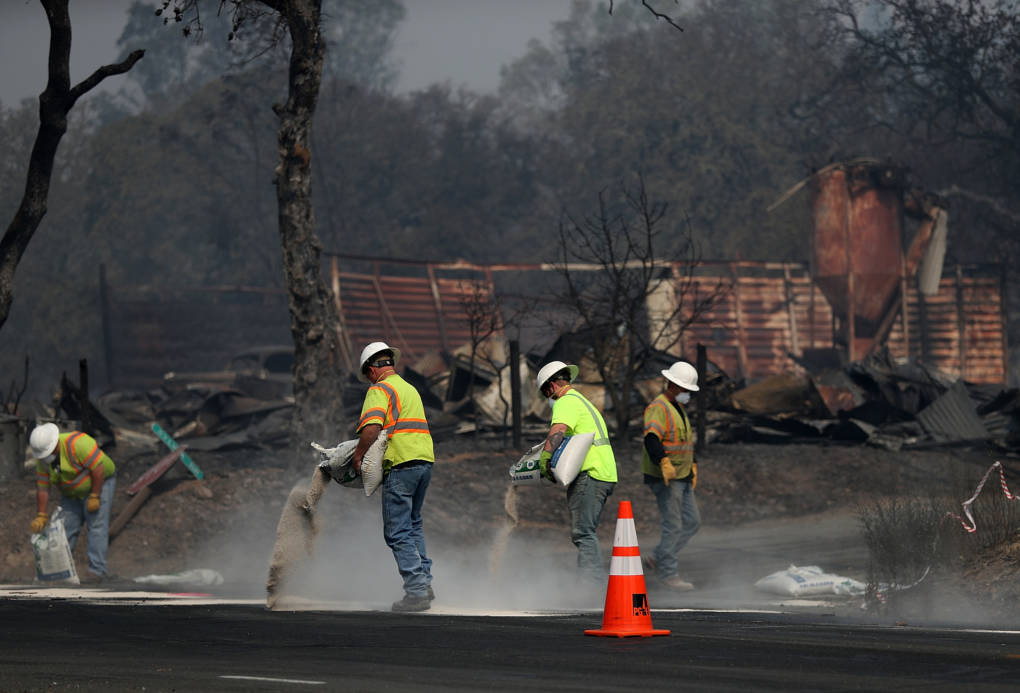
"caption": "Workers clean up a hazmat spill in front of a destroyed home as the Nuns Fire continues to burn on Oct. 10, 2017, in Glen Ellen, California.",
"description": null,
"title": "Multiple Wildfires Destroy Homes, Threaten California Wine Country",
"credit": "Justin Sullivan/Getty Images",
"status": "inherit",
"isLoading": false,
"fetchFailed": false
},
"news_11620942": {
"type": "attachments",
"id": "news_11620942",
"meta": {
"index": "attachments_1716263798",
"site": "news",
"id": "11620942",
"found": true
},
"parent": 11620897,
"imgSizes": {
"small": {
"file": "https://ww2.kqed.org/app/uploads/sites/10/2017/10/RS26713_P1050570-qut-520x390.jpg",
"width": 520,
"mimeType": "image/jpeg",
"height": 390
},
"twentyfourteen-full-width": {
"file": "https://ww2.kqed.org/app/uploads/sites/10/2017/10/RS26713_P1050570-qut-1038x576.jpg",
"width": 1038,
"mimeType": "image/jpeg",
"height": 576
},
"thumbnail": {
"file": "https://ww2.kqed.org/app/uploads/sites/10/2017/10/RS26713_P1050570-qut-160x120.jpg",
"width": 160,
"mimeType": "image/jpeg",
"height": 120
},
"fd-sm": {
"file": "https://ww2.kqed.org/app/uploads/sites/10/2017/10/RS26713_P1050570-qut-960x720.jpg",
"width": 960,
"mimeType": "image/jpeg",
"height": 720
},
"post-thumbnail": {
"file": "https://ww2.kqed.org/app/uploads/sites/10/2017/10/RS26713_P1050570-qut-672x372.jpg",
"width": 672,
"mimeType": "image/jpeg",
"height": 372
},
"xsmall": {
"file": "https://ww2.kqed.org/app/uploads/sites/10/2017/10/RS26713_P1050570-qut-375x281.jpg",
"width": 375,
"mimeType": "image/jpeg",
"height": 281
},
"kqedFullSize": {
"file": "https://ww2.kqed.org/app/uploads/sites/10/2017/10/RS26713_P1050570-qut.jpg",
"width": 1920,
"height": 1440
},
"large": {
"file": "https://ww2.kqed.org/app/uploads/sites/10/2017/10/RS26713_P1050570-qut-1020x765.jpg",
"width": 1020,
"mimeType": "image/jpeg",
"height": 765
},
"xlarge": {
"file": "https://ww2.kqed.org/app/uploads/sites/10/2017/10/RS26713_P1050570-qut-1180x885.jpg",
"width": 1180,
"mimeType": "image/jpeg",
"height": 885
},
"guest-author-50": {
"file": "https://ww2.kqed.org/app/uploads/sites/10/2017/10/RS26713_P1050570-qut-50x50.jpg",
"width": 50,
"mimeType": "image/jpeg",
"height": 50
},
"guest-author-96": {
"file": "https://ww2.kqed.org/app/uploads/sites/10/2017/10/RS26713_P1050570-qut-96x96.jpg",
"width": 96,
"mimeType": "image/jpeg",
"height": 96
},
"medium": {
"file": "https://ww2.kqed.org/app/uploads/sites/10/2017/10/RS26713_P1050570-qut-800x600.jpg",
"width": 800,
"mimeType": "image/jpeg",
"height": 600
},
"guest-author-64": {
"file": "https://ww2.kqed.org/app/uploads/sites/10/2017/10/RS26713_P1050570-qut-64x64.jpg",
"width": 64,
"mimeType": "image/jpeg",
"height": 64
},
"guest-author-32": {
"file": "https://ww2.kqed.org/app/uploads/sites/10/2017/10/RS26713_P1050570-qut-32x32.jpg",
"width": 32,
"mimeType": "image/jpeg",
"height": 32
},
"fd-lrg": {
"file": "https://ww2.kqed.org/app/uploads/sites/10/2017/10/RS26713_P1050570-qut-1920x1440.jpg",
"width": 1920,
"mimeType": "image/jpeg",
"height": 1440
},
"fd-med": {
"file": "https://ww2.kqed.org/app/uploads/sites/10/2017/10/RS26713_P1050570-qut-1180x885.jpg",
"width": 1180,
"mimeType": "image/jpeg",
"height": 885
},
"full-width": {
"file": "https://ww2.kqed.org/app/uploads/sites/10/2017/10/RS26713_P1050570-qut-1920x1440.jpg",
"width": 1920,
"mimeType": "image/jpeg",
"height": 1440
},
"detail": {
"file": "https://ww2.kqed.org/app/uploads/sites/10/2017/10/RS26713_P1050570-qut-150x150.jpg",
"width": 150,
"mimeType": "image/jpeg",
"height": 150
},
"guest-author-128": {
"file": "https://ww2.kqed.org/app/uploads/sites/10/2017/10/RS26713_P1050570-qut-128x128.jpg",
"width": 128,
"mimeType": "image/jpeg",
"height": 128
},
"xxsmall": {
"file": "https://ww2.kqed.org/app/uploads/sites/10/2017/10/RS26713_P1050570-qut-240x180.jpg",
"width": 240,
"mimeType": "image/jpeg",
"height": 180
}
},
"publishDate": 1507144230,
"modified": 1508535314,
"caption": "Sisters Evelyn and Jessica Kheo arrived at Camp Pendleton from Vietnam when they were teenagers.",
"description": "Sisters Evelyn and Jessica Kheo arrived at Camp Pendleton from Vietnam when they were teenagers.",
"title": "RS26713_P1050570-qut",
"credit": "Suzie Racho/KQED",
"status": "inherit",
"isLoading": false,
"fetchFailed": false
},
"news_11625012": {
"type": "attachments",
"id": "news_11625012",
"meta": {
"index": "attachments_1716263798",
"site": "news",
"id": "11625012",
"found": true
},
"parent": 11625011,
"imgSizes": {
"small": {
"file": "https://ww2.kqed.org/app/uploads/sites/10/2017/10/gettyimages-682655866_custom-4407274b2f7d7ce7ed70db2dd79721f46cae11d4-520x327.jpg",
"width": 520,
"mimeType": "image/jpeg",
"height": 327
},
"twentyfourteen-full-width": {
"file": "https://ww2.kqed.org/app/uploads/sites/10/2017/10/gettyimages-682655866_custom-4407274b2f7d7ce7ed70db2dd79721f46cae11d4-1038x576.jpg",
"width": 1038,
"mimeType": "image/jpeg",
"height": 576
},
"thumbnail": {
"file": "https://ww2.kqed.org/app/uploads/sites/10/2017/10/gettyimages-682655866_custom-4407274b2f7d7ce7ed70db2dd79721f46cae11d4-160x101.jpg",
"width": 160,
"mimeType": "image/jpeg",
"height": 101
},
"fd-sm": {
"file": "https://ww2.kqed.org/app/uploads/sites/10/2017/10/gettyimages-682655866_custom-4407274b2f7d7ce7ed70db2dd79721f46cae11d4-960x604.jpg",
"width": 960,
"mimeType": "image/jpeg",
"height": 604
},
"post-thumbnail": {
"file": "https://ww2.kqed.org/app/uploads/sites/10/2017/10/gettyimages-682655866_custom-4407274b2f7d7ce7ed70db2dd79721f46cae11d4-672x372.jpg",
"width": 672,
"mimeType": "image/jpeg",
"height": 372
},
"xsmall": {
"file": "https://ww2.kqed.org/app/uploads/sites/10/2017/10/gettyimages-682655866_custom-4407274b2f7d7ce7ed70db2dd79721f46cae11d4-375x236.jpg",
"width": 375,
"mimeType": "image/jpeg",
"height": 236
},
"kqedFullSize": {
"file": "https://ww2.kqed.org/app/uploads/sites/10/2017/10/gettyimages-682655866_custom-4407274b2f7d7ce7ed70db2dd79721f46cae11d4-e1508529668612.jpg",
"width": 1920,
"height": 1207
},
"large": {
"file": "https://ww2.kqed.org/app/uploads/sites/10/2017/10/gettyimages-682655866_custom-4407274b2f7d7ce7ed70db2dd79721f46cae11d4-1020x641.jpg",
"width": 1020,
"mimeType": "image/jpeg",
"height": 641
},
"xlarge": {
"file": "https://ww2.kqed.org/app/uploads/sites/10/2017/10/gettyimages-682655866_custom-4407274b2f7d7ce7ed70db2dd79721f46cae11d4-1180x742.jpg",
"width": 1180,
"mimeType": "image/jpeg",
"height": 742
},
"guest-author-50": {
"file": "https://ww2.kqed.org/app/uploads/sites/10/2017/10/gettyimages-682655866_custom-4407274b2f7d7ce7ed70db2dd79721f46cae11d4-50x50.jpg",
"width": 50,
"mimeType": "image/jpeg",
"height": 50
},
"guest-author-96": {
"file": "https://ww2.kqed.org/app/uploads/sites/10/2017/10/gettyimages-682655866_custom-4407274b2f7d7ce7ed70db2dd79721f46cae11d4-96x96.jpg",
"width": 96,
"mimeType": "image/jpeg",
"height": 96
},
"medium": {
"file": "https://ww2.kqed.org/app/uploads/sites/10/2017/10/gettyimages-682655866_custom-4407274b2f7d7ce7ed70db2dd79721f46cae11d4-800x503.jpg",
"width": 800,
"mimeType": "image/jpeg",
"height": 503
},
"guest-author-64": {
"file": "https://ww2.kqed.org/app/uploads/sites/10/2017/10/gettyimages-682655866_custom-4407274b2f7d7ce7ed70db2dd79721f46cae11d4-64x64.jpg",
"width": 64,
"mimeType": "image/jpeg",
"height": 64
},
"guest-author-32": {
"file": "https://ww2.kqed.org/app/uploads/sites/10/2017/10/gettyimages-682655866_custom-4407274b2f7d7ce7ed70db2dd79721f46cae11d4-32x32.jpg",
"width": 32,
"mimeType": "image/jpeg",
"height": 32
},
"fd-lrg": {
"file": "https://ww2.kqed.org/app/uploads/sites/10/2017/10/gettyimages-682655866_custom-4407274b2f7d7ce7ed70db2dd79721f46cae11d4-1920x1207.jpg",
"width": 1920,
"mimeType": "image/jpeg",
"height": 1207
},
"fd-med": {
"file": "https://ww2.kqed.org/app/uploads/sites/10/2017/10/gettyimages-682655866_custom-4407274b2f7d7ce7ed70db2dd79721f46cae11d4-1180x742.jpg",
"width": 1180,
"mimeType": "image/jpeg",
"height": 742
},
"full-width": {
"file": "https://ww2.kqed.org/app/uploads/sites/10/2017/10/gettyimages-682655866_custom-4407274b2f7d7ce7ed70db2dd79721f46cae11d4-1920x1207.jpg",
"width": 1920,
"mimeType": "image/jpeg",
"height": 1207
},
"detail": {
"file": "https://ww2.kqed.org/app/uploads/sites/10/2017/10/gettyimages-682655866_custom-4407274b2f7d7ce7ed70db2dd79721f46cae11d4-150x150.jpg",
"width": 150,
"mimeType": "image/jpeg",
"height": 150
},
"guest-author-128": {
"file": "https://ww2.kqed.org/app/uploads/sites/10/2017/10/gettyimages-682655866_custom-4407274b2f7d7ce7ed70db2dd79721f46cae11d4-128x128.jpg",
"width": 128,
"mimeType": "image/jpeg",
"height": 128
},
"xxsmall": {
"file": "https://ww2.kqed.org/app/uploads/sites/10/2017/10/gettyimages-682655866_custom-4407274b2f7d7ce7ed70db2dd79721f46cae11d4-240x151.jpg",
"width": 240,
"mimeType": "image/jpeg",
"height": 151
}
},
"publishDate": 1508529571,
"modified": 1508529690,
"caption": "Steve Bannon, former chief strategist for President Trump, has reinvented himself multiple times throughout his career.",
"description": "Steve Bannon, former chief strategist for President Trump, has reinvented himself multiple times throughout his career.",
"title": "Steve Bannon, former chief strategist for President Trump, has reinvented himself multiple times throughout his career.",
"credit": "Brendan Smialowski/AFP/Getty Images",
"status": "inherit",
"isLoading": false,
"fetchFailed": false
},
"news_11625002": {
"type": "attachments",
"id": "news_11625002",
"meta": {
"index": "attachments_1716263798",
"site": "news",
"id": "11625002",
"found": true
},
"parent": 11624999,
"imgSizes": {
"small": {
"file": "https://ww2.kqed.org/app/uploads/sites/10/2017/10/TomSteyer-520x404.jpg",
"width": 520,
"mimeType": "image/jpeg",
"height": 404
},
"twentyfourteen-full-width": {
"file": "https://ww2.kqed.org/app/uploads/sites/10/2017/10/TomSteyer-1038x576.jpg",
"width": 1038,
"mimeType": "image/jpeg",
"height": 576
},
"thumbnail": {
"file": "https://ww2.kqed.org/app/uploads/sites/10/2017/10/TomSteyer-160x124.jpg",
"width": 160,
"mimeType": "image/jpeg",
"height": 124
},
"fd-sm": {
"file": "https://ww2.kqed.org/app/uploads/sites/10/2017/10/TomSteyer-960x745.jpg",
"width": 960,
"mimeType": "image/jpeg",
"height": 745
},
"post-thumbnail": {
"file": "https://ww2.kqed.org/app/uploads/sites/10/2017/10/TomSteyer-672x372.jpg",
"width": 672,
"mimeType": "image/jpeg",
"height": 372
},
"xsmall": {
"file": "https://ww2.kqed.org/app/uploads/sites/10/2017/10/TomSteyer-375x291.jpg",
"width": 375,
"mimeType": "image/jpeg",
"height": 291
},
"kqedFullSize": {
"file": "https://ww2.kqed.org/app/uploads/sites/10/2017/10/TomSteyer.jpg",
"width": 1920,
"height": 1490
},
"large": {
"file": "https://ww2.kqed.org/app/uploads/sites/10/2017/10/TomSteyer-1020x792.jpg",
"width": 1020,
"mimeType": "image/jpeg",
"height": 792
},
"xlarge": {
"file": "https://ww2.kqed.org/app/uploads/sites/10/2017/10/TomSteyer-1180x916.jpg",
"width": 1180,
"mimeType": "image/jpeg",
"height": 916
},
"guest-author-50": {
"file": "https://ww2.kqed.org/app/uploads/sites/10/2017/10/TomSteyer-50x50.jpg",
"width": 50,
"mimeType": "image/jpeg",
"height": 50
},
"guest-author-96": {
"file": "https://ww2.kqed.org/app/uploads/sites/10/2017/10/TomSteyer-96x96.jpg",
"width": 96,
"mimeType": "image/jpeg",
"height": 96
},
"medium": {
"file": "https://ww2.kqed.org/app/uploads/sites/10/2017/10/TomSteyer-800x621.jpg",
"width": 800,
"mimeType": "image/jpeg",
"height": 621
},
"guest-author-64": {
"file": "https://ww2.kqed.org/app/uploads/sites/10/2017/10/TomSteyer-64x64.jpg",
"width": 64,
"mimeType": "image/jpeg",
"height": 64
},
"guest-author-32": {
"file": "https://ww2.kqed.org/app/uploads/sites/10/2017/10/TomSteyer-32x32.jpg",
"width": 32,
"mimeType": "image/jpeg",
"height": 32
},
"fd-lrg": {
"file": "https://ww2.kqed.org/app/uploads/sites/10/2017/10/TomSteyer-1920x1490.jpg",
"width": 1920,
"mimeType": "image/jpeg",
"height": 1490
},
"fd-med": {
"file": "https://ww2.kqed.org/app/uploads/sites/10/2017/10/TomSteyer-1180x916.jpg",
"width": 1180,
"mimeType": "image/jpeg",
"height": 916
},
"full-width": {
"file": "https://ww2.kqed.org/app/uploads/sites/10/2017/10/TomSteyer-1920x1490.jpg",
"width": 1920,
"mimeType": "image/jpeg",
"height": 1490
},
"detail": {
"file": "https://ww2.kqed.org/app/uploads/sites/10/2017/10/TomSteyer-150x150.jpg",
"width": 150,
"mimeType": "image/jpeg",
"height": 150
},
"guest-author-128": {
"file": "https://ww2.kqed.org/app/uploads/sites/10/2017/10/TomSteyer-128x128.jpg",
"width": 128,
"mimeType": "image/jpeg",
"height": 128
},
"xxsmall": {
"file": "https://ww2.kqed.org/app/uploads/sites/10/2017/10/TomSteyer-240x186.jpg",
"width": 240,
"mimeType": "image/jpeg",
"height": 186
}
},
"publishDate": 1508528332,
"modified": 1508528580,
"caption": "Tom Steyer",
"description": "Tom Steyer",
"title": "TomSteyer",
"credit": "Alex Wong/Getty Images",
"status": "inherit",
"isLoading": false,
"fetchFailed": false
},
"news_11624967": {
"type": "attachments",
"id": "news_11624967",
"meta": {
"index": "attachments_1716263798",
"site": "news",
"id": "11624967",
"found": true
},
"parent": 11624966,
"imgSizes": {
"small": {
"file": "https://ww2.kqed.org/app/uploads/sites/10/2017/10/seasonal_workers-2-65d436b73168b8453cd7553853345c24176d80ed-520x390.jpg",
"width": 520,
"mimeType": "image/jpeg",
"height": 390
},
"twentyfourteen-full-width": {
"file": "https://ww2.kqed.org/app/uploads/sites/10/2017/10/seasonal_workers-2-65d436b73168b8453cd7553853345c24176d80ed-1038x576.jpg",
"width": 1038,
"mimeType": "image/jpeg",
"height": 576
},
"thumbnail": {
"file": "https://ww2.kqed.org/app/uploads/sites/10/2017/10/seasonal_workers-2-65d436b73168b8453cd7553853345c24176d80ed-160x120.jpg",
"width": 160,
"mimeType": "image/jpeg",
"height": 120
},
"fd-sm": {
"file": "https://ww2.kqed.org/app/uploads/sites/10/2017/10/seasonal_workers-2-65d436b73168b8453cd7553853345c24176d80ed-960x720.jpg",
"width": 960,
"mimeType": "image/jpeg",
"height": 720
},
"post-thumbnail": {
"file": "https://ww2.kqed.org/app/uploads/sites/10/2017/10/seasonal_workers-2-65d436b73168b8453cd7553853345c24176d80ed-672x372.jpg",
"width": 672,
"mimeType": "image/jpeg",
"height": 372
},
"xsmall": {
"file": "https://ww2.kqed.org/app/uploads/sites/10/2017/10/seasonal_workers-2-65d436b73168b8453cd7553853345c24176d80ed-375x281.jpg",
"width": 375,
"mimeType": "image/jpeg",
"height": 281
},
"kqedFullSize": {
"file": "https://ww2.kqed.org/app/uploads/sites/10/2017/10/seasonal_workers-2-65d436b73168b8453cd7553853345c24176d80ed.jpg",
"width": 1497,
"height": 1123
},
"large": {
"file": "https://ww2.kqed.org/app/uploads/sites/10/2017/10/seasonal_workers-2-65d436b73168b8453cd7553853345c24176d80ed-1020x765.jpg",
"width": 1020,
"mimeType": "image/jpeg",
"height": 765
},
"xlarge": {
"file": "https://ww2.kqed.org/app/uploads/sites/10/2017/10/seasonal_workers-2-65d436b73168b8453cd7553853345c24176d80ed-1180x885.jpg",
"width": 1180,
"mimeType": "image/jpeg",
"height": 885
},
"guest-author-50": {
"file": "https://ww2.kqed.org/app/uploads/sites/10/2017/10/seasonal_workers-2-65d436b73168b8453cd7553853345c24176d80ed-50x50.jpg",
"width": 50,
"mimeType": "image/jpeg",
"height": 50
},
"guest-author-96": {
"file": "https://ww2.kqed.org/app/uploads/sites/10/2017/10/seasonal_workers-2-65d436b73168b8453cd7553853345c24176d80ed-96x96.jpg",
"width": 96,
"mimeType": "image/jpeg",
"height": 96
},
"medium": {
"file": "https://ww2.kqed.org/app/uploads/sites/10/2017/10/seasonal_workers-2-65d436b73168b8453cd7553853345c24176d80ed-800x600.jpg",
"width": 800,
"mimeType": "image/jpeg",
"height": 600
},
"guest-author-64": {
"file": "https://ww2.kqed.org/app/uploads/sites/10/2017/10/seasonal_workers-2-65d436b73168b8453cd7553853345c24176d80ed-64x64.jpg",
"width": 64,
"mimeType": "image/jpeg",
"height": 64
},
"guest-author-32": {
"file": "https://ww2.kqed.org/app/uploads/sites/10/2017/10/seasonal_workers-2-65d436b73168b8453cd7553853345c24176d80ed-32x32.jpg",
"width": 32,
"mimeType": "image/jpeg",
"height": 32
},
"fd-med": {
"file": "https://ww2.kqed.org/app/uploads/sites/10/2017/10/seasonal_workers-2-65d436b73168b8453cd7553853345c24176d80ed-1180x885.jpg",
"width": 1180,
"mimeType": "image/jpeg",
"height": 885
},
"detail": {
"file": "https://ww2.kqed.org/app/uploads/sites/10/2017/10/seasonal_workers-2-65d436b73168b8453cd7553853345c24176d80ed-150x150.jpg",
"width": 150,
"mimeType": "image/jpeg",
"height": 150
},
"guest-author-128": {
"file": "https://ww2.kqed.org/app/uploads/sites/10/2017/10/seasonal_workers-2-65d436b73168b8453cd7553853345c24176d80ed-128x128.jpg",
"width": 128,
"mimeType": "image/jpeg",
"height": 128
},
"xxsmall": {
"file": "https://ww2.kqed.org/app/uploads/sites/10/2017/10/seasonal_workers-2-65d436b73168b8453cd7553853345c24176d80ed-240x180.jpg",
"width": 240,
"mimeType": "image/jpeg",
"height": 180
}
},
"publishDate": 1508525916,
"modified": 1508526032,
"caption": "Luis Guerrero fills barrels with crushed grapes at Valley of the Moon winery in Sonoma on Oct. 16, 2017. Guerrero says he's struggling to pay for rent after the wildfires forced the winery to close.",
"description": "Luis Guerrero fills barrels with crushed grapes at Valley of the Moon winery in Sonoma on Oct. 16, 2017. Guerrero says he's struggling to pay for rent after the wildfires forced the winery to close.",
"title": "Luis Guerrero fills barrels with crushed grapes at Valley of the Moon winery in Sonoma, Calif., Oct 16, 2017. Guerrero says he's struggling to pay for rent after the wildfires forced the winery to close.",
"credit": "Farida Jhabvala Romero/KQED",
"status": "inherit",
"isLoading": false,
"fetchFailed": false
},
"news_11624951": {
"type": "attachments",
"id": "news_11624951",
"meta": {
"index": "attachments_1716263798",
"site": "news",
"id": "11624951",
"found": true
},
"parent": 11624516,
"imgSizes": {
"small": {
"file": "https://ww2.kqed.org/app/uploads/sites/10/2017/10/Woychowski-520x378.jpg",
"width": 520,
"mimeType": "image/jpeg",
"height": 378
},
"thumbnail": {
"file": "https://ww2.kqed.org/app/uploads/sites/10/2017/10/Woychowski-160x116.jpg",
"width": 160,
"mimeType": "image/jpeg",
"height": 116
},
"post-thumbnail": {
"file": "https://ww2.kqed.org/app/uploads/sites/10/2017/10/Woychowski-640x372.jpg",
"width": 640,
"mimeType": "image/jpeg",
"height": 372
},
"xsmall": {
"file": "https://ww2.kqed.org/app/uploads/sites/10/2017/10/Woychowski-375x272.jpg",
"width": 375,
"mimeType": "image/jpeg",
"height": 272
},
"kqedFullSize": {
"file": "https://ww2.kqed.org/app/uploads/sites/10/2017/10/Woychowski.jpg",
"width": 640,
"height": 465
},
"guest-author-50": {
"file": "https://ww2.kqed.org/app/uploads/sites/10/2017/10/Woychowski-50x50.jpg",
"width": 50,
"mimeType": "image/jpeg",
"height": 50
},
"guest-author-96": {
"file": "https://ww2.kqed.org/app/uploads/sites/10/2017/10/Woychowski-96x96.jpg",
"width": 96,
"mimeType": "image/jpeg",
"height": 96
},
"guest-author-64": {
"file": "https://ww2.kqed.org/app/uploads/sites/10/2017/10/Woychowski-64x64.jpg",
"width": 64,
"mimeType": "image/jpeg",
"height": 64
},
"detail": {
"file": "https://ww2.kqed.org/app/uploads/sites/10/2017/10/Woychowski-150x150.jpg",
"width": 150,
"mimeType": "image/jpeg",
"height": 150
},
"guest-author-32": {
"file": "https://ww2.kqed.org/app/uploads/sites/10/2017/10/Woychowski-32x32.jpg",
"width": 32,
"mimeType": "image/jpeg",
"height": 32
},
"guest-author-128": {
"file": "https://ww2.kqed.org/app/uploads/sites/10/2017/10/Woychowski-128x128.jpg",
"width": 128,
"mimeType": "image/jpeg",
"height": 128
},
"xxsmall": {
"file": "https://ww2.kqed.org/app/uploads/sites/10/2017/10/Woychowski-240x174.jpg",
"width": 240,
"mimeType": "image/jpeg",
"height": 174
}
},
"publishDate": 1508523752,
"modified": 1508524517,
"caption": "Bureau of Land Management ranger John Woychowski (center) was named El Centro Field Office 'Ranger of the Year' in 2011. Salvador Nieblas (left) went on to become the chief BLM ranger for California. Margaret Gordo (right) was the chief BLM ranger for El Centro in 2011.",
"description": null,
"title": "Woychowski",
"credit": "Bureau of Land Management California via Internet Archive",
"status": "inherit",
"isLoading": false,
"fetchFailed": false
},
"news_11618297": {
"type": "attachments",
"id": "news_11618297",
"meta": {
"index": "attachments_1716263798",
"site": "news",
"id": "11618297",
"found": true
},
"parent": 11617750,
"imgSizes": {
"small": {
"file": "https://ww2.kqed.org/app/uploads/sites/10/2017/09/IMG_1207-520x390.jpg",
"width": 520,
"mimeType": "image/jpeg",
"height": 390
},
"twentyfourteen-full-width": {
"file": "https://ww2.kqed.org/app/uploads/sites/10/2017/09/IMG_1207-1038x576.jpg",
"width": 1038,
"mimeType": "image/jpeg",
"height": 576
},
"thumbnail": {
"file": "https://ww2.kqed.org/app/uploads/sites/10/2017/09/IMG_1207-160x120.jpg",
"width": 160,
"mimeType": "image/jpeg",
"height": 120
},
"fd-sm": {
"file": "https://ww2.kqed.org/app/uploads/sites/10/2017/09/IMG_1207-960x720.jpg",
"width": 960,
"mimeType": "image/jpeg",
"height": 720
},
"post-thumbnail": {
"file": "https://ww2.kqed.org/app/uploads/sites/10/2017/09/IMG_1207-672x372.jpg",
"width": 672,
"mimeType": "image/jpeg",
"height": 372
},
"xsmall": {
"file": "https://ww2.kqed.org/app/uploads/sites/10/2017/09/IMG_1207-375x281.jpg",
"width": 375,
"mimeType": "image/jpeg",
"height": 281
},
"kqedFullSize": {
"file": "https://ww2.kqed.org/app/uploads/sites/10/2017/09/IMG_1207-e1506108906431.jpg",
"width": 1920,
"height": 1440
},
"large": {
"file": "https://ww2.kqed.org/app/uploads/sites/10/2017/09/IMG_1207-1020x765.jpg",
"width": 1020,
"mimeType": "image/jpeg",
"height": 765
},
"xlarge": {
"file": "https://ww2.kqed.org/app/uploads/sites/10/2017/09/IMG_1207-1180x885.jpg",
"width": 1180,
"mimeType": "image/jpeg",
"height": 885
},
"guest-author-50": {
"file": "https://ww2.kqed.org/app/uploads/sites/10/2017/09/IMG_1207-50x50.jpg",
"width": 50,
"mimeType": "image/jpeg",
"height": 50
},
"guest-author-96": {
"file": "https://ww2.kqed.org/app/uploads/sites/10/2017/09/IMG_1207-96x96.jpg",
"width": 96,
"mimeType": "image/jpeg",
"height": 96
},
"medium": {
"file": "https://ww2.kqed.org/app/uploads/sites/10/2017/09/IMG_1207-800x600.jpg",
"width": 800,
"mimeType": "image/jpeg",
"height": 600
},
"guest-author-64": {
"file": "https://ww2.kqed.org/app/uploads/sites/10/2017/09/IMG_1207-64x64.jpg",
"width": 64,
"mimeType": "image/jpeg",
"height": 64
},
"guest-author-32": {
"file": "https://ww2.kqed.org/app/uploads/sites/10/2017/09/IMG_1207-32x32.jpg",
"width": 32,
"mimeType": "image/jpeg",
"height": 32
},
"fd-lrg": {
"file": "https://ww2.kqed.org/app/uploads/sites/10/2017/09/IMG_1207-1920x1440.jpg",
"width": 1920,
"mimeType": "image/jpeg",
"height": 1440
},
"fd-med": {
"file": "https://ww2.kqed.org/app/uploads/sites/10/2017/09/IMG_1207-1180x885.jpg",
"width": 1180,
"mimeType": "image/jpeg",
"height": 885
},
"full-width": {
"file": "https://ww2.kqed.org/app/uploads/sites/10/2017/09/IMG_1207-1920x1440.jpg",
"width": 1920,
"mimeType": "image/jpeg",
"height": 1440
},
"detail": {
"file": "https://ww2.kqed.org/app/uploads/sites/10/2017/09/IMG_1207-150x150.jpg",
"width": 150,
"mimeType": "image/jpeg",
"height": 150
},
"guest-author-128": {
"file": "https://ww2.kqed.org/app/uploads/sites/10/2017/09/IMG_1207-128x128.jpg",
"width": 128,
"mimeType": "image/jpeg",
"height": 128
},
"xxsmall": {
"file": "https://ww2.kqed.org/app/uploads/sites/10/2017/09/IMG_1207-240x180.jpg",
"width": 240,
"mimeType": "image/jpeg",
"height": 180
}
},
"publishDate": 1506019118,
"modified": 1508524208,
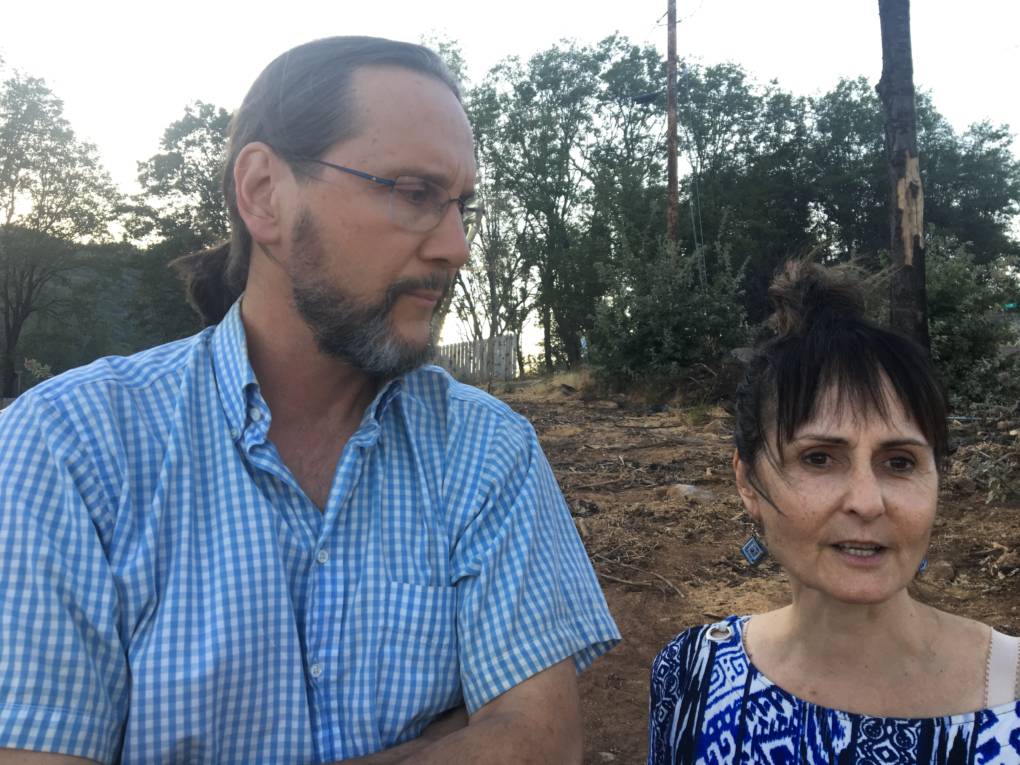
"caption": "Mel McMurrin and Deb Helleren lost their home to the Valley Fire.",
"description": "Mel McMurrin and Deb Helleren lost their home to the Valley Fire.",
"title": "IMG_1207",
"credit": "Sukey Lewis/KQED",
"status": "inherit",
"isLoading": false,
"fetchFailed": false
},
"news_11624916": {
"type": "attachments",
"id": "news_11624916",
"meta": {
"index": "attachments_1716263798",
"site": "news",
"id": "11624916",
"found": true
},
"parent": 11624915,
"imgSizes": {
"small": {
"file": "https://ww2.kqed.org/app/uploads/sites/10/2017/10/GettyImages-860229740-520x347.jpg",
"width": 520,
"mimeType": "image/jpeg",
"height": 347
},
"twentyfourteen-full-width": {
"file": "https://ww2.kqed.org/app/uploads/sites/10/2017/10/GettyImages-860229740-1038x576.jpg",
"width": 1038,
"mimeType": "image/jpeg",
"height": 576
},
"thumbnail": {
"file": "https://ww2.kqed.org/app/uploads/sites/10/2017/10/GettyImages-860229740-160x107.jpg",
"width": 160,
"mimeType": "image/jpeg",
"height": 107
},
"fd-sm": {
"file": "https://ww2.kqed.org/app/uploads/sites/10/2017/10/GettyImages-860229740-960x641.jpg",
"width": 960,
"mimeType": "image/jpeg",
"height": 641
},
"post-thumbnail": {
"file": "https://ww2.kqed.org/app/uploads/sites/10/2017/10/GettyImages-860229740-672x372.jpg",
"width": 672,
"mimeType": "image/jpeg",
"height": 372
},
"xsmall": {
"file": "https://ww2.kqed.org/app/uploads/sites/10/2017/10/GettyImages-860229740-375x250.jpg",
"width": 375,
"mimeType": "image/jpeg",
"height": 250
},
"kqedFullSize": {
"file": "https://ww2.kqed.org/app/uploads/sites/10/2017/10/GettyImages-860229740-e1508514172940.jpg",
"width": 1920,
"height": 1282
},
"large": {
"file": "https://ww2.kqed.org/app/uploads/sites/10/2017/10/GettyImages-860229740-1020x681.jpg",
"width": 1020,
"mimeType": "image/jpeg",
"height": 681
},
"xlarge": {
"file": "https://ww2.kqed.org/app/uploads/sites/10/2017/10/GettyImages-860229740-1180x788.jpg",
"width": 1180,
"mimeType": "image/jpeg",
"height": 788
},
"guest-author-50": {
"file": "https://ww2.kqed.org/app/uploads/sites/10/2017/10/GettyImages-860229740-50x50.jpg",
"width": 50,
"mimeType": "image/jpeg",
"height": 50
},
"guest-author-96": {
"file": "https://ww2.kqed.org/app/uploads/sites/10/2017/10/GettyImages-860229740-96x96.jpg",
"width": 96,
"mimeType": "image/jpeg",
"height": 96
},
"medium": {
"file": "https://ww2.kqed.org/app/uploads/sites/10/2017/10/GettyImages-860229740-800x534.jpg",
"width": 800,
"mimeType": "image/jpeg",
"height": 534
},
"guest-author-64": {
"file": "https://ww2.kqed.org/app/uploads/sites/10/2017/10/GettyImages-860229740-64x64.jpg",
"width": 64,
"mimeType": "image/jpeg",
"height": 64
},
"guest-author-32": {
"file": "https://ww2.kqed.org/app/uploads/sites/10/2017/10/GettyImages-860229740-32x32.jpg",
"width": 32,
"mimeType": "image/jpeg",
"height": 32
},
"fd-lrg": {
"file": "https://ww2.kqed.org/app/uploads/sites/10/2017/10/GettyImages-860229740-1920x1282.jpg",
"width": 1920,
"mimeType": "image/jpeg",
"height": 1282
},
"fd-med": {
"file": "https://ww2.kqed.org/app/uploads/sites/10/2017/10/GettyImages-860229740-1180x788.jpg",
"width": 1180,
"mimeType": "image/jpeg",
"height": 788
},
"full-width": {
"file": "https://ww2.kqed.org/app/uploads/sites/10/2017/10/GettyImages-860229740-1920x1282.jpg",
"width": 1920,
"mimeType": "image/jpeg",
"height": 1282
},
"detail": {
"file": "https://ww2.kqed.org/app/uploads/sites/10/2017/10/GettyImages-860229740-150x150.jpg",
"width": 150,
"mimeType": "image/jpeg",
"height": 150
},
"guest-author-128": {
"file": "https://ww2.kqed.org/app/uploads/sites/10/2017/10/GettyImages-860229740-128x128.jpg",
"width": 128,
"mimeType": "image/jpeg",
"height": 128
},
"xxsmall": {
"file": "https://ww2.kqed.org/app/uploads/sites/10/2017/10/GettyImages-860229740-240x160.jpg",
"width": 240,
"mimeType": "image/jpeg",
"height": 160
}
},
"publishDate": 1508514105,
"modified": 1512600777,
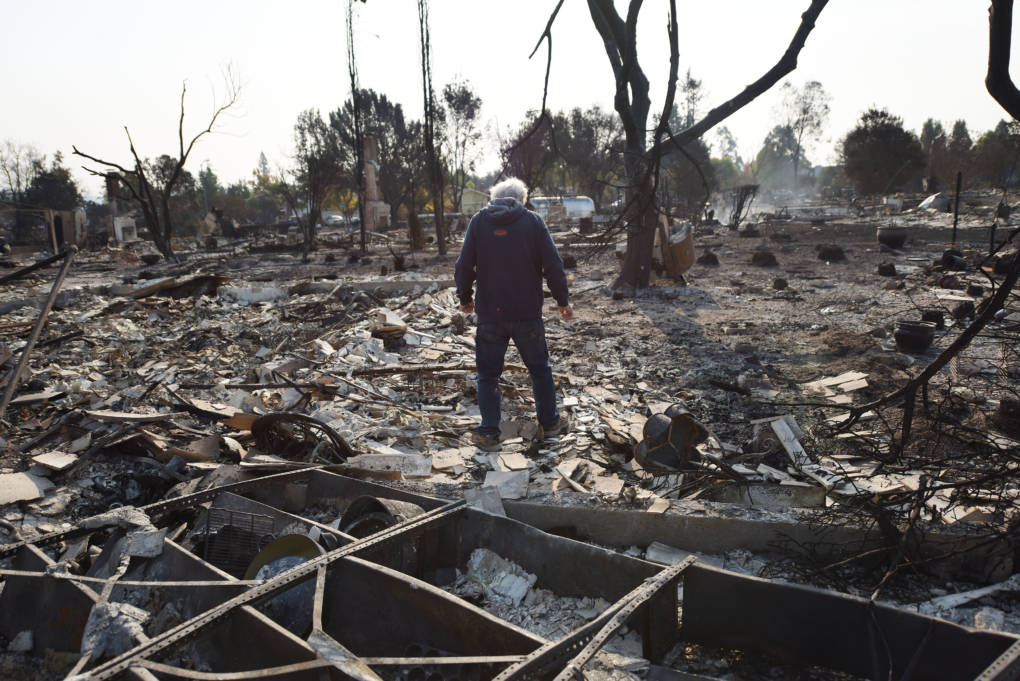
"caption": "Homeowner Phil Rush looks at the remains of his home destroyed by wildfire in Santa Rosa, California, on Oct. 11, 2017. Rush said he and his wife and dog escaped with only their medication and a bag of dog food when flames overtook their entire neighborhood on Oct. 9, 2017.",
"description": null,
"title": "TOPSHOT-US-FIRE-CALIFORNIA",
"credit": "Robyn Beck/AFP/Getty Images",
"status": "inherit",
"isLoading": false,
"fetchFailed": false
}
},
"audioPlayerReducer": {
"postId": "stream_live",
"isPaused": true,
"isPlaying": false,
"pfsActive": false,
"pledgeModalIsOpen": true,
"playerDrawerIsOpen": false,
"liveAudioPlayStartedAt": 0,
"liveAudioPlayContext": ""
},
"authorsReducer": {
"byline_news_11621018": {
"type": "authors",
"id": "byline_news_11621018",
"meta": {
"override": true
},
"slug": "byline_news_11621018",
"name": "\u003cstrong>Lee Romney\u003c/strong>",
"isLoading": false
},
"byline_news_11625276": {
"type": "authors",
"id": "byline_news_11625276",
"meta": {
"override": true
},
"slug": "byline_news_11625276",
"name": "\u003cstrong>Richard Gonzales\u003c/strong>",
"isLoading": false
},
"byline_news_11620897": {
"type": "authors",
"id": "byline_news_11620897",
"meta": {
"override": true
},
"slug": "byline_news_11620897",
"name": "\u003cstrong>Sasha Khokha\u003c/strong>",
"isLoading": false
},
"byline_news_11625011": {
"type": "authors",
"id": "byline_news_11625011",
"meta": {
"override": true
},
"slug": "byline_news_11625011",
"name": "Kelly McEvers",
"isLoading": false
},
"byline_news_11624999": {
"type": "authors",
"id": "byline_news_11624999",
"meta": {
"override": true
},
"slug": "byline_news_11624999",
"name": "Kathleen Ronayne \u003cbr> Associated Press",
"isLoading": false
},
"byline_news_11624915": {
"type": "authors",
"id": "byline_news_11624915",
"meta": {
"override": true
},
"slug": "byline_news_11624915",
"name": "Janie Har and Michael R. Blood\u003cbr>Associated Press",
"isLoading": false
},
"kqed": {
"type": "authors",
"id": "236",
"meta": {
"index": "authors_1716337520",
"id": "236",
"found": true
},
"name": "KQED News Staff",
"firstName": "KQED News Staff",
"lastName": null,
"slug": "kqed",
"email": "faq@kqed.org",
"display_author_email": false,
"staff_mastheads": [],
"title": null,
"bio": null,
"avatar": "https://secure.gravatar.com/avatar/ef0e801a68c4c54afa9180db14084167?s=600&d=blank&r=g",
"twitter": null,
"facebook": null,
"instagram": null,
"linkedin": null,
"sites": [
{
"site": "arts",
"roles": [
"contributor"
]
},
{
"site": "news",
"roles": [
"editor"
]
},
{
"site": "futureofyou",
"roles": [
"author"
]
}
],
"headData": {
"title": "KQED News Staff | KQED",
"description": null,
"ogImgSrc": "https://secure.gravatar.com/avatar/ef0e801a68c4c54afa9180db14084167?s=600&d=blank&r=g",
"twImgSrc": "https://secure.gravatar.com/avatar/ef0e801a68c4c54afa9180db14084167?s=600&d=blank&r=g"
},
"isLoading": false,
"link": "/author/kqed"
},
"scottshafer": {
"type": "authors",
"id": "255",
"meta": {
"index": "authors_1716337520",
"id": "255",
"found": true
},
"name": "Scott Shafer",
"firstName": "Scott",
"lastName": "Shafer",
"slug": "scottshafer",
"email": "sshafer@kqed.org",
"display_author_email": false,
"staff_mastheads": [
"news"
],
"title": "KQED Contributor",
"bio": "Scott Shafer is a senior editor with the KQED Politics and Government desk. He is co-host of Political Breakdown, the award-winning radio show and podcast with a personal take on the world of politics. Scott came to KQED in 1998 to host the statewide\u003cem> California Report\u003c/em>. Prior to that he had extended stints in politics and government\u003cem>.\u003c/em> He uses that inside experience at KQED in his, reporting, hosting and analysis for the politics desk. Scott collaborated \u003cem>Political Breakdown a\u003c/em>nd on \u003cem>The Political Mind of Jerry Brown, \u003c/em>an eight-part series about the life and extraordinary political career of the former governor. For fun, he plays water polo with the San Francisco Tsunami.",
"avatar": "https://secure.gravatar.com/avatar/a62ebae45b79d7aed1a39a0e3bf68104?s=600&d=blank&r=g",
"twitter": "scottshafer",
"bluesky": null,
"facebook": null,
"instagram": null,
"linkedin": null,
"sites": [
{
"site": "news",
"roles": [
"editor"
]
},
{
"site": "stateofhealth",
"roles": [
"author"
]
},
{
"site": "science",
"roles": [
"author"
]
},
{
"site": "forum",
"roles": [
"subscriber"
]
},
{
"site": "liveblog",
"roles": [
"author"
]
}
],
"headData": {
"title": "Scott Shafer | KQED",
"description": "KQED Contributor",
"ogImgSrc": "https://secure.gravatar.com/avatar/a62ebae45b79d7aed1a39a0e3bf68104?s=600&d=blank&r=g",
"twImgSrc": "https://secure.gravatar.com/avatar/a62ebae45b79d7aed1a39a0e3bf68104?s=600&d=blank&r=g"
},
"isLoading": false,
"link": "/author/scottshafer"
},
"tgoldberg": {
"type": "authors",
"id": "258",
"meta": {
"index": "authors_1716337520",
"id": "258",
"found": true
},
"name": "Ted Goldberg",
"firstName": "Ted",
"lastName": "Goldberg",
"slug": "tgoldberg",
"email": "tgoldberg@kqed.org",
"display_author_email": true,
"staff_mastheads": [
"news"
],
"title": "KQED Managing Editor, News and Newscasts",
"bio": "Ted Goldberg is Managing Editor of News and Newscasts at KQED. His main reporting beat is the Bay Area's oil refining industry.\r\n\r\nPrior to joining KQED in 2014, Ted worked at CBS News and WCBS AM in New York and Bay City News and KCBS Radio in San Francisco. He graduated from Oberlin College in Ohio in 1998.",
"avatar": "https://secure.gravatar.com/avatar/30ce2e4fe89135e104f89be2394d16225b9d36c121b5b3cb7651ce642978b96f?s=600&d=blank&r=g",
"twitter": "TedrickG",
"bluesky": null,
"facebook": null,
"instagram": null,
"linkedin": null,
"sites": [
{
"site": "news",
"roles": [
"editor"
]
},
{
"site": "science",
"roles": [
"editor"
]
}
],
"headData": {
"title": "Ted Goldberg | KQED",
"description": "KQED Managing Editor, News and Newscasts",
"ogImgSrc": "https://secure.gravatar.com/avatar/30ce2e4fe89135e104f89be2394d16225b9d36c121b5b3cb7651ce642978b96f?s=600&d=blank&r=g",
"twImgSrc": "https://secure.gravatar.com/avatar/30ce2e4fe89135e104f89be2394d16225b9d36c121b5b3cb7651ce642978b96f?s=600&d=blank&r=g"
},
"isLoading": false,
"link": "/author/tgoldberg"
},
"aemslie": {
"type": "authors",
"id": "3206",
"meta": {
"index": "authors_1716337520",
"id": "3206",
"found": true
},
"name": "Alex Emslie",
"firstName": "Alex",
"lastName": "Emslie",
"slug": "aemslie",
"email": "aemslie@kqed.org",
"display_author_email": true,
"staff_mastheads": [
"news"
],
"title": "KQED Senior Editor",
"bio": "Alex Emslie is senior editor of talent and development at KQED, where he manages dozens of early career journalists and oversees news department internships.\r\n\r\nHe is a former carpenter and proud graduate of City College of San Francisco and San Francisco State University, where he studied journalism and criminal justice before joining KQED in 2013.\r\n\r\nAlex produced investigative journalism focused on \u003ca href=\"https://www.kqed.org/news/11667594/the-trials-of-marvin-mutch-video\">criminal justice\u003c/a> and policing for most of a decade. He has broken major stories about \u003ca href=\"https://www.kqed.org/news/135682/amid-a-series-of-vallejo-police-shootings-one-officers-name-stands-out\">police use of deadly force\u003c/a>, \u003ca href=\"https://www.kqed.org/news/10454955/racist-texts-prompt-sfpd-internal-investigation\">officer misconduct\u003c/a> and \u003ca href=\"https://www.kqed.org/news/11712239/terrorist-or-troll-judge-to-weigh-whether-oakland-man-really-intended-to-attack-bay-area\">other\u003c/a> \u003ca href=\"https://www.kqed.org/news/11221414/hayward-paid-159000-to-husband-of-retired-police-chief-documents-show\">high\u003c/a>-\u003ca href=\"https://www.kqed.org/news/10622762/the-forgotten-tracking-two-homicides-in-san-francisco-public-housing\">profile\u003c/a> \u003ca href=\"https://www.kqed.org/news/11624516/federal-agency-promoted-ranger-just-months-after-his-gun-was-stolen-and-used-in-steinle-killing\">cases\u003c/a>. He co-founded the \u003ca href=\"https://projects.scpr.org/california-reporting-project/\">California Reporting Project\u003c/a> in 2019 to obtain and report on previously confidential police internal investigations. The effort produced well over 100 original stories and changed the course of multiple criminal cases.\r\n\r\nHis work has been recognized with numerous journalism awards, including a national Edward R. Murrow award for several years of \u003ca href=\"https://www.kqed.org/news/11688481/sfpd-officers-in-mario-woods-case-recount-shooting-in-newly-filed-depositions\">reporting\u003c/a> on the San Francisco Police shooting of Mario Woods. His \u003ca href=\"https://www.kqed.org/news/147854/half-of-those-killed-by-san-francisco-police-are-mentally-ill\">reporting\u003c/a> on police killings of people in psychiatric crisis was cited in amicus briefs before the U.S. Supreme Court.\r\n\r\nAlex now enjoys mentoring the next generation of journalists at KQED.",
"avatar": "https://secure.gravatar.com/avatar/e691e65209f20e9da202bd730ead5663?s=600&d=blank&r=g",
"twitter": "SFNewsReporter",
"facebook": null,
"instagram": null,
"linkedin": null,
"sites": [
{
"site": "arts",
"roles": [
"editor"
]
},
{
"site": "news",
"roles": [
"editor"
]
},
{
"site": "mindshift",
"roles": [
"editor"
]
},
{
"site": "stateofhealth",
"roles": [
"editor"
]
},
{
"site": "science",
"roles": [
"administrator"
]
}
],
"headData": {
"title": "Alex Emslie | KQED",
"description": "KQED Senior Editor",
"ogImgSrc": "https://secure.gravatar.com/avatar/e691e65209f20e9da202bd730ead5663?s=600&d=blank&r=g",
"twImgSrc": "https://secure.gravatar.com/avatar/e691e65209f20e9da202bd730ead5663?s=600&d=blank&r=g"
},
"isLoading": false,
"link": "/author/aemslie"
},
"fjhabvala": {
"type": "authors",
"id": "8659",
"meta": {
"index": "authors_1716337520",
"id": "8659",
"found": true
},
"name": "Farida Jhabvala Romero",
"firstName": "Farida",
"lastName": "Jhabvala Romero",
"slug": "fjhabvala",
"email": "fjhabvala@kqed.org",
"display_author_email": true,
"staff_mastheads": [
"news"
],
"title": "KQED Contributor",
"bio": "Farida Jhabvala Romero is a Labor Correspondent for KQED. She previously covered immigration. Farida was \u003ca href=\"https://www.ccnma.org/2022-most-influential-latina-journalists\">named\u003c/a> one of the 10 Most Influential Latina Journalists in California in 2022 by the California Chicano News Media Association. Her work has won awards from the Society of Professional Journalists (Northern California), as well as a national and regional Edward M. Murrow Award for the collaborative reporting projects “Dangerous Air” and “Graying California.” Before joining KQED, Farida worked as a producer at Radio Bilingüe, a national public radio network. Farida earned her master’s degree in journalism from Stanford University.",
"avatar": "https://secure.gravatar.com/avatar/f9f022d4e2609741874222a1e9d41f48fea74011aa7c615eef91d9a50c944ebe?s=600&d=blank&r=g",
"twitter": "FaridaJhabvala",
"bluesky": null,
"facebook": null,
"instagram": null,
"linkedin": "https://www.linkedin.com/in/faridajhabvala/",
"sites": [
{
"site": "news",
"roles": [
"editor"
]
},
{
"site": "stateofhealth",
"roles": [
"author"
]
},
{
"site": "liveblog",
"roles": [
"author"
]
}
],
"headData": {
"title": "Farida Jhabvala Romero | KQED",
"description": "KQED Contributor",
"ogImgSrc": "https://secure.gravatar.com/avatar/f9f022d4e2609741874222a1e9d41f48fea74011aa7c615eef91d9a50c944ebe?s=600&d=blank&r=g",
"twImgSrc": "https://secure.gravatar.com/avatar/f9f022d4e2609741874222a1e9d41f48fea74011aa7c615eef91d9a50c944ebe?s=600&d=blank&r=g"
},
"isLoading": false,
"link": "/author/fjhabvala"
},
"bhernandez": {
"type": "authors",
"id": "11359",
"meta": {
"index": "authors_1716337520",
"id": "11359",
"found": true
},
"name": "Bianca Hernandez",
"firstName": "Bianca",
"lastName": "Hernandez",
"slug": "bhernandez",
"email": "bhernandez@kqed.org",
"display_author_email": false,
"staff_mastheads": [],
"title": "KQED Contributor",
"bio": "Bianca Hernandez is a former Interactive Producer for KQED. She has produced at KGPE, KSEE24 and Sierra Magazine. In 2011 she received an undergraduate degree in Journalism and Anthropology from CSU, Chico . She earned a Master's from the University of Southern California in 2013, where she completed a documentary on teenage farmworkers. She is an avid Jane Austen fan and takes lightsaber combat class for fun.",
"avatar": "https://secure.gravatar.com/avatar/75b3424851e2f9fa131f2cb6a051aeac?s=600&d=blank&r=g",
"twitter": "bookhoarding",
"facebook": null,
"instagram": null,
"linkedin": null,
"sites": [
{
"site": "arts",
"roles": []
},
{
"site": "news",
"roles": []
},
{
"site": "science",
"roles": []
},
{
"site": "forum",
"roles": []
}
],
"headData": {
"title": "Bianca Hernandez | KQED",
"description": "KQED Contributor",
"ogImgSrc": "https://secure.gravatar.com/avatar/75b3424851e2f9fa131f2cb6a051aeac?s=600&d=blank&r=g",
"twImgSrc": "https://secure.gravatar.com/avatar/75b3424851e2f9fa131f2cb6a051aeac?s=600&d=blank&r=g"
},
"isLoading": false,
"link": "/author/bhernandez"
}
},
"pagesReducer": {
"news_program_news-fix": {
"type": "terms",
"id": "news_6944",
"meta": {
"index": "terms_1716263798",
"site": "news",
"id": "6944",
"score": 16.377554
},
"featImg": "https://ww2.kqed.org/app/uploads/sites/10/2014/10/News-Fix-Logo-Web-Banners-04.png",
"name": "News Fix",
"description": null,
"taxonomy": "program",
"headData": {
"twImgId": null,
"twTitle": null,
"ogTitle": null,
"ogImgId": null,
"twDescription": null,
"description": "The News Fix is a daily news podcast from KQED that breaks down the latest headlines and provides in-depth analysis of the stories that matter to the Bay Area.",
"title": "News Fix - Daily Dose of Bay Area News | KQED",
"ogDescription": null
},
"ttid": 6968,
"slug": "news-fix",
"isLoading": false,
"title": "News Fix",
"pageMeta": {
"site": "news",
"WpPageTemplate": "page-topic-editorial",
"currentPage": 82
},
"blocks": [
{
"blockName": "kqed/post-list",
"attrs": {
"layout": "cardArticle2",
"query": "posts/news?program=news-fix",
"seeMore": false,
"paginated": true,
"page": 82
}
},
{
"blockName": "kqed/ad"
}
]
}
},
"pfsSessionReducer": {},
"postsReducer": {
"stream_live": {
"type": "live",
"id": "stream_live",
"audioUrl": "https://streams.kqed.org/kqedradio",
"title": "Live Stream",
"excerpt": "Live Stream information currently unavailable.",
"link": "/radio",
"featImg": "",
"label": {
"name": "KQED Live",
"link": "/"
}
},
"stream_kqedNewscast": {
"type": "posts",
"id": "stream_kqedNewscast",
"audioUrl": "https://www.kqed.org/.stream/anon/radio/RDnews/newscast.mp3?_=1",
"title": "KQED Newscast",
"featImg": "",
"label": {
"name": "88.5 FM",
"link": "/"
}
},
"news_11621018": {
"type": "posts",
"id": "news_11621018",
"meta": {
"index": "posts_1716263798",
"site": "news",
"id": "11621018",
"score": null,
"sort": [
1508626615000
]
},
"parent": 0,
"labelTerm": {
"site": "news",
"term": 72
},
"blocks": [],
"publishDate": 1508626615,
"format": "standard",
"disqusTitle": "No Easy Road for Homeless Kids to Stay in Familiar Schools",
"title": "No Easy Road for Homeless Kids to Stay in Familiar Schools",
"headTitle": "The California Report | KQED News",
"content": "\u003cp>\u003cem>A version of this story originally aired on \u003ca href=\"http://kalw.org/post/oakland-unified-struggles-help-homeless-students-numbers-soar#stream/0\" rel=\"noopener\" target=\"_blank\">KALW’s Crosscurrents\u003c/a>.\u003c/em>\u003c/p>\n\u003cp>Being homeless takes a big toll on kids in the classroom. Today, about 1.3 million children and youth across the country fit that legal definition, the majority of them staying temporarily with friends or family.\u003c/p>\n\u003cp>A little-known federal law — the McKinney-Vento Homeless Assistance Act — is tailored to helping those kids succeed, and this year its provisions got even stronger.\u003c/p>\n\u003cp>Yet the law has been chronically underfunded for decades. Oakland Unified School District is no exception, even though a red-hot housing market contributed to a huge boost in homeless students last year.\u003c/p>\n\u003cp>[audio src=\"https://www.kqed.org/.stream/anon/radio/tcrmag/2017/10/HomelessKidsSchool.mp3\" Image=\"https://ww2.kqed.org/news/wp-content/uploads/sites/10/2017/10/PHOTO2.jpg\" Title=\"No Easy Road for Homeless Kids to Stay in Familiar Schools\" program=\"The California Report\"]\u003c/p>\n\u003ch2>Up Before Dawn\u003c/h2>\n\u003cp>Naseem Bennett is getting ready for his first day of fifth grade. He can’t find his bubblegum toothpaste, so he has to use the adult stuff. He swirls his toothbrush in the clogged bathroom sink to take the edge off. It doesn’t help much.\u003c/p>\n\u003cp>[ad fullwidth]\u003c/p>\n\u003cp>“Ahhhh,” he says, “that really stings the mouth!”\u003c/p>\n\u003cp>It sounds like a typical domestic scene, but this isn’t Naseem’s home. He and his mom, Rachael Allamby, 41, sleep in his great-grandmother’s living room.\u003c/p>\n\u003cp>By 6 a.m., Naseem’s red air mattress is propped against the wall. The couch where his mother sleeps is tidied. And all their bedding and other belongings are tucked in a tight heap in the corner, under a blanket.\u003c/p>\n\u003cp>For years, Naseem lived in North Oakland with his mother, Mr. Spooky the cat and Kudjo the chihuahua.\u003c/p>\n\u003cp>Then, last fall, they got evicted from their duplex.\u003c/p>\n\u003cp>Allamby says it was a wrongful eviction, that she always paid her rent on time, but that when she was late coming up with some money for repairs, the landlord booted her.\u003c/p>\n\u003cp>They became homeless — a word that's hard for her to use.\u003c/p>\n\u003cp>She and her son had no other choice but to come here, to this small one-bedroom apartment near a leafy park in South San Francisco.\u003c/p>\n\u003cp>Naseem’s great-grandmother is sleeping with her door propped open. He and his mom try not to wake her.\u003c/p>\n\u003cp>“Naseem is the main one I worry about, because I know when he’s stressed out, \" Allamby says in a whisper.\u003c/p>\n\u003cp>His living circumstances have taken a toll. He’s had anxiety attacks, temper tantrums, lots of stress eating, “and then traveling from here all the way to Oakland” and back again, Allamby adds.\u003c/p>\n\u003cp>All that travel? That’s so Naseem can stay in the same school where he’s been since kindergarten. Where they know him, and care about him.\u003c/p>\n\u003cp>Plenty of \u003ca href=\"http://www.americaspromise.org/report/hidden-plain-sight\">research\u003c/a> shows that students who lose their housing, even briefly, perform more poorly in school. They’re often \u003ca href=\"https://nche.ed.gov/downloads/briefs/chron-absent.pdf\">late or miss days\u003c/a>. They’re less likely than any other group to graduate.\u003c/p>\n\u003cp>Maintaining stability at school after a child loses his or her home, it turns out, \u003ca href=\"https://www.ncbi.nlm.nih.gov/pmc/articles/PMC4139923/\">can be key to educational success.\u003c/a>\u003c/p>\n\u003cp>But it makes for long days for Naseem. His school is 22 miles and three counties away.\u003c/p>\n\u003cp>Naseem stuffs a bag of Dum Dums in his pocket and scrounges for his Pokémon cards, a recent gift. By 6:30 am, Allamby announces it’s time to hit the road. Naseem responds with a loud sigh that borders on a groan.\u003c/p>\n\u003cp>“Pops,” she reminds him in an urgent whisper, “you need your jacket.”\u003c/p>\n\u003cp>He grabs a black zip-up hoodie and fetches what he calls his “car,” a scooter with beat-up handlebars and busted front brakes. The BART station is more than a mile away — and the whole trip to Naseem’s Oakland school will take nearly two hours — so the scooter helps.\u003c/p>\n\u003cp>He drags it down the stairs as dawn's light bleeds into morning. “She’s not bad,” he says, almost to himself, “but neither she’s not good.”\u003c/p>\n\u003ch2>The Commute\u003c/h2>\n\u003cp>Allamby and Naseem take a jogger’s path to the station, teasing and goofing along the way. Mom tosses out the first joke.\u003c/p>\n\u003cp>“What’s the name of the vegetable kung fu master?” she asks. Naseem’s right on it with the answer: “Brock Lee,” he squeals.\u003c/p>\n\u003cp>Allamby knows how to prioritize her kids’ education. Naseem’s eldest sister just started at UC Berkeley. His mom has big hopes for Naseem, too, which is why she really wants him to maintain some continuity at school.\u003c/p>\n\u003cp>“I don’t want to be integrating Naseem into the schools here and then we gotta transfer again,” she explains, as Naseem trundles along next to her, gleefully pointing out a cat they often run into, and a duck feeding on weedy muck in the nearby canal. “I want him to keep the same friends and associates at the school as long as he can.”\u003c/p>\n\u003cp>Keeping Naseem in the same school? It turns out that’s actually Allamby’s legal right.\u003c/p>\n\u003cp>Three decades ago, President Ronald Reagan signed the \u003ca href=\"https://nche.ed.gov/legis/mv.php\">McKinney-Vento Homeless Assistance Act \u003c/a>into federal law. The big-picture idea: to provide stability. The law \u003ca href=\"https://www.nlchp.org/documents/McKinney-Vento_FAQs\">guarantees \u003c/a>that kids who have lost their fixed housing can stay at the school they’ve been attending.\u003c/p>\n\u003cp>It guarantees other rights too — like the right to enroll immediately at a new school without proof of residence or immunization.\u003c/p>\n\u003cp>Perhaps most critically for many parents who wish to keep kids in their original school, the act in most circumstances \u003ca href=\"https://nche.ed.gov/downloads/briefs/transportation.pdf\">pledges help with transportation costs \u003c/a>to get there and back.\u003c/p>\n\u003cp>Allamby and Naseem could really use that.\u003c/p>\n\u003cfigure id=\"attachment_11621093\" class=\"wp-caption alignnone\" style=\"max-width: 800px\">\u003cimg class=\"size-medium wp-image-11621093\" src=\"https://ww2.kqed.org/news/wp-content/uploads/sites/10/2017/10/PHOTO6-800x571.jpg\" alt=\"\" width=\"800\" height=\"571\" srcset=\"https://ww2.kqed.org/app/uploads/sites/10/2017/10/PHOTO6-800x571.jpg 800w, https://ww2.kqed.org/app/uploads/sites/10/2017/10/PHOTO6-160x114.jpg 160w, https://ww2.kqed.org/app/uploads/sites/10/2017/10/PHOTO6-1020x728.jpg 1020w, https://ww2.kqed.org/app/uploads/sites/10/2017/10/PHOTO6-1180x843.jpg 1180w, https://ww2.kqed.org/app/uploads/sites/10/2017/10/PHOTO6-960x686.jpg 960w, https://ww2.kqed.org/app/uploads/sites/10/2017/10/PHOTO6-240x171.jpg 240w, https://ww2.kqed.org/app/uploads/sites/10/2017/10/PHOTO6-375x268.jpg 375w, https://ww2.kqed.org/app/uploads/sites/10/2017/10/PHOTO6-520x371.jpg 520w, https://ww2.kqed.org/app/uploads/sites/10/2017/10/PHOTO6.jpg 1280w\" sizes=\"(max-width: 800px) 100vw, 800px\">\u003cfigcaption class=\"wp-caption-text\">Rachael Allamby leans in to talk to Naseem, 10, during their nearly two-hour commute to his Oakland elementary school. They spend much of it on BART. Allamby says their fares cost her nearly $400 a month. \u003ccite>(Lee Romney/KQED)\u003c/cite>\u003c/figcaption>\u003c/figure>\n\u003ch2>Transit Costs\u003c/h2>\n\u003cp>When they get to BART, it’s time for an uncomfortable ritual. Allamby has scrounged up two BART tickets. But the combined value isn’t enough. She needs Naseem to run through the emergency gate -- again. She knows she keeps saying it’s the last time, she tells him.\u003c/p>\n\u003cp>Naseem listens. “But it’s never the last time,” he points out quietly.\u003c/p>\n\u003cp>Allamby says transit costs alone run her nearly $400 per month, so it’s a problem. Naseem makes it through without getting stopped, and when he and his mom arrive at Oakland’s MacArthur station, Allamby explains to the station agents that they are just a bit short.\u003c/p>\n\u003cp>They let mother and son exit. These two know her, Allamby says. They saw her bring Naseem to school a lot before summer break.\u003c/p>\n\u003cp>They get it.\u003c/p>\n\u003cp>Not everyone does.\u003c/p>\n\u003ch2>The Need Is Great\u003c/h2>\n\u003cp>Naseem’s situation is not unusual. In the 2016-17 school year, the Oakland Unified School District saw an increase of more than 50 percent in its homeless student tally – to nearly 1600 kids, according to data provided by the district’s McKinney-Vento office.\u003c/p>\n\u003cp>And those are just the families the district knows about.\u003c/p>\n\u003cp>Trish Anderson is the district’s new McKinney-Vento liaison. She took over this fall.\u003c/p>\n\u003cp>Oakland, she says, is full of families who’ve been pushed out of stable housing. Many are invisible, doubled up like Naseem is with relatives or friends. Others are living in cars, shelters or motels.\u003c/p>\n\u003cp>“When you think about the number of people in that situation in Oakland right now with the housing crisis, that number is bound to be larger than it was in the past,” Anderson says in an interview.\u003c/p>\n\u003cp>McKinney-Vento \u003ca href=\"https://nche.ed.gov/downloads/briefs/new-liaisons.pdf\">mandates\u003c/a> that districts work with schools to identify students who’ve lost their housing.\u003c/p>\n\u003cp>District liaisons are also supposed to spread the word at soup kitchens, shelters, motels and laundromats — so that families know that they're entitled to stay in their home school, enroll without proof of an address, get transportation help, access support for school supplies and clothes, and referrals to dental care, housing and other services.\u003c/p>\n\u003cp>But there’s a big gap between what the law promises and what it delivers.\u003c/p>\n\u003cp>Anderson is just one person, with a caseload of 1,600.\u003c/p>\n\u003cp>The district’s funding for homeless students? It’s stayed flat for the past three school years, at $230,885, and isn’t projected to grow this year either.\u003c/p>\n\u003cp>The California Department of Education doles out federal McKinney-Vento grants to districts to help them comply with the law — but there isn’t enough to go around, and the three-year grants are competitive: \u003ca href=\"http://www.cde.ca.gov/fg/fo/r16/homeless15results.asp\">Fewer than half of the 131 districts that applied in the most recent cycle, in 2015, received one.\u003c/a>\u003c/p>\n\u003cp>Oakland Unified wasn’t among them.\u003c/p>\n\u003cp>In fact, it hasn’t received any federal grant money through the state since 2011.\u003c/p>\n\u003cp>Even though a fifth of the nation’s homeless students live in California, the state receives just one-tenth of the funding, according to Leanne Wheeler, the homeless education coordinator for the California Department of Education. And she alone is charged with ensuring that 1,800 districts, county educational offices, and privately-funded charter schools are complying with the law. In contrast, Texas and New York have half a dozen or more such staffers on hand, Wheeler said.\u003c/p>\n\u003cp>This year, \u003ca href=\"http://www.cde.ca.gov/re/es/documents/draftmckinneyvento.doc\">changes to the federal law\u003c/a> require Wheeler to step up training for district liaisons such as Anderson. And Anderson, in turn, is now required to do more to make sure Oakland school personnel — from principals on down — get trained in the law too.\u003c/p>\n\u003cp>Meanwhile, every single school district in the country is now mandated to publicly report achievement, suspension and graduation rates for homeless students, to shine a brighter light out how they’re doing and whether they’re getting the support they need.\u003c/p>\n\u003cp>But right now, plenty fall through the cracks.\u003c/p>\n\u003cfigure id=\"attachment_11621057\" class=\"wp-caption alignnone\" style=\"max-width: 800px\">\u003cimg class=\"size-medium wp-image-11621057\" src=\"https://ww2.kqed.org/news/wp-content/uploads/sites/10/2017/10/PHOTO1-800x600.jpg\" alt=\"\" width=\"800\" height=\"600\" srcset=\"https://ww2.kqed.org/app/uploads/sites/10/2017/10/PHOTO1-800x600.jpg 800w, https://ww2.kqed.org/app/uploads/sites/10/2017/10/PHOTO1-160x120.jpg 160w, https://ww2.kqed.org/app/uploads/sites/10/2017/10/PHOTO1-1020x765.jpg 1020w, https://ww2.kqed.org/app/uploads/sites/10/2017/10/PHOTO1-1180x885.jpg 1180w, https://ww2.kqed.org/app/uploads/sites/10/2017/10/PHOTO1-960x720.jpg 960w, https://ww2.kqed.org/app/uploads/sites/10/2017/10/PHOTO1-240x180.jpg 240w, https://ww2.kqed.org/app/uploads/sites/10/2017/10/PHOTO1-375x281.jpg 375w, https://ww2.kqed.org/app/uploads/sites/10/2017/10/PHOTO1-520x390.jpg 520w, https://ww2.kqed.org/app/uploads/sites/10/2017/10/PHOTO1.jpg 1280w\" sizes=\"(max-width: 800px) 100vw, 800px\">\u003cfigcaption class=\"wp-caption-text\">Naseem Bennett, 10, finds his name on the wall on his first day of 5th grade at Oakland's Emerson Elementary School. Naseem and his mom lost their housing in North Oakland last year. He now commutes across three counties so he can maintain some educational stability. It’s his legal right. \u003ccite>(Lee Romney/KQED)\u003c/cite>\u003c/figcaption>\u003c/figure>\n\u003ch2>How to Spot the Signs \u003c/h2>\n\u003cp>Naseem and his mom arrive at Emerson Elementary School, in Oakland’s Temescal district, not long before the 8:30 a.m. bell.\u003c/p>\n\u003cp>“Hi Miss Brook!” Naseem yells as he waits for his mother to fill out forms. Allamby recently scored a full-time job as a janitor in San Francisco, so she wasn’t able to register him on time. She catches up now.\u003c/p>\n\u003cp>Some of the staff here know Naseem’s situation. They figured it out last year when he started showing up late.\u003c/p>\n\u003cp>They offered him counseling, and a coach brought Naseem clothes and a new Xbox, since he lost a lot of stuff in the eviction.\u003c/p>\n\u003cp>Principal Heather Palin says a team that includes teachers and counselors know how to spot the signs that a student might have lost his or her housing.\u003c/p>\n\u003cp>But even at community schools like Emerson, which make a holistic effort to help kids and families, many employees aren’t that familiar with the McKinney-Vento law.\u003c/p>\n\u003cp>Palin’s not sure whether the information on a student’s housing status gets back to the district’s McKinney-Vento office.\u003c/p>\n\u003cp>“I wouldn’t say necessarily that there’s a lot of training” in the law, she says.\u003c/p>\n\u003cp>That’s a problem. Palin couldn’t talk about the specifics of Naseem’s case, for privacy reasons. But it turns out, he wasn’t included in the district’s homeless student tally last year.\u003c/p>\n\u003cp>Cases like this mean that Oakland’s numbers aren’t accurate, which can affect funding.\u003c/p>\n\u003cp>More importantly, it means no one really spelled out for Allamby her rights under federal law or the services that the district can provide.\u003c/p>\n\u003cp>On top of that, it’s not uncommon for parents and youth to hide their circumstances, due to embarrassment.\u003c/p>\n\u003cp>And because they don’t fully understand their rights, they’re fearful, too, that their kids might be told that they can’t stay in their schools.\u003c/p>\n\u003cp>Allamby knows the school has been supportive. But she’s still nervous. When she fills out the registration form for the district, she uses her old Oakland address -- “just to be safe.”\u003c/p>\n\u003cfigure id=\"attachment_11621061\" class=\"wp-caption alignnone\" style=\"max-width: 800px\">\u003cimg class=\"size-medium wp-image-11621061\" src=\"https://ww2.kqed.org/news/wp-content/uploads/sites/10/2017/10/PHOTO5-800x480.jpg\" alt=\"\" width=\"800\" height=\"480\" srcset=\"https://ww2.kqed.org/app/uploads/sites/10/2017/10/PHOTO5-800x480.jpg 800w, https://ww2.kqed.org/app/uploads/sites/10/2017/10/PHOTO5-160x96.jpg 160w, https://ww2.kqed.org/app/uploads/sites/10/2017/10/PHOTO5-1020x612.jpg 1020w, https://ww2.kqed.org/app/uploads/sites/10/2017/10/PHOTO5-1180x708.jpg 1180w, https://ww2.kqed.org/app/uploads/sites/10/2017/10/PHOTO5-960x576.jpg 960w, https://ww2.kqed.org/app/uploads/sites/10/2017/10/PHOTO5-240x144.jpg 240w, https://ww2.kqed.org/app/uploads/sites/10/2017/10/PHOTO5-375x225.jpg 375w, https://ww2.kqed.org/app/uploads/sites/10/2017/10/PHOTO5-520x312.jpg 520w, https://ww2.kqed.org/app/uploads/sites/10/2017/10/PHOTO5.jpg 1280w\" sizes=\"(max-width: 800px) 100vw, 800px\">\u003cfigcaption class=\"wp-caption-text\">Naseem Bennett, 10, sits in his classroom at Emerson Elementary School on the first day of fifth grade. He’s been in good spirits all morning but his mood shifts once school starts. \u003ccite>(Lee Romney/KQED)\u003c/cite>\u003c/figcaption>\u003c/figure>\n\u003ch2>First Day Back\u003c/h2>\n\u003cp>Naseem’s been in high spirits all morning. But his mood starts to shift when it’s time to file into his classroom.\u003c/p>\n\u003cp>Inside, he puts his head on his desk.\u003c/p>\n\u003cp>“How're you doing, Naseem,” Miss Grill murmurs to him, leaning in close. “You don’t know? Is today feeling a little hard?”\u003c/p>\n\u003cp>Naseem says he’s hungry. But he turns down the yogurt and apple that the school has provided this morning to all students for breakfast. So Miss Grill reaches into her personal snack bag and gives Naseem a banana.\u003c/p>\n\u003ch2>The Drop-in Center\u003c/h2>\n\u003cp>Parents and youth who have lost their fixed housing are sometimes identified during Oakland Unified’s centralized enrollment process, when they can’t come up with proof of a current address — or if they \u003ca href=\"https://www.ousd.org/cms/lib/CA01001176/Centricity/Domain/159/FINAL%20ENROLLMENT%20FORM%20ENG_FILLABLE.pdf\">check a small box on the registration form\u003c/a> that asks whether they are homeless or doubled up.\u003c/p>\n\u003cp>They’re then told to drop by the district’s \u003ca href=\"https://www.ousd.org/Domain/153\">Transitional Students & Families Unit\u003c/a>.\u003c/p>\n\u003cp>(Families are described as “in transition” rather than “homeless,” to reduce stigma.)\u003c/p>\n\u003cp>During the first week of school, Anderson says, her drop-in center was packed. She fixed it up with a donated sofa and comfortable chairs, decorated the walls, and got to work writing letters --to tap private companies, faith-based groups and the nonprofit sector for help.\u003c/p>\n\u003cp>Anderson is hoping to team up with \u003ca href=\"http://www.mynewredshoes.org/\">My New Red Shoes\u003c/a>, a nonprofit organization, to secure shoes for kids and possibly gift cards, too, that families can use to buy school uniforms and other back-to-school clothing. Other nonprofits -- \u003ca href=\"http://www.feedthechildren.org/\">Feed the Children \u003c/a>and \u003ca href=\"http://oaklandpromise.org/programs/k2c/\">Kindergarten to College\u003c/a> --provide her office with backpacks and school supplies.\u003c/p>\n\u003cp>And with the district’s crippling budget crisis in mind, Anderson is now pitching a host of other area businesses, too.\u003c/p>\n\u003cp>“And, oh, don’t think I haven’t thought about approaching Uber or Lyft, the new transportation experts, to ask about donations from them,” she adds. “I’m on it.”\u003c/p>\n\u003cp>For many districts, that community help is the best hope to comply with the McKinney-Vento law, which is clear about \u003ca href=\"https://nche.ed.gov/downloads/briefs/transportation.pdf\">transit help.\u003c/a>\u003c/p>\n\u003cp>If a parent chooses to keep their child in the school of origin, the law spells out, Oakland Unified under nearly all circumstances must pay for transit.\u003c/p>\n\u003cp>If the student is temporarily residing within another district’s boundaries, as Naseem is, the two districts are supposed to share the cost.\u003c/p>\n\u003ch2>Transit Troubles\u003c/h2>\n\u003cp>But Oakland Unified doesn’t offer BART cards, Anderson said. It’s never had the resources to make that happen. So it doesn’t coordinate with districts outside Alameda County to help get kids to school here.\u003c/p>\n\u003cp>It turns out, other than salaries and overhead, Oakland Unified's entire budget for homeless students goes toward AC Transit bus passes. And even there, it falls short.\u003c/p>\n\u003cp>“Around April,” Anderson said, “we’re running out of funding for transportation.”\u003c/p>\n\u003cp>When Anderson learned from a reporter about Naseem’s circumstances, she arranged to have some passes dropped off at Emerson for him and his mom, since Allamby can’t easily get to the drop-in center. It’s all Anderson can offer.\u003c/p>\n\u003cp>Allamby is grateful. But the bus system only covers western Alameda and Contra Costa counties. For her core commute costs on BART, she’s out of luck.\u003c/p>\n\u003ch2>Long Day\u003c/h2>\n\u003cp>By the time she and Naseem get back to South San Francisco, it’s almost 8 p.m. They’ve been out of the house for more than 13 hours. They’re exhausted. Allamby worries that her son is not getting enough sleep to focus in school or on homework.\u003c/p>\n\u003cp>And there’s trauma that’s harder to see.\u003c/p>\n\u003cp>“When we lost our home, Naseem lost his peace and quiet, his privacy, our pets, so it was just really hard for him,” Allamby says as Naseem eats popcorn and zones out on YouTube videos on her phone. “I don’t think he will ever feel comfortable at someone else’s house.”\u003c/p>\n\u003cp>Allamby loves to dream about the home she’ll share with Naseem again one day. She wants him to have his own room, with a loft bed and a desk where he can do his homework. Even his own TV and a mini-fridge, so he can bask in his privacy.\u003c/p>\n\u003cp>But Naseem doesn’t seem to want to play that game. Asked what he misses about Oakland, he breathes heavily. He pauses. He sighs. He doesn’t answer.\u003c/p>\n\u003cp>[ad floatright]\u003c/p>\n\u003cp>His mom thinks he just can’t go there right now, that he’s not confident he’ll ever have his own space again.\u003c/p>\n\n",
"disqusIdentifier": "11621018 https://ww2.kqed.org/news/?p=11621018",
"disqusUrl": "https://ww2.kqed.org/news/2017/10/21/no-easy-road-for-homeless-kids-to-stay-in-familiar-schools/",
"stats": {
"hasVideo": false,
"hasChartOrMap": false,
"hasAudio": true,
"hasPolis": false,
"wordCount": 3060,
"hasGoogleForm": false,
"hasGallery": false,
"hasHearkenModule": false,
"iframeSrcs": [],
"paragraphCount": 97
},
"modified": 1508792132,
"excerpt": "The 1.3 million homeless children and youth across the country have the right to keep attending the same school, but the costs can be a strain. ",
"headData": {
"twImgId": "",
"twTitle": "",
"ogTitle": "",
"ogImgId": "",
"twDescription": "",
"description": "The 1.3 million homeless children and youth across the country have the right to keep attending the same school, but the costs can be a strain. ",
"title": "No Easy Road for Homeless Kids to Stay in Familiar Schools | KQED",
"ogDescription": "",
"schema": {
"@context": "https://schema.org",
"@type": "NewsArticle",
"headline": "No Easy Road for Homeless Kids to Stay in Familiar Schools",
"datePublished": "2017-10-21T15:56:55-07:00",
"dateModified": "2017-10-23T13:55:32-07:00",
"image": "https://cdn.kqed.org/wp-content/uploads/2020/02/KQED-OG-Image@1x.png",
"isAccessibleForFree": "True",
"publisher": {
"@type": "NewsMediaOrganization",
"@id": "https://www.kqed.org/#organization",
"name": "KQED",
"logo": "https://cdn.kqed.org/wp-content/uploads/2020/02/KQED-OG-Image@1x.png",
"url": "https://www.kqed.org",
"sameAs": [
"https://www.facebook.com/KQED",
"https://twitter.com/KQED",
"https://www.instagram.com/kqed/",
"https://www.tiktok.com/@kqedofficial",
"https://www.linkedin.com/company/kqed",
"https://www.youtube.com/channel/UCeC0IOo7i1P_61zVUWbJ4nw"
]
}
}
},
"guestAuthors": [],
"slug": "no-easy-road-for-homeless-kids-to-stay-in-familiar-schools",
"status": "publish",
"nprByline": "\u003cstrong>Lee Romney\u003c/strong>",
"path": "/news/11621018/no-easy-road-for-homeless-kids-to-stay-in-familiar-schools",
"audioUrl": "https://www.kqed.org/.stream/anon/radio/tcrmag/2017/10/HomelessKidsSchool.mp3",
"audioDuration": 440000,
"audioTrackLength": null,
"parsedContent": [
{
"type": "contentString",
"content": "\u003cdiv class=\"post-body\">\u003cp>\u003cp>\u003cem>A version of this story originally aired on \u003ca href=\"http://kalw.org/post/oakland-unified-struggles-help-homeless-students-numbers-soar#stream/0\" rel=\"noopener\" target=\"_blank\">KALW’s Crosscurrents\u003c/a>.\u003c/em>\u003c/p>\n\u003cp>Being homeless takes a big toll on kids in the classroom. Today, about 1.3 million children and youth across the country fit that legal definition, the majority of them staying temporarily with friends or family.\u003c/p>\n\u003cp>A little-known federal law — the McKinney-Vento Homeless Assistance Act — is tailored to helping those kids succeed, and this year its provisions got even stronger.\u003c/p>\n\u003cp>Yet the law has been chronically underfunded for decades. Oakland Unified School District is no exception, even though a red-hot housing market contributed to a huge boost in homeless students last year.\u003c/p>\n\u003cp>\u003c/p>\u003c/div>",
"attributes": {
"named": {},
"numeric": []
}
},
{
"type": "component",
"content": "",
"name": "audio",
"attributes": {
"named": {
"src": "https://www.kqed.org/.stream/anon/radio/tcrmag/2017/10/HomelessKidsSchool.mp3",
"image": "https://ww2.kqed.org/news/wp-content/uploads/sites/10/2017/10/PHOTO2.jpg",
"title": "No Easy Road for Homeless Kids to Stay in Familiar Schools",
"program": "The California Report",
"label": ""
},
"numeric": []
}
},
{
"type": "contentString",
"content": "\u003cdiv class=\"post-body\">\u003cp>\u003c/p>\n\u003ch2>Up Before Dawn\u003c/h2>\n\u003cp>Naseem Bennett is getting ready for his first day of fifth grade. He can’t find his bubblegum toothpaste, so he has to use the adult stuff. He swirls his toothbrush in the clogged bathroom sink to take the edge off. It doesn’t help much.\u003c/p>\n\u003cp>\u003c/p>\u003c/div>",
"attributes": {
"named": {},
"numeric": []
}
},
{
"type": "component",
"content": "",
"name": "ad",
"attributes": {
"named": {
"label": "fullwidth"
},
"numeric": [
"fullwidth"
]
}
},
{
"type": "contentString",
"content": "\u003cdiv class=\"post-body\">\u003cp>\u003c/p>\n\u003cp>“Ahhhh,” he says, “that really stings the mouth!”\u003c/p>\n\u003cp>It sounds like a typical domestic scene, but this isn’t Naseem’s home. He and his mom, Rachael Allamby, 41, sleep in his great-grandmother’s living room.\u003c/p>\n\u003cp>By 6 a.m., Naseem’s red air mattress is propped against the wall. The couch where his mother sleeps is tidied. And all their bedding and other belongings are tucked in a tight heap in the corner, under a blanket.\u003c/p>\n\u003cp>For years, Naseem lived in North Oakland with his mother, Mr. Spooky the cat and Kudjo the chihuahua.\u003c/p>\n\u003cp>Then, last fall, they got evicted from their duplex.\u003c/p>\n\u003cp>Allamby says it was a wrongful eviction, that she always paid her rent on time, but that when she was late coming up with some money for repairs, the landlord booted her.\u003c/p>\n\u003cp>They became homeless — a word that's hard for her to use.\u003c/p>\n\u003cp>She and her son had no other choice but to come here, to this small one-bedroom apartment near a leafy park in South San Francisco.\u003c/p>\n\u003cp>Naseem’s great-grandmother is sleeping with her door propped open. He and his mom try not to wake her.\u003c/p>\n\u003cp>“Naseem is the main one I worry about, because I know when he’s stressed out, \" Allamby says in a whisper.\u003c/p>\n\u003cp>His living circumstances have taken a toll. He’s had anxiety attacks, temper tantrums, lots of stress eating, “and then traveling from here all the way to Oakland” and back again, Allamby adds.\u003c/p>\n\u003cp>All that travel? That’s so Naseem can stay in the same school where he’s been since kindergarten. Where they know him, and care about him.\u003c/p>\n\u003cp>Plenty of \u003ca href=\"http://www.americaspromise.org/report/hidden-plain-sight\">research\u003c/a> shows that students who lose their housing, even briefly, perform more poorly in school. They’re often \u003ca href=\"https://nche.ed.gov/downloads/briefs/chron-absent.pdf\">late or miss days\u003c/a>. They’re less likely than any other group to graduate.\u003c/p>\n\u003cp>Maintaining stability at school after a child loses his or her home, it turns out, \u003ca href=\"https://www.ncbi.nlm.nih.gov/pmc/articles/PMC4139923/\">can be key to educational success.\u003c/a>\u003c/p>\n\u003cp>But it makes for long days for Naseem. His school is 22 miles and three counties away.\u003c/p>\n\u003cp>Naseem stuffs a bag of Dum Dums in his pocket and scrounges for his Pokémon cards, a recent gift. By 6:30 am, Allamby announces it’s time to hit the road. Naseem responds with a loud sigh that borders on a groan.\u003c/p>\n\u003cp>“Pops,” she reminds him in an urgent whisper, “you need your jacket.”\u003c/p>\n\u003cp>He grabs a black zip-up hoodie and fetches what he calls his “car,” a scooter with beat-up handlebars and busted front brakes. The BART station is more than a mile away — and the whole trip to Naseem’s Oakland school will take nearly two hours — so the scooter helps.\u003c/p>\n\u003cp>He drags it down the stairs as dawn's light bleeds into morning. “She’s not bad,” he says, almost to himself, “but neither she’s not good.”\u003c/p>\n\u003ch2>The Commute\u003c/h2>\n\u003cp>Allamby and Naseem take a jogger’s path to the station, teasing and goofing along the way. Mom tosses out the first joke.\u003c/p>\n\u003cp>“What’s the name of the vegetable kung fu master?” she asks. Naseem’s right on it with the answer: “Brock Lee,” he squeals.\u003c/p>\n\u003cp>Allamby knows how to prioritize her kids’ education. Naseem’s eldest sister just started at UC Berkeley. His mom has big hopes for Naseem, too, which is why she really wants him to maintain some continuity at school.\u003c/p>\n\u003cp>“I don’t want to be integrating Naseem into the schools here and then we gotta transfer again,” she explains, as Naseem trundles along next to her, gleefully pointing out a cat they often run into, and a duck feeding on weedy muck in the nearby canal. “I want him to keep the same friends and associates at the school as long as he can.”\u003c/p>\n\u003cp>Keeping Naseem in the same school? It turns out that’s actually Allamby’s legal right.\u003c/p>\n\u003cp>Three decades ago, President Ronald Reagan signed the \u003ca href=\"https://nche.ed.gov/legis/mv.php\">McKinney-Vento Homeless Assistance Act \u003c/a>into federal law. The big-picture idea: to provide stability. The law \u003ca href=\"https://www.nlchp.org/documents/McKinney-Vento_FAQs\">guarantees \u003c/a>that kids who have lost their fixed housing can stay at the school they’ve been attending.\u003c/p>\n\u003cp>It guarantees other rights too — like the right to enroll immediately at a new school without proof of residence or immunization.\u003c/p>\n\u003cp>Perhaps most critically for many parents who wish to keep kids in their original school, the act in most circumstances \u003ca href=\"https://nche.ed.gov/downloads/briefs/transportation.pdf\">pledges help with transportation costs \u003c/a>to get there and back.\u003c/p>\n\u003cp>Allamby and Naseem could really use that.\u003c/p>\n\u003cfigure id=\"attachment_11621093\" class=\"wp-caption alignnone\" style=\"max-width: 800px\">\u003cimg class=\"size-medium wp-image-11621093\" src=\"https://ww2.kqed.org/news/wp-content/uploads/sites/10/2017/10/PHOTO6-800x571.jpg\" alt=\"\" width=\"800\" height=\"571\" srcset=\"https://ww2.kqed.org/app/uploads/sites/10/2017/10/PHOTO6-800x571.jpg 800w, https://ww2.kqed.org/app/uploads/sites/10/2017/10/PHOTO6-160x114.jpg 160w, https://ww2.kqed.org/app/uploads/sites/10/2017/10/PHOTO6-1020x728.jpg 1020w, https://ww2.kqed.org/app/uploads/sites/10/2017/10/PHOTO6-1180x843.jpg 1180w, https://ww2.kqed.org/app/uploads/sites/10/2017/10/PHOTO6-960x686.jpg 960w, https://ww2.kqed.org/app/uploads/sites/10/2017/10/PHOTO6-240x171.jpg 240w, https://ww2.kqed.org/app/uploads/sites/10/2017/10/PHOTO6-375x268.jpg 375w, https://ww2.kqed.org/app/uploads/sites/10/2017/10/PHOTO6-520x371.jpg 520w, https://ww2.kqed.org/app/uploads/sites/10/2017/10/PHOTO6.jpg 1280w\" sizes=\"(max-width: 800px) 100vw, 800px\">\u003cfigcaption class=\"wp-caption-text\">Rachael Allamby leans in to talk to Naseem, 10, during their nearly two-hour commute to his Oakland elementary school. They spend much of it on BART. Allamby says their fares cost her nearly $400 a month. \u003ccite>(Lee Romney/KQED)\u003c/cite>\u003c/figcaption>\u003c/figure>\n\u003ch2>Transit Costs\u003c/h2>\n\u003cp>When they get to BART, it’s time for an uncomfortable ritual. Allamby has scrounged up two BART tickets. But the combined value isn’t enough. She needs Naseem to run through the emergency gate -- again. She knows she keeps saying it’s the last time, she tells him.\u003c/p>\n\u003cp>Naseem listens. “But it’s never the last time,” he points out quietly.\u003c/p>\n\u003cp>Allamby says transit costs alone run her nearly $400 per month, so it’s a problem. Naseem makes it through without getting stopped, and when he and his mom arrive at Oakland’s MacArthur station, Allamby explains to the station agents that they are just a bit short.\u003c/p>\n\u003cp>They let mother and son exit. These two know her, Allamby says. They saw her bring Naseem to school a lot before summer break.\u003c/p>\n\u003cp>They get it.\u003c/p>\n\u003cp>Not everyone does.\u003c/p>\n\u003ch2>The Need Is Great\u003c/h2>\n\u003cp>Naseem’s situation is not unusual. In the 2016-17 school year, the Oakland Unified School District saw an increase of more than 50 percent in its homeless student tally – to nearly 1600 kids, according to data provided by the district’s McKinney-Vento office.\u003c/p>\n\u003cp>And those are just the families the district knows about.\u003c/p>\n\u003cp>Trish Anderson is the district’s new McKinney-Vento liaison. She took over this fall.\u003c/p>\n\u003cp>Oakland, she says, is full of families who’ve been pushed out of stable housing. Many are invisible, doubled up like Naseem is with relatives or friends. Others are living in cars, shelters or motels.\u003c/p>\n\u003cp>“When you think about the number of people in that situation in Oakland right now with the housing crisis, that number is bound to be larger than it was in the past,” Anderson says in an interview.\u003c/p>\n\u003cp>McKinney-Vento \u003ca href=\"https://nche.ed.gov/downloads/briefs/new-liaisons.pdf\">mandates\u003c/a> that districts work with schools to identify students who’ve lost their housing.\u003c/p>\n\u003cp>District liaisons are also supposed to spread the word at soup kitchens, shelters, motels and laundromats — so that families know that they're entitled to stay in their home school, enroll without proof of an address, get transportation help, access support for school supplies and clothes, and referrals to dental care, housing and other services.\u003c/p>\n\u003cp>But there’s a big gap between what the law promises and what it delivers.\u003c/p>\n\u003cp>Anderson is just one person, with a caseload of 1,600.\u003c/p>\n\u003cp>The district’s funding for homeless students? It’s stayed flat for the past three school years, at $230,885, and isn’t projected to grow this year either.\u003c/p>\n\u003cp>The California Department of Education doles out federal McKinney-Vento grants to districts to help them comply with the law — but there isn’t enough to go around, and the three-year grants are competitive: \u003ca href=\"http://www.cde.ca.gov/fg/fo/r16/homeless15results.asp\">Fewer than half of the 131 districts that applied in the most recent cycle, in 2015, received one.\u003c/a>\u003c/p>\n\u003cp>Oakland Unified wasn’t among them.\u003c/p>\n\u003cp>In fact, it hasn’t received any federal grant money through the state since 2011.\u003c/p>\n\u003cp>Even though a fifth of the nation’s homeless students live in California, the state receives just one-tenth of the funding, according to Leanne Wheeler, the homeless education coordinator for the California Department of Education. And she alone is charged with ensuring that 1,800 districts, county educational offices, and privately-funded charter schools are complying with the law. In contrast, Texas and New York have half a dozen or more such staffers on hand, Wheeler said.\u003c/p>\n\u003cp>This year, \u003ca href=\"http://www.cde.ca.gov/re/es/documents/draftmckinneyvento.doc\">changes to the federal law\u003c/a> require Wheeler to step up training for district liaisons such as Anderson. And Anderson, in turn, is now required to do more to make sure Oakland school personnel — from principals on down — get trained in the law too.\u003c/p>\n\u003cp>Meanwhile, every single school district in the country is now mandated to publicly report achievement, suspension and graduation rates for homeless students, to shine a brighter light out how they’re doing and whether they’re getting the support they need.\u003c/p>\n\u003cp>But right now, plenty fall through the cracks.\u003c/p>\n\u003cfigure id=\"attachment_11621057\" class=\"wp-caption alignnone\" style=\"max-width: 800px\">\u003cimg class=\"size-medium wp-image-11621057\" src=\"https://ww2.kqed.org/news/wp-content/uploads/sites/10/2017/10/PHOTO1-800x600.jpg\" alt=\"\" width=\"800\" height=\"600\" srcset=\"https://ww2.kqed.org/app/uploads/sites/10/2017/10/PHOTO1-800x600.jpg 800w, https://ww2.kqed.org/app/uploads/sites/10/2017/10/PHOTO1-160x120.jpg 160w, https://ww2.kqed.org/app/uploads/sites/10/2017/10/PHOTO1-1020x765.jpg 1020w, https://ww2.kqed.org/app/uploads/sites/10/2017/10/PHOTO1-1180x885.jpg 1180w, https://ww2.kqed.org/app/uploads/sites/10/2017/10/PHOTO1-960x720.jpg 960w, https://ww2.kqed.org/app/uploads/sites/10/2017/10/PHOTO1-240x180.jpg 240w, https://ww2.kqed.org/app/uploads/sites/10/2017/10/PHOTO1-375x281.jpg 375w, https://ww2.kqed.org/app/uploads/sites/10/2017/10/PHOTO1-520x390.jpg 520w, https://ww2.kqed.org/app/uploads/sites/10/2017/10/PHOTO1.jpg 1280w\" sizes=\"(max-width: 800px) 100vw, 800px\">\u003cfigcaption class=\"wp-caption-text\">Naseem Bennett, 10, finds his name on the wall on his first day of 5th grade at Oakland's Emerson Elementary School. Naseem and his mom lost their housing in North Oakland last year. He now commutes across three counties so he can maintain some educational stability. It’s his legal right. \u003ccite>(Lee Romney/KQED)\u003c/cite>\u003c/figcaption>\u003c/figure>\n\u003ch2>How to Spot the Signs \u003c/h2>\n\u003cp>Naseem and his mom arrive at Emerson Elementary School, in Oakland’s Temescal district, not long before the 8:30 a.m. bell.\u003c/p>\n\u003cp>“Hi Miss Brook!” Naseem yells as he waits for his mother to fill out forms. Allamby recently scored a full-time job as a janitor in San Francisco, so she wasn’t able to register him on time. She catches up now.\u003c/p>\n\u003cp>Some of the staff here know Naseem’s situation. They figured it out last year when he started showing up late.\u003c/p>\n\u003cp>They offered him counseling, and a coach brought Naseem clothes and a new Xbox, since he lost a lot of stuff in the eviction.\u003c/p>\n\u003cp>Principal Heather Palin says a team that includes teachers and counselors know how to spot the signs that a student might have lost his or her housing.\u003c/p>\n\u003cp>But even at community schools like Emerson, which make a holistic effort to help kids and families, many employees aren’t that familiar with the McKinney-Vento law.\u003c/p>\n\u003cp>Palin’s not sure whether the information on a student’s housing status gets back to the district’s McKinney-Vento office.\u003c/p>\n\u003cp>“I wouldn’t say necessarily that there’s a lot of training” in the law, she says.\u003c/p>\n\u003cp>That’s a problem. Palin couldn’t talk about the specifics of Naseem’s case, for privacy reasons. But it turns out, he wasn’t included in the district’s homeless student tally last year.\u003c/p>\n\u003cp>Cases like this mean that Oakland’s numbers aren’t accurate, which can affect funding.\u003c/p>\n\u003cp>More importantly, it means no one really spelled out for Allamby her rights under federal law or the services that the district can provide.\u003c/p>\n\u003cp>On top of that, it’s not uncommon for parents and youth to hide their circumstances, due to embarrassment.\u003c/p>\n\u003cp>And because they don’t fully understand their rights, they’re fearful, too, that their kids might be told that they can’t stay in their schools.\u003c/p>\n\u003cp>Allamby knows the school has been supportive. But she’s still nervous. When she fills out the registration form for the district, she uses her old Oakland address -- “just to be safe.”\u003c/p>\n\u003cfigure id=\"attachment_11621061\" class=\"wp-caption alignnone\" style=\"max-width: 800px\">\u003cimg class=\"size-medium wp-image-11621061\" src=\"https://ww2.kqed.org/news/wp-content/uploads/sites/10/2017/10/PHOTO5-800x480.jpg\" alt=\"\" width=\"800\" height=\"480\" srcset=\"https://ww2.kqed.org/app/uploads/sites/10/2017/10/PHOTO5-800x480.jpg 800w, https://ww2.kqed.org/app/uploads/sites/10/2017/10/PHOTO5-160x96.jpg 160w, https://ww2.kqed.org/app/uploads/sites/10/2017/10/PHOTO5-1020x612.jpg 1020w, https://ww2.kqed.org/app/uploads/sites/10/2017/10/PHOTO5-1180x708.jpg 1180w, https://ww2.kqed.org/app/uploads/sites/10/2017/10/PHOTO5-960x576.jpg 960w, https://ww2.kqed.org/app/uploads/sites/10/2017/10/PHOTO5-240x144.jpg 240w, https://ww2.kqed.org/app/uploads/sites/10/2017/10/PHOTO5-375x225.jpg 375w, https://ww2.kqed.org/app/uploads/sites/10/2017/10/PHOTO5-520x312.jpg 520w, https://ww2.kqed.org/app/uploads/sites/10/2017/10/PHOTO5.jpg 1280w\" sizes=\"(max-width: 800px) 100vw, 800px\">\u003cfigcaption class=\"wp-caption-text\">Naseem Bennett, 10, sits in his classroom at Emerson Elementary School on the first day of fifth grade. He’s been in good spirits all morning but his mood shifts once school starts. \u003ccite>(Lee Romney/KQED)\u003c/cite>\u003c/figcaption>\u003c/figure>\n\u003ch2>First Day Back\u003c/h2>\n\u003cp>Naseem’s been in high spirits all morning. But his mood starts to shift when it’s time to file into his classroom.\u003c/p>\n\u003cp>Inside, he puts his head on his desk.\u003c/p>\n\u003cp>“How're you doing, Naseem,” Miss Grill murmurs to him, leaning in close. “You don’t know? Is today feeling a little hard?”\u003c/p>\n\u003cp>Naseem says he’s hungry. But he turns down the yogurt and apple that the school has provided this morning to all students for breakfast. So Miss Grill reaches into her personal snack bag and gives Naseem a banana.\u003c/p>\n\u003ch2>The Drop-in Center\u003c/h2>\n\u003cp>Parents and youth who have lost their fixed housing are sometimes identified during Oakland Unified’s centralized enrollment process, when they can’t come up with proof of a current address — or if they \u003ca href=\"https://www.ousd.org/cms/lib/CA01001176/Centricity/Domain/159/FINAL%20ENROLLMENT%20FORM%20ENG_FILLABLE.pdf\">check a small box on the registration form\u003c/a> that asks whether they are homeless or doubled up.\u003c/p>\n\u003cp>They’re then told to drop by the district’s \u003ca href=\"https://www.ousd.org/Domain/153\">Transitional Students & Families Unit\u003c/a>.\u003c/p>\n\u003cp>(Families are described as “in transition” rather than “homeless,” to reduce stigma.)\u003c/p>\n\u003cp>During the first week of school, Anderson says, her drop-in center was packed. She fixed it up with a donated sofa and comfortable chairs, decorated the walls, and got to work writing letters --to tap private companies, faith-based groups and the nonprofit sector for help.\u003c/p>\n\u003cp>Anderson is hoping to team up with \u003ca href=\"http://www.mynewredshoes.org/\">My New Red Shoes\u003c/a>, a nonprofit organization, to secure shoes for kids and possibly gift cards, too, that families can use to buy school uniforms and other back-to-school clothing. Other nonprofits -- \u003ca href=\"http://www.feedthechildren.org/\">Feed the Children \u003c/a>and \u003ca href=\"http://oaklandpromise.org/programs/k2c/\">Kindergarten to College\u003c/a> --provide her office with backpacks and school supplies.\u003c/p>\n\u003cp>And with the district’s crippling budget crisis in mind, Anderson is now pitching a host of other area businesses, too.\u003c/p>\n\u003cp>“And, oh, don’t think I haven’t thought about approaching Uber or Lyft, the new transportation experts, to ask about donations from them,” she adds. “I’m on it.”\u003c/p>\n\u003cp>For many districts, that community help is the best hope to comply with the McKinney-Vento law, which is clear about \u003ca href=\"https://nche.ed.gov/downloads/briefs/transportation.pdf\">transit help.\u003c/a>\u003c/p>\n\u003cp>If a parent chooses to keep their child in the school of origin, the law spells out, Oakland Unified under nearly all circumstances must pay for transit.\u003c/p>\n\u003cp>If the student is temporarily residing within another district’s boundaries, as Naseem is, the two districts are supposed to share the cost.\u003c/p>\n\u003ch2>Transit Troubles\u003c/h2>\n\u003cp>But Oakland Unified doesn’t offer BART cards, Anderson said. It’s never had the resources to make that happen. So it doesn’t coordinate with districts outside Alameda County to help get kids to school here.\u003c/p>\n\u003cp>It turns out, other than salaries and overhead, Oakland Unified's entire budget for homeless students goes toward AC Transit bus passes. And even there, it falls short.\u003c/p>\n\u003cp>“Around April,” Anderson said, “we’re running out of funding for transportation.”\u003c/p>\n\u003cp>When Anderson learned from a reporter about Naseem’s circumstances, she arranged to have some passes dropped off at Emerson for him and his mom, since Allamby can’t easily get to the drop-in center. It’s all Anderson can offer.\u003c/p>\n\u003cp>Allamby is grateful. But the bus system only covers western Alameda and Contra Costa counties. For her core commute costs on BART, she’s out of luck.\u003c/p>\n\u003ch2>Long Day\u003c/h2>\n\u003cp>By the time she and Naseem get back to South San Francisco, it’s almost 8 p.m. They’ve been out of the house for more than 13 hours. They’re exhausted. Allamby worries that her son is not getting enough sleep to focus in school or on homework.\u003c/p>\n\u003cp>And there’s trauma that’s harder to see.\u003c/p>\n\u003cp>“When we lost our home, Naseem lost his peace and quiet, his privacy, our pets, so it was just really hard for him,” Allamby says as Naseem eats popcorn and zones out on YouTube videos on her phone. “I don’t think he will ever feel comfortable at someone else’s house.”\u003c/p>\n\u003cp>Allamby loves to dream about the home she’ll share with Naseem again one day. She wants him to have his own room, with a loft bed and a desk where he can do his homework. Even his own TV and a mini-fridge, so he can bask in his privacy.\u003c/p>\n\u003cp>But Naseem doesn’t seem to want to play that game. Asked what he misses about Oakland, he breathes heavily. He pauses. He sighs. He doesn’t answer.\u003c/p>\n\u003cp>\u003c/p>\u003c/div>",
"attributes": {
"named": {},
"numeric": []
}
},
{
"type": "component",
"content": "",
"name": "ad",
"attributes": {
"named": {
"label": "floatright"
},
"numeric": [
"floatright"
]
}
},
{
"type": "contentString",
"content": "\u003cdiv class=\"post-body\">\u003cp>\u003c/p>\n\u003cp>His mom thinks he just can’t go there right now, that he’s not confident he’ll ever have his own space again.\u003c/p>\n\n\u003c/div>\u003c/p>",
"attributes": {
"named": {},
"numeric": []
}
}
],
"link": "/news/11621018/no-easy-road-for-homeless-kids-to-stay-in-familiar-schools",
"authors": [
"byline_news_11621018"
],
"programs": [
"news_6944",
"news_72"
],
"categories": [
"news_6266",
"news_8"
],
"tags": [
"news_20013",
"news_4020",
"news_17286"
],
"featImg": "news_11621047",
"label": "news_72"
},
"news_11625276": {
"type": "posts",
"id": "news_11625276",
"meta": {
"index": "posts_1716263798",
"site": "news",
"id": "11625276",
"score": null,
"sort": [
1508622053000
]
},
"parent": 0,
"labelTerm": {},
"blocks": [],
"publishDate": 1508622053,
"format": "standard",
"disqusTitle": "Appeals Court Sets Terms for Abortion for Teen Immigrant",
"title": "Appeals Court Sets Terms for Abortion for Teen Immigrant",
"headTitle": "News Fix | KQED News",
"content": "\u003cp>\u003cstrong>Updated at 10:15 p.m. ET\u003c/strong>\u003c/p>\n\u003cp>A federal appeals court in Washington, D.C., has ruled that a detained teenage immigrant may not obtain an abortion until a government-approved sponsor can be secured by the end of the month.\u003c/p>\n\u003cp>A three-judge panel of the U.S. Court of Appeals for the D.C. Circuit split 2-1 on the \u003ca href=\"https://www.aclu.org/legal-document/garza-v-hargan-order-0\">ruling\u003c/a>.\u003c/p>\n\u003cp>The case involves a 17-year-old who is referred to in court documents only as \"Jane Doe.\" She came to this country illegally, discovered she was pregnant, and is seeking to terminate her pregnancy while she is detained in Texas in a private facility for unaccompanied minors supervised by the Department of Health and Human Services' Office of Refugee Resettlement.\u003c/p>\n\u003cp>Lawyers for the government argue that it isn't obligated to help her get an abortion because the administration wants to promote child birth and fetal life.\u003c/p>\n\u003cp>[ad fullwidth]\u003c/p>\n\u003cp>The attorneys told the court that the government isn't interfering with the minor's right to obtain an abortion which is guaranteed by the 1973 Supreme Court ruling \u003cem>Roe v. Wade\u003c/em>. But HHS officials have refused to transport her or release her into the custody of her guardian to obtain the abortion.\u003c/p>\n\u003cp>The federal appeals court has indicated that the young woman has a right to get an abortion and the court is giving the Department of Health and Human Services until October 31 to approve a sponsor so that the government need not facilitate the procedure.\u003c/p>\n\u003cp>\"If a sponsor is secured and J.D. is released from HHS custody to the sponsor, HHS agrees that J.D. then will be lawfully able, if she chooses, to obtain an abortion on her own pursuant to the relevant state law,\" the judges wrote.\u003c/p>\n\u003cp>But they added if a sponsor is not secured and the minor is not released to a sponsor by Oct. 31, then the matter will return to the courts.\u003c/p>\n\u003cp>\"There are no winners in cases like these,\" said Judge Patricia Millet in a 10-page dissenting \u003ca href=\"https://assets.documentcloud.org/documents/4114096/Millett-Dissent-HHS-20171020.pdf\">opinion\u003c/a>. \"But there sure are losers. As of today, J.D. has already been forced by the government to continue an unwanted pregnancy for almost four weeks, and now, as a result of this order, must continue to carry that pregnancy for multiple more weeks,\" she added.\u003c/p>\n\u003cp>In a statement, American Civil Liberties lawyer Brigitte Amiri said, \"Justice is delayed yet again for this courageous and persistent young woman. She continues to be held hostage and prevented from getting an abortion because the Trump administration disagrees with her personal decision.\"\u003c/p>\n\u003cp>The ruling comes after the appeals panel temporarily \u003ca href=\"http://www.npr.org/sections/thetwo-way/2017/10/19/558771914/court-puts-a-hold-on-order-that-approved-undocumented-teens-abortion\">blocked\u003c/a> a lower court ruling allowing the minor to seek an abortion \"\u003ca href=\"http://www.npr.org/sections/thetwo-way/2017/10/18/558663416/federal-judge-orders-government-to-allow-abortion-for-teenager-in-the-u-s-illega\">without delay\u003c/a>.\"\u003c/p>\n\u003cp>The lower court ruling basically endorsed a Texas state judge's decision to allow the minor to seek an abortion. The procedure is to be paid for by the minor or her supporters.\u003c/p>\n\u003cp>\u003c/p>\n\u003cp>The Administration for Children and Families at the U.S. Department of Health and Human Services released this statement:\u003c/p>\n\u003cblockquote>\n\u003cp>\"For however much time we are given, the Office of Refugee Resettlement and HHS will protect the well-being of this minor and all children and their babies in our facilities, and we will defend human dignity for all in our care.\"\u003c/p>\n\u003c/blockquote>\n\u003cdiv class=\"fullattribution\">Copyright 2017 NPR. To see more, visit http://www.npr.org/.\u003cimg src=\"https://www.google-analytics.com/__utm.gif?utmac=UA-5828686-4&utmdt=Appeals+Court+Sets+Terms+For+Abortion+For+Teen+Immigrant+&utme=8(APIKey)9(MDAxOTAwOTE4MDEyMTkxMDAzNjczZDljZA004)\">\u003c/div>\n\n",
"disqusIdentifier": "11625276 https://ww2.kqed.org/news/?p=11625276",
"disqusUrl": "https://ww2.kqed.org/news/2017/10/21/appeals-court-sets-terms-for-abortion-for-teen-immigrant/",
"stats": {
"hasVideo": false,
"hasChartOrMap": false,
"hasAudio": false,
"hasPolis": false,
"wordCount": 559,
"hasGoogleForm": false,
"hasGallery": false,
"hasHearkenModule": false,
"iframeSrcs": [],
"paragraphCount": 17
},
"modified": 1508622279,
"excerpt": "A lower court had ordered the government to allow the minor who is in the U.S. without permission to seek an abortion \"without delay.\" The appeals judges say first she needs a sponsor.",
"headData": {
"twImgId": "",
"twTitle": "",
"ogTitle": "",
"ogImgId": "",
"twDescription": "",
"description": "A lower court had ordered the government to allow the minor who is in the U.S. without permission to seek an abortion "without delay." The appeals judges say first she needs a sponsor.",
"title": "Appeals Court Sets Terms for Abortion for Teen Immigrant | KQED",
"ogDescription": "",
"schema": {
"@context": "https://schema.org",
"@type": "NewsArticle",
"headline": "Appeals Court Sets Terms for Abortion for Teen Immigrant",
"datePublished": "2017-10-21T14:40:53-07:00",
"dateModified": "2017-10-21T14:44:39-07:00",
"image": "https://cdn.kqed.org/wp-content/uploads/2020/02/KQED-OG-Image@1x.png",
"isAccessibleForFree": "True",
"publisher": {
"@type": "NewsMediaOrganization",
"@id": "https://www.kqed.org/#organization",
"name": "KQED",
"logo": "https://cdn.kqed.org/wp-content/uploads/2020/02/KQED-OG-Image@1x.png",
"url": "https://www.kqed.org",
"sameAs": [
"https://www.facebook.com/KQED",
"https://twitter.com/KQED",
"https://www.instagram.com/kqed/",
"https://www.tiktok.com/@kqedofficial",
"https://www.linkedin.com/company/kqed",
"https://www.youtube.com/channel/UCeC0IOo7i1P_61zVUWbJ4nw"
]
}
}
},
"guestAuthors": [],
"slug": "appeals-court-sets-terms-for-abortion-for-teen-immigrant",
"status": "publish",
"nprApiLink": "http://api.npr.org/query?id=559152061&apiKey=MDAxOTAwOTE4MDEyMTkxMDAzNjczZDljZA004",
"nprByline": "\u003cstrong>Richard Gonzales\u003c/strong>",
"nprStoryDate": "Fri, 20 Oct 2017 19:43:00 -0400",
"nprLastModifiedDate": "Fri, 20 Oct 2017 22:14:31 -0400",
"nprHtmlLink": "http://www.npr.org/sections/thetwo-way/2017/10/20/559152061/appeals-court-sets-terms-for-abortion-for-teen-immigrant?ft=nprml&f=559152061",
"nprImageAgency": "AP",
"nprImageCredit": "Susan Walsh",
"source": "NPR",
"nprStoryId": "559152061",
"nprRetrievedStory": "1",
"nprPubDate": "Fri, 20 Oct 2017 22:14:00 -0400",
"path": "/news/11625276/appeals-court-sets-terms-for-abortion-for-teen-immigrant",
"audioTrackLength": null,
"parsedContent": [
{
"type": "contentString",
"content": "\u003cdiv class=\"post-body\">\u003cp>\u003cp>\u003cstrong>Updated at 10:15 p.m. ET\u003c/strong>\u003c/p>\n\u003cp>A federal appeals court in Washington, D.C., has ruled that a detained teenage immigrant may not obtain an abortion until a government-approved sponsor can be secured by the end of the month.\u003c/p>\n\u003cp>A three-judge panel of the U.S. Court of Appeals for the D.C. Circuit split 2-1 on the \u003ca href=\"https://www.aclu.org/legal-document/garza-v-hargan-order-0\">ruling\u003c/a>.\u003c/p>\n\u003cp>The case involves a 17-year-old who is referred to in court documents only as \"Jane Doe.\" She came to this country illegally, discovered she was pregnant, and is seeking to terminate her pregnancy while she is detained in Texas in a private facility for unaccompanied minors supervised by the Department of Health and Human Services' Office of Refugee Resettlement.\u003c/p>\n\u003cp>Lawyers for the government argue that it isn't obligated to help her get an abortion because the administration wants to promote child birth and fetal life.\u003c/p>\n\u003cp>\u003c/p>\u003c/div>",
"attributes": {
"named": {},
"numeric": []
}
},
{
"type": "component",
"content": "",
"name": "ad",
"attributes": {
"named": {
"label": "fullwidth"
},
"numeric": [
"fullwidth"
]
}
},
{
"type": "contentString",
"content": "\u003cdiv class=\"post-body\">\u003cp>\u003c/p>\n\u003cp>The attorneys told the court that the government isn't interfering with the minor's right to obtain an abortion which is guaranteed by the 1973 Supreme Court ruling \u003cem>Roe v. Wade\u003c/em>. But HHS officials have refused to transport her or release her into the custody of her guardian to obtain the abortion.\u003c/p>\n\u003cp>The federal appeals court has indicated that the young woman has a right to get an abortion and the court is giving the Department of Health and Human Services until October 31 to approve a sponsor so that the government need not facilitate the procedure.\u003c/p>\n\u003cp>\"If a sponsor is secured and J.D. is released from HHS custody to the sponsor, HHS agrees that J.D. then will be lawfully able, if she chooses, to obtain an abortion on her own pursuant to the relevant state law,\" the judges wrote.\u003c/p>\n\u003cp>But they added if a sponsor is not secured and the minor is not released to a sponsor by Oct. 31, then the matter will return to the courts.\u003c/p>\n\u003cp>\"There are no winners in cases like these,\" said Judge Patricia Millet in a 10-page dissenting \u003ca href=\"https://assets.documentcloud.org/documents/4114096/Millett-Dissent-HHS-20171020.pdf\">opinion\u003c/a>. \"But there sure are losers. As of today, J.D. has already been forced by the government to continue an unwanted pregnancy for almost four weeks, and now, as a result of this order, must continue to carry that pregnancy for multiple more weeks,\" she added.\u003c/p>\n\u003cp>In a statement, American Civil Liberties lawyer Brigitte Amiri said, \"Justice is delayed yet again for this courageous and persistent young woman. She continues to be held hostage and prevented from getting an abortion because the Trump administration disagrees with her personal decision.\"\u003c/p>\n\u003cp>The ruling comes after the appeals panel temporarily \u003ca href=\"http://www.npr.org/sections/thetwo-way/2017/10/19/558771914/court-puts-a-hold-on-order-that-approved-undocumented-teens-abortion\">blocked\u003c/a> a lower court ruling allowing the minor to seek an abortion \"\u003ca href=\"http://www.npr.org/sections/thetwo-way/2017/10/18/558663416/federal-judge-orders-government-to-allow-abortion-for-teenager-in-the-u-s-illega\">without delay\u003c/a>.\"\u003c/p>\n\u003cp>The lower court ruling basically endorsed a Texas state judge's decision to allow the minor to seek an abortion. The procedure is to be paid for by the minor or her supporters.\u003c/p>\n\u003cp>\u003c/p>\n\u003cp>The Administration for Children and Families at the U.S. Department of Health and Human Services released this statement:\u003c/p>\n\u003cblockquote>\n\u003cp>\"For however much time we are given, the Office of Refugee Resettlement and HHS will protect the well-being of this minor and all children and their babies in our facilities, and we will defend human dignity for all in our care.\"\u003c/p>\n\u003c/blockquote>\n\u003cdiv class=\"fullattribution\">Copyright 2017 NPR. To see more, visit http://www.npr.org/.\u003cimg src=\"https://www.google-analytics.com/__utm.gif?utmac=UA-5828686-4&utmdt=Appeals+Court+Sets+Terms+For+Abortion+For+Teen+Immigrant+&utme=8(APIKey)9(MDAxOTAwOTE4MDEyMTkxMDAzNjczZDljZA004)\">\u003c/div>\n\n\u003c/div>\u003c/p>",
"attributes": {
"named": {},
"numeric": []
}
}
],
"link": "/news/11625276/appeals-court-sets-terms-for-abortion-for-teen-immigrant",
"authors": [
"byline_news_11625276"
],
"programs": [
"news_6944"
],
"categories": [
"news_1169",
"news_6188",
"news_8"
],
"tags": [
"news_866",
"news_20202"
],
"featImg": "news_11625280",
"label": "source_news_11625276"
},
"news_11625163": {
"type": "posts",
"id": "news_11625163",
"meta": {
"index": "posts_1716263798",
"site": "news",
"id": "11625163",
"score": null,
"sort": [
1508565647000
]
},
"parent": 0,
"labelTerm": {
"site": "news",
"term": 72
},
"blocks": [],
"publishDate": 1508565647,
"format": "standard",
"disqusTitle": "Steve Bannon Sees 'A Grassroots Army' in California",
"title": "Steve Bannon Sees 'A Grassroots Army' in California",
"headTitle": "The California Report | KQED News",
"content": "\u003cp>California Republicans got what they signed up for from former White House adviser Steve Bannon, who spoke to a packed crowd at the state party convention Friday evening in Anaheim.\u003c/p>\n\u003cp>In a wide-ranging speech delivered without notes for nearly 40 minutes, Bannon warned that if California did not rethink \u003ca href=\"https://leginfo.legislature.ca.gov/faces/billNavClient.xhtml?bill_id=201720180SB54\" target=\"_blank\" rel=\"noopener\">SB 54\u003c/a>, its so-called \"sanctuary state\" bill, \"10 to 15 years from now the folks in Silicon Valley and the progressives are going to try and secede from the union.\"\u003c/p>\n\u003cp>Arguing that Democrats have overreached by passing liberal immigration laws, Bannon said, \"they’ve given you everything you need to win.\"\u003c/p>\n\u003cp>He urged Republicans to put together a \"grassroots army\" to score some political victories.\u003c/p>\n\u003cp>\"You can do it -- and you’re going to have to do it,\" he added.\u003c/p>\n\u003cp>[ad fullwidth]\u003c/p>\n\u003cp>Bannon insisted that while \"it looks now like it’s impossible to win in California, it couldn’t be farther from the truth.\"\u003c/p>\n\u003cp>Speaking before a ballroom to some 500 California Republicans at the Marriott Hotel in Anaheim Friday night, Bannon focused on the economy and the global competition he said China is winning.\u003c/p>\n\u003cp>He noted that his brand of economic nationalism is about one thing: \"Are you a citizen of the United States of America?\"\u003c/p>\n\u003cp>\"As a citizen,\" Bannon said, \"you should have preference for jobs and economic opportunity. It’s not what's going to drive us apart -- it’s what’s going to pull us together.\"\u003c/p>\n\u003cp>Bannon was a polarizing figure in President Donald Trump's White House before he suddenly left in August, a couple of weeks after the arrival of President Trump's new chief of staff John Kelly. Bannon immediately returned to his prior job at the helm of Breitbart News, and has since declared \"a season of war\" on establishment Republicans, including Senate Majority Leader Mitch McConnell.\u003c/p>\n\u003cp>He also had harsh words for former President George W. Bush, who he sarcastically described as \"beloved.\"\u003c/p>\n\u003cp>Commenting on a speech former President Bush gave yesterday that was seen as a thinly-veiled criticism of President Trump, Bannon said the former president \"embarrassed himself\" with the speech and \"has no earthly idea if he’s coming or going, just like when he was president,\" adding \"there has not been a more destructive presidency than George W. Bush's.\"\u003c/p>\n\u003cp>Longtime California conservative activist Jon Fleischman dismissed concerns voiced by some state GOP moderates that inviting Bannon would alienate voters.\u003c/p>\n\u003cp>Asked if Bannon's presence would limit Republicans' efforts to broaden its base in California, Fleischman said \"Bannon's messaging helped attract blue collar voters to Trump\" and suggested it could work here in California as well.\u003c/p>\n\u003cp>\"It will also put the state's Republican party in the national news for a day,\" added Fleischman, who is a contributor to Breitbart News.\u003c/p>\n\u003cp>Bannon wasn't the only political lightning rod at the convention. Former Arizona sheriff Joe Arpaio was in attendance, with a Republican candidate for Congress -- Omar Navarro, a 28-year-old challenger to longtime Democratic incumbent Maxine Waters.\u003c/p>\n\u003cp>Arpaio has endorsed Navarro's long-shot bid to unseat Waters from the Los Angeles congressional seat she has held for 26 years.\u003c/p>\n\u003cp>It was recently \u003ca href=\"http://www.dailybreeze.com/2017/10/19/congressional-candidate-omar-navarro-on-probation-for-illegal-use-of-tracking-device/\" target=\"_blank\" rel=\"noopener\">reported\u003c/a> that Navarro was on probation after a criminal conviction for illegally putting an electronic tracking device on his wife's car.\u003c/p>\n\u003cp>Earlier in the day Republican State Party Chair Jim Brulte said Bannon's invitation had doubled ticket sales for the dinner, forcing the GOP to negotiate with the Marriott Hotel for more space.\u003c/p>\n\u003cp>Brulte, a political strategist and former State Senator from Rancho Cucamonga, didn't seem troubled by concerns of some Republicans that Bannon's appearance would push swing voters away from the GOP.\u003c/p>\n\u003cp>\"The polarization of the electorate, which began a few years ago, is accelerating,\" Brulte said during a lunchtime speech.\u003c/p>\n\u003cp>\"Education is the new cultural divide,\" said Brulte. \"The GOP does better in states where voters don’t have as many advanced degrees,\" before adding, “Hey, I’m white trash from the Inland Empire. I love that.”\u003c/p>\n\u003cp>\u003c/p>\n\u003cp>On Saturday, the convention hears from Republican House Majority Leader Kevin McCarthy of Bakersfield at lunch and later Arkansas Senator Tom Cotton, who is pushing stricter limits on legal immigration.\u003c/p>\n\n",
"disqusIdentifier": "11625163 https://ww2.kqed.org/news/?p=11625163",
"disqusUrl": "https://ww2.kqed.org/news/2017/10/20/steve-bannon-sees-a-grassroots-army-in-california/",
"stats": {
"hasVideo": false,
"hasChartOrMap": false,
"hasAudio": false,
"hasPolis": false,
"wordCount": 719,
"hasGoogleForm": false,
"hasGallery": false,
"hasHearkenModule": false,
"iframeSrcs": [],
"paragraphCount": 25
},
"modified": 1526157738,
"excerpt": null,
"headData": {
"twImgId": "",
"twTitle": "",
"ogTitle": "",
"ogImgId": "",
"twDescription": "",
"description": "California Republicans got what they signed up for from former White House adviser Steve Bannon, who spoke to a packed crowd at the state party convention Friday evening in Anaheim. In a wide-ranging speech delivered without notes for nearly 40 minutes, Bannon warned that if California did not rethink SB 54, its so-called "sanctuary state" bill,",
"title": "Steve Bannon Sees 'A Grassroots Army' in California | KQED",
"ogDescription": "",
"schema": {
"@context": "https://schema.org",
"@type": "NewsArticle",
"headline": "Steve Bannon Sees 'A Grassroots Army' in California",
"datePublished": "2017-10-20T23:00:47-07:00",
"dateModified": "2018-05-12T13:42:18-07:00",
"image": "https://cdn.kqed.org/wp-content/uploads/2020/02/KQED-OG-Image@1x.png",
"isAccessibleForFree": "True",
"publisher": {
"@type": "NewsMediaOrganization",
"@id": "https://www.kqed.org/#organization",
"name": "KQED",
"logo": "https://cdn.kqed.org/wp-content/uploads/2020/02/KQED-OG-Image@1x.png",
"url": "https://www.kqed.org",
"sameAs": [
"https://www.facebook.com/KQED",
"https://twitter.com/KQED",
"https://www.instagram.com/kqed/",
"https://www.tiktok.com/@kqedofficial",
"https://www.linkedin.com/company/kqed",
"https://www.youtube.com/channel/UCeC0IOo7i1P_61zVUWbJ4nw"
]
}
}
},
"guestAuthors": [],
"slug": "steve-bannon-sees-a-grassroots-army-in-california",
"status": "publish",
"path": "/news/11625163/steve-bannon-sees-a-grassroots-army-in-california",
"audioTrackLength": null,
"parsedContent": [
{
"type": "contentString",
"content": "\u003cdiv class=\"post-body\">\u003cp>\u003cp>California Republicans got what they signed up for from former White House adviser Steve Bannon, who spoke to a packed crowd at the state party convention Friday evening in Anaheim.\u003c/p>\n\u003cp>In a wide-ranging speech delivered without notes for nearly 40 minutes, Bannon warned that if California did not rethink \u003ca href=\"https://leginfo.legislature.ca.gov/faces/billNavClient.xhtml?bill_id=201720180SB54\" target=\"_blank\" rel=\"noopener\">SB 54\u003c/a>, its so-called \"sanctuary state\" bill, \"10 to 15 years from now the folks in Silicon Valley and the progressives are going to try and secede from the union.\"\u003c/p>\n\u003cp>Arguing that Democrats have overreached by passing liberal immigration laws, Bannon said, \"they’ve given you everything you need to win.\"\u003c/p>\n\u003cp>He urged Republicans to put together a \"grassroots army\" to score some political victories.\u003c/p>\n\u003cp>\"You can do it -- and you’re going to have to do it,\" he added.\u003c/p>\n\u003cp>\u003c/p>\u003c/div>",
"attributes": {
"named": {},
"numeric": []
}
},
{
"type": "component",
"content": "",
"name": "ad",
"attributes": {
"named": {
"label": "fullwidth"
},
"numeric": [
"fullwidth"
]
}
},
{
"type": "contentString",
"content": "\u003cdiv class=\"post-body\">\u003cp>\u003c/p>\n\u003cp>Bannon insisted that while \"it looks now like it’s impossible to win in California, it couldn’t be farther from the truth.\"\u003c/p>\n\u003cp>Speaking before a ballroom to some 500 California Republicans at the Marriott Hotel in Anaheim Friday night, Bannon focused on the economy and the global competition he said China is winning.\u003c/p>\n\u003cp>He noted that his brand of economic nationalism is about one thing: \"Are you a citizen of the United States of America?\"\u003c/p>\n\u003cp>\"As a citizen,\" Bannon said, \"you should have preference for jobs and economic opportunity. It’s not what's going to drive us apart -- it’s what’s going to pull us together.\"\u003c/p>\n\u003cp>Bannon was a polarizing figure in President Donald Trump's White House before he suddenly left in August, a couple of weeks after the arrival of President Trump's new chief of staff John Kelly. Bannon immediately returned to his prior job at the helm of Breitbart News, and has since declared \"a season of war\" on establishment Republicans, including Senate Majority Leader Mitch McConnell.\u003c/p>\n\u003cp>He also had harsh words for former President George W. Bush, who he sarcastically described as \"beloved.\"\u003c/p>\n\u003cp>Commenting on a speech former President Bush gave yesterday that was seen as a thinly-veiled criticism of President Trump, Bannon said the former president \"embarrassed himself\" with the speech and \"has no earthly idea if he’s coming or going, just like when he was president,\" adding \"there has not been a more destructive presidency than George W. Bush's.\"\u003c/p>\n\u003cp>Longtime California conservative activist Jon Fleischman dismissed concerns voiced by some state GOP moderates that inviting Bannon would alienate voters.\u003c/p>\n\u003cp>Asked if Bannon's presence would limit Republicans' efforts to broaden its base in California, Fleischman said \"Bannon's messaging helped attract blue collar voters to Trump\" and suggested it could work here in California as well.\u003c/p>\n\u003cp>\"It will also put the state's Republican party in the national news for a day,\" added Fleischman, who is a contributor to Breitbart News.\u003c/p>\n\u003cp>Bannon wasn't the only political lightning rod at the convention. Former Arizona sheriff Joe Arpaio was in attendance, with a Republican candidate for Congress -- Omar Navarro, a 28-year-old challenger to longtime Democratic incumbent Maxine Waters.\u003c/p>\n\u003cp>Arpaio has endorsed Navarro's long-shot bid to unseat Waters from the Los Angeles congressional seat she has held for 26 years.\u003c/p>\n\u003cp>It was recently \u003ca href=\"http://www.dailybreeze.com/2017/10/19/congressional-candidate-omar-navarro-on-probation-for-illegal-use-of-tracking-device/\" target=\"_blank\" rel=\"noopener\">reported\u003c/a> that Navarro was on probation after a criminal conviction for illegally putting an electronic tracking device on his wife's car.\u003c/p>\n\u003cp>Earlier in the day Republican State Party Chair Jim Brulte said Bannon's invitation had doubled ticket sales for the dinner, forcing the GOP to negotiate with the Marriott Hotel for more space.\u003c/p>\n\u003cp>Brulte, a political strategist and former State Senator from Rancho Cucamonga, didn't seem troubled by concerns of some Republicans that Bannon's appearance would push swing voters away from the GOP.\u003c/p>\n\u003cp>\"The polarization of the electorate, which began a few years ago, is accelerating,\" Brulte said during a lunchtime speech.\u003c/p>\n\u003cp>\"Education is the new cultural divide,\" said Brulte. \"The GOP does better in states where voters don’t have as many advanced degrees,\" before adding, “Hey, I’m white trash from the Inland Empire. I love that.”\u003c/p>\n\u003cp>\u003c/p>\n\u003cp>On Saturday, the convention hears from Republican House Majority Leader Kevin McCarthy of Bakersfield at lunch and later Arkansas Senator Tom Cotton, who is pushing stricter limits on legal immigration.\u003c/p>\n\n\u003c/div>\u003c/p>",
"attributes": {
"named": {},
"numeric": []
}
}
],
"link": "/news/11625163/steve-bannon-sees-a-grassroots-army-in-california",
"authors": [
"255"
],
"programs": [
"news_6944",
"news_72"
],
"categories": [
"news_8",
"news_13"
],
"tags": [
"news_3976",
"news_20191",
"news_20198"
],
"featImg": "news_11625236",
"label": "news_72"
},
"news_11625053": {
"type": "posts",
"id": "news_11625053",
"meta": {
"index": "posts_1716263798",
"site": "news",
"id": "11625053",
"score": null,
"sort": [
1508543032000
]
},
"parent": 0,
"labelTerm": {
"site": "news",
"term": 6944
},
"blocks": [],
"publishDate": 1508543032,
"format": "standard",
"disqusTitle": "National Park Service Gives Up Fight Over GGNRA Dog Regulations",
"title": "National Park Service Gives Up Fight Over GGNRA Dog Regulations",
"headTitle": "News Fix | KQED News",
"content": "\u003cp>After a 14-year planning process, the National Park Service (NPS) has announced that it won't be implementing new restrictions on dogs visiting the Golden Gate National Recreation Area.\u003c/p>\n\u003cp>The decision, \u003ca href=\"https://www.nps.gov/goga/learn/news/regulations-on-dogs-at-golden-gate-national-recreation-area.htm?utm_source=facebook&utm_medium=social-media\">announced yesterday\u003c/a>, came after years of debate, outcry from the public and a release of emails, referred to as \u003ca href=\"https://www.woofieleaks.com/\" target=\"_blank\" rel=\"noopener\">WoofieLeaks\u003c/a>.\u003c/p>\n\u003cp>The saga began in 2002, when the GGNRA began enforcing nationwide National Park Service regulations for pets, but a federal court found that the park did not follow the correct rule-making protocols. Since then, the NPS has been working on the \u003ca href=\"https://parkplanning.nps.gov/projectHome.cfm?projectId=11759\" target=\"_blank\" rel=\"noopener\">Dog Management Plan\u003c/a> environmental review.\u003c/p>\n\u003cp>The doggy debate raged as the NPS came closer to a decision. The NPS argued that the GGNRA was already the most dog-friendly of the national parks, but \u003ca href=\"https://ww2.kqed.org/news/2016/02/25/golden-gate-national-recreation-area-dog-rules/\" target=\"_blank\" rel=\"noopener\">opponents of the new regulations\u003c/a> argued that the park itself was meant to be urban, and therefore not governed under the same rules as other parks.\u003c/p>\n\u003cp>The \u003ca href=\"https://ww2.kqed.org/news/2011/01/14/ggnra-dog-walking-plan-commence-commenting/\" target=\"_blank\" rel=\"noopener\">GGNRA's proposal\u003c/a> would have required dogs to be leashed in areas where they once ran free and would ban them entirely from other areas. One of the NPS arguments for the regulations was the protection of the \u003ca href=\"http://www.sfnps.org/download_product/1172/0\" target=\"_blank\" rel=\"noopener\">snowy plover\u003c/a>, a threatened bird species found in the park.\u003c/p>\n\u003cp>[ad fullwidth]\u003c/p>\n\u003cp>After public hearings for the first draft, released in 2011, a \u003ca href=\"https://ww2.kqed.org/news/2013/09/06/golden-gate-national-recreation-area-proposes-new-dog-rules-let-the-debate-begin/\" target=\"_blank\" rel=\"noopener\">second draft\u003c/a> came out in 2013. In 2016, an \u003ca href=\"https://ww2.kqed.org/news/2016/02/25/golden-gate-national-recreation-area-dog-rules/\" target=\"_blank\" rel=\"noopener\">environmental impact report was released\u003c/a> ahead of a final decision that would have reduced the number of places dogs can run without a leash. The final decision was expected in early 2017. It didn't come.\u003c/p>\n\u003cp>In January, the \u003ca href=\"https://www.nps.gov/goga/learn/news/hold-on-rule-for-dog-management.htm\" target=\"_blank\" rel=\"noopener\">NPS announced\u003c/a> it would be suspending the Dog Management Plan as an investigation into personal emails was carried out. A Freedom of Information Act (FOIA) request related to the park’s Dog Management Plan was filed. The result was 137 pages of emails that had to be released.\u003c/p>\n\u003cp>In \u003ca href=\"https://www.nps.gov/goga/learn/news/regulations-on-dogs-at-golden-gate-national-recreation-area.htm?utm_source=facebook&utm_medium=social-media\" target=\"_blank\" rel=\"noopener\">yesterday's announcement\u003c/a>, an independent review team concluded \"the use of personal email by NPS employees to conduct official business was inappropriate, but the emails the team reviewed ultimately did not influence the outcome of the planning and rulemaking process.\"\u003c/p>\n\u003cp>\u003c/p>\n\u003cp>As for the dog regulations, the release said \"it is no longer appropriate to proceed with the rulemaking process.\" The National Park Service will now be enforcing the existing dog regulations from 1979.\u003c/p>\n\n",
"disqusIdentifier": "11625053 https://ww2.kqed.org/news/?p=11625053",
"disqusUrl": "https://ww2.kqed.org/news/2017/10/20/national-park-service-gives-up-fight-over-ggnra-dog-regulations/",
"stats": {
"hasVideo": false,
"hasChartOrMap": false,
"hasAudio": false,
"hasPolis": false,
"wordCount": 387,
"hasGoogleForm": false,
"hasGallery": false,
"hasHearkenModule": false,
"iframeSrcs": [],
"paragraphCount": 11
},
"modified": 1508543032,
"excerpt": "The decision came after years of debate, outcry from the public and a release of emails, referred to as Woofieleaks.",
"headData": {
"twImgId": "",
"twTitle": "",
"ogTitle": "",
"ogImgId": "",
"twDescription": "",
"description": "The decision came after years of debate, outcry from the public and a release of emails, referred to as Woofieleaks.",
"title": "National Park Service Gives Up Fight Over GGNRA Dog Regulations | KQED",
"ogDescription": "",
"schema": {
"@context": "https://schema.org",
"@type": "NewsArticle",
"headline": "National Park Service Gives Up Fight Over GGNRA Dog Regulations",
"datePublished": "2017-10-20T16:43:52-07:00",
"dateModified": "2017-10-20T16:43:52-07:00",
"image": "https://cdn.kqed.org/wp-content/uploads/2020/02/KQED-OG-Image@1x.png",
"isAccessibleForFree": "True",
"publisher": {
"@type": "NewsMediaOrganization",
"@id": "https://www.kqed.org/#organization",
"name": "KQED",
"logo": "https://cdn.kqed.org/wp-content/uploads/2020/02/KQED-OG-Image@1x.png",
"url": "https://www.kqed.org",
"sameAs": [
"https://www.facebook.com/KQED",
"https://twitter.com/KQED",
"https://www.instagram.com/kqed/",
"https://www.tiktok.com/@kqedofficial",
"https://www.linkedin.com/company/kqed",
"https://www.youtube.com/channel/UCeC0IOo7i1P_61zVUWbJ4nw"
]
}
}
},
"guestAuthors": [],
"slug": "national-park-service-gives-up-fight-over-ggnra-dog-regulations",
"status": "publish",
"path": "/news/11625053/national-park-service-gives-up-fight-over-ggnra-dog-regulations",
"audioTrackLength": null,
"parsedContent": [
{
"type": "contentString",
"content": "\u003cdiv class=\"post-body\">\u003cp>\u003cp>After a 14-year planning process, the National Park Service (NPS) has announced that it won't be implementing new restrictions on dogs visiting the Golden Gate National Recreation Area.\u003c/p>\n\u003cp>The decision, \u003ca href=\"https://www.nps.gov/goga/learn/news/regulations-on-dogs-at-golden-gate-national-recreation-area.htm?utm_source=facebook&utm_medium=social-media\">announced yesterday\u003c/a>, came after years of debate, outcry from the public and a release of emails, referred to as \u003ca href=\"https://www.woofieleaks.com/\" target=\"_blank\" rel=\"noopener\">WoofieLeaks\u003c/a>.\u003c/p>\n\u003cp>The saga began in 2002, when the GGNRA began enforcing nationwide National Park Service regulations for pets, but a federal court found that the park did not follow the correct rule-making protocols. Since then, the NPS has been working on the \u003ca href=\"https://parkplanning.nps.gov/projectHome.cfm?projectId=11759\" target=\"_blank\" rel=\"noopener\">Dog Management Plan\u003c/a> environmental review.\u003c/p>\n\u003cp>The doggy debate raged as the NPS came closer to a decision. The NPS argued that the GGNRA was already the most dog-friendly of the national parks, but \u003ca href=\"https://ww2.kqed.org/news/2016/02/25/golden-gate-national-recreation-area-dog-rules/\" target=\"_blank\" rel=\"noopener\">opponents of the new regulations\u003c/a> argued that the park itself was meant to be urban, and therefore not governed under the same rules as other parks.\u003c/p>\n\u003cp>The \u003ca href=\"https://ww2.kqed.org/news/2011/01/14/ggnra-dog-walking-plan-commence-commenting/\" target=\"_blank\" rel=\"noopener\">GGNRA's proposal\u003c/a> would have required dogs to be leashed in areas where they once ran free and would ban them entirely from other areas. One of the NPS arguments for the regulations was the protection of the \u003ca href=\"http://www.sfnps.org/download_product/1172/0\" target=\"_blank\" rel=\"noopener\">snowy plover\u003c/a>, a threatened bird species found in the park.\u003c/p>\n\u003cp>\u003c/p>\u003c/div>",
"attributes": {
"named": {},
"numeric": []
}
},
{
"type": "component",
"content": "",
"name": "ad",
"attributes": {
"named": {
"label": "fullwidth"
},
"numeric": [
"fullwidth"
]
}
},
{
"type": "contentString",
"content": "\u003cdiv class=\"post-body\">\u003cp>\u003c/p>\n\u003cp>After public hearings for the first draft, released in 2011, a \u003ca href=\"https://ww2.kqed.org/news/2013/09/06/golden-gate-national-recreation-area-proposes-new-dog-rules-let-the-debate-begin/\" target=\"_blank\" rel=\"noopener\">second draft\u003c/a> came out in 2013. In 2016, an \u003ca href=\"https://ww2.kqed.org/news/2016/02/25/golden-gate-national-recreation-area-dog-rules/\" target=\"_blank\" rel=\"noopener\">environmental impact report was released\u003c/a> ahead of a final decision that would have reduced the number of places dogs can run without a leash. The final decision was expected in early 2017. It didn't come.\u003c/p>\n\u003cp>In January, the \u003ca href=\"https://www.nps.gov/goga/learn/news/hold-on-rule-for-dog-management.htm\" target=\"_blank\" rel=\"noopener\">NPS announced\u003c/a> it would be suspending the Dog Management Plan as an investigation into personal emails was carried out. A Freedom of Information Act (FOIA) request related to the park’s Dog Management Plan was filed. The result was 137 pages of emails that had to be released.\u003c/p>\n\u003cp>In \u003ca href=\"https://www.nps.gov/goga/learn/news/regulations-on-dogs-at-golden-gate-national-recreation-area.htm?utm_source=facebook&utm_medium=social-media\" target=\"_blank\" rel=\"noopener\">yesterday's announcement\u003c/a>, an independent review team concluded \"the use of personal email by NPS employees to conduct official business was inappropriate, but the emails the team reviewed ultimately did not influence the outcome of the planning and rulemaking process.\"\u003c/p>\n\u003cp>\u003c/p>\n\u003cp>As for the dog regulations, the release said \"it is no longer appropriate to proceed with the rulemaking process.\" The National Park Service will now be enforcing the existing dog regulations from 1979.\u003c/p>\n\n\u003c/div>\u003c/p>",
"attributes": {
"named": {},
"numeric": []
}
}
],
"link": "/news/11625053/national-park-service-gives-up-fight-over-ggnra-dog-regulations",
"authors": [
"11359"
],
"programs": [
"news_6944"
],
"categories": [
"news_8"
],
"tags": [
"news_19201",
"news_634",
"news_17898"
],
"featImg": "news_11625100",
"label": "news_6944"
},
"news_11624536": {
"type": "posts",
"id": "news_11624536",
"meta": {
"index": "posts_1716263798",
"site": "news",
"id": "11624536",
"score": null,
"sort": [
1508538072000
]
},
"parent": 0,
"labelTerm": {
"site": "news",
"term": 72
},
"blocks": [],
"publishDate": 1508538072,
"format": "standard",
"disqusTitle": "State Investigating Employer of Driver Killed Fighting North Bay Wildfires",
"title": "State Investigating Employer of Driver Killed Fighting North Bay Wildfires",
"headTitle": "The California Report | KQED News",
"content": "\u003cp>The private contractor that employed the Missouri man killed while helping firefighters battle the massive Nuns Fire in Napa County this week was not providing its employees with workers' compensation insurance at the time of his death, according to state fire officials.\u003c/p>\n\u003cp>Garrett Paiz, 38, died Monday after his water truck overturned while he drove down Oakville Grade, a notoriously steep route on the west side of the Napa Valley.\u003c/p>\n\u003cp>His death is the only fatality tied to the battle against what's become one of the worst disasters in California history. It has led to mourning and grief from the small town of Noel, a community in southwestern Missouri where Paiz lived, to Coachella Valley in Southern California, where his relatives reside.\u003c/p>\n\u003cp>It's also the second death of a heavy equipment private contractor helping battle a wildfire in California in the last year.\u003c/p>\n\u003cp>Robert Reagan died operating a bulldozer in the massive Soberanes Fire near Big Sur. The company Reagan worked for did not have a current workers' compensation insurance policy, despite regulations requiring it to have one. Monterey County \u003ca href=\"https://ww2.kqed.org/news/2017/05/12/employer-of-contractor-killed-in-soberanes-fire-pleads-not-guilty/\" target=\"_blank\" rel=\"noopener\">prosecutors charged\u003c/a> the owner of the company in that case with several criminal counts, including insurance fraud and failure to provide workers' compensation insurance.\u003c/p>\n\u003cp>[ad fullwidth]\u003c/p>\n\u003cp>\u003c!-- iframe plugin v.4.3 wordpress.org/plugins/iframe/ -->\u003cbr>\n\u003ciframe src=\"https://www.facebook.com/plugins/video.php?href=https%3A%2F%2Fwww.facebook.com%2F69thPAD%2Fvideos%2F1594797320570776%2F&show_text=0&width=560\" width=\"600\" height=\"315\" style=\"border:none;overflow:hidden\" scrolling=\"no\" frameborder=\"0\" allowtransparency=\"true\" allowfullscreen=\"true\" class=\"iframe-class\">\u003c/iframe>\u003c/p>\n\u003cp>Paiz was driving his water tender east down Oakville Grade at 6:50 a.m. Monday when the vehicle went off the roadway and rolled over onto its top, according to Cal Fire.\u003c/p>\n\u003cp>News of his death spread hours later to Coachella Valley, where his mother, brother and sister live.\u003c/p>\n\u003cp>Paiz's mother told the \u003ca href=\"http://www.desertsun.com/story/news/2017/10/17/former-coachella-valley-resident-died-assisting-fight-against-northern-california-wildfires/773427001/\" target=\"_blank\" rel=\"noopener\">Desert Sun\u003c/a> she received a call that afternoon.\u003c/p>\n\u003cp>\"He says, 'I'm from the Napa Sheriff's Department, there's been an accident,' and (I) remember just dropping the phone,\" Judi Paiz said.\u003c/p>\n\u003cp>The California Highway Patrol, which is investigating the crash, says the truck had no water in it and Paiz was heading down to the valley to get it refilled. CHP investigators spent Monday mapping evidence and roadway markings. On Wednesday, the water tender was stored for evidence and investigators planned to inspect it by the end of the week, according to CHP Sgt. Rob Nacke.\u003c/p>\n\u003cp>Paiz was employed by Red Bluff-based Tehama Transport. Cal Fire has hired the firm 56 times in the last four years, according to documents obtained by KQED.\u003c/p>\n\u003cp>The company, like scores of other contractors, has provided water tenders and bulldozers to firefighting efforts. Firms that contract with Cal Fire for heavy equipment are required to provide copies of their current workers' compensation insurance policies for their employees.\u003c/p>\n\u003cp>But Tehama Transport did not have to abide by that requirement because it registered as an \"owner/operator.\" Under that classification, the company was saying that Paiz either had ownership in the company or was a relative of someone who did.\u003c/p>\n\u003cp>Without that coverage, Paiz's family, his wife and teenage daughter, might lose out on hundreds of thousands of dollars in benefits.\u003c/p>\n\u003cp>Paiz lived most of the year in Missouri but worked several months out of the year in other parts of the country doing wildland firefighting, according to two of his most recent employers.\u003c/p>\n\u003cp>Because of the confusion over his relationship with the company, Cal Fire has referred questions over Paiz's coverage to state workplace regulators.\u003c/p>\n\u003cp>That has prompted the California Department of Industrial Relations and the state Labor Commissioner's office to launch an investigation into Tehama Transport, DIR spokesman Peter Melton said in an email Friday.\u003c/p>\n\u003cp>Company representatives have not returned requests for comment, but have offered support through an \u003ca href=\"https://www.gofundme.com/memorial-fund-for-garrett-paiztaco\" target=\"_blank\" rel=\"noopener\">online fundraising effort\u003c/a>.\u003c/p>\n\u003cp>\"On behalf of Tehama Transport, we are deeply heart broken ...\" wrote Heather Ascherin Morway on the memorial fund site.\u003c/p>\n\u003cp>\"We would like to send our deepest condolences to his family. This is a tragic accident and our thoughts and prayers are with Garrett's family at this time. We will continue working with the local authorities to bring peace and closure to his family. This is a very difficult time for all of us out there that fight fires when we lose one of our own,\" Morway wrote.\u003c/p>\n\u003cp>That grief extends to communities in Missouri, where Paiz's love for firefighting was well known.\u003c/p>\n\u003cp>\"That was his passion. That was his dream,\" said Brandon Barrett, the chief of the Noel Fire Department, where Paiz was employed in the last year.\u003c/p>\n\u003cp>\"It's heartbreaking, it's a tremendous loss,\" Barrett said in an interview Wednesday, adding that Paiz was planning on returning to work in Missouri in November.\u003c/p>\n\u003cp>Several members of the department plan to travel to California next week to attend Paiz's funeral, according to Barrett.\u003c/p>\n\u003cp>Barrett and Gary Banta, the chief of the Fire Department in Dade County, Missouri, where Paiz worked for several years before Noel, said he made it clear to them that several months out of the year he would work as a wildland firefighter in other parts of the country.\u003c/p>\n\u003cp>\u003c/p>\n\u003cp>\"He always had a smile on his face ... willing to do anything to help anybody out,\" said Banta.\u003c/p>\n\n",
"disqusIdentifier": "11624536 https://ww2.kqed.org/news/?p=11624536",
"disqusUrl": "https://ww2.kqed.org/news/2017/10/20/state-investigating-employer-of-driver-killed-fighting-north-bay-wildfires/",
"stats": {
"hasVideo": false,
"hasChartOrMap": false,
"hasAudio": false,
"hasPolis": false,
"wordCount": 848,
"hasGoogleForm": false,
"hasGallery": false,
"hasHearkenModule": false,
"iframeSrcs": [],
"paragraphCount": 29
},
"modified": 1508538072,
"excerpt": "Tehama Transport, the company that employed the driver, was not providing its employees with workers' compensation coverage. ",
"headData": {
"twImgId": "",
"twTitle": "",
"ogTitle": "",
"ogImgId": "",
"twDescription": "",
"description": "Tehama Transport, the company that employed the driver, was not providing its employees with workers' compensation coverage. ",
"title": "State Investigating Employer of Driver Killed Fighting North Bay Wildfires | KQED",
"ogDescription": "",
"schema": {
"@context": "https://schema.org",
"@type": "NewsArticle",
"headline": "State Investigating Employer of Driver Killed Fighting North Bay Wildfires",
"datePublished": "2017-10-20T15:21:12-07:00",
"dateModified": "2017-10-20T15:21:12-07:00",
"image": "https://cdn.kqed.org/wp-content/uploads/2020/02/KQED-OG-Image@1x.png",
"isAccessibleForFree": "True",
"publisher": {
"@type": "NewsMediaOrganization",
"@id": "https://www.kqed.org/#organization",
"name": "KQED",
"logo": "https://cdn.kqed.org/wp-content/uploads/2020/02/KQED-OG-Image@1x.png",
"url": "https://www.kqed.org",
"sameAs": [
"https://www.facebook.com/KQED",
"https://twitter.com/KQED",
"https://www.instagram.com/kqed/",
"https://www.tiktok.com/@kqedofficial",
"https://www.linkedin.com/company/kqed",
"https://www.youtube.com/channel/UCeC0IOo7i1P_61zVUWbJ4nw"
]
}
}
},
"guestAuthors": [],
"slug": "state-investigating-employer-of-driver-killed-fighting-north-bay-wildfires",
"status": "publish",
"path": "/news/11624536/state-investigating-employer-of-driver-killed-fighting-north-bay-wildfires",
"audioTrackLength": null,
"parsedContent": [
{
"type": "contentString",
"content": "\u003cdiv class=\"post-body\">\u003cp>\u003cp>The private contractor that employed the Missouri man killed while helping firefighters battle the massive Nuns Fire in Napa County this week was not providing its employees with workers' compensation insurance at the time of his death, according to state fire officials.\u003c/p>\n\u003cp>Garrett Paiz, 38, died Monday after his water truck overturned while he drove down Oakville Grade, a notoriously steep route on the west side of the Napa Valley.\u003c/p>\n\u003cp>His death is the only fatality tied to the battle against what's become one of the worst disasters in California history. It has led to mourning and grief from the small town of Noel, a community in southwestern Missouri where Paiz lived, to Coachella Valley in Southern California, where his relatives reside.\u003c/p>\n\u003cp>It's also the second death of a heavy equipment private contractor helping battle a wildfire in California in the last year.\u003c/p>\n\u003cp>Robert Reagan died operating a bulldozer in the massive Soberanes Fire near Big Sur. The company Reagan worked for did not have a current workers' compensation insurance policy, despite regulations requiring it to have one. Monterey County \u003ca href=\"https://ww2.kqed.org/news/2017/05/12/employer-of-contractor-killed-in-soberanes-fire-pleads-not-guilty/\" target=\"_blank\" rel=\"noopener\">prosecutors charged\u003c/a> the owner of the company in that case with several criminal counts, including insurance fraud and failure to provide workers' compensation insurance.\u003c/p>\n\u003cp>\u003c/p>\u003c/div>",
"attributes": {
"named": {},
"numeric": []
}
},
{
"type": "component",
"content": "",
"name": "ad",
"attributes": {
"named": {
"label": "fullwidth"
},
"numeric": [
"fullwidth"
]
}
},
{
"type": "contentString",
"content": "\u003cdiv class=\"post-body\">\u003cp>\u003c/p>\n\u003cp>\u003c!-- iframe plugin v.4.3 wordpress.org/plugins/iframe/ -->\u003cbr>\n\u003ciframe src=\"https://www.facebook.com/plugins/video.php?href=https%3A%2F%2Fwww.facebook.com%2F69thPAD%2Fvideos%2F1594797320570776%2F&show_text=0&width=560\" width=\"600\" height=\"315\" style=\"border:none;overflow:hidden\" scrolling=\"no\" frameborder=\"0\" allowtransparency=\"true\" allowfullscreen=\"true\" class=\"iframe-class\">\u003c/iframe>\u003c/p>\n\u003cp>Paiz was driving his water tender east down Oakville Grade at 6:50 a.m. Monday when the vehicle went off the roadway and rolled over onto its top, according to Cal Fire.\u003c/p>\n\u003cp>News of his death spread hours later to Coachella Valley, where his mother, brother and sister live.\u003c/p>\n\u003cp>Paiz's mother told the \u003ca href=\"http://www.desertsun.com/story/news/2017/10/17/former-coachella-valley-resident-died-assisting-fight-against-northern-california-wildfires/773427001/\" target=\"_blank\" rel=\"noopener\">Desert Sun\u003c/a> she received a call that afternoon.\u003c/p>\n\u003cp>\"He says, 'I'm from the Napa Sheriff's Department, there's been an accident,' and (I) remember just dropping the phone,\" Judi Paiz said.\u003c/p>\n\u003cp>The California Highway Patrol, which is investigating the crash, says the truck had no water in it and Paiz was heading down to the valley to get it refilled. CHP investigators spent Monday mapping evidence and roadway markings. On Wednesday, the water tender was stored for evidence and investigators planned to inspect it by the end of the week, according to CHP Sgt. Rob Nacke.\u003c/p>\n\u003cp>Paiz was employed by Red Bluff-based Tehama Transport. Cal Fire has hired the firm 56 times in the last four years, according to documents obtained by KQED.\u003c/p>\n\u003cp>The company, like scores of other contractors, has provided water tenders and bulldozers to firefighting efforts. Firms that contract with Cal Fire for heavy equipment are required to provide copies of their current workers' compensation insurance policies for their employees.\u003c/p>\n\u003cp>But Tehama Transport did not have to abide by that requirement because it registered as an \"owner/operator.\" Under that classification, the company was saying that Paiz either had ownership in the company or was a relative of someone who did.\u003c/p>\n\u003cp>Without that coverage, Paiz's family, his wife and teenage daughter, might lose out on hundreds of thousands of dollars in benefits.\u003c/p>\n\u003cp>Paiz lived most of the year in Missouri but worked several months out of the year in other parts of the country doing wildland firefighting, according to two of his most recent employers.\u003c/p>\n\u003cp>Because of the confusion over his relationship with the company, Cal Fire has referred questions over Paiz's coverage to state workplace regulators.\u003c/p>\n\u003cp>That has prompted the California Department of Industrial Relations and the state Labor Commissioner's office to launch an investigation into Tehama Transport, DIR spokesman Peter Melton said in an email Friday.\u003c/p>\n\u003cp>Company representatives have not returned requests for comment, but have offered support through an \u003ca href=\"https://www.gofundme.com/memorial-fund-for-garrett-paiztaco\" target=\"_blank\" rel=\"noopener\">online fundraising effort\u003c/a>.\u003c/p>\n\u003cp>\"On behalf of Tehama Transport, we are deeply heart broken ...\" wrote Heather Ascherin Morway on the memorial fund site.\u003c/p>\n\u003cp>\"We would like to send our deepest condolences to his family. This is a tragic accident and our thoughts and prayers are with Garrett's family at this time. We will continue working with the local authorities to bring peace and closure to his family. This is a very difficult time for all of us out there that fight fires when we lose one of our own,\" Morway wrote.\u003c/p>\n\u003cp>That grief extends to communities in Missouri, where Paiz's love for firefighting was well known.\u003c/p>\n\u003cp>\"That was his passion. That was his dream,\" said Brandon Barrett, the chief of the Noel Fire Department, where Paiz was employed in the last year.\u003c/p>\n\u003cp>\"It's heartbreaking, it's a tremendous loss,\" Barrett said in an interview Wednesday, adding that Paiz was planning on returning to work in Missouri in November.\u003c/p>\n\u003cp>Several members of the department plan to travel to California next week to attend Paiz's funeral, according to Barrett.\u003c/p>\n\u003cp>Barrett and Gary Banta, the chief of the Fire Department in Dade County, Missouri, where Paiz worked for several years before Noel, said he made it clear to them that several months out of the year he would work as a wildland firefighter in other parts of the country.\u003c/p>\n\u003cp>\u003c/p>\n\u003cp>\"He always had a smile on his face ... willing to do anything to help anybody out,\" said Banta.\u003c/p>\n\n\u003c/div>\u003c/p>",
"attributes": {
"named": {},
"numeric": []
}
}
],
"link": "/news/11624536/state-investigating-employer-of-driver-killed-fighting-north-bay-wildfires",
"authors": [
"258"
],
"programs": [
"news_6944",
"news_72"
],
"categories": [
"news_19906",
"news_457",
"news_8"
],
"tags": [
"news_6565",
"news_21792",
"news_4463"
],
"featImg": "news_11625077",
"label": "news_72"
},
"news_11620897": {
"type": "posts",
"id": "news_11620897",
"meta": {
"index": "posts_1716263798",
"site": "news",
"id": "11620897",
"score": null,
"sort": [
1508535332000
]
},
"parent": 0,
"labelTerm": {
"site": "news",
"term": 72
},
"blocks": [],
"publishDate": 1508535332,
"format": "image",
"disqusTitle": "Remember When Camp Pendleton Was a Refugee Camp? These Vietnamese Sisters Do",
"title": "Remember When Camp Pendleton Was a Refugee Camp? These Vietnamese Sisters Do",
"headTitle": "The California Report | KQED News",
"content": "\u003cp>In the spring of 1975, the North Vietnamese took control of Saigon and the United States began frantically evacuating tens of thousands of South Vietnamese. Overnight, Camp Pendleton in Southern California was transformed into a makeshift refugee camp. The Marines had 36 hours to set up tents, toilets and showers before refugees started arriving.\u003c/p>\n\u003cp>That first wave included two teenage sisters, Evelyn and Jessica Kheo. They settled in nearby San Diego, but hadn’t been back to the base in 42 years. I got a chance to take a tour with them.\u003c/p>\n\u003cp>Driving through the gate of the base, nothing looks very familiar to Jessica and Evelyn. We’re at the northernmost part of Camp Pendleton, miles from the beach. It’s dry and hot. There's scrubby grass and dusty canyons.\u003c/p>\n\u003cp>Evelyn was just 14 when her family arrived here. Jessica, who was 16, remembers being nervous when their plane landed at the military airport.\u003c/p>\n\u003cp>https://www.youtube.com/watch?v=TgkU4KOvIas\u003c/p>\n\u003cp>[ad fullwidth]\u003c/p>\n\u003cp>“We were kind of scared -- worried how people would treat us outside, because we knew about the anti-war movement,” Jessica said. “We were walking into a situation where people have protested before and you didn’t know what was going to happen.”\u003c/p>\n\u003cp>But they got on a bus from the airport, and she remembers civilians in the streets waving at them, smiling.\u003c/p>\n\u003cp>There’s a lot of nervous laughter as these two women -- now in their 50s -- try to remember what it was like to be vulnerable teenagers leaving their comfortable home in Saigon to start over in a new country.\u003c/p>\n\u003cp>[audio src=\"https://www.kqed.org/.stream/anon/radio/tcrmag/2017/09/TCRMag20170929bSVietRefSis.mp3\" Image=\"https://ww2.kqed.org/news/wp-content/uploads/sites/10/2017/10/Untitled-1-1020x680.jpg\" Title=\"Remember When Camp Pendleton Was a Refugee Camp? These Vietnamese Sisters Do\" program=\"The California Report\"]\u003c/p>\n\u003cp>Jessica and Evelyn came from a well-to-do family in Vietnam. They spoke French and wore fashionable dresses and barrettes in their hair. They were sheltered teenagers -- their mother hardly let them out of her sight. So coming to Camp Pendleton felt like an adventure.\u003c/p>\n\u003cp>“It looked pretty to me,” Jessica said. “I never camped before so it was kind of like camping. I'm sure my mom was not happy, but for me it was fun.”\u003c/p>\n\u003cp>Their mother was nervous about having her young daughters around so many military men in uniform. But Jessica and Evelyn remember the Marines as kind and gentle young men working to help the refugees. A base nurse treated their sister for asthma with great tenderness. The Marines shared scratchy blankets and clothes.\u003c/p>\n\u003cp>“It was May, but it was cold for us, coming from Vietnam,” Evelyn said.\u003c/p>\n\u003cp>“Yeah, we had to wear the army jacket. If you’re a kid, it’s all the way down to your ankles,” Jessica said.\u003c/p>\n\u003cp>[contextly_sidebar id=\"ApAJoZ2KWVfFI5lpzigjaJNB4GUCr4ux\"]\u003c/p>\n\u003cp>One time, Evelyn said, a Marine even came running out of the base health clinic to give her and her friend a box of maxi-pads. They were mortified, but touched by the gesture.\u003c/p>\n\u003cp>“Actually, it was a pretty good gift at the time,” she said.\u003c/p>\n\u003cp>“There was one Marine guy,” she said. “I think he served in Vietnam and then he learned how to eat fish sauce. So, in a way for him to connect with the refugees, he would walk around in his pocket with this little fish sauce. And then whenever he wanted to maybe flirt with some young lady, or be friendly with the kids, he would pull it out. ‘I got the fish sauce!’ He would even say that in Vietnamese!”\u003c/p>\n\u003cp>But for all their funny stories about their teenage adventures, Jessica also recalls the pain of watching adults in the camp traumatized by the war.\u003c/p>\n\u003cp>\"There was a woman who saved the (leftover) rice. She would spread out a newspaper and dry the rice out outside of her tent every day. And I saw some GI walk by and he made a face like, ‘What's going on?’ But because we went through the war, we still have worries about not having food.\"\u003c/p>\n\u003ch2>Meeting a Marine Who Helped Evacuate Refugees\u003c/h2>\n\u003cp>Camp Talega, the section of Camp Pendleton that once housed the refugees, is dusty and hot. Helicopters hover above, and Marines in fatigues walk past metal quonset huts. It’s hard to tell there was once a refugee camp here. There are few signs or placards.\u003c/p>\n\u003cfigure id=\"attachment_11620955\" class=\"wp-caption aligncenter\" style=\"max-width: 800px\">\u003cimg class=\"size-medium wp-image-11620955\" src=\"https://ww2.kqed.org/news/wp-content/uploads/sites/10/2017/10/RS26690_P1050547-qut-800x600.jpg\" alt=\"\" width=\"800\" height=\"600\" srcset=\"https://ww2.kqed.org/app/uploads/sites/10/2017/10/RS26690_P1050547-qut-800x600.jpg 800w, https://ww2.kqed.org/app/uploads/sites/10/2017/10/RS26690_P1050547-qut-160x120.jpg 160w, https://ww2.kqed.org/app/uploads/sites/10/2017/10/RS26690_P1050547-qut-1020x765.jpg 1020w, https://ww2.kqed.org/app/uploads/sites/10/2017/10/RS26690_P1050547-qut.jpg 1920w, https://ww2.kqed.org/app/uploads/sites/10/2017/10/RS26690_P1050547-qut-1180x885.jpg 1180w, https://ww2.kqed.org/app/uploads/sites/10/2017/10/RS26690_P1050547-qut-960x720.jpg 960w, https://ww2.kqed.org/app/uploads/sites/10/2017/10/RS26690_P1050547-qut-240x180.jpg 240w, https://ww2.kqed.org/app/uploads/sites/10/2017/10/RS26690_P1050547-qut-375x281.jpg 375w, https://ww2.kqed.org/app/uploads/sites/10/2017/10/RS26690_P1050547-qut-520x390.jpg 520w\" sizes=\"(max-width: 800px) 100vw, 800px\">\u003cfigcaption class=\"wp-caption-text\">Jessica Kheo points out sites she remembers at Camp Pendleton. \u003ccite>(Suzie Racho/KQED)\u003c/cite>\u003c/figcaption>\u003c/figure>\n\u003cp>But we’re given a tour by Phillip Nguyen, a civilian who works on the base maintaining many of the facilities. He, too, first came through Camp Pendleton as a refugee. Turns out, he stayed in the same section as the Kheo sisters: Camp 5.\u003c/p>\n\u003cp>Nguyen introduces us to a retired Marine, Michael Duren, who helped maintain the refugee camp during the war. He was also in Saigon helping refugees onto helicopters back in 1975.\u003c/p>\n\u003cp>\"If you got out before Saigon, you got out before the rush,” he tells the sisters, who left a week before the city fell to Communist forces.\u003c/p>\n\u003cp>“It was still a war going on,” Duren recalls, explaining that North Vietnamese troops were firing on fleeing South Vietnamese and on the U.S. troops trying to get them out of the country. \u003c/p>\n\u003cp>“We were still being assaulted. So just pack them into helicopters was our main concern. We weren’t thinking how many we could get in; just get them in. It was a fast-moving operation. You didn’t have a lot of time to think. You just had to move. Get them in, get the helicopters out.\"\u003c/p>\n\u003cfigure id=\"attachment_11625059\" class=\"wp-caption aligncenter\" style=\"max-width: 800px\">\u003cimg src=\"https://ww2.kqed.org/news/wp-content/uploads/sites/10/2017/10/ArchivePhoto-800x548.jpg\" alt=\"Jessica (far left) and Evelyn (far right) with their family before they left Vietnam.\" width=\"800\" height=\"548\" class=\"size-medium wp-image-11625059\" srcset=\"https://ww2.kqed.org/app/uploads/sites/10/2017/10/ArchivePhoto-800x548.jpg 800w, https://ww2.kqed.org/app/uploads/sites/10/2017/10/ArchivePhoto-160x110.jpg 160w, https://ww2.kqed.org/app/uploads/sites/10/2017/10/ArchivePhoto-960x657.jpg 960w, https://ww2.kqed.org/app/uploads/sites/10/2017/10/ArchivePhoto-240x164.jpg 240w, https://ww2.kqed.org/app/uploads/sites/10/2017/10/ArchivePhoto-375x257.jpg 375w, https://ww2.kqed.org/app/uploads/sites/10/2017/10/ArchivePhoto-520x356.jpg 520w, https://ww2.kqed.org/app/uploads/sites/10/2017/10/ArchivePhoto.jpg 977w\" sizes=\"(max-width: 800px) 100vw, 800px\">\u003cfigcaption class=\"wp-caption-text\">Jessica (far left) and Evelyn (far right) with their family before they left Vietnam. \u003ccite>(Courtesy Jessica Kheo)\u003c/cite>\u003c/figcaption>\u003c/figure>\n\u003cp>“There is trauma in the whole experience of being evacuated from Vietnam,” says Evelyn. “I think that's why it was very hard for us, and for the longest time we never talked much about the experience.”\u003c/p>\n\u003cp>There was also a sense of guilt, she says, that her family had the means to get out by airplane, and get out early, compared to the “boat people” who came from Vietnam later, risking drowning and an uncertain future on rickety vessels.\u003c/p>\n\u003ch2>Hopscotch and Daydreams\u003c/h2>\n\u003cp>We wander for a while among World War II quonset huts, which also served as the mess hall and medical clinic for the refugees. Then, we finally reach Camp 5, one of eight clusters of tents on the northern part of the base. This was the place the Kheo family called home in 1975. Today, it’s just a dry meadow at the bottom of a steep hill.\u003c/p>\n\u003cp>Evelyn ambles through the dry grass and looks around thoughtfully.\u003c/p>\n\u003cp>\"If this is truly Camp 5, then I'm pretty sure that we're right around this bend. Because I remember that's where our tent was and that's where I played hopscotch every day in front of the tent,” she says.\u003c/p>\n\u003cp>She also remembers a giant tree, where she used to lie down and stare up at the sky, daydreaming.\u003c/p>\n\u003cfigure id=\"attachment_11620948\" class=\"wp-caption aligncenter\" style=\"max-width: 800px\">\u003cimg class=\"size-medium wp-image-11620948\" src=\"https://ww2.kqed.org/news/wp-content/uploads/sites/10/2017/10/RS26737_P1050594-qut-800x600.jpg\" alt=\"\" width=\"800\" height=\"600\" srcset=\"https://ww2.kqed.org/app/uploads/sites/10/2017/10/RS26737_P1050594-qut-800x600.jpg 800w, https://ww2.kqed.org/app/uploads/sites/10/2017/10/RS26737_P1050594-qut-160x120.jpg 160w, https://ww2.kqed.org/app/uploads/sites/10/2017/10/RS26737_P1050594-qut-1020x765.jpg 1020w, https://ww2.kqed.org/app/uploads/sites/10/2017/10/RS26737_P1050594-qut.jpg 1920w, https://ww2.kqed.org/app/uploads/sites/10/2017/10/RS26737_P1050594-qut-1180x885.jpg 1180w, https://ww2.kqed.org/app/uploads/sites/10/2017/10/RS26737_P1050594-qut-960x720.jpg 960w, https://ww2.kqed.org/app/uploads/sites/10/2017/10/RS26737_P1050594-qut-240x180.jpg 240w, https://ww2.kqed.org/app/uploads/sites/10/2017/10/RS26737_P1050594-qut-375x281.jpg 375w, https://ww2.kqed.org/app/uploads/sites/10/2017/10/RS26737_P1050594-qut-520x390.jpg 520w\" sizes=\"(max-width: 800px) 100vw, 800px\">\u003cfigcaption class=\"wp-caption-text\">Letters the Kheo sisters’ father wrote to another sister in France while they were awaiting a sponsor at Camp Pendleton. \u003ccite>(Suzie Racho/KQED)\u003c/cite>\u003c/figcaption>\u003c/figure>\n\u003cp>She can’t find that exact tree, but she and her sister head to the shade of another massive oak, and take out a scrapbook. Photos and letters as thin as onion skin are carefully pasted to the pages. Some show the return address, in graceful handwriting: Camp Talega, Camp 5, Section 6, Tent 4. These are letters the Kheo sisters’ father wrote to another sister in France, explaining that they had arrived at Camp Pendleton and were waiting for a sponsor.\u003c/p>\n\u003cp>On one page of the scrapbook, there’s a photograph of their family -- in a newspaper article about how churches in the U.S. were helping the new refugees.\u003c/p>\n\u003cfigure id=\"attachment_11620950\" class=\"wp-caption alignright\" style=\"max-width: 640px\">\u003cimg class=\"wp-image-11620950 size-large\" src=\"https://ww2.kqed.org/news/wp-content/uploads/sites/10/2017/10/RS27174_Newspaper-qut-1020x788.jpg\" alt=\"\" width=\"640\" height=\"494\" srcset=\"https://ww2.kqed.org/app/uploads/sites/10/2017/10/RS27174_Newspaper-qut-1020x788.jpg 1020w, https://ww2.kqed.org/app/uploads/sites/10/2017/10/RS27174_Newspaper-qut-160x124.jpg 160w, https://ww2.kqed.org/app/uploads/sites/10/2017/10/RS27174_Newspaper-qut-800x618.jpg 800w, https://ww2.kqed.org/app/uploads/sites/10/2017/10/RS27174_Newspaper-qut.jpg 1920w, https://ww2.kqed.org/app/uploads/sites/10/2017/10/RS27174_Newspaper-qut-1180x912.jpg 1180w, https://ww2.kqed.org/app/uploads/sites/10/2017/10/RS27174_Newspaper-qut-960x742.jpg 960w, https://ww2.kqed.org/app/uploads/sites/10/2017/10/RS27174_Newspaper-qut-240x186.jpg 240w, https://ww2.kqed.org/app/uploads/sites/10/2017/10/RS27174_Newspaper-qut-375x290.jpg 375w, https://ww2.kqed.org/app/uploads/sites/10/2017/10/RS27174_Newspaper-qut-520x402.jpg 520w\" sizes=\"(max-width: 640px) 100vw, 640px\">\u003cfigcaption class=\"wp-caption-text\">A newspaper article about Vietnamese refugees shows the Kheo family on the front page. \u003ccite>(Courtesy of Evelyn Kheo)\u003c/cite>\u003c/figcaption>\u003c/figure>\n\u003cp>The nervous laughter has waned, and I ask these two sisters how they feel, standing in this overgrown meadow that once served as their home, at the beginning of their new life in California.\u003c/p>\n\u003cp>“I think this is truly a land of opportunity,” Evelyn says. “Every country has its good and bad. But I think this country is very paradoxical. We create war with everybody. But then we also help people the most. So it's such a conflicting thing, in a way. But I am grateful for my experience for being evacuated to this country.\"\u003c/p>\n\u003cp>For Jessica, it ultimately meant she was allowed to live a life of her own creation.\u003c/p>\n\u003cp>“I felt bad that the war had to end with us losing,” she says. “But in the meantime, I couldn't wait to get out of the country [Vietnam] because that was always my dream. I did not like being submissive. I had a problem with that. Because I was a tomboy. Here, they would call me a feminist. I did not like the culture over there. So when I got here, yes, I did have cultural shock, but I accepted it. Without the war, I don't think I would be able to come to the U.S.”\u003c/p>\n\u003cfigure id=\"attachment_11620939\" class=\"wp-caption aligncenter\" style=\"max-width: 800px\">\u003cimg class=\"size-medium wp-image-11620939\" src=\"https://ww2.kqed.org/news/wp-content/uploads/sites/10/2017/10/RS27173_family-qut-800x535.jpg\" alt=\"\" width=\"800\" height=\"535\" srcset=\"https://ww2.kqed.org/app/uploads/sites/10/2017/10/RS27173_family-qut-800x535.jpg 800w, https://ww2.kqed.org/app/uploads/sites/10/2017/10/RS27173_family-qut-160x107.jpg 160w, https://ww2.kqed.org/app/uploads/sites/10/2017/10/RS27173_family-qut-1020x682.jpg 1020w, https://ww2.kqed.org/app/uploads/sites/10/2017/10/RS27173_family-qut-1180x789.jpg 1180w, https://ww2.kqed.org/app/uploads/sites/10/2017/10/RS27173_family-qut-960x642.jpg 960w, https://ww2.kqed.org/app/uploads/sites/10/2017/10/RS27173_family-qut-240x160.jpg 240w, https://ww2.kqed.org/app/uploads/sites/10/2017/10/RS27173_family-qut-375x251.jpg 375w, https://ww2.kqed.org/app/uploads/sites/10/2017/10/RS27173_family-qut-520x348.jpg 520w, https://ww2.kqed.org/app/uploads/sites/10/2017/10/RS27173_family-qut.jpg 1523w\" sizes=\"(max-width: 800px) 100vw, 800px\">\u003cfigcaption class=\"wp-caption-text\">The Kheo family when they first got out of Camp Pendleton and stayed in an apartment in San Diego. Jessica and Evelyn's mother is in white. Their father is behind her, wearing dark glasses. Next to him in the black T-shirt is Jessica and Evelyn is next to her. \u003ccite>(Courtesy of Evelyn Kheo)\u003c/cite>\u003c/figcaption>\u003c/figure>\n\u003cp>Jessica and Evelyn’s family stayed at Camp Pendleton for about a month. They left when a San Diego family agreed to sponsor them. They’ve made their home here -- Evelyn\u003cspan style=\"font-weight: 400\"> became a school guidance counselor and Jessica a first-grade teacher.\u003c/span>\u003c/p>\n\u003cp>Hearing that, Duren's face erupts into a huge smile. He’s thrilled that refugees like the ones he helped load onto helicopters 42 years ago have gone on to become successful, like Evelyn and Jessica.\u003c/p>\n\u003cp>“I’m elated,” he says. “I mean they came over here and they made best of the best. They had an attitude of, 'I have\u003cspan style=\"font-weight: 400\"> an opportunity to do something and I’m gonna do something'\u003c/span>\u003cspan style=\"font-weight: 400\">. And they did. And they started a great career, a career that helps others. It's like they were helped. So they’re paying it forward now.”\u003c/span>\u003c/p>\n\u003cp>[ad floatright]\u003c/p>\n\u003cp>“We were very fortunate to get to Camp Pendleton,” says Jessica. “And still have time to play hopscotch and just lie down under a tree and dream.”\u003c/p>\n\n",
"disqusIdentifier": "11620897 https://ww2.kqed.org/news/?p=11620897",
"disqusUrl": "https://ww2.kqed.org/news/2017/10/20/remember-when-camp-pendleton-was-a-refugee-camp-these-vietnamese-sisters-do/",
"stats": {
"hasVideo": true,
"hasChartOrMap": false,
"hasAudio": true,
"hasPolis": false,
"wordCount": 1858,
"hasGoogleForm": false,
"hasGallery": false,
"hasHearkenModule": false,
"iframeSrcs": [],
"paragraphCount": 42
},
"modified": 1508535735,
"excerpt": "Evelyn and Jessica Kheo came to Camp Pendleton as refugees during the Vietnam War. Forty-two years later, they went back.",
"headData": {
"twImgId": "",
"twTitle": "",
"ogTitle": "",
"ogImgId": "",
"twDescription": "",
"description": "Evelyn and Jessica Kheo came to Camp Pendleton as refugees during the Vietnam War. Forty-two years later, they went back.",
"title": "Remember When Camp Pendleton Was a Refugee Camp? These Vietnamese Sisters Do | KQED",
"ogDescription": "",
"schema": {
"@context": "https://schema.org",
"@type": "NewsArticle",
"headline": "Remember When Camp Pendleton Was a Refugee Camp? These Vietnamese Sisters Do",
"datePublished": "2017-10-20T14:35:32-07:00",
"dateModified": "2017-10-20T14:42:15-07:00",
"image": "https://cdn.kqed.org/wp-content/uploads/2020/02/KQED-OG-Image@1x.png",
"isAccessibleForFree": "True",
"publisher": {
"@type": "NewsMediaOrganization",
"@id": "https://www.kqed.org/#organization",
"name": "KQED",
"logo": "https://cdn.kqed.org/wp-content/uploads/2020/02/KQED-OG-Image@1x.png",
"url": "https://www.kqed.org",
"sameAs": [
"https://www.facebook.com/KQED",
"https://twitter.com/KQED",
"https://www.instagram.com/kqed/",
"https://www.tiktok.com/@kqedofficial",
"https://www.linkedin.com/company/kqed",
"https://www.youtube.com/channel/UCeC0IOo7i1P_61zVUWbJ4nw"
]
}
}
},
"guestAuthors": [],
"slug": "remember-when-camp-pendleton-was-a-refugee-camp-these-vietnamese-sisters-do",
"status": "publish",
"nprByline": "\u003cstrong>Sasha Khokha\u003c/strong>",
"path": "/news/11620897/remember-when-camp-pendleton-was-a-refugee-camp-these-vietnamese-sisters-do",
"audioUrl": "https://www.kqed.org/.stream/anon/radio/tcrmag/2017/09/TCRMag20170929bSVietRefSis.mp3",
"audioDuration": 442000,
"audioTrackLength": null,
"parsedContent": [
{
"type": "contentString",
"content": "\u003cdiv class=\"post-body\">\u003cp>\u003cp>In the spring of 1975, the North Vietnamese took control of Saigon and the United States began frantically evacuating tens of thousands of South Vietnamese. Overnight, Camp Pendleton in Southern California was transformed into a makeshift refugee camp. The Marines had 36 hours to set up tents, toilets and showers before refugees started arriving.\u003c/p>\n\u003cp>That first wave included two teenage sisters, Evelyn and Jessica Kheo. They settled in nearby San Diego, but hadn’t been back to the base in 42 years. I got a chance to take a tour with them.\u003c/p>\n\u003cp>Driving through the gate of the base, nothing looks very familiar to Jessica and Evelyn. We’re at the northernmost part of Camp Pendleton, miles from the beach. It’s dry and hot. There's scrubby grass and dusty canyons.\u003c/p>\n\u003cp>Evelyn was just 14 when her family arrived here. Jessica, who was 16, remembers being nervous when their plane landed at the military airport.\u003c/p>\u003c/p>\u003cp>\u003cspan class='utils-parseShortcode-shortcodes-__youtubeShortcode__embedYoutube'>\n \u003cspan class='utils-parseShortcode-shortcodes-__youtubeShortcode__embedYoutubeInside'>\n \u003ciframe\n loading='lazy'\n class='utils-parseShortcode-shortcodes-__youtubeShortcode__youtubePlayer'\n type='text/html'\n src='//www.youtube.com/embed/TgkU4KOvIas'\n title='//www.youtube.com/embed/TgkU4KOvIas'\n allowfullscreen='true'\n style='border:0;'>\u003c/iframe>\n \u003c/span>\n \u003c/span>\u003c/p>\u003cp>\u003cp>\u003c/p>\u003c/div>",
"attributes": {
"named": {},
"numeric": []
}
},
{
"type": "component",
"content": "",
"name": "ad",
"attributes": {
"named": {
"label": "fullwidth"
},
"numeric": [
"fullwidth"
]
}
},
{
"type": "contentString",
"content": "\u003cdiv class=\"post-body\">\u003cp>\u003c/p>\n\u003cp>“We were kind of scared -- worried how people would treat us outside, because we knew about the anti-war movement,” Jessica said. “We were walking into a situation where people have protested before and you didn’t know what was going to happen.”\u003c/p>\n\u003cp>But they got on a bus from the airport, and she remembers civilians in the streets waving at them, smiling.\u003c/p>\n\u003cp>There’s a lot of nervous laughter as these two women -- now in their 50s -- try to remember what it was like to be vulnerable teenagers leaving their comfortable home in Saigon to start over in a new country.\u003c/p>\n\u003cp>\u003c/p>\u003c/div>",
"attributes": {
"named": {},
"numeric": []
}
},
{
"type": "component",
"content": "",
"name": "audio",
"attributes": {
"named": {
"src": "https://www.kqed.org/.stream/anon/radio/tcrmag/2017/09/TCRMag20170929bSVietRefSis.mp3",
"image": "https://ww2.kqed.org/news/wp-content/uploads/sites/10/2017/10/Untitled-1-1020x680.jpg",
"title": "Remember When Camp Pendleton Was a Refugee Camp? These Vietnamese Sisters Do",
"program": "The California Report",
"label": ""
},
"numeric": []
}
},
{
"type": "contentString",
"content": "\u003cdiv class=\"post-body\">\u003cp>\u003c/p>\n\u003cp>Jessica and Evelyn came from a well-to-do family in Vietnam. They spoke French and wore fashionable dresses and barrettes in their hair. They were sheltered teenagers -- their mother hardly let them out of her sight. So coming to Camp Pendleton felt like an adventure.\u003c/p>\n\u003cp>“It looked pretty to me,” Jessica said. “I never camped before so it was kind of like camping. I'm sure my mom was not happy, but for me it was fun.”\u003c/p>\n\u003cp>Their mother was nervous about having her young daughters around so many military men in uniform. But Jessica and Evelyn remember the Marines as kind and gentle young men working to help the refugees. A base nurse treated their sister for asthma with great tenderness. The Marines shared scratchy blankets and clothes.\u003c/p>\n\u003cp>“It was May, but it was cold for us, coming from Vietnam,” Evelyn said.\u003c/p>\n\u003cp>“Yeah, we had to wear the army jacket. If you’re a kid, it’s all the way down to your ankles,” Jessica said.\u003c/p>\n\u003cp>\u003c/p>\u003cp>\u003c/p>\u003cp>\u003c/p>\n\u003cp>One time, Evelyn said, a Marine even came running out of the base health clinic to give her and her friend a box of maxi-pads. They were mortified, but touched by the gesture.\u003c/p>\n\u003cp>“Actually, it was a pretty good gift at the time,” she said.\u003c/p>\n\u003cp>“There was one Marine guy,” she said. “I think he served in Vietnam and then he learned how to eat fish sauce. So, in a way for him to connect with the refugees, he would walk around in his pocket with this little fish sauce. And then whenever he wanted to maybe flirt with some young lady, or be friendly with the kids, he would pull it out. ‘I got the fish sauce!’ He would even say that in Vietnamese!”\u003c/p>\n\u003cp>But for all their funny stories about their teenage adventures, Jessica also recalls the pain of watching adults in the camp traumatized by the war.\u003c/p>\n\u003cp>\"There was a woman who saved the (leftover) rice. She would spread out a newspaper and dry the rice out outside of her tent every day. And I saw some GI walk by and he made a face like, ‘What's going on?’ But because we went through the war, we still have worries about not having food.\"\u003c/p>\n\u003ch2>Meeting a Marine Who Helped Evacuate Refugees\u003c/h2>\n\u003cp>Camp Talega, the section of Camp Pendleton that once housed the refugees, is dusty and hot. Helicopters hover above, and Marines in fatigues walk past metal quonset huts. It’s hard to tell there was once a refugee camp here. There are few signs or placards.\u003c/p>\n\u003cfigure id=\"attachment_11620955\" class=\"wp-caption aligncenter\" style=\"max-width: 800px\">\u003cimg class=\"size-medium wp-image-11620955\" src=\"https://ww2.kqed.org/news/wp-content/uploads/sites/10/2017/10/RS26690_P1050547-qut-800x600.jpg\" alt=\"\" width=\"800\" height=\"600\" srcset=\"https://ww2.kqed.org/app/uploads/sites/10/2017/10/RS26690_P1050547-qut-800x600.jpg 800w, https://ww2.kqed.org/app/uploads/sites/10/2017/10/RS26690_P1050547-qut-160x120.jpg 160w, https://ww2.kqed.org/app/uploads/sites/10/2017/10/RS26690_P1050547-qut-1020x765.jpg 1020w, https://ww2.kqed.org/app/uploads/sites/10/2017/10/RS26690_P1050547-qut.jpg 1920w, https://ww2.kqed.org/app/uploads/sites/10/2017/10/RS26690_P1050547-qut-1180x885.jpg 1180w, https://ww2.kqed.org/app/uploads/sites/10/2017/10/RS26690_P1050547-qut-960x720.jpg 960w, https://ww2.kqed.org/app/uploads/sites/10/2017/10/RS26690_P1050547-qut-240x180.jpg 240w, https://ww2.kqed.org/app/uploads/sites/10/2017/10/RS26690_P1050547-qut-375x281.jpg 375w, https://ww2.kqed.org/app/uploads/sites/10/2017/10/RS26690_P1050547-qut-520x390.jpg 520w\" sizes=\"(max-width: 800px) 100vw, 800px\">\u003cfigcaption class=\"wp-caption-text\">Jessica Kheo points out sites she remembers at Camp Pendleton. \u003ccite>(Suzie Racho/KQED)\u003c/cite>\u003c/figcaption>\u003c/figure>\n\u003cp>But we’re given a tour by Phillip Nguyen, a civilian who works on the base maintaining many of the facilities. He, too, first came through Camp Pendleton as a refugee. Turns out, he stayed in the same section as the Kheo sisters: Camp 5.\u003c/p>\n\u003cp>Nguyen introduces us to a retired Marine, Michael Duren, who helped maintain the refugee camp during the war. He was also in Saigon helping refugees onto helicopters back in 1975.\u003c/p>\n\u003cp>\"If you got out before Saigon, you got out before the rush,” he tells the sisters, who left a week before the city fell to Communist forces.\u003c/p>\n\u003cp>“It was still a war going on,” Duren recalls, explaining that North Vietnamese troops were firing on fleeing South Vietnamese and on the U.S. troops trying to get them out of the country. \u003c/p>\n\u003cp>“We were still being assaulted. So just pack them into helicopters was our main concern. We weren’t thinking how many we could get in; just get them in. It was a fast-moving operation. You didn’t have a lot of time to think. You just had to move. Get them in, get the helicopters out.\"\u003c/p>\n\u003cfigure id=\"attachment_11625059\" class=\"wp-caption aligncenter\" style=\"max-width: 800px\">\u003cimg src=\"https://ww2.kqed.org/news/wp-content/uploads/sites/10/2017/10/ArchivePhoto-800x548.jpg\" alt=\"Jessica (far left) and Evelyn (far right) with their family before they left Vietnam.\" width=\"800\" height=\"548\" class=\"size-medium wp-image-11625059\" srcset=\"https://ww2.kqed.org/app/uploads/sites/10/2017/10/ArchivePhoto-800x548.jpg 800w, https://ww2.kqed.org/app/uploads/sites/10/2017/10/ArchivePhoto-160x110.jpg 160w, https://ww2.kqed.org/app/uploads/sites/10/2017/10/ArchivePhoto-960x657.jpg 960w, https://ww2.kqed.org/app/uploads/sites/10/2017/10/ArchivePhoto-240x164.jpg 240w, https://ww2.kqed.org/app/uploads/sites/10/2017/10/ArchivePhoto-375x257.jpg 375w, https://ww2.kqed.org/app/uploads/sites/10/2017/10/ArchivePhoto-520x356.jpg 520w, https://ww2.kqed.org/app/uploads/sites/10/2017/10/ArchivePhoto.jpg 977w\" sizes=\"(max-width: 800px) 100vw, 800px\">\u003cfigcaption class=\"wp-caption-text\">Jessica (far left) and Evelyn (far right) with their family before they left Vietnam. \u003ccite>(Courtesy Jessica Kheo)\u003c/cite>\u003c/figcaption>\u003c/figure>\n\u003cp>“There is trauma in the whole experience of being evacuated from Vietnam,” says Evelyn. “I think that's why it was very hard for us, and for the longest time we never talked much about the experience.”\u003c/p>\n\u003cp>There was also a sense of guilt, she says, that her family had the means to get out by airplane, and get out early, compared to the “boat people” who came from Vietnam later, risking drowning and an uncertain future on rickety vessels.\u003c/p>\n\u003ch2>Hopscotch and Daydreams\u003c/h2>\n\u003cp>We wander for a while among World War II quonset huts, which also served as the mess hall and medical clinic for the refugees. Then, we finally reach Camp 5, one of eight clusters of tents on the northern part of the base. This was the place the Kheo family called home in 1975. Today, it’s just a dry meadow at the bottom of a steep hill.\u003c/p>\n\u003cp>Evelyn ambles through the dry grass and looks around thoughtfully.\u003c/p>\n\u003cp>\"If this is truly Camp 5, then I'm pretty sure that we're right around this bend. Because I remember that's where our tent was and that's where I played hopscotch every day in front of the tent,” she says.\u003c/p>\n\u003cp>She also remembers a giant tree, where she used to lie down and stare up at the sky, daydreaming.\u003c/p>\n\u003cfigure id=\"attachment_11620948\" class=\"wp-caption aligncenter\" style=\"max-width: 800px\">\u003cimg class=\"size-medium wp-image-11620948\" src=\"https://ww2.kqed.org/news/wp-content/uploads/sites/10/2017/10/RS26737_P1050594-qut-800x600.jpg\" alt=\"\" width=\"800\" height=\"600\" srcset=\"https://ww2.kqed.org/app/uploads/sites/10/2017/10/RS26737_P1050594-qut-800x600.jpg 800w, https://ww2.kqed.org/app/uploads/sites/10/2017/10/RS26737_P1050594-qut-160x120.jpg 160w, https://ww2.kqed.org/app/uploads/sites/10/2017/10/RS26737_P1050594-qut-1020x765.jpg 1020w, https://ww2.kqed.org/app/uploads/sites/10/2017/10/RS26737_P1050594-qut.jpg 1920w, https://ww2.kqed.org/app/uploads/sites/10/2017/10/RS26737_P1050594-qut-1180x885.jpg 1180w, https://ww2.kqed.org/app/uploads/sites/10/2017/10/RS26737_P1050594-qut-960x720.jpg 960w, https://ww2.kqed.org/app/uploads/sites/10/2017/10/RS26737_P1050594-qut-240x180.jpg 240w, https://ww2.kqed.org/app/uploads/sites/10/2017/10/RS26737_P1050594-qut-375x281.jpg 375w, https://ww2.kqed.org/app/uploads/sites/10/2017/10/RS26737_P1050594-qut-520x390.jpg 520w\" sizes=\"(max-width: 800px) 100vw, 800px\">\u003cfigcaption class=\"wp-caption-text\">Letters the Kheo sisters’ father wrote to another sister in France while they were awaiting a sponsor at Camp Pendleton. \u003ccite>(Suzie Racho/KQED)\u003c/cite>\u003c/figcaption>\u003c/figure>\n\u003cp>She can’t find that exact tree, but she and her sister head to the shade of another massive oak, and take out a scrapbook. Photos and letters as thin as onion skin are carefully pasted to the pages. Some show the return address, in graceful handwriting: Camp Talega, Camp 5, Section 6, Tent 4. These are letters the Kheo sisters’ father wrote to another sister in France, explaining that they had arrived at Camp Pendleton and were waiting for a sponsor.\u003c/p>\n\u003cp>On one page of the scrapbook, there’s a photograph of their family -- in a newspaper article about how churches in the U.S. were helping the new refugees.\u003c/p>\n\u003cfigure id=\"attachment_11620950\" class=\"wp-caption alignright\" style=\"max-width: 640px\">\u003cimg class=\"wp-image-11620950 size-large\" src=\"https://ww2.kqed.org/news/wp-content/uploads/sites/10/2017/10/RS27174_Newspaper-qut-1020x788.jpg\" alt=\"\" width=\"640\" height=\"494\" srcset=\"https://ww2.kqed.org/app/uploads/sites/10/2017/10/RS27174_Newspaper-qut-1020x788.jpg 1020w, https://ww2.kqed.org/app/uploads/sites/10/2017/10/RS27174_Newspaper-qut-160x124.jpg 160w, https://ww2.kqed.org/app/uploads/sites/10/2017/10/RS27174_Newspaper-qut-800x618.jpg 800w, https://ww2.kqed.org/app/uploads/sites/10/2017/10/RS27174_Newspaper-qut.jpg 1920w, https://ww2.kqed.org/app/uploads/sites/10/2017/10/RS27174_Newspaper-qut-1180x912.jpg 1180w, https://ww2.kqed.org/app/uploads/sites/10/2017/10/RS27174_Newspaper-qut-960x742.jpg 960w, https://ww2.kqed.org/app/uploads/sites/10/2017/10/RS27174_Newspaper-qut-240x186.jpg 240w, https://ww2.kqed.org/app/uploads/sites/10/2017/10/RS27174_Newspaper-qut-375x290.jpg 375w, https://ww2.kqed.org/app/uploads/sites/10/2017/10/RS27174_Newspaper-qut-520x402.jpg 520w\" sizes=\"(max-width: 640px) 100vw, 640px\">\u003cfigcaption class=\"wp-caption-text\">A newspaper article about Vietnamese refugees shows the Kheo family on the front page. \u003ccite>(Courtesy of Evelyn Kheo)\u003c/cite>\u003c/figcaption>\u003c/figure>\n\u003cp>The nervous laughter has waned, and I ask these two sisters how they feel, standing in this overgrown meadow that once served as their home, at the beginning of their new life in California.\u003c/p>\n\u003cp>“I think this is truly a land of opportunity,” Evelyn says. “Every country has its good and bad. But I think this country is very paradoxical. We create war with everybody. But then we also help people the most. So it's such a conflicting thing, in a way. But I am grateful for my experience for being evacuated to this country.\"\u003c/p>\n\u003cp>For Jessica, it ultimately meant she was allowed to live a life of her own creation.\u003c/p>\n\u003cp>“I felt bad that the war had to end with us losing,” she says. “But in the meantime, I couldn't wait to get out of the country [Vietnam] because that was always my dream. I did not like being submissive. I had a problem with that. Because I was a tomboy. Here, they would call me a feminist. I did not like the culture over there. So when I got here, yes, I did have cultural shock, but I accepted it. Without the war, I don't think I would be able to come to the U.S.”\u003c/p>\n\u003cfigure id=\"attachment_11620939\" class=\"wp-caption aligncenter\" style=\"max-width: 800px\">\u003cimg class=\"size-medium wp-image-11620939\" src=\"https://ww2.kqed.org/news/wp-content/uploads/sites/10/2017/10/RS27173_family-qut-800x535.jpg\" alt=\"\" width=\"800\" height=\"535\" srcset=\"https://ww2.kqed.org/app/uploads/sites/10/2017/10/RS27173_family-qut-800x535.jpg 800w, https://ww2.kqed.org/app/uploads/sites/10/2017/10/RS27173_family-qut-160x107.jpg 160w, https://ww2.kqed.org/app/uploads/sites/10/2017/10/RS27173_family-qut-1020x682.jpg 1020w, https://ww2.kqed.org/app/uploads/sites/10/2017/10/RS27173_family-qut-1180x789.jpg 1180w, https://ww2.kqed.org/app/uploads/sites/10/2017/10/RS27173_family-qut-960x642.jpg 960w, https://ww2.kqed.org/app/uploads/sites/10/2017/10/RS27173_family-qut-240x160.jpg 240w, https://ww2.kqed.org/app/uploads/sites/10/2017/10/RS27173_family-qut-375x251.jpg 375w, https://ww2.kqed.org/app/uploads/sites/10/2017/10/RS27173_family-qut-520x348.jpg 520w, https://ww2.kqed.org/app/uploads/sites/10/2017/10/RS27173_family-qut.jpg 1523w\" sizes=\"(max-width: 800px) 100vw, 800px\">\u003cfigcaption class=\"wp-caption-text\">The Kheo family when they first got out of Camp Pendleton and stayed in an apartment in San Diego. Jessica and Evelyn's mother is in white. Their father is behind her, wearing dark glasses. Next to him in the black T-shirt is Jessica and Evelyn is next to her. \u003ccite>(Courtesy of Evelyn Kheo)\u003c/cite>\u003c/figcaption>\u003c/figure>\n\u003cp>Jessica and Evelyn’s family stayed at Camp Pendleton for about a month. They left when a San Diego family agreed to sponsor them. They’ve made their home here -- Evelyn\u003cspan style=\"font-weight: 400\"> became a school guidance counselor and Jessica a first-grade teacher.\u003c/span>\u003c/p>\n\u003cp>Hearing that, Duren's face erupts into a huge smile. He’s thrilled that refugees like the ones he helped load onto helicopters 42 years ago have gone on to become successful, like Evelyn and Jessica.\u003c/p>\n\u003cp>“I’m elated,” he says. “I mean they came over here and they made best of the best. They had an attitude of, 'I have\u003cspan style=\"font-weight: 400\"> an opportunity to do something and I’m gonna do something'\u003c/span>\u003cspan style=\"font-weight: 400\">. And they did. And they started a great career, a career that helps others. It's like they were helped. So they’re paying it forward now.”\u003c/span>\u003c/p>\n\u003cp>\u003c/p>\u003c/div>",
"attributes": {
"named": {},
"numeric": []
}
},
{
"type": "component",
"content": "",
"name": "ad",
"attributes": {
"named": {
"label": "floatright"
},
"numeric": [
"floatright"
]
}
},
{
"type": "contentString",
"content": "\u003cdiv class=\"post-body\">\u003cp>\u003c/p>\n\u003cp>“We were very fortunate to get to Camp Pendleton,” says Jessica. “And still have time to play hopscotch and just lie down under a tree and dream.”\u003c/p>\n\n\u003c/div>\u003c/p>",
"attributes": {
"named": {},
"numeric": []
}
}
],
"link": "/news/11620897/remember-when-camp-pendleton-was-a-refugee-camp-these-vietnamese-sisters-do",
"authors": [
"byline_news_11620897"
],
"programs": [
"news_6944",
"news_72"
],
"categories": [
"news_1169",
"news_8",
"news_13"
],
"tags": [
"news_21710",
"news_19006",
"news_4486",
"news_17286",
"news_5067"
],
"featImg": "news_11620942",
"label": "news_72"
},
"news_11625011": {
"type": "posts",
"id": "news_11625011",
"meta": {
"index": "posts_1716263798",
"site": "news",
"id": "11625011",
"score": null,
"sort": [
1508530662000
]
},
"parent": 0,
"labelTerm": {},
"blocks": [],
"publishDate": 1508530662,
"format": "standard",
"disqusTitle": "How Steve Bannon's Time in Hollywood Changed Him",
"title": "How Steve Bannon's Time in Hollywood Changed Him",
"headTitle": "The California Report | KQED News",
"content": "\u003cp>If there's one constant throughout Steve Bannon's career, it's his ability to reinvent himself. His resume includes time in the U.S. Navy plus jobs working with Goldman Sachs; Biosphere 2; a Florida maker of nasal sprays; and a Hong Kong company that employed real people to earn virtual gold in the online video game World Of Warcraft.\u003c/p>\n\u003cp>In August, Bannon returned to run Breitbart News after leaving his job as President Trump's chief strategist, and he is encouraging primary challenges against establishment-leaning Republicans around the country, including some vulnerable GOP incumbents in Senate seats the party needs to hold onto in 2018.\u003c/p>\n\u003cp>[contextly_sidebar id=\"DAlIoUa0rZ2jgB25YkzVVAf9lx10kbnc\"]\u003c/p>\n\u003cp>\"Right now, it's a season of war against the GOP establishment,\" \u003ca href=\"http://www.npr.org/2017/10/14/557805965/bannon-it-s-a-season-of-war-against-the-gop-establishment\">Bannon said\u003c/a> at the recent Values Voter Summit, an annual gathering of Christian conservatives in Washington, D.C.\u003c/p>\n\u003cp>But this effort is just the latest chapter in Bannon's ever-changing career, which raises the question: How long has Bannon held his well-known populist and nationalist beliefs?\u003c/p>\n\u003cp>[ad fullwidth]\u003c/p>\n\u003cp>The NPR podcast \u003cem>\u003ca href=\"http://www.npr.org/series/469833353/embedded\" target=\"_blank\" rel=\"noopener\">Embedded\u003c/a>\u003c/em> has found new evidence that the man who helped engineer the Trump political juggernaut underwent a major evolution during his time in, of all places, Hollywood.\u003c/p>\n\u003cp>\u003c!-- iframe plugin v.4.3 wordpress.org/plugins/iframe/ -->\u003cbr>\n\u003ciframe src=\"https://www.npr.org/player/embed/558679167/558682688\" width=\"100%\" height=\"290\" frameborder=\"0\" scrolling=\"no\" title=\"NPR embedded audio player\" class=\"iframe-class\">\u003c/iframe>\u003c/p>\n\u003ch2>Before Politics, a Search for the Next Barney the Dinosaur\u003c/h2>\n\u003cp>Exhibit A in Steve Bannon's evolution might be a 30-minute highlight reel featuring the comedic hijinks of the sports mascot the San Diego Chicken.\u003c/p>\n\u003cp>First, some back story.\u003c/p>\n\u003cp>Bannon came to Los Angeles in the late 1980s, while he was working for Goldman Sachs. As \u003ca href=\"https://www.newyorker.com/magazine/2017/05/01/how-hollywood-remembers-steve-bannon\">the New Yorker reported\u003c/a>, the investment bank wanted to \"expand its presence in the entertainment business.\" Soon after, Bannon decided to start his own investment company, and got interested in producing films himself.\u003c/p>\n\u003cp>Around that time, Bannon created his own film company, called Bannon Film Industries, where he worked with his brother, Christopher T. Bannon.\u003c/p>\n\u003cp>The film company, like Bannon himself, went on to focus on politics. Its most famous production is probably the anti-Hillary Clinton film \u003cem>Clinton Cash\u003c/em>, based on a book released around the time Clinton launched her 2016 presidential campaign.\u003c/p>\n\u003cp>But that's not how it started.\u003c/p>\n\u003cp>NPR's Embedded team unearthed a 1993 article in the \u003cem>Richmond Times-Dispatch\u003c/em>, Bannon's hometown newspaper, featuring the kind of headline you don't usually see associated with Steve Bannon: \"THE FAMOUS CHICKEN IS POISED FOR BARNEY-STYLE CAREER LAUNCH\".\u003c/p>\n\u003cp>The Famous Chicken is also known as The San Diego Chicken, who is also known as Ted Giannoulas, who is also known as \"a guy who dons a chicken suit for fun and notoriety.\"\u003c/p>\n\u003cp>In 1993, Christopher Bannon co-wrote \u003cem>The Chicken's Greatest Bits\u003c/em>, a 37-minute tape, available by mail order, featuring highlights of some of Giannoulas' act.\u003c/p>\n\u003cp>\"We have a lot of film products we're shopping around,\" Christopher Bannon told the newspaper, \"but 'The Chicken's Greatest Bits' is the first one to carry the Bannon Film Industries banner.\"\u003c/p>\n\u003cfigure id=\"attachment_11625021\" class=\"wp-caption aligncenter\" style=\"max-width: 800px\">\u003cimg class=\"size-medium wp-image-11625021\" src=\"https://ww2.kqed.org/news/wp-content/uploads/sites/10/2017/10/BannonChicken-800x530.jpg\" alt=\"The Chicken's Greatest Bits, featuring sports mascot the San Diego Chicken, was produced by Bannon Film Industries in 1993.\" width=\"800\" height=\"530\" srcset=\"https://ww2.kqed.org/app/uploads/sites/10/2017/10/BannonChicken.jpg 800w, https://ww2.kqed.org/app/uploads/sites/10/2017/10/BannonChicken-160x106.jpg 160w, https://ww2.kqed.org/app/uploads/sites/10/2017/10/BannonChicken-240x159.jpg 240w, https://ww2.kqed.org/app/uploads/sites/10/2017/10/BannonChicken-375x248.jpg 375w, https://ww2.kqed.org/app/uploads/sites/10/2017/10/BannonChicken-520x345.jpg 520w\" sizes=\"(max-width: 800px) 100vw, 800px\">\u003cfigcaption class=\"wp-caption-text\">The 'Chicken's Greatest Bits,' featuring sports mascot the San Diego Chicken, was produced by Bannon Film Industries in 1993. \u003ccite>(Tom Dreiscbach/NPR)\u003c/cite>\u003c/figcaption>\u003c/figure>\n\u003cp>According to the paper, Bannon Film Industries had big plans for The Famous Chicken, including \"a series of videos, a possible TV show, toys, games and maybe a low-budget movie along the lines of '\u003ca href=\"https://www.youtube.com/watch?v=Je3jfepymQM\">Ernest Goes to Camp\u003c/a>.' \"\u003c/p>\n\u003cp>\"Ultimately our goal is to build a Barney-the-dinosaur-like industry,\" Christopher Bannon said\u003cstrong>.\u003c/strong> \"This video is really just the gateway event into The Chicken industry, as silly as it sounds.\"\u003c/p>\n\u003cp>NPR was able to buy the used VHS tape from Amazon for $2.99.\u003c/p>\n\u003cp>Here are some highlights:\u003c/p>\n\u003cul>\n\u003cli>The Famous Chicken \"laying\" a baseball like an egg.\u003c/li>\n\u003cli>The \"Grand Hatching,\" where, \"with all the pomp and circumstance of a coronation\" the Chicken punches through a giant 10-foot egg to the soundtrack of \"Thus Spake Zarathustra.\"\u003c/li>\n\u003cli>And \"The Homebird Rap,\" where the Chicken performs an \"Ice Ice Baby\" parody song while wearing an American flag jumpsuit, black sunglasses and a Vanilla Ice-esque toupee.\u003c/li>\n\u003c/ul>\n\u003cp>\u003c!-- iframe plugin v.4.3 wordpress.org/plugins/iframe/ -->\u003cbr>\n\u003ciframe width=\"800\" height=\"500\" src=\"https://www.npr.org/templates/event/embeddedVideo.php?storyId=558906151&mediaId=559057077\" frameborder=\"0\" scrolling=\"no\" class=\"iframe-class\">\u003c/iframe>\u003c/p>\n\u003cp>It's unclear how much direct involvement Steve Bannon had with \u003cem>The Chicken's Greatest Bits\u003c/em>.\u003c/p>\n\u003cp>Ted Giannoulas told NPR in an email, \"Thanks for the interest, but I don't have anything to add to your story.\" And Christopher and Steve Bannon did not respond to multiple requests for comment.\u003c/p>\n\u003cp>But the fact that the film was the first to have the Bannon Film Industries banner suggests the company was not launched with politics in mind.\u003c/p>\n\u003cp>Mindy Affrime, a producer of independent films who describes herself as a \"big lefty,\" met Bannon in the early 1990s. Affrime says she saw no hints of Bannon's ideology in those days. Instead, she says, he focused on projects with buzz or money attached.\u003c/p>\n\u003cp>\"My opinion about Steve and why he did anything he did while he was in Hollywood was it was the lowest-hanging fruit,\" says Affrime.\u003c/p>\n\u003ch2>'Big Thinkers' and Shakespeare in Space\u003c/h2>\n\u003cp>Another piece of evidence that Bannon's views evolved in Hollywood comes from Julia Jones, a screenwriter who worked on and off with Steve Bannon for more than a decade.\u003c/p>\n\u003cp>Jones, who is a Bernie Sanders supporter, met Bannon in the early 1990s, and says that she and Bannon planned dozens of projects that had little or nothing to do with politics.\u003c/p>\n\u003cp>\"We adapted Titus Andronicus in outer space,\" Jones says. \"It was a horrible script. Oh, so embarrassing. And we thought it was brilliant!\"\u003c/p>\n\u003cp>[contextly_sidebar id=\"DRufHtyGfnF7ZjXU2Mm8awGkv8whwUcy\"]\u003c/p>\n\u003cp>Jones provided NPR with a document listing their planned projects as of March 2004, none of which are overtly partisan. This document has not previously been reported.\u003c/p>\n\u003cp>On that list was a TV show about ancient philosophers and \"big thinkers\" called \"Those Who Knew.\" (\"He was very into Plato, very into Marcus Aurelius,\" Jones says.)\u003c/p>\n\u003cp>Jones says they also talked about developing a film about the Carter family — but not the political Carters. They wanted to make a film about the musical Carters (as in June Carter).\u003c/p>\n\u003cp>There are multiple projects on the list featuring melodramatic storylines about naval officers, like \"That Hamilton Woman\" and \"Navy Cross.\" (Bannon was himself a lieutenant in the Navy.)\u003c/p>\n\u003cp>There are some hints of Bannon's ideology in that list, like \"Weedpatch,\" a documentary series that would tell the true stories of working-class struggle that inspired \u003cem>The Grapes Of Wrath\u003c/em>.\u003c/p>\n\u003cp>None of these projects ever came to fruition.\u003c/p>\n\u003ch2>How Ronald Reagan Changed Bannon's Trajectory\u003c/h2>\n\u003cp>Later in 2004, Bannon got involved with a project that actually got made.\u003c/p>\n\u003cp>It was a documentary about Ronald Reagan called \u003cem>In The Face Of Evil: Reagan's War In Word And Deed\u003c/em>, and the film dramatically changed his trajectory.\u003c/p>\n\u003cp>The film casts Reagan's struggle against the Soviet Union as a war between good and evil. The film's narrator describes communism as just one more example of \"the beast,\" a kind of recurrent evil force that gave the world Bolshevism, fascism and Nazism.\u003c/p>\n\u003cp>The film was not a major success. It has an 11 percent rating on the review aggregator \u003ca href=\"https://www.rottentomatoes.com/m/reagan_in_the_face_of_evil\">Rotten Tomatoes\u003c/a>, and the film grossed only $110,000, according to \u003ca href=\"http://www.boxofficemojo.com/movies/?page=weekend&id=inthefaceofevil.htm\">Box Office Mojo\u003c/a>.\u003c/p>\n\u003cp>[contextly_sidebar id=\"ZxOpmOi54CF9gVKosJbpzL8N9m6WWOaE\"]\u003c/p>\n\u003cp>But then Bannon screened the film at a conservative film festival in Los Angeles, and according to Joshua Green, author of \u003cem>Devil's Bargain: Steve Bannon, Donald Trump, and the Storming of the Presidency\u003c/em>, that's where Bannon met Andrew Breitbart. At the time, Breitbart had just co-written a book that excoriated Hollywood's culture of celebrity, and would soon start making plans for his own website.\u003c/p>\n\u003cp>Breitbart often described using the tools of Hollywood to take down what he saw as the liberal media and political elite. Bannon was attracted to that.\u003c/p>\n\u003cp>\"Breitbart had this effect on a lot of people, not just Steve Bannon,\" Joshua Green says, \"the idea that he was this kind of pied piper, who was doing something very fun and exciting and important and doing it, you know, in the belly of the beast — in liberal Hollywood.\"\u003c/p>\n\u003cp>Around that same time, Bannon also met David Bossie, the head of the conservative group Citizens United, a key source of funding for conservative documentaries. Bannon and Bossie would both go on years later to hold top positions in Donald Trump's 2016 presidential campaign.\u003c/p>\n\u003cp>And at that point, the list of projects from Steve Bannon and Julia Jones changes. Jones provided NPR with a second document from November 2004, which includes many overtly partisan projects.\u003c/p>\n\u003cp>Here are some examples:\u003c/p>\n\u003cul>\n\u003cli>\"Michael Moore Hates America\"\u003c/li>\n\u003cli>\"Jihad: The War Against the West\"\u003c/li>\n\u003cli>\"Is It True What They Say About Ann (The Ann Coulter Project)\"\u003c/li>\n\u003c/ul>\n\u003cp>The bottom of the document also includes this paragraph, \"The key to the success of the conservative documentary lies in tying together compatible funding sources, e.g., the NRA, church and political groups, while leveraging off the media base of AM Talk Radio and Cable news.\"\u003c/p>\n\u003cp>At some point, Jones says, Bannon told her he wanted to be \"the Leni Riefenstahl of the GOP.\"\u003c/p>\n\u003cp>Riefenstahl was an infamous and highly effective German propagandist, who made films for the Nazis. And it seems Bannon has \u003ca href=\"http://www.politico.com/magazine/story/2016/12/steve-bannon-films-movies-documentaries-trump-hollywood-214495\">embraced the association.\u003c/a>\u003c/p>\n\u003cp>Jones says Bannon simply became too political for her, and the two eventually parted ways.\u003c/p>\n\u003cp>[contextly_sidebar id=\"sr2iCqD79CTaxuIvAZFJECKCyehDKALI\"]\u003c/p>\n\u003cp>Subsequently, Bannon focused on political documentaries like \u003cem>District of Corruption\u003c/em>,\u003cem> Generation Zero \u003c/em>and \u003cem>Battle for America\u003c/em>. And while obtaining funding for independent films proved difficult, Bannon found a steadier stream of funding for conservative films.\u003c/p>\n\u003cp>That strategy ended up propelling Bannon to Breitbart News and eventually his job as chief strategist at the White House.\u003c/p>\n\u003cp>[ad floatright]\u003c/p>\n\u003cp>Bannon learned from Andrew Breitbart how to use the tools of Hollywood against its elites. Now he's trying to take those lessons to blow up the Republican establishment and keep himself at the center of American politics.\u003c/p>\n\u003cdiv class=\"fullattribution\">Copyright 2017 NPR. To see more, visit http://www.npr.org/.\u003cimg src=\"https://www.google-analytics.com/__utm.gif?utmac=UA-5828686-4&utmdt=How+Steve+Bannon%27s+Time+In+Hollywood+Changed+Him&utme=8(APIKey)9(MDAxOTAwOTE4MDEyMTkxMDAzNjczZDljZA004)\">\u003c/div>\n\n",
"disqusIdentifier": "11625011 https://ww2.kqed.org/news/?p=11625011",
"disqusUrl": "https://ww2.kqed.org/news/2017/10/20/how-steve-bannons-time-in-hollywood-changed-him/",
"stats": {
"hasVideo": false,
"hasChartOrMap": false,
"hasAudio": false,
"hasPolis": false,
"wordCount": 1654,
"hasGoogleForm": false,
"hasGallery": false,
"hasHearkenModule": false,
"iframeSrcs": [],
"paragraphCount": 58
},
"modified": 1508541704,
"excerpt": "Bannon, the man who helped steer and engineer President Trump's recent political success, underwent an evolution during his time in — of all places — Hollywood.",
"headData": {
"twImgId": "",
"twTitle": "",
"ogTitle": "",
"ogImgId": "",
"twDescription": "",
"description": "Bannon, the man who helped steer and engineer President Trump's recent political success, underwent an evolution during his time in — of all places — Hollywood.",
"title": "How Steve Bannon's Time in Hollywood Changed Him | KQED",
"ogDescription": "",
"schema": {
"@context": "https://schema.org",
"@type": "NewsArticle",
"headline": "How Steve Bannon's Time in Hollywood Changed Him",
"datePublished": "2017-10-20T13:17:42-07:00",
"dateModified": "2017-10-20T16:21:44-07:00",
"image": "https://cdn.kqed.org/wp-content/uploads/2020/02/KQED-OG-Image@1x.png",
"isAccessibleForFree": "True",
"publisher": {
"@type": "NewsMediaOrganization",
"@id": "https://www.kqed.org/#organization",
"name": "KQED",
"logo": "https://cdn.kqed.org/wp-content/uploads/2020/02/KQED-OG-Image@1x.png",
"url": "https://www.kqed.org",
"sameAs": [
"https://www.facebook.com/KQED",
"https://twitter.com/KQED",
"https://www.instagram.com/kqed/",
"https://www.tiktok.com/@kqedofficial",
"https://www.linkedin.com/company/kqed",
"https://www.youtube.com/channel/UCeC0IOo7i1P_61zVUWbJ4nw"
]
}
}
},
"guestAuthors": [],
"slug": "how-steve-bannons-time-in-hollywood-changed-him",
"status": "publish",
"sourceUrl": "http://www.npr.org/",
"nprApiLink": "http://api.npr.org/query?id=558906151&apiKey=MDAxOTAwOTE4MDEyMTkxMDAzNjczZDljZA004",
"nprByline": "Kelly McEvers",
"nprStoryDate": "Fri, 20 Oct 2017 14:02:04 -0400",
"nprLastModifiedDate": "Fri, 20 Oct 2017 15:36:55 -0400",
"nprHtmlLink": "http://www.npr.org/2017/10/20/558906151/how-steve-bannon-s-time-in-hollywood-changed-him?ft=nprml&f=558906151",
"nprImageAgency": "AFP/Getty Images",
"nprImageCredit": "Brendan Smialowski",
"source": "NPR",
"nprStoryId": "558906151",
"nprRetrievedStory": "1",
"nprPubDate": "Fri, 20 Oct 2017 15:36:00 -0400",
"path": "/news/11625011/how-steve-bannons-time-in-hollywood-changed-him",
"audioTrackLength": null,
"parsedContent": [
{
"type": "contentString",
"content": "\u003cdiv class=\"post-body\">\u003cp>\u003cp>If there's one constant throughout Steve Bannon's career, it's his ability to reinvent himself. His resume includes time in the U.S. Navy plus jobs working with Goldman Sachs; Biosphere 2; a Florida maker of nasal sprays; and a Hong Kong company that employed real people to earn virtual gold in the online video game World Of Warcraft.\u003c/p>\n\u003cp>In August, Bannon returned to run Breitbart News after leaving his job as President Trump's chief strategist, and he is encouraging primary challenges against establishment-leaning Republicans around the country, including some vulnerable GOP incumbents in Senate seats the party needs to hold onto in 2018.\u003c/p>\n\u003cp>\u003c/p>\u003cp>\u003c/p>\u003cp>\u003c/p>\n\u003cp>\"Right now, it's a season of war against the GOP establishment,\" \u003ca href=\"http://www.npr.org/2017/10/14/557805965/bannon-it-s-a-season-of-war-against-the-gop-establishment\">Bannon said\u003c/a> at the recent Values Voter Summit, an annual gathering of Christian conservatives in Washington, D.C.\u003c/p>\n\u003cp>But this effort is just the latest chapter in Bannon's ever-changing career, which raises the question: How long has Bannon held his well-known populist and nationalist beliefs?\u003c/p>\n\u003cp>\u003c/p>\u003c/div>",
"attributes": {
"named": {},
"numeric": []
}
},
{
"type": "component",
"content": "",
"name": "ad",
"attributes": {
"named": {
"label": "fullwidth"
},
"numeric": [
"fullwidth"
]
}
},
{
"type": "contentString",
"content": "\u003cdiv class=\"post-body\">\u003cp>\u003c/p>\n\u003cp>The NPR podcast \u003cem>\u003ca href=\"http://www.npr.org/series/469833353/embedded\" target=\"_blank\" rel=\"noopener\">Embedded\u003c/a>\u003c/em> has found new evidence that the man who helped engineer the Trump political juggernaut underwent a major evolution during his time in, of all places, Hollywood.\u003c/p>\n\u003cp>\u003c!-- iframe plugin v.4.3 wordpress.org/plugins/iframe/ -->\u003cbr>\n\u003ciframe src=\"https://www.npr.org/player/embed/558679167/558682688\" width=\"100%\" height=\"290\" frameborder=\"0\" scrolling=\"no\" title=\"NPR embedded audio player\" class=\"iframe-class\">\u003c/iframe>\u003c/p>\n\u003ch2>Before Politics, a Search for the Next Barney the Dinosaur\u003c/h2>\n\u003cp>Exhibit A in Steve Bannon's evolution might be a 30-minute highlight reel featuring the comedic hijinks of the sports mascot the San Diego Chicken.\u003c/p>\n\u003cp>First, some back story.\u003c/p>\n\u003cp>Bannon came to Los Angeles in the late 1980s, while he was working for Goldman Sachs. As \u003ca href=\"https://www.newyorker.com/magazine/2017/05/01/how-hollywood-remembers-steve-bannon\">the New Yorker reported\u003c/a>, the investment bank wanted to \"expand its presence in the entertainment business.\" Soon after, Bannon decided to start his own investment company, and got interested in producing films himself.\u003c/p>\n\u003cp>Around that time, Bannon created his own film company, called Bannon Film Industries, where he worked with his brother, Christopher T. Bannon.\u003c/p>\n\u003cp>The film company, like Bannon himself, went on to focus on politics. Its most famous production is probably the anti-Hillary Clinton film \u003cem>Clinton Cash\u003c/em>, based on a book released around the time Clinton launched her 2016 presidential campaign.\u003c/p>\n\u003cp>But that's not how it started.\u003c/p>\n\u003cp>NPR's Embedded team unearthed a 1993 article in the \u003cem>Richmond Times-Dispatch\u003c/em>, Bannon's hometown newspaper, featuring the kind of headline you don't usually see associated with Steve Bannon: \"THE FAMOUS CHICKEN IS POISED FOR BARNEY-STYLE CAREER LAUNCH\".\u003c/p>\n\u003cp>The Famous Chicken is also known as The San Diego Chicken, who is also known as Ted Giannoulas, who is also known as \"a guy who dons a chicken suit for fun and notoriety.\"\u003c/p>\n\u003cp>In 1993, Christopher Bannon co-wrote \u003cem>The Chicken's Greatest Bits\u003c/em>, a 37-minute tape, available by mail order, featuring highlights of some of Giannoulas' act.\u003c/p>\n\u003cp>\"We have a lot of film products we're shopping around,\" Christopher Bannon told the newspaper, \"but 'The Chicken's Greatest Bits' is the first one to carry the Bannon Film Industries banner.\"\u003c/p>\n\u003cfigure id=\"attachment_11625021\" class=\"wp-caption aligncenter\" style=\"max-width: 800px\">\u003cimg class=\"size-medium wp-image-11625021\" src=\"https://ww2.kqed.org/news/wp-content/uploads/sites/10/2017/10/BannonChicken-800x530.jpg\" alt=\"The Chicken's Greatest Bits, featuring sports mascot the San Diego Chicken, was produced by Bannon Film Industries in 1993.\" width=\"800\" height=\"530\" srcset=\"https://ww2.kqed.org/app/uploads/sites/10/2017/10/BannonChicken.jpg 800w, https://ww2.kqed.org/app/uploads/sites/10/2017/10/BannonChicken-160x106.jpg 160w, https://ww2.kqed.org/app/uploads/sites/10/2017/10/BannonChicken-240x159.jpg 240w, https://ww2.kqed.org/app/uploads/sites/10/2017/10/BannonChicken-375x248.jpg 375w, https://ww2.kqed.org/app/uploads/sites/10/2017/10/BannonChicken-520x345.jpg 520w\" sizes=\"(max-width: 800px) 100vw, 800px\">\u003cfigcaption class=\"wp-caption-text\">The 'Chicken's Greatest Bits,' featuring sports mascot the San Diego Chicken, was produced by Bannon Film Industries in 1993. \u003ccite>(Tom Dreiscbach/NPR)\u003c/cite>\u003c/figcaption>\u003c/figure>\n\u003cp>According to the paper, Bannon Film Industries had big plans for The Famous Chicken, including \"a series of videos, a possible TV show, toys, games and maybe a low-budget movie along the lines of '\u003ca href=\"https://www.youtube.com/watch?v=Je3jfepymQM\">Ernest Goes to Camp\u003c/a>.' \"\u003c/p>\n\u003cp>\"Ultimately our goal is to build a Barney-the-dinosaur-like industry,\" Christopher Bannon said\u003cstrong>.\u003c/strong> \"This video is really just the gateway event into The Chicken industry, as silly as it sounds.\"\u003c/p>\n\u003cp>NPR was able to buy the used VHS tape from Amazon for $2.99.\u003c/p>\n\u003cp>Here are some highlights:\u003c/p>\n\u003cul>\n\u003cli>The Famous Chicken \"laying\" a baseball like an egg.\u003c/li>\n\u003cli>The \"Grand Hatching,\" where, \"with all the pomp and circumstance of a coronation\" the Chicken punches through a giant 10-foot egg to the soundtrack of \"Thus Spake Zarathustra.\"\u003c/li>\n\u003cli>And \"The Homebird Rap,\" where the Chicken performs an \"Ice Ice Baby\" parody song while wearing an American flag jumpsuit, black sunglasses and a Vanilla Ice-esque toupee.\u003c/li>\n\u003c/ul>\n\u003cp>\u003c!-- iframe plugin v.4.3 wordpress.org/plugins/iframe/ -->\u003cbr>\n\u003ciframe width=\"800\" height=\"500\" src=\"https://www.npr.org/templates/event/embeddedVideo.php?storyId=558906151&mediaId=559057077\" frameborder=\"0\" scrolling=\"no\" class=\"iframe-class\">\u003c/iframe>\u003c/p>\n\u003cp>It's unclear how much direct involvement Steve Bannon had with \u003cem>The Chicken's Greatest Bits\u003c/em>.\u003c/p>\n\u003cp>Ted Giannoulas told NPR in an email, \"Thanks for the interest, but I don't have anything to add to your story.\" And Christopher and Steve Bannon did not respond to multiple requests for comment.\u003c/p>\n\u003cp>But the fact that the film was the first to have the Bannon Film Industries banner suggests the company was not launched with politics in mind.\u003c/p>\n\u003cp>Mindy Affrime, a producer of independent films who describes herself as a \"big lefty,\" met Bannon in the early 1990s. Affrime says she saw no hints of Bannon's ideology in those days. Instead, she says, he focused on projects with buzz or money attached.\u003c/p>\n\u003cp>\"My opinion about Steve and why he did anything he did while he was in Hollywood was it was the lowest-hanging fruit,\" says Affrime.\u003c/p>\n\u003ch2>'Big Thinkers' and Shakespeare in Space\u003c/h2>\n\u003cp>Another piece of evidence that Bannon's views evolved in Hollywood comes from Julia Jones, a screenwriter who worked on and off with Steve Bannon for more than a decade.\u003c/p>\n\u003cp>Jones, who is a Bernie Sanders supporter, met Bannon in the early 1990s, and says that she and Bannon planned dozens of projects that had little or nothing to do with politics.\u003c/p>\n\u003cp>\"We adapted Titus Andronicus in outer space,\" Jones says. \"It was a horrible script. Oh, so embarrassing. And we thought it was brilliant!\"\u003c/p>\n\u003cp>\u003c/p>\u003cp>\u003c/p>\u003cp>\u003c/p>\n\u003cp>Jones provided NPR with a document listing their planned projects as of March 2004, none of which are overtly partisan. This document has not previously been reported.\u003c/p>\n\u003cp>On that list was a TV show about ancient philosophers and \"big thinkers\" called \"Those Who Knew.\" (\"He was very into Plato, very into Marcus Aurelius,\" Jones says.)\u003c/p>\n\u003cp>Jones says they also talked about developing a film about the Carter family — but not the political Carters. They wanted to make a film about the musical Carters (as in June Carter).\u003c/p>\n\u003cp>There are multiple projects on the list featuring melodramatic storylines about naval officers, like \"That Hamilton Woman\" and \"Navy Cross.\" (Bannon was himself a lieutenant in the Navy.)\u003c/p>\n\u003cp>There are some hints of Bannon's ideology in that list, like \"Weedpatch,\" a documentary series that would tell the true stories of working-class struggle that inspired \u003cem>The Grapes Of Wrath\u003c/em>.\u003c/p>\n\u003cp>None of these projects ever came to fruition.\u003c/p>\n\u003ch2>How Ronald Reagan Changed Bannon's Trajectory\u003c/h2>\n\u003cp>Later in 2004, Bannon got involved with a project that actually got made.\u003c/p>\n\u003cp>It was a documentary about Ronald Reagan called \u003cem>In The Face Of Evil: Reagan's War In Word And Deed\u003c/em>, and the film dramatically changed his trajectory.\u003c/p>\n\u003cp>The film casts Reagan's struggle against the Soviet Union as a war between good and evil. The film's narrator describes communism as just one more example of \"the beast,\" a kind of recurrent evil force that gave the world Bolshevism, fascism and Nazism.\u003c/p>\n\u003cp>The film was not a major success. It has an 11 percent rating on the review aggregator \u003ca href=\"https://www.rottentomatoes.com/m/reagan_in_the_face_of_evil\">Rotten Tomatoes\u003c/a>, and the film grossed only $110,000, according to \u003ca href=\"http://www.boxofficemojo.com/movies/?page=weekend&id=inthefaceofevil.htm\">Box Office Mojo\u003c/a>.\u003c/p>\n\u003cp>\u003c/p>\u003cp>\u003c/p>\u003cp>\u003c/p>\n\u003cp>But then Bannon screened the film at a conservative film festival in Los Angeles, and according to Joshua Green, author of \u003cem>Devil's Bargain: Steve Bannon, Donald Trump, and the Storming of the Presidency\u003c/em>, that's where Bannon met Andrew Breitbart. At the time, Breitbart had just co-written a book that excoriated Hollywood's culture of celebrity, and would soon start making plans for his own website.\u003c/p>\n\u003cp>Breitbart often described using the tools of Hollywood to take down what he saw as the liberal media and political elite. Bannon was attracted to that.\u003c/p>\n\u003cp>\"Breitbart had this effect on a lot of people, not just Steve Bannon,\" Joshua Green says, \"the idea that he was this kind of pied piper, who was doing something very fun and exciting and important and doing it, you know, in the belly of the beast — in liberal Hollywood.\"\u003c/p>\n\u003cp>Around that same time, Bannon also met David Bossie, the head of the conservative group Citizens United, a key source of funding for conservative documentaries. Bannon and Bossie would both go on years later to hold top positions in Donald Trump's 2016 presidential campaign.\u003c/p>\n\u003cp>And at that point, the list of projects from Steve Bannon and Julia Jones changes. Jones provided NPR with a second document from November 2004, which includes many overtly partisan projects.\u003c/p>\n\u003cp>Here are some examples:\u003c/p>\n\u003cul>\n\u003cli>\"Michael Moore Hates America\"\u003c/li>\n\u003cli>\"Jihad: The War Against the West\"\u003c/li>\n\u003cli>\"Is It True What They Say About Ann (The Ann Coulter Project)\"\u003c/li>\n\u003c/ul>\n\u003cp>The bottom of the document also includes this paragraph, \"The key to the success of the conservative documentary lies in tying together compatible funding sources, e.g., the NRA, church and political groups, while leveraging off the media base of AM Talk Radio and Cable news.\"\u003c/p>\n\u003cp>At some point, Jones says, Bannon told her he wanted to be \"the Leni Riefenstahl of the GOP.\"\u003c/p>\n\u003cp>Riefenstahl was an infamous and highly effective German propagandist, who made films for the Nazis. And it seems Bannon has \u003ca href=\"http://www.politico.com/magazine/story/2016/12/steve-bannon-films-movies-documentaries-trump-hollywood-214495\">embraced the association.\u003c/a>\u003c/p>\n\u003cp>Jones says Bannon simply became too political for her, and the two eventually parted ways.\u003c/p>\n\u003cp>\u003c/p>\u003cp>\u003c/p>\u003cp>\u003c/p>\n\u003cp>Subsequently, Bannon focused on political documentaries like \u003cem>District of Corruption\u003c/em>,\u003cem> Generation Zero \u003c/em>and \u003cem>Battle for America\u003c/em>. And while obtaining funding for independent films proved difficult, Bannon found a steadier stream of funding for conservative films.\u003c/p>\n\u003cp>That strategy ended up propelling Bannon to Breitbart News and eventually his job as chief strategist at the White House.\u003c/p>\n\u003cp>\u003c/p>\u003c/div>",
"attributes": {
"named": {},
"numeric": []
}
},
{
"type": "component",
"content": "",
"name": "ad",
"attributes": {
"named": {
"label": "floatright"
},
"numeric": [
"floatright"
]
}
},
{
"type": "contentString",
"content": "\u003cdiv class=\"post-body\">\u003cp>\u003c/p>\n\u003cp>Bannon learned from Andrew Breitbart how to use the tools of Hollywood against its elites. Now he's trying to take those lessons to blow up the Republican establishment and keep himself at the center of American politics.\u003c/p>\n\u003cdiv class=\"fullattribution\">Copyright 2017 NPR. To see more, visit http://www.npr.org/.\u003cimg src=\"https://www.google-analytics.com/__utm.gif?utmac=UA-5828686-4&utmdt=How+Steve+Bannon%27s+Time+In+Hollywood+Changed+Him&utme=8(APIKey)9(MDAxOTAwOTE4MDEyMTkxMDAzNjczZDljZA004)\">\u003c/div>\n\n\u003c/div>\u003c/p>",
"attributes": {
"named": {},
"numeric": []
}
}
],
"link": "/news/11625011/how-steve-bannons-time-in-hollywood-changed-him",
"authors": [
"byline_news_11625011"
],
"programs": [
"news_6944",
"news_72"
],
"categories": [
"news_223",
"news_8",
"news_13"
],
"tags": [
"news_1323",
"news_5396",
"news_20198",
"news_17286"
],
"affiliates": [
"news_253"
],
"featImg": "news_11625012",
"label": "source_news_11625011"
},
"news_11624999": {
"type": "posts",
"id": "news_11624999",
"meta": {
"index": "posts_1716263798",
"site": "news",
"id": "11624999",
"score": null,
"sort": [
1508529012000
]
},
"parent": 0,
"labelTerm": {
"site": "news",
"term": 72
},
"blocks": [],
"publishDate": 1508529012,
"format": "standard",
"disqusTitle": "Tom Steyer Urges Trump Impeachment in New $10 Million Ad Campaign",
"title": "Tom Steyer Urges Trump Impeachment in New $10 Million Ad Campaign",
"headTitle": "The California Report | KQED News",
"content": "\u003cp>SACRAMENTO — California billionaire Tom Steyer announced Friday that he will dump at least $10 million into a national television advertising campaign calling for President Trump's impeachment.\u003c/p>\n\u003cp>\u003ca href=\"https://www.youtube.com/watch?v=GXl8vRmLeJk\" target=\"_blank\" rel=\"noopener\">In the ad\u003c/a>, Steyer argues Trump should be ousted from office because he has edged the country toward nuclear war, obstructed justice at the FBI and threatened to shut down news organizations he does not like. Steyer urges viewers to call their members of Congress and tell them to bring articles of impeachment.\u003c/p>\n\u003cp>\"People in Congress and his own administration know this president is a clear and present danger who is mentally unstable and armed with nuclear weapons,\" Steyer says in the ad. \"And they do nothing.\"\u003c/p>\n\u003cp>Steyer plans to spend eight figures to air the television ads nationally, but he would not give an exact amount.\u003c/p>\n\u003cp>His investment comes as he considers running against U.S. Sen. Dianne Feinstein, a fellow Democrat, and as Democrats in Washington argue over whether efforts to impeach Trump are smart or worthwhile.\u003c/p>\n\u003cp>[ad fullwidth]\u003c/p>\n\u003cp>\"If Democrats want to appease the far left and their liberal mega-donors by supporting a baseless, radical effort that the vast majority of Americans disagree with, then have at it,\" said Michael Ahrens, a spokesman for the Republican National Committee.\u003c/p>\n\u003cp>Republicans will focus on \"issues voters actually care about,\" such as the economy and cutting taxes, he said.\u003c/p>\n\u003cp>The White House did not immediately respond to a request for comment.\u003c/p>\n\u003cp>Steyer also said he will spend seven figures on an accompanying digital ad campaign.\u003c/p>\n\u003cp>[contextly_sidebar id=\"gOgVzPu2GE7TxeUtgOf0qhqOuogd2NUY\"]\u003c/p>\n\u003cp>An impeachment resolution brought last week by Democratic U.S. Rep. Al Green of Texas died before coming up for a vote. Green has vowed to try again.\u003c/p>\n\u003cp>But Democrats such as House Minority Leader Nancy Pelosi of California think impeachment attempts are not worthwhile because they will fail in the Republican-led Congress and could energize GOP voters heading into the next election.\u003c/p>\n\u003cp>\u003c/p>\n\u003cp>Steyer has poured his wealth into a variety of political efforts, mostly focused on stopping climate change.\u003c/p>\n\n",
"disqusIdentifier": "11624999 https://ww2.kqed.org/news/?p=11624999",
"disqusUrl": "https://ww2.kqed.org/news/2017/10/20/tom-steyer-urges-trump-impeachment-in-new-10-million-ad-campaign/",
"stats": {
"hasVideo": false,
"hasChartOrMap": false,
"hasAudio": false,
"hasPolis": false,
"wordCount": 338,
"hasGoogleForm": false,
"hasGallery": false,
"hasHearkenModule": false,
"iframeSrcs": [],
"paragraphCount": 15
},
"modified": 1508546058,
"excerpt": "The California billionaire, who has previously poured his wealth into efforts to stop climate change, announced the national TV ad campaign on Friday.",
"headData": {
"twImgId": "",
"twTitle": "",
"ogTitle": "",
"ogImgId": "",
"twDescription": "",
"description": "The California billionaire, who has previously poured his wealth into efforts to stop climate change, announced the national TV ad campaign on Friday.",
"title": "Tom Steyer Urges Trump Impeachment in New $10 Million Ad Campaign | KQED",
"ogDescription": "",
"schema": {
"@context": "https://schema.org",
"@type": "NewsArticle",
"headline": "Tom Steyer Urges Trump Impeachment in New $10 Million Ad Campaign",
"datePublished": "2017-10-20T12:50:12-07:00",
"dateModified": "2017-10-20T17:34:18-07:00",
"image": "https://cdn.kqed.org/wp-content/uploads/2020/02/KQED-OG-Image@1x.png",
"isAccessibleForFree": "True",
"publisher": {
"@type": "NewsMediaOrganization",
"@id": "https://www.kqed.org/#organization",
"name": "KQED",
"logo": "https://cdn.kqed.org/wp-content/uploads/2020/02/KQED-OG-Image@1x.png",
"url": "https://www.kqed.org",
"sameAs": [
"https://www.facebook.com/KQED",
"https://twitter.com/KQED",
"https://www.instagram.com/kqed/",
"https://www.tiktok.com/@kqedofficial",
"https://www.linkedin.com/company/kqed",
"https://www.youtube.com/channel/UCeC0IOo7i1P_61zVUWbJ4nw"
]
}
}
},
"guestAuthors": [],
"slug": "tom-steyer-urges-trump-impeachment-in-new-10-million-ad-campaign",
"status": "publish",
"nprByline": "Kathleen Ronayne \u003cbr> Associated Press",
"path": "/news/11624999/tom-steyer-urges-trump-impeachment-in-new-10-million-ad-campaign",
"audioTrackLength": null,
"parsedContent": [
{
"type": "contentString",
"content": "\u003cdiv class=\"post-body\">\u003cp>\u003cp>SACRAMENTO — California billionaire Tom Steyer announced Friday that he will dump at least $10 million into a national television advertising campaign calling for President Trump's impeachment.\u003c/p>\n\u003cp>\u003ca href=\"https://www.youtube.com/watch?v=GXl8vRmLeJk\" target=\"_blank\" rel=\"noopener\">In the ad\u003c/a>, Steyer argues Trump should be ousted from office because he has edged the country toward nuclear war, obstructed justice at the FBI and threatened to shut down news organizations he does not like. Steyer urges viewers to call their members of Congress and tell them to bring articles of impeachment.\u003c/p>\n\u003cp>\"People in Congress and his own administration know this president is a clear and present danger who is mentally unstable and armed with nuclear weapons,\" Steyer says in the ad. \"And they do nothing.\"\u003c/p>\n\u003cp>Steyer plans to spend eight figures to air the television ads nationally, but he would not give an exact amount.\u003c/p>\n\u003cp>His investment comes as he considers running against U.S. Sen. Dianne Feinstein, a fellow Democrat, and as Democrats in Washington argue over whether efforts to impeach Trump are smart or worthwhile.\u003c/p>\n\u003cp>\u003c/p>\u003c/div>",
"attributes": {
"named": {},
"numeric": []
}
},
{
"type": "component",
"content": "",
"name": "ad",
"attributes": {
"named": {
"label": "fullwidth"
},
"numeric": [
"fullwidth"
]
}
},
{
"type": "contentString",
"content": "\u003cdiv class=\"post-body\">\u003cp>\u003c/p>\n\u003cp>\"If Democrats want to appease the far left and their liberal mega-donors by supporting a baseless, radical effort that the vast majority of Americans disagree with, then have at it,\" said Michael Ahrens, a spokesman for the Republican National Committee.\u003c/p>\n\u003cp>Republicans will focus on \"issues voters actually care about,\" such as the economy and cutting taxes, he said.\u003c/p>\n\u003cp>The White House did not immediately respond to a request for comment.\u003c/p>\n\u003cp>Steyer also said he will spend seven figures on an accompanying digital ad campaign.\u003c/p>\n\u003cp>\u003c/p>\u003cp>\u003c/p>\u003cp>\u003c/p>\n\u003cp>An impeachment resolution brought last week by Democratic U.S. Rep. Al Green of Texas died before coming up for a vote. Green has vowed to try again.\u003c/p>\n\u003cp>But Democrats such as House Minority Leader Nancy Pelosi of California think impeachment attempts are not worthwhile because they will fail in the Republican-led Congress and could energize GOP voters heading into the next election.\u003c/p>\n\u003cp>\u003c/p>\n\u003cp>Steyer has poured his wealth into a variety of political efforts, mostly focused on stopping climate change.\u003c/p>\n\n\u003c/div>\u003c/p>",
"attributes": {
"named": {},
"numeric": []
}
}
],
"link": "/news/11624999/tom-steyer-urges-trump-impeachment-in-new-10-million-ad-campaign",
"authors": [
"byline_news_11624999"
],
"programs": [
"news_6944",
"news_72"
],
"categories": [
"news_8",
"news_13"
],
"tags": [
"news_1323",
"news_21116",
"news_17286",
"news_19930"
],
"featImg": "news_11625002",
"label": "news_72"
},
"news_11624966": {
"type": "posts",
"id": "news_11624966",
"meta": {
"index": "posts_1716263798",
"site": "news",
"id": "11624966",
"score": null,
"sort": [
1508526865000
]
},
"guestAuthors": [],
"slug": "california-wildfires-leave-seasonal-agricultural-workers-in-limbo",
"title": "California Wildfires Leave Seasonal Agricultural Workers in Limbo",
"publishDate": 1508526865,
"format": "standard",
"headTitle": "California Wildfires Leave Seasonal Agricultural Workers in Limbo | KQED",
"labelTerm": {},
"content": "\u003cp>For more than a week, Marisol Paniagua has been living at an evacuation center. She had been scheduled to pick grapes at a vineyard near Santa Rosa. But that work was canceled because of the \u003ca href=\"https://ww2.kqed.org/news/tag/north-bay-fires/\" target=\"_blank\" rel=\"noopener\">wildfires ravaging Northern California\u003c/a>.\u003c/p>\n\u003cp>“It’s very difficult right now because we just have a little bit of gas left in our car. That’s how we are still able to drive around,” said Paniagua, 37. “But the fact is, we have nothing.”\u003c/p>\n\u003cp>The wildfires in Northern California already have done \u003ca href=\"https://ww2.kqed.org/news/2017/10/20/california-fires-cause-1b-in-damage-burn-6900-buildings/\" target=\"_blank\" rel=\"noopener\">more than $1 billion in damage,\u003c/a> according to the state’s insurance commissioner. In Sonoma County, one of the hardest-hit areas, about a third of the economy is related to agriculture, wine and tourism.\u003c/p>\n\u003cp>Now, seasonal workers in the region like Paniagua are facing the loss of jobs and income.\u003c/p>\n\u003cp>Paniagua, who’s originally from Mexico, has lived in the Santa Rosa area for more than 20 years. All three of her children were born in the U.S. But now she wonders whether she’ll be able to afford to stay in the area.\u003c/p>\n\u003cp>[ad fullwidth]\u003c/p>\n\u003cp>“Without money and without work, what are we going to do here?” says Paniagua.\u003c/p>\n\u003cp>[contextly_sidebar id=”jjApytkq0BUaMoGJuDaXQhRAHU9i9KOW”]\u003c/p>\n\u003cp>In California, Latinos make up 71 percent of agricultural workers. The fires ravaging the wine country are hitting this population hard. The lack of jobs and the destruction of affordable homes due to the fires could force people to move elsewhere. That’s a concern for grape growers in the region.\u003c/p>\n\u003cp>“We cannot afford to lose our labor force. Nobody can, whether it’d be in agriculture or anything else,” says Chad Clark, with Allied Grape Growers, a California wine-grape marketing cooperative that represents more than 100 wineries in areas affected by wildfires.\u003c/p>\n\u003cp>He says dozens of vineyard owners have sustained damage. He says that could displace seasonal agricultural workers. Still, most vineyards are standing, and Clark says the priority there is to pick the grapes left on the vines as quickly as possible.\u003c/p>\n\u003cp>“That’s proving to be very difficult, just because of all the road closures,” Clark says. “And you know, what people have lost — they’ve lost their vehicles, their means of transportation.”\u003c/p>\n\u003cp>Valley of the Moon is one of the oldest wineries in the region. It wasn’t damaged, but many of its workers had to evacuate their homes. General Manager Dave MacDonald says grape growers are concerned about their workers and will try to help them.\u003c/p>\n\u003cp>The winery subcontracts crews of farmworkers, plus has about 25 workers in other areas. MacDonald said only 10 workers were around the day I was there — and only for half a day.\u003c/p>\n\u003cp>“I know that you know every company in this industry will do their best to help to absorb some of that workforce and help to find some work for others that need it,” says MacDonald.\u003c/p>\n\u003cp>Valley of the Moon was closed last week, and it is only slowly beginning to return to normal operations. Some grape growers have said they’ll pay their seasonal agricultural workers anyway.\u003c/p>\n\u003cp>Luis Guerrero has 25 years of experience in wineries. He is working near Valley of the Moon’s cellar, using a big metal hose to fill wooden barrels with crushed grapes.\u003c/p>\n\u003cp>“I really needed to start working again,” says Guerrero, who makes $16 per hour working in wine production. “The work that I lost last week, that was money that would have paid for my rent.”\u003c/p>\n\u003cp>Typically, seasonal hires in the area don’t get paid if they don’t work.\u003c/p>\n\u003cp>“While the fires continue, there’s a lot of uncertainty,” said Guerrero. “Yesterday we came to work and they told us, ‘No,’ so we turned back.”\u003c/p>\n\u003cp>\u003c/p>\n\u003cp>Karissa Kruse, president of the \u003ca href=\"http://sonomawinegrape.org/about/staff/\">Sonoma County Winegrowers\u003c/a>, says some vineyard owners have said they will pay workers anyway for last week because the fires were an event completely out of the ordinary.\u003c/p>\n\n",
"blocks": [],
"excerpt": "The devastating wildfires in Northern California killed scores of people and left thousands homeless. They've also left many seasonal agricultural workers without jobs or income.",
"status": "publish",
"parent": 0,
"modified": 1722635074,
"stats": {
"hasAudio": false,
"hasVideo": false,
"hasChartOrMap": false,
"iframeSrcs": [],
"hasGoogleForm": false,
"hasGallery": false,
"hasHearkenModule": false,
"hasPolis": false,
"paragraphCount": 22,
"wordCount": 696
},
"headData": {
"title": "California Wildfires Leave Seasonal Agricultural Workers in Limbo | KQED",
"description": "The devastating wildfires in Northern California killed scores of people and left thousands homeless. They've also left many seasonal agricultural workers without jobs or income.",
"ogTitle": "",
"ogDescription": "",
"ogImgId": "",
"twTitle": "",
"twDescription": "",
"twImgId": "",
"schema": {
"@context": "https://schema.org",
"@type": "NewsArticle",
"headline": "California Wildfires Leave Seasonal Agricultural Workers in Limbo",
"datePublished": "2017-10-20T12:14:25-07:00",
"dateModified": "2024-08-02T14:44:34-07:00",
"image": "https://cdn.kqed.org/wp-content/uploads/2020/02/KQED-OG-Image@1x.png",
"isAccessibleForFree": "True",
"publisher": {
"@type": "NewsMediaOrganization",
"@id": "https://www.kqed.org/#organization",
"name": "KQED",
"logo": "https://cdn.kqed.org/wp-content/uploads/2020/02/KQED-OG-Image@1x.png",
"url": "https://www.kqed.org",
"sameAs": [
"https://www.facebook.com/KQED",
"https://twitter.com/KQED",
"https://www.instagram.com/kqed/",
"https://www.tiktok.com/@kqedofficial",
"https://www.linkedin.com/company/kqed",
"https://www.youtube.com/channel/UCeC0IOo7i1P_61zVUWbJ4nw"
]
}
}
},
"source": "NPR",
"sourceUrl": "http://www.npr.org/",
"sticky": false,
"nprImageCredit": "Farida Jhabvala Romero",
"nprImageAgency": "KQED",
"nprStoryId": "558543177",
"nprApiLink": "http://api.npr.org/query?id=558543177&apiKey=MDAxOTAwOTE4MDEyMTkxMDAzNjczZDljZA004",
"nprHtmlLink": "http://www.npr.org/sections/thesalt/2017/10/19/558543177/california-wildfires-leave-seasonal-agricultural-workers-without-jobs-income?ft=nprml&f=558543177",
"nprRetrievedStory": "1",
"nprPubDate": "Fri, 20 Oct 2017 08:13:00 -0400",
"nprStoryDate": "Thu, 19 Oct 2017 17:02:00 -0400",
"nprLastModifiedDate": "Fri, 20 Oct 2017 08:13:26 -0400",
"path": "/news/11624966/california-wildfires-leave-seasonal-agricultural-workers-in-limbo",
"audioTrackLength": null,
"parsedContent": [
{
"type": "contentString",
"content": "\u003cdiv class=\"post-body\">\u003cp>\u003cp>For more than a week, Marisol Paniagua has been living at an evacuation center. She had been scheduled to pick grapes at a vineyard near Santa Rosa. But that work was canceled because of the \u003ca href=\"https://ww2.kqed.org/news/tag/north-bay-fires/\" target=\"_blank\" rel=\"noopener\">wildfires ravaging Northern California\u003c/a>.\u003c/p>\n\u003cp>“It’s very difficult right now because we just have a little bit of gas left in our car. That’s how we are still able to drive around,” said Paniagua, 37. “But the fact is, we have nothing.”\u003c/p>\n\u003cp>The wildfires in Northern California already have done \u003ca href=\"https://ww2.kqed.org/news/2017/10/20/california-fires-cause-1b-in-damage-burn-6900-buildings/\" target=\"_blank\" rel=\"noopener\">more than $1 billion in damage,\u003c/a> according to the state’s insurance commissioner. In Sonoma County, one of the hardest-hit areas, about a third of the economy is related to agriculture, wine and tourism.\u003c/p>\n\u003cp>Now, seasonal workers in the region like Paniagua are facing the loss of jobs and income.\u003c/p>\n\u003cp>Paniagua, who’s originally from Mexico, has lived in the Santa Rosa area for more than 20 years. All three of her children were born in the U.S. But now she wonders whether she’ll be able to afford to stay in the area.\u003c/p>\n\u003cp>\u003c/p>\u003c/div>",
"attributes": {
"named": {},
"numeric": []
}
},
{
"type": "component",
"content": "",
"name": "ad",
"attributes": {
"named": {
"label": "fullwidth"
},
"numeric": [
"fullwidth"
]
}
},
{
"type": "contentString",
"content": "\u003cdiv class=\"post-body\">\u003cp>\u003c/p>\n\u003cp>“Without money and without work, what are we going to do here?” says Paniagua.\u003c/p>\n\u003cp>\u003c/p>\u003cp>\u003c/p>\u003cp>\u003c/p>\n\u003cp>In California, Latinos make up 71 percent of agricultural workers. The fires ravaging the wine country are hitting this population hard. The lack of jobs and the destruction of affordable homes due to the fires could force people to move elsewhere. That’s a concern for grape growers in the region.\u003c/p>\n\u003cp>“We cannot afford to lose our labor force. Nobody can, whether it’d be in agriculture or anything else,” says Chad Clark, with Allied Grape Growers, a California wine-grape marketing cooperative that represents more than 100 wineries in areas affected by wildfires.\u003c/p>\n\u003cp>He says dozens of vineyard owners have sustained damage. He says that could displace seasonal agricultural workers. Still, most vineyards are standing, and Clark says the priority there is to pick the grapes left on the vines as quickly as possible.\u003c/p>\n\u003cp>“That’s proving to be very difficult, just because of all the road closures,” Clark says. “And you know, what people have lost — they’ve lost their vehicles, their means of transportation.”\u003c/p>\n\u003cp>Valley of the Moon is one of the oldest wineries in the region. It wasn’t damaged, but many of its workers had to evacuate their homes. General Manager Dave MacDonald says grape growers are concerned about their workers and will try to help them.\u003c/p>\n\u003cp>The winery subcontracts crews of farmworkers, plus has about 25 workers in other areas. MacDonald said only 10 workers were around the day I was there — and only for half a day.\u003c/p>\n\u003cp>“I know that you know every company in this industry will do their best to help to absorb some of that workforce and help to find some work for others that need it,” says MacDonald.\u003c/p>\n\u003cp>Valley of the Moon was closed last week, and it is only slowly beginning to return to normal operations. Some grape growers have said they’ll pay their seasonal agricultural workers anyway.\u003c/p>\n\u003cp>Luis Guerrero has 25 years of experience in wineries. He is working near Valley of the Moon’s cellar, using a big metal hose to fill wooden barrels with crushed grapes.\u003c/p>\n\u003cp>“I really needed to start working again,” says Guerrero, who makes $16 per hour working in wine production. “The work that I lost last week, that was money that would have paid for my rent.”\u003c/p>\n\u003cp>Typically, seasonal hires in the area don’t get paid if they don’t work.\u003c/p>\n\u003cp>“While the fires continue, there’s a lot of uncertainty,” said Guerrero. “Yesterday we came to work and they told us, ‘No,’ so we turned back.”\u003c/p>\n\u003cp>\u003c/p>\n\u003cp>Karissa Kruse, president of the \u003ca href=\"http://sonomawinegrape.org/about/staff/\">Sonoma County Winegrowers\u003c/a>, says some vineyard owners have said they will pay workers anyway for last week because the fires were an event completely out of the ordinary.\u003c/p>\n\n\u003c/div>\u003c/p>",
"attributes": {
"named": {},
"numeric": []
}
}
],
"link": "/news/11624966/california-wildfires-leave-seasonal-agricultural-workers-in-limbo",
"authors": [
"8659"
],
"programs": [
"news_6944",
"news_72"
],
"categories": [
"news_1758",
"news_1169",
"news_8"
],
"tags": [
"news_4092",
"news_333",
"news_19904",
"news_17286",
"news_4463"
],
"featImg": "news_11624967",
"label": "source_news_11624966"
},
"news_11624516": {
"type": "posts",
"id": "news_11624516",
"meta": {
"index": "posts_1716263798",
"site": "news",
"id": "11624516",
"score": null,
"sort": [
1508525764000
]
},
"parent": 0,
"labelTerm": {
"site": "news",
"term": 72
},
"blocks": [],
"publishDate": 1508525764,
"format": "standard",
"disqusTitle": "Federal Agency Promoted Ranger Five Months After His Gun Was Stolen and Used in Steinle Killing",
"title": "Federal Agency Promoted Ranger Five Months After His Gun Was Stolen and Used in Steinle Killing",
"headTitle": "The California Report | KQED News",
"content": "\u003cp>Five months after Kathryn Steinle was slain on San Francisco's waterfront, the U.S. Bureau of Land Management promoted the law enforcement ranger whose unsecured stolen gun was used to kill her, according to an internal BLM email obtained by KQED.\u003c/p>\n\u003cp>Jose Ines Garcia Zarate, an undocumented Mexican national, is expected to go on trial in San Francisco next week on a charge of murder in Steinle's killing. Conservative lawmakers have seized on Garcia Zarate’s history of deportations and illegal re-entry into the U.S. -- plus San Francisco’s policy that ignored a detention request from immigration authorities -- \u003ca href=\"https://ww2.kqed.org/news/2017/10/19/how-a-san-francisco-killing-became-part-of-the-u-s-immigration-debate/\" target=\"_blank\" rel=\"noopener\">to fuel a political assault on so-called sanctuary cities\u003c/a>.\u003c/p>\n\u003cp>[contextly_sidebar id=\"NMedPwCwXhP4pMR2JFbs87mg70FMsjZi\"]\u003c/p>\n\u003cp>BLM ranger John Woychowski’s .40-caliber Sig Sauer handgun has received far less attention, and how it ended up in Garcia Zarate’s hands remains a mystery. \u003c/p>\n\u003cp>Garcia Zarate's defense attorneys plan to argue that he found the gun wrapped in a T-shirt, and that he didn’t know what he was holding when a round accidentally fired, bounced off the concrete pier and traveled some 78 feet before it hit Steinle in the back on July 1, 2015.\u003c/p>\n\u003cp>[ad fullwidth]\u003c/p>\n\u003cp>But no one disputes that it was a bullet from Woychowski’s gun that killed Steinle.\u003c/p>\n\u003cp>[audio src=\"https://www.kqed.org/.stream/anon/radio/RDnews/2017/10/Emslie2wayWoychowskiPromotion.mp3\" Image=\"https://ww2.kqed.org/news/wp-content/uploads/sites/10/2017/10/Woychowski.jpg\" Title=\"Federal Agency Promoted Ranger Five Months After His Gun Was Stolen and Used in Steinle Killing\" program=\"The California Report\"]\u003c/p>\n\u003ch2>Ranger Based in El Centro\u003c/h2>\n\u003cp>Woychowski's reason for being in San Francisco the evening of June 27, 2015, is somewhat unclear, although he will likely be questioned about it when he takes the stand.\u003c/p>\n\u003cp>According to attorneys familiar with his statements to police and to his own agency, Woychowski has said he left El Centro, California, near the Mexican border, on June 27. He was on his way to an official assignment in Helena, Montana, that was supposed to begin around July 4.\u003c/p>\n\u003cp>The trip wasn't strictly business, though.\u003c/p>\n\u003cfigure id=\"attachment_11624499\" class=\"wp-caption aligncenter\" style=\"max-width: 800px\">\u003cimg class=\"size-medium wp-image-11624499\" src=\"https://ww2.kqed.org/news/wp-content/uploads/sites/10/2017/10/SteinleMain-800x551.jpg\" alt=\"A large photo of Kathryn Steinle is shown while her dad, James Steinle, testifies during a Senate Judiciary Committee hearing on Capitol Hill, July 21, 2015, in Washington, D.C. The committee heard testimony from family members who have had loved ones killed by undocumented immigrants.\" width=\"800\" height=\"551\" srcset=\"https://ww2.kqed.org/app/uploads/sites/10/2017/10/SteinleMain-800x551.jpg 800w, https://ww2.kqed.org/app/uploads/sites/10/2017/10/SteinleMain-160x110.jpg 160w, https://ww2.kqed.org/app/uploads/sites/10/2017/10/SteinleMain-1020x702.jpg 1020w, https://ww2.kqed.org/app/uploads/sites/10/2017/10/SteinleMain.jpg 1920w, https://ww2.kqed.org/app/uploads/sites/10/2017/10/SteinleMain-1180x812.jpg 1180w, https://ww2.kqed.org/app/uploads/sites/10/2017/10/SteinleMain-960x661.jpg 960w, https://ww2.kqed.org/app/uploads/sites/10/2017/10/SteinleMain-240x165.jpg 240w, https://ww2.kqed.org/app/uploads/sites/10/2017/10/SteinleMain-375x258.jpg 375w, https://ww2.kqed.org/app/uploads/sites/10/2017/10/SteinleMain-520x358.jpg 520w\" sizes=\"(max-width: 800px) 100vw, 800px\">\u003cfigcaption class=\"wp-caption-text\">A large photo of Kathryn Steinle is shown while her dad, James Steinle, testifies during a Senate Judiciary Committee hearing on Capitol Hill July 21, 2015, in Washington, D.C. The committee heard testimony from family members who have had loved ones killed by undocumented immigrants. \u003ccite>(Mark Wilson/Getty Images)\u003c/cite>\u003c/figcaption>\u003c/figure>\n\u003cp>The attorneys say Woychowski was driving his personal vehicle, and he had passengers -- his then-girlfriend and three children, 5, 10 and 14 years old. According to attorneys familiar with the case, Woychowski told investigators he left on a day off and drove up the California coast -- over 600 miles -- before stopping near the Embarcadero in San Francisco for dinner at almost 10 p.m.\u003c/p>\n\u003cp>When Woychowski and the group returned to the vehicle, they found it burglarized, with the backpack containing Woychowski's duty weapon and ammunition missing. It had been stashed under the driver's seat.\u003c/p>\n\u003cp>The gun's path from there to Jose Ines Garcia Zarate's hands -- as he sat in a spinning metal chair on Pier 14 four days later -- is unknown.\u003c/p>\n\u003cp>Garcia Zarate's defense attorneys attempted to introduce evidence in August that Woychowski's vehicle was among several cars burglarized in the area along the Embarcadero south of the Ferry Building the night of June 27.\u003c/p>\n\u003cp>Woychowski made a report to San Francisco police at 11:14 p.m., according to the defense motion. Another auto burglary, in a parking garage near 300 Embarcadero, just down the street from Pier 14, was reported at 11:34 p.m. The backpack, a .40-caliber ammunition magazine and Woychowski's BLM-issued credit cards were found near the site of the second break-in.\u003c/p>\n\u003cp>But that information won't be presented to the jury. To resolve a dispute over its relevance, the prosecution agreed to stipulate that no evidence ties Garcia Zarate to the auto burglaries. It was a small victory for the defense's argument that Garcia Zarate found the gun on the pier just before the shooting, and he didn't know what he was holding until it accidentally fired.\u003c/p>\n\u003ch2>No Prosecution\u003c/h2>\n\u003cp>Woychowski faced neither discipline nor criminal charges for failing to secure his weapon -- a misdemeanor under California law.\u003c/p>\n\u003cp>At a hearing on Thursday about the scope of Woychowski's testimony, defense attorney Matt Gonzalez said the police department's treatment of the ranger during its homicide investigation would be probed in front of the jury.\u003c/p>\n\u003cp>\"The investigation in this case is going to be criticized,\" he said. \"[Police] adhered to an age-old custom of protecting their own. Part of that is the kid gloves they treated this ranger with.\"\u003c/p>\n\u003cp>Attorneys representing Kathryn Steinle's family in a civil lawsuit agreed.\u003c/p>\n\u003cfigure id=\"attachment_11624403\" class=\"wp-caption aligncenter\" style=\"max-width: 800px\">\u003cimg class=\"size-medium wp-image-11624403\" src=\"https://ww2.kqed.org/news/wp-content/uploads/sites/10/2017/10/GettyImages-479823652-800x1016.jpg\" alt=\"\" width=\"800\" height=\"1016\">\u003cfigcaption class=\"wp-caption-text\">Jose Ines Garcia Zarate will stand trial for Kathryn Steinle's killing. \u003ccite>(Michael Macor/Getty Images)\u003c/cite>\u003c/figcaption>\u003c/figure>\n\u003cp>\"If the San Francisco Police Department and the district attorney wanted to, they could have pressed charges,\" civil attorney Alison Cordova said in an interview. \"From what we know, John Woychowski did not have his gun in a locked compartment in the vehicle. It was in a backpack, unlocked in the vehicle. That is not a locked compartment. It was a violation of criminal law at the time that it happened.\"\u003c/p>\n\u003cp>Defense attorney Gonzalez says that wasn't the only crime. Woychowski had a second handgun in the spare tire wheel well in the trunk of his car that Gonzalez says was also unsecured. It wasn't stolen. Woychowski didn't mention it to police investigators, and they didn't ask, Gonzalez said.\u003c/p>\n\u003cp>\"He was worried that he was going to be prosecuted,\" Gonzalez said, referring to notes of an interview SFPD conducted with Woychowski. \"He wanted assurances that he wasn’t going to be, and they gave it to him.\"\u003c/p>\n\u003cp>The law that could have led to charges for Woychowski was since strengthened through legislation authored by state Sen. Jerry Hill that took effect this year. Guns are now required to be locked in a container \u003cem>attached\u003c/em> to the vehicle, so the container can't simply be swiped. Leaving a weapon unsecured in a vehicle also now carries a potential $1,000 penalty.\u003c/p>\n\u003ch2>No Discipline\u003c/h2>\n\u003cp>Even though he wasn't criminally charged, Woychowski should have faced administrative discipline -- such as a reprimand, suspension or firing, Gonzalez says, for violating BLM law enforcement policies in addition to state law.\u003c/p>\n\u003cp>He faced none, however.\u003c/p>\n\u003cp>The jury won't hear about that, though. Prosecuting attorney Diana Garcia successfully moved to exclude any testimony about a lack of consequences for the ranger.\u003c/p>\n\u003cp>\"The jury is going to be fixated on, 'Oh my God, he wasn’t disciplined,' \" she said in court. \"I don’t want them deliberating about that.\"\u003c/p>\n\u003cp>But the BLM policies around firearm safety and security will come into evidence, San Francisco Superior Court Judge Samuel Feng ruled. The bureau closely guards the rules that govern law enforcement officers, arguing they are exempt from public disclosure. Defense attorneys provided KQED with the BLM policies relevant to their case.\u003c/p>\n\u003cfigure id=\"attachment_11624510\" class=\"wp-caption aligncenter\" style=\"max-width: 800px\">\u003cimg class=\"size-medium wp-image-11624510\" src=\"https://ww2.kqed.org/news/wp-content/uploads/sites/10/2017/10/SteinleFlowers-800x558.jpg\" alt=\"A well-wisher drops off flowers at the site where 32-year-old Kathryn Steinle was killed on Pier 14 in San Francisco.\" width=\"800\" height=\"558\" srcset=\"https://ww2.kqed.org/app/uploads/sites/10/2017/10/SteinleFlowers-800x558.jpg 800w, https://ww2.kqed.org/app/uploads/sites/10/2017/10/SteinleFlowers-160x112.jpg 160w, https://ww2.kqed.org/app/uploads/sites/10/2017/10/SteinleFlowers-1020x711.jpg 1020w, https://ww2.kqed.org/app/uploads/sites/10/2017/10/SteinleFlowers.jpg 1920w, https://ww2.kqed.org/app/uploads/sites/10/2017/10/SteinleFlowers-1180x822.jpg 1180w, https://ww2.kqed.org/app/uploads/sites/10/2017/10/SteinleFlowers-960x669.jpg 960w, https://ww2.kqed.org/app/uploads/sites/10/2017/10/SteinleFlowers-240x167.jpg 240w, https://ww2.kqed.org/app/uploads/sites/10/2017/10/SteinleFlowers-375x261.jpg 375w, https://ww2.kqed.org/app/uploads/sites/10/2017/10/SteinleFlowers-520x362.jpg 520w\" sizes=\"(max-width: 800px) 100vw, 800px\">\u003cfigcaption class=\"wp-caption-text\">A well-wisher drops off flowers at the site where 32-year-old Kathryn Steinle was killed on Pier 14 in San Francisco. \u003ccite>(Justin Sullivan/Getty Images)\u003c/cite>\u003c/figcaption>\u003c/figure>\n\u003cp>The policies came into the case over the prosecution's objection.\u003c/p>\n\u003cp>\"The BLM policies are not on trial,\" prosecutor Garcia argued. \"None of the policies or rules ... are applicable to him. The BLM ranger did not violate any policies or procedures in place at the time.\"\u003c/p>\n\u003cp>While there was an apparent loophole in specific regulations on storage of weapons in personal vehicles, Woychowski still appears to have violated several more general BLM law enforcement rules in place in 2015.\u003c/p>\n\u003cp>\"An LEO (law enforcement officer) is responsible for ensuring that their authorized firearms are secure at all times,\" say general orders in place in 2011.\u003c/p>\n\u003cp>They were later strengthened in response to Office of the Inspector General findings about lax firearm security throughout the Department of the Interior, which includes the BLM.\u003c/p>\n\u003cp>\"Firearms not in an officer's immediate control must be appropriately secured to ensure they are kept out of reach of children or other unauthorized persons,\" according to a Department of the Interior manual issued in 2014.\u003c/p>\n\u003cp>The defense plans to argue that Woychowski's road trip with three children and his unlocked firearm that was eventually stolen violates that rule.\u003c/p>\n\u003cp>\"We can allege that he violated policy, they can argue that he didn’t,\" Gonzalez said after court. \"But in that skirmish I assure you that the takeaway will be he shouldn’t have left his gun in a car loaded like that in a backpack. I think that’s easy.\"\u003c/p>\n\u003cp>BLM again updated its firearms rules after Steinle's death. The bureau now requires two levels of locks on firearms stored in vehicles, and it closed the personal vehicle loophole.\u003c/p>\n\u003cp>An instruction memorandum issued in June last year appears to reference Woychowski's conduct:\u003c/p>\n\u003cblockquote>\u003cp>While GO [General Order] 15, 'Firearms' includes policy guidance focused on security, storage and handling requirements for firearms carried within officially assigned vehicles (e.g., government-owned vehicles such as Law Enforcement Rangers and Special Agents), it was determined additional guidance was necessary to address the securing of firearms within personally-owned vehicles, rental vehicles, etc.\u003c/p>\u003c/blockquote>\n\u003cp>The federal government's internal investigation into Woychowski's conduct is not public. But attorneys defending the federal government in a civil lawsuit filed by Kathryn Steinle's family included a description of the internal accountability for Woychowski in a footnote on a Sept. 12, 2016, motion to dismiss filed early in the case. The motion was eventually rejected.\u003c/p>\n\u003cp>\"[T]he BLM ranger’s conduct was reviewed, and he was not found to have violated BLM rules or policies in place at the time of the theft were violated (sic),\" the footnote says.\u003c/p>\n\u003ch2>'Calm Under Pressure'\u003c/h2>\n\u003cp>It's unclear how long it took the BLM to absolve Woychowski through its review. But the loss of his unsecured firearm didn't prevent him from being promoted to a supervisory position five months after Steinle's death, according to a former employee of the bureau and an internal BLM email thread that person provided to KQED.\u003c/p>\n\u003cp>\"It’s astonishing,\" civil attorney Cordova said of Woychowski's promotion when she was informed of it by KQED. \"It’s really inexcusable.\"\u003c/p>\n\u003caside class=\"alignright\">\n\u003ch3>U.S. Bureau of Land Management Policies Related to Firearm Safety and Security\u003c/h3>\n\u003cp>Follow the evolution of BLM firearm policies before and after Kathryn Steinle's death.\u003c/p>\n\u003cul>\n\u003cli>\u003ca href=\"https://www.documentcloud.org/documents/4113627-060809-BLM-Handbook-Non-LEO-Employee-Firearms.html\" target=\"_blank\" rel=\"noopener\">2006 BLM Handbook\u003c/a>\u003c/li>\n\u003cli>\u003ca href=\"https://www.documentcloud.org/documents/4113632-110204-BLM-Law-Enforcement-General-Order-15.html\" target=\"_blank\" rel=\"noopener\">2011 Law Enforcement General Orders 15: Firearms\u003c/a>\u003c/li>\n\u003cli>\u003ca href=\"https://www.documentcloud.org/documents/4113624-140702-Firearms-and-Defensive-Equipment-Standards.html\" target=\"_blank\" rel=\"noopener\">2014 Department of the Interior Manual: Firearms and Defensive Equipment Standards\u003c/a>\u003c/li>\n\u003cli>\u003ca href=\"https://www.documentcloud.org/documents/4113628-140804-BLM-Safety-and-Health-Management-Handbook.html\" target=\"_blank\" rel=\"noopener\">2014 BLM Safety and Health Management Handbook\u003c/a>\u003c/li>\n\u003cli>\u003ca href=\"https://www.documentcloud.org/documents/4113626-160115-Law-Enforcement-Handbook-CH-10-Firearms.html\" target=\"_blank\" rel=\"noopener\">2016 Law Enforcement Handbook: Firearms Standards\u003c/a>\u003c/li>\n\u003cli>\u003ca href=\"https://www.documentcloud.org/documents/4113631-160613-OLES-BLM-Security-and-Storage-of-Firearms.html\" target=\"_blank\" rel=\"noopener\">2016 BLM Memo on Security and Storage of Firearms\u003c/a>\u003c/li>\n\u003c/ul>\n\u003c/aside>\n\u003cp>Gonzalez brought up the promotion in court on Thursday, after he learned about it in an interview with KQED.\u003c/p>\n\u003cp>\"Your honor, he got promoted after this incident,\" Gonzalez said. \"It’s not just lack of discipline. They [BLM] have zero credibility as an agency.\"\u003c/p>\n\u003cp>The email thread announcing Woychowski's promotion starts with a message from Stephanie Clark, then the chief ranger of the BLM's El Centro field office, sent just before 1 p.m. on Dec. 9, 2015. Its recipients include the BLM's top law enforcement official in California, Special Agent in Charge Kynan Barrios, and the BLM's chief ranger in the state, Salvador Nieblas. Both are based in Sacramento but worked previously in El Centro.\u003c/p>\n\u003cp>\"I'm pleased to announce the selections of Ranger George Masner and Ranger John Woychowski as Supervisory Staff Law Enforcement Rangers (Field Supervisors) for the El Centro Field Office,\" the message begins. Clark mentions that both men had in the past served as acting supervisory rangers.\u003c/p>\n\u003cp>\"John is an accomplished Field Training Instructor and provides tremendous guidance to his trainees, El Centro Rangers, and peers throughout the nation; experience greatly needed as El Centro prepares the next generation of rangers.\"\u003c/p>\n\u003cp>Masner went on to become acting chief ranger for the El Centro field office, according to an \u003ca href=\"https://www.blm.gov/sites/blm.gov/files/get-involved-rac-near-you-california-california-desert-district-FieldOfficeReports-Feb2017.pdf\" target=\"_blank\" rel=\"noopener\">annual report\u003c/a> from February. The Bureau of Land Management confirmed that Woychowski was a BLM employee in July, when \u003ca href=\"https://ww2.kqed.org/news/2017/07/07/court-filing-ids-fed-whose-stolen-gun-was-used-in-kate-steinle-killing/\" target=\"_blank\" rel=\"noopener\">KQED reported\u003c/a> that he was identified by a defense subpoena in the Garcia Zarate trial. The agency refused repeated requests to verify Woychowski's employment history -- where he had worked and in what positions -- since joining the BLM. He is listed in publicly available federal purchase records, however, as being based in El Centro from late 2009 to 2017.\u003c/p>\n\u003cp>He was named ranger of the year in El Centro in 2011, according to a BLM newsletter announcement, since removed from the bureau's website (\u003ca href=\"https://web.archive.org/web/20120114224541/http://www.blm.gov/ca/st/en/info/newsbytes/2011/509xtra_ranger_year_ecfo.html\" target=\"_blank\" rel=\"noopener\">archived here\u003c/a>). The post includes a photograph of Woychowski with then-El Centro Chief Ranger Margaret Goodro and Woychowski's then-supervisor, Salvador Nieblas.\u003c/p>\n\u003cp>Nieblas had himself risen through the ranks of the BLM and in 2015, he was the chief BLM ranger for all of California, as he is today. Stephanie Clark's email announcing Woychowski's promotion in December 2015 was sent to state-level BLM officials and employees in the El Centro office. Nieblas forwarded the announcement, with a message of his own to larger email lists:\u003c/p>\n\u003cblockquote>\u003cp>All,\u003c/p>\n\u003cp>Please join me in congratulating George Masner and John Woychowski as the 2 new LE supervisors for the busy El Centro Field Office. Their law enforcement field experience along with their stints as acting LE supervisors, acting Chiefs, shift leads, ops chiefs, and Incident Commanders sets a strong foundation for leadership, especially as we endeavor to rebuild our ranks. Not only are they good at making arrests, they easily transition to community policing and involving our non-LE staff to meet our mission. Calm under pressure.\u003c/p>\n\u003cp>Congrats,\u003cbr>\nSal\u003c/p>\u003c/blockquote>\n\u003cp>The email thread and the promotions it celebrated were confirmed by current and former BLM employees who spoke on condition of anonymity because they are either not authorized to speak on the record or because they fear retaliation from the federal government, including the Bureau of Land Management and the U.S. departments of the Interior and Justice, which are all involved in the criminal and civil litigation arising from Steinle's death.\u003c/p>\n\u003cp>[contextly_sidebar id=\"AyjMapc3nbdLX15PVevZRRNjDVKFk9Wl\"]\u003c/p>\n\u003cp>Though he received no consequences, both criminal and civil attorneys allege Woychowski's carelessness played a key role in Steinle's killing.\u003c/p>\n\u003cp>\"None of this would have been possible but for Woychowski’s negligence,\" defense attorney Gonzalez said. \"He started the chain of events and there’s been no scrutiny of his actions.\"\u003c/p>\n\u003cp>He continued: \"You don't want to punish someone for an accident which he feels bad about. OK, we understand that. But to promote him is an affront to the role that he played in starting this chain of events.\"\u003c/p>\n\u003cp>The former employee who saved and eventually provided to KQED a copy of the email announcing Woychowski's promotion said the Steinle family has a right to know about it.\u003c/p>\n\u003cp>\"I feel horrible for the family,\" the source said. \"I feel somewhat accountable. I worked for the agency. I know the devil is in the details. I know the fact that he really shouldn't have been there. I know for a fact that he shouldn't have left his gun in the car. He did two major no-nos.\"\u003c/p>\n\u003cp>KQED sought comment from BLM leadership involved in announcing Woychowski's promotion. Stephanie Clark could not be reached for comment. John Woychowski, Salvador Nieblas and Kynan Barrios did not return phone messages seeking comment.\u003c/p>\n\u003cp>\"The BLM will not comment on employment history in cases where the request pertains to pending litigation,\" a spokeswoman for the bureau's California state office wrote in an emailed response.\u003c/p>\n\u003cp>[ad floatright]\u003c/p>\n\u003cp>\u003cem>Marisa Lagos, Dan Brekke and David Weir of KQED News contributed to this report.\u003c/em>\u003c/p>\n\n",
"disqusIdentifier": "11624516 https://ww2.kqed.org/news/?p=11624516",
"disqusUrl": "https://ww2.kqed.org/news/2017/10/20/federal-agency-promoted-ranger-just-months-after-his-gun-was-stolen-and-used-in-steinle-killing/",
"stats": {
"hasVideo": false,
"hasChartOrMap": false,
"hasAudio": true,
"hasPolis": false,
"wordCount": 2663,
"hasGoogleForm": false,
"hasGallery": false,
"hasHearkenModule": false,
"iframeSrcs": [],
"paragraphCount": 67
},
"modified": 1508549340,
"excerpt": "U.S. Bureau of Land Management ranger's unsecured weapon was taken from his car and later used in 2015 shooting that cast spotlight on San Francisco's sanctuary city policy.",
"headData": {
"twImgId": "",
"twTitle": "",
"ogTitle": "",
"ogImgId": "",
"twDescription": "",
"description": "U.S. Bureau of Land Management ranger's unsecured weapon was taken from his car and later used in 2015 shooting that cast spotlight on San Francisco's sanctuary city policy.",
"title": "Federal Agency Promoted Ranger Five Months After His Gun Was Stolen and Used in Steinle Killing | KQED",
"ogDescription": "",
"schema": {
"@context": "https://schema.org",
"@type": "NewsArticle",
"headline": "Federal Agency Promoted Ranger Five Months After His Gun Was Stolen and Used in Steinle Killing",
"datePublished": "2017-10-20T11:56:04-07:00",
"dateModified": "2017-10-20T18:29:00-07:00",
"image": "https://cdn.kqed.org/wp-content/uploads/2020/02/KQED-OG-Image@1x.png",
"isAccessibleForFree": "True",
"publisher": {
"@type": "NewsMediaOrganization",
"@id": "https://www.kqed.org/#organization",
"name": "KQED",
"logo": "https://cdn.kqed.org/wp-content/uploads/2020/02/KQED-OG-Image@1x.png",
"url": "https://www.kqed.org",
"sameAs": [
"https://www.facebook.com/KQED",
"https://twitter.com/KQED",
"https://www.instagram.com/kqed/",
"https://www.tiktok.com/@kqedofficial",
"https://www.linkedin.com/company/kqed",
"https://www.youtube.com/channel/UCeC0IOo7i1P_61zVUWbJ4nw"
]
}
}
},
"guestAuthors": [],
"slug": "federal-agency-promoted-ranger-just-months-after-his-gun-was-stolen-and-used-in-steinle-killing",
"status": "publish",
"path": "/news/11624516/federal-agency-promoted-ranger-just-months-after-his-gun-was-stolen-and-used-in-steinle-killing",
"audioUrl": "https://www.kqed.org/.stream/anon/radio/RDnews/2017/10/Emslie2wayWoychowskiPromotion.mp3",
"audioDuration": 231000,
"audioTrackLength": null,
"parsedContent": [
{
"type": "contentString",
"content": "\u003cdiv class=\"post-body\">\u003cp>\u003cp>Five months after Kathryn Steinle was slain on San Francisco's waterfront, the U.S. Bureau of Land Management promoted the law enforcement ranger whose unsecured stolen gun was used to kill her, according to an internal BLM email obtained by KQED.\u003c/p>\n\u003cp>Jose Ines Garcia Zarate, an undocumented Mexican national, is expected to go on trial in San Francisco next week on a charge of murder in Steinle's killing. Conservative lawmakers have seized on Garcia Zarate’s history of deportations and illegal re-entry into the U.S. -- plus San Francisco’s policy that ignored a detention request from immigration authorities -- \u003ca href=\"https://ww2.kqed.org/news/2017/10/19/how-a-san-francisco-killing-became-part-of-the-u-s-immigration-debate/\" target=\"_blank\" rel=\"noopener\">to fuel a political assault on so-called sanctuary cities\u003c/a>.\u003c/p>\n\u003cp>\u003c/p>\u003cp>\u003c/p>\u003cp>\u003c/p>\n\u003cp>BLM ranger John Woychowski’s .40-caliber Sig Sauer handgun has received far less attention, and how it ended up in Garcia Zarate’s hands remains a mystery. \u003c/p>\n\u003cp>Garcia Zarate's defense attorneys plan to argue that he found the gun wrapped in a T-shirt, and that he didn’t know what he was holding when a round accidentally fired, bounced off the concrete pier and traveled some 78 feet before it hit Steinle in the back on July 1, 2015.\u003c/p>\n\u003cp>\u003c/p>\u003c/div>",
"attributes": {
"named": {},
"numeric": []
}
},
{
"type": "component",
"content": "",
"name": "ad",
"attributes": {
"named": {
"label": "fullwidth"
},
"numeric": [
"fullwidth"
]
}
},
{
"type": "contentString",
"content": "\u003cdiv class=\"post-body\">\u003cp>\u003c/p>\n\u003cp>But no one disputes that it was a bullet from Woychowski’s gun that killed Steinle.\u003c/p>\n\u003cp>\u003c/p>\u003c/div>",
"attributes": {
"named": {},
"numeric": []
}
},
{
"type": "component",
"content": "",
"name": "audio",
"attributes": {
"named": {
"src": "https://www.kqed.org/.stream/anon/radio/RDnews/2017/10/Emslie2wayWoychowskiPromotion.mp3",
"image": "https://ww2.kqed.org/news/wp-content/uploads/sites/10/2017/10/Woychowski.jpg",
"title": "Federal Agency Promoted Ranger Five Months After His Gun Was Stolen and Used in Steinle Killing",
"program": "The California Report",
"label": ""
},
"numeric": []
}
},
{
"type": "contentString",
"content": "\u003cdiv class=\"post-body\">\u003cp>\u003c/p>\n\u003ch2>Ranger Based in El Centro\u003c/h2>\n\u003cp>Woychowski's reason for being in San Francisco the evening of June 27, 2015, is somewhat unclear, although he will likely be questioned about it when he takes the stand.\u003c/p>\n\u003cp>According to attorneys familiar with his statements to police and to his own agency, Woychowski has said he left El Centro, California, near the Mexican border, on June 27. He was on his way to an official assignment in Helena, Montana, that was supposed to begin around July 4.\u003c/p>\n\u003cp>The trip wasn't strictly business, though.\u003c/p>\n\u003cfigure id=\"attachment_11624499\" class=\"wp-caption aligncenter\" style=\"max-width: 800px\">\u003cimg class=\"size-medium wp-image-11624499\" src=\"https://ww2.kqed.org/news/wp-content/uploads/sites/10/2017/10/SteinleMain-800x551.jpg\" alt=\"A large photo of Kathryn Steinle is shown while her dad, James Steinle, testifies during a Senate Judiciary Committee hearing on Capitol Hill, July 21, 2015, in Washington, D.C. The committee heard testimony from family members who have had loved ones killed by undocumented immigrants.\" width=\"800\" height=\"551\" srcset=\"https://ww2.kqed.org/app/uploads/sites/10/2017/10/SteinleMain-800x551.jpg 800w, https://ww2.kqed.org/app/uploads/sites/10/2017/10/SteinleMain-160x110.jpg 160w, https://ww2.kqed.org/app/uploads/sites/10/2017/10/SteinleMain-1020x702.jpg 1020w, https://ww2.kqed.org/app/uploads/sites/10/2017/10/SteinleMain.jpg 1920w, https://ww2.kqed.org/app/uploads/sites/10/2017/10/SteinleMain-1180x812.jpg 1180w, https://ww2.kqed.org/app/uploads/sites/10/2017/10/SteinleMain-960x661.jpg 960w, https://ww2.kqed.org/app/uploads/sites/10/2017/10/SteinleMain-240x165.jpg 240w, https://ww2.kqed.org/app/uploads/sites/10/2017/10/SteinleMain-375x258.jpg 375w, https://ww2.kqed.org/app/uploads/sites/10/2017/10/SteinleMain-520x358.jpg 520w\" sizes=\"(max-width: 800px) 100vw, 800px\">\u003cfigcaption class=\"wp-caption-text\">A large photo of Kathryn Steinle is shown while her dad, James Steinle, testifies during a Senate Judiciary Committee hearing on Capitol Hill July 21, 2015, in Washington, D.C. The committee heard testimony from family members who have had loved ones killed by undocumented immigrants. \u003ccite>(Mark Wilson/Getty Images)\u003c/cite>\u003c/figcaption>\u003c/figure>\n\u003cp>The attorneys say Woychowski was driving his personal vehicle, and he had passengers -- his then-girlfriend and three children, 5, 10 and 14 years old. According to attorneys familiar with the case, Woychowski told investigators he left on a day off and drove up the California coast -- over 600 miles -- before stopping near the Embarcadero in San Francisco for dinner at almost 10 p.m.\u003c/p>\n\u003cp>When Woychowski and the group returned to the vehicle, they found it burglarized, with the backpack containing Woychowski's duty weapon and ammunition missing. It had been stashed under the driver's seat.\u003c/p>\n\u003cp>The gun's path from there to Jose Ines Garcia Zarate's hands -- as he sat in a spinning metal chair on Pier 14 four days later -- is unknown.\u003c/p>\n\u003cp>Garcia Zarate's defense attorneys attempted to introduce evidence in August that Woychowski's vehicle was among several cars burglarized in the area along the Embarcadero south of the Ferry Building the night of June 27.\u003c/p>\n\u003cp>Woychowski made a report to San Francisco police at 11:14 p.m., according to the defense motion. Another auto burglary, in a parking garage near 300 Embarcadero, just down the street from Pier 14, was reported at 11:34 p.m. The backpack, a .40-caliber ammunition magazine and Woychowski's BLM-issued credit cards were found near the site of the second break-in.\u003c/p>\n\u003cp>But that information won't be presented to the jury. To resolve a dispute over its relevance, the prosecution agreed to stipulate that no evidence ties Garcia Zarate to the auto burglaries. It was a small victory for the defense's argument that Garcia Zarate found the gun on the pier just before the shooting, and he didn't know what he was holding until it accidentally fired.\u003c/p>\n\u003ch2>No Prosecution\u003c/h2>\n\u003cp>Woychowski faced neither discipline nor criminal charges for failing to secure his weapon -- a misdemeanor under California law.\u003c/p>\n\u003cp>At a hearing on Thursday about the scope of Woychowski's testimony, defense attorney Matt Gonzalez said the police department's treatment of the ranger during its homicide investigation would be probed in front of the jury.\u003c/p>\n\u003cp>\"The investigation in this case is going to be criticized,\" he said. \"[Police] adhered to an age-old custom of protecting their own. Part of that is the kid gloves they treated this ranger with.\"\u003c/p>\n\u003cp>Attorneys representing Kathryn Steinle's family in a civil lawsuit agreed.\u003c/p>\n\u003cfigure id=\"attachment_11624403\" class=\"wp-caption aligncenter\" style=\"max-width: 800px\">\u003cimg class=\"size-medium wp-image-11624403\" src=\"https://ww2.kqed.org/news/wp-content/uploads/sites/10/2017/10/GettyImages-479823652-800x1016.jpg\" alt=\"\" width=\"800\" height=\"1016\">\u003cfigcaption class=\"wp-caption-text\">Jose Ines Garcia Zarate will stand trial for Kathryn Steinle's killing. \u003ccite>(Michael Macor/Getty Images)\u003c/cite>\u003c/figcaption>\u003c/figure>\n\u003cp>\"If the San Francisco Police Department and the district attorney wanted to, they could have pressed charges,\" civil attorney Alison Cordova said in an interview. \"From what we know, John Woychowski did not have his gun in a locked compartment in the vehicle. It was in a backpack, unlocked in the vehicle. That is not a locked compartment. It was a violation of criminal law at the time that it happened.\"\u003c/p>\n\u003cp>Defense attorney Gonzalez says that wasn't the only crime. Woychowski had a second handgun in the spare tire wheel well in the trunk of his car that Gonzalez says was also unsecured. It wasn't stolen. Woychowski didn't mention it to police investigators, and they didn't ask, Gonzalez said.\u003c/p>\n\u003cp>\"He was worried that he was going to be prosecuted,\" Gonzalez said, referring to notes of an interview SFPD conducted with Woychowski. \"He wanted assurances that he wasn’t going to be, and they gave it to him.\"\u003c/p>\n\u003cp>The law that could have led to charges for Woychowski was since strengthened through legislation authored by state Sen. Jerry Hill that took effect this year. Guns are now required to be locked in a container \u003cem>attached\u003c/em> to the vehicle, so the container can't simply be swiped. Leaving a weapon unsecured in a vehicle also now carries a potential $1,000 penalty.\u003c/p>\n\u003ch2>No Discipline\u003c/h2>\n\u003cp>Even though he wasn't criminally charged, Woychowski should have faced administrative discipline -- such as a reprimand, suspension or firing, Gonzalez says, for violating BLM law enforcement policies in addition to state law.\u003c/p>\n\u003cp>He faced none, however.\u003c/p>\n\u003cp>The jury won't hear about that, though. Prosecuting attorney Diana Garcia successfully moved to exclude any testimony about a lack of consequences for the ranger.\u003c/p>\n\u003cp>\"The jury is going to be fixated on, 'Oh my God, he wasn’t disciplined,' \" she said in court. \"I don’t want them deliberating about that.\"\u003c/p>\n\u003cp>But the BLM policies around firearm safety and security will come into evidence, San Francisco Superior Court Judge Samuel Feng ruled. The bureau closely guards the rules that govern law enforcement officers, arguing they are exempt from public disclosure. Defense attorneys provided KQED with the BLM policies relevant to their case.\u003c/p>\n\u003cfigure id=\"attachment_11624510\" class=\"wp-caption aligncenter\" style=\"max-width: 800px\">\u003cimg class=\"size-medium wp-image-11624510\" src=\"https://ww2.kqed.org/news/wp-content/uploads/sites/10/2017/10/SteinleFlowers-800x558.jpg\" alt=\"A well-wisher drops off flowers at the site where 32-year-old Kathryn Steinle was killed on Pier 14 in San Francisco.\" width=\"800\" height=\"558\" srcset=\"https://ww2.kqed.org/app/uploads/sites/10/2017/10/SteinleFlowers-800x558.jpg 800w, https://ww2.kqed.org/app/uploads/sites/10/2017/10/SteinleFlowers-160x112.jpg 160w, https://ww2.kqed.org/app/uploads/sites/10/2017/10/SteinleFlowers-1020x711.jpg 1020w, https://ww2.kqed.org/app/uploads/sites/10/2017/10/SteinleFlowers.jpg 1920w, https://ww2.kqed.org/app/uploads/sites/10/2017/10/SteinleFlowers-1180x822.jpg 1180w, https://ww2.kqed.org/app/uploads/sites/10/2017/10/SteinleFlowers-960x669.jpg 960w, https://ww2.kqed.org/app/uploads/sites/10/2017/10/SteinleFlowers-240x167.jpg 240w, https://ww2.kqed.org/app/uploads/sites/10/2017/10/SteinleFlowers-375x261.jpg 375w, https://ww2.kqed.org/app/uploads/sites/10/2017/10/SteinleFlowers-520x362.jpg 520w\" sizes=\"(max-width: 800px) 100vw, 800px\">\u003cfigcaption class=\"wp-caption-text\">A well-wisher drops off flowers at the site where 32-year-old Kathryn Steinle was killed on Pier 14 in San Francisco. \u003ccite>(Justin Sullivan/Getty Images)\u003c/cite>\u003c/figcaption>\u003c/figure>\n\u003cp>The policies came into the case over the prosecution's objection.\u003c/p>\n\u003cp>\"The BLM policies are not on trial,\" prosecutor Garcia argued. \"None of the policies or rules ... are applicable to him. The BLM ranger did not violate any policies or procedures in place at the time.\"\u003c/p>\n\u003cp>While there was an apparent loophole in specific regulations on storage of weapons in personal vehicles, Woychowski still appears to have violated several more general BLM law enforcement rules in place in 2015.\u003c/p>\n\u003cp>\"An LEO (law enforcement officer) is responsible for ensuring that their authorized firearms are secure at all times,\" say general orders in place in 2011.\u003c/p>\n\u003cp>They were later strengthened in response to Office of the Inspector General findings about lax firearm security throughout the Department of the Interior, which includes the BLM.\u003c/p>\n\u003cp>\"Firearms not in an officer's immediate control must be appropriately secured to ensure they are kept out of reach of children or other unauthorized persons,\" according to a Department of the Interior manual issued in 2014.\u003c/p>\n\u003cp>The defense plans to argue that Woychowski's road trip with three children and his unlocked firearm that was eventually stolen violates that rule.\u003c/p>\n\u003cp>\"We can allege that he violated policy, they can argue that he didn’t,\" Gonzalez said after court. \"But in that skirmish I assure you that the takeaway will be he shouldn’t have left his gun in a car loaded like that in a backpack. I think that’s easy.\"\u003c/p>\n\u003cp>BLM again updated its firearms rules after Steinle's death. The bureau now requires two levels of locks on firearms stored in vehicles, and it closed the personal vehicle loophole.\u003c/p>\n\u003cp>An instruction memorandum issued in June last year appears to reference Woychowski's conduct:\u003c/p>\n\u003cblockquote>\u003cp>While GO [General Order] 15, 'Firearms' includes policy guidance focused on security, storage and handling requirements for firearms carried within officially assigned vehicles (e.g., government-owned vehicles such as Law Enforcement Rangers and Special Agents), it was determined additional guidance was necessary to address the securing of firearms within personally-owned vehicles, rental vehicles, etc.\u003c/p>\u003c/blockquote>\n\u003cp>The federal government's internal investigation into Woychowski's conduct is not public. But attorneys defending the federal government in a civil lawsuit filed by Kathryn Steinle's family included a description of the internal accountability for Woychowski in a footnote on a Sept. 12, 2016, motion to dismiss filed early in the case. The motion was eventually rejected.\u003c/p>\n\u003cp>\"[T]he BLM ranger’s conduct was reviewed, and he was not found to have violated BLM rules or policies in place at the time of the theft were violated (sic),\" the footnote says.\u003c/p>\n\u003ch2>'Calm Under Pressure'\u003c/h2>\n\u003cp>It's unclear how long it took the BLM to absolve Woychowski through its review. But the loss of his unsecured firearm didn't prevent him from being promoted to a supervisory position five months after Steinle's death, according to a former employee of the bureau and an internal BLM email thread that person provided to KQED.\u003c/p>\n\u003cp>\"It’s astonishing,\" civil attorney Cordova said of Woychowski's promotion when she was informed of it by KQED. \"It’s really inexcusable.\"\u003c/p>\n\u003caside class=\"alignright\">\n\u003ch3>U.S. Bureau of Land Management Policies Related to Firearm Safety and Security\u003c/h3>\n\u003cp>Follow the evolution of BLM firearm policies before and after Kathryn Steinle's death.\u003c/p>\n\u003cul>\n\u003cli>\u003ca href=\"https://www.documentcloud.org/documents/4113627-060809-BLM-Handbook-Non-LEO-Employee-Firearms.html\" target=\"_blank\" rel=\"noopener\">2006 BLM Handbook\u003c/a>\u003c/li>\n\u003cli>\u003ca href=\"https://www.documentcloud.org/documents/4113632-110204-BLM-Law-Enforcement-General-Order-15.html\" target=\"_blank\" rel=\"noopener\">2011 Law Enforcement General Orders 15: Firearms\u003c/a>\u003c/li>\n\u003cli>\u003ca href=\"https://www.documentcloud.org/documents/4113624-140702-Firearms-and-Defensive-Equipment-Standards.html\" target=\"_blank\" rel=\"noopener\">2014 Department of the Interior Manual: Firearms and Defensive Equipment Standards\u003c/a>\u003c/li>\n\u003cli>\u003ca href=\"https://www.documentcloud.org/documents/4113628-140804-BLM-Safety-and-Health-Management-Handbook.html\" target=\"_blank\" rel=\"noopener\">2014 BLM Safety and Health Management Handbook\u003c/a>\u003c/li>\n\u003cli>\u003ca href=\"https://www.documentcloud.org/documents/4113626-160115-Law-Enforcement-Handbook-CH-10-Firearms.html\" target=\"_blank\" rel=\"noopener\">2016 Law Enforcement Handbook: Firearms Standards\u003c/a>\u003c/li>\n\u003cli>\u003ca href=\"https://www.documentcloud.org/documents/4113631-160613-OLES-BLM-Security-and-Storage-of-Firearms.html\" target=\"_blank\" rel=\"noopener\">2016 BLM Memo on Security and Storage of Firearms\u003c/a>\u003c/li>\n\u003c/ul>\n\u003c/aside>\n\u003cp>Gonzalez brought up the promotion in court on Thursday, after he learned about it in an interview with KQED.\u003c/p>\n\u003cp>\"Your honor, he got promoted after this incident,\" Gonzalez said. \"It’s not just lack of discipline. They [BLM] have zero credibility as an agency.\"\u003c/p>\n\u003cp>The email thread announcing Woychowski's promotion starts with a message from Stephanie Clark, then the chief ranger of the BLM's El Centro field office, sent just before 1 p.m. on Dec. 9, 2015. Its recipients include the BLM's top law enforcement official in California, Special Agent in Charge Kynan Barrios, and the BLM's chief ranger in the state, Salvador Nieblas. Both are based in Sacramento but worked previously in El Centro.\u003c/p>\n\u003cp>\"I'm pleased to announce the selections of Ranger George Masner and Ranger John Woychowski as Supervisory Staff Law Enforcement Rangers (Field Supervisors) for the El Centro Field Office,\" the message begins. Clark mentions that both men had in the past served as acting supervisory rangers.\u003c/p>\n\u003cp>\"John is an accomplished Field Training Instructor and provides tremendous guidance to his trainees, El Centro Rangers, and peers throughout the nation; experience greatly needed as El Centro prepares the next generation of rangers.\"\u003c/p>\n\u003cp>Masner went on to become acting chief ranger for the El Centro field office, according to an \u003ca href=\"https://www.blm.gov/sites/blm.gov/files/get-involved-rac-near-you-california-california-desert-district-FieldOfficeReports-Feb2017.pdf\" target=\"_blank\" rel=\"noopener\">annual report\u003c/a> from February. The Bureau of Land Management confirmed that Woychowski was a BLM employee in July, when \u003ca href=\"https://ww2.kqed.org/news/2017/07/07/court-filing-ids-fed-whose-stolen-gun-was-used-in-kate-steinle-killing/\" target=\"_blank\" rel=\"noopener\">KQED reported\u003c/a> that he was identified by a defense subpoena in the Garcia Zarate trial. The agency refused repeated requests to verify Woychowski's employment history -- where he had worked and in what positions -- since joining the BLM. He is listed in publicly available federal purchase records, however, as being based in El Centro from late 2009 to 2017.\u003c/p>\n\u003cp>He was named ranger of the year in El Centro in 2011, according to a BLM newsletter announcement, since removed from the bureau's website (\u003ca href=\"https://web.archive.org/web/20120114224541/http://www.blm.gov/ca/st/en/info/newsbytes/2011/509xtra_ranger_year_ecfo.html\" target=\"_blank\" rel=\"noopener\">archived here\u003c/a>). The post includes a photograph of Woychowski with then-El Centro Chief Ranger Margaret Goodro and Woychowski's then-supervisor, Salvador Nieblas.\u003c/p>\n\u003cp>Nieblas had himself risen through the ranks of the BLM and in 2015, he was the chief BLM ranger for all of California, as he is today. Stephanie Clark's email announcing Woychowski's promotion in December 2015 was sent to state-level BLM officials and employees in the El Centro office. Nieblas forwarded the announcement, with a message of his own to larger email lists:\u003c/p>\n\u003cblockquote>\u003cp>All,\u003c/p>\n\u003cp>Please join me in congratulating George Masner and John Woychowski as the 2 new LE supervisors for the busy El Centro Field Office. Their law enforcement field experience along with their stints as acting LE supervisors, acting Chiefs, shift leads, ops chiefs, and Incident Commanders sets a strong foundation for leadership, especially as we endeavor to rebuild our ranks. Not only are they good at making arrests, they easily transition to community policing and involving our non-LE staff to meet our mission. Calm under pressure.\u003c/p>\n\u003cp>Congrats,\u003cbr>\nSal\u003c/p>\u003c/blockquote>\n\u003cp>The email thread and the promotions it celebrated were confirmed by current and former BLM employees who spoke on condition of anonymity because they are either not authorized to speak on the record or because they fear retaliation from the federal government, including the Bureau of Land Management and the U.S. departments of the Interior and Justice, which are all involved in the criminal and civil litigation arising from Steinle's death.\u003c/p>\n\u003cp>\u003c/p>\u003cp>\u003c/p>\u003cp>\u003c/p>\n\u003cp>Though he received no consequences, both criminal and civil attorneys allege Woychowski's carelessness played a key role in Steinle's killing.\u003c/p>\n\u003cp>\"None of this would have been possible but for Woychowski’s negligence,\" defense attorney Gonzalez said. \"He started the chain of events and there’s been no scrutiny of his actions.\"\u003c/p>\n\u003cp>He continued: \"You don't want to punish someone for an accident which he feels bad about. OK, we understand that. But to promote him is an affront to the role that he played in starting this chain of events.\"\u003c/p>\n\u003cp>The former employee who saved and eventually provided to KQED a copy of the email announcing Woychowski's promotion said the Steinle family has a right to know about it.\u003c/p>\n\u003cp>\"I feel horrible for the family,\" the source said. \"I feel somewhat accountable. I worked for the agency. I know the devil is in the details. I know the fact that he really shouldn't have been there. I know for a fact that he shouldn't have left his gun in the car. He did two major no-nos.\"\u003c/p>\n\u003cp>KQED sought comment from BLM leadership involved in announcing Woychowski's promotion. Stephanie Clark could not be reached for comment. John Woychowski, Salvador Nieblas and Kynan Barrios did not return phone messages seeking comment.\u003c/p>\n\u003cp>\"The BLM will not comment on employment history in cases where the request pertains to pending litigation,\" a spokeswoman for the bureau's California state office wrote in an emailed response.\u003c/p>\n\u003cp>\u003c/p>\u003c/div>",
"attributes": {
"named": {},
"numeric": []
}
},
{
"type": "component",
"content": "",
"name": "ad",
"attributes": {
"named": {
"label": "floatright"
},
"numeric": [
"floatright"
]
}
},
{
"type": "contentString",
"content": "\u003cdiv class=\"post-body\">\u003cp>\u003c/p>\n\u003cp>\u003cem>Marisa Lagos, Dan Brekke and David Weir of KQED News contributed to this report.\u003c/em>\u003c/p>\n\n\u003c/div>\u003c/p>",
"attributes": {
"named": {},
"numeric": []
}
}
],
"link": "/news/11624516/federal-agency-promoted-ranger-just-months-after-his-gun-was-stolen-and-used-in-steinle-killing",
"authors": [
"3206"
],
"programs": [
"news_6944",
"news_72"
],
"categories": [
"news_6188",
"news_8",
"news_13"
],
"tags": [
"news_19542",
"news_18308",
"news_20445"
],
"featImg": "news_11624951",
"label": "news_72"
},
"news_11624683": {
"type": "posts",
"id": "news_11624683",
"meta": {
"index": "posts_1716263798",
"site": "news",
"id": "11624683",
"score": null,
"sort": [
1508523654000
]
},
"guestAuthors": [],
"slug": "advice-from-one-wildfire-survivor-to-another",
"title": "Advice From One Wildfire Survivor to Another",
"publishDate": 1508523654,
"format": "standard",
"headTitle": "Advice From One Wildfire Survivor to Another | KQED",
"labelTerm": {
"term": 72,
"site": "news"
},
"content": "\u003cp>As the survivors of the North Bay fires begin to rebuild their lives, here’s advice — both the practical and emotional — from Californians who have been there.\u003c/p>\n\u003cp>[dropcap]Y[/dropcap]ou are in shock, overwhelmed, wondering whose clothes you are wearing, focusing on random things that may or not be relevant. This is normal. This is a heartbreaking experience. But you will meet wonderful friends and neighbors, strangers who make small and large impacts. Resilient community spirit. It is a journey I wouldn’t wish on anyone, but there will be moments of such encouragement, love and hope along the way. \u003cstrong>We call ourselves Survivors not Victims.\u003c/strong>\u003c/p>\n\u003cp style=\"text-align: right\">— \u003ccite>Terri Stewart Hackler, Valley Fire survivor\u003c/cite>\u003c/p>\n\u003ch2>Grief\u003c/h2>\n\u003cp>Please don’t expect to have that feeling of home, know it will be a different feeling. Make sure you give yourself time to grieve. Even over your “things.” \u003cstrong>Most say “they are just things” but to us they were \u003cem>our\u003c/em> things, our life possessions.\u003c/strong> There will be times you grab for something or go to walk a certain way and quickly realize that’s not reality anymore.\u003c/p>\n\u003cp style=\"text-align: right\">— \u003ccite>Jill Laine Vierra, Valley Fire survivor\u003c/cite>\u003c/p>\n\u003cp>[ad fullwidth]\u003c/p>\n\u003cp>The best way to get over something like this is to try to \u003cstrong>forget it as much as possible\u003c/strong>. I have a certain amnesia for what I did the following year. I think the only way you can put some of this behind you, particularly if you lost a family member, is to forget. When people want to talk to you about the fire who didn’t go through it themselves, don’t feel compelled to talk about it. Just say ‘I really can’t talk about it.’\u003c/p>\n\u003cp style=\"text-align: right\">— \u003ccite>Randolph Langenbach, Oakland Hills Fire survivor\u003c/cite>\u003c/p>\n\u003cfigure id=\"attachment_11624825\" class=\"wp-caption alignright\" style=\"max-width: 250px\">\u003cimg loading=\"lazy\" decoding=\"async\" class=\"wp-image-11624825\" src=\"https://ww2.kqed.org/news/wp-content/uploads/sites/10/2017/10/JillVierawithdaughters.jpg\" alt=\"Jill Laine Vierra\" width=\"250\" height=\"250\" srcset=\"https://cdn.kqed.org/wp-content/uploads/sites/10/2017/10/JillVierawithdaughters.jpg 720w, https://cdn.kqed.org/wp-content/uploads/sites/10/2017/10/JillVierawithdaughters-160x160.jpg 160w, https://cdn.kqed.org/wp-content/uploads/sites/10/2017/10/JillVierawithdaughters-240x240.jpg 240w, https://cdn.kqed.org/wp-content/uploads/sites/10/2017/10/JillVierawithdaughters-375x375.jpg 375w, https://cdn.kqed.org/wp-content/uploads/sites/10/2017/10/JillVierawithdaughters-520x520.jpg 520w, https://cdn.kqed.org/wp-content/uploads/sites/10/2017/10/JillVierawithdaughters-32x32.jpg 32w, https://cdn.kqed.org/wp-content/uploads/sites/10/2017/10/JillVierawithdaughters-50x50.jpg 50w, https://cdn.kqed.org/wp-content/uploads/sites/10/2017/10/JillVierawithdaughters-64x64.jpg 64w, https://cdn.kqed.org/wp-content/uploads/sites/10/2017/10/JillVierawithdaughters-96x96.jpg 96w, https://cdn.kqed.org/wp-content/uploads/sites/10/2017/10/JillVierawithdaughters-128x128.jpg 128w, https://cdn.kqed.org/wp-content/uploads/sites/10/2017/10/JillVierawithdaughters-150x150.jpg 150w\" sizes=\"(max-width: 250px) 100vw, 250px\">\u003cfigcaption class=\"wp-caption-text\">“I love my new home but stepping outside is not the same. Please don’t expect to have that same feeling of home. Know it will be a different feeling,” says Jill Laine Vierra, pictured here with her daughters. \u003ccite>(Courtesy of Jill Laine Vierra.)\u003c/cite>\u003c/figcaption>\u003c/figure>\n\u003cp>Currently, sometimes out of nowhere, a thought enters my mind of a possession I lost. At least now, when this happens, I don’t cry. I acknowledge, ‘It’s gone.’ Even though two tears have passed, I have to remind myself to move forward. Starting over in my mid-60s hasn’t been easy. \u003cstrong>My motto is … the fire took everything, but it gave me a new life that I never dreamed of living\u003c/strong>.\u003c/p>\n\u003cp style=\"text-align: right\">— \u003ccite>Linda Melendez Crayne, Valley Fire survivor \u003c/cite>\u003c/p>\n\u003cp>There’s no such thing as being too “grown up” to throw a fit on this stupid fire. If you want to talk about your terror, fear, confusion or pain — talk about it. If you don’t, that’s your own way of dealing with it, and that’s fine, too. \u003cstrong>Everyone deserves to handle this however they wish\u003c/strong>. Trust yourself to be yourself, not what you or others think you should be.\u003c/p>\n\u003cp style=\"text-align: right\">— \u003ccite>Linda Grisham Karp, Valley Fire survivor\u003c/cite>\u003c/p>\n\u003cp>Be present to your own grief and suffering, but \u003cstrong>try not to become lost in it\u003c/strong>. I spent a lot of time meditating on the plight of other homeless people around the world and through the ages, and I think this helped me maintain a more balanced perspective.\u003c/p>\n\u003cp style=\"text-align: right\">— \u003ccite>Karl E. Parker, Valley Fire survivor \u003c/cite>\u003c/p>\n\u003ch2>Moving Forward\u003c/h2>\n\u003cp>Constantly ask yourself, “\u003cstrong>what’s the opportunity here?\u003c/strong>” How can I grow through this? How can I use this experience to benefit others?\u003c/p>\n\u003cp style=\"text-align: right\">— \u003ccite>Karl E. Parker, Valley Fire survivor \u003c/cite>\u003c/p>\n\u003cp>Make art. Lots of it. \u003cstrong>Do things that bring you pleasure\u003c/strong>. Get a massage and acupuncture. Say yes when people offer you help. Let people know you would love it if they invited you to dinner at their home!\u003c/p>\n\u003cp style=\"text-align: right\">— \u003ccite>Lisa Kaplan, Valley Fire survivor\u003c/cite>\u003c/p>\n\u003cp>One of the stories that has always helped me is that the day before my house caught on fire, I was going to stay home and clean my house, and decided to go have fun instead. So it always gave me a slight satisfaction that I didn’t stay home cleaning my house all day before it burned. So \u003cstrong>choosing fun may be the best choice\u003c/strong> sometimes.\u003c/p>\n\u003cp style=\"text-align: right\">— \u003ccite>Allison Murphy, Oakland Hills Fire survivor\u003c/cite>\u003c/p>\n\u003cp>I used to have this thing which I call the “\u003cstrong>four-day week\u003c/strong>.” I’d say for the first six months after the fire, I could make it through Thursday. I could focus. I could get it together. I could get things done. But with the accumulation of complexity, burden and troubles, by Thursday afternoon, I wanted to get in bed and not get out. I started actually taking Fridays off, and just saying ‘I can do four days. I can’t do five.’ So pace yourself.\u003c/p>\n\u003cp style=\"text-align: right\">— \u003ccite>Frederick Hertz, Oakland Hills Fire survivor\u003c/cite>\u003c/p>\n\u003ch2>Community\u003c/h2>\n\u003cp>Other fire victims are usually great ears. Keep telling your story and listening to the stories of others. \u003cstrong>Just the blabbing is a good part of the healing.\u003c/strong>\u003c/p>\n\u003cp style=\"text-align: right\">— \u003ccite>Mel McMurrin, Valley Fire survivor\u003c/cite>\u003c/p>\n\u003cp>The first question is \u003cstrong>who is your support team?\u003c/strong> Historically I’ve always been the family caretaker and the family counselor. I had to realize that I was the one in need now, and so I had to learn a lot of different emotional skills for getting help. It’s a very difficult situation, because some people come through, and others don’t. And there will be disappointment in who doesn’t come through for you.\u003c/p>\n\u003cp style=\"text-align: right\">— \u003ccite>Frederick Hertz, Oakland Hills Fire survivor\u003c/cite>\u003c/p>\n\u003cfigure id=\"attachment_11624802\" class=\"wp-caption alignright\" style=\"max-width: 250px\">\u003cimg loading=\"lazy\" decoding=\"async\" class=\"wp-image-11624802\" src=\"https://ww2.kqed.org/news/wp-content/uploads/sites/10/2017/10/LindaKarpwithgrandson-e1508457828960-800x1048.jpg\" alt=\"Linda Karp\" width=\"250\" height=\"328\" srcset=\"https://cdn.kqed.org/wp-content/uploads/sites/10/2017/10/LindaKarpwithgrandson-e1508457828960-800x1048.jpg 800w, https://cdn.kqed.org/wp-content/uploads/sites/10/2017/10/LindaKarpwithgrandson-e1508457828960-160x210.jpg 160w, https://cdn.kqed.org/wp-content/uploads/sites/10/2017/10/LindaKarpwithgrandson-e1508457828960-1020x1336.jpg 1020w, https://cdn.kqed.org/wp-content/uploads/sites/10/2017/10/LindaKarpwithgrandson-e1508457828960-960x1258.jpg 960w, https://cdn.kqed.org/wp-content/uploads/sites/10/2017/10/LindaKarpwithgrandson-e1508457828960-240x314.jpg 240w, https://cdn.kqed.org/wp-content/uploads/sites/10/2017/10/LindaKarpwithgrandson-e1508457828960-375x491.jpg 375w, https://cdn.kqed.org/wp-content/uploads/sites/10/2017/10/LindaKarpwithgrandson-e1508457828960-520x681.jpg 520w, https://cdn.kqed.org/wp-content/uploads/sites/10/2017/10/LindaKarpwithgrandson-e1508457828960.jpg 1022w\" sizes=\"(max-width: 250px) 100vw, 250px\">\u003cfigcaption class=\"wp-caption-text\">“Yes, you have a lot to deal with but first: deal with yourself. Grieve, cry, scream, curse, sob uncontrollably,” says Linda Grisham Karp, pictured here with her grandson. \u003ccite>(Courtesy of Linda Karp)\u003c/cite>\u003c/figcaption>\u003c/figure>\n\u003cp>\u003cstrong>Find a friend\u003c/strong> who will let you talk about it and not be frightened by your telling of it. That friend might be a life-long friend, a counselor or pastor. Sometimes it’s someone you just met, and they want to hear your experience. Often, loved ones are tired of hearing about it or seeing your tears because they wish it had never happened. But it did. And it happened to you.\u003c/p>\n\u003cp style=\"text-align: right\">— \u003ccite>Linda Grisham Karp, Valley Fire survivor\u003c/cite>\u003c/p>\n\u003cp>\u003cstrong>Fire forces you into a job\u003c/strong> you never applied for and you may not be talented for it. Suddenly you’re in the business of designing a house, or figuring out a utility connection or deciding how to deal with your tax returns. For a lot of people, these are not their skills, which means they need to find colleagues, neighbors, friends or professionals to hire.\u003c/p>\n\u003cp style=\"text-align: right\">— \u003ccite>Frederick Hertz, Oakland Hills Fire survivor\u003c/cite>\u003c/p>\n\u003cp>People were generous. Our house today is largely filled with things that friends gave us. People have an old antique and they don’t use it, and they give it to a friend who lost everything — \u003cstrong>it takes a special place in the house\u003c/strong>. It’s not just going to the store and buying something new. It’s got somebody’s name attached.\u003c/p>\n\u003cp style=\"text-align: right\">— \u003ccite>Randolph Langenbach, Oakland Hills Fire survivor\u003c/cite>\u003c/p>\n\u003cfigure id=\"attachment_11624797\" class=\"wp-caption alignright\" style=\"max-width: 250px\">\u003cimg loading=\"lazy\" decoding=\"async\" class=\"wp-image-11624797\" src=\"https://ww2.kqed.org/news/wp-content/uploads/sites/10/2017/10/TerriHacklerVRsurvivor.jpg\" alt=\"Terri Stewart Hackler\" width=\"250\" height=\"250\" srcset=\"https://cdn.kqed.org/wp-content/uploads/sites/10/2017/10/TerriHacklerVRsurvivor.jpg 480w, https://cdn.kqed.org/wp-content/uploads/sites/10/2017/10/TerriHacklerVRsurvivor-160x160.jpg 160w, https://cdn.kqed.org/wp-content/uploads/sites/10/2017/10/TerriHacklerVRsurvivor-240x240.jpg 240w, https://cdn.kqed.org/wp-content/uploads/sites/10/2017/10/TerriHacklerVRsurvivor-375x375.jpg 375w, https://cdn.kqed.org/wp-content/uploads/sites/10/2017/10/TerriHacklerVRsurvivor-32x32.jpg 32w, https://cdn.kqed.org/wp-content/uploads/sites/10/2017/10/TerriHacklerVRsurvivor-50x50.jpg 50w, https://cdn.kqed.org/wp-content/uploads/sites/10/2017/10/TerriHacklerVRsurvivor-64x64.jpg 64w, https://cdn.kqed.org/wp-content/uploads/sites/10/2017/10/TerriHacklerVRsurvivor-96x96.jpg 96w, https://cdn.kqed.org/wp-content/uploads/sites/10/2017/10/TerriHacklerVRsurvivor-128x128.jpg 128w, https://cdn.kqed.org/wp-content/uploads/sites/10/2017/10/TerriHacklerVRsurvivor-150x150.jpg 150w\" sizes=\"(max-width: 250px) 100vw, 250px\">\u003cfigcaption class=\"wp-caption-text\">“I recommend taking whatever is offered whether you think you need it or not. When we finally got a chance to breathe and take stock, we were easily able to find another fire family eager to take what we didn’t need,” says Terri Stewart Hackler, who survived the Valley Fire. \u003ccite>(Courtesy of Terri Stewart Hackler)\u003c/cite>\u003c/figcaption>\u003c/figure>\n\u003ch2>Survivor’s Guilt\u003c/h2>\n\u003cp>I know all the attention will be on those who lost everything, and it should be. But people who don’t suffer the loss of their home will still suffer guilt, PTSD, alienation, the loss of their neighbors, their neighborhood, their vistas and parks. \u003cstrong>These are still losses\u003c/strong> and just as valid even if they are not as tragic.\u003c/p>\n\u003cp style=\"text-align: right\">— \u003ccite>Terri Stewart Hackler, Valley Fire survivor\u003c/cite>\u003c/p>\n\u003ch2>Renters\u003c/h2>\n\u003cp>As an uninsured renter, I believe having our landlord meet at the site and be in contact with our FEMA person helped us to get funds quickly. As a renter, \u003cstrong>ask your landlord if they would be willing to stay involved with your FEMA rep\u003c/strong> to vouch for your lease, etc.\u003c/p>\n\u003cp style=\"text-align: right\">— \u003ccite>Jocelyn Hoey, Valley Fire survivor\u003c/cite>\u003c/p>\n\u003ch2>Money\u003c/h2>\n\u003cp>My sister set up a \u003cstrong>donation page\u003c/strong> for us the day after the fire. It was a blessing when we were overwhelmed with people asking what we needed but we didn’t know yet. I know it will feel awkward, but ask anyone you know on Facebook to share the link. Ours was a lifesaver for meeting immediate needs.\u003c/p>\n\u003cp style=\"text-align: right\">— \u003ccite>Terri Stewart Hackler, Valley Fire survivor\u003c/cite>\u003c/p>\n\u003cp>They may set up one or more resource centers. Someone will need to \u003cstrong>check regularly\u003c/strong>, in person, to see what is being offered. We got things such as Visa gift cards from various charitable groups that were set up for a few days here and there … and if we hadn’t checked frequently we would’ve missed some.\u003c/p>\n\u003cp style=\"text-align: right\">— \u003ccite>Terri Stewart Hackler, Valley Fire survivor\u003c/cite>\u003c/p>\n\u003cfigure id=\"attachment_11624885\" class=\"wp-caption alignright\" style=\"max-width: 250px\">\u003cimg loading=\"lazy\" decoding=\"async\" class=\"wp-image-11624885\" src=\"https://ww2.kqed.org/news/wp-content/uploads/sites/10/2017/10/RS27603_JocelynHoey-800x851.jpg\" alt=\"\" width=\"250\" height=\"266\" srcset=\"https://cdn.kqed.org/wp-content/uploads/sites/10/2017/10/RS27603_JocelynHoey-800x851.jpg 800w, https://cdn.kqed.org/wp-content/uploads/sites/10/2017/10/RS27603_JocelynHoey-160x170.jpg 160w, https://cdn.kqed.org/wp-content/uploads/sites/10/2017/10/RS27603_JocelynHoey-240x255.jpg 240w, https://cdn.kqed.org/wp-content/uploads/sites/10/2017/10/RS27603_JocelynHoey-375x399.jpg 375w, https://cdn.kqed.org/wp-content/uploads/sites/10/2017/10/RS27603_JocelynHoey-520x553.jpg 520w, https://cdn.kqed.org/wp-content/uploads/sites/10/2017/10/RS27603_JocelynHoey.jpg 820w\" sizes=\"(max-width: 250px) 100vw, 250px\">\u003cfigcaption class=\"wp-caption-text\">Jocelyn Hoey was an uninsured renter at the time of the Valley Fire and says the landlord’s involvement with FEMA is key. \u003ccite>(Courtesy of Jocelyn Hoey.)\u003c/cite>\u003c/figcaption>\u003c/figure>\n\u003ch2>Insurance\u003c/h2>\n\u003cp>You want to ask for a “complete and certified copy of my homeowner’s insurance policy, including all declarations, endorsements, riders and/or changes to the policy which would affect coverage at the time of the loss.” \u003ca href=\"http://www.uphelp.org\" target=\"_blank\" rel=\"noopener\">United Policyholders\u003c/a> has a ton of useful information and they are on your side. Remember that \u003cstrong>your insurance company is the adversary\u003c/strong> in this. They may be all friendly and helpful, but they are not your friend.\u003c/p>\n\u003cp style=\"text-align: right\">— \u003ccite>Terri Stewart Hackler, Valley Fire survivor\u003c/cite>\u003c/p>\n\u003cp>You will remember more things lost [from inside your house] over time. Keep a spreadsheet and reference links to the same or similar items. \u003cstrong>Never feel guilty when making your list\u003c/strong> of contents. You lost everything and have been paying for years. You will never remember everything, so be nice to yourself and think large rather than small. Check Google Maps and any drawings or photos you might have. You will forget details and need cues and reminders.\u003c/p>\n\u003cp style=\"text-align: right\">— \u003ccite>Lisa Kaplan, Valley Fire survivor\u003c/cite>\u003c/p>\n\u003cp>Read “Delay, Deny, Defend,” by Jay M. Feinman. \u003cstrong>Arm yourself with knowledge\u003c/strong>.\u003c/p>\n\u003cp style=\"text-align: right\">— \u003ci>Nelda Street, Valley Fire survivor\u003c/i>\u003c/p>\n\u003cp>\u003cstrong>Don’t sign with a public adjuster until you’ve spoken with several of their past clients\u003c/strong>. Unfortunately, in California, you only have three days to rescind a public adjuster contract, and it’s impossible to assess a public adjuster’s performance in three days’ time. Some public adjusters just go for the low-hanging fruit, rather than abide by any fiduciary duty to advocate for you.\u003c/p>\n\u003cp style=\"text-align: right\">— \u003ccite>Nelda Street, Valley Fire survivor\u003c/cite>\u003c/p>\n\u003ch2>Temporary Housing and Rebuilding\u003c/h2>\n\u003cp>Try to procure your own rental housing if you can. \u003cstrong>Don’t be afraid of a yearlong lease\u003c/strong>, as it will take you at least that long to settle your claim fairly. Don’t use your insurance company’s housing vendor. They are making money off you, out of a part of your insurance benefits fund called either “loss-of-use” or “ALE” (additional living expenses). Get cash up front from that fund if you can.\u003c/p>\n\u003cp style=\"text-align: right\">— \u003ccite>Nelda Street, Valley Fire survivor\u003c/cite>\u003c/p>\n\u003cp>People get very wrapped up in wanting to make decisions, and do the right thing. But often times you don’t have enough information yet to know what to do. Do you buy? Do you build? We went through the whole planning process of rebuilding and … when we finally went back to the site of the house, we both fell apart and immediately said ‘I don’t want to live there. There’s too much pain there.’ Within an hour we decided we wanted to buy a house somewhere else. That decision was absolutely the right decision for us. Had you asked me the day before, I wouldn’t have known that was my decision. \u003cstrong>Sometimes you just have to say, “I can’t decide this week. I’ll decide next week.”\u003c/strong>\u003c/p>\n\u003cp style=\"text-align: right\">— \u003ccite>Frederick Hertz, Oakland Hills Fire survivor\u003c/cite>\u003c/p>\n\u003ch2>Staying Organized\u003c/h2>\n\u003cp>Get a \u003cstrong>small notebook\u003c/strong> and keep it with you at all times to write down important info, names, ideas, reminders. Two things afflicted me, and I think many in the aftermath of a disaster: stress-induced cognitive impairment/amnesia and information overload. For a while, I thought I was losing it. The notebook really helped. At least, until my wife accidentally ran it through the washing machine.\u003c/p>\n\u003cp style=\"text-align: right\">— \u003ccite>Karl E. Parker, Valley Fire survivor\u003c/cite>\u003c/p>\n\u003ch2>Parenting\u003c/h2>\n\u003cp>Parenting children in a caring, responsive way while scrambling to survive is a steep mountain to climb. If you find yourself in a position of parenting in the midst of not just evacuation, but also losing your home and rebuilding your life in the wake of a wildfire, your task is even steeper. \u003cstrong>Perfection is not required\u003c/strong>, nor is it possible during this time. Instead, consider creating a mental list of three things you can do for your child each day to provide the container of love, stability and “being seen.” \u003ca href=\"https://ww2.kqed.org/news/2017/10/19/parenting-through-disaster-advice-from-a-mom-who-did-it/\">Read Carolynn’s guide to helping children after a wildfire.\u003c/a>\u003c/p>\n\u003cp style=\"text-align: right\">— \u003ccite>Carolynn Spezza, Valley Fire survivor\u003c/cite>\u003c/p>\n\u003ch3>Are you a wildfire survivor with advice to share? Leave a comment below.\u003c/h3>\n\u003cp>[ad floatright]\u003c/p>\n\u003cp>\u003cem>Some responses have been edited for length or clarity.\u003c/em>\u003c/p>\n\n",
"blocks": [],
"excerpt": "Wise words on grief, insurance, money, moving forward, survivor guilt and more.",
"status": "publish",
"parent": 0,
"modified": 1722635080,
"stats": {
"hasAudio": false,
"hasVideo": false,
"hasChartOrMap": false,
"iframeSrcs": [],
"hasGoogleForm": false,
"hasGallery": false,
"hasHearkenModule": false,
"hasPolis": false,
"paragraphCount": 31,
"wordCount": 2294
},
"headData": {
"title": "Advice From One Wildfire Survivor to Another | KQED",
"description": "Wise words on grief, insurance, money, moving forward, survivor guilt and more.",
"ogTitle": "",
"ogDescription": "",
"ogImgId": "",
"twTitle": "",
"twDescription": "",
"twImgId": "",
"schema": {
"@context": "https://schema.org",
"@type": "NewsArticle",
"headline": "Advice From One Wildfire Survivor to Another",
"datePublished": "2017-10-20T11:20:54-07:00",
"dateModified": "2024-08-02T14:44:40-07:00",
"image": "https://cdn.kqed.org/wp-content/uploads/2020/02/KQED-OG-Image@1x.png",
"isAccessibleForFree": "True",
"publisher": {
"@type": "NewsMediaOrganization",
"@id": "https://www.kqed.org/#organization",
"name": "KQED",
"logo": "https://cdn.kqed.org/wp-content/uploads/2020/02/KQED-OG-Image@1x.png",
"url": "https://www.kqed.org",
"sameAs": [
"https://www.facebook.com/KQED",
"https://twitter.com/KQED",
"https://www.instagram.com/kqed/",
"https://www.tiktok.com/@kqedofficial",
"https://www.linkedin.com/company/kqed",
"https://www.youtube.com/channel/UCeC0IOo7i1P_61zVUWbJ4nw"
]
}
}
},
"sticky": false,
"path": "/news/11624683/advice-from-one-wildfire-survivor-to-another",
"audioTrackLength": null,
"parsedContent": [
{
"type": "contentString",
"content": "\u003cdiv class=\"post-body\">\u003cp>\u003cp>As the survivors of the North Bay fires begin to rebuild their lives, here’s advice — both the practical and emotional — from Californians who have been there.\u003c/p>\n\u003cp>\u003c/p>\u003cp>\u003cspan class=\"utils-parseShortcode-shortcodes-__dropcapShortcode__dropcap\">Y\u003c/span>\u003c/p>\u003cp>ou are in shock, overwhelmed, wondering whose clothes you are wearing, focusing on random things that may or not be relevant. This is normal. This is a heartbreaking experience. But you will meet wonderful friends and neighbors, strangers who make small and large impacts. Resilient community spirit. It is a journey I wouldn’t wish on anyone, but there will be moments of such encouragement, love and hope along the way. \u003cstrong>We call ourselves Survivors not Victims.\u003c/strong>\u003c/p>\n\u003cp style=\"text-align: right\">— \u003ccite>Terri Stewart Hackler, Valley Fire survivor\u003c/cite>\u003c/p>\n\u003ch2>Grief\u003c/h2>\n\u003cp>Please don’t expect to have that feeling of home, know it will be a different feeling. Make sure you give yourself time to grieve. Even over your “things.” \u003cstrong>Most say “they are just things” but to us they were \u003cem>our\u003c/em> things, our life possessions.\u003c/strong> There will be times you grab for something or go to walk a certain way and quickly realize that’s not reality anymore.\u003c/p>\n\u003cp style=\"text-align: right\">— \u003ccite>Jill Laine Vierra, Valley Fire survivor\u003c/cite>\u003c/p>\n\u003cp>\u003c/p>\u003c/div>",
"attributes": {
"named": {},
"numeric": []
}
},
{
"type": "component",
"content": "",
"name": "ad",
"attributes": {
"named": {
"label": "fullwidth"
},
"numeric": [
"fullwidth"
]
}
},
{
"type": "contentString",
"content": "\u003cdiv class=\"post-body\">\u003cp>\u003c/p>\n\u003cp>The best way to get over something like this is to try to \u003cstrong>forget it as much as possible\u003c/strong>. I have a certain amnesia for what I did the following year. I think the only way you can put some of this behind you, particularly if you lost a family member, is to forget. When people want to talk to you about the fire who didn’t go through it themselves, don’t feel compelled to talk about it. Just say ‘I really can’t talk about it.’\u003c/p>\n\u003cp style=\"text-align: right\">— \u003ccite>Randolph Langenbach, Oakland Hills Fire survivor\u003c/cite>\u003c/p>\n\u003cfigure id=\"attachment_11624825\" class=\"wp-caption alignright\" style=\"max-width: 250px\">\u003cimg loading=\"lazy\" decoding=\"async\" class=\"wp-image-11624825\" src=\"https://ww2.kqed.org/news/wp-content/uploads/sites/10/2017/10/JillVierawithdaughters.jpg\" alt=\"Jill Laine Vierra\" width=\"250\" height=\"250\" srcset=\"https://cdn.kqed.org/wp-content/uploads/sites/10/2017/10/JillVierawithdaughters.jpg 720w, https://cdn.kqed.org/wp-content/uploads/sites/10/2017/10/JillVierawithdaughters-160x160.jpg 160w, https://cdn.kqed.org/wp-content/uploads/sites/10/2017/10/JillVierawithdaughters-240x240.jpg 240w, https://cdn.kqed.org/wp-content/uploads/sites/10/2017/10/JillVierawithdaughters-375x375.jpg 375w, https://cdn.kqed.org/wp-content/uploads/sites/10/2017/10/JillVierawithdaughters-520x520.jpg 520w, https://cdn.kqed.org/wp-content/uploads/sites/10/2017/10/JillVierawithdaughters-32x32.jpg 32w, https://cdn.kqed.org/wp-content/uploads/sites/10/2017/10/JillVierawithdaughters-50x50.jpg 50w, https://cdn.kqed.org/wp-content/uploads/sites/10/2017/10/JillVierawithdaughters-64x64.jpg 64w, https://cdn.kqed.org/wp-content/uploads/sites/10/2017/10/JillVierawithdaughters-96x96.jpg 96w, https://cdn.kqed.org/wp-content/uploads/sites/10/2017/10/JillVierawithdaughters-128x128.jpg 128w, https://cdn.kqed.org/wp-content/uploads/sites/10/2017/10/JillVierawithdaughters-150x150.jpg 150w\" sizes=\"(max-width: 250px) 100vw, 250px\">\u003cfigcaption class=\"wp-caption-text\">“I love my new home but stepping outside is not the same. Please don’t expect to have that same feeling of home. Know it will be a different feeling,” says Jill Laine Vierra, pictured here with her daughters. \u003ccite>(Courtesy of Jill Laine Vierra.)\u003c/cite>\u003c/figcaption>\u003c/figure>\n\u003cp>Currently, sometimes out of nowhere, a thought enters my mind of a possession I lost. At least now, when this happens, I don’t cry. I acknowledge, ‘It’s gone.’ Even though two tears have passed, I have to remind myself to move forward. Starting over in my mid-60s hasn’t been easy. \u003cstrong>My motto is … the fire took everything, but it gave me a new life that I never dreamed of living\u003c/strong>.\u003c/p>\n\u003cp style=\"text-align: right\">— \u003ccite>Linda Melendez Crayne, Valley Fire survivor \u003c/cite>\u003c/p>\n\u003cp>There’s no such thing as being too “grown up” to throw a fit on this stupid fire. If you want to talk about your terror, fear, confusion or pain — talk about it. If you don’t, that’s your own way of dealing with it, and that’s fine, too. \u003cstrong>Everyone deserves to handle this however they wish\u003c/strong>. Trust yourself to be yourself, not what you or others think you should be.\u003c/p>\n\u003cp style=\"text-align: right\">— \u003ccite>Linda Grisham Karp, Valley Fire survivor\u003c/cite>\u003c/p>\n\u003cp>Be present to your own grief and suffering, but \u003cstrong>try not to become lost in it\u003c/strong>. I spent a lot of time meditating on the plight of other homeless people around the world and through the ages, and I think this helped me maintain a more balanced perspective.\u003c/p>\n\u003cp style=\"text-align: right\">— \u003ccite>Karl E. Parker, Valley Fire survivor \u003c/cite>\u003c/p>\n\u003ch2>Moving Forward\u003c/h2>\n\u003cp>Constantly ask yourself, “\u003cstrong>what’s the opportunity here?\u003c/strong>” How can I grow through this? How can I use this experience to benefit others?\u003c/p>\n\u003cp style=\"text-align: right\">— \u003ccite>Karl E. Parker, Valley Fire survivor \u003c/cite>\u003c/p>\n\u003cp>Make art. Lots of it. \u003cstrong>Do things that bring you pleasure\u003c/strong>. Get a massage and acupuncture. Say yes when people offer you help. Let people know you would love it if they invited you to dinner at their home!\u003c/p>\n\u003cp style=\"text-align: right\">— \u003ccite>Lisa Kaplan, Valley Fire survivor\u003c/cite>\u003c/p>\n\u003cp>One of the stories that has always helped me is that the day before my house caught on fire, I was going to stay home and clean my house, and decided to go have fun instead. So it always gave me a slight satisfaction that I didn’t stay home cleaning my house all day before it burned. So \u003cstrong>choosing fun may be the best choice\u003c/strong> sometimes.\u003c/p>\n\u003cp style=\"text-align: right\">— \u003ccite>Allison Murphy, Oakland Hills Fire survivor\u003c/cite>\u003c/p>\n\u003cp>I used to have this thing which I call the “\u003cstrong>four-day week\u003c/strong>.” I’d say for the first six months after the fire, I could make it through Thursday. I could focus. I could get it together. I could get things done. But with the accumulation of complexity, burden and troubles, by Thursday afternoon, I wanted to get in bed and not get out. I started actually taking Fridays off, and just saying ‘I can do four days. I can’t do five.’ So pace yourself.\u003c/p>\n\u003cp style=\"text-align: right\">— \u003ccite>Frederick Hertz, Oakland Hills Fire survivor\u003c/cite>\u003c/p>\n\u003ch2>Community\u003c/h2>\n\u003cp>Other fire victims are usually great ears. Keep telling your story and listening to the stories of others. \u003cstrong>Just the blabbing is a good part of the healing.\u003c/strong>\u003c/p>\n\u003cp style=\"text-align: right\">— \u003ccite>Mel McMurrin, Valley Fire survivor\u003c/cite>\u003c/p>\n\u003cp>The first question is \u003cstrong>who is your support team?\u003c/strong> Historically I’ve always been the family caretaker and the family counselor. I had to realize that I was the one in need now, and so I had to learn a lot of different emotional skills for getting help. It’s a very difficult situation, because some people come through, and others don’t. And there will be disappointment in who doesn’t come through for you.\u003c/p>\n\u003cp style=\"text-align: right\">— \u003ccite>Frederick Hertz, Oakland Hills Fire survivor\u003c/cite>\u003c/p>\n\u003cfigure id=\"attachment_11624802\" class=\"wp-caption alignright\" style=\"max-width: 250px\">\u003cimg loading=\"lazy\" decoding=\"async\" class=\"wp-image-11624802\" src=\"https://ww2.kqed.org/news/wp-content/uploads/sites/10/2017/10/LindaKarpwithgrandson-e1508457828960-800x1048.jpg\" alt=\"Linda Karp\" width=\"250\" height=\"328\" srcset=\"https://cdn.kqed.org/wp-content/uploads/sites/10/2017/10/LindaKarpwithgrandson-e1508457828960-800x1048.jpg 800w, https://cdn.kqed.org/wp-content/uploads/sites/10/2017/10/LindaKarpwithgrandson-e1508457828960-160x210.jpg 160w, https://cdn.kqed.org/wp-content/uploads/sites/10/2017/10/LindaKarpwithgrandson-e1508457828960-1020x1336.jpg 1020w, https://cdn.kqed.org/wp-content/uploads/sites/10/2017/10/LindaKarpwithgrandson-e1508457828960-960x1258.jpg 960w, https://cdn.kqed.org/wp-content/uploads/sites/10/2017/10/LindaKarpwithgrandson-e1508457828960-240x314.jpg 240w, https://cdn.kqed.org/wp-content/uploads/sites/10/2017/10/LindaKarpwithgrandson-e1508457828960-375x491.jpg 375w, https://cdn.kqed.org/wp-content/uploads/sites/10/2017/10/LindaKarpwithgrandson-e1508457828960-520x681.jpg 520w, https://cdn.kqed.org/wp-content/uploads/sites/10/2017/10/LindaKarpwithgrandson-e1508457828960.jpg 1022w\" sizes=\"(max-width: 250px) 100vw, 250px\">\u003cfigcaption class=\"wp-caption-text\">“Yes, you have a lot to deal with but first: deal with yourself. Grieve, cry, scream, curse, sob uncontrollably,” says Linda Grisham Karp, pictured here with her grandson. \u003ccite>(Courtesy of Linda Karp)\u003c/cite>\u003c/figcaption>\u003c/figure>\n\u003cp>\u003cstrong>Find a friend\u003c/strong> who will let you talk about it and not be frightened by your telling of it. That friend might be a life-long friend, a counselor or pastor. Sometimes it’s someone you just met, and they want to hear your experience. Often, loved ones are tired of hearing about it or seeing your tears because they wish it had never happened. But it did. And it happened to you.\u003c/p>\n\u003cp style=\"text-align: right\">— \u003ccite>Linda Grisham Karp, Valley Fire survivor\u003c/cite>\u003c/p>\n\u003cp>\u003cstrong>Fire forces you into a job\u003c/strong> you never applied for and you may not be talented for it. Suddenly you’re in the business of designing a house, or figuring out a utility connection or deciding how to deal with your tax returns. For a lot of people, these are not their skills, which means they need to find colleagues, neighbors, friends or professionals to hire.\u003c/p>\n\u003cp style=\"text-align: right\">— \u003ccite>Frederick Hertz, Oakland Hills Fire survivor\u003c/cite>\u003c/p>\n\u003cp>People were generous. Our house today is largely filled with things that friends gave us. People have an old antique and they don’t use it, and they give it to a friend who lost everything — \u003cstrong>it takes a special place in the house\u003c/strong>. It’s not just going to the store and buying something new. It’s got somebody’s name attached.\u003c/p>\n\u003cp style=\"text-align: right\">— \u003ccite>Randolph Langenbach, Oakland Hills Fire survivor\u003c/cite>\u003c/p>\n\u003cfigure id=\"attachment_11624797\" class=\"wp-caption alignright\" style=\"max-width: 250px\">\u003cimg loading=\"lazy\" decoding=\"async\" class=\"wp-image-11624797\" src=\"https://ww2.kqed.org/news/wp-content/uploads/sites/10/2017/10/TerriHacklerVRsurvivor.jpg\" alt=\"Terri Stewart Hackler\" width=\"250\" height=\"250\" srcset=\"https://cdn.kqed.org/wp-content/uploads/sites/10/2017/10/TerriHacklerVRsurvivor.jpg 480w, https://cdn.kqed.org/wp-content/uploads/sites/10/2017/10/TerriHacklerVRsurvivor-160x160.jpg 160w, https://cdn.kqed.org/wp-content/uploads/sites/10/2017/10/TerriHacklerVRsurvivor-240x240.jpg 240w, https://cdn.kqed.org/wp-content/uploads/sites/10/2017/10/TerriHacklerVRsurvivor-375x375.jpg 375w, https://cdn.kqed.org/wp-content/uploads/sites/10/2017/10/TerriHacklerVRsurvivor-32x32.jpg 32w, https://cdn.kqed.org/wp-content/uploads/sites/10/2017/10/TerriHacklerVRsurvivor-50x50.jpg 50w, https://cdn.kqed.org/wp-content/uploads/sites/10/2017/10/TerriHacklerVRsurvivor-64x64.jpg 64w, https://cdn.kqed.org/wp-content/uploads/sites/10/2017/10/TerriHacklerVRsurvivor-96x96.jpg 96w, https://cdn.kqed.org/wp-content/uploads/sites/10/2017/10/TerriHacklerVRsurvivor-128x128.jpg 128w, https://cdn.kqed.org/wp-content/uploads/sites/10/2017/10/TerriHacklerVRsurvivor-150x150.jpg 150w\" sizes=\"(max-width: 250px) 100vw, 250px\">\u003cfigcaption class=\"wp-caption-text\">“I recommend taking whatever is offered whether you think you need it or not. When we finally got a chance to breathe and take stock, we were easily able to find another fire family eager to take what we didn’t need,” says Terri Stewart Hackler, who survived the Valley Fire. \u003ccite>(Courtesy of Terri Stewart Hackler)\u003c/cite>\u003c/figcaption>\u003c/figure>\n\u003ch2>Survivor’s Guilt\u003c/h2>\n\u003cp>I know all the attention will be on those who lost everything, and it should be. But people who don’t suffer the loss of their home will still suffer guilt, PTSD, alienation, the loss of their neighbors, their neighborhood, their vistas and parks. \u003cstrong>These are still losses\u003c/strong> and just as valid even if they are not as tragic.\u003c/p>\n\u003cp style=\"text-align: right\">— \u003ccite>Terri Stewart Hackler, Valley Fire survivor\u003c/cite>\u003c/p>\n\u003ch2>Renters\u003c/h2>\n\u003cp>As an uninsured renter, I believe having our landlord meet at the site and be in contact with our FEMA person helped us to get funds quickly. As a renter, \u003cstrong>ask your landlord if they would be willing to stay involved with your FEMA rep\u003c/strong> to vouch for your lease, etc.\u003c/p>\n\u003cp style=\"text-align: right\">— \u003ccite>Jocelyn Hoey, Valley Fire survivor\u003c/cite>\u003c/p>\n\u003ch2>Money\u003c/h2>\n\u003cp>My sister set up a \u003cstrong>donation page\u003c/strong> for us the day after the fire. It was a blessing when we were overwhelmed with people asking what we needed but we didn’t know yet. I know it will feel awkward, but ask anyone you know on Facebook to share the link. Ours was a lifesaver for meeting immediate needs.\u003c/p>\n\u003cp style=\"text-align: right\">— \u003ccite>Terri Stewart Hackler, Valley Fire survivor\u003c/cite>\u003c/p>\n\u003cp>They may set up one or more resource centers. Someone will need to \u003cstrong>check regularly\u003c/strong>, in person, to see what is being offered. We got things such as Visa gift cards from various charitable groups that were set up for a few days here and there … and if we hadn’t checked frequently we would’ve missed some.\u003c/p>\n\u003cp style=\"text-align: right\">— \u003ccite>Terri Stewart Hackler, Valley Fire survivor\u003c/cite>\u003c/p>\n\u003cfigure id=\"attachment_11624885\" class=\"wp-caption alignright\" style=\"max-width: 250px\">\u003cimg loading=\"lazy\" decoding=\"async\" class=\"wp-image-11624885\" src=\"https://ww2.kqed.org/news/wp-content/uploads/sites/10/2017/10/RS27603_JocelynHoey-800x851.jpg\" alt=\"\" width=\"250\" height=\"266\" srcset=\"https://cdn.kqed.org/wp-content/uploads/sites/10/2017/10/RS27603_JocelynHoey-800x851.jpg 800w, https://cdn.kqed.org/wp-content/uploads/sites/10/2017/10/RS27603_JocelynHoey-160x170.jpg 160w, https://cdn.kqed.org/wp-content/uploads/sites/10/2017/10/RS27603_JocelynHoey-240x255.jpg 240w, https://cdn.kqed.org/wp-content/uploads/sites/10/2017/10/RS27603_JocelynHoey-375x399.jpg 375w, https://cdn.kqed.org/wp-content/uploads/sites/10/2017/10/RS27603_JocelynHoey-520x553.jpg 520w, https://cdn.kqed.org/wp-content/uploads/sites/10/2017/10/RS27603_JocelynHoey.jpg 820w\" sizes=\"(max-width: 250px) 100vw, 250px\">\u003cfigcaption class=\"wp-caption-text\">Jocelyn Hoey was an uninsured renter at the time of the Valley Fire and says the landlord’s involvement with FEMA is key. \u003ccite>(Courtesy of Jocelyn Hoey.)\u003c/cite>\u003c/figcaption>\u003c/figure>\n\u003ch2>Insurance\u003c/h2>\n\u003cp>You want to ask for a “complete and certified copy of my homeowner’s insurance policy, including all declarations, endorsements, riders and/or changes to the policy which would affect coverage at the time of the loss.” \u003ca href=\"http://www.uphelp.org\" target=\"_blank\" rel=\"noopener\">United Policyholders\u003c/a> has a ton of useful information and they are on your side. Remember that \u003cstrong>your insurance company is the adversary\u003c/strong> in this. They may be all friendly and helpful, but they are not your friend.\u003c/p>\n\u003cp style=\"text-align: right\">— \u003ccite>Terri Stewart Hackler, Valley Fire survivor\u003c/cite>\u003c/p>\n\u003cp>You will remember more things lost [from inside your house] over time. Keep a spreadsheet and reference links to the same or similar items. \u003cstrong>Never feel guilty when making your list\u003c/strong> of contents. You lost everything and have been paying for years. You will never remember everything, so be nice to yourself and think large rather than small. Check Google Maps and any drawings or photos you might have. You will forget details and need cues and reminders.\u003c/p>\n\u003cp style=\"text-align: right\">— \u003ccite>Lisa Kaplan, Valley Fire survivor\u003c/cite>\u003c/p>\n\u003cp>Read “Delay, Deny, Defend,” by Jay M. Feinman. \u003cstrong>Arm yourself with knowledge\u003c/strong>.\u003c/p>\n\u003cp style=\"text-align: right\">— \u003ci>Nelda Street, Valley Fire survivor\u003c/i>\u003c/p>\n\u003cp>\u003cstrong>Don’t sign with a public adjuster until you’ve spoken with several of their past clients\u003c/strong>. Unfortunately, in California, you only have three days to rescind a public adjuster contract, and it’s impossible to assess a public adjuster’s performance in three days’ time. Some public adjusters just go for the low-hanging fruit, rather than abide by any fiduciary duty to advocate for you.\u003c/p>\n\u003cp style=\"text-align: right\">— \u003ccite>Nelda Street, Valley Fire survivor\u003c/cite>\u003c/p>\n\u003ch2>Temporary Housing and Rebuilding\u003c/h2>\n\u003cp>Try to procure your own rental housing if you can. \u003cstrong>Don’t be afraid of a yearlong lease\u003c/strong>, as it will take you at least that long to settle your claim fairly. Don’t use your insurance company’s housing vendor. They are making money off you, out of a part of your insurance benefits fund called either “loss-of-use” or “ALE” (additional living expenses). Get cash up front from that fund if you can.\u003c/p>\n\u003cp style=\"text-align: right\">— \u003ccite>Nelda Street, Valley Fire survivor\u003c/cite>\u003c/p>\n\u003cp>People get very wrapped up in wanting to make decisions, and do the right thing. But often times you don’t have enough information yet to know what to do. Do you buy? Do you build? We went through the whole planning process of rebuilding and … when we finally went back to the site of the house, we both fell apart and immediately said ‘I don’t want to live there. There’s too much pain there.’ Within an hour we decided we wanted to buy a house somewhere else. That decision was absolutely the right decision for us. Had you asked me the day before, I wouldn’t have known that was my decision. \u003cstrong>Sometimes you just have to say, “I can’t decide this week. I’ll decide next week.”\u003c/strong>\u003c/p>\n\u003cp style=\"text-align: right\">— \u003ccite>Frederick Hertz, Oakland Hills Fire survivor\u003c/cite>\u003c/p>\n\u003ch2>Staying Organized\u003c/h2>\n\u003cp>Get a \u003cstrong>small notebook\u003c/strong> and keep it with you at all times to write down important info, names, ideas, reminders. Two things afflicted me, and I think many in the aftermath of a disaster: stress-induced cognitive impairment/amnesia and information overload. For a while, I thought I was losing it. The notebook really helped. At least, until my wife accidentally ran it through the washing machine.\u003c/p>\n\u003cp style=\"text-align: right\">— \u003ccite>Karl E. Parker, Valley Fire survivor\u003c/cite>\u003c/p>\n\u003ch2>Parenting\u003c/h2>\n\u003cp>Parenting children in a caring, responsive way while scrambling to survive is a steep mountain to climb. If you find yourself in a position of parenting in the midst of not just evacuation, but also losing your home and rebuilding your life in the wake of a wildfire, your task is even steeper. \u003cstrong>Perfection is not required\u003c/strong>, nor is it possible during this time. Instead, consider creating a mental list of three things you can do for your child each day to provide the container of love, stability and “being seen.” \u003ca href=\"https://ww2.kqed.org/news/2017/10/19/parenting-through-disaster-advice-from-a-mom-who-did-it/\">Read Carolynn’s guide to helping children after a wildfire.\u003c/a>\u003c/p>\n\u003cp style=\"text-align: right\">— \u003ccite>Carolynn Spezza, Valley Fire survivor\u003c/cite>\u003c/p>\n\u003ch3>Are you a wildfire survivor with advice to share? Leave a comment below.\u003c/h3>\n\u003cp>\u003c/p>\u003c/div>",
"attributes": {
"named": {},
"numeric": []
}
},
{
"type": "component",
"content": "",
"name": "ad",
"attributes": {
"named": {
"label": "floatright"
},
"numeric": [
"floatright"
]
}
},
{
"type": "contentString",
"content": "\u003cdiv class=\"post-body\">\u003cp>\u003c/p>\n\u003cp>\u003cem>Some responses have been edited for length or clarity.\u003c/em>\u003c/p>\n\n\u003c/div>\u003c/p>",
"attributes": {
"named": {},
"numeric": []
}
}
],
"link": "/news/11624683/advice-from-one-wildfire-survivor-to-another",
"authors": [
"236"
],
"programs": [
"news_6944",
"news_72"
],
"series": [
"news_17986"
],
"categories": [
"news_8"
],
"tags": [
"news_21774",
"news_34054",
"news_18586",
"news_4463"
],
"featImg": "news_11618297",
"label": "news_72"
},
"news_11624915": {
"type": "posts",
"id": "news_11624915",
"meta": {
"index": "posts_1716263798",
"site": "news",
"id": "11624915",
"score": null,
"sort": [
1508514382000
]
},
"guestAuthors": [],
"slug": "california-fires-cause-1b-in-damage-burn-6900-buildings",
"title": "California Fires Cause $1B in Damage, Burn 6,900 buildings",
"publishDate": 1508514382,
"format": "standard",
"headTitle": "California Fires Cause $1B in Damage, Burn 6,900 buildings | KQED",
"labelTerm": {
"term": 72,
"site": "news"
},
"content": "\u003cp>The wildfires that have devastated Northern California this month caused at least $1 billion in damage to insured property, officials said Thursday, as authorities increased the count of homes and other buildings destroyed to nearly 7,000.\u003c/p>\n\u003cp>Both numbers were expected to rise as crews continued assessing areas scorched by the blazes that killed at least 42 people, a total that makes it the deadliest series of fires in state history.\u003c/p>\n\u003cp>State Insurance Commissioner Dave Jones said the preliminary dollar valuation of losses came from claims filed with the eight largest insurance companies in the affected areas and did not include uninsured property.\u003c/p>\n\u003cp>[contextly_sidebar id=”wbDLHTDICjwiWfbtOFxnzxVLFW2lwIkc”]\u003c/p>\n\u003cp>The loss total was expected to climb “probably dramatically so,” Jones told reporters, making it likely the fires also would become the costliest in California’s history.\u003c/p>\n\u003cp>[ad fullwidth]\u003c/p>\n\u003cp>The initial insurance total covered 4,177 partial residential losses, 5,449 total residential losses, 35 rental and condominium losses, 601 commercial property losses, more than 3,000 vehicle losses, 150 farm or agricultural equipment losses, and 39 boats. Those figures included some fire losses in Southern California — several dozen structures were destroyed or damaged in an Orange County fire — though most were from the northern part of the state, agency officials said.\u003c/p>\n\u003cp>Cal Fire’s estimate of homes and structures destroyed was boosted to 6,900 from 5,700 as fire crews returned to hard-hit neighborhoods and assessed remote and rural areas they could not get to earlier, spokesman Daniel Berlant said.\u003c/p>\n\u003cp>He said most of the newly counted destroyed buildings burned on Oct. 8 and Oct. 9 — when the wildfires broke out in wine country north of San Francisco and other nearby areas.\u003c/p>\n\u003cp>“The estimates are in structures and are mostly homes, but also includes commercial structures and outbuildings like barns and sheds,” Berlant said.\u003c/p>\n\u003cp>Twenty-two of the 42 deaths in California’s October fires happened in a Sonoma County wildfire, making it the third-deadliest in California history. A 1933 Los Angeles fire that killed 29 people was the deadliest, followed by the 1991 Oakland Hills fire killed 25.\u003c/p>\n\u003cp>When adjusted for inflation, the Oakland Hills fire is believed the costliest fire in California history at $2.8 billion. It destroyed about half as many homes and other buildings as the current series of fires.\u003c/p>\n\u003cp>California Gov. Jerry Brown late Wednesday issued an executive order to speed up recovery efforts as fire authorities say they’ve stopped the progress of wildfires.\u003c/p>\n\u003cp>More than 15,000 people remained evacuated Thursday, down from a high of 100,000 last Saturday.\u003c/p>\n\u003cp>Brown’s order also allowed disrupted wineries to relocate tasting rooms and suspended state fees for mobile home parks and manufactured homes.\u003c/p>\n\u003cp>The order extends the state’s prohibition on price gouging during emergencies until April 2018 and expedites hiring of personnel for emergency and recovery operations.\u003c/p>\n\u003cp>In Los Angeles County, authorities said a charred body was found on Mount Wilson, where crews were trying to surround a smoldering wildfire in steep terrain.\u003c/p>\n\u003cp>The male body discovered late Wednesday was recovered by the coroner’s office, which will try to identify it, Sheriff’s Sgt. Vincent Plair said.\u003c/p>\n\u003cp>California firefighters were also \u003ca href=\"https://ww2.kqed.org/news/2017/10/19/santa-cruz-mountains-wildfire-leads-to-evacuations-injures-firefighters/\" rel=\"noopener\" target=\"_blank\">battling a blaze\u003c/a> that sent smoke billowing into the college beach town of Santa Cruz.\u003c/p>\n\u003cp>The wildfire in steep and rugged terrain had grown to nearly half a square mile (1.3 square kilometers) and the number of houses threatened by the fire had doubled to 300.\u003c/p>\n\u003cp>Several firefighters suffered minor injuries.\u003c/p>\n\u003cp>\u003c/p>\n\u003cp>\u003cem>Blood reported from Los Angeles. Associated Press writers John Antczak and Christopher Weber contributed from Los Angeles.\u003c/em>\u003c/p>\n\n",
"blocks": [],
"excerpt": "The state insurance commissioner said the preliminary dollar valuation of losses came from claims filed with the eight largest insurance companies in the affected areas and did not include uninsured property.",
"status": "publish",
"parent": 0,
"modified": 1722635088,
"stats": {
"hasAudio": false,
"hasVideo": false,
"hasChartOrMap": false,
"iframeSrcs": [],
"hasGoogleForm": false,
"hasGallery": false,
"hasHearkenModule": false,
"hasPolis": false,
"paragraphCount": 23,
"wordCount": 616
},
"headData": {
"title": "California Fires Cause $1B in Damage, Burn 6,900 buildings | KQED",
"description": "The state insurance commissioner said the preliminary dollar valuation of losses came from claims filed with the eight largest insurance companies in the affected areas and did not include uninsured property.",
"ogTitle": "",
"ogDescription": "",
"ogImgId": "",
"twTitle": "",
"twDescription": "",
"twImgId": "",
"schema": {
"@context": "https://schema.org",
"@type": "NewsArticle",
"headline": "California Fires Cause $1B in Damage, Burn 6,900 buildings",
"datePublished": "2017-10-20T08:46:22-07:00",
"dateModified": "2024-08-02T14:44:48-07:00",
"image": "https://cdn.kqed.org/wp-content/uploads/2020/02/KQED-OG-Image@1x.png",
"isAccessibleForFree": "True",
"publisher": {
"@type": "NewsMediaOrganization",
"@id": "https://www.kqed.org/#organization",
"name": "KQED",
"logo": "https://cdn.kqed.org/wp-content/uploads/2020/02/KQED-OG-Image@1x.png",
"url": "https://www.kqed.org",
"sameAs": [
"https://www.facebook.com/KQED",
"https://twitter.com/KQED",
"https://www.instagram.com/kqed/",
"https://www.tiktok.com/@kqedofficial",
"https://www.linkedin.com/company/kqed",
"https://www.youtube.com/channel/UCeC0IOo7i1P_61zVUWbJ4nw"
]
}
}
},
"sticky": false,
"nprByline": "Janie Har and Michael R. Blood\u003cbr>Associated Press",
"path": "/news/11624915/california-fires-cause-1b-in-damage-burn-6900-buildings",
"audioTrackLength": null,
"parsedContent": [
{
"type": "contentString",
"content": "\u003cdiv class=\"post-body\">\u003cp>\u003cp>The wildfires that have devastated Northern California this month caused at least $1 billion in damage to insured property, officials said Thursday, as authorities increased the count of homes and other buildings destroyed to nearly 7,000.\u003c/p>\n\u003cp>Both numbers were expected to rise as crews continued assessing areas scorched by the blazes that killed at least 42 people, a total that makes it the deadliest series of fires in state history.\u003c/p>\n\u003cp>State Insurance Commissioner Dave Jones said the preliminary dollar valuation of losses came from claims filed with the eight largest insurance companies in the affected areas and did not include uninsured property.\u003c/p>\n\u003cp>\u003c/p>\u003cp>\u003c/p>\u003cp>\u003c/p>\n\u003cp>The loss total was expected to climb “probably dramatically so,” Jones told reporters, making it likely the fires also would become the costliest in California’s history.\u003c/p>\n\u003cp>\u003c/p>\u003c/div>",
"attributes": {
"named": {},
"numeric": []
}
},
{
"type": "component",
"content": "",
"name": "ad",
"attributes": {
"named": {
"label": "fullwidth"
},
"numeric": [
"fullwidth"
]
}
},
{
"type": "contentString",
"content": "\u003cdiv class=\"post-body\">\u003cp>\u003c/p>\n\u003cp>The initial insurance total covered 4,177 partial residential losses, 5,449 total residential losses, 35 rental and condominium losses, 601 commercial property losses, more than 3,000 vehicle losses, 150 farm or agricultural equipment losses, and 39 boats. Those figures included some fire losses in Southern California — several dozen structures were destroyed or damaged in an Orange County fire — though most were from the northern part of the state, agency officials said.\u003c/p>\n\u003cp>Cal Fire’s estimate of homes and structures destroyed was boosted to 6,900 from 5,700 as fire crews returned to hard-hit neighborhoods and assessed remote and rural areas they could not get to earlier, spokesman Daniel Berlant said.\u003c/p>\n\u003cp>He said most of the newly counted destroyed buildings burned on Oct. 8 and Oct. 9 — when the wildfires broke out in wine country north of San Francisco and other nearby areas.\u003c/p>\n\u003cp>“The estimates are in structures and are mostly homes, but also includes commercial structures and outbuildings like barns and sheds,” Berlant said.\u003c/p>\n\u003cp>Twenty-two of the 42 deaths in California’s October fires happened in a Sonoma County wildfire, making it the third-deadliest in California history. A 1933 Los Angeles fire that killed 29 people was the deadliest, followed by the 1991 Oakland Hills fire killed 25.\u003c/p>\n\u003cp>When adjusted for inflation, the Oakland Hills fire is believed the costliest fire in California history at $2.8 billion. It destroyed about half as many homes and other buildings as the current series of fires.\u003c/p>\n\u003cp>California Gov. Jerry Brown late Wednesday issued an executive order to speed up recovery efforts as fire authorities say they’ve stopped the progress of wildfires.\u003c/p>\n\u003cp>More than 15,000 people remained evacuated Thursday, down from a high of 100,000 last Saturday.\u003c/p>\n\u003cp>Brown’s order also allowed disrupted wineries to relocate tasting rooms and suspended state fees for mobile home parks and manufactured homes.\u003c/p>\n\u003cp>The order extends the state’s prohibition on price gouging during emergencies until April 2018 and expedites hiring of personnel for emergency and recovery operations.\u003c/p>\n\u003cp>In Los Angeles County, authorities said a charred body was found on Mount Wilson, where crews were trying to surround a smoldering wildfire in steep terrain.\u003c/p>\n\u003cp>The male body discovered late Wednesday was recovered by the coroner’s office, which will try to identify it, Sheriff’s Sgt. Vincent Plair said.\u003c/p>\n\u003cp>California firefighters were also \u003ca href=\"https://ww2.kqed.org/news/2017/10/19/santa-cruz-mountains-wildfire-leads-to-evacuations-injures-firefighters/\" rel=\"noopener\" target=\"_blank\">battling a blaze\u003c/a> that sent smoke billowing into the college beach town of Santa Cruz.\u003c/p>\n\u003cp>The wildfire in steep and rugged terrain had grown to nearly half a square mile (1.3 square kilometers) and the number of houses threatened by the fire had doubled to 300.\u003c/p>\n\u003cp>Several firefighters suffered minor injuries.\u003c/p>\n\u003cp>\u003c/p>\n\u003cp>\u003cem>Blood reported from Los Angeles. Associated Press writers John Antczak and Christopher Weber contributed from Los Angeles.\u003c/em>\u003c/p>\n\n\u003c/div>\u003c/p>",
"attributes": {
"named": {},
"numeric": []
}
}
],
"link": "/news/11624915/california-fires-cause-1b-in-damage-burn-6900-buildings",
"authors": [
"byline_news_11624915"
],
"programs": [
"news_6944",
"news_72"
],
"categories": [
"news_1758",
"news_6266",
"news_8"
],
"tags": [
"news_6565",
"news_4981",
"news_4463"
],
"featImg": "news_11624916",
"label": "news_72"
}
},
"podcastsReducer": {
"isFetching": false,
"fetchFailed": false,
"hasFetched": false,
"podcasts": {}
},
"radioProgramsReducer": {
"isFetching": false,
"fetchFailed": false,
"hasFetched": false,
"radioPrograms": {}
},
"radioSearchSegmentsReducer": {},
"programsReducer": {
"all-things-considered": {
"id": "all-things-considered",
"title": "All Things Considered",
"info": "Every weekday, \u003cem>All Things Considered\u003c/em> hosts Robert Siegel, Audie Cornish, Ari Shapiro, and Kelly McEvers present the program's trademark mix of news, interviews, commentaries, reviews, and offbeat features. Michel Martin hosts on the weekends.",
"airtime": "MON-FRI 1pm-2pm, 4:30pm-6:30pm\u003cbr />SAT-SUN 5pm-6pm",
"imageSrc": "https://cdn.kqed.org/wp-content/uploads/2024/04/All-Things-Considered-Podcast-Tile-360x360-1.jpg",
"officialWebsiteLink": "https://www.npr.org/programs/all-things-considered/",
"meta": {
"site": "news",
"source": "npr"
},
"link": "/radio/program/all-things-considered"
},
"american-suburb-podcast": {
"id": "american-suburb-podcast",
"title": "American Suburb: The Podcast",
"tagline": "The flip side of gentrification, told through one town",
"info": "Gentrification is changing cities across America, forcing people from neighborhoods they have long called home. Call them the displaced. Now those priced out of the Bay Area are looking for a better life in an unlikely place. American Suburb follows this migration to one California town along the Delta, 45 miles from San Francisco. But is this once sleepy suburb ready for them?",
"imageSrc": "https://cdn.kqed.org/wp-content/uploads/2024/04/American-Suburb-Podcast-Tile-703x703-1.jpg",
"officialWebsiteLink": "/news/series/american-suburb-podcast",
"meta": {
"site": "news",
"source": "kqed",
"order": 19
},
"link": "/news/series/american-suburb-podcast/",
"subscribe": {
"npr": "https://rpb3r.app.goo.gl/RBrW",
"apple": "https://itunes.apple.com/WebObjects/MZStore.woa/wa/viewPodcast?mt=2&id=1287748328",
"tuneIn": "https://tunein.com/radio/American-Suburb-p1086805/",
"rss": "https://ww2.kqed.org/news/series/american-suburb-podcast/feed/podcast",
"google": "https://podcasts.google.com/feed/aHR0cHM6Ly9mZWVkcy5tZWdhcGhvbmUuZm0vS1FJTkMzMDExODgxNjA5"
}
},
"baycurious": {
"id": "baycurious",
"title": "Bay Curious",
"tagline": "Exploring the Bay Area, one question at a time",
"info": "KQED’s new podcast, Bay Curious, gets to the bottom of the mysteries — both profound and peculiar — that give the Bay Area its unique identity. And we’ll do it with your help! You ask the questions. You decide what Bay Curious investigates. And you join us on the journey to find the answers.",
"imageSrc": "https://cdn.kqed.org/wp-content/uploads/2024/04/Bay-Curious-Podcast-Tile-703x703-1.jpg",
"imageAlt": "KQED Bay Curious",
"officialWebsiteLink": "/news/series/baycurious",
"meta": {
"site": "news",
"source": "kqed",
"order": 3
},
"link": "/podcasts/baycurious",
"subscribe": {
"apple": "https://podcasts.apple.com/us/podcast/bay-curious/id1172473406",
"npr": "https://www.npr.org/podcasts/500557090/bay-curious",
"rss": "https://ww2.kqed.org/news/category/bay-curious-podcast/feed/podcast",
"amazon": "https://music.amazon.com/podcasts/9a90d476-aa04-455d-9a4c-0871ed6216d4/bay-curious",
"stitcher": "https://www.stitcher.com/podcast/kqed/bay-curious",
"spotify": "https://open.spotify.com/show/6O76IdmhixfijmhTZLIJ8k"
}
},
"bbc-world-service": {
"id": "bbc-world-service",
"title": "BBC World Service",
"info": "The day's top stories from BBC News compiled twice daily in the week, once at weekends.",
"airtime": "MON-FRI 9pm-10pm, TUE-FRI 1am-2am",
"imageSrc": "https://cdn.kqed.org/wp-content/uploads/2024/04/BBC-World-Service-Podcast-Tile-360x360-1.jpg",
"officialWebsiteLink": "https://www.bbc.co.uk/sounds/play/live:bbc_world_service",
"meta": {
"site": "news",
"source": "BBC World Service"
},
"link": "/radio/program/bbc-world-service",
"subscribe": {
"apple": "https://itunes.apple.com/us/podcast/global-news-podcast/id135067274?mt=2",
"tuneIn": "https://tunein.com/radio/BBC-World-Service-p455581/",
"rss": "https://podcasts.files.bbci.co.uk/p02nq0gn.rss"
}
},
"californiareport": {
"id": "californiareport",
"title": "The California Report",
"tagline": "California, day by day",
"info": "KQED’s statewide radio news program providing daily coverage of issues, trends and public policy decisions.",
"imageSrc": "https://cdn.kqed.org/wp-content/uploads/2024/04/The-California-Report-Podcast-Tile-703x703-1.jpg",
"imageAlt": "KQED The California Report",
"officialWebsiteLink": "/californiareport",
"meta": {
"site": "news",
"source": "kqed",
"order": 8
},
"link": "/californiareport",
"subscribe": {
"apple": "https://podcasts.apple.com/us/podcast/kqeds-the-california-report/id79681292",
"amazon": "https://music.amazon.com/podcasts/26099305-72af-4542-9dde-ac1807fe36d5/kqed-s-the-california-report",
"npr": "https://www.npr.org/podcasts/432285393/the-california-report",
"stitcher": "https://www.stitcher.com/podcast/kqedfm-kqeds-the-california-report-podcast-8838",
"rss": "https://ww2.kqed.org/news/tag/tcram/feed/podcast"
}
},
"californiareportmagazine": {
"id": "californiareportmagazine",
"title": "The California Report Magazine",
"tagline": "Your state, your stories",
"info": "Every week, The California Report Magazine takes you on a road trip for the ears: to visit the places and meet the people who make California unique. The in-depth storytelling podcast from the California Report.",
"airtime": "FRI 4:30pm-5pm, 6:30pm-7pm, 11pm-11:30pm",
"imageSrc": "https://cdn.kqed.org/wp-content/uploads/2024/04/The-California-Report-Magazine-Podcast-Tile-703x703-1.jpg",
"imageAlt": "KQED The California Report Magazine",
"officialWebsiteLink": "/californiareportmagazine",
"meta": {
"site": "news",
"source": "kqed",
"order": 10
},
"link": "/californiareportmagazine",
"subscribe": {
"apple": "https://podcasts.apple.com/us/podcast/the-california-report-magazine/id1314750545",
"google": "https://podcasts.google.com/feed/aHR0cHM6Ly9mZWVkcy5tZWdhcGhvbmUuZm0vS1FJTkM3NjkwNjk1OTAz",
"npr": "https://www.npr.org/podcasts/564733126/the-california-report-magazine",
"stitcher": "https://www.stitcher.com/podcast/kqed/the-california-report-magazine",
"rss": "https://ww2.kqed.org/news/tag/tcrmag/feed/podcast"
}
},
"city-arts": {
"id": "city-arts",
"title": "City Arts & Lectures",
"info": "A one-hour radio program to hear celebrated writers, artists and thinkers address contemporary ideas and values, often discussing the creative process. Please note: tapes or transcripts are not available",
"imageSrc": "https://ww2.kqed.org/radio/wp-content/uploads/sites/50/2018/05/cityartsandlecture-300x300.jpg",
"officialWebsiteLink": "https://www.cityarts.net/",
"airtime": "SUN 1pm-2pm, TUE 10pm, WED 1am",
"meta": {
"site": "news",
"source": "City Arts & Lectures"
},
"link": "https://www.cityarts.net",
"subscribe": {
"tuneIn": "https://tunein.com/radio/City-Arts-and-Lectures-p692/",
"rss": "https://www.cityarts.net/feed/"
}
},
"closealltabs": {
"id": "closealltabs",
"title": "Close All Tabs",
"tagline": "Your irreverent guide to the trends redefining our world",
"info": "Close All Tabs breaks down how digital culture shapes our world through thoughtful insights and irreverent humor.",
"imageSrc": "https://cdn.kqed.org/wp-content/uploads/2025/02/CAT_2_Tile-scaled.jpg",
"imageAlt": "KQED Close All Tabs",
"officialWebsiteLink": "/podcasts/closealltabs",
"meta": {
"site": "news",
"source": "kqed",
"order": 1
},
"link": "/podcasts/closealltabs",
"subscribe": {
"apple": "https://podcasts.apple.com/us/podcast/close-all-tabs/id214663465",
"rss": "https://feeds.megaphone.fm/KQINC6993880386",
"amazon": "https://music.amazon.com/podcasts/92d9d4ac-67a3-4eed-b10a-fb45d45b1ef2/close-all-tabs",
"spotify": "https://open.spotify.com/show/6LAJFHnGK1pYXYzv6SIol6?si=deb0cae19813417c"
}
},
"code-switch-life-kit": {
"id": "code-switch-life-kit",
"title": "Code Switch / Life Kit",
"info": "\u003cem>Code Switch\u003c/em>, which listeners will hear in the first part of the hour, has fearless and much-needed conversations about race. Hosted by journalists of color, the show tackles the subject of race head-on, exploring how it impacts every part of society — from politics and pop culture to history, sports and more.\u003cbr />\u003cbr />\u003cem>Life Kit\u003c/em>, which will be in the second part of the hour, guides you through spaces and feelings no one prepares you for — from finances to mental health, from workplace microaggressions to imposter syndrome, from relationships to parenting. The show features experts with real world experience and shares their knowledge. Because everyone needs a little help being human.\u003cbr />\u003cbr />\u003ca href=\"https://www.npr.org/podcasts/510312/codeswitch\">\u003cem>Code Switch\u003c/em> offical site and podcast\u003c/a>\u003cbr />\u003ca href=\"https://www.npr.org/lifekit\">\u003cem>Life Kit\u003c/em> offical site and podcast\u003c/a>\u003cbr />",
"airtime": "SUN 9pm-10pm",
"imageSrc": "https://cdn.kqed.org/wp-content/uploads/2024/04/Code-Switch-Life-Kit-Podcast-Tile-360x360-1.jpg",
"meta": {
"site": "radio",
"source": "npr"
},
"link": "/radio/program/code-switch-life-kit",
"subscribe": {
"apple": "https://podcasts.apple.com/podcast/1112190608?mt=2&at=11l79Y&ct=nprdirectory",
"google": "https://podcasts.google.com/feed/aHR0cHM6Ly93d3cubnByLm9yZy9yc3MvcG9kY2FzdC5waHA_aWQ9NTEwMzEy",
"spotify": "https://open.spotify.com/show/3bExJ9JQpkwNhoHvaIIuyV",
"rss": "https://feeds.npr.org/510312/podcast.xml"
}
},
"commonwealth-club": {
"id": "commonwealth-club",
"title": "Commonwealth Club of California Podcast",
"info": "The Commonwealth Club of California is the nation's oldest and largest public affairs forum. As a non-partisan forum, The Club brings to the public airwaves diverse viewpoints on important topics. The Club's weekly radio broadcast - the oldest in the U.S., dating back to 1924 - is carried across the nation on public radio stations and is now podcasting. Our website archive features audio of our recent programs, as well as selected speeches from our long and distinguished history. This podcast feed is usually updated twice a week and is always un-edited.",
"airtime": "THU 10pm, FRI 1am",
"imageSrc": "https://cdn.kqed.org/wp-content/uploads/2024/04/Commonwealth-Club-Podcast-Tile-360x360-1.jpg",
"officialWebsiteLink": "https://www.commonwealthclub.org/podcasts",
"meta": {
"site": "news",
"source": "Commonwealth Club of California"
},
"link": "/radio/program/commonwealth-club",
"subscribe": {
"apple": "https://itunes.apple.com/us/podcast/commonwealth-club-of-california-podcast/id976334034?mt=2",
"google": "https://podcasts.google.com/feed/aHR0cDovL3d3dy5jb21tb253ZWFsdGhjbHViLm9yZy9hdWRpby9wb2RjYXN0L3dlZWtseS54bWw",
"tuneIn": "https://tunein.com/radio/Commonwealth-Club-of-California-p1060/"
}
},
"forum": {
"id": "forum",
"title": "Forum",
"tagline": "The conversation starts here",
"info": "KQED’s live call-in program discussing local, state, national and international issues, as well as in-depth interviews.",
"airtime": "MON-FRI 9am-11am, 10pm-11pm",
"imageSrc": "https://cdn.kqed.org/wp-content/uploads/2024/04/Forum-Podcast-Tile-703x703-1.jpg",
"imageAlt": "KQED Forum with Mina Kim and Alexis Madrigal",
"officialWebsiteLink": "/forum",
"meta": {
"site": "news",
"source": "kqed",
"order": 9
},
"link": "/forum",
"subscribe": {
"apple": "https://podcasts.apple.com/us/podcast/kqeds-forum/id73329719",
"google": "https://podcasts.google.com/feed/aHR0cHM6Ly9mZWVkcy5tZWdhcGhvbmUuZm0vS1FJTkM5NTU3MzgxNjMz",
"npr": "https://www.npr.org/podcasts/432307980/forum",
"stitcher": "https://www.stitcher.com/podcast/kqedfm-kqeds-forum-podcast",
"rss": "https://feeds.megaphone.fm/KQINC9557381633"
}
},
"freakonomics-radio": {
"id": "freakonomics-radio",
"title": "Freakonomics Radio",
"info": "Freakonomics Radio is a one-hour award-winning podcast and public-radio project hosted by Stephen Dubner, with co-author Steve Levitt as a regular guest. It is produced in partnership with WNYC.",
"imageSrc": "https://ww2.kqed.org/news/wp-content/uploads/sites/10/2018/05/freakonomicsRadio.png",
"officialWebsiteLink": "http://freakonomics.com/",
"airtime": "SUN 1am-2am, SAT 3pm-4pm",
"meta": {
"site": "radio",
"source": "WNYC"
},
"link": "/radio/program/freakonomics-radio",
"subscribe": {
"npr": "https://rpb3r.app.goo.gl/4s8b",
"apple": "https://itunes.apple.com/us/podcast/freakonomics-radio/id354668519",
"tuneIn": "https://tunein.com/podcasts/WNYC-Podcasts/Freakonomics-Radio-p272293/",
"rss": "https://feeds.feedburner.com/freakonomicsradio"
}
},
"fresh-air": {
"id": "fresh-air",
"title": "Fresh Air",
"info": "Hosted by Terry Gross, \u003cem>Fresh Air from WHYY\u003c/em> is the Peabody Award-winning weekday magazine of contemporary arts and issues. One of public radio's most popular programs, Fresh Air features intimate conversations with today's biggest luminaries.",
"airtime": "MON-FRI 7pm-8pm",
"imageSrc": "https://cdn.kqed.org/wp-content/uploads/2024/04/Fresh-Air-Podcast-Tile-360x360-1.jpg",
"officialWebsiteLink": "https://www.npr.org/programs/fresh-air/",
"meta": {
"site": "radio",
"source": "npr"
},
"link": "/radio/program/fresh-air",
"subscribe": {
"npr": "https://rpb3r.app.goo.gl/4s8b",
"apple": "https://itunes.apple.com/WebObjects/MZStore.woa/wa/viewPodcast?s=143441&mt=2&id=214089682&at=11l79Y&ct=nprdirectory",
"tuneIn": "https://tunein.com/radio/Fresh-Air-p17/",
"rss": "https://feeds.npr.org/381444908/podcast.xml"
}
},
"here-and-now": {
"id": "here-and-now",
"title": "Here & Now",
"info": "A live production of NPR and WBUR Boston, in collaboration with stations across the country, Here & Now reflects the fluid world of news as it's happening in the middle of the day, with timely, in-depth news, interviews and conversation. Hosted by Robin Young, Jeremy Hobson and Tonya Mosley.",
"airtime": "MON-THU 11am-12pm",
"imageSrc": "https://cdn.kqed.org/wp-content/uploads/2024/04/Here-And-Now-Podcast-Tile-360x360-1.jpg",
"officialWebsiteLink": "http://www.wbur.org/hereandnow",
"meta": {
"site": "news",
"source": "npr"
},
"link": "/radio/program/here-and-now",
"subsdcribe": {
"apple": "https://itunes.apple.com/WebObjects/MZStore.woa/wa/viewPodcast?mt=2&id=426698661",
"tuneIn": "https://tunein.com/radio/Here--Now-p211/",
"rss": "https://feeds.npr.org/510051/podcast.xml"
}
},
"hidden-brain": {
"id": "hidden-brain",
"title": "Hidden Brain",
"info": "Shankar Vedantam uses science and storytelling to reveal the unconscious patterns that drive human behavior, shape our choices and direct our relationships.",
"imageSrc": "https://ww2.kqed.org/radio/wp-content/uploads/sites/50/2018/05/hiddenbrain.jpg",
"officialWebsiteLink": "https://www.npr.org/series/423302056/hidden-brain",
"airtime": "SUN 7pm-8pm",
"meta": {
"site": "news",
"source": "NPR"
},
"link": "/radio/program/hidden-brain",
"subscribe": {
"apple": "https://itunes.apple.com/us/podcast/hidden-brain/id1028908750?mt=2",
"tuneIn": "https://tunein.com/podcasts/Science-Podcasts/Hidden-Brain-p787503/",
"rss": "https://feeds.npr.org/510308/podcast.xml"
}
},
"how-i-built-this": {
"id": "how-i-built-this",
"title": "How I Built This with Guy Raz",
"info": "Guy Raz dives into the stories behind some of the world's best known companies. How I Built This weaves a narrative journey about innovators, entrepreneurs and idealists—and the movements they built.",
"imageSrc": "https://ww2.kqed.org/news/wp-content/uploads/sites/10/2018/05/howIBuiltThis.png",
"officialWebsiteLink": "https://www.npr.org/podcasts/510313/how-i-built-this",
"airtime": "SUN 7:30pm-8pm",
"meta": {
"site": "news",
"source": "npr"
},
"link": "/radio/program/how-i-built-this",
"subscribe": {
"npr": "https://rpb3r.app.goo.gl/3zxy",
"apple": "https://itunes.apple.com/us/podcast/how-i-built-this-with-guy-raz/id1150510297?mt=2",
"tuneIn": "https://tunein.com/podcasts/Arts--Culture-Podcasts/How-I-Built-This-p910896/",
"rss": "https://feeds.npr.org/510313/podcast.xml"
}
},
"hyphenacion": {
"id": "hyphenacion",
"title": "Hyphenación",
"tagline": "Where conversation and cultura meet",
"info": "What kind of no sabo word is Hyphenación? For us, it’s about living within a hyphenation. Like being a third-gen Mexican-American from the Texas border now living that Bay Area Chicano life. Like Xorje! Each week we bring together a couple of hyphenated Latinos to talk all about personal life choices: family, careers, relationships, belonging … everything is on the table. ",
"imageSrc": "https://cdn.kqed.org/wp-content/uploads/2025/03/Hyphenacion_FinalAssets_PodcastTile.png",
"imageAlt": "KQED Hyphenación",
"officialWebsiteLink": "/podcasts/hyphenacion",
"meta": {
"site": "news",
"source": "kqed",
"order": 15
},
"link": "/podcasts/hyphenacion",
"subscribe": {
"apple": "https://podcasts.apple.com/us/podcast/hyphenaci%C3%B3n/id1191591838",
"spotify": "https://open.spotify.com/show/2p3Fifq96nw9BPcmFdIq0o?si=39209f7b25774f38",
"youtube": "https://www.youtube.com/c/kqedarts",
"amazon": "https://music.amazon.com/podcasts/6c3dd23c-93fb-4aab-97ba-1725fa6315f1/hyphenaci%C3%B3n",
"rss": "https://feeds.megaphone.fm/KQINC2275451163"
}
},
"jerrybrown": {
"id": "jerrybrown",
"title": "The Political Mind of Jerry Brown",
"tagline": "Lessons from a lifetime in politics",
"info": "The Political Mind of Jerry Brown brings listeners the wisdom of the former Governor, Mayor, and presidential candidate. Scott Shafer interviewed Brown for more than 40 hours, covering the former governor's life and half-century in the political game – and Brown has some lessons he'd like to share. ",
"imageSrc": "https://cdn.kqed.org/wp-content/uploads/2024/04/The-Political-Mind-of-Jerry-Brown-Podcast-Tile-703x703-1.jpg",
"imageAlt": "KQED The Political Mind of Jerry Brown",
"officialWebsiteLink": "/podcasts/jerrybrown",
"meta": {
"site": "news",
"source": "kqed",
"order": 18
},
"link": "/podcasts/jerrybrown",
"subscribe": {
"npr": "https://www.npr.org/podcasts/790253322/the-political-mind-of-jerry-brown",
"apple": "https://itunes.apple.com/us/podcast/id1492194549",
"rss": "https://ww2.kqed.org/news/series/jerrybrown/feed/podcast/",
"tuneIn": "http://tun.in/pjGcK",
"stitcher": "https://www.stitcher.com/podcast/kqed/the-political-mind-of-jerry-brown",
"spotify": "https://open.spotify.com/show/54C1dmuyFyKMFttY6X2j6r?si=K8SgRCoISNK6ZbjpXrX5-w",
"amazon": "https://music.amazon.com/podcasts/44420f75-3b0e-4301-ab3b-16da6b09e543/the-political-mind-of-jerry-brown"
}
},
"latino-usa": {
"id": "latino-usa",
"title": "Latino USA",
"airtime": "MON 1am-2am, SUN 6pm-7pm",
"info": "Latino USA, the radio journal of news and culture, is the only national, English-language radio program produced from a Latino perspective.",
"imageSrc": "https://ww2.kqed.org/radio/wp-content/uploads/sites/50/2018/04/latinoUsa.jpg",
"officialWebsiteLink": "http://latinousa.org/",
"meta": {
"site": "news",
"source": "npr"
},
"link": "/radio/program/latino-usa",
"subscribe": {
"npr": "https://rpb3r.app.goo.gl/xtTd",
"apple": "https://itunes.apple.com/WebObjects/MZStore.woa/wa/viewPodcast?s=143441&mt=2&id=79681317&at=11l79Y&ct=nprdirectory",
"tuneIn": "https://tunein.com/radio/Latino-USA-p621/",
"rss": "https://feeds.npr.org/510016/podcast.xml"
}
},
"marketplace": {
"id": "marketplace",
"title": "Marketplace",
"info": "Our flagship program, helmed by Kai Ryssdal, examines what the day in money delivered, through stories, conversations, newsworthy numbers and more. Updated Monday through Friday at about 3:30 p.m. PT.",
"airtime": "MON-FRI 4pm-4:30pm, MON-WED 6:30pm-7pm",
"imageSrc": "https://cdn.kqed.org/wp-content/uploads/2024/04/Marketplace-Podcast-Tile-360x360-1.jpg",
"officialWebsiteLink": "https://www.marketplace.org/",
"meta": {
"site": "news",
"source": "American Public Media"
},
"link": "/radio/program/marketplace",
"subscribe": {
"apple": "https://itunes.apple.com/WebObjects/MZStore.woa/wa/viewPodcast?s=143441&mt=2&id=201853034&at=11l79Y&ct=nprdirectory",
"tuneIn": "https://tunein.com/radio/APM-Marketplace-p88/",
"rss": "https://feeds.publicradio.org/public_feeds/marketplace-pm/rss/rss"
}
},
"masters-of-scale": {
"id": "masters-of-scale",
"title": "Masters of Scale",
"info": "Masters of Scale is an original podcast in which LinkedIn co-founder and Greylock Partner Reid Hoffman sets out to describe and prove theories that explain how great entrepreneurs take their companies from zero to a gazillion in ingenious fashion.",
"airtime": "Every other Wednesday June 12 through October 16 at 8pm (repeats Thursdays at 2am)",
"imageSrc": "https://cdn.kqed.org/wp-content/uploads/2024/04/Masters-of-Scale-Podcast-Tile-360x360-1.jpg",
"officialWebsiteLink": "https://mastersofscale.com/",
"meta": {
"site": "radio",
"source": "WaitWhat"
},
"link": "/radio/program/masters-of-scale",
"subscribe": {
"apple": "http://mastersofscale.app.link/",
"rss": "https://rss.art19.com/masters-of-scale"
}
},
"mindshift": {
"id": "mindshift",
"title": "MindShift",
"tagline": "A podcast about the future of learning and how we raise our kids",
"info": "The MindShift podcast explores the innovations in education that are shaping how kids learn. Hosts Ki Sung and Katrina Schwartz introduce listeners to educators, researchers, parents and students who are developing effective ways to improve how kids learn. We cover topics like how fed-up administrators are developing surprising tactics to deal with classroom disruptions; how listening to podcasts are helping kids develop reading skills; the consequences of overparenting; and why interdisciplinary learning can engage students on all ends of the traditional achievement spectrum. This podcast is part of the MindShift education site, a division of KQED News. KQED is an NPR/PBS member station based in San Francisco. You can also visit the MindShift website for episodes and supplemental blog posts or tweet us \u003ca href=\"https://twitter.com/MindShiftKQED\">@MindShiftKQED\u003c/a> or visit us at \u003ca href=\"/mindshift\">MindShift.KQED.org\u003c/a>",
"imageSrc": "https://cdn.kqed.org/wp-content/uploads/2024/04/Mindshift-Podcast-Tile-703x703-1.jpg",
"imageAlt": "KQED MindShift: How We Will Learn",
"officialWebsiteLink": "/mindshift/",
"meta": {
"site": "news",
"source": "kqed",
"order": 12
},
"link": "/podcasts/mindshift",
"subscribe": {
"apple": "https://podcasts.apple.com/us/podcast/mindshift-podcast/id1078765985",
"google": "https://podcasts.google.com/feed/aHR0cHM6Ly9mZWVkcy5tZWdhcGhvbmUuZm0vS1FJTkM1NzY0NjAwNDI5",
"npr": "https://www.npr.org/podcasts/464615685/mind-shift-podcast",
"stitcher": "https://www.stitcher.com/podcast/kqed/stories-teachers-share",
"spotify": "https://open.spotify.com/show/0MxSpNYZKNprFLCl7eEtyx"
}
},
"morning-edition": {
"id": "morning-edition",
"title": "Morning Edition",
"info": "\u003cem>Morning Edition\u003c/em> takes listeners around the country and the world with multi-faceted stories and commentaries every weekday. Hosts Steve Inskeep, David Greene and Rachel Martin bring you the latest breaking news and features to prepare you for the day.",
"airtime": "MON-FRI 3am-9am",
"imageSrc": "https://cdn.kqed.org/wp-content/uploads/2024/04/Morning-Edition-Podcast-Tile-360x360-1.jpg",
"officialWebsiteLink": "https://www.npr.org/programs/morning-edition/",
"meta": {
"site": "news",
"source": "npr"
},
"link": "/radio/program/morning-edition"
},
"onourwatch": {
"id": "onourwatch",
"title": "On Our Watch",
"tagline": "Deeply-reported investigative journalism",
"info": "For decades, the process for how police police themselves has been inconsistent – if not opaque. In some states, like California, these proceedings were completely hidden. After a new police transparency law unsealed scores of internal affairs files, our reporters set out to examine these cases and the shadow world of police discipline. On Our Watch brings listeners into the rooms where officers are questioned and witnesses are interrogated to find out who this system is really protecting. Is it the officers, or the public they've sworn to serve?",
"imageSrc": "https://cdn.kqed.org/wp-content/uploads/2024/04/On-Our-Watch-Podcast-Tile-703x703-1.jpg",
"imageAlt": "On Our Watch from NPR and KQED",
"officialWebsiteLink": "/podcasts/onourwatch",
"meta": {
"site": "news",
"source": "kqed",
"order": 11
},
"link": "/podcasts/onourwatch",
"subscribe": {
"apple": "https://podcasts.apple.com/podcast/id1567098962",
"google": "https://podcasts.google.com/feed/aHR0cHM6Ly9mZWVkcy5ucHIub3JnLzUxMDM2MC9wb2RjYXN0LnhtbD9zYz1nb29nbGVwb2RjYXN0cw",
"npr": "https://rpb3r.app.goo.gl/onourwatch",
"spotify": "https://open.spotify.com/show/0OLWoyizopu6tY1XiuX70x",
"tuneIn": "https://tunein.com/radio/On-Our-Watch-p1436229/",
"stitcher": "https://www.stitcher.com/show/on-our-watch",
"rss": "https://feeds.npr.org/510360/podcast.xml"
}
},
"on-the-media": {
"id": "on-the-media",
"title": "On The Media",
"info": "Our weekly podcast explores how the media 'sausage' is made, casts an incisive eye on fluctuations in the marketplace of ideas, and examines threats to the freedom of information and expression in America and abroad. For one hour a week, the show tries to lift the veil from the process of \"making media,\" especially news media, because it's through that lens that we see the world and the world sees us",
"airtime": "SUN 2pm-3pm, MON 12am-1am",
"imageSrc": "https://ww2.kqed.org/radio/wp-content/uploads/sites/50/2018/04/onTheMedia.png",
"officialWebsiteLink": "https://www.wnycstudios.org/shows/otm",
"meta": {
"site": "news",
"source": "wnyc"
},
"link": "/radio/program/on-the-media",
"subscribe": {
"apple": "https://itunes.apple.com/us/podcast/on-the-media/id73330715?mt=2",
"tuneIn": "https://tunein.com/radio/On-the-Media-p69/",
"rss": "http://feeds.wnyc.org/onthemedia"
}
},
"pbs-newshour": {
"id": "pbs-newshour",
"title": "PBS NewsHour",
"info": "Analysis, background reports and updates from the PBS NewsHour putting today's news in context.",
"airtime": "MON-FRI 3pm-4pm",
"imageSrc": "https://cdn.kqed.org/wp-content/uploads/2024/04/PBS-News-Hour-Podcast-Tile-360x360-1.jpg",
"officialWebsiteLink": "https://www.pbs.org/newshour/",
"meta": {
"site": "news",
"source": "pbs"
},
"link": "/radio/program/pbs-newshour",
"subscribe": {
"apple": "https://itunes.apple.com/us/podcast/pbs-newshour-full-show/id394432287?mt=2",
"tuneIn": "https://tunein.com/radio/PBS-NewsHour---Full-Show-p425698/",
"rss": "https://www.pbs.org/newshour/feeds/rss/podcasts/show"
}
},
"perspectives": {
"id": "perspectives",
"title": "Perspectives",
"tagline": "KQED's series of daily listener commentaries since 1991",
"info": "KQED's series of daily listener commentaries since 1991.",
"imageSrc": "https://cdn.kqed.org/wp-content/uploads/2025/01/Perspectives_Tile_Final.jpg",
"imageAlt": "KQED Perspectives",
"officialWebsiteLink": "/perspectives/",
"meta": {
"site": "radio",
"source": "kqed",
"order": 14
},
"link": "/perspectives",
"subscribe": {
"apple": "https://podcasts.apple.com/us/podcast/id73801135",
"npr": "https://www.npr.org/podcasts/432309616/perspectives",
"rss": "https://ww2.kqed.org/perspectives/category/perspectives/feed/",
"google": "https://podcasts.google.com/feed/aHR0cHM6Ly93dzIua3FlZC5vcmcvcGVyc3BlY3RpdmVzL2NhdGVnb3J5L3BlcnNwZWN0aXZlcy9mZWVkLw"
}
},
"planet-money": {
"id": "planet-money",
"title": "Planet Money",
"info": "The economy explained. Imagine you could call up a friend and say, Meet me at the bar and tell me what's going on with the economy. Now imagine that's actually a fun evening.",
"airtime": "SUN 3pm-4pm",
"imageSrc": "https://ww2.kqed.org/radio/wp-content/uploads/sites/50/2018/04/planetmoney.jpg",
"officialWebsiteLink": "https://www.npr.org/sections/money/",
"meta": {
"site": "news",
"source": "npr"
},
"link": "/radio/program/planet-money",
"subscribe": {
"npr": "https://rpb3r.app.goo.gl/M4f5",
"apple": "https://itunes.apple.com/us/podcast/planet-money/id290783428?mt=2",
"tuneIn": "https://tunein.com/podcasts/Business--Economics-Podcasts/Planet-Money-p164680/",
"rss": "https://feeds.npr.org/510289/podcast.xml"
}
},
"politicalbreakdown": {
"id": "politicalbreakdown",
"title": "Political Breakdown",
"tagline": "Politics from a personal perspective",
"info": "Political Breakdown is a new series that explores the political intersection of California and the nation. Each week hosts Scott Shafer and Marisa Lagos are joined with a new special guest to unpack politics -- with personality — and offer an insider’s glimpse at how politics happens.",
"airtime": "THU 6:30pm-7pm",
"imageSrc": "https://cdn.kqed.org/wp-content/uploads/2024/04/Political-Breakdown-2024-Podcast-Tile-703x703-1.jpg",
"imageAlt": "KQED Political Breakdown",
"officialWebsiteLink": "/podcasts/politicalbreakdown",
"meta": {
"site": "radio",
"source": "kqed",
"order": 5
},
"link": "/podcasts/politicalbreakdown",
"subscribe": {
"apple": "https://podcasts.apple.com/us/podcast/political-breakdown/id1327641087",
"amazon": "https://music.amazon.com/podcasts/e0c2d153-ad36-4c8d-901d-f1da6a724824/political-breakdown",
"npr": "https://www.npr.org/podcasts/572155894/political-breakdown",
"stitcher": "https://www.stitcher.com/podcast/kqed/political-breakdown",
"spotify": "https://open.spotify.com/show/07RVyIjIdk2WDuVehvBMoN",
"rss": "https://ww2.kqed.org/news/tag/political-breakdown/feed/podcast"
}
},
"possible": {
"id": "possible",
"title": "Possible",
"info": "Possible is hosted by entrepreneur Reid Hoffman and writer Aria Finger. Together in Possible, Hoffman and Finger lead enlightening discussions about building a brighter collective future. The show features interviews with visionary guests like Trevor Noah, Sam Altman and Janette Sadik-Khan. Possible paints an optimistic portrait of the world we can create through science, policy, business, art and our shared humanity. It asks: What if everything goes right for once? How can we get there? Each episode also includes a short fiction story generated by advanced AI GPT-4, serving as a thought-provoking springboard to speculate how humanity could leverage technology for good.",
"airtime": "SUN 2pm",
"imageSrc": "https://cdn.kqed.org/wp-content/uploads/2024/04/Possible-Podcast-Tile-360x360-1.jpg",
"officialWebsiteLink": "https://www.possible.fm/",
"meta": {
"site": "news",
"source": "Possible"
},
"link": "/radio/program/possible",
"subscribe": {
"apple": "https://podcasts.apple.com/us/podcast/possible/id1677184070",
"spotify": "https://open.spotify.com/show/730YpdUSNlMyPQwNnyjp4k"
}
},
"pri-the-world": {
"id": "pri-the-world",
"title": "PRI's The World: Latest Edition",
"info": "Each weekday, host Marco Werman and his team of producers bring you the world's most interesting stories in an hour of radio that reminds us just how small our planet really is.",
"airtime": "MON-FRI 2pm-3pm",
"imageSrc": "https://cdn.kqed.org/wp-content/uploads/2024/04/The-World-Podcast-Tile-360x360-1.jpg",
"officialWebsiteLink": "https://www.pri.org/programs/the-world",
"meta": {
"site": "news",
"source": "PRI"
},
"link": "/radio/program/pri-the-world",
"subscribe": {
"apple": "https://itunes.apple.com/us/podcast/pris-the-world-latest-edition/id278196007?mt=2",
"tuneIn": "https://tunein.com/podcasts/News--Politics-Podcasts/PRIs-The-World-p24/",
"rss": "http://feeds.feedburner.com/pri/theworld"
}
},
"radiolab": {
"id": "radiolab",
"title": "Radiolab",
"info": "A two-time Peabody Award-winner, Radiolab is an investigation told through sounds and stories, and centered around one big idea. In the Radiolab world, information sounds like music and science and culture collide. Hosted by Jad Abumrad and Robert Krulwich, the show is designed for listeners who demand skepticism, but appreciate wonder. WNYC Studios is the producer of other leading podcasts including Freakonomics Radio, Death, Sex & Money, On the Media and many more.",
"airtime": "SUN 12am-1am, SAT 2pm-3pm",
"imageSrc": "https://ww2.kqed.org/radio/wp-content/uploads/sites/50/2018/04/radiolab1400.png",
"officialWebsiteLink": "https://www.wnycstudios.org/shows/radiolab/",
"meta": {
"site": "science",
"source": "WNYC"
},
"link": "/radio/program/radiolab",
"subscribe": {
"apple": "https://itunes.apple.com/us/podcast/radiolab/id152249110?mt=2",
"tuneIn": "https://tunein.com/radio/RadioLab-p68032/",
"rss": "https://feeds.wnyc.org/radiolab"
}
},
"reveal": {
"id": "reveal",
"title": "Reveal",
"info": "Created by The Center for Investigative Reporting and PRX, Reveal is public radios first one-hour weekly radio show and podcast dedicated to investigative reporting. Credible, fact based and without a partisan agenda, Reveal combines the power and artistry of driveway moment storytelling with data-rich reporting on critically important issues. The result is stories that inform and inspire, arming our listeners with information to right injustices, hold the powerful accountable and improve lives.Reveal is hosted by Al Letson and showcases the award-winning work of CIR and newsrooms large and small across the nation. In a radio and podcast market crowded with choices, Reveal focuses on important and often surprising stories that illuminate the world for our listeners.",
"airtime": "SAT 4pm-5pm",
"imageSrc": "https://ww2.kqed.org/radio/wp-content/uploads/sites/50/2018/04/reveal300px.png",
"officialWebsiteLink": "https://www.revealnews.org/episodes/",
"meta": {
"site": "news",
"source": "npr"
},
"link": "/radio/program/reveal",
"subscribe": {
"apple": "https://itunes.apple.com/us/podcast/reveal/id886009669",
"tuneIn": "https://tunein.com/radio/Reveal-p679597/",
"rss": "http://feeds.revealradio.org/revealpodcast"
}
},
"rightnowish": {
"id": "rightnowish",
"title": "Rightnowish",
"tagline": "Art is where you find it",
"info": "Rightnowish digs into life in the Bay Area right now… ish. Journalist Pendarvis Harshaw takes us to galleries painted on the sides of liquor stores in West Oakland. We'll dance in warehouses in the Bayview, make smoothies with kids in South Berkeley, and listen to classical music in a 1984 Cutlass Supreme in Richmond. Every week, Pen talks to movers and shakers about how the Bay Area shapes what they create, and how they shape the place we call home.",
"imageSrc": "https://cdn.kqed.org/wp-content/uploads/2024/04/Rightnowish-Podcast-Tile-500x500-1.jpg",
"imageAlt": "KQED Rightnowish with Pendarvis Harshaw",
"officialWebsiteLink": "/podcasts/rightnowish",
"meta": {
"site": "arts",
"source": "kqed",
"order": 16
},
"link": "/podcasts/rightnowish",
"subscribe": {
"npr": "https://www.npr.org/podcasts/721590300/rightnowish",
"rss": "https://ww2.kqed.org/arts/programs/rightnowish/feed/podcast",
"apple": "https://podcasts.apple.com/us/podcast/rightnowish/id1482187648",
"stitcher": "https://www.stitcher.com/podcast/kqed/rightnowish",
"google": "https://podcasts.google.com/feed/aHR0cHM6Ly9mZWVkcy5tZWdhcGhvbmUuZm0vS1FJTkMxMjU5MTY3NDc4",
"spotify": "https://open.spotify.com/show/7kEJuafTzTVan7B78ttz1I"
}
},
"science-friday": {
"id": "science-friday",
"title": "Science Friday",
"info": "Science Friday is a weekly science talk show, broadcast live over public radio stations nationwide. Each week, the show focuses on science topics that are in the news and tries to bring an educated, balanced discussion to bear on the scientific issues at hand. Panels of expert guests join host Ira Flatow, a veteran science journalist, to discuss science and to take questions from listeners during the call-in portion of the program.",
"airtime": "FRI 11am-1pm",
"imageSrc": "https://cdn.kqed.org/wp-content/uploads/2024/04/Science-Friday-Podcast-Tile-360x360-1.jpg",
"officialWebsiteLink": "https://www.wnycstudios.org/shows/science-friday",
"meta": {
"site": "news",
"source": "npr"
},
"link": "/radio/program/science-friday",
"subscribe": {
"apple": "https://itunes.apple.com/WebObjects/MZStore.woa/wa/viewPodcast?s=143441&mt=2&id=73329284&at=11l79Y&ct=nprdirectory",
"tuneIn": "https://tunein.com/radio/Science-Friday-p394/",
"rss": "http://feeds.wnyc.org/science-friday"
}
},
"snap-judgment": {
"id": "snap-judgment",
"title": "Snap Judgment",
"tagline": "Real stories with killer beats",
"info": "The Snap Judgment radio show and podcast mixes real stories with killer beats to produce cinematic, dramatic radio. Snap's musical brand of storytelling dares listeners to see the world through the eyes of another. This is storytelling... with a BEAT!! Snap first aired on public radio stations nationwide in July 2010. Today, Snap Judgment airs on over 450 public radio stations and is brought to the airwaves by KQED & PRX.",
"airtime": "SAT 1pm-2pm, 9pm-10pm",
"imageSrc": "https://cdn.kqed.org/wp-content/uploads/2024/05/Snap-Judgment-Podcast-Tile-703x703-1.jpg",
"imageAlt": "KQED Snap Judgment",
"officialWebsiteLink": "https://snapjudgment.org",
"meta": {
"site": "arts",
"source": "kqed",
"order": 4
},
"link": "https://snapjudgment.org",
"subscribe": {
"apple": "https://podcasts.apple.com/us/podcast/snap-judgment/id283657561",
"npr": "https://www.npr.org/podcasts/449018144/snap-judgment",
"stitcher": "https://www.pandora.com/podcast/snap-judgment/PC:241?source=stitcher-sunset",
"spotify": "https://open.spotify.com/show/3Cct7ZWmxHNAtLgBTqjC5v",
"rss": "https://snap.feed.snapjudgment.org/"
}
},
"soldout": {
"id": "soldout",
"title": "SOLD OUT: Rethinking Housing in America",
"tagline": "A new future for housing",
"info": "Sold Out: Rethinking Housing in America",
"imageSrc": "https://cdn.kqed.org/wp-content/uploads/2024/04/Sold-Out-Podcast-Tile-703x703-1.jpg",
"imageAlt": "KQED Sold Out: Rethinking Housing in America",
"officialWebsiteLink": "/podcasts/soldout",
"meta": {
"site": "news",
"source": "kqed",
"order": 13
},
"link": "/podcasts/soldout",
"subscribe": {
"npr": "https://www.npr.org/podcasts/911586047/s-o-l-d-o-u-t-a-new-future-for-housing",
"apple": "https://podcasts.apple.com/us/podcast/introducing-sold-out-rethinking-housing-in-america/id1531354937",
"rss": "https://feeds.megaphone.fm/soldout",
"spotify": "https://open.spotify.com/show/38dTBSk2ISFoPiyYNoKn1X",
"stitcher": "https://www.stitcher.com/podcast/kqed/sold-out-rethinking-housing-in-america",
"tunein": "https://tunein.com/radio/SOLD-OUT-Rethinking-Housing-in-America-p1365871/"
}
},
"spooked": {
"id": "spooked",
"title": "Spooked",
"tagline": "True-life supernatural stories",
"info": "",
"imageSrc": "https://cdn.kqed.org/wp-content/uploads/2024/10/Spooked-Podcast-Tile-703x703-1.jpg",
"imageAlt": "KQED Spooked",
"officialWebsiteLink": "https://spookedpodcast.org/",
"meta": {
"site": "news",
"source": "kqed",
"order": 7
},
"link": "https://spookedpodcast.org/",
"subscribe": {
"apple": "https://podcasts.apple.com/us/podcast/spooked/id1279361017",
"npr": "https://www.npr.org/podcasts/549547848/snap-judgment-presents-spooked",
"spotify": "https://open.spotify.com/show/76571Rfl3m7PLJQZKQIGCT",
"rss": "https://feeds.simplecast.com/TBotaapn"
}
},
"tech-nation": {
"id": "tech-nation",
"title": "Tech Nation Radio Podcast",
"info": "Tech Nation is a weekly public radio program, hosted by Dr. Moira Gunn. Founded in 1993, it has grown from a simple interview show to a multi-faceted production, featuring conversations with noted technology and science leaders, and a weekly science and technology-related commentary.",
"airtime": "FRI 10pm",
"imageSrc": "https://cdn.kqed.org/wp-content/uploads/2024/04/Tech-Nation-Radio-Podcast-Tile-360x360-1.jpg",
"officialWebsiteLink": "http://technation.podomatic.com/",
"meta": {
"site": "science",
"source": "Tech Nation Media"
},
"link": "/radio/program/tech-nation",
"subscribe": {
"rss": "https://technation.podomatic.com/rss2.xml"
}
},
"ted-radio-hour": {
"id": "ted-radio-hour",
"title": "TED Radio Hour",
"info": "The TED Radio Hour is a journey through fascinating ideas, astonishing inventions, fresh approaches to old problems, and new ways to think and create.",
"airtime": "SUN 3pm-4pm, SAT 10pm-11pm",
"imageSrc": "https://ww2.kqed.org/radio/wp-content/uploads/sites/50/2018/04/tedRadioHour.jpg",
"officialWebsiteLink": "https://www.npr.org/programs/ted-radio-hour/?showDate=2018-06-22",
"meta": {
"site": "news",
"source": "npr"
},
"link": "/radio/program/ted-radio-hour",
"subscribe": {
"npr": "https://rpb3r.app.goo.gl/8vsS",
"apple": "https://itunes.apple.com/WebObjects/MZStore.woa/wa/viewPodcast?s=143441&mt=2&id=523121474&at=11l79Y&ct=nprdirectory",
"tuneIn": "https://tunein.com/radio/TED-Radio-Hour-p418021/",
"rss": "https://feeds.npr.org/510298/podcast.xml"
}
},
"thebay": {
"id": "thebay",
"title": "The Bay",
"tagline": "Local news to keep you rooted",
"info": "Host Devin Katayama walks you through the biggest story of the day with reporters and newsmakers.",
"imageSrc": "https://cdn.kqed.org/wp-content/uploads/2024/04/The-Bay-Podcast-Tile-703x703-1.jpg",
"imageAlt": "KQED The Bay",
"officialWebsiteLink": "/podcasts/thebay",
"meta": {
"site": "radio",
"source": "kqed",
"order": 2
},
"link": "/podcasts/thebay",
"subscribe": {
"apple": "https://podcasts.apple.com/us/podcast/the-bay/id1350043452",
"amazon": "https://music.amazon.com/podcasts/d800ea4c-7a2c-42f2-b861-edaf78a5db0b/the-bay",
"npr": "https://www.npr.org/podcasts/586725995/the-bay",
"stitcher": "https://www.stitcher.com/podcast/kqed/the-bay",
"spotify": "https://open.spotify.com/show/4BIKBKIujizLHlIlBNaAqQ",
"rss": "https://feeds.megaphone.fm/KQINC8259786327"
}
},
"thelatest": {
"id": "thelatest",
"title": "The Latest",
"tagline": "Trusted local news in real time",
"info": "",
"imageSrc": "https://cdn.kqed.org/wp-content/uploads/2025/05/The-Latest-2025-Podcast-Tile-703x703-1.jpg",
"imageAlt": "KQED The Latest",
"officialWebsiteLink": "/thelatest",
"meta": {
"site": "news",
"source": "kqed",
"order": 6
},
"link": "/thelatest",
"subscribe": {
"apple": "https://podcasts.apple.com/us/podcast/the-latest-from-kqed/id1197721799",
"npr": "https://www.npr.org/podcasts/1257949365/the-latest-from-k-q-e-d",
"spotify": "https://open.spotify.com/show/5KIIXMgM9GTi5AepwOYvIZ?si=bd3053fec7244dba",
"rss": "https://feeds.megaphone.fm/KQINC9137121918"
}
},
"theleap": {
"id": "theleap",
"title": "The Leap",
"tagline": "What if you closed your eyes, and jumped?",
"info": "Stories about people making dramatic, risky changes, told by award-winning public radio reporter Judy Campbell.",
"imageSrc": "https://cdn.kqed.org/wp-content/uploads/2024/04/The-Leap-Podcast-Tile-703x703-1.jpg",
"imageAlt": "KQED The Leap",
"officialWebsiteLink": "/podcasts/theleap",
"meta": {
"site": "news",
"source": "kqed",
"order": 17
},
"link": "/podcasts/theleap",
"subscribe": {
"apple": "https://podcasts.apple.com/us/podcast/the-leap/id1046668171",
"npr": "https://www.npr.org/podcasts/447248267/the-leap",
"stitcher": "https://www.stitcher.com/podcast/kqed/the-leap",
"spotify": "https://open.spotify.com/show/3sSlVHHzU0ytLwuGs1SD1U",
"rss": "https://ww2.kqed.org/news/programs/the-leap/feed/podcast"
}
},
"the-moth-radio-hour": {
"id": "the-moth-radio-hour",
"title": "The Moth Radio Hour",
"info": "Since its launch in 1997, The Moth has presented thousands of true stories, told live and without notes, to standing-room-only crowds worldwide. Moth storytellers stand alone, under a spotlight, with only a microphone and a roomful of strangers. The storyteller and the audience embark on a high-wire act of shared experience which is both terrifying and exhilarating. Since 2008, The Moth podcast has featured many of our favorite stories told live on Moth stages around the country. For information on all of our programs and live events, visit themoth.org.",
"airtime": "SAT 8pm-9pm and SUN 11am-12pm",
"imageSrc": "https://ww2.kqed.org/radio/wp-content/uploads/sites/50/2018/04/theMoth.jpg",
"officialWebsiteLink": "https://themoth.org/",
"meta": {
"site": "arts",
"source": "prx"
},
"link": "/radio/program/the-moth-radio-hour",
"subscribe": {
"apple": "https://itunes.apple.com/us/podcast/the-moth-podcast/id275699983?mt=2",
"tuneIn": "https://tunein.com/radio/The-Moth-p273888/",
"rss": "http://feeds.themoth.org/themothpodcast"
}
},
"the-new-yorker-radio-hour": {
"id": "the-new-yorker-radio-hour",
"title": "The New Yorker Radio Hour",
"info": "The New Yorker Radio Hour is a weekly program presented by the magazine's editor, David Remnick, and produced by WNYC Studios and The New Yorker. Each episode features a diverse mix of interviews, profiles, storytelling, and an occasional burst of humor inspired by the magazine, and shaped by its writers, artists, and editors. This isn't a radio version of a magazine, but something all its own, reflecting the rich possibilities of audio storytelling and conversation. Theme music for the show was composed and performed by Merrill Garbus of tUnE-YArDs.",
"airtime": "SAT 10am-11am",
"imageSrc": "https://cdn.kqed.org/wp-content/uploads/2024/04/The-New-Yorker-Podcast-Tile-360x360-1.jpg",
"officialWebsiteLink": "https://www.wnycstudios.org/shows/tnyradiohour",
"meta": {
"site": "arts",
"source": "WNYC"
},
"link": "/radio/program/the-new-yorker-radio-hour",
"subscribe": {
"apple": "https://itunes.apple.com/us/podcast/id1050430296",
"tuneIn": "https://tunein.com/podcasts/WNYC-Podcasts/New-Yorker-Radio-Hour-p803804/",
"rss": "https://feeds.feedburner.com/newyorkerradiohour"
}
},
"the-sam-sanders-show": {
"id": "the-sam-sanders-show",
"title": "The Sam Sanders Show",
"info": "One of public radio's most dynamic voices, Sam Sanders helped launch The NPR Politics Podcast and hosted NPR's hit show It's Been A Minute. Now, the award-winning host returns with something brand new, The Sam Sanders Show. Every week, Sam Sanders and friends dig into the culture that shapes our lives: what's driving the biggest trends, how artists really think, and even the memes you can't stop scrolling past. Sam is beloved for his way of unpacking the world and bringing you up close to fresh currents and engaging conversations. The Sam Sanders Show is smart, funny and always a good time.",
"airtime": "FRI 12-1pm AND SAT 11am-12pm",
"imageSrc": "https://cdn.kqed.org/wp-content/uploads/2025/11/The-Sam-Sanders-Show-Podcast-Tile-400x400-1.jpg",
"officialWebsiteLink": "https://www.kcrw.com/shows/the-sam-sanders-show/latest",
"meta": {
"site": "arts",
"source": "KCRW"
},
"link": "https://www.kcrw.com/shows/the-sam-sanders-show/latest",
"subscribe": {
"rss": "https://feed.cdnstream1.com/zjb/feed/download/ac/28/59/ac28594c-e1d0-4231-8728-61865cdc80e8.xml"
}
},
"the-splendid-table": {
"id": "the-splendid-table",
"title": "The Splendid Table",
"info": "\u003cem>The Splendid Table\u003c/em> hosts our nation's conversations about cooking, sustainability and food culture.",
"imageSrc": "https://cdn.kqed.org/wp-content/uploads/2024/04/The-Splendid-Table-Podcast-Tile-360x360-1.jpg",
"officialWebsiteLink": "https://www.splendidtable.org/",
"airtime": "SUN 10-11 pm",
"meta": {
"site": "radio",
"source": "npr"
},
"link": "/radio/program/the-splendid-table"
},
"this-american-life": {
"id": "this-american-life",
"title": "This American Life",
"info": "This American Life is a weekly public radio show, heard by 2.2 million people on more than 500 stations. Another 2.5 million people download the weekly podcast. It is hosted by Ira Glass, produced in collaboration with Chicago Public Media, delivered to stations by PRX The Public Radio Exchange, and has won all of the major broadcasting awards.",
"airtime": "SAT 12pm-1pm, 7pm-8pm",
"imageSrc": "https://ww2.kqed.org/radio/wp-content/uploads/sites/50/2018/04/thisAmericanLife.png",
"officialWebsiteLink": "https://www.thisamericanlife.org/",
"meta": {
"site": "news",
"source": "wbez"
},
"link": "/radio/program/this-american-life",
"subscribe": {
"apple": "https://itunes.apple.com/WebObjects/MZStore.woa/wa/viewPodcast?s=143441&mt=2&id=201671138&at=11l79Y&ct=nprdirectory",
"rss": "https://www.thisamericanlife.org/podcast/rss.xml"
}
},
"tinydeskradio": {
"id": "tinydeskradio",
"title": "Tiny Desk Radio",
"info": "We're bringing the best of Tiny Desk to the airwaves, only on public radio.",
"airtime": "SUN 8pm and SAT 9pm",
"imageSrc": "https://cdn.kqed.org/wp-content/uploads/2025/04/300x300-For-Member-Station-Logo-Tiny-Desk-Radio-@2x.png",
"officialWebsiteLink": "https://www.npr.org/series/g-s1-52030/tiny-desk-radio",
"meta": {
"site": "news",
"source": "npr"
},
"link": "/radio/program/tinydeskradio",
"subscribe": {
"rss": "https://feeds.npr.org/g-s1-52030/rss.xml"
}
},
"wait-wait-dont-tell-me": {
"id": "wait-wait-dont-tell-me",
"title": "Wait Wait... Don't Tell Me!",
"info": "Peter Sagal and Bill Kurtis host the weekly NPR News quiz show alongside some of the best and brightest news and entertainment personalities.",
"airtime": "SUN 10am-11am, SAT 11am-12pm, SAT 6pm-7pm",
"imageSrc": "https://cdn.kqed.org/wp-content/uploads/2024/04/Wait-Wait-Podcast-Tile-300x300-1.jpg",
"officialWebsiteLink": "https://www.npr.org/programs/wait-wait-dont-tell-me/",
"meta": {
"site": "news",
"source": "npr"
},
"link": "/radio/program/wait-wait-dont-tell-me",
"subscribe": {
"npr": "https://rpb3r.app.goo.gl/Xogv",
"apple": "https://itunes.apple.com/WebObjects/MZStore.woa/wa/viewPodcast?s=143441&mt=2&id=121493804&at=11l79Y&ct=nprdirectory",
"tuneIn": "https://tunein.com/radio/Wait-Wait-Dont-Tell-Me-p46/",
"rss": "https://feeds.npr.org/344098539/podcast.xml"
}
},
"weekend-edition-saturday": {
"id": "weekend-edition-saturday",
"title": "Weekend Edition Saturday",
"info": "Weekend Edition Saturday wraps up the week's news and offers a mix of analysis and features on a wide range of topics, including arts, sports, entertainment, and human interest stories. The two-hour program is hosted by NPR's Peabody Award-winning Scott Simon.",
"airtime": "SAT 5am-10am",
"imageSrc": "https://cdn.kqed.org/wp-content/uploads/2024/04/Weekend-Edition-Podcast-Tile-360x360-1.jpg",
"officialWebsiteLink": "https://www.npr.org/programs/weekend-edition-saturday/",
"meta": {
"site": "news",
"source": "npr"
},
"link": "/radio/program/weekend-edition-saturday"
},
"weekend-edition-sunday": {
"id": "weekend-edition-sunday",
"title": "Weekend Edition Sunday",
"info": "Weekend Edition Sunday features interviews with newsmakers, artists, scientists, politicians, musicians, writers, theologians and historians. The program has covered news events from Nelson Mandela's 1990 release from a South African prison to the capture of Saddam Hussein.",
"airtime": "SUN 5am-10am",
"imageSrc": "https://cdn.kqed.org/wp-content/uploads/2024/04/Weekend-Edition-Podcast-Tile-360x360-1.jpg",
"officialWebsiteLink": "https://www.npr.org/programs/weekend-edition-sunday/",
"meta": {
"site": "news",
"source": "npr"
},
"link": "/radio/program/weekend-edition-sunday"
}
},
"racesReducer": {},
"racesGenElectionReducer": {},
"racesGenElection2026Reducer": {},
"racesGenElection2026PresidentialReducer": {},
"radioSchedulesReducer": {},
"listsReducer": {
"posts/news?program=news-fix": {
"isFetching": false,
"latestQuery": {
"from": 972,
"size": 12
},
"vitalsOnly": false,
"totalRequested": 12,
"isLoading": false,
"isLoadingMore": true,
"total": {
"value": 10000,
"relation": "gte"
},
"items": [
"news_11621018",
"news_11625276",
"news_11625163",
"news_11625053",
"news_11624536",
"news_11620897",
"news_11625011",
"news_11624999",
"news_11624966",
"news_11624516",
"news_11624683",
"news_11624915"
],
"complete": true
}
},
"recallGuideReducer": {
"intros": {},
"policy": {},
"candidates": {}
},
"savedArticleReducer": {
"articles": [],
"status": {}
},
"newslettersReducer": {
"isFetching": false,
"fetchFailed": false,
"hasFetched": false,
"newsletters": {},
"isSubscribing": false,
"isUnsubscribing": false,
"subscribedNewsletters": {}
},
"termsReducer": {
"about": {
"name": "About",
"type": "terms",
"id": "about",
"slug": "about",
"link": "/about",
"taxonomy": "site"
},
"arts": {
"name": "Arts & Culture",
"grouping": [
"arts",
"pop",
"trulyca"
],
"description": "KQED Arts provides daily in-depth coverage of the Bay Area's music, art, film, performing arts, literature and arts news, as well as cultural commentary and criticism.",
"type": "terms",
"id": "arts",
"slug": "arts",
"link": "/arts",
"taxonomy": "site"
},
"artschool": {
"name": "Art School",
"parent": "arts",
"type": "terms",
"id": "artschool",
"slug": "artschool",
"link": "/artschool",
"taxonomy": "site"
},
"bayareabites": {
"name": "KQED food",
"grouping": [
"food",
"bayareabites",
"checkplease"
],
"parent": "food",
"type": "terms",
"id": "bayareabites",
"slug": "bayareabites",
"link": "/food",
"taxonomy": "site"
},
"bayareahiphop": {
"name": "Bay Area Hiphop",
"type": "terms",
"id": "bayareahiphop",
"slug": "bayareahiphop",
"link": "/bayareahiphop",
"taxonomy": "site"
},
"campaign21": {
"name": "Campaign 21",
"type": "terms",
"id": "campaign21",
"slug": "campaign21",
"link": "/campaign21",
"taxonomy": "site"
},
"careers": {
"name": "Careers",
"type": "terms",
"id": "careers",
"slug": "careers",
"link": "/careers",
"taxonomy": "site"
},
"checkplease": {
"name": "KQED food",
"grouping": [
"food",
"bayareabites",
"checkplease"
],
"parent": "food",
"type": "terms",
"id": "checkplease",
"slug": "checkplease",
"link": "/food",
"taxonomy": "site"
},
"education": {
"name": "Education",
"grouping": [
"education"
],
"type": "terms",
"id": "education",
"slug": "education",
"link": "/education",
"taxonomy": "site"
},
"elections": {
"name": "Elections",
"type": "terms",
"id": "elections",
"slug": "elections",
"link": "/elections",
"taxonomy": "site"
},
"events": {
"name": "Events",
"type": "terms",
"id": "events",
"slug": "events",
"link": "/events",
"taxonomy": "site"
},
"event": {
"name": "Event",
"alias": "events",
"type": "terms",
"id": "event",
"slug": "event",
"link": "/event",
"taxonomy": "site"
},
"filmschoolshorts": {
"name": "Film School Shorts",
"type": "terms",
"id": "filmschoolshorts",
"slug": "filmschoolshorts",
"link": "/filmschoolshorts",
"taxonomy": "site"
},
"food": {
"name": "KQED food",
"grouping": [
"food",
"bayareabites",
"checkplease"
],
"type": "terms",
"id": "food",
"slug": "food",
"link": "/food",
"taxonomy": "site"
},
"forum": {
"name": "Forum",
"relatedContentQuery": "posts/forum?",
"parent": "news",
"type": "terms",
"id": "forum",
"slug": "forum",
"link": "/forum",
"taxonomy": "site"
},
"futureofyou": {
"name": "Future of You",
"grouping": [
"science",
"futureofyou"
],
"parent": "science",
"type": "terms",
"id": "futureofyou",
"slug": "futureofyou",
"link": "/futureofyou",
"taxonomy": "site"
},
"jpepinheart": {
"name": "KQED food",
"relatedContentQuery": "posts/food,bayareabites,checkplease",
"parent": "food",
"type": "terms",
"id": "jpepinheart",
"slug": "jpepinheart",
"link": "/food",
"taxonomy": "site"
},
"liveblog": {
"name": "Live Blog",
"type": "terms",
"id": "liveblog",
"slug": "liveblog",
"link": "/liveblog",
"taxonomy": "site"
},
"livetv": {
"name": "Live TV",
"parent": "tv",
"type": "terms",
"id": "livetv",
"slug": "livetv",
"link": "/livetv",
"taxonomy": "site"
},
"lowdown": {
"name": "The Lowdown",
"relatedContentQuery": "posts/lowdown?",
"parent": "news",
"type": "terms",
"id": "lowdown",
"slug": "lowdown",
"link": "/lowdown",
"taxonomy": "site"
},
"mindshift": {
"name": "Mindshift",
"parent": "news",
"description": "MindShift explores the future of education by highlighting the innovative – and sometimes counterintuitive – ways educators and parents are helping all children succeed.",
"type": "terms",
"id": "mindshift",
"slug": "mindshift",
"link": "/mindshift",
"taxonomy": "site"
},
"news": {
"name": "News",
"grouping": [
"news",
"forum"
],
"type": "terms",
"id": "news",
"slug": "news",
"link": "/news",
"taxonomy": "site"
},
"newsletters": {
"name": "newsletters",
"type": "terms",
"id": "newsletters",
"slug": "newsletters",
"link": "/newsletters",
"taxonomy": "site"
},
"perspectives": {
"name": "Perspectives",
"parent": "radio",
"type": "terms",
"id": "perspectives",
"slug": "perspectives",
"link": "/perspectives",
"taxonomy": "site"
},
"podcasts": {
"name": "Podcasts",
"type": "terms",
"id": "podcasts",
"slug": "podcasts",
"link": "/podcasts",
"taxonomy": "site"
},
"pop": {
"name": "Pop",
"parent": "arts",
"type": "terms",
"id": "pop",
"slug": "pop",
"link": "/pop",
"taxonomy": "site"
},
"pressroom": {
"name": "Pressroom",
"type": "terms",
"id": "pressroom",
"slug": "pressroom",
"link": "/pressroom",
"taxonomy": "site"
},
"quest": {
"name": "Quest",
"parent": "science",
"type": "terms",
"id": "quest",
"slug": "quest",
"link": "/quest",
"taxonomy": "site"
},
"radio": {
"name": "Radio",
"grouping": [
"forum",
"perspectives"
],
"description": "Listen to KQED Public Radio – home of Forum and The California Report – on 88.5 FM in San Francisco, 89.3 FM in Sacramento, 88.3 FM in Santa Rosa and 88.1 FM in Martinez.",
"type": "terms",
"id": "radio",
"slug": "radio",
"link": "/radio",
"taxonomy": "site"
},
"root": {
"name": "KQED",
"image": "https://ww2.kqed.org/app/uploads/2020/02/KQED-OG-Image@1x.png",
"imageWidth": 1200,
"imageHeight": 630,
"headData": {
"title": "KQED | News, Radio, Podcasts, TV | Public Media for Northern California",
"description": "KQED provides public radio, television, and independent reporting on issues that matter to the Bay Area. We’re the NPR and PBS member station for Northern California."
},
"type": "terms",
"id": "root",
"slug": "root",
"link": "/root",
"taxonomy": "site"
},
"science": {
"name": "Science",
"grouping": [
"science",
"futureofyou"
],
"description": "KQED Science brings you award-winning science and environment coverage from the Bay Area and beyond.",
"type": "terms",
"id": "science",
"slug": "science",
"link": "/science",
"taxonomy": "site"
},
"stateofhealth": {
"name": "State of Health",
"parent": "science",
"type": "terms",
"id": "stateofhealth",
"slug": "stateofhealth",
"link": "/stateofhealth",
"taxonomy": "site"
},
"support": {
"name": "Support",
"type": "terms",
"id": "support",
"slug": "support",
"link": "/support",
"taxonomy": "site"
},
"thedolist": {
"name": "The Do List",
"parent": "arts",
"type": "terms",
"id": "thedolist",
"slug": "thedolist",
"link": "/thedolist",
"taxonomy": "site"
},
"trulyca": {
"name": "Truly CA",
"grouping": [
"arts",
"pop",
"trulyca"
],
"parent": "arts",
"type": "terms",
"id": "trulyca",
"slug": "trulyca",
"link": "/trulyca",
"taxonomy": "site"
},
"tv": {
"name": "TV",
"type": "terms",
"id": "tv",
"slug": "tv",
"link": "/tv",
"taxonomy": "site"
},
"voterguide": {
"name": "Voter Guide",
"parent": "elections",
"alias": "elections",
"type": "terms",
"id": "voterguide",
"slug": "voterguide",
"link": "/voterguide",
"taxonomy": "site"
},
"guiaelectoral": {
"name": "Guia Electoral",
"parent": "elections",
"alias": "elections",
"type": "terms",
"id": "guiaelectoral",
"slug": "guiaelectoral",
"link": "/guiaelectoral",
"taxonomy": "site"
},
"news_program_news-fix": {
"isLoading": true
},
"news_6944": {
"type": "terms",
"id": "news_6944",
"meta": {
"index": "terms_1716263798",
"site": "news",
"id": "6944",
"found": true
},
"relationships": {},
"featImg": "https://ww2.kqed.org/app/uploads/sites/10/2014/10/News-Fix-Logo-Web-Banners-04.png",
"name": "News Fix",
"description": null,
"taxonomy": "program",
"headData": {
"twImgId": null,
"twTitle": null,
"ogTitle": null,
"ogImgId": null,
"twDescription": null,
"description": "The News Fix is a daily news podcast from KQED that breaks down the latest headlines and provides in-depth analysis of the stories that matter to the Bay Area.",
"title": "News Fix - Daily Dose of Bay Area News | KQED",
"ogDescription": null
},
"ttid": 6968,
"slug": "news-fix",
"isLoading": false,
"link": "/news/program/news-fix"
},
"source_news_11625276": {
"type": "terms",
"id": "source_news_11625276",
"meta": {
"override": true
},
"name": "NPR",
"isLoading": false
},
"source_news_11625011": {
"type": "terms",
"id": "source_news_11625011",
"meta": {
"override": true
},
"name": "NPR",
"link": "http://www.npr.org/",
"isLoading": false
},
"source_news_11624966": {
"type": "terms",
"id": "source_news_11624966",
"meta": {
"override": true
},
"name": "NPR",
"link": "http://www.npr.org/",
"isLoading": false
},
"news_72": {
"type": "terms",
"id": "news_72",
"meta": {
"index": "terms_1716263798",
"site": "news",
"id": "72",
"found": true
},
"relationships": {},
"featImg": "https://ww2.kqed.org/app/uploads/sites/10/2014/10/TCR-2-Logo-Web-Banners-03.png",
"name": "The California Report",
"description": null,
"taxonomy": "program",
"headData": {
"twImgId": null,
"twTitle": null,
"ogTitle": null,
"ogImgId": null,
"twDescription": null,
"description": null,
"title": "The California Report Archives | KQED News",
"ogDescription": null
},
"ttid": 6969,
"slug": "the-california-report",
"isLoading": false,
"link": "/news/program/the-california-report"
},
"news_6266": {
"type": "terms",
"id": "news_6266",
"meta": {
"index": "terms_1716263798",
"site": "news",
"id": "6266",
"found": true
},
"relationships": {},
"featImg": null,
"name": "Housing",
"description": null,
"taxonomy": "category",
"headData": {
"twImgId": null,
"twTitle": null,
"ogTitle": null,
"ogImgId": null,
"twDescription": null,
"description": null,
"title": "Housing Archives | KQED News",
"ogDescription": null
},
"ttid": 6290,
"slug": "housing",
"isLoading": false,
"link": "/news/category/housing"
},
"news_8": {
"type": "terms",
"id": "news_8",
"meta": {
"index": "terms_1716263798",
"site": "news",
"id": "8",
"found": true
},
"relationships": {},
"featImg": null,
"name": "News",
"description": null,
"taxonomy": "category",
"headData": {
"twImgId": null,
"twTitle": null,
"ogTitle": null,
"ogImgId": null,
"twDescription": null,
"description": null,
"title": "News Archives | KQED News",
"ogDescription": null
},
"ttid": 8,
"slug": "news",
"isLoading": false,
"link": "/news/category/news"
},
"news_20013": {
"type": "terms",
"id": "news_20013",
"meta": {
"index": "terms_1716263798",
"site": "news",
"id": "20013",
"found": true
},
"relationships": {},
"featImg": null,
"name": "education",
"description": null,
"taxonomy": "tag",
"headData": {
"twImgId": null,
"twTitle": null,
"ogTitle": null,
"ogImgId": null,
"twDescription": null,
"description": null,
"title": "education Archives | KQED News",
"ogDescription": null
},
"ttid": 20030,
"slug": "education",
"isLoading": false,
"link": "/news/tag/education"
},
"news_4020": {
"type": "terms",
"id": "news_4020",
"meta": {
"index": "terms_1716263798",
"site": "news",
"id": "4020",
"found": true
},
"relationships": {},
"name": "Homelessness",
"slug": "homelessness",
"taxonomy": "tag",
"description": null,
"featImg": null,
"headData": {
"title": "Homelessness | KQED News",
"description": null,
"ogTitle": null,
"ogDescription": null,
"ogImgId": null,
"twTitle": null,
"twDescription": null,
"twImgId": null,
"metaRobotsNoIndex": "index"
},
"ttid": 4039,
"isLoading": false,
"link": "/news/tag/homelessness"
},
"news_17286": {
"type": "terms",
"id": "news_17286",
"meta": {
"index": "terms_1716263798",
"site": "news",
"id": "17286",
"found": true
},
"relationships": {},
"featImg": null,
"name": "tcr",
"description": null,
"taxonomy": "tag",
"headData": {
"twImgId": null,
"twTitle": null,
"ogTitle": null,
"ogImgId": null,
"twDescription": null,
"description": null,
"title": "tcr Archives | KQED News",
"ogDescription": null
},
"ttid": 17318,
"slug": "tcr",
"isLoading": false,
"link": "/news/tag/tcr"
},
"news_1169": {
"type": "terms",
"id": "news_1169",
"meta": {
"index": "terms_1716263798",
"site": "news",
"id": "1169",
"found": true
},
"relationships": {},
"featImg": null,
"name": "Immigration",
"description": null,
"taxonomy": "category",
"headData": {
"twImgId": null,
"twTitle": null,
"ogTitle": null,
"ogImgId": null,
"twDescription": null,
"description": null,
"title": "Immigration Archives | KQED News",
"ogDescription": null
},
"ttid": 1180,
"slug": "immigration",
"isLoading": false,
"link": "/news/category/immigration"
},
"news_6188": {
"type": "terms",
"id": "news_6188",
"meta": {
"index": "terms_1716263798",
"site": "news",
"id": "6188",
"found": true
},
"relationships": {},
"featImg": null,
"name": "Law and Justice",
"description": null,
"taxonomy": "category",
"headData": {
"twImgId": null,
"twTitle": null,
"ogTitle": null,
"ogImgId": null,
"twDescription": null,
"description": null,
"title": "Law and Justice Archives | KQED News",
"ogDescription": null
},
"ttid": 6212,
"slug": "law-and-justice",
"isLoading": false,
"link": "/news/category/law-and-justice"
},
"news_866": {
"type": "terms",
"id": "news_866",
"meta": {
"index": "terms_1716263798",
"site": "news",
"id": "866",
"found": true
},
"relationships": {},
"featImg": null,
"name": "abortion",
"description": null,
"taxonomy": "tag",
"headData": {
"twImgId": null,
"twTitle": null,
"ogTitle": null,
"ogImgId": null,
"twDescription": null,
"description": null,
"title": "abortion Archives | KQED News",
"ogDescription": null
},
"ttid": 876,
"slug": "abortion",
"isLoading": false,
"link": "/news/tag/abortion"
},
"news_20202": {
"type": "terms",
"id": "news_20202",
"meta": {
"index": "terms_1716263798",
"site": "news",
"id": "20202",
"found": true
},
"relationships": {},
"featImg": null,
"name": "immigration",
"description": null,
"taxonomy": "tag",
"headData": {
"twImgId": null,
"twTitle": null,
"ogTitle": null,
"ogImgId": null,
"twDescription": null,
"description": null,
"title": "immigration Archives | KQED News",
"ogDescription": null
},
"ttid": 20219,
"slug": "immigration",
"isLoading": false,
"link": "/news/tag/immigration"
},
"news_13": {
"type": "terms",
"id": "news_13",
"meta": {
"index": "terms_1716263798",
"site": "news",
"id": "13",
"found": true
},
"relationships": {},
"name": "Politics",
"slug": "politics",
"taxonomy": "category",
"description": null,
"featImg": null,
"headData": {
"title": "Politics | KQED News",
"description": null,
"ogTitle": null,
"ogDescription": null,
"ogImgId": null,
"twTitle": null,
"twDescription": null,
"twImgId": null
},
"ttid": 13,
"isLoading": false,
"link": "/news/category/politics"
},
"news_3976": {
"type": "terms",
"id": "news_3976",
"meta": {
"index": "terms_1716263798",
"site": "news",
"id": "3976",
"found": true
},
"relationships": {},
"featImg": null,
"name": "California Republicans",
"description": null,
"taxonomy": "tag",
"headData": {
"twImgId": null,
"twTitle": null,
"ogTitle": null,
"ogImgId": null,
"twDescription": null,
"description": null,
"title": "California Republicans Archives | KQED News",
"ogDescription": null
},
"ttid": 3995,
"slug": "california-republicans",
"isLoading": false,
"link": "/news/tag/california-republicans"
},
"news_20191": {
"type": "terms",
"id": "news_20191",
"meta": {
"index": "terms_1716263798",
"site": "news",
"id": "20191",
"found": true
},
"relationships": {},
"featImg": null,
"name": "election 2018",
"description": null,
"taxonomy": "tag",
"headData": {
"twImgId": null,
"twTitle": null,
"ogTitle": null,
"ogImgId": null,
"twDescription": null,
"description": null,
"title": "election 2018 Archives | KQED News",
"ogDescription": null
},
"ttid": 20208,
"slug": "election-2018",
"isLoading": false,
"link": "/news/tag/election-2018"
},
"news_20198": {
"type": "terms",
"id": "news_20198",
"meta": {
"index": "terms_1716263798",
"site": "news",
"id": "20198",
"found": true
},
"relationships": {},
"featImg": null,
"name": "Steve Bannon",
"description": null,
"taxonomy": "tag",
"headData": {
"twImgId": null,
"twTitle": null,
"ogTitle": null,
"ogImgId": null,
"twDescription": null,
"description": null,
"title": "Steve Bannon Archives | KQED News",
"ogDescription": null
},
"ttid": 20215,
"slug": "steve-bannon",
"isLoading": false,
"link": "/news/tag/steve-bannon"
},
"news_19201": {
"type": "terms",
"id": "news_19201",
"meta": {
"index": "terms_1716263798",
"site": "news",
"id": "19201",
"found": true
},
"relationships": {},
"featImg": null,
"name": "Dogs",
"description": null,
"taxonomy": "tag",
"headData": {
"twImgId": null,
"twTitle": null,
"ogTitle": null,
"ogImgId": null,
"twDescription": null,
"description": null,
"title": "Dogs Archives | KQED News",
"ogDescription": null
},
"ttid": 19218,
"slug": "dogs",
"isLoading": false,
"link": "/news/tag/dogs"
},
"news_634": {
"type": "terms",
"id": "news_634",
"meta": {
"index": "terms_1716263798",
"site": "news",
"id": "634",
"found": true
},
"relationships": {},
"featImg": null,
"name": "GGNRA",
"description": null,
"taxonomy": "tag",
"headData": {
"twImgId": null,
"twTitle": null,
"ogTitle": null,
"ogImgId": null,
"twDescription": null,
"description": null,
"title": "GGNRA Archives | KQED News",
"ogDescription": null
},
"ttid": 643,
"slug": "ggnra",
"isLoading": false,
"link": "/news/tag/ggnra"
},
"news_17898": {
"type": "terms",
"id": "news_17898",
"meta": {
"index": "terms_1716263798",
"site": "news",
"id": "17898",
"found": true
},
"relationships": {},
"featImg": null,
"name": "National Park Service",
"description": null,
"taxonomy": "tag",
"headData": {
"twImgId": null,
"twTitle": null,
"ogTitle": null,
"ogImgId": null,
"twDescription": null,
"description": null,
"title": "National Park Service Archives | KQED News",
"ogDescription": null
},
"ttid": 17932,
"slug": "national-park-service",
"isLoading": false,
"link": "/news/tag/national-park-service"
},
"news_19906": {
"type": "terms",
"id": "news_19906",
"meta": {
"index": "terms_1716263798",
"site": "news",
"id": "19906",
"found": true
},
"relationships": {},
"featImg": null,
"name": "Environment",
"description": null,
"taxonomy": "category",
"headData": {
"twImgId": null,
"twTitle": null,
"ogTitle": null,
"ogImgId": null,
"twDescription": null,
"description": null,
"title": "Environment Archives | KQED News",
"ogDescription": null
},
"ttid": 19923,
"slug": "environment",
"isLoading": false,
"link": "/news/category/environment"
},
"news_457": {
"type": "terms",
"id": "news_457",
"meta": {
"index": "terms_1716263798",
"site": "news",
"id": "457",
"found": true
},
"relationships": {},
"featImg": null,
"name": "Health",
"description": null,
"taxonomy": "category",
"headData": {
"twImgId": null,
"twTitle": null,
"ogTitle": null,
"ogImgId": null,
"twDescription": null,
"description": null,
"title": "Health Archives | KQED News",
"ogDescription": null
},
"ttid": 16998,
"slug": "health",
"isLoading": false,
"link": "/news/category/health"
},
"news_6565": {
"type": "terms",
"id": "news_6565",
"meta": {
"index": "terms_1716263798",
"site": "news",
"id": "6565",
"found": true
},
"relationships": {},
"featImg": null,
"name": "Napa County",
"description": null,
"taxonomy": "tag",
"headData": {
"twImgId": null,
"twTitle": null,
"ogTitle": null,
"ogImgId": null,
"twDescription": null,
"description": null,
"title": "Napa County Archives | KQED News",
"ogDescription": null
},
"ttid": 6589,
"slug": "napa-county",
"isLoading": false,
"link": "/news/tag/napa-county"
},
"news_21792": {
"type": "terms",
"id": "news_21792",
"meta": {
"index": "terms_1716263798",
"site": "news",
"id": "21792",
"found": true
},
"relationships": {},
"name": "Nuns Fire",
"slug": "nuns-fire",
"taxonomy": "tag",
"description": null,
"featImg": null,
"headData": {
"title": "Nuns Fire | KQED News",
"description": null,
"ogTitle": null,
"ogDescription": null,
"ogImgId": null,
"twTitle": null,
"twDescription": null,
"twImgId": null,
"metaRobotsNoIndex": "noindex"
},
"ttid": 21809,
"isLoading": false,
"link": "/news/tag/nuns-fire"
},
"news_4463": {
"type": "terms",
"id": "news_4463",
"meta": {
"index": "terms_1716263798",
"site": "news",
"id": "4463",
"found": true
},
"relationships": {},
"featImg": null,
"name": "wildfires",
"description": null,
"taxonomy": "tag",
"headData": {
"twImgId": null,
"twTitle": null,
"ogTitle": null,
"ogImgId": null,
"twDescription": null,
"description": null,
"title": "wildfires Archives | KQED News",
"ogDescription": null
},
"ttid": 4482,
"slug": "wildfires",
"isLoading": false,
"link": "/news/tag/wildfires"
},
"news_21710": {
"type": "terms",
"id": "news_21710",
"meta": {
"index": "terms_1716263798",
"site": "news",
"id": "21710",
"found": true
},
"relationships": {},
"featImg": null,
"name": "Camp Pendleton",
"description": null,
"taxonomy": "tag",
"headData": {
"twImgId": null,
"twTitle": null,
"ogTitle": null,
"ogImgId": null,
"twDescription": null,
"description": null,
"title": "Camp Pendleton Archives | KQED News",
"ogDescription": null
},
"ttid": 21727,
"slug": "camp-pendleton",
"isLoading": false,
"link": "/news/tag/camp-pendleton"
},
"news_19006": {
"type": "terms",
"id": "news_19006",
"meta": {
"index": "terms_1716263798",
"site": "news",
"id": "19006",
"found": true
},
"relationships": {},
"featImg": null,
"name": "refugees",
"description": null,
"taxonomy": "tag",
"headData": {
"twImgId": null,
"twTitle": null,
"ogTitle": null,
"ogImgId": null,
"twDescription": null,
"description": null,
"title": "refugees Archives | KQED News",
"ogDescription": null
},
"ttid": 19023,
"slug": "refugees",
"isLoading": false,
"link": "/news/tag/refugees"
},
"news_4486": {
"type": "terms",
"id": "news_4486",
"meta": {
"index": "terms_1716263798",
"site": "news",
"id": "4486",
"found": true
},
"relationships": {},
"featImg": null,
"name": "San Diego",
"description": null,
"taxonomy": "tag",
"headData": {
"twImgId": null,
"twTitle": null,
"ogTitle": null,
"ogImgId": null,
"twDescription": null,
"description": null,
"title": "San Diego Archives | KQED News",
"ogDescription": null
},
"ttid": 4505,
"slug": "san-diego",
"isLoading": false,
"link": "/news/tag/san-diego"
},
"news_5067": {
"type": "terms",
"id": "news_5067",
"meta": {
"index": "terms_1716263798",
"site": "news",
"id": "5067",
"found": true
},
"relationships": {},
"featImg": null,
"name": "Vietnam War",
"description": null,
"taxonomy": "tag",
"headData": {
"twImgId": null,
"twTitle": null,
"ogTitle": null,
"ogImgId": null,
"twDescription": null,
"description": null,
"title": "Vietnam War Archives | KQED News",
"ogDescription": null
},
"ttid": 5088,
"slug": "vietnam-war",
"isLoading": false,
"link": "/news/tag/vietnam-war"
},
"news_223": {
"type": "terms",
"id": "news_223",
"meta": {
"index": "terms_1716263798",
"site": "news",
"id": "223",
"found": true
},
"relationships": {},
"featImg": null,
"name": "Arts and Culture",
"description": null,
"taxonomy": "category",
"headData": {
"twImgId": null,
"twTitle": null,
"ogTitle": null,
"ogImgId": null,
"twDescription": null,
"description": null,
"title": "Arts and Culture Archives | KQED News",
"ogDescription": null
},
"ttid": 231,
"slug": "arts-and-culture",
"isLoading": false,
"link": "/news/category/arts-and-culture"
},
"news_1323": {
"type": "terms",
"id": "news_1323",
"meta": {
"index": "terms_1716263798",
"site": "news",
"id": "1323",
"found": true
},
"relationships": {},
"featImg": null,
"name": "Donald Trump",
"description": null,
"taxonomy": "tag",
"headData": {
"twImgId": null,
"twTitle": null,
"ogTitle": null,
"ogImgId": null,
"twDescription": null,
"description": null,
"title": "Donald Trump Archives | KQED News",
"ogDescription": null
},
"ttid": 1335,
"slug": "donald-trump",
"isLoading": false,
"link": "/news/tag/donald-trump"
},
"news_5396": {
"type": "terms",
"id": "news_5396",
"meta": {
"index": "terms_1716263798",
"site": "news",
"id": "5396",
"found": true
},
"relationships": {},
"featImg": null,
"name": "hollywood",
"description": null,
"taxonomy": "tag",
"headData": {
"twImgId": null,
"twTitle": null,
"ogTitle": null,
"ogImgId": null,
"twDescription": null,
"description": null,
"title": "hollywood Archives | KQED News",
"ogDescription": null
},
"ttid": 5419,
"slug": "hollywood",
"isLoading": false,
"link": "/news/tag/hollywood"
},
"news_253": {
"type": "terms",
"id": "news_253",
"meta": {
"index": "terms_1716263798",
"site": "news",
"id": "253",
"found": true
},
"relationships": {},
"featImg": null,
"name": "NPR",
"description": null,
"taxonomy": "affiliate",
"headData": {
"twImgId": null,
"twTitle": null,
"ogTitle": null,
"ogImgId": null,
"twDescription": null,
"description": "KQED is the NPR station for the Bay Area, providing award-winning news, programming, and community engagement.",
"title": "NPR Archives - Get the Latest News and Reports from California | KQED",
"ogDescription": null
},
"ttid": 7083,
"slug": "npr",
"isLoading": false,
"link": "/news/affiliate/npr"
},
"news_21116": {
"type": "terms",
"id": "news_21116",
"meta": {
"index": "terms_1716263798",
"site": "news",
"id": "21116",
"found": true
},
"relationships": {},
"featImg": null,
"name": "impeachment",
"description": null,
"taxonomy": "tag",
"headData": {
"twImgId": null,
"twTitle": null,
"ogTitle": null,
"ogImgId": null,
"twDescription": null,
"description": null,
"title": "impeachment Archives | KQED News",
"ogDescription": null
},
"ttid": 21133,
"slug": "impeachment",
"isLoading": false,
"link": "/news/tag/impeachment"
},
"news_19930": {
"type": "terms",
"id": "news_19930",
"meta": {
"index": "terms_1716263798",
"site": "news",
"id": "19930",
"found": true
},
"relationships": {},
"featImg": null,
"name": "Tom Steyer",
"description": null,
"taxonomy": "tag",
"headData": {
"twImgId": null,
"twTitle": null,
"ogTitle": null,
"ogImgId": null,
"twDescription": null,
"description": null,
"title": "Tom Steyer Archives | KQED News",
"ogDescription": null
},
"ttid": 19947,
"slug": "tom-steyer",
"isLoading": false,
"link": "/news/tag/tom-steyer"
},
"news_1758": {
"type": "terms",
"id": "news_1758",
"meta": {
"index": "terms_1716263798",
"site": "news",
"id": "1758",
"found": true
},
"relationships": {},
"featImg": null,
"name": "Economy",
"description": null,
"taxonomy": "category",
"headData": {
"twImgId": null,
"twTitle": null,
"ogTitle": null,
"ogImgId": null,
"twDescription": null,
"description": "Full coverage of the economy",
"title": "Economy Archives | KQED News",
"ogDescription": null
},
"ttid": 2648,
"slug": "economy",
"isLoading": false,
"link": "/news/category/economy"
},
"news_4092": {
"type": "terms",
"id": "news_4092",
"meta": {
"index": "terms_1716263798",
"site": "news",
"id": "4092",
"found": true
},
"relationships": {},
"featImg": null,
"name": "agriculture",
"description": null,
"taxonomy": "tag",
"headData": {
"twImgId": null,
"twTitle": null,
"ogTitle": null,
"ogImgId": null,
"twDescription": null,
"description": null,
"title": "agriculture Archives | KQED News",
"ogDescription": null
},
"ttid": 4111,
"slug": "agriculture-2",
"isLoading": false,
"link": "/news/tag/agriculture-2"
},
"news_333": {
"type": "terms",
"id": "news_333",
"meta": {
"index": "terms_1716263798",
"site": "news",
"id": "333",
"found": true
},
"relationships": {},
"featImg": null,
"name": "Food",
"description": null,
"taxonomy": "tag",
"headData": {
"twImgId": null,
"twTitle": null,
"ogTitle": null,
"ogImgId": null,
"twDescription": null,
"description": null,
"title": "Food Archives | KQED News",
"ogDescription": null
},
"ttid": 341,
"slug": "food",
"isLoading": false,
"link": "/news/tag/food"
},
"news_19904": {
"type": "terms",
"id": "news_19904",
"meta": {
"index": "terms_1716263798",
"site": "news",
"id": "19904",
"found": true
},
"relationships": {},
"name": "Labor",
"slug": "labor",
"taxonomy": "tag",
"description": null,
"featImg": null,
"headData": {
"title": "Labor | KQED News",
"description": null,
"ogTitle": null,
"ogDescription": null,
"ogImgId": null,
"twTitle": null,
"twDescription": null,
"twImgId": null
},
"ttid": 19921,
"isLoading": false,
"link": "/news/tag/labor"
},
"news_19542": {
"type": "terms",
"id": "news_19542",
"meta": {
"index": "terms_1716263798",
"site": "news",
"id": "19542",
"found": true
},
"relationships": {},
"featImg": null,
"name": "featured",
"description": null,
"taxonomy": "tag",
"headData": {
"twImgId": null,
"twTitle": null,
"ogTitle": null,
"ogImgId": null,
"twDescription": null,
"description": null,
"title": "featured Archives | KQED News",
"ogDescription": null
},
"ttid": 19559,
"slug": "featured",
"isLoading": false,
"link": "/news/tag/featured"
},
"news_18308": {
"type": "terms",
"id": "news_18308",
"meta": {
"index": "terms_1716263798",
"site": "news",
"id": "18308",
"found": true
},
"relationships": {},
"featImg": null,
"name": "Kathryn Steinle",
"description": null,
"taxonomy": "tag",
"headData": {
"twImgId": null,
"twTitle": null,
"ogTitle": null,
"ogImgId": null,
"twDescription": null,
"description": null,
"title": "Kathryn Steinle Archives | KQED News",
"ogDescription": null
},
"ttid": 18342,
"slug": "kathryn-steinle",
"isLoading": false,
"link": "/news/tag/kathryn-steinle"
},
"news_20445": {
"type": "terms",
"id": "news_20445",
"meta": {
"index": "terms_1716263798",
"site": "news",
"id": "20445",
"found": true
},
"relationships": {},
"featImg": null,
"name": "Sanctuary Cities",
"description": null,
"taxonomy": "tag",
"headData": {
"twImgId": null,
"twTitle": null,
"ogTitle": null,
"ogImgId": null,
"twDescription": null,
"description": null,
"title": "Sanctuary Cities Archives | KQED News",
"ogDescription": null
},
"ttid": 20462,
"slug": "sanctuary-cities",
"isLoading": false,
"link": "/news/tag/sanctuary-cities"
},
"news_17986": {
"type": "terms",
"id": "news_17986",
"meta": {
"index": "terms_1716263798",
"site": "news",
"id": "17986",
"found": true
},
"relationships": {},
"featImg": "https://ww2.kqed.org/app/uploads/sites/10/2016/11/BayCuriousLogoFinal01-e1493662037229.png",
"name": "Bay Curious",
"description": "\u003ch2>A podcast exploring the Bay Area one question at a time\u003c/h2>\r\n\r\n\u003caside>\r\n\u003cdiv style=\"width: 100%; padding-right: 20px;\">\r\n\r\nKQED’s \u003cstrong>Bay Curious\u003c/strong> gets to the bottom of the mysteries — both profound and peculiar — that give the Bay Area its unique identity. And we’ll do it with your help! You ask the questions. You decide what Bay Curious investigates. And you join us on the journey to find the answers.\r\n\u003cbr />\r\n\u003cspan class=\"alignleft\">\u003ca href=\"https://itunes.apple.com/us/podcast/id1172473406\">\u003cimg width=\"75px\" src=\"https://ww2.kqed.org/news/wp-content/uploads/sites/10/2016/11/DownloadOniTunes_100x100.png\">\u003c/a> \u003ca href=\"https://goo.gl/app/playmusic?ibi=com.google.PlayMusic&isi=691797987&ius=googleplaymusic&link=https://play.google.com/music/m/Ipi2mc5aqfen4nr2daayiziiyuy?t%3DBay_Curious\">\u003cimg width=\"75px\" src=\"https://ww2.kqed.org/news/wp-content/uploads/sites/10/2016/11/Google_Play_100x100.png\">\u003c/a>\u003c/span>\u003c/div>\r\n\u003c/aside> \r\n\u003ch2>What's your question?\u003c/h2>\r\n\u003cdiv id=\"huxq6\" class=\"curiosity-module\" data-pym-src=\"//modules.wearehearken.com/kqed/curiosity_modules/133\">\u003c/div>\r\n\u003cscript src=\"//assets.wearehearken.com/production/thirdparty/p.m.js\">\u003c/script>\r\n\u003ch2>Bay Curious monthly newsletter\u003c/h2>\r\nWe're launching it soon! \u003ca href=\"https://docs.google.com/forms/d/e/1FAIpQLSdEtzbyNbSQkRHCCAkKhoGiAl3Bd0zWxhk0ZseJ1KH_o_ZDjQ/viewform\" target=\"_blank\">Sign up\u003c/a> so you don't miss it when it drops.\r\n",
"taxonomy": "series",
"headData": {
"twImgId": null,
"twTitle": null,
"ogTitle": null,
"ogImgId": null,
"twDescription": null,
"description": "A podcast exploring the Bay Area one question at a time KQED’s Bay Curious gets to the bottom of the mysteries — both profound and peculiar — that give the Bay Area its unique identity. And we’ll do it with your help! You ask the questions. You decide what Bay Curious investigates. And you join us on the journey to find the answers. What's your question? Bay Curious monthly newsletter We're launching it soon! Sign up so you don't miss it when it drops.",
"title": "Bay Curious Archives | KQED News",
"ogDescription": null
},
"ttid": 18020,
"slug": "baycurious",
"isLoading": false,
"link": "/news/series/baycurious"
},
"news_21774": {
"type": "terms",
"id": "news_21774",
"meta": {
"index": "terms_1716263798",
"site": "news",
"id": "21774",
"found": true
},
"relationships": {},
"featImg": null,
"name": "North Bay Fires Information",
"description": "Follow the below articles to find shelters, track the fires, official updates, how to protect your health and how to donate.",
"taxonomy": "tag",
"headData": {
"twImgId": null,
"twTitle": null,
"ogTitle": null,
"ogImgId": null,
"twDescription": null,
"description": "Follow the below articles to find shelters, track the fires, official updates, how to protect your health and how to donate.",
"title": "North Bay Fires Information Archives | KQED News",
"ogDescription": null
},
"ttid": 21791,
"slug": "north-bay-fires-information",
"isLoading": false,
"link": "/news/tag/north-bay-fires-information"
},
"news_34054": {
"type": "terms",
"id": "news_34054",
"meta": {
"index": "terms_1716263798",
"site": "news",
"id": "34054",
"found": true
},
"relationships": {},
"featImg": null,
"name": "oakland",
"description": null,
"taxonomy": "tag",
"headData": {
"twImgId": null,
"twTitle": null,
"ogTitle": null,
"ogImgId": null,
"twDescription": null,
"description": null,
"title": "oakland Archives | KQED News",
"ogDescription": null
},
"ttid": 34071,
"slug": "oakland",
"isLoading": false,
"link": "/news/tag/oakland"
},
"news_18586": {
"type": "terms",
"id": "news_18586",
"meta": {
"index": "terms_1716263798",
"site": "news",
"id": "18586",
"found": true
},
"relationships": {},
"featImg": null,
"name": "Valley Fire",
"description": null,
"taxonomy": "tag",
"headData": {
"twImgId": null,
"twTitle": null,
"ogTitle": null,
"ogImgId": null,
"twDescription": null,
"description": null,
"title": "Valley Fire Archives | KQED News",
"ogDescription": null
},
"ttid": 18603,
"slug": "valley-fire",
"isLoading": false,
"link": "/news/tag/valley-fire"
},
"news_4981": {
"type": "terms",
"id": "news_4981",
"meta": {
"index": "terms_1716263798",
"site": "news",
"id": "4981",
"found": true
},
"relationships": {},
"featImg": null,
"name": "Sonoma County",
"description": null,
"taxonomy": "tag",
"headData": {
"twImgId": null,
"twTitle": null,
"ogTitle": null,
"ogImgId": null,
"twDescription": null,
"description": null,
"title": "Sonoma County Archives | KQED News",
"ogDescription": null
},
"ttid": 5000,
"slug": "sonoma-county",
"isLoading": false,
"link": "/news/tag/sonoma-county"
}
},
"userPermissionsReducer": {
"wpLoggedIn": false
},
"eventsReducer": {},
"fssReducer": {},
"tvDailyScheduleReducer": {},
"tvWeeklyScheduleReducer": {},
"tvPrimetimeScheduleReducer": {},
"tvMonthlyScheduleReducer": {},
"userAccountReducer": {
"user": {
"email": null,
"emailStatus": "EMAIL_UNVALIDATED",
"loggedStatus": "LOGGED_OUT",
"loggingChecked": false,
"articles": [],
"firstName": null,
"lastName": null,
"phoneNumber": null,
"fetchingMembership": false,
"membershipError": false,
"memberships": [
{
"id": null,
"startDate": null,
"firstName": null,
"lastName": null,
"familyNumber": null,
"memberNumber": null,
"memberSince": null,
"expirationDate": null,
"pfsEligible": false,
"isSustaining": false,
"membershipLevel": "Prospect",
"membershipStatus": "Non Member",
"lastGiftDate": null,
"renewalDate": null,
"lastDonationAmount": null
}
]
},
"authModal": {
"isOpen": false,
"view": "LANDING_VIEW"
},
"error": null
},
"youthMediaReducer": {},
"checkPleaseReducer": {
"filterData": {
"region": {
"key": "Restaurant Region",
"filters": [
"Any Region"
]
},
"cuisine": {
"key": "Restaurant Cuisine",
"filters": [
"Any Cuisine"
]
}
},
"restaurantDataById": {},
"restaurantIdsSorted": [],
"error": null
},
"userAgentReducer": {
"userAgent": "Mozilla/5.0 AppleWebKit/537.36 (KHTML, like Gecko; compatible; ClaudeBot/1.0; +claudebot@anthropic.com)",
"isBot": true
},
"requestOutcomesReducer": {
"notFound": []
}
}