window.__IS_SSR__=true
window.__INITIAL_STATE__={
"attachmentsReducer": {
"audio_0": {
"type": "attachments",
"id": "audio_0",
"imgSizes": {
"kqedFullSize": {
"file": "https://ww2.kqed.org/news/wp-content/themes/KQED-unified/img/audio_bgs/background0.jpg"
}
}
},
"audio_1": {
"type": "attachments",
"id": "audio_1",
"imgSizes": {
"kqedFullSize": {
"file": "https://ww2.kqed.org/news/wp-content/themes/KQED-unified/img/audio_bgs/background1.jpg"
}
}
},
"audio_2": {
"type": "attachments",
"id": "audio_2",
"imgSizes": {
"kqedFullSize": {
"file": "https://ww2.kqed.org/news/wp-content/themes/KQED-unified/img/audio_bgs/background2.jpg"
}
}
},
"audio_3": {
"type": "attachments",
"id": "audio_3",
"imgSizes": {
"kqedFullSize": {
"file": "https://ww2.kqed.org/news/wp-content/themes/KQED-unified/img/audio_bgs/background3.jpg"
}
}
},
"audio_4": {
"type": "attachments",
"id": "audio_4",
"imgSizes": {
"kqedFullSize": {
"file": "https://ww2.kqed.org/news/wp-content/themes/KQED-unified/img/audio_bgs/background4.jpg"
}
}
},
"placeholder": {
"type": "attachments",
"id": "placeholder",
"imgSizes": {
"thumbnail": {
"file": "https://cdn.kqed.org/wp-content/uploads/2024/12/KQED-Default-Image-816638274-2000x1333-1-160x107.jpg",
"width": 160,
"height": 107,
"mimeType": "image/jpeg"
},
"medium": {
"file": "https://cdn.kqed.org/wp-content/uploads/2024/12/KQED-Default-Image-816638274-2000x1333-1-800x533.jpg",
"width": 800,
"height": 533,
"mimeType": "image/jpeg"
},
"medium_large": {
"file": "https://cdn.kqed.org/wp-content/uploads/2024/12/KQED-Default-Image-816638274-2000x1333-1-768x512.jpg",
"width": 768,
"height": 512,
"mimeType": "image/jpeg"
},
"large": {
"file": "https://cdn.kqed.org/wp-content/uploads/2024/12/KQED-Default-Image-816638274-2000x1333-1-1020x680.jpg",
"width": 1020,
"height": 680,
"mimeType": "image/jpeg"
},
"1536x1536": {
"file": "https://cdn.kqed.org/wp-content/uploads/2024/12/KQED-Default-Image-816638274-2000x1333-1-1536x1024.jpg",
"width": 1536,
"height": 1024,
"mimeType": "image/jpeg"
},
"fd-lrg": {
"file": "https://cdn.kqed.org/wp-content/uploads/2024/12/KQED-Default-Image-816638274-2000x1333-1-1536x1024.jpg",
"width": 1536,
"height": 1024,
"mimeType": "image/jpeg"
},
"fd-med": {
"file": "https://cdn.kqed.org/wp-content/uploads/2024/12/KQED-Default-Image-816638274-2000x1333-1-1020x680.jpg",
"width": 1020,
"height": 680,
"mimeType": "image/jpeg"
},
"fd-sm": {
"file": "https://cdn.kqed.org/wp-content/uploads/2024/12/KQED-Default-Image-816638274-2000x1333-1-800x533.jpg",
"width": 800,
"height": 533,
"mimeType": "image/jpeg"
},
"post-thumbnail": {
"file": "https://cdn.kqed.org/wp-content/uploads/2024/12/KQED-Default-Image-816638274-2000x1333-1-672x372.jpg",
"width": 672,
"height": 372,
"mimeType": "image/jpeg"
},
"twentyfourteen-full-width": {
"file": "https://cdn.kqed.org/wp-content/uploads/2024/12/KQED-Default-Image-816638274-2000x1333-1-1038x576.jpg",
"width": 1038,
"height": 576,
"mimeType": "image/jpeg"
},
"xxsmall": {
"file": "https://cdn.kqed.org/wp-content/uploads/2024/12/KQED-Default-Image-816638274-2000x1333-1-160x107.jpg",
"width": 160,
"height": 107,
"mimeType": "image/jpeg"
},
"xsmall": {
"file": "https://cdn.kqed.org/wp-content/uploads/2024/12/KQED-Default-Image-816638274-2000x1333-1-672x372.jpg",
"width": 672,
"height": 372,
"mimeType": "image/jpeg"
},
"small": {
"file": "https://cdn.kqed.org/wp-content/uploads/2024/12/KQED-Default-Image-816638274-2000x1333-1-672x372.jpg",
"width": 672,
"height": 372,
"mimeType": "image/jpeg"
},
"xlarge": {
"file": "https://cdn.kqed.org/wp-content/uploads/2024/12/KQED-Default-Image-816638274-2000x1333-1-1020x680.jpg",
"width": 1020,
"height": 680,
"mimeType": "image/jpeg"
},
"full-width": {
"file": "https://cdn.kqed.org/wp-content/uploads/2024/12/KQED-Default-Image-816638274-2000x1333-1-1920x1280.jpg",
"width": 1920,
"height": 1280,
"mimeType": "image/jpeg"
},
"guest-author-32": {
"file": "https://cdn.kqed.org/wp-content/uploads/2025/01/KQED-Default-Image-816638274-1333x1333-1-160x160.jpg",
"width": 32,
"height": 32,
"mimeType": "image/jpeg"
},
"guest-author-50": {
"file": "https://cdn.kqed.org/wp-content/uploads/2025/01/KQED-Default-Image-816638274-1333x1333-1-160x160.jpg",
"width": 50,
"height": 50,
"mimeType": "image/jpeg"
},
"guest-author-64": {
"file": "https://cdn.kqed.org/wp-content/uploads/2025/01/KQED-Default-Image-816638274-1333x1333-1-160x160.jpg",
"width": 64,
"height": 64,
"mimeType": "image/jpeg"
},
"guest-author-96": {
"file": "https://cdn.kqed.org/wp-content/uploads/2025/01/KQED-Default-Image-816638274-1333x1333-1-160x160.jpg",
"width": 96,
"height": 96,
"mimeType": "image/jpeg"
},
"guest-author-128": {
"file": "https://cdn.kqed.org/wp-content/uploads/2025/01/KQED-Default-Image-816638274-1333x1333-1-160x160.jpg",
"width": 128,
"height": 128,
"mimeType": "image/jpeg"
},
"detail": {
"file": "https://cdn.kqed.org/wp-content/uploads/2025/01/KQED-Default-Image-816638274-1333x1333-1-160x160.jpg",
"width": 160,
"height": 160,
"mimeType": "image/jpeg"
},
"kqedFullSize": {
"file": "https://cdn.kqed.org/wp-content/uploads/2024/12/KQED-Default-Image-816638274-2000x1333-1.jpg",
"width": 2000,
"height": 1333
}
}
},
"news_10641124": {
"type": "attachments",
"id": "news_10641124",
"meta": {
"index": "attachments_1716263798",
"site": "news",
"id": "10641124",
"found": true
},
"parent": 10641123,
"imgSizes": {
"twentyfourteen-full-width": {
"file": "https://ww2.kqed.org/app/uploads/sites/10/2015/08/RS15545_BUDGET_01-1038x576.jpg",
"width": 1038,
"mimeType": "image/jpeg",
"height": 576
},
"thumbnail": {
"file": "https://ww2.kqed.org/app/uploads/sites/10/2015/08/RS15545_BUDGET_01-400x267.jpg",
"width": 400,
"mimeType": "image/jpeg",
"height": 267
},
"fd-sm": {
"file": "https://ww2.kqed.org/app/uploads/sites/10/2015/08/RS15545_BUDGET_01-960x640.jpg",
"width": 960,
"mimeType": "image/jpeg",
"height": 640
},
"post-thumbnail": {
"file": "https://ww2.kqed.org/app/uploads/sites/10/2015/08/RS15545_BUDGET_01-672x372.jpg",
"width": 672,
"mimeType": "image/jpeg",
"height": 372
},
"kqedFullSize": {
"file": "https://ww2.kqed.org/app/uploads/sites/10/2015/08/RS15545_BUDGET_01-e1439441994281.jpg",
"width": 1920,
"height": 1280
},
"large": {
"file": "https://ww2.kqed.org/app/uploads/sites/10/2015/08/RS15545_BUDGET_01-1440x960.jpg",
"width": 1440,
"mimeType": "image/jpeg",
"height": 960
},
"guest-author-96": {
"file": "https://ww2.kqed.org/app/uploads/sites/10/2015/08/RS15545_BUDGET_01-96x96.jpg",
"width": 96,
"mimeType": "image/jpeg",
"height": 96
},
"medium": {
"file": "https://ww2.kqed.org/app/uploads/sites/10/2015/08/RS15545_BUDGET_01-800x533.jpg",
"width": 800,
"mimeType": "image/jpeg",
"height": 533
},
"guest-author-64": {
"file": "https://ww2.kqed.org/app/uploads/sites/10/2015/08/RS15545_BUDGET_01-64x64.jpg",
"width": 64,
"mimeType": "image/jpeg",
"height": 64
},
"guest-author-32": {
"file": "https://ww2.kqed.org/app/uploads/sites/10/2015/08/RS15545_BUDGET_01-32x32.jpg",
"width": 32,
"mimeType": "image/jpeg",
"height": 32
},
"jmtc-small-thumb": {
"file": "https://ww2.kqed.org/app/uploads/sites/10/2015/08/RS15545_BUDGET_01-280x150.jpg",
"width": 280,
"mimeType": "image/jpeg",
"height": 150
},
"fd-lrg": {
"file": "https://ww2.kqed.org/app/uploads/sites/10/2015/08/RS15545_BUDGET_01-1920x1280.jpg",
"width": 1920,
"mimeType": "image/jpeg",
"height": 1280
},
"fd-med": {
"file": "https://ww2.kqed.org/app/uploads/sites/10/2015/08/RS15545_BUDGET_01-1180x787.jpg",
"width": 1180,
"mimeType": "image/jpeg",
"height": 787
},
"detail": {
"file": "https://ww2.kqed.org/app/uploads/sites/10/2015/08/RS15545_BUDGET_01-75x75.jpg",
"width": 75,
"mimeType": "image/jpeg",
"height": 75
},
"guest-author-128": {
"file": "https://ww2.kqed.org/app/uploads/sites/10/2015/08/RS15545_BUDGET_01-128x128.jpg",
"width": 128,
"mimeType": "image/jpeg",
"height": 128
}
},
"publishDate": 1439441939,
"modified": 1439441992,
"caption": "The Assembly Daily File in the Assembly Chambers at the State Capitol in Sacramento.",
"description": null,
"title": "RS15545_BUDGET_01",
"credit": "Max Whittaker/KQED",
"status": "inherit",
"isLoading": false,
"fetchFailed": false
},
"news_10643318": {
"type": "attachments",
"id": "news_10643318",
"meta": {
"index": "attachments_1716263798",
"site": "news",
"id": "10643318",
"found": true
},
"parent": 10643182,
"imgSizes": {
"twentyfourteen-full-width": {
"file": "https://ww2.kqed.org/app/uploads/sites/10/2015/08/IMG_3014-1038x576.jpg",
"width": 1038,
"mimeType": "image/jpeg",
"height": 576
},
"thumbnail": {
"file": "https://ww2.kqed.org/app/uploads/sites/10/2015/08/IMG_3014-400x259.jpg",
"width": 400,
"mimeType": "image/jpeg",
"height": 259
},
"fd-sm": {
"file": "https://ww2.kqed.org/app/uploads/sites/10/2015/08/IMG_3014-960x622.jpg",
"width": 960,
"mimeType": "image/jpeg",
"height": 622
},
"post-thumbnail": {
"file": "https://ww2.kqed.org/app/uploads/sites/10/2015/08/IMG_3014-672x372.jpg",
"width": 672,
"mimeType": "image/jpeg",
"height": 372
},
"kqedFullSize": {
"file": "https://ww2.kqed.org/app/uploads/sites/10/2015/08/IMG_3014-e1439587732946.jpg",
"width": 1919,
"height": 1244
},
"large": {
"file": "https://ww2.kqed.org/app/uploads/sites/10/2015/08/IMG_3014-1440x933.jpg",
"width": 1440,
"mimeType": "image/jpeg",
"height": 933
},
"guest-author-96": {
"file": "https://ww2.kqed.org/app/uploads/sites/10/2015/08/IMG_3014-96x96.jpg",
"width": 96,
"mimeType": "image/jpeg",
"height": 96
},
"medium": {
"file": "https://ww2.kqed.org/app/uploads/sites/10/2015/08/IMG_3014-800x518.jpg",
"width": 800,
"mimeType": "image/jpeg",
"height": 518
},
"guest-author-64": {
"file": "https://ww2.kqed.org/app/uploads/sites/10/2015/08/IMG_3014-64x64.jpg",
"width": 64,
"mimeType": "image/jpeg",
"height": 64
},
"guest-author-32": {
"file": "https://ww2.kqed.org/app/uploads/sites/10/2015/08/IMG_3014-32x32.jpg",
"width": 32,
"mimeType": "image/jpeg",
"height": 32
},
"jmtc-small-thumb": {
"file": "https://ww2.kqed.org/app/uploads/sites/10/2015/08/IMG_3014-280x150.jpg",
"width": 280,
"mimeType": "image/jpeg",
"height": 150
},
"fd-lrg": {
"file": "https://ww2.kqed.org/app/uploads/sites/10/2015/08/IMG_3014-1920x1244.jpg",
"width": 1920,
"mimeType": "image/jpeg",
"height": 1244
},
"fd-med": {
"file": "https://ww2.kqed.org/app/uploads/sites/10/2015/08/IMG_3014-1180x765.jpg",
"width": 1180,
"mimeType": "image/jpeg",
"height": 765
},
"detail": {
"file": "https://ww2.kqed.org/app/uploads/sites/10/2015/08/IMG_3014-75x75.jpg",
"width": 75,
"mimeType": "image/jpeg",
"height": 75
},
"guest-author-128": {
"file": "https://ww2.kqed.org/app/uploads/sites/10/2015/08/IMG_3014-128x128.jpg",
"width": 128,
"mimeType": "image/jpeg",
"height": 128
}
},
"publishDate": 1439587720,
"modified": 1439587744,
"caption": null,
"description": null,
"title": "IMG_3014",
"credit": "John Myers/KQED",
"status": "inherit",
"isLoading": false,
"fetchFailed": false
},
"news_10642074": {
"type": "attachments",
"id": "news_10642074",
"meta": {
"index": "attachments_1716263798",
"site": "news",
"id": "10642074",
"found": true
},
"parent": 10642072,
"imgSizes": {
"twentyfourteen-full-width": {
"file": "https://ww2.kqed.org/app/uploads/sites/10/2015/08/RS15583_BUDGET_39-1038x576.jpg",
"width": 1038,
"mimeType": "image/jpeg",
"height": 576
},
"thumbnail": {
"file": "https://ww2.kqed.org/app/uploads/sites/10/2015/08/RS15583_BUDGET_39-400x267.jpg",
"width": 400,
"mimeType": "image/jpeg",
"height": 267
},
"fd-sm": {
"file": "https://ww2.kqed.org/app/uploads/sites/10/2015/08/RS15583_BUDGET_39-960x640.jpg",
"width": 960,
"mimeType": "image/jpeg",
"height": 640
},
"post-thumbnail": {
"file": "https://ww2.kqed.org/app/uploads/sites/10/2015/08/RS15583_BUDGET_39-672x372.jpg",
"width": 672,
"mimeType": "image/jpeg",
"height": 372
},
"kqedFullSize": {
"file": "https://ww2.kqed.org/app/uploads/sites/10/2015/08/RS15583_BUDGET_39-e1439506821309.jpg",
"width": 1920,
"height": 1280
},
"large": {
"file": "https://ww2.kqed.org/app/uploads/sites/10/2015/08/RS15583_BUDGET_39-1440x960.jpg",
"width": 1440,
"mimeType": "image/jpeg",
"height": 960
},
"guest-author-96": {
"file": "https://ww2.kqed.org/app/uploads/sites/10/2015/08/RS15583_BUDGET_39-96x96.jpg",
"width": 96,
"mimeType": "image/jpeg",
"height": 96
},
"medium": {
"file": "https://ww2.kqed.org/app/uploads/sites/10/2015/08/RS15583_BUDGET_39-800x533.jpg",
"width": 800,
"mimeType": "image/jpeg",
"height": 533
},
"guest-author-64": {
"file": "https://ww2.kqed.org/app/uploads/sites/10/2015/08/RS15583_BUDGET_39-64x64.jpg",
"width": 64,
"mimeType": "image/jpeg",
"height": 64
},
"guest-author-32": {
"file": "https://ww2.kqed.org/app/uploads/sites/10/2015/08/RS15583_BUDGET_39-32x32.jpg",
"width": 32,
"mimeType": "image/jpeg",
"height": 32
},
"jmtc-small-thumb": {
"file": "https://ww2.kqed.org/app/uploads/sites/10/2015/08/RS15583_BUDGET_39-280x150.jpg",
"width": 280,
"mimeType": "image/jpeg",
"height": 150
},
"fd-lrg": {
"file": "https://ww2.kqed.org/app/uploads/sites/10/2015/08/RS15583_BUDGET_39-1920x1280.jpg",
"width": 1920,
"mimeType": "image/jpeg",
"height": 1280
},
"fd-med": {
"file": "https://ww2.kqed.org/app/uploads/sites/10/2015/08/RS15583_BUDGET_39-1180x787.jpg",
"width": 1180,
"mimeType": "image/jpeg",
"height": 787
},
"detail": {
"file": "https://ww2.kqed.org/app/uploads/sites/10/2015/08/RS15583_BUDGET_39-75x75.jpg",
"width": 75,
"mimeType": "image/jpeg",
"height": 75
},
"guest-author-128": {
"file": "https://ww2.kqed.org/app/uploads/sites/10/2015/08/RS15583_BUDGET_39-128x128.jpg",
"width": 128,
"mimeType": "image/jpeg",
"height": 128
}
},
"publishDate": 1439506763,
"modified": 1439506815,
"caption": "Senate President pro Tem Kevin de León, left, and Senator Bob Herzberg, center, joke around after the budget passes in the Senate Chambers at the State Capitol in Sacramento, California on June 15, 2015.",
"description": null,
"title": "RS15583_BUDGET_39",
"credit": "Max Whittaker/KQED",
"status": "inherit",
"isLoading": false,
"fetchFailed": false
},
"news_10639348": {
"type": "attachments",
"id": "news_10639348",
"meta": {
"index": "attachments_1716263798",
"site": "news",
"id": "10639348",
"found": true
},
"parent": 10639346,
"imgSizes": {
"twentyfourteen-full-width": {
"file": "https://ww2.kqed.org/app/uploads/sites/10/2015/08/1435_transform-1038x576.jpg",
"width": 1038,
"mimeType": "image/jpeg",
"height": 576
},
"thumbnail": {
"file": "https://ww2.kqed.org/app/uploads/sites/10/2015/08/1435_transform-400x268.jpg",
"width": 400,
"mimeType": "image/jpeg",
"height": 268
},
"fd-sm": {
"file": "https://ww2.kqed.org/app/uploads/sites/10/2015/08/1435_transform-960x642.jpg",
"width": 960,
"mimeType": "image/jpeg",
"height": 642
},
"post-thumbnail": {
"file": "https://ww2.kqed.org/app/uploads/sites/10/2015/08/1435_transform-672x372.jpg",
"width": 672,
"mimeType": "image/jpeg",
"height": 372
},
"kqedFullSize": {
"file": "https://ww2.kqed.org/app/uploads/sites/10/2015/08/1435_transform.jpg",
"width": 1920,
"height": 1284
},
"large": {
"file": "https://ww2.kqed.org/app/uploads/sites/10/2015/08/1435_transform-1440x963.jpg",
"width": 1440,
"mimeType": "image/jpeg",
"height": 963
},
"guest-author-96": {
"file": "https://ww2.kqed.org/app/uploads/sites/10/2015/08/1435_transform-96x96.jpg",
"width": 96,
"mimeType": "image/jpeg",
"height": 96
},
"medium": {
"file": "https://ww2.kqed.org/app/uploads/sites/10/2015/08/1435_transform-800x535.jpg",
"width": 800,
"mimeType": "image/jpeg",
"height": 535
},
"guest-author-64": {
"file": "https://ww2.kqed.org/app/uploads/sites/10/2015/08/1435_transform-64x64.jpg",
"width": 64,
"mimeType": "image/jpeg",
"height": 64
},
"guest-author-32": {
"file": "https://ww2.kqed.org/app/uploads/sites/10/2015/08/1435_transform-32x32.jpg",
"width": 32,
"mimeType": "image/jpeg",
"height": 32
},
"jmtc-small-thumb": {
"file": "https://ww2.kqed.org/app/uploads/sites/10/2015/08/1435_transform-280x150.jpg",
"width": 280,
"mimeType": "image/jpeg",
"height": 150
},
"fd-lrg": {
"file": "https://ww2.kqed.org/app/uploads/sites/10/2015/08/1435_transform-1920x1284.jpg",
"width": 1920,
"mimeType": "image/jpeg",
"height": 1284
},
"fd-med": {
"file": "https://ww2.kqed.org/app/uploads/sites/10/2015/08/1435_transform-1180x789.jpg",
"width": 1180,
"mimeType": "image/jpeg",
"height": 789
},
"detail": {
"file": "https://ww2.kqed.org/app/uploads/sites/10/2015/08/1435_transform-75x75.jpg",
"width": 75,
"mimeType": "image/jpeg",
"height": 75
},
"guest-author-128": {
"file": "https://ww2.kqed.org/app/uploads/sites/10/2015/08/1435_transform-128x128.jpg",
"width": 128,
"mimeType": "image/jpeg",
"height": 128
}
},
"publishDate": 1439325662,
"modified": 1439325707,
"caption": "Millions of California school children will take Common Core tests administered by ETS.",
"description": null,
"title": "Students Start Summer School In Chicago",
"credit": "Tim Boyle/Getty Images",
"status": "inherit",
"isLoading": false,
"fetchFailed": false
},
"news_10639051": {
"type": "attachments",
"id": "news_10639051",
"meta": {
"index": "attachments_1716263798",
"site": "news",
"id": "10639051",
"found": true
},
"parent": 10637900,
"imgSizes": {
"twentyfourteen-full-width": {
"file": "https://ww2.kqed.org/app/uploads/sites/10/2015/08/RS15574_BUDGET_30-1038x576.jpg",
"width": 1038,
"mimeType": "image/jpeg",
"height": 576
},
"thumbnail": {
"file": "https://ww2.kqed.org/app/uploads/sites/10/2015/08/RS15574_BUDGET_30-400x267.jpg",
"width": 400,
"mimeType": "image/jpeg",
"height": 267
},
"fd-sm": {
"file": "https://ww2.kqed.org/app/uploads/sites/10/2015/08/RS15574_BUDGET_30-960x640.jpg",
"width": 960,
"mimeType": "image/jpeg",
"height": 640
},
"post-thumbnail": {
"file": "https://ww2.kqed.org/app/uploads/sites/10/2015/08/RS15574_BUDGET_30-672x372.jpg",
"width": 672,
"mimeType": "image/jpeg",
"height": 372
},
"kqedFullSize": {
"file": "https://ww2.kqed.org/app/uploads/sites/10/2015/08/RS15574_BUDGET_30-e1439309158573.jpg",
"width": 1920,
"height": 1280
},
"large": {
"file": "https://ww2.kqed.org/app/uploads/sites/10/2015/08/RS15574_BUDGET_30-1440x960.jpg",
"width": 1440,
"mimeType": "image/jpeg",
"height": 960
},
"guest-author-96": {
"file": "https://ww2.kqed.org/app/uploads/sites/10/2015/08/RS15574_BUDGET_30-96x96.jpg",
"width": 96,
"mimeType": "image/jpeg",
"height": 96
},
"medium": {
"file": "https://ww2.kqed.org/app/uploads/sites/10/2015/08/RS15574_BUDGET_30-800x533.jpg",
"width": 800,
"mimeType": "image/jpeg",
"height": 533
},
"guest-author-64": {
"file": "https://ww2.kqed.org/app/uploads/sites/10/2015/08/RS15574_BUDGET_30-64x64.jpg",
"width": 64,
"mimeType": "image/jpeg",
"height": 64
},
"guest-author-32": {
"file": "https://ww2.kqed.org/app/uploads/sites/10/2015/08/RS15574_BUDGET_30-32x32.jpg",
"width": 32,
"mimeType": "image/jpeg",
"height": 32
},
"jmtc-small-thumb": {
"file": "https://ww2.kqed.org/app/uploads/sites/10/2015/08/RS15574_BUDGET_30-280x150.jpg",
"width": 280,
"mimeType": "image/jpeg",
"height": 150
},
"fd-lrg": {
"file": "https://ww2.kqed.org/app/uploads/sites/10/2015/08/RS15574_BUDGET_30-1920x1280.jpg",
"width": 1920,
"mimeType": "image/jpeg",
"height": 1280
},
"fd-med": {
"file": "https://ww2.kqed.org/app/uploads/sites/10/2015/08/RS15574_BUDGET_30-1180x787.jpg",
"width": 1180,
"mimeType": "image/jpeg",
"height": 787
},
"detail": {
"file": "https://ww2.kqed.org/app/uploads/sites/10/2015/08/RS15574_BUDGET_30-75x75.jpg",
"width": 75,
"mimeType": "image/jpeg",
"height": 75
},
"guest-author-128": {
"file": "https://ww2.kqed.org/app/uploads/sites/10/2015/08/RS15574_BUDGET_30-128x128.jpg",
"width": 128,
"mimeType": "image/jpeg",
"height": 128
}
},
"publishDate": 1439309142,
"modified": 1439309186,
"caption": "Members of the California Assembly consider a new state budget at the Capitol in Sacramento on June 15, 2015.",
"description": null,
"title": "RS15574_BUDGET_30",
"credit": "Max Whittaker/KQED",
"status": "inherit",
"isLoading": false,
"fetchFailed": false
},
"news_10633394": {
"type": "attachments",
"id": "news_10633394",
"meta": {
"index": "attachments_1716263798",
"site": "news",
"id": "10633394",
"found": true
},
"parent": 10633392,
"imgSizes": {
"twentyfourteen-full-width": {
"file": "https://ww2.kqed.org/app/uploads/sites/10/2015/08/RS10197_IMG_3502-1038x576.jpg",
"width": 1038,
"mimeType": "image/jpeg",
"height": 576
},
"thumbnail": {
"file": "https://ww2.kqed.org/app/uploads/sites/10/2015/08/RS10197_IMG_3502-400x267.jpg",
"width": 400,
"mimeType": "image/jpeg",
"height": 267
},
"fd-sm": {
"file": "https://ww2.kqed.org/app/uploads/sites/10/2015/08/RS10197_IMG_3502-960x640.jpg",
"width": 960,
"mimeType": "image/jpeg",
"height": 640
},
"post-thumbnail": {
"file": "https://ww2.kqed.org/app/uploads/sites/10/2015/08/RS10197_IMG_3502-672x372.jpg",
"width": 672,
"mimeType": "image/jpeg",
"height": 372
},
"kqedFullSize": {
"file": "https://ww2.kqed.org/app/uploads/sites/10/2015/08/RS10197_IMG_3502-e1438926942704.jpg",
"width": 1920,
"height": 1280
},
"large": {
"file": "https://ww2.kqed.org/app/uploads/sites/10/2015/08/RS10197_IMG_3502-1440x960.jpg",
"width": 1440,
"mimeType": "image/jpeg",
"height": 960
},
"guest-author-96": {
"file": "https://ww2.kqed.org/app/uploads/sites/10/2015/08/RS10197_IMG_3502-96x96.jpg",
"width": 96,
"mimeType": "image/jpeg",
"height": 96
},
"medium": {
"file": "https://ww2.kqed.org/app/uploads/sites/10/2015/08/RS10197_IMG_3502-800x533.jpg",
"width": 800,
"mimeType": "image/jpeg",
"height": 533
},
"guest-author-64": {
"file": "https://ww2.kqed.org/app/uploads/sites/10/2015/08/RS10197_IMG_3502-64x64.jpg",
"width": 64,
"mimeType": "image/jpeg",
"height": 64
},
"guest-author-32": {
"file": "https://ww2.kqed.org/app/uploads/sites/10/2015/08/RS10197_IMG_3502-32x32.jpg",
"width": 32,
"mimeType": "image/jpeg",
"height": 32
},
"jmtc-small-thumb": {
"file": "https://ww2.kqed.org/app/uploads/sites/10/2015/08/RS10197_IMG_3502-280x150.jpg",
"width": 280,
"mimeType": "image/jpeg",
"height": 150
},
"fd-lrg": {
"file": "https://ww2.kqed.org/app/uploads/sites/10/2015/08/RS10197_IMG_3502-1920x1280.jpg",
"width": 1920,
"mimeType": "image/jpeg",
"height": 1280
},
"fd-med": {
"file": "https://ww2.kqed.org/app/uploads/sites/10/2015/08/RS10197_IMG_3502-1180x787.jpg",
"width": 1180,
"mimeType": "image/jpeg",
"height": 787
},
"detail": {
"file": "https://ww2.kqed.org/app/uploads/sites/10/2015/08/RS10197_IMG_3502-75x75.jpg",
"width": 75,
"mimeType": "image/jpeg",
"height": 75
},
"guest-author-128": {
"file": "https://ww2.kqed.org/app/uploads/sites/10/2015/08/RS10197_IMG_3502-128x128.jpg",
"width": 128,
"mimeType": "image/jpeg",
"height": 128
}
},
"publishDate": 1438926890,
"modified": 1438926936,
"caption": null,
"description": "San Francisco City Hall.",
"title": "RS10197_IMG_3502",
"credit": "Mark Andrew Boyer/KQED",
"status": "inherit",
"isLoading": false,
"fetchFailed": false
},
"news_10629916": {
"type": "attachments",
"id": "news_10629916",
"meta": {
"index": "attachments_1716263798",
"site": "news",
"id": "10629916",
"found": true
},
"parent": 10629842,
"imgSizes": {
"twentyfourteen-full-width": {
"file": "https://ww2.kqed.org/app/uploads/sites/10/2015/08/debtXYZnewZ-1038x576.jpg",
"width": 1038,
"mimeType": "image/jpeg",
"height": 576
},
"thumbnail": {
"file": "https://ww2.kqed.org/app/uploads/sites/10/2015/08/debtXYZnewZ-400x206.jpg",
"width": 400,
"mimeType": "image/jpeg",
"height": 206
},
"fd-sm": {
"file": "https://ww2.kqed.org/app/uploads/sites/10/2015/08/debtXYZnewZ-960x495.jpg",
"width": 960,
"mimeType": "image/jpeg",
"height": 495
},
"post-thumbnail": {
"file": "https://ww2.kqed.org/app/uploads/sites/10/2015/08/debtXYZnewZ-672x372.jpg",
"width": 672,
"mimeType": "image/jpeg",
"height": 372
},
"kqedFullSize": {
"file": "https://ww2.kqed.org/app/uploads/sites/10/2015/08/debtXYZnewZ.jpg",
"width": 1920,
"height": 990
},
"large": {
"file": "https://ww2.kqed.org/app/uploads/sites/10/2015/08/debtXYZnewZ-1440x743.jpg",
"width": 1440,
"mimeType": "image/jpeg",
"height": 743
},
"guest-author-96": {
"file": "https://ww2.kqed.org/app/uploads/sites/10/2015/08/debtXYZnewZ-96x96.jpg",
"width": 96,
"mimeType": "image/jpeg",
"height": 96
},
"medium": {
"file": "https://ww2.kqed.org/app/uploads/sites/10/2015/08/debtXYZnewZ-800x413.jpg",
"width": 800,
"mimeType": "image/jpeg",
"height": 413
},
"guest-author-64": {
"file": "https://ww2.kqed.org/app/uploads/sites/10/2015/08/debtXYZnewZ-64x64.jpg",
"width": 64,
"mimeType": "image/jpeg",
"height": 64
},
"guest-author-32": {
"file": "https://ww2.kqed.org/app/uploads/sites/10/2015/08/debtXYZnewZ-32x32.jpg",
"width": 32,
"mimeType": "image/jpeg",
"height": 32
},
"jmtc-small-thumb": {
"file": "https://ww2.kqed.org/app/uploads/sites/10/2015/08/debtXYZnewZ-280x150.jpg",
"width": 280,
"mimeType": "image/jpeg",
"height": 150
},
"fd-lrg": {
"file": "https://ww2.kqed.org/app/uploads/sites/10/2015/08/debtXYZnewZ-1920x990.jpg",
"width": 1920,
"mimeType": "image/jpeg",
"height": 990
},
"fd-med": {
"file": "https://ww2.kqed.org/app/uploads/sites/10/2015/08/debtXYZnewZ-1180x608.jpg",
"width": 1180,
"mimeType": "image/jpeg",
"height": 608
},
"detail": {
"file": "https://ww2.kqed.org/app/uploads/sites/10/2015/08/debtXYZnewZ-75x75.jpg",
"width": 75,
"mimeType": "image/jpeg",
"height": 75
},
"guest-author-128": {
"file": "https://ww2.kqed.org/app/uploads/sites/10/2015/08/debtXYZnewZ-128x128.jpg",
"width": 128,
"mimeType": "image/jpeg",
"height": 128
}
},
"publishDate": 1438713940,
"modified": 1438724899,
"caption": null,
"description": "California state government paid almost $18.5 billion for borrowing to cover deficit debts from as far back as 2002.",
"title": "California Deficit Debt",
"credit": "Data Collected By State Treasurer's Office",
"status": "inherit",
"isLoading": false,
"fetchFailed": false
},
"news_10629987": {
"type": "attachments",
"id": "news_10629987",
"meta": {
"index": "attachments_1716263798",
"site": "news",
"id": "10629987",
"found": true
},
"title": "US-VOTE-2012-ELECTION",
"publishDate": 1438718798,
"status": "inherit",
"parent": 10629984,
"modified": 1729709950,
"caption": "Kamala Harris leads among likely Latino voters in Arizona and Pennsylvania, according to a GQR poll for Voto Latino, but is losing ground in Nevada. Sen. Alex Padilla stressed the importance of tailoring political strategies to each state's local concerns.",
"credit": "Brendan Smialowski/AFP/Getty Images",
"altTag": null,
"description": null,
"imgSizes": {
"thumbnail": {
"file": "https://cdn.kqed.org/wp-content/uploads/sites/10/2015/08/3925_transform-400x267.jpg",
"width": 400,
"height": 267,
"mimeType": "image/jpeg"
},
"medium": {
"file": "https://cdn.kqed.org/wp-content/uploads/sites/10/2015/08/3925_transform-800x534.jpg",
"width": 800,
"height": 534,
"mimeType": "image/jpeg"
},
"large": {
"file": "https://cdn.kqed.org/wp-content/uploads/sites/10/2015/08/3925_transform-1440x962.jpg",
"width": 1440,
"height": 962,
"mimeType": "image/jpeg"
},
"fd-lrg": {
"file": "https://cdn.kqed.org/wp-content/uploads/sites/10/2015/08/3925_transform-1920x1282.jpg",
"width": 1920,
"height": 1282,
"mimeType": "image/jpeg"
},
"fd-med": {
"file": "https://cdn.kqed.org/wp-content/uploads/sites/10/2015/08/3925_transform-1180x788.jpg",
"width": 1180,
"height": 788,
"mimeType": "image/jpeg"
},
"fd-sm": {
"file": "https://cdn.kqed.org/wp-content/uploads/sites/10/2015/08/3925_transform-960x641.jpg",
"width": 960,
"height": 641,
"mimeType": "image/jpeg"
},
"post-thumbnail": {
"file": "https://cdn.kqed.org/wp-content/uploads/sites/10/2015/08/3925_transform-672x372.jpg",
"width": 672,
"height": 372,
"mimeType": "image/jpeg"
},
"twentyfourteen-full-width": {
"file": "https://cdn.kqed.org/wp-content/uploads/sites/10/2015/08/3925_transform-1038x576.jpg",
"width": 1038,
"height": 576,
"mimeType": "image/jpeg"
},
"guest-author-32": {
"file": "https://cdn.kqed.org/wp-content/uploads/sites/10/2015/08/3925_transform-32x32.jpg",
"width": 32,
"height": 32,
"mimeType": "image/jpeg"
},
"guest-author-64": {
"file": "https://cdn.kqed.org/wp-content/uploads/sites/10/2015/08/3925_transform-64x64.jpg",
"width": 64,
"height": 64,
"mimeType": "image/jpeg"
},
"guest-author-96": {
"file": "https://cdn.kqed.org/wp-content/uploads/sites/10/2015/08/3925_transform-96x96.jpg",
"width": 96,
"height": 96,
"mimeType": "image/jpeg"
},
"guest-author-128": {
"file": "https://cdn.kqed.org/wp-content/uploads/sites/10/2015/08/3925_transform-128x128.jpg",
"width": 128,
"height": 128,
"mimeType": "image/jpeg"
},
"detail": {
"file": "https://cdn.kqed.org/wp-content/uploads/sites/10/2015/08/3925_transform-75x75.jpg",
"width": 75,
"height": 75,
"mimeType": "image/jpeg"
},
"jmtc-small-thumb": {
"file": "https://cdn.kqed.org/wp-content/uploads/sites/10/2015/08/3925_transform-280x150.jpg",
"width": 280,
"height": 150,
"mimeType": "image/jpeg"
},
"kqedFullSize": {
"file": "https://cdn.kqed.org/wp-content/uploads/sites/10/2015/08/3925_transform.jpg",
"width": 1920,
"height": 1282
}
},
"isLoading": false,
"fetchFailed": false
},
"news_10508407": {
"type": "attachments",
"id": "news_10508407",
"meta": {
"index": "attachments_1716263798",
"site": "news",
"id": "10508407",
"found": true
},
"parent": 10508403,
"imgSizes": {
"twentyfourteen-full-width": {
"file": "https://ww2.kqed.org/app/uploads/sites/10/2015/05/IMG_3008-1038x576.jpg",
"width": 1038,
"mimeType": "image/jpeg",
"height": 576
},
"thumbnail": {
"file": "https://ww2.kqed.org/app/uploads/sites/10/2015/05/IMG_3008-400x300.jpg",
"width": 400,
"mimeType": "image/jpeg",
"height": 300
},
"fd-sm": {
"file": "https://ww2.kqed.org/app/uploads/sites/10/2015/05/IMG_3008-960x720.jpg",
"width": 960,
"mimeType": "image/jpeg",
"height": 720
},
"post-thumbnail": {
"file": "https://ww2.kqed.org/app/uploads/sites/10/2015/05/IMG_3008-672x372.jpg",
"width": 672,
"mimeType": "image/jpeg",
"height": 372
},
"kqedFullSize": {
"file": "https://ww2.kqed.org/app/uploads/sites/10/2015/05/IMG_3008-e1430439102550.jpg",
"width": 1920,
"height": 1440
},
"large": {
"file": "https://ww2.kqed.org/app/uploads/sites/10/2015/05/IMG_3008-1440x1080.jpg",
"width": 1440,
"mimeType": "image/jpeg",
"height": 1080
},
"guest-author-96": {
"file": "https://ww2.kqed.org/app/uploads/sites/10/2015/05/IMG_3008-96x96.jpg",
"width": 96,
"mimeType": "image/jpeg",
"height": 96
},
"medium": {
"file": "https://ww2.kqed.org/app/uploads/sites/10/2015/05/IMG_3008-800x600.jpg",
"width": 800,
"mimeType": "image/jpeg",
"height": 600
},
"guest-author-64": {
"file": "https://ww2.kqed.org/app/uploads/sites/10/2015/05/IMG_3008-64x64.jpg",
"width": 64,
"mimeType": "image/jpeg",
"height": 64
},
"guest-author-32": {
"file": "https://ww2.kqed.org/app/uploads/sites/10/2015/05/IMG_3008-32x32.jpg",
"width": 32,
"mimeType": "image/jpeg",
"height": 32
},
"fd-med": {
"file": "https://ww2.kqed.org/app/uploads/sites/10/2015/05/IMG_3008-1180x885.jpg",
"width": 1180,
"mimeType": "image/jpeg",
"height": 885
},
"detail": {
"file": "https://ww2.kqed.org/app/uploads/sites/10/2015/05/IMG_3008-75x75.jpg",
"width": 75,
"mimeType": "image/jpeg",
"height": 75
},
"guest-author-128": {
"file": "https://ww2.kqed.org/app/uploads/sites/10/2015/05/IMG_3008-128x128.jpg",
"width": 128,
"mimeType": "image/jpeg",
"height": 128
}
},
"publishDate": 1430439005,
"modified": 1434149993,
"caption": "State Capitol",
"description": "State Capitol",
"title": "IMG_3008",
"credit": "John Myers/KQED",
"status": "inherit",
"isLoading": false,
"fetchFailed": false
},
"news_10621026": {
"type": "attachments",
"id": "news_10621026",
"meta": {
"index": "attachments_1716263798",
"site": "news",
"id": "10621026",
"found": true
},
"parent": 10621023,
"imgSizes": {
"twentyfourteen-full-width": {
"file": "https://ww2.kqed.org/app/uploads/sites/10/2015/07/RS3237_heatwavepower220120813-1038x576.jpg",
"width": 1038,
"mimeType": "image/jpeg",
"height": 576
},
"thumbnail": {
"file": "https://ww2.kqed.org/app/uploads/sites/10/2015/07/RS3237_heatwavepower220120813-400x273.jpg",
"width": 400,
"mimeType": "image/jpeg",
"height": 273
},
"fd-sm": {
"file": "https://ww2.kqed.org/app/uploads/sites/10/2015/07/RS3237_heatwavepower220120813-960x655.jpg",
"width": 960,
"mimeType": "image/jpeg",
"height": 655
},
"post-thumbnail": {
"file": "https://ww2.kqed.org/app/uploads/sites/10/2015/07/RS3237_heatwavepower220120813-672x372.jpg",
"width": 672,
"mimeType": "image/jpeg",
"height": 372
},
"kqedFullSize": {
"file": "https://ww2.kqed.org/app/uploads/sites/10/2015/07/RS3237_heatwavepower220120813-e1438187512592.jpg",
"width": 1919,
"height": 1309
},
"large": {
"file": "https://ww2.kqed.org/app/uploads/sites/10/2015/07/RS3237_heatwavepower220120813-1440x982.jpg",
"width": 1440,
"mimeType": "image/jpeg",
"height": 982
},
"guest-author-96": {
"file": "https://ww2.kqed.org/app/uploads/sites/10/2015/07/RS3237_heatwavepower220120813-96x96.jpg",
"width": 96,
"mimeType": "image/jpeg",
"height": 96
},
"medium": {
"file": "https://ww2.kqed.org/app/uploads/sites/10/2015/07/RS3237_heatwavepower220120813-800x546.jpg",
"width": 800,
"mimeType": "image/jpeg",
"height": 546
},
"guest-author-64": {
"file": "https://ww2.kqed.org/app/uploads/sites/10/2015/07/RS3237_heatwavepower220120813-64x64.jpg",
"width": 64,
"mimeType": "image/jpeg",
"height": 64
},
"guest-author-32": {
"file": "https://ww2.kqed.org/app/uploads/sites/10/2015/07/RS3237_heatwavepower220120813-32x32.jpg",
"width": 32,
"mimeType": "image/jpeg",
"height": 32
},
"jmtc-small-thumb": {
"file": "https://ww2.kqed.org/app/uploads/sites/10/2015/07/RS3237_heatwavepower220120813-280x150.jpg",
"width": 280,
"mimeType": "image/jpeg",
"height": 150
},
"fd-lrg": {
"file": "https://ww2.kqed.org/app/uploads/sites/10/2015/07/RS3237_heatwavepower220120813-1920x1309.jpg",
"width": 1920,
"mimeType": "image/jpeg",
"height": 1309
},
"fd-med": {
"file": "https://ww2.kqed.org/app/uploads/sites/10/2015/07/RS3237_heatwavepower220120813-1180x805.jpg",
"width": 1180,
"mimeType": "image/jpeg",
"height": 805
},
"detail": {
"file": "https://ww2.kqed.org/app/uploads/sites/10/2015/07/RS3237_heatwavepower220120813-75x75.jpg",
"width": 75,
"mimeType": "image/jpeg",
"height": 75
},
"guest-author-128": {
"file": "https://ww2.kqed.org/app/uploads/sites/10/2015/07/RS3237_heatwavepower220120813-128x128.jpg",
"width": 128,
"mimeType": "image/jpeg",
"height": 128
}
},
"publishDate": 1438187501,
"modified": 1438211864,
"caption": "A new poll finds strong support for new climate change and renewable energy goals being considered in the California Legislature.",
"description": null,
"title": "California Power Grid Strained By Heat Wave",
"credit": "Justin Sullivan/Getty Images",
"status": "inherit",
"isLoading": false,
"fetchFailed": false
},
"news_10559304": {
"type": "attachments",
"id": "news_10559304",
"meta": {
"index": "attachments_1716263798",
"site": "news",
"id": "10559304",
"found": true
},
"parent": 10558215,
"imgSizes": {
"twentyfourteen-full-width": {
"file": "https://ww2.kqed.org/app/uploads/sites/10/2015/06/IMG_3271-e1434054923798-1038x576.jpg",
"width": 1038,
"mimeType": "image/jpeg",
"height": 576
},
"thumbnail": {
"file": "https://ww2.kqed.org/app/uploads/sites/10/2015/06/IMG_3271-e1434054923798-400x271.jpg",
"width": 400,
"mimeType": "image/jpeg",
"height": 271
},
"fd-sm": {
"file": "https://ww2.kqed.org/app/uploads/sites/10/2015/06/IMG_3271-e1434054923798-960x650.jpg",
"width": 960,
"mimeType": "image/jpeg",
"height": 650
},
"post-thumbnail": {
"file": "https://ww2.kqed.org/app/uploads/sites/10/2015/06/IMG_3271-e1434054923798-672x372.jpg",
"width": 672,
"mimeType": "image/jpeg",
"height": 372
},
"kqedFullSize": {
"file": "https://ww2.kqed.org/app/uploads/sites/10/2015/06/IMG_3271-e1434054923798.jpg",
"width": 1532,
"height": 1037
},
"large": {
"file": "https://ww2.kqed.org/app/uploads/sites/10/2015/06/IMG_3271-e1434054923798-1440x975.jpg",
"width": 1440,
"mimeType": "image/jpeg",
"height": 975
},
"guest-author-96": {
"file": "https://ww2.kqed.org/app/uploads/sites/10/2015/06/IMG_3271-e1434054923798-96x96.jpg",
"width": 96,
"mimeType": "image/jpeg",
"height": 96
},
"medium": {
"file": "https://ww2.kqed.org/app/uploads/sites/10/2015/06/IMG_3271-e1434054923798-800x542.jpg",
"width": 800,
"mimeType": "image/jpeg",
"height": 542
},
"guest-author-64": {
"file": "https://ww2.kqed.org/app/uploads/sites/10/2015/06/IMG_3271-e1434054923798-64x64.jpg",
"width": 64,
"mimeType": "image/jpeg",
"height": 64
},
"guest-author-32": {
"file": "https://ww2.kqed.org/app/uploads/sites/10/2015/06/IMG_3271-e1434054923798-32x32.jpg",
"width": 32,
"mimeType": "image/jpeg",
"height": 32
},
"fd-med": {
"file": "https://ww2.kqed.org/app/uploads/sites/10/2015/06/IMG_3271-e1434054923798-1180x799.jpg",
"width": 1180,
"mimeType": "image/jpeg",
"height": 799
},
"detail": {
"file": "https://ww2.kqed.org/app/uploads/sites/10/2015/06/IMG_3271-e1434054923798-75x75.jpg",
"width": 75,
"mimeType": "image/jpeg",
"height": 75
},
"guest-author-128": {
"file": "https://ww2.kqed.org/app/uploads/sites/10/2015/06/IMG_3271-e1434054923798-128x128.jpg",
"width": 128,
"mimeType": "image/jpeg",
"height": 128
}
},
"publishDate": 1434052498,
"modified": 1434052554,
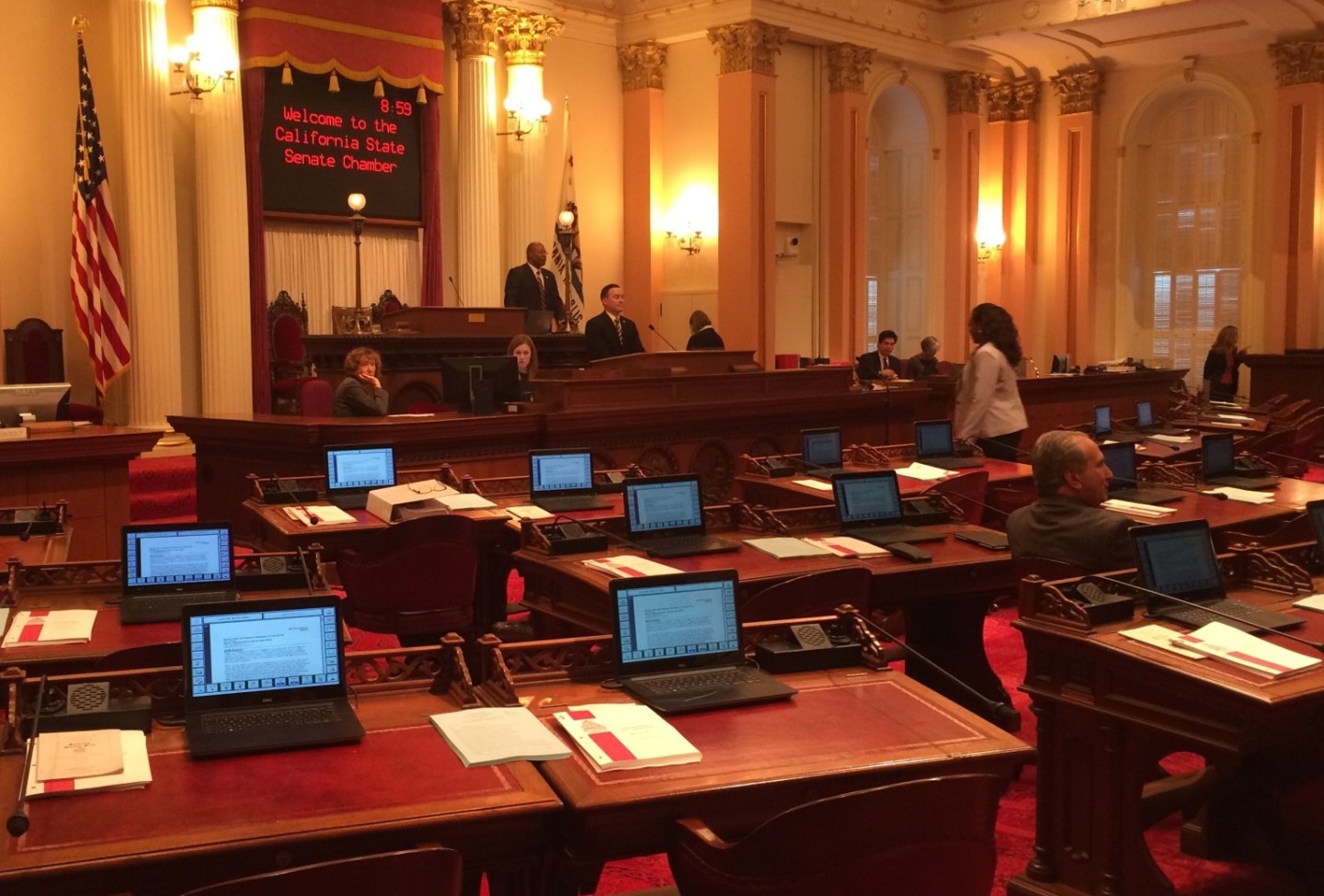
"caption": "The floor of the California state Senate.",
"description": null,
"title": "IMG_3271",
"credit": "John Myers/KQED",
"status": "inherit",
"isLoading": false,
"fetchFailed": false
},
"news_10608414": {
"type": "attachments",
"id": "news_10608414",
"meta": {
"index": "attachments_1716263798",
"site": "news",
"id": "10608414",
"found": true
},
"parent": 10608412,
"imgSizes": {
"twentyfourteen-full-width": {
"file": "https://ww2.kqed.org/app/uploads/sites/10/2015/07/RS8331_IMG_1310-e1437416840942-1038x576.jpg",
"width": 1038,
"mimeType": "image/jpeg",
"height": 576
},
"thumbnail": {
"file": "https://ww2.kqed.org/app/uploads/sites/10/2015/07/RS8331_IMG_1310-e1437416840942-400x293.jpg",
"width": 400,
"mimeType": "image/jpeg",
"height": 293
},
"fd-sm": {
"file": "https://ww2.kqed.org/app/uploads/sites/10/2015/07/RS8331_IMG_1310-e1437416840942-960x702.jpg",
"width": 960,
"mimeType": "image/jpeg",
"height": 702
},
"post-thumbnail": {
"file": "https://ww2.kqed.org/app/uploads/sites/10/2015/07/RS8331_IMG_1310-e1437416840942-672x372.jpg",
"width": 672,
"mimeType": "image/jpeg",
"height": 372
},
"kqedFullSize": {
"file": "https://ww2.kqed.org/app/uploads/sites/10/2015/07/RS8331_IMG_1310-e1437416840942.jpg",
"width": 1252,
"height": 916
},
"large": {
"file": "https://ww2.kqed.org/app/uploads/sites/10/2015/07/RS8331_IMG_1310-1440x1080.jpg",
"width": 1440,
"mimeType": "image/jpeg",
"height": 1080
},
"guest-author-96": {
"file": "https://ww2.kqed.org/app/uploads/sites/10/2015/07/RS8331_IMG_1310-e1437416840942-96x96.jpg",
"width": 96,
"mimeType": "image/jpeg",
"height": 96
},
"medium": {
"file": "https://ww2.kqed.org/app/uploads/sites/10/2015/07/RS8331_IMG_1310-e1437416840942-800x585.jpg",
"width": 800,
"mimeType": "image/jpeg",
"height": 585
},
"guest-author-64": {
"file": "https://ww2.kqed.org/app/uploads/sites/10/2015/07/RS8331_IMG_1310-e1437416840942-64x64.jpg",
"width": 64,
"mimeType": "image/jpeg",
"height": 64
},
"guest-author-32": {
"file": "https://ww2.kqed.org/app/uploads/sites/10/2015/07/RS8331_IMG_1310-e1437416840942-32x32.jpg",
"width": 32,
"mimeType": "image/jpeg",
"height": 32
},
"jmtc-small-thumb": {
"file": "https://ww2.kqed.org/app/uploads/sites/10/2015/07/RS8331_IMG_1310-e1437416840942-280x150.jpg",
"width": 280,
"mimeType": "image/jpeg",
"height": 150
},
"fd-lrg": {
"file": "https://ww2.kqed.org/app/uploads/sites/10/2015/07/RS8331_IMG_1310-1400x1050.jpg",
"width": 1400,
"mimeType": "image/jpeg",
"height": 1050
},
"fd-med": {
"file": "https://ww2.kqed.org/app/uploads/sites/10/2015/07/RS8331_IMG_1310-e1437416840942-1180x863.jpg",
"width": 1180,
"mimeType": "image/jpeg",
"height": 863
},
"detail": {
"file": "https://ww2.kqed.org/app/uploads/sites/10/2015/07/RS8331_IMG_1310-e1437416840942-75x75.jpg",
"width": 75,
"mimeType": "image/jpeg",
"height": 75
},
"guest-author-128": {
"file": "https://ww2.kqed.org/app/uploads/sites/10/2015/07/RS8331_IMG_1310-e1437416840942-128x128.jpg",
"width": 128,
"mimeType": "image/jpeg",
"height": 128
}
},
"publishDate": 1437413586,
"modified": 1437413656,
"caption": "New state legislation attempts to tackle the growing problem of drone aircraft being flown into active firefighting and emergency zones.",
"description": null,
"title": "RS8331_IMG_1310",
"credit": "Craig Miller/KQED",
"status": "inherit",
"isLoading": false,
"fetchFailed": false
}
},
"audioPlayerReducer": {
"postId": "stream_live",
"isPaused": true,
"isPlaying": false,
"pfsActive": false,
"pledgeModalIsOpen": true,
"playerDrawerIsOpen": false,
"liveAudioPlayStartedAt": 0,
"liveAudioPlayContext": ""
},
"authorsReducer": {
"gmarzorati": {
"type": "authors",
"id": "227",
"meta": {
"index": "authors_1716337520",
"id": "227",
"found": true
},
"name": "Guy Marzorati",
"firstName": "Guy",
"lastName": "Marzorati",
"slug": "gmarzorati",
"email": "gmarzorati@KQED.org",
"display_author_email": true,
"staff_mastheads": [
"news"
],
"title": "Correspondent",
"bio": "Guy Marzorati is a correspondent on KQED's California Politics and Government Desk, based in San Jose. A graduate of Santa Clara University, Guy joined KQED in 2013. He reports on state and local politics and produces KQED's digital voter guide.",
"avatar": "https://secure.gravatar.com/avatar/e7038b8dbfd55b104369b76b1cd0b9de?s=600&d=blank&r=g",
"twitter": "guymarzorati",
"facebook": null,
"instagram": null,
"linkedin": null,
"sites": [
{
"site": "",
"roles": [
"editor"
]
},
{
"site": "news",
"roles": [
"editor"
]
},
{
"site": "science",
"roles": [
"editor"
]
},
{
"site": "forum",
"roles": [
"editor"
]
},
{
"site": "elections",
"roles": [
"editor"
]
},
{
"site": "liveblog",
"roles": [
"editor"
]
}
],
"headData": {
"title": "Guy Marzorati | KQED",
"description": "Correspondent",
"ogImgSrc": "https://secure.gravatar.com/avatar/e7038b8dbfd55b104369b76b1cd0b9de?s=600&d=blank&r=g",
"twImgSrc": "https://secure.gravatar.com/avatar/e7038b8dbfd55b104369b76b1cd0b9de?s=600&d=blank&r=g"
},
"isLoading": false,
"link": "/author/gmarzorati"
},
"jmyers": {
"type": "authors",
"id": "232",
"meta": {
"index": "authors_1716337520",
"id": "232",
"found": true
},
"name": "John Myers",
"firstName": "John",
"lastName": "Myers",
"slug": "jmyers",
"email": "jmyers@kqed.org",
"display_author_email": false,
"staff_mastheads": [],
"title": null,
"bio": "John Myers is Senior Editor of KQED's new California Politics and Government Desk. A veteran of almost two decades of political coverage, he was KQED's longest serving statehouse bureau chief and recently was political editor for Sacramento's ABC affiliate, News10 (KXTV). John was moderator of the only 2014 gubernatorial debate, and was named by \u003cem>The Washington Post\u003c/em> to two \"Best Of\" lists: the 2015 list of top state politics reporters and 2014's list of America's most influential statehouse reporters.",
"avatar": "https://secure.gravatar.com/avatar/c0ac98482caf0b8229a792662b38722a?s=600&d=blank&r=g",
"twitter": "johnmyers",
"facebook": null,
"instagram": null,
"linkedin": null,
"sites": [
{
"site": "news",
"roles": [
"subscriber"
]
}
],
"headData": {
"title": "John Myers | KQED",
"description": null,
"ogImgSrc": "https://secure.gravatar.com/avatar/c0ac98482caf0b8229a792662b38722a?s=600&d=blank&r=g",
"twImgSrc": "https://secure.gravatar.com/avatar/c0ac98482caf0b8229a792662b38722a?s=600&d=blank&r=g"
},
"isLoading": false,
"link": "/author/jmyers"
},
"mlagos": {
"type": "authors",
"id": "3239",
"meta": {
"index": "authors_1716337520",
"id": "3239",
"found": true
},
"name": "Marisa Lagos",
"firstName": "Marisa",
"lastName": "Lagos",
"slug": "mlagos",
"email": "mlagos@kqed.org",
"display_author_email": false,
"staff_mastheads": [
"news"
],
"title": "KQED Contributor",
"bio": "Marisa Lagos is a correspondent for KQED’s California Politics and Government Desk and co-hosts the award-winning show and podcast, Political Breakdown. At KQED, Lagos also conducts reporting, analysis and investigations into state, local and national politics for radio, TV, online and onstage. In 2022, she and co-host, Scott Shafer, moderated the only gubernatorial debate in California. In 2020, the \u003ci>Washington Post\u003c/i> named her one of the top political journalists in California; she was nominated for a Peabody and won several other awards for her work investigating the 2017 California wildfires. She has worked at the \u003ci>San Francisco Chronicle\u003c/i>, \u003ci>San Francisco Examiner\u003c/i> and \u003ci>Los Angeles Times\u003c/i>. A UC Santa Barbara graduate, she lives in San Francisco with her two sons and husband.",
"avatar": "https://secure.gravatar.com/avatar/a261a0d3696fc066871ef96b85b5e7d2?s=600&d=blank&r=g",
"twitter": "@mlagos",
"facebook": null,
"instagram": null,
"linkedin": null,
"sites": [
{
"site": "arts",
"roles": [
"author"
]
},
{
"site": "news",
"roles": [
"editor"
]
},
{
"site": "science",
"roles": [
"editor"
]
},
{
"site": "forum",
"roles": [
"author"
]
},
{
"site": "liveblog",
"roles": [
"author"
]
}
],
"headData": {
"title": "Marisa Lagos | KQED",
"description": "KQED Contributor",
"ogImgSrc": "https://secure.gravatar.com/avatar/a261a0d3696fc066871ef96b85b5e7d2?s=600&d=blank&r=g",
"twImgSrc": "https://secure.gravatar.com/avatar/a261a0d3696fc066871ef96b85b5e7d2?s=600&d=blank&r=g"
},
"isLoading": false,
"link": "/author/mlagos"
}
},
"pagesReducer": {
"news_program_faultlines": {
"type": "terms",
"id": "news_7051",
"meta": {
"index": "terms_1716263798",
"site": "news",
"id": "7051",
"score": 16.377258
},
"featImg": "https://ww2.kqed.org/app/uploads/sites/10/2014/10/Faultlines-2.png",
"name": "FaultLines",
"description": null,
"taxonomy": "program",
"headData": {
"twImgId": null,
"twTitle": null,
"ogTitle": null,
"ogImgId": null,
"twDescription": null,
"description": null,
"title": "FaultLines Archives | KQED News",
"ogDescription": null
},
"ttid": 7077,
"slug": "faultlines",
"isLoading": false,
"title": "FaultLines",
"pageMeta": {
"site": "news",
"WpPageTemplate": "page-topic-editorial",
"currentPage": 4
},
"blocks": [
{
"blockName": "kqed/post-list",
"attrs": {
"layout": "cardArticle2",
"query": "posts/news?program=faultlines",
"seeMore": false,
"paginated": true,
"page": 4
}
},
{
"blockName": "kqed/ad"
}
]
}
},
"pfsSessionReducer": {},
"postsReducer": {
"stream_live": {
"type": "live",
"id": "stream_live",
"audioUrl": "https://streams.kqed.org/kqedradio",
"title": "Live Stream",
"excerpt": "Live Stream information currently unavailable.",
"link": "/radio",
"featImg": "",
"label": {
"name": "KQED Live",
"link": "/"
}
},
"stream_kqedNewscast": {
"type": "posts",
"id": "stream_kqedNewscast",
"audioUrl": "https://www.kqed.org/.stream/anon/radio/RDnews/newscast.mp3?_=1",
"title": "KQED Newscast",
"featImg": "",
"label": {
"name": "88.5 FM",
"link": "/"
}
},
"news_10641123": {
"type": "posts",
"id": "news_10641123",
"meta": {
"index": "posts_1716263798",
"site": "news",
"id": "10641123",
"score": null,
"sort": [
1439794890000
]
},
"guestAuthors": [],
"slug": "big-battles-to-watch-in-california-legislatures-final-month",
"title": "Big Battles to Watch In California Legislature's Final Month",
"publishDate": 1439794890,
"format": "standard",
"headTitle": "Big Battles to Watch In California Legislature’s Final Month | KQED",
"labelTerm": {
"term": 72,
"site": "news"
},
"content": "\u003cp>At most, there are only 20 days of official business left at the state Capitol. By the time it’s over, huge policy and political fights will have been waged, some of which may set the stage for debates left for the voters to settle in 2016.\u003c/p>\n\u003cp>Legislators return on Monday to Sacramento for the final sprint to the end of this year’s duties, the halfway mark of the two-year legislative session that began in January. Hundreds of bills are left to be debated, covering topics from environmental policy to privacy rights and long-term funding for roads and highways.\u003c/p>\n\u003cp>Here are our top picks for the battles worth watching:\u003c/p>\n\u003cp>\u003cstrong>The Biggie: Climate Clash\u003c/strong>\u003c/p>\n\u003cp>California’s reputation on the international stage as a leader on climate change regulations has been front and center in recent months, and legislators may be on the verge of doubling down on that effort. Most notable are two bills to further reduce greenhouse gas emissions, and separate legislation to cut the state’s reliance on fossil fuels.\u003c/p>\n\u003cp>[ad fullwidth]\u003c/p>\n\u003cp>The greenhouse gas bills (\u003ca href=\"http://www.leginfo.ca.gov/pub/15-16/bill/sen/sb_0001-0050/sb_32_cfa_20150710_120306_asm_comm.html\" target=\"_blank\" rel=\"noopener\">SB 32\u003c/a> and \u003ca href=\"http://www.leginfo.ca.gov/pub/15-16/bill/asm/ab_1251-1300/ab_1288_cfa_20150713_150625_sen_comm.html\" target=\"_blank\" rel=\"noopener\">AB 1288\u003c/a>) push beyond the state’s 2006 landmark law, which seeks to shrink emissions to 1990 levels by 2020. AB 1288, by Assembly Speaker Toni Atkins (D-San Diego), would extend the state’s use of cap-and-trade as a tool to limit greenhouse gas emissions. SB 32, by state Sen. Fran Pavley (D-Agoura Hills), would ratchet down emission levels by mid-century to 80 percent below 1990 levels.\u003c/p>\n\u003cfigure id=\"attachment_10643312\" class=\"wp-caption alignleft\" style=\"max-width: 400px\">\u003cimg loading=\"lazy\" decoding=\"async\" class=\"size-thumbnail wp-image-10643312\" src=\"http://ww2.kqed.org/news/wp-content/uploads/sites/10/2015/08/RS15578_BUDGET_34-400x267.jpg\" alt=\"State Senate President pro Tem Kevin de León is the author of SB 350.\" width=\"400\" height=\"267\" srcset=\"https://cdn.kqed.org/wp-content/uploads/sites/10/2015/08/RS15578_BUDGET_34-400x267.jpg 400w, https://cdn.kqed.org/wp-content/uploads/sites/10/2015/08/RS15578_BUDGET_34-800x533.jpg 800w, https://cdn.kqed.org/wp-content/uploads/sites/10/2015/08/RS15578_BUDGET_34-1440x960.jpg 1440w, https://cdn.kqed.org/wp-content/uploads/sites/10/2015/08/RS15578_BUDGET_34-1920x1280.jpg 1920w, https://cdn.kqed.org/wp-content/uploads/sites/10/2015/08/RS15578_BUDGET_34-1180x787.jpg 1180w, https://cdn.kqed.org/wp-content/uploads/sites/10/2015/08/RS15578_BUDGET_34-960x640.jpg 960w\" sizes=\"(max-width: 400px) 100vw, 400px\">\u003cfigcaption class=\"wp-caption-text\">State Senate President pro Tem Kevin de León is the author of SB 350. \u003ccite>(Max Whittaker/KQED)\u003c/cite>\u003c/figcaption>\u003c/figure>\n\u003cp>Hard to believe, but those bills may spark debate that seems tepid compared to \u003ca href=\"http://www.leginfo.ca.gov/cgi-bin/postquery?bill_number=sb_350&sess=CUR&house=B&author=de_le%F3n_%3Cde_leon%3E\" target=\"_blank\" rel=\"noopener\">SB 350\u003c/a> by Senate President pro Tem Kevin de León (D-Los Angeles). This bill is an attempt to pull off the equivalent of a climate change hat trick: More renewable energy, more energy efficient buildings, and a 50 percent reduction in the use of petroleum by cars and trucks.\u003c/p>\n\u003cp>That last element — a big downsizing of gasoline use — is the one the oil industry has vowed to kill, with \u003ca href=\"http://www.californiadriversalliance.org/\" target=\"_blank\" rel=\"noopener\">an aggressive PR campaign over the last few weeks\u003c/a> and a list of business-leaning Democrats in the Assembly who they hope will lead the charge to weaken the Senate leader’s bill.\u003c/p>\n\u003cp>Historically, a bill authored by a legislative leader can be hard to stop. And de León holds some powerful cards in his hand — namely, the bills of assemblymembers that have made it to the Senate, bills he could amend or kill to get his way with SB 350.\u003c/p>\n\u003cp>This is the biggest of the final legislative battles. And keep your eye on Gov. Jerry Brown, who may play a key role behind the scenes on an issue which he seems to increasingly view as a big part of his legacy.\u003c/p>\n\u003cp>\u003cstrong>Money Talks: Health Care and Tobacco\u003c/strong>\u003c/p>\n\u003cp>Lawmakers will be working both on regular-session issues and, concurrently, on two special legislative sessions — dealing with health care and transportation.\u003c/p>\n\u003cp>\u003ca href=\"http://gov.ca.gov/docs/6.16.15_Health_Care_Special_Session.pdf\" target=\"_blank\" rel=\"noopener\">While Brown’s call for a special health care session\u003c/a> is mostly aimed at finding a way to fund Medi-Cal, it seems a new round of tobacco wars will be taking front and center in the debate as well.\u003cimg loading=\"lazy\" decoding=\"async\" class=\"alignright size-thumbnail wp-image-10643161\" src=\"http://ww2.kqed.org/news/wp-content/uploads/sites/10/2015/08/RS3292_NoSmokingSign-400x286.jpg\" alt=\"RS3292_NoSmokingSign\" width=\"400\" height=\"286\" srcset=\"https://cdn.kqed.org/wp-content/uploads/sites/10/2015/08/RS3292_NoSmokingSign-400x286.jpg 400w, https://cdn.kqed.org/wp-content/uploads/sites/10/2015/08/RS3292_NoSmokingSign-800x572.jpg 800w, https://cdn.kqed.org/wp-content/uploads/sites/10/2015/08/RS3292_NoSmokingSign-960x686.jpg 960w, https://cdn.kqed.org/wp-content/uploads/sites/10/2015/08/RS3292_NoSmokingSign.jpg 1024w\" sizes=\"(max-width: 400px) 100vw, 400px\">\u003c/p>\n\u003cp>Several Democratic lawmakers have already introduced legislation as part of the special session that would define e-cigarettes as tobacco products and bring them under the state’s existing anti-smoking laws.\u003c/p>\n\u003cp>Both Senate Bill xx5 by Senator Mark Leno (D-San Francisco) and Assembly Bill xx6 by Assemblymember Jim Cooper (D-Elk Grove) are essentially do-overs of Leno’s SB 140, which was \u003ca href=\"http://www.sfgate.com/politics/article/Assembly-amendments-kill-bill-to-regulate-6374014.php\" target=\"_blank\" rel=\"noopener\">unceremoniously gutted in July by Assemblyman Adam Gray \u003c/a>(D-Merced), chair of the lower house’s powerful governmental organization committee. So it seems that legislation, combined with other bills, could set up an interesting battle in the Assembly, whose more moderate members have recently been loath to expand anti-tobacco laws.\u003c/p>\n\u003cp>(By the way, the “x” in the bill numbers refers to the fact that these were introduced in the \u003cem>special session\u003c/em>.)\u003c/p>\n\u003cp>Also on the tobacco docket: \u003ca href=\"http://www.leginfo.ca.gov/pub/15-16/bill/asm/ab_0001-0050/abx2_10_bill_20150716_introduced.htm\" target=\"_blank\" rel=\"noopener\">Assembly Bill xx10\u003c/a> by Assemblyman Richard Bloom (D-Santa Monica), which would allow counties to impose their own tobacco taxes; \u003ca href=\"http://www.leginfo.ca.gov/pub/15-16/bill/sen/sb_0001-0050/sbx2_7_bill_20150716_introduced.htm\" target=\"_blank\" rel=\"noopener\">Senate Bill xx7\u003c/a> by Sen. Ed Hernandez (D-San Gabriel Valley) and \u003ca href=\"http://www.leginfo.ca.gov/pub/15-16/bill/asm/ab_0001-0050/abx2_8_bill_20150716_introduced.htm\" target=\"_blank\" rel=\"noopener\">Assembly Bill xx8\u003c/a> by Assemblyman Jim Wood (D-Healdsburg), which would both raise the smoking age to 21; \u003ca href=\"http://www.leginfo.ca.gov/pub/15-16/bill/sen/sb_0001-0050/sbx2_6_bill_20150716_introduced.htm\" target=\"_blank\" rel=\"noopener\">Senate Bill xx6\u003c/a> by Sen. Bill Monning (D-Carmel), which would close some loopholes in the state’s workplace smoking laws; and \u003ca href=\"http://www.leginfo.ca.gov/pub/15-16/bill/sen/sb_0001-0050/sbx2_8_bill_20150716_introduced.htm\" target=\"_blank\" rel=\"noopener\">Senate Bill xx8\u003c/a> by Sen. Carol Liu (D-La Cañada Flintridge), which would expand tobacco-free programs to charter schools.\u003c/p>\n\u003cp>The health care session, of course, is actually aimed at finding a way to backfill \u003ca href=\"http://www.capradio.org/articles/2015/06/22/california-must-change-tax-or-face-losing-billions/\" target=\"_blank\" rel=\"noopener\">$1.1 billion in funding for Medi-Cal that will dry up next June\u003c/a>, when the federal government starts enforcing new rules around how the low-income health insurance is funded. Democrats and Republicans also want to increase reimbursement rates for doctors who serve Medi-Cal patients and to increase funding for developmental disability services; Democratic lawmakers are pushing, too for more funding for the state’s In-Home Supportive Services program.\u003c/p>\n\u003cp>Assemblyman Marc Levine (D-San Rafael) has proposed a flat tax on all managed care organizations in the state of $7.88 per patient, per month. He said the tax would raise the $1.1 billion for Medi-Cal, as well as money for the other programs. Republicans say that tax is unnecessary, and they would like to see the state instead dedicate any new general fund revenues above and beyond 2015 budget levels to developmental disability services and Medi-Cal rates.\u003c/p>\n\u003cp>\u003cstrong>Transportation’s Tax Troubles\u003c/strong>\u003c/p>\n\u003cp>The other big special session debate over the final month will be over new dollars for California’s aging roads, highways and bridges. Getting consensus on the seriousness of the issue was the easy part; finding a way to pay for it — given that most revenue remedies will require a supermajority, bipartisan vote of each house — is the hard part.\u003c/p>\n\u003cp>How much money? An \u003ca href=\"https://cafwd.app.box.com/s/cmibxng0bc6m345umly51adylv3zpu2s\" target=\"_blank\" rel=\"noopener\">all-star coalition of local governments, business, and transportation groups\u003c/a> says it needs to be at least $6 billion. Annually. That’s a heavy lift in the political world.\u003c/p>\n\u003cp>Key debates will include how much to earmark for things like roads and bridges, and how much some urban legislators may demand for public transit; how many different fees or taxes can or should be raised, from gas taxes to vehicle registration fees; how much of the ever-growing pot of cash from cap-and-trade’s auction of emission allowances should be tapped; and the idea of moving away from per gallon taxes and towards “\u003ca href=\"http://www.dot.ca.gov/road_charge/\" target=\"_blank\" rel=\"noopener\">road charging\u003c/a>,” where drivers pay based on how many miles they drive.\u003c/p>\n\u003cp>\u003cstrong>Crime … and Accountability\u003c/strong>\u003c/p>\n\u003cp>Two controversial criminal justice bills will also be up for debate this month, both of them \u003ca href=\"/Users/mlagos/Downloads/201520160AB953_Senate%20Public%20Safety-.pdf\" target=\"_blank\" rel=\"noopener\">opposed\u003c/a> by law enforcement.\u003c/p>\n\u003cp>\u003ca href=\"http://leginfo.legislature.ca.gov/faces/billTextClient.xhtml?bill_id=201520160AB953\" target=\"_blank\" rel=\"noopener\">Assembly Bill 953\u003c/a>, by Assemblywoman Shirley Weber (D-San Diego), is billed by supporters, including the ACLU, as the “\u003ca href=\"https://www.aclunc.org/sites/default/files/AB953_fact_sheet.pdf\" target=\"_blank\" rel=\"noopener\">Racial and Identity Profiling Act of 2015.”\u003c/a> It would mandate a system for law enforcement to collect information on each stop they make, data that would have to be reported to the attorney general each year. AB 953 would also expand the state’s definition of profiling beyond race to include things such as gender, national origin, religion and sexual orientation. It’s supported by a long list of civil rights groups and opposed by most of the state’s large police organizations.\u003c/p>\n\u003cfigure id=\"attachment_10643241\" class=\"wp-caption alignleft\" style=\"max-width: 800px\">\u003ca href=\"http://ww2.kqed.org/news/wp-content/uploads/sites/10/2015/08/RS11767_IMG_1723-copy.jpg-alt_318.jpg\">\u003cimg loading=\"lazy\" decoding=\"async\" class=\"size-medium wp-image-10643241\" src=\"http://ww2.kqed.org/news/wp-content/uploads/sites/10/2015/08/RS11767_IMG_1723-copy.jpg-alt_318-800x533.jpg\" alt=\"Police protests around the nation, including this one in San Francisco, helped spur AB953.\" width=\"800\" height=\"533\" srcset=\"https://cdn.kqed.org/wp-content/uploads/sites/10/2015/08/RS11767_IMG_1723-copy.jpg-alt_318-800x533.jpg 800w, https://cdn.kqed.org/wp-content/uploads/sites/10/2015/08/RS11767_IMG_1723-copy.jpg-alt_318-400x267.jpg 400w, https://cdn.kqed.org/wp-content/uploads/sites/10/2015/08/RS11767_IMG_1723-copy.jpg-alt_318-1440x960.jpg 1440w, https://cdn.kqed.org/wp-content/uploads/sites/10/2015/08/RS11767_IMG_1723-copy.jpg-alt_318.jpg 1920w, https://cdn.kqed.org/wp-content/uploads/sites/10/2015/08/RS11767_IMG_1723-copy.jpg-alt_318-1180x787.jpg 1180w, https://cdn.kqed.org/wp-content/uploads/sites/10/2015/08/RS11767_IMG_1723-copy.jpg-alt_318-960x640.jpg 960w\" sizes=\"(max-width: 800px) 100vw, 800px\">\u003c/a>\u003cfigcaption class=\"wp-caption-text\">Police protests around the nation, including this one in San Francisco, helped spur AB953. \u003ccite>(Mark Andrew Boyer / KQED)\u003c/cite>\u003c/figcaption>\u003c/figure>\n\u003cp>Leno is again attempting to curb warrantless searches of phones, computers and other electronic devices with \u003ca href=\"http://leginfo.legislature.ca.gov/faces/billNavClient.xhtml?bill_id=201520160SB178\" target=\"_blank\" rel=\"noopener\">Senate Bill 178\u003c/a>. It’s his fourth run at the issue, which has repeatedly been embraced by lawmakers but vetoed by Brown in the face of law enforcement opposition.\u003c/p>\n\u003cp>The bill would require law enforcement to secure a court order before they compel service providers to give them personal communications, or before they search an electronic device. It has some exceptions for emergency situations. It’s supported by tech companies, consumer organizations and civil liberties groups, but opposed by prosecutors, police and sheriffs.\u003c/p>\n\u003cp>\u003cstrong>Elections and Disclosure Laws\u003c/strong>\u003c/p>\n\u003cp>A handful of notable bills in the final month may make important changes in the conducting of elections and campaigns, starting as soon as next year’s contest. The most talked about of these is \u003ca href=\"http://www.leginfo.ca.gov/pub/15-16/bill/asm/ab_1451-1500/ab_1461_bill_20150623_amended_sen_v94.htm\" target=\"_blank\" rel=\"noopener\">AB 1461\u003c/a> by Assemblywoman Lorena Gonzalez (D-San Diego), requiring DMV and state elections officials to automatically register to vote those who are eligible.\u003c/p>\n\u003cp>Other bills that will be worth watching include a state-funded recount for razor-thin statewide candidate or ballot measure elections, and new donor disclosure rules on campaign mailers.\u003c/p>\n\u003cp>Speaking of disclosure: Keep an eye on \u003ca href=\"http://www.leginfo.ca.gov/pub/15-16/bill/asm/ab_1151-1200/ab_1200_cfa_20150706_131902_sen_comm.html\" target=\"_blank\" rel=\"noopener\">AB 1200\u003c/a>, the effort by Assemblyman Rich Gordon (D-Menlo Park) to apply lobbying reports for those who seek government contracts — an area, \u003ca href=\"http://ww2.kqed.org/news/2015/08/13/240-million-education-contract-illustrates-state-lobbying-loopholes\" target=\"_blank\" rel=\"noopener\">as we reported last week, that’s virtually opaque when it comes to seeing who’s influencing what\u003c/a>.\u003c/p>\n\u003cp>\u003cstrong>Affordability Issues\u003c/strong>\u003c/p>\n\u003cp>Democrats are also attempting to change a handful of state laws that they argue will make life easier for working families and individuals.\u003c/p>\n\u003cfigure id=\"attachment_10643242\" class=\"wp-caption alignright\" style=\"max-width: 800px\">\u003ca href=\"http://ww2.kqed.org/news/wp-content/uploads/sites/10/2015/08/1093_transform.jpg\">\u003cimg loading=\"lazy\" decoding=\"async\" class=\"size-medium wp-image-10643242\" src=\"http://ww2.kqed.org/news/wp-content/uploads/sites/10/2015/08/1093_transform-800x598.jpg\" alt=\"Efforts to raise the minimum wage are also happening at the local level. \" width=\"800\" height=\"598\" srcset=\"https://cdn.kqed.org/wp-content/uploads/sites/10/2015/08/1093_transform-800x598.jpg 800w, https://cdn.kqed.org/wp-content/uploads/sites/10/2015/08/1093_transform-400x299.jpg 400w, https://cdn.kqed.org/wp-content/uploads/sites/10/2015/08/1093_transform-1440x1076.jpg 1440w, https://cdn.kqed.org/wp-content/uploads/sites/10/2015/08/1093_transform.jpg 1920w, https://cdn.kqed.org/wp-content/uploads/sites/10/2015/08/1093_transform-1180x881.jpg 1180w, https://cdn.kqed.org/wp-content/uploads/sites/10/2015/08/1093_transform-960x717.jpg 960w\" sizes=\"(max-width: 800px) 100vw, 800px\">\u003c/a>\u003cfigcaption class=\"wp-caption-text\">Efforts to raise the minimum wage are also happening at the local level. \u003ccite>(Peter Jon Shuler/KQED)\u003c/cite>\u003c/figcaption>\u003c/figure>\n\u003cp>\u003ca href=\"http://leginfo.legislature.ca.gov/faces/billNavClient.xhtml?bill_id=201520160AB908\" target=\"_blank\" rel=\"noopener\">Assembly Bill 908\u003c/a>, by Assemblyman Jimmy Gomez (D-Los Angeles) would \u003ca href=\"http://www.bizjournals.com/sacramento/news/2015/06/26/bill-to-expand-paid-family-leave-gains-traction.html\" target=\"_blank\" rel=\"noopener\">expand paid family leave in California\u003c/a>; \u003ca href=\"http://leginfo.legislature.ca.gov/faces/billNavClient.xhtml?bill_id=201520160SB406\" target=\"_blank\" rel=\"noopener\">Senate Bill 406\u003c/a>, by Sen. Hannah Beth Jackson (D-Santa Barbara) would also \u003ca href=\"http://sd19.senate.ca.gov/news/2015-04-07-jackson-bill-would-provide-job-protection-paid-family-leave\" target=\"_blank\" rel=\"noopener\">expand job protections for Californians\u003c/a> that take paid family leave; Jackson’s Senate Bill 358 would\u003ca href=\"http://www.sfchronicle.com/opinion/article/Time-to-require-equal-pay-for-similar-work-6405957.php\" target=\"_blank\" rel=\"noopener\"> strengthen California’s gender pay protections\u003c/a>; and Leno’s \u003ca href=\"http://leginfo.legislature.ca.gov/faces/billNavClient.xhtml?bill_id=201520160SB3\" target=\"_blank\" rel=\"noopener\">Senate Bill 3\u003c/a> would raise the state’s minimum wage to $13 an hour by 2017, with automatic future increases based on the rate of inflation — the same kind of inflation “indexing” that’s been opposed in previous incarnations by Gov. Jerry Brown.\u003c/p>\n\u003cp>\u003cstrong>Ripped From The Headlines?\u003c/strong>\u003c/p>\n\u003cp>And finally, there will be legislative debates that, even more than some of the bills mentioned above, are largely driven by the state or national news cycle.\u003c/p>\n\u003cp>Republicans \u003ca href=\"https://ad67.assemblygop.com/featured-news/melendez-calls-full-state-audit-planned-parenthood\" target=\"_blank\" rel=\"noopener\">are vowing to fight for more information on Planned Parenthood’s use of state tax dollars\u003c/a>, after the summertime controversy over a hidden video and accusations of selling fetal tissue for medical research. While \u003ca href=\"http://www.wsj.com/articles/hhs-warns-states-of-possible-violation-in-ending-medicaid-funds-for-planned-parenthood-1439392786\" target=\"_blank\" rel=\"noopener\">GOP-dominant legislatures in other states are provoking a fight with the feds on the issue\u003c/a>, a debate in the heavily Democratic statehouse in Sacramento would be mostly symbolic.\u003c/p>\n\u003cp>The summer’s tragic headline of a San Francisco murder, allegedly carried out by an undocumented felon who was released from custody just days earlier, may also make its way to the Legislature. Republican state Sen. Jeff Stone (R-Murrieta) \u003ca href=\"http://www.latimes.com/local/political/la-me-pc-california-senator-proposes-immigration-holds-on-felons-in-the-country-illegally-20150813-story.html\" target=\"_blank\" rel=\"noopener\">plans to introduce a bill \u003c/a>to require that local law enforcement notify federal immigrations officials before releasing a convicted felon.\u003c/p>\n\u003cp>[ad floatright]\u003c/p>\n\u003cp>Less sensational, but also part of a national narrative, is \u003ca href=\"http://www.leginfo.ca.gov/pub/15-16/bill/sen/sb_0101-0150/sb_142_cfa_20150715_173328_asm_floor.html\" target=\"_blank\" rel=\"noopener\">SB 142\u003c/a> by Sen. Hannah-Beth Jackson (D-Santa Barbara) to ban drone aircraft within a 350-foot zone of privacy over private property. Jackson and other legislators also are calling for \u003ca href=\"http://ww2.kqed.org/news/2015/07/20/firefighters-could-destroy-drones-under-proposed-california-law/\" target=\"_blank\" rel=\"noopener\">new laws regarding drones interfering with firefighting efforts\u003c/a>.\u003c/p>\n\n",
"blocks": [],
"excerpt": "Legislators have four weeks left to wrap up their work. Here are the debates worth keeping tabs on.",
"status": "publish",
"parent": 0,
"modified": 1726001958,
"stats": {
"hasAudio": false,
"hasVideo": false,
"hasChartOrMap": false,
"iframeSrcs": [],
"hasGoogleForm": false,
"hasGallery": false,
"hasHearkenModule": false,
"hasPolis": false,
"paragraphCount": 42,
"wordCount": 1953
},
"headData": {
"title": "Big Battles to Watch In California Legislature's Final Month | KQED",
"description": "Legislators have four weeks left to wrap up their work. Here are the debates worth keeping tabs on.",
"ogTitle": "",
"ogDescription": "",
"ogImgId": "",
"twTitle": "",
"twDescription": "",
"twImgId": "",
"schema": {
"@context": "https://schema.org",
"@type": "NewsArticle",
"headline": "Big Battles to Watch In California Legislature's Final Month",
"datePublished": "2015-08-17T00:01:30-07:00",
"dateModified": "2024-09-10T13:59:18-07:00",
"image": "https://cdn.kqed.org/wp-content/uploads/2020/02/KQED-OG-Image@1x.png",
"isAccessibleForFree": "True",
"publisher": {
"@type": "NewsMediaOrganization",
"@id": "https://www.kqed.org/#organization",
"name": "KQED",
"logo": "https://cdn.kqed.org/wp-content/uploads/2020/02/KQED-OG-Image@1x.png",
"url": "https://www.kqed.org",
"sameAs": [
"https://www.facebook.com/KQED",
"https://twitter.com/KQED",
"https://www.instagram.com/kqed/",
"https://www.tiktok.com/@kqedofficial",
"https://www.linkedin.com/company/kqed",
"https://www.youtube.com/channel/UCeC0IOo7i1P_61zVUWbJ4nw"
]
}
}
},
"sticky": false,
"customPermalink": "2015/08/16/the-big-battles-to-watch-in-final-2015-debates-california-state-legislature/",
"path": "/news/10641123/big-battles-to-watch-in-california-legislatures-final-month",
"audioTrackLength": null,
"parsedContent": [
{
"type": "contentString",
"content": "\u003cdiv class=\"post-body\">\u003cp>\u003cp>At most, there are only 20 days of official business left at the state Capitol. By the time it’s over, huge policy and political fights will have been waged, some of which may set the stage for debates left for the voters to settle in 2016.\u003c/p>\n\u003cp>Legislators return on Monday to Sacramento for the final sprint to the end of this year’s duties, the halfway mark of the two-year legislative session that began in January. Hundreds of bills are left to be debated, covering topics from environmental policy to privacy rights and long-term funding for roads and highways.\u003c/p>\n\u003cp>Here are our top picks for the battles worth watching:\u003c/p>\n\u003cp>\u003cstrong>The Biggie: Climate Clash\u003c/strong>\u003c/p>\n\u003cp>California’s reputation on the international stage as a leader on climate change regulations has been front and center in recent months, and legislators may be on the verge of doubling down on that effort. Most notable are two bills to further reduce greenhouse gas emissions, and separate legislation to cut the state’s reliance on fossil fuels.\u003c/p>\n\u003cp>\u003c/p>\u003c/div>",
"attributes": {
"named": {},
"numeric": []
}
},
{
"type": "component",
"content": "",
"name": "ad",
"attributes": {
"named": {
"label": "fullwidth"
},
"numeric": [
"fullwidth"
]
}
},
{
"type": "contentString",
"content": "\u003cdiv class=\"post-body\">\u003cp>\u003c/p>\n\u003cp>The greenhouse gas bills (\u003ca href=\"http://www.leginfo.ca.gov/pub/15-16/bill/sen/sb_0001-0050/sb_32_cfa_20150710_120306_asm_comm.html\" target=\"_blank\" rel=\"noopener\">SB 32\u003c/a> and \u003ca href=\"http://www.leginfo.ca.gov/pub/15-16/bill/asm/ab_1251-1300/ab_1288_cfa_20150713_150625_sen_comm.html\" target=\"_blank\" rel=\"noopener\">AB 1288\u003c/a>) push beyond the state’s 2006 landmark law, which seeks to shrink emissions to 1990 levels by 2020. AB 1288, by Assembly Speaker Toni Atkins (D-San Diego), would extend the state’s use of cap-and-trade as a tool to limit greenhouse gas emissions. SB 32, by state Sen. Fran Pavley (D-Agoura Hills), would ratchet down emission levels by mid-century to 80 percent below 1990 levels.\u003c/p>\n\u003cfigure id=\"attachment_10643312\" class=\"wp-caption alignleft\" style=\"max-width: 400px\">\u003cimg loading=\"lazy\" decoding=\"async\" class=\"size-thumbnail wp-image-10643312\" src=\"http://ww2.kqed.org/news/wp-content/uploads/sites/10/2015/08/RS15578_BUDGET_34-400x267.jpg\" alt=\"State Senate President pro Tem Kevin de León is the author of SB 350.\" width=\"400\" height=\"267\" srcset=\"https://cdn.kqed.org/wp-content/uploads/sites/10/2015/08/RS15578_BUDGET_34-400x267.jpg 400w, https://cdn.kqed.org/wp-content/uploads/sites/10/2015/08/RS15578_BUDGET_34-800x533.jpg 800w, https://cdn.kqed.org/wp-content/uploads/sites/10/2015/08/RS15578_BUDGET_34-1440x960.jpg 1440w, https://cdn.kqed.org/wp-content/uploads/sites/10/2015/08/RS15578_BUDGET_34-1920x1280.jpg 1920w, https://cdn.kqed.org/wp-content/uploads/sites/10/2015/08/RS15578_BUDGET_34-1180x787.jpg 1180w, https://cdn.kqed.org/wp-content/uploads/sites/10/2015/08/RS15578_BUDGET_34-960x640.jpg 960w\" sizes=\"(max-width: 400px) 100vw, 400px\">\u003cfigcaption class=\"wp-caption-text\">State Senate President pro Tem Kevin de León is the author of SB 350. \u003ccite>(Max Whittaker/KQED)\u003c/cite>\u003c/figcaption>\u003c/figure>\n\u003cp>Hard to believe, but those bills may spark debate that seems tepid compared to \u003ca href=\"http://www.leginfo.ca.gov/cgi-bin/postquery?bill_number=sb_350&sess=CUR&house=B&author=de_le%F3n_%3Cde_leon%3E\" target=\"_blank\" rel=\"noopener\">SB 350\u003c/a> by Senate President pro Tem Kevin de León (D-Los Angeles). This bill is an attempt to pull off the equivalent of a climate change hat trick: More renewable energy, more energy efficient buildings, and a 50 percent reduction in the use of petroleum by cars and trucks.\u003c/p>\n\u003cp>That last element — a big downsizing of gasoline use — is the one the oil industry has vowed to kill, with \u003ca href=\"http://www.californiadriversalliance.org/\" target=\"_blank\" rel=\"noopener\">an aggressive PR campaign over the last few weeks\u003c/a> and a list of business-leaning Democrats in the Assembly who they hope will lead the charge to weaken the Senate leader’s bill.\u003c/p>\n\u003cp>Historically, a bill authored by a legislative leader can be hard to stop. And de León holds some powerful cards in his hand — namely, the bills of assemblymembers that have made it to the Senate, bills he could amend or kill to get his way with SB 350.\u003c/p>\n\u003cp>This is the biggest of the final legislative battles. And keep your eye on Gov. Jerry Brown, who may play a key role behind the scenes on an issue which he seems to increasingly view as a big part of his legacy.\u003c/p>\n\u003cp>\u003cstrong>Money Talks: Health Care and Tobacco\u003c/strong>\u003c/p>\n\u003cp>Lawmakers will be working both on regular-session issues and, concurrently, on two special legislative sessions — dealing with health care and transportation.\u003c/p>\n\u003cp>\u003ca href=\"http://gov.ca.gov/docs/6.16.15_Health_Care_Special_Session.pdf\" target=\"_blank\" rel=\"noopener\">While Brown’s call for a special health care session\u003c/a> is mostly aimed at finding a way to fund Medi-Cal, it seems a new round of tobacco wars will be taking front and center in the debate as well.\u003cimg loading=\"lazy\" decoding=\"async\" class=\"alignright size-thumbnail wp-image-10643161\" src=\"http://ww2.kqed.org/news/wp-content/uploads/sites/10/2015/08/RS3292_NoSmokingSign-400x286.jpg\" alt=\"RS3292_NoSmokingSign\" width=\"400\" height=\"286\" srcset=\"https://cdn.kqed.org/wp-content/uploads/sites/10/2015/08/RS3292_NoSmokingSign-400x286.jpg 400w, https://cdn.kqed.org/wp-content/uploads/sites/10/2015/08/RS3292_NoSmokingSign-800x572.jpg 800w, https://cdn.kqed.org/wp-content/uploads/sites/10/2015/08/RS3292_NoSmokingSign-960x686.jpg 960w, https://cdn.kqed.org/wp-content/uploads/sites/10/2015/08/RS3292_NoSmokingSign.jpg 1024w\" sizes=\"(max-width: 400px) 100vw, 400px\">\u003c/p>\n\u003cp>Several Democratic lawmakers have already introduced legislation as part of the special session that would define e-cigarettes as tobacco products and bring them under the state’s existing anti-smoking laws.\u003c/p>\n\u003cp>Both Senate Bill xx5 by Senator Mark Leno (D-San Francisco) and Assembly Bill xx6 by Assemblymember Jim Cooper (D-Elk Grove) are essentially do-overs of Leno’s SB 140, which was \u003ca href=\"http://www.sfgate.com/politics/article/Assembly-amendments-kill-bill-to-regulate-6374014.php\" target=\"_blank\" rel=\"noopener\">unceremoniously gutted in July by Assemblyman Adam Gray \u003c/a>(D-Merced), chair of the lower house’s powerful governmental organization committee. So it seems that legislation, combined with other bills, could set up an interesting battle in the Assembly, whose more moderate members have recently been loath to expand anti-tobacco laws.\u003c/p>\n\u003cp>(By the way, the “x” in the bill numbers refers to the fact that these were introduced in the \u003cem>special session\u003c/em>.)\u003c/p>\n\u003cp>Also on the tobacco docket: \u003ca href=\"http://www.leginfo.ca.gov/pub/15-16/bill/asm/ab_0001-0050/abx2_10_bill_20150716_introduced.htm\" target=\"_blank\" rel=\"noopener\">Assembly Bill xx10\u003c/a> by Assemblyman Richard Bloom (D-Santa Monica), which would allow counties to impose their own tobacco taxes; \u003ca href=\"http://www.leginfo.ca.gov/pub/15-16/bill/sen/sb_0001-0050/sbx2_7_bill_20150716_introduced.htm\" target=\"_blank\" rel=\"noopener\">Senate Bill xx7\u003c/a> by Sen. Ed Hernandez (D-San Gabriel Valley) and \u003ca href=\"http://www.leginfo.ca.gov/pub/15-16/bill/asm/ab_0001-0050/abx2_8_bill_20150716_introduced.htm\" target=\"_blank\" rel=\"noopener\">Assembly Bill xx8\u003c/a> by Assemblyman Jim Wood (D-Healdsburg), which would both raise the smoking age to 21; \u003ca href=\"http://www.leginfo.ca.gov/pub/15-16/bill/sen/sb_0001-0050/sbx2_6_bill_20150716_introduced.htm\" target=\"_blank\" rel=\"noopener\">Senate Bill xx6\u003c/a> by Sen. Bill Monning (D-Carmel), which would close some loopholes in the state’s workplace smoking laws; and \u003ca href=\"http://www.leginfo.ca.gov/pub/15-16/bill/sen/sb_0001-0050/sbx2_8_bill_20150716_introduced.htm\" target=\"_blank\" rel=\"noopener\">Senate Bill xx8\u003c/a> by Sen. Carol Liu (D-La Cañada Flintridge), which would expand tobacco-free programs to charter schools.\u003c/p>\n\u003cp>The health care session, of course, is actually aimed at finding a way to backfill \u003ca href=\"http://www.capradio.org/articles/2015/06/22/california-must-change-tax-or-face-losing-billions/\" target=\"_blank\" rel=\"noopener\">$1.1 billion in funding for Medi-Cal that will dry up next June\u003c/a>, when the federal government starts enforcing new rules around how the low-income health insurance is funded. Democrats and Republicans also want to increase reimbursement rates for doctors who serve Medi-Cal patients and to increase funding for developmental disability services; Democratic lawmakers are pushing, too for more funding for the state’s In-Home Supportive Services program.\u003c/p>\n\u003cp>Assemblyman Marc Levine (D-San Rafael) has proposed a flat tax on all managed care organizations in the state of $7.88 per patient, per month. He said the tax would raise the $1.1 billion for Medi-Cal, as well as money for the other programs. Republicans say that tax is unnecessary, and they would like to see the state instead dedicate any new general fund revenues above and beyond 2015 budget levels to developmental disability services and Medi-Cal rates.\u003c/p>\n\u003cp>\u003cstrong>Transportation’s Tax Troubles\u003c/strong>\u003c/p>\n\u003cp>The other big special session debate over the final month will be over new dollars for California’s aging roads, highways and bridges. Getting consensus on the seriousness of the issue was the easy part; finding a way to pay for it — given that most revenue remedies will require a supermajority, bipartisan vote of each house — is the hard part.\u003c/p>\n\u003cp>How much money? An \u003ca href=\"https://cafwd.app.box.com/s/cmibxng0bc6m345umly51adylv3zpu2s\" target=\"_blank\" rel=\"noopener\">all-star coalition of local governments, business, and transportation groups\u003c/a> says it needs to be at least $6 billion. Annually. That’s a heavy lift in the political world.\u003c/p>\n\u003cp>Key debates will include how much to earmark for things like roads and bridges, and how much some urban legislators may demand for public transit; how many different fees or taxes can or should be raised, from gas taxes to vehicle registration fees; how much of the ever-growing pot of cash from cap-and-trade’s auction of emission allowances should be tapped; and the idea of moving away from per gallon taxes and towards “\u003ca href=\"http://www.dot.ca.gov/road_charge/\" target=\"_blank\" rel=\"noopener\">road charging\u003c/a>,” where drivers pay based on how many miles they drive.\u003c/p>\n\u003cp>\u003cstrong>Crime … and Accountability\u003c/strong>\u003c/p>\n\u003cp>Two controversial criminal justice bills will also be up for debate this month, both of them \u003ca href=\"/Users/mlagos/Downloads/201520160AB953_Senate%20Public%20Safety-.pdf\" target=\"_blank\" rel=\"noopener\">opposed\u003c/a> by law enforcement.\u003c/p>\n\u003cp>\u003ca href=\"http://leginfo.legislature.ca.gov/faces/billTextClient.xhtml?bill_id=201520160AB953\" target=\"_blank\" rel=\"noopener\">Assembly Bill 953\u003c/a>, by Assemblywoman Shirley Weber (D-San Diego), is billed by supporters, including the ACLU, as the “\u003ca href=\"https://www.aclunc.org/sites/default/files/AB953_fact_sheet.pdf\" target=\"_blank\" rel=\"noopener\">Racial and Identity Profiling Act of 2015.”\u003c/a> It would mandate a system for law enforcement to collect information on each stop they make, data that would have to be reported to the attorney general each year. AB 953 would also expand the state’s definition of profiling beyond race to include things such as gender, national origin, religion and sexual orientation. It’s supported by a long list of civil rights groups and opposed by most of the state’s large police organizations.\u003c/p>\n\u003cfigure id=\"attachment_10643241\" class=\"wp-caption alignleft\" style=\"max-width: 800px\">\u003ca href=\"http://ww2.kqed.org/news/wp-content/uploads/sites/10/2015/08/RS11767_IMG_1723-copy.jpg-alt_318.jpg\">\u003cimg loading=\"lazy\" decoding=\"async\" class=\"size-medium wp-image-10643241\" src=\"http://ww2.kqed.org/news/wp-content/uploads/sites/10/2015/08/RS11767_IMG_1723-copy.jpg-alt_318-800x533.jpg\" alt=\"Police protests around the nation, including this one in San Francisco, helped spur AB953.\" width=\"800\" height=\"533\" srcset=\"https://cdn.kqed.org/wp-content/uploads/sites/10/2015/08/RS11767_IMG_1723-copy.jpg-alt_318-800x533.jpg 800w, https://cdn.kqed.org/wp-content/uploads/sites/10/2015/08/RS11767_IMG_1723-copy.jpg-alt_318-400x267.jpg 400w, https://cdn.kqed.org/wp-content/uploads/sites/10/2015/08/RS11767_IMG_1723-copy.jpg-alt_318-1440x960.jpg 1440w, https://cdn.kqed.org/wp-content/uploads/sites/10/2015/08/RS11767_IMG_1723-copy.jpg-alt_318.jpg 1920w, https://cdn.kqed.org/wp-content/uploads/sites/10/2015/08/RS11767_IMG_1723-copy.jpg-alt_318-1180x787.jpg 1180w, https://cdn.kqed.org/wp-content/uploads/sites/10/2015/08/RS11767_IMG_1723-copy.jpg-alt_318-960x640.jpg 960w\" sizes=\"(max-width: 800px) 100vw, 800px\">\u003c/a>\u003cfigcaption class=\"wp-caption-text\">Police protests around the nation, including this one in San Francisco, helped spur AB953. \u003ccite>(Mark Andrew Boyer / KQED)\u003c/cite>\u003c/figcaption>\u003c/figure>\n\u003cp>Leno is again attempting to curb warrantless searches of phones, computers and other electronic devices with \u003ca href=\"http://leginfo.legislature.ca.gov/faces/billNavClient.xhtml?bill_id=201520160SB178\" target=\"_blank\" rel=\"noopener\">Senate Bill 178\u003c/a>. It’s his fourth run at the issue, which has repeatedly been embraced by lawmakers but vetoed by Brown in the face of law enforcement opposition.\u003c/p>\n\u003cp>The bill would require law enforcement to secure a court order before they compel service providers to give them personal communications, or before they search an electronic device. It has some exceptions for emergency situations. It’s supported by tech companies, consumer organizations and civil liberties groups, but opposed by prosecutors, police and sheriffs.\u003c/p>\n\u003cp>\u003cstrong>Elections and Disclosure Laws\u003c/strong>\u003c/p>\n\u003cp>A handful of notable bills in the final month may make important changes in the conducting of elections and campaigns, starting as soon as next year’s contest. The most talked about of these is \u003ca href=\"http://www.leginfo.ca.gov/pub/15-16/bill/asm/ab_1451-1500/ab_1461_bill_20150623_amended_sen_v94.htm\" target=\"_blank\" rel=\"noopener\">AB 1461\u003c/a> by Assemblywoman Lorena Gonzalez (D-San Diego), requiring DMV and state elections officials to automatically register to vote those who are eligible.\u003c/p>\n\u003cp>Other bills that will be worth watching include a state-funded recount for razor-thin statewide candidate or ballot measure elections, and new donor disclosure rules on campaign mailers.\u003c/p>\n\u003cp>Speaking of disclosure: Keep an eye on \u003ca href=\"http://www.leginfo.ca.gov/pub/15-16/bill/asm/ab_1151-1200/ab_1200_cfa_20150706_131902_sen_comm.html\" target=\"_blank\" rel=\"noopener\">AB 1200\u003c/a>, the effort by Assemblyman Rich Gordon (D-Menlo Park) to apply lobbying reports for those who seek government contracts — an area, \u003ca href=\"http://ww2.kqed.org/news/2015/08/13/240-million-education-contract-illustrates-state-lobbying-loopholes\" target=\"_blank\" rel=\"noopener\">as we reported last week, that’s virtually opaque when it comes to seeing who’s influencing what\u003c/a>.\u003c/p>\n\u003cp>\u003cstrong>Affordability Issues\u003c/strong>\u003c/p>\n\u003cp>Democrats are also attempting to change a handful of state laws that they argue will make life easier for working families and individuals.\u003c/p>\n\u003cfigure id=\"attachment_10643242\" class=\"wp-caption alignright\" style=\"max-width: 800px\">\u003ca href=\"http://ww2.kqed.org/news/wp-content/uploads/sites/10/2015/08/1093_transform.jpg\">\u003cimg loading=\"lazy\" decoding=\"async\" class=\"size-medium wp-image-10643242\" src=\"http://ww2.kqed.org/news/wp-content/uploads/sites/10/2015/08/1093_transform-800x598.jpg\" alt=\"Efforts to raise the minimum wage are also happening at the local level. \" width=\"800\" height=\"598\" srcset=\"https://cdn.kqed.org/wp-content/uploads/sites/10/2015/08/1093_transform-800x598.jpg 800w, https://cdn.kqed.org/wp-content/uploads/sites/10/2015/08/1093_transform-400x299.jpg 400w, https://cdn.kqed.org/wp-content/uploads/sites/10/2015/08/1093_transform-1440x1076.jpg 1440w, https://cdn.kqed.org/wp-content/uploads/sites/10/2015/08/1093_transform.jpg 1920w, https://cdn.kqed.org/wp-content/uploads/sites/10/2015/08/1093_transform-1180x881.jpg 1180w, https://cdn.kqed.org/wp-content/uploads/sites/10/2015/08/1093_transform-960x717.jpg 960w\" sizes=\"(max-width: 800px) 100vw, 800px\">\u003c/a>\u003cfigcaption class=\"wp-caption-text\">Efforts to raise the minimum wage are also happening at the local level. \u003ccite>(Peter Jon Shuler/KQED)\u003c/cite>\u003c/figcaption>\u003c/figure>\n\u003cp>\u003ca href=\"http://leginfo.legislature.ca.gov/faces/billNavClient.xhtml?bill_id=201520160AB908\" target=\"_blank\" rel=\"noopener\">Assembly Bill 908\u003c/a>, by Assemblyman Jimmy Gomez (D-Los Angeles) would \u003ca href=\"http://www.bizjournals.com/sacramento/news/2015/06/26/bill-to-expand-paid-family-leave-gains-traction.html\" target=\"_blank\" rel=\"noopener\">expand paid family leave in California\u003c/a>; \u003ca href=\"http://leginfo.legislature.ca.gov/faces/billNavClient.xhtml?bill_id=201520160SB406\" target=\"_blank\" rel=\"noopener\">Senate Bill 406\u003c/a>, by Sen. Hannah Beth Jackson (D-Santa Barbara) would also \u003ca href=\"http://sd19.senate.ca.gov/news/2015-04-07-jackson-bill-would-provide-job-protection-paid-family-leave\" target=\"_blank\" rel=\"noopener\">expand job protections for Californians\u003c/a> that take paid family leave; Jackson’s Senate Bill 358 would\u003ca href=\"http://www.sfchronicle.com/opinion/article/Time-to-require-equal-pay-for-similar-work-6405957.php\" target=\"_blank\" rel=\"noopener\"> strengthen California’s gender pay protections\u003c/a>; and Leno’s \u003ca href=\"http://leginfo.legislature.ca.gov/faces/billNavClient.xhtml?bill_id=201520160SB3\" target=\"_blank\" rel=\"noopener\">Senate Bill 3\u003c/a> would raise the state’s minimum wage to $13 an hour by 2017, with automatic future increases based on the rate of inflation — the same kind of inflation “indexing” that’s been opposed in previous incarnations by Gov. Jerry Brown.\u003c/p>\n\u003cp>\u003cstrong>Ripped From The Headlines?\u003c/strong>\u003c/p>\n\u003cp>And finally, there will be legislative debates that, even more than some of the bills mentioned above, are largely driven by the state or national news cycle.\u003c/p>\n\u003cp>Republicans \u003ca href=\"https://ad67.assemblygop.com/featured-news/melendez-calls-full-state-audit-planned-parenthood\" target=\"_blank\" rel=\"noopener\">are vowing to fight for more information on Planned Parenthood’s use of state tax dollars\u003c/a>, after the summertime controversy over a hidden video and accusations of selling fetal tissue for medical research. While \u003ca href=\"http://www.wsj.com/articles/hhs-warns-states-of-possible-violation-in-ending-medicaid-funds-for-planned-parenthood-1439392786\" target=\"_blank\" rel=\"noopener\">GOP-dominant legislatures in other states are provoking a fight with the feds on the issue\u003c/a>, a debate in the heavily Democratic statehouse in Sacramento would be mostly symbolic.\u003c/p>\n\u003cp>The summer’s tragic headline of a San Francisco murder, allegedly carried out by an undocumented felon who was released from custody just days earlier, may also make its way to the Legislature. Republican state Sen. Jeff Stone (R-Murrieta) \u003ca href=\"http://www.latimes.com/local/political/la-me-pc-california-senator-proposes-immigration-holds-on-felons-in-the-country-illegally-20150813-story.html\" target=\"_blank\" rel=\"noopener\">plans to introduce a bill \u003c/a>to require that local law enforcement notify federal immigrations officials before releasing a convicted felon.\u003c/p>\n\u003cp>\u003c/p>\u003c/div>",
"attributes": {
"named": {},
"numeric": []
}
},
{
"type": "component",
"content": "",
"name": "ad",
"attributes": {
"named": {
"label": "floatright"
},
"numeric": [
"floatright"
]
}
},
{
"type": "contentString",
"content": "\u003cdiv class=\"post-body\">\u003cp>\u003c/p>\n\u003cp>Less sensational, but also part of a national narrative, is \u003ca href=\"http://www.leginfo.ca.gov/pub/15-16/bill/sen/sb_0101-0150/sb_142_cfa_20150715_173328_asm_floor.html\" target=\"_blank\" rel=\"noopener\">SB 142\u003c/a> by Sen. Hannah-Beth Jackson (D-Santa Barbara) to ban drone aircraft within a 350-foot zone of privacy over private property. Jackson and other legislators also are calling for \u003ca href=\"http://ww2.kqed.org/news/2015/07/20/firefighters-could-destroy-drones-under-proposed-california-law/\" target=\"_blank\" rel=\"noopener\">new laws regarding drones interfering with firefighting efforts\u003c/a>.\u003c/p>\n\n\u003c/div>\u003c/p>",
"attributes": {
"named": {},
"numeric": []
}
}
],
"link": "/news/10641123/big-battles-to-watch-in-california-legislatures-final-month",
"authors": [
"232",
"3239"
],
"programs": [
"news_7051",
"news_6944",
"news_72"
],
"categories": [
"news_34165",
"news_19906",
"news_457",
"news_6188",
"news_13",
"news_1397"
],
"tags": [
"news_2704",
"news_255",
"news_17599",
"news_30",
"news_18391",
"news_17286"
],
"featImg": "news_10641124",
"label": "news_72"
},
"news_10643182": {
"type": "posts",
"id": "news_10643182",
"meta": {
"index": "posts_1716263798",
"site": "news",
"id": "10643182",
"score": null,
"sort": [
1439622117000
]
},
"guestAuthors": [],
"slug": "bill-looks-to-put-state-lobbying-laws-on-par-with-local-rules",
"title": "Bill Looks to Put State Lobbying Laws on Par With Local Rules",
"publishDate": 1439622117,
"format": "standard",
"headTitle": "Bill Looks to Put State Lobbying Laws on Par With Local Rules | KQED",
"labelTerm": {
"term": 72,
"site": "news"
},
"content": "\u003cp>\u003cem>Our California Political Muscle series has recently explored both the \u003ca href=\"http://ww2.kqed.org/news/2015/08/13/240-million-education-contract-illustrates-state-lobbying-loopholes\" target=\"_blank\" rel=\"noopener\">hidden elements of how businesses lobby to win state government contracts\u003c/a> and \u003ca href=\"http://ww2.kqed.org/news/2015/08/12/local-california-governments-spend-big-to-influence-sacramento-lawmakers/\" target=\"_blank\" rel=\"noopener\">who employs lobbyists in Sacramento\u003c/a>.\u003c/em>\u003c/p>\n\u003cp>\u003cspan style=\"font-weight: 400\">A bill moving through the California Legislature that would force disclosure around lobbying for state contracts would put California in a group of just 18 states that require disclosure of procurement lobbying — which sounds good until you consider that a number of local communities have had similar rules on the books for years.\u003c/span>\u003c/p>\n\u003cp>\u003cspan style=\"font-weight: 400\">\u003ca href=\"http://leginfo.legislature.ca.gov/faces/billNavClient.xhtml?bill_id=201520160AB1200\" target=\"_blank\" rel=\"noopener\">Assembly Bill 1200 \u003c/a>, one of hundreds of bills awaiting final action when lawmakers return next week, would expand existing lobbying laws to include state government contracts. The law would apply to anyone who pays a lobbyist more than $2,000 a month or has someone on staff whose primary job is to lobby government officials.\u003c/span>\u003c/p>\n\u003cp>Currently, state ethics laws only require disclosure of lobbyists paid to help influence legislation or state regulations.\u003c/p>\n\u003cp>\u003cspan style=\"font-weight: 400\">If AB 1200 passes the Senate and is signed by Gov. Jerry Brown,\u003c/span> \u003cspan style=\"font-weight: 400\">the state would only just now be catching up to practices long established at the local level. \u003c/span>\u003c/p>\n\u003cp>[ad fullwidth]\u003c/p>\n\u003cp>\u003cspan style=\"font-weight: 400\">Four of California’s six largest counties — Los Angeles, San Diego, Orange, and Santa Clara — have lobbying ordinances that specifically include\u003c/span> \u003cspan style=\"font-weight: 400\">contracts when it comes to disclosing the use of paid lobbyists. \u003c/span>\u003c/p>\n\u003cp>\u003cspan style=\"font-weight: 400\">Los Angeles County, which has thousands of contracts on the books on everything from groundskeeping to armed security guards, has even built its disclosure law into the process of applying for a contract to provide county services. Each applicant must certify that they are aware of the registration and disclosure requirements that the county places on lobbyists. Breaking the lobbying law in LA County has consequences: The firm or person seeking the contract is disqualified from contention. \u003c/span>\u003c/p>\n\u003cp>\u003cspan style=\"font-weight: 400\">The state’s largest cities also already regulate contract lobbying the same way that AB 1200’s author, Assemblyman Rich Gordon (D -Menlo Park), hopes to enact at the state level. For many of those cities, this kind of disclosure requirement is nothing new. \u003c/span>\u003c/p>\n\u003cp>[contextly_sidebar id=”ywdD3BNSW19dvummwJkg26leAeQasulG”]\u003c/p>\n\u003cp>\u003cspan style=\"font-weight: 400\">Stacey Fulhorst, executive director of the San Diego Ethics Commission, led an overhaul of the city’s lobbying ordinance in 2007 but says lobbying for contracts has been on the city books at least since the 1990’s. She says it’s “surprising” the state hasn’t adopted a similar provision. \u003c/span>\u003c/p>\n\u003cp>\u003cspan style=\"font-weight: 400\">Fulhorst also learned in the three years it took to overhaul San Diego’s laws the difficulty in tailoring lobbying laws so that routine communication isn’t discouraged. \u003c/span>\u003c/p>\n\u003cp>\u003cspan style=\"font-weight: 400\">“We didn’t want to have to include a citizen contacting a representative about a street light,” she says. \u003c/span>\u003c/p>\n\u003cp>\u003cspan style=\"font-weight: 400\">For that reason, most city and county lobbying rules allow for communications — within the normal bid submission process — between vendors and the local governments they are hoping to supply with services. \u003c/span>\u003c/p>\n\u003cp>\u003cspan style=\"font-weight: 400\">Even smaller counties with fewer contracts have seen the need to have some kind of disclosure requirement to make sure big deals aren’t won with behind-the-scenes activity. In 1983, Santa Cruz County was considering the idea of entering into an exclusive cable television agreement with a single provider. County supervisors passed an ordinance that would require lobbyists to register during the bidding process. \u003c/span>\u003c/p>\n\u003cp>\u003cspan style=\"font-weight: 400\">But according to Santa Cruz County spokesman Rayne Marr, the ordinance “is a relic of the past” and is no longer used. \u003c/span>\u003c/p>\n\u003cp>\u003cspan style=\"font-weight: 400\">Some counties instead rely on a series of ethics laws around the procurement process. These can govern the acceptance of gifts from applicants, or they set guidelines for appropriate contact with current service providers. \u003c/span>\u003c/p>\n\u003cp>\u003c/p>\n\u003cp>But without the registration of lobbyists, the counties and cities, like the state of California, are left unable to fully account for the contacts made and conversations that lead up to the awarding of thousands of taxpayer-funded contracts.\u003c/p>\n\n",
"blocks": [],
"excerpt": "Unlike state government, California's largest cities and counties regulate lobbying for contracts.",
"status": "publish",
"parent": 0,
"modified": 1728426880,
"stats": {
"hasAudio": false,
"hasVideo": false,
"hasChartOrMap": false,
"iframeSrcs": [],
"hasGoogleForm": false,
"hasGallery": false,
"hasHearkenModule": false,
"hasPolis": false,
"paragraphCount": 19,
"wordCount": 664
},
"headData": {
"title": "Bill Looks to Put State Lobbying Laws on Par With Local Rules | KQED",
"description": "Unlike state government, California's largest cities and counties regulate lobbying for contracts.",
"ogTitle": "",
"ogDescription": "",
"ogImgId": "",
"twTitle": "",
"twDescription": "",
"twImgId": "",
"schema": {
"@context": "https://schema.org",
"@type": "NewsArticle",
"headline": "Bill Looks to Put State Lobbying Laws on Par With Local Rules",
"datePublished": "2015-08-15T00:01:57-07:00",
"dateModified": "2024-10-08T15:34:40-07:00",
"image": "https://cdn.kqed.org/wp-content/uploads/2020/02/KQED-OG-Image@1x.png",
"isAccessibleForFree": "True",
"publisher": {
"@type": "NewsMediaOrganization",
"@id": "https://www.kqed.org/#organization",
"name": "KQED",
"logo": "https://cdn.kqed.org/wp-content/uploads/2020/02/KQED-OG-Image@1x.png",
"url": "https://www.kqed.org",
"sameAs": [
"https://www.facebook.com/KQED",
"https://twitter.com/KQED",
"https://www.instagram.com/kqed/",
"https://www.tiktok.com/@kqedofficial",
"https://www.linkedin.com/company/kqed",
"https://www.youtube.com/channel/UCeC0IOo7i1P_61zVUWbJ4nw"
]
}
}
},
"sticky": false,
"customPermalink": "2015/08/14/Bill-Lobbying-Laws-Local-Ordinances/",
"path": "/news/10643182/bill-looks-to-put-state-lobbying-laws-on-par-with-local-rules",
"audioTrackLength": null,
"parsedContent": [
{
"type": "contentString",
"content": "\u003cdiv class=\"post-body\">\u003cp>\u003cp>\u003cem>Our California Political Muscle series has recently explored both the \u003ca href=\"http://ww2.kqed.org/news/2015/08/13/240-million-education-contract-illustrates-state-lobbying-loopholes\" target=\"_blank\" rel=\"noopener\">hidden elements of how businesses lobby to win state government contracts\u003c/a> and \u003ca href=\"http://ww2.kqed.org/news/2015/08/12/local-california-governments-spend-big-to-influence-sacramento-lawmakers/\" target=\"_blank\" rel=\"noopener\">who employs lobbyists in Sacramento\u003c/a>.\u003c/em>\u003c/p>\n\u003cp>\u003cspan style=\"font-weight: 400\">A bill moving through the California Legislature that would force disclosure around lobbying for state contracts would put California in a group of just 18 states that require disclosure of procurement lobbying — which sounds good until you consider that a number of local communities have had similar rules on the books for years.\u003c/span>\u003c/p>\n\u003cp>\u003cspan style=\"font-weight: 400\">\u003ca href=\"http://leginfo.legislature.ca.gov/faces/billNavClient.xhtml?bill_id=201520160AB1200\" target=\"_blank\" rel=\"noopener\">Assembly Bill 1200 \u003c/a>, one of hundreds of bills awaiting final action when lawmakers return next week, would expand existing lobbying laws to include state government contracts. The law would apply to anyone who pays a lobbyist more than $2,000 a month or has someone on staff whose primary job is to lobby government officials.\u003c/span>\u003c/p>\n\u003cp>Currently, state ethics laws only require disclosure of lobbyists paid to help influence legislation or state regulations.\u003c/p>\n\u003cp>\u003cspan style=\"font-weight: 400\">If AB 1200 passes the Senate and is signed by Gov. Jerry Brown,\u003c/span> \u003cspan style=\"font-weight: 400\">the state would only just now be catching up to practices long established at the local level. \u003c/span>\u003c/p>\n\u003cp>\u003c/p>\u003c/div>",
"attributes": {
"named": {},
"numeric": []
}
},
{
"type": "component",
"content": "",
"name": "ad",
"attributes": {
"named": {
"label": "fullwidth"
},
"numeric": [
"fullwidth"
]
}
},
{
"type": "contentString",
"content": "\u003cdiv class=\"post-body\">\u003cp>\u003c/p>\n\u003cp>\u003cspan style=\"font-weight: 400\">Four of California’s six largest counties — Los Angeles, San Diego, Orange, and Santa Clara — have lobbying ordinances that specifically include\u003c/span> \u003cspan style=\"font-weight: 400\">contracts when it comes to disclosing the use of paid lobbyists. \u003c/span>\u003c/p>\n\u003cp>\u003cspan style=\"font-weight: 400\">Los Angeles County, which has thousands of contracts on the books on everything from groundskeeping to armed security guards, has even built its disclosure law into the process of applying for a contract to provide county services. Each applicant must certify that they are aware of the registration and disclosure requirements that the county places on lobbyists. Breaking the lobbying law in LA County has consequences: The firm or person seeking the contract is disqualified from contention. \u003c/span>\u003c/p>\n\u003cp>\u003cspan style=\"font-weight: 400\">The state’s largest cities also already regulate contract lobbying the same way that AB 1200’s author, Assemblyman Rich Gordon (D -Menlo Park), hopes to enact at the state level. For many of those cities, this kind of disclosure requirement is nothing new. \u003c/span>\u003c/p>\n\u003cp>\u003c/p>\u003cp>\u003c/p>\u003cp>\u003c/p>\n\u003cp>\u003cspan style=\"font-weight: 400\">Stacey Fulhorst, executive director of the San Diego Ethics Commission, led an overhaul of the city’s lobbying ordinance in 2007 but says lobbying for contracts has been on the city books at least since the 1990’s. She says it’s “surprising” the state hasn’t adopted a similar provision. \u003c/span>\u003c/p>\n\u003cp>\u003cspan style=\"font-weight: 400\">Fulhorst also learned in the three years it took to overhaul San Diego’s laws the difficulty in tailoring lobbying laws so that routine communication isn’t discouraged. \u003c/span>\u003c/p>\n\u003cp>\u003cspan style=\"font-weight: 400\">“We didn’t want to have to include a citizen contacting a representative about a street light,” she says. \u003c/span>\u003c/p>\n\u003cp>\u003cspan style=\"font-weight: 400\">For that reason, most city and county lobbying rules allow for communications — within the normal bid submission process — between vendors and the local governments they are hoping to supply with services. \u003c/span>\u003c/p>\n\u003cp>\u003cspan style=\"font-weight: 400\">Even smaller counties with fewer contracts have seen the need to have some kind of disclosure requirement to make sure big deals aren’t won with behind-the-scenes activity. In 1983, Santa Cruz County was considering the idea of entering into an exclusive cable television agreement with a single provider. County supervisors passed an ordinance that would require lobbyists to register during the bidding process. \u003c/span>\u003c/p>\n\u003cp>\u003cspan style=\"font-weight: 400\">But according to Santa Cruz County spokesman Rayne Marr, the ordinance “is a relic of the past” and is no longer used. \u003c/span>\u003c/p>\n\u003cp>\u003cspan style=\"font-weight: 400\">Some counties instead rely on a series of ethics laws around the procurement process. These can govern the acceptance of gifts from applicants, or they set guidelines for appropriate contact with current service providers. \u003c/span>\u003c/p>\n\u003cp>\u003c/p>\n\u003cp>But without the registration of lobbyists, the counties and cities, like the state of California, are left unable to fully account for the contacts made and conversations that lead up to the awarding of thousands of taxpayer-funded contracts.\u003c/p>\n\n\u003c/div>\u003c/p>",
"attributes": {
"named": {},
"numeric": []
}
}
],
"link": "/news/10643182/bill-looks-to-put-state-lobbying-laws-on-par-with-local-rules",
"authors": [
"227",
"3239"
],
"programs": [
"news_7051",
"news_6944",
"news_72"
],
"series": [
"news_17955"
],
"categories": [
"news_33520",
"news_13"
],
"tags": [
"news_17599",
"news_152",
"news_17968"
],
"featImg": "news_10643318",
"label": "news_72"
},
"news_10642072": {
"type": "posts",
"id": "news_10642072",
"meta": {
"index": "posts_1716263798",
"site": "news",
"id": "10642072",
"score": null,
"sort": [
1439535713000
]
},
"guestAuthors": [],
"slug": "back-in-sac-california-politics-podcast",
"title": "Back In Sac: California Politics Podcast",
"publishDate": 1439535713,
"format": "audio",
"headTitle": "Back In Sac: California Politics Podcast | KQED",
"labelTerm": {
"term": 72,
"site": "news"
},
"content": "\u003cp>The final sprint of the California Legislature’s work for 2015 is about to begin, and there’s a lot on tap before the last gavel falls in early September.\u003c/p>\n\u003cp>On this week’s California Politics Podcast, we assess some of the biggest debates coming to a statehouse near you — from climate change to special session work on health care and beyond.\u003c/p>\n\u003cp>I’m joined by Anthony York of the Grizzly Bear Project and Marisa Lagos of KQED News.\u003c/p>\n\u003cp>[ad fullwidth]\u003c/p>\u003cp>\u003c/p>\n",
"blocks": [],
"excerpt": "California legislators return to Sacramento for a final month. We dig into the big debates to watch.",
"status": "publish",
"parent": 0,
"modified": 1726001962,
"stats": {
"hasAudio": false,
"hasVideo": false,
"hasChartOrMap": false,
"iframeSrcs": [],
"hasGoogleForm": false,
"hasGallery": false,
"hasHearkenModule": false,
"hasPolis": false,
"paragraphCount": 5,
"wordCount": 86
},
"headData": {
"title": "Back In Sac: California Politics Podcast | KQED",
"description": "California legislators return to Sacramento for a final month. We dig into the big debates to watch.",
"ogTitle": "",
"ogDescription": "",
"ogImgId": "",
"twTitle": "",
"twDescription": "",
"twImgId": "",
"schema": {
"@context": "https://schema.org",
"@type": "NewsArticle",
"headline": "Back In Sac: California Politics Podcast",
"datePublished": "2015-08-14T00:01:53-07:00",
"dateModified": "2024-09-10T13:59:22-07:00",
"image": "https://cdn.kqed.org/wp-content/uploads/2020/02/KQED-OG-Image@1x.png",
"isAccessibleForFree": "True",
"publisher": {
"@type": "NewsMediaOrganization",
"@id": "https://www.kqed.org/#organization",
"name": "KQED",
"logo": "https://cdn.kqed.org/wp-content/uploads/2020/02/KQED-OG-Image@1x.png",
"url": "https://www.kqed.org",
"sameAs": [
"https://www.facebook.com/KQED",
"https://twitter.com/KQED",
"https://www.instagram.com/kqed/",
"https://www.tiktok.com/@kqedofficial",
"https://www.linkedin.com/company/kqed",
"https://www.youtube.com/channel/UCeC0IOo7i1P_61zVUWbJ4nw"
]
}
}
},
"audioUrl": "https://www.kqed.org/.stream/mp3splice/radio/RDnews/2015/08/PolPodcast081415.mp3",
"sticky": false,
"customPermalink": "2015/08/14/legislature-comes-back-to-sacramento-california-politics-podcast/",
"path": "/news/10642072/back-in-sac-california-politics-podcast",
"audioDuration": 1718000,
"audioTrackLength": null,
"parsedContent": [
{
"type": "contentString",
"content": "\u003cdiv class=\"post-body\">\u003cp>\u003cp>The final sprint of the California Legislature’s work for 2015 is about to begin, and there’s a lot on tap before the last gavel falls in early September.\u003c/p>\n\u003cp>On this week’s California Politics Podcast, we assess some of the biggest debates coming to a statehouse near you — from climate change to special session work on health care and beyond.\u003c/p>\n\u003cp>I’m joined by Anthony York of the Grizzly Bear Project and Marisa Lagos of KQED News.\u003c/p>\n\u003cp>\u003c/p>\u003c/div>",
"attributes": {
"named": {},
"numeric": []
}
},
{
"type": "component",
"content": "",
"name": "ad",
"attributes": {
"named": {
"label": "fullwidth"
},
"numeric": [
"fullwidth"
]
}
},
{
"type": "contentString",
"content": "\u003cdiv class=\"post-body\">\u003cp>\u003c/p>\u003cp>\u003c/p>\n\u003c/div>\u003c/p>",
"attributes": {
"named": {},
"numeric": []
}
}
],
"link": "/news/10642072/back-in-sac-california-politics-podcast",
"authors": [
"232"
],
"programs": [
"news_7051",
"news_72"
],
"categories": [
"news_34165",
"news_19906",
"news_13",
"news_17793"
],
"tags": [
"news_2704",
"news_255",
"news_17599",
"news_30",
"news_17041"
],
"featImg": "news_10642074",
"label": "news_72"
},
"news_10639346": {
"type": "posts",
"id": "news_10639346",
"meta": {
"index": "posts_1716263798",
"site": "news",
"id": "10639346",
"score": null,
"sort": [
1439449282000
]
},
"parent": 0,
"labelTerm": {
"site": "news",
"term": 72
},
"blocks": [],
"publishDate": 1439449282,
"format": "standard",
"disqusTitle": "$240 Million Education Contract Illustrates State Lobbying Loopholes",
"title": "$240 Million Education Contract Illustrates State Lobbying Loopholes",
"headTitle": "Political Muscle | The California Report | KQED News",
"content": "\u003cp>\u003cem>This is one of two stories that look at California's largest lobbying player -- local governments -- and the lack of transparency in how private companies lobby for state government contracts. \u003c/em>\u003ca href=\"http://bit.ly/1HJ8E84\" target=\"_blank\">\u003cem>Read Part 1 here.\u003c/em> \u003c/a>\u003c/p>\n\u003cp>When California education officials \u003ca href=\"http://www.cde.ca.gov/be/ag/ag/yr15/agenda201505.asp\" target=\"_blank\">awarded\u003c/a> a $240 million, three-year contract to conduct Common Core testing for millions of school children this spring, they said it was an open and competitive process -- and that \u003ca href=\"https://www.ets.org/\" target=\"_blank\">Educational Testing Service\u003c/a>, the winning company, simply had the best proposal.\u003c/p>\n\u003cp>Not everyone agrees the process was so open, nor do they agree that ETS was the clear choice. And several weeks of KQED News questions about the contracting process ended without a full set of answers.\u003c/p>\n\u003cp>[soundcloud url=\"https://api.soundcloud.com/tracks/219067611\" params=\"color=ff5500&auto_play=false&hide_related=false&show_comments=true&show_user=true&show_reposts=false\" width=\"100%\" height=\"166\" iframe=\"true\" /]\u003c/p>\n\u003cp>California's murky disclosure laws make it nearly impossible to know exactly what kinds of work private companies do to influence how thousands of state government contracts are awarded, including whether those same companies seek advantages at every step of the process with behind-the-scenes lobbying.\u003c/p>\n\u003cp>[ad fullwidth]\u003c/p>\n\u003cp>\u003ca href=\"http://www.fppc.ca.gov/manuals/7-05lobbymanual.pdf\" target=\"_blank\">Existing state law generally limits the disclosure of influence\u003c/a> to anyone being paid to advocate for changes in state law or regulations, the traditional kind of lobbying that’s largely focused around the work of the California Legislature and the executive branch. But a private company looking to influence the awarding of a state contract by one of dozens of state agencies and departments isn’t held to the same standards.\u003c/p>\n\u003cp>That means conversations between advocates and key decision-makers about the roughly 100,000 state contracts handed out each year -- worth some $12 billion in taxpayer funds in 2014 and an average of $34 billion a year since 2010 -- remain in the shadows, far from public scrutiny. The totals were culled from a\u003ca href=\"http://www.dgs.ca.gov/pd/Programs/eprocure/SCPRSData.aspx\" target=\"_blank\"> state Department of General Services database\u003c/a> that does not include contracts worth less than $5,000.\u003c/p>\n\u003cp>\u003c!-- iframe plugin v.4.3 wordpress.org/plugins/iframe/ -->\u003cbr>\n\u003ciframe width=\"600\" height=\"371\" frameborder=\"0\" scrolling=\"no\" src=\"https://docs.google.com/spreadsheets/d/1bxPDbzrZzR_7pYIqbmpECMNkadh2qGslcaXtuuPFILk/pubchart?oid=1803940951&format=interactive\" class=\"iframe-class\">\u003c/iframe>\u003c/p>\n\u003cp>\u003c!-- iframe plugin v.4.3 wordpress.org/plugins/iframe/ -->\u003cbr>\n\u003ciframe width=\"600\" height=\"371\" frameborder=\"0\" scrolling=\"no\" src=\"https://docs.google.com/spreadsheets/d/1bxPDbzrZzR_7pYIqbmpECMNkadh2qGslcaXtuuPFILk/pubchart?oid=606977930&format=interactive\" class=\"iframe-class\">\u003c/iframe>\u003c/p>\n\u003cp>\u003csmall>These numbers were culled from a California Deptartment of General Services database. The totals may be incomplete as DGS depends on departments and agencies to self-report their own totals and doesn't request information on state contracts worth less than $5,000. The numbers represent the total amounts awarded, not paid out, in a calendar year.\u003c/small>\u003c/p>\n\u003cp>These kinds of conversations are common knowledge among Sacramento insiders. And while many prominent lobbying firms in the capital city even \u003ca href=\"http://www.capitoladvocacy.com/services-solutions/procurement/\" target=\"_blank\">advertise their expertise\u003c/a> in helping to secure lucrative contracts, they are nonetheless allowed to keep that part of their business a secret.\u003c/p>\n\u003cp>Gary Winuk, the former chief enforcement officer for \u003ca href=\"http://www.fppc.ca.gov/\" target=\"_blank\">California's Fair Political Practices Commission\u003c/a>, said more than two dozen states and the federal government require disclosure of lobbying efforts to win government contracts. So do nearly all of California’s big cities and counties -- including San Francisco, San Jose, Los Angeles and San Diego.\u003c/p>\n\u003cp>“To me it always seemed like a common sense idea,” Winuk said. “The same reason you want it for bills, you want it for (contracts), because you want to see out in the open who’s trying to influence who and if there are any indications that people aren’t working on behalf of the public.”\u003c/p>\n\u003cp>Winuk helped write a legislative attempt to tackle the issue, \u003ca href=\"http://leginfo.legislature.ca.gov/faces/billTextClient.xhtml?bill_id=201520160AB1200\" target=\"_blank\">Assembly Bill 1200\u003c/a> by Assemblyman Rich Gordon (D-Menlo Park), which is pending in the state Senate as legislators return from summer recess next week.\u003c/p>\n\u003caside class=\"pullquote alignleft\">\"You want to see out in the open who’s trying to influence who and if there are any indications that people aren’t working on behalf of the public.” \u003ccite>Gary Winuk, former ethics officer\u003c/cite>\u003c/aside>\n\u003cp>AB 1200 would expand state lobbying disclosure laws to include contracts. If it’s ultimately signed into law, private companies and organizations that hire lobbyists would have to disclose how much they are spending to influence which contracts -- the same way they have to divulge which legislation and regulations they seek to impact.\u003c/p>\n\u003cp>But not everyone thinks there needs to be more transparency. Jim Sutton, a San Francisco lawyer who works on campaign finance and lobbying issues, said that AB 1200 has “surface appeal,” but won’t really give Californians any more information than they have under existing law. Sutton argues that it’s already clear who wants to influence a contracting process: the companies that bid on the contracts.\u003c/p>\n\u003cp>\"You know who is influencing the process,” Sutton said. “You know who the companies are and frankly whether it's through a public records request for emails or the bid itself, you are going to know who is working on it, or if they have hired a lobbyist.”\u003c/p>\n\u003cp>That wasn’t our experience, however, when we started digging into the circumstances surrounding the Common Core testing contract.\u003c/p>\n\u003cp>\u003cstrong>‘They Are Going to Have Some Advantages’\u003c/strong>\u003c/p>\n\u003cp>In some ways, it wasn’t surprising the California State Board of Education decided to award the Common Core contract to ETS in April. The New Jersey nonprofit has a long and lucrative history with the department, one worth $800 million over the past 15 years. ETS has held the state Department of Education’s main standardized testing contract for more than a decade -- a contract repeatedly extended without a competitive bidding process.\u003c/p>\n\u003cp>The new contract is a new version of that 13-year-old contract; earlier this year, ETS was also awarded a three-year, $38 million contract to oversee English language testing.\u003c/p>\n\u003cp>But the Common Core contract is the one that seems to have raised the most eyebrows -- in large part because ETS’ winning proposal will cost taxpayers $34 million more than the lowest alternative bid.\u003c/p>\n\u003caside class=\"pullquote alignright\">\"There’s very little question in my mind that Educational Testing Service was the favorite from the beginning.\" \u003ccite>Doug McRae, retired testing publisher\u003c/cite>\u003c/aside>\n\u003cp>Longtime observers said it’s not unusual for education officials to favor known vendors and for the state Board of Education to rubber stamp those staff recommendations.\u003c/p>\n\u003cp>“There’s very little question in my mind that Educational Testing Service was the favorite from the beginning,” said Doug McRae, a retired test publisher who closely follows state education policy and raised questions about whether ETS should have won the newest contract.\u003c/p>\n\u003cp>ETS officials sought to capitalize on that that familiarity when they presented their bid to state board members last March.\u003c/p>\n\u003cp>“One of the things we’d like you to consider when you are looking at the proposals from these great companies is our track record,” said John Oswald, ETS vice president for K-12 schools. \"Here in California, we obviously have had the advantage that we’ve been here, so you know our work.”\u003c/p>\n\u003cp>[contextly_sidebar id=\"vnGU5mAa7a7R0Pb19njbU4BBsPMz3t6H\"]\u003c/p>\n\u003cp>But a track record of familiarity isn’t the only thing public officials are supposed to be considering when they award taxpayer money. While in this case, the Department of Education was not required by state law to pick the lowest bidder, it was supposed to make the process “open and competitive” -- and make sure the public got the best possible deal.\u003c/p>\n\u003cp>Keric Ashley, a deputy state superintendent of public instruction, insisted in an interview that the agency did just that, that it considered the “depth and quality” of the proposals as well as the cost to choose a vendor with “the best chance of delivering a successful test contract.”\u003c/p>\n\u003cp>Still, Ashley said any familiar contractor is going to have a leg up.\u003c/p>\n\u003cp>“Anytime you have a contractor currently in place and doing activity and they are doing a job well, they are going to have some advantages. I wouldn't call them unfair advantages,” he said. “It’s the same everywhere.”\u003c/p>\n\u003cp>Ashley admitted that representatives of all three testing companies that bid on the most recent contract met with him and his supervisor prior to the contract being put out to bid -- meetings he described as routine. He insisted that those conversations were only general in nature and didn’t include detailed discussions about how the department would structure its request for bids, known as the request for submissions (RFS).\u003c/p>\n\u003caside class=\"pullquote alignleft\">\"Anytime you have a contractor currently in place and doing activity and they are doing a job well, they are going to have some advantages.\" \u003ccite>Keric Ashley, deputy state superintendent of public instruction\u003c/cite>\u003c/aside>\n\u003cp>“We meet fairly regularly with a lot of different vendors,” Ashley said. “We certainly don’t discuss the RFS itself, because we have to maintain not only objectivity but make sure all the test vendors get the same information.”\u003c/p>\n\u003cp>But when KQED News sought detailed information about those meetings, we came up empty-handed.\u003c/p>\n\u003cp>\u003cstrong>Proof Hard to Come By\u003c/strong>\u003c/p>\n\u003cp>A public records request only turned up information on a single meeting -- between the deputy superintendent, Ashley, and an official with the low bidding company that lost the contract, Pearson Education. State officials disclosed no records of meetings between ETS and education officials, despite Ashley’s admission in a KQED News interview that at least one meeting occurred.\u003c/p>\n\u003cp>Tom Ewing, an ETS spokesman, first said that no such meeting occurred; then, he later admitted that it had.\u003c/p>\n\u003cp>State education officials were more vague. Elizabeth Stein, an attorney for the Department of Education, wrote in an email, “the fact that the search did not uncover a record of a meeting ... that you were told may have taken place does not shed light on whether such a meeting did or did not actually occur, and it would be wrong to draw conclusions or entertain speculation based on the fact that records were not located in our search.”\u003c/p>\n\u003cp>All three companies that bid on the Common Core testing contract retain professional lobbyists in Sacramento, and spend tens of thousands of dollars a year on their advocacy services inside the state Capitol. Ewing, however, said that ETS does not use its firm to lobby for government contracts.\u003c/p>\n\u003cp>Pearson Education, the rival company that lost out on the contract, did make use of its lobbyist to reach out to Board of Education officials, according to emails disclosed through the public records request. Those emails indicate that Pearson officials met with two members of the \u003ca href=\"http://www.cde.ca.gov/be/ms/mm/\" target=\"_blank\">state Board of Education\u003c/a> but that a third, Sue Burr, wrote that she could not sit down with them.\u003c/p>\n\u003cp>“I am sorry but I have to decline,” she wrote. “All board members have recently been advised by our legal counsel that, due to competitive procurement process for statewide assessments, we should not engage in independent conversations with potential contractors.”\u003c/p>\n\u003cp>The email was sent in October, a month before the request for bids went out.\u003c/p>\n\u003cp>Winuk, the former FPPC enforcement chief, said those early meetings are troubling, because that’s when a private company can actually exercise the most influence: while the language of a contract proposal is still being drafted, language that can ultimately favor a specific bidder.\u003c/p>\n\u003cp>“That’s really where the process can potentially be manipulated to give someone a leg up,” Winuk said. “If you are building an arena, for example, you (could say) you have to have built another arena in California -- but maybe there is only one company that has ever built an arena in California. That company is going to have an advantage if you have that criteria.”\u003c/p>\n\u003cp>In the the case of the state’s Common Core contract, concerns about the internal process extended throughout the bidding process.\u003c/p>\n\u003cp>Both Pearson officials and McRae, the retired testing executive, took issue with the scoring process used by education officials to evaluate the bids. McRae raised his concerns in public testimony prior to the board's final vote.\u003c/p>\n\u003cp>He noted that ETS scored the highest in virtually all of the areas assessed, even though some of its proposals were clearly inferior to those of the other bidder.\u003c/p>\n\u003cp>McRae said other aspects of the scoring also didn’t make sense. For example, he said, Pearson had the lowest cost proposal but was scored number two out of three vendors in that area.\u003c/p>\n\u003cp>Pearson, an international education company, \u003ca href=\"http://www.sacbee.com/news/politics-government/capitol-alert/article17481269.html\" target=\"_blank\">initially threatened to file a lawsuit over the decision\u003c/a> but has since backed off -- meaning ETS appears here to stay.\u003c/p>\n\u003cp>Even if ETS was the best choice, supporters of ethics reform said disclosure laws are really about assuring Californians that they can have confidence that the process is fair.\u003c/p>\n\u003cp>[ad floatright]\u003c/p>\n\u003cp>“A lot ethics rules are designed to deal with the issue of trust in government,” Winuk said. “Part of this is help to instill some transparency, some sunshine, so people can really see what’s going on and hopefully get more engaged in the process.”\u003c/p>\n\n",
"disqusIdentifier": "10639346 http://ww2.kqed.org/news/?p=10639346",
"disqusUrl": "https://ww2.kqed.org/news/2015/08/13/240-million-education-contract-illustrates-state-lobbying-loopholes/",
"stats": {
"hasVideo": false,
"hasChartOrMap": false,
"hasAudio": false,
"hasPolis": false,
"wordCount": 2179,
"hasGoogleForm": false,
"hasGallery": false,
"hasHearkenModule": false,
"iframeSrcs": [],
"paragraphCount": 53
},
"modified": 1444943112,
"excerpt": "A new education contract shows how opaque California's lobbying laws are when it comes to taxpayer money.",
"headData": {
"twImgId": "",
"twTitle": "",
"ogTitle": "",
"ogImgId": "",
"twDescription": "",
"description": "A new education contract shows how opaque California's lobbying laws are when it comes to taxpayer money.",
"title": "$240 Million Education Contract Illustrates State Lobbying Loopholes | KQED",
"ogDescription": "",
"schema": {
"@context": "https://schema.org",
"@type": "NewsArticle",
"headline": "$240 Million Education Contract Illustrates State Lobbying Loopholes",
"datePublished": "2015-08-13T00:01:22-07:00",
"dateModified": "2015-10-15T14:05:12-07:00",
"image": "https://cdn.kqed.org/wp-content/uploads/2020/02/KQED-OG-Image@1x.png",
"isAccessibleForFree": "True",
"publisher": {
"@type": "NewsMediaOrganization",
"@id": "https://www.kqed.org/#organization",
"name": "KQED",
"logo": "https://cdn.kqed.org/wp-content/uploads/2020/02/KQED-OG-Image@1x.png",
"url": "https://www.kqed.org",
"sameAs": [
"https://www.facebook.com/KQED",
"https://twitter.com/KQED",
"https://www.instagram.com/kqed/",
"https://www.tiktok.com/@kqedofficial",
"https://www.linkedin.com/company/kqed",
"https://www.youtube.com/channel/UCeC0IOo7i1P_61zVUWbJ4nw"
]
}
}
},
"guestAuthors": [],
"slug": "240-million-education-contract-illustrates-state-lobbying-loopholes",
"status": "publish",
"path": "/news/10639346/240-million-education-contract-illustrates-state-lobbying-loopholes",
"audioTrackLength": null,
"parsedContent": [
{
"type": "contentString",
"content": "\u003cdiv class=\"post-body\">\u003cp>\u003cp>\u003cem>This is one of two stories that look at California's largest lobbying player -- local governments -- and the lack of transparency in how private companies lobby for state government contracts. \u003c/em>\u003ca href=\"http://bit.ly/1HJ8E84\" target=\"_blank\">\u003cem>Read Part 1 here.\u003c/em> \u003c/a>\u003c/p>\n\u003cp>When California education officials \u003ca href=\"http://www.cde.ca.gov/be/ag/ag/yr15/agenda201505.asp\" target=\"_blank\">awarded\u003c/a> a $240 million, three-year contract to conduct Common Core testing for millions of school children this spring, they said it was an open and competitive process -- and that \u003ca href=\"https://www.ets.org/\" target=\"_blank\">Educational Testing Service\u003c/a>, the winning company, simply had the best proposal.\u003c/p>\n\u003cp>Not everyone agrees the process was so open, nor do they agree that ETS was the clear choice. And several weeks of KQED News questions about the contracting process ended without a full set of answers.\u003c/p>\n\u003cp>\u003c/p>\u003cp>\u003cdiv class='utils-parseShortcode-shortcodes-__shortcodes__shortcodeWrapper'>\n \u003ciframe width='100%' height='166'\n scrolling='no' frameborder='no'\n src='https://w.soundcloud.com/player/?url=https://api.soundcloud.com/tracks/219067611&visual=true&color=ff5500&auto_play=false&hide_related=false&show_comments=true&show_user=true&show_reposts=false'\n title='https://api.soundcloud.com/tracks/219067611'>\n \u003c/iframe>\n \u003c/div>\u003c/p>\u003cp>\u003c/p>\n\u003cp>California's murky disclosure laws make it nearly impossible to know exactly what kinds of work private companies do to influence how thousands of state government contracts are awarded, including whether those same companies seek advantages at every step of the process with behind-the-scenes lobbying.\u003c/p>\n\u003cp>\u003c/p>\u003c/div>",
"attributes": {
"named": {},
"numeric": []
}
},
{
"type": "component",
"content": "",
"name": "ad",
"attributes": {
"named": {
"label": "fullwidth"
},
"numeric": [
"fullwidth"
]
}
},
{
"type": "contentString",
"content": "\u003cdiv class=\"post-body\">\u003cp>\u003c/p>\n\u003cp>\u003ca href=\"http://www.fppc.ca.gov/manuals/7-05lobbymanual.pdf\" target=\"_blank\">Existing state law generally limits the disclosure of influence\u003c/a> to anyone being paid to advocate for changes in state law or regulations, the traditional kind of lobbying that’s largely focused around the work of the California Legislature and the executive branch. But a private company looking to influence the awarding of a state contract by one of dozens of state agencies and departments isn’t held to the same standards.\u003c/p>\n\u003cp>That means conversations between advocates and key decision-makers about the roughly 100,000 state contracts handed out each year -- worth some $12 billion in taxpayer funds in 2014 and an average of $34 billion a year since 2010 -- remain in the shadows, far from public scrutiny. The totals were culled from a\u003ca href=\"http://www.dgs.ca.gov/pd/Programs/eprocure/SCPRSData.aspx\" target=\"_blank\"> state Department of General Services database\u003c/a> that does not include contracts worth less than $5,000.\u003c/p>\n\u003cp>\u003c!-- iframe plugin v.4.3 wordpress.org/plugins/iframe/ -->\u003cbr>\n\u003ciframe width=\"600\" height=\"371\" frameborder=\"0\" scrolling=\"no\" src=\"https://docs.google.com/spreadsheets/d/1bxPDbzrZzR_7pYIqbmpECMNkadh2qGslcaXtuuPFILk/pubchart?oid=1803940951&format=interactive\" class=\"iframe-class\">\u003c/iframe>\u003c/p>\n\u003cp>\u003c!-- iframe plugin v.4.3 wordpress.org/plugins/iframe/ -->\u003cbr>\n\u003ciframe width=\"600\" height=\"371\" frameborder=\"0\" scrolling=\"no\" src=\"https://docs.google.com/spreadsheets/d/1bxPDbzrZzR_7pYIqbmpECMNkadh2qGslcaXtuuPFILk/pubchart?oid=606977930&format=interactive\" class=\"iframe-class\">\u003c/iframe>\u003c/p>\n\u003cp>\u003csmall>These numbers were culled from a California Deptartment of General Services database. The totals may be incomplete as DGS depends on departments and agencies to self-report their own totals and doesn't request information on state contracts worth less than $5,000. The numbers represent the total amounts awarded, not paid out, in a calendar year.\u003c/small>\u003c/p>\n\u003cp>These kinds of conversations are common knowledge among Sacramento insiders. And while many prominent lobbying firms in the capital city even \u003ca href=\"http://www.capitoladvocacy.com/services-solutions/procurement/\" target=\"_blank\">advertise their expertise\u003c/a> in helping to secure lucrative contracts, they are nonetheless allowed to keep that part of their business a secret.\u003c/p>\n\u003cp>Gary Winuk, the former chief enforcement officer for \u003ca href=\"http://www.fppc.ca.gov/\" target=\"_blank\">California's Fair Political Practices Commission\u003c/a>, said more than two dozen states and the federal government require disclosure of lobbying efforts to win government contracts. So do nearly all of California’s big cities and counties -- including San Francisco, San Jose, Los Angeles and San Diego.\u003c/p>\n\u003cp>“To me it always seemed like a common sense idea,” Winuk said. “The same reason you want it for bills, you want it for (contracts), because you want to see out in the open who’s trying to influence who and if there are any indications that people aren’t working on behalf of the public.”\u003c/p>\n\u003cp>Winuk helped write a legislative attempt to tackle the issue, \u003ca href=\"http://leginfo.legislature.ca.gov/faces/billTextClient.xhtml?bill_id=201520160AB1200\" target=\"_blank\">Assembly Bill 1200\u003c/a> by Assemblyman Rich Gordon (D-Menlo Park), which is pending in the state Senate as legislators return from summer recess next week.\u003c/p>\n\u003caside class=\"pullquote alignleft\">\"You want to see out in the open who’s trying to influence who and if there are any indications that people aren’t working on behalf of the public.” \u003ccite>Gary Winuk, former ethics officer\u003c/cite>\u003c/aside>\n\u003cp>AB 1200 would expand state lobbying disclosure laws to include contracts. If it’s ultimately signed into law, private companies and organizations that hire lobbyists would have to disclose how much they are spending to influence which contracts -- the same way they have to divulge which legislation and regulations they seek to impact.\u003c/p>\n\u003cp>But not everyone thinks there needs to be more transparency. Jim Sutton, a San Francisco lawyer who works on campaign finance and lobbying issues, said that AB 1200 has “surface appeal,” but won’t really give Californians any more information than they have under existing law. Sutton argues that it’s already clear who wants to influence a contracting process: the companies that bid on the contracts.\u003c/p>\n\u003cp>\"You know who is influencing the process,” Sutton said. “You know who the companies are and frankly whether it's through a public records request for emails or the bid itself, you are going to know who is working on it, or if they have hired a lobbyist.”\u003c/p>\n\u003cp>That wasn’t our experience, however, when we started digging into the circumstances surrounding the Common Core testing contract.\u003c/p>\n\u003cp>\u003cstrong>‘They Are Going to Have Some Advantages’\u003c/strong>\u003c/p>\n\u003cp>In some ways, it wasn’t surprising the California State Board of Education decided to award the Common Core contract to ETS in April. The New Jersey nonprofit has a long and lucrative history with the department, one worth $800 million over the past 15 years. ETS has held the state Department of Education’s main standardized testing contract for more than a decade -- a contract repeatedly extended without a competitive bidding process.\u003c/p>\n\u003cp>The new contract is a new version of that 13-year-old contract; earlier this year, ETS was also awarded a three-year, $38 million contract to oversee English language testing.\u003c/p>\n\u003cp>But the Common Core contract is the one that seems to have raised the most eyebrows -- in large part because ETS’ winning proposal will cost taxpayers $34 million more than the lowest alternative bid.\u003c/p>\n\u003caside class=\"pullquote alignright\">\"There’s very little question in my mind that Educational Testing Service was the favorite from the beginning.\" \u003ccite>Doug McRae, retired testing publisher\u003c/cite>\u003c/aside>\n\u003cp>Longtime observers said it’s not unusual for education officials to favor known vendors and for the state Board of Education to rubber stamp those staff recommendations.\u003c/p>\n\u003cp>“There’s very little question in my mind that Educational Testing Service was the favorite from the beginning,” said Doug McRae, a retired test publisher who closely follows state education policy and raised questions about whether ETS should have won the newest contract.\u003c/p>\n\u003cp>ETS officials sought to capitalize on that that familiarity when they presented their bid to state board members last March.\u003c/p>\n\u003cp>“One of the things we’d like you to consider when you are looking at the proposals from these great companies is our track record,” said John Oswald, ETS vice president for K-12 schools. \"Here in California, we obviously have had the advantage that we’ve been here, so you know our work.”\u003c/p>\n\u003cp>\u003c/p>\u003cp>\u003c/p>\u003cp>\u003c/p>\n\u003cp>But a track record of familiarity isn’t the only thing public officials are supposed to be considering when they award taxpayer money. While in this case, the Department of Education was not required by state law to pick the lowest bidder, it was supposed to make the process “open and competitive” -- and make sure the public got the best possible deal.\u003c/p>\n\u003cp>Keric Ashley, a deputy state superintendent of public instruction, insisted in an interview that the agency did just that, that it considered the “depth and quality” of the proposals as well as the cost to choose a vendor with “the best chance of delivering a successful test contract.”\u003c/p>\n\u003cp>Still, Ashley said any familiar contractor is going to have a leg up.\u003c/p>\n\u003cp>“Anytime you have a contractor currently in place and doing activity and they are doing a job well, they are going to have some advantages. I wouldn't call them unfair advantages,” he said. “It’s the same everywhere.”\u003c/p>\n\u003cp>Ashley admitted that representatives of all three testing companies that bid on the most recent contract met with him and his supervisor prior to the contract being put out to bid -- meetings he described as routine. He insisted that those conversations were only general in nature and didn’t include detailed discussions about how the department would structure its request for bids, known as the request for submissions (RFS).\u003c/p>\n\u003caside class=\"pullquote alignleft\">\"Anytime you have a contractor currently in place and doing activity and they are doing a job well, they are going to have some advantages.\" \u003ccite>Keric Ashley, deputy state superintendent of public instruction\u003c/cite>\u003c/aside>\n\u003cp>“We meet fairly regularly with a lot of different vendors,” Ashley said. “We certainly don’t discuss the RFS itself, because we have to maintain not only objectivity but make sure all the test vendors get the same information.”\u003c/p>\n\u003cp>But when KQED News sought detailed information about those meetings, we came up empty-handed.\u003c/p>\n\u003cp>\u003cstrong>Proof Hard to Come By\u003c/strong>\u003c/p>\n\u003cp>A public records request only turned up information on a single meeting -- between the deputy superintendent, Ashley, and an official with the low bidding company that lost the contract, Pearson Education. State officials disclosed no records of meetings between ETS and education officials, despite Ashley’s admission in a KQED News interview that at least one meeting occurred.\u003c/p>\n\u003cp>Tom Ewing, an ETS spokesman, first said that no such meeting occurred; then, he later admitted that it had.\u003c/p>\n\u003cp>State education officials were more vague. Elizabeth Stein, an attorney for the Department of Education, wrote in an email, “the fact that the search did not uncover a record of a meeting ... that you were told may have taken place does not shed light on whether such a meeting did or did not actually occur, and it would be wrong to draw conclusions or entertain speculation based on the fact that records were not located in our search.”\u003c/p>\n\u003cp>All three companies that bid on the Common Core testing contract retain professional lobbyists in Sacramento, and spend tens of thousands of dollars a year on their advocacy services inside the state Capitol. Ewing, however, said that ETS does not use its firm to lobby for government contracts.\u003c/p>\n\u003cp>Pearson Education, the rival company that lost out on the contract, did make use of its lobbyist to reach out to Board of Education officials, according to emails disclosed through the public records request. Those emails indicate that Pearson officials met with two members of the \u003ca href=\"http://www.cde.ca.gov/be/ms/mm/\" target=\"_blank\">state Board of Education\u003c/a> but that a third, Sue Burr, wrote that she could not sit down with them.\u003c/p>\n\u003cp>“I am sorry but I have to decline,” she wrote. “All board members have recently been advised by our legal counsel that, due to competitive procurement process for statewide assessments, we should not engage in independent conversations with potential contractors.”\u003c/p>\n\u003cp>The email was sent in October, a month before the request for bids went out.\u003c/p>\n\u003cp>Winuk, the former FPPC enforcement chief, said those early meetings are troubling, because that’s when a private company can actually exercise the most influence: while the language of a contract proposal is still being drafted, language that can ultimately favor a specific bidder.\u003c/p>\n\u003cp>“That’s really where the process can potentially be manipulated to give someone a leg up,” Winuk said. “If you are building an arena, for example, you (could say) you have to have built another arena in California -- but maybe there is only one company that has ever built an arena in California. That company is going to have an advantage if you have that criteria.”\u003c/p>\n\u003cp>In the the case of the state’s Common Core contract, concerns about the internal process extended throughout the bidding process.\u003c/p>\n\u003cp>Both Pearson officials and McRae, the retired testing executive, took issue with the scoring process used by education officials to evaluate the bids. McRae raised his concerns in public testimony prior to the board's final vote.\u003c/p>\n\u003cp>He noted that ETS scored the highest in virtually all of the areas assessed, even though some of its proposals were clearly inferior to those of the other bidder.\u003c/p>\n\u003cp>McRae said other aspects of the scoring also didn’t make sense. For example, he said, Pearson had the lowest cost proposal but was scored number two out of three vendors in that area.\u003c/p>\n\u003cp>Pearson, an international education company, \u003ca href=\"http://www.sacbee.com/news/politics-government/capitol-alert/article17481269.html\" target=\"_blank\">initially threatened to file a lawsuit over the decision\u003c/a> but has since backed off -- meaning ETS appears here to stay.\u003c/p>\n\u003cp>Even if ETS was the best choice, supporters of ethics reform said disclosure laws are really about assuring Californians that they can have confidence that the process is fair.\u003c/p>\n\u003cp>\u003c/p>\u003c/div>",
"attributes": {
"named": {},
"numeric": []
}
},
{
"type": "component",
"content": "",
"name": "ad",
"attributes": {
"named": {
"label": "floatright"
},
"numeric": [
"floatright"
]
}
},
{
"type": "contentString",
"content": "\u003cdiv class=\"post-body\">\u003cp>\u003c/p>\n\u003cp>“A lot ethics rules are designed to deal with the issue of trust in government,” Winuk said. “Part of this is help to instill some transparency, some sunshine, so people can really see what’s going on and hopefully get more engaged in the process.”\u003c/p>\n\n\u003c/div>\u003c/p>",
"attributes": {
"named": {},
"numeric": []
}
}
],
"link": "/news/10639346/240-million-education-contract-illustrates-state-lobbying-loopholes",
"authors": [
"3239"
],
"programs": [
"news_7051",
"news_6944",
"news_72"
],
"series": [
"news_17955"
],
"categories": [
"news_18540",
"news_13"
],
"tags": [
"news_4830",
"news_17599",
"news_3172",
"news_17041"
],
"featImg": "news_10639348",
"label": "news_72"
},
"news_10637900": {
"type": "posts",
"id": "news_10637900",
"meta": {
"index": "posts_1716263798",
"site": "news",
"id": "10637900",
"score": null,
"sort": [
1439362882000
]
},
"parent": 0,
"labelTerm": {
"site": "news",
"term": 72
},
"blocks": [],
"publishDate": 1439362882,
"format": "standard",
"disqusTitle": "Local Governments Spend Big to Influence Sacramento",
"title": "Local Governments Spend Big to Influence Sacramento",
"headTitle": "Political Muscle | The California Report | KQED News",
"content": "\u003cp>\u003cem>This is one of two stories that look at California's largest lobbying player -- local governments -- and the lack of transparency in how private companies lobby for state government contracts. Read \u003ca href=\"http://bit.ly/1Paghdv\" target=\"_blank\">Part 2 here\u003c/a>. \u003c/em>\u003c/p>\n\u003cp>Annual scorecards and power rankings rarely take notice of the lobbyists for local governments in California's statehouse, focusing instead on the brawn of business or labor's legion of foot soldiers.\u003c/p>\n\u003cp>But when push comes to shove, the biggest player in the effort to influence state government is, in fact, local government -- a flexing of political muscle fueled by tens of millions of taxpayer dollars.\u003c/p>\n\u003cp>\"Everybody's got somebody working the hallways,\" said Kevin Jeffries, a former assemblymember and now a Riverside County supervisor. \"It's always been frustrating for me to see how much taxpayer funds are being diverted from services, and sending that money to the state Capitol so that we can hire lobbyists.\"\u003c/p>\n\u003cp>The money spent on lobbying by government agencies -- cities, counties, school districts, water agencies, even rent control boards across the Golden State -- consistently ranks at or near the top of the heap. Recent state filings show the government sector spent $22.3 million on lobbying and influence efforts in the first six months of 2015, on top of the $87.8 million spent in the previous two year legislative session.\u003c/p>\n\u003cp>[ad fullwidth]\u003c/p>\n\u003cp>\u003ca href=\"http://ww2.kqed.org/news/wp-content/uploads/sites/10/2015/08/Amount_spent_on_lobbying_from_2013-15_by_sector_Dollars_chartbuilder1.png\">\u003cimg class=\"aligncenter size-medium wp-image-10642077\" src=\"http://ww2.kqed.org/news/wp-content/uploads/sites/10/2015/08/Amount_spent_on_lobbying_from_2013-15_by_sector_Dollars_chartbuilder1-800x866.png\" alt=\"Amount_spent_on_lobbying_from_2013-15_by_sector_Dollars_chartbuilder(1)\" width=\"800\" height=\"866\" srcset=\"https://ww2.kqed.org/app/uploads/sites/10/2015/08/Amount_spent_on_lobbying_from_2013-15_by_sector_Dollars_chartbuilder1-800x866.png 800w, https://ww2.kqed.org/app/uploads/sites/10/2015/08/Amount_spent_on_lobbying_from_2013-15_by_sector_Dollars_chartbuilder1-400x433.png 400w, https://ww2.kqed.org/app/uploads/sites/10/2015/08/Amount_spent_on_lobbying_from_2013-15_by_sector_Dollars_chartbuilder1-1180x1278.png 1180w, https://ww2.kqed.org/app/uploads/sites/10/2015/08/Amount_spent_on_lobbying_from_2013-15_by_sector_Dollars_chartbuilder1-960x1040.png 960w, https://ww2.kqed.org/app/uploads/sites/10/2015/08/Amount_spent_on_lobbying_from_2013-15_by_sector_Dollars_chartbuilder1.png 1280w\" sizes=\"(max-width: 800px) 100vw, 800px\">\u003c/a>\u003c/p>\n\u003cp>Local governments dominate the lobbying sweepstakes. Since January 2013, they have collectively shelled out more than double what oil and gas companies spent on Sacramento lobbying, and more than 10 times what's being spent by the state's agriculture industry.\u003c/p>\n\u003cp>In numerous interviews with community officials and statehouse lobbyists, one thing seems clear: Local governments feel they can't afford to miss the action, or the chance to defend their interests, when it comes to California's legislative and executive branches of government.\u003c/p>\n\u003cp>\u003cstrong>'Information Is Influence'\u003c/strong>\u003c/p>\n\u003cp>\"The game has changed so dramatically,\" said Robert Doyle, general manager of the \u003ca href=\"http://www.ebparks.org/\" target=\"_blank\">East Bay Regional Parks District\u003c/a>.\u003c/p>\n\u003caside class=\"alignright\">\u003cstrong>Top Government Lobbying Spending, 2013-Now\u003c/strong>\u003cbr>\n1. Los Angeles County, \u003cstrong>$3.76 million\u003c/strong>\u003cbr>\n2. California State Association of Counties, \u003cstrong>$3.64 million\u003c/strong>\u003cbr>\n3. Metropolitan Water District of Southern California, \u003cstrong>$3.28 million\u003c/strong>\u003cbr>\n4. League of California Cities, \u003cstrong>$3.17 million\u003c/strong>\u003cbr>\n5. City of Los Angeles, \u003cstrong>$2.82 million\u003c/strong>\u003cbr>\n6. Alameda County, \u003cstrong>$2.69 million\u003c/strong>\u003cbr>\n7. Orange County, \u003cstrong>$2.61 million\u003c/strong>\u003cbr>\n8. San Diego County, \u003cstrong>$2.55 million\u003c/strong>\u003cbr>\n9. San Bernardino County, \u003cstrong>$2.48 million\u003c/strong>\u003cbr>\n10. Rural County Representatives of California, \u003cstrong>$2.43 million\u003c/strong>\u003c/aside>\n\u003cp>Doyle, a frequent visitor to the state Capitol to testify before legislative committees, is also a staunch defender of \u003ca href=\"http://cal-access.sos.ca.gov/Lobbying/Employers/Detail.aspx?id=1143093&session=2015\" target=\"_blank\">the district's spending on professional lobbyists\u003c/a> -- roughly $300,000 per legislative session, almost $1 million since 2009. He argues that without that lobbying, the district's parks would have suffered in an era of term-limited legislators and recession-depleted state coffers.\u003c/p>\n\u003cp>\"Getting any type of state support has become far more competitive,\" Doyle said.\u003c/p>\n\u003cp>That sentiment reverberates down in the small city of Imperial, too, just some 12 miles from the Mexico border. Home to about 17,446, according to state population estimates, Imperial lands in the top ten of a KQED News analysis of government lobbying, per capita, since 2013 -- more than $10 spent for every city resident.\u003c/p>\n\u003cp>\"If the city wants to have an equal voice, then we need to be able to come up with that money,\" said City Manager Marlene Best about Imperial's advocacy. \"Information is influence. You know, face-to-face meetings provide some influence.\"\u003c/p>\n\u003cp>\u003cstrong>Layers of Locally Funded Lobbying\u003c/strong>\u003c/p>\n\u003cp>In many cases, a California citizen can be represented by layers of lobbyists hired by subsets of local and regional government, a layering of advocacy that makes both the actual spending and its relative value hard to track.\u003c/p>\n\u003cp>The city of Los Angeles, for example, pays three lobbying firms for representation in Sacramento at a total cost this year, to date, \u003ca href=\"http://cal-access.sos.ca.gov/Lobbying/Employers/Detail.aspx?id=1146829&session=2015&view=activity\" target=\"_blank\">of more than $506,000\u003c/a>. But lobbyists have also been hired by City Attorney Mike Feuer (a former assemblymember), who has \u003ca href=\"http://cal-access.sos.ca.gov/Lobbying/Employers/Detail.aspx?id=1251724&session=2015&view=activity\" target=\"_blank\">paid more than $95,000 for his own lobbying services\u003c/a> -- lobbyists and payments to advocacy groups -- through June 30.\u003c/p>\n\u003cp>So why does Feuer need his own hired guns?\u003c/p>\n\u003cp>\"Because of the vast impact of legislation in Sacramento on the work of our office, it is important that we have a presence in the Capitol,\" said Rob Wilcox, a spokesman for the city attorney's office.\u003c/p>\n\u003cp>In San Francisco, Mayor Ed Lee's office has \u003ca href=\"http://cal-access.sos.ca.gov/Lobbying/Employers/Detail.aspx?id=1146984&session=2015&view=activity\" target=\"_blank\">paid $115,000 this year for its own lobbyists\u003c/a>, and the city/county transportation authority has \u003ca href=\"http://cal-access.sos.ca.gov/Lobbying/Employers/Detail.aspx?id=1143848&session=2015&view=activity\" target=\"_blank\">paid its lobbyists $26,200\u003c/a>.\u003c/p>\n\u003cp>[contextly_sidebar id=\"0VUmzTFk2RjR9uxMY0fPT8XQKhJXBoQA\"]\u003c/p>\n\u003cp>Smaller local agencies have also bulked up on influence in Sacramento. The police department of Lemoore (Kings County) has \u003ca href=\"http://cal-access.sos.ca.gov/Lobbying/Employers/Detail.aspx?id=1366604&session=2015&view=activity\" target=\"_blank\">its own lobbyist\u003c/a>. So does the \u003ca href=\"http://cal-access.sos.ca.gov/Lobbying/Employers/Detail.aspx?id=1143026&session=2015&view=activity\" target=\"_blank\">Santa Monica Rent Control Board\u003c/a>. In all, some \u003ca href=\"http://cal-access.sos.ca.gov/Lobbying/Employers/List.aspx?view=detail&id=40305&session=2015\" target=\"_blank\">325 different agencies of local government in California\u003c/a> have reported paying for advocacy in Sacramento during the first six months of this year.\u003c/p>\n\u003cp>The local agencies that hire lobbying firms often make additional payments (known as \"payments to influence\") to statewide associations, which, in turn, then also lobby the Legislature and Gov. Jerry Brown.\u003c/p>\n\u003cp>The single biggest spending government lobbying group, the California State Association of Counties (\u003ca href=\"http://cal-access.sos.ca.gov/Lobbying/Employers/Detail.aspx?id=1146817&session=2015&view=activity\" target=\"_blank\">$529,349 in 2015\u003c/a>) is funded by dues collected from all 58 counties. Other associations represent law enforcement, tax assessors and beyond.\u003c/p>\n\u003cp>Many of the taxpayer dollars are being spent, says Riverside County's Jeffries, for one simple reason: to block adverse action by state lawmakers, action that may add new burdens or expenses for local officials.\u003c/p>\n\u003cp>\"You have to have your foot inside the door in the Legislature if you want to try to protect yourself from getting steamrolled,\" he said.\u003c/p>\n\u003cp>[soundcloud url=\"https://api.soundcloud.com/tracks/218925365\" params=\"color=ff5500&auto_play=false&hide_related=false&show_comments=true&show_user=true&show_reposts=false\" width=\"100%\" height=\"166\" iframe=\"true\" /]\u003c/p>\n\u003cp>\u003cstrong>Lobbying Dollars: An 'Investment'\u003c/strong>\u003c/p>\n\u003cp>That fear, as well as the hope of winning lucrative contracts or grants, drives many local officials to enlist the services of statehouse lobbyists.\u003c/p>\n\u003cp>\"Glendale does not currently have an active presence at the state level,\" wrote Glendale city staffers in \u003ca href=\"http://www.ci.glendale.ca.us/government/council_packets/Reports_082013/CC_SpMtg_Item3_082013.pdf\" target=\"_blank\">their 2013 recommendation to hire a private lobbying firm\u003c/a>. \"As such, it does not have representation at the state Capitol that can help the city gain support from key public officials and policy makers on decisions that directly impact the city.\"\u003c/p>\n\u003caside class=\"alignright\">\u003cstrong>Highest City Government Lobbying Spending, Per Capita 2013-Now\u003c/strong>\u003cbr>\n1. City of Vernon, \u003cstrong>$2,920.93\u003c/strong>\u003cbr>\n2. City of Industry, \u003cstrong>$727.45\u003c/strong>\u003cbr>\n3. City of Del Mar, \u003cstrong>$28.12\u003c/strong>\u003cbr>\n4. City of Emeryville, \u003cstrong>$22.51\u003c/strong>\u003cbr>\n5. City of Malibu, \u003cstrong>$22.82\u003c/strong>\u003cbr>\n6. City of Indian Wells, \u003cstrong>$17.42\u003c/strong>\u003cbr>\n7. City of Wheatland, \u003cstrong>$16.62\u003c/strong>\u003cbr>\n8. City of Signal Hill, \u003cstrong>$10.59\u003c/strong>\u003cbr>\n9. City of Imperial, \u003cstrong>$10.20\u003c/strong>\u003cbr>\n10. City of Commerce, \u003cstrong>$7.33\u003c/strong>\u003c/aside>\n\u003cp>Lobbying firms, too, know what local governments want.\u003c/p>\n\u003cp>\"We have unmatched access to the governor's administration, California Legislature, Coastal Commission, and other state agencies,\" wrote employees of one prominent firm, Platinum Advisors, in its unsuccessful bid for the lobbying contract of Sacramento County in 2014.\u003c/p>\n\u003cp>There are no rules to prohibit using taxpayer dollars to hire professional lobbyists. And the rates paid by local agencies vary; some lobbying firms charge a flat fee regardless of the local community's size, while others appear to somewhat scale their rates. Some local governments -- mostly smaller cities -- have dropped their lobbying efforts in recent years, and others have sporadically hired advocates as needs arose.\u003c/p>\n\u003cp>But most seem to pay for the representation year in and year out. And a number of local officials argue that it's a solid investment with proven returns.\u003c/p>\n\u003cp>Robert Doyle, East Bay Regional Park District's general manager, says the agency has easily made back $10 for every dollar it's spent on lobbying. He points, in particular, to a $13 million wildlife conservation grant and even a fire truck from the state for the park district's firefighting operation.\u003c/p>\n\u003cp>\"That's a pretty good investment,\" said Doyle.\u003c/p>\n\u003ch2>How much are local governments spending on lobbying services?\u003c/h2>\n\u003cp>Search for your local government and agencies below to see how much money they’re spending on lobbying and \"payments to influence\" the state government.\u003c/p>\n\u003cp>[lobbyingGovtdata]\u003c/p>\n\u003cp>The total amount spent reflects reports from the 10 quarters between January of 2013 and June of 2015. The population numbers are from the\u003ca href=\"http://www.census.gov/popest/index.html\" target=\"_blank\"> 2013 Census Population Estimates\u003c/a>.\u003c/p>\n\u003cp>[ad floatright]\u003c/p>\n\u003cp>\u003cem>KQED News producers Guy Marzorati and Lisa Pickoff-White led the data analysis for this report.\u003c/em>\u003c/p>\n\n",
"disqusIdentifier": "10637900 http://ww2.kqed.org/news/?p=10637900",
"disqusUrl": "https://ww2.kqed.org/news/2015/08/12/local-governments-spend-big-to-influence-sacramento/",
"stats": {
"hasVideo": false,
"hasChartOrMap": false,
"hasAudio": false,
"hasPolis": false,
"wordCount": 1439,
"hasGoogleForm": false,
"hasGallery": false,
"hasHearkenModule": false,
"iframeSrcs": [],
"paragraphCount": 42
},
"modified": 1444944199,
"excerpt": "Local governments in California have spent $110 million since 2013 in taxpayer funds to lobby Sacramento.",
"headData": {
"twImgId": "",
"twTitle": "",
"ogTitle": "",
"ogImgId": "",
"twDescription": "",
"description": "Local governments in California have spent $110 million since 2013 in taxpayer funds to lobby Sacramento.",
"title": "Local Governments Spend Big to Influence Sacramento | KQED",
"ogDescription": "",
"schema": {
"@context": "https://schema.org",
"@type": "NewsArticle",
"headline": "Local Governments Spend Big to Influence Sacramento",
"datePublished": "2015-08-12T00:01:22-07:00",
"dateModified": "2015-10-15T14:23:19-07:00",
"image": "https://cdn.kqed.org/wp-content/uploads/2020/02/KQED-OG-Image@1x.png",
"isAccessibleForFree": "True",
"publisher": {
"@type": "NewsMediaOrganization",
"@id": "https://www.kqed.org/#organization",
"name": "KQED",
"logo": "https://cdn.kqed.org/wp-content/uploads/2020/02/KQED-OG-Image@1x.png",
"url": "https://www.kqed.org",
"sameAs": [
"https://www.facebook.com/KQED",
"https://twitter.com/KQED",
"https://www.instagram.com/kqed/",
"https://www.tiktok.com/@kqedofficial",
"https://www.linkedin.com/company/kqed",
"https://www.youtube.com/channel/UCeC0IOo7i1P_61zVUWbJ4nw"
]
}
}
},
"guestAuthors": [],
"slug": "local-governments-spend-big-to-influence-sacramento",
"status": "publish",
"customPermalink": "2015/08/12/local-california-governments-spend-big-to-influence-sacramento-lawmakers/",
"path": "/news/10637900/local-governments-spend-big-to-influence-sacramento",
"audioTrackLength": null,
"parsedContent": [
{
"type": "contentString",
"content": "\u003cdiv class=\"post-body\">\u003cp>\u003cp>\u003cem>This is one of two stories that look at California's largest lobbying player -- local governments -- and the lack of transparency in how private companies lobby for state government contracts. Read \u003ca href=\"http://bit.ly/1Paghdv\" target=\"_blank\">Part 2 here\u003c/a>. \u003c/em>\u003c/p>\n\u003cp>Annual scorecards and power rankings rarely take notice of the lobbyists for local governments in California's statehouse, focusing instead on the brawn of business or labor's legion of foot soldiers.\u003c/p>\n\u003cp>But when push comes to shove, the biggest player in the effort to influence state government is, in fact, local government -- a flexing of political muscle fueled by tens of millions of taxpayer dollars.\u003c/p>\n\u003cp>\"Everybody's got somebody working the hallways,\" said Kevin Jeffries, a former assemblymember and now a Riverside County supervisor. \"It's always been frustrating for me to see how much taxpayer funds are being diverted from services, and sending that money to the state Capitol so that we can hire lobbyists.\"\u003c/p>\n\u003cp>The money spent on lobbying by government agencies -- cities, counties, school districts, water agencies, even rent control boards across the Golden State -- consistently ranks at or near the top of the heap. Recent state filings show the government sector spent $22.3 million on lobbying and influence efforts in the first six months of 2015, on top of the $87.8 million spent in the previous two year legislative session.\u003c/p>\n\u003cp>\u003c/p>\u003c/div>",
"attributes": {
"named": {},
"numeric": []
}
},
{
"type": "component",
"content": "",
"name": "ad",
"attributes": {
"named": {
"label": "fullwidth"
},
"numeric": [
"fullwidth"
]
}
},
{
"type": "contentString",
"content": "\u003cdiv class=\"post-body\">\u003cp>\u003c/p>\n\u003cp>\u003ca href=\"http://ww2.kqed.org/news/wp-content/uploads/sites/10/2015/08/Amount_spent_on_lobbying_from_2013-15_by_sector_Dollars_chartbuilder1.png\">\u003cimg class=\"aligncenter size-medium wp-image-10642077\" src=\"http://ww2.kqed.org/news/wp-content/uploads/sites/10/2015/08/Amount_spent_on_lobbying_from_2013-15_by_sector_Dollars_chartbuilder1-800x866.png\" alt=\"Amount_spent_on_lobbying_from_2013-15_by_sector_Dollars_chartbuilder(1)\" width=\"800\" height=\"866\" srcset=\"https://ww2.kqed.org/app/uploads/sites/10/2015/08/Amount_spent_on_lobbying_from_2013-15_by_sector_Dollars_chartbuilder1-800x866.png 800w, https://ww2.kqed.org/app/uploads/sites/10/2015/08/Amount_spent_on_lobbying_from_2013-15_by_sector_Dollars_chartbuilder1-400x433.png 400w, https://ww2.kqed.org/app/uploads/sites/10/2015/08/Amount_spent_on_lobbying_from_2013-15_by_sector_Dollars_chartbuilder1-1180x1278.png 1180w, https://ww2.kqed.org/app/uploads/sites/10/2015/08/Amount_spent_on_lobbying_from_2013-15_by_sector_Dollars_chartbuilder1-960x1040.png 960w, https://ww2.kqed.org/app/uploads/sites/10/2015/08/Amount_spent_on_lobbying_from_2013-15_by_sector_Dollars_chartbuilder1.png 1280w\" sizes=\"(max-width: 800px) 100vw, 800px\">\u003c/a>\u003c/p>\n\u003cp>Local governments dominate the lobbying sweepstakes. Since January 2013, they have collectively shelled out more than double what oil and gas companies spent on Sacramento lobbying, and more than 10 times what's being spent by the state's agriculture industry.\u003c/p>\n\u003cp>In numerous interviews with community officials and statehouse lobbyists, one thing seems clear: Local governments feel they can't afford to miss the action, or the chance to defend their interests, when it comes to California's legislative and executive branches of government.\u003c/p>\n\u003cp>\u003cstrong>'Information Is Influence'\u003c/strong>\u003c/p>\n\u003cp>\"The game has changed so dramatically,\" said Robert Doyle, general manager of the \u003ca href=\"http://www.ebparks.org/\" target=\"_blank\">East Bay Regional Parks District\u003c/a>.\u003c/p>\n\u003caside class=\"alignright\">\u003cstrong>Top Government Lobbying Spending, 2013-Now\u003c/strong>\u003cbr>\n1. Los Angeles County, \u003cstrong>$3.76 million\u003c/strong>\u003cbr>\n2. California State Association of Counties, \u003cstrong>$3.64 million\u003c/strong>\u003cbr>\n3. Metropolitan Water District of Southern California, \u003cstrong>$3.28 million\u003c/strong>\u003cbr>\n4. League of California Cities, \u003cstrong>$3.17 million\u003c/strong>\u003cbr>\n5. City of Los Angeles, \u003cstrong>$2.82 million\u003c/strong>\u003cbr>\n6. Alameda County, \u003cstrong>$2.69 million\u003c/strong>\u003cbr>\n7. Orange County, \u003cstrong>$2.61 million\u003c/strong>\u003cbr>\n8. San Diego County, \u003cstrong>$2.55 million\u003c/strong>\u003cbr>\n9. San Bernardino County, \u003cstrong>$2.48 million\u003c/strong>\u003cbr>\n10. Rural County Representatives of California, \u003cstrong>$2.43 million\u003c/strong>\u003c/aside>\n\u003cp>Doyle, a frequent visitor to the state Capitol to testify before legislative committees, is also a staunch defender of \u003ca href=\"http://cal-access.sos.ca.gov/Lobbying/Employers/Detail.aspx?id=1143093&session=2015\" target=\"_blank\">the district's spending on professional lobbyists\u003c/a> -- roughly $300,000 per legislative session, almost $1 million since 2009. He argues that without that lobbying, the district's parks would have suffered in an era of term-limited legislators and recession-depleted state coffers.\u003c/p>\n\u003cp>\"Getting any type of state support has become far more competitive,\" Doyle said.\u003c/p>\n\u003cp>That sentiment reverberates down in the small city of Imperial, too, just some 12 miles from the Mexico border. Home to about 17,446, according to state population estimates, Imperial lands in the top ten of a KQED News analysis of government lobbying, per capita, since 2013 -- more than $10 spent for every city resident.\u003c/p>\n\u003cp>\"If the city wants to have an equal voice, then we need to be able to come up with that money,\" said City Manager Marlene Best about Imperial's advocacy. \"Information is influence. You know, face-to-face meetings provide some influence.\"\u003c/p>\n\u003cp>\u003cstrong>Layers of Locally Funded Lobbying\u003c/strong>\u003c/p>\n\u003cp>In many cases, a California citizen can be represented by layers of lobbyists hired by subsets of local and regional government, a layering of advocacy that makes both the actual spending and its relative value hard to track.\u003c/p>\n\u003cp>The city of Los Angeles, for example, pays three lobbying firms for representation in Sacramento at a total cost this year, to date, \u003ca href=\"http://cal-access.sos.ca.gov/Lobbying/Employers/Detail.aspx?id=1146829&session=2015&view=activity\" target=\"_blank\">of more than $506,000\u003c/a>. But lobbyists have also been hired by City Attorney Mike Feuer (a former assemblymember), who has \u003ca href=\"http://cal-access.sos.ca.gov/Lobbying/Employers/Detail.aspx?id=1251724&session=2015&view=activity\" target=\"_blank\">paid more than $95,000 for his own lobbying services\u003c/a> -- lobbyists and payments to advocacy groups -- through June 30.\u003c/p>\n\u003cp>So why does Feuer need his own hired guns?\u003c/p>\n\u003cp>\"Because of the vast impact of legislation in Sacramento on the work of our office, it is important that we have a presence in the Capitol,\" said Rob Wilcox, a spokesman for the city attorney's office.\u003c/p>\n\u003cp>In San Francisco, Mayor Ed Lee's office has \u003ca href=\"http://cal-access.sos.ca.gov/Lobbying/Employers/Detail.aspx?id=1146984&session=2015&view=activity\" target=\"_blank\">paid $115,000 this year for its own lobbyists\u003c/a>, and the city/county transportation authority has \u003ca href=\"http://cal-access.sos.ca.gov/Lobbying/Employers/Detail.aspx?id=1143848&session=2015&view=activity\" target=\"_blank\">paid its lobbyists $26,200\u003c/a>.\u003c/p>\n\u003cp>\u003c/p>\u003cp>\u003c/p>\u003cp>\u003c/p>\n\u003cp>Smaller local agencies have also bulked up on influence in Sacramento. The police department of Lemoore (Kings County) has \u003ca href=\"http://cal-access.sos.ca.gov/Lobbying/Employers/Detail.aspx?id=1366604&session=2015&view=activity\" target=\"_blank\">its own lobbyist\u003c/a>. So does the \u003ca href=\"http://cal-access.sos.ca.gov/Lobbying/Employers/Detail.aspx?id=1143026&session=2015&view=activity\" target=\"_blank\">Santa Monica Rent Control Board\u003c/a>. In all, some \u003ca href=\"http://cal-access.sos.ca.gov/Lobbying/Employers/List.aspx?view=detail&id=40305&session=2015\" target=\"_blank\">325 different agencies of local government in California\u003c/a> have reported paying for advocacy in Sacramento during the first six months of this year.\u003c/p>\n\u003cp>The local agencies that hire lobbying firms often make additional payments (known as \"payments to influence\") to statewide associations, which, in turn, then also lobby the Legislature and Gov. Jerry Brown.\u003c/p>\n\u003cp>The single biggest spending government lobbying group, the California State Association of Counties (\u003ca href=\"http://cal-access.sos.ca.gov/Lobbying/Employers/Detail.aspx?id=1146817&session=2015&view=activity\" target=\"_blank\">$529,349 in 2015\u003c/a>) is funded by dues collected from all 58 counties. Other associations represent law enforcement, tax assessors and beyond.\u003c/p>\n\u003cp>Many of the taxpayer dollars are being spent, says Riverside County's Jeffries, for one simple reason: to block adverse action by state lawmakers, action that may add new burdens or expenses for local officials.\u003c/p>\n\u003cp>\"You have to have your foot inside the door in the Legislature if you want to try to protect yourself from getting steamrolled,\" he said.\u003c/p>\n\u003cp>\u003c/p>\u003cp>\u003cdiv class='utils-parseShortcode-shortcodes-__shortcodes__shortcodeWrapper'>\n \u003ciframe width='100%' height='166'\n scrolling='no' frameborder='no'\n src='https://w.soundcloud.com/player/?url=https://api.soundcloud.com/tracks/218925365&visual=true&color=ff5500&auto_play=false&hide_related=false&show_comments=true&show_user=true&show_reposts=false'\n title='https://api.soundcloud.com/tracks/218925365'>\n \u003c/iframe>\n \u003c/div>\u003c/p>\u003cp>\u003c/p>\n\u003cp>\u003cstrong>Lobbying Dollars: An 'Investment'\u003c/strong>\u003c/p>\n\u003cp>That fear, as well as the hope of winning lucrative contracts or grants, drives many local officials to enlist the services of statehouse lobbyists.\u003c/p>\n\u003cp>\"Glendale does not currently have an active presence at the state level,\" wrote Glendale city staffers in \u003ca href=\"http://www.ci.glendale.ca.us/government/council_packets/Reports_082013/CC_SpMtg_Item3_082013.pdf\" target=\"_blank\">their 2013 recommendation to hire a private lobbying firm\u003c/a>. \"As such, it does not have representation at the state Capitol that can help the city gain support from key public officials and policy makers on decisions that directly impact the city.\"\u003c/p>\n\u003caside class=\"alignright\">\u003cstrong>Highest City Government Lobbying Spending, Per Capita 2013-Now\u003c/strong>\u003cbr>\n1. City of Vernon, \u003cstrong>$2,920.93\u003c/strong>\u003cbr>\n2. City of Industry, \u003cstrong>$727.45\u003c/strong>\u003cbr>\n3. City of Del Mar, \u003cstrong>$28.12\u003c/strong>\u003cbr>\n4. City of Emeryville, \u003cstrong>$22.51\u003c/strong>\u003cbr>\n5. City of Malibu, \u003cstrong>$22.82\u003c/strong>\u003cbr>\n6. City of Indian Wells, \u003cstrong>$17.42\u003c/strong>\u003cbr>\n7. City of Wheatland, \u003cstrong>$16.62\u003c/strong>\u003cbr>\n8. City of Signal Hill, \u003cstrong>$10.59\u003c/strong>\u003cbr>\n9. City of Imperial, \u003cstrong>$10.20\u003c/strong>\u003cbr>\n10. City of Commerce, \u003cstrong>$7.33\u003c/strong>\u003c/aside>\n\u003cp>Lobbying firms, too, know what local governments want.\u003c/p>\n\u003cp>\"We have unmatched access to the governor's administration, California Legislature, Coastal Commission, and other state agencies,\" wrote employees of one prominent firm, Platinum Advisors, in its unsuccessful bid for the lobbying contract of Sacramento County in 2014.\u003c/p>\n\u003cp>There are no rules to prohibit using taxpayer dollars to hire professional lobbyists. And the rates paid by local agencies vary; some lobbying firms charge a flat fee regardless of the local community's size, while others appear to somewhat scale their rates. Some local governments -- mostly smaller cities -- have dropped their lobbying efforts in recent years, and others have sporadically hired advocates as needs arose.\u003c/p>\n\u003cp>But most seem to pay for the representation year in and year out. And a number of local officials argue that it's a solid investment with proven returns.\u003c/p>\n\u003cp>Robert Doyle, East Bay Regional Park District's general manager, says the agency has easily made back $10 for every dollar it's spent on lobbying. He points, in particular, to a $13 million wildlife conservation grant and even a fire truck from the state for the park district's firefighting operation.\u003c/p>\n\u003cp>\"That's a pretty good investment,\" said Doyle.\u003c/p>\n\u003ch2>How much are local governments spending on lobbying services?\u003c/h2>\n\u003cp>Search for your local government and agencies below to see how much money they’re spending on lobbying and \"payments to influence\" the state government.\u003c/p>\n\u003cp>[lobbyingGovtdata]\u003c/p>\n\u003cp>The total amount spent reflects reports from the 10 quarters between January of 2013 and June of 2015. The population numbers are from the\u003ca href=\"http://www.census.gov/popest/index.html\" target=\"_blank\"> 2013 Census Population Estimates\u003c/a>.\u003c/p>\n\u003cp>\u003c/p>\u003c/div>",
"attributes": {
"named": {},
"numeric": []
}
},
{
"type": "component",
"content": "",
"name": "ad",
"attributes": {
"named": {
"label": "floatright"
},
"numeric": [
"floatright"
]
}
},
{
"type": "contentString",
"content": "\u003cdiv class=\"post-body\">\u003cp>\u003c/p>\n\u003cp>\u003cem>KQED News producers Guy Marzorati and Lisa Pickoff-White led the data analysis for this report.\u003c/em>\u003c/p>\n\n\u003c/div>\u003c/p>",
"attributes": {
"named": {},
"numeric": []
}
}
],
"link": "/news/10637900/local-governments-spend-big-to-influence-sacramento",
"authors": [
"232"
],
"programs": [
"news_7051",
"news_6944",
"news_72"
],
"series": [
"news_17955"
],
"categories": [
"news_8",
"news_13"
],
"tags": [
"news_2704",
"news_17599",
"news_3172",
"news_17286"
],
"featImg": "news_10639051",
"label": "news_72"
},
"news_10633392": {
"type": "posts",
"id": "news_10633392",
"meta": {
"index": "posts_1716263798",
"site": "news",
"id": "10633392",
"score": null,
"sort": [
1438930888000
]
},
"guestAuthors": [],
"slug": "summer-suspense-california-politics-podcast",
"title": "Summer Suspense: California Politics Podcast",
"publishDate": 1438930888,
"format": "audio",
"headTitle": "Summer Suspense: California Politics Podcast | KQED",
"labelTerm": {
"term": 7051,
"site": "news"
},
"content": "\u003cp>Who knew one week could offer so much political intrigue, from the cloud of scandal to the potential for a 2016 ballot measure smackdown?\u003c/p>\n\u003cp>This week’s California Politics Podcast examines the new chapter of corruption allegations revealed this week in San Francisco, and whether the case — or the media frenzy — has legs.\u003c/p>\n\u003cp>We also discuss the throwing down of the gas gauntlet, so to speak, by billionaire activist Tom Steyer in his battle with Big Oil. And we look back at this week’s end of an era — the final payment of California’s deficit debts from more than a decade ago.\u003c/p>\n\u003cp>I’m joined by Marisa Lagos of KQED News and Anthony York of the Grizzly Bear Project.\u003c/p>\n\u003cp>[ad fullwidth]\u003c/p>\u003cp>\u003c/p>\n",
"blocks": [],
"excerpt": "This week: New San Francisco corruption allegations; a Big Oil showdown; and erasing California debt.",
"status": "publish",
"parent": 0,
"modified": 1726001964,
"stats": {
"hasAudio": false,
"hasVideo": false,
"hasChartOrMap": false,
"iframeSrcs": [],
"hasGoogleForm": false,
"hasGallery": false,
"hasHearkenModule": false,
"hasPolis": false,
"paragraphCount": 6,
"wordCount": 130
},
"headData": {
"title": "Summer Suspense: California Politics Podcast | KQED",
"description": "This week: New San Francisco corruption allegations; a Big Oil showdown; and erasing California debt.",
"ogTitle": "",
"ogDescription": "",
"ogImgId": "",
"twTitle": "",
"twDescription": "",
"twImgId": "",
"schema": {
"@context": "https://schema.org",
"@type": "NewsArticle",
"headline": "Summer Suspense: California Politics Podcast",
"datePublished": "2015-08-07T00:01:28-07:00",
"dateModified": "2024-09-10T13:59:24-07:00",
"image": "https://cdn.kqed.org/wp-content/uploads/2020/02/KQED-OG-Image@1x.png",
"isAccessibleForFree": "True",
"publisher": {
"@type": "NewsMediaOrganization",
"@id": "https://www.kqed.org/#organization",
"name": "KQED",
"logo": "https://cdn.kqed.org/wp-content/uploads/2020/02/KQED-OG-Image@1x.png",
"url": "https://www.kqed.org",
"sameAs": [
"https://www.facebook.com/KQED",
"https://twitter.com/KQED",
"https://www.instagram.com/kqed/",
"https://www.tiktok.com/@kqedofficial",
"https://www.linkedin.com/company/kqed",
"https://www.youtube.com/channel/UCeC0IOo7i1P_61zVUWbJ4nw"
]
}
}
},
"audioUrl": "https://www.kqed.org/.stream/mp3splice/radio/RDnews/2015/08/PolPodcast080615.mp3",
"sticky": false,
"path": "/news/10633392/summer-suspense-california-politics-podcast",
"audioDuration": 2525000,
"audioTrackLength": null,
"parsedContent": [
{
"type": "contentString",
"content": "\u003cdiv class=\"post-body\">\u003cp>\u003cp>Who knew one week could offer so much political intrigue, from the cloud of scandal to the potential for a 2016 ballot measure smackdown?\u003c/p>\n\u003cp>This week’s California Politics Podcast examines the new chapter of corruption allegations revealed this week in San Francisco, and whether the case — or the media frenzy — has legs.\u003c/p>\n\u003cp>We also discuss the throwing down of the gas gauntlet, so to speak, by billionaire activist Tom Steyer in his battle with Big Oil. And we look back at this week’s end of an era — the final payment of California’s deficit debts from more than a decade ago.\u003c/p>\n\u003cp>I’m joined by Marisa Lagos of KQED News and Anthony York of the Grizzly Bear Project.\u003c/p>\n\u003cp>\u003c/p>\u003c/div>",
"attributes": {
"named": {},
"numeric": []
}
},
{
"type": "component",
"content": "",
"name": "ad",
"attributes": {
"named": {
"label": "fullwidth"
},
"numeric": [
"fullwidth"
]
}
},
{
"type": "contentString",
"content": "\u003cdiv class=\"post-body\">\u003cp>\u003c/p>\u003cp>\u003c/p>\n\u003c/div>\u003c/p>",
"attributes": {
"named": {},
"numeric": []
}
}
],
"link": "/news/10633392/summer-suspense-california-politics-podcast",
"authors": [
"232"
],
"programs": [
"news_7051"
],
"categories": [
"news_34165",
"news_8",
"news_13",
"news_17793"
],
"tags": [
"news_65",
"news_402",
"news_255",
"news_543",
"news_17599",
"news_30",
"news_18418",
"news_6058"
],
"featImg": "news_10633394",
"label": "news_7051"
},
"news_10629842": {
"type": "posts",
"id": "news_10629842",
"meta": {
"index": "posts_1716263798",
"site": "news",
"id": "10629842",
"score": null,
"sort": [
1438758110000
]
},
"guestAuthors": [],
"slug": "a-money-milestone-the-end-of-californias-2004-deficit-debt",
"title": "A Money Milestone: The End of California’s 2004 Deficit Debt",
"publishDate": 1438758110,
"format": "standard",
"headTitle": "A Money Milestone: The End of California’s 2004 Deficit Debt | KQED",
"labelTerm": {
"term": 72,
"site": "news"
},
"content": "\u003cp>Prepare to be shocked: California’s state government is about to make its final interest payments on 2004 deficit bonds, payments that have averaged more than $1 million a day. \u003cem>That’s $1 million a day, every day, for 11 straight years.\u003c/em>\u003c/p>\n\u003cp>It’s a sobering statistic that speaks volumes about California’s decade of deficits — a decade that saw billions more in both painful and gimmickry-laden fixes, a fair amount of national ridicule, and enough voter anger to prompt the historic firing of a governor before the end of his term.\u003c/p>\n\u003cp>“Ultimately, the reality is there is no free lunch,” says Joe Canciamilla, a former Democratic state legislator who was deeply involved in the crisis negotiations over California’s finances in 2003 and 2004.\u003c/p>\n\u003cp>The resulting debt, incurred through voter passage of Proposition 57 in 2004, will be officially wiped off the state’s ledger by the close of business on Wednesday. Officials will certify the state has collected the final dollars needed to satisfy investors, money doled out when the last of California’s Economic Recovery Bonds (ERBs) mature on July 1, 2019.\u003c/p>\n\u003cp>In truth, the cost of all that borrowing could have been much higher. Original estimates were that the Proposition 57 bonds could take as long as 14 years to fully retire.\u003c/p>\n\u003cp>[ad fullwidth]\u003c/p>\n\u003cp>Gov. Jerry Brown pushed for accelerated payments after the tax revenue windfalls of the past few years. Brown has counted the ERBs as part of the “\u003ca href=\"http://www.nytimes.com/2014/01/10/us/with-surplus-in-hand-california-eyes-debt.html?_r=0\" target=\"_blank\" rel=\"noopener\">wall of debt\u003c/a>” he inherited upon taking office, a series of costly short-term financial obligations that have weighed down the state budget and its ability to fund other obligations and services.\u003c/p>\n\u003cp>“People have to be able to think ahead,” said Brown, when asked about it during a May news conference about how to pay for the state’s needs.\u003c/p>\n\u003cp>“If you can’t think ahead a few years and realize you don’t have the money, you do that in your own personal life [and] you go bankrupt.”\u003c/p>\n\u003cp>\u003cstrong>2003: The Debt Deal Was Born\u003c/strong>\u003c/p>\n\u003cp>California’s state government isn’t technically subject to bankruptcy laws, but the specter of fiscal calamity was palpable in the late winter of 2003. Republicans in the Legislature were the first to propose a short-term loan to cover a portion of what was then estimated to be a \u003ca href=\"http://governors.library.ca.gov/addresses/s_37-davis5.html\" target=\"_blank\" rel=\"noopener\">$35 billion budget shortfall\u003c/a>.\u003c/p>\n\u003cp>The GOP proposal was more narrow — a $10 billion loan to be paid back in five years with existing sales tax revenues — than what was wanted by Democrats. By the end of that summer’s long budget fight, Gov. Gray Davis signed a plan that included a $10.7 billion deficit bond financed through a complex system using existing tax dollars. It was quickly challenged in court.\u003c/p>\n\u003cp>“We looked at the Gray Davis debt as being fundamentally illegal debt,” says Jon Coupal of the \u003ca href=\"http://www.hjta.org/\" target=\"_blank\" rel=\"noopener\">Howard Jarvis Taxpayers Association\u003c/a>.\u003c/p>\n\u003cp>The legal fights over the deficit borrowing plan ended after Davis was recalled by voters in October 2003 and Gov. Arnold Schwarzenegger pushed what ultimately became Prop. 57.\u003c/p>\n\u003cp>Because Prop 57 — \u003ca href=\"http://www.lao.ca.gov/ballot/2004/57_03_2004.htm\" target=\"_blank\" rel=\"noopener\">a $15 billion deficit bond also to be repaid through a complex series of tax dollar reallocations\u003c/a> — had to be approved by voters, Coupal and almost every other government spending critic ended up endorsing the measure.\u003c/p>\n\u003cp>“It was voter approved,” he says. “It doesn’t mean it was smart debt.”\u003c/p>\n\u003cfigure id=\"attachment_10629979\" class=\"wp-caption alignleft\" style=\"max-width: 800px\">\u003cimg loading=\"lazy\" decoding=\"async\" class=\"size-medium wp-image-10629979\" src=\"http://ww2.kqed.org/news/wp-content/uploads/sites/10/2015/08/RS16261_GettyImages-51834754-800x573.jpg\" alt=\"Gov. Arnold Schwarzenegger led the campaign to persuade voters to sell up to $15 billion in deficit bonds.\" width=\"800\" height=\"573\" srcset=\"https://cdn.kqed.org/wp-content/uploads/sites/10/2015/08/RS16261_GettyImages-51834754-800x573.jpg 800w, https://cdn.kqed.org/wp-content/uploads/sites/10/2015/08/RS16261_GettyImages-51834754-400x287.jpg 400w, https://cdn.kqed.org/wp-content/uploads/sites/10/2015/08/RS16261_GettyImages-51834754-1440x1032.jpg 1440w, https://cdn.kqed.org/wp-content/uploads/sites/10/2015/08/RS16261_GettyImages-51834754-1920x1376.jpg 1920w, https://cdn.kqed.org/wp-content/uploads/sites/10/2015/08/RS16261_GettyImages-51834754-1180x846.jpg 1180w, https://cdn.kqed.org/wp-content/uploads/sites/10/2015/08/RS16261_GettyImages-51834754-960x688.jpg 960w\" sizes=\"(max-width: 800px) 100vw, 800px\">\u003cfigcaption class=\"wp-caption-text\">Gov. Arnold Schwarzenegger led the campaign to persuade voters to sell up to $15 billion in deficit bonds. \u003ccite>(Frederick M. Brown/Getty )\u003c/cite>\u003c/figcaption>\u003c/figure>\n\u003cp>Schwarzenegger cast the bond measure, linked with the loose \u003ca href=\"http://www.lao.ca.gov/ballot/2004/58_03_2004.htm\" target=\"_blank\" rel=\"noopener\">balanced budget requirement in Proposition 58\u003c/a>, as a way to finally tear up what he called the state government’s “credit card.”\u003c/p>\n\u003cp>But one prominent critic disagreed, and still does: Former state treasurer Phil Angelides.\u003c/p>\n\u003cp>“We borrowed to paper over the problem,” he says.\u003c/p>\n\u003cp>The decision facing Democrats in early 2004, weeks after Prop. 57 had been crafted, wasn’t an easy one. Without a quick infusion of cash, the state was projected to run out of operating funds. But joining Schwarzenegger’s campaign would no doubt boost the Republican’s bipartisan credentials and his political power.\u003c/p>\n\u003cp>One Democrat, Schwarzenegger’s most prominent ally in the effort, still insists it was a no-brainer.\u003c/p>\n\u003cp>“The governor and I did the only thing we could do,” says Steve Westly, the former state controller who hit the campaign trail with Schwarzenegger to pass both the deficit bond and budget balancing propositions. “At that point, you can’t really have an esoteric discussion about the pros and cons of debt. You’re dealing with a crisis.”\u003c/p>\n\u003cp>[youtube https://www.youtube.com/watch?v=XVtjRnEgBmk?rel=0]\u003c/p>\n\u003cp>The two men, Schwarzenegger and Westly, became the chief salesmen for the deficit bond and the budget balancing amendment. The most memorable TV ad of the time featured them finishing each other’s sentences.\u003c/p>\n\u003cp>Early polls showed Prop. 57 losing, but Schwarzenegger’s persistent sales pitch won them over. On Election Night, the first-of-its-kind deficit borrowing plan was approved by 63 percent of the votes cast.\u003c/p>\n\u003cp>Those left on the sidelines — liberals and conservatives alike — were not moved.\u003c/p>\n\u003cp>“There was a lot of, at the time, talk about, ‘Oh, there’s broad bipartisan support,'” says former treasurer Angelides. “But in fact, it was bipartisan support to kick the can down the road.”\u003c/p>\n\u003cp>\u003cstrong>A Fix Or A Stopgap?\u003c/strong>\u003c/p>\n\u003cp>Even some supporters of the Prop 57 deficit bond thought the campaign — the pitch that had been made to voters — was all wrong.\u003c/p>\n\u003cp>“The folks were trying to sell this as a fix,” recalls Canciamilla, \u003ca href=\"http://www.contracostatimes.com/ci_22917922/contra-costas-new-elections-chief-joe-canciamilla-takes\" target=\"_blank\" rel=\"noopener\">who represented Contra Costa County in the Assembly and is now the county’s registrar of voters\u003c/a>. “We weren’t solving anything. It was a bridge loan.”\u003c/p>\n\u003cp>The gap covered by that bridge had been widened by Schwarzenegger himself on his first day in office, rescinding \u003ca href=\"http://www.news10.net/story/news/politics/john-myers/2014/01/22/4754465/\" target=\"_blank\" rel=\"noopener\">an unpopular but valuable increase in vehicle license fees\u003c/a>.\u003c/p>\n\u003cp>State officials sold the first $7.9 billion in Prop. 57 bonds on May 5, 2004. Wall Street investors \u003ca href=\"http://articles.latimes.com/2004/may/06/business/fi-bonds6\" target=\"_blank\" rel=\"noopener\">jumped at the chance to buy the California debt\u003c/a>, perhaps in part because the state’s tenuous finances forced a higher yield — that is, the state had to pay a higher interest rate to bond buyers even though Prop. 57 was structured to guarantee a payback from dependable sales tax revenues.\u003c/p>\n\u003cp>The first interest payment was made on July 1, 2004, but the borrowing was far from over. In February 2008, almost four years after Prop. 57 was hailed as a one-time fix, \u003ca href=\"http://gov.ca.gov/news.php?id=8462\" target=\"_blank\" rel=\"noopener\">Schwarzenegger and legislators approved selling another $3.3 billion in Prop. 57 bonds to shore up the rapidly eroding state finances months before the global economic collapse\u003c/a>.\u003c/p>\n\u003cp>The 2008 borrowing was made legal by state finance officials attributing some of that year’s budget woes to money shortages dating back to 2004 — a decision that allowed more deficit borrowing, even though the original companion measure, Prop. 58, amended the state constitution to ban any new deficit borrowing.\u003c/p>\n\u003cp>\u003cstrong>Prop 57’s Bottom Line: $19.2 Billion\u003c/strong>\u003c/p>\n\u003cfigure id=\"attachment_10629979\" class=\"wp-caption alignright\" style=\"max-width: 800px\">\u003cimg loading=\"lazy\" decoding=\"async\" class=\"size-medium wp-image-10629979\" src=\"http://ww2.kqed.org/news/wp-content/uploads/sites/10/2015/08/RS8355_73908800-400x271.jpg\" alt=\"Prop 57 deficit bond interest could have funded UC for 15 months.\" width=\"800\" height=\"573\">\u003cfigcaption class=\"wp-caption-text\">How much is $4.4 billion? It could fund the state’s portion of the University of California system for 15 months. \u003ccite>(Frederick M. Brown/Getty )\u003c/cite>\u003c/figcaption>\u003c/figure>\n\u003cp>In all, state treasury officials say the Prop. 57 bonds — $14.2 billion in borrowing — resulted in interest payments totaling $4.8 billion, plus another $200 million in administrative costs. The final payments have been set aside in a state escrow account to be disbursed to bond holders through July 1, 2019.\u003c/p>\n\u003cp>The formal ceremony on Wednesday marks the end of the collection of tax revenues to pay off the bonds. And that, say finance officials, allows the state to formally erase the debt, $19.2 billion in all, from the state’s outstanding obligations.\u003c/p>\n\u003cp>Those involved with the policy and political effort to borrow the money don’t dispute the fiscal impact. Interest payments of $4.8 billion, paid out since the first payment in early July 2004, have meant less money for other government services in the intervening decade.\u003c/p>\n\u003cp>How much less money?\u003c/p>\n\u003cp>For perspective, $4.8 billion could fully fund the state budget’s current share of University of California system expenses for more than a year. It could fully pay for the California Department of Fire and Forestry Protection for more than two years. Or it could boost K-12 spending by as much as $658 per student.\u003c/p>\n\u003cp>But that would have required different and perhaps more politically impossible choices in late 2003 and early 2004: Tax increases, spending cuts or both.\u003c/p>\n\u003cp>“I’m glad this chapter of California’s fiscal history is finally closed,” said Schwarzenegger in an emailed statement. The former governor also praised voters for closing the door on future deficit borrowing with Prop 58.\u003c/p>\n\u003cp>Others involved in the saga that gripped California more than a decade ago seem, no matter their position, to look back with a least a twinge of disappointment that there wasn’t another solution.\u003c/p>\n\u003cp>“If I were to do something differently, it wouldn’t have been the actions that Gov. Schwarzenegger and I took,” says Westly, the former state controller. “It would have been how did we get there to start with? The answer is we spent ahead of our means.”\u003c/p>\n\u003cp>Critics of government spending agree on that point. They also note that California voters have a tendency to miss the real lesson in all of this: The actual cost of bond measures.\u003c/p>\n\u003cp>“They don’t necessarily grasp the fact that bonds equal debt equal taxes in the future,” says Coupal of the Howard Jarvis Taxpayers Association. “I think that is part of the problem.”\u003c/p>\n\u003cp>[ad floatright]\u003c/p>\n\u003cp>\u003cem>This story was updated early in the afternoon on Wednesday, Aug. 5 to reflect the final numbers provided by the state treasurer’s staff on Prop 57 costs — a slight uptick in cost from our original version. We also clarified that the final bond payments include both principal and interest, and not just interest alone.\u003c/em>\u003c/p>\n\n",
"blocks": [],
"excerpt": "California officials pay off the last of 2004's deficit bonds, which cost the state $4.4 billion in interest.",
"status": "publish",
"parent": 0,
"modified": 1721146772,
"stats": {
"hasAudio": false,
"hasVideo": true,
"hasChartOrMap": false,
"iframeSrcs": [],
"hasGoogleForm": false,
"hasGallery": false,
"hasHearkenModule": false,
"hasPolis": false,
"paragraphCount": 48,
"wordCount": 1771
},
"headData": {
"title": "A Money Milestone: The End of California’s 2004 Deficit Debt | KQED",
"description": "California officials pay off the last of 2004's deficit bonds, which cost the state $4.4 billion in interest.",
"ogTitle": "",
"ogDescription": "",
"ogImgId": "",
"twTitle": "",
"twDescription": "",
"twImgId": "",
"schema": {
"@context": "https://schema.org",
"@type": "NewsArticle",
"headline": "A Money Milestone: The End of California’s 2004 Deficit Debt",
"datePublished": "2015-08-05T00:01:50-07:00",
"dateModified": "2024-07-16T09:19:32-07:00",
"image": "https://cdn.kqed.org/wp-content/uploads/2020/02/KQED-OG-Image@1x.png",
"isAccessibleForFree": "True",
"publisher": {
"@type": "NewsMediaOrganization",
"@id": "https://www.kqed.org/#organization",
"name": "KQED",
"logo": "https://cdn.kqed.org/wp-content/uploads/2020/02/KQED-OG-Image@1x.png",
"url": "https://www.kqed.org",
"sameAs": [
"https://www.facebook.com/KQED",
"https://twitter.com/KQED",
"https://www.instagram.com/kqed/",
"https://www.tiktok.com/@kqedofficial",
"https://www.linkedin.com/company/kqed",
"https://www.youtube.com/channel/UCeC0IOo7i1P_61zVUWbJ4nw"
]
}
}
},
"sticky": false,
"customPermalink": "2015/08/05/money-milestone-the-end-of-california-2004-deficit-debt/",
"path": "/news/10629842/a-money-milestone-the-end-of-californias-2004-deficit-debt",
"audioTrackLength": null,
"parsedContent": [
{
"type": "contentString",
"content": "\u003cdiv class=\"post-body\">\u003cp>\u003cp>Prepare to be shocked: California’s state government is about to make its final interest payments on 2004 deficit bonds, payments that have averaged more than $1 million a day. \u003cem>That’s $1 million a day, every day, for 11 straight years.\u003c/em>\u003c/p>\n\u003cp>It’s a sobering statistic that speaks volumes about California’s decade of deficits — a decade that saw billions more in both painful and gimmickry-laden fixes, a fair amount of national ridicule, and enough voter anger to prompt the historic firing of a governor before the end of his term.\u003c/p>\n\u003cp>“Ultimately, the reality is there is no free lunch,” says Joe Canciamilla, a former Democratic state legislator who was deeply involved in the crisis negotiations over California’s finances in 2003 and 2004.\u003c/p>\n\u003cp>The resulting debt, incurred through voter passage of Proposition 57 in 2004, will be officially wiped off the state’s ledger by the close of business on Wednesday. Officials will certify the state has collected the final dollars needed to satisfy investors, money doled out when the last of California’s Economic Recovery Bonds (ERBs) mature on July 1, 2019.\u003c/p>\n\u003cp>In truth, the cost of all that borrowing could have been much higher. Original estimates were that the Proposition 57 bonds could take as long as 14 years to fully retire.\u003c/p>\n\u003cp>\u003c/p>\u003c/div>",
"attributes": {
"named": {},
"numeric": []
}
},
{
"type": "component",
"content": "",
"name": "ad",
"attributes": {
"named": {
"label": "fullwidth"
},
"numeric": [
"fullwidth"
]
}
},
{
"type": "contentString",
"content": "\u003cdiv class=\"post-body\">\u003cp>\u003c/p>\n\u003cp>Gov. Jerry Brown pushed for accelerated payments after the tax revenue windfalls of the past few years. Brown has counted the ERBs as part of the “\u003ca href=\"http://www.nytimes.com/2014/01/10/us/with-surplus-in-hand-california-eyes-debt.html?_r=0\" target=\"_blank\" rel=\"noopener\">wall of debt\u003c/a>” he inherited upon taking office, a series of costly short-term financial obligations that have weighed down the state budget and its ability to fund other obligations and services.\u003c/p>\n\u003cp>“People have to be able to think ahead,” said Brown, when asked about it during a May news conference about how to pay for the state’s needs.\u003c/p>\n\u003cp>“If you can’t think ahead a few years and realize you don’t have the money, you do that in your own personal life [and] you go bankrupt.”\u003c/p>\n\u003cp>\u003cstrong>2003: The Debt Deal Was Born\u003c/strong>\u003c/p>\n\u003cp>California’s state government isn’t technically subject to bankruptcy laws, but the specter of fiscal calamity was palpable in the late winter of 2003. Republicans in the Legislature were the first to propose a short-term loan to cover a portion of what was then estimated to be a \u003ca href=\"http://governors.library.ca.gov/addresses/s_37-davis5.html\" target=\"_blank\" rel=\"noopener\">$35 billion budget shortfall\u003c/a>.\u003c/p>\n\u003cp>The GOP proposal was more narrow — a $10 billion loan to be paid back in five years with existing sales tax revenues — than what was wanted by Democrats. By the end of that summer’s long budget fight, Gov. Gray Davis signed a plan that included a $10.7 billion deficit bond financed through a complex system using existing tax dollars. It was quickly challenged in court.\u003c/p>\n\u003cp>“We looked at the Gray Davis debt as being fundamentally illegal debt,” says Jon Coupal of the \u003ca href=\"http://www.hjta.org/\" target=\"_blank\" rel=\"noopener\">Howard Jarvis Taxpayers Association\u003c/a>.\u003c/p>\n\u003cp>The legal fights over the deficit borrowing plan ended after Davis was recalled by voters in October 2003 and Gov. Arnold Schwarzenegger pushed what ultimately became Prop. 57.\u003c/p>\n\u003cp>Because Prop 57 — \u003ca href=\"http://www.lao.ca.gov/ballot/2004/57_03_2004.htm\" target=\"_blank\" rel=\"noopener\">a $15 billion deficit bond also to be repaid through a complex series of tax dollar reallocations\u003c/a> — had to be approved by voters, Coupal and almost every other government spending critic ended up endorsing the measure.\u003c/p>\n\u003cp>“It was voter approved,” he says. “It doesn’t mean it was smart debt.”\u003c/p>\n\u003cfigure id=\"attachment_10629979\" class=\"wp-caption alignleft\" style=\"max-width: 800px\">\u003cimg loading=\"lazy\" decoding=\"async\" class=\"size-medium wp-image-10629979\" src=\"http://ww2.kqed.org/news/wp-content/uploads/sites/10/2015/08/RS16261_GettyImages-51834754-800x573.jpg\" alt=\"Gov. Arnold Schwarzenegger led the campaign to persuade voters to sell up to $15 billion in deficit bonds.\" width=\"800\" height=\"573\" srcset=\"https://cdn.kqed.org/wp-content/uploads/sites/10/2015/08/RS16261_GettyImages-51834754-800x573.jpg 800w, https://cdn.kqed.org/wp-content/uploads/sites/10/2015/08/RS16261_GettyImages-51834754-400x287.jpg 400w, https://cdn.kqed.org/wp-content/uploads/sites/10/2015/08/RS16261_GettyImages-51834754-1440x1032.jpg 1440w, https://cdn.kqed.org/wp-content/uploads/sites/10/2015/08/RS16261_GettyImages-51834754-1920x1376.jpg 1920w, https://cdn.kqed.org/wp-content/uploads/sites/10/2015/08/RS16261_GettyImages-51834754-1180x846.jpg 1180w, https://cdn.kqed.org/wp-content/uploads/sites/10/2015/08/RS16261_GettyImages-51834754-960x688.jpg 960w\" sizes=\"(max-width: 800px) 100vw, 800px\">\u003cfigcaption class=\"wp-caption-text\">Gov. Arnold Schwarzenegger led the campaign to persuade voters to sell up to $15 billion in deficit bonds. \u003ccite>(Frederick M. Brown/Getty )\u003c/cite>\u003c/figcaption>\u003c/figure>\n\u003cp>Schwarzenegger cast the bond measure, linked with the loose \u003ca href=\"http://www.lao.ca.gov/ballot/2004/58_03_2004.htm\" target=\"_blank\" rel=\"noopener\">balanced budget requirement in Proposition 58\u003c/a>, as a way to finally tear up what he called the state government’s “credit card.”\u003c/p>\n\u003cp>But one prominent critic disagreed, and still does: Former state treasurer Phil Angelides.\u003c/p>\n\u003cp>“We borrowed to paper over the problem,” he says.\u003c/p>\n\u003cp>The decision facing Democrats in early 2004, weeks after Prop. 57 had been crafted, wasn’t an easy one. Without a quick infusion of cash, the state was projected to run out of operating funds. But joining Schwarzenegger’s campaign would no doubt boost the Republican’s bipartisan credentials and his political power.\u003c/p>\n\u003cp>One Democrat, Schwarzenegger’s most prominent ally in the effort, still insists it was a no-brainer.\u003c/p>\n\u003cp>“The governor and I did the only thing we could do,” says Steve Westly, the former state controller who hit the campaign trail with Schwarzenegger to pass both the deficit bond and budget balancing propositions. “At that point, you can’t really have an esoteric discussion about the pros and cons of debt. You’re dealing with a crisis.”\u003c/p>\n\u003cp>\u003c/p>\u003cp>\u003cspan class='utils-parseShortcode-shortcodes-__youtubeShortcode__embedYoutube'>\n \u003cspan class='utils-parseShortcode-shortcodes-__youtubeShortcode__embedYoutubeInside'>\n \u003ciframe\n loading='lazy'\n class='utils-parseShortcode-shortcodes-__youtubeShortcode__youtubePlayer'\n type='text/html'\n src='//www.youtube.com/embed/XVtjRnEgBmk?rel=0'\n title='//www.youtube.com/embed/XVtjRnEgBmk?rel=0'\n allowfullscreen='true'\n style='border:0;'>\u003c/iframe>\n \u003c/span>\n \u003c/span>\u003c/p>\u003cp>\u003c/p>\n\u003cp>The two men, Schwarzenegger and Westly, became the chief salesmen for the deficit bond and the budget balancing amendment. The most memorable TV ad of the time featured them finishing each other’s sentences.\u003c/p>\n\u003cp>Early polls showed Prop. 57 losing, but Schwarzenegger’s persistent sales pitch won them over. On Election Night, the first-of-its-kind deficit borrowing plan was approved by 63 percent of the votes cast.\u003c/p>\n\u003cp>Those left on the sidelines — liberals and conservatives alike — were not moved.\u003c/p>\n\u003cp>“There was a lot of, at the time, talk about, ‘Oh, there’s broad bipartisan support,'” says former treasurer Angelides. “But in fact, it was bipartisan support to kick the can down the road.”\u003c/p>\n\u003cp>\u003cstrong>A Fix Or A Stopgap?\u003c/strong>\u003c/p>\n\u003cp>Even some supporters of the Prop 57 deficit bond thought the campaign — the pitch that had been made to voters — was all wrong.\u003c/p>\n\u003cp>“The folks were trying to sell this as a fix,” recalls Canciamilla, \u003ca href=\"http://www.contracostatimes.com/ci_22917922/contra-costas-new-elections-chief-joe-canciamilla-takes\" target=\"_blank\" rel=\"noopener\">who represented Contra Costa County in the Assembly and is now the county’s registrar of voters\u003c/a>. “We weren’t solving anything. It was a bridge loan.”\u003c/p>\n\u003cp>The gap covered by that bridge had been widened by Schwarzenegger himself on his first day in office, rescinding \u003ca href=\"http://www.news10.net/story/news/politics/john-myers/2014/01/22/4754465/\" target=\"_blank\" rel=\"noopener\">an unpopular but valuable increase in vehicle license fees\u003c/a>.\u003c/p>\n\u003cp>State officials sold the first $7.9 billion in Prop. 57 bonds on May 5, 2004. Wall Street investors \u003ca href=\"http://articles.latimes.com/2004/may/06/business/fi-bonds6\" target=\"_blank\" rel=\"noopener\">jumped at the chance to buy the California debt\u003c/a>, perhaps in part because the state’s tenuous finances forced a higher yield — that is, the state had to pay a higher interest rate to bond buyers even though Prop. 57 was structured to guarantee a payback from dependable sales tax revenues.\u003c/p>\n\u003cp>The first interest payment was made on July 1, 2004, but the borrowing was far from over. In February 2008, almost four years after Prop. 57 was hailed as a one-time fix, \u003ca href=\"http://gov.ca.gov/news.php?id=8462\" target=\"_blank\" rel=\"noopener\">Schwarzenegger and legislators approved selling another $3.3 billion in Prop. 57 bonds to shore up the rapidly eroding state finances months before the global economic collapse\u003c/a>.\u003c/p>\n\u003cp>The 2008 borrowing was made legal by state finance officials attributing some of that year’s budget woes to money shortages dating back to 2004 — a decision that allowed more deficit borrowing, even though the original companion measure, Prop. 58, amended the state constitution to ban any new deficit borrowing.\u003c/p>\n\u003cp>\u003cstrong>Prop 57’s Bottom Line: $19.2 Billion\u003c/strong>\u003c/p>\n\u003cfigure id=\"attachment_10629979\" class=\"wp-caption alignright\" style=\"max-width: 800px\">\u003cimg loading=\"lazy\" decoding=\"async\" class=\"size-medium wp-image-10629979\" src=\"http://ww2.kqed.org/news/wp-content/uploads/sites/10/2015/08/RS8355_73908800-400x271.jpg\" alt=\"Prop 57 deficit bond interest could have funded UC for 15 months.\" width=\"800\" height=\"573\">\u003cfigcaption class=\"wp-caption-text\">How much is $4.4 billion? It could fund the state’s portion of the University of California system for 15 months. \u003ccite>(Frederick M. Brown/Getty )\u003c/cite>\u003c/figcaption>\u003c/figure>\n\u003cp>In all, state treasury officials say the Prop. 57 bonds — $14.2 billion in borrowing — resulted in interest payments totaling $4.8 billion, plus another $200 million in administrative costs. The final payments have been set aside in a state escrow account to be disbursed to bond holders through July 1, 2019.\u003c/p>\n\u003cp>The formal ceremony on Wednesday marks the end of the collection of tax revenues to pay off the bonds. And that, say finance officials, allows the state to formally erase the debt, $19.2 billion in all, from the state’s outstanding obligations.\u003c/p>\n\u003cp>Those involved with the policy and political effort to borrow the money don’t dispute the fiscal impact. Interest payments of $4.8 billion, paid out since the first payment in early July 2004, have meant less money for other government services in the intervening decade.\u003c/p>\n\u003cp>How much less money?\u003c/p>\n\u003cp>For perspective, $4.8 billion could fully fund the state budget’s current share of University of California system expenses for more than a year. It could fully pay for the California Department of Fire and Forestry Protection for more than two years. Or it could boost K-12 spending by as much as $658 per student.\u003c/p>\n\u003cp>But that would have required different and perhaps more politically impossible choices in late 2003 and early 2004: Tax increases, spending cuts or both.\u003c/p>\n\u003cp>“I’m glad this chapter of California’s fiscal history is finally closed,” said Schwarzenegger in an emailed statement. The former governor also praised voters for closing the door on future deficit borrowing with Prop 58.\u003c/p>\n\u003cp>Others involved in the saga that gripped California more than a decade ago seem, no matter their position, to look back with a least a twinge of disappointment that there wasn’t another solution.\u003c/p>\n\u003cp>“If I were to do something differently, it wouldn’t have been the actions that Gov. Schwarzenegger and I took,” says Westly, the former state controller. “It would have been how did we get there to start with? The answer is we spent ahead of our means.”\u003c/p>\n\u003cp>Critics of government spending agree on that point. They also note that California voters have a tendency to miss the real lesson in all of this: The actual cost of bond measures.\u003c/p>\n\u003cp>“They don’t necessarily grasp the fact that bonds equal debt equal taxes in the future,” says Coupal of the Howard Jarvis Taxpayers Association. “I think that is part of the problem.”\u003c/p>\n\u003cp>\u003c/p>\u003c/div>",
"attributes": {
"named": {},
"numeric": []
}
},
{
"type": "component",
"content": "",
"name": "ad",
"attributes": {
"named": {
"label": "floatright"
},
"numeric": [
"floatright"
]
}
},
{
"type": "contentString",
"content": "\u003cdiv class=\"post-body\">\u003cp>\u003c/p>\n\u003cp>\u003cem>This story was updated early in the afternoon on Wednesday, Aug. 5 to reflect the final numbers provided by the state treasurer’s staff on Prop 57 costs — a slight uptick in cost from our original version. We also clarified that the final bond payments include both principal and interest, and not just interest alone.\u003c/em>\u003c/p>\n\n\u003c/div>\u003c/p>",
"attributes": {
"named": {},
"numeric": []
}
}
],
"link": "/news/10629842/a-money-milestone-the-end-of-californias-2004-deficit-debt",
"authors": [
"232"
],
"programs": [
"news_7051",
"news_6944",
"news_72"
],
"categories": [
"news_1758",
"news_13"
],
"tags": [
"news_65",
"news_402",
"news_17599",
"news_30",
"news_18418",
"news_17286",
"news_17041"
],
"featImg": "news_10629916",
"label": "news_72"
},
"news_10629984": {
"type": "posts",
"id": "news_10629984",
"meta": {
"index": "posts_1716263798",
"site": "news",
"id": "10629984",
"score": null,
"sort": [
1438721957000
]
},
"parent": 0,
"labelTerm": {
"site": "news",
"term": 72
},
"blocks": [],
"publishDate": 1438721957,
"format": "standard",
"disqusTitle": "Voting Rights Restored for 60,000 Former Offenders in California",
"title": "Voting Rights Restored for 60,000 Former Offenders in California",
"headTitle": "The California Report | KQED News",
"content": "\u003cp>California has one of the nation's most liberal policies when it comes to restoring the voting rights of former criminal offenders: Once people have served their time in prison and on parole, they are automatically eligible to vote.\u003c/p>\n\u003cp>But as many as 60,000 former offenders have been denied that chance since 2011, because of how former Secretary of State Debra Bowen interpreted a then-new state law.\u003c/p>\n\u003cp>Now, Bowen's successor, Alex Padilla, is reversing that decision.\u003c/p>\n\u003cp>[soundcloud url=\"https://api.soundcloud.com/tracks/217908120\" params=\"color=ff5500&auto_play=false&hide_related=false&show_comments=true&show_user=true&show_reposts=false\" width=\"100%\" height=\"166\" iframe=\"true\" /]\u003c/p>\n\u003cp>\"One of my primary reasons for seeking the office of Secretary of State was to do everything possible to maintain and to strengthen voting rights in California,\" Padilla said at an Oakland news conference announcing the decision. “If we are serious about slowing the revolving door at our jails and our prisons and serious about reducing recidivism, we need to engage, not shun, former offenders.”\u003c/p>\n\u003caside class=\"pullquote alignleft\">'If we are serious about slowing the revolving door at our jails and our prisons ... we need to engage, not shun, former offenders.'\u003ccite>Alex Padilla,\u003cbr>\nCalifornia secretary of state\u003c/cite>\u003c/aside>\n\u003cp>At issue was Bowen's interpretation of the \u003ca href=\"http://www.sfgate.com/news/article/State-s-radical-prison-reform-plan-ready-to-start-2329056.php\" target=\"_blank\">2011 realignment law\u003c/a>, which shifted responsibility for many nonviolent offenders from state prison and parole to local jails and probation offices. While people on probation in California have always had the right to vote, Bowen decided that those on probation because of realignment were ineligible to vote because the new class of probation supervision was \"akin to parole.\"\u003c/p>\n\u003cp>[ad fullwidth]\u003c/p>\n\u003cp>Civil rights groups disagreed, and \u003ca href=\"http://blogs.sacbee.com/capitolalertlatest/2014/02/voting-rights-activists-sue-debra-bowen-claiming-mass-exclusions.html\" target=\"_blank\">filed suit in Alameda Superior Court\u003c/a>. In 2014, Judge Evelio Grillo \u003ca href=\"http://www.lccr.com/newsroom/judge-orders-restoration-voting-rights-tens-thousands-californians/\" target=\"_blank\">concluded that Bowen's office was wrong\u003c/a>, writing in a ruling that the Legislature considered the new class of supervision different from parole and that the goal of realignment \"was to reintroduce felons into the community, which is consistent with restoring their right to vote.\"\u003c/p>\n\u003cp>But Bowen appealed the decision, leaving tens of thousands of former offenders unable to vote -- until now. On Tuesday, Padilla said he would drop that appeal and had reached a settlement ending the policy.\u003c/p>\n\u003cp>Sharron Bolden, a 37-year-old San Diego woman on probation for a drug charge, said she looks forward to going to the ballot box -- especially with a presidential race coming up.\u003c/p>\n\u003cp>“I’m totally excited about voting,\" she said. \"I think it’s going to be really good for my community. I’m African-American, so obviously I want to see my people excel.”\u003c/p>\n\u003cp>Also cheering the decision: Probation chiefs, who are responsible for helping people like Bolden succeed.\u003c/p>\n\u003cp>Los Angeles County Probation Chief Jerry Powers said there will be about 10,000 former offenders in that county who will now be able to vote. He said that will ultimately make communities safer.\u003c/p>\n\u003caside class=\"pullquote alignright\">'There's not a single thing about allowing these individuals to vote that is going to make our society less safe.'\u003ccite>Jerry Powers,\u003cbr>\nLos Angeles probation chief\u003c/cite>\u003c/aside>\n\u003cp>\"If you talk to offenders, they will tell you some of the biggest obstacles they have when they return to our society is the feeling that they don't have dignity, that they don't have any control over their circumstances,\" he said. \"To the extent that we can help them regain that dignity and regain that control, they are going to be better, more productive members of society.\"\u003c/p>\n\u003cp>Powers said he brought his 12-year-old son to the announcement because it was important for him to see what was happening. He said his son asked him on the way there, \"What part of voting could make people less safe?\"\u003c/p>\n\u003cp>\u003c/p>\n\u003cp>\"Only a 12-year-old could put it that way, and it's a good question,\" he said. \"There's not a single thing about allowing these individuals to vote that is going to make our society less safe. And as probation chief, that's what it's all about -- we want a safe society. We want an inclusive society. And the answer is, let's let them vote.\"\u003c/p>\n\n",
"disqusIdentifier": "10629984 http://ww2.kqed.org/news/?p=10629984",
"disqusUrl": "https://ww2.kqed.org/news/2015/08/04/voting-rights-restored-for-60000-former-offenders-in-california/",
"stats": {
"hasVideo": false,
"hasChartOrMap": false,
"hasAudio": false,
"hasPolis": false,
"wordCount": 703,
"hasGoogleForm": false,
"hasGallery": false,
"hasHearkenModule": false,
"iframeSrcs": [],
"paragraphCount": 17
},
"modified": 1438788213,
"excerpt": "Secretary of State Alex Padilla said ex-inmates on probation under realignment can cast their ballots.",
"headData": {
"twImgId": "",
"twTitle": "",
"ogTitle": "",
"ogImgId": "",
"twDescription": "",
"description": "Secretary of State Alex Padilla said ex-inmates on probation under realignment can cast their ballots.",
"title": "Voting Rights Restored for 60,000 Former Offenders in California | KQED",
"ogDescription": "",
"schema": {
"@context": "https://schema.org",
"@type": "NewsArticle",
"headline": "Voting Rights Restored for 60,000 Former Offenders in California",
"datePublished": "2015-08-04T13:59:17-07:00",
"dateModified": "2015-08-05T08:23:33-07:00",
"image": "https://cdn.kqed.org/wp-content/uploads/2020/02/KQED-OG-Image@1x.png",
"isAccessibleForFree": "True",
"publisher": {
"@type": "NewsMediaOrganization",
"@id": "https://www.kqed.org/#organization",
"name": "KQED",
"logo": "https://cdn.kqed.org/wp-content/uploads/2020/02/KQED-OG-Image@1x.png",
"url": "https://www.kqed.org",
"sameAs": [
"https://www.facebook.com/KQED",
"https://twitter.com/KQED",
"https://www.instagram.com/kqed/",
"https://www.tiktok.com/@kqedofficial",
"https://www.linkedin.com/company/kqed",
"https://www.youtube.com/channel/UCeC0IOo7i1P_61zVUWbJ4nw"
]
}
}
},
"guestAuthors": [],
"slug": "voting-rights-restored-for-60000-former-offenders-in-california",
"status": "publish",
"path": "/news/10629984/voting-rights-restored-for-60000-former-offenders-in-california",
"audioTrackLength": null,
"parsedContent": [
{
"type": "contentString",
"content": "\u003cdiv class=\"post-body\">\u003cp>\u003cp>California has one of the nation's most liberal policies when it comes to restoring the voting rights of former criminal offenders: Once people have served their time in prison and on parole, they are automatically eligible to vote.\u003c/p>\n\u003cp>But as many as 60,000 former offenders have been denied that chance since 2011, because of how former Secretary of State Debra Bowen interpreted a then-new state law.\u003c/p>\n\u003cp>Now, Bowen's successor, Alex Padilla, is reversing that decision.\u003c/p>\n\u003cp>\u003c/p>\u003cp>\u003cdiv class='utils-parseShortcode-shortcodes-__shortcodes__shortcodeWrapper'>\n \u003ciframe width='100%' height='166'\n scrolling='no' frameborder='no'\n src='https://w.soundcloud.com/player/?url=https://api.soundcloud.com/tracks/217908120&visual=true&color=ff5500&auto_play=false&hide_related=false&show_comments=true&show_user=true&show_reposts=false'\n title='https://api.soundcloud.com/tracks/217908120'>\n \u003c/iframe>\n \u003c/div>\u003c/p>\u003cp>\u003c/p>\n\u003cp>\"One of my primary reasons for seeking the office of Secretary of State was to do everything possible to maintain and to strengthen voting rights in California,\" Padilla said at an Oakland news conference announcing the decision. “If we are serious about slowing the revolving door at our jails and our prisons and serious about reducing recidivism, we need to engage, not shun, former offenders.”\u003c/p>\n\u003caside class=\"pullquote alignleft\">'If we are serious about slowing the revolving door at our jails and our prisons ... we need to engage, not shun, former offenders.'\u003ccite>Alex Padilla,\u003cbr>\nCalifornia secretary of state\u003c/cite>\u003c/aside>\n\u003cp>At issue was Bowen's interpretation of the \u003ca href=\"http://www.sfgate.com/news/article/State-s-radical-prison-reform-plan-ready-to-start-2329056.php\" target=\"_blank\">2011 realignment law\u003c/a>, which shifted responsibility for many nonviolent offenders from state prison and parole to local jails and probation offices. While people on probation in California have always had the right to vote, Bowen decided that those on probation because of realignment were ineligible to vote because the new class of probation supervision was \"akin to parole.\"\u003c/p>\n\u003cp>\u003c/p>\u003c/div>",
"attributes": {
"named": {},
"numeric": []
}
},
{
"type": "component",
"content": "",
"name": "ad",
"attributes": {
"named": {
"label": "fullwidth"
},
"numeric": [
"fullwidth"
]
}
},
{
"type": "contentString",
"content": "\u003cdiv class=\"post-body\">\u003cp>\u003c/p>\n\u003cp>Civil rights groups disagreed, and \u003ca href=\"http://blogs.sacbee.com/capitolalertlatest/2014/02/voting-rights-activists-sue-debra-bowen-claiming-mass-exclusions.html\" target=\"_blank\">filed suit in Alameda Superior Court\u003c/a>. In 2014, Judge Evelio Grillo \u003ca href=\"http://www.lccr.com/newsroom/judge-orders-restoration-voting-rights-tens-thousands-californians/\" target=\"_blank\">concluded that Bowen's office was wrong\u003c/a>, writing in a ruling that the Legislature considered the new class of supervision different from parole and that the goal of realignment \"was to reintroduce felons into the community, which is consistent with restoring their right to vote.\"\u003c/p>\n\u003cp>But Bowen appealed the decision, leaving tens of thousands of former offenders unable to vote -- until now. On Tuesday, Padilla said he would drop that appeal and had reached a settlement ending the policy.\u003c/p>\n\u003cp>Sharron Bolden, a 37-year-old San Diego woman on probation for a drug charge, said she looks forward to going to the ballot box -- especially with a presidential race coming up.\u003c/p>\n\u003cp>“I’m totally excited about voting,\" she said. \"I think it’s going to be really good for my community. I’m African-American, so obviously I want to see my people excel.”\u003c/p>\n\u003cp>Also cheering the decision: Probation chiefs, who are responsible for helping people like Bolden succeed.\u003c/p>\n\u003cp>Los Angeles County Probation Chief Jerry Powers said there will be about 10,000 former offenders in that county who will now be able to vote. He said that will ultimately make communities safer.\u003c/p>\n\u003caside class=\"pullquote alignright\">'There's not a single thing about allowing these individuals to vote that is going to make our society less safe.'\u003ccite>Jerry Powers,\u003cbr>\nLos Angeles probation chief\u003c/cite>\u003c/aside>\n\u003cp>\"If you talk to offenders, they will tell you some of the biggest obstacles they have when they return to our society is the feeling that they don't have dignity, that they don't have any control over their circumstances,\" he said. \"To the extent that we can help them regain that dignity and regain that control, they are going to be better, more productive members of society.\"\u003c/p>\n\u003cp>Powers said he brought his 12-year-old son to the announcement because it was important for him to see what was happening. He said his son asked him on the way there, \"What part of voting could make people less safe?\"\u003c/p>\n\u003cp>\u003c/p>\n\u003cp>\"Only a 12-year-old could put it that way, and it's a good question,\" he said. \"There's not a single thing about allowing these individuals to vote that is going to make our society less safe. And as probation chief, that's what it's all about -- we want a safe society. We want an inclusive society. And the answer is, let's let them vote.\"\u003c/p>\n\n\u003c/div>\u003c/p>",
"attributes": {
"named": {},
"numeric": []
}
}
],
"link": "/news/10629984/voting-rights-restored-for-60000-former-offenders-in-california",
"authors": [
"3239"
],
"programs": [
"news_7051",
"news_6944",
"news_72"
],
"categories": [
"news_6188",
"news_8",
"news_13"
],
"tags": [
"news_765",
"news_2027"
],
"featImg": "news_10629987",
"label": "news_72"
},
"news_10624207": {
"type": "posts",
"id": "news_10624207",
"meta": {
"index": "posts_1716263798",
"site": "news",
"id": "10624207",
"score": null,
"sort": [
1438382876000
]
},
"guestAuthors": [],
"slug": "political-climatology-2016-california-politics-podcast",
"title": "Political Climatology 2016: California Politics Podcast",
"publishDate": 1438382876,
"format": "audio",
"headTitle": "Political Climatology 2016: California Politics Podcast | KQED",
"labelTerm": {
"term": 7051,
"site": "news"
},
"content": "\u003cp>Bob Dylan may have famously once sang that “You don’t need a weatherman to tell you which way the wind blows,” but in politics you do need some data. And right now, it’s looking like Democrats in California have the wind at their backs on some big environmental issues.\u003c/p>\n\u003cp>This week’s California Politics Podcast takes a closer look at some new polling data on Californians and climate change, and the possible connection to the 2016 elections.\u003c/p>\n\u003cp>We also open up our Twitter feed for what we’re calling political potpourri — a chance to briefly chat about political news and notes that you’ve suggested.\u003c/p>\n\u003cp>I’m joined by Marisa Lagos of KQED News, while Anthony York of the Grizzly Bear Project is away.\u003c/p>\n\u003cp>[ad fullwidth]\u003c/p>\u003cp>\u003c/p>\n",
"blocks": [],
"excerpt": "The battle brews over expanding California's climate laws, plus we answer your Twitter questions!",
"status": "publish",
"parent": 0,
"modified": 1726001967,
"stats": {
"hasAudio": false,
"hasVideo": false,
"hasChartOrMap": false,
"iframeSrcs": [],
"hasGoogleForm": false,
"hasGallery": false,
"hasHearkenModule": false,
"hasPolis": false,
"paragraphCount": 6,
"wordCount": 137
},
"headData": {
"title": "Political Climatology 2016: California Politics Podcast | KQED",
"description": "The battle brews over expanding California's climate laws, plus we answer your Twitter questions!",
"ogTitle": "",
"ogDescription": "",
"ogImgId": "",
"twTitle": "",
"twDescription": "",
"twImgId": "",
"schema": {
"@context": "https://schema.org",
"@type": "NewsArticle",
"headline": "Political Climatology 2016: California Politics Podcast",
"datePublished": "2015-07-31T15:47:56-07:00",
"dateModified": "2024-09-10T13:59:27-07:00",
"image": "https://cdn.kqed.org/wp-content/uploads/2020/02/KQED-OG-Image@1x.png",
"isAccessibleForFree": "True",
"publisher": {
"@type": "NewsMediaOrganization",
"@id": "https://www.kqed.org/#organization",
"name": "KQED",
"logo": "https://cdn.kqed.org/wp-content/uploads/2020/02/KQED-OG-Image@1x.png",
"url": "https://www.kqed.org",
"sameAs": [
"https://www.facebook.com/KQED",
"https://twitter.com/KQED",
"https://www.instagram.com/kqed/",
"https://www.tiktok.com/@kqedofficial",
"https://www.linkedin.com/company/kqed",
"https://www.youtube.com/channel/UCeC0IOo7i1P_61zVUWbJ4nw"
]
}
}
},
"audioUrl": "http://www.kqed.org/.stream/mp3splice/radio/RDnews/2015/07/PolPodcast073115.mp3",
"guestFields": "0",
"sticky": false,
"customPermalink": "2015/07/31/political-climatology-2016-california-politics-podcast/",
"nprStoryId": "464341357",
"path": "/news/10624207/political-climatology-2016-california-politics-podcast",
"audioDuration": null,
"audioTrackLength": null,
"parsedContent": [
{
"type": "contentString",
"content": "\u003cdiv class=\"post-body\">\u003cp>\u003cp>Bob Dylan may have famously once sang that “You don’t need a weatherman to tell you which way the wind blows,” but in politics you do need some data. And right now, it’s looking like Democrats in California have the wind at their backs on some big environmental issues.\u003c/p>\n\u003cp>This week’s California Politics Podcast takes a closer look at some new polling data on Californians and climate change, and the possible connection to the 2016 elections.\u003c/p>\n\u003cp>We also open up our Twitter feed for what we’re calling political potpourri — a chance to briefly chat about political news and notes that you’ve suggested.\u003c/p>\n\u003cp>I’m joined by Marisa Lagos of KQED News, while Anthony York of the Grizzly Bear Project is away.\u003c/p>\n\u003cp>\u003c/p>\u003c/div>",
"attributes": {
"named": {},
"numeric": []
}
},
{
"type": "component",
"content": "",
"name": "ad",
"attributes": {
"named": {
"label": "fullwidth"
},
"numeric": [
"fullwidth"
]
}
},
{
"type": "contentString",
"content": "\u003cdiv class=\"post-body\">\u003cp>\u003c/p>\u003cp>\u003c/p>\n\u003c/div>\u003c/p>",
"attributes": {
"named": {},
"numeric": []
}
}
],
"link": "/news/10624207/political-climatology-2016-california-politics-podcast",
"authors": [
"232"
],
"programs": [
"news_7051"
],
"series": [
"news_19101"
],
"categories": [
"news_34165",
"news_8",
"news_13",
"news_17793"
],
"tags": [
"news_2704",
"news_255",
"news_17599",
"news_30",
"news_17714"
],
"featImg": "news_10508407",
"label": "news_7051"
},
"news_10621023": {
"type": "posts",
"id": "news_10621023",
"meta": {
"index": "posts_1716263798",
"site": "news",
"id": "10621023",
"score": null,
"sort": [
1438228839000
]
},
"guestAuthors": [],
"slug": "poll-suggests-governor-democrats-winning-climate-debate-for-now",
"title": "Poll Suggests Governor, Democrats Winning Climate Debate -- for Now",
"publishDate": 1438228839,
"format": "standard",
"headTitle": "Poll Suggests Governor, Democrats Winning Climate Debate — for Now | KQED",
"labelTerm": {
"term": 7051,
"site": "news"
},
"content": "\u003cp>For Gov. Jerry Brown, this has been a summer to remember. With negotiations over the state budget quickly and neatly sewn up in almost record time, he’s been able to focus instead on a national and international pilgrimage for action on climate change. And a new poll suggests he and his fellow Democrats are pretty much speaking what Californians want to hear.\u003c/p>\n\u003cp>The \u003ca href=\"http://www.ppic.org/main/publication.asp?i=1159\" target=\"_blank\" rel=\"noopener\">Wednesday night poll by the nonpartisan Public Policy Institute of California (PPIC)\u003c/a> finds strong support for not only the idea that climate change is linked to the state’s historic drought, but also equally robust support for a handful of legislative ideas to double down on the state’s response.\u003c/p>\n\u003cp>Sixty-one percent of likely voters — and 64 percent of all adults in the survey — agree that California needs to do its own thing to combat the effects of carbon emissions and not wait for action in Washington, D.C. And almost eight of every 10 state residents in the poll say the climate change threat is serious, with most (52 percent) calling it very serious.\u003c/p>\n\u003cp>The governor, long regarded as the politician who seems to have the best barometer on what Californians think, has ramped up his defense of quick action on the part of the state. His trip this month to the Vatican for a climate change summit made headlines across the globe.\u003c/p>\n\u003cp>“A fundamental challenge is our inability to imagine where we could end up if we don’t take the measures that we have to,” Brown said in a \u003ca href=\"http://gov.ca.gov/news.php?id=19048\" target=\"_blank\" rel=\"noopener\">speech\u003c/a> on the final day of the Vatican symposium. “It’s hard to imagine catastrophe, it’s hard to imagine extinction.”\u003c/p>\n\u003cp>[ad fullwidth]\u003c/p>\n\u003cp>Brown has spent most of 2015 attempting to use the crisis of the drought as a defense of California’s aggressive climate laws, and the polling suggests it’s in line with the citizenry. Sixty-four percent of adults in the new poll say the overall warming of the planet has contributed to California’s lack of water, and 84 percent say they are somewhat or very concerned about the possibility of even more severe droughts.\u003c/p>\n\u003cp>It remains to be seen whether the governor will succeed in his attempt to link those fears to public and political acceptance of his effort to rejigger California’s water supply system — highlighted by plans for twin underground water tunnels around the Sacramento-San Joaquin Delta. But his fellow Democrats in the California Legislature have other goals in mind, and the new survey offers them some possible momentum.\u003c/p>\n\u003cp>Asked whether those surveyed support the idea of cutting California’s 1990-measured greenhouse gases by 80 percent over the next 3½ decades, the answer is yes: 69 percent like that idea. The proposal is now under consideration in the Legislature, one of \u003ca href=\"http://focus.senate.ca.gov/climate\" target=\"_blank\" rel=\"noopener\">a package of ambitious climate change bills being pushed by Democrats in the state Senate\u003c/a>.\u003c/p>\n\u003cp>That package, sure to be one of the most-watched sets of bills when legislators return in August from the summer recess, gets a lot of love in the new PPIC poll. Its centerpiece is Senate Bill 350, an aggressive mandate of 50 percent less petroleum use in cars, 50 percent more renewable energy, and a doubling of energy efficiency in existing buildings, all in just 15 years.\u003c/p>\n\u003cp>These proposals were outlined by Brown in his January State of the State speech, and the new poll finds strong support for all three — between seven and eight in 10 of all adults for each proposal.\u003c/p>\n\u003cp>But the politics of these proposals, of this plan, are far from settled. The poll comes just two days after the oil industry launched an aggressive campaign to recast the bill — especially its mandate of less gas for cars — as a disaster of another kind.\u003c/p>\n\u003cp>[youtube https://www.youtube.com/watch?v=usjtzx-7SBE?rel=0]\u003c/p>\n\u003cp>“If you can afford a Tesla, then this message won’t really matter to you,” says the spokesperson in the very first words uttered in the TV ad — a not-so-subtle jab at class and wealth issues in an election season in which those distinctions will be talked about a lot, especially by Democrats.\u003c/p>\n\u003cp>The ad is sponsored by the \u003ca href=\"http://www.californiadriversalliance.org/\" target=\"_blank\" rel=\"noopener\">California Drivers Alliance\u003c/a>, an advocacy group bankrolled by the state’s oil and gas industry.\u003c/p>\n\u003cp>Other critics accuse California Democrats of selling out their traditional base support in working-poor communities for “a policy of environmental puritanism,” as writer Joel Kotkin \u003ca href=\"http://www.foxandhoundsdaily.com/2015/07/putting-climate-change-ahead-of-constituents/\" target=\"_blank\" rel=\"noopener\">opined just hours before the new poll was released\u003c/a>.\u003c/p>\n\u003cp>Kotkin took particular aim at the legislative champion of the new climate change agenda, Senate President pro Tem Kevin de León (D-Los Angeles):\u003c/p>\n\u003cblockquote>\u003cp>So how does de León’s priority on climate change help his two-thirds-Latino district, where a quarter of households were under the poverty line in 2014 and nearly half of all households earned less than $34,000?… Unless you fear that rising seas will flood the eastern parts of Los Angeles in the near future, a radically decarbonized economy offers limited benefits to a district where 40 percent of residents don’t have even high school degrees and that is unlikely to emerge soon as a software engineering hotbed or a center of media or finance.\u003c/p>\u003c/blockquote>\n\u003cp>Nonetheless, the new polling suggests that the starting point of the debate is in favor of Democrats on these issues.\u003c/p>\n\u003cp>When examining the various subgroups of Californians surveyed, there’s strong support for the three essential components of de León’s SB350. Even 63 percent of Republicans surveyed support the expansion of renewable energy. And contrary to the assertions in the oil industry ad, 81 percent of the state’s lowest-income residents in the PPIC survey — those making under $40,000 a year — support the idea of cutting petroleum use.\u003c/p>\n\u003cp>The question then may be whether the state’s most prominent proponent of the effort to build on existing law — Brown — can beat back any kind of vocal and well-funded opposition in the weeks and months to come.\u003c/p>\n\u003cp>PPIC’s new poll shows the governor gets good marks for his job performance from 53 percent of Californians surveyed, and 55 percent of the all-important likely voters. But his handling of environmental issues, the poll finds, is a little less popular: 47 percent of all adults, 48 percent of likely voters.\u003c/p>\n\u003cp>The TV ad from the oil industry, in particular, is a sign that these poll numbers matter. Whether it’s a shot across the bow for legislators and Brown as they negotiate on a final plan, or a harbinger of a 2016 political campaign to come, remains to be seen. After all, the oil industry could, \u003ca href=\"http://ww2.kqed.org/news/2014/11/12-might-california-low-voter-turnout-spark-2016-initiative-frenzy/\" target=\"_blank\" rel=\"noopener\">more easily than at any time in decades\u003c/a>, qualify a referendum to try and overturn the new climate change law next November.\u003c/p>\n\u003cp>[ad floatright]\u003c/p>\n\u003cp>And they no doubt know that Brown is sitting on some $23 million in unspent campaign cash — just the kind of money he’d need for a huge ballot measure battle that could, in many ways, shape his political legacy.\u003c/p>\n\n",
"blocks": [],
"excerpt": "A new poll finds strong support for more climate change efforts. Might a 2016 fight be in the making?",
"status": "publish",
"parent": 0,
"modified": 1726001971,
"stats": {
"hasAudio": false,
"hasVideo": true,
"hasChartOrMap": false,
"iframeSrcs": [],
"hasGoogleForm": false,
"hasGallery": false,
"hasHearkenModule": false,
"hasPolis": false,
"paragraphCount": 25,
"wordCount": 1229
},
"headData": {
"title": "Poll Suggests Governor, Democrats Winning Climate Debate -- for Now | KQED",
"description": "A new poll finds strong support for more climate change efforts. Might a 2016 fight be in the making?",
"ogTitle": "",
"ogDescription": "",
"ogImgId": "",
"twTitle": "",
"twDescription": "",
"twImgId": "",
"schema": {
"@context": "https://schema.org",
"@type": "NewsArticle",
"headline": "Poll Suggests Governor, Democrats Winning Climate Debate -- for Now",
"datePublished": "2015-07-29T21:00:39-07:00",
"dateModified": "2024-09-10T13:59:31-07:00",
"image": "https://cdn.kqed.org/wp-content/uploads/2020/02/KQED-OG-Image@1x.png",
"isAccessibleForFree": "True",
"publisher": {
"@type": "NewsMediaOrganization",
"@id": "https://www.kqed.org/#organization",
"name": "KQED",
"logo": "https://cdn.kqed.org/wp-content/uploads/2020/02/KQED-OG-Image@1x.png",
"url": "https://www.kqed.org",
"sameAs": [
"https://www.facebook.com/KQED",
"https://twitter.com/KQED",
"https://www.instagram.com/kqed/",
"https://www.tiktok.com/@kqedofficial",
"https://www.linkedin.com/company/kqed",
"https://www.youtube.com/channel/UCeC0IOo7i1P_61zVUWbJ4nw"
]
}
}
},
"sticky": false,
"customPermalink": "california-poll-suggests-jerry-brown-and-legislative-democrats-winning-climate-change-debate/",
"path": "/news/10621023/poll-suggests-governor-democrats-winning-climate-debate-for-now",
"audioTrackLength": null,
"parsedContent": [
{
"type": "contentString",
"content": "\u003cdiv class=\"post-body\">\u003cp>\u003cp>For Gov. Jerry Brown, this has been a summer to remember. With negotiations over the state budget quickly and neatly sewn up in almost record time, he’s been able to focus instead on a national and international pilgrimage for action on climate change. And a new poll suggests he and his fellow Democrats are pretty much speaking what Californians want to hear.\u003c/p>\n\u003cp>The \u003ca href=\"http://www.ppic.org/main/publication.asp?i=1159\" target=\"_blank\" rel=\"noopener\">Wednesday night poll by the nonpartisan Public Policy Institute of California (PPIC)\u003c/a> finds strong support for not only the idea that climate change is linked to the state’s historic drought, but also equally robust support for a handful of legislative ideas to double down on the state’s response.\u003c/p>\n\u003cp>Sixty-one percent of likely voters — and 64 percent of all adults in the survey — agree that California needs to do its own thing to combat the effects of carbon emissions and not wait for action in Washington, D.C. And almost eight of every 10 state residents in the poll say the climate change threat is serious, with most (52 percent) calling it very serious.\u003c/p>\n\u003cp>The governor, long regarded as the politician who seems to have the best barometer on what Californians think, has ramped up his defense of quick action on the part of the state. His trip this month to the Vatican for a climate change summit made headlines across the globe.\u003c/p>\n\u003cp>“A fundamental challenge is our inability to imagine where we could end up if we don’t take the measures that we have to,” Brown said in a \u003ca href=\"http://gov.ca.gov/news.php?id=19048\" target=\"_blank\" rel=\"noopener\">speech\u003c/a> on the final day of the Vatican symposium. “It’s hard to imagine catastrophe, it’s hard to imagine extinction.”\u003c/p>\n\u003cp>\u003c/p>\u003c/div>",
"attributes": {
"named": {},
"numeric": []
}
},
{
"type": "component",
"content": "",
"name": "ad",
"attributes": {
"named": {
"label": "fullwidth"
},
"numeric": [
"fullwidth"
]
}
},
{
"type": "contentString",
"content": "\u003cdiv class=\"post-body\">\u003cp>\u003c/p>\n\u003cp>Brown has spent most of 2015 attempting to use the crisis of the drought as a defense of California’s aggressive climate laws, and the polling suggests it’s in line with the citizenry. Sixty-four percent of adults in the new poll say the overall warming of the planet has contributed to California’s lack of water, and 84 percent say they are somewhat or very concerned about the possibility of even more severe droughts.\u003c/p>\n\u003cp>It remains to be seen whether the governor will succeed in his attempt to link those fears to public and political acceptance of his effort to rejigger California’s water supply system — highlighted by plans for twin underground water tunnels around the Sacramento-San Joaquin Delta. But his fellow Democrats in the California Legislature have other goals in mind, and the new survey offers them some possible momentum.\u003c/p>\n\u003cp>Asked whether those surveyed support the idea of cutting California’s 1990-measured greenhouse gases by 80 percent over the next 3½ decades, the answer is yes: 69 percent like that idea. The proposal is now under consideration in the Legislature, one of \u003ca href=\"http://focus.senate.ca.gov/climate\" target=\"_blank\" rel=\"noopener\">a package of ambitious climate change bills being pushed by Democrats in the state Senate\u003c/a>.\u003c/p>\n\u003cp>That package, sure to be one of the most-watched sets of bills when legislators return in August from the summer recess, gets a lot of love in the new PPIC poll. Its centerpiece is Senate Bill 350, an aggressive mandate of 50 percent less petroleum use in cars, 50 percent more renewable energy, and a doubling of energy efficiency in existing buildings, all in just 15 years.\u003c/p>\n\u003cp>These proposals were outlined by Brown in his January State of the State speech, and the new poll finds strong support for all three — between seven and eight in 10 of all adults for each proposal.\u003c/p>\n\u003cp>But the politics of these proposals, of this plan, are far from settled. The poll comes just two days after the oil industry launched an aggressive campaign to recast the bill — especially its mandate of less gas for cars — as a disaster of another kind.\u003c/p>\n\u003cp>\u003c/p>\u003cp>\u003cspan class='utils-parseShortcode-shortcodes-__youtubeShortcode__embedYoutube'>\n \u003cspan class='utils-parseShortcode-shortcodes-__youtubeShortcode__embedYoutubeInside'>\n \u003ciframe\n loading='lazy'\n class='utils-parseShortcode-shortcodes-__youtubeShortcode__youtubePlayer'\n type='text/html'\n src='//www.youtube.com/embed/usjtzx-7SBE?rel=0'\n title='//www.youtube.com/embed/usjtzx-7SBE?rel=0'\n allowfullscreen='true'\n style='border:0;'>\u003c/iframe>\n \u003c/span>\n \u003c/span>\u003c/p>\u003cp>\u003c/p>\n\u003cp>“If you can afford a Tesla, then this message won’t really matter to you,” says the spokesperson in the very first words uttered in the TV ad — a not-so-subtle jab at class and wealth issues in an election season in which those distinctions will be talked about a lot, especially by Democrats.\u003c/p>\n\u003cp>The ad is sponsored by the \u003ca href=\"http://www.californiadriversalliance.org/\" target=\"_blank\" rel=\"noopener\">California Drivers Alliance\u003c/a>, an advocacy group bankrolled by the state’s oil and gas industry.\u003c/p>\n\u003cp>Other critics accuse California Democrats of selling out their traditional base support in working-poor communities for “a policy of environmental puritanism,” as writer Joel Kotkin \u003ca href=\"http://www.foxandhoundsdaily.com/2015/07/putting-climate-change-ahead-of-constituents/\" target=\"_blank\" rel=\"noopener\">opined just hours before the new poll was released\u003c/a>.\u003c/p>\n\u003cp>Kotkin took particular aim at the legislative champion of the new climate change agenda, Senate President pro Tem Kevin de León (D-Los Angeles):\u003c/p>\n\u003cblockquote>\u003cp>So how does de León’s priority on climate change help his two-thirds-Latino district, where a quarter of households were under the poverty line in 2014 and nearly half of all households earned less than $34,000?… Unless you fear that rising seas will flood the eastern parts of Los Angeles in the near future, a radically decarbonized economy offers limited benefits to a district where 40 percent of residents don’t have even high school degrees and that is unlikely to emerge soon as a software engineering hotbed or a center of media or finance.\u003c/p>\u003c/blockquote>\n\u003cp>Nonetheless, the new polling suggests that the starting point of the debate is in favor of Democrats on these issues.\u003c/p>\n\u003cp>When examining the various subgroups of Californians surveyed, there’s strong support for the three essential components of de León’s SB350. Even 63 percent of Republicans surveyed support the expansion of renewable energy. And contrary to the assertions in the oil industry ad, 81 percent of the state’s lowest-income residents in the PPIC survey — those making under $40,000 a year — support the idea of cutting petroleum use.\u003c/p>\n\u003cp>The question then may be whether the state’s most prominent proponent of the effort to build on existing law — Brown — can beat back any kind of vocal and well-funded opposition in the weeks and months to come.\u003c/p>\n\u003cp>PPIC’s new poll shows the governor gets good marks for his job performance from 53 percent of Californians surveyed, and 55 percent of the all-important likely voters. But his handling of environmental issues, the poll finds, is a little less popular: 47 percent of all adults, 48 percent of likely voters.\u003c/p>\n\u003cp>The TV ad from the oil industry, in particular, is a sign that these poll numbers matter. Whether it’s a shot across the bow for legislators and Brown as they negotiate on a final plan, or a harbinger of a 2016 political campaign to come, remains to be seen. After all, the oil industry could, \u003ca href=\"http://ww2.kqed.org/news/2014/11/12-might-california-low-voter-turnout-spark-2016-initiative-frenzy/\" target=\"_blank\" rel=\"noopener\">more easily than at any time in decades\u003c/a>, qualify a referendum to try and overturn the new climate change law next November.\u003c/p>\n\u003cp>\u003c/p>\u003c/div>",
"attributes": {
"named": {},
"numeric": []
}
},
{
"type": "component",
"content": "",
"name": "ad",
"attributes": {
"named": {
"label": "floatright"
},
"numeric": [
"floatright"
]
}
},
{
"type": "contentString",
"content": "\u003cdiv class=\"post-body\">\u003cp>\u003c/p>\n\u003cp>And they no doubt know that Brown is sitting on some $23 million in unspent campaign cash — just the kind of money he’d need for a huge ballot measure battle that could, in many ways, shape his political legacy.\u003c/p>\n\n\u003c/div>\u003c/p>",
"attributes": {
"named": {},
"numeric": []
}
}
],
"link": "/news/10621023/poll-suggests-governor-democrats-winning-climate-debate-for-now",
"authors": [
"232"
],
"programs": [
"news_6944",
"news_72",
"news_7051"
],
"categories": [
"news_34165",
"news_1758",
"news_19906",
"news_8",
"news_13"
],
"tags": [
"news_2704",
"news_255",
"news_17599",
"news_30",
"news_18391",
"news_347",
"news_17041"
],
"featImg": "news_10621026",
"label": "news_7051"
},
"news_10558215": {
"type": "posts",
"id": "news_10558215",
"meta": {
"index": "posts_1716263798",
"site": "news",
"id": "10558215",
"score": null,
"sort": [
1437980508000
]
},
"guestAuthors": [],
"slug": "we-ask-california-legislators-do-you-help-draft-bills-for-influential-groups",
"title": "We Ask California Legislators: Do You Help Draft Bills for Influential Groups?",
"publishDate": 1437980508,
"format": "standard",
"headTitle": "We Ask California Legislators: Do You Help Draft Bills for Influential Groups? | KQED",
"labelTerm": {
"term": 7051,
"site": "news"
},
"content": "\u003cp>\u003cem>July 27: Well, score one for secrecy. For some eight weeks, we’ve been asking every state legislator whether they help draft “unbacked” bills. As of today, we’ve decided to consider the question answered. Sort of. Only 17 legislators gave us some kind of response, most of them not very specific. But the rest — that’s 86 percent, folks — simply refused to respond to a bevy of phone calls and emails. Every legislator is now listed below; see it for yourself.\u003c/em>\u003c/p>\n\u003cp>Multiple state Capitol sources will confirm, quite comfortably as long as they aren’t on the record, that legislators routinely ask their own lawyers — at taxpayer expense — to privately draft bills for influential groups and lobbyists, bills those powerful players can then attempt to inject into the legislative bloodstream at just the right time for quick action.\u003c/p>\n\u003cp>But saying it on the record? That’s a different story.\u003c/p>\n\u003cp>In late April, \u003ca href=\"http://ww2.kqed.org/news/2015/05/20/details-hidden-on-california-legislature-lawyers-drafting-bills-for-influential-groups/\" target=\"_blank\" rel=\"noopener\">the Office of the Legislative Counsel\u003c/a> denied a KQED News request for data pertaining to unbacked bills, draft laws that have no official author — no legislative backer — in either the Assembly or Senate. The request wasn’t for the contents of those bills, knowing that would likely spark questions of attorney-client privilege; rather, it was simply a request for data on how many unbacked bills had been drafted in the 2013-14 legislative session, and data on how many per legislator.\u003c/p>\n\u003cp>Lobbyists and legislative staffers alike defend the existence of unbacked bills as a way to ensure laws are written better, and they say there’s virtue in a legislator helping a like-minded group get its ideas onto paper. \u003c/p>\n\u003cp>[ad fullwidth]\u003c/p>\n\u003cp>The question asked, though, wasn’t whether unbacked bills are bad, but why their existence — part of the way influence can open doors unavailable to those without political muscle — shouldn’t be disclosed. After all, if there are good reasons for having legislative lawyers draft bills for outside groups, then surely there’s no reason not to reveal how many of these requests are made, and for whom.\u003c/p>\n\u003cp>In \u003ca href=\"https://www.scribd.com/doc/265935849/Unbacked-Bills-KQED-News-Request-for-Records\" target=\"_blank\" rel=\"noopener\">her April 27 letter denying KQED News’ request\u003c/a>, Legislative Counsel Diane Boyer-Vine said neither the \u003ca href=\"http://assembly.ca.gov/legislativeopenrecordsact\" target=\"_blank\" rel=\"noopener\">Legislative Open Records Act\u003c/a> nor the \u003ca href=\"http://www.thefirstamendment.org/publicrecordsact.pdf\" target=\"_blank\" rel=\"noopener\">California Public Records Act\u003c/a> requires disclosure of any records that might exist detailing the requests of lawmakers and their staff to draft legislation, even if the records pertained to prior years.\u003c/p>\n\u003cp>“Any other responsive records,” aside from bills that had been formally introduced and debated, wrote Boyer-Vine and her deputy, Aaron Silva, “will not be produced.”\u003c/p>\n\u003cp>[contextly_sidebar id=”DJt5nZDcDUFQoygUAhsWG70dt2SBmUw5″]\u003c/p>\n\u003cp>Neither Assembly Speaker Toni Atkins (D-San Diego) nor Senate President Pro Tem Kevin de León (D-Los Angeles) responded to requests to comment or whether they would ask the Legislature’s lawyers to disclose the information.\u003c/p>\n\u003cp>Which leaves individual members of the California Senate and Assembly: Will any of them voluntarily disclose information about how many unbacked bills were sent to the lawyers for drafting, and on whose behalf?\u003c/p>\n\u003cp>Mostly, the answer is: No.\u003c/p>\n\u003cp>Below is the result of phone calls and emails made by KQED News to the offices of all 120 legislators, asking for information about unbacked bills. (The list is a work in progress, and will continue to be updated as more legislators respond to the request.)\u003c/p>\n\u003cp>Some are willing to explain their actions in general terms.\u003c/p>\n\u003cp>“We do put in requests for legislation at the request of lobbyists or organizations we represent,” said Kirk Kimmelshue, chief of staff to Assemblyman Frank Bigelow (R-Madera County). “Typically they are bills that the assemblyman is interested in carrying, but we aren’t sure we can commit to introducing at the time requests need to be made to Legislative Counsel. For that purpose, we put them in unbacked and that way the sponsor can utilize the language with a different author if we are unable to introduce the bill.”\u003c/p>\n\u003cp>That’s a common opinion; getting the bill drafted then allows an interest group or its lobbyists to “shop” for an author, someone who will take what would then likely be a \u003ca href=\"http://ww2.kqed.org/news/2015/04/16/political-muscle-of-california-powerful-often-means-writing-your-own-legislation/\" target=\"_blank\" rel=\"noopener\">sponsored bill\u003c/a>.\u003c/p>\n\u003cp>One chief of staff to a Democratic legislator, who asked not to be identified by name, said all of the lawmaker’s bills are submitted “unbacked,” and that the lawmaker doesn’t officially sign on to anything until the bill language is received.\u003c/p>\n\u003cp>But of the staff who have confirmed that their legislator boss has submitted unbacked bills to the Legislative Counsel, none will say on whose behalf they did so. And the majority of legislative spokespeople have, so far, responded with a refusal to comment.\u003c/p>\n\u003cp>“We do not disclose such information,” said Ronald Ongtoaboc, communications director for state Sen. Pat Bates (R-Laguna Niguel).\u003c/p>\n\u003cp>“Our office has attorney-client privilege with matters involving the Office of Legislative Counsel,” said Ali Bay, press secretary to state Sen. Mark Leno (D-San Francisco), “and the information you have asked for falls under that privilege.”\u003c/p>\n\u003cp>\u003cem>KQED News producers Guy Marzorati and Lisa Pickoff-White contributed to this report.\u003c/em>\u003c/p>\n\u003cp>\u003c/p>\n\u003cp>[sc:UnbackedBillCode ]\u003c/p>\n\n",
"blocks": [],
"excerpt": "Has your state legislator answered our query about drafting bills as a favor for interest groups?",
"status": "publish",
"parent": 0,
"modified": 1721150587,
"stats": {
"hasAudio": false,
"hasVideo": false,
"hasChartOrMap": false,
"iframeSrcs": [],
"hasGoogleForm": false,
"hasGallery": false,
"hasHearkenModule": false,
"hasPolis": false,
"paragraphCount": 24,
"wordCount": 903
},
"headData": {
"title": "We Ask California Legislators: Do You Help Draft Bills for Influential Groups? | KQED",
"description": "Has your state legislator answered our query about drafting bills as a favor for interest groups?",
"ogTitle": "",
"ogDescription": "",
"ogImgId": "",
"twTitle": "",
"twDescription": "",
"twImgId": "",
"schema": {
"@context": "https://schema.org",
"@type": "NewsArticle",
"headline": "We Ask California Legislators: Do You Help Draft Bills for Influential Groups?",
"datePublished": "2015-07-27T00:01:48-07:00",
"dateModified": "2024-07-16T10:23:07-07:00",
"image": "https://cdn.kqed.org/wp-content/uploads/2020/02/KQED-OG-Image@1x.png",
"isAccessibleForFree": "True",
"publisher": {
"@type": "NewsMediaOrganization",
"@id": "https://www.kqed.org/#organization",
"name": "KQED",
"logo": "https://cdn.kqed.org/wp-content/uploads/2020/02/KQED-OG-Image@1x.png",
"url": "https://www.kqed.org",
"sameAs": [
"https://www.facebook.com/KQED",
"https://twitter.com/KQED",
"https://www.instagram.com/kqed/",
"https://www.tiktok.com/@kqedofficial",
"https://www.linkedin.com/company/kqed",
"https://www.youtube.com/channel/UCeC0IOo7i1P_61zVUWbJ4nw"
]
}
}
},
"sticky": false,
"customPermalink": "2015/06/12/we-ask-california-legislators-do-you-help-draft-bills-for-influential-groups/",
"path": "/news/10558215/we-ask-california-legislators-do-you-help-draft-bills-for-influential-groups",
"audioTrackLength": null,
"parsedContent": [
{
"type": "contentString",
"content": "\u003cdiv class=\"post-body\">\u003cp>\u003cp>\u003cem>July 27: Well, score one for secrecy. For some eight weeks, we’ve been asking every state legislator whether they help draft “unbacked” bills. As of today, we’ve decided to consider the question answered. Sort of. Only 17 legislators gave us some kind of response, most of them not very specific. But the rest — that’s 86 percent, folks — simply refused to respond to a bevy of phone calls and emails. Every legislator is now listed below; see it for yourself.\u003c/em>\u003c/p>\n\u003cp>Multiple state Capitol sources will confirm, quite comfortably as long as they aren’t on the record, that legislators routinely ask their own lawyers — at taxpayer expense — to privately draft bills for influential groups and lobbyists, bills those powerful players can then attempt to inject into the legislative bloodstream at just the right time for quick action.\u003c/p>\n\u003cp>But saying it on the record? That’s a different story.\u003c/p>\n\u003cp>In late April, \u003ca href=\"http://ww2.kqed.org/news/2015/05/20/details-hidden-on-california-legislature-lawyers-drafting-bills-for-influential-groups/\" target=\"_blank\" rel=\"noopener\">the Office of the Legislative Counsel\u003c/a> denied a KQED News request for data pertaining to unbacked bills, draft laws that have no official author — no legislative backer — in either the Assembly or Senate. The request wasn’t for the contents of those bills, knowing that would likely spark questions of attorney-client privilege; rather, it was simply a request for data on how many unbacked bills had been drafted in the 2013-14 legislative session, and data on how many per legislator.\u003c/p>\n\u003cp>Lobbyists and legislative staffers alike defend the existence of unbacked bills as a way to ensure laws are written better, and they say there’s virtue in a legislator helping a like-minded group get its ideas onto paper. \u003c/p>\n\u003cp>\u003c/p>\u003c/div>",
"attributes": {
"named": {},
"numeric": []
}
},
{
"type": "component",
"content": "",
"name": "ad",
"attributes": {
"named": {
"label": "fullwidth"
},
"numeric": [
"fullwidth"
]
}
},
{
"type": "contentString",
"content": "\u003cdiv class=\"post-body\">\u003cp>\u003c/p>\n\u003cp>The question asked, though, wasn’t whether unbacked bills are bad, but why their existence — part of the way influence can open doors unavailable to those without political muscle — shouldn’t be disclosed. After all, if there are good reasons for having legislative lawyers draft bills for outside groups, then surely there’s no reason not to reveal how many of these requests are made, and for whom.\u003c/p>\n\u003cp>In \u003ca href=\"https://www.scribd.com/doc/265935849/Unbacked-Bills-KQED-News-Request-for-Records\" target=\"_blank\" rel=\"noopener\">her April 27 letter denying KQED News’ request\u003c/a>, Legislative Counsel Diane Boyer-Vine said neither the \u003ca href=\"http://assembly.ca.gov/legislativeopenrecordsact\" target=\"_blank\" rel=\"noopener\">Legislative Open Records Act\u003c/a> nor the \u003ca href=\"http://www.thefirstamendment.org/publicrecordsact.pdf\" target=\"_blank\" rel=\"noopener\">California Public Records Act\u003c/a> requires disclosure of any records that might exist detailing the requests of lawmakers and their staff to draft legislation, even if the records pertained to prior years.\u003c/p>\n\u003cp>“Any other responsive records,” aside from bills that had been formally introduced and debated, wrote Boyer-Vine and her deputy, Aaron Silva, “will not be produced.”\u003c/p>\n\u003cp>\u003c/p>\u003cp>\u003c/p>\u003cp>\u003c/p>\n\u003cp>Neither Assembly Speaker Toni Atkins (D-San Diego) nor Senate President Pro Tem Kevin de León (D-Los Angeles) responded to requests to comment or whether they would ask the Legislature’s lawyers to disclose the information.\u003c/p>\n\u003cp>Which leaves individual members of the California Senate and Assembly: Will any of them voluntarily disclose information about how many unbacked bills were sent to the lawyers for drafting, and on whose behalf?\u003c/p>\n\u003cp>Mostly, the answer is: No.\u003c/p>\n\u003cp>Below is the result of phone calls and emails made by KQED News to the offices of all 120 legislators, asking for information about unbacked bills. (The list is a work in progress, and will continue to be updated as more legislators respond to the request.)\u003c/p>\n\u003cp>Some are willing to explain their actions in general terms.\u003c/p>\n\u003cp>“We do put in requests for legislation at the request of lobbyists or organizations we represent,” said Kirk Kimmelshue, chief of staff to Assemblyman Frank Bigelow (R-Madera County). “Typically they are bills that the assemblyman is interested in carrying, but we aren’t sure we can commit to introducing at the time requests need to be made to Legislative Counsel. For that purpose, we put them in unbacked and that way the sponsor can utilize the language with a different author if we are unable to introduce the bill.”\u003c/p>\n\u003cp>That’s a common opinion; getting the bill drafted then allows an interest group or its lobbyists to “shop” for an author, someone who will take what would then likely be a \u003ca href=\"http://ww2.kqed.org/news/2015/04/16/political-muscle-of-california-powerful-often-means-writing-your-own-legislation/\" target=\"_blank\" rel=\"noopener\">sponsored bill\u003c/a>.\u003c/p>\n\u003cp>One chief of staff to a Democratic legislator, who asked not to be identified by name, said all of the lawmaker’s bills are submitted “unbacked,” and that the lawmaker doesn’t officially sign on to anything until the bill language is received.\u003c/p>\n\u003cp>But of the staff who have confirmed that their legislator boss has submitted unbacked bills to the Legislative Counsel, none will say on whose behalf they did so. And the majority of legislative spokespeople have, so far, responded with a refusal to comment.\u003c/p>\n\u003cp>“We do not disclose such information,” said Ronald Ongtoaboc, communications director for state Sen. Pat Bates (R-Laguna Niguel).\u003c/p>\n\u003cp>“Our office has attorney-client privilege with matters involving the Office of Legislative Counsel,” said Ali Bay, press secretary to state Sen. Mark Leno (D-San Francisco), “and the information you have asked for falls under that privilege.”\u003c/p>\n\u003cp>\u003cem>KQED News producers Guy Marzorati and Lisa Pickoff-White contributed to this report.\u003c/em>\u003c/p>\n\u003cp>\u003c/p>\n\u003cp>[sc:UnbackedBillCode ]\u003c/p>\n\n\u003c/div>\u003c/p>",
"attributes": {
"named": {},
"numeric": []
}
}
],
"link": "/news/10558215/we-ask-california-legislators-do-you-help-draft-bills-for-influential-groups",
"authors": [
"232"
],
"programs": [
"news_7051"
],
"series": [
"news_17955"
],
"categories": [
"news_8",
"news_13"
],
"tags": [
"news_2704",
"news_17599"
],
"featImg": "news_10559304",
"label": "news_7051"
},
"news_10608412": {
"type": "posts",
"id": "news_10608412",
"meta": {
"index": "posts_1716263798",
"site": "news",
"id": "10608412",
"score": null,
"sort": [
1437775207000
]
},
"parent": 0,
"labelTerm": {
"site": "news",
"term": 72
},
"blocks": [],
"publishDate": 1437775207,
"format": "standard",
"disqusTitle": "Firefighters Could Destroy Nearby Drones Under Proposed State Law",
"title": "Firefighters Could Destroy Nearby Drones Under Proposed State Law",
"headTitle": "The California Report | KQED News",
"content": "\u003cp>It's a simple message from two state legislators to anyone who decides to fly a drone aircraft above a fire or other major emergency scene in California: Rescue crews should be able to destroy your remote-controlled device.\u003c/p>\n\u003cp>\"We don't imagine someone shooting it out of the sky,\" said Assemblyman Mike Gatto (D-Glendale), one of the authors of the legislation. \"Yet the existing law is insufficient to provide law enforcement that clear authority to take it down.\"\u003c/p>\n\u003cp>[soundcloud url=\"https://api.soundcloud.com/tracks/215615655\" params=\"color=ff5500&auto_play=false&hide_related=false&show_comments=true&show_user=true&show_reposts=false\" width=\"100%\" height=\"166\" iframe=\"true\" /]\u003c/p>\n\u003cp>Gatto and state Sen. Ted Gaines (R-Rocklin) have teamed up on two pieces of drone-related legislation: The \u003ca href=\"http://www.leginfo.ca.gov/pub/15-16/bill/sen/sb_0151-0200/sb_167_bill_20150714_amended_sen_v98.htm\" target=\"_blank\">first bill\u003c/a> would increase fines and make possible jail time for a drone that interferes with firefighting efforts.\u003c/p>\n\u003cp>The growing popularity of inexpensive remote-controlled planes equipped with video cameras has produced a number of thorny policy questions and has been a hot topic of discussion at the state Capitol for the past few years, most notably on concerns over privacy.\u003c/p>\n\u003cfigure id=\"attachment_10608473\" class=\"wp-caption alignleft\" style=\"max-width: 800px\">\u003cimg class=\"wp-image-10608473 size-medium\" src=\"http://ww2.kqed.org/news/wp-content/uploads/sites/10/2015/07/RS6503_177315231-800x534.jpg\" alt=\"A firefighter monitors a back fire while battling the Rim Fire on August 22, 2013.\" width=\"800\" height=\"534\">\u003cfigcaption class=\"wp-caption-text\">A firefighter monitors a back fire while battling the Rim Fire on Aug. 22, 2013. \u003ccite>(Justin Sullivan/Getty Images)\u003c/cite>\u003c/figcaption>\u003c/figure>\n\u003cp>But drones being flown into fire zones and other emergency response scenes have presented a more immediate danger, with the latest incident coming last week when \u003ca href=\"http://www.nbclosangeles.com/news/local/Drones-Delayed-North-Fire-Response-Officials-316615691.html\" target=\"_blank\">a remote device forced air tankers to back off for 25 minutes in efforts to control a fast-moving blaze\u003c/a>.\u003c/p>\n\u003cp>[ad fullwidth]\u003c/p>\n\u003cp>The rise in both incidents and criticisms has led state and federal fire officials to form a task force in search of ways to deal with the problem.\u003c/p>\n\u003cp>\"We continue to see more and more incidents,\" said Daniel Berlant, public information officer for the California Department of Forestry and Fire Protection. \"We're going to be working to determine the specific impact that these hobby drones have already had, the consequences that they had on those fires and then how we can move forward to continue to enforce the laws that currently exist.\"\u003c/p>\n\u003cp>But it's the lack of existing laws, say the two state legislators, that means swift action is needed in Sacramento.\u003c/p>\n\u003cp>Senate Bill 168 would indemnify -- that is, legally cover -- any emergency personnel who would take action against someone's privately owned drone. The bill's authors believe that \"jamming\" technology may become available to simply keep the aircraft away. But the bill, if approved and signed into law, would also cover the destruction of a drone in order to allow crews to do their job.\u003c/p>\n\u003cp>\"People can replace drones but we can't replace a life,\" said Gaines in an emailed statement. \"When our rescuers are risking their own lives to protect us, I want them thinking about safety, not liability.\"\u003c/p>\n\u003cp>\u003c/p>\n\u003cp>\u003cem>KQED News editor Ted Goldberg contributed to this report.\u003c/em>\u003c/p>\n\n",
"disqusIdentifier": "10608412 http://ww2.kqed.org/news/?p=10608412",
"disqusUrl": "https://ww2.kqed.org/news/2015/07/24/firefigters-could-destroy-nearby-drones-under-proposed-state-law/",
"stats": {
"hasVideo": false,
"hasChartOrMap": false,
"hasAudio": false,
"hasPolis": false,
"wordCount": 483,
"hasGoogleForm": false,
"hasGallery": false,
"hasHearkenModule": false,
"iframeSrcs": [],
"paragraphCount": 14
},
"modified": 1437779597,
"excerpt": "The legislation would legally protect fire crews that destroy or block drone aircraft flying near blazes.",
"headData": {
"twImgId": "",
"twTitle": "",
"ogTitle": "",
"ogImgId": "",
"twDescription": "",
"description": "The legislation would legally protect fire crews that destroy or block drone aircraft flying near blazes.",
"title": "Firefighters Could Destroy Nearby Drones Under Proposed State Law | KQED",
"ogDescription": "",
"schema": {
"@context": "https://schema.org",
"@type": "NewsArticle",
"headline": "Firefighters Could Destroy Nearby Drones Under Proposed State Law",
"datePublished": "2015-07-24T15:00:07-07:00",
"dateModified": "2015-07-24T16:13:17-07:00",
"image": "https://cdn.kqed.org/wp-content/uploads/2020/02/KQED-OG-Image@1x.png",
"isAccessibleForFree": "True",
"publisher": {
"@type": "NewsMediaOrganization",
"@id": "https://www.kqed.org/#organization",
"name": "KQED",
"logo": "https://cdn.kqed.org/wp-content/uploads/2020/02/KQED-OG-Image@1x.png",
"url": "https://www.kqed.org",
"sameAs": [
"https://www.facebook.com/KQED",
"https://twitter.com/KQED",
"https://www.instagram.com/kqed/",
"https://www.tiktok.com/@kqedofficial",
"https://www.linkedin.com/company/kqed",
"https://www.youtube.com/channel/UCeC0IOo7i1P_61zVUWbJ4nw"
]
}
}
},
"guestAuthors": [],
"slug": "firefigters-could-destroy-nearby-drones-under-proposed-state-law",
"status": "publish",
"customPermalink": "2015/07/20/firefighters-could-destroy-drones-under-proposed-california-law/",
"path": "/news/10608412/firefigters-could-destroy-nearby-drones-under-proposed-state-law",
"audioTrackLength": null,
"parsedContent": [
{
"type": "contentString",
"content": "\u003cdiv class=\"post-body\">\u003cp>\u003cp>It's a simple message from two state legislators to anyone who decides to fly a drone aircraft above a fire or other major emergency scene in California: Rescue crews should be able to destroy your remote-controlled device.\u003c/p>\n\u003cp>\"We don't imagine someone shooting it out of the sky,\" said Assemblyman Mike Gatto (D-Glendale), one of the authors of the legislation. \"Yet the existing law is insufficient to provide law enforcement that clear authority to take it down.\"\u003c/p>\n\u003cp>\u003c/p>\u003cp>\u003cdiv class='utils-parseShortcode-shortcodes-__shortcodes__shortcodeWrapper'>\n \u003ciframe width='100%' height='166'\n scrolling='no' frameborder='no'\n src='https://w.soundcloud.com/player/?url=https://api.soundcloud.com/tracks/215615655&visual=true&color=ff5500&auto_play=false&hide_related=false&show_comments=true&show_user=true&show_reposts=false'\n title='https://api.soundcloud.com/tracks/215615655'>\n \u003c/iframe>\n \u003c/div>\u003c/p>\u003cp>\u003c/p>\n\u003cp>Gatto and state Sen. Ted Gaines (R-Rocklin) have teamed up on two pieces of drone-related legislation: The \u003ca href=\"http://www.leginfo.ca.gov/pub/15-16/bill/sen/sb_0151-0200/sb_167_bill_20150714_amended_sen_v98.htm\" target=\"_blank\">first bill\u003c/a> would increase fines and make possible jail time for a drone that interferes with firefighting efforts.\u003c/p>\n\u003cp>The growing popularity of inexpensive remote-controlled planes equipped with video cameras has produced a number of thorny policy questions and has been a hot topic of discussion at the state Capitol for the past few years, most notably on concerns over privacy.\u003c/p>\n\u003cfigure id=\"attachment_10608473\" class=\"wp-caption alignleft\" style=\"max-width: 800px\">\u003cimg class=\"wp-image-10608473 size-medium\" src=\"http://ww2.kqed.org/news/wp-content/uploads/sites/10/2015/07/RS6503_177315231-800x534.jpg\" alt=\"A firefighter monitors a back fire while battling the Rim Fire on August 22, 2013.\" width=\"800\" height=\"534\">\u003cfigcaption class=\"wp-caption-text\">A firefighter monitors a back fire while battling the Rim Fire on Aug. 22, 2013. \u003ccite>(Justin Sullivan/Getty Images)\u003c/cite>\u003c/figcaption>\u003c/figure>\n\u003cp>But drones being flown into fire zones and other emergency response scenes have presented a more immediate danger, with the latest incident coming last week when \u003ca href=\"http://www.nbclosangeles.com/news/local/Drones-Delayed-North-Fire-Response-Officials-316615691.html\" target=\"_blank\">a remote device forced air tankers to back off for 25 minutes in efforts to control a fast-moving blaze\u003c/a>.\u003c/p>\n\u003cp>\u003c/p>\u003c/div>",
"attributes": {
"named": {},
"numeric": []
}
},
{
"type": "component",
"content": "",
"name": "ad",
"attributes": {
"named": {
"label": "fullwidth"
},
"numeric": [
"fullwidth"
]
}
},
{
"type": "contentString",
"content": "\u003cdiv class=\"post-body\">\u003cp>\u003c/p>\n\u003cp>The rise in both incidents and criticisms has led state and federal fire officials to form a task force in search of ways to deal with the problem.\u003c/p>\n\u003cp>\"We continue to see more and more incidents,\" said Daniel Berlant, public information officer for the California Department of Forestry and Fire Protection. \"We're going to be working to determine the specific impact that these hobby drones have already had, the consequences that they had on those fires and then how we can move forward to continue to enforce the laws that currently exist.\"\u003c/p>\n\u003cp>But it's the lack of existing laws, say the two state legislators, that means swift action is needed in Sacramento.\u003c/p>\n\u003cp>Senate Bill 168 would indemnify -- that is, legally cover -- any emergency personnel who would take action against someone's privately owned drone. The bill's authors believe that \"jamming\" technology may become available to simply keep the aircraft away. But the bill, if approved and signed into law, would also cover the destruction of a drone in order to allow crews to do their job.\u003c/p>\n\u003cp>\"People can replace drones but we can't replace a life,\" said Gaines in an emailed statement. \"When our rescuers are risking their own lives to protect us, I want them thinking about safety, not liability.\"\u003c/p>\n\u003cp>\u003c/p>\n\u003cp>\u003cem>KQED News editor Ted Goldberg contributed to this report.\u003c/em>\u003c/p>\n\n\u003c/div>\u003c/p>",
"attributes": {
"named": {},
"numeric": []
}
}
],
"link": "/news/10608412/firefigters-could-destroy-nearby-drones-under-proposed-state-law",
"authors": [
"232"
],
"programs": [
"news_7051",
"news_72"
],
"categories": [
"news_6188",
"news_8",
"news_13",
"news_356"
],
"tags": [
"news_2704",
"news_17959",
"news_5407"
],
"featImg": "news_10608414",
"label": "news_72"
}
},
"podcastsReducer": {
"isFetching": false,
"fetchFailed": false,
"hasFetched": false,
"podcasts": {}
},
"radioProgramsReducer": {
"isFetching": false,
"fetchFailed": false,
"hasFetched": false,
"radioPrograms": {}
},
"radioSearchSegmentsReducer": {},
"programsReducer": {
"all-things-considered": {
"id": "all-things-considered",
"title": "All Things Considered",
"info": "Every weekday, \u003cem>All Things Considered\u003c/em> hosts Robert Siegel, Audie Cornish, Ari Shapiro, and Kelly McEvers present the program's trademark mix of news, interviews, commentaries, reviews, and offbeat features. Michel Martin hosts on the weekends.",
"airtime": "MON-FRI 1pm-2pm, 4:30pm-6:30pm\u003cbr />SAT-SUN 5pm-6pm",
"imageSrc": "https://cdn.kqed.org/wp-content/uploads/2024/04/All-Things-Considered-Podcast-Tile-360x360-1.jpg",
"officialWebsiteLink": "https://www.npr.org/programs/all-things-considered/",
"meta": {
"site": "news",
"source": "npr"
},
"link": "/radio/program/all-things-considered"
},
"american-suburb-podcast": {
"id": "american-suburb-podcast",
"title": "American Suburb: The Podcast",
"tagline": "The flip side of gentrification, told through one town",
"info": "Gentrification is changing cities across America, forcing people from neighborhoods they have long called home. Call them the displaced. Now those priced out of the Bay Area are looking for a better life in an unlikely place. American Suburb follows this migration to one California town along the Delta, 45 miles from San Francisco. But is this once sleepy suburb ready for them?",
"imageSrc": "https://cdn.kqed.org/wp-content/uploads/2024/04/American-Suburb-Podcast-Tile-703x703-1.jpg",
"officialWebsiteLink": "/news/series/american-suburb-podcast",
"meta": {
"site": "news",
"source": "kqed",
"order": 19
},
"link": "/news/series/american-suburb-podcast/",
"subscribe": {
"npr": "https://rpb3r.app.goo.gl/RBrW",
"apple": "https://itunes.apple.com/WebObjects/MZStore.woa/wa/viewPodcast?mt=2&id=1287748328",
"tuneIn": "https://tunein.com/radio/American-Suburb-p1086805/",
"rss": "https://ww2.kqed.org/news/series/american-suburb-podcast/feed/podcast",
"google": "https://podcasts.google.com/feed/aHR0cHM6Ly9mZWVkcy5tZWdhcGhvbmUuZm0vS1FJTkMzMDExODgxNjA5"
}
},
"baycurious": {
"id": "baycurious",
"title": "Bay Curious",
"tagline": "Exploring the Bay Area, one question at a time",
"info": "KQED’s new podcast, Bay Curious, gets to the bottom of the mysteries — both profound and peculiar — that give the Bay Area its unique identity. And we’ll do it with your help! You ask the questions. You decide what Bay Curious investigates. And you join us on the journey to find the answers.",
"imageSrc": "https://cdn.kqed.org/wp-content/uploads/2024/04/Bay-Curious-Podcast-Tile-703x703-1.jpg",
"imageAlt": "KQED Bay Curious",
"officialWebsiteLink": "/news/series/baycurious",
"meta": {
"site": "news",
"source": "kqed",
"order": 3
},
"link": "/podcasts/baycurious",
"subscribe": {
"apple": "https://podcasts.apple.com/us/podcast/bay-curious/id1172473406",
"npr": "https://www.npr.org/podcasts/500557090/bay-curious",
"rss": "https://ww2.kqed.org/news/category/bay-curious-podcast/feed/podcast",
"amazon": "https://music.amazon.com/podcasts/9a90d476-aa04-455d-9a4c-0871ed6216d4/bay-curious",
"stitcher": "https://www.stitcher.com/podcast/kqed/bay-curious",
"spotify": "https://open.spotify.com/show/6O76IdmhixfijmhTZLIJ8k"
}
},
"bbc-world-service": {
"id": "bbc-world-service",
"title": "BBC World Service",
"info": "The day's top stories from BBC News compiled twice daily in the week, once at weekends.",
"airtime": "MON-FRI 9pm-10pm, TUE-FRI 1am-2am",
"imageSrc": "https://cdn.kqed.org/wp-content/uploads/2024/04/BBC-World-Service-Podcast-Tile-360x360-1.jpg",
"officialWebsiteLink": "https://www.bbc.co.uk/sounds/play/live:bbc_world_service",
"meta": {
"site": "news",
"source": "BBC World Service"
},
"link": "/radio/program/bbc-world-service",
"subscribe": {
"apple": "https://itunes.apple.com/us/podcast/global-news-podcast/id135067274?mt=2",
"tuneIn": "https://tunein.com/radio/BBC-World-Service-p455581/",
"rss": "https://podcasts.files.bbci.co.uk/p02nq0gn.rss"
}
},
"californiareport": {
"id": "californiareport",
"title": "The California Report",
"tagline": "California, day by day",
"info": "KQED’s statewide radio news program providing daily coverage of issues, trends and public policy decisions.",
"imageSrc": "https://cdn.kqed.org/wp-content/uploads/2024/04/The-California-Report-Podcast-Tile-703x703-1.jpg",
"imageAlt": "KQED The California Report",
"officialWebsiteLink": "/californiareport",
"meta": {
"site": "news",
"source": "kqed",
"order": 8
},
"link": "/californiareport",
"subscribe": {
"apple": "https://podcasts.apple.com/us/podcast/kqeds-the-california-report/id79681292",
"amazon": "https://music.amazon.com/podcasts/26099305-72af-4542-9dde-ac1807fe36d5/kqed-s-the-california-report",
"npr": "https://www.npr.org/podcasts/432285393/the-california-report",
"stitcher": "https://www.stitcher.com/podcast/kqedfm-kqeds-the-california-report-podcast-8838",
"rss": "https://ww2.kqed.org/news/tag/tcram/feed/podcast"
}
},
"californiareportmagazine": {
"id": "californiareportmagazine",
"title": "The California Report Magazine",
"tagline": "Your state, your stories",
"info": "Every week, The California Report Magazine takes you on a road trip for the ears: to visit the places and meet the people who make California unique. The in-depth storytelling podcast from the California Report.",
"airtime": "FRI 4:30pm-5pm, 6:30pm-7pm, 11pm-11:30pm",
"imageSrc": "https://cdn.kqed.org/wp-content/uploads/2024/04/The-California-Report-Magazine-Podcast-Tile-703x703-1.jpg",
"imageAlt": "KQED The California Report Magazine",
"officialWebsiteLink": "/californiareportmagazine",
"meta": {
"site": "news",
"source": "kqed",
"order": 10
},
"link": "/californiareportmagazine",
"subscribe": {
"apple": "https://podcasts.apple.com/us/podcast/the-california-report-magazine/id1314750545",
"google": "https://podcasts.google.com/feed/aHR0cHM6Ly9mZWVkcy5tZWdhcGhvbmUuZm0vS1FJTkM3NjkwNjk1OTAz",
"npr": "https://www.npr.org/podcasts/564733126/the-california-report-magazine",
"stitcher": "https://www.stitcher.com/podcast/kqed/the-california-report-magazine",
"rss": "https://ww2.kqed.org/news/tag/tcrmag/feed/podcast"
}
},
"city-arts": {
"id": "city-arts",
"title": "City Arts & Lectures",
"info": "A one-hour radio program to hear celebrated writers, artists and thinkers address contemporary ideas and values, often discussing the creative process. Please note: tapes or transcripts are not available",
"imageSrc": "https://ww2.kqed.org/radio/wp-content/uploads/sites/50/2018/05/cityartsandlecture-300x300.jpg",
"officialWebsiteLink": "https://www.cityarts.net/",
"airtime": "SUN 1pm-2pm, TUE 10pm, WED 1am",
"meta": {
"site": "news",
"source": "City Arts & Lectures"
},
"link": "https://www.cityarts.net",
"subscribe": {
"tuneIn": "https://tunein.com/radio/City-Arts-and-Lectures-p692/",
"rss": "https://www.cityarts.net/feed/"
}
},
"closealltabs": {
"id": "closealltabs",
"title": "Close All Tabs",
"tagline": "Your irreverent guide to the trends redefining our world",
"info": "Close All Tabs breaks down how digital culture shapes our world through thoughtful insights and irreverent humor.",
"imageSrc": "https://cdn.kqed.org/wp-content/uploads/2025/02/CAT_2_Tile-scaled.jpg",
"imageAlt": "KQED Close All Tabs",
"officialWebsiteLink": "/podcasts/closealltabs",
"meta": {
"site": "news",
"source": "kqed",
"order": 1
},
"link": "/podcasts/closealltabs",
"subscribe": {
"apple": "https://podcasts.apple.com/us/podcast/close-all-tabs/id214663465",
"rss": "https://feeds.megaphone.fm/KQINC6993880386",
"amazon": "https://music.amazon.com/podcasts/92d9d4ac-67a3-4eed-b10a-fb45d45b1ef2/close-all-tabs",
"spotify": "https://open.spotify.com/show/6LAJFHnGK1pYXYzv6SIol6?si=deb0cae19813417c"
}
},
"code-switch-life-kit": {
"id": "code-switch-life-kit",
"title": "Code Switch / Life Kit",
"info": "\u003cem>Code Switch\u003c/em>, which listeners will hear in the first part of the hour, has fearless and much-needed conversations about race. Hosted by journalists of color, the show tackles the subject of race head-on, exploring how it impacts every part of society — from politics and pop culture to history, sports and more.\u003cbr />\u003cbr />\u003cem>Life Kit\u003c/em>, which will be in the second part of the hour, guides you through spaces and feelings no one prepares you for — from finances to mental health, from workplace microaggressions to imposter syndrome, from relationships to parenting. The show features experts with real world experience and shares their knowledge. Because everyone needs a little help being human.\u003cbr />\u003cbr />\u003ca href=\"https://www.npr.org/podcasts/510312/codeswitch\">\u003cem>Code Switch\u003c/em> offical site and podcast\u003c/a>\u003cbr />\u003ca href=\"https://www.npr.org/lifekit\">\u003cem>Life Kit\u003c/em> offical site and podcast\u003c/a>\u003cbr />",
"airtime": "SUN 9pm-10pm",
"imageSrc": "https://cdn.kqed.org/wp-content/uploads/2024/04/Code-Switch-Life-Kit-Podcast-Tile-360x360-1.jpg",
"meta": {
"site": "radio",
"source": "npr"
},
"link": "/radio/program/code-switch-life-kit",
"subscribe": {
"apple": "https://podcasts.apple.com/podcast/1112190608?mt=2&at=11l79Y&ct=nprdirectory",
"google": "https://podcasts.google.com/feed/aHR0cHM6Ly93d3cubnByLm9yZy9yc3MvcG9kY2FzdC5waHA_aWQ9NTEwMzEy",
"spotify": "https://open.spotify.com/show/3bExJ9JQpkwNhoHvaIIuyV",
"rss": "https://feeds.npr.org/510312/podcast.xml"
}
},
"commonwealth-club": {
"id": "commonwealth-club",
"title": "Commonwealth Club of California Podcast",
"info": "The Commonwealth Club of California is the nation's oldest and largest public affairs forum. As a non-partisan forum, The Club brings to the public airwaves diverse viewpoints on important topics. The Club's weekly radio broadcast - the oldest in the U.S., dating back to 1924 - is carried across the nation on public radio stations and is now podcasting. Our website archive features audio of our recent programs, as well as selected speeches from our long and distinguished history. This podcast feed is usually updated twice a week and is always un-edited.",
"airtime": "THU 10pm, FRI 1am",
"imageSrc": "https://cdn.kqed.org/wp-content/uploads/2024/04/Commonwealth-Club-Podcast-Tile-360x360-1.jpg",
"officialWebsiteLink": "https://www.commonwealthclub.org/podcasts",
"meta": {
"site": "news",
"source": "Commonwealth Club of California"
},
"link": "/radio/program/commonwealth-club",
"subscribe": {
"apple": "https://itunes.apple.com/us/podcast/commonwealth-club-of-california-podcast/id976334034?mt=2",
"google": "https://podcasts.google.com/feed/aHR0cDovL3d3dy5jb21tb253ZWFsdGhjbHViLm9yZy9hdWRpby9wb2RjYXN0L3dlZWtseS54bWw",
"tuneIn": "https://tunein.com/radio/Commonwealth-Club-of-California-p1060/"
}
},
"forum": {
"id": "forum",
"title": "Forum",
"tagline": "The conversation starts here",
"info": "KQED’s live call-in program discussing local, state, national and international issues, as well as in-depth interviews.",
"airtime": "MON-FRI 9am-11am, 10pm-11pm",
"imageSrc": "https://cdn.kqed.org/wp-content/uploads/2024/04/Forum-Podcast-Tile-703x703-1.jpg",
"imageAlt": "KQED Forum with Mina Kim and Alexis Madrigal",
"officialWebsiteLink": "/forum",
"meta": {
"site": "news",
"source": "kqed",
"order": 9
},
"link": "/forum",
"subscribe": {
"apple": "https://podcasts.apple.com/us/podcast/kqeds-forum/id73329719",
"google": "https://podcasts.google.com/feed/aHR0cHM6Ly9mZWVkcy5tZWdhcGhvbmUuZm0vS1FJTkM5NTU3MzgxNjMz",
"npr": "https://www.npr.org/podcasts/432307980/forum",
"stitcher": "https://www.stitcher.com/podcast/kqedfm-kqeds-forum-podcast",
"rss": "https://feeds.megaphone.fm/KQINC9557381633"
}
},
"freakonomics-radio": {
"id": "freakonomics-radio",
"title": "Freakonomics Radio",
"info": "Freakonomics Radio is a one-hour award-winning podcast and public-radio project hosted by Stephen Dubner, with co-author Steve Levitt as a regular guest. It is produced in partnership with WNYC.",
"imageSrc": "https://ww2.kqed.org/news/wp-content/uploads/sites/10/2018/05/freakonomicsRadio.png",
"officialWebsiteLink": "http://freakonomics.com/",
"airtime": "SUN 1am-2am, SAT 3pm-4pm",
"meta": {
"site": "radio",
"source": "WNYC"
},
"link": "/radio/program/freakonomics-radio",
"subscribe": {
"npr": "https://rpb3r.app.goo.gl/4s8b",
"apple": "https://itunes.apple.com/us/podcast/freakonomics-radio/id354668519",
"tuneIn": "https://tunein.com/podcasts/WNYC-Podcasts/Freakonomics-Radio-p272293/",
"rss": "https://feeds.feedburner.com/freakonomicsradio"
}
},
"fresh-air": {
"id": "fresh-air",
"title": "Fresh Air",
"info": "Hosted by Terry Gross, \u003cem>Fresh Air from WHYY\u003c/em> is the Peabody Award-winning weekday magazine of contemporary arts and issues. One of public radio's most popular programs, Fresh Air features intimate conversations with today's biggest luminaries.",
"airtime": "MON-FRI 7pm-8pm",
"imageSrc": "https://cdn.kqed.org/wp-content/uploads/2024/04/Fresh-Air-Podcast-Tile-360x360-1.jpg",
"officialWebsiteLink": "https://www.npr.org/programs/fresh-air/",
"meta": {
"site": "radio",
"source": "npr"
},
"link": "/radio/program/fresh-air",
"subscribe": {
"npr": "https://rpb3r.app.goo.gl/4s8b",
"apple": "https://itunes.apple.com/WebObjects/MZStore.woa/wa/viewPodcast?s=143441&mt=2&id=214089682&at=11l79Y&ct=nprdirectory",
"tuneIn": "https://tunein.com/radio/Fresh-Air-p17/",
"rss": "https://feeds.npr.org/381444908/podcast.xml"
}
},
"here-and-now": {
"id": "here-and-now",
"title": "Here & Now",
"info": "A live production of NPR and WBUR Boston, in collaboration with stations across the country, Here & Now reflects the fluid world of news as it's happening in the middle of the day, with timely, in-depth news, interviews and conversation. Hosted by Robin Young, Jeremy Hobson and Tonya Mosley.",
"airtime": "MON-THU 11am-12pm",
"imageSrc": "https://cdn.kqed.org/wp-content/uploads/2024/04/Here-And-Now-Podcast-Tile-360x360-1.jpg",
"officialWebsiteLink": "http://www.wbur.org/hereandnow",
"meta": {
"site": "news",
"source": "npr"
},
"link": "/radio/program/here-and-now",
"subsdcribe": {
"apple": "https://itunes.apple.com/WebObjects/MZStore.woa/wa/viewPodcast?mt=2&id=426698661",
"tuneIn": "https://tunein.com/radio/Here--Now-p211/",
"rss": "https://feeds.npr.org/510051/podcast.xml"
}
},
"hidden-brain": {
"id": "hidden-brain",
"title": "Hidden Brain",
"info": "Shankar Vedantam uses science and storytelling to reveal the unconscious patterns that drive human behavior, shape our choices and direct our relationships.",
"imageSrc": "https://ww2.kqed.org/radio/wp-content/uploads/sites/50/2018/05/hiddenbrain.jpg",
"officialWebsiteLink": "https://www.npr.org/series/423302056/hidden-brain",
"airtime": "SUN 7pm-8pm",
"meta": {
"site": "news",
"source": "NPR"
},
"link": "/radio/program/hidden-brain",
"subscribe": {
"apple": "https://itunes.apple.com/us/podcast/hidden-brain/id1028908750?mt=2",
"tuneIn": "https://tunein.com/podcasts/Science-Podcasts/Hidden-Brain-p787503/",
"rss": "https://feeds.npr.org/510308/podcast.xml"
}
},
"how-i-built-this": {
"id": "how-i-built-this",
"title": "How I Built This with Guy Raz",
"info": "Guy Raz dives into the stories behind some of the world's best known companies. How I Built This weaves a narrative journey about innovators, entrepreneurs and idealists—and the movements they built.",
"imageSrc": "https://ww2.kqed.org/news/wp-content/uploads/sites/10/2018/05/howIBuiltThis.png",
"officialWebsiteLink": "https://www.npr.org/podcasts/510313/how-i-built-this",
"airtime": "SUN 7:30pm-8pm",
"meta": {
"site": "news",
"source": "npr"
},
"link": "/radio/program/how-i-built-this",
"subscribe": {
"npr": "https://rpb3r.app.goo.gl/3zxy",
"apple": "https://itunes.apple.com/us/podcast/how-i-built-this-with-guy-raz/id1150510297?mt=2",
"tuneIn": "https://tunein.com/podcasts/Arts--Culture-Podcasts/How-I-Built-This-p910896/",
"rss": "https://feeds.npr.org/510313/podcast.xml"
}
},
"hyphenacion": {
"id": "hyphenacion",
"title": "Hyphenación",
"tagline": "Where conversation and cultura meet",
"info": "What kind of no sabo word is Hyphenación? For us, it’s about living within a hyphenation. Like being a third-gen Mexican-American from the Texas border now living that Bay Area Chicano life. Like Xorje! Each week we bring together a couple of hyphenated Latinos to talk all about personal life choices: family, careers, relationships, belonging … everything is on the table. ",
"imageSrc": "https://cdn.kqed.org/wp-content/uploads/2025/03/Hyphenacion_FinalAssets_PodcastTile.png",
"imageAlt": "KQED Hyphenación",
"officialWebsiteLink": "/podcasts/hyphenacion",
"meta": {
"site": "news",
"source": "kqed",
"order": 15
},
"link": "/podcasts/hyphenacion",
"subscribe": {
"apple": "https://podcasts.apple.com/us/podcast/hyphenaci%C3%B3n/id1191591838",
"spotify": "https://open.spotify.com/show/2p3Fifq96nw9BPcmFdIq0o?si=39209f7b25774f38",
"youtube": "https://www.youtube.com/c/kqedarts",
"amazon": "https://music.amazon.com/podcasts/6c3dd23c-93fb-4aab-97ba-1725fa6315f1/hyphenaci%C3%B3n",
"rss": "https://feeds.megaphone.fm/KQINC2275451163"
}
},
"jerrybrown": {
"id": "jerrybrown",
"title": "The Political Mind of Jerry Brown",
"tagline": "Lessons from a lifetime in politics",
"info": "The Political Mind of Jerry Brown brings listeners the wisdom of the former Governor, Mayor, and presidential candidate. Scott Shafer interviewed Brown for more than 40 hours, covering the former governor's life and half-century in the political game – and Brown has some lessons he'd like to share. ",
"imageSrc": "https://cdn.kqed.org/wp-content/uploads/2024/04/The-Political-Mind-of-Jerry-Brown-Podcast-Tile-703x703-1.jpg",
"imageAlt": "KQED The Political Mind of Jerry Brown",
"officialWebsiteLink": "/podcasts/jerrybrown",
"meta": {
"site": "news",
"source": "kqed",
"order": 18
},
"link": "/podcasts/jerrybrown",
"subscribe": {
"npr": "https://www.npr.org/podcasts/790253322/the-political-mind-of-jerry-brown",
"apple": "https://itunes.apple.com/us/podcast/id1492194549",
"rss": "https://ww2.kqed.org/news/series/jerrybrown/feed/podcast/",
"tuneIn": "http://tun.in/pjGcK",
"stitcher": "https://www.stitcher.com/podcast/kqed/the-political-mind-of-jerry-brown",
"spotify": "https://open.spotify.com/show/54C1dmuyFyKMFttY6X2j6r?si=K8SgRCoISNK6ZbjpXrX5-w",
"amazon": "https://music.amazon.com/podcasts/44420f75-3b0e-4301-ab3b-16da6b09e543/the-political-mind-of-jerry-brown"
}
},
"latino-usa": {
"id": "latino-usa",
"title": "Latino USA",
"airtime": "MON 1am-2am, SUN 6pm-7pm",
"info": "Latino USA, the radio journal of news and culture, is the only national, English-language radio program produced from a Latino perspective.",
"imageSrc": "https://ww2.kqed.org/radio/wp-content/uploads/sites/50/2018/04/latinoUsa.jpg",
"officialWebsiteLink": "http://latinousa.org/",
"meta": {
"site": "news",
"source": "npr"
},
"link": "/radio/program/latino-usa",
"subscribe": {
"npr": "https://rpb3r.app.goo.gl/xtTd",
"apple": "https://itunes.apple.com/WebObjects/MZStore.woa/wa/viewPodcast?s=143441&mt=2&id=79681317&at=11l79Y&ct=nprdirectory",
"tuneIn": "https://tunein.com/radio/Latino-USA-p621/",
"rss": "https://feeds.npr.org/510016/podcast.xml"
}
},
"marketplace": {
"id": "marketplace",
"title": "Marketplace",
"info": "Our flagship program, helmed by Kai Ryssdal, examines what the day in money delivered, through stories, conversations, newsworthy numbers and more. Updated Monday through Friday at about 3:30 p.m. PT.",
"airtime": "MON-FRI 4pm-4:30pm, MON-WED 6:30pm-7pm",
"imageSrc": "https://cdn.kqed.org/wp-content/uploads/2024/04/Marketplace-Podcast-Tile-360x360-1.jpg",
"officialWebsiteLink": "https://www.marketplace.org/",
"meta": {
"site": "news",
"source": "American Public Media"
},
"link": "/radio/program/marketplace",
"subscribe": {
"apple": "https://itunes.apple.com/WebObjects/MZStore.woa/wa/viewPodcast?s=143441&mt=2&id=201853034&at=11l79Y&ct=nprdirectory",
"tuneIn": "https://tunein.com/radio/APM-Marketplace-p88/",
"rss": "https://feeds.publicradio.org/public_feeds/marketplace-pm/rss/rss"
}
},
"masters-of-scale": {
"id": "masters-of-scale",
"title": "Masters of Scale",
"info": "Masters of Scale is an original podcast in which LinkedIn co-founder and Greylock Partner Reid Hoffman sets out to describe and prove theories that explain how great entrepreneurs take their companies from zero to a gazillion in ingenious fashion.",
"airtime": "Every other Wednesday June 12 through October 16 at 8pm (repeats Thursdays at 2am)",
"imageSrc": "https://cdn.kqed.org/wp-content/uploads/2024/04/Masters-of-Scale-Podcast-Tile-360x360-1.jpg",
"officialWebsiteLink": "https://mastersofscale.com/",
"meta": {
"site": "radio",
"source": "WaitWhat"
},
"link": "/radio/program/masters-of-scale",
"subscribe": {
"apple": "http://mastersofscale.app.link/",
"rss": "https://rss.art19.com/masters-of-scale"
}
},
"mindshift": {
"id": "mindshift",
"title": "MindShift",
"tagline": "A podcast about the future of learning and how we raise our kids",
"info": "The MindShift podcast explores the innovations in education that are shaping how kids learn. Hosts Ki Sung and Katrina Schwartz introduce listeners to educators, researchers, parents and students who are developing effective ways to improve how kids learn. We cover topics like how fed-up administrators are developing surprising tactics to deal with classroom disruptions; how listening to podcasts are helping kids develop reading skills; the consequences of overparenting; and why interdisciplinary learning can engage students on all ends of the traditional achievement spectrum. This podcast is part of the MindShift education site, a division of KQED News. KQED is an NPR/PBS member station based in San Francisco. You can also visit the MindShift website for episodes and supplemental blog posts or tweet us \u003ca href=\"https://twitter.com/MindShiftKQED\">@MindShiftKQED\u003c/a> or visit us at \u003ca href=\"/mindshift\">MindShift.KQED.org\u003c/a>",
"imageSrc": "https://cdn.kqed.org/wp-content/uploads/2024/04/Mindshift-Podcast-Tile-703x703-1.jpg",
"imageAlt": "KQED MindShift: How We Will Learn",
"officialWebsiteLink": "/mindshift/",
"meta": {
"site": "news",
"source": "kqed",
"order": 12
},
"link": "/podcasts/mindshift",
"subscribe": {
"apple": "https://podcasts.apple.com/us/podcast/mindshift-podcast/id1078765985",
"google": "https://podcasts.google.com/feed/aHR0cHM6Ly9mZWVkcy5tZWdhcGhvbmUuZm0vS1FJTkM1NzY0NjAwNDI5",
"npr": "https://www.npr.org/podcasts/464615685/mind-shift-podcast",
"stitcher": "https://www.stitcher.com/podcast/kqed/stories-teachers-share",
"spotify": "https://open.spotify.com/show/0MxSpNYZKNprFLCl7eEtyx"
}
},
"morning-edition": {
"id": "morning-edition",
"title": "Morning Edition",
"info": "\u003cem>Morning Edition\u003c/em> takes listeners around the country and the world with multi-faceted stories and commentaries every weekday. Hosts Steve Inskeep, David Greene and Rachel Martin bring you the latest breaking news and features to prepare you for the day.",
"airtime": "MON-FRI 3am-9am",
"imageSrc": "https://cdn.kqed.org/wp-content/uploads/2024/04/Morning-Edition-Podcast-Tile-360x360-1.jpg",
"officialWebsiteLink": "https://www.npr.org/programs/morning-edition/",
"meta": {
"site": "news",
"source": "npr"
},
"link": "/radio/program/morning-edition"
},
"onourwatch": {
"id": "onourwatch",
"title": "On Our Watch",
"tagline": "Deeply-reported investigative journalism",
"info": "For decades, the process for how police police themselves has been inconsistent – if not opaque. In some states, like California, these proceedings were completely hidden. After a new police transparency law unsealed scores of internal affairs files, our reporters set out to examine these cases and the shadow world of police discipline. On Our Watch brings listeners into the rooms where officers are questioned and witnesses are interrogated to find out who this system is really protecting. Is it the officers, or the public they've sworn to serve?",
"imageSrc": "https://cdn.kqed.org/wp-content/uploads/2024/04/On-Our-Watch-Podcast-Tile-703x703-1.jpg",
"imageAlt": "On Our Watch from NPR and KQED",
"officialWebsiteLink": "/podcasts/onourwatch",
"meta": {
"site": "news",
"source": "kqed",
"order": 11
},
"link": "/podcasts/onourwatch",
"subscribe": {
"apple": "https://podcasts.apple.com/podcast/id1567098962",
"google": "https://podcasts.google.com/feed/aHR0cHM6Ly9mZWVkcy5ucHIub3JnLzUxMDM2MC9wb2RjYXN0LnhtbD9zYz1nb29nbGVwb2RjYXN0cw",
"npr": "https://rpb3r.app.goo.gl/onourwatch",
"spotify": "https://open.spotify.com/show/0OLWoyizopu6tY1XiuX70x",
"tuneIn": "https://tunein.com/radio/On-Our-Watch-p1436229/",
"stitcher": "https://www.stitcher.com/show/on-our-watch",
"rss": "https://feeds.npr.org/510360/podcast.xml"
}
},
"on-the-media": {
"id": "on-the-media",
"title": "On The Media",
"info": "Our weekly podcast explores how the media 'sausage' is made, casts an incisive eye on fluctuations in the marketplace of ideas, and examines threats to the freedom of information and expression in America and abroad. For one hour a week, the show tries to lift the veil from the process of \"making media,\" especially news media, because it's through that lens that we see the world and the world sees us",
"airtime": "SUN 2pm-3pm, MON 12am-1am",
"imageSrc": "https://ww2.kqed.org/radio/wp-content/uploads/sites/50/2018/04/onTheMedia.png",
"officialWebsiteLink": "https://www.wnycstudios.org/shows/otm",
"meta": {
"site": "news",
"source": "wnyc"
},
"link": "/radio/program/on-the-media",
"subscribe": {
"apple": "https://itunes.apple.com/us/podcast/on-the-media/id73330715?mt=2",
"tuneIn": "https://tunein.com/radio/On-the-Media-p69/",
"rss": "http://feeds.wnyc.org/onthemedia"
}
},
"pbs-newshour": {
"id": "pbs-newshour",
"title": "PBS NewsHour",
"info": "Analysis, background reports and updates from the PBS NewsHour putting today's news in context.",
"airtime": "MON-FRI 3pm-4pm",
"imageSrc": "https://cdn.kqed.org/wp-content/uploads/2024/04/PBS-News-Hour-Podcast-Tile-360x360-1.jpg",
"officialWebsiteLink": "https://www.pbs.org/newshour/",
"meta": {
"site": "news",
"source": "pbs"
},
"link": "/radio/program/pbs-newshour",
"subscribe": {
"apple": "https://itunes.apple.com/us/podcast/pbs-newshour-full-show/id394432287?mt=2",
"tuneIn": "https://tunein.com/radio/PBS-NewsHour---Full-Show-p425698/",
"rss": "https://www.pbs.org/newshour/feeds/rss/podcasts/show"
}
},
"perspectives": {
"id": "perspectives",
"title": "Perspectives",
"tagline": "KQED's series of daily listener commentaries since 1991",
"info": "KQED's series of daily listener commentaries since 1991.",
"imageSrc": "https://cdn.kqed.org/wp-content/uploads/2025/01/Perspectives_Tile_Final.jpg",
"imageAlt": "KQED Perspectives",
"officialWebsiteLink": "/perspectives/",
"meta": {
"site": "radio",
"source": "kqed",
"order": 14
},
"link": "/perspectives",
"subscribe": {
"apple": "https://podcasts.apple.com/us/podcast/id73801135",
"npr": "https://www.npr.org/podcasts/432309616/perspectives",
"rss": "https://ww2.kqed.org/perspectives/category/perspectives/feed/",
"google": "https://podcasts.google.com/feed/aHR0cHM6Ly93dzIua3FlZC5vcmcvcGVyc3BlY3RpdmVzL2NhdGVnb3J5L3BlcnNwZWN0aXZlcy9mZWVkLw"
}
},
"planet-money": {
"id": "planet-money",
"title": "Planet Money",
"info": "The economy explained. Imagine you could call up a friend and say, Meet me at the bar and tell me what's going on with the economy. Now imagine that's actually a fun evening.",
"airtime": "SUN 3pm-4pm",
"imageSrc": "https://ww2.kqed.org/radio/wp-content/uploads/sites/50/2018/04/planetmoney.jpg",
"officialWebsiteLink": "https://www.npr.org/sections/money/",
"meta": {
"site": "news",
"source": "npr"
},
"link": "/radio/program/planet-money",
"subscribe": {
"npr": "https://rpb3r.app.goo.gl/M4f5",
"apple": "https://itunes.apple.com/us/podcast/planet-money/id290783428?mt=2",
"tuneIn": "https://tunein.com/podcasts/Business--Economics-Podcasts/Planet-Money-p164680/",
"rss": "https://feeds.npr.org/510289/podcast.xml"
}
},
"politicalbreakdown": {
"id": "politicalbreakdown",
"title": "Political Breakdown",
"tagline": "Politics from a personal perspective",
"info": "Political Breakdown is a new series that explores the political intersection of California and the nation. Each week hosts Scott Shafer and Marisa Lagos are joined with a new special guest to unpack politics -- with personality — and offer an insider’s glimpse at how politics happens.",
"airtime": "THU 6:30pm-7pm",
"imageSrc": "https://cdn.kqed.org/wp-content/uploads/2024/04/Political-Breakdown-2024-Podcast-Tile-703x703-1.jpg",
"imageAlt": "KQED Political Breakdown",
"officialWebsiteLink": "/podcasts/politicalbreakdown",
"meta": {
"site": "radio",
"source": "kqed",
"order": 5
},
"link": "/podcasts/politicalbreakdown",
"subscribe": {
"apple": "https://podcasts.apple.com/us/podcast/political-breakdown/id1327641087",
"amazon": "https://music.amazon.com/podcasts/e0c2d153-ad36-4c8d-901d-f1da6a724824/political-breakdown",
"npr": "https://www.npr.org/podcasts/572155894/political-breakdown",
"stitcher": "https://www.stitcher.com/podcast/kqed/political-breakdown",
"spotify": "https://open.spotify.com/show/07RVyIjIdk2WDuVehvBMoN",
"rss": "https://ww2.kqed.org/news/tag/political-breakdown/feed/podcast"
}
},
"possible": {
"id": "possible",
"title": "Possible",
"info": "Possible is hosted by entrepreneur Reid Hoffman and writer Aria Finger. Together in Possible, Hoffman and Finger lead enlightening discussions about building a brighter collective future. The show features interviews with visionary guests like Trevor Noah, Sam Altman and Janette Sadik-Khan. Possible paints an optimistic portrait of the world we can create through science, policy, business, art and our shared humanity. It asks: What if everything goes right for once? How can we get there? Each episode also includes a short fiction story generated by advanced AI GPT-4, serving as a thought-provoking springboard to speculate how humanity could leverage technology for good.",
"airtime": "SUN 2pm",
"imageSrc": "https://cdn.kqed.org/wp-content/uploads/2024/04/Possible-Podcast-Tile-360x360-1.jpg",
"officialWebsiteLink": "https://www.possible.fm/",
"meta": {
"site": "news",
"source": "Possible"
},
"link": "/radio/program/possible",
"subscribe": {
"apple": "https://podcasts.apple.com/us/podcast/possible/id1677184070",
"spotify": "https://open.spotify.com/show/730YpdUSNlMyPQwNnyjp4k"
}
},
"pri-the-world": {
"id": "pri-the-world",
"title": "PRI's The World: Latest Edition",
"info": "Each weekday, host Marco Werman and his team of producers bring you the world's most interesting stories in an hour of radio that reminds us just how small our planet really is.",
"airtime": "MON-FRI 2pm-3pm",
"imageSrc": "https://cdn.kqed.org/wp-content/uploads/2024/04/The-World-Podcast-Tile-360x360-1.jpg",
"officialWebsiteLink": "https://www.pri.org/programs/the-world",
"meta": {
"site": "news",
"source": "PRI"
},
"link": "/radio/program/pri-the-world",
"subscribe": {
"apple": "https://itunes.apple.com/us/podcast/pris-the-world-latest-edition/id278196007?mt=2",
"tuneIn": "https://tunein.com/podcasts/News--Politics-Podcasts/PRIs-The-World-p24/",
"rss": "http://feeds.feedburner.com/pri/theworld"
}
},
"radiolab": {
"id": "radiolab",
"title": "Radiolab",
"info": "A two-time Peabody Award-winner, Radiolab is an investigation told through sounds and stories, and centered around one big idea. In the Radiolab world, information sounds like music and science and culture collide. Hosted by Jad Abumrad and Robert Krulwich, the show is designed for listeners who demand skepticism, but appreciate wonder. WNYC Studios is the producer of other leading podcasts including Freakonomics Radio, Death, Sex & Money, On the Media and many more.",
"airtime": "SUN 12am-1am, SAT 2pm-3pm",
"imageSrc": "https://ww2.kqed.org/radio/wp-content/uploads/sites/50/2018/04/radiolab1400.png",
"officialWebsiteLink": "https://www.wnycstudios.org/shows/radiolab/",
"meta": {
"site": "science",
"source": "WNYC"
},
"link": "/radio/program/radiolab",
"subscribe": {
"apple": "https://itunes.apple.com/us/podcast/radiolab/id152249110?mt=2",
"tuneIn": "https://tunein.com/radio/RadioLab-p68032/",
"rss": "https://feeds.wnyc.org/radiolab"
}
},
"reveal": {
"id": "reveal",
"title": "Reveal",
"info": "Created by The Center for Investigative Reporting and PRX, Reveal is public radios first one-hour weekly radio show and podcast dedicated to investigative reporting. Credible, fact based and without a partisan agenda, Reveal combines the power and artistry of driveway moment storytelling with data-rich reporting on critically important issues. The result is stories that inform and inspire, arming our listeners with information to right injustices, hold the powerful accountable and improve lives.Reveal is hosted by Al Letson and showcases the award-winning work of CIR and newsrooms large and small across the nation. In a radio and podcast market crowded with choices, Reveal focuses on important and often surprising stories that illuminate the world for our listeners.",
"airtime": "SAT 4pm-5pm",
"imageSrc": "https://ww2.kqed.org/radio/wp-content/uploads/sites/50/2018/04/reveal300px.png",
"officialWebsiteLink": "https://www.revealnews.org/episodes/",
"meta": {
"site": "news",
"source": "npr"
},
"link": "/radio/program/reveal",
"subscribe": {
"apple": "https://itunes.apple.com/us/podcast/reveal/id886009669",
"tuneIn": "https://tunein.com/radio/Reveal-p679597/",
"rss": "http://feeds.revealradio.org/revealpodcast"
}
},
"rightnowish": {
"id": "rightnowish",
"title": "Rightnowish",
"tagline": "Art is where you find it",
"info": "Rightnowish digs into life in the Bay Area right now… ish. Journalist Pendarvis Harshaw takes us to galleries painted on the sides of liquor stores in West Oakland. We'll dance in warehouses in the Bayview, make smoothies with kids in South Berkeley, and listen to classical music in a 1984 Cutlass Supreme in Richmond. Every week, Pen talks to movers and shakers about how the Bay Area shapes what they create, and how they shape the place we call home.",
"imageSrc": "https://cdn.kqed.org/wp-content/uploads/2024/04/Rightnowish-Podcast-Tile-500x500-1.jpg",
"imageAlt": "KQED Rightnowish with Pendarvis Harshaw",
"officialWebsiteLink": "/podcasts/rightnowish",
"meta": {
"site": "arts",
"source": "kqed",
"order": 16
},
"link": "/podcasts/rightnowish",
"subscribe": {
"npr": "https://www.npr.org/podcasts/721590300/rightnowish",
"rss": "https://ww2.kqed.org/arts/programs/rightnowish/feed/podcast",
"apple": "https://podcasts.apple.com/us/podcast/rightnowish/id1482187648",
"stitcher": "https://www.stitcher.com/podcast/kqed/rightnowish",
"google": "https://podcasts.google.com/feed/aHR0cHM6Ly9mZWVkcy5tZWdhcGhvbmUuZm0vS1FJTkMxMjU5MTY3NDc4",
"spotify": "https://open.spotify.com/show/7kEJuafTzTVan7B78ttz1I"
}
},
"science-friday": {
"id": "science-friday",
"title": "Science Friday",
"info": "Science Friday is a weekly science talk show, broadcast live over public radio stations nationwide. Each week, the show focuses on science topics that are in the news and tries to bring an educated, balanced discussion to bear on the scientific issues at hand. Panels of expert guests join host Ira Flatow, a veteran science journalist, to discuss science and to take questions from listeners during the call-in portion of the program.",
"airtime": "FRI 11am-1pm",
"imageSrc": "https://cdn.kqed.org/wp-content/uploads/2024/04/Science-Friday-Podcast-Tile-360x360-1.jpg",
"officialWebsiteLink": "https://www.wnycstudios.org/shows/science-friday",
"meta": {
"site": "news",
"source": "npr"
},
"link": "/radio/program/science-friday",
"subscribe": {
"apple": "https://itunes.apple.com/WebObjects/MZStore.woa/wa/viewPodcast?s=143441&mt=2&id=73329284&at=11l79Y&ct=nprdirectory",
"tuneIn": "https://tunein.com/radio/Science-Friday-p394/",
"rss": "http://feeds.wnyc.org/science-friday"
}
},
"snap-judgment": {
"id": "snap-judgment",
"title": "Snap Judgment",
"tagline": "Real stories with killer beats",
"info": "The Snap Judgment radio show and podcast mixes real stories with killer beats to produce cinematic, dramatic radio. Snap's musical brand of storytelling dares listeners to see the world through the eyes of another. This is storytelling... with a BEAT!! Snap first aired on public radio stations nationwide in July 2010. Today, Snap Judgment airs on over 450 public radio stations and is brought to the airwaves by KQED & PRX.",
"airtime": "SAT 1pm-2pm, 9pm-10pm",
"imageSrc": "https://cdn.kqed.org/wp-content/uploads/2024/05/Snap-Judgment-Podcast-Tile-703x703-1.jpg",
"imageAlt": "KQED Snap Judgment",
"officialWebsiteLink": "https://snapjudgment.org",
"meta": {
"site": "arts",
"source": "kqed",
"order": 4
},
"link": "https://snapjudgment.org",
"subscribe": {
"apple": "https://podcasts.apple.com/us/podcast/snap-judgment/id283657561",
"npr": "https://www.npr.org/podcasts/449018144/snap-judgment",
"stitcher": "https://www.pandora.com/podcast/snap-judgment/PC:241?source=stitcher-sunset",
"spotify": "https://open.spotify.com/show/3Cct7ZWmxHNAtLgBTqjC5v",
"rss": "https://snap.feed.snapjudgment.org/"
}
},
"soldout": {
"id": "soldout",
"title": "SOLD OUT: Rethinking Housing in America",
"tagline": "A new future for housing",
"info": "Sold Out: Rethinking Housing in America",
"imageSrc": "https://cdn.kqed.org/wp-content/uploads/2024/04/Sold-Out-Podcast-Tile-703x703-1.jpg",
"imageAlt": "KQED Sold Out: Rethinking Housing in America",
"officialWebsiteLink": "/podcasts/soldout",
"meta": {
"site": "news",
"source": "kqed",
"order": 13
},
"link": "/podcasts/soldout",
"subscribe": {
"npr": "https://www.npr.org/podcasts/911586047/s-o-l-d-o-u-t-a-new-future-for-housing",
"apple": "https://podcasts.apple.com/us/podcast/introducing-sold-out-rethinking-housing-in-america/id1531354937",
"rss": "https://feeds.megaphone.fm/soldout",
"spotify": "https://open.spotify.com/show/38dTBSk2ISFoPiyYNoKn1X",
"stitcher": "https://www.stitcher.com/podcast/kqed/sold-out-rethinking-housing-in-america",
"tunein": "https://tunein.com/radio/SOLD-OUT-Rethinking-Housing-in-America-p1365871/"
}
},
"spooked": {
"id": "spooked",
"title": "Spooked",
"tagline": "True-life supernatural stories",
"info": "",
"imageSrc": "https://cdn.kqed.org/wp-content/uploads/2024/10/Spooked-Podcast-Tile-703x703-1.jpg",
"imageAlt": "KQED Spooked",
"officialWebsiteLink": "https://spookedpodcast.org/",
"meta": {
"site": "news",
"source": "kqed",
"order": 7
},
"link": "https://spookedpodcast.org/",
"subscribe": {
"apple": "https://podcasts.apple.com/us/podcast/spooked/id1279361017",
"npr": "https://www.npr.org/podcasts/549547848/snap-judgment-presents-spooked",
"spotify": "https://open.spotify.com/show/76571Rfl3m7PLJQZKQIGCT",
"rss": "https://feeds.simplecast.com/TBotaapn"
}
},
"tech-nation": {
"id": "tech-nation",
"title": "Tech Nation Radio Podcast",
"info": "Tech Nation is a weekly public radio program, hosted by Dr. Moira Gunn. Founded in 1993, it has grown from a simple interview show to a multi-faceted production, featuring conversations with noted technology and science leaders, and a weekly science and technology-related commentary.",
"airtime": "FRI 10pm",
"imageSrc": "https://cdn.kqed.org/wp-content/uploads/2024/04/Tech-Nation-Radio-Podcast-Tile-360x360-1.jpg",
"officialWebsiteLink": "http://technation.podomatic.com/",
"meta": {
"site": "science",
"source": "Tech Nation Media"
},
"link": "/radio/program/tech-nation",
"subscribe": {
"rss": "https://technation.podomatic.com/rss2.xml"
}
},
"ted-radio-hour": {
"id": "ted-radio-hour",
"title": "TED Radio Hour",
"info": "The TED Radio Hour is a journey through fascinating ideas, astonishing inventions, fresh approaches to old problems, and new ways to think and create.",
"airtime": "SUN 3pm-4pm, SAT 10pm-11pm",
"imageSrc": "https://ww2.kqed.org/radio/wp-content/uploads/sites/50/2018/04/tedRadioHour.jpg",
"officialWebsiteLink": "https://www.npr.org/programs/ted-radio-hour/?showDate=2018-06-22",
"meta": {
"site": "news",
"source": "npr"
},
"link": "/radio/program/ted-radio-hour",
"subscribe": {
"npr": "https://rpb3r.app.goo.gl/8vsS",
"apple": "https://itunes.apple.com/WebObjects/MZStore.woa/wa/viewPodcast?s=143441&mt=2&id=523121474&at=11l79Y&ct=nprdirectory",
"tuneIn": "https://tunein.com/radio/TED-Radio-Hour-p418021/",
"rss": "https://feeds.npr.org/510298/podcast.xml"
}
},
"thebay": {
"id": "thebay",
"title": "The Bay",
"tagline": "Local news to keep you rooted",
"info": "Host Devin Katayama walks you through the biggest story of the day with reporters and newsmakers.",
"imageSrc": "https://cdn.kqed.org/wp-content/uploads/2024/04/The-Bay-Podcast-Tile-703x703-1.jpg",
"imageAlt": "KQED The Bay",
"officialWebsiteLink": "/podcasts/thebay",
"meta": {
"site": "radio",
"source": "kqed",
"order": 2
},
"link": "/podcasts/thebay",
"subscribe": {
"apple": "https://podcasts.apple.com/us/podcast/the-bay/id1350043452",
"amazon": "https://music.amazon.com/podcasts/d800ea4c-7a2c-42f2-b861-edaf78a5db0b/the-bay",
"npr": "https://www.npr.org/podcasts/586725995/the-bay",
"stitcher": "https://www.stitcher.com/podcast/kqed/the-bay",
"spotify": "https://open.spotify.com/show/4BIKBKIujizLHlIlBNaAqQ",
"rss": "https://feeds.megaphone.fm/KQINC8259786327"
}
},
"thelatest": {
"id": "thelatest",
"title": "The Latest",
"tagline": "Trusted local news in real time",
"info": "",
"imageSrc": "https://cdn.kqed.org/wp-content/uploads/2025/05/The-Latest-2025-Podcast-Tile-703x703-1.jpg",
"imageAlt": "KQED The Latest",
"officialWebsiteLink": "/thelatest",
"meta": {
"site": "news",
"source": "kqed",
"order": 6
},
"link": "/thelatest",
"subscribe": {
"apple": "https://podcasts.apple.com/us/podcast/the-latest-from-kqed/id1197721799",
"npr": "https://www.npr.org/podcasts/1257949365/the-latest-from-k-q-e-d",
"spotify": "https://open.spotify.com/show/5KIIXMgM9GTi5AepwOYvIZ?si=bd3053fec7244dba",
"rss": "https://feeds.megaphone.fm/KQINC9137121918"
}
},
"theleap": {
"id": "theleap",
"title": "The Leap",
"tagline": "What if you closed your eyes, and jumped?",
"info": "Stories about people making dramatic, risky changes, told by award-winning public radio reporter Judy Campbell.",
"imageSrc": "https://cdn.kqed.org/wp-content/uploads/2024/04/The-Leap-Podcast-Tile-703x703-1.jpg",
"imageAlt": "KQED The Leap",
"officialWebsiteLink": "/podcasts/theleap",
"meta": {
"site": "news",
"source": "kqed",
"order": 17
},
"link": "/podcasts/theleap",
"subscribe": {
"apple": "https://podcasts.apple.com/us/podcast/the-leap/id1046668171",
"npr": "https://www.npr.org/podcasts/447248267/the-leap",
"stitcher": "https://www.stitcher.com/podcast/kqed/the-leap",
"spotify": "https://open.spotify.com/show/3sSlVHHzU0ytLwuGs1SD1U",
"rss": "https://ww2.kqed.org/news/programs/the-leap/feed/podcast"
}
},
"the-moth-radio-hour": {
"id": "the-moth-radio-hour",
"title": "The Moth Radio Hour",
"info": "Since its launch in 1997, The Moth has presented thousands of true stories, told live and without notes, to standing-room-only crowds worldwide. Moth storytellers stand alone, under a spotlight, with only a microphone and a roomful of strangers. The storyteller and the audience embark on a high-wire act of shared experience which is both terrifying and exhilarating. Since 2008, The Moth podcast has featured many of our favorite stories told live on Moth stages around the country. For information on all of our programs and live events, visit themoth.org.",
"airtime": "SAT 8pm-9pm and SUN 11am-12pm",
"imageSrc": "https://ww2.kqed.org/radio/wp-content/uploads/sites/50/2018/04/theMoth.jpg",
"officialWebsiteLink": "https://themoth.org/",
"meta": {
"site": "arts",
"source": "prx"
},
"link": "/radio/program/the-moth-radio-hour",
"subscribe": {
"apple": "https://itunes.apple.com/us/podcast/the-moth-podcast/id275699983?mt=2",
"tuneIn": "https://tunein.com/radio/The-Moth-p273888/",
"rss": "http://feeds.themoth.org/themothpodcast"
}
},
"the-new-yorker-radio-hour": {
"id": "the-new-yorker-radio-hour",
"title": "The New Yorker Radio Hour",
"info": "The New Yorker Radio Hour is a weekly program presented by the magazine's editor, David Remnick, and produced by WNYC Studios and The New Yorker. Each episode features a diverse mix of interviews, profiles, storytelling, and an occasional burst of humor inspired by the magazine, and shaped by its writers, artists, and editors. This isn't a radio version of a magazine, but something all its own, reflecting the rich possibilities of audio storytelling and conversation. Theme music for the show was composed and performed by Merrill Garbus of tUnE-YArDs.",
"airtime": "SAT 10am-11am",
"imageSrc": "https://cdn.kqed.org/wp-content/uploads/2024/04/The-New-Yorker-Podcast-Tile-360x360-1.jpg",
"officialWebsiteLink": "https://www.wnycstudios.org/shows/tnyradiohour",
"meta": {
"site": "arts",
"source": "WNYC"
},
"link": "/radio/program/the-new-yorker-radio-hour",
"subscribe": {
"apple": "https://itunes.apple.com/us/podcast/id1050430296",
"tuneIn": "https://tunein.com/podcasts/WNYC-Podcasts/New-Yorker-Radio-Hour-p803804/",
"rss": "https://feeds.feedburner.com/newyorkerradiohour"
}
},
"the-sam-sanders-show": {
"id": "the-sam-sanders-show",
"title": "The Sam Sanders Show",
"info": "One of public radio's most dynamic voices, Sam Sanders helped launch The NPR Politics Podcast and hosted NPR's hit show It's Been A Minute. Now, the award-winning host returns with something brand new, The Sam Sanders Show. Every week, Sam Sanders and friends dig into the culture that shapes our lives: what's driving the biggest trends, how artists really think, and even the memes you can't stop scrolling past. Sam is beloved for his way of unpacking the world and bringing you up close to fresh currents and engaging conversations. The Sam Sanders Show is smart, funny and always a good time.",
"airtime": "FRI 12-1pm AND SAT 11am-12pm",
"imageSrc": "https://cdn.kqed.org/wp-content/uploads/2025/11/The-Sam-Sanders-Show-Podcast-Tile-400x400-1.jpg",
"officialWebsiteLink": "https://www.kcrw.com/shows/the-sam-sanders-show/latest",
"meta": {
"site": "arts",
"source": "KCRW"
},
"link": "https://www.kcrw.com/shows/the-sam-sanders-show/latest",
"subscribe": {
"rss": "https://feed.cdnstream1.com/zjb/feed/download/ac/28/59/ac28594c-e1d0-4231-8728-61865cdc80e8.xml"
}
},
"the-splendid-table": {
"id": "the-splendid-table",
"title": "The Splendid Table",
"info": "\u003cem>The Splendid Table\u003c/em> hosts our nation's conversations about cooking, sustainability and food culture.",
"imageSrc": "https://cdn.kqed.org/wp-content/uploads/2024/04/The-Splendid-Table-Podcast-Tile-360x360-1.jpg",
"officialWebsiteLink": "https://www.splendidtable.org/",
"airtime": "SUN 10-11 pm",
"meta": {
"site": "radio",
"source": "npr"
},
"link": "/radio/program/the-splendid-table"
},
"this-american-life": {
"id": "this-american-life",
"title": "This American Life",
"info": "This American Life is a weekly public radio show, heard by 2.2 million people on more than 500 stations. Another 2.5 million people download the weekly podcast. It is hosted by Ira Glass, produced in collaboration with Chicago Public Media, delivered to stations by PRX The Public Radio Exchange, and has won all of the major broadcasting awards.",
"airtime": "SAT 12pm-1pm, 7pm-8pm",
"imageSrc": "https://ww2.kqed.org/radio/wp-content/uploads/sites/50/2018/04/thisAmericanLife.png",
"officialWebsiteLink": "https://www.thisamericanlife.org/",
"meta": {
"site": "news",
"source": "wbez"
},
"link": "/radio/program/this-american-life",
"subscribe": {
"apple": "https://itunes.apple.com/WebObjects/MZStore.woa/wa/viewPodcast?s=143441&mt=2&id=201671138&at=11l79Y&ct=nprdirectory",
"rss": "https://www.thisamericanlife.org/podcast/rss.xml"
}
},
"tinydeskradio": {
"id": "tinydeskradio",
"title": "Tiny Desk Radio",
"info": "We're bringing the best of Tiny Desk to the airwaves, only on public radio.",
"airtime": "SUN 8pm and SAT 9pm",
"imageSrc": "https://cdn.kqed.org/wp-content/uploads/2025/04/300x300-For-Member-Station-Logo-Tiny-Desk-Radio-@2x.png",
"officialWebsiteLink": "https://www.npr.org/series/g-s1-52030/tiny-desk-radio",
"meta": {
"site": "news",
"source": "npr"
},
"link": "/radio/program/tinydeskradio",
"subscribe": {
"rss": "https://feeds.npr.org/g-s1-52030/rss.xml"
}
},
"wait-wait-dont-tell-me": {
"id": "wait-wait-dont-tell-me",
"title": "Wait Wait... Don't Tell Me!",
"info": "Peter Sagal and Bill Kurtis host the weekly NPR News quiz show alongside some of the best and brightest news and entertainment personalities.",
"airtime": "SUN 10am-11am, SAT 11am-12pm, SAT 6pm-7pm",
"imageSrc": "https://cdn.kqed.org/wp-content/uploads/2024/04/Wait-Wait-Podcast-Tile-300x300-1.jpg",
"officialWebsiteLink": "https://www.npr.org/programs/wait-wait-dont-tell-me/",
"meta": {
"site": "news",
"source": "npr"
},
"link": "/radio/program/wait-wait-dont-tell-me",
"subscribe": {
"npr": "https://rpb3r.app.goo.gl/Xogv",
"apple": "https://itunes.apple.com/WebObjects/MZStore.woa/wa/viewPodcast?s=143441&mt=2&id=121493804&at=11l79Y&ct=nprdirectory",
"tuneIn": "https://tunein.com/radio/Wait-Wait-Dont-Tell-Me-p46/",
"rss": "https://feeds.npr.org/344098539/podcast.xml"
}
},
"weekend-edition-saturday": {
"id": "weekend-edition-saturday",
"title": "Weekend Edition Saturday",
"info": "Weekend Edition Saturday wraps up the week's news and offers a mix of analysis and features on a wide range of topics, including arts, sports, entertainment, and human interest stories. The two-hour program is hosted by NPR's Peabody Award-winning Scott Simon.",
"airtime": "SAT 5am-10am",
"imageSrc": "https://cdn.kqed.org/wp-content/uploads/2024/04/Weekend-Edition-Podcast-Tile-360x360-1.jpg",
"officialWebsiteLink": "https://www.npr.org/programs/weekend-edition-saturday/",
"meta": {
"site": "news",
"source": "npr"
},
"link": "/radio/program/weekend-edition-saturday"
},
"weekend-edition-sunday": {
"id": "weekend-edition-sunday",
"title": "Weekend Edition Sunday",
"info": "Weekend Edition Sunday features interviews with newsmakers, artists, scientists, politicians, musicians, writers, theologians and historians. The program has covered news events from Nelson Mandela's 1990 release from a South African prison to the capture of Saddam Hussein.",
"airtime": "SUN 5am-10am",
"imageSrc": "https://cdn.kqed.org/wp-content/uploads/2024/04/Weekend-Edition-Podcast-Tile-360x360-1.jpg",
"officialWebsiteLink": "https://www.npr.org/programs/weekend-edition-sunday/",
"meta": {
"site": "news",
"source": "npr"
},
"link": "/radio/program/weekend-edition-sunday"
}
},
"racesReducer": {},
"racesGenElectionReducer": {},
"racesGenElection2026Reducer": {},
"racesGenElection2026PresidentialReducer": {},
"radioSchedulesReducer": {},
"listsReducer": {
"posts/news?program=faultlines": {
"isFetching": false,
"latestQuery": {
"from": 36,
"size": 12
},
"vitalsOnly": false,
"totalRequested": 12,
"isLoading": false,
"isLoadingMore": true,
"total": {
"value": 169,
"relation": "eq"
},
"items": [
"news_10641123",
"news_10643182",
"news_10642072",
"news_10639346",
"news_10637900",
"news_10633392",
"news_10629842",
"news_10629984",
"news_10624207",
"news_10621023",
"news_10558215",
"news_10608412"
],
"complete": true
}
},
"recallGuideReducer": {
"intros": {},
"policy": {},
"candidates": {}
},
"savedArticleReducer": {
"articles": [],
"status": {}
},
"newslettersReducer": {
"isFetching": false,
"fetchFailed": false,
"hasFetched": false,
"newsletters": {},
"isSubscribing": false,
"isUnsubscribing": false,
"subscribedNewsletters": {}
},
"termsReducer": {
"about": {
"name": "About",
"type": "terms",
"id": "about",
"slug": "about",
"link": "/about",
"taxonomy": "site"
},
"arts": {
"name": "Arts & Culture",
"grouping": [
"arts",
"pop",
"trulyca"
],
"description": "KQED Arts provides daily in-depth coverage of the Bay Area's music, art, film, performing arts, literature and arts news, as well as cultural commentary and criticism.",
"type": "terms",
"id": "arts",
"slug": "arts",
"link": "/arts",
"taxonomy": "site"
},
"artschool": {
"name": "Art School",
"parent": "arts",
"type": "terms",
"id": "artschool",
"slug": "artschool",
"link": "/artschool",
"taxonomy": "site"
},
"bayareabites": {
"name": "KQED food",
"grouping": [
"food",
"bayareabites",
"checkplease"
],
"parent": "food",
"type": "terms",
"id": "bayareabites",
"slug": "bayareabites",
"link": "/food",
"taxonomy": "site"
},
"bayareahiphop": {
"name": "Bay Area Hiphop",
"type": "terms",
"id": "bayareahiphop",
"slug": "bayareahiphop",
"link": "/bayareahiphop",
"taxonomy": "site"
},
"campaign21": {
"name": "Campaign 21",
"type": "terms",
"id": "campaign21",
"slug": "campaign21",
"link": "/campaign21",
"taxonomy": "site"
},
"careers": {
"name": "Careers",
"type": "terms",
"id": "careers",
"slug": "careers",
"link": "/careers",
"taxonomy": "site"
},
"checkplease": {
"name": "KQED food",
"grouping": [
"food",
"bayareabites",
"checkplease"
],
"parent": "food",
"type": "terms",
"id": "checkplease",
"slug": "checkplease",
"link": "/food",
"taxonomy": "site"
},
"education": {
"name": "Education",
"grouping": [
"education"
],
"type": "terms",
"id": "education",
"slug": "education",
"link": "/education",
"taxonomy": "site"
},
"elections": {
"name": "Elections",
"type": "terms",
"id": "elections",
"slug": "elections",
"link": "/elections",
"taxonomy": "site"
},
"events": {
"name": "Events",
"type": "terms",
"id": "events",
"slug": "events",
"link": "/events",
"taxonomy": "site"
},
"event": {
"name": "Event",
"alias": "events",
"type": "terms",
"id": "event",
"slug": "event",
"link": "/event",
"taxonomy": "site"
},
"filmschoolshorts": {
"name": "Film School Shorts",
"type": "terms",
"id": "filmschoolshorts",
"slug": "filmschoolshorts",
"link": "/filmschoolshorts",
"taxonomy": "site"
},
"food": {
"name": "KQED food",
"grouping": [
"food",
"bayareabites",
"checkplease"
],
"type": "terms",
"id": "food",
"slug": "food",
"link": "/food",
"taxonomy": "site"
},
"forum": {
"name": "Forum",
"relatedContentQuery": "posts/forum?",
"parent": "news",
"type": "terms",
"id": "forum",
"slug": "forum",
"link": "/forum",
"taxonomy": "site"
},
"futureofyou": {
"name": "Future of You",
"grouping": [
"science",
"futureofyou"
],
"parent": "science",
"type": "terms",
"id": "futureofyou",
"slug": "futureofyou",
"link": "/futureofyou",
"taxonomy": "site"
},
"jpepinheart": {
"name": "KQED food",
"relatedContentQuery": "posts/food,bayareabites,checkplease",
"parent": "food",
"type": "terms",
"id": "jpepinheart",
"slug": "jpepinheart",
"link": "/food",
"taxonomy": "site"
},
"liveblog": {
"name": "Live Blog",
"type": "terms",
"id": "liveblog",
"slug": "liveblog",
"link": "/liveblog",
"taxonomy": "site"
},
"livetv": {
"name": "Live TV",
"parent": "tv",
"type": "terms",
"id": "livetv",
"slug": "livetv",
"link": "/livetv",
"taxonomy": "site"
},
"lowdown": {
"name": "The Lowdown",
"relatedContentQuery": "posts/lowdown?",
"parent": "news",
"type": "terms",
"id": "lowdown",
"slug": "lowdown",
"link": "/lowdown",
"taxonomy": "site"
},
"mindshift": {
"name": "Mindshift",
"parent": "news",
"description": "MindShift explores the future of education by highlighting the innovative – and sometimes counterintuitive – ways educators and parents are helping all children succeed.",
"type": "terms",
"id": "mindshift",
"slug": "mindshift",
"link": "/mindshift",
"taxonomy": "site"
},
"news": {
"name": "News",
"grouping": [
"news",
"forum"
],
"type": "terms",
"id": "news",
"slug": "news",
"link": "/news",
"taxonomy": "site"
},
"newsletters": {
"name": "newsletters",
"type": "terms",
"id": "newsletters",
"slug": "newsletters",
"link": "/newsletters",
"taxonomy": "site"
},
"perspectives": {
"name": "Perspectives",
"parent": "radio",
"type": "terms",
"id": "perspectives",
"slug": "perspectives",
"link": "/perspectives",
"taxonomy": "site"
},
"podcasts": {
"name": "Podcasts",
"type": "terms",
"id": "podcasts",
"slug": "podcasts",
"link": "/podcasts",
"taxonomy": "site"
},
"pop": {
"name": "Pop",
"parent": "arts",
"type": "terms",
"id": "pop",
"slug": "pop",
"link": "/pop",
"taxonomy": "site"
},
"pressroom": {
"name": "Pressroom",
"type": "terms",
"id": "pressroom",
"slug": "pressroom",
"link": "/pressroom",
"taxonomy": "site"
},
"quest": {
"name": "Quest",
"parent": "science",
"type": "terms",
"id": "quest",
"slug": "quest",
"link": "/quest",
"taxonomy": "site"
},
"radio": {
"name": "Radio",
"grouping": [
"forum",
"perspectives"
],
"description": "Listen to KQED Public Radio – home of Forum and The California Report – on 88.5 FM in San Francisco, 89.3 FM in Sacramento, 88.3 FM in Santa Rosa and 88.1 FM in Martinez.",
"type": "terms",
"id": "radio",
"slug": "radio",
"link": "/radio",
"taxonomy": "site"
},
"root": {
"name": "KQED",
"image": "https://ww2.kqed.org/app/uploads/2020/02/KQED-OG-Image@1x.png",
"imageWidth": 1200,
"imageHeight": 630,
"headData": {
"title": "KQED | News, Radio, Podcasts, TV | Public Media for Northern California",
"description": "KQED provides public radio, television, and independent reporting on issues that matter to the Bay Area. We’re the NPR and PBS member station for Northern California."
},
"type": "terms",
"id": "root",
"slug": "root",
"link": "/root",
"taxonomy": "site"
},
"science": {
"name": "Science",
"grouping": [
"science",
"futureofyou"
],
"description": "KQED Science brings you award-winning science and environment coverage from the Bay Area and beyond.",
"type": "terms",
"id": "science",
"slug": "science",
"link": "/science",
"taxonomy": "site"
},
"stateofhealth": {
"name": "State of Health",
"parent": "science",
"type": "terms",
"id": "stateofhealth",
"slug": "stateofhealth",
"link": "/stateofhealth",
"taxonomy": "site"
},
"support": {
"name": "Support",
"type": "terms",
"id": "support",
"slug": "support",
"link": "/support",
"taxonomy": "site"
},
"thedolist": {
"name": "The Do List",
"parent": "arts",
"type": "terms",
"id": "thedolist",
"slug": "thedolist",
"link": "/thedolist",
"taxonomy": "site"
},
"trulyca": {
"name": "Truly CA",
"grouping": [
"arts",
"pop",
"trulyca"
],
"parent": "arts",
"type": "terms",
"id": "trulyca",
"slug": "trulyca",
"link": "/trulyca",
"taxonomy": "site"
},
"tv": {
"name": "TV",
"type": "terms",
"id": "tv",
"slug": "tv",
"link": "/tv",
"taxonomy": "site"
},
"voterguide": {
"name": "Voter Guide",
"parent": "elections",
"alias": "elections",
"type": "terms",
"id": "voterguide",
"slug": "voterguide",
"link": "/voterguide",
"taxonomy": "site"
},
"guiaelectoral": {
"name": "Guia Electoral",
"parent": "elections",
"alias": "elections",
"type": "terms",
"id": "guiaelectoral",
"slug": "guiaelectoral",
"link": "/guiaelectoral",
"taxonomy": "site"
},
"news_program_faultlines": {
"isLoading": true
},
"news_7051": {
"type": "terms",
"id": "news_7051",
"meta": {
"index": "terms_1716263798",
"site": "news",
"id": "7051",
"found": true
},
"relationships": {},
"featImg": "https://ww2.kqed.org/app/uploads/sites/10/2014/10/Faultlines-2.png",
"name": "FaultLines",
"description": null,
"taxonomy": "program",
"headData": {
"twImgId": null,
"twTitle": null,
"ogTitle": null,
"ogImgId": null,
"twDescription": null,
"description": null,
"title": "FaultLines Archives | KQED News",
"ogDescription": null
},
"ttid": 7077,
"slug": "faultlines",
"isLoading": false,
"link": "/news/program/faultlines"
},
"news_6944": {
"type": "terms",
"id": "news_6944",
"meta": {
"index": "terms_1716263798",
"site": "news",
"id": "6944",
"found": true
},
"relationships": {},
"featImg": "https://ww2.kqed.org/app/uploads/sites/10/2014/10/News-Fix-Logo-Web-Banners-04.png",
"name": "News Fix",
"description": null,
"taxonomy": "program",
"headData": {
"twImgId": null,
"twTitle": null,
"ogTitle": null,
"ogImgId": null,
"twDescription": null,
"description": "The News Fix is a daily news podcast from KQED that breaks down the latest headlines and provides in-depth analysis of the stories that matter to the Bay Area.",
"title": "News Fix - Daily Dose of Bay Area News | KQED",
"ogDescription": null
},
"ttid": 6968,
"slug": "news-fix",
"isLoading": false,
"link": "/news/program/news-fix"
},
"news_72": {
"type": "terms",
"id": "news_72",
"meta": {
"index": "terms_1716263798",
"site": "news",
"id": "72",
"found": true
},
"relationships": {},
"featImg": "https://ww2.kqed.org/app/uploads/sites/10/2014/10/TCR-2-Logo-Web-Banners-03.png",
"name": "The California Report",
"description": null,
"taxonomy": "program",
"headData": {
"twImgId": null,
"twTitle": null,
"ogTitle": null,
"ogImgId": null,
"twDescription": null,
"description": null,
"title": "The California Report Archives | KQED News",
"ogDescription": null
},
"ttid": 6969,
"slug": "the-california-report",
"isLoading": false,
"link": "/news/program/the-california-report"
},
"news_34165": {
"type": "terms",
"id": "news_34165",
"meta": {
"index": "terms_1716263798",
"site": "news",
"id": "34165",
"found": true
},
"relationships": {},
"name": "Climate",
"slug": "climate",
"taxonomy": "category",
"description": null,
"featImg": null,
"headData": {
"title": "Climate Archives | KQED News",
"description": null,
"ogTitle": null,
"ogDescription": null,
"ogImgId": null,
"twTitle": null,
"twDescription": null,
"twImgId": null
},
"ttid": 34182,
"isLoading": false,
"link": "/news/category/climate"
},
"news_19906": {
"type": "terms",
"id": "news_19906",
"meta": {
"index": "terms_1716263798",
"site": "news",
"id": "19906",
"found": true
},
"relationships": {},
"featImg": null,
"name": "Environment",
"description": null,
"taxonomy": "category",
"headData": {
"twImgId": null,
"twTitle": null,
"ogTitle": null,
"ogImgId": null,
"twDescription": null,
"description": null,
"title": "Environment Archives | KQED News",
"ogDescription": null
},
"ttid": 19923,
"slug": "environment",
"isLoading": false,
"link": "/news/category/environment"
},
"news_457": {
"type": "terms",
"id": "news_457",
"meta": {
"index": "terms_1716263798",
"site": "news",
"id": "457",
"found": true
},
"relationships": {},
"featImg": null,
"name": "Health",
"description": null,
"taxonomy": "category",
"headData": {
"twImgId": null,
"twTitle": null,
"ogTitle": null,
"ogImgId": null,
"twDescription": null,
"description": null,
"title": "Health Archives | KQED News",
"ogDescription": null
},
"ttid": 16998,
"slug": "health",
"isLoading": false,
"link": "/news/category/health"
},
"news_6188": {
"type": "terms",
"id": "news_6188",
"meta": {
"index": "terms_1716263798",
"site": "news",
"id": "6188",
"found": true
},
"relationships": {},
"featImg": null,
"name": "Law and Justice",
"description": null,
"taxonomy": "category",
"headData": {
"twImgId": null,
"twTitle": null,
"ogTitle": null,
"ogImgId": null,
"twDescription": null,
"description": null,
"title": "Law and Justice Archives | KQED News",
"ogDescription": null
},
"ttid": 6212,
"slug": "law-and-justice",
"isLoading": false,
"link": "/news/category/law-and-justice"
},
"news_13": {
"type": "terms",
"id": "news_13",
"meta": {
"index": "terms_1716263798",
"site": "news",
"id": "13",
"found": true
},
"relationships": {},
"name": "Politics",
"slug": "politics",
"taxonomy": "category",
"description": null,
"featImg": null,
"headData": {
"title": "Politics | KQED News",
"description": null,
"ogTitle": null,
"ogDescription": null,
"ogImgId": null,
"twTitle": null,
"twDescription": null,
"twImgId": null
},
"ttid": 13,
"isLoading": false,
"link": "/news/category/politics"
},
"news_1397": {
"type": "terms",
"id": "news_1397",
"meta": {
"index": "terms_1716263798",
"site": "news",
"id": "1397",
"found": true
},
"relationships": {},
"featImg": null,
"name": "Transportation",
"description": null,
"taxonomy": "category",
"headData": {
"twImgId": null,
"twTitle": null,
"ogTitle": null,
"ogImgId": null,
"twDescription": null,
"description": null,
"title": "Transportation Archives | KQED News",
"ogDescription": null
},
"ttid": 1409,
"slug": "transportation",
"isLoading": false,
"link": "/news/category/transportation"
},
"news_2704": {
"type": "terms",
"id": "news_2704",
"meta": {
"index": "terms_1716263798",
"site": "news",
"id": "2704",
"found": true
},
"relationships": {},
"featImg": null,
"name": "California Legislature",
"description": null,
"taxonomy": "tag",
"headData": {
"twImgId": null,
"twTitle": null,
"ogTitle": null,
"ogImgId": null,
"twDescription": null,
"description": null,
"title": "California Legislature Archives | KQED News",
"ogDescription": null
},
"ttid": 2722,
"slug": "california-legislature",
"isLoading": false,
"link": "/news/tag/california-legislature"
},
"news_255": {
"type": "terms",
"id": "news_255",
"meta": {
"index": "terms_1716263798",
"site": "news",
"id": "255",
"found": true
},
"relationships": {},
"featImg": null,
"name": "climate change",
"description": null,
"taxonomy": "tag",
"headData": {
"twImgId": null,
"twTitle": null,
"ogTitle": null,
"ogImgId": null,
"twDescription": null,
"description": null,
"title": "climate change Archives | KQED News",
"ogDescription": null
},
"ttid": 263,
"slug": "climate-change",
"isLoading": false,
"link": "/news/tag/climate-change"
},
"news_17599": {
"type": "terms",
"id": "news_17599",
"meta": {
"index": "terms_1716263798",
"site": "news",
"id": "17599",
"found": true
},
"relationships": {},
"featImg": null,
"name": "faultlines-featured",
"description": null,
"taxonomy": "tag",
"headData": {
"twImgId": null,
"twTitle": null,
"ogTitle": null,
"ogImgId": null,
"twDescription": null,
"description": null,
"title": "faultlines-featured Archives | KQED News",
"ogDescription": null
},
"ttid": 17633,
"slug": "faultlines-featured",
"isLoading": false,
"link": "/news/tag/faultlines-featured"
},
"news_30": {
"type": "terms",
"id": "news_30",
"meta": {
"index": "terms_1716263798",
"site": "news",
"id": "30",
"found": true
},
"relationships": {},
"featImg": null,
"name": "Jerry Brown",
"description": null,
"taxonomy": "tag",
"headData": {
"twImgId": null,
"twTitle": null,
"ogTitle": null,
"ogImgId": null,
"twDescription": null,
"description": null,
"title": "Jerry Brown Archives | KQED News",
"ogDescription": null
},
"ttid": 30,
"slug": "jerry-brown",
"isLoading": false,
"link": "/news/tag/jerry-brown"
},
"news_18391": {
"type": "terms",
"id": "news_18391",
"meta": {
"index": "terms_1716263798",
"site": "news",
"id": "18391",
"found": true
},
"relationships": {},
"featImg": null,
"name": "Kevin de Leon",
"description": null,
"taxonomy": "tag",
"headData": {
"twImgId": null,
"twTitle": null,
"ogTitle": null,
"ogImgId": null,
"twDescription": null,
"description": null,
"title": "Kevin de Leon Archives | KQED News",
"ogDescription": null
},
"ttid": 18425,
"slug": "kevin-de-leon",
"isLoading": false,
"link": "/news/tag/kevin-de-leon"
},
"news_17286": {
"type": "terms",
"id": "news_17286",
"meta": {
"index": "terms_1716263798",
"site": "news",
"id": "17286",
"found": true
},
"relationships": {},
"featImg": null,
"name": "tcr",
"description": null,
"taxonomy": "tag",
"headData": {
"twImgId": null,
"twTitle": null,
"ogTitle": null,
"ogImgId": null,
"twDescription": null,
"description": null,
"title": "tcr Archives | KQED News",
"ogDescription": null
},
"ttid": 17318,
"slug": "tcr",
"isLoading": false,
"link": "/news/tag/tcr"
},
"news_17955": {
"type": "terms",
"id": "news_17955",
"meta": {
"index": "terms_1716263798",
"site": "news",
"id": "17955",
"found": true
},
"relationships": {},
"featImg": "https://ww2.kqed.org/app/uploads/sites/10/2015/04/political_muscle_logo001.gif",
"name": "Political Muscle",
"description": "A 2015 project examining the role of political influence in California government.",
"taxonomy": "series",
"headData": {
"twImgId": null,
"twTitle": null,
"ogTitle": null,
"ogImgId": null,
"twDescription": null,
"description": "A 2015 project examining the role of political influence in California government.",
"title": "Political Muscle Archives | KQED News",
"ogDescription": null
},
"ttid": 17989,
"slug": "political-muscle",
"isLoading": false,
"link": "/news/series/political-muscle"
},
"news_33520": {
"type": "terms",
"id": "news_33520",
"meta": {
"index": "terms_1716263798",
"site": "news",
"id": "33520",
"found": true
},
"relationships": {},
"featImg": null,
"name": "Podcast",
"description": null,
"taxonomy": "category",
"headData": {
"twImgId": null,
"twTitle": null,
"ogTitle": null,
"ogImgId": null,
"twDescription": null,
"description": null,
"title": "Podcast Archives | KQED News",
"ogDescription": null
},
"ttid": 33537,
"slug": "podcast",
"isLoading": false,
"link": "/news/category/podcast"
},
"news_152": {
"type": "terms",
"id": "news_152",
"meta": {
"index": "terms_1716263798",
"site": "news",
"id": "152",
"found": true
},
"relationships": {},
"featImg": null,
"name": "Government",
"description": null,
"taxonomy": "tag",
"headData": {
"twImgId": null,
"twTitle": null,
"ogTitle": null,
"ogImgId": null,
"twDescription": null,
"description": null,
"title": "Government Archives | KQED News",
"ogDescription": null
},
"ttid": 159,
"slug": "government",
"isLoading": false,
"link": "/news/tag/government"
},
"news_17968": {
"type": "terms",
"id": "news_17968",
"meta": {
"index": "terms_1716263798",
"site": "news",
"id": "17968",
"found": true
},
"relationships": {},
"name": "Politics",
"slug": "politics",
"taxonomy": "tag",
"description": null,
"featImg": null,
"headData": {
"title": "Politics | KQED News",
"description": null,
"ogTitle": null,
"ogDescription": null,
"ogImgId": null,
"twTitle": null,
"twDescription": null,
"twImgId": null
},
"ttid": 18002,
"isLoading": false,
"link": "/news/tag/politics"
},
"news_17793": {
"type": "terms",
"id": "news_17793",
"meta": {
"index": "terms_1716263798",
"site": "news",
"id": "17793",
"found": true
},
"relationships": {},
"featImg": null,
"name": "Politics Podcast",
"description": null,
"taxonomy": "category",
"headData": {
"twImgId": null,
"twTitle": null,
"ogTitle": null,
"ogImgId": null,
"twDescription": null,
"description": null,
"title": "Politics Podcast Archives | KQED News",
"ogDescription": null
},
"ttid": 17827,
"slug": "politics-podcast",
"isLoading": false,
"link": "/news/category/politics-podcast"
},
"news_17041": {
"type": "terms",
"id": "news_17041",
"meta": {
"index": "terms_1716263798",
"site": "news",
"id": "17041",
"found": true
},
"relationships": {},
"featImg": null,
"name": "the-california-report-featured",
"description": null,
"taxonomy": "tag",
"headData": {
"twImgId": null,
"twTitle": null,
"ogTitle": null,
"ogImgId": null,
"twDescription": null,
"description": null,
"title": "the-california-report-featured Archives | KQED News",
"ogDescription": null
},
"ttid": 17067,
"slug": "the-california-report-featured",
"isLoading": false,
"link": "/news/tag/the-california-report-featured"
},
"news_18540": {
"type": "terms",
"id": "news_18540",
"meta": {
"index": "terms_1716263798",
"site": "news",
"id": "18540",
"found": true
},
"relationships": {},
"featImg": null,
"name": "Education",
"description": null,
"taxonomy": "category",
"headData": {
"twImgId": null,
"twTitle": null,
"ogTitle": null,
"ogImgId": null,
"twDescription": null,
"description": null,
"title": "Education Archives | KQED News",
"ogDescription": null
},
"ttid": 2595,
"slug": "education",
"isLoading": false,
"link": "/news/category/education"
},
"news_4830": {
"type": "terms",
"id": "news_4830",
"meta": {
"index": "terms_1716263798",
"site": "news",
"id": "4830",
"found": true
},
"relationships": {},
"featImg": null,
"name": "common core",
"description": null,
"taxonomy": "tag",
"headData": {
"twImgId": null,
"twTitle": null,
"ogTitle": null,
"ogImgId": null,
"twDescription": null,
"description": null,
"title": "common core Archives | KQED News",
"ogDescription": null
},
"ttid": 4849,
"slug": "common-core",
"isLoading": false,
"link": "/news/tag/common-core"
},
"news_3172": {
"type": "terms",
"id": "news_3172",
"meta": {
"index": "terms_1716263798",
"site": "news",
"id": "3172",
"found": true
},
"relationships": {},
"featImg": null,
"name": "lobbying",
"description": null,
"taxonomy": "tag",
"headData": {
"twImgId": null,
"twTitle": null,
"ogTitle": null,
"ogImgId": null,
"twDescription": null,
"description": null,
"title": "lobbying Archives | KQED News",
"ogDescription": null
},
"ttid": 3190,
"slug": "lobbying",
"isLoading": false,
"link": "/news/tag/lobbying"
},
"news_8": {
"type": "terms",
"id": "news_8",
"meta": {
"index": "terms_1716263798",
"site": "news",
"id": "8",
"found": true
},
"relationships": {},
"featImg": null,
"name": "News",
"description": null,
"taxonomy": "category",
"headData": {
"twImgId": null,
"twTitle": null,
"ogTitle": null,
"ogImgId": null,
"twDescription": null,
"description": null,
"title": "News Archives | KQED News",
"ogDescription": null
},
"ttid": 8,
"slug": "news",
"isLoading": false,
"link": "/news/category/news"
},
"news_65": {
"type": "terms",
"id": "news_65",
"meta": {
"index": "terms_1716263798",
"site": "news",
"id": "65",
"found": true
},
"relationships": {},
"featImg": null,
"name": "Arnold Schwarzenegger",
"description": null,
"taxonomy": "tag",
"headData": {
"twImgId": null,
"twTitle": null,
"ogTitle": null,
"ogImgId": null,
"twDescription": null,
"description": null,
"title": "Arnold Schwarzenegger Archives | KQED News",
"ogDescription": null
},
"ttid": 66,
"slug": "arnold-schwarzenegger",
"isLoading": false,
"link": "/news/tag/arnold-schwarzenegger"
},
"news_402": {
"type": "terms",
"id": "news_402",
"meta": {
"index": "terms_1716263798",
"site": "news",
"id": "402",
"found": true
},
"relationships": {},
"featImg": null,
"name": "California budget",
"description": null,
"taxonomy": "tag",
"headData": {
"twImgId": null,
"twTitle": null,
"ogTitle": null,
"ogImgId": null,
"twDescription": null,
"description": null,
"title": "California budget Archives | KQED News",
"ogDescription": null
},
"ttid": 410,
"slug": "california-budget",
"isLoading": false,
"link": "/news/tag/california-budget"
},
"news_543": {
"type": "terms",
"id": "news_543",
"meta": {
"index": "terms_1716263798",
"site": "news",
"id": "543",
"found": true
},
"relationships": {},
"featImg": null,
"name": "Ed Lee",
"description": null,
"taxonomy": "tag",
"headData": {
"twImgId": null,
"twTitle": null,
"ogTitle": null,
"ogImgId": null,
"twDescription": null,
"description": null,
"title": "Ed Lee Archives | KQED News",
"ogDescription": null
},
"ttid": 552,
"slug": "ed-lee",
"isLoading": false,
"link": "/news/tag/ed-lee"
},
"news_18418": {
"type": "terms",
"id": "news_18418",
"meta": {
"index": "terms_1716263798",
"site": "news",
"id": "18418",
"found": true
},
"relationships": {},
"featImg": null,
"name": "Proposition 57",
"description": null,
"taxonomy": "tag",
"headData": {
"twImgId": null,
"twTitle": null,
"ogTitle": null,
"ogImgId": null,
"twDescription": null,
"description": null,
"title": "Proposition 57 Archives | KQED News",
"ogDescription": null
},
"ttid": 18452,
"slug": "proposition-57",
"isLoading": false,
"link": "/news/tag/proposition-57"
},
"news_6058": {
"type": "terms",
"id": "news_6058",
"meta": {
"index": "terms_1716263798",
"site": "news",
"id": "6058",
"found": true
},
"relationships": {},
"featImg": null,
"name": "Shrimp Boy",
"description": null,
"taxonomy": "tag",
"headData": {
"twImgId": null,
"twTitle": null,
"ogTitle": null,
"ogImgId": null,
"twDescription": null,
"description": null,
"title": "Shrimp Boy Archives | KQED News",
"ogDescription": null
},
"ttid": 6082,
"slug": "shrimp-boy",
"isLoading": false,
"link": "/news/tag/shrimp-boy"
},
"news_1758": {
"type": "terms",
"id": "news_1758",
"meta": {
"index": "terms_1716263798",
"site": "news",
"id": "1758",
"found": true
},
"relationships": {},
"featImg": null,
"name": "Economy",
"description": null,
"taxonomy": "category",
"headData": {
"twImgId": null,
"twTitle": null,
"ogTitle": null,
"ogImgId": null,
"twDescription": null,
"description": "Full coverage of the economy",
"title": "Economy Archives | KQED News",
"ogDescription": null
},
"ttid": 2648,
"slug": "economy",
"isLoading": false,
"link": "/news/category/economy"
},
"news_765": {
"type": "terms",
"id": "news_765",
"meta": {
"index": "terms_1716263798",
"site": "news",
"id": "765",
"found": true
},
"relationships": {},
"featImg": null,
"name": "realignment",
"description": null,
"taxonomy": "tag",
"headData": {
"twImgId": null,
"twTitle": null,
"ogTitle": null,
"ogImgId": null,
"twDescription": null,
"description": null,
"title": "realignment Archives | KQED News",
"ogDescription": null
},
"ttid": 774,
"slug": "realignment",
"isLoading": false,
"link": "/news/tag/realignment"
},
"news_2027": {
"type": "terms",
"id": "news_2027",
"meta": {
"index": "terms_1716263798",
"site": "news",
"id": "2027",
"found": true
},
"relationships": {},
"featImg": null,
"name": "voting",
"description": null,
"taxonomy": "tag",
"headData": {
"twImgId": null,
"twTitle": null,
"ogTitle": null,
"ogImgId": null,
"twDescription": null,
"description": null,
"title": "voting Archives | KQED News",
"ogDescription": null
},
"ttid": 2042,
"slug": "voting",
"isLoading": false,
"link": "/news/tag/voting"
},
"news_19101": {
"type": "terms",
"id": "news_19101",
"meta": {
"index": "terms_1716263798",
"site": "news",
"id": "19101",
"found": true
},
"relationships": {},
"featImg": "https://ww2.kqed.org/app/uploads/sites/10/2016/04/election2016_hor.png",
"name": "Election 2016",
"description": null,
"taxonomy": "series",
"headData": {
"twImgId": null,
"twTitle": null,
"ogTitle": null,
"ogImgId": null,
"twDescription": null,
"description": null,
"title": "Election 2016 Archives | KQED News",
"ogDescription": null
},
"ttid": 19118,
"slug": "election-2016",
"isLoading": false,
"link": "/news/series/election-2016"
},
"news_17714": {
"type": "terms",
"id": "news_17714",
"meta": {
"index": "terms_1716263798",
"site": "news",
"id": "17714",
"found": true
},
"relationships": {},
"featImg": null,
"name": "Politics Podcast",
"description": null,
"taxonomy": "tag",
"headData": {
"twImgId": null,
"twTitle": null,
"ogTitle": null,
"ogImgId": null,
"twDescription": null,
"description": null,
"title": "Politics Podcast Archives | KQED News",
"ogDescription": null
},
"ttid": 17748,
"slug": "politics-podcast",
"isLoading": false,
"link": "/news/tag/politics-podcast"
},
"news_347": {
"type": "terms",
"id": "news_347",
"meta": {
"index": "terms_1716263798",
"site": "news",
"id": "347",
"found": true
},
"relationships": {},
"featImg": null,
"name": "PPIC",
"description": null,
"taxonomy": "tag",
"headData": {
"twImgId": null,
"twTitle": null,
"ogTitle": null,
"ogImgId": null,
"twDescription": null,
"description": null,
"title": "PPIC Archives | KQED News",
"ogDescription": null
},
"ttid": 355,
"slug": "ppic",
"isLoading": false,
"link": "/news/tag/ppic"
},
"news_356": {
"type": "terms",
"id": "news_356",
"meta": {
"index": "terms_1716263798",
"site": "news",
"id": "356",
"found": true
},
"relationships": {},
"featImg": null,
"name": "Science",
"description": null,
"taxonomy": "category",
"headData": {
"twImgId": null,
"twTitle": null,
"ogTitle": null,
"ogImgId": null,
"twDescription": null,
"description": null,
"title": "Science Archives | KQED News",
"ogDescription": null
},
"ttid": 364,
"slug": "science",
"isLoading": false,
"link": "/news/category/science"
},
"news_17959": {
"type": "terms",
"id": "news_17959",
"meta": {
"index": "terms_1716263798",
"site": "news",
"id": "17959",
"found": true
},
"relationships": {},
"featImg": null,
"name": "drones",
"description": null,
"taxonomy": "tag",
"headData": {
"twImgId": null,
"twTitle": null,
"ogTitle": null,
"ogImgId": null,
"twDescription": null,
"description": null,
"title": "drones Archives | KQED News",
"ogDescription": null
},
"ttid": 17993,
"slug": "drones",
"isLoading": false,
"link": "/news/tag/drones"
}
},
"userPermissionsReducer": {
"wpLoggedIn": false
},
"eventsReducer": {},
"fssReducer": {},
"tvDailyScheduleReducer": {},
"tvWeeklyScheduleReducer": {},
"tvPrimetimeScheduleReducer": {},
"tvMonthlyScheduleReducer": {},
"userAccountReducer": {
"user": {
"email": null,
"emailStatus": "EMAIL_UNVALIDATED",
"loggedStatus": "LOGGED_OUT",
"loggingChecked": false,
"articles": [],
"firstName": null,
"lastName": null,
"phoneNumber": null,
"fetchingMembership": false,
"membershipError": false,
"memberships": [
{
"id": null,
"startDate": null,
"firstName": null,
"lastName": null,
"familyNumber": null,
"memberNumber": null,
"memberSince": null,
"expirationDate": null,
"pfsEligible": false,
"isSustaining": false,
"membershipLevel": "Prospect",
"membershipStatus": "Non Member",
"lastGiftDate": null,
"renewalDate": null,
"lastDonationAmount": null
}
]
},
"authModal": {
"isOpen": false,
"view": "LANDING_VIEW"
},
"error": null
},
"youthMediaReducer": {},
"checkPleaseReducer": {
"filterData": {
"region": {
"key": "Restaurant Region",
"filters": [
"Any Region"
]
},
"cuisine": {
"key": "Restaurant Cuisine",
"filters": [
"Any Cuisine"
]
}
},
"restaurantDataById": {},
"restaurantIdsSorted": [],
"error": null
},
"userAgentReducer": {
"userAgent": "Mozilla/5.0 AppleWebKit/537.36 (KHTML, like Gecko; compatible; ClaudeBot/1.0; +claudebot@anthropic.com)",
"isBot": true
},
"requestOutcomesReducer": {
"notFound": []
}
}