window.__IS_SSR__=true
window.__INITIAL_STATE__={
"attachmentsReducer": {
"audio_0": {
"type": "attachments",
"id": "audio_0",
"imgSizes": {
"kqedFullSize": {
"file": "https://ww2.kqed.org/news/wp-content/themes/KQED-unified/img/audio_bgs/background0.jpg"
}
}
},
"audio_1": {
"type": "attachments",
"id": "audio_1",
"imgSizes": {
"kqedFullSize": {
"file": "https://ww2.kqed.org/news/wp-content/themes/KQED-unified/img/audio_bgs/background1.jpg"
}
}
},
"audio_2": {
"type": "attachments",
"id": "audio_2",
"imgSizes": {
"kqedFullSize": {
"file": "https://ww2.kqed.org/news/wp-content/themes/KQED-unified/img/audio_bgs/background2.jpg"
}
}
},
"audio_3": {
"type": "attachments",
"id": "audio_3",
"imgSizes": {
"kqedFullSize": {
"file": "https://ww2.kqed.org/news/wp-content/themes/KQED-unified/img/audio_bgs/background3.jpg"
}
}
},
"audio_4": {
"type": "attachments",
"id": "audio_4",
"imgSizes": {
"kqedFullSize": {
"file": "https://ww2.kqed.org/news/wp-content/themes/KQED-unified/img/audio_bgs/background4.jpg"
}
}
},
"placeholder": {
"type": "attachments",
"id": "placeholder",
"imgSizes": {
"thumbnail": {
"file": "https://cdn.kqed.org/wp-content/uploads/2024/12/KQED-Default-Image-816638274-2000x1333-1-160x107.jpg",
"width": 160,
"height": 107,
"mimeType": "image/jpeg"
},
"medium": {
"file": "https://cdn.kqed.org/wp-content/uploads/2024/12/KQED-Default-Image-816638274-2000x1333-1-800x533.jpg",
"width": 800,
"height": 533,
"mimeType": "image/jpeg"
},
"medium_large": {
"file": "https://cdn.kqed.org/wp-content/uploads/2024/12/KQED-Default-Image-816638274-2000x1333-1-768x512.jpg",
"width": 768,
"height": 512,
"mimeType": "image/jpeg"
},
"large": {
"file": "https://cdn.kqed.org/wp-content/uploads/2024/12/KQED-Default-Image-816638274-2000x1333-1-1020x680.jpg",
"width": 1020,
"height": 680,
"mimeType": "image/jpeg"
},
"1536x1536": {
"file": "https://cdn.kqed.org/wp-content/uploads/2024/12/KQED-Default-Image-816638274-2000x1333-1-1536x1024.jpg",
"width": 1536,
"height": 1024,
"mimeType": "image/jpeg"
},
"fd-lrg": {
"file": "https://cdn.kqed.org/wp-content/uploads/2024/12/KQED-Default-Image-816638274-2000x1333-1-1536x1024.jpg",
"width": 1536,
"height": 1024,
"mimeType": "image/jpeg"
},
"fd-med": {
"file": "https://cdn.kqed.org/wp-content/uploads/2024/12/KQED-Default-Image-816638274-2000x1333-1-1020x680.jpg",
"width": 1020,
"height": 680,
"mimeType": "image/jpeg"
},
"fd-sm": {
"file": "https://cdn.kqed.org/wp-content/uploads/2024/12/KQED-Default-Image-816638274-2000x1333-1-800x533.jpg",
"width": 800,
"height": 533,
"mimeType": "image/jpeg"
},
"post-thumbnail": {
"file": "https://cdn.kqed.org/wp-content/uploads/2024/12/KQED-Default-Image-816638274-2000x1333-1-672x372.jpg",
"width": 672,
"height": 372,
"mimeType": "image/jpeg"
},
"twentyfourteen-full-width": {
"file": "https://cdn.kqed.org/wp-content/uploads/2024/12/KQED-Default-Image-816638274-2000x1333-1-1038x576.jpg",
"width": 1038,
"height": 576,
"mimeType": "image/jpeg"
},
"xxsmall": {
"file": "https://cdn.kqed.org/wp-content/uploads/2024/12/KQED-Default-Image-816638274-2000x1333-1-160x107.jpg",
"width": 160,
"height": 107,
"mimeType": "image/jpeg"
},
"xsmall": {
"file": "https://cdn.kqed.org/wp-content/uploads/2024/12/KQED-Default-Image-816638274-2000x1333-1-672x372.jpg",
"width": 672,
"height": 372,
"mimeType": "image/jpeg"
},
"small": {
"file": "https://cdn.kqed.org/wp-content/uploads/2024/12/KQED-Default-Image-816638274-2000x1333-1-672x372.jpg",
"width": 672,
"height": 372,
"mimeType": "image/jpeg"
},
"xlarge": {
"file": "https://cdn.kqed.org/wp-content/uploads/2024/12/KQED-Default-Image-816638274-2000x1333-1-1020x680.jpg",
"width": 1020,
"height": 680,
"mimeType": "image/jpeg"
},
"full-width": {
"file": "https://cdn.kqed.org/wp-content/uploads/2024/12/KQED-Default-Image-816638274-2000x1333-1-1920x1280.jpg",
"width": 1920,
"height": 1280,
"mimeType": "image/jpeg"
},
"guest-author-32": {
"file": "https://cdn.kqed.org/wp-content/uploads/2025/01/KQED-Default-Image-816638274-1333x1333-1-160x160.jpg",
"width": 32,
"height": 32,
"mimeType": "image/jpeg"
},
"guest-author-50": {
"file": "https://cdn.kqed.org/wp-content/uploads/2025/01/KQED-Default-Image-816638274-1333x1333-1-160x160.jpg",
"width": 50,
"height": 50,
"mimeType": "image/jpeg"
},
"guest-author-64": {
"file": "https://cdn.kqed.org/wp-content/uploads/2025/01/KQED-Default-Image-816638274-1333x1333-1-160x160.jpg",
"width": 64,
"height": 64,
"mimeType": "image/jpeg"
},
"guest-author-96": {
"file": "https://cdn.kqed.org/wp-content/uploads/2025/01/KQED-Default-Image-816638274-1333x1333-1-160x160.jpg",
"width": 96,
"height": 96,
"mimeType": "image/jpeg"
},
"guest-author-128": {
"file": "https://cdn.kqed.org/wp-content/uploads/2025/01/KQED-Default-Image-816638274-1333x1333-1-160x160.jpg",
"width": 128,
"height": 128,
"mimeType": "image/jpeg"
},
"detail": {
"file": "https://cdn.kqed.org/wp-content/uploads/2025/01/KQED-Default-Image-816638274-1333x1333-1-160x160.jpg",
"width": 160,
"height": 160,
"mimeType": "image/jpeg"
},
"kqedFullSize": {
"file": "https://cdn.kqed.org/wp-content/uploads/2024/12/KQED-Default-Image-816638274-2000x1333-1.jpg",
"width": 2000,
"height": 1333
}
}
},
"news_12070969": {
"type": "attachments",
"id": "news_12070969",
"meta": {
"index": "attachments_1716263798",
"site": "news",
"id": "12070969",
"found": true
},
"title": "260123-SIGNATUREKICKOFF00517_TV-KQED",
"publishDate": 1769210914,
"status": "inherit",
"parent": 0,
"modified": 1771539216,
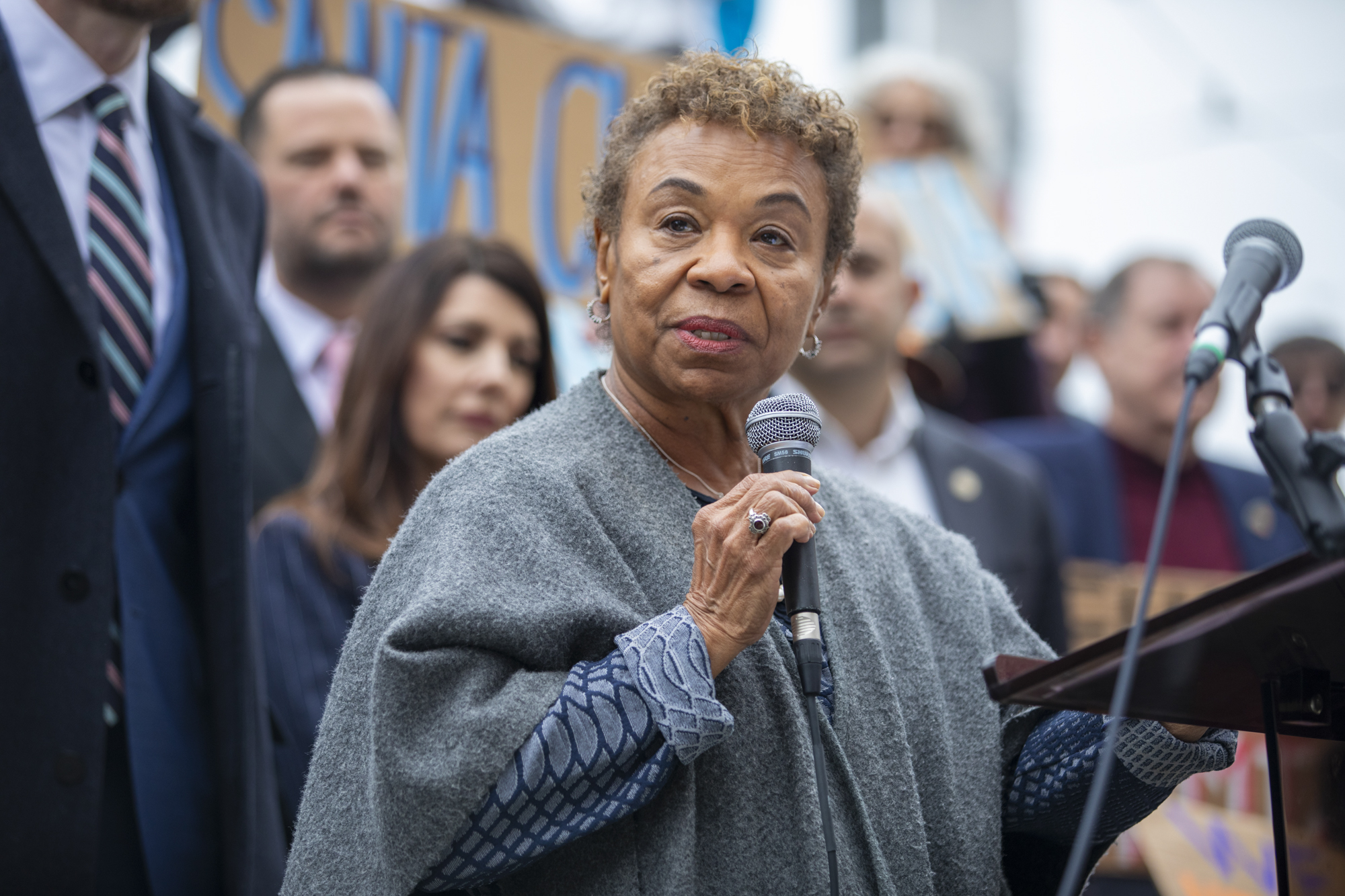
"caption": "Oakland Mayor Barbara Lee speaks on her support for California Senate Bill 63 at a press conference at Embarcadero Plaza in San Francisco on Jan. 23, 2026. Oakland Police said the thief suspected in connection with stealing the keys to Mayor Lee's car on Monday, is believed to have entered City Hall on Friday and camped out during the holiday weekend. \r\n",
"credit": "Tâm Vũ/KQED",
"altTag": null,
"description": null,
"imgSizes": {
"thumbnail": {
"file": "https://cdn.kqed.org/wp-content/uploads/sites/10/2026/01/260123-SIGNATUREKICKOFF00517_TV-KQED-160x107.jpg",
"width": 160,
"height": 107,
"mimeType": "image/jpeg"
},
"1536x1536": {
"file": "https://cdn.kqed.org/wp-content/uploads/sites/10/2026/01/260123-SIGNATUREKICKOFF00517_TV-KQED-1536x1024.jpg",
"width": 1536,
"height": 1024,
"mimeType": "image/jpeg"
},
"post-thumbnail": {
"file": "https://cdn.kqed.org/wp-content/uploads/sites/10/2026/01/260123-SIGNATUREKICKOFF00517_TV-KQED-672x372.jpg",
"width": 672,
"height": 372,
"mimeType": "image/jpeg"
},
"twentyfourteen-full-width": {
"file": "https://cdn.kqed.org/wp-content/uploads/sites/10/2026/01/260123-SIGNATUREKICKOFF00517_TV-KQED-1038x576.jpg",
"width": 1038,
"height": 576,
"mimeType": "image/jpeg"
},
"npr-cds-wide": {
"file": "https://cdn.kqed.org/wp-content/uploads/sites/10/2026/01/260123-SIGNATUREKICKOFF00517_TV-KQED-1200x675.jpg",
"width": 1200,
"height": 675,
"mimeType": "image/jpeg"
},
"kqedFullSize": {
"file": "https://cdn.kqed.org/wp-content/uploads/sites/10/2026/01/260123-SIGNATUREKICKOFF00517_TV-KQED.jpg",
"width": 2000,
"height": 1333
}
},
"isLoading": false,
"fetchFailed": false
},
"news_12036967": {
"type": "attachments",
"id": "news_12036967",
"meta": {
"index": "attachments_1716263798",
"site": "news",
"id": "12036967",
"found": true
},
"title": "Martinez Refining Company in Martinez on Feb. 3, 2025.",
"publishDate": 1745267109,
"status": "inherit",
"parent": 12036965,
"modified": 1745267124,
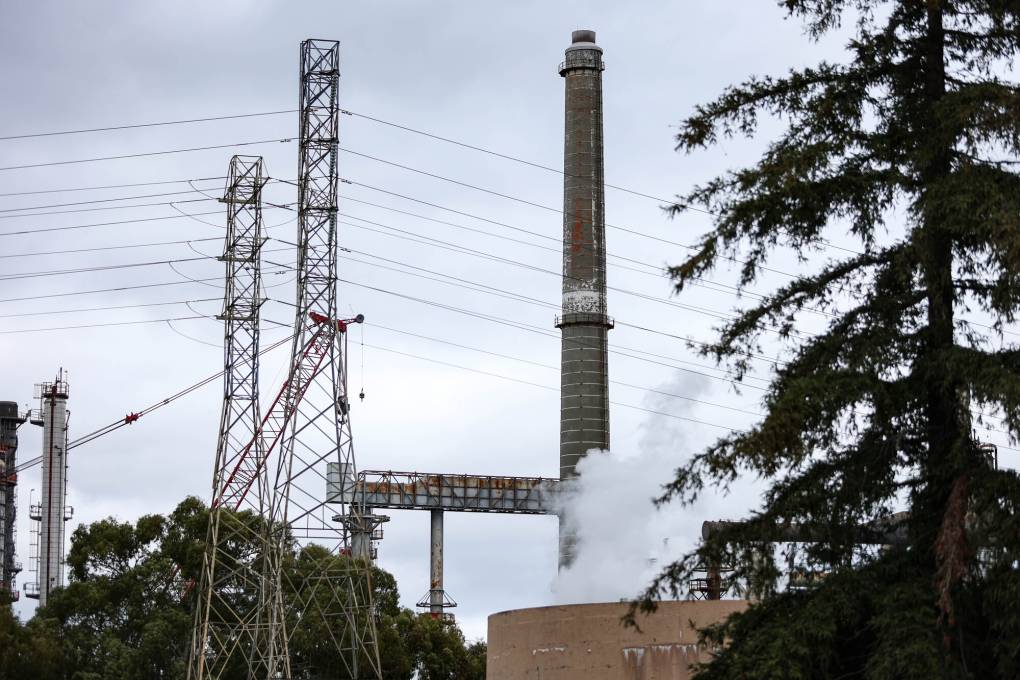
"caption": "Martinez Refining Company in Martinez on Feb. 3, 2025.",
"credit": "Gina Castro/KQED",
"altTag": null,
"description": null,
"imgSizes": {
"medium": {
"file": "https://cdn.kqed.org/wp-content/uploads/sites/10/2025/04/20250203_MartinezRefineryFolo_GC-32_qed-800x533.jpg",
"width": 800,
"height": 533,
"mimeType": "image/jpeg"
},
"large": {
"file": "https://cdn.kqed.org/wp-content/uploads/sites/10/2025/04/20250203_MartinezRefineryFolo_GC-32_qed-1020x680.jpg",
"width": 1020,
"height": 680,
"mimeType": "image/jpeg"
},
"thumbnail": {
"file": "https://cdn.kqed.org/wp-content/uploads/sites/10/2025/04/20250203_MartinezRefineryFolo_GC-32_qed-160x107.jpg",
"width": 160,
"height": 107,
"mimeType": "image/jpeg"
},
"1536x1536": {
"file": "https://cdn.kqed.org/wp-content/uploads/sites/10/2025/04/20250203_MartinezRefineryFolo_GC-32_qed-1536x1024.jpg",
"width": 1536,
"height": 1024,
"mimeType": "image/jpeg"
},
"post-thumbnail": {
"file": "https://cdn.kqed.org/wp-content/uploads/sites/10/2025/04/20250203_MartinezRefineryFolo_GC-32_qed-672x372.jpg",
"width": 672,
"height": 372,
"mimeType": "image/jpeg"
},
"twentyfourteen-full-width": {
"file": "https://cdn.kqed.org/wp-content/uploads/sites/10/2025/04/20250203_MartinezRefineryFolo_GC-32_qed-1038x576.jpg",
"width": 1038,
"height": 576,
"mimeType": "image/jpeg"
},
"full-width": {
"file": "https://cdn.kqed.org/wp-content/uploads/sites/10/2025/04/20250203_MartinezRefineryFolo_GC-32_qed-1920x1280.jpg",
"width": 1920,
"height": 1280,
"mimeType": "image/jpeg"
},
"kqedFullSize": {
"file": "https://cdn.kqed.org/wp-content/uploads/sites/10/2025/04/20250203_MartinezRefineryFolo_GC-32_qed.jpg",
"width": 2000,
"height": 1333
}
},
"isLoading": false,
"fetchFailed": false
},
"news_12034592": {
"type": "attachments",
"id": "news_12034592",
"meta": {
"index": "attachments_1716263798",
"site": "news",
"id": "12034592",
"found": true
},
"title": "AnthonyBecker",
"publishDate": 1743800504,
"status": "inherit",
"parent": 12034219,
"modified": 1780458545,
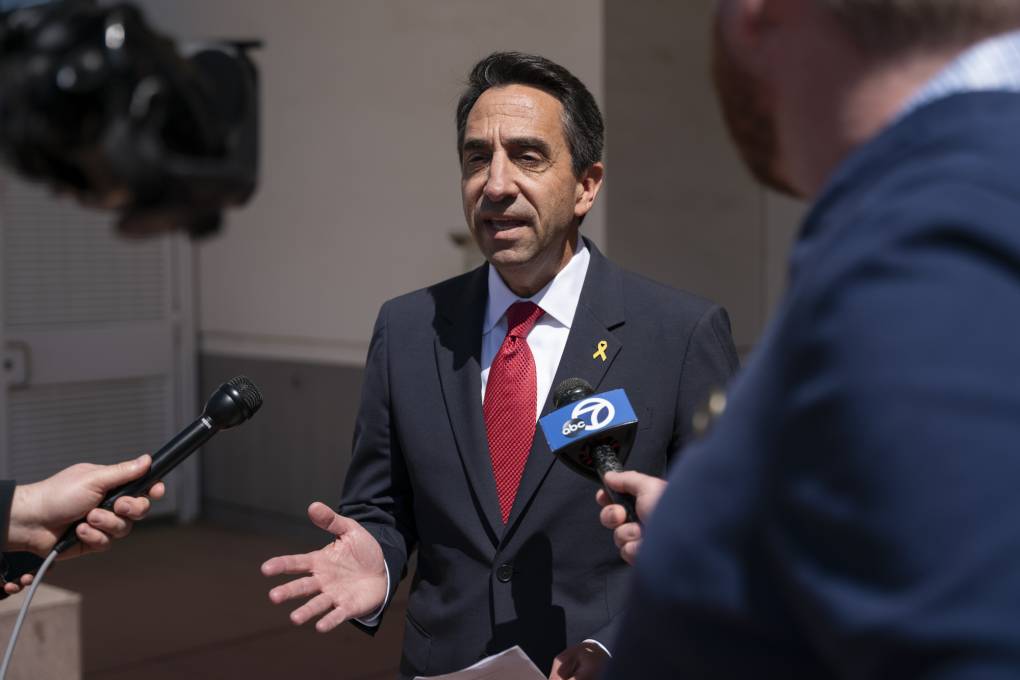
"caption": "Santa Clara County District Attorney Jeffrey F. Rosen makes a statement following Santa Clara City Councilmember Anthony Becker’s sentencing hearing at the South County Morgan Hill Courthouse on April 4, 2025.",
"credit": "Florence Middleton for KQED",
"altTag": null,
"description": null,
"imgSizes": {
"medium": {
"file": "https://cdn.kqed.org/wp-content/uploads/sites/10/2025/04/2025.04.04_MIDDLETON_ANTHONYBECKER_009-KQED-800x534.jpg",
"width": 800,
"height": 534,
"mimeType": "image/jpeg"
},
"large": {
"file": "https://cdn.kqed.org/wp-content/uploads/sites/10/2025/04/2025.04.04_MIDDLETON_ANTHONYBECKER_009-KQED-1020x680.jpg",
"width": 1020,
"height": 680,
"mimeType": "image/jpeg"
},
"thumbnail": {
"file": "https://cdn.kqed.org/wp-content/uploads/sites/10/2025/04/2025.04.04_MIDDLETON_ANTHONYBECKER_009-KQED-160x107.jpg",
"width": 160,
"height": 107,
"mimeType": "image/jpeg"
},
"1536x1536": {
"file": "https://cdn.kqed.org/wp-content/uploads/sites/10/2025/04/2025.04.04_MIDDLETON_ANTHONYBECKER_009-KQED-1536x1025.jpg",
"width": 1536,
"height": 1025,
"mimeType": "image/jpeg"
},
"post-thumbnail": {
"file": "https://cdn.kqed.org/wp-content/uploads/sites/10/2025/04/2025.04.04_MIDDLETON_ANTHONYBECKER_009-KQED-672x372.jpg",
"width": 672,
"height": 372,
"mimeType": "image/jpeg"
},
"twentyfourteen-full-width": {
"file": "https://cdn.kqed.org/wp-content/uploads/sites/10/2025/04/2025.04.04_MIDDLETON_ANTHONYBECKER_009-KQED-1038x576.jpg",
"width": 1038,
"height": 576,
"mimeType": "image/jpeg"
},
"full-width": {
"file": "https://cdn.kqed.org/wp-content/uploads/sites/10/2025/04/2025.04.04_MIDDLETON_ANTHONYBECKER_009-KQED-1920x1281.jpg",
"width": 1920,
"height": 1281,
"mimeType": "image/jpeg"
},
"kqedFullSize": {
"file": "https://cdn.kqed.org/wp-content/uploads/sites/10/2025/04/2025.04.04_MIDDLETON_ANTHONYBECKER_009-KQED.jpg",
"width": 2000,
"height": 1334
}
},
"isLoading": false,
"fetchFailed": false
},
"news_12073720": {
"type": "attachments",
"id": "news_12073720",
"meta": {
"index": "attachments_1716263798",
"site": "news",
"id": "12073720",
"found": true
},
"title": "241023-SFUSDSuperintendent-51-BL_qed",
"publishDate": 1771443444,
"status": "inherit",
"parent": 12073717,
"modified": 1771443454,
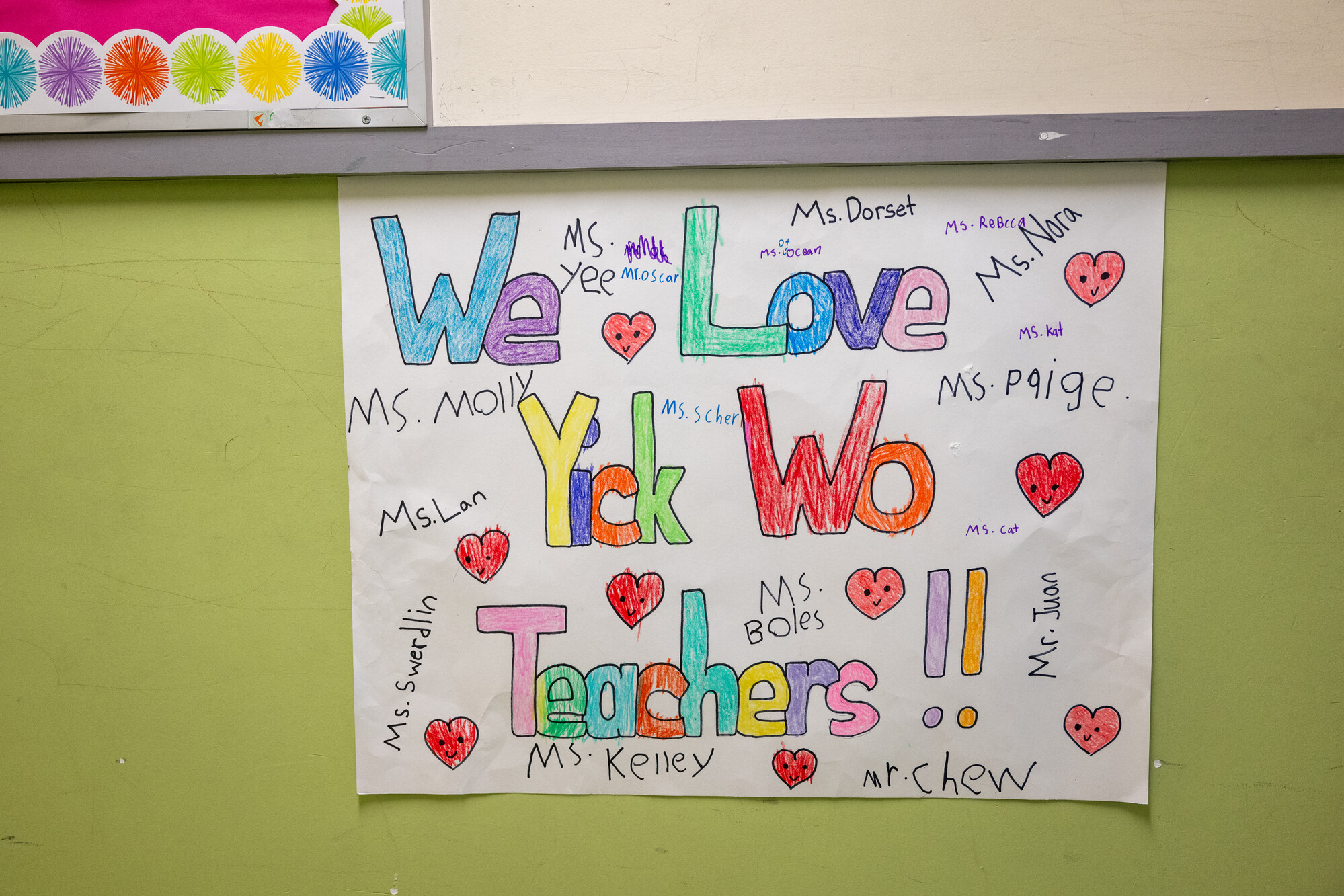
"caption": "A sign hangs in the hallway at Yick Wo Alternative Elementary School in San Francisco on Oct. 23, 2024.",
"credit": "Beth LaBerge/KQED",
"altTag": null,
"description": null,
"imgSizes": {
"thumbnail": {
"file": "https://cdn.kqed.org/wp-content/uploads/sites/10/2026/02/241023-SFUSDSuperintendent-51-BL_qed-160x107.jpg",
"width": 160,
"height": 107,
"mimeType": "image/jpeg"
},
"1536x1536": {
"file": "https://cdn.kqed.org/wp-content/uploads/sites/10/2026/02/241023-SFUSDSuperintendent-51-BL_qed-1536x1024.jpg",
"width": 1536,
"height": 1024,
"mimeType": "image/jpeg"
},
"post-thumbnail": {
"file": "https://cdn.kqed.org/wp-content/uploads/sites/10/2026/02/241023-SFUSDSuperintendent-51-BL_qed-672x372.jpg",
"width": 672,
"height": 372,
"mimeType": "image/jpeg"
},
"twentyfourteen-full-width": {
"file": "https://cdn.kqed.org/wp-content/uploads/sites/10/2026/02/241023-SFUSDSuperintendent-51-BL_qed-1038x576.jpg",
"width": 1038,
"height": 576,
"mimeType": "image/jpeg"
},
"npr-cds-wide": {
"file": "https://cdn.kqed.org/wp-content/uploads/sites/10/2026/02/241023-SFUSDSuperintendent-51-BL_qed-1200x675.jpg",
"width": 1200,
"height": 675,
"mimeType": "image/jpeg"
},
"kqedFullSize": {
"file": "https://cdn.kqed.org/wp-content/uploads/sites/10/2026/02/241023-SFUSDSuperintendent-51-BL_qed.jpg",
"width": 1999,
"height": 1333
}
},
"isLoading": false,
"fetchFailed": false
},
"news_12073641": {
"type": "attachments",
"id": "news_12073641",
"meta": {
"index": "attachments_1716263798",
"site": "news",
"id": "12073641",
"found": true
},
"title": "SFMayorDanielLurie",
"publishDate": 1771372635,
"status": "inherit",
"parent": 12073638,
"modified": 1771372695,
"caption": "San Francisco Mayor Daniel Lurie signs legislation on Feb. 17, 2026, allowing the city to open a new facility as an alternative to jail for people who are publicly intoxicated.",
"credit": "Sydney Johnson/KQED",
"altTag": null,
"description": null,
"imgSizes": {
"thumbnail": {
"file": "https://cdn.kqed.org/wp-content/uploads/sites/10/2026/02/SFMayorDanielLurie-160x120.jpg",
"width": 160,
"height": 120,
"mimeType": "image/jpeg"
},
"1536x1536": {
"file": "https://cdn.kqed.org/wp-content/uploads/sites/10/2026/02/SFMayorDanielLurie-1536x1152.jpg",
"width": 1536,
"height": 1152,
"mimeType": "image/jpeg"
},
"post-thumbnail": {
"file": "https://cdn.kqed.org/wp-content/uploads/sites/10/2026/02/SFMayorDanielLurie-672x372.jpg",
"width": 672,
"height": 372,
"mimeType": "image/jpeg"
},
"twentyfourteen-full-width": {
"file": "https://cdn.kqed.org/wp-content/uploads/sites/10/2026/02/SFMayorDanielLurie-1038x576.jpg",
"width": 1038,
"height": 576,
"mimeType": "image/jpeg"
},
"npr-cds-wide": {
"file": "https://cdn.kqed.org/wp-content/uploads/sites/10/2026/02/SFMayorDanielLurie-1200x675.jpg",
"width": 1200,
"height": 675,
"mimeType": "image/jpeg"
},
"kqedFullSize": {
"file": "https://cdn.kqed.org/wp-content/uploads/sites/10/2026/02/SFMayorDanielLurie.jpg",
"width": 2000,
"height": 1500
}
},
"isLoading": false,
"fetchFailed": false
},
"news_12073668": {
"type": "attachments",
"id": "news_12073668",
"meta": {
"index": "attachments_1716263798",
"site": "news",
"id": "12073668",
"found": true
},
"title": "Close-up shot of hands holding food.",
"publishDate": 1771434983,
"status": "inherit",
"parent": 12073604,
"modified": 1771435002,
"caption": "Close-up shot of hands holding food.",
"credit": "Tashdique Mehtaj Ahmed/Getty Images",
"altTag": null,
"description": null,
"imgSizes": {
"thumbnail": {
"file": "https://cdn.kqed.org/wp-content/uploads/sites/10/2026/02/RamadanGetty-160x107.jpg",
"width": 160,
"height": 107,
"mimeType": "image/jpeg"
},
"1536x1536": {
"file": "https://cdn.kqed.org/wp-content/uploads/sites/10/2026/02/RamadanGetty-1536x1024.jpg",
"width": 1536,
"height": 1024,
"mimeType": "image/jpeg"
},
"post-thumbnail": {
"file": "https://cdn.kqed.org/wp-content/uploads/sites/10/2026/02/RamadanGetty-672x372.jpg",
"width": 672,
"height": 372,
"mimeType": "image/jpeg"
},
"twentyfourteen-full-width": {
"file": "https://cdn.kqed.org/wp-content/uploads/sites/10/2026/02/RamadanGetty-1038x576.jpg",
"width": 1038,
"height": 576,
"mimeType": "image/jpeg"
},
"npr-cds-wide": {
"file": "https://cdn.kqed.org/wp-content/uploads/sites/10/2026/02/RamadanGetty-1200x675.jpg",
"width": 1200,
"height": 675,
"mimeType": "image/jpeg"
},
"kqedFullSize": {
"file": "https://cdn.kqed.org/wp-content/uploads/sites/10/2026/02/RamadanGetty.jpg",
"width": 2000,
"height": 1333
}
},
"isLoading": false,
"fetchFailed": false
},
"news_12073538": {
"type": "attachments",
"id": "news_12073538",
"meta": {
"index": "attachments_1716263798",
"site": "news",
"id": "12073538",
"found": true
},
"title": "251117-STANFORDTRIAL-JG-2_qed",
"publishDate": 1771023676,
"status": "inherit",
"parent": 12073534,
"modified": 1771030777,
"caption": "Hunter Taylor-Black, center, one of five pro-Palestinian protesters going to trial for breaking into the Stanford University president’s office, speaks to a group of supporters outside the Hall of Justice in San José on Monday, Nov. 17, 2025.",
"credit": "Joseph Geha/KQED",
"altTag": null,
"description": null,
"imgSizes": {
"thumbnail": {
"file": "https://cdn.kqed.org/wp-content/uploads/sites/10/2026/02/251117-STANFORDTRIAL-JG-2_qed-160x107.jpg",
"width": 160,
"height": 107,
"mimeType": "image/jpeg"
},
"1536x1536": {
"file": "https://cdn.kqed.org/wp-content/uploads/sites/10/2026/02/251117-STANFORDTRIAL-JG-2_qed-1536x1024.jpg",
"width": 1536,
"height": 1024,
"mimeType": "image/jpeg"
},
"post-thumbnail": {
"file": "https://cdn.kqed.org/wp-content/uploads/sites/10/2026/02/251117-STANFORDTRIAL-JG-2_qed-672x372.jpg",
"width": 672,
"height": 372,
"mimeType": "image/jpeg"
},
"twentyfourteen-full-width": {
"file": "https://cdn.kqed.org/wp-content/uploads/sites/10/2026/02/251117-STANFORDTRIAL-JG-2_qed-1038x576.jpg",
"width": 1038,
"height": 576,
"mimeType": "image/jpeg"
},
"npr-cds-wide": {
"file": "https://cdn.kqed.org/wp-content/uploads/sites/10/2026/02/251117-STANFORDTRIAL-JG-2_qed-1200x675.jpg",
"width": 1200,
"height": 675,
"mimeType": "image/jpeg"
},
"kqedFullSize": {
"file": "https://cdn.kqed.org/wp-content/uploads/sites/10/2026/02/251117-STANFORDTRIAL-JG-2_qed.jpg",
"width": 2000,
"height": 1333
}
},
"isLoading": false,
"fetchFailed": false
},
"news_12073457": {
"type": "attachments",
"id": "news_12073457",
"meta": {
"index": "attachments_1716263798",
"site": "news",
"id": "12073457",
"found": true
},
"title": "260210-SFUSDStrikeDay2-52-BL_qed",
"publishDate": 1771004680,
"status": "inherit",
"parent": 12073441,
"modified": 1771027992,
"caption": "Rashida Johnson, a family liaison at Aptos Middle School, marches with teachers, faculty, and supporters from Dolores Park to City Hall during the second day of an SFUSD teachers strike in San Francisco on Feb. 10, 2026.",
"credit": "Beth LaBerge/KQED",
"altTag": null,
"description": null,
"imgSizes": {
"thumbnail": {
"file": "https://cdn.kqed.org/wp-content/uploads/sites/10/2026/02/260210-SFUSDStrikeDay2-52-BL_qed-160x107.jpg",
"width": 160,
"height": 107,
"mimeType": "image/jpeg"
},
"1536x1536": {
"file": "https://cdn.kqed.org/wp-content/uploads/sites/10/2026/02/260210-SFUSDStrikeDay2-52-BL_qed-1536x1024.jpg",
"width": 1536,
"height": 1024,
"mimeType": "image/jpeg"
},
"post-thumbnail": {
"file": "https://cdn.kqed.org/wp-content/uploads/sites/10/2026/02/260210-SFUSDStrikeDay2-52-BL_qed-672x372.jpg",
"width": 672,
"height": 372,
"mimeType": "image/jpeg"
},
"twentyfourteen-full-width": {
"file": "https://cdn.kqed.org/wp-content/uploads/sites/10/2026/02/260210-SFUSDStrikeDay2-52-BL_qed-1038x576.jpg",
"width": 1038,
"height": 576,
"mimeType": "image/jpeg"
},
"npr-cds-wide": {
"file": "https://cdn.kqed.org/wp-content/uploads/sites/10/2026/02/260210-SFUSDStrikeDay2-52-BL_qed-1200x675.jpg",
"width": 1200,
"height": 675,
"mimeType": "image/jpeg"
},
"kqedFullSize": {
"file": "https://cdn.kqed.org/wp-content/uploads/sites/10/2026/02/260210-SFUSDStrikeDay2-52-BL_qed.jpg",
"width": 2000,
"height": 1333
}
},
"isLoading": false,
"fetchFailed": false
},
"news_12073226": {
"type": "attachments",
"id": "news_12073226",
"meta": {
"index": "attachments_1716263798",
"site": "news",
"id": "12073226",
"found": true
},
"title": "260211-SFUSDSTRIKEOCEANBEACH-04-BL-KQED",
"publishDate": 1770846522,
"status": "inherit",
"parent": 12073219,
"modified": 1770850158,
"caption": "Striking San Francisco Unified School District employees form the words \"For Our Students Strike\" at Ocean Beach in San Francisco on Feb. 11, 2026.",
"credit": "Beth LaBerge/KQED",
"altTag": null,
"description": null,
"imgSizes": {
"thumbnail": {
"file": "https://cdn.kqed.org/wp-content/uploads/sites/10/2026/02/260211-SFUSDSTRIKEOCEANBEACH-04-BL-KQED-160x107.jpg",
"width": 160,
"height": 107,
"mimeType": "image/jpeg"
},
"1536x1536": {
"file": "https://cdn.kqed.org/wp-content/uploads/sites/10/2026/02/260211-SFUSDSTRIKEOCEANBEACH-04-BL-KQED-1536x1024.jpg",
"width": 1536,
"height": 1024,
"mimeType": "image/jpeg"
},
"post-thumbnail": {
"file": "https://cdn.kqed.org/wp-content/uploads/sites/10/2026/02/260211-SFUSDSTRIKEOCEANBEACH-04-BL-KQED-672x372.jpg",
"width": 672,
"height": 372,
"mimeType": "image/jpeg"
},
"twentyfourteen-full-width": {
"file": "https://cdn.kqed.org/wp-content/uploads/sites/10/2026/02/260211-SFUSDSTRIKEOCEANBEACH-04-BL-KQED-1038x576.jpg",
"width": 1038,
"height": 576,
"mimeType": "image/jpeg"
},
"npr-cds-wide": {
"file": "https://cdn.kqed.org/wp-content/uploads/sites/10/2026/02/260211-SFUSDSTRIKEOCEANBEACH-04-BL-KQED-1200x675.jpg",
"width": 1200,
"height": 675,
"mimeType": "image/jpeg"
},
"kqedFullSize": {
"file": "https://cdn.kqed.org/wp-content/uploads/sites/10/2026/02/260211-SFUSDSTRIKEOCEANBEACH-04-BL-KQED.jpg",
"width": 2000,
"height": 1333
}
},
"isLoading": false,
"fetchFailed": false
},
"news_12068297": {
"type": "attachments",
"id": "news_12068297",
"meta": {
"index": "attachments_1716263798",
"site": "news",
"id": "12068297",
"found": true
},
"title": "251222-PGEUpdates-24-BL_qed",
"publishDate": 1766442993,
"status": "inherit",
"parent": 0,
"modified": 1770856815,
"caption": "A PG&E substation on Mission and Eighth streets in San Francisco on Dec. 22, 2025, after a fire at the site over the weekend contributed to a major citywide power outage.",
"credit": "Beth LaBerge/KQED",
"altTag": null,
"description": null,
"imgSizes": {
"thumbnail": {
"file": "https://cdn.kqed.org/wp-content/uploads/sites/10/2025/12/251222-PGEUpdates-24-BL_qed-160x107.jpg",
"width": 160,
"height": 107,
"mimeType": "image/jpeg"
},
"1536x1536": {
"file": "https://cdn.kqed.org/wp-content/uploads/sites/10/2025/12/251222-PGEUpdates-24-BL_qed-1536x1024.jpg",
"width": 1536,
"height": 1024,
"mimeType": "image/jpeg"
},
"post-thumbnail": {
"file": "https://cdn.kqed.org/wp-content/uploads/sites/10/2025/12/251222-PGEUpdates-24-BL_qed-672x372.jpg",
"width": 672,
"height": 372,
"mimeType": "image/jpeg"
},
"twentyfourteen-full-width": {
"file": "https://cdn.kqed.org/wp-content/uploads/sites/10/2025/12/251222-PGEUpdates-24-BL_qed-1038x576.jpg",
"width": 1038,
"height": 576,
"mimeType": "image/jpeg"
},
"npr-cds-wide": {
"file": "https://cdn.kqed.org/wp-content/uploads/sites/10/2025/12/251222-PGEUpdates-24-BL_qed-1200x675.jpg",
"width": 1200,
"height": 675,
"mimeType": "image/jpeg"
},
"kqedFullSize": {
"file": "https://cdn.kqed.org/wp-content/uploads/sites/10/2025/12/251222-PGEUpdates-24-BL_qed.jpg",
"width": 2000,
"height": 1333
}
},
"isLoading": false,
"fetchFailed": false
},
"news_12073370": {
"type": "attachments",
"id": "news_12073370",
"meta": {
"index": "attachments_1716263798",
"site": "news",
"id": "12073370",
"found": true
},
"title": "250519-AffordableHousingFile-04-BL_qed",
"publishDate": 1770935618,
"status": "inherit",
"parent": 12073193,
"modified": 1772759203,
"caption": "Construction is underway on an affordable housing apartment building at 2550 Irving St. in San Francisco’s Sunset District on May 19, 2025.",
"credit": "Beth LaBerge/KQED",
"altTag": null,
"description": null,
"imgSizes": {
"thumbnail": {
"file": "https://cdn.kqed.org/wp-content/uploads/sites/10/2026/02/250519-AffordableHousingFile-04-BL_qed-160x107.jpg",
"width": 160,
"height": 107,
"mimeType": "image/jpeg"
},
"1536x1536": {
"file": "https://cdn.kqed.org/wp-content/uploads/sites/10/2026/02/250519-AffordableHousingFile-04-BL_qed-1536x1024.jpg",
"width": 1536,
"height": 1024,
"mimeType": "image/jpeg"
},
"post-thumbnail": {
"file": "https://cdn.kqed.org/wp-content/uploads/sites/10/2026/02/250519-AffordableHousingFile-04-BL_qed-672x372.jpg",
"width": 672,
"height": 372,
"mimeType": "image/jpeg"
},
"twentyfourteen-full-width": {
"file": "https://cdn.kqed.org/wp-content/uploads/sites/10/2026/02/250519-AffordableHousingFile-04-BL_qed-1038x576.jpg",
"width": 1038,
"height": 576,
"mimeType": "image/jpeg"
},
"npr-cds-wide": {
"file": "https://cdn.kqed.org/wp-content/uploads/sites/10/2026/02/250519-AffordableHousingFile-04-BL_qed-1200x675.jpg",
"width": 1200,
"height": 675,
"mimeType": "image/jpeg"
},
"kqedFullSize": {
"file": "https://cdn.kqed.org/wp-content/uploads/sites/10/2026/02/250519-AffordableHousingFile-04-BL_qed.jpg",
"width": 2000,
"height": 1333
}
},
"isLoading": false,
"fetchFailed": false
},
"news_12073318": {
"type": "attachments",
"id": "news_12073318",
"meta": {
"index": "attachments_1716263798",
"site": "news",
"id": "12073318",
"found": true
},
"title": "251205-wccusdstrikerally01511_TV_qed",
"publishDate": 1770921134,
"status": "inherit",
"parent": 12073310,
"modified": 1770921162,
"caption": "Francisco Ortiz attends the West Contra Costa United School District rally at Marina Bay Park in Richmond on Dec. 5, 2025.",
"credit": "Tâm Vũ/KQED",
"altTag": null,
"description": null,
"imgSizes": {
"thumbnail": {
"file": "https://cdn.kqed.org/wp-content/uploads/sites/10/2026/02/251205-wccusdstrikerally01511_TV_qed-160x107.jpg",
"width": 160,
"height": 107,
"mimeType": "image/jpeg"
},
"1536x1536": {
"file": "https://cdn.kqed.org/wp-content/uploads/sites/10/2026/02/251205-wccusdstrikerally01511_TV_qed-1536x1024.jpg",
"width": 1536,
"height": 1024,
"mimeType": "image/jpeg"
},
"post-thumbnail": {
"file": "https://cdn.kqed.org/wp-content/uploads/sites/10/2026/02/251205-wccusdstrikerally01511_TV_qed-672x372.jpg",
"width": 672,
"height": 372,
"mimeType": "image/jpeg"
},
"twentyfourteen-full-width": {
"file": "https://cdn.kqed.org/wp-content/uploads/sites/10/2026/02/251205-wccusdstrikerally01511_TV_qed-1038x576.jpg",
"width": 1038,
"height": 576,
"mimeType": "image/jpeg"
},
"npr-cds-wide": {
"file": "https://cdn.kqed.org/wp-content/uploads/sites/10/2026/02/251205-wccusdstrikerally01511_TV_qed-1200x675.jpg",
"width": 1200,
"height": 675,
"mimeType": "image/jpeg"
},
"kqedFullSize": {
"file": "https://cdn.kqed.org/wp-content/uploads/sites/10/2026/02/251205-wccusdstrikerally01511_TV_qed.jpg",
"width": 2000,
"height": 1333
}
},
"isLoading": false,
"fetchFailed": false
}
},
"audioPlayerReducer": {
"postId": "stream_live",
"isPaused": true,
"isPlaying": false,
"pfsActive": false,
"pledgeModalIsOpen": true,
"playerDrawerIsOpen": false,
"liveAudioPlayStartedAt": 0,
"liveAudioPlayContext": ""
},
"authorsReducer": {
"jsmall": {
"type": "authors",
"id": "6625",
"meta": {
"index": "authors_1716337520",
"id": "6625",
"found": true
},
"name": "Julie Small",
"firstName": "Julie",
"lastName": "Small",
"slug": "jsmall",
"email": "jsmall@kqed.org",
"display_author_email": true,
"staff_mastheads": [
"news"
],
"title": "KQED Contributor",
"bio": "Julie Small reports on criminal justice and immigration.\r\n\r\nShe was part of a team at KQED awarded a regional 2019 Edward R. Murrow award for continuing coverage of the Trump Administration's family separation policy.\r\n\r\nThe Society for Professional Journalists recognized Julie's 2018 \u003ca href=\"https://www.kqed.org/news/11636262/the-officer-tased-him-31-times-the-sheriff-called-his-death-an-accident\">reporting\u003c/a> on the San Joaquin County Sheriff's \u003ca href=\"https://www.kqed.org/news/11634689/autopsy-doctors-sheriff-overrode-death-findings-to-protect-law-enforcement\">interference\u003c/a> in death investigations with an Excellence in Journalism Award for Ongoing Coverage.\r\n\r\nJulie's\u003ca href=\"https://www.kqed.org/news/11039666/two-mentally-ill-inmates-died-one-month-in-santa-clara\"> reporting\u003c/a> with Lisa Pickoff-White on the treatment of mentally ill offenders in California jails earned a 2017 regional Edward R. Murrow Award for news reporting and an investigative reporting award from the SPJ of Northern California.\r\n\r\nBefore joining KQED, Julie covered government and politics in Sacramento for Southern California Public Radio (SCPR). Her 2010 \u003ca href=\"https://www.scpr.org/specials/prisonmedical/\">series\u003c/a> on lapses in California’s prison medical care also won a regional Edward R. Murrow Award for investigative reporting and a Golden Mic Award from the RTNDA of Southern California.\r\n\r\nJulie began her career in journalism in 2000 as the deputy foreign editor for public radio's \u003cem>Marketplace, \u003c/em>while earning her master's degree in journalism from USC’s Annenberg School of Communication.",
"avatar": "https://secure.gravatar.com/avatar/4baedf201468df97be97c2a9dd7585d0?s=600&d=blank&r=g",
"twitter": "@SmallRadio2",
"facebook": null,
"instagram": null,
"linkedin": null,
"sites": [
{
"site": "news",
"roles": [
"editor"
]
},
{
"site": "stateofhealth",
"roles": [
"author"
]
},
{
"site": "science",
"roles": [
"author"
]
}
],
"headData": {
"title": "Julie Small | KQED",
"description": "KQED Contributor",
"ogImgSrc": "https://secure.gravatar.com/avatar/4baedf201468df97be97c2a9dd7585d0?s=600&d=blank&r=g",
"twImgSrc": "https://secure.gravatar.com/avatar/4baedf201468df97be97c2a9dd7585d0?s=600&d=blank&r=g"
},
"isLoading": false,
"link": "/author/jsmall"
},
"smohamad": {
"type": "authors",
"id": "11631",
"meta": {
"index": "authors_1716337520",
"id": "11631",
"found": true
},
"name": "Sarah Mohamad",
"firstName": "Sarah",
"lastName": "Mohamad",
"slug": "smohamad",
"email": "smohamad@KQED.org",
"display_author_email": true,
"staff_mastheads": [],
"title": "Engagement Producer and Reporter, KQED Science",
"bio": "Sarah Mohamad is an audience engagement reporter and producer for KQED Science. She reports on audience-focused science and environment stories and manages the team's social media, newsletter, and engagement efforts. Prior to this role, she played a key role as project manager for NSF's \u003ca href=\"https://www.kqed.org/crackingthecode\">\u003cem>Cracking the Code: Influencing Millennial Science Engagement\u003c/em> \u003c/a>audience research.",
"avatar": "https://secure.gravatar.com/avatar/e6224957cd82d015183756ddde1f928013a563d7ca2e4565f8c4de1ec64886c5?s=600&d=blank&r=g",
"twitter": "sarahkmohamad",
"bluesky": null,
"facebook": null,
"instagram": null,
"linkedin": null,
"sites": [
{
"site": "",
"roles": [
"editor"
]
},
{
"site": "arts",
"roles": [
"editor"
]
},
{
"site": "news",
"roles": [
"editor"
]
},
{
"site": "about",
"roles": [
"editor"
]
},
{
"site": "science",
"roles": [
"editor"
]
}
],
"headData": {
"title": "Sarah Mohamad | KQED",
"description": "Engagement Producer and Reporter, KQED Science",
"ogImgSrc": "https://secure.gravatar.com/avatar/e6224957cd82d015183756ddde1f928013a563d7ca2e4565f8c4de1ec64886c5?s=600&d=blank&r=g",
"twImgSrc": "https://secure.gravatar.com/avatar/e6224957cd82d015183756ddde1f928013a563d7ca2e4565f8c4de1ec64886c5?s=600&d=blank&r=g"
},
"isLoading": false,
"link": "/author/smohamad"
},
"abandlamudi": {
"type": "authors",
"id": "11672",
"meta": {
"index": "authors_1716337520",
"id": "11672",
"found": true
},
"name": "Adhiti Bandlamudi",
"firstName": "Adhiti",
"lastName": "Bandlamudi",
"slug": "abandlamudi",
"email": "abandlamudi@kqed.org",
"display_author_email": false,
"staff_mastheads": [
"news"
],
"title": "KQED Housing Reporter",
"bio": "Adhiti Bandlamudi reports for KQED's Housing desk. She focuses on how housing gets built across the Bay Area. Before joining KQED in 2020, she reported for WUNC in Durham, North Carolina, WABE in Atlanta, Georgia and Capital Public Radio in Sacramento. In 2017, she was awarded a Kroc Fellowship at NPR where she reported on everything from sprinkles to the Golden State Killer's arrest. When she's not reporting, she's baking new recipes in her kitchen or watching movies with friends and family. She's originally from Georgia and has strong opinions about Great British Bake Off.",
"avatar": "https://secure.gravatar.com/avatar/868129c8b257bb99a3500e2c86a65400?s=600&d=mm&r=g",
"twitter": "oddity_adhiti",
"facebook": null,
"instagram": null,
"linkedin": null,
"sites": [
{
"site": "arts",
"roles": [
"author"
]
},
{
"site": "news",
"roles": [
"editor"
]
},
{
"site": "liveblog",
"roles": [
"author"
]
}
],
"headData": {
"title": "Adhiti Bandlamudi | KQED",
"description": "KQED Housing Reporter",
"ogImgSrc": "https://secure.gravatar.com/avatar/868129c8b257bb99a3500e2c86a65400?s=600&d=mm&r=g",
"twImgSrc": "https://secure.gravatar.com/avatar/868129c8b257bb99a3500e2c86a65400?s=600&d=mm&r=g"
},
"isLoading": false,
"link": "/author/abandlamudi"
},
"sjohnson": {
"type": "authors",
"id": "11840",
"meta": {
"index": "authors_1716337520",
"id": "11840",
"found": true
},
"name": "Sydney Johnson",
"firstName": "Sydney",
"lastName": "Johnson",
"slug": "sjohnson",
"email": "sjohnson@kqed.org",
"display_author_email": false,
"staff_mastheads": [
"news"
],
"title": "KQED Reporter",
"bio": "Sydney Johnson is a general assignment reporter at KQED. She previously reported on public health and city government at the San Francisco Examiner, and before that, she covered statewide education policy for EdSource. Her reporting has won multiple local, state and national awards. Sydney is a graduate of the University of California, Berkeley and lives in San Francisco.",
"avatar": "https://secure.gravatar.com/avatar/97855f2719b72ad6190b7c535fe642c8?s=600&d=blank&r=g",
"twitter": "sydneyfjohnson",
"facebook": null,
"instagram": null,
"linkedin": null,
"sites": [
{
"site": "news",
"roles": [
"editor"
]
}
],
"headData": {
"title": "Sydney Johnson | KQED",
"description": "KQED Reporter",
"ogImgSrc": "https://secure.gravatar.com/avatar/97855f2719b72ad6190b7c535fe642c8?s=600&d=blank&r=g",
"twImgSrc": "https://secure.gravatar.com/avatar/97855f2719b72ad6190b7c535fe642c8?s=600&d=blank&r=g"
},
"isLoading": false,
"link": "/author/sjohnson"
},
"nkhan": {
"type": "authors",
"id": "11867",
"meta": {
"index": "authors_1716337520",
"id": "11867",
"found": true
},
"name": "Nisa Khan",
"firstName": "Nisa",
"lastName": "Khan",
"slug": "nkhan",
"email": "nkhan@kqed.org",
"display_author_email": false,
"staff_mastheads": [],
"title": "KQED Contributor",
"bio": "Nisa Khan is a reporter for KQED's Audience News Desk. She was formerly a data reporter at Michigan Radio. She earned a Bachelor of Science in Information from the University of Michigan and a Master of Arts in Communication from Stanford University.",
"avatar": "https://secure.gravatar.com/avatar/8720459eef081ff64582b3506b124d58523e80e120704a0cbd9892533c914991?s=600&d=blank&r=g",
"twitter": "mnisakhan",
"bluesky": null,
"facebook": null,
"instagram": null,
"linkedin": null,
"sites": [
{
"site": "arts",
"roles": [
"editor"
]
},
{
"site": "news",
"roles": [
"editor"
]
},
{
"site": "science",
"roles": [
"editor",
"author"
]
},
{
"site": "forum",
"roles": [
"editor"
]
},
{
"site": "liveblog",
"roles": [
"contributor"
]
}
],
"headData": {
"title": "Nisa Khan | KQED",
"description": "KQED Contributor",
"ogImgSrc": "https://secure.gravatar.com/avatar/8720459eef081ff64582b3506b124d58523e80e120704a0cbd9892533c914991?s=600&d=blank&r=g",
"twImgSrc": "https://secure.gravatar.com/avatar/8720459eef081ff64582b3506b124d58523e80e120704a0cbd9892533c914991?s=600&d=blank&r=g"
},
"isLoading": false,
"link": "/author/nkhan"
},
"jgeha": {
"type": "authors",
"id": "11906",
"meta": {
"index": "authors_1716337520",
"id": "11906",
"found": true
},
"name": "Joseph Geha",
"firstName": "Joseph",
"lastName": "Geha",
"slug": "jgeha",
"email": "jgeha@kqed.org",
"display_author_email": false,
"staff_mastheads": [
"news",
"science"
],
"title": "KQED Contributor",
"bio": null,
"avatar": "https://secure.gravatar.com/avatar/ea84d2b6dd93d6369d453edf19dd583f117cd1759d2d9c9c92f9de77017354fe?s=600&d=blank&r=g",
"twitter": null,
"bluesky": null,
"facebook": null,
"instagram": null,
"linkedin": null,
"sites": [
{
"site": "news",
"roles": [
"editor"
]
},
{
"site": "liveblog",
"roles": [
"author"
]
}
],
"headData": {
"title": "Joseph Geha | KQED",
"description": "KQED Contributor",
"ogImgSrc": "https://secure.gravatar.com/avatar/ea84d2b6dd93d6369d453edf19dd583f117cd1759d2d9c9c92f9de77017354fe?s=600&d=blank&r=g",
"twImgSrc": "https://secure.gravatar.com/avatar/ea84d2b6dd93d6369d453edf19dd583f117cd1759d2d9c9c92f9de77017354fe?s=600&d=blank&r=g"
},
"isLoading": false,
"link": "/author/jgeha"
},
"kdebenedetti": {
"type": "authors",
"id": "11913",
"meta": {
"index": "authors_1716337520",
"id": "11913",
"found": true
},
"name": "Katie DeBenedetti",
"firstName": "Katie",
"lastName": "DeBenedetti",
"slug": "kdebenedetti",
"email": "kdebenedetti@kqed.org",
"display_author_email": false,
"staff_mastheads": [
"news",
"science"
],
"title": "KQED Contributor",
"bio": "Katie DeBenedetti is a digital reporter covering daily news for the Express Desk. Prior to joining KQED as a culture reporting intern in January 2024, she covered education and city government for the Napa Valley Register.",
"avatar": "https://secure.gravatar.com/avatar/6e31073cb8f7e4214ab03f42771d0f45?s=600&d=blank&r=g",
"twitter": null,
"facebook": null,
"instagram": null,
"linkedin": null,
"sites": [
{
"site": "news",
"roles": [
"author"
]
},
{
"site": "science",
"roles": [
"author"
]
},
{
"site": "liveblog",
"roles": [
"author"
]
}
],
"headData": {
"title": "Katie DeBenedetti | KQED",
"description": "KQED Contributor",
"ogImgSrc": "https://secure.gravatar.com/avatar/6e31073cb8f7e4214ab03f42771d0f45?s=600&d=blank&r=g",
"twImgSrc": "https://secure.gravatar.com/avatar/6e31073cb8f7e4214ab03f42771d0f45?s=600&d=blank&r=g"
},
"isLoading": false,
"link": "/author/kdebenedetti"
},
"aaliahmad": {
"type": "authors",
"id": "11986",
"meta": {
"index": "authors_1716337520",
"id": "11986",
"found": true
},
"name": "Ayah Ali-Ahmad",
"firstName": "Ayah",
"lastName": "Ali-Ahmad",
"slug": "aaliahmad",
"email": "aaliahmad@KQED.org",
"display_author_email": false,
"staff_mastheads": [],
"title": "KQED Contributor",
"bio": null,
"avatar": "https://secure.gravatar.com/avatar/1cf54f187a5e1064b2cfef3f3d2f1e4f93e453395d56912aca6382a6071ec3ed?s=600&d=blank&r=g",
"twitter": "ayahaliahmad",
"bluesky": null,
"facebook": null,
"instagram": null,
"linkedin": null,
"sites": [
{
"site": "news",
"roles": [
"subscriber"
]
}
],
"headData": {
"title": "Ayah Ali-Ahmad | KQED",
"description": "KQED Contributor",
"ogImgSrc": "https://secure.gravatar.com/avatar/1cf54f187a5e1064b2cfef3f3d2f1e4f93e453395d56912aca6382a6071ec3ed?s=600&d=blank&r=g",
"twImgSrc": "https://secure.gravatar.com/avatar/1cf54f187a5e1064b2cfef3f3d2f1e4f93e453395d56912aca6382a6071ec3ed?s=600&d=blank&r=g"
},
"isLoading": false,
"link": "/author/aaliahmad"
}
},
"pagesReducer": {
"news_category_local": {
"type": "terms",
"id": "news_28250",
"meta": {
"index": "terms_1716263798",
"site": "news",
"id": "28250",
"score": 12.93969
},
"featImg": null,
"name": "Local",
"description": null,
"taxonomy": "category",
"headData": {
"twImgId": null,
"twTitle": null,
"ogTitle": null,
"ogImgId": null,
"twDescription": null,
"description": null,
"title": "Local Archives | KQED News",
"ogDescription": null
},
"ttid": 28267,
"slug": "local",
"isLoading": false,
"title": "Local",
"pageMeta": {
"site": "news",
"WpPageTemplate": "page-topic-editorial",
"currentPage": 54
},
"blocks": [
{
"blockName": "kqed/post-list",
"attrs": {
"layout": "cardArticle2",
"query": "posts/news?category=local",
"seeMore": false,
"paginated": true,
"page": 54
}
},
{
"blockName": "kqed/ad"
}
]
}
},
"pfsSessionReducer": {},
"postsReducer": {
"stream_live": {
"type": "live",
"id": "stream_live",
"audioUrl": "https://streams.kqed.org/kqedradio",
"title": "Live Stream",
"excerpt": "Live Stream information currently unavailable.",
"link": "/radio",
"featImg": "",
"label": {
"name": "KQED Live",
"link": "/"
}
},
"stream_kqedNewscast": {
"type": "posts",
"id": "stream_kqedNewscast",
"audioUrl": "https://www.kqed.org/.stream/anon/radio/RDnews/newscast.mp3?_=1",
"title": "KQED Newscast",
"featImg": "",
"label": {
"name": "88.5 FM",
"link": "/"
}
},
"news_12073856": {
"type": "posts",
"id": "news_12073856",
"meta": {
"index": "posts_1716263798",
"site": "news",
"id": "12073856",
"score": null,
"sort": [
1771538999000
]
},
"guestAuthors": [],
"slug": "oakland-mayor-barbara-lees-suv-stolen-from-city-hall-after-office-break-in",
"title": "Arrest Made After Oakland Mayor Barbara Lee’s SUV Stolen From City Hall",
"publishDate": 1771538999,
"format": "standard",
"headTitle": "Arrest Made After Oakland Mayor Barbara Lee’s SUV Stolen From City Hall | KQED",
"labelTerm": {
"site": "news"
},
"content": "\u003cp>\u003ca href=\"https://www.kqed.org/news/tag/oakland\">Oakland\u003c/a> Police have arrested a suspect in connection with a case this week involving the theft of a city-owned SUV reportedly used by Oakland Mayor \u003ca href=\"https://www.kqed.org/news/tag/barbara-lee\">Barbara Lee\u003c/a>, the department said Thursday afternoon.\u003c/p>\n\u003cp>The case is still under active investigation, and no other details about the arrest were immediately available.\u003c/p>\n\u003cp>Police union officials told KQED that the suspect entered City Hall during work hours on Friday and camped out on the 11th floor while the building was quiet over the Presidents Day holiday weekend.\u003c/p>\n\u003cp>[ad fullwidth]\u003c/p>\n\u003cp>The break-in and robbery is now raising questions about security at City Hall, where the vehicle was parked when it was stolen.\u003c/p>\n\u003cp>On Monday, the individual broke into the mayor’s office and stole keys to the city-owned Ford Expedition, according to a spokesperson for the Oakland police union.\u003c/p>\n\u003cfigure id=\"attachment_12038301\" class=\"wp-caption aligncenter\" style=\"max-width: 2000px\">\u003cimg loading=\"lazy\" decoding=\"async\" class=\"size-full wp-image-12038301\" src=\"https://cdn.kqed.org/wp-content/uploads/sites/10/2025/04/250430-OAKLAND-CITY-HALL-MD-04-KQED.jpg\" alt=\"\" width=\"2000\" height=\"1333\" srcset=\"https://cdn.kqed.org/wp-content/uploads/sites/10/2025/04/250430-OAKLAND-CITY-HALL-MD-04-KQED.jpg 2000w, https://cdn.kqed.org/wp-content/uploads/sites/10/2025/04/250430-OAKLAND-CITY-HALL-MD-04-KQED-800x533.jpg 800w, https://cdn.kqed.org/wp-content/uploads/sites/10/2025/04/250430-OAKLAND-CITY-HALL-MD-04-KQED-1020x680.jpg 1020w, https://cdn.kqed.org/wp-content/uploads/sites/10/2025/04/250430-OAKLAND-CITY-HALL-MD-04-KQED-160x107.jpg 160w, https://cdn.kqed.org/wp-content/uploads/sites/10/2025/04/250430-OAKLAND-CITY-HALL-MD-04-KQED-1536x1024.jpg 1536w, https://cdn.kqed.org/wp-content/uploads/sites/10/2025/04/250430-OAKLAND-CITY-HALL-MD-04-KQED-1920x1280.jpg 1920w\" sizes=\"auto, (max-width: 2000px) 100vw, 2000px\">\u003cfigcaption class=\"wp-caption-text\">Oakland City Hall in Oakland on April 30, 2025. \u003ccite>(Martin do Nascimento/KQED)\u003c/cite>\u003c/figcaption>\u003c/figure>\n\u003cp>The SUV was recovered in Vallejo with the use of license plate reader technology just hours after police were notified it was missing on Tuesday.\u003c/p>\n\u003cp>“No one in Oakland should have to worry about their car being stolen, whether they’re a resident, a city worker or the mayor,” Lee said in a brief statement. “Public safety is a priority across our entire city.”\u003c/p>\n\u003cp>Oakland contracts with a private security company, ABC Security, to guard City Hall. The company did not return a request for comment about security over the weekend or any potential changes moving forward.[aside postID=news_12071250 hero='https://cdn.kqed.org/wp-content/uploads/sites/10/2025/10/251023-MAYOR-LEE-PRESSER-MD-05-KQED.jpg']City officials also did not comment on whether security protocols will change as a result of the break-in.\u003c/p>\n\u003cp>“There is footage inside City Hall from security cameras that are being reviewed by law enforcement as part of this investigation,” said Sam Singer, the spokesperson for the Oakland police union.\u003c/p>\n\u003cp>Singer said City Hall was mostly empty over the holiday weekend.\u003c/p>\n\u003cp>While the theft of a high-ranking official’s vehicle is rare, it’s not the first time that government leaders in Oakland have fallen victim to car break-ins and property theft.\u003c/p>\n\u003cp>Former Mayor Sheng Thao’s car was broken into in 2023 while she was attending a documentary premiere at Grand Lake Theater. The break-in was believed to have been part of a string of auto burglaries that evening near Lake Merritt.\u003c/p>\n\u003cp>Later that same year, Alameda County District Attorney Pamela Price had a work laptop stolen from her security team’s SUV while it was parked in front of the Family Justice Center in Oakland.\u003c/p>\n\u003cp>\u003c/p>\n",
"blocks": [],
"excerpt": "The thief is believed to have entered City Hall on Friday and camped out during the holiday weekend before stealing the keys to the car on Monday.",
"status": "publish",
"parent": 0,
"modified": 1771548029,
"stats": {
"hasAudio": false,
"hasVideo": false,
"hasChartOrMap": false,
"iframeSrcs": [],
"hasGoogleForm": false,
"hasGallery": false,
"hasHearkenModule": false,
"hasPolis": false,
"paragraphCount": 15,
"wordCount": 452
},
"headData": {
"title": "Arrest Made After Oakland Mayor Barbara Lee’s SUV Stolen From City Hall | KQED",
"description": "The thief is believed to have entered City Hall on Friday and camped out during the holiday weekend before stealing the keys to the car on Monday.",
"ogTitle": "",
"ogDescription": "",
"ogImgId": "",
"twTitle": "",
"twDescription": "",
"twImgId": "",
"schema": {
"@context": "https://schema.org",
"@type": "NewsArticle",
"headline": "Arrest Made After Oakland Mayor Barbara Lee’s SUV Stolen From City Hall",
"datePublished": "2026-02-19T14:09:59-08:00",
"dateModified": "2026-02-19T16:40:29-08:00",
"image": "https://cdn.kqed.org/wp-content/uploads/2020/02/KQED-OG-Image@1x.png",
"isAccessibleForFree": "True",
"publisher": {
"@type": "NewsMediaOrganization",
"@id": "https://www.kqed.org/#organization",
"name": "KQED",
"logo": "https://cdn.kqed.org/wp-content/uploads/2020/02/KQED-OG-Image@1x.png",
"url": "https://www.kqed.org",
"sameAs": [
"https://www.facebook.com/KQED",
"https://twitter.com/KQED",
"https://www.instagram.com/kqed/",
"https://www.tiktok.com/@kqedofficial",
"https://www.linkedin.com/company/kqed",
"https://www.youtube.com/channel/UCeC0IOo7i1P_61zVUWbJ4nw"
]
}
}
},
"primaryCategory": {
"termId": 34167,
"slug": "criminal-justice",
"name": "Criminal Justice"
},
"sticky": false,
"nprStoryId": "kqed-12073856",
"templateType": "standard",
"featuredImageType": "standard",
"excludeFromSiteSearch": "Include",
"articleAge": "0",
"path": "/news/12073856/oakland-mayor-barbara-lees-suv-stolen-from-city-hall-after-office-break-in",
"audioTrackLength": null,
"parsedContent": [
{
"type": "contentString",
"content": "\u003cdiv class=\"post-body\">\u003cp>\u003cp>\u003ca href=\"https://www.kqed.org/news/tag/oakland\">Oakland\u003c/a> Police have arrested a suspect in connection with a case this week involving the theft of a city-owned SUV reportedly used by Oakland Mayor \u003ca href=\"https://www.kqed.org/news/tag/barbara-lee\">Barbara Lee\u003c/a>, the department said Thursday afternoon.\u003c/p>\n\u003cp>The case is still under active investigation, and no other details about the arrest were immediately available.\u003c/p>\n\u003cp>Police union officials told KQED that the suspect entered City Hall during work hours on Friday and camped out on the 11th floor while the building was quiet over the Presidents Day holiday weekend.\u003c/p>\n\u003cp>\u003c/p>\u003c/div>",
"attributes": {
"named": {},
"numeric": []
}
},
{
"type": "component",
"content": "",
"name": "ad",
"attributes": {
"named": {
"label": "fullwidth"
},
"numeric": [
"fullwidth"
]
}
},
{
"type": "contentString",
"content": "\u003cdiv class=\"post-body\">\u003cp>\u003c/p>\n\u003cp>The break-in and robbery is now raising questions about security at City Hall, where the vehicle was parked when it was stolen.\u003c/p>\n\u003cp>On Monday, the individual broke into the mayor’s office and stole keys to the city-owned Ford Expedition, according to a spokesperson for the Oakland police union.\u003c/p>\n\u003cfigure id=\"attachment_12038301\" class=\"wp-caption aligncenter\" style=\"max-width: 2000px\">\u003cimg loading=\"lazy\" decoding=\"async\" class=\"size-full wp-image-12038301\" src=\"https://cdn.kqed.org/wp-content/uploads/sites/10/2025/04/250430-OAKLAND-CITY-HALL-MD-04-KQED.jpg\" alt=\"\" width=\"2000\" height=\"1333\" srcset=\"https://cdn.kqed.org/wp-content/uploads/sites/10/2025/04/250430-OAKLAND-CITY-HALL-MD-04-KQED.jpg 2000w, https://cdn.kqed.org/wp-content/uploads/sites/10/2025/04/250430-OAKLAND-CITY-HALL-MD-04-KQED-800x533.jpg 800w, https://cdn.kqed.org/wp-content/uploads/sites/10/2025/04/250430-OAKLAND-CITY-HALL-MD-04-KQED-1020x680.jpg 1020w, https://cdn.kqed.org/wp-content/uploads/sites/10/2025/04/250430-OAKLAND-CITY-HALL-MD-04-KQED-160x107.jpg 160w, https://cdn.kqed.org/wp-content/uploads/sites/10/2025/04/250430-OAKLAND-CITY-HALL-MD-04-KQED-1536x1024.jpg 1536w, https://cdn.kqed.org/wp-content/uploads/sites/10/2025/04/250430-OAKLAND-CITY-HALL-MD-04-KQED-1920x1280.jpg 1920w\" sizes=\"auto, (max-width: 2000px) 100vw, 2000px\">\u003cfigcaption class=\"wp-caption-text\">Oakland City Hall in Oakland on April 30, 2025. \u003ccite>(Martin do Nascimento/KQED)\u003c/cite>\u003c/figcaption>\u003c/figure>\n\u003cp>The SUV was recovered in Vallejo with the use of license plate reader technology just hours after police were notified it was missing on Tuesday.\u003c/p>\n\u003cp>“No one in Oakland should have to worry about their car being stolen, whether they’re a resident, a city worker or the mayor,” Lee said in a brief statement. “Public safety is a priority across our entire city.”\u003c/p>\n\u003cp>Oakland contracts with a private security company, ABC Security, to guard City Hall. The company did not return a request for comment about security over the weekend or any potential changes moving forward.\u003c/p>\u003c/div>",
"attributes": {
"named": {},
"numeric": []
}
},
{
"type": "component",
"content": "",
"name": "aside",
"attributes": {
"named": {
"postid": "news_12071250",
"hero": "https://cdn.kqed.org/wp-content/uploads/sites/10/2025/10/251023-MAYOR-LEE-PRESSER-MD-05-KQED.jpg",
"label": ""
},
"numeric": []
}
},
{
"type": "contentString",
"content": "\u003cdiv class=\"post-body\">\u003cp>City officials also did not comment on whether security protocols will change as a result of the break-in.\u003c/p>\n\u003cp>“There is footage inside City Hall from security cameras that are being reviewed by law enforcement as part of this investigation,” said Sam Singer, the spokesperson for the Oakland police union.\u003c/p>\n\u003cp>Singer said City Hall was mostly empty over the holiday weekend.\u003c/p>\n\u003cp>While the theft of a high-ranking official’s vehicle is rare, it’s not the first time that government leaders in Oakland have fallen victim to car break-ins and property theft.\u003c/p>\n\u003cp>Former Mayor Sheng Thao’s car was broken into in 2023 while she was attending a documentary premiere at Grand Lake Theater. The break-in was believed to have been part of a string of auto burglaries that evening near Lake Merritt.\u003c/p>\n\u003cp>Later that same year, Alameda County District Attorney Pamela Price had a work laptop stolen from her security team’s SUV while it was parked in front of the Family Justice Center in Oakland.\u003c/p>\n\u003cp>\u003c/p>\n\u003c/div>\u003c/p>",
"attributes": {
"named": {},
"numeric": []
}
}
],
"link": "/news/12073856/oakland-mayor-barbara-lees-suv-stolen-from-city-hall-after-office-break-in",
"authors": [
"11840"
],
"categories": [
"news_34167",
"news_28250",
"news_8"
],
"tags": [
"news_32949",
"news_22185",
"news_17626",
"news_17725",
"news_34054",
"news_34661"
],
"featImg": "news_12070969",
"label": "news"
},
"news_12073784": {
"type": "posts",
"id": "news_12073784",
"meta": {
"index": "posts_1716263798",
"site": "news",
"id": "12073784",
"score": null,
"sort": [
1771524004000
]
},
"guestAuthors": [],
"slug": "major-bay-area-refinery-to-pay-10-million-for-long-stretch-of-violations",
"title": "Major Bay Area Refinery to Pay $10 Million for Long Stretch of Violations",
"publishDate": 1771524004,
"format": "standard",
"headTitle": "Major Bay Area Refinery to Pay $10 Million for Long Stretch of Violations | KQED",
"labelTerm": {
"site": "news"
},
"content": "\u003cp>The \u003ca href=\"https://www.kqed.org/news/tag/martinez-refinery\">Martinez Refining Company\u003c/a> will pay a $10 million fine for 163 violations over four years, the Contra Costa County district attorney and the Bay Area Air District announced Thursday morning.\u003c/p>\n\u003cp>The violations at MRC stretched from early 2020 to 2024, according to a press release, and included the Thanksgiving Day 2022 release of \u003ca href=\"https://www.kqed.org/news/11952517/martinez-refinery-chemical-release-poses-no-long-term-hazard-tests-find\">50,000 pounds of spent catalyst\u003c/a>, a toxic ash-like substance that settled over residents’ cars, gardens and houses.\u003c/p>\n\u003cp>Other violations included “illegal flaring, fires, leaking tanks, public nuisance-level odors in downtown Martinez,” and releases of a byproduct of petroleum production called “coke dust,” a black powdery substance that spread to properties near the refinery in 2023.\u003c/p>\n\u003cp>[ad fullwidth]\u003c/p>\n\u003cp>The Contra Costa County district attorney’s office and the Bay Area Air District jointly prosecuted the sprawling case against MRC. The refinery is one of the largest remaining producers of gasoline and jet fuel in the Bay Area, sitting on unincorporated lands abutting the city of Martinez, with roughly 37,000 residents.\u003c/p>\n\u003cp>“The residents of Martinez deserve clean air,” District Attorney Diana Becton said Thursday. “They deserve transparency and accountability. Today’s judgment sends a clear message. No company is above the law, and when conduct harms our communities and our environment, we will act. We will act firmly, lawfully, and in partnership to hold violators accountable.”\u003c/p>\n\u003cfigure id=\"attachment_12073878\" class=\"wp-caption aligncenter\" style=\"max-width: 2000px\">\u003ca href=\"https://cdn.kqed.org/wp-content/uploads/sites/10/2026/02/260219-MARTINEZ-REFINERY-SUIT-01-KQED.jpg\">\u003cimg loading=\"lazy\" decoding=\"async\" src=\"https://cdn.kqed.org/wp-content/uploads/sites/10/2026/02/260219-MARTINEZ-REFINERY-SUIT-01-KQED.jpg\" alt=\"\" width=\"2000\" height=\"1333\" class=\"size-full wp-image-12073878\" srcset=\"https://cdn.kqed.org/wp-content/uploads/sites/10/2026/02/260219-MARTINEZ-REFINERY-SUIT-01-KQED.jpg 2000w, https://cdn.kqed.org/wp-content/uploads/sites/10/2026/02/260219-MARTINEZ-REFINERY-SUIT-01-KQED-160x107.jpg 160w, https://cdn.kqed.org/wp-content/uploads/sites/10/2026/02/260219-MARTINEZ-REFINERY-SUIT-01-KQED-1536x1024.jpg 1536w\" sizes=\"auto, (max-width: 2000px) 100vw, 2000px\">\u003c/a>\u003cfigcaption class=\"wp-caption-text\">Contra Costa County District Attorney Diana Becton spoke at a press conference on Feb. 19, 2026, announcing the settlement with the Martinez Refining Company. \u003ccite>(Julie Small/KQED)\u003c/cite>\u003c/figcaption>\u003c/figure>\n\u003cp>“Many of the violations were not minor technical oversights,” Air District chief attorney Alexander Crockett said. “They involved repeated failures that impacted public health, environmental safety, and community trust.”\u003c/p>\n\u003cp>The ash falling from the sky in 2022 prompted community members to form an advocacy group called Healthy Martinez. \u003c/p>\n\u003cp>“My son wiped his hand across that white ash,” said Heidi Taylor, a resident and attorney who speaks for the group. “To this day, we don’t know the health consequences of that. [I was] walking outside in my backyard going, can I eat the oranges or not?”\u003c/p>\n\u003cp>Taylor said she appreciates the effort that air regulators and the district attorney put into getting the penalty against MRC but cautioned that the community needs to remain vigilant.[aside postID=news_12042553 hero='https://cdn.kqed.org/wp-content/uploads/sites/10/2025/02/475966196_17941090172958161_4612211217959910985_n-e1738464480621-1020x706.jpg']“Unless we continue to press this refinery to do the right thing, they won’t do the right thing. They prove that to us time and time again,” she said.\u003c/p>\n\u003cp>In a press release Thursday, the company said it was committed to safe, reliable, and environmentally responsible operations.\u003c/p>\n\u003cp> “MRC recognizes that we must earn the right to operate in Martinez and that we have a responsibility to be involved in and to give back to the Martinez community,” the company said by email. \u003c/p>\n\u003cp>The $10 million will be allocated to stakeholders:\u003c/p>\n\u003cul>\n\u003cli>$6.35 million of the penalty will be allocated to the Air District to fund community mitigation projects in Martinez and other affected communities.\u003c/li>\n\u003cli>$3.5 million of the penalty will support enforcement efforts at the district attorney’s office’s Environmental Unit.\u003c/li>\n\u003cli>Contra Costa County Health Services will receive $100,000, and California’s Department of Fish and Wildlife will get $50,000.\u003c/li>\n\u003c/ul>\n\u003cp>MRC will spend an additional $600,000 on improvements to bring the refinery into compliance with environmental regulations and on projects to mitigate the refinery’s effects on Martinez and surrounding communities, such as installing air filtration in public schools.\u003c/p>\n\u003cp>The company also agreed to keep emissions control equipment going during startups and shutdowns and to install enhanced air pollution monitoring equipment.\u003c/p>\n\u003cp>“Enforcement is not symbolic. It is one of the most powerful tools we have to drive compliance and prevent future harm,” Crockett continued. “When facilities violate air pollution laws, there are consequences. Communities living near heavy industry already face disproportionate environmental impacts. The Martinez area bore the burden of these violations.”\u003c/p>\n\u003cp>Contra Costa County Judge Benjamin Reyes II signed the final judgment on Wednesday, just days after the Martinez refinery resumed full production following \u003ca href=\"https://www.kqed.org/news/12026572/10-days-after-martinez-refinery-fire-new-details-toxic-chemicals-released\">a massive fire\u003c/a> on Feb. 1, 2025, that injured six workers and led to a partial shelter-in-place order. That fire was not included in the judgment; air regulators plan to address it in a separate civil action.\u003c/p>\n\u003cp>\u003c/p>\n",
"blocks": [],
"excerpt": "The Martinez Refining Company was hit with 163 violations from 2020 to 2024, including the Thanksgiving Day 2022 release of 50,000 pounds of spent catalyst.",
"status": "publish",
"parent": 0,
"modified": 1771539404,
"stats": {
"hasAudio": false,
"hasVideo": false,
"hasChartOrMap": false,
"iframeSrcs": [],
"hasGoogleForm": false,
"hasGallery": false,
"hasHearkenModule": false,
"hasPolis": false,
"paragraphCount": 18,
"wordCount": 756
},
"headData": {
"title": "Major Bay Area Refinery to Pay $10 Million for Long Stretch of Violations | KQED",
"description": "The Martinez Refining Company was hit with 163 violations from 2020 to 2024, including the Thanksgiving Day 2022 release of 50,000 pounds of spent catalyst.",
"ogTitle": "",
"ogDescription": "",
"ogImgId": "",
"twTitle": "",
"twDescription": "",
"twImgId": "",
"schema": {
"@context": "https://schema.org",
"@type": "NewsArticle",
"headline": "Major Bay Area Refinery to Pay $10 Million for Long Stretch of Violations",
"datePublished": "2026-02-19T10:00:04-08:00",
"dateModified": "2026-02-19T14:16:44-08:00",
"image": "https://cdn.kqed.org/wp-content/uploads/2020/02/KQED-OG-Image@1x.png",
"isAccessibleForFree": "True",
"publisher": {
"@type": "NewsMediaOrganization",
"@id": "https://www.kqed.org/#organization",
"name": "KQED",
"logo": "https://cdn.kqed.org/wp-content/uploads/2020/02/KQED-OG-Image@1x.png",
"url": "https://www.kqed.org",
"sameAs": [
"https://www.facebook.com/KQED",
"https://twitter.com/KQED",
"https://www.instagram.com/kqed/",
"https://www.tiktok.com/@kqedofficial",
"https://www.linkedin.com/company/kqed",
"https://www.youtube.com/channel/UCeC0IOo7i1P_61zVUWbJ4nw"
]
}
}
},
"primaryCategory": {
"termId": 8,
"slug": "news",
"name": "News"
},
"sticky": false,
"nprStoryId": "kqed-12073784",
"templateType": "standard",
"featuredImageType": "standard",
"excludeFromSiteSearch": "Include",
"articleAge": "0",
"path": "/news/12073784/major-bay-area-refinery-to-pay-10-million-for-long-stretch-of-violations",
"audioTrackLength": null,
"parsedContent": [
{
"type": "contentString",
"content": "\u003cdiv class=\"post-body\">\u003cp>\u003cp>The \u003ca href=\"https://www.kqed.org/news/tag/martinez-refinery\">Martinez Refining Company\u003c/a> will pay a $10 million fine for 163 violations over four years, the Contra Costa County district attorney and the Bay Area Air District announced Thursday morning.\u003c/p>\n\u003cp>The violations at MRC stretched from early 2020 to 2024, according to a press release, and included the Thanksgiving Day 2022 release of \u003ca href=\"https://www.kqed.org/news/11952517/martinez-refinery-chemical-release-poses-no-long-term-hazard-tests-find\">50,000 pounds of spent catalyst\u003c/a>, a toxic ash-like substance that settled over residents’ cars, gardens and houses.\u003c/p>\n\u003cp>Other violations included “illegal flaring, fires, leaking tanks, public nuisance-level odors in downtown Martinez,” and releases of a byproduct of petroleum production called “coke dust,” a black powdery substance that spread to properties near the refinery in 2023.\u003c/p>\n\u003cp>\u003c/p>\u003c/div>",
"attributes": {
"named": {},
"numeric": []
}
},
{
"type": "component",
"content": "",
"name": "ad",
"attributes": {
"named": {
"label": "fullwidth"
},
"numeric": [
"fullwidth"
]
}
},
{
"type": "contentString",
"content": "\u003cdiv class=\"post-body\">\u003cp>\u003c/p>\n\u003cp>The Contra Costa County district attorney’s office and the Bay Area Air District jointly prosecuted the sprawling case against MRC. The refinery is one of the largest remaining producers of gasoline and jet fuel in the Bay Area, sitting on unincorporated lands abutting the city of Martinez, with roughly 37,000 residents.\u003c/p>\n\u003cp>“The residents of Martinez deserve clean air,” District Attorney Diana Becton said Thursday. “They deserve transparency and accountability. Today’s judgment sends a clear message. No company is above the law, and when conduct harms our communities and our environment, we will act. We will act firmly, lawfully, and in partnership to hold violators accountable.”\u003c/p>\n\u003cfigure id=\"attachment_12073878\" class=\"wp-caption aligncenter\" style=\"max-width: 2000px\">\u003ca href=\"https://cdn.kqed.org/wp-content/uploads/sites/10/2026/02/260219-MARTINEZ-REFINERY-SUIT-01-KQED.jpg\">\u003cimg loading=\"lazy\" decoding=\"async\" src=\"https://cdn.kqed.org/wp-content/uploads/sites/10/2026/02/260219-MARTINEZ-REFINERY-SUIT-01-KQED.jpg\" alt=\"\" width=\"2000\" height=\"1333\" class=\"size-full wp-image-12073878\" srcset=\"https://cdn.kqed.org/wp-content/uploads/sites/10/2026/02/260219-MARTINEZ-REFINERY-SUIT-01-KQED.jpg 2000w, https://cdn.kqed.org/wp-content/uploads/sites/10/2026/02/260219-MARTINEZ-REFINERY-SUIT-01-KQED-160x107.jpg 160w, https://cdn.kqed.org/wp-content/uploads/sites/10/2026/02/260219-MARTINEZ-REFINERY-SUIT-01-KQED-1536x1024.jpg 1536w\" sizes=\"auto, (max-width: 2000px) 100vw, 2000px\">\u003c/a>\u003cfigcaption class=\"wp-caption-text\">Contra Costa County District Attorney Diana Becton spoke at a press conference on Feb. 19, 2026, announcing the settlement with the Martinez Refining Company. \u003ccite>(Julie Small/KQED)\u003c/cite>\u003c/figcaption>\u003c/figure>\n\u003cp>“Many of the violations were not minor technical oversights,” Air District chief attorney Alexander Crockett said. “They involved repeated failures that impacted public health, environmental safety, and community trust.”\u003c/p>\n\u003cp>The ash falling from the sky in 2022 prompted community members to form an advocacy group called Healthy Martinez. \u003c/p>\n\u003cp>“My son wiped his hand across that white ash,” said Heidi Taylor, a resident and attorney who speaks for the group. “To this day, we don’t know the health consequences of that. [I was] walking outside in my backyard going, can I eat the oranges or not?”\u003c/p>\n\u003cp>Taylor said she appreciates the effort that air regulators and the district attorney put into getting the penalty against MRC but cautioned that the community needs to remain vigilant.\u003c/p>\u003c/div>",
"attributes": {
"named": {},
"numeric": []
}
},
{
"type": "component",
"content": "",
"name": "aside",
"attributes": {
"named": {
"postid": "news_12042553",
"hero": "https://cdn.kqed.org/wp-content/uploads/sites/10/2025/02/475966196_17941090172958161_4612211217959910985_n-e1738464480621-1020x706.jpg",
"label": ""
},
"numeric": []
}
},
{
"type": "contentString",
"content": "\u003cdiv class=\"post-body\">\u003cp>“Unless we continue to press this refinery to do the right thing, they won’t do the right thing. They prove that to us time and time again,” she said.\u003c/p>\n\u003cp>In a press release Thursday, the company said it was committed to safe, reliable, and environmentally responsible operations.\u003c/p>\n\u003cp> “MRC recognizes that we must earn the right to operate in Martinez and that we have a responsibility to be involved in and to give back to the Martinez community,” the company said by email. \u003c/p>\n\u003cp>The $10 million will be allocated to stakeholders:\u003c/p>\n\u003cul>\n\u003cli>$6.35 million of the penalty will be allocated to the Air District to fund community mitigation projects in Martinez and other affected communities.\u003c/li>\n\u003cli>$3.5 million of the penalty will support enforcement efforts at the district attorney’s office’s Environmental Unit.\u003c/li>\n\u003cli>Contra Costa County Health Services will receive $100,000, and California’s Department of Fish and Wildlife will get $50,000.\u003c/li>\n\u003c/ul>\n\u003cp>MRC will spend an additional $600,000 on improvements to bring the refinery into compliance with environmental regulations and on projects to mitigate the refinery’s effects on Martinez and surrounding communities, such as installing air filtration in public schools.\u003c/p>\n\u003cp>The company also agreed to keep emissions control equipment going during startups and shutdowns and to install enhanced air pollution monitoring equipment.\u003c/p>\n\u003cp>“Enforcement is not symbolic. It is one of the most powerful tools we have to drive compliance and prevent future harm,” Crockett continued. “When facilities violate air pollution laws, there are consequences. Communities living near heavy industry already face disproportionate environmental impacts. The Martinez area bore the burden of these violations.”\u003c/p>\n\u003cp>Contra Costa County Judge Benjamin Reyes II signed the final judgment on Wednesday, just days after the Martinez refinery resumed full production following \u003ca href=\"https://www.kqed.org/news/12026572/10-days-after-martinez-refinery-fire-new-details-toxic-chemicals-released\">a massive fire\u003c/a> on Feb. 1, 2025, that injured six workers and led to a partial shelter-in-place order. That fire was not included in the judgment; air regulators plan to address it in a separate civil action.\u003c/p>\n\u003cp>\u003c/p>\n\u003c/div>\u003c/p>",
"attributes": {
"named": {},
"numeric": []
}
}
],
"link": "/news/12073784/major-bay-area-refinery-to-pay-10-million-for-long-stretch-of-violations",
"authors": [
"6625"
],
"categories": [
"news_19906",
"news_6188",
"news_28250",
"news_8"
],
"tags": [
"news_2036",
"news_1386",
"news_1467",
"news_227",
"news_20455",
"news_2920",
"news_19960",
"news_22456"
],
"featImg": "news_12036967",
"label": "news"
},
"news_12073766": {
"type": "posts",
"id": "news_12073766",
"meta": {
"index": "posts_1716263798",
"site": "news",
"id": "12073766",
"score": null,
"sort": [
1771464751000
]
},
"guestAuthors": [],
"slug": "santa-clara-county-da-warns-of-potential-layoffs-and-dire-safety-risks-amid-budget-crisis",
"title": "Santa Clara County DA Warns of Potential Layoffs and ‘Dire’ Safety Risks Amid Budget Crisis",
"publishDate": 1771464751,
"format": "standard",
"headTitle": "Santa Clara County DA Warns of Potential Layoffs and ‘Dire’ Safety Risks Amid Budget Crisis | KQED",
"labelTerm": {
"site": "news"
},
"content": "\u003cp>Budget shortfalls could force the \u003ca href=\"https://www.kqed.org/news/tag/south-bay\">South Bay\u003c/a>’s top prosecutor to abandon misdemeanor prosecutions, domestic violence cases and youth programs — leading to “tragic” consequences for public safety, according to Santa Clara District Attorney Jeff Rosen.\u003c/p>\n\u003cp>During his annual State of the Office address on Tuesday, Rosen said a potential 12% cut to his office’s general fund — estimated at $19 million — would likely result in the loss of 75 to 80 employees.\u003c/p>\n\u003cp>Speaking to KQED, Rosen called his office’s work “both exceptional and extraordinary.”\u003c/p>\n\u003cp>[ad fullwidth]\u003c/p>\n\u003cp>“While we’re very proud of those achievements, I have to let the residents know I’m very concerned about the budget cuts that are looming,” Rosen said. “And how it will affect everyone’s public safety in a very negative way.”\u003c/p>\n\u003cp>Rosen’s concern comes as Santa Clara County faces a \u003ca href=\"https://www.santaclaracounty.gov/federalfunding\">$1 billion\u003c/a> hole. H.R. 1, or the \u003ca href=\"https://www.kqed.org/forum/2010101910533/what-the-big-beautiful-bill-means-for-california\">One Big Beautiful Bill Act\u003c/a>, has triggered what County Executive James R. Williams described as an “unprecedented fiscal crisis,” with the county projecting an enormous loss of federal and state revenue.\u003c/p>\n\u003cp>The Santa Clara County Board of Supervisors recently approved $183 million in midyear \u003ca href=\"https://news.santaclaracounty.gov/board-supervisors-takes-mid-year-budget-action-offset-federal-funding-cuts-impacting-critical\">reductions\u003c/a> to the county’s public hospital system, eliminating 365 full-time positions countywide — many of which were vacant beforehand.\u003c/p>\n\u003cfigure id=\"attachment_12062885\" class=\"wp-caption aligncenter\" style=\"max-width: 2000px\">\u003cimg loading=\"lazy\" decoding=\"async\" class=\"wp-image-12062885 size-full\" src=\"https://cdn.kqed.org/wp-content/uploads/sites/10/2025/11/250924-Election-SJ-Measure-A_00671_TV_qed.jpg\" alt=\"\" width=\"2000\" height=\"1333\" srcset=\"https://cdn.kqed.org/wp-content/uploads/sites/10/2025/11/250924-Election-SJ-Measure-A_00671_TV_qed.jpg 2000w, https://cdn.kqed.org/wp-content/uploads/sites/10/2025/11/250924-Election-SJ-Measure-A_00671_TV_qed-160x107.jpg 160w, https://cdn.kqed.org/wp-content/uploads/sites/10/2025/11/250924-Election-SJ-Measure-A_00671_TV_qed-1536x1024.jpg 1536w\" sizes=\"auto, (max-width: 2000px) 100vw, 2000px\">\u003cfigcaption class=\"wp-caption-text\">Santa Clara Valley Medical Center in San José on Sept. 29, 2025. \u003ccite>(Tâm Vũ/KQED)\u003c/cite>\u003c/figcaption>\u003c/figure>\n\u003cp>While Rosen’s office was spared from those cuts, 10 of those positions, including five attorney openings, came from the Santa Clara County Public Defender’s Office.\u003c/p>\n\u003cp>Public Defender Damon Silver said the strain is reaching a breaking point across the legal system. He noted his office has already eliminated non-mandated work, and warned that further cuts will harm legal defense services provided to residents who cannot afford an attorney.\u003c/p>\n\u003cp>“Balance between the two offices is critical to ensure fairness,” Silver said. “Both offices need appropriate funding to ensure a healthy criminal legal process.”[aside postID=news_12073534 hero='https://cdn.kqed.org/wp-content/uploads/sites/10/2026/02/251117-STANFORDTRIAL-JG-2_qed.jpg']The County Executive’s Office, however, said that no formal budget recommendations for fiscal year 2026-2027 have been finalized. Per the county’s annual process, official proposals will be released by the County Executive on May 1, with the Board of Supervisors set to adopt a final budget by June 30.\u003c/p>\n\u003cp>Even with a \u003ca href=\"https://www.kqed.org/measure-a\">voter-approved sales tax Measure A\u003c/a>, which is expected to generate $330 million annually starting in April, the county is still projecting a $470 million deficit for the upcoming fiscal year.\u003c/p>\n\u003cp>“The hospital system and every General Fund department is being asked to make difficult reductions,” Williams said in a statement. “The fact remains that the largest share of our General Fund resources goes to public safety functions.”\u003c/p>\n\u003cp>Rosen said his office would be among those hit hard. Without the $19 million, he said prosecutors could no longer pursue misdemeanor cases — including drunk driving, domestic violence and sexual assault cases in which victims are uncooperative. Those victim cases make up more than 70% of the office’s prosecutions, Rosen said, meaning thousands could go unprosecuted.\u003c/p>\n\u003cp>Rosen also said that prevention programs targeting youth, including anti-truancy efforts, gang intervention and drug treatment, would end up on the chopping block.\u003c/p>\n\u003cp>“We’re seriously underfunding public safety,” he said. “These proposed budget cuts would be dire.”\u003c/p>\n\u003cp>\u003c/p>\n",
"blocks": [],
"excerpt": "Facing mounting financial pitfalls, Santa Clara County District Attorney Jeff Rosen said that potential cuts to his office’s general fund could be devastating for the county’s public safety.",
"status": "publish",
"parent": 0,
"modified": 1771466205,
"stats": {
"hasAudio": false,
"hasVideo": false,
"hasChartOrMap": false,
"iframeSrcs": [],
"hasGoogleForm": false,
"hasGallery": false,
"hasHearkenModule": false,
"hasPolis": false,
"paragraphCount": 16,
"wordCount": 605
},
"headData": {
"title": "Santa Clara County DA Warns of Potential Layoffs and ‘Dire’ Safety Risks Amid Budget Crisis | KQED",
"description": "Facing mounting financial pitfalls, Santa Clara County District Attorney Jeff Rosen said that potential cuts to his office’s general fund could be devastating for the county’s public safety.",
"ogTitle": "",
"ogDescription": "",
"ogImgId": "",
"twTitle": "",
"twDescription": "",
"twImgId": "",
"schema": {
"@context": "https://schema.org",
"@type": "NewsArticle",
"headline": "Santa Clara County DA Warns of Potential Layoffs and ‘Dire’ Safety Risks Amid Budget Crisis",
"datePublished": "2026-02-18T17:32:31-08:00",
"dateModified": "2026-02-18T17:56:45-08:00",
"image": "https://cdn.kqed.org/wp-content/uploads/2020/02/KQED-OG-Image@1x.png",
"isAccessibleForFree": "True",
"publisher": {
"@type": "NewsMediaOrganization",
"@id": "https://www.kqed.org/#organization",
"name": "KQED",
"logo": "https://cdn.kqed.org/wp-content/uploads/2020/02/KQED-OG-Image@1x.png",
"url": "https://www.kqed.org",
"sameAs": [
"https://www.facebook.com/KQED",
"https://twitter.com/KQED",
"https://www.instagram.com/kqed/",
"https://www.tiktok.com/@kqedofficial",
"https://www.linkedin.com/company/kqed",
"https://www.youtube.com/channel/UCeC0IOo7i1P_61zVUWbJ4nw"
]
}
}
},
"primaryCategory": {
"termId": 8,
"slug": "news",
"name": "News"
},
"sticky": false,
"nprStoryId": "kqed-12073766",
"templateType": "standard",
"featuredImageType": "standard",
"excludeFromSiteSearch": "Include",
"articleAge": "0",
"path": "/news/12073766/santa-clara-county-da-warns-of-potential-layoffs-and-dire-safety-risks-amid-budget-crisis",
"audioTrackLength": null,
"parsedContent": [
{
"type": "contentString",
"content": "\u003cdiv class=\"post-body\">\u003cp>\u003cp>Budget shortfalls could force the \u003ca href=\"https://www.kqed.org/news/tag/south-bay\">South Bay\u003c/a>’s top prosecutor to abandon misdemeanor prosecutions, domestic violence cases and youth programs — leading to “tragic” consequences for public safety, according to Santa Clara District Attorney Jeff Rosen.\u003c/p>\n\u003cp>During his annual State of the Office address on Tuesday, Rosen said a potential 12% cut to his office’s general fund — estimated at $19 million — would likely result in the loss of 75 to 80 employees.\u003c/p>\n\u003cp>Speaking to KQED, Rosen called his office’s work “both exceptional and extraordinary.”\u003c/p>\n\u003cp>\u003c/p>\u003c/div>",
"attributes": {
"named": {},
"numeric": []
}
},
{
"type": "component",
"content": "",
"name": "ad",
"attributes": {
"named": {
"label": "fullwidth"
},
"numeric": [
"fullwidth"
]
}
},
{
"type": "contentString",
"content": "\u003cdiv class=\"post-body\">\u003cp>\u003c/p>\n\u003cp>“While we’re very proud of those achievements, I have to let the residents know I’m very concerned about the budget cuts that are looming,” Rosen said. “And how it will affect everyone’s public safety in a very negative way.”\u003c/p>\n\u003cp>Rosen’s concern comes as Santa Clara County faces a \u003ca href=\"https://www.santaclaracounty.gov/federalfunding\">$1 billion\u003c/a> hole. H.R. 1, or the \u003ca href=\"https://www.kqed.org/forum/2010101910533/what-the-big-beautiful-bill-means-for-california\">One Big Beautiful Bill Act\u003c/a>, has triggered what County Executive James R. Williams described as an “unprecedented fiscal crisis,” with the county projecting an enormous loss of federal and state revenue.\u003c/p>\n\u003cp>The Santa Clara County Board of Supervisors recently approved $183 million in midyear \u003ca href=\"https://news.santaclaracounty.gov/board-supervisors-takes-mid-year-budget-action-offset-federal-funding-cuts-impacting-critical\">reductions\u003c/a> to the county’s public hospital system, eliminating 365 full-time positions countywide — many of which were vacant beforehand.\u003c/p>\n\u003cfigure id=\"attachment_12062885\" class=\"wp-caption aligncenter\" style=\"max-width: 2000px\">\u003cimg loading=\"lazy\" decoding=\"async\" class=\"wp-image-12062885 size-full\" src=\"https://cdn.kqed.org/wp-content/uploads/sites/10/2025/11/250924-Election-SJ-Measure-A_00671_TV_qed.jpg\" alt=\"\" width=\"2000\" height=\"1333\" srcset=\"https://cdn.kqed.org/wp-content/uploads/sites/10/2025/11/250924-Election-SJ-Measure-A_00671_TV_qed.jpg 2000w, https://cdn.kqed.org/wp-content/uploads/sites/10/2025/11/250924-Election-SJ-Measure-A_00671_TV_qed-160x107.jpg 160w, https://cdn.kqed.org/wp-content/uploads/sites/10/2025/11/250924-Election-SJ-Measure-A_00671_TV_qed-1536x1024.jpg 1536w\" sizes=\"auto, (max-width: 2000px) 100vw, 2000px\">\u003cfigcaption class=\"wp-caption-text\">Santa Clara Valley Medical Center in San José on Sept. 29, 2025. \u003ccite>(Tâm Vũ/KQED)\u003c/cite>\u003c/figcaption>\u003c/figure>\n\u003cp>While Rosen’s office was spared from those cuts, 10 of those positions, including five attorney openings, came from the Santa Clara County Public Defender’s Office.\u003c/p>\n\u003cp>Public Defender Damon Silver said the strain is reaching a breaking point across the legal system. He noted his office has already eliminated non-mandated work, and warned that further cuts will harm legal defense services provided to residents who cannot afford an attorney.\u003c/p>\n\u003cp>“Balance between the two offices is critical to ensure fairness,” Silver said. “Both offices need appropriate funding to ensure a healthy criminal legal process.”\u003c/p>\u003c/div>",
"attributes": {
"named": {},
"numeric": []
}
},
{
"type": "component",
"content": "",
"name": "aside",
"attributes": {
"named": {
"postid": "news_12073534",
"hero": "https://cdn.kqed.org/wp-content/uploads/sites/10/2026/02/251117-STANFORDTRIAL-JG-2_qed.jpg",
"label": ""
},
"numeric": []
}
},
{
"type": "contentString",
"content": "\u003cdiv class=\"post-body\">\u003cp>The County Executive’s Office, however, said that no formal budget recommendations for fiscal year 2026-2027 have been finalized. Per the county’s annual process, official proposals will be released by the County Executive on May 1, with the Board of Supervisors set to adopt a final budget by June 30.\u003c/p>\n\u003cp>Even with a \u003ca href=\"https://www.kqed.org/measure-a\">voter-approved sales tax Measure A\u003c/a>, which is expected to generate $330 million annually starting in April, the county is still projecting a $470 million deficit for the upcoming fiscal year.\u003c/p>\n\u003cp>“The hospital system and every General Fund department is being asked to make difficult reductions,” Williams said in a statement. “The fact remains that the largest share of our General Fund resources goes to public safety functions.”\u003c/p>\n\u003cp>Rosen said his office would be among those hit hard. Without the $19 million, he said prosecutors could no longer pursue misdemeanor cases — including drunk driving, domestic violence and sexual assault cases in which victims are uncooperative. Those victim cases make up more than 70% of the office’s prosecutions, Rosen said, meaning thousands could go unprosecuted.\u003c/p>\n\u003cp>Rosen also said that prevention programs targeting youth, including anti-truancy efforts, gang intervention and drug treatment, would end up on the chopping block.\u003c/p>\n\u003cp>“We’re seriously underfunding public safety,” he said. “These proposed budget cuts would be dire.”\u003c/p>\n\u003cp>\u003c/p>\n\u003c/div>\u003c/p>",
"attributes": {
"named": {},
"numeric": []
}
}
],
"link": "/news/12073766/santa-clara-county-da-warns-of-potential-layoffs-and-dire-safety-risks-amid-budget-crisis",
"authors": [
"11986"
],
"categories": [
"news_28250",
"news_8"
],
"tags": [
"news_3854",
"news_21479",
"news_18188",
"news_21285"
],
"featImg": "news_12034592",
"label": "news"
},
"news_12073717": {
"type": "posts",
"id": "news_12073717",
"meta": {
"index": "posts_1716263798",
"site": "news",
"id": "12073717",
"score": null,
"sort": [
1771454129000
]
},
"guestAuthors": [],
"slug": "at-sfusds-first-day-of-school-after-strike-families-are-happy-teachers-got-a-deal",
"title": "At SFUSD’s First Day of School After Strike, Families Are Happy Teachers Got a Deal",
"publishDate": 1771454129,
"format": "standard",
"headTitle": "At SFUSD’s First Day of School After Strike, Families Are Happy Teachers Got a Deal | KQED",
"labelTerm": {
"site": "news"
},
"content": "\u003cp>Despite gray skies and heavy showers, San Francisco families were all smiles as they headed to school for the first time in more than a week on Wednesday morning, following the \u003ca href=\"https://www.kqed.org/news/12073441/san-franciscos-teachers-strike-has-ended-what-comes-next\">public school district’s teachers strike\u003c/a>.\u003c/p>\n\u003cp>At Jean Parker Elementary School in Chinatown, crossing guards waved at parents rushing their students through the front gates, and teachers and students enthusiastically greeted each other as they gathered in the courtyard for a morning assembly.\u003c/p>\n\u003cp>Nital Timbadia said her daughter, who’s in first grade, was excited to be back.\u003c/p>\n\u003cp>[ad fullwidth]\u003c/p>\n\u003cp>“She wanted to be with her friends, with her teachers. She loves her school,” Timbadia said.\u003c/p>\n\u003cp>Her daughter told KQED she was sad to stay home last week while schools were closed and couldn’t wait to return to her classroom. She said she’s most looking forward to “doing new things and learning new things.”\u003c/p>\n\u003cfigure id=\"attachment_12072848\" class=\"wp-caption aligncenter\" style=\"max-width: 2000px\">\u003cimg loading=\"lazy\" decoding=\"async\" class=\"size-full wp-image-12072848\" src=\"https://cdn.kqed.org/wp-content/uploads/sites/10/2026/02/20260209_SFUSDSTRIKE_GC-9-KQED.jpg\" alt=\"\" width=\"2000\" height=\"1333\" srcset=\"https://cdn.kqed.org/wp-content/uploads/sites/10/2026/02/20260209_SFUSDSTRIKE_GC-9-KQED.jpg 2000w, https://cdn.kqed.org/wp-content/uploads/sites/10/2026/02/20260209_SFUSDSTRIKE_GC-9-KQED-160x107.jpg 160w, https://cdn.kqed.org/wp-content/uploads/sites/10/2026/02/20260209_SFUSDSTRIKE_GC-9-KQED-1536x1024.jpg 1536w\" sizes=\"auto, (max-width: 2000px) 100vw, 2000px\">\u003cfigcaption class=\"wp-caption-text\">Cassondra Curiel, president of the United Educators of San Francisco, center, speaks during a press conference at Mission High School on Feb. 9, 2026. Teachers went on strike for the first time in nearly 50 years. \u003ccite>(Gina Castro for KQED)\u003c/cite>\u003c/figcaption>\u003c/figure>\n\u003cp>She is among nearly 50,000 \u003ca href=\"https://www.kqed.org/news/tag/san-francisco-unified-school-district\">San Francisco Unified School District\u003c/a> students who will be back to just that this week after the city’s first school strike in nearly 50 years.\u003c/p>\n\u003cp>The \u003ca href=\"https://www.kqed.org/news/12072729/san-francisco-teachers-walk-out-in-first-strike-in-nearly-50-years\">walkout shuttered 111 campuses\u003c/a> and lasted four days before \u003ca href=\"https://www.kqed.org/news/12073306/sfusd-teachers-strike-no-end-in-sight-health-care-battle\">coming to an end early Friday\u003c/a> morning ahead of a long holiday weekend, after the district and United Educators of San Francisco signed a tentative agreement on a new two-year contract.\u003c/p>\n\u003cp>The deal will fully fund health care coverage for educators with dependents and significantly raise wages for paraeducators.[aside postID=news_12073441 hero='https://cdn.kqed.org/wp-content/uploads/sites/10/2026/02/260210-SFUSDStrikeDay2-52-BL_qed.jpg']It was reached after nearly a year of negotiations and a week of major disruptions to the city’s school system.\u003c/p>\n\u003cp>“I’m glad they gave the teachers what they deserve,” said Timbadia, who said she and her daughter walked Jean Parker’s picket lines each morning of the strike. “I wish it was resolved earlier, because teachers and students, they all suffer. Parents suffer.\u003c/p>\n\u003cp>“I’m glad it got resolved as fast as it could, but I wish they could have been in school and [teachers] didn’t have to fight.”\u003c/p>\n\u003cp>At both Jean Parker and nearby Yick Wo Alternative Elementary in North Beach, parents’ support for teachers was strong — as it was during the strike, when thousands joined picket lines and rallies across the city.\u003c/p>\n\u003cp>Jean Parker parent Alejandro, who declined to give his last name, said he was happy that the union had gotten a deal, but he was left with “more questions than answers with the school district.”\u003c/p>\n\u003cp>“I think the biggest concern I have is that the budgeting from the district still is quite opaque in my opinion,” he told KQED, adding that he felt that annual cuts in SFUSD “aren’t really occurring where they should.”\u003c/p>\n\u003cfigure id=\"attachment_12070473\" class=\"wp-caption aligncenter\" style=\"max-width: 2000px\">\u003cimg loading=\"lazy\" decoding=\"async\" class=\"size-full wp-image-12070473\" src=\"https://cdn.kqed.org/wp-content/uploads/sites/10/2026/01/241023-SFUSDSuperintendent-53-BL_qed.jpg\" alt=\"\" width=\"2000\" height=\"1333\" srcset=\"https://cdn.kqed.org/wp-content/uploads/sites/10/2026/01/241023-SFUSDSuperintendent-53-BL_qed.jpg 2000w, https://cdn.kqed.org/wp-content/uploads/sites/10/2026/01/241023-SFUSDSuperintendent-53-BL_qed-160x107.jpg 160w, https://cdn.kqed.org/wp-content/uploads/sites/10/2026/01/241023-SFUSDSuperintendent-53-BL_qed-1536x1024.jpg 1536w\" sizes=\"auto, (max-width: 2000px) 100vw, 2000px\">\u003cfigcaption class=\"wp-caption-text\">A classroom at Yick Wo Alternative Elementary School in San Francisco on Oct. 23, 2024. \u003ccite>(Beth LaBerge/KQED)\u003c/cite>\u003c/figcaption>\u003c/figure>\n\u003cp>Alejandro pointed to Superintendent Maria Su’s salary, which is $385,000 a year, and drew criticism from some during the teachers’ contract negotiations. “That’s five credentialed classroom teachers,” he said. “I would rather have five credentialed classroom teachers than have her keep her job.”\u003c/p>\n\u003cp>Yick Wo parent Juliana Egley said she was feeling more trusting of the district than she was a little over a year ago, when Su was appointed in October 2024 after embattled Superintendent \u003ca href=\"https://www.kqed.org/news/12010008/sf-schools-crisis-is-spiraling-with-top-official-to-resign-heres-all-thats-happened\">Matt Wayne resigned\u003c/a> amid a botched plan to close some schools. Yick Wo was one of more than a dozen campuses that could have been affected by the closures and mergers.\u003c/p>\n\u003cp>Still, Egley said, “I do feel like the district was unreasonable in a few things where they were refusing to bend,” adding that she also brought her daughter to walk picket lines with teachers last week. “I just want the teachers and the educators and everybody to get paid more, to get paid what they’re worth, and to feel secure and safe both financially and physically, and emotionally.”\u003c/p>\n\u003cfigure id=\"attachment_12028404\" class=\"wp-caption aligncenter\" style=\"max-width: 1999px\">\u003cimg loading=\"lazy\" decoding=\"async\" class=\"size-full wp-image-12028404\" src=\"https://cdn.kqed.org/wp-content/uploads/sites/10/2025/02/241023-SFUSDSuperintendent-52-BL_qed.jpg\" alt=\"\" width=\"1999\" height=\"1333\" srcset=\"https://cdn.kqed.org/wp-content/uploads/sites/10/2025/02/241023-SFUSDSuperintendent-52-BL_qed.jpg 1999w, https://cdn.kqed.org/wp-content/uploads/sites/10/2025/02/241023-SFUSDSuperintendent-52-BL_qed-800x533.jpg 800w, https://cdn.kqed.org/wp-content/uploads/sites/10/2025/02/241023-SFUSDSuperintendent-52-BL_qed-1020x680.jpg 1020w, https://cdn.kqed.org/wp-content/uploads/sites/10/2025/02/241023-SFUSDSuperintendent-52-BL_qed-160x107.jpg 160w, https://cdn.kqed.org/wp-content/uploads/sites/10/2025/02/241023-SFUSDSuperintendent-52-BL_qed-1536x1024.jpg 1536w, https://cdn.kqed.org/wp-content/uploads/sites/10/2025/02/241023-SFUSDSuperintendent-52-BL_qed-1920x1280.jpg 1920w\" sizes=\"auto, (max-width: 1999px) 100vw, 1999px\">\u003cfigcaption class=\"wp-caption-text\">Backpacks hang in the hallway at Yick Wo Alternative Elementary School in San Francisco on Oct. 23, 2024. \u003ccite>(Beth LaBerge/KQED)\u003c/cite>\u003c/figcaption>\u003c/figure>\n\u003cp>Throughout the week, her daughter had been able to attend all-day programming through the Salesian Boys and Girls Club, which runs Yick Wo’s after-school care program.\u003c/p>\n\u003cp>During the strike, the city and district worked with the Boys and Girls Club and other community organizations that run those programs to expand services for students who were already enrolled.\u003c/p>\n\u003cp>Egley said her daughter was happy to be back to regular school drop-off on Wednesday.\u003c/p>\n\u003cp>“She loves coming to Yick Wo,” Egley said. “She loves the school. She loves hanging out with her friends, and she loves learning. The district was great about putting out independent study things and we do have, like, the little workbooks, but she also just likes being in class.”\u003c/p>\n\u003cfigure id=\"attachment_12010832\" class=\"wp-caption aligncenter\" style=\"max-width: 2000px\">\u003cimg loading=\"lazy\" decoding=\"async\" class=\"size-full wp-image-12010832\" src=\"https://cdn.kqed.org/wp-content/uploads/sites/10/2024/10/241023-SFUSDSUPERINTENDENT-54-BL-KQED.jpg\" alt=\"\" width=\"2000\" height=\"1333\" srcset=\"https://cdn.kqed.org/wp-content/uploads/sites/10/2024/10/241023-SFUSDSUPERINTENDENT-54-BL-KQED.jpg 2000w, https://cdn.kqed.org/wp-content/uploads/sites/10/2024/10/241023-SFUSDSUPERINTENDENT-54-BL-KQED-800x533.jpg 800w, https://cdn.kqed.org/wp-content/uploads/sites/10/2024/10/241023-SFUSDSUPERINTENDENT-54-BL-KQED-1020x680.jpg 1020w, https://cdn.kqed.org/wp-content/uploads/sites/10/2024/10/241023-SFUSDSUPERINTENDENT-54-BL-KQED-160x107.jpg 160w, https://cdn.kqed.org/wp-content/uploads/sites/10/2024/10/241023-SFUSDSUPERINTENDENT-54-BL-KQED-1536x1024.jpg 1536w, https://cdn.kqed.org/wp-content/uploads/sites/10/2024/10/241023-SFUSDSUPERINTENDENT-54-BL-KQED-1920x1280.jpg 1920w\" sizes=\"auto, (max-width: 2000px) 100vw, 2000px\">\u003cfigcaption class=\"wp-caption-text\">Yick Wo Alternative Elementary School in San Francisco on Oct. 23, 2024. \u003ccite>(Beth LaBerge/KQED)\u003c/cite>\u003c/figcaption>\u003c/figure>\n\u003cp>And it wasn’t just the students who were excited: “Thank God,” Donald Tucker said after dropping off his daughter at Yick Wo.\u003c/p>\n\u003cp>She’d also attended the all-day programming through the Boys and Girls Club — with the exception of her birthday, when Tucker said she had gotten to stay home.\u003c/p>\n\u003cp>Not all kids were so lucky. Lidia Rojas said that when her son was out of school last week, she brought him along to her classes at City College. “Sometimes he [came] with me and takes my classes, too,” she said.\u003c/p>\n\u003cp>\u003c/p>\n",
"blocks": [],
"excerpt": "San Francisco parents and teachers were all smiles as they headed to school for the first time in more than a week on Wednesday morning.",
"status": "publish",
"parent": 0,
"modified": 1771455619,
"stats": {
"hasAudio": false,
"hasVideo": false,
"hasChartOrMap": false,
"iframeSrcs": [],
"hasGoogleForm": false,
"hasGallery": false,
"hasHearkenModule": false,
"hasPolis": false,
"paragraphCount": 25,
"wordCount": 1004
},
"headData": {
"title": "At SFUSD’s First Day of School After Strike, Families Are Happy Teachers Got a Deal | KQED",
"description": "San Francisco parents and teachers were all smiles as they headed to school for the first time in more than a week on Wednesday morning.",
"ogTitle": "",
"ogDescription": "",
"ogImgId": "",
"twTitle": "",
"twDescription": "",
"twImgId": "",
"schema": {
"@context": "https://schema.org",
"@type": "NewsArticle",
"headline": "At SFUSD’s First Day of School After Strike, Families Are Happy Teachers Got a Deal",
"datePublished": "2026-02-18T14:35:29-08:00",
"dateModified": "2026-02-18T15:00:19-08:00",
"image": "https://cdn.kqed.org/wp-content/uploads/2020/02/KQED-OG-Image@1x.png",
"isAccessibleForFree": "True",
"publisher": {
"@type": "NewsMediaOrganization",
"@id": "https://www.kqed.org/#organization",
"name": "KQED",
"logo": "https://cdn.kqed.org/wp-content/uploads/2020/02/KQED-OG-Image@1x.png",
"url": "https://www.kqed.org",
"sameAs": [
"https://www.facebook.com/KQED",
"https://twitter.com/KQED",
"https://www.instagram.com/kqed/",
"https://www.tiktok.com/@kqedofficial",
"https://www.linkedin.com/company/kqed",
"https://www.youtube.com/channel/UCeC0IOo7i1P_61zVUWbJ4nw"
]
}
}
},
"primaryCategory": {
"termId": 18540,
"slug": "education",
"name": "Education"
},
"sticky": false,
"nprStoryId": "kqed-12073717",
"templateType": "standard",
"featuredImageType": "standard",
"excludeFromSiteSearch": "Include",
"articleAge": "0",
"path": "/news/12073717/at-sfusds-first-day-of-school-after-strike-families-are-happy-teachers-got-a-deal",
"audioTrackLength": null,
"parsedContent": [
{
"type": "contentString",
"content": "\u003cdiv class=\"post-body\">\u003cp>\u003cp>Despite gray skies and heavy showers, San Francisco families were all smiles as they headed to school for the first time in more than a week on Wednesday morning, following the \u003ca href=\"https://www.kqed.org/news/12073441/san-franciscos-teachers-strike-has-ended-what-comes-next\">public school district’s teachers strike\u003c/a>.\u003c/p>\n\u003cp>At Jean Parker Elementary School in Chinatown, crossing guards waved at parents rushing their students through the front gates, and teachers and students enthusiastically greeted each other as they gathered in the courtyard for a morning assembly.\u003c/p>\n\u003cp>Nital Timbadia said her daughter, who’s in first grade, was excited to be back.\u003c/p>\n\u003cp>\u003c/p>\u003c/div>",
"attributes": {
"named": {},
"numeric": []
}
},
{
"type": "component",
"content": "",
"name": "ad",
"attributes": {
"named": {
"label": "fullwidth"
},
"numeric": [
"fullwidth"
]
}
},
{
"type": "contentString",
"content": "\u003cdiv class=\"post-body\">\u003cp>\u003c/p>\n\u003cp>“She wanted to be with her friends, with her teachers. She loves her school,” Timbadia said.\u003c/p>\n\u003cp>Her daughter told KQED she was sad to stay home last week while schools were closed and couldn’t wait to return to her classroom. She said she’s most looking forward to “doing new things and learning new things.”\u003c/p>\n\u003cfigure id=\"attachment_12072848\" class=\"wp-caption aligncenter\" style=\"max-width: 2000px\">\u003cimg loading=\"lazy\" decoding=\"async\" class=\"size-full wp-image-12072848\" src=\"https://cdn.kqed.org/wp-content/uploads/sites/10/2026/02/20260209_SFUSDSTRIKE_GC-9-KQED.jpg\" alt=\"\" width=\"2000\" height=\"1333\" srcset=\"https://cdn.kqed.org/wp-content/uploads/sites/10/2026/02/20260209_SFUSDSTRIKE_GC-9-KQED.jpg 2000w, https://cdn.kqed.org/wp-content/uploads/sites/10/2026/02/20260209_SFUSDSTRIKE_GC-9-KQED-160x107.jpg 160w, https://cdn.kqed.org/wp-content/uploads/sites/10/2026/02/20260209_SFUSDSTRIKE_GC-9-KQED-1536x1024.jpg 1536w\" sizes=\"auto, (max-width: 2000px) 100vw, 2000px\">\u003cfigcaption class=\"wp-caption-text\">Cassondra Curiel, president of the United Educators of San Francisco, center, speaks during a press conference at Mission High School on Feb. 9, 2026. Teachers went on strike for the first time in nearly 50 years. \u003ccite>(Gina Castro for KQED)\u003c/cite>\u003c/figcaption>\u003c/figure>\n\u003cp>She is among nearly 50,000 \u003ca href=\"https://www.kqed.org/news/tag/san-francisco-unified-school-district\">San Francisco Unified School District\u003c/a> students who will be back to just that this week after the city’s first school strike in nearly 50 years.\u003c/p>\n\u003cp>The \u003ca href=\"https://www.kqed.org/news/12072729/san-francisco-teachers-walk-out-in-first-strike-in-nearly-50-years\">walkout shuttered 111 campuses\u003c/a> and lasted four days before \u003ca href=\"https://www.kqed.org/news/12073306/sfusd-teachers-strike-no-end-in-sight-health-care-battle\">coming to an end early Friday\u003c/a> morning ahead of a long holiday weekend, after the district and United Educators of San Francisco signed a tentative agreement on a new two-year contract.\u003c/p>\n\u003cp>The deal will fully fund health care coverage for educators with dependents and significantly raise wages for paraeducators.\u003c/p>\u003c/div>",
"attributes": {
"named": {},
"numeric": []
}
},
{
"type": "component",
"content": "",
"name": "aside",
"attributes": {
"named": {
"postid": "news_12073441",
"hero": "https://cdn.kqed.org/wp-content/uploads/sites/10/2026/02/260210-SFUSDStrikeDay2-52-BL_qed.jpg",
"label": ""
},
"numeric": []
}
},
{
"type": "contentString",
"content": "\u003cdiv class=\"post-body\">\u003cp>It was reached after nearly a year of negotiations and a week of major disruptions to the city’s school system.\u003c/p>\n\u003cp>“I’m glad they gave the teachers what they deserve,” said Timbadia, who said she and her daughter walked Jean Parker’s picket lines each morning of the strike. “I wish it was resolved earlier, because teachers and students, they all suffer. Parents suffer.\u003c/p>\n\u003cp>“I’m glad it got resolved as fast as it could, but I wish they could have been in school and [teachers] didn’t have to fight.”\u003c/p>\n\u003cp>At both Jean Parker and nearby Yick Wo Alternative Elementary in North Beach, parents’ support for teachers was strong — as it was during the strike, when thousands joined picket lines and rallies across the city.\u003c/p>\n\u003cp>Jean Parker parent Alejandro, who declined to give his last name, said he was happy that the union had gotten a deal, but he was left with “more questions than answers with the school district.”\u003c/p>\n\u003cp>“I think the biggest concern I have is that the budgeting from the district still is quite opaque in my opinion,” he told KQED, adding that he felt that annual cuts in SFUSD “aren’t really occurring where they should.”\u003c/p>\n\u003cfigure id=\"attachment_12070473\" class=\"wp-caption aligncenter\" style=\"max-width: 2000px\">\u003cimg loading=\"lazy\" decoding=\"async\" class=\"size-full wp-image-12070473\" src=\"https://cdn.kqed.org/wp-content/uploads/sites/10/2026/01/241023-SFUSDSuperintendent-53-BL_qed.jpg\" alt=\"\" width=\"2000\" height=\"1333\" srcset=\"https://cdn.kqed.org/wp-content/uploads/sites/10/2026/01/241023-SFUSDSuperintendent-53-BL_qed.jpg 2000w, https://cdn.kqed.org/wp-content/uploads/sites/10/2026/01/241023-SFUSDSuperintendent-53-BL_qed-160x107.jpg 160w, https://cdn.kqed.org/wp-content/uploads/sites/10/2026/01/241023-SFUSDSuperintendent-53-BL_qed-1536x1024.jpg 1536w\" sizes=\"auto, (max-width: 2000px) 100vw, 2000px\">\u003cfigcaption class=\"wp-caption-text\">A classroom at Yick Wo Alternative Elementary School in San Francisco on Oct. 23, 2024. \u003ccite>(Beth LaBerge/KQED)\u003c/cite>\u003c/figcaption>\u003c/figure>\n\u003cp>Alejandro pointed to Superintendent Maria Su’s salary, which is $385,000 a year, and drew criticism from some during the teachers’ contract negotiations. “That’s five credentialed classroom teachers,” he said. “I would rather have five credentialed classroom teachers than have her keep her job.”\u003c/p>\n\u003cp>Yick Wo parent Juliana Egley said she was feeling more trusting of the district than she was a little over a year ago, when Su was appointed in October 2024 after embattled Superintendent \u003ca href=\"https://www.kqed.org/news/12010008/sf-schools-crisis-is-spiraling-with-top-official-to-resign-heres-all-thats-happened\">Matt Wayne resigned\u003c/a> amid a botched plan to close some schools. Yick Wo was one of more than a dozen campuses that could have been affected by the closures and mergers.\u003c/p>\n\u003cp>Still, Egley said, “I do feel like the district was unreasonable in a few things where they were refusing to bend,” adding that she also brought her daughter to walk picket lines with teachers last week. “I just want the teachers and the educators and everybody to get paid more, to get paid what they’re worth, and to feel secure and safe both financially and physically, and emotionally.”\u003c/p>\n\u003cfigure id=\"attachment_12028404\" class=\"wp-caption aligncenter\" style=\"max-width: 1999px\">\u003cimg loading=\"lazy\" decoding=\"async\" class=\"size-full wp-image-12028404\" src=\"https://cdn.kqed.org/wp-content/uploads/sites/10/2025/02/241023-SFUSDSuperintendent-52-BL_qed.jpg\" alt=\"\" width=\"1999\" height=\"1333\" srcset=\"https://cdn.kqed.org/wp-content/uploads/sites/10/2025/02/241023-SFUSDSuperintendent-52-BL_qed.jpg 1999w, https://cdn.kqed.org/wp-content/uploads/sites/10/2025/02/241023-SFUSDSuperintendent-52-BL_qed-800x533.jpg 800w, https://cdn.kqed.org/wp-content/uploads/sites/10/2025/02/241023-SFUSDSuperintendent-52-BL_qed-1020x680.jpg 1020w, https://cdn.kqed.org/wp-content/uploads/sites/10/2025/02/241023-SFUSDSuperintendent-52-BL_qed-160x107.jpg 160w, https://cdn.kqed.org/wp-content/uploads/sites/10/2025/02/241023-SFUSDSuperintendent-52-BL_qed-1536x1024.jpg 1536w, https://cdn.kqed.org/wp-content/uploads/sites/10/2025/02/241023-SFUSDSuperintendent-52-BL_qed-1920x1280.jpg 1920w\" sizes=\"auto, (max-width: 1999px) 100vw, 1999px\">\u003cfigcaption class=\"wp-caption-text\">Backpacks hang in the hallway at Yick Wo Alternative Elementary School in San Francisco on Oct. 23, 2024. \u003ccite>(Beth LaBerge/KQED)\u003c/cite>\u003c/figcaption>\u003c/figure>\n\u003cp>Throughout the week, her daughter had been able to attend all-day programming through the Salesian Boys and Girls Club, which runs Yick Wo’s after-school care program.\u003c/p>\n\u003cp>During the strike, the city and district worked with the Boys and Girls Club and other community organizations that run those programs to expand services for students who were already enrolled.\u003c/p>\n\u003cp>Egley said her daughter was happy to be back to regular school drop-off on Wednesday.\u003c/p>\n\u003cp>“She loves coming to Yick Wo,” Egley said. “She loves the school. She loves hanging out with her friends, and she loves learning. The district was great about putting out independent study things and we do have, like, the little workbooks, but she also just likes being in class.”\u003c/p>\n\u003cfigure id=\"attachment_12010832\" class=\"wp-caption aligncenter\" style=\"max-width: 2000px\">\u003cimg loading=\"lazy\" decoding=\"async\" class=\"size-full wp-image-12010832\" src=\"https://cdn.kqed.org/wp-content/uploads/sites/10/2024/10/241023-SFUSDSUPERINTENDENT-54-BL-KQED.jpg\" alt=\"\" width=\"2000\" height=\"1333\" srcset=\"https://cdn.kqed.org/wp-content/uploads/sites/10/2024/10/241023-SFUSDSUPERINTENDENT-54-BL-KQED.jpg 2000w, https://cdn.kqed.org/wp-content/uploads/sites/10/2024/10/241023-SFUSDSUPERINTENDENT-54-BL-KQED-800x533.jpg 800w, https://cdn.kqed.org/wp-content/uploads/sites/10/2024/10/241023-SFUSDSUPERINTENDENT-54-BL-KQED-1020x680.jpg 1020w, https://cdn.kqed.org/wp-content/uploads/sites/10/2024/10/241023-SFUSDSUPERINTENDENT-54-BL-KQED-160x107.jpg 160w, https://cdn.kqed.org/wp-content/uploads/sites/10/2024/10/241023-SFUSDSUPERINTENDENT-54-BL-KQED-1536x1024.jpg 1536w, https://cdn.kqed.org/wp-content/uploads/sites/10/2024/10/241023-SFUSDSUPERINTENDENT-54-BL-KQED-1920x1280.jpg 1920w\" sizes=\"auto, (max-width: 2000px) 100vw, 2000px\">\u003cfigcaption class=\"wp-caption-text\">Yick Wo Alternative Elementary School in San Francisco on Oct. 23, 2024. \u003ccite>(Beth LaBerge/KQED)\u003c/cite>\u003c/figcaption>\u003c/figure>\n\u003cp>And it wasn’t just the students who were excited: “Thank God,” Donald Tucker said after dropping off his daughter at Yick Wo.\u003c/p>\n\u003cp>She’d also attended the all-day programming through the Boys and Girls Club — with the exception of her birthday, when Tucker said she had gotten to stay home.\u003c/p>\n\u003cp>Not all kids were so lucky. Lidia Rojas said that when her son was out of school last week, she brought him along to her classes at City College. “Sometimes he [came] with me and takes my classes, too,” she said.\u003c/p>\n\u003cp>\u003c/p>\n\u003c/div>\u003c/p>",
"attributes": {
"named": {},
"numeric": []
}
}
],
"link": "/news/12073717/at-sfusds-first-day-of-school-after-strike-families-are-happy-teachers-got-a-deal",
"authors": [
"11913"
],
"categories": [
"news_18540",
"news_28250",
"news_8"
],
"tags": [
"news_20013",
"news_38",
"news_3946",
"news_1290",
"news_24807",
"news_30789"
],
"featImg": "news_12073720",
"label": "news"
},
"news_12073638": {
"type": "posts",
"id": "news_12073638",
"meta": {
"index": "posts_1716263798",
"site": "news",
"id": "12073638",
"score": null,
"sort": [
1771438915000
]
},
"guestAuthors": [],
"slug": "san-francisco-moves-ahead-with-sobering-center-despite-legal-risk-memo",
"title": "San Francisco Moves Ahead With Sobering Center Despite Legal Risk Memo",
"publishDate": 1771438915,
"format": "standard",
"headTitle": "San Francisco Moves Ahead With Sobering Center Despite Legal Risk Memo | KQED",
"labelTerm": {
"site": "news"
},
"content": "\u003cp>\u003ca href=\"https://www.kqed.org/news/tag/san-francisco\">San Francisco\u003c/a> Mayor Daniel Lurie has given a green light to the city’s latest pilot program tackling outdoor drug use, signing legislation on Tuesday allowing a new sobering center to operate in the South of Market neighborhood beginning this spring.\u003c/p>\n\u003cp>The Rapid Enforcement, Support, Evaluation and Triage, or RESET, Center will be used as an alternative to jail, where police can drop off people who are publicly intoxicated. It arrives on top of several initiatives Lurie’s administration is taking around drug use and law enforcement, but also comes as staff in the City Attorney’s office have warned the facility could be a liability.\u003c/p>\n\u003cp>The facility could carry a “very high legal risk,” \u003ca href=\"https://missionlocal.org/2026/02/sf-sobering-center-daniel-lurie-city-attorney/\">\u003cem>Mission Local\u003c/em>\u003c/a> first reported, because the center could be seen as an unlicensed detention facility.\u003c/p>\n\u003cp>But Lurie is not deterred.\u003c/p>\n\u003cp>[ad fullwidth]\u003c/p>\n\u003cp>“The RESET Center allows our officers to arrest those engaged in public drug use at a speed and volume we have never seen before,” Lurie said during a press conference at City Hall on Tuesday. “If you use drugs on our streets, we will arrest you. But with this new resource, we will also give those suffering from addiction a real chance to choose recovery.”\u003c/p>\n\u003cp>San Francisco’s Sheriff’s Office plans to oversee the $14 million pilot program with help from the Department of Public Health. The Sheriff’s Office will contract with Connections Health Solutions, a health company, to run the facility slated to open at 444 Sixth St., next to the Hall of Justice.\u003c/p>\n\u003cfigure id=\"attachment_12053476\" class=\"wp-caption aligncenter\" style=\"max-width: 1998px\">\u003cimg loading=\"lazy\" decoding=\"async\" class=\"size-full wp-image-12053476\" src=\"https://cdn.kqed.org/wp-content/uploads/sites/10/2025/08/475371681_qed-2.jpg\" alt=\"\" width=\"1998\" height=\"1333\" srcset=\"https://cdn.kqed.org/wp-content/uploads/sites/10/2025/08/475371681_qed-2.jpg 1998w, https://cdn.kqed.org/wp-content/uploads/sites/10/2025/08/475371681_qed-2-160x107.jpg 160w, https://cdn.kqed.org/wp-content/uploads/sites/10/2025/08/475371681_qed-2-1536x1025.jpg 1536w\" sizes=\"auto, (max-width: 1998px) 100vw, 1998px\">\u003cfigcaption class=\"wp-caption-text\">A San Francisco police car sits parked in front of the Hall of Justice on Feb. 27, 2014, in San Francisco, California. \u003ccite>(Justin Sullivan/Getty Images)\u003c/cite>\u003c/figcaption>\u003c/figure>\n\u003cp>The idea is intended to offer police a faster means of moving arrestees off the street and resuming their patrols, without waiting through a lengthy booking process. People who are arrested can go to RESET to sober up and leave, or go to jail to be booked and charged.\u003c/p>\n\u003cp>But questions around the facility’s legality stem from its nontraditional format. The site itself is not considered a jail or detention center; however, it’s also not a voluntary drop-in site. People who are brought there after being arrested are free to leave after they sober up, officials said, but if they leave sooner than that, they could be arrested again outside.\u003c/p>\n\u003cp>Law enforcement officials said they plan to first focus on arresting people who are publicly intoxicated in the SoMa neighborhood and bring them to the 25-bed RESET center, where a nurse and other behavioral health staff will be on site 24-7.[aside postID=news_12069417 hero='https://cdn.kqed.org/wp-content/uploads/sites/10/2025/10/251007_Urban-Alchemy-Rally_-2_qed-1.jpg']Sheriff Paul Miyamoto disputed the idea that the center is legally risky during the press conference.\u003c/p>\n\u003cp>“What we are doing is absolutely legal. We’re taking people off the street, taking them into custody for public intoxication,” Miyamoto said.\u003c/p>\n\u003cp>Supervisor Matt Dorsey, a self-identified recovering drug addict whose district includes SoMa, called the RESET Center “the single most important policy shift in San Francisco since the advent of the fentanyl crisis.”\u003c/p>\n\u003cp>“I know I’m not alone in the recovery community in believing that nothing San Francisco has done over the years to tolerate public drug use has helped anyone — not our neighborhoods, not our businesses, and, most of all, not anyone on the street struggling with a fentanyl addiction,” he said Tuesday. “I’m convinced [the RESET Center] will improve street conditions, diminish drug-driven lawlessness and save lives.”\u003c/p>\n\u003cp>But not everyone in City Hall is on board with the plan. Supervisors Jackie Fielder and Connie Chan voted against moving forward.\u003c/p>\n\u003cp>RESET is just the latest in a series of programs and initiatives Lurie’s administration has launched since taking office, with varying success, as part of his Breaking the Cycle initiative. Many of those have increased law enforcement’s role in responding to drug crises. The city has also consolidated its street response teams under one department and completely cut off some street-level harm reduction programs.\u003c/p>\n\u003cfigure id=\"attachment_12026723\" class=\"wp-caption aligncenter\" style=\"max-width: 2000px\">\u003cimg loading=\"lazy\" decoding=\"async\" class=\"wp-image-12026723 size-full\" src=\"https://cdn.kqed.org/wp-content/uploads/sites/10/2025/02/20250211_SFPOLICETRIAGE_GC-4-KQED.jpg\" alt=\"\" width=\"2000\" height=\"1333\" srcset=\"https://cdn.kqed.org/wp-content/uploads/sites/10/2025/02/20250211_SFPOLICETRIAGE_GC-4-KQED.jpg 2000w, https://cdn.kqed.org/wp-content/uploads/sites/10/2025/02/20250211_SFPOLICETRIAGE_GC-4-KQED-800x533.jpg 800w, https://cdn.kqed.org/wp-content/uploads/sites/10/2025/02/20250211_SFPOLICETRIAGE_GC-4-KQED-1020x680.jpg 1020w, https://cdn.kqed.org/wp-content/uploads/sites/10/2025/02/20250211_SFPOLICETRIAGE_GC-4-KQED-160x107.jpg 160w, https://cdn.kqed.org/wp-content/uploads/sites/10/2025/02/20250211_SFPOLICETRIAGE_GC-4-KQED-1536x1024.jpg 1536w, https://cdn.kqed.org/wp-content/uploads/sites/10/2025/02/20250211_SFPOLICETRIAGE_GC-4-KQED-1920x1280.jpg 1920w\" sizes=\"auto, (max-width: 2000px) 100vw, 2000px\">\u003cfigcaption class=\"wp-caption-text\">An outdoor triage center in a parking lot on Stevenson Street on Feb. 11, 2025. At the site, individuals who were arrested would get dropped off by police so they could either get treatment, take a bus out of town or go to jail. The center, operated as a 30-day pilot program, also offered resources and food to individuals. \u003ccite>(Gina Castro/KQED)\u003c/cite>\u003c/figcaption>\u003c/figure>\n\u003cp>A year ago, the mayor opened a triage center on Sixth Street, which is known as a hot spot for street-level drug challenges. However, the pilot program there ultimately wound down after little use from law enforcement as an additional drop-off site for arrestees, although some drop-in guests told KQED they enjoyed the site’s free coffee and chairs to rest.\u003c/p>\n\u003cp>Last spring, the city also opened a drop-in stabilization center in the Tenderloin at 822 Geary St. That facility is still operating and has shown greater success at connecting people struggling with addiction to immediate care.\u003c/p>\n\u003cp>“For too long, San Franciscans have been told that we must choose between clean, safe neighborhoods and compassion for those struggling on our streets,” Lurie said. “The RESET Center is a health-focused facility designed to care for publicly intoxicated individuals by moving them off the street and into a safe, controlled environment. It provides hope by giving individuals a chance to sober up and be connected to treatment.”\u003c/p>\n\u003cp>\u003c/p>\n",
"blocks": [],
"excerpt": "Law enforcement officials said they plan to focus on arresting people who are publicly intoxicated in SoMa and bring them to the 25-bed RESET Center.",
"status": "publish",
"parent": 0,
"modified": 1771442307,
"stats": {
"hasAudio": false,
"hasVideo": false,
"hasChartOrMap": false,
"iframeSrcs": [],
"hasGoogleForm": false,
"hasGallery": false,
"hasHearkenModule": false,
"hasPolis": false,
"paragraphCount": 19,
"wordCount": 953
},
"headData": {
"title": "San Francisco Moves Ahead With Sobering Center Despite Legal Risk Memo | KQED",
"description": "Law enforcement officials said they plan to focus on arresting people who are publicly intoxicated in SoMa and bring them to the 25-bed RESET Center.",
"ogTitle": "",
"ogDescription": "",
"ogImgId": "",
"twTitle": "",
"twDescription": "",
"twImgId": "",
"schema": {
"@context": "https://schema.org",
"@type": "NewsArticle",
"headline": "San Francisco Moves Ahead With Sobering Center Despite Legal Risk Memo",
"datePublished": "2026-02-18T10:21:55-08:00",
"dateModified": "2026-02-18T11:18:27-08:00",
"image": "https://cdn.kqed.org/wp-content/uploads/2020/02/KQED-OG-Image@1x.png",
"isAccessibleForFree": "True",
"publisher": {
"@type": "NewsMediaOrganization",
"@id": "https://www.kqed.org/#organization",
"name": "KQED",
"logo": "https://cdn.kqed.org/wp-content/uploads/2020/02/KQED-OG-Image@1x.png",
"url": "https://www.kqed.org",
"sameAs": [
"https://www.facebook.com/KQED",
"https://twitter.com/KQED",
"https://www.instagram.com/kqed/",
"https://www.tiktok.com/@kqedofficial",
"https://www.linkedin.com/company/kqed",
"https://www.youtube.com/channel/UCeC0IOo7i1P_61zVUWbJ4nw"
]
}
}
},
"primaryCategory": {
"termId": 28250,
"slug": "local",
"name": "Local"
},
"sticky": false,
"nprStoryId": "kqed-12073638",
"templateType": "standard",
"featuredImageType": "standard",
"excludeFromSiteSearch": "Include",
"articleAge": "0",
"path": "/news/12073638/san-francisco-moves-ahead-with-sobering-center-despite-legal-risk-memo",
"audioTrackLength": null,
"parsedContent": [
{
"type": "contentString",
"content": "\u003cdiv class=\"post-body\">\u003cp>\u003cp>\u003ca href=\"https://www.kqed.org/news/tag/san-francisco\">San Francisco\u003c/a> Mayor Daniel Lurie has given a green light to the city’s latest pilot program tackling outdoor drug use, signing legislation on Tuesday allowing a new sobering center to operate in the South of Market neighborhood beginning this spring.\u003c/p>\n\u003cp>The Rapid Enforcement, Support, Evaluation and Triage, or RESET, Center will be used as an alternative to jail, where police can drop off people who are publicly intoxicated. It arrives on top of several initiatives Lurie’s administration is taking around drug use and law enforcement, but also comes as staff in the City Attorney’s office have warned the facility could be a liability.\u003c/p>\n\u003cp>The facility could carry a “very high legal risk,” \u003ca href=\"https://missionlocal.org/2026/02/sf-sobering-center-daniel-lurie-city-attorney/\">\u003cem>Mission Local\u003c/em>\u003c/a> first reported, because the center could be seen as an unlicensed detention facility.\u003c/p>\n\u003cp>But Lurie is not deterred.\u003c/p>\n\u003cp>\u003c/p>\u003c/div>",
"attributes": {
"named": {},
"numeric": []
}
},
{
"type": "component",
"content": "",
"name": "ad",
"attributes": {
"named": {
"label": "fullwidth"
},
"numeric": [
"fullwidth"
]
}
},
{
"type": "contentString",
"content": "\u003cdiv class=\"post-body\">\u003cp>\u003c/p>\n\u003cp>“The RESET Center allows our officers to arrest those engaged in public drug use at a speed and volume we have never seen before,” Lurie said during a press conference at City Hall on Tuesday. “If you use drugs on our streets, we will arrest you. But with this new resource, we will also give those suffering from addiction a real chance to choose recovery.”\u003c/p>\n\u003cp>San Francisco’s Sheriff’s Office plans to oversee the $14 million pilot program with help from the Department of Public Health. The Sheriff’s Office will contract with Connections Health Solutions, a health company, to run the facility slated to open at 444 Sixth St., next to the Hall of Justice.\u003c/p>\n\u003cfigure id=\"attachment_12053476\" class=\"wp-caption aligncenter\" style=\"max-width: 1998px\">\u003cimg loading=\"lazy\" decoding=\"async\" class=\"size-full wp-image-12053476\" src=\"https://cdn.kqed.org/wp-content/uploads/sites/10/2025/08/475371681_qed-2.jpg\" alt=\"\" width=\"1998\" height=\"1333\" srcset=\"https://cdn.kqed.org/wp-content/uploads/sites/10/2025/08/475371681_qed-2.jpg 1998w, https://cdn.kqed.org/wp-content/uploads/sites/10/2025/08/475371681_qed-2-160x107.jpg 160w, https://cdn.kqed.org/wp-content/uploads/sites/10/2025/08/475371681_qed-2-1536x1025.jpg 1536w\" sizes=\"auto, (max-width: 1998px) 100vw, 1998px\">\u003cfigcaption class=\"wp-caption-text\">A San Francisco police car sits parked in front of the Hall of Justice on Feb. 27, 2014, in San Francisco, California. \u003ccite>(Justin Sullivan/Getty Images)\u003c/cite>\u003c/figcaption>\u003c/figure>\n\u003cp>The idea is intended to offer police a faster means of moving arrestees off the street and resuming their patrols, without waiting through a lengthy booking process. People who are arrested can go to RESET to sober up and leave, or go to jail to be booked and charged.\u003c/p>\n\u003cp>But questions around the facility’s legality stem from its nontraditional format. The site itself is not considered a jail or detention center; however, it’s also not a voluntary drop-in site. People who are brought there after being arrested are free to leave after they sober up, officials said, but if they leave sooner than that, they could be arrested again outside.\u003c/p>\n\u003cp>Law enforcement officials said they plan to first focus on arresting people who are publicly intoxicated in the SoMa neighborhood and bring them to the 25-bed RESET center, where a nurse and other behavioral health staff will be on site 24-7.\u003c/p>\u003c/div>",
"attributes": {
"named": {},
"numeric": []
}
},
{
"type": "component",
"content": "",
"name": "aside",
"attributes": {
"named": {
"postid": "news_12069417",
"hero": "https://cdn.kqed.org/wp-content/uploads/sites/10/2025/10/251007_Urban-Alchemy-Rally_-2_qed-1.jpg",
"label": ""
},
"numeric": []
}
},
{
"type": "contentString",
"content": "\u003cdiv class=\"post-body\">\u003cp>Sheriff Paul Miyamoto disputed the idea that the center is legally risky during the press conference.\u003c/p>\n\u003cp>“What we are doing is absolutely legal. We’re taking people off the street, taking them into custody for public intoxication,” Miyamoto said.\u003c/p>\n\u003cp>Supervisor Matt Dorsey, a self-identified recovering drug addict whose district includes SoMa, called the RESET Center “the single most important policy shift in San Francisco since the advent of the fentanyl crisis.”\u003c/p>\n\u003cp>“I know I’m not alone in the recovery community in believing that nothing San Francisco has done over the years to tolerate public drug use has helped anyone — not our neighborhoods, not our businesses, and, most of all, not anyone on the street struggling with a fentanyl addiction,” he said Tuesday. “I’m convinced [the RESET Center] will improve street conditions, diminish drug-driven lawlessness and save lives.”\u003c/p>\n\u003cp>But not everyone in City Hall is on board with the plan. Supervisors Jackie Fielder and Connie Chan voted against moving forward.\u003c/p>\n\u003cp>RESET is just the latest in a series of programs and initiatives Lurie’s administration has launched since taking office, with varying success, as part of his Breaking the Cycle initiative. Many of those have increased law enforcement’s role in responding to drug crises. The city has also consolidated its street response teams under one department and completely cut off some street-level harm reduction programs.\u003c/p>\n\u003cfigure id=\"attachment_12026723\" class=\"wp-caption aligncenter\" style=\"max-width: 2000px\">\u003cimg loading=\"lazy\" decoding=\"async\" class=\"wp-image-12026723 size-full\" src=\"https://cdn.kqed.org/wp-content/uploads/sites/10/2025/02/20250211_SFPOLICETRIAGE_GC-4-KQED.jpg\" alt=\"\" width=\"2000\" height=\"1333\" srcset=\"https://cdn.kqed.org/wp-content/uploads/sites/10/2025/02/20250211_SFPOLICETRIAGE_GC-4-KQED.jpg 2000w, https://cdn.kqed.org/wp-content/uploads/sites/10/2025/02/20250211_SFPOLICETRIAGE_GC-4-KQED-800x533.jpg 800w, https://cdn.kqed.org/wp-content/uploads/sites/10/2025/02/20250211_SFPOLICETRIAGE_GC-4-KQED-1020x680.jpg 1020w, https://cdn.kqed.org/wp-content/uploads/sites/10/2025/02/20250211_SFPOLICETRIAGE_GC-4-KQED-160x107.jpg 160w, https://cdn.kqed.org/wp-content/uploads/sites/10/2025/02/20250211_SFPOLICETRIAGE_GC-4-KQED-1536x1024.jpg 1536w, https://cdn.kqed.org/wp-content/uploads/sites/10/2025/02/20250211_SFPOLICETRIAGE_GC-4-KQED-1920x1280.jpg 1920w\" sizes=\"auto, (max-width: 2000px) 100vw, 2000px\">\u003cfigcaption class=\"wp-caption-text\">An outdoor triage center in a parking lot on Stevenson Street on Feb. 11, 2025. At the site, individuals who were arrested would get dropped off by police so they could either get treatment, take a bus out of town or go to jail. The center, operated as a 30-day pilot program, also offered resources and food to individuals. \u003ccite>(Gina Castro/KQED)\u003c/cite>\u003c/figcaption>\u003c/figure>\n\u003cp>A year ago, the mayor opened a triage center on Sixth Street, which is known as a hot spot for street-level drug challenges. However, the pilot program there ultimately wound down after little use from law enforcement as an additional drop-off site for arrestees, although some drop-in guests told KQED they enjoyed the site’s free coffee and chairs to rest.\u003c/p>\n\u003cp>Last spring, the city also opened a drop-in stabilization center in the Tenderloin at 822 Geary St. That facility is still operating and has shown greater success at connecting people struggling with addiction to immediate care.\u003c/p>\n\u003cp>“For too long, San Franciscans have been told that we must choose between clean, safe neighborhoods and compassion for those struggling on our streets,” Lurie said. “The RESET Center is a health-focused facility designed to care for publicly intoxicated individuals by moving them off the street and into a safe, controlled environment. It provides hope by giving individuals a chance to sober up and be connected to treatment.”\u003c/p>\n\u003cp>\u003c/p>\n\u003c/div>\u003c/p>",
"attributes": {
"named": {},
"numeric": []
}
}
],
"link": "/news/12073638/san-francisco-moves-ahead-with-sobering-center-despite-legal-risk-memo",
"authors": [
"11840"
],
"categories": [
"news_28250",
"news_8"
],
"tags": [
"news_17626",
"news_34055",
"news_22456",
"news_38",
"news_545"
],
"featImg": "news_12073641",
"label": "news"
},
"news_12073604": {
"type": "posts",
"id": "news_12073604",
"meta": {
"index": "posts_1716263798",
"site": "news",
"id": "12073604",
"score": null,
"sort": [
1771437779000
]
},
"guestAuthors": [],
"slug": "2026-ramadan-mubarak-where-to-find-iftar-suhoor-san-francisco-bay-area",
"title": "Ramadan 2026: Where to Find Iftar and Suhoor in the Bay Area",
"publishDate": 1771437779,
"format": "standard",
"headTitle": "Ramadan 2026: Where to Find Iftar and Suhoor in the Bay Area | KQED",
"labelTerm": {
"site": "news"
},
"content": "\u003cp>It’s a particularly festive February this year. Following Valentine’s Day and Lunar New Year, Wednesday brings the first day of \u003ca href=\"https://www.kqed.org/news/tag/ramadan\">Ramadan\u003c/a>: the holy month in which Muslims in the Bay Area and across the world abstain from food and drink, from sunrise to sunset.\u003c/p>\n\u003cp>This year, observers on the West Coast will be fasting for around 12 to 13 hours a day. According to \u003ca href=\"https://www.islamicfinder.org/ramadan-calendar/5391959/san-francisco-ramadan-calendar/\">Islamic Finder\u003c/a>, on the first day of Ramadan in San Francisco, sunrise is around 5:25 a.m. and sunset is around 5:53 p.m. Remember that exact timing will change depending on the day or your city, and daylight saving time will be kicking in on March 8.\u003c/p>\n\u003cp>Along with \u003ca href=\"https://www.anera.org/blog/what-is-zakat/\">charity\u003c/a> and spiritual reflection, many Muslims across the Bay Area will also be scoping out the best spots to break their fast in the evening with friends and family. Keep reading for restaurants and events that are hosting Iftar specials — and in some cases, pre-dawn Suhoor meals — this Ramadan.\u003c/p>\n\u003cp>[ad fullwidth]\u003c/p>\n\u003cp>(And if you’re reading this, wondering how to wish someone a happy Ramadan, you can tell them “Ramadan Mubarak” — or Ramadan Kareem. You may also see different spellings of Ramadan, including Ramzan, Ramazan and Ramadhan.)\u003c/p>\n\u003ch2>Which community groups are offering Iftar events?\u003c/h2>\n\u003cp>Local community groups and mosques are also hosting their own special Iftars, many of which may require a ticket for entry.\u003c/p>\n\u003cp>For a regularly updated list, you can check out this community \u003ca href=\"https://ramadaninbayarea.com/\">calendar\u003c/a>, keeping track of Ramadan events in the Bay Area.\u003c/p>\n\u003cp>https://twitter.com/ssaniya_/status/2023796192455647267?s=46&t=7BBzFwo6eYLzJIVfAlumEQ\u003c/p>\n\u003cp>\u003cstrong>San Francisco \u003c/strong>\u003c/p>\n\u003cul>\n\u003cli>Feb. 18: \u003ca href=\"https://partiful.com/e/6yMVDDs5RYQbT0KaKW7V\">Iftar with Amal Collective\u003c/a> (waitlisted)\u003c/li>\n\u003cli>Feb. 20: \u003ca href=\"https://www.instagram.com/p/DUyh5iBlXOC/?igsh=NTc4MTIwNjQ2YQ%3D%3D\">Arab Youth Organizing Iftar about Sundan\u003c/a>, for youth up to age 22.\u003c/li>\n\u003cli>Feb. 21: \u003ca href=\"https://partiful.com/e/0K52xHUiJ5EKqcBV5x2J\">Community Iftar hosted by Palestinian Youth Movement and Tech for Palestine\u003c/a> (tickets start at $15)\u003c/li>\n\u003cli>Feb. 27: \u003ca href=\"https://support.anera.org/a/bayarea-2026\">Interfaith Iftar hosted by Anera\u003c/a> at Amoura Restaurant (tickets $60)\u003c/li>\n\u003cli>March 1: \u003ca href=\"https://partiful.com/e/X6o2jR1NeWB3ELTnzorS\">An Iftar in Sudan\u003c/a>\u003c/li>\n\u003cli>March 5: \u003ca href=\"https://www.eventbrite.com/e/4th-annual-community-iftar-event-at-city-college-of-san-francisco-tickets-1982235031339?aff=ebdssbdestsearch\">Iftar at the City College of San Francisco\u003c/a> (free)\u003c/li>\n\u003cli>March 5: \u003ca href=\"https://www.muppies.org/e/sfiftar26/\">Iftar for Muslim professionals\u003c/a> (tickets $35 to $40)\u003c/li>\n\u003cli>March 6: \u003ca href=\"https://www.eventbrite.com/e/ramadan-collections-tour-arabic-calligraphy-and-font-development-tickets-1980494460244?aff=ebdssbdestsearch\">Arabic Calligraphy and Font Development\u003c/a> with Iftar snacks at Letterform Archive (waitlisted)\u003c/li>\n\u003c/ul>\n\u003cp>\u003cstrong>East Bay\u003c/strong>\u003c/p>\n\u003cul>\n\u003cli>Feb. 22: \u003ca href=\"https://www.eventbrite.com/e/averroes-high-school-ramadan-community-iftar-tickets-1980744301526?aff=ebdssbdestsearch\">Averroes High School Iftar\u003c/a>, Newark (tickets start at $39.19)\u003c/li>\n\u003cli>Feb. 27: \u003ca href=\"https://www.eventbrite.com/e/muslim-dems-friends-iftar-tickets-1980353408354?aff=ebdssbdestsearch\">Muslim Dems Iftar\u003c/a> at Mehran Restaurant, Newark (tickets start at $25)\u003c/li>\n\u003cli>March 1: \u003ca href=\"https://www.eventbrite.com/e/hhrd-bay-area-grand-iftar-tickets-1979542080651?aff=ebdssbdestsearch\">Helping Hand for Relief and Development Iftar\u003c/a>, Newark (tickets start at at $55.20)\u003c/li>\n\u003cli>March 3: \u003ca href=\"https://partiful.com/e/VEQEyj0GuU8nnM9MeKrF\">Journey Iftar Potluck\u003c/a>, San Ramon (donation-based)\u003c/li>\n\u003c/ul>\n\u003cp>\u003cstrong>South Bay\u003c/strong>\u003c/p>\n\u003cul>\n\u003cli>Feb. 28: \u003ca href=\"https://www.eventbrite.com/e/ramadan-iftar-dinner-228-at-500p-tickets-1983296099021?aff=ebdssbdestsearch\">Ramadan Iftar Dinner\u003c/a> hosted by the Ahmadiyya Muslim Community at the Baitul Baseer Mosque, Milpitas (free)\u003c/li>\n\u003cli>March 1: \u003ca href=\"https://www.eventbrite.com/e/interfaith-iftar-dinner-tickets-1980507909471?aff=ebdssbdestsearch\">Interfaith Iftar Dinner\u003c/a> at St Mark’s Episcopal Church, Palo Alto (free)\u003c/li>\n\u003c/ul>\n\u003ch2>Which restaurants are offering Iftar in the Bay Area?\u003c/h2>\n\u003cp>Of course, you can break your fast at \u003cem>any \u003c/em>restaurant of your choosing. But here are some choice spots that host Iftar dinners, buffets and specials.\u003c/p>\n\u003cp>As of publication, several restaurants are still figuring out their adjusted hours and specials for the month. Here’s a list compiled from both the \u003ca href=\"https://www.instagram.com/p/DU92pGBEVqu/?img_index=1\">Halal Food Reviewer\u003c/a> and \u003ca href=\"https://www.halalfest.com/\">HalalFest.\u003c/a>\u003c/p>\n\u003cul>\n\u003cli>\u003ca href=\"https://www.instagram.com/theportofperiperifremont/reel/DUv6zxDEiC-/\">Port of Peri-Peri\u003c/a>, San Francisco (also Fremont and San José)\u003c/li>\n\u003cli>Nob Hill Pizza and Shawarma, San Francisco\u003c/li>\n\u003cli>Halal City, San Francisco\u003c/li>\n\u003cli>Piccolo Italia, San Francisco\u003c/li>\n\u003cli>Mustafio’s Pizza, San Francisco\u003c/li>\n\u003cli>Jamra Pizzeria & Grill, San Francisco\u003c/li>\n\u003cli>Paris Pizza & Grill, San Francisco\u003c/li>\n\u003cli>Falafel City, San Francisco\u003c/li>\n\u003cli>Karhai House, San Francisco\u003c/li>\n\u003cli>Lahore Karahi By Alhamra, San Francisco\u003c/li>\n\u003cli>\u003ca href=\"https://www.instagram.com/maiwand_village/reel/DUZmzoXkYXm/?hl=en\">Maiwand Village\u003c/a>, Newark\u003c/li>\n\u003cli>\u003ca href=\"https://www.instagram.com/523southernhalal/reel/DUoiZp_kkH0/?hl=en\">523 Southern Halal BBQ\u003c/a>, Oakland\u003c/li>\n\u003cli>\u003ca href=\"https://www.instagram.com/p/DU4a0D3kTuN/?igsh=NTc4MTIwNjQ2YQ%3D%3D\">Jaji\u003c/a>, Oakland\u003c/li>\n\u003cli>\u003ca href=\"https://www.instagram.com/p/DU2RPMfEXUN/?igsh=NTc4MTIwNjQ2YQ%3D%3D\">Iraklis\u003c/a>, Santa Clara\u003c/li>\n\u003cli>\u003ca href=\"https://www.instagram.com/thechaicocafe/?hl=en\">Chai & Co, \u003c/a>Concord\u003c/li>\n\u003cli>\u003ca href=\"https://www.safarbykarimi.com/\">Safar by Karimi\u003c/a>, Cupertino\u003c/li>\n\u003cli>\u003ca href=\"https://ijavacafe.com/\">iJAVA Halal California Bistro\u003c/a>, San José\u003c/li>\n\u003cli>\u003ca href=\"https://charminarsunnyvale.com/\">Charminar Restaurant\u003c/a>, Sunnyvale and Fremont\u003c/li>\n\u003cli>\u003ca href=\"https://www.aryasteakhouse.com/\">Arya Steakhouse\u003c/a>, Palo Alto\u003c/li>\n\u003cli>Falafel Fremont, Fremont\u003c/li>\n\u003cli>BBQ Sizzle, Fremont\u003c/li>\n\u003cli>Mirchi, Fremont\u003c/li>\n\u003cli>Wayback Burger, Milpitas\u003c/li>\n\u003cli>Kabab Fusion, Fremont\u003c/li>\n\u003cli>Bismillah Restaurant, Fremont\u003c/li>\n\u003cli>Chick n Go, Fremont\u003c/li>\n\u003cli>Deccan Morsel, Fremont\u003c/li>\n\u003cli>Maya Halal Taqueria, Oakland and Union City\u003c/li>\n\u003cli>World Famous Hotboys, Oakland\u003c/li>\n\u003cli>Halal Burgers and More, Oakland\u003c/li>\n\u003cli>Gabriella’s Pizza, Oakland\u003c/li>\n\u003cli>Zoco, Oakland\u003c/li>\n\u003cli>The Halal Guys, Oakland\u003c/li>\n\u003c/ul>\n\u003cp>Recommendations by KQED staffers (that often have Iftar specials) include:\u003c/p>\n\u003cul>\n\u003cli>\u003ca href=\"https://beitrimasf.com/\">Beit Rima\u003c/a>, San Francisco\u003c/li>\n\u003cli>\u003ca href=\"https://www.oldmandarinislamic.com/\">Old Mandarin Islamic Restaurant\u003c/a>, San Francisco\u003c/li>\n\u003cli>\u003ca href=\"https://www.instagram.com/zzoulcafesf/\">Z Zoul Cafe\u003c/a>, San Francisco\u003c/li>\n\u003cli>\u003ca href=\"https://kinarafusion.com/\">Kinara Fusion Kitchen\u003c/a>, San Francisco\u003c/li>\n\u003c/ul>\n\u003cul>\n\u003cli>\u003ca href=\"https://www.instagram.com/maiwand_village/reel/DUZmzoXkYXm/?hl=en\">Maiwand Village\u003c/a>, Newark\u003c/li>\n\u003cli>\u003ca href=\"https://mehranbayarea.net/\">Mehran Restaurant & Catering\u003c/a>, Newark\u003c/li>\n\u003cli>\u003ca href=\"https://www.instagram.com/ysghalal/\">Yee Shaans Grubb\u003c/a>, Fremont\u003c/li>\n\u003cli>\u003ca href=\"https://www.instagram.com/p/C4q5IQCPIaF/?igsh=NTc4MTIwNjQ2YQ%3D%3D\">Yafar Hummus\u003c/a>, Dublin, Tracy, Livermore and Lodi\u003c/li>\n\u003cli>\u003ca href=\"https://greensngrills.com/\">Green N Grills\u003c/a>, Union City\u003c/li>\n\u003c/ul>\n\u003cul>\n\u003cli>\u003ca href=\"https://www.instagram.com/nahitabakery/?hl=en\">Nahita Bakery\u003c/a>, Sunnyvale\u003c/li>\n\u003cli>\u003ca href=\"https://www.yelp.com/biz/kabul-darbar-concord\">Kabul Darbar\u003c/a>, Concord\u003c/li>\n\u003cli>\u003ca href=\"https://www.karimirestaurant.com/\">Karimi Restaurant\u003c/a>, San José\u003c/li>\n\u003c/ul>\n\u003cp>For more options, you can also check out:\u003c/p>\n\u003cul>\n\u003cli>\u003ca href=\"https://www.halalfest.com/map\">This interactive map created by HalalFest\u003c/a>\u003c/li>\n\u003cli>The \u003ca href=\"https://www.facebook.com/groups/bayareahalalfoodies/\">Bay Area Halal Foodies Facebook group\u003c/a>: With almost 50,000 members, it’s one of the best places to keep your eyes on. (See their \u003ca href=\"https://www.facebook.com/groups/bayareahalalfoodies/permalink/1835251513827863\">Iftar catering and buffet listings\u003c/a> and\u003ca href=\"https://www.facebook.com/groups/bayareahalalfoodies/permalink/1835271140492567\"> their Suhoor lists\u003c/a> too.)\u003c/li>\n\u003cli>This community-built list of \u003ca href=\"https://www.yelp.com/collection/18PU8RS-7nPWquEO2NhF2Q/Halal-SF-Bay-Area\">halal spots in the Bay Area on Yelp\u003c/a>\u003c/li>\n\u003cli>This list of Bay Area halal restaurants open for Suhoor by Shazad Shafi at \u003ca href=\"https://www.instagram.com/p/DU92pGBEVqu/?img_index=1\">The Halal Food Reviewer\u003c/a>\u003c/li>\n\u003c/ul>\n\u003ch2>Are there any spots offering Suhoor in the Bay Area?\u003c/h2>\n\u003cp>It’s a little harder for restaurants to cater for Suhoor, the pre-dawn meal, but there are several late-night festivals marking the occasion.\u003c/p>\n\u003cp>The biggest one is on March 7, when \u003ca href=\"https://www.halalfest.com/\">Halalfest\u003c/a> brings back its popular \u003ca href=\"https://www.instagram.com/suhoorfest/?hl=en\">SuhoorFest\u003c/a> at the NewPark Mall in Newark. In past years, the festival has \u003ca href=\"https://www.kqed.org/arts/13972704/suhoor-fest-ramadan-san-jose-halal-food-festival-2025\">run from 11 p.m. up until 5 a.m. \u003c/a>\u003c/p>\n\u003cfigure id=\"attachment_12073671\" class=\"wp-caption aligncenter\" style=\"max-width: 2000px\">\u003cimg loading=\"lazy\" decoding=\"async\" class=\"size-full wp-image-12073671\" src=\"https://cdn.kqed.org/wp-content/uploads/sites/10/2026/02/RamadanGetty2.jpg\" alt=\"\" width=\"2000\" height=\"1332\" srcset=\"https://cdn.kqed.org/wp-content/uploads/sites/10/2026/02/RamadanGetty2.jpg 2000w, https://cdn.kqed.org/wp-content/uploads/sites/10/2026/02/RamadanGetty2-160x107.jpg 160w, https://cdn.kqed.org/wp-content/uploads/sites/10/2026/02/RamadanGetty2-1536x1023.jpg 1536w\" sizes=\"auto, (max-width: 2000px) 100vw, 2000px\">\u003cfigcaption class=\"wp-caption-text\">A crescent moon sets behind a transmission tower over the San Francisco Bay, ahead of Eid al-Fitr as seen from Foster City, California, on April 9, 2024. \u003ccite>(Tayfun Coskun/Anadolu via Getty Images)\u003c/cite>\u003c/figcaption>\u003c/figure>\n\u003cp>Over at UC Berkeley, another \u003ca href=\"https://www.instagram.com/p/DUoey73Ew1k/\">“Suhoor Fest,”\u003c/a> organized by the UC Berkeley Pakistani Student Association and \u003ca href=\"https://www.instagram.com/halalbitesbazaar/\">Halal Bites and Bazaar\u003c/a>, will take place on Feb. 27, starting at 11:30 p.m.\u003c/p>\n\u003cp>San José will host \u003ca href=\"https://www.instagram.com/p/DU2XCL9lY9o/?igsh=NTc4MTIwNjQ2YQ%3D%3D\">the Suffa Suhoor Fest\u003c/a> on Feb. 28, from 11 p.m. to 3 a.m — and another \u003ca href=\"https://ramadaninbayarea.com/event/suhoor-fest\">Suhoor festival hosted at the city’s Silver Creek Muslim Community Center\u003c/a> until 4 a.m.\u003c/p>\n\u003cp>And of course, there is \u003ca href=\"https://x.com/p1nkmttr/status/1127383378771238913?s=46&t=7BBzFwo6eYLzJIVfAlumEQ\">the grand teenage tradition\u003c/a> of going to your local IHOP. Their 24-hour locations include \u003ca href=\"https://restaurants.ihop.com/en-us/ca/daly-city/breakfast-2398-junipero-serra-blvd-1709?utm_source=google&utm_medium=organic&utm_campaign=google_my_business&utm_term=1709&utm_content=website\">Daly City\u003c/a> and \u003ca href=\"https://restaurants.ihop.com/en-us/ca/south-san-francisco/breakfast-316-s-airport-blvd-648?utm_source=google&utm_medium=organic&utm_campaign=google_my_business&utm_term=648&utm_content=website\">South San Francisco\u003c/a>.\u003c/p>\n\u003ch2>What about late-night cafes?\u003c/h2>\n\u003cp>Perhaps you’re someone who also finds late-night cafes a helpful refuge during the strange sleep schedule that often comes with Ramadan. Luckily, the Bay Area is home to a host of coffee and tea spots that welcome night owls and \u003ca href=\"https://www.kqed.org/news/12030278/things-to-do-bay-area-alcohol-free-evening\">Muslim communities \u003c/a>alike.\u003c/p>\n\u003cp>The many coffeehouses and chai options in the Bay Area, taking inspiration from traditions across the world, include:\u003c/p>\n\u003cul>\n\u003cli>\u003ca href=\"https://delahcoffee.com/locations/\">Delah’s Coffee\u003c/a> has two locations in San Francisco, one in Oakland and one in Berkeley. Most locations are open until 11 p.m. on the weekends.\u003c/li>\n\u003cli>\u003ca href=\"https://sanaahousecafe.com/\">Sana’a Cafe\u003c/a> has several locations across the Bay, including San Francisco and Oakland. For Ramadan, some will be \u003ca href=\"https://www.instagram.com/sanaacafe.lakeforest/p/DUq2CxqkvZp/\">open until 1 a.m\u003c/a>.\u003c/li>\n\u003cli>\u003ca href=\"https://www.elaichico.com/\">elaichi co.\u003c/a> in Berkeley, usually open until 10 or 11 p.m.\u003c/li>\n\u003cli>\u003ca href=\"https://www.qamariacoffee.com/cafes\">Qamaria\u003c/a> in Fremont, usually open until 12 a.m.\u003c/li>\n\u003cli>\u003ca href=\"https://www.toasttab.com/local/order/haraz-coffee-franklin-street-san-francisco-ca-1452-franklin-st/r-a7051549-b323-4a1a-9ebd-2a423e082a55\">Haraz Coffee House\u003c/a> in San Francisco, open until 11 p.m.\u003c/li>\n\u003cli>\u003ca href=\"https://www.instagram.com/mohkahouse/?hl=en\">Mohka House\u003c/a> in Oakland, open until 7:30 p.m.\u003c/li>\n\u003cli>\u003ca href=\"https://www.yelp.com/biz/heyma-yemeni-coffee-berkeley#location-and-hours\">Heyma Yemeni Coffee\u003c/a> in Berkeley, open until 11 p.m. or 12 a.m.\u003c/li>\n\u003c/ul>\n\u003cp>[ad floatright]\u003c/p>\n",
"blocks": [],
"excerpt": "This week starts the holy month of Ramadan — and here are the spots where you can break your fast in the Bay Area.",
"status": "publish",
"parent": 0,
"modified": 1771621338,
"stats": {
"hasAudio": false,
"hasVideo": false,
"hasChartOrMap": false,
"iframeSrcs": [],
"hasGoogleForm": false,
"hasGallery": false,
"hasHearkenModule": false,
"hasPolis": false,
"paragraphCount": 22,
"wordCount": 1203
},
"headData": {
"title": "Ramadan 2026: Where to Find Iftar and Suhoor in the Bay Area | KQED",
"description": "This week starts the holy month of Ramadan — and here are the spots where you can break your fast in the Bay Area.",
"ogTitle": "",
"ogDescription": "",
"ogImgId": "",
"twTitle": "",
"twDescription": "",
"twImgId": "",
"schema": {
"@context": "https://schema.org",
"@type": "NewsArticle",
"headline": "Ramadan 2026: Where to Find Iftar and Suhoor in the Bay Area",
"datePublished": "2026-02-18T10:02:59-08:00",
"dateModified": "2026-02-20T13:02:18-08:00",
"image": "https://cdn.kqed.org/wp-content/uploads/2020/02/KQED-OG-Image@1x.png",
"isAccessibleForFree": "True",
"publisher": {
"@type": "NewsMediaOrganization",
"@id": "https://www.kqed.org/#organization",
"name": "KQED",
"logo": "https://cdn.kqed.org/wp-content/uploads/2020/02/KQED-OG-Image@1x.png",
"url": "https://www.kqed.org",
"sameAs": [
"https://www.facebook.com/KQED",
"https://twitter.com/KQED",
"https://www.instagram.com/kqed/",
"https://www.tiktok.com/@kqedofficial",
"https://www.linkedin.com/company/kqed",
"https://www.youtube.com/channel/UCeC0IOo7i1P_61zVUWbJ4nw"
]
}
}
},
"primaryCategory": {
"termId": 34168,
"slug": "guides-and-explainers",
"name": "Guides and Explainers"
},
"sticky": false,
"nprStoryId": "kqed-12073604",
"templateType": "standard",
"featuredImageType": "standard",
"excludeFromSiteSearch": "Include",
"articleAge": "0",
"path": "/news/12073604/2026-ramadan-mubarak-where-to-find-iftar-suhoor-san-francisco-bay-area",
"audioTrackLength": null,
"parsedContent": [
{
"type": "contentString",
"content": "\u003cdiv class=\"post-body\">\u003cp>\u003cp>It’s a particularly festive February this year. Following Valentine’s Day and Lunar New Year, Wednesday brings the first day of \u003ca href=\"https://www.kqed.org/news/tag/ramadan\">Ramadan\u003c/a>: the holy month in which Muslims in the Bay Area and across the world abstain from food and drink, from sunrise to sunset.\u003c/p>\n\u003cp>This year, observers on the West Coast will be fasting for around 12 to 13 hours a day. According to \u003ca href=\"https://www.islamicfinder.org/ramadan-calendar/5391959/san-francisco-ramadan-calendar/\">Islamic Finder\u003c/a>, on the first day of Ramadan in San Francisco, sunrise is around 5:25 a.m. and sunset is around 5:53 p.m. Remember that exact timing will change depending on the day or your city, and daylight saving time will be kicking in on March 8.\u003c/p>\n\u003cp>Along with \u003ca href=\"https://www.anera.org/blog/what-is-zakat/\">charity\u003c/a> and spiritual reflection, many Muslims across the Bay Area will also be scoping out the best spots to break their fast in the evening with friends and family. Keep reading for restaurants and events that are hosting Iftar specials — and in some cases, pre-dawn Suhoor meals — this Ramadan.\u003c/p>\n\u003cp>\u003c/p>\u003c/div>",
"attributes": {
"named": {},
"numeric": []
}
},
{
"type": "component",
"content": "",
"name": "ad",
"attributes": {
"named": {
"label": "fullwidth"
},
"numeric": [
"fullwidth"
]
}
},
{
"type": "contentString",
"content": "\u003cdiv class=\"post-body\">\u003cp>\u003c/p>\n\u003cp>(And if you’re reading this, wondering how to wish someone a happy Ramadan, you can tell them “Ramadan Mubarak” — or Ramadan Kareem. You may also see different spellings of Ramadan, including Ramzan, Ramazan and Ramadhan.)\u003c/p>\n\u003ch2>Which community groups are offering Iftar events?\u003c/h2>\n\u003cp>Local community groups and mosques are also hosting their own special Iftars, many of which may require a ticket for entry.\u003c/p>\n\u003cp>For a regularly updated list, you can check out this community \u003ca href=\"https://ramadaninbayarea.com/\">calendar\u003c/a>, keeping track of Ramadan events in the Bay Area.\u003c/p>\u003c/p>\u003c/div>",
"attributes": {
"named": {},
"numeric": []
}
},
{
"type": "component",
"content": "",
"name": "singleTwitterStatus",
"attributes": {
"named": {
"id": "2023796192455647267"
},
"numeric": []
}
},
{
"type": "contentString",
"content": "\u003cdiv class=\"post-body\">\u003cp>\n\u003cp>\u003cstrong>San Francisco \u003c/strong>\u003c/p>\n\u003cul>\n\u003cli>Feb. 18: \u003ca href=\"https://partiful.com/e/6yMVDDs5RYQbT0KaKW7V\">Iftar with Amal Collective\u003c/a> (waitlisted)\u003c/li>\n\u003cli>Feb. 20: \u003ca href=\"https://www.instagram.com/p/DUyh5iBlXOC/?igsh=NTc4MTIwNjQ2YQ%3D%3D\">Arab Youth Organizing Iftar about Sundan\u003c/a>, for youth up to age 22.\u003c/li>\n\u003cli>Feb. 21: \u003ca href=\"https://partiful.com/e/0K52xHUiJ5EKqcBV5x2J\">Community Iftar hosted by Palestinian Youth Movement and Tech for Palestine\u003c/a> (tickets start at $15)\u003c/li>\n\u003cli>Feb. 27: \u003ca href=\"https://support.anera.org/a/bayarea-2026\">Interfaith Iftar hosted by Anera\u003c/a> at Amoura Restaurant (tickets $60)\u003c/li>\n\u003cli>March 1: \u003ca href=\"https://partiful.com/e/X6o2jR1NeWB3ELTnzorS\">An Iftar in Sudan\u003c/a>\u003c/li>\n\u003cli>March 5: \u003ca href=\"https://www.eventbrite.com/e/4th-annual-community-iftar-event-at-city-college-of-san-francisco-tickets-1982235031339?aff=ebdssbdestsearch\">Iftar at the City College of San Francisco\u003c/a> (free)\u003c/li>\n\u003cli>March 5: \u003ca href=\"https://www.muppies.org/e/sfiftar26/\">Iftar for Muslim professionals\u003c/a> (tickets $35 to $40)\u003c/li>\n\u003cli>March 6: \u003ca href=\"https://www.eventbrite.com/e/ramadan-collections-tour-arabic-calligraphy-and-font-development-tickets-1980494460244?aff=ebdssbdestsearch\">Arabic Calligraphy and Font Development\u003c/a> with Iftar snacks at Letterform Archive (waitlisted)\u003c/li>\n\u003c/ul>\n\u003cp>\u003cstrong>East Bay\u003c/strong>\u003c/p>\n\u003cul>\n\u003cli>Feb. 22: \u003ca href=\"https://www.eventbrite.com/e/averroes-high-school-ramadan-community-iftar-tickets-1980744301526?aff=ebdssbdestsearch\">Averroes High School Iftar\u003c/a>, Newark (tickets start at $39.19)\u003c/li>\n\u003cli>Feb. 27: \u003ca href=\"https://www.eventbrite.com/e/muslim-dems-friends-iftar-tickets-1980353408354?aff=ebdssbdestsearch\">Muslim Dems Iftar\u003c/a> at Mehran Restaurant, Newark (tickets start at $25)\u003c/li>\n\u003cli>March 1: \u003ca href=\"https://www.eventbrite.com/e/hhrd-bay-area-grand-iftar-tickets-1979542080651?aff=ebdssbdestsearch\">Helping Hand for Relief and Development Iftar\u003c/a>, Newark (tickets start at at $55.20)\u003c/li>\n\u003cli>March 3: \u003ca href=\"https://partiful.com/e/VEQEyj0GuU8nnM9MeKrF\">Journey Iftar Potluck\u003c/a>, San Ramon (donation-based)\u003c/li>\n\u003c/ul>\n\u003cp>\u003cstrong>South Bay\u003c/strong>\u003c/p>\n\u003cul>\n\u003cli>Feb. 28: \u003ca href=\"https://www.eventbrite.com/e/ramadan-iftar-dinner-228-at-500p-tickets-1983296099021?aff=ebdssbdestsearch\">Ramadan Iftar Dinner\u003c/a> hosted by the Ahmadiyya Muslim Community at the Baitul Baseer Mosque, Milpitas (free)\u003c/li>\n\u003cli>March 1: \u003ca href=\"https://www.eventbrite.com/e/interfaith-iftar-dinner-tickets-1980507909471?aff=ebdssbdestsearch\">Interfaith Iftar Dinner\u003c/a> at St Mark’s Episcopal Church, Palo Alto (free)\u003c/li>\n\u003c/ul>\n\u003ch2>Which restaurants are offering Iftar in the Bay Area?\u003c/h2>\n\u003cp>Of course, you can break your fast at \u003cem>any \u003c/em>restaurant of your choosing. But here are some choice spots that host Iftar dinners, buffets and specials.\u003c/p>\n\u003cp>As of publication, several restaurants are still figuring out their adjusted hours and specials for the month. Here’s a list compiled from both the \u003ca href=\"https://www.instagram.com/p/DU92pGBEVqu/?img_index=1\">Halal Food Reviewer\u003c/a> and \u003ca href=\"https://www.halalfest.com/\">HalalFest.\u003c/a>\u003c/p>\n\u003cul>\n\u003cli>\u003ca href=\"https://www.instagram.com/theportofperiperifremont/reel/DUv6zxDEiC-/\">Port of Peri-Peri\u003c/a>, San Francisco (also Fremont and San José)\u003c/li>\n\u003cli>Nob Hill Pizza and Shawarma, San Francisco\u003c/li>\n\u003cli>Halal City, San Francisco\u003c/li>\n\u003cli>Piccolo Italia, San Francisco\u003c/li>\n\u003cli>Mustafio’s Pizza, San Francisco\u003c/li>\n\u003cli>Jamra Pizzeria & Grill, San Francisco\u003c/li>\n\u003cli>Paris Pizza & Grill, San Francisco\u003c/li>\n\u003cli>Falafel City, San Francisco\u003c/li>\n\u003cli>Karhai House, San Francisco\u003c/li>\n\u003cli>Lahore Karahi By Alhamra, San Francisco\u003c/li>\n\u003cli>\u003ca href=\"https://www.instagram.com/maiwand_village/reel/DUZmzoXkYXm/?hl=en\">Maiwand Village\u003c/a>, Newark\u003c/li>\n\u003cli>\u003ca href=\"https://www.instagram.com/523southernhalal/reel/DUoiZp_kkH0/?hl=en\">523 Southern Halal BBQ\u003c/a>, Oakland\u003c/li>\n\u003cli>\u003ca href=\"https://www.instagram.com/p/DU4a0D3kTuN/?igsh=NTc4MTIwNjQ2YQ%3D%3D\">Jaji\u003c/a>, Oakland\u003c/li>\n\u003cli>\u003ca href=\"https://www.instagram.com/p/DU2RPMfEXUN/?igsh=NTc4MTIwNjQ2YQ%3D%3D\">Iraklis\u003c/a>, Santa Clara\u003c/li>\n\u003cli>\u003ca href=\"https://www.instagram.com/thechaicocafe/?hl=en\">Chai & Co, \u003c/a>Concord\u003c/li>\n\u003cli>\u003ca href=\"https://www.safarbykarimi.com/\">Safar by Karimi\u003c/a>, Cupertino\u003c/li>\n\u003cli>\u003ca href=\"https://ijavacafe.com/\">iJAVA Halal California Bistro\u003c/a>, San José\u003c/li>\n\u003cli>\u003ca href=\"https://charminarsunnyvale.com/\">Charminar Restaurant\u003c/a>, Sunnyvale and Fremont\u003c/li>\n\u003cli>\u003ca href=\"https://www.aryasteakhouse.com/\">Arya Steakhouse\u003c/a>, Palo Alto\u003c/li>\n\u003cli>Falafel Fremont, Fremont\u003c/li>\n\u003cli>BBQ Sizzle, Fremont\u003c/li>\n\u003cli>Mirchi, Fremont\u003c/li>\n\u003cli>Wayback Burger, Milpitas\u003c/li>\n\u003cli>Kabab Fusion, Fremont\u003c/li>\n\u003cli>Bismillah Restaurant, Fremont\u003c/li>\n\u003cli>Chick n Go, Fremont\u003c/li>\n\u003cli>Deccan Morsel, Fremont\u003c/li>\n\u003cli>Maya Halal Taqueria, Oakland and Union City\u003c/li>\n\u003cli>World Famous Hotboys, Oakland\u003c/li>\n\u003cli>Halal Burgers and More, Oakland\u003c/li>\n\u003cli>Gabriella’s Pizza, Oakland\u003c/li>\n\u003cli>Zoco, Oakland\u003c/li>\n\u003cli>The Halal Guys, Oakland\u003c/li>\n\u003c/ul>\n\u003cp>Recommendations by KQED staffers (that often have Iftar specials) include:\u003c/p>\n\u003cul>\n\u003cli>\u003ca href=\"https://beitrimasf.com/\">Beit Rima\u003c/a>, San Francisco\u003c/li>\n\u003cli>\u003ca href=\"https://www.oldmandarinislamic.com/\">Old Mandarin Islamic Restaurant\u003c/a>, San Francisco\u003c/li>\n\u003cli>\u003ca href=\"https://www.instagram.com/zzoulcafesf/\">Z Zoul Cafe\u003c/a>, San Francisco\u003c/li>\n\u003cli>\u003ca href=\"https://kinarafusion.com/\">Kinara Fusion Kitchen\u003c/a>, San Francisco\u003c/li>\n\u003c/ul>\n\u003cul>\n\u003cli>\u003ca href=\"https://www.instagram.com/maiwand_village/reel/DUZmzoXkYXm/?hl=en\">Maiwand Village\u003c/a>, Newark\u003c/li>\n\u003cli>\u003ca href=\"https://mehranbayarea.net/\">Mehran Restaurant & Catering\u003c/a>, Newark\u003c/li>\n\u003cli>\u003ca href=\"https://www.instagram.com/ysghalal/\">Yee Shaans Grubb\u003c/a>, Fremont\u003c/li>\n\u003cli>\u003ca href=\"https://www.instagram.com/p/C4q5IQCPIaF/?igsh=NTc4MTIwNjQ2YQ%3D%3D\">Yafar Hummus\u003c/a>, Dublin, Tracy, Livermore and Lodi\u003c/li>\n\u003cli>\u003ca href=\"https://greensngrills.com/\">Green N Grills\u003c/a>, Union City\u003c/li>\n\u003c/ul>\n\u003cul>\n\u003cli>\u003ca href=\"https://www.instagram.com/nahitabakery/?hl=en\">Nahita Bakery\u003c/a>, Sunnyvale\u003c/li>\n\u003cli>\u003ca href=\"https://www.yelp.com/biz/kabul-darbar-concord\">Kabul Darbar\u003c/a>, Concord\u003c/li>\n\u003cli>\u003ca href=\"https://www.karimirestaurant.com/\">Karimi Restaurant\u003c/a>, San José\u003c/li>\n\u003c/ul>\n\u003cp>For more options, you can also check out:\u003c/p>\n\u003cul>\n\u003cli>\u003ca href=\"https://www.halalfest.com/map\">This interactive map created by HalalFest\u003c/a>\u003c/li>\n\u003cli>The \u003ca href=\"https://www.facebook.com/groups/bayareahalalfoodies/\">Bay Area Halal Foodies Facebook group\u003c/a>: With almost 50,000 members, it’s one of the best places to keep your eyes on. (See their \u003ca href=\"https://www.facebook.com/groups/bayareahalalfoodies/permalink/1835251513827863\">Iftar catering and buffet listings\u003c/a> and\u003ca href=\"https://www.facebook.com/groups/bayareahalalfoodies/permalink/1835271140492567\"> their Suhoor lists\u003c/a> too.)\u003c/li>\n\u003cli>This community-built list of \u003ca href=\"https://www.yelp.com/collection/18PU8RS-7nPWquEO2NhF2Q/Halal-SF-Bay-Area\">halal spots in the Bay Area on Yelp\u003c/a>\u003c/li>\n\u003cli>This list of Bay Area halal restaurants open for Suhoor by Shazad Shafi at \u003ca href=\"https://www.instagram.com/p/DU92pGBEVqu/?img_index=1\">The Halal Food Reviewer\u003c/a>\u003c/li>\n\u003c/ul>\n\u003ch2>Are there any spots offering Suhoor in the Bay Area?\u003c/h2>\n\u003cp>It’s a little harder for restaurants to cater for Suhoor, the pre-dawn meal, but there are several late-night festivals marking the occasion.\u003c/p>\n\u003cp>The biggest one is on March 7, when \u003ca href=\"https://www.halalfest.com/\">Halalfest\u003c/a> brings back its popular \u003ca href=\"https://www.instagram.com/suhoorfest/?hl=en\">SuhoorFest\u003c/a> at the NewPark Mall in Newark. In past years, the festival has \u003ca href=\"https://www.kqed.org/arts/13972704/suhoor-fest-ramadan-san-jose-halal-food-festival-2025\">run from 11 p.m. up until 5 a.m. \u003c/a>\u003c/p>\n\u003cfigure id=\"attachment_12073671\" class=\"wp-caption aligncenter\" style=\"max-width: 2000px\">\u003cimg loading=\"lazy\" decoding=\"async\" class=\"size-full wp-image-12073671\" src=\"https://cdn.kqed.org/wp-content/uploads/sites/10/2026/02/RamadanGetty2.jpg\" alt=\"\" width=\"2000\" height=\"1332\" srcset=\"https://cdn.kqed.org/wp-content/uploads/sites/10/2026/02/RamadanGetty2.jpg 2000w, https://cdn.kqed.org/wp-content/uploads/sites/10/2026/02/RamadanGetty2-160x107.jpg 160w, https://cdn.kqed.org/wp-content/uploads/sites/10/2026/02/RamadanGetty2-1536x1023.jpg 1536w\" sizes=\"auto, (max-width: 2000px) 100vw, 2000px\">\u003cfigcaption class=\"wp-caption-text\">A crescent moon sets behind a transmission tower over the San Francisco Bay, ahead of Eid al-Fitr as seen from Foster City, California, on April 9, 2024. \u003ccite>(Tayfun Coskun/Anadolu via Getty Images)\u003c/cite>\u003c/figcaption>\u003c/figure>\n\u003cp>Over at UC Berkeley, another \u003ca href=\"https://www.instagram.com/p/DUoey73Ew1k/\">“Suhoor Fest,”\u003c/a> organized by the UC Berkeley Pakistani Student Association and \u003ca href=\"https://www.instagram.com/halalbitesbazaar/\">Halal Bites and Bazaar\u003c/a>, will take place on Feb. 27, starting at 11:30 p.m.\u003c/p>\n\u003cp>San José will host \u003ca href=\"https://www.instagram.com/p/DU2XCL9lY9o/?igsh=NTc4MTIwNjQ2YQ%3D%3D\">the Suffa Suhoor Fest\u003c/a> on Feb. 28, from 11 p.m. to 3 a.m — and another \u003ca href=\"https://ramadaninbayarea.com/event/suhoor-fest\">Suhoor festival hosted at the city’s Silver Creek Muslim Community Center\u003c/a> until 4 a.m.\u003c/p>\n\u003cp>And of course, there is \u003ca href=\"https://x.com/p1nkmttr/status/1127383378771238913?s=46&t=7BBzFwo6eYLzJIVfAlumEQ\">the grand teenage tradition\u003c/a> of going to your local IHOP. Their 24-hour locations include \u003ca href=\"https://restaurants.ihop.com/en-us/ca/daly-city/breakfast-2398-junipero-serra-blvd-1709?utm_source=google&utm_medium=organic&utm_campaign=google_my_business&utm_term=1709&utm_content=website\">Daly City\u003c/a> and \u003ca href=\"https://restaurants.ihop.com/en-us/ca/south-san-francisco/breakfast-316-s-airport-blvd-648?utm_source=google&utm_medium=organic&utm_campaign=google_my_business&utm_term=648&utm_content=website\">South San Francisco\u003c/a>.\u003c/p>\n\u003ch2>What about late-night cafes?\u003c/h2>\n\u003cp>Perhaps you’re someone who also finds late-night cafes a helpful refuge during the strange sleep schedule that often comes with Ramadan. Luckily, the Bay Area is home to a host of coffee and tea spots that welcome night owls and \u003ca href=\"https://www.kqed.org/news/12030278/things-to-do-bay-area-alcohol-free-evening\">Muslim communities \u003c/a>alike.\u003c/p>\n\u003cp>The many coffeehouses and chai options in the Bay Area, taking inspiration from traditions across the world, include:\u003c/p>\n\u003cul>\n\u003cli>\u003ca href=\"https://delahcoffee.com/locations/\">Delah’s Coffee\u003c/a> has two locations in San Francisco, one in Oakland and one in Berkeley. Most locations are open until 11 p.m. on the weekends.\u003c/li>\n\u003cli>\u003ca href=\"https://sanaahousecafe.com/\">Sana’a Cafe\u003c/a> has several locations across the Bay, including San Francisco and Oakland. For Ramadan, some will be \u003ca href=\"https://www.instagram.com/sanaacafe.lakeforest/p/DUq2CxqkvZp/\">open until 1 a.m\u003c/a>.\u003c/li>\n\u003cli>\u003ca href=\"https://www.elaichico.com/\">elaichi co.\u003c/a> in Berkeley, usually open until 10 or 11 p.m.\u003c/li>\n\u003cli>\u003ca href=\"https://www.qamariacoffee.com/cafes\">Qamaria\u003c/a> in Fremont, usually open until 12 a.m.\u003c/li>\n\u003cli>\u003ca href=\"https://www.toasttab.com/local/order/haraz-coffee-franklin-street-san-francisco-ca-1452-franklin-st/r-a7051549-b323-4a1a-9ebd-2a423e082a55\">Haraz Coffee House\u003c/a> in San Francisco, open until 11 p.m.\u003c/li>\n\u003cli>\u003ca href=\"https://www.instagram.com/mohkahouse/?hl=en\">Mohka House\u003c/a> in Oakland, open until 7:30 p.m.\u003c/li>\n\u003cli>\u003ca href=\"https://www.yelp.com/biz/heyma-yemeni-coffee-berkeley#location-and-hours\">Heyma Yemeni Coffee\u003c/a> in Berkeley, open until 11 p.m. or 12 a.m.\u003c/li>\n\u003c/ul>\n\u003cp>\u003c/p>\u003c/div>",
"attributes": {
"named": {},
"numeric": []
}
},
{
"type": "component",
"content": "",
"name": "ad",
"attributes": {
"named": {
"label": "floatright"
},
"numeric": [
"floatright"
]
}
},
{
"type": "contentString",
"content": "\u003cdiv class=\"post-body\">\u003cp>\u003c/p>\n\u003c/div>\u003c/p>",
"attributes": {
"named": {},
"numeric": []
}
}
],
"link": "/news/12073604/2026-ramadan-mubarak-where-to-find-iftar-suhoor-san-francisco-bay-area",
"authors": [
"11631",
"11867"
],
"categories": [
"news_223",
"news_24114",
"news_34168",
"news_28250",
"news_8"
],
"tags": [
"news_32662",
"news_32707",
"news_1386",
"news_22973",
"news_35888",
"news_333",
"news_1767"
],
"featImg": "news_12073668",
"label": "news"
},
"news_12073534": {
"type": "posts",
"id": "news_12073534",
"meta": {
"index": "posts_1716263798",
"site": "news",
"id": "12073534",
"score": null,
"sort": [
1771030821000
]
},
"guestAuthors": [],
"slug": "stanford-pro-palestinian-protesters-case-ends-in-mistrial",
"title": "Stanford Pro-Palestinian Protesters Case Ends in Mistrial",
"publishDate": 1771030821,
"format": "standard",
"headTitle": "Stanford Pro-Palestinian Protesters Case Ends in Mistrial | KQED",
"labelTerm": {
"site": "news"
},
"content": "\u003cp>A judge has declared a mistrial in the case of five pro-Palestinian protesters arrested for breaking into and vandalizing the Stanford University president’s office. The news on Friday came after more than a week of jury deliberation.\u003c/p>\n\u003cp>Santa Clara County Superior Court Judge Hanley Chew said the jury was “hopelessly deadlocked” on both charges, felony conspiracy to trespass and felony vandalism.\u003c/p>\n\u003cp>The jury favored conviction by a count of 8-4 for the conspiracy charge and 9-3 for the vandalism charge.\u003c/p>\n\u003cp>[ad fullwidth]\u003c/p>\n\u003cp>Jurors affirmed to Chew on Friday that more time to deliberate on the counts would not make a difference in the outcome, after which he declared the mistrial.\u003c/p>\n\u003cp>A mistrial ends the case against the five current and former Stanford students, but Santa Clara County District Attorney Jeff Rosen has the right to retry the case, which he said Friday he would do.\u003c/p>\n\u003cfigure id=\"attachment_12065944\" class=\"wp-caption aligncenter\" style=\"max-width: 2000px\">\u003cimg loading=\"lazy\" decoding=\"async\" class=\"size-full wp-image-12065944\" src=\"https://cdn.kqed.org/wp-content/uploads/sites/10/2025/12/251203-VALLEYFAIRCHARGE-JG-3_qed.jpg\" alt=\"\" width=\"2000\" height=\"1333\" srcset=\"https://cdn.kqed.org/wp-content/uploads/sites/10/2025/12/251203-VALLEYFAIRCHARGE-JG-3_qed.jpg 2000w, https://cdn.kqed.org/wp-content/uploads/sites/10/2025/12/251203-VALLEYFAIRCHARGE-JG-3_qed-160x107.jpg 160w, https://cdn.kqed.org/wp-content/uploads/sites/10/2025/12/251203-VALLEYFAIRCHARGE-JG-3_qed-1536x1024.jpg 1536w\" sizes=\"auto, (max-width: 2000px) 100vw, 2000px\">\u003cfigcaption class=\"wp-caption-text\">Santa Clara County District Attorney Jeff Rosen (center) addresses the media outside the county’s Juvenile Center in San José on Dec. 3, 2025. \u003ccite>(Joseph Geha/KQED)\u003c/cite>\u003c/figcaption>\u003c/figure>\n\u003cp>“This case is about a group of people who destroyed someone else’s property and caused hundreds of thousands of dollars in damage. That is against the law, and that is why we will retry the case,” Rosen said in an emailed statement.\u003c/p>\n\u003cp>Deputy Public Defender Avi Singh, one of the defense attorneys in the case, said he is grateful for the jury’s time and attention, even if a verdict wasn’t reached.\u003c/p>\n\u003cp>“Our position is that the proof was insufficient. We had a jury really wrestle with the arguments that were presented, and we are appreciative of everyday people who sacrificed so much in order to make due process real,” Singh said Friday afternoon.[aside postID=news_12066592 hero='https://cdn.kqed.org/wp-content/uploads/sites/10/2025/12/251209-STANFORDTRIAL-JG-9_qed.jpg']The trial \u003ca href=\"https://www.kqed.org/news/12069585/felony-trial-begins-for-stanford-pro-palestinian-protesters\">began on Jan. 9\u003c/a>, and closing arguments wrapped on Jan. 30. Jury deliberations began on Feb. 2. During deliberation, jurors sent notes to Chew to let him know they were having trouble reaching consensus on the first count, asking for guidance.\u003c/p>\n\u003cp>Chew encouraged them to continue deliberating and reach a verdict if they could. The jury also took a day off during the first week. The case stems from the actions by a group of what were originally 12 protesters, who were arrested on June 5, 2024, after they barricaded themselves inside the president’s office at Stanford in the early morning hours.\u003c/p>\n\u003cp>The group refused to come out in their effort to get Stanford leaders to “address their role in enabling and profiting from the ongoing genocide in Gaza,” the group said on social media at the time.\u003c/p>\n\u003cp>Their action came amid a series of larger campus demonstrations aimed at pressuring the school to divest from companies that support Israel’s military bombardment in Gaza. The group was charged with the \u003ca href=\"https://www.kqed.org/news/12035346/santa-clara-da-charges-12-pro-palestinian-protesters-took-over-stanford-university-presidents-office\">two felonies in April 2025\u003c/a>, when Rosen said the group crossed a “clear and bright line” in their political protest.\u003c/p>\n\u003cfigure id=\"attachment_12035380\" class=\"wp-caption aligncenter\" style=\"max-width: 2000px\">\u003cimg loading=\"lazy\" decoding=\"async\" class=\"size-full wp-image-12035380\" src=\"https://cdn.kqed.org/wp-content/uploads/sites/10/2025/04/StanfordGaza1.jpg\" alt=\"\" width=\"2000\" height=\"1500\" srcset=\"https://cdn.kqed.org/wp-content/uploads/sites/10/2025/04/StanfordGaza1.jpg 2000w, https://cdn.kqed.org/wp-content/uploads/sites/10/2025/04/StanfordGaza1-800x600.jpg 800w, https://cdn.kqed.org/wp-content/uploads/sites/10/2025/04/StanfordGaza1-1020x765.jpg 1020w, https://cdn.kqed.org/wp-content/uploads/sites/10/2025/04/StanfordGaza1-160x120.jpg 160w, https://cdn.kqed.org/wp-content/uploads/sites/10/2025/04/StanfordGaza1-1536x1152.jpg 1536w, https://cdn.kqed.org/wp-content/uploads/sites/10/2025/04/StanfordGaza1-1920x1440.jpg 1920w\" sizes=\"auto, (max-width: 2000px) 100vw, 2000px\">\u003cfigcaption class=\"wp-caption-text\">Santa Clara County District Attorney Jeff Rosen presented a do-it-yourself guide, saying it closely matches what the students brought with them and how they broke in, suggesting they did some research beforehand. \u003ccite>(Gilare Zada/KQED)\u003c/cite>\u003c/figcaption>\u003c/figure>\n\u003cp>“Dissent is American, vandalism is criminal,” Rosen said at the time. His office later secured a grand jury indictment against the group for the two felonies, superseding the initial charges.\u003c/p>\n\u003cp>Five defendants chose to go to trial: Hunter Taylor-Black, Maya Burke, Germán González, Taylor McCann and Amy Zhai.\u003c/p>\n\u003cp>Six of the other protesters who were initially charged in the case entered into mental health diversion programs or said late last year they planned to take a \u003ca href=\"https://www.kqed.org/news/12064351/stanford-protesters-negotiating-plea-deals-as-trial-begins\">court-offered deal\u003c/a> that would include pleading guilty to misdemeanor charges, with a pathway to potential dismissal.\u003c/p>\n\u003cp>One other protester, Jack Richardson, served as a witness for prosecutors in the grand jury indictment and is now enrolled in a youth deferred entry of judgment program, which also offers a path to dismissal, under court-supervised requirements.[aside postID=news_12073176 hero='https://cdn.kqed.org/wp-content/uploads/sites/10/2026/02/260211-OAKLAND-FEDERAL-COURTHOUSE-MD-01-KQED.jpg']Defense attorneys focused their case on the motivations of the protesters, who they said were acting out of a humanitarian concern during what they view as an ongoing genocide, and fear that doing nothing would lead to more suffering in Gaza.\u003c/p>\n\u003cp>Anthony Brass, one of the attorneys, said the actions came only after Stanford leaders ignored months of demands for discussion about divestment from companies supporting Israel’s military.\u003c/p>\n\u003cp>The school put the students in an “impossible situation,” he said during opening statements.\u003c/p>\n\u003cp>Prosecutor Rob Baker told the jury that the case was simple, and said protesters planned and prepared for their action, including bringing equipment and tools to block doors and cover cameras. He said they caused tens of thousands of dollars in damage.\u003c/p>\n\u003cp>Baker, in his closing arguments, told the jury that their verdict “does not mean that you are supporting genocide” or that they don’t support Palestinians, and he said he believed the defendants were good people.\u003c/p>\n\u003cp>Singh said Friday he hopes the DA’s office takes another look at the motivations of the protesters in its decision to retry the case.\u003c/p>\n\u003cfigure id=\"attachment_12069662\" class=\"wp-caption aligncenter\" style=\"max-width: 1999px\">\u003cimg loading=\"lazy\" decoding=\"async\" class=\"size-full wp-image-12069662\" src=\"https://cdn.kqed.org/wp-content/uploads/sites/10/2026/01/251117-STANFORDTRIAL-JG-1_qed.jpg\" alt=\"\" width=\"1999\" height=\"1333\" srcset=\"https://cdn.kqed.org/wp-content/uploads/sites/10/2026/01/251117-STANFORDTRIAL-JG-1_qed.jpg 1999w, https://cdn.kqed.org/wp-content/uploads/sites/10/2026/01/251117-STANFORDTRIAL-JG-1_qed-160x107.jpg 160w, https://cdn.kqed.org/wp-content/uploads/sites/10/2026/01/251117-STANFORDTRIAL-JG-1_qed-1536x1024.jpg 1536w\" sizes=\"auto, (max-width: 1999px) 100vw, 1999px\">\u003cfigcaption class=\"wp-caption-text\">A group of supporters gathered for a rally outside the Hall of Justice in San José on Nov. 17, 2025, after a court hearing for a group of pro-Palestinian protesters indicted for breaking into the Stanford University president’s office. \u003ccite>(Joseph Geha/KQED)\u003c/cite>\u003c/figcaption>\u003c/figure>\n\u003cp>“There was no question or dispute that these people were motivated by a deep commitment to human rights. And the district attorney’s office should consider that as they weigh whether the interests of justice support bringing a new case,” Singh said.\u003c/p>\n\u003cp>While \u003ca href=\"https://www.nytimes.com/2024/07/21/us/campus-protests-arrests.html\">thousands\u003c/a> of protesters were arrested at college campuses across the country for protest-related activity over the Gaza war in 2024, few of the cases saw felony charges filed, and many of the lesser charges were eventually dropped.\u003c/p>\n\u003cp>Attorneys for the defendants and their supporters accused the Santa Clara County District Attorney’s Office of seeking overly harsh punishment to chill political protests and speech related to the plight of Palestinians, which the DA’s office refuted.\u003c/p>\n\u003cp>The case also saw heated \u003ca href=\"https://www.kqed.org/news/12066592/arguments-over-genocide-dominate-stanford-protester-trial-hearing\">pretrial motions\u003c/a> over whether and how often the word “genocide” could be used during the trial.\u003c/p>\n\u003cp>A hearing to set a date for a new trial is scheduled for Feb. 25.\u003c/p>\n\u003cp>[ad floatright]\u003c/p>\n",
"blocks": [],
"excerpt": "Santa Clara County District Attorney Jeff Rosen said he plans to retry the case.",
"status": "publish",
"parent": 0,
"modified": 1771032231,
"stats": {
"hasAudio": false,
"hasVideo": false,
"hasChartOrMap": false,
"iframeSrcs": [],
"hasGoogleForm": false,
"hasGallery": false,
"hasHearkenModule": false,
"hasPolis": false,
"paragraphCount": 27,
"wordCount": 1127
},
"headData": {
"title": "Stanford Pro-Palestinian Protesters Case Ends in Mistrial | KQED",
"description": "Santa Clara County District Attorney Jeff Rosen said he plans to retry the case.",
"ogTitle": "",
"ogDescription": "",
"ogImgId": "",
"twTitle": "",
"twDescription": "",
"twImgId": "",
"schema": {
"@context": "https://schema.org",
"@type": "NewsArticle",
"headline": "Stanford Pro-Palestinian Protesters Case Ends in Mistrial",
"datePublished": "2026-02-13T17:00:21-08:00",
"dateModified": "2026-02-13T17:23:51-08:00",
"image": "https://cdn.kqed.org/wp-content/uploads/2020/02/KQED-OG-Image@1x.png",
"isAccessibleForFree": "True",
"publisher": {
"@type": "NewsMediaOrganization",
"@id": "https://www.kqed.org/#organization",
"name": "KQED",
"logo": "https://cdn.kqed.org/wp-content/uploads/2020/02/KQED-OG-Image@1x.png",
"url": "https://www.kqed.org",
"sameAs": [
"https://www.facebook.com/KQED",
"https://twitter.com/KQED",
"https://www.instagram.com/kqed/",
"https://www.tiktok.com/@kqedofficial",
"https://www.linkedin.com/company/kqed",
"https://www.youtube.com/channel/UCeC0IOo7i1P_61zVUWbJ4nw"
]
}
}
},
"primaryCategory": {
"termId": 34167,
"slug": "criminal-justice",
"name": "Criminal Justice"
},
"sticky": false,
"nprStoryId": "kqed-12073534",
"templateType": "standard",
"featuredImageType": "standard",
"excludeFromSiteSearch": "Include",
"articleAge": "0",
"path": "/news/12073534/stanford-pro-palestinian-protesters-case-ends-in-mistrial",
"audioTrackLength": null,
"parsedContent": [
{
"type": "contentString",
"content": "\u003cdiv class=\"post-body\">\u003cp>\u003cp>A judge has declared a mistrial in the case of five pro-Palestinian protesters arrested for breaking into and vandalizing the Stanford University president’s office. The news on Friday came after more than a week of jury deliberation.\u003c/p>\n\u003cp>Santa Clara County Superior Court Judge Hanley Chew said the jury was “hopelessly deadlocked” on both charges, felony conspiracy to trespass and felony vandalism.\u003c/p>\n\u003cp>The jury favored conviction by a count of 8-4 for the conspiracy charge and 9-3 for the vandalism charge.\u003c/p>\n\u003cp>\u003c/p>\u003c/div>",
"attributes": {
"named": {},
"numeric": []
}
},
{
"type": "component",
"content": "",
"name": "ad",
"attributes": {
"named": {
"label": "fullwidth"
},
"numeric": [
"fullwidth"
]
}
},
{
"type": "contentString",
"content": "\u003cdiv class=\"post-body\">\u003cp>\u003c/p>\n\u003cp>Jurors affirmed to Chew on Friday that more time to deliberate on the counts would not make a difference in the outcome, after which he declared the mistrial.\u003c/p>\n\u003cp>A mistrial ends the case against the five current and former Stanford students, but Santa Clara County District Attorney Jeff Rosen has the right to retry the case, which he said Friday he would do.\u003c/p>\n\u003cfigure id=\"attachment_12065944\" class=\"wp-caption aligncenter\" style=\"max-width: 2000px\">\u003cimg loading=\"lazy\" decoding=\"async\" class=\"size-full wp-image-12065944\" src=\"https://cdn.kqed.org/wp-content/uploads/sites/10/2025/12/251203-VALLEYFAIRCHARGE-JG-3_qed.jpg\" alt=\"\" width=\"2000\" height=\"1333\" srcset=\"https://cdn.kqed.org/wp-content/uploads/sites/10/2025/12/251203-VALLEYFAIRCHARGE-JG-3_qed.jpg 2000w, https://cdn.kqed.org/wp-content/uploads/sites/10/2025/12/251203-VALLEYFAIRCHARGE-JG-3_qed-160x107.jpg 160w, https://cdn.kqed.org/wp-content/uploads/sites/10/2025/12/251203-VALLEYFAIRCHARGE-JG-3_qed-1536x1024.jpg 1536w\" sizes=\"auto, (max-width: 2000px) 100vw, 2000px\">\u003cfigcaption class=\"wp-caption-text\">Santa Clara County District Attorney Jeff Rosen (center) addresses the media outside the county’s Juvenile Center in San José on Dec. 3, 2025. \u003ccite>(Joseph Geha/KQED)\u003c/cite>\u003c/figcaption>\u003c/figure>\n\u003cp>“This case is about a group of people who destroyed someone else’s property and caused hundreds of thousands of dollars in damage. That is against the law, and that is why we will retry the case,” Rosen said in an emailed statement.\u003c/p>\n\u003cp>Deputy Public Defender Avi Singh, one of the defense attorneys in the case, said he is grateful for the jury’s time and attention, even if a verdict wasn’t reached.\u003c/p>\n\u003cp>“Our position is that the proof was insufficient. We had a jury really wrestle with the arguments that were presented, and we are appreciative of everyday people who sacrificed so much in order to make due process real,” Singh said Friday afternoon.\u003c/p>\u003c/div>",
"attributes": {
"named": {},
"numeric": []
}
},
{
"type": "component",
"content": "",
"name": "aside",
"attributes": {
"named": {
"postid": "news_12066592",
"hero": "https://cdn.kqed.org/wp-content/uploads/sites/10/2025/12/251209-STANFORDTRIAL-JG-9_qed.jpg",
"label": ""
},
"numeric": []
}
},
{
"type": "contentString",
"content": "\u003cdiv class=\"post-body\">\u003cp>The trial \u003ca href=\"https://www.kqed.org/news/12069585/felony-trial-begins-for-stanford-pro-palestinian-protesters\">began on Jan. 9\u003c/a>, and closing arguments wrapped on Jan. 30. Jury deliberations began on Feb. 2. During deliberation, jurors sent notes to Chew to let him know they were having trouble reaching consensus on the first count, asking for guidance.\u003c/p>\n\u003cp>Chew encouraged them to continue deliberating and reach a verdict if they could. The jury also took a day off during the first week. The case stems from the actions by a group of what were originally 12 protesters, who were arrested on June 5, 2024, after they barricaded themselves inside the president’s office at Stanford in the early morning hours.\u003c/p>\n\u003cp>The group refused to come out in their effort to get Stanford leaders to “address their role in enabling and profiting from the ongoing genocide in Gaza,” the group said on social media at the time.\u003c/p>\n\u003cp>Their action came amid a series of larger campus demonstrations aimed at pressuring the school to divest from companies that support Israel’s military bombardment in Gaza. The group was charged with the \u003ca href=\"https://www.kqed.org/news/12035346/santa-clara-da-charges-12-pro-palestinian-protesters-took-over-stanford-university-presidents-office\">two felonies in April 2025\u003c/a>, when Rosen said the group crossed a “clear and bright line” in their political protest.\u003c/p>\n\u003cfigure id=\"attachment_12035380\" class=\"wp-caption aligncenter\" style=\"max-width: 2000px\">\u003cimg loading=\"lazy\" decoding=\"async\" class=\"size-full wp-image-12035380\" src=\"https://cdn.kqed.org/wp-content/uploads/sites/10/2025/04/StanfordGaza1.jpg\" alt=\"\" width=\"2000\" height=\"1500\" srcset=\"https://cdn.kqed.org/wp-content/uploads/sites/10/2025/04/StanfordGaza1.jpg 2000w, https://cdn.kqed.org/wp-content/uploads/sites/10/2025/04/StanfordGaza1-800x600.jpg 800w, https://cdn.kqed.org/wp-content/uploads/sites/10/2025/04/StanfordGaza1-1020x765.jpg 1020w, https://cdn.kqed.org/wp-content/uploads/sites/10/2025/04/StanfordGaza1-160x120.jpg 160w, https://cdn.kqed.org/wp-content/uploads/sites/10/2025/04/StanfordGaza1-1536x1152.jpg 1536w, https://cdn.kqed.org/wp-content/uploads/sites/10/2025/04/StanfordGaza1-1920x1440.jpg 1920w\" sizes=\"auto, (max-width: 2000px) 100vw, 2000px\">\u003cfigcaption class=\"wp-caption-text\">Santa Clara County District Attorney Jeff Rosen presented a do-it-yourself guide, saying it closely matches what the students brought with them and how they broke in, suggesting they did some research beforehand. \u003ccite>(Gilare Zada/KQED)\u003c/cite>\u003c/figcaption>\u003c/figure>\n\u003cp>“Dissent is American, vandalism is criminal,” Rosen said at the time. His office later secured a grand jury indictment against the group for the two felonies, superseding the initial charges.\u003c/p>\n\u003cp>Five defendants chose to go to trial: Hunter Taylor-Black, Maya Burke, Germán González, Taylor McCann and Amy Zhai.\u003c/p>\n\u003cp>Six of the other protesters who were initially charged in the case entered into mental health diversion programs or said late last year they planned to take a \u003ca href=\"https://www.kqed.org/news/12064351/stanford-protesters-negotiating-plea-deals-as-trial-begins\">court-offered deal\u003c/a> that would include pleading guilty to misdemeanor charges, with a pathway to potential dismissal.\u003c/p>\n\u003cp>One other protester, Jack Richardson, served as a witness for prosecutors in the grand jury indictment and is now enrolled in a youth deferred entry of judgment program, which also offers a path to dismissal, under court-supervised requirements.\u003c/p>\u003c/div>",
"attributes": {
"named": {},
"numeric": []
}
},
{
"type": "component",
"content": "",
"name": "aside",
"attributes": {
"named": {
"postid": "news_12073176",
"hero": "https://cdn.kqed.org/wp-content/uploads/sites/10/2026/02/260211-OAKLAND-FEDERAL-COURTHOUSE-MD-01-KQED.jpg",
"label": ""
},
"numeric": []
}
},
{
"type": "contentString",
"content": "\u003cdiv class=\"post-body\">\u003cp>Defense attorneys focused their case on the motivations of the protesters, who they said were acting out of a humanitarian concern during what they view as an ongoing genocide, and fear that doing nothing would lead to more suffering in Gaza.\u003c/p>\n\u003cp>Anthony Brass, one of the attorneys, said the actions came only after Stanford leaders ignored months of demands for discussion about divestment from companies supporting Israel’s military.\u003c/p>\n\u003cp>The school put the students in an “impossible situation,” he said during opening statements.\u003c/p>\n\u003cp>Prosecutor Rob Baker told the jury that the case was simple, and said protesters planned and prepared for their action, including bringing equipment and tools to block doors and cover cameras. He said they caused tens of thousands of dollars in damage.\u003c/p>\n\u003cp>Baker, in his closing arguments, told the jury that their verdict “does not mean that you are supporting genocide” or that they don’t support Palestinians, and he said he believed the defendants were good people.\u003c/p>\n\u003cp>Singh said Friday he hopes the DA’s office takes another look at the motivations of the protesters in its decision to retry the case.\u003c/p>\n\u003cfigure id=\"attachment_12069662\" class=\"wp-caption aligncenter\" style=\"max-width: 1999px\">\u003cimg loading=\"lazy\" decoding=\"async\" class=\"size-full wp-image-12069662\" src=\"https://cdn.kqed.org/wp-content/uploads/sites/10/2026/01/251117-STANFORDTRIAL-JG-1_qed.jpg\" alt=\"\" width=\"1999\" height=\"1333\" srcset=\"https://cdn.kqed.org/wp-content/uploads/sites/10/2026/01/251117-STANFORDTRIAL-JG-1_qed.jpg 1999w, https://cdn.kqed.org/wp-content/uploads/sites/10/2026/01/251117-STANFORDTRIAL-JG-1_qed-160x107.jpg 160w, https://cdn.kqed.org/wp-content/uploads/sites/10/2026/01/251117-STANFORDTRIAL-JG-1_qed-1536x1024.jpg 1536w\" sizes=\"auto, (max-width: 1999px) 100vw, 1999px\">\u003cfigcaption class=\"wp-caption-text\">A group of supporters gathered for a rally outside the Hall of Justice in San José on Nov. 17, 2025, after a court hearing for a group of pro-Palestinian protesters indicted for breaking into the Stanford University president’s office. \u003ccite>(Joseph Geha/KQED)\u003c/cite>\u003c/figcaption>\u003c/figure>\n\u003cp>“There was no question or dispute that these people were motivated by a deep commitment to human rights. And the district attorney’s office should consider that as they weigh whether the interests of justice support bringing a new case,” Singh said.\u003c/p>\n\u003cp>While \u003ca href=\"https://www.nytimes.com/2024/07/21/us/campus-protests-arrests.html\">thousands\u003c/a> of protesters were arrested at college campuses across the country for protest-related activity over the Gaza war in 2024, few of the cases saw felony charges filed, and many of the lesser charges were eventually dropped.\u003c/p>\n\u003cp>Attorneys for the defendants and their supporters accused the Santa Clara County District Attorney’s Office of seeking overly harsh punishment to chill political protests and speech related to the plight of Palestinians, which the DA’s office refuted.\u003c/p>\n\u003cp>The case also saw heated \u003ca href=\"https://www.kqed.org/news/12066592/arguments-over-genocide-dominate-stanford-protester-trial-hearing\">pretrial motions\u003c/a> over whether and how often the word “genocide” could be used during the trial.\u003c/p>\n\u003cp>A hearing to set a date for a new trial is scheduled for Feb. 25.\u003c/p>\n\u003cp>\u003c/p>\u003c/div>",
"attributes": {
"named": {},
"numeric": []
}
},
{
"type": "component",
"content": "",
"name": "ad",
"attributes": {
"named": {
"label": "floatright"
},
"numeric": [
"floatright"
]
}
},
{
"type": "contentString",
"content": "\u003cdiv class=\"post-body\">\u003cp>\u003c/p>\n\u003c/div>\u003c/p>",
"attributes": {
"named": {},
"numeric": []
}
}
],
"link": "/news/12073534/stanford-pro-palestinian-protesters-case-ends-in-mistrial",
"authors": [
"11906"
],
"categories": [
"news_34167",
"news_6188",
"news_28250",
"news_8"
],
"tags": [
"news_17725",
"news_17996",
"news_33647",
"news_18188",
"news_178"
],
"featImg": "news_12073538",
"label": "news"
},
"news_12073441": {
"type": "posts",
"id": "news_12073441",
"meta": {
"index": "posts_1716263798",
"site": "news",
"id": "12073441",
"score": null,
"sort": [
1771027031000
]
},
"guestAuthors": [],
"slug": "san-franciscos-teachers-strike-has-ended-what-comes-next",
"title": "San Francisco’s Teachers Strike Has Ended. What Comes Next?",
"publishDate": 1771027031,
"format": "standard",
"headTitle": "San Francisco’s Teachers Strike Has Ended. What Comes Next? | KQED",
"labelTerm": {
"site": "news"
},
"content": "\u003cp>San Francisco’s historic \u003ca href=\"https://www.kqed.org/news/12073306/sfusd-teachers-strike-no-end-in-sight-health-care-battle\">teachers strike\u003c/a> has ended and schools will reopen next week.\u003c/p>\n\u003cp>The San Francisco Unified School District and teachers reached a deal around 5:30 a.m. Friday, following a 13-hour bargaining session, according to the United Educators of San Francisco.\u003c/p>\n\u003cp>The $183 million agreement includes fully employer-paid family health care benefits — the union’s main sticking point \u003ca href=\"https://www.kqed.org/news/12072981/the-sfusd-teachers-strike-goes-on-heres-what-itll-take-to-end-it\">throughout negotiations\u003c/a> — as well as wage increases, revisions to special education workloads, and sanctuary and housing protections for district families.\u003c/p>\n\u003cp>[ad fullwidth]\u003c/p>\n\u003cp>Although the contract still needs to be ratified by the union and adopted by the district’s Board of Education, United Educators of San Francisco leaders said it will serve as a “strong foundation” for school stability in future years.\u003c/p>\n\u003cp>“What we were able to achieve in this strike was an unwavering, long-lasting sense of solidarity that will only benefit every single San Franciscan,” union Vice President Frank Lara told reporters early Friday. “While it was difficult and it is difficult for our members who have gone on strike, we’re ending it with a lot of joy, a lot of excitement.”\u003c/p>\n\u003cp>The parties reached the two-year agreement after nearly a year of negotiations between the union and district, and a week without school for the district’s 49,000 students. Schools will reopen to students on Wednesday, after planned holidays for Presidents Day and Lunar New Year on Monday and Tuesday.\u003c/p>\n\u003cfigure id=\"attachment_12044772\" class=\"wp-caption aligncenter\" style=\"max-width: 2000px\">\u003cimg loading=\"lazy\" decoding=\"async\" class=\"size-full wp-image-12044772\" src=\"https://cdn.kqed.org/wp-content/uploads/sites/10/2025/06/250421-SFUSDCentralCuts-07-BL_qed.jpg\" alt=\"\" width=\"2000\" height=\"1333\" srcset=\"https://cdn.kqed.org/wp-content/uploads/sites/10/2025/06/250421-SFUSDCentralCuts-07-BL_qed.jpg 2000w, https://cdn.kqed.org/wp-content/uploads/sites/10/2025/06/250421-SFUSDCentralCuts-07-BL_qed-160x107.jpg 160w, https://cdn.kqed.org/wp-content/uploads/sites/10/2025/06/250421-SFUSDCentralCuts-07-BL_qed-1536x1024.jpg 1536w\" sizes=\"auto, (max-width: 2000px) 100vw, 2000px\">\u003cfigcaption class=\"wp-caption-text\">San Francisco Unified School District Superintendent Dr. Maria Su speaks during a press conference at the school district offices in San Francisco on April 21, 2025. \u003ccite>(Beth LaBerge/KQED)\u003c/cite>\u003c/figcaption>\u003c/figure>\n\u003cp>Superintendent Maria Su called the deal “monumental.”\u003c/p>\n\u003cp>“This agreement will help us recruit talented educators to work in San Francisco in our public schools,” she said on Friday. “It will help retain our dedicated staff that serves our classroom each and every day.”\u003c/p>\n\u003cp>The contract includes SFUSD’s commitment to fully fund health care premiums on its lowest-rate Kaiser Permanente plan for educators and their families starting next January.\u003c/p>\n\u003cp>The benefit package had been the biggest sticking point for the union, which said its members pay up to $1,500 for health coverage.\u003c/p>\n\u003cp>The district said that starting in July, it will also provide “meaningful relief” to bring premium rates down.[aside postID=news_12073310 hero='https://cdn.kqed.org/wp-content/uploads/sites/10/2026/02/251205-wccusdstrikerally01511_TV_qed.jpg']In an email, San Francisco State University labor historian John Logan called the health care coverage a big win for the union, but said that the other two sticking points — wages and resources for special education services — “could perhaps best be described as a ‘score draw.”\u003c/p>\n\u003cp>When bargaining began, the union asked for 14% and 9% raises, respectively.\u003c/p>\n\u003cp>The district will give both security guards and paraeducators, who work as school and classroom aides, an 8.5% raise over two years, with hikes of 4% this year and then 4.5% in the year following.\u003c/p>\n\u003cp>Special education paraeducators will receive an additional 5% salary increase.\u003c/p>\n\u003cp>Security guards will gain an additional floating holiday, as well as eligibility for full-time employment, which improves their benefit coverage options.\u003c/p>\n\u003cp>Certificated educators, including teachers, social workers and counselors, will receive 2% raises in each of the next two years.\u003c/p>\n\u003cp>The union had also proposed transitioning from a caseload model, which allocates workload by student, to a new model that accounts for varying student needs, reducing the burden on employees.\u003c/p>\n\u003cfigure id=\"attachment_12073557\" class=\"wp-caption aligncenter\" style=\"max-width: 2000px\">\u003cimg loading=\"lazy\" decoding=\"async\" class=\"wp-image-12073557 size-full\" src=\"https://cdn.kqed.org/wp-content/uploads/sites/10/2026/02/DanielLurieSFUSDStrike.jpg\" alt=\"\" width=\"2000\" height=\"1500\" srcset=\"https://cdn.kqed.org/wp-content/uploads/sites/10/2026/02/DanielLurieSFUSDStrike.jpg 2000w, https://cdn.kqed.org/wp-content/uploads/sites/10/2026/02/DanielLurieSFUSDStrike-160x120.jpg 160w, https://cdn.kqed.org/wp-content/uploads/sites/10/2026/02/DanielLurieSFUSDStrike-1536x1152.jpg 1536w\" sizes=\"auto, (max-width: 2000px) 100vw, 2000px\">\u003cfigcaption class=\"wp-caption-text\">Mayor Daniel Lurie speaks at a press conference on Friday, Feb. 13, 2026, in San Francisco, addressing the San Francisco Unified School District’s newly reached agreement with the teachers union. \u003ccite>(Sydney Johnson/KQED)\u003c/cite>\u003c/figcaption>\u003c/figure>\n\u003cp>Instead, the tentative agreement calls for the district and union to “collaborate on an educator working group with budget authority to improve special education programs,” and commits to providing “additional supports” for special educators.\u003c/p>\n\u003cp>On Friday morning, Mayor Daniel Lurie called the contract “a win for our city.”\u003c/p>\n\u003cp>“It’s a win for our public schools. It’s a win for educators,” he told reporters. “We talk about affordability in this city, and it is far too out of reach for so many.”\u003c/p>\n\u003cp>Intertwined with the excitement surrounding the deal, though, are looming questions of how the district will pay for the deal.\u003c/p>\n\u003cfigure id=\"attachment_12073459\" class=\"wp-caption aligncenter\" style=\"max-width: 1999px\">\u003cimg loading=\"lazy\" decoding=\"async\" class=\"wp-image-12073459 size-full\" src=\"https://cdn.kqed.org/wp-content/uploads/sites/10/2026/02/260210-SFUSDStrikeDay2-40-BL_qed.jpg\" alt=\"\" width=\"1999\" height=\"1333\" srcset=\"https://cdn.kqed.org/wp-content/uploads/sites/10/2026/02/260210-SFUSDStrikeDay2-40-BL_qed.jpg 1999w, https://cdn.kqed.org/wp-content/uploads/sites/10/2026/02/260210-SFUSDStrikeDay2-40-BL_qed-160x107.jpg 160w, https://cdn.kqed.org/wp-content/uploads/sites/10/2026/02/260210-SFUSDStrikeDay2-40-BL_qed-1536x1024.jpg 1536w\" sizes=\"auto, (max-width: 1999px) 100vw, 1999px\">\u003cfigcaption class=\"wp-caption-text\">Teachers, faculty and supporters march from Dolores Park to City Hall during the second day of an SFUSD teachers strike in San Francisco on Feb. 10, 2026. \u003ccite>(Beth LaBerge/KQED)\u003c/cite>\u003c/figcaption>\u003c/figure>\n\u003cp>Throughout negotiations, the district and union had been at odds over how much funding is actually available to cover expenses like raises and benefits. Prior to the deal, the district had already been planning to make more than $100 million in cuts ahead of next fall — and in November, moved to reopen a conversation about merging or closing schools.\u003c/p>\n\u003cp>Su has repeatedly said the district cannot spend outside its means, as it is under state oversight and, according to Su, “inching out” of a fiscal cliff.\u003c/p>\n\u003cp>“We are on the right path to fiscal solvency, and so we need to be responsible with the deals,” she told reporters earlier this week.\u003c/p>\n\u003cp>When asked about the possibility of layoffs or school closures and mergers on Friday, she said, “That has always been on the table.”\u003c/p>\n\u003cfigure id=\"attachment_12073460\" class=\"wp-caption aligncenter\" style=\"max-width: 2000px\">\u003cimg loading=\"lazy\" decoding=\"async\" class=\"wp-image-12073460 size-full\" src=\"https://cdn.kqed.org/wp-content/uploads/sites/10/2026/02/260210-SFUSDStrikeDay2-31-BL_qed.jpg\" alt=\"\" width=\"2000\" height=\"1333\" srcset=\"https://cdn.kqed.org/wp-content/uploads/sites/10/2026/02/260210-SFUSDStrikeDay2-31-BL_qed.jpg 2000w, https://cdn.kqed.org/wp-content/uploads/sites/10/2026/02/260210-SFUSDStrikeDay2-31-BL_qed-160x107.jpg 160w, https://cdn.kqed.org/wp-content/uploads/sites/10/2026/02/260210-SFUSDStrikeDay2-31-BL_qed-1536x1024.jpg 1536w\" sizes=\"auto, (max-width: 2000px) 100vw, 2000px\">\u003cfigcaption class=\"wp-caption-text\">Roosevelt High School students stand alongside teachers, faculty and supporters during a rally on the second day of an SFUSD teachers strike at Dolores Park in San Francisco on Feb. 10, 2026. \u003ccite>(Beth LaBerge/KQED)\u003c/cite>\u003c/figcaption>\u003c/figure>\n\u003cp>The district said it would dip into a “rainy day” reserve fund of about $111 million that it set aside in December to help cover health care costs for the duration of the new contract, which expires in June 2027. But it’s still unclear how much reserve funding it will use, or how it plans to continue to pay for the benefits moving forward.\u003c/p>\n\u003cp>Speaking with reporters on Friday, Lara said that the district’s budget woes have more to do with management than a lack of funding, citing SFUSD’s significant fund balance, built up after overprojecting how much it would spend in many recent years.\u003c/p>\n\u003cp>The district ended last year in a deficit.\u003c/p>\n\u003cp>“That’s a conversation for a different moment,” Lara said. “But I hope that the power, the energy, the love that we’ve received from our city … shows this district management or any district management or any board elected that people have hope and people want to see SFUSD succeed.”\u003c/p>\n\u003cp>\u003cem>KQED’s \u003c/em>\u003ca href=\"https://www.kqed.org/author/sjohnson\">\u003cem>Sydney Johnson\u003c/em>\u003c/a>\u003cem> contributed to this report.\u003c/em>\u003c/p>\n\u003cp>[ad floatright]\u003c/p>\n",
"blocks": [],
"excerpt": "San Francisco teachers and the district reached a tentative agreement that boosts wages and fully funds health care. Schools are set to reopen on Wednesday. ",
"status": "publish",
"parent": 0,
"modified": 1771028535,
"stats": {
"hasAudio": false,
"hasVideo": false,
"hasChartOrMap": false,
"iframeSrcs": [],
"hasGoogleForm": false,
"hasGallery": false,
"hasHearkenModule": false,
"hasPolis": false,
"paragraphCount": 32,
"wordCount": 1146
},
"headData": {
"title": "San Francisco’s Teachers Strike Has Ended. What Comes Next? | KQED",
"description": "San Francisco teachers and the district reached a tentative agreement that boosts wages and fully funds health care. Schools are set to reopen on Wednesday. ",
"ogTitle": "",
"ogDescription": "",
"ogImgId": "",
"twTitle": "",
"twDescription": "",
"twImgId": "",
"schema": {
"@context": "https://schema.org",
"@type": "NewsArticle",
"headline": "San Francisco’s Teachers Strike Has Ended. What Comes Next?",
"datePublished": "2026-02-13T15:57:11-08:00",
"dateModified": "2026-02-13T16:22:15-08:00",
"image": "https://cdn.kqed.org/wp-content/uploads/2020/02/KQED-OG-Image@1x.png",
"isAccessibleForFree": "True",
"publisher": {
"@type": "NewsMediaOrganization",
"@id": "https://www.kqed.org/#organization",
"name": "KQED",
"logo": "https://cdn.kqed.org/wp-content/uploads/2020/02/KQED-OG-Image@1x.png",
"url": "https://www.kqed.org",
"sameAs": [
"https://www.facebook.com/KQED",
"https://twitter.com/KQED",
"https://www.instagram.com/kqed/",
"https://www.tiktok.com/@kqedofficial",
"https://www.linkedin.com/company/kqed",
"https://www.youtube.com/channel/UCeC0IOo7i1P_61zVUWbJ4nw"
]
}
}
},
"primaryCategory": {
"termId": 18540,
"slug": "education",
"name": "Education"
},
"audioUrl": "https://traffic.omny.fm/d/clips/0af137ef-751e-4b19-a055-aaef00d2d578/ffca7e9f-6831-41c5-bcaf-aaef00f5a073/1f543ce8-888e-4c79-a689-b3f001346a30/audio.mp3",
"sticky": false,
"nprStoryId": "kqed-12073441",
"templateType": "standard",
"featuredImageType": "standard",
"excludeFromSiteSearch": "Include",
"articleAge": "0",
"path": "/news/12073441/san-franciscos-teachers-strike-has-ended-what-comes-next",
"audioTrackLength": null,
"parsedContent": [
{
"type": "contentString",
"content": "\u003cdiv class=\"post-body\">\u003cp>\u003cp>San Francisco’s historic \u003ca href=\"https://www.kqed.org/news/12073306/sfusd-teachers-strike-no-end-in-sight-health-care-battle\">teachers strike\u003c/a> has ended and schools will reopen next week.\u003c/p>\n\u003cp>The San Francisco Unified School District and teachers reached a deal around 5:30 a.m. Friday, following a 13-hour bargaining session, according to the United Educators of San Francisco.\u003c/p>\n\u003cp>The $183 million agreement includes fully employer-paid family health care benefits — the union’s main sticking point \u003ca href=\"https://www.kqed.org/news/12072981/the-sfusd-teachers-strike-goes-on-heres-what-itll-take-to-end-it\">throughout negotiations\u003c/a> — as well as wage increases, revisions to special education workloads, and sanctuary and housing protections for district families.\u003c/p>\n\u003cp>\u003c/p>\u003c/div>",
"attributes": {
"named": {},
"numeric": []
}
},
{
"type": "component",
"content": "",
"name": "ad",
"attributes": {
"named": {
"label": "fullwidth"
},
"numeric": [
"fullwidth"
]
}
},
{
"type": "contentString",
"content": "\u003cdiv class=\"post-body\">\u003cp>\u003c/p>\n\u003cp>Although the contract still needs to be ratified by the union and adopted by the district’s Board of Education, United Educators of San Francisco leaders said it will serve as a “strong foundation” for school stability in future years.\u003c/p>\n\u003cp>“What we were able to achieve in this strike was an unwavering, long-lasting sense of solidarity that will only benefit every single San Franciscan,” union Vice President Frank Lara told reporters early Friday. “While it was difficult and it is difficult for our members who have gone on strike, we’re ending it with a lot of joy, a lot of excitement.”\u003c/p>\n\u003cp>The parties reached the two-year agreement after nearly a year of negotiations between the union and district, and a week without school for the district’s 49,000 students. Schools will reopen to students on Wednesday, after planned holidays for Presidents Day and Lunar New Year on Monday and Tuesday.\u003c/p>\n\u003cfigure id=\"attachment_12044772\" class=\"wp-caption aligncenter\" style=\"max-width: 2000px\">\u003cimg loading=\"lazy\" decoding=\"async\" class=\"size-full wp-image-12044772\" src=\"https://cdn.kqed.org/wp-content/uploads/sites/10/2025/06/250421-SFUSDCentralCuts-07-BL_qed.jpg\" alt=\"\" width=\"2000\" height=\"1333\" srcset=\"https://cdn.kqed.org/wp-content/uploads/sites/10/2025/06/250421-SFUSDCentralCuts-07-BL_qed.jpg 2000w, https://cdn.kqed.org/wp-content/uploads/sites/10/2025/06/250421-SFUSDCentralCuts-07-BL_qed-160x107.jpg 160w, https://cdn.kqed.org/wp-content/uploads/sites/10/2025/06/250421-SFUSDCentralCuts-07-BL_qed-1536x1024.jpg 1536w\" sizes=\"auto, (max-width: 2000px) 100vw, 2000px\">\u003cfigcaption class=\"wp-caption-text\">San Francisco Unified School District Superintendent Dr. Maria Su speaks during a press conference at the school district offices in San Francisco on April 21, 2025. \u003ccite>(Beth LaBerge/KQED)\u003c/cite>\u003c/figcaption>\u003c/figure>\n\u003cp>Superintendent Maria Su called the deal “monumental.”\u003c/p>\n\u003cp>“This agreement will help us recruit talented educators to work in San Francisco in our public schools,” she said on Friday. “It will help retain our dedicated staff that serves our classroom each and every day.”\u003c/p>\n\u003cp>The contract includes SFUSD’s commitment to fully fund health care premiums on its lowest-rate Kaiser Permanente plan for educators and their families starting next January.\u003c/p>\n\u003cp>The benefit package had been the biggest sticking point for the union, which said its members pay up to $1,500 for health coverage.\u003c/p>\n\u003cp>The district said that starting in July, it will also provide “meaningful relief” to bring premium rates down.\u003c/p>\u003c/div>",
"attributes": {
"named": {},
"numeric": []
}
},
{
"type": "component",
"content": "",
"name": "aside",
"attributes": {
"named": {
"postid": "news_12073310",
"hero": "https://cdn.kqed.org/wp-content/uploads/sites/10/2026/02/251205-wccusdstrikerally01511_TV_qed.jpg",
"label": ""
},
"numeric": []
}
},
{
"type": "contentString",
"content": "\u003cdiv class=\"post-body\">\u003cp>In an email, San Francisco State University labor historian John Logan called the health care coverage a big win for the union, but said that the other two sticking points — wages and resources for special education services — “could perhaps best be described as a ‘score draw.”\u003c/p>\n\u003cp>When bargaining began, the union asked for 14% and 9% raises, respectively.\u003c/p>\n\u003cp>The district will give both security guards and paraeducators, who work as school and classroom aides, an 8.5% raise over two years, with hikes of 4% this year and then 4.5% in the year following.\u003c/p>\n\u003cp>Special education paraeducators will receive an additional 5% salary increase.\u003c/p>\n\u003cp>Security guards will gain an additional floating holiday, as well as eligibility for full-time employment, which improves their benefit coverage options.\u003c/p>\n\u003cp>Certificated educators, including teachers, social workers and counselors, will receive 2% raises in each of the next two years.\u003c/p>\n\u003cp>The union had also proposed transitioning from a caseload model, which allocates workload by student, to a new model that accounts for varying student needs, reducing the burden on employees.\u003c/p>\n\u003cfigure id=\"attachment_12073557\" class=\"wp-caption aligncenter\" style=\"max-width: 2000px\">\u003cimg loading=\"lazy\" decoding=\"async\" class=\"wp-image-12073557 size-full\" src=\"https://cdn.kqed.org/wp-content/uploads/sites/10/2026/02/DanielLurieSFUSDStrike.jpg\" alt=\"\" width=\"2000\" height=\"1500\" srcset=\"https://cdn.kqed.org/wp-content/uploads/sites/10/2026/02/DanielLurieSFUSDStrike.jpg 2000w, https://cdn.kqed.org/wp-content/uploads/sites/10/2026/02/DanielLurieSFUSDStrike-160x120.jpg 160w, https://cdn.kqed.org/wp-content/uploads/sites/10/2026/02/DanielLurieSFUSDStrike-1536x1152.jpg 1536w\" sizes=\"auto, (max-width: 2000px) 100vw, 2000px\">\u003cfigcaption class=\"wp-caption-text\">Mayor Daniel Lurie speaks at a press conference on Friday, Feb. 13, 2026, in San Francisco, addressing the San Francisco Unified School District’s newly reached agreement with the teachers union. \u003ccite>(Sydney Johnson/KQED)\u003c/cite>\u003c/figcaption>\u003c/figure>\n\u003cp>Instead, the tentative agreement calls for the district and union to “collaborate on an educator working group with budget authority to improve special education programs,” and commits to providing “additional supports” for special educators.\u003c/p>\n\u003cp>On Friday morning, Mayor Daniel Lurie called the contract “a win for our city.”\u003c/p>\n\u003cp>“It’s a win for our public schools. It’s a win for educators,” he told reporters. “We talk about affordability in this city, and it is far too out of reach for so many.”\u003c/p>\n\u003cp>Intertwined with the excitement surrounding the deal, though, are looming questions of how the district will pay for the deal.\u003c/p>\n\u003cfigure id=\"attachment_12073459\" class=\"wp-caption aligncenter\" style=\"max-width: 1999px\">\u003cimg loading=\"lazy\" decoding=\"async\" class=\"wp-image-12073459 size-full\" src=\"https://cdn.kqed.org/wp-content/uploads/sites/10/2026/02/260210-SFUSDStrikeDay2-40-BL_qed.jpg\" alt=\"\" width=\"1999\" height=\"1333\" srcset=\"https://cdn.kqed.org/wp-content/uploads/sites/10/2026/02/260210-SFUSDStrikeDay2-40-BL_qed.jpg 1999w, https://cdn.kqed.org/wp-content/uploads/sites/10/2026/02/260210-SFUSDStrikeDay2-40-BL_qed-160x107.jpg 160w, https://cdn.kqed.org/wp-content/uploads/sites/10/2026/02/260210-SFUSDStrikeDay2-40-BL_qed-1536x1024.jpg 1536w\" sizes=\"auto, (max-width: 1999px) 100vw, 1999px\">\u003cfigcaption class=\"wp-caption-text\">Teachers, faculty and supporters march from Dolores Park to City Hall during the second day of an SFUSD teachers strike in San Francisco on Feb. 10, 2026. \u003ccite>(Beth LaBerge/KQED)\u003c/cite>\u003c/figcaption>\u003c/figure>\n\u003cp>Throughout negotiations, the district and union had been at odds over how much funding is actually available to cover expenses like raises and benefits. Prior to the deal, the district had already been planning to make more than $100 million in cuts ahead of next fall — and in November, moved to reopen a conversation about merging or closing schools.\u003c/p>\n\u003cp>Su has repeatedly said the district cannot spend outside its means, as it is under state oversight and, according to Su, “inching out” of a fiscal cliff.\u003c/p>\n\u003cp>“We are on the right path to fiscal solvency, and so we need to be responsible with the deals,” she told reporters earlier this week.\u003c/p>\n\u003cp>When asked about the possibility of layoffs or school closures and mergers on Friday, she said, “That has always been on the table.”\u003c/p>\n\u003cfigure id=\"attachment_12073460\" class=\"wp-caption aligncenter\" style=\"max-width: 2000px\">\u003cimg loading=\"lazy\" decoding=\"async\" class=\"wp-image-12073460 size-full\" src=\"https://cdn.kqed.org/wp-content/uploads/sites/10/2026/02/260210-SFUSDStrikeDay2-31-BL_qed.jpg\" alt=\"\" width=\"2000\" height=\"1333\" srcset=\"https://cdn.kqed.org/wp-content/uploads/sites/10/2026/02/260210-SFUSDStrikeDay2-31-BL_qed.jpg 2000w, https://cdn.kqed.org/wp-content/uploads/sites/10/2026/02/260210-SFUSDStrikeDay2-31-BL_qed-160x107.jpg 160w, https://cdn.kqed.org/wp-content/uploads/sites/10/2026/02/260210-SFUSDStrikeDay2-31-BL_qed-1536x1024.jpg 1536w\" sizes=\"auto, (max-width: 2000px) 100vw, 2000px\">\u003cfigcaption class=\"wp-caption-text\">Roosevelt High School students stand alongside teachers, faculty and supporters during a rally on the second day of an SFUSD teachers strike at Dolores Park in San Francisco on Feb. 10, 2026. \u003ccite>(Beth LaBerge/KQED)\u003c/cite>\u003c/figcaption>\u003c/figure>\n\u003cp>The district said it would dip into a “rainy day” reserve fund of about $111 million that it set aside in December to help cover health care costs for the duration of the new contract, which expires in June 2027. But it’s still unclear how much reserve funding it will use, or how it plans to continue to pay for the benefits moving forward.\u003c/p>\n\u003cp>Speaking with reporters on Friday, Lara said that the district’s budget woes have more to do with management than a lack of funding, citing SFUSD’s significant fund balance, built up after overprojecting how much it would spend in many recent years.\u003c/p>\n\u003cp>The district ended last year in a deficit.\u003c/p>\n\u003cp>“That’s a conversation for a different moment,” Lara said. “But I hope that the power, the energy, the love that we’ve received from our city … shows this district management or any district management or any board elected that people have hope and people want to see SFUSD succeed.”\u003c/p>\n\u003cp>\u003cem>KQED’s \u003c/em>\u003ca href=\"https://www.kqed.org/author/sjohnson\">\u003cem>Sydney Johnson\u003c/em>\u003c/a>\u003cem> contributed to this report.\u003c/em>\u003c/p>\n\u003cp>\u003c/p>\u003c/div>",
"attributes": {
"named": {},
"numeric": []
}
},
{
"type": "component",
"content": "",
"name": "ad",
"attributes": {
"named": {
"label": "floatright"
},
"numeric": [
"floatright"
]
}
},
{
"type": "contentString",
"content": "\u003cdiv class=\"post-body\">\u003cp>\u003c/p>\n\u003c/div>\u003c/p>",
"attributes": {
"named": {},
"numeric": []
}
}
],
"link": "/news/12073441/san-franciscos-teachers-strike-has-ended-what-comes-next",
"authors": [
"11913"
],
"categories": [
"news_18540",
"news_34551",
"news_28250",
"news_8"
],
"tags": [
"news_20013",
"news_27626",
"news_38",
"news_3946",
"news_1290",
"news_24807",
"news_30789"
],
"featImg": "news_12073457",
"label": "news"
},
"news_12073306": {
"type": "posts",
"id": "news_12073306",
"meta": {
"index": "posts_1716263798",
"site": "news",
"id": "12073306",
"score": null,
"sort": [
1770999358000
]
},
"guestAuthors": [],
"slug": "sfusd-teachers-strike-no-end-in-sight-health-care-battle",
"title": "SFUSD Teachers Strike Ends After 4 Days With Tentative Deal",
"publishDate": 1770999358,
"format": "standard",
"headTitle": "SFUSD Teachers Strike Ends After 4 Days With Tentative Deal | KQED",
"labelTerm": {
"site": "news"
},
"content": "\u003cp>After days at a stalemate, San Francisco’s teachers union announced early Friday it had reached a tentative agreement with the city’s school district, ending \u003ca href=\"https://www.kqed.org/news/12073310/if-sfusd-teachers-get-their-way-district-suggests-more-cuts-could-be-on-the-table\">a four-day strike\u003c/a> — the first in nearly 50 years.\u003c/p>\n\u003cp>The United Educators of San Francisco announced that the \u003ca href=\"https://www.kqed.org/news/tag/san-francisco-unified-school-district\">San Francisco Unified School District\u003c/a> reached the deal around 5:30 a.m. following a 13-hour bargaining session. The union has been negotiating a new contract for 11 months and has been working under an expired agreement since July.\u003c/p>\n\u003cp>The two-year agreement includes fully employer-paid family health care benefits — the union’s main sticking point throughout negotiations — as well as wage increases, revisions to special education workloads, and sanctuary and housing protections for district families.\u003c/p>\n\u003cp>[ad fullwidth]\u003c/p>\n\u003cp>“By forcing SFUSD to invest in fully funded family health care, special education workloads, improved wages, sanctuary and housing protections for San Francisco families, we’ve made important progress toward the schools our students deserve,” UESF President Cassondra Curiel said. “This contract is a strong foundation for us to continue to build the safe and stable learning environments our students deserve.”\u003c/p>\n\u003cp>More than 100 \u003ca href=\"https://www.kqed.org/news/12073219/san-francisco-teachers-strike-day-3-citys-schools-stay-closed-as-negotiations-drag-on\">San Francisco schools\u003c/a> have been shut down since Monday as UESF members and other district employees took to picket lines. Schools will reopen to students Wednesday, after planned holidays for President’s Day and Lunar New Year on Monday and Tuesday.\u003c/p>\n\u003cp>“This agreement enhances our efforts to recruit and attract talented educators to work in San Francisco public schools and reflects our commitment to invest in educators,” Superintendent Maria Su said in a statement. “I know it has been a hard week, and I want to extend my heartfelt appreciation to our students and families. We cannot wait to welcome you back to school.”\u003c/p>\n\u003cfigure id=\"attachment_12073058\" class=\"wp-caption aligncenter\" style=\"max-width: 2000px\">\u003cimg loading=\"lazy\" decoding=\"async\" class=\"size-full wp-image-12073058\" src=\"https://cdn.kqed.org/wp-content/uploads/sites/10/2026/02/260210-SFUSDSTRIKEDAY2-33-BL-KQED.jpg\" alt=\"\" width=\"2000\" height=\"1333\" srcset=\"https://cdn.kqed.org/wp-content/uploads/sites/10/2026/02/260210-SFUSDSTRIKEDAY2-33-BL-KQED.jpg 2000w, https://cdn.kqed.org/wp-content/uploads/sites/10/2026/02/260210-SFUSDSTRIKEDAY2-33-BL-KQED-160x107.jpg 160w, https://cdn.kqed.org/wp-content/uploads/sites/10/2026/02/260210-SFUSDSTRIKEDAY2-33-BL-KQED-1536x1024.jpg 1536w\" sizes=\"auto, (max-width: 2000px) 100vw, 2000px\">\u003cfigcaption class=\"wp-caption-text\">Teachers, faculty and supporters gather for a rally during the second day of an SFUSD teachers’ strike at Dolores Park in San Francisco on Feb. 10, 2026. \u003ccite>(Beth LaBerge/KQED)\u003c/cite>\u003c/figcaption>\u003c/figure>\n\u003cp>The new contract includes major wins for the union, which has been pushing for fully funded health care, raises and an overhaul to the district’s special education work mode. The agreement, which still must be ratified by union members and approved by the Board of Education, will be retroactive to July 2025.\u003c/p>\n\u003cp>Throughout negotiations, UESF demanded that the district cover 100% of premiums on the least expensive plan for educators with two or more dependents, which currently costs teachers about $1,500 a month.\u003c/p>\n\u003cp>“That amount of money is life-changing to us,” Ryan Alias, an English teacher at Balboa High School, said during a press conference Thursday. He and his wife are both public school teachers, and he has two children in SFUSD schools.[aside postID=news_12073310 hero='https://cdn.kqed.org/wp-content/uploads/sites/10/2026/02/251205-wccusdstrikerally01511_TV_qed.jpg']“If we had that in our pocket, we would be able to save for retirement,” he said. “We would be able to save for college funds. We’d be able to save for student loans. We’d be able to pay for art classes for our kids. This is the thing that is going to keep educators in the city.”\u003c/p>\n\u003cp>Beginning in January 2027, SFUSD will cover the full cost of premiums on its lowest-rate Kaiser Permanente plan.\u003c/p>\n\u003cp>In the interim, it will also begin to provide some relief funding to educators with dependents in July, according to UESF Vice President Frank Lara.\u003c/p>\n\u003cp>As for wages, the district will give paraeducators — who work as school and classroom aides — an 8.5% raise over two years, with hikes of 4% this year and 4.5% next.\u003c/p>\n\u003cp>Certificated educators — including teachers, social workers and counselors — will receive 2% raises in each of the next two years. When bargaining began, the union asked for 14% and 9% raises, respectively.\u003c/p>\n\u003cp>Special education paraeducators will receive an additional 5% salary increase, and classified employees, including security guards, will gain an additional floating holiday.\u003c/p>\n\u003cp>Security guards will also be offered full-time employment, which improves their benefit coverage options.\u003c/p>\n\u003cfigure id=\"attachment_12073227\" class=\"wp-caption aligncenter\" style=\"max-width: 2000px\">\u003cimg loading=\"lazy\" decoding=\"async\" class=\"size-full wp-image-12073227\" src=\"https://cdn.kqed.org/wp-content/uploads/sites/10/2026/02/260211-SFUSDSTRIKEOCEANBEACH-05-BL-KQED.jpg\" alt=\"\" width=\"2000\" height=\"1334\" srcset=\"https://cdn.kqed.org/wp-content/uploads/sites/10/2026/02/260211-SFUSDSTRIKEOCEANBEACH-05-BL-KQED.jpg 2000w, https://cdn.kqed.org/wp-content/uploads/sites/10/2026/02/260211-SFUSDSTRIKEOCEANBEACH-05-BL-KQED-160x107.jpg 160w, https://cdn.kqed.org/wp-content/uploads/sites/10/2026/02/260211-SFUSDSTRIKEOCEANBEACH-05-BL-KQED-1536x1025.jpg 1536w\" sizes=\"auto, (max-width: 2000px) 100vw, 2000px\">\u003cfigcaption class=\"wp-caption-text\">Striking San Francisco Unified School District employees form the words “For Our Students Strike” at Ocean Beach in San Francisco on Feb. 11, 2026. \u003ccite>(Beth LaBerge/KQED)\u003c/cite>\u003c/figcaption>\u003c/figure>\n\u003cp>Details about the special education workload changes are sparser. The district said it has committed to providing “additional support” for special educators, adding that the parties will “collaborate on an educator working group with budget authority to improve special education programs.”\u003c/p>\n\u003cp>The union had requested that the district move from a caseload model, which allocates workload by student, to a workload mode, which factors in the work associated with the needs of each student, to reduce the burden on employees.\u003c/p>\n\u003cp>In a statement Friday morning, Mayor Daniel Lurie thanked the bargaining teams.\u003c/p>\n\u003cp>“As San Francisco becomes increasingly out of reach for so many, we all understand that it is absolutely essential that our educators and their families feel truly supported. We should all be proud of how we’ve done that in this agreement,” he wrote via email.\u003c/p>\n\u003cp>The district said it signed the tentative agreement at 5:30 a.m. Friday, after more than 13 hours of bargaining that began Thursday afternoon.\u003c/p>\n\u003cp>Prior to the afternoon session, negotiations had hit a stalemate, as the district repeatedly said it was infeasible to fully cover health care, and the union refused to back down.\u003c/p>\n\u003cfigure id=\"attachment_12073057\" class=\"wp-caption aligncenter\" style=\"max-width: 2000px\">\u003cimg loading=\"lazy\" decoding=\"async\" class=\"size-full wp-image-12073057\" src=\"https://cdn.kqed.org/wp-content/uploads/sites/10/2026/02/260210-SFUSDSTRIKEDAY2-27-BL-KQED.jpg\" alt=\"\" width=\"2000\" height=\"1333\" srcset=\"https://cdn.kqed.org/wp-content/uploads/sites/10/2026/02/260210-SFUSDSTRIKEDAY2-27-BL-KQED.jpg 2000w, https://cdn.kqed.org/wp-content/uploads/sites/10/2026/02/260210-SFUSDSTRIKEDAY2-27-BL-KQED-160x107.jpg 160w, https://cdn.kqed.org/wp-content/uploads/sites/10/2026/02/260210-SFUSDSTRIKEDAY2-27-BL-KQED-1536x1024.jpg 1536w\" sizes=\"auto, (max-width: 2000px) 100vw, 2000px\">\u003cfigcaption class=\"wp-caption-text\">Teachers, faculty and supporters gather for a rally during the second day of an SFUSD teachers strike at Dolores Park in San Francisco on Feb. 10, 2026. \u003ccite>(Beth LaBerge/KQED)\u003c/cite>\u003c/figcaption>\u003c/figure>\n\u003cp>SFUSD has repeatedly cited a massive budget deficit, expected to be about $102 million this year, and said that because it is under state oversight, it cannot spend outside of its means.\u003c/p>\n\u003cp>“We do not have a lot of money,” Su told reporters Wednesday. “We do not have enough funds to pay for this year and the next two years.\u003c/p>\n\u003cp>“We’re slowly inching out of that, we are on the right path to fiscal solvency, and so we need to be responsible with the deals,” she continued.\u003c/p>\n\u003cp>Until this week, the district had offered all educators a 6% raise over three years, with concessions. It also had said the union’s ask for fully funded health care, which will cost an estimated $14 million a year, was impossible.\u003c/p>\n\u003cp>Lara, the UESF vice president, said Friday’s deal reflects a different reality.\u003c/p>\n\u003cp>“We wish it had not taken 11 months for the district to take us as seriously as they did,” Lara told reporters Friday morning. “The money that has been presented was money that we knew they had.”\u003c/p>\n\u003cp>Still, he said the new contract was a significant win and reflected a strong showing of support from the city over the last week.\u003c/p>\n\u003cp>“While it was difficult … for our members who have gone on strike, we’re ending it with a lot of joy, a lot of excitement,” he said.\u003c/p>\n\u003ch2>\u003ca id=\"Shareyourstory\">\u003c/a>California is expensive. Share your story of how you get by\u003c/h2>\n\u003cp>https://docs.google.com/forms/d/e/1FAIpQLSe5v6Atf-zIWjJr8ZXgyOmDSRVu2kSdv4_RdPTIWLdBmnVoXg/viewform?usp=header\u003c/p>\n\u003cp>[ad floatright]\u003c/p>\n",
"blocks": [],
"excerpt": "San Francisco educators and the school district reached a tentative two-year agreement early Friday, ending a four-day strike. The deal includes fully employer-paid family health care benefits, wage increases and revisions to special education workloads.",
"status": "publish",
"parent": 0,
"modified": 1771020571,
"stats": {
"hasAudio": false,
"hasVideo": false,
"hasChartOrMap": false,
"iframeSrcs": [],
"hasGoogleForm": true,
"hasGallery": false,
"hasHearkenModule": false,
"hasPolis": false,
"paragraphCount": 31,
"wordCount": 1231
},
"headData": {
"title": "SFUSD Teachers Strike Ends After 4 Days With Tentative Deal | KQED",
"description": "San Francisco educators and the school district reached a tentative two-year agreement early Friday, ending a four-day strike. The deal includes fully employer-paid family health care benefits, wage increases and revisions to special education workloads.",
"ogTitle": "",
"ogDescription": "",
"ogImgId": "",
"twTitle": "",
"twDescription": "",
"twImgId": "",
"schema": {
"@context": "https://schema.org",
"@type": "NewsArticle",
"headline": "SFUSD Teachers Strike Ends After 4 Days With Tentative Deal",
"datePublished": "2026-02-13T08:15:58-08:00",
"dateModified": "2026-02-13T14:09:31-08:00",
"image": "https://cdn.kqed.org/wp-content/uploads/2020/02/KQED-OG-Image@1x.png",
"isAccessibleForFree": "True",
"publisher": {
"@type": "NewsMediaOrganization",
"@id": "https://www.kqed.org/#organization",
"name": "KQED",
"logo": "https://cdn.kqed.org/wp-content/uploads/2020/02/KQED-OG-Image@1x.png",
"url": "https://www.kqed.org",
"sameAs": [
"https://www.facebook.com/KQED",
"https://twitter.com/KQED",
"https://www.instagram.com/kqed/",
"https://www.tiktok.com/@kqedofficial",
"https://www.linkedin.com/company/kqed",
"https://www.youtube.com/channel/UCeC0IOo7i1P_61zVUWbJ4nw"
]
}
}
},
"primaryCategory": {
"termId": 18540,
"slug": "education",
"name": "Education"
},
"audioUrl": "https://traffic.omny.fm/d/clips/0af137ef-751e-4b19-a055-aaef00d2d578/ffca7e9f-6831-41c5-bcaf-aaef00f5a073/1f543ce8-888e-4c79-a689-b3f001346a30/audio.mp3",
"sticky": false,
"nprStoryId": "kqed-12073306",
"templateType": "standard",
"featuredImageType": "standard",
"excludeFromSiteSearch": "Include",
"articleAge": "0",
"path": "/news/12073306/sfusd-teachers-strike-no-end-in-sight-health-care-battle",
"audioTrackLength": null,
"parsedContent": [
{
"type": "contentString",
"content": "\u003cdiv class=\"post-body\">\u003cp>\u003cp>After days at a stalemate, San Francisco’s teachers union announced early Friday it had reached a tentative agreement with the city’s school district, ending \u003ca href=\"https://www.kqed.org/news/12073310/if-sfusd-teachers-get-their-way-district-suggests-more-cuts-could-be-on-the-table\">a four-day strike\u003c/a> — the first in nearly 50 years.\u003c/p>\n\u003cp>The United Educators of San Francisco announced that the \u003ca href=\"https://www.kqed.org/news/tag/san-francisco-unified-school-district\">San Francisco Unified School District\u003c/a> reached the deal around 5:30 a.m. following a 13-hour bargaining session. The union has been negotiating a new contract for 11 months and has been working under an expired agreement since July.\u003c/p>\n\u003cp>The two-year agreement includes fully employer-paid family health care benefits — the union’s main sticking point throughout negotiations — as well as wage increases, revisions to special education workloads, and sanctuary and housing protections for district families.\u003c/p>\n\u003cp>\u003c/p>\u003c/div>",
"attributes": {
"named": {},
"numeric": []
}
},
{
"type": "component",
"content": "",
"name": "ad",
"attributes": {
"named": {
"label": "fullwidth"
},
"numeric": [
"fullwidth"
]
}
},
{
"type": "contentString",
"content": "\u003cdiv class=\"post-body\">\u003cp>\u003c/p>\n\u003cp>“By forcing SFUSD to invest in fully funded family health care, special education workloads, improved wages, sanctuary and housing protections for San Francisco families, we’ve made important progress toward the schools our students deserve,” UESF President Cassondra Curiel said. “This contract is a strong foundation for us to continue to build the safe and stable learning environments our students deserve.”\u003c/p>\n\u003cp>More than 100 \u003ca href=\"https://www.kqed.org/news/12073219/san-francisco-teachers-strike-day-3-citys-schools-stay-closed-as-negotiations-drag-on\">San Francisco schools\u003c/a> have been shut down since Monday as UESF members and other district employees took to picket lines. Schools will reopen to students Wednesday, after planned holidays for President’s Day and Lunar New Year on Monday and Tuesday.\u003c/p>\n\u003cp>“This agreement enhances our efforts to recruit and attract talented educators to work in San Francisco public schools and reflects our commitment to invest in educators,” Superintendent Maria Su said in a statement. “I know it has been a hard week, and I want to extend my heartfelt appreciation to our students and families. We cannot wait to welcome you back to school.”\u003c/p>\n\u003cfigure id=\"attachment_12073058\" class=\"wp-caption aligncenter\" style=\"max-width: 2000px\">\u003cimg loading=\"lazy\" decoding=\"async\" class=\"size-full wp-image-12073058\" src=\"https://cdn.kqed.org/wp-content/uploads/sites/10/2026/02/260210-SFUSDSTRIKEDAY2-33-BL-KQED.jpg\" alt=\"\" width=\"2000\" height=\"1333\" srcset=\"https://cdn.kqed.org/wp-content/uploads/sites/10/2026/02/260210-SFUSDSTRIKEDAY2-33-BL-KQED.jpg 2000w, https://cdn.kqed.org/wp-content/uploads/sites/10/2026/02/260210-SFUSDSTRIKEDAY2-33-BL-KQED-160x107.jpg 160w, https://cdn.kqed.org/wp-content/uploads/sites/10/2026/02/260210-SFUSDSTRIKEDAY2-33-BL-KQED-1536x1024.jpg 1536w\" sizes=\"auto, (max-width: 2000px) 100vw, 2000px\">\u003cfigcaption class=\"wp-caption-text\">Teachers, faculty and supporters gather for a rally during the second day of an SFUSD teachers’ strike at Dolores Park in San Francisco on Feb. 10, 2026. \u003ccite>(Beth LaBerge/KQED)\u003c/cite>\u003c/figcaption>\u003c/figure>\n\u003cp>The new contract includes major wins for the union, which has been pushing for fully funded health care, raises and an overhaul to the district’s special education work mode. The agreement, which still must be ratified by union members and approved by the Board of Education, will be retroactive to July 2025.\u003c/p>\n\u003cp>Throughout negotiations, UESF demanded that the district cover 100% of premiums on the least expensive plan for educators with two or more dependents, which currently costs teachers about $1,500 a month.\u003c/p>\n\u003cp>“That amount of money is life-changing to us,” Ryan Alias, an English teacher at Balboa High School, said during a press conference Thursday. He and his wife are both public school teachers, and he has two children in SFUSD schools.\u003c/p>\u003c/div>",
"attributes": {
"named": {},
"numeric": []
}
},
{
"type": "component",
"content": "",
"name": "aside",
"attributes": {
"named": {
"postid": "news_12073310",
"hero": "https://cdn.kqed.org/wp-content/uploads/sites/10/2026/02/251205-wccusdstrikerally01511_TV_qed.jpg",
"label": ""
},
"numeric": []
}
},
{
"type": "contentString",
"content": "\u003cdiv class=\"post-body\">\u003cp>“If we had that in our pocket, we would be able to save for retirement,” he said. “We would be able to save for college funds. We’d be able to save for student loans. We’d be able to pay for art classes for our kids. This is the thing that is going to keep educators in the city.”\u003c/p>\n\u003cp>Beginning in January 2027, SFUSD will cover the full cost of premiums on its lowest-rate Kaiser Permanente plan.\u003c/p>\n\u003cp>In the interim, it will also begin to provide some relief funding to educators with dependents in July, according to UESF Vice President Frank Lara.\u003c/p>\n\u003cp>As for wages, the district will give paraeducators — who work as school and classroom aides — an 8.5% raise over two years, with hikes of 4% this year and 4.5% next.\u003c/p>\n\u003cp>Certificated educators — including teachers, social workers and counselors — will receive 2% raises in each of the next two years. When bargaining began, the union asked for 14% and 9% raises, respectively.\u003c/p>\n\u003cp>Special education paraeducators will receive an additional 5% salary increase, and classified employees, including security guards, will gain an additional floating holiday.\u003c/p>\n\u003cp>Security guards will also be offered full-time employment, which improves their benefit coverage options.\u003c/p>\n\u003cfigure id=\"attachment_12073227\" class=\"wp-caption aligncenter\" style=\"max-width: 2000px\">\u003cimg loading=\"lazy\" decoding=\"async\" class=\"size-full wp-image-12073227\" src=\"https://cdn.kqed.org/wp-content/uploads/sites/10/2026/02/260211-SFUSDSTRIKEOCEANBEACH-05-BL-KQED.jpg\" alt=\"\" width=\"2000\" height=\"1334\" srcset=\"https://cdn.kqed.org/wp-content/uploads/sites/10/2026/02/260211-SFUSDSTRIKEOCEANBEACH-05-BL-KQED.jpg 2000w, https://cdn.kqed.org/wp-content/uploads/sites/10/2026/02/260211-SFUSDSTRIKEOCEANBEACH-05-BL-KQED-160x107.jpg 160w, https://cdn.kqed.org/wp-content/uploads/sites/10/2026/02/260211-SFUSDSTRIKEOCEANBEACH-05-BL-KQED-1536x1025.jpg 1536w\" sizes=\"auto, (max-width: 2000px) 100vw, 2000px\">\u003cfigcaption class=\"wp-caption-text\">Striking San Francisco Unified School District employees form the words “For Our Students Strike” at Ocean Beach in San Francisco on Feb. 11, 2026. \u003ccite>(Beth LaBerge/KQED)\u003c/cite>\u003c/figcaption>\u003c/figure>\n\u003cp>Details about the special education workload changes are sparser. The district said it has committed to providing “additional support” for special educators, adding that the parties will “collaborate on an educator working group with budget authority to improve special education programs.”\u003c/p>\n\u003cp>The union had requested that the district move from a caseload model, which allocates workload by student, to a workload mode, which factors in the work associated with the needs of each student, to reduce the burden on employees.\u003c/p>\n\u003cp>In a statement Friday morning, Mayor Daniel Lurie thanked the bargaining teams.\u003c/p>\n\u003cp>“As San Francisco becomes increasingly out of reach for so many, we all understand that it is absolutely essential that our educators and their families feel truly supported. We should all be proud of how we’ve done that in this agreement,” he wrote via email.\u003c/p>\n\u003cp>The district said it signed the tentative agreement at 5:30 a.m. Friday, after more than 13 hours of bargaining that began Thursday afternoon.\u003c/p>\n\u003cp>Prior to the afternoon session, negotiations had hit a stalemate, as the district repeatedly said it was infeasible to fully cover health care, and the union refused to back down.\u003c/p>\n\u003cfigure id=\"attachment_12073057\" class=\"wp-caption aligncenter\" style=\"max-width: 2000px\">\u003cimg loading=\"lazy\" decoding=\"async\" class=\"size-full wp-image-12073057\" src=\"https://cdn.kqed.org/wp-content/uploads/sites/10/2026/02/260210-SFUSDSTRIKEDAY2-27-BL-KQED.jpg\" alt=\"\" width=\"2000\" height=\"1333\" srcset=\"https://cdn.kqed.org/wp-content/uploads/sites/10/2026/02/260210-SFUSDSTRIKEDAY2-27-BL-KQED.jpg 2000w, https://cdn.kqed.org/wp-content/uploads/sites/10/2026/02/260210-SFUSDSTRIKEDAY2-27-BL-KQED-160x107.jpg 160w, https://cdn.kqed.org/wp-content/uploads/sites/10/2026/02/260210-SFUSDSTRIKEDAY2-27-BL-KQED-1536x1024.jpg 1536w\" sizes=\"auto, (max-width: 2000px) 100vw, 2000px\">\u003cfigcaption class=\"wp-caption-text\">Teachers, faculty and supporters gather for a rally during the second day of an SFUSD teachers strike at Dolores Park in San Francisco on Feb. 10, 2026. \u003ccite>(Beth LaBerge/KQED)\u003c/cite>\u003c/figcaption>\u003c/figure>\n\u003cp>SFUSD has repeatedly cited a massive budget deficit, expected to be about $102 million this year, and said that because it is under state oversight, it cannot spend outside of its means.\u003c/p>\n\u003cp>“We do not have a lot of money,” Su told reporters Wednesday. “We do not have enough funds to pay for this year and the next two years.\u003c/p>\n\u003cp>“We’re slowly inching out of that, we are on the right path to fiscal solvency, and so we need to be responsible with the deals,” she continued.\u003c/p>\n\u003cp>Until this week, the district had offered all educators a 6% raise over three years, with concessions. It also had said the union’s ask for fully funded health care, which will cost an estimated $14 million a year, was impossible.\u003c/p>\n\u003cp>Lara, the UESF vice president, said Friday’s deal reflects a different reality.\u003c/p>\n\u003cp>“We wish it had not taken 11 months for the district to take us as seriously as they did,” Lara told reporters Friday morning. “The money that has been presented was money that we knew they had.”\u003c/p>\n\u003cp>Still, he said the new contract was a significant win and reflected a strong showing of support from the city over the last week.\u003c/p>\n\u003cp>“While it was difficult … for our members who have gone on strike, we’re ending it with a lot of joy, a lot of excitement,” he said.\u003c/p>\n\u003ch2>\u003ca id=\"Shareyourstory\">\u003c/a>California is expensive. Share your story of how you get by\u003c/h2>\u003c/p>\u003cp>\u003cdiv class='utils-parseShortcode-shortcodes-__shortcodes__shortcodeWrapper'>\n \u003ciframe\n src='https://docs.google.com/forms/d/e/1FAIpQLSe5v6Atf-zIWjJr8ZXgyOmDSRVu2kSdv4_RdPTIWLdBmnVoXg/viewform?usp=header?embedded=true'\n title='https://docs.google.com/forms/d/e/1FAIpQLSe5v6Atf-zIWjJr8ZXgyOmDSRVu2kSdv4_RdPTIWLdBmnVoXg/viewform?usp=header'\n width='760' height='500'\n frameborder='0'\n marginheight='0' marginwidth='0'>\u003c/iframe>\u003c/div>\u003c/p>\u003cp>\u003cp>\u003c/p>\u003c/div>",
"attributes": {
"named": {},
"numeric": []
}
},
{
"type": "component",
"content": "",
"name": "ad",
"attributes": {
"named": {
"label": "floatright"
},
"numeric": [
"floatright"
]
}
},
{
"type": "contentString",
"content": "\u003cdiv class=\"post-body\">\u003cp>\u003c/p>\n\u003c/div>\u003c/p>",
"attributes": {
"named": {},
"numeric": []
}
}
],
"link": "/news/12073306/sfusd-teachers-strike-no-end-in-sight-health-care-battle",
"authors": [
"11913"
],
"categories": [
"news_18540",
"news_34551",
"news_28250",
"news_8"
],
"tags": [
"news_20013",
"news_27626",
"news_3946",
"news_1290",
"news_24807",
"news_30789"
],
"featImg": "news_12073226",
"label": "news"
},
"news_12073229": {
"type": "posts",
"id": "news_12073229",
"meta": {
"index": "posts_1716263798",
"site": "news",
"id": "12073229",
"score": null,
"sort": [
1770940622000
]
},
"guestAuthors": [],
"slug": "san-francisco-supervisors-probe-pge-after-widespread-winter-power-outages",
"title": "San Francisco Supervisors Probe PG&E After Widespread Winter Power Outages",
"publishDate": 1770940622,
"format": "standard",
"headTitle": "San Francisco Supervisors Probe PG&E After Widespread Winter Power Outages | KQED",
"labelTerm": {
"site": "news"
},
"content": "\u003cp>A circuit breaker issue sparked a fire at an indoor substation in the South of Market neighborhood in December, which subsequently cut off power for hundreds of thousands of San Francisco residents. That’s according to officials at \u003ca href=\"https://www.kqed.org/pge\">Pacific Gas & Electric\u003c/a> Company, the city’s main power supplier, who gave a report during a public hearing on Thursday about widespread power outages that left swaths of the city in the dark for days this winter.\u003c/p>\n\u003cp>San Francisco supervisors, residents and merchants drilled representatives from PG&E about what happened when the circuit breaker failure and fire generated a multi-day power outage impacting about 130,000 customers.\u003c/p>\n\u003cp>“Let’s be clear, that is not a blip. That is not weathering a storm. That’s a third of the city being told to just ‘figure it out,’” said Supervisor Alan Wong, who led the hearing. “It’s food spoiling, it’s medical equipment without power. It’s a family sitting in the dark. It’s caregivers scrambling to protect loved ones, workers losing shifts, and merchants bleeding money by the hour.”\u003c/p>\n\u003cp>[ad fullwidth]\u003c/p>\n\u003cp>Thursday’s meeting of the city’s Public Safety and Neighborhood Services Committee included a report from PG&E on the outages’ causes and duration, impacts on residents and businesses and potential remedies, as well as the city’s emergency response coordination.\u003c/p>\n\u003cp>PG&E leaders detailed the company’s response timeline during the event, as well as changes and improvements that are underway, such as better communication structures and platforms.\u003c/p>\n\u003cp>Repairs at the Mission substation are now complete. An investigation into the initial fire and power failure, as well as follow-up power outages in the following days, is still underway.\u003c/p>\n\u003cfigure id=\"attachment_12068292\" class=\"wp-caption aligncenter\" style=\"max-width: 1999px\">\u003cimg loading=\"lazy\" decoding=\"async\" class=\"size-full wp-image-12068292\" src=\"https://cdn.kqed.org/wp-content/uploads/sites/10/2025/12/251222-PGEUpdates-14-BL_qed.jpg\" alt=\"\" width=\"1999\" height=\"1333\" srcset=\"https://cdn.kqed.org/wp-content/uploads/sites/10/2025/12/251222-PGEUpdates-14-BL_qed.jpg 1999w, https://cdn.kqed.org/wp-content/uploads/sites/10/2025/12/251222-PGEUpdates-14-BL_qed-160x107.jpg 160w, https://cdn.kqed.org/wp-content/uploads/sites/10/2025/12/251222-PGEUpdates-14-BL_qed-1536x1024.jpg 1536w\" sizes=\"auto, (max-width: 1999px) 100vw, 1999px\">\u003cfigcaption class=\"wp-caption-text\">PG&E CEO Sumeet Singh speaks during a press conference at a PG&E substation on Mission and 8th Streets in San Francisco on Dec. 22, 2025, after a fire at the site over the weekend contributed to a major citywide power outage. \u003ccite>(Beth LaBerge/KQED)\u003c/cite>\u003c/figcaption>\u003c/figure>\n\u003cp>“I want to be very clear that we take responsibility for the outage that took place last December, and our response to that outage … was unacceptable,” said Sumeet Singh, PG&E CEO, at the hearing. “We are bringing in another third party that’s focused specifically on how we can improve our restoration time estimates during large localized events, particularly when operating conditions are otherwise normal. But in the meantime, we have already implemented a rapid escalation process for large-impact localized events.”\u003c/p>\n\u003cp>PG&E leaders said that immediately following reports of the fire at the substation, customers were sent automatic updates on restoration times. But due to the complexity of the fire activity at the substation, the power company issued multiple inaccurate estimates for when lights might come back on, frustrating many residents and sending some businesses into a spiral over whether they could ask their staff to return or not.\u003c/p>\n\u003cp>“We are reviewing our process around automatic customer notification to improve clarity, consistency and accuracy within language messages,” Singh said. “We obviously don’t experience the substation outages to this level, which ends up impacting multiple distribution circuits and lines.”\u003c/p>\n\u003cp>At a recent Fire Commission meeting, Fire Chief Dean Crispen said communication with PG&E during the crisis was OK, but many challenges remain with the overall system.[aside postID=news_12071937 hero='https://cdn.kqed.org/wp-content/uploads/sites/10/2025/12/251222-PGEUpdates-22-BL_qed.jpg']“There clearly needs to be some upgrades to some of their infrastructure,” Crispen said. “That’s a big challenge.”\u003c/p>\n\u003cp>The power outages in December caused severe disruptions across the city, affecting households, restaurants and even City Hall. Shortly after the power outages began, PG&E offered customers relief in the form of reimbursements and some hotel stays.\u003c/p>\n\u003cp>Officials at PG&E on Thursday said the company provided automatic bill credits totalling $50 million to all impacted customers. Residential customers were credited $200, and non-residential customers received $2,500, and the company said about 2,700 claims, or 90% of those submitted, have been resolved.\u003c/p>\n\u003cp>Still, many residents said they struggled to secure claims.\u003c/p>\n\u003cp>Sean Kim, owner of the Richmond District ice cream shop Joe’s Ice Cream, said gallons of product spoiled during the outage, leading to a major loss of revenue. During the hearing, Kim detailed the tedious requirements he faced trying to file claims for his business after the outage and what he and other merchants said was a cumbersome, fruitless endeavor.\u003c/p>\n\u003cp>“Let’s be clear about what accountability means. It does not mean a press release. It does mean a website update … It does not mean bill credits that don’t come close to covering actual losses. It does not mean an opaque claims process that’s slow, confusing and difficult to navigate,” Wong said.\u003c/p>\n\u003cp>In the wake of the electrical failures, which were in some cases caused by a fire, some city supervisors have suggested breaking ties with PG&E. The city is actively exploring options for a public utility alternative.\u003c/p>\n\u003cfigure id=\"attachment_12072113\" class=\"wp-caption aligncenter\" style=\"max-width: 2000px\">\u003cimg loading=\"lazy\" decoding=\"async\" class=\"size-full wp-image-12072113\" src=\"https://cdn.kqed.org/wp-content/uploads/sites/10/2026/02/260203-TEEN-SHOOTING-ARREST-MD-10-KQED-1.jpg\" alt=\"\" width=\"2000\" height=\"1333\" srcset=\"https://cdn.kqed.org/wp-content/uploads/sites/10/2026/02/260203-TEEN-SHOOTING-ARREST-MD-10-KQED-1.jpg 2000w, https://cdn.kqed.org/wp-content/uploads/sites/10/2026/02/260203-TEEN-SHOOTING-ARREST-MD-10-KQED-1-160x107.jpg 160w, https://cdn.kqed.org/wp-content/uploads/sites/10/2026/02/260203-TEEN-SHOOTING-ARREST-MD-10-KQED-1-1536x1024.jpg 1536w\" sizes=\"auto, (max-width: 2000px) 100vw, 2000px\">\u003cfigcaption class=\"wp-caption-text\">San Francisco Supervisor Bilal Mahmood addresses the press at SFPD Headquarters in San Francisco on Feb. 3, 2026. \u003ccite>(Martin do Nascimento/KQED)\u003c/cite>\u003c/figcaption>\u003c/figure>\n\u003cp>“We’re a city that’s prone to earthquakes and fires. That could have been much worse,” Supervisor Bilal Mahmood said.\u003c/p>\n\u003cp>The city’s director of the Department of Emergency Management, Mary Ellen Carroll, said that despite how many residents were impacted, “this was a relatively small event for the larger population of San Francisco. But even on a relatively smaller type event, the impacts were significant.”\u003c/p>\n\u003cp>Moving forward, she said, “We need better coordination and communication with PG&E as the energy provider and the city … Within PG&E, there was issues of communication within the organization.”\u003c/p>\n\u003cp>Mahmood is sponsoring a separate hearing with PG&E, set to take place on March 2 at the Land Use and Transportation Committee.\u003c/p>\n\u003cfigure id=\"attachment_12053307\" class=\"wp-caption aligncenter\" style=\"max-width: 2000px\">\u003cimg loading=\"lazy\" decoding=\"async\" class=\"size-full wp-image-12053307\" src=\"https://cdn.kqed.org/wp-content/uploads/sites/10/2025/08/231102-DriverlessTaxi-15-BL_qed.jpg\" alt=\"\" width=\"2000\" height=\"1333\" srcset=\"https://cdn.kqed.org/wp-content/uploads/sites/10/2025/08/231102-DriverlessTaxi-15-BL_qed.jpg 2000w, https://cdn.kqed.org/wp-content/uploads/sites/10/2025/08/231102-DriverlessTaxi-15-BL_qed-160x107.jpg 160w, https://cdn.kqed.org/wp-content/uploads/sites/10/2025/08/231102-DriverlessTaxi-15-BL_qed-1536x1024.jpg 1536w\" sizes=\"auto, (max-width: 2000px) 100vw, 2000px\">\u003cfigcaption class=\"wp-caption-text\">A Waymo driverless taxi drives through Downtown San Francisco, California, on Nov. 2, 2023. \u003ccite>(Carlos Avila Gonzalez/SF Chronicle )\u003c/cite>\u003c/figcaption>\u003c/figure>\n\u003cp>That hearing will focus on robotaxis, such as Waymos, which stalled in the street and caused traffic jams blocking public safety responders during the December power outages.\u003c/p>\n\u003cp>“This wasn’t just one of those outages where the most difficult consequence is resetting your alarm clock. This was an emergency citywide,” Mahmood said during Thursday’s hearing. “There was traffic chaos with Waymos struggling with the failing stoplights. Cell networks were unreliable.”\u003c/p>\n\u003cp>Wong said he’s aware of an additional planned power outage expected for next week.\u003c/p>\n\u003cp>“Now, we’re hearing about another planned outage next Tuesday, Feb. 17, on Lunar New Year,” he said at the hearing. “Another holiday, another disruption for our residents and small businesses.”\u003c/p>\n\u003cp>[ad floatright]\u003c/p>\n",
"blocks": [],
"excerpt": "A second hearing on the December power outages will take place in March, focusing on how Waymos stalled and blocked traffic during the blackout. ",
"status": "publish",
"parent": 0,
"modified": 1772213153,
"stats": {
"hasAudio": false,
"hasVideo": false,
"hasChartOrMap": false,
"iframeSrcs": [],
"hasGoogleForm": false,
"hasGallery": false,
"hasHearkenModule": false,
"hasPolis": false,
"paragraphCount": 26,
"wordCount": 1195
},
"headData": {
"title": "San Francisco Supervisors Probe PG&E After Widespread Winter Power Outages | KQED",
"description": "A second hearing on the December power outages will take place in March, focusing on how Waymos stalled and blocked traffic during the blackout. ",
"ogTitle": "",
"ogDescription": "",
"ogImgId": "",
"twTitle": "",
"twDescription": "",
"twImgId": "",
"schema": {
"@context": "https://schema.org",
"@type": "NewsArticle",
"headline": "San Francisco Supervisors Probe PG&E After Widespread Winter Power Outages",
"datePublished": "2026-02-12T15:57:02-08:00",
"dateModified": "2026-02-27T09:25:53-08:00",
"image": "https://cdn.kqed.org/wp-content/uploads/2020/02/KQED-OG-Image@1x.png",
"isAccessibleForFree": "True",
"publisher": {
"@type": "NewsMediaOrganization",
"@id": "https://www.kqed.org/#organization",
"name": "KQED",
"logo": "https://cdn.kqed.org/wp-content/uploads/2020/02/KQED-OG-Image@1x.png",
"url": "https://www.kqed.org",
"sameAs": [
"https://www.facebook.com/KQED",
"https://twitter.com/KQED",
"https://www.instagram.com/kqed/",
"https://www.tiktok.com/@kqedofficial",
"https://www.linkedin.com/company/kqed",
"https://www.youtube.com/channel/UCeC0IOo7i1P_61zVUWbJ4nw"
]
}
}
},
"primaryCategory": {
"termId": 28250,
"slug": "local",
"name": "Local"
},
"sticky": false,
"nprStoryId": "kqed-12073229",
"templateType": "standard",
"featuredImageType": "standard",
"excludeFromSiteSearch": "Include",
"articleAge": "0",
"path": "/news/12073229/san-francisco-supervisors-probe-pge-after-widespread-winter-power-outages",
"audioTrackLength": null,
"parsedContent": [
{
"type": "contentString",
"content": "\u003cdiv class=\"post-body\">\u003cp>\u003cp>A circuit breaker issue sparked a fire at an indoor substation in the South of Market neighborhood in December, which subsequently cut off power for hundreds of thousands of San Francisco residents. That’s according to officials at \u003ca href=\"https://www.kqed.org/pge\">Pacific Gas & Electric\u003c/a> Company, the city’s main power supplier, who gave a report during a public hearing on Thursday about widespread power outages that left swaths of the city in the dark for days this winter.\u003c/p>\n\u003cp>San Francisco supervisors, residents and merchants drilled representatives from PG&E about what happened when the circuit breaker failure and fire generated a multi-day power outage impacting about 130,000 customers.\u003c/p>\n\u003cp>“Let’s be clear, that is not a blip. That is not weathering a storm. That’s a third of the city being told to just ‘figure it out,’” said Supervisor Alan Wong, who led the hearing. “It’s food spoiling, it’s medical equipment without power. It’s a family sitting in the dark. It’s caregivers scrambling to protect loved ones, workers losing shifts, and merchants bleeding money by the hour.”\u003c/p>\n\u003cp>\u003c/p>\u003c/div>",
"attributes": {
"named": {},
"numeric": []
}
},
{
"type": "component",
"content": "",
"name": "ad",
"attributes": {
"named": {
"label": "fullwidth"
},
"numeric": [
"fullwidth"
]
}
},
{
"type": "contentString",
"content": "\u003cdiv class=\"post-body\">\u003cp>\u003c/p>\n\u003cp>Thursday’s meeting of the city’s Public Safety and Neighborhood Services Committee included a report from PG&E on the outages’ causes and duration, impacts on residents and businesses and potential remedies, as well as the city’s emergency response coordination.\u003c/p>\n\u003cp>PG&E leaders detailed the company’s response timeline during the event, as well as changes and improvements that are underway, such as better communication structures and platforms.\u003c/p>\n\u003cp>Repairs at the Mission substation are now complete. An investigation into the initial fire and power failure, as well as follow-up power outages in the following days, is still underway.\u003c/p>\n\u003cfigure id=\"attachment_12068292\" class=\"wp-caption aligncenter\" style=\"max-width: 1999px\">\u003cimg loading=\"lazy\" decoding=\"async\" class=\"size-full wp-image-12068292\" src=\"https://cdn.kqed.org/wp-content/uploads/sites/10/2025/12/251222-PGEUpdates-14-BL_qed.jpg\" alt=\"\" width=\"1999\" height=\"1333\" srcset=\"https://cdn.kqed.org/wp-content/uploads/sites/10/2025/12/251222-PGEUpdates-14-BL_qed.jpg 1999w, https://cdn.kqed.org/wp-content/uploads/sites/10/2025/12/251222-PGEUpdates-14-BL_qed-160x107.jpg 160w, https://cdn.kqed.org/wp-content/uploads/sites/10/2025/12/251222-PGEUpdates-14-BL_qed-1536x1024.jpg 1536w\" sizes=\"auto, (max-width: 1999px) 100vw, 1999px\">\u003cfigcaption class=\"wp-caption-text\">PG&E CEO Sumeet Singh speaks during a press conference at a PG&E substation on Mission and 8th Streets in San Francisco on Dec. 22, 2025, after a fire at the site over the weekend contributed to a major citywide power outage. \u003ccite>(Beth LaBerge/KQED)\u003c/cite>\u003c/figcaption>\u003c/figure>\n\u003cp>“I want to be very clear that we take responsibility for the outage that took place last December, and our response to that outage … was unacceptable,” said Sumeet Singh, PG&E CEO, at the hearing. “We are bringing in another third party that’s focused specifically on how we can improve our restoration time estimates during large localized events, particularly when operating conditions are otherwise normal. But in the meantime, we have already implemented a rapid escalation process for large-impact localized events.”\u003c/p>\n\u003cp>PG&E leaders said that immediately following reports of the fire at the substation, customers were sent automatic updates on restoration times. But due to the complexity of the fire activity at the substation, the power company issued multiple inaccurate estimates for when lights might come back on, frustrating many residents and sending some businesses into a spiral over whether they could ask their staff to return or not.\u003c/p>\n\u003cp>“We are reviewing our process around automatic customer notification to improve clarity, consistency and accuracy within language messages,” Singh said. “We obviously don’t experience the substation outages to this level, which ends up impacting multiple distribution circuits and lines.”\u003c/p>\n\u003cp>At a recent Fire Commission meeting, Fire Chief Dean Crispen said communication with PG&E during the crisis was OK, but many challenges remain with the overall system.\u003c/p>\u003c/div>",
"attributes": {
"named": {},
"numeric": []
}
},
{
"type": "component",
"content": "",
"name": "aside",
"attributes": {
"named": {
"postid": "news_12071937",
"hero": "https://cdn.kqed.org/wp-content/uploads/sites/10/2025/12/251222-PGEUpdates-22-BL_qed.jpg",
"label": ""
},
"numeric": []
}
},
{
"type": "contentString",
"content": "\u003cdiv class=\"post-body\">\u003cp>“There clearly needs to be some upgrades to some of their infrastructure,” Crispen said. “That’s a big challenge.”\u003c/p>\n\u003cp>The power outages in December caused severe disruptions across the city, affecting households, restaurants and even City Hall. Shortly after the power outages began, PG&E offered customers relief in the form of reimbursements and some hotel stays.\u003c/p>\n\u003cp>Officials at PG&E on Thursday said the company provided automatic bill credits totalling $50 million to all impacted customers. Residential customers were credited $200, and non-residential customers received $2,500, and the company said about 2,700 claims, or 90% of those submitted, have been resolved.\u003c/p>\n\u003cp>Still, many residents said they struggled to secure claims.\u003c/p>\n\u003cp>Sean Kim, owner of the Richmond District ice cream shop Joe’s Ice Cream, said gallons of product spoiled during the outage, leading to a major loss of revenue. During the hearing, Kim detailed the tedious requirements he faced trying to file claims for his business after the outage and what he and other merchants said was a cumbersome, fruitless endeavor.\u003c/p>\n\u003cp>“Let’s be clear about what accountability means. It does not mean a press release. It does mean a website update … It does not mean bill credits that don’t come close to covering actual losses. It does not mean an opaque claims process that’s slow, confusing and difficult to navigate,” Wong said.\u003c/p>\n\u003cp>In the wake of the electrical failures, which were in some cases caused by a fire, some city supervisors have suggested breaking ties with PG&E. The city is actively exploring options for a public utility alternative.\u003c/p>\n\u003cfigure id=\"attachment_12072113\" class=\"wp-caption aligncenter\" style=\"max-width: 2000px\">\u003cimg loading=\"lazy\" decoding=\"async\" class=\"size-full wp-image-12072113\" src=\"https://cdn.kqed.org/wp-content/uploads/sites/10/2026/02/260203-TEEN-SHOOTING-ARREST-MD-10-KQED-1.jpg\" alt=\"\" width=\"2000\" height=\"1333\" srcset=\"https://cdn.kqed.org/wp-content/uploads/sites/10/2026/02/260203-TEEN-SHOOTING-ARREST-MD-10-KQED-1.jpg 2000w, https://cdn.kqed.org/wp-content/uploads/sites/10/2026/02/260203-TEEN-SHOOTING-ARREST-MD-10-KQED-1-160x107.jpg 160w, https://cdn.kqed.org/wp-content/uploads/sites/10/2026/02/260203-TEEN-SHOOTING-ARREST-MD-10-KQED-1-1536x1024.jpg 1536w\" sizes=\"auto, (max-width: 2000px) 100vw, 2000px\">\u003cfigcaption class=\"wp-caption-text\">San Francisco Supervisor Bilal Mahmood addresses the press at SFPD Headquarters in San Francisco on Feb. 3, 2026. \u003ccite>(Martin do Nascimento/KQED)\u003c/cite>\u003c/figcaption>\u003c/figure>\n\u003cp>“We’re a city that’s prone to earthquakes and fires. That could have been much worse,” Supervisor Bilal Mahmood said.\u003c/p>\n\u003cp>The city’s director of the Department of Emergency Management, Mary Ellen Carroll, said that despite how many residents were impacted, “this was a relatively small event for the larger population of San Francisco. But even on a relatively smaller type event, the impacts were significant.”\u003c/p>\n\u003cp>Moving forward, she said, “We need better coordination and communication with PG&E as the energy provider and the city … Within PG&E, there was issues of communication within the organization.”\u003c/p>\n\u003cp>Mahmood is sponsoring a separate hearing with PG&E, set to take place on March 2 at the Land Use and Transportation Committee.\u003c/p>\n\u003cfigure id=\"attachment_12053307\" class=\"wp-caption aligncenter\" style=\"max-width: 2000px\">\u003cimg loading=\"lazy\" decoding=\"async\" class=\"size-full wp-image-12053307\" src=\"https://cdn.kqed.org/wp-content/uploads/sites/10/2025/08/231102-DriverlessTaxi-15-BL_qed.jpg\" alt=\"\" width=\"2000\" height=\"1333\" srcset=\"https://cdn.kqed.org/wp-content/uploads/sites/10/2025/08/231102-DriverlessTaxi-15-BL_qed.jpg 2000w, https://cdn.kqed.org/wp-content/uploads/sites/10/2025/08/231102-DriverlessTaxi-15-BL_qed-160x107.jpg 160w, https://cdn.kqed.org/wp-content/uploads/sites/10/2025/08/231102-DriverlessTaxi-15-BL_qed-1536x1024.jpg 1536w\" sizes=\"auto, (max-width: 2000px) 100vw, 2000px\">\u003cfigcaption class=\"wp-caption-text\">A Waymo driverless taxi drives through Downtown San Francisco, California, on Nov. 2, 2023. \u003ccite>(Carlos Avila Gonzalez/SF Chronicle )\u003c/cite>\u003c/figcaption>\u003c/figure>\n\u003cp>That hearing will focus on robotaxis, such as Waymos, which stalled in the street and caused traffic jams blocking public safety responders during the December power outages.\u003c/p>\n\u003cp>“This wasn’t just one of those outages where the most difficult consequence is resetting your alarm clock. This was an emergency citywide,” Mahmood said during Thursday’s hearing. “There was traffic chaos with Waymos struggling with the failing stoplights. Cell networks were unreliable.”\u003c/p>\n\u003cp>Wong said he’s aware of an additional planned power outage expected for next week.\u003c/p>\n\u003cp>“Now, we’re hearing about another planned outage next Tuesday, Feb. 17, on Lunar New Year,” he said at the hearing. “Another holiday, another disruption for our residents and small businesses.”\u003c/p>\n\u003cp>\u003c/p>\u003c/div>",
"attributes": {
"named": {},
"numeric": []
}
},
{
"type": "component",
"content": "",
"name": "ad",
"attributes": {
"named": {
"label": "floatright"
},
"numeric": [
"floatright"
]
}
},
{
"type": "contentString",
"content": "\u003cdiv class=\"post-body\">\u003cp>\u003c/p>\n\u003c/div>\u003c/p>",
"attributes": {
"named": {},
"numeric": []
}
}
],
"link": "/news/12073229/san-francisco-supervisors-probe-pge-after-widespread-winter-power-outages",
"authors": [
"11840"
],
"categories": [
"news_28250",
"news_8"
],
"tags": [
"news_140",
"news_26823",
"news_38",
"news_196"
],
"featImg": "news_12068297",
"label": "news"
},
"news_12073193": {
"type": "posts",
"id": "news_12073193",
"meta": {
"index": "posts_1716263798",
"site": "news",
"id": "12073193",
"score": null,
"sort": [
1770935800000
]
},
"guestAuthors": [],
"slug": "yimby-groups-sue-san-francisco-arguing-upzoning-doesnt-go-far-enough",
"title": "YIMBY Groups Sue San Francisco, Arguing Upzoning Doesn’t Go Far Enough",
"publishDate": 1770935800,
"format": "standard",
"headTitle": "YIMBY Groups Sue San Francisco, Arguing Upzoning Doesn’t Go Far Enough | KQED",
"labelTerm": {
"site": "news"
},
"content": "\u003cp>Roughly a month after neighborhood and small business groups sued San Francisco over a \u003ca href=\"https://www.kqed.org/news/12065204/everything-you-need-to-know-about-san-franciscos-family-zoning-plan\">housing plan\u003c/a> they said went too far, a coalition of housing activists is filing their own suit, arguing the city’s plan doesn’t go far enough.\u003c/p>\n\u003cp>Representatives from YIMBY Law, California Housing Defense Fund and Californians for Homeownership said they filed a lawsuit on Thursday afternoon, alleging that Mayor Daniel Lurie’s recently-approved \u003ca href=\"https://www.kqed.org/news/12066478/san-francisco-passed-a-new-zoning-plan-how-will-it-change-the-city\">Family Zoning Plan\u003c/a> doesn’t effectively make way for the 36,000 new homes and apartments required under state housing law.\u003c/p>\n\u003cp>At a press conference on Thursday morning, YIMBY Law Executive Director Sonja Trauss said the lawsuit was meant to show the city “tough love.”\u003c/p>\n\u003cp>[ad fullwidth]\u003c/p>\n\u003cp>“We are here today on the precipice of St. Valentine’s Day out of love: love for the San Franciscans who can’t afford where they live, who are forgoing essential items like health care and saving for the future,” she said. “The Family Zoning Plan is inadequate; it’s not a real upzoning.”\u003c/p>\n\u003cp>It comes as the city battles a \u003ca href=\"https://www.kqed.org/news/12069226/neighborhood-small-business-groups-file-lawsuit-over-san-francisco-rezoning-plan\">separate lawsuit filed last month\u003c/a> alleging the upzoning goes too far and could displace low-income renters and small businesses. A spokesperson for the City Attorney’s Office confirmed with KQED that the planning department can continue to implement the plan, even as it’s under litigation.\u003c/p>\n\u003cp>David Zisser, assistant deputy director of housing policy with California’s Housing and Community Development Department (HCD) said the fact that the city’s plan, called a housing element under state law, is the subject of multiple lawsuits does not invalidate it.\u003c/p>\n\u003cfigure id=\"attachment_12073372\" class=\"wp-caption aligncenter\" style=\"max-width: 1999px\">\u003ca href=\"https://cdn.kqed.org/wp-content/uploads/sites/10/2026/02/250519-AffordableHousingFile-08-BL_qed.jpg\">\u003cimg loading=\"lazy\" decoding=\"async\" class=\"size-full wp-image-12073372\" src=\"https://cdn.kqed.org/wp-content/uploads/sites/10/2026/02/250519-AffordableHousingFile-08-BL_qed.jpg\" alt=\"\" width=\"1999\" height=\"1333\" srcset=\"https://cdn.kqed.org/wp-content/uploads/sites/10/2026/02/250519-AffordableHousingFile-08-BL_qed.jpg 1999w, https://cdn.kqed.org/wp-content/uploads/sites/10/2026/02/250519-AffordableHousingFile-08-BL_qed-160x107.jpg 160w, https://cdn.kqed.org/wp-content/uploads/sites/10/2026/02/250519-AffordableHousingFile-08-BL_qed-1536x1024.jpg 1536w\" sizes=\"auto, (max-width: 1999px) 100vw, 1999px\">\u003c/a>\u003cfigcaption class=\"wp-caption-text\">Housing in San Francisco’s Sunset District on May 19, 2025. \u003ccite>(Beth LaBerge/KQED)\u003c/cite>\u003c/figcaption>\u003c/figure>\n\u003cp>“In housing element law, two entities are named as having the authority to decertify a housing element: HCD and a court of law,” he wrote in an email to KQED. “HCD had previously found San Francisco’s housing element complaint with state law and has not rescinded that finding, and a court has not issued an order regarding San Francisco’s housing element.”\u003c/p>\n\u003cp>Like other cities across the state, San Francisco had to implement new development rules to allow significantly more apartments to be built across the city, particularly in areas that have been \u003ca href=\"https://www.kqed.org/news/12065615/san-franciscos-north-and-westside-residents-sound-off-on-housing-plan\">historically protected\u003c/a> from new housing. The city’s plan focused on increasing allowable residential building heights city-wide, particularly in San Francisco’s northern and western neighborhoods.\u003c/p>\n\u003cp>The Board of Supervisors \u003ca href=\"https://www.kqed.org/news/12065708/san-francisco-supervisors-pass-rezoning-plan-making-way-for-taller-denser-housing\">approved the plan\u003c/a> in early December. Its passage came with controversy.\u003c/p>\n\u003cp>A few months before the plan made its way to the supervisors, the \u003ca href=\"https://www.kqed.org/news/12062042/report-projects-weak-housing-production-under-san-francisco-zoning-plan-over-next-20-years\">city’s chief economist\u003c/a> released a report showing it overestimated the number of homes that could be built and did not account for expensive market conditions that have remained high after the pandemic.\u003c/p>\n\u003cblockquote>\u003cp>\u003cstrong>\u003cem>California is an expensive place to live. Are you feeling the pinch? \u003ca href=\"#Shareyourstory\">Share your story\u003c/a> with KQED by leaving us a voicemail at \u003ca href=\"tel:4155532115\">415-553-2115\u003c/a> or \u003ca href=\"https://docs.google.com/forms/d/e/1FAIpQLSe5v6Atf-zIWjJr8ZXgyOmDSRVu2kSdv4_RdPTIWLdBmnVoXg/viewform?usp=header\">clicking here\u003c/a>.\u003c/em>\u003c/strong>\u003c/p>\u003c/blockquote>\n\u003cp>The most recent lawsuit against the rezoning plan makes the same allegations and argues the city added new restrictions, including limits on unit size and parking, that could undermine housing production.\u003c/p>\n\u003cp>“When the time came to fulfill the promises that San Francisco made in its housing element, the city came up short,” said Nick Eckenwiler, a staff attorney with the California Housing Defense Fund. “And so we’re here to make sure that San Francisco follows through on those and actually gets enough housing built.”\u003c/p>\n\u003cp>Charles Lutvak, a spokesperson for Lurie’s office, said the city is going to meet state requirements for its housing element, while protecting “what’s so special about our neighborhoods and our city.”\u003c/p>\n\u003cp>“As the cost of housing continues to rise, the Family Zoning Plan is going to help ensure that the next generation of San Franciscans can afford to raise their kids here,” he wrote in an email to KQED.[aside postID=news_12066478 hero='https://cdn.kqed.org/wp-content/uploads/sites/10/2025/03/250325-APARTMENTSONWESTSIDE-10-BL-KQED-1020x680.jpg']But on the other side of the debate, organizers with Neighborhoods United SF and Small Business Forward worry the Family Zoning Plan could be too effective. The \u003ca href=\"https://www.courthousenews.com/wp-content/uploads/2026/01/neighborhoods-united-sf-lawsuit.pdf\">lawsuit filed in early January\u003c/a> by the two groups, and others, argues that the upzoning could displace people living in rent-controlled buildings and could harm historic buildings. It also accuses the city of not following the state’s landmark environmental law, the California Environmental Quality Act (CEQA).\u003c/p>\n\u003cp>Joseph Smooke, an organizer with the city’s Race and Equity in All Planning Coalition, said not everyone in San Francisco wants to live in a high-rise condo tower. He also argued that if people are displaced because their neighborhoods become too expensive due to new development, it will be hard for them to find a more affordable rental in the city.\u003c/p>\n\u003cp>“That household that’s looking for a new place to live is going to be confronted with whatever the market rents are at that time,” he said. “What you end up with is displacement, not just from communities, but from the city entirely.”\u003c/p>\n\u003cp>A settlement hearing in the Neighborhoods United lawsuit is set for Feb. 19.\u003c/p>\n\u003cp>Trauss said her lawsuit and the opposing one are manifestations of the local politics surrounding housing affordability, with one side arguing the city isn’t doing enough to make way for more housing, while the other said the city isn’t protecting its existing residents.\u003c/p>\n\u003cp>“In a way, I think it’s good that the government is caught on both sides,” she said. “It demonstrates why state intervention is needed because left just to the local politics, they’re never going to quite get over the hump.”\u003c/p>\n\u003ch2>\u003ca id=\"Shareyourstory\">\u003c/a>California is expensive. Share your story of how you get by\u003c/h2>\n\u003cp>https://docs.google.com/forms/d/e/1FAIpQLSe5v6Atf-zIWjJr8ZXgyOmDSRVu2kSdv4_RdPTIWLdBmnVoXg/viewform?usp=header\u003c/p>\n\u003cp>\u003c/p>\n",
"blocks": [],
"excerpt": "The lawsuit alleges the city’s recently approved Family Zoning Plan does not comply with state housing laws and will fall short of the state’s goals.",
"status": "publish",
"parent": 0,
"modified": 1770945332,
"stats": {
"hasAudio": false,
"hasVideo": false,
"hasChartOrMap": false,
"iframeSrcs": [],
"hasGoogleForm": true,
"hasGallery": false,
"hasHearkenModule": false,
"hasPolis": false,
"paragraphCount": 22,
"wordCount": 1026
},
"headData": {
"title": "YIMBY Groups Sue San Francisco, Arguing Upzoning Doesn’t Go Far Enough | KQED",
"description": "The lawsuit alleges the city’s recently approved Family Zoning Plan does not comply with state housing laws and will fall short of the state’s goals.",
"ogTitle": "",
"ogDescription": "",
"ogImgId": "",
"twTitle": "",
"twDescription": "",
"twImgId": "",
"schema": {
"@context": "https://schema.org",
"@type": "NewsArticle",
"headline": "YIMBY Groups Sue San Francisco, Arguing Upzoning Doesn’t Go Far Enough",
"datePublished": "2026-02-12T14:36:40-08:00",
"dateModified": "2026-02-12T17:15:32-08:00",
"image": "https://cdn.kqed.org/wp-content/uploads/2020/02/KQED-OG-Image@1x.png",
"isAccessibleForFree": "True",
"publisher": {
"@type": "NewsMediaOrganization",
"@id": "https://www.kqed.org/#organization",
"name": "KQED",
"logo": "https://cdn.kqed.org/wp-content/uploads/2020/02/KQED-OG-Image@1x.png",
"url": "https://www.kqed.org",
"sameAs": [
"https://www.facebook.com/KQED",
"https://twitter.com/KQED",
"https://www.instagram.com/kqed/",
"https://www.tiktok.com/@kqedofficial",
"https://www.linkedin.com/company/kqed",
"https://www.youtube.com/channel/UCeC0IOo7i1P_61zVUWbJ4nw"
]
}
}
},
"primaryCategory": {
"termId": 6266,
"slug": "housing",
"name": "Housing"
},
"sticky": false,
"nprStoryId": "kqed-12073193",
"templateType": "standard",
"featuredImageType": "standard",
"excludeFromSiteSearch": "Include",
"articleAge": "0",
"path": "/news/12073193/yimby-groups-sue-san-francisco-arguing-upzoning-doesnt-go-far-enough",
"audioTrackLength": null,
"parsedContent": [
{
"type": "contentString",
"content": "\u003cdiv class=\"post-body\">\u003cp>\u003cp>Roughly a month after neighborhood and small business groups sued San Francisco over a \u003ca href=\"https://www.kqed.org/news/12065204/everything-you-need-to-know-about-san-franciscos-family-zoning-plan\">housing plan\u003c/a> they said went too far, a coalition of housing activists is filing their own suit, arguing the city’s plan doesn’t go far enough.\u003c/p>\n\u003cp>Representatives from YIMBY Law, California Housing Defense Fund and Californians for Homeownership said they filed a lawsuit on Thursday afternoon, alleging that Mayor Daniel Lurie’s recently-approved \u003ca href=\"https://www.kqed.org/news/12066478/san-francisco-passed-a-new-zoning-plan-how-will-it-change-the-city\">Family Zoning Plan\u003c/a> doesn’t effectively make way for the 36,000 new homes and apartments required under state housing law.\u003c/p>\n\u003cp>At a press conference on Thursday morning, YIMBY Law Executive Director Sonja Trauss said the lawsuit was meant to show the city “tough love.”\u003c/p>\n\u003cp>\u003c/p>\u003c/div>",
"attributes": {
"named": {},
"numeric": []
}
},
{
"type": "component",
"content": "",
"name": "ad",
"attributes": {
"named": {
"label": "fullwidth"
},
"numeric": [
"fullwidth"
]
}
},
{
"type": "contentString",
"content": "\u003cdiv class=\"post-body\">\u003cp>\u003c/p>\n\u003cp>“We are here today on the precipice of St. Valentine’s Day out of love: love for the San Franciscans who can’t afford where they live, who are forgoing essential items like health care and saving for the future,” she said. “The Family Zoning Plan is inadequate; it’s not a real upzoning.”\u003c/p>\n\u003cp>It comes as the city battles a \u003ca href=\"https://www.kqed.org/news/12069226/neighborhood-small-business-groups-file-lawsuit-over-san-francisco-rezoning-plan\">separate lawsuit filed last month\u003c/a> alleging the upzoning goes too far and could displace low-income renters and small businesses. A spokesperson for the City Attorney’s Office confirmed with KQED that the planning department can continue to implement the plan, even as it’s under litigation.\u003c/p>\n\u003cp>David Zisser, assistant deputy director of housing policy with California’s Housing and Community Development Department (HCD) said the fact that the city’s plan, called a housing element under state law, is the subject of multiple lawsuits does not invalidate it.\u003c/p>\n\u003cfigure id=\"attachment_12073372\" class=\"wp-caption aligncenter\" style=\"max-width: 1999px\">\u003ca href=\"https://cdn.kqed.org/wp-content/uploads/sites/10/2026/02/250519-AffordableHousingFile-08-BL_qed.jpg\">\u003cimg loading=\"lazy\" decoding=\"async\" class=\"size-full wp-image-12073372\" src=\"https://cdn.kqed.org/wp-content/uploads/sites/10/2026/02/250519-AffordableHousingFile-08-BL_qed.jpg\" alt=\"\" width=\"1999\" height=\"1333\" srcset=\"https://cdn.kqed.org/wp-content/uploads/sites/10/2026/02/250519-AffordableHousingFile-08-BL_qed.jpg 1999w, https://cdn.kqed.org/wp-content/uploads/sites/10/2026/02/250519-AffordableHousingFile-08-BL_qed-160x107.jpg 160w, https://cdn.kqed.org/wp-content/uploads/sites/10/2026/02/250519-AffordableHousingFile-08-BL_qed-1536x1024.jpg 1536w\" sizes=\"auto, (max-width: 1999px) 100vw, 1999px\">\u003c/a>\u003cfigcaption class=\"wp-caption-text\">Housing in San Francisco’s Sunset District on May 19, 2025. \u003ccite>(Beth LaBerge/KQED)\u003c/cite>\u003c/figcaption>\u003c/figure>\n\u003cp>“In housing element law, two entities are named as having the authority to decertify a housing element: HCD and a court of law,” he wrote in an email to KQED. “HCD had previously found San Francisco’s housing element complaint with state law and has not rescinded that finding, and a court has not issued an order regarding San Francisco’s housing element.”\u003c/p>\n\u003cp>Like other cities across the state, San Francisco had to implement new development rules to allow significantly more apartments to be built across the city, particularly in areas that have been \u003ca href=\"https://www.kqed.org/news/12065615/san-franciscos-north-and-westside-residents-sound-off-on-housing-plan\">historically protected\u003c/a> from new housing. The city’s plan focused on increasing allowable residential building heights city-wide, particularly in San Francisco’s northern and western neighborhoods.\u003c/p>\n\u003cp>The Board of Supervisors \u003ca href=\"https://www.kqed.org/news/12065708/san-francisco-supervisors-pass-rezoning-plan-making-way-for-taller-denser-housing\">approved the plan\u003c/a> in early December. Its passage came with controversy.\u003c/p>\n\u003cp>A few months before the plan made its way to the supervisors, the \u003ca href=\"https://www.kqed.org/news/12062042/report-projects-weak-housing-production-under-san-francisco-zoning-plan-over-next-20-years\">city’s chief economist\u003c/a> released a report showing it overestimated the number of homes that could be built and did not account for expensive market conditions that have remained high after the pandemic.\u003c/p>\n\u003cblockquote>\u003cp>\u003cstrong>\u003cem>California is an expensive place to live. Are you feeling the pinch? \u003ca href=\"#Shareyourstory\">Share your story\u003c/a> with KQED by leaving us a voicemail at \u003ca href=\"tel:4155532115\">415-553-2115\u003c/a> or \u003ca href=\"https://docs.google.com/forms/d/e/1FAIpQLSe5v6Atf-zIWjJr8ZXgyOmDSRVu2kSdv4_RdPTIWLdBmnVoXg/viewform?usp=header\">clicking here\u003c/a>.\u003c/em>\u003c/strong>\u003c/p>\u003c/blockquote>\n\u003cp>The most recent lawsuit against the rezoning plan makes the same allegations and argues the city added new restrictions, including limits on unit size and parking, that could undermine housing production.\u003c/p>\n\u003cp>“When the time came to fulfill the promises that San Francisco made in its housing element, the city came up short,” said Nick Eckenwiler, a staff attorney with the California Housing Defense Fund. “And so we’re here to make sure that San Francisco follows through on those and actually gets enough housing built.”\u003c/p>\n\u003cp>Charles Lutvak, a spokesperson for Lurie’s office, said the city is going to meet state requirements for its housing element, while protecting “what’s so special about our neighborhoods and our city.”\u003c/p>\n\u003cp>“As the cost of housing continues to rise, the Family Zoning Plan is going to help ensure that the next generation of San Franciscans can afford to raise their kids here,” he wrote in an email to KQED.\u003c/p>\u003c/div>",
"attributes": {
"named": {},
"numeric": []
}
},
{
"type": "component",
"content": "",
"name": "aside",
"attributes": {
"named": {
"postid": "news_12066478",
"hero": "https://cdn.kqed.org/wp-content/uploads/sites/10/2025/03/250325-APARTMENTSONWESTSIDE-10-BL-KQED-1020x680.jpg",
"label": ""
},
"numeric": []
}
},
{
"type": "contentString",
"content": "\u003cdiv class=\"post-body\">\u003cp>But on the other side of the debate, organizers with Neighborhoods United SF and Small Business Forward worry the Family Zoning Plan could be too effective. The \u003ca href=\"https://www.courthousenews.com/wp-content/uploads/2026/01/neighborhoods-united-sf-lawsuit.pdf\">lawsuit filed in early January\u003c/a> by the two groups, and others, argues that the upzoning could displace people living in rent-controlled buildings and could harm historic buildings. It also accuses the city of not following the state’s landmark environmental law, the California Environmental Quality Act (CEQA).\u003c/p>\n\u003cp>Joseph Smooke, an organizer with the city’s Race and Equity in All Planning Coalition, said not everyone in San Francisco wants to live in a high-rise condo tower. He also argued that if people are displaced because their neighborhoods become too expensive due to new development, it will be hard for them to find a more affordable rental in the city.\u003c/p>\n\u003cp>“That household that’s looking for a new place to live is going to be confronted with whatever the market rents are at that time,” he said. “What you end up with is displacement, not just from communities, but from the city entirely.”\u003c/p>\n\u003cp>A settlement hearing in the Neighborhoods United lawsuit is set for Feb. 19.\u003c/p>\n\u003cp>Trauss said her lawsuit and the opposing one are manifestations of the local politics surrounding housing affordability, with one side arguing the city isn’t doing enough to make way for more housing, while the other said the city isn’t protecting its existing residents.\u003c/p>\n\u003cp>“In a way, I think it’s good that the government is caught on both sides,” she said. “It demonstrates why state intervention is needed because left just to the local politics, they’re never going to quite get over the hump.”\u003c/p>\n\u003ch2>\u003ca id=\"Shareyourstory\">\u003c/a>California is expensive. Share your story of how you get by\u003c/h2>\u003c/p>\u003cp>\u003cdiv class='utils-parseShortcode-shortcodes-__shortcodes__shortcodeWrapper'>\n \u003ciframe\n src='https://docs.google.com/forms/d/e/1FAIpQLSe5v6Atf-zIWjJr8ZXgyOmDSRVu2kSdv4_RdPTIWLdBmnVoXg/viewform?usp=header?embedded=true'\n title='https://docs.google.com/forms/d/e/1FAIpQLSe5v6Atf-zIWjJr8ZXgyOmDSRVu2kSdv4_RdPTIWLdBmnVoXg/viewform?usp=header'\n width='760' height='500'\n frameborder='0'\n marginheight='0' marginwidth='0'>\u003c/iframe>\u003c/div>\u003c/p>\u003cp>\u003cp>\u003c/p>\n\u003c/div>\u003c/p>",
"attributes": {
"named": {},
"numeric": []
}
}
],
"link": "/news/12073193/yimby-groups-sue-san-francisco-arguing-upzoning-doesnt-go-far-enough",
"authors": [
"11672"
],
"categories": [
"news_6266",
"news_28250",
"news_8"
],
"tags": [
"news_3921",
"news_1775",
"news_38",
"news_35898"
],
"featImg": "news_12073370",
"label": "news"
},
"news_12073310": {
"type": "posts",
"id": "news_12073310",
"meta": {
"index": "posts_1716263798",
"site": "news",
"id": "12073310",
"score": null,
"sort": [
1770934763000
]
},
"guestAuthors": [],
"slug": "if-sfusd-teachers-get-their-way-district-suggests-more-cuts-could-be-on-the-table",
"title": "If SFUSD Teachers Get Their Way, District Suggests More Cuts Could Be on the Table",
"publishDate": 1770934763,
"format": "standard",
"headTitle": "If SFUSD Teachers Get Their Way, District Suggests More Cuts Could Be on the Table | KQED",
"labelTerm": {
"site": "news"
},
"content": "\u003cp>With the \u003ca href=\"https://www.kqed.org/news/12073306/sfusd-teachers-strike-no-end-in-sight-health-care-battle\">San Francisco teachers strike\u003c/a> in its fourth day, a look across the bay to Contra Costa County could offer a glimpse at the future for the financially struggling district.\u003c/p>\n\u003cp>Educators want the \u003ca href=\"https://www.kqed.org/news/tag/san-francisco-unified-school-district\">San Francisco Unified School District\u003c/a> to step up its wage offer and fully fund family health care. And if the city’s last teachers strike in 1979 is any indication, the longer negotiations drag on, the more likely it is that the district will have to make significant concessions on the union’s demands to reach a deal and reopen schools.\u003c/p>\n\u003cp>But SFUSD said it’s facing dire fiscal constraints, and with budget planning for next year looming, Superintendent Maria Su has indicated that spending more on the teachers union contract could force the district to make deeper cuts than it already planned to this spring.\u003c/p>\n\u003cp>[ad fullwidth]\u003c/p>\n\u003cp>“Every single time we increase on one side, we have to decrease on the other side,” she told reporters on Wednesday.\u003c/p>\n\u003cp>That’s already playing out in Contra Costa County, where educators were granted similar contract demands — including 8% raises over two years and a plan to fully fund health care benefits by 2028 — \u003ca href=\"https://www.kqed.org/news/12066588/west-contra-costa-teachers-agree-to-end-strike-and-return-to-class-after-a-week\">after a four-day strike\u003c/a> in December.\u003c/p>\n\u003cp>In community meetings last month, the West Contra Costa County Unified School District laid out bleak plans to slash 10% of its workforce and consider merging schools, blaming in part the cost of the new contract agreements: an estimated $106 million more than planned over the next three years.\u003c/p>\n\u003cfigure id=\"attachment_12067253\" class=\"wp-caption aligncenter\" style=\"max-width: 2000px\">\u003ca href=\"https://cdn.kqed.org/wp-content/uploads/sites/10/2025/12/240312-RICHMOND-WALKOUT-MD-01-KQED.jpg\">\u003cimg loading=\"lazy\" decoding=\"async\" class=\"size-full wp-image-12067253\" src=\"https://cdn.kqed.org/wp-content/uploads/sites/10/2025/12/240312-RICHMOND-WALKOUT-MD-01-KQED.jpg\" alt=\"\" width=\"2000\" height=\"1333\" srcset=\"https://cdn.kqed.org/wp-content/uploads/sites/10/2025/12/240312-RICHMOND-WALKOUT-MD-01-KQED.jpg 2000w, https://cdn.kqed.org/wp-content/uploads/sites/10/2025/12/240312-RICHMOND-WALKOUT-MD-01-KQED-160x107.jpg 160w, https://cdn.kqed.org/wp-content/uploads/sites/10/2025/12/240312-RICHMOND-WALKOUT-MD-01-KQED-1536x1024.jpg 1536w\" sizes=\"auto, (max-width: 2000px) 100vw, 2000px\">\u003c/a>\u003cfigcaption class=\"wp-caption-text\">Valerie Aquino and other students from Richmond’s John F. Kennedy High School stage a walkout and marched to the West Contra Costa Unified School District Offices to protest impending layoffs as part of cuts to the district’s budget in Richmond on March 12, 2025. \u003ccite>(Martin do Nascimento/KQED)\u003c/cite>\u003c/figcaption>\u003c/figure>\n\u003cp>“The community has lifted up and said, ‘We support our teachers. We want them to have everything that they want,’” Superintendent Cheryl Cotton said at a district committee meeting last month, the \u003ca href=\"https://richmondside.org/2026/01/16/wccusd-considers-layoffs-and-60-million-budget-cut-to-cover-raises/\">\u003cem>Richmondside \u003c/em>reported\u003c/a>. “This is what this looks like.”\u003c/p>\n\u003cp>Associate Superintendent of Business Services Jeff Carter said the district planned to empty a “rainy day fund” — which includes reserve money beyond the state’s mandated amount — of about $28 million and borrow an additional $13 million a year from a pool of money it invests to pay for retiree health care benefits.\u003c/p>\n\u003cp>After that, Carter said the district would still need to come up with about $60 million in reductions over three years through staffing and program reductions, including “rethinking” its kindergarten through eighth-grade school model, considering merging middle schools with fewer than 400 students, and realigning staffing to minimum required levels by closing vacant positions, not re-filling positions left empty through retirement, and potentially laying off workers.\u003c/p>\n\u003cblockquote>\u003cp>\u003cstrong>\u003cem>California is an expensive place to live. Are you feeling the pinch? \u003ca href=\"#Shareyourstory\">Share your story\u003c/a> with KQED by leaving us a voicemail at \u003ca href=\"tel:4155532115\">415-553-2115\u003c/a> or \u003ca href=\"https://docs.google.com/forms/d/e/1FAIpQLSe5v6Atf-zIWjJr8ZXgyOmDSRVu2kSdv4_RdPTIWLdBmnVoXg/viewform?usp=header\">clicking here\u003c/a>.\u003c/em>\u003c/strong>\u003c/p>\u003c/blockquote>\n\u003cp>Carter said West Contra Costa Unified is also considering cutting 10% of educators, school support roles, administrators and district central office staff.\u003c/p>\n\u003cp>“There are choices that we have to make in order to meet the obligations that we are stepping into and agreeing to,” Cotton said. “My job is to come up with solutions to this deficit. The board is what makes the decisions.”\u003c/p>\n\u003cp>San Francisco Unified has previously warned that it needs to cut more than $100 million from its ongoing expenditures for the second year in a row this spring.\u003c/p>\n\u003cfigure id=\"attachment_12073226\" class=\"wp-caption aligncenter\" style=\"max-width: 2000px\">\u003ca href=\"https://cdn.kqed.org/wp-content/uploads/sites/10/2026/02/260211-SFUSDSTRIKEOCEANBEACH-04-BL-KQED.jpg\">\u003cimg loading=\"lazy\" decoding=\"async\" class=\"size-full wp-image-12073226\" src=\"https://cdn.kqed.org/wp-content/uploads/sites/10/2026/02/260211-SFUSDSTRIKEOCEANBEACH-04-BL-KQED.jpg\" alt=\"\" width=\"2000\" height=\"1333\" srcset=\"https://cdn.kqed.org/wp-content/uploads/sites/10/2026/02/260211-SFUSDSTRIKEOCEANBEACH-04-BL-KQED.jpg 2000w, https://cdn.kqed.org/wp-content/uploads/sites/10/2026/02/260211-SFUSDSTRIKEOCEANBEACH-04-BL-KQED-160x107.jpg 160w, https://cdn.kqed.org/wp-content/uploads/sites/10/2026/02/260211-SFUSDSTRIKEOCEANBEACH-04-BL-KQED-1536x1024.jpg 1536w\" sizes=\"auto, (max-width: 2000px) 100vw, 2000px\">\u003c/a>\u003cfigcaption class=\"wp-caption-text\">Striking San Francisco Unified School District employees form the words “For Our Students Strike” at Ocean Beach in San Francisco on Feb. 11, 2026. \u003ccite>(Beth LaBerge/KQED)\u003c/cite>\u003c/figcaption>\u003c/figure>\n\u003cp>Last year’s reductions included hundreds of early retirement buyouts, a strict staffing model and administrative cuts.\u003c/p>\n\u003cp>In November, the district took steps to reopen a conversation around possible \u003ca href=\"https://www.kqed.org/news/12064746/sf-school-board-could-put-school-closures-back-on-the-table\">school closures\u003c/a>, more than a year after it shelved its botched plan to shutter or merge more than a dozen campuses.\u003c/p>\n\u003cp>All of those reductions were based on the district’s budget predictions without accounting for additional raises and benefit costs.\u003c/p>\n\u003cp>A \u003ca href=\"https://drive.google.com/drive/folders/1NNSxZPaiw4Qq7REJ0BNlldBl0qDEOHDV\">report from a neutral panel\u003c/a> earlier this month found that the union’s proposal to fully fund health care for families with two dependents would cost the district $14 million a year. Transitioning from a caseload to a workload model for special education staff would cost $11 million annually.\u003c/p>\n\u003cp>The report also suggested that fully funded health care could be covered for the next three years through existing parcel tax funding, though that tax expires after three years.[aside postID=news_12072028 hero='https://cdn.kqed.org/wp-content/uploads/sites/10/2026/02/20260209_SFUSDSTRIKE_GC-9-KQED.jpg']When asked on Wednesday if San Francisco could end up in a position similar to West Contra Costa with added contract costs, Su said, “That’s the reality of where we are at.”\u003c/p>\n\u003cp>Still, United Educators of San Francisco said the district can afford to cover the union’s demands without making additional cuts. It pointed to a large “fund balance,” which is made up of money that the district has left over at the end of a budget year — usually because it brought in more revenue than expected. At the end of the 2024-2025 school year, that \u003ca href=\"https://www.sfusd.edu/information-employees/labor-relations/negotiations-updates/status-sfusd-negotiations-uesf\">balance \u003c/a>was almost $430 million.\u003c/p>\n\u003cp>In December, the district set aside a financial reserve of about $110 million as a rainy-day fund, money that could — and, it argues, should — be spent now. California requires districts to maintain a reserve equivalent to 2% of their general fund, which for SFUSD would equal about $28 million.\u003c/p>\n\u003cp>The district said both the reserve and any existing fund balance should not be used for ongoing expenses like salaries and health care costs, since they represent one-time funding, but the union has argued that funding available today should be used for today’s students.\u003c/p>\n\u003cp>“This is a tale as old as time,” Curiel said, when asked about the possibility of cuts after a new contract deal is reached.\u003c/p>\n\u003cp>She said that districts often project a budget deficit and end up with a surplus by the end of the budget year.\u003c/p>\n\u003cp>“And then suddenly they’ve got $400 million in reserve,” Curiel said. “Today’s dollars are in that account, and they need to be spent.”\u003c/p>\n\u003ch2>\u003ca id=\"Shareyourstory\">\u003c/a>California is expensive. Share your story of how you get by\u003c/h2>\n\u003cp>https://docs.google.com/forms/d/e/1FAIpQLSe5v6Atf-zIWjJr8ZXgyOmDSRVu2kSdv4_RdPTIWLdBmnVoXg/viewform?usp=header\u003c/p>\n\u003cp>[ad floatright]\u003c/p>\n",
"blocks": [],
"excerpt": "With the teachers strike in its fourth day, SFUSD indicated that spending more on the union contract could force it to make deeper cuts. That’s already playing out in Contra Costa County.",
"status": "publish",
"parent": 0,
"modified": 1770944400,
"stats": {
"hasAudio": false,
"hasVideo": false,
"hasChartOrMap": false,
"iframeSrcs": [],
"hasGoogleForm": true,
"hasGallery": false,
"hasHearkenModule": false,
"hasPolis": false,
"paragraphCount": 26,
"wordCount": 1125
},
"headData": {
"title": "If SFUSD Teachers Get Their Way, District Suggests More Cuts Could Be on the Table | KQED",
"description": "With the teachers strike in its fourth day, SFUSD indicated that spending more on the union contract could force it to make deeper cuts. That’s already playing out in Contra Costa County.",
"ogTitle": "",
"ogDescription": "",
"ogImgId": "",
"twTitle": "",
"twDescription": "",
"twImgId": "",
"schema": {
"@context": "https://schema.org",
"@type": "NewsArticle",
"headline": "If SFUSD Teachers Get Their Way, District Suggests More Cuts Could Be on the Table",
"datePublished": "2026-02-12T14:19:23-08:00",
"dateModified": "2026-02-12T17:00:00-08:00",
"image": "https://cdn.kqed.org/wp-content/uploads/2020/02/KQED-OG-Image@1x.png",
"isAccessibleForFree": "True",
"publisher": {
"@type": "NewsMediaOrganization",
"@id": "https://www.kqed.org/#organization",
"name": "KQED",
"logo": "https://cdn.kqed.org/wp-content/uploads/2020/02/KQED-OG-Image@1x.png",
"url": "https://www.kqed.org",
"sameAs": [
"https://www.facebook.com/KQED",
"https://twitter.com/KQED",
"https://www.instagram.com/kqed/",
"https://www.tiktok.com/@kqedofficial",
"https://www.linkedin.com/company/kqed",
"https://www.youtube.com/channel/UCeC0IOo7i1P_61zVUWbJ4nw"
]
}
}
},
"primaryCategory": {
"termId": 18540,
"slug": "education",
"name": "Education"
},
"sticky": false,
"nprStoryId": "kqed-12073310",
"templateType": "standard",
"featuredImageType": "standard",
"excludeFromSiteSearch": "Include",
"articleAge": "0",
"path": "/news/12073310/if-sfusd-teachers-get-their-way-district-suggests-more-cuts-could-be-on-the-table",
"audioTrackLength": null,
"parsedContent": [
{
"type": "contentString",
"content": "\u003cdiv class=\"post-body\">\u003cp>\u003cp>With the \u003ca href=\"https://www.kqed.org/news/12073306/sfusd-teachers-strike-no-end-in-sight-health-care-battle\">San Francisco teachers strike\u003c/a> in its fourth day, a look across the bay to Contra Costa County could offer a glimpse at the future for the financially struggling district.\u003c/p>\n\u003cp>Educators want the \u003ca href=\"https://www.kqed.org/news/tag/san-francisco-unified-school-district\">San Francisco Unified School District\u003c/a> to step up its wage offer and fully fund family health care. And if the city’s last teachers strike in 1979 is any indication, the longer negotiations drag on, the more likely it is that the district will have to make significant concessions on the union’s demands to reach a deal and reopen schools.\u003c/p>\n\u003cp>But SFUSD said it’s facing dire fiscal constraints, and with budget planning for next year looming, Superintendent Maria Su has indicated that spending more on the teachers union contract could force the district to make deeper cuts than it already planned to this spring.\u003c/p>\n\u003cp>\u003c/p>\u003c/div>",
"attributes": {
"named": {},
"numeric": []
}
},
{
"type": "component",
"content": "",
"name": "ad",
"attributes": {
"named": {
"label": "fullwidth"
},
"numeric": [
"fullwidth"
]
}
},
{
"type": "contentString",
"content": "\u003cdiv class=\"post-body\">\u003cp>\u003c/p>\n\u003cp>“Every single time we increase on one side, we have to decrease on the other side,” she told reporters on Wednesday.\u003c/p>\n\u003cp>That’s already playing out in Contra Costa County, where educators were granted similar contract demands — including 8% raises over two years and a plan to fully fund health care benefits by 2028 — \u003ca href=\"https://www.kqed.org/news/12066588/west-contra-costa-teachers-agree-to-end-strike-and-return-to-class-after-a-week\">after a four-day strike\u003c/a> in December.\u003c/p>\n\u003cp>In community meetings last month, the West Contra Costa County Unified School District laid out bleak plans to slash 10% of its workforce and consider merging schools, blaming in part the cost of the new contract agreements: an estimated $106 million more than planned over the next three years.\u003c/p>\n\u003cfigure id=\"attachment_12067253\" class=\"wp-caption aligncenter\" style=\"max-width: 2000px\">\u003ca href=\"https://cdn.kqed.org/wp-content/uploads/sites/10/2025/12/240312-RICHMOND-WALKOUT-MD-01-KQED.jpg\">\u003cimg loading=\"lazy\" decoding=\"async\" class=\"size-full wp-image-12067253\" src=\"https://cdn.kqed.org/wp-content/uploads/sites/10/2025/12/240312-RICHMOND-WALKOUT-MD-01-KQED.jpg\" alt=\"\" width=\"2000\" height=\"1333\" srcset=\"https://cdn.kqed.org/wp-content/uploads/sites/10/2025/12/240312-RICHMOND-WALKOUT-MD-01-KQED.jpg 2000w, https://cdn.kqed.org/wp-content/uploads/sites/10/2025/12/240312-RICHMOND-WALKOUT-MD-01-KQED-160x107.jpg 160w, https://cdn.kqed.org/wp-content/uploads/sites/10/2025/12/240312-RICHMOND-WALKOUT-MD-01-KQED-1536x1024.jpg 1536w\" sizes=\"auto, (max-width: 2000px) 100vw, 2000px\">\u003c/a>\u003cfigcaption class=\"wp-caption-text\">Valerie Aquino and other students from Richmond’s John F. Kennedy High School stage a walkout and marched to the West Contra Costa Unified School District Offices to protest impending layoffs as part of cuts to the district’s budget in Richmond on March 12, 2025. \u003ccite>(Martin do Nascimento/KQED)\u003c/cite>\u003c/figcaption>\u003c/figure>\n\u003cp>“The community has lifted up and said, ‘We support our teachers. We want them to have everything that they want,’” Superintendent Cheryl Cotton said at a district committee meeting last month, the \u003ca href=\"https://richmondside.org/2026/01/16/wccusd-considers-layoffs-and-60-million-budget-cut-to-cover-raises/\">\u003cem>Richmondside \u003c/em>reported\u003c/a>. “This is what this looks like.”\u003c/p>\n\u003cp>Associate Superintendent of Business Services Jeff Carter said the district planned to empty a “rainy day fund” — which includes reserve money beyond the state’s mandated amount — of about $28 million and borrow an additional $13 million a year from a pool of money it invests to pay for retiree health care benefits.\u003c/p>\n\u003cp>After that, Carter said the district would still need to come up with about $60 million in reductions over three years through staffing and program reductions, including “rethinking” its kindergarten through eighth-grade school model, considering merging middle schools with fewer than 400 students, and realigning staffing to minimum required levels by closing vacant positions, not re-filling positions left empty through retirement, and potentially laying off workers.\u003c/p>\n\u003cblockquote>\u003cp>\u003cstrong>\u003cem>California is an expensive place to live. Are you feeling the pinch? \u003ca href=\"#Shareyourstory\">Share your story\u003c/a> with KQED by leaving us a voicemail at \u003ca href=\"tel:4155532115\">415-553-2115\u003c/a> or \u003ca href=\"https://docs.google.com/forms/d/e/1FAIpQLSe5v6Atf-zIWjJr8ZXgyOmDSRVu2kSdv4_RdPTIWLdBmnVoXg/viewform?usp=header\">clicking here\u003c/a>.\u003c/em>\u003c/strong>\u003c/p>\u003c/blockquote>\n\u003cp>Carter said West Contra Costa Unified is also considering cutting 10% of educators, school support roles, administrators and district central office staff.\u003c/p>\n\u003cp>“There are choices that we have to make in order to meet the obligations that we are stepping into and agreeing to,” Cotton said. “My job is to come up with solutions to this deficit. The board is what makes the decisions.”\u003c/p>\n\u003cp>San Francisco Unified has previously warned that it needs to cut more than $100 million from its ongoing expenditures for the second year in a row this spring.\u003c/p>\n\u003cfigure id=\"attachment_12073226\" class=\"wp-caption aligncenter\" style=\"max-width: 2000px\">\u003ca href=\"https://cdn.kqed.org/wp-content/uploads/sites/10/2026/02/260211-SFUSDSTRIKEOCEANBEACH-04-BL-KQED.jpg\">\u003cimg loading=\"lazy\" decoding=\"async\" class=\"size-full wp-image-12073226\" src=\"https://cdn.kqed.org/wp-content/uploads/sites/10/2026/02/260211-SFUSDSTRIKEOCEANBEACH-04-BL-KQED.jpg\" alt=\"\" width=\"2000\" height=\"1333\" srcset=\"https://cdn.kqed.org/wp-content/uploads/sites/10/2026/02/260211-SFUSDSTRIKEOCEANBEACH-04-BL-KQED.jpg 2000w, https://cdn.kqed.org/wp-content/uploads/sites/10/2026/02/260211-SFUSDSTRIKEOCEANBEACH-04-BL-KQED-160x107.jpg 160w, https://cdn.kqed.org/wp-content/uploads/sites/10/2026/02/260211-SFUSDSTRIKEOCEANBEACH-04-BL-KQED-1536x1024.jpg 1536w\" sizes=\"auto, (max-width: 2000px) 100vw, 2000px\">\u003c/a>\u003cfigcaption class=\"wp-caption-text\">Striking San Francisco Unified School District employees form the words “For Our Students Strike” at Ocean Beach in San Francisco on Feb. 11, 2026. \u003ccite>(Beth LaBerge/KQED)\u003c/cite>\u003c/figcaption>\u003c/figure>\n\u003cp>Last year’s reductions included hundreds of early retirement buyouts, a strict staffing model and administrative cuts.\u003c/p>\n\u003cp>In November, the district took steps to reopen a conversation around possible \u003ca href=\"https://www.kqed.org/news/12064746/sf-school-board-could-put-school-closures-back-on-the-table\">school closures\u003c/a>, more than a year after it shelved its botched plan to shutter or merge more than a dozen campuses.\u003c/p>\n\u003cp>All of those reductions were based on the district’s budget predictions without accounting for additional raises and benefit costs.\u003c/p>\n\u003cp>A \u003ca href=\"https://drive.google.com/drive/folders/1NNSxZPaiw4Qq7REJ0BNlldBl0qDEOHDV\">report from a neutral panel\u003c/a> earlier this month found that the union’s proposal to fully fund health care for families with two dependents would cost the district $14 million a year. Transitioning from a caseload to a workload model for special education staff would cost $11 million annually.\u003c/p>\n\u003cp>The report also suggested that fully funded health care could be covered for the next three years through existing parcel tax funding, though that tax expires after three years.\u003c/p>\u003c/div>",
"attributes": {
"named": {},
"numeric": []
}
},
{
"type": "component",
"content": "",
"name": "aside",
"attributes": {
"named": {
"postid": "news_12072028",
"hero": "https://cdn.kqed.org/wp-content/uploads/sites/10/2026/02/20260209_SFUSDSTRIKE_GC-9-KQED.jpg",
"label": ""
},
"numeric": []
}
},
{
"type": "contentString",
"content": "\u003cdiv class=\"post-body\">\u003cp>When asked on Wednesday if San Francisco could end up in a position similar to West Contra Costa with added contract costs, Su said, “That’s the reality of where we are at.”\u003c/p>\n\u003cp>Still, United Educators of San Francisco said the district can afford to cover the union’s demands without making additional cuts. It pointed to a large “fund balance,” which is made up of money that the district has left over at the end of a budget year — usually because it brought in more revenue than expected. At the end of the 2024-2025 school year, that \u003ca href=\"https://www.sfusd.edu/information-employees/labor-relations/negotiations-updates/status-sfusd-negotiations-uesf\">balance \u003c/a>was almost $430 million.\u003c/p>\n\u003cp>In December, the district set aside a financial reserve of about $110 million as a rainy-day fund, money that could — and, it argues, should — be spent now. California requires districts to maintain a reserve equivalent to 2% of their general fund, which for SFUSD would equal about $28 million.\u003c/p>\n\u003cp>The district said both the reserve and any existing fund balance should not be used for ongoing expenses like salaries and health care costs, since they represent one-time funding, but the union has argued that funding available today should be used for today’s students.\u003c/p>\n\u003cp>“This is a tale as old as time,” Curiel said, when asked about the possibility of cuts after a new contract deal is reached.\u003c/p>\n\u003cp>She said that districts often project a budget deficit and end up with a surplus by the end of the budget year.\u003c/p>\n\u003cp>“And then suddenly they’ve got $400 million in reserve,” Curiel said. “Today’s dollars are in that account, and they need to be spent.”\u003c/p>\n\u003ch2>\u003ca id=\"Shareyourstory\">\u003c/a>California is expensive. Share your story of how you get by\u003c/h2>\u003c/p>\u003cp>\u003cdiv class='utils-parseShortcode-shortcodes-__shortcodes__shortcodeWrapper'>\n \u003ciframe\n src='https://docs.google.com/forms/d/e/1FAIpQLSe5v6Atf-zIWjJr8ZXgyOmDSRVu2kSdv4_RdPTIWLdBmnVoXg/viewform?usp=header?embedded=true'\n title='https://docs.google.com/forms/d/e/1FAIpQLSe5v6Atf-zIWjJr8ZXgyOmDSRVu2kSdv4_RdPTIWLdBmnVoXg/viewform?usp=header'\n width='760' height='500'\n frameborder='0'\n marginheight='0' marginwidth='0'>\u003c/iframe>\u003c/div>\u003c/p>\u003cp>\u003cp>\u003c/p>\u003c/div>",
"attributes": {
"named": {},
"numeric": []
}
},
{
"type": "component",
"content": "",
"name": "ad",
"attributes": {
"named": {
"label": "floatright"
},
"numeric": [
"floatright"
]
}
},
{
"type": "contentString",
"content": "\u003cdiv class=\"post-body\">\u003cp>\u003c/p>\n\u003c/div>\u003c/p>",
"attributes": {
"named": {},
"numeric": []
}
}
],
"link": "/news/12073310/if-sfusd-teachers-get-their-way-district-suggests-more-cuts-could-be-on-the-table",
"authors": [
"11913"
],
"categories": [
"news_18540",
"news_34551",
"news_28250",
"news_8"
],
"tags": [
"news_1386",
"news_20013",
"news_27626",
"news_32885",
"news_19904",
"news_3946",
"news_1290",
"news_24807",
"news_30789",
"news_27458"
],
"featImg": "news_12073318",
"label": "news"
}
},
"podcastsReducer": {
"isFetching": false,
"fetchFailed": false,
"hasFetched": false,
"podcasts": {}
},
"radioProgramsReducer": {
"isFetching": false,
"fetchFailed": false,
"hasFetched": false,
"radioPrograms": {}
},
"radioSearchSegmentsReducer": {},
"programsReducer": {
"all-things-considered": {
"id": "all-things-considered",
"title": "All Things Considered",
"info": "Every weekday, \u003cem>All Things Considered\u003c/em> hosts Robert Siegel, Audie Cornish, Ari Shapiro, and Kelly McEvers present the program's trademark mix of news, interviews, commentaries, reviews, and offbeat features. Michel Martin hosts on the weekends.",
"airtime": "MON-FRI 1pm-2pm, 4:30pm-6:30pm\u003cbr />SAT-SUN 5pm-6pm",
"imageSrc": "https://cdn.kqed.org/wp-content/uploads/2024/04/All-Things-Considered-Podcast-Tile-360x360-1.jpg",
"officialWebsiteLink": "https://www.npr.org/programs/all-things-considered/",
"meta": {
"site": "news",
"source": "npr"
},
"link": "/radio/program/all-things-considered"
},
"american-suburb-podcast": {
"id": "american-suburb-podcast",
"title": "American Suburb: The Podcast",
"tagline": "The flip side of gentrification, told through one town",
"info": "Gentrification is changing cities across America, forcing people from neighborhoods they have long called home. Call them the displaced. Now those priced out of the Bay Area are looking for a better life in an unlikely place. American Suburb follows this migration to one California town along the Delta, 45 miles from San Francisco. But is this once sleepy suburb ready for them?",
"imageSrc": "https://cdn.kqed.org/wp-content/uploads/2024/04/American-Suburb-Podcast-Tile-703x703-1.jpg",
"officialWebsiteLink": "/news/series/american-suburb-podcast",
"meta": {
"site": "news",
"source": "kqed",
"order": 19
},
"link": "/news/series/american-suburb-podcast/",
"subscribe": {
"npr": "https://rpb3r.app.goo.gl/RBrW",
"apple": "https://itunes.apple.com/WebObjects/MZStore.woa/wa/viewPodcast?mt=2&id=1287748328",
"tuneIn": "https://tunein.com/radio/American-Suburb-p1086805/",
"rss": "https://ww2.kqed.org/news/series/american-suburb-podcast/feed/podcast",
"google": "https://podcasts.google.com/feed/aHR0cHM6Ly9mZWVkcy5tZWdhcGhvbmUuZm0vS1FJTkMzMDExODgxNjA5"
}
},
"baycurious": {
"id": "baycurious",
"title": "Bay Curious",
"tagline": "Exploring the Bay Area, one question at a time",
"info": "KQED’s new podcast, Bay Curious, gets to the bottom of the mysteries — both profound and peculiar — that give the Bay Area its unique identity. And we’ll do it with your help! You ask the questions. You decide what Bay Curious investigates. And you join us on the journey to find the answers.",
"imageSrc": "https://cdn.kqed.org/wp-content/uploads/2024/04/Bay-Curious-Podcast-Tile-703x703-1.jpg",
"imageAlt": "KQED Bay Curious",
"officialWebsiteLink": "/news/series/baycurious",
"meta": {
"site": "news",
"source": "kqed",
"order": 3
},
"link": "/podcasts/baycurious",
"subscribe": {
"apple": "https://podcasts.apple.com/us/podcast/bay-curious/id1172473406",
"npr": "https://www.npr.org/podcasts/500557090/bay-curious",
"rss": "https://ww2.kqed.org/news/category/bay-curious-podcast/feed/podcast",
"amazon": "https://music.amazon.com/podcasts/9a90d476-aa04-455d-9a4c-0871ed6216d4/bay-curious",
"stitcher": "https://www.stitcher.com/podcast/kqed/bay-curious",
"spotify": "https://open.spotify.com/show/6O76IdmhixfijmhTZLIJ8k"
}
},
"bbc-world-service": {
"id": "bbc-world-service",
"title": "BBC World Service",
"info": "The day's top stories from BBC News compiled twice daily in the week, once at weekends.",
"airtime": "MON-FRI 9pm-10pm, TUE-FRI 1am-2am",
"imageSrc": "https://cdn.kqed.org/wp-content/uploads/2024/04/BBC-World-Service-Podcast-Tile-360x360-1.jpg",
"officialWebsiteLink": "https://www.bbc.co.uk/sounds/play/live:bbc_world_service",
"meta": {
"site": "news",
"source": "BBC World Service"
},
"link": "/radio/program/bbc-world-service",
"subscribe": {
"apple": "https://itunes.apple.com/us/podcast/global-news-podcast/id135067274?mt=2",
"tuneIn": "https://tunein.com/radio/BBC-World-Service-p455581/",
"rss": "https://podcasts.files.bbci.co.uk/p02nq0gn.rss"
}
},
"californiareport": {
"id": "californiareport",
"title": "The California Report",
"tagline": "California, day by day",
"info": "KQED’s statewide radio news program providing daily coverage of issues, trends and public policy decisions.",
"imageSrc": "https://cdn.kqed.org/wp-content/uploads/2024/04/The-California-Report-Podcast-Tile-703x703-1.jpg",
"imageAlt": "KQED The California Report",
"officialWebsiteLink": "/californiareport",
"meta": {
"site": "news",
"source": "kqed",
"order": 8
},
"link": "/californiareport",
"subscribe": {
"apple": "https://podcasts.apple.com/us/podcast/kqeds-the-california-report/id79681292",
"amazon": "https://music.amazon.com/podcasts/26099305-72af-4542-9dde-ac1807fe36d5/kqed-s-the-california-report",
"npr": "https://www.npr.org/podcasts/432285393/the-california-report",
"stitcher": "https://www.stitcher.com/podcast/kqedfm-kqeds-the-california-report-podcast-8838",
"rss": "https://ww2.kqed.org/news/tag/tcram/feed/podcast"
}
},
"californiareportmagazine": {
"id": "californiareportmagazine",
"title": "The California Report Magazine",
"tagline": "Your state, your stories",
"info": "Every week, The California Report Magazine takes you on a road trip for the ears: to visit the places and meet the people who make California unique. The in-depth storytelling podcast from the California Report.",
"airtime": "FRI 4:30pm-5pm, 6:30pm-7pm, 11pm-11:30pm",
"imageSrc": "https://cdn.kqed.org/wp-content/uploads/2024/04/The-California-Report-Magazine-Podcast-Tile-703x703-1.jpg",
"imageAlt": "KQED The California Report Magazine",
"officialWebsiteLink": "/californiareportmagazine",
"meta": {
"site": "news",
"source": "kqed",
"order": 10
},
"link": "/californiareportmagazine",
"subscribe": {
"apple": "https://podcasts.apple.com/us/podcast/the-california-report-magazine/id1314750545",
"google": "https://podcasts.google.com/feed/aHR0cHM6Ly9mZWVkcy5tZWdhcGhvbmUuZm0vS1FJTkM3NjkwNjk1OTAz",
"npr": "https://www.npr.org/podcasts/564733126/the-california-report-magazine",
"stitcher": "https://www.stitcher.com/podcast/kqed/the-california-report-magazine",
"rss": "https://ww2.kqed.org/news/tag/tcrmag/feed/podcast"
}
},
"city-arts": {
"id": "city-arts",
"title": "City Arts & Lectures",
"info": "A one-hour radio program to hear celebrated writers, artists and thinkers address contemporary ideas and values, often discussing the creative process. Please note: tapes or transcripts are not available",
"imageSrc": "https://ww2.kqed.org/radio/wp-content/uploads/sites/50/2018/05/cityartsandlecture-300x300.jpg",
"officialWebsiteLink": "https://www.cityarts.net/",
"airtime": "SUN 1pm-2pm, TUE 10pm, WED 1am",
"meta": {
"site": "news",
"source": "City Arts & Lectures"
},
"link": "https://www.cityarts.net",
"subscribe": {
"tuneIn": "https://tunein.com/radio/City-Arts-and-Lectures-p692/",
"rss": "https://www.cityarts.net/feed/"
}
},
"closealltabs": {
"id": "closealltabs",
"title": "Close All Tabs",
"tagline": "Your irreverent guide to the trends redefining our world",
"info": "Close All Tabs breaks down how digital culture shapes our world through thoughtful insights and irreverent humor.",
"imageSrc": "https://cdn.kqed.org/wp-content/uploads/2025/02/CAT_2_Tile-scaled.jpg",
"imageAlt": "KQED Close All Tabs",
"officialWebsiteLink": "/podcasts/closealltabs",
"meta": {
"site": "news",
"source": "kqed",
"order": 1
},
"link": "/podcasts/closealltabs",
"subscribe": {
"apple": "https://podcasts.apple.com/us/podcast/close-all-tabs/id214663465",
"rss": "https://feeds.megaphone.fm/KQINC6993880386",
"amazon": "https://music.amazon.com/podcasts/92d9d4ac-67a3-4eed-b10a-fb45d45b1ef2/close-all-tabs",
"spotify": "https://open.spotify.com/show/6LAJFHnGK1pYXYzv6SIol6?si=deb0cae19813417c"
}
},
"code-switch-life-kit": {
"id": "code-switch-life-kit",
"title": "Code Switch / Life Kit",
"info": "\u003cem>Code Switch\u003c/em>, which listeners will hear in the first part of the hour, has fearless and much-needed conversations about race. Hosted by journalists of color, the show tackles the subject of race head-on, exploring how it impacts every part of society — from politics and pop culture to history, sports and more.\u003cbr />\u003cbr />\u003cem>Life Kit\u003c/em>, which will be in the second part of the hour, guides you through spaces and feelings no one prepares you for — from finances to mental health, from workplace microaggressions to imposter syndrome, from relationships to parenting. The show features experts with real world experience and shares their knowledge. Because everyone needs a little help being human.\u003cbr />\u003cbr />\u003ca href=\"https://www.npr.org/podcasts/510312/codeswitch\">\u003cem>Code Switch\u003c/em> offical site and podcast\u003c/a>\u003cbr />\u003ca href=\"https://www.npr.org/lifekit\">\u003cem>Life Kit\u003c/em> offical site and podcast\u003c/a>\u003cbr />",
"airtime": "SUN 9pm-10pm",
"imageSrc": "https://cdn.kqed.org/wp-content/uploads/2024/04/Code-Switch-Life-Kit-Podcast-Tile-360x360-1.jpg",
"meta": {
"site": "radio",
"source": "npr"
},
"link": "/radio/program/code-switch-life-kit",
"subscribe": {
"apple": "https://podcasts.apple.com/podcast/1112190608?mt=2&at=11l79Y&ct=nprdirectory",
"google": "https://podcasts.google.com/feed/aHR0cHM6Ly93d3cubnByLm9yZy9yc3MvcG9kY2FzdC5waHA_aWQ9NTEwMzEy",
"spotify": "https://open.spotify.com/show/3bExJ9JQpkwNhoHvaIIuyV",
"rss": "https://feeds.npr.org/510312/podcast.xml"
}
},
"commonwealth-club": {
"id": "commonwealth-club",
"title": "Commonwealth Club of California Podcast",
"info": "The Commonwealth Club of California is the nation's oldest and largest public affairs forum. As a non-partisan forum, The Club brings to the public airwaves diverse viewpoints on important topics. The Club's weekly radio broadcast - the oldest in the U.S., dating back to 1924 - is carried across the nation on public radio stations and is now podcasting. Our website archive features audio of our recent programs, as well as selected speeches from our long and distinguished history. This podcast feed is usually updated twice a week and is always un-edited.",
"airtime": "THU 10pm, FRI 1am",
"imageSrc": "https://cdn.kqed.org/wp-content/uploads/2024/04/Commonwealth-Club-Podcast-Tile-360x360-1.jpg",
"officialWebsiteLink": "https://www.commonwealthclub.org/podcasts",
"meta": {
"site": "news",
"source": "Commonwealth Club of California"
},
"link": "/radio/program/commonwealth-club",
"subscribe": {
"apple": "https://itunes.apple.com/us/podcast/commonwealth-club-of-california-podcast/id976334034?mt=2",
"google": "https://podcasts.google.com/feed/aHR0cDovL3d3dy5jb21tb253ZWFsdGhjbHViLm9yZy9hdWRpby9wb2RjYXN0L3dlZWtseS54bWw",
"tuneIn": "https://tunein.com/radio/Commonwealth-Club-of-California-p1060/"
}
},
"forum": {
"id": "forum",
"title": "Forum",
"tagline": "The conversation starts here",
"info": "KQED’s live call-in program discussing local, state, national and international issues, as well as in-depth interviews.",
"airtime": "MON-FRI 9am-11am, 10pm-11pm",
"imageSrc": "https://cdn.kqed.org/wp-content/uploads/2024/04/Forum-Podcast-Tile-703x703-1.jpg",
"imageAlt": "KQED Forum with Mina Kim and Alexis Madrigal",
"officialWebsiteLink": "/forum",
"meta": {
"site": "news",
"source": "kqed",
"order": 9
},
"link": "/forum",
"subscribe": {
"apple": "https://podcasts.apple.com/us/podcast/kqeds-forum/id73329719",
"google": "https://podcasts.google.com/feed/aHR0cHM6Ly9mZWVkcy5tZWdhcGhvbmUuZm0vS1FJTkM5NTU3MzgxNjMz",
"npr": "https://www.npr.org/podcasts/432307980/forum",
"stitcher": "https://www.stitcher.com/podcast/kqedfm-kqeds-forum-podcast",
"rss": "https://feeds.megaphone.fm/KQINC9557381633"
}
},
"freakonomics-radio": {
"id": "freakonomics-radio",
"title": "Freakonomics Radio",
"info": "Freakonomics Radio is a one-hour award-winning podcast and public-radio project hosted by Stephen Dubner, with co-author Steve Levitt as a regular guest. It is produced in partnership with WNYC.",
"imageSrc": "https://ww2.kqed.org/news/wp-content/uploads/sites/10/2018/05/freakonomicsRadio.png",
"officialWebsiteLink": "http://freakonomics.com/",
"airtime": "SUN 1am-2am, SAT 3pm-4pm",
"meta": {
"site": "radio",
"source": "WNYC"
},
"link": "/radio/program/freakonomics-radio",
"subscribe": {
"npr": "https://rpb3r.app.goo.gl/4s8b",
"apple": "https://itunes.apple.com/us/podcast/freakonomics-radio/id354668519",
"tuneIn": "https://tunein.com/podcasts/WNYC-Podcasts/Freakonomics-Radio-p272293/",
"rss": "https://feeds.feedburner.com/freakonomicsradio"
}
},
"fresh-air": {
"id": "fresh-air",
"title": "Fresh Air",
"info": "Hosted by Terry Gross, \u003cem>Fresh Air from WHYY\u003c/em> is the Peabody Award-winning weekday magazine of contemporary arts and issues. One of public radio's most popular programs, Fresh Air features intimate conversations with today's biggest luminaries.",
"airtime": "MON-FRI 7pm-8pm",
"imageSrc": "https://cdn.kqed.org/wp-content/uploads/2024/04/Fresh-Air-Podcast-Tile-360x360-1.jpg",
"officialWebsiteLink": "https://www.npr.org/programs/fresh-air/",
"meta": {
"site": "radio",
"source": "npr"
},
"link": "/radio/program/fresh-air",
"subscribe": {
"npr": "https://rpb3r.app.goo.gl/4s8b",
"apple": "https://itunes.apple.com/WebObjects/MZStore.woa/wa/viewPodcast?s=143441&mt=2&id=214089682&at=11l79Y&ct=nprdirectory",
"tuneIn": "https://tunein.com/radio/Fresh-Air-p17/",
"rss": "https://feeds.npr.org/381444908/podcast.xml"
}
},
"here-and-now": {
"id": "here-and-now",
"title": "Here & Now",
"info": "A live production of NPR and WBUR Boston, in collaboration with stations across the country, Here & Now reflects the fluid world of news as it's happening in the middle of the day, with timely, in-depth news, interviews and conversation. Hosted by Robin Young, Jeremy Hobson and Tonya Mosley.",
"airtime": "MON-THU 11am-12pm",
"imageSrc": "https://cdn.kqed.org/wp-content/uploads/2024/04/Here-And-Now-Podcast-Tile-360x360-1.jpg",
"officialWebsiteLink": "http://www.wbur.org/hereandnow",
"meta": {
"site": "news",
"source": "npr"
},
"link": "/radio/program/here-and-now",
"subsdcribe": {
"apple": "https://itunes.apple.com/WebObjects/MZStore.woa/wa/viewPodcast?mt=2&id=426698661",
"tuneIn": "https://tunein.com/radio/Here--Now-p211/",
"rss": "https://feeds.npr.org/510051/podcast.xml"
}
},
"hidden-brain": {
"id": "hidden-brain",
"title": "Hidden Brain",
"info": "Shankar Vedantam uses science and storytelling to reveal the unconscious patterns that drive human behavior, shape our choices and direct our relationships.",
"imageSrc": "https://ww2.kqed.org/radio/wp-content/uploads/sites/50/2018/05/hiddenbrain.jpg",
"officialWebsiteLink": "https://www.npr.org/series/423302056/hidden-brain",
"airtime": "SUN 7pm-8pm",
"meta": {
"site": "news",
"source": "NPR"
},
"link": "/radio/program/hidden-brain",
"subscribe": {
"apple": "https://itunes.apple.com/us/podcast/hidden-brain/id1028908750?mt=2",
"tuneIn": "https://tunein.com/podcasts/Science-Podcasts/Hidden-Brain-p787503/",
"rss": "https://feeds.npr.org/510308/podcast.xml"
}
},
"how-i-built-this": {
"id": "how-i-built-this",
"title": "How I Built This with Guy Raz",
"info": "Guy Raz dives into the stories behind some of the world's best known companies. How I Built This weaves a narrative journey about innovators, entrepreneurs and idealists—and the movements they built.",
"imageSrc": "https://ww2.kqed.org/news/wp-content/uploads/sites/10/2018/05/howIBuiltThis.png",
"officialWebsiteLink": "https://www.npr.org/podcasts/510313/how-i-built-this",
"airtime": "SUN 7:30pm-8pm",
"meta": {
"site": "news",
"source": "npr"
},
"link": "/radio/program/how-i-built-this",
"subscribe": {
"npr": "https://rpb3r.app.goo.gl/3zxy",
"apple": "https://itunes.apple.com/us/podcast/how-i-built-this-with-guy-raz/id1150510297?mt=2",
"tuneIn": "https://tunein.com/podcasts/Arts--Culture-Podcasts/How-I-Built-This-p910896/",
"rss": "https://feeds.npr.org/510313/podcast.xml"
}
},
"hyphenacion": {
"id": "hyphenacion",
"title": "Hyphenación",
"tagline": "Where conversation and cultura meet",
"info": "What kind of no sabo word is Hyphenación? For us, it’s about living within a hyphenation. Like being a third-gen Mexican-American from the Texas border now living that Bay Area Chicano life. Like Xorje! Each week we bring together a couple of hyphenated Latinos to talk all about personal life choices: family, careers, relationships, belonging … everything is on the table. ",
"imageSrc": "https://cdn.kqed.org/wp-content/uploads/2025/03/Hyphenacion_FinalAssets_PodcastTile.png",
"imageAlt": "KQED Hyphenación",
"officialWebsiteLink": "/podcasts/hyphenacion",
"meta": {
"site": "news",
"source": "kqed",
"order": 15
},
"link": "/podcasts/hyphenacion",
"subscribe": {
"apple": "https://podcasts.apple.com/us/podcast/hyphenaci%C3%B3n/id1191591838",
"spotify": "https://open.spotify.com/show/2p3Fifq96nw9BPcmFdIq0o?si=39209f7b25774f38",
"youtube": "https://www.youtube.com/c/kqedarts",
"amazon": "https://music.amazon.com/podcasts/6c3dd23c-93fb-4aab-97ba-1725fa6315f1/hyphenaci%C3%B3n",
"rss": "https://feeds.megaphone.fm/KQINC2275451163"
}
},
"jerrybrown": {
"id": "jerrybrown",
"title": "The Political Mind of Jerry Brown",
"tagline": "Lessons from a lifetime in politics",
"info": "The Political Mind of Jerry Brown brings listeners the wisdom of the former Governor, Mayor, and presidential candidate. Scott Shafer interviewed Brown for more than 40 hours, covering the former governor's life and half-century in the political game – and Brown has some lessons he'd like to share. ",
"imageSrc": "https://cdn.kqed.org/wp-content/uploads/2024/04/The-Political-Mind-of-Jerry-Brown-Podcast-Tile-703x703-1.jpg",
"imageAlt": "KQED The Political Mind of Jerry Brown",
"officialWebsiteLink": "/podcasts/jerrybrown",
"meta": {
"site": "news",
"source": "kqed",
"order": 18
},
"link": "/podcasts/jerrybrown",
"subscribe": {
"npr": "https://www.npr.org/podcasts/790253322/the-political-mind-of-jerry-brown",
"apple": "https://itunes.apple.com/us/podcast/id1492194549",
"rss": "https://ww2.kqed.org/news/series/jerrybrown/feed/podcast/",
"tuneIn": "http://tun.in/pjGcK",
"stitcher": "https://www.stitcher.com/podcast/kqed/the-political-mind-of-jerry-brown",
"spotify": "https://open.spotify.com/show/54C1dmuyFyKMFttY6X2j6r?si=K8SgRCoISNK6ZbjpXrX5-w",
"amazon": "https://music.amazon.com/podcasts/44420f75-3b0e-4301-ab3b-16da6b09e543/the-political-mind-of-jerry-brown"
}
},
"latino-usa": {
"id": "latino-usa",
"title": "Latino USA",
"airtime": "MON 1am-2am, SUN 6pm-7pm",
"info": "Latino USA, the radio journal of news and culture, is the only national, English-language radio program produced from a Latino perspective.",
"imageSrc": "https://ww2.kqed.org/radio/wp-content/uploads/sites/50/2018/04/latinoUsa.jpg",
"officialWebsiteLink": "http://latinousa.org/",
"meta": {
"site": "news",
"source": "npr"
},
"link": "/radio/program/latino-usa",
"subscribe": {
"npr": "https://rpb3r.app.goo.gl/xtTd",
"apple": "https://itunes.apple.com/WebObjects/MZStore.woa/wa/viewPodcast?s=143441&mt=2&id=79681317&at=11l79Y&ct=nprdirectory",
"tuneIn": "https://tunein.com/radio/Latino-USA-p621/",
"rss": "https://feeds.npr.org/510016/podcast.xml"
}
},
"marketplace": {
"id": "marketplace",
"title": "Marketplace",
"info": "Our flagship program, helmed by Kai Ryssdal, examines what the day in money delivered, through stories, conversations, newsworthy numbers and more. Updated Monday through Friday at about 3:30 p.m. PT.",
"airtime": "MON-FRI 4pm-4:30pm, MON-WED 6:30pm-7pm",
"imageSrc": "https://cdn.kqed.org/wp-content/uploads/2024/04/Marketplace-Podcast-Tile-360x360-1.jpg",
"officialWebsiteLink": "https://www.marketplace.org/",
"meta": {
"site": "news",
"source": "American Public Media"
},
"link": "/radio/program/marketplace",
"subscribe": {
"apple": "https://itunes.apple.com/WebObjects/MZStore.woa/wa/viewPodcast?s=143441&mt=2&id=201853034&at=11l79Y&ct=nprdirectory",
"tuneIn": "https://tunein.com/radio/APM-Marketplace-p88/",
"rss": "https://feeds.publicradio.org/public_feeds/marketplace-pm/rss/rss"
}
},
"masters-of-scale": {
"id": "masters-of-scale",
"title": "Masters of Scale",
"info": "Masters of Scale is an original podcast in which LinkedIn co-founder and Greylock Partner Reid Hoffman sets out to describe and prove theories that explain how great entrepreneurs take their companies from zero to a gazillion in ingenious fashion.",
"airtime": "Every other Wednesday June 12 through October 16 at 8pm (repeats Thursdays at 2am)",
"imageSrc": "https://cdn.kqed.org/wp-content/uploads/2024/04/Masters-of-Scale-Podcast-Tile-360x360-1.jpg",
"officialWebsiteLink": "https://mastersofscale.com/",
"meta": {
"site": "radio",
"source": "WaitWhat"
},
"link": "/radio/program/masters-of-scale",
"subscribe": {
"apple": "http://mastersofscale.app.link/",
"rss": "https://rss.art19.com/masters-of-scale"
}
},
"mindshift": {
"id": "mindshift",
"title": "MindShift",
"tagline": "A podcast about the future of learning and how we raise our kids",
"info": "The MindShift podcast explores the innovations in education that are shaping how kids learn. Hosts Ki Sung and Katrina Schwartz introduce listeners to educators, researchers, parents and students who are developing effective ways to improve how kids learn. We cover topics like how fed-up administrators are developing surprising tactics to deal with classroom disruptions; how listening to podcasts are helping kids develop reading skills; the consequences of overparenting; and why interdisciplinary learning can engage students on all ends of the traditional achievement spectrum. This podcast is part of the MindShift education site, a division of KQED News. KQED is an NPR/PBS member station based in San Francisco. You can also visit the MindShift website for episodes and supplemental blog posts or tweet us \u003ca href=\"https://twitter.com/MindShiftKQED\">@MindShiftKQED\u003c/a> or visit us at \u003ca href=\"/mindshift\">MindShift.KQED.org\u003c/a>",
"imageSrc": "https://cdn.kqed.org/wp-content/uploads/2024/04/Mindshift-Podcast-Tile-703x703-1.jpg",
"imageAlt": "KQED MindShift: How We Will Learn",
"officialWebsiteLink": "/mindshift/",
"meta": {
"site": "news",
"source": "kqed",
"order": 12
},
"link": "/podcasts/mindshift",
"subscribe": {
"apple": "https://podcasts.apple.com/us/podcast/mindshift-podcast/id1078765985",
"google": "https://podcasts.google.com/feed/aHR0cHM6Ly9mZWVkcy5tZWdhcGhvbmUuZm0vS1FJTkM1NzY0NjAwNDI5",
"npr": "https://www.npr.org/podcasts/464615685/mind-shift-podcast",
"stitcher": "https://www.stitcher.com/podcast/kqed/stories-teachers-share",
"spotify": "https://open.spotify.com/show/0MxSpNYZKNprFLCl7eEtyx"
}
},
"morning-edition": {
"id": "morning-edition",
"title": "Morning Edition",
"info": "\u003cem>Morning Edition\u003c/em> takes listeners around the country and the world with multi-faceted stories and commentaries every weekday. Hosts Steve Inskeep, David Greene and Rachel Martin bring you the latest breaking news and features to prepare you for the day.",
"airtime": "MON-FRI 3am-9am",
"imageSrc": "https://cdn.kqed.org/wp-content/uploads/2024/04/Morning-Edition-Podcast-Tile-360x360-1.jpg",
"officialWebsiteLink": "https://www.npr.org/programs/morning-edition/",
"meta": {
"site": "news",
"source": "npr"
},
"link": "/radio/program/morning-edition"
},
"onourwatch": {
"id": "onourwatch",
"title": "On Our Watch",
"tagline": "Deeply-reported investigative journalism",
"info": "For decades, the process for how police police themselves has been inconsistent – if not opaque. In some states, like California, these proceedings were completely hidden. After a new police transparency law unsealed scores of internal affairs files, our reporters set out to examine these cases and the shadow world of police discipline. On Our Watch brings listeners into the rooms where officers are questioned and witnesses are interrogated to find out who this system is really protecting. Is it the officers, or the public they've sworn to serve?",
"imageSrc": "https://cdn.kqed.org/wp-content/uploads/2024/04/On-Our-Watch-Podcast-Tile-703x703-1.jpg",
"imageAlt": "On Our Watch from NPR and KQED",
"officialWebsiteLink": "/podcasts/onourwatch",
"meta": {
"site": "news",
"source": "kqed",
"order": 11
},
"link": "/podcasts/onourwatch",
"subscribe": {
"apple": "https://podcasts.apple.com/podcast/id1567098962",
"google": "https://podcasts.google.com/feed/aHR0cHM6Ly9mZWVkcy5ucHIub3JnLzUxMDM2MC9wb2RjYXN0LnhtbD9zYz1nb29nbGVwb2RjYXN0cw",
"npr": "https://rpb3r.app.goo.gl/onourwatch",
"spotify": "https://open.spotify.com/show/0OLWoyizopu6tY1XiuX70x",
"tuneIn": "https://tunein.com/radio/On-Our-Watch-p1436229/",
"stitcher": "https://www.stitcher.com/show/on-our-watch",
"rss": "https://feeds.npr.org/510360/podcast.xml"
}
},
"on-the-media": {
"id": "on-the-media",
"title": "On The Media",
"info": "Our weekly podcast explores how the media 'sausage' is made, casts an incisive eye on fluctuations in the marketplace of ideas, and examines threats to the freedom of information and expression in America and abroad. For one hour a week, the show tries to lift the veil from the process of \"making media,\" especially news media, because it's through that lens that we see the world and the world sees us",
"airtime": "SUN 2pm-3pm, MON 12am-1am",
"imageSrc": "https://ww2.kqed.org/radio/wp-content/uploads/sites/50/2018/04/onTheMedia.png",
"officialWebsiteLink": "https://www.wnycstudios.org/shows/otm",
"meta": {
"site": "news",
"source": "wnyc"
},
"link": "/radio/program/on-the-media",
"subscribe": {
"apple": "https://itunes.apple.com/us/podcast/on-the-media/id73330715?mt=2",
"tuneIn": "https://tunein.com/radio/On-the-Media-p69/",
"rss": "http://feeds.wnyc.org/onthemedia"
}
},
"pbs-newshour": {
"id": "pbs-newshour",
"title": "PBS NewsHour",
"info": "Analysis, background reports and updates from the PBS NewsHour putting today's news in context.",
"airtime": "MON-FRI 3pm-4pm",
"imageSrc": "https://cdn.kqed.org/wp-content/uploads/2024/04/PBS-News-Hour-Podcast-Tile-360x360-1.jpg",
"officialWebsiteLink": "https://www.pbs.org/newshour/",
"meta": {
"site": "news",
"source": "pbs"
},
"link": "/radio/program/pbs-newshour",
"subscribe": {
"apple": "https://itunes.apple.com/us/podcast/pbs-newshour-full-show/id394432287?mt=2",
"tuneIn": "https://tunein.com/radio/PBS-NewsHour---Full-Show-p425698/",
"rss": "https://www.pbs.org/newshour/feeds/rss/podcasts/show"
}
},
"perspectives": {
"id": "perspectives",
"title": "Perspectives",
"tagline": "KQED's series of daily listener commentaries since 1991",
"info": "KQED's series of daily listener commentaries since 1991.",
"imageSrc": "https://cdn.kqed.org/wp-content/uploads/2025/01/Perspectives_Tile_Final.jpg",
"imageAlt": "KQED Perspectives",
"officialWebsiteLink": "/perspectives/",
"meta": {
"site": "radio",
"source": "kqed",
"order": 14
},
"link": "/perspectives",
"subscribe": {
"apple": "https://podcasts.apple.com/us/podcast/id73801135",
"npr": "https://www.npr.org/podcasts/432309616/perspectives",
"rss": "https://ww2.kqed.org/perspectives/category/perspectives/feed/",
"google": "https://podcasts.google.com/feed/aHR0cHM6Ly93dzIua3FlZC5vcmcvcGVyc3BlY3RpdmVzL2NhdGVnb3J5L3BlcnNwZWN0aXZlcy9mZWVkLw"
}
},
"planet-money": {
"id": "planet-money",
"title": "Planet Money",
"info": "The economy explained. Imagine you could call up a friend and say, Meet me at the bar and tell me what's going on with the economy. Now imagine that's actually a fun evening.",
"airtime": "SUN 3pm-4pm",
"imageSrc": "https://ww2.kqed.org/radio/wp-content/uploads/sites/50/2018/04/planetmoney.jpg",
"officialWebsiteLink": "https://www.npr.org/sections/money/",
"meta": {
"site": "news",
"source": "npr"
},
"link": "/radio/program/planet-money",
"subscribe": {
"npr": "https://rpb3r.app.goo.gl/M4f5",
"apple": "https://itunes.apple.com/us/podcast/planet-money/id290783428?mt=2",
"tuneIn": "https://tunein.com/podcasts/Business--Economics-Podcasts/Planet-Money-p164680/",
"rss": "https://feeds.npr.org/510289/podcast.xml"
}
},
"politicalbreakdown": {
"id": "politicalbreakdown",
"title": "Political Breakdown",
"tagline": "Politics from a personal perspective",
"info": "Political Breakdown is a new series that explores the political intersection of California and the nation. Each week hosts Scott Shafer and Marisa Lagos are joined with a new special guest to unpack politics -- with personality — and offer an insider’s glimpse at how politics happens.",
"airtime": "THU 6:30pm-7pm",
"imageSrc": "https://cdn.kqed.org/wp-content/uploads/2024/04/Political-Breakdown-2024-Podcast-Tile-703x703-1.jpg",
"imageAlt": "KQED Political Breakdown",
"officialWebsiteLink": "/podcasts/politicalbreakdown",
"meta": {
"site": "radio",
"source": "kqed",
"order": 5
},
"link": "/podcasts/politicalbreakdown",
"subscribe": {
"apple": "https://podcasts.apple.com/us/podcast/political-breakdown/id1327641087",
"amazon": "https://music.amazon.com/podcasts/e0c2d153-ad36-4c8d-901d-f1da6a724824/political-breakdown",
"npr": "https://www.npr.org/podcasts/572155894/political-breakdown",
"stitcher": "https://www.stitcher.com/podcast/kqed/political-breakdown",
"spotify": "https://open.spotify.com/show/07RVyIjIdk2WDuVehvBMoN",
"rss": "https://ww2.kqed.org/news/tag/political-breakdown/feed/podcast"
}
},
"possible": {
"id": "possible",
"title": "Possible",
"info": "Possible is hosted by entrepreneur Reid Hoffman and writer Aria Finger. Together in Possible, Hoffman and Finger lead enlightening discussions about building a brighter collective future. The show features interviews with visionary guests like Trevor Noah, Sam Altman and Janette Sadik-Khan. Possible paints an optimistic portrait of the world we can create through science, policy, business, art and our shared humanity. It asks: What if everything goes right for once? How can we get there? Each episode also includes a short fiction story generated by advanced AI GPT-4, serving as a thought-provoking springboard to speculate how humanity could leverage technology for good.",
"airtime": "SUN 2pm",
"imageSrc": "https://cdn.kqed.org/wp-content/uploads/2024/04/Possible-Podcast-Tile-360x360-1.jpg",
"officialWebsiteLink": "https://www.possible.fm/",
"meta": {
"site": "news",
"source": "Possible"
},
"link": "/radio/program/possible",
"subscribe": {
"apple": "https://podcasts.apple.com/us/podcast/possible/id1677184070",
"spotify": "https://open.spotify.com/show/730YpdUSNlMyPQwNnyjp4k"
}
},
"pri-the-world": {
"id": "pri-the-world",
"title": "PRI's The World: Latest Edition",
"info": "Each weekday, host Marco Werman and his team of producers bring you the world's most interesting stories in an hour of radio that reminds us just how small our planet really is.",
"airtime": "MON-FRI 2pm-3pm",
"imageSrc": "https://cdn.kqed.org/wp-content/uploads/2024/04/The-World-Podcast-Tile-360x360-1.jpg",
"officialWebsiteLink": "https://www.pri.org/programs/the-world",
"meta": {
"site": "news",
"source": "PRI"
},
"link": "/radio/program/pri-the-world",
"subscribe": {
"apple": "https://itunes.apple.com/us/podcast/pris-the-world-latest-edition/id278196007?mt=2",
"tuneIn": "https://tunein.com/podcasts/News--Politics-Podcasts/PRIs-The-World-p24/",
"rss": "http://feeds.feedburner.com/pri/theworld"
}
},
"radiolab": {
"id": "radiolab",
"title": "Radiolab",
"info": "A two-time Peabody Award-winner, Radiolab is an investigation told through sounds and stories, and centered around one big idea. In the Radiolab world, information sounds like music and science and culture collide. Hosted by Jad Abumrad and Robert Krulwich, the show is designed for listeners who demand skepticism, but appreciate wonder. WNYC Studios is the producer of other leading podcasts including Freakonomics Radio, Death, Sex & Money, On the Media and many more.",
"airtime": "SUN 12am-1am, SAT 2pm-3pm",
"imageSrc": "https://ww2.kqed.org/radio/wp-content/uploads/sites/50/2018/04/radiolab1400.png",
"officialWebsiteLink": "https://www.wnycstudios.org/shows/radiolab/",
"meta": {
"site": "science",
"source": "WNYC"
},
"link": "/radio/program/radiolab",
"subscribe": {
"apple": "https://itunes.apple.com/us/podcast/radiolab/id152249110?mt=2",
"tuneIn": "https://tunein.com/radio/RadioLab-p68032/",
"rss": "https://feeds.wnyc.org/radiolab"
}
},
"reveal": {
"id": "reveal",
"title": "Reveal",
"info": "Created by The Center for Investigative Reporting and PRX, Reveal is public radios first one-hour weekly radio show and podcast dedicated to investigative reporting. Credible, fact based and without a partisan agenda, Reveal combines the power and artistry of driveway moment storytelling with data-rich reporting on critically important issues. The result is stories that inform and inspire, arming our listeners with information to right injustices, hold the powerful accountable and improve lives.Reveal is hosted by Al Letson and showcases the award-winning work of CIR and newsrooms large and small across the nation. In a radio and podcast market crowded with choices, Reveal focuses on important and often surprising stories that illuminate the world for our listeners.",
"airtime": "SAT 4pm-5pm",
"imageSrc": "https://ww2.kqed.org/radio/wp-content/uploads/sites/50/2018/04/reveal300px.png",
"officialWebsiteLink": "https://www.revealnews.org/episodes/",
"meta": {
"site": "news",
"source": "npr"
},
"link": "/radio/program/reveal",
"subscribe": {
"apple": "https://itunes.apple.com/us/podcast/reveal/id886009669",
"tuneIn": "https://tunein.com/radio/Reveal-p679597/",
"rss": "http://feeds.revealradio.org/revealpodcast"
}
},
"rightnowish": {
"id": "rightnowish",
"title": "Rightnowish",
"tagline": "Art is where you find it",
"info": "Rightnowish digs into life in the Bay Area right now… ish. Journalist Pendarvis Harshaw takes us to galleries painted on the sides of liquor stores in West Oakland. We'll dance in warehouses in the Bayview, make smoothies with kids in South Berkeley, and listen to classical music in a 1984 Cutlass Supreme in Richmond. Every week, Pen talks to movers and shakers about how the Bay Area shapes what they create, and how they shape the place we call home.",
"imageSrc": "https://cdn.kqed.org/wp-content/uploads/2024/04/Rightnowish-Podcast-Tile-500x500-1.jpg",
"imageAlt": "KQED Rightnowish with Pendarvis Harshaw",
"officialWebsiteLink": "/podcasts/rightnowish",
"meta": {
"site": "arts",
"source": "kqed",
"order": 16
},
"link": "/podcasts/rightnowish",
"subscribe": {
"npr": "https://www.npr.org/podcasts/721590300/rightnowish",
"rss": "https://ww2.kqed.org/arts/programs/rightnowish/feed/podcast",
"apple": "https://podcasts.apple.com/us/podcast/rightnowish/id1482187648",
"stitcher": "https://www.stitcher.com/podcast/kqed/rightnowish",
"google": "https://podcasts.google.com/feed/aHR0cHM6Ly9mZWVkcy5tZWdhcGhvbmUuZm0vS1FJTkMxMjU5MTY3NDc4",
"spotify": "https://open.spotify.com/show/7kEJuafTzTVan7B78ttz1I"
}
},
"science-friday": {
"id": "science-friday",
"title": "Science Friday",
"info": "Science Friday is a weekly science talk show, broadcast live over public radio stations nationwide. Each week, the show focuses on science topics that are in the news and tries to bring an educated, balanced discussion to bear on the scientific issues at hand. Panels of expert guests join host Ira Flatow, a veteran science journalist, to discuss science and to take questions from listeners during the call-in portion of the program.",
"airtime": "FRI 11am-1pm",
"imageSrc": "https://cdn.kqed.org/wp-content/uploads/2024/04/Science-Friday-Podcast-Tile-360x360-1.jpg",
"officialWebsiteLink": "https://www.wnycstudios.org/shows/science-friday",
"meta": {
"site": "news",
"source": "npr"
},
"link": "/radio/program/science-friday",
"subscribe": {
"apple": "https://itunes.apple.com/WebObjects/MZStore.woa/wa/viewPodcast?s=143441&mt=2&id=73329284&at=11l79Y&ct=nprdirectory",
"tuneIn": "https://tunein.com/radio/Science-Friday-p394/",
"rss": "http://feeds.wnyc.org/science-friday"
}
},
"snap-judgment": {
"id": "snap-judgment",
"title": "Snap Judgment",
"tagline": "Real stories with killer beats",
"info": "The Snap Judgment radio show and podcast mixes real stories with killer beats to produce cinematic, dramatic radio. Snap's musical brand of storytelling dares listeners to see the world through the eyes of another. This is storytelling... with a BEAT!! Snap first aired on public radio stations nationwide in July 2010. Today, Snap Judgment airs on over 450 public radio stations and is brought to the airwaves by KQED & PRX.",
"airtime": "SAT 1pm-2pm, 9pm-10pm",
"imageSrc": "https://cdn.kqed.org/wp-content/uploads/2024/05/Snap-Judgment-Podcast-Tile-703x703-1.jpg",
"imageAlt": "KQED Snap Judgment",
"officialWebsiteLink": "https://snapjudgment.org",
"meta": {
"site": "arts",
"source": "kqed",
"order": 4
},
"link": "https://snapjudgment.org",
"subscribe": {
"apple": "https://podcasts.apple.com/us/podcast/snap-judgment/id283657561",
"npr": "https://www.npr.org/podcasts/449018144/snap-judgment",
"stitcher": "https://www.pandora.com/podcast/snap-judgment/PC:241?source=stitcher-sunset",
"spotify": "https://open.spotify.com/show/3Cct7ZWmxHNAtLgBTqjC5v",
"rss": "https://snap.feed.snapjudgment.org/"
}
},
"soldout": {
"id": "soldout",
"title": "SOLD OUT: Rethinking Housing in America",
"tagline": "A new future for housing",
"info": "Sold Out: Rethinking Housing in America",
"imageSrc": "https://cdn.kqed.org/wp-content/uploads/2024/04/Sold-Out-Podcast-Tile-703x703-1.jpg",
"imageAlt": "KQED Sold Out: Rethinking Housing in America",
"officialWebsiteLink": "/podcasts/soldout",
"meta": {
"site": "news",
"source": "kqed",
"order": 13
},
"link": "/podcasts/soldout",
"subscribe": {
"npr": "https://www.npr.org/podcasts/911586047/s-o-l-d-o-u-t-a-new-future-for-housing",
"apple": "https://podcasts.apple.com/us/podcast/introducing-sold-out-rethinking-housing-in-america/id1531354937",
"rss": "https://feeds.megaphone.fm/soldout",
"spotify": "https://open.spotify.com/show/38dTBSk2ISFoPiyYNoKn1X",
"stitcher": "https://www.stitcher.com/podcast/kqed/sold-out-rethinking-housing-in-america",
"tunein": "https://tunein.com/radio/SOLD-OUT-Rethinking-Housing-in-America-p1365871/"
}
},
"spooked": {
"id": "spooked",
"title": "Spooked",
"tagline": "True-life supernatural stories",
"info": "",
"imageSrc": "https://cdn.kqed.org/wp-content/uploads/2024/10/Spooked-Podcast-Tile-703x703-1.jpg",
"imageAlt": "KQED Spooked",
"officialWebsiteLink": "https://spookedpodcast.org/",
"meta": {
"site": "news",
"source": "kqed",
"order": 7
},
"link": "https://spookedpodcast.org/",
"subscribe": {
"apple": "https://podcasts.apple.com/us/podcast/spooked/id1279361017",
"npr": "https://www.npr.org/podcasts/549547848/snap-judgment-presents-spooked",
"spotify": "https://open.spotify.com/show/76571Rfl3m7PLJQZKQIGCT",
"rss": "https://feeds.simplecast.com/TBotaapn"
}
},
"tech-nation": {
"id": "tech-nation",
"title": "Tech Nation Radio Podcast",
"info": "Tech Nation is a weekly public radio program, hosted by Dr. Moira Gunn. Founded in 1993, it has grown from a simple interview show to a multi-faceted production, featuring conversations with noted technology and science leaders, and a weekly science and technology-related commentary.",
"airtime": "FRI 10pm",
"imageSrc": "https://cdn.kqed.org/wp-content/uploads/2024/04/Tech-Nation-Radio-Podcast-Tile-360x360-1.jpg",
"officialWebsiteLink": "http://technation.podomatic.com/",
"meta": {
"site": "science",
"source": "Tech Nation Media"
},
"link": "/radio/program/tech-nation",
"subscribe": {
"rss": "https://technation.podomatic.com/rss2.xml"
}
},
"ted-radio-hour": {
"id": "ted-radio-hour",
"title": "TED Radio Hour",
"info": "The TED Radio Hour is a journey through fascinating ideas, astonishing inventions, fresh approaches to old problems, and new ways to think and create.",
"airtime": "SUN 3pm-4pm, SAT 10pm-11pm",
"imageSrc": "https://ww2.kqed.org/radio/wp-content/uploads/sites/50/2018/04/tedRadioHour.jpg",
"officialWebsiteLink": "https://www.npr.org/programs/ted-radio-hour/?showDate=2018-06-22",
"meta": {
"site": "news",
"source": "npr"
},
"link": "/radio/program/ted-radio-hour",
"subscribe": {
"npr": "https://rpb3r.app.goo.gl/8vsS",
"apple": "https://itunes.apple.com/WebObjects/MZStore.woa/wa/viewPodcast?s=143441&mt=2&id=523121474&at=11l79Y&ct=nprdirectory",
"tuneIn": "https://tunein.com/radio/TED-Radio-Hour-p418021/",
"rss": "https://feeds.npr.org/510298/podcast.xml"
}
},
"thebay": {
"id": "thebay",
"title": "The Bay",
"tagline": "Local news to keep you rooted",
"info": "Host Devin Katayama walks you through the biggest story of the day with reporters and newsmakers.",
"imageSrc": "https://cdn.kqed.org/wp-content/uploads/2024/04/The-Bay-Podcast-Tile-703x703-1.jpg",
"imageAlt": "KQED The Bay",
"officialWebsiteLink": "/podcasts/thebay",
"meta": {
"site": "radio",
"source": "kqed",
"order": 2
},
"link": "/podcasts/thebay",
"subscribe": {
"apple": "https://podcasts.apple.com/us/podcast/the-bay/id1350043452",
"amazon": "https://music.amazon.com/podcasts/d800ea4c-7a2c-42f2-b861-edaf78a5db0b/the-bay",
"npr": "https://www.npr.org/podcasts/586725995/the-bay",
"stitcher": "https://www.stitcher.com/podcast/kqed/the-bay",
"spotify": "https://open.spotify.com/show/4BIKBKIujizLHlIlBNaAqQ",
"rss": "https://feeds.megaphone.fm/KQINC8259786327"
}
},
"thelatest": {
"id": "thelatest",
"title": "The Latest",
"tagline": "Trusted local news in real time",
"info": "",
"imageSrc": "https://cdn.kqed.org/wp-content/uploads/2025/05/The-Latest-2025-Podcast-Tile-703x703-1.jpg",
"imageAlt": "KQED The Latest",
"officialWebsiteLink": "/thelatest",
"meta": {
"site": "news",
"source": "kqed",
"order": 6
},
"link": "/thelatest",
"subscribe": {
"apple": "https://podcasts.apple.com/us/podcast/the-latest-from-kqed/id1197721799",
"npr": "https://www.npr.org/podcasts/1257949365/the-latest-from-k-q-e-d",
"spotify": "https://open.spotify.com/show/5KIIXMgM9GTi5AepwOYvIZ?si=bd3053fec7244dba",
"rss": "https://feeds.megaphone.fm/KQINC9137121918"
}
},
"theleap": {
"id": "theleap",
"title": "The Leap",
"tagline": "What if you closed your eyes, and jumped?",
"info": "Stories about people making dramatic, risky changes, told by award-winning public radio reporter Judy Campbell.",
"imageSrc": "https://cdn.kqed.org/wp-content/uploads/2024/04/The-Leap-Podcast-Tile-703x703-1.jpg",
"imageAlt": "KQED The Leap",
"officialWebsiteLink": "/podcasts/theleap",
"meta": {
"site": "news",
"source": "kqed",
"order": 17
},
"link": "/podcasts/theleap",
"subscribe": {
"apple": "https://podcasts.apple.com/us/podcast/the-leap/id1046668171",
"npr": "https://www.npr.org/podcasts/447248267/the-leap",
"stitcher": "https://www.stitcher.com/podcast/kqed/the-leap",
"spotify": "https://open.spotify.com/show/3sSlVHHzU0ytLwuGs1SD1U",
"rss": "https://ww2.kqed.org/news/programs/the-leap/feed/podcast"
}
},
"the-moth-radio-hour": {
"id": "the-moth-radio-hour",
"title": "The Moth Radio Hour",
"info": "Since its launch in 1997, The Moth has presented thousands of true stories, told live and without notes, to standing-room-only crowds worldwide. Moth storytellers stand alone, under a spotlight, with only a microphone and a roomful of strangers. The storyteller and the audience embark on a high-wire act of shared experience which is both terrifying and exhilarating. Since 2008, The Moth podcast has featured many of our favorite stories told live on Moth stages around the country. For information on all of our programs and live events, visit themoth.org.",
"airtime": "SAT 8pm-9pm and SUN 11am-12pm",
"imageSrc": "https://ww2.kqed.org/radio/wp-content/uploads/sites/50/2018/04/theMoth.jpg",
"officialWebsiteLink": "https://themoth.org/",
"meta": {
"site": "arts",
"source": "prx"
},
"link": "/radio/program/the-moth-radio-hour",
"subscribe": {
"apple": "https://itunes.apple.com/us/podcast/the-moth-podcast/id275699983?mt=2",
"tuneIn": "https://tunein.com/radio/The-Moth-p273888/",
"rss": "http://feeds.themoth.org/themothpodcast"
}
},
"the-new-yorker-radio-hour": {
"id": "the-new-yorker-radio-hour",
"title": "The New Yorker Radio Hour",
"info": "The New Yorker Radio Hour is a weekly program presented by the magazine's editor, David Remnick, and produced by WNYC Studios and The New Yorker. Each episode features a diverse mix of interviews, profiles, storytelling, and an occasional burst of humor inspired by the magazine, and shaped by its writers, artists, and editors. This isn't a radio version of a magazine, but something all its own, reflecting the rich possibilities of audio storytelling and conversation. Theme music for the show was composed and performed by Merrill Garbus of tUnE-YArDs.",
"airtime": "SAT 10am-11am",
"imageSrc": "https://cdn.kqed.org/wp-content/uploads/2024/04/The-New-Yorker-Podcast-Tile-360x360-1.jpg",
"officialWebsiteLink": "https://www.wnycstudios.org/shows/tnyradiohour",
"meta": {
"site": "arts",
"source": "WNYC"
},
"link": "/radio/program/the-new-yorker-radio-hour",
"subscribe": {
"apple": "https://itunes.apple.com/us/podcast/id1050430296",
"tuneIn": "https://tunein.com/podcasts/WNYC-Podcasts/New-Yorker-Radio-Hour-p803804/",
"rss": "https://feeds.feedburner.com/newyorkerradiohour"
}
},
"the-sam-sanders-show": {
"id": "the-sam-sanders-show",
"title": "The Sam Sanders Show",
"info": "One of public radio's most dynamic voices, Sam Sanders helped launch The NPR Politics Podcast and hosted NPR's hit show It's Been A Minute. Now, the award-winning host returns with something brand new, The Sam Sanders Show. Every week, Sam Sanders and friends dig into the culture that shapes our lives: what's driving the biggest trends, how artists really think, and even the memes you can't stop scrolling past. Sam is beloved for his way of unpacking the world and bringing you up close to fresh currents and engaging conversations. The Sam Sanders Show is smart, funny and always a good time.",
"airtime": "FRI 12-1pm AND SAT 11am-12pm",
"imageSrc": "https://cdn.kqed.org/wp-content/uploads/2025/11/The-Sam-Sanders-Show-Podcast-Tile-400x400-1.jpg",
"officialWebsiteLink": "https://www.kcrw.com/shows/the-sam-sanders-show/latest",
"meta": {
"site": "arts",
"source": "KCRW"
},
"link": "https://www.kcrw.com/shows/the-sam-sanders-show/latest",
"subscribe": {
"rss": "https://feed.cdnstream1.com/zjb/feed/download/ac/28/59/ac28594c-e1d0-4231-8728-61865cdc80e8.xml"
}
},
"the-splendid-table": {
"id": "the-splendid-table",
"title": "The Splendid Table",
"info": "\u003cem>The Splendid Table\u003c/em> hosts our nation's conversations about cooking, sustainability and food culture.",
"imageSrc": "https://cdn.kqed.org/wp-content/uploads/2024/04/The-Splendid-Table-Podcast-Tile-360x360-1.jpg",
"officialWebsiteLink": "https://www.splendidtable.org/",
"airtime": "SUN 10-11 pm",
"meta": {
"site": "radio",
"source": "npr"
},
"link": "/radio/program/the-splendid-table"
},
"this-american-life": {
"id": "this-american-life",
"title": "This American Life",
"info": "This American Life is a weekly public radio show, heard by 2.2 million people on more than 500 stations. Another 2.5 million people download the weekly podcast. It is hosted by Ira Glass, produced in collaboration with Chicago Public Media, delivered to stations by PRX The Public Radio Exchange, and has won all of the major broadcasting awards.",
"airtime": "SAT 12pm-1pm, 7pm-8pm",
"imageSrc": "https://ww2.kqed.org/radio/wp-content/uploads/sites/50/2018/04/thisAmericanLife.png",
"officialWebsiteLink": "https://www.thisamericanlife.org/",
"meta": {
"site": "news",
"source": "wbez"
},
"link": "/radio/program/this-american-life",
"subscribe": {
"apple": "https://itunes.apple.com/WebObjects/MZStore.woa/wa/viewPodcast?s=143441&mt=2&id=201671138&at=11l79Y&ct=nprdirectory",
"rss": "https://www.thisamericanlife.org/podcast/rss.xml"
}
},
"tinydeskradio": {
"id": "tinydeskradio",
"title": "Tiny Desk Radio",
"info": "We're bringing the best of Tiny Desk to the airwaves, only on public radio.",
"airtime": "SUN 8pm and SAT 9pm",
"imageSrc": "https://cdn.kqed.org/wp-content/uploads/2025/04/300x300-For-Member-Station-Logo-Tiny-Desk-Radio-@2x.png",
"officialWebsiteLink": "https://www.npr.org/series/g-s1-52030/tiny-desk-radio",
"meta": {
"site": "news",
"source": "npr"
},
"link": "/radio/program/tinydeskradio",
"subscribe": {
"rss": "https://feeds.npr.org/g-s1-52030/rss.xml"
}
},
"wait-wait-dont-tell-me": {
"id": "wait-wait-dont-tell-me",
"title": "Wait Wait... Don't Tell Me!",
"info": "Peter Sagal and Bill Kurtis host the weekly NPR News quiz show alongside some of the best and brightest news and entertainment personalities.",
"airtime": "SUN 10am-11am, SAT 11am-12pm, SAT 6pm-7pm",
"imageSrc": "https://cdn.kqed.org/wp-content/uploads/2024/04/Wait-Wait-Podcast-Tile-300x300-1.jpg",
"officialWebsiteLink": "https://www.npr.org/programs/wait-wait-dont-tell-me/",
"meta": {
"site": "news",
"source": "npr"
},
"link": "/radio/program/wait-wait-dont-tell-me",
"subscribe": {
"npr": "https://rpb3r.app.goo.gl/Xogv",
"apple": "https://itunes.apple.com/WebObjects/MZStore.woa/wa/viewPodcast?s=143441&mt=2&id=121493804&at=11l79Y&ct=nprdirectory",
"tuneIn": "https://tunein.com/radio/Wait-Wait-Dont-Tell-Me-p46/",
"rss": "https://feeds.npr.org/344098539/podcast.xml"
}
},
"weekend-edition-saturday": {
"id": "weekend-edition-saturday",
"title": "Weekend Edition Saturday",
"info": "Weekend Edition Saturday wraps up the week's news and offers a mix of analysis and features on a wide range of topics, including arts, sports, entertainment, and human interest stories. The two-hour program is hosted by NPR's Peabody Award-winning Scott Simon.",
"airtime": "SAT 5am-10am",
"imageSrc": "https://cdn.kqed.org/wp-content/uploads/2024/04/Weekend-Edition-Podcast-Tile-360x360-1.jpg",
"officialWebsiteLink": "https://www.npr.org/programs/weekend-edition-saturday/",
"meta": {
"site": "news",
"source": "npr"
},
"link": "/radio/program/weekend-edition-saturday"
},
"weekend-edition-sunday": {
"id": "weekend-edition-sunday",
"title": "Weekend Edition Sunday",
"info": "Weekend Edition Sunday features interviews with newsmakers, artists, scientists, politicians, musicians, writers, theologians and historians. The program has covered news events from Nelson Mandela's 1990 release from a South African prison to the capture of Saddam Hussein.",
"airtime": "SUN 5am-10am",
"imageSrc": "https://cdn.kqed.org/wp-content/uploads/2024/04/Weekend-Edition-Podcast-Tile-360x360-1.jpg",
"officialWebsiteLink": "https://www.npr.org/programs/weekend-edition-sunday/",
"meta": {
"site": "news",
"source": "npr"
},
"link": "/radio/program/weekend-edition-sunday"
}
},
"racesReducer": {},
"racesGenElectionReducer": {},
"racesGenElection2026Reducer": {},
"radioSchedulesReducer": {},
"listsReducer": {
"posts/news?category=local": {
"isFetching": false,
"latestQuery": {
"from": 636,
"size": 12
},
"vitalsOnly": false,
"totalRequested": 12,
"isLoading": false,
"isLoadingMore": true,
"total": {
"value": 1968,
"relation": "eq"
},
"items": [
"news_12073856",
"news_12073784",
"news_12073766",
"news_12073717",
"news_12073638",
"news_12073604",
"news_12073534",
"news_12073441",
"news_12073306",
"news_12073229",
"news_12073193",
"news_12073310"
],
"complete": true
}
},
"recallGuideReducer": {
"intros": {},
"policy": {},
"candidates": {}
},
"savedArticleReducer": {
"articles": [],
"status": {}
},
"newslettersReducer": {
"isFetching": false,
"fetchFailed": false,
"hasFetched": false,
"newsletters": {},
"isSubscribing": false,
"isUnsubscribing": false,
"subscribedNewsletters": {}
},
"termsReducer": {
"about": {
"name": "About",
"type": "terms",
"id": "about",
"slug": "about",
"link": "/about",
"taxonomy": "site"
},
"arts": {
"name": "Arts & Culture",
"grouping": [
"arts",
"pop",
"trulyca"
],
"description": "KQED Arts provides daily in-depth coverage of the Bay Area's music, art, film, performing arts, literature and arts news, as well as cultural commentary and criticism.",
"type": "terms",
"id": "arts",
"slug": "arts",
"link": "/arts",
"taxonomy": "site"
},
"artschool": {
"name": "Art School",
"parent": "arts",
"type": "terms",
"id": "artschool",
"slug": "artschool",
"link": "/artschool",
"taxonomy": "site"
},
"bayareabites": {
"name": "KQED food",
"grouping": [
"food",
"bayareabites",
"checkplease"
],
"parent": "food",
"type": "terms",
"id": "bayareabites",
"slug": "bayareabites",
"link": "/food",
"taxonomy": "site"
},
"bayareahiphop": {
"name": "Bay Area Hiphop",
"type": "terms",
"id": "bayareahiphop",
"slug": "bayareahiphop",
"link": "/bayareahiphop",
"taxonomy": "site"
},
"campaign21": {
"name": "Campaign 21",
"type": "terms",
"id": "campaign21",
"slug": "campaign21",
"link": "/campaign21",
"taxonomy": "site"
},
"careers": {
"name": "Careers",
"type": "terms",
"id": "careers",
"slug": "careers",
"link": "/careers",
"taxonomy": "site"
},
"checkplease": {
"name": "KQED food",
"grouping": [
"food",
"bayareabites",
"checkplease"
],
"parent": "food",
"type": "terms",
"id": "checkplease",
"slug": "checkplease",
"link": "/food",
"taxonomy": "site"
},
"education": {
"name": "Education",
"grouping": [
"education"
],
"type": "terms",
"id": "education",
"slug": "education",
"link": "/education",
"taxonomy": "site"
},
"elections": {
"name": "Elections",
"type": "terms",
"id": "elections",
"slug": "elections",
"link": "/elections",
"taxonomy": "site"
},
"events": {
"name": "Events",
"type": "terms",
"id": "events",
"slug": "events",
"link": "/events",
"taxonomy": "site"
},
"event": {
"name": "Event",
"alias": "events",
"type": "terms",
"id": "event",
"slug": "event",
"link": "/event",
"taxonomy": "site"
},
"filmschoolshorts": {
"name": "Film School Shorts",
"type": "terms",
"id": "filmschoolshorts",
"slug": "filmschoolshorts",
"link": "/filmschoolshorts",
"taxonomy": "site"
},
"food": {
"name": "KQED food",
"grouping": [
"food",
"bayareabites",
"checkplease"
],
"type": "terms",
"id": "food",
"slug": "food",
"link": "/food",
"taxonomy": "site"
},
"forum": {
"name": "Forum",
"relatedContentQuery": "posts/forum?",
"parent": "news",
"type": "terms",
"id": "forum",
"slug": "forum",
"link": "/forum",
"taxonomy": "site"
},
"futureofyou": {
"name": "Future of You",
"grouping": [
"science",
"futureofyou"
],
"parent": "science",
"type": "terms",
"id": "futureofyou",
"slug": "futureofyou",
"link": "/futureofyou",
"taxonomy": "site"
},
"jpepinheart": {
"name": "KQED food",
"relatedContentQuery": "posts/food,bayareabites,checkplease",
"parent": "food",
"type": "terms",
"id": "jpepinheart",
"slug": "jpepinheart",
"link": "/food",
"taxonomy": "site"
},
"liveblog": {
"name": "Live Blog",
"type": "terms",
"id": "liveblog",
"slug": "liveblog",
"link": "/liveblog",
"taxonomy": "site"
},
"livetv": {
"name": "Live TV",
"parent": "tv",
"type": "terms",
"id": "livetv",
"slug": "livetv",
"link": "/livetv",
"taxonomy": "site"
},
"lowdown": {
"name": "The Lowdown",
"relatedContentQuery": "posts/lowdown?",
"parent": "news",
"type": "terms",
"id": "lowdown",
"slug": "lowdown",
"link": "/lowdown",
"taxonomy": "site"
},
"mindshift": {
"name": "Mindshift",
"parent": "news",
"description": "MindShift explores the future of education by highlighting the innovative – and sometimes counterintuitive – ways educators and parents are helping all children succeed.",
"type": "terms",
"id": "mindshift",
"slug": "mindshift",
"link": "/mindshift",
"taxonomy": "site"
},
"news": {
"name": "News",
"grouping": [
"news",
"forum"
],
"type": "terms",
"id": "news",
"slug": "news",
"link": "/news",
"taxonomy": "site"
},
"newsletters": {
"name": "newsletters",
"type": "terms",
"id": "newsletters",
"slug": "newsletters",
"link": "/newsletters",
"taxonomy": "site"
},
"perspectives": {
"name": "Perspectives",
"parent": "radio",
"type": "terms",
"id": "perspectives",
"slug": "perspectives",
"link": "/perspectives",
"taxonomy": "site"
},
"podcasts": {
"name": "Podcasts",
"type": "terms",
"id": "podcasts",
"slug": "podcasts",
"link": "/podcasts",
"taxonomy": "site"
},
"pop": {
"name": "Pop",
"parent": "arts",
"type": "terms",
"id": "pop",
"slug": "pop",
"link": "/pop",
"taxonomy": "site"
},
"pressroom": {
"name": "Pressroom",
"type": "terms",
"id": "pressroom",
"slug": "pressroom",
"link": "/pressroom",
"taxonomy": "site"
},
"quest": {
"name": "Quest",
"parent": "science",
"type": "terms",
"id": "quest",
"slug": "quest",
"link": "/quest",
"taxonomy": "site"
},
"radio": {
"name": "Radio",
"grouping": [
"forum",
"perspectives"
],
"description": "Listen to KQED Public Radio – home of Forum and The California Report – on 88.5 FM in San Francisco, 89.3 FM in Sacramento, 88.3 FM in Santa Rosa and 88.1 FM in Martinez.",
"type": "terms",
"id": "radio",
"slug": "radio",
"link": "/radio",
"taxonomy": "site"
},
"root": {
"name": "KQED",
"image": "https://ww2.kqed.org/app/uploads/2020/02/KQED-OG-Image@1x.png",
"imageWidth": 1200,
"imageHeight": 630,
"headData": {
"title": "KQED | News, Radio, Podcasts, TV | Public Media for Northern California",
"description": "KQED provides public radio, television, and independent reporting on issues that matter to the Bay Area. We’re the NPR and PBS member station for Northern California."
},
"type": "terms",
"id": "root",
"slug": "root",
"link": "/root",
"taxonomy": "site"
},
"science": {
"name": "Science",
"grouping": [
"science",
"futureofyou"
],
"description": "KQED Science brings you award-winning science and environment coverage from the Bay Area and beyond.",
"type": "terms",
"id": "science",
"slug": "science",
"link": "/science",
"taxonomy": "site"
},
"stateofhealth": {
"name": "State of Health",
"parent": "science",
"type": "terms",
"id": "stateofhealth",
"slug": "stateofhealth",
"link": "/stateofhealth",
"taxonomy": "site"
},
"support": {
"name": "Support",
"type": "terms",
"id": "support",
"slug": "support",
"link": "/support",
"taxonomy": "site"
},
"thedolist": {
"name": "The Do List",
"parent": "arts",
"type": "terms",
"id": "thedolist",
"slug": "thedolist",
"link": "/thedolist",
"taxonomy": "site"
},
"trulyca": {
"name": "Truly CA",
"grouping": [
"arts",
"pop",
"trulyca"
],
"parent": "arts",
"type": "terms",
"id": "trulyca",
"slug": "trulyca",
"link": "/trulyca",
"taxonomy": "site"
},
"tv": {
"name": "TV",
"type": "terms",
"id": "tv",
"slug": "tv",
"link": "/tv",
"taxonomy": "site"
},
"voterguide": {
"name": "Voter Guide",
"parent": "elections",
"alias": "elections",
"type": "terms",
"id": "voterguide",
"slug": "voterguide",
"link": "/voterguide",
"taxonomy": "site"
},
"guiaelectoral": {
"name": "Guia Electoral",
"parent": "elections",
"alias": "elections",
"type": "terms",
"id": "guiaelectoral",
"slug": "guiaelectoral",
"link": "/guiaelectoral",
"taxonomy": "site"
},
"news_category_local": {
"isLoading": true
},
"news_28250": {
"type": "terms",
"id": "news_28250",
"meta": {
"index": "terms_1716263798",
"site": "news",
"id": "28250",
"found": true
},
"relationships": {},
"featImg": null,
"name": "Local",
"description": null,
"taxonomy": "category",
"headData": {
"twImgId": null,
"twTitle": null,
"ogTitle": null,
"ogImgId": null,
"twDescription": null,
"description": null,
"title": "Local Archives | KQED News",
"ogDescription": null
},
"ttid": 28267,
"slug": "local",
"isLoading": false,
"link": "/news/category/local"
},
"news_34167": {
"type": "terms",
"id": "news_34167",
"meta": {
"index": "terms_1716263798",
"site": "news",
"id": "34167",
"found": true
},
"relationships": {},
"name": "Criminal Justice",
"slug": "criminal-justice",
"taxonomy": "category",
"description": null,
"featImg": null,
"headData": {
"title": "Criminal Justice Archives | KQED News",
"description": null,
"ogTitle": null,
"ogDescription": null,
"ogImgId": null,
"twTitle": null,
"twDescription": null,
"twImgId": null
},
"ttid": 34184,
"isLoading": false,
"link": "/news/category/criminal-justice"
},
"news_8": {
"type": "terms",
"id": "news_8",
"meta": {
"index": "terms_1716263798",
"site": "news",
"id": "8",
"found": true
},
"relationships": {},
"featImg": null,
"name": "News",
"description": null,
"taxonomy": "category",
"headData": {
"twImgId": null,
"twTitle": null,
"ogTitle": null,
"ogImgId": null,
"twDescription": null,
"description": null,
"title": "News Archives | KQED News",
"ogDescription": null
},
"ttid": 8,
"slug": "news",
"isLoading": false,
"link": "/news/category/news"
},
"news_32949": {
"type": "terms",
"id": "news_32949",
"meta": {
"index": "terms_1716263798",
"site": "news",
"id": "32949",
"found": true
},
"relationships": {},
"featImg": null,
"name": "auto theft",
"description": null,
"taxonomy": "tag",
"headData": {
"twImgId": null,
"twTitle": null,
"ogTitle": null,
"ogImgId": null,
"twDescription": null,
"description": null,
"title": "auto theft Archives | KQED News",
"ogDescription": null
},
"ttid": 32966,
"slug": "auto-theft",
"isLoading": false,
"link": "/news/tag/auto-theft"
},
"news_22185": {
"type": "terms",
"id": "news_22185",
"meta": {
"index": "terms_1716263798",
"site": "news",
"id": "22185",
"found": true
},
"relationships": {},
"featImg": null,
"name": "Barbara Lee",
"description": null,
"taxonomy": "tag",
"headData": {
"twImgId": null,
"twTitle": null,
"ogTitle": null,
"ogImgId": null,
"twDescription": null,
"description": null,
"title": "Barbara Lee Archives | KQED News",
"ogDescription": null
},
"ttid": 22202,
"slug": "barbara-lee",
"isLoading": false,
"link": "/news/tag/barbara-lee"
},
"news_17626": {
"type": "terms",
"id": "news_17626",
"meta": {
"index": "terms_1716263798",
"site": "news",
"id": "17626",
"found": true
},
"relationships": {},
"featImg": null,
"name": "crime",
"description": null,
"taxonomy": "tag",
"headData": {
"twImgId": null,
"twTitle": null,
"ogTitle": null,
"ogImgId": null,
"twDescription": null,
"description": null,
"title": "crime Archives | KQED News",
"ogDescription": null
},
"ttid": 17660,
"slug": "crime",
"isLoading": false,
"link": "/news/tag/crime"
},
"news_17725": {
"type": "terms",
"id": "news_17725",
"meta": {
"index": "terms_1716263798",
"site": "news",
"id": "17725",
"found": true
},
"relationships": {},
"featImg": null,
"name": "criminal justice",
"description": null,
"taxonomy": "tag",
"headData": {
"twImgId": null,
"twTitle": null,
"ogTitle": null,
"ogImgId": null,
"twDescription": null,
"description": null,
"title": "criminal justice Archives | KQED News",
"ogDescription": null
},
"ttid": 17759,
"slug": "criminal-justice",
"isLoading": false,
"link": "/news/tag/criminal-justice"
},
"news_34054": {
"type": "terms",
"id": "news_34054",
"meta": {
"index": "terms_1716263798",
"site": "news",
"id": "34054",
"found": true
},
"relationships": {},
"featImg": null,
"name": "oakland",
"description": null,
"taxonomy": "tag",
"headData": {
"twImgId": null,
"twTitle": null,
"ogTitle": null,
"ogImgId": null,
"twDescription": null,
"description": null,
"title": "oakland Archives | KQED News",
"ogDescription": null
},
"ttid": 34071,
"slug": "oakland",
"isLoading": false,
"link": "/news/tag/oakland"
},
"news_34661": {
"type": "terms",
"id": "news_34661",
"meta": {
"index": "terms_1716263798",
"site": "news",
"id": "34661",
"found": true
},
"relationships": {},
"name": "Oakland Mayor",
"slug": "oakland-mayor",
"taxonomy": "tag",
"description": null,
"featImg": null,
"headData": {
"title": "Oakland Mayor | KQED News",
"description": null,
"ogTitle": null,
"ogDescription": null,
"ogImgId": null,
"twTitle": null,
"twDescription": null,
"twImgId": null
},
"ttid": 34678,
"isLoading": false,
"link": "/news/tag/oakland-mayor"
},
"news_33745": {
"type": "terms",
"id": "news_33745",
"meta": {
"index": "terms_1716263798",
"site": "news",
"id": "33745",
"found": true
},
"relationships": {},
"featImg": null,
"name": "Criminal Justice",
"description": null,
"taxonomy": "interest",
"headData": {
"twImgId": null,
"twTitle": null,
"ogTitle": null,
"ogImgId": null,
"twDescription": null,
"description": null,
"title": "Criminal Justice Archives | KQED News",
"ogDescription": null
},
"ttid": 33762,
"slug": "criminal-justice",
"isLoading": false,
"link": "/news/interest/criminal-justice"
},
"news_33733": {
"type": "terms",
"id": "news_33733",
"meta": {
"index": "terms_1716263798",
"site": "news",
"id": "33733",
"found": true
},
"relationships": {},
"featImg": null,
"name": "News",
"description": null,
"taxonomy": "interest",
"headData": {
"twImgId": null,
"twTitle": null,
"ogTitle": null,
"ogImgId": null,
"twDescription": null,
"description": null,
"title": "News Archives | KQED News",
"ogDescription": null
},
"ttid": 33750,
"slug": "news",
"isLoading": false,
"link": "/news/interest/news"
},
"news_33730": {
"type": "terms",
"id": "news_33730",
"meta": {
"index": "terms_1716263798",
"site": "news",
"id": "33730",
"found": true
},
"relationships": {},
"featImg": null,
"name": "Oakland",
"description": null,
"taxonomy": "interest",
"headData": {
"twImgId": null,
"twTitle": null,
"ogTitle": null,
"ogImgId": null,
"twDescription": null,
"description": null,
"title": "Oakland Archives | KQED News",
"ogDescription": null
},
"ttid": 33747,
"slug": "oakland",
"isLoading": false,
"link": "/news/interest/oakland"
},
"news_19906": {
"type": "terms",
"id": "news_19906",
"meta": {
"index": "terms_1716263798",
"site": "news",
"id": "19906",
"found": true
},
"relationships": {},
"featImg": null,
"name": "Environment",
"description": null,
"taxonomy": "category",
"headData": {
"twImgId": null,
"twTitle": null,
"ogTitle": null,
"ogImgId": null,
"twDescription": null,
"description": null,
"title": "Environment Archives | KQED News",
"ogDescription": null
},
"ttid": 19923,
"slug": "environment",
"isLoading": false,
"link": "/news/category/environment"
},
"news_6188": {
"type": "terms",
"id": "news_6188",
"meta": {
"index": "terms_1716263798",
"site": "news",
"id": "6188",
"found": true
},
"relationships": {},
"featImg": null,
"name": "Law and Justice",
"description": null,
"taxonomy": "category",
"headData": {
"twImgId": null,
"twTitle": null,
"ogTitle": null,
"ogImgId": null,
"twDescription": null,
"description": null,
"title": "Law and Justice Archives | KQED News",
"ogDescription": null
},
"ttid": 6212,
"slug": "law-and-justice",
"isLoading": false,
"link": "/news/category/law-and-justice"
},
"news_2036": {
"type": "terms",
"id": "news_2036",
"meta": {
"index": "terms_1716263798",
"site": "news",
"id": "2036",
"found": true
},
"relationships": {},
"featImg": null,
"name": "air pollution",
"description": null,
"taxonomy": "tag",
"headData": {
"twImgId": null,
"twTitle": null,
"ogTitle": null,
"ogImgId": null,
"twDescription": null,
"description": null,
"title": "air pollution Archives | KQED News",
"ogDescription": null
},
"ttid": 2051,
"slug": "air-pollution",
"isLoading": false,
"link": "/news/tag/air-pollution"
},
"news_1386": {
"type": "terms",
"id": "news_1386",
"meta": {
"index": "terms_1716263798",
"site": "news",
"id": "1386",
"found": true
},
"relationships": {},
"featImg": null,
"name": "Bay Area",
"description": null,
"taxonomy": "tag",
"headData": {
"twImgId": null,
"twTitle": null,
"ogTitle": null,
"ogImgId": null,
"twDescription": null,
"description": null,
"title": "Bay Area Archives | KQED News",
"ogDescription": null
},
"ttid": 1398,
"slug": "bay-area",
"isLoading": false,
"link": "/news/tag/bay-area"
},
"news_1467": {
"type": "terms",
"id": "news_1467",
"meta": {
"index": "terms_1716263798",
"site": "news",
"id": "1467",
"found": true
},
"relationships": {},
"featImg": null,
"name": "Contra Costa County",
"description": null,
"taxonomy": "tag",
"headData": {
"twImgId": null,
"twTitle": null,
"ogTitle": null,
"ogImgId": null,
"twDescription": null,
"description": null,
"title": "Contra Costa County Archives | KQED News",
"ogDescription": null
},
"ttid": 1479,
"slug": "contra-costa-county",
"isLoading": false,
"link": "/news/tag/contra-costa-county"
},
"news_227": {
"type": "terms",
"id": "news_227",
"meta": {
"index": "terms_1716263798",
"site": "news",
"id": "227",
"found": true
},
"relationships": {},
"featImg": null,
"name": "Martinez",
"description": null,
"taxonomy": "tag",
"headData": {
"twImgId": null,
"twTitle": null,
"ogTitle": null,
"ogImgId": null,
"twDescription": null,
"description": null,
"title": "Martinez Archives | KQED News",
"ogDescription": null
},
"ttid": 235,
"slug": "martinez",
"isLoading": false,
"link": "/news/tag/martinez"
},
"news_20455": {
"type": "terms",
"id": "news_20455",
"meta": {
"index": "terms_1716263798",
"site": "news",
"id": "20455",
"found": true
},
"relationships": {},
"featImg": null,
"name": "Martinez Refinery",
"description": null,
"taxonomy": "tag",
"headData": {
"twImgId": null,
"twTitle": null,
"ogTitle": null,
"ogImgId": null,
"twDescription": null,
"description": null,
"title": "Martinez Refinery Archives | KQED News",
"ogDescription": null
},
"ttid": 20472,
"slug": "martinez-refinery",
"isLoading": false,
"link": "/news/tag/martinez-refinery"
},
"news_2920": {
"type": "terms",
"id": "news_2920",
"meta": {
"index": "terms_1716263798",
"site": "news",
"id": "2920",
"found": true
},
"relationships": {},
"featImg": null,
"name": "pollution",
"description": null,
"taxonomy": "tag",
"headData": {
"twImgId": null,
"twTitle": null,
"ogTitle": null,
"ogImgId": null,
"twDescription": null,
"description": null,
"title": "pollution Archives | KQED News",
"ogDescription": null
},
"ttid": 2938,
"slug": "pollution",
"isLoading": false,
"link": "/news/tag/pollution"
},
"news_19960": {
"type": "terms",
"id": "news_19960",
"meta": {
"index": "terms_1716263798",
"site": "news",
"id": "19960",
"found": true
},
"relationships": {},
"featImg": null,
"name": "public health",
"description": null,
"taxonomy": "tag",
"headData": {
"twImgId": null,
"twTitle": null,
"ogTitle": null,
"ogImgId": null,
"twDescription": null,
"description": null,
"title": "public health Archives | KQED News",
"ogDescription": null
},
"ttid": 19977,
"slug": "public-health",
"isLoading": false,
"link": "/news/tag/public-health"
},
"news_22456": {
"type": "terms",
"id": "news_22456",
"meta": {
"index": "terms_1716263798",
"site": "news",
"id": "22456",
"found": true
},
"relationships": {},
"featImg": null,
"name": "public safety",
"description": null,
"taxonomy": "tag",
"headData": {
"twImgId": null,
"twTitle": null,
"ogTitle": null,
"ogImgId": null,
"twDescription": null,
"description": null,
"title": "public safety Archives | KQED News",
"ogDescription": null
},
"ttid": 22473,
"slug": "public-safety",
"isLoading": false,
"link": "/news/tag/public-safety"
},
"news_33741": {
"type": "terms",
"id": "news_33741",
"meta": {
"index": "terms_1716263798",
"site": "news",
"id": "33741",
"found": true
},
"relationships": {},
"featImg": null,
"name": "East Bay",
"description": null,
"taxonomy": "interest",
"headData": {
"twImgId": null,
"twTitle": null,
"ogTitle": null,
"ogImgId": null,
"twDescription": null,
"description": null,
"title": "East Bay Archives | KQED News",
"ogDescription": null
},
"ttid": 33758,
"slug": "east-bay",
"isLoading": false,
"link": "/news/interest/east-bay"
},
"news_3854": {
"type": "terms",
"id": "news_3854",
"meta": {
"index": "terms_1716263798",
"site": "news",
"id": "3854",
"found": true
},
"relationships": {},
"featImg": null,
"name": "budget cuts",
"description": null,
"taxonomy": "tag",
"headData": {
"twImgId": null,
"twTitle": null,
"ogTitle": null,
"ogImgId": null,
"twDescription": null,
"description": null,
"title": "budget cuts Archives | KQED News",
"ogDescription": null
},
"ttid": 3873,
"slug": "budget-cuts",
"isLoading": false,
"link": "/news/tag/budget-cuts"
},
"news_21479": {
"type": "terms",
"id": "news_21479",
"meta": {
"index": "terms_1716263798",
"site": "news",
"id": "21479",
"found": true
},
"relationships": {},
"featImg": null,
"name": "District Attorney",
"description": null,
"taxonomy": "tag",
"headData": {
"twImgId": null,
"twTitle": null,
"ogTitle": null,
"ogImgId": null,
"twDescription": null,
"description": null,
"title": "District Attorney Archives | KQED News",
"ogDescription": null
},
"ttid": 21496,
"slug": "district-attorney",
"isLoading": false,
"link": "/news/tag/district-attorney"
},
"news_18188": {
"type": "terms",
"id": "news_18188",
"meta": {
"index": "terms_1716263798",
"site": "news",
"id": "18188",
"found": true
},
"relationships": {},
"featImg": null,
"name": "Santa Clara County",
"description": null,
"taxonomy": "tag",
"headData": {
"twImgId": null,
"twTitle": null,
"ogTitle": null,
"ogImgId": null,
"twDescription": null,
"description": null,
"title": "Santa Clara County Archives | KQED News",
"ogDescription": null
},
"ttid": 18222,
"slug": "santa-clara-county",
"isLoading": false,
"link": "/news/tag/santa-clara-county"
},
"news_21285": {
"type": "terms",
"id": "news_21285",
"meta": {
"index": "terms_1716263798",
"site": "news",
"id": "21285",
"found": true
},
"relationships": {},
"featImg": null,
"name": "South Bay",
"description": null,
"taxonomy": "tag",
"headData": {
"twImgId": null,
"twTitle": null,
"ogTitle": null,
"ogImgId": null,
"twDescription": null,
"description": null,
"title": "South Bay Archives | KQED News",
"ogDescription": null
},
"ttid": 21302,
"slug": "south-bay",
"isLoading": false,
"link": "/news/tag/south-bay"
},
"news_33731": {
"type": "terms",
"id": "news_33731",
"meta": {
"index": "terms_1716263798",
"site": "news",
"id": "33731",
"found": true
},
"relationships": {},
"featImg": null,
"name": "South Bay",
"description": null,
"taxonomy": "interest",
"headData": {
"twImgId": null,
"twTitle": null,
"ogTitle": null,
"ogImgId": null,
"twDescription": null,
"description": null,
"title": "South Bay Archives | KQED News",
"ogDescription": null
},
"ttid": 33748,
"slug": "south-bay",
"isLoading": false,
"link": "/news/interest/south-bay"
},
"news_18540": {
"type": "terms",
"id": "news_18540",
"meta": {
"index": "terms_1716263798",
"site": "news",
"id": "18540",
"found": true
},
"relationships": {},
"featImg": null,
"name": "Education",
"description": null,
"taxonomy": "category",
"headData": {
"twImgId": null,
"twTitle": null,
"ogTitle": null,
"ogImgId": null,
"twDescription": null,
"description": null,
"title": "Education Archives | KQED News",
"ogDescription": null
},
"ttid": 2595,
"slug": "education",
"isLoading": false,
"link": "/news/category/education"
},
"news_20013": {
"type": "terms",
"id": "news_20013",
"meta": {
"index": "terms_1716263798",
"site": "news",
"id": "20013",
"found": true
},
"relationships": {},
"featImg": null,
"name": "education",
"description": null,
"taxonomy": "tag",
"headData": {
"twImgId": null,
"twTitle": null,
"ogTitle": null,
"ogImgId": null,
"twDescription": null,
"description": null,
"title": "education Archives | KQED News",
"ogDescription": null
},
"ttid": 20030,
"slug": "education",
"isLoading": false,
"link": "/news/tag/education"
},
"news_38": {
"type": "terms",
"id": "news_38",
"meta": {
"index": "terms_1716263798",
"site": "news",
"id": "38",
"found": true
},
"relationships": {},
"featImg": null,
"name": "San Francisco",
"description": null,
"taxonomy": "tag",
"headData": {
"twImgId": null,
"twTitle": null,
"ogTitle": null,
"ogImgId": null,
"twDescription": null,
"description": null,
"title": "San Francisco Archives | KQED News",
"ogDescription": null
},
"ttid": 58,
"slug": "san-francisco",
"isLoading": false,
"link": "/news/tag/san-francisco"
},
"news_3946": {
"type": "terms",
"id": "news_3946",
"meta": {
"index": "terms_1716263798",
"site": "news",
"id": "3946",
"found": true
},
"relationships": {},
"featImg": null,
"name": "San Francisco Unified School District",
"description": null,
"taxonomy": "tag",
"headData": {
"twImgId": null,
"twTitle": null,
"ogTitle": null,
"ogImgId": null,
"twDescription": null,
"description": null,
"title": "San Francisco Unified School District Archives | KQED News",
"ogDescription": null
},
"ttid": 3965,
"slug": "san-francisco-unified-school-district",
"isLoading": false,
"link": "/news/tag/san-francisco-unified-school-district"
},
"news_1290": {
"type": "terms",
"id": "news_1290",
"meta": {
"index": "terms_1716263798",
"site": "news",
"id": "1290",
"found": true
},
"relationships": {},
"featImg": null,
"name": "SFUSD",
"description": null,
"taxonomy": "tag",
"headData": {
"twImgId": null,
"twTitle": null,
"ogTitle": null,
"ogImgId": null,
"twDescription": null,
"description": null,
"title": "SFUSD Archives | KQED News",
"ogDescription": null
},
"ttid": 1302,
"slug": "sfusd",
"isLoading": false,
"link": "/news/tag/sfusd"
},
"news_24807": {
"type": "terms",
"id": "news_24807",
"meta": {
"index": "terms_1716263798",
"site": "news",
"id": "24807",
"found": true
},
"relationships": {},
"featImg": null,
"name": "teachers strike",
"description": null,
"taxonomy": "tag",
"headData": {
"twImgId": null,
"twTitle": null,
"ogTitle": null,
"ogImgId": null,
"twDescription": null,
"description": null,
"title": "teachers strike Archives | KQED News",
"ogDescription": null
},
"ttid": 24824,
"slug": "teachers-strike",
"isLoading": false,
"link": "/news/tag/teachers-strike"
},
"news_30789": {
"type": "terms",
"id": "news_30789",
"meta": {
"index": "terms_1716263798",
"site": "news",
"id": "30789",
"found": true
},
"relationships": {},
"featImg": null,
"name": "United Educators of San Francisco",
"description": null,
"taxonomy": "tag",
"headData": {
"twImgId": null,
"twTitle": null,
"ogTitle": null,
"ogImgId": null,
"twDescription": null,
"description": null,
"title": "United Educators of San Francisco Archives | KQED News",
"ogDescription": null
},
"ttid": 30806,
"slug": "united-educators-of-san-francisco",
"isLoading": false,
"link": "/news/tag/united-educators-of-san-francisco"
},
"news_33746": {
"type": "terms",
"id": "news_33746",
"meta": {
"index": "terms_1716263798",
"site": "news",
"id": "33746",
"found": true
},
"relationships": {},
"featImg": null,
"name": "Education",
"description": null,
"taxonomy": "interest",
"headData": {
"twImgId": null,
"twTitle": null,
"ogTitle": null,
"ogImgId": null,
"twDescription": null,
"description": null,
"title": "Education Archives | KQED News",
"ogDescription": null
},
"ttid": 33763,
"slug": "education",
"isLoading": false,
"link": "/news/interest/education"
},
"news_33729": {
"type": "terms",
"id": "news_33729",
"meta": {
"index": "terms_1716263798",
"site": "news",
"id": "33729",
"found": true
},
"relationships": {},
"featImg": null,
"name": "San Francisco",
"description": null,
"taxonomy": "interest",
"headData": {
"twImgId": null,
"twTitle": null,
"ogTitle": null,
"ogImgId": null,
"twDescription": null,
"description": null,
"title": "San Francisco Archives | KQED News",
"ogDescription": null
},
"ttid": 33746,
"slug": "san-francisco",
"isLoading": false,
"link": "/news/interest/san-francisco"
},
"news_34055": {
"type": "terms",
"id": "news_34055",
"meta": {
"index": "terms_1716263798",
"site": "news",
"id": "34055",
"found": true
},
"relationships": {},
"name": "Daniel Lurie",
"slug": "daniel-lurie",
"taxonomy": "tag",
"description": null,
"featImg": null,
"headData": {
"title": "Daniel Lurie | KQED News",
"description": null,
"ogTitle": null,
"ogDescription": null,
"ogImgId": null,
"twTitle": null,
"twDescription": null,
"twImgId": null
},
"ttid": 34072,
"isLoading": false,
"link": "/news/tag/daniel-lurie"
},
"news_545": {
"type": "terms",
"id": "news_545",
"meta": {
"index": "terms_1716263798",
"site": "news",
"id": "545",
"found": true
},
"relationships": {},
"featImg": null,
"name": "San Francisco Police Department",
"description": null,
"taxonomy": "tag",
"headData": {
"twImgId": null,
"twTitle": null,
"ogTitle": null,
"ogImgId": null,
"twDescription": null,
"description": null,
"title": "San Francisco Police Department Archives | KQED News",
"ogDescription": null
},
"ttid": 554,
"slug": "san-francisco-police-department",
"isLoading": false,
"link": "/news/tag/san-francisco-police-department"
},
"news_223": {
"type": "terms",
"id": "news_223",
"meta": {
"index": "terms_1716263798",
"site": "news",
"id": "223",
"found": true
},
"relationships": {},
"featImg": null,
"name": "Arts and Culture",
"description": null,
"taxonomy": "category",
"headData": {
"twImgId": null,
"twTitle": null,
"ogTitle": null,
"ogImgId": null,
"twDescription": null,
"description": null,
"title": "Arts and Culture Archives | KQED News",
"ogDescription": null
},
"ttid": 231,
"slug": "arts-and-culture",
"isLoading": false,
"link": "/news/category/arts-and-culture"
},
"news_24114": {
"type": "terms",
"id": "news_24114",
"meta": {
"index": "terms_1716263798",
"site": "news",
"id": "24114",
"found": true
},
"relationships": {},
"featImg": null,
"name": "Food",
"description": null,
"taxonomy": "category",
"headData": {
"twImgId": null,
"twTitle": null,
"ogTitle": null,
"ogImgId": null,
"twDescription": null,
"description": null,
"title": "Food Archives | KQED News",
"ogDescription": null
},
"ttid": 24131,
"slug": "food",
"isLoading": false,
"link": "/news/category/food"
},
"news_34168": {
"type": "terms",
"id": "news_34168",
"meta": {
"index": "terms_1716263798",
"site": "news",
"id": "34168",
"found": true
},
"relationships": {},
"name": "Guides and Explainers",
"slug": "guides-and-explainers",
"taxonomy": "category",
"description": null,
"featImg": null,
"headData": {
"title": "Guides and Explainers Archives | KQED News",
"description": null,
"ogTitle": null,
"ogDescription": null,
"ogImgId": null,
"twTitle": null,
"twDescription": null,
"twImgId": null
},
"ttid": 34185,
"isLoading": false,
"link": "/news/category/guides-and-explainers"
},
"news_32662": {
"type": "terms",
"id": "news_32662",
"meta": {
"index": "terms_1716263798",
"site": "news",
"id": "32662",
"found": true
},
"relationships": {},
"featImg": null,
"name": "arts and culture",
"description": null,
"taxonomy": "tag",
"headData": {
"twImgId": null,
"twTitle": null,
"ogTitle": null,
"ogImgId": null,
"twDescription": null,
"description": null,
"title": "arts and culture Archives | KQED News",
"ogDescription": null
},
"ttid": 32679,
"slug": "arts-and-culture",
"isLoading": false,
"link": "/news/tag/arts-and-culture"
},
"news_32707": {
"type": "terms",
"id": "news_32707",
"meta": {
"index": "terms_1716263798",
"site": "news",
"id": "32707",
"found": true
},
"relationships": {},
"featImg": null,
"name": "audience-news",
"description": null,
"taxonomy": "tag",
"headData": {
"twImgId": null,
"twTitle": null,
"ogTitle": null,
"ogImgId": null,
"twDescription": null,
"description": null,
"title": "audience-news Archives | KQED News",
"ogDescription": null
},
"ttid": 32724,
"slug": "audience-news",
"isLoading": false,
"link": "/news/tag/audience-news"
},
"news_22973": {
"type": "terms",
"id": "news_22973",
"meta": {
"index": "terms_1716263798",
"site": "news",
"id": "22973",
"found": true
},
"relationships": {},
"featImg": null,
"name": "culture",
"description": null,
"taxonomy": "tag",
"headData": {
"twImgId": null,
"twTitle": null,
"ogTitle": null,
"ogImgId": null,
"twDescription": null,
"description": null,
"title": "culture Archives | KQED News",
"ogDescription": null
},
"ttid": 22990,
"slug": "culture",
"isLoading": false,
"link": "/news/tag/culture"
},
"news_35888": {
"type": "terms",
"id": "news_35888",
"meta": {
"index": "terms_1716263798",
"site": "news",
"id": "35888",
"found": true
},
"relationships": {},
"name": "featured-audience-news",
"slug": "featured-audience-news",
"taxonomy": "tag",
"description": null,
"featImg": null,
"headData": {
"title": "featured-audience-news | KQED News",
"description": null,
"ogTitle": null,
"ogDescription": null,
"ogImgId": null,
"twTitle": null,
"twDescription": null,
"twImgId": null
},
"ttid": 35905,
"isLoading": false,
"link": "/news/tag/featured-audience-news"
},
"news_333": {
"type": "terms",
"id": "news_333",
"meta": {
"index": "terms_1716263798",
"site": "news",
"id": "333",
"found": true
},
"relationships": {},
"featImg": null,
"name": "Food",
"description": null,
"taxonomy": "tag",
"headData": {
"twImgId": null,
"twTitle": null,
"ogTitle": null,
"ogImgId": null,
"twDescription": null,
"description": null,
"title": "Food Archives | KQED News",
"ogDescription": null
},
"ttid": 341,
"slug": "food",
"isLoading": false,
"link": "/news/tag/food"
},
"news_1767": {
"type": "terms",
"id": "news_1767",
"meta": {
"index": "terms_1716263798",
"site": "news",
"id": "1767",
"found": true
},
"relationships": {},
"featImg": null,
"name": "Ramadan",
"description": null,
"taxonomy": "tag",
"headData": {
"twImgId": null,
"twTitle": null,
"ogTitle": null,
"ogImgId": null,
"twDescription": null,
"description": null,
"title": "Ramadan Archives | KQED News",
"ogDescription": null
},
"ttid": 1781,
"slug": "ramadan",
"isLoading": false,
"link": "/news/tag/ramadan"
},
"news_33736": {
"type": "terms",
"id": "news_33736",
"meta": {
"index": "terms_1716263798",
"site": "news",
"id": "33736",
"found": true
},
"relationships": {},
"featImg": null,
"name": "Arts and Culture",
"description": null,
"taxonomy": "interest",
"headData": {
"twImgId": null,
"twTitle": null,
"ogTitle": null,
"ogImgId": null,
"twDescription": null,
"description": null,
"title": "Arts and Culture Archives | KQED News",
"ogDescription": null
},
"ttid": 33753,
"slug": "arts-and-culture",
"isLoading": false,
"link": "/news/interest/arts-and-culture"
},
"news_33740": {
"type": "terms",
"id": "news_33740",
"meta": {
"index": "terms_1716263798",
"site": "news",
"id": "33740",
"found": true
},
"relationships": {},
"featImg": null,
"name": "Events",
"description": null,
"taxonomy": "interest",
"headData": {
"twImgId": null,
"twTitle": null,
"ogTitle": null,
"ogImgId": null,
"twDescription": null,
"description": null,
"title": "Events Archives | KQED News",
"ogDescription": null
},
"ttid": 33757,
"slug": "events",
"isLoading": false,
"link": "/news/interest/events"
},
"news_17996": {
"type": "terms",
"id": "news_17996",
"meta": {
"index": "terms_1716263798",
"site": "news",
"id": "17996",
"found": true
},
"relationships": {},
"featImg": null,
"name": "News",
"description": null,
"taxonomy": "tag",
"headData": {
"twImgId": null,
"twTitle": null,
"ogTitle": null,
"ogImgId": null,
"twDescription": null,
"description": null,
"title": "News Archives | KQED News",
"ogDescription": null
},
"ttid": 18030,
"slug": "news",
"isLoading": false,
"link": "/news/tag/news"
},
"news_33647": {
"type": "terms",
"id": "news_33647",
"meta": {
"index": "terms_1716263798",
"site": "news",
"id": "33647",
"found": true
},
"relationships": {},
"featImg": null,
"name": "pro-palestinian protest",
"description": null,
"taxonomy": "tag",
"headData": {
"twImgId": null,
"twTitle": null,
"ogTitle": null,
"ogImgId": null,
"twDescription": null,
"description": null,
"title": "pro-palestinian protest Archives | KQED News",
"ogDescription": null
},
"ttid": 33664,
"slug": "pro-palestinian-protest",
"isLoading": false,
"link": "/news/tag/pro-palestinian-protest"
},
"news_178": {
"type": "terms",
"id": "news_178",
"meta": {
"index": "terms_1716263798",
"site": "news",
"id": "178",
"found": true
},
"relationships": {},
"featImg": null,
"name": "Stanford",
"description": null,
"taxonomy": "tag",
"headData": {
"twImgId": null,
"twTitle": null,
"ogTitle": null,
"ogImgId": null,
"twDescription": null,
"description": null,
"title": "Stanford Archives | KQED News",
"ogDescription": null
},
"ttid": 185,
"slug": "stanford",
"isLoading": false,
"link": "/news/tag/stanford"
},
"news_33738": {
"type": "terms",
"id": "news_33738",
"meta": {
"index": "terms_1716263798",
"site": "news",
"id": "33738",
"found": true
},
"relationships": {},
"featImg": null,
"name": "California",
"description": null,
"taxonomy": "interest",
"headData": {
"twImgId": null,
"twTitle": null,
"ogTitle": null,
"ogImgId": null,
"twDescription": null,
"description": null,
"title": "California Archives | KQED News",
"ogDescription": null
},
"ttid": 33755,
"slug": "california",
"isLoading": false,
"link": "/news/interest/california"
},
"news_34551": {
"type": "terms",
"id": "news_34551",
"meta": {
"index": "terms_1716263798",
"site": "news",
"id": "34551",
"found": true
},
"relationships": {},
"name": "Labor",
"slug": "labor",
"taxonomy": "category",
"description": "We examine worker safety, workplace regulation, employment trends and union organizing.",
"featImg": null,
"headData": {
"title": "Labor | KQED News",
"description": "We examine worker safety, workplace regulation, employment trends and union organizing.",
"ogTitle": null,
"ogDescription": null,
"ogImgId": null,
"twTitle": null,
"twDescription": null,
"twImgId": null
},
"ttid": 34568,
"isLoading": false,
"link": "/news/category/labor"
},
"news_27626": {
"type": "terms",
"id": "news_27626",
"meta": {
"index": "terms_1716263798",
"site": "news",
"id": "27626",
"found": true
},
"relationships": {},
"featImg": null,
"name": "featured-news",
"description": null,
"taxonomy": "tag",
"headData": {
"twImgId": null,
"twTitle": null,
"ogTitle": null,
"ogImgId": null,
"twDescription": null,
"description": null,
"title": "featured-news Archives | KQED News",
"ogDescription": null
},
"ttid": 27643,
"slug": "featured-news",
"isLoading": false,
"link": "/news/tag/featured-news"
},
"news_140": {
"type": "terms",
"id": "news_140",
"meta": {
"index": "terms_1716263798",
"site": "news",
"id": "140",
"found": true
},
"relationships": {},
"featImg": null,
"name": "PG&E",
"description": null,
"taxonomy": "tag",
"headData": {
"twImgId": null,
"twTitle": null,
"ogTitle": null,
"ogImgId": null,
"twDescription": null,
"description": null,
"title": "PG&E Archives | KQED News",
"ogDescription": null
},
"ttid": 144,
"slug": "pge",
"isLoading": false,
"link": "/news/tag/pge"
},
"news_26823": {
"type": "terms",
"id": "news_26823",
"meta": {
"index": "terms_1716263798",
"site": "news",
"id": "26823",
"found": true
},
"relationships": {},
"featImg": null,
"name": "power outages",
"description": null,
"taxonomy": "tag",
"headData": {
"twImgId": null,
"twTitle": null,
"ogTitle": null,
"ogImgId": null,
"twDescription": null,
"description": null,
"title": "power outages Archives | KQED News",
"ogDescription": null
},
"ttid": 26840,
"slug": "power-outages",
"isLoading": false,
"link": "/news/tag/power-outages"
},
"news_196": {
"type": "terms",
"id": "news_196",
"meta": {
"index": "terms_1716263798",
"site": "news",
"id": "196",
"found": true
},
"relationships": {},
"featImg": null,
"name": "San Francisco Board of Supervisors",
"description": null,
"taxonomy": "tag",
"headData": {
"twImgId": null,
"twTitle": null,
"ogTitle": null,
"ogImgId": null,
"twDescription": null,
"description": null,
"title": "San Francisco Board of Supervisors Archives | KQED News",
"ogDescription": null
},
"ttid": 204,
"slug": "san-francisco-board-of-supervisors",
"isLoading": false,
"link": "/news/tag/san-francisco-board-of-supervisors"
},
"news_6266": {
"type": "terms",
"id": "news_6266",
"meta": {
"index": "terms_1716263798",
"site": "news",
"id": "6266",
"found": true
},
"relationships": {},
"featImg": null,
"name": "Housing",
"description": null,
"taxonomy": "category",
"headData": {
"twImgId": null,
"twTitle": null,
"ogTitle": null,
"ogImgId": null,
"twDescription": null,
"description": null,
"title": "Housing Archives | KQED News",
"ogDescription": null
},
"ttid": 6290,
"slug": "housing",
"isLoading": false,
"link": "/news/category/housing"
},
"news_3921": {
"type": "terms",
"id": "news_3921",
"meta": {
"index": "terms_1716263798",
"site": "news",
"id": "3921",
"found": true
},
"relationships": {},
"featImg": null,
"name": "affordable housing",
"description": null,
"taxonomy": "tag",
"headData": {
"twImgId": null,
"twTitle": null,
"ogTitle": null,
"ogImgId": null,
"twDescription": null,
"description": null,
"title": "affordable housing Archives | KQED News",
"ogDescription": null
},
"ttid": 3940,
"slug": "affordable-housing",
"isLoading": false,
"link": "/news/tag/affordable-housing"
},
"news_1775": {
"type": "terms",
"id": "news_1775",
"meta": {
"index": "terms_1716263798",
"site": "news",
"id": "1775",
"found": true
},
"relationships": {},
"featImg": null,
"name": "housing",
"description": null,
"taxonomy": "tag",
"headData": {
"twImgId": null,
"twTitle": null,
"ogTitle": null,
"ogImgId": null,
"twDescription": null,
"description": null,
"title": "housing Archives | KQED News",
"ogDescription": null
},
"ttid": 1790,
"slug": "housing",
"isLoading": false,
"link": "/news/tag/housing"
},
"news_35898": {
"type": "terms",
"id": "news_35898",
"meta": {
"index": "terms_1716263798",
"site": "news",
"id": "35898",
"found": true
},
"relationships": {},
"name": "yimby",
"slug": "yimby",
"taxonomy": "tag",
"description": null,
"featImg": null,
"headData": {
"title": "yimby | KQED News",
"description": null,
"ogTitle": null,
"ogDescription": null,
"ogImgId": null,
"twTitle": null,
"twDescription": null,
"twImgId": null
},
"ttid": 35915,
"isLoading": false,
"link": "/news/tag/yimby"
},
"news_33739": {
"type": "terms",
"id": "news_33739",
"meta": {
"index": "terms_1716263798",
"site": "news",
"id": "33739",
"found": true
},
"relationships": {},
"featImg": null,
"name": "Housing",
"description": null,
"taxonomy": "interest",
"headData": {
"twImgId": null,
"twTitle": null,
"ogTitle": null,
"ogImgId": null,
"twDescription": null,
"description": null,
"title": "Housing Archives | KQED News",
"ogDescription": null
},
"ttid": 33756,
"slug": "housing",
"isLoading": false,
"link": "/news/interest/housing"
},
"news_32885": {
"type": "terms",
"id": "news_32885",
"meta": {
"index": "terms_1716263798",
"site": "news",
"id": "32885",
"found": true
},
"relationships": {},
"featImg": null,
"name": "higher wages",
"description": null,
"taxonomy": "tag",
"headData": {
"twImgId": null,
"twTitle": null,
"ogTitle": null,
"ogImgId": null,
"twDescription": null,
"description": null,
"title": "higher wages Archives | KQED News",
"ogDescription": null
},
"ttid": 32902,
"slug": "higher-wages",
"isLoading": false,
"link": "/news/tag/higher-wages"
},
"news_19904": {
"type": "terms",
"id": "news_19904",
"meta": {
"index": "terms_1716263798",
"site": "news",
"id": "19904",
"found": true
},
"relationships": {},
"name": "Labor",
"slug": "labor",
"taxonomy": "tag",
"description": null,
"featImg": null,
"headData": {
"title": "Labor | KQED News",
"description": null,
"ogTitle": null,
"ogDescription": null,
"ogImgId": null,
"twTitle": null,
"twDescription": null,
"twImgId": null
},
"ttid": 19921,
"isLoading": false,
"link": "/news/tag/labor"
},
"news_27458": {
"type": "terms",
"id": "news_27458",
"meta": {
"index": "terms_1716263798",
"site": "news",
"id": "27458",
"found": true
},
"relationships": {},
"featImg": null,
"name": "West Contra Costa Unified School District",
"description": null,
"taxonomy": "tag",
"headData": {
"twImgId": null,
"twTitle": null,
"ogTitle": null,
"ogImgId": null,
"twDescription": null,
"description": null,
"title": "West Contra Costa Unified School District Archives | KQED News",
"ogDescription": null
},
"ttid": 27475,
"slug": "west-contra-costa-unified-school-district",
"isLoading": false,
"link": "/news/tag/west-contra-costa-unified-school-district"
}
},
"userPermissionsReducer": {
"wpLoggedIn": false
},
"eventsReducer": {},
"fssReducer": {},
"tvDailyScheduleReducer": {},
"tvWeeklyScheduleReducer": {},
"tvPrimetimeScheduleReducer": {},
"tvMonthlyScheduleReducer": {},
"userAccountReducer": {
"user": {
"email": null,
"emailStatus": "EMAIL_UNVALIDATED",
"loggedStatus": "LOGGED_OUT",
"loggingChecked": false,
"articles": [],
"firstName": null,
"lastName": null,
"phoneNumber": null,
"fetchingMembership": false,
"membershipError": false,
"memberships": [
{
"id": null,
"startDate": null,
"firstName": null,
"lastName": null,
"familyNumber": null,
"memberNumber": null,
"memberSince": null,
"expirationDate": null,
"pfsEligible": false,
"isSustaining": false,
"membershipLevel": "Prospect",
"membershipStatus": "Non Member",
"lastGiftDate": null,
"renewalDate": null,
"lastDonationAmount": null
}
]
},
"authModal": {
"isOpen": false,
"view": "LANDING_VIEW"
},
"error": null
},
"youthMediaReducer": {},
"checkPleaseReducer": {
"filterData": {
"region": {
"key": "Restaurant Region",
"filters": [
"Any Region"
]
},
"cuisine": {
"key": "Restaurant Cuisine",
"filters": [
"Any Cuisine"
]
}
},
"restaurantDataById": {},
"restaurantIdsSorted": [],
"error": null
},
"userAgentReducer": {
"userAgent": "Mozilla/5.0 AppleWebKit/537.36 (KHTML, like Gecko; compatible; ClaudeBot/1.0; +claudebot@anthropic.com)",
"isBot": true
},
"requestOutcomesReducer": {
"notFound": []
}
}