window.__IS_SSR__=true
window.__INITIAL_STATE__={
"attachmentsReducer": {
"audio_0": {
"type": "attachments",
"id": "audio_0",
"imgSizes": {
"kqedFullSize": {
"file": "https://ww2.kqed.org/news/wp-content/themes/KQED-unified/img/audio_bgs/background0.jpg"
}
}
},
"audio_1": {
"type": "attachments",
"id": "audio_1",
"imgSizes": {
"kqedFullSize": {
"file": "https://ww2.kqed.org/news/wp-content/themes/KQED-unified/img/audio_bgs/background1.jpg"
}
}
},
"audio_2": {
"type": "attachments",
"id": "audio_2",
"imgSizes": {
"kqedFullSize": {
"file": "https://ww2.kqed.org/news/wp-content/themes/KQED-unified/img/audio_bgs/background2.jpg"
}
}
},
"audio_3": {
"type": "attachments",
"id": "audio_3",
"imgSizes": {
"kqedFullSize": {
"file": "https://ww2.kqed.org/news/wp-content/themes/KQED-unified/img/audio_bgs/background3.jpg"
}
}
},
"audio_4": {
"type": "attachments",
"id": "audio_4",
"imgSizes": {
"kqedFullSize": {
"file": "https://ww2.kqed.org/news/wp-content/themes/KQED-unified/img/audio_bgs/background4.jpg"
}
}
},
"placeholder": {
"type": "attachments",
"id": "placeholder",
"imgSizes": {
"thumbnail": {
"file": "https://cdn.kqed.org/wp-content/uploads/2024/12/KQED-Default-Image-816638274-2000x1333-1-160x107.jpg",
"width": 160,
"height": 107,
"mimeType": "image/jpeg"
},
"medium": {
"file": "https://cdn.kqed.org/wp-content/uploads/2024/12/KQED-Default-Image-816638274-2000x1333-1-800x533.jpg",
"width": 800,
"height": 533,
"mimeType": "image/jpeg"
},
"medium_large": {
"file": "https://cdn.kqed.org/wp-content/uploads/2024/12/KQED-Default-Image-816638274-2000x1333-1-768x512.jpg",
"width": 768,
"height": 512,
"mimeType": "image/jpeg"
},
"large": {
"file": "https://cdn.kqed.org/wp-content/uploads/2024/12/KQED-Default-Image-816638274-2000x1333-1-1020x680.jpg",
"width": 1020,
"height": 680,
"mimeType": "image/jpeg"
},
"1536x1536": {
"file": "https://cdn.kqed.org/wp-content/uploads/2024/12/KQED-Default-Image-816638274-2000x1333-1-1536x1024.jpg",
"width": 1536,
"height": 1024,
"mimeType": "image/jpeg"
},
"fd-lrg": {
"file": "https://cdn.kqed.org/wp-content/uploads/2024/12/KQED-Default-Image-816638274-2000x1333-1-1536x1024.jpg",
"width": 1536,
"height": 1024,
"mimeType": "image/jpeg"
},
"fd-med": {
"file": "https://cdn.kqed.org/wp-content/uploads/2024/12/KQED-Default-Image-816638274-2000x1333-1-1020x680.jpg",
"width": 1020,
"height": 680,
"mimeType": "image/jpeg"
},
"fd-sm": {
"file": "https://cdn.kqed.org/wp-content/uploads/2024/12/KQED-Default-Image-816638274-2000x1333-1-800x533.jpg",
"width": 800,
"height": 533,
"mimeType": "image/jpeg"
},
"post-thumbnail": {
"file": "https://cdn.kqed.org/wp-content/uploads/2024/12/KQED-Default-Image-816638274-2000x1333-1-672x372.jpg",
"width": 672,
"height": 372,
"mimeType": "image/jpeg"
},
"twentyfourteen-full-width": {
"file": "https://cdn.kqed.org/wp-content/uploads/2024/12/KQED-Default-Image-816638274-2000x1333-1-1038x576.jpg",
"width": 1038,
"height": 576,
"mimeType": "image/jpeg"
},
"xxsmall": {
"file": "https://cdn.kqed.org/wp-content/uploads/2024/12/KQED-Default-Image-816638274-2000x1333-1-160x107.jpg",
"width": 160,
"height": 107,
"mimeType": "image/jpeg"
},
"xsmall": {
"file": "https://cdn.kqed.org/wp-content/uploads/2024/12/KQED-Default-Image-816638274-2000x1333-1-672x372.jpg",
"width": 672,
"height": 372,
"mimeType": "image/jpeg"
},
"small": {
"file": "https://cdn.kqed.org/wp-content/uploads/2024/12/KQED-Default-Image-816638274-2000x1333-1-672x372.jpg",
"width": 672,
"height": 372,
"mimeType": "image/jpeg"
},
"xlarge": {
"file": "https://cdn.kqed.org/wp-content/uploads/2024/12/KQED-Default-Image-816638274-2000x1333-1-1020x680.jpg",
"width": 1020,
"height": 680,
"mimeType": "image/jpeg"
},
"full-width": {
"file": "https://cdn.kqed.org/wp-content/uploads/2024/12/KQED-Default-Image-816638274-2000x1333-1-1920x1280.jpg",
"width": 1920,
"height": 1280,
"mimeType": "image/jpeg"
},
"guest-author-32": {
"file": "https://cdn.kqed.org/wp-content/uploads/2025/01/KQED-Default-Image-816638274-1333x1333-1-160x160.jpg",
"width": 32,
"height": 32,
"mimeType": "image/jpeg"
},
"guest-author-50": {
"file": "https://cdn.kqed.org/wp-content/uploads/2025/01/KQED-Default-Image-816638274-1333x1333-1-160x160.jpg",
"width": 50,
"height": 50,
"mimeType": "image/jpeg"
},
"guest-author-64": {
"file": "https://cdn.kqed.org/wp-content/uploads/2025/01/KQED-Default-Image-816638274-1333x1333-1-160x160.jpg",
"width": 64,
"height": 64,
"mimeType": "image/jpeg"
},
"guest-author-96": {
"file": "https://cdn.kqed.org/wp-content/uploads/2025/01/KQED-Default-Image-816638274-1333x1333-1-160x160.jpg",
"width": 96,
"height": 96,
"mimeType": "image/jpeg"
},
"guest-author-128": {
"file": "https://cdn.kqed.org/wp-content/uploads/2025/01/KQED-Default-Image-816638274-1333x1333-1-160x160.jpg",
"width": 128,
"height": 128,
"mimeType": "image/jpeg"
},
"detail": {
"file": "https://cdn.kqed.org/wp-content/uploads/2025/01/KQED-Default-Image-816638274-1333x1333-1-160x160.jpg",
"width": 160,
"height": 160,
"mimeType": "image/jpeg"
},
"kqedFullSize": {
"file": "https://cdn.kqed.org/wp-content/uploads/2024/12/KQED-Default-Image-816638274-2000x1333-1.jpg",
"width": 2000,
"height": 1333
}
}
},
"news_11634974": {
"type": "attachments",
"id": "news_11634974",
"meta": {
"index": "attachments_1716263798",
"site": "news",
"id": "11634974",
"found": true
},
"parent": 11634973,
"imgSizes": {
"small": {
"file": "https://ww2.kqed.org/app/uploads/sites/10/2017/12/gettyimages-869110684_slide-0a4b7d1d63292e390b9b5facdd8f1b6409020c44-520x347.jpg",
"width": 520,
"mimeType": "image/jpeg",
"height": 347
},
"twentyfourteen-full-width": {
"file": "https://ww2.kqed.org/app/uploads/sites/10/2017/12/gettyimages-869110684_slide-0a4b7d1d63292e390b9b5facdd8f1b6409020c44-1038x576.jpg",
"width": 1038,
"mimeType": "image/jpeg",
"height": 576
},
"thumbnail": {
"file": "https://ww2.kqed.org/app/uploads/sites/10/2017/12/gettyimages-869110684_slide-0a4b7d1d63292e390b9b5facdd8f1b6409020c44-160x107.jpg",
"width": 160,
"mimeType": "image/jpeg",
"height": 107
},
"fd-sm": {
"file": "https://ww2.kqed.org/app/uploads/sites/10/2017/12/gettyimages-869110684_slide-0a4b7d1d63292e390b9b5facdd8f1b6409020c44-960x640.jpg",
"width": 960,
"mimeType": "image/jpeg",
"height": 640
},
"post-thumbnail": {
"file": "https://ww2.kqed.org/app/uploads/sites/10/2017/12/gettyimages-869110684_slide-0a4b7d1d63292e390b9b5facdd8f1b6409020c44-672x372.jpg",
"width": 672,
"mimeType": "image/jpeg",
"height": 372
},
"xsmall": {
"file": "https://ww2.kqed.org/app/uploads/sites/10/2017/12/gettyimages-869110684_slide-0a4b7d1d63292e390b9b5facdd8f1b6409020c44-375x250.jpg",
"width": 375,
"mimeType": "image/jpeg",
"height": 250
},
"kqedFullSize": {
"file": "https://ww2.kqed.org/app/uploads/sites/10/2017/12/gettyimages-869110684_slide-0a4b7d1d63292e390b9b5facdd8f1b6409020c44-e1512506238302.jpg",
"width": 1920,
"height": 1280
},
"large": {
"file": "https://ww2.kqed.org/app/uploads/sites/10/2017/12/gettyimages-869110684_slide-0a4b7d1d63292e390b9b5facdd8f1b6409020c44-1020x680.jpg",
"width": 1020,
"mimeType": "image/jpeg",
"height": 680
},
"xlarge": {
"file": "https://ww2.kqed.org/app/uploads/sites/10/2017/12/gettyimages-869110684_slide-0a4b7d1d63292e390b9b5facdd8f1b6409020c44-1180x786.jpg",
"width": 1180,
"mimeType": "image/jpeg",
"height": 786
},
"guest-author-50": {
"file": "https://ww2.kqed.org/app/uploads/sites/10/2017/12/gettyimages-869110684_slide-0a4b7d1d63292e390b9b5facdd8f1b6409020c44-50x50.jpg",
"width": 50,
"mimeType": "image/jpeg",
"height": 50
},
"guest-author-96": {
"file": "https://ww2.kqed.org/app/uploads/sites/10/2017/12/gettyimages-869110684_slide-0a4b7d1d63292e390b9b5facdd8f1b6409020c44-96x96.jpg",
"width": 96,
"mimeType": "image/jpeg",
"height": 96
},
"medium": {
"file": "https://ww2.kqed.org/app/uploads/sites/10/2017/12/gettyimages-869110684_slide-0a4b7d1d63292e390b9b5facdd8f1b6409020c44-800x533.jpg",
"width": 800,
"mimeType": "image/jpeg",
"height": 533
},
"guest-author-64": {
"file": "https://ww2.kqed.org/app/uploads/sites/10/2017/12/gettyimages-869110684_slide-0a4b7d1d63292e390b9b5facdd8f1b6409020c44-64x64.jpg",
"width": 64,
"mimeType": "image/jpeg",
"height": 64
},
"guest-author-32": {
"file": "https://ww2.kqed.org/app/uploads/sites/10/2017/12/gettyimages-869110684_slide-0a4b7d1d63292e390b9b5facdd8f1b6409020c44-32x32.jpg",
"width": 32,
"mimeType": "image/jpeg",
"height": 32
},
"fd-lrg": {
"file": "https://ww2.kqed.org/app/uploads/sites/10/2017/12/gettyimages-869110684_slide-0a4b7d1d63292e390b9b5facdd8f1b6409020c44-1920x1280.jpg",
"width": 1920,
"mimeType": "image/jpeg",
"height": 1280
},
"fd-med": {
"file": "https://ww2.kqed.org/app/uploads/sites/10/2017/12/gettyimages-869110684_slide-0a4b7d1d63292e390b9b5facdd8f1b6409020c44-1180x786.jpg",
"width": 1180,
"mimeType": "image/jpeg",
"height": 786
},
"full-width": {
"file": "https://ww2.kqed.org/app/uploads/sites/10/2017/12/gettyimages-869110684_slide-0a4b7d1d63292e390b9b5facdd8f1b6409020c44-1920x1280.jpg",
"width": 1920,
"mimeType": "image/jpeg",
"height": 1280
},
"detail": {
"file": "https://ww2.kqed.org/app/uploads/sites/10/2017/12/gettyimages-869110684_slide-0a4b7d1d63292e390b9b5facdd8f1b6409020c44-150x150.jpg",
"width": 150,
"mimeType": "image/jpeg",
"height": 150
},
"guest-author-128": {
"file": "https://ww2.kqed.org/app/uploads/sites/10/2017/12/gettyimages-869110684_slide-0a4b7d1d63292e390b9b5facdd8f1b6409020c44-128x128.jpg",
"width": 128,
"mimeType": "image/jpeg",
"height": 128
},
"xxsmall": {
"file": "https://ww2.kqed.org/app/uploads/sites/10/2017/12/gettyimages-869110684_slide-0a4b7d1d63292e390b9b5facdd8f1b6409020c44-240x160.jpg",
"width": 240,
"mimeType": "image/jpeg",
"height": 160
}
},
"publishDate": 1512506158,
"modified": 1512506259,
"caption": "A U.S. Border Patrol officer stands near prototypes of President Trump's proposed border wall in San Diego. Border officers apprehended 310,531 people for being in the country illegally in fiscal 2017, a 25 percent decrease from the year before.",
"description": "A U.S. Border Patrol officer stands near prototypes of President Trump's proposed border wall in San Diego. Border officers apprehended 310,531 people for being in the country illegally in fiscal 2017, a 25 percent decrease from the year before.",
"title": "A U.S. Border Patrol officer stands near prototypes of President Trump's proposed border wall in San Diego. Border officers apprehended 310,531 people for being in the country illegally in fiscal 2017, a 25 percent decrease from the year before.",
"credit": "Frederic J. Brown/AFP/Getty Images",
"status": "inherit",
"isLoading": false,
"fetchFailed": false
},
"news_11634823": {
"type": "attachments",
"id": "news_11634823",
"meta": {
"index": "attachments_1716263798",
"site": "news",
"id": "11634823",
"found": true
},
"parent": 11634689,
"imgSizes": {
"small": {
"file": "https://ww2.kqed.org/app/uploads/sites/10/2017/12/coroner_1920-520x278.jpg",
"width": 520,
"mimeType": "image/jpeg",
"height": 278
},
"fd-sm": {
"file": "https://ww2.kqed.org/app/uploads/sites/10/2017/12/coroner_1920-960x514.jpg",
"width": 960,
"mimeType": "image/jpeg",
"height": 514
},
"post-thumbnail": {
"file": "https://ww2.kqed.org/app/uploads/sites/10/2017/12/coroner_1920-e1559948998101-672x372.jpg",
"width": 672,
"mimeType": "image/jpeg",
"height": 372
},
"xsmall": {
"file": "https://ww2.kqed.org/app/uploads/sites/10/2017/12/coroner_1920-375x201.jpg",
"width": 375,
"mimeType": "image/jpeg",
"height": 201
},
"kqedFullSize": {
"file": "https://ww2.kqed.org/app/uploads/sites/10/2017/12/coroner_1920-e1559948998101.jpg",
"width": 1920,
"height": 1028
},
"guest-author-50": {
"file": "https://ww2.kqed.org/app/uploads/sites/10/2017/12/coroner_1920-50x50.jpg",
"width": 50,
"mimeType": "image/jpeg",
"height": 50
},
"guest-author-96": {
"file": "https://ww2.kqed.org/app/uploads/sites/10/2017/12/coroner_1920-96x96.jpg",
"width": 96,
"mimeType": "image/jpeg",
"height": 96
},
"apple_news_ca_portrait_12_9": {
"file": "https://ww2.kqed.org/app/uploads/sites/10/2017/12/coroner_1920-e1559948998101-1122x1028.jpg",
"width": 1122,
"mimeType": "image/jpeg",
"height": 1028
},
"medium": {
"file": "https://ww2.kqed.org/app/uploads/sites/10/2017/12/coroner_1920-e1559948998101-800x428.jpg",
"width": 800,
"mimeType": "image/jpeg",
"height": 428
},
"guest-author-32": {
"file": "https://ww2.kqed.org/app/uploads/sites/10/2017/12/coroner_1920-32x32.jpg",
"width": 32,
"mimeType": "image/jpeg",
"height": 32
},
"apple_news_ca_portrait_9_7": {
"file": "https://ww2.kqed.org/app/uploads/sites/10/2017/12/coroner_1920-e1559948998101-840x1028.jpg",
"width": 840,
"mimeType": "image/jpeg",
"height": 1028
},
"apple_news_ca_square_9_7": {
"file": "https://ww2.kqed.org/app/uploads/sites/10/2017/12/coroner_1920-e1559948998101-1104x1028.jpg",
"width": 1104,
"mimeType": "image/jpeg",
"height": 1028
},
"apple_news_ca_portrait_4_7": {
"file": "https://ww2.kqed.org/app/uploads/sites/10/2017/12/coroner_1920-e1559948998101-414x552.jpg",
"width": 414,
"mimeType": "image/jpeg",
"height": 552
},
"apple_news_ca_square_12_9": {
"file": "https://ww2.kqed.org/app/uploads/sites/10/2017/12/coroner_1920-e1559948998101-1472x1028.jpg",
"width": 1472,
"mimeType": "image/jpeg",
"height": 1028
},
"apple_news_ca_portrait_5_5": {
"file": "https://ww2.kqed.org/app/uploads/sites/10/2017/12/coroner_1920-e1559948998101-687x916.jpg",
"width": 687,
"mimeType": "image/jpeg",
"height": 916
},
"fd-med": {
"file": "https://ww2.kqed.org/app/uploads/sites/10/2017/12/coroner_1920-1180x632.jpg",
"width": 1180,
"mimeType": "image/jpeg",
"height": 632
},
"apple_news_ca_square_4_7": {
"file": "https://ww2.kqed.org/app/uploads/sites/10/2017/12/coroner_1920-e1559948998101-550x550.jpg",
"width": 550,
"mimeType": "image/jpeg",
"height": 550
},
"apple_news_ca_square_5_5": {
"file": "https://ww2.kqed.org/app/uploads/sites/10/2017/12/coroner_1920-e1559948998101-912x912.jpg",
"width": 912,
"mimeType": "image/jpeg",
"height": 912
},
"apple_news_ca_landscape_5_5": {
"file": "https://ww2.kqed.org/app/uploads/sites/10/2017/12/coroner_1920-e1559948998101-1044x783.jpg",
"width": 1044,
"mimeType": "image/jpeg",
"height": 783
},
"apple_news_ca_square_4_0": {
"file": "https://ww2.kqed.org/app/uploads/sites/10/2017/12/coroner_1920-e1559948998101-470x470.jpg",
"width": 470,
"mimeType": "image/jpeg",
"height": 470
},
"twentyfourteen-full-width": {
"file": "https://ww2.kqed.org/app/uploads/sites/10/2017/12/coroner_1920-e1559948998101-1038x576.jpg",
"width": 1038,
"mimeType": "image/jpeg",
"height": 576
},
"thumbnail": {
"file": "https://ww2.kqed.org/app/uploads/sites/10/2017/12/coroner_1920-e1559948998101-160x86.jpg",
"width": 160,
"mimeType": "image/jpeg",
"height": 86
},
"apple_news_ca_landscape_4_7": {
"file": "https://ww2.kqed.org/app/uploads/sites/10/2017/12/coroner_1920-e1559948998101-632x474.jpg",
"width": 632,
"mimeType": "image/jpeg",
"height": 474
},
"large": {
"file": "https://ww2.kqed.org/app/uploads/sites/10/2017/12/coroner_1920-e1559948998101-1020x546.jpg",
"width": 1020,
"mimeType": "image/jpeg",
"height": 546
},
"xlarge": {
"file": "https://ww2.kqed.org/app/uploads/sites/10/2017/12/coroner_1920-1180x632.jpg",
"width": 1180,
"mimeType": "image/jpeg",
"height": 632
},
"complete_open_graph": {
"file": "https://ww2.kqed.org/app/uploads/sites/10/2017/12/coroner_1920-e1559948998101-1200x643.jpg",
"width": 1200,
"mimeType": "image/jpeg",
"height": 643
},
"apple_news_ca_landscape_4_0": {
"file": "https://ww2.kqed.org/app/uploads/sites/10/2017/12/coroner_1920-e1559948998101-536x402.jpg",
"width": 536,
"mimeType": "image/jpeg",
"height": 402
},
"guest-author-64": {
"file": "https://ww2.kqed.org/app/uploads/sites/10/2017/12/coroner_1920-64x64.jpg",
"width": 64,
"mimeType": "image/jpeg",
"height": 64
},
"apple_news_ca_portrait_4_0": {
"file": "https://ww2.kqed.org/app/uploads/sites/10/2017/12/coroner_1920-e1559948998101-354x472.jpg",
"width": 354,
"mimeType": "image/jpeg",
"height": 472
},
"apple_news_ca_landscape_12_9": {
"file": "https://ww2.kqed.org/app/uploads/sites/10/2017/12/coroner_1920-e1559948998101-1832x1028.jpg",
"width": 1832,
"mimeType": "image/jpeg",
"height": 1028
},
"fd-lrg": {
"file": "https://ww2.kqed.org/app/uploads/sites/10/2017/12/coroner_1920-1920x1028.jpg",
"width": 1920,
"mimeType": "image/jpeg",
"height": 1028
},
"full-width": {
"file": "https://ww2.kqed.org/app/uploads/sites/10/2017/12/coroner_1920-e1559948998101-1920x1028.jpg",
"width": 1920,
"mimeType": "image/jpeg",
"height": 1028
},
"detail": {
"file": "https://ww2.kqed.org/app/uploads/sites/10/2017/12/coroner_1920-150x150.jpg",
"width": 150,
"mimeType": "image/jpeg",
"height": 150
},
"guest-author-128": {
"file": "https://ww2.kqed.org/app/uploads/sites/10/2017/12/coroner_1920-128x128.jpg",
"width": 128,
"mimeType": "image/jpeg",
"height": 128
},
"apple_news_ca_landscape_9_7": {
"file": "https://ww2.kqed.org/app/uploads/sites/10/2017/12/coroner_1920-e1559948998101-1376x1028.jpg",
"width": 1376,
"mimeType": "image/jpeg",
"height": 1028
},
"xxsmall": {
"file": "https://ww2.kqed.org/app/uploads/sites/10/2017/12/coroner_1920-240x129.jpg",
"width": 240,
"mimeType": "image/jpeg",
"height": 129
}
},
"publishDate": 1512435286,
"modified": 1512435313,
"caption": null,
"description": null,
"title": "coroner_1920",
"credit": "Mark Fiore/KQED",
"status": "inherit",
"isLoading": false,
"fetchFailed": false
},
"news_11634761": {
"type": "attachments",
"id": "news_11634761",
"meta": {
"index": "attachments_1716263798",
"site": "news",
"id": "11634761",
"found": true
},
"parent": 11634756,
"imgSizes": {
"small": {
"file": "https://ww2.kqed.org/app/uploads/sites/10/2017/12/RS23929_GettyImages-633034358-qut-520x345.jpg",
"width": 520,
"mimeType": "image/jpeg",
"height": 345
},
"twentyfourteen-full-width": {
"file": "https://ww2.kqed.org/app/uploads/sites/10/2017/12/RS23929_GettyImages-633034358-qut-1038x576.jpg",
"width": 1038,
"mimeType": "image/jpeg",
"height": 576
},
"thumbnail": {
"file": "https://ww2.kqed.org/app/uploads/sites/10/2017/12/RS23929_GettyImages-633034358-qut-160x106.jpg",
"width": 160,
"mimeType": "image/jpeg",
"height": 106
},
"fd-sm": {
"file": "https://ww2.kqed.org/app/uploads/sites/10/2017/12/RS23929_GettyImages-633034358-qut-960x637.jpg",
"width": 960,
"mimeType": "image/jpeg",
"height": 637
},
"post-thumbnail": {
"file": "https://ww2.kqed.org/app/uploads/sites/10/2017/12/RS23929_GettyImages-633034358-qut-672x372.jpg",
"width": 672,
"mimeType": "image/jpeg",
"height": 372
},
"xsmall": {
"file": "https://ww2.kqed.org/app/uploads/sites/10/2017/12/RS23929_GettyImages-633034358-qut-375x249.jpg",
"width": 375,
"mimeType": "image/jpeg",
"height": 249
},
"kqedFullSize": {
"file": "https://ww2.kqed.org/app/uploads/sites/10/2017/12/RS23929_GettyImages-633034358-qut.jpg",
"width": 1920,
"height": 1274
},
"large": {
"file": "https://ww2.kqed.org/app/uploads/sites/10/2017/12/RS23929_GettyImages-633034358-qut-1020x677.jpg",
"width": 1020,
"mimeType": "image/jpeg",
"height": 677
},
"xlarge": {
"file": "https://ww2.kqed.org/app/uploads/sites/10/2017/12/RS23929_GettyImages-633034358-qut-1180x783.jpg",
"width": 1180,
"mimeType": "image/jpeg",
"height": 783
},
"guest-author-50": {
"file": "https://ww2.kqed.org/app/uploads/sites/10/2017/12/RS23929_GettyImages-633034358-qut-50x50.jpg",
"width": 50,
"mimeType": "image/jpeg",
"height": 50
},
"guest-author-96": {
"file": "https://ww2.kqed.org/app/uploads/sites/10/2017/12/RS23929_GettyImages-633034358-qut-96x96.jpg",
"width": 96,
"mimeType": "image/jpeg",
"height": 96
},
"medium": {
"file": "https://ww2.kqed.org/app/uploads/sites/10/2017/12/RS23929_GettyImages-633034358-qut-800x531.jpg",
"width": 800,
"mimeType": "image/jpeg",
"height": 531
},
"guest-author-64": {
"file": "https://ww2.kqed.org/app/uploads/sites/10/2017/12/RS23929_GettyImages-633034358-qut-64x64.jpg",
"width": 64,
"mimeType": "image/jpeg",
"height": 64
},
"guest-author-32": {
"file": "https://ww2.kqed.org/app/uploads/sites/10/2017/12/RS23929_GettyImages-633034358-qut-32x32.jpg",
"width": 32,
"mimeType": "image/jpeg",
"height": 32
},
"fd-lrg": {
"file": "https://ww2.kqed.org/app/uploads/sites/10/2017/12/RS23929_GettyImages-633034358-qut-1920x1274.jpg",
"width": 1920,
"mimeType": "image/jpeg",
"height": 1274
},
"fd-med": {
"file": "https://ww2.kqed.org/app/uploads/sites/10/2017/12/RS23929_GettyImages-633034358-qut-1180x783.jpg",
"width": 1180,
"mimeType": "image/jpeg",
"height": 783
},
"full-width": {
"file": "https://ww2.kqed.org/app/uploads/sites/10/2017/12/RS23929_GettyImages-633034358-qut-1920x1274.jpg",
"width": 1920,
"mimeType": "image/jpeg",
"height": 1274
},
"detail": {
"file": "https://ww2.kqed.org/app/uploads/sites/10/2017/12/RS23929_GettyImages-633034358-qut-150x150.jpg",
"width": 150,
"mimeType": "image/jpeg",
"height": 150
},
"guest-author-128": {
"file": "https://ww2.kqed.org/app/uploads/sites/10/2017/12/RS23929_GettyImages-633034358-qut-128x128.jpg",
"width": 128,
"mimeType": "image/jpeg",
"height": 128
},
"xxsmall": {
"file": "https://ww2.kqed.org/app/uploads/sites/10/2017/12/RS23929_GettyImages-633034358-qut-240x159.jpg",
"width": 240,
"mimeType": "image/jpeg",
"height": 159
}
},
"publishDate": 1512427819,
"modified": 1512437967,
"caption": "Protesters hold signs during a demonstration at Los Angeles International Airport on Jan. 29, 2017, against the immigration ban that was imposed by President Trump.",
"description": "Protesters hold signs during a demonstration against the immigration ban that was imposed by U.S. President Donald Trump at Los Angeles International Airport on January 29, 2017 in Los Angeles, California.",
"title": "RS23929_GettyImages-633034358-qut",
"credit": "Justin Sullivan/Getty Images",
"status": "inherit",
"isLoading": false,
"fetchFailed": false
},
"news_11070320": {
"type": "attachments",
"id": "news_11070320",
"meta": {
"index": "attachments_1716263798",
"site": "news",
"id": "11070320",
"found": true
},
"parent": 11070128,
"imgSizes": {
"twentyfourteen-full-width": {
"file": "https://ww2.kqed.org/app/uploads/sites/10/2016/09/brockturner1-1000x576.jpg",
"width": 1000,
"mimeType": "image/jpeg",
"height": 576
},
"thumbnail": {
"file": "https://ww2.kqed.org/app/uploads/sites/10/2016/09/brockturner1-400x278.jpg",
"width": 400,
"mimeType": "image/jpeg",
"height": 278
},
"fd-sm": {
"file": "https://ww2.kqed.org/app/uploads/sites/10/2016/09/brockturner1-960x667.jpg",
"width": 960,
"mimeType": "image/jpeg",
"height": 667
},
"post-thumbnail": {
"file": "https://ww2.kqed.org/app/uploads/sites/10/2016/09/brockturner1-672x372.jpg",
"width": 672,
"mimeType": "image/jpeg",
"height": 372
},
"kqedFullSize": {
"file": "https://ww2.kqed.org/app/uploads/sites/10/2016/09/brockturner1-e1475266045106.jpg",
"width": 1000,
"height": 695
},
"guest-author-50": {
"file": "https://ww2.kqed.org/app/uploads/sites/10/2016/09/brockturner1-50x50.jpg",
"width": 50,
"mimeType": "image/jpeg",
"height": 50
},
"guest-author-96": {
"file": "https://ww2.kqed.org/app/uploads/sites/10/2016/09/brockturner1-96x96.jpg",
"width": 96,
"mimeType": "image/jpeg",
"height": 96
},
"medium": {
"file": "https://ww2.kqed.org/app/uploads/sites/10/2016/09/brockturner1-800x556.jpg",
"width": 800,
"mimeType": "image/jpeg",
"height": 556
},
"guest-author-64": {
"file": "https://ww2.kqed.org/app/uploads/sites/10/2016/09/brockturner1-64x64.jpg",
"width": 64,
"mimeType": "image/jpeg",
"height": 64
},
"guest-author-32": {
"file": "https://ww2.kqed.org/app/uploads/sites/10/2016/09/brockturner1-32x32.jpg",
"width": 32,
"mimeType": "image/jpeg",
"height": 32
},
"jmtc-small-thumb": {
"file": "https://ww2.kqed.org/app/uploads/sites/10/2016/09/brockturner1-280x150.jpg",
"width": 280,
"mimeType": "image/jpeg",
"height": 150
},
"detail": {
"file": "https://ww2.kqed.org/app/uploads/sites/10/2016/09/brockturner1-150x150.jpg",
"width": 150,
"mimeType": "image/jpeg",
"height": 150
},
"guest-author-128": {
"file": "https://ww2.kqed.org/app/uploads/sites/10/2016/09/brockturner1-128x128.jpg",
"width": 128,
"mimeType": "image/jpeg",
"height": 128
}
},
"publishDate": 1472829428,
"modified": 1512415031,
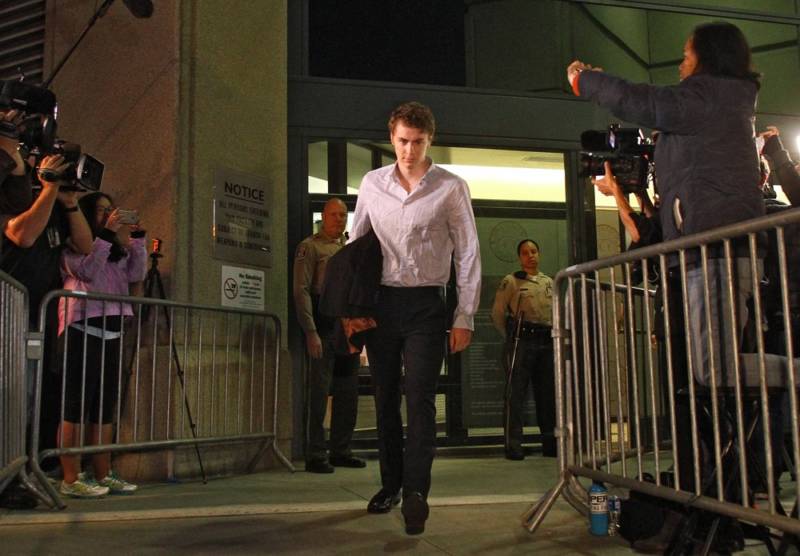
"caption": "Brock Turner departs Santa Clara County's main jail in San Jose last September after serving three months on his sexual assault conviction.",
"description": null,
"title": "Brock Turner-Santa Clara County Jail",
"credit": "Veronica Weber/Palo Alto Weekly",
"status": "inherit",
"isLoading": false,
"fetchFailed": false
},
"news_11627393": {
"type": "attachments",
"id": "news_11627393",
"meta": {
"index": "attachments_1716263798",
"site": "news",
"id": "11627393",
"found": true
},
"parent": 11627108,
"imgSizes": {
"small": {
"file": "https://ww2.kqed.org/app/uploads/sites/10/2017/11/Paiz3-e1510697723437-520x454.jpg",
"width": 520,
"mimeType": "image/jpeg",
"height": 454
},
"twentyfourteen-full-width": {
"file": "https://ww2.kqed.org/app/uploads/sites/10/2017/11/Paiz3-e1510697723437-720x576.jpg",
"width": 720,
"mimeType": "image/jpeg",
"height": 576
},
"thumbnail": {
"file": "https://ww2.kqed.org/app/uploads/sites/10/2017/11/Paiz3-e1510697723437-160x140.jpg",
"width": 160,
"mimeType": "image/jpeg",
"height": 140
},
"post-thumbnail": {
"file": "https://ww2.kqed.org/app/uploads/sites/10/2017/11/Paiz3-e1510697723437-672x372.jpg",
"width": 672,
"mimeType": "image/jpeg",
"height": 372
},
"xsmall": {
"file": "https://ww2.kqed.org/app/uploads/sites/10/2017/11/Paiz3-e1510697723437-375x327.jpg",
"width": 375,
"mimeType": "image/jpeg",
"height": 327
},
"kqedFullSize": {
"file": "https://ww2.kqed.org/app/uploads/sites/10/2017/11/Paiz3-e1510697723437.jpg",
"width": 720,
"height": 628
},
"guest-author-50": {
"file": "https://ww2.kqed.org/app/uploads/sites/10/2017/11/Paiz3-e1510697723437-50x50.jpg",
"width": 50,
"mimeType": "image/jpeg",
"height": 50
},
"guest-author-96": {
"file": "https://ww2.kqed.org/app/uploads/sites/10/2017/11/Paiz3-e1510697723437-96x96.jpg",
"width": 96,
"mimeType": "image/jpeg",
"height": 96
},
"guest-author-64": {
"file": "https://ww2.kqed.org/app/uploads/sites/10/2017/11/Paiz3-e1510697723437-64x64.jpg",
"width": 64,
"mimeType": "image/jpeg",
"height": 64
},
"guest-author-32": {
"file": "https://ww2.kqed.org/app/uploads/sites/10/2017/11/Paiz3-e1510697723437-32x32.jpg",
"width": 32,
"mimeType": "image/jpeg",
"height": 32
},
"detail": {
"file": "https://ww2.kqed.org/app/uploads/sites/10/2017/11/Paiz3-e1510697723437-150x150.jpg",
"width": 150,
"mimeType": "image/jpeg",
"height": 150
},
"guest-author-128": {
"file": "https://ww2.kqed.org/app/uploads/sites/10/2017/11/Paiz3-e1510697723437-128x128.jpg",
"width": 128,
"mimeType": "image/jpeg",
"height": 128
},
"xxsmall": {
"file": "https://ww2.kqed.org/app/uploads/sites/10/2017/11/Paiz3-e1510697723437-240x209.jpg",
"width": 240,
"mimeType": "image/jpeg",
"height": 209
}
},
"publishDate": 1509558241,
"modified": 1510954642,
"caption": "Garrett Angel Paiz, a volunteer firefighter from Noel, Missouri, was killed on Oct. 16, 2017, when his water truck crashed in Napa County as he helped fight the Northern California fires.",
"description": "Garrett Angel Paiz, a volunteer firefighter from Noel, Missouri, was killed on Oct. 16 2017 when his water truck crashed in Napa County.",
"title": "Paiz3",
"credit": "Courtesy of Cinthia Ann-Marie Paiz",
"status": "inherit",
"isLoading": false,
"fetchFailed": false
},
"news_11634598": {
"type": "attachments",
"id": "news_11634598",
"meta": {
"index": "attachments_1716263798",
"site": "news",
"id": "11634598",
"found": true
},
"parent": 11634596,
"imgSizes": {
"small": {
"file": "https://ww2.kqed.org/app/uploads/sites/10/2017/12/RS25526_GettyImages-542220918-qut-520x346.jpg",
"width": 520,
"mimeType": "image/jpeg",
"height": 346
},
"twentyfourteen-full-width": {
"file": "https://ww2.kqed.org/app/uploads/sites/10/2017/12/RS25526_GettyImages-542220918-qut-1038x576.jpg",
"width": 1038,
"mimeType": "image/jpeg",
"height": 576
},
"thumbnail": {
"file": "https://ww2.kqed.org/app/uploads/sites/10/2017/12/RS25526_GettyImages-542220918-qut-160x106.jpg",
"width": 160,
"mimeType": "image/jpeg",
"height": 106
},
"fd-sm": {
"file": "https://ww2.kqed.org/app/uploads/sites/10/2017/12/RS25526_GettyImages-542220918-qut-960x639.jpg",
"width": 960,
"mimeType": "image/jpeg",
"height": 639
},
"post-thumbnail": {
"file": "https://ww2.kqed.org/app/uploads/sites/10/2017/12/RS25526_GettyImages-542220918-qut-672x372.jpg",
"width": 672,
"mimeType": "image/jpeg",
"height": 372
},
"xsmall": {
"file": "https://ww2.kqed.org/app/uploads/sites/10/2017/12/RS25526_GettyImages-542220918-qut-375x249.jpg",
"width": 375,
"mimeType": "image/jpeg",
"height": 249
},
"kqedFullSize": {
"file": "https://ww2.kqed.org/app/uploads/sites/10/2017/12/RS25526_GettyImages-542220918-qut.jpg",
"width": 1920,
"height": 1277
},
"large": {
"file": "https://ww2.kqed.org/app/uploads/sites/10/2017/12/RS25526_GettyImages-542220918-qut-1020x678.jpg",
"width": 1020,
"mimeType": "image/jpeg",
"height": 678
},
"xlarge": {
"file": "https://ww2.kqed.org/app/uploads/sites/10/2017/12/RS25526_GettyImages-542220918-qut-1180x785.jpg",
"width": 1180,
"mimeType": "image/jpeg",
"height": 785
},
"guest-author-50": {
"file": "https://ww2.kqed.org/app/uploads/sites/10/2017/12/RS25526_GettyImages-542220918-qut-50x50.jpg",
"width": 50,
"mimeType": "image/jpeg",
"height": 50
},
"guest-author-96": {
"file": "https://ww2.kqed.org/app/uploads/sites/10/2017/12/RS25526_GettyImages-542220918-qut-96x96.jpg",
"width": 96,
"mimeType": "image/jpeg",
"height": 96
},
"medium": {
"file": "https://ww2.kqed.org/app/uploads/sites/10/2017/12/RS25526_GettyImages-542220918-qut-800x532.jpg",
"width": 800,
"mimeType": "image/jpeg",
"height": 532
},
"guest-author-64": {
"file": "https://ww2.kqed.org/app/uploads/sites/10/2017/12/RS25526_GettyImages-542220918-qut-64x64.jpg",
"width": 64,
"mimeType": "image/jpeg",
"height": 64
},
"guest-author-32": {
"file": "https://ww2.kqed.org/app/uploads/sites/10/2017/12/RS25526_GettyImages-542220918-qut-32x32.jpg",
"width": 32,
"mimeType": "image/jpeg",
"height": 32
},
"fd-lrg": {
"file": "https://ww2.kqed.org/app/uploads/sites/10/2017/12/RS25526_GettyImages-542220918-qut-1920x1277.jpg",
"width": 1920,
"mimeType": "image/jpeg",
"height": 1277
},
"fd-med": {
"file": "https://ww2.kqed.org/app/uploads/sites/10/2017/12/RS25526_GettyImages-542220918-qut-1180x785.jpg",
"width": 1180,
"mimeType": "image/jpeg",
"height": 785
},
"full-width": {
"file": "https://ww2.kqed.org/app/uploads/sites/10/2017/12/RS25526_GettyImages-542220918-qut-1920x1277.jpg",
"width": 1920,
"mimeType": "image/jpeg",
"height": 1277
},
"detail": {
"file": "https://ww2.kqed.org/app/uploads/sites/10/2017/12/RS25526_GettyImages-542220918-qut-150x150.jpg",
"width": 150,
"mimeType": "image/jpeg",
"height": 150
},
"guest-author-128": {
"file": "https://ww2.kqed.org/app/uploads/sites/10/2017/12/RS25526_GettyImages-542220918-qut-128x128.jpg",
"width": 128,
"mimeType": "image/jpeg",
"height": 128
},
"xxsmall": {
"file": "https://ww2.kqed.org/app/uploads/sites/10/2017/12/RS25526_GettyImages-542220918-qut-240x160.jpg",
"width": 240,
"mimeType": "image/jpeg",
"height": 160
}
},
"publishDate": 1512336027,
"modified": 1515085908,
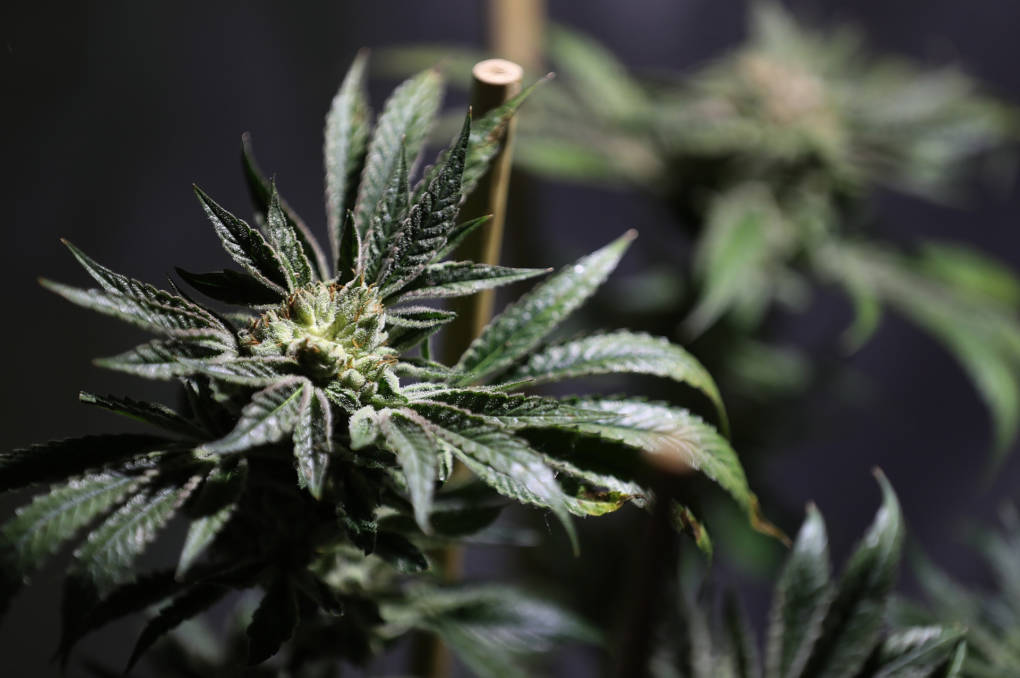
"caption": "A marijuana plant is displayed during the 2016 Cannabis Business Summit & Expo on June 22, 2016 in Oakland.. ",
"description": "A marijuana plant is displayed during the 2016 Cannabis Business Summit & Expo on June 22, 2016 in Oakland, California. ",
"title": "Marijuana Plant",
"credit": "Justin Sullivan/Getty Images",
"status": "inherit",
"isLoading": false,
"fetchFailed": false
},
"news_11634450": {
"type": "attachments",
"id": "news_11634450",
"meta": {
"index": "attachments_1716263798",
"site": "news",
"id": "11634450",
"found": true
},
"parent": 11634447,
"imgSizes": {
"small": {
"file": "https://ww2.kqed.org/app/uploads/sites/10/2017/12/SHOW-MARQUEE-508-520x293.jpg",
"width": 520,
"mimeType": "image/jpeg",
"height": 293
},
"twentyfourteen-full-width": {
"file": "https://ww2.kqed.org/app/uploads/sites/10/2017/12/SHOW-MARQUEE-508-1038x576.jpg",
"width": 1038,
"mimeType": "image/jpeg",
"height": 576
},
"thumbnail": {
"file": "https://ww2.kqed.org/app/uploads/sites/10/2017/12/SHOW-MARQUEE-508-160x90.jpg",
"width": 160,
"mimeType": "image/jpeg",
"height": 90
},
"fd-sm": {
"file": "https://ww2.kqed.org/app/uploads/sites/10/2017/12/SHOW-MARQUEE-508-960x540.jpg",
"width": 960,
"mimeType": "image/jpeg",
"height": 540
},
"post-thumbnail": {
"file": "https://ww2.kqed.org/app/uploads/sites/10/2017/12/SHOW-MARQUEE-508-672x372.jpg",
"width": 672,
"mimeType": "image/jpeg",
"height": 372
},
"xsmall": {
"file": "https://ww2.kqed.org/app/uploads/sites/10/2017/12/SHOW-MARQUEE-508-375x211.jpg",
"width": 375,
"mimeType": "image/jpeg",
"height": 211
},
"kqedFullSize": {
"file": "https://ww2.kqed.org/app/uploads/sites/10/2017/12/SHOW-MARQUEE-508.jpg",
"width": 1280,
"height": 720
},
"large": {
"file": "https://ww2.kqed.org/app/uploads/sites/10/2017/12/SHOW-MARQUEE-508-1020x574.jpg",
"width": 1020,
"mimeType": "image/jpeg",
"height": 574
},
"xlarge": {
"file": "https://ww2.kqed.org/app/uploads/sites/10/2017/12/SHOW-MARQUEE-508-1180x664.jpg",
"width": 1180,
"mimeType": "image/jpeg",
"height": 664
},
"guest-author-50": {
"file": "https://ww2.kqed.org/app/uploads/sites/10/2017/12/SHOW-MARQUEE-508-50x50.jpg",
"width": 50,
"mimeType": "image/jpeg",
"height": 50
},
"guest-author-96": {
"file": "https://ww2.kqed.org/app/uploads/sites/10/2017/12/SHOW-MARQUEE-508-96x96.jpg",
"width": 96,
"mimeType": "image/jpeg",
"height": 96
},
"medium": {
"file": "https://ww2.kqed.org/app/uploads/sites/10/2017/12/SHOW-MARQUEE-508-800x450.jpg",
"width": 800,
"mimeType": "image/jpeg",
"height": 450
},
"guest-author-64": {
"file": "https://ww2.kqed.org/app/uploads/sites/10/2017/12/SHOW-MARQUEE-508-64x64.jpg",
"width": 64,
"mimeType": "image/jpeg",
"height": 64
},
"guest-author-32": {
"file": "https://ww2.kqed.org/app/uploads/sites/10/2017/12/SHOW-MARQUEE-508-32x32.jpg",
"width": 32,
"mimeType": "image/jpeg",
"height": 32
},
"fd-med": {
"file": "https://ww2.kqed.org/app/uploads/sites/10/2017/12/SHOW-MARQUEE-508-1180x664.jpg",
"width": 1180,
"mimeType": "image/jpeg",
"height": 664
},
"detail": {
"file": "https://ww2.kqed.org/app/uploads/sites/10/2017/12/SHOW-MARQUEE-508-150x150.jpg",
"width": 150,
"mimeType": "image/jpeg",
"height": 150
},
"guest-author-128": {
"file": "https://ww2.kqed.org/app/uploads/sites/10/2017/12/SHOW-MARQUEE-508-128x128.jpg",
"width": 128,
"mimeType": "image/jpeg",
"height": 128
},
"xxsmall": {
"file": "https://ww2.kqed.org/app/uploads/sites/10/2017/12/SHOW-MARQUEE-508-240x135.jpg",
"width": 240,
"mimeType": "image/jpeg",
"height": 135
}
},
"publishDate": 1512181282,
"modified": 1512181282,
"caption": null,
"description": null,
"title": "SHOW MARQUEE 508",
"credit": null,
"status": "inherit",
"isLoading": false,
"fetchFailed": false
},
"news_11634327": {
"type": "attachments",
"id": "news_11634327",
"meta": {
"index": "attachments_1716263798",
"site": "news",
"id": "11634327",
"found": true
},
"parent": 11634306,
"imgSizes": {
"small": {
"file": "https://ww2.kqed.org/app/uploads/sites/10/2017/12/Becerra1-1280x800-520x325.jpg",
"width": 520,
"mimeType": "image/jpeg",
"height": 325
},
"twentyfourteen-full-width": {
"file": "https://ww2.kqed.org/app/uploads/sites/10/2017/12/Becerra1-1280x800-1038x576.jpg",
"width": 1038,
"mimeType": "image/jpeg",
"height": 576
},
"thumbnail": {
"file": "https://ww2.kqed.org/app/uploads/sites/10/2017/12/Becerra1-1280x800-160x100.jpg",
"width": 160,
"mimeType": "image/jpeg",
"height": 100
},
"fd-sm": {
"file": "https://ww2.kqed.org/app/uploads/sites/10/2017/12/Becerra1-1280x800-960x600.jpg",
"width": 960,
"mimeType": "image/jpeg",
"height": 600
},
"post-thumbnail": {
"file": "https://ww2.kqed.org/app/uploads/sites/10/2017/12/Becerra1-1280x800-672x372.jpg",
"width": 672,
"mimeType": "image/jpeg",
"height": 372
},
"xsmall": {
"file": "https://ww2.kqed.org/app/uploads/sites/10/2017/12/Becerra1-1280x800-375x234.jpg",
"width": 375,
"mimeType": "image/jpeg",
"height": 234
},
"kqedFullSize": {
"file": "https://ww2.kqed.org/app/uploads/sites/10/2017/12/Becerra1-1280x800.jpg",
"width": 1280,
"height": 800
},
"large": {
"file": "https://ww2.kqed.org/app/uploads/sites/10/2017/12/Becerra1-1280x800-1020x638.jpg",
"width": 1020,
"mimeType": "image/jpeg",
"height": 638
},
"xlarge": {
"file": "https://ww2.kqed.org/app/uploads/sites/10/2017/12/Becerra1-1280x800-1180x738.jpg",
"width": 1180,
"mimeType": "image/jpeg",
"height": 738
},
"guest-author-50": {
"file": "https://ww2.kqed.org/app/uploads/sites/10/2017/12/Becerra1-1280x800-50x50.jpg",
"width": 50,
"mimeType": "image/jpeg",
"height": 50
},
"guest-author-96": {
"file": "https://ww2.kqed.org/app/uploads/sites/10/2017/12/Becerra1-1280x800-96x96.jpg",
"width": 96,
"mimeType": "image/jpeg",
"height": 96
},
"medium": {
"file": "https://ww2.kqed.org/app/uploads/sites/10/2017/12/Becerra1-1280x800-800x500.jpg",
"width": 800,
"mimeType": "image/jpeg",
"height": 500
},
"guest-author-64": {
"file": "https://ww2.kqed.org/app/uploads/sites/10/2017/12/Becerra1-1280x800-64x64.jpg",
"width": 64,
"mimeType": "image/jpeg",
"height": 64
},
"guest-author-32": {
"file": "https://ww2.kqed.org/app/uploads/sites/10/2017/12/Becerra1-1280x800-32x32.jpg",
"width": 32,
"mimeType": "image/jpeg",
"height": 32
},
"fd-med": {
"file": "https://ww2.kqed.org/app/uploads/sites/10/2017/12/Becerra1-1280x800-1180x738.jpg",
"width": 1180,
"mimeType": "image/jpeg",
"height": 738
},
"detail": {
"file": "https://ww2.kqed.org/app/uploads/sites/10/2017/12/Becerra1-1280x800-150x150.jpg",
"width": 150,
"mimeType": "image/jpeg",
"height": 150
},
"guest-author-128": {
"file": "https://ww2.kqed.org/app/uploads/sites/10/2017/12/Becerra1-1280x800-128x128.jpg",
"width": 128,
"mimeType": "image/jpeg",
"height": 128
},
"xxsmall": {
"file": "https://ww2.kqed.org/app/uploads/sites/10/2017/12/Becerra1-1280x800-240x150.jpg",
"width": 240,
"mimeType": "image/jpeg",
"height": 150
}
},
"publishDate": 1512162664,
"modified": 1512162757,
"caption": "California Attorney General Xavier Becerra has become a regular legal adversary of the Trump administration.",
"description": null,
"title": "Becerra1-1280x800",
"credit": "Ben Christopher/CALmatters",
"status": "inherit",
"isLoading": false,
"fetchFailed": false
},
"news_11634341": {
"type": "attachments",
"id": "news_11634341",
"meta": {
"index": "attachments_1716263798",
"site": "news",
"id": "11634341",
"found": true
},
"parent": 11634337,
"imgSizes": {
"small": {
"file": "https://ww2.kqed.org/app/uploads/sites/10/2017/12/badnews_120117_final-520x520.jpg",
"width": 520,
"mimeType": "image/jpeg",
"height": 520
},
"twentyfourteen-full-width": {
"file": "https://ww2.kqed.org/app/uploads/sites/10/2017/12/badnews_120117_final-1038x576.jpg",
"width": 1038,
"mimeType": "image/jpeg",
"height": 576
},
"thumbnail": {
"file": "https://ww2.kqed.org/app/uploads/sites/10/2017/12/badnews_120117_final-160x160.jpg",
"width": 160,
"mimeType": "image/jpeg",
"height": 160
},
"fd-sm": {
"file": "https://ww2.kqed.org/app/uploads/sites/10/2017/12/badnews_120117_final-960x960.jpg",
"width": 960,
"mimeType": "image/jpeg",
"height": 960
},
"post-thumbnail": {
"file": "https://ww2.kqed.org/app/uploads/sites/10/2017/12/badnews_120117_final-672x372.jpg",
"width": 672,
"mimeType": "image/jpeg",
"height": 372
},
"xsmall": {
"file": "https://ww2.kqed.org/app/uploads/sites/10/2017/12/badnews_120117_final-375x375.jpg",
"width": 375,
"mimeType": "image/jpeg",
"height": 375
},
"kqedFullSize": {
"file": "https://ww2.kqed.org/app/uploads/sites/10/2017/12/badnews_120117_final.jpg",
"width": 1920,
"height": 1920
},
"large": {
"file": "https://ww2.kqed.org/app/uploads/sites/10/2017/12/badnews_120117_final-1020x1020.jpg",
"width": 1020,
"mimeType": "image/jpeg",
"height": 1020
},
"xlarge": {
"file": "https://ww2.kqed.org/app/uploads/sites/10/2017/12/badnews_120117_final-1180x1180.jpg",
"width": 1180,
"mimeType": "image/jpeg",
"height": 1180
},
"guest-author-50": {
"file": "https://ww2.kqed.org/app/uploads/sites/10/2017/12/badnews_120117_final-50x50.jpg",
"width": 50,
"mimeType": "image/jpeg",
"height": 50
},
"guest-author-96": {
"file": "https://ww2.kqed.org/app/uploads/sites/10/2017/12/badnews_120117_final-96x96.jpg",
"width": 96,
"mimeType": "image/jpeg",
"height": 96
},
"medium": {
"file": "https://ww2.kqed.org/app/uploads/sites/10/2017/12/badnews_120117_final-800x800.jpg",
"width": 800,
"mimeType": "image/jpeg",
"height": 800
},
"guest-author-64": {
"file": "https://ww2.kqed.org/app/uploads/sites/10/2017/12/badnews_120117_final-64x64.jpg",
"width": 64,
"mimeType": "image/jpeg",
"height": 64
},
"guest-author-32": {
"file": "https://ww2.kqed.org/app/uploads/sites/10/2017/12/badnews_120117_final-32x32.jpg",
"width": 32,
"mimeType": "image/jpeg",
"height": 32
},
"fd-lrg": {
"file": "https://ww2.kqed.org/app/uploads/sites/10/2017/12/badnews_120117_final-1920x1920.jpg",
"width": 1920,
"mimeType": "image/jpeg",
"height": 1920
},
"fd-med": {
"file": "https://ww2.kqed.org/app/uploads/sites/10/2017/12/badnews_120117_final-1180x1180.jpg",
"width": 1180,
"mimeType": "image/jpeg",
"height": 1180
},
"full-width": {
"file": "https://ww2.kqed.org/app/uploads/sites/10/2017/12/badnews_120117_final-1920x1920.jpg",
"width": 1920,
"mimeType": "image/jpeg",
"height": 1920
},
"detail": {
"file": "https://ww2.kqed.org/app/uploads/sites/10/2017/12/badnews_120117_final-150x150.jpg",
"width": 150,
"mimeType": "image/jpeg",
"height": 150
},
"guest-author-128": {
"file": "https://ww2.kqed.org/app/uploads/sites/10/2017/12/badnews_120117_final-128x128.jpg",
"width": 128,
"mimeType": "image/jpeg",
"height": 128
},
"xxsmall": {
"file": "https://ww2.kqed.org/app/uploads/sites/10/2017/12/badnews_120117_final-240x240.jpg",
"width": 240,
"mimeType": "image/jpeg",
"height": 240
}
},
"publishDate": 1512165382,
"modified": 1512165410,
"caption": null,
"description": null,
"title": "badnews_120117_final",
"credit": null,
"status": "inherit",
"isLoading": false,
"fetchFailed": false
},
"news_11634235": {
"type": "attachments",
"id": "news_11634235",
"meta": {
"index": "attachments_1716263798",
"site": "news",
"id": "11634235",
"found": true
},
"parent": 11634201,
"imgSizes": {
"small": {
"file": "https://ww2.kqed.org/app/uploads/sites/10/2017/11/ZarateArraign-520x347.jpg",
"width": 520,
"mimeType": "image/jpeg",
"height": 347
},
"twentyfourteen-full-width": {
"file": "https://ww2.kqed.org/app/uploads/sites/10/2017/11/ZarateArraign-1038x576.jpg",
"width": 1038,
"mimeType": "image/jpeg",
"height": 576
},
"thumbnail": {
"file": "https://ww2.kqed.org/app/uploads/sites/10/2017/11/ZarateArraign-160x107.jpg",
"width": 160,
"mimeType": "image/jpeg",
"height": 107
},
"fd-sm": {
"file": "https://ww2.kqed.org/app/uploads/sites/10/2017/11/ZarateArraign-960x640.jpg",
"width": 960,
"mimeType": "image/jpeg",
"height": 640
},
"post-thumbnail": {
"file": "https://ww2.kqed.org/app/uploads/sites/10/2017/11/ZarateArraign-672x372.jpg",
"width": 672,
"mimeType": "image/jpeg",
"height": 372
},
"xsmall": {
"file": "https://ww2.kqed.org/app/uploads/sites/10/2017/11/ZarateArraign-375x250.jpg",
"width": 375,
"mimeType": "image/jpeg",
"height": 250
},
"kqedFullSize": {
"file": "https://ww2.kqed.org/app/uploads/sites/10/2017/11/ZarateArraign.jpg",
"width": 1920,
"height": 1280
},
"large": {
"file": "https://ww2.kqed.org/app/uploads/sites/10/2017/11/ZarateArraign-1020x680.jpg",
"width": 1020,
"mimeType": "image/jpeg",
"height": 680
},
"xlarge": {
"file": "https://ww2.kqed.org/app/uploads/sites/10/2017/11/ZarateArraign-1180x787.jpg",
"width": 1180,
"mimeType": "image/jpeg",
"height": 787
},
"guest-author-50": {
"file": "https://ww2.kqed.org/app/uploads/sites/10/2017/11/ZarateArraign-50x50.jpg",
"width": 50,
"mimeType": "image/jpeg",
"height": 50
},
"guest-author-96": {
"file": "https://ww2.kqed.org/app/uploads/sites/10/2017/11/ZarateArraign-96x96.jpg",
"width": 96,
"mimeType": "image/jpeg",
"height": 96
},
"medium": {
"file": "https://ww2.kqed.org/app/uploads/sites/10/2017/11/ZarateArraign-800x533.jpg",
"width": 800,
"mimeType": "image/jpeg",
"height": 533
},
"guest-author-64": {
"file": "https://ww2.kqed.org/app/uploads/sites/10/2017/11/ZarateArraign-64x64.jpg",
"width": 64,
"mimeType": "image/jpeg",
"height": 64
},
"guest-author-32": {
"file": "https://ww2.kqed.org/app/uploads/sites/10/2017/11/ZarateArraign-32x32.jpg",
"width": 32,
"mimeType": "image/jpeg",
"height": 32
},
"fd-lrg": {
"file": "https://ww2.kqed.org/app/uploads/sites/10/2017/11/ZarateArraign-1920x1280.jpg",
"width": 1920,
"mimeType": "image/jpeg",
"height": 1280
},
"fd-med": {
"file": "https://ww2.kqed.org/app/uploads/sites/10/2017/11/ZarateArraign-1180x787.jpg",
"width": 1180,
"mimeType": "image/jpeg",
"height": 787
},
"full-width": {
"file": "https://ww2.kqed.org/app/uploads/sites/10/2017/11/ZarateArraign-1920x1280.jpg",
"width": 1920,
"mimeType": "image/jpeg",
"height": 1280
},
"detail": {
"file": "https://ww2.kqed.org/app/uploads/sites/10/2017/11/ZarateArraign-150x150.jpg",
"width": 150,
"mimeType": "image/jpeg",
"height": 150
},
"guest-author-128": {
"file": "https://ww2.kqed.org/app/uploads/sites/10/2017/11/ZarateArraign-128x128.jpg",
"width": 128,
"mimeType": "image/jpeg",
"height": 128
},
"xxsmall": {
"file": "https://ww2.kqed.org/app/uploads/sites/10/2017/11/ZarateArraign-240x160.jpg",
"width": 240,
"mimeType": "image/jpeg",
"height": 160
}
},
"publishDate": 1512097449,
"modified": 1512097519,
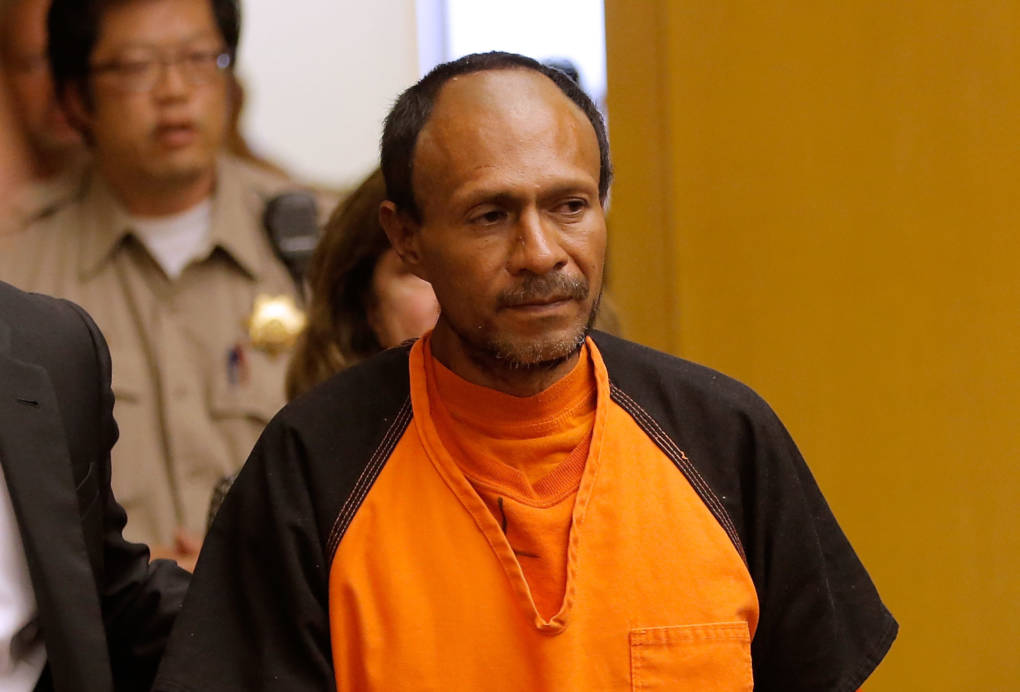
"caption": "Defendant Jose Ines Garcia Zarate, who is also known as Juan Francisco Lopez Sanchez, at his arraignment on July 7, 2015, in San Francisco.",
"description": "Defendant Jose Ines Garcia Zarate, who is also known as Juan Francisco Lopez Sanchez, at his arraignment on July 7, 2015, in San Francisco.",
"title": "ZarateArraign",
"credit": "Michael Macor-Pool/Getty Images",
"status": "inherit",
"isLoading": false,
"fetchFailed": false
},
"news_11629419": {
"type": "attachments",
"id": "news_11629419",
"meta": {
"index": "attachments_1716263798",
"site": "news",
"id": "11629419",
"found": true
},
"parent": 11629415,
"imgSizes": {
"small": {
"file": "https://ww2.kqed.org/app/uploads/sites/10/2017/11/RS27583_alt_648-520x353.jpg",
"width": 520,
"mimeType": "image/jpeg",
"height": 353
},
"twentyfourteen-full-width": {
"file": "https://ww2.kqed.org/app/uploads/sites/10/2017/11/RS27583_alt_648-1038x576.jpg",
"width": 1038,
"mimeType": "image/jpeg",
"height": 576
},
"thumbnail": {
"file": "https://ww2.kqed.org/app/uploads/sites/10/2017/11/RS27583_alt_648-160x109.jpg",
"width": 160,
"mimeType": "image/jpeg",
"height": 109
},
"fd-sm": {
"file": "https://ww2.kqed.org/app/uploads/sites/10/2017/11/RS27583_alt_648-960x651.jpg",
"width": 960,
"mimeType": "image/jpeg",
"height": 651
},
"post-thumbnail": {
"file": "https://ww2.kqed.org/app/uploads/sites/10/2017/11/RS27583_alt_648-672x372.jpg",
"width": 672,
"mimeType": "image/jpeg",
"height": 372
},
"xsmall": {
"file": "https://ww2.kqed.org/app/uploads/sites/10/2017/11/RS27583_alt_648-375x254.jpg",
"width": 375,
"mimeType": "image/jpeg",
"height": 254
},
"kqedFullSize": {
"file": "https://ww2.kqed.org/app/uploads/sites/10/2017/11/RS27583_alt_648.jpg",
"width": 1920,
"height": 1302
},
"large": {
"file": "https://ww2.kqed.org/app/uploads/sites/10/2017/11/RS27583_alt_648-1020x692.jpg",
"width": 1020,
"mimeType": "image/jpeg",
"height": 692
},
"xlarge": {
"file": "https://ww2.kqed.org/app/uploads/sites/10/2017/11/RS27583_alt_648-1180x800.jpg",
"width": 1180,
"mimeType": "image/jpeg",
"height": 800
},
"guest-author-50": {
"file": "https://ww2.kqed.org/app/uploads/sites/10/2017/11/RS27583_alt_648-50x50.jpg",
"width": 50,
"mimeType": "image/jpeg",
"height": 50
},
"guest-author-96": {
"file": "https://ww2.kqed.org/app/uploads/sites/10/2017/11/RS27583_alt_648-96x96.jpg",
"width": 96,
"mimeType": "image/jpeg",
"height": 96
},
"medium": {
"file": "https://ww2.kqed.org/app/uploads/sites/10/2017/11/RS27583_alt_648-800x543.jpg",
"width": 800,
"mimeType": "image/jpeg",
"height": 543
},
"guest-author-64": {
"file": "https://ww2.kqed.org/app/uploads/sites/10/2017/11/RS27583_alt_648-64x64.jpg",
"width": 64,
"mimeType": "image/jpeg",
"height": 64
},
"guest-author-32": {
"file": "https://ww2.kqed.org/app/uploads/sites/10/2017/11/RS27583_alt_648-32x32.jpg",
"width": 32,
"mimeType": "image/jpeg",
"height": 32
},
"fd-lrg": {
"file": "https://ww2.kqed.org/app/uploads/sites/10/2017/11/RS27583_alt_648-1920x1302.jpg",
"width": 1920,
"mimeType": "image/jpeg",
"height": 1302
},
"fd-med": {
"file": "https://ww2.kqed.org/app/uploads/sites/10/2017/11/RS27583_alt_648-1180x800.jpg",
"width": 1180,
"mimeType": "image/jpeg",
"height": 800
},
"full-width": {
"file": "https://ww2.kqed.org/app/uploads/sites/10/2017/11/RS27583_alt_648-1920x1302.jpg",
"width": 1920,
"mimeType": "image/jpeg",
"height": 1302
},
"detail": {
"file": "https://ww2.kqed.org/app/uploads/sites/10/2017/11/RS27583_alt_648-150x150.jpg",
"width": 150,
"mimeType": "image/jpeg",
"height": 150
},
"guest-author-128": {
"file": "https://ww2.kqed.org/app/uploads/sites/10/2017/11/RS27583_alt_648-128x128.jpg",
"width": 128,
"mimeType": "image/jpeg",
"height": 128
},
"xxsmall": {
"file": "https://ww2.kqed.org/app/uploads/sites/10/2017/11/RS27583_alt_648-240x163.jpg",
"width": 240,
"mimeType": "image/jpeg",
"height": 163
}
},
"publishDate": 1510194051,
"modified": 1512084944,
"caption": "Defendant Jose Ines Garcia Zarate, who is also known as Juan Francisco Lopez Sanchez, enters court for an arraignment on July 7, 2015, in San Francisco.",
"description": "Jose Ines Garcia Zarate, who is also known as Juan Francisco Lopez Sanchez, enters court for an arraignment on July 7, 2015 in San Francisco.",
"title": "Arraignment Held For Francisco Sanchez, Charged With The Shooting Death Of Kathryn Steinle On Pier 14",
"credit": "Michael Macor-Pool/Getty Images",
"status": "inherit",
"isLoading": false,
"fetchFailed": false
},
"news_11634084": {
"type": "attachments",
"id": "news_11634084",
"meta": {
"index": "attachments_1716263798",
"site": "news",
"id": "11634084",
"found": true
},
"parent": 11634077,
"imgSizes": {
"small": {
"file": "https://ww2.kqed.org/app/uploads/sites/10/2017/11/ghost_ship_anniversary01-520x520.gif",
"width": 520,
"mimeType": "image/gif",
"height": 520
},
"twentyfourteen-full-width": {
"file": "https://ww2.kqed.org/app/uploads/sites/10/2017/11/ghost_ship_anniversary01-1008x576.gif",
"width": 1008,
"mimeType": "image/gif",
"height": 576
},
"thumbnail": {
"file": "https://ww2.kqed.org/app/uploads/sites/10/2017/11/ghost_ship_anniversary01-160x160.gif",
"width": 160,
"mimeType": "image/gif",
"height": 160
},
"fd-sm": {
"file": "https://ww2.kqed.org/app/uploads/sites/10/2017/11/ghost_ship_anniversary01-960x960.gif",
"width": 960,
"mimeType": "image/gif",
"height": 960
},
"post-thumbnail": {
"file": "https://ww2.kqed.org/app/uploads/sites/10/2017/11/ghost_ship_anniversary01-672x372.gif",
"width": 672,
"mimeType": "image/gif",
"height": 372
},
"xsmall": {
"file": "https://ww2.kqed.org/app/uploads/sites/10/2017/11/ghost_ship_anniversary01-375x375.gif",
"width": 375,
"mimeType": "image/gif",
"height": 375
},
"kqedFullSize": {
"file": "https://ww2.kqed.org/app/uploads/sites/10/2017/11/ghost_ship_anniversary01.gif",
"width": 1008,
"height": 1008
},
"guest-author-50": {
"file": "https://ww2.kqed.org/app/uploads/sites/10/2017/11/ghost_ship_anniversary01-50x50.gif",
"width": 50,
"mimeType": "image/gif",
"height": 50
},
"guest-author-96": {
"file": "https://ww2.kqed.org/app/uploads/sites/10/2017/11/ghost_ship_anniversary01-96x96.gif",
"width": 96,
"mimeType": "image/gif",
"height": 96
},
"medium": {
"file": "https://ww2.kqed.org/app/uploads/sites/10/2017/11/ghost_ship_anniversary01-800x800.gif",
"width": 800,
"mimeType": "image/gif",
"height": 800
},
"guest-author-64": {
"file": "https://ww2.kqed.org/app/uploads/sites/10/2017/11/ghost_ship_anniversary01-64x64.gif",
"width": 64,
"mimeType": "image/gif",
"height": 64
},
"guest-author-32": {
"file": "https://ww2.kqed.org/app/uploads/sites/10/2017/11/ghost_ship_anniversary01-32x32.gif",
"width": 32,
"mimeType": "image/gif",
"height": 32
},
"detail": {
"file": "https://ww2.kqed.org/app/uploads/sites/10/2017/11/ghost_ship_anniversary01-150x150.gif",
"width": 150,
"mimeType": "image/gif",
"height": 150
},
"guest-author-128": {
"file": "https://ww2.kqed.org/app/uploads/sites/10/2017/11/ghost_ship_anniversary01-128x128.gif",
"width": 128,
"mimeType": "image/gif",
"height": 128
},
"xxsmall": {
"file": "https://ww2.kqed.org/app/uploads/sites/10/2017/11/ghost_ship_anniversary01-240x240.gif",
"width": 240,
"mimeType": "image/gif",
"height": 240
}
},
"publishDate": 1512077366,
"modified": 1512077398,
"caption": null,
"description": null,
"title": "ghost_ship_anniversary01",
"credit": null,
"status": "inherit",
"isLoading": false,
"fetchFailed": false
}
},
"audioPlayerReducer": {
"postId": "stream_live",
"isPaused": true,
"isPlaying": false,
"pfsActive": false,
"pledgeModalIsOpen": true,
"playerDrawerIsOpen": false,
"liveAudioPlayStartedAt": 0,
"liveAudioPlayContext": ""
},
"authorsReducer": {
"byline_news_11634973": {
"type": "authors",
"id": "byline_news_11634973",
"meta": {
"override": true
},
"slug": "byline_news_11634973",
"name": "John Burnett",
"isLoading": false
},
"byline_news_11634756": {
"type": "authors",
"id": "byline_news_11634756",
"meta": {
"override": true
},
"slug": "byline_news_11634756",
"name": "\u003cb>Richard Gonzales \u003cbr>NPR\u003c/b>",
"isLoading": false
},
"byline_news_11634596": {
"type": "authors",
"id": "byline_news_11634596",
"meta": {
"override": true
},
"slug": "byline_news_11634596",
"name": "\u003cstrong>Brian Melley\u003cbr />Associated Press\u003c/strong>",
"isLoading": false
},
"byline_news_11634306": {
"type": "authors",
"id": "byline_news_11634306",
"meta": {
"override": true
},
"slug": "byline_news_11634306",
"name": "\u003cstrong>\u003ca href=\"https://calmatters.org/articles/author/ben-christopher/\">Ben Christopher\u003c/a>\u003cbr />CALmatters\u003c/strong>",
"isLoading": false
},
"danbrekke": {
"type": "authors",
"id": "222",
"meta": {
"index": "authors_1716337520",
"id": "222",
"found": true
},
"name": "Dan Brekke",
"firstName": "Dan",
"lastName": "Brekke",
"slug": "danbrekke",
"email": "dbrekke@kqed.org",
"display_author_email": true,
"staff_mastheads": [
"news",
"science"
],
"title": "KQED Editor and Reporter",
"bio": "Dan Brekke is a reporter and editor for KQED News, responsible for coverage of topics ranging from California water issues to the Bay Area's transportation challenges. In a newsroom career that began in Chicago in 1972, Dan has worked for \u003cem>The San Francisco Examiner,\u003c/em> Wired and TechTV and has been published in The New York Times, The New York Times Magazine, Business 2.0, Salon and elsewhere.\r\n\r\nSince joining KQED in 2007, Dan has reported, edited and produced both radio and online features and breaking news pieces. He has shared as both editor and reporter in four Society of Professional Journalists Norcal Excellence in Journalism awards and one Edward R. Murrow regional award. He was chosen for a spring 2017 residency at the Mesa Refuge to advance his research on California salmon.\r\n\r\nEmail Dan at: \u003ca href=\"mailto:dbrekke@kqed.org\">dbrekke@kqed.org\u003c/a>\r\n\r\n\u003cstrong>Twitter:\u003c/strong> \u003ca href=\"https://twitter.com/danbrekke\" rel=\"noopener noreferrer\">twitter.com/danbrekke\u003c/a>\r\n\u003cstrong>Facebook:\u003c/strong> \u003ca href=\"https://www.facebook.com/danbrekke\" rel=\"noopener noreferrer\">www.facebook.com/danbrekke\u003c/a>\r\n\u003cstrong>LinkedIn:\u003c/strong> \u003ca href=\"https://www.linkedin.com/in/danbrekke\" rel=\"noopener noreferrer\">www.linkedin.com/in/danbrekke\u003c/a>",
"avatar": "https://secure.gravatar.com/avatar/c8126230345efca3f7aa89b1a402be45?s=600&d=mm&r=g",
"twitter": "danbrekke",
"facebook": null,
"instagram": "https://www.instagram.com/dan.brekke/",
"linkedin": "https://www.linkedin.com/in/danbrekke/",
"sites": [
{
"site": "news",
"roles": [
"administrator",
"create_posts"
]
},
{
"site": "stateofhealth",
"roles": [
"editor"
]
},
{
"site": "science",
"roles": [
"editor"
]
},
{
"site": "quest",
"roles": [
"contributor"
]
},
{
"site": "food",
"roles": [
"contributor"
]
},
{
"site": "forum",
"roles": [
"contributor"
]
},
{
"site": "liveblog",
"roles": [
"editor"
]
}
],
"headData": {
"title": "Dan Brekke | KQED",
"description": "KQED Editor and Reporter",
"ogImgSrc": "https://secure.gravatar.com/avatar/c8126230345efca3f7aa89b1a402be45?s=600&d=mm&r=g",
"twImgSrc": "https://secure.gravatar.com/avatar/c8126230345efca3f7aa89b1a402be45?s=600&d=mm&r=g"
},
"isLoading": false,
"link": "/author/danbrekke"
},
"kqed": {
"type": "authors",
"id": "236",
"meta": {
"index": "authors_1716337520",
"id": "236",
"found": true
},
"name": "KQED News Staff",
"firstName": "KQED News Staff",
"lastName": null,
"slug": "kqed",
"email": "faq@kqed.org",
"display_author_email": false,
"staff_mastheads": [],
"title": null,
"bio": null,
"avatar": "https://secure.gravatar.com/avatar/ef0e801a68c4c54afa9180db14084167?s=600&d=blank&r=g",
"twitter": null,
"facebook": null,
"instagram": null,
"linkedin": null,
"sites": [
{
"site": "arts",
"roles": [
"contributor"
]
},
{
"site": "news",
"roles": [
"editor"
]
},
{
"site": "futureofyou",
"roles": [
"author"
]
}
],
"headData": {
"title": "KQED News Staff | KQED",
"description": null,
"ogImgSrc": "https://secure.gravatar.com/avatar/ef0e801a68c4c54afa9180db14084167?s=600&d=blank&r=g",
"twImgSrc": "https://secure.gravatar.com/avatar/ef0e801a68c4c54afa9180db14084167?s=600&d=blank&r=g"
},
"isLoading": false,
"link": "/author/kqed"
},
"scottshafer": {
"type": "authors",
"id": "255",
"meta": {
"index": "authors_1716337520",
"id": "255",
"found": true
},
"name": "Scott Shafer",
"firstName": "Scott",
"lastName": "Shafer",
"slug": "scottshafer",
"email": "sshafer@kqed.org",
"display_author_email": false,
"staff_mastheads": [
"news"
],
"title": "KQED Contributor",
"bio": "Scott Shafer is a senior editor with the KQED Politics and Government desk. He is co-host of Political Breakdown, the award-winning radio show and podcast with a personal take on the world of politics. Scott came to KQED in 1998 to host the statewide\u003cem> California Report\u003c/em>. Prior to that he had extended stints in politics and government\u003cem>.\u003c/em> He uses that inside experience at KQED in his, reporting, hosting and analysis for the politics desk. Scott collaborated \u003cem>Political Breakdown a\u003c/em>nd on \u003cem>The Political Mind of Jerry Brown, \u003c/em>an eight-part series about the life and extraordinary political career of the former governor. For fun, he plays water polo with the San Francisco Tsunami.",
"avatar": "https://secure.gravatar.com/avatar/a62ebae45b79d7aed1a39a0e3bf68104?s=600&d=blank&r=g",
"twitter": "scottshafer",
"bluesky": null,
"facebook": null,
"instagram": null,
"linkedin": null,
"sites": [
{
"site": "news",
"roles": [
"editor"
]
},
{
"site": "stateofhealth",
"roles": [
"author"
]
},
{
"site": "science",
"roles": [
"author"
]
},
{
"site": "forum",
"roles": [
"subscriber"
]
},
{
"site": "liveblog",
"roles": [
"author"
]
}
],
"headData": {
"title": "Scott Shafer | KQED",
"description": "KQED Contributor",
"ogImgSrc": "https://secure.gravatar.com/avatar/a62ebae45b79d7aed1a39a0e3bf68104?s=600&d=blank&r=g",
"twImgSrc": "https://secure.gravatar.com/avatar/a62ebae45b79d7aed1a39a0e3bf68104?s=600&d=blank&r=g"
},
"isLoading": false,
"link": "/author/scottshafer"
},
"tgoldberg": {
"type": "authors",
"id": "258",
"meta": {
"index": "authors_1716337520",
"id": "258",
"found": true
},
"name": "Ted Goldberg",
"firstName": "Ted",
"lastName": "Goldberg",
"slug": "tgoldberg",
"email": "tgoldberg@kqed.org",
"display_author_email": true,
"staff_mastheads": [
"news"
],
"title": "KQED Managing Editor, News and Newscasts",
"bio": "Ted Goldberg is Managing Editor of News and Newscasts at KQED. His main reporting beat is the Bay Area's oil refining industry.\r\n\r\nPrior to joining KQED in 2014, Ted worked at CBS News and WCBS AM in New York and Bay City News and KCBS Radio in San Francisco. He graduated from Oberlin College in Ohio in 1998.",
"avatar": "https://secure.gravatar.com/avatar/30ce2e4fe89135e104f89be2394d16225b9d36c121b5b3cb7651ce642978b96f?s=600&d=blank&r=g",
"twitter": "TedrickG",
"bluesky": null,
"facebook": null,
"instagram": null,
"linkedin": null,
"sites": [
{
"site": "news",
"roles": [
"editor"
]
},
{
"site": "science",
"roles": [
"editor"
]
}
],
"headData": {
"title": "Ted Goldberg | KQED",
"description": "KQED Managing Editor, News and Newscasts",
"ogImgSrc": "https://secure.gravatar.com/avatar/30ce2e4fe89135e104f89be2394d16225b9d36c121b5b3cb7651ce642978b96f?s=600&d=blank&r=g",
"twImgSrc": "https://secure.gravatar.com/avatar/30ce2e4fe89135e104f89be2394d16225b9d36c121b5b3cb7651ce642978b96f?s=600&d=blank&r=g"
},
"isLoading": false,
"link": "/author/tgoldberg"
},
"aemslie": {
"type": "authors",
"id": "3206",
"meta": {
"index": "authors_1716337520",
"id": "3206",
"found": true
},
"name": "Alex Emslie",
"firstName": "Alex",
"lastName": "Emslie",
"slug": "aemslie",
"email": "aemslie@kqed.org",
"display_author_email": true,
"staff_mastheads": [
"news"
],
"title": "KQED Senior Editor",
"bio": "Alex Emslie is senior editor of talent and development at KQED, where he manages dozens of early career journalists and oversees news department internships.\r\n\r\nHe is a former carpenter and proud graduate of City College of San Francisco and San Francisco State University, where he studied journalism and criminal justice before joining KQED in 2013.\r\n\r\nAlex produced investigative journalism focused on \u003ca href=\"https://www.kqed.org/news/11667594/the-trials-of-marvin-mutch-video\">criminal justice\u003c/a> and policing for most of a decade. He has broken major stories about \u003ca href=\"https://www.kqed.org/news/135682/amid-a-series-of-vallejo-police-shootings-one-officers-name-stands-out\">police use of deadly force\u003c/a>, \u003ca href=\"https://www.kqed.org/news/10454955/racist-texts-prompt-sfpd-internal-investigation\">officer misconduct\u003c/a> and \u003ca href=\"https://www.kqed.org/news/11712239/terrorist-or-troll-judge-to-weigh-whether-oakland-man-really-intended-to-attack-bay-area\">other\u003c/a> \u003ca href=\"https://www.kqed.org/news/11221414/hayward-paid-159000-to-husband-of-retired-police-chief-documents-show\">high\u003c/a>-\u003ca href=\"https://www.kqed.org/news/10622762/the-forgotten-tracking-two-homicides-in-san-francisco-public-housing\">profile\u003c/a> \u003ca href=\"https://www.kqed.org/news/11624516/federal-agency-promoted-ranger-just-months-after-his-gun-was-stolen-and-used-in-steinle-killing\">cases\u003c/a>. He co-founded the \u003ca href=\"https://projects.scpr.org/california-reporting-project/\">California Reporting Project\u003c/a> in 2019 to obtain and report on previously confidential police internal investigations. The effort produced well over 100 original stories and changed the course of multiple criminal cases.\r\n\r\nHis work has been recognized with numerous journalism awards, including a national Edward R. Murrow award for several years of \u003ca href=\"https://www.kqed.org/news/11688481/sfpd-officers-in-mario-woods-case-recount-shooting-in-newly-filed-depositions\">reporting\u003c/a> on the San Francisco Police shooting of Mario Woods. His \u003ca href=\"https://www.kqed.org/news/147854/half-of-those-killed-by-san-francisco-police-are-mentally-ill\">reporting\u003c/a> on police killings of people in psychiatric crisis was cited in amicus briefs before the U.S. Supreme Court.\r\n\r\nAlex now enjoys mentoring the next generation of journalists at KQED.",
"avatar": "https://secure.gravatar.com/avatar/e691e65209f20e9da202bd730ead5663?s=600&d=blank&r=g",
"twitter": "SFNewsReporter",
"facebook": null,
"instagram": null,
"linkedin": null,
"sites": [
{
"site": "arts",
"roles": [
"editor"
]
},
{
"site": "news",
"roles": [
"editor"
]
},
{
"site": "mindshift",
"roles": [
"editor"
]
},
{
"site": "stateofhealth",
"roles": [
"editor"
]
},
{
"site": "science",
"roles": [
"administrator"
]
}
],
"headData": {
"title": "Alex Emslie | KQED",
"description": "KQED Senior Editor",
"ogImgSrc": "https://secure.gravatar.com/avatar/e691e65209f20e9da202bd730ead5663?s=600&d=blank&r=g",
"twImgSrc": "https://secure.gravatar.com/avatar/e691e65209f20e9da202bd730ead5663?s=600&d=blank&r=g"
},
"isLoading": false,
"link": "/author/aemslie"
},
"markfiore": {
"type": "authors",
"id": "3236",
"meta": {
"index": "authors_1716337520",
"id": "3236",
"found": true
},
"name": "Mark Fiore",
"firstName": "Mark",
"lastName": "Fiore",
"slug": "markfiore",
"email": "mark@markfiore.com",
"display_author_email": false,
"staff_mastheads": [
"news"
],
"title": "KQED News Cartoonist",
"bio": "\u003ca href=\"http://www.MarkFiore.com\">MarkFiore.com\u003c/a> | \u003ca href=\"https://twitter.com/markfiore\">Follow on Twitter\u003c/a> | \u003ca href=\"https://www.facebook.com/pages/Mark-Fiore-Animated-Political-Cartoons/94451707396?ref=bookmarks\">Facebook\u003c/a> | \u003ca href=\"mailto:mark@markfiore.com\">email\u003c/a>\r\n\r\nPulitzer Prize-winner, Mark Fiore, who the Wall Street Journal has called “the undisputed guru of the form,” creates animated political cartoons in San Francisco, where his work has been featured regularly on the San Francisco Chronicle’s web site, SFGate.com. His work has appeared on Newsweek.com, Slate.com, CBSNews.com, MotherJones.com, DailyKos.com and NPR’s web site. Fiore’s political animation has appeared on CNN, Frontline, Bill Moyers Journal, Salon.com and cable and broadcast outlets across the globe.\r\n\r\nBeginning his professional life by drawing traditional political cartoons for newspapers, Fiore’s work appeared in publications ranging from the Washington Post to the Los Angeles Times. In the late 1990s, he began to experiment with animating political cartoons and, after a short stint at the San Jose Mercury News as their staff cartoonist, Fiore devoted all his energies to animation.\r\nGrowing up in California, Fiore also spent a good portion of his life in the backwoods of Idaho. It was this combination that shaped him politically. Mark majored in political science at Colorado College, where, in a perfect send-off for a cartoonist, he received his diploma in 1991 as commencement speaker Dick Cheney smiled approvingly.\r\nMark Fiore was awarded the Pulitzer Prize for political cartooning in 2010, a Robert F. Kennedy Journalism Award in 2004 and has twice received an Online Journalism Award for commentary from the Online News Association (2002, 2008). Fiore has received two awards for his work in new media from the National Cartoonists Society (2001, 2002), and in 2006 received The James Madison Freedom of Information Award from The Society of Professional Journalists.",
"avatar": "https://secure.gravatar.com/avatar/fc4e2a612b15b67bad0c6f0e1db4ca9b?s=600&d=blank&r=g",
"twitter": "MarkFiore",
"facebook": null,
"instagram": "https://www.instagram.com/markfiore/?hl=en",
"linkedin": null,
"sites": [
{
"site": "arts",
"roles": [
"contributor"
]
},
{
"site": "news",
"roles": [
"editor"
]
},
{
"site": "futureofyou",
"roles": [
"editor"
]
},
{
"site": "science",
"roles": [
"editor"
]
}
],
"headData": {
"title": "Mark Fiore | KQED",
"description": "KQED News Cartoonist",
"ogImgSrc": "https://secure.gravatar.com/avatar/fc4e2a612b15b67bad0c6f0e1db4ca9b?s=600&d=blank&r=g",
"twImgSrc": "https://secure.gravatar.com/avatar/fc4e2a612b15b67bad0c6f0e1db4ca9b?s=600&d=blank&r=g"
},
"isLoading": false,
"link": "/author/markfiore"
},
"jsmall": {
"type": "authors",
"id": "6625",
"meta": {
"index": "authors_1716337520",
"id": "6625",
"found": true
},
"name": "Julie Small",
"firstName": "Julie",
"lastName": "Small",
"slug": "jsmall",
"email": "jsmall@kqed.org",
"display_author_email": true,
"staff_mastheads": [
"news"
],
"title": "KQED Contributor",
"bio": "Julie Small reports on criminal justice and immigration.\r\n\r\nShe was part of a team at KQED awarded a regional 2019 Edward R. Murrow award for continuing coverage of the Trump Administration's family separation policy.\r\n\r\nThe Society for Professional Journalists recognized Julie's 2018 \u003ca href=\"https://www.kqed.org/news/11636262/the-officer-tased-him-31-times-the-sheriff-called-his-death-an-accident\">reporting\u003c/a> on the San Joaquin County Sheriff's \u003ca href=\"https://www.kqed.org/news/11634689/autopsy-doctors-sheriff-overrode-death-findings-to-protect-law-enforcement\">interference\u003c/a> in death investigations with an Excellence in Journalism Award for Ongoing Coverage.\r\n\r\nJulie's\u003ca href=\"https://www.kqed.org/news/11039666/two-mentally-ill-inmates-died-one-month-in-santa-clara\"> reporting\u003c/a> with Lisa Pickoff-White on the treatment of mentally ill offenders in California jails earned a 2017 regional Edward R. Murrow Award for news reporting and an investigative reporting award from the SPJ of Northern California.\r\n\r\nBefore joining KQED, Julie covered government and politics in Sacramento for Southern California Public Radio (SCPR). Her 2010 \u003ca href=\"https://www.scpr.org/specials/prisonmedical/\">series\u003c/a> on lapses in California’s prison medical care also won a regional Edward R. Murrow Award for investigative reporting and a Golden Mic Award from the RTNDA of Southern California.\r\n\r\nJulie began her career in journalism in 2000 as the deputy foreign editor for public radio's \u003cem>Marketplace, \u003c/em>while earning her master's degree in journalism from USC’s Annenberg School of Communication.",
"avatar": "https://secure.gravatar.com/avatar/4baedf201468df97be97c2a9dd7585d0?s=600&d=blank&r=g",
"twitter": "@SmallRadio2",
"facebook": null,
"instagram": null,
"linkedin": null,
"sites": [
{
"site": "news",
"roles": [
"editor"
]
},
{
"site": "stateofhealth",
"roles": [
"author"
]
},
{
"site": "science",
"roles": [
"author"
]
}
],
"headData": {
"title": "Julie Small | KQED",
"description": "KQED Contributor",
"ogImgSrc": "https://secure.gravatar.com/avatar/4baedf201468df97be97c2a9dd7585d0?s=600&d=blank&r=g",
"twImgSrc": "https://secure.gravatar.com/avatar/4baedf201468df97be97c2a9dd7585d0?s=600&d=blank&r=g"
},
"isLoading": false,
"link": "/author/jsmall"
}
},
"pagesReducer": {
"news_category_law-and-justice": {
"type": "terms",
"id": "news_6188",
"meta": {
"index": "terms_1716263798",
"site": "news",
"id": "6188",
"score": 13.558331
},
"featImg": null,
"name": "Law and Justice",
"description": null,
"taxonomy": "category",
"headData": {
"twImgId": null,
"twTitle": null,
"ogTitle": null,
"ogImgId": null,
"twDescription": null,
"description": null,
"title": "Law and Justice Archives | KQED News",
"ogDescription": null
},
"ttid": 6212,
"slug": "law-and-justice",
"isLoading": false,
"title": "Law and Justice",
"pageMeta": {
"site": "news",
"WpPageTemplate": "page-topic-editorial",
"currentPage": 282
},
"blocks": [
{
"blockName": "kqed/post-list",
"attrs": {
"layout": "cardArticle2",
"query": "posts/news?category=law-and-justice",
"seeMore": false,
"paginated": true,
"page": 282
}
},
{
"blockName": "kqed/ad"
}
]
}
},
"pfsSessionReducer": {},
"postsReducer": {
"stream_live": {
"type": "live",
"id": "stream_live",
"audioUrl": "https://streams.kqed.org/kqedradio",
"title": "Live Stream",
"excerpt": "Live Stream information currently unavailable.",
"link": "/radio",
"featImg": "",
"label": {
"name": "KQED Live",
"link": "/"
}
},
"stream_kqedNewscast": {
"type": "posts",
"id": "stream_kqedNewscast",
"audioUrl": "https://www.kqed.org/.stream/anon/radio/RDnews/newscast.mp3?_=1",
"title": "KQED Newscast",
"featImg": "",
"label": {
"name": "88.5 FM",
"link": "/"
}
},
"news_11634973": {
"type": "posts",
"id": "news_11634973",
"meta": {
"index": "posts_1716263798",
"site": "news",
"id": "11634973",
"score": null,
"sort": [
1512507198000
]
},
"parent": 0,
"labelTerm": {},
"blocks": [],
"publishDate": 1512507198,
"format": "image",
"disqusTitle": "Arrests for Illegal Border Crossings Hit 46-Year Low",
"title": "Arrests for Illegal Border Crossings Hit 46-Year Low",
"headTitle": "The California Report | KQED News",
"content": "\u003cp>Arrests of people trying to cross illegally into the U.S. from Mexico plunged to the lowest level since 1971, as fewer people attempted the trek, the Department of Homeland Security announced Tuesday.\u003c/p>\n\u003cp>Meanwhile, immigration arrests in the interior of the country increased by 25 percent, the data show.\u003c/p>\n\u003cp>The newly released data provides the most comprehensive look yet at how immigration enforcement is changing under the Trump administration.\u003c/p>\n\u003cp>The dramatic shift in arrests of undocumented immigrants from the Southwest border to the interior of the nation continues to be a prominent feature of the Trump presidency.\u003c/p>\n\u003cp>\"Overall, removals are down because the border's under better control than it has been in 45 years,\" said Tom Homan, acting director of Immigration and Customs Enforcement.\u003c/p>\n\u003cp>[ad fullwidth]\u003c/p>\n\u003cp>New data released by DHS show that Border Patrol arrests are at a 46-year low. Border officers apprehended 310,531 people for being in the country illegally in fiscal 2017, a 25 percent decrease from the year before. Meanwhile, arrests by agents with ICE in the interior of the country spiked from the year before to 143,470 immigrants — mostly Central Americans.\u003c/p>\n\u003cp>Shortly after taking office, Trump ordered immigration agents to change their priorities. No longer would they arrest only unauthorized immigrants who had committed serious crimes or had entered the country recently. Under Trump's crackdown, federal officers were encouraged to arrest anyone they come across who is in the country illegally.\u003c/p>\n\u003cp>[contextly_sidebar id=\"CCYd6dztNL9aNJC9LEoQLy8n0mP2jzvM\"]\u003c/p>\n\u003cp>As a result, arrests of \"non-criminal aliens\" — immigrants whose only crime was an immigrant violation — have risen 42 percent. ICE acting chief Homan says arrests of gang members — including the violent MS-13 gang — have jumped 83 percent.\u003c/p>\n\u003cp>Homan stressed that 92 percent of all ICE arrests this fiscal year were of those who had criminal convictions. The arrests were of immigration fugitives or those who illegally re-entered the country. \"We arrested more criminals this year than last year,\" Homan said.\u003c/p>\n\u003cp>While the numbers of people trying to cross the southern border declined 25 percent, Ron Vitiello, acting deputy commissioner of Customs and Border Protection, said the agency is still concerned about continuing illegal entries by families and unaccompanied children from Central America.\u003c/p>\n\u003cp>\u003c/p>\n\u003cp>Some immigrants in shelters in Mexican border cities say they are now afraid to cross because of tough talk coming from Washington and stepped-up arrests in the interior. Additionally, families living in the country illegally say they are fearful of going to work, shopping at the supermarket, picking their kids up at school or attending church.\u003c/p>\n\u003cdiv class=\"fullattribution\">Copyright 2017 NPR. To see more, visit http://www.npr.org/.\u003cimg src=\"https://www.google-analytics.com/__utm.gif?utmac=UA-5828686-4&utmdt=Arrests+For+Illegal+Border+Crossings+Hit+46-Year+Low&utme=8(APIKey)9(MDAxOTAwOTE4MDEyMTkxMDAzNjczZDljZA004)\">\u003c/div>\n\n",
"disqusIdentifier": "11634973 https://ww2.kqed.org/news/?p=11634973",
"disqusUrl": "https://ww2.kqed.org/news/2017/12/05/arrests-for-illegal-border-crossings-hit-46-year-low/",
"stats": {
"hasVideo": false,
"hasChartOrMap": false,
"hasAudio": false,
"hasPolis": false,
"wordCount": 442,
"hasGoogleForm": false,
"hasGallery": false,
"hasHearkenModule": false,
"iframeSrcs": [],
"paragraphCount": 14
},
"modified": 1512526922,
"excerpt": "Under the Trump presidency, there has been a dramatic shift in arrests of undocumented immigrants from the Southwest border to the interior of the nation.",
"headData": {
"twImgId": "",
"twTitle": "",
"ogTitle": "",
"ogImgId": "",
"twDescription": "",
"description": "Under the Trump presidency, there has been a dramatic shift in arrests of undocumented immigrants from the Southwest border to the interior of the nation.",
"title": "Arrests for Illegal Border Crossings Hit 46-Year Low | KQED",
"ogDescription": "",
"schema": {
"@context": "https://schema.org",
"@type": "NewsArticle",
"headline": "Arrests for Illegal Border Crossings Hit 46-Year Low",
"datePublished": "2017-12-05T12:53:18-08:00",
"dateModified": "2017-12-05T18:22:02-08:00",
"image": "https://cdn.kqed.org/wp-content/uploads/2020/02/KQED-OG-Image@1x.png",
"isAccessibleForFree": "True",
"publisher": {
"@type": "NewsMediaOrganization",
"@id": "https://www.kqed.org/#organization",
"name": "KQED",
"logo": "https://cdn.kqed.org/wp-content/uploads/2020/02/KQED-OG-Image@1x.png",
"url": "https://www.kqed.org",
"sameAs": [
"https://www.facebook.com/KQED",
"https://twitter.com/KQED",
"https://www.instagram.com/kqed/",
"https://www.tiktok.com/@kqedofficial",
"https://www.linkedin.com/company/kqed",
"https://www.youtube.com/channel/UCeC0IOo7i1P_61zVUWbJ4nw"
]
}
}
},
"guestAuthors": [],
"slug": "arrests-for-illegal-border-crossings-hit-46-year-low",
"status": "publish",
"sourceUrl": "https://www.npr.org/",
"nprApiLink": "http://api.npr.org/query?id=568546381&apiKey=MDAxOTAwOTE4MDEyMTkxMDAzNjczZDljZA004",
"nprByline": "John Burnett",
"nprStoryDate": "Tue, 05 Dec 2017 11:10:54 -0500",
"nprLastModifiedDate": "Tue, 05 Dec 2017 15:28:56 -0500",
"nprHtmlLink": "https://www.npr.org/2017/12/05/568546381/arrests-for-illegal-border-crossings-hit-46-year-low?ft=nprml&f=568546381",
"nprImageAgency": "AFP/Getty Images",
"nprImageCredit": "Frederic J. Brown",
"source": "NPR",
"nprStoryId": "568546381",
"nprRetrievedStory": "1",
"nprPubDate": "Tue, 05 Dec 2017 15:28:00 -0500",
"path": "/news/11634973/arrests-for-illegal-border-crossings-hit-46-year-low",
"audioTrackLength": null,
"parsedContent": [
{
"type": "contentString",
"content": "\u003cdiv class=\"post-body\">\u003cp>\u003cp>Arrests of people trying to cross illegally into the U.S. from Mexico plunged to the lowest level since 1971, as fewer people attempted the trek, the Department of Homeland Security announced Tuesday.\u003c/p>\n\u003cp>Meanwhile, immigration arrests in the interior of the country increased by 25 percent, the data show.\u003c/p>\n\u003cp>The newly released data provides the most comprehensive look yet at how immigration enforcement is changing under the Trump administration.\u003c/p>\n\u003cp>The dramatic shift in arrests of undocumented immigrants from the Southwest border to the interior of the nation continues to be a prominent feature of the Trump presidency.\u003c/p>\n\u003cp>\"Overall, removals are down because the border's under better control than it has been in 45 years,\" said Tom Homan, acting director of Immigration and Customs Enforcement.\u003c/p>\n\u003cp>\u003c/p>\u003c/div>",
"attributes": {
"named": {},
"numeric": []
}
},
{
"type": "component",
"content": "",
"name": "ad",
"attributes": {
"named": {
"label": "fullwidth"
},
"numeric": [
"fullwidth"
]
}
},
{
"type": "contentString",
"content": "\u003cdiv class=\"post-body\">\u003cp>\u003c/p>\n\u003cp>New data released by DHS show that Border Patrol arrests are at a 46-year low. Border officers apprehended 310,531 people for being in the country illegally in fiscal 2017, a 25 percent decrease from the year before. Meanwhile, arrests by agents with ICE in the interior of the country spiked from the year before to 143,470 immigrants — mostly Central Americans.\u003c/p>\n\u003cp>Shortly after taking office, Trump ordered immigration agents to change their priorities. No longer would they arrest only unauthorized immigrants who had committed serious crimes or had entered the country recently. Under Trump's crackdown, federal officers were encouraged to arrest anyone they come across who is in the country illegally.\u003c/p>\n\u003cp>\u003c/p>\u003cp>\u003c/p>\u003cp>\u003c/p>\n\u003cp>As a result, arrests of \"non-criminal aliens\" — immigrants whose only crime was an immigrant violation — have risen 42 percent. ICE acting chief Homan says arrests of gang members — including the violent MS-13 gang — have jumped 83 percent.\u003c/p>\n\u003cp>Homan stressed that 92 percent of all ICE arrests this fiscal year were of those who had criminal convictions. The arrests were of immigration fugitives or those who illegally re-entered the country. \"We arrested more criminals this year than last year,\" Homan said.\u003c/p>\n\u003cp>While the numbers of people trying to cross the southern border declined 25 percent, Ron Vitiello, acting deputy commissioner of Customs and Border Protection, said the agency is still concerned about continuing illegal entries by families and unaccompanied children from Central America.\u003c/p>\n\u003cp>\u003c/p>\n\u003cp>Some immigrants in shelters in Mexican border cities say they are now afraid to cross because of tough talk coming from Washington and stepped-up arrests in the interior. Additionally, families living in the country illegally say they are fearful of going to work, shopping at the supermarket, picking their kids up at school or attending church.\u003c/p>\n\u003cdiv class=\"fullattribution\">Copyright 2017 NPR. To see more, visit http://www.npr.org/.\u003cimg src=\"https://www.google-analytics.com/__utm.gif?utmac=UA-5828686-4&utmdt=Arrests+For+Illegal+Border+Crossings+Hit+46-Year+Low&utme=8(APIKey)9(MDAxOTAwOTE4MDEyMTkxMDAzNjczZDljZA004)\">\u003c/div>\n\n\u003c/div>\u003c/p>",
"attributes": {
"named": {},
"numeric": []
}
}
],
"link": "/news/11634973/arrests-for-illegal-border-crossings-hit-46-year-low",
"authors": [
"byline_news_11634973"
],
"programs": [
"news_6944",
"news_72"
],
"categories": [
"news_1169",
"news_6188",
"news_8",
"news_13"
],
"tags": [
"news_20446",
"news_1323",
"news_21038",
"news_244"
],
"affiliates": [
"news_253"
],
"featImg": "news_11634974",
"label": "source_news_11634973"
},
"news_11634689": {
"type": "posts",
"id": "news_11634689",
"meta": {
"index": "posts_1716263798",
"site": "news",
"id": "11634689",
"score": null,
"sort": [
1512435460000
]
},
"parent": 0,
"labelTerm": {
"site": "news",
"term": 72
},
"blocks": [],
"publishDate": 1512435460,
"format": "standard",
"disqusTitle": "Autopsy Doctor Resigns, Says Sheriff Overrode Death Findings to Protect Officers",
"title": "Autopsy Doctor Resigns, Says Sheriff Overrode Death Findings to Protect Officers",
"headTitle": "The California Report | KQED News",
"content": "\u003cp>\u003cem>Updated 2 p.m. Wednesday:\u003c/em>\u003c/p>\n\u003cp>San Joaquin County’s chief forensic pathologist resigned Tuesday, one day after the release of memos alleging Sheriff-Coroner Steve Moore interfered with death investigations to protect law enforcement officers.\u003c/p>\n\u003cp>Dr. Bennet Omalu, and his colleague Dr. Susan Parson, who perform autopsies for the county, have accused Moore of trying to influence their medical findings, especially in cases where officers were involved in a person’s death.\u003c/p>\n\u003cp>Omalu, a Nigerian-born neuropathologist, rose to national prominence in 2005 after he published his discovery in football players of a degenerative brain disease called chronic traumatic encephalopathy or CTE. His discovery was documented in the 2015 film “\u003ca href=\"http://www.concussion-movie.com/\">Concussion\u003c/a>,” starring Will Smith.\u003c/p>\n\u003cp>In his resignation letter Tuesday, Omalu wrote that Moore was thwarting his efforts to raise the standards of death investigations and overriding his authority as a physician.\u003c/p>\n\u003cblockquote>\u003cp>Sheriff Steve Moore has always made calculated attempts to control me as a physician and influence my professional judgement.\u003c/p>\u003c/blockquote>\n\u003cfigure id=\"attachment_11634854\" class=\"wp-caption alignright\" style=\"max-width: 300px\">\u003cimg class=\"wp-image-11634854 \" src=\"https://ww2.kqed.org/news/wp-content/uploads/sites/10/2017/12/RS28180_Omalu.png\" alt=\"Dr. Bennet Omalu\" width=\"300\" height=\"591\">\u003cfigcaption class=\"wp-caption-text\">Dr. Bennet Omalu \u003ccite>(Courtesy of Bennet Omalu)\u003c/cite>\u003c/figcaption>\u003c/figure>\n\u003cp>Moore did not respond to KQED’s requests for comment. But in a statement he posted Wednesday on the San Joaquin County Sheriff’s Office Facebook page, he said he was sad to learn of Omalu’s resignation and had enjoyed working with him.\u003c/p>\n\u003cp>[ad fullwidth]\u003c/p>\n\u003cp>“There have been questions recently about whether I have interfered with forensic investigations. That has never happened. I would never try to control, influence, or change the opinions of Dr. Omalu or any pathologist working on a case, but I still have the responsibility of making the final determination,” Moore said in the statement.\u003c/p>\n\u003cp>Dr. Parson \u003ca href=\"https://ww2.kqed.org/news/2017/11/27/autopsy-doctor-quits-alleges-sheriff-interfered-in-death-probes/\" target=\"_blank\" rel=\"noopener noreferrer\">resigned \u003c/a>last week. Both forensic pathologists gave the required 90 days notice.\u003c/p>\n\u003cp>Following her resignation last week, Parson sent copies of emails, notes and other correspondence to the San Joaquin County district attorney and the board of supervisors to support both doctors' claims.\u003c/p>\n\u003cp>The documents, obtained by KQED, included memos written by Omalu that raised serious questions about the integrity of investigations of people who died in the custody of law enforcement officers who used Tasers or other types of force.\u003c/p>\n\u003cblockquote>\u003cp>The sheriff was using his political office as the coroner to protect police officers whenever someone died while in custody or during arrest. ... I had thought that this was initially an anomaly, but now, especially beginning in 2016, it has become routine practice.\u003c/p>\u003c/blockquote>\n\u003cp>Omalu wrote that the sheriff’s interference in death investigations had “gotten even worse\" over the last two years.\u003c/p>\n\u003cp>[audio src=\"https://www.kqed.org/.stream/anon/radio/tcr/2017/12/SmallSanJoaquinCounty.mp3\" Image=\"https://ww2.kqed.org/news/wp-content/uploads/sites/10/2017/12/coroner_1920-1180x632.jpg\" Title=\" Autopsy Doctors Say Sheriff Overrode Death Findings to Protect Law Enforcement\" program=\"The California Report\"]\u003c/p>\n\u003cp>San Joaquin County hired Omalu in 2007 to raise the standards of death investigations. But in a memo Omalu wrote on Aug. 22, 2017, he indicated it was a losing prospect.\u003c/p>\n\u003cp>“I have always believed that the longer I spent in the office, the better the office would become,\" Omalu wrote. “I was wrong.”\u003c/p>\n\u003cp>In March 2017, Omalu and Parson began documenting incidents they believe show wrongdoing by Sheriff Moore. The two doctors allege the sheriff labeled certain deaths as “accidents” rather than “homicides” to shield from prosecution law enforcement officers who were involved.\u003c/p>\n\u003cp>In the Aug. 22, 2017, memo, one of several he drafted over the past nine months to document his concerns, Omalu wrote: “The Sheriff does whatever he feels like doing as the coroner, in total disregard of bioethics, standards of practice of medicine and the generally accepted principles of medicine.\"\u003c/p>\n\u003cp>The forensic pathologists raised other concerns, including months-long delays in getting written reports from sheriff’s investigators that the pathologists needed to complete their cases. And, in several instances, they say they discovered that a sheriff’s deputy who oversees coroner operations ordered technicians to cut the hands off bodies, without the knowledge, consent or supervision of the physicians.\u003c/p>\n\u003cfigure id=\"attachment_11633434\" class=\"wp-caption aligncenter\" style=\"max-width: 800px\">\u003cimg class=\"size-medium wp-image-11633434\" src=\"https://ww2.kqed.org/news/wp-content/uploads/sites/10/2017/11/RS28170_IMG_6103-qut-800x600.jpg\" alt=\"\" width=\"800\" height=\"600\" srcset=\"https://ww2.kqed.org/app/uploads/sites/10/2017/11/RS28170_IMG_6103-qut-800x600.jpg 800w, https://ww2.kqed.org/app/uploads/sites/10/2017/11/RS28170_IMG_6103-qut-160x120.jpg 160w, https://ww2.kqed.org/app/uploads/sites/10/2017/11/RS28170_IMG_6103-qut-1020x765.jpg 1020w, https://ww2.kqed.org/app/uploads/sites/10/2017/11/RS28170_IMG_6103-qut.jpg 1920w, https://ww2.kqed.org/app/uploads/sites/10/2017/11/RS28170_IMG_6103-qut-1180x885.jpg 1180w, https://ww2.kqed.org/app/uploads/sites/10/2017/11/RS28170_IMG_6103-qut-960x720.jpg 960w, https://ww2.kqed.org/app/uploads/sites/10/2017/11/RS28170_IMG_6103-qut-240x180.jpg 240w, https://ww2.kqed.org/app/uploads/sites/10/2017/11/RS28170_IMG_6103-qut-375x281.jpg 375w, https://ww2.kqed.org/app/uploads/sites/10/2017/11/RS28170_IMG_6103-qut-520x390.jpg 520w\" sizes=\"(max-width: 800px) 100vw, 800px\">\u003cfigcaption class=\"wp-caption-text\">San Joaquin County Sheriff-Coroner's Office \u003ccite>(Julie Small/KQED)\u003c/cite>\u003c/figcaption>\u003c/figure>\n\u003cp>\u003cstrong>Sheriff Calls Allegations False\u003c/strong>\u003c/p>\n\u003cp>In a telephone interview with KQED Monday, Sheriff Moore denied allegations that he had meddled in forensic autopsy investigations.\u003c/p>\n\u003cp>“That is untrue,\" Moore said. \"As coroner I have not interfered. I’ve never changed any cause of death.”\u003c/p>\n\u003cp>Determining \u003cem>cause\u003c/em> of death -- what killed a person -- is the purview of the forensic pathologist, he said, but he has the final say on determining the \u003cem>manner\u003c/em>: whether a person's death is an accident, a homicide, a suicide, a result of natural causes or undetermined.\u003c/p>\n\u003caside class=\"pullquote alignright\">'As coroner I have not interfered. I have never changed any cause of death.'\u003ccite>Steve Moore,\u003cbr>\nSan Joaquin County Sheriff-Coroner\u003c/cite>\u003c/aside>\n\u003cp>“I’m charged with the responsibility to establish the manner of death and I do that based on the totality of the circumstances, up to and including the autopsy report provided by the doctor and the investigative report done by the coroner’s investigators.\"\u003c/p>\n\u003cp>Moore said that if he has questions about the autopsy report he'll discuss them with the doctors, but he was not required to explain his decision to them.\u003c/p>\n\u003cp>As to surgically removing hands from corpses, Moore said it’s true that when a body is too decomposed for his office to identify, coroner's staffers send the hands to a special crime lab at the California Department of Justice for identification.\u003c/p>\n\u003cp>“I would much rather make sure that the decedent I identify \u003cem>is\u003c/em> that person, versus make an error and say it’s somebody else,” he said.\u003c/p>\n\u003cp>An Aug. 20, 2017, memo to Sgt. Mike Reynolds indicates that the doctors expressed concerns to the sheriff through the proper chain of command. The physicians wrote that they felt “extremely intimidated, harassed, threatened and controlled by some of the practices, cultures and traditions of the Sheriff’s office.”\u003c/p>\n\u003cp>The doctors’ most serious accusation by far is that the sheriff interfered in cases where law enforcement was involved in a person’s death.\u003c/p>\n\u003cp>\u003cstrong>Evidence of a Homicide Withheld\u003c/strong>\u003c/p>\n\u003cp>Omalu cited the case of \u003ca href=\"https://ww2.kqed.org/news/2017/12/11/the-officer-tased-him-31-times-the-sheriff-called-his-death-an-accident/\">Daniel Humphreys\u003c/a>, a father of two who died on a Stockton freeway median in 2008 after crashing his motorcycle as he fled arrest.\u003c/p>\n\u003cp>In a deposition for a lawsuit brought by Humphreys' family, Omalu said he was told by investigators that a California Highway Patrol officer had used a Taser on Humphreys once or twice. But when Omalu asked to see a computer record that the weapon automatically generates when fired, he was told there was no report to see. In his autopsy report, Omalu attributed Humphreys' death to a head injury from the accident.\u003c/p>\n\u003cfigure id=\"attachment_11633433\" class=\"wp-caption aligncenter\" style=\"max-width: 800px\">\u003cimg class=\"size-medium wp-image-11633433\" src=\"https://ww2.kqed.org/news/wp-content/uploads/sites/10/2017/11/RS28077_IMG_6081-qut-1-800x600.jpg\" alt=\"Daniel Lee Humphreys with his daughter before his death in 2008.\" width=\"800\" height=\"600\" srcset=\"https://ww2.kqed.org/app/uploads/sites/10/2017/11/RS28077_IMG_6081-qut-1-800x600.jpg 800w, https://ww2.kqed.org/app/uploads/sites/10/2017/11/RS28077_IMG_6081-qut-1-160x120.jpg 160w, https://ww2.kqed.org/app/uploads/sites/10/2017/11/RS28077_IMG_6081-qut-1-1020x765.jpg 1020w, https://ww2.kqed.org/app/uploads/sites/10/2017/11/RS28077_IMG_6081-qut-1.jpg 1920w, https://ww2.kqed.org/app/uploads/sites/10/2017/11/RS28077_IMG_6081-qut-1-1180x885.jpg 1180w, https://ww2.kqed.org/app/uploads/sites/10/2017/11/RS28077_IMG_6081-qut-1-960x720.jpg 960w, https://ww2.kqed.org/app/uploads/sites/10/2017/11/RS28077_IMG_6081-qut-1-240x180.jpg 240w, https://ww2.kqed.org/app/uploads/sites/10/2017/11/RS28077_IMG_6081-qut-1-375x281.jpg 375w, https://ww2.kqed.org/app/uploads/sites/10/2017/11/RS28077_IMG_6081-qut-1-520x390.jpg 520w\" sizes=\"(max-width: 800px) 100vw, 800px\">\u003cfigcaption class=\"wp-caption-text\">Daniel Lee Humphreys with his daughter before his death in 2008. \u003ccite>(Courtesy Humprheys family)\u003c/cite>\u003c/figcaption>\u003c/figure>\n\u003cp>Two years later, a deputy district attorney shared the Taser report with Omalu. It showed that the CHP officer in fact fired the Taser at Humphreys 31 times. A source close to the sheriff’s office said that the sheriff had access to the Taser report since the day after Humphreys’ death.\u003c/p>\n\u003cp>“Information was withheld from me, allegedly to mislead me from determining the case to be a homicide,” Omalu wrote in a memo attached to a Oct. 1, 2017 letter to Dr. Sheela Kapre, the medical director of San Joaquin General Hospital.\u003c/p>\n\u003cp>Omalu subsequently amended his autopsy report to indicate that the death was a homicide by electrocution.\u003c/p>\n\u003cp>“The sheriff was using his political office as the coroner to protect police officers whenever someone died while in custody or during arrest,” Omalu wrote in an earlier memo documenting the case. “I had thought that this was initially an anomaly, but now, especially beginning in 2016, it has become routine practice.”\u003c/p>\n\u003cp>Omalu says the sheriff asked him to change the manner of death on an internal worksheet that accompanies each autopsy report in several cases where people died after law enforcement officers used Tasers, chokeholds or other types of force.\u003c/p>\n\u003cfigure id=\"attachment_11634855\" class=\"wp-caption alignright\" style=\"max-width: 300px\">\u003cimg class=\"wp-image-11634855\" src=\"https://ww2.kqed.org/news/wp-content/uploads/sites/10/2017/12/RS28181_Parson.png\" alt=\"Dr. Susan Parson\" width=\"300\" height=\"454\">\u003cfigcaption class=\"wp-caption-text\">Dr. Susan Parson\u003c/figcaption>\u003c/figure>\n\u003cp>In 2016, Omalu’s notes indicate, this occurred in all three cases of people who died during arrest in San Joaquin county that year.\u003c/p>\n\u003cp>One case involved Abelino Cordova-Cuevas, 28, who died in a March 7, 2016, confrontation with Stockton police.\u003c/p>\n\u003cp>Police told The Stockton Record that officers used a stun gun to subdue Cordova-Cuevas. An attorney representing the family alleged the officers used an illegal chokehold.\u003c/p>\n\u003cp>Omalu found that the man had died from asphyxiation and blunt force trauma and that his death was a homicide; the sheriff certified the manner of death an accident.\u003c/p>\n\u003cp>The family sued the city of Stockton and its police department for civil rights violations. The case was removed to the U.S. District Court for the Eastern District of California, in Sacramento, and is scheduled to be heard in 2019.\u003c/p>\n\u003cp>In another case, Filiberto Valencia, 26, died after Stockton police officers beat him, sat on him and stunned him with a Taser, according to the Valencia family’s attorney, Walter Walker, who reviewed interviews with the officers involved. The confrontation occurred Jan. 19, 2016, after Valencia suffered a schizophrenic episode and broke into a group home and boarded himself into a bathroom with a girl and three women.\u003c/p>\n\u003cp>In his Aug. 22, 2017, memo, Omalu asserted that the sheriff “told me that he wanted to make it an accident since officers were involved.”\u003c/p>\n\u003cp>In the end, the sheriff categorized it as a homicide -- but, according to Omalu, only after learning that Valencia had also been beaten by civilians.\u003c/p>\n\u003cp>Omalu wrote that the sheriff wanted that included in the autopsy report to clear the police. “He said that I should amend my report and state that he died from the civilians and not the police.”\u003c/p>\n\u003cp>The Valencia family is suing the city of Stockton and Stockton police for federal civil rights violations.\u003c/p>\n\u003cp>According to Walker, the family’s attorney, officers beat Valencia after they gained access to the bathroom where he had barricaded himself. One admitted to hitting him over the head with a gun, while another officer struck him repeatedly with a baton, Walker said.\u003c/p>\n\u003caside class=\"pullquote alignright\">'This is simply daylight corruption and nothing else. ... He is using his office and powers to protect police officers.'\u003ccite>Dr. Bennet Omalu,\u003cbr>\nSan Joaquin County Chief Forensic Pathologist\u003c/cite>\u003c/aside>\n\u003cp>“We have pictures of blood all around the bathroom,” Walker said in an interview with KQED. “Quite clearly he had been beaten to death. And this is evidenced by the coroner's and autopsy reports.\"\u003c/p>\n\u003cp>Walker added that he had to subpoena the sheriff four times to get those reports.\u003c/p>\n\u003cp>As recently as Aug. 21, 2017, Omalu documented, the sheriff wanted to change the manner of death of a case that had been closed in 2016.\u003c/p>\n\u003cp>The autopsy of Samuel Augustine Jr. concluded that he died June 7, 2016, of a traumatic brain injury and a spinal cord injury during arrest by Stockton police -- and that the manner of death was homicide. Omalu wrote that the sheriff told him that his findings were wrong and should be changed.\u003c/p>\n\u003cp>“This is simply daylight corruption and nothing else,” Omalu wrote in a memo dated the day after he alleges the sheriff approached him. “He is using his office and powers to protect police officers.”\u003c/p>\n\u003cp>Omalu came to the conclusion that Sheriff Moore “seems to believe that every officer-involved death should be ruled an accident because the police did not mean to kill anyone.”\u003c/p>\n\u003cp>The National Association of Medical Examiners defines homicide as “death at the hands of another.” In the field of forensic pathology the term does not ascribe motive or guilt.\u003c/p>\n\u003cp>The sheriff also certified the 2008 death of Daniel Humphreys as an accident -- even after evidence showed that the arresting officer had discharged an electrical shock at Humphreys repeatedly.\u003c/p>\n\u003cp>Omalu blames that outcome in part on the county’s reliance on the sheriff-coroner system, in which death investigations are conducted under the purview of a law enforcement agency.\u003c/p>\n\u003cp>\u003cstrong>California’s Sheriff-Coroners Have Last Word on Deaths\u003c/strong>\u003c/p>\n\u003cp>In 50 of 58 California counties, the elected sheriff also serves as coroner and oversees the medical investigations of sudden, suspicious or violent deaths, and all in-custody deaths. A forensic pathologist who works for the sheriff conducts a physical exam or autopsy to determine the cause of a death. The pathologist can also suggest the manner by which the person died. But the sheriff-coroner ultimately decides and certifies the manner of death.\u003c/p>\n\u003cp>In California’s remaining eight counties, including San Francisco, Santa Clara and San Diego, the medical examiner is independent of the sheriff or any law enforcement agency.\u003c/p>\n\u003cp>Randy Hanzlick, a retired forensic pathologist in Atlanta, Georgia, has studied the sheriff-coroner system, and finds problems with the arrangement.\u003c/p>\n\u003cp>“I think the downside basically is either a perceived or real conflict in the goals of the two entities,” said Hanzlick. He says the inherent conflict of interest becomes most problematic in cases where law enforcement officers are involved in a person’s death.\u003c/p>\n\u003cp>Hanzlick says it’s not uncommon for sheriff-coroners to weigh an officer’s intent when deciding whether to certify a death as an accident or a homicide.\u003c/p>\n\u003cp>“Did they intend to use the device? Well, probably so. Did they intend to cause the death? Well, maybe not. But did the person die as a result of the action of the officer using the device?” Hanzlick asked. “That's where you get into the argument.”\u003c/p>\n\u003cp>The position of the National Association of Medical Examiners is that the objectivity of forensic pathologists depends on their freedom from political influence and the threat of litigation. A 2011 survey of the group’s members found that 43 percent of those who worked in a coroner system reported that the coroner had changed the cause on a death certificate in a way that conflicted with the autopsy findings.\u003c/p>\n\u003cp>\u003cstrong>New Law on Autopsies Untested\u003c/strong>\u003c/p>\n\u003cp>Last year, California lawmakers increased the independence of the forensic pathologists working for a sheriff-coroner by defining autopsies as a medical procedure that may be performed only by a licensed physician and surgeon.\u003c/p>\n\u003cp>A key provision of Sen. Richard Pan’s bill, SB 1189, would have given forensic pathologists the authority to determine both cause and manner of death. However, it was opposed by the California State Sheriffs' Association and the California State Coroners Association, and taken out. The final version of the bill, which took effect Jan. 1, 2017, upheld the sheriff-coroner’s authority to decide the manner in which people died, but added a requirement to do so “in consultation with” the forensic pathologist who performs the autopsy.\u003c/p>\n\u003cp>The new law also requires law enforcement officials to provide any evidence or reports the forensic pathologist requests before the autopsy report is complete.\u003c/p>\n\u003cp>In what could become the first test of the new law, Drs. Omalu and Parson allege that Sheriff Moore violated the law’s provisions multiple times this year.\u003c/p>\n\u003cp>\u003cstrong>Delayed, Incomplete, Investigatory Reports \u003c/strong>\u003c/p>\n\u003cp>Dr. Parson raised another serious allegation in a Nov. 2, 2017, email to sheriff’s Sgt. Reynolds. She listed 16 cases that had been pending for months because deputies had not provided the investigatory reports she needed to complete autopsy reports.\u003c/p>\n\u003cp>In a memo documenting this accusation, Parson explained, “It is standard practice to have access to the related investigating agency report, which details how the body was found, what the investigation reveals at that moment in terms of how and when the victim was injured, the weapon used, what evidence was found at the crime scene.”\u003c/p>\n\u003cp>She wrote that the information is necessary to be able to determine what tests to run, what evidence to collect, “and ultimately what the cause of death is.”\u003c/p>\n\u003cp>Hanzlick, who is a professor at Emory University's medical school, concurs.\u003c/p>\n\u003cp>“You have to have that information to guide how you approach the case and how much effort you're going to spend in one area of the case as opposed to another,” he said.\u003c/p>\n\u003cp>\u003cstrong>Removal of Hands\u003c/strong>\u003c/p>\n\u003cp>Both doctors also documented five instances in which the sheriff ordered technicians to cut the hands off bodies for fingerprinting to identify the remains.\u003c/p>\n\u003cp>In the Oct. 1, 2017, correspondence to Dr. Kapre, the county hospital medical director, Parson and Omalu called it \"a form of body mutilation which we should not be doing.\" They added that such a procedure is not a standard autopsy protocol and should be performed only in special cases.\u003c/p>\n\u003cp>Omalu wrote in his memo to Dr. Kapre that Sgt. Reynolds had ordered the hands cut off \"without consulting me.\" He said he learned about it from a deputy coroner.\u003c/p>\n\u003cp>In a separate memo, Omalu wrote that he advised the morgue technicians that they should refuse to do it. He said when Sgt. Reynolds later ordered him to do the procedure, he refused and he was reprimanded by the sheriff.\u003c/p>\n\u003cp>Forensic pathology experts consulted for this story said the decision to cut off the hands for fingerprinting fell outside the established practice of medicine. They felt that, at a minimum, the pathologist should have been consulted.\u003c/p>\n\u003cp>In his four-page \u003ca href=\"#OmaluLetter\">resignation letter,\u003c/a> Omalu expresses regret in resigning his post and professes his ongoing commitment to San Joaquin county.\u003c/p>\n\u003cp>“I fell in love with it,” Omalu wrote, “and gave my utmost best to elevate the standards and quality of practice of forensic pathology and death investigation in the County, which had fallen apart. Today, we have collectively done a wonderful job in turning the trajectory of the Coroner’s Office and providing the best standards of autopsy, pathology and medico-legal services to the good people of the County.”\u003c/p>\n\u003cp>Omalu wrote that he had planned to continue to serve the county until his retirement, but decided to resign in order to avoid the risk that he could lose his medical license for “aiding and abetting” the sheriff’s actions.\u003c/p>\n\u003cp>The San Joaquin district attorney said Monday in a statement posted on Facebook that the office was aware of the allegations.\u003c/p>\n\u003cp>\"This office is in the process of gathering information concerning homicide cases, including deaths relating to law enforcement officer involvement,\" the statement said, adding that the district attorney's office conducts independent investigations and does not rely on coroner's reports alone.\u003cbr>\n\u003ca name=\"OmaluLetter\">\u003c/a>\u003cbr>\nLast week Sheriff Moore told KCRA, a Sacramento television station, that he welcomes an investigation because he has nothing to hide. He is up for re-election in 2018.\u003c/p>\n\u003cp>[ad floatright]\u003c/p>\n\u003cp>[documentcloud url=\"https://www.documentcloud.org/documents/4322057-Letter-of-Resignation-Bennet-Omalu-MD-2017-12-05\"]\u003c/p>\n\n",
"disqusIdentifier": "11634689 https://ww2.kqed.org/news/?p=11634689",
"disqusUrl": "https://ww2.kqed.org/news/2017/12/04/autopsy-doctors-sheriff-overrode-death-findings-to-protect-law-enforcement/",
"stats": {
"hasVideo": false,
"hasChartOrMap": false,
"hasAudio": true,
"hasPolis": false,
"wordCount": 3185,
"hasGoogleForm": false,
"hasGallery": false,
"hasHearkenModule": false,
"iframeSrcs": [],
"paragraphCount": 89
},
"modified": 1617903933,
"excerpt": "Forensic pathologist Bennet Omalu -- famed for his research on traumatic brain injuries in football players -- says the San Joaquin County sheriff listed deaths as accidents when people died in custody or during arrest. ",
"headData": {
"twImgId": "",
"twTitle": "",
"ogTitle": "",
"ogImgId": "",
"twDescription": "",
"description": "Forensic pathologist Bennet Omalu -- famed for his research on traumatic brain injuries in football players -- says the San Joaquin County sheriff listed deaths as accidents when people died in custody or during arrest. ",
"title": "Autopsy Doctor Resigns, Says Sheriff Overrode Death Findings to Protect Officers | KQED",
"ogDescription": "",
"schema": {
"@context": "https://schema.org",
"@type": "NewsArticle",
"headline": "Autopsy Doctor Resigns, Says Sheriff Overrode Death Findings to Protect Officers",
"datePublished": "2017-12-04T16:57:40-08:00",
"dateModified": "2021-04-08T10:45:33-07:00",
"image": "https://cdn.kqed.org/wp-content/uploads/2020/02/KQED-OG-Image@1x.png",
"isAccessibleForFree": "True",
"publisher": {
"@type": "NewsMediaOrganization",
"@id": "https://www.kqed.org/#organization",
"name": "KQED",
"logo": "https://cdn.kqed.org/wp-content/uploads/2020/02/KQED-OG-Image@1x.png",
"url": "https://www.kqed.org",
"sameAs": [
"https://www.facebook.com/KQED",
"https://twitter.com/KQED",
"https://www.instagram.com/kqed/",
"https://www.tiktok.com/@kqedofficial",
"https://www.linkedin.com/company/kqed",
"https://www.youtube.com/channel/UCeC0IOo7i1P_61zVUWbJ4nw"
]
}
}
},
"guestAuthors": [],
"slug": "autopsy-doctors-sheriff-overrode-death-findings-to-protect-law-enforcement",
"status": "publish",
"templateType": "standard",
"featuredImageType": "standard",
"audioTrackLength": 228,
"path": "/news/11634689/autopsy-doctors-sheriff-overrode-death-findings-to-protect-law-enforcement",
"audioUrl": "https://www.kqed.org/.stream/anon/radio/tcr/2017/12/SmallSanJoaquinCounty.mp3",
"audioDuration": 215000,
"parsedContent": [
{
"type": "contentString",
"content": "\u003cdiv class=\"post-body\">\u003cp>\u003cp>\u003cem>Updated 2 p.m. Wednesday:\u003c/em>\u003c/p>\n\u003cp>San Joaquin County’s chief forensic pathologist resigned Tuesday, one day after the release of memos alleging Sheriff-Coroner Steve Moore interfered with death investigations to protect law enforcement officers.\u003c/p>\n\u003cp>Dr. Bennet Omalu, and his colleague Dr. Susan Parson, who perform autopsies for the county, have accused Moore of trying to influence their medical findings, especially in cases where officers were involved in a person’s death.\u003c/p>\n\u003cp>Omalu, a Nigerian-born neuropathologist, rose to national prominence in 2005 after he published his discovery in football players of a degenerative brain disease called chronic traumatic encephalopathy or CTE. His discovery was documented in the 2015 film “\u003ca href=\"http://www.concussion-movie.com/\">Concussion\u003c/a>,” starring Will Smith.\u003c/p>\n\u003cp>In his resignation letter Tuesday, Omalu wrote that Moore was thwarting his efforts to raise the standards of death investigations and overriding his authority as a physician.\u003c/p>\n\u003cblockquote>\u003cp>Sheriff Steve Moore has always made calculated attempts to control me as a physician and influence my professional judgement.\u003c/p>\u003c/blockquote>\n\u003cfigure id=\"attachment_11634854\" class=\"wp-caption alignright\" style=\"max-width: 300px\">\u003cimg class=\"wp-image-11634854 \" src=\"https://ww2.kqed.org/news/wp-content/uploads/sites/10/2017/12/RS28180_Omalu.png\" alt=\"Dr. Bennet Omalu\" width=\"300\" height=\"591\">\u003cfigcaption class=\"wp-caption-text\">Dr. Bennet Omalu \u003ccite>(Courtesy of Bennet Omalu)\u003c/cite>\u003c/figcaption>\u003c/figure>\n\u003cp>Moore did not respond to KQED’s requests for comment. But in a statement he posted Wednesday on the San Joaquin County Sheriff’s Office Facebook page, he said he was sad to learn of Omalu’s resignation and had enjoyed working with him.\u003c/p>\n\u003cp>\u003c/p>\u003c/div>",
"attributes": {
"named": {},
"numeric": []
}
},
{
"type": "component",
"content": "",
"name": "ad",
"attributes": {
"named": {
"label": "fullwidth"
},
"numeric": [
"fullwidth"
]
}
},
{
"type": "contentString",
"content": "\u003cdiv class=\"post-body\">\u003cp>\u003c/p>\n\u003cp>“There have been questions recently about whether I have interfered with forensic investigations. That has never happened. I would never try to control, influence, or change the opinions of Dr. Omalu or any pathologist working on a case, but I still have the responsibility of making the final determination,” Moore said in the statement.\u003c/p>\n\u003cp>Dr. Parson \u003ca href=\"https://ww2.kqed.org/news/2017/11/27/autopsy-doctor-quits-alleges-sheriff-interfered-in-death-probes/\" target=\"_blank\" rel=\"noopener noreferrer\">resigned \u003c/a>last week. Both forensic pathologists gave the required 90 days notice.\u003c/p>\n\u003cp>Following her resignation last week, Parson sent copies of emails, notes and other correspondence to the San Joaquin County district attorney and the board of supervisors to support both doctors' claims.\u003c/p>\n\u003cp>The documents, obtained by KQED, included memos written by Omalu that raised serious questions about the integrity of investigations of people who died in the custody of law enforcement officers who used Tasers or other types of force.\u003c/p>\n\u003cblockquote>\u003cp>The sheriff was using his political office as the coroner to protect police officers whenever someone died while in custody or during arrest. ... I had thought that this was initially an anomaly, but now, especially beginning in 2016, it has become routine practice.\u003c/p>\u003c/blockquote>\n\u003cp>Omalu wrote that the sheriff’s interference in death investigations had “gotten even worse\" over the last two years.\u003c/p>\n\u003cp>\u003c/p>\u003c/div>",
"attributes": {
"named": {},
"numeric": []
}
},
{
"type": "component",
"content": "",
"name": "audio",
"attributes": {
"named": {
"src": "https://www.kqed.org/.stream/anon/radio/tcr/2017/12/SmallSanJoaquinCounty.mp3",
"image": "https://ww2.kqed.org/news/wp-content/uploads/sites/10/2017/12/coroner_1920-1180x632.jpg",
"title": " Autopsy Doctors Say Sheriff Overrode Death Findings to Protect Law Enforcement",
"program": "The California Report",
"label": ""
},
"numeric": []
}
},
{
"type": "contentString",
"content": "\u003cdiv class=\"post-body\">\u003cp>\u003c/p>\n\u003cp>San Joaquin County hired Omalu in 2007 to raise the standards of death investigations. But in a memo Omalu wrote on Aug. 22, 2017, he indicated it was a losing prospect.\u003c/p>\n\u003cp>“I have always believed that the longer I spent in the office, the better the office would become,\" Omalu wrote. “I was wrong.”\u003c/p>\n\u003cp>In March 2017, Omalu and Parson began documenting incidents they believe show wrongdoing by Sheriff Moore. The two doctors allege the sheriff labeled certain deaths as “accidents” rather than “homicides” to shield from prosecution law enforcement officers who were involved.\u003c/p>\n\u003cp>In the Aug. 22, 2017, memo, one of several he drafted over the past nine months to document his concerns, Omalu wrote: “The Sheriff does whatever he feels like doing as the coroner, in total disregard of bioethics, standards of practice of medicine and the generally accepted principles of medicine.\"\u003c/p>\n\u003cp>The forensic pathologists raised other concerns, including months-long delays in getting written reports from sheriff’s investigators that the pathologists needed to complete their cases. And, in several instances, they say they discovered that a sheriff’s deputy who oversees coroner operations ordered technicians to cut the hands off bodies, without the knowledge, consent or supervision of the physicians.\u003c/p>\n\u003cfigure id=\"attachment_11633434\" class=\"wp-caption aligncenter\" style=\"max-width: 800px\">\u003cimg class=\"size-medium wp-image-11633434\" src=\"https://ww2.kqed.org/news/wp-content/uploads/sites/10/2017/11/RS28170_IMG_6103-qut-800x600.jpg\" alt=\"\" width=\"800\" height=\"600\" srcset=\"https://ww2.kqed.org/app/uploads/sites/10/2017/11/RS28170_IMG_6103-qut-800x600.jpg 800w, https://ww2.kqed.org/app/uploads/sites/10/2017/11/RS28170_IMG_6103-qut-160x120.jpg 160w, https://ww2.kqed.org/app/uploads/sites/10/2017/11/RS28170_IMG_6103-qut-1020x765.jpg 1020w, https://ww2.kqed.org/app/uploads/sites/10/2017/11/RS28170_IMG_6103-qut.jpg 1920w, https://ww2.kqed.org/app/uploads/sites/10/2017/11/RS28170_IMG_6103-qut-1180x885.jpg 1180w, https://ww2.kqed.org/app/uploads/sites/10/2017/11/RS28170_IMG_6103-qut-960x720.jpg 960w, https://ww2.kqed.org/app/uploads/sites/10/2017/11/RS28170_IMG_6103-qut-240x180.jpg 240w, https://ww2.kqed.org/app/uploads/sites/10/2017/11/RS28170_IMG_6103-qut-375x281.jpg 375w, https://ww2.kqed.org/app/uploads/sites/10/2017/11/RS28170_IMG_6103-qut-520x390.jpg 520w\" sizes=\"(max-width: 800px) 100vw, 800px\">\u003cfigcaption class=\"wp-caption-text\">San Joaquin County Sheriff-Coroner's Office \u003ccite>(Julie Small/KQED)\u003c/cite>\u003c/figcaption>\u003c/figure>\n\u003cp>\u003cstrong>Sheriff Calls Allegations False\u003c/strong>\u003c/p>\n\u003cp>In a telephone interview with KQED Monday, Sheriff Moore denied allegations that he had meddled in forensic autopsy investigations.\u003c/p>\n\u003cp>“That is untrue,\" Moore said. \"As coroner I have not interfered. I’ve never changed any cause of death.”\u003c/p>\n\u003cp>Determining \u003cem>cause\u003c/em> of death -- what killed a person -- is the purview of the forensic pathologist, he said, but he has the final say on determining the \u003cem>manner\u003c/em>: whether a person's death is an accident, a homicide, a suicide, a result of natural causes or undetermined.\u003c/p>\n\u003caside class=\"pullquote alignright\">'As coroner I have not interfered. I have never changed any cause of death.'\u003ccite>Steve Moore,\u003cbr>\nSan Joaquin County Sheriff-Coroner\u003c/cite>\u003c/aside>\n\u003cp>“I’m charged with the responsibility to establish the manner of death and I do that based on the totality of the circumstances, up to and including the autopsy report provided by the doctor and the investigative report done by the coroner’s investigators.\"\u003c/p>\n\u003cp>Moore said that if he has questions about the autopsy report he'll discuss them with the doctors, but he was not required to explain his decision to them.\u003c/p>\n\u003cp>As to surgically removing hands from corpses, Moore said it’s true that when a body is too decomposed for his office to identify, coroner's staffers send the hands to a special crime lab at the California Department of Justice for identification.\u003c/p>\n\u003cp>“I would much rather make sure that the decedent I identify \u003cem>is\u003c/em> that person, versus make an error and say it’s somebody else,” he said.\u003c/p>\n\u003cp>An Aug. 20, 2017, memo to Sgt. Mike Reynolds indicates that the doctors expressed concerns to the sheriff through the proper chain of command. The physicians wrote that they felt “extremely intimidated, harassed, threatened and controlled by some of the practices, cultures and traditions of the Sheriff’s office.”\u003c/p>\n\u003cp>The doctors’ most serious accusation by far is that the sheriff interfered in cases where law enforcement was involved in a person’s death.\u003c/p>\n\u003cp>\u003cstrong>Evidence of a Homicide Withheld\u003c/strong>\u003c/p>\n\u003cp>Omalu cited the case of \u003ca href=\"https://ww2.kqed.org/news/2017/12/11/the-officer-tased-him-31-times-the-sheriff-called-his-death-an-accident/\">Daniel Humphreys\u003c/a>, a father of two who died on a Stockton freeway median in 2008 after crashing his motorcycle as he fled arrest.\u003c/p>\n\u003cp>In a deposition for a lawsuit brought by Humphreys' family, Omalu said he was told by investigators that a California Highway Patrol officer had used a Taser on Humphreys once or twice. But when Omalu asked to see a computer record that the weapon automatically generates when fired, he was told there was no report to see. In his autopsy report, Omalu attributed Humphreys' death to a head injury from the accident.\u003c/p>\n\u003cfigure id=\"attachment_11633433\" class=\"wp-caption aligncenter\" style=\"max-width: 800px\">\u003cimg class=\"size-medium wp-image-11633433\" src=\"https://ww2.kqed.org/news/wp-content/uploads/sites/10/2017/11/RS28077_IMG_6081-qut-1-800x600.jpg\" alt=\"Daniel Lee Humphreys with his daughter before his death in 2008.\" width=\"800\" height=\"600\" srcset=\"https://ww2.kqed.org/app/uploads/sites/10/2017/11/RS28077_IMG_6081-qut-1-800x600.jpg 800w, https://ww2.kqed.org/app/uploads/sites/10/2017/11/RS28077_IMG_6081-qut-1-160x120.jpg 160w, https://ww2.kqed.org/app/uploads/sites/10/2017/11/RS28077_IMG_6081-qut-1-1020x765.jpg 1020w, https://ww2.kqed.org/app/uploads/sites/10/2017/11/RS28077_IMG_6081-qut-1.jpg 1920w, https://ww2.kqed.org/app/uploads/sites/10/2017/11/RS28077_IMG_6081-qut-1-1180x885.jpg 1180w, https://ww2.kqed.org/app/uploads/sites/10/2017/11/RS28077_IMG_6081-qut-1-960x720.jpg 960w, https://ww2.kqed.org/app/uploads/sites/10/2017/11/RS28077_IMG_6081-qut-1-240x180.jpg 240w, https://ww2.kqed.org/app/uploads/sites/10/2017/11/RS28077_IMG_6081-qut-1-375x281.jpg 375w, https://ww2.kqed.org/app/uploads/sites/10/2017/11/RS28077_IMG_6081-qut-1-520x390.jpg 520w\" sizes=\"(max-width: 800px) 100vw, 800px\">\u003cfigcaption class=\"wp-caption-text\">Daniel Lee Humphreys with his daughter before his death in 2008. \u003ccite>(Courtesy Humprheys family)\u003c/cite>\u003c/figcaption>\u003c/figure>\n\u003cp>Two years later, a deputy district attorney shared the Taser report with Omalu. It showed that the CHP officer in fact fired the Taser at Humphreys 31 times. A source close to the sheriff’s office said that the sheriff had access to the Taser report since the day after Humphreys’ death.\u003c/p>\n\u003cp>“Information was withheld from me, allegedly to mislead me from determining the case to be a homicide,” Omalu wrote in a memo attached to a Oct. 1, 2017 letter to Dr. Sheela Kapre, the medical director of San Joaquin General Hospital.\u003c/p>\n\u003cp>Omalu subsequently amended his autopsy report to indicate that the death was a homicide by electrocution.\u003c/p>\n\u003cp>“The sheriff was using his political office as the coroner to protect police officers whenever someone died while in custody or during arrest,” Omalu wrote in an earlier memo documenting the case. “I had thought that this was initially an anomaly, but now, especially beginning in 2016, it has become routine practice.”\u003c/p>\n\u003cp>Omalu says the sheriff asked him to change the manner of death on an internal worksheet that accompanies each autopsy report in several cases where people died after law enforcement officers used Tasers, chokeholds or other types of force.\u003c/p>\n\u003cfigure id=\"attachment_11634855\" class=\"wp-caption alignright\" style=\"max-width: 300px\">\u003cimg class=\"wp-image-11634855\" src=\"https://ww2.kqed.org/news/wp-content/uploads/sites/10/2017/12/RS28181_Parson.png\" alt=\"Dr. Susan Parson\" width=\"300\" height=\"454\">\u003cfigcaption class=\"wp-caption-text\">Dr. Susan Parson\u003c/figcaption>\u003c/figure>\n\u003cp>In 2016, Omalu’s notes indicate, this occurred in all three cases of people who died during arrest in San Joaquin county that year.\u003c/p>\n\u003cp>One case involved Abelino Cordova-Cuevas, 28, who died in a March 7, 2016, confrontation with Stockton police.\u003c/p>\n\u003cp>Police told The Stockton Record that officers used a stun gun to subdue Cordova-Cuevas. An attorney representing the family alleged the officers used an illegal chokehold.\u003c/p>\n\u003cp>Omalu found that the man had died from asphyxiation and blunt force trauma and that his death was a homicide; the sheriff certified the manner of death an accident.\u003c/p>\n\u003cp>The family sued the city of Stockton and its police department for civil rights violations. The case was removed to the U.S. District Court for the Eastern District of California, in Sacramento, and is scheduled to be heard in 2019.\u003c/p>\n\u003cp>In another case, Filiberto Valencia, 26, died after Stockton police officers beat him, sat on him and stunned him with a Taser, according to the Valencia family’s attorney, Walter Walker, who reviewed interviews with the officers involved. The confrontation occurred Jan. 19, 2016, after Valencia suffered a schizophrenic episode and broke into a group home and boarded himself into a bathroom with a girl and three women.\u003c/p>\n\u003cp>In his Aug. 22, 2017, memo, Omalu asserted that the sheriff “told me that he wanted to make it an accident since officers were involved.”\u003c/p>\n\u003cp>In the end, the sheriff categorized it as a homicide -- but, according to Omalu, only after learning that Valencia had also been beaten by civilians.\u003c/p>\n\u003cp>Omalu wrote that the sheriff wanted that included in the autopsy report to clear the police. “He said that I should amend my report and state that he died from the civilians and not the police.”\u003c/p>\n\u003cp>The Valencia family is suing the city of Stockton and Stockton police for federal civil rights violations.\u003c/p>\n\u003cp>According to Walker, the family’s attorney, officers beat Valencia after they gained access to the bathroom where he had barricaded himself. One admitted to hitting him over the head with a gun, while another officer struck him repeatedly with a baton, Walker said.\u003c/p>\n\u003caside class=\"pullquote alignright\">'This is simply daylight corruption and nothing else. ... He is using his office and powers to protect police officers.'\u003ccite>Dr. Bennet Omalu,\u003cbr>\nSan Joaquin County Chief Forensic Pathologist\u003c/cite>\u003c/aside>\n\u003cp>“We have pictures of blood all around the bathroom,” Walker said in an interview with KQED. “Quite clearly he had been beaten to death. And this is evidenced by the coroner's and autopsy reports.\"\u003c/p>\n\u003cp>Walker added that he had to subpoena the sheriff four times to get those reports.\u003c/p>\n\u003cp>As recently as Aug. 21, 2017, Omalu documented, the sheriff wanted to change the manner of death of a case that had been closed in 2016.\u003c/p>\n\u003cp>The autopsy of Samuel Augustine Jr. concluded that he died June 7, 2016, of a traumatic brain injury and a spinal cord injury during arrest by Stockton police -- and that the manner of death was homicide. Omalu wrote that the sheriff told him that his findings were wrong and should be changed.\u003c/p>\n\u003cp>“This is simply daylight corruption and nothing else,” Omalu wrote in a memo dated the day after he alleges the sheriff approached him. “He is using his office and powers to protect police officers.”\u003c/p>\n\u003cp>Omalu came to the conclusion that Sheriff Moore “seems to believe that every officer-involved death should be ruled an accident because the police did not mean to kill anyone.”\u003c/p>\n\u003cp>The National Association of Medical Examiners defines homicide as “death at the hands of another.” In the field of forensic pathology the term does not ascribe motive or guilt.\u003c/p>\n\u003cp>The sheriff also certified the 2008 death of Daniel Humphreys as an accident -- even after evidence showed that the arresting officer had discharged an electrical shock at Humphreys repeatedly.\u003c/p>\n\u003cp>Omalu blames that outcome in part on the county’s reliance on the sheriff-coroner system, in which death investigations are conducted under the purview of a law enforcement agency.\u003c/p>\n\u003cp>\u003cstrong>California’s Sheriff-Coroners Have Last Word on Deaths\u003c/strong>\u003c/p>\n\u003cp>In 50 of 58 California counties, the elected sheriff also serves as coroner and oversees the medical investigations of sudden, suspicious or violent deaths, and all in-custody deaths. A forensic pathologist who works for the sheriff conducts a physical exam or autopsy to determine the cause of a death. The pathologist can also suggest the manner by which the person died. But the sheriff-coroner ultimately decides and certifies the manner of death.\u003c/p>\n\u003cp>In California’s remaining eight counties, including San Francisco, Santa Clara and San Diego, the medical examiner is independent of the sheriff or any law enforcement agency.\u003c/p>\n\u003cp>Randy Hanzlick, a retired forensic pathologist in Atlanta, Georgia, has studied the sheriff-coroner system, and finds problems with the arrangement.\u003c/p>\n\u003cp>“I think the downside basically is either a perceived or real conflict in the goals of the two entities,” said Hanzlick. He says the inherent conflict of interest becomes most problematic in cases where law enforcement officers are involved in a person’s death.\u003c/p>\n\u003cp>Hanzlick says it’s not uncommon for sheriff-coroners to weigh an officer’s intent when deciding whether to certify a death as an accident or a homicide.\u003c/p>\n\u003cp>“Did they intend to use the device? Well, probably so. Did they intend to cause the death? Well, maybe not. But did the person die as a result of the action of the officer using the device?” Hanzlick asked. “That's where you get into the argument.”\u003c/p>\n\u003cp>The position of the National Association of Medical Examiners is that the objectivity of forensic pathologists depends on their freedom from political influence and the threat of litigation. A 2011 survey of the group’s members found that 43 percent of those who worked in a coroner system reported that the coroner had changed the cause on a death certificate in a way that conflicted with the autopsy findings.\u003c/p>\n\u003cp>\u003cstrong>New Law on Autopsies Untested\u003c/strong>\u003c/p>\n\u003cp>Last year, California lawmakers increased the independence of the forensic pathologists working for a sheriff-coroner by defining autopsies as a medical procedure that may be performed only by a licensed physician and surgeon.\u003c/p>\n\u003cp>A key provision of Sen. Richard Pan’s bill, SB 1189, would have given forensic pathologists the authority to determine both cause and manner of death. However, it was opposed by the California State Sheriffs' Association and the California State Coroners Association, and taken out. The final version of the bill, which took effect Jan. 1, 2017, upheld the sheriff-coroner’s authority to decide the manner in which people died, but added a requirement to do so “in consultation with” the forensic pathologist who performs the autopsy.\u003c/p>\n\u003cp>The new law also requires law enforcement officials to provide any evidence or reports the forensic pathologist requests before the autopsy report is complete.\u003c/p>\n\u003cp>In what could become the first test of the new law, Drs. Omalu and Parson allege that Sheriff Moore violated the law’s provisions multiple times this year.\u003c/p>\n\u003cp>\u003cstrong>Delayed, Incomplete, Investigatory Reports \u003c/strong>\u003c/p>\n\u003cp>Dr. Parson raised another serious allegation in a Nov. 2, 2017, email to sheriff’s Sgt. Reynolds. She listed 16 cases that had been pending for months because deputies had not provided the investigatory reports she needed to complete autopsy reports.\u003c/p>\n\u003cp>In a memo documenting this accusation, Parson explained, “It is standard practice to have access to the related investigating agency report, which details how the body was found, what the investigation reveals at that moment in terms of how and when the victim was injured, the weapon used, what evidence was found at the crime scene.”\u003c/p>\n\u003cp>She wrote that the information is necessary to be able to determine what tests to run, what evidence to collect, “and ultimately what the cause of death is.”\u003c/p>\n\u003cp>Hanzlick, who is a professor at Emory University's medical school, concurs.\u003c/p>\n\u003cp>“You have to have that information to guide how you approach the case and how much effort you're going to spend in one area of the case as opposed to another,” he said.\u003c/p>\n\u003cp>\u003cstrong>Removal of Hands\u003c/strong>\u003c/p>\n\u003cp>Both doctors also documented five instances in which the sheriff ordered technicians to cut the hands off bodies for fingerprinting to identify the remains.\u003c/p>\n\u003cp>In the Oct. 1, 2017, correspondence to Dr. Kapre, the county hospital medical director, Parson and Omalu called it \"a form of body mutilation which we should not be doing.\" They added that such a procedure is not a standard autopsy protocol and should be performed only in special cases.\u003c/p>\n\u003cp>Omalu wrote in his memo to Dr. Kapre that Sgt. Reynolds had ordered the hands cut off \"without consulting me.\" He said he learned about it from a deputy coroner.\u003c/p>\n\u003cp>In a separate memo, Omalu wrote that he advised the morgue technicians that they should refuse to do it. He said when Sgt. Reynolds later ordered him to do the procedure, he refused and he was reprimanded by the sheriff.\u003c/p>\n\u003cp>Forensic pathology experts consulted for this story said the decision to cut off the hands for fingerprinting fell outside the established practice of medicine. They felt that, at a minimum, the pathologist should have been consulted.\u003c/p>\n\u003cp>In his four-page \u003ca href=\"#OmaluLetter\">resignation letter,\u003c/a> Omalu expresses regret in resigning his post and professes his ongoing commitment to San Joaquin county.\u003c/p>\n\u003cp>“I fell in love with it,” Omalu wrote, “and gave my utmost best to elevate the standards and quality of practice of forensic pathology and death investigation in the County, which had fallen apart. Today, we have collectively done a wonderful job in turning the trajectory of the Coroner’s Office and providing the best standards of autopsy, pathology and medico-legal services to the good people of the County.”\u003c/p>\n\u003cp>Omalu wrote that he had planned to continue to serve the county until his retirement, but decided to resign in order to avoid the risk that he could lose his medical license for “aiding and abetting” the sheriff’s actions.\u003c/p>\n\u003cp>The San Joaquin district attorney said Monday in a statement posted on Facebook that the office was aware of the allegations.\u003c/p>\n\u003cp>\"This office is in the process of gathering information concerning homicide cases, including deaths relating to law enforcement officer involvement,\" the statement said, adding that the district attorney's office conducts independent investigations and does not rely on coroner's reports alone.\u003cbr>\n\u003ca name=\"OmaluLetter\">\u003c/a>\u003cbr>\nLast week Sheriff Moore told KCRA, a Sacramento television station, that he welcomes an investigation because he has nothing to hide. He is up for re-election in 2018.\u003c/p>\n\u003cp>\u003c/p>\u003c/div>",
"attributes": {
"named": {},
"numeric": []
}
},
{
"type": "component",
"content": "",
"name": "ad",
"attributes": {
"named": {
"label": "floatright"
},
"numeric": [
"floatright"
]
}
},
{
"type": "contentString",
"content": "\u003cdiv class=\"post-body\">\u003cp>\u003c/p>\n\u003cp>\u003c/p>\u003c/div>",
"attributes": {
"named": {},
"numeric": []
}
},
{
"type": "component",
"content": "",
"name": "documentcloud",
"attributes": {
"named": {
"url": "https://www.documentcloud.org/documents/4322057-Letter-of-Resignation-Bennet-Omalu-MD-2017-12-05",
"label": ""
},
"numeric": []
}
},
{
"type": "contentString",
"content": "\u003cdiv class=\"post-body\">\u003cp>\u003c/p>\n\n\u003c/div>\u003c/p>",
"attributes": {
"named": {},
"numeric": []
}
}
],
"link": "/news/11634689/autopsy-doctors-sheriff-overrode-death-findings-to-protect-law-enforcement",
"authors": [
"6625"
],
"programs": [
"news_6944",
"news_72"
],
"categories": [
"news_6188",
"news_8"
],
"tags": [
"news_24284",
"news_19542",
"news_21047",
"news_22171",
"news_22846"
],
"featImg": "news_11634823",
"label": "news_72"
},
"news_11634756": {
"type": "posts",
"id": "news_11634756",
"meta": {
"index": "posts_1716263798",
"site": "news",
"id": "11634756",
"score": null,
"sort": [
1512428136000
]
},
"parent": 0,
"labelTerm": {},
"blocks": [],
"publishDate": 1512428136,
"format": "standard",
"disqusTitle": "Supreme Court OKs Trump Travel Ban Pending Lower Court Rulings",
"title": "Supreme Court OKs Trump Travel Ban Pending Lower Court Rulings",
"headTitle": "The California Report | KQED News",
"content": "\u003cp>The U.S. Supreme Court will allow the Trump administration to fully enforce its revised ban on allowing entry to the United States by residents of eight countries while legal challenges are heard by a federal appeals court.\u003c/p>\n\u003cp>Six of the countries — Syria, Libya, Iran, Yemen, Chad and Somalia — are majority-Muslim nations. The other two are North Korea and Venezuela.\u003c/p>\n\u003cp>The announcement that the high court sided with the administration, which had requested a lifting of lower courts' rulings preventing full enforcement of the travel ban, came in a terse \u003ca href=\"https://www.supremecourt.gov/orders/courtorders/120417zr_4gd5.pdf\" target=\"_blank\" rel=\"noopener\">order\u003c/a> without explanation of its reasoning. The justices also said that they expect the U.S. Court of Appeals for the 9th Circuit to issue its ruling \"with appropriate dispatch.\"\u003c/p>\n\u003cp>Justices Ruth Bader Ginsburg and Sonia Sotomayor were dissenting votes.\u003c/p>\n\u003cp>Copyright 2017 NPR. To see more, visit http://www.npr.org/.\u003c/p>\n\u003cp>[ad fullwidth]\u003c/p>\u003cp>\u003c/p>\n",
"disqusIdentifier": "11634756 https://ww2.kqed.org/news/?p=11634756",
"disqusUrl": "https://ww2.kqed.org/news/2017/12/04/supreme-court-oks-trump-travel-ban-pending-lower-court-rulings/",
"stats": {
"hasVideo": false,
"hasChartOrMap": false,
"hasAudio": false,
"hasPolis": false,
"wordCount": 148,
"hasGoogleForm": false,
"hasGallery": false,
"hasHearkenModule": false,
"iframeSrcs": [],
"paragraphCount": 7
},
"modified": 1512437987,
"excerpt": "Trump administration can fully enforce its revised ban on allowing entry to U.S. by residents of 8 countries while legal challenges are heard by a federal appeals court.",
"headData": {
"twImgId": "",
"twTitle": "",
"ogTitle": "",
"ogImgId": "",
"twDescription": "",
"description": "Trump administration can fully enforce its revised ban on allowing entry to U.S. by residents of 8 countries while legal challenges are heard by a federal appeals court.",
"title": "Supreme Court OKs Trump Travel Ban Pending Lower Court Rulings | KQED",
"ogDescription": "",
"schema": {
"@context": "https://schema.org",
"@type": "NewsArticle",
"headline": "Supreme Court OKs Trump Travel Ban Pending Lower Court Rulings",
"datePublished": "2017-12-04T14:55:36-08:00",
"dateModified": "2017-12-04T17:39:47-08:00",
"image": "https://cdn.kqed.org/wp-content/uploads/2020/02/KQED-OG-Image@1x.png",
"isAccessibleForFree": "True",
"publisher": {
"@type": "NewsMediaOrganization",
"@id": "https://www.kqed.org/#organization",
"name": "KQED",
"logo": "https://cdn.kqed.org/wp-content/uploads/2020/02/KQED-OG-Image@1x.png",
"url": "https://www.kqed.org",
"sameAs": [
"https://www.facebook.com/KQED",
"https://twitter.com/KQED",
"https://www.instagram.com/kqed/",
"https://www.tiktok.com/@kqedofficial",
"https://www.linkedin.com/company/kqed",
"https://www.youtube.com/channel/UCeC0IOo7i1P_61zVUWbJ4nw"
]
}
}
},
"guestAuthors": [],
"slug": "supreme-court-oks-trump-travel-ban-pending-lower-court-rulings",
"status": "publish",
"sourceUrl": "npr.org",
"nprByline": "\u003cb>Richard Gonzales \u003cbr>NPR\u003c/b>",
"source": "NPR",
"path": "/news/11634756/supreme-court-oks-trump-travel-ban-pending-lower-court-rulings",
"audioTrackLength": null,
"parsedContent": [
{
"type": "contentString",
"content": "\u003cdiv class=\"post-body\">\u003cp>\u003cp>The U.S. Supreme Court will allow the Trump administration to fully enforce its revised ban on allowing entry to the United States by residents of eight countries while legal challenges are heard by a federal appeals court.\u003c/p>\n\u003cp>Six of the countries — Syria, Libya, Iran, Yemen, Chad and Somalia — are majority-Muslim nations. The other two are North Korea and Venezuela.\u003c/p>\n\u003cp>The announcement that the high court sided with the administration, which had requested a lifting of lower courts' rulings preventing full enforcement of the travel ban, came in a terse \u003ca href=\"https://www.supremecourt.gov/orders/courtorders/120417zr_4gd5.pdf\" target=\"_blank\" rel=\"noopener\">order\u003c/a> without explanation of its reasoning. The justices also said that they expect the U.S. Court of Appeals for the 9th Circuit to issue its ruling \"with appropriate dispatch.\"\u003c/p>\n\u003cp>Justices Ruth Bader Ginsburg and Sonia Sotomayor were dissenting votes.\u003c/p>\n\u003cp>Copyright 2017 NPR. To see more, visit http://www.npr.org/.\u003c/p>\n\u003cp>\u003c/p>\u003c/div>",
"attributes": {
"named": {},
"numeric": []
}
},
{
"type": "component",
"content": "",
"name": "ad",
"attributes": {
"named": {
"label": "fullwidth"
},
"numeric": [
"fullwidth"
]
}
},
{
"type": "contentString",
"content": "\u003cdiv class=\"post-body\">\u003cp>\u003c/p>\u003cp>\u003c/p>\n\u003c/div>\u003c/p>",
"attributes": {
"named": {},
"numeric": []
}
}
],
"link": "/news/11634756/supreme-court-oks-trump-travel-ban-pending-lower-court-rulings",
"authors": [
"byline_news_11634756"
],
"programs": [
"news_72"
],
"categories": [
"news_1169",
"news_6188",
"news_8",
"news_13"
],
"tags": [
"news_20202",
"news_17286",
"news_20467"
],
"affiliates": [
"news_253"
],
"featImg": "news_11634761",
"label": "source_news_11634756"
},
"news_11634642": {
"type": "posts",
"id": "news_11634642",
"meta": {
"index": "posts_1716263798",
"site": "news",
"id": "11634642",
"score": null,
"sort": [
1512414666000
]
},
"parent": 0,
"labelTerm": {
"site": "news",
"term": 6944
},
"blocks": [],
"publishDate": 1512414666,
"format": "standard",
"disqusTitle": "Brock Turner, Saying Trial Wasn't Fair, Appeals Sex-Assault Conviction",
"title": "Brock Turner, Saying Trial Wasn't Fair, Appeals Sex-Assault Conviction",
"headTitle": "News Fix | KQED News",
"content": "\u003cp>Brock Turner, the former Stanford student whose six-month sentence for sexually assaulting a drunken and unconscious woman \u003ca href=\"https://ww2.kqed.org/news/2016/06/07/sentence-in-stanford-sexual-assault-case-sparks-outrage/\" target=\"_blank\" rel=\"noopener\">provoked widespread protests\u003c/a> over what critics called an overly lenient sentence, is headed back to court -- this time to set aside the guilty verdict on grounds that he was denied a fair trial.\u003c/p>\n\u003cp>Mill Valley attorney \u003ca href=\"http://www.ericmulthaup.com/\" target=\"_blank\" rel=\"noopener\">Eric Multhaup\u003c/a>, a veteran litigator and appeals specialist, filed \u003ca href=\"https://assets.documentcloud.org/documents/4320973/Brock-Turner-Appeal.pdf\" target=\"_blank\" rel=\"noopener\">a 172-page brief\u003c/a> on Friday with California's 6th District Court of Appeal.\u003c/p>\n\u003cp>Turner was arrested in January 2015 after witnesses found him \"thrusting aggressively\" atop a partially clothed woman near a Dumpster on the Stanford campus.\u003c/p>\n\u003cp>Turner was found guilty in March 2016 on three counts of sexual assault. Less than three months later, the case gained a national profile when Santa Clara County Superior Court Judge Aaron Persky sentenced Turner to six months in county jail and three years probation -- a sentence condemned both by the victim in \u003ca href=\"https://www.buzzfeed.com/katiejmbaker/heres-the-powerful-letter-the-stanford-victim-read-to-her-ra?utm_term=.ttqoMylDy#.ksnxz3qw3\">a courtroom statement\u003c/a> and by anti-rape activists across the country.\u003c/p>\n\u003cp>After \u003ca href=\"https://ww2.kqed.org/news/2016/09/02/brock-turner-released-from-jail-after-three-months/\" target=\"_blank\" rel=\"noopener\">serving his sentence\u003c/a>, Turner returned to his home state, Ohio, and was required to register as a sex offender.\u003c/p>\n\u003cp>[ad fullwidth]\u003c/p>\n\u003cp>Multhaup's appeal brief includes a detailed examination of the testimony surrounding how drunk the victim, known as Emily Doe, was at the time of the crime. He concludes that it's \"highly debatable\" that Doe was too incapacitated, as she had testified, to consent to a sexual encounter.\u003c/p>\n\u003cp>The evidence he cites includes Turner's uncorroborated testimony that Doe willingly left a sorority party with him and walked 116 feet -- the figure the brief repeatedly cites as the distance between the sorority house and the scene of what the brief calls \"the sexual conduct.\"\u003c/p>\n\u003cp>Multhaup cites several instances in which he says Turner's defense was placed at an unfair disadvantage:\u003c/p>\n\u003cul>\n\u003cli>Judge Persky limited Turner's character witnesses to testify only about his \"high moral character as it relates to sexual\u003cbr>\nassaultive behavior.\"\u003c/li>\n\u003cli>The jury was deprived of the opportunity to consider alternative lesser offenses than those charged by the prosecution.\u003c/li>\n\u003cli>The prosecution had prejudicially focused on the crime's surroundings, specifically through repeated use of the phrase \"behind the Dumpster.\"\u003c/li>\n\u003cli>Persky failed to provide \"an accurate and appropriate response\" to jury questions during trial deliberations.\u003c/li>\n\u003c/ul>\n\u003cp>Twenty pages of Multhaup's brief focuses on the prosecution's allegedly prejudicial references to the Dumpster at the crime scene. The attorney writes that the focus on the garbage receptacle -- which was 20 to 30 feet from where Turner was seen on top of the half-naked Doe -- amounted to \"propaganda\" meant to sway the jury and faulted Turner's trial counsel for failing to object to it.\u003c/p>\n\u003cp>The brief says the references implied Turner was trying to hide what he was doing and were meant to suggest \"moral depravity, callousness, and culpability ... because of the inherent connotations of filth, garbage, detritus and criminal activity frequently generally associated with Dumpsters. \"\u003c/p>\n\u003cp>In fact, Multhaup wrote, the scene was actually \"a clean, well-maintained area shaded by pine trees, typical of the sylvan Stanford campus.\"\u003c/p>\n\u003cp>Reaction to Turner's appeal?\u003c/p>\n\u003cp>Jeff Rosen, Santa Clara County district attorney, said in a statement, \"Brock Turner received a fair trial and was justly convicted. His conviction will be upheld. Nothing can ever roll back Emily Doe’s legacy of raising the world’s awareness about sexual assault.”\u003c/p>\n\u003cp>Michele Dauber, the Stanford law professor who is leading a campaign to \u003ca href=\"http://www.recallaaronpersky.com/\" target=\"_blank\" rel=\"noopener\">recall Persky\u003c/a> over Turner's sentence, told the New York Times, \"The jury heard the evidence and decisively rejected Turner’s efforts to blame the victim. The problem with this case is not that Judge Persky was unfair to Brock Turner, it’s that Judge Persky was unfair to the victim.”\u003c/p>\n\u003cp>“Regardless of whether it happened behind the dumpster or adjacent to the dumpster or the dumpster didn’t exist, he committed sexual assault,” Jess Davidson, managing director of the group End Rape on Campus, \u003ca href=\"http://www.sfgate.com/bayarea/article/Brock-Turner-s-appeal-outrages-advocates-of-12402441.php\" target=\"_blank\" rel=\"noopener\">told the San Francisco Chronicle\u003c/a>. “Turner clearly still does not get it.”\u003c/p>\n\u003cp>\u003c/p>\n\u003cp>Multhaup's brief notes what it calls \"an inordinate amount of publicity, public outcry, and vituperation\" against Turner and Persky, and asks the appeals panel to \"distance itself from the media renditions of the case in favor of immersion in the actual evidence.\"\u003c/p>\n\n",
"disqusIdentifier": "11634642 https://ww2.kqed.org/news/?p=11634642",
"disqusUrl": "https://ww2.kqed.org/news/2017/12/04/appeal-seeks-to-overturn-brock-turners-sex-assault-conviction/",
"stats": {
"hasVideo": false,
"hasChartOrMap": false,
"hasAudio": false,
"hasPolis": false,
"wordCount": 720,
"hasGoogleForm": false,
"hasGallery": false,
"hasHearkenModule": false,
"iframeSrcs": [],
"paragraphCount": 18
},
"modified": 1512430683,
"excerpt": "Brief argues that several factors -- including prosecutor's focus on Dumpster at crime scene -- denied former Stanford student a fair trial. ",
"headData": {
"twImgId": "",
"twTitle": "",
"ogTitle": "",
"ogImgId": "",
"twDescription": "",
"description": "Brief argues that several factors -- including prosecutor's focus on Dumpster at crime scene -- denied former Stanford student a fair trial. ",
"title": "Brock Turner, Saying Trial Wasn't Fair, Appeals Sex-Assault Conviction | KQED",
"ogDescription": "",
"schema": {
"@context": "https://schema.org",
"@type": "NewsArticle",
"headline": "Brock Turner, Saying Trial Wasn't Fair, Appeals Sex-Assault Conviction",
"datePublished": "2017-12-04T11:11:06-08:00",
"dateModified": "2017-12-04T15:38:03-08:00",
"image": "https://cdn.kqed.org/wp-content/uploads/2020/02/KQED-OG-Image@1x.png",
"isAccessibleForFree": "True",
"publisher": {
"@type": "NewsMediaOrganization",
"@id": "https://www.kqed.org/#organization",
"name": "KQED",
"logo": "https://cdn.kqed.org/wp-content/uploads/2020/02/KQED-OG-Image@1x.png",
"url": "https://www.kqed.org",
"sameAs": [
"https://www.facebook.com/KQED",
"https://twitter.com/KQED",
"https://www.instagram.com/kqed/",
"https://www.tiktok.com/@kqedofficial",
"https://www.linkedin.com/company/kqed",
"https://www.youtube.com/channel/UCeC0IOo7i1P_61zVUWbJ4nw"
]
}
}
},
"guestAuthors": [],
"slug": "appeal-seeks-to-overturn-brock-turners-sex-assault-conviction",
"status": "publish",
"path": "/news/11634642/appeal-seeks-to-overturn-brock-turners-sex-assault-conviction",
"audioTrackLength": null,
"parsedContent": [
{
"type": "contentString",
"content": "\u003cdiv class=\"post-body\">\u003cp>\u003cp>Brock Turner, the former Stanford student whose six-month sentence for sexually assaulting a drunken and unconscious woman \u003ca href=\"https://ww2.kqed.org/news/2016/06/07/sentence-in-stanford-sexual-assault-case-sparks-outrage/\" target=\"_blank\" rel=\"noopener\">provoked widespread protests\u003c/a> over what critics called an overly lenient sentence, is headed back to court -- this time to set aside the guilty verdict on grounds that he was denied a fair trial.\u003c/p>\n\u003cp>Mill Valley attorney \u003ca href=\"http://www.ericmulthaup.com/\" target=\"_blank\" rel=\"noopener\">Eric Multhaup\u003c/a>, a veteran litigator and appeals specialist, filed \u003ca href=\"https://assets.documentcloud.org/documents/4320973/Brock-Turner-Appeal.pdf\" target=\"_blank\" rel=\"noopener\">a 172-page brief\u003c/a> on Friday with California's 6th District Court of Appeal.\u003c/p>\n\u003cp>Turner was arrested in January 2015 after witnesses found him \"thrusting aggressively\" atop a partially clothed woman near a Dumpster on the Stanford campus.\u003c/p>\n\u003cp>Turner was found guilty in March 2016 on three counts of sexual assault. Less than three months later, the case gained a national profile when Santa Clara County Superior Court Judge Aaron Persky sentenced Turner to six months in county jail and three years probation -- a sentence condemned both by the victim in \u003ca href=\"https://www.buzzfeed.com/katiejmbaker/heres-the-powerful-letter-the-stanford-victim-read-to-her-ra?utm_term=.ttqoMylDy#.ksnxz3qw3\">a courtroom statement\u003c/a> and by anti-rape activists across the country.\u003c/p>\n\u003cp>After \u003ca href=\"https://ww2.kqed.org/news/2016/09/02/brock-turner-released-from-jail-after-three-months/\" target=\"_blank\" rel=\"noopener\">serving his sentence\u003c/a>, Turner returned to his home state, Ohio, and was required to register as a sex offender.\u003c/p>\n\u003cp>\u003c/p>\u003c/div>",
"attributes": {
"named": {},
"numeric": []
}
},
{
"type": "component",
"content": "",
"name": "ad",
"attributes": {
"named": {
"label": "fullwidth"
},
"numeric": [
"fullwidth"
]
}
},
{
"type": "contentString",
"content": "\u003cdiv class=\"post-body\">\u003cp>\u003c/p>\n\u003cp>Multhaup's appeal brief includes a detailed examination of the testimony surrounding how drunk the victim, known as Emily Doe, was at the time of the crime. He concludes that it's \"highly debatable\" that Doe was too incapacitated, as she had testified, to consent to a sexual encounter.\u003c/p>\n\u003cp>The evidence he cites includes Turner's uncorroborated testimony that Doe willingly left a sorority party with him and walked 116 feet -- the figure the brief repeatedly cites as the distance between the sorority house and the scene of what the brief calls \"the sexual conduct.\"\u003c/p>\n\u003cp>Multhaup cites several instances in which he says Turner's defense was placed at an unfair disadvantage:\u003c/p>\n\u003cul>\n\u003cli>Judge Persky limited Turner's character witnesses to testify only about his \"high moral character as it relates to sexual\u003cbr>\nassaultive behavior.\"\u003c/li>\n\u003cli>The jury was deprived of the opportunity to consider alternative lesser offenses than those charged by the prosecution.\u003c/li>\n\u003cli>The prosecution had prejudicially focused on the crime's surroundings, specifically through repeated use of the phrase \"behind the Dumpster.\"\u003c/li>\n\u003cli>Persky failed to provide \"an accurate and appropriate response\" to jury questions during trial deliberations.\u003c/li>\n\u003c/ul>\n\u003cp>Twenty pages of Multhaup's brief focuses on the prosecution's allegedly prejudicial references to the Dumpster at the crime scene. The attorney writes that the focus on the garbage receptacle -- which was 20 to 30 feet from where Turner was seen on top of the half-naked Doe -- amounted to \"propaganda\" meant to sway the jury and faulted Turner's trial counsel for failing to object to it.\u003c/p>\n\u003cp>The brief says the references implied Turner was trying to hide what he was doing and were meant to suggest \"moral depravity, callousness, and culpability ... because of the inherent connotations of filth, garbage, detritus and criminal activity frequently generally associated with Dumpsters. \"\u003c/p>\n\u003cp>In fact, Multhaup wrote, the scene was actually \"a clean, well-maintained area shaded by pine trees, typical of the sylvan Stanford campus.\"\u003c/p>\n\u003cp>Reaction to Turner's appeal?\u003c/p>\n\u003cp>Jeff Rosen, Santa Clara County district attorney, said in a statement, \"Brock Turner received a fair trial and was justly convicted. His conviction will be upheld. Nothing can ever roll back Emily Doe’s legacy of raising the world’s awareness about sexual assault.”\u003c/p>\n\u003cp>Michele Dauber, the Stanford law professor who is leading a campaign to \u003ca href=\"http://www.recallaaronpersky.com/\" target=\"_blank\" rel=\"noopener\">recall Persky\u003c/a> over Turner's sentence, told the New York Times, \"The jury heard the evidence and decisively rejected Turner’s efforts to blame the victim. The problem with this case is not that Judge Persky was unfair to Brock Turner, it’s that Judge Persky was unfair to the victim.”\u003c/p>\n\u003cp>“Regardless of whether it happened behind the dumpster or adjacent to the dumpster or the dumpster didn’t exist, he committed sexual assault,” Jess Davidson, managing director of the group End Rape on Campus, \u003ca href=\"http://www.sfgate.com/bayarea/article/Brock-Turner-s-appeal-outrages-advocates-of-12402441.php\" target=\"_blank\" rel=\"noopener\">told the San Francisco Chronicle\u003c/a>. “Turner clearly still does not get it.”\u003c/p>\n\u003cp>\u003c/p>\n\u003cp>Multhaup's brief notes what it calls \"an inordinate amount of publicity, public outcry, and vituperation\" against Turner and Persky, and asks the appeals panel to \"distance itself from the media renditions of the case in favor of immersion in the actual evidence.\"\u003c/p>\n\n\u003c/div>\u003c/p>",
"attributes": {
"named": {},
"numeric": []
}
}
],
"link": "/news/11634642/appeal-seeks-to-overturn-brock-turners-sex-assault-conviction",
"authors": [
"222"
],
"programs": [
"news_6944"
],
"categories": [
"news_6188"
],
"tags": [
"news_19544",
"news_19543",
"news_1527"
],
"featImg": "news_11070320",
"label": "news_6944"
},
"news_11634318": {
"type": "posts",
"id": "news_11634318",
"meta": {
"index": "posts_1716263798",
"site": "news",
"id": "11634318",
"score": null,
"sort": [
1512374469000
]
},
"guestAuthors": [],
"slug": "state-rejects-appeal-by-employer-of-truck-driver-killed-in-north-bay-fire",
"title": "State Rejects Appeal by Employer of Truck Driver Killed in North Bay Fire",
"publishDate": 1512374469,
"format": "standard",
"headTitle": "State Rejects Appeal by Employer of Truck Driver Killed in North Bay Fire | KQED",
"labelTerm": {
"term": 72,
"site": "news"
},
"content": "\u003cp>An administrative hearing officer has rejected an attempt to reverse penalties imposed against the firm that employed the only firefighter killed in Northern California’s October wildfires.\u003c/p>\n\u003cp>Last month, state workplace regulators \u003ca href=\"https://ww2.kqed.org/news/2017/11/14/state-cites-employer-of-truck-driver-killed-helping-battle-north-bay-wildfires/\" target=\"_blank\" rel=\"noopener\">fined\u003c/a> Red Bluff-based Tehama Transport and ordered it to stop working after \u003ca href=\"https://ww2.kqed.org/news/2017/10/20/state-investigating-employer-of-driver-killed-fighting-north-bay-wildfires/\" target=\"_blank\" rel=\"noopener\">determining\u003c/a> the company failed to carry workers’ compensation insurance.\u003c/p>\n\u003cp>The firm had employed Garrett Paiz, 38, who died Oct. 16 when his \u003ca href=\"https://ww2.kqed.org/news/2017/10/31/chp-gave-safety-clearance-to-water-truck-involved-in-firefighters-fatal-crash/\" target=\"_blank\" rel=\"noopener\">water tanker overturned\u003c/a> in Napa County as he helped battle the Nuns Fire.\u003c/p>\n\u003cp>Tehama Transport appealed, arguing that its operators were not employees. Its workers, the company said, were independent contractors — and thus not subject to rules requiring workers’ compensation coverage.\u003c/p>\n\u003cp>The company’s lawyer also warned that requiring small firms like Tehama to treat its workers as full-time employees with benefits could put many of them out of business and deprive firefighting agencies of resources \u003ca href=\"https://ww2.kqed.org/news/2017/04/17/casualties-in-big-sur-blaze-point-to-hazards-of-wildfire-gig-economy/\" target=\"_blank\" rel=\"noopener\">that are essential\u003c/a> to combating big wildland blazes in the state.\u003c/p>\n\u003cp>[ad fullwidth]\u003c/p>\n\u003cp>The hearing officer rejected those arguments and upheld the sanctions imposed by the state Labor Commissioner’s Office.\u003c/p>\n\u003cp>Veena Dubal, a UC Hastings College of the Law professor specializing in employment law, said the decision sends a strong message to companies that contract with Cal Fire.\u003c/p>\n\u003cp>\u003ca href=\"http://www.dir.ca.gov/dwc/wcfaqiw.html\" target=\"_blank\" rel=\"noopener\">Worker’ compensation insurance\u003c/a> is designed to protect those hurt on the job, providing coverage for immediate medical care, permanent disability and death benefits.\u003c/p>\n\u003cp>“This is a dangerous job,” Dubal said in an interview. “Your workers are likely to be injured and if they are injured, you need to be carrying workers’ compensation insurance.”\u003c/p>\n\u003cp>Tehama Transport’s lawyer, Scott Rubright, said he is considering appealing the administrative law judge’s decision to a Superior Court but would not comment further.\u003c/p>\n\u003cp>Rubright had argued in his earlier appeal that companies that provide heavy equipment and operators to help Cal Fire and the U.S. Forest Service battle wildfires can’t afford to retain their tanker drivers and bulldozer operators as full-time workers with benefits.\u003c/p>\n\u003cp>“Due to the wildly uncertain nature of the emergency firefighting component of Tehama Transport’s business, it is impossible for Tehama Transport to maintain actual firefighting employees on an employee payroll,” Rubright wrote.\u003c/p>\n\u003cp>If Tehama and companies like it treated the operators as employees, they wouldn’t be able to keep supplying aid to California’s annual battle against wildfires, Rubright argued.\u003c/p>\n\u003cp>“If that were to occur, it frankly would be a disaster,” he added. “Many other emergency service and equipment providers are in the same position as Tehama Transport on this issue and the state of California would lose the benefit of having a large pool of firefighting equipment.”\u003c/p>\n\u003cp>Patti Huber, the administrative hearing officer for the California Labor Commissioner’s Office, agreed that Tehama was in violation of state regulations requiring the firm to provide workers’ compensation insurance to its employees.\u003c/p>\n\u003cp>Tehama’s workers qualify as employees because the firm could fire operators at will, Huber said, and there’s no evidence the company’s workers believed they were independent contractors.\u003c/p>\n\u003cp>Tehama’s owner, Heather Morway, told state workplace regulators that it was common for other companies in the industry to classify their operators as independent contractors and to not provide workers’ compensation insurance.\u003c/p>\n\u003cp>Paiz is the third contractor in 16 months to be killed or seriously injured helping battle a large California wildfire whose employer failed to obtain workers’ comp.\u003c/p>\n\u003cp>Huber’s ruling adds to the argument that the state should take more responsibility in providing a \u003ca href=\"https://ww2.kqed.org/news/2017/11/08/a-1960s-law-blocks-firefighting-contractors-from-suing-state/\" target=\"_blank\" rel=\"noopener\">safety net\u003c/a> for the contracted heavy equipment operators it relies on to help battle wildfires, according to Dubal.\u003c/p>\n\u003cp>“This is an industry of small businesses that do not have deep pockets,” Dubal said. “I think this area is ripe for legislation.”\u003c/p>\n\u003cp>\u003c/p>\n\u003cp>\u003cem>Clarification: Patti Huber was previously and incorrectly referred to as an administrative law judge. She is an administrative hearing officer for the state Labor Commissioner’s Office.\u003c/em>\u003c/p>\n\n",
"blocks": [],
"excerpt": "Company argued that its workers are independent contractors, not employees. ",
"status": "publish",
"parent": 0,
"modified": 1722634788,
"stats": {
"hasAudio": false,
"hasVideo": false,
"hasChartOrMap": false,
"iframeSrcs": [],
"hasGoogleForm": false,
"hasGallery": false,
"hasHearkenModule": false,
"hasPolis": false,
"paragraphCount": 23,
"wordCount": 684
},
"headData": {
"title": "State Rejects Appeal by Employer of Truck Driver Killed in North Bay Fire | KQED",
"description": "Company argued that its workers are independent contractors, not employees. ",
"ogTitle": "",
"ogDescription": "",
"ogImgId": "",
"twTitle": "",
"twDescription": "",
"twImgId": "",
"schema": {
"@context": "https://schema.org",
"@type": "NewsArticle",
"headline": "State Rejects Appeal by Employer of Truck Driver Killed in North Bay Fire",
"datePublished": "2017-12-04T00:01:09-08:00",
"dateModified": "2024-08-02T14:39:48-07:00",
"image": "https://cdn.kqed.org/wp-content/uploads/2020/02/KQED-OG-Image@1x.png",
"isAccessibleForFree": "True",
"publisher": {
"@type": "NewsMediaOrganization",
"@id": "https://www.kqed.org/#organization",
"name": "KQED",
"logo": "https://cdn.kqed.org/wp-content/uploads/2020/02/KQED-OG-Image@1x.png",
"url": "https://www.kqed.org",
"sameAs": [
"https://www.facebook.com/KQED",
"https://twitter.com/KQED",
"https://www.instagram.com/kqed/",
"https://www.tiktok.com/@kqedofficial",
"https://www.linkedin.com/company/kqed",
"https://www.youtube.com/channel/UCeC0IOo7i1P_61zVUWbJ4nw"
]
}
}
},
"sticky": false,
"path": "/news/11634318/state-rejects-appeal-by-employer-of-truck-driver-killed-in-north-bay-fire",
"audioTrackLength": null,
"parsedContent": [
{
"type": "contentString",
"content": "\u003cdiv class=\"post-body\">\u003cp>\u003cp>An administrative hearing officer has rejected an attempt to reverse penalties imposed against the firm that employed the only firefighter killed in Northern California’s October wildfires.\u003c/p>\n\u003cp>Last month, state workplace regulators \u003ca href=\"https://ww2.kqed.org/news/2017/11/14/state-cites-employer-of-truck-driver-killed-helping-battle-north-bay-wildfires/\" target=\"_blank\" rel=\"noopener\">fined\u003c/a> Red Bluff-based Tehama Transport and ordered it to stop working after \u003ca href=\"https://ww2.kqed.org/news/2017/10/20/state-investigating-employer-of-driver-killed-fighting-north-bay-wildfires/\" target=\"_blank\" rel=\"noopener\">determining\u003c/a> the company failed to carry workers’ compensation insurance.\u003c/p>\n\u003cp>The firm had employed Garrett Paiz, 38, who died Oct. 16 when his \u003ca href=\"https://ww2.kqed.org/news/2017/10/31/chp-gave-safety-clearance-to-water-truck-involved-in-firefighters-fatal-crash/\" target=\"_blank\" rel=\"noopener\">water tanker overturned\u003c/a> in Napa County as he helped battle the Nuns Fire.\u003c/p>\n\u003cp>Tehama Transport appealed, arguing that its operators were not employees. Its workers, the company said, were independent contractors — and thus not subject to rules requiring workers’ compensation coverage.\u003c/p>\n\u003cp>The company’s lawyer also warned that requiring small firms like Tehama to treat its workers as full-time employees with benefits could put many of them out of business and deprive firefighting agencies of resources \u003ca href=\"https://ww2.kqed.org/news/2017/04/17/casualties-in-big-sur-blaze-point-to-hazards-of-wildfire-gig-economy/\" target=\"_blank\" rel=\"noopener\">that are essential\u003c/a> to combating big wildland blazes in the state.\u003c/p>\n\u003cp>\u003c/p>\u003c/div>",
"attributes": {
"named": {},
"numeric": []
}
},
{
"type": "component",
"content": "",
"name": "ad",
"attributes": {
"named": {
"label": "fullwidth"
},
"numeric": [
"fullwidth"
]
}
},
{
"type": "contentString",
"content": "\u003cdiv class=\"post-body\">\u003cp>\u003c/p>\n\u003cp>The hearing officer rejected those arguments and upheld the sanctions imposed by the state Labor Commissioner’s Office.\u003c/p>\n\u003cp>Veena Dubal, a UC Hastings College of the Law professor specializing in employment law, said the decision sends a strong message to companies that contract with Cal Fire.\u003c/p>\n\u003cp>\u003ca href=\"http://www.dir.ca.gov/dwc/wcfaqiw.html\" target=\"_blank\" rel=\"noopener\">Worker’ compensation insurance\u003c/a> is designed to protect those hurt on the job, providing coverage for immediate medical care, permanent disability and death benefits.\u003c/p>\n\u003cp>“This is a dangerous job,” Dubal said in an interview. “Your workers are likely to be injured and if they are injured, you need to be carrying workers’ compensation insurance.”\u003c/p>\n\u003cp>Tehama Transport’s lawyer, Scott Rubright, said he is considering appealing the administrative law judge’s decision to a Superior Court but would not comment further.\u003c/p>\n\u003cp>Rubright had argued in his earlier appeal that companies that provide heavy equipment and operators to help Cal Fire and the U.S. Forest Service battle wildfires can’t afford to retain their tanker drivers and bulldozer operators as full-time workers with benefits.\u003c/p>\n\u003cp>“Due to the wildly uncertain nature of the emergency firefighting component of Tehama Transport’s business, it is impossible for Tehama Transport to maintain actual firefighting employees on an employee payroll,” Rubright wrote.\u003c/p>\n\u003cp>If Tehama and companies like it treated the operators as employees, they wouldn’t be able to keep supplying aid to California’s annual battle against wildfires, Rubright argued.\u003c/p>\n\u003cp>“If that were to occur, it frankly would be a disaster,” he added. “Many other emergency service and equipment providers are in the same position as Tehama Transport on this issue and the state of California would lose the benefit of having a large pool of firefighting equipment.”\u003c/p>\n\u003cp>Patti Huber, the administrative hearing officer for the California Labor Commissioner’s Office, agreed that Tehama was in violation of state regulations requiring the firm to provide workers’ compensation insurance to its employees.\u003c/p>\n\u003cp>Tehama’s workers qualify as employees because the firm could fire operators at will, Huber said, and there’s no evidence the company’s workers believed they were independent contractors.\u003c/p>\n\u003cp>Tehama’s owner, Heather Morway, told state workplace regulators that it was common for other companies in the industry to classify their operators as independent contractors and to not provide workers’ compensation insurance.\u003c/p>\n\u003cp>Paiz is the third contractor in 16 months to be killed or seriously injured helping battle a large California wildfire whose employer failed to obtain workers’ comp.\u003c/p>\n\u003cp>Huber’s ruling adds to the argument that the state should take more responsibility in providing a \u003ca href=\"https://ww2.kqed.org/news/2017/11/08/a-1960s-law-blocks-firefighting-contractors-from-suing-state/\" target=\"_blank\" rel=\"noopener\">safety net\u003c/a> for the contracted heavy equipment operators it relies on to help battle wildfires, according to Dubal.\u003c/p>\n\u003cp>“This is an industry of small businesses that do not have deep pockets,” Dubal said. “I think this area is ripe for legislation.”\u003c/p>\n\u003cp>\u003c/p>\n\u003cp>\u003cem>Clarification: Patti Huber was previously and incorrectly referred to as an administrative law judge. She is an administrative hearing officer for the state Labor Commissioner’s Office.\u003c/em>\u003c/p>\n\n\u003c/div>\u003c/p>",
"attributes": {
"named": {},
"numeric": []
}
}
],
"link": "/news/11634318/state-rejects-appeal-by-employer-of-truck-driver-killed-in-north-bay-fire",
"authors": [
"258"
],
"programs": [
"news_6944",
"news_72"
],
"categories": [
"news_6188",
"news_8"
],
"tags": [
"news_19542",
"news_17286",
"news_4463"
],
"featImg": "news_11627393",
"label": "news_72"
},
"news_11634596": {
"type": "posts",
"id": "news_11634596",
"meta": {
"index": "posts_1716263798",
"site": "news",
"id": "11634596",
"score": null,
"sort": [
1512336854000
]
},
"parent": 0,
"labelTerm": {},
"blocks": [],
"publishDate": 1512336854,
"format": "standard",
"disqusTitle": "Lawyers Walk Fine Line to Navigate State, Federal Pot Laws",
"title": "Lawyers Walk Fine Line to Navigate State, Federal Pot Laws",
"headTitle": "The California Report | KQED News",
"content": "\u003cp>Just as entrepreneurs getting into the retail pot industry need a good lawyer, some of those lawyers might be wise to consult an attorney of their own.\u003c/p>\n\u003cp>Lawyers in the burgeoning business are entering a legal gray zone where the drug is permitted for some purpose in most states but illegal under federal law — in the same controlled substances category as heroin. Missteps could lead to prosecution for conspiracy, money laundering or aiding and abetting drug dealers.\u003c/p>\n\u003cp>\"Any lawyer that goes into this should be aware that a literal reading of federal law permits such a prosecution,\" said Sam Kamin, a University of Denver marijuana policy law professor, whose research five years ago found lawyers more susceptible to being disbarred than criminally charged for cannabis-related work. \"It probably makes sense for a lawyer to at least talk to a legal ethicist or get an opinion from a legal ethicist.\"\u003c/p>\n\u003cp>Attorney General Jeff Sessions reiterated his opposition to legal weed on Wednesday, and a congressional amendment prohibiting federal prosecutors from targeting medical marijuana is due to expire at the end of the year.\u003c/p>\n\u003cp>Sessions has not said if he will reverse a longstanding Justice Department policy not to interfere with purveyors complying with state laws but to focus prosecutions on trafficking, sales to minors, cartels and gangs in the business, violence or gun use in cultivation or distribution, and pot grown on public land.\u003c/p>\n\u003cp>[ad fullwidth]\u003c/p>\n\u003cp>[contextly_sidebar id=\"NwLhzrsV8WBeLF3U7TcpbN9WWc8mhfJT\"]\u003c/p>\n\u003cp>Despite a few instances of lawyers being prosecuted in federal and state court — including a pending San Diego County case — more attorneys are jumping into cannabis law. Legal needs range from financing to permits, real estate, water law, intellectual property, contracts and banking.\u003c/p>\n\u003cp>With California allowing recreational pot retail sales Jan. 1, interested investors are reaching out to attorneys like Mitch Kulick to find out how to safely finance the potentially lucrative industry.\u003c/p>\n\u003cp>Kulick, a New York lawyer who offers his expertise in many states, recently gave his typical scare spiel to a real estate magnate about the possible legal consequences, and said he could only help mitigate risk so much.\u003c/p>\n\u003cp>\"At a certain point, you have to realize this is against the law. There's no insurance policy to take away the risk,\" Kulick said he told the man. \"If I was already a billionaire, I might not be taking the risk.\"\u003c/p>\n\u003cp>Kulick, who once worked as a lawyer for the Securities and Exchange Commission and a major international firm, had to do a similar risk analysis and soul searching before deciding to commit to the higher cause, so to speak.\u003c/p>\n\u003cp>There has been a tipping point for many lawyers setting up boutique pot law firms and jumping from old-school law firms as demand for their services trumps fear of legal repercussions and the stoner stigma fades as more states legalize marijuana use.\u003c/p>\n\u003cp>Attorney Chris Davis, who grew up in Berkeley around friends and family who use the drug, found people operating in the shadows who wanted to go legit when he returned to California from New York two years ago.\u003c/p>\n\u003cp>[contextly_sidebar id=\"jyLaXwTy0LL4MH41uPJ5YiUVDDu5YUM1\"]\u003c/p>\n\u003cp>\"So many people were asking how to go legal and how to worry less,\" said Davis, executive director of the National Cannabis Bar Association, which has about 300 members in the U.S. and Canada and is growing rapidly. \"It became impossible to turn people away.\"\u003c/p>\n\u003cp>Lawyers specializing in the business see themselves at the frontier. That leaves a fascinating opportunity to shape laws and regulations and the daunting prospect of the unknown.\u003c/p>\n\u003cp>\"Lawyers like things to be settled,\" Davis said. \"It's hard to get a lawyer to give you a yes or no answer. In the cannabis industry, there really is no yes or no answer.\"\u003c/p>\n\u003cp>Some state bar associations have given lawyers cover to counsel marijuana clients within the bounds of state law. Others say federal law keeps the area off-limits because ethical rules prevent them from helping clients commit crimes.\u003c/p>\n\u003cp>Attorney Larry Donahue had several medical marijuana clients at his firm in Albuquerque, New Mexico, until the state bar issued a January 2016 opinion that said lawyers could be exposed to ethics charges for such work. Donahue had to terminate four or five clients.\u003c/p>\n\u003cp>\"It was a very chilling opinion,\" he said. \"It basically scared the hell out of us.\"\u003c/p>\n\u003cp>While prosecutions of attorneys are rare, a case in San Diego has gotten the attention of many lawyers, mainly because of aggressive tactics employed by the district attorney.\u003c/p>\n\u003cp>Attorney Jessica McElfresh was charged with \u003ca href=\"http://www.kpbs.org/news/2017/may/25/charges-filed-against-hash-oil-operation-san-diego/\" target=\"_blank\" rel=\"noopener\">several felonies\u003c/a> alleging she helped a client hide evidence of marijuana manufacturing.\u003c/p>\n\u003cp>The case might have received less notice if prosecutors didn't unsuccessfully try to get around the sacrosanct \u003ca href=\"http://www.kpbs.org/news/2017/aug/10/san-diego-das-prosecution-pot-attorney-has-sent-ch/\" target=\"_blank\" rel=\"noopener\">lawyer-client privilege\u003c/a> and seek communications with all her marijuana clients.\u003c/p>\n\u003cp>[contextly_sidebar id=\"H6Z5TDtN9PMCqkzbqfS3E0gqkQW0fxa7\"]\u003c/p>\n\u003cp>McElfresh, who vehemently denies the charges, said she knew specializing in pot law carried risks, but she couldn't foresee \"in a million years\" police raiding her house. She, her boyfriend and her mother were escorted into her backyard, where she was handcuffed barefoot in her pajamas during the search.\u003c/p>\n\u003cp>She said she didn't take the risks some lawyers do by sitting on the boards of a client's company, owning a share in a business or introducing clients to one another.\u003c/p>\n\u003cp>\"I am one of the most conservative and boring people you would ever meet in cannabis law,\" she said. \"The only way I could have been more careful would have been not to engage in this area of law at all.\"\u003c/p>\n\u003cp>A new district attorney took office after McElfresh was charged and allowed five co-defendants facing similar charges to plead guilty last month to misdemeanors and get probation.\u003c/p>\n\u003cp>[ad floatright]\u003c/p>\n\u003cp>The San Diego district attorney's office wouldn't comment, but in a statement cited the recreational pot law passed by voters last year and the new administration's \"changing focus\" as part of the reason for the plea deals. It's not clear if that change will affect McElfresh's pending case.\u003c/p>\n\n",
"disqusIdentifier": "11634596 https://ww2.kqed.org/news/?p=11634596",
"disqusUrl": "https://ww2.kqed.org/news/2017/12/03/lawyers-walk-fine-line-to-navigate-state-federal-pot-laws/",
"stats": {
"hasVideo": false,
"hasChartOrMap": false,
"hasAudio": false,
"hasPolis": false,
"wordCount": 1008,
"hasGoogleForm": false,
"hasGallery": false,
"hasHearkenModule": false,
"iframeSrcs": [],
"paragraphCount": 31
},
"modified": 1512336854,
"excerpt": "Lawyers working in the legal pot industry could still face disbarment or criminal prosecution. ",
"headData": {
"twImgId": "",
"twTitle": "",
"ogTitle": "",
"ogImgId": "",
"twDescription": "",
"description": "Lawyers working in the legal pot industry could still face disbarment or criminal prosecution. ",
"title": "Lawyers Walk Fine Line to Navigate State, Federal Pot Laws | KQED",
"ogDescription": "",
"schema": {
"@context": "https://schema.org",
"@type": "NewsArticle",
"headline": "Lawyers Walk Fine Line to Navigate State, Federal Pot Laws",
"datePublished": "2017-12-03T13:34:14-08:00",
"dateModified": "2017-12-03T13:34:14-08:00",
"image": "https://cdn.kqed.org/wp-content/uploads/2020/02/KQED-OG-Image@1x.png",
"isAccessibleForFree": "True",
"publisher": {
"@type": "NewsMediaOrganization",
"@id": "https://www.kqed.org/#organization",
"name": "KQED",
"logo": "https://cdn.kqed.org/wp-content/uploads/2020/02/KQED-OG-Image@1x.png",
"url": "https://www.kqed.org",
"sameAs": [
"https://www.facebook.com/KQED",
"https://twitter.com/KQED",
"https://www.instagram.com/kqed/",
"https://www.tiktok.com/@kqedofficial",
"https://www.linkedin.com/company/kqed",
"https://www.youtube.com/channel/UCeC0IOo7i1P_61zVUWbJ4nw"
]
}
}
},
"guestAuthors": [],
"slug": "lawyers-walk-fine-line-to-navigate-state-federal-pot-laws",
"status": "publish",
"nprByline": "\u003cstrong>Brian Melley\u003cbr />Associated Press\u003c/strong>",
"source": "Associated Press",
"path": "/news/11634596/lawyers-walk-fine-line-to-navigate-state-federal-pot-laws",
"audioTrackLength": null,
"parsedContent": [
{
"type": "contentString",
"content": "\u003cdiv class=\"post-body\">\u003cp>\u003cp>Just as entrepreneurs getting into the retail pot industry need a good lawyer, some of those lawyers might be wise to consult an attorney of their own.\u003c/p>\n\u003cp>Lawyers in the burgeoning business are entering a legal gray zone where the drug is permitted for some purpose in most states but illegal under federal law — in the same controlled substances category as heroin. Missteps could lead to prosecution for conspiracy, money laundering or aiding and abetting drug dealers.\u003c/p>\n\u003cp>\"Any lawyer that goes into this should be aware that a literal reading of federal law permits such a prosecution,\" said Sam Kamin, a University of Denver marijuana policy law professor, whose research five years ago found lawyers more susceptible to being disbarred than criminally charged for cannabis-related work. \"It probably makes sense for a lawyer to at least talk to a legal ethicist or get an opinion from a legal ethicist.\"\u003c/p>\n\u003cp>Attorney General Jeff Sessions reiterated his opposition to legal weed on Wednesday, and a congressional amendment prohibiting federal prosecutors from targeting medical marijuana is due to expire at the end of the year.\u003c/p>\n\u003cp>Sessions has not said if he will reverse a longstanding Justice Department policy not to interfere with purveyors complying with state laws but to focus prosecutions on trafficking, sales to minors, cartels and gangs in the business, violence or gun use in cultivation or distribution, and pot grown on public land.\u003c/p>\n\u003cp>\u003c/p>\u003c/div>",
"attributes": {
"named": {},
"numeric": []
}
},
{
"type": "component",
"content": "",
"name": "ad",
"attributes": {
"named": {
"label": "fullwidth"
},
"numeric": [
"fullwidth"
]
}
},
{
"type": "contentString",
"content": "\u003cdiv class=\"post-body\">\u003cp>\u003c/p>\n\u003cp>\u003c/p>\u003cp>\u003c/p>\u003cp>\u003c/p>\n\u003cp>Despite a few instances of lawyers being prosecuted in federal and state court — including a pending San Diego County case — more attorneys are jumping into cannabis law. Legal needs range from financing to permits, real estate, water law, intellectual property, contracts and banking.\u003c/p>\n\u003cp>With California allowing recreational pot retail sales Jan. 1, interested investors are reaching out to attorneys like Mitch Kulick to find out how to safely finance the potentially lucrative industry.\u003c/p>\n\u003cp>Kulick, a New York lawyer who offers his expertise in many states, recently gave his typical scare spiel to a real estate magnate about the possible legal consequences, and said he could only help mitigate risk so much.\u003c/p>\n\u003cp>\"At a certain point, you have to realize this is against the law. There's no insurance policy to take away the risk,\" Kulick said he told the man. \"If I was already a billionaire, I might not be taking the risk.\"\u003c/p>\n\u003cp>Kulick, who once worked as a lawyer for the Securities and Exchange Commission and a major international firm, had to do a similar risk analysis and soul searching before deciding to commit to the higher cause, so to speak.\u003c/p>\n\u003cp>There has been a tipping point for many lawyers setting up boutique pot law firms and jumping from old-school law firms as demand for their services trumps fear of legal repercussions and the stoner stigma fades as more states legalize marijuana use.\u003c/p>\n\u003cp>Attorney Chris Davis, who grew up in Berkeley around friends and family who use the drug, found people operating in the shadows who wanted to go legit when he returned to California from New York two years ago.\u003c/p>\n\u003cp>\u003c/p>\u003cp>\u003c/p>\u003cp>\u003c/p>\n\u003cp>\"So many people were asking how to go legal and how to worry less,\" said Davis, executive director of the National Cannabis Bar Association, which has about 300 members in the U.S. and Canada and is growing rapidly. \"It became impossible to turn people away.\"\u003c/p>\n\u003cp>Lawyers specializing in the business see themselves at the frontier. That leaves a fascinating opportunity to shape laws and regulations and the daunting prospect of the unknown.\u003c/p>\n\u003cp>\"Lawyers like things to be settled,\" Davis said. \"It's hard to get a lawyer to give you a yes or no answer. In the cannabis industry, there really is no yes or no answer.\"\u003c/p>\n\u003cp>Some state bar associations have given lawyers cover to counsel marijuana clients within the bounds of state law. Others say federal law keeps the area off-limits because ethical rules prevent them from helping clients commit crimes.\u003c/p>\n\u003cp>Attorney Larry Donahue had several medical marijuana clients at his firm in Albuquerque, New Mexico, until the state bar issued a January 2016 opinion that said lawyers could be exposed to ethics charges for such work. Donahue had to terminate four or five clients.\u003c/p>\n\u003cp>\"It was a very chilling opinion,\" he said. \"It basically scared the hell out of us.\"\u003c/p>\n\u003cp>While prosecutions of attorneys are rare, a case in San Diego has gotten the attention of many lawyers, mainly because of aggressive tactics employed by the district attorney.\u003c/p>\n\u003cp>Attorney Jessica McElfresh was charged with \u003ca href=\"http://www.kpbs.org/news/2017/may/25/charges-filed-against-hash-oil-operation-san-diego/\" target=\"_blank\" rel=\"noopener\">several felonies\u003c/a> alleging she helped a client hide evidence of marijuana manufacturing.\u003c/p>\n\u003cp>The case might have received less notice if prosecutors didn't unsuccessfully try to get around the sacrosanct \u003ca href=\"http://www.kpbs.org/news/2017/aug/10/san-diego-das-prosecution-pot-attorney-has-sent-ch/\" target=\"_blank\" rel=\"noopener\">lawyer-client privilege\u003c/a> and seek communications with all her marijuana clients.\u003c/p>\n\u003cp>\u003c/p>\u003cp>\u003c/p>\u003cp>\u003c/p>\n\u003cp>McElfresh, who vehemently denies the charges, said she knew specializing in pot law carried risks, but she couldn't foresee \"in a million years\" police raiding her house. She, her boyfriend and her mother were escorted into her backyard, where she was handcuffed barefoot in her pajamas during the search.\u003c/p>\n\u003cp>She said she didn't take the risks some lawyers do by sitting on the boards of a client's company, owning a share in a business or introducing clients to one another.\u003c/p>\n\u003cp>\"I am one of the most conservative and boring people you would ever meet in cannabis law,\" she said. \"The only way I could have been more careful would have been not to engage in this area of law at all.\"\u003c/p>\n\u003cp>A new district attorney took office after McElfresh was charged and allowed five co-defendants facing similar charges to plead guilty last month to misdemeanors and get probation.\u003c/p>\n\u003cp>\u003c/p>\u003c/div>",
"attributes": {
"named": {},
"numeric": []
}
},
{
"type": "component",
"content": "",
"name": "ad",
"attributes": {
"named": {
"label": "floatright"
},
"numeric": [
"floatright"
]
}
},
{
"type": "contentString",
"content": "\u003cdiv class=\"post-body\">\u003cp>\u003c/p>\n\u003cp>The San Diego district attorney's office wouldn't comment, but in a statement cited the recreational pot law passed by voters last year and the new administration's \"changing focus\" as part of the reason for the plea deals. It's not clear if that change will affect McElfresh's pending case.\u003c/p>\n\n\u003c/div>\u003c/p>",
"attributes": {
"named": {},
"numeric": []
}
}
],
"link": "/news/11634596/lawyers-walk-fine-line-to-navigate-state-federal-pot-laws",
"authors": [
"byline_news_11634596"
],
"programs": [
"news_72"
],
"categories": [
"news_6188",
"news_8",
"news_13"
],
"tags": [
"news_21926",
"news_102",
"news_17286"
],
"featImg": "news_11634598",
"label": "source_news_11634596"
},
"news_11634447": {
"type": "posts",
"id": "news_11634447",
"meta": {
"index": "posts_1716263798",
"site": "news",
"id": "11634447",
"score": null,
"sort": [
1512181686000
]
},
"parent": 0,
"labelTerm": {
"site": "news",
"term": 7052
},
"blocks": [],
"publishDate": 1512181686,
"format": "video",
"disqusTitle": "Flynn Guilty Plea, Reza Aslan, Kathryn Steinle Verdict, Hari Kondabolu",
"title": "Flynn Guilty Plea, Reza Aslan, Kathryn Steinle Verdict, Hari Kondabolu",
"headTitle": "KQED Newsroom | KQED News",
"content": "\u003cp>\u003cstrong>Political Analysis: Michael Flynn, Sexual Harassment Hearings, GOP Tax Bill\u003cbr>\n\u003c/strong>President Trump’s former national security adviser, Michael Flynn, pleaded guilty to lying to the FBI this week and agreed to cooperate with special counselor Robert Mueller in his investigation into Russian meddling in the 2016 elections. Also today, U.S. Senate majority leader Mitch McConnell announced he has the votes to pass the GOP tax reform plan. And, as the list of men in entertainment, media and politics accused of sexual misconduct grows, lawmakers in Sacramento held a hearing to examine how sexual harassment allegations are handled and investigated.\u003c/p>\n\u003cp>Guests:\u003c/p>\n\u003cul>\n\u003cli> Lanhee Chen, Hoover Institution fellow\u003c/li>\n\u003cli> Katie Orr, KQED politics and government reporter\u003c/li>\n\u003c/ul>\n\u003cp>\u003cstrong>Reza Aslan on \u003cem>God: A Human History\u003cbr>\n\u003c/em>\u003c/strong>We hear from religious scholar Reza Aslan about the intersection of religion and politics, from President Trump’s retweeting of inflammatory anti-Muslim videos to the so-called travel ban. Aslan’s latest book, \u003cem>God: A Human History,\u003c/em> explores the evolution of the concept of God.\u003c/p>\n\u003cp>\u003cstrong>Kathryn Steinle Verdict: Garcia Zarate Acquitted of Homicide\u003cbr>\n\u003c/strong>After six days of deliberation, a jury found the man accused of shooting and killing Kathryn Steinle not guilty of murder and manslaughter. The trial of undocumented Mexican immigrant Jose Ines Garcia Zarate has generated national debate over immigration policy and so-called sanctuary cities. We hear from KQED criminal justice reporter Alex Emslie, who followed the case closely.\u003c/p>\n\u003cp>\u003cstrong>Hari Kondabolu and “The Problem with Apu” Takes Aim at Racial Stereotypes\u003cbr>\n\u003c/strong>Comedian and writer Hari Kondabolu’s new documentary, “The Problem with Apu,” challenges racial and ethnic stereotypes. While “The Simpsons” was his favorite TV show, his least favorite character.\u003c/p>\n\u003cp>[ad fullwidth]\u003c/p>\u003cp>\u003c/p>\n",
"disqusIdentifier": "11634447 https://ww2.kqed.org/news/?p=11634447",
"disqusUrl": "https://ww2.kqed.org/news/2017/12/01/flynn-guilty-plea-reza-aslan-kathryn-steinle-verdict-hari-kondabolu/",
"stats": {
"hasVideo": false,
"hasChartOrMap": false,
"hasAudio": false,
"hasPolis": false,
"wordCount": 305,
"hasGoogleForm": false,
"hasGallery": false,
"hasHearkenModule": false,
"iframeSrcs": [],
"paragraphCount": 7
},
"modified": 1528491293,
"excerpt": null,
"headData": {
"twImgId": "",
"twTitle": "",
"ogTitle": "",
"ogImgId": "",
"twDescription": "",
"description": "Political Analysis: Michael Flynn, Sexual Harassment Hearings, GOP Tax Bill President Trump’s former national security adviser, Michael Flynn, pleaded guilty to lying to the FBI this week and agreed to cooperate with special counselor Robert Mueller in his investigation into Russian meddling in the 2016 elections. Also today, U.S. Senate majority leader Mitch McConnell announced",
"title": "Flynn Guilty Plea, Reza Aslan, Kathryn Steinle Verdict, Hari Kondabolu | KQED",
"ogDescription": "",
"schema": {
"@context": "https://schema.org",
"@type": "NewsArticle",
"headline": "Flynn Guilty Plea, Reza Aslan, Kathryn Steinle Verdict, Hari Kondabolu",
"datePublished": "2017-12-01T18:28:06-08:00",
"dateModified": "2018-06-08T13:54:53-07:00",
"image": "https://cdn.kqed.org/wp-content/uploads/2020/02/KQED-OG-Image@1x.png",
"isAccessibleForFree": "True",
"publisher": {
"@type": "NewsMediaOrganization",
"@id": "https://www.kqed.org/#organization",
"name": "KQED",
"logo": "https://cdn.kqed.org/wp-content/uploads/2020/02/KQED-OG-Image@1x.png",
"url": "https://www.kqed.org",
"sameAs": [
"https://www.facebook.com/KQED",
"https://twitter.com/KQED",
"https://www.instagram.com/kqed/",
"https://www.tiktok.com/@kqedofficial",
"https://www.linkedin.com/company/kqed",
"https://www.youtube.com/channel/UCeC0IOo7i1P_61zVUWbJ4nw"
]
}
}
},
"guestAuthors": [],
"slug": "flynn-guilty-plea-reza-aslan-kathryn-steinle-verdict-hari-kondabolu",
"status": "publish",
"videoEmbed": "https://youtu.be/fRAKVgaK8qw",
"path": "/news/11634447/flynn-guilty-plea-reza-aslan-kathryn-steinle-verdict-hari-kondabolu",
"audioTrackLength": null,
"parsedContent": [
{
"type": "contentString",
"content": "\u003cdiv class=\"post-body\">\u003cp>\u003cp>\u003cstrong>Political Analysis: Michael Flynn, Sexual Harassment Hearings, GOP Tax Bill\u003cbr>\n\u003c/strong>President Trump’s former national security adviser, Michael Flynn, pleaded guilty to lying to the FBI this week and agreed to cooperate with special counselor Robert Mueller in his investigation into Russian meddling in the 2016 elections. Also today, U.S. Senate majority leader Mitch McConnell announced he has the votes to pass the GOP tax reform plan. And, as the list of men in entertainment, media and politics accused of sexual misconduct grows, lawmakers in Sacramento held a hearing to examine how sexual harassment allegations are handled and investigated.\u003c/p>\n\u003cp>Guests:\u003c/p>\n\u003cul>\n\u003cli> Lanhee Chen, Hoover Institution fellow\u003c/li>\n\u003cli> Katie Orr, KQED politics and government reporter\u003c/li>\n\u003c/ul>\n\u003cp>\u003cstrong>Reza Aslan on \u003cem>God: A Human History\u003cbr>\n\u003c/em>\u003c/strong>We hear from religious scholar Reza Aslan about the intersection of religion and politics, from President Trump’s retweeting of inflammatory anti-Muslim videos to the so-called travel ban. Aslan’s latest book, \u003cem>God: A Human History,\u003c/em> explores the evolution of the concept of God.\u003c/p>\n\u003cp>\u003cstrong>Kathryn Steinle Verdict: Garcia Zarate Acquitted of Homicide\u003cbr>\n\u003c/strong>After six days of deliberation, a jury found the man accused of shooting and killing Kathryn Steinle not guilty of murder and manslaughter. The trial of undocumented Mexican immigrant Jose Ines Garcia Zarate has generated national debate over immigration policy and so-called sanctuary cities. We hear from KQED criminal justice reporter Alex Emslie, who followed the case closely.\u003c/p>\n\u003cp>\u003cstrong>Hari Kondabolu and “The Problem with Apu” Takes Aim at Racial Stereotypes\u003cbr>\n\u003c/strong>Comedian and writer Hari Kondabolu’s new documentary, “The Problem with Apu,” challenges racial and ethnic stereotypes. While “The Simpsons” was his favorite TV show, his least favorite character.\u003c/p>\n\u003cp>\u003c/p>\u003c/div>",
"attributes": {
"named": {},
"numeric": []
}
},
{
"type": "component",
"content": "",
"name": "ad",
"attributes": {
"named": {
"label": "fullwidth"
},
"numeric": [
"fullwidth"
]
}
},
{
"type": "contentString",
"content": "\u003cdiv class=\"post-body\">\u003cp>\u003c/p>\u003cp>\u003c/p>\n\u003c/div>\u003c/p>",
"attributes": {
"named": {},
"numeric": []
}
}
],
"link": "/news/11634447/flynn-guilty-plea-reza-aslan-kathryn-steinle-verdict-hari-kondabolu",
"authors": [
"236"
],
"programs": [
"news_7052"
],
"categories": [
"news_1169",
"news_6188",
"news_8",
"news_13"
],
"tags": [
"news_18308",
"news_20297",
"news_19177",
"news_20963",
"news_2838"
],
"featImg": "news_11634450",
"label": "news_7052"
},
"news_11634306": {
"type": "posts",
"id": "news_11634306",
"meta": {
"index": "posts_1716263798",
"site": "news",
"id": "11634306",
"score": null,
"sort": [
1512173845000
]
},
"parent": 0,
"labelTerm": {},
"blocks": [],
"publishDate": 1512173845,
"format": "standard",
"disqusTitle": "For California Attorney General, Suing Trump Again and Again Is a Team Sport",
"title": "For California Attorney General, Suing Trump Again and Again Is a Team Sport",
"headTitle": "The California Report | KQED News",
"content": "\u003cp>\u003cem>Jump to our \u003ca href=\"#lawsuit\">lawsuit interactive below\u003c/a>.\u003c/em>\u003c/p>\n\u003cp>For a man who has alternatively been called the \u003ca href=\"https://www.nbcnews.com/news/latino/how-u-s-rep-xavier-becerra-may-become-face-trump-n691836\" rel=\"noopener\" target=\"_blank\">face\u003c/a>, the \u003ca href=\"http://www.sfchronicle.com/opinion/diaz/article/State-attorney-general-leader-of-the-California-11243773.php\" rel=\"noopener\" target=\"_blank\">leader\u003c/a>, and the \u003ca href=\"http://blueprint.ucla.edu/feature/xavier-becerra-leading-the-trump-resistance/\" rel=\"noopener\" target=\"_blank\">speartip\u003c/a> of the progressive “resistance” to the Trump administration, Xavier Becerra seems comfortable working outside the spotlight.\u003c/p>\n\u003cp>When Gov. Jerry Brown tapped Becerra to replace U.S. Senate-bound Kamala Harris as California’s attorney general, the 59-year-old congressman came with more than two decades of experience cutting deals and building coalitions as a high-ranking, but (outside certain political circles) little-known representative.\u003c/p>\n\u003cp>Now, almost a year into his Sacramento gig as the state’s top lawyer, Becerra’s office has put its name on 21 lawsuits against the Trump administration. By volume, that represents a rate of litigiousness unmatched by any of his counterparts in other states. But whereas the attorneys general of Washington, Hawaii, Maryland, and New York have been the first to file some of the year’s most headline grabbing cases—the travel ban, the DACA case, and the Emoluments Clause suit, to name a few—Becerra has been more likely to spearhead lower-profile challenges or sit back and provide support while others take the lead.\u003c/p>\n\u003cp>“Public service is a team sport,” he told CALmatters of his efforts working with attorneys general in other states. “You can’t get things done -- whether it’s as a member of Congress or as an attorney general -- without relying on a team.”\u003c/p>\n\u003cp>[ad fullwidth]\u003c/p>\n\u003cp>The approach is consistent with the public persona that Becerra—who was raised in Sacramento, represented part of Los Angeles in the House of Representatives, and was tasked with keeping his colleagues unified as \u003ca href=\"http://thehill.com/latino/311112-xavier-becerra-moves-back-to-california-after-24-years\" rel=\"noopener\" target=\"_blank\">chairman\u003c/a> of the House Democratic Caucus—has \u003ca href=\"https://calmatters.org/articles/california-attorney-general/\" rel=\"noopener\" target=\"_blank\">cultivated\u003c/a> for himself as a careful, dispassionate and capable public servant.\u003c/p>\n\u003cp>“We’re not looking to pick a fight, but we’re ready for one,” he said during his state confirmation hearing, and many times since—including during an interview this week. Before hitting the “nuclear option” of a lawsuit, he said, “we’d like to resolve things if possible. That’s what I had to do when I was in Congress.”\u003c/p>\n\u003cp>But by his definition, Becerra isn’t afraid to go nuclear. Beyond the 21 lawsuits, he has filed nearly 20 friend-of-the-court briefs, an avalanche of sternly worded letters, and a handful of cases in which the state has intervened on the same side as federal agencies sued by conservative groups or businesses, anticipating a half-hearted defense from the Trump administration.\u003c/p>\n\u003cp>Still, if California is the Democratic state leading “the resistance” against an aggressive Republican administration, it appears to be leading from behind at times.\u003c/p>\n\u003cp>When President Trump issued his first two travel bans, which barred citizens from more than half a dozen Muslim-majority countries from entering the United States, it was the attorneys general of Washington and Hawaii who led the charge, with California only joining later.\u003c/p>\n\u003cp>When the president announced that he was ending the Deferred Action for Childhood Arrivals immigration program, which allowed those who entered the United States illegally as minors to remain on a temporary basis, 15 states and the District of Columbia sued within 24 hours. California’s suit came a week later.\u003c/p>\n\u003cp>When the top law enforcement officers from Maryland and D.C. filed a suit claiming that the president had violated the anti-corruption Emoluments Clause of the Constitution, there was silence from Sacramento.\u003c/p>\n\u003cp>And when liberal comedy show host Samantha Bee \u003ca href=\"https://www.youtube.com/watch?v=E5_buE1b21U\" rel=\"noopener\" target=\"_blank\">interviewed\u003c/a> New York’s Attorney General Eric Schneiderman, characterizing him as a literal comic book superhero battling to save progressive America from the Trump regime, Becerra went unmentioned.\u003c/p>\n\u003cp>President Trump’s legal \u003ca href=\"https://www.politico.com/magazine/story/2017/02/eric-schneiderman-donald-trump-new-york-214734\" rel=\"noopener\" target=\"_blank\">tangles\u003c/a> with Schneiderman pre-date his presidency—he has called the New York AG a “lightweight” and a “hack” out to get him. But the White House has refrained from striking back against Becerra in a direct way, instead insisting that lawsuit challenges are wrong-headed and expressing confidence that the administration will ultimately prevail in the courts.\u003c/p>\n\u003cp>Whether the California attorney general’s relatively low profile exemplifies political deftness and pragmatism, or merely a lack of gusto, depends on whom you ask.\u003c/p>\n\u003cp>Former Maine Attorney General James Tierney, for one, says Becerra has demonstrated national leadership “even in cases where his name is not in the headlines.” The skills that he developed in the House, building consensus and holding a caucus together, seem to have served Becerra in building ties with attorneys general in other states, said Tierney, a lecturer at Harvard Law School who teaches a class on the role of attorneys general. “He knew from his congressional experience that everybody counts.”\u003c/p>\n\u003cp>Since before President Trump’s inauguration, staff from the 21 Democratic state attorneys general offices have been holding weekly conference calls to share notes, anticipate the president’s next move, and build a nationwide strategy of litigative resistance.\u003c/p>\n\u003cp>“California, to its credit, has really stepped up under Becerra,” said George Jepsen, the attorney general of Connecticut, who has filed or signed onto eight lawsuits against the administration, six of them alongside California.\u003c/p>\n\u003cp>But while some see a team player, others call for a team captain. In that camp is Dave Jones, California’s Democratic state’s insurance commissioner, who hopes to unseat Becerra in next year’s election.\u003c/p>\n\u003cp>“We have a lot at stake in California and so we ought to be leading,” Jones said. “Much of what the attorney general has done is to join others’ lawsuits and I think you lose control—you’re not able to bring to bear the expertise of the California Department of Justice.”\u003c/p>\n\u003cp>Jones attributes what he characterizes as Becerra’s chief failure to a lack of legal experience.\u003c/p>\n\u003cp>“Mr. Becerra has been in Congress for 23 years. He hasn’t been practicing law,” he said. “What I bring to this is direct experience as a practicing lawyer, as a litigator who has been practicing law and preparing himself for the office of attorney general for my entire career. This is not something that just fell into my lap.”\u003c/p>\n\u003cp>Becerra’s qualifications for the job notwithstanding—prior to his legislative career, he served as deputy state attorney general—his appointment by Gov. Brown last December couldn’t have come at a better time. A late 2015 \u003ca href=\"https://www.politico.com/story/2015/12/xavier-becerra-democrats-house-216783\" rel=\"noopener\" target=\"_blank\">profile\u003c/a> in Politico described the congressman as a perennial “up-and-comer,” whose rising political star was tethered by the shortage of available positions at the top of the party and a lack of broader name recognition. Maybe he could run for the U.S. Senate, the profile noted, but “his name ID outside Los Angeles (is) in the low single digits.”\u003c/p>\n\u003cp>That may be changing. If January 2017 represents a political nadir for the Democratic party nationwide, it was just about the best time to be a Democratic attorney general. In a state where voters turned against the current president by a two-to-one margin and when late night comedy hosts are treating litigants against the president as superheros, what left-of-center politician wouldn’t jump at the chance to be chief thorn in the president’s side?\u003c/p>\n\u003cp>On the right, not surprisingly, the California GOP has slammed the attorney general for a perceived fixation on the Trump administration. In an online political ad, Steven Bailey, one of two Republicans registered to run for the seat, bemoans the fact that the state’s top law enforcement officer “seems more occupied with fighting with the federal government in Washington than doing his job here in California“ over a video clip of Becerra speaking at the U.S.-Mexico border. He and other Republicans have argued that the attorney general’s office should instead focus on curbing the recent \u003ca href=\"https://openjustice.doj.ca.gov/resources/publications\" rel=\"noopener\" target=\"_blank\">increase\u003c/a> in the statewide violent crime rate.\u003c/p>\n\u003cp>But given the blue hue of California’s electorate, the question of who is best suited to take on the Trump administration is likely to dominate next year’s race.\u003c/p>\n\u003cp>“That’s a really fundamental shift in the nature of the job,” said Paul Nolette, a political science assistant professor at Marquette University. “One of the things that attorneys general are supposed to do is represent the state’s interest in court, but they have increasingly defined those state interests through a partisan lens.”\u003c/p>\n\u003cp>That shift began in the last few years of the Obama administration, when red state attorneys general such as Greg Abbott of Texas (now the state’s governor) and Oklahoma’s Scott Pruitt (now leading President Trump’s Environmental Protection Agency) led a conservative “rapid response team” against the Obama White House. Thus the famous quote from Abbott describing his job as the Lone Star state’s top lawyer: “I go into the office in the morning, I sue Barack Obama, and then I go home.”\u003c/p>\n\u003cp>Becerra may insist that he’s not looking to pick a fight, but that Texas approach has continued under Trump, stronger than ever.\u003c/p>\n\u003cp>“If you compare Becerra to AGs even 10 years ago, he’s very aggressive in terms of how rapidly he’s responding,” said Nolette. “I guess it’s all relative.”\u003c/p>\n\u003cp>\u003cem>\u003ca href=\"https://calmatters.org/\" rel=\"noopener\" target=\"_blank\">CALmatters.org\u003c/a> is a nonprofit, nonpartisan media venture explaining California policies and politics.\u003c/em>\u003c/p>\n\u003cp>\u003ca id=\"lawsuit\">Becerra v Trump: How California Is Using the Courts to Fight the Administration\u003c/a>\u003c/p>\n\u003cp>[ad floatright]\u003c/p>\n\u003cp>\u003c!-- iframe plugin v.4.3 wordpress.org/plugins/iframe/ -->\u003cbr>\n\u003ciframe src=\"https://calmatters.org/wp-content/products/interactives/trump-lawsuit-2017/\" width=\"100%\" height=\"700\" frameborder=\"0\" scrolling=\"yes\" class=\"iframe-class\">\u003c/iframe>\u003c/p>\n\n",
"disqusIdentifier": "11634306 https://ww2.kqed.org/news/?p=11634306",
"disqusUrl": "https://ww2.kqed.org/news/2017/12/01/for-california-attorney-general-suing-trump-again-and-again-is-a-team-sport/",
"stats": {
"hasVideo": false,
"hasChartOrMap": false,
"hasAudio": false,
"hasPolis": false,
"wordCount": 1644,
"hasGoogleForm": false,
"hasGallery": false,
"hasHearkenModule": false,
"iframeSrcs": [],
"paragraphCount": 35
},
"modified": 1512236168,
"excerpt": "Almost a year into his Sacramento gig as the state’s top lawyer, Becerra’s office has put its name on 21 lawsuits against the Trump administration.",
"headData": {
"twImgId": "",
"twTitle": "",
"ogTitle": "",
"ogImgId": "",
"twDescription": "",
"description": "Almost a year into his Sacramento gig as the state’s top lawyer, Becerra’s office has put its name on 21 lawsuits against the Trump administration.",
"title": "For California Attorney General, Suing Trump Again and Again Is a Team Sport | KQED",
"ogDescription": "",
"schema": {
"@context": "https://schema.org",
"@type": "NewsArticle",
"headline": "For California Attorney General, Suing Trump Again and Again Is a Team Sport",
"datePublished": "2017-12-01T16:17:25-08:00",
"dateModified": "2017-12-02T09:36:08-08:00",
"image": "https://cdn.kqed.org/wp-content/uploads/2020/02/KQED-OG-Image@1x.png",
"isAccessibleForFree": "True",
"publisher": {
"@type": "NewsMediaOrganization",
"@id": "https://www.kqed.org/#organization",
"name": "KQED",
"logo": "https://cdn.kqed.org/wp-content/uploads/2020/02/KQED-OG-Image@1x.png",
"url": "https://www.kqed.org",
"sameAs": [
"https://www.facebook.com/KQED",
"https://twitter.com/KQED",
"https://www.instagram.com/kqed/",
"https://www.tiktok.com/@kqedofficial",
"https://www.linkedin.com/company/kqed",
"https://www.youtube.com/channel/UCeC0IOo7i1P_61zVUWbJ4nw"
]
}
}
},
"guestAuthors": [],
"slug": "for-california-attorney-general-suing-trump-again-and-again-is-a-team-sport",
"status": "publish",
"sourceUrl": "https://calmatters.org/",
"nprByline": "\u003cstrong>\u003ca href=\"https://calmatters.org/articles/author/ben-christopher/\">Ben Christopher\u003c/a>\u003cbr />CALmatters\u003c/strong>",
"source": "CALmatters",
"path": "/news/11634306/for-california-attorney-general-suing-trump-again-and-again-is-a-team-sport",
"audioTrackLength": null,
"parsedContent": [
{
"type": "contentString",
"content": "\u003cdiv class=\"post-body\">\u003cp>\u003cp>\u003cem>Jump to our \u003ca href=\"#lawsuit\">lawsuit interactive below\u003c/a>.\u003c/em>\u003c/p>\n\u003cp>For a man who has alternatively been called the \u003ca href=\"https://www.nbcnews.com/news/latino/how-u-s-rep-xavier-becerra-may-become-face-trump-n691836\" rel=\"noopener\" target=\"_blank\">face\u003c/a>, the \u003ca href=\"http://www.sfchronicle.com/opinion/diaz/article/State-attorney-general-leader-of-the-California-11243773.php\" rel=\"noopener\" target=\"_blank\">leader\u003c/a>, and the \u003ca href=\"http://blueprint.ucla.edu/feature/xavier-becerra-leading-the-trump-resistance/\" rel=\"noopener\" target=\"_blank\">speartip\u003c/a> of the progressive “resistance” to the Trump administration, Xavier Becerra seems comfortable working outside the spotlight.\u003c/p>\n\u003cp>When Gov. Jerry Brown tapped Becerra to replace U.S. Senate-bound Kamala Harris as California’s attorney general, the 59-year-old congressman came with more than two decades of experience cutting deals and building coalitions as a high-ranking, but (outside certain political circles) little-known representative.\u003c/p>\n\u003cp>Now, almost a year into his Sacramento gig as the state’s top lawyer, Becerra’s office has put its name on 21 lawsuits against the Trump administration. By volume, that represents a rate of litigiousness unmatched by any of his counterparts in other states. But whereas the attorneys general of Washington, Hawaii, Maryland, and New York have been the first to file some of the year’s most headline grabbing cases—the travel ban, the DACA case, and the Emoluments Clause suit, to name a few—Becerra has been more likely to spearhead lower-profile challenges or sit back and provide support while others take the lead.\u003c/p>\n\u003cp>“Public service is a team sport,” he told CALmatters of his efforts working with attorneys general in other states. “You can’t get things done -- whether it’s as a member of Congress or as an attorney general -- without relying on a team.”\u003c/p>\n\u003cp>\u003c/p>\u003c/div>",
"attributes": {
"named": {},
"numeric": []
}
},
{
"type": "component",
"content": "",
"name": "ad",
"attributes": {
"named": {
"label": "fullwidth"
},
"numeric": [
"fullwidth"
]
}
},
{
"type": "contentString",
"content": "\u003cdiv class=\"post-body\">\u003cp>\u003c/p>\n\u003cp>The approach is consistent with the public persona that Becerra—who was raised in Sacramento, represented part of Los Angeles in the House of Representatives, and was tasked with keeping his colleagues unified as \u003ca href=\"http://thehill.com/latino/311112-xavier-becerra-moves-back-to-california-after-24-years\" rel=\"noopener\" target=\"_blank\">chairman\u003c/a> of the House Democratic Caucus—has \u003ca href=\"https://calmatters.org/articles/california-attorney-general/\" rel=\"noopener\" target=\"_blank\">cultivated\u003c/a> for himself as a careful, dispassionate and capable public servant.\u003c/p>\n\u003cp>“We’re not looking to pick a fight, but we’re ready for one,” he said during his state confirmation hearing, and many times since—including during an interview this week. Before hitting the “nuclear option” of a lawsuit, he said, “we’d like to resolve things if possible. That’s what I had to do when I was in Congress.”\u003c/p>\n\u003cp>But by his definition, Becerra isn’t afraid to go nuclear. Beyond the 21 lawsuits, he has filed nearly 20 friend-of-the-court briefs, an avalanche of sternly worded letters, and a handful of cases in which the state has intervened on the same side as federal agencies sued by conservative groups or businesses, anticipating a half-hearted defense from the Trump administration.\u003c/p>\n\u003cp>Still, if California is the Democratic state leading “the resistance” against an aggressive Republican administration, it appears to be leading from behind at times.\u003c/p>\n\u003cp>When President Trump issued his first two travel bans, which barred citizens from more than half a dozen Muslim-majority countries from entering the United States, it was the attorneys general of Washington and Hawaii who led the charge, with California only joining later.\u003c/p>\n\u003cp>When the president announced that he was ending the Deferred Action for Childhood Arrivals immigration program, which allowed those who entered the United States illegally as minors to remain on a temporary basis, 15 states and the District of Columbia sued within 24 hours. California’s suit came a week later.\u003c/p>\n\u003cp>When the top law enforcement officers from Maryland and D.C. filed a suit claiming that the president had violated the anti-corruption Emoluments Clause of the Constitution, there was silence from Sacramento.\u003c/p>\n\u003cp>And when liberal comedy show host Samantha Bee \u003ca href=\"https://www.youtube.com/watch?v=E5_buE1b21U\" rel=\"noopener\" target=\"_blank\">interviewed\u003c/a> New York’s Attorney General Eric Schneiderman, characterizing him as a literal comic book superhero battling to save progressive America from the Trump regime, Becerra went unmentioned.\u003c/p>\n\u003cp>President Trump’s legal \u003ca href=\"https://www.politico.com/magazine/story/2017/02/eric-schneiderman-donald-trump-new-york-214734\" rel=\"noopener\" target=\"_blank\">tangles\u003c/a> with Schneiderman pre-date his presidency—he has called the New York AG a “lightweight” and a “hack” out to get him. But the White House has refrained from striking back against Becerra in a direct way, instead insisting that lawsuit challenges are wrong-headed and expressing confidence that the administration will ultimately prevail in the courts.\u003c/p>\n\u003cp>Whether the California attorney general’s relatively low profile exemplifies political deftness and pragmatism, or merely a lack of gusto, depends on whom you ask.\u003c/p>\n\u003cp>Former Maine Attorney General James Tierney, for one, says Becerra has demonstrated national leadership “even in cases where his name is not in the headlines.” The skills that he developed in the House, building consensus and holding a caucus together, seem to have served Becerra in building ties with attorneys general in other states, said Tierney, a lecturer at Harvard Law School who teaches a class on the role of attorneys general. “He knew from his congressional experience that everybody counts.”\u003c/p>\n\u003cp>Since before President Trump’s inauguration, staff from the 21 Democratic state attorneys general offices have been holding weekly conference calls to share notes, anticipate the president’s next move, and build a nationwide strategy of litigative resistance.\u003c/p>\n\u003cp>“California, to its credit, has really stepped up under Becerra,” said George Jepsen, the attorney general of Connecticut, who has filed or signed onto eight lawsuits against the administration, six of them alongside California.\u003c/p>\n\u003cp>But while some see a team player, others call for a team captain. In that camp is Dave Jones, California’s Democratic state’s insurance commissioner, who hopes to unseat Becerra in next year’s election.\u003c/p>\n\u003cp>“We have a lot at stake in California and so we ought to be leading,” Jones said. “Much of what the attorney general has done is to join others’ lawsuits and I think you lose control—you’re not able to bring to bear the expertise of the California Department of Justice.”\u003c/p>\n\u003cp>Jones attributes what he characterizes as Becerra’s chief failure to a lack of legal experience.\u003c/p>\n\u003cp>“Mr. Becerra has been in Congress for 23 years. He hasn’t been practicing law,” he said. “What I bring to this is direct experience as a practicing lawyer, as a litigator who has been practicing law and preparing himself for the office of attorney general for my entire career. This is not something that just fell into my lap.”\u003c/p>\n\u003cp>Becerra’s qualifications for the job notwithstanding—prior to his legislative career, he served as deputy state attorney general—his appointment by Gov. Brown last December couldn’t have come at a better time. A late 2015 \u003ca href=\"https://www.politico.com/story/2015/12/xavier-becerra-democrats-house-216783\" rel=\"noopener\" target=\"_blank\">profile\u003c/a> in Politico described the congressman as a perennial “up-and-comer,” whose rising political star was tethered by the shortage of available positions at the top of the party and a lack of broader name recognition. Maybe he could run for the U.S. Senate, the profile noted, but “his name ID outside Los Angeles (is) in the low single digits.”\u003c/p>\n\u003cp>That may be changing. If January 2017 represents a political nadir for the Democratic party nationwide, it was just about the best time to be a Democratic attorney general. In a state where voters turned against the current president by a two-to-one margin and when late night comedy hosts are treating litigants against the president as superheros, what left-of-center politician wouldn’t jump at the chance to be chief thorn in the president’s side?\u003c/p>\n\u003cp>On the right, not surprisingly, the California GOP has slammed the attorney general for a perceived fixation on the Trump administration. In an online political ad, Steven Bailey, one of two Republicans registered to run for the seat, bemoans the fact that the state’s top law enforcement officer “seems more occupied with fighting with the federal government in Washington than doing his job here in California“ over a video clip of Becerra speaking at the U.S.-Mexico border. He and other Republicans have argued that the attorney general’s office should instead focus on curbing the recent \u003ca href=\"https://openjustice.doj.ca.gov/resources/publications\" rel=\"noopener\" target=\"_blank\">increase\u003c/a> in the statewide violent crime rate.\u003c/p>\n\u003cp>But given the blue hue of California’s electorate, the question of who is best suited to take on the Trump administration is likely to dominate next year’s race.\u003c/p>\n\u003cp>“That’s a really fundamental shift in the nature of the job,” said Paul Nolette, a political science assistant professor at Marquette University. “One of the things that attorneys general are supposed to do is represent the state’s interest in court, but they have increasingly defined those state interests through a partisan lens.”\u003c/p>\n\u003cp>That shift began in the last few years of the Obama administration, when red state attorneys general such as Greg Abbott of Texas (now the state’s governor) and Oklahoma’s Scott Pruitt (now leading President Trump’s Environmental Protection Agency) led a conservative “rapid response team” against the Obama White House. Thus the famous quote from Abbott describing his job as the Lone Star state’s top lawyer: “I go into the office in the morning, I sue Barack Obama, and then I go home.”\u003c/p>\n\u003cp>Becerra may insist that he’s not looking to pick a fight, but that Texas approach has continued under Trump, stronger than ever.\u003c/p>\n\u003cp>“If you compare Becerra to AGs even 10 years ago, he’s very aggressive in terms of how rapidly he’s responding,” said Nolette. “I guess it’s all relative.”\u003c/p>\n\u003cp>\u003cem>\u003ca href=\"https://calmatters.org/\" rel=\"noopener\" target=\"_blank\">CALmatters.org\u003c/a> is a nonprofit, nonpartisan media venture explaining California policies and politics.\u003c/em>\u003c/p>\n\u003cp>\u003ca id=\"lawsuit\">Becerra v Trump: How California Is Using the Courts to Fight the Administration\u003c/a>\u003c/p>\n\u003cp>\u003c/p>\u003c/div>",
"attributes": {
"named": {},
"numeric": []
}
},
{
"type": "component",
"content": "",
"name": "ad",
"attributes": {
"named": {
"label": "floatright"
},
"numeric": [
"floatright"
]
}
},
{
"type": "contentString",
"content": "\u003cdiv class=\"post-body\">\u003cp>\u003c/p>\n\u003cp>\u003c!-- iframe plugin v.4.3 wordpress.org/plugins/iframe/ -->\u003cbr>\n\u003ciframe src=\"https://calmatters.org/wp-content/products/interactives/trump-lawsuit-2017/\" width=\"100%\" height=\"700\" frameborder=\"0\" scrolling=\"yes\" class=\"iframe-class\">\u003c/iframe>\u003c/p>\n\n\u003c/div>\u003c/p>",
"attributes": {
"named": {},
"numeric": []
}
}
],
"link": "/news/11634306/for-california-attorney-general-suing-trump-again-and-again-is-a-team-sport",
"authors": [
"byline_news_11634306"
],
"programs": [
"news_6944",
"news_72"
],
"categories": [
"news_1169",
"news_6188",
"news_8",
"news_13"
],
"tags": [
"news_1323",
"news_17286",
"news_20378"
],
"affiliates": [
"news_18481"
],
"featImg": "news_11634327",
"label": "source_news_11634306"
},
"news_11634337": {
"type": "posts",
"id": "news_11634337",
"meta": {
"index": "posts_1716263798",
"site": "news",
"id": "11634337",
"score": null,
"sort": [
1512167978000
]
},
"parent": 0,
"labelTerm": {
"site": "news",
"term": 18515
},
"blocks": [],
"publishDate": 1512167978,
"format": "standard",
"disqusTitle": "The Twitter Verdict",
"title": "The Twitter Verdict",
"headTitle": "Mark Fiore: Drawn to the Bay | KQED News",
"content": "\u003cp>Soon after the jury found Jose Ines Garcia Zarate not guilty of homicide, \u003ca href=\"https://ww2.kqed.org/news/2017/11/30/how-the-steinle-verdict-could-alter-the-political-landscape/\">President Trump took to Twitter \u003c/a>to call the verdict in the Steinle case \"disgraceful.\"\u003c/p>\n\u003cp>https://twitter.com/realDonaldTrump/status/936437372706836480\u003c/p>\n\u003cp>The president went on to tweet that Zarate was \"always committing crimes and being violent,\" even though the undocumented immigrant has no history of violent crime.\u003c/p>\n\u003cp>Zarate was convicted on a single count of being a felon in possession of a firearm.\u003c/p>\n\u003cp>Whatever the verdict, this case will continue to impact the \"sanctuary city\" debate for years to come.\u003c/p>\n\u003cp>[ad fullwidth]\u003c/p>\u003cp>\u003c/p>\n",
"disqusIdentifier": "11634337 https://ww2.kqed.org/news/?p=11634337",
"disqusUrl": "https://ww2.kqed.org/news/2017/12/01/the-twitter-verdict/",
"stats": {
"hasVideo": false,
"hasChartOrMap": false,
"hasAudio": false,
"hasPolis": false,
"wordCount": 94,
"hasGoogleForm": false,
"hasGallery": false,
"hasHearkenModule": false,
"iframeSrcs": [],
"paragraphCount": 6
},
"modified": 1512238692,
"excerpt": "Soon after the jury found Jose Ines Garcia Zarate not guilty of homicide, President Trump took to Twitter to call the verdict in the Steinle case 'disgraceful.'",
"headData": {
"twImgId": "",
"twTitle": "",
"ogTitle": "",
"ogImgId": "",
"twDescription": "",
"description": "Soon after the jury found Jose Ines Garcia Zarate not guilty of homicide, President Trump took to Twitter to call the verdict in the Steinle case 'disgraceful.'",
"title": "The Twitter Verdict | KQED",
"ogDescription": "",
"schema": {
"@context": "https://schema.org",
"@type": "NewsArticle",
"headline": "The Twitter Verdict",
"datePublished": "2017-12-01T14:39:38-08:00",
"dateModified": "2017-12-02T10:18:12-08:00",
"image": "https://cdn.kqed.org/wp-content/uploads/2020/02/KQED-OG-Image@1x.png",
"isAccessibleForFree": "True",
"publisher": {
"@type": "NewsMediaOrganization",
"@id": "https://www.kqed.org/#organization",
"name": "KQED",
"logo": "https://cdn.kqed.org/wp-content/uploads/2020/02/KQED-OG-Image@1x.png",
"url": "https://www.kqed.org",
"sameAs": [
"https://www.facebook.com/KQED",
"https://twitter.com/KQED",
"https://www.instagram.com/kqed/",
"https://www.tiktok.com/@kqedofficial",
"https://www.linkedin.com/company/kqed",
"https://www.youtube.com/channel/UCeC0IOo7i1P_61zVUWbJ4nw"
]
}
}
},
"guestAuthors": [],
"slug": "the-twitter-verdict",
"status": "publish",
"path": "/news/11634337/the-twitter-verdict",
"audioTrackLength": null,
"parsedContent": [
{
"type": "contentString",
"content": "\u003cdiv class=\"post-body\">\u003cp>\u003cp>Soon after the jury found Jose Ines Garcia Zarate not guilty of homicide, \u003ca href=\"https://ww2.kqed.org/news/2017/11/30/how-the-steinle-verdict-could-alter-the-political-landscape/\">President Trump took to Twitter \u003c/a>to call the verdict in the Steinle case \"disgraceful.\"\u003c/p>\u003c/p>\u003c/div>",
"attributes": {
"named": {},
"numeric": []
}
},
{
"type": "component",
"content": "",
"name": "singleTwitterStatus",
"attributes": {
"named": {
"id": "936437372706836480"
},
"numeric": []
}
},
{
"type": "contentString",
"content": "\u003cdiv class=\"post-body\">\u003cp>\n\u003cp>The president went on to tweet that Zarate was \"always committing crimes and being violent,\" even though the undocumented immigrant has no history of violent crime.\u003c/p>\n\u003cp>Zarate was convicted on a single count of being a felon in possession of a firearm.\u003c/p>\n\u003cp>Whatever the verdict, this case will continue to impact the \"sanctuary city\" debate for years to come.\u003c/p>\n\u003cp>\u003c/p>\u003c/div>",
"attributes": {
"named": {},
"numeric": []
}
},
{
"type": "component",
"content": "",
"name": "ad",
"attributes": {
"named": {
"label": "fullwidth"
},
"numeric": [
"fullwidth"
]
}
},
{
"type": "contentString",
"content": "\u003cdiv class=\"post-body\">\u003cp>\u003c/p>\u003cp>\u003c/p>\n\u003c/div>\u003c/p>",
"attributes": {
"named": {},
"numeric": []
}
}
],
"link": "/news/11634337/the-twitter-verdict",
"authors": [
"3236"
],
"series": [
"news_18515"
],
"categories": [
"news_1169",
"news_6188",
"news_8",
"news_13"
],
"tags": [
"news_20150",
"news_18308",
"news_20949"
],
"featImg": "news_11634341",
"label": "news_18515"
},
"news_11634201": {
"type": "posts",
"id": "news_11634201",
"meta": {
"index": "posts_1716263798",
"site": "news",
"id": "11634201",
"score": null,
"sort": [
1512098376000
]
},
"parent": 0,
"labelTerm": {
"site": "news",
"term": 72
},
"blocks": [],
"publishDate": 1512098376,
"format": "standard",
"disqusTitle": "How the Steinle Verdict Could Alter the Political Landscape",
"title": "How the Steinle Verdict Could Alter the Political Landscape",
"headTitle": "The California Report | KQED News",
"content": "\u003cp>Minutes after a San Francisco jury \u003ca href=\"https://ww2.kqed.org/news/2017/11/30/steinle-trial-verdict/\" target=\"_blank\" rel=\"noopener\">acquitted an undocumented immigrant\u003c/a> of murder and manslaughter in the death of Kathryn Steinle, his defense attorney, Matt Gonzalez, suggested that President Trump and Attorney General Jeff Sessions reflect upon the fact that everyone -- including them -- is entitled to the presumption of innocence until found guilty.\u003c/p>\n\u003cp>Gonzalez said he hoped \"they would reflect on that before they comment or disparage the verdict.\"\u003c/p>\n\u003cp>Minutes later, Sessions issued a dire statement.\u003c/p>\n\u003cp>“San Francisco’s decision to protect criminal aliens led to the preventable and heartbreaking death of Kate Steinle,\" he said.\u003c/p>\n\u003cp>In a reference to San Francisco's sanctuary city policy, Sessions added: \"I urge the leaders of the nation’s communities to reflect on the outcome of this case and consider carefully the harm they are doing to their citizens by refusing to cooperate with federal law enforcement officers.”\u003c/p>\n\u003cp>[ad fullwidth]\u003c/p>\n\u003cp>[contextly_sidebar id=\"1CTCAkwjDIasLxnFWALVfvyQkqk1GTOX\"]\u003c/p>\n\u003cp>San Francisco is one of dozens of so-called sanctuary cities in a state that just enacted its own \"sanctuary\" policy, limiting local law enforcement cooperation with federal immigration authorities.\u003c/p>\n\u003cp>UC Hastings law professor Rory Little said he wasn't surprised by the jury's not guilty verdict from a legal perspective.\u003c/p>\n\u003cp>\"There was not evidence beyond reasonable doubt that the defendant intended to shoot [Steinle] or that he intended to shoot the gun at all,\" Little said.\u003c/p>\n\u003cp>That said, Little believes \"it’s likely to be perceived as, 'Oh, that liberal San Francisco let a killer loose.' \"\u003c/p>\n\u003cp>Conservatives \u003ca href=\"https://ww2.kqed.org/news/2017/10/19/how-a-san-francisco-killing-became-part-of-the-u-s-immigration-debate/\" target=\"_blank\" rel=\"noopener\">seized on Steinle's death\u003c/a> as proof that cities like San Francisco are shielding dangerous criminals, a sentiment Trump echoed in a tweet a few hours after what he called \"a disgraceful verdict,\" adding \"no wonder the people of our Country are so angry with illegal immigration.\"\u003c/p>\n\u003cp>But defenders of the city's policy note that defendant Jose Ines Garcia Zarate didn't have a violent past and that he had been in the custody of federal officials before being sent to San Francisco a few months prior to the shooting.\u003c/p>\n\u003cp>So, in this hyperpartisan era, how will the verdict and sanctuary policies play out in state and national races next year?\u003c/p>\n\u003cp>\"This goes to the heart of the sanctuary city movement,\" said Republican consultant Sean Walsh.\u003c/p>\n\u003cp>Walsh believes what's needed now is a thoughtful discussion about border security and immigration, but he doubts that will happen.\u003c/p>\n\u003cp>\"It gives the real extremists on the anti-immigration side a lot of ammunition,\" Walsh said. \"A lot of people will be appalled by this verdict, I can tell you that.\"\u003c/p>\n\u003cfigure id=\"attachment_11634240\" class=\"wp-caption aligncenter\" style=\"max-width: 800px\">\u003cimg class=\"size-medium wp-image-11634240\" src=\"https://ww2.kqed.org/news/wp-content/uploads/sites/10/2017/11/SteinleFlowers-800x532.jpg\" alt=\"A well-wisher drops off flowers at the site where 32-year-old Kathryn Steinle was killed on July 6, 2015 in San Francisco.\" width=\"800\" height=\"532\" srcset=\"https://ww2.kqed.org/app/uploads/sites/10/2017/11/SteinleFlowers-800x532.jpg 800w, https://ww2.kqed.org/app/uploads/sites/10/2017/11/SteinleFlowers-160x106.jpg 160w, https://ww2.kqed.org/app/uploads/sites/10/2017/11/SteinleFlowers-1020x678.jpg 1020w, https://ww2.kqed.org/app/uploads/sites/10/2017/11/SteinleFlowers.jpg 1920w, https://ww2.kqed.org/app/uploads/sites/10/2017/11/SteinleFlowers-1180x784.jpg 1180w, https://ww2.kqed.org/app/uploads/sites/10/2017/11/SteinleFlowers-960x638.jpg 960w, https://ww2.kqed.org/app/uploads/sites/10/2017/11/SteinleFlowers-240x160.jpg 240w, https://ww2.kqed.org/app/uploads/sites/10/2017/11/SteinleFlowers-375x249.jpg 375w, https://ww2.kqed.org/app/uploads/sites/10/2017/11/SteinleFlowers-520x346.jpg 520w\" sizes=\"(max-width: 800px) 100vw, 800px\">\u003cfigcaption class=\"wp-caption-text\">A well-wisher drops off flowers at the site where 32-year-old Kathryn Steinle was killed on July 1, 2015, in San Francisco. \u003ccite>(Justin Sullivan/Getty Images)\u003c/cite>\u003c/figcaption>\u003c/figure>\n\u003cp>Consultant Mike Madrid, a Republican who is helping Democrat Antonio Villaraigosa's campaign for governor, says the verdict \"brings up old issues and old wounds\" from immigration wars in California during the 1990s.\u003c/p>\n\u003cp>\"California fought these culture wars 20 years ago and they’re mostly decided now,\" Madrid said.\u003c/p>\n\u003cp>In fact, a \u003ca href=\"http://www.ppic.org/publication/ppic-statewide-survey-californians-and-their-government-december-2017\" target=\"_blank\" rel=\"noopener\">new poll\u003c/a> from the Public Policy Institute of California found that 86 percent of Californians favor a path to citizenship for people in the U.S. illegally, if certain conditions are met.\u003c/p>\n\u003cp>However, Madrid notes, \"a lot of polling suggest sanctuary cities are not as popular in California as people believe.\"\u003c/p>\n\u003cp>Walsh, the Republican consultant, said Thursday's verdict could provide an opening for Villaraigosa.\u003c/p>\n\u003cp>\"He’s very supportive of having people come out of the shadows, Walsh said. \"But he’s also very hard on criminal aliens.\"\u003c/p>\n\u003cp>[contextly_sidebar id=\"toItvKL4S4xgfOwFzT5Ii0AoCa4FLgib\"]\u003c/p>\n\u003cp>\"It took Nixon to go to China and maybe it will take the first Latino governor in more than 100 years in California to push back on those who support unreasonable policies like not incarcerating or expelling criminal aliens,\" Walsh added.\u003c/p>\n\u003cp>Roger Salazar, a Democratic political consultant, said the president and other hard-line immigration Republicans outside California will certainly try to paint the case as a byproduct of San Francisco's liberal politics.\u003c/p>\n\u003cp>\"There is obviously nothing good about a tragic situation like this -- and I think what's even more unfortunate is that Trump and the White House will use the verdict to further try and divide people,\" Salazar said.\u003c/p>\n\u003cp>Immigration advocates in California also argued that the public and politicians now face a critical choice. Angela Chan, policy director and senior staff attorney at the Asian Law Caucus, has helped write many of the sanctuary policies and laws in California.\u003c/p>\n\u003cp>Chan said she hopes politicians \"will not allow this terrible tragedy to be used to further an extremist agenda.\"\u003c/p>\n\u003cp>\"Instead, we hope that people from all walks of life will be able to come together amidst the grief to advance our deepest values as a society,\" she said.\u003c/p>\n\u003cp>\u003c/p>\n\u003cp>\"Immigrants are a fundamental part of our communities. We need 'sanctuary' policies in order to protect residents from troubling abuses of federal power, limit racial profiling, and address persistent issues of confidence in law enforcement -- including making sure victims and witnesses can seek help without fear of deportation.\"\u003c/p>\n\n",
"disqusIdentifier": "11634201 https://ww2.kqed.org/news/?p=11634201",
"disqusUrl": "https://ww2.kqed.org/news/2017/11/30/how-the-steinle-verdict-could-alter-the-political-landscape/",
"stats": {
"hasVideo": false,
"hasChartOrMap": false,
"hasAudio": false,
"hasPolis": false,
"wordCount": 857,
"hasGoogleForm": false,
"hasGallery": false,
"hasHearkenModule": false,
"iframeSrcs": [],
"paragraphCount": 32
},
"modified": 1512175130,
"excerpt": "Will a controversial 'not guilty' verdict in the murder trial of an undocumented immigrant have political repercussions in California?",
"headData": {
"twImgId": "",
"twTitle": "",
"ogTitle": "",
"ogImgId": "",
"twDescription": "",
"description": "Will a controversial 'not guilty' verdict in the murder trial of an undocumented immigrant have political repercussions in California?",
"title": "How the Steinle Verdict Could Alter the Political Landscape | KQED",
"ogDescription": "",
"schema": {
"@context": "https://schema.org",
"@type": "NewsArticle",
"headline": "How the Steinle Verdict Could Alter the Political Landscape",
"datePublished": "2017-11-30T19:19:36-08:00",
"dateModified": "2017-12-01T16:38:50-08:00",
"image": "https://cdn.kqed.org/wp-content/uploads/2020/02/KQED-OG-Image@1x.png",
"isAccessibleForFree": "True",
"publisher": {
"@type": "NewsMediaOrganization",
"@id": "https://www.kqed.org/#organization",
"name": "KQED",
"logo": "https://cdn.kqed.org/wp-content/uploads/2020/02/KQED-OG-Image@1x.png",
"url": "https://www.kqed.org",
"sameAs": [
"https://www.facebook.com/KQED",
"https://twitter.com/KQED",
"https://www.instagram.com/kqed/",
"https://www.tiktok.com/@kqedofficial",
"https://www.linkedin.com/company/kqed",
"https://www.youtube.com/channel/UCeC0IOo7i1P_61zVUWbJ4nw"
]
}
}
},
"guestAuthors": [],
"slug": "how-the-steinle-verdict-could-alter-the-political-landscape",
"status": "publish",
"path": "/news/11634201/how-the-steinle-verdict-could-alter-the-political-landscape",
"audioTrackLength": null,
"parsedContent": [
{
"type": "contentString",
"content": "\u003cdiv class=\"post-body\">\u003cp>\u003cp>Minutes after a San Francisco jury \u003ca href=\"https://ww2.kqed.org/news/2017/11/30/steinle-trial-verdict/\" target=\"_blank\" rel=\"noopener\">acquitted an undocumented immigrant\u003c/a> of murder and manslaughter in the death of Kathryn Steinle, his defense attorney, Matt Gonzalez, suggested that President Trump and Attorney General Jeff Sessions reflect upon the fact that everyone -- including them -- is entitled to the presumption of innocence until found guilty.\u003c/p>\n\u003cp>Gonzalez said he hoped \"they would reflect on that before they comment or disparage the verdict.\"\u003c/p>\n\u003cp>Minutes later, Sessions issued a dire statement.\u003c/p>\n\u003cp>“San Francisco’s decision to protect criminal aliens led to the preventable and heartbreaking death of Kate Steinle,\" he said.\u003c/p>\n\u003cp>In a reference to San Francisco's sanctuary city policy, Sessions added: \"I urge the leaders of the nation’s communities to reflect on the outcome of this case and consider carefully the harm they are doing to their citizens by refusing to cooperate with federal law enforcement officers.”\u003c/p>\n\u003cp>\u003c/p>\u003c/div>",
"attributes": {
"named": {},
"numeric": []
}
},
{
"type": "component",
"content": "",
"name": "ad",
"attributes": {
"named": {
"label": "fullwidth"
},
"numeric": [
"fullwidth"
]
}
},
{
"type": "contentString",
"content": "\u003cdiv class=\"post-body\">\u003cp>\u003c/p>\n\u003cp>\u003c/p>\u003cp>\u003c/p>\u003cp>\u003c/p>\n\u003cp>San Francisco is one of dozens of so-called sanctuary cities in a state that just enacted its own \"sanctuary\" policy, limiting local law enforcement cooperation with federal immigration authorities.\u003c/p>\n\u003cp>UC Hastings law professor Rory Little said he wasn't surprised by the jury's not guilty verdict from a legal perspective.\u003c/p>\n\u003cp>\"There was not evidence beyond reasonable doubt that the defendant intended to shoot [Steinle] or that he intended to shoot the gun at all,\" Little said.\u003c/p>\n\u003cp>That said, Little believes \"it’s likely to be perceived as, 'Oh, that liberal San Francisco let a killer loose.' \"\u003c/p>\n\u003cp>Conservatives \u003ca href=\"https://ww2.kqed.org/news/2017/10/19/how-a-san-francisco-killing-became-part-of-the-u-s-immigration-debate/\" target=\"_blank\" rel=\"noopener\">seized on Steinle's death\u003c/a> as proof that cities like San Francisco are shielding dangerous criminals, a sentiment Trump echoed in a tweet a few hours after what he called \"a disgraceful verdict,\" adding \"no wonder the people of our Country are so angry with illegal immigration.\"\u003c/p>\n\u003cp>But defenders of the city's policy note that defendant Jose Ines Garcia Zarate didn't have a violent past and that he had been in the custody of federal officials before being sent to San Francisco a few months prior to the shooting.\u003c/p>\n\u003cp>So, in this hyperpartisan era, how will the verdict and sanctuary policies play out in state and national races next year?\u003c/p>\n\u003cp>\"This goes to the heart of the sanctuary city movement,\" said Republican consultant Sean Walsh.\u003c/p>\n\u003cp>Walsh believes what's needed now is a thoughtful discussion about border security and immigration, but he doubts that will happen.\u003c/p>\n\u003cp>\"It gives the real extremists on the anti-immigration side a lot of ammunition,\" Walsh said. \"A lot of people will be appalled by this verdict, I can tell you that.\"\u003c/p>\n\u003cfigure id=\"attachment_11634240\" class=\"wp-caption aligncenter\" style=\"max-width: 800px\">\u003cimg class=\"size-medium wp-image-11634240\" src=\"https://ww2.kqed.org/news/wp-content/uploads/sites/10/2017/11/SteinleFlowers-800x532.jpg\" alt=\"A well-wisher drops off flowers at the site where 32-year-old Kathryn Steinle was killed on July 6, 2015 in San Francisco.\" width=\"800\" height=\"532\" srcset=\"https://ww2.kqed.org/app/uploads/sites/10/2017/11/SteinleFlowers-800x532.jpg 800w, https://ww2.kqed.org/app/uploads/sites/10/2017/11/SteinleFlowers-160x106.jpg 160w, https://ww2.kqed.org/app/uploads/sites/10/2017/11/SteinleFlowers-1020x678.jpg 1020w, https://ww2.kqed.org/app/uploads/sites/10/2017/11/SteinleFlowers.jpg 1920w, https://ww2.kqed.org/app/uploads/sites/10/2017/11/SteinleFlowers-1180x784.jpg 1180w, https://ww2.kqed.org/app/uploads/sites/10/2017/11/SteinleFlowers-960x638.jpg 960w, https://ww2.kqed.org/app/uploads/sites/10/2017/11/SteinleFlowers-240x160.jpg 240w, https://ww2.kqed.org/app/uploads/sites/10/2017/11/SteinleFlowers-375x249.jpg 375w, https://ww2.kqed.org/app/uploads/sites/10/2017/11/SteinleFlowers-520x346.jpg 520w\" sizes=\"(max-width: 800px) 100vw, 800px\">\u003cfigcaption class=\"wp-caption-text\">A well-wisher drops off flowers at the site where 32-year-old Kathryn Steinle was killed on July 1, 2015, in San Francisco. \u003ccite>(Justin Sullivan/Getty Images)\u003c/cite>\u003c/figcaption>\u003c/figure>\n\u003cp>Consultant Mike Madrid, a Republican who is helping Democrat Antonio Villaraigosa's campaign for governor, says the verdict \"brings up old issues and old wounds\" from immigration wars in California during the 1990s.\u003c/p>\n\u003cp>\"California fought these culture wars 20 years ago and they’re mostly decided now,\" Madrid said.\u003c/p>\n\u003cp>In fact, a \u003ca href=\"http://www.ppic.org/publication/ppic-statewide-survey-californians-and-their-government-december-2017\" target=\"_blank\" rel=\"noopener\">new poll\u003c/a> from the Public Policy Institute of California found that 86 percent of Californians favor a path to citizenship for people in the U.S. illegally, if certain conditions are met.\u003c/p>\n\u003cp>However, Madrid notes, \"a lot of polling suggest sanctuary cities are not as popular in California as people believe.\"\u003c/p>\n\u003cp>Walsh, the Republican consultant, said Thursday's verdict could provide an opening for Villaraigosa.\u003c/p>\n\u003cp>\"He’s very supportive of having people come out of the shadows, Walsh said. \"But he’s also very hard on criminal aliens.\"\u003c/p>\n\u003cp>\u003c/p>\u003cp>\u003c/p>\u003cp>\u003c/p>\n\u003cp>\"It took Nixon to go to China and maybe it will take the first Latino governor in more than 100 years in California to push back on those who support unreasonable policies like not incarcerating or expelling criminal aliens,\" Walsh added.\u003c/p>\n\u003cp>Roger Salazar, a Democratic political consultant, said the president and other hard-line immigration Republicans outside California will certainly try to paint the case as a byproduct of San Francisco's liberal politics.\u003c/p>\n\u003cp>\"There is obviously nothing good about a tragic situation like this -- and I think what's even more unfortunate is that Trump and the White House will use the verdict to further try and divide people,\" Salazar said.\u003c/p>\n\u003cp>Immigration advocates in California also argued that the public and politicians now face a critical choice. Angela Chan, policy director and senior staff attorney at the Asian Law Caucus, has helped write many of the sanctuary policies and laws in California.\u003c/p>\n\u003cp>Chan said she hopes politicians \"will not allow this terrible tragedy to be used to further an extremist agenda.\"\u003c/p>\n\u003cp>\"Instead, we hope that people from all walks of life will be able to come together amidst the grief to advance our deepest values as a society,\" she said.\u003c/p>\n\u003cp>\u003c/p>\n\u003cp>\"Immigrants are a fundamental part of our communities. We need 'sanctuary' policies in order to protect residents from troubling abuses of federal power, limit racial profiling, and address persistent issues of confidence in law enforcement -- including making sure victims and witnesses can seek help without fear of deportation.\"\u003c/p>\n\n\u003c/div>\u003c/p>",
"attributes": {
"named": {},
"numeric": []
}
}
],
"link": "/news/11634201/how-the-steinle-verdict-could-alter-the-political-landscape",
"authors": [
"255"
],
"programs": [
"news_6944",
"news_72"
],
"categories": [
"news_1169",
"news_6188",
"news_8",
"news_13"
],
"tags": [
"news_18308",
"news_20445",
"news_17286",
"news_244"
],
"featImg": "news_11634235",
"label": "news_72"
},
"news_11633296": {
"type": "posts",
"id": "news_11633296",
"meta": {
"index": "posts_1716263798",
"site": "news",
"id": "11633296",
"score": null,
"sort": [
1512085832000
]
},
"parent": 0,
"labelTerm": {
"site": "news",
"term": 6944
},
"blocks": [],
"publishDate": 1512085832,
"format": "standard",
"disqusTitle": "Not Guilty: S.F. Jury Delivers Verdict in Kathryn Steinle Slaying",
"title": "Not Guilty: S.F. Jury Delivers Verdict in Kathryn Steinle Slaying",
"headTitle": "News Fix | KQED News",
"content": "\u003cp>\u003cem>Updated Thursday, 7:40 p.m.\u003c/em>\u003c/p>\n\u003cp>A San Francisco jury has acquitted the man who fired the shot that killed Kathryn Steinle on the city's waterfront in 2015, finding him not guilty of homicide charges. The verdict, coming at the end of six days of deliberation, is a surprising end to a case that garnered national attention because of the undisputed identity of the shooter.\u003c/p>\n\u003cp>Jose Ines Garcia Zarate was convicted Thursday of a single count of being a felon in possession of a firearm but acquitted on charges of murder and manslaughter. His undocumented status and history of deportations and illegal re-entry into the U.S. sparked criticism of San Francisco laws prohibiting cooperation with immigration authorities in most cases.\u003c/p>\n\u003cp>\"From day one, this case was used as a means to foment hate, to foment division, and to foment a program of mass deportation,\" defense attorney Francisco Ugarte said outside of court after the verdict was delivered. \"It was used to catapult a presidency along the philosophy of hate of others. ... Nothing about Mr. Garcia Zarate's ethnicity, nothing about his immigration status, nothing about the fact that he is born in Mexico had any relevance as to what happened on July 1, 2015. We believe the verdict is a correct and accurate reflection of the law and what happened on that day.\"\u003c/p>\n\u003caside class=\"alignright\">\n\u003ch3 style=\"text-align: center\">\u003ca href=\"https://ww2.kqed.org/news/2017/10/19/how-a-san-francisco-killing-became-part-of-the-u-s-immigration-debate/\" target=\"_blank\" rel=\"noopener\">\u003cspan style=\"color: #000000\">How S.F. Killing Became Part of the U.S. Immigration Debate\u003c/span>\u003c/a>\u003c/h3>\n\u003cfigure>\u003ca href=\"https://ww2.kqed.org/news/2017/10/19/how-a-san-francisco-killing-became-part-of-the-u-s-immigration-debate/\">\u003cimg src=\"https://ww2.kqed.org/news/wp-content/uploads/sites/10/2017/10/SteinleMain-1920x1322.jpg\" alt=\"\">\u003c/a>\u003c/figure>\n\u003cp>President Trump helped stir national outrage over Steinle's killing as he campaigned for president.\u003c/p>\n\u003cp>\u003ca href=\"https://ww2.kqed.org/news/2017/10/19/how-a-san-francisco-killing-became-part-of-the-u-s-immigration-debate/\" target=\"_blank\" rel=\"noopener\">Read more ...\u003c/a>\u003c/p>\n\u003c/aside>\n\u003cp>The firearm conviction carries a maximum sentence of three years in state prison, but could be adjusted upwards based on Garcia Zarate's previous criminal record, which included multiple convictions for illegally entering the United States. Any sentence will also credit Garcia Zarate for time served since his arrest shortly after he fired the shot that killed Steinle on July 1, 2015. \u003c/p>\n\u003cp>[ad fullwidth]\u003c/p>\n\u003cp>Prosecutors in the case had argued that Garcia Zarate fired a .40-caliber semiautomatic pistol -- a weapon stolen from a Bureau of Land Management officer's car in an unrelated auto burglary several days before -- with the intent to kill.\u003c/p>\n\u003cp>\"At the end of the day, this case really was a question for the jury,\" district attorney's spokesman Alex Bastian said. \"The verdict that came in today is not one we were hoping for.\"\u003c/p>\n\u003cp>Although the homicide acquittals technically reflect only the jury's judgment that prosecutors failed to prove their case beyond a reasonable doubt, the verdict also suggests defense attorneys were successful in persuading the panel that the shooting was inadvertent: that Garcia Zarate found an object wrapped in a shirt near a pedestrian pier on the Embarcadero, that he didn’t realize the object was a gun, and that the weapon discharged accidentally.\u003c/p>\n\u003cp>[audio src=\"https://www.kqed.org/.stream/anon/radio/RDnews/2017/11/2waySteinleVerdict.mp3\" Image=\"https://ww2.kqed.org/news/wp-content/uploads/sites/10/2017/11/RS27583_alt_648-1180x800.jpg\" Title=\"Not Guilty: S.F. Jury Delivers Verdict in Kathryn Steinle Slaying\" program=\"KQED News\"]\u003c/p>\n\u003cp>The shooting quickly \u003ca href=\"https://ww2.kqed.org/news/2017/10/19/how-a-san-francisco-killing-became-part-of-the-u-s-immigration-debate/\" target=\"_blank\" rel=\"noopener\">drew national attention\u003c/a> -- including that of then-presidential candidate Donald Trump -- as an example of violence committed by undocumented immigrants and enabled by so-called sanctuary cities like San Francisco.\u003c/p>\n\u003cp>\"He wasn't the only one to seize on the case to try to advance a restrictionist immigration agenda, but candidate Trump immediately seized on the Steinle case,\" University of Denver law professor Christopher Lasch said in an interview before the verdict. Lasch \u003ca href=\"https://poseidon01.ssrn.com/delivery.php?ID=037082122068090002076109065009111005123025053058021063112099081101084004024074080028096120057028116036040108026092007097004029039017049060086083113102081069101106032012081095075086091118110120002011083118064090078104113114093028085112112070117117103&EXT=pdf\" target=\"_blank\" rel=\"noopener\">researched\u003c/a> how Steinle's death has been portrayed by national politicians and news media. \"This case was never -- sadly -- was never about Ms. Steinle. It was about the idea of a person who had been deported committing a crime. And no matter how much nuance you layer onto the facts after that initial characterization, the narrative won’t change.\"\u003c/p>\n\u003cp>Lead defense attorney Matt Gonzalez had a message for the Trump administration after the verdict was read.\u003c/p>\n\u003cp>\"Let me just remind them that they are themselves under investigation by a special prosecutor in Washington D.C.,\" he said outside of court. \"They may soon avail themselves of the presumption of innocence and the beyond a reasonable doubt standard, and so I would ask them to reflect on that before they comment or disparage the result in this case.\"\u003c/p>\n\u003cp>U.S. Attorney General Jeff Sessions released a written statement criticizing so-called sanctuary cities within about an hour of the verdict.\u003c/p>\n\u003cp>\"San Francisco’s decision to protect criminal aliens led to the preventable and heartbreaking death of Kate Steinle,\" Sessions said. \"The Department of Justice will continue to ensure that all jurisdictions place the safety and security of their communities above the convenience of criminal aliens. I urge the leaders of the nation’s communities to reflect on the outcome of this case and consider carefully the harm they are doing to their citizens by refusing to cooperate with federal law enforcement officers.”\u003c/p>\n\u003cp>And Trump tweeted.\u003c/p>\n\u003cp>https://twitter.com/realDonaldTrump/status/936437372706836480\u003c/p>\n\u003cp>\u003cstrong>A Killing at Pier 14\u003c/strong>\u003c/p>\n\u003cp>Steinle, who was 32 years old, was out for an evening walk on The Embarcadero with her father and a family friend on July 1, 2015. The trio walked onto Pier 14 a few minutes after 6 p.m., joining a scattered crowd of tourists taking in an expansive view of the Bay Bridge.\u003c/p>\n\u003cp>They passed the man now known as Jose Ines Garcia Zarate, sitting in one of eight rotating steel chairs lining the pier's eastern rail. Steinle snapped a photo of her father leaning against the western rail, then a selfie of the group.\u003c/p>\n\u003cp>A loud bang startled James Steinle, \u003ca href=\"https://ww2.kqed.org/news/2017/10/24/steinle-trial-opens-intent-the-gun-and-grief-take-center-stage/\" target=\"_blank\" rel=\"noopener\">he testified\u003c/a> on Oct. 23, and his daughter fell to the ground.\u003c/p>\n\u003cp>\"She put up her arms and said, 'Help me, Dad,' \" Steinle said. But there was nothing he could do. A .40-caliber bullet had ricocheted off the concrete pier and hit Steinle in the lower-right back, severing her abdominal aorta. She was pronounced dead at San Francisco General Hospital later that evening.\u003c/p>\n\u003cp>Police arrested Garcia Zarate -- then known by the alias Juan Francisco Lopez Sanchez -- nearby within an hour of the shooting. In an \u003ca href=\"https://ww2.kqed.org/news/2017/11/01/defendant-in-steinle-murder-trial-told-police-he-fired-threw-gun-in-bay-to-stop-it-from-shooting/\" target=\"_blank\" rel=\"noopener\">overnight interview\u003c/a> with two SFPD homicide inspectors and an officer translating between English and Spanish, Garcia Zarate gave a somewhat unclear and shifting account of his involvement in Steinle's death. He initially denied being anywhere near Pier 14, and continued that denial even after an inspector showed him a photo snapped by a tourist that captured him sitting in the spinning metal chair.\u003c/p>\n\u003cp>He eventually told the police he found a gun -- what turned out to be a .40-caliber Sig Sauer semi-automatic pistol -- on the pier, wrapped in some sort of cloth. He said he threw it in the bay to \"stop it from firing,\" according to the officer's English translation of Garcia Zarate's answers. The inspectors asked him what he was aiming at, and he confusingly said he was trying to shoot a \"sea lion\" or \"black fish.\" Police recovered the weapon on July 2, 2015.\u003c/p>\n\u003caside class=\"alignright\">\n\u003ch3 style=\"text-align: center\">\u003ca href=\"https://ww2.kqed.org/news/2017/11/01/defendant-in-steinle-murder-trial-told-police-he-fired-threw-gun-in-bay-to-stop-it-from-shooting/\" target=\"_blank\" rel=\"noopener\">\u003cspan style=\"color: #000000\">Defendant in Steinle Murder Trial Told Police He Fired, Threw Gun in Bay to Stop It From Shooting\u003c/span>\u003c/a>\u003c/h3>\n\u003cfigure>\u003ca href=\"https://ww2.kqed.org/news/2017/11/01/defendant-in-steinle-murder-trial-told-police-he-fired-threw-gun-in-bay-to-stop-it-from-shooting/\">\u003cimg src=\"https://ww2.kqed.org/news/wp-content/uploads/sites/10/2017/11/RS27826_IMG_3413-qut-800x600.jpg\" alt=\"\">\u003c/a>\u003c/figure>\n\u003cp>During police interrogation, Jose Ines Garcia Zarate said \"yes,\" he fired the fatal shot, but said it was an accident.\u003c/p>\n\u003cp>\u003ca href=\"https://ww2.kqed.org/news/2017/11/01/defendant-in-steinle-murder-trial-told-police-he-fired-threw-gun-in-bay-to-stop-it-from-shooting/\" target=\"_blank\" rel=\"noopener\">Read more ...\u003c/a>\u003c/p>\n\u003c/aside>\n\u003cp>Within days, the details of Garcia Zarate's immigration history and transfer to San Francisco \u003ca href=\"http://www.sfgate.com/news/article/Pier-shooting-suspect-had-been-released-from-S-F-6365228.php\" target=\"_blank\" rel=\"noopener\">began to surface\u003c/a>. He'd been deported at least five times and had served over a decade in federal prison for illegal re-entry into the U.S. Since the late 1990s, he cycled through deportation, arrest at the U.S.-Mexico border and federal prison. But in March 2015, Garcia Zarate was transferred from federal custody to San Francisco to answer for a 20-year-old bench warrant stemming from a 1995 marijuana charge.\u003c/p>\n\u003cp>The marijuana charge was dismissed the next day, placing Garcia Zarate in the middle of a national argument over immigration enforcement and the conflicting priorities of local law enforcement and the federal government. U.S. Immigration and Customs Enforcement requested Garcia Zarate be held for deportation, but San Francisco -- a so-called sanctuary city -- ignores those requests in the absence of a warrant or court order.\u003c/p>\n\u003cp>With no legal reason to hold Garcia Zarate, the sheriff's department released him on April 15, 2015. He appears to have spent the next two months homeless, collecting cans along The Embarcadero so that he could earn money by recycling them.\u003c/p>\n\u003cp>\u003cstrong>Case Goes National\u003c/strong>\u003c/p>\n\u003cp>After Steinle's death, Garcia Zarate's mugshot became the face of what law professor Lasch says is a growing overlap between immigration and criminal justice in the U.S., with Trump leading the charge.\u003cbr>\n[contextly_sidebar id=\"jyqnogD8iQRVVIEvU5csvQbJp3xVstTU\"]\u003cbr>\n\"It was an opportunity to seize on this tragedy and turn it to their political advantage, and they do so by pushing a very cartoonish, a very two-dimensional understanding of what happened,\" he said, \"that a young woman was killed by somebody who had been deported several times.\"\u003c/p>\n\u003cp>University of San Francisco law professor Lara Bazelon agreed.\u003c/p>\n\u003cp>\"The case has become this kind of rallying cry for why sanctuary cities are a bad idea and lead to these terrible outcomes,\" she said. \"So irrespective of the actual facts of the case, there was this bigger narrative about it that fit into the platform that Donald Trump was running on, which is that illegal immigrants come here and commit horrible crimes and our immigration system is broken and we need to expel these people. He used this case as an example of what he was talking about.\"\u003c/p>\n\u003cp>But Garcia Zarate's immigration history and debate over sanctuary city policy was excluded from the criminal trial.\u003c/p>\n\u003cp>\"The jury is really supposed to focus on the specific facts and the crimes that are charged and the elements that need to be proved,\" Bazelon said. \"None of those involve whether or not this person was documented, undocumented, the history of his being released into San Francisco -- legally speaking, those facts and the surrounding narrative about immigration in this country are irrelevant to the issues the jury has to decide.\"\u003c/p>\n\u003cp>\u003cstrong>Central Question of Intent\u003c/strong>\u003c/p>\n\u003cp>What the jury did weigh was Garcia Zarate's intent, called into question by his defense attorneys' arguments drawn from the police interrogation and the physical evidence at the scene. They argued throughout the case that the shooting was accidental, that Garcia Zarate didn't know what he was holding when he picked up a heavy object wrapped in cloth and that the gun unintentionally fired as he handled the bundle.\u003c/p>\n\u003cp>\"The hallmark of an unforeseen accident is often a confluence of forces coming together to cause an exceptional moment that afterwards, everyone doubts could happen,\" lead defense attorney Gonzalez told the jury during closing arguments.\u003c/p>\n\u003cp>The defense called two firearms experts, one who testified about \u003ca href=\"https://ww2.kqed.org/news/2017/11/06/defense-expert-shot-that-killed-kathryn-steinle-fired-from-low-to-the-ground/\" target=\"_blank\" rel=\"noopener\">the gun's likely position\u003c/a> at or below Garcia Zarate's knees when the shot was fired, initially flying toward the pier. The other testified that several aspects of the shooting \u003ca href=\"https://ww2.kqed.org/news/2017/11/08/steinle-trial-defense-expert-says-facts-of-shooting-suggest-accidental-discharge/\" target=\"_blank\" rel=\"noopener\">indicated an accidental discharge\u003c/a>, including a single shot being fired, the ricochet and no apparent motivation for shooting.\u003c/p>\n\u003cp>The bullet ricocheted 12 to 15 feet from Garcia Zarate, then ascended at a low angle for another 78 feet before hitting Steinle.\u003c/p>\n\u003cp>Since-retired San Francisco police crime scene investigator \u003ca href=\"https://ww2.kqed.org/news/2017/10/30/bullet-trajectory-and-ricochet-shot-central-to-steinle-murder-trial/\" target=\"_blank\" rel=\"noopener\">John Evans testified\u003c/a> that the only reasonable interpretation of the shooting was that \"a human being held a firearm, pointed it in the direction of Ms. Steinle, pulled the trigger and fired, killing her.” The defense \u003ca href=\"https://ww2.kqed.org/news/2017/11/13/steinle-trial-defense-attorneys-question-credibility-of-key-prosecution-witness/\" target=\"_blank\" rel=\"noopener\">attacked Evans' credibility\u003c/a> outside court but was unable to impeach him in front of the jury.\u003c/p>\n\u003cp>Among Gonzalez's \"confluence of forces\" is the origin of the gun. It was stolen from a U.S. Bureau of Land Management ranger's car four days before Steinle's death, but police couldn't find any evidence tying Garcia Zarate to that burglary or other related car break-ins. Gonzalez has said the thefts \u003ca href=\"https://ww2.kqed.org/news/2017/08/21/second-auto-burglary-at-play-as-steinle-murder-trial-opens-in-s-f/\" target=\"_blank\" rel=\"noopener\">indicate the work\u003c/a> of a professional auto-burglary ring, not his client, who has no history of theft or any violent crimes. Judge Samuel Feng instructed the jury to assume Garcia Zarate did not steal the gun.\u003c/p>\n\u003cp>A defense video expert testified that surveillance video from about a quarter-mile away captured Garcia Zarate bending down just before the shooting -- though the blurry video excerpt was hard to make out definitively. He also \u003ca href=\"https://ww2.kqed.org/news/2017/11/08/six-shadowy-figures-steinle-trial-defense-attorneys-say-its-likely-group-dropped-gun/\" target=\"_blank\" rel=\"noopener\">testified about a group of six people\u003c/a> who can clearly be seen gathered around the seat Garcia Zarate would occupy 30 minutes later, appearing to set down and pick up a number of objects. The defense implied the group could have been placing the stolen gun.\u003c/p>\n\u003caside class=\"alignright\">\n\u003ch3 style=\"text-align: center\">\u003ca href=\"https://ww2.kqed.org/news/2017/10/20/federal-agency-promoted-ranger-just-months-after-his-gun-was-stolen-and-used-in-steinle-killing/\" target=\"_blank\" rel=\"noopener\">\u003cspan style=\"color: #000000\">Federal Agency Promoted Ranger Five Months After His Gun Was Stolen and Used in Steinle Killing\u003c/span>\u003c/a>\u003c/h3>\n\u003cfigure>\u003ca href=\"https://ww2.kqed.org/news/2017/10/20/federal-agency-promoted-ranger-just-months-after-his-gun-was-stolen-and-used-in-steinle-killing/\">\u003cimg src=\"https://ww2.kqed.org/news/wp-content/uploads/sites/10/2017/10/Woychowski.jpg\" alt=\"\">\u003c/a>\u003c/figure>\n\u003cp>Internal documents show U.S. Bureau of Land Management changed policies to require greater security of weapons after ranger's gun was used in San Francisco homicide.\u003c/p>\n\u003cp>\u003ca href=\"https://ww2.kqed.org/news/2017/10/20/federal-agency-promoted-ranger-just-months-after-his-gun-was-stolen-and-used-in-steinle-killing/\" target=\"_blank\" rel=\"noopener\">Read more ...\u003c/a>\u003c/p>\n\u003c/aside>\n\u003cp>The U.S. government is a defendant in a separate civil case brought by Steinle's parents. The lawsuit alleges the BLM ranger negligently failed to secure his weapon, leading to the death of Kathryn Steinle. Attorneys with the U.S. Department of Justice and Department of the Interior \u003ca href=\"https://ww2.kqed.org/news/2017/07/28/blm-ranger-to-testify-in-steinle-murder-trial/\" target=\"_blank\" rel=\"noopener\">unsuccessfully\u003c/a> attempted \u003ca href=\"https://ww2.kqed.org/news/2017/07/14/feds-balk-at-subpoena-for-rangers-testimony-in-kathryn-steinle-murder-case/\" target=\"_blank\" rel=\"noopener\">to prevent\u003c/a> ranger John Woychowski's testimony in the criminal trial and have attended most of the hearings.\u003c/p>\n\u003cp>Despite joining with the federal government to oppose Woychowski's testimony, the prosecution eventually called Woychowski as a witness. In addition to testifying about his weapon, he confirmed he was not disciplined following the theft. KQED was \u003ca href=\"https://ww2.kqed.org/news/2017/07/07/court-filing-ids-fed-whose-stolen-gun-was-used-in-kate-steinle-killing/\" target=\"_blank\" rel=\"noopener\">first to publicly identify\u003c/a> Woychowski and reported last month that he was \u003ca href=\"https://ww2.kqed.org/news/2017/10/20/federal-agency-promoted-ranger-just-months-after-his-gun-was-stolen-and-used-in-steinle-killing/\" target=\"_blank\" rel=\"noopener\">promoted to a supervisory position\u003c/a> five months after Steinle's death.\u003c/p>\n\u003cp>During her closing arguments, prosecutor Diana Garcia demonstrated to the jury that the low-profile Sig Sauer P239 handgun -- Woychowski's smaller, backup weapon -- could have fit into Garcia Zarate's pants or oversized jacket pockets.\u003c/p>\n\u003cp>She called the defense argument that he found the gun wrapped in cloth on the pier a \"fiction,\" and that it's much more reasonable that Garcia Zarate found the gun elsewhere and brought it with him to the pier, intending to shoot someone.\u003c/p>\n\u003cp>\"I don't know why he did this,\" she said. \"But when this defendant fired that gun, he did it in conscious disregard for every person on that pier.\"\u003c/p>\n\u003cp>[ad floatright]\u003c/p>\n\u003cp>She continued: \"He took the life of a young, vibrant, cherished woman by the name of Kate Steinle.\"\u003c/p>\n\n",
"disqusIdentifier": "11633296 https://ww2.kqed.org/news/?p=11633296",
"disqusUrl": "https://ww2.kqed.org/news/2017/11/30/steinle-trial-verdict/",
"stats": {
"hasVideo": false,
"hasChartOrMap": false,
"hasAudio": true,
"hasPolis": false,
"wordCount": 2435,
"hasGoogleForm": false,
"hasGallery": false,
"hasHearkenModule": false,
"iframeSrcs": [],
"paragraphCount": 53
},
"modified": 1529518725,
"excerpt": "Steinle's death at the hands of defendant Juan Ines Garcia Zarate, a previously deported undocumented immigrant from Mexico, became a centerpiece of Donald Trump's presidential campaign.",
"headData": {
"twImgId": "",
"twTitle": "",
"ogTitle": "",
"ogImgId": "",
"twDescription": "",
"description": "Steinle's death at the hands of defendant Juan Ines Garcia Zarate, a previously deported undocumented immigrant from Mexico, became a centerpiece of Donald Trump's presidential campaign.",
"title": "Not Guilty: S.F. Jury Delivers Verdict in Kathryn Steinle Slaying | KQED",
"ogDescription": "",
"schema": {
"@context": "https://schema.org",
"@type": "NewsArticle",
"headline": "Not Guilty: S.F. Jury Delivers Verdict in Kathryn Steinle Slaying",
"datePublished": "2017-11-30T15:50:32-08:00",
"dateModified": "2018-06-20T11:18:45-07:00",
"image": "https://cdn.kqed.org/wp-content/uploads/2020/02/KQED-OG-Image@1x.png",
"isAccessibleForFree": "True",
"publisher": {
"@type": "NewsMediaOrganization",
"@id": "https://www.kqed.org/#organization",
"name": "KQED",
"logo": "https://cdn.kqed.org/wp-content/uploads/2020/02/KQED-OG-Image@1x.png",
"url": "https://www.kqed.org",
"sameAs": [
"https://www.facebook.com/KQED",
"https://twitter.com/KQED",
"https://www.instagram.com/kqed/",
"https://www.tiktok.com/@kqedofficial",
"https://www.linkedin.com/company/kqed",
"https://www.youtube.com/channel/UCeC0IOo7i1P_61zVUWbJ4nw"
]
}
}
},
"guestAuthors": [],
"slug": "steinle-trial-verdict",
"status": "publish",
"path": "/news/11633296/steinle-trial-verdict",
"audioUrl": "https://www.kqed.org/.stream/anon/radio/RDnews/2017/11/2waySteinleVerdict.mp3",
"audioDuration": 229000,
"audioTrackLength": null,
"parsedContent": [
{
"type": "contentString",
"content": "\u003cdiv class=\"post-body\">\u003cp>\u003cp>\u003cem>Updated Thursday, 7:40 p.m.\u003c/em>\u003c/p>\n\u003cp>A San Francisco jury has acquitted the man who fired the shot that killed Kathryn Steinle on the city's waterfront in 2015, finding him not guilty of homicide charges. The verdict, coming at the end of six days of deliberation, is a surprising end to a case that garnered national attention because of the undisputed identity of the shooter.\u003c/p>\n\u003cp>Jose Ines Garcia Zarate was convicted Thursday of a single count of being a felon in possession of a firearm but acquitted on charges of murder and manslaughter. His undocumented status and history of deportations and illegal re-entry into the U.S. sparked criticism of San Francisco laws prohibiting cooperation with immigration authorities in most cases.\u003c/p>\n\u003cp>\"From day one, this case was used as a means to foment hate, to foment division, and to foment a program of mass deportation,\" defense attorney Francisco Ugarte said outside of court after the verdict was delivered. \"It was used to catapult a presidency along the philosophy of hate of others. ... Nothing about Mr. Garcia Zarate's ethnicity, nothing about his immigration status, nothing about the fact that he is born in Mexico had any relevance as to what happened on July 1, 2015. We believe the verdict is a correct and accurate reflection of the law and what happened on that day.\"\u003c/p>\n\u003caside class=\"alignright\">\n\u003ch3 style=\"text-align: center\">\u003ca href=\"https://ww2.kqed.org/news/2017/10/19/how-a-san-francisco-killing-became-part-of-the-u-s-immigration-debate/\" target=\"_blank\" rel=\"noopener\">\u003cspan style=\"color: #000000\">How S.F. Killing Became Part of the U.S. Immigration Debate\u003c/span>\u003c/a>\u003c/h3>\n\u003cfigure>\u003ca href=\"https://ww2.kqed.org/news/2017/10/19/how-a-san-francisco-killing-became-part-of-the-u-s-immigration-debate/\">\u003cimg src=\"https://ww2.kqed.org/news/wp-content/uploads/sites/10/2017/10/SteinleMain-1920x1322.jpg\" alt=\"\">\u003c/a>\u003c/figure>\n\u003cp>President Trump helped stir national outrage over Steinle's killing as he campaigned for president.\u003c/p>\n\u003cp>\u003ca href=\"https://ww2.kqed.org/news/2017/10/19/how-a-san-francisco-killing-became-part-of-the-u-s-immigration-debate/\" target=\"_blank\" rel=\"noopener\">Read more ...\u003c/a>\u003c/p>\n\u003c/aside>\n\u003cp>The firearm conviction carries a maximum sentence of three years in state prison, but could be adjusted upwards based on Garcia Zarate's previous criminal record, which included multiple convictions for illegally entering the United States. Any sentence will also credit Garcia Zarate for time served since his arrest shortly after he fired the shot that killed Steinle on July 1, 2015. \u003c/p>\n\u003cp>\u003c/p>\u003c/div>",
"attributes": {
"named": {},
"numeric": []
}
},
{
"type": "component",
"content": "",
"name": "ad",
"attributes": {
"named": {
"label": "fullwidth"
},
"numeric": [
"fullwidth"
]
}
},
{
"type": "contentString",
"content": "\u003cdiv class=\"post-body\">\u003cp>\u003c/p>\n\u003cp>Prosecutors in the case had argued that Garcia Zarate fired a .40-caliber semiautomatic pistol -- a weapon stolen from a Bureau of Land Management officer's car in an unrelated auto burglary several days before -- with the intent to kill.\u003c/p>\n\u003cp>\"At the end of the day, this case really was a question for the jury,\" district attorney's spokesman Alex Bastian said. \"The verdict that came in today is not one we were hoping for.\"\u003c/p>\n\u003cp>Although the homicide acquittals technically reflect only the jury's judgment that prosecutors failed to prove their case beyond a reasonable doubt, the verdict also suggests defense attorneys were successful in persuading the panel that the shooting was inadvertent: that Garcia Zarate found an object wrapped in a shirt near a pedestrian pier on the Embarcadero, that he didn’t realize the object was a gun, and that the weapon discharged accidentally.\u003c/p>\n\u003cp>\u003c/p>\u003c/div>",
"attributes": {
"named": {},
"numeric": []
}
},
{
"type": "component",
"content": "",
"name": "audio",
"attributes": {
"named": {
"src": "https://www.kqed.org/.stream/anon/radio/RDnews/2017/11/2waySteinleVerdict.mp3",
"image": "https://ww2.kqed.org/news/wp-content/uploads/sites/10/2017/11/RS27583_alt_648-1180x800.jpg",
"title": "Not Guilty: S.F. Jury Delivers Verdict in Kathryn Steinle Slaying",
"program": "KQED News",
"label": ""
},
"numeric": []
}
},
{
"type": "contentString",
"content": "\u003cdiv class=\"post-body\">\u003cp>\u003c/p>\n\u003cp>The shooting quickly \u003ca href=\"https://ww2.kqed.org/news/2017/10/19/how-a-san-francisco-killing-became-part-of-the-u-s-immigration-debate/\" target=\"_blank\" rel=\"noopener\">drew national attention\u003c/a> -- including that of then-presidential candidate Donald Trump -- as an example of violence committed by undocumented immigrants and enabled by so-called sanctuary cities like San Francisco.\u003c/p>\n\u003cp>\"He wasn't the only one to seize on the case to try to advance a restrictionist immigration agenda, but candidate Trump immediately seized on the Steinle case,\" University of Denver law professor Christopher Lasch said in an interview before the verdict. Lasch \u003ca href=\"https://poseidon01.ssrn.com/delivery.php?ID=037082122068090002076109065009111005123025053058021063112099081101084004024074080028096120057028116036040108026092007097004029039017049060086083113102081069101106032012081095075086091118110120002011083118064090078104113114093028085112112070117117103&EXT=pdf\" target=\"_blank\" rel=\"noopener\">researched\u003c/a> how Steinle's death has been portrayed by national politicians and news media. \"This case was never -- sadly -- was never about Ms. Steinle. It was about the idea of a person who had been deported committing a crime. And no matter how much nuance you layer onto the facts after that initial characterization, the narrative won’t change.\"\u003c/p>\n\u003cp>Lead defense attorney Matt Gonzalez had a message for the Trump administration after the verdict was read.\u003c/p>\n\u003cp>\"Let me just remind them that they are themselves under investigation by a special prosecutor in Washington D.C.,\" he said outside of court. \"They may soon avail themselves of the presumption of innocence and the beyond a reasonable doubt standard, and so I would ask them to reflect on that before they comment or disparage the result in this case.\"\u003c/p>\n\u003cp>U.S. Attorney General Jeff Sessions released a written statement criticizing so-called sanctuary cities within about an hour of the verdict.\u003c/p>\n\u003cp>\"San Francisco’s decision to protect criminal aliens led to the preventable and heartbreaking death of Kate Steinle,\" Sessions said. \"The Department of Justice will continue to ensure that all jurisdictions place the safety and security of their communities above the convenience of criminal aliens. I urge the leaders of the nation’s communities to reflect on the outcome of this case and consider carefully the harm they are doing to their citizens by refusing to cooperate with federal law enforcement officers.”\u003c/p>\n\u003cp>And Trump tweeted.\u003c/p>\u003c/p>\u003c/div>",
"attributes": {
"named": {},
"numeric": []
}
},
{
"type": "component",
"content": "",
"name": "singleTwitterStatus",
"attributes": {
"named": {
"id": "936437372706836480"
},
"numeric": []
}
},
{
"type": "contentString",
"content": "\u003cdiv class=\"post-body\">\u003cp>\n\u003cp>\u003cstrong>A Killing at Pier 14\u003c/strong>\u003c/p>\n\u003cp>Steinle, who was 32 years old, was out for an evening walk on The Embarcadero with her father and a family friend on July 1, 2015. The trio walked onto Pier 14 a few minutes after 6 p.m., joining a scattered crowd of tourists taking in an expansive view of the Bay Bridge.\u003c/p>\n\u003cp>They passed the man now known as Jose Ines Garcia Zarate, sitting in one of eight rotating steel chairs lining the pier's eastern rail. Steinle snapped a photo of her father leaning against the western rail, then a selfie of the group.\u003c/p>\n\u003cp>A loud bang startled James Steinle, \u003ca href=\"https://ww2.kqed.org/news/2017/10/24/steinle-trial-opens-intent-the-gun-and-grief-take-center-stage/\" target=\"_blank\" rel=\"noopener\">he testified\u003c/a> on Oct. 23, and his daughter fell to the ground.\u003c/p>\n\u003cp>\"She put up her arms and said, 'Help me, Dad,' \" Steinle said. But there was nothing he could do. A .40-caliber bullet had ricocheted off the concrete pier and hit Steinle in the lower-right back, severing her abdominal aorta. She was pronounced dead at San Francisco General Hospital later that evening.\u003c/p>\n\u003cp>Police arrested Garcia Zarate -- then known by the alias Juan Francisco Lopez Sanchez -- nearby within an hour of the shooting. In an \u003ca href=\"https://ww2.kqed.org/news/2017/11/01/defendant-in-steinle-murder-trial-told-police-he-fired-threw-gun-in-bay-to-stop-it-from-shooting/\" target=\"_blank\" rel=\"noopener\">overnight interview\u003c/a> with two SFPD homicide inspectors and an officer translating between English and Spanish, Garcia Zarate gave a somewhat unclear and shifting account of his involvement in Steinle's death. He initially denied being anywhere near Pier 14, and continued that denial even after an inspector showed him a photo snapped by a tourist that captured him sitting in the spinning metal chair.\u003c/p>\n\u003cp>He eventually told the police he found a gun -- what turned out to be a .40-caliber Sig Sauer semi-automatic pistol -- on the pier, wrapped in some sort of cloth. He said he threw it in the bay to \"stop it from firing,\" according to the officer's English translation of Garcia Zarate's answers. The inspectors asked him what he was aiming at, and he confusingly said he was trying to shoot a \"sea lion\" or \"black fish.\" Police recovered the weapon on July 2, 2015.\u003c/p>\n\u003caside class=\"alignright\">\n\u003ch3 style=\"text-align: center\">\u003ca href=\"https://ww2.kqed.org/news/2017/11/01/defendant-in-steinle-murder-trial-told-police-he-fired-threw-gun-in-bay-to-stop-it-from-shooting/\" target=\"_blank\" rel=\"noopener\">\u003cspan style=\"color: #000000\">Defendant in Steinle Murder Trial Told Police He Fired, Threw Gun in Bay to Stop It From Shooting\u003c/span>\u003c/a>\u003c/h3>\n\u003cfigure>\u003ca href=\"https://ww2.kqed.org/news/2017/11/01/defendant-in-steinle-murder-trial-told-police-he-fired-threw-gun-in-bay-to-stop-it-from-shooting/\">\u003cimg src=\"https://ww2.kqed.org/news/wp-content/uploads/sites/10/2017/11/RS27826_IMG_3413-qut-800x600.jpg\" alt=\"\">\u003c/a>\u003c/figure>\n\u003cp>During police interrogation, Jose Ines Garcia Zarate said \"yes,\" he fired the fatal shot, but said it was an accident.\u003c/p>\n\u003cp>\u003ca href=\"https://ww2.kqed.org/news/2017/11/01/defendant-in-steinle-murder-trial-told-police-he-fired-threw-gun-in-bay-to-stop-it-from-shooting/\" target=\"_blank\" rel=\"noopener\">Read more ...\u003c/a>\u003c/p>\n\u003c/aside>\n\u003cp>Within days, the details of Garcia Zarate's immigration history and transfer to San Francisco \u003ca href=\"http://www.sfgate.com/news/article/Pier-shooting-suspect-had-been-released-from-S-F-6365228.php\" target=\"_blank\" rel=\"noopener\">began to surface\u003c/a>. He'd been deported at least five times and had served over a decade in federal prison for illegal re-entry into the U.S. Since the late 1990s, he cycled through deportation, arrest at the U.S.-Mexico border and federal prison. But in March 2015, Garcia Zarate was transferred from federal custody to San Francisco to answer for a 20-year-old bench warrant stemming from a 1995 marijuana charge.\u003c/p>\n\u003cp>The marijuana charge was dismissed the next day, placing Garcia Zarate in the middle of a national argument over immigration enforcement and the conflicting priorities of local law enforcement and the federal government. U.S. Immigration and Customs Enforcement requested Garcia Zarate be held for deportation, but San Francisco -- a so-called sanctuary city -- ignores those requests in the absence of a warrant or court order.\u003c/p>\n\u003cp>With no legal reason to hold Garcia Zarate, the sheriff's department released him on April 15, 2015. He appears to have spent the next two months homeless, collecting cans along The Embarcadero so that he could earn money by recycling them.\u003c/p>\n\u003cp>\u003cstrong>Case Goes National\u003c/strong>\u003c/p>\n\u003cp>After Steinle's death, Garcia Zarate's mugshot became the face of what law professor Lasch says is a growing overlap between immigration and criminal justice in the U.S., with Trump leading the charge.\u003cbr>\n\u003c/p>\u003cp>\u003c/p>\u003cp>\u003cbr>\n\"It was an opportunity to seize on this tragedy and turn it to their political advantage, and they do so by pushing a very cartoonish, a very two-dimensional understanding of what happened,\" he said, \"that a young woman was killed by somebody who had been deported several times.\"\u003c/p>\n\u003cp>University of San Francisco law professor Lara Bazelon agreed.\u003c/p>\n\u003cp>\"The case has become this kind of rallying cry for why sanctuary cities are a bad idea and lead to these terrible outcomes,\" she said. \"So irrespective of the actual facts of the case, there was this bigger narrative about it that fit into the platform that Donald Trump was running on, which is that illegal immigrants come here and commit horrible crimes and our immigration system is broken and we need to expel these people. He used this case as an example of what he was talking about.\"\u003c/p>\n\u003cp>But Garcia Zarate's immigration history and debate over sanctuary city policy was excluded from the criminal trial.\u003c/p>\n\u003cp>\"The jury is really supposed to focus on the specific facts and the crimes that are charged and the elements that need to be proved,\" Bazelon said. \"None of those involve whether or not this person was documented, undocumented, the history of his being released into San Francisco -- legally speaking, those facts and the surrounding narrative about immigration in this country are irrelevant to the issues the jury has to decide.\"\u003c/p>\n\u003cp>\u003cstrong>Central Question of Intent\u003c/strong>\u003c/p>\n\u003cp>What the jury did weigh was Garcia Zarate's intent, called into question by his defense attorneys' arguments drawn from the police interrogation and the physical evidence at the scene. They argued throughout the case that the shooting was accidental, that Garcia Zarate didn't know what he was holding when he picked up a heavy object wrapped in cloth and that the gun unintentionally fired as he handled the bundle.\u003c/p>\n\u003cp>\"The hallmark of an unforeseen accident is often a confluence of forces coming together to cause an exceptional moment that afterwards, everyone doubts could happen,\" lead defense attorney Gonzalez told the jury during closing arguments.\u003c/p>\n\u003cp>The defense called two firearms experts, one who testified about \u003ca href=\"https://ww2.kqed.org/news/2017/11/06/defense-expert-shot-that-killed-kathryn-steinle-fired-from-low-to-the-ground/\" target=\"_blank\" rel=\"noopener\">the gun's likely position\u003c/a> at or below Garcia Zarate's knees when the shot was fired, initially flying toward the pier. The other testified that several aspects of the shooting \u003ca href=\"https://ww2.kqed.org/news/2017/11/08/steinle-trial-defense-expert-says-facts-of-shooting-suggest-accidental-discharge/\" target=\"_blank\" rel=\"noopener\">indicated an accidental discharge\u003c/a>, including a single shot being fired, the ricochet and no apparent motivation for shooting.\u003c/p>\n\u003cp>The bullet ricocheted 12 to 15 feet from Garcia Zarate, then ascended at a low angle for another 78 feet before hitting Steinle.\u003c/p>\n\u003cp>Since-retired San Francisco police crime scene investigator \u003ca href=\"https://ww2.kqed.org/news/2017/10/30/bullet-trajectory-and-ricochet-shot-central-to-steinle-murder-trial/\" target=\"_blank\" rel=\"noopener\">John Evans testified\u003c/a> that the only reasonable interpretation of the shooting was that \"a human being held a firearm, pointed it in the direction of Ms. Steinle, pulled the trigger and fired, killing her.” The defense \u003ca href=\"https://ww2.kqed.org/news/2017/11/13/steinle-trial-defense-attorneys-question-credibility-of-key-prosecution-witness/\" target=\"_blank\" rel=\"noopener\">attacked Evans' credibility\u003c/a> outside court but was unable to impeach him in front of the jury.\u003c/p>\n\u003cp>Among Gonzalez's \"confluence of forces\" is the origin of the gun. It was stolen from a U.S. Bureau of Land Management ranger's car four days before Steinle's death, but police couldn't find any evidence tying Garcia Zarate to that burglary or other related car break-ins. Gonzalez has said the thefts \u003ca href=\"https://ww2.kqed.org/news/2017/08/21/second-auto-burglary-at-play-as-steinle-murder-trial-opens-in-s-f/\" target=\"_blank\" rel=\"noopener\">indicate the work\u003c/a> of a professional auto-burglary ring, not his client, who has no history of theft or any violent crimes. Judge Samuel Feng instructed the jury to assume Garcia Zarate did not steal the gun.\u003c/p>\n\u003cp>A defense video expert testified that surveillance video from about a quarter-mile away captured Garcia Zarate bending down just before the shooting -- though the blurry video excerpt was hard to make out definitively. He also \u003ca href=\"https://ww2.kqed.org/news/2017/11/08/six-shadowy-figures-steinle-trial-defense-attorneys-say-its-likely-group-dropped-gun/\" target=\"_blank\" rel=\"noopener\">testified about a group of six people\u003c/a> who can clearly be seen gathered around the seat Garcia Zarate would occupy 30 minutes later, appearing to set down and pick up a number of objects. The defense implied the group could have been placing the stolen gun.\u003c/p>\n\u003caside class=\"alignright\">\n\u003ch3 style=\"text-align: center\">\u003ca href=\"https://ww2.kqed.org/news/2017/10/20/federal-agency-promoted-ranger-just-months-after-his-gun-was-stolen-and-used-in-steinle-killing/\" target=\"_blank\" rel=\"noopener\">\u003cspan style=\"color: #000000\">Federal Agency Promoted Ranger Five Months After His Gun Was Stolen and Used in Steinle Killing\u003c/span>\u003c/a>\u003c/h3>\n\u003cfigure>\u003ca href=\"https://ww2.kqed.org/news/2017/10/20/federal-agency-promoted-ranger-just-months-after-his-gun-was-stolen-and-used-in-steinle-killing/\">\u003cimg src=\"https://ww2.kqed.org/news/wp-content/uploads/sites/10/2017/10/Woychowski.jpg\" alt=\"\">\u003c/a>\u003c/figure>\n\u003cp>Internal documents show U.S. Bureau of Land Management changed policies to require greater security of weapons after ranger's gun was used in San Francisco homicide.\u003c/p>\n\u003cp>\u003ca href=\"https://ww2.kqed.org/news/2017/10/20/federal-agency-promoted-ranger-just-months-after-his-gun-was-stolen-and-used-in-steinle-killing/\" target=\"_blank\" rel=\"noopener\">Read more ...\u003c/a>\u003c/p>\n\u003c/aside>\n\u003cp>The U.S. government is a defendant in a separate civil case brought by Steinle's parents. The lawsuit alleges the BLM ranger negligently failed to secure his weapon, leading to the death of Kathryn Steinle. Attorneys with the U.S. Department of Justice and Department of the Interior \u003ca href=\"https://ww2.kqed.org/news/2017/07/28/blm-ranger-to-testify-in-steinle-murder-trial/\" target=\"_blank\" rel=\"noopener\">unsuccessfully\u003c/a> attempted \u003ca href=\"https://ww2.kqed.org/news/2017/07/14/feds-balk-at-subpoena-for-rangers-testimony-in-kathryn-steinle-murder-case/\" target=\"_blank\" rel=\"noopener\">to prevent\u003c/a> ranger John Woychowski's testimony in the criminal trial and have attended most of the hearings.\u003c/p>\n\u003cp>Despite joining with the federal government to oppose Woychowski's testimony, the prosecution eventually called Woychowski as a witness. In addition to testifying about his weapon, he confirmed he was not disciplined following the theft. KQED was \u003ca href=\"https://ww2.kqed.org/news/2017/07/07/court-filing-ids-fed-whose-stolen-gun-was-used-in-kate-steinle-killing/\" target=\"_blank\" rel=\"noopener\">first to publicly identify\u003c/a> Woychowski and reported last month that he was \u003ca href=\"https://ww2.kqed.org/news/2017/10/20/federal-agency-promoted-ranger-just-months-after-his-gun-was-stolen-and-used-in-steinle-killing/\" target=\"_blank\" rel=\"noopener\">promoted to a supervisory position\u003c/a> five months after Steinle's death.\u003c/p>\n\u003cp>During her closing arguments, prosecutor Diana Garcia demonstrated to the jury that the low-profile Sig Sauer P239 handgun -- Woychowski's smaller, backup weapon -- could have fit into Garcia Zarate's pants or oversized jacket pockets.\u003c/p>\n\u003cp>She called the defense argument that he found the gun wrapped in cloth on the pier a \"fiction,\" and that it's much more reasonable that Garcia Zarate found the gun elsewhere and brought it with him to the pier, intending to shoot someone.\u003c/p>\n\u003cp>\"I don't know why he did this,\" she said. \"But when this defendant fired that gun, he did it in conscious disregard for every person on that pier.\"\u003c/p>\n\u003cp>\u003c/p>\u003c/div>",
"attributes": {
"named": {},
"numeric": []
}
},
{
"type": "component",
"content": "",
"name": "ad",
"attributes": {
"named": {
"label": "floatright"
},
"numeric": [
"floatright"
]
}
},
{
"type": "contentString",
"content": "\u003cdiv class=\"post-body\">\u003cp>\u003c/p>\n\u003cp>She continued: \"He took the life of a young, vibrant, cherished woman by the name of Kate Steinle.\"\u003c/p>\n\n\u003c/div>\u003c/p>",
"attributes": {
"named": {},
"numeric": []
}
}
],
"link": "/news/11633296/steinle-trial-verdict",
"authors": [
"3206"
],
"programs": [
"news_6944"
],
"categories": [
"news_6188",
"news_8"
],
"tags": [
"news_19542",
"news_18308",
"news_17041"
],
"featImg": "news_11629419",
"label": "news_6944"
},
"news_11634077": {
"type": "posts",
"id": "news_11634077",
"meta": {
"index": "posts_1716263798",
"site": "news",
"id": "11634077",
"score": null,
"sort": [
1512084006000
]
},
"parent": 0,
"labelTerm": {
"site": "news",
"term": 18515
},
"blocks": [],
"publishDate": 1512084006,
"format": "standard",
"disqusTitle": "One Year Ago",
"title": "One Year Ago",
"headTitle": "Mark Fiore: Drawn to the Bay | KQED News",
"content": "\u003cp>This weekend marks the one-year anniversary of the tragic \u003ca href=\"https://ww2.kqed.org/news/tag/ghost-ship-fire/\">Ghost Ship fire \u003c/a>that killed 36 people in a converted Oakland warehouse.\u003c/p>\n\u003cp>[contextly_sidebar id=\"XFnTREGfaPcl3W2G4D00BoYUxRGfky9E\"]\u003c/p>\n\u003cp>The people who lost their lives in the fire were very active in the Bay Area art community and are \u003ca href=\"https://ww2.kqed.org/arts/programs/oakland-warehouse-memorial/\">profiled here\u003c/a>.\u003c/p>\n\u003cp>In September, two men charged with turning the warehouse space into a dangerous firetrap \u003ca href=\"https://ww2.kqed.org/news/2017/09/27/suspects-in-oakland-ghost-ship-warehouse-fire-that-killed-36-plead-not-guilty/\" rel=\"noopener\" target=\"_blank\">each pleaded not guilty\u003c/a> to 36 counts of involuntary manslaughter.\u003c/p>\n\u003cp>[ad fullwidth]\u003c/p>\u003cp>\u003c/p>\n",
"disqusIdentifier": "11634077 https://ww2.kqed.org/news/?p=11634077",
"disqusUrl": "https://ww2.kqed.org/news/2017/11/30/one-year-ago/",
"stats": {
"hasVideo": false,
"hasChartOrMap": false,
"hasAudio": false,
"hasPolis": false,
"wordCount": 73,
"hasGoogleForm": false,
"hasGallery": false,
"hasHearkenModule": false,
"iframeSrcs": [],
"paragraphCount": 6
},
"modified": 1512085267,
"excerpt": "This weekend marks the one-year anniversary of the tragic Ghost Ship fire that killed 36 people in a converted Oakland warehouse.",
"headData": {
"twImgId": "",
"twTitle": "",
"ogTitle": "",
"ogImgId": "",
"twDescription": "",
"description": "This weekend marks the one-year anniversary of the tragic Ghost Ship fire that killed 36 people in a converted Oakland warehouse.",
"title": "One Year Ago | KQED",
"ogDescription": "",
"schema": {
"@context": "https://schema.org",
"@type": "NewsArticle",
"headline": "One Year Ago",
"datePublished": "2017-11-30T15:20:06-08:00",
"dateModified": "2017-11-30T15:41:07-08:00",
"image": "https://cdn.kqed.org/wp-content/uploads/2020/02/KQED-OG-Image@1x.png",
"isAccessibleForFree": "True",
"publisher": {
"@type": "NewsMediaOrganization",
"@id": "https://www.kqed.org/#organization",
"name": "KQED",
"logo": "https://cdn.kqed.org/wp-content/uploads/2020/02/KQED-OG-Image@1x.png",
"url": "https://www.kqed.org",
"sameAs": [
"https://www.facebook.com/KQED",
"https://twitter.com/KQED",
"https://www.instagram.com/kqed/",
"https://www.tiktok.com/@kqedofficial",
"https://www.linkedin.com/company/kqed",
"https://www.youtube.com/channel/UCeC0IOo7i1P_61zVUWbJ4nw"
]
}
}
},
"guestAuthors": [],
"slug": "one-year-ago",
"status": "publish",
"path": "/news/11634077/one-year-ago",
"audioTrackLength": null,
"parsedContent": [
{
"type": "contentString",
"content": "\u003cdiv class=\"post-body\">\u003cp>\u003cp>This weekend marks the one-year anniversary of the tragic \u003ca href=\"https://ww2.kqed.org/news/tag/ghost-ship-fire/\">Ghost Ship fire \u003c/a>that killed 36 people in a converted Oakland warehouse.\u003c/p>\n\u003cp>\u003c/p>\u003cp>\u003c/p>\u003cp>\u003c/p>\n\u003cp>The people who lost their lives in the fire were very active in the Bay Area art community and are \u003ca href=\"https://ww2.kqed.org/arts/programs/oakland-warehouse-memorial/\">profiled here\u003c/a>.\u003c/p>\n\u003cp>In September, two men charged with turning the warehouse space into a dangerous firetrap \u003ca href=\"https://ww2.kqed.org/news/2017/09/27/suspects-in-oakland-ghost-ship-warehouse-fire-that-killed-36-plead-not-guilty/\" rel=\"noopener\" target=\"_blank\">each pleaded not guilty\u003c/a> to 36 counts of involuntary manslaughter.\u003c/p>\n\u003cp>\u003c/p>\u003c/div>",
"attributes": {
"named": {},
"numeric": []
}
},
{
"type": "component",
"content": "",
"name": "ad",
"attributes": {
"named": {
"label": "fullwidth"
},
"numeric": [
"fullwidth"
]
}
},
{
"type": "contentString",
"content": "\u003cdiv class=\"post-body\">\u003cp>\u003c/p>\u003cp>\u003c/p>\n\u003c/div>\u003c/p>",
"attributes": {
"named": {},
"numeric": []
}
}
],
"link": "/news/11634077/one-year-ago",
"authors": [
"3236"
],
"series": [
"news_18515"
],
"categories": [
"news_223",
"news_6266",
"news_6188",
"news_8"
],
"tags": [
"news_21915",
"news_20150",
"news_20259",
"news_20258",
"news_20949",
"news_21354"
],
"featImg": "news_11634084",
"label": "news_18515"
}
},
"podcastsReducer": {
"isFetching": false,
"fetchFailed": false,
"hasFetched": false,
"podcasts": {}
},
"radioProgramsReducer": {
"isFetching": false,
"fetchFailed": false,
"hasFetched": false,
"radioPrograms": {}
},
"radioSearchSegmentsReducer": {},
"programsReducer": {
"all-things-considered": {
"id": "all-things-considered",
"title": "All Things Considered",
"info": "Every weekday, \u003cem>All Things Considered\u003c/em> hosts Robert Siegel, Audie Cornish, Ari Shapiro, and Kelly McEvers present the program's trademark mix of news, interviews, commentaries, reviews, and offbeat features. Michel Martin hosts on the weekends.",
"airtime": "MON-FRI 1pm-2pm, 4:30pm-6:30pm\u003cbr />SAT-SUN 5pm-6pm",
"imageSrc": "https://cdn.kqed.org/wp-content/uploads/2024/04/All-Things-Considered-Podcast-Tile-360x360-1.jpg",
"officialWebsiteLink": "https://www.npr.org/programs/all-things-considered/",
"meta": {
"site": "news",
"source": "npr"
},
"link": "/radio/program/all-things-considered"
},
"american-suburb-podcast": {
"id": "american-suburb-podcast",
"title": "American Suburb: The Podcast",
"tagline": "The flip side of gentrification, told through one town",
"info": "Gentrification is changing cities across America, forcing people from neighborhoods they have long called home. Call them the displaced. Now those priced out of the Bay Area are looking for a better life in an unlikely place. American Suburb follows this migration to one California town along the Delta, 45 miles from San Francisco. But is this once sleepy suburb ready for them?",
"imageSrc": "https://cdn.kqed.org/wp-content/uploads/2024/04/American-Suburb-Podcast-Tile-703x703-1.jpg",
"officialWebsiteLink": "/news/series/american-suburb-podcast",
"meta": {
"site": "news",
"source": "kqed",
"order": 19
},
"link": "/news/series/american-suburb-podcast/",
"subscribe": {
"npr": "https://rpb3r.app.goo.gl/RBrW",
"apple": "https://itunes.apple.com/WebObjects/MZStore.woa/wa/viewPodcast?mt=2&id=1287748328",
"tuneIn": "https://tunein.com/radio/American-Suburb-p1086805/",
"rss": "https://ww2.kqed.org/news/series/american-suburb-podcast/feed/podcast",
"google": "https://podcasts.google.com/feed/aHR0cHM6Ly9mZWVkcy5tZWdhcGhvbmUuZm0vS1FJTkMzMDExODgxNjA5"
}
},
"baycurious": {
"id": "baycurious",
"title": "Bay Curious",
"tagline": "Exploring the Bay Area, one question at a time",
"info": "KQED’s new podcast, Bay Curious, gets to the bottom of the mysteries — both profound and peculiar — that give the Bay Area its unique identity. And we’ll do it with your help! You ask the questions. You decide what Bay Curious investigates. And you join us on the journey to find the answers.",
"imageSrc": "https://cdn.kqed.org/wp-content/uploads/2024/04/Bay-Curious-Podcast-Tile-703x703-1.jpg",
"imageAlt": "KQED Bay Curious",
"officialWebsiteLink": "/news/series/baycurious",
"meta": {
"site": "news",
"source": "kqed",
"order": 3
},
"link": "/podcasts/baycurious",
"subscribe": {
"apple": "https://podcasts.apple.com/us/podcast/bay-curious/id1172473406",
"npr": "https://www.npr.org/podcasts/500557090/bay-curious",
"rss": "https://ww2.kqed.org/news/category/bay-curious-podcast/feed/podcast",
"amazon": "https://music.amazon.com/podcasts/9a90d476-aa04-455d-9a4c-0871ed6216d4/bay-curious",
"stitcher": "https://www.stitcher.com/podcast/kqed/bay-curious",
"spotify": "https://open.spotify.com/show/6O76IdmhixfijmhTZLIJ8k"
}
},
"bbc-world-service": {
"id": "bbc-world-service",
"title": "BBC World Service",
"info": "The day's top stories from BBC News compiled twice daily in the week, once at weekends.",
"airtime": "MON-FRI 9pm-10pm, TUE-FRI 1am-2am",
"imageSrc": "https://cdn.kqed.org/wp-content/uploads/2024/04/BBC-World-Service-Podcast-Tile-360x360-1.jpg",
"officialWebsiteLink": "https://www.bbc.co.uk/sounds/play/live:bbc_world_service",
"meta": {
"site": "news",
"source": "BBC World Service"
},
"link": "/radio/program/bbc-world-service",
"subscribe": {
"apple": "https://itunes.apple.com/us/podcast/global-news-podcast/id135067274?mt=2",
"tuneIn": "https://tunein.com/radio/BBC-World-Service-p455581/",
"rss": "https://podcasts.files.bbci.co.uk/p02nq0gn.rss"
}
},
"californiareport": {
"id": "californiareport",
"title": "The California Report",
"tagline": "California, day by day",
"info": "KQED’s statewide radio news program providing daily coverage of issues, trends and public policy decisions.",
"imageSrc": "https://cdn.kqed.org/wp-content/uploads/2024/04/The-California-Report-Podcast-Tile-703x703-1.jpg",
"imageAlt": "KQED The California Report",
"officialWebsiteLink": "/californiareport",
"meta": {
"site": "news",
"source": "kqed",
"order": 8
},
"link": "/californiareport",
"subscribe": {
"apple": "https://podcasts.apple.com/us/podcast/kqeds-the-california-report/id79681292",
"amazon": "https://music.amazon.com/podcasts/26099305-72af-4542-9dde-ac1807fe36d5/kqed-s-the-california-report",
"npr": "https://www.npr.org/podcasts/432285393/the-california-report",
"stitcher": "https://www.stitcher.com/podcast/kqedfm-kqeds-the-california-report-podcast-8838",
"rss": "https://ww2.kqed.org/news/tag/tcram/feed/podcast"
}
},
"californiareportmagazine": {
"id": "californiareportmagazine",
"title": "The California Report Magazine",
"tagline": "Your state, your stories",
"info": "Every week, The California Report Magazine takes you on a road trip for the ears: to visit the places and meet the people who make California unique. The in-depth storytelling podcast from the California Report.",
"airtime": "FRI 4:30pm-5pm, 6:30pm-7pm, 11pm-11:30pm",
"imageSrc": "https://cdn.kqed.org/wp-content/uploads/2024/04/The-California-Report-Magazine-Podcast-Tile-703x703-1.jpg",
"imageAlt": "KQED The California Report Magazine",
"officialWebsiteLink": "/californiareportmagazine",
"meta": {
"site": "news",
"source": "kqed",
"order": 10
},
"link": "/californiareportmagazine",
"subscribe": {
"apple": "https://podcasts.apple.com/us/podcast/the-california-report-magazine/id1314750545",
"google": "https://podcasts.google.com/feed/aHR0cHM6Ly9mZWVkcy5tZWdhcGhvbmUuZm0vS1FJTkM3NjkwNjk1OTAz",
"npr": "https://www.npr.org/podcasts/564733126/the-california-report-magazine",
"stitcher": "https://www.stitcher.com/podcast/kqed/the-california-report-magazine",
"rss": "https://ww2.kqed.org/news/tag/tcrmag/feed/podcast"
}
},
"city-arts": {
"id": "city-arts",
"title": "City Arts & Lectures",
"info": "A one-hour radio program to hear celebrated writers, artists and thinkers address contemporary ideas and values, often discussing the creative process. Please note: tapes or transcripts are not available",
"imageSrc": "https://ww2.kqed.org/radio/wp-content/uploads/sites/50/2018/05/cityartsandlecture-300x300.jpg",
"officialWebsiteLink": "https://www.cityarts.net/",
"airtime": "SUN 1pm-2pm, TUE 10pm, WED 1am",
"meta": {
"site": "news",
"source": "City Arts & Lectures"
},
"link": "https://www.cityarts.net",
"subscribe": {
"tuneIn": "https://tunein.com/radio/City-Arts-and-Lectures-p692/",
"rss": "https://www.cityarts.net/feed/"
}
},
"closealltabs": {
"id": "closealltabs",
"title": "Close All Tabs",
"tagline": "Your irreverent guide to the trends redefining our world",
"info": "Close All Tabs breaks down how digital culture shapes our world through thoughtful insights and irreverent humor.",
"imageSrc": "https://cdn.kqed.org/wp-content/uploads/2025/02/CAT_2_Tile-scaled.jpg",
"imageAlt": "KQED Close All Tabs",
"officialWebsiteLink": "/podcasts/closealltabs",
"meta": {
"site": "news",
"source": "kqed",
"order": 1
},
"link": "/podcasts/closealltabs",
"subscribe": {
"apple": "https://podcasts.apple.com/us/podcast/close-all-tabs/id214663465",
"rss": "https://feeds.megaphone.fm/KQINC6993880386",
"amazon": "https://music.amazon.com/podcasts/92d9d4ac-67a3-4eed-b10a-fb45d45b1ef2/close-all-tabs",
"spotify": "https://open.spotify.com/show/6LAJFHnGK1pYXYzv6SIol6?si=deb0cae19813417c"
}
},
"code-switch-life-kit": {
"id": "code-switch-life-kit",
"title": "Code Switch / Life Kit",
"info": "\u003cem>Code Switch\u003c/em>, which listeners will hear in the first part of the hour, has fearless and much-needed conversations about race. Hosted by journalists of color, the show tackles the subject of race head-on, exploring how it impacts every part of society — from politics and pop culture to history, sports and more.\u003cbr />\u003cbr />\u003cem>Life Kit\u003c/em>, which will be in the second part of the hour, guides you through spaces and feelings no one prepares you for — from finances to mental health, from workplace microaggressions to imposter syndrome, from relationships to parenting. The show features experts with real world experience and shares their knowledge. Because everyone needs a little help being human.\u003cbr />\u003cbr />\u003ca href=\"https://www.npr.org/podcasts/510312/codeswitch\">\u003cem>Code Switch\u003c/em> offical site and podcast\u003c/a>\u003cbr />\u003ca href=\"https://www.npr.org/lifekit\">\u003cem>Life Kit\u003c/em> offical site and podcast\u003c/a>\u003cbr />",
"airtime": "SUN 9pm-10pm",
"imageSrc": "https://cdn.kqed.org/wp-content/uploads/2024/04/Code-Switch-Life-Kit-Podcast-Tile-360x360-1.jpg",
"meta": {
"site": "radio",
"source": "npr"
},
"link": "/radio/program/code-switch-life-kit",
"subscribe": {
"apple": "https://podcasts.apple.com/podcast/1112190608?mt=2&at=11l79Y&ct=nprdirectory",
"google": "https://podcasts.google.com/feed/aHR0cHM6Ly93d3cubnByLm9yZy9yc3MvcG9kY2FzdC5waHA_aWQ9NTEwMzEy",
"spotify": "https://open.spotify.com/show/3bExJ9JQpkwNhoHvaIIuyV",
"rss": "https://feeds.npr.org/510312/podcast.xml"
}
},
"commonwealth-club": {
"id": "commonwealth-club",
"title": "Commonwealth Club of California Podcast",
"info": "The Commonwealth Club of California is the nation's oldest and largest public affairs forum. As a non-partisan forum, The Club brings to the public airwaves diverse viewpoints on important topics. The Club's weekly radio broadcast - the oldest in the U.S., dating back to 1924 - is carried across the nation on public radio stations and is now podcasting. Our website archive features audio of our recent programs, as well as selected speeches from our long and distinguished history. This podcast feed is usually updated twice a week and is always un-edited.",
"airtime": "THU 10pm, FRI 1am",
"imageSrc": "https://cdn.kqed.org/wp-content/uploads/2024/04/Commonwealth-Club-Podcast-Tile-360x360-1.jpg",
"officialWebsiteLink": "https://www.commonwealthclub.org/podcasts",
"meta": {
"site": "news",
"source": "Commonwealth Club of California"
},
"link": "/radio/program/commonwealth-club",
"subscribe": {
"apple": "https://itunes.apple.com/us/podcast/commonwealth-club-of-california-podcast/id976334034?mt=2",
"google": "https://podcasts.google.com/feed/aHR0cDovL3d3dy5jb21tb253ZWFsdGhjbHViLm9yZy9hdWRpby9wb2RjYXN0L3dlZWtseS54bWw",
"tuneIn": "https://tunein.com/radio/Commonwealth-Club-of-California-p1060/"
}
},
"forum": {
"id": "forum",
"title": "Forum",
"tagline": "The conversation starts here",
"info": "KQED’s live call-in program discussing local, state, national and international issues, as well as in-depth interviews.",
"airtime": "MON-FRI 9am-11am, 10pm-11pm",
"imageSrc": "https://cdn.kqed.org/wp-content/uploads/2024/04/Forum-Podcast-Tile-703x703-1.jpg",
"imageAlt": "KQED Forum with Mina Kim and Alexis Madrigal",
"officialWebsiteLink": "/forum",
"meta": {
"site": "news",
"source": "kqed",
"order": 9
},
"link": "/forum",
"subscribe": {
"apple": "https://podcasts.apple.com/us/podcast/kqeds-forum/id73329719",
"google": "https://podcasts.google.com/feed/aHR0cHM6Ly9mZWVkcy5tZWdhcGhvbmUuZm0vS1FJTkM5NTU3MzgxNjMz",
"npr": "https://www.npr.org/podcasts/432307980/forum",
"stitcher": "https://www.stitcher.com/podcast/kqedfm-kqeds-forum-podcast",
"rss": "https://feeds.megaphone.fm/KQINC9557381633"
}
},
"freakonomics-radio": {
"id": "freakonomics-radio",
"title": "Freakonomics Radio",
"info": "Freakonomics Radio is a one-hour award-winning podcast and public-radio project hosted by Stephen Dubner, with co-author Steve Levitt as a regular guest. It is produced in partnership with WNYC.",
"imageSrc": "https://ww2.kqed.org/news/wp-content/uploads/sites/10/2018/05/freakonomicsRadio.png",
"officialWebsiteLink": "http://freakonomics.com/",
"airtime": "SUN 1am-2am, SAT 3pm-4pm",
"meta": {
"site": "radio",
"source": "WNYC"
},
"link": "/radio/program/freakonomics-radio",
"subscribe": {
"npr": "https://rpb3r.app.goo.gl/4s8b",
"apple": "https://itunes.apple.com/us/podcast/freakonomics-radio/id354668519",
"tuneIn": "https://tunein.com/podcasts/WNYC-Podcasts/Freakonomics-Radio-p272293/",
"rss": "https://feeds.feedburner.com/freakonomicsradio"
}
},
"fresh-air": {
"id": "fresh-air",
"title": "Fresh Air",
"info": "Hosted by Terry Gross, \u003cem>Fresh Air from WHYY\u003c/em> is the Peabody Award-winning weekday magazine of contemporary arts and issues. One of public radio's most popular programs, Fresh Air features intimate conversations with today's biggest luminaries.",
"airtime": "MON-FRI 7pm-8pm",
"imageSrc": "https://cdn.kqed.org/wp-content/uploads/2024/04/Fresh-Air-Podcast-Tile-360x360-1.jpg",
"officialWebsiteLink": "https://www.npr.org/programs/fresh-air/",
"meta": {
"site": "radio",
"source": "npr"
},
"link": "/radio/program/fresh-air",
"subscribe": {
"npr": "https://rpb3r.app.goo.gl/4s8b",
"apple": "https://itunes.apple.com/WebObjects/MZStore.woa/wa/viewPodcast?s=143441&mt=2&id=214089682&at=11l79Y&ct=nprdirectory",
"tuneIn": "https://tunein.com/radio/Fresh-Air-p17/",
"rss": "https://feeds.npr.org/381444908/podcast.xml"
}
},
"here-and-now": {
"id": "here-and-now",
"title": "Here & Now",
"info": "A live production of NPR and WBUR Boston, in collaboration with stations across the country, Here & Now reflects the fluid world of news as it's happening in the middle of the day, with timely, in-depth news, interviews and conversation. Hosted by Robin Young, Jeremy Hobson and Tonya Mosley.",
"airtime": "MON-THU 11am-12pm",
"imageSrc": "https://cdn.kqed.org/wp-content/uploads/2024/04/Here-And-Now-Podcast-Tile-360x360-1.jpg",
"officialWebsiteLink": "http://www.wbur.org/hereandnow",
"meta": {
"site": "news",
"source": "npr"
},
"link": "/radio/program/here-and-now",
"subsdcribe": {
"apple": "https://itunes.apple.com/WebObjects/MZStore.woa/wa/viewPodcast?mt=2&id=426698661",
"tuneIn": "https://tunein.com/radio/Here--Now-p211/",
"rss": "https://feeds.npr.org/510051/podcast.xml"
}
},
"hidden-brain": {
"id": "hidden-brain",
"title": "Hidden Brain",
"info": "Shankar Vedantam uses science and storytelling to reveal the unconscious patterns that drive human behavior, shape our choices and direct our relationships.",
"imageSrc": "https://ww2.kqed.org/radio/wp-content/uploads/sites/50/2018/05/hiddenbrain.jpg",
"officialWebsiteLink": "https://www.npr.org/series/423302056/hidden-brain",
"airtime": "SUN 7pm-8pm",
"meta": {
"site": "news",
"source": "NPR"
},
"link": "/radio/program/hidden-brain",
"subscribe": {
"apple": "https://itunes.apple.com/us/podcast/hidden-brain/id1028908750?mt=2",
"tuneIn": "https://tunein.com/podcasts/Science-Podcasts/Hidden-Brain-p787503/",
"rss": "https://feeds.npr.org/510308/podcast.xml"
}
},
"how-i-built-this": {
"id": "how-i-built-this",
"title": "How I Built This with Guy Raz",
"info": "Guy Raz dives into the stories behind some of the world's best known companies. How I Built This weaves a narrative journey about innovators, entrepreneurs and idealists—and the movements they built.",
"imageSrc": "https://ww2.kqed.org/news/wp-content/uploads/sites/10/2018/05/howIBuiltThis.png",
"officialWebsiteLink": "https://www.npr.org/podcasts/510313/how-i-built-this",
"airtime": "SUN 7:30pm-8pm",
"meta": {
"site": "news",
"source": "npr"
},
"link": "/radio/program/how-i-built-this",
"subscribe": {
"npr": "https://rpb3r.app.goo.gl/3zxy",
"apple": "https://itunes.apple.com/us/podcast/how-i-built-this-with-guy-raz/id1150510297?mt=2",
"tuneIn": "https://tunein.com/podcasts/Arts--Culture-Podcasts/How-I-Built-This-p910896/",
"rss": "https://feeds.npr.org/510313/podcast.xml"
}
},
"hyphenacion": {
"id": "hyphenacion",
"title": "Hyphenación",
"tagline": "Where conversation and cultura meet",
"info": "What kind of no sabo word is Hyphenación? For us, it’s about living within a hyphenation. Like being a third-gen Mexican-American from the Texas border now living that Bay Area Chicano life. Like Xorje! Each week we bring together a couple of hyphenated Latinos to talk all about personal life choices: family, careers, relationships, belonging … everything is on the table. ",
"imageSrc": "https://cdn.kqed.org/wp-content/uploads/2025/03/Hyphenacion_FinalAssets_PodcastTile.png",
"imageAlt": "KQED Hyphenación",
"officialWebsiteLink": "/podcasts/hyphenacion",
"meta": {
"site": "news",
"source": "kqed",
"order": 15
},
"link": "/podcasts/hyphenacion",
"subscribe": {
"apple": "https://podcasts.apple.com/us/podcast/hyphenaci%C3%B3n/id1191591838",
"spotify": "https://open.spotify.com/show/2p3Fifq96nw9BPcmFdIq0o?si=39209f7b25774f38",
"youtube": "https://www.youtube.com/c/kqedarts",
"amazon": "https://music.amazon.com/podcasts/6c3dd23c-93fb-4aab-97ba-1725fa6315f1/hyphenaci%C3%B3n",
"rss": "https://feeds.megaphone.fm/KQINC2275451163"
}
},
"jerrybrown": {
"id": "jerrybrown",
"title": "The Political Mind of Jerry Brown",
"tagline": "Lessons from a lifetime in politics",
"info": "The Political Mind of Jerry Brown brings listeners the wisdom of the former Governor, Mayor, and presidential candidate. Scott Shafer interviewed Brown for more than 40 hours, covering the former governor's life and half-century in the political game – and Brown has some lessons he'd like to share. ",
"imageSrc": "https://cdn.kqed.org/wp-content/uploads/2024/04/The-Political-Mind-of-Jerry-Brown-Podcast-Tile-703x703-1.jpg",
"imageAlt": "KQED The Political Mind of Jerry Brown",
"officialWebsiteLink": "/podcasts/jerrybrown",
"meta": {
"site": "news",
"source": "kqed",
"order": 18
},
"link": "/podcasts/jerrybrown",
"subscribe": {
"npr": "https://www.npr.org/podcasts/790253322/the-political-mind-of-jerry-brown",
"apple": "https://itunes.apple.com/us/podcast/id1492194549",
"rss": "https://ww2.kqed.org/news/series/jerrybrown/feed/podcast/",
"tuneIn": "http://tun.in/pjGcK",
"stitcher": "https://www.stitcher.com/podcast/kqed/the-political-mind-of-jerry-brown",
"spotify": "https://open.spotify.com/show/54C1dmuyFyKMFttY6X2j6r?si=K8SgRCoISNK6ZbjpXrX5-w",
"amazon": "https://music.amazon.com/podcasts/44420f75-3b0e-4301-ab3b-16da6b09e543/the-political-mind-of-jerry-brown"
}
},
"latino-usa": {
"id": "latino-usa",
"title": "Latino USA",
"airtime": "MON 1am-2am, SUN 6pm-7pm",
"info": "Latino USA, the radio journal of news and culture, is the only national, English-language radio program produced from a Latino perspective.",
"imageSrc": "https://ww2.kqed.org/radio/wp-content/uploads/sites/50/2018/04/latinoUsa.jpg",
"officialWebsiteLink": "http://latinousa.org/",
"meta": {
"site": "news",
"source": "npr"
},
"link": "/radio/program/latino-usa",
"subscribe": {
"npr": "https://rpb3r.app.goo.gl/xtTd",
"apple": "https://itunes.apple.com/WebObjects/MZStore.woa/wa/viewPodcast?s=143441&mt=2&id=79681317&at=11l79Y&ct=nprdirectory",
"tuneIn": "https://tunein.com/radio/Latino-USA-p621/",
"rss": "https://feeds.npr.org/510016/podcast.xml"
}
},
"marketplace": {
"id": "marketplace",
"title": "Marketplace",
"info": "Our flagship program, helmed by Kai Ryssdal, examines what the day in money delivered, through stories, conversations, newsworthy numbers and more. Updated Monday through Friday at about 3:30 p.m. PT.",
"airtime": "MON-FRI 4pm-4:30pm, MON-WED 6:30pm-7pm",
"imageSrc": "https://cdn.kqed.org/wp-content/uploads/2024/04/Marketplace-Podcast-Tile-360x360-1.jpg",
"officialWebsiteLink": "https://www.marketplace.org/",
"meta": {
"site": "news",
"source": "American Public Media"
},
"link": "/radio/program/marketplace",
"subscribe": {
"apple": "https://itunes.apple.com/WebObjects/MZStore.woa/wa/viewPodcast?s=143441&mt=2&id=201853034&at=11l79Y&ct=nprdirectory",
"tuneIn": "https://tunein.com/radio/APM-Marketplace-p88/",
"rss": "https://feeds.publicradio.org/public_feeds/marketplace-pm/rss/rss"
}
},
"masters-of-scale": {
"id": "masters-of-scale",
"title": "Masters of Scale",
"info": "Masters of Scale is an original podcast in which LinkedIn co-founder and Greylock Partner Reid Hoffman sets out to describe and prove theories that explain how great entrepreneurs take their companies from zero to a gazillion in ingenious fashion.",
"airtime": "Every other Wednesday June 12 through October 16 at 8pm (repeats Thursdays at 2am)",
"imageSrc": "https://cdn.kqed.org/wp-content/uploads/2024/04/Masters-of-Scale-Podcast-Tile-360x360-1.jpg",
"officialWebsiteLink": "https://mastersofscale.com/",
"meta": {
"site": "radio",
"source": "WaitWhat"
},
"link": "/radio/program/masters-of-scale",
"subscribe": {
"apple": "http://mastersofscale.app.link/",
"rss": "https://rss.art19.com/masters-of-scale"
}
},
"mindshift": {
"id": "mindshift",
"title": "MindShift",
"tagline": "A podcast about the future of learning and how we raise our kids",
"info": "The MindShift podcast explores the innovations in education that are shaping how kids learn. Hosts Ki Sung and Katrina Schwartz introduce listeners to educators, researchers, parents and students who are developing effective ways to improve how kids learn. We cover topics like how fed-up administrators are developing surprising tactics to deal with classroom disruptions; how listening to podcasts are helping kids develop reading skills; the consequences of overparenting; and why interdisciplinary learning can engage students on all ends of the traditional achievement spectrum. This podcast is part of the MindShift education site, a division of KQED News. KQED is an NPR/PBS member station based in San Francisco. You can also visit the MindShift website for episodes and supplemental blog posts or tweet us \u003ca href=\"https://twitter.com/MindShiftKQED\">@MindShiftKQED\u003c/a> or visit us at \u003ca href=\"/mindshift\">MindShift.KQED.org\u003c/a>",
"imageSrc": "https://cdn.kqed.org/wp-content/uploads/2024/04/Mindshift-Podcast-Tile-703x703-1.jpg",
"imageAlt": "KQED MindShift: How We Will Learn",
"officialWebsiteLink": "/mindshift/",
"meta": {
"site": "news",
"source": "kqed",
"order": 12
},
"link": "/podcasts/mindshift",
"subscribe": {
"apple": "https://podcasts.apple.com/us/podcast/mindshift-podcast/id1078765985",
"google": "https://podcasts.google.com/feed/aHR0cHM6Ly9mZWVkcy5tZWdhcGhvbmUuZm0vS1FJTkM1NzY0NjAwNDI5",
"npr": "https://www.npr.org/podcasts/464615685/mind-shift-podcast",
"stitcher": "https://www.stitcher.com/podcast/kqed/stories-teachers-share",
"spotify": "https://open.spotify.com/show/0MxSpNYZKNprFLCl7eEtyx"
}
},
"morning-edition": {
"id": "morning-edition",
"title": "Morning Edition",
"info": "\u003cem>Morning Edition\u003c/em> takes listeners around the country and the world with multi-faceted stories and commentaries every weekday. Hosts Steve Inskeep, David Greene and Rachel Martin bring you the latest breaking news and features to prepare you for the day.",
"airtime": "MON-FRI 3am-9am",
"imageSrc": "https://cdn.kqed.org/wp-content/uploads/2024/04/Morning-Edition-Podcast-Tile-360x360-1.jpg",
"officialWebsiteLink": "https://www.npr.org/programs/morning-edition/",
"meta": {
"site": "news",
"source": "npr"
},
"link": "/radio/program/morning-edition"
},
"onourwatch": {
"id": "onourwatch",
"title": "On Our Watch",
"tagline": "Deeply-reported investigative journalism",
"info": "For decades, the process for how police police themselves has been inconsistent – if not opaque. In some states, like California, these proceedings were completely hidden. After a new police transparency law unsealed scores of internal affairs files, our reporters set out to examine these cases and the shadow world of police discipline. On Our Watch brings listeners into the rooms where officers are questioned and witnesses are interrogated to find out who this system is really protecting. Is it the officers, or the public they've sworn to serve?",
"imageSrc": "https://cdn.kqed.org/wp-content/uploads/2024/04/On-Our-Watch-Podcast-Tile-703x703-1.jpg",
"imageAlt": "On Our Watch from NPR and KQED",
"officialWebsiteLink": "/podcasts/onourwatch",
"meta": {
"site": "news",
"source": "kqed",
"order": 11
},
"link": "/podcasts/onourwatch",
"subscribe": {
"apple": "https://podcasts.apple.com/podcast/id1567098962",
"google": "https://podcasts.google.com/feed/aHR0cHM6Ly9mZWVkcy5ucHIub3JnLzUxMDM2MC9wb2RjYXN0LnhtbD9zYz1nb29nbGVwb2RjYXN0cw",
"npr": "https://rpb3r.app.goo.gl/onourwatch",
"spotify": "https://open.spotify.com/show/0OLWoyizopu6tY1XiuX70x",
"tuneIn": "https://tunein.com/radio/On-Our-Watch-p1436229/",
"stitcher": "https://www.stitcher.com/show/on-our-watch",
"rss": "https://feeds.npr.org/510360/podcast.xml"
}
},
"on-the-media": {
"id": "on-the-media",
"title": "On The Media",
"info": "Our weekly podcast explores how the media 'sausage' is made, casts an incisive eye on fluctuations in the marketplace of ideas, and examines threats to the freedom of information and expression in America and abroad. For one hour a week, the show tries to lift the veil from the process of \"making media,\" especially news media, because it's through that lens that we see the world and the world sees us",
"airtime": "SUN 2pm-3pm, MON 12am-1am",
"imageSrc": "https://ww2.kqed.org/radio/wp-content/uploads/sites/50/2018/04/onTheMedia.png",
"officialWebsiteLink": "https://www.wnycstudios.org/shows/otm",
"meta": {
"site": "news",
"source": "wnyc"
},
"link": "/radio/program/on-the-media",
"subscribe": {
"apple": "https://itunes.apple.com/us/podcast/on-the-media/id73330715?mt=2",
"tuneIn": "https://tunein.com/radio/On-the-Media-p69/",
"rss": "http://feeds.wnyc.org/onthemedia"
}
},
"pbs-newshour": {
"id": "pbs-newshour",
"title": "PBS NewsHour",
"info": "Analysis, background reports and updates from the PBS NewsHour putting today's news in context.",
"airtime": "MON-FRI 3pm-4pm",
"imageSrc": "https://cdn.kqed.org/wp-content/uploads/2024/04/PBS-News-Hour-Podcast-Tile-360x360-1.jpg",
"officialWebsiteLink": "https://www.pbs.org/newshour/",
"meta": {
"site": "news",
"source": "pbs"
},
"link": "/radio/program/pbs-newshour",
"subscribe": {
"apple": "https://itunes.apple.com/us/podcast/pbs-newshour-full-show/id394432287?mt=2",
"tuneIn": "https://tunein.com/radio/PBS-NewsHour---Full-Show-p425698/",
"rss": "https://www.pbs.org/newshour/feeds/rss/podcasts/show"
}
},
"perspectives": {
"id": "perspectives",
"title": "Perspectives",
"tagline": "KQED's series of daily listener commentaries since 1991",
"info": "KQED's series of daily listener commentaries since 1991.",
"imageSrc": "https://cdn.kqed.org/wp-content/uploads/2025/01/Perspectives_Tile_Final.jpg",
"imageAlt": "KQED Perspectives",
"officialWebsiteLink": "/perspectives/",
"meta": {
"site": "radio",
"source": "kqed",
"order": 14
},
"link": "/perspectives",
"subscribe": {
"apple": "https://podcasts.apple.com/us/podcast/id73801135",
"npr": "https://www.npr.org/podcasts/432309616/perspectives",
"rss": "https://ww2.kqed.org/perspectives/category/perspectives/feed/",
"google": "https://podcasts.google.com/feed/aHR0cHM6Ly93dzIua3FlZC5vcmcvcGVyc3BlY3RpdmVzL2NhdGVnb3J5L3BlcnNwZWN0aXZlcy9mZWVkLw"
}
},
"planet-money": {
"id": "planet-money",
"title": "Planet Money",
"info": "The economy explained. Imagine you could call up a friend and say, Meet me at the bar and tell me what's going on with the economy. Now imagine that's actually a fun evening.",
"airtime": "SUN 3pm-4pm",
"imageSrc": "https://ww2.kqed.org/radio/wp-content/uploads/sites/50/2018/04/planetmoney.jpg",
"officialWebsiteLink": "https://www.npr.org/sections/money/",
"meta": {
"site": "news",
"source": "npr"
},
"link": "/radio/program/planet-money",
"subscribe": {
"npr": "https://rpb3r.app.goo.gl/M4f5",
"apple": "https://itunes.apple.com/us/podcast/planet-money/id290783428?mt=2",
"tuneIn": "https://tunein.com/podcasts/Business--Economics-Podcasts/Planet-Money-p164680/",
"rss": "https://feeds.npr.org/510289/podcast.xml"
}
},
"politicalbreakdown": {
"id": "politicalbreakdown",
"title": "Political Breakdown",
"tagline": "Politics from a personal perspective",
"info": "Political Breakdown is a new series that explores the political intersection of California and the nation. Each week hosts Scott Shafer and Marisa Lagos are joined with a new special guest to unpack politics -- with personality — and offer an insider’s glimpse at how politics happens.",
"airtime": "THU 6:30pm-7pm",
"imageSrc": "https://cdn.kqed.org/wp-content/uploads/2024/04/Political-Breakdown-2024-Podcast-Tile-703x703-1.jpg",
"imageAlt": "KQED Political Breakdown",
"officialWebsiteLink": "/podcasts/politicalbreakdown",
"meta": {
"site": "radio",
"source": "kqed",
"order": 5
},
"link": "/podcasts/politicalbreakdown",
"subscribe": {
"apple": "https://podcasts.apple.com/us/podcast/political-breakdown/id1327641087",
"amazon": "https://music.amazon.com/podcasts/e0c2d153-ad36-4c8d-901d-f1da6a724824/political-breakdown",
"npr": "https://www.npr.org/podcasts/572155894/political-breakdown",
"stitcher": "https://www.stitcher.com/podcast/kqed/political-breakdown",
"spotify": "https://open.spotify.com/show/07RVyIjIdk2WDuVehvBMoN",
"rss": "https://ww2.kqed.org/news/tag/political-breakdown/feed/podcast"
}
},
"possible": {
"id": "possible",
"title": "Possible",
"info": "Possible is hosted by entrepreneur Reid Hoffman and writer Aria Finger. Together in Possible, Hoffman and Finger lead enlightening discussions about building a brighter collective future. The show features interviews with visionary guests like Trevor Noah, Sam Altman and Janette Sadik-Khan. Possible paints an optimistic portrait of the world we can create through science, policy, business, art and our shared humanity. It asks: What if everything goes right for once? How can we get there? Each episode also includes a short fiction story generated by advanced AI GPT-4, serving as a thought-provoking springboard to speculate how humanity could leverage technology for good.",
"airtime": "SUN 2pm",
"imageSrc": "https://cdn.kqed.org/wp-content/uploads/2024/04/Possible-Podcast-Tile-360x360-1.jpg",
"officialWebsiteLink": "https://www.possible.fm/",
"meta": {
"site": "news",
"source": "Possible"
},
"link": "/radio/program/possible",
"subscribe": {
"apple": "https://podcasts.apple.com/us/podcast/possible/id1677184070",
"spotify": "https://open.spotify.com/show/730YpdUSNlMyPQwNnyjp4k"
}
},
"pri-the-world": {
"id": "pri-the-world",
"title": "PRI's The World: Latest Edition",
"info": "Each weekday, host Marco Werman and his team of producers bring you the world's most interesting stories in an hour of radio that reminds us just how small our planet really is.",
"airtime": "MON-FRI 2pm-3pm",
"imageSrc": "https://cdn.kqed.org/wp-content/uploads/2024/04/The-World-Podcast-Tile-360x360-1.jpg",
"officialWebsiteLink": "https://www.pri.org/programs/the-world",
"meta": {
"site": "news",
"source": "PRI"
},
"link": "/radio/program/pri-the-world",
"subscribe": {
"apple": "https://itunes.apple.com/us/podcast/pris-the-world-latest-edition/id278196007?mt=2",
"tuneIn": "https://tunein.com/podcasts/News--Politics-Podcasts/PRIs-The-World-p24/",
"rss": "http://feeds.feedburner.com/pri/theworld"
}
},
"radiolab": {
"id": "radiolab",
"title": "Radiolab",
"info": "A two-time Peabody Award-winner, Radiolab is an investigation told through sounds and stories, and centered around one big idea. In the Radiolab world, information sounds like music and science and culture collide. Hosted by Jad Abumrad and Robert Krulwich, the show is designed for listeners who demand skepticism, but appreciate wonder. WNYC Studios is the producer of other leading podcasts including Freakonomics Radio, Death, Sex & Money, On the Media and many more.",
"airtime": "SUN 12am-1am, SAT 2pm-3pm",
"imageSrc": "https://ww2.kqed.org/radio/wp-content/uploads/sites/50/2018/04/radiolab1400.png",
"officialWebsiteLink": "https://www.wnycstudios.org/shows/radiolab/",
"meta": {
"site": "science",
"source": "WNYC"
},
"link": "/radio/program/radiolab",
"subscribe": {
"apple": "https://itunes.apple.com/us/podcast/radiolab/id152249110?mt=2",
"tuneIn": "https://tunein.com/radio/RadioLab-p68032/",
"rss": "https://feeds.wnyc.org/radiolab"
}
},
"reveal": {
"id": "reveal",
"title": "Reveal",
"info": "Created by The Center for Investigative Reporting and PRX, Reveal is public radios first one-hour weekly radio show and podcast dedicated to investigative reporting. Credible, fact based and without a partisan agenda, Reveal combines the power and artistry of driveway moment storytelling with data-rich reporting on critically important issues. The result is stories that inform and inspire, arming our listeners with information to right injustices, hold the powerful accountable and improve lives.Reveal is hosted by Al Letson and showcases the award-winning work of CIR and newsrooms large and small across the nation. In a radio and podcast market crowded with choices, Reveal focuses on important and often surprising stories that illuminate the world for our listeners.",
"airtime": "SAT 4pm-5pm",
"imageSrc": "https://ww2.kqed.org/radio/wp-content/uploads/sites/50/2018/04/reveal300px.png",
"officialWebsiteLink": "https://www.revealnews.org/episodes/",
"meta": {
"site": "news",
"source": "npr"
},
"link": "/radio/program/reveal",
"subscribe": {
"apple": "https://itunes.apple.com/us/podcast/reveal/id886009669",
"tuneIn": "https://tunein.com/radio/Reveal-p679597/",
"rss": "http://feeds.revealradio.org/revealpodcast"
}
},
"rightnowish": {
"id": "rightnowish",
"title": "Rightnowish",
"tagline": "Art is where you find it",
"info": "Rightnowish digs into life in the Bay Area right now… ish. Journalist Pendarvis Harshaw takes us to galleries painted on the sides of liquor stores in West Oakland. We'll dance in warehouses in the Bayview, make smoothies with kids in South Berkeley, and listen to classical music in a 1984 Cutlass Supreme in Richmond. Every week, Pen talks to movers and shakers about how the Bay Area shapes what they create, and how they shape the place we call home.",
"imageSrc": "https://cdn.kqed.org/wp-content/uploads/2024/04/Rightnowish-Podcast-Tile-500x500-1.jpg",
"imageAlt": "KQED Rightnowish with Pendarvis Harshaw",
"officialWebsiteLink": "/podcasts/rightnowish",
"meta": {
"site": "arts",
"source": "kqed",
"order": 16
},
"link": "/podcasts/rightnowish",
"subscribe": {
"npr": "https://www.npr.org/podcasts/721590300/rightnowish",
"rss": "https://ww2.kqed.org/arts/programs/rightnowish/feed/podcast",
"apple": "https://podcasts.apple.com/us/podcast/rightnowish/id1482187648",
"stitcher": "https://www.stitcher.com/podcast/kqed/rightnowish",
"google": "https://podcasts.google.com/feed/aHR0cHM6Ly9mZWVkcy5tZWdhcGhvbmUuZm0vS1FJTkMxMjU5MTY3NDc4",
"spotify": "https://open.spotify.com/show/7kEJuafTzTVan7B78ttz1I"
}
},
"science-friday": {
"id": "science-friday",
"title": "Science Friday",
"info": "Science Friday is a weekly science talk show, broadcast live over public radio stations nationwide. Each week, the show focuses on science topics that are in the news and tries to bring an educated, balanced discussion to bear on the scientific issues at hand. Panels of expert guests join host Ira Flatow, a veteran science journalist, to discuss science and to take questions from listeners during the call-in portion of the program.",
"airtime": "FRI 11am-1pm",
"imageSrc": "https://cdn.kqed.org/wp-content/uploads/2024/04/Science-Friday-Podcast-Tile-360x360-1.jpg",
"officialWebsiteLink": "https://www.wnycstudios.org/shows/science-friday",
"meta": {
"site": "news",
"source": "npr"
},
"link": "/radio/program/science-friday",
"subscribe": {
"apple": "https://itunes.apple.com/WebObjects/MZStore.woa/wa/viewPodcast?s=143441&mt=2&id=73329284&at=11l79Y&ct=nprdirectory",
"tuneIn": "https://tunein.com/radio/Science-Friday-p394/",
"rss": "http://feeds.wnyc.org/science-friday"
}
},
"snap-judgment": {
"id": "snap-judgment",
"title": "Snap Judgment",
"tagline": "Real stories with killer beats",
"info": "The Snap Judgment radio show and podcast mixes real stories with killer beats to produce cinematic, dramatic radio. Snap's musical brand of storytelling dares listeners to see the world through the eyes of another. This is storytelling... with a BEAT!! Snap first aired on public radio stations nationwide in July 2010. Today, Snap Judgment airs on over 450 public radio stations and is brought to the airwaves by KQED & PRX.",
"airtime": "SAT 1pm-2pm, 9pm-10pm",
"imageSrc": "https://cdn.kqed.org/wp-content/uploads/2024/05/Snap-Judgment-Podcast-Tile-703x703-1.jpg",
"imageAlt": "KQED Snap Judgment",
"officialWebsiteLink": "https://snapjudgment.org",
"meta": {
"site": "arts",
"source": "kqed",
"order": 4
},
"link": "https://snapjudgment.org",
"subscribe": {
"apple": "https://podcasts.apple.com/us/podcast/snap-judgment/id283657561",
"npr": "https://www.npr.org/podcasts/449018144/snap-judgment",
"stitcher": "https://www.pandora.com/podcast/snap-judgment/PC:241?source=stitcher-sunset",
"spotify": "https://open.spotify.com/show/3Cct7ZWmxHNAtLgBTqjC5v",
"rss": "https://snap.feed.snapjudgment.org/"
}
},
"soldout": {
"id": "soldout",
"title": "SOLD OUT: Rethinking Housing in America",
"tagline": "A new future for housing",
"info": "Sold Out: Rethinking Housing in America",
"imageSrc": "https://cdn.kqed.org/wp-content/uploads/2024/04/Sold-Out-Podcast-Tile-703x703-1.jpg",
"imageAlt": "KQED Sold Out: Rethinking Housing in America",
"officialWebsiteLink": "/podcasts/soldout",
"meta": {
"site": "news",
"source": "kqed",
"order": 13
},
"link": "/podcasts/soldout",
"subscribe": {
"npr": "https://www.npr.org/podcasts/911586047/s-o-l-d-o-u-t-a-new-future-for-housing",
"apple": "https://podcasts.apple.com/us/podcast/introducing-sold-out-rethinking-housing-in-america/id1531354937",
"rss": "https://feeds.megaphone.fm/soldout",
"spotify": "https://open.spotify.com/show/38dTBSk2ISFoPiyYNoKn1X",
"stitcher": "https://www.stitcher.com/podcast/kqed/sold-out-rethinking-housing-in-america",
"tunein": "https://tunein.com/radio/SOLD-OUT-Rethinking-Housing-in-America-p1365871/"
}
},
"spooked": {
"id": "spooked",
"title": "Spooked",
"tagline": "True-life supernatural stories",
"info": "",
"imageSrc": "https://cdn.kqed.org/wp-content/uploads/2024/10/Spooked-Podcast-Tile-703x703-1.jpg",
"imageAlt": "KQED Spooked",
"officialWebsiteLink": "https://spookedpodcast.org/",
"meta": {
"site": "news",
"source": "kqed",
"order": 7
},
"link": "https://spookedpodcast.org/",
"subscribe": {
"apple": "https://podcasts.apple.com/us/podcast/spooked/id1279361017",
"npr": "https://www.npr.org/podcasts/549547848/snap-judgment-presents-spooked",
"spotify": "https://open.spotify.com/show/76571Rfl3m7PLJQZKQIGCT",
"rss": "https://feeds.simplecast.com/TBotaapn"
}
},
"tech-nation": {
"id": "tech-nation",
"title": "Tech Nation Radio Podcast",
"info": "Tech Nation is a weekly public radio program, hosted by Dr. Moira Gunn. Founded in 1993, it has grown from a simple interview show to a multi-faceted production, featuring conversations with noted technology and science leaders, and a weekly science and technology-related commentary.",
"airtime": "FRI 10pm",
"imageSrc": "https://cdn.kqed.org/wp-content/uploads/2024/04/Tech-Nation-Radio-Podcast-Tile-360x360-1.jpg",
"officialWebsiteLink": "http://technation.podomatic.com/",
"meta": {
"site": "science",
"source": "Tech Nation Media"
},
"link": "/radio/program/tech-nation",
"subscribe": {
"rss": "https://technation.podomatic.com/rss2.xml"
}
},
"ted-radio-hour": {
"id": "ted-radio-hour",
"title": "TED Radio Hour",
"info": "The TED Radio Hour is a journey through fascinating ideas, astonishing inventions, fresh approaches to old problems, and new ways to think and create.",
"airtime": "SUN 3pm-4pm, SAT 10pm-11pm",
"imageSrc": "https://ww2.kqed.org/radio/wp-content/uploads/sites/50/2018/04/tedRadioHour.jpg",
"officialWebsiteLink": "https://www.npr.org/programs/ted-radio-hour/?showDate=2018-06-22",
"meta": {
"site": "news",
"source": "npr"
},
"link": "/radio/program/ted-radio-hour",
"subscribe": {
"npr": "https://rpb3r.app.goo.gl/8vsS",
"apple": "https://itunes.apple.com/WebObjects/MZStore.woa/wa/viewPodcast?s=143441&mt=2&id=523121474&at=11l79Y&ct=nprdirectory",
"tuneIn": "https://tunein.com/radio/TED-Radio-Hour-p418021/",
"rss": "https://feeds.npr.org/510298/podcast.xml"
}
},
"thebay": {
"id": "thebay",
"title": "The Bay",
"tagline": "Local news to keep you rooted",
"info": "Host Devin Katayama walks you through the biggest story of the day with reporters and newsmakers.",
"imageSrc": "https://cdn.kqed.org/wp-content/uploads/2024/04/The-Bay-Podcast-Tile-703x703-1.jpg",
"imageAlt": "KQED The Bay",
"officialWebsiteLink": "/podcasts/thebay",
"meta": {
"site": "radio",
"source": "kqed",
"order": 2
},
"link": "/podcasts/thebay",
"subscribe": {
"apple": "https://podcasts.apple.com/us/podcast/the-bay/id1350043452",
"amazon": "https://music.amazon.com/podcasts/d800ea4c-7a2c-42f2-b861-edaf78a5db0b/the-bay",
"npr": "https://www.npr.org/podcasts/586725995/the-bay",
"stitcher": "https://www.stitcher.com/podcast/kqed/the-bay",
"spotify": "https://open.spotify.com/show/4BIKBKIujizLHlIlBNaAqQ",
"rss": "https://feeds.megaphone.fm/KQINC8259786327"
}
},
"thelatest": {
"id": "thelatest",
"title": "The Latest",
"tagline": "Trusted local news in real time",
"info": "",
"imageSrc": "https://cdn.kqed.org/wp-content/uploads/2025/05/The-Latest-2025-Podcast-Tile-703x703-1.jpg",
"imageAlt": "KQED The Latest",
"officialWebsiteLink": "/thelatest",
"meta": {
"site": "news",
"source": "kqed",
"order": 6
},
"link": "/thelatest",
"subscribe": {
"apple": "https://podcasts.apple.com/us/podcast/the-latest-from-kqed/id1197721799",
"npr": "https://www.npr.org/podcasts/1257949365/the-latest-from-k-q-e-d",
"spotify": "https://open.spotify.com/show/5KIIXMgM9GTi5AepwOYvIZ?si=bd3053fec7244dba",
"rss": "https://feeds.megaphone.fm/KQINC9137121918"
}
},
"theleap": {
"id": "theleap",
"title": "The Leap",
"tagline": "What if you closed your eyes, and jumped?",
"info": "Stories about people making dramatic, risky changes, told by award-winning public radio reporter Judy Campbell.",
"imageSrc": "https://cdn.kqed.org/wp-content/uploads/2024/04/The-Leap-Podcast-Tile-703x703-1.jpg",
"imageAlt": "KQED The Leap",
"officialWebsiteLink": "/podcasts/theleap",
"meta": {
"site": "news",
"source": "kqed",
"order": 17
},
"link": "/podcasts/theleap",
"subscribe": {
"apple": "https://podcasts.apple.com/us/podcast/the-leap/id1046668171",
"npr": "https://www.npr.org/podcasts/447248267/the-leap",
"stitcher": "https://www.stitcher.com/podcast/kqed/the-leap",
"spotify": "https://open.spotify.com/show/3sSlVHHzU0ytLwuGs1SD1U",
"rss": "https://ww2.kqed.org/news/programs/the-leap/feed/podcast"
}
},
"the-moth-radio-hour": {
"id": "the-moth-radio-hour",
"title": "The Moth Radio Hour",
"info": "Since its launch in 1997, The Moth has presented thousands of true stories, told live and without notes, to standing-room-only crowds worldwide. Moth storytellers stand alone, under a spotlight, with only a microphone and a roomful of strangers. The storyteller and the audience embark on a high-wire act of shared experience which is both terrifying and exhilarating. Since 2008, The Moth podcast has featured many of our favorite stories told live on Moth stages around the country. For information on all of our programs and live events, visit themoth.org.",
"airtime": "SAT 8pm-9pm and SUN 11am-12pm",
"imageSrc": "https://ww2.kqed.org/radio/wp-content/uploads/sites/50/2018/04/theMoth.jpg",
"officialWebsiteLink": "https://themoth.org/",
"meta": {
"site": "arts",
"source": "prx"
},
"link": "/radio/program/the-moth-radio-hour",
"subscribe": {
"apple": "https://itunes.apple.com/us/podcast/the-moth-podcast/id275699983?mt=2",
"tuneIn": "https://tunein.com/radio/The-Moth-p273888/",
"rss": "http://feeds.themoth.org/themothpodcast"
}
},
"the-new-yorker-radio-hour": {
"id": "the-new-yorker-radio-hour",
"title": "The New Yorker Radio Hour",
"info": "The New Yorker Radio Hour is a weekly program presented by the magazine's editor, David Remnick, and produced by WNYC Studios and The New Yorker. Each episode features a diverse mix of interviews, profiles, storytelling, and an occasional burst of humor inspired by the magazine, and shaped by its writers, artists, and editors. This isn't a radio version of a magazine, but something all its own, reflecting the rich possibilities of audio storytelling and conversation. Theme music for the show was composed and performed by Merrill Garbus of tUnE-YArDs.",
"airtime": "SAT 10am-11am",
"imageSrc": "https://cdn.kqed.org/wp-content/uploads/2024/04/The-New-Yorker-Podcast-Tile-360x360-1.jpg",
"officialWebsiteLink": "https://www.wnycstudios.org/shows/tnyradiohour",
"meta": {
"site": "arts",
"source": "WNYC"
},
"link": "/radio/program/the-new-yorker-radio-hour",
"subscribe": {
"apple": "https://itunes.apple.com/us/podcast/id1050430296",
"tuneIn": "https://tunein.com/podcasts/WNYC-Podcasts/New-Yorker-Radio-Hour-p803804/",
"rss": "https://feeds.feedburner.com/newyorkerradiohour"
}
},
"the-sam-sanders-show": {
"id": "the-sam-sanders-show",
"title": "The Sam Sanders Show",
"info": "One of public radio's most dynamic voices, Sam Sanders helped launch The NPR Politics Podcast and hosted NPR's hit show It's Been A Minute. Now, the award-winning host returns with something brand new, The Sam Sanders Show. Every week, Sam Sanders and friends dig into the culture that shapes our lives: what's driving the biggest trends, how artists really think, and even the memes you can't stop scrolling past. Sam is beloved for his way of unpacking the world and bringing you up close to fresh currents and engaging conversations. The Sam Sanders Show is smart, funny and always a good time.",
"airtime": "FRI 12-1pm AND SAT 11am-12pm",
"imageSrc": "https://cdn.kqed.org/wp-content/uploads/2025/11/The-Sam-Sanders-Show-Podcast-Tile-400x400-1.jpg",
"officialWebsiteLink": "https://www.kcrw.com/shows/the-sam-sanders-show/latest",
"meta": {
"site": "arts",
"source": "KCRW"
},
"link": "https://www.kcrw.com/shows/the-sam-sanders-show/latest",
"subscribe": {
"rss": "https://feed.cdnstream1.com/zjb/feed/download/ac/28/59/ac28594c-e1d0-4231-8728-61865cdc80e8.xml"
}
},
"the-splendid-table": {
"id": "the-splendid-table",
"title": "The Splendid Table",
"info": "\u003cem>The Splendid Table\u003c/em> hosts our nation's conversations about cooking, sustainability and food culture.",
"imageSrc": "https://cdn.kqed.org/wp-content/uploads/2024/04/The-Splendid-Table-Podcast-Tile-360x360-1.jpg",
"officialWebsiteLink": "https://www.splendidtable.org/",
"airtime": "SUN 10-11 pm",
"meta": {
"site": "radio",
"source": "npr"
},
"link": "/radio/program/the-splendid-table"
},
"this-american-life": {
"id": "this-american-life",
"title": "This American Life",
"info": "This American Life is a weekly public radio show, heard by 2.2 million people on more than 500 stations. Another 2.5 million people download the weekly podcast. It is hosted by Ira Glass, produced in collaboration with Chicago Public Media, delivered to stations by PRX The Public Radio Exchange, and has won all of the major broadcasting awards.",
"airtime": "SAT 12pm-1pm, 7pm-8pm",
"imageSrc": "https://ww2.kqed.org/radio/wp-content/uploads/sites/50/2018/04/thisAmericanLife.png",
"officialWebsiteLink": "https://www.thisamericanlife.org/",
"meta": {
"site": "news",
"source": "wbez"
},
"link": "/radio/program/this-american-life",
"subscribe": {
"apple": "https://itunes.apple.com/WebObjects/MZStore.woa/wa/viewPodcast?s=143441&mt=2&id=201671138&at=11l79Y&ct=nprdirectory",
"rss": "https://www.thisamericanlife.org/podcast/rss.xml"
}
},
"tinydeskradio": {
"id": "tinydeskradio",
"title": "Tiny Desk Radio",
"info": "We're bringing the best of Tiny Desk to the airwaves, only on public radio.",
"airtime": "SUN 8pm and SAT 9pm",
"imageSrc": "https://cdn.kqed.org/wp-content/uploads/2025/04/300x300-For-Member-Station-Logo-Tiny-Desk-Radio-@2x.png",
"officialWebsiteLink": "https://www.npr.org/series/g-s1-52030/tiny-desk-radio",
"meta": {
"site": "news",
"source": "npr"
},
"link": "/radio/program/tinydeskradio",
"subscribe": {
"rss": "https://feeds.npr.org/g-s1-52030/rss.xml"
}
},
"wait-wait-dont-tell-me": {
"id": "wait-wait-dont-tell-me",
"title": "Wait Wait... Don't Tell Me!",
"info": "Peter Sagal and Bill Kurtis host the weekly NPR News quiz show alongside some of the best and brightest news and entertainment personalities.",
"airtime": "SUN 10am-11am, SAT 11am-12pm, SAT 6pm-7pm",
"imageSrc": "https://cdn.kqed.org/wp-content/uploads/2024/04/Wait-Wait-Podcast-Tile-300x300-1.jpg",
"officialWebsiteLink": "https://www.npr.org/programs/wait-wait-dont-tell-me/",
"meta": {
"site": "news",
"source": "npr"
},
"link": "/radio/program/wait-wait-dont-tell-me",
"subscribe": {
"npr": "https://rpb3r.app.goo.gl/Xogv",
"apple": "https://itunes.apple.com/WebObjects/MZStore.woa/wa/viewPodcast?s=143441&mt=2&id=121493804&at=11l79Y&ct=nprdirectory",
"tuneIn": "https://tunein.com/radio/Wait-Wait-Dont-Tell-Me-p46/",
"rss": "https://feeds.npr.org/344098539/podcast.xml"
}
},
"weekend-edition-saturday": {
"id": "weekend-edition-saturday",
"title": "Weekend Edition Saturday",
"info": "Weekend Edition Saturday wraps up the week's news and offers a mix of analysis and features on a wide range of topics, including arts, sports, entertainment, and human interest stories. The two-hour program is hosted by NPR's Peabody Award-winning Scott Simon.",
"airtime": "SAT 5am-10am",
"imageSrc": "https://cdn.kqed.org/wp-content/uploads/2024/04/Weekend-Edition-Podcast-Tile-360x360-1.jpg",
"officialWebsiteLink": "https://www.npr.org/programs/weekend-edition-saturday/",
"meta": {
"site": "news",
"source": "npr"
},
"link": "/radio/program/weekend-edition-saturday"
},
"weekend-edition-sunday": {
"id": "weekend-edition-sunday",
"title": "Weekend Edition Sunday",
"info": "Weekend Edition Sunday features interviews with newsmakers, artists, scientists, politicians, musicians, writers, theologians and historians. The program has covered news events from Nelson Mandela's 1990 release from a South African prison to the capture of Saddam Hussein.",
"airtime": "SUN 5am-10am",
"imageSrc": "https://cdn.kqed.org/wp-content/uploads/2024/04/Weekend-Edition-Podcast-Tile-360x360-1.jpg",
"officialWebsiteLink": "https://www.npr.org/programs/weekend-edition-sunday/",
"meta": {
"site": "news",
"source": "npr"
},
"link": "/radio/program/weekend-edition-sunday"
}
},
"racesReducer": {},
"racesGenElectionReducer": {},
"racesGenElection2026Reducer": {},
"radioSchedulesReducer": {},
"listsReducer": {
"posts/news?category=law-and-justice": {
"isFetching": false,
"latestQuery": {
"from": 3372,
"size": 12
},
"vitalsOnly": false,
"totalRequested": 12,
"isLoading": false,
"isLoadingMore": true,
"total": {
"value": 6232,
"relation": "eq"
},
"items": [
"news_11634973",
"news_11634689",
"news_11634756",
"news_11634642",
"news_11634318",
"news_11634596",
"news_11634447",
"news_11634306",
"news_11634337",
"news_11634201",
"news_11633296",
"news_11634077"
],
"complete": true
}
},
"recallGuideReducer": {
"intros": {},
"policy": {},
"candidates": {}
},
"savedArticleReducer": {
"articles": [],
"status": {}
},
"newslettersReducer": {
"isFetching": false,
"fetchFailed": false,
"hasFetched": false,
"newsletters": {},
"isSubscribing": false,
"isUnsubscribing": false,
"subscribedNewsletters": {}
},
"termsReducer": {
"about": {
"name": "About",
"type": "terms",
"id": "about",
"slug": "about",
"link": "/about",
"taxonomy": "site"
},
"arts": {
"name": "Arts & Culture",
"grouping": [
"arts",
"pop",
"trulyca"
],
"description": "KQED Arts provides daily in-depth coverage of the Bay Area's music, art, film, performing arts, literature and arts news, as well as cultural commentary and criticism.",
"type": "terms",
"id": "arts",
"slug": "arts",
"link": "/arts",
"taxonomy": "site"
},
"artschool": {
"name": "Art School",
"parent": "arts",
"type": "terms",
"id": "artschool",
"slug": "artschool",
"link": "/artschool",
"taxonomy": "site"
},
"bayareabites": {
"name": "KQED food",
"grouping": [
"food",
"bayareabites",
"checkplease"
],
"parent": "food",
"type": "terms",
"id": "bayareabites",
"slug": "bayareabites",
"link": "/food",
"taxonomy": "site"
},
"bayareahiphop": {
"name": "Bay Area Hiphop",
"type": "terms",
"id": "bayareahiphop",
"slug": "bayareahiphop",
"link": "/bayareahiphop",
"taxonomy": "site"
},
"campaign21": {
"name": "Campaign 21",
"type": "terms",
"id": "campaign21",
"slug": "campaign21",
"link": "/campaign21",
"taxonomy": "site"
},
"careers": {
"name": "Careers",
"type": "terms",
"id": "careers",
"slug": "careers",
"link": "/careers",
"taxonomy": "site"
},
"checkplease": {
"name": "KQED food",
"grouping": [
"food",
"bayareabites",
"checkplease"
],
"parent": "food",
"type": "terms",
"id": "checkplease",
"slug": "checkplease",
"link": "/food",
"taxonomy": "site"
},
"education": {
"name": "Education",
"grouping": [
"education"
],
"type": "terms",
"id": "education",
"slug": "education",
"link": "/education",
"taxonomy": "site"
},
"elections": {
"name": "Elections",
"type": "terms",
"id": "elections",
"slug": "elections",
"link": "/elections",
"taxonomy": "site"
},
"events": {
"name": "Events",
"type": "terms",
"id": "events",
"slug": "events",
"link": "/events",
"taxonomy": "site"
},
"event": {
"name": "Event",
"alias": "events",
"type": "terms",
"id": "event",
"slug": "event",
"link": "/event",
"taxonomy": "site"
},
"filmschoolshorts": {
"name": "Film School Shorts",
"type": "terms",
"id": "filmschoolshorts",
"slug": "filmschoolshorts",
"link": "/filmschoolshorts",
"taxonomy": "site"
},
"food": {
"name": "KQED food",
"grouping": [
"food",
"bayareabites",
"checkplease"
],
"type": "terms",
"id": "food",
"slug": "food",
"link": "/food",
"taxonomy": "site"
},
"forum": {
"name": "Forum",
"relatedContentQuery": "posts/forum?",
"parent": "news",
"type": "terms",
"id": "forum",
"slug": "forum",
"link": "/forum",
"taxonomy": "site"
},
"futureofyou": {
"name": "Future of You",
"grouping": [
"science",
"futureofyou"
],
"parent": "science",
"type": "terms",
"id": "futureofyou",
"slug": "futureofyou",
"link": "/futureofyou",
"taxonomy": "site"
},
"jpepinheart": {
"name": "KQED food",
"relatedContentQuery": "posts/food,bayareabites,checkplease",
"parent": "food",
"type": "terms",
"id": "jpepinheart",
"slug": "jpepinheart",
"link": "/food",
"taxonomy": "site"
},
"liveblog": {
"name": "Live Blog",
"type": "terms",
"id": "liveblog",
"slug": "liveblog",
"link": "/liveblog",
"taxonomy": "site"
},
"livetv": {
"name": "Live TV",
"parent": "tv",
"type": "terms",
"id": "livetv",
"slug": "livetv",
"link": "/livetv",
"taxonomy": "site"
},
"lowdown": {
"name": "The Lowdown",
"relatedContentQuery": "posts/lowdown?",
"parent": "news",
"type": "terms",
"id": "lowdown",
"slug": "lowdown",
"link": "/lowdown",
"taxonomy": "site"
},
"mindshift": {
"name": "Mindshift",
"parent": "news",
"description": "MindShift explores the future of education by highlighting the innovative – and sometimes counterintuitive – ways educators and parents are helping all children succeed.",
"type": "terms",
"id": "mindshift",
"slug": "mindshift",
"link": "/mindshift",
"taxonomy": "site"
},
"news": {
"name": "News",
"grouping": [
"news",
"forum"
],
"type": "terms",
"id": "news",
"slug": "news",
"link": "/news",
"taxonomy": "site"
},
"newsletters": {
"name": "newsletters",
"type": "terms",
"id": "newsletters",
"slug": "newsletters",
"link": "/newsletters",
"taxonomy": "site"
},
"perspectives": {
"name": "Perspectives",
"parent": "radio",
"type": "terms",
"id": "perspectives",
"slug": "perspectives",
"link": "/perspectives",
"taxonomy": "site"
},
"podcasts": {
"name": "Podcasts",
"type": "terms",
"id": "podcasts",
"slug": "podcasts",
"link": "/podcasts",
"taxonomy": "site"
},
"pop": {
"name": "Pop",
"parent": "arts",
"type": "terms",
"id": "pop",
"slug": "pop",
"link": "/pop",
"taxonomy": "site"
},
"pressroom": {
"name": "Pressroom",
"type": "terms",
"id": "pressroom",
"slug": "pressroom",
"link": "/pressroom",
"taxonomy": "site"
},
"quest": {
"name": "Quest",
"parent": "science",
"type": "terms",
"id": "quest",
"slug": "quest",
"link": "/quest",
"taxonomy": "site"
},
"radio": {
"name": "Radio",
"grouping": [
"forum",
"perspectives"
],
"description": "Listen to KQED Public Radio – home of Forum and The California Report – on 88.5 FM in San Francisco, 89.3 FM in Sacramento, 88.3 FM in Santa Rosa and 88.1 FM in Martinez.",
"type": "terms",
"id": "radio",
"slug": "radio",
"link": "/radio",
"taxonomy": "site"
},
"root": {
"name": "KQED",
"image": "https://ww2.kqed.org/app/uploads/2020/02/KQED-OG-Image@1x.png",
"imageWidth": 1200,
"imageHeight": 630,
"headData": {
"title": "KQED | News, Radio, Podcasts, TV | Public Media for Northern California",
"description": "KQED provides public radio, television, and independent reporting on issues that matter to the Bay Area. We’re the NPR and PBS member station for Northern California."
},
"type": "terms",
"id": "root",
"slug": "root",
"link": "/root",
"taxonomy": "site"
},
"science": {
"name": "Science",
"grouping": [
"science",
"futureofyou"
],
"description": "KQED Science brings you award-winning science and environment coverage from the Bay Area and beyond.",
"type": "terms",
"id": "science",
"slug": "science",
"link": "/science",
"taxonomy": "site"
},
"stateofhealth": {
"name": "State of Health",
"parent": "science",
"type": "terms",
"id": "stateofhealth",
"slug": "stateofhealth",
"link": "/stateofhealth",
"taxonomy": "site"
},
"support": {
"name": "Support",
"type": "terms",
"id": "support",
"slug": "support",
"link": "/support",
"taxonomy": "site"
},
"thedolist": {
"name": "The Do List",
"parent": "arts",
"type": "terms",
"id": "thedolist",
"slug": "thedolist",
"link": "/thedolist",
"taxonomy": "site"
},
"trulyca": {
"name": "Truly CA",
"grouping": [
"arts",
"pop",
"trulyca"
],
"parent": "arts",
"type": "terms",
"id": "trulyca",
"slug": "trulyca",
"link": "/trulyca",
"taxonomy": "site"
},
"tv": {
"name": "TV",
"type": "terms",
"id": "tv",
"slug": "tv",
"link": "/tv",
"taxonomy": "site"
},
"voterguide": {
"name": "Voter Guide",
"parent": "elections",
"alias": "elections",
"type": "terms",
"id": "voterguide",
"slug": "voterguide",
"link": "/voterguide",
"taxonomy": "site"
},
"guiaelectoral": {
"name": "Guia Electoral",
"parent": "elections",
"alias": "elections",
"type": "terms",
"id": "guiaelectoral",
"slug": "guiaelectoral",
"link": "/guiaelectoral",
"taxonomy": "site"
},
"news_category_law-and-justice": {
"isLoading": true
},
"news_6188": {
"type": "terms",
"id": "news_6188",
"meta": {
"index": "terms_1716263798",
"site": "news",
"id": "6188",
"found": true
},
"relationships": {},
"featImg": null,
"name": "Law and Justice",
"description": null,
"taxonomy": "category",
"headData": {
"twImgId": null,
"twTitle": null,
"ogTitle": null,
"ogImgId": null,
"twDescription": null,
"description": null,
"title": "Law and Justice Archives | KQED News",
"ogDescription": null
},
"ttid": 6212,
"slug": "law-and-justice",
"isLoading": false,
"link": "/news/category/law-and-justice"
},
"source_news_11634973": {
"type": "terms",
"id": "source_news_11634973",
"meta": {
"override": true
},
"name": "NPR",
"link": "https://www.npr.org/",
"isLoading": false
},
"source_news_11634756": {
"type": "terms",
"id": "source_news_11634756",
"meta": {
"override": true
},
"name": "NPR",
"link": "npr.org",
"isLoading": false
},
"source_news_11634596": {
"type": "terms",
"id": "source_news_11634596",
"meta": {
"override": true
},
"name": "Associated Press",
"isLoading": false
},
"source_news_11634306": {
"type": "terms",
"id": "source_news_11634306",
"meta": {
"override": true
},
"name": "CALmatters",
"link": "https://calmatters.org/",
"isLoading": false
},
"news_6944": {
"type": "terms",
"id": "news_6944",
"meta": {
"index": "terms_1716263798",
"site": "news",
"id": "6944",
"found": true
},
"relationships": {},
"featImg": "https://ww2.kqed.org/app/uploads/sites/10/2014/10/News-Fix-Logo-Web-Banners-04.png",
"name": "News Fix",
"description": null,
"taxonomy": "program",
"headData": {
"twImgId": null,
"twTitle": null,
"ogTitle": null,
"ogImgId": null,
"twDescription": null,
"description": "The News Fix is a daily news podcast from KQED that breaks down the latest headlines and provides in-depth analysis of the stories that matter to the Bay Area.",
"title": "News Fix - Daily Dose of Bay Area News | KQED",
"ogDescription": null
},
"ttid": 6968,
"slug": "news-fix",
"isLoading": false,
"link": "/news/program/news-fix"
},
"news_72": {
"type": "terms",
"id": "news_72",
"meta": {
"index": "terms_1716263798",
"site": "news",
"id": "72",
"found": true
},
"relationships": {},
"featImg": "https://ww2.kqed.org/app/uploads/sites/10/2014/10/TCR-2-Logo-Web-Banners-03.png",
"name": "The California Report",
"description": null,
"taxonomy": "program",
"headData": {
"twImgId": null,
"twTitle": null,
"ogTitle": null,
"ogImgId": null,
"twDescription": null,
"description": null,
"title": "The California Report Archives | KQED News",
"ogDescription": null
},
"ttid": 6969,
"slug": "the-california-report",
"isLoading": false,
"link": "/news/program/the-california-report"
},
"news_1169": {
"type": "terms",
"id": "news_1169",
"meta": {
"index": "terms_1716263798",
"site": "news",
"id": "1169",
"found": true
},
"relationships": {},
"featImg": null,
"name": "Immigration",
"description": null,
"taxonomy": "category",
"headData": {
"twImgId": null,
"twTitle": null,
"ogTitle": null,
"ogImgId": null,
"twDescription": null,
"description": null,
"title": "Immigration Archives | KQED News",
"ogDescription": null
},
"ttid": 1180,
"slug": "immigration",
"isLoading": false,
"link": "/news/category/immigration"
},
"news_8": {
"type": "terms",
"id": "news_8",
"meta": {
"index": "terms_1716263798",
"site": "news",
"id": "8",
"found": true
},
"relationships": {},
"featImg": null,
"name": "News",
"description": null,
"taxonomy": "category",
"headData": {
"twImgId": null,
"twTitle": null,
"ogTitle": null,
"ogImgId": null,
"twDescription": null,
"description": null,
"title": "News Archives | KQED News",
"ogDescription": null
},
"ttid": 8,
"slug": "news",
"isLoading": false,
"link": "/news/category/news"
},
"news_13": {
"type": "terms",
"id": "news_13",
"meta": {
"index": "terms_1716263798",
"site": "news",
"id": "13",
"found": true
},
"relationships": {},
"name": "Politics",
"slug": "politics",
"taxonomy": "category",
"description": null,
"featImg": null,
"headData": {
"title": "Politics | KQED News",
"description": null,
"ogTitle": null,
"ogDescription": null,
"ogImgId": null,
"twTitle": null,
"twDescription": null,
"twImgId": null
},
"ttid": 13,
"isLoading": false,
"link": "/news/category/politics"
},
"news_20446": {
"type": "terms",
"id": "news_20446",
"meta": {
"index": "terms_1716263798",
"site": "news",
"id": "20446",
"found": true
},
"relationships": {},
"featImg": null,
"name": "Border Wall",
"description": null,
"taxonomy": "tag",
"headData": {
"twImgId": null,
"twTitle": null,
"ogTitle": null,
"ogImgId": null,
"twDescription": null,
"description": null,
"title": "Border Wall Archives | KQED News",
"ogDescription": null
},
"ttid": 20463,
"slug": "border-wall",
"isLoading": false,
"link": "/news/tag/border-wall"
},
"news_1323": {
"type": "terms",
"id": "news_1323",
"meta": {
"index": "terms_1716263798",
"site": "news",
"id": "1323",
"found": true
},
"relationships": {},
"featImg": null,
"name": "Donald Trump",
"description": null,
"taxonomy": "tag",
"headData": {
"twImgId": null,
"twTitle": null,
"ogTitle": null,
"ogImgId": null,
"twDescription": null,
"description": null,
"title": "Donald Trump Archives | KQED News",
"ogDescription": null
},
"ttid": 1335,
"slug": "donald-trump",
"isLoading": false,
"link": "/news/tag/donald-trump"
},
"news_21038": {
"type": "terms",
"id": "news_21038",
"meta": {
"index": "terms_1716263798",
"site": "news",
"id": "21038",
"found": true
},
"relationships": {},
"featImg": null,
"name": "U.S. Mexico border",
"description": null,
"taxonomy": "tag",
"headData": {
"twImgId": null,
"twTitle": null,
"ogTitle": null,
"ogImgId": null,
"twDescription": null,
"description": null,
"title": "U.S. Mexico border Archives | KQED News",
"ogDescription": null
},
"ttid": 21055,
"slug": "u-s-mexico-border",
"isLoading": false,
"link": "/news/tag/u-s-mexico-border"
},
"news_244": {
"type": "terms",
"id": "news_244",
"meta": {
"index": "terms_1716263798",
"site": "news",
"id": "244",
"found": true
},
"relationships": {},
"featImg": null,
"name": "undocumented immigrants",
"description": null,
"taxonomy": "tag",
"headData": {
"twImgId": null,
"twTitle": null,
"ogTitle": null,
"ogImgId": null,
"twDescription": null,
"description": null,
"title": "undocumented immigrants Archives | KQED News",
"ogDescription": null
},
"ttid": 252,
"slug": "undocumented-immigrants",
"isLoading": false,
"link": "/news/tag/undocumented-immigrants"
},
"news_253": {
"type": "terms",
"id": "news_253",
"meta": {
"index": "terms_1716263798",
"site": "news",
"id": "253",
"found": true
},
"relationships": {},
"featImg": null,
"name": "NPR",
"description": null,
"taxonomy": "affiliate",
"headData": {
"twImgId": null,
"twTitle": null,
"ogTitle": null,
"ogImgId": null,
"twDescription": null,
"description": "KQED is the NPR station for the Bay Area, providing award-winning news, programming, and community engagement.",
"title": "NPR Archives - Get the Latest News and Reports from California | KQED",
"ogDescription": null
},
"ttid": 7083,
"slug": "npr",
"isLoading": false,
"link": "/news/affiliate/npr"
},
"news_24284": {
"type": "terms",
"id": "news_24284",
"meta": {
"index": "terms_1716263798",
"site": "news",
"id": "24284",
"found": true
},
"relationships": {},
"featImg": null,
"name": "enterprise",
"description": null,
"taxonomy": "tag",
"headData": {
"twImgId": null,
"twTitle": null,
"ogTitle": null,
"ogImgId": null,
"twDescription": null,
"description": null,
"title": "enterprise Archives | KQED News",
"ogDescription": null
},
"ttid": 24301,
"slug": "enterprise",
"isLoading": false,
"link": "/news/tag/enterprise"
},
"news_19542": {
"type": "terms",
"id": "news_19542",
"meta": {
"index": "terms_1716263798",
"site": "news",
"id": "19542",
"found": true
},
"relationships": {},
"featImg": null,
"name": "featured",
"description": null,
"taxonomy": "tag",
"headData": {
"twImgId": null,
"twTitle": null,
"ogTitle": null,
"ogImgId": null,
"twDescription": null,
"description": null,
"title": "featured Archives | KQED News",
"ogDescription": null
},
"ttid": 19559,
"slug": "featured",
"isLoading": false,
"link": "/news/tag/featured"
},
"news_21047": {
"type": "terms",
"id": "news_21047",
"meta": {
"index": "terms_1716263798",
"site": "news",
"id": "21047",
"found": true
},
"relationships": {},
"featImg": null,
"name": "San Joaquin County",
"description": null,
"taxonomy": "tag",
"headData": {
"twImgId": null,
"twTitle": null,
"ogTitle": null,
"ogImgId": null,
"twDescription": null,
"description": null,
"title": "San Joaquin County Archives | KQED News",
"ogDescription": null
},
"ttid": 21064,
"slug": "san-joaquin-county",
"isLoading": false,
"link": "/news/tag/san-joaquin-county"
},
"news_22171": {
"type": "terms",
"id": "news_22171",
"meta": {
"index": "terms_1716263798",
"site": "news",
"id": "22171",
"found": true
},
"relationships": {},
"featImg": null,
"name": "San Joaquin County Sheriff",
"description": null,
"taxonomy": "tag",
"headData": {
"twImgId": null,
"twTitle": null,
"ogTitle": null,
"ogImgId": null,
"twDescription": null,
"description": null,
"title": "San Joaquin County Sheriff Archives | KQED News",
"ogDescription": null
},
"ttid": 22188,
"slug": "san-joaquin-county-sheriff",
"isLoading": false,
"link": "/news/tag/san-joaquin-county-sheriff"
},
"news_22846": {
"type": "terms",
"id": "news_22846",
"meta": {
"index": "terms_1716263798",
"site": "news",
"id": "22846",
"found": true
},
"relationships": {},
"featImg": null,
"name": "sheriff-coroner",
"description": null,
"taxonomy": "tag",
"headData": {
"twImgId": null,
"twTitle": null,
"ogTitle": null,
"ogImgId": null,
"twDescription": null,
"description": null,
"title": "sheriff-coroner Archives | KQED News",
"ogDescription": null
},
"ttid": 22863,
"slug": "sheriff-coroner",
"isLoading": false,
"link": "/news/tag/sheriff-coroner"
},
"news_20202": {
"type": "terms",
"id": "news_20202",
"meta": {
"index": "terms_1716263798",
"site": "news",
"id": "20202",
"found": true
},
"relationships": {},
"featImg": null,
"name": "immigration",
"description": null,
"taxonomy": "tag",
"headData": {
"twImgId": null,
"twTitle": null,
"ogTitle": null,
"ogImgId": null,
"twDescription": null,
"description": null,
"title": "immigration Archives | KQED News",
"ogDescription": null
},
"ttid": 20219,
"slug": "immigration",
"isLoading": false,
"link": "/news/tag/immigration"
},
"news_17286": {
"type": "terms",
"id": "news_17286",
"meta": {
"index": "terms_1716263798",
"site": "news",
"id": "17286",
"found": true
},
"relationships": {},
"featImg": null,
"name": "tcr",
"description": null,
"taxonomy": "tag",
"headData": {
"twImgId": null,
"twTitle": null,
"ogTitle": null,
"ogImgId": null,
"twDescription": null,
"description": null,
"title": "tcr Archives | KQED News",
"ogDescription": null
},
"ttid": 17318,
"slug": "tcr",
"isLoading": false,
"link": "/news/tag/tcr"
},
"news_20467": {
"type": "terms",
"id": "news_20467",
"meta": {
"index": "terms_1716263798",
"site": "news",
"id": "20467",
"found": true
},
"relationships": {},
"featImg": null,
"name": "Travel Ban",
"description": null,
"taxonomy": "tag",
"headData": {
"twImgId": null,
"twTitle": null,
"ogTitle": null,
"ogImgId": null,
"twDescription": null,
"description": null,
"title": "Travel Ban Archives | KQED News",
"ogDescription": null
},
"ttid": 20484,
"slug": "travel-ban",
"isLoading": false,
"link": "/news/tag/travel-ban"
},
"news_19544": {
"type": "terms",
"id": "news_19544",
"meta": {
"index": "terms_1716263798",
"site": "news",
"id": "19544",
"found": true
},
"relationships": {},
"featImg": null,
"name": "Aaron Persky",
"description": null,
"taxonomy": "tag",
"headData": {
"twImgId": null,
"twTitle": null,
"ogTitle": null,
"ogImgId": null,
"twDescription": null,
"description": null,
"title": "Aaron Persky Archives | KQED News",
"ogDescription": null
},
"ttid": 19561,
"slug": "aaron-persky",
"isLoading": false,
"link": "/news/tag/aaron-persky"
},
"news_19543": {
"type": "terms",
"id": "news_19543",
"meta": {
"index": "terms_1716263798",
"site": "news",
"id": "19543",
"found": true
},
"relationships": {},
"featImg": null,
"name": "Brock Turner",
"description": null,
"taxonomy": "tag",
"headData": {
"twImgId": null,
"twTitle": null,
"ogTitle": null,
"ogImgId": null,
"twDescription": null,
"description": null,
"title": "Brock Turner Archives | KQED News",
"ogDescription": null
},
"ttid": 19560,
"slug": "brock-turner",
"isLoading": false,
"link": "/news/tag/brock-turner"
},
"news_1527": {
"type": "terms",
"id": "news_1527",
"meta": {
"index": "terms_1716263798",
"site": "news",
"id": "1527",
"found": true
},
"relationships": {},
"featImg": null,
"name": "sexual assault",
"description": null,
"taxonomy": "tag",
"headData": {
"twImgId": null,
"twTitle": null,
"ogTitle": null,
"ogImgId": null,
"twDescription": null,
"description": null,
"title": "sexual assault Archives | KQED News",
"ogDescription": null
},
"ttid": 1539,
"slug": "sexual-assault",
"isLoading": false,
"link": "/news/tag/sexual-assault"
},
"news_4463": {
"type": "terms",
"id": "news_4463",
"meta": {
"index": "terms_1716263798",
"site": "news",
"id": "4463",
"found": true
},
"relationships": {},
"featImg": null,
"name": "wildfires",
"description": null,
"taxonomy": "tag",
"headData": {
"twImgId": null,
"twTitle": null,
"ogTitle": null,
"ogImgId": null,
"twDescription": null,
"description": null,
"title": "wildfires Archives | KQED News",
"ogDescription": null
},
"ttid": 4482,
"slug": "wildfires",
"isLoading": false,
"link": "/news/tag/wildfires"
},
"news_21926": {
"type": "terms",
"id": "news_21926",
"meta": {
"index": "terms_1716263798",
"site": "news",
"id": "21926",
"found": true
},
"relationships": {},
"featImg": null,
"name": "legal cannabis",
"description": null,
"taxonomy": "tag",
"headData": {
"twImgId": null,
"twTitle": null,
"ogTitle": null,
"ogImgId": null,
"twDescription": null,
"description": null,
"title": "legal cannabis Archives | KQED News",
"ogDescription": null
},
"ttid": 21943,
"slug": "legal-cannabis",
"isLoading": false,
"link": "/news/tag/legal-cannabis"
},
"news_102": {
"type": "terms",
"id": "news_102",
"meta": {
"index": "terms_1716263798",
"site": "news",
"id": "102",
"found": true
},
"relationships": {},
"featImg": null,
"name": "marijuana",
"description": null,
"taxonomy": "tag",
"headData": {
"twImgId": null,
"twTitle": null,
"ogTitle": null,
"ogImgId": null,
"twDescription": null,
"description": null,
"title": "marijuana Archives | KQED News",
"ogDescription": null
},
"ttid": 106,
"slug": "marijuana",
"isLoading": false,
"link": "/news/tag/marijuana"
},
"news_7052": {
"type": "terms",
"id": "news_7052",
"meta": {
"index": "terms_1716263798",
"site": "news",
"id": "7052",
"found": true
},
"relationships": {
"ogImgId": {
"data": {
"type": "attachments",
"id": "news_117396"
}
}
},
"featImg": "https://ww2.kqed.org/app/uploads/sites/10/2014/10/KQED-Newsroom-Logo-Web-Banners-051.png",
"name": "KQED Newsroom",
"description": null,
"taxonomy": "program",
"headData": {
"twImgId": null,
"twTitle": null,
"ogTitle": "KQED Newsroom",
"ogImgId": "news_117396",
"twDescription": null,
"description": "KQED Newsroom airs every Friday on KQED-9",
"title": "KQED Newsroom | KQED Arts",
"ogDescription": "KQED Newsroom is our weekly show highlighting the issues that matter most to the people of Northern California."
},
"ttid": 7078,
"slug": "kqed-newsroom",
"isLoading": false,
"link": "/news/program/kqed-newsroom"
},
"news_18308": {
"type": "terms",
"id": "news_18308",
"meta": {
"index": "terms_1716263798",
"site": "news",
"id": "18308",
"found": true
},
"relationships": {},
"featImg": null,
"name": "Kathryn Steinle",
"description": null,
"taxonomy": "tag",
"headData": {
"twImgId": null,
"twTitle": null,
"ogTitle": null,
"ogImgId": null,
"twDescription": null,
"description": null,
"title": "Kathryn Steinle Archives | KQED News",
"ogDescription": null
},
"ttid": 18342,
"slug": "kathryn-steinle",
"isLoading": false,
"link": "/news/tag/kathryn-steinle"
},
"news_20297": {
"type": "terms",
"id": "news_20297",
"meta": {
"index": "terms_1716263798",
"site": "news",
"id": "20297",
"found": true
},
"relationships": {},
"featImg": "https://ww2.kqed.org/app/uploads/sites/10/2014/10/KQED-Newsroom-Logo-Web-Banners-051.png",
"name": "KQED Newsroom Full Episodes",
"description": null,
"taxonomy": "tag",
"headData": {
"twImgId": null,
"twTitle": null,
"ogTitle": null,
"ogImgId": null,
"twDescription": null,
"description": null,
"title": "KQED Newsroom Full Episodes Archives | KQED News",
"ogDescription": null
},
"ttid": 20314,
"slug": "kqed-newsroom-episode",
"isLoading": false,
"link": "/news/tag/kqed-newsroom-episode"
},
"news_19177": {
"type": "terms",
"id": "news_19177",
"meta": {
"index": "terms_1716263798",
"site": "news",
"id": "19177",
"found": true
},
"relationships": {},
"featImg": null,
"name": "kqed-newsroom-featured",
"description": null,
"taxonomy": "tag",
"headData": {
"twImgId": null,
"twTitle": null,
"ogTitle": null,
"ogImgId": null,
"twDescription": null,
"description": null,
"title": "kqed-newsroom-featured Archives | KQED News",
"ogDescription": null
},
"ttid": 19194,
"slug": "kqed-newsroom-featured",
"isLoading": false,
"link": "/news/tag/kqed-newsroom-featured"
},
"news_20963": {
"type": "terms",
"id": "news_20963",
"meta": {
"index": "terms_1716263798",
"site": "news",
"id": "20963",
"found": true
},
"relationships": {},
"featImg": null,
"name": "Robert Mueller",
"description": null,
"taxonomy": "tag",
"headData": {
"twImgId": null,
"twTitle": null,
"ogTitle": null,
"ogImgId": null,
"twDescription": null,
"description": null,
"title": "Robert Mueller Archives | KQED News",
"ogDescription": null
},
"ttid": 20980,
"slug": "robert-mueller",
"isLoading": false,
"link": "/news/tag/robert-mueller"
},
"news_2838": {
"type": "terms",
"id": "news_2838",
"meta": {
"index": "terms_1716263798",
"site": "news",
"id": "2838",
"found": true
},
"relationships": {},
"featImg": null,
"name": "sexual harassment",
"description": null,
"taxonomy": "tag",
"headData": {
"twImgId": null,
"twTitle": null,
"ogTitle": null,
"ogImgId": null,
"twDescription": null,
"description": null,
"title": "sexual harassment Archives | KQED News",
"ogDescription": null
},
"ttid": 2856,
"slug": "sexual-harassment",
"isLoading": false,
"link": "/news/tag/sexual-harassment"
},
"news_20378": {
"type": "terms",
"id": "news_20378",
"meta": {
"index": "terms_1716263798",
"site": "news",
"id": "20378",
"found": true
},
"relationships": {},
"featImg": null,
"name": "Xavier Becerra",
"description": null,
"taxonomy": "tag",
"headData": {
"twImgId": null,
"twTitle": null,
"ogTitle": null,
"ogImgId": null,
"twDescription": null,
"description": null,
"title": "Xavier Becerra Archives | KQED News",
"ogDescription": null
},
"ttid": 20395,
"slug": "xavier-becerra",
"isLoading": false,
"link": "/news/tag/xavier-becerra"
},
"news_18481": {
"type": "terms",
"id": "news_18481",
"meta": {
"index": "terms_1716263798",
"site": "news",
"id": "18481",
"found": true
},
"relationships": {},
"featImg": null,
"name": "CALmatters",
"description": null,
"taxonomy": "affiliate",
"headData": {
"twImgId": null,
"twTitle": null,
"ogTitle": null,
"ogImgId": null,
"twDescription": null,
"description": null,
"title": "CALmatters Archives | KQED Arts",
"ogDescription": null
},
"ttid": 18515,
"slug": "calmatters",
"isLoading": false,
"link": "/news/affiliate/calmatters"
},
"news_18515": {
"type": "terms",
"id": "news_18515",
"meta": {
"index": "terms_1716263798",
"site": "news",
"id": "18515",
"found": true
},
"relationships": {},
"featImg": "https://ww2.kqed.org/app/uploads/sites/10/2015/09/DrawnBayHeader.jpg",
"name": "Mark Fiore: Drawn to the Bay",
"description": "\"Mark Fiore: Drawn to the Bay\" is a look at the Bay Area through the eyes of a longtime local cartoonist. Sometimes current, sometimes quirky, always interesting and engaging, you can find Drawn to the Bay here and on KQED’s Facebook, Twitter and Instagram feeds Monday through Friday. Mark Fiore is a Pulitzer Prize-winning political animator and cartoonist who hatched in California before the Intertubes were even invented.\r\n",
"taxonomy": "series",
"headData": {
"twImgId": null,
"twTitle": null,
"ogTitle": null,
"ogImgId": null,
"twDescription": null,
"description": "\"Mark Fiore: Drawn to the Bay\" is a look at the Bay Area through the eyes of a longtime local cartoonist. Sometimes current, sometimes quirky, always interesting and engaging, you can find Drawn to the Bay here and on KQED’s Facebook, Twitter and Instagram feeds Monday through Friday. Mark Fiore is a Pulitzer Prize-winning political animator and cartoonist who hatched in California before the Intertubes were even invented.",
"title": "Mark Fiore: Drawn to the Bay Archives | KQED News",
"ogDescription": null
},
"ttid": 18549,
"slug": "mark-fiore-drawn-to-the-bay",
"isLoading": false,
"link": "/news/series/mark-fiore-drawn-to-the-bay"
},
"news_20150": {
"type": "terms",
"id": "news_20150",
"meta": {
"index": "terms_1716263798",
"site": "news",
"id": "20150",
"found": true
},
"relationships": {},
"featImg": null,
"name": "exclude",
"description": null,
"taxonomy": "tag",
"headData": {
"twImgId": null,
"twTitle": null,
"ogTitle": null,
"ogImgId": null,
"twDescription": null,
"description": null,
"title": "exclude Archives | KQED News",
"ogDescription": null
},
"ttid": 20167,
"slug": "exclude",
"isLoading": false,
"link": "/news/tag/exclude"
},
"news_20949": {
"type": "terms",
"id": "news_20949",
"meta": {
"index": "terms_1716263798",
"site": "news",
"id": "20949",
"found": true
},
"relationships": {},
"featImg": null,
"name": "mark-fiore-drawn-to-the-bay-featured",
"description": null,
"taxonomy": "tag",
"headData": {
"twImgId": null,
"twTitle": null,
"ogTitle": null,
"ogImgId": null,
"twDescription": null,
"description": null,
"title": "mark-fiore-drawn-to-the-bay-featured Archives | KQED News",
"ogDescription": null
},
"ttid": 20966,
"slug": "mark-fiore-drawn-to-the-bay-featured",
"isLoading": false,
"link": "/news/tag/mark-fiore-drawn-to-the-bay-featured"
},
"news_20445": {
"type": "terms",
"id": "news_20445",
"meta": {
"index": "terms_1716263798",
"site": "news",
"id": "20445",
"found": true
},
"relationships": {},
"featImg": null,
"name": "Sanctuary Cities",
"description": null,
"taxonomy": "tag",
"headData": {
"twImgId": null,
"twTitle": null,
"ogTitle": null,
"ogImgId": null,
"twDescription": null,
"description": null,
"title": "Sanctuary Cities Archives | KQED News",
"ogDescription": null
},
"ttid": 20462,
"slug": "sanctuary-cities",
"isLoading": false,
"link": "/news/tag/sanctuary-cities"
},
"news_17041": {
"type": "terms",
"id": "news_17041",
"meta": {
"index": "terms_1716263798",
"site": "news",
"id": "17041",
"found": true
},
"relationships": {},
"featImg": null,
"name": "the-california-report-featured",
"description": null,
"taxonomy": "tag",
"headData": {
"twImgId": null,
"twTitle": null,
"ogTitle": null,
"ogImgId": null,
"twDescription": null,
"description": null,
"title": "the-california-report-featured Archives | KQED News",
"ogDescription": null
},
"ttid": 17067,
"slug": "the-california-report-featured",
"isLoading": false,
"link": "/news/tag/the-california-report-featured"
},
"news_223": {
"type": "terms",
"id": "news_223",
"meta": {
"index": "terms_1716263798",
"site": "news",
"id": "223",
"found": true
},
"relationships": {},
"featImg": null,
"name": "Arts and Culture",
"description": null,
"taxonomy": "category",
"headData": {
"twImgId": null,
"twTitle": null,
"ogTitle": null,
"ogImgId": null,
"twDescription": null,
"description": null,
"title": "Arts and Culture Archives | KQED News",
"ogDescription": null
},
"ttid": 231,
"slug": "arts-and-culture",
"isLoading": false,
"link": "/news/category/arts-and-culture"
},
"news_6266": {
"type": "terms",
"id": "news_6266",
"meta": {
"index": "terms_1716263798",
"site": "news",
"id": "6266",
"found": true
},
"relationships": {},
"featImg": null,
"name": "Housing",
"description": null,
"taxonomy": "category",
"headData": {
"twImgId": null,
"twTitle": null,
"ogTitle": null,
"ogImgId": null,
"twDescription": null,
"description": null,
"title": "Housing Archives | KQED News",
"ogDescription": null
},
"ttid": 6290,
"slug": "housing",
"isLoading": false,
"link": "/news/category/housing"
},
"news_21915": {
"type": "terms",
"id": "news_21915",
"meta": {
"index": "terms_1716263798",
"site": "news",
"id": "21915",
"found": true
},
"relationships": {},
"featImg": null,
"name": "Derick Almena",
"description": null,
"taxonomy": "tag",
"headData": {
"twImgId": null,
"twTitle": null,
"ogTitle": null,
"ogImgId": null,
"twDescription": null,
"description": null,
"title": "Derick Almena Archives | KQED News",
"ogDescription": null
},
"ttid": 21932,
"slug": "derick-almena",
"isLoading": false,
"link": "/news/tag/derick-almena"
},
"news_20259": {
"type": "terms",
"id": "news_20259",
"meta": {
"index": "terms_1716263798",
"site": "news",
"id": "20259",
"found": true
},
"relationships": {},
"featImg": null,
"name": "Ghost Ship",
"description": null,
"taxonomy": "tag",
"headData": {
"twImgId": null,
"twTitle": null,
"ogTitle": null,
"ogImgId": null,
"twDescription": null,
"description": null,
"title": "Ghost Ship Archives | KQED News",
"ogDescription": null
},
"ttid": 20276,
"slug": "ghost-ship",
"isLoading": false,
"link": "/news/tag/ghost-ship"
},
"news_20258": {
"type": "terms",
"id": "news_20258",
"meta": {
"index": "terms_1716263798",
"site": "news",
"id": "20258",
"found": true
},
"relationships": {},
"featImg": null,
"name": "Ghost Ship Fire",
"description": null,
"taxonomy": "tag",
"headData": {
"twImgId": null,
"twTitle": null,
"ogTitle": null,
"ogImgId": null,
"twDescription": null,
"description": null,
"title": "Ghost Ship Fire Archives | KQED News",
"ogDescription": null
},
"ttid": 20275,
"slug": "ghost-ship-fire",
"isLoading": false,
"link": "/news/tag/ghost-ship-fire"
},
"news_21354": {
"type": "terms",
"id": "news_21354",
"meta": {
"index": "terms_1716263798",
"site": "news",
"id": "21354",
"found": true
},
"relationships": {},
"featImg": null,
"name": "Max Harris",
"description": null,
"taxonomy": "tag",
"headData": {
"twImgId": null,
"twTitle": null,
"ogTitle": null,
"ogImgId": null,
"twDescription": null,
"description": null,
"title": "Max Harris Archives | KQED News",
"ogDescription": null
},
"ttid": 21371,
"slug": "max-harris",
"isLoading": false,
"link": "/news/tag/max-harris"
}
},
"userPermissionsReducer": {
"wpLoggedIn": false
},
"eventsReducer": {},
"fssReducer": {},
"tvDailyScheduleReducer": {},
"tvWeeklyScheduleReducer": {},
"tvPrimetimeScheduleReducer": {},
"tvMonthlyScheduleReducer": {},
"userAccountReducer": {
"user": {
"email": null,
"emailStatus": "EMAIL_UNVALIDATED",
"loggedStatus": "LOGGED_OUT",
"loggingChecked": false,
"articles": [],
"firstName": null,
"lastName": null,
"phoneNumber": null,
"fetchingMembership": false,
"membershipError": false,
"memberships": [
{
"id": null,
"startDate": null,
"firstName": null,
"lastName": null,
"familyNumber": null,
"memberNumber": null,
"memberSince": null,
"expirationDate": null,
"pfsEligible": false,
"isSustaining": false,
"membershipLevel": "Prospect",
"membershipStatus": "Non Member",
"lastGiftDate": null,
"renewalDate": null,
"lastDonationAmount": null
}
]
},
"authModal": {
"isOpen": false,
"view": "LANDING_VIEW"
},
"error": null
},
"youthMediaReducer": {},
"checkPleaseReducer": {
"filterData": {
"region": {
"key": "Restaurant Region",
"filters": [
"Any Region"
]
},
"cuisine": {
"key": "Restaurant Cuisine",
"filters": [
"Any Cuisine"
]
}
},
"restaurantDataById": {},
"restaurantIdsSorted": [],
"error": null
},
"userAgentReducer": {
"userAgent": "Mozilla/5.0 AppleWebKit/537.36 (KHTML, like Gecko; compatible; ClaudeBot/1.0; +claudebot@anthropic.com)",
"isBot": true
},
"requestOutcomesReducer": {
"notFound": []
}
}