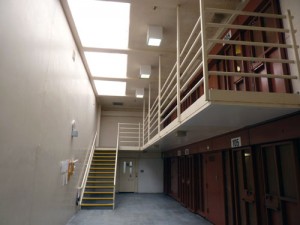
Michael Montgomery: Three previous governors have vetoed similar measures, in part after the Department of Corrections raised complaints. In this case the Department of Corrections said the bill would be very costly if it passed. It would have required prison officials to deal with lots of interview requests from the media, and it would have required them to respond on short notice.
Joshua Johnson: What is the situation now?
Michael Montgomery: As a reporter covering the prisons you can meet with inmates of your choice during regular visitor hours, if they have the right to visitors. You can take notes, but you can’t record your meeting, which is behind glass. So in essence the current rules are really much more restrictive of the broadcast media than print outlets. For broadcast reporters, it silences the voices of many of those inmates.
Joshua Johnson: What do you make of the governor’s argument that he didn’t want to make, essentially, TV stars out of these inmates?
Michael Montgomery: The current restrictions do make it impossible for a celebrity, like Charles Manson, to speak on television or the radio. However the issue for many reporters is that the current rules make it impossible to interview any inmate of your choosing. You can interview inmates randomly. You can interview inmates who are chosen by the Department of Corrections. But you cannot go to the department right now and say “I want to record an interview with a specific inmate.” That is banned by the state of California.
Joshua Johnson: How does that affect our ability to really understand how California’s prison system works, what’s going on behind bars, what areas might bear improvement?
Michael Montgomery: One example concerns last year’s hunger strike, which spread to about 13 prisons. The men who started that hunger strike are at Pelican Bay State Prison. And the Department of Corrections continues to prevent broadcast reporters from interviewing these men. These are men who launched a very successful hunger strike that helped pressure the Department of Corrections to make some changes in these isolation units. And they are inmates with whom the Department of Corrections has actually had a dialogue. However, we as broadcast reporters are not allowed to interview them on tape. So in that sense the public has been left a bit in the dark about what these men have to say.