Industry Challenges Driving Wave of Napa Winery Closures
Here are the morning’s top stories on Tuesday, November 10, 2026
- California will not be the first state to impose a wealth tax on billionaires. The Associated Press made it official last night — Proposition 40 has failed, about 53% to 47%.
- Tech super PACs spent about $50 million to influence California statehouse races this year, and it looks like that spending paid off.
- A U.S. citizen who was shot by an ICE agent last year is suing the US Government in civil court. He claims the federal government violated his constitutional rights.
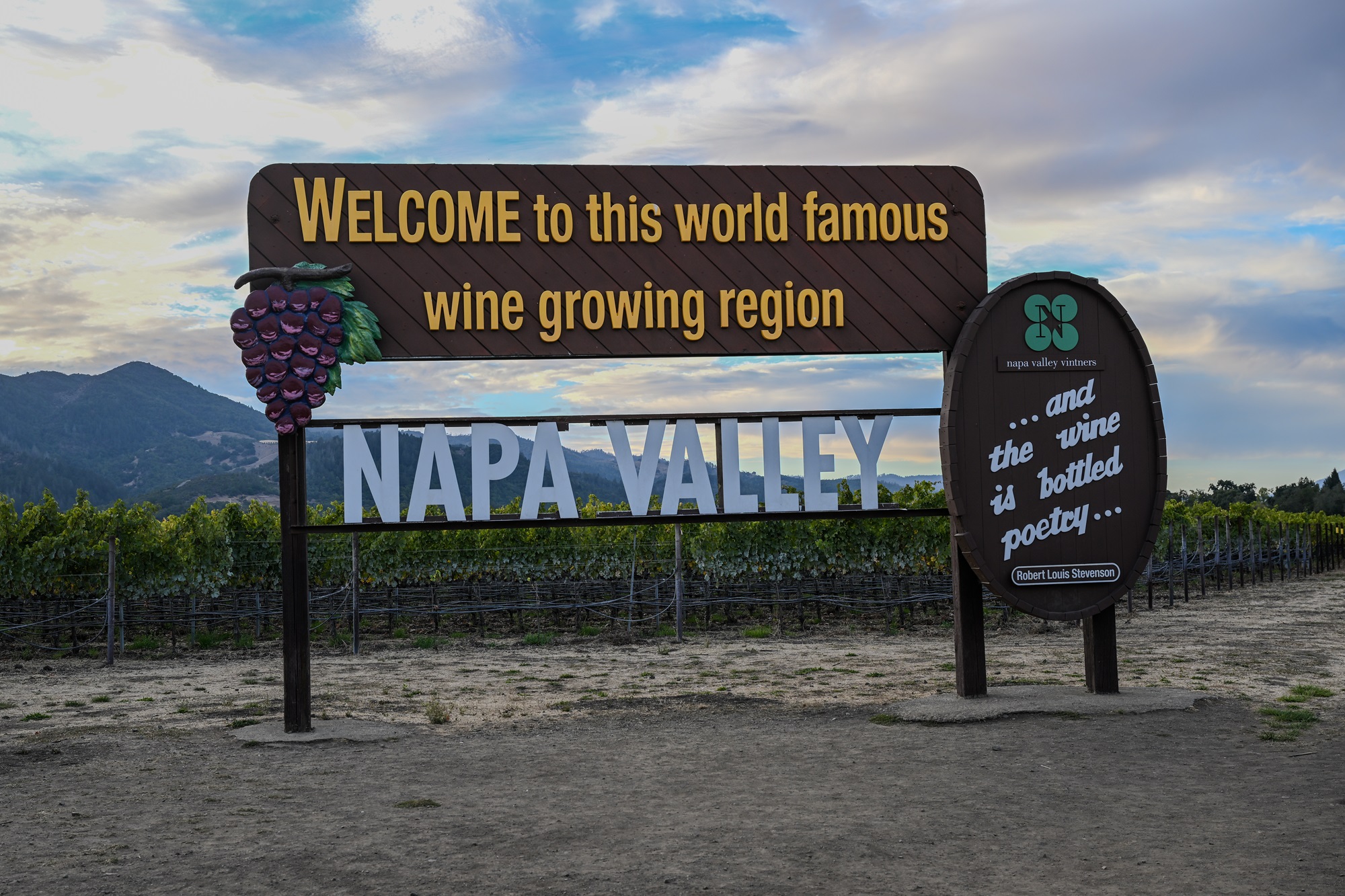
- California’s wine industry continues to face serious challenges due to declining wine consumption and overproduction. This year, several high-profile wineries closed their doors or filed for bankruptcy, and industry analysts say more could be on the horizon.
At least nine Democratic candidates backed by tech will be going to the Capitol this year.
The wins are a notable victory for tech giants as they seek to assert more control over how California regulates their industry.
“Of these nine lawmakers, eight are brand new to the legislature, so we don’t know how they will vote,” said Kate Wolffe, reporter with CalMatters. “And a few of them have addressed this saying that they will impose guardrails on AI and they will be a check. But these folks have records and alignments that are more sympathetic to causes that the tech industry cares about, like paving the way for data center development and less regulation around AI.”
Grow California, a new independent expenditure committee principally funded by cryptocurrency billionaire Chris Larsen and venture capitalist Tim Draper, and California Leads, funded mostly by Meta and Google, spent $24 million and $17 million respectively backing moderate Democrats over more left-leaning Democrats. The two groups accounted for 30% of all independent expenditures on legislative races during a record year for political spending.
Mobilizing Economic Transformation Across (Meta) California, a super PAC funded by Meta explicitly to support tech-friendly candidates, spent $2.6 million on five Democratic campaigns for the state Legislature, including three new lawmakers: Assemblymembers-elect Andrae Gonzalez and Annalisa Perea and Sen.-elect Scott Sakakihara, a former executive for Palantir Technologies who received the bulk of that spending.
In the lawsuit, Carlos Jimenez claims the federal government violated his fourth amendment rights. Among his claims are excessive force and invasion of bodily integrity.
The shooting happened in Ontario, a city about an hour east of Los Angeles.
Jimenez says he was driving to work in October of 2025 when he noticed immigration agents stopping someone near a school bus stop. In his complaint, Jimenez says that he tried to warn agents that children would be arriving soon.
But when Jimenez drove away, an agent shot his back window and hit his shoulder. He was able to drive home and was taken to the hospital.
Federal agents found Jimenez there and took him back to the scene to question him, before he could get treated.
Federal prosecutors say agents acted in self defense and charged Jimenez with assault with a deadly weapon.
The US Attorney’s office said in a statement that they had probable cause to indict Jimenez but that he opted not to go to court. Instead, Jimenez entered a diversion agreement, which required him to stay in the region and not break any laws, but did not require him to admit guilt.
Wine Country Struggling As Demand Drops
In a courtyard next to the Napa County courthouse, a small group of people gather around a man holding a clipboard. Foreclosure auctions are about to begin.
Today’s auction includes a type of property that’s rarely offered at the courthouse steps — a Napa Valley winery.
Signorello Estate burned to the ground in the 2017 Atlas Fire, and the owners racked up $37 million in debt rebuilding it. When they secured their loan in 2018, wine sales in the U.S. were still growing. But by the time the winery reopened in 2024, the market had changed dramatically.
Ray Signorello Jr. co-founded Signorello Estate in Napa with his father in 1977.
“Well, the industry’s in a lot of tough shape right now, so that’s really where we’re at,” said the winemaker. “It’s not just my winery. I mean, we’ve heard about many others just in the last week. I’m sure there’ll be a lot more after this.”
Signorello says that’s because this isn’t a typical downturn.
“We’ve just got a structural change in the wine industry that’s going to take a lot of time to work through. And it’s not just Napa, obviously. It’s not just California, either. It’s the whole world.”
The structural change he’s talking about is a steady drop in demand. Consumers are drinking wine less often, baby boomers are aging out, and younger generations aren’t replacing them at the same rate.
That has wine industry lenders feeling a lot less confident that wineries will be able to sell through their inventory and pay off their loans.
Dan Aguilar is a retired banker who spent 30 years working with California wineries. In previous downturns, he says, wineries with strong brand positioning didn’t go bankrupt.
“The fact that banks are foreclosing, that wineries are declaring bankruptcy is just a mark of how serious the situation has become,” said Aguilar. “They found other ways to sort their situation out or they would sell their business to somebody else. Usually, the market would come back in a way that allowed them to resume the trajectory they’d been on.
But that’s not happening now, and wineries looking to sell are finding few takers.
Rob McMillan is the head of the wine division at First Citizens Bank and the author of its annual State of the US Wine Industry Report.
“What you’re seeing right now is creditors that have grown weary of trying to work through situations and for various reasons, you have wineries that are at the tail end of their cash flow,” said McMillan.
Along with struggling to pay off debts they took on when times were better, many wineries that extended their loans ended up getting hit with higher interest rates — sometimes ballooning into double digits.
That includes Signorello. The winery is now owned by its lender, American AgCredit, because no acceptable offer came in at the auction. But as painful as the wave of bankruptcies and foreclosures is for the wineries involved, McMillan says the trend is a positive sign that the industry is shrinking to match demand.
“It’s part of what has to happen in order for us to find a balance point where the remaining wineries and producers can actually make a decent profit.”
McMillan predicts that the industry will recover, and California wine sales will begin growing again in 2029 and 2030.
Until then, he says, there’s never been a better time to find great deals on discounted wines.
Reported by: Tina Caputo