River Otter Seen on San Mateo County Coast for First Time Since the 1800s

For the first time in over a century, a North American river otter was spotted on the San Mateo County coast.
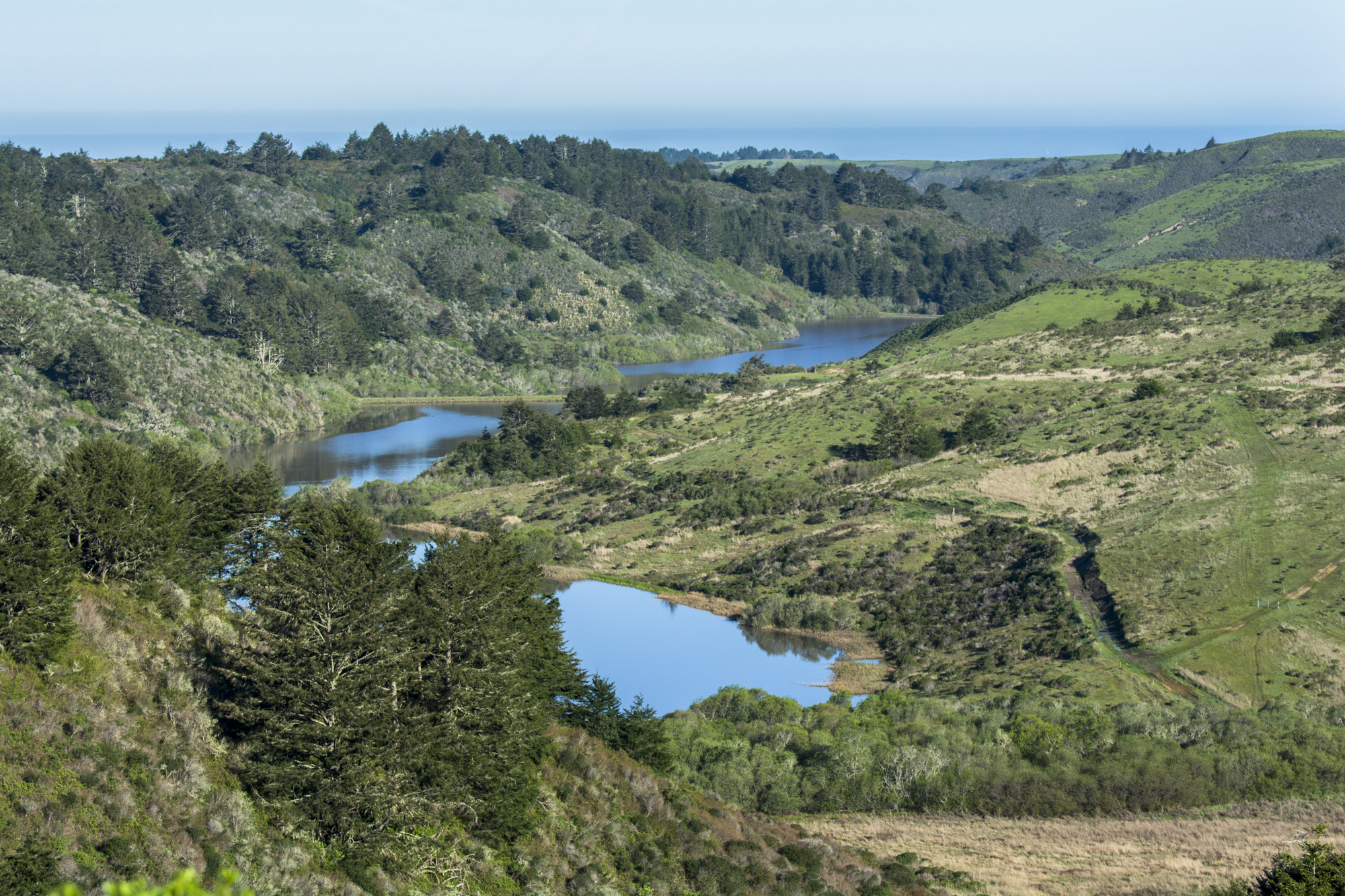
The semi-aquatic mammal was captured on a camera trap and has been seen twice now — once in July and once in September — cruising around the coastal prairie and waterways of the Cloverdale Ranch Open Space Reserve, just south of Pescadero.
“We opened up the images and all celebrated and were really excited because we had never heard of a river otter in this area, or really anywhere on the San Mateo County coast,” said Matt Sharp Chaney, a wildlife ecologist with the Midpeninsula Regional Open Space District, which acquired the 6,700-acre preserve in 2023.
River otters used to live all along the West Coast, from Alaska to Santa Barbara, before they were almost entirely wiped out in the 1800s by the fur trade.
Where this individual creature came from and how he or she got to the ranch is a mystery. The nearest documented sighting of a river otter is 20 miles away, down near Lexington Reservoir in the Santa Cruz Mountains — quite a distance to travel.
“I’d really love to hear if anybody on the San Mateo County coast has seen a river otter or signs of a river otter,” Sharp Chaney said.
Regardless, conservationists are taking the otter’s presence as a signal that restoration of the area is working.
“The fact that this watershed is healthy enough to support a river otter, that has really high energetic needs and can feed on fish and frogs and turtles and birds’ eggs and a wide variety of items, is just really exciting,” Sharp Chaney said.
He said he hopes members of the public will upload their animal sightings to the River Otter Ecology Project’s community science platform, Otter Spotter. More sightings, he said, could help fill in the gaps and give clues to where this otter came from.
River otters are known to live on the other side of the Peninsula, on the Bay side. There is also a healthy population on the Pacific Coast side in Marin County — one of which may have swam down.
Sharp Chaney said he once saw a river otter swimming in Puget Sound in Washington.
“It is possible that this individual moved across and through the Pacific Ocean to get where it is,” he said.
Cloverdale Ranch Open Space Preserve is still working agricultural land, where cattle graze in rotation. It is also the site of numerous restoration projects and animals like Coho salmon and the San Francisco garter snake.
“It’s a very resilient and amazing landscape that supports a lot of rare species,” Sharp Chaney said.
The public can access some areas of the ranch, and more open access is in the works. Meanwhile, otter fans in the region will be keen to see if any other individuals show up. Sharp Chaney said he hopes for the area’s current intrepid explorer to find a mate.
“I would be very excited if another otter distributed into the same area and they were able to start a family unit,” he said. “That would be extremely exciting news for me.”