San Diego at the Heart of New Native American Studies Curriculum
Here are the morning’s top stories on Friday, October 9, 2026
- California now has a statewide guide for teaching about Native American history and culture. In the community of Bonsall in San Diego County, a high school teacher is weaving the curriculum into his history class.
- Central Valley leaders are trying to assuage the anxieties of their constituents, who are worried about a reported ICE crackdown in the area.
Can a government legitimately claim territory, even when other people already live there? If land is not being farmed or developed, does someone else have a right to use it?
Greg Hinchliff’s 11th-grade history students grappled with these questions on a recent morning at Bonsall High School. They moved to different parts of the room depending on what they thought, gathering around signs that ranged from “strongly agree” to “strongly disagree.”
Then, they repeated the activity from the perspectives of Native Americans, European settlers, monarchs and religious leaders. “European religious leaders,” Hinchliff said to a group of students. “What would they say about this statement, that explorers can claim that land?”
“That they can claim it because they’re Christians, basically,” a student responded.
“Right, because it goes back to that doctrine of discovery,” Hinchliff said.
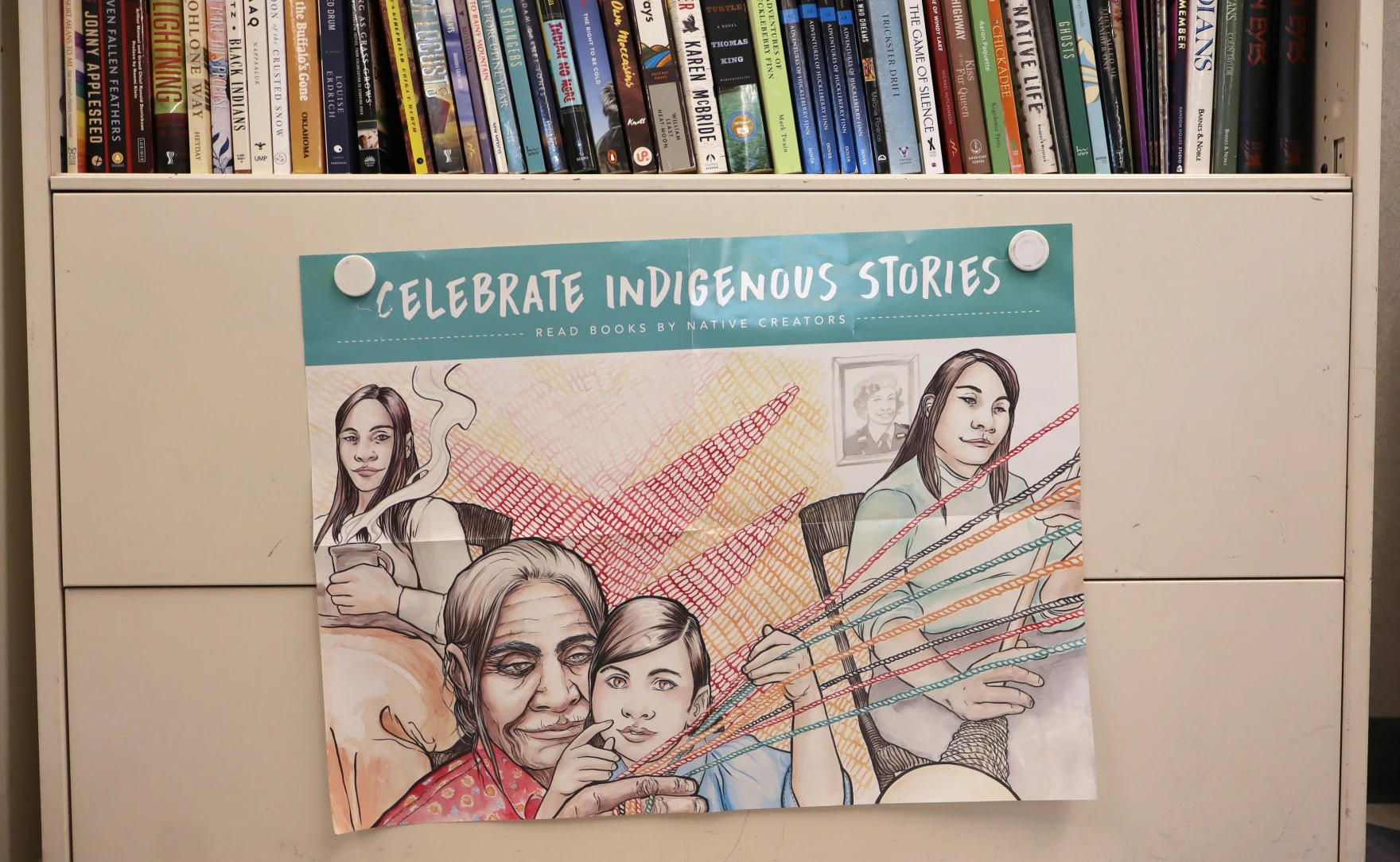
The activity comes from California’s Native American Studies Model Curriculum. Published in 2025, it has hundreds of free lesson plans and teaching materials. Hinchliff helped write it. There are lessons for elementary school students about Indigenous and colonial place names. Eighth graders can learn about tribal sovereignty and federal recognition. High schoolers can learn about cultural fire practices.
In 2021, the California Department of Education allocated $4 million to develop the curriculum. Joely Proudfit (Luiseño/Payómkawichum, Tongva), director of the California Indian Culture and Sovereignty Center at CSU San Marcos, was one of three people from across the state selected to lead the project. “We really wanted tribal communities to take the lead in helping us write this curriculum,” Proudfit said.
They held dozens of meetings with tribal communities throughout the state. There are 109 federally recognized tribes in California, plus many other tribal communities that aren’t recognized. “There’s not a lesson plan for every single tribe in the state,” Proudfit said. “This is merely the first step in the right direction.” Teachers can continue in the right direction, she said, by building relationships with members of local tribal communities.
There have been reports this week of a significant increase in immigration enforcement activity across the Central Valley.
In a statement, State Senator Anna Caballero said her office has received reports that upwards of 60 people have been taken into ICE custody in her district in the past few days. Her district includes Fresno, Madera and Merced counties.
Fresno City Councilman Miguel Arias cautioned Latino residents in particular during a city council meeting on Thursday. “Stay home. It’s not safe for you to be out. They’re not just picking up criminals, they’re not just picking up people who don’t have legal status, they’re picking up everyone,” he said.
Arias expressed concerns about the Big Fresno Fair, which opened this week. But in a statement, fair officials said they work diligently to provide a safe environment for the community. They also said they have not received any information about planned federal activity at the Fair.
Immigration agents appear to be detaining farmworkers along rural roads and others driving along busy city streets in Fresno County. Community-reported incidents of immigration agents conducting traffic stops have sent shock through the community. The sweeps come as farmers gear up to finish harvest for most crops in the Valley. In a statement on Thursday, the Nisei Farmers League also called on ICE to respect “the rights of farmers, farmworkers and communities.”