The Oakland Coliseum, Now 60, Did More Than House Great Teams
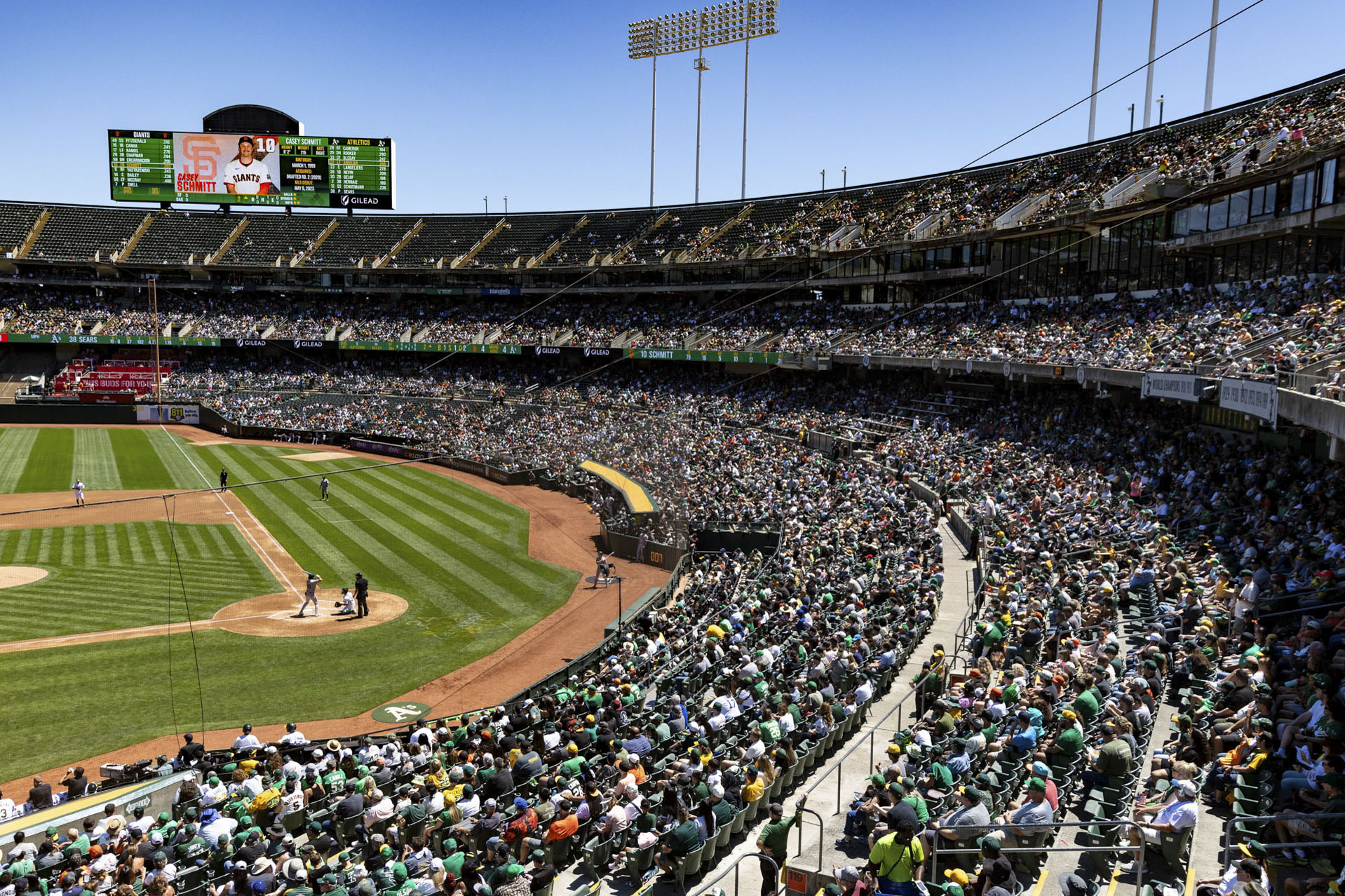
In the two years since the A’s left Oakland for West Sacramento, the Coliseum hasn’t been empty.
Major League Cricket held its championship round there this summer, and the Oakland Roots will close out their season there on Saturday, Oct. 10.
The stadium has been jointly owned and operated by the city of Oakland and Alameda County since it opened on Sept. 18, 1966 — but they’re now in the final stages of a $125 million deal to sell it to private developers. The Oakland Acquisition Company, an affiliate of the African American Sports and Entertainment Group, has ambitious plans to remake the site and revitalize East Oakland with housing, entertainment and commercial space.
Over the past six decades, the Oakland Coliseum has hosted major moments in sports, music, and civic life. The stadium has held crowds of up to 60,000 people at 7000 Coliseum Way and has its own BART and Amtrak stations. Two major movies — Moneyball and Angels in the Outfield — were filmed on the field.
“It was a community unlike any other in sports,” said Casey Pratt, former sports journalist and current vice president of the Oakland Ballers. He was a baby when he attended his first game at the Coliseum.
In light of the stadium’s 60th birthday, here are six moments that have defined its history:
Dec. 21, 1974
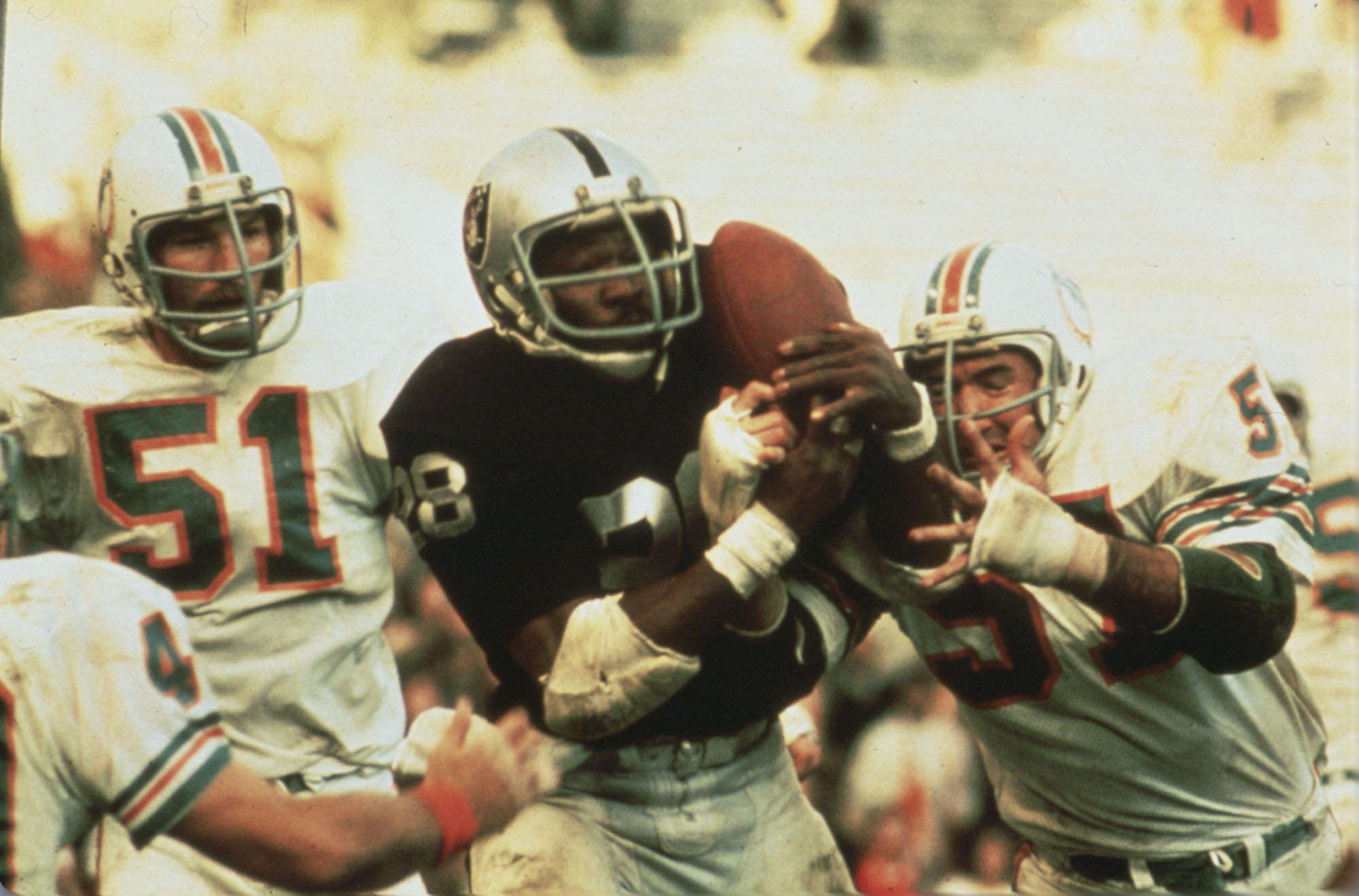
The Oakland Raiders — the “bad boys” of the National Football League — were the first team to call the Coliseum home. Two years later, in 1968, the A’s relocated from Kansas City and joined them.
One of the greatest moments in NFL history — a game-winning touchdown play known as the “Sea of Hands” — happened at the Coliseum in 1974, when the Oakland Raiders beat the Miami Dolphins, which were the two-time defending Super Bowl champions.
Oct. 15, 1981
George Henderson, also known as “Krazy George,” is widely credited with the invention of “The Wave” at the Coliseum, during a 1981 playoff game between the Oakland A’s and the New York Yankees.
“Tonight is the perfect example of what the Oakland Coliseum has meant this year: Everybody having a great time,” A’s broadcaster Bill King said during the game telecast.
May 27, 1989
The Coliseum may have been billed as an all-purpose sports complex, but its spacious dimensions and easy access by public transit or car also made it a natural choice for concerts.
In 1973, Bill Graham began staging rock concerts, called Day on the Green, during weekend afternoons with all-star lineups at the Coliseum. Corry Arnold, who chronicles late 20th-century Bay Area music history, said that for a lot of people, this event was their first rock concert.
“You didn’t have to be special or know when tickets went on sale or know somebody or something. There were no reserved seats. You’d bump into half your high school,” he said.
Over 20 years, Graham and other presenters brought acts, including the Rolling Stones, The Who, Dolly Parton and Black Sabbath to play on the field. Local heroes, such as John Fogerty, appeared at a May 1989 show that benefited AIDS research with members of the Grateful Dead as his backup band.
“The East Bay’s biggest rock star in center field of the Oakland Coliseum singing ‘Centerfield’ — it’s a big deal,” Arnold said.
June 30, 1990
One of the largest crowds in Coliseum history — around 60,000 people — packed the place in 1990 to see Nelson Mandela, who had just been released after 27 years as a political prisoner in South Africa.

He toured various cities in the U.S. to thank the many Americans who had helped push for his release and for an end to apartheid.
“We had people in all the seats, but also on the playing field,” said Sandre Swanson, an aide to then-Congressman Ron Dellums. “The churches played a big role in filling up a lot of those seats, as well as labor unions [and] community-based organizations.”
May 9, 2010
Two of Major League Baseball’s 24 perfect games were hurled by A’s pitchers at the Coliseum: Catfish Hunter on May 8, 1968, and Dallas Braden on May 9, 2010. Braden, a native of Stockton, is now one of the A’s broadcasters.
Casey Pratt attended one of those perfect games.

“In the third inning, I noticed that Dallas Braden had a perfect game going,” he said. “And a few seats down from me, this lady was also noticing it and just going crazy. And then, come the ninth inning, he completes the perfect game, and she jumps up and runs down, gets pulled down on the field, and embraces Dallas as he runs off the mound.”
He realized that the woman was Peggy Lindsay, Braden’s grandma.
Feb. 10, 2021
The Coliseum closed to the public in 2020 after the COVID-19 pandemic hit and reopened in February 2021 as a mass vaccination site.

It was jointly operated by FEMA and the California Department of Emergency Services and served as a model for similar efforts around the country.
In tents and trailers in the parking lot, health care workers dispensed up to 6,000 vaccinations a day.
By April, the majority of Alameda County residents had been vaccinated, and the A’s opened the season with fans in the stands — as long as they were masked and observed social distancing.