Former SF DA Employee Testifies to Being Called Racial Slur, Harassed by HR Director
A former employee of the San Francisco District Attorney’s Office testified Wednesday that after a co-worker called her the [N-word] in the office, the department’s human resources manager didn’t document the incident and instead routinely harassed the complainant.
Twanda Bailey was the first witness in her lawsuit against the DA’s office, where she worked for 14 years before quitting in late 2015. Alameda County Superior Court Judge Rebekah Evenson is presiding over the jury trial in a small San Francisco courtroom, after all San Francisco judges recused themselves.
By all accounts, Bailey was an exemplary lifelong public servant, receiving letters of recommendation for promotions and advancement in places like San Quentin State Prison and the San Francisco Unified School District.
By 2001, she was working in the DA’s office, where she routinely received top marks on her evaluations, with ratings from her supervisors as “exceeding expectations.” She eventually began working as an investigative assistant.
In January 2015, while under the leadership of George Gascón, the office had a mouse infestation, which Bailey had reported to human resources. On Jan. 22, Bailey’s co-worker Saras Larkin – who had previously been her supervisor – pointed out that she saw a mouse run by Bailey’s desk, which the plaintiff testified caused her to jump out of her chair.
Bailey testified that Larkin then said, “You [N-words] is so scary.”
She said that she mumbled the phrase back to herself under her breath.
Bailey said she told co-workers about the incident, but initially didn’t report it to human resources because the office’s HR director, Evette Taylor-Monachino, was good friends with Larkin. That, and two other Black women in the office, were either harassed or removed from the office.
“I was scared,” Bailey said. “I didn’t want to get harassed.”
Eventually, a supervisor overheard her discussing it at a holiday party and told Bailey that they would report it, she said. But three months later, when Bailey went to HR to get a copy of her report, Taylor-Monachino told her there was no report or formal complaint.
Bailey said Taylor-Monachino warned her that telling people in the office that Larkin called her a racial slur could create a “hostile work environment” for her. Bailey testified that she left that meeting crying.
Bailey said that, from then on, Taylor-Monachino would give her “nasty, unpleasant looks” while laughing at her in the office on a daily basis. That took a toll on her, Bailey said.
“I felt like I was working in a war zone. I felt like I had to dodge the HR manager,” Bailey said on the stand as she started to cry. “I never experienced anything like this. I didn’t know if I was going to lose my job.”
By April 2015, Bailey testified, she filed a complaint with the U.S. Equal Employment Opportunity Commission, which eventually deemed her claim insufficient.
“I felt that it was wrong that they didn’t do an investigation,” Bailey said. “It made me feel that I had to accept being called a scary [N-word].”
That summer, Bailey received numerous negative allegations against her in her performance evaluation, none of which she said were brought to her attention before being documented in her review. Bailey said she appealed that evaluation.
In August 2015, Bailey filed a formal complaint against Taylor-Monachino, who was reassigned to different duties two months later, she said.
Soon, Bailey said she was waiting for a parking spot when Taylor-Monachino pulled up to her car, rolled her window down slightly, and made a pointing gesture at Bailey, which she interpreted as “you’re going to get it.”
Bailey filed her lawsuit in December 2015, but the case was dismissed on appeal by the city attorney’s office.
But the California Supreme Court overturned that ruling in 2024, saying a single instance of being called that slur by a co-worker with no oversight of an employee was enough to proceed, as that particular racial epithet carries “the stinging barbs of history, which catch and tear the psyche the way thorns tear at skin.”
As Bailey testified, her attorney, Daniel Bacon, attempted to admit a trove of documents as evidence, including Bailey’s performance reviews from the DA’s office, her handwritten notes documenting months of alleged harassment, and more.
Judge Evenson repeatedly warned Bacon not to read from documents or refer to documents not yet admitted into evidence, as Deputy City Attorney Matthew Yan objected to many of those documents being admitted.
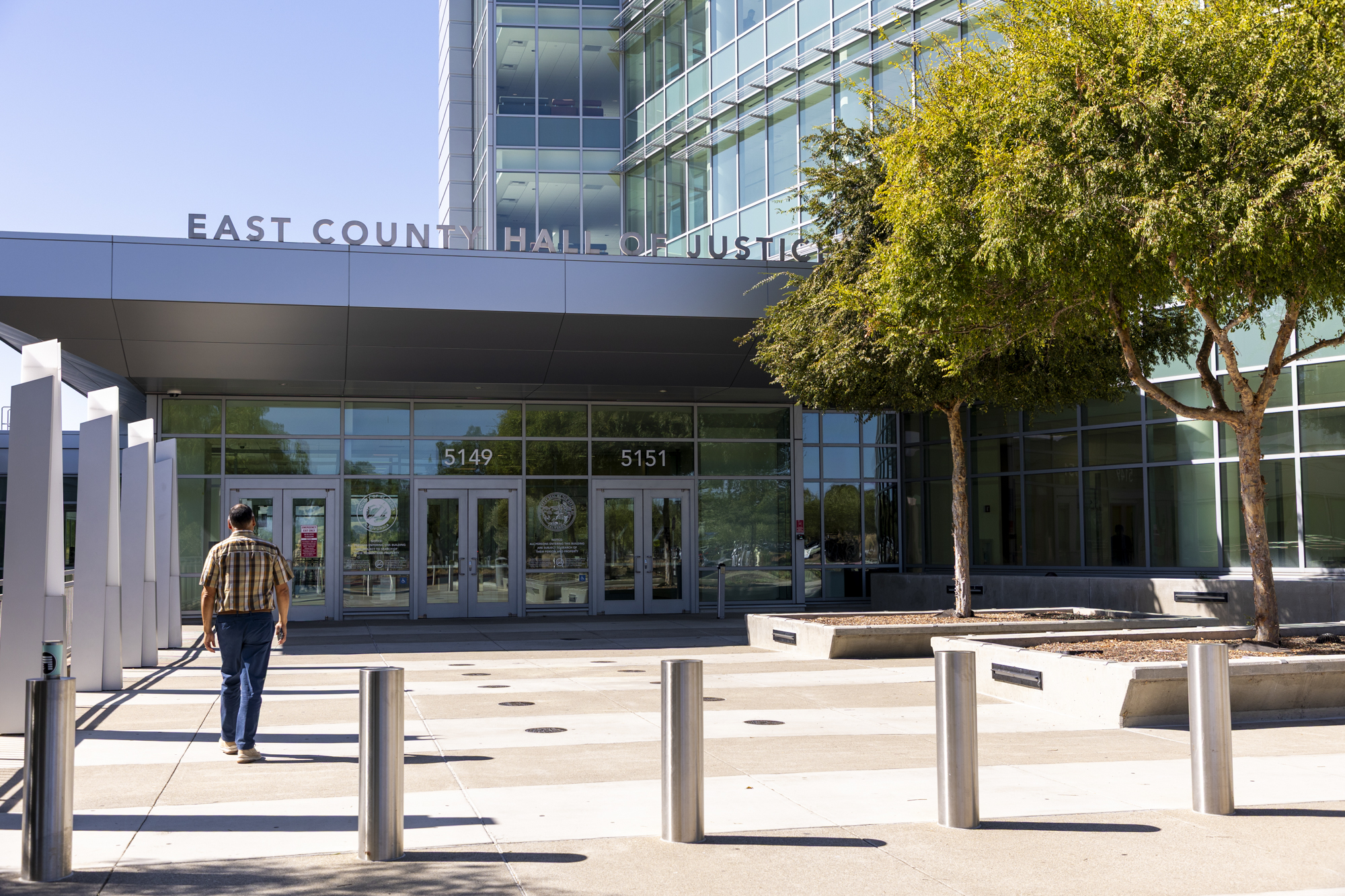
During her cross-examination by Yan, Bailey described her relationship with Larkin as a “working friend,” but said she later developed some animosity towards Larkin for repeatedly breaking office rules, like leaving work for hours at a time.
“She was always protected,” Bailey said.
Yan insinuated that Bailey may have misheard what Larkin said to her, saying that would have been the only day anyone ever heard Larkin use a racial slur.
“You heard your longtime friend call you a racial slur and you didn’t confront her about it?” Yan said.
“No, I didn’t. I walked away. I heard her correctly,” Bailey said.
Bailey testified that she worked for the San Francisco Department of Public Health in 2018, but only lasted one week at that job.
“I wasn’t the same. I had trouble concentrating,” she said. “I was frightened of supervisors. I didn’t know what would happen.”
Judge Evenson has limited the jury trial to 30 hours for each side, with the trial expected to conclude in less than two weeks.