LA Homes Turn Into New Artisanal Coffee Spots
Here are the morning’s top stories on Wednesday, October 7, 2026
- In Los Angeles, a new crop of cafes is taking the artisanal coffee experience to the next level. People are turning their homes into coffee speakeasies, serving specialty brews out of their kitchens and backyards. Despite – and perhaps because of their low-profile, these DIY businesses are all the buzz.
- Researchers are calling on OpenAI to keep kids under 18 off of ChatGPT — at least for now.
- A state agency has found that Los Angeles Unified School District risks running out of money by the end of next school year.
- Californians will vote on Proposition 43 this November. That measure would make it harder to impose or increase local taxes.
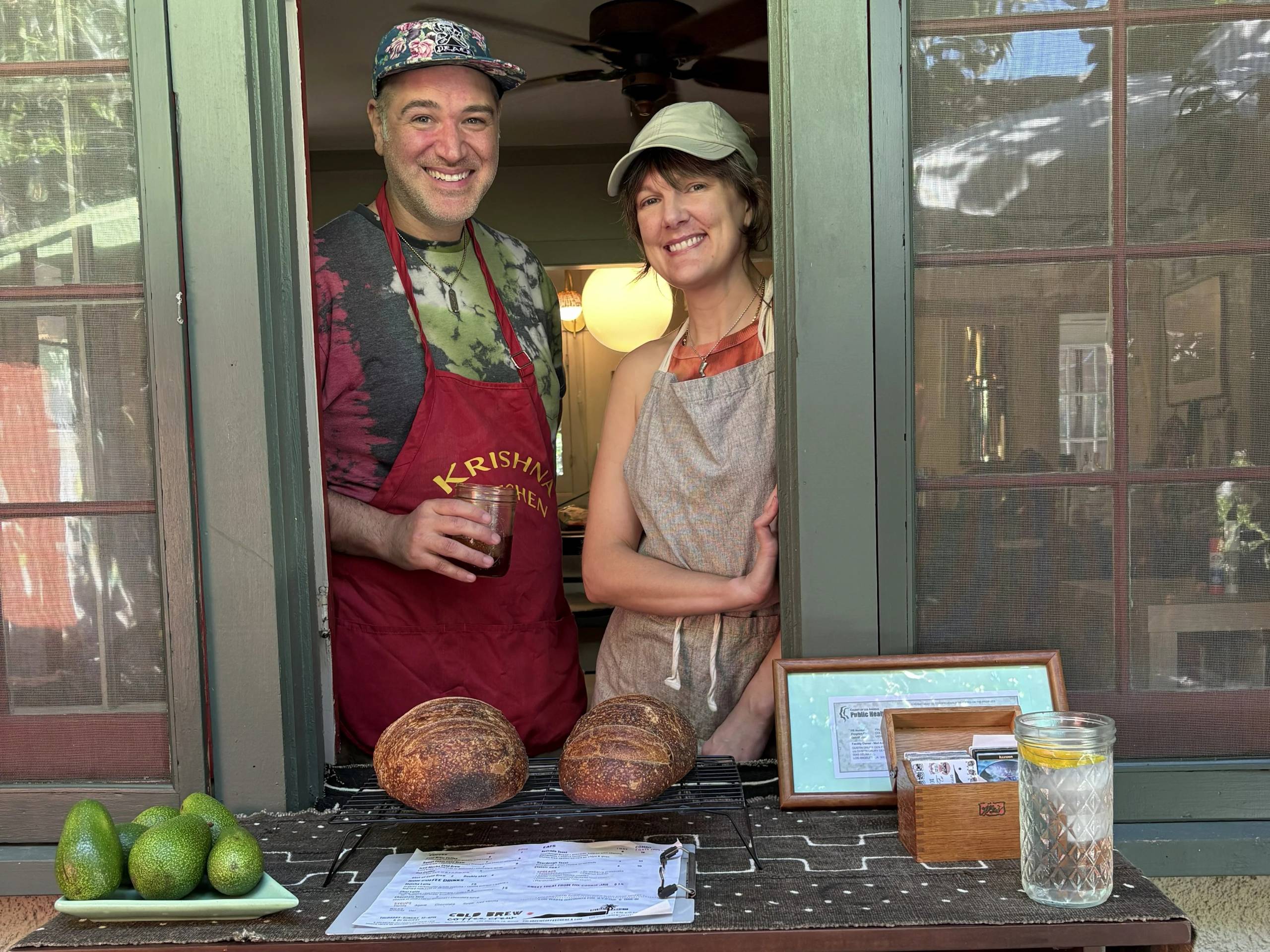
Los Angeles has over a hundred specialty coffee shops, but a new crop of cafés are taking the artisanal coffee experience to the next level. All across the county, people are turning their homes into coffee speakeasies, serving specialty brews out of their kitchens and backyards.
A county program that gives out licenses to micro-enterprise food and beverage businesses has led to a quadrupling of the spots since the beginning of the year. The program prohibits outdoor signage, so customers led by Instagram and word-of-mouth are lining up at the secret locations for a private-garden experience.
In the Echo Park neighborhood sits Loto Coffee. There are about a dozen people sitting in a terraced cactus garden – reading, sipping, chatting – as homeowner Julian Scharman pulls and pours espresso shots. “The focus here is excellent Mexican coffees,” Scharman said. “My mom is from Japan so there’s a lot of Japanese touches here that you’ll see . The handmade ceramics that I made myself that I serve all the coffee in, little Japanese sweets.”
The personal touch is one of the hallmarks of these backyard cafes. Across town in Hollywood, Cold Brew Coffee Crew serves hand-batched iced coffee and homemade bread under a big avocado tree. Dustin Drury and Angela Infrarera run their cafe out of a leafy bungalow court that used to house actors in Western movies. “The most expensive thing is what? RENT! Well, we already pay rent for our bungalow so we were like what kind of businesses can we run out of our house?”
The allure of these private spaces has a lot to do with how Los Angeles is laid out, says cultural critic David Ulin. “The history of Los Angeles has really been a history of a kind of private space city. There was a domestic quality to cultural life here,” he said.
Now, Ulin says, the city is becoming more integrated, with public transportation, vertical development and with these residential spaces turning into community hubs.
Common Sense Media’s Youth AI Safety Institute has rated ChatGPT for Teens as an “Unacceptable Risk” for everyone under 18.
OpenAI launched the teen version in August, promising “stronger built-in safety protections,” including alerts to parents when a teen discusses self-harm, a study mode parents can switch on, and a chatbot less likely to act like a friend. “If our system estimates someone is under 18 or they state their age is between 13 and 17, they are automatically placed into ChatGPT for Teens,” the announcement said.
The institute tested the product before and after the launch, running more than 4,000 prompts on accounts registered to 13- to 17-year-olds. Child psychiatrists and a pediatrician reviewed the responses. “We were actually hoping and expecting to see big improvements across the board based on that announcement,” said Tom Siegel, the institute’s executive director and a former Google trust and safety executive. “It didn’t, unfortunately, work out that way at all.”
The report’s central finding concerns safety notifications. Testers linked more than a dozen new teen accounts to parent accounts, then spent up to an hour describing suicidal thoughts, self-harm or disordered eating. The parents received no alerts. The only two notifications the testers got came from older accounts with weeks of conversation history on sensitive topics.
OpenAI pushed back on that finding. According to an editorial note added to the report, OpenAI told the researchers parent and teen accounts must be linked for about three hours before notifications can be sent, and the company has updated its help center to reflect this. The help center now says it “may take up to a few hours” after linking.
California’s school finance watchdog agency has found the Los Angeles Unified School District is at high risk of financial insolvency.
The Financial Crisis and Management Assistance Team presented its analysis at Tuesday’s school board meeting. “FCMAT’s role is not to determine which programs the district should preserve, which reductions it should make or what agreements it should reach with the labor [unions],” Jennifer Noga, an intervention specialist with the agency, told the board. “That is 100% a local decision. Our goal is to help identify the fiscal risk and help the district understand what needs to be addressed to restore fiscal stability.”
The agency’s analysis of LAUSD is based on a series of questions the agency has identified as risk factors for insolvency. The analysis found that LAUSD’s deficit spending, declining enrollment and increasing costs of employee salaries and special education put the district at risk of exhausting its reserves by the end of next school year. It also found LAUSD is at a “moderate” risk of insolvency, but ultimately received a “high” rating because a previous evaluation by the Los Angeles County Office of Education automatically triggered a more severe label. (That LACOE evaluation is also what triggered the state evaluation in the first place.)
United Teachers Los Angeles, the union that represents LAUSD educators, said in a memo to the board and in public comments that FCMAT’s analysis penalized the district for paying teachers more and overstated financial risk.
The district has a plan to cut spending, which includes eliminating thousands of jobs and funding for high-needs schools. The district must also bargain with employee unions before implementing furlough days planned for the 2027-28 school year.
Proposition 43 on the November ballot would raise the requirement for increasing special taxes placed on the ballot by citizens.
Currently, special taxes proposed by cities, counties or special districts need that supermajority approval, but as a result of a 2017 California Supreme Court ruling, special taxes proposed by voters require only a majority vote.
The initiative is supported by business groups and the Howard Jarvis Taxpayers Association. Meanwhile, unions and the California League of Cities say Prop. 43 would cripple their ability to raise critical revenue at a time when the federal government is slashing funding to state and local governments.