Central Valley Conservation Group Uses Animals to Reduce Invasive Species
Here are the morning’s top stories on Thursday, August 20, 2026
- Before any of the cities, cars and highways that came to dominate California’s landscape, the vast open land was home to many animals, plants and natural ecosystems. Today, much of the geography has been engineered for human development – and with it, a host of non-native species and insects. But just outside Fresno, there’s an effort to bring the native ecosystem into balance with the new.
- Thousands of Ukrainians across the state are waiting anxiously for a decision today from the Trump administration on whether they’ll be able to stay – or told to go back to a war zone.
- Governor Gavin Newsom says California will fight the Trump administration’s push to open national forests up to commercial use.
There are many invasive plants here at Janssen River Ranch, which sits just below Woodward Park, north of Fresno. Foxtails and star thistles thrive here, to the detriment of animals and native plants.
Rebecca Ozeran is a rangeland manager, and has been working with the Sierra Resource Conservation District on a plan to get rid of these harmful plants. It’s part of an effort to improve biodiversity in the area. But they aren’t doing this work alone. Goats are out here too, along with hundreds of sheep. They’re eating away the invasive plants and lowering dry grass that can turn into wildfire fuel. Unlike horses, goats and sheep are resistant to the toxic properties of the non-native plants.
After this, conservation groups will move in to plant native trees and shrubs that do belong here.
Millions of acres in California are covered with non-Native species that includes grasses, insects, and some animals. They harm the soil and reduce available foods. But this ecosystem disruption is not new. Researchers estimate it’s been happening since at least the 1700s. Initially through European settlement, eventually it became a reality of today’s global trade. And this is a costly problem for the state, to the tune of billions of dollars. Conservation groups say there is still a chance to fight back.
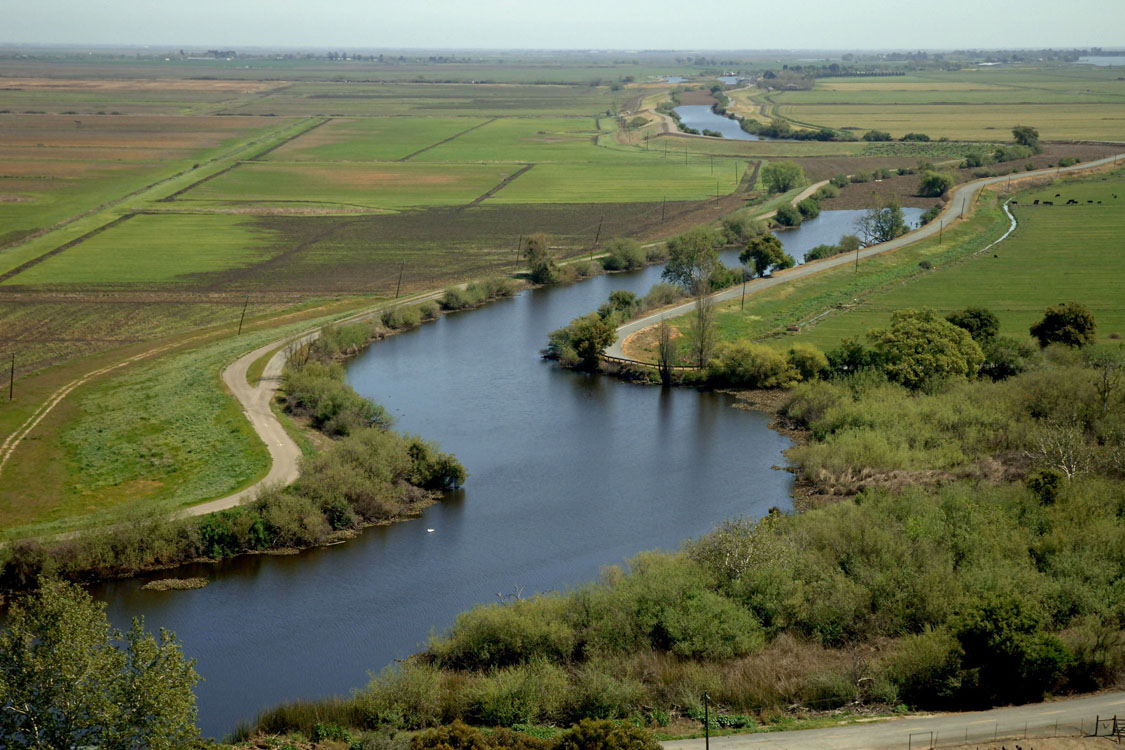
Tanner Michaelson is a manager with the conservation district. He’s standing near a shady tree where he rips out elderberries to help feed one of the hungry goats. These berries are native to this area and more of them will be planted soon. They’re one of plants that thrive along the San Joaquin River, which is nearby. It’s the second longest river in California, but also one of most endangered, which explains why the land here is also in need of restoration. But Michaelson says too many changes in the climate means things won’t go back exactly to how they were.
“We know it’s going to be hotter, we know there’s going to be less water availability, and so we may not be able to plant the same plants that were there before, because the river’s just not as big as before,” says Michaelson. “And there’s not as much water coming through it, so we can’t support the same riparian habitat that was there before because those systems and infrastructure don’t exist anymore.”
In the past, elk and even deer used to graze on this land. Today, sheep and goats are doing their part. And when they’re done, the land will look just a tiny bit like it did hundreds of years ago.
More than 100,000 Ukrainians in the U.S. have temporary protected status, a program for people from countries facing conflict or disaster.
But that could end in October if officials decide to terminate it, as they’ve done with 11 other countries.
Ruslan Gurzhiy, editor of the news outlet Slavic Sacramento, says Ukrainians on TPS fear deportation.
“There is a war going on. It’s still going on. It’s unclear when Ukrainians will find out their fate.”
The government used to announce TPS decisions 60 days before the status was set to expire, but lawyers say officials now often wait until it runs out before telling people.
Newsom’s comment comes after the federal administration announced this week that it plans to scrap the “roadless rule” – which blocks road construction in protected forests, including 4 million acres in California.
Some of California’s most remote backcountry could see new roads and development — even as U.S. Forest Service research shows that roads are a major source of wildfire ignitions in the state’s national forests.
Newsom calls the move reckless.
“They’re taking our inheritance, our collective inheritance, and squandering it in real time,” said Newsom. “So, yes, we’ll do everything we can to use our moral authority and our formal authority, litigate as we must, as we do, and we intend to do so successfully.”
The U.S. Forest Service said in a statement that roads are necessary to help with wildfire management. Environmentalists say they open the way to logging and mining – and to habitat destruction.