window.__IS_SSR__=true
window.__INITIAL_STATE__={
"attachmentsReducer": {
"audio_0": {
"type": "attachments",
"id": "audio_0",
"imgSizes": {
"kqedFullSize": {
"file": "https://ww2.kqed.org/news/wp-content/themes/KQED-unified/img/audio_bgs/background0.jpg"
}
}
},
"audio_1": {
"type": "attachments",
"id": "audio_1",
"imgSizes": {
"kqedFullSize": {
"file": "https://ww2.kqed.org/news/wp-content/themes/KQED-unified/img/audio_bgs/background1.jpg"
}
}
},
"audio_2": {
"type": "attachments",
"id": "audio_2",
"imgSizes": {
"kqedFullSize": {
"file": "https://ww2.kqed.org/news/wp-content/themes/KQED-unified/img/audio_bgs/background2.jpg"
}
}
},
"audio_3": {
"type": "attachments",
"id": "audio_3",
"imgSizes": {
"kqedFullSize": {
"file": "https://ww2.kqed.org/news/wp-content/themes/KQED-unified/img/audio_bgs/background3.jpg"
}
}
},
"audio_4": {
"type": "attachments",
"id": "audio_4",
"imgSizes": {
"kqedFullSize": {
"file": "https://ww2.kqed.org/news/wp-content/themes/KQED-unified/img/audio_bgs/background4.jpg"
}
}
},
"placeholder": {
"type": "attachments",
"id": "placeholder",
"imgSizes": {
"thumbnail": {
"file": "https://cdn.kqed.org/wp-content/uploads/2024/12/KQED-Default-Image-816638274-2000x1333-1-160x107.jpg",
"width": 160,
"height": 107,
"mimeType": "image/jpeg"
},
"medium": {
"file": "https://cdn.kqed.org/wp-content/uploads/2024/12/KQED-Default-Image-816638274-2000x1333-1-800x533.jpg",
"width": 800,
"height": 533,
"mimeType": "image/jpeg"
},
"medium_large": {
"file": "https://cdn.kqed.org/wp-content/uploads/2024/12/KQED-Default-Image-816638274-2000x1333-1-768x512.jpg",
"width": 768,
"height": 512,
"mimeType": "image/jpeg"
},
"large": {
"file": "https://cdn.kqed.org/wp-content/uploads/2024/12/KQED-Default-Image-816638274-2000x1333-1-1020x680.jpg",
"width": 1020,
"height": 680,
"mimeType": "image/jpeg"
},
"1536x1536": {
"file": "https://cdn.kqed.org/wp-content/uploads/2024/12/KQED-Default-Image-816638274-2000x1333-1-1536x1024.jpg",
"width": 1536,
"height": 1024,
"mimeType": "image/jpeg"
},
"fd-lrg": {
"file": "https://cdn.kqed.org/wp-content/uploads/2024/12/KQED-Default-Image-816638274-2000x1333-1-1536x1024.jpg",
"width": 1536,
"height": 1024,
"mimeType": "image/jpeg"
},
"fd-med": {
"file": "https://cdn.kqed.org/wp-content/uploads/2024/12/KQED-Default-Image-816638274-2000x1333-1-1020x680.jpg",
"width": 1020,
"height": 680,
"mimeType": "image/jpeg"
},
"fd-sm": {
"file": "https://cdn.kqed.org/wp-content/uploads/2024/12/KQED-Default-Image-816638274-2000x1333-1-800x533.jpg",
"width": 800,
"height": 533,
"mimeType": "image/jpeg"
},
"post-thumbnail": {
"file": "https://cdn.kqed.org/wp-content/uploads/2024/12/KQED-Default-Image-816638274-2000x1333-1-672x372.jpg",
"width": 672,
"height": 372,
"mimeType": "image/jpeg"
},
"twentyfourteen-full-width": {
"file": "https://cdn.kqed.org/wp-content/uploads/2024/12/KQED-Default-Image-816638274-2000x1333-1-1038x576.jpg",
"width": 1038,
"height": 576,
"mimeType": "image/jpeg"
},
"xxsmall": {
"file": "https://cdn.kqed.org/wp-content/uploads/2024/12/KQED-Default-Image-816638274-2000x1333-1-160x107.jpg",
"width": 160,
"height": 107,
"mimeType": "image/jpeg"
},
"xsmall": {
"file": "https://cdn.kqed.org/wp-content/uploads/2024/12/KQED-Default-Image-816638274-2000x1333-1-672x372.jpg",
"width": 672,
"height": 372,
"mimeType": "image/jpeg"
},
"small": {
"file": "https://cdn.kqed.org/wp-content/uploads/2024/12/KQED-Default-Image-816638274-2000x1333-1-672x372.jpg",
"width": 672,
"height": 372,
"mimeType": "image/jpeg"
},
"xlarge": {
"file": "https://cdn.kqed.org/wp-content/uploads/2024/12/KQED-Default-Image-816638274-2000x1333-1-1020x680.jpg",
"width": 1020,
"height": 680,
"mimeType": "image/jpeg"
},
"full-width": {
"file": "https://cdn.kqed.org/wp-content/uploads/2024/12/KQED-Default-Image-816638274-2000x1333-1-1920x1280.jpg",
"width": 1920,
"height": 1280,
"mimeType": "image/jpeg"
},
"guest-author-32": {
"file": "https://cdn.kqed.org/wp-content/uploads/2025/01/KQED-Default-Image-816638274-1333x1333-1-160x160.jpg",
"width": 32,
"height": 32,
"mimeType": "image/jpeg"
},
"guest-author-50": {
"file": "https://cdn.kqed.org/wp-content/uploads/2025/01/KQED-Default-Image-816638274-1333x1333-1-160x160.jpg",
"width": 50,
"height": 50,
"mimeType": "image/jpeg"
},
"guest-author-64": {
"file": "https://cdn.kqed.org/wp-content/uploads/2025/01/KQED-Default-Image-816638274-1333x1333-1-160x160.jpg",
"width": 64,
"height": 64,
"mimeType": "image/jpeg"
},
"guest-author-96": {
"file": "https://cdn.kqed.org/wp-content/uploads/2025/01/KQED-Default-Image-816638274-1333x1333-1-160x160.jpg",
"width": 96,
"height": 96,
"mimeType": "image/jpeg"
},
"guest-author-128": {
"file": "https://cdn.kqed.org/wp-content/uploads/2025/01/KQED-Default-Image-816638274-1333x1333-1-160x160.jpg",
"width": 128,
"height": 128,
"mimeType": "image/jpeg"
},
"detail": {
"file": "https://cdn.kqed.org/wp-content/uploads/2025/01/KQED-Default-Image-816638274-1333x1333-1-160x160.jpg",
"width": 160,
"height": 160,
"mimeType": "image/jpeg"
},
"kqedFullSize": {
"file": "https://cdn.kqed.org/wp-content/uploads/2024/12/KQED-Default-Image-816638274-2000x1333-1.jpg",
"width": 2000,
"height": 1333
}
}
},
"mindshift_62446": {
"type": "attachments",
"id": "mindshift_62446",
"meta": {
"index": "attachments_1716263798",
"site": "mindshift",
"id": "62446",
"found": true
},
"parent": 62445,
"imgSizes": {
"thumbnail": {
"file": "https://ww2.kqed.org/app/uploads/sites/23/2023/09/cb-tutor-160x107.jpeg",
"width": 160,
"mimeType": "image/jpeg",
"height": 107
},
"post-thumbnail": {
"file": "https://ww2.kqed.org/app/uploads/sites/23/2023/09/cb-tutor-672x372.jpeg",
"width": 672,
"mimeType": "image/jpeg",
"height": 372
},
"kqedFullSize": {
"file": "https://ww2.kqed.org/app/uploads/sites/23/2023/09/cb-tutor.jpeg",
"width": 840,
"height": 560
},
"medium": {
"file": "https://ww2.kqed.org/app/uploads/sites/23/2023/09/cb-tutor-800x533.jpeg",
"width": 800,
"mimeType": "image/jpeg",
"height": 533
},
"medium_large": {
"file": "https://ww2.kqed.org/app/uploads/sites/23/2023/09/cb-tutor-768x512.jpeg",
"width": 768,
"mimeType": "image/jpeg",
"height": 512
}
},
"publishDate": 1695926603,
"modified": 1695926817,
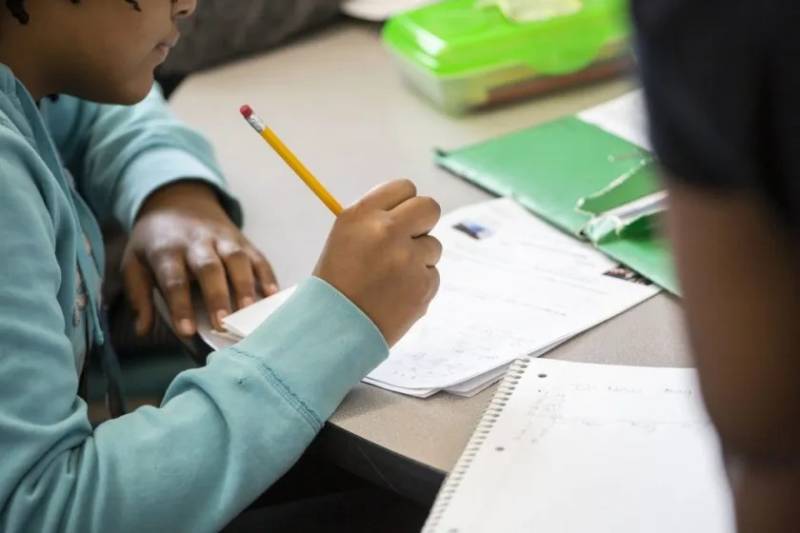
"caption": "Denver Public Schools contracted with two outside companies to provide tutoring in math and reading. The contracts were outcomes-based.",
"description": null,
"title": "cb tutor",
"credit": "Nathan W. Armes/Chalkbeat",
"status": "inherit",
"altTag": "child holding a pencil at a desk with a paper assignment",
"isLoading": false,
"fetchFailed": false
},
"mindshift_62388": {
"type": "attachments",
"id": "mindshift_62388",
"meta": {
"index": "attachments_1716263798",
"site": "mindshift",
"id": "62388",
"found": true
},
"parent": 62386,
"imgSizes": {
"twentyfourteen-full-width": {
"file": "https://ww2.kqed.org/app/uploads/sites/23/2023/09/chalkbeatfiscal-cliff-1038x576.jpeg",
"width": 1038,
"mimeType": "image/jpeg",
"height": 576
},
"thumbnail": {
"file": "https://ww2.kqed.org/app/uploads/sites/23/2023/09/chalkbeatfiscal-cliff-160x107.jpeg",
"width": 160,
"mimeType": "image/jpeg",
"height": 107
},
"post-thumbnail": {
"file": "https://ww2.kqed.org/app/uploads/sites/23/2023/09/chalkbeatfiscal-cliff-672x372.jpeg",
"width": 672,
"mimeType": "image/jpeg",
"height": 372
},
"kqedFullSize": {
"file": "https://ww2.kqed.org/app/uploads/sites/23/2023/09/chalkbeatfiscal-cliff.jpeg",
"width": 1680,
"height": 1120
},
"large": {
"file": "https://ww2.kqed.org/app/uploads/sites/23/2023/09/chalkbeatfiscal-cliff-1020x680.jpeg",
"width": 1020,
"mimeType": "image/jpeg",
"height": 680
},
"1536x1536": {
"file": "https://ww2.kqed.org/app/uploads/sites/23/2023/09/chalkbeatfiscal-cliff-1536x1024.jpeg",
"width": 1536,
"mimeType": "image/jpeg",
"height": 1024
},
"medium": {
"file": "https://ww2.kqed.org/app/uploads/sites/23/2023/09/chalkbeatfiscal-cliff-800x533.jpeg",
"width": 800,
"mimeType": "image/jpeg",
"height": 533
},
"medium_large": {
"file": "https://ww2.kqed.org/app/uploads/sites/23/2023/09/chalkbeatfiscal-cliff-768x512.jpeg",
"width": 768,
"mimeType": "image/jpeg",
"height": 512
}
},
"publishDate": 1694624571,
"modified": 1694624669,
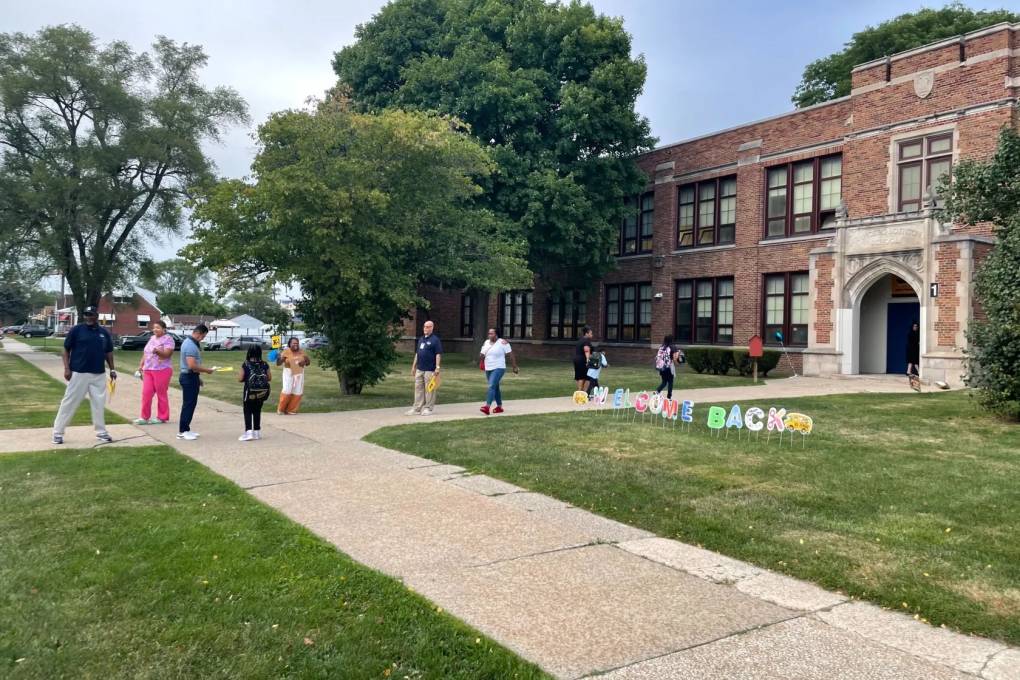
"caption": "Parents walk their children to school at Mark Twain School for Scholars in Detroit. In coming years, schools face a funding cliff as temporary COVID relief money runs out.",
"description": null,
"title": "chalkbeatfiscal cliff",
"credit": "Ethan Bakuli/Chalkbeat",
"status": "inherit",
"altTag": "wide shot of a brick school building with grass trees and a sidewalk in front. Children and adults walk on the sidewalk",
"isLoading": false,
"fetchFailed": false
},
"mindshift_62366": {
"type": "attachments",
"id": "mindshift_62366",
"meta": {
"index": "attachments_1716263798",
"site": "mindshift",
"id": "62366",
"found": true
},
"parent": 62365,
"imgSizes": {
"twentyfourteen-full-width": {
"file": "https://ww2.kqed.org/app/uploads/sites/23/2023/09/barshay-edtech-1038x576.jpeg",
"width": 1038,
"mimeType": "image/jpeg",
"height": 576
},
"thumbnail": {
"file": "https://ww2.kqed.org/app/uploads/sites/23/2023/09/barshay-edtech-160x107.jpeg",
"width": 160,
"mimeType": "image/jpeg",
"height": 107
},
"post-thumbnail": {
"file": "https://ww2.kqed.org/app/uploads/sites/23/2023/09/barshay-edtech-672x372.jpeg",
"width": 672,
"mimeType": "image/jpeg",
"height": 372
},
"kqedFullSize": {
"file": "https://ww2.kqed.org/app/uploads/sites/23/2023/09/barshay-edtech-scaled.jpeg",
"width": 2560,
"height": 1707
},
"2048x2048": {
"file": "https://ww2.kqed.org/app/uploads/sites/23/2023/09/barshay-edtech-2048x1365.jpeg",
"width": 2048,
"mimeType": "image/jpeg",
"height": 1365
},
"large": {
"file": "https://ww2.kqed.org/app/uploads/sites/23/2023/09/barshay-edtech-1020x680.jpeg",
"width": 1020,
"mimeType": "image/jpeg",
"height": 680
},
"1536x1536": {
"file": "https://ww2.kqed.org/app/uploads/sites/23/2023/09/barshay-edtech-1536x1024.jpeg",
"width": 1536,
"mimeType": "image/jpeg",
"height": 1024
},
"full-width": {
"file": "https://ww2.kqed.org/app/uploads/sites/23/2023/09/barshay-edtech-1920x1280.jpeg",
"width": 1920,
"mimeType": "image/jpeg",
"height": 1280
},
"medium": {
"file": "https://ww2.kqed.org/app/uploads/sites/23/2023/09/barshay-edtech-800x533.jpeg",
"width": 800,
"mimeType": "image/jpeg",
"height": 533
},
"medium_large": {
"file": "https://ww2.kqed.org/app/uploads/sites/23/2023/09/barshay-edtech-768x512.jpeg",
"width": 768,
"mimeType": "image/jpeg",
"height": 512
}
},
"publishDate": 1694364129,
"modified": 1694364170,
"caption": null,
"description": null,
"title": "Barshay edtech",
"credit": "Zachary Clingenpeel for The Hechinger Report",
"status": "inherit",
"altTag": null,
"isLoading": false,
"fetchFailed": false
},
"mindshift_62074": {
"type": "attachments",
"id": "mindshift_62074",
"meta": {
"index": "attachments_1716263798",
"site": "mindshift",
"id": "62074",
"found": true
},
"parent": 62073,
"imgSizes": {
"twentyfourteen-full-width": {
"file": "https://ww2.kqed.org/app/uploads/sites/23/2023/07/iStock-999246336-1038x576.jpg",
"width": 1038,
"mimeType": "image/jpeg",
"height": 576
},
"thumbnail": {
"file": "https://ww2.kqed.org/app/uploads/sites/23/2023/07/iStock-999246336-160x106.jpg",
"width": 160,
"mimeType": "image/jpeg",
"height": 106
},
"post-thumbnail": {
"file": "https://ww2.kqed.org/app/uploads/sites/23/2023/07/iStock-999246336-672x372.jpg",
"width": 672,
"mimeType": "image/jpeg",
"height": 372
},
"kqedFullSize": {
"file": "https://ww2.kqed.org/app/uploads/sites/23/2023/07/iStock-999246336.jpg",
"width": 2125,
"height": 1411
},
"2048x2048": {
"file": "https://ww2.kqed.org/app/uploads/sites/23/2023/07/iStock-999246336-2048x1360.jpg",
"width": 2048,
"mimeType": "image/jpeg",
"height": 1360
},
"large": {
"file": "https://ww2.kqed.org/app/uploads/sites/23/2023/07/iStock-999246336-1020x677.jpg",
"width": 1020,
"mimeType": "image/jpeg",
"height": 677
},
"1536x1536": {
"file": "https://ww2.kqed.org/app/uploads/sites/23/2023/07/iStock-999246336-1536x1020.jpg",
"width": 1536,
"mimeType": "image/jpeg",
"height": 1020
},
"full-width": {
"file": "https://ww2.kqed.org/app/uploads/sites/23/2023/07/iStock-999246336-1920x1275.jpg",
"width": 1920,
"mimeType": "image/jpeg",
"height": 1275
},
"medium": {
"file": "https://ww2.kqed.org/app/uploads/sites/23/2023/07/iStock-999246336-800x531.jpg",
"width": 800,
"mimeType": "image/jpeg",
"height": 531
},
"medium_large": {
"file": "https://ww2.kqed.org/app/uploads/sites/23/2023/07/iStock-999246336-768x510.jpg",
"width": 768,
"mimeType": "image/jpeg",
"height": 510
}
},
"publishDate": 1690228189,
"modified": 1690228235,
"caption": null,
"description": null,
"title": null,
"credit": "iStock/monkeybusinessimages",
"status": "inherit",
"altTag": "high school student and tutor look at an assignment",
"isLoading": false,
"fetchFailed": false
},
"mindshift_62043": {
"type": "attachments",
"id": "mindshift_62043",
"meta": {
"index": "attachments_1716263798",
"site": "mindshift",
"id": "62043",
"found": true
},
"parent": 62041,
"imgSizes": {
"twentyfourteen-full-width": {
"file": "https://ww2.kqed.org/app/uploads/sites/23/2023/07/paper1-1038x576.jpg",
"width": 1038,
"mimeType": "image/jpeg",
"height": 576
},
"thumbnail": {
"file": "https://ww2.kqed.org/app/uploads/sites/23/2023/07/paper1-160x90.jpg",
"width": 160,
"mimeType": "image/jpeg",
"height": 90
},
"post-thumbnail": {
"file": "https://ww2.kqed.org/app/uploads/sites/23/2023/07/paper1-672x372.jpg",
"width": 672,
"mimeType": "image/jpeg",
"height": 372
},
"kqedFullSize": {
"file": "https://ww2.kqed.org/app/uploads/sites/23/2023/07/paper1.jpg",
"width": 1665,
"height": 937
},
"large": {
"file": "https://ww2.kqed.org/app/uploads/sites/23/2023/07/paper1-1020x574.jpg",
"width": 1020,
"mimeType": "image/jpeg",
"height": 574
},
"1536x1536": {
"file": "https://ww2.kqed.org/app/uploads/sites/23/2023/07/paper1-1536x864.jpg",
"width": 1536,
"mimeType": "image/jpeg",
"height": 864
},
"medium": {
"file": "https://ww2.kqed.org/app/uploads/sites/23/2023/07/paper1-800x450.jpg",
"width": 800,
"mimeType": "image/jpeg",
"height": 450
},
"medium_large": {
"file": "https://ww2.kqed.org/app/uploads/sites/23/2023/07/paper1-768x432.jpg",
"width": 768,
"mimeType": "image/jpeg",
"height": 432
}
},
"publishDate": 1689792629,
"modified": 1689792670,
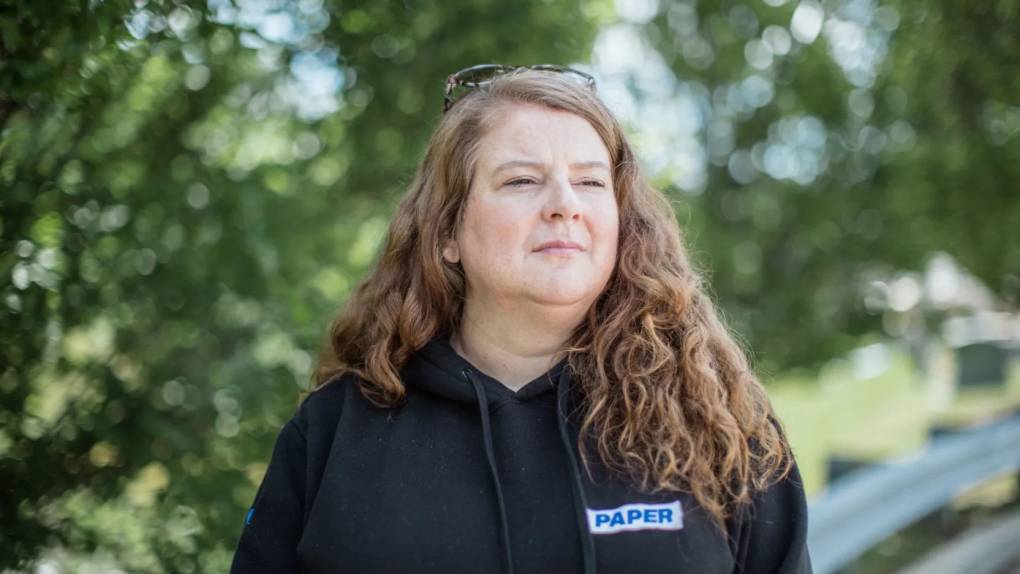
"caption": "Lauren Williams quit her job working for the online tutoring company Paper this spring after deciding the service was “not doing what’s right by the kids.”",
"description": null,
"title": "paper1",
"credit": "Rosem Morton for Chalkbeat",
"status": "inherit",
"altTag": null,
"isLoading": false,
"fetchFailed": false
},
"mindshift_61721": {
"type": "attachments",
"id": "mindshift_61721",
"meta": {
"index": "attachments_1716263798",
"site": "mindshift",
"id": "61721",
"found": true
},
"parent": 61719,
"imgSizes": {
"twentyfourteen-full-width": {
"file": "https://ww2.kqed.org/app/uploads/sites/23/2023/05/chicago1-scaled-e1685393054334-1038x576.jpg",
"width": 1038,
"mimeType": "image/jpeg",
"height": 576
},
"thumbnail": {
"file": "https://ww2.kqed.org/app/uploads/sites/23/2023/05/chicago1-scaled-e1685393054334-160x104.jpg",
"width": 160,
"mimeType": "image/jpeg",
"height": 104
},
"post-thumbnail": {
"file": "https://ww2.kqed.org/app/uploads/sites/23/2023/05/chicago1-scaled-e1685393054334-672x372.jpg",
"width": 672,
"mimeType": "image/jpeg",
"height": 372
},
"kqedFullSize": {
"file": "https://ww2.kqed.org/app/uploads/sites/23/2023/05/chicago1-scaled-e1685393054334.jpg",
"width": 1669,
"height": 1086
},
"2048x2048": {
"file": "https://ww2.kqed.org/app/uploads/sites/23/2023/05/chicago1-scaled-e1685392862988-2048x1071.jpg",
"width": 2048,
"mimeType": "image/jpeg",
"height": 1071
},
"large": {
"file": "https://ww2.kqed.org/app/uploads/sites/23/2023/05/chicago1-scaled-e1685393054334-1020x664.jpg",
"width": 1020,
"mimeType": "image/jpeg",
"height": 664
},
"1536x1536": {
"file": "https://ww2.kqed.org/app/uploads/sites/23/2023/05/chicago1-scaled-e1685393054334-1536x999.jpg",
"width": 1536,
"mimeType": "image/jpeg",
"height": 999
},
"full-width": {
"file": "https://ww2.kqed.org/app/uploads/sites/23/2023/05/chicago1-scaled-e1685392862988-1920x1004.jpg",
"width": 1920,
"mimeType": "image/jpeg",
"height": 1004
},
"medium": {
"file": "https://ww2.kqed.org/app/uploads/sites/23/2023/05/chicago1-scaled-e1685393054334-800x521.jpg",
"width": 800,
"mimeType": "image/jpeg",
"height": 521
},
"medium_large": {
"file": "https://ww2.kqed.org/app/uploads/sites/23/2023/05/chicago1-scaled-e1685393054334-768x500.jpg",
"width": 768,
"mimeType": "image/jpeg",
"height": 500
}
},
"publishDate": 1685392369,
"modified": 1685393411,
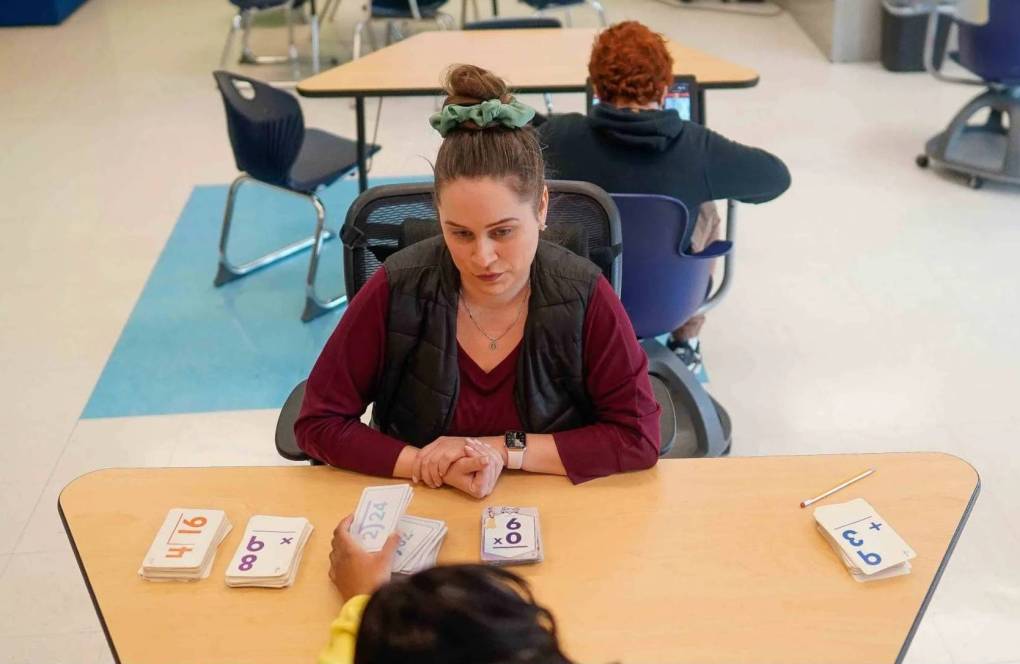
"caption": "Teresa Przybyslawski, an interventionist at Chicago’s Brunson Elementary School, works with a student on multiplication and division using flashcards. School districts around the country are pushing to help students bounce back from the pandemic’s profound academic damage.",
"description": null,
"title": "chicago1",
"credit": "Christian K. Lee for Chalkbeat",
"status": "inherit",
"altTag": null,
"isLoading": false,
"fetchFailed": false
},
"mindshift_61594": {
"type": "attachments",
"id": "mindshift_61594",
"meta": {
"index": "attachments_1716263798",
"site": "mindshift",
"id": "61594",
"found": true
},
"parent": 61593,
"imgSizes": {
"twentyfourteen-full-width": {
"file": "https://ww2.kqed.org/app/uploads/sites/23/2023/05/iStock-ngupakarti-1038x576.jpg",
"width": 1038,
"mimeType": "image/jpeg",
"height": 576
},
"thumbnail": {
"file": "https://ww2.kqed.org/app/uploads/sites/23/2023/05/iStock-ngupakarti-160x95.jpg",
"width": 160,
"mimeType": "image/jpeg",
"height": 95
},
"post-thumbnail": {
"file": "https://ww2.kqed.org/app/uploads/sites/23/2023/05/iStock-ngupakarti-672x372.jpg",
"width": 672,
"mimeType": "image/jpeg",
"height": 372
},
"kqedFullSize": {
"file": "https://ww2.kqed.org/app/uploads/sites/23/2023/05/iStock-ngupakarti.jpg",
"width": 1332,
"height": 787
},
"large": {
"file": "https://ww2.kqed.org/app/uploads/sites/23/2023/05/iStock-ngupakarti-1020x603.jpg",
"width": 1020,
"mimeType": "image/jpeg",
"height": 603
},
"medium": {
"file": "https://ww2.kqed.org/app/uploads/sites/23/2023/05/iStock-ngupakarti-800x473.jpg",
"width": 800,
"mimeType": "image/jpeg",
"height": 473
},
"medium_large": {
"file": "https://ww2.kqed.org/app/uploads/sites/23/2023/05/iStock-ngupakarti-768x454.jpg",
"width": 768,
"mimeType": "image/jpeg",
"height": 454
}
},
"publishDate": 1683483278,
"modified": 1683483358,
"caption": null,
"description": null,
"title": "Vector illustration of teacher teach a lecture to student. Concept of math education, study, and learning. Flat digital illustration cartoon style.",
"credit": "iStock/ngupakarti",
"status": "inherit",
"altTag": null,
"isLoading": false,
"fetchFailed": false
},
"mindshift_61547": {
"type": "attachments",
"id": "mindshift_61547",
"meta": {
"index": "attachments_1716263798",
"site": "mindshift",
"id": "61547",
"found": true
},
"parent": 61543,
"imgSizes": {
"twentyfourteen-full-width": {
"file": "https://ww2.kqed.org/app/uploads/sites/23/2023/04/iStock-1419548894-1038x576.jpg",
"width": 1038,
"mimeType": "image/jpeg",
"height": 576
},
"thumbnail": {
"file": "https://ww2.kqed.org/app/uploads/sites/23/2023/04/iStock-1419548894-160x107.jpg",
"width": 160,
"mimeType": "image/jpeg",
"height": 107
},
"post-thumbnail": {
"file": "https://ww2.kqed.org/app/uploads/sites/23/2023/04/iStock-1419548894-672x372.jpg",
"width": 672,
"mimeType": "image/jpeg",
"height": 372
},
"kqedFullSize": {
"file": "https://ww2.kqed.org/app/uploads/sites/23/2023/04/iStock-1419548894-scaled.jpg",
"width": 2560,
"height": 1707
},
"2048x2048": {
"file": "https://ww2.kqed.org/app/uploads/sites/23/2023/04/iStock-1419548894-2048x1365.jpg",
"width": 2048,
"mimeType": "image/jpeg",
"height": 1365
},
"large": {
"file": "https://ww2.kqed.org/app/uploads/sites/23/2023/04/iStock-1419548894-1020x680.jpg",
"width": 1020,
"mimeType": "image/jpeg",
"height": 680
},
"1536x1536": {
"file": "https://ww2.kqed.org/app/uploads/sites/23/2023/04/iStock-1419548894-1536x1024.jpg",
"width": 1536,
"mimeType": "image/jpeg",
"height": 1024
},
"full-width": {
"file": "https://ww2.kqed.org/app/uploads/sites/23/2023/04/iStock-1419548894-1920x1280.jpg",
"width": 1920,
"mimeType": "image/jpeg",
"height": 1280
},
"medium": {
"file": "https://ww2.kqed.org/app/uploads/sites/23/2023/04/iStock-1419548894-800x533.jpg",
"width": 800,
"mimeType": "image/jpeg",
"height": 533
},
"medium_large": {
"file": "https://ww2.kqed.org/app/uploads/sites/23/2023/04/iStock-1419548894-768x512.jpg",
"width": 768,
"mimeType": "image/jpeg",
"height": 512
}
},
"publishDate": 1682720314,
"modified": 1682720389,
"caption": null,
"description": null,
"title": "Close up of businessman hands using laptop keyboard at workplace with monitor, supplies and glowing mathematical formulas on blue background. Education, knowledge and statistics concept.",
"credit": "iStock/peshkov",
"status": "inherit",
"altTag": "Close up of a hand using laptop keyboard with glowing mathematical formulas overlaid",
"isLoading": false,
"fetchFailed": false
},
"mindshift_61204": {
"type": "attachments",
"id": "mindshift_61204",
"meta": {
"index": "attachments_1716263798",
"site": "mindshift",
"id": "61204",
"found": true
},
"parent": 61200,
"imgSizes": {
"twentyfourteen-full-width": {
"file": "https://ww2.kqed.org/app/uploads/sites/23/2023/03/yaoinlove-iStock-1038x576.jpg",
"width": 1038,
"mimeType": "image/jpeg",
"height": 576
},
"thumbnail": {
"file": "https://ww2.kqed.org/app/uploads/sites/23/2023/03/yaoinlove-iStock-160x107.jpg",
"width": 160,
"mimeType": "image/jpeg",
"height": 107
},
"post-thumbnail": {
"file": "https://ww2.kqed.org/app/uploads/sites/23/2023/03/yaoinlove-iStock-672x372.jpg",
"width": 672,
"mimeType": "image/jpeg",
"height": 372
},
"kqedFullSize": {
"file": "https://ww2.kqed.org/app/uploads/sites/23/2023/03/yaoinlove-iStock.jpg",
"width": 2121,
"height": 1414
},
"2048x2048": {
"file": "https://ww2.kqed.org/app/uploads/sites/23/2023/03/yaoinlove-iStock-2048x1365.jpg",
"width": 2048,
"mimeType": "image/jpeg",
"height": 1365
},
"large": {
"file": "https://ww2.kqed.org/app/uploads/sites/23/2023/03/yaoinlove-iStock-1020x680.jpg",
"width": 1020,
"mimeType": "image/jpeg",
"height": 680
},
"1536x1536": {
"file": "https://ww2.kqed.org/app/uploads/sites/23/2023/03/yaoinlove-iStock-1536x1024.jpg",
"width": 1536,
"mimeType": "image/jpeg",
"height": 1024
},
"full-width": {
"file": "https://ww2.kqed.org/app/uploads/sites/23/2023/03/yaoinlove-iStock-1920x1280.jpg",
"width": 1920,
"mimeType": "image/jpeg",
"height": 1280
},
"medium": {
"file": "https://ww2.kqed.org/app/uploads/sites/23/2023/03/yaoinlove-iStock-800x533.jpg",
"width": 800,
"mimeType": "image/jpeg",
"height": 533
},
"medium_large": {
"file": "https://ww2.kqed.org/app/uploads/sites/23/2023/03/yaoinlove-iStock-768x512.jpg",
"width": 768,
"mimeType": "image/jpeg",
"height": 512
}
},
"publishDate": 1678504358,
"modified": 1678504514,
"caption": null,
"description": null,
"title": "Asian children learning English with flash cards, Teach young kids English at home, Child at home, kindergarten closed during the Covid-19 health crisis",
"credit": "iStock/yaoinlove",
"status": "inherit",
"altTag": "Asian or Asian American kindergarten boy holding up one flash card with a capital 'A' and lowercase 'a' and a second flash card with a capital 'B' and a lowercase 'b'",
"isLoading": false,
"fetchFailed": false
},
"mindshift_61114": {
"type": "attachments",
"id": "mindshift_61114",
"meta": {
"index": "attachments_1716263798",
"site": "mindshift",
"id": "61114",
"found": true
},
"parent": 61101,
"imgSizes": {
"twentyfourteen-full-width": {
"file": "https://ww2.kqed.org/app/uploads/sites/23/2023/02/iStock-1430133631-1038x576.jpg",
"width": 1038,
"mimeType": "image/jpeg",
"height": 576
},
"thumbnail": {
"file": "https://ww2.kqed.org/app/uploads/sites/23/2023/02/iStock-1430133631-160x107.jpg",
"width": 160,
"mimeType": "image/jpeg",
"height": 107
},
"post-thumbnail": {
"file": "https://ww2.kqed.org/app/uploads/sites/23/2023/02/iStock-1430133631-672x372.jpg",
"width": 672,
"mimeType": "image/jpeg",
"height": 372
},
"kqedFullSize": {
"file": "https://ww2.kqed.org/app/uploads/sites/23/2023/02/iStock-1430133631.jpg",
"width": 2121,
"height": 1414
},
"2048x2048": {
"file": "https://ww2.kqed.org/app/uploads/sites/23/2023/02/iStock-1430133631-2048x1365.jpg",
"width": 2048,
"mimeType": "image/jpeg",
"height": 1365
},
"large": {
"file": "https://ww2.kqed.org/app/uploads/sites/23/2023/02/iStock-1430133631-1020x680.jpg",
"width": 1020,
"mimeType": "image/jpeg",
"height": 680
},
"1536x1536": {
"file": "https://ww2.kqed.org/app/uploads/sites/23/2023/02/iStock-1430133631-1536x1024.jpg",
"width": 1536,
"mimeType": "image/jpeg",
"height": 1024
},
"full-width": {
"file": "https://ww2.kqed.org/app/uploads/sites/23/2023/02/iStock-1430133631-1920x1280.jpg",
"width": 1920,
"mimeType": "image/jpeg",
"height": 1280
},
"medium": {
"file": "https://ww2.kqed.org/app/uploads/sites/23/2023/02/iStock-1430133631-800x533.jpg",
"width": 800,
"mimeType": "image/jpeg",
"height": 533
},
"medium_large": {
"file": "https://ww2.kqed.org/app/uploads/sites/23/2023/02/iStock-1430133631-768x512.jpg",
"width": 768,
"mimeType": "image/jpeg",
"height": 512
}
},
"publishDate": 1677293578,
"modified": 1677294074,
"caption": null,
"description": null,
"title": null,
"credit": "Eduard Figueres/iStock",
"status": "inherit",
"altTag": "Teacher helping three high school or college students at a table with a laptop.",
"isLoading": false,
"fetchFailed": false
},
"mindshift_61010": {
"type": "attachments",
"id": "mindshift_61010",
"meta": {
"index": "attachments_1716263798",
"site": "mindshift",
"id": "61010",
"found": true
},
"parent": 61007,
"imgSizes": {
"twentyfourteen-full-width": {
"file": "https://ww2.kqed.org/app/uploads/sites/23/2023/02/Barshay-780x576.jpg",
"width": 780,
"mimeType": "image/jpeg",
"height": 576
},
"thumbnail": {
"file": "https://ww2.kqed.org/app/uploads/sites/23/2023/02/Barshay-160x120.jpg",
"width": 160,
"mimeType": "image/jpeg",
"height": 120
},
"post-thumbnail": {
"file": "https://ww2.kqed.org/app/uploads/sites/23/2023/02/Barshay-672x372.jpg",
"width": 672,
"mimeType": "image/jpeg",
"height": 372
},
"kqedFullSize": {
"file": "https://ww2.kqed.org/app/uploads/sites/23/2023/02/Barshay.jpg",
"width": 780,
"height": 585
},
"medium_large": {
"file": "https://ww2.kqed.org/app/uploads/sites/23/2023/02/Barshay-768x576.jpg",
"width": 768,
"mimeType": "image/jpeg",
"height": 576
}
},
"publishDate": 1676163648,
"modified": 1676163751,
"caption": "The High School of Fashion Industries in New York City is one of thousands of schools around the country that are offering high-dosage tutoring to students. A new federal survey estimates that 10 percent of U.S. students are receiving this kind of intensive, daily tutoring, which can take place in person or virtually. In this classroom, some students are working with a tutor through a video connection on their laptops.",
"description": null,
"title": "Barshay",
"credit": "Jill Barshay/The Hechinger Report",
"status": "inherit",
"altTag": null,
"isLoading": false,
"fetchFailed": false
},
"mindshift_60913": {
"type": "attachments",
"id": "mindshift_60913",
"meta": {
"index": "attachments_1716263798",
"site": "mindshift",
"id": "60913",
"found": true
},
"parent": 60912,
"imgSizes": {
"twentyfourteen-full-width": {
"file": "https://ww2.kqed.org/app/uploads/sites/23/2023/01/hechinger-1038x576.jpg",
"width": 1038,
"mimeType": "image/jpeg",
"height": 576
},
"thumbnail": {
"file": "https://ww2.kqed.org/app/uploads/sites/23/2023/01/hechinger-160x107.jpg",
"width": 160,
"mimeType": "image/jpeg",
"height": 107
},
"post-thumbnail": {
"file": "https://ww2.kqed.org/app/uploads/sites/23/2023/01/hechinger-672x372.jpg",
"width": 672,
"mimeType": "image/jpeg",
"height": 372
},
"kqedFullSize": {
"file": "https://ww2.kqed.org/app/uploads/sites/23/2023/01/hechinger.jpg",
"width": 2560,
"height": 1707
},
"2048x2048": {
"file": "https://ww2.kqed.org/app/uploads/sites/23/2023/01/hechinger-2048x1366.jpg",
"width": 2048,
"mimeType": "image/jpeg",
"height": 1366
},
"large": {
"file": "https://ww2.kqed.org/app/uploads/sites/23/2023/01/hechinger-1020x680.jpg",
"width": 1020,
"mimeType": "image/jpeg",
"height": 680
},
"1536x1536": {
"file": "https://ww2.kqed.org/app/uploads/sites/23/2023/01/hechinger-1536x1024.jpg",
"width": 1536,
"mimeType": "image/jpeg",
"height": 1024
},
"full-width": {
"file": "https://ww2.kqed.org/app/uploads/sites/23/2023/01/hechinger-1920x1280.jpg",
"width": 1920,
"mimeType": "image/jpeg",
"height": 1280
},
"medium": {
"file": "https://ww2.kqed.org/app/uploads/sites/23/2023/01/hechinger-800x533.jpg",
"width": 800,
"mimeType": "image/jpeg",
"height": 533
},
"medium_large": {
"file": "https://ww2.kqed.org/app/uploads/sites/23/2023/01/hechinger-768x512.jpg",
"width": 768,
"mimeType": "image/jpeg",
"height": 512
}
},
"publishDate": 1674857808,
"modified": 1674857837,
"caption": null,
"description": null,
"title": "hechinger",
"credit": "Katie Cotterill for The Hechinger Report",
"status": "inherit",
"altTag": null,
"isLoading": false,
"fetchFailed": false
}
},
"audioPlayerReducer": {
"postId": "stream_live",
"isPaused": true,
"isPlaying": false,
"pfsActive": false,
"pledgeModalIsOpen": true,
"playerDrawerIsOpen": false,
"liveAudioPlayStartedAt": 0,
"liveAudioPlayContext": ""
},
"authorsReducer": {
"byline_mindshift_62445": {
"type": "authors",
"id": "byline_mindshift_62445",
"meta": {
"override": true
},
"slug": "byline_mindshift_62445",
"name": "Melanie Asmar, Chalkbeat Colorado",
"isLoading": false
},
"byline_mindshift_62386": {
"type": "authors",
"id": "byline_mindshift_62386",
"meta": {
"override": true
},
"slug": "byline_mindshift_62386",
"name": "Matt Barnum, Chalkbeat",
"isLoading": false
},
"byline_mindshift_62365": {
"type": "authors",
"id": "byline_mindshift_62365",
"meta": {
"override": true
},
"slug": "byline_mindshift_62365",
"name": "Jill Barshay, \u003ca href=\"https://hechingerreport.org/\" target=\"_blank\">The Hechinger Report\u003c/a>",
"isLoading": false
},
"byline_mindshift_62073": {
"type": "authors",
"id": "byline_mindshift_62073",
"meta": {
"override": true
},
"slug": "byline_mindshift_62073",
"name": "Yesenia Robles, Chalkbeat Colorado",
"isLoading": false
},
"byline_mindshift_62041": {
"type": "authors",
"id": "byline_mindshift_62041",
"meta": {
"override": true
},
"slug": "byline_mindshift_62041",
"name": "Kalyn Belsha, Chalkbeat",
"isLoading": false
},
"byline_mindshift_61719": {
"type": "authors",
"id": "byline_mindshift_61719",
"meta": {
"override": true
},
"slug": "byline_mindshift_61719",
"name": "Mila Koumpilova, \u003ca href=\"https://chicago.chalkbeat.org/\" target=\"_blank\">Chalkbeat Chicago\u003c/a>",
"isLoading": false
},
"byline_mindshift_61593": {
"type": "authors",
"id": "byline_mindshift_61593",
"meta": {
"override": true
},
"slug": "byline_mindshift_61593",
"name": "Ann Schimke, \u003ca href=\"https://co.chalkbeat.org/\" target=\"_blank\">Chalkbeat Colorado\u003c/a>",
"isLoading": false
},
"byline_mindshift_61543": {
"type": "authors",
"id": "byline_mindshift_61543",
"meta": {
"override": true
},
"slug": "byline_mindshift_61543",
"name": "Jill Barshay, \u003ca href=\"https://hechingerreport.org/\" target=\"_blank\">The Hechinger Report\u003c/a>",
"isLoading": false
},
"byline_mindshift_61200": {
"type": "authors",
"id": "byline_mindshift_61200",
"meta": {
"override": true
},
"slug": "byline_mindshift_61200",
"name": "Jill Barshay, \u003ca href=\"https://hechingerreport.org/\" target=\"_blank\">The Hechinger Report\u003c/a>",
"isLoading": false
},
"byline_mindshift_61101": {
"type": "authors",
"id": "byline_mindshift_61101",
"meta": {
"override": true
},
"slug": "byline_mindshift_61101",
"name": "Jill Barshay, \u003ca href=\"https://hechingerreport.org/\" target=\"_blank\">The Hechinger Report\u003c/a>",
"isLoading": false
},
"byline_mindshift_61007": {
"type": "authors",
"id": "byline_mindshift_61007",
"meta": {
"override": true
},
"slug": "byline_mindshift_61007",
"name": "Jill Barshay, \u003ca href=\"https://hechingerreport.org/\" target=\"_blank\">The Hechinger Report\u003c/a>",
"isLoading": false
},
"byline_mindshift_60912": {
"type": "authors",
"id": "byline_mindshift_60912",
"meta": {
"override": true
},
"slug": "byline_mindshift_60912",
"name": "Jill Barshay, \u003ca href=\"https://hechingerreport.org/\" target=\"_blank\">The Hechinger Report\u003c/a>",
"isLoading": false
}
},
"pagesReducer": {
"mindshift_tag_tutoring": {
"type": "terms",
"id": "mindshift_21413",
"meta": {
"index": "terms_1716263798",
"site": "mindshift",
"id": "21413",
"score": 10.403414
},
"featImg": null,
"name": "tutoring",
"description": null,
"taxonomy": "tag",
"headData": {
"twImgId": null,
"twTitle": null,
"ogTitle": null,
"ogImgId": null,
"twDescription": null,
"description": null,
"title": "tutoring Archives | KQED Mindshift",
"ogDescription": null
},
"ttid": 20685,
"slug": "tutoring",
"isLoading": false,
"title": "tutoring",
"pageMeta": {
"site": "mindshift",
"WpPageTemplate": "page-topic-editorial",
"currentPage": 2
},
"blocks": [
{
"blockName": "kqed/post-list",
"attrs": {
"layout": "cardArticle2",
"query": "posts/mindshift?tag=tutoring",
"seeMore": false,
"paginated": true,
"page": 2
}
},
{
"blockName": "kqed/ad"
}
]
}
},
"pfsSessionReducer": {},
"postsReducer": {
"stream_live": {
"type": "live",
"id": "stream_live",
"audioUrl": "https://streams.kqed.org/kqedradio",
"title": "Live Stream",
"excerpt": "Live Stream information currently unavailable.",
"link": "/radio",
"featImg": "",
"label": {
"name": "KQED Live",
"link": "/"
}
},
"stream_kqedNewscast": {
"type": "posts",
"id": "stream_kqedNewscast",
"audioUrl": "https://www.kqed.org/.stream/anon/radio/RDnews/newscast.mp3?_=1",
"title": "KQED Newscast",
"featImg": "",
"label": {
"name": "88.5 FM",
"link": "/"
}
},
"mindshift_62445": {
"type": "posts",
"id": "mindshift_62445",
"meta": {
"index": "posts_1716263798",
"site": "mindshift",
"id": "62445",
"score": null,
"sort": [
1695898687000
]
},
"parent": 0,
"labelTerm": {
"site": "mindshift"
},
"blocks": [],
"publishDate": 1695898687,
"format": "standard",
"title": "Denver Public Schools pledged to pay tutoring vendors based on their results. Did it work?",
"headTitle": "Denver Public Schools pledged to pay tutoring vendors based on their results. Did it work? | KQED",
"content": "\u003cp>\u003cem>This story was \u003ca href=\"https://co.chalkbeat.org/2023/9/27/23891674/tutoring-denver-public-schools-outcomes-based-contracts-pandemic-esser\" rel=\"canonical\">originally published\u003c/a> by Chalkbeat. Sign up for their newsletters at \u003ca href=\"https://www.chalkbeat.org/newsletters\">ckbe.at/newsletters\u003c/a>.\u003c/em>\u003c/p>\n\u003cp>Two outside companies that Denver Public Schools hired to tutor students in an effort to make up for lost learning fell short of some targets that could have earned the companies extra pay.\u003c/p>\n\u003cp>Though one company fared better than the other, many students didn’t hit the academic benchmarks spelled out in the district’s contracts. Some students struggled with participation, and staffing was a challenge for the company that tutored students in person.\u003c/p>\n\u003cp>“It was definitely a learning experience,” said Angelin Thompson, the director of expanded academic learning for DPS. “It’s great if you can do it with fidelity and if you have qualified tutors. There are just a lot of components that go into it that make it effective or ineffective.”\u003c/p>\n\u003cp>But because the contracts with the companies linked part of their payments to the achievement of certain targets, DPS isn’t paying for outcomes that weren’t achieved.\u003c/p>\n\u003cp>[ad fullwidth]\u003c/p>\n\u003cp>The concept of outcomes-based contracting is catching on at a time when school districts across the country have more cash to spend and bigger gaps to close.\u003c/p>\n\u003cp>Pandemic-era disruptions caused many students to miss key lessons, which prompted the federal government to invest \u003ca href=\"https://www.kqed.org/mindshift/62386/schools-face-a-funding-cliff-how-bad-will-the-fall-be\">billions of dollars of COVID-19 relief funding\u003c/a> in America’s schools.\u003c/p>\n\u003cp>\u003ca class=\"Link\" href=\"https://www.chalkbeat.org/2020/12/9/22165700/learning-loss-tutoring-blueprint-schools\" target=\"_blank\" rel=\"noopener\">Tutoring quickly emerged as a leading research-based strategy\u003c/a> to catch students up — especially high-impact or high-dosage tutoring, which DPS defined as 36 hours per student.\u003c/p>\n\u003cp>Colorado lawmakers set aside nearly $5 million in state funding in 2021 for grants to school districts to set up high-impact tutoring programs, and the State Board of Education pumped even more federal COVID relief aid, known as ESSER, into the program.\u003c/p>\n\u003cp>Denver Public Schools, the state’s largest district, applied for the grants and won. The tutoring began in fall 2021 and ramped up last school year when \u003ca class=\"Link\" href=\"https://co.chalkbeat.org/2022/3/4/22962367/denver-literacy-math-tutoring-pandemic-learning-loss-federal-relief-money\" target=\"_blank\" rel=\"noopener\">DPS signed contracts with two companies\u003c/a>: Cignition and University Instructors. But the program was still pilot-size, serving only about 1,500 students total, or about 2% of all students in DPS.\u003c/p>\n\u003ch2 id=\"hSsHYl\">Younger students made less progress\u003c/h2>\n\u003cp>University Instructors struggled the most to meet the benchmarks in its contract.\u003c/p>\n\u003cp>In the 2022-23 school year, the Virginia-based company provided in-person literacy tutoring to DPS students in kindergarten through third grade. Its contract was for a maximum of $1.2 million: $900 per student in base pay with the possibility of $1,500 per student in payments based on hitting target outcomes.\u003c/p>\n\u003cp>The outcomes were based on the mechanics of reading: Did students’ fluency improve, as measured by a test called iStation? How about their vocabulary or phonemic awareness?\u003c/p>\n\u003cp>The answer for many students was no — or at least not enough to meet the benchmarks in the contract. For example, about half of the 641 students tutored by University Instructors met the benchmark in fluency, but only 17% met the benchmark in vocabulary, Thompson said.\u003c/p>\n\u003cp>University Instructors will likely be paid about $826,000, or about 68% of the maximum in its contract, according to calculations by Thompson’s staff.\u003c/p>\n\u003cp>The company did not respond to messages seeking comment for this story.\u003c/p>\n\u003cp>Staffing challenges contributed to the results, Thompson said. University Instructors struggled at times to hire qualified local tutors and provide substitutes when tutors were out, she said.\u003c/p>\n\u003cp>Another hiccup was more technical. Not all DPS schools use the iStation test that University Instructors’ target outcomes were based on. Thompson’s staff tried to approximate whether students who took other tests met the benchmarks, but she said that wasn’t always possible.\u003c/p>\n\u003ch2 id=\"gaReCr\">Online tutoring was more successful\u003c/h2>\n\u003cp>Cignition fared better. District records show DPS paid the California-based company $1.25 million to provide online math tutoring to students in third through eighth grade in 2022-23. Cignition’s contract with DPS was for up to $1.3 million, and the company served 924 students.\u003c/p>\n\u003cp>Cignition had four outcomes it was trying to achieve: two based on students’ confidence about math, as measured by surveys before and after tutoring, and two based on students’ academic growth, as measured by test scores before and after tutoring. The company was paid a base rate of $720 per student and could earn $940 per student on top of that if it met all targets.\u003c/p>\n\u003cp>In an interview, Cignition provided a detailed breakdown of its results. The majority of students reported higher confidence, with as many as 89% meeting one of the survey-based benchmarks. Fewer students — 72% — met the academic benchmarks, the company said.\u003c/p>\n\u003cp>Michael Cohen, founder and CEO of Cignition, said he’s proud of the outcomes.\u003c/p>\n\u003cp>“We care about quality,” he said. “We’re there to help their students that are struggling the most. Some of those students are really, really struggling, and we do everything we can for every student to bring them up as far as they can possibly get in that school year. There’s going to be a range. Not every last one will get to the highest possible grade.”\u003c/p>\n\u003cp>Unlike University Instructors, Cignition did not struggle with staffing, according to both the company and DPS. Its model calls for one tutor, who can live anywhere in the country, to work online with a group of four students, giving that group undivided attention.\u003c/p>\n\u003cp>But Cignition did report issues with student attendance and schools occasionally canceling virtual tutoring sessions. While DPS was aiming to provide students with at least 36 hours of tutoring, Cignition said 50 hours is the gold standard. Only about 10% of DPS students logged 50 hours, the company said. About half of the students logged 25 hours.\u003c/p>\n\u003cp>At a time when other school districts across the country \u003ca href=\"https://www.kqed.org/mindshift/62041/this-online-tutoring-company-says-it-offers-expert-one-on-one-help-students-often-get-neither\">have had trouble with external tutoring companies\u003c/a>, the state grant allowed DPS to try high-impact tutoring relatively risk-free — an opportunity that Thompson said will inform the district’s tutoring strategy going forward.\u003c/p>\n\u003cp>“Because of the grant, we were able to try these things and learn what works and what doesn’t,” she said. “Now as we plan for what tutoring will look like with Denver Public Schools’ money, we can think about all the things we learned and do it differently.”\u003c/p>\n\u003cp>One aspect DPS will likely keep, Thompson said, is outcomes-based contracting. While the concept has been around for years in industries such as health care and construction, it’s new in K-12 education, with about 13 school districts actively participating, said Brittany Miller, the director of outcomes-based contracting for the Georgia-based Southern Education Foundation.\u003c/p>\n\u003cp>Before Miller worked for the foundation, she worked for DPS and helped set up the outcomes-based tutoring contracts. The benefit, she said, is that school districts have a tangible way to judge whether the results are worth the millions of dollars they spend on external vendors.\u003c/p>\n\u003cp>“There is a lack of infrastructure in K-12 education, particularly in the procurement process, to say, ‘After we spent these funds, what happened for kids?’” Miller said. “This shores up a lot of that.”\u003c/p>\n\u003cp>Miller said outcomes-based contracting benefits vendors, too, because it sets clear expectations rather than the fuzzy goals that companies sometimes complain about. It also gives the companies the opportunity to earn more money for good performance.\u003c/p>\n\u003cp>Toni Rader, vice president of learning quality and operations for Cignition, said the company has been doing outcomes-based contracts with districts since 2021.\u003c/p>\n\u003cp>“We love to do outcomes-based contracts,”\u003cb> \u003c/b>Rader said. “It’s helpful for all parties involved, because it makes it clear what we’re shooting for.”\u003c/p>\n\u003cp>As for DPS, its state grant goes through this school year. But Thompson said the dollar amount is much lower this year, and there are new restrictions. DPS will have just $400,000 to spend, and only on middle school math tutoring, for which the district will request proposals soon.\u003c/p>\n\u003cp>[ad floatright]\u003c/p>\n\u003cp>\u003cem>\u003ca href=\"https://co.chalkbeat.org/2023/9/27/23891674/tutoring-denver-public-schools-outcomes-based-contracts-pandemic-esser\" rel=\"canonical\">Chalkbeat\u003c/a> is a nonprofit news site covering educational change in public schools.\u003c/em>\u003c/p>\n\n",
"stats": {
"hasVideo": false,
"hasChartOrMap": false,
"hasAudio": false,
"hasPolis": false,
"wordCount": 1386,
"hasGoogleForm": false,
"hasGallery": false,
"hasHearkenModule": false,
"iframeSrcs": [],
"paragraphCount": 37
},
"modified": 1695935469,
"excerpt": "Outcomes-based contracting has been around for years in industries such as health care and construction, but it’s relatively new in K-12 education.",
"headData": {
"twImgId": "",
"twTitle": "",
"ogTitle": "",
"ogImgId": "",
"twDescription": "",
"description": "Outcomes-based contracting has been around for years in industries such as health care and construction, but it’s relatively new in K-12 education.",
"socialDescription": "Outcomes-based contracting has been around for years in industries such as health care and construction, but it’s relatively new in K-12 education.",
"title": "Denver Public Schools pledged to pay tutoring vendors based on their results. Did it work? | KQED",
"ogDescription": "",
"schema": {
"@context": "https://schema.org",
"@type": "Article",
"headline": "Denver Public Schools pledged to pay tutoring vendors based on their results. Did it work?",
"datePublished": "2023-09-28T03:58:07-07:00",
"dateModified": "2023-09-28T14:11:09-07:00",
"image": "https://cdn.kqed.org/wp-content/uploads/2020/02/KQED-OG-Image@1x.png"
}
},
"guestAuthors": [],
"slug": "denver-public-schools-pledged-to-pay-tutoring-vendors-based-on-their-results-did-it-work",
"status": "publish",
"nprByline": "Melanie Asmar, Chalkbeat Colorado",
"excludeFromSiteSearch": "Include",
"showOnAuthorArchivePages": "No",
"articleAge": "0",
"path": "/mindshift/62445/denver-public-schools-pledged-to-pay-tutoring-vendors-based-on-their-results-did-it-work",
"audioTrackLength": null,
"parsedContent": [
{
"type": "contentString",
"content": "\u003cdiv class=\"post-body\">\u003cp>\u003cp>\u003cem>This story was \u003ca href=\"https://co.chalkbeat.org/2023/9/27/23891674/tutoring-denver-public-schools-outcomes-based-contracts-pandemic-esser\" rel=\"canonical\">originally published\u003c/a> by Chalkbeat. Sign up for their newsletters at \u003ca href=\"https://www.chalkbeat.org/newsletters\">ckbe.at/newsletters\u003c/a>.\u003c/em>\u003c/p>\n\u003cp>Two outside companies that Denver Public Schools hired to tutor students in an effort to make up for lost learning fell short of some targets that could have earned the companies extra pay.\u003c/p>\n\u003cp>Though one company fared better than the other, many students didn’t hit the academic benchmarks spelled out in the district’s contracts. Some students struggled with participation, and staffing was a challenge for the company that tutored students in person.\u003c/p>\n\u003cp>“It was definitely a learning experience,” said Angelin Thompson, the director of expanded academic learning for DPS. “It’s great if you can do it with fidelity and if you have qualified tutors. There are just a lot of components that go into it that make it effective or ineffective.”\u003c/p>\n\u003cp>But because the contracts with the companies linked part of their payments to the achievement of certain targets, DPS isn’t paying for outcomes that weren’t achieved.\u003c/p>\n\u003cp>\u003c/p>\u003c/div>",
"attributes": {
"named": {},
"numeric": []
}
},
{
"type": "component",
"content": "",
"name": "ad",
"attributes": {
"named": {
"label": "fullwidth"
},
"numeric": [
"fullwidth"
]
}
},
{
"type": "contentString",
"content": "\u003cdiv class=\"post-body\">\u003cp>\u003c/p>\n\u003cp>The concept of outcomes-based contracting is catching on at a time when school districts across the country have more cash to spend and bigger gaps to close.\u003c/p>\n\u003cp>Pandemic-era disruptions caused many students to miss key lessons, which prompted the federal government to invest \u003ca href=\"https://www.kqed.org/mindshift/62386/schools-face-a-funding-cliff-how-bad-will-the-fall-be\">billions of dollars of COVID-19 relief funding\u003c/a> in America’s schools.\u003c/p>\n\u003cp>\u003ca class=\"Link\" href=\"https://www.chalkbeat.org/2020/12/9/22165700/learning-loss-tutoring-blueprint-schools\" target=\"_blank\" rel=\"noopener\">Tutoring quickly emerged as a leading research-based strategy\u003c/a> to catch students up — especially high-impact or high-dosage tutoring, which DPS defined as 36 hours per student.\u003c/p>\n\u003cp>Colorado lawmakers set aside nearly $5 million in state funding in 2021 for grants to school districts to set up high-impact tutoring programs, and the State Board of Education pumped even more federal COVID relief aid, known as ESSER, into the program.\u003c/p>\n\u003cp>Denver Public Schools, the state’s largest district, applied for the grants and won. The tutoring began in fall 2021 and ramped up last school year when \u003ca class=\"Link\" href=\"https://co.chalkbeat.org/2022/3/4/22962367/denver-literacy-math-tutoring-pandemic-learning-loss-federal-relief-money\" target=\"_blank\" rel=\"noopener\">DPS signed contracts with two companies\u003c/a>: Cignition and University Instructors. But the program was still pilot-size, serving only about 1,500 students total, or about 2% of all students in DPS.\u003c/p>\n\u003ch2 id=\"hSsHYl\">Younger students made less progress\u003c/h2>\n\u003cp>University Instructors struggled the most to meet the benchmarks in its contract.\u003c/p>\n\u003cp>In the 2022-23 school year, the Virginia-based company provided in-person literacy tutoring to DPS students in kindergarten through third grade. Its contract was for a maximum of $1.2 million: $900 per student in base pay with the possibility of $1,500 per student in payments based on hitting target outcomes.\u003c/p>\n\u003cp>The outcomes were based on the mechanics of reading: Did students’ fluency improve, as measured by a test called iStation? How about their vocabulary or phonemic awareness?\u003c/p>\n\u003cp>The answer for many students was no — or at least not enough to meet the benchmarks in the contract. For example, about half of the 641 students tutored by University Instructors met the benchmark in fluency, but only 17% met the benchmark in vocabulary, Thompson said.\u003c/p>\n\u003cp>University Instructors will likely be paid about $826,000, or about 68% of the maximum in its contract, according to calculations by Thompson’s staff.\u003c/p>\n\u003cp>The company did not respond to messages seeking comment for this story.\u003c/p>\n\u003cp>Staffing challenges contributed to the results, Thompson said. University Instructors struggled at times to hire qualified local tutors and provide substitutes when tutors were out, she said.\u003c/p>\n\u003cp>Another hiccup was more technical. Not all DPS schools use the iStation test that University Instructors’ target outcomes were based on. Thompson’s staff tried to approximate whether students who took other tests met the benchmarks, but she said that wasn’t always possible.\u003c/p>\n\u003ch2 id=\"gaReCr\">Online tutoring was more successful\u003c/h2>\n\u003cp>Cignition fared better. District records show DPS paid the California-based company $1.25 million to provide online math tutoring to students in third through eighth grade in 2022-23. Cignition’s contract with DPS was for up to $1.3 million, and the company served 924 students.\u003c/p>\n\u003cp>Cignition had four outcomes it was trying to achieve: two based on students’ confidence about math, as measured by surveys before and after tutoring, and two based on students’ academic growth, as measured by test scores before and after tutoring. The company was paid a base rate of $720 per student and could earn $940 per student on top of that if it met all targets.\u003c/p>\n\u003cp>In an interview, Cignition provided a detailed breakdown of its results. The majority of students reported higher confidence, with as many as 89% meeting one of the survey-based benchmarks. Fewer students — 72% — met the academic benchmarks, the company said.\u003c/p>\n\u003cp>Michael Cohen, founder and CEO of Cignition, said he’s proud of the outcomes.\u003c/p>\n\u003cp>“We care about quality,” he said. “We’re there to help their students that are struggling the most. Some of those students are really, really struggling, and we do everything we can for every student to bring them up as far as they can possibly get in that school year. There’s going to be a range. Not every last one will get to the highest possible grade.”\u003c/p>\n\u003cp>Unlike University Instructors, Cignition did not struggle with staffing, according to both the company and DPS. Its model calls for one tutor, who can live anywhere in the country, to work online with a group of four students, giving that group undivided attention.\u003c/p>\n\u003cp>But Cignition did report issues with student attendance and schools occasionally canceling virtual tutoring sessions. While DPS was aiming to provide students with at least 36 hours of tutoring, Cignition said 50 hours is the gold standard. Only about 10% of DPS students logged 50 hours, the company said. About half of the students logged 25 hours.\u003c/p>\n\u003cp>At a time when other school districts across the country \u003ca href=\"https://www.kqed.org/mindshift/62041/this-online-tutoring-company-says-it-offers-expert-one-on-one-help-students-often-get-neither\">have had trouble with external tutoring companies\u003c/a>, the state grant allowed DPS to try high-impact tutoring relatively risk-free — an opportunity that Thompson said will inform the district’s tutoring strategy going forward.\u003c/p>\n\u003cp>“Because of the grant, we were able to try these things and learn what works and what doesn’t,” she said. “Now as we plan for what tutoring will look like with Denver Public Schools’ money, we can think about all the things we learned and do it differently.”\u003c/p>\n\u003cp>One aspect DPS will likely keep, Thompson said, is outcomes-based contracting. While the concept has been around for years in industries such as health care and construction, it’s new in K-12 education, with about 13 school districts actively participating, said Brittany Miller, the director of outcomes-based contracting for the Georgia-based Southern Education Foundation.\u003c/p>\n\u003cp>Before Miller worked for the foundation, she worked for DPS and helped set up the outcomes-based tutoring contracts. The benefit, she said, is that school districts have a tangible way to judge whether the results are worth the millions of dollars they spend on external vendors.\u003c/p>\n\u003cp>“There is a lack of infrastructure in K-12 education, particularly in the procurement process, to say, ‘After we spent these funds, what happened for kids?’” Miller said. “This shores up a lot of that.”\u003c/p>\n\u003cp>Miller said outcomes-based contracting benefits vendors, too, because it sets clear expectations rather than the fuzzy goals that companies sometimes complain about. It also gives the companies the opportunity to earn more money for good performance.\u003c/p>\n\u003cp>Toni Rader, vice president of learning quality and operations for Cignition, said the company has been doing outcomes-based contracts with districts since 2021.\u003c/p>\n\u003cp>“We love to do outcomes-based contracts,”\u003cb> \u003c/b>Rader said. “It’s helpful for all parties involved, because it makes it clear what we’re shooting for.”\u003c/p>\n\u003cp>As for DPS, its state grant goes through this school year. But Thompson said the dollar amount is much lower this year, and there are new restrictions. DPS will have just $400,000 to spend, and only on middle school math tutoring, for which the district will request proposals soon.\u003c/p>\n\u003cp>\u003c/p>\u003c/div>",
"attributes": {
"named": {},
"numeric": []
}
},
{
"type": "component",
"content": "",
"name": "ad",
"attributes": {
"named": {
"label": "floatright"
},
"numeric": [
"floatright"
]
}
},
{
"type": "contentString",
"content": "\u003cdiv class=\"post-body\">\u003cp>\u003c/p>\n\u003cp>\u003cem>\u003ca href=\"https://co.chalkbeat.org/2023/9/27/23891674/tutoring-denver-public-schools-outcomes-based-contracts-pandemic-esser\" rel=\"canonical\">Chalkbeat\u003c/a> is a nonprofit news site covering educational change in public schools.\u003c/em>\u003c/p>\n\n\u003c/div>\u003c/p>",
"attributes": {
"named": {},
"numeric": []
}
}
],
"link": "/mindshift/62445/denver-public-schools-pledged-to-pay-tutoring-vendors-based-on-their-results-did-it-work",
"authors": [
"byline_mindshift_62445"
],
"categories": [
"mindshift_192",
"mindshift_21345",
"mindshift_21579"
],
"tags": [
"mindshift_21799",
"mindshift_21544",
"mindshift_731",
"mindshift_21797",
"mindshift_21413",
"mindshift_21798"
],
"featImg": "mindshift_62446",
"label": "mindshift"
},
"mindshift_62386": {
"type": "posts",
"id": "mindshift_62386",
"meta": {
"index": "posts_1716263798",
"site": "mindshift",
"id": "62386",
"score": null,
"sort": [
1694625023000
]
},
"parent": 0,
"labelTerm": {
"site": "mindshift"
},
"blocks": [],
"publishDate": 1694625023,
"format": "standard",
"title": "Schools face a funding cliff. How bad will the fall be?",
"headTitle": "Schools face a funding cliff. How bad will the fall be? | KQED",
"content": "\u003cp>\u003cem>This story was \u003ca href=\"https://www.chalkbeat.org/2023/9/13/23871838/schools-funding-cliff-federal-covid-relief-esser-money-budget-cuts\" rel=\"canonical\">originally published\u003c/a> by Chalkbeat. Sign up for their newsletters at \u003ca class=\"Link\" href=\"https://ckbe.at/newsletters\" target=\"_blank\" rel=\"noopener\">\u003cu>ckbe.at/newsletters\u003c/u>\u003c/a>.\u003c/em>\u003c/p>\n\u003cp>It’s an ominous phrase that is top of mind for many school district officials: the “funding cliff.”\u003c/p>\n\u003cp>This refers to the imminent end of \u003ca class=\"Link\" href=\"https://www.chalkbeat.org/2022/2/3/22916590/schools-federal-covid-relief-stimulus-spending-tracking\" target=\"_blank\" rel=\"noopener\">billions of dollars\u003c/a> in federal COVID relief money that schools have been relying on during the pandemic. “The feds pushed a lot of money into the K-12 system,” said Lori Taylor, an education finance researcher at Texas A&M University. “Now the districts are being weaned off of that funding — they’re losing that shock absorber, that cushion.”\u003c/p>\n\u003cp>This has educators and experts nervous: the money might be gone before students have fully \u003ca class=\"Link\" href=\"https://www.chalkbeat.org/2023/7/11/23787212/nwea-learning-loss-academic-recovery-testing-data-covid\" target=\"_blank\" rel=\"noopener\">recovered academically \u003c/a>and could lead to painful layoffs and other budget cuts. Some schools \u003ca class=\"Link\" href=\"https://www.chalkbeat.org/2023/9/6/23851143/covid-relief-schools-esser-spending-learning-loss\" target=\"_blank\" rel=\"noopener\">have already begun cutting back\u003c/a> on recovery programs including tutoring, summer school, and extra staff, like college advisors.\u003c/p>\n\u003cp>But what is not yet clear is how steep the fall from the funding cliff will be. That’s because there are many other factors that will shape school budgets, including money from other sources. Plus, schools are making spending choices now that could lead to bigger or smaller cuts later.\u003c/p>\n\u003cp>[ad fullwidth]\u003c/p>\n\u003cp>What we do know is that high-poverty schools face a bigger cliff, that more federal money won’t be forthcoming, and that school budgets will be shaped both by districts’ own financial decisions and those made by state politicians. How precisely this plays out could affect classrooms and students for years to come.\u003c/p>\n\u003cp>Here, Chalkbeat offers a guide to the federal school funding cliff and what factors will make or break school budgets after the federal money runs out.\u003c/p>\n\u003cp>Schools have received a large infusion of federal money since the pandemic: \u003ca class=\"Link\" href=\"https://www.chalkbeat.org/2022/2/3/22916590/schools-federal-covid-relief-stimulus-spending-tracking\" target=\"_blank\" rel=\"noopener\">roughly $190 billion\u003c/a> or close to $4,000 per student.\u003c/p>\n\u003cp>The money was meant to address the consequences of the pandemic on schools, including \u003ca class=\"Link\" href=\"https://www.chalkbeat.org/2023/7/11/23787212/nwea-learning-loss-academic-recovery-testing-data-covid\" target=\"_blank\" rel=\"noopener\">learning loss\u003c/a>. In practice, local officials had wide discretion over how to spend it. Money from the final pot has to be earmarked by the end of September 2024 (though schools \u003ca class=\"Link\" href=\"https://www.chalkbeat.org/2022/5/13/23071615/schools-covid-relief-deadline-extended-facilities\" target=\"_blank\" rel=\"noopener\">can seek\u003c/a> extension for when that money is actually spent). The latest \u003ca class=\"Link\" href=\"https://www.future-ed.org/progress-in-spending-federal-k-12-covid-aid-state-by-state/\" target=\"_blank\" rel=\"noopener\">data\u003c/a> shows that schools still have funding left, but are \u003ca class=\"Link\" href=\"https://www.chalkbeat.org/2022/12/19/23517691/schools-esser-covid-spending-stimulus-money-federal\" target=\"_blank\" rel=\"noopener\">on track\u003c/a> to use it all by the deadline.\u003c/p>\n\u003cp>Some advocates had hoped that even more federal dollars would be on the way. For instance, the Los Angeles teachers union had \u003ca class=\"Link\" href=\"https://utla.net/campaigns/beyond-recovery/\" target=\"_blank\" rel=\"noopener\">sought\u003c/a> to make federal relief permanent. But this is not going to happen. The recent deal that President Joe Biden struck with Congressional Republicans \u003ca class=\"Link\" href=\"https://www.chalkbeat.org/2023/7/14/23795314/republicans-education-budget-cut-title-i-low-income-schools-covid-aid-critical-race-theory\" target=\"_blank\" rel=\"noopener\">limits\u003c/a> new federal spending on education for the next couple years.\u003c/p>\n\u003cp>In sum, the infusion of temporary federal money really will be temporary. Once it’s spent, it’s gone.\u003c/p>\n\u003cp>The COVID relief was not \u003ca class=\"Link\" href=\"https://www.chalkbeat.org/2021/3/25/22350474/unprecedented-federal-funding-high-poverty-schools-how-spend\" target=\"_blank\" rel=\"noopener\">spread evenly\u003c/a> across schools. Nationally, districts in more affluent areas \u003ca class=\"Link\" href=\"https://www.brookings.edu/articles/the-esser-fiscal-cliff-will-have-serious-implications-for-student-equity/?utm_campaign=Brown%20Center%20Newsletter&utm_medium=email&utm_content=273973450&utm_source=hs_email\" target=\"_blank\" rel=\"noopener\">received\u003c/a> just over $1,000 per student, with some getting even less. High-poverty districts, on the other hand, got over $6,000 per student. A handful of very high poverty districts, like \u003ca class=\"Link\" href=\"https://detroit.chalkbeat.org/2023/9/6/23860246/detroit-public-schools-superintendent-vitti-esser\" target=\"_blank\" rel=\"noopener\">Detroit\u003c/a>, received massive sums of money. There was also \u003ca class=\"Link\" href=\"https://www.erstrategies.org/tap/analysis_esser_funds_fiscal_cliff_by_state\" target=\"_blank\" rel=\"noopener\">variation\u003c/a> from state to state, with schools in the South getting more federal money as a percent of their total budgets.\u003c/p>\n\u003cp>This means that some schools will face little or no funding cliff while others will face steep cliffs. “Districts serving our neediest kids havea further to fall,” noted a recent \u003ca class=\"Link\" href=\"https://www.brookings.edu/articles/the-esser-fiscal-cliff-will-have-serious-implications-for-student-equity/?utm_campaign=Brown%20Center%20Newsletter&utm_medium=email&utm_content=273973450&utm_source=hs_email\" target=\"_blank\" rel=\"noopener\">analysis\u003c/a> published by the Brookings Institution.\u003c/p>\n\u003cp>“A lot depends on how prudent they were in their use of the federal funds,” said Taylor. “Federal funds should have been interpreted as one-time money.”\u003c/p>\n\u003cp>It’s clear that a good chunk of the funding was indeed used for one-time expenses: \u003ca class=\"Link\" href=\"https://www.chalkbeat.org/2022/2/15/22933799/federal-covid-relief-schools-hvac-buildings\" target=\"_blank\" rel=\"noopener\">HVAC and other building upgrades\u003c/a>, personal-protective equipment for COVID, \u003ca class=\"Link\" href=\"https://www.chalkbeat.org/2021/5/27/22457345/thank-you-payments-teachers-research-debate-stimulus\" target=\"_blank\" rel=\"noopener\">bonuses for staff\u003c/a>.\u003c/p>\n\u003cp>Detroit, for instance, earmarked over half of its COVID relief for long-deferred facilities upgrades. “One thing that I’ve tried to do as superintendent is be disciplined with finances,” superintendent Nikolai Vitti recently \u003ca class=\"Link\" href=\"https://detroit.chalkbeat.org/2023/9/6/23860246/detroit-public-schools-superintendent-vitti-esser\" target=\"_blank\" rel=\"noopener\">told Chalkbeat\u003c/a>. “I always think about recurring revenue with recurring expenditures, and one-time revenue with one-time expenditures.”\u003c/p>\n\u003cp>On the other hand, at least some districts have used COVID money for ongoing operating costs like paying teachers’ salaries and maintaining buildings. State \u003ca class=\"Link\" href=\"https://edunomicslab.org/wp-content/uploads/2023/06/30-min-webinar_staff-v-enroll_final.pdf\" target=\"_blank\" rel=\"noopener\">data show\u003c/a> that schools have been adding staff in recent years. As federal aid runs out, layoffs might follow.\u003c/p>\n\u003cp>There’s also a third, mushier category: supplementary expenses that schools have added to try to make up for learning loss or address other needs. Those might include expanded summer school programming, after-school tutoring time, vendor contracts, temporary new staff. \u003ca class=\"Link\" href=\"https://www.chalkbeat.org/2023/9/6/23851143/covid-relief-schools-esser-spending-learning-loss\" target=\"_blank\" rel=\"noopener\">Some have already begun cutting\u003c/a>. Detroit eliminated some positions like college transition advisors. Districts in Montgomery County, Maryland, and Reno, Nevada have cut back on tutoring.\u003c/p>\n\u003cp>As the funding cliff approaches, these recovery add-ons may start to vanish even more rapidly. This programming may be easier to cut because it’s not part of core instruction, but could still be painful to lose, especially when students \u003ca class=\"Link\" href=\"https://www.chalkbeat.org/2023/7/11/23787212/nwea-learning-loss-academic-recovery-testing-data-covid\" target=\"_blank\" rel=\"noopener\">remain behind\u003c/a> academically.\u003c/p>\n\u003cp>The biggest \u003ca class=\"Link\" href=\"https://nces.ed.gov/programs/coe/indicator/cma/public-school-revenue\" target=\"_blank\" rel=\"noopener\">chunk\u003c/a> of education funding comes from states, and they have been increasing spending on schools of late. One \u003ca class=\"Link\" href=\"https://edurecoveryhub.org/dont-miss-it-states-are-making-big-new-investments-in-public-schools/\" target=\"_blank\" rel=\"noopener\">recent analysis\u003c/a> found that most states have increased education spending in their budgets this year, often by substantial amounts. Last year, California \u003ca class=\"Link\" href=\"https://edsource.org/2022/gov-newsom-strikes-deal-on-state-budget-big-increase-for-k-12-maybe-for-cal-grants-too/674680\" target=\"_blank\" rel=\"noopener\">passed\u003c/a> a record state budget, which included a one-time $7.9 billion learning-recovery grant to schools, on top of the one-time federal aid.\u003c/p>\n\u003cp>If state funding continues to increase, districts could be protected from major cuts even as federal money dwindles.\u003c/p>\n\u003cp>David Lauck, CFO of Alliance College-Ready, a charter network in Los Angeles, says he’s not expecting immediate cutbacks thanks to \u003ca class=\"Link\" href=\"https://edsource.org/2022/californias-new-budget-includes-historic-funding-for-education/674998\" target=\"_blank\" rel=\"noopener\">funding increases\u003c/a> from California. “We do not anticipate any major dropoff in programming,” he said.\u003c/p>\n\u003cp>More local funding could also help cushion schools. Officials in Kansas City are planning to use higher property tax revenue to keep some of the staff they added with federal aid. “We’ve done the work so we can retain them,” said Jennifer Collier, the superintendent of Kansas City Public Schools. “The cuts were not as deep as we originally thought.”\u003c/p>\n\u003cp>States governments also received a separate $195 billion worth of temporary federal money. This has supported the generous education funding for schools, but it also means states face their own \u003ca class=\"Link\" href=\"https://www.volckeralliance.org/sites/default/files/2022-05/The195Challenge_042922.pdf\" target=\"_blank\" rel=\"noopener\">funding cliff\u003c/a>. Moreover, many states are projecting that revenue from state taxes will decline next year.\u003c/p>\n\u003cp>“With more fiscal data coming in, the long-term health of state budgets looks murky,” \u003ca class=\"Link\" href=\"https://www.taxpolicycenter.org/taxvox/navigating-fiscal-uncertainty-weak-state-revenue-forecasts-fiscal-year-2024\" target=\"_blank\" rel=\"noopener\">concluded\u003c/a> Lucy Dadayan, principal research associate with the Urban Institute.\u003c/p>\n\u003cp>That could create a double whammy for schools: federal funds run out and states don’t have the ability to provide an additional buffer. Once again, high poverty schools are \u003ca class=\"Link\" href=\"https://www.chalkbeat.org/2020/4/7/21225437/school-budgets-are-in-big-trouble-especially-in-high-poverty-areas-here-s-why-and-what-could-help\" target=\"_blank\" rel=\"noopener\">more at risk \u003c/a>because they tend to be most reliant on state funds. Local funding is also not a guaranteed backstop. The higher-poverty schools that face the greatest fiscal cliff typically have less property wealth to draw from.\u003c/p>\n\u003cp>The budget situation will likely vary by state. A number of Republican-leaning states have \u003ca class=\"Link\" href=\"https://www.taxpolicycenter.org/taxvox/three-years-state-tax-cuts\" target=\"_blank\" rel=\"noopener\">adopted tax cuts\u003c/a> and \u003ca class=\"Link\" href=\"https://in.chalkbeat.org/2023/5/10/23718448/school-choice-voucher-expansion-indiana-education-policy-public-funding\" target=\"_blank\" rel=\"noopener\">private school choice programs\u003c/a>, which could strain state budgets.\u003c/p>\n\u003cp>But there is some good news for public schools. States have \u003ca class=\"Link\" href=\"https://www.taxpolicycenter.org/taxvox/state-rainy-day-fund-balances-reached-all-time-highs-last-year\" target=\"_blank\" rel=\"noopener\">built up\u003c/a> substantial “rainy day” funds that could bolster budgets. Plus the broader economy, contrary to some predictions, is looking \u003ca class=\"Link\" href=\"https://www.washingtonpost.com/business/2023/08/15/no-recession-summer-economy/\" target=\"_blank\" rel=\"noopener\">relatively strong\u003c/a>. That’s a more promising indicator for state revenue, since a strong economy tends to mean higher funding from sales and income taxes.\u003c/p>\n\u003cp>Bruce Baker, a University of Miami professor and school finance researcher, says he suspects the upcoming funding cliff won’t be as bad as \u003ca class=\"Link\" href=\"https://www.chalkbeat.org/2020/4/22/21230992/great-recession-schools-research-lessons-coronavirus\" target=\"_blank\" rel=\"noopener\">what happened after the Great Recession,\u003c/a> when schools made deep cuts after federal aid runs out. But he said this will vary from place to place and that schools are to some extent at the mercy of state politicians.\u003c/p>\n\u003cp>“A lot of these cliffs are going to be a function of state choices,” said Baker.\u003c/p>\n\u003cp>\u003ci>Matt Barnum is interim national editor, overseeing and contributing to Chalkbeat’s coverage of national education issues. Contact him at mbarnum@chalkbeat.org.\u003c/i>\u003c/p>\n\u003cp>[ad floatright]\u003c/p>\n\u003cp>\u003ca href=\"https://www.chalkbeat.org/2023/9/13/23871838/schools-funding-cliff-federal-covid-relief-esser-money-budget-cuts\" rel=\"canonical\">Chalkbeat\u003c/a> is a nonprofit news site covering educational change in public schools.\u003c/p>\n\n",
"stats": {
"hasVideo": false,
"hasChartOrMap": false,
"hasAudio": false,
"hasPolis": false,
"wordCount": 1405,
"hasGoogleForm": false,
"hasGallery": false,
"hasHearkenModule": false,
"iframeSrcs": [],
"paragraphCount": 34
},
"modified": 1694625023,
"excerpt": "As COVID-19 relief funds end, high-poverty schools face a bigger cliff, more federal money won’t be forthcoming, and school budgets will be shaped both by districts’ own financial decisions and those made by state politicians.",
"headData": {
"twImgId": "",
"twTitle": "",
"ogTitle": "",
"ogImgId": "",
"twDescription": "",
"description": "The answer may depend on decisions of state politicians and the planning of school officials.",
"socialDescription": "The answer may depend on decisions of state politicians and the planning of school officials.",
"title": "Schools face a funding cliff. How bad will the fall be? | KQED",
"ogDescription": "",
"schema": {
"@context": "https://schema.org",
"@type": "Article",
"headline": "Schools face a funding cliff. How bad will the fall be?",
"datePublished": "2023-09-13T10:10:23-07:00",
"dateModified": "2023-09-13T10:10:23-07:00",
"image": "https://cdn.kqed.org/wp-content/uploads/2020/02/KQED-OG-Image@1x.png"
}
},
"guestAuthors": [],
"slug": "schools-face-a-funding-cliff-how-bad-will-the-fall-be",
"status": "publish",
"nprByline": "Matt Barnum, Chalkbeat",
"excludeFromSiteSearch": "Include",
"showOnAuthorArchivePages": "No",
"articleAge": "0",
"path": "/mindshift/62386/schools-face-a-funding-cliff-how-bad-will-the-fall-be",
"audioTrackLength": null,
"parsedContent": [
{
"type": "contentString",
"content": "\u003cdiv class=\"post-body\">\u003cp>\u003cp>\u003cem>This story was \u003ca href=\"https://www.chalkbeat.org/2023/9/13/23871838/schools-funding-cliff-federal-covid-relief-esser-money-budget-cuts\" rel=\"canonical\">originally published\u003c/a> by Chalkbeat. Sign up for their newsletters at \u003ca class=\"Link\" href=\"https://ckbe.at/newsletters\" target=\"_blank\" rel=\"noopener\">\u003cu>ckbe.at/newsletters\u003c/u>\u003c/a>.\u003c/em>\u003c/p>\n\u003cp>It’s an ominous phrase that is top of mind for many school district officials: the “funding cliff.”\u003c/p>\n\u003cp>This refers to the imminent end of \u003ca class=\"Link\" href=\"https://www.chalkbeat.org/2022/2/3/22916590/schools-federal-covid-relief-stimulus-spending-tracking\" target=\"_blank\" rel=\"noopener\">billions of dollars\u003c/a> in federal COVID relief money that schools have been relying on during the pandemic. “The feds pushed a lot of money into the K-12 system,” said Lori Taylor, an education finance researcher at Texas A&M University. “Now the districts are being weaned off of that funding — they’re losing that shock absorber, that cushion.”\u003c/p>\n\u003cp>This has educators and experts nervous: the money might be gone before students have fully \u003ca class=\"Link\" href=\"https://www.chalkbeat.org/2023/7/11/23787212/nwea-learning-loss-academic-recovery-testing-data-covid\" target=\"_blank\" rel=\"noopener\">recovered academically \u003c/a>and could lead to painful layoffs and other budget cuts. Some schools \u003ca class=\"Link\" href=\"https://www.chalkbeat.org/2023/9/6/23851143/covid-relief-schools-esser-spending-learning-loss\" target=\"_blank\" rel=\"noopener\">have already begun cutting back\u003c/a> on recovery programs including tutoring, summer school, and extra staff, like college advisors.\u003c/p>\n\u003cp>But what is not yet clear is how steep the fall from the funding cliff will be. That’s because there are many other factors that will shape school budgets, including money from other sources. Plus, schools are making spending choices now that could lead to bigger or smaller cuts later.\u003c/p>\n\u003cp>\u003c/p>\u003c/div>",
"attributes": {
"named": {},
"numeric": []
}
},
{
"type": "component",
"content": "",
"name": "ad",
"attributes": {
"named": {
"label": "fullwidth"
},
"numeric": [
"fullwidth"
]
}
},
{
"type": "contentString",
"content": "\u003cdiv class=\"post-body\">\u003cp>\u003c/p>\n\u003cp>What we do know is that high-poverty schools face a bigger cliff, that more federal money won’t be forthcoming, and that school budgets will be shaped both by districts’ own financial decisions and those made by state politicians. How precisely this plays out could affect classrooms and students for years to come.\u003c/p>\n\u003cp>Here, Chalkbeat offers a guide to the federal school funding cliff and what factors will make or break school budgets after the federal money runs out.\u003c/p>\n\u003cp>Schools have received a large infusion of federal money since the pandemic: \u003ca class=\"Link\" href=\"https://www.chalkbeat.org/2022/2/3/22916590/schools-federal-covid-relief-stimulus-spending-tracking\" target=\"_blank\" rel=\"noopener\">roughly $190 billion\u003c/a> or close to $4,000 per student.\u003c/p>\n\u003cp>The money was meant to address the consequences of the pandemic on schools, including \u003ca class=\"Link\" href=\"https://www.chalkbeat.org/2023/7/11/23787212/nwea-learning-loss-academic-recovery-testing-data-covid\" target=\"_blank\" rel=\"noopener\">learning loss\u003c/a>. In practice, local officials had wide discretion over how to spend it. Money from the final pot has to be earmarked by the end of September 2024 (though schools \u003ca class=\"Link\" href=\"https://www.chalkbeat.org/2022/5/13/23071615/schools-covid-relief-deadline-extended-facilities\" target=\"_blank\" rel=\"noopener\">can seek\u003c/a> extension for when that money is actually spent). The latest \u003ca class=\"Link\" href=\"https://www.future-ed.org/progress-in-spending-federal-k-12-covid-aid-state-by-state/\" target=\"_blank\" rel=\"noopener\">data\u003c/a> shows that schools still have funding left, but are \u003ca class=\"Link\" href=\"https://www.chalkbeat.org/2022/12/19/23517691/schools-esser-covid-spending-stimulus-money-federal\" target=\"_blank\" rel=\"noopener\">on track\u003c/a> to use it all by the deadline.\u003c/p>\n\u003cp>Some advocates had hoped that even more federal dollars would be on the way. For instance, the Los Angeles teachers union had \u003ca class=\"Link\" href=\"https://utla.net/campaigns/beyond-recovery/\" target=\"_blank\" rel=\"noopener\">sought\u003c/a> to make federal relief permanent. But this is not going to happen. The recent deal that President Joe Biden struck with Congressional Republicans \u003ca class=\"Link\" href=\"https://www.chalkbeat.org/2023/7/14/23795314/republicans-education-budget-cut-title-i-low-income-schools-covid-aid-critical-race-theory\" target=\"_blank\" rel=\"noopener\">limits\u003c/a> new federal spending on education for the next couple years.\u003c/p>\n\u003cp>In sum, the infusion of temporary federal money really will be temporary. Once it’s spent, it’s gone.\u003c/p>\n\u003cp>The COVID relief was not \u003ca class=\"Link\" href=\"https://www.chalkbeat.org/2021/3/25/22350474/unprecedented-federal-funding-high-poverty-schools-how-spend\" target=\"_blank\" rel=\"noopener\">spread evenly\u003c/a> across schools. Nationally, districts in more affluent areas \u003ca class=\"Link\" href=\"https://www.brookings.edu/articles/the-esser-fiscal-cliff-will-have-serious-implications-for-student-equity/?utm_campaign=Brown%20Center%20Newsletter&utm_medium=email&utm_content=273973450&utm_source=hs_email\" target=\"_blank\" rel=\"noopener\">received\u003c/a> just over $1,000 per student, with some getting even less. High-poverty districts, on the other hand, got over $6,000 per student. A handful of very high poverty districts, like \u003ca class=\"Link\" href=\"https://detroit.chalkbeat.org/2023/9/6/23860246/detroit-public-schools-superintendent-vitti-esser\" target=\"_blank\" rel=\"noopener\">Detroit\u003c/a>, received massive sums of money. There was also \u003ca class=\"Link\" href=\"https://www.erstrategies.org/tap/analysis_esser_funds_fiscal_cliff_by_state\" target=\"_blank\" rel=\"noopener\">variation\u003c/a> from state to state, with schools in the South getting more federal money as a percent of their total budgets.\u003c/p>\n\u003cp>This means that some schools will face little or no funding cliff while others will face steep cliffs. “Districts serving our neediest kids havea further to fall,” noted a recent \u003ca class=\"Link\" href=\"https://www.brookings.edu/articles/the-esser-fiscal-cliff-will-have-serious-implications-for-student-equity/?utm_campaign=Brown%20Center%20Newsletter&utm_medium=email&utm_content=273973450&utm_source=hs_email\" target=\"_blank\" rel=\"noopener\">analysis\u003c/a> published by the Brookings Institution.\u003c/p>\n\u003cp>“A lot depends on how prudent they were in their use of the federal funds,” said Taylor. “Federal funds should have been interpreted as one-time money.”\u003c/p>\n\u003cp>It’s clear that a good chunk of the funding was indeed used for one-time expenses: \u003ca class=\"Link\" href=\"https://www.chalkbeat.org/2022/2/15/22933799/federal-covid-relief-schools-hvac-buildings\" target=\"_blank\" rel=\"noopener\">HVAC and other building upgrades\u003c/a>, personal-protective equipment for COVID, \u003ca class=\"Link\" href=\"https://www.chalkbeat.org/2021/5/27/22457345/thank-you-payments-teachers-research-debate-stimulus\" target=\"_blank\" rel=\"noopener\">bonuses for staff\u003c/a>.\u003c/p>\n\u003cp>Detroit, for instance, earmarked over half of its COVID relief for long-deferred facilities upgrades. “One thing that I’ve tried to do as superintendent is be disciplined with finances,” superintendent Nikolai Vitti recently \u003ca class=\"Link\" href=\"https://detroit.chalkbeat.org/2023/9/6/23860246/detroit-public-schools-superintendent-vitti-esser\" target=\"_blank\" rel=\"noopener\">told Chalkbeat\u003c/a>. “I always think about recurring revenue with recurring expenditures, and one-time revenue with one-time expenditures.”\u003c/p>\n\u003cp>On the other hand, at least some districts have used COVID money for ongoing operating costs like paying teachers’ salaries and maintaining buildings. State \u003ca class=\"Link\" href=\"https://edunomicslab.org/wp-content/uploads/2023/06/30-min-webinar_staff-v-enroll_final.pdf\" target=\"_blank\" rel=\"noopener\">data show\u003c/a> that schools have been adding staff in recent years. As federal aid runs out, layoffs might follow.\u003c/p>\n\u003cp>There’s also a third, mushier category: supplementary expenses that schools have added to try to make up for learning loss or address other needs. Those might include expanded summer school programming, after-school tutoring time, vendor contracts, temporary new staff. \u003ca class=\"Link\" href=\"https://www.chalkbeat.org/2023/9/6/23851143/covid-relief-schools-esser-spending-learning-loss\" target=\"_blank\" rel=\"noopener\">Some have already begun cutting\u003c/a>. Detroit eliminated some positions like college transition advisors. Districts in Montgomery County, Maryland, and Reno, Nevada have cut back on tutoring.\u003c/p>\n\u003cp>As the funding cliff approaches, these recovery add-ons may start to vanish even more rapidly. This programming may be easier to cut because it’s not part of core instruction, but could still be painful to lose, especially when students \u003ca class=\"Link\" href=\"https://www.chalkbeat.org/2023/7/11/23787212/nwea-learning-loss-academic-recovery-testing-data-covid\" target=\"_blank\" rel=\"noopener\">remain behind\u003c/a> academically.\u003c/p>\n\u003cp>The biggest \u003ca class=\"Link\" href=\"https://nces.ed.gov/programs/coe/indicator/cma/public-school-revenue\" target=\"_blank\" rel=\"noopener\">chunk\u003c/a> of education funding comes from states, and they have been increasing spending on schools of late. One \u003ca class=\"Link\" href=\"https://edurecoveryhub.org/dont-miss-it-states-are-making-big-new-investments-in-public-schools/\" target=\"_blank\" rel=\"noopener\">recent analysis\u003c/a> found that most states have increased education spending in their budgets this year, often by substantial amounts. Last year, California \u003ca class=\"Link\" href=\"https://edsource.org/2022/gov-newsom-strikes-deal-on-state-budget-big-increase-for-k-12-maybe-for-cal-grants-too/674680\" target=\"_blank\" rel=\"noopener\">passed\u003c/a> a record state budget, which included a one-time $7.9 billion learning-recovery grant to schools, on top of the one-time federal aid.\u003c/p>\n\u003cp>If state funding continues to increase, districts could be protected from major cuts even as federal money dwindles.\u003c/p>\n\u003cp>David Lauck, CFO of Alliance College-Ready, a charter network in Los Angeles, says he’s not expecting immediate cutbacks thanks to \u003ca class=\"Link\" href=\"https://edsource.org/2022/californias-new-budget-includes-historic-funding-for-education/674998\" target=\"_blank\" rel=\"noopener\">funding increases\u003c/a> from California. “We do not anticipate any major dropoff in programming,” he said.\u003c/p>\n\u003cp>More local funding could also help cushion schools. Officials in Kansas City are planning to use higher property tax revenue to keep some of the staff they added with federal aid. “We’ve done the work so we can retain them,” said Jennifer Collier, the superintendent of Kansas City Public Schools. “The cuts were not as deep as we originally thought.”\u003c/p>\n\u003cp>States governments also received a separate $195 billion worth of temporary federal money. This has supported the generous education funding for schools, but it also means states face their own \u003ca class=\"Link\" href=\"https://www.volckeralliance.org/sites/default/files/2022-05/The195Challenge_042922.pdf\" target=\"_blank\" rel=\"noopener\">funding cliff\u003c/a>. Moreover, many states are projecting that revenue from state taxes will decline next year.\u003c/p>\n\u003cp>“With more fiscal data coming in, the long-term health of state budgets looks murky,” \u003ca class=\"Link\" href=\"https://www.taxpolicycenter.org/taxvox/navigating-fiscal-uncertainty-weak-state-revenue-forecasts-fiscal-year-2024\" target=\"_blank\" rel=\"noopener\">concluded\u003c/a> Lucy Dadayan, principal research associate with the Urban Institute.\u003c/p>\n\u003cp>That could create a double whammy for schools: federal funds run out and states don’t have the ability to provide an additional buffer. Once again, high poverty schools are \u003ca class=\"Link\" href=\"https://www.chalkbeat.org/2020/4/7/21225437/school-budgets-are-in-big-trouble-especially-in-high-poverty-areas-here-s-why-and-what-could-help\" target=\"_blank\" rel=\"noopener\">more at risk \u003c/a>because they tend to be most reliant on state funds. Local funding is also not a guaranteed backstop. The higher-poverty schools that face the greatest fiscal cliff typically have less property wealth to draw from.\u003c/p>\n\u003cp>The budget situation will likely vary by state. A number of Republican-leaning states have \u003ca class=\"Link\" href=\"https://www.taxpolicycenter.org/taxvox/three-years-state-tax-cuts\" target=\"_blank\" rel=\"noopener\">adopted tax cuts\u003c/a> and \u003ca class=\"Link\" href=\"https://in.chalkbeat.org/2023/5/10/23718448/school-choice-voucher-expansion-indiana-education-policy-public-funding\" target=\"_blank\" rel=\"noopener\">private school choice programs\u003c/a>, which could strain state budgets.\u003c/p>\n\u003cp>But there is some good news for public schools. States have \u003ca class=\"Link\" href=\"https://www.taxpolicycenter.org/taxvox/state-rainy-day-fund-balances-reached-all-time-highs-last-year\" target=\"_blank\" rel=\"noopener\">built up\u003c/a> substantial “rainy day” funds that could bolster budgets. Plus the broader economy, contrary to some predictions, is looking \u003ca class=\"Link\" href=\"https://www.washingtonpost.com/business/2023/08/15/no-recession-summer-economy/\" target=\"_blank\" rel=\"noopener\">relatively strong\u003c/a>. That’s a more promising indicator for state revenue, since a strong economy tends to mean higher funding from sales and income taxes.\u003c/p>\n\u003cp>Bruce Baker, a University of Miami professor and school finance researcher, says he suspects the upcoming funding cliff won’t be as bad as \u003ca class=\"Link\" href=\"https://www.chalkbeat.org/2020/4/22/21230992/great-recession-schools-research-lessons-coronavirus\" target=\"_blank\" rel=\"noopener\">what happened after the Great Recession,\u003c/a> when schools made deep cuts after federal aid runs out. But he said this will vary from place to place and that schools are to some extent at the mercy of state politicians.\u003c/p>\n\u003cp>“A lot of these cliffs are going to be a function of state choices,” said Baker.\u003c/p>\n\u003cp>\u003ci>Matt Barnum is interim national editor, overseeing and contributing to Chalkbeat’s coverage of national education issues. Contact him at mbarnum@chalkbeat.org.\u003c/i>\u003c/p>\n\u003cp>\u003c/p>\u003c/div>",
"attributes": {
"named": {},
"numeric": []
}
},
{
"type": "component",
"content": "",
"name": "ad",
"attributes": {
"named": {
"label": "floatright"
},
"numeric": [
"floatright"
]
}
},
{
"type": "contentString",
"content": "\u003cdiv class=\"post-body\">\u003cp>\u003c/p>\n\u003cp>\u003ca href=\"https://www.chalkbeat.org/2023/9/13/23871838/schools-funding-cliff-federal-covid-relief-esser-money-budget-cuts\" rel=\"canonical\">Chalkbeat\u003c/a> is a nonprofit news site covering educational change in public schools.\u003c/p>\n\n\u003c/div>\u003c/p>",
"attributes": {
"named": {},
"numeric": []
}
}
],
"link": "/mindshift/62386/schools-face-a-funding-cliff-how-bad-will-the-fall-be",
"authors": [
"byline_mindshift_62386"
],
"categories": [
"mindshift_21345"
],
"tags": [
"mindshift_21788",
"mindshift_21343",
"mindshift_21786",
"mindshift_21787",
"mindshift_21629",
"mindshift_21413"
],
"featImg": "mindshift_62388",
"label": "mindshift"
},
"mindshift_62365": {
"type": "posts",
"id": "mindshift_62365",
"meta": {
"index": "posts_1716263798",
"site": "mindshift",
"id": "62365",
"score": null,
"sort": [
1694426439000
]
},
"parent": 0,
"labelTerm": {
"site": "mindshift"
},
"blocks": [],
"publishDate": 1694426439,
"format": "standard",
"title": "One-size-fits-all math homework may be more helpful than you think",
"headTitle": "One-size-fits-all math homework may be more helpful than you think | KQED",
"content": "\u003cp class=\"p6\">In theory, education technology could redesign school from a factory-like assembly line to an individualized experience. Computers, powered by algorithms and AI, could deliver custom-tailored lessons for each child. Advocates call this concept “personalized learning” but this sci-fi idyll (or dystopia, depending on your point of view) has been slow to catch on in American classrooms.\u003c/p>\n\u003cp class=\"p8\">Meanwhile one piece of ed tech, called ASSISTments, takes the opposite approach. Instead of personalizing instruction, this homework website for middle schoolers encourages teachers to assign the exact same set of math problems to the entire class. One size fits all.\u003c/p>\n\u003cp class=\"p9\">Unlike other popular math practice sites, such as Khan Academy, IXL or ALEKS, in which a computer controls the content, ASSISTments keeps the control levers with the teachers, who pick the questions they like from a library of 200,000. Many teachers assign the same familiar homework questions from textbooks and curricula they are already using.\u003c/p>\n\u003cp class=\"p8\">And this deceptively simple – and free –\u003cspan class=\"Apple-converted-space\"> \u003c/span>tool has built an impressive evidence base and a following among middle school math teachers. Roughly 3,000 teachers and 130,000 students were using it during the 2022-23 school year, according to the husband and wife team of Neil and Cristina Heffernan who run ASSISTments, a nonprofit based at Worcester Polytechnic Institute in Massachusetts, where Neil is a computer science professor.\u003c/p>\n\u003cp class=\"p8\">After Neil built the platform in 2003, several early studies showed \u003ca href=\"https://link.springer.com/chapter/10.1007/978-3-642-39112-5_122\">\u003cspan class=\"s3\">promising results\u003c/span>\u003c/a>, and then a large randomized control trial (RCT) in Maine, published in 2016, \u003ca href=\"https://journals.sagepub.com/doi/10.1177/2332858416673968\">\u003cspan class=\"s3\">confirmed them\u003c/span>\u003c/a>. For 1,600 seventh-grade students whose classrooms were randomly selected to use ASSISTments for math homework, math achievement was significantly higher at the end of the year, equivalent to an extra three quarters of a year of schooling, \u003ca href=\"https://ies.ed.gov/ncser/pubs/20133000/pdf/20133000.pdf\">\u003cspan class=\"s3\">according to one estimate\u003c/span>\u003c/a>. Both groups – treatment and control – were otherwise using the same textbooks and curriculum.\u003c/p>\n\u003cp>[ad fullwidth]\u003c/p>\n\u003cp class=\"p8\">On the strength of those results, an MIT research organization \u003ca href=\"https://www.povertyactionlab.org/blog/9-5-17/exploring-promise-education-technology\">\u003cspan class=\"s3\">singled out ASSISTments\u003c/span>\u003c/a> as one of the rare ed tech tools proven to help students. The Department of Education’s What Works Clearinghouse, which reviews education evidence, said the research behind ASSISTments was so strong that it received the \u003ca href=\"https://ies.ed.gov/ncee/wwc/Study/86375\">\u003cspan class=\"s3\">highest stamp of approval:\u003c/span>\u003c/a> “without reservations.”\u003c/p>\n\u003cp class=\"p8\">Still, Maine is an unusual state with a population that is more than 90% white and so small that everyone could fit inside the city limits of San Diego. It had distributed laptops to every middle school student years before the ASSISTments experiment. Would an online math platform work in conditions where computer access is uneven?\u003c/p>\n\u003cp class=\"p8\">The Department of Education commissioned a \u003ca href=\"https://ies.ed.gov/funding/grantsearch/details.asp?ID=2058\">\u003cspan class=\"s3\">$3 million replication study\u003c/span>\u003c/a> in North Carolina, in which 3,000 seventh graders were randomly assigned to use ASSISTments. The study, set to test how well the students learned math in spring of 2020, was derailed by the pandemic. But a private foundation salvaged it. Before the pandemic, Arnold Ventures had agreed to fund an additional year of the North Carolina study, to see if students would continue to be better at math in eighth grade. (\u003ci>Arnold Ventures is among the many funders of The Hechinger Report.\u003c/i>)\u003c/p>\n\u003cp class=\"p8\">Those longer-term \u003ca href=\"https://www.wested.org/wp-content/uploads/2023/07/ASSISTments-Long-Term-Effects-_07-11-23_FINAL-ADA.pdf\">\u003cspan class=\"s3\">results were published in June 2023\u003c/span>\u003c/a>, and they were good. Even a year later, on year-end eighth grade math tests, the 3,000 students who had used ASSISTments in seventh grade outperformed 3,000 peers who hadn’t. The eighth graders had moved on to new math topics and were no longer using ASSISTments, but their practice time on the platform a year earlier was still generating dividends.\u003c/p>\n\u003cp class=\"p8\">Researchers found that the lingering effect of practicing math on ASSISTments was similar in size to the long-term benefits of Saga Education’s intensive, in-person tutoring, which costs $3,200 to $4,800 per year for each student. The cost of ASSISTments is a tiny fraction of that, less than $100 per student. (That cost is covered by private foundations and federal grants. Schools use it free of charge.)\u003c/p>\n\u003cp class=\"p8\">Another surprising result is that students, on average, benefited from solving the same problems, without assigning easier ones to weaker students and harder ones to stronger students.\u003c/p>\n\u003cp class=\"p8\">How is it that this rather simple piece of software is succeeding while more sophisticated ed tech has often shown mixed results and failed to gain traction?\u003c/p>\n\u003cp class=\"p8\">The studies aren’t able to explain that exactly. ASSISTments, criticized for its \u003ca href=\"https://www.commonsense.org/education/reviews/assistments\">\u003cspan class=\"s3\">“bland” design and for sometimes being “frustrating,”\u003c/span>\u003c/a> doesn’t appear to be luring kids to do enormous amounts of homework. In North Carolina, students typically used it for only 18 minutes a week, usually split among two to three sessions.\u003c/p>\n\u003cp class=\"p8\">From a student’s perspective, the main feature is instant feedback. ASSISTments marks each problem immediately, like a robo grader. A green check appears for getting it right on the first try, and an orange check is for solving it on a subsequent attempt. Students can try as many times as they wish. Students can also just ask for the correct answer.\u003c/p>\n\u003cp class=\"p8\">Nearly every online math platform gives instant feedback. It’s a well established principle of cognitive science that students learn better when they can see and sort out their mistakes immediately, rather than waiting days for the teacher to grade their work and return it.\u003c/p>\n\u003cp class=\"p8\">The secret sauce might be in the easy-to-digest feedback that teachers are getting. Teachers receive a simple data report, showing them which problems students are getting right and wrong.\u003c/p>\n\u003cp class=\"p8\">ASSISTments encourages teachers to project anonymized homework results on a whiteboard and review the ones that many students got wrong. Not every teacher does that. On the teacher’s back end, the system also highlights common mistakes that students are making. In surveys, teachers said it changes how they review homework.\u003c/p>\n\u003cp class=\"p8\">Other math platforms generate data reports too, and teachers ought to be able to use them to inform their instruction. But when 30 students are each working on 20 different, customized problems, it’s a lot harder to figure out which of those 600 problems should be reviewed in class.\u003c/p>\n\u003cp class=\"p8\">There are other advantages to having a class work on a common set of problems. It allows kids to work together, something that motivates many extroverted tweens and teens to do their homework. It can also trigger worthwhile class discussions, in which students explain how they solved the same problem differently.\u003c/p>\n\u003cp class=\"p8\">ASSISTments has drawbacks. Many students don’t have good internet connections at home and many teachers don’t want to devote precious minutes of class time to screen time. In the North Carolina study, some teachers had students do the homework in school.\u003c/p>\n\u003cp class=\"p8\">Teachers are restricted to the math problems that Heffernan’s team has uploaded to the ASSISTments library. It currently includes problems from three middle school math curricula:\u003cspan class=\"Apple-converted-space\"> \u003c/span>Illustrative Mathematics, Open Up Resources and Eureka Math (also known as EngageNY). For the Maine and North Carolina studies, the ASSISTments team uploaded math questions that teachers were familiar with from their textbooks and binders. But outside of a study, if teachers want to use their own math questions, they’ll have to wait until next year, when ASSISTments plans to allow teachers to build their own problems or edit existing ones.\u003c/p>\n\u003cp class=\"p8\">Teachers can assign longer open-response questions, but ASSISTments doesn’t give instant feedback on them. Heffernan is currently testing how to use AI to evaluate students’ written explanations.\u003c/p>\n\u003cp class=\"p8\">There are other bells and whistles inside the ASSISTments system too. Many problems have “hints” to help students who are struggling and can show step-by-step worked out examples. There are also optional “skill builders” for students to practice rudimentary skills, such as adding fractions with unlike denominators. It is unclear how important these extra features are. In the North Carolina study, students generally didn’t use them.\u003c/p>\n\u003cp class=\"p8\">There’s every reason to believe that students can learn more from personalized instruction, but the research is mixed. Many students don’t spend as much practice time on the software as they should. Many teachers want more control over what the computer assigns to students. Researchers are starting to see \u003ca href=\"https://www.kqed.org/mindshift/61543/how-can-tutors-reach-more-kids-researchers-look-to-ed-tech-paired-with-human-tutors\">\u003cspan class=\"s3\">good results in using differentiated practice\u003c/span>\u003c/a> work in combination with tutoring. That could make catching up a lot more cost effective.\u003c/p>\n\u003cp class=\"p8\">I rarely hear about “personalized learning” any more in a classroom context. One thing we’ve all learned during the pandemic is that learning has proven to be a profoundly human interaction of give and take between student and teacher and among peers. One-size-fits-all instruction may not be perfect, but it keeps the humans in the picture.\u003c/p>\n\u003cp>[ad floatright]\u003c/p>\n\u003cp class=\"p8\">\u003ci>This story about \u003c/i>\u003ca href=\"https://hechingerreport.org/proof-points-the-value-of-one-size-fits-all-math-homework/\">\u003cspan class=\"s3\">\u003ci>ASSISTments\u003c/i>\u003c/span>\u003c/a>\u003ci> was written by Jill Barshay and produced by \u003c/i>\u003ca href=\"https://hechingerreport.org/special-reports/\">\u003cspan class=\"s3\">The Hechinger Report\u003c/span>\u003c/a>\u003ci>, a nonprofit, independent news organization focused on inequality and innovation in education. Sign up for \u003c/i>\u003ca href=\"https://hechingerreport.org/proofpoints/\">\u003cspan class=\"s3\">\u003ci>Proof Points\u003c/i>\u003c/span>\u003c/a>\u003ci> and other \u003c/i>\u003ca href=\"https://hechingerreport.org/newsletters/\">\u003cspan class=\"s3\">\u003ci>Hechinger newsletters\u003c/i>\u003c/span>\u003c/a>.\u003c/p>\n\n",
"stats": {
"hasVideo": false,
"hasChartOrMap": false,
"hasAudio": false,
"hasPolis": false,
"wordCount": 1504,
"hasGoogleForm": false,
"hasGallery": false,
"hasHearkenModule": false,
"iframeSrcs": [],
"paragraphCount": 2
},
"modified": 1694806450,
"excerpt": "Research on ASSISTments, a digital math learning tool, suggests it is one of the rare ed tech tools proven to help students.",
"headData": {
"twImgId": "",
"twTitle": "",
"ogTitle": "",
"ogImgId": "",
"twDescription": "",
"description": "Research on ASSISTments, a digital math learning tool, suggests it is one of the rare ed tech tools proven to help students.",
"socialDescription": "Research on ASSISTments, a digital math learning tool, suggests it is one of the rare ed tech tools proven to help students.",
"title": "One-size-fits-all math homework may be more helpful than you think | KQED",
"ogDescription": "",
"schema": {
"@context": "https://schema.org",
"@type": "Article",
"headline": "One-size-fits-all math homework may be more helpful than you think",
"datePublished": "2023-09-11T03:00:39-07:00",
"dateModified": "2023-09-15T12:34:10-07:00",
"image": "https://cdn.kqed.org/wp-content/uploads/2020/02/KQED-OG-Image@1x.png"
}
},
"guestAuthors": [],
"slug": "one-size-fits-all-math-homework-may-be-more-helpful-than-you-think",
"status": "publish",
"nprByline": "Jill Barshay, \u003ca href=\"https://hechingerreport.org/\" target=\"_blank\">The Hechinger Report\u003c/a>",
"excludeFromSiteSearch": "Include",
"showOnAuthorArchivePages": "No",
"articleAge": "0",
"path": "/mindshift/62365/one-size-fits-all-math-homework-may-be-more-helpful-than-you-think",
"audioTrackLength": null,
"parsedContent": [
{
"type": "contentString",
"content": "\u003cdiv class=\"post-body\">\u003cp>\u003cp class=\"p6\">In theory, education technology could redesign school from a factory-like assembly line to an individualized experience. Computers, powered by algorithms and AI, could deliver custom-tailored lessons for each child. Advocates call this concept “personalized learning” but this sci-fi idyll (or dystopia, depending on your point of view) has been slow to catch on in American classrooms.\u003c/p>\n\u003cp class=\"p8\">Meanwhile one piece of ed tech, called ASSISTments, takes the opposite approach. Instead of personalizing instruction, this homework website for middle schoolers encourages teachers to assign the exact same set of math problems to the entire class. One size fits all.\u003c/p>\n\u003cp class=\"p9\">Unlike other popular math practice sites, such as Khan Academy, IXL or ALEKS, in which a computer controls the content, ASSISTments keeps the control levers with the teachers, who pick the questions they like from a library of 200,000. Many teachers assign the same familiar homework questions from textbooks and curricula they are already using.\u003c/p>\n\u003cp class=\"p8\">And this deceptively simple – and free –\u003cspan class=\"Apple-converted-space\"> \u003c/span>tool has built an impressive evidence base and a following among middle school math teachers. Roughly 3,000 teachers and 130,000 students were using it during the 2022-23 school year, according to the husband and wife team of Neil and Cristina Heffernan who run ASSISTments, a nonprofit based at Worcester Polytechnic Institute in Massachusetts, where Neil is a computer science professor.\u003c/p>\n\u003cp class=\"p8\">After Neil built the platform in 2003, several early studies showed \u003ca href=\"https://link.springer.com/chapter/10.1007/978-3-642-39112-5_122\">\u003cspan class=\"s3\">promising results\u003c/span>\u003c/a>, and then a large randomized control trial (RCT) in Maine, published in 2016, \u003ca href=\"https://journals.sagepub.com/doi/10.1177/2332858416673968\">\u003cspan class=\"s3\">confirmed them\u003c/span>\u003c/a>. For 1,600 seventh-grade students whose classrooms were randomly selected to use ASSISTments for math homework, math achievement was significantly higher at the end of the year, equivalent to an extra three quarters of a year of schooling, \u003ca href=\"https://ies.ed.gov/ncser/pubs/20133000/pdf/20133000.pdf\">\u003cspan class=\"s3\">according to one estimate\u003c/span>\u003c/a>. Both groups – treatment and control – were otherwise using the same textbooks and curriculum.\u003c/p>\n\u003cp>\u003c/p>\u003c/div>",
"attributes": {
"named": {},
"numeric": []
}
},
{
"type": "component",
"content": "",
"name": "ad",
"attributes": {
"named": {
"label": "fullwidth"
},
"numeric": [
"fullwidth"
]
}
},
{
"type": "contentString",
"content": "\u003cdiv class=\"post-body\">\u003cp>\u003c/p>\n\u003cp class=\"p8\">On the strength of those results, an MIT research organization \u003ca href=\"https://www.povertyactionlab.org/blog/9-5-17/exploring-promise-education-technology\">\u003cspan class=\"s3\">singled out ASSISTments\u003c/span>\u003c/a> as one of the rare ed tech tools proven to help students. The Department of Education’s What Works Clearinghouse, which reviews education evidence, said the research behind ASSISTments was so strong that it received the \u003ca href=\"https://ies.ed.gov/ncee/wwc/Study/86375\">\u003cspan class=\"s3\">highest stamp of approval:\u003c/span>\u003c/a> “without reservations.”\u003c/p>\n\u003cp class=\"p8\">Still, Maine is an unusual state with a population that is more than 90% white and so small that everyone could fit inside the city limits of San Diego. It had distributed laptops to every middle school student years before the ASSISTments experiment. Would an online math platform work in conditions where computer access is uneven?\u003c/p>\n\u003cp class=\"p8\">The Department of Education commissioned a \u003ca href=\"https://ies.ed.gov/funding/grantsearch/details.asp?ID=2058\">\u003cspan class=\"s3\">$3 million replication study\u003c/span>\u003c/a> in North Carolina, in which 3,000 seventh graders were randomly assigned to use ASSISTments. The study, set to test how well the students learned math in spring of 2020, was derailed by the pandemic. But a private foundation salvaged it. Before the pandemic, Arnold Ventures had agreed to fund an additional year of the North Carolina study, to see if students would continue to be better at math in eighth grade. (\u003ci>Arnold Ventures is among the many funders of The Hechinger Report.\u003c/i>)\u003c/p>\n\u003cp class=\"p8\">Those longer-term \u003ca href=\"https://www.wested.org/wp-content/uploads/2023/07/ASSISTments-Long-Term-Effects-_07-11-23_FINAL-ADA.pdf\">\u003cspan class=\"s3\">results were published in June 2023\u003c/span>\u003c/a>, and they were good. Even a year later, on year-end eighth grade math tests, the 3,000 students who had used ASSISTments in seventh grade outperformed 3,000 peers who hadn’t. The eighth graders had moved on to new math topics and were no longer using ASSISTments, but their practice time on the platform a year earlier was still generating dividends.\u003c/p>\n\u003cp class=\"p8\">Researchers found that the lingering effect of practicing math on ASSISTments was similar in size to the long-term benefits of Saga Education’s intensive, in-person tutoring, which costs $3,200 to $4,800 per year for each student. The cost of ASSISTments is a tiny fraction of that, less than $100 per student. (That cost is covered by private foundations and federal grants. Schools use it free of charge.)\u003c/p>\n\u003cp class=\"p8\">Another surprising result is that students, on average, benefited from solving the same problems, without assigning easier ones to weaker students and harder ones to stronger students.\u003c/p>\n\u003cp class=\"p8\">How is it that this rather simple piece of software is succeeding while more sophisticated ed tech has often shown mixed results and failed to gain traction?\u003c/p>\n\u003cp class=\"p8\">The studies aren’t able to explain that exactly. ASSISTments, criticized for its \u003ca href=\"https://www.commonsense.org/education/reviews/assistments\">\u003cspan class=\"s3\">“bland” design and for sometimes being “frustrating,”\u003c/span>\u003c/a> doesn’t appear to be luring kids to do enormous amounts of homework. In North Carolina, students typically used it for only 18 minutes a week, usually split among two to three sessions.\u003c/p>\n\u003cp class=\"p8\">From a student’s perspective, the main feature is instant feedback. ASSISTments marks each problem immediately, like a robo grader. A green check appears for getting it right on the first try, and an orange check is for solving it on a subsequent attempt. Students can try as many times as they wish. Students can also just ask for the correct answer.\u003c/p>\n\u003cp class=\"p8\">Nearly every online math platform gives instant feedback. It’s a well established principle of cognitive science that students learn better when they can see and sort out their mistakes immediately, rather than waiting days for the teacher to grade their work and return it.\u003c/p>\n\u003cp class=\"p8\">The secret sauce might be in the easy-to-digest feedback that teachers are getting. Teachers receive a simple data report, showing them which problems students are getting right and wrong.\u003c/p>\n\u003cp class=\"p8\">ASSISTments encourages teachers to project anonymized homework results on a whiteboard and review the ones that many students got wrong. Not every teacher does that. On the teacher’s back end, the system also highlights common mistakes that students are making. In surveys, teachers said it changes how they review homework.\u003c/p>\n\u003cp class=\"p8\">Other math platforms generate data reports too, and teachers ought to be able to use them to inform their instruction. But when 30 students are each working on 20 different, customized problems, it’s a lot harder to figure out which of those 600 problems should be reviewed in class.\u003c/p>\n\u003cp class=\"p8\">There are other advantages to having a class work on a common set of problems. It allows kids to work together, something that motivates many extroverted tweens and teens to do their homework. It can also trigger worthwhile class discussions, in which students explain how they solved the same problem differently.\u003c/p>\n\u003cp class=\"p8\">ASSISTments has drawbacks. Many students don’t have good internet connections at home and many teachers don’t want to devote precious minutes of class time to screen time. In the North Carolina study, some teachers had students do the homework in school.\u003c/p>\n\u003cp class=\"p8\">Teachers are restricted to the math problems that Heffernan’s team has uploaded to the ASSISTments library. It currently includes problems from three middle school math curricula:\u003cspan class=\"Apple-converted-space\"> \u003c/span>Illustrative Mathematics, Open Up Resources and Eureka Math (also known as EngageNY). For the Maine and North Carolina studies, the ASSISTments team uploaded math questions that teachers were familiar with from their textbooks and binders. But outside of a study, if teachers want to use their own math questions, they’ll have to wait until next year, when ASSISTments plans to allow teachers to build their own problems or edit existing ones.\u003c/p>\n\u003cp class=\"p8\">Teachers can assign longer open-response questions, but ASSISTments doesn’t give instant feedback on them. Heffernan is currently testing how to use AI to evaluate students’ written explanations.\u003c/p>\n\u003cp class=\"p8\">There are other bells and whistles inside the ASSISTments system too. Many problems have “hints” to help students who are struggling and can show step-by-step worked out examples. There are also optional “skill builders” for students to practice rudimentary skills, such as adding fractions with unlike denominators. It is unclear how important these extra features are. In the North Carolina study, students generally didn’t use them.\u003c/p>\n\u003cp class=\"p8\">There’s every reason to believe that students can learn more from personalized instruction, but the research is mixed. Many students don’t spend as much practice time on the software as they should. Many teachers want more control over what the computer assigns to students. Researchers are starting to see \u003ca href=\"https://www.kqed.org/mindshift/61543/how-can-tutors-reach-more-kids-researchers-look-to-ed-tech-paired-with-human-tutors\">\u003cspan class=\"s3\">good results in using differentiated practice\u003c/span>\u003c/a> work in combination with tutoring. That could make catching up a lot more cost effective.\u003c/p>\n\u003cp class=\"p8\">I rarely hear about “personalized learning” any more in a classroom context. One thing we’ve all learned during the pandemic is that learning has proven to be a profoundly human interaction of give and take between student and teacher and among peers. One-size-fits-all instruction may not be perfect, but it keeps the humans in the picture.\u003c/p>\n\u003cp>\u003c/p>\u003c/div>",
"attributes": {
"named": {},
"numeric": []
}
},
{
"type": "component",
"content": "",
"name": "ad",
"attributes": {
"named": {
"label": "floatright"
},
"numeric": [
"floatright"
]
}
},
{
"type": "contentString",
"content": "\u003cdiv class=\"post-body\">\u003cp>\u003c/p>\n\u003cp class=\"p8\">\u003ci>This story about \u003c/i>\u003ca href=\"https://hechingerreport.org/proof-points-the-value-of-one-size-fits-all-math-homework/\">\u003cspan class=\"s3\">\u003ci>ASSISTments\u003c/i>\u003c/span>\u003c/a>\u003ci> was written by Jill Barshay and produced by \u003c/i>\u003ca href=\"https://hechingerreport.org/special-reports/\">\u003cspan class=\"s3\">The Hechinger Report\u003c/span>\u003c/a>\u003ci>, a nonprofit, independent news organization focused on inequality and innovation in education. Sign up for \u003c/i>\u003ca href=\"https://hechingerreport.org/proofpoints/\">\u003cspan class=\"s3\">\u003ci>Proof Points\u003c/i>\u003c/span>\u003c/a>\u003ci> and other \u003c/i>\u003ca href=\"https://hechingerreport.org/newsletters/\">\u003cspan class=\"s3\">\u003ci>Hechinger newsletters\u003c/i>\u003c/span>\u003c/a>.\u003c/p>\n\n\u003c/div>\u003c/p>",
"attributes": {
"named": {},
"numeric": []
}
}
],
"link": "/mindshift/62365/one-size-fits-all-math-homework-may-be-more-helpful-than-you-think",
"authors": [
"byline_mindshift_62365"
],
"categories": [
"mindshift_21504",
"mindshift_193"
],
"tags": [
"mindshift_21785",
"mindshift_962",
"mindshift_21294",
"mindshift_563",
"mindshift_392",
"mindshift_421",
"mindshift_21413"
],
"featImg": "mindshift_62366",
"label": "mindshift"
},
"mindshift_62073": {
"type": "posts",
"id": "mindshift_62073",
"meta": {
"index": "posts_1716263798",
"site": "mindshift",
"id": "62073",
"score": null,
"sort": [
1690243043000
]
},
"parent": 0,
"labelTerm": {
"site": "mindshift"
},
"blocks": [],
"publishDate": 1690243043,
"format": "standard",
"title": "Thinking about tutoring for your child? Here’s what you should consider.",
"headTitle": "Thinking about tutoring for your child? Here’s what you should consider. | KQED",
"content": "\u003cp>\u003ca class=\"Link\" href=\"https://chalkbeat.admin.usechorus.com/e/23565152\" target=\"_blank\" rel=\"noopener\">\u003cb>Leer en español.\u003c/b>\u003c/a>\u003c/p>\n\u003cp>\u003cem>This story was \u003ca href=\"https://co.chalkbeat.org/2023/7/20/23798228/tutoring-help-for-child\" rel='\"canonical'>originally published\u003c/a> by Chalkbeat. Sign up for their newsletters at \u003ca class=\"Link\" href=\"https://ckbe.at/newsletters\" target=\"_blank\" rel=\"noopener\">\u003cu>ckbe.at/newsletters\u003c/u>\u003c/a>\u003c/em>\u003c/p>\n\u003cp>As educators look for ways to help students as they recover academically from pandemic interruptions, \u003ca href=\"https://www.kqed.org/mindshift/61101/what-we-know-about-tutoring-research-and-how-schools-are-using-tutoring-in-pandemic-recovery\">tutoring can play a key role\u003c/a>.\u003c/p>\n\u003cp>But across the country, many leaders are seeing that some of the students who need the help the most \u003ca class=\"Link\" href=\"https://www.chalkbeat.org/2023/5/17/23726983/high-dosage-tutoring-stanford-research-students-pandemic?utm_source=Chalkbeat&utm_campaign=928f3be94a-National+Why+highdosage+tutoring+is+still+so+hard&utm_medium=email&utm_term=0_9091015053-928f3be94a-%5BLIST_EMAIL_ID%5D\" target=\"_blank\" rel=\"noopener\">aren’t taking advantage\u003c/a>.\u003c/p>\n\u003cp>So, as parents, what questions should you be asking about tutoring and whether your student can benefit? Here are answers to some common questions.\u003c/p>\n\u003ch2 id=\"8TYA4l\">When should I consider tutoring for my child?\u003c/h2>\n\u003cp>Rhonda Haniford, associate commissioner of the school quality and support division at the Colorado Department of Education, said the first thing to keep in mind is that different tutoring programs are designed to achieve different goals.\u003c/p>\n\u003cp>[ad fullwidth]\u003c/p>\n\u003cp>While parents might think tutoring is only to help students who are struggling academically, sometimes programs are designed instead to keep students engaged, accelerate their learning, or hone in on specific skills or needs.\u003c/p>\n\u003cp>If a parent believes their child is struggling academically, Haniford said they should look at what their school offers.\u003c/p>\n\u003cp>“First, I would say meet with the school and talk about what they’re seeing,” Haniford said. “Talk about what’s working, what are the child’s strengths as well as where are their needs. And can tutoring help? It depends on what the tutoring program is designed to accomplish.”\u003c/p>\n\u003cp>Parent Keri Rodrigues said her five sons’ report cards showed good grades and that her boys were doing well. But when she asked them to read to her at home, she noticed two were struggling.\u003c/p>\n\u003cp>“These were things I could see,” Rodrigues said.\u003c/p>\n\u003cp>Rodrigues is co-founder of the advocacy group \u003ca class=\"Link\" href=\"https://nationalparentsunion.org/\" target=\"_blank\" rel=\"noopener\">National Parents Union\u003c/a>. She advises parents to trust their instincts and ask questions when they believe their children might be struggling. That means starting with more conversations with teachers.\u003c/p>\n\u003cp>When talking with teachers, Rodrigues said, one of the most important questions to ask is whether your child is reading at grade level, and if not, what is being done to get them there.\u003c/p>\n\u003cp>“Report cards often are not telling us this information,” she said.\u003c/p>\n\u003cp>Ashara Baker, a mother to a rising second grader and also a leader with National Parents Union, advises parents that if their child attends a school that has low state test scores, they should consider tutoring even if it seems like their child is doing well.\u003c/p>\n\u003cp>Haniford said the first step is to make sure that the goals of the tutoring program match your child’s needs.\u003c/p>\n\u003cp>After that, she said, parents should ask if their school has a diagnostic assessment of their child. Most schools do, she said. That information can guide tutors to a student’s needs and to build on their strengths.\u003c/p>\n\u003cp>Rodrigues likes to remind parents that they don’t need to be well-versed in education curriculum to start asking questions. She suggests asking if a program is using evidence-based practices, which are strategies that are based on research and have been proven to work, and if their reading programs are based on the science of reading, the research about how children’s brains learn to read.\u003c/p>\n\u003cp>“If you hear things like balanced literacy, that might be a problem,” she said. Balanced Literacy is \u003ca class=\"Link\" href=\"https://co.chalkbeat.org/2020/3/27/21231320/why-do-so-many-colorado-students-struggle-to-read-flawed-curriculum-is-part-of-the-problem\" target=\"_blank\" rel=\"noopener\">an approach to teaching reading\u003c/a> based on a debunked philosophy that reading is natural and requires encouragement. “Even if you just remember they should say ‘science of reading,’ you shouldn’t be intimidated.”\u003c/p>\n\u003cp>Some research shows that \u003ca class=\"Link\" href=\"https://www.chalkbeat.org/2023/5/17/23726983/high-dosage-tutoring-stanford-research-students-pandemic?utm_source=Chalkbeat&utm_campaign=928f3be94a-National+Why+highdosage+tutoring+is+still+so+hard&utm_medium=email&utm_term=0_9091015053-928f3be94a-%5BLIST_EMAIL_ID%5D\" target=\"_blank\" rel=\"noopener\">“high-dosage” tutoring programs may be most effective\u003c/a> for students who need academic help. Usually that involves in-person instruction a few times a week.\u003c/p>\n\u003cp>Baker is leading an effort to get New York schools to make high-dosage tutoring available in public schools.\u003c/p>\n\u003cp>She said good communication is important. Her local district advertised a summer enrichment program, and her daughter attended. Baker knew her daughter was taken to get a library card and to the farmers market, and she heard about how much fun the kids had with water balloons. But Baker said she didn’t know the program was meant to be a form of tutoring.\u003c/p>\n\u003cp>“It can be fun, but you have to be checking in: How are we doing? Are we making progress?” Baker said.\u003c/p>\n\u003cp>She also suggests asking if tutors are trained and certified and finding out how many students are working with each tutor. Small groups are best, she said.\u003c/p>\n\u003cp>Haniford agrees about small groups. She said the most successful programs have no more than six students per tutor.\u003c/p>\n\u003cp>“They have a clear purpose and vision for what they want to accomplish, and it’s not a catch-all with too many students, because then students are not getting individualized attention,” Haniford said.\u003c/p>\n\u003ch2 id=\"YiawKO\">How do I know if my child is getting the most from their tutoring?\u003c/h2>\n\u003cp>Baker suggests that parents make sure the tutoring program their school uses, or that they select from outside groups, does some testing that will measure improvement or where more help is needed.\u003c/p>\n\u003cp>The tutoring program she pays to help her daughter outside of school now gives parents regular reports about how things are progressing and how parents can help maintain the progress at home.\u003c/p>\n\u003cp>Jennifer Castillo, new principal of Boston P-8 in Aurora, said that the school has tutoring run by an outside group, but uses the school’s own teachers that are already familiar with their students.\u003c/p>\n\u003cp>“Having those relationships is very important,” Castillo said. “They know where those student’s gaps are, they know the reasons students are there. I think it’s important for the tutors and the student to be able to go to their parents and show that progress. After a month, I’m seeing an increase in scores or ability or confidence, whatever the issue. As a parent, hopefully you don’t have to ask in a strong partnership.”\u003c/p>\n\u003cp>Castillo said that if the program you’re considering has tutors who aren’t teachers in the school, parents might ask if there’s a way for the tutors and teachers to communicate with each other so that the tutoring help is aligned with what is happening in the classroom.\u003c/p>\n\u003ch2 id=\"ZhIILB\">Should I wait to get my child into a tutoring program?\u003c/h2>\n\u003cp>“There’s always that tug of should I wait a little longer? Maybe it was a rough year. Maybe it was a rough teacher,” Rodrigues said. “Things don’t get easier the more you wait. They get harder.”\u003c/p>\n\u003cp>This is especially true for younger children who need extra help to learn to read. Being able to read will help students learn more complex subjects later.\u003c/p>\n\u003cp>Haniford and Castillo believe parents should clarify why their child needs a break — is there a social or emotional issue, for example — and to look at various options to address the issue.\u003c/p>\n\u003cp>“Kids don’t need a break from learning,” Castillo said. Learning can happen all day, she added. “But we need to ensure they’re engaged and it’s not just sitting and listening. Taking the tutoring outside, making it more hands-on, or making it more applicable might help.”\u003c/p>\n\u003cp>Castillo also recommends that students understand the importance of tutoring and the benefits they should see themselves.\u003c/p>\n\u003cp>“The students have to want to be involved,” Castillo said. “Letting them have some ownership will help as well.”\u003c/p>\n\u003cp>\u003ci>Yesenia Robles is a reporter for Chalkbeat Colorado covering K-12 school districts and multilingual education. Contact Yesenia at yrobles@chalkbeat.org.\u003c/i>\u003c/p>\n\u003cp>[ad floatright]\u003c/p>\n\u003cp>\u003ca href=\"https://co.chalkbeat.org/2023/7/20/23798228/tutoring-help-for-child\" rel='\"canonical'>Chalkbeat\u003c/a> is a nonprofit news site covering educational change in public schools.\u003c/p>\n\n",
"stats": {
"hasVideo": false,
"hasChartOrMap": false,
"hasAudio": false,
"hasPolis": false,
"wordCount": 1332,
"hasGoogleForm": false,
"hasGallery": false,
"hasHearkenModule": false,
"iframeSrcs": [],
"paragraphCount": 41
},
"modified": 1690243247,
"excerpt": "Tutoring can help students as they recover academically from pandemic interruptions. Here's what parents need to know.",
"headData": {
"twImgId": "",
"twTitle": "",
"ogTitle": "",
"ogImgId": "",
"twDescription": "",
"description": "Tutoring can help students as they recover academically from pandemic interruptions. Here's what parents need to know.",
"socialDescription": "Tutoring can help students as they recover academically from pandemic interruptions. Here's what parents need to know.",
"title": "Thinking about tutoring for your child? Here’s what you should consider. | KQED",
"ogDescription": "",
"schema": {
"@context": "https://schema.org",
"@type": "Article",
"headline": "Thinking about tutoring for your child? Here’s what you should consider.",
"datePublished": "2023-07-24T16:57:23-07:00",
"dateModified": "2023-07-24T17:00:47-07:00",
"image": "https://cdn.kqed.org/wp-content/uploads/2020/02/KQED-OG-Image@1x.png"
}
},
"guestAuthors": [],
"slug": "thinking-about-tutoring-for-your-child-heres-what-you-should-consider",
"status": "publish",
"nprByline": "Yesenia Robles, Chalkbeat Colorado",
"excludeFromSiteSearch": "Include",
"showOnAuthorArchivePages": "No",
"articleAge": "0",
"path": "/mindshift/62073/thinking-about-tutoring-for-your-child-heres-what-you-should-consider",
"audioTrackLength": null,
"parsedContent": [
{
"type": "contentString",
"content": "\u003cdiv class=\"post-body\">\u003cp>\u003cp>\u003ca class=\"Link\" href=\"https://chalkbeat.admin.usechorus.com/e/23565152\" target=\"_blank\" rel=\"noopener\">\u003cb>Leer en español.\u003c/b>\u003c/a>\u003c/p>\n\u003cp>\u003cem>This story was \u003ca href=\"https://co.chalkbeat.org/2023/7/20/23798228/tutoring-help-for-child\" rel='\"canonical'>originally published\u003c/a> by Chalkbeat. Sign up for their newsletters at \u003ca class=\"Link\" href=\"https://ckbe.at/newsletters\" target=\"_blank\" rel=\"noopener\">\u003cu>ckbe.at/newsletters\u003c/u>\u003c/a>\u003c/em>\u003c/p>\n\u003cp>As educators look for ways to help students as they recover academically from pandemic interruptions, \u003ca href=\"https://www.kqed.org/mindshift/61101/what-we-know-about-tutoring-research-and-how-schools-are-using-tutoring-in-pandemic-recovery\">tutoring can play a key role\u003c/a>.\u003c/p>\n\u003cp>But across the country, many leaders are seeing that some of the students who need the help the most \u003ca class=\"Link\" href=\"https://www.chalkbeat.org/2023/5/17/23726983/high-dosage-tutoring-stanford-research-students-pandemic?utm_source=Chalkbeat&utm_campaign=928f3be94a-National+Why+highdosage+tutoring+is+still+so+hard&utm_medium=email&utm_term=0_9091015053-928f3be94a-%5BLIST_EMAIL_ID%5D\" target=\"_blank\" rel=\"noopener\">aren’t taking advantage\u003c/a>.\u003c/p>\n\u003cp>So, as parents, what questions should you be asking about tutoring and whether your student can benefit? Here are answers to some common questions.\u003c/p>\n\u003ch2 id=\"8TYA4l\">When should I consider tutoring for my child?\u003c/h2>\n\u003cp>Rhonda Haniford, associate commissioner of the school quality and support division at the Colorado Department of Education, said the first thing to keep in mind is that different tutoring programs are designed to achieve different goals.\u003c/p>\n\u003cp>\u003c/p>\u003c/div>",
"attributes": {
"named": {},
"numeric": []
}
},
{
"type": "component",
"content": "",
"name": "ad",
"attributes": {
"named": {
"label": "fullwidth"
},
"numeric": [
"fullwidth"
]
}
},
{
"type": "contentString",
"content": "\u003cdiv class=\"post-body\">\u003cp>\u003c/p>\n\u003cp>While parents might think tutoring is only to help students who are struggling academically, sometimes programs are designed instead to keep students engaged, accelerate their learning, or hone in on specific skills or needs.\u003c/p>\n\u003cp>If a parent believes their child is struggling academically, Haniford said they should look at what their school offers.\u003c/p>\n\u003cp>“First, I would say meet with the school and talk about what they’re seeing,” Haniford said. “Talk about what’s working, what are the child’s strengths as well as where are their needs. And can tutoring help? It depends on what the tutoring program is designed to accomplish.”\u003c/p>\n\u003cp>Parent Keri Rodrigues said her five sons’ report cards showed good grades and that her boys were doing well. But when she asked them to read to her at home, she noticed two were struggling.\u003c/p>\n\u003cp>“These were things I could see,” Rodrigues said.\u003c/p>\n\u003cp>Rodrigues is co-founder of the advocacy group \u003ca class=\"Link\" href=\"https://nationalparentsunion.org/\" target=\"_blank\" rel=\"noopener\">National Parents Union\u003c/a>. She advises parents to trust their instincts and ask questions when they believe their children might be struggling. That means starting with more conversations with teachers.\u003c/p>\n\u003cp>When talking with teachers, Rodrigues said, one of the most important questions to ask is whether your child is reading at grade level, and if not, what is being done to get them there.\u003c/p>\n\u003cp>“Report cards often are not telling us this information,” she said.\u003c/p>\n\u003cp>Ashara Baker, a mother to a rising second grader and also a leader with National Parents Union, advises parents that if their child attends a school that has low state test scores, they should consider tutoring even if it seems like their child is doing well.\u003c/p>\n\u003cp>Haniford said the first step is to make sure that the goals of the tutoring program match your child’s needs.\u003c/p>\n\u003cp>After that, she said, parents should ask if their school has a diagnostic assessment of their child. Most schools do, she said. That information can guide tutors to a student’s needs and to build on their strengths.\u003c/p>\n\u003cp>Rodrigues likes to remind parents that they don’t need to be well-versed in education curriculum to start asking questions. She suggests asking if a program is using evidence-based practices, which are strategies that are based on research and have been proven to work, and if their reading programs are based on the science of reading, the research about how children’s brains learn to read.\u003c/p>\n\u003cp>“If you hear things like balanced literacy, that might be a problem,” she said. Balanced Literacy is \u003ca class=\"Link\" href=\"https://co.chalkbeat.org/2020/3/27/21231320/why-do-so-many-colorado-students-struggle-to-read-flawed-curriculum-is-part-of-the-problem\" target=\"_blank\" rel=\"noopener\">an approach to teaching reading\u003c/a> based on a debunked philosophy that reading is natural and requires encouragement. “Even if you just remember they should say ‘science of reading,’ you shouldn’t be intimidated.”\u003c/p>\n\u003cp>Some research shows that \u003ca class=\"Link\" href=\"https://www.chalkbeat.org/2023/5/17/23726983/high-dosage-tutoring-stanford-research-students-pandemic?utm_source=Chalkbeat&utm_campaign=928f3be94a-National+Why+highdosage+tutoring+is+still+so+hard&utm_medium=email&utm_term=0_9091015053-928f3be94a-%5BLIST_EMAIL_ID%5D\" target=\"_blank\" rel=\"noopener\">“high-dosage” tutoring programs may be most effective\u003c/a> for students who need academic help. Usually that involves in-person instruction a few times a week.\u003c/p>\n\u003cp>Baker is leading an effort to get New York schools to make high-dosage tutoring available in public schools.\u003c/p>\n\u003cp>She said good communication is important. Her local district advertised a summer enrichment program, and her daughter attended. Baker knew her daughter was taken to get a library card and to the farmers market, and she heard about how much fun the kids had with water balloons. But Baker said she didn’t know the program was meant to be a form of tutoring.\u003c/p>\n\u003cp>“It can be fun, but you have to be checking in: How are we doing? Are we making progress?” Baker said.\u003c/p>\n\u003cp>She also suggests asking if tutors are trained and certified and finding out how many students are working with each tutor. Small groups are best, she said.\u003c/p>\n\u003cp>Haniford agrees about small groups. She said the most successful programs have no more than six students per tutor.\u003c/p>\n\u003cp>“They have a clear purpose and vision for what they want to accomplish, and it’s not a catch-all with too many students, because then students are not getting individualized attention,” Haniford said.\u003c/p>\n\u003ch2 id=\"YiawKO\">How do I know if my child is getting the most from their tutoring?\u003c/h2>\n\u003cp>Baker suggests that parents make sure the tutoring program their school uses, or that they select from outside groups, does some testing that will measure improvement or where more help is needed.\u003c/p>\n\u003cp>The tutoring program she pays to help her daughter outside of school now gives parents regular reports about how things are progressing and how parents can help maintain the progress at home.\u003c/p>\n\u003cp>Jennifer Castillo, new principal of Boston P-8 in Aurora, said that the school has tutoring run by an outside group, but uses the school’s own teachers that are already familiar with their students.\u003c/p>\n\u003cp>“Having those relationships is very important,” Castillo said. “They know where those student’s gaps are, they know the reasons students are there. I think it’s important for the tutors and the student to be able to go to their parents and show that progress. After a month, I’m seeing an increase in scores or ability or confidence, whatever the issue. As a parent, hopefully you don’t have to ask in a strong partnership.”\u003c/p>\n\u003cp>Castillo said that if the program you’re considering has tutors who aren’t teachers in the school, parents might ask if there’s a way for the tutors and teachers to communicate with each other so that the tutoring help is aligned with what is happening in the classroom.\u003c/p>\n\u003ch2 id=\"ZhIILB\">Should I wait to get my child into a tutoring program?\u003c/h2>\n\u003cp>“There’s always that tug of should I wait a little longer? Maybe it was a rough year. Maybe it was a rough teacher,” Rodrigues said. “Things don’t get easier the more you wait. They get harder.”\u003c/p>\n\u003cp>This is especially true for younger children who need extra help to learn to read. Being able to read will help students learn more complex subjects later.\u003c/p>\n\u003cp>Haniford and Castillo believe parents should clarify why their child needs a break — is there a social or emotional issue, for example — and to look at various options to address the issue.\u003c/p>\n\u003cp>“Kids don’t need a break from learning,” Castillo said. Learning can happen all day, she added. “But we need to ensure they’re engaged and it’s not just sitting and listening. Taking the tutoring outside, making it more hands-on, or making it more applicable might help.”\u003c/p>\n\u003cp>Castillo also recommends that students understand the importance of tutoring and the benefits they should see themselves.\u003c/p>\n\u003cp>“The students have to want to be involved,” Castillo said. “Letting them have some ownership will help as well.”\u003c/p>\n\u003cp>\u003ci>Yesenia Robles is a reporter for Chalkbeat Colorado covering K-12 school districts and multilingual education. Contact Yesenia at yrobles@chalkbeat.org.\u003c/i>\u003c/p>\n\u003cp>\u003c/p>\u003c/div>",
"attributes": {
"named": {},
"numeric": []
}
},
{
"type": "component",
"content": "",
"name": "ad",
"attributes": {
"named": {
"label": "floatright"
},
"numeric": [
"floatright"
]
}
},
{
"type": "contentString",
"content": "\u003cdiv class=\"post-body\">\u003cp>\u003c/p>\n\u003cp>\u003ca href=\"https://co.chalkbeat.org/2023/7/20/23798228/tutoring-help-for-child\" rel='\"canonical'>Chalkbeat\u003c/a> is a nonprofit news site covering educational change in public schools.\u003c/p>\n\n\u003c/div>\u003c/p>",
"attributes": {
"named": {},
"numeric": []
}
}
],
"link": "/mindshift/62073/thinking-about-tutoring-for-your-child-heres-what-you-should-consider",
"authors": [
"byline_mindshift_62073"
],
"categories": [
"mindshift_21385",
"mindshift_193"
],
"tags": [
"mindshift_21343",
"mindshift_444",
"mindshift_290",
"mindshift_550",
"mindshift_21413"
],
"featImg": "mindshift_62074",
"label": "mindshift"
},
"mindshift_62041": {
"type": "posts",
"id": "mindshift_62041",
"meta": {
"index": "posts_1716263798",
"site": "mindshift",
"id": "62041",
"score": null,
"sort": [
1689793595000
]
},
"parent": 0,
"labelTerm": {
"site": "mindshift"
},
"blocks": [],
"publishDate": 1689793595,
"format": "standard",
"title": "This online tutoring company says it offers expert one-on-one help. Students often get neither.",
"headTitle": "This online tutoring company says it offers expert one-on-one help. Students often get neither. | KQED",
"content": "\u003cp>\u003cem>This story was \u003ca href=\"https://www.chalkbeat.org/2023/7/17/23795007/paper-online-tutoring-often-fails-students\" target=\"_blank\" rel=\"canonical noopener\">originally published\u003c/a> by Chalkbeat. Sign up for their newsletters at \u003ca class=\"Link\" href=\"https://ckbe.at/newsletters\" target=\"_blank\" rel=\"noopener\">\u003cu>ckbe.at/newsletters\u003c/u>\u003c/a>.\u003c/em>\u003c/p>\n\u003cp>Lauren Williams took a job with Paper, one of the biggest virtual tutoring companies used by U.S. schools, because she wanted to help kids.\u003c/p>\n\u003cp>Williams, a self-described English and history buff who lives just south of Harrisburg, Pennsylvania, liked the work at first. As she helped students with their writing, it felt like students were getting personal attention they badly needed.\u003c/p>\n\u003cp>But as Paper ratcheted up the pace and volume of her tutoring assignments last year, Williams grew alarmed.\u003c/p>\n\u003cp>By this spring, she was routinely working with five students at once on the company’s online platform, which resembles a text-based instant messenger. She found herself toggling between kindergarteners learning to read and high-schoolers writing college essays, frantically trying to respond to each student’s message within Paper’s 50-second time limit.\u003c/p>\n\u003cp>[ad fullwidth]\u003c/p>\n\u003cp>Her breaking point came as Paper put new pressure on tutors to review essays faster — in part by recycling comments they’d written before.\u003c/p>\n\u003cp>“I was like: ‘No, I can’t do this,’” said Williams, who quit in March. That kind of help, she concluded, is “not doing what’s right by the kids.”\u003c/p>\n\u003cp>Tapping into the federal government’s \u003ca class=\"Link\" href=\"https://www.chalkbeat.org/2021/3/25/22350474/unprecedented-federal-funding-high-poverty-schools-how-spend\" target=\"_blank\" rel=\"noopener\">historic investment\u003c/a> in helping students recover from the pandemic, \u003ca class=\"Link\" href=\"https://www.chalkbeat.org/2022/11/17/23464110/paper-on-demand-online-tutoring-platforms-services-schools-students-challenges\" target=\"_blank\" rel=\"noopener\">Paper has won contracts\u003c/a> worth tens of millions of dollars telling schools it offers one-on-one tutoring with subject experts.\u003c/p>\n\u003cp>But the company often fails to deliver that basic service to students, a Chalkbeat investigation has found. In fact, tutors often juggle multiple students at once — a setup other virtual tutoring companies avoid — sometimes in subjects they don’t know well.\u003c/p>\n\u003cp>Paper argues that a student’s experience is always one-on-one, since students typically aren’t aware their tutor is working with others.\u003c/p>\n\u003cp>But the company’s practices and internal messaging suggest top officials know multi-tasking can be a challenge for tutors. It has even paid tutors “surge” bonuses of two to three times their normal pay rate for every minute they work with four or more students at once.\u003c/p>\n\u003cp>“At least when you’re in that stressful experience of having four kids in your classroom you know that you’re making double pay,” said Julia Drury, Paper’s senior director of operations, at a virtual company meeting last summer. “If you’re doing the work of two tutors, then you should be paid for the work of two tutors.”\u003c/p>\n\u003cp>School districts and state education agencies, meanwhile, are investing millions of COVID relief dollars in Paper’s services, sometimes none the wiser.\u003c/p>\n\u003cp>To report this story, Chalkbeat interviewed more than a dozen current and former Paper employees and reviewed hundreds of pages of company documents, including screenshots of internal conversations among employees.\u003c/p>\n\u003cp>In an interview, Paper’s CEO, Philip Cutler, did not dispute Chalkbeat’s findings that tutors are often working with more than one student at a time and that tutors sometimes work with students on unfamiliar subjects.\u003c/p>\n\u003cp>But he maintains that Paper is delivering one-on-one tutoring because tutors who work with multiple students do so in separate, individual sessions.\u003c/p>\n\u003cp>“The student’s experience is one-on-one,” Cutler told Chalkbeat in June. “The tutor can be supporting multiple people. The idea is that the attention I’m getting is dedicated to me.”\u003c/p>\n\u003cp>Several school officials said they were not aware that Paper tutors were often working with multiple students at once until Chalkbeat told them.\u003c/p>\n\u003cp>“The department will follow up with Paper about this and continue to monitor, throughout the upcoming school year, if this practice has any impact on student engagement and/or satisfaction of services,” wrote Jean Cook, a spokesperson for the Mississippi Department of Education, one of Paper’s largest clients, in an email to Chalkbeat.\u003c/p>\n\u003ch2 id=\"nYpdxK\">\u003cstrong>Paper tutors juggle multiple students at once\u003c/strong>\u003c/h2>\n\u003cp>As students fell behind during the pandemic, many researchers and education officials \u003ca class=\"Link\" href=\"https://www.chalkbeat.org/2020/12/9/22165700/learning-loss-tutoring-blueprint-schools\" target=\"_blank\" rel=\"noopener\">encouraged schools to tutor their students\u003c/a>. That recommendation was backed by \u003ca class=\"Link\" href=\"https://www.nber.org/papers/w27476\" target=\"_blank\" rel=\"noopener\">years of research\u003c/a> that has found tutoring can deliver positive academic results, especially when kids get one-on-one help.\u003c/p>\n\u003cp>\u003ca class=\"Link\" href=\"https://www.chalkbeat.org/2022/8/4/23291304/school-staff-shortages-bus-drivers-custodians-tutors\" target=\"_blank\" rel=\"noopener\">Amid staffing shortages\u003c/a>, many school districts struggled to find and hire in-person tutors. That’s why many schools were drawn to Paper, which relies on 2,000 mostly part-time tutors who typically log on virtually from their homes across the U.S. and Canada.\u003c/p>\n\u003cp>Today the nine-year-old, Montreal-based company holds contracts worth tens of millions of dollars to tutor more than three million students in 600 districts across the U.S. and Canada. Much of that is backed by federal COVID relief money.\u003c/p>\n\u003cp>Chalkbeat previously found that \u003ca class=\"Link\" href=\"https://www.chalkbeat.org/2022/11/17/23464110/paper-on-demand-online-tutoring-platforms-services-schools-students-challenges\" target=\"_blank\" rel=\"noopener\">Paper’s tutoring often goes unused\u003c/a>, particularly by students who most need help. The company lost a contract earlier this year with the state of New Mexico, after officials there said \u003ca class=\"Link\" href=\"https://www.chalkbeat.org/2023/3/17/23643908/paper-online-tutoring-new-mexico-contract\" target=\"_blank\" rel=\"noopener\">Paper had failed to meet students’ needs.\u003c/a>\u003c/p>\n\u003cp>Paper has told potential clients, like New Mexico, that it provides “a 1:1 student-tutor ratio.”\u003c/p>\n\u003cp>“We tailor instruction for each student,” Paper wrote to New Mexico education officials last fall in a proposal to work with the state. “With our 1:1 support, your students will receive the personalized attention they need.”\u003c/p>\n\u003cfigure id=\"attachment_62044\" class=\"wp-caption alignleft\" style=\"max-width: 250px\">\u003cimg decoding=\"async\" loading=\"lazy\" class=\"wp-image-62044\" src=\"https://ww2.kqed.org/app/uploads/sites/23/2023/07/tutorinfo.jpeg\" alt=\"\" width=\"250\" height=\"625\" srcset=\"https://ww2.kqed.org/app/uploads/sites/23/2023/07/tutorinfo.jpeg 840w, https://ww2.kqed.org/app/uploads/sites/23/2023/07/tutorinfo-800x2000.jpeg 800w, https://ww2.kqed.org/app/uploads/sites/23/2023/07/tutorinfo-160x400.jpeg 160w, https://ww2.kqed.org/app/uploads/sites/23/2023/07/tutorinfo-768x1920.jpeg 768w, https://ww2.kqed.org/app/uploads/sites/23/2023/07/tutorinfo-614x1536.jpeg 614w, https://ww2.kqed.org/app/uploads/sites/23/2023/07/tutorinfo-819x2048.jpeg 819w\" sizes=\"(max-width: 250px) 100vw, 250px\">\u003cfigcaption class=\"wp-caption-text\">Paper issued this guidance to tutors to help them manage multiple students at once. \u003ccite>(Paper)\u003c/cite>\u003c/figcaption>\u003c/figure>\n\u003cp>But Paper tutors often can’t do that, according to interviews with more than a dozen current and former Paper tutors. The company’s employee handbook tells tutors they should be able to work comfortably with three students at once.\u003c/p>\n\u003cp>“We’ve found this to usually be manageable without sacrificing quality,” the handbook states. It adds: “there is no maximum number of students a tutor can be matched with simultaneously.”\u003c/p>\n\u003cp>Paper offers tipsheets for tutors meant to help them work with multiple students at once. One guide obtained by Chalkbeat tells tutors to ask students questions about what they want to work on to “buy you some buffer time to navigate between students.” Tutors can also “LET STUDENTS TAKE THE LEAD!” to make it “easier” to toggle between sessions.\u003c/p>\n\u003cp>Cutler said it’s rare for tutors to work with more than three students at once and that it only happens for short bursts of times, or “surges.”\u003c/p>\n\u003cp>Paper’s own data, provided to Chalkbeat by the company, shows that tutors spent 33% of their working hours over the last school year helping two students at once, 10% of their time helping three students at once, and just under 2% of their time helping four or more students. The rest of the time, tutors worked with one or no students.\u003c/p>\n\u003cp>But several tutors said those rates don’t accurately reflect their workload, which spikes in the mornings and afternoons. Internally, Paper has acknowledged that tutors who work in high-demand subjects like math experience surges of four or more students “on kind of an ongoing basis,” as Drury said at the virtual company meeting last summer.\u003c/p>\n\u003cp>One math and science tutor told Chalkbeat he’d helped a dozen students at once. Another math and science tutor said she’d gotten 10 students during a surge.\u003c/p>\n\u003cp>“You just keep switching tabs,” the tutor said. “I feel bad for some of these kids who are using the platform.”\u003c/p>\n\u003cp>Paper has resisted making changes that could cut down on tutor multitasking, such as adding a waiting room or scheduling option, because they could result in fewer students using Paper, according to a former manager who left Paper last year after several years with the company.\u003c/p>\n\u003cp>“The response to it was just like: ‘We don’t want to turn students away,’” said the former manager, who asked not to be named because they signed a confidentiality agreement with Paper that prohibits sharing details about the company’s internal operations. “The quality of the service was always secondary.”\u003c/p>\n\u003cp>Cutler said “that’s certainly not the case” and that Paper has been “very focused on delivering a high level of quality over cost.”\u003c/p>\n\u003cp>This kind of juggling is not the industry standard. Many other virtual tutoring companies offer intentional group sessions where students work together on similar assignments. Others conduct tutoring sessions over live audio or live video, which makes toggling between students nearly impossible. Paper does neither.\u003c/p>\n\u003cp>And other companies that offer text-based tutoring limit the number of students a tutor has at once.\u003c/p>\n\u003cp>TutorMe, for example, said its platform allows tutors to conduct only one session at a time. Varsity Tutors said when a student requests an on-demand tutor, a tutor can’t get another student “until the session is resolved.” Tutor.com said the maximum number of students a tutor can have at once is two, and that happens in only 2% of sessions.\u003c/p>\n\u003cp>“We NEVER work with multiple students in DIFFERENT individual sessions at the same time,” Mike Cohen, the CEO of Cignition, a California-based company that contracts with the Denver, Los Angeles, and Baltimore school districts, wrote in an email to Chalkbeat.\u003c/p>\n\u003cp>Figuring out how to run a tutoring program that delivers quality help to a significant number of students without breaking the bank \u003ca class=\"Link\" href=\"https://www.chalkbeat.org/2023/5/17/23726983/high-dosage-tutoring-stanford-research-students-pandemic\" target=\"_blank\" rel=\"noopener\">remains a huge challenge for schools\u003c/a>, especially as COVID relief funds dwindle. One of Paper’s biggest selling points is that districts can offer unlimited virtual tutoring to all their students at a fixed price. If lots of students use it, it can be less expensive than pricey in-person tutoring programs.\u003c/p>\n\u003cp>Experts say they understand how those competing needs drove some districts to select on-demand homework help, like the kind Paper offers, even though it does not have many of the \u003ca class=\"Link\" href=\"https://annenberg.brown.edu/sites/default/files/EdResearch_for_Recovery_Design_Principles_1.pdf\" target=\"_blank\" rel=\"noopener\">hallmarks of effective tutoring\u003c/a>.\u003c/p>\n\u003cp>“It’s easy to implement,” said Jennifer Krajewski, who helps schools choose evidence-based tutoring programs through a Johns Hopkins University initiative called ProvenTutoring. “And it doesn’t necessarily require shifts in schedules. Those are real challenges that schools are facing.”\u003c/p>\n\u003cp>But when districts express interest in virtual, on-demand tutoring, Krajewski said she cautions school leaders to ask about how many students tutors will work with at once, and what kind of relationship students will build with tutors. Several companies, including Paper, match students with a new virtual tutor every time they log on.\u003c/p>\n\u003cp>“A big part of why tutoring is so powerful is that human connection with somebody who cares about you,” said Amanda Neitzel, a Johns Hopkins assistant research scientist who works with schools through ProvenTutoring. “If you are doing a virtual model with somebody who is juggling two other kids, even in the best-case scenario, how much are you actually doing that?”\u003c/p>\n\u003ch2 id=\"bKMBXY\">\u003cstrong>Some schools left in dark about Paper’s tutoring practices\u003c/strong>\u003c/h2>\n\u003cp>Tutors have repeatedly told Paper that they worry the company’s advertising is misleading schools, internal records and interviews show. In March, one tutor asked on Slack, the company’s internal messaging platform, if Paper would stop saying it offers one-on-one tutoring on its website because “it has not been that way, according to many tutors.” A top manager defended the description.\u003c/p>\n\u003cp>“You are working with a student in an individual session!” Caroline Schwim, Paper’s senior manager of teaching and learning, wrote in response. “We are open with our districts about tutors working with multiple sessions which helps us remain affordable for them!”\u003c/p>\n\u003cp>Cutler says school districts are informed that tutors may be working with multiple students at once “through the sales process” and that “districts are fine with that.”\u003c/p>\n\u003cp>But the Mississippi Department of Education, which is paying Paper $10.7 million to tutor up to 350,000 students across the state, told Chalkbeat it did not know. A state official there said the department would talk with Paper about this practice and monitor whether it was affecting student engagement or satisfaction with tutoring.\u003c/p>\n\u003cp>Clarissa Trejo, a spokesperson for Fontana Unified schools in California, said the district “has never had a conversation regarding how many students a tutor would be helping at a time.” The district, which has paid Paper $1.9 million to tutor some 38,000 students, had no concerns about the quality of Paper’s tutoring, Trejo added.\u003c/p>\n\u003cp>Meanwhile, officials with Arlington Public Schools in Virginia and Los Angeles Unified told Chalkbeat they didn’t learn that tutors may help multiple students at once until after they had agreed to work with Paper and were putting the program in place. Still, a Los Angeles schools spokesperson said Paper is “an essential component” of the district’s plan for giving students “individualized instruction.”\u003c/p>\n\u003cp>Other school officials said they were aware before they hired Paper. Clark County schools in Nevada, which is paying Paper nearly $13 million to tutor 302,000 students, said the district found out in its initial conversations with Paper that tutors “may conduct simultaneous one-on-one learning sessions with multiple students.”\u003c/p>\n\u003cp>The Tennessee Department of Education, which has a contract with Paper worth up to $1.3 million, said its contract permits Paper tutors to work with up to three students at a time — a limit that doesn’t typically appear in other Paper contracts.\u003c/p>\n\u003cp>“We have received no complaints or evidence that Paper is violating their contract,” wrote Brian Blackley, a spokesperson for the state, in an email.\u003c/p>\n\u003ch2 id=\"tofzyP\">\u003cstrong>Paper tells tutors to Google their way through sessions\u003c/strong>\u003c/h2>\n\u003cp>When students log on to Paper’s platform, they expect to be matched with a tutor who knows something about the subject they need help with. Paper says it employs “experts across K-12 subject areas” on its website, and that it gives tutors aptitude tests to vet their knowledge.\u003c/p>\n\u003cp>But in practice, several current Paper tutors said they are routinely matched with students who need help with subjects they don’t know. Tutors who feel stuck can transfer a student to a colleague with more expertise, but they can be fired if they do that too often.\u003c/p>\n\u003cfigure id=\"attachment_62047\" class=\"wp-caption alignright\" style=\"max-width: 350px\">\u003cimg decoding=\"async\" loading=\"lazy\" class=\"wp-image-62047\" src=\"https://ww2.kqed.org/app/uploads/sites/23/2023/07/googleit.jpeg\" alt=\"\" width=\"350\" height=\"525\" srcset=\"https://ww2.kqed.org/app/uploads/sites/23/2023/07/googleit.jpeg 840w, https://ww2.kqed.org/app/uploads/sites/23/2023/07/googleit-800x1200.jpeg 800w, https://ww2.kqed.org/app/uploads/sites/23/2023/07/googleit-160x240.jpeg 160w, https://ww2.kqed.org/app/uploads/sites/23/2023/07/googleit-768x1152.jpeg 768w\" sizes=\"(max-width: 350px) 100vw, 350px\">\u003cfigcaption class=\"wp-caption-text\">Paper advises tutors to consult Google for help when they are paired with a student in a subject they don’t know well. \u003ccite>(Paper)\u003c/cite>\u003c/figcaption>\u003c/figure>\n\u003cp>Paper has told uncertain tutors to buy time by asking the student a question while they essentially Google their way through the session.\u003c/p>\n\u003cp>“Even if you’re uncertain, give it a go,” Schwim told tutors last fall during a video training, according to a screenshot viewed by Chalkbeat.\u003c/p>\n\u003cp>The result looks something like what happened to Shannon Dickinson’s daughter, a high school junior in Las Vegas. Dickinson, a kindergarten teacher, had heard Clark County schools was offering tutoring through Paper, and she urged her daughter to give it a try when she was struggling with her pre-calculus class in January.\u003c/p>\n\u003cp>But each time the 11th grader logged on and showed a Paper tutor her math problem, she waited for a long time only to find out the tutor couldn’t help.\u003c/p>\n\u003cp>“It would be like 45 minutes later: ‘Sorry I can’t help you, I’m going to transfer you to someone else,’” Dickinson recalled. “Then she’d have to do the process again.” After several failed attempts to get help, Dickinson’s daughter told her: “This is not worth my time.”\u003c/p>\n\u003cp>When Chalkbeat told Dickinson that Paper’s tutors are told to Google their way through sessions when they’re stuck, she was stunned.\u003c/p>\n\u003cp>“Oh geez,” she replied. “Well, high schoolers can do that too!”\u003c/p>\n\u003cp>Wendi Dunlap, who worked for Paper for just over a year before she quit in March, has seen this play out from the tutor’s side. Earlier this year, Dunlap, an English and history tutor, got paired with a middle schooler with a math question. Dunlap tried to help anyway, following the company’s protocols. But when the student checked the work they’d done against an answer key, she reported back: “That’s completely wrong.”\u003c/p>\n\u003cp>Dunlap apologized and scrambled to transfer the student to a math tutor, but it was too late. The student had signed off.\u003c/p>\n\u003cp>“I felt so horrible,” Dunlap said. “It wasn’t fair to her.”\u003c/p>\n\u003cp>A math and economics tutor who’s been with Paper for four years said she once spent 45 minutes trying to convince her manager over Slack that she needed to transfer a high school student with a chemistry question that she had “zero clue” how to solve. To stall for time, she asked the student for their notes. Essentially, though, the student spent that time “doing nothing,” the tutor said.\u003c/p>\n\u003cp>“It’s just leading to the student getting more frustrated,” the tutor said. “This is not right.”\u003c/p>\n\u003cp>Cutler said scenarios like those are uncommon. The guidance Paper has given to tutors, he added, is similar to what teachers are expected to do if a student asks a question the teacher doesn’t know how to answer.\u003c/p>\n\u003cp>“I don’t dismiss the student, I say: ‘Let’s figure it out,’” Cutler said. “‘Let’s pull up the internet.’”\u003c/p>\n\u003cp>Paper also puts pressure on tutors to work quickly. Tutors are expected to respond to students within 50 seconds, internal records show, regardless of how many students they have at once or how complicated the student’s question is. Tutors who review essays are told to spend no more than 30 minutes per assignment, no matter how long it is. To do that, several tutors said they copy and paste pre-written feedback.\u003c/p>\n\u003cp>When tutors miss those targets, managers tell them to speed up. Tutors have been fired for failing to meet their marks, internal records show.\u003c/p>\n\u003cp>Internally, Paper officials have justified the time limits by saying they allow the company to charge less “so that even underfunded districts (those who need us the most!) can afford us,” Schwim wrote to employees in March, according to a screenshot viewed by Chalkbeat. \u003ca class=\"Link\" href=\"https://www.chalkbeat.org/2022/11/17/23464110/paper-on-demand-online-tutoring-platforms-services-schools-students-challenges\" target=\"_blank\" rel=\"noopener\">The company has marketed\u003c/a> its tutoring as a way to address inequities among students, “especially those from marginalized groups.”\u003c/p>\n\u003cp>Several tutors said the breakneck pace makes it harder to help students. One tutor, who left the company in January, said they got a urinary tract infection from skipping bathroom breaks as they tried to keep up with students. Two other tutors said they carried their laptops into the bathroom so they could keep working on the toilet.\u003c/p>\n\u003cp>“You couldn’t take your hands off the keyboard,” said the tutor who got the UTI, who asked not to be identified because they signed a non-disparagement agreement with Paper, a copy of which Chalkbeat viewed.\u003c/p>\n\u003cp>Cutler said tutors have told Paper that they take their computers into the bathroom to keep working, but that the company doesn’t “encourage” this practice. Paper recently instituted a “chime” to remind tutors to take their break, he added.\u003c/p>\n\u003cp>Meanwhile, in Las Vegas, Dickinson figured out a way to get her daughter the math help she needed.\u003c/p>\n\u003cp>She dipped into her own pocket to pay for private tutoring.\u003c/p>\n\u003cp>\u003ci>Kalyn Belsha is a national education reporter based in Chicago. Contact her at \u003c/i>\u003ca class=\"Link\" href=\"mailto:kbelsha@chalkbeat.org\" target=\"_blank\" rel=\"noopener\">\u003ci>kbelsha@chalkbeat.org\u003c/i>\u003c/a>\u003ci>.\u003c/i>\u003c/p>\n\u003cp>[ad floatright]\u003c/p>\n\u003cp>\u003ca href=\"https://www.chalkbeat.org/2023/7/17/23795007/paper-online-tutoring-often-fails-students\" target=\"_blank\" rel=\"canonical noopener\">Chalkbeat\u003c/a> is a nonprofit news site covering educational change in public schools.\u003c/p>\n\n",
"stats": {
"hasVideo": false,
"hasChartOrMap": false,
"hasAudio": false,
"hasPolis": false,
"wordCount": 3379,
"hasGoogleForm": false,
"hasGallery": false,
"hasHearkenModule": false,
"iframeSrcs": [],
"paragraphCount": 82
},
"modified": 1689793595,
"excerpt": "Paper tells schools it offers expert 1:1 virtual tutoring. In reality, tutors are often juggling multiple kids at once and covering subjects they don't know.",
"headData": {
"twImgId": "",
"twTitle": "",
"ogTitle": "",
"ogImgId": "",
"twDescription": "",
"description": "Paper tells schools it offers expert 1:1 virtual tutoring. In reality, tutors are often juggling multiple kids at once and covering subjects they don't know.",
"socialDescription": "Paper tells schools it offers expert 1:1 virtual tutoring. In reality, tutors are often juggling multiple kids at once and covering subjects they don't know.",
"title": "This online tutoring company says it offers expert one-on-one help. Students often get neither. | KQED",
"ogDescription": "",
"schema": {
"@context": "https://schema.org",
"@type": "Article",
"headline": "This online tutoring company says it offers expert one-on-one help. Students often get neither.",
"datePublished": "2023-07-19T12:06:35-07:00",
"dateModified": "2023-07-19T12:06:35-07:00",
"image": "https://cdn.kqed.org/wp-content/uploads/2020/02/KQED-OG-Image@1x.png"
}
},
"guestAuthors": [],
"slug": "this-online-tutoring-company-says-it-offers-expert-one-on-one-help-students-often-get-neither",
"status": "publish",
"nprByline": "Kalyn Belsha, Chalkbeat",
"excludeFromSiteSearch": "Include",
"showOnAuthorArchivePages": "No",
"articleAge": "0",
"path": "/mindshift/62041/this-online-tutoring-company-says-it-offers-expert-one-on-one-help-students-often-get-neither",
"audioTrackLength": null,
"parsedContent": [
{
"type": "contentString",
"content": "\u003cdiv class=\"post-body\">\u003cp>\u003cp>\u003cem>This story was \u003ca href=\"https://www.chalkbeat.org/2023/7/17/23795007/paper-online-tutoring-often-fails-students\" target=\"_blank\" rel=\"canonical noopener\">originally published\u003c/a> by Chalkbeat. Sign up for their newsletters at \u003ca class=\"Link\" href=\"https://ckbe.at/newsletters\" target=\"_blank\" rel=\"noopener\">\u003cu>ckbe.at/newsletters\u003c/u>\u003c/a>.\u003c/em>\u003c/p>\n\u003cp>Lauren Williams took a job with Paper, one of the biggest virtual tutoring companies used by U.S. schools, because she wanted to help kids.\u003c/p>\n\u003cp>Williams, a self-described English and history buff who lives just south of Harrisburg, Pennsylvania, liked the work at first. As she helped students with their writing, it felt like students were getting personal attention they badly needed.\u003c/p>\n\u003cp>But as Paper ratcheted up the pace and volume of her tutoring assignments last year, Williams grew alarmed.\u003c/p>\n\u003cp>By this spring, she was routinely working with five students at once on the company’s online platform, which resembles a text-based instant messenger. She found herself toggling between kindergarteners learning to read and high-schoolers writing college essays, frantically trying to respond to each student’s message within Paper’s 50-second time limit.\u003c/p>\n\u003cp>\u003c/p>\u003c/div>",
"attributes": {
"named": {},
"numeric": []
}
},
{
"type": "component",
"content": "",
"name": "ad",
"attributes": {
"named": {
"label": "fullwidth"
},
"numeric": [
"fullwidth"
]
}
},
{
"type": "contentString",
"content": "\u003cdiv class=\"post-body\">\u003cp>\u003c/p>\n\u003cp>Her breaking point came as Paper put new pressure on tutors to review essays faster — in part by recycling comments they’d written before.\u003c/p>\n\u003cp>“I was like: ‘No, I can’t do this,’” said Williams, who quit in March. That kind of help, she concluded, is “not doing what’s right by the kids.”\u003c/p>\n\u003cp>Tapping into the federal government’s \u003ca class=\"Link\" href=\"https://www.chalkbeat.org/2021/3/25/22350474/unprecedented-federal-funding-high-poverty-schools-how-spend\" target=\"_blank\" rel=\"noopener\">historic investment\u003c/a> in helping students recover from the pandemic, \u003ca class=\"Link\" href=\"https://www.chalkbeat.org/2022/11/17/23464110/paper-on-demand-online-tutoring-platforms-services-schools-students-challenges\" target=\"_blank\" rel=\"noopener\">Paper has won contracts\u003c/a> worth tens of millions of dollars telling schools it offers one-on-one tutoring with subject experts.\u003c/p>\n\u003cp>But the company often fails to deliver that basic service to students, a Chalkbeat investigation has found. In fact, tutors often juggle multiple students at once — a setup other virtual tutoring companies avoid — sometimes in subjects they don’t know well.\u003c/p>\n\u003cp>Paper argues that a student’s experience is always one-on-one, since students typically aren’t aware their tutor is working with others.\u003c/p>\n\u003cp>But the company’s practices and internal messaging suggest top officials know multi-tasking can be a challenge for tutors. It has even paid tutors “surge” bonuses of two to three times their normal pay rate for every minute they work with four or more students at once.\u003c/p>\n\u003cp>“At least when you’re in that stressful experience of having four kids in your classroom you know that you’re making double pay,” said Julia Drury, Paper’s senior director of operations, at a virtual company meeting last summer. “If you’re doing the work of two tutors, then you should be paid for the work of two tutors.”\u003c/p>\n\u003cp>School districts and state education agencies, meanwhile, are investing millions of COVID relief dollars in Paper’s services, sometimes none the wiser.\u003c/p>\n\u003cp>To report this story, Chalkbeat interviewed more than a dozen current and former Paper employees and reviewed hundreds of pages of company documents, including screenshots of internal conversations among employees.\u003c/p>\n\u003cp>In an interview, Paper’s CEO, Philip Cutler, did not dispute Chalkbeat’s findings that tutors are often working with more than one student at a time and that tutors sometimes work with students on unfamiliar subjects.\u003c/p>\n\u003cp>But he maintains that Paper is delivering one-on-one tutoring because tutors who work with multiple students do so in separate, individual sessions.\u003c/p>\n\u003cp>“The student’s experience is one-on-one,” Cutler told Chalkbeat in June. “The tutor can be supporting multiple people. The idea is that the attention I’m getting is dedicated to me.”\u003c/p>\n\u003cp>Several school officials said they were not aware that Paper tutors were often working with multiple students at once until Chalkbeat told them.\u003c/p>\n\u003cp>“The department will follow up with Paper about this and continue to monitor, throughout the upcoming school year, if this practice has any impact on student engagement and/or satisfaction of services,” wrote Jean Cook, a spokesperson for the Mississippi Department of Education, one of Paper’s largest clients, in an email to Chalkbeat.\u003c/p>\n\u003ch2 id=\"nYpdxK\">\u003cstrong>Paper tutors juggle multiple students at once\u003c/strong>\u003c/h2>\n\u003cp>As students fell behind during the pandemic, many researchers and education officials \u003ca class=\"Link\" href=\"https://www.chalkbeat.org/2020/12/9/22165700/learning-loss-tutoring-blueprint-schools\" target=\"_blank\" rel=\"noopener\">encouraged schools to tutor their students\u003c/a>. That recommendation was backed by \u003ca class=\"Link\" href=\"https://www.nber.org/papers/w27476\" target=\"_blank\" rel=\"noopener\">years of research\u003c/a> that has found tutoring can deliver positive academic results, especially when kids get one-on-one help.\u003c/p>\n\u003cp>\u003ca class=\"Link\" href=\"https://www.chalkbeat.org/2022/8/4/23291304/school-staff-shortages-bus-drivers-custodians-tutors\" target=\"_blank\" rel=\"noopener\">Amid staffing shortages\u003c/a>, many school districts struggled to find and hire in-person tutors. That’s why many schools were drawn to Paper, which relies on 2,000 mostly part-time tutors who typically log on virtually from their homes across the U.S. and Canada.\u003c/p>\n\u003cp>Today the nine-year-old, Montreal-based company holds contracts worth tens of millions of dollars to tutor more than three million students in 600 districts across the U.S. and Canada. Much of that is backed by federal COVID relief money.\u003c/p>\n\u003cp>Chalkbeat previously found that \u003ca class=\"Link\" href=\"https://www.chalkbeat.org/2022/11/17/23464110/paper-on-demand-online-tutoring-platforms-services-schools-students-challenges\" target=\"_blank\" rel=\"noopener\">Paper’s tutoring often goes unused\u003c/a>, particularly by students who most need help. The company lost a contract earlier this year with the state of New Mexico, after officials there said \u003ca class=\"Link\" href=\"https://www.chalkbeat.org/2023/3/17/23643908/paper-online-tutoring-new-mexico-contract\" target=\"_blank\" rel=\"noopener\">Paper had failed to meet students’ needs.\u003c/a>\u003c/p>\n\u003cp>Paper has told potential clients, like New Mexico, that it provides “a 1:1 student-tutor ratio.”\u003c/p>\n\u003cp>“We tailor instruction for each student,” Paper wrote to New Mexico education officials last fall in a proposal to work with the state. “With our 1:1 support, your students will receive the personalized attention they need.”\u003c/p>\n\u003cfigure id=\"attachment_62044\" class=\"wp-caption alignleft\" style=\"max-width: 250px\">\u003cimg decoding=\"async\" loading=\"lazy\" class=\"wp-image-62044\" src=\"https://ww2.kqed.org/app/uploads/sites/23/2023/07/tutorinfo.jpeg\" alt=\"\" width=\"250\" height=\"625\" srcset=\"https://ww2.kqed.org/app/uploads/sites/23/2023/07/tutorinfo.jpeg 840w, https://ww2.kqed.org/app/uploads/sites/23/2023/07/tutorinfo-800x2000.jpeg 800w, https://ww2.kqed.org/app/uploads/sites/23/2023/07/tutorinfo-160x400.jpeg 160w, https://ww2.kqed.org/app/uploads/sites/23/2023/07/tutorinfo-768x1920.jpeg 768w, https://ww2.kqed.org/app/uploads/sites/23/2023/07/tutorinfo-614x1536.jpeg 614w, https://ww2.kqed.org/app/uploads/sites/23/2023/07/tutorinfo-819x2048.jpeg 819w\" sizes=\"(max-width: 250px) 100vw, 250px\">\u003cfigcaption class=\"wp-caption-text\">Paper issued this guidance to tutors to help them manage multiple students at once. \u003ccite>(Paper)\u003c/cite>\u003c/figcaption>\u003c/figure>\n\u003cp>But Paper tutors often can’t do that, according to interviews with more than a dozen current and former Paper tutors. The company’s employee handbook tells tutors they should be able to work comfortably with three students at once.\u003c/p>\n\u003cp>“We’ve found this to usually be manageable without sacrificing quality,” the handbook states. It adds: “there is no maximum number of students a tutor can be matched with simultaneously.”\u003c/p>\n\u003cp>Paper offers tipsheets for tutors meant to help them work with multiple students at once. One guide obtained by Chalkbeat tells tutors to ask students questions about what they want to work on to “buy you some buffer time to navigate between students.” Tutors can also “LET STUDENTS TAKE THE LEAD!” to make it “easier” to toggle between sessions.\u003c/p>\n\u003cp>Cutler said it’s rare for tutors to work with more than three students at once and that it only happens for short bursts of times, or “surges.”\u003c/p>\n\u003cp>Paper’s own data, provided to Chalkbeat by the company, shows that tutors spent 33% of their working hours over the last school year helping two students at once, 10% of their time helping three students at once, and just under 2% of their time helping four or more students. The rest of the time, tutors worked with one or no students.\u003c/p>\n\u003cp>But several tutors said those rates don’t accurately reflect their workload, which spikes in the mornings and afternoons. Internally, Paper has acknowledged that tutors who work in high-demand subjects like math experience surges of four or more students “on kind of an ongoing basis,” as Drury said at the virtual company meeting last summer.\u003c/p>\n\u003cp>One math and science tutor told Chalkbeat he’d helped a dozen students at once. Another math and science tutor said she’d gotten 10 students during a surge.\u003c/p>\n\u003cp>“You just keep switching tabs,” the tutor said. “I feel bad for some of these kids who are using the platform.”\u003c/p>\n\u003cp>Paper has resisted making changes that could cut down on tutor multitasking, such as adding a waiting room or scheduling option, because they could result in fewer students using Paper, according to a former manager who left Paper last year after several years with the company.\u003c/p>\n\u003cp>“The response to it was just like: ‘We don’t want to turn students away,’” said the former manager, who asked not to be named because they signed a confidentiality agreement with Paper that prohibits sharing details about the company’s internal operations. “The quality of the service was always secondary.”\u003c/p>\n\u003cp>Cutler said “that’s certainly not the case” and that Paper has been “very focused on delivering a high level of quality over cost.”\u003c/p>\n\u003cp>This kind of juggling is not the industry standard. Many other virtual tutoring companies offer intentional group sessions where students work together on similar assignments. Others conduct tutoring sessions over live audio or live video, which makes toggling between students nearly impossible. Paper does neither.\u003c/p>\n\u003cp>And other companies that offer text-based tutoring limit the number of students a tutor has at once.\u003c/p>\n\u003cp>TutorMe, for example, said its platform allows tutors to conduct only one session at a time. Varsity Tutors said when a student requests an on-demand tutor, a tutor can’t get another student “until the session is resolved.” Tutor.com said the maximum number of students a tutor can have at once is two, and that happens in only 2% of sessions.\u003c/p>\n\u003cp>“We NEVER work with multiple students in DIFFERENT individual sessions at the same time,” Mike Cohen, the CEO of Cignition, a California-based company that contracts with the Denver, Los Angeles, and Baltimore school districts, wrote in an email to Chalkbeat.\u003c/p>\n\u003cp>Figuring out how to run a tutoring program that delivers quality help to a significant number of students without breaking the bank \u003ca class=\"Link\" href=\"https://www.chalkbeat.org/2023/5/17/23726983/high-dosage-tutoring-stanford-research-students-pandemic\" target=\"_blank\" rel=\"noopener\">remains a huge challenge for schools\u003c/a>, especially as COVID relief funds dwindle. One of Paper’s biggest selling points is that districts can offer unlimited virtual tutoring to all their students at a fixed price. If lots of students use it, it can be less expensive than pricey in-person tutoring programs.\u003c/p>\n\u003cp>Experts say they understand how those competing needs drove some districts to select on-demand homework help, like the kind Paper offers, even though it does not have many of the \u003ca class=\"Link\" href=\"https://annenberg.brown.edu/sites/default/files/EdResearch_for_Recovery_Design_Principles_1.pdf\" target=\"_blank\" rel=\"noopener\">hallmarks of effective tutoring\u003c/a>.\u003c/p>\n\u003cp>“It’s easy to implement,” said Jennifer Krajewski, who helps schools choose evidence-based tutoring programs through a Johns Hopkins University initiative called ProvenTutoring. “And it doesn’t necessarily require shifts in schedules. Those are real challenges that schools are facing.”\u003c/p>\n\u003cp>But when districts express interest in virtual, on-demand tutoring, Krajewski said she cautions school leaders to ask about how many students tutors will work with at once, and what kind of relationship students will build with tutors. Several companies, including Paper, match students with a new virtual tutor every time they log on.\u003c/p>\n\u003cp>“A big part of why tutoring is so powerful is that human connection with somebody who cares about you,” said Amanda Neitzel, a Johns Hopkins assistant research scientist who works with schools through ProvenTutoring. “If you are doing a virtual model with somebody who is juggling two other kids, even in the best-case scenario, how much are you actually doing that?”\u003c/p>\n\u003ch2 id=\"bKMBXY\">\u003cstrong>Some schools left in dark about Paper’s tutoring practices\u003c/strong>\u003c/h2>\n\u003cp>Tutors have repeatedly told Paper that they worry the company’s advertising is misleading schools, internal records and interviews show. In March, one tutor asked on Slack, the company’s internal messaging platform, if Paper would stop saying it offers one-on-one tutoring on its website because “it has not been that way, according to many tutors.” A top manager defended the description.\u003c/p>\n\u003cp>“You are working with a student in an individual session!” Caroline Schwim, Paper’s senior manager of teaching and learning, wrote in response. “We are open with our districts about tutors working with multiple sessions which helps us remain affordable for them!”\u003c/p>\n\u003cp>Cutler says school districts are informed that tutors may be working with multiple students at once “through the sales process” and that “districts are fine with that.”\u003c/p>\n\u003cp>But the Mississippi Department of Education, which is paying Paper $10.7 million to tutor up to 350,000 students across the state, told Chalkbeat it did not know. A state official there said the department would talk with Paper about this practice and monitor whether it was affecting student engagement or satisfaction with tutoring.\u003c/p>\n\u003cp>Clarissa Trejo, a spokesperson for Fontana Unified schools in California, said the district “has never had a conversation regarding how many students a tutor would be helping at a time.” The district, which has paid Paper $1.9 million to tutor some 38,000 students, had no concerns about the quality of Paper’s tutoring, Trejo added.\u003c/p>\n\u003cp>Meanwhile, officials with Arlington Public Schools in Virginia and Los Angeles Unified told Chalkbeat they didn’t learn that tutors may help multiple students at once until after they had agreed to work with Paper and were putting the program in place. Still, a Los Angeles schools spokesperson said Paper is “an essential component” of the district’s plan for giving students “individualized instruction.”\u003c/p>\n\u003cp>Other school officials said they were aware before they hired Paper. Clark County schools in Nevada, which is paying Paper nearly $13 million to tutor 302,000 students, said the district found out in its initial conversations with Paper that tutors “may conduct simultaneous one-on-one learning sessions with multiple students.”\u003c/p>\n\u003cp>The Tennessee Department of Education, which has a contract with Paper worth up to $1.3 million, said its contract permits Paper tutors to work with up to three students at a time — a limit that doesn’t typically appear in other Paper contracts.\u003c/p>\n\u003cp>“We have received no complaints or evidence that Paper is violating their contract,” wrote Brian Blackley, a spokesperson for the state, in an email.\u003c/p>\n\u003ch2 id=\"tofzyP\">\u003cstrong>Paper tells tutors to Google their way through sessions\u003c/strong>\u003c/h2>\n\u003cp>When students log on to Paper’s platform, they expect to be matched with a tutor who knows something about the subject they need help with. Paper says it employs “experts across K-12 subject areas” on its website, and that it gives tutors aptitude tests to vet their knowledge.\u003c/p>\n\u003cp>But in practice, several current Paper tutors said they are routinely matched with students who need help with subjects they don’t know. Tutors who feel stuck can transfer a student to a colleague with more expertise, but they can be fired if they do that too often.\u003c/p>\n\u003cfigure id=\"attachment_62047\" class=\"wp-caption alignright\" style=\"max-width: 350px\">\u003cimg decoding=\"async\" loading=\"lazy\" class=\"wp-image-62047\" src=\"https://ww2.kqed.org/app/uploads/sites/23/2023/07/googleit.jpeg\" alt=\"\" width=\"350\" height=\"525\" srcset=\"https://ww2.kqed.org/app/uploads/sites/23/2023/07/googleit.jpeg 840w, https://ww2.kqed.org/app/uploads/sites/23/2023/07/googleit-800x1200.jpeg 800w, https://ww2.kqed.org/app/uploads/sites/23/2023/07/googleit-160x240.jpeg 160w, https://ww2.kqed.org/app/uploads/sites/23/2023/07/googleit-768x1152.jpeg 768w\" sizes=\"(max-width: 350px) 100vw, 350px\">\u003cfigcaption class=\"wp-caption-text\">Paper advises tutors to consult Google for help when they are paired with a student in a subject they don’t know well. \u003ccite>(Paper)\u003c/cite>\u003c/figcaption>\u003c/figure>\n\u003cp>Paper has told uncertain tutors to buy time by asking the student a question while they essentially Google their way through the session.\u003c/p>\n\u003cp>“Even if you’re uncertain, give it a go,” Schwim told tutors last fall during a video training, according to a screenshot viewed by Chalkbeat.\u003c/p>\n\u003cp>The result looks something like what happened to Shannon Dickinson’s daughter, a high school junior in Las Vegas. Dickinson, a kindergarten teacher, had heard Clark County schools was offering tutoring through Paper, and she urged her daughter to give it a try when she was struggling with her pre-calculus class in January.\u003c/p>\n\u003cp>But each time the 11th grader logged on and showed a Paper tutor her math problem, she waited for a long time only to find out the tutor couldn’t help.\u003c/p>\n\u003cp>“It would be like 45 minutes later: ‘Sorry I can’t help you, I’m going to transfer you to someone else,’” Dickinson recalled. “Then she’d have to do the process again.” After several failed attempts to get help, Dickinson’s daughter told her: “This is not worth my time.”\u003c/p>\n\u003cp>When Chalkbeat told Dickinson that Paper’s tutors are told to Google their way through sessions when they’re stuck, she was stunned.\u003c/p>\n\u003cp>“Oh geez,” she replied. “Well, high schoolers can do that too!”\u003c/p>\n\u003cp>Wendi Dunlap, who worked for Paper for just over a year before she quit in March, has seen this play out from the tutor’s side. Earlier this year, Dunlap, an English and history tutor, got paired with a middle schooler with a math question. Dunlap tried to help anyway, following the company’s protocols. But when the student checked the work they’d done against an answer key, she reported back: “That’s completely wrong.”\u003c/p>\n\u003cp>Dunlap apologized and scrambled to transfer the student to a math tutor, but it was too late. The student had signed off.\u003c/p>\n\u003cp>“I felt so horrible,” Dunlap said. “It wasn’t fair to her.”\u003c/p>\n\u003cp>A math and economics tutor who’s been with Paper for four years said she once spent 45 minutes trying to convince her manager over Slack that she needed to transfer a high school student with a chemistry question that she had “zero clue” how to solve. To stall for time, she asked the student for their notes. Essentially, though, the student spent that time “doing nothing,” the tutor said.\u003c/p>\n\u003cp>“It’s just leading to the student getting more frustrated,” the tutor said. “This is not right.”\u003c/p>\n\u003cp>Cutler said scenarios like those are uncommon. The guidance Paper has given to tutors, he added, is similar to what teachers are expected to do if a student asks a question the teacher doesn’t know how to answer.\u003c/p>\n\u003cp>“I don’t dismiss the student, I say: ‘Let’s figure it out,’” Cutler said. “‘Let’s pull up the internet.’”\u003c/p>\n\u003cp>Paper also puts pressure on tutors to work quickly. Tutors are expected to respond to students within 50 seconds, internal records show, regardless of how many students they have at once or how complicated the student’s question is. Tutors who review essays are told to spend no more than 30 minutes per assignment, no matter how long it is. To do that, several tutors said they copy and paste pre-written feedback.\u003c/p>\n\u003cp>When tutors miss those targets, managers tell them to speed up. Tutors have been fired for failing to meet their marks, internal records show.\u003c/p>\n\u003cp>Internally, Paper officials have justified the time limits by saying they allow the company to charge less “so that even underfunded districts (those who need us the most!) can afford us,” Schwim wrote to employees in March, according to a screenshot viewed by Chalkbeat. \u003ca class=\"Link\" href=\"https://www.chalkbeat.org/2022/11/17/23464110/paper-on-demand-online-tutoring-platforms-services-schools-students-challenges\" target=\"_blank\" rel=\"noopener\">The company has marketed\u003c/a> its tutoring as a way to address inequities among students, “especially those from marginalized groups.”\u003c/p>\n\u003cp>Several tutors said the breakneck pace makes it harder to help students. One tutor, who left the company in January, said they got a urinary tract infection from skipping bathroom breaks as they tried to keep up with students. Two other tutors said they carried their laptops into the bathroom so they could keep working on the toilet.\u003c/p>\n\u003cp>“You couldn’t take your hands off the keyboard,” said the tutor who got the UTI, who asked not to be identified because they signed a non-disparagement agreement with Paper, a copy of which Chalkbeat viewed.\u003c/p>\n\u003cp>Cutler said tutors have told Paper that they take their computers into the bathroom to keep working, but that the company doesn’t “encourage” this practice. Paper recently instituted a “chime” to remind tutors to take their break, he added.\u003c/p>\n\u003cp>Meanwhile, in Las Vegas, Dickinson figured out a way to get her daughter the math help she needed.\u003c/p>\n\u003cp>She dipped into her own pocket to pay for private tutoring.\u003c/p>\n\u003cp>\u003ci>Kalyn Belsha is a national education reporter based in Chicago. Contact her at \u003c/i>\u003ca class=\"Link\" href=\"mailto:kbelsha@chalkbeat.org\" target=\"_blank\" rel=\"noopener\">\u003ci>kbelsha@chalkbeat.org\u003c/i>\u003c/a>\u003ci>.\u003c/i>\u003c/p>\n\u003cp>\u003c/p>\u003c/div>",
"attributes": {
"named": {},
"numeric": []
}
},
{
"type": "component",
"content": "",
"name": "ad",
"attributes": {
"named": {
"label": "floatright"
},
"numeric": [
"floatright"
]
}
},
{
"type": "contentString",
"content": "\u003cdiv class=\"post-body\">\u003cp>\u003c/p>\n\u003cp>\u003ca href=\"https://www.chalkbeat.org/2023/7/17/23795007/paper-online-tutoring-often-fails-students\" target=\"_blank\" rel=\"canonical noopener\">Chalkbeat\u003c/a> is a nonprofit news site covering educational change in public schools.\u003c/p>\n\n\u003c/div>\u003c/p>",
"attributes": {
"named": {},
"numeric": []
}
}
],
"link": "/mindshift/62041/this-online-tutoring-company-says-it-offers-expert-one-on-one-help-students-often-get-neither",
"authors": [
"byline_mindshift_62041"
],
"categories": [
"mindshift_193"
],
"tags": [
"mindshift_21716",
"mindshift_21343",
"mindshift_21715",
"mindshift_731",
"mindshift_21704",
"mindshift_21713",
"mindshift_21714",
"mindshift_21413"
],
"featImg": "mindshift_62043",
"label": "mindshift"
},
"mindshift_61719": {
"type": "posts",
"id": "mindshift_61719",
"meta": {
"index": "posts_1716263798",
"site": "mindshift",
"id": "61719",
"score": null,
"sort": [
1685395126000
]
},
"parent": 0,
"labelTerm": {
"site": "mindshift"
},
"blocks": [],
"publishDate": 1685395126,
"format": "standard",
"title": "Chicago schools tapped hundreds of academic interventionists to catch students up after COVID. Is it working?",
"headTitle": "Chicago schools tapped hundreds of academic interventionists to catch students up after COVID. Is it working? | KQED",
"content": "\u003cp>\u003cem>This story was \u003ca href=\"https://chicago.chalkbeat.org/2023/5/25/23729023/chicago-public-schools-academic-interventionist-covid-learning-recovery\" target=\"_blank\" rel=\"noopener\">originally published\u003c/a> by Chalkbeat. Sign up for their newsletters at \u003ca href=\"ckbe.at/newsletters\" target=\"_blank\" rel=\"noopener\">ckbe.at/newsletters.\u003c/a>\u003c/em>\u003c/p>\n\u003cp>In a classroom on Chicago’s West Side one morning last November, Teresa Przybyslawski sat side by side with a soft-spoken sixth grader. She read a script off her computer screen while he peered at his own tablet.\u003c/p>\n\u003cp>“On your screen, you will see some addition problems,” read Przybyslawski. “I want you to do as many of them as you can in one minute.”\u003c/p>\n\u003cp>She glanced at the sixth grader, John. His back was taut, his face tense.\u003c/p>\n\u003cp>Down the hall, the boy’s classmates at Brunson Math and Science Specialty School, a high-poverty elementary school, geared up to tackle dividing fractions. But here, alongside Przybyslawski, one of the district’s new interventionists tasked with helping students who fell behind during the pandemic, John was about to work on math normally taught in first grade.\u003c/p>\n\u003cp>[ad fullwidth]\u003c/p>\n\u003cp>“Are you ready? Three. Two. One.”\u003c/p>\n\u003cp>Numbers flashed on John’s screen: “2 + 7. 5 + 10. 10 + 4.”\u003c/p>\n\u003cp>At the start of this school year, John, whose real name Chalkbeat is not using to protect his privacy, read at a first grade level and did second grade level math. It would be Przybyslawski’s job to get him caught up – fast.\u003c/p>\n\u003cp>School districts around the country are pushing to help students bounce back from the pandemic’s profound academic damage: \u003ca class=\"Link\" href=\"https://detroit.chalkbeat.org/2022/6/3/23152039/detroit-public-schools-literacy-reading-beyond-basic-highdosage-tutoring-esser-covid-relief\" target=\"_blank\" rel=\"noopener\">expanding literacy tutoring in Detroit\u003c/a>, \u003ca class=\"Link\" href=\"https://ny.chalkbeat.org/2021/6/30/22558104/nyc-budget-deal-2022-smaller-class-size-covid-learning-loss\" target=\"_blank\" rel=\"noopener\">cutting class sizes in New York City\u003c/a>, and \u003ca class=\"Link\" href=\"https://co.chalkbeat.org/2022/9/21/23366032/covid-relief-money-helps-colorado-schools-pay-for-math-and-reading-curriculum\" target=\"_blank\" rel=\"noopener\">buying science-backed reading curriculums\u003c/a> in districts across Colorado.\u003c/p>\n\u003cfigure id=\"attachment_61725\" class=\"wp-caption aligncenter\" style=\"max-width: 1680px\">\u003cimg decoding=\"async\" loading=\"lazy\" class=\"size-full wp-image-61725\" src=\"https://ww2.kqed.org/app/uploads/sites/23/2023/05/chi2.jpg\" alt=\"\" width=\"1680\" height=\"1120\" srcset=\"https://ww2.kqed.org/app/uploads/sites/23/2023/05/chi2.jpg 1680w, https://ww2.kqed.org/app/uploads/sites/23/2023/05/chi2-800x533.jpg 800w, https://ww2.kqed.org/app/uploads/sites/23/2023/05/chi2-1020x680.jpg 1020w, https://ww2.kqed.org/app/uploads/sites/23/2023/05/chi2-160x107.jpg 160w, https://ww2.kqed.org/app/uploads/sites/23/2023/05/chi2-768x512.jpg 768w, https://ww2.kqed.org/app/uploads/sites/23/2023/05/chi2-1536x1024.jpg 1536w\" sizes=\"(max-width: 1680px) 100vw, 1680px\">\u003cfigcaption class=\"wp-caption-text\">Instructional materials are seen inside Brunson Elementary School in Chicago. School districts around the country — including Chicago Public Schools — are pushing to help students bounce back from the pandemic’s profound academic damage. \u003ccite>(Christian K. Lee for Chalkbeat)\u003c/cite>\u003c/figcaption>\u003c/figure>\n\u003cp>Chicago Public Schools has turned to academic interventionists — a cadre of hundreds mostly classroom teachers already on the district’s payroll, tapped this year to turbocharge the learning of struggling students one-on-one or in small groups.\u003c/p>\n\u003cp>These newly-minted catchup specialists are tackling three years of COVID fallout layered upon pre-pandemic learning gaps and traumas, at schools that experts and educators agree should have been staffing interventionists all along.\u003c/p>\n\u003cp>Research has backed Chicago’s intervention approach, and emerging data here and in other cities shows school districts are making headway. But experts say the effort is in its infancy: A \u003ca class=\"Link\" href=\"https://www.nwea.org/uploads/2022/12/CSSP-Brief_Progress-toward-pandemic-recovery_DEC22_Final.pdf\" target=\"_blank\" rel=\"noopener\">recent study by nonprofit test maker NWEA\u003c/a> found students are rebounding, but schools are likely a few years away from returning to pre-pandemic achievement, especially for younger learners.\u003c/p>\n\u003cp>Meanwhile, educators face their own version of Przybyslawski’s countdown.\u003c/p>\n\u003cp>Three, two, one. Before children like John arrive in high school unprepared, lowering their odds of graduating, starting college or careers, and escaping poverty.\u003c/p>\n\u003cp>Three, two, one. Before districts like Chicago run out of federal COVID relief dollars.\u003c/p>\n\u003cp>Three, two, one. Before society at large moves on, and the energy required to remain in full-on recovery mode fades.\u003c/p>\n\u003cp>As Robin Lake, director of the Center on Reinventing Public Education, put it at an academic recovery event this past fall: “If we fail to act differently to catch students up, to ensure every student graduates with everything they need, we will have failed this generation and future generations of students.”\u003c/p>\n\u003ch2>One school on Chicago’s West Side tackles academic recovery\u003c/h2>\n\u003cp>Brunson Elementary is in Chicago’s Austin neighborhood, one of the hardest hit by COVID and by a surge in the city’s other epidemic: gun violence.\u003c/p>\n\u003cp>Of Brunson’s 400 students, almost 90% are Black, and almost all are poor. Almost 60% were chronically absent last year, meaning they missed roughly 20 or more days. This year, Brunson has deployed “attendance heroes” — teachers, paraprofessionals, and cafeteria workers — who check in daily with truant students. But across the district, attendance and disruptive behaviors continue to interfere with learning.\u003c/p>\n\u003cp>“It’s heartbreaking what kids here carry on their backpacks that we can’t see,” principal Carol Wilson said.\u003c/p>\n\u003cfigure id=\"attachment_61722\" class=\"wp-caption aligncenter\" style=\"max-width: 1680px\">\u003cimg decoding=\"async\" loading=\"lazy\" class=\"size-full wp-image-61722\" src=\"https://ww2.kqed.org/app/uploads/sites/23/2023/05/principal.jpeg\" alt=\"\" width=\"1680\" height=\"1120\" srcset=\"https://ww2.kqed.org/app/uploads/sites/23/2023/05/principal.jpeg 1680w, https://ww2.kqed.org/app/uploads/sites/23/2023/05/principal-800x533.jpeg 800w, https://ww2.kqed.org/app/uploads/sites/23/2023/05/principal-1020x680.jpeg 1020w, https://ww2.kqed.org/app/uploads/sites/23/2023/05/principal-160x107.jpeg 160w, https://ww2.kqed.org/app/uploads/sites/23/2023/05/principal-768x512.jpeg 768w, https://ww2.kqed.org/app/uploads/sites/23/2023/05/principal-1536x1024.jpeg 1536w\" sizes=\"(max-width: 1680px) 100vw, 1680px\">\u003cfigcaption class=\"wp-caption-text\">Principal Carol Wilson at Brunson Elementary School on Friday, February 24, 2023 in the Austin neighborhood of Chicago. The school was one of the hardest hit by COVID and by a surge in the city’s other epidemic: gun violence. \u003ccite>(Christian K. Lee for Chalkbeat)\u003c/cite>\u003c/figcaption>\u003c/figure>\n\u003cp>Since the pandemic hit in 2020, Chicago Public Schools — like districts across the country — has seen drops in the portion of \u003ca class=\"Link\" href=\"https://chicago.chalkbeat.org/2022/10/27/23425426/illinois-school-report-card-2022-reading-math-covid\" target=\"_blank\" rel=\"noopener\">students meeting reading and math standards on a required state assessment\u003c/a>. The \u003ca class=\"Link\" href=\"https://chicago.chalkbeat.org/2022/10/23/23417098/naep-nations-report-card-chicago-public-schools-math-reading-scores\" target=\"_blank\" rel=\"noopener\">district’s latest scores on the National Assessment of Educational Progress\u003c/a>, known as “the nation’s report card,” showed nearly a decade of growth in math had been wiped out while reading results held fairly steady.\u003c/p>\n\u003cp>When Chicago schools tested students this past fall to gauge where they stood, two-thirds of John’s sixth grade peers districtwide did not hit grade-level benchmarks in reading. A third were flagged as needing urgent interventions. The picture was similar in math.\u003c/p>\n\u003cp>Przybyslawski used to teach a classroom of 25 students math and science. Now, her focus is on 15 or so struggling middle schoolers at Brunson.\u003c/p>\n\u003cp>She set out to create an orderly, efficient operation, using new digital platforms that constantly size up how students are progressing in mastering skills they should have learned in earlier grades — and dictate what they work on next.\u003c/p>\n\u003cfigure id=\"attachment_61723\" class=\"wp-caption aligncenter\" style=\"max-width: 1680px\">\u003cimg decoding=\"async\" loading=\"lazy\" class=\"size-full wp-image-61723\" src=\"https://ww2.kqed.org/app/uploads/sites/23/2023/05/cards.jpeg\" alt=\"\" width=\"1680\" height=\"1120\" srcset=\"https://ww2.kqed.org/app/uploads/sites/23/2023/05/cards.jpeg 1680w, https://ww2.kqed.org/app/uploads/sites/23/2023/05/cards-800x533.jpeg 800w, https://ww2.kqed.org/app/uploads/sites/23/2023/05/cards-1020x680.jpeg 1020w, https://ww2.kqed.org/app/uploads/sites/23/2023/05/cards-160x107.jpeg 160w, https://ww2.kqed.org/app/uploads/sites/23/2023/05/cards-768x512.jpeg 768w, https://ww2.kqed.org/app/uploads/sites/23/2023/05/cards-1536x1024.jpeg 1536w\" sizes=\"(max-width: 1680px) 100vw, 1680px\">\u003cfigcaption class=\"wp-caption-text\">In her role as an interventionist at Brunson Elementary, Teresa Przybyslawski works with struggling students one on one or in small groups. She also “pushes into” classrooms to help fellow educators build academic interventions into their routines. \u003ccite>(Christian K. Lee for Chalkbeat)\u003c/cite>\u003c/figcaption>\u003c/figure>\n\u003cp>In reading, the school piloted an artificial intelligence program that gave students passages to read back to it based on their level and flagged mistakes they made.\u003c/p>\n\u003cp>She wanted John to divide fractions along with his peers eventually. But in the meantime, Przybyslawski, who also supervises the school’s new team of three tutors, all Brunson grads, measured progress in small increments.\u003c/p>\n\u003cp>During that session in November, John hesitated briefly before answering 6 + 5.\u003c/p>\n\u003cp>He was stumped on 3 + 8.\u003c/p>\n\u003cp>But on the rest, he rattled off the correct answers before Przybyslawski had even finished reading them out.\u003c/p>\n\u003cp>“We got to the third row,” she told the boy when the minute-long assessment was up. “Very nice work!”\u003c/p>\n\u003cp>After students left, she logged in their results into Branching Minds, a new platform used for tracking interventions.\u003c/p>\n\u003cp>Wilson, the principal, and district officials lean on the technology to monitor the progress students are making.\u003cb> \u003c/b>Soon, Wilson would also get a second round of standardized tests — administered around the middle of the school year — she hoped would tell her if the school’s efforts were paying off.\u003c/p>\n\u003ch2 id=\"vBvePO\">‘How can we reach more kids?’\u003c/h2>\n\u003cp>In the bid to speed up students’ academic recovery, Chicago leaders have bet on an arsenal of strategies. They’ve expanded after-school programs, started an in-house tutor corps, and poured millions in teacher training and a \u003ca class=\"Link\" href=\"https://chicago.chalkbeat.org/2023/3/31/23663499/chicago-public-schools-skyline-curriculum-covid-recovery\" target=\"_blank\" rel=\"noopener\">new in-house lesson bank called Skyline\u003c/a>.\u003c/p>\n\u003cp>They also tapped some 250 educators to serve as new academic coaches. There are \u003ca class=\"Link\" href=\"https://chicago.chalkbeat.org/2022/12/9/23500744/chicago-public-schools-social-worker-student-mental-health-covid-trauma-support-services\" target=\"_blank\" rel=\"noopener\">more counselors, social workers, and other support staff\u003c/a>.\u003c/p>\n\u003cp>All in all, the district earmarked $730 million in COVID recovery dollars this school year for its recovery efforts.\u003c/p>\n\u003cp>Academic interventions — by tutors, classroom teachers, or the new interventionists — are at the heart of the strategy. The district budgeted for at least one interventionist on each of its roughly 500 campuses, though not all schools used the money for such positions, and some schools combined the duties with existing positions. And it required all schools to use the same digital platform to track interventions that Przybyslawski is using.\u003c/p>\n\u003cp>Across the district this past fall, new interventionists chipped away at catching up tens of thousands of students. One math problem and one sounded-out word at time.\u003c/p>\n\u003cp>At Moos Elementary on Chicago’s West Side, where most of the 430 primarily Latino students enrolled needed intervention in the fall, Elizabeth Battaglia and the tutors she oversees could reach about 60 students across all grades — not nearly enough.\u003c/p>\n\u003cp>“How do we get students a lot of extra support with so few people?” she kept asking herself, even as she was encouraged by her students’ growth.\u003c/p>\n\u003cp>In reading, Battaglia tried a blitz tactic: 20 minutes each day over two weeks when stronger readers are paired with struggling peers to read passages to each other and help correct each other’s mistakes. It helped.\u003c/p>\n\u003cp>At Sadlowski Elementary on the Southeast Side, where most of the school’s 620 students were flagged as needing intensive help at the start of the year, Emily Gasca has 38 students on her caseload — some of them third and fourth graders reading at kindergarten level.\u003c/p>\n\u003cp>She enlisted fellow teachers to build interventions into daily classroom instruction, but some colleagues felt she was laying more work on already full plates.\u003c/p>\n\u003cfigure id=\"attachment_61724\" class=\"wp-caption aligncenter\" style=\"max-width: 1680px\">\u003cimg decoding=\"async\" loading=\"lazy\" class=\"size-full wp-image-61724\" src=\"https://ww2.kqed.org/app/uploads/sites/23/2023/05/chi3.jpg\" alt=\"\" width=\"1680\" height=\"1124\" srcset=\"https://ww2.kqed.org/app/uploads/sites/23/2023/05/chi3.jpg 1680w, https://ww2.kqed.org/app/uploads/sites/23/2023/05/chi3-800x535.jpg 800w, https://ww2.kqed.org/app/uploads/sites/23/2023/05/chi3-1020x682.jpg 1020w, https://ww2.kqed.org/app/uploads/sites/23/2023/05/chi3-160x107.jpg 160w, https://ww2.kqed.org/app/uploads/sites/23/2023/05/chi3-768x514.jpg 768w, https://ww2.kqed.org/app/uploads/sites/23/2023/05/chi3-1536x1028.jpg 1536w\" sizes=\"(max-width: 1680px) 100vw, 1680px\">\u003cfigcaption class=\"wp-caption-text\">Interventionist Teresa Przybyslawski at Chicago’s Brunson Elementary School combines technology and old-school methods such as flashcards in working with students who are behind grade level in math or reading. \u003ccite>(Christian K. Lee for Chalkbeat)\u003c/cite>\u003c/figcaption>\u003c/figure>\n\u003cp>Gasca tried to remind herself she was helping build from scratch a sort of academic safety net that the district has needed all along.\u003c/p>\n\u003cp>Even before COVID, many Chicago students made it to high school unable to read well. The pandemic just made it harder to look away.\u003c/p>\n\u003cp>To experts and educators such as Gasca, it’s clear that trauma and social-emotional challenges — that invisible load in students’ backpacks — complicate academic catchup. But struggling to keep up in the classroom is also a daily source of stress, eroding students’ confidence — baggage they carry back home.\u003c/p>\n\u003ch2 id=\"ORylpB\">Educators search for signs interventions are working\u003c/h2>\n\u003cp>By February, John’s sessions with Przybyslawski were a well-worn routine.\u003c/p>\n\u003cp>“On your screen you will see a story to read,” Przybyslawski read off her screen to him one morning that month. “I would like you to read this story for me.”\u003c/p>\n\u003cp>“We’ll begin in three, two, one.”\u003c/p>\n\u003cp>John looked relaxed in a black face mask, hoodie, and Nikes as he read a passage about a family visit on a farm. At the one-minute mark, a bell dinged, and Przybyslawski smiled broadly. John’s reading had been largely free of mistakes — a huge leap from the start of the school year when he struggled to make it through a sentence or two during those fleeting 60 seconds.\u003c/p>\n\u003cp>“Good job overall,” she said. “I’ll get your score in a few minutes.”\u003c/p>\n\u003cp>Przybyslawski’s students were making headway. But now, her caseload looked different.\u003c/p>\n\u003cp>A few students “graduated.” They still need added help, but should be able to get it in the classroom. A few left the school, part of the customary churn at a high-needs neighborhood campus. And some were no longer on Przybyslawski’s caseload after being identified as needing services for students with disabilities.\u003c/p>\n\u003cp>Around this same time, Wilson, the principal, had gotten the school’s midyear test results.\u003c/p>\n\u003cp>Students in all grades were showing solid growth except eighth graders, on that all-important cusp of high school, who were flagged across the district for making little midyear progress.\u003c/p>\n\u003cp>Wilson was encouraged. Still, these tests predicted that fewer than 10% of Brunson students would meet state standards this spring.\u003c/p>\n\u003cp>“We’ve seen kids make leaps and bounds but still remain below the benchmarks,” Wilson said. “We’re catching kids up constantly.”\u003c/p>\n\u003cp>Districtwide in the early grades, there were double-digit increases in students scoring at grade level. Overall, Chicago Public Schools’ scores were in line or better than other urban districts. But much work remained: In the second grade, for example, more than half of students remained one grade level below in math, and a quarter were still two grade levels below in both math and reading.\u003c/p>\n\u003cp>Paul Zavitkovsky, an expert on testing at the University of Illinois at Chicago, said standardized tests are a helpful snapshot of how students are doing, but he cautioned against relying on them to drive recovery efforts. Remediating one skill at a time based on test results must happen alongside engaging, grade-level instruction — a tough balance to strike, Zavitkovsky said.\u003c/p>\n\u003cp>Based on an analysis of results on a standardized test named STAR 360 many Chicago elementary schools are giving three times a year, Zavitkovsky found almost all schools made four months of gains in the first four months of the year in math — an encouraging return to a pre-pandemic pace of growth.\u003c/p>\n\u003cp>But, he said, “Average gains are not going to be enough.”\u003c/p>\n\u003cp>Dan Goldhaber, who leads the University of Washington’s Center for Education Data & Research, said it’s not clear how long schools can remain in full recovery mode, which requires resources and sustained effort.\u003c/p>\n\u003cp>When the COVID money runs dry, Chicago’s army of interventionists hired in recent years could land on the budgetary chopping block, leaving classroom teachers to pick up the difficult work of recovery.\u003c/p>\n\u003cp>Bogdana Chkoumbova, the district’s education chief, says the district is encouraged by testing, grading, and other data; it will cover interventionists at each school and grow the tutor corps next year.\u003c/p>\n\u003cp>That’s because there’s more work to be done, Chkoumbova recently told the school board. Data show 20% of students have gotten some intervention, and of those, only about a third are on track to meet their goals — an improvement over earlier in the year.\u003c/p>\n\u003cp>But, as district leaders have noted, a lot of intervention work is not captured by the data. At Brunson, a girl recently asked Przybyslawski for help with multiplication and division off the screens. The interventionist set up stacks of flashcards, quizzing her the old-fashioned way.\u003c/p>\n\u003cp>“Confidence!” she told the girl. “Just be confident.”\u003c/p>\n\u003cp>Behind them, in the back of Przybyslawski’s classroom, a bulletin board was covered with certificates of achievement.\u003c/p>\n\u003cp>One was John’s. It showed a figure looking over a wheat field, a mountain peak rising in the background.\u003c/p>\n\u003cp>“Congratulations!” the certificate read. “Your reading POWERS are getting stronger, and it’s time to celebrate your hard work.”\u003c/p>\n\u003cp>\u003ci>Mila Koumpilova is Chalkbeat Chicago’s senior reporter covering Chicago Public Schools. Contact Mila at \u003c/i>\u003ca class=\"Link\" href=\"mailto:mkoumpilova@chalkbeat.org\" target=\"_blank\" rel=\"noopener\">\u003ci>mkoumpilova@chalkbeat.org\u003c/i>\u003c/a>\u003ci>. \u003c/i>\u003c/p>\n\u003cp>[ad floatright]\u003c/p>\n\u003cp>\u003cem>Chalkbeat is a nonprofit news site covering \u003ca href=\"https://chicago.chalkbeat.org/2023/5/25/23729023/chicago-public-schools-academic-interventionist-covid-learning-recovery\" target=\"_blank\" rel=\"canonical noopener\">educational change\u003c/a> in public schools.\u003c/em>\u003c/p>\n\n",
"stats": {
"hasVideo": false,
"hasChartOrMap": false,
"hasAudio": false,
"hasPolis": false,
"wordCount": 2511,
"hasGoogleForm": false,
"hasGallery": false,
"hasHearkenModule": false,
"iframeSrcs": [],
"paragraphCount": 73
},
"modified": 1685395224,
"excerpt": "Emerging data suggests school districts such as Chicago are making headway in COVID-19 academic recovery. But experts say the catch-up will likely take years.",
"headData": {
"twImgId": "",
"twTitle": "",
"ogTitle": "",
"ogImgId": "",
"twDescription": "",
"description": "Emerging data suggests school districts such as Chicago are making headway in COVID-19 academic recovery. But experts say the catch-up will likely take years.",
"socialDescription": "Emerging data suggests school districts such as Chicago are making headway in COVID-19 academic recovery. But experts say the catch-up will likely take years.",
"title": "Chicago schools tapped hundreds of academic interventionists to catch students up after COVID. Is it working? | KQED",
"ogDescription": "",
"schema": {
"@context": "https://schema.org",
"@type": "Article",
"headline": "Chicago schools tapped hundreds of academic interventionists to catch students up after COVID. Is it working?",
"datePublished": "2023-05-29T14:18:46-07:00",
"dateModified": "2023-05-29T14:20:24-07:00",
"image": "https://cdn.kqed.org/wp-content/uploads/2020/02/KQED-OG-Image@1x.png"
}
},
"guestAuthors": [],
"slug": "chicago-schools-tapped-hundreds-of-academic-interventionists-to-catch-students-up-after-covid-is-it-working",
"status": "publish",
"nprByline": "Mila Koumpilova, \u003ca href=\"https://chicago.chalkbeat.org/\" target=\"_blank\">Chalkbeat Chicago\u003c/a>",
"excludeFromSiteSearch": "Include",
"showOnAuthorArchivePages": "No",
"articleAge": "0",
"path": "/mindshift/61719/chicago-schools-tapped-hundreds-of-academic-interventionists-to-catch-students-up-after-covid-is-it-working",
"audioTrackLength": null,
"parsedContent": [
{
"type": "contentString",
"content": "\u003cdiv class=\"post-body\">\u003cp>\u003cp>\u003cem>This story was \u003ca href=\"https://chicago.chalkbeat.org/2023/5/25/23729023/chicago-public-schools-academic-interventionist-covid-learning-recovery\" target=\"_blank\" rel=\"noopener\">originally published\u003c/a> by Chalkbeat. Sign up for their newsletters at \u003ca href=\"ckbe.at/newsletters\" target=\"_blank\" rel=\"noopener\">ckbe.at/newsletters.\u003c/a>\u003c/em>\u003c/p>\n\u003cp>In a classroom on Chicago’s West Side one morning last November, Teresa Przybyslawski sat side by side with a soft-spoken sixth grader. She read a script off her computer screen while he peered at his own tablet.\u003c/p>\n\u003cp>“On your screen, you will see some addition problems,” read Przybyslawski. “I want you to do as many of them as you can in one minute.”\u003c/p>\n\u003cp>She glanced at the sixth grader, John. His back was taut, his face tense.\u003c/p>\n\u003cp>Down the hall, the boy’s classmates at Brunson Math and Science Specialty School, a high-poverty elementary school, geared up to tackle dividing fractions. But here, alongside Przybyslawski, one of the district’s new interventionists tasked with helping students who fell behind during the pandemic, John was about to work on math normally taught in first grade.\u003c/p>\n\u003cp>\u003c/p>\u003c/div>",
"attributes": {
"named": {},
"numeric": []
}
},
{
"type": "component",
"content": "",
"name": "ad",
"attributes": {
"named": {
"label": "fullwidth"
},
"numeric": [
"fullwidth"
]
}
},
{
"type": "contentString",
"content": "\u003cdiv class=\"post-body\">\u003cp>\u003c/p>\n\u003cp>“Are you ready? Three. Two. One.”\u003c/p>\n\u003cp>Numbers flashed on John’s screen: “2 + 7. 5 + 10. 10 + 4.”\u003c/p>\n\u003cp>At the start of this school year, John, whose real name Chalkbeat is not using to protect his privacy, read at a first grade level and did second grade level math. It would be Przybyslawski’s job to get him caught up – fast.\u003c/p>\n\u003cp>School districts around the country are pushing to help students bounce back from the pandemic’s profound academic damage: \u003ca class=\"Link\" href=\"https://detroit.chalkbeat.org/2022/6/3/23152039/detroit-public-schools-literacy-reading-beyond-basic-highdosage-tutoring-esser-covid-relief\" target=\"_blank\" rel=\"noopener\">expanding literacy tutoring in Detroit\u003c/a>, \u003ca class=\"Link\" href=\"https://ny.chalkbeat.org/2021/6/30/22558104/nyc-budget-deal-2022-smaller-class-size-covid-learning-loss\" target=\"_blank\" rel=\"noopener\">cutting class sizes in New York City\u003c/a>, and \u003ca class=\"Link\" href=\"https://co.chalkbeat.org/2022/9/21/23366032/covid-relief-money-helps-colorado-schools-pay-for-math-and-reading-curriculum\" target=\"_blank\" rel=\"noopener\">buying science-backed reading curriculums\u003c/a> in districts across Colorado.\u003c/p>\n\u003cfigure id=\"attachment_61725\" class=\"wp-caption aligncenter\" style=\"max-width: 1680px\">\u003cimg decoding=\"async\" loading=\"lazy\" class=\"size-full wp-image-61725\" src=\"https://ww2.kqed.org/app/uploads/sites/23/2023/05/chi2.jpg\" alt=\"\" width=\"1680\" height=\"1120\" srcset=\"https://ww2.kqed.org/app/uploads/sites/23/2023/05/chi2.jpg 1680w, https://ww2.kqed.org/app/uploads/sites/23/2023/05/chi2-800x533.jpg 800w, https://ww2.kqed.org/app/uploads/sites/23/2023/05/chi2-1020x680.jpg 1020w, https://ww2.kqed.org/app/uploads/sites/23/2023/05/chi2-160x107.jpg 160w, https://ww2.kqed.org/app/uploads/sites/23/2023/05/chi2-768x512.jpg 768w, https://ww2.kqed.org/app/uploads/sites/23/2023/05/chi2-1536x1024.jpg 1536w\" sizes=\"(max-width: 1680px) 100vw, 1680px\">\u003cfigcaption class=\"wp-caption-text\">Instructional materials are seen inside Brunson Elementary School in Chicago. School districts around the country — including Chicago Public Schools — are pushing to help students bounce back from the pandemic’s profound academic damage. \u003ccite>(Christian K. Lee for Chalkbeat)\u003c/cite>\u003c/figcaption>\u003c/figure>\n\u003cp>Chicago Public Schools has turned to academic interventionists — a cadre of hundreds mostly classroom teachers already on the district’s payroll, tapped this year to turbocharge the learning of struggling students one-on-one or in small groups.\u003c/p>\n\u003cp>These newly-minted catchup specialists are tackling three years of COVID fallout layered upon pre-pandemic learning gaps and traumas, at schools that experts and educators agree should have been staffing interventionists all along.\u003c/p>\n\u003cp>Research has backed Chicago’s intervention approach, and emerging data here and in other cities shows school districts are making headway. But experts say the effort is in its infancy: A \u003ca class=\"Link\" href=\"https://www.nwea.org/uploads/2022/12/CSSP-Brief_Progress-toward-pandemic-recovery_DEC22_Final.pdf\" target=\"_blank\" rel=\"noopener\">recent study by nonprofit test maker NWEA\u003c/a> found students are rebounding, but schools are likely a few years away from returning to pre-pandemic achievement, especially for younger learners.\u003c/p>\n\u003cp>Meanwhile, educators face their own version of Przybyslawski’s countdown.\u003c/p>\n\u003cp>Three, two, one. Before children like John arrive in high school unprepared, lowering their odds of graduating, starting college or careers, and escaping poverty.\u003c/p>\n\u003cp>Three, two, one. Before districts like Chicago run out of federal COVID relief dollars.\u003c/p>\n\u003cp>Three, two, one. Before society at large moves on, and the energy required to remain in full-on recovery mode fades.\u003c/p>\n\u003cp>As Robin Lake, director of the Center on Reinventing Public Education, put it at an academic recovery event this past fall: “If we fail to act differently to catch students up, to ensure every student graduates with everything they need, we will have failed this generation and future generations of students.”\u003c/p>\n\u003ch2>One school on Chicago’s West Side tackles academic recovery\u003c/h2>\n\u003cp>Brunson Elementary is in Chicago’s Austin neighborhood, one of the hardest hit by COVID and by a surge in the city’s other epidemic: gun violence.\u003c/p>\n\u003cp>Of Brunson’s 400 students, almost 90% are Black, and almost all are poor. Almost 60% were chronically absent last year, meaning they missed roughly 20 or more days. This year, Brunson has deployed “attendance heroes” — teachers, paraprofessionals, and cafeteria workers — who check in daily with truant students. But across the district, attendance and disruptive behaviors continue to interfere with learning.\u003c/p>\n\u003cp>“It’s heartbreaking what kids here carry on their backpacks that we can’t see,” principal Carol Wilson said.\u003c/p>\n\u003cfigure id=\"attachment_61722\" class=\"wp-caption aligncenter\" style=\"max-width: 1680px\">\u003cimg decoding=\"async\" loading=\"lazy\" class=\"size-full wp-image-61722\" src=\"https://ww2.kqed.org/app/uploads/sites/23/2023/05/principal.jpeg\" alt=\"\" width=\"1680\" height=\"1120\" srcset=\"https://ww2.kqed.org/app/uploads/sites/23/2023/05/principal.jpeg 1680w, https://ww2.kqed.org/app/uploads/sites/23/2023/05/principal-800x533.jpeg 800w, https://ww2.kqed.org/app/uploads/sites/23/2023/05/principal-1020x680.jpeg 1020w, https://ww2.kqed.org/app/uploads/sites/23/2023/05/principal-160x107.jpeg 160w, https://ww2.kqed.org/app/uploads/sites/23/2023/05/principal-768x512.jpeg 768w, https://ww2.kqed.org/app/uploads/sites/23/2023/05/principal-1536x1024.jpeg 1536w\" sizes=\"(max-width: 1680px) 100vw, 1680px\">\u003cfigcaption class=\"wp-caption-text\">Principal Carol Wilson at Brunson Elementary School on Friday, February 24, 2023 in the Austin neighborhood of Chicago. The school was one of the hardest hit by COVID and by a surge in the city’s other epidemic: gun violence. \u003ccite>(Christian K. Lee for Chalkbeat)\u003c/cite>\u003c/figcaption>\u003c/figure>\n\u003cp>Since the pandemic hit in 2020, Chicago Public Schools — like districts across the country — has seen drops in the portion of \u003ca class=\"Link\" href=\"https://chicago.chalkbeat.org/2022/10/27/23425426/illinois-school-report-card-2022-reading-math-covid\" target=\"_blank\" rel=\"noopener\">students meeting reading and math standards on a required state assessment\u003c/a>. The \u003ca class=\"Link\" href=\"https://chicago.chalkbeat.org/2022/10/23/23417098/naep-nations-report-card-chicago-public-schools-math-reading-scores\" target=\"_blank\" rel=\"noopener\">district’s latest scores on the National Assessment of Educational Progress\u003c/a>, known as “the nation’s report card,” showed nearly a decade of growth in math had been wiped out while reading results held fairly steady.\u003c/p>\n\u003cp>When Chicago schools tested students this past fall to gauge where they stood, two-thirds of John’s sixth grade peers districtwide did not hit grade-level benchmarks in reading. A third were flagged as needing urgent interventions. The picture was similar in math.\u003c/p>\n\u003cp>Przybyslawski used to teach a classroom of 25 students math and science. Now, her focus is on 15 or so struggling middle schoolers at Brunson.\u003c/p>\n\u003cp>She set out to create an orderly, efficient operation, using new digital platforms that constantly size up how students are progressing in mastering skills they should have learned in earlier grades — and dictate what they work on next.\u003c/p>\n\u003cfigure id=\"attachment_61723\" class=\"wp-caption aligncenter\" style=\"max-width: 1680px\">\u003cimg decoding=\"async\" loading=\"lazy\" class=\"size-full wp-image-61723\" src=\"https://ww2.kqed.org/app/uploads/sites/23/2023/05/cards.jpeg\" alt=\"\" width=\"1680\" height=\"1120\" srcset=\"https://ww2.kqed.org/app/uploads/sites/23/2023/05/cards.jpeg 1680w, https://ww2.kqed.org/app/uploads/sites/23/2023/05/cards-800x533.jpeg 800w, https://ww2.kqed.org/app/uploads/sites/23/2023/05/cards-1020x680.jpeg 1020w, https://ww2.kqed.org/app/uploads/sites/23/2023/05/cards-160x107.jpeg 160w, https://ww2.kqed.org/app/uploads/sites/23/2023/05/cards-768x512.jpeg 768w, https://ww2.kqed.org/app/uploads/sites/23/2023/05/cards-1536x1024.jpeg 1536w\" sizes=\"(max-width: 1680px) 100vw, 1680px\">\u003cfigcaption class=\"wp-caption-text\">In her role as an interventionist at Brunson Elementary, Teresa Przybyslawski works with struggling students one on one or in small groups. She also “pushes into” classrooms to help fellow educators build academic interventions into their routines. \u003ccite>(Christian K. Lee for Chalkbeat)\u003c/cite>\u003c/figcaption>\u003c/figure>\n\u003cp>In reading, the school piloted an artificial intelligence program that gave students passages to read back to it based on their level and flagged mistakes they made.\u003c/p>\n\u003cp>She wanted John to divide fractions along with his peers eventually. But in the meantime, Przybyslawski, who also supervises the school’s new team of three tutors, all Brunson grads, measured progress in small increments.\u003c/p>\n\u003cp>During that session in November, John hesitated briefly before answering 6 + 5.\u003c/p>\n\u003cp>He was stumped on 3 + 8.\u003c/p>\n\u003cp>But on the rest, he rattled off the correct answers before Przybyslawski had even finished reading them out.\u003c/p>\n\u003cp>“We got to the third row,” she told the boy when the minute-long assessment was up. “Very nice work!”\u003c/p>\n\u003cp>After students left, she logged in their results into Branching Minds, a new platform used for tracking interventions.\u003c/p>\n\u003cp>Wilson, the principal, and district officials lean on the technology to monitor the progress students are making.\u003cb> \u003c/b>Soon, Wilson would also get a second round of standardized tests — administered around the middle of the school year — she hoped would tell her if the school’s efforts were paying off.\u003c/p>\n\u003ch2 id=\"vBvePO\">‘How can we reach more kids?’\u003c/h2>\n\u003cp>In the bid to speed up students’ academic recovery, Chicago leaders have bet on an arsenal of strategies. They’ve expanded after-school programs, started an in-house tutor corps, and poured millions in teacher training and a \u003ca class=\"Link\" href=\"https://chicago.chalkbeat.org/2023/3/31/23663499/chicago-public-schools-skyline-curriculum-covid-recovery\" target=\"_blank\" rel=\"noopener\">new in-house lesson bank called Skyline\u003c/a>.\u003c/p>\n\u003cp>They also tapped some 250 educators to serve as new academic coaches. There are \u003ca class=\"Link\" href=\"https://chicago.chalkbeat.org/2022/12/9/23500744/chicago-public-schools-social-worker-student-mental-health-covid-trauma-support-services\" target=\"_blank\" rel=\"noopener\">more counselors, social workers, and other support staff\u003c/a>.\u003c/p>\n\u003cp>All in all, the district earmarked $730 million in COVID recovery dollars this school year for its recovery efforts.\u003c/p>\n\u003cp>Academic interventions — by tutors, classroom teachers, or the new interventionists — are at the heart of the strategy. The district budgeted for at least one interventionist on each of its roughly 500 campuses, though not all schools used the money for such positions, and some schools combined the duties with existing positions. And it required all schools to use the same digital platform to track interventions that Przybyslawski is using.\u003c/p>\n\u003cp>Across the district this past fall, new interventionists chipped away at catching up tens of thousands of students. One math problem and one sounded-out word at time.\u003c/p>\n\u003cp>At Moos Elementary on Chicago’s West Side, where most of the 430 primarily Latino students enrolled needed intervention in the fall, Elizabeth Battaglia and the tutors she oversees could reach about 60 students across all grades — not nearly enough.\u003c/p>\n\u003cp>“How do we get students a lot of extra support with so few people?” she kept asking herself, even as she was encouraged by her students’ growth.\u003c/p>\n\u003cp>In reading, Battaglia tried a blitz tactic: 20 minutes each day over two weeks when stronger readers are paired with struggling peers to read passages to each other and help correct each other’s mistakes. It helped.\u003c/p>\n\u003cp>At Sadlowski Elementary on the Southeast Side, where most of the school’s 620 students were flagged as needing intensive help at the start of the year, Emily Gasca has 38 students on her caseload — some of them third and fourth graders reading at kindergarten level.\u003c/p>\n\u003cp>She enlisted fellow teachers to build interventions into daily classroom instruction, but some colleagues felt she was laying more work on already full plates.\u003c/p>\n\u003cfigure id=\"attachment_61724\" class=\"wp-caption aligncenter\" style=\"max-width: 1680px\">\u003cimg decoding=\"async\" loading=\"lazy\" class=\"size-full wp-image-61724\" src=\"https://ww2.kqed.org/app/uploads/sites/23/2023/05/chi3.jpg\" alt=\"\" width=\"1680\" height=\"1124\" srcset=\"https://ww2.kqed.org/app/uploads/sites/23/2023/05/chi3.jpg 1680w, https://ww2.kqed.org/app/uploads/sites/23/2023/05/chi3-800x535.jpg 800w, https://ww2.kqed.org/app/uploads/sites/23/2023/05/chi3-1020x682.jpg 1020w, https://ww2.kqed.org/app/uploads/sites/23/2023/05/chi3-160x107.jpg 160w, https://ww2.kqed.org/app/uploads/sites/23/2023/05/chi3-768x514.jpg 768w, https://ww2.kqed.org/app/uploads/sites/23/2023/05/chi3-1536x1028.jpg 1536w\" sizes=\"(max-width: 1680px) 100vw, 1680px\">\u003cfigcaption class=\"wp-caption-text\">Interventionist Teresa Przybyslawski at Chicago’s Brunson Elementary School combines technology and old-school methods such as flashcards in working with students who are behind grade level in math or reading. \u003ccite>(Christian K. Lee for Chalkbeat)\u003c/cite>\u003c/figcaption>\u003c/figure>\n\u003cp>Gasca tried to remind herself she was helping build from scratch a sort of academic safety net that the district has needed all along.\u003c/p>\n\u003cp>Even before COVID, many Chicago students made it to high school unable to read well. The pandemic just made it harder to look away.\u003c/p>\n\u003cp>To experts and educators such as Gasca, it’s clear that trauma and social-emotional challenges — that invisible load in students’ backpacks — complicate academic catchup. But struggling to keep up in the classroom is also a daily source of stress, eroding students’ confidence — baggage they carry back home.\u003c/p>\n\u003ch2 id=\"ORylpB\">Educators search for signs interventions are working\u003c/h2>\n\u003cp>By February, John’s sessions with Przybyslawski were a well-worn routine.\u003c/p>\n\u003cp>“On your screen you will see a story to read,” Przybyslawski read off her screen to him one morning that month. “I would like you to read this story for me.”\u003c/p>\n\u003cp>“We’ll begin in three, two, one.”\u003c/p>\n\u003cp>John looked relaxed in a black face mask, hoodie, and Nikes as he read a passage about a family visit on a farm. At the one-minute mark, a bell dinged, and Przybyslawski smiled broadly. John’s reading had been largely free of mistakes — a huge leap from the start of the school year when he struggled to make it through a sentence or two during those fleeting 60 seconds.\u003c/p>\n\u003cp>“Good job overall,” she said. “I’ll get your score in a few minutes.”\u003c/p>\n\u003cp>Przybyslawski’s students were making headway. But now, her caseload looked different.\u003c/p>\n\u003cp>A few students “graduated.” They still need added help, but should be able to get it in the classroom. A few left the school, part of the customary churn at a high-needs neighborhood campus. And some were no longer on Przybyslawski’s caseload after being identified as needing services for students with disabilities.\u003c/p>\n\u003cp>Around this same time, Wilson, the principal, had gotten the school’s midyear test results.\u003c/p>\n\u003cp>Students in all grades were showing solid growth except eighth graders, on that all-important cusp of high school, who were flagged across the district for making little midyear progress.\u003c/p>\n\u003cp>Wilson was encouraged. Still, these tests predicted that fewer than 10% of Brunson students would meet state standards this spring.\u003c/p>\n\u003cp>“We’ve seen kids make leaps and bounds but still remain below the benchmarks,” Wilson said. “We’re catching kids up constantly.”\u003c/p>\n\u003cp>Districtwide in the early grades, there were double-digit increases in students scoring at grade level. Overall, Chicago Public Schools’ scores were in line or better than other urban districts. But much work remained: In the second grade, for example, more than half of students remained one grade level below in math, and a quarter were still two grade levels below in both math and reading.\u003c/p>\n\u003cp>Paul Zavitkovsky, an expert on testing at the University of Illinois at Chicago, said standardized tests are a helpful snapshot of how students are doing, but he cautioned against relying on them to drive recovery efforts. Remediating one skill at a time based on test results must happen alongside engaging, grade-level instruction — a tough balance to strike, Zavitkovsky said.\u003c/p>\n\u003cp>Based on an analysis of results on a standardized test named STAR 360 many Chicago elementary schools are giving three times a year, Zavitkovsky found almost all schools made four months of gains in the first four months of the year in math — an encouraging return to a pre-pandemic pace of growth.\u003c/p>\n\u003cp>But, he said, “Average gains are not going to be enough.”\u003c/p>\n\u003cp>Dan Goldhaber, who leads the University of Washington’s Center for Education Data & Research, said it’s not clear how long schools can remain in full recovery mode, which requires resources and sustained effort.\u003c/p>\n\u003cp>When the COVID money runs dry, Chicago’s army of interventionists hired in recent years could land on the budgetary chopping block, leaving classroom teachers to pick up the difficult work of recovery.\u003c/p>\n\u003cp>Bogdana Chkoumbova, the district’s education chief, says the district is encouraged by testing, grading, and other data; it will cover interventionists at each school and grow the tutor corps next year.\u003c/p>\n\u003cp>That’s because there’s more work to be done, Chkoumbova recently told the school board. Data show 20% of students have gotten some intervention, and of those, only about a third are on track to meet their goals — an improvement over earlier in the year.\u003c/p>\n\u003cp>But, as district leaders have noted, a lot of intervention work is not captured by the data. At Brunson, a girl recently asked Przybyslawski for help with multiplication and division off the screens. The interventionist set up stacks of flashcards, quizzing her the old-fashioned way.\u003c/p>\n\u003cp>“Confidence!” she told the girl. “Just be confident.”\u003c/p>\n\u003cp>Behind them, in the back of Przybyslawski’s classroom, a bulletin board was covered with certificates of achievement.\u003c/p>\n\u003cp>One was John’s. It showed a figure looking over a wheat field, a mountain peak rising in the background.\u003c/p>\n\u003cp>“Congratulations!” the certificate read. “Your reading POWERS are getting stronger, and it’s time to celebrate your hard work.”\u003c/p>\n\u003cp>\u003ci>Mila Koumpilova is Chalkbeat Chicago’s senior reporter covering Chicago Public Schools. Contact Mila at \u003c/i>\u003ca class=\"Link\" href=\"mailto:mkoumpilova@chalkbeat.org\" target=\"_blank\" rel=\"noopener\">\u003ci>mkoumpilova@chalkbeat.org\u003c/i>\u003c/a>\u003ci>. \u003c/i>\u003c/p>\n\u003cp>\u003c/p>\u003c/div>",
"attributes": {
"named": {},
"numeric": []
}
},
{
"type": "component",
"content": "",
"name": "ad",
"attributes": {
"named": {
"label": "floatright"
},
"numeric": [
"floatright"
]
}
},
{
"type": "contentString",
"content": "\u003cdiv class=\"post-body\">\u003cp>\u003c/p>\n\u003cp>\u003cem>Chalkbeat is a nonprofit news site covering \u003ca href=\"https://chicago.chalkbeat.org/2023/5/25/23729023/chicago-public-schools-academic-interventionist-covid-learning-recovery\" target=\"_blank\" rel=\"canonical noopener\">educational change\u003c/a> in public schools.\u003c/em>\u003c/p>\n\n\u003c/div>\u003c/p>",
"attributes": {
"named": {},
"numeric": []
}
}
],
"link": "/mindshift/61719/chicago-schools-tapped-hundreds-of-academic-interventionists-to-catch-students-up-after-covid-is-it-working",
"authors": [
"byline_mindshift_61719"
],
"categories": [
"mindshift_21345"
],
"tags": [
"mindshift_21569",
"mindshift_21344",
"mindshift_21343",
"mindshift_20868",
"mindshift_21539",
"mindshift_21605",
"mindshift_21105",
"mindshift_21413"
],
"featImg": "mindshift_61721",
"label": "mindshift"
},
"mindshift_61593": {
"type": "posts",
"id": "mindshift_61593",
"meta": {
"index": "posts_1716263798",
"site": "mindshift",
"id": "61593",
"score": null,
"sort": [
1683484849000
]
},
"parent": 0,
"labelTerm": {
"site": "mindshift"
},
"blocks": [],
"publishDate": 1683484849,
"format": "standard",
"title": "This Colorado elementary school nearly closed. A math makeover helped it stay open.",
"headTitle": "This Colorado elementary school nearly closed. A math makeover helped it stay open. | KQED",
"content": "\u003cp>\u003cem>This story was \u003ca href=\"https://co.chalkbeat.org/2023/5/5/23712980/minnequa-elementary-math-test-scores-growth-turnaround-pueblo-district\" target=\"_blank\" rel=\"canonical noopener\">originally published\u003c/a> by Chalkbeat. Sign up for their newsletters at \u003c/em>\u003ca class=\"Link\" href=\"https://ckbe.at/newsletters\" target=\"_blank\" rel=\"noopener\">\u003cem>ckbe.at/newsletters.\u003c/em>\u003c/a>\u003c/p>\n\u003cp>In 2019, Minnequa Elementary in Pueblo was on the brink of closing because of low test scores and declining enrollment. Today, the school is off the state’s “watch list,” has the state’s top “green” school rating, and recently won a $50,000 award for exceptional growth in math.\u003c/p>\n\u003cp>So, how did a school where only 8% of students scored proficient on state math tests in 2019 change course?\u003c/p>\n\u003cp>Principal Katie Harshman says it was a combination of factors, including a good math curriculum, regular coaching for teachers, constant data analysis, and a shift to having some upper elementary teachers focus only on math, while others teach reading and writing. Using state grants and federal money the school receives because it serves many students from low-income families, Minnequa also tapped outside experts, including the Relay Graduate School of Education and a math consulting group called 2Partner.\u003c/p>\n\u003cp>Harshman and her team say the yearslong math push has given students a better understanding of key concepts, pushed them daily to articulate how they solve problems, and pumped up their math confidence.\u003c/p>\n\u003cp>[ad fullwidth]\u003c/p>\n\u003cp>Minnequa students now post some of the highest rates of academic growth in the state, showing more year-over-year progress on standardized tests than the vast majority of their Colorado peers. Those gains are what earned Minnequa and 11 other Colorado schools \u003ca class=\"Link\" href=\"https://www.colorado.gov/governor/news/9696-governor-polis-bipartisan-legislators-announce-historic-investments-data-driven-math\" target=\"_blank\" rel=\"noopener\">state “Bright Spot” awards\u003c/a> this spring — each coming with $50,000 in leftover COVID relief funds.\u003c/p>\n\u003cp>Educators and policymakers statewide are pushing to improve math instruction after sharp declines in scores on state and \u003ca class=\"Link\" href=\"https://www.chalkbeat.org/2022/9/1/23331852/math-reading-scores-drop-naep-pandemic\" target=\"_blank\" rel=\"noopener\">national tests during the pandemic\u003c/a>. This spring, lawmakers passed \u003ca class=\"Link\" href=\"https://co.chalkbeat.org/2023/3/7/23629086/math-help-colorado-legislature-tutoring-afterschool-learning-loss-common-core-instruction\" target=\"_blank\" rel=\"noopener\">legislation to offer after-school tutoring in math\u003c/a>, expand teacher training, and encourage schools to choose high-quality math curriculum. State leaders also paid to provide a \u003ca class=\"Link\" href=\"https://co.chalkbeat.org/2023/4/12/23679713/zearn-math-colorado-pandemic-recovery-tutoring\" target=\"_blank\" rel=\"noopener\">digital learning tool called Zearn Math\u003c/a> to Colorado schools.\u003c/p>\n\u003cp>The work that has unfolded at Minnequa over the last five years illustrates how effective instruction can translate into student achievement.\u003c/p>\n\u003cp>Harshman and her colleagues say there’s more to do. While the share of students who are proficient on state math tests has more than tripled to 26% in four years, It’s still below the state average.\u003c/p>\n\u003cp>“We’re not done. We’re still going to keep going,” said Leslie Ortega, a fourth grade math teacher at Minnequa.\u003c/p>\n\u003cp>Still, after the \u003ca class=\"Link\" href=\"https://www.chieftain.com/story/news/education/2019/03/29/teachers-union-head-weighs-in/5583811007/\" target=\"_blank\" rel=\"noopener\">threat of closure\u003c/a>, the school’s progress is gratifying.\u003c/p>\n\u003cp>“It’s been like the light at the end of the tunnel,” Ortega said. “It just shows us what we as a whole school can accomplish.”\u003c/p>\n\u003cp>A few weeks before state tests were given this spring, Harshman stood in the back of a fifth grade classroom watching carefully as the teacher reviewed fractions. She noticed that students weren’t answering in full sentences as they should, and as they would be expected to on parts of the upcoming test. Harshman caught the teacher’s eye, brought her hands together and pulled them apart — a reminder that students needed to stretch out their responses into complete thoughts.\u003c/p>\n\u003cp>“It’s a very silent signal. It’s nothing dramatic,” she said.\u003c/p>\n\u003cp>This kind of real-time coaching — by Harshman, the school’s math coach Christy Vasquez, and outside consultants — has become the norm at Minnequa over the last several years.\u003c/p>\n\u003cp>The idea is to provide on-the-spot feedback through a whispered suggestion, a quick side conversation, or a few minutes of co-teaching so teachers can practice immediately.\u003c/p>\n\u003cp>“I’m not there to be like, ‘Ah-ha! Gotcha!’ I’m just there for support,” said Vasquez, who started as a teacher at Minnequa six years ago and took the math coach job last year.\u003c/p>\n\u003cp>Jeanette Valdez, a fifth grade teacher who grew up in Pueblo and lives just two blocks from Minnequa, said it’s been nerve-wracking at times to have so many people stop into her classroom to observe and coach — sometimes even top district administrators.\u003c/p>\n\u003cp>“I told myself that all they’re there for is to make me better and that’s my whole reason for being a teacher,” she said.\u003c/p>\n\u003cp>All the feedback — a coach was in her classroom practically every day last year — has helped her improve, she said.\u003c/p>\n\u003cp>These days, when students work on math problems independently, she’s in “aggressive monitoring” mode. That means she’s walking through the classroom to watch how students are solving problems and exactly where they’re getting stuck. Previously, she’d watch students work, but wasn’t checking for anything specific.\u003c/p>\n\u003cp>“I had to learn to be all up in their business …. and to really hone in on what it is I’m looking for,” she said. \u003cb> \u003c/b>\u003c/p>\n\u003cp>One of the biggest changes at Minnequa in recent years has been having some teachers in third through fifth grade specialize in math instruction — a practice often called departmentalization.\u003c/p>\n\u003cp>That means teachers like Ortega and Valdez teach math to all the students in their respective grades, while colleagues take on literacy instruction.\u003c/p>\n\u003cp>“I think it’s the best. I really do,” said Ortega. “I’m able to focus on one subject. I’m able to really dig deep into the math data and the math lessons.”\u003c/p>\n\u003cp>She said the switch has also given her more time for planning each day — 80 minutes, up from 40 previously. And while five years ago, she might have spent planning time cleaning her classroom, Ortega said Harshman ushered in a different expectation — that teachers use the time to look at data on each student’s strengths and needs.\u003c/p>\n\u003cp>Alongside the departmental structure, consultants have helped teachers organize their daily math block so students are actively doing math most of the time rather than listening to the teacher. That has meant tweaking the school’s math curriculum, EngageNY, which the school adopted about six years ago when it was rated “red,” the state’s lowest rating.\u003c/p>\n\u003cp>Vasquez, Minnequa’s math coach, said the curriculum is high quality, but contains a lot of material. Consultants for 2Partner helped teachers identify the most critical parts and pare down the program’s long teacher-led lesson introductions.\u003c/p>\n\u003cp>Brianna Mazzella, a consultant with 2Partner who’s worked with Minnequa staff for four years, also dissects Colorado math standards with teachers to ensure they’re covering key pieces and building a solid foundation for the next big skill.\u003c/p>\n\u003cp>In April, she met with a fifth grade teacher to talk about long division, a skill students will be expected to master in sixth grade. They talked about the need in the last month of school to ensure students have a conceptual understanding of what division is, the language of division, and how estimation and knowledge of place values can give meaning to the rote rules that students also learn.\u003c/p>\n\u003cp>Mazzella said she wasn’t surprised by Minnequa’s math growth on state tests or that it earned a green state rating last fall. She knew how much work teachers did and saw the results in student work.\u003c/p>\n\u003cp>With a closure threat like the one Minnequa faced\u003cb>, \u003c/b>she said,\u003cb> \u003c/b>“You either rally or you don’t, and that building rallied.”\u003c/p>\n\u003cp>\u003ci>Ann Schimke is a senior reporter at Chalkbeat, covering early childhood issues and early literacy. Contact Ann at \u003c/i>\u003ca class=\"Link\" href=\"mailto:aschimke@chalkbeat.org\" target=\"_blank\" rel=\"noopener\">\u003ci>aschimke@chalkbeat.org\u003c/i>\u003c/a>\u003ci>.\u003c/i>\u003c/p>\n\u003cp>[ad floatright]\u003c/p>\n\u003cp>\u003ca href=\"https://co.chalkbeat.org/2023/5/5/23712980/minnequa-elementary-math-test-scores-growth-turnaround-pueblo-district\" target=\"_blank\" rel=\"canonical noopener\">Chalkbeat\u003c/a> is a nonprofit news site covering educational change in public schools.\u003c/p>\n\n",
"stats": {
"hasVideo": false,
"hasChartOrMap": false,
"hasAudio": false,
"hasPolis": false,
"wordCount": 1319,
"hasGoogleForm": false,
"hasGallery": false,
"hasHearkenModule": false,
"iframeSrcs": [],
"paragraphCount": 36
},
"modified": 1683484886,
"excerpt": "After nearly closing in 2019, Minnequa Elementary School now posts some of the highest rates of academic growth in Colorado. Its progress comes as many schools are trying to reverse pandemic-era drops in math achievement.",
"headData": {
"twImgId": "",
"twTitle": "",
"ogTitle": "",
"ogImgId": "",
"twDescription": "",
"description": "Minnequa Elementary School’s progress comes as many schools are trying to reverse pandemic-era drops in math achievement.",
"title": "This Colorado elementary school nearly closed. A math makeover helped it stay open. | KQED",
"ogDescription": "",
"schema": {
"@context": "https://schema.org",
"@type": "Article",
"headline": "This Colorado elementary school nearly closed. A math makeover helped it stay open.",
"datePublished": "2023-05-07T11:40:49-07:00",
"dateModified": "2023-05-07T11:41:26-07:00",
"image": "https://cdn.kqed.org/wp-content/uploads/2020/02/KQED-OG-Image@1x.png"
}
},
"guestAuthors": [],
"slug": "this-colorado-elementary-school-nearly-closed-a-math-makeover-helped-it-stay-open",
"status": "publish",
"nprByline": "Ann Schimke, \u003ca href=\"https://co.chalkbeat.org/\" target=\"_blank\">Chalkbeat Colorado\u003c/a>",
"excludeFromSiteSearch": "Include",
"showOnAuthorArchivePages": "No",
"articleAge": "0",
"path": "/mindshift/61593/this-colorado-elementary-school-nearly-closed-a-math-makeover-helped-it-stay-open",
"audioTrackLength": null,
"parsedContent": [
{
"type": "contentString",
"content": "\u003cdiv class=\"post-body\">\u003cp>\u003cp>\u003cem>This story was \u003ca href=\"https://co.chalkbeat.org/2023/5/5/23712980/minnequa-elementary-math-test-scores-growth-turnaround-pueblo-district\" target=\"_blank\" rel=\"canonical noopener\">originally published\u003c/a> by Chalkbeat. Sign up for their newsletters at \u003c/em>\u003ca class=\"Link\" href=\"https://ckbe.at/newsletters\" target=\"_blank\" rel=\"noopener\">\u003cem>ckbe.at/newsletters.\u003c/em>\u003c/a>\u003c/p>\n\u003cp>In 2019, Minnequa Elementary in Pueblo was on the brink of closing because of low test scores and declining enrollment. Today, the school is off the state’s “watch list,” has the state’s top “green” school rating, and recently won a $50,000 award for exceptional growth in math.\u003c/p>\n\u003cp>So, how did a school where only 8% of students scored proficient on state math tests in 2019 change course?\u003c/p>\n\u003cp>Principal Katie Harshman says it was a combination of factors, including a good math curriculum, regular coaching for teachers, constant data analysis, and a shift to having some upper elementary teachers focus only on math, while others teach reading and writing. Using state grants and federal money the school receives because it serves many students from low-income families, Minnequa also tapped outside experts, including the Relay Graduate School of Education and a math consulting group called 2Partner.\u003c/p>\n\u003cp>Harshman and her team say the yearslong math push has given students a better understanding of key concepts, pushed them daily to articulate how they solve problems, and pumped up their math confidence.\u003c/p>\n\u003cp>\u003c/p>\u003c/div>",
"attributes": {
"named": {},
"numeric": []
}
},
{
"type": "component",
"content": "",
"name": "ad",
"attributes": {
"named": {
"label": "fullwidth"
},
"numeric": [
"fullwidth"
]
}
},
{
"type": "contentString",
"content": "\u003cdiv class=\"post-body\">\u003cp>\u003c/p>\n\u003cp>Minnequa students now post some of the highest rates of academic growth in the state, showing more year-over-year progress on standardized tests than the vast majority of their Colorado peers. Those gains are what earned Minnequa and 11 other Colorado schools \u003ca class=\"Link\" href=\"https://www.colorado.gov/governor/news/9696-governor-polis-bipartisan-legislators-announce-historic-investments-data-driven-math\" target=\"_blank\" rel=\"noopener\">state “Bright Spot” awards\u003c/a> this spring — each coming with $50,000 in leftover COVID relief funds.\u003c/p>\n\u003cp>Educators and policymakers statewide are pushing to improve math instruction after sharp declines in scores on state and \u003ca class=\"Link\" href=\"https://www.chalkbeat.org/2022/9/1/23331852/math-reading-scores-drop-naep-pandemic\" target=\"_blank\" rel=\"noopener\">national tests during the pandemic\u003c/a>. This spring, lawmakers passed \u003ca class=\"Link\" href=\"https://co.chalkbeat.org/2023/3/7/23629086/math-help-colorado-legislature-tutoring-afterschool-learning-loss-common-core-instruction\" target=\"_blank\" rel=\"noopener\">legislation to offer after-school tutoring in math\u003c/a>, expand teacher training, and encourage schools to choose high-quality math curriculum. State leaders also paid to provide a \u003ca class=\"Link\" href=\"https://co.chalkbeat.org/2023/4/12/23679713/zearn-math-colorado-pandemic-recovery-tutoring\" target=\"_blank\" rel=\"noopener\">digital learning tool called Zearn Math\u003c/a> to Colorado schools.\u003c/p>\n\u003cp>The work that has unfolded at Minnequa over the last five years illustrates how effective instruction can translate into student achievement.\u003c/p>\n\u003cp>Harshman and her colleagues say there’s more to do. While the share of students who are proficient on state math tests has more than tripled to 26% in four years, It’s still below the state average.\u003c/p>\n\u003cp>“We’re not done. We’re still going to keep going,” said Leslie Ortega, a fourth grade math teacher at Minnequa.\u003c/p>\n\u003cp>Still, after the \u003ca class=\"Link\" href=\"https://www.chieftain.com/story/news/education/2019/03/29/teachers-union-head-weighs-in/5583811007/\" target=\"_blank\" rel=\"noopener\">threat of closure\u003c/a>, the school’s progress is gratifying.\u003c/p>\n\u003cp>“It’s been like the light at the end of the tunnel,” Ortega said. “It just shows us what we as a whole school can accomplish.”\u003c/p>\n\u003cp>A few weeks before state tests were given this spring, Harshman stood in the back of a fifth grade classroom watching carefully as the teacher reviewed fractions. She noticed that students weren’t answering in full sentences as they should, and as they would be expected to on parts of the upcoming test. Harshman caught the teacher’s eye, brought her hands together and pulled them apart — a reminder that students needed to stretch out their responses into complete thoughts.\u003c/p>\n\u003cp>“It’s a very silent signal. It’s nothing dramatic,” she said.\u003c/p>\n\u003cp>This kind of real-time coaching — by Harshman, the school’s math coach Christy Vasquez, and outside consultants — has become the norm at Minnequa over the last several years.\u003c/p>\n\u003cp>The idea is to provide on-the-spot feedback through a whispered suggestion, a quick side conversation, or a few minutes of co-teaching so teachers can practice immediately.\u003c/p>\n\u003cp>“I’m not there to be like, ‘Ah-ha! Gotcha!’ I’m just there for support,” said Vasquez, who started as a teacher at Minnequa six years ago and took the math coach job last year.\u003c/p>\n\u003cp>Jeanette Valdez, a fifth grade teacher who grew up in Pueblo and lives just two blocks from Minnequa, said it’s been nerve-wracking at times to have so many people stop into her classroom to observe and coach — sometimes even top district administrators.\u003c/p>\n\u003cp>“I told myself that all they’re there for is to make me better and that’s my whole reason for being a teacher,” she said.\u003c/p>\n\u003cp>All the feedback — a coach was in her classroom practically every day last year — has helped her improve, she said.\u003c/p>\n\u003cp>These days, when students work on math problems independently, she’s in “aggressive monitoring” mode. That means she’s walking through the classroom to watch how students are solving problems and exactly where they’re getting stuck. Previously, she’d watch students work, but wasn’t checking for anything specific.\u003c/p>\n\u003cp>“I had to learn to be all up in their business …. and to really hone in on what it is I’m looking for,” she said. \u003cb> \u003c/b>\u003c/p>\n\u003cp>One of the biggest changes at Minnequa in recent years has been having some teachers in third through fifth grade specialize in math instruction — a practice often called departmentalization.\u003c/p>\n\u003cp>That means teachers like Ortega and Valdez teach math to all the students in their respective grades, while colleagues take on literacy instruction.\u003c/p>\n\u003cp>“I think it’s the best. I really do,” said Ortega. “I’m able to focus on one subject. I’m able to really dig deep into the math data and the math lessons.”\u003c/p>\n\u003cp>She said the switch has also given her more time for planning each day — 80 minutes, up from 40 previously. And while five years ago, she might have spent planning time cleaning her classroom, Ortega said Harshman ushered in a different expectation — that teachers use the time to look at data on each student’s strengths and needs.\u003c/p>\n\u003cp>Alongside the departmental structure, consultants have helped teachers organize their daily math block so students are actively doing math most of the time rather than listening to the teacher. That has meant tweaking the school’s math curriculum, EngageNY, which the school adopted about six years ago when it was rated “red,” the state’s lowest rating.\u003c/p>\n\u003cp>Vasquez, Minnequa’s math coach, said the curriculum is high quality, but contains a lot of material. Consultants for 2Partner helped teachers identify the most critical parts and pare down the program’s long teacher-led lesson introductions.\u003c/p>\n\u003cp>Brianna Mazzella, a consultant with 2Partner who’s worked with Minnequa staff for four years, also dissects Colorado math standards with teachers to ensure they’re covering key pieces and building a solid foundation for the next big skill.\u003c/p>\n\u003cp>In April, she met with a fifth grade teacher to talk about long division, a skill students will be expected to master in sixth grade. They talked about the need in the last month of school to ensure students have a conceptual understanding of what division is, the language of division, and how estimation and knowledge of place values can give meaning to the rote rules that students also learn.\u003c/p>\n\u003cp>Mazzella said she wasn’t surprised by Minnequa’s math growth on state tests or that it earned a green state rating last fall. She knew how much work teachers did and saw the results in student work.\u003c/p>\n\u003cp>With a closure threat like the one Minnequa faced\u003cb>, \u003c/b>she said,\u003cb> \u003c/b>“You either rally or you don’t, and that building rallied.”\u003c/p>\n\u003cp>\u003ci>Ann Schimke is a senior reporter at Chalkbeat, covering early childhood issues and early literacy. Contact Ann at \u003c/i>\u003ca class=\"Link\" href=\"mailto:aschimke@chalkbeat.org\" target=\"_blank\" rel=\"noopener\">\u003ci>aschimke@chalkbeat.org\u003c/i>\u003c/a>\u003ci>.\u003c/i>\u003c/p>\n\u003cp>\u003c/p>\u003c/div>",
"attributes": {
"named": {},
"numeric": []
}
},
{
"type": "component",
"content": "",
"name": "ad",
"attributes": {
"named": {
"label": "floatright"
},
"numeric": [
"floatright"
]
}
},
{
"type": "contentString",
"content": "\u003cdiv class=\"post-body\">\u003cp>\u003c/p>\n\u003cp>\u003ca href=\"https://co.chalkbeat.org/2023/5/5/23712980/minnequa-elementary-math-test-scores-growth-turnaround-pueblo-district\" target=\"_blank\" rel=\"canonical noopener\">Chalkbeat\u003c/a> is a nonprofit news site covering educational change in public schools.\u003c/p>\n\n\u003c/div>\u003c/p>",
"attributes": {
"named": {},
"numeric": []
}
}
],
"link": "/mindshift/61593/this-colorado-elementary-school-nearly-closed-a-math-makeover-helped-it-stay-open",
"authors": [
"byline_mindshift_61593"
],
"categories": [
"mindshift_21579",
"mindshift_193"
],
"tags": [
"mindshift_20882",
"mindshift_21543",
"mindshift_21343",
"mindshift_21539",
"mindshift_392",
"mindshift_21413"
],
"featImg": "mindshift_61594",
"label": "mindshift"
},
"mindshift_61543": {
"type": "posts",
"id": "mindshift_61543",
"meta": {
"index": "posts_1716263798",
"site": "mindshift",
"id": "61543",
"score": null,
"sort": [
1682935257000
]
},
"parent": 0,
"labelTerm": {
"site": "mindshift"
},
"blocks": [],
"publishDate": 1682935257,
"format": "standard",
"title": "How can tutors reach more kids? Researchers look to ed tech paired with human tutors",
"headTitle": "How can tutors reach more kids? Researchers look to ed tech paired with human tutors | KQED",
"content": "\u003cp>\u003cspan style=\"font-weight: 400\">One of the few replicated findings in education research is that daily, individualized tutoring during the school day \u003c/span>\u003ca href=\"https://www.nber.org/papers/w27476\" target=\"_blank\" rel=\"noopener\">\u003cspan style=\"font-weight: 400\">really helps kids catch up\u003c/span>\u003c/a>\u003cspan style=\"font-weight: 400\"> academically. The problem is that this kind of frequent tutoring is very expensive and it’s impossible to hire enough tutors for the millions of American public school students who need help.\u003c/span>\u003c/p>\n\u003cp>\u003cspan style=\"font-weight: 400\">In theory, educational software could be a cheaper alternative. Studies have shown that computerized tutoring systems, where algorithms guide students through lessons tailored to their individual needs, \u003c/span>\u003ca href=\"https://www.tandfonline.com/doi/abs/10.1080/01443410.2018.1495829\" target=\"_blank\" rel=\"noopener\">\u003cspan style=\"font-weight: 400\">can be effective\u003c/span>\u003c/a>\u003cspan style=\"font-weight: 400\"> when kids use them. But kids are tired of learning over screens and the kids who are the most behind at school are the least likely to have the motivation to learn independently this way.\u003c/span>\u003c/p>\n\u003cp>\u003cspan style=\"font-weight: 400\">What if you were to marry humans with technology? Could you substitute some of the tutoring time with time on ed tech without sacrificing how much students learn? That’s exactly what a team of University of Chicago researchers tried with 1,000 students in six high schools in Chicago and New York City. This \u003c/span>\u003ca href=\"https://hechingerreport.org/wp-content/uploads/2023/04/High-Dosage-Tutoring-at-Scale.pdf\" target=\"_blank\" rel=\"noopener\">\u003cspan style=\"font-weight: 400\">blend of tutors and technology\u003c/span>\u003c/a>\u003cspan style=\"font-weight: 400\"> yielded results in ninth grade algebra equivalent to daily human tutoring alone at a much lower cost: $2,000 per student versus $3,000.\u003c/span>\u003c/p>\n\u003cp>\u003cspan style=\"font-weight: 400\">“You really need to get kids to like practicing math and that’s what the tutors do,” said Monica Bhatt, senior research director of Education Lab, a research center at the University of Chicago, who led \u003c/span>\u003ca href=\"https://hechingerreport.org/wp-content/uploads/2023/04/High-Dosage-Tutoring-at-Scale.pdf\" target=\"_blank\" rel=\"noopener\">\u003cspan style=\"font-weight: 400\">the study\u003c/span>\u003c/a>\u003cspan style=\"font-weight: 400\">. \u003c/span>\u003ci>\u003cspan style=\"font-weight: 400\">(The study was funded by both the Overdeck Family Foundation and Arnold Ventures; both foundations are among the many funders of The Hechinger Report.)\u003c/span>\u003c/i>\u003c/p>\n\u003cp>\u003cspan style=\"font-weight: 400\">The study has not been published or peer reviewed, but I heard Bhatt present her team’s findings at a briefing in New York City on April 26, 2023. I thought it was worth writing about this research because it shows one approach to bringing tutoring to more students. That’s a matter of current urgency given how far behind grade level so many students have fallen during the pandemic. And ninth grade algebra is such an important milestone. Students who fail it are \u003c/span>\u003ca href=\"https://eric.ed.gov/?id=EJ1013968\" target=\"_blank\" rel=\"noopener\">\u003cspan style=\"font-weight: 400\">five times more likely to drop out of high school\u003c/span>\u003c/a>\u003cspan style=\"font-weight: 400\">, according to one estimate.\u003c/span>\u003c/p>\n\u003cp>[ad fullwidth]\u003c/p>\n\u003cp>\u003cspan style=\"font-weight: 400\">This is just one study with only a year or so of evidence. Bhatt says there’s a lot that researchers still need to figure out about mixing human tutors and technology to reduce costs without losing potency. This particular study had tutors working with students in a one-to-four ratio five days a week while using ed tech half the time. But $2,000 per student remains prohibitively expensive for most public schools, especially after $122 billion in federal pandemic recovery funds run out in 2024. \u003c/span>\u003c/p>\n\u003cp>\u003cspan style=\"font-weight: 400\">Bhatt is now studying how to further increase student-to-tutor ratios and time on ed tech to lower costs even more. She suspects that time needed with a human tutor varies by student and is currently partnering with schools in Illinois, Georgia and New Mexico to identify which students need more human attention and which need less. \u003c/span>\u003c/p>\n\u003cp>\u003cspan style=\"font-weight: 400\">Bhatt uses a metaphor of training for a 5K race. Most people can run this distance if they train in incremental baby steps. “If you showed up at my house every single day, watched me lace up my running shoes and ran with me, then I could definitely do it,” said Bhatt. “And there are some kids, you can just say, ‘Here’s the training schedule, please follow it.’ And that will work for them.” Bhatt is trying to figure out how much personal training each kid needs in math. \u003c/span>\u003c/p>\n\u003cp>\u003cspan style=\"font-weight: 400\">Another tutoring researcher, Philip Oreopoulos at the University of Toronto, is studying whether once-a-week Zoom tutoring sessions at home are sufficient for some students when combined with practice problems from Khan Academy, a nonprofit organization that provides free online learning.\u003c/span>\u003c/p>\n\u003cp>\u003cspan style=\"font-weight: 400\">Oreopoulos thinks the amount of tutoring a child needs might depend both on the child and the classroom teacher. In a separate study, Oreopoulos paired coaches with elementary and middle school teachers to help them differentiate instruction in their classrooms and assign different practice problems to different students on the Khan Academy website. He found that some teachers were far more successful at motivating students to do the practice work and their students’ math achievement gains were as strong as those seen in tutoring studies. Meanwhile, similar students taught by other teachers were less motivated to do the practice work. These students might need tutoring.\u003c/span>\u003c/p>\n\u003cp>\u003cspan style=\"font-weight: 400\">In the current University of Chicago study, researchers set up a tutoring lottery for almost all the ninth graders in six low-income schools, two in Chicago and four in New York City. (Roughly 10% of the students had severe disabilities or extreme absenteeism – attending school less than 25% of the time – and were excluded from the study.) A thousand students “won” the math lottery and were given an extra math class each day operated by the nonprofit tutoring organization Saga Education, whose tutoring program has produced \u003c/span>\u003ca href=\"https://www.nber.org/papers/w28531?utm_campaign=ntwh&utm_medium=email&utm_source=ntwg3\" target=\"_blank\" rel=\"noopener\">\u003cspan style=\"font-weight: 400\">strong results for students in several well-designed research studies\u003c/span>\u003c/a>\u003cspan style=\"font-weight: 400\">. A thousand students “lost” the lottery and had another elective scheduled during this period. Everyone, both winners and losers, had a regular algebra class. \u003c/span>\u003c/p>\n\u003cp>\u003cspan style=\"font-weight: 400\">During the extra math block, about five or so tutors sat at tables in an ordinary classroom, each working with four students. The tutors worked closely with two students at a time using the Saga math curriculum, while the other two students worked on practice problems independently on ALEKS, a widely used computerized tutoring system developed by academic researchers and owned by McGraw-Hill. Each day the students switched: the ALEKS kids worked with the tutor and the tutored kids turned to ALEKS. The tutor sat with all four students together, monitoring that the ALEKS kids were on task.\u003c/span>\u003c/p>\n\u003cp>\u003cspan style=\"font-weight: 400\">This experiment started in the 2018-2019 school year and at the end of the year, the students who had this extra math block learned more than twice the amount of math than lottery losers who didn’t have this tutoring-and-ed-tech experience. More surprising, the math gains nearly matched what the researchers had found in a prior study of human tutoring alone, where tutors worked with only two students at a time and required twice as many tutors. In addition to higher scores on year-end math tests, students who received the extra math block also had higher math grades (by a fifth of a letter grade) and lower rates of failure in their algebra class. “It was remarkable,” Bhatt said.\u003c/span>\u003c/p>\n\u003cp>\u003cspan style=\"font-weight: 400\">A principal of one of the schools in the study, the High School of Fashion Industries in Manhattan, spoke at the briefing and said he continues to use Saga tutors, paying part of the tab from his own budget now that the study is over. \u003c/span>\u003c/p>\n\u003cp>\u003cspan style=\"font-weight: 400\">“One thing that they always survey students on is ‘Do you have an adult in the building that you can confide in and trust?’ You can’t underrate having that one ally in the building,” said Daryl Blank, the high school principal. “A lot of times for Saga students, it’s the Saga tutor who’s in that room, because they’re not just teaching them the math, the algebra, they’re just sort of looking out for them, cheering for them as an ally.”\u003c/span>\u003c/p>\n\u003cp>\u003cspan style=\"font-weight: 400\">The study was supposed to extend for two years, but the pandemic hit in the middle of the 2019-2020 school year and the experiment was cut short. Before schools closed, Bhatt said that midyear math grades were again higher among a second cohort of ninth grade students who had the extra math block. No standardized math assessments were administered that spring. \u003c/span>\u003c/p>\n\u003cp>\u003cspan style=\"font-weight: 400\">I have a jaundiced view of ed tech, based on the sheer number of studies that have shown null or very tiny results for students. I am concerned about replacing time with teachers and interacting with classmates with time staring at a computer screen with headphones in our own private bubbles. Maybe there is wisdom in incorporating work periods into the school day, when students do their practice work under the guidance of tutors and machines. But I’d hate to lose art and other electives to make room for it. These are tough decisions for school leaders to make.\u003c/span>\u003c/p>\n\u003cp>[ad floatright]\u003c/p>\n\u003cp>\u003ci>\u003cspan style=\"font-weight: 400\">This story about \u003c/span>\u003c/i>\u003ca href=\"https://hechingerreport.org/proof-points-how-can-tutors-reach-more-kids-researchers-look-to-ed-tech/\" target=\"_blank\" rel=\"noopener\">\u003ci>\u003cspan style=\"font-weight: 400\">tutoring and ed tech\u003c/span>\u003c/i>\u003c/a>\u003ci>\u003cspan style=\"font-weight: 400\"> was written by Jill Barshay and produced by \u003c/span>\u003c/i>\u003ca href=\"https://hechingerreport.org/special-reports/higher-education/\" target=\"_blank\" rel=\"noopener\">\u003cspan style=\"font-weight: 400\">The Hechinger Report\u003c/span>\u003c/a>\u003ci>\u003cspan style=\"font-weight: 400\">, a nonprofit, independent news organization focused on inequality and innovation in education. Sign up for \u003c/span>\u003c/i>\u003ca href=\"https://hechingerreport.org/proofpoints/\" target=\"_blank\" rel=\"noopener\">\u003ci>\u003cspan style=\"font-weight: 400\">Proof Points\u003c/span>\u003c/i>\u003c/a>\u003ci>\u003cspan style=\"font-weight: 400\"> and other \u003c/span>\u003c/i>\u003ca href=\"https://hechingerreport.org/newsletters/\" target=\"_blank\" rel=\"noopener\">\u003ci>\u003cspan style=\"font-weight: 400\">Hechinger newsletters\u003c/span>\u003c/i>\u003c/a>\u003ci>\u003cspan style=\"font-weight: 400\">.\u003c/span>\u003c/i>\u003c/p>\n\n",
"stats": {
"hasVideo": false,
"hasChartOrMap": false,
"hasAudio": false,
"hasPolis": false,
"wordCount": 1471,
"hasGoogleForm": false,
"hasGallery": false,
"hasHearkenModule": false,
"iframeSrcs": [],
"paragraphCount": 20
},
"modified": 1682720692,
"excerpt": "In a University of Chicago study, a blend of tutors and technology during the school day yielded results in ninth grade algebra equivalent to daily human tutoring alone at a lower cost.",
"headData": {
"twImgId": "",
"twTitle": "",
"ogTitle": "",
"ogImgId": "",
"twDescription": "",
"description": "A blend of tutors and technology during the school day yielded results in ninth grade algebra equivalent to daily human tutoring alone at a lower cost.",
"title": "How can tutors reach more kids? Researchers look to ed tech paired with human tutors | KQED",
"ogDescription": "",
"schema": {
"@context": "https://schema.org",
"@type": "Article",
"headline": "How can tutors reach more kids? Researchers look to ed tech paired with human tutors",
"datePublished": "2023-05-01T03:00:57-07:00",
"dateModified": "2023-04-28T15:24:52-07:00",
"image": "https://cdn.kqed.org/wp-content/uploads/2020/02/KQED-OG-Image@1x.png"
}
},
"guestAuthors": [],
"slug": "how-can-tutors-reach-more-kids-researchers-look-to-ed-tech-paired-with-human-tutors",
"status": "publish",
"nprByline": "Jill Barshay, \u003ca href=\"https://hechingerreport.org/\" target=\"_blank\">The Hechinger Report\u003c/a>",
"excludeFromSiteSearch": "Include",
"showOnAuthorArchivePages": "No",
"articleAge": "0",
"path": "/mindshift/61543/how-can-tutors-reach-more-kids-researchers-look-to-ed-tech-paired-with-human-tutors",
"audioTrackLength": null,
"parsedContent": [
{
"type": "contentString",
"content": "\u003cdiv class=\"post-body\">\u003cp>\u003cp>\u003cspan style=\"font-weight: 400\">One of the few replicated findings in education research is that daily, individualized tutoring during the school day \u003c/span>\u003ca href=\"https://www.nber.org/papers/w27476\" target=\"_blank\" rel=\"noopener\">\u003cspan style=\"font-weight: 400\">really helps kids catch up\u003c/span>\u003c/a>\u003cspan style=\"font-weight: 400\"> academically. The problem is that this kind of frequent tutoring is very expensive and it’s impossible to hire enough tutors for the millions of American public school students who need help.\u003c/span>\u003c/p>\n\u003cp>\u003cspan style=\"font-weight: 400\">In theory, educational software could be a cheaper alternative. Studies have shown that computerized tutoring systems, where algorithms guide students through lessons tailored to their individual needs, \u003c/span>\u003ca href=\"https://www.tandfonline.com/doi/abs/10.1080/01443410.2018.1495829\" target=\"_blank\" rel=\"noopener\">\u003cspan style=\"font-weight: 400\">can be effective\u003c/span>\u003c/a>\u003cspan style=\"font-weight: 400\"> when kids use them. But kids are tired of learning over screens and the kids who are the most behind at school are the least likely to have the motivation to learn independently this way.\u003c/span>\u003c/p>\n\u003cp>\u003cspan style=\"font-weight: 400\">What if you were to marry humans with technology? Could you substitute some of the tutoring time with time on ed tech without sacrificing how much students learn? That’s exactly what a team of University of Chicago researchers tried with 1,000 students in six high schools in Chicago and New York City. This \u003c/span>\u003ca href=\"https://hechingerreport.org/wp-content/uploads/2023/04/High-Dosage-Tutoring-at-Scale.pdf\" target=\"_blank\" rel=\"noopener\">\u003cspan style=\"font-weight: 400\">blend of tutors and technology\u003c/span>\u003c/a>\u003cspan style=\"font-weight: 400\"> yielded results in ninth grade algebra equivalent to daily human tutoring alone at a much lower cost: $2,000 per student versus $3,000.\u003c/span>\u003c/p>\n\u003cp>\u003cspan style=\"font-weight: 400\">“You really need to get kids to like practicing math and that’s what the tutors do,” said Monica Bhatt, senior research director of Education Lab, a research center at the University of Chicago, who led \u003c/span>\u003ca href=\"https://hechingerreport.org/wp-content/uploads/2023/04/High-Dosage-Tutoring-at-Scale.pdf\" target=\"_blank\" rel=\"noopener\">\u003cspan style=\"font-weight: 400\">the study\u003c/span>\u003c/a>\u003cspan style=\"font-weight: 400\">. \u003c/span>\u003ci>\u003cspan style=\"font-weight: 400\">(The study was funded by both the Overdeck Family Foundation and Arnold Ventures; both foundations are among the many funders of The Hechinger Report.)\u003c/span>\u003c/i>\u003c/p>\n\u003cp>\u003cspan style=\"font-weight: 400\">The study has not been published or peer reviewed, but I heard Bhatt present her team’s findings at a briefing in New York City on April 26, 2023. I thought it was worth writing about this research because it shows one approach to bringing tutoring to more students. That’s a matter of current urgency given how far behind grade level so many students have fallen during the pandemic. And ninth grade algebra is such an important milestone. Students who fail it are \u003c/span>\u003ca href=\"https://eric.ed.gov/?id=EJ1013968\" target=\"_blank\" rel=\"noopener\">\u003cspan style=\"font-weight: 400\">five times more likely to drop out of high school\u003c/span>\u003c/a>\u003cspan style=\"font-weight: 400\">, according to one estimate.\u003c/span>\u003c/p>\n\u003cp>\u003c/p>\u003c/div>",
"attributes": {
"named": {},
"numeric": []
}
},
{
"type": "component",
"content": "",
"name": "ad",
"attributes": {
"named": {
"label": "fullwidth"
},
"numeric": [
"fullwidth"
]
}
},
{
"type": "contentString",
"content": "\u003cdiv class=\"post-body\">\u003cp>\u003c/p>\n\u003cp>\u003cspan style=\"font-weight: 400\">This is just one study with only a year or so of evidence. Bhatt says there’s a lot that researchers still need to figure out about mixing human tutors and technology to reduce costs without losing potency. This particular study had tutors working with students in a one-to-four ratio five days a week while using ed tech half the time. But $2,000 per student remains prohibitively expensive for most public schools, especially after $122 billion in federal pandemic recovery funds run out in 2024. \u003c/span>\u003c/p>\n\u003cp>\u003cspan style=\"font-weight: 400\">Bhatt is now studying how to further increase student-to-tutor ratios and time on ed tech to lower costs even more. She suspects that time needed with a human tutor varies by student and is currently partnering with schools in Illinois, Georgia and New Mexico to identify which students need more human attention and which need less. \u003c/span>\u003c/p>\n\u003cp>\u003cspan style=\"font-weight: 400\">Bhatt uses a metaphor of training for a 5K race. Most people can run this distance if they train in incremental baby steps. “If you showed up at my house every single day, watched me lace up my running shoes and ran with me, then I could definitely do it,” said Bhatt. “And there are some kids, you can just say, ‘Here’s the training schedule, please follow it.’ And that will work for them.” Bhatt is trying to figure out how much personal training each kid needs in math. \u003c/span>\u003c/p>\n\u003cp>\u003cspan style=\"font-weight: 400\">Another tutoring researcher, Philip Oreopoulos at the University of Toronto, is studying whether once-a-week Zoom tutoring sessions at home are sufficient for some students when combined with practice problems from Khan Academy, a nonprofit organization that provides free online learning.\u003c/span>\u003c/p>\n\u003cp>\u003cspan style=\"font-weight: 400\">Oreopoulos thinks the amount of tutoring a child needs might depend both on the child and the classroom teacher. In a separate study, Oreopoulos paired coaches with elementary and middle school teachers to help them differentiate instruction in their classrooms and assign different practice problems to different students on the Khan Academy website. He found that some teachers were far more successful at motivating students to do the practice work and their students’ math achievement gains were as strong as those seen in tutoring studies. Meanwhile, similar students taught by other teachers were less motivated to do the practice work. These students might need tutoring.\u003c/span>\u003c/p>\n\u003cp>\u003cspan style=\"font-weight: 400\">In the current University of Chicago study, researchers set up a tutoring lottery for almost all the ninth graders in six low-income schools, two in Chicago and four in New York City. (Roughly 10% of the students had severe disabilities or extreme absenteeism – attending school less than 25% of the time – and were excluded from the study.) A thousand students “won” the math lottery and were given an extra math class each day operated by the nonprofit tutoring organization Saga Education, whose tutoring program has produced \u003c/span>\u003ca href=\"https://www.nber.org/papers/w28531?utm_campaign=ntwh&utm_medium=email&utm_source=ntwg3\" target=\"_blank\" rel=\"noopener\">\u003cspan style=\"font-weight: 400\">strong results for students in several well-designed research studies\u003c/span>\u003c/a>\u003cspan style=\"font-weight: 400\">. A thousand students “lost” the lottery and had another elective scheduled during this period. Everyone, both winners and losers, had a regular algebra class. \u003c/span>\u003c/p>\n\u003cp>\u003cspan style=\"font-weight: 400\">During the extra math block, about five or so tutors sat at tables in an ordinary classroom, each working with four students. The tutors worked closely with two students at a time using the Saga math curriculum, while the other two students worked on practice problems independently on ALEKS, a widely used computerized tutoring system developed by academic researchers and owned by McGraw-Hill. Each day the students switched: the ALEKS kids worked with the tutor and the tutored kids turned to ALEKS. The tutor sat with all four students together, monitoring that the ALEKS kids were on task.\u003c/span>\u003c/p>\n\u003cp>\u003cspan style=\"font-weight: 400\">This experiment started in the 2018-2019 school year and at the end of the year, the students who had this extra math block learned more than twice the amount of math than lottery losers who didn’t have this tutoring-and-ed-tech experience. More surprising, the math gains nearly matched what the researchers had found in a prior study of human tutoring alone, where tutors worked with only two students at a time and required twice as many tutors. In addition to higher scores on year-end math tests, students who received the extra math block also had higher math grades (by a fifth of a letter grade) and lower rates of failure in their algebra class. “It was remarkable,” Bhatt said.\u003c/span>\u003c/p>\n\u003cp>\u003cspan style=\"font-weight: 400\">A principal of one of the schools in the study, the High School of Fashion Industries in Manhattan, spoke at the briefing and said he continues to use Saga tutors, paying part of the tab from his own budget now that the study is over. \u003c/span>\u003c/p>\n\u003cp>\u003cspan style=\"font-weight: 400\">“One thing that they always survey students on is ‘Do you have an adult in the building that you can confide in and trust?’ You can’t underrate having that one ally in the building,” said Daryl Blank, the high school principal. “A lot of times for Saga students, it’s the Saga tutor who’s in that room, because they’re not just teaching them the math, the algebra, they’re just sort of looking out for them, cheering for them as an ally.”\u003c/span>\u003c/p>\n\u003cp>\u003cspan style=\"font-weight: 400\">The study was supposed to extend for two years, but the pandemic hit in the middle of the 2019-2020 school year and the experiment was cut short. Before schools closed, Bhatt said that midyear math grades were again higher among a second cohort of ninth grade students who had the extra math block. No standardized math assessments were administered that spring. \u003c/span>\u003c/p>\n\u003cp>\u003cspan style=\"font-weight: 400\">I have a jaundiced view of ed tech, based on the sheer number of studies that have shown null or very tiny results for students. I am concerned about replacing time with teachers and interacting with classmates with time staring at a computer screen with headphones in our own private bubbles. Maybe there is wisdom in incorporating work periods into the school day, when students do their practice work under the guidance of tutors and machines. But I’d hate to lose art and other electives to make room for it. These are tough decisions for school leaders to make.\u003c/span>\u003c/p>\n\u003cp>\u003c/p>\u003c/div>",
"attributes": {
"named": {},
"numeric": []
}
},
{
"type": "component",
"content": "",
"name": "ad",
"attributes": {
"named": {
"label": "floatright"
},
"numeric": [
"floatright"
]
}
},
{
"type": "contentString",
"content": "\u003cdiv class=\"post-body\">\u003cp>\u003c/p>\n\u003cp>\u003ci>\u003cspan style=\"font-weight: 400\">This story about \u003c/span>\u003c/i>\u003ca href=\"https://hechingerreport.org/proof-points-how-can-tutors-reach-more-kids-researchers-look-to-ed-tech/\" target=\"_blank\" rel=\"noopener\">\u003ci>\u003cspan style=\"font-weight: 400\">tutoring and ed tech\u003c/span>\u003c/i>\u003c/a>\u003ci>\u003cspan style=\"font-weight: 400\"> was written by Jill Barshay and produced by \u003c/span>\u003c/i>\u003ca href=\"https://hechingerreport.org/special-reports/higher-education/\" target=\"_blank\" rel=\"noopener\">\u003cspan style=\"font-weight: 400\">The Hechinger Report\u003c/span>\u003c/a>\u003ci>\u003cspan style=\"font-weight: 400\">, a nonprofit, independent news organization focused on inequality and innovation in education. Sign up for \u003c/span>\u003c/i>\u003ca href=\"https://hechingerreport.org/proofpoints/\" target=\"_blank\" rel=\"noopener\">\u003ci>\u003cspan style=\"font-weight: 400\">Proof Points\u003c/span>\u003c/i>\u003c/a>\u003ci>\u003cspan style=\"font-weight: 400\"> and other \u003c/span>\u003c/i>\u003ca href=\"https://hechingerreport.org/newsletters/\" target=\"_blank\" rel=\"noopener\">\u003ci>\u003cspan style=\"font-weight: 400\">Hechinger newsletters\u003c/span>\u003c/i>\u003c/a>\u003ci>\u003cspan style=\"font-weight: 400\">.\u003c/span>\u003c/i>\u003c/p>\n\n\u003c/div>\u003c/p>",
"attributes": {
"named": {},
"numeric": []
}
}
],
"link": "/mindshift/61543/how-can-tutors-reach-more-kids-researchers-look-to-ed-tech-paired-with-human-tutors",
"authors": [
"byline_mindshift_61543"
],
"categories": [
"mindshift_21504"
],
"tags": [
"mindshift_962",
"mindshift_21413",
"mindshift_20875"
],
"featImg": "mindshift_61547",
"label": "mindshift"
},
"mindshift_61200": {
"type": "posts",
"id": "mindshift_61200",
"meta": {
"index": "posts_1716263798",
"site": "mindshift",
"id": "61200",
"score": null,
"sort": [
1678701653000
]
},
"parent": 0,
"labelTerm": {
"site": "mindshift"
},
"blocks": [],
"publishDate": 1678701653,
"format": "standard",
"title": "“Short-burst\" phonics tutoring shows promise with kindergarteners",
"headTitle": "MindShift | KQED News",
"content": "\u003cp>\u003cspan style=\"font-weight: 400\">Education researchers have been urging schools to invest their $120 billion in federal pandemic recovery funds in tutoring. What researchers have in mind is an extremely intensive type of tutoring, often called “high dosage” tutoring, which takes place daily or almost every day. It has produced remarkable results for students\u003c/span>\u003ca href=\"https://www.nber.org/papers/w27476\" target=\"_blank\" rel=\"noopener\">\u003cspan style=\"font-weight: 400\"> in almost 100 studies\u003c/span>\u003c/a>\u003cspan style=\"font-weight: 400\">, but these programs are difficult for schools to launch and operate. \u003c/span>\u003c/p>\n\u003cp>\u003cspan style=\"font-weight: 400\">They involve hiring and training tutors and coming up with tailored lesson plans for each child. Outside organizations can help provide tutors and lessons, but schools still need to overhaul schedules to make time for tutoring, find physical space where tutors can meet with students, and safely allow a stream of adults to flow in and out of school buildings all day long. Tutoring programs with research evidence behind them are also expensive, at least $1,000 per student. Some exceed $4,000. \u003c/span>\u003c/p>\n\u003cp>\u003cspan style=\"font-weight: 400\">One organization has designed a different tutoring model, which gives very short one-to-one tutoring sessions to young children who are just learning to read. The nonprofit organization, Chapter One (formerly Innovations for Learning), calls it “short-burst” tutoring. It involves far fewer tutors, less disruption to school schedules and no extra space beyond a desk in the back of a classroom. The price tag, paid by school districts, is less than $500 per student. \u003c/span>\u003c/p>\n\u003cp>\u003cspan style=\"font-weight: 400\">The \u003c/span>\u003ca href=\"https://studentsupportaccelerator.org/sites/default/files/Scalable%20Approach%20to%20High-Impact%20Tutoring.pdf\" target=\"_blank\" rel=\"noopener\">\u003cspan style=\"font-weight: 400\">first-year results\u003c/span>\u003c/a>\u003cspan style=\"font-weight: 400\"> of a four-year study of 800 Florida children conducted by a Stanford University research organization are promising. Half the children in 49 kindergarten classrooms were randomly selected to receive Chapter One’s tutoring program during the 2021-22 school year. Almost three-quarters of the students were Black and more than half were low-income – two groups who are \u003c/span>\u003ca href=\"https://www.nber.org/system/files/working_papers/w21509/w21509.pdf\" target=\"_blank\" rel=\"noopener\">\u003cspan style=\"font-weight: 400\">more likely to be held back\u003c/span>\u003c/a>\u003cspan style=\"font-weight: 400\"> in third grade because of reading difficulties. \u003c/span>\u003c/p>\n\u003cp>\u003cspan style=\"font-weight: 400\">To keep younger children on track, the Broward County school district, where the study took place, wanted all kindergarteners to be able to sound out simple three-letter words by the end of the year and be able to distinguish similar words such as hit, hot and hut. After one year of this short burst tutoring, more than double the number of kindergarteners hit this milestone: 68 percent versus 32 percent of the children who didn’t receive the tutoring in the same classrooms. Tutored students also scored much higher on a test of oral reading fluency. \u003c/span>\u003c/p>\n\u003cp>[ad fullwidth]\u003c/p>\n\u003cp>\u003cspan style=\"font-weight: 400\">“These results are big,” said Susanna Loeb, a Stanford professor of education who was a member of the research team and heads the National Student Support Accelerator, a Stanford research organization that studies tutoring and released \u003c/span>\u003cspan style=\"font-weight: 400\">this study\u003c/span>\u003cspan style=\"font-weight: 400\"> in February 2023. “What’s so exciting about this study is it shows that you can get a lot of the benefits of high impact tutoring – relationship-based, individualized instruction with really strong instructional materials – at a cost that is doable for most districts in the long run.”\u003c/span>\u003c/p>\n\u003cp>\u003cspan style=\"font-weight: 400\">Loeb said the reading gains in this study were at least as large as what has been produced by more expensive tutoring programs. But it remains to be seen whether these short-term benefits will endure, and whether kids without tutoring will eventually catch up. Researchers especially want to learn if these tutored children will become proficient readers at the end of third grade, a crucial marker in academic development. By one measure, \u003c/span>\u003ca href=\"https://amplify.com/wp-content/uploads/2022/12/mCLASS_MOY_Report_2023-FINAL.pdf\" target=\"_blank\" rel=\"noopener\">\u003cspan style=\"font-weight: 400\">a third of U.S. third graders are currently far behind grade level\u003c/span>\u003c/a>\u003cspan style=\"font-weight: 400\"> in reading and in need of intensive remediation. \u003c/span>\u003c/p>\n\u003cp>\u003cspan style=\"font-weight: 400\">The 400 children who received the short-burst tutoring in kindergarten in this study are continuing to receive tutoring in first grade during the current 2022-23 academic year. Researchers are tracking all 800 children, with and without tutoring, for an additional two years through third grade.\u003c/span>\u003c/p>\n\u003cp>\u003cspan style=\"font-weight: 400\">Loeb cautioned that this short-burst model would be unlikely to work with middle or high school students. It might be that short bursts of one-to-one help are particularly suited to the littlest learners.\u003c/span>\u003c/p>\n\u003cp>\u003cspan style=\"font-weight: 400\">“We realized at that young age that their attention span runs out somewhere around six or seven minutes if you’re really doing things intensively with them,” said Seth Weinberger, the founder of Chapter One. \u003c/span>\u003c/p>\n\u003cp>\u003cspan style=\"font-weight: 400\">Weinberger stumbled into tutoring after a foray into educational video games. He was originally a lawyer representing video game makers, and collaborated with academics to develop phonics games to teach reading. \u003c/span>\u003c/p>\n\u003cp>\u003cspan style=\"font-weight: 400\">“After about 20 years of honing these computer games, we came to the conclusion that computer games by themselves are just not going to be enough,” said Weinberger. “You really need some combination of computer-assisted instruction and actual real live humans in order to make it work for the kids.”\u003c/span>\u003c/p>\n\u003cp>\u003cspan style=\"font-weight: 400\">Weinberger’s tutoring-and-gaming model works like this: A tutor sits at a desk in the back of the classroom during the normal English Language Arts (ELA) period. One child works with a tutor for a short period of time, typically five to seven minutes, rejoins his classmates and another child rotates in. Children work with the same tutor each time, but a single tutor can cycle through eight or more students an hour this way. \u003c/span>\u003c/p>\n\u003cp>\u003cspan style=\"font-weight: 400\">Though it might seem distracting to have an audible tutoring session in the same classroom, kindergarten classes are often a hubbub of noise as children work with classmates at different activity stations. Tutoring can be another noisy station, but I imagine that it can also be a distraction when the teacher is reading a picture book aloud. Weinberger considers it a strength of his program that kids are not pulled out of the classroom for tutoring so that they are not missing much instruction from their main teacher. In disadvantaged schools, children are frequently pulled out of classes for extra services, which is also disruptive.\u003c/span>\u003c/p>\n\u003cp>\u003cspan style=\"font-weight: 400\">Technology plays a big role. Behind the scenes, Chapter One’s computers are keeping track of every child’s progress and guiding the tutors on how to personalize instruction. The tutor’s screen indicates which student to work with next and what skills that student needs to work on. It also suggests phonics lessons and activities that the tutor can use during the session. \u003c/span>\u003c/p>\n\u003cp>\u003cspan style=\"font-weight: 400\">The computer guidance takes the usual guesswork and judgment calls out of reading instruction, and that has enabled well-trained laypeople to serve as tutors as well as experienced, certified teachers. (The Stanford team is currently studying whether certified teachers are producing much larger reading improvements for children, but those results are not out yet. In the current study I am writing about here, both laypeople and certified teachers served as tutors.)\u003c/span>\u003c/p>\n\u003cp>\u003cspan style=\"font-weight: 400\">Chapter One’s technology also determines how much tutoring each child should get each day and how many times a week. Dosage ranges from a two-minute session every two weeks to as much as 15 minutes a day. More typical is five to seven minutes three to five times a week. Children in the middle who are making good progress get the most. Children at the very top and the very bottom get the least. (Children who are not making progress may have a learning disability and need a different intervention.)\u003c/span>\u003c/p>\n\u003cp>\u003cspan style=\"font-weight: 400\">Technology is also used to reinforce the tutoring with independent practice time on tablets. Chapter One recommends that every child spend 15 minutes a day playing phonics games that are synced to the tutoring instruction and change as the student progresses. The researchers did not yet have data on how much time children actually spent playing these educational games and how important this independent practice time is in driving the results.\u003c/span>\u003c/p>\n\u003cp>\u003cspan style=\"font-weight: 400\">A \u003c/span>\u003ca href=\"https://ies.ed.gov/schoolsurvey/spp/\" target=\"_blank\" rel=\"noopener\">\u003cspan style=\"font-weight: 400\">federal survey of principals\u003c/span>\u003c/a>\u003cspan style=\"font-weight: 400\"> estimates that half of U.S. students are behind grade level, far higher than before the pandemic, when a third were behind. But it’s really hard to expand high-dosage tutoring programs rapidly to serve the millions of children who need it. Most of the effective programs are rather small, reaching only a tiny fraction of the students who need help. What’s heartening about this Chapter One study is that the organization is already tutoring 25,000 students in U.S. schools (plus 1,000 students in Canada and the United Kingdom). Now we have a well-designed study – as close as you get in education to the kinds of tests that we do on vaccines and pharmaceuticals – showing that it is effective. \u003c/span>\u003c/p>\n\u003cp>\u003cspan style=\"font-weight: 400\">“It’s not that it has the potential to scale,” said Stanford’s Loeb. “Already 10,000 kids are receiving it in this one district, so we know that it’s actually possible.” \u003c/span>\u003c/p>\n\u003cp>[ad floatright]\u003c/p>\n\u003cp>\u003ci>\u003cspan style=\"font-weight: 400\">This story about \u003c/span>\u003c/i>\u003ca href=\"https://hechingerreport.org/proof-points-trial-finds-cheaper-quicker-way-to-tutor-young-kids-in-reading/\" target=\"_blank\" rel=\"noopener\">\u003ci>\u003cspan style=\"font-weight: 400\">alternatives to high-dosage tutoring\u003c/span>\u003c/i>\u003c/a>\u003ci>\u003cspan style=\"font-weight: 400\"> was written by Jill Barshay and produced by \u003c/span>\u003c/i>\u003cspan style=\"font-weight: 400\">The Hechinger Report\u003c/span>\u003ci>\u003cspan style=\"font-weight: 400\">, a nonprofit, independent news organization focused on inequality and innovation in education. Sign up for the \u003c/span>\u003c/i>\u003ca href=\"http://hechingerreport.us2.list-manage1.com/subscribe?u=66c306eebb323868c3ce353c1&id=d3ee4c3e04\" target=\"_blank\" rel=\"noopener\">\u003ci>\u003cspan style=\"font-weight: 400\">Hechinger newsletter\u003c/span>\u003c/i>\u003c/a>\u003ci>\u003cspan style=\"font-weight: 400\">.\u003c/span>\u003c/i>\u003c/p>\n\n",
"stats": {
"hasVideo": false,
"hasChartOrMap": false,
"hasAudio": false,
"hasPolis": false,
"wordCount": 1512,
"hasGoogleForm": false,
"hasGallery": false,
"hasHearkenModule": false,
"iframeSrcs": [],
"paragraphCount": 23
},
"modified": 1678505438,
"excerpt": "\"Short-burst\" tutoring costs less and requires fewer tutors, less space and less schedule disruption than high-dosage tutoring. It may be particularly suited to the littlest learners.",
"headData": {
"twImgId": "",
"twTitle": "",
"ogTitle": "",
"ogImgId": "",
"twDescription": "",
"description": ""Short-burst" tutoring costs less and requires fewer tutors, less space and less schedule disruption than high-dosage tutoring.",
"title": "“Short-burst\" phonics tutoring shows promise with kindergarteners | KQED",
"ogDescription": "",
"schema": {
"@context": "https://schema.org",
"@type": "Article",
"headline": "“Short-burst\" phonics tutoring shows promise with kindergarteners",
"datePublished": "2023-03-13T03:00:53-07:00",
"dateModified": "2023-03-10T19:30:38-08:00",
"image": "https://cdn.kqed.org/wp-content/uploads/2020/02/KQED-OG-Image@1x.png"
}
},
"guestAuthors": [],
"slug": "short-burst-phonics-tutoring-shows-promise-with-kindergarteners",
"status": "publish",
"nprByline": "Jill Barshay, \u003ca href=\"https://hechingerreport.org/\" target=\"_blank\">The Hechinger Report\u003c/a>",
"excludeFromSiteSearch": "Include",
"showOnAuthorArchivePages": "No",
"articleAge": "0",
"path": "/mindshift/61200/short-burst-phonics-tutoring-shows-promise-with-kindergarteners",
"audioTrackLength": null,
"parsedContent": [
{
"type": "contentString",
"content": "\u003cdiv class=\"post-body\">\u003cp>\u003cp>\u003cspan style=\"font-weight: 400\">Education researchers have been urging schools to invest their $120 billion in federal pandemic recovery funds in tutoring. What researchers have in mind is an extremely intensive type of tutoring, often called “high dosage” tutoring, which takes place daily or almost every day. It has produced remarkable results for students\u003c/span>\u003ca href=\"https://www.nber.org/papers/w27476\" target=\"_blank\" rel=\"noopener\">\u003cspan style=\"font-weight: 400\"> in almost 100 studies\u003c/span>\u003c/a>\u003cspan style=\"font-weight: 400\">, but these programs are difficult for schools to launch and operate. \u003c/span>\u003c/p>\n\u003cp>\u003cspan style=\"font-weight: 400\">They involve hiring and training tutors and coming up with tailored lesson plans for each child. Outside organizations can help provide tutors and lessons, but schools still need to overhaul schedules to make time for tutoring, find physical space where tutors can meet with students, and safely allow a stream of adults to flow in and out of school buildings all day long. Tutoring programs with research evidence behind them are also expensive, at least $1,000 per student. Some exceed $4,000. \u003c/span>\u003c/p>\n\u003cp>\u003cspan style=\"font-weight: 400\">One organization has designed a different tutoring model, which gives very short one-to-one tutoring sessions to young children who are just learning to read. The nonprofit organization, Chapter One (formerly Innovations for Learning), calls it “short-burst” tutoring. It involves far fewer tutors, less disruption to school schedules and no extra space beyond a desk in the back of a classroom. The price tag, paid by school districts, is less than $500 per student. \u003c/span>\u003c/p>\n\u003cp>\u003cspan style=\"font-weight: 400\">The \u003c/span>\u003ca href=\"https://studentsupportaccelerator.org/sites/default/files/Scalable%20Approach%20to%20High-Impact%20Tutoring.pdf\" target=\"_blank\" rel=\"noopener\">\u003cspan style=\"font-weight: 400\">first-year results\u003c/span>\u003c/a>\u003cspan style=\"font-weight: 400\"> of a four-year study of 800 Florida children conducted by a Stanford University research organization are promising. Half the children in 49 kindergarten classrooms were randomly selected to receive Chapter One’s tutoring program during the 2021-22 school year. Almost three-quarters of the students were Black and more than half were low-income – two groups who are \u003c/span>\u003ca href=\"https://www.nber.org/system/files/working_papers/w21509/w21509.pdf\" target=\"_blank\" rel=\"noopener\">\u003cspan style=\"font-weight: 400\">more likely to be held back\u003c/span>\u003c/a>\u003cspan style=\"font-weight: 400\"> in third grade because of reading difficulties. \u003c/span>\u003c/p>\n\u003cp>\u003cspan style=\"font-weight: 400\">To keep younger children on track, the Broward County school district, where the study took place, wanted all kindergarteners to be able to sound out simple three-letter words by the end of the year and be able to distinguish similar words such as hit, hot and hut. After one year of this short burst tutoring, more than double the number of kindergarteners hit this milestone: 68 percent versus 32 percent of the children who didn’t receive the tutoring in the same classrooms. Tutored students also scored much higher on a test of oral reading fluency. \u003c/span>\u003c/p>\n\u003cp>\u003c/p>\u003c/div>",
"attributes": {
"named": {},
"numeric": []
}
},
{
"type": "component",
"content": "",
"name": "ad",
"attributes": {
"named": {
"label": "fullwidth"
},
"numeric": [
"fullwidth"
]
}
},
{
"type": "contentString",
"content": "\u003cdiv class=\"post-body\">\u003cp>\u003c/p>\n\u003cp>\u003cspan style=\"font-weight: 400\">“These results are big,” said Susanna Loeb, a Stanford professor of education who was a member of the research team and heads the National Student Support Accelerator, a Stanford research organization that studies tutoring and released \u003c/span>\u003cspan style=\"font-weight: 400\">this study\u003c/span>\u003cspan style=\"font-weight: 400\"> in February 2023. “What’s so exciting about this study is it shows that you can get a lot of the benefits of high impact tutoring – relationship-based, individualized instruction with really strong instructional materials – at a cost that is doable for most districts in the long run.”\u003c/span>\u003c/p>\n\u003cp>\u003cspan style=\"font-weight: 400\">Loeb said the reading gains in this study were at least as large as what has been produced by more expensive tutoring programs. But it remains to be seen whether these short-term benefits will endure, and whether kids without tutoring will eventually catch up. Researchers especially want to learn if these tutored children will become proficient readers at the end of third grade, a crucial marker in academic development. By one measure, \u003c/span>\u003ca href=\"https://amplify.com/wp-content/uploads/2022/12/mCLASS_MOY_Report_2023-FINAL.pdf\" target=\"_blank\" rel=\"noopener\">\u003cspan style=\"font-weight: 400\">a third of U.S. third graders are currently far behind grade level\u003c/span>\u003c/a>\u003cspan style=\"font-weight: 400\"> in reading and in need of intensive remediation. \u003c/span>\u003c/p>\n\u003cp>\u003cspan style=\"font-weight: 400\">The 400 children who received the short-burst tutoring in kindergarten in this study are continuing to receive tutoring in first grade during the current 2022-23 academic year. Researchers are tracking all 800 children, with and without tutoring, for an additional two years through third grade.\u003c/span>\u003c/p>\n\u003cp>\u003cspan style=\"font-weight: 400\">Loeb cautioned that this short-burst model would be unlikely to work with middle or high school students. It might be that short bursts of one-to-one help are particularly suited to the littlest learners.\u003c/span>\u003c/p>\n\u003cp>\u003cspan style=\"font-weight: 400\">“We realized at that young age that their attention span runs out somewhere around six or seven minutes if you’re really doing things intensively with them,” said Seth Weinberger, the founder of Chapter One. \u003c/span>\u003c/p>\n\u003cp>\u003cspan style=\"font-weight: 400\">Weinberger stumbled into tutoring after a foray into educational video games. He was originally a lawyer representing video game makers, and collaborated with academics to develop phonics games to teach reading. \u003c/span>\u003c/p>\n\u003cp>\u003cspan style=\"font-weight: 400\">“After about 20 years of honing these computer games, we came to the conclusion that computer games by themselves are just not going to be enough,” said Weinberger. “You really need some combination of computer-assisted instruction and actual real live humans in order to make it work for the kids.”\u003c/span>\u003c/p>\n\u003cp>\u003cspan style=\"font-weight: 400\">Weinberger’s tutoring-and-gaming model works like this: A tutor sits at a desk in the back of the classroom during the normal English Language Arts (ELA) period. One child works with a tutor for a short period of time, typically five to seven minutes, rejoins his classmates and another child rotates in. Children work with the same tutor each time, but a single tutor can cycle through eight or more students an hour this way. \u003c/span>\u003c/p>\n\u003cp>\u003cspan style=\"font-weight: 400\">Though it might seem distracting to have an audible tutoring session in the same classroom, kindergarten classes are often a hubbub of noise as children work with classmates at different activity stations. Tutoring can be another noisy station, but I imagine that it can also be a distraction when the teacher is reading a picture book aloud. Weinberger considers it a strength of his program that kids are not pulled out of the classroom for tutoring so that they are not missing much instruction from their main teacher. In disadvantaged schools, children are frequently pulled out of classes for extra services, which is also disruptive.\u003c/span>\u003c/p>\n\u003cp>\u003cspan style=\"font-weight: 400\">Technology plays a big role. Behind the scenes, Chapter One’s computers are keeping track of every child’s progress and guiding the tutors on how to personalize instruction. The tutor’s screen indicates which student to work with next and what skills that student needs to work on. It also suggests phonics lessons and activities that the tutor can use during the session. \u003c/span>\u003c/p>\n\u003cp>\u003cspan style=\"font-weight: 400\">The computer guidance takes the usual guesswork and judgment calls out of reading instruction, and that has enabled well-trained laypeople to serve as tutors as well as experienced, certified teachers. (The Stanford team is currently studying whether certified teachers are producing much larger reading improvements for children, but those results are not out yet. In the current study I am writing about here, both laypeople and certified teachers served as tutors.)\u003c/span>\u003c/p>\n\u003cp>\u003cspan style=\"font-weight: 400\">Chapter One’s technology also determines how much tutoring each child should get each day and how many times a week. Dosage ranges from a two-minute session every two weeks to as much as 15 minutes a day. More typical is five to seven minutes three to five times a week. Children in the middle who are making good progress get the most. Children at the very top and the very bottom get the least. (Children who are not making progress may have a learning disability and need a different intervention.)\u003c/span>\u003c/p>\n\u003cp>\u003cspan style=\"font-weight: 400\">Technology is also used to reinforce the tutoring with independent practice time on tablets. Chapter One recommends that every child spend 15 minutes a day playing phonics games that are synced to the tutoring instruction and change as the student progresses. The researchers did not yet have data on how much time children actually spent playing these educational games and how important this independent practice time is in driving the results.\u003c/span>\u003c/p>\n\u003cp>\u003cspan style=\"font-weight: 400\">A \u003c/span>\u003ca href=\"https://ies.ed.gov/schoolsurvey/spp/\" target=\"_blank\" rel=\"noopener\">\u003cspan style=\"font-weight: 400\">federal survey of principals\u003c/span>\u003c/a>\u003cspan style=\"font-weight: 400\"> estimates that half of U.S. students are behind grade level, far higher than before the pandemic, when a third were behind. But it’s really hard to expand high-dosage tutoring programs rapidly to serve the millions of children who need it. Most of the effective programs are rather small, reaching only a tiny fraction of the students who need help. What’s heartening about this Chapter One study is that the organization is already tutoring 25,000 students in U.S. schools (plus 1,000 students in Canada and the United Kingdom). Now we have a well-designed study – as close as you get in education to the kinds of tests that we do on vaccines and pharmaceuticals – showing that it is effective. \u003c/span>\u003c/p>\n\u003cp>\u003cspan style=\"font-weight: 400\">“It’s not that it has the potential to scale,” said Stanford’s Loeb. “Already 10,000 kids are receiving it in this one district, so we know that it’s actually possible.” \u003c/span>\u003c/p>\n\u003cp>\u003c/p>\u003c/div>",
"attributes": {
"named": {},
"numeric": []
}
},
{
"type": "component",
"content": "",
"name": "ad",
"attributes": {
"named": {
"label": "floatright"
},
"numeric": [
"floatright"
]
}
},
{
"type": "contentString",
"content": "\u003cdiv class=\"post-body\">\u003cp>\u003c/p>\n\u003cp>\u003ci>\u003cspan style=\"font-weight: 400\">This story about \u003c/span>\u003c/i>\u003ca href=\"https://hechingerreport.org/proof-points-trial-finds-cheaper-quicker-way-to-tutor-young-kids-in-reading/\" target=\"_blank\" rel=\"noopener\">\u003ci>\u003cspan style=\"font-weight: 400\">alternatives to high-dosage tutoring\u003c/span>\u003c/i>\u003c/a>\u003ci>\u003cspan style=\"font-weight: 400\"> was written by Jill Barshay and produced by \u003c/span>\u003c/i>\u003cspan style=\"font-weight: 400\">The Hechinger Report\u003c/span>\u003ci>\u003cspan style=\"font-weight: 400\">, a nonprofit, independent news organization focused on inequality and innovation in education. Sign up for the \u003c/span>\u003c/i>\u003ca href=\"http://hechingerreport.us2.list-manage1.com/subscribe?u=66c306eebb323868c3ce353c1&id=d3ee4c3e04\" target=\"_blank\" rel=\"noopener\">\u003ci>\u003cspan style=\"font-weight: 400\">Hechinger newsletter\u003c/span>\u003c/i>\u003c/a>\u003ci>\u003cspan style=\"font-weight: 400\">.\u003c/span>\u003c/i>\u003c/p>\n\n\u003c/div>\u003c/p>",
"attributes": {
"named": {},
"numeric": []
}
}
],
"link": "/mindshift/61200/short-burst-phonics-tutoring-shows-promise-with-kindergarteners",
"authors": [
"byline_mindshift_61200"
],
"categories": [
"mindshift_21504"
],
"tags": [
"mindshift_21343",
"mindshift_790",
"mindshift_21539",
"mindshift_21413"
],
"featImg": "mindshift_61204",
"label": "mindshift"
},
"mindshift_61101": {
"type": "posts",
"id": "mindshift_61101",
"meta": {
"index": "posts_1716263798",
"site": "mindshift",
"id": "61101",
"score": null,
"sort": [
1677495611000
]
},
"parent": 0,
"labelTerm": {
"site": "mindshift"
},
"blocks": [],
"publishDate": 1677495611,
"format": "standard",
"title": "What we know about tutoring research and how schools are using tutoring in pandemic recovery",
"headTitle": "MindShift | KQED News",
"content": "\u003cp>\u003cspan style=\"font-weight: 400\">Ever since the pandemic shut down schools almost three years ago, I’ve been writing about tutoring as the most promising way to help kids catch up academically. I often get questions about research on tutoring. How effective is tutoring? How many schools are doing it? How is it going so far? In this column, I’m recapping the evidence for tutoring and what we know now about pandemic tutoring. For those who want to learn more, there are links to sources throughout and at the end, a list of Hechinger Report stories on tutoring. \u003c/span>\u003c/p>\n\u003cp>\u003cspan style=\"font-weight: 400\">Well before the pandemic, researchers were zeroing in on tutoring as a way to help children who were significantly behind grade level. Remedial classes had generally been a failure, and researchers often saw disappointing results from after-school and summer school programs because students didn’t show up or didn’t want to go to school during vacation. \u003c/span>\u003c/p>\n\u003cp>\u003cspan style=\"font-weight: 400\">But evidence for tutoring has been building for more than 30 years, as tutoring organizations designed reading and math programs, partnered with schools and invited in researchers. The \u003c/span>\u003ca href=\"https://www.povertyactionlab.org/tutoring\" target=\"_blank\" rel=\"noopener\">\u003cspan style=\"font-weight: 400\">results\u003c/span>\u003c/a>\u003cspan style=\"font-weight: 400\"> have been striking. In almost \u003c/span>\u003ca href=\"https://www.nber.org/papers/w27476\" target=\"_blank\" rel=\"noopener\">\u003cspan style=\"font-weight: 400\">100 randomized controlled trials\u003c/span>\u003c/a>\u003cspan style=\"font-weight: 400\">, where students were randomly assigned to receive tutoring, the average gains were equivalent to moving an average child from the \u003c/span>\u003ca href=\"https://www.povertyactionlab.org/publication/transformative-potential-tutoring-pre-k-12-learning-outcomes-lessons-randomized\" target=\"_blank\" rel=\"noopener\">\u003cspan style=\"font-weight: 400\">50th percentile to the 66th percentile\u003c/span>\u003c/a>\u003cspan style=\"font-weight: 400\">. In education, that’s a giant jump. One estimate equated the jump from tutoring to \u003c/span>\u003ca href=\"https://fordhaminstitute.org/national/commentary/tutoring-effective-strategy-our-troubled-times\" target=\"_blank\" rel=\"noopener\">\u003cspan style=\"font-weight: 400\">five months\u003c/span>\u003c/a>\u003cspan style=\"font-weight: 400\"> of learning beyond a student’s ordinary progress in a school year. There are no magic bullets in education, but tutoring comes as close to one as you get.\u003c/span>\u003c/p>\n\u003cp>\u003cspan style=\"font-weight: 400\">What researchers mean when they say “tutoring,” however, is not what many people might imagine. It’s not provided by the kind of tutors that well-to-do families might hire for their children at home. Studies have found that sessions once or twice a week \u003c/span>\u003ca href=\"https://annenberg.brown.edu/sites/default/files/EdResearch_for_Recovery_Design_Principles_1.pdf\" target=\"_blank\" rel=\"noopener\">\u003cspan style=\"font-weight: 400\">haven’t boosted achievement much\u003c/span>\u003c/a>\u003cspan style=\"font-weight: 400\">, nor has frequent after-school homework help. Instead, tutoring produces outsized gains in reading and math when it takes place daily, using paid, well-trained tutors who are following a proven curriculum or lesson plans that are linked to what the student is learning in class. Effective tutoring sessions are scheduled during the school day, when attendance is mandatory, not after school. Researchers call it “high-dosage” or “high-impact” tutoring. \u003c/span>\u003c/p>\n\u003cp>\u003cspan style=\"font-weight: 400\">Think of it as the difference between outpatient visits and intensive care at a hospital. High-dosage tutoring is more like the latter. It’s expensive to hire and train tutors and this type of tutoring can cost schools $4,000 or more per student annually. (Surprisingly, the tutoring doesn’t have to be one-to-one; researchers have found that well-designed tutoring programs can be very effective when tutors work with two or three students.) \u003c/span>\u003c/p>\n\u003cp>[ad fullwidth]\u003c/p>\n\u003cp>\u003cspan style=\"font-weight: 400\">The Biden administration has urged schools to use their \u003c/span>\u003ca href=\"https://www.whitehouse.gov/briefing-room/statements-releases/2022/07/05/fact-sheet-biden-harris-administration-launches-national-effort-to-support-student-success/\" target=\"_blank\" rel=\"noopener\">\u003cspan style=\"font-weight: 400\">$122 billion in pandemic recovery funds on tutoring\u003c/span>\u003c/a>\u003cspan style=\"font-weight: 400\">. But it’s been hard for schools to launch tutoring operations. For starters, it’s tough to hire tutors amid a strong labor market when there aren’t many people looking for work and “help wanted” signs are everywhere. The logistical issues are complex: tutor training, rescheduling the school day to make time for tutoring periods, finding physical space to hold tutoring sessions and figuring out how to allow a stream of adult tutors to flow in and out of school buildings all day. There are also tough decisions, such as which students should be tutored, and which curriculums to choose. Educators have to become operations experts and build a whole new organization amid everything else they’re juggling.\u003c/span>\u003c/p>\n\u003cp>\u003cspan style=\"font-weight: 400\">So far we have spotty data on how many schools have actually implemented tutoring. Among those who have, it’s unclear how many have launched good high-dosage programs and which students are getting it. \u003c/span>\u003c/p>\n\u003cp>\u003cspan style=\"font-weight: 400\">The U.S. Department of Education estimates that more than four out of five schools were offering a version of tutoring to some of their students during the 2022-23 school year, based on a \u003c/span>\u003ca href=\"https://ies.ed.gov/schoolsurvey/spp/\" target=\"_blank\" rel=\"noopener\">\u003cspan style=\"font-weight: 400\">December 2022 survey of 1,000 schools\u003c/span>\u003c/a>\u003cspan style=\"font-weight: 400\">. The majority said they were delivering “standard” tutoring, such as once a week extra-help sessions after school. Only 37 percent said they were delivering “high-dosage” tutoring. Even among the 37 percent of schools that said they were delivering high-dosage tutoring, only 30 percent of the students were receiving it. This translates into an estimate of 10 percent of public school students nationwide who are receiving high-dosage tutoring – far less than the need. In the same survey, school principals estimated that half of their students were behind grade level. \u003c/span>\u003c/p>\n\u003cp>\u003cspan style=\"font-weight: 400\">Sixteen states are using $470 million of their federal pandemic recovery funds to launch large tutoring programs that will reach millions of children, according to a separate \u003c/span>\u003ca href=\"https://learning.ccsso.org/road-to-recovery-how-states-are-using-federal-relief-funding-to-scale-high-impact-tutoring\" target=\"_blank\" rel=\"noopener\">\u003cspan style=\"font-weight: 400\">February 2023 report by the Council of Chief State School Officers\u003c/span>\u003c/a>\u003cspan style=\"font-weight: 400\">, a group of public officials who head state education departments that oversee elementary, middle and high schools. Among them are Arkansas, Colorado, Louisiana and Tennessee. Another four states are sending more $200 million directly to families to hire their own tutors. Indiana, for example, gives families up to $1,000 per qualifying student to spend on high-impact tutoring. (Local school districts are spending much more than a total of $700 million on tutoring. The school officers’ report covers only direct state spending.)\u003c/span>\u003c/p>\n\u003cp>\u003cspan style=\"font-weight: 400\">In many cases, tutoring this year is taking place virtually over screens instead of in person. Often, students are texting with tutors and not hearing or seeing one another – akin to a customer service chat session. But there are also tutoring companies that are trying to recreate an in-person tutoring experience through live video and audio. It feels more like a Zoom meeting with a shared whiteboard that both student and teacher can write on.\u003c/span>\u003c/p>\n\u003cp>\u003cspan style=\"font-weight: 400\">It remains to be seen if the outsized academic gains from in-person tutoring can be replicated online. A \u003c/span>\u003ca href=\"https://scholar.harvard.edu/mkraft/publications/online-tutoring-college-volunteers-experimental-evidence-pilot-program\" target=\"_blank\" rel=\"noopener\">\u003cspan style=\"font-weight: 400\">study of low-income middle schoolers in Chicago\u003c/span>\u003c/a>\u003cspan style=\"font-weight: 400\"> was disappointing. The program was riddled with problems: poor attendance, technical glitches and slow recruitment of college student volunteers to serve as tutors. Students who were assigned tutoring didn’t catch up more than those who didn’t get that extra help. But there were some signs of hope, too. Kids who started the tutoring sooner made larger academic gains. \u003c/span>\u003c/p>\n\u003cp>\u003cspan style=\"font-weight: 400\">Another \u003c/span>\u003ca href=\"https://edworkingpapers.com/ai21-350\" target=\"_blank\" rel=\"noopener\">\u003cspan style=\"font-weight: 400\">pandemic study of virtual tutoring\u003c/span>\u003c/a>\u003cspan style=\"font-weight: 400\"> for low-income immigrant middle schoolers in Italy yielded good results when students received four hours a week, but much worse results when they got only two hours a week. When the hours were halved, the academic gains dropped by more than half. \u003c/span>\u003c/p>\n\u003cp>\u003cspan style=\"font-weight: 400\">Saga Education, an organization which has built an \u003c/span>\u003ca href=\"https://www.nber.org/papers/w28531?utm_campaign=ntwh&utm_medium=email&utm_source=ntwg3\" target=\"_blank\" rel=\"noopener\">\u003cspan style=\"font-weight: 400\">impressive track record with in-person tutoring\u003c/span>\u003c/a>\u003cspan style=\"font-weight: 400\">, is currently testing whether its high-dosage model works as well in the virtual world. I am eager to see their data when it comes out. Earlier this month I observed Saga’s virtual tutoring at a New York City high school, where the students sat in a classroom and connected to their algebra tutors through laptops. I noticed how much more engaged the students were with a tutor who was physically present. Many ninth graders weren’t keen to be seen on camera and angled their laptops away. It was harder to develop an easy, friendly rapport between student and tutor.\u003c/span>\u003c/p>\n\u003cp>\u003cspan style=\"font-weight: 400\">School administrators have told me that it is hard to squeeze in three or more tutoring sessions a week, or make sure that students log in when sessions are scheduled. No-shows are common.\u003c/span>\u003c/p>\n\u003cp>\u003cspan style=\"font-weight: 400\">Many schools have purchased unlimited online tutoring from for-profit companies, such as Paper, Tutor.com and Varsity Tutors, where students can login anytime for homework help. Companies have marketed this voluntary 24/7 tutoring as high-dosage because, in theory, students could use it frequently. And it is much cheaper for schools; it can cost $40 per student instead of $4,000 for in-person, high-dosage tutoring. But several reports, such as \u003c/span>\u003ca href=\"https://go.boarddocs.com/vsba/fairfax/Board.nsf/files/CKQJTV4EC65A/%24file/Tutor.com%20write%20up%20%20mf.pdf\" target=\"_blank\" rel=\"noopener\">\u003cspan style=\"font-weight: 400\">this one in Fairfax County, Virginia\u003c/span>\u003c/a>\u003cspan style=\"font-weight: 400\">, find that students aren’t using it very much, and the students who need tutoring the most are the least likely to use these drop-in tutoring services. \u003c/span>\u003c/p>\n\u003cp>\u003ca href=\"https://www.edworkingpapers.com/sites/default/files/ai22-654.pdf\" target=\"_blank\" rel=\"noopener\">\u003cspan style=\"font-weight: 400\">Efforts by researchers to increase usage\u003c/span>\u003c/a>\u003cspan style=\"font-weight: 400\"> through text nudges convinced only 27 percent of the students at one charter school chain in California to try an online tutor even once. More than 70 percent of the students never logged into the tutoring platform. Among students who needed tutoring the most because they had failed a class with a D or an F, only 12 percent ever logged on. Just 26 of the 7,000 students in the charter network used it three times or more a week, which is what researchers are recommending.\u003c/span>\u003c/p>\n\u003cp>\u003cspan style=\"font-weight: 400\">Even though the services are marketed as one-to-one tutoring, some tutoring companies, such as Paper, have their tutors handling multiple students at once. Several tutors explained to me how challenging it is to juggle homework questions from different grades and different subjects simultaneously. Students sometimes have to wait patiently for their tutor to reply to a text while the tutor is texting with others. Relying on students’ homework questions, instead of using a structured tutoring curriculum, makes it hard to know if you’re teaching students the topics they need to catch up. Part of the magic of tutoring may be forming a long-term relationship with a caring adult. But tutors at several of these companies rarely see the same student twice. It’s no wonder that most students aren’t eager to log in.\u003c/span>\u003c/p>\n\u003cp>\u003cspan style=\"font-weight: 400\">Even though there’s good evidence for the effectiveness of intensive tutoring, districts are struggling to build functional programs. The for-profit tutoring services many schools are buying in the meantime don’t make the grade.\u003c/span>\u003c/p>\n\u003cp>\u003cb>Previous Proof Points columns on tutoring:\u003c/b>\u003c/p>\n\u003cp>\u003ca href=\"https://www.kqed.org/mindshift/61007/high-dosage-tutoring-is-the-best-known-strategy-for-learning-loss-recovery-is-it-actually-happening\" target=\"_blank\" rel=\"noopener\">High-dosage tutoring is the best known strategy for learning loss recovery. Is it actually happening?\u003c/a>\u003c/p>\n\u003cp>\u003ca href=\"https://www.kqed.org/mindshift/60825/how-the-life-of-an-online-tutor-can-resemble-that-of-an-assembly-line-worker\" target=\"_blank\" rel=\"noopener\">\u003cspan style=\"font-weight: 400\">How the life of an online tutor can resemble that of an assembly line worker\u003c/span>\u003c/a>\u003c/p>\n\u003cp>\u003ca href=\"http://kqed.org/mindshift/60129/many-schools-are-buying-on-demand-tutoring-but-a-study-finds-that-few-students-are-using-it\" target=\"_blank\" rel=\"noopener\">\u003cspan style=\"font-weight: 400\">Many schools are buying on-demand tutoring but a study finds that few students are using it\u003c/span>\u003c/a>\u003c/p>\n\u003cp>\u003ca href=\"https://www.kqed.org/mindshift/59635/early-data-on-high-dosage-tutoring-shows-schools-are-sometimes-finding-it-tough-to-deliver-even-low-doses\" target=\"_blank\" rel=\"noopener\">\u003cspan style=\"font-weight: 400\">Early data on 'high-dosage' tutoring shows schools are sometimes finding it tough to deliver even low doses\u003c/span>\u003c/a>\u003c/p>\n\u003cp>\u003ca href=\"https://hechingerreport.org/proof-points-uncertain-evidence-for-online-tutoring/\" target=\"_blank\" rel=\"noopener\">\u003cspan style=\"font-weight: 400\">Uncertain evidence for online tutoring\u003c/span>\u003c/a>\u003c/p>\n\u003cp>\u003ca href=\"https://hechingerreport.org/proof-points-research-evidence-increases-for-intensive-tutoring/\" target=\"_blank\" rel=\"noopener\">\u003cspan style=\"font-weight: 400\">Research evidence increases for intensive tutoring\u003c/span>\u003c/a>\u003c/p>\n\u003cp>\u003ca href=\"https://hechingerreport.org/even-older-teens-benefit-from-catch-up-classes/\" target=\"_blank\" rel=\"noopener\">\u003cspan style=\"font-weight: 400\">Even older teens benefit from catch-up classes\u003c/span>\u003c/a>\u003c/p>\n\u003cp>\u003ca href=\"https://hechingerreport.org/takeaways-from-research-on-tutoring-to-address-coronavirus-learning-loss/\" target=\"_blank\" rel=\"noopener\">\u003cspan style=\"font-weight: 400\">Takeaways from research on tutoring to address coronavirus learning loss\u003c/span>\u003c/a>\u003c/p>\n\u003cp>\u003ca href=\"https://hechingerreport.org/cheaper-human-tutors-can-be-highly-effective-studies-show/\" target=\"_blank\" rel=\"noopener\">\u003cspan style=\"font-weight: 400\">Cheaper human tutors can be highly effective, studies show\u003c/span>\u003c/a>\u003c/p>\n\u003cp>\u003cb>Hechinger coverage of tutoring:\u003c/b>\u003c/p>\n\u003cp>\u003ca href=\"https://www.kqed.org/mindshift/58102/how-one-district-went-all-in-on-a-tutoring-program-to-catch-kids-up\" target=\"_blank\" rel=\"noopener\">\u003cspan style=\"font-weight: 400\">How one district went all-in on a tutoring program to catch kids up\u003c/span>\u003c/a>\u003c/p>\n\u003cp>\u003ca href=\"https://hechingerreport.org/the-science-of-catching-up/\" target=\"_blank\" rel=\"noopener\">\u003cspan style=\"font-weight: 400\">The science of catching up\u003c/span>\u003c/a>\u003c/p>\n\u003cp>\u003ca href=\"https://hechingerreport.org/the-simple-intervention-that-could-lift-kids-out-of-covid-slide/\" target=\"_blank\" rel=\"noopener\">\u003cspan style=\"font-weight: 400\">The simple intervention that could lift kids out of ‘Covid slide’\u003c/span>\u003c/a>\u003c/p>\n\u003cp>\u003ca href=\"https://hechingerreport.org/this-math-tutoring-program-gets-blockbuster-results-in-high-poverty-schools/\" target=\"_blank\" rel=\"noopener\">\u003cspan style=\"font-weight: 400\">This math tutoring program gets ‘blockbuster’ results in high-poverty schools\u003c/span>\u003c/a>\u003c/p>\n\u003cp>\u003cb>Related Proof Points columns on pandemic learning loss:\u003c/b>\u003c/p>\n\u003cp>\u003ca href=\"https://www.kqed.org/mindshift/60912/federal-funds-to-combat-pandemic-learning-loss-dont-reflect-need\" target=\"_blank\" rel=\"noopener\">\u003cspan style=\"font-weight: 400\">Federal funds to combat pandemic learning loss don’t reflect need\u003c/span>\u003c/a>\u003c/p>\n\u003cp>\u003ca href=\"https://www.kqed.org/mindshift/60585/third-graders-struggling-the-most-to-recover-in-reading-after-the-pandemic\" target=\"_blank\" rel=\"noopener\">\u003cspan style=\"font-weight: 400\">Third graders struggling the most to recover in reading after the pandemic\u003c/span>\u003c/a>\u003c/p>\n\u003cp>\u003ca href=\"https://hechingerreport.org/proof-points-several-surprises-in-gloomy-naep-report/\" target=\"_blank\" rel=\"noopener\">\u003cspan style=\"font-weight: 400\">Several surprises in gloomy NAEP report\u003c/span>\u003c/a>\u003c/p>\n\u003cp>\u003ca href=\"https://hechingerreport.org/proof-points-six-puzzling-questions-from-the-disastrous-naep-results/\" target=\"_blank\" rel=\"noopener\">\u003cspan style=\"font-weight: 400\">Six puzzling questions from the disastrous NAEP results\u003c/span>\u003c/a>\u003c/p>\n\u003cp>\u003ca href=\"https://hechingerreport.org/proof-points-pace-of-learning-back-to-normal-during-the-2021-22-pandemic-school-year-but-student-achievement-lags-far-behind-data-shows/\" target=\"_blank\" rel=\"noopener\">\u003cspan style=\"font-weight: 400\">Pace of learning back to normal during the 2021-22 pandemic school year but student achievement lags far behind, data shows\u003c/span>\u003c/a>\u003c/p>\n\u003cp>\u003ca href=\"https://hechingerreport.org/proof-points-more-studies-mark-the-pandemics-toll-on-student-achievement/\" target=\"_blank\" rel=\"noopener\">\u003cspan style=\"font-weight: 400\">More studies mark the pandemic’s toll on student achievement\u003c/span>\u003c/a>\u003c/p>\n\u003cp>\u003ca href=\"https://hechingerreport.org/proof-points-three-reports-on-student-achievement-during-the-pandemic/\" target=\"_blank\" rel=\"noopener\">\u003cspan style=\"font-weight: 400\">Three reports on student achievement during the pandemic\u003c/span>\u003c/a>\u003c/p>\n\u003cp>[ad floatright]\u003c/p>\n\u003cp>\u003ci>\u003cspan style=\"font-weight: 400\">This story about \u003c/span>\u003c/i>\u003ca href=\"https://hechingerreport.org/proof-points-taking-stock-of-tutoring/\" target=\"_blank\" rel=\"noopener\">\u003ci>\u003cspan style=\"font-weight: 400\">tutoring research\u003c/span>\u003c/i>\u003c/a>\u003ci>\u003cspan style=\"font-weight: 400\"> was written by Jill Barshay and produced by \u003c/span>\u003c/i>\u003cspan style=\"font-weight: 400\">The Hechinger Report\u003c/span>\u003ci>\u003cspan style=\"font-weight: 400\">, a nonprofit, independent news organization focused on inequality and innovation in education. Sign up for the \u003c/span>\u003c/i>\u003ca href=\"http://hechingerreport.us2.list-manage1.com/subscribe?u=66c306eebb323868c3ce353c1&id=d3ee4c3e04\" target=\"_blank\" rel=\"noopener\">\u003ci>\u003cspan style=\"font-weight: 400\">Hechinger newsletter\u003c/span>\u003c/i>\u003c/a>\u003cspan style=\"font-weight: 400\">.\u003c/span>\u003c/p>\n\n",
"stats": {
"hasVideo": false,
"hasChartOrMap": false,
"hasAudio": false,
"hasPolis": false,
"wordCount": 1961,
"hasGoogleForm": false,
"hasGallery": false,
"hasHearkenModule": false,
"iframeSrcs": [],
"paragraphCount": 44
},
"modified": 1677302219,
"excerpt": "High-dosage tutoring can produce gains in reading and math. Schools are looking to tutoring to help students recover from COVID-19 learning loss.\r\n",
"headData": {
"twImgId": "",
"twTitle": "",
"ogTitle": "",
"ogImgId": "",
"twDescription": "",
"description": "Well before the pandemic, researchers were zeroing in on tutoring as a way to help children who were significantly behind grade level.",
"title": "What we know about tutoring research and how schools are using tutoring in pandemic recovery | KQED",
"ogDescription": "",
"schema": {
"@context": "https://schema.org",
"@type": "Article",
"headline": "What we know about tutoring research and how schools are using tutoring in pandemic recovery",
"datePublished": "2023-02-27T03:00:11-08:00",
"dateModified": "2023-02-24T21:16:59-08:00",
"image": "https://cdn.kqed.org/wp-content/uploads/2020/02/KQED-OG-Image@1x.png"
}
},
"guestAuthors": [],
"slug": "what-we-know-about-tutoring-research-and-how-schools-are-using-tutoring-in-pandemic-recovery",
"status": "publish",
"nprByline": "Jill Barshay, \u003ca href=\"https://hechingerreport.org/\" target=\"_blank\">The Hechinger Report\u003c/a>",
"excludeFromSiteSearch": "Include",
"showOnAuthorArchivePages": "No",
"articleAge": "0",
"path": "/mindshift/61101/what-we-know-about-tutoring-research-and-how-schools-are-using-tutoring-in-pandemic-recovery",
"audioTrackLength": null,
"parsedContent": [
{
"type": "contentString",
"content": "\u003cdiv class=\"post-body\">\u003cp>\u003cp>\u003cspan style=\"font-weight: 400\">Ever since the pandemic shut down schools almost three years ago, I’ve been writing about tutoring as the most promising way to help kids catch up academically. I often get questions about research on tutoring. How effective is tutoring? How many schools are doing it? How is it going so far? In this column, I’m recapping the evidence for tutoring and what we know now about pandemic tutoring. For those who want to learn more, there are links to sources throughout and at the end, a list of Hechinger Report stories on tutoring. \u003c/span>\u003c/p>\n\u003cp>\u003cspan style=\"font-weight: 400\">Well before the pandemic, researchers were zeroing in on tutoring as a way to help children who were significantly behind grade level. Remedial classes had generally been a failure, and researchers often saw disappointing results from after-school and summer school programs because students didn’t show up or didn’t want to go to school during vacation. \u003c/span>\u003c/p>\n\u003cp>\u003cspan style=\"font-weight: 400\">But evidence for tutoring has been building for more than 30 years, as tutoring organizations designed reading and math programs, partnered with schools and invited in researchers. The \u003c/span>\u003ca href=\"https://www.povertyactionlab.org/tutoring\" target=\"_blank\" rel=\"noopener\">\u003cspan style=\"font-weight: 400\">results\u003c/span>\u003c/a>\u003cspan style=\"font-weight: 400\"> have been striking. In almost \u003c/span>\u003ca href=\"https://www.nber.org/papers/w27476\" target=\"_blank\" rel=\"noopener\">\u003cspan style=\"font-weight: 400\">100 randomized controlled trials\u003c/span>\u003c/a>\u003cspan style=\"font-weight: 400\">, where students were randomly assigned to receive tutoring, the average gains were equivalent to moving an average child from the \u003c/span>\u003ca href=\"https://www.povertyactionlab.org/publication/transformative-potential-tutoring-pre-k-12-learning-outcomes-lessons-randomized\" target=\"_blank\" rel=\"noopener\">\u003cspan style=\"font-weight: 400\">50th percentile to the 66th percentile\u003c/span>\u003c/a>\u003cspan style=\"font-weight: 400\">. In education, that’s a giant jump. One estimate equated the jump from tutoring to \u003c/span>\u003ca href=\"https://fordhaminstitute.org/national/commentary/tutoring-effective-strategy-our-troubled-times\" target=\"_blank\" rel=\"noopener\">\u003cspan style=\"font-weight: 400\">five months\u003c/span>\u003c/a>\u003cspan style=\"font-weight: 400\"> of learning beyond a student’s ordinary progress in a school year. There are no magic bullets in education, but tutoring comes as close to one as you get.\u003c/span>\u003c/p>\n\u003cp>\u003cspan style=\"font-weight: 400\">What researchers mean when they say “tutoring,” however, is not what many people might imagine. It’s not provided by the kind of tutors that well-to-do families might hire for their children at home. Studies have found that sessions once or twice a week \u003c/span>\u003ca href=\"https://annenberg.brown.edu/sites/default/files/EdResearch_for_Recovery_Design_Principles_1.pdf\" target=\"_blank\" rel=\"noopener\">\u003cspan style=\"font-weight: 400\">haven’t boosted achievement much\u003c/span>\u003c/a>\u003cspan style=\"font-weight: 400\">, nor has frequent after-school homework help. Instead, tutoring produces outsized gains in reading and math when it takes place daily, using paid, well-trained tutors who are following a proven curriculum or lesson plans that are linked to what the student is learning in class. Effective tutoring sessions are scheduled during the school day, when attendance is mandatory, not after school. Researchers call it “high-dosage” or “high-impact” tutoring. \u003c/span>\u003c/p>\n\u003cp>\u003cspan style=\"font-weight: 400\">Think of it as the difference between outpatient visits and intensive care at a hospital. High-dosage tutoring is more like the latter. It’s expensive to hire and train tutors and this type of tutoring can cost schools $4,000 or more per student annually. (Surprisingly, the tutoring doesn’t have to be one-to-one; researchers have found that well-designed tutoring programs can be very effective when tutors work with two or three students.) \u003c/span>\u003c/p>\n\u003cp>\u003c/p>\u003c/div>",
"attributes": {
"named": {},
"numeric": []
}
},
{
"type": "component",
"content": "",
"name": "ad",
"attributes": {
"named": {
"label": "fullwidth"
},
"numeric": [
"fullwidth"
]
}
},
{
"type": "contentString",
"content": "\u003cdiv class=\"post-body\">\u003cp>\u003c/p>\n\u003cp>\u003cspan style=\"font-weight: 400\">The Biden administration has urged schools to use their \u003c/span>\u003ca href=\"https://www.whitehouse.gov/briefing-room/statements-releases/2022/07/05/fact-sheet-biden-harris-administration-launches-national-effort-to-support-student-success/\" target=\"_blank\" rel=\"noopener\">\u003cspan style=\"font-weight: 400\">$122 billion in pandemic recovery funds on tutoring\u003c/span>\u003c/a>\u003cspan style=\"font-weight: 400\">. But it’s been hard for schools to launch tutoring operations. For starters, it’s tough to hire tutors amid a strong labor market when there aren’t many people looking for work and “help wanted” signs are everywhere. The logistical issues are complex: tutor training, rescheduling the school day to make time for tutoring periods, finding physical space to hold tutoring sessions and figuring out how to allow a stream of adult tutors to flow in and out of school buildings all day. There are also tough decisions, such as which students should be tutored, and which curriculums to choose. Educators have to become operations experts and build a whole new organization amid everything else they’re juggling.\u003c/span>\u003c/p>\n\u003cp>\u003cspan style=\"font-weight: 400\">So far we have spotty data on how many schools have actually implemented tutoring. Among those who have, it’s unclear how many have launched good high-dosage programs and which students are getting it. \u003c/span>\u003c/p>\n\u003cp>\u003cspan style=\"font-weight: 400\">The U.S. Department of Education estimates that more than four out of five schools were offering a version of tutoring to some of their students during the 2022-23 school year, based on a \u003c/span>\u003ca href=\"https://ies.ed.gov/schoolsurvey/spp/\" target=\"_blank\" rel=\"noopener\">\u003cspan style=\"font-weight: 400\">December 2022 survey of 1,000 schools\u003c/span>\u003c/a>\u003cspan style=\"font-weight: 400\">. The majority said they were delivering “standard” tutoring, such as once a week extra-help sessions after school. Only 37 percent said they were delivering “high-dosage” tutoring. Even among the 37 percent of schools that said they were delivering high-dosage tutoring, only 30 percent of the students were receiving it. This translates into an estimate of 10 percent of public school students nationwide who are receiving high-dosage tutoring – far less than the need. In the same survey, school principals estimated that half of their students were behind grade level. \u003c/span>\u003c/p>\n\u003cp>\u003cspan style=\"font-weight: 400\">Sixteen states are using $470 million of their federal pandemic recovery funds to launch large tutoring programs that will reach millions of children, according to a separate \u003c/span>\u003ca href=\"https://learning.ccsso.org/road-to-recovery-how-states-are-using-federal-relief-funding-to-scale-high-impact-tutoring\" target=\"_blank\" rel=\"noopener\">\u003cspan style=\"font-weight: 400\">February 2023 report by the Council of Chief State School Officers\u003c/span>\u003c/a>\u003cspan style=\"font-weight: 400\">, a group of public officials who head state education departments that oversee elementary, middle and high schools. Among them are Arkansas, Colorado, Louisiana and Tennessee. Another four states are sending more $200 million directly to families to hire their own tutors. Indiana, for example, gives families up to $1,000 per qualifying student to spend on high-impact tutoring. (Local school districts are spending much more than a total of $700 million on tutoring. The school officers’ report covers only direct state spending.)\u003c/span>\u003c/p>\n\u003cp>\u003cspan style=\"font-weight: 400\">In many cases, tutoring this year is taking place virtually over screens instead of in person. Often, students are texting with tutors and not hearing or seeing one another – akin to a customer service chat session. But there are also tutoring companies that are trying to recreate an in-person tutoring experience through live video and audio. It feels more like a Zoom meeting with a shared whiteboard that both student and teacher can write on.\u003c/span>\u003c/p>\n\u003cp>\u003cspan style=\"font-weight: 400\">It remains to be seen if the outsized academic gains from in-person tutoring can be replicated online. A \u003c/span>\u003ca href=\"https://scholar.harvard.edu/mkraft/publications/online-tutoring-college-volunteers-experimental-evidence-pilot-program\" target=\"_blank\" rel=\"noopener\">\u003cspan style=\"font-weight: 400\">study of low-income middle schoolers in Chicago\u003c/span>\u003c/a>\u003cspan style=\"font-weight: 400\"> was disappointing. The program was riddled with problems: poor attendance, technical glitches and slow recruitment of college student volunteers to serve as tutors. Students who were assigned tutoring didn’t catch up more than those who didn’t get that extra help. But there were some signs of hope, too. Kids who started the tutoring sooner made larger academic gains. \u003c/span>\u003c/p>\n\u003cp>\u003cspan style=\"font-weight: 400\">Another \u003c/span>\u003ca href=\"https://edworkingpapers.com/ai21-350\" target=\"_blank\" rel=\"noopener\">\u003cspan style=\"font-weight: 400\">pandemic study of virtual tutoring\u003c/span>\u003c/a>\u003cspan style=\"font-weight: 400\"> for low-income immigrant middle schoolers in Italy yielded good results when students received four hours a week, but much worse results when they got only two hours a week. When the hours were halved, the academic gains dropped by more than half. \u003c/span>\u003c/p>\n\u003cp>\u003cspan style=\"font-weight: 400\">Saga Education, an organization which has built an \u003c/span>\u003ca href=\"https://www.nber.org/papers/w28531?utm_campaign=ntwh&utm_medium=email&utm_source=ntwg3\" target=\"_blank\" rel=\"noopener\">\u003cspan style=\"font-weight: 400\">impressive track record with in-person tutoring\u003c/span>\u003c/a>\u003cspan style=\"font-weight: 400\">, is currently testing whether its high-dosage model works as well in the virtual world. I am eager to see their data when it comes out. Earlier this month I observed Saga’s virtual tutoring at a New York City high school, where the students sat in a classroom and connected to their algebra tutors through laptops. I noticed how much more engaged the students were with a tutor who was physically present. Many ninth graders weren’t keen to be seen on camera and angled their laptops away. It was harder to develop an easy, friendly rapport between student and tutor.\u003c/span>\u003c/p>\n\u003cp>\u003cspan style=\"font-weight: 400\">School administrators have told me that it is hard to squeeze in three or more tutoring sessions a week, or make sure that students log in when sessions are scheduled. No-shows are common.\u003c/span>\u003c/p>\n\u003cp>\u003cspan style=\"font-weight: 400\">Many schools have purchased unlimited online tutoring from for-profit companies, such as Paper, Tutor.com and Varsity Tutors, where students can login anytime for homework help. Companies have marketed this voluntary 24/7 tutoring as high-dosage because, in theory, students could use it frequently. And it is much cheaper for schools; it can cost $40 per student instead of $4,000 for in-person, high-dosage tutoring. But several reports, such as \u003c/span>\u003ca href=\"https://go.boarddocs.com/vsba/fairfax/Board.nsf/files/CKQJTV4EC65A/%24file/Tutor.com%20write%20up%20%20mf.pdf\" target=\"_blank\" rel=\"noopener\">\u003cspan style=\"font-weight: 400\">this one in Fairfax County, Virginia\u003c/span>\u003c/a>\u003cspan style=\"font-weight: 400\">, find that students aren’t using it very much, and the students who need tutoring the most are the least likely to use these drop-in tutoring services. \u003c/span>\u003c/p>\n\u003cp>\u003ca href=\"https://www.edworkingpapers.com/sites/default/files/ai22-654.pdf\" target=\"_blank\" rel=\"noopener\">\u003cspan style=\"font-weight: 400\">Efforts by researchers to increase usage\u003c/span>\u003c/a>\u003cspan style=\"font-weight: 400\"> through text nudges convinced only 27 percent of the students at one charter school chain in California to try an online tutor even once. More than 70 percent of the students never logged into the tutoring platform. Among students who needed tutoring the most because they had failed a class with a D or an F, only 12 percent ever logged on. Just 26 of the 7,000 students in the charter network used it three times or more a week, which is what researchers are recommending.\u003c/span>\u003c/p>\n\u003cp>\u003cspan style=\"font-weight: 400\">Even though the services are marketed as one-to-one tutoring, some tutoring companies, such as Paper, have their tutors handling multiple students at once. Several tutors explained to me how challenging it is to juggle homework questions from different grades and different subjects simultaneously. Students sometimes have to wait patiently for their tutor to reply to a text while the tutor is texting with others. Relying on students’ homework questions, instead of using a structured tutoring curriculum, makes it hard to know if you’re teaching students the topics they need to catch up. Part of the magic of tutoring may be forming a long-term relationship with a caring adult. But tutors at several of these companies rarely see the same student twice. It’s no wonder that most students aren’t eager to log in.\u003c/span>\u003c/p>\n\u003cp>\u003cspan style=\"font-weight: 400\">Even though there’s good evidence for the effectiveness of intensive tutoring, districts are struggling to build functional programs. The for-profit tutoring services many schools are buying in the meantime don’t make the grade.\u003c/span>\u003c/p>\n\u003cp>\u003cb>Previous Proof Points columns on tutoring:\u003c/b>\u003c/p>\n\u003cp>\u003ca href=\"https://www.kqed.org/mindshift/61007/high-dosage-tutoring-is-the-best-known-strategy-for-learning-loss-recovery-is-it-actually-happening\" target=\"_blank\" rel=\"noopener\">High-dosage tutoring is the best known strategy for learning loss recovery. Is it actually happening?\u003c/a>\u003c/p>\n\u003cp>\u003ca href=\"https://www.kqed.org/mindshift/60825/how-the-life-of-an-online-tutor-can-resemble-that-of-an-assembly-line-worker\" target=\"_blank\" rel=\"noopener\">\u003cspan style=\"font-weight: 400\">How the life of an online tutor can resemble that of an assembly line worker\u003c/span>\u003c/a>\u003c/p>\n\u003cp>\u003ca href=\"http://kqed.org/mindshift/60129/many-schools-are-buying-on-demand-tutoring-but-a-study-finds-that-few-students-are-using-it\" target=\"_blank\" rel=\"noopener\">\u003cspan style=\"font-weight: 400\">Many schools are buying on-demand tutoring but a study finds that few students are using it\u003c/span>\u003c/a>\u003c/p>\n\u003cp>\u003ca href=\"https://www.kqed.org/mindshift/59635/early-data-on-high-dosage-tutoring-shows-schools-are-sometimes-finding-it-tough-to-deliver-even-low-doses\" target=\"_blank\" rel=\"noopener\">\u003cspan style=\"font-weight: 400\">Early data on 'high-dosage' tutoring shows schools are sometimes finding it tough to deliver even low doses\u003c/span>\u003c/a>\u003c/p>\n\u003cp>\u003ca href=\"https://hechingerreport.org/proof-points-uncertain-evidence-for-online-tutoring/\" target=\"_blank\" rel=\"noopener\">\u003cspan style=\"font-weight: 400\">Uncertain evidence for online tutoring\u003c/span>\u003c/a>\u003c/p>\n\u003cp>\u003ca href=\"https://hechingerreport.org/proof-points-research-evidence-increases-for-intensive-tutoring/\" target=\"_blank\" rel=\"noopener\">\u003cspan style=\"font-weight: 400\">Research evidence increases for intensive tutoring\u003c/span>\u003c/a>\u003c/p>\n\u003cp>\u003ca href=\"https://hechingerreport.org/even-older-teens-benefit-from-catch-up-classes/\" target=\"_blank\" rel=\"noopener\">\u003cspan style=\"font-weight: 400\">Even older teens benefit from catch-up classes\u003c/span>\u003c/a>\u003c/p>\n\u003cp>\u003ca href=\"https://hechingerreport.org/takeaways-from-research-on-tutoring-to-address-coronavirus-learning-loss/\" target=\"_blank\" rel=\"noopener\">\u003cspan style=\"font-weight: 400\">Takeaways from research on tutoring to address coronavirus learning loss\u003c/span>\u003c/a>\u003c/p>\n\u003cp>\u003ca href=\"https://hechingerreport.org/cheaper-human-tutors-can-be-highly-effective-studies-show/\" target=\"_blank\" rel=\"noopener\">\u003cspan style=\"font-weight: 400\">Cheaper human tutors can be highly effective, studies show\u003c/span>\u003c/a>\u003c/p>\n\u003cp>\u003cb>Hechinger coverage of tutoring:\u003c/b>\u003c/p>\n\u003cp>\u003ca href=\"https://www.kqed.org/mindshift/58102/how-one-district-went-all-in-on-a-tutoring-program-to-catch-kids-up\" target=\"_blank\" rel=\"noopener\">\u003cspan style=\"font-weight: 400\">How one district went all-in on a tutoring program to catch kids up\u003c/span>\u003c/a>\u003c/p>\n\u003cp>\u003ca href=\"https://hechingerreport.org/the-science-of-catching-up/\" target=\"_blank\" rel=\"noopener\">\u003cspan style=\"font-weight: 400\">The science of catching up\u003c/span>\u003c/a>\u003c/p>\n\u003cp>\u003ca href=\"https://hechingerreport.org/the-simple-intervention-that-could-lift-kids-out-of-covid-slide/\" target=\"_blank\" rel=\"noopener\">\u003cspan style=\"font-weight: 400\">The simple intervention that could lift kids out of ‘Covid slide’\u003c/span>\u003c/a>\u003c/p>\n\u003cp>\u003ca href=\"https://hechingerreport.org/this-math-tutoring-program-gets-blockbuster-results-in-high-poverty-schools/\" target=\"_blank\" rel=\"noopener\">\u003cspan style=\"font-weight: 400\">This math tutoring program gets ‘blockbuster’ results in high-poverty schools\u003c/span>\u003c/a>\u003c/p>\n\u003cp>\u003cb>Related Proof Points columns on pandemic learning loss:\u003c/b>\u003c/p>\n\u003cp>\u003ca href=\"https://www.kqed.org/mindshift/60912/federal-funds-to-combat-pandemic-learning-loss-dont-reflect-need\" target=\"_blank\" rel=\"noopener\">\u003cspan style=\"font-weight: 400\">Federal funds to combat pandemic learning loss don’t reflect need\u003c/span>\u003c/a>\u003c/p>\n\u003cp>\u003ca href=\"https://www.kqed.org/mindshift/60585/third-graders-struggling-the-most-to-recover-in-reading-after-the-pandemic\" target=\"_blank\" rel=\"noopener\">\u003cspan style=\"font-weight: 400\">Third graders struggling the most to recover in reading after the pandemic\u003c/span>\u003c/a>\u003c/p>\n\u003cp>\u003ca href=\"https://hechingerreport.org/proof-points-several-surprises-in-gloomy-naep-report/\" target=\"_blank\" rel=\"noopener\">\u003cspan style=\"font-weight: 400\">Several surprises in gloomy NAEP report\u003c/span>\u003c/a>\u003c/p>\n\u003cp>\u003ca href=\"https://hechingerreport.org/proof-points-six-puzzling-questions-from-the-disastrous-naep-results/\" target=\"_blank\" rel=\"noopener\">\u003cspan style=\"font-weight: 400\">Six puzzling questions from the disastrous NAEP results\u003c/span>\u003c/a>\u003c/p>\n\u003cp>\u003ca href=\"https://hechingerreport.org/proof-points-pace-of-learning-back-to-normal-during-the-2021-22-pandemic-school-year-but-student-achievement-lags-far-behind-data-shows/\" target=\"_blank\" rel=\"noopener\">\u003cspan style=\"font-weight: 400\">Pace of learning back to normal during the 2021-22 pandemic school year but student achievement lags far behind, data shows\u003c/span>\u003c/a>\u003c/p>\n\u003cp>\u003ca href=\"https://hechingerreport.org/proof-points-more-studies-mark-the-pandemics-toll-on-student-achievement/\" target=\"_blank\" rel=\"noopener\">\u003cspan style=\"font-weight: 400\">More studies mark the pandemic’s toll on student achievement\u003c/span>\u003c/a>\u003c/p>\n\u003cp>\u003ca href=\"https://hechingerreport.org/proof-points-three-reports-on-student-achievement-during-the-pandemic/\" target=\"_blank\" rel=\"noopener\">\u003cspan style=\"font-weight: 400\">Three reports on student achievement during the pandemic\u003c/span>\u003c/a>\u003c/p>\n\u003cp>\u003c/p>\u003c/div>",
"attributes": {
"named": {},
"numeric": []
}
},
{
"type": "component",
"content": "",
"name": "ad",
"attributes": {
"named": {
"label": "floatright"
},
"numeric": [
"floatright"
]
}
},
{
"type": "contentString",
"content": "\u003cdiv class=\"post-body\">\u003cp>\u003c/p>\n\u003cp>\u003ci>\u003cspan style=\"font-weight: 400\">This story about \u003c/span>\u003c/i>\u003ca href=\"https://hechingerreport.org/proof-points-taking-stock-of-tutoring/\" target=\"_blank\" rel=\"noopener\">\u003ci>\u003cspan style=\"font-weight: 400\">tutoring research\u003c/span>\u003c/i>\u003c/a>\u003ci>\u003cspan style=\"font-weight: 400\"> was written by Jill Barshay and produced by \u003c/span>\u003c/i>\u003cspan style=\"font-weight: 400\">The Hechinger Report\u003c/span>\u003ci>\u003cspan style=\"font-weight: 400\">, a nonprofit, independent news organization focused on inequality and innovation in education. Sign up for the \u003c/span>\u003c/i>\u003ca href=\"http://hechingerreport.us2.list-manage1.com/subscribe?u=66c306eebb323868c3ce353c1&id=d3ee4c3e04\" target=\"_blank\" rel=\"noopener\">\u003ci>\u003cspan style=\"font-weight: 400\">Hechinger newsletter\u003c/span>\u003c/i>\u003c/a>\u003cspan style=\"font-weight: 400\">.\u003c/span>\u003c/p>\n\n\u003c/div>\u003c/p>",
"attributes": {
"named": {},
"numeric": []
}
}
],
"link": "/mindshift/61101/what-we-know-about-tutoring-research-and-how-schools-are-using-tutoring-in-pandemic-recovery",
"authors": [
"byline_mindshift_61101"
],
"categories": [
"mindshift_21345",
"mindshift_21504"
],
"tags": [
"mindshift_21343",
"mindshift_731",
"mindshift_21413"
],
"featImg": "mindshift_61114",
"label": "mindshift"
},
"mindshift_61007": {
"type": "posts",
"id": "mindshift_61007",
"meta": {
"index": "posts_1716263798",
"site": "mindshift",
"id": "61007",
"score": null,
"sort": [
1676286043000
]
},
"parent": 0,
"labelTerm": {
"site": "mindshift"
},
"blocks": [],
"publishDate": 1676286043,
"format": "standard",
"title": "High-dosage tutoring is the best known strategy for learning loss recovery. Is it actually happening?",
"headTitle": "MindShift | KQED News",
"content": "\u003cp>\u003cspan style=\"font-weight: 400\">Throughout 2022, the Biden administration urged schools to spend their $122 billion in federal recovery funds on tutoring to help students catch up from pandemic learning losses. Education Secretary Miguel Cardona said students who had fallen behind should receive at least 90 minutes of tutoring a week. Last summer, the White House put even more muscle behind the rhetoric and launched a “\u003c/span>\u003ca href=\"https://www.whitehouse.gov/briefing-room/statements-releases/2022/07/05/fact-sheet-biden-harris-administration-launches-national-effort-to-support-student-success/\" target=\"_blank\" rel=\"noopener\">\u003cspan style=\"font-weight: 400\">National Partnership for Student Success\u003c/span>\u003c/a>\u003cspan style=\"font-weight: 400\">” with the goal of providing students with 250,000 more tutors over three years.\u003c/span>\u003c/p>\n\u003cp>\u003cspan style=\"font-weight: 400\">This federal tutoring campaign is based on some of the \u003c/span>\u003ca href=\"https://www.povertyactionlab.org/tutoring\" target=\"_blank\" rel=\"noopener\">\u003cspan style=\"font-weight: 400\">best evidence\u003c/span>\u003c/a>\u003cspan style=\"font-weight: 400\"> that education researchers have ever found for helping students who are behind grade level. What researchers have in mind, however, is not what many people might imagine. Studies have found that sessions once or twice a week \u003c/span>\u003ca href=\"https://annenberg.brown.edu/sites/default/files/EdResearch_for_Recovery_Design_Principles_1.pdf\" target=\"_blank\" rel=\"noopener\">\u003cspan style=\"font-weight: 400\">haven’t boosted achievement much\u003c/span>\u003c/a>\u003cspan style=\"font-weight: 400\">, nor has frequent after-school homework help. Instead, tutoring produces outsized gains in reading and math – making up for \u003c/span>\u003ca href=\"https://hechingerreport.org/takeaways-from-research-on-tutoring-to-address-coronavirus-learning-loss/\" target=\"_blank\" rel=\"noopener\">\u003cspan style=\"font-weight: 400\">five months of learning\u003c/span>\u003c/a>\u003cspan style=\"font-weight: 400\"> in a year by one estimate – when it takes place daily, using paid, well-trained tutors who are following a good curriculum or lesson plans that are linked to what the student is learning in class. Effective tutoring sessions are scheduled during the school day, when attendance is mandatory, not after school. \u003c/span>\u003c/p>\n\u003cp>\u003cspan style=\"font-weight: 400\">Think of it as the difference between outpatient visits and intensive care at a hospital. So called “high-dosage tutoring” is more like the latter. It’s expensive to hire and train tutors and this type of tutoring can cost schools $4,000 or more per student annually. (Surprisingly, the tutoring doesn’t have to be one-to-one; researchers have found that well-designed tutoring programs can be very effective when tutors work with pairs of students or in very small groups of three.) \u003c/span>\u003c/p>\n\u003cp>\u003cspan style=\"font-weight: 400\">But little is known about how many schools have actually taken up the tutoring cause. And among those who have, it’s unclear exactly what kinds of tutoring programs they have launched and which students are being tutored. The Department of Education provided some answers last week with the release of a national survey conducted in December 2022 of 1,000 schools, from elementary to high school. This \u003c/span>\u003ca href=\"https://ies.ed.gov/schoolsurvey/spp/\" target=\"_blank\" rel=\"noopener\">\u003cspan style=\"font-weight: 400\">School Pulse Panel\u003c/span>\u003c/a>\u003cspan style=\"font-weight: 400\"> is far from an ideal survey; the slightly more than 1,000 respondents represent fewer than half of the 2,400 schools that federal authorities surveyed, and some of the responses are inconsistent and confusing. But it’s the best snapshot of the recovery that we have so far. \u003c/span>\u003c/p>\n\u003cp>\u003cspan style=\"font-weight: 400\">More than four out of five schools said they were offering at least one version of tutoring this 2022-23 school year, ranging from traditional after-school homework help to intensive tutoring. But the modes varied: 37 percent said they were giving students high-dosage tutoring; 59 percent said they were administering standard tutoring; 22 percent said they were offering self–paced tutoring, and 5 percent said they were doing other types of tutoring. The numbers exceed 100 percent because some schools are offering several types of tutoring at the same time, administering different kinds to different students in different subjects. (For more details on how each mode of tutoring was defined, here is that \u003c/span>\u003ca href=\"https://hechingerreport.org/wp-content/uploads/2023/02/Tutoring-modes-survey.pdf\" target=\"_blank\" rel=\"noopener\">\u003cspan style=\"font-weight: 400\">question in the survey\u003c/span>\u003c/a>\u003cspan style=\"font-weight: 400\">.)\u003c/span>\u003c/p>\n\u003cp>[ad fullwidth]\u003c/p>\n\u003cp>\u003cspan style=\"font-weight: 400\">Tutoring is an expensive catch-up strategy and not every student in each school gets it. Even among the 37 percent of schools that said they were delivering high-dosage tutoring, only 30 percent of their students were receiving it. This translates into an estimate of 10 percent of public school students nationwide who are receiving high-dosage tutoring. Most schools said they were relying on diagnostic assessments and teacher referrals to determine which students were the most behind and should be assigned high-dosage tutoring, but some were also giving it to children whose parents had requested it.\u003c/span>\u003c/p>\n\u003cp>\u003cspan style=\"font-weight: 400\">Greater numbers of students nationwide were estimated to be receiving standard tutoring (14 percent) and self-paced tutoring (19 percent), both of which are much less costly to implement, but do not have as strong an evidence base. \u003c/span>\u003c/p>\n\u003cp>\u003cspan style=\"font-weight: 400\">It remains unclear how much of the tutoring takes place in person and how much is delivered online. Self-paced tutoring is conducted through online software that mixes instruction with practice questions. But both standard and high-dosage tutoring can be done in-person or virtually. And both can be conducted during the school day or after school. \u003c/span>\u003c/p>\n\u003cp>\u003cspan style=\"font-weight: 400\">Many schools have purchased unlimited online tutoring from for-profit companies, such as Paper, Tutor.com and Varsity Tutors, where students can login anytime for homework help. Companies have marketed this voluntary 24/7 tutoring as high-dosage because, in theory, students could use it frequently. Rachel Hansen, a statistician at the National Center for Education Statistics who oversees the survey, said it’s possible that some schools believed their unlimited online tutoring services were a version of high-dosage tutoring and checked that box on the survey, even though it does not meet the Department of Education’s \u003c/span>\u003ca href=\"https://hechingerreport.org/wp-content/uploads/2023/02/Tutoring-modes-survey.pdf\" target=\"_blank\" rel=\"noopener\">\u003cspan style=\"font-weight: 400\">definition of high dosage\u003c/span>\u003c/a>\u003cspan style=\"font-weight: 400\">. I wonder if far fewer than 10 percent of students are actually getting high-quality tutoring three times or more per week.\u003c/span>\u003c/p>\n\u003cp>\u003cspan style=\"font-weight: 400\">Another reason to be cautious about this data is that 13 percent of the schools that were offering high-dosage tutoring also said that their students were receiving it only once or twice a week. That is below the survey’s definition of high-dosage tutoring, which is supposed to take place at least three times a week.\u003c/span>\u003c/p>\n\u003cp>\u003cspan style=\"font-weight: 400\">The Institute of Education Sciences, the research and data unit inside the Department of Education, launched the \u003c/span>\u003ca href=\"https://ies.ed.gov/schoolsurvey/spp/\" target=\"_blank\" rel=\"noopener\">\u003cspan style=\"font-weight: 400\">School Pulse Panel\u003c/span>\u003c/a>\u003cspan style=\"font-weight: 400\"> during the pandemic to track how teaching and learning is changing. Each month, the survey focuses on a different topic, from remote instruction and quarantines to learning lags. This December survey focused on tutoring and it is the final survey for this group of 2,400 schools during the 2022-23 school year. The department plans to begin surveying a new cohort of schools in the fall of 2023. \u003c/span>\u003c/p>\n\u003cp>\u003cspan style=\"font-weight: 400\">One thing from the current survey that’s clear is that principals believe half of the students in their schools – 49 percent – were behind grade level, far higher than before the pandemic, when 36 percent were behind. Even if effective tutoring really is reaching 10 percent of students (which I doubt), it doesn’t come close to reaching all students who need help.\u003c/span>\u003c/p>\n\u003cp>[ad floatright]\u003c/p>\n\u003cp>\u003ci>\u003cspan style=\"font-weight: 400\">This story about \u003c/span>\u003c/i>\u003ca href=\"https://hechingerreport.org/proof-points-new-federal-survey-estimates-one-out-of-10-public-school-students-get-high-dosage-tutoring/\" target=\"_blank\" rel=\"noopener\">\u003ci>\u003cspan style=\"font-weight: 400\">high-dosage tutoring\u003c/span>\u003c/i>\u003c/a>\u003ci>\u003cspan style=\"font-weight: 400\"> was written by Jill Barshay and produced by \u003c/span>\u003c/i>\u003cspan style=\"font-weight: 400\">The Hechinger Report\u003c/span>\u003ci>\u003cspan style=\"font-weight: 400\">, a nonprofit, independent news organization focused on inequality and innovation in education. Sign up for the \u003c/span>\u003c/i>\u003ca href=\"http://hechingerreport.us2.list-manage1.com/subscribe?u=66c306eebb323868c3ce353c1&id=d3ee4c3e04\" target=\"_blank\" rel=\"noopener\">\u003ci>\u003cspan style=\"font-weight: 400\">Hechinger newsletter\u003c/span>\u003c/i>\u003c/a>\u003cspan style=\"font-weight: 400\">.\u003c/span>\u003c/p>\n\n",
"stats": {
"hasVideo": false,
"hasChartOrMap": false,
"hasAudio": false,
"hasPolis": false,
"wordCount": 1130,
"hasGoogleForm": false,
"hasGallery": false,
"hasHearkenModule": false,
"iframeSrcs": [],
"paragraphCount": 15
},
"modified": 1677289200,
"excerpt": "A new federal survey estimates that one out of 10 public school students receives high-dosage tutoring.",
"headData": {
"twImgId": "",
"twTitle": "",
"ogTitle": "",
"ogImgId": "",
"twDescription": "",
"description": "A new federal survey estimates that one out of 10 public school students receives high-dosage tutoring.",
"title": "High-dosage tutoring is the best known strategy for learning loss recovery. Is it actually happening? | KQED",
"ogDescription": "",
"schema": {
"@context": "https://schema.org",
"@type": "Article",
"headline": "High-dosage tutoring is the best known strategy for learning loss recovery. Is it actually happening?",
"datePublished": "2023-02-13T03:00:43-08:00",
"dateModified": "2023-02-24T17:40:00-08:00",
"image": "https://cdn.kqed.org/wp-content/uploads/2020/02/KQED-OG-Image@1x.png"
}
},
"guestAuthors": [],
"slug": "high-dosage-tutoring-is-the-best-known-strategy-for-learning-loss-recovery-is-it-actually-happening",
"status": "publish",
"nprByline": "Jill Barshay, \u003ca href=\"https://hechingerreport.org/\" target=\"_blank\">The Hechinger Report\u003c/a>",
"excludeFromSiteSearch": "Include",
"showOnAuthorArchivePages": "No",
"articleAge": "0",
"path": "/mindshift/61007/high-dosage-tutoring-is-the-best-known-strategy-for-learning-loss-recovery-is-it-actually-happening",
"audioTrackLength": null,
"parsedContent": [
{
"type": "contentString",
"content": "\u003cdiv class=\"post-body\">\u003cp>\u003cp>\u003cspan style=\"font-weight: 400\">Throughout 2022, the Biden administration urged schools to spend their $122 billion in federal recovery funds on tutoring to help students catch up from pandemic learning losses. Education Secretary Miguel Cardona said students who had fallen behind should receive at least 90 minutes of tutoring a week. Last summer, the White House put even more muscle behind the rhetoric and launched a “\u003c/span>\u003ca href=\"https://www.whitehouse.gov/briefing-room/statements-releases/2022/07/05/fact-sheet-biden-harris-administration-launches-national-effort-to-support-student-success/\" target=\"_blank\" rel=\"noopener\">\u003cspan style=\"font-weight: 400\">National Partnership for Student Success\u003c/span>\u003c/a>\u003cspan style=\"font-weight: 400\">” with the goal of providing students with 250,000 more tutors over three years.\u003c/span>\u003c/p>\n\u003cp>\u003cspan style=\"font-weight: 400\">This federal tutoring campaign is based on some of the \u003c/span>\u003ca href=\"https://www.povertyactionlab.org/tutoring\" target=\"_blank\" rel=\"noopener\">\u003cspan style=\"font-weight: 400\">best evidence\u003c/span>\u003c/a>\u003cspan style=\"font-weight: 400\"> that education researchers have ever found for helping students who are behind grade level. What researchers have in mind, however, is not what many people might imagine. Studies have found that sessions once or twice a week \u003c/span>\u003ca href=\"https://annenberg.brown.edu/sites/default/files/EdResearch_for_Recovery_Design_Principles_1.pdf\" target=\"_blank\" rel=\"noopener\">\u003cspan style=\"font-weight: 400\">haven’t boosted achievement much\u003c/span>\u003c/a>\u003cspan style=\"font-weight: 400\">, nor has frequent after-school homework help. Instead, tutoring produces outsized gains in reading and math – making up for \u003c/span>\u003ca href=\"https://hechingerreport.org/takeaways-from-research-on-tutoring-to-address-coronavirus-learning-loss/\" target=\"_blank\" rel=\"noopener\">\u003cspan style=\"font-weight: 400\">five months of learning\u003c/span>\u003c/a>\u003cspan style=\"font-weight: 400\"> in a year by one estimate – when it takes place daily, using paid, well-trained tutors who are following a good curriculum or lesson plans that are linked to what the student is learning in class. Effective tutoring sessions are scheduled during the school day, when attendance is mandatory, not after school. \u003c/span>\u003c/p>\n\u003cp>\u003cspan style=\"font-weight: 400\">Think of it as the difference between outpatient visits and intensive care at a hospital. So called “high-dosage tutoring” is more like the latter. It’s expensive to hire and train tutors and this type of tutoring can cost schools $4,000 or more per student annually. (Surprisingly, the tutoring doesn’t have to be one-to-one; researchers have found that well-designed tutoring programs can be very effective when tutors work with pairs of students or in very small groups of three.) \u003c/span>\u003c/p>\n\u003cp>\u003cspan style=\"font-weight: 400\">But little is known about how many schools have actually taken up the tutoring cause. And among those who have, it’s unclear exactly what kinds of tutoring programs they have launched and which students are being tutored. The Department of Education provided some answers last week with the release of a national survey conducted in December 2022 of 1,000 schools, from elementary to high school. This \u003c/span>\u003ca href=\"https://ies.ed.gov/schoolsurvey/spp/\" target=\"_blank\" rel=\"noopener\">\u003cspan style=\"font-weight: 400\">School Pulse Panel\u003c/span>\u003c/a>\u003cspan style=\"font-weight: 400\"> is far from an ideal survey; the slightly more than 1,000 respondents represent fewer than half of the 2,400 schools that federal authorities surveyed, and some of the responses are inconsistent and confusing. But it’s the best snapshot of the recovery that we have so far. \u003c/span>\u003c/p>\n\u003cp>\u003cspan style=\"font-weight: 400\">More than four out of five schools said they were offering at least one version of tutoring this 2022-23 school year, ranging from traditional after-school homework help to intensive tutoring. But the modes varied: 37 percent said they were giving students high-dosage tutoring; 59 percent said they were administering standard tutoring; 22 percent said they were offering self–paced tutoring, and 5 percent said they were doing other types of tutoring. The numbers exceed 100 percent because some schools are offering several types of tutoring at the same time, administering different kinds to different students in different subjects. (For more details on how each mode of tutoring was defined, here is that \u003c/span>\u003ca href=\"https://hechingerreport.org/wp-content/uploads/2023/02/Tutoring-modes-survey.pdf\" target=\"_blank\" rel=\"noopener\">\u003cspan style=\"font-weight: 400\">question in the survey\u003c/span>\u003c/a>\u003cspan style=\"font-weight: 400\">.)\u003c/span>\u003c/p>\n\u003cp>\u003c/p>\u003c/div>",
"attributes": {
"named": {},
"numeric": []
}
},
{
"type": "component",
"content": "",
"name": "ad",
"attributes": {
"named": {
"label": "fullwidth"
},
"numeric": [
"fullwidth"
]
}
},
{
"type": "contentString",
"content": "\u003cdiv class=\"post-body\">\u003cp>\u003c/p>\n\u003cp>\u003cspan style=\"font-weight: 400\">Tutoring is an expensive catch-up strategy and not every student in each school gets it. Even among the 37 percent of schools that said they were delivering high-dosage tutoring, only 30 percent of their students were receiving it. This translates into an estimate of 10 percent of public school students nationwide who are receiving high-dosage tutoring. Most schools said they were relying on diagnostic assessments and teacher referrals to determine which students were the most behind and should be assigned high-dosage tutoring, but some were also giving it to children whose parents had requested it.\u003c/span>\u003c/p>\n\u003cp>\u003cspan style=\"font-weight: 400\">Greater numbers of students nationwide were estimated to be receiving standard tutoring (14 percent) and self-paced tutoring (19 percent), both of which are much less costly to implement, but do not have as strong an evidence base. \u003c/span>\u003c/p>\n\u003cp>\u003cspan style=\"font-weight: 400\">It remains unclear how much of the tutoring takes place in person and how much is delivered online. Self-paced tutoring is conducted through online software that mixes instruction with practice questions. But both standard and high-dosage tutoring can be done in-person or virtually. And both can be conducted during the school day or after school. \u003c/span>\u003c/p>\n\u003cp>\u003cspan style=\"font-weight: 400\">Many schools have purchased unlimited online tutoring from for-profit companies, such as Paper, Tutor.com and Varsity Tutors, where students can login anytime for homework help. Companies have marketed this voluntary 24/7 tutoring as high-dosage because, in theory, students could use it frequently. Rachel Hansen, a statistician at the National Center for Education Statistics who oversees the survey, said it’s possible that some schools believed their unlimited online tutoring services were a version of high-dosage tutoring and checked that box on the survey, even though it does not meet the Department of Education’s \u003c/span>\u003ca href=\"https://hechingerreport.org/wp-content/uploads/2023/02/Tutoring-modes-survey.pdf\" target=\"_blank\" rel=\"noopener\">\u003cspan style=\"font-weight: 400\">definition of high dosage\u003c/span>\u003c/a>\u003cspan style=\"font-weight: 400\">. I wonder if far fewer than 10 percent of students are actually getting high-quality tutoring three times or more per week.\u003c/span>\u003c/p>\n\u003cp>\u003cspan style=\"font-weight: 400\">Another reason to be cautious about this data is that 13 percent of the schools that were offering high-dosage tutoring also said that their students were receiving it only once or twice a week. That is below the survey’s definition of high-dosage tutoring, which is supposed to take place at least three times a week.\u003c/span>\u003c/p>\n\u003cp>\u003cspan style=\"font-weight: 400\">The Institute of Education Sciences, the research and data unit inside the Department of Education, launched the \u003c/span>\u003ca href=\"https://ies.ed.gov/schoolsurvey/spp/\" target=\"_blank\" rel=\"noopener\">\u003cspan style=\"font-weight: 400\">School Pulse Panel\u003c/span>\u003c/a>\u003cspan style=\"font-weight: 400\"> during the pandemic to track how teaching and learning is changing. Each month, the survey focuses on a different topic, from remote instruction and quarantines to learning lags. This December survey focused on tutoring and it is the final survey for this group of 2,400 schools during the 2022-23 school year. The department plans to begin surveying a new cohort of schools in the fall of 2023. \u003c/span>\u003c/p>\n\u003cp>\u003cspan style=\"font-weight: 400\">One thing from the current survey that’s clear is that principals believe half of the students in their schools – 49 percent – were behind grade level, far higher than before the pandemic, when 36 percent were behind. Even if effective tutoring really is reaching 10 percent of students (which I doubt), it doesn’t come close to reaching all students who need help.\u003c/span>\u003c/p>\n\u003cp>\u003c/p>\u003c/div>",
"attributes": {
"named": {},
"numeric": []
}
},
{
"type": "component",
"content": "",
"name": "ad",
"attributes": {
"named": {
"label": "floatright"
},
"numeric": [
"floatright"
]
}
},
{
"type": "contentString",
"content": "\u003cdiv class=\"post-body\">\u003cp>\u003c/p>\n\u003cp>\u003ci>\u003cspan style=\"font-weight: 400\">This story about \u003c/span>\u003c/i>\u003ca href=\"https://hechingerreport.org/proof-points-new-federal-survey-estimates-one-out-of-10-public-school-students-get-high-dosage-tutoring/\" target=\"_blank\" rel=\"noopener\">\u003ci>\u003cspan style=\"font-weight: 400\">high-dosage tutoring\u003c/span>\u003c/i>\u003c/a>\u003ci>\u003cspan style=\"font-weight: 400\"> was written by Jill Barshay and produced by \u003c/span>\u003c/i>\u003cspan style=\"font-weight: 400\">The Hechinger Report\u003c/span>\u003ci>\u003cspan style=\"font-weight: 400\">, a nonprofit, independent news organization focused on inequality and innovation in education. Sign up for the \u003c/span>\u003c/i>\u003ca href=\"http://hechingerreport.us2.list-manage1.com/subscribe?u=66c306eebb323868c3ce353c1&id=d3ee4c3e04\" target=\"_blank\" rel=\"noopener\">\u003ci>\u003cspan style=\"font-weight: 400\">Hechinger newsletter\u003c/span>\u003c/i>\u003c/a>\u003cspan style=\"font-weight: 400\">.\u003c/span>\u003c/p>\n\n\u003c/div>\u003c/p>",
"attributes": {
"named": {},
"numeric": []
}
}
],
"link": "/mindshift/61007/high-dosage-tutoring-is-the-best-known-strategy-for-learning-loss-recovery-is-it-actually-happening",
"authors": [
"byline_mindshift_61007"
],
"categories": [
"mindshift_21345",
"mindshift_21504"
],
"tags": [
"mindshift_731",
"mindshift_21413"
],
"featImg": "mindshift_61010",
"label": "mindshift"
},
"mindshift_60912": {
"type": "posts",
"id": "mindshift_60912",
"meta": {
"index": "posts_1716263798",
"site": "mindshift",
"id": "60912",
"score": null,
"sort": [
1675076437000
]
},
"parent": 0,
"labelTerm": {
"site": "mindshift"
},
"blocks": [],
"publishDate": 1675076437,
"format": "standard",
"title": "Federal funds to combat pandemic learning loss don't reflect need",
"headTitle": "MindShift | KQED News",
"content": "\u003cp>Why is it that some states, like Alabama, have more than $1,000 to spend on each student for each week of pandemic learning loss, and other states, such as Massachusetts, have only $165?\u003c/p>\n\u003cp>The answer, according to a \u003ca href=\"https://www.mckinsey.com/industries/education/our-insights/covid-19-learning-delay-and-recovery-where-do-us-states-stand\" target=\"_blank\" rel=\"noopener\">January 2023 report\u003c/a> by the consulting firm McKinsey & Company, is that $122 billion in federal pandemic recovery money has been allocated to schools based on the percentages of children from low-income families even though there’s not a tight correlation between the level of academic disruption and poverty. In some states, students are only six weeks behind where they were before the pandemic. In other states, children are almost a year behind. But the amount of catch-up money each state gets doesn’t reflect this disparity.\u003c/p>\n\u003cp>Understanding why pandemic learning loss varies so much around the nation is admittedly a “head scratcher,” said Emma Dorn, a co-author of the McKinsey report. Some states that resumed in-person schooling quickly, such as Florida, are behind states that relied more on remote schooling, such as Illinois. Minnesota, historically one of the higher performing states in the nation (it ranked \u003ca href=\"https://www.nationsreportcard.gov/profiles/stateprofile?chort=1&sub=MAT&sj=AL&sfj=NP&st=MN&year=2019R3\" target=\"_blank\" rel=\"noopener\">first in fourth grade math\u003c/a> in 2019) is now one of the furthest behind its pre-pandemic achievement levels with 24 weeks of learning loss. Meanwhile, students in Alabama, which ranked 50th in fourth grade math before the pandemic, are only three weeks off of their 2019 achievement level.\u003c/p>\n\u003cfigure id=\"attachment_60915\" class=\"wp-caption aligncenter\" style=\"max-width: 624px\">\u003cimg decoding=\"async\" loading=\"lazy\" class=\"size-full wp-image-60915\" src=\"https://ww2.kqed.org/app/uploads/sites/23/2023/01/cartogram.png\" alt=\"\" width=\"624\" height=\"499\" srcset=\"https://ww2.kqed.org/app/uploads/sites/23/2023/01/cartogram.png 624w, https://ww2.kqed.org/app/uploads/sites/23/2023/01/cartogram-160x128.png 160w\" sizes=\"(max-width: 624px) 100vw, 624px\">\u003cfigcaption class=\"wp-caption-text\">Nationally, the 2022 NAEP assessments showed an average drop of four points compared with 2019. McKinsey & Company estimates that four-point drop is the equivalent of 12 weeks of learning delay, or about a third of a typical school year. Source: \u003ca href=\"https://www.mckinsey.com/industries/education/our-insights/covid-19-learning-delay-and-recovery-where-do-us-states-stand\">“COVID-19 learning delay and recovery: Where do US states stand?”\u003c/a> McKinsey & Company (2023).\u003c/figcaption>\u003c/figure>\n\u003cp>“It’s not the chart you’re used to seeing,” said Dorn. “When you look at the leading U.S. states in education, everything is kind of a little bit upside down. Many of the states who are historically really strong performers have really suffered in the pandemic.”\u003c/p>\n\u003cp>Time spent in remote learning, Dorn said, is only part of the puzzle. Remote learning itself varied wildly. Some schools set up effective Zoom instruction within days while others struggled for months to distribute computers. Even among schools that resumed in-person learning quickly, strict quarantine policies often sent students and teachers back home again. Other communities allowed classmates to remain in school. Many families chose not to send their kids back into school buildings even when the option was available. Finally, \u003ca href=\"https://hechingerreport.org/proof-points-a-third-of-public-school-children-were-chronically-absent-after-classrooms-re-opened-advocacy-group-says/\" target=\"_blank\" rel=\"noopener\">absenteeism has doubled \u003c/a>and many students haven’t been in school regularly. All of these factors led to different learning outcomes.\u003c/p>\n\u003cp>[ad fullwidth]\u003c/p>\n\u003cp>Other educational reforms – such as teacher training and curriculum changes – may have tamped learning loss in some states. “You didn’t see as much learning delay in Louisiana,” said Dorn. “In fact, fourth grade reading continued to improve there. They were following what I call the Mississippi playbook of high-quality instructional materials aligned to the science of reading with professional development and teacher coaches. So when schools did go remote, there was still a playbook.”\u003c/p>\n\u003cp>Learning loss also varies within states. In Virginia, for example, the average learning loss was about 23 weeks, but there’s an extremely wide range between the highest and lowest performing students. The top quartile of students lost only 13 weeks of learning while the bottom quartile lost almost a year. New Mexico also racked up 23 weeks of learning loss, but both top and bottom performing students suffered similarly. There wasn’t a big discrepancy.\u003c/p>\n\u003cp>Different learning loss problems require different solutions, Dorn said. “In somewhere like Virginia, you might want to be thinking about high dosage tutoring targeting the kids who need it most,” she said. “In somewhere like in New Mexico, where all students have a similar kind of delay, maybe you want to double down on interventions that can be rolled out across all students: high-quality instructional materials with really effective professional development and teacher coaching.” (\u003ca href=\"https://hechingerreport.org/proof-points-research-evidence-increases-for-intensive-tutoring/\" target=\"_blank\" rel=\"noopener\">High dosage tutoring\u003c/a> refers to a particular version of tutoring that has successfully helped struggling students catch up in rigorous research studies conducted before the pandemic; it involves daily tutoring with trained tutors using a set curriculum.)\u003c/p>\n\u003cp>McKinsey’s calculations are based on the 2022 scores from a federal test called the National Assessment of Educational Progress or NAEP. Math and reading assessments were administered to a representative sample of fourth and eighth graders in all 50 states. Biden administration officials described the test score drops from 2019, which ranged from three to eight points, as “appalling” and “troubling.”\u003c/p>\n\u003cp>What does the loss of a point mean in the real world? That’s also still not clear. McKinsey consulted with Harvard University professor Andrew Ho, an expert on education testing, and settled upon a calculation that equated each NAEP point with three weeks of learning. Then McKinsey averaged the results for fourth graders and eighth graders in both subjects, reading and math. That added up to an average of 12 weeks of learning loss across the nation. In other words, students in 2022 were three months behind students in 2019 at each grade level.\u003c/p>\n\u003cp>“We’re trying to get this message out to a broad audience so people understand what’s really happening,” said Dorn.\u003c/p>\n\u003cp>Three months might not sound gargantuan, but Ho warned that it will take much longer than three months to recover. “The key misconception to combat is that ‘time’ represents the time it takes to catch up,” said Ho. “If you’re three months behind a pre-pandemic cohort, it will take much longer than three months and at unprecedented rates of learning to catch up. If you’re running a race and you’re 10 seconds behind your friend, you can’t catch up in 10 seconds unless the other friend is standing still. You need to accelerate to catch up.”\u003c/p>\n\u003cp>Indeed, McKinsey calculated that it would take 28 years for eighth graders to return to pre- pandemic achievement levels based on the actual pace of academic progress in the previous 20 years.\u003c/p>\n\u003cp>McKinsey is hoping to persuade parents to pay attention. “As a parent, I have no idea if my kids are at grade level or not,” said Dorn. “I don’t know if they are ahead or behind from the pandemic. I can tell the impact on their emotions. I can tell the impact on their well-being. That is really obvious as a parent, and it was pretty hard. But with academics, it’s really hard to know.”\u003c/p>\n\u003cp>Even students with A’s and B’s on their report cards may have significant learning gaps. “I think the message is, be aware that there may be hidden learning delays,” Dorn said. “Your kids might have gaps. Listen to the school district, listen to the data that they’re sending, listen to the interventions that they’re suggesting.”\u003c/p>\n\u003cp>Understanding the extent of learning loss is just the first step. Schools have to decide which interventions to invest in and then embark upon the difficult task of building new programs. Spending recovery money is slow because even the process of obtaining bids and selecting outside vendors is highly regulated and complex. Hiring trained tutors and social workers can take many months. And millions of children are still waiting for help.\u003c/p>\n\u003cp>[ad floatright]\u003c/p>\n\u003cp>\u003cem>This story about \u003c/em>\u003ca href=\"https://hechingerreport.org/proof-points-federal-funds-to-combat-pandemic-learning-loss-dont-reflect-need/\" target=\"_blank\" rel=\"noopener noreferrer\">\u003cem>learning loss funding\u003c/em>\u003c/a>\u003cem> was produced by The Hechinger Report, a nonprofit, independent news organization focused on inequality and innovation in education. Sign up for the \u003c/em>\u003ca href=\"https://hechingerreport.org/newsletters/\" target=\"_blank\" rel=\"noopener noreferrer\">\u003cem>Hechinger newsletter\u003c/em>\u003c/a>\u003cem>.\u003c/em>\u003c/p>\n\n",
"stats": {
"hasVideo": false,
"hasChartOrMap": false,
"hasAudio": false,
"hasPolis": false,
"wordCount": 1326,
"hasGoogleForm": false,
"hasGallery": false,
"hasHearkenModule": false,
"iframeSrcs": [],
"paragraphCount": 19
},
"modified": 1675348397,
"excerpt": "$122 billion in federal pandemic recovery money has been allocated to schools based on poverty levels but learning loss distribution is more complex.",
"headData": {
"twImgId": "",
"twTitle": "",
"ogTitle": "",
"ogImgId": "",
"twDescription": "",
"description": "$122 billion in federal pandemic recovery money has been allocated to schools based on poverty levels but learning loss distribution is more complex.",
"title": "Federal funds to combat pandemic learning loss don't reflect need | KQED",
"ogDescription": "",
"schema": {
"@context": "https://schema.org",
"@type": "Article",
"headline": "Federal funds to combat pandemic learning loss don't reflect need",
"datePublished": "2023-01-30T03:00:37-08:00",
"dateModified": "2023-02-02T06:33:17-08:00",
"image": "https://cdn.kqed.org/wp-content/uploads/2020/02/KQED-OG-Image@1x.png"
}
},
"guestAuthors": [],
"slug": "federal-funds-to-combat-pandemic-learning-loss-dont-reflect-need",
"status": "publish",
"nprByline": "Jill Barshay, \u003ca href=\"https://hechingerreport.org/\" target=\"_blank\">The Hechinger Report\u003c/a>",
"excludeFromSiteSearch": "Include",
"showOnAuthorArchivePages": "No",
"articleAge": "0",
"path": "/mindshift/60912/federal-funds-to-combat-pandemic-learning-loss-dont-reflect-need",
"audioTrackLength": null,
"parsedContent": [
{
"type": "contentString",
"content": "\u003cdiv class=\"post-body\">\u003cp>\u003cp>Why is it that some states, like Alabama, have more than $1,000 to spend on each student for each week of pandemic learning loss, and other states, such as Massachusetts, have only $165?\u003c/p>\n\u003cp>The answer, according to a \u003ca href=\"https://www.mckinsey.com/industries/education/our-insights/covid-19-learning-delay-and-recovery-where-do-us-states-stand\" target=\"_blank\" rel=\"noopener\">January 2023 report\u003c/a> by the consulting firm McKinsey & Company, is that $122 billion in federal pandemic recovery money has been allocated to schools based on the percentages of children from low-income families even though there’s not a tight correlation between the level of academic disruption and poverty. In some states, students are only six weeks behind where they were before the pandemic. In other states, children are almost a year behind. But the amount of catch-up money each state gets doesn’t reflect this disparity.\u003c/p>\n\u003cp>Understanding why pandemic learning loss varies so much around the nation is admittedly a “head scratcher,” said Emma Dorn, a co-author of the McKinsey report. Some states that resumed in-person schooling quickly, such as Florida, are behind states that relied more on remote schooling, such as Illinois. Minnesota, historically one of the higher performing states in the nation (it ranked \u003ca href=\"https://www.nationsreportcard.gov/profiles/stateprofile?chort=1&sub=MAT&sj=AL&sfj=NP&st=MN&year=2019R3\" target=\"_blank\" rel=\"noopener\">first in fourth grade math\u003c/a> in 2019) is now one of the furthest behind its pre-pandemic achievement levels with 24 weeks of learning loss. Meanwhile, students in Alabama, which ranked 50th in fourth grade math before the pandemic, are only three weeks off of their 2019 achievement level.\u003c/p>\n\u003cfigure id=\"attachment_60915\" class=\"wp-caption aligncenter\" style=\"max-width: 624px\">\u003cimg decoding=\"async\" loading=\"lazy\" class=\"size-full wp-image-60915\" src=\"https://ww2.kqed.org/app/uploads/sites/23/2023/01/cartogram.png\" alt=\"\" width=\"624\" height=\"499\" srcset=\"https://ww2.kqed.org/app/uploads/sites/23/2023/01/cartogram.png 624w, https://ww2.kqed.org/app/uploads/sites/23/2023/01/cartogram-160x128.png 160w\" sizes=\"(max-width: 624px) 100vw, 624px\">\u003cfigcaption class=\"wp-caption-text\">Nationally, the 2022 NAEP assessments showed an average drop of four points compared with 2019. McKinsey & Company estimates that four-point drop is the equivalent of 12 weeks of learning delay, or about a third of a typical school year. Source: \u003ca href=\"https://www.mckinsey.com/industries/education/our-insights/covid-19-learning-delay-and-recovery-where-do-us-states-stand\">“COVID-19 learning delay and recovery: Where do US states stand?”\u003c/a> McKinsey & Company (2023).\u003c/figcaption>\u003c/figure>\n\u003cp>“It’s not the chart you’re used to seeing,” said Dorn. “When you look at the leading U.S. states in education, everything is kind of a little bit upside down. Many of the states who are historically really strong performers have really suffered in the pandemic.”\u003c/p>\n\u003cp>Time spent in remote learning, Dorn said, is only part of the puzzle. Remote learning itself varied wildly. Some schools set up effective Zoom instruction within days while others struggled for months to distribute computers. Even among schools that resumed in-person learning quickly, strict quarantine policies often sent students and teachers back home again. Other communities allowed classmates to remain in school. Many families chose not to send their kids back into school buildings even when the option was available. Finally, \u003ca href=\"https://hechingerreport.org/proof-points-a-third-of-public-school-children-were-chronically-absent-after-classrooms-re-opened-advocacy-group-says/\" target=\"_blank\" rel=\"noopener\">absenteeism has doubled \u003c/a>and many students haven’t been in school regularly. All of these factors led to different learning outcomes.\u003c/p>\n\u003cp>\u003c/p>\u003c/div>",
"attributes": {
"named": {},
"numeric": []
}
},
{
"type": "component",
"content": "",
"name": "ad",
"attributes": {
"named": {
"label": "fullwidth"
},
"numeric": [
"fullwidth"
]
}
},
{
"type": "contentString",
"content": "\u003cdiv class=\"post-body\">\u003cp>\u003c/p>\n\u003cp>Other educational reforms – such as teacher training and curriculum changes – may have tamped learning loss in some states. “You didn’t see as much learning delay in Louisiana,” said Dorn. “In fact, fourth grade reading continued to improve there. They were following what I call the Mississippi playbook of high-quality instructional materials aligned to the science of reading with professional development and teacher coaches. So when schools did go remote, there was still a playbook.”\u003c/p>\n\u003cp>Learning loss also varies within states. In Virginia, for example, the average learning loss was about 23 weeks, but there’s an extremely wide range between the highest and lowest performing students. The top quartile of students lost only 13 weeks of learning while the bottom quartile lost almost a year. New Mexico also racked up 23 weeks of learning loss, but both top and bottom performing students suffered similarly. There wasn’t a big discrepancy.\u003c/p>\n\u003cp>Different learning loss problems require different solutions, Dorn said. “In somewhere like Virginia, you might want to be thinking about high dosage tutoring targeting the kids who need it most,” she said. “In somewhere like in New Mexico, where all students have a similar kind of delay, maybe you want to double down on interventions that can be rolled out across all students: high-quality instructional materials with really effective professional development and teacher coaching.” (\u003ca href=\"https://hechingerreport.org/proof-points-research-evidence-increases-for-intensive-tutoring/\" target=\"_blank\" rel=\"noopener\">High dosage tutoring\u003c/a> refers to a particular version of tutoring that has successfully helped struggling students catch up in rigorous research studies conducted before the pandemic; it involves daily tutoring with trained tutors using a set curriculum.)\u003c/p>\n\u003cp>McKinsey’s calculations are based on the 2022 scores from a federal test called the National Assessment of Educational Progress or NAEP. Math and reading assessments were administered to a representative sample of fourth and eighth graders in all 50 states. Biden administration officials described the test score drops from 2019, which ranged from three to eight points, as “appalling” and “troubling.”\u003c/p>\n\u003cp>What does the loss of a point mean in the real world? That’s also still not clear. McKinsey consulted with Harvard University professor Andrew Ho, an expert on education testing, and settled upon a calculation that equated each NAEP point with three weeks of learning. Then McKinsey averaged the results for fourth graders and eighth graders in both subjects, reading and math. That added up to an average of 12 weeks of learning loss across the nation. In other words, students in 2022 were three months behind students in 2019 at each grade level.\u003c/p>\n\u003cp>“We’re trying to get this message out to a broad audience so people understand what’s really happening,” said Dorn.\u003c/p>\n\u003cp>Three months might not sound gargantuan, but Ho warned that it will take much longer than three months to recover. “The key misconception to combat is that ‘time’ represents the time it takes to catch up,” said Ho. “If you’re three months behind a pre-pandemic cohort, it will take much longer than three months and at unprecedented rates of learning to catch up. If you’re running a race and you’re 10 seconds behind your friend, you can’t catch up in 10 seconds unless the other friend is standing still. You need to accelerate to catch up.”\u003c/p>\n\u003cp>Indeed, McKinsey calculated that it would take 28 years for eighth graders to return to pre- pandemic achievement levels based on the actual pace of academic progress in the previous 20 years.\u003c/p>\n\u003cp>McKinsey is hoping to persuade parents to pay attention. “As a parent, I have no idea if my kids are at grade level or not,” said Dorn. “I don’t know if they are ahead or behind from the pandemic. I can tell the impact on their emotions. I can tell the impact on their well-being. That is really obvious as a parent, and it was pretty hard. But with academics, it’s really hard to know.”\u003c/p>\n\u003cp>Even students with A’s and B’s on their report cards may have significant learning gaps. “I think the message is, be aware that there may be hidden learning delays,” Dorn said. “Your kids might have gaps. Listen to the school district, listen to the data that they’re sending, listen to the interventions that they’re suggesting.”\u003c/p>\n\u003cp>Understanding the extent of learning loss is just the first step. Schools have to decide which interventions to invest in and then embark upon the difficult task of building new programs. Spending recovery money is slow because even the process of obtaining bids and selecting outside vendors is highly regulated and complex. Hiring trained tutors and social workers can take many months. And millions of children are still waiting for help.\u003c/p>\n\u003cp>\u003c/p>\u003c/div>",
"attributes": {
"named": {},
"numeric": []
}
},
{
"type": "component",
"content": "",
"name": "ad",
"attributes": {
"named": {
"label": "floatright"
},
"numeric": [
"floatright"
]
}
},
{
"type": "contentString",
"content": "\u003cdiv class=\"post-body\">\u003cp>\u003c/p>\n\u003cp>\u003cem>This story about \u003c/em>\u003ca href=\"https://hechingerreport.org/proof-points-federal-funds-to-combat-pandemic-learning-loss-dont-reflect-need/\" target=\"_blank\" rel=\"noopener noreferrer\">\u003cem>learning loss funding\u003c/em>\u003c/a>\u003cem> was produced by The Hechinger Report, a nonprofit, independent news organization focused on inequality and innovation in education. Sign up for the \u003c/em>\u003ca href=\"https://hechingerreport.org/newsletters/\" target=\"_blank\" rel=\"noopener noreferrer\">\u003cem>Hechinger newsletter\u003c/em>\u003c/a>\u003cem>.\u003c/em>\u003c/p>\n\n\u003c/div>\u003c/p>",
"attributes": {
"named": {},
"numeric": []
}
}
],
"link": "/mindshift/60912/federal-funds-to-combat-pandemic-learning-loss-dont-reflect-need",
"authors": [
"byline_mindshift_60912"
],
"categories": [
"mindshift_21345"
],
"tags": [
"mindshift_21344",
"mindshift_21343",
"mindshift_21539",
"mindshift_21540",
"mindshift_21413"
],
"featImg": "mindshift_60913",
"label": "mindshift"
}
},
"podcastsReducer": {
"isFetching": false,
"fetchFailed": false,
"hasFetched": false,
"podcasts": {}
},
"radioProgramsReducer": {
"isFetching": false,
"fetchFailed": false,
"hasFetched": false,
"radioPrograms": {}
},
"radioSearchSegmentsReducer": {},
"programsReducer": {
"all-things-considered": {
"id": "all-things-considered",
"title": "All Things Considered",
"info": "Every weekday, \u003cem>All Things Considered\u003c/em> hosts Robert Siegel, Audie Cornish, Ari Shapiro, and Kelly McEvers present the program's trademark mix of news, interviews, commentaries, reviews, and offbeat features. Michel Martin hosts on the weekends.",
"airtime": "MON-FRI 1pm-2pm, 4:30pm-6:30pm\u003cbr />SAT-SUN 5pm-6pm",
"imageSrc": "https://cdn.kqed.org/wp-content/uploads/2024/04/All-Things-Considered-Podcast-Tile-360x360-1.jpg",
"officialWebsiteLink": "https://www.npr.org/programs/all-things-considered/",
"meta": {
"site": "news",
"source": "npr"
},
"link": "/radio/program/all-things-considered"
},
"american-suburb-podcast": {
"id": "american-suburb-podcast",
"title": "American Suburb: The Podcast",
"tagline": "The flip side of gentrification, told through one town",
"info": "Gentrification is changing cities across America, forcing people from neighborhoods they have long called home. Call them the displaced. Now those priced out of the Bay Area are looking for a better life in an unlikely place. American Suburb follows this migration to one California town along the Delta, 45 miles from San Francisco. But is this once sleepy suburb ready for them?",
"imageSrc": "https://cdn.kqed.org/wp-content/uploads/2024/04/American-Suburb-Podcast-Tile-703x703-1.jpg",
"officialWebsiteLink": "/news/series/american-suburb-podcast",
"meta": {
"site": "news",
"source": "kqed",
"order": 19
},
"link": "/news/series/american-suburb-podcast/",
"subscribe": {
"npr": "https://rpb3r.app.goo.gl/RBrW",
"apple": "https://itunes.apple.com/WebObjects/MZStore.woa/wa/viewPodcast?mt=2&id=1287748328",
"tuneIn": "https://tunein.com/radio/American-Suburb-p1086805/",
"rss": "https://ww2.kqed.org/news/series/american-suburb-podcast/feed/podcast",
"google": "https://podcasts.google.com/feed/aHR0cHM6Ly9mZWVkcy5tZWdhcGhvbmUuZm0vS1FJTkMzMDExODgxNjA5"
}
},
"baycurious": {
"id": "baycurious",
"title": "Bay Curious",
"tagline": "Exploring the Bay Area, one question at a time",
"info": "KQED’s new podcast, Bay Curious, gets to the bottom of the mysteries — both profound and peculiar — that give the Bay Area its unique identity. And we’ll do it with your help! You ask the questions. You decide what Bay Curious investigates. And you join us on the journey to find the answers.",
"imageSrc": "https://cdn.kqed.org/wp-content/uploads/2024/04/Bay-Curious-Podcast-Tile-703x703-1.jpg",
"imageAlt": "KQED Bay Curious",
"officialWebsiteLink": "/news/series/baycurious",
"meta": {
"site": "news",
"source": "kqed",
"order": 3
},
"link": "/podcasts/baycurious",
"subscribe": {
"apple": "https://podcasts.apple.com/us/podcast/bay-curious/id1172473406",
"npr": "https://www.npr.org/podcasts/500557090/bay-curious",
"rss": "https://ww2.kqed.org/news/category/bay-curious-podcast/feed/podcast",
"amazon": "https://music.amazon.com/podcasts/9a90d476-aa04-455d-9a4c-0871ed6216d4/bay-curious",
"stitcher": "https://www.stitcher.com/podcast/kqed/bay-curious",
"spotify": "https://open.spotify.com/show/6O76IdmhixfijmhTZLIJ8k"
}
},
"bbc-world-service": {
"id": "bbc-world-service",
"title": "BBC World Service",
"info": "The day's top stories from BBC News compiled twice daily in the week, once at weekends.",
"airtime": "MON-FRI 9pm-10pm, TUE-FRI 1am-2am",
"imageSrc": "https://cdn.kqed.org/wp-content/uploads/2024/04/BBC-World-Service-Podcast-Tile-360x360-1.jpg",
"officialWebsiteLink": "https://www.bbc.co.uk/sounds/play/live:bbc_world_service",
"meta": {
"site": "news",
"source": "BBC World Service"
},
"link": "/radio/program/bbc-world-service",
"subscribe": {
"apple": "https://itunes.apple.com/us/podcast/global-news-podcast/id135067274?mt=2",
"tuneIn": "https://tunein.com/radio/BBC-World-Service-p455581/",
"rss": "https://podcasts.files.bbci.co.uk/p02nq0gn.rss"
}
},
"californiareport": {
"id": "californiareport",
"title": "The California Report",
"tagline": "California, day by day",
"info": "KQED’s statewide radio news program providing daily coverage of issues, trends and public policy decisions.",
"imageSrc": "https://cdn.kqed.org/wp-content/uploads/2024/04/The-California-Report-Podcast-Tile-703x703-1.jpg",
"imageAlt": "KQED The California Report",
"officialWebsiteLink": "/californiareport",
"meta": {
"site": "news",
"source": "kqed",
"order": 8
},
"link": "/californiareport",
"subscribe": {
"apple": "https://podcasts.apple.com/us/podcast/kqeds-the-california-report/id79681292",
"amazon": "https://music.amazon.com/podcasts/26099305-72af-4542-9dde-ac1807fe36d5/kqed-s-the-california-report",
"npr": "https://www.npr.org/podcasts/432285393/the-california-report",
"stitcher": "https://www.stitcher.com/podcast/kqedfm-kqeds-the-california-report-podcast-8838",
"rss": "https://ww2.kqed.org/news/tag/tcram/feed/podcast"
}
},
"californiareportmagazine": {
"id": "californiareportmagazine",
"title": "The California Report Magazine",
"tagline": "Your state, your stories",
"info": "Every week, The California Report Magazine takes you on a road trip for the ears: to visit the places and meet the people who make California unique. The in-depth storytelling podcast from the California Report.",
"airtime": "FRI 4:30pm-5pm, 6:30pm-7pm, 11pm-11:30pm",
"imageSrc": "https://cdn.kqed.org/wp-content/uploads/2024/04/The-California-Report-Magazine-Podcast-Tile-703x703-1.jpg",
"imageAlt": "KQED The California Report Magazine",
"officialWebsiteLink": "/californiareportmagazine",
"meta": {
"site": "news",
"source": "kqed",
"order": 10
},
"link": "/californiareportmagazine",
"subscribe": {
"apple": "https://podcasts.apple.com/us/podcast/the-california-report-magazine/id1314750545",
"google": "https://podcasts.google.com/feed/aHR0cHM6Ly9mZWVkcy5tZWdhcGhvbmUuZm0vS1FJTkM3NjkwNjk1OTAz",
"npr": "https://www.npr.org/podcasts/564733126/the-california-report-magazine",
"stitcher": "https://www.stitcher.com/podcast/kqed/the-california-report-magazine",
"rss": "https://ww2.kqed.org/news/tag/tcrmag/feed/podcast"
}
},
"city-arts": {
"id": "city-arts",
"title": "City Arts & Lectures",
"info": "A one-hour radio program to hear celebrated writers, artists and thinkers address contemporary ideas and values, often discussing the creative process. Please note: tapes or transcripts are not available",
"imageSrc": "https://ww2.kqed.org/radio/wp-content/uploads/sites/50/2018/05/cityartsandlecture-300x300.jpg",
"officialWebsiteLink": "https://www.cityarts.net/",
"airtime": "SUN 1pm-2pm, TUE 10pm, WED 1am",
"meta": {
"site": "news",
"source": "City Arts & Lectures"
},
"link": "https://www.cityarts.net",
"subscribe": {
"tuneIn": "https://tunein.com/radio/City-Arts-and-Lectures-p692/",
"rss": "https://www.cityarts.net/feed/"
}
},
"closealltabs": {
"id": "closealltabs",
"title": "Close All Tabs",
"tagline": "Your irreverent guide to the trends redefining our world",
"info": "Close All Tabs breaks down how digital culture shapes our world through thoughtful insights and irreverent humor.",
"imageSrc": "https://cdn.kqed.org/wp-content/uploads/2025/02/CAT_2_Tile-scaled.jpg",
"imageAlt": "KQED Close All Tabs",
"officialWebsiteLink": "/podcasts/closealltabs",
"meta": {
"site": "news",
"source": "kqed",
"order": 1
},
"link": "/podcasts/closealltabs",
"subscribe": {
"apple": "https://podcasts.apple.com/us/podcast/close-all-tabs/id214663465",
"rss": "https://feeds.megaphone.fm/KQINC6993880386",
"amazon": "https://music.amazon.com/podcasts/92d9d4ac-67a3-4eed-b10a-fb45d45b1ef2/close-all-tabs",
"spotify": "https://open.spotify.com/show/6LAJFHnGK1pYXYzv6SIol6?si=deb0cae19813417c"
}
},
"code-switch-life-kit": {
"id": "code-switch-life-kit",
"title": "Code Switch / Life Kit",
"info": "\u003cem>Code Switch\u003c/em>, which listeners will hear in the first part of the hour, has fearless and much-needed conversations about race. Hosted by journalists of color, the show tackles the subject of race head-on, exploring how it impacts every part of society — from politics and pop culture to history, sports and more.\u003cbr />\u003cbr />\u003cem>Life Kit\u003c/em>, which will be in the second part of the hour, guides you through spaces and feelings no one prepares you for — from finances to mental health, from workplace microaggressions to imposter syndrome, from relationships to parenting. The show features experts with real world experience and shares their knowledge. Because everyone needs a little help being human.\u003cbr />\u003cbr />\u003ca href=\"https://www.npr.org/podcasts/510312/codeswitch\">\u003cem>Code Switch\u003c/em> offical site and podcast\u003c/a>\u003cbr />\u003ca href=\"https://www.npr.org/lifekit\">\u003cem>Life Kit\u003c/em> offical site and podcast\u003c/a>\u003cbr />",
"airtime": "SUN 9pm-10pm",
"imageSrc": "https://cdn.kqed.org/wp-content/uploads/2024/04/Code-Switch-Life-Kit-Podcast-Tile-360x360-1.jpg",
"meta": {
"site": "radio",
"source": "npr"
},
"link": "/radio/program/code-switch-life-kit",
"subscribe": {
"apple": "https://podcasts.apple.com/podcast/1112190608?mt=2&at=11l79Y&ct=nprdirectory",
"google": "https://podcasts.google.com/feed/aHR0cHM6Ly93d3cubnByLm9yZy9yc3MvcG9kY2FzdC5waHA_aWQ9NTEwMzEy",
"spotify": "https://open.spotify.com/show/3bExJ9JQpkwNhoHvaIIuyV",
"rss": "https://feeds.npr.org/510312/podcast.xml"
}
},
"commonwealth-club": {
"id": "commonwealth-club",
"title": "Commonwealth Club of California Podcast",
"info": "The Commonwealth Club of California is the nation's oldest and largest public affairs forum. As a non-partisan forum, The Club brings to the public airwaves diverse viewpoints on important topics. The Club's weekly radio broadcast - the oldest in the U.S., dating back to 1924 - is carried across the nation on public radio stations and is now podcasting. Our website archive features audio of our recent programs, as well as selected speeches from our long and distinguished history. This podcast feed is usually updated twice a week and is always un-edited.",
"airtime": "THU 10pm, FRI 1am",
"imageSrc": "https://cdn.kqed.org/wp-content/uploads/2024/04/Commonwealth-Club-Podcast-Tile-360x360-1.jpg",
"officialWebsiteLink": "https://www.commonwealthclub.org/podcasts",
"meta": {
"site": "news",
"source": "Commonwealth Club of California"
},
"link": "/radio/program/commonwealth-club",
"subscribe": {
"apple": "https://itunes.apple.com/us/podcast/commonwealth-club-of-california-podcast/id976334034?mt=2",
"google": "https://podcasts.google.com/feed/aHR0cDovL3d3dy5jb21tb253ZWFsdGhjbHViLm9yZy9hdWRpby9wb2RjYXN0L3dlZWtseS54bWw",
"tuneIn": "https://tunein.com/radio/Commonwealth-Club-of-California-p1060/"
}
},
"forum": {
"id": "forum",
"title": "Forum",
"tagline": "The conversation starts here",
"info": "KQED’s live call-in program discussing local, state, national and international issues, as well as in-depth interviews.",
"airtime": "MON-FRI 9am-11am, 10pm-11pm",
"imageSrc": "https://cdn.kqed.org/wp-content/uploads/2024/04/Forum-Podcast-Tile-703x703-1.jpg",
"imageAlt": "KQED Forum with Mina Kim and Alexis Madrigal",
"officialWebsiteLink": "/forum",
"meta": {
"site": "news",
"source": "kqed",
"order": 9
},
"link": "/forum",
"subscribe": {
"apple": "https://podcasts.apple.com/us/podcast/kqeds-forum/id73329719",
"google": "https://podcasts.google.com/feed/aHR0cHM6Ly9mZWVkcy5tZWdhcGhvbmUuZm0vS1FJTkM5NTU3MzgxNjMz",
"npr": "https://www.npr.org/podcasts/432307980/forum",
"stitcher": "https://www.stitcher.com/podcast/kqedfm-kqeds-forum-podcast",
"rss": "https://feeds.megaphone.fm/KQINC9557381633"
}
},
"freakonomics-radio": {
"id": "freakonomics-radio",
"title": "Freakonomics Radio",
"info": "Freakonomics Radio is a one-hour award-winning podcast and public-radio project hosted by Stephen Dubner, with co-author Steve Levitt as a regular guest. It is produced in partnership with WNYC.",
"imageSrc": "https://ww2.kqed.org/news/wp-content/uploads/sites/10/2018/05/freakonomicsRadio.png",
"officialWebsiteLink": "http://freakonomics.com/",
"airtime": "SUN 1am-2am, SAT 3pm-4pm",
"meta": {
"site": "radio",
"source": "WNYC"
},
"link": "/radio/program/freakonomics-radio",
"subscribe": {
"npr": "https://rpb3r.app.goo.gl/4s8b",
"apple": "https://itunes.apple.com/us/podcast/freakonomics-radio/id354668519",
"tuneIn": "https://tunein.com/podcasts/WNYC-Podcasts/Freakonomics-Radio-p272293/",
"rss": "https://feeds.feedburner.com/freakonomicsradio"
}
},
"fresh-air": {
"id": "fresh-air",
"title": "Fresh Air",
"info": "Hosted by Terry Gross, \u003cem>Fresh Air from WHYY\u003c/em> is the Peabody Award-winning weekday magazine of contemporary arts and issues. One of public radio's most popular programs, Fresh Air features intimate conversations with today's biggest luminaries.",
"airtime": "MON-FRI 7pm-8pm",
"imageSrc": "https://cdn.kqed.org/wp-content/uploads/2024/04/Fresh-Air-Podcast-Tile-360x360-1.jpg",
"officialWebsiteLink": "https://www.npr.org/programs/fresh-air/",
"meta": {
"site": "radio",
"source": "npr"
},
"link": "/radio/program/fresh-air",
"subscribe": {
"npr": "https://rpb3r.app.goo.gl/4s8b",
"apple": "https://itunes.apple.com/WebObjects/MZStore.woa/wa/viewPodcast?s=143441&mt=2&id=214089682&at=11l79Y&ct=nprdirectory",
"tuneIn": "https://tunein.com/radio/Fresh-Air-p17/",
"rss": "https://feeds.npr.org/381444908/podcast.xml"
}
},
"here-and-now": {
"id": "here-and-now",
"title": "Here & Now",
"info": "A live production of NPR and WBUR Boston, in collaboration with stations across the country, Here & Now reflects the fluid world of news as it's happening in the middle of the day, with timely, in-depth news, interviews and conversation. Hosted by Robin Young, Jeremy Hobson and Tonya Mosley.",
"airtime": "MON-THU 11am-12pm",
"imageSrc": "https://cdn.kqed.org/wp-content/uploads/2024/04/Here-And-Now-Podcast-Tile-360x360-1.jpg",
"officialWebsiteLink": "http://www.wbur.org/hereandnow",
"meta": {
"site": "news",
"source": "npr"
},
"link": "/radio/program/here-and-now",
"subsdcribe": {
"apple": "https://itunes.apple.com/WebObjects/MZStore.woa/wa/viewPodcast?mt=2&id=426698661",
"tuneIn": "https://tunein.com/radio/Here--Now-p211/",
"rss": "https://feeds.npr.org/510051/podcast.xml"
}
},
"hidden-brain": {
"id": "hidden-brain",
"title": "Hidden Brain",
"info": "Shankar Vedantam uses science and storytelling to reveal the unconscious patterns that drive human behavior, shape our choices and direct our relationships.",
"imageSrc": "https://ww2.kqed.org/radio/wp-content/uploads/sites/50/2018/05/hiddenbrain.jpg",
"officialWebsiteLink": "https://www.npr.org/series/423302056/hidden-brain",
"airtime": "SUN 7pm-8pm",
"meta": {
"site": "news",
"source": "NPR"
},
"link": "/radio/program/hidden-brain",
"subscribe": {
"apple": "https://itunes.apple.com/us/podcast/hidden-brain/id1028908750?mt=2",
"tuneIn": "https://tunein.com/podcasts/Science-Podcasts/Hidden-Brain-p787503/",
"rss": "https://feeds.npr.org/510308/podcast.xml"
}
},
"how-i-built-this": {
"id": "how-i-built-this",
"title": "How I Built This with Guy Raz",
"info": "Guy Raz dives into the stories behind some of the world's best known companies. How I Built This weaves a narrative journey about innovators, entrepreneurs and idealists—and the movements they built.",
"imageSrc": "https://ww2.kqed.org/news/wp-content/uploads/sites/10/2018/05/howIBuiltThis.png",
"officialWebsiteLink": "https://www.npr.org/podcasts/510313/how-i-built-this",
"airtime": "SUN 7:30pm-8pm",
"meta": {
"site": "news",
"source": "npr"
},
"link": "/radio/program/how-i-built-this",
"subscribe": {
"npr": "https://rpb3r.app.goo.gl/3zxy",
"apple": "https://itunes.apple.com/us/podcast/how-i-built-this-with-guy-raz/id1150510297?mt=2",
"tuneIn": "https://tunein.com/podcasts/Arts--Culture-Podcasts/How-I-Built-This-p910896/",
"rss": "https://feeds.npr.org/510313/podcast.xml"
}
},
"hyphenacion": {
"id": "hyphenacion",
"title": "Hyphenación",
"tagline": "Where conversation and cultura meet",
"info": "What kind of no sabo word is Hyphenación? For us, it’s about living within a hyphenation. Like being a third-gen Mexican-American from the Texas border now living that Bay Area Chicano life. Like Xorje! Each week we bring together a couple of hyphenated Latinos to talk all about personal life choices: family, careers, relationships, belonging … everything is on the table. ",
"imageSrc": "https://cdn.kqed.org/wp-content/uploads/2025/03/Hyphenacion_FinalAssets_PodcastTile.png",
"imageAlt": "KQED Hyphenación",
"officialWebsiteLink": "/podcasts/hyphenacion",
"meta": {
"site": "news",
"source": "kqed",
"order": 15
},
"link": "/podcasts/hyphenacion",
"subscribe": {
"apple": "https://podcasts.apple.com/us/podcast/hyphenaci%C3%B3n/id1191591838",
"spotify": "https://open.spotify.com/show/2p3Fifq96nw9BPcmFdIq0o?si=39209f7b25774f38",
"youtube": "https://www.youtube.com/c/kqedarts",
"amazon": "https://music.amazon.com/podcasts/6c3dd23c-93fb-4aab-97ba-1725fa6315f1/hyphenaci%C3%B3n",
"rss": "https://feeds.megaphone.fm/KQINC2275451163"
}
},
"jerrybrown": {
"id": "jerrybrown",
"title": "The Political Mind of Jerry Brown",
"tagline": "Lessons from a lifetime in politics",
"info": "The Political Mind of Jerry Brown brings listeners the wisdom of the former Governor, Mayor, and presidential candidate. Scott Shafer interviewed Brown for more than 40 hours, covering the former governor's life and half-century in the political game – and Brown has some lessons he'd like to share. ",
"imageSrc": "https://cdn.kqed.org/wp-content/uploads/2024/04/The-Political-Mind-of-Jerry-Brown-Podcast-Tile-703x703-1.jpg",
"imageAlt": "KQED The Political Mind of Jerry Brown",
"officialWebsiteLink": "/podcasts/jerrybrown",
"meta": {
"site": "news",
"source": "kqed",
"order": 18
},
"link": "/podcasts/jerrybrown",
"subscribe": {
"npr": "https://www.npr.org/podcasts/790253322/the-political-mind-of-jerry-brown",
"apple": "https://itunes.apple.com/us/podcast/id1492194549",
"rss": "https://ww2.kqed.org/news/series/jerrybrown/feed/podcast/",
"tuneIn": "http://tun.in/pjGcK",
"stitcher": "https://www.stitcher.com/podcast/kqed/the-political-mind-of-jerry-brown",
"spotify": "https://open.spotify.com/show/54C1dmuyFyKMFttY6X2j6r?si=K8SgRCoISNK6ZbjpXrX5-w",
"amazon": "https://music.amazon.com/podcasts/44420f75-3b0e-4301-ab3b-16da6b09e543/the-political-mind-of-jerry-brown"
}
},
"latino-usa": {
"id": "latino-usa",
"title": "Latino USA",
"airtime": "MON 1am-2am, SUN 6pm-7pm",
"info": "Latino USA, the radio journal of news and culture, is the only national, English-language radio program produced from a Latino perspective.",
"imageSrc": "https://ww2.kqed.org/radio/wp-content/uploads/sites/50/2018/04/latinoUsa.jpg",
"officialWebsiteLink": "http://latinousa.org/",
"meta": {
"site": "news",
"source": "npr"
},
"link": "/radio/program/latino-usa",
"subscribe": {
"npr": "https://rpb3r.app.goo.gl/xtTd",
"apple": "https://itunes.apple.com/WebObjects/MZStore.woa/wa/viewPodcast?s=143441&mt=2&id=79681317&at=11l79Y&ct=nprdirectory",
"tuneIn": "https://tunein.com/radio/Latino-USA-p621/",
"rss": "https://feeds.npr.org/510016/podcast.xml"
}
},
"marketplace": {
"id": "marketplace",
"title": "Marketplace",
"info": "Our flagship program, helmed by Kai Ryssdal, examines what the day in money delivered, through stories, conversations, newsworthy numbers and more. Updated Monday through Friday at about 3:30 p.m. PT.",
"airtime": "MON-FRI 4pm-4:30pm, MON-WED 6:30pm-7pm",
"imageSrc": "https://cdn.kqed.org/wp-content/uploads/2024/04/Marketplace-Podcast-Tile-360x360-1.jpg",
"officialWebsiteLink": "https://www.marketplace.org/",
"meta": {
"site": "news",
"source": "American Public Media"
},
"link": "/radio/program/marketplace",
"subscribe": {
"apple": "https://itunes.apple.com/WebObjects/MZStore.woa/wa/viewPodcast?s=143441&mt=2&id=201853034&at=11l79Y&ct=nprdirectory",
"tuneIn": "https://tunein.com/radio/APM-Marketplace-p88/",
"rss": "https://feeds.publicradio.org/public_feeds/marketplace-pm/rss/rss"
}
},
"masters-of-scale": {
"id": "masters-of-scale",
"title": "Masters of Scale",
"info": "Masters of Scale is an original podcast in which LinkedIn co-founder and Greylock Partner Reid Hoffman sets out to describe and prove theories that explain how great entrepreneurs take their companies from zero to a gazillion in ingenious fashion.",
"airtime": "Every other Wednesday June 12 through October 16 at 8pm (repeats Thursdays at 2am)",
"imageSrc": "https://cdn.kqed.org/wp-content/uploads/2024/04/Masters-of-Scale-Podcast-Tile-360x360-1.jpg",
"officialWebsiteLink": "https://mastersofscale.com/",
"meta": {
"site": "radio",
"source": "WaitWhat"
},
"link": "/radio/program/masters-of-scale",
"subscribe": {
"apple": "http://mastersofscale.app.link/",
"rss": "https://rss.art19.com/masters-of-scale"
}
},
"mindshift": {
"id": "mindshift",
"title": "MindShift",
"tagline": "A podcast about the future of learning and how we raise our kids",
"info": "The MindShift podcast explores the innovations in education that are shaping how kids learn. Hosts Ki Sung and Katrina Schwartz introduce listeners to educators, researchers, parents and students who are developing effective ways to improve how kids learn. We cover topics like how fed-up administrators are developing surprising tactics to deal with classroom disruptions; how listening to podcasts are helping kids develop reading skills; the consequences of overparenting; and why interdisciplinary learning can engage students on all ends of the traditional achievement spectrum. This podcast is part of the MindShift education site, a division of KQED News. KQED is an NPR/PBS member station based in San Francisco. You can also visit the MindShift website for episodes and supplemental blog posts or tweet us \u003ca href=\"https://twitter.com/MindShiftKQED\">@MindShiftKQED\u003c/a> or visit us at \u003ca href=\"/mindshift\">MindShift.KQED.org\u003c/a>",
"imageSrc": "https://cdn.kqed.org/wp-content/uploads/2024/04/Mindshift-Podcast-Tile-703x703-1.jpg",
"imageAlt": "KQED MindShift: How We Will Learn",
"officialWebsiteLink": "/mindshift/",
"meta": {
"site": "news",
"source": "kqed",
"order": 12
},
"link": "/podcasts/mindshift",
"subscribe": {
"apple": "https://podcasts.apple.com/us/podcast/mindshift-podcast/id1078765985",
"google": "https://podcasts.google.com/feed/aHR0cHM6Ly9mZWVkcy5tZWdhcGhvbmUuZm0vS1FJTkM1NzY0NjAwNDI5",
"npr": "https://www.npr.org/podcasts/464615685/mind-shift-podcast",
"stitcher": "https://www.stitcher.com/podcast/kqed/stories-teachers-share",
"spotify": "https://open.spotify.com/show/0MxSpNYZKNprFLCl7eEtyx"
}
},
"morning-edition": {
"id": "morning-edition",
"title": "Morning Edition",
"info": "\u003cem>Morning Edition\u003c/em> takes listeners around the country and the world with multi-faceted stories and commentaries every weekday. Hosts Steve Inskeep, David Greene and Rachel Martin bring you the latest breaking news and features to prepare you for the day.",
"airtime": "MON-FRI 3am-9am",
"imageSrc": "https://cdn.kqed.org/wp-content/uploads/2024/04/Morning-Edition-Podcast-Tile-360x360-1.jpg",
"officialWebsiteLink": "https://www.npr.org/programs/morning-edition/",
"meta": {
"site": "news",
"source": "npr"
},
"link": "/radio/program/morning-edition"
},
"onourwatch": {
"id": "onourwatch",
"title": "On Our Watch",
"tagline": "Deeply-reported investigative journalism",
"info": "For decades, the process for how police police themselves has been inconsistent – if not opaque. In some states, like California, these proceedings were completely hidden. After a new police transparency law unsealed scores of internal affairs files, our reporters set out to examine these cases and the shadow world of police discipline. On Our Watch brings listeners into the rooms where officers are questioned and witnesses are interrogated to find out who this system is really protecting. Is it the officers, or the public they've sworn to serve?",
"imageSrc": "https://cdn.kqed.org/wp-content/uploads/2024/04/On-Our-Watch-Podcast-Tile-703x703-1.jpg",
"imageAlt": "On Our Watch from NPR and KQED",
"officialWebsiteLink": "/podcasts/onourwatch",
"meta": {
"site": "news",
"source": "kqed",
"order": 11
},
"link": "/podcasts/onourwatch",
"subscribe": {
"apple": "https://podcasts.apple.com/podcast/id1567098962",
"google": "https://podcasts.google.com/feed/aHR0cHM6Ly9mZWVkcy5ucHIub3JnLzUxMDM2MC9wb2RjYXN0LnhtbD9zYz1nb29nbGVwb2RjYXN0cw",
"npr": "https://rpb3r.app.goo.gl/onourwatch",
"spotify": "https://open.spotify.com/show/0OLWoyizopu6tY1XiuX70x",
"tuneIn": "https://tunein.com/radio/On-Our-Watch-p1436229/",
"stitcher": "https://www.stitcher.com/show/on-our-watch",
"rss": "https://feeds.npr.org/510360/podcast.xml"
}
},
"on-the-media": {
"id": "on-the-media",
"title": "On The Media",
"info": "Our weekly podcast explores how the media 'sausage' is made, casts an incisive eye on fluctuations in the marketplace of ideas, and examines threats to the freedom of information and expression in America and abroad. For one hour a week, the show tries to lift the veil from the process of \"making media,\" especially news media, because it's through that lens that we see the world and the world sees us",
"airtime": "SUN 2pm-3pm, MON 12am-1am",
"imageSrc": "https://ww2.kqed.org/radio/wp-content/uploads/sites/50/2018/04/onTheMedia.png",
"officialWebsiteLink": "https://www.wnycstudios.org/shows/otm",
"meta": {
"site": "news",
"source": "wnyc"
},
"link": "/radio/program/on-the-media",
"subscribe": {
"apple": "https://itunes.apple.com/us/podcast/on-the-media/id73330715?mt=2",
"tuneIn": "https://tunein.com/radio/On-the-Media-p69/",
"rss": "http://feeds.wnyc.org/onthemedia"
}
},
"pbs-newshour": {
"id": "pbs-newshour",
"title": "PBS NewsHour",
"info": "Analysis, background reports and updates from the PBS NewsHour putting today's news in context.",
"airtime": "MON-FRI 3pm-4pm",
"imageSrc": "https://cdn.kqed.org/wp-content/uploads/2024/04/PBS-News-Hour-Podcast-Tile-360x360-1.jpg",
"officialWebsiteLink": "https://www.pbs.org/newshour/",
"meta": {
"site": "news",
"source": "pbs"
},
"link": "/radio/program/pbs-newshour",
"subscribe": {
"apple": "https://itunes.apple.com/us/podcast/pbs-newshour-full-show/id394432287?mt=2",
"tuneIn": "https://tunein.com/radio/PBS-NewsHour---Full-Show-p425698/",
"rss": "https://www.pbs.org/newshour/feeds/rss/podcasts/show"
}
},
"perspectives": {
"id": "perspectives",
"title": "Perspectives",
"tagline": "KQED's series of daily listener commentaries since 1991",
"info": "KQED's series of daily listener commentaries since 1991.",
"imageSrc": "https://cdn.kqed.org/wp-content/uploads/2025/01/Perspectives_Tile_Final.jpg",
"imageAlt": "KQED Perspectives",
"officialWebsiteLink": "/perspectives/",
"meta": {
"site": "radio",
"source": "kqed",
"order": 14
},
"link": "/perspectives",
"subscribe": {
"apple": "https://podcasts.apple.com/us/podcast/id73801135",
"npr": "https://www.npr.org/podcasts/432309616/perspectives",
"rss": "https://ww2.kqed.org/perspectives/category/perspectives/feed/",
"google": "https://podcasts.google.com/feed/aHR0cHM6Ly93dzIua3FlZC5vcmcvcGVyc3BlY3RpdmVzL2NhdGVnb3J5L3BlcnNwZWN0aXZlcy9mZWVkLw"
}
},
"planet-money": {
"id": "planet-money",
"title": "Planet Money",
"info": "The economy explained. Imagine you could call up a friend and say, Meet me at the bar and tell me what's going on with the economy. Now imagine that's actually a fun evening.",
"airtime": "SUN 3pm-4pm",
"imageSrc": "https://ww2.kqed.org/radio/wp-content/uploads/sites/50/2018/04/planetmoney.jpg",
"officialWebsiteLink": "https://www.npr.org/sections/money/",
"meta": {
"site": "news",
"source": "npr"
},
"link": "/radio/program/planet-money",
"subscribe": {
"npr": "https://rpb3r.app.goo.gl/M4f5",
"apple": "https://itunes.apple.com/us/podcast/planet-money/id290783428?mt=2",
"tuneIn": "https://tunein.com/podcasts/Business--Economics-Podcasts/Planet-Money-p164680/",
"rss": "https://feeds.npr.org/510289/podcast.xml"
}
},
"politicalbreakdown": {
"id": "politicalbreakdown",
"title": "Political Breakdown",
"tagline": "Politics from a personal perspective",
"info": "Political Breakdown is a new series that explores the political intersection of California and the nation. Each week hosts Scott Shafer and Marisa Lagos are joined with a new special guest to unpack politics -- with personality — and offer an insider’s glimpse at how politics happens.",
"airtime": "THU 6:30pm-7pm",
"imageSrc": "https://cdn.kqed.org/wp-content/uploads/2024/04/Political-Breakdown-2024-Podcast-Tile-703x703-1.jpg",
"imageAlt": "KQED Political Breakdown",
"officialWebsiteLink": "/podcasts/politicalbreakdown",
"meta": {
"site": "radio",
"source": "kqed",
"order": 5
},
"link": "/podcasts/politicalbreakdown",
"subscribe": {
"apple": "https://podcasts.apple.com/us/podcast/political-breakdown/id1327641087",
"amazon": "https://music.amazon.com/podcasts/e0c2d153-ad36-4c8d-901d-f1da6a724824/political-breakdown",
"npr": "https://www.npr.org/podcasts/572155894/political-breakdown",
"stitcher": "https://www.stitcher.com/podcast/kqed/political-breakdown",
"spotify": "https://open.spotify.com/show/07RVyIjIdk2WDuVehvBMoN",
"rss": "https://ww2.kqed.org/news/tag/political-breakdown/feed/podcast"
}
},
"possible": {
"id": "possible",
"title": "Possible",
"info": "Possible is hosted by entrepreneur Reid Hoffman and writer Aria Finger. Together in Possible, Hoffman and Finger lead enlightening discussions about building a brighter collective future. The show features interviews with visionary guests like Trevor Noah, Sam Altman and Janette Sadik-Khan. Possible paints an optimistic portrait of the world we can create through science, policy, business, art and our shared humanity. It asks: What if everything goes right for once? How can we get there? Each episode also includes a short fiction story generated by advanced AI GPT-4, serving as a thought-provoking springboard to speculate how humanity could leverage technology for good.",
"airtime": "SUN 2pm",
"imageSrc": "https://cdn.kqed.org/wp-content/uploads/2024/04/Possible-Podcast-Tile-360x360-1.jpg",
"officialWebsiteLink": "https://www.possible.fm/",
"meta": {
"site": "news",
"source": "Possible"
},
"link": "/radio/program/possible",
"subscribe": {
"apple": "https://podcasts.apple.com/us/podcast/possible/id1677184070",
"spotify": "https://open.spotify.com/show/730YpdUSNlMyPQwNnyjp4k"
}
},
"pri-the-world": {
"id": "pri-the-world",
"title": "PRI's The World: Latest Edition",
"info": "Each weekday, host Marco Werman and his team of producers bring you the world's most interesting stories in an hour of radio that reminds us just how small our planet really is.",
"airtime": "MON-FRI 2pm-3pm",
"imageSrc": "https://cdn.kqed.org/wp-content/uploads/2024/04/The-World-Podcast-Tile-360x360-1.jpg",
"officialWebsiteLink": "https://www.pri.org/programs/the-world",
"meta": {
"site": "news",
"source": "PRI"
},
"link": "/radio/program/pri-the-world",
"subscribe": {
"apple": "https://itunes.apple.com/us/podcast/pris-the-world-latest-edition/id278196007?mt=2",
"tuneIn": "https://tunein.com/podcasts/News--Politics-Podcasts/PRIs-The-World-p24/",
"rss": "http://feeds.feedburner.com/pri/theworld"
}
},
"radiolab": {
"id": "radiolab",
"title": "Radiolab",
"info": "A two-time Peabody Award-winner, Radiolab is an investigation told through sounds and stories, and centered around one big idea. In the Radiolab world, information sounds like music and science and culture collide. Hosted by Jad Abumrad and Robert Krulwich, the show is designed for listeners who demand skepticism, but appreciate wonder. WNYC Studios is the producer of other leading podcasts including Freakonomics Radio, Death, Sex & Money, On the Media and many more.",
"airtime": "SUN 12am-1am, SAT 2pm-3pm",
"imageSrc": "https://ww2.kqed.org/radio/wp-content/uploads/sites/50/2018/04/radiolab1400.png",
"officialWebsiteLink": "https://www.wnycstudios.org/shows/radiolab/",
"meta": {
"site": "science",
"source": "WNYC"
},
"link": "/radio/program/radiolab",
"subscribe": {
"apple": "https://itunes.apple.com/us/podcast/radiolab/id152249110?mt=2",
"tuneIn": "https://tunein.com/radio/RadioLab-p68032/",
"rss": "https://feeds.wnyc.org/radiolab"
}
},
"reveal": {
"id": "reveal",
"title": "Reveal",
"info": "Created by The Center for Investigative Reporting and PRX, Reveal is public radios first one-hour weekly radio show and podcast dedicated to investigative reporting. Credible, fact based and without a partisan agenda, Reveal combines the power and artistry of driveway moment storytelling with data-rich reporting on critically important issues. The result is stories that inform and inspire, arming our listeners with information to right injustices, hold the powerful accountable and improve lives.Reveal is hosted by Al Letson and showcases the award-winning work of CIR and newsrooms large and small across the nation. In a radio and podcast market crowded with choices, Reveal focuses on important and often surprising stories that illuminate the world for our listeners.",
"airtime": "SAT 4pm-5pm",
"imageSrc": "https://ww2.kqed.org/radio/wp-content/uploads/sites/50/2018/04/reveal300px.png",
"officialWebsiteLink": "https://www.revealnews.org/episodes/",
"meta": {
"site": "news",
"source": "npr"
},
"link": "/radio/program/reveal",
"subscribe": {
"apple": "https://itunes.apple.com/us/podcast/reveal/id886009669",
"tuneIn": "https://tunein.com/radio/Reveal-p679597/",
"rss": "http://feeds.revealradio.org/revealpodcast"
}
},
"rightnowish": {
"id": "rightnowish",
"title": "Rightnowish",
"tagline": "Art is where you find it",
"info": "Rightnowish digs into life in the Bay Area right now… ish. Journalist Pendarvis Harshaw takes us to galleries painted on the sides of liquor stores in West Oakland. We'll dance in warehouses in the Bayview, make smoothies with kids in South Berkeley, and listen to classical music in a 1984 Cutlass Supreme in Richmond. Every week, Pen talks to movers and shakers about how the Bay Area shapes what they create, and how they shape the place we call home.",
"imageSrc": "https://cdn.kqed.org/wp-content/uploads/2024/04/Rightnowish-Podcast-Tile-500x500-1.jpg",
"imageAlt": "KQED Rightnowish with Pendarvis Harshaw",
"officialWebsiteLink": "/podcasts/rightnowish",
"meta": {
"site": "arts",
"source": "kqed",
"order": 16
},
"link": "/podcasts/rightnowish",
"subscribe": {
"npr": "https://www.npr.org/podcasts/721590300/rightnowish",
"rss": "https://ww2.kqed.org/arts/programs/rightnowish/feed/podcast",
"apple": "https://podcasts.apple.com/us/podcast/rightnowish/id1482187648",
"stitcher": "https://www.stitcher.com/podcast/kqed/rightnowish",
"google": "https://podcasts.google.com/feed/aHR0cHM6Ly9mZWVkcy5tZWdhcGhvbmUuZm0vS1FJTkMxMjU5MTY3NDc4",
"spotify": "https://open.spotify.com/show/7kEJuafTzTVan7B78ttz1I"
}
},
"science-friday": {
"id": "science-friday",
"title": "Science Friday",
"info": "Science Friday is a weekly science talk show, broadcast live over public radio stations nationwide. Each week, the show focuses on science topics that are in the news and tries to bring an educated, balanced discussion to bear on the scientific issues at hand. Panels of expert guests join host Ira Flatow, a veteran science journalist, to discuss science and to take questions from listeners during the call-in portion of the program.",
"airtime": "FRI 11am-1pm",
"imageSrc": "https://cdn.kqed.org/wp-content/uploads/2024/04/Science-Friday-Podcast-Tile-360x360-1.jpg",
"officialWebsiteLink": "https://www.wnycstudios.org/shows/science-friday",
"meta": {
"site": "news",
"source": "npr"
},
"link": "/radio/program/science-friday",
"subscribe": {
"apple": "https://itunes.apple.com/WebObjects/MZStore.woa/wa/viewPodcast?s=143441&mt=2&id=73329284&at=11l79Y&ct=nprdirectory",
"tuneIn": "https://tunein.com/radio/Science-Friday-p394/",
"rss": "http://feeds.wnyc.org/science-friday"
}
},
"snap-judgment": {
"id": "snap-judgment",
"title": "Snap Judgment",
"tagline": "Real stories with killer beats",
"info": "The Snap Judgment radio show and podcast mixes real stories with killer beats to produce cinematic, dramatic radio. Snap's musical brand of storytelling dares listeners to see the world through the eyes of another. This is storytelling... with a BEAT!! Snap first aired on public radio stations nationwide in July 2010. Today, Snap Judgment airs on over 450 public radio stations and is brought to the airwaves by KQED & PRX.",
"airtime": "SAT 1pm-2pm, 9pm-10pm",
"imageSrc": "https://cdn.kqed.org/wp-content/uploads/2024/05/Snap-Judgment-Podcast-Tile-703x703-1.jpg",
"imageAlt": "KQED Snap Judgment",
"officialWebsiteLink": "https://snapjudgment.org",
"meta": {
"site": "arts",
"source": "kqed",
"order": 4
},
"link": "https://snapjudgment.org",
"subscribe": {
"apple": "https://podcasts.apple.com/us/podcast/snap-judgment/id283657561",
"npr": "https://www.npr.org/podcasts/449018144/snap-judgment",
"stitcher": "https://www.pandora.com/podcast/snap-judgment/PC:241?source=stitcher-sunset",
"spotify": "https://open.spotify.com/show/3Cct7ZWmxHNAtLgBTqjC5v",
"rss": "https://snap.feed.snapjudgment.org/"
}
},
"soldout": {
"id": "soldout",
"title": "SOLD OUT: Rethinking Housing in America",
"tagline": "A new future for housing",
"info": "Sold Out: Rethinking Housing in America",
"imageSrc": "https://cdn.kqed.org/wp-content/uploads/2024/04/Sold-Out-Podcast-Tile-703x703-1.jpg",
"imageAlt": "KQED Sold Out: Rethinking Housing in America",
"officialWebsiteLink": "/podcasts/soldout",
"meta": {
"site": "news",
"source": "kqed",
"order": 13
},
"link": "/podcasts/soldout",
"subscribe": {
"npr": "https://www.npr.org/podcasts/911586047/s-o-l-d-o-u-t-a-new-future-for-housing",
"apple": "https://podcasts.apple.com/us/podcast/introducing-sold-out-rethinking-housing-in-america/id1531354937",
"rss": "https://feeds.megaphone.fm/soldout",
"spotify": "https://open.spotify.com/show/38dTBSk2ISFoPiyYNoKn1X",
"stitcher": "https://www.stitcher.com/podcast/kqed/sold-out-rethinking-housing-in-america",
"tunein": "https://tunein.com/radio/SOLD-OUT-Rethinking-Housing-in-America-p1365871/"
}
},
"spooked": {
"id": "spooked",
"title": "Spooked",
"tagline": "True-life supernatural stories",
"info": "",
"imageSrc": "https://cdn.kqed.org/wp-content/uploads/2024/10/Spooked-Podcast-Tile-703x703-1.jpg",
"imageAlt": "KQED Spooked",
"officialWebsiteLink": "https://spookedpodcast.org/",
"meta": {
"site": "news",
"source": "kqed",
"order": 7
},
"link": "https://spookedpodcast.org/",
"subscribe": {
"apple": "https://podcasts.apple.com/us/podcast/spooked/id1279361017",
"npr": "https://www.npr.org/podcasts/549547848/snap-judgment-presents-spooked",
"spotify": "https://open.spotify.com/show/76571Rfl3m7PLJQZKQIGCT",
"rss": "https://feeds.simplecast.com/TBotaapn"
}
},
"tech-nation": {
"id": "tech-nation",
"title": "Tech Nation Radio Podcast",
"info": "Tech Nation is a weekly public radio program, hosted by Dr. Moira Gunn. Founded in 1993, it has grown from a simple interview show to a multi-faceted production, featuring conversations with noted technology and science leaders, and a weekly science and technology-related commentary.",
"airtime": "FRI 10pm",
"imageSrc": "https://cdn.kqed.org/wp-content/uploads/2024/04/Tech-Nation-Radio-Podcast-Tile-360x360-1.jpg",
"officialWebsiteLink": "http://technation.podomatic.com/",
"meta": {
"site": "science",
"source": "Tech Nation Media"
},
"link": "/radio/program/tech-nation",
"subscribe": {
"rss": "https://technation.podomatic.com/rss2.xml"
}
},
"ted-radio-hour": {
"id": "ted-radio-hour",
"title": "TED Radio Hour",
"info": "The TED Radio Hour is a journey through fascinating ideas, astonishing inventions, fresh approaches to old problems, and new ways to think and create.",
"airtime": "SUN 3pm-4pm, SAT 10pm-11pm",
"imageSrc": "https://ww2.kqed.org/radio/wp-content/uploads/sites/50/2018/04/tedRadioHour.jpg",
"officialWebsiteLink": "https://www.npr.org/programs/ted-radio-hour/?showDate=2018-06-22",
"meta": {
"site": "news",
"source": "npr"
},
"link": "/radio/program/ted-radio-hour",
"subscribe": {
"npr": "https://rpb3r.app.goo.gl/8vsS",
"apple": "https://itunes.apple.com/WebObjects/MZStore.woa/wa/viewPodcast?s=143441&mt=2&id=523121474&at=11l79Y&ct=nprdirectory",
"tuneIn": "https://tunein.com/radio/TED-Radio-Hour-p418021/",
"rss": "https://feeds.npr.org/510298/podcast.xml"
}
},
"thebay": {
"id": "thebay",
"title": "The Bay",
"tagline": "Local news to keep you rooted",
"info": "Host Devin Katayama walks you through the biggest story of the day with reporters and newsmakers.",
"imageSrc": "https://cdn.kqed.org/wp-content/uploads/2024/04/The-Bay-Podcast-Tile-703x703-1.jpg",
"imageAlt": "KQED The Bay",
"officialWebsiteLink": "/podcasts/thebay",
"meta": {
"site": "radio",
"source": "kqed",
"order": 2
},
"link": "/podcasts/thebay",
"subscribe": {
"apple": "https://podcasts.apple.com/us/podcast/the-bay/id1350043452",
"amazon": "https://music.amazon.com/podcasts/d800ea4c-7a2c-42f2-b861-edaf78a5db0b/the-bay",
"npr": "https://www.npr.org/podcasts/586725995/the-bay",
"stitcher": "https://www.stitcher.com/podcast/kqed/the-bay",
"spotify": "https://open.spotify.com/show/4BIKBKIujizLHlIlBNaAqQ",
"rss": "https://feeds.megaphone.fm/KQINC8259786327"
}
},
"thelatest": {
"id": "thelatest",
"title": "The Latest",
"tagline": "Trusted local news in real time",
"info": "",
"imageSrc": "https://cdn.kqed.org/wp-content/uploads/2025/05/The-Latest-2025-Podcast-Tile-703x703-1.jpg",
"imageAlt": "KQED The Latest",
"officialWebsiteLink": "/thelatest",
"meta": {
"site": "news",
"source": "kqed",
"order": 6
},
"link": "/thelatest",
"subscribe": {
"apple": "https://podcasts.apple.com/us/podcast/the-latest-from-kqed/id1197721799",
"npr": "https://www.npr.org/podcasts/1257949365/the-latest-from-k-q-e-d",
"spotify": "https://open.spotify.com/show/5KIIXMgM9GTi5AepwOYvIZ?si=bd3053fec7244dba",
"rss": "https://feeds.megaphone.fm/KQINC9137121918"
}
},
"theleap": {
"id": "theleap",
"title": "The Leap",
"tagline": "What if you closed your eyes, and jumped?",
"info": "Stories about people making dramatic, risky changes, told by award-winning public radio reporter Judy Campbell.",
"imageSrc": "https://cdn.kqed.org/wp-content/uploads/2024/04/The-Leap-Podcast-Tile-703x703-1.jpg",
"imageAlt": "KQED The Leap",
"officialWebsiteLink": "/podcasts/theleap",
"meta": {
"site": "news",
"source": "kqed",
"order": 17
},
"link": "/podcasts/theleap",
"subscribe": {
"apple": "https://podcasts.apple.com/us/podcast/the-leap/id1046668171",
"npr": "https://www.npr.org/podcasts/447248267/the-leap",
"stitcher": "https://www.stitcher.com/podcast/kqed/the-leap",
"spotify": "https://open.spotify.com/show/3sSlVHHzU0ytLwuGs1SD1U",
"rss": "https://ww2.kqed.org/news/programs/the-leap/feed/podcast"
}
},
"the-moth-radio-hour": {
"id": "the-moth-radio-hour",
"title": "The Moth Radio Hour",
"info": "Since its launch in 1997, The Moth has presented thousands of true stories, told live and without notes, to standing-room-only crowds worldwide. Moth storytellers stand alone, under a spotlight, with only a microphone and a roomful of strangers. The storyteller and the audience embark on a high-wire act of shared experience which is both terrifying and exhilarating. Since 2008, The Moth podcast has featured many of our favorite stories told live on Moth stages around the country. For information on all of our programs and live events, visit themoth.org.",
"airtime": "SAT 8pm-9pm and SUN 11am-12pm",
"imageSrc": "https://ww2.kqed.org/radio/wp-content/uploads/sites/50/2018/04/theMoth.jpg",
"officialWebsiteLink": "https://themoth.org/",
"meta": {
"site": "arts",
"source": "prx"
},
"link": "/radio/program/the-moth-radio-hour",
"subscribe": {
"apple": "https://itunes.apple.com/us/podcast/the-moth-podcast/id275699983?mt=2",
"tuneIn": "https://tunein.com/radio/The-Moth-p273888/",
"rss": "http://feeds.themoth.org/themothpodcast"
}
},
"the-new-yorker-radio-hour": {
"id": "the-new-yorker-radio-hour",
"title": "The New Yorker Radio Hour",
"info": "The New Yorker Radio Hour is a weekly program presented by the magazine's editor, David Remnick, and produced by WNYC Studios and The New Yorker. Each episode features a diverse mix of interviews, profiles, storytelling, and an occasional burst of humor inspired by the magazine, and shaped by its writers, artists, and editors. This isn't a radio version of a magazine, but something all its own, reflecting the rich possibilities of audio storytelling and conversation. Theme music for the show was composed and performed by Merrill Garbus of tUnE-YArDs.",
"airtime": "SAT 10am-11am",
"imageSrc": "https://cdn.kqed.org/wp-content/uploads/2024/04/The-New-Yorker-Podcast-Tile-360x360-1.jpg",
"officialWebsiteLink": "https://www.wnycstudios.org/shows/tnyradiohour",
"meta": {
"site": "arts",
"source": "WNYC"
},
"link": "/radio/program/the-new-yorker-radio-hour",
"subscribe": {
"apple": "https://itunes.apple.com/us/podcast/id1050430296",
"tuneIn": "https://tunein.com/podcasts/WNYC-Podcasts/New-Yorker-Radio-Hour-p803804/",
"rss": "https://feeds.feedburner.com/newyorkerradiohour"
}
},
"the-sam-sanders-show": {
"id": "the-sam-sanders-show",
"title": "The Sam Sanders Show",
"info": "One of public radio's most dynamic voices, Sam Sanders helped launch The NPR Politics Podcast and hosted NPR's hit show It's Been A Minute. Now, the award-winning host returns with something brand new, The Sam Sanders Show. Every week, Sam Sanders and friends dig into the culture that shapes our lives: what's driving the biggest trends, how artists really think, and even the memes you can't stop scrolling past. Sam is beloved for his way of unpacking the world and bringing you up close to fresh currents and engaging conversations. The Sam Sanders Show is smart, funny and always a good time.",
"airtime": "FRI 12-1pm AND SAT 11am-12pm",
"imageSrc": "https://cdn.kqed.org/wp-content/uploads/2025/11/The-Sam-Sanders-Show-Podcast-Tile-400x400-1.jpg",
"officialWebsiteLink": "https://www.kcrw.com/shows/the-sam-sanders-show/latest",
"meta": {
"site": "arts",
"source": "KCRW"
},
"link": "https://www.kcrw.com/shows/the-sam-sanders-show/latest",
"subscribe": {
"rss": "https://feed.cdnstream1.com/zjb/feed/download/ac/28/59/ac28594c-e1d0-4231-8728-61865cdc80e8.xml"
}
},
"the-splendid-table": {
"id": "the-splendid-table",
"title": "The Splendid Table",
"info": "\u003cem>The Splendid Table\u003c/em> hosts our nation's conversations about cooking, sustainability and food culture.",
"imageSrc": "https://cdn.kqed.org/wp-content/uploads/2024/04/The-Splendid-Table-Podcast-Tile-360x360-1.jpg",
"officialWebsiteLink": "https://www.splendidtable.org/",
"airtime": "SUN 10-11 pm",
"meta": {
"site": "radio",
"source": "npr"
},
"link": "/radio/program/the-splendid-table"
},
"this-american-life": {
"id": "this-american-life",
"title": "This American Life",
"info": "This American Life is a weekly public radio show, heard by 2.2 million people on more than 500 stations. Another 2.5 million people download the weekly podcast. It is hosted by Ira Glass, produced in collaboration with Chicago Public Media, delivered to stations by PRX The Public Radio Exchange, and has won all of the major broadcasting awards.",
"airtime": "SAT 12pm-1pm, 7pm-8pm",
"imageSrc": "https://ww2.kqed.org/radio/wp-content/uploads/sites/50/2018/04/thisAmericanLife.png",
"officialWebsiteLink": "https://www.thisamericanlife.org/",
"meta": {
"site": "news",
"source": "wbez"
},
"link": "/radio/program/this-american-life",
"subscribe": {
"apple": "https://itunes.apple.com/WebObjects/MZStore.woa/wa/viewPodcast?s=143441&mt=2&id=201671138&at=11l79Y&ct=nprdirectory",
"rss": "https://www.thisamericanlife.org/podcast/rss.xml"
}
},
"tinydeskradio": {
"id": "tinydeskradio",
"title": "Tiny Desk Radio",
"info": "We're bringing the best of Tiny Desk to the airwaves, only on public radio.",
"airtime": "SUN 8pm and SAT 9pm",
"imageSrc": "https://cdn.kqed.org/wp-content/uploads/2025/04/300x300-For-Member-Station-Logo-Tiny-Desk-Radio-@2x.png",
"officialWebsiteLink": "https://www.npr.org/series/g-s1-52030/tiny-desk-radio",
"meta": {
"site": "news",
"source": "npr"
},
"link": "/radio/program/tinydeskradio",
"subscribe": {
"rss": "https://feeds.npr.org/g-s1-52030/rss.xml"
}
},
"wait-wait-dont-tell-me": {
"id": "wait-wait-dont-tell-me",
"title": "Wait Wait... Don't Tell Me!",
"info": "Peter Sagal and Bill Kurtis host the weekly NPR News quiz show alongside some of the best and brightest news and entertainment personalities.",
"airtime": "SUN 10am-11am, SAT 11am-12pm, SAT 6pm-7pm",
"imageSrc": "https://cdn.kqed.org/wp-content/uploads/2024/04/Wait-Wait-Podcast-Tile-300x300-1.jpg",
"officialWebsiteLink": "https://www.npr.org/programs/wait-wait-dont-tell-me/",
"meta": {
"site": "news",
"source": "npr"
},
"link": "/radio/program/wait-wait-dont-tell-me",
"subscribe": {
"npr": "https://rpb3r.app.goo.gl/Xogv",
"apple": "https://itunes.apple.com/WebObjects/MZStore.woa/wa/viewPodcast?s=143441&mt=2&id=121493804&at=11l79Y&ct=nprdirectory",
"tuneIn": "https://tunein.com/radio/Wait-Wait-Dont-Tell-Me-p46/",
"rss": "https://feeds.npr.org/344098539/podcast.xml"
}
},
"weekend-edition-saturday": {
"id": "weekend-edition-saturday",
"title": "Weekend Edition Saturday",
"info": "Weekend Edition Saturday wraps up the week's news and offers a mix of analysis and features on a wide range of topics, including arts, sports, entertainment, and human interest stories. The two-hour program is hosted by NPR's Peabody Award-winning Scott Simon.",
"airtime": "SAT 5am-10am",
"imageSrc": "https://cdn.kqed.org/wp-content/uploads/2024/04/Weekend-Edition-Podcast-Tile-360x360-1.jpg",
"officialWebsiteLink": "https://www.npr.org/programs/weekend-edition-saturday/",
"meta": {
"site": "news",
"source": "npr"
},
"link": "/radio/program/weekend-edition-saturday"
},
"weekend-edition-sunday": {
"id": "weekend-edition-sunday",
"title": "Weekend Edition Sunday",
"info": "Weekend Edition Sunday features interviews with newsmakers, artists, scientists, politicians, musicians, writers, theologians and historians. The program has covered news events from Nelson Mandela's 1990 release from a South African prison to the capture of Saddam Hussein.",
"airtime": "SUN 5am-10am",
"imageSrc": "https://cdn.kqed.org/wp-content/uploads/2024/04/Weekend-Edition-Podcast-Tile-360x360-1.jpg",
"officialWebsiteLink": "https://www.npr.org/programs/weekend-edition-sunday/",
"meta": {
"site": "news",
"source": "npr"
},
"link": "/radio/program/weekend-edition-sunday"
}
},
"racesReducer": {},
"racesGenElectionReducer": {},
"racesGenElection2026Reducer": {},
"radioSchedulesReducer": {},
"listsReducer": {
"posts/mindshift?tag=tutoring": {
"isFetching": false,
"latestQuery": {
"from": 12,
"size": 12
},
"vitalsOnly": false,
"totalRequested": 12,
"isLoading": false,
"isLoadingMore": true,
"total": {
"value": 30,
"relation": "eq"
},
"items": [
"mindshift_62445",
"mindshift_62386",
"mindshift_62365",
"mindshift_62073",
"mindshift_62041",
"mindshift_61719",
"mindshift_61593",
"mindshift_61543",
"mindshift_61200",
"mindshift_61101",
"mindshift_61007",
"mindshift_60912"
],
"complete": true
}
},
"recallGuideReducer": {
"intros": {},
"policy": {},
"candidates": {}
},
"savedArticleReducer": {
"articles": [],
"status": {}
},
"newslettersReducer": {
"isFetching": false,
"fetchFailed": false,
"hasFetched": false,
"newsletters": {},
"isSubscribing": false,
"isUnsubscribing": false,
"subscribedNewsletters": {}
},
"termsReducer": {
"about": {
"name": "About",
"type": "terms",
"id": "about",
"slug": "about",
"link": "/about",
"taxonomy": "site"
},
"arts": {
"name": "Arts & Culture",
"grouping": [
"arts",
"pop",
"trulyca"
],
"description": "KQED Arts provides daily in-depth coverage of the Bay Area's music, art, film, performing arts, literature and arts news, as well as cultural commentary and criticism.",
"type": "terms",
"id": "arts",
"slug": "arts",
"link": "/arts",
"taxonomy": "site"
},
"artschool": {
"name": "Art School",
"parent": "arts",
"type": "terms",
"id": "artschool",
"slug": "artschool",
"link": "/artschool",
"taxonomy": "site"
},
"bayareabites": {
"name": "KQED food",
"grouping": [
"food",
"bayareabites",
"checkplease"
],
"parent": "food",
"type": "terms",
"id": "bayareabites",
"slug": "bayareabites",
"link": "/food",
"taxonomy": "site"
},
"bayareahiphop": {
"name": "Bay Area Hiphop",
"type": "terms",
"id": "bayareahiphop",
"slug": "bayareahiphop",
"link": "/bayareahiphop",
"taxonomy": "site"
},
"campaign21": {
"name": "Campaign 21",
"type": "terms",
"id": "campaign21",
"slug": "campaign21",
"link": "/campaign21",
"taxonomy": "site"
},
"careers": {
"name": "Careers",
"type": "terms",
"id": "careers",
"slug": "careers",
"link": "/careers",
"taxonomy": "site"
},
"checkplease": {
"name": "KQED food",
"grouping": [
"food",
"bayareabites",
"checkplease"
],
"parent": "food",
"type": "terms",
"id": "checkplease",
"slug": "checkplease",
"link": "/food",
"taxonomy": "site"
},
"education": {
"name": "Education",
"grouping": [
"education"
],
"type": "terms",
"id": "education",
"slug": "education",
"link": "/education",
"taxonomy": "site"
},
"elections": {
"name": "Elections",
"type": "terms",
"id": "elections",
"slug": "elections",
"link": "/elections",
"taxonomy": "site"
},
"events": {
"name": "Events",
"type": "terms",
"id": "events",
"slug": "events",
"link": "/events",
"taxonomy": "site"
},
"event": {
"name": "Event",
"alias": "events",
"type": "terms",
"id": "event",
"slug": "event",
"link": "/event",
"taxonomy": "site"
},
"filmschoolshorts": {
"name": "Film School Shorts",
"type": "terms",
"id": "filmschoolshorts",
"slug": "filmschoolshorts",
"link": "/filmschoolshorts",
"taxonomy": "site"
},
"food": {
"name": "KQED food",
"grouping": [
"food",
"bayareabites",
"checkplease"
],
"type": "terms",
"id": "food",
"slug": "food",
"link": "/food",
"taxonomy": "site"
},
"forum": {
"name": "Forum",
"relatedContentQuery": "posts/forum?",
"parent": "news",
"type": "terms",
"id": "forum",
"slug": "forum",
"link": "/forum",
"taxonomy": "site"
},
"futureofyou": {
"name": "Future of You",
"grouping": [
"science",
"futureofyou"
],
"parent": "science",
"type": "terms",
"id": "futureofyou",
"slug": "futureofyou",
"link": "/futureofyou",
"taxonomy": "site"
},
"jpepinheart": {
"name": "KQED food",
"relatedContentQuery": "posts/food,bayareabites,checkplease",
"parent": "food",
"type": "terms",
"id": "jpepinheart",
"slug": "jpepinheart",
"link": "/food",
"taxonomy": "site"
},
"liveblog": {
"name": "Live Blog",
"type": "terms",
"id": "liveblog",
"slug": "liveblog",
"link": "/liveblog",
"taxonomy": "site"
},
"livetv": {
"name": "Live TV",
"parent": "tv",
"type": "terms",
"id": "livetv",
"slug": "livetv",
"link": "/livetv",
"taxonomy": "site"
},
"lowdown": {
"name": "The Lowdown",
"relatedContentQuery": "posts/lowdown?",
"parent": "news",
"type": "terms",
"id": "lowdown",
"slug": "lowdown",
"link": "/lowdown",
"taxonomy": "site"
},
"mindshift": {
"name": "Mindshift",
"parent": "news",
"description": "MindShift explores the future of education by highlighting the innovative – and sometimes counterintuitive – ways educators and parents are helping all children succeed.",
"type": "terms",
"id": "mindshift",
"slug": "mindshift",
"link": "/mindshift",
"taxonomy": "site"
},
"news": {
"name": "News",
"grouping": [
"news",
"forum"
],
"type": "terms",
"id": "news",
"slug": "news",
"link": "/news",
"taxonomy": "site"
},
"newsletters": {
"name": "newsletters",
"type": "terms",
"id": "newsletters",
"slug": "newsletters",
"link": "/newsletters",
"taxonomy": "site"
},
"perspectives": {
"name": "Perspectives",
"parent": "radio",
"type": "terms",
"id": "perspectives",
"slug": "perspectives",
"link": "/perspectives",
"taxonomy": "site"
},
"podcasts": {
"name": "Podcasts",
"type": "terms",
"id": "podcasts",
"slug": "podcasts",
"link": "/podcasts",
"taxonomy": "site"
},
"pop": {
"name": "Pop",
"parent": "arts",
"type": "terms",
"id": "pop",
"slug": "pop",
"link": "/pop",
"taxonomy": "site"
},
"pressroom": {
"name": "Pressroom",
"type": "terms",
"id": "pressroom",
"slug": "pressroom",
"link": "/pressroom",
"taxonomy": "site"
},
"quest": {
"name": "Quest",
"parent": "science",
"type": "terms",
"id": "quest",
"slug": "quest",
"link": "/quest",
"taxonomy": "site"
},
"radio": {
"name": "Radio",
"grouping": [
"forum",
"perspectives"
],
"description": "Listen to KQED Public Radio – home of Forum and The California Report – on 88.5 FM in San Francisco, 89.3 FM in Sacramento, 88.3 FM in Santa Rosa and 88.1 FM in Martinez.",
"type": "terms",
"id": "radio",
"slug": "radio",
"link": "/radio",
"taxonomy": "site"
},
"root": {
"name": "KQED",
"image": "https://ww2.kqed.org/app/uploads/2020/02/KQED-OG-Image@1x.png",
"imageWidth": 1200,
"imageHeight": 630,
"headData": {
"title": "KQED | News, Radio, Podcasts, TV | Public Media for Northern California",
"description": "KQED provides public radio, television, and independent reporting on issues that matter to the Bay Area. We’re the NPR and PBS member station for Northern California."
},
"type": "terms",
"id": "root",
"slug": "root",
"link": "/root",
"taxonomy": "site"
},
"science": {
"name": "Science",
"grouping": [
"science",
"futureofyou"
],
"description": "KQED Science brings you award-winning science and environment coverage from the Bay Area and beyond.",
"type": "terms",
"id": "science",
"slug": "science",
"link": "/science",
"taxonomy": "site"
},
"stateofhealth": {
"name": "State of Health",
"parent": "science",
"type": "terms",
"id": "stateofhealth",
"slug": "stateofhealth",
"link": "/stateofhealth",
"taxonomy": "site"
},
"support": {
"name": "Support",
"type": "terms",
"id": "support",
"slug": "support",
"link": "/support",
"taxonomy": "site"
},
"thedolist": {
"name": "The Do List",
"parent": "arts",
"type": "terms",
"id": "thedolist",
"slug": "thedolist",
"link": "/thedolist",
"taxonomy": "site"
},
"trulyca": {
"name": "Truly CA",
"grouping": [
"arts",
"pop",
"trulyca"
],
"parent": "arts",
"type": "terms",
"id": "trulyca",
"slug": "trulyca",
"link": "/trulyca",
"taxonomy": "site"
},
"tv": {
"name": "TV",
"type": "terms",
"id": "tv",
"slug": "tv",
"link": "/tv",
"taxonomy": "site"
},
"voterguide": {
"name": "Voter Guide",
"parent": "elections",
"alias": "elections",
"type": "terms",
"id": "voterguide",
"slug": "voterguide",
"link": "/voterguide",
"taxonomy": "site"
},
"guiaelectoral": {
"name": "Guia Electoral",
"parent": "elections",
"alias": "elections",
"type": "terms",
"id": "guiaelectoral",
"slug": "guiaelectoral",
"link": "/guiaelectoral",
"taxonomy": "site"
},
"mindshift_tag_tutoring": {
"isLoading": true
},
"mindshift_21413": {
"type": "terms",
"id": "mindshift_21413",
"meta": {
"index": "terms_1716263798",
"site": "mindshift",
"id": "21413",
"found": true
},
"relationships": {},
"featImg": null,
"name": "tutoring",
"description": null,
"taxonomy": "tag",
"headData": {
"twImgId": null,
"twTitle": null,
"ogTitle": null,
"ogImgId": null,
"twDescription": null,
"description": null,
"title": "tutoring Archives | KQED Mindshift",
"ogDescription": null
},
"ttid": 20685,
"slug": "tutoring",
"isLoading": false,
"link": "/mindshift/tag/tutoring"
},
"mindshift_192": {
"type": "terms",
"id": "mindshift_192",
"meta": {
"index": "terms_1716263798",
"site": "mindshift",
"id": "192",
"found": true
},
"relationships": {},
"featImg": null,
"name": "Big Ideas",
"description": "The latest findings from experts in the field related to the future of learning.",
"taxonomy": "category",
"headData": {
"twImgId": null,
"twTitle": null,
"ogTitle": null,
"ogImgId": null,
"twDescription": null,
"description": "The latest findings from experts in the field related to the future of learning.",
"title": "Big Ideas Archives | KQED Mindshift",
"ogDescription": null
},
"ttid": 192,
"slug": "big-ideas",
"isLoading": false,
"link": "/mindshift/category/big-ideas"
},
"mindshift_21345": {
"type": "terms",
"id": "mindshift_21345",
"meta": {
"index": "terms_1716263798",
"site": "mindshift",
"id": "21345",
"found": true
},
"relationships": {},
"featImg": null,
"name": "COVID-19",
"description": null,
"taxonomy": "category",
"headData": {
"twImgId": null,
"twTitle": null,
"ogTitle": null,
"ogImgId": null,
"twDescription": null,
"description": null,
"title": "COVID-19 Archives | KQED Mindshift",
"ogDescription": null
},
"ttid": 20617,
"slug": "covid-19",
"isLoading": false,
"link": "/mindshift/category/covid-19"
},
"mindshift_21579": {
"type": "terms",
"id": "mindshift_21579",
"meta": {
"index": "terms_1716263798",
"site": "mindshift",
"id": "21579",
"found": true
},
"relationships": {},
"featImg": null,
"name": "Schoolwide Solutions",
"description": null,
"taxonomy": "category",
"headData": {
"twImgId": null,
"twTitle": null,
"ogTitle": null,
"ogImgId": null,
"twDescription": null,
"description": null,
"title": "Schoolwide Solutions Archives - KQED Mindshift",
"ogDescription": null
},
"ttid": 20851,
"slug": "schoolwide-solutions",
"isLoading": false,
"link": "/mindshift/category/schoolwide-solutions"
},
"mindshift_21799": {
"type": "terms",
"id": "mindshift_21799",
"meta": {
"index": "terms_1716263798",
"site": "mindshift",
"id": "21799",
"found": true
},
"relationships": {},
"featImg": null,
"name": "Cignition",
"description": null,
"taxonomy": "tag",
"headData": {
"twImgId": null,
"twTitle": null,
"ogTitle": null,
"ogImgId": null,
"twDescription": null,
"description": null,
"title": "Cignition Archives - KQED Mindshift",
"ogDescription": null
},
"ttid": 21071,
"slug": "cignition",
"isLoading": false,
"link": "/mindshift/tag/cignition"
},
"mindshift_21544": {
"type": "terms",
"id": "mindshift_21544",
"meta": {
"index": "terms_1716263798",
"site": "mindshift",
"id": "21544",
"found": true
},
"relationships": {},
"featImg": null,
"name": "Denver Public Schools",
"description": null,
"taxonomy": "tag",
"headData": {
"twImgId": null,
"twTitle": null,
"ogTitle": null,
"ogImgId": null,
"twDescription": null,
"description": null,
"title": "Denver Public Schools Archives - KQED Mindshift",
"ogDescription": null
},
"ttid": 20816,
"slug": "denver-public-schools",
"isLoading": false,
"link": "/mindshift/tag/denver-public-schools"
},
"mindshift_731": {
"type": "terms",
"id": "mindshift_731",
"meta": {
"index": "terms_1716263798",
"site": "mindshift",
"id": "731",
"found": true
},
"relationships": {},
"featImg": null,
"name": "online tutoring",
"description": null,
"taxonomy": "tag",
"headData": {
"twImgId": null,
"twTitle": null,
"ogTitle": null,
"ogImgId": null,
"twDescription": null,
"description": null,
"title": "online tutoring Archives | KQED Mindshift",
"ogDescription": null
},
"ttid": 734,
"slug": "online-tutoring",
"isLoading": false,
"link": "/mindshift/tag/online-tutoring"
},
"mindshift_21797": {
"type": "terms",
"id": "mindshift_21797",
"meta": {
"index": "terms_1716263798",
"site": "mindshift",
"id": "21797",
"found": true
},
"relationships": {},
"featImg": null,
"name": "outcomes-based contracting",
"description": null,
"taxonomy": "tag",
"headData": {
"twImgId": null,
"twTitle": null,
"ogTitle": null,
"ogImgId": null,
"twDescription": null,
"description": null,
"title": "outcomes-based contracting Archives - KQED Mindshift",
"ogDescription": null
},
"ttid": 21069,
"slug": "outcomes-based-contracting",
"isLoading": false,
"link": "/mindshift/tag/outcomes-based-contracting"
},
"mindshift_21798": {
"type": "terms",
"id": "mindshift_21798",
"meta": {
"index": "terms_1716263798",
"site": "mindshift",
"id": "21798",
"found": true
},
"relationships": {},
"featImg": null,
"name": "University Instructors",
"description": null,
"taxonomy": "tag",
"headData": {
"twImgId": null,
"twTitle": null,
"ogTitle": null,
"ogImgId": null,
"twDescription": null,
"description": null,
"title": "University Instructors Archives - KQED Mindshift",
"ogDescription": null
},
"ttid": 21070,
"slug": "university-instructors",
"isLoading": false,
"link": "/mindshift/tag/university-instructors"
},
"mindshift_21788": {
"type": "terms",
"id": "mindshift_21788",
"meta": {
"index": "terms_1716263798",
"site": "mindshift",
"id": "21788",
"found": true
},
"relationships": {},
"featImg": null,
"name": "budget",
"description": null,
"taxonomy": "tag",
"headData": {
"twImgId": null,
"twTitle": null,
"ogTitle": null,
"ogImgId": null,
"twDescription": null,
"description": null,
"title": "budget Archives - KQED Mindshift",
"ogDescription": null
},
"ttid": 21060,
"slug": "budget",
"isLoading": false,
"link": "/mindshift/tag/budget"
},
"mindshift_21343": {
"type": "terms",
"id": "mindshift_21343",
"meta": {
"index": "terms_1716263798",
"site": "mindshift",
"id": "21343",
"found": true
},
"relationships": {},
"featImg": null,
"name": "COVID-19",
"description": null,
"taxonomy": "tag",
"headData": {
"twImgId": null,
"twTitle": null,
"ogTitle": null,
"ogImgId": null,
"twDescription": null,
"description": null,
"title": "COVID-19 Archives - KQED Mindshift",
"ogDescription": null
},
"ttid": 20615,
"slug": "covid-19",
"isLoading": false,
"link": "/mindshift/tag/covid-19"
},
"mindshift_21786": {
"type": "terms",
"id": "mindshift_21786",
"meta": {
"index": "terms_1716263798",
"site": "mindshift",
"id": "21786",
"found": true
},
"relationships": {},
"featImg": null,
"name": "fiscal cliff",
"description": null,
"taxonomy": "tag",
"headData": {
"twImgId": null,
"twTitle": null,
"ogTitle": null,
"ogImgId": null,
"twDescription": null,
"description": null,
"title": "fiscal cliff Archives - KQED Mindshift",
"ogDescription": null
},
"ttid": 21058,
"slug": "fiscal-cliff",
"isLoading": false,
"link": "/mindshift/tag/fiscal-cliff"
},
"mindshift_21787": {
"type": "terms",
"id": "mindshift_21787",
"meta": {
"index": "terms_1716263798",
"site": "mindshift",
"id": "21787",
"found": true
},
"relationships": {},
"featImg": null,
"name": "funding cliff",
"description": null,
"taxonomy": "tag",
"headData": {
"twImgId": null,
"twTitle": null,
"ogTitle": null,
"ogImgId": null,
"twDescription": null,
"description": null,
"title": "funding cliff Archives - KQED Mindshift",
"ogDescription": null
},
"ttid": 21059,
"slug": "funding-cliff",
"isLoading": false,
"link": "/mindshift/tag/funding-cliff"
},
"mindshift_21629": {
"type": "terms",
"id": "mindshift_21629",
"meta": {
"index": "terms_1716263798",
"site": "mindshift",
"id": "21629",
"found": true
},
"relationships": {},
"featImg": null,
"name": "school finance",
"description": null,
"taxonomy": "tag",
"headData": {
"twImgId": null,
"twTitle": null,
"ogTitle": null,
"ogImgId": null,
"twDescription": null,
"description": null,
"title": "school finance Archives - KQED Mindshift",
"ogDescription": null
},
"ttid": 20901,
"slug": "school-finance",
"isLoading": false,
"link": "/mindshift/tag/school-finance"
},
"mindshift_21504": {
"type": "terms",
"id": "mindshift_21504",
"meta": {
"index": "terms_1716263798",
"site": "mindshift",
"id": "21504",
"found": true
},
"relationships": {},
"featImg": null,
"name": "Education research",
"description": null,
"taxonomy": "category",
"headData": {
"twImgId": null,
"twTitle": null,
"ogTitle": null,
"ogImgId": null,
"twDescription": null,
"description": null,
"title": "Education research Archives | KQED Mindshift",
"ogDescription": null
},
"ttid": 20776,
"slug": "education-research",
"isLoading": false,
"link": "/mindshift/category/education-research"
},
"mindshift_193": {
"type": "terms",
"id": "mindshift_193",
"meta": {
"index": "terms_1716263798",
"site": "mindshift",
"id": "193",
"found": true
},
"relationships": {},
"featImg": null,
"name": "Teaching Strategies",
"description": "Innovative ideas - projects, processes, curricula, and more - that are transforming how we teach and learn.",
"taxonomy": "category",
"headData": {
"twImgId": null,
"twTitle": null,
"ogTitle": null,
"ogImgId": null,
"twDescription": null,
"description": "Innovative ideas - projects, processes, curricula, and more - that are transforming how we teach and learn.",
"title": "Teaching Strategies Archives | KQED Mindshift",
"ogDescription": null
},
"ttid": 193,
"slug": "teaching-strategies",
"isLoading": false,
"link": "/mindshift/category/teaching-strategies"
},
"mindshift_21785": {
"type": "terms",
"id": "mindshift_21785",
"meta": {
"index": "terms_1716263798",
"site": "mindshift",
"id": "21785",
"found": true
},
"relationships": {},
"featImg": null,
"name": "ASSISTments",
"description": null,
"taxonomy": "tag",
"headData": {
"twImgId": null,
"twTitle": null,
"ogTitle": null,
"ogImgId": null,
"twDescription": null,
"description": null,
"title": "ASSISTments Archives - KQED Mindshift",
"ogDescription": null
},
"ttid": 21057,
"slug": "assistments",
"isLoading": false,
"link": "/mindshift/tag/assistments"
},
"mindshift_962": {
"type": "terms",
"id": "mindshift_962",
"meta": {
"index": "terms_1716263798",
"site": "mindshift",
"id": "962",
"found": true
},
"relationships": {},
"featImg": null,
"name": "ed tech",
"description": null,
"taxonomy": "tag",
"headData": {
"twImgId": null,
"twTitle": null,
"ogTitle": null,
"ogImgId": null,
"twDescription": null,
"description": null,
"title": "ed tech Archives | KQED Mindshift",
"ogDescription": null
},
"ttid": 967,
"slug": "ed-tech",
"isLoading": false,
"link": "/mindshift/tag/ed-tech"
},
"mindshift_21294": {
"type": "terms",
"id": "mindshift_21294",
"meta": {
"index": "terms_1716263798",
"site": "mindshift",
"id": "21294",
"found": true
},
"relationships": {},
"featImg": null,
"name": "edtech",
"description": null,
"taxonomy": "tag",
"headData": {
"twImgId": null,
"twTitle": null,
"ogTitle": null,
"ogImgId": null,
"twDescription": null,
"description": null,
"title": "edtech Archives | KQED Mindshift",
"ogDescription": null
},
"ttid": 20566,
"slug": "edtech",
"isLoading": false,
"link": "/mindshift/tag/edtech"
},
"mindshift_563": {
"type": "terms",
"id": "mindshift_563",
"meta": {
"index": "terms_1716263798",
"site": "mindshift",
"id": "563",
"found": true
},
"relationships": {},
"featImg": null,
"name": "homework",
"description": null,
"taxonomy": "tag",
"headData": {
"twImgId": null,
"twTitle": null,
"ogTitle": null,
"ogImgId": null,
"twDescription": null,
"description": null,
"title": "homework Archives | KQED Mindshift",
"ogDescription": null
},
"ttid": 566,
"slug": "homework",
"isLoading": false,
"link": "/mindshift/tag/homework"
},
"mindshift_392": {
"type": "terms",
"id": "mindshift_392",
"meta": {
"index": "terms_1716263798",
"site": "mindshift",
"id": "392",
"found": true
},
"relationships": {},
"featImg": null,
"name": "math",
"description": null,
"taxonomy": "tag",
"headData": {
"twImgId": null,
"twTitle": null,
"ogTitle": null,
"ogImgId": null,
"twDescription": null,
"description": null,
"title": "math Archives - KQED Mindshift",
"ogDescription": null
},
"ttid": 393,
"slug": "math",
"isLoading": false,
"link": "/mindshift/tag/math"
},
"mindshift_421": {
"type": "terms",
"id": "mindshift_421",
"meta": {
"index": "terms_1716263798",
"site": "mindshift",
"id": "421",
"found": true
},
"relationships": {},
"featImg": null,
"name": "personalized learning",
"description": null,
"taxonomy": "tag",
"headData": {
"twImgId": null,
"twTitle": null,
"ogTitle": null,
"ogImgId": null,
"twDescription": null,
"description": null,
"title": "personalized learning Archives | KQED Mindshift",
"ogDescription": null
},
"ttid": 422,
"slug": "personalized-learning",
"isLoading": false,
"link": "/mindshift/tag/personalized-learning"
},
"mindshift_21385": {
"type": "terms",
"id": "mindshift_21385",
"meta": {
"index": "terms_1716263798",
"site": "mindshift",
"id": "21385",
"found": true
},
"relationships": {},
"featImg": null,
"name": "Parenting",
"description": null,
"taxonomy": "category",
"headData": {
"twImgId": null,
"twTitle": null,
"ogTitle": null,
"ogImgId": null,
"twDescription": null,
"description": null,
"title": "Parenting Archives | KQED Mindshift",
"ogDescription": null
},
"ttid": 20657,
"slug": "parenting",
"isLoading": false,
"link": "/mindshift/category/parenting"
},
"mindshift_444": {
"type": "terms",
"id": "mindshift_444",
"meta": {
"index": "terms_1716263798",
"site": "mindshift",
"id": "444",
"found": true
},
"relationships": {},
"featImg": null,
"name": "literacy",
"description": null,
"taxonomy": "tag",
"headData": {
"twImgId": null,
"twTitle": null,
"ogTitle": null,
"ogImgId": null,
"twDescription": null,
"description": null,
"title": "literacy Archives | KQED Mindshift",
"ogDescription": null
},
"ttid": 446,
"slug": "literacy",
"isLoading": false,
"link": "/mindshift/tag/literacy"
},
"mindshift_290": {
"type": "terms",
"id": "mindshift_290",
"meta": {
"index": "terms_1716263798",
"site": "mindshift",
"id": "290",
"found": true
},
"relationships": {},
"featImg": null,
"name": "parents",
"description": null,
"taxonomy": "tag",
"headData": {
"twImgId": null,
"twTitle": null,
"ogTitle": null,
"ogImgId": null,
"twDescription": null,
"description": null,
"title": "parents Archives | KQED Mindshift",
"ogDescription": null
},
"ttid": 291,
"slug": "parents",
"isLoading": false,
"link": "/mindshift/tag/parents"
},
"mindshift_550": {
"type": "terms",
"id": "mindshift_550",
"meta": {
"index": "terms_1716263798",
"site": "mindshift",
"id": "550",
"found": true
},
"relationships": {},
"featImg": null,
"name": "Reading",
"description": null,
"taxonomy": "tag",
"headData": {
"twImgId": null,
"twTitle": null,
"ogTitle": null,
"ogImgId": null,
"twDescription": null,
"description": null,
"title": "Reading Archives | KQED Mindshift",
"ogDescription": null
},
"ttid": 553,
"slug": "reading",
"isLoading": false,
"link": "/mindshift/tag/reading"
},
"mindshift_21716": {
"type": "terms",
"id": "mindshift_21716",
"meta": {
"index": "terms_1716263798",
"site": "mindshift",
"id": "21716",
"found": true
},
"relationships": {},
"featImg": null,
"name": "Chalkbeat",
"description": null,
"taxonomy": "tag",
"headData": {
"twImgId": null,
"twTitle": null,
"ogTitle": null,
"ogImgId": null,
"twDescription": null,
"description": null,
"title": "Chalkbeat Archives - KQED Mindshift",
"ogDescription": null
},
"ttid": 20988,
"slug": "chalkbeat",
"isLoading": false,
"link": "/mindshift/tag/chalkbeat"
},
"mindshift_21715": {
"type": "terms",
"id": "mindshift_21715",
"meta": {
"index": "terms_1716263798",
"site": "mindshift",
"id": "21715",
"found": true
},
"relationships": {},
"featImg": null,
"name": "investigation",
"description": null,
"taxonomy": "tag",
"headData": {
"twImgId": null,
"twTitle": null,
"ogTitle": null,
"ogImgId": null,
"twDescription": null,
"description": null,
"title": "investigation Archives - KQED Mindshift",
"ogDescription": null
},
"ttid": 20987,
"slug": "investigation",
"isLoading": false,
"link": "/mindshift/tag/investigation"
},
"mindshift_21704": {
"type": "terms",
"id": "mindshift_21704",
"meta": {
"index": "terms_1716263798",
"site": "mindshift",
"id": "21704",
"found": true
},
"relationships": {},
"featImg": null,
"name": "pandemic",
"description": null,
"taxonomy": "tag",
"headData": {
"twImgId": null,
"twTitle": null,
"ogTitle": null,
"ogImgId": null,
"twDescription": null,
"description": null,
"title": "pandemic Archives - KQED Mindshift",
"ogDescription": null
},
"ttid": 20976,
"slug": "pandemic",
"isLoading": false,
"link": "/mindshift/tag/pandemic"
},
"mindshift_21713": {
"type": "terms",
"id": "mindshift_21713",
"meta": {
"index": "terms_1716263798",
"site": "mindshift",
"id": "21713",
"found": true
},
"relationships": {},
"featImg": null,
"name": "paper",
"description": null,
"taxonomy": "tag",
"headData": {
"twImgId": null,
"twTitle": null,
"ogTitle": null,
"ogImgId": null,
"twDescription": null,
"description": null,
"title": "paper Archives - KQED Mindshift",
"ogDescription": null
},
"ttid": 20985,
"slug": "paper",
"isLoading": false,
"link": "/mindshift/tag/paper"
},
"mindshift_21714": {
"type": "terms",
"id": "mindshift_21714",
"meta": {
"index": "terms_1716263798",
"site": "mindshift",
"id": "21714",
"found": true
},
"relationships": {},
"featImg": null,
"name": "Philip Cutler",
"description": null,
"taxonomy": "tag",
"headData": {
"twImgId": null,
"twTitle": null,
"ogTitle": null,
"ogImgId": null,
"twDescription": null,
"description": null,
"title": "Philip Cutler Archives - KQED Mindshift",
"ogDescription": null
},
"ttid": 20986,
"slug": "philip-cutler",
"isLoading": false,
"link": "/mindshift/tag/philip-cutler"
},
"mindshift_21569": {
"type": "terms",
"id": "mindshift_21569",
"meta": {
"index": "terms_1716263798",
"site": "mindshift",
"id": "21569",
"found": true
},
"relationships": {},
"featImg": null,
"name": "Chicago",
"description": null,
"taxonomy": "tag",
"headData": {
"twImgId": null,
"twTitle": null,
"ogTitle": null,
"ogImgId": null,
"twDescription": null,
"description": null,
"title": "Chicago Archives - KQED Mindshift",
"ogDescription": null
},
"ttid": 20841,
"slug": "chicago",
"isLoading": false,
"link": "/mindshift/tag/chicago"
},
"mindshift_21344": {
"type": "terms",
"id": "mindshift_21344",
"meta": {
"index": "terms_1716263798",
"site": "mindshift",
"id": "21344",
"found": true
},
"relationships": {},
"featImg": null,
"name": "coronavirus",
"description": null,
"taxonomy": "tag",
"headData": {
"twImgId": null,
"twTitle": null,
"ogTitle": null,
"ogImgId": null,
"twDescription": null,
"description": null,
"title": "coronavirus Archives | KQED Mindshift",
"ogDescription": null
},
"ttid": 20616,
"slug": "coronavirus",
"isLoading": false,
"link": "/mindshift/tag/coronavirus"
},
"mindshift_20868": {
"type": "terms",
"id": "mindshift_20868",
"meta": {
"index": "terms_1716263798",
"site": "mindshift",
"id": "20868",
"found": true
},
"relationships": {},
"featImg": null,
"name": "Interventions",
"description": null,
"taxonomy": "tag",
"headData": {
"twImgId": null,
"twTitle": null,
"ogTitle": null,
"ogImgId": null,
"twDescription": null,
"description": null,
"title": "Interventions Archives | KQED Mindshift",
"ogDescription": null
},
"ttid": 20146,
"slug": "interventions",
"isLoading": false,
"link": "/mindshift/tag/interventions"
},
"mindshift_21539": {
"type": "terms",
"id": "mindshift_21539",
"meta": {
"index": "terms_1716263798",
"site": "mindshift",
"id": "21539",
"found": true
},
"relationships": {},
"featImg": null,
"name": "learning loss",
"description": null,
"taxonomy": "tag",
"headData": {
"twImgId": null,
"twTitle": null,
"ogTitle": null,
"ogImgId": null,
"twDescription": null,
"description": null,
"title": "learning loss Archives - KQED Mindshift",
"ogDescription": null
},
"ttid": 20811,
"slug": "learning-loss",
"isLoading": false,
"link": "/mindshift/tag/learning-loss"
},
"mindshift_21605": {
"type": "terms",
"id": "mindshift_21605",
"meta": {
"index": "terms_1716263798",
"site": "mindshift",
"id": "21605",
"found": true
},
"relationships": {},
"featImg": null,
"name": "teachers",
"description": null,
"taxonomy": "tag",
"headData": {
"twImgId": null,
"twTitle": null,
"ogTitle": null,
"ogImgId": null,
"twDescription": null,
"description": null,
"title": "teachers Archives - KQED Mindshift",
"ogDescription": null
},
"ttid": 20877,
"slug": "teachers",
"isLoading": false,
"link": "/mindshift/tag/teachers"
},
"mindshift_21105": {
"type": "terms",
"id": "mindshift_21105",
"meta": {
"index": "terms_1716263798",
"site": "mindshift",
"id": "21105",
"found": true
},
"relationships": {},
"featImg": null,
"name": "trauma",
"description": null,
"taxonomy": "tag",
"headData": {
"twImgId": null,
"twTitle": null,
"ogTitle": null,
"ogImgId": null,
"twDescription": null,
"description": null,
"title": "trauma Archives | KQED Mindshift",
"ogDescription": null
},
"ttid": 20377,
"slug": "trauma",
"isLoading": false,
"link": "/mindshift/tag/trauma"
},
"mindshift_20882": {
"type": "terms",
"id": "mindshift_20882",
"meta": {
"index": "terms_1716263798",
"site": "mindshift",
"id": "20882",
"found": true
},
"relationships": {},
"featImg": null,
"name": "coaching",
"description": null,
"taxonomy": "tag",
"headData": {
"twImgId": null,
"twTitle": null,
"ogTitle": null,
"ogImgId": null,
"twDescription": null,
"description": null,
"title": "coaching Archives | KQED Mindshift",
"ogDescription": null
},
"ttid": 20160,
"slug": "coaching",
"isLoading": false,
"link": "/mindshift/tag/coaching"
},
"mindshift_21543": {
"type": "terms",
"id": "mindshift_21543",
"meta": {
"index": "terms_1716263798",
"site": "mindshift",
"id": "21543",
"found": true
},
"relationships": {},
"featImg": null,
"name": "Colorado",
"description": null,
"taxonomy": "tag",
"headData": {
"twImgId": null,
"twTitle": null,
"ogTitle": null,
"ogImgId": null,
"twDescription": null,
"description": null,
"title": "Colorado Archives - KQED Mindshift",
"ogDescription": null
},
"ttid": 20815,
"slug": "colorado",
"isLoading": false,
"link": "/mindshift/tag/colorado"
},
"mindshift_20875": {
"type": "terms",
"id": "mindshift_20875",
"meta": {
"index": "terms_1716263798",
"site": "mindshift",
"id": "20875",
"found": true
},
"relationships": {},
"featImg": null,
"name": "University of Chicago",
"description": null,
"taxonomy": "tag",
"headData": {
"twImgId": null,
"twTitle": null,
"ogTitle": null,
"ogImgId": null,
"twDescription": null,
"description": null,
"title": "University of Chicago Archives | KQED Mindshift",
"ogDescription": null
},
"ttid": 20153,
"slug": "university-of-chicago",
"isLoading": false,
"link": "/mindshift/tag/university-of-chicago"
},
"mindshift_790": {
"type": "terms",
"id": "mindshift_790",
"meta": {
"index": "terms_1716263798",
"site": "mindshift",
"id": "790",
"found": true
},
"relationships": {},
"featImg": null,
"name": "Kindergarten",
"description": null,
"taxonomy": "tag",
"headData": {
"twImgId": null,
"twTitle": null,
"ogTitle": null,
"ogImgId": null,
"twDescription": null,
"description": null,
"title": "Kindergarten Archives | KQED Mindshift",
"ogDescription": null
},
"ttid": 793,
"slug": "kindergarten",
"isLoading": false,
"link": "/mindshift/tag/kindergarten"
},
"mindshift_21540": {
"type": "terms",
"id": "mindshift_21540",
"meta": {
"index": "terms_1716263798",
"site": "mindshift",
"id": "21540",
"found": true
},
"relationships": {},
"featImg": null,
"name": "McKinsey",
"description": null,
"taxonomy": "tag",
"headData": {
"twImgId": null,
"twTitle": null,
"ogTitle": null,
"ogImgId": null,
"twDescription": null,
"description": null,
"title": "McKinsey Archives - KQED Mindshift",
"ogDescription": null
},
"ttid": 20812,
"slug": "mckinsey",
"isLoading": false,
"link": "/mindshift/tag/mckinsey"
}
},
"userPermissionsReducer": {
"wpLoggedIn": false
},
"eventsReducer": {},
"fssReducer": {},
"tvDailyScheduleReducer": {},
"tvWeeklyScheduleReducer": {},
"tvPrimetimeScheduleReducer": {},
"tvMonthlyScheduleReducer": {},
"userAccountReducer": {
"user": {
"email": null,
"emailStatus": "EMAIL_UNVALIDATED",
"loggedStatus": "LOGGED_OUT",
"loggingChecked": false,
"articles": [],
"firstName": null,
"lastName": null,
"phoneNumber": null,
"fetchingMembership": false,
"membershipError": false,
"memberships": [
{
"id": null,
"startDate": null,
"firstName": null,
"lastName": null,
"familyNumber": null,
"memberNumber": null,
"memberSince": null,
"expirationDate": null,
"pfsEligible": false,
"isSustaining": false,
"membershipLevel": "Prospect",
"membershipStatus": "Non Member",
"lastGiftDate": null,
"renewalDate": null,
"lastDonationAmount": null
}
]
},
"authModal": {
"isOpen": false,
"view": "LANDING_VIEW"
},
"error": null
},
"youthMediaReducer": {},
"checkPleaseReducer": {
"filterData": {
"region": {
"key": "Restaurant Region",
"filters": [
"Any Region"
]
},
"cuisine": {
"key": "Restaurant Cuisine",
"filters": [
"Any Cuisine"
]
}
},
"restaurantDataById": {},
"restaurantIdsSorted": [],
"error": null
},
"userAgentReducer": {
"userAgent": "Mozilla/5.0 AppleWebKit/537.36 (KHTML, like Gecko; compatible; ClaudeBot/1.0; +claudebot@anthropic.com)",
"isBot": true
},
"requestOutcomesReducer": {
"notFound": []
}
}